window.__IS_SSR__=true
window.__INITIAL_STATE__={
"attachmentsReducer": {
"audio_0": {
"type": "attachments",
"id": "audio_0",
"imgSizes": {
"kqedFullSize": {
"file": "https://ww2.kqed.org/news/wp-content/themes/KQED-unified/img/audio_bgs/background0.jpg"
}
}
},
"audio_1": {
"type": "attachments",
"id": "audio_1",
"imgSizes": {
"kqedFullSize": {
"file": "https://ww2.kqed.org/news/wp-content/themes/KQED-unified/img/audio_bgs/background1.jpg"
}
}
},
"audio_2": {
"type": "attachments",
"id": "audio_2",
"imgSizes": {
"kqedFullSize": {
"file": "https://ww2.kqed.org/news/wp-content/themes/KQED-unified/img/audio_bgs/background2.jpg"
}
}
},
"audio_3": {
"type": "attachments",
"id": "audio_3",
"imgSizes": {
"kqedFullSize": {
"file": "https://ww2.kqed.org/news/wp-content/themes/KQED-unified/img/audio_bgs/background3.jpg"
}
}
},
"audio_4": {
"type": "attachments",
"id": "audio_4",
"imgSizes": {
"kqedFullSize": {
"file": "https://ww2.kqed.org/news/wp-content/themes/KQED-unified/img/audio_bgs/background4.jpg"
}
}
},
"placeholder": {
"type": "attachments",
"id": "placeholder",
"imgSizes": {
"thumbnail": {
"file": "https://cdn.kqed.org/wp-content/uploads/2024/12/KQED-Default-Image-816638274-2000x1333-1-160x107.jpg",
"width": 160,
"height": 107,
"mimeType": "image/jpeg"
},
"medium": {
"file": "https://cdn.kqed.org/wp-content/uploads/2024/12/KQED-Default-Image-816638274-2000x1333-1-800x533.jpg",
"width": 800,
"height": 533,
"mimeType": "image/jpeg"
},
"medium_large": {
"file": "https://cdn.kqed.org/wp-content/uploads/2024/12/KQED-Default-Image-816638274-2000x1333-1-768x512.jpg",
"width": 768,
"height": 512,
"mimeType": "image/jpeg"
},
"large": {
"file": "https://cdn.kqed.org/wp-content/uploads/2024/12/KQED-Default-Image-816638274-2000x1333-1-1020x680.jpg",
"width": 1020,
"height": 680,
"mimeType": "image/jpeg"
},
"1536x1536": {
"file": "https://cdn.kqed.org/wp-content/uploads/2024/12/KQED-Default-Image-816638274-2000x1333-1-1536x1024.jpg",
"width": 1536,
"height": 1024,
"mimeType": "image/jpeg"
},
"fd-lrg": {
"file": "https://cdn.kqed.org/wp-content/uploads/2024/12/KQED-Default-Image-816638274-2000x1333-1-1536x1024.jpg",
"width": 1536,
"height": 1024,
"mimeType": "image/jpeg"
},
"fd-med": {
"file": "https://cdn.kqed.org/wp-content/uploads/2024/12/KQED-Default-Image-816638274-2000x1333-1-1020x680.jpg",
"width": 1020,
"height": 680,
"mimeType": "image/jpeg"
},
"fd-sm": {
"file": "https://cdn.kqed.org/wp-content/uploads/2024/12/KQED-Default-Image-816638274-2000x1333-1-800x533.jpg",
"width": 800,
"height": 533,
"mimeType": "image/jpeg"
},
"post-thumbnail": {
"file": "https://cdn.kqed.org/wp-content/uploads/2024/12/KQED-Default-Image-816638274-2000x1333-1-672x372.jpg",
"width": 672,
"height": 372,
"mimeType": "image/jpeg"
},
"twentyfourteen-full-width": {
"file": "https://cdn.kqed.org/wp-content/uploads/2024/12/KQED-Default-Image-816638274-2000x1333-1-1038x576.jpg",
"width": 1038,
"height": 576,
"mimeType": "image/jpeg"
},
"xxsmall": {
"file": "https://cdn.kqed.org/wp-content/uploads/2024/12/KQED-Default-Image-816638274-2000x1333-1-160x107.jpg",
"width": 160,
"height": 107,
"mimeType": "image/jpeg"
},
"xsmall": {
"file": "https://cdn.kqed.org/wp-content/uploads/2024/12/KQED-Default-Image-816638274-2000x1333-1-672x372.jpg",
"width": 672,
"height": 372,
"mimeType": "image/jpeg"
},
"small": {
"file": "https://cdn.kqed.org/wp-content/uploads/2024/12/KQED-Default-Image-816638274-2000x1333-1-672x372.jpg",
"width": 672,
"height": 372,
"mimeType": "image/jpeg"
},
"xlarge": {
"file": "https://cdn.kqed.org/wp-content/uploads/2024/12/KQED-Default-Image-816638274-2000x1333-1-1020x680.jpg",
"width": 1020,
"height": 680,
"mimeType": "image/jpeg"
},
"full-width": {
"file": "https://cdn.kqed.org/wp-content/uploads/2024/12/KQED-Default-Image-816638274-2000x1333-1-1920x1280.jpg",
"width": 1920,
"height": 1280,
"mimeType": "image/jpeg"
},
"guest-author-32": {
"file": "https://cdn.kqed.org/wp-content/uploads/2025/01/KQED-Default-Image-816638274-1333x1333-1-160x160.jpg",
"width": 32,
"height": 32,
"mimeType": "image/jpeg"
},
"guest-author-50": {
"file": "https://cdn.kqed.org/wp-content/uploads/2025/01/KQED-Default-Image-816638274-1333x1333-1-160x160.jpg",
"width": 50,
"height": 50,
"mimeType": "image/jpeg"
},
"guest-author-64": {
"file": "https://cdn.kqed.org/wp-content/uploads/2025/01/KQED-Default-Image-816638274-1333x1333-1-160x160.jpg",
"width": 64,
"height": 64,
"mimeType": "image/jpeg"
},
"guest-author-96": {
"file": "https://cdn.kqed.org/wp-content/uploads/2025/01/KQED-Default-Image-816638274-1333x1333-1-160x160.jpg",
"width": 96,
"height": 96,
"mimeType": "image/jpeg"
},
"guest-author-128": {
"file": "https://cdn.kqed.org/wp-content/uploads/2025/01/KQED-Default-Image-816638274-1333x1333-1-160x160.jpg",
"width": 128,
"height": 128,
"mimeType": "image/jpeg"
},
"detail": {
"file": "https://cdn.kqed.org/wp-content/uploads/2025/01/KQED-Default-Image-816638274-1333x1333-1-160x160.jpg",
"width": 160,
"height": 160,
"mimeType": "image/jpeg"
},
"kqedFullSize": {
"file": "https://cdn.kqed.org/wp-content/uploads/2024/12/KQED-Default-Image-816638274-2000x1333-1.jpg",
"width": 2000,
"height": 1333
}
}
},
"news_11756103": {
"type": "attachments",
"id": "news_11756103",
"meta": {
"index": "attachments_1716263798",
"site": "news",
"id": "11756103",
"found": true
},
"parent": 11756094,
"imgSizes": {
"apple_news_ca_landscape_5_5": {
"file": "https://ww2.kqed.org/app/uploads/sites/10/2019/06/RS37797_Long-DIstance-Paola-featured-image-qut-1044x783.jpg",
"width": 1044,
"mimeType": "image/jpeg",
"height": 783
},
"apple_news_ca_square_4_0": {
"file": "https://ww2.kqed.org/app/uploads/sites/10/2019/06/RS37797_Long-DIstance-Paola-featured-image-qut-470x470.jpg",
"width": 470,
"mimeType": "image/jpeg",
"height": 470
},
"twentyfourteen-full-width": {
"file": "https://ww2.kqed.org/app/uploads/sites/10/2019/06/RS37797_Long-DIstance-Paola-featured-image-qut-1038x576.jpg",
"width": 1038,
"mimeType": "image/jpeg",
"height": 576
},
"thumbnail": {
"file": "https://ww2.kqed.org/app/uploads/sites/10/2019/06/RS37797_Long-DIstance-Paola-featured-image-qut-160x107.jpg",
"width": 160,
"mimeType": "image/jpeg",
"height": 107
},
"post-thumbnail": {
"file": "https://ww2.kqed.org/app/uploads/sites/10/2019/06/RS37797_Long-DIstance-Paola-featured-image-qut-672x372.jpg",
"width": 672,
"mimeType": "image/jpeg",
"height": 372
},
"kqedFullSize": {
"file": "https://ww2.kqed.org/app/uploads/sites/10/2019/06/RS37797_Long-DIstance-Paola-featured-image-qut.jpg",
"width": 1500,
"height": 1000
},
"apple_news_ca_landscape_4_7": {
"file": "https://ww2.kqed.org/app/uploads/sites/10/2019/06/RS37797_Long-DIstance-Paola-featured-image-qut-632x474.jpg",
"width": 632,
"mimeType": "image/jpeg",
"height": 474
},
"large": {
"file": "https://ww2.kqed.org/app/uploads/sites/10/2019/06/RS37797_Long-DIstance-Paola-featured-image-qut-1020x680.jpg",
"width": 1020,
"mimeType": "image/jpeg",
"height": 680
},
"complete_open_graph": {
"file": "https://ww2.kqed.org/app/uploads/sites/10/2019/06/RS37797_Long-DIstance-Paola-featured-image-qut-1200x800.jpg",
"width": 1200,
"mimeType": "image/jpeg",
"height": 800
},
"apple_news_ca_landscape_4_0": {
"file": "https://ww2.kqed.org/app/uploads/sites/10/2019/06/RS37797_Long-DIstance-Paola-featured-image-qut-536x402.jpg",
"width": 536,
"mimeType": "image/jpeg",
"height": 402
},
"apple_news_ca_portrait_12_9": {
"file": "https://ww2.kqed.org/app/uploads/sites/10/2019/06/RS37797_Long-DIstance-Paola-featured-image-qut-1122x1000.jpg",
"width": 1122,
"mimeType": "image/jpeg",
"height": 1000
},
"medium": {
"file": "https://ww2.kqed.org/app/uploads/sites/10/2019/06/RS37797_Long-DIstance-Paola-featured-image-qut-800x533.jpg",
"width": 800,
"mimeType": "image/jpeg",
"height": 533
},
"apple_news_ca_portrait_4_0": {
"file": "https://ww2.kqed.org/app/uploads/sites/10/2019/06/RS37797_Long-DIstance-Paola-featured-image-qut-354x472.jpg",
"width": 354,
"mimeType": "image/jpeg",
"height": 472
},
"apple_news_ca_portrait_9_7": {
"file": "https://ww2.kqed.org/app/uploads/sites/10/2019/06/RS37797_Long-DIstance-Paola-featured-image-qut-840x1000.jpg",
"width": 840,
"mimeType": "image/jpeg",
"height": 1000
},
"apple_news_ca_square_9_7": {
"file": "https://ww2.kqed.org/app/uploads/sites/10/2019/06/RS37797_Long-DIstance-Paola-featured-image-qut-1104x1000.jpg",
"width": 1104,
"mimeType": "image/jpeg",
"height": 1000
},
"apple_news_ca_portrait_4_7": {
"file": "https://ww2.kqed.org/app/uploads/sites/10/2019/06/RS37797_Long-DIstance-Paola-featured-image-qut-414x552.jpg",
"width": 414,
"mimeType": "image/jpeg",
"height": 552
},
"apple_news_ca_square_12_9": {
"file": "https://ww2.kqed.org/app/uploads/sites/10/2019/06/RS37797_Long-DIstance-Paola-featured-image-qut-1472x1000.jpg",
"width": 1472,
"mimeType": "image/jpeg",
"height": 1000
},
"apple_news_ca_portrait_5_5": {
"file": "https://ww2.kqed.org/app/uploads/sites/10/2019/06/RS37797_Long-DIstance-Paola-featured-image-qut-687x916.jpg",
"width": 687,
"mimeType": "image/jpeg",
"height": 916
},
"apple_news_ca_square_4_7": {
"file": "https://ww2.kqed.org/app/uploads/sites/10/2019/06/RS37797_Long-DIstance-Paola-featured-image-qut-550x550.jpg",
"width": 550,
"mimeType": "image/jpeg",
"height": 550
},
"apple_news_ca_landscape_9_7": {
"file": "https://ww2.kqed.org/app/uploads/sites/10/2019/06/RS37797_Long-DIstance-Paola-featured-image-qut-1376x1000.jpg",
"width": 1376,
"mimeType": "image/jpeg",
"height": 1000
},
"apple_news_ca_square_5_5": {
"file": "https://ww2.kqed.org/app/uploads/sites/10/2019/06/RS37797_Long-DIstance-Paola-featured-image-qut-912x912.jpg",
"width": 912,
"mimeType": "image/jpeg",
"height": 912
}
},
"publishDate": 1561063148,
"modified": 1561160279,
"caption": "Long Distance podcast host and creator Paola Mardo conducts an interview in L.A.'s historic Filipinotown. ",
"description": "Long Distance podcast host and creator Paola Mardo conducts an interview in L.A.'s historic Filipinotown. ",
"title": "Long Distance Paola Mardo",
"credit": "Courtesy of Patrick Epino",
"status": "inherit",
"isLoading": false,
"fetchFailed": false
},
"news_11701756": {
"type": "attachments",
"id": "news_11701756",
"meta": {
"index": "attachments_1716263798",
"site": "news",
"id": "11701756",
"found": true
},
"parent": 11701750,
"imgSizes": {
"small": {
"file": "https://ww2.kqed.org/app/uploads/sites/10/2018/10/RS33443_IMG_0738-qut-520x390.jpg",
"width": 520,
"mimeType": "image/jpeg",
"height": 390
},
"twentyfourteen-full-width": {
"file": "https://ww2.kqed.org/app/uploads/sites/10/2018/10/RS33443_IMG_0738-qut-1038x576.jpg",
"width": 1038,
"mimeType": "image/jpeg",
"height": 576
},
"thumbnail": {
"file": "https://ww2.kqed.org/app/uploads/sites/10/2018/10/RS33443_IMG_0738-qut-160x120.jpg",
"width": 160,
"mimeType": "image/jpeg",
"height": 120
},
"fd-sm": {
"file": "https://ww2.kqed.org/app/uploads/sites/10/2018/10/RS33443_IMG_0738-qut-960x720.jpg",
"width": 960,
"mimeType": "image/jpeg",
"height": 720
},
"post-thumbnail": {
"file": "https://ww2.kqed.org/app/uploads/sites/10/2018/10/RS33443_IMG_0738-qut-672x372.jpg",
"width": 672,
"mimeType": "image/jpeg",
"height": 372
},
"xsmall": {
"file": "https://ww2.kqed.org/app/uploads/sites/10/2018/10/RS33443_IMG_0738-qut-375x281.jpg",
"width": 375,
"mimeType": "image/jpeg",
"height": 281
},
"kqedFullSize": {
"file": "https://ww2.kqed.org/app/uploads/sites/10/2018/10/RS33443_IMG_0738-qut.jpg",
"width": 1920,
"height": 1440
},
"large": {
"file": "https://ww2.kqed.org/app/uploads/sites/10/2018/10/RS33443_IMG_0738-qut-1020x765.jpg",
"width": 1020,
"mimeType": "image/jpeg",
"height": 765
},
"xlarge": {
"file": "https://ww2.kqed.org/app/uploads/sites/10/2018/10/RS33443_IMG_0738-qut-1180x885.jpg",
"width": 1180,
"mimeType": "image/jpeg",
"height": 885
},
"complete_open_graph": {
"file": "https://ww2.kqed.org/app/uploads/sites/10/2018/10/RS33443_IMG_0738-qut-1200x900.jpg",
"width": 1200,
"mimeType": "image/jpeg",
"height": 900
},
"guest-author-50": {
"file": "https://ww2.kqed.org/app/uploads/sites/10/2018/10/RS33443_IMG_0738-qut-50x50.jpg",
"width": 50,
"mimeType": "image/jpeg",
"height": 50
},
"guest-author-96": {
"file": "https://ww2.kqed.org/app/uploads/sites/10/2018/10/RS33443_IMG_0738-qut-96x96.jpg",
"width": 96,
"mimeType": "image/jpeg",
"height": 96
},
"medium": {
"file": "https://ww2.kqed.org/app/uploads/sites/10/2018/10/RS33443_IMG_0738-qut-800x600.jpg",
"width": 800,
"mimeType": "image/jpeg",
"height": 600
},
"guest-author-64": {
"file": "https://ww2.kqed.org/app/uploads/sites/10/2018/10/RS33443_IMG_0738-qut-64x64.jpg",
"width": 64,
"mimeType": "image/jpeg",
"height": 64
},
"guest-author-32": {
"file": "https://ww2.kqed.org/app/uploads/sites/10/2018/10/RS33443_IMG_0738-qut-32x32.jpg",
"width": 32,
"mimeType": "image/jpeg",
"height": 32
},
"fd-lrg": {
"file": "https://ww2.kqed.org/app/uploads/sites/10/2018/10/RS33443_IMG_0738-qut-1920x1440.jpg",
"width": 1920,
"mimeType": "image/jpeg",
"height": 1440
},
"fd-med": {
"file": "https://ww2.kqed.org/app/uploads/sites/10/2018/10/RS33443_IMG_0738-qut-1180x885.jpg",
"width": 1180,
"mimeType": "image/jpeg",
"height": 885
},
"full-width": {
"file": "https://ww2.kqed.org/app/uploads/sites/10/2018/10/RS33443_IMG_0738-qut-1920x1440.jpg",
"width": 1920,
"mimeType": "image/jpeg",
"height": 1440
},
"detail": {
"file": "https://ww2.kqed.org/app/uploads/sites/10/2018/10/RS33443_IMG_0738-qut-150x150.jpg",
"width": 150,
"mimeType": "image/jpeg",
"height": 150
},
"guest-author-128": {
"file": "https://ww2.kqed.org/app/uploads/sites/10/2018/10/RS33443_IMG_0738-qut-128x128.jpg",
"width": 128,
"mimeType": "image/jpeg",
"height": 128
},
"xxsmall": {
"file": "https://ww2.kqed.org/app/uploads/sites/10/2018/10/RS33443_IMG_0738-qut-240x180.jpg",
"width": 240,
"mimeType": "image/jpeg",
"height": 180
}
},
"publishDate": 1540601995,
"modified": 1540605488,
"caption": "Asylum seeker Veronica Aguilar cooks a red bean soup on Oct. 25, 2018, in Pinole, Calif. She's living with a couple who offered her a spare room while she fights her immigration case.",
"description": "Asylum seeker Veronica Aguilar cooks a red bean soup on Oct. 25, 2018, in Pinole, Calif. She's living with a couple who offered her a spare room while she fights her immigration case.",
"title": "RS33443_IMG_0738-qut",
"credit": "Farida Jhabvala Romero/KQED",
"status": "inherit",
"isLoading": false,
"fetchFailed": false
},
"news_11676936": {
"type": "attachments",
"id": "news_11676936",
"meta": {
"index": "attachments_1716263798",
"site": "news",
"id": "11676936",
"found": true
},
"parent": 11676935,
"imgSizes": {
"small": {
"file": "https://ww2.kqed.org/app/uploads/sites/10/2018/06/gettyimages-978851868_wide-681c4d234d5dd786cd95ba86f2f66243967a4d05-520x292.jpg",
"width": 520,
"mimeType": "image/jpeg",
"height": 292
},
"twentyfourteen-full-width": {
"file": "https://ww2.kqed.org/app/uploads/sites/10/2018/06/gettyimages-978851868_wide-681c4d234d5dd786cd95ba86f2f66243967a4d05-1038x576.jpg",
"width": 1038,
"mimeType": "image/jpeg",
"height": 576
},
"thumbnail": {
"file": "https://ww2.kqed.org/app/uploads/sites/10/2018/06/gettyimages-978851868_wide-681c4d234d5dd786cd95ba86f2f66243967a4d05-160x90.jpg",
"width": 160,
"mimeType": "image/jpeg",
"height": 90
},
"fd-sm": {
"file": "https://ww2.kqed.org/app/uploads/sites/10/2018/06/gettyimages-978851868_wide-681c4d234d5dd786cd95ba86f2f66243967a4d05-960x540.jpg",
"width": 960,
"mimeType": "image/jpeg",
"height": 540
},
"post-thumbnail": {
"file": "https://ww2.kqed.org/app/uploads/sites/10/2018/06/gettyimages-978851868_wide-681c4d234d5dd786cd95ba86f2f66243967a4d05-672x372.jpg",
"width": 672,
"mimeType": "image/jpeg",
"height": 372
},
"xsmall": {
"file": "https://ww2.kqed.org/app/uploads/sites/10/2018/06/gettyimages-978851868_wide-681c4d234d5dd786cd95ba86f2f66243967a4d05-375x211.jpg",
"width": 375,
"mimeType": "image/jpeg",
"height": 211
},
"kqedFullSize": {
"file": "https://ww2.kqed.org/app/uploads/sites/10/2018/06/gettyimages-978851868_wide-681c4d234d5dd786cd95ba86f2f66243967a4d05-e1529887090718.jpg",
"width": 1920,
"height": 1080
},
"large": {
"file": "https://ww2.kqed.org/app/uploads/sites/10/2018/06/gettyimages-978851868_wide-681c4d234d5dd786cd95ba86f2f66243967a4d05-1020x574.jpg",
"width": 1020,
"mimeType": "image/jpeg",
"height": 574
},
"xlarge": {
"file": "https://ww2.kqed.org/app/uploads/sites/10/2018/06/gettyimages-978851868_wide-681c4d234d5dd786cd95ba86f2f66243967a4d05-1180x663.jpg",
"width": 1180,
"mimeType": "image/jpeg",
"height": 663
},
"complete_open_graph": {
"file": "https://ww2.kqed.org/app/uploads/sites/10/2018/06/gettyimages-978851868_wide-681c4d234d5dd786cd95ba86f2f66243967a4d05-1200x675.jpg",
"width": 1200,
"mimeType": "image/jpeg",
"height": 675
},
"guest-author-50": {
"file": "https://ww2.kqed.org/app/uploads/sites/10/2018/06/gettyimages-978851868_wide-681c4d234d5dd786cd95ba86f2f66243967a4d05-50x50.jpg",
"width": 50,
"mimeType": "image/jpeg",
"height": 50
},
"guest-author-96": {
"file": "https://ww2.kqed.org/app/uploads/sites/10/2018/06/gettyimages-978851868_wide-681c4d234d5dd786cd95ba86f2f66243967a4d05-96x96.jpg",
"width": 96,
"mimeType": "image/jpeg",
"height": 96
},
"medium": {
"file": "https://ww2.kqed.org/app/uploads/sites/10/2018/06/gettyimages-978851868_wide-681c4d234d5dd786cd95ba86f2f66243967a4d05-800x450.jpg",
"width": 800,
"mimeType": "image/jpeg",
"height": 450
},
"guest-author-64": {
"file": "https://ww2.kqed.org/app/uploads/sites/10/2018/06/gettyimages-978851868_wide-681c4d234d5dd786cd95ba86f2f66243967a4d05-64x64.jpg",
"width": 64,
"mimeType": "image/jpeg",
"height": 64
},
"guest-author-32": {
"file": "https://ww2.kqed.org/app/uploads/sites/10/2018/06/gettyimages-978851868_wide-681c4d234d5dd786cd95ba86f2f66243967a4d05-32x32.jpg",
"width": 32,
"mimeType": "image/jpeg",
"height": 32
},
"fd-lrg": {
"file": "https://ww2.kqed.org/app/uploads/sites/10/2018/06/gettyimages-978851868_wide-681c4d234d5dd786cd95ba86f2f66243967a4d05-1920x1080.jpg",
"width": 1920,
"mimeType": "image/jpeg",
"height": 1080
},
"fd-med": {
"file": "https://ww2.kqed.org/app/uploads/sites/10/2018/06/gettyimages-978851868_wide-681c4d234d5dd786cd95ba86f2f66243967a4d05-1180x663.jpg",
"width": 1180,
"mimeType": "image/jpeg",
"height": 663
},
"full-width": {
"file": "https://ww2.kqed.org/app/uploads/sites/10/2018/06/gettyimages-978851868_wide-681c4d234d5dd786cd95ba86f2f66243967a4d05-1920x1080.jpg",
"width": 1920,
"mimeType": "image/jpeg",
"height": 1080
},
"detail": {
"file": "https://ww2.kqed.org/app/uploads/sites/10/2018/06/gettyimages-978851868_wide-681c4d234d5dd786cd95ba86f2f66243967a4d05-150x150.jpg",
"width": 150,
"mimeType": "image/jpeg",
"height": 150
},
"guest-author-128": {
"file": "https://ww2.kqed.org/app/uploads/sites/10/2018/06/gettyimages-978851868_wide-681c4d234d5dd786cd95ba86f2f66243967a4d05-128x128.jpg",
"width": 128,
"mimeType": "image/jpeg",
"height": 128
},
"xxsmall": {
"file": "https://ww2.kqed.org/app/uploads/sites/10/2018/06/gettyimages-978851868_wide-681c4d234d5dd786cd95ba86f2f66243967a4d05-240x135.jpg",
"width": 240,
"mimeType": "image/jpeg",
"height": 135
}
},
"publishDate": 1529886634,
"modified": 1560985605,
"caption": "Children and workers are seen at a tent encampment on June 19, 2018, in Tornillo, Texas. The Trump administration was using the tent facility to house immigrant children separated from their parents.",
"description": "Children and workers are seen at a tent encampment on June 19, 2018 in Tornillo, Texas. The Trump administration is using the tent facility to house immigrant children separated from their parents.",
"title": "Children and workers are seen at a tent encampment on June 19, 2018 in Tornillo, Texas. The Trump administration is using the tent facility to house immigrant children separated from their parents.",
"credit": "Joe Raedle/Getty Images",
"status": "inherit",
"isLoading": false,
"fetchFailed": false
},
"news_11755560": {
"type": "attachments",
"id": "news_11755560",
"meta": {
"index": "attachments_1716263798",
"site": "news",
"id": "11755560",
"found": true
},
"parent": 11755550,
"imgSizes": {
"apple_news_ca_landscape_5_5": {
"file": "https://ww2.kqed.org/app/uploads/sites/10/2019/06/kickoff_061819_final-1044x783.jpg",
"width": 1044,
"mimeType": "image/jpeg",
"height": 783
},
"apple_news_ca_square_4_0": {
"file": "https://ww2.kqed.org/app/uploads/sites/10/2019/06/kickoff_061819_final-470x470.jpg",
"width": 470,
"mimeType": "image/jpeg",
"height": 470
},
"twentyfourteen-full-width": {
"file": "https://ww2.kqed.org/app/uploads/sites/10/2019/06/kickoff_061819_final-1038x576.jpg",
"width": 1038,
"mimeType": "image/jpeg",
"height": 576
},
"thumbnail": {
"file": "https://ww2.kqed.org/app/uploads/sites/10/2019/06/kickoff_061819_final-160x115.jpg",
"width": 160,
"mimeType": "image/jpeg",
"height": 115
},
"post-thumbnail": {
"file": "https://ww2.kqed.org/app/uploads/sites/10/2019/06/kickoff_061819_final-672x372.jpg",
"width": 672,
"mimeType": "image/jpeg",
"height": 372
},
"kqedFullSize": {
"file": "https://ww2.kqed.org/app/uploads/sites/10/2019/06/kickoff_061819_final.jpg",
"width": 1920,
"height": 1385
},
"apple_news_ca_landscape_4_7": {
"file": "https://ww2.kqed.org/app/uploads/sites/10/2019/06/kickoff_061819_final-632x474.jpg",
"width": 632,
"mimeType": "image/jpeg",
"height": 474
},
"large": {
"file": "https://ww2.kqed.org/app/uploads/sites/10/2019/06/kickoff_061819_final-1020x736.jpg",
"width": 1020,
"mimeType": "image/jpeg",
"height": 736
},
"complete_open_graph": {
"file": "https://ww2.kqed.org/app/uploads/sites/10/2019/06/kickoff_061819_final-1200x866.jpg",
"width": 1200,
"mimeType": "image/jpeg",
"height": 866
},
"apple_news_ca_landscape_4_0": {
"file": "https://ww2.kqed.org/app/uploads/sites/10/2019/06/kickoff_061819_final-536x402.jpg",
"width": 536,
"mimeType": "image/jpeg",
"height": 402
},
"apple_news_ca_portrait_12_9": {
"file": "https://ww2.kqed.org/app/uploads/sites/10/2019/06/kickoff_061819_final-1122x1385.jpg",
"width": 1122,
"mimeType": "image/jpeg",
"height": 1385
},
"medium": {
"file": "https://ww2.kqed.org/app/uploads/sites/10/2019/06/kickoff_061819_final-800x577.jpg",
"width": 800,
"mimeType": "image/jpeg",
"height": 577
},
"apple_news_ca_portrait_4_0": {
"file": "https://ww2.kqed.org/app/uploads/sites/10/2019/06/kickoff_061819_final-354x472.jpg",
"width": 354,
"mimeType": "image/jpeg",
"height": 472
},
"apple_news_ca_portrait_9_7": {
"file": "https://ww2.kqed.org/app/uploads/sites/10/2019/06/kickoff_061819_final-840x1120.jpg",
"width": 840,
"mimeType": "image/jpeg",
"height": 1120
},
"apple_news_ca_landscape_12_9": {
"file": "https://ww2.kqed.org/app/uploads/sites/10/2019/06/kickoff_061819_final-1832x1374.jpg",
"width": 1832,
"mimeType": "image/jpeg",
"height": 1374
},
"apple_news_ca_square_9_7": {
"file": "https://ww2.kqed.org/app/uploads/sites/10/2019/06/kickoff_061819_final-1104x1104.jpg",
"width": 1104,
"mimeType": "image/jpeg",
"height": 1104
},
"apple_news_ca_portrait_4_7": {
"file": "https://ww2.kqed.org/app/uploads/sites/10/2019/06/kickoff_061819_final-414x552.jpg",
"width": 414,
"mimeType": "image/jpeg",
"height": 552
},
"apple_news_ca_square_12_9": {
"file": "https://ww2.kqed.org/app/uploads/sites/10/2019/06/kickoff_061819_final-1472x1385.jpg",
"width": 1472,
"mimeType": "image/jpeg",
"height": 1385
},
"apple_news_ca_portrait_5_5": {
"file": "https://ww2.kqed.org/app/uploads/sites/10/2019/06/kickoff_061819_final-687x916.jpg",
"width": 687,
"mimeType": "image/jpeg",
"height": 916
},
"full-width": {
"file": "https://ww2.kqed.org/app/uploads/sites/10/2019/06/kickoff_061819_final-1920x1385.jpg",
"width": 1920,
"mimeType": "image/jpeg",
"height": 1385
},
"apple_news_ca_square_4_7": {
"file": "https://ww2.kqed.org/app/uploads/sites/10/2019/06/kickoff_061819_final-550x550.jpg",
"width": 550,
"mimeType": "image/jpeg",
"height": 550
},
"apple_news_ca_landscape_9_7": {
"file": "https://ww2.kqed.org/app/uploads/sites/10/2019/06/kickoff_061819_final-1376x1032.jpg",
"width": 1376,
"mimeType": "image/jpeg",
"height": 1032
},
"apple_news_ca_square_5_5": {
"file": "https://ww2.kqed.org/app/uploads/sites/10/2019/06/kickoff_061819_final-912x912.jpg",
"width": 912,
"mimeType": "image/jpeg",
"height": 912
}
},
"publishDate": 1560896551,
"modified": 1560896582,
"caption": null,
"description": null,
"title": "kickoff_061819_final",
"credit": null,
"status": "inherit",
"isLoading": false,
"fetchFailed": false
},
"news_11754912": {
"type": "attachments",
"id": "news_11754912",
"meta": {
"index": "attachments_1716263798",
"site": "news",
"id": "11754912",
"found": true
},
"parent": 11754887,
"imgSizes": {
"apple_news_ca_landscape_5_5": {
"file": "https://ww2.kqed.org/app/uploads/sites/10/2019/06/GettyImages-978048234-1-1044x783.jpg",
"width": 1044,
"mimeType": "image/jpeg",
"height": 783
},
"apple_news_ca_square_4_0": {
"file": "https://ww2.kqed.org/app/uploads/sites/10/2019/06/GettyImages-978048234-1-470x470.jpg",
"width": 470,
"mimeType": "image/jpeg",
"height": 470
},
"twentyfourteen-full-width": {
"file": "https://ww2.kqed.org/app/uploads/sites/10/2019/06/GettyImages-978048234-1-1038x576.jpg",
"width": 1038,
"mimeType": "image/jpeg",
"height": 576
},
"thumbnail": {
"file": "https://ww2.kqed.org/app/uploads/sites/10/2019/06/GettyImages-978048234-1-160x107.jpg",
"width": 160,
"mimeType": "image/jpeg",
"height": 107
},
"post-thumbnail": {
"file": "https://ww2.kqed.org/app/uploads/sites/10/2019/06/GettyImages-978048234-1-672x372.jpg",
"width": 672,
"mimeType": "image/jpeg",
"height": 372
},
"kqedFullSize": {
"file": "https://ww2.kqed.org/app/uploads/sites/10/2019/06/GettyImages-978048234-1.jpg",
"width": 1920,
"height": 1280
},
"apple_news_ca_landscape_4_7": {
"file": "https://ww2.kqed.org/app/uploads/sites/10/2019/06/GettyImages-978048234-1-632x474.jpg",
"width": 632,
"mimeType": "image/jpeg",
"height": 474
},
"large": {
"file": "https://ww2.kqed.org/app/uploads/sites/10/2019/06/GettyImages-978048234-1-1020x680.jpg",
"width": 1020,
"mimeType": "image/jpeg",
"height": 680
},
"complete_open_graph": {
"file": "https://ww2.kqed.org/app/uploads/sites/10/2019/06/GettyImages-978048234-1-1200x800.jpg",
"width": 1200,
"mimeType": "image/jpeg",
"height": 800
},
"apple_news_ca_landscape_4_0": {
"file": "https://ww2.kqed.org/app/uploads/sites/10/2019/06/GettyImages-978048234-1-536x402.jpg",
"width": 536,
"mimeType": "image/jpeg",
"height": 402
},
"apple_news_ca_portrait_12_9": {
"file": "https://ww2.kqed.org/app/uploads/sites/10/2019/06/GettyImages-978048234-1-1122x1280.jpg",
"width": 1122,
"mimeType": "image/jpeg",
"height": 1280
},
"medium": {
"file": "https://ww2.kqed.org/app/uploads/sites/10/2019/06/GettyImages-978048234-1-800x533.jpg",
"width": 800,
"mimeType": "image/jpeg",
"height": 533
},
"apple_news_ca_portrait_4_0": {
"file": "https://ww2.kqed.org/app/uploads/sites/10/2019/06/GettyImages-978048234-1-354x472.jpg",
"width": 354,
"mimeType": "image/jpeg",
"height": 472
},
"apple_news_ca_portrait_9_7": {
"file": "https://ww2.kqed.org/app/uploads/sites/10/2019/06/GettyImages-978048234-1-840x1120.jpg",
"width": 840,
"mimeType": "image/jpeg",
"height": 1120
},
"apple_news_ca_landscape_12_9": {
"file": "https://ww2.kqed.org/app/uploads/sites/10/2019/06/GettyImages-978048234-1-1832x1280.jpg",
"width": 1832,
"mimeType": "image/jpeg",
"height": 1280
},
"apple_news_ca_square_9_7": {
"file": "https://ww2.kqed.org/app/uploads/sites/10/2019/06/GettyImages-978048234-1-1104x1104.jpg",
"width": 1104,
"mimeType": "image/jpeg",
"height": 1104
},
"apple_news_ca_portrait_4_7": {
"file": "https://ww2.kqed.org/app/uploads/sites/10/2019/06/GettyImages-978048234-1-414x552.jpg",
"width": 414,
"mimeType": "image/jpeg",
"height": 552
},
"apple_news_ca_square_12_9": {
"file": "https://ww2.kqed.org/app/uploads/sites/10/2019/06/GettyImages-978048234-1-1472x1280.jpg",
"width": 1472,
"mimeType": "image/jpeg",
"height": 1280
},
"apple_news_ca_portrait_5_5": {
"file": "https://ww2.kqed.org/app/uploads/sites/10/2019/06/GettyImages-978048234-1-687x916.jpg",
"width": 687,
"mimeType": "image/jpeg",
"height": 916
},
"full-width": {
"file": "https://ww2.kqed.org/app/uploads/sites/10/2019/06/GettyImages-978048234-1-1920x1280.jpg",
"width": 1920,
"mimeType": "image/jpeg",
"height": 1280
},
"apple_news_ca_square_4_7": {
"file": "https://ww2.kqed.org/app/uploads/sites/10/2019/06/GettyImages-978048234-1-550x550.jpg",
"width": 550,
"mimeType": "image/jpeg",
"height": 550
},
"apple_news_ca_landscape_9_7": {
"file": "https://ww2.kqed.org/app/uploads/sites/10/2019/06/GettyImages-978048234-1-1376x1032.jpg",
"width": 1376,
"mimeType": "image/jpeg",
"height": 1032
},
"apple_news_ca_square_5_5": {
"file": "https://ww2.kqed.org/app/uploads/sites/10/2019/06/GettyImages-978048234-1-912x912.jpg",
"width": 912,
"mimeType": "image/jpeg",
"height": 912
}
},
"publishDate": 1560554303,
"modified": 1561555052,
"caption": "In this handout photo provided by U.S. Customs and Border Protection, U.S. Border Patrol agents conduct intake of illegal border crossers at the Central Processing Center on June 17, 2018 in McAllen, Texas. ",
"description": "In this handout photo provided by U.S. Customs and Border Protection, U.S. Border Patrol agents conduct intake of illegal border crossers at the Central Processing Center on June 17, 2018 in McAllen, Texas. ",
"title": "Central Processing at McAllen Border Patrol Facility",
"credit": "U.S. Customs and Border Protection via Getty Images",
"status": "inherit",
"isLoading": false,
"fetchFailed": false
},
"news_11754757": {
"type": "attachments",
"id": "news_11754757",
"meta": {
"index": "attachments_1716263798",
"site": "news",
"id": "11754757",
"found": true
},
"parent": 11754525,
"imgSizes": {
"apple_news_ca_landscape_5_5": {
"file": "https://ww2.kqed.org/app/uploads/sites/10/2019/06/cbp-el-paso-1044x783.jpg",
"width": 1044,
"mimeType": "image/jpeg",
"height": 783
},
"apple_news_ca_square_4_0": {
"file": "https://ww2.kqed.org/app/uploads/sites/10/2019/06/cbp-el-paso-470x470.jpg",
"width": 470,
"mimeType": "image/jpeg",
"height": 470
},
"twentyfourteen-full-width": {
"file": "https://ww2.kqed.org/app/uploads/sites/10/2019/06/cbp-el-paso-1038x576.jpg",
"width": 1038,
"mimeType": "image/jpeg",
"height": 576
},
"thumbnail": {
"file": "https://ww2.kqed.org/app/uploads/sites/10/2019/06/cbp-el-paso-160x124.jpg",
"width": 160,
"mimeType": "image/jpeg",
"height": 124
},
"post-thumbnail": {
"file": "https://ww2.kqed.org/app/uploads/sites/10/2019/06/cbp-el-paso-672x372.jpg",
"width": 672,
"mimeType": "image/jpeg",
"height": 372
},
"kqedFullSize": {
"file": "https://ww2.kqed.org/app/uploads/sites/10/2019/06/cbp-el-paso.jpg",
"width": 1920,
"height": 1488
},
"apple_news_ca_landscape_4_7": {
"file": "https://ww2.kqed.org/app/uploads/sites/10/2019/06/cbp-el-paso-632x474.jpg",
"width": 632,
"mimeType": "image/jpeg",
"height": 474
},
"large": {
"file": "https://ww2.kqed.org/app/uploads/sites/10/2019/06/cbp-el-paso-1020x791.jpg",
"width": 1020,
"mimeType": "image/jpeg",
"height": 791
},
"complete_open_graph": {
"file": "https://ww2.kqed.org/app/uploads/sites/10/2019/06/cbp-el-paso-1200x930.jpg",
"width": 1200,
"mimeType": "image/jpeg",
"height": 930
},
"apple_news_ca_landscape_4_0": {
"file": "https://ww2.kqed.org/app/uploads/sites/10/2019/06/cbp-el-paso-536x402.jpg",
"width": 536,
"mimeType": "image/jpeg",
"height": 402
},
"apple_news_ca_portrait_12_9": {
"file": "https://ww2.kqed.org/app/uploads/sites/10/2019/06/cbp-el-paso-1122x1488.jpg",
"width": 1122,
"mimeType": "image/jpeg",
"height": 1488
},
"medium": {
"file": "https://ww2.kqed.org/app/uploads/sites/10/2019/06/cbp-el-paso-800x620.jpg",
"width": 800,
"mimeType": "image/jpeg",
"height": 620
},
"apple_news_ca_portrait_4_0": {
"file": "https://ww2.kqed.org/app/uploads/sites/10/2019/06/cbp-el-paso-354x472.jpg",
"width": 354,
"mimeType": "image/jpeg",
"height": 472
},
"apple_news_ca_portrait_9_7": {
"file": "https://ww2.kqed.org/app/uploads/sites/10/2019/06/cbp-el-paso-840x1120.jpg",
"width": 840,
"mimeType": "image/jpeg",
"height": 1120
},
"apple_news_ca_landscape_12_9": {
"file": "https://ww2.kqed.org/app/uploads/sites/10/2019/06/cbp-el-paso-1832x1374.jpg",
"width": 1832,
"mimeType": "image/jpeg",
"height": 1374
},
"apple_news_ca_square_9_7": {
"file": "https://ww2.kqed.org/app/uploads/sites/10/2019/06/cbp-el-paso-1104x1104.jpg",
"width": 1104,
"mimeType": "image/jpeg",
"height": 1104
},
"apple_news_ca_portrait_4_7": {
"file": "https://ww2.kqed.org/app/uploads/sites/10/2019/06/cbp-el-paso-414x552.jpg",
"width": 414,
"mimeType": "image/jpeg",
"height": 552
},
"apple_news_ca_square_12_9": {
"file": "https://ww2.kqed.org/app/uploads/sites/10/2019/06/cbp-el-paso-1472x1472.jpg",
"width": 1472,
"mimeType": "image/jpeg",
"height": 1472
},
"apple_news_ca_portrait_5_5": {
"file": "https://ww2.kqed.org/app/uploads/sites/10/2019/06/cbp-el-paso-687x916.jpg",
"width": 687,
"mimeType": "image/jpeg",
"height": 916
},
"full-width": {
"file": "https://ww2.kqed.org/app/uploads/sites/10/2019/06/cbp-el-paso-1920x1488.jpg",
"width": 1920,
"mimeType": "image/jpeg",
"height": 1488
},
"apple_news_ca_square_4_7": {
"file": "https://ww2.kqed.org/app/uploads/sites/10/2019/06/cbp-el-paso-550x550.jpg",
"width": 550,
"mimeType": "image/jpeg",
"height": 550
},
"apple_news_ca_landscape_9_7": {
"file": "https://ww2.kqed.org/app/uploads/sites/10/2019/06/cbp-el-paso-1376x1032.jpg",
"width": 1376,
"mimeType": "image/jpeg",
"height": 1032
},
"apple_news_ca_square_5_5": {
"file": "https://ww2.kqed.org/app/uploads/sites/10/2019/06/cbp-el-paso-912x912.jpg",
"width": 912,
"mimeType": "image/jpeg",
"height": 912
}
},
"publishDate": 1560532307,
"modified": 1567809906,
"caption": "Migrants wait to be processed and loaded onto a bus by U.S. Customs and Border Protection agents after being detained on June 2, 2019, in El Paso, Texas. The location is in an area where migrants frequently turn themselves in to Border Patrol and ask for asylum after crossing the border.",
"description": "Migrants wait to be processed and loaded onto a bus by United States Customs and Border Protection agents after being detained on June 02, 2019 in El Paso, Texas. The location is in an area where migrants frequently turn themselves in to Border Patrol and ask for asylum after crossing the border.",
"title": "cbp-el-paso",
"credit": "Joe Raedle/Getty Images",
"status": "inherit",
"isLoading": false,
"fetchFailed": false
},
"news_11754413": {
"type": "attachments",
"id": "news_11754413",
"meta": {
"index": "attachments_1716263798",
"site": "news",
"id": "11754413",
"found": true
},
"parent": 11754411,
"imgSizes": {
"apple_news_ca_landscape_5_5": {
"file": "https://ww2.kqed.org/app/uploads/sites/10/2019/06/gettyimages-990913562_wide-739675d39bad08cfdc9be80b3c82ead4b0d0e03b-s1500-c85-1044x783.jpg",
"width": 1044,
"mimeType": "image/jpeg",
"height": 783
},
"apple_news_ca_square_4_0": {
"file": "https://ww2.kqed.org/app/uploads/sites/10/2019/06/gettyimages-990913562_wide-739675d39bad08cfdc9be80b3c82ead4b0d0e03b-s1500-c85-470x470.jpg",
"width": 470,
"mimeType": "image/jpeg",
"height": 470
},
"twentyfourteen-full-width": {
"file": "https://ww2.kqed.org/app/uploads/sites/10/2019/06/gettyimages-990913562_wide-739675d39bad08cfdc9be80b3c82ead4b0d0e03b-s1500-c85-1038x576.jpg",
"width": 1038,
"mimeType": "image/jpeg",
"height": 576
},
"thumbnail": {
"file": "https://ww2.kqed.org/app/uploads/sites/10/2019/06/gettyimages-990913562_wide-739675d39bad08cfdc9be80b3c82ead4b0d0e03b-s1500-c85-160x90.jpg",
"width": 160,
"mimeType": "image/jpeg",
"height": 90
},
"post-thumbnail": {
"file": "https://ww2.kqed.org/app/uploads/sites/10/2019/06/gettyimages-990913562_wide-739675d39bad08cfdc9be80b3c82ead4b0d0e03b-s1500-c85-672x372.jpg",
"width": 672,
"mimeType": "image/jpeg",
"height": 372
},
"kqedFullSize": {
"file": "https://ww2.kqed.org/app/uploads/sites/10/2019/06/gettyimages-990913562_wide-739675d39bad08cfdc9be80b3c82ead4b0d0e03b-s1500-c85.jpg",
"width": 1500,
"height": 843
},
"apple_news_ca_landscape_4_7": {
"file": "https://ww2.kqed.org/app/uploads/sites/10/2019/06/gettyimages-990913562_wide-739675d39bad08cfdc9be80b3c82ead4b0d0e03b-s1500-c85-632x474.jpg",
"width": 632,
"mimeType": "image/jpeg",
"height": 474
},
"large": {
"file": "https://ww2.kqed.org/app/uploads/sites/10/2019/06/gettyimages-990913562_wide-739675d39bad08cfdc9be80b3c82ead4b0d0e03b-s1500-c85-1020x573.jpg",
"width": 1020,
"mimeType": "image/jpeg",
"height": 573
},
"complete_open_graph": {
"file": "https://ww2.kqed.org/app/uploads/sites/10/2019/06/gettyimages-990913562_wide-739675d39bad08cfdc9be80b3c82ead4b0d0e03b-s1500-c85-1200x674.jpg",
"width": 1200,
"mimeType": "image/jpeg",
"height": 674
},
"apple_news_ca_landscape_4_0": {
"file": "https://ww2.kqed.org/app/uploads/sites/10/2019/06/gettyimages-990913562_wide-739675d39bad08cfdc9be80b3c82ead4b0d0e03b-s1500-c85-536x402.jpg",
"width": 536,
"mimeType": "image/jpeg",
"height": 402
},
"apple_news_ca_portrait_12_9": {
"file": "https://ww2.kqed.org/app/uploads/sites/10/2019/06/gettyimages-990913562_wide-739675d39bad08cfdc9be80b3c82ead4b0d0e03b-s1500-c85-1122x843.jpg",
"width": 1122,
"mimeType": "image/jpeg",
"height": 843
},
"medium": {
"file": "https://ww2.kqed.org/app/uploads/sites/10/2019/06/gettyimages-990913562_wide-739675d39bad08cfdc9be80b3c82ead4b0d0e03b-s1500-c85-800x450.jpg",
"width": 800,
"mimeType": "image/jpeg",
"height": 450
},
"apple_news_ca_portrait_4_0": {
"file": "https://ww2.kqed.org/app/uploads/sites/10/2019/06/gettyimages-990913562_wide-739675d39bad08cfdc9be80b3c82ead4b0d0e03b-s1500-c85-354x472.jpg",
"width": 354,
"mimeType": "image/jpeg",
"height": 472
},
"apple_news_ca_portrait_9_7": {
"file": "https://ww2.kqed.org/app/uploads/sites/10/2019/06/gettyimages-990913562_wide-739675d39bad08cfdc9be80b3c82ead4b0d0e03b-s1500-c85-840x843.jpg",
"width": 840,
"mimeType": "image/jpeg",
"height": 843
},
"apple_news_ca_square_9_7": {
"file": "https://ww2.kqed.org/app/uploads/sites/10/2019/06/gettyimages-990913562_wide-739675d39bad08cfdc9be80b3c82ead4b0d0e03b-s1500-c85-1104x843.jpg",
"width": 1104,
"mimeType": "image/jpeg",
"height": 843
},
"apple_news_ca_portrait_4_7": {
"file": "https://ww2.kqed.org/app/uploads/sites/10/2019/06/gettyimages-990913562_wide-739675d39bad08cfdc9be80b3c82ead4b0d0e03b-s1500-c85-414x552.jpg",
"width": 414,
"mimeType": "image/jpeg",
"height": 552
},
"apple_news_ca_square_12_9": {
"file": "https://ww2.kqed.org/app/uploads/sites/10/2019/06/gettyimages-990913562_wide-739675d39bad08cfdc9be80b3c82ead4b0d0e03b-s1500-c85-1472x843.jpg",
"width": 1472,
"mimeType": "image/jpeg",
"height": 843
},
"apple_news_ca_portrait_5_5": {
"file": "https://ww2.kqed.org/app/uploads/sites/10/2019/06/gettyimages-990913562_wide-739675d39bad08cfdc9be80b3c82ead4b0d0e03b-s1500-c85-687x843.jpg",
"width": 687,
"mimeType": "image/jpeg",
"height": 843
},
"apple_news_ca_square_4_7": {
"file": "https://ww2.kqed.org/app/uploads/sites/10/2019/06/gettyimages-990913562_wide-739675d39bad08cfdc9be80b3c82ead4b0d0e03b-s1500-c85-550x550.jpg",
"width": 550,
"mimeType": "image/jpeg",
"height": 550
},
"apple_news_ca_landscape_9_7": {
"file": "https://ww2.kqed.org/app/uploads/sites/10/2019/06/gettyimages-990913562_wide-739675d39bad08cfdc9be80b3c82ead4b0d0e03b-s1500-c85-1376x843.jpg",
"width": 1376,
"mimeType": "image/jpeg",
"height": 843
},
"apple_news_ca_square_5_5": {
"file": "https://ww2.kqed.org/app/uploads/sites/10/2019/06/gettyimages-990913562_wide-739675d39bad08cfdc9be80b3c82ead4b0d0e03b-s1500-c85-912x843.jpg",
"width": 912,
"mimeType": "image/jpeg",
"height": 843
}
},
"publishDate": 1560440522,
"modified": 1560440544,
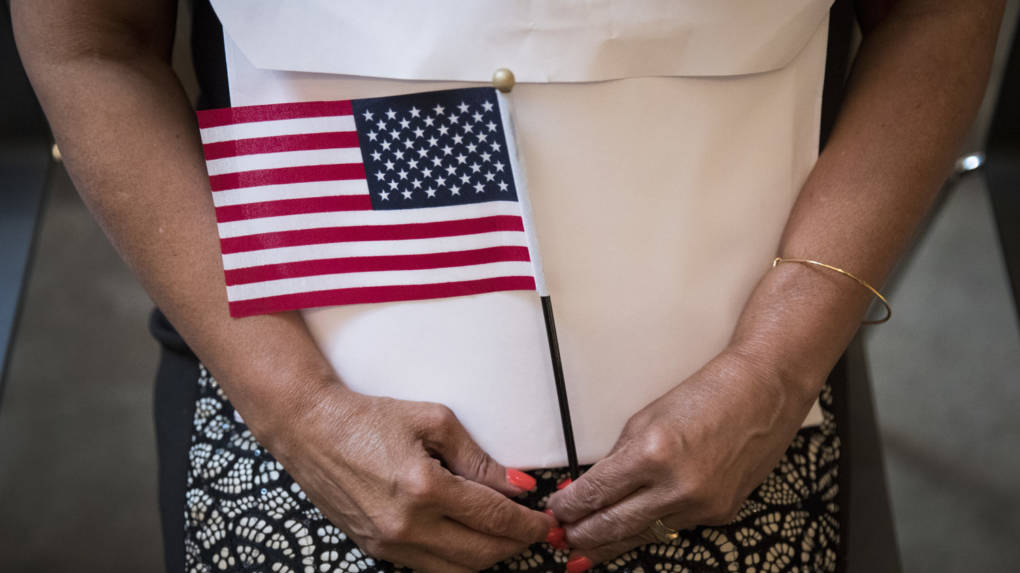
"caption": "A participant in a 2018 naturalization ceremony holds a U.S. flag in New York City.",
"description": "A participant in a 2018 naturalization ceremony holds a U.S. flag in New York City.",
"title": "gettyimages-990913562_wide-739675d39bad08cfdc9be80b3c82ead4b0d0e03b-s1500-c85",
"credit": "Drew Angerer/Getty Images",
"status": "inherit",
"isLoading": false,
"fetchFailed": false
},
"news_11753890": {
"type": "attachments",
"id": "news_11753890",
"meta": {
"index": "attachments_1716263798",
"site": "news",
"id": "11753890",
"found": true
},
"title": "U.S. Customs and Border Protection security cameras scan license plates as motor vehicles cross the U.S.-Mexico border from Tijuana, Mexico, in September 2016 in San Ysidro, Calif.",
"publishDate": 1560278588,
"status": "inherit",
"parent": 11753889,
"modified": 1749856011,
"caption": "US Customs and Border Protection security cameras scan license plates as motor vehicles cross the U.S.-Mexico border from Tijuana, Mexico, in Sept. 2016 in San Ysidro, Calif.",
"credit": "John Moore/Getty Images ",
"altTag": null,
"description": null,
"imgSizes": {
"thumbnail": {
"file": "https://cdn.kqed.org/wp-content/uploads/sites/10/2019/06/gettyimages-609971394_sq-18b3bb4cd8bf902dd7adbeb221e3018f2a0cb3fa-e1749856035530-160x128.jpg",
"width": 160,
"height": 128,
"mimeType": "image/jpeg"
},
"medium": {
"file": "https://cdn.kqed.org/wp-content/uploads/sites/10/2019/06/gettyimages-609971394_sq-18b3bb4cd8bf902dd7adbeb221e3018f2a0cb3fa-800x800.jpg",
"width": 800,
"height": 800,
"mimeType": "image/jpeg"
},
"large": {
"file": "https://cdn.kqed.org/wp-content/uploads/sites/10/2019/06/gettyimages-609971394_sq-18b3bb4cd8bf902dd7adbeb221e3018f2a0cb3fa-1020x1020.jpg",
"width": 1020,
"height": 1020,
"mimeType": "image/jpeg"
},
"complete_open_graph": {
"file": "https://cdn.kqed.org/wp-content/uploads/sites/10/2019/06/gettyimages-609971394_sq-18b3bb4cd8bf902dd7adbeb221e3018f2a0cb3fa-1200x1200.jpg",
"width": 1200,
"height": 1200,
"mimeType": "image/jpeg"
},
"post-thumbnail": {
"file": "https://cdn.kqed.org/wp-content/uploads/sites/10/2019/06/gettyimages-609971394_sq-18b3bb4cd8bf902dd7adbeb221e3018f2a0cb3fa-e1749856035530-672x372.jpg",
"width": 672,
"height": 372,
"mimeType": "image/jpeg"
},
"twentyfourteen-full-width": {
"file": "https://cdn.kqed.org/wp-content/uploads/sites/10/2019/06/gettyimages-609971394_sq-18b3bb4cd8bf902dd7adbeb221e3018f2a0cb3fa-e1749856035530-1038x576.jpg",
"width": 1038,
"height": 576,
"mimeType": "image/jpeg"
},
"full-width": {
"file": "https://cdn.kqed.org/wp-content/uploads/sites/10/2019/06/gettyimages-609971394_sq-18b3bb4cd8bf902dd7adbeb221e3018f2a0cb3fa-1920x1920.jpg",
"width": 1920,
"height": 1920,
"mimeType": "image/jpeg"
},
"apple_news_ca_landscape_12_9": {
"file": "https://cdn.kqed.org/wp-content/uploads/sites/10/2019/06/gettyimages-609971394_sq-18b3bb4cd8bf902dd7adbeb221e3018f2a0cb3fa-1832x1374.jpg",
"width": 1832,
"height": 1374,
"mimeType": "image/jpeg"
},
"apple_news_ca_landscape_9_7": {
"file": "https://cdn.kqed.org/wp-content/uploads/sites/10/2019/06/gettyimages-609971394_sq-18b3bb4cd8bf902dd7adbeb221e3018f2a0cb3fa-1376x1032.jpg",
"width": 1376,
"height": 1032,
"mimeType": "image/jpeg"
},
"apple_news_ca_landscape_5_5": {
"file": "https://cdn.kqed.org/wp-content/uploads/sites/10/2019/06/gettyimages-609971394_sq-18b3bb4cd8bf902dd7adbeb221e3018f2a0cb3fa-1044x783.jpg",
"width": 1044,
"height": 783,
"mimeType": "image/jpeg"
},
"apple_news_ca_landscape_4_7": {
"file": "https://cdn.kqed.org/wp-content/uploads/sites/10/2019/06/gettyimages-609971394_sq-18b3bb4cd8bf902dd7adbeb221e3018f2a0cb3fa-632x474.jpg",
"width": 632,
"height": 474,
"mimeType": "image/jpeg"
},
"apple_news_ca_landscape_4_0": {
"file": "https://cdn.kqed.org/wp-content/uploads/sites/10/2019/06/gettyimages-609971394_sq-18b3bb4cd8bf902dd7adbeb221e3018f2a0cb3fa-536x402.jpg",
"width": 536,
"height": 402,
"mimeType": "image/jpeg"
},
"apple_news_ca_portrait_12_9": {
"file": "https://cdn.kqed.org/wp-content/uploads/sites/10/2019/06/gettyimages-609971394_sq-18b3bb4cd8bf902dd7adbeb221e3018f2a0cb3fa-1122x1496.jpg",
"width": 1122,
"height": 1496,
"mimeType": "image/jpeg"
},
"apple_news_ca_portrait_9_7": {
"file": "https://cdn.kqed.org/wp-content/uploads/sites/10/2019/06/gettyimages-609971394_sq-18b3bb4cd8bf902dd7adbeb221e3018f2a0cb3fa-840x1120.jpg",
"width": 840,
"height": 1120,
"mimeType": "image/jpeg"
},
"apple_news_ca_portrait_5_5": {
"file": "https://cdn.kqed.org/wp-content/uploads/sites/10/2019/06/gettyimages-609971394_sq-18b3bb4cd8bf902dd7adbeb221e3018f2a0cb3fa-687x916.jpg",
"width": 687,
"height": 916,
"mimeType": "image/jpeg"
},
"apple_news_ca_portrait_4_7": {
"file": "https://cdn.kqed.org/wp-content/uploads/sites/10/2019/06/gettyimages-609971394_sq-18b3bb4cd8bf902dd7adbeb221e3018f2a0cb3fa-414x552.jpg",
"width": 414,
"height": 552,
"mimeType": "image/jpeg"
},
"apple_news_ca_portrait_4_0": {
"file": "https://cdn.kqed.org/wp-content/uploads/sites/10/2019/06/gettyimages-609971394_sq-18b3bb4cd8bf902dd7adbeb221e3018f2a0cb3fa-354x472.jpg",
"width": 354,
"height": 472,
"mimeType": "image/jpeg"
},
"apple_news_ca_square_12_9": {
"file": "https://cdn.kqed.org/wp-content/uploads/sites/10/2019/06/gettyimages-609971394_sq-18b3bb4cd8bf902dd7adbeb221e3018f2a0cb3fa-1472x1472.jpg",
"width": 1472,
"height": 1472,
"mimeType": "image/jpeg"
},
"apple_news_ca_square_9_7": {
"file": "https://cdn.kqed.org/wp-content/uploads/sites/10/2019/06/gettyimages-609971394_sq-18b3bb4cd8bf902dd7adbeb221e3018f2a0cb3fa-1104x1104.jpg",
"width": 1104,
"height": 1104,
"mimeType": "image/jpeg"
},
"apple_news_ca_square_5_5": {
"file": "https://cdn.kqed.org/wp-content/uploads/sites/10/2019/06/gettyimages-609971394_sq-18b3bb4cd8bf902dd7adbeb221e3018f2a0cb3fa-912x912.jpg",
"width": 912,
"height": 912,
"mimeType": "image/jpeg"
},
"apple_news_ca_square_4_7": {
"file": "https://cdn.kqed.org/wp-content/uploads/sites/10/2019/06/gettyimages-609971394_sq-18b3bb4cd8bf902dd7adbeb221e3018f2a0cb3fa-550x550.jpg",
"width": 550,
"height": 550,
"mimeType": "image/jpeg"
},
"apple_news_ca_square_4_0": {
"file": "https://cdn.kqed.org/wp-content/uploads/sites/10/2019/06/gettyimages-609971394_sq-18b3bb4cd8bf902dd7adbeb221e3018f2a0cb3fa-470x470.jpg",
"width": 470,
"height": 470,
"mimeType": "image/jpeg"
},
"1536x1536": {
"file": "https://cdn.kqed.org/wp-content/uploads/sites/10/2019/06/gettyimages-609971394_sq-18b3bb4cd8bf902dd7adbeb221e3018f2a0cb3fa-e1749856035530-1536x1226.jpg",
"width": 1536,
"height": 1226,
"mimeType": "image/jpeg"
},
"kqedFullSize": {
"file": "https://cdn.kqed.org/wp-content/uploads/sites/10/2019/06/gettyimages-609971394_sq-18b3bb4cd8bf902dd7adbeb221e3018f2a0cb3fa-e1749856035530.jpg",
"width": 1920,
"height": 1533
}
},
"isLoading": false,
"fetchFailed": false
},
"news_11753706": {
"type": "attachments",
"id": "news_11753706",
"meta": {
"index": "attachments_1716263798",
"site": "news",
"id": "11753706",
"found": true
},
"parent": 11753698,
"imgSizes": {
"apple_news_ca_landscape_5_5": {
"file": "https://ww2.kqed.org/app/uploads/sites/10/2019/06/perception_061019_final-1044x783.jpg",
"width": 1044,
"mimeType": "image/jpeg",
"height": 783
},
"apple_news_ca_square_4_0": {
"file": "https://ww2.kqed.org/app/uploads/sites/10/2019/06/perception_061019_final-470x470.jpg",
"width": 470,
"mimeType": "image/jpeg",
"height": 470
},
"twentyfourteen-full-width": {
"file": "https://ww2.kqed.org/app/uploads/sites/10/2019/06/perception_061019_final-1038x576.jpg",
"width": 1038,
"mimeType": "image/jpeg",
"height": 576
},
"thumbnail": {
"file": "https://ww2.kqed.org/app/uploads/sites/10/2019/06/perception_061019_final-160x114.jpg",
"width": 160,
"mimeType": "image/jpeg",
"height": 114
},
"post-thumbnail": {
"file": "https://ww2.kqed.org/app/uploads/sites/10/2019/06/perception_061019_final-672x372.jpg",
"width": 672,
"mimeType": "image/jpeg",
"height": 372
},
"kqedFullSize": {
"file": "https://ww2.kqed.org/app/uploads/sites/10/2019/06/perception_061019_final.jpg",
"width": 1920,
"height": 1370
},
"apple_news_ca_landscape_4_7": {
"file": "https://ww2.kqed.org/app/uploads/sites/10/2019/06/perception_061019_final-632x474.jpg",
"width": 632,
"mimeType": "image/jpeg",
"height": 474
},
"large": {
"file": "https://ww2.kqed.org/app/uploads/sites/10/2019/06/perception_061019_final-1020x728.jpg",
"width": 1020,
"mimeType": "image/jpeg",
"height": 728
},
"complete_open_graph": {
"file": "https://ww2.kqed.org/app/uploads/sites/10/2019/06/perception_061019_final-1200x856.jpg",
"width": 1200,
"mimeType": "image/jpeg",
"height": 856
},
"apple_news_ca_landscape_4_0": {
"file": "https://ww2.kqed.org/app/uploads/sites/10/2019/06/perception_061019_final-536x402.jpg",
"width": 536,
"mimeType": "image/jpeg",
"height": 402
},
"apple_news_ca_portrait_12_9": {
"file": "https://ww2.kqed.org/app/uploads/sites/10/2019/06/perception_061019_final-1122x1370.jpg",
"width": 1122,
"mimeType": "image/jpeg",
"height": 1370
},
"medium": {
"file": "https://ww2.kqed.org/app/uploads/sites/10/2019/06/perception_061019_final-800x571.jpg",
"width": 800,
"mimeType": "image/jpeg",
"height": 571
},
"apple_news_ca_portrait_4_0": {
"file": "https://ww2.kqed.org/app/uploads/sites/10/2019/06/perception_061019_final-354x472.jpg",
"width": 354,
"mimeType": "image/jpeg",
"height": 472
},
"apple_news_ca_portrait_9_7": {
"file": "https://ww2.kqed.org/app/uploads/sites/10/2019/06/perception_061019_final-840x1120.jpg",
"width": 840,
"mimeType": "image/jpeg",
"height": 1120
},
"apple_news_ca_landscape_12_9": {
"file": "https://ww2.kqed.org/app/uploads/sites/10/2019/06/perception_061019_final-1832x1370.jpg",
"width": 1832,
"mimeType": "image/jpeg",
"height": 1370
},
"apple_news_ca_square_9_7": {
"file": "https://ww2.kqed.org/app/uploads/sites/10/2019/06/perception_061019_final-1104x1104.jpg",
"width": 1104,
"mimeType": "image/jpeg",
"height": 1104
},
"apple_news_ca_portrait_4_7": {
"file": "https://ww2.kqed.org/app/uploads/sites/10/2019/06/perception_061019_final-414x552.jpg",
"width": 414,
"mimeType": "image/jpeg",
"height": 552
},
"apple_news_ca_square_12_9": {
"file": "https://ww2.kqed.org/app/uploads/sites/10/2019/06/perception_061019_final-1472x1370.jpg",
"width": 1472,
"mimeType": "image/jpeg",
"height": 1370
},
"apple_news_ca_portrait_5_5": {
"file": "https://ww2.kqed.org/app/uploads/sites/10/2019/06/perception_061019_final-687x916.jpg",
"width": 687,
"mimeType": "image/jpeg",
"height": 916
},
"full-width": {
"file": "https://ww2.kqed.org/app/uploads/sites/10/2019/06/perception_061019_final-1920x1370.jpg",
"width": 1920,
"mimeType": "image/jpeg",
"height": 1370
},
"apple_news_ca_square_4_7": {
"file": "https://ww2.kqed.org/app/uploads/sites/10/2019/06/perception_061019_final-550x550.jpg",
"width": 550,
"mimeType": "image/jpeg",
"height": 550
},
"apple_news_ca_landscape_9_7": {
"file": "https://ww2.kqed.org/app/uploads/sites/10/2019/06/perception_061019_final-1376x1032.jpg",
"width": 1376,
"mimeType": "image/jpeg",
"height": 1032
},
"apple_news_ca_square_5_5": {
"file": "https://ww2.kqed.org/app/uploads/sites/10/2019/06/perception_061019_final-912x912.jpg",
"width": 912,
"mimeType": "image/jpeg",
"height": 912
}
},
"publishDate": 1560199071,
"modified": 1560199104,
"caption": null,
"description": null,
"title": "perception_061019_final",
"credit": null,
"status": "inherit",
"isLoading": false,
"fetchFailed": false
},
"news_11752941": {
"type": "attachments",
"id": "news_11752941",
"meta": {
"index": "attachments_1716263798",
"site": "news",
"id": "11752941",
"found": true
},
"parent": 11752787,
"imgSizes": {
"apple_news_ca_landscape_5_5": {
"file": "https://ww2.kqed.org/app/uploads/sites/10/2019/06/RS37547_IMG_4864-qut-1044x783.jpg",
"width": 1044,
"mimeType": "image/jpeg",
"height": 783
},
"apple_news_ca_square_4_0": {
"file": "https://ww2.kqed.org/app/uploads/sites/10/2019/06/RS37547_IMG_4864-qut-470x470.jpg",
"width": 470,
"mimeType": "image/jpeg",
"height": 470
},
"twentyfourteen-full-width": {
"file": "https://ww2.kqed.org/app/uploads/sites/10/2019/06/RS37547_IMG_4864-qut-1038x576.jpg",
"width": 1038,
"mimeType": "image/jpeg",
"height": 576
},
"thumbnail": {
"file": "https://ww2.kqed.org/app/uploads/sites/10/2019/06/RS37547_IMG_4864-qut-160x107.jpg",
"width": 160,
"mimeType": "image/jpeg",
"height": 107
},
"post-thumbnail": {
"file": "https://ww2.kqed.org/app/uploads/sites/10/2019/06/RS37547_IMG_4864-qut-672x372.jpg",
"width": 672,
"mimeType": "image/jpeg",
"height": 372
},
"kqedFullSize": {
"file": "https://ww2.kqed.org/app/uploads/sites/10/2019/06/RS37547_IMG_4864-qut.jpg",
"width": 1920,
"height": 1280
},
"apple_news_ca_landscape_4_7": {
"file": "https://ww2.kqed.org/app/uploads/sites/10/2019/06/RS37547_IMG_4864-qut-632x474.jpg",
"width": 632,
"mimeType": "image/jpeg",
"height": 474
},
"large": {
"file": "https://ww2.kqed.org/app/uploads/sites/10/2019/06/RS37547_IMG_4864-qut-1020x680.jpg",
"width": 1020,
"mimeType": "image/jpeg",
"height": 680
},
"complete_open_graph": {
"file": "https://ww2.kqed.org/app/uploads/sites/10/2019/06/RS37547_IMG_4864-qut-1200x800.jpg",
"width": 1200,
"mimeType": "image/jpeg",
"height": 800
},
"apple_news_ca_landscape_4_0": {
"file": "https://ww2.kqed.org/app/uploads/sites/10/2019/06/RS37547_IMG_4864-qut-536x402.jpg",
"width": 536,
"mimeType": "image/jpeg",
"height": 402
},
"apple_news_ca_portrait_12_9": {
"file": "https://ww2.kqed.org/app/uploads/sites/10/2019/06/RS37547_IMG_4864-qut-1122x1280.jpg",
"width": 1122,
"mimeType": "image/jpeg",
"height": 1280
},
"medium": {
"file": "https://ww2.kqed.org/app/uploads/sites/10/2019/06/RS37547_IMG_4864-qut-800x533.jpg",
"width": 800,
"mimeType": "image/jpeg",
"height": 533
},
"apple_news_ca_portrait_4_0": {
"file": "https://ww2.kqed.org/app/uploads/sites/10/2019/06/RS37547_IMG_4864-qut-354x472.jpg",
"width": 354,
"mimeType": "image/jpeg",
"height": 472
},
"apple_news_ca_portrait_9_7": {
"file": "https://ww2.kqed.org/app/uploads/sites/10/2019/06/RS37547_IMG_4864-qut-840x1120.jpg",
"width": 840,
"mimeType": "image/jpeg",
"height": 1120
},
"apple_news_ca_landscape_12_9": {
"file": "https://ww2.kqed.org/app/uploads/sites/10/2019/06/RS37547_IMG_4864-qut-1832x1280.jpg",
"width": 1832,
"mimeType": "image/jpeg",
"height": 1280
},
"apple_news_ca_square_9_7": {
"file": "https://ww2.kqed.org/app/uploads/sites/10/2019/06/RS37547_IMG_4864-qut-1104x1104.jpg",
"width": 1104,
"mimeType": "image/jpeg",
"height": 1104
},
"apple_news_ca_portrait_4_7": {
"file": "https://ww2.kqed.org/app/uploads/sites/10/2019/06/RS37547_IMG_4864-qut-414x552.jpg",
"width": 414,
"mimeType": "image/jpeg",
"height": 552
},
"apple_news_ca_square_12_9": {
"file": "https://ww2.kqed.org/app/uploads/sites/10/2019/06/RS37547_IMG_4864-qut-1472x1280.jpg",
"width": 1472,
"mimeType": "image/jpeg",
"height": 1280
},
"apple_news_ca_portrait_5_5": {
"file": "https://ww2.kqed.org/app/uploads/sites/10/2019/06/RS37547_IMG_4864-qut-687x916.jpg",
"width": 687,
"mimeType": "image/jpeg",
"height": 916
},
"full-width": {
"file": "https://ww2.kqed.org/app/uploads/sites/10/2019/06/RS37547_IMG_4864-qut-1920x1280.jpg",
"width": 1920,
"mimeType": "image/jpeg",
"height": 1280
},
"apple_news_ca_square_4_7": {
"file": "https://ww2.kqed.org/app/uploads/sites/10/2019/06/RS37547_IMG_4864-qut-550x550.jpg",
"width": 550,
"mimeType": "image/jpeg",
"height": 550
},
"apple_news_ca_landscape_9_7": {
"file": "https://ww2.kqed.org/app/uploads/sites/10/2019/06/RS37547_IMG_4864-qut-1376x1032.jpg",
"width": 1376,
"mimeType": "image/jpeg",
"height": 1032
},
"apple_news_ca_square_5_5": {
"file": "https://ww2.kqed.org/app/uploads/sites/10/2019/06/RS37547_IMG_4864-qut-912x912.jpg",
"width": 912,
"mimeType": "image/jpeg",
"height": 912
}
},
"publishDate": 1559863988,
"modified": 1559955331,
"caption": "45,000 cars pass through the San Ysidro Port of Entry's vehicle inspection lanes every day on their way from Mexico to the U.S., according to U.S. Customs and Border Protection.",
"description": null,
"title": "RS37547_IMG_4864-qut",
"credit": "Alex Hall/KQED",
"status": "inherit",
"isLoading": false,
"fetchFailed": false
},
"news_11753365": {
"type": "attachments",
"id": "news_11753365",
"meta": {
"index": "attachments_1716263798",
"site": "news",
"id": "11753365",
"found": true
},
"parent": 11753118,
"imgSizes": {
"apple_news_ca_landscape_5_5": {
"file": "https://ww2.kqed.org/app/uploads/sites/10/2019/06/marquee632-1044x626.jpg",
"width": 1044,
"mimeType": "image/jpeg",
"height": 626
},
"apple_news_ca_square_4_0": {
"file": "https://ww2.kqed.org/app/uploads/sites/10/2019/06/marquee632-470x470.jpg",
"width": 470,
"mimeType": "image/jpeg",
"height": 470
},
"twentyfourteen-full-width": {
"file": "https://ww2.kqed.org/app/uploads/sites/10/2019/06/marquee632-1038x576.jpg",
"width": 1038,
"mimeType": "image/jpeg",
"height": 576
},
"thumbnail": {
"file": "https://ww2.kqed.org/app/uploads/sites/10/2019/06/marquee632-160x90.jpg",
"width": 160,
"mimeType": "image/jpeg",
"height": 90
},
"post-thumbnail": {
"file": "https://ww2.kqed.org/app/uploads/sites/10/2019/06/marquee632-672x372.jpg",
"width": 672,
"mimeType": "image/jpeg",
"height": 372
},
"kqedFullSize": {
"file": "https://ww2.kqed.org/app/uploads/sites/10/2019/06/marquee632.jpg",
"width": 1114,
"height": 626
},
"apple_news_ca_landscape_4_7": {
"file": "https://ww2.kqed.org/app/uploads/sites/10/2019/06/marquee632-632x474.jpg",
"width": 632,
"mimeType": "image/jpeg",
"height": 474
},
"large": {
"file": "https://ww2.kqed.org/app/uploads/sites/10/2019/06/marquee632-1020x573.jpg",
"width": 1020,
"mimeType": "image/jpeg",
"height": 573
},
"apple_news_ca_landscape_4_0": {
"file": "https://ww2.kqed.org/app/uploads/sites/10/2019/06/marquee632-536x402.jpg",
"width": 536,
"mimeType": "image/jpeg",
"height": 402
},
"medium": {
"file": "https://ww2.kqed.org/app/uploads/sites/10/2019/06/marquee632-800x450.jpg",
"width": 800,
"mimeType": "image/jpeg",
"height": 450
},
"apple_news_ca_portrait_4_0": {
"file": "https://ww2.kqed.org/app/uploads/sites/10/2019/06/marquee632-354x472.jpg",
"width": 354,
"mimeType": "image/jpeg",
"height": 472
},
"apple_news_ca_portrait_9_7": {
"file": "https://ww2.kqed.org/app/uploads/sites/10/2019/06/marquee632-840x626.jpg",
"width": 840,
"mimeType": "image/jpeg",
"height": 626
},
"apple_news_ca_square_9_7": {
"file": "https://ww2.kqed.org/app/uploads/sites/10/2019/06/marquee632-1104x626.jpg",
"width": 1104,
"mimeType": "image/jpeg",
"height": 626
},
"apple_news_ca_portrait_4_7": {
"file": "https://ww2.kqed.org/app/uploads/sites/10/2019/06/marquee632-414x552.jpg",
"width": 414,
"mimeType": "image/jpeg",
"height": 552
},
"apple_news_ca_portrait_5_5": {
"file": "https://ww2.kqed.org/app/uploads/sites/10/2019/06/marquee632-687x626.jpg",
"width": 687,
"mimeType": "image/jpeg",
"height": 626
},
"apple_news_ca_square_4_7": {
"file": "https://ww2.kqed.org/app/uploads/sites/10/2019/06/marquee632-550x550.jpg",
"width": 550,
"mimeType": "image/jpeg",
"height": 550
},
"apple_news_ca_square_5_5": {
"file": "https://ww2.kqed.org/app/uploads/sites/10/2019/06/marquee632-912x626.jpg",
"width": 912,
"mimeType": "image/jpeg",
"height": 626
}
},
"publishDate": 1559955205,
"modified": 1559955205,
"caption": null,
"description": null,
"title": "marquee632",
"credit": null,
"status": "inherit",
"isLoading": false,
"fetchFailed": false
},
"news_11753286": {
"type": "attachments",
"id": "news_11753286",
"meta": {
"index": "attachments_1716263798",
"site": "news",
"id": "11753286",
"found": true
},
"parent": 11752778,
"imgSizes": {
"apple_news_ca_landscape_5_5": {
"file": "https://ww2.kqed.org/app/uploads/sites/10/2019/06/Julio-Navarrete-Butterfly-1044x783.jpg",
"width": 1044,
"mimeType": "image/jpeg",
"height": 783
},
"apple_news_ca_square_4_0": {
"file": "https://ww2.kqed.org/app/uploads/sites/10/2019/06/Julio-Navarrete-Butterfly-470x470.jpg",
"width": 470,
"mimeType": "image/jpeg",
"height": 470
},
"twentyfourteen-full-width": {
"file": "https://ww2.kqed.org/app/uploads/sites/10/2019/06/Julio-Navarrete-Butterfly-1038x576.jpg",
"width": 1038,
"mimeType": "image/jpeg",
"height": 576
},
"thumbnail": {
"file": "https://ww2.kqed.org/app/uploads/sites/10/2019/06/Julio-Navarrete-Butterfly-160x108.jpg",
"width": 160,
"mimeType": "image/jpeg",
"height": 108
},
"post-thumbnail": {
"file": "https://ww2.kqed.org/app/uploads/sites/10/2019/06/Julio-Navarrete-Butterfly-672x372.jpg",
"width": 672,
"mimeType": "image/jpeg",
"height": 372
},
"kqedFullSize": {
"file": "https://ww2.kqed.org/app/uploads/sites/10/2019/06/Julio-Navarrete-Butterfly.jpg",
"width": 1920,
"height": 1292
},
"apple_news_ca_landscape_4_7": {
"file": "https://ww2.kqed.org/app/uploads/sites/10/2019/06/Julio-Navarrete-Butterfly-632x474.jpg",
"width": 632,
"mimeType": "image/jpeg",
"height": 474
},
"large": {
"file": "https://ww2.kqed.org/app/uploads/sites/10/2019/06/Julio-Navarrete-Butterfly-1020x686.jpg",
"width": 1020,
"mimeType": "image/jpeg",
"height": 686
},
"complete_open_graph": {
"file": "https://ww2.kqed.org/app/uploads/sites/10/2019/06/Julio-Navarrete-Butterfly-1200x808.jpg",
"width": 1200,
"mimeType": "image/jpeg",
"height": 808
},
"apple_news_ca_landscape_4_0": {
"file": "https://ww2.kqed.org/app/uploads/sites/10/2019/06/Julio-Navarrete-Butterfly-536x402.jpg",
"width": 536,
"mimeType": "image/jpeg",
"height": 402
},
"apple_news_ca_portrait_12_9": {
"file": "https://ww2.kqed.org/app/uploads/sites/10/2019/06/Julio-Navarrete-Butterfly-1122x1292.jpg",
"width": 1122,
"mimeType": "image/jpeg",
"height": 1292
},
"medium": {
"file": "https://ww2.kqed.org/app/uploads/sites/10/2019/06/Julio-Navarrete-Butterfly-800x538.jpg",
"width": 800,
"mimeType": "image/jpeg",
"height": 538
},
"apple_news_ca_portrait_4_0": {
"file": "https://ww2.kqed.org/app/uploads/sites/10/2019/06/Julio-Navarrete-Butterfly-354x472.jpg",
"width": 354,
"mimeType": "image/jpeg",
"height": 472
},
"apple_news_ca_portrait_9_7": {
"file": "https://ww2.kqed.org/app/uploads/sites/10/2019/06/Julio-Navarrete-Butterfly-840x1120.jpg",
"width": 840,
"mimeType": "image/jpeg",
"height": 1120
},
"apple_news_ca_landscape_12_9": {
"file": "https://ww2.kqed.org/app/uploads/sites/10/2019/06/Julio-Navarrete-Butterfly-1832x1292.jpg",
"width": 1832,
"mimeType": "image/jpeg",
"height": 1292
},
"apple_news_ca_square_9_7": {
"file": "https://ww2.kqed.org/app/uploads/sites/10/2019/06/Julio-Navarrete-Butterfly-1104x1104.jpg",
"width": 1104,
"mimeType": "image/jpeg",
"height": 1104
},
"apple_news_ca_portrait_4_7": {
"file": "https://ww2.kqed.org/app/uploads/sites/10/2019/06/Julio-Navarrete-Butterfly-414x552.jpg",
"width": 414,
"mimeType": "image/jpeg",
"height": 552
},
"apple_news_ca_square_12_9": {
"file": "https://ww2.kqed.org/app/uploads/sites/10/2019/06/Julio-Navarrete-Butterfly-1472x1292.jpg",
"width": 1472,
"mimeType": "image/jpeg",
"height": 1292
},
"apple_news_ca_portrait_5_5": {
"file": "https://ww2.kqed.org/app/uploads/sites/10/2019/06/Julio-Navarrete-Butterfly-687x916.jpg",
"width": 687,
"mimeType": "image/jpeg",
"height": 916
},
"full-width": {
"file": "https://ww2.kqed.org/app/uploads/sites/10/2019/06/Julio-Navarrete-Butterfly-1920x1292.jpg",
"width": 1920,
"mimeType": "image/jpeg",
"height": 1292
},
"apple_news_ca_square_4_7": {
"file": "https://ww2.kqed.org/app/uploads/sites/10/2019/06/Julio-Navarrete-Butterfly-550x550.jpg",
"width": 550,
"mimeType": "image/jpeg",
"height": 550
},
"apple_news_ca_landscape_9_7": {
"file": "https://ww2.kqed.org/app/uploads/sites/10/2019/06/Julio-Navarrete-Butterfly-1376x1032.jpg",
"width": 1376,
"mimeType": "image/jpeg",
"height": 1032
},
"apple_news_ca_square_5_5": {
"file": "https://ww2.kqed.org/app/uploads/sites/10/2019/06/Julio-Navarrete-Butterfly-912x912.jpg",
"width": 912,
"mimeType": "image/jpeg",
"height": 912
}
},
"publishDate": 1559947609,
"modified": 1559947709,
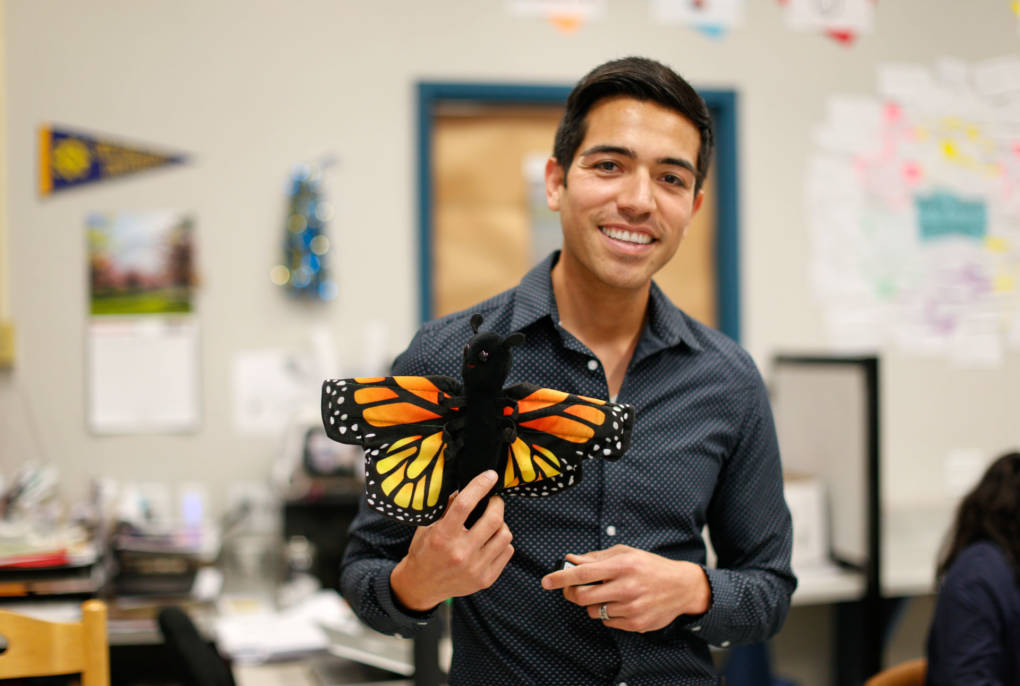
"caption": "Spanish teacher Julio Navarrete shows “la mariposa,” a monarch butterfly doll he uses to encourage students to speak more Spanish while in the classroom.",
"description": "Spanish teacher Julio Navarrete shows “la mariposa,” a monarch butterfly doll he uses to encourage students to speak more Spanish while in the classroom.",
"title": "Julio-Navarrete-Butterfly",
"credit": "Sruti Mamidanna/KQED",
"status": "inherit",
"isLoading": false,
"fetchFailed": false
}
},
"audioPlayerReducer": {
"postId": "stream_live",
"isPaused": true,
"isPlaying": false,
"pfsActive": false,
"pledgeModalIsOpen": true,
"playerDrawerIsOpen": false,
"liveAudioPlayStartedAt": 0,
"liveAudioPlayContext": ""
},
"authorsReducer": {
"byline_news_11755713": {
"type": "authors",
"id": "byline_news_11755713",
"meta": {
"override": true
},
"slug": "byline_news_11755713",
"name": "The Associated Press",
"isLoading": false
},
"byline_news_11754887": {
"type": "authors",
"id": "byline_news_11754887",
"meta": {
"override": true
},
"slug": "byline_news_11754887",
"name": "Astrid Galván and Garance Burke \u003cbr> Associated Press",
"isLoading": false
},
"byline_news_11754411": {
"type": "authors",
"id": "byline_news_11754411",
"meta": {
"override": true
},
"slug": "byline_news_11754411",
"name": "\u003ca href=\"https://www.npr.org/people/177498291/hansi-lo-wang\">Hansi Lo Wang\u003c/a>\u003cbr>\u003ca href=\"https://www.npr.org/2019/06/13/731629018/as-legal-battle-persists-census-citizenship-question-is-put-to-the-test\">NPR\u003c/a>",
"isLoading": false
},
"byline_news_11753889": {
"type": "authors",
"id": "byline_news_11753889",
"meta": {
"override": true
},
"slug": "byline_news_11753889",
"name": "\u003cstrong>Scott Neuman\u003cbr />NPR\u003c/strong>",
"isLoading": false
},
"kqed": {
"type": "authors",
"id": "236",
"meta": {
"index": "authors_1716337520",
"id": "236",
"found": true
},
"name": "KQED News Staff",
"firstName": "KQED News Staff",
"lastName": null,
"slug": "kqed",
"email": "faq@kqed.org",
"display_author_email": false,
"staff_mastheads": [],
"title": null,
"bio": null,
"avatar": "https://secure.gravatar.com/avatar/ef0e801a68c4c54afa9180db14084167?s=600&d=blank&r=g",
"twitter": null,
"facebook": null,
"instagram": null,
"linkedin": null,
"sites": [
{
"site": "arts",
"roles": [
"contributor"
]
},
{
"site": "news",
"roles": [
"editor"
]
},
{
"site": "futureofyou",
"roles": [
"author"
]
}
],
"headData": {
"title": "KQED News Staff | KQED",
"description": null,
"ogImgSrc": "https://secure.gravatar.com/avatar/ef0e801a68c4c54afa9180db14084167?s=600&d=blank&r=g",
"twImgSrc": "https://secure.gravatar.com/avatar/ef0e801a68c4c54afa9180db14084167?s=600&d=blank&r=g"
},
"isLoading": false,
"link": "/author/kqed"
},
"sasha-khokha": {
"type": "authors",
"id": "254",
"meta": {
"index": "authors_1716337520",
"id": "254",
"found": true
},
"name": "Sasha Khokha",
"firstName": "Sasha",
"lastName": "Khokha",
"slug": "sasha-khokha",
"email": "skhokha@kqed.org",
"display_author_email": true,
"staff_mastheads": [
"news"
],
"title": "Host, The California Report Magazine",
"bio": "Sasha Khokha is the host of \u003cem>The California Report's \u003c/em> weekly magazine program, which takes listeners on sound-rich excursions to meet the people that make the Golden State unique -- through audio documentaries and long-form stories. As \u003cem>The California Report's\u003c/em> Central Valley Bureau Chief based in Fresno for nearly a dozen years, Sasha brought the lives and concerns of rural Californians to listeners around the state. Her reporting helped expose the hidden price immigrant women janitors and farmworkers may pay to keep their jobs: sexual assault at work. It inspired two new California laws to protect them from sexual harassment. She was a key member of the reporting team for the Frontline film \u003cem>Rape on the Night Shift, \u003c/em>which was nominated for two national Emmys. Sasha has also won a national Edward R. Murrow and a national PRNDI award for investigative reporting, as well as multiple prizes from the Society for Professional Journalists. Sasha is a proud alum of the UC Berkeley Graduate School of Journalism and Brown University and a member of the South Asian Journalists Association.",
"avatar": "https://secure.gravatar.com/avatar/e4b5e1541aaeea2aa356aa1fb2a68950?s=600&d=blank&r=g",
"twitter": "KQEDSashaKhokha",
"facebook": null,
"instagram": null,
"linkedin": null,
"sites": [
{
"site": "news",
"roles": [
"editor"
]
},
{
"site": "stateofhealth",
"roles": [
"author"
]
},
{
"site": "science",
"roles": [
"author"
]
},
{
"site": "quest",
"roles": [
"subscriber"
]
}
],
"headData": {
"title": "Sasha Khokha | KQED",
"description": "Host, The California Report Magazine",
"ogImgSrc": "https://secure.gravatar.com/avatar/e4b5e1541aaeea2aa356aa1fb2a68950?s=600&d=blank&r=g",
"twImgSrc": "https://secure.gravatar.com/avatar/e4b5e1541aaeea2aa356aa1fb2a68950?s=600&d=blank&r=g"
},
"isLoading": false,
"link": "/author/sasha-khokha"
},
"markfiore": {
"type": "authors",
"id": "3236",
"meta": {
"index": "authors_1716337520",
"id": "3236",
"found": true
},
"name": "Mark Fiore",
"firstName": "Mark",
"lastName": "Fiore",
"slug": "markfiore",
"email": "mark@markfiore.com",
"display_author_email": false,
"staff_mastheads": [
"news"
],
"title": "KQED News Cartoonist",
"bio": "\u003ca href=\"http://www.MarkFiore.com\">MarkFiore.com\u003c/a> | \u003ca href=\"https://twitter.com/markfiore\">Follow on Twitter\u003c/a> | \u003ca href=\"https://www.facebook.com/pages/Mark-Fiore-Animated-Political-Cartoons/94451707396?ref=bookmarks\">Facebook\u003c/a> | \u003ca href=\"mailto:mark@markfiore.com\">email\u003c/a>\r\n\r\nPulitzer Prize-winner, Mark Fiore, who the Wall Street Journal has called “the undisputed guru of the form,” creates animated political cartoons in San Francisco, where his work has been featured regularly on the San Francisco Chronicle’s web site, SFGate.com. His work has appeared on Newsweek.com, Slate.com, CBSNews.com, MotherJones.com, DailyKos.com and NPR’s web site. Fiore’s political animation has appeared on CNN, Frontline, Bill Moyers Journal, Salon.com and cable and broadcast outlets across the globe.\r\n\r\nBeginning his professional life by drawing traditional political cartoons for newspapers, Fiore’s work appeared in publications ranging from the Washington Post to the Los Angeles Times. In the late 1990s, he began to experiment with animating political cartoons and, after a short stint at the San Jose Mercury News as their staff cartoonist, Fiore devoted all his energies to animation.\r\nGrowing up in California, Fiore also spent a good portion of his life in the backwoods of Idaho. It was this combination that shaped him politically. Mark majored in political science at Colorado College, where, in a perfect send-off for a cartoonist, he received his diploma in 1991 as commencement speaker Dick Cheney smiled approvingly.\r\nMark Fiore was awarded the Pulitzer Prize for political cartooning in 2010, a Robert F. Kennedy Journalism Award in 2004 and has twice received an Online Journalism Award for commentary from the Online News Association (2002, 2008). Fiore has received two awards for his work in new media from the National Cartoonists Society (2001, 2002), and in 2006 received The James Madison Freedom of Information Award from The Society of Professional Journalists.",
"avatar": "https://secure.gravatar.com/avatar/fc4e2a612b15b67bad0c6f0e1db4ca9b?s=600&d=blank&r=g",
"twitter": "MarkFiore",
"facebook": null,
"instagram": "https://www.instagram.com/markfiore/?hl=en",
"linkedin": null,
"sites": [
{
"site": "arts",
"roles": [
"contributor"
]
},
{
"site": "news",
"roles": [
"editor"
]
},
{
"site": "futureofyou",
"roles": [
"editor"
]
},
{
"site": "science",
"roles": [
"editor"
]
}
],
"headData": {
"title": "Mark Fiore | KQED",
"description": "KQED News Cartoonist",
"ogImgSrc": "https://secure.gravatar.com/avatar/fc4e2a612b15b67bad0c6f0e1db4ca9b?s=600&d=blank&r=g",
"twImgSrc": "https://secure.gravatar.com/avatar/fc4e2a612b15b67bad0c6f0e1db4ca9b?s=600&d=blank&r=g"
},
"isLoading": false,
"link": "/author/markfiore"
},
"fjhabvala": {
"type": "authors",
"id": "8659",
"meta": {
"index": "authors_1716337520",
"id": "8659",
"found": true
},
"name": "Farida Jhabvala Romero",
"firstName": "Farida",
"lastName": "Jhabvala Romero",
"slug": "fjhabvala",
"email": "fjhabvala@kqed.org",
"display_author_email": true,
"staff_mastheads": [
"news"
],
"title": "KQED Contributor",
"bio": "Farida Jhabvala Romero is a Labor Correspondent for KQED. She previously covered immigration. Farida was \u003ca href=\"https://www.ccnma.org/2022-most-influential-latina-journalists\">named\u003c/a> one of the 10 Most Influential Latina Journalists in California in 2022 by the California Chicano News Media Association. Her work has won awards from the Society of Professional Journalists (Northern California), as well as a national and regional Edward M. Murrow Award for the collaborative reporting projects “Dangerous Air” and “Graying California.” Before joining KQED, Farida worked as a producer at Radio Bilingüe, a national public radio network. Farida earned her master’s degree in journalism from Stanford University.",
"avatar": "https://secure.gravatar.com/avatar/f9f022d4e2609741874222a1e9d41f48fea74011aa7c615eef91d9a50c944ebe?s=600&d=blank&r=g",
"twitter": "FaridaJhabvala",
"bluesky": null,
"facebook": null,
"instagram": null,
"linkedin": "https://www.linkedin.com/in/faridajhabvala/",
"sites": [
{
"site": "news",
"roles": [
"editor"
]
},
{
"site": "stateofhealth",
"roles": [
"author"
]
},
{
"site": "liveblog",
"roles": [
"author"
]
}
],
"headData": {
"title": "Farida Jhabvala Romero | KQED",
"description": "KQED Contributor",
"ogImgSrc": "https://secure.gravatar.com/avatar/f9f022d4e2609741874222a1e9d41f48fea74011aa7c615eef91d9a50c944ebe?s=600&d=blank&r=g",
"twImgSrc": "https://secure.gravatar.com/avatar/f9f022d4e2609741874222a1e9d41f48fea74011aa7c615eef91d9a50c944ebe?s=600&d=blank&r=g"
},
"isLoading": false,
"link": "/author/fjhabvala"
},
"eaguilar": {
"type": "authors",
"id": "11382",
"meta": {
"index": "authors_1716337520",
"id": "11382",
"found": true
},
"name": "Erika Aguilar",
"firstName": "Erika",
"lastName": "Aguilar",
"slug": "eaguilar",
"email": "eaa712@gmail.com",
"display_author_email": false,
"staff_mastheads": [],
"title": "KQED Contributor",
"bio": "Erika Aguilar was the director of podcasts at KQED. She was in charge of KQED's portfolio of original podcasts and teams, and sets strategic plans for production and engagement.\r\n\r\nErika helped establish KQED's new housing affordability desk as senior editor. She was also a producer and editor for KQED's local news podcast called \u003cem>The Bay, \u003c/em>and wrote stories about housing in the Bay Area as a reporter for KQED News.\r\n\r\nErika joined KQED in 2017 after producing independent audio projects and podcasts in Southern California. She spent more than a dozen years reporting stories about law enforcement, breaking news, homelessness, government and the environment for KPCC in Los Angeles and KUT in Austin. She also volunteers as an editor and mentor for various journalism training programs.\r\n\r\nErika Aguilar is a proud Tejana from San Antonio. She believes in compromise, optimism and Selena.",
"avatar": "https://secure.gravatar.com/avatar/85bf7bb8dd9af4136525d94cef00f026?s=600&d=blank&r=g",
"twitter": "erikaaaguilar",
"facebook": null,
"instagram": null,
"linkedin": null,
"sites": [
{
"site": "",
"roles": [
"editor"
]
},
{
"site": "news",
"roles": [
"subscriber"
]
},
{
"site": "podcasts",
"roles": [
"editor"
]
}
],
"headData": {
"title": "Erika Aguilar | KQED",
"description": "KQED Contributor",
"ogImgSrc": "https://secure.gravatar.com/avatar/85bf7bb8dd9af4136525d94cef00f026?s=600&d=blank&r=g",
"twImgSrc": "https://secure.gravatar.com/avatar/85bf7bb8dd9af4136525d94cef00f026?s=600&d=blank&r=g"
},
"isLoading": false,
"link": "/author/eaguilar"
},
"ahall": {
"type": "authors",
"id": "11490",
"meta": {
"index": "authors_1716337520",
"id": "11490",
"found": true
},
"name": "Alex Hall",
"firstName": "Alex",
"lastName": "Hall",
"slug": "ahall",
"email": "ahall@kqed.org",
"display_author_email": false,
"staff_mastheads": [
"news"
],
"title": "KQED Enterprise & Accountability Reporter",
"bio": "Alex Hall is KQED's Enterprise and Accountability Reporter. She previously covered the Central Valley for five years from KQED's bureau in Fresno. Before joining KQED, Alex was an investigative reporting fellow at Wisconsin Public Radio and the Wisconsin Center for Investigative Journalism. She has also worked as a bilingual producer for NPR's investigative unit and freelance video producer for Reuters TV on the Latin America desk. She got her start in journalism in South America, where she worked as a radio producer and Spanish-English translator for CNN Chile. Her documentary and investigation into the series of deadly COVID-19 outbreaks at Foster Farms won a national Edward R. Murrow award and was named an Investigative Reporters & Editors award finalist. Alex's reporting for Reveal on the Wisconsin dairy industry's reliance on undocumented immigrant labor was made into a film, Los Lecheros, which won a regional Edward R. Murrow award for best news documentary.",
"avatar": "https://secure.gravatar.com/avatar/04c28ad4a7caa7ac2ef39c655c4030c993a3f331481d1da4799bb76ea85b9afa?s=600&d=blank&r=g",
"twitter": "@chalexhall",
"bluesky": null,
"facebook": null,
"instagram": null,
"linkedin": null,
"sites": [
{
"site": "news",
"roles": [
"editor"
]
},
{
"site": "liveblog",
"roles": [
"author"
]
}
],
"headData": {
"title": "Alex Hall | KQED",
"description": "KQED Enterprise & Accountability Reporter",
"ogImgSrc": "https://secure.gravatar.com/avatar/04c28ad4a7caa7ac2ef39c655c4030c993a3f331481d1da4799bb76ea85b9afa?s=600&d=blank&r=g",
"twImgSrc": "https://secure.gravatar.com/avatar/04c28ad4a7caa7ac2ef39c655c4030c993a3f331481d1da4799bb76ea85b9afa?s=600&d=blank&r=g"
},
"isLoading": false,
"link": "/author/ahall"
}
},
"pagesReducer": {
"news_category_immigration": {
"type": "terms",
"id": "news_1169",
"meta": {
"index": "terms_1716263798",
"site": "news",
"id": "1169",
"score": 10.910406
},
"featImg": null,
"name": "Immigration",
"description": null,
"taxonomy": "category",
"headData": {
"twImgId": null,
"twTitle": null,
"ogTitle": null,
"ogImgId": null,
"twDescription": null,
"description": null,
"title": "Immigration Archives | KQED News",
"ogDescription": null
},
"ttid": 1180,
"slug": "immigration",
"isLoading": false,
"title": "Immigration",
"pageMeta": {
"site": "news",
"WpPageTemplate": "page-topic-editorial",
"currentPage": 87
},
"blocks": [
{
"blockName": "kqed/post-list",
"attrs": {
"layout": "cardArticle2",
"query": "posts/news?category=immigration",
"seeMore": false,
"paginated": true,
"page": 87
}
},
{
"blockName": "kqed/ad"
}
]
}
},
"pfsSessionReducer": {},
"postsReducer": {
"stream_live": {
"type": "live",
"id": "stream_live",
"audioUrl": "https://streams.kqed.org/kqedradio",
"title": "Live Stream",
"excerpt": "Live Stream information currently unavailable.",
"link": "/radio",
"featImg": "",
"label": {
"name": "KQED Live",
"link": "/"
}
},
"stream_kqedNewscast": {
"type": "posts",
"id": "stream_kqedNewscast",
"audioUrl": "https://www.kqed.org/.stream/anon/radio/RDnews/newscast.mp3?_=1",
"title": "KQED Newscast",
"featImg": "",
"label": {
"name": "88.5 FM",
"link": "/"
}
},
"news_11756094": {
"type": "posts",
"id": "news_11756094",
"meta": {
"index": "posts_1716263798",
"site": "news",
"id": "11756094",
"score": null,
"sort": [
1561162305000
]
},
"guestAuthors": [],
"slug": "long-distance-podcast-connects-filipinos-across-the-diaspora",
"title": "Long Distance Podcast Connects Filipinos Across the Diaspora",
"publishDate": 1561162305,
"format": "standard",
"headTitle": "Long Distance Podcast Connects Filipinos Across the Diaspora | KQED",
"labelTerm": {},
"content": "\u003cp>\u003cem>California is home to one of the largest populations of Filipinos in the world outside of the Filipines, so it’s fitting that a California-based producer is the first to start a podcast dedicated to stories of the Filipino diaspora.\u003ca href=\"http://longdistanceradio.com\"> Long Distance \u003c/a>moves beyond typical immigrant narratives to share thoughtful tales of love, loss, history, and humor. In its first season, the podcast featured stories about a hate cr\u003c/em>\u003cimg loading=\"lazy\" decoding=\"async\" class=\"wp-image-11756130 alignright\" src=\"https://ww2.kqed.org/news/wp-content/uploads/sites/10/2019/06/RS37811_LD-CoverArt-qut-800x800.jpg\" alt=\"\" width=\"267\" height=\"267\" srcset=\"https://cdn.kqed.org/wp-content/uploads/sites/10/2019/06/RS37811_LD-CoverArt-qut-800x800.jpg 800w, https://cdn.kqed.org/wp-content/uploads/sites/10/2019/06/RS37811_LD-CoverArt-qut-160x160.jpg 160w, https://cdn.kqed.org/wp-content/uploads/sites/10/2019/06/RS37811_LD-CoverArt-qut-1020x1020.jpg 1020w, https://cdn.kqed.org/wp-content/uploads/sites/10/2019/06/RS37811_LD-CoverArt-qut-1200x1200.jpg 1200w, https://cdn.kqed.org/wp-content/uploads/sites/10/2019/06/RS37811_LD-CoverArt-qut.jpg 1920w, https://cdn.kqed.org/wp-content/uploads/sites/10/2019/06/RS37811_LD-CoverArt-qut-1472x1472.jpg 1472w, https://cdn.kqed.org/wp-content/uploads/sites/10/2019/06/RS37811_LD-CoverArt-qut-1104x1104.jpg 1104w, https://cdn.kqed.org/wp-content/uploads/sites/10/2019/06/RS37811_LD-CoverArt-qut-912x912.jpg 912w, https://cdn.kqed.org/wp-content/uploads/sites/10/2019/06/RS37811_LD-CoverArt-qut-550x550.jpg 550w, https://cdn.kqed.org/wp-content/uploads/sites/10/2019/06/RS37811_LD-CoverArt-qut-470x470.jpg 470w\" sizes=\"auto, (max-width: 267px) 100vw, 267px\">\u003cem>ime in Stockton, a Filipina American rapper’s immigrant journey, and an undocumented couple’s love story in Los Angeles. Long Distance is also one of six podcasts selected for the first cohort of the \u003ca href=\"https://googlecp.prx.org/\">Google/PRX Podcast creator program.\u003c/a>\u003c/em>\u003c/p>\n\u003cp>\u003cem>The California Report Magazine’s host Sasha Khokha sat down with Long Distance’s producer and host Paola Mardo in Los Angeles. What follows are excerpts of their conversation, edited for brevity and clarity.\u003c/em>\u003c/p>\n\u003cp>https://youtu.be/Nas-LZfk3v8\u003c/p>\n\u003cp>\u003cstrong>What made you want to start a podcast focused on the Filipino-American experience? \u003c/strong>\u003c/p>\n\u003cp>I was born in L.A. but I grew up in the Philippines, the Bay Area, and Kuala Lumpur. So when I moved back to L.A. after college, I got really interested in just learning more about the community here. If you drive around L.A., there are all these signs that say “Historic Filipinotown.” I wanted to know what that meant. So I started interviewing people in the Historic Filipinotown community to learn more about their stories. And as I started listening, I realized I could relate to their stories because of our diaspora connection. I decided to make a podcast about the diaspora that includes stories about places like Historic Filipinotown, but also other parts of the country and the world.\u003c/p>\n\u003cfigure id=\"attachment_11756120\" class=\"wp-caption alignnone\" style=\"max-width: 600px\">\u003cimg loading=\"lazy\" decoding=\"async\" class=\"size-full wp-image-11756120\" src=\"https://ww2.kqed.org/news/wp-content/uploads/sites/10/2019/06/Long-Distance-historical-photos.jpg\" alt=\"\" width=\"600\" height=\"400\" srcset=\"https://cdn.kqed.org/wp-content/uploads/sites/10/2019/06/Long-Distance-historical-photos.jpg 600w, https://cdn.kqed.org/wp-content/uploads/sites/10/2019/06/Long-Distance-historical-photos-160x107.jpg 160w\" sizes=\"auto, (max-width: 600px) 100vw, 600px\">\u003cfigcaption class=\"wp-caption-text\">L to R: Carlene Sobrino Bonnivier takes a break from trying to pick strawberries in Salinas, California circa 1970s; Gregory Villanueva, age 8, hangs his hand-washed socks on a clothesline in the backyard of his family’s home. His family had just moved from the Temple-Beaudry area in Historic Filipinotown to El Sereno in East Los Angeles. Paola Mardo interviewed these families for an episode on LA’s historic Filipinotown. \u003ccite>(Couresy Paola Mardo)\u003c/cite>\u003c/figcaption>\u003c/figure>\n\u003cfigure id=\"attachment_11756117\" class=\"wp-caption alignnone\" style=\"max-width: 509px\">\u003cimg loading=\"lazy\" decoding=\"async\" class=\" wp-image-11756117\" src=\"https://ww2.kqed.org/news/wp-content/uploads/sites/10/2019/06/RS37801_Long-Distance-little-manila-center-qut-800x533.jpg\" alt=\"\" width=\"509\" height=\"339\" srcset=\"https://cdn.kqed.org/wp-content/uploads/sites/10/2019/06/RS37801_Long-Distance-little-manila-center-qut-800x533.jpg 800w, https://cdn.kqed.org/wp-content/uploads/sites/10/2019/06/RS37801_Long-Distance-little-manila-center-qut-160x107.jpg 160w, https://cdn.kqed.org/wp-content/uploads/sites/10/2019/06/RS37801_Long-Distance-little-manila-center-qut-1020x680.jpg 1020w, https://cdn.kqed.org/wp-content/uploads/sites/10/2019/06/RS37801_Long-Distance-little-manila-center-qut-1200x800.jpg 1200w, https://cdn.kqed.org/wp-content/uploads/sites/10/2019/06/RS37801_Long-Distance-little-manila-center-qut.jpg 1500w\" sizes=\"auto, (max-width: 509px) 100vw, 509px\">\u003cfigcaption class=\"wp-caption-text\">The Little Manila Center in Stockton, California, after it was vandalized in what Filipino leaders consider a hate crime. \u003ccite>(Courtesy of Patrick Epino)\u003c/cite>\u003c/figcaption>\u003c/figure>\n\u003cp>\u003cstrong>How does a story about a tiki bar fit into a podcast about the Filipino diaspora?\u003c/strong>\u003c/p>\n\u003cp>[ad fullwidth]\u003c/p>\n\u003cp>I’ve always wanted to know about the first Filipinos who came to Los Angeles, and what life was like for them. I caught a glimpse of this life in a book called “Filipinos in Hollywood,” by Carina Montoya. It’s where I found a photograph of Ray Buhen, behind\u003c/p>\n\u003cfigure id=\"attachment_11756111\" class=\"wp-caption alignleft\" style=\"max-width: 306px\">\u003cimg loading=\"lazy\" decoding=\"async\" class=\" wp-image-11756111\" src=\"https://ww2.kqed.org/news/wp-content/uploads/sites/10/2019/06/RS37804_Long-Distance-Tiki-Bar-3-qut-800x533.jpg\" alt=\"\" width=\"306\" height=\"204\" srcset=\"https://cdn.kqed.org/wp-content/uploads/sites/10/2019/06/RS37804_Long-Distance-Tiki-Bar-3-qut-800x533.jpg 800w, https://cdn.kqed.org/wp-content/uploads/sites/10/2019/06/RS37804_Long-Distance-Tiki-Bar-3-qut-160x107.jpg 160w, https://cdn.kqed.org/wp-content/uploads/sites/10/2019/06/RS37804_Long-Distance-Tiki-Bar-3-qut-1020x680.jpg 1020w, https://cdn.kqed.org/wp-content/uploads/sites/10/2019/06/RS37804_Long-Distance-Tiki-Bar-3-qut-1200x800.jpg 1200w, https://cdn.kqed.org/wp-content/uploads/sites/10/2019/06/RS37804_Long-Distance-Tiki-Bar-3-qut.jpg 1500w\" sizes=\"auto, (max-width: 306px) 100vw, 306px\">\u003cfigcaption class=\"wp-caption-text\">Photo of Ray Buhen at the Tiki Ti in Los Angeles. \u003ccite>(Courtesy of Patrick Epino)\u003c/cite>\u003c/figcaption>\u003c/figure>\n\u003cp>a bamboo bar, serving a crowd of white men and women. Ray looks proud — happy even, — as if he’s thinking, “Hey, I’m living the American dream.”\u003c/p>\n\u003cp>I wanted to know more about his story. So I spent some time in tiki bars, with Ray’s son, and with tiki aficionados and experts. I talked with Pacific Islander artists and activists. What I ended up finding was a lot more than just a little-known chapter in Filipino and American history. The story of tiki touches on a lot of issues we’re still struggling with in America today: the difference between appreciating and appropriating culture, race and pop culture, escapism and the American dream.\u003c/p>\n\u003cp>\u003cstrong>Last year, you produced a\u003ca href=\"https://www.kqed.org/news/11429742/an-immigrant-love-story-four-decades-in-the-making\"> story for The California Report\u003c/a> about a couple who had been high school sweethearts in the Philippines, and were reunited in L.A. four decades later. How did you update their story for the podcast? \u003c/strong>\u003c/p>\n\u003cp>[Terry and Jun] were high school sweethearts separated after graduation and then reconnected 40 years later. One of them was living in Saudi Arabia as an overseas Filipino worker (OFW). And one of them was living in Los Angeles. After restarting their relationship on social media, they finally reconnected in Los Angeles at the airport. They were afraid to marry because they were undocumented, and didn’t want to attract attention. But after the first story aired, we stayed in touch.\u003c/p>\n\u003cfigure id=\"attachment_11756114\" class=\"wp-caption aligncenter\" style=\"max-width: 1500px\">\u003cimg loading=\"lazy\" decoding=\"async\" class=\"wp-image-11756114 size-full\" src=\"https://ww2.kqed.org/news/wp-content/uploads/sites/10/2019/06/RS37807_Long-Distance-Terry-and-Jun-qut.jpg\" alt=\"\" width=\"1500\" height=\"1000\" srcset=\"https://cdn.kqed.org/wp-content/uploads/sites/10/2019/06/RS37807_Long-Distance-Terry-and-Jun-qut.jpg 1500w, https://cdn.kqed.org/wp-content/uploads/sites/10/2019/06/RS37807_Long-Distance-Terry-and-Jun-qut-160x107.jpg 160w, https://cdn.kqed.org/wp-content/uploads/sites/10/2019/06/RS37807_Long-Distance-Terry-and-Jun-qut-800x533.jpg 800w, https://cdn.kqed.org/wp-content/uploads/sites/10/2019/06/RS37807_Long-Distance-Terry-and-Jun-qut-1020x680.jpg 1020w, https://cdn.kqed.org/wp-content/uploads/sites/10/2019/06/RS37807_Long-Distance-Terry-and-Jun-qut-1200x800.jpg 1200w\" sizes=\"auto, (max-width: 1500px) 100vw, 1500px\">\u003cfigcaption class=\"wp-caption-text\">Terry and Jun dance at their wedding, four decades after they were childhood sweethearts. \u003ccite>(Courtesy of Paola Mardo)\u003c/cite>\u003c/figcaption>\u003c/figure>\n\u003cp>Terry told me last year that she got her visa, and she and Jun were finally going to get married. They wanted to kind of seal that love and celebrate it through a wedding where they invited close friends and family. And it was really sweet.\u003c/p>\n\u003cp>\u003cstrong>You guys have a lot of listener engagement. Who’s your audience?\u003c/strong>\u003c/p>\n\u003cp>https://www.youtube.com/watch?time_continue=155&v=7Xzydnx5Rg0\u003c/p>\n\u003cp>When we first started back in October, the people listening were mostly millennials — a lot of Filipino Americans but also Filipinos all over the world. We have listeners in Saudi Arabia, Australia, Singapore, even the Philippines, which surprised me because podcasting in the Philippines is still growing — it’s not too popular of a medium yet. I wasn’t sure if they’d be interested in stories about people who left the country, left the homeland. But I’ve gotten emails from people from the Philippines who are very interested to know this because we touch on stories and even histories that they don’t learn at school in the Philippines.\u003c/p>\n\u003cp>\u003cstrong>What’s coming up in Season Two of Long Distance? \u003c/strong>\u003c/p>\n\u003cp>\u003c/p>\n\u003cp>We did one-on-one interviews with listeners about what they want to hear more. Folks are telling us they want more history, more stories about the LGBT community. And more about food. We’re hoping to take the show beyond California stories and start talking to Filipinos across the U.S., even abroad.\u003c/p>\n\n",
"blocks": [],
"excerpt": "Producer Paola Mardo talks about moving beyond typical immigrant narratives with tales of love, loss, history, and humor. ",
"status": "publish",
"parent": 0,
"modified": 1739493828,
"stats": {
"hasAudio": false,
"hasVideo": true,
"hasChartOrMap": false,
"iframeSrcs": [],
"hasGoogleForm": false,
"hasGallery": false,
"hasHearkenModule": false,
"hasPolis": false,
"paragraphCount": 17,
"wordCount": 1009
},
"headData": {
"title": "Long Distance Podcast Connects Filipinos Across the Diaspora | KQED",
"description": "Producer Paola Mardo talks about moving beyond typical immigrant narratives with tales of love, loss, history, and humor. ",
"ogTitle": "",
"ogDescription": "",
"ogImgId": "",
"twTitle": "",
"twDescription": "",
"twImgId": "",
"schema": {
"@context": "https://schema.org",
"@type": "NewsArticle",
"headline": "Long Distance Podcast Connects Filipinos Across the Diaspora",
"datePublished": "2019-06-21T17:11:45-07:00",
"dateModified": "2025-02-13T16:43:48-08:00",
"image": "https://cdn.kqed.org/wp-content/uploads/2020/02/KQED-OG-Image@1x.png",
"isAccessibleForFree": "True",
"publisher": {
"@type": "NewsMediaOrganization",
"@id": "https://www.kqed.org/#organization",
"name": "KQED",
"logo": "https://cdn.kqed.org/wp-content/uploads/2020/02/KQED-OG-Image@1x.png",
"url": "https://www.kqed.org",
"sameAs": [
"https://www.facebook.com/KQED",
"https://twitter.com/KQED",
"https://www.instagram.com/kqed/",
"https://www.tiktok.com/@kqedofficial",
"https://www.linkedin.com/company/kqed",
"https://www.youtube.com/channel/UCeC0IOo7i1P_61zVUWbJ4nw"
]
}
}
},
"source": "Food",
"sourceUrl": "https://www.kqed.org/food",
"audioUrl": "https://www.kqed.org/.stream/anon/radio/tcrmag/2019/06/20190621btcrmag.mp3",
"sticky": false,
"path": "/news/11756094/long-distance-podcast-connects-filipinos-across-the-diaspora",
"audioTrackLength": null,
"parsedContent": [
{
"type": "contentString",
"content": "\u003cdiv class=\"post-body\">\u003cp>\u003cp>\u003cem>California is home to one of the largest populations of Filipinos in the world outside of the Filipines, so it’s fitting that a California-based producer is the first to start a podcast dedicated to stories of the Filipino diaspora.\u003ca href=\"http://longdistanceradio.com\"> Long Distance \u003c/a>moves beyond typical immigrant narratives to share thoughtful tales of love, loss, history, and humor. In its first season, the podcast featured stories about a hate cr\u003c/em>\u003cimg loading=\"lazy\" decoding=\"async\" class=\"wp-image-11756130 alignright\" src=\"https://ww2.kqed.org/news/wp-content/uploads/sites/10/2019/06/RS37811_LD-CoverArt-qut-800x800.jpg\" alt=\"\" width=\"267\" height=\"267\" srcset=\"https://cdn.kqed.org/wp-content/uploads/sites/10/2019/06/RS37811_LD-CoverArt-qut-800x800.jpg 800w, https://cdn.kqed.org/wp-content/uploads/sites/10/2019/06/RS37811_LD-CoverArt-qut-160x160.jpg 160w, https://cdn.kqed.org/wp-content/uploads/sites/10/2019/06/RS37811_LD-CoverArt-qut-1020x1020.jpg 1020w, https://cdn.kqed.org/wp-content/uploads/sites/10/2019/06/RS37811_LD-CoverArt-qut-1200x1200.jpg 1200w, https://cdn.kqed.org/wp-content/uploads/sites/10/2019/06/RS37811_LD-CoverArt-qut.jpg 1920w, https://cdn.kqed.org/wp-content/uploads/sites/10/2019/06/RS37811_LD-CoverArt-qut-1472x1472.jpg 1472w, https://cdn.kqed.org/wp-content/uploads/sites/10/2019/06/RS37811_LD-CoverArt-qut-1104x1104.jpg 1104w, https://cdn.kqed.org/wp-content/uploads/sites/10/2019/06/RS37811_LD-CoverArt-qut-912x912.jpg 912w, https://cdn.kqed.org/wp-content/uploads/sites/10/2019/06/RS37811_LD-CoverArt-qut-550x550.jpg 550w, https://cdn.kqed.org/wp-content/uploads/sites/10/2019/06/RS37811_LD-CoverArt-qut-470x470.jpg 470w\" sizes=\"auto, (max-width: 267px) 100vw, 267px\">\u003cem>ime in Stockton, a Filipina American rapper’s immigrant journey, and an undocumented couple’s love story in Los Angeles. Long Distance is also one of six podcasts selected for the first cohort of the \u003ca href=\"https://googlecp.prx.org/\">Google/PRX Podcast creator program.\u003c/a>\u003c/em>\u003c/p>\n\u003cp>\u003cem>The California Report Magazine’s host Sasha Khokha sat down with Long Distance’s producer and host Paola Mardo in Los Angeles. What follows are excerpts of their conversation, edited for brevity and clarity.\u003c/em>\u003c/p>\u003c/p>\u003cp>\u003cspan class='utils-parseShortcode-shortcodes-__youtubeShortcode__embedYoutube'>\n \u003cspan class='utils-parseShortcode-shortcodes-__youtubeShortcode__embedYoutubeInside'>\n \u003ciframe\n loading='lazy'\n class='utils-parseShortcode-shortcodes-__youtubeShortcode__youtubePlayer'\n type='text/html'\n src='//www.youtube.com/embed/Nas-LZfk3v8'\n title='//www.youtube.com/embed/Nas-LZfk3v8'\n allowfullscreen='true'\n style='border:0;'>\u003c/iframe>\n \u003c/span>\n \u003c/span>\u003c/p>\u003cp>\u003cp>\u003cstrong>What made you want to start a podcast focused on the Filipino-American experience? \u003c/strong>\u003c/p>\n\u003cp>I was born in L.A. but I grew up in the Philippines, the Bay Area, and Kuala Lumpur. So when I moved back to L.A. after college, I got really interested in just learning more about the community here. If you drive around L.A., there are all these signs that say “Historic Filipinotown.” I wanted to know what that meant. So I started interviewing people in the Historic Filipinotown community to learn more about their stories. And as I started listening, I realized I could relate to their stories because of our diaspora connection. I decided to make a podcast about the diaspora that includes stories about places like Historic Filipinotown, but also other parts of the country and the world.\u003c/p>\n\u003cfigure id=\"attachment_11756120\" class=\"wp-caption alignnone\" style=\"max-width: 600px\">\u003cimg loading=\"lazy\" decoding=\"async\" class=\"size-full wp-image-11756120\" src=\"https://ww2.kqed.org/news/wp-content/uploads/sites/10/2019/06/Long-Distance-historical-photos.jpg\" alt=\"\" width=\"600\" height=\"400\" srcset=\"https://cdn.kqed.org/wp-content/uploads/sites/10/2019/06/Long-Distance-historical-photos.jpg 600w, https://cdn.kqed.org/wp-content/uploads/sites/10/2019/06/Long-Distance-historical-photos-160x107.jpg 160w\" sizes=\"auto, (max-width: 600px) 100vw, 600px\">\u003cfigcaption class=\"wp-caption-text\">L to R: Carlene Sobrino Bonnivier takes a break from trying to pick strawberries in Salinas, California circa 1970s; Gregory Villanueva, age 8, hangs his hand-washed socks on a clothesline in the backyard of his family’s home. His family had just moved from the Temple-Beaudry area in Historic Filipinotown to El Sereno in East Los Angeles. Paola Mardo interviewed these families for an episode on LA’s historic Filipinotown. \u003ccite>(Couresy Paola Mardo)\u003c/cite>\u003c/figcaption>\u003c/figure>\n\u003cfigure id=\"attachment_11756117\" class=\"wp-caption alignnone\" style=\"max-width: 509px\">\u003cimg loading=\"lazy\" decoding=\"async\" class=\" wp-image-11756117\" src=\"https://ww2.kqed.org/news/wp-content/uploads/sites/10/2019/06/RS37801_Long-Distance-little-manila-center-qut-800x533.jpg\" alt=\"\" width=\"509\" height=\"339\" srcset=\"https://cdn.kqed.org/wp-content/uploads/sites/10/2019/06/RS37801_Long-Distance-little-manila-center-qut-800x533.jpg 800w, https://cdn.kqed.org/wp-content/uploads/sites/10/2019/06/RS37801_Long-Distance-little-manila-center-qut-160x107.jpg 160w, https://cdn.kqed.org/wp-content/uploads/sites/10/2019/06/RS37801_Long-Distance-little-manila-center-qut-1020x680.jpg 1020w, https://cdn.kqed.org/wp-content/uploads/sites/10/2019/06/RS37801_Long-Distance-little-manila-center-qut-1200x800.jpg 1200w, https://cdn.kqed.org/wp-content/uploads/sites/10/2019/06/RS37801_Long-Distance-little-manila-center-qut.jpg 1500w\" sizes=\"auto, (max-width: 509px) 100vw, 509px\">\u003cfigcaption class=\"wp-caption-text\">The Little Manila Center in Stockton, California, after it was vandalized in what Filipino leaders consider a hate crime. \u003ccite>(Courtesy of Patrick Epino)\u003c/cite>\u003c/figcaption>\u003c/figure>\n\u003cp>\u003cstrong>How does a story about a tiki bar fit into a podcast about the Filipino diaspora?\u003c/strong>\u003c/p>\n\u003cp>\u003c/p>\u003c/div>",
"attributes": {
"named": {},
"numeric": []
}
},
{
"type": "component",
"content": "",
"name": "ad",
"attributes": {
"named": {
"label": "fullwidth"
},
"numeric": [
"fullwidth"
]
}
},
{
"type": "contentString",
"content": "\u003cdiv class=\"post-body\">\u003cp>\u003c/p>\n\u003cp>I’ve always wanted to know about the first Filipinos who came to Los Angeles, and what life was like for them. I caught a glimpse of this life in a book called “Filipinos in Hollywood,” by Carina Montoya. It’s where I found a photograph of Ray Buhen, behind\u003c/p>\n\u003cfigure id=\"attachment_11756111\" class=\"wp-caption alignleft\" style=\"max-width: 306px\">\u003cimg loading=\"lazy\" decoding=\"async\" class=\" wp-image-11756111\" src=\"https://ww2.kqed.org/news/wp-content/uploads/sites/10/2019/06/RS37804_Long-Distance-Tiki-Bar-3-qut-800x533.jpg\" alt=\"\" width=\"306\" height=\"204\" srcset=\"https://cdn.kqed.org/wp-content/uploads/sites/10/2019/06/RS37804_Long-Distance-Tiki-Bar-3-qut-800x533.jpg 800w, https://cdn.kqed.org/wp-content/uploads/sites/10/2019/06/RS37804_Long-Distance-Tiki-Bar-3-qut-160x107.jpg 160w, https://cdn.kqed.org/wp-content/uploads/sites/10/2019/06/RS37804_Long-Distance-Tiki-Bar-3-qut-1020x680.jpg 1020w, https://cdn.kqed.org/wp-content/uploads/sites/10/2019/06/RS37804_Long-Distance-Tiki-Bar-3-qut-1200x800.jpg 1200w, https://cdn.kqed.org/wp-content/uploads/sites/10/2019/06/RS37804_Long-Distance-Tiki-Bar-3-qut.jpg 1500w\" sizes=\"auto, (max-width: 306px) 100vw, 306px\">\u003cfigcaption class=\"wp-caption-text\">Photo of Ray Buhen at the Tiki Ti in Los Angeles. \u003ccite>(Courtesy of Patrick Epino)\u003c/cite>\u003c/figcaption>\u003c/figure>\n\u003cp>a bamboo bar, serving a crowd of white men and women. Ray looks proud — happy even, — as if he’s thinking, “Hey, I’m living the American dream.”\u003c/p>\n\u003cp>I wanted to know more about his story. So I spent some time in tiki bars, with Ray’s son, and with tiki aficionados and experts. I talked with Pacific Islander artists and activists. What I ended up finding was a lot more than just a little-known chapter in Filipino and American history. The story of tiki touches on a lot of issues we’re still struggling with in America today: the difference between appreciating and appropriating culture, race and pop culture, escapism and the American dream.\u003c/p>\n\u003cp>\u003cstrong>Last year, you produced a\u003ca href=\"https://www.kqed.org/news/11429742/an-immigrant-love-story-four-decades-in-the-making\"> story for The California Report\u003c/a> about a couple who had been high school sweethearts in the Philippines, and were reunited in L.A. four decades later. How did you update their story for the podcast? \u003c/strong>\u003c/p>\n\u003cp>[Terry and Jun] were high school sweethearts separated after graduation and then reconnected 40 years later. One of them was living in Saudi Arabia as an overseas Filipino worker (OFW). And one of them was living in Los Angeles. After restarting their relationship on social media, they finally reconnected in Los Angeles at the airport. They were afraid to marry because they were undocumented, and didn’t want to attract attention. But after the first story aired, we stayed in touch.\u003c/p>\n\u003cfigure id=\"attachment_11756114\" class=\"wp-caption aligncenter\" style=\"max-width: 1500px\">\u003cimg loading=\"lazy\" decoding=\"async\" class=\"wp-image-11756114 size-full\" src=\"https://ww2.kqed.org/news/wp-content/uploads/sites/10/2019/06/RS37807_Long-Distance-Terry-and-Jun-qut.jpg\" alt=\"\" width=\"1500\" height=\"1000\" srcset=\"https://cdn.kqed.org/wp-content/uploads/sites/10/2019/06/RS37807_Long-Distance-Terry-and-Jun-qut.jpg 1500w, https://cdn.kqed.org/wp-content/uploads/sites/10/2019/06/RS37807_Long-Distance-Terry-and-Jun-qut-160x107.jpg 160w, https://cdn.kqed.org/wp-content/uploads/sites/10/2019/06/RS37807_Long-Distance-Terry-and-Jun-qut-800x533.jpg 800w, https://cdn.kqed.org/wp-content/uploads/sites/10/2019/06/RS37807_Long-Distance-Terry-and-Jun-qut-1020x680.jpg 1020w, https://cdn.kqed.org/wp-content/uploads/sites/10/2019/06/RS37807_Long-Distance-Terry-and-Jun-qut-1200x800.jpg 1200w\" sizes=\"auto, (max-width: 1500px) 100vw, 1500px\">\u003cfigcaption class=\"wp-caption-text\">Terry and Jun dance at their wedding, four decades after they were childhood sweethearts. \u003ccite>(Courtesy of Paola Mardo)\u003c/cite>\u003c/figcaption>\u003c/figure>\n\u003cp>Terry told me last year that she got her visa, and she and Jun were finally going to get married. They wanted to kind of seal that love and celebrate it through a wedding where they invited close friends and family. And it was really sweet.\u003c/p>\n\u003cp>\u003cstrong>You guys have a lot of listener engagement. Who’s your audience?\u003c/strong>\u003c/p>\u003c/p>\u003cp>\u003cspan class='utils-parseShortcode-shortcodes-__youtubeShortcode__embedYoutube'>\n \u003cspan class='utils-parseShortcode-shortcodes-__youtubeShortcode__embedYoutubeInside'>\n \u003ciframe\n loading='lazy'\n class='utils-parseShortcode-shortcodes-__youtubeShortcode__youtubePlayer'\n type='text/html'\n src='//www.youtube.com/embed/7Xzydnx5Rg0'\n title='//www.youtube.com/embed/7Xzydnx5Rg0'\n allowfullscreen='true'\n style='border:0;'>\u003c/iframe>\n \u003c/span>\n \u003c/span>\u003c/p>\u003cp>\u003cp>When we first started back in October, the people listening were mostly millennials — a lot of Filipino Americans but also Filipinos all over the world. We have listeners in Saudi Arabia, Australia, Singapore, even the Philippines, which surprised me because podcasting in the Philippines is still growing — it’s not too popular of a medium yet. I wasn’t sure if they’d be interested in stories about people who left the country, left the homeland. But I’ve gotten emails from people from the Philippines who are very interested to know this because we touch on stories and even histories that they don’t learn at school in the Philippines.\u003c/p>\n\u003cp>\u003cstrong>What’s coming up in Season Two of Long Distance? \u003c/strong>\u003c/p>\n\u003cp>\u003c/p>\n\u003cp>We did one-on-one interviews with listeners about what they want to hear more. Folks are telling us they want more history, more stories about the LGBT community. And more about food. We’re hoping to take the show beyond California stories and start talking to Filipinos across the U.S., even abroad.\u003c/p>\n\n\u003c/div>\u003c/p>",
"attributes": {
"named": {},
"numeric": []
}
}
],
"link": "/news/11756094/long-distance-podcast-connects-filipinos-across-the-diaspora",
"authors": [
"254"
],
"programs": [
"news_72"
],
"categories": [
"news_223",
"news_24114",
"news_1169",
"news_8",
"news_33520"
],
"tags": [
"news_20855",
"news_5056",
"news_4",
"news_784",
"news_244"
],
"featImg": "news_11756103",
"label": "source_news_11756094"
},
"news_11756263": {
"type": "posts",
"id": "news_11756263",
"meta": {
"index": "posts_1716263798",
"site": "news",
"id": "11756263",
"score": null,
"sort": [
1561111201000
]
},
"parent": 0,
"labelTerm": {},
"blocks": [],
"publishDate": 1561111201,
"format": "audio",
"title": "A Migrant’s Journey from El Salvador to the Bay Area",
"headTitle": "A Migrant’s Journey from El Salvador to the Bay Area | KQED",
"content": "\u003cp>President Trump on Monday announced that federal immigration officers were gearing up for deportations next week. Oakland Mayor Libby Schaaf responded by urging her community to be prepared. It’s unclear whether the federal government is even capable of widespread raids or deportations, and who exactly they’re targeting. Trump administration officials have said their immigration policies are meant to deter migrants, many traveling from Central American countries, from coming to the U.S. Today, we’ll revisit an episode from December about one family’s arduous migrant journey from El Salvador to the Bay Area.\u003c/p>\n\u003cp>Guest: \u003ca href=\"https://twitter.com/FaridaJhabvala\">Farida Jhabvala Romero\u003c/a>, immigration reporter for KQED\u003c/p>\n\u003cp>\u003cem>Subscribe to \u003ca href=\"https://www.kqed.org/news/tag/the-bay\">The Bay\u003c/a> to hear more local, Bay Area stories like this one. New episodes are released Monday, Wednesday and Friday at 3 a.m. Find The Bay on \u003ca href=\"https://podcasts.apple.com/us/podcast/the-bay/id1350043452?mt=2\">Apple Podcasts\u003c/a>, \u003ca href=\"https://open.spotify.com/show/4BIKBKIujizLHlIlBNaAqQ\">Spotify\u003c/a>, \u003ca href=\"https://www.stitcher.com/podcast/kqed/the-bay\">Stitcher\u003c/a>, NPR One, or via \u003ca href=\"https://www.amazon.com/KQED-The-Bay-Flash-Briefing/dp/B07H6YYV23\">Alexa\u003c/a>. \u003c/em>\u003c/p>\n\u003cp>[ad fullwidth]\u003c/p>\u003cp>\u003c/p>\n",
"stats": {
"hasVideo": false,
"hasChartOrMap": false,
"hasAudio": false,
"hasPolis": false,
"wordCount": 157,
"hasGoogleForm": false,
"hasGallery": false,
"hasHearkenModule": false,
"iframeSrcs": [],
"paragraphCount": 5
},
"modified": 1700699252,
"excerpt": null,
"headData": {
"twImgId": "",
"twTitle": "",
"ogTitle": "",
"ogImgId": "",
"twDescription": "",
"description": "President Trump on Monday announced that federal immigration officers were gearing up for deportations next week. Oakland Mayor Libby Schaaf responded by urging her community to be prepared. It’s unclear whether the federal government is even capable of widespread raids or deportations, and who exactly they're targeting. Trump administration officials have said their immigration policies",
"title": "A Migrant’s Journey from El Salvador to the Bay Area | KQED",
"ogDescription": "",
"schema": {
"@context": "https://schema.org",
"@type": "NewsArticle",
"headline": "A Migrant’s Journey from El Salvador to the Bay Area",
"datePublished": "2019-06-21T03:00:01-07:00",
"dateModified": "2023-11-22T16:27:32-08:00",
"image": "https://cdn.kqed.org/wp-content/uploads/2020/02/KQED-OG-Image@1x.png",
"isAccessibleForFree": "True",
"publisher": {
"@type": "NewsMediaOrganization",
"@id": "https://www.kqed.org/#organization",
"name": "KQED",
"logo": "https://cdn.kqed.org/wp-content/uploads/2020/02/KQED-OG-Image@1x.png",
"url": "https://www.kqed.org",
"sameAs": [
"https://www.facebook.com/KQED",
"https://twitter.com/KQED",
"https://www.instagram.com/kqed/",
"https://www.tiktok.com/@kqedofficial",
"https://www.linkedin.com/company/kqed",
"https://www.youtube.com/channel/UCeC0IOo7i1P_61zVUWbJ4nw"
]
}
}
},
"guestAuthors": [],
"slug": "a-migrants-journey-from-el-salvador-to-the-bay-area",
"status": "publish",
"sourceUrl": "https://www.kqed.org/news/tag/the-bay/",
"audioUrl": "https://www.kqed.org/.stream/anon/radio/thebay/2019/06/JhabvalaRomeroReRun.mp3",
"audioTrackLength": 1143,
"source": "The Bay",
"path": "/news/11756263/a-migrants-journey-from-el-salvador-to-the-bay-area",
"audioDuration": 1142000,
"parsedContent": [
{
"type": "contentString",
"content": "\u003cdiv class=\"post-body\">\u003cp>\u003cp>President Trump on Monday announced that federal immigration officers were gearing up for deportations next week. Oakland Mayor Libby Schaaf responded by urging her community to be prepared. It’s unclear whether the federal government is even capable of widespread raids or deportations, and who exactly they’re targeting. Trump administration officials have said their immigration policies are meant to deter migrants, many traveling from Central American countries, from coming to the U.S. Today, we’ll revisit an episode from December about one family’s arduous migrant journey from El Salvador to the Bay Area.\u003c/p>\n\u003cp>Guest: \u003ca href=\"https://twitter.com/FaridaJhabvala\">Farida Jhabvala Romero\u003c/a>, immigration reporter for KQED\u003c/p>\n\u003cp>\u003cem>Subscribe to \u003ca href=\"https://www.kqed.org/news/tag/the-bay\">The Bay\u003c/a> to hear more local, Bay Area stories like this one. New episodes are released Monday, Wednesday and Friday at 3 a.m. Find The Bay on \u003ca href=\"https://podcasts.apple.com/us/podcast/the-bay/id1350043452?mt=2\">Apple Podcasts\u003c/a>, \u003ca href=\"https://open.spotify.com/show/4BIKBKIujizLHlIlBNaAqQ\">Spotify\u003c/a>, \u003ca href=\"https://www.stitcher.com/podcast/kqed/the-bay\">Stitcher\u003c/a>, NPR One, or via \u003ca href=\"https://www.amazon.com/KQED-The-Bay-Flash-Briefing/dp/B07H6YYV23\">Alexa\u003c/a>. \u003c/em>\u003c/p>\n\u003cp>\u003c/p>\u003c/div>",
"attributes": {
"named": {},
"numeric": []
}
},
{
"type": "component",
"content": "",
"name": "ad",
"attributes": {
"named": {
"label": "fullwidth"
},
"numeric": [
"fullwidth"
]
}
},
{
"type": "contentString",
"content": "\u003cdiv class=\"post-body\">\u003cp>\u003c/p>\u003cp>\u003c/p>\n\u003c/div>\u003c/p>",
"attributes": {
"named": {},
"numeric": []
}
}
],
"link": "/news/11756263/a-migrants-journey-from-el-salvador-to-the-bay-area",
"authors": [
"11382",
"8659"
],
"programs": [
"news_28779"
],
"categories": [
"news_1169",
"news_6188",
"news_8",
"news_33520"
],
"tags": [
"news_1323",
"news_6905",
"news_22598",
"news_27852"
],
"featImg": "news_11701756",
"label": "source_news_11756263"
},
"news_11755713": {
"type": "posts",
"id": "news_11755713",
"meta": {
"index": "posts_1716263798",
"site": "news",
"id": "11755713",
"score": null,
"sort": [
1560959866000
]
},
"parent": 0,
"labelTerm": {},
"blocks": [],
"publishDate": 1560959866,
"format": "standard",
"disqusTitle": "DOJ Lawyer: Sanitary Conditions for Detained Migrant Children Doesn't Necessarily Mean Providing 'Toothbrush and Soap'",
"title": "DOJ Lawyer: Sanitary Conditions for Detained Migrant Children Doesn't Necessarily Mean Providing 'Toothbrush and Soap'",
"headTitle": "The California Report | KQED News",
"content": "\u003cp>A U.S. government lawyer on Tuesday said a long-standing settlement agreement requiring sanitary conditions for detained immigrant children may not necessarily mean a toothbrush and soap must be provided for shorter stays.\u003c/p>\n\u003cp>Sarah Fabian, senior litigation counsel for the Department of Justice, told a three-judge panel at the 9th U.S. Circuit Court of Appeals in San Francisco the agreement doesn’t list items that must be provided in border facilities.\u003c/p>\n\u003cp>“There’s fair reason to find those things may be part of safe and sanitary,” she told the panel during an exchange over the conditions in facilities for immigrant children caught crossing the U.S.-Mexico border.\u003c/p>\n\u003cp>One of the judges then asked whether there could be an instance when a person didn’t need a toothbrush and soap for days. She said possibly for shorter-term stays.\u003c/p>\n\u003cp>The hearing focused on the U.S. government’s appeal of a federal judge’s 2017 ruling that U.S. authorities breached the agreement after young immigrants caught on the border said they had to sleep in cold, overcrowded cells and were given inadequate food and dirty water.\u003c/p>\n\u003cp>[aside label=\"More on the detention of immigrant children\" tag=\"immigrant-children\"]\u003c/p>\n\u003cp>In its appeal, the department contends the judge’s order is imposing “new substantive requirements” for the detention of immigrant children that aren’t laid out in the 1997 settlement. Advocates disagreed, saying the agreement requires youth be held in “safe and sanitary” facilities, which should include basic hygiene items and sufficient food and water.\u003c/p>\n\u003cp>During the hearing, Fabian said the agreement was vague about what is required to determine a facility is safe and sanitary.\u003c/p>\n\u003cp>Immigrant advocate Peter Schey provided dictionary definitions for the terms and noted problems in Customs and Border Protection facilities have persisted since the ruling by U.S. District Court Judge Dolly Gee, who has since appointed an independent monitor to evaluate conditions.\u003c/p>\n\u003cp>The issues date back years but mirror more recent allegations about the facilities amid a rise in the number of children and families, mostly from Central America, arriving on the southwest border. Five children have died since late last year after being detained by the Border Patrol, and a 17-year-old Guatemalan girl was found last week in a wheelchair with her premature baby at a border facility.\u003c/p>\n\u003cp>The settlement between advocates for young immigrants and the U.S. government says children should be held in facilities that meet certain standards and released as soon as is reasonably possible, which has been considered to be about 20 days.\u003c/p>\n\u003cp>[ad fullwidth]\u003c/p>\n\u003cp>\u003c/p>\n",
"disqusIdentifier": "11755713 https://ww2.kqed.org/news/?p=11755713",
"disqusUrl": "https://ww2.kqed.org/news/2019/06/19/doj-lawyer-sanitary-conditions-for-detained-migrant-children-doesnt-necessarily-mean-providing-toothbrush-and-soap/",
"stats": {
"hasVideo": false,
"hasChartOrMap": false,
"hasAudio": false,
"hasPolis": false,
"wordCount": 444,
"hasGoogleForm": false,
"hasGallery": false,
"hasHearkenModule": false,
"iframeSrcs": [],
"paragraphCount": 13
},
"modified": 1560985787,
"excerpt": "U.S. government attorney tells court that long-standing settlement agreement doesn't list items that must be provided in border facilities.",
"headData": {
"twImgId": "",
"twTitle": "",
"ogTitle": "",
"ogImgId": "",
"twDescription": "",
"description": "U.S. government attorney tells court that long-standing settlement agreement doesn't list items that must be provided in border facilities.",
"title": "DOJ Lawyer: Sanitary Conditions for Detained Migrant Children Doesn't Necessarily Mean Providing 'Toothbrush and Soap' | KQED",
"ogDescription": "",
"schema": {
"@context": "https://schema.org",
"@type": "NewsArticle",
"headline": "DOJ Lawyer: Sanitary Conditions for Detained Migrant Children Doesn't Necessarily Mean Providing 'Toothbrush and Soap'",
"datePublished": "2019-06-19T08:57:46-07:00",
"dateModified": "2019-06-19T16:09:47-07:00",
"image": "https://cdn.kqed.org/wp-content/uploads/2020/02/KQED-OG-Image@1x.png",
"isAccessibleForFree": "True",
"publisher": {
"@type": "NewsMediaOrganization",
"@id": "https://www.kqed.org/#organization",
"name": "KQED",
"logo": "https://cdn.kqed.org/wp-content/uploads/2020/02/KQED-OG-Image@1x.png",
"url": "https://www.kqed.org",
"sameAs": [
"https://www.facebook.com/KQED",
"https://twitter.com/KQED",
"https://www.instagram.com/kqed/",
"https://www.tiktok.com/@kqedofficial",
"https://www.linkedin.com/company/kqed",
"https://www.youtube.com/channel/UCeC0IOo7i1P_61zVUWbJ4nw"
]
}
}
},
"guestAuthors": [],
"slug": "doj-lawyer-sanitary-conditions-for-detained-migrant-children-doesnt-necessarily-mean-providing-toothbrush-and-soap",
"status": "publish",
"nprByline": "The Associated Press",
"source": "The Associated Press",
"path": "/news/11755713/doj-lawyer-sanitary-conditions-for-detained-migrant-children-doesnt-necessarily-mean-providing-toothbrush-and-soap",
"audioTrackLength": null,
"parsedContent": [
{
"type": "contentString",
"content": "\u003cdiv class=\"post-body\">\u003cp>\u003cp>A U.S. government lawyer on Tuesday said a long-standing settlement agreement requiring sanitary conditions for detained immigrant children may not necessarily mean a toothbrush and soap must be provided for shorter stays.\u003c/p>\n\u003cp>Sarah Fabian, senior litigation counsel for the Department of Justice, told a three-judge panel at the 9th U.S. Circuit Court of Appeals in San Francisco the agreement doesn’t list items that must be provided in border facilities.\u003c/p>\n\u003cp>“There’s fair reason to find those things may be part of safe and sanitary,” she told the panel during an exchange over the conditions in facilities for immigrant children caught crossing the U.S.-Mexico border.\u003c/p>\n\u003cp>One of the judges then asked whether there could be an instance when a person didn’t need a toothbrush and soap for days. She said possibly for shorter-term stays.\u003c/p>\n\u003cp>The hearing focused on the U.S. government’s appeal of a federal judge’s 2017 ruling that U.S. authorities breached the agreement after young immigrants caught on the border said they had to sleep in cold, overcrowded cells and were given inadequate food and dirty water.\u003c/p>\n\u003cp>\u003c/p>\u003c/div>",
"attributes": {
"named": {},
"numeric": []
}
},
{
"type": "component",
"content": "",
"name": "aside",
"attributes": {
"named": {
"label": "More on the detention of immigrant children ",
"tag": "immigrant-children"
},
"numeric": []
}
},
{
"type": "contentString",
"content": "\u003cdiv class=\"post-body\">\u003cp>\u003c/p>\n\u003cp>In its appeal, the department contends the judge’s order is imposing “new substantive requirements” for the detention of immigrant children that aren’t laid out in the 1997 settlement. Advocates disagreed, saying the agreement requires youth be held in “safe and sanitary” facilities, which should include basic hygiene items and sufficient food and water.\u003c/p>\n\u003cp>During the hearing, Fabian said the agreement was vague about what is required to determine a facility is safe and sanitary.\u003c/p>\n\u003cp>Immigrant advocate Peter Schey provided dictionary definitions for the terms and noted problems in Customs and Border Protection facilities have persisted since the ruling by U.S. District Court Judge Dolly Gee, who has since appointed an independent monitor to evaluate conditions.\u003c/p>\n\u003cp>The issues date back years but mirror more recent allegations about the facilities amid a rise in the number of children and families, mostly from Central America, arriving on the southwest border. Five children have died since late last year after being detained by the Border Patrol, and a 17-year-old Guatemalan girl was found last week in a wheelchair with her premature baby at a border facility.\u003c/p>\n\u003cp>The settlement between advocates for young immigrants and the U.S. government says children should be held in facilities that meet certain standards and released as soon as is reasonably possible, which has been considered to be about 20 days.\u003c/p>\n\u003cp>\u003c/p>\u003c/div>",
"attributes": {
"named": {},
"numeric": []
}
},
{
"type": "component",
"content": "",
"name": "ad",
"attributes": {
"named": {
"label": "fullwidth"
},
"numeric": [
"fullwidth"
]
}
},
{
"type": "contentString",
"content": "\u003cdiv class=\"post-body\">\u003cp>\u003c/p>\n\u003cp>\u003c/p>\n\u003c/div>\u003c/p>",
"attributes": {
"named": {},
"numeric": []
}
}
],
"link": "/news/11755713/doj-lawyer-sanitary-conditions-for-detained-migrant-children-doesnt-necessarily-mean-providing-toothbrush-and-soap",
"authors": [
"byline_news_11755713"
],
"programs": [
"news_72"
],
"categories": [
"news_1169",
"news_6188",
"news_8"
],
"tags": [
"news_6904",
"news_23687",
"news_22215"
],
"featImg": "news_11676936",
"label": "source_news_11755713"
},
"news_11755550": {
"type": "posts",
"id": "news_11755550",
"meta": {
"index": "posts_1716263798",
"site": "news",
"id": "11755550",
"score": null,
"sort": [
1560897531000
]
},
"guestAuthors": [],
"slug": "trump-threatens-to-deport-millions-as-campaign-begins",
"title": "Trump Threatens to Deport 'Millions' as Campaign Begins",
"publishDate": 1560897531,
"format": "standard",
"headTitle": "Trump Threatens to Deport ‘Millions’ as Campaign Begins | KQED",
"labelTerm": {
"term": 18515,
"site": "news"
},
"content": "\u003cp>As President Trump kicks off his election campaign, \u003ca href=\"https://twitter.com/realDonaldTrump/status/1140791400658870274\" target=\"_blank\" rel=\"noopener\">he stated that\u003c/a>, “ICE will begin the process of \u003ca href=\"https://www.kqed.org/news/11755562/schaaf-khanna-condemn-trumps-plan-to-deport-millions\">removing the millions of illegal aliens\u003c/a> who have illicitly found their way into the United States.”\u003c/p>\n\u003cp>Never mind that\u003ca href=\"https://www.kqed.org/news/11654570/trump-says-u-s-is-looking-into-oakland-mayor-libby-schaafs-immigration-raid-warning\" target=\"_blank\" rel=\"noopener\"> Trump took Oakland Mayor Libby Schaaf to task\u003c/a> and even threatened prosecution after she warned the public about impending immigration raids.\u003c/p>\n\u003cp>Even if this is another of the President’s saber-rattling tweets that go nowhere, it looks like he’s going with the tried-and-true \u003ca href=\"https://www.washingtonpost.com/news/post-politics/wp/2015/06/16/full-text-donald-trump-announces-a-presidential-bid/?utm_term=.8b5d681660d9\" target=\"_blank\" rel=\"noopener\">“Rapists and Criminals”\u003c/a> campaign launch that worked for him last time.\u003c/p>\n\u003cp>[ad fullwidth]\u003c/p>\u003cp>\u003c/p>\n",
"blocks": [],
"excerpt": "As President Donald Trump kicks off his election campaign he stated that, \"ICE will begin the process of removing the millions of illegal aliens who have illicitly found their way into the United States.\" ",
"status": "publish",
"parent": 0,
"modified": 1727475730,
"stats": {
"hasAudio": false,
"hasVideo": false,
"hasChartOrMap": false,
"iframeSrcs": [],
"hasGoogleForm": false,
"hasGallery": false,
"hasHearkenModule": false,
"hasPolis": false,
"paragraphCount": 5,
"wordCount": 103
},
"headData": {
"title": "Trump Threatens to Deport 'Millions' as Campaign Begins | KQED",
"description": "As President Donald Trump kicks off his election campaign he stated that, "ICE will begin the process of removing the millions of illegal aliens who have illicitly found their way into the United States." ",
"ogTitle": "",
"ogDescription": "",
"ogImgId": "",
"twTitle": "",
"twDescription": "",
"twImgId": "",
"schema": {
"@context": "https://schema.org",
"@type": "NewsArticle",
"headline": "Trump Threatens to Deport 'Millions' as Campaign Begins",
"datePublished": "2019-06-18T15:38:51-07:00",
"dateModified": "2024-09-27T15:22:10-07:00",
"image": "https://cdn.kqed.org/wp-content/uploads/2020/02/KQED-OG-Image@1x.png",
"isAccessibleForFree": "True",
"publisher": {
"@type": "NewsMediaOrganization",
"@id": "https://www.kqed.org/#organization",
"name": "KQED",
"logo": "https://cdn.kqed.org/wp-content/uploads/2020/02/KQED-OG-Image@1x.png",
"url": "https://www.kqed.org",
"sameAs": [
"https://www.facebook.com/KQED",
"https://twitter.com/KQED",
"https://www.instagram.com/kqed/",
"https://www.tiktok.com/@kqedofficial",
"https://www.linkedin.com/company/kqed",
"https://www.youtube.com/channel/UCeC0IOo7i1P_61zVUWbJ4nw"
]
}
}
},
"sticky": false,
"path": "/news/11755550/trump-threatens-to-deport-millions-as-campaign-begins",
"audioTrackLength": null,
"parsedContent": [
{
"type": "contentString",
"content": "\u003cdiv class=\"post-body\">\u003cp>\u003cp>As President Trump kicks off his election campaign, \u003ca href=\"https://twitter.com/realDonaldTrump/status/1140791400658870274\" target=\"_blank\" rel=\"noopener\">he stated that\u003c/a>, “ICE will begin the process of \u003ca href=\"https://www.kqed.org/news/11755562/schaaf-khanna-condemn-trumps-plan-to-deport-millions\">removing the millions of illegal aliens\u003c/a> who have illicitly found their way into the United States.”\u003c/p>\n\u003cp>Never mind that\u003ca href=\"https://www.kqed.org/news/11654570/trump-says-u-s-is-looking-into-oakland-mayor-libby-schaafs-immigration-raid-warning\" target=\"_blank\" rel=\"noopener\"> Trump took Oakland Mayor Libby Schaaf to task\u003c/a> and even threatened prosecution after she warned the public about impending immigration raids.\u003c/p>\n\u003cp>Even if this is another of the President’s saber-rattling tweets that go nowhere, it looks like he’s going with the tried-and-true \u003ca href=\"https://www.washingtonpost.com/news/post-politics/wp/2015/06/16/full-text-donald-trump-announces-a-presidential-bid/?utm_term=.8b5d681660d9\" target=\"_blank\" rel=\"noopener\">“Rapists and Criminals”\u003c/a> campaign launch that worked for him last time.\u003c/p>\n\u003cp>\u003c/p>\u003c/div>",
"attributes": {
"named": {},
"numeric": []
}
},
{
"type": "component",
"content": "",
"name": "ad",
"attributes": {
"named": {
"label": "fullwidth"
},
"numeric": [
"fullwidth"
]
}
},
{
"type": "contentString",
"content": "\u003cdiv class=\"post-body\">\u003cp>\u003c/p>\u003cp>\u003c/p>\n\u003c/div>\u003c/p>",
"attributes": {
"named": {},
"numeric": []
}
}
],
"link": "/news/11755550/trump-threatens-to-deport-millions-as-campaign-begins",
"authors": [
"3236"
],
"series": [
"news_18515"
],
"categories": [
"news_1169",
"news_6188",
"news_8",
"news_13"
],
"tags": [
"news_18123",
"news_1323",
"news_21027",
"news_6905",
"news_20949",
"news_210",
"news_20529"
],
"featImg": "news_11755560",
"label": "news_18515"
},
"news_11754887": {
"type": "posts",
"id": "news_11754887",
"meta": {
"index": "posts_1716263798",
"site": "news",
"id": "11754887",
"score": null,
"sort": [
1560556758000
]
},
"parent": 0,
"labelTerm": {},
"blocks": [],
"publishDate": 1560556758,
"format": "standard",
"disqusTitle": "Advocacy Group Finds Premature Migrant Baby at Texas Border Patrol Facility",
"title": "Advocacy Group Finds Premature Migrant Baby at Texas Border Patrol Facility",
"headTitle": "KQED News",
"content": "\u003cp>The teenage girl with pigtail braids was hunched over in a wheelchair and holding a bunched sweatshirt when an immigrant advocate met her at a crowded Border Patrol facility in Texas.\u003c/p>\n\u003cp>She opened the sweatshirt and the advocate gasped. It was a tiny baby, born premature and held in detention instead of where the advocate believes the baby should have been — at a hospital neonatal unit.\u003c/p>\n\u003cp>\"You look at this baby and there is no question that this baby should be in a tube with a heart monitor,\" said Hope Frye, a volunteer with an immigrant advocacy group who travels the country visiting immigration facilities with children to make sure the facilities comply with federal guidelines.\u003c/p>\n\u003cp>[aside tag='immigration-detention' label='Inside the border crisis'] Frye and other advocates said the case highlights the poor conditions immigrants are held in after crossing the U.S.-Mexico border as the government deals with an unprecedented number of families and children arriving daily.\u003c/p>\n\u003cp>The mother, a 17-year-old from Guatemala, had an emergency cesarean section in Mexico in early May and crossed the border with the baby June 4, Frye said.\u003c/p>\n\u003cp>She was in a wheelchair in extreme pain when legal advocates found her this week. The girl told advocates she crossed the border through the Rio Grande but needed people to carry her, and that she also needed help getting into a Border Patrol car when she was apprehended.\u003c/p>\n\u003cp>The mother and daughter were expected to be transferred to a privately run facility for underage immigrants without parents on Thursday after outcry on social media.\u003c/p>\n\u003cp>They were held in an overcrowded McAllen processing facility that holds hundreds of parents and children in large, fenced-in areas and gained international attention last year when it detained children separated from their parents.\u003c/p>\n\u003cp>Advocates describe them as cages and say they are extremely cold. The converted warehouse is the same place where a flu outbreak caused authorities to shut down the facility last month.\u003c/p>\n\u003cp>The Trump administration has faced daily criticism over conditions in migrant detention facilities.\u003c/p>\n\u003cp>Five children have died since late last year after being detained by the Border Patrol. Immigrants have been kept outside for extended periods near a bridge in El Paso in conditions that a professor who recently visited the location told the \u003ca href=\"https://www.texasmonthly.com/news/border-patrol-outdoor-detention-migrants-el-paso/\" target=\"_blank\" rel=\"noopener\">Texas Monthly\u003c/a> magazine was like a \"human dog pound.\"\u003c/p>\n\u003cp>[pullquote]Frye said she was not sure how premature the baby was born, but described the baby as \"minuscule,\" with a head \"the size of my fist or smaller than my fist.\"[/pullquote] And an Inspector General report last month found severe overcrowding inside an El Paso processing center, with 76 migrants packed into a tiny cell designed for 12 people. Investigators saw immigrants standing on top of toilets to make room and find space to breathe because the cell was so cramped.\u003c/p>\n\u003cp>In a letter to Congress this week, the Department of Homeland Security's acting secretary, Kevin K. McAleenan, and Alex Azar, who heads the Health and Human Services Department, pleaded for emergency supplemental funding.\u003c/p>\n\u003cp>\"We continue to experience a humanitarian and security crisis at the southern border of the United States, and the situation becomes more dire each day,\" they wrote.\u003c/p>\n\u003cp>Customs and Border Protection said its agents are overwhelmed and don't have the funding or resources to handle the influx. Health and Human Services, the governmental agency in charge of caring for unaccompanied children after they're released from Border Patrol custody, said it is past capacity with over 13,000 kids in its care at the moment.\u003c/p>\n\u003cp>The agency plans to add new facilities for children in New Mexico, Texas and a military base in Oklahoma.\u003c/p>\n\u003cp>[aside tag='immigration' label='More on immigration policy']Families and underage migrants who cross the border are held in Border Patrol facilities meant to be temporary and designed primarily for single adult men — not mothers, newborns and sick toddlers. Families are regularly kept in them for much longer than the allowed maximum of 72 hours.\u003c/p>\n\u003cp>Frye first met the teenage girl at the McAllen facility on Tuesday.\u003c/p>\n\u003cp>The girl said border authorities made her throw away a backpack with the baby's clothing and had not given her anything else, so the baby was in a dirty onesie bundled in a sweatshirt that another migrant mother gave her.\u003c/p>\n\u003cp>The teenage girl was sent to the hospital on Wednesday night but was released.\u003c/p>\n\u003cp>At one point, the baby got sick and was listless and unresponsive, Frye said. Frye said that as far as she knew, the baby hadn't been hospitalized.\u003c/p>\n\u003cp>Frye said the baby and her mother should never have been kept there. She said she was not sure how premature the baby was born but described the baby as \"minuscule,\" with a head \"the size of my fist or smaller than my fist.\"\u003c/p>\n\u003cp>Customs and Border Protection, which runs the facility the girl and baby were held in, has not commented.\u003cbr>\n___\u003cbr>\nThis story has been corrected to show that mother and daughter were being transferred on Thursday, not Friday.\u003c/p>\n\u003cp>[ad fullwidth]\u003c/p>\n\u003cp>\u003c/p>\n",
"disqusIdentifier": "11754887 https://ww2.kqed.org/news/?p=11754887",
"disqusUrl": "https://ww2.kqed.org/news/2019/06/14/advocacy-group-finds-premature-migrant-baby-at-texas-border-patrol-facility/",
"stats": {
"hasVideo": false,
"hasChartOrMap": false,
"hasAudio": false,
"hasPolis": false,
"wordCount": 851,
"hasGoogleForm": false,
"hasGallery": false,
"hasHearkenModule": false,
"iframeSrcs": [],
"paragraphCount": 25
},
"modified": 1560556758,
"excerpt": "Advocates found a teenager mother and her baby, who they believe should have been at a hospital neonatal unit.",
"headData": {
"twImgId": "",
"twTitle": "",
"ogTitle": "",
"ogImgId": "",
"twDescription": "",
"description": "Advocates found a teenager mother and her baby, who they believe should have been at a hospital neonatal unit.",
"title": "Advocacy Group Finds Premature Migrant Baby at Texas Border Patrol Facility | KQED",
"ogDescription": "",
"schema": {
"@context": "https://schema.org",
"@type": "NewsArticle",
"headline": "Advocacy Group Finds Premature Migrant Baby at Texas Border Patrol Facility",
"datePublished": "2019-06-14T16:59:18-07:00",
"dateModified": "2019-06-14T16:59:18-07:00",
"image": "https://cdn.kqed.org/wp-content/uploads/2020/02/KQED-OG-Image@1x.png",
"isAccessibleForFree": "True",
"publisher": {
"@type": "NewsMediaOrganization",
"@id": "https://www.kqed.org/#organization",
"name": "KQED",
"logo": "https://cdn.kqed.org/wp-content/uploads/2020/02/KQED-OG-Image@1x.png",
"url": "https://www.kqed.org",
"sameAs": [
"https://www.facebook.com/KQED",
"https://twitter.com/KQED",
"https://www.instagram.com/kqed/",
"https://www.tiktok.com/@kqedofficial",
"https://www.linkedin.com/company/kqed",
"https://www.youtube.com/channel/UCeC0IOo7i1P_61zVUWbJ4nw"
]
}
}
},
"guestAuthors": [],
"slug": "advocacy-group-finds-premature-migrant-baby-at-texas-border-patrol-facility",
"status": "publish",
"nprByline": "Astrid Galván and Garance Burke \u003cbr> Associated Press",
"source": "Associated Press",
"path": "/news/11754887/advocacy-group-finds-premature-migrant-baby-at-texas-border-patrol-facility",
"audioTrackLength": null,
"parsedContent": [
{
"type": "contentString",
"content": "\u003cdiv class=\"post-body\">\u003cp>\u003cp>The teenage girl with pigtail braids was hunched over in a wheelchair and holding a bunched sweatshirt when an immigrant advocate met her at a crowded Border Patrol facility in Texas.\u003c/p>\n\u003cp>She opened the sweatshirt and the advocate gasped. It was a tiny baby, born premature and held in detention instead of where the advocate believes the baby should have been — at a hospital neonatal unit.\u003c/p>\n\u003cp>\"You look at this baby and there is no question that this baby should be in a tube with a heart monitor,\" said Hope Frye, a volunteer with an immigrant advocacy group who travels the country visiting immigration facilities with children to make sure the facilities comply with federal guidelines.\u003c/p>\n\u003cp>\u003c/p>\u003c/div>",
"attributes": {
"named": {},
"numeric": []
}
},
{
"type": "component",
"content": "",
"name": "aside",
"attributes": {
"named": {
"tag": "immigration-detention",
"label": "Inside the border crisis "
},
"numeric": []
}
},
{
"type": "contentString",
"content": "\u003cdiv class=\"post-body\">\u003cp> Frye and other advocates said the case highlights the poor conditions immigrants are held in after crossing the U.S.-Mexico border as the government deals with an unprecedented number of families and children arriving daily.\u003c/p>\n\u003cp>The mother, a 17-year-old from Guatemala, had an emergency cesarean section in Mexico in early May and crossed the border with the baby June 4, Frye said.\u003c/p>\n\u003cp>She was in a wheelchair in extreme pain when legal advocates found her this week. The girl told advocates she crossed the border through the Rio Grande but needed people to carry her, and that she also needed help getting into a Border Patrol car when she was apprehended.\u003c/p>\n\u003cp>The mother and daughter were expected to be transferred to a privately run facility for underage immigrants without parents on Thursday after outcry on social media.\u003c/p>\n\u003cp>They were held in an overcrowded McAllen processing facility that holds hundreds of parents and children in large, fenced-in areas and gained international attention last year when it detained children separated from their parents.\u003c/p>\n\u003cp>Advocates describe them as cages and say they are extremely cold. The converted warehouse is the same place where a flu outbreak caused authorities to shut down the facility last month.\u003c/p>\n\u003cp>The Trump administration has faced daily criticism over conditions in migrant detention facilities.\u003c/p>\n\u003cp>Five children have died since late last year after being detained by the Border Patrol. Immigrants have been kept outside for extended periods near a bridge in El Paso in conditions that a professor who recently visited the location told the \u003ca href=\"https://www.texasmonthly.com/news/border-patrol-outdoor-detention-migrants-el-paso/\" target=\"_blank\" rel=\"noopener\">Texas Monthly\u003c/a> magazine was like a \"human dog pound.\"\u003c/p>\n\u003cp>\u003c/p>\u003c/div>",
"attributes": {
"named": {},
"numeric": []
}
},
{
"type": "component",
"content": "Frye said she was not sure how premature the baby was born, but described the baby as \"minuscule,\" with a head \"the size of my fist or smaller than my fist.\"",
"name": "pullquote",
"attributes": {
"named": {
"label": ""
},
"numeric": []
}
},
{
"type": "contentString",
"content": "\u003cdiv class=\"post-body\">\u003cp> And an Inspector General report last month found severe overcrowding inside an El Paso processing center, with 76 migrants packed into a tiny cell designed for 12 people. Investigators saw immigrants standing on top of toilets to make room and find space to breathe because the cell was so cramped.\u003c/p>\n\u003cp>In a letter to Congress this week, the Department of Homeland Security's acting secretary, Kevin K. McAleenan, and Alex Azar, who heads the Health and Human Services Department, pleaded for emergency supplemental funding.\u003c/p>\n\u003cp>\"We continue to experience a humanitarian and security crisis at the southern border of the United States, and the situation becomes more dire each day,\" they wrote.\u003c/p>\n\u003cp>Customs and Border Protection said its agents are overwhelmed and don't have the funding or resources to handle the influx. Health and Human Services, the governmental agency in charge of caring for unaccompanied children after they're released from Border Patrol custody, said it is past capacity with over 13,000 kids in its care at the moment.\u003c/p>\n\u003cp>The agency plans to add new facilities for children in New Mexico, Texas and a military base in Oklahoma.\u003c/p>\n\u003cp>\u003c/p>\u003c/div>",
"attributes": {
"named": {},
"numeric": []
}
},
{
"type": "component",
"content": "",
"name": "aside",
"attributes": {
"named": {
"tag": "immigration",
"label": "More on immigration policy "
},
"numeric": []
}
},
{
"type": "contentString",
"content": "\u003cdiv class=\"post-body\">\u003cp>Families and underage migrants who cross the border are held in Border Patrol facilities meant to be temporary and designed primarily for single adult men — not mothers, newborns and sick toddlers. Families are regularly kept in them for much longer than the allowed maximum of 72 hours.\u003c/p>\n\u003cp>Frye first met the teenage girl at the McAllen facility on Tuesday.\u003c/p>\n\u003cp>The girl said border authorities made her throw away a backpack with the baby's clothing and had not given her anything else, so the baby was in a dirty onesie bundled in a sweatshirt that another migrant mother gave her.\u003c/p>\n\u003cp>The teenage girl was sent to the hospital on Wednesday night but was released.\u003c/p>\n\u003cp>At one point, the baby got sick and was listless and unresponsive, Frye said. Frye said that as far as she knew, the baby hadn't been hospitalized.\u003c/p>\n\u003cp>Frye said the baby and her mother should never have been kept there. She said she was not sure how premature the baby was born but described the baby as \"minuscule,\" with a head \"the size of my fist or smaller than my fist.\"\u003c/p>\n\u003cp>Customs and Border Protection, which runs the facility the girl and baby were held in, has not commented.\u003cbr>\n___\u003cbr>\nThis story has been corrected to show that mother and daughter were being transferred on Thursday, not Friday.\u003c/p>\n\u003cp>\u003c/p>\u003c/div>",
"attributes": {
"named": {},
"numeric": []
}
},
{
"type": "component",
"content": "",
"name": "ad",
"attributes": {
"named": {
"label": "fullwidth"
},
"numeric": [
"fullwidth"
]
}
},
{
"type": "contentString",
"content": "\u003cdiv class=\"post-body\">\u003cp>\u003c/p>\n\u003cp>\u003c/p>\n\u003c/div>\u003c/p>",
"attributes": {
"named": {},
"numeric": []
}
}
],
"link": "/news/11754887/advocacy-group-finds-premature-migrant-baby-at-texas-border-patrol-facility",
"authors": [
"byline_news_11754887"
],
"categories": [
"news_1169",
"news_8"
],
"tags": [
"news_25969",
"news_20202",
"news_20584",
"news_21540"
],
"featImg": "news_11754912",
"label": "source_news_11754887"
},
"news_11754525": {
"type": "posts",
"id": "news_11754525",
"meta": {
"index": "posts_1716263798",
"site": "news",
"id": "11754525",
"score": null,
"sort": [
1560532414000
]
},
"parent": 0,
"labelTerm": {
"site": "news",
"term": 72
},
"blocks": [],
"publishDate": 1560532414,
"format": "standard",
"disqusTitle": "After Deaths of Migrant Kids, Lawmakers Push for Changes in Border Detention",
"title": "After Deaths of Migrant Kids, Lawmakers Push for Changes in Border Detention",
"headTitle": "The California Report | KQED News",
"content": "\u003cp>A Southern California congressman trained as a physician introduced a bill Wednesday that aims to prevent the deaths of migrant children and other detainees at U.S. Customs and Border Protection facilities.\u003c/p>\n\u003cp>[aside postID='news_11739785,news_11736531,news_11728992' label='More Coverage of Immigration Detention']\u003c/p>\n\u003cp>The \"Humanitarian Standards for Individuals in Customs and Border Protection Custody Act\" by Rep. Raul Ruiz, D-Palm Desert, would require CBP to conduct health screenings by medical professionals within 12 hours of individuals being detained, and improve conditions for them while they are held.\u003c/p>\n\u003cp>The legislation also calls for migrants in CBP custody to have access to private toilets, at least a gallon of clean drinking water per day and facilities with a temperature kept at \"comfortable levels\" — which would halt the use of freezing cold holding rooms former detainees refer to as \"hieleras.\"\u003c/p>\n\u003cp>\"These standards will ensure our treatment of children and families is consistent with the principles of basic human dignity,\" said Ruiz, who represents the Coachella Valley.\u003c/p>\n\u003cp>[ad fullwidth]\u003c/p>\n\u003cp>Standing at the Capitol before a row of doctors wearing white lab coats and Democratic lawmakers, Ruiz read the names of seven minors who have died while in immigration custody or shortly after release since last December.\u003c/p>\n\u003cp>He said the first reported \u003ca href=\"https://www.cbp.gov/newsroom/speeches-and-statements/statement-us-customs-and-border-protection-death-seven-year-old#\" target=\"_blank\" rel=\"noopener\">death\u003c/a> of a 7-year-old Guatemalan girl, Jakelin Caal Maquin, prompted him to visit CBP facilities.\u003c/p>\n\u003cp>\"The conditions I saw were deplorable, subhuman and heartbreaking,\" said Ruiz, who has experience as an emergency room doctor. \"Open toilets in crowded cells without any privacy. Visibly sick children coughing on one another. Babies who were dirty and didn't have diapers.\"\u003c/p>\n\u003cp>A CBP spokesman said agency policy prohibits him from commenting on pending legislation.\u003c/p>\n\u003cp>While agency \u003ca href=\"https://www.cbp.gov/sites/default/files/assets/documents/2017-Sep/CBP%20TEDS%20Policy%20Oct2015.pdf\" target=\"_blank\" rel=\"noopener\">guidelines\u003c/a> do not require health screenings by medical professionals for every detainee, they say medical care, clean drinking water and edible food should be available to migrants.\u003c/p>\n\u003cp>In January, in response to a surge of children and families being apprehended at the border, then-CBP Commissioner Kevin McAleenan \u003ca href=\"https://www.cbp.gov/sites/default/files/assets/documents/2019-Mar/CBP-Interim-Medical-Directive-28-January-2019.pdf\" target=\"_blank\" rel=\"noopener\">directed\u003c/a> the agency to beef up medical efforts, including health assessments for minors, to better care for people in custody.\u003c/p>\n\u003cp>McAleenan, now Department of Homeland Security acting director, \u003ca href=\"https://www.feinstein.senate.gov/public/_cache/files/b/c/bc5ea708-beac-4740-957e-dd25f18cdcdb/1A93FD812FD1EEB07C41F370D899C41D.final-signed-post-heraing-letter-to-mcaleenan-061219.pdf\" target=\"_blank\" rel=\"noopener\">testified\u003c/a> before the Senate Judiciary Committee this week that 200 medical professionals are providing screenings at the border.\u003c/p>\n\u003cp>Still, Democratic lawmakers supporting Ruiz's bill say CBP officers are woefully underequipped and underresourced to meet the basic needs of detainees, many of them Central Americans who say they are fleeing extreme poverty and violence in their home countries.\u003c/p>\n\u003cp>\"I hope that the House of Representatives and also the Senate will send a strong message that the United States, the strongest and most prosperous nation on earth, is one that will treat humanely those folks who come here seeking refuge,\" said Democratic Texas Rep. Joaquin Castro, chairman of the Congressional Hispanic Caucus.\u003c/p>\n\u003cp>This comes as the White House is \u003ca href=\"https://www.whitehouse.gov/wp-content/uploads/2019/05/Pence.pdf\" target=\"_blank\" rel=\"noopener\">asking\u003c/a> Congress for $4.5 billion to respond to what it calls a \"humanitarian and security crisis at the border.\"\u003c/p>\n\u003cp>Ruiz said that Congress shouldn't hand out that money without improving conditions for CBP detainees, as outlined in his bill.\u003c/p>\n\u003cp>\u003c/p>\n\u003cp>\"This is the blueprint of where that humanitarian aid can be spent,\" he said.\u003c/p>\n\n",
"disqusIdentifier": "11754525 https://ww2.kqed.org/news/?p=11754525",
"disqusUrl": "https://ww2.kqed.org/news/2019/06/14/after-deaths-of-migrant-kids-lawmakers-push-for-changes-in-border-detention/",
"stats": {
"hasVideo": false,
"hasChartOrMap": false,
"hasAudio": false,
"hasPolis": false,
"wordCount": 538,
"hasGoogleForm": false,
"hasGallery": false,
"hasHearkenModule": false,
"iframeSrcs": [],
"paragraphCount": 19
},
"modified": 1560613950,
"excerpt": "A new bill by California Rep. Raul Ruiz, a Harvard-trained physician, would require border immigration authorities to provide detainees health screenings and other basics such as clean water and a private toilet. ",
"headData": {
"twImgId": "",
"twTitle": "",
"ogTitle": "",
"ogImgId": "",
"twDescription": "",
"description": "A new bill by California Rep. Raul Ruiz, a Harvard-trained physician, would require border immigration authorities to provide detainees health screenings and other basics such as clean water and a private toilet. ",
"title": "After Deaths of Migrant Kids, Lawmakers Push for Changes in Border Detention | KQED",
"ogDescription": "",
"schema": {
"@context": "https://schema.org",
"@type": "NewsArticle",
"headline": "After Deaths of Migrant Kids, Lawmakers Push for Changes in Border Detention",
"datePublished": "2019-06-14T10:13:34-07:00",
"dateModified": "2019-06-15T08:52:30-07:00",
"image": "https://cdn.kqed.org/wp-content/uploads/2020/02/KQED-OG-Image@1x.png",
"isAccessibleForFree": "True",
"publisher": {
"@type": "NewsMediaOrganization",
"@id": "https://www.kqed.org/#organization",
"name": "KQED",
"logo": "https://cdn.kqed.org/wp-content/uploads/2020/02/KQED-OG-Image@1x.png",
"url": "https://www.kqed.org",
"sameAs": [
"https://www.facebook.com/KQED",
"https://twitter.com/KQED",
"https://www.instagram.com/kqed/",
"https://www.tiktok.com/@kqedofficial",
"https://www.linkedin.com/company/kqed",
"https://www.youtube.com/channel/UCeC0IOo7i1P_61zVUWbJ4nw"
]
}
}
},
"guestAuthors": [],
"slug": "after-deaths-of-migrant-kids-lawmakers-push-for-changes-in-border-detention",
"status": "publish",
"audioUrl": "https://www.kqed.org/.stream/anon/radio/tcr/2019/06/RomeroFedImmigration.mp3",
"audioTrackLength": 98,
"path": "/news/11754525/after-deaths-of-migrant-kids-lawmakers-push-for-changes-in-border-detention",
"audioDuration": 98000,
"parsedContent": [
{
"type": "contentString",
"content": "\u003cdiv class=\"post-body\">\u003cp>\u003cp>A Southern California congressman trained as a physician introduced a bill Wednesday that aims to prevent the deaths of migrant children and other detainees at U.S. Customs and Border Protection facilities.\u003c/p>\n\u003cp>\u003c/p>\u003c/div>",
"attributes": {
"named": {},
"numeric": []
}
},
{
"type": "component",
"content": "",
"name": "aside",
"attributes": {
"named": {
"postid": "news_11739785,news_11736531,news_11728992",
"label": "More Coverage of Immigration Detention "
},
"numeric": []
}
},
{
"type": "contentString",
"content": "\u003cdiv class=\"post-body\">\u003cp>\u003c/p>\n\u003cp>The \"Humanitarian Standards for Individuals in Customs and Border Protection Custody Act\" by Rep. Raul Ruiz, D-Palm Desert, would require CBP to conduct health screenings by medical professionals within 12 hours of individuals being detained, and improve conditions for them while they are held.\u003c/p>\n\u003cp>The legislation also calls for migrants in CBP custody to have access to private toilets, at least a gallon of clean drinking water per day and facilities with a temperature kept at \"comfortable levels\" — which would halt the use of freezing cold holding rooms former detainees refer to as \"hieleras.\"\u003c/p>\n\u003cp>\"These standards will ensure our treatment of children and families is consistent with the principles of basic human dignity,\" said Ruiz, who represents the Coachella Valley.\u003c/p>\n\u003cp>\u003c/p>\u003c/div>",
"attributes": {
"named": {},
"numeric": []
}
},
{
"type": "component",
"content": "",
"name": "ad",
"attributes": {
"named": {
"label": "fullwidth"
},
"numeric": [
"fullwidth"
]
}
},
{
"type": "contentString",
"content": "\u003cdiv class=\"post-body\">\u003cp>\u003c/p>\n\u003cp>Standing at the Capitol before a row of doctors wearing white lab coats and Democratic lawmakers, Ruiz read the names of seven minors who have died while in immigration custody or shortly after release since last December.\u003c/p>\n\u003cp>He said the first reported \u003ca href=\"https://www.cbp.gov/newsroom/speeches-and-statements/statement-us-customs-and-border-protection-death-seven-year-old#\" target=\"_blank\" rel=\"noopener\">death\u003c/a> of a 7-year-old Guatemalan girl, Jakelin Caal Maquin, prompted him to visit CBP facilities.\u003c/p>\n\u003cp>\"The conditions I saw were deplorable, subhuman and heartbreaking,\" said Ruiz, who has experience as an emergency room doctor. \"Open toilets in crowded cells without any privacy. Visibly sick children coughing on one another. Babies who were dirty and didn't have diapers.\"\u003c/p>\n\u003cp>A CBP spokesman said agency policy prohibits him from commenting on pending legislation.\u003c/p>\n\u003cp>While agency \u003ca href=\"https://www.cbp.gov/sites/default/files/assets/documents/2017-Sep/CBP%20TEDS%20Policy%20Oct2015.pdf\" target=\"_blank\" rel=\"noopener\">guidelines\u003c/a> do not require health screenings by medical professionals for every detainee, they say medical care, clean drinking water and edible food should be available to migrants.\u003c/p>\n\u003cp>In January, in response to a surge of children and families being apprehended at the border, then-CBP Commissioner Kevin McAleenan \u003ca href=\"https://www.cbp.gov/sites/default/files/assets/documents/2019-Mar/CBP-Interim-Medical-Directive-28-January-2019.pdf\" target=\"_blank\" rel=\"noopener\">directed\u003c/a> the agency to beef up medical efforts, including health assessments for minors, to better care for people in custody.\u003c/p>\n\u003cp>McAleenan, now Department of Homeland Security acting director, \u003ca href=\"https://www.feinstein.senate.gov/public/_cache/files/b/c/bc5ea708-beac-4740-957e-dd25f18cdcdb/1A93FD812FD1EEB07C41F370D899C41D.final-signed-post-heraing-letter-to-mcaleenan-061219.pdf\" target=\"_blank\" rel=\"noopener\">testified\u003c/a> before the Senate Judiciary Committee this week that 200 medical professionals are providing screenings at the border.\u003c/p>\n\u003cp>Still, Democratic lawmakers supporting Ruiz's bill say CBP officers are woefully underequipped and underresourced to meet the basic needs of detainees, many of them Central Americans who say they are fleeing extreme poverty and violence in their home countries.\u003c/p>\n\u003cp>\"I hope that the House of Representatives and also the Senate will send a strong message that the United States, the strongest and most prosperous nation on earth, is one that will treat humanely those folks who come here seeking refuge,\" said Democratic Texas Rep. Joaquin Castro, chairman of the Congressional Hispanic Caucus.\u003c/p>\n\u003cp>This comes as the White House is \u003ca href=\"https://www.whitehouse.gov/wp-content/uploads/2019/05/Pence.pdf\" target=\"_blank\" rel=\"noopener\">asking\u003c/a> Congress for $4.5 billion to respond to what it calls a \"humanitarian and security crisis at the border.\"\u003c/p>\n\u003cp>Ruiz said that Congress shouldn't hand out that money without improving conditions for CBP detainees, as outlined in his bill.\u003c/p>\n\u003cp>\u003c/p>\n\u003cp>\"This is the blueprint of where that humanitarian aid can be spent,\" he said.\u003c/p>\n\n\u003c/div>\u003c/p>",
"attributes": {
"named": {},
"numeric": []
}
}
],
"link": "/news/11754525/after-deaths-of-migrant-kids-lawmakers-push-for-changes-in-border-detention",
"authors": [
"8659"
],
"programs": [
"news_72"
],
"categories": [
"news_1169",
"news_8"
],
"tags": [
"news_20458",
"news_24736",
"news_24082",
"news_21200",
"news_17041"
],
"featImg": "news_11754757",
"label": "news_72"
},
"news_11754411": {
"type": "posts",
"id": "news_11754411",
"meta": {
"index": "posts_1716263798",
"site": "news",
"id": "11754411",
"score": null,
"sort": [
1560441116000
]
},
"parent": 0,
"labelTerm": {},
"blocks": [],
"publishDate": 1560441116,
"format": "standard",
"disqusTitle": "As Legal Battle Persists, Census Citizenship Question is Put to the Test",
"title": "As Legal Battle Persists, Census Citizenship Question is Put to the Test",
"headTitle": "The California Report | KQED News",
"content": "\u003cp>The courts have yet to issue their final word on whether the Trump administration can add a citizenship question to the 2020 census.\u003c/p>\n\u003cp>But starting Thursday, the Census Bureau is asking about a quarter million households in the U.S. to fill out questionnaires that include the question, \"Is this person a citizen of the United States?\"\u003c/p>\n\u003cp>The forms are part of a last-minute, nine-week experiment the federal government is using to gauge how the public could react next year to census forms with the potential census question.\u003c/p>\n\u003cp>[aside postID=\"forum_2010101871397,news_11726656,news_11718397\" label=\"The Citizenship Question\"]Around 480,000 households in most parts of the U.S., except Puerto Rico and remote Alaska, have been randomly selected to complete one of two versions of a test census form — one \u003ca href=\"https://www.documentcloud.org/documents/6140275-2019-Census-Test-NSC-021319.html#document/p21/a505881\">with the citizenship question\u003c/a>, the \u003ca href=\"https://www.documentcloud.org/documents/6140275-2019-Census-Test-NSC-021319.html#document/p13/a506801\">other without\u003c/a>.\u003c/p>\n\u003cp>The results, expected to be available this fall, will inform the bureau's upcoming advertising campaign for the 2020 census and plans for hiring door knockers to visit households that don't self-respond to the census. Test participants would still have to complete forms for next year's actual head count.\u003c/p>\n\u003cp>The bureau usually conducts similar field tests before making any changes to census forms. But Commerce Secretary Wilbur Ross, who oversees the Census Bureau, approved adding the question before the bureau could test it on a form with the planned 2020 census questions. The lack of testing was among the \"smorgasbord\" of administrative law violations a federal judge in New York cited in his \u003ca href=\"https://www.kqed.org/news/11718397/judge-orders-trump-administration-to-remove-2020-census-citizenship-question\">ruling to block plans for the question\u003c/a>.\u003c/p>\n\u003cp>\"There is a great deal of evidence that even small changes in survey question order, wording, and instructions can have significant, and often unexpected, consequences for the rate, quality, and truthfulness of response,\" \u003ca href=\"https://www.documentcloud.org/documents/4500011-1-18-Cv-02921-Administrative-Record.html#document/p1070/a506735\">six former Census Bureau directors wrote in a 2018 letter\u003c/a> expressing concern about the citizenship question.\u003c/p>\n\u003cp>[ad fullwidth]\u003c/p>\n\u003cp>\u003ca href=\"https://apps.npr.org/documents/document.html?id=4797159-Understanding-the-Quality-of-Alternative\">Previously released research\u003c/a> by the Census Bureau suggests the citizenship question is highly likely to scare households with noncitizens from taking part in the constitutionally mandated head count of every person living in the U.S.\u003c/p>\n\u003cp>The bureau declined NPR's request for an interview about what it's calling the \"2019 Census Test,\" \u003ca href=\"https://www.npr.org/2018/12/06/674107748/census-bureau-to-test-how-controversial-citizenship-question-affects-responses\">first announced late last year\u003c/a>.\u003c/p>\n\u003cp>But in a written statement, the bureau's spokesperson, Michael Cook, said the test will allow the bureau to \"fine-tune\" its plans for the 2020 census.\u003c/p>\n\u003cp>\"As a federal statistical agency, it is important to maintain a neutral testing environment so we are limiting certain details about the 2019 Census Test,\" Cook said.\u003c/p>\n\u003cp>The test's rollout comes as the wait continues for \u003ca href=\"https://www.kqed.org/news/11726656/supreme-court-to-decide-if-2020-census-includes-citizenship-question\" target=\"_blank\" rel=\"noopener\">a Supreme Court ruling\u003c/a> on whether the Trump administration can proceed with adding a citizenship question.\u003c/p>\n\u003cp>The administration says it wants to include the question to better protect the voting rights of racial minorities. But plaintiffs in one of the New York-based lawsuits over the question argue that administration officials have been concealing the real reason for the question. They allege that the documents of \u003ca href=\"https://www.kqed.org/forum/2010101871397/trump-administration-added-citizenship-question-on-census-to-benefit-whites-according-to-new-memo\">a GOP redistricting strategist \u003c/a>show the administration was driven to use the question to politically benefit Republicans and non-Hispanic white people when new voting districts are drawn.\u003c/p>\n\u003cp>\u003ca href=\"https://www.npr.org/2019/06/12/732191078/citizenship-question-lawsuit-plaintiffs-ask-supreme-court-to-delay-ruling\">In a filing released Wednesday\u003c/a>, advocacy groups asked the Supreme Court to delay issuing that ruling because of the recently uncovered documents.\u003c/p>\n\u003cp>[pullquote citation=\"Terri Ann Lowenthal, a former staff director of the House oversight subcommittee for the census\"]\"This test represents, I think, a Hail Mary pass.\"[/pullquote]However, and whenever, the high court rules, the bureau will continue collecting responses for the census test by paper, online or over the phone through Aug. 15.\u003c/p>\n\u003cp>\"The Census Bureau considers the information it will reveal to be valuable,\" \u003ca href=\"https://www.documentcloud.org/documents/6151905-Responses-to-the-2019-Census-Test-Federal.html\">the bureau said in a written response\u003c/a> to calls to postpone the test from the National Association of Latino Elected and Appointed Officials and Asian Americans Advancing Justice.\u003c/p>\n\u003cp>The timing of the census test risks setting up an awkward situation that could pose a public relations problem for the bureau. The Supreme Court could rule that the 2020 census cannot include a citizenship question while the Census Bureau continues asking around 240,000 households to complete test census forms with that question.\u003c/p>\n\u003cp>\"This test represents, I think, a Hail Mary pass,\" says Terri Ann Lowenthal, a former staff director of the House oversight subcommittee for the census who now consults on census issues.\u003c/p>\n\u003cp>Lowenthal, who has spoken out against the citizenship question, adds it is \"highly unusual\" for the bureau to carry out this test so close to the official start of the national head count. The 2020 census is set to begin in January in \u003ca href=\"https://www.npr.org/2019/01/21/686963414/why-the-u-s-census-starts-in-alaskas-most-remote-rural-villages\">the most remote parts of Alaska\u003c/a>, and most U.S. households can start participating in mid-March.\u003c/p>\n\u003cp>[aside postID=\"news_11752275,news_11744587\"]\"It tells me that the Census Bureau is greatly concerned about the potential consequences of a citizenship question on census operations,\" Lowenthal says.\u003c/p>\n\u003cp>\u003ca href=\"https://www.npr.org/2018/11/01/663061835/citizenship-question-may-be-major-barrier-to-2020-census-participation\">A 2018 national study by the bureau\u003c/a> found the question to be a \"major barrier\" to participation in the head count by every household in the country. That could have long-term implications on census numbers used to determine how many congressional seats and Electoral College votes each state receives, as well as to draw new voting districts after the head count. Census data also guide how an estimated $880 billion a year in federal funding are distributed for schools, roads and other public services.\u003c/p>\n\u003cp>Unlike for the 2020 census, households who do not immediately return a completed census test form will not receive in-person visits from census workers, although the bureau is planning to send reminder postcards in the mail.\u003c/p>\n\u003cp>Still, the Coalition for Humane Immigrant Rights of Los Angeles and other immigrant advocate groups are expecting the test to touch off anxieties within immigrant communities.\u003c/p>\n\u003cp>\"A lot of our community members quite honestly have never seen the census form or have never filled it out,\" says Esperanza Guevara, manager of CHIRLA's census outreach campaign.\u003c/p>\n\u003cp>Guevara says she and her colleagues are encouraging people to participate in the census, regardless of whether or not it includes a citizenship question. They emphasize that federal law prohibits the Census Bureau from releasing census responses identifying individuals until 72 years after they're collected.\u003c/p>\n\u003cp>\"There's still some hesitancy sometimes in our community given that the Trump administration is certainly a wild card in a lot of senses and has been no friend of the immigrant community,\" Guevara adds.\u003c/p>\n\u003cp>\u003cem>Copyright 2019 NPR. To see more, visit \u003ca href=\"https://www.npr.org\" target=\"_blank\" rel=\"noopener\">www.npr.org\u003c/a>.\u003c/em>\u003c/p>\n\u003cp>\u003c!-- iframe plugin v.4.3 wordpress.org/plugins/iframe/ -->\u003cbr>\n\u003ciframe src=\"https://www.documentcloud.org/documents/6140275-2019-Census-Test-NSC-021319.html\" width=\"100%\" height=\"500\" scrolling=\"yes\" class=\"iframe-class\" frameborder=\"0\">\u003c/iframe>\u003c/p>\n\u003cp>[ad floatright]\u003c/p>\n",
"disqusIdentifier": "11754411 https://ww2.kqed.org/news/?p=11754411",
"disqusUrl": "https://ww2.kqed.org/news/2019/06/13/as-legal-battle-persists-census-citizenship-question-is-put-to-the-test/",
"stats": {
"hasVideo": false,
"hasChartOrMap": false,
"hasAudio": false,
"hasPolis": false,
"wordCount": 1090,
"hasGoogleForm": false,
"hasGallery": false,
"hasHearkenModule": false,
"iframeSrcs": [],
"paragraphCount": 30
},
"modified": 1560441325,
"excerpt": "Close to a half million households in most of the U.S. are receiving letters for a last-minute experiment gauging how adding a citizenship question could affect how people respond to the 2020 census.",
"headData": {
"twImgId": "",
"twTitle": "",
"ogTitle": "",
"ogImgId": "",
"twDescription": "",
"description": "Close to a half million households in most of the U.S. are receiving letters for a last-minute experiment gauging how adding a citizenship question could affect how people respond to the 2020 census.",
"title": "As Legal Battle Persists, Census Citizenship Question is Put to the Test | KQED",
"ogDescription": "",
"schema": {
"@context": "https://schema.org",
"@type": "NewsArticle",
"headline": "As Legal Battle Persists, Census Citizenship Question is Put to the Test",
"datePublished": "2019-06-13T08:51:56-07:00",
"dateModified": "2019-06-13T08:55:25-07:00",
"image": "https://cdn.kqed.org/wp-content/uploads/2020/02/KQED-OG-Image@1x.png",
"isAccessibleForFree": "True",
"publisher": {
"@type": "NewsMediaOrganization",
"@id": "https://www.kqed.org/#organization",
"name": "KQED",
"logo": "https://cdn.kqed.org/wp-content/uploads/2020/02/KQED-OG-Image@1x.png",
"url": "https://www.kqed.org",
"sameAs": [
"https://www.facebook.com/KQED",
"https://twitter.com/KQED",
"https://www.instagram.com/kqed/",
"https://www.tiktok.com/@kqedofficial",
"https://www.linkedin.com/company/kqed",
"https://www.youtube.com/channel/UCeC0IOo7i1P_61zVUWbJ4nw"
]
}
}
},
"guestAuthors": [],
"slug": "as-legal-battle-persists-census-citizenship-question-is-put-to-the-test",
"status": "publish",
"sourceUrl": "https://www.npr.org/2019/06/13/731629018/as-legal-battle-persists-census-citizenship-question-is-put-to-the-test",
"nprByline": "\u003ca href=\"https://www.npr.org/people/177498291/hansi-lo-wang\">Hansi Lo Wang\u003c/a>\u003cbr>\u003ca href=\"https://www.npr.org/2019/06/13/731629018/as-legal-battle-persists-census-citizenship-question-is-put-to-the-test\">NPR\u003c/a>",
"source": "NPR",
"path": "/news/11754411/as-legal-battle-persists-census-citizenship-question-is-put-to-the-test",
"audioTrackLength": null,
"parsedContent": [
{
"type": "contentString",
"content": "\u003cdiv class=\"post-body\">\u003cp>\u003cp>The courts have yet to issue their final word on whether the Trump administration can add a citizenship question to the 2020 census.\u003c/p>\n\u003cp>But starting Thursday, the Census Bureau is asking about a quarter million households in the U.S. to fill out questionnaires that include the question, \"Is this person a citizen of the United States?\"\u003c/p>\n\u003cp>The forms are part of a last-minute, nine-week experiment the federal government is using to gauge how the public could react next year to census forms with the potential census question.\u003c/p>\n\u003cp>\u003c/p>\u003c/div>",
"attributes": {
"named": {},
"numeric": []
}
},
{
"type": "component",
"content": "",
"name": "aside",
"attributes": {
"named": {
"postid": "forum_2010101871397,news_11726656,news_11718397",
"label": "The Citizenship Question "
},
"numeric": []
}
},
{
"type": "contentString",
"content": "\u003cdiv class=\"post-body\">\u003cp>Around 480,000 households in most parts of the U.S., except Puerto Rico and remote Alaska, have been randomly selected to complete one of two versions of a test census form — one \u003ca href=\"https://www.documentcloud.org/documents/6140275-2019-Census-Test-NSC-021319.html#document/p21/a505881\">with the citizenship question\u003c/a>, the \u003ca href=\"https://www.documentcloud.org/documents/6140275-2019-Census-Test-NSC-021319.html#document/p13/a506801\">other without\u003c/a>.\u003c/p>\n\u003cp>The results, expected to be available this fall, will inform the bureau's upcoming advertising campaign for the 2020 census and plans for hiring door knockers to visit households that don't self-respond to the census. Test participants would still have to complete forms for next year's actual head count.\u003c/p>\n\u003cp>The bureau usually conducts similar field tests before making any changes to census forms. But Commerce Secretary Wilbur Ross, who oversees the Census Bureau, approved adding the question before the bureau could test it on a form with the planned 2020 census questions. The lack of testing was among the \"smorgasbord\" of administrative law violations a federal judge in New York cited in his \u003ca href=\"https://www.kqed.org/news/11718397/judge-orders-trump-administration-to-remove-2020-census-citizenship-question\">ruling to block plans for the question\u003c/a>.\u003c/p>\n\u003cp>\"There is a great deal of evidence that even small changes in survey question order, wording, and instructions can have significant, and often unexpected, consequences for the rate, quality, and truthfulness of response,\" \u003ca href=\"https://www.documentcloud.org/documents/4500011-1-18-Cv-02921-Administrative-Record.html#document/p1070/a506735\">six former Census Bureau directors wrote in a 2018 letter\u003c/a> expressing concern about the citizenship question.\u003c/p>\n\u003cp>\u003c/p>\u003c/div>",
"attributes": {
"named": {},
"numeric": []
}
},
{
"type": "component",
"content": "",
"name": "ad",
"attributes": {
"named": {
"label": "fullwidth"
},
"numeric": [
"fullwidth"
]
}
},
{
"type": "contentString",
"content": "\u003cdiv class=\"post-body\">\u003cp>\u003c/p>\n\u003cp>\u003ca href=\"https://apps.npr.org/documents/document.html?id=4797159-Understanding-the-Quality-of-Alternative\">Previously released research\u003c/a> by the Census Bureau suggests the citizenship question is highly likely to scare households with noncitizens from taking part in the constitutionally mandated head count of every person living in the U.S.\u003c/p>\n\u003cp>The bureau declined NPR's request for an interview about what it's calling the \"2019 Census Test,\" \u003ca href=\"https://www.npr.org/2018/12/06/674107748/census-bureau-to-test-how-controversial-citizenship-question-affects-responses\">first announced late last year\u003c/a>.\u003c/p>\n\u003cp>But in a written statement, the bureau's spokesperson, Michael Cook, said the test will allow the bureau to \"fine-tune\" its plans for the 2020 census.\u003c/p>\n\u003cp>\"As a federal statistical agency, it is important to maintain a neutral testing environment so we are limiting certain details about the 2019 Census Test,\" Cook said.\u003c/p>\n\u003cp>The test's rollout comes as the wait continues for \u003ca href=\"https://www.kqed.org/news/11726656/supreme-court-to-decide-if-2020-census-includes-citizenship-question\" target=\"_blank\" rel=\"noopener\">a Supreme Court ruling\u003c/a> on whether the Trump administration can proceed with adding a citizenship question.\u003c/p>\n\u003cp>The administration says it wants to include the question to better protect the voting rights of racial minorities. But plaintiffs in one of the New York-based lawsuits over the question argue that administration officials have been concealing the real reason for the question. They allege that the documents of \u003ca href=\"https://www.kqed.org/forum/2010101871397/trump-administration-added-citizenship-question-on-census-to-benefit-whites-according-to-new-memo\">a GOP redistricting strategist \u003c/a>show the administration was driven to use the question to politically benefit Republicans and non-Hispanic white people when new voting districts are drawn.\u003c/p>\n\u003cp>\u003ca href=\"https://www.npr.org/2019/06/12/732191078/citizenship-question-lawsuit-plaintiffs-ask-supreme-court-to-delay-ruling\">In a filing released Wednesday\u003c/a>, advocacy groups asked the Supreme Court to delay issuing that ruling because of the recently uncovered documents.\u003c/p>\n\u003cp>\u003c/p>\u003c/div>",
"attributes": {
"named": {},
"numeric": []
}
},
{
"type": "component",
"content": "\"This test represents, I think, a Hail Mary pass.\"",
"name": "pullquote",
"attributes": {
"named": {
"citation": "Terri Ann Lowenthal, a former staff director of the House oversight subcommittee for the census",
"label": ""
},
"numeric": []
}
},
{
"type": "contentString",
"content": "\u003cdiv class=\"post-body\">\u003cp>However, and whenever, the high court rules, the bureau will continue collecting responses for the census test by paper, online or over the phone through Aug. 15.\u003c/p>\n\u003cp>\"The Census Bureau considers the information it will reveal to be valuable,\" \u003ca href=\"https://www.documentcloud.org/documents/6151905-Responses-to-the-2019-Census-Test-Federal.html\">the bureau said in a written response\u003c/a> to calls to postpone the test from the National Association of Latino Elected and Appointed Officials and Asian Americans Advancing Justice.\u003c/p>\n\u003cp>The timing of the census test risks setting up an awkward situation that could pose a public relations problem for the bureau. The Supreme Court could rule that the 2020 census cannot include a citizenship question while the Census Bureau continues asking around 240,000 households to complete test census forms with that question.\u003c/p>\n\u003cp>\"This test represents, I think, a Hail Mary pass,\" says Terri Ann Lowenthal, a former staff director of the House oversight subcommittee for the census who now consults on census issues.\u003c/p>\n\u003cp>Lowenthal, who has spoken out against the citizenship question, adds it is \"highly unusual\" for the bureau to carry out this test so close to the official start of the national head count. The 2020 census is set to begin in January in \u003ca href=\"https://www.npr.org/2019/01/21/686963414/why-the-u-s-census-starts-in-alaskas-most-remote-rural-villages\">the most remote parts of Alaska\u003c/a>, and most U.S. households can start participating in mid-March.\u003c/p>\n\u003cp>\u003c/p>\u003c/div>",
"attributes": {
"named": {},
"numeric": []
}
},
{
"type": "component",
"content": "",
"name": "aside",
"attributes": {
"named": {
"postid": "news_11752275,news_11744587",
"label": ""
},
"numeric": []
}
},
{
"type": "contentString",
"content": "\u003cdiv class=\"post-body\">\u003cp>\"It tells me that the Census Bureau is greatly concerned about the potential consequences of a citizenship question on census operations,\" Lowenthal says.\u003c/p>\n\u003cp>\u003ca href=\"https://www.npr.org/2018/11/01/663061835/citizenship-question-may-be-major-barrier-to-2020-census-participation\">A 2018 national study by the bureau\u003c/a> found the question to be a \"major barrier\" to participation in the head count by every household in the country. That could have long-term implications on census numbers used to determine how many congressional seats and Electoral College votes each state receives, as well as to draw new voting districts after the head count. Census data also guide how an estimated $880 billion a year in federal funding are distributed for schools, roads and other public services.\u003c/p>\n\u003cp>Unlike for the 2020 census, households who do not immediately return a completed census test form will not receive in-person visits from census workers, although the bureau is planning to send reminder postcards in the mail.\u003c/p>\n\u003cp>Still, the Coalition for Humane Immigrant Rights of Los Angeles and other immigrant advocate groups are expecting the test to touch off anxieties within immigrant communities.\u003c/p>\n\u003cp>\"A lot of our community members quite honestly have never seen the census form or have never filled it out,\" says Esperanza Guevara, manager of CHIRLA's census outreach campaign.\u003c/p>\n\u003cp>Guevara says she and her colleagues are encouraging people to participate in the census, regardless of whether or not it includes a citizenship question. They emphasize that federal law prohibits the Census Bureau from releasing census responses identifying individuals until 72 years after they're collected.\u003c/p>\n\u003cp>\"There's still some hesitancy sometimes in our community given that the Trump administration is certainly a wild card in a lot of senses and has been no friend of the immigrant community,\" Guevara adds.\u003c/p>\n\u003cp>\u003cem>Copyright 2019 NPR. To see more, visit \u003ca href=\"https://www.npr.org\" target=\"_blank\" rel=\"noopener\">www.npr.org\u003c/a>.\u003c/em>\u003c/p>\n\u003cp>\u003c!-- iframe plugin v.4.3 wordpress.org/plugins/iframe/ -->\u003cbr>\n\u003ciframe src=\"https://www.documentcloud.org/documents/6140275-2019-Census-Test-NSC-021319.html\" width=\"100%\" height=\"500\" scrolling=\"yes\" class=\"iframe-class\" frameborder=\"0\">\u003c/iframe>\u003c/p>\n\u003cp>\u003c/p>\u003c/div>",
"attributes": {
"named": {},
"numeric": []
}
},
{
"type": "component",
"content": "",
"name": "ad",
"attributes": {
"named": {
"label": "floatright"
},
"numeric": [
"floatright"
]
}
},
{
"type": "contentString",
"content": "\u003cdiv class=\"post-body\">\u003cp>\u003c/p>\n\u003c/div>\u003c/p>",
"attributes": {
"named": {},
"numeric": []
}
}
],
"link": "/news/11754411/as-legal-battle-persists-census-citizenship-question-is-put-to-the-test",
"authors": [
"byline_news_11754411"
],
"programs": [
"news_72"
],
"categories": [
"news_1169",
"news_8",
"news_13"
],
"tags": [
"news_482",
"news_25535",
"news_24811",
"news_994"
],
"affiliates": [
"news_253"
],
"featImg": "news_11754413",
"label": "source_news_11754411"
},
"news_11753889": {
"type": "posts",
"id": "news_11753889",
"meta": {
"index": "posts_1716263798",
"site": "news",
"id": "11753889",
"score": null,
"sort": [
1560279858000
]
},
"parent": 0,
"labelTerm": {},
"blocks": [],
"publishDate": 1560279858,
"format": "standard",
"disqusTitle": "Hackers Grabbed Security Camera Images Taken at Border Crossing, CBP Says",
"title": "Hackers Grabbed Security Camera Images Taken at Border Crossing, CBP Says",
"headTitle": "The California Report | KQED News",
"content": "\u003cp>Photos of travelers and their vehicle plates snapped at a U.S. border control point have been hacked, according to the Customs and Border Protection agency.\u003c/p>\n\u003cp>Customs officials said in a statement on Monday that the hack involves fewer than 100,000 people photographed inside vehicles — as well as images of the vehicle license plates — that were taken as travelers left the U.S. through specific lanes at a single, unspecified land-border crossing. The images were captured by CBP over a six-week period.\u003c/p>\n\u003cp>The images found their way into the database of a government subcontractor that hackers were able to penetrate, the agency said.\u003c/p>\n\u003cp>\"Initial information indicates that the subcontractor violated mandatory security and privacy protocols outlined in their contract,\" CBP said in a statement.\u003c/p>\n\u003cp>Although the agency did not name the subcontractor, the news follows a report last month in the \u003ca href=\"https://www.theregister.co.uk/2019/05/23/perceptics_hacked_license_plate_recognition/\" target=\"_blank\">computer security website The Register\u003c/a> that Tennessee-based \u003ca href=\"https://www.perceptics.com/\" target=\"_blank\">Perceptics\u003c/a> — which purports to be \"the sole provider\" of license-plate readers at land border points in the U.S. — had been hacked.\u003c/p>\n\u003cp>[ad fullwidth]\u003c/p>\n\u003cp>CBP, which says it learned of the breach on May 31, says none of the images had yet surfaced on the internet or Dark Web. \u003c/p>\n\u003cp>The American Civil Liberties Union, among others, \u003ca href=\"https://www.aclu.org/issues/privacy-technology/location-tracking/you-are-being-tracked\" target=\"_blank\">has expressed concern\u003c/a> over the lack of regulation of license-plate-reading cameras, that the information from the readers \"is being collected and sometimes pooled into regional sharing systems.\"\u003c/p>\n\u003cp>\"As a result, enormous databases of innocent motorists' location information are growing rapidly,\" the civil liberties group wrote. \"This information is often retained for years or even indefinitely, with few or no restrictions to protect privacy rights.\"\u003c/p>\n\u003cp>\u003ca href=\"https://www.eff.org/cases/automated-license-plate-readers\" target=\"_blank\">The Electronic Frontier Foundation\u003c/a>, which says it defends civil liberties in the digital world, warns that \"Location-based information like license plate data can be very revealing. By matching your car to a particular time, date and location, and then building a database of that information over time, law enforcement can learn where you work and live, what doctor you go to, which religious services you attend, and who your friends are.\" \u003c/p>\n\u003cp>\u003c/p>\n\u003cp>Copyright 2019 NPR. To see more, visit https://www.npr.org.\u003c/p>\n\n",
"disqusIdentifier": "11753889 https://ww2.kqed.org/news/?p=11753889",
"disqusUrl": "https://ww2.kqed.org/news/2019/06/11/hackers-grabbed-security-camera-images-taken-at-border-crossing-cbp-says/",
"stats": {
"hasVideo": false,
"hasChartOrMap": false,
"hasAudio": false,
"hasPolis": false,
"wordCount": 362,
"hasGoogleForm": false,
"hasGallery": false,
"hasHearkenModule": false,
"iframeSrcs": [],
"paragraphCount": 12
},
"modified": 1560280345,
"excerpt": "The photographs of license plates and people inside vehicles were taken over a six-week period at a single U.S. land-border point, the Customs and Border Protection agency says.",
"headData": {
"twImgId": "",
"twTitle": "",
"ogTitle": "",
"ogImgId": "",
"twDescription": "",
"description": "The photographs of license plates and people inside vehicles were taken over a six-week period at a single U.S. land-border point, the Customs and Border Protection agency says.",
"title": "Hackers Grabbed Security Camera Images Taken at Border Crossing, CBP Says | KQED",
"ogDescription": "",
"schema": {
"@context": "https://schema.org",
"@type": "NewsArticle",
"headline": "Hackers Grabbed Security Camera Images Taken at Border Crossing, CBP Says",
"datePublished": "2019-06-11T12:04:18-07:00",
"dateModified": "2019-06-11T12:12:25-07:00",
"image": "https://cdn.kqed.org/wp-content/uploads/2020/02/KQED-OG-Image@1x.png",
"isAccessibleForFree": "True",
"publisher": {
"@type": "NewsMediaOrganization",
"@id": "https://www.kqed.org/#organization",
"name": "KQED",
"logo": "https://cdn.kqed.org/wp-content/uploads/2020/02/KQED-OG-Image@1x.png",
"url": "https://www.kqed.org",
"sameAs": [
"https://www.facebook.com/KQED",
"https://twitter.com/KQED",
"https://www.instagram.com/kqed/",
"https://www.tiktok.com/@kqedofficial",
"https://www.linkedin.com/company/kqed",
"https://www.youtube.com/channel/UCeC0IOo7i1P_61zVUWbJ4nw"
]
}
}
},
"guestAuthors": [],
"slug": "hackers-grabbed-security-camera-images-taken-at-border-crossing-cbp-says",
"status": "publish",
"sourceUrl": "https://www.npr.org/",
"nprApiLink": "http://api.npr.org/query?id=731551123&apiKey=MDAxOTAwOTE4MDEyMTkxMDAzNjczZDljZA004",
"nprByline": "\u003cstrong>Scott Neuman\u003cbr />NPR\u003c/strong>",
"nprStoryDate": "Tue, 11 Jun 2019 07:17:39 -0400",
"nprLastModifiedDate": "Tue, 11 Jun 2019 11:47:37 -0400",
"nprHtmlLink": "https://www.npr.org/2019/06/11/731551123/hackers-grabbed-security-camera-images-taken-at-border-crossing-cbp-says?ft=nprml&f=731551123",
"nprImageAgency": "Getty Images",
"nprImageCredit": "John Moore",
"source": "NPR",
"nprStoryId": "731551123",
"nprRetrievedStory": "1",
"nprPubDate": "Tue, 11 Jun 2019 11:47:00 -0400",
"path": "/news/11753889/hackers-grabbed-security-camera-images-taken-at-border-crossing-cbp-says",
"audioTrackLength": null,
"parsedContent": [
{
"type": "contentString",
"content": "\u003cdiv class=\"post-body\">\u003cp>\u003cp>Photos of travelers and their vehicle plates snapped at a U.S. border control point have been hacked, according to the Customs and Border Protection agency.\u003c/p>\n\u003cp>Customs officials said in a statement on Monday that the hack involves fewer than 100,000 people photographed inside vehicles — as well as images of the vehicle license plates — that were taken as travelers left the U.S. through specific lanes at a single, unspecified land-border crossing. The images were captured by CBP over a six-week period.\u003c/p>\n\u003cp>The images found their way into the database of a government subcontractor that hackers were able to penetrate, the agency said.\u003c/p>\n\u003cp>\"Initial information indicates that the subcontractor violated mandatory security and privacy protocols outlined in their contract,\" CBP said in a statement.\u003c/p>\n\u003cp>Although the agency did not name the subcontractor, the news follows a report last month in the \u003ca href=\"https://www.theregister.co.uk/2019/05/23/perceptics_hacked_license_plate_recognition/\" target=\"_blank\">computer security website The Register\u003c/a> that Tennessee-based \u003ca href=\"https://www.perceptics.com/\" target=\"_blank\">Perceptics\u003c/a> — which purports to be \"the sole provider\" of license-plate readers at land border points in the U.S. — had been hacked.\u003c/p>\n\u003cp>\u003c/p>\u003c/div>",
"attributes": {
"named": {},
"numeric": []
}
},
{
"type": "component",
"content": "",
"name": "ad",
"attributes": {
"named": {
"label": "fullwidth"
},
"numeric": [
"fullwidth"
]
}
},
{
"type": "contentString",
"content": "\u003cdiv class=\"post-body\">\u003cp>\u003c/p>\n\u003cp>CBP, which says it learned of the breach on May 31, says none of the images had yet surfaced on the internet or Dark Web. \u003c/p>\n\u003cp>The American Civil Liberties Union, among others, \u003ca href=\"https://www.aclu.org/issues/privacy-technology/location-tracking/you-are-being-tracked\" target=\"_blank\">has expressed concern\u003c/a> over the lack of regulation of license-plate-reading cameras, that the information from the readers \"is being collected and sometimes pooled into regional sharing systems.\"\u003c/p>\n\u003cp>\"As a result, enormous databases of innocent motorists' location information are growing rapidly,\" the civil liberties group wrote. \"This information is often retained for years or even indefinitely, with few or no restrictions to protect privacy rights.\"\u003c/p>\n\u003cp>\u003ca href=\"https://www.eff.org/cases/automated-license-plate-readers\" target=\"_blank\">The Electronic Frontier Foundation\u003c/a>, which says it defends civil liberties in the digital world, warns that \"Location-based information like license plate data can be very revealing. By matching your car to a particular time, date and location, and then building a database of that information over time, law enforcement can learn where you work and live, what doctor you go to, which religious services you attend, and who your friends are.\" \u003c/p>\n\u003cp>\u003c/p>\n\u003cp>Copyright 2019 NPR. To see more, visit https://www.npr.org.\u003c/p>\n\n\u003c/div>\u003c/p>",
"attributes": {
"named": {},
"numeric": []
}
}
],
"link": "/news/11753889/hackers-grabbed-security-camera-images-taken-at-border-crossing-cbp-says",
"authors": [
"byline_news_11753889"
],
"programs": [
"news_72"
],
"categories": [
"news_1169",
"news_8",
"news_248"
],
"tags": [
"news_21200",
"news_2736",
"news_3706",
"news_21038"
],
"featImg": "news_11753890",
"label": "source_news_11753889"
},
"news_11753698": {
"type": "posts",
"id": "news_11753698",
"meta": {
"index": "posts_1716263798",
"site": "news",
"id": "11753698",
"score": null,
"sort": [
1560202258000
]
},
"guestAuthors": [],
"slug": "a-dose-of-reality-in-a-border-patrol-basement",
"title": "A Dose of Reality in a Border Patrol Basement",
"publishDate": 1560202258,
"format": "standard",
"headTitle": "A Dose of Reality in a Border Patrol Basement | KQED",
"labelTerm": {
"term": 18515,
"site": "news"
},
"content": "\u003cp>“It’s like you lose hope. Maybe asylum isn’t real. Sometimes I wonder,” said a young asylum-seeker after being \u003ca href=\"http://bit.ly/fiorebasementcells\" target=\"_blank\" rel=\"noopener\">detained in a basement holding cell \u003c/a>at the San Ysidro Port of Entry in San Diego.\u003c/p>\n\u003cp>U.S. Customs and Border Protection holds people seeking asylum in cells in the basement, reportedly for much longer than CBP’s standard 72-hour maximum.\u003c/p>\n\u003cp>So much for that \u003ca href=\"https://en.wikipedia.org/wiki/The_New_Colossus\" target=\"_blank\" rel=\"noopener\">golden door\u003c/a>.\u003c/p>\n\u003cp>[ad fullwidth]\u003c/p>\u003cp>\u003c/p>\n",
"blocks": [],
"excerpt": "'It’s like you lose hope. Maybe asylum isn’t real. Sometimes I wonder,' said a young asylum-seeker after being detained in a basement holding cell in San Diego.",
"status": "publish",
"parent": 0,
"modified": 1721121607,
"stats": {
"hasAudio": false,
"hasVideo": false,
"hasChartOrMap": false,
"iframeSrcs": [],
"hasGoogleForm": false,
"hasGallery": false,
"hasHearkenModule": false,
"hasPolis": false,
"paragraphCount": 5,
"wordCount": 77
},
"headData": {
"title": "A Dose of Reality in a Border Patrol Basement | KQED",
"description": "'It’s like you lose hope. Maybe asylum isn’t real. Sometimes I wonder,' said a young asylum-seeker after being detained in a basement holding cell in San Diego.",
"ogTitle": "",
"ogDescription": "",
"ogImgId": "",
"twTitle": "",
"twDescription": "",
"twImgId": "",
"schema": {
"@context": "https://schema.org",
"@type": "NewsArticle",
"headline": "A Dose of Reality in a Border Patrol Basement",
"datePublished": "2019-06-10T14:30:58-07:00",
"dateModified": "2024-07-16T02:20:07-07:00",
"image": "https://cdn.kqed.org/wp-content/uploads/2020/02/KQED-OG-Image@1x.png",
"isAccessibleForFree": "True",
"publisher": {
"@type": "NewsMediaOrganization",
"@id": "https://www.kqed.org/#organization",
"name": "KQED",
"logo": "https://cdn.kqed.org/wp-content/uploads/2020/02/KQED-OG-Image@1x.png",
"url": "https://www.kqed.org",
"sameAs": [
"https://www.facebook.com/KQED",
"https://twitter.com/KQED",
"https://www.instagram.com/kqed/",
"https://www.tiktok.com/@kqedofficial",
"https://www.linkedin.com/company/kqed",
"https://www.youtube.com/channel/UCeC0IOo7i1P_61zVUWbJ4nw"
]
}
}
},
"sticky": false,
"path": "/news/11753698/a-dose-of-reality-in-a-border-patrol-basement",
"audioTrackLength": null,
"parsedContent": [
{
"type": "contentString",
"content": "\u003cdiv class=\"post-body\">\u003cp>\u003cp>“It’s like you lose hope. Maybe asylum isn’t real. Sometimes I wonder,” said a young asylum-seeker after being \u003ca href=\"http://bit.ly/fiorebasementcells\" target=\"_blank\" rel=\"noopener\">detained in a basement holding cell \u003c/a>at the San Ysidro Port of Entry in San Diego.\u003c/p>\n\u003cp>U.S. Customs and Border Protection holds people seeking asylum in cells in the basement, reportedly for much longer than CBP’s standard 72-hour maximum.\u003c/p>\n\u003cp>So much for that \u003ca href=\"https://en.wikipedia.org/wiki/The_New_Colossus\" target=\"_blank\" rel=\"noopener\">golden door\u003c/a>.\u003c/p>\n\u003cp>\u003c/p>\u003c/div>",
"attributes": {
"named": {},
"numeric": []
}
},
{
"type": "component",
"content": "",
"name": "ad",
"attributes": {
"named": {
"label": "fullwidth"
},
"numeric": [
"fullwidth"
]
}
},
{
"type": "contentString",
"content": "\u003cdiv class=\"post-body\">\u003cp>\u003c/p>\u003cp>\u003c/p>\n\u003c/div>\u003c/p>",
"attributes": {
"named": {},
"numeric": []
}
}
],
"link": "/news/11753698/a-dose-of-reality-in-a-border-patrol-basement",
"authors": [
"3236"
],
"series": [
"news_18515"
],
"categories": [
"news_1169",
"news_6188",
"news_8",
"news_13"
],
"tags": [
"news_24736",
"news_21200",
"news_20202",
"news_20949"
],
"featImg": "news_11753706",
"label": "news_18515"
},
"news_11752787": {
"type": "posts",
"id": "news_11752787",
"meta": {
"index": "posts_1716263798",
"site": "news",
"id": "11752787",
"score": null,
"sort": [
1560193201000
]
},
"guestAuthors": [],
"slug": "seeking-asylum-at-the-california-border-in-the-basement-cells-at-san-ysidro-port-of-entry",
"title": "Seeking Asylum at the California Border: In the Basement Cells at San Ysidro Port of Entry",
"publishDate": 1560193201,
"format": "audio",
"headTitle": "Seeking Asylum at the California Border: In the Basement Cells at San Ysidro Port of Entry | KQED",
"labelTerm": {
"term": 72,
"site": "news"
},
"content": "\u003cp>On a recent Friday at the San Ysidro Port of Entry, the modern, well-lit pedestrian crossing bustled with travelers on their way from Tijuana into San Diego. As they waited in line for a border officer to inspect their passports or other documents, another line began forming in a separate part of the building. This one was for asylum-seekers.\u003c/p>\n\u003cp>[pullquote size='small' align='right' citation='Kevin, asylum-seeker from Honduras']‘It’s like you lose hope. Maybe asylum isn’t real. Sometimes I wonder.’[/pullquote]In this room, hidden from the routine flow of traffic, men, women and small children from Africa, the Caribbean and Central America stood in silence — single file, with their hands behind their backs. They waited for an officer to take them down several flights of stairs to the port basement, where they would be placed in a holding cell while U.S. Customs and Border Protection (CBP) decided where they would go next.\u003c/p>\n\u003cp>In late May, KQED got a rare glimpse inside CBP’s Admissibility Enforcement Unit, the basement of the San Ysidro Port of Entry where asylum-seekers attempting to enter the U.S. legally from Tijuana are initially processed. Under \u003ca href=\"https://www.cbp.gov/sites/default/files/assets/documents/2017-Sep/CBP%20TEDS%20Policy%20Oct2015.pdf\">CBP standards\u003c/a>, people should generally not be held in such facilities for more than 72 hours, but the time limit is often exceeded. Migrants told KQED they were recently detained there for weeks.\u003c/p>\n\u003cp>Asylum-seeking migrants often travel for weeks or even months to get to the U.S.-Mexico border. But officials say they are overwhelmed and can process only a limited number of requests each day, so the migrants put their names on an informal list and then wait in Tijuana — sometimes for months — until it’s their turn to return to the port of entry and ask for asylum. As large numbers of asylum-seekers arrive here, the basement has become ground zero for what the agency describes as a \u003ca href=\"https://www.judiciary.senate.gov/imo/media/doc/Owen-Provost-Padilla%20Joint%20Testimony.pdf\">crisis\u003c/a>.\u003c/p>\n\u003cp>Four asylum-seekers recently detained here told KQED that border officers denied them food, delayed medical treatment, used physical force against them or other detainees and pressured them to sign paperwork that would trigger their return to Mexico. While KQED was not able to independently verify the accounts from asylum-seekers, several individuals repeated the same observations in separate interviews.\u003c/p>\n\u003cp>A CBP spokeswoman denied those allegations, calling them unsubstantiated, and said the agency “treats those in its custody with dignity and respect and provides multiple avenues to report any misconduct.” She said the agency investigates all formal complaints.\u003c/p>\n\u003cp>\u003cstrong>The San Ysidro Port of Entry\u003c/strong>\u003c/p>\n\u003cp>Every day, 34,000 people walk north through the San Ysidro Port of Entry’s pedestrian crossings, and 45,000 cars move through its vehicle inspection lines, according to CBP. With 19% of all traffic coming into the United States here, San Ysidro is the busiest land border crossing in the Western Hemisphere.\u003c/p>\n\u003cp>https://www.youtube.com/watch?v=qx01gsmr8RI&feature=youtu.be\u003c/p>\n\u003cp>The port’s underground facility looks like a jail, but cleaner. White cinder block walls enclose hallways with surveillance cameras. The floor is gray linoleum with drains. Migrants first undergo a medical screening. People with contagious illnesses, transgender migrants and other vulnerable detainees must be isolated, according to CBP.\u003c/p>\n\u003cp>[pullquote]‘A CBP spokeswoman denied allegations made by four asylum-seekers who spoke to KQED, calling them unsubstantiated.’[/pullquote]After the initial intake process, migrants pass through a chain-link gate and stand at a counter to answer questions from officers sitting behind computers. Mothers and children sit together beneath a large American flag hanging in a waiting room. Meanwhile, migrants shuffle back and forth from holding cells to the cafeteria or showers, walking in single file with their hands behind their backs.\u003c/p>\n\u003cp>The cells are the size of a small bedroom. Inside, migrants sit on metal benches or use the toilet — shielded only by a waist-high divider. Detainees hold aluminum blankets and thin, rolled-up sleeping mats.\u003c/p>\n\u003cp>All of the people who spoke to KQED are Central Americans who underwent an initial screening and were sent back to Tijuana to await their hearings in U.S. immigration court under the government’s recent Migrant Protection Protocols, or “Return to Mexico” policy.\u003c/p>\n\u003cp>Below are accounts of detention inside the San Ysidro Port of Entry from four asylum-seekers. KQED has agreed to identify them by partially naming them— generally using their first names— because they all have ongoing asylum cases.\u003c/p>\n\u003cfigure id=\"attachment_11752913\" class=\"wp-caption alignnone\" style=\"max-width: 800px\">\u003cimg loading=\"lazy\" decoding=\"async\" class=\"size-medium wp-image-11752913\" src=\"https://ww2.kqed.org/news/wp-content/uploads/sites/10/2019/06/10-800x533.jpg\" alt=\"\" width=\"800\" height=\"533\" srcset=\"https://cdn.kqed.org/wp-content/uploads/sites/10/2019/06/10-800x533.jpg 800w, https://cdn.kqed.org/wp-content/uploads/sites/10/2019/06/10-160x107.jpg 160w, https://cdn.kqed.org/wp-content/uploads/sites/10/2019/06/10-1020x680.jpg 1020w, https://cdn.kqed.org/wp-content/uploads/sites/10/2019/06/10-1200x800.jpg 1200w, https://cdn.kqed.org/wp-content/uploads/sites/10/2019/06/10-1920x1280.jpg 1920w, https://cdn.kqed.org/wp-content/uploads/sites/10/2019/06/10.jpg 2048w\" sizes=\"(max-width: 800px) 100vw, 800px\">\u003cfigcaption class=\"wp-caption-text\">Carmen Lovo looks out from a rooftop in Tijuana, Mexico, on May 23, 2019. Lovo said she lost her baby while being detained at the San Ysidro Port of Entry. (Ariana Drehsler/KQED)\u003c/figcaption>\u003c/figure>\n\u003cp>\u003cstrong>Carmen Lovo: Miscarriage in a Cell\u003c/strong>\u003c/p>\n\u003cp>Carmen Lovo, 34, from El Salvador (not her full name), said she was detained twice. She said she found out she was pregnant while she was held for three days in March the first time and suffered a miscarriage. She believes delayed access to medical attention played a role in the loss of her child.\u003c/p>\n\u003cp>[pullquote size='small' align='right' citation='Carmen Lovo, asylum-seeker from El Salvador']“The officials told me, ‘You have to sign.’ “[/pullquote]Lovo said she told officers she was experiencing pain and asked to see a doctor, but she waited four hours to be assessed. An ambulance arrived around midnight, another five hours later, she said.\u003c/p>\n\u003cp>Lovo said she received no documentation of the hospital visit. She said she returned from the hospital to the port of entry with blood-stained pants, and was released in Tijuana the next day. Lovo said she planned to file a complaint but decided not to because she no longer had proof of the incident.\u003c/p>\n\u003cp>Two women told KQED they were detained in the same holding cell as Lovo and witnessed what she described.\u003c/p>\n\u003cp>Lovo also said CBP officers pressured asylum-seekers to sign documents when they refused to do so because they feared returning to Mexico.\u003c/p>\n\u003cp>“Even when you don’t want to sign, they make you sign,” Lovo said. “The officials told me, ‘You have to sign. Why are you crying?’ ‘Because I don’t want to return to Tijuana, because I’m scared.’\u003c/p>\n\u003cp>“They said, ‘If you don’t want to be here anymore …’ ” she added. “In the moment, you feel desperate because it’s hard to be locked up.”\u003c/p>\n\u003cp>CBP’s director of field operations in San Diego, Pete Flores, said officers never have asylum-seekers refuse to sign paperwork required for processing under the Migrant Protection Protocols, and if they did, an officer would simply note it.\u003c/p>\n\u003cfigure id=\"attachment_11752903\" class=\"wp-caption alignnone\" style=\"max-width: 800px\">\u003cimg loading=\"lazy\" decoding=\"async\" class=\"size-medium wp-image-11752903\" src=\"https://ww2.kqed.org/news/wp-content/uploads/sites/10/2019/06/43-800x533.jpg\" alt=\"\" width=\"800\" height=\"533\" srcset=\"https://cdn.kqed.org/wp-content/uploads/sites/10/2019/06/43-800x533.jpg 800w, https://cdn.kqed.org/wp-content/uploads/sites/10/2019/06/43-160x107.jpg 160w, https://cdn.kqed.org/wp-content/uploads/sites/10/2019/06/43-1020x680.jpg 1020w, https://cdn.kqed.org/wp-content/uploads/sites/10/2019/06/43-1200x800.jpg 1200w, https://cdn.kqed.org/wp-content/uploads/sites/10/2019/06/43-1920x1280.jpg 1920w, https://cdn.kqed.org/wp-content/uploads/sites/10/2019/06/43.jpg 2048w\" sizes=\"(max-width: 800px) 100vw, 800px\">\u003cfigcaption class=\"wp-caption-text\">Kevin inside a shelter in Tijuana, Mexico, on May 23, 2019. (Ariana Drehsler/KQED)\u003c/figcaption>\u003c/figure>\n\u003cp>\u003cstrong>Kevin: ‘Maybe Asylum Isn’t Real’\u003c/strong>\u003c/p>\n\u003cp>Kevin, 20, from Honduras, said he got sick while in detention at the port of entry for 20 days. The first time, he thought he had the flu. Another time, it was a bad stomach ache and constipation.\u003c/p>\n\u003cp>At one point, a man in his cell started throwing up blood, he said, so Kevin and other migrants knocked on the door to summon help. After a while, an officer responded and administered an EKG, he said. Later, a second man began vomiting blood in a frightening episode, said Kevin.\u003c/p>\n\u003cp>Again, the detainees called for help, he said, and a different CBP agent came to the cell.\u003c/p>\n\u003cp>Kevin said she told the detainees she didn’t understand what they were saying. “She told me ‘No speak Spanish,’ ” Kevin said, but he added that he had heard her speak Spanish previously, and thought she wanted to avoid having to deal with a problem.\u003c/p>\n\u003cp>Another time, he says an immigration judge told him he would have an interview, but that he never did, and was simply sent back to Mexico.\u003c/p>\n\u003cp>“It’s weird, right? That they say one thing, and then it doesn’t happen. It’s like you lose hope. Maybe asylum isn’t real. Sometimes I wonder,” Kevin said.\u003c/p>\n\u003cfigure id=\"attachment_11752916\" class=\"wp-caption alignnone\" style=\"max-width: 800px\">\u003cimg loading=\"lazy\" decoding=\"async\" class=\"size-medium wp-image-11752916\" src=\"https://ww2.kqed.org/news/wp-content/uploads/sites/10/2019/06/45-800x533.jpg\" alt=\"\" width=\"800\" height=\"533\" srcset=\"https://cdn.kqed.org/wp-content/uploads/sites/10/2019/06/45-800x533.jpg 800w, https://cdn.kqed.org/wp-content/uploads/sites/10/2019/06/45-160x107.jpg 160w, https://cdn.kqed.org/wp-content/uploads/sites/10/2019/06/45-1020x680.jpg 1020w, https://cdn.kqed.org/wp-content/uploads/sites/10/2019/06/45-1200x800.jpg 1200w, https://cdn.kqed.org/wp-content/uploads/sites/10/2019/06/45-1920x1280.jpg 1920w, https://cdn.kqed.org/wp-content/uploads/sites/10/2019/06/45.jpg 2048w\" sizes=\"(max-width: 800px) 100vw, 800px\">\u003cfigcaption class=\"wp-caption-text\">Adela stands in a stairwell above a coffee shop in Tijuana, Mexico, on May 23, 2019. (Ariana Drehsler/KQED)\u003c/figcaption>\u003c/figure>\n\u003cp>\u003cstrong>Adela: ‘You Sign or We Deport’\u003c/strong>\u003c/p>\n\u003cp>Adela, 32, said she lived alone in Honduras with her two children before coming to the port of entry. She said her kids got sick when they were detained.\u003c/p>\n\u003cp>The most recent time they were detained, she said her son became ill from the cold temperatures in the holding cell, which prevented him from sleeping. She said she and her 7-year-old daughter were held in a cell with many other women and children.\u003c/p>\n\u003cp>[pullquote size='small' align='right' citation='Adela, asylum-seeker from Honduras']‘You had to walk on the benches because the people couldn’t fit in there.’[/pullquote]Adela said she could not sleep because there were so many people packed into the cell that there was only space to sleep sitting up on a bench. A woman who she estimated to be six to eight months pregnant slept beneath her on the floor, she said.\u003c/p>\n\u003cp>“We couldn’t lay down or even stand up,” Adela said. “You had to walk on the benches because the people couldn’t fit in there. I couldn’t sleep because everything is made of metal. It’s freezing.”\u003c/p>\n\u003cp>She also claimed that, during the first time she was detained, an officer pressured her into signing a form required for sending migrants back to await their asylum hearings in Mexico. Initially, a male officer who interviewed her noted that she refused to sign the document. Early the next morning, she said, a different officer retrieved her.\u003c/p>\n\u003cp>“She said ‘Sign.’ And I didn’t want to so she took me to a room. It was like an office. I’m not sure, but there was no one (else) there,” Adela said. “She yelled at me to sign. I cried. I didn’t want to sign. She said ‘Sign! I don’t have all day to be with here with you.’\u003c/p>\n\u003cp>“She talked to me really loudly. ‘You sign or we deport you to your country,’ she said. So I grabbed the pen and I signed,” she added.\u003c/p>\n\u003cfigure id=\"attachment_11752907\" class=\"wp-caption alignnone\" style=\"max-width: 800px\">\u003cimg loading=\"lazy\" decoding=\"async\" class=\"size-medium wp-image-11752907\" src=\"https://ww2.kqed.org/news/wp-content/uploads/sites/10/2019/06/16-800x533.jpg\" alt=\"\" width=\"800\" height=\"533\" srcset=\"https://cdn.kqed.org/wp-content/uploads/sites/10/2019/06/16-800x533.jpg 800w, https://cdn.kqed.org/wp-content/uploads/sites/10/2019/06/16-160x107.jpg 160w, https://cdn.kqed.org/wp-content/uploads/sites/10/2019/06/16-1020x680.jpg 1020w, https://cdn.kqed.org/wp-content/uploads/sites/10/2019/06/16-1200x800.jpg 1200w, https://cdn.kqed.org/wp-content/uploads/sites/10/2019/06/16-1920x1280.jpg 1920w, https://cdn.kqed.org/wp-content/uploads/sites/10/2019/06/16.jpg 2048w\" sizes=\"(max-width: 800px) 100vw, 800px\">\u003cfigcaption class=\"wp-caption-text\">Gerson, who now works in a barbershop in Tijuana, Mexico, said he was detained at the San Ysidro Port of Entry for 13 days. (Ariana Drehsler/KQED)\u003c/figcaption>\u003c/figure>\n\u003cp>\u003cstrong>Gerson: Laughter and Song Among the Asylum-Seekers\u003c/strong>\u003c/p>\n\u003cp>Gerson, a 22-year-old from Honduras, said he was detained at the port of entry for 13 days following a hearing in immigration court. He is now working as a barber in Tijuana while he awaits his next hearing.\u003c/p>\n\u003cp>Gerson described being locked in a cell with migrants from all over the world, sometimes as many as 30 people. To pass the time, they would recall stories about their lives and tell jokes. Even if a punchline was lost to the language barrier, the other detainees would still laugh, he said, and sometimes, they would sing, too.\u003c/p>\n\u003cp>“One time I was singing and (an officer) told me to shut up and so we did,” Gerson said. “A little while later, we started to sing again and all of a sudden the officer grabbed my arm and twisted it and pushed me up against a wall. He said, ‘What did I tell you? I told you to shut up.’ I couldn’t say anything. I just kept quiet.”\u003c/p>\n\u003cp>\u003cstrong>CBP’s Challenges\u003c/strong>\u003c/p>\n\u003cp>From 2008 to 2018, the total number of asylum applications \u003ca href=\"https://www.justice.gov/eoir/page/file/1163606/download\" target=\"_blank\" rel=\"noopener\">almost quadrupled\u003c/a>.\u003c/p>\n\u003cp>[aside tag='border' label='More Border Coverage']San Ysidro’s Port Director Sidney Aki said that while CBP officers typically process unaccompanied migrant children in one day and families within three days, officers can’t always move detainees out of the facility as quickly as needed.\u003c/p>\n\u003cp>“In the past, what we have normally taken into custody were single individuals,” Aki said. “Now there’s this new era with regards to family units now being a good majority of what we take in.”\u003c/p>\n\u003cp>In a statement, a spokeswoman for CBP said the agency strives to process individuals as expeditiously as possible, and that most individuals are in custody for 72 hours or less.\u003c/p>\n\u003cp>“There are exceptions when a given individual may remain in CBP custody for a longer period of time for one of any number of reasons, such as the need to maintain family unity; availability of appropriate detention space in another facility; translation requirements, and more,” the spokeswoman said.\u003c/p>\n\u003cp>CBP also holds families and unaccompanied children for more time when Immigration and Customs Enforcement, which transports migrants to detention facilities, does not have enough space for them, according to CBP spokesman Ralph DeSio.\u003c/p>\n\u003cp>“If there are no openings with ICE, you can’t move them on,” DeSio said.\u003c/p>\n\u003cp>Most recently, from October 2018 to May 2019, the number of migrants deemed “inadmissible” at ports of entry along the southern border increased from 9,769 to 11,391 people, according to \u003ca href=\"https://www.cbp.gov/newsroom/stats/sw-border-migration\">CBP data\u003c/a>. (The term “inadmissible” includes people seeking “humanitarian protection under our laws,” according to the CBP website.)\u003c/p>\n\u003cp>While CBP tries to make San Ysidro’s holding cells as hospitable as possible, the purpose of the facility is to secure people, Aki said, adding that the agency only takes in a specific number of asylum-seekers for processing each day so that conditions and care are not compromised.\u003c/p>\n\u003cp>“If we overload individuals into our custody, there is a somewhat decrease in care provided to individuals,” Aki said. “Individuals may not get the proper checks and medical care, may not get fed in a timely manner … all those things happen when you’re overcrowded.”\u003c/p>\n\u003cp>[ad fullwidth]\u003c/p>\n\u003cp>[ad floatright]\u003c/p>\n",
"blocks": [],
"excerpt": "Migrants tell KQED what it was like trying to enter the U.S. as an asylum-seeker. In recent years, the number of asylum-seekers at the port of entry has gone up. U.S. Customs and Border Protection says it can’t keep taking them in.",
"status": "publish",
"parent": 0,
"modified": 1721121612,
"stats": {
"hasAudio": false,
"hasVideo": true,
"hasChartOrMap": false,
"iframeSrcs": [],
"hasGoogleForm": false,
"hasGallery": false,
"hasHearkenModule": false,
"hasPolis": false,
"paragraphCount": 54,
"wordCount": 2382
},
"headData": {
"title": "Seeking Asylum at the California Border: In the Basement Cells at San Ysidro Port of Entry | KQED",
"description": "Migrants tell KQED what it was like trying to enter the U.S. as an asylum-seeker. In recent years, the number of asylum-seekers at the port of entry has gone up. U.S. Customs and Border Protection says it can’t keep taking them in.",
"ogTitle": "",
"ogDescription": "",
"ogImgId": "",
"twTitle": "",
"twDescription": "",
"twImgId": "",
"schema": {
"@context": "https://schema.org",
"@type": "NewsArticle",
"headline": "Seeking Asylum at the California Border: In the Basement Cells at San Ysidro Port of Entry",
"datePublished": "2019-06-10T12:00:01-07:00",
"dateModified": "2024-07-16T02:20:12-07:00",
"image": "https://cdn.kqed.org/wp-content/uploads/2020/02/KQED-OG-Image@1x.png",
"isAccessibleForFree": "True",
"publisher": {
"@type": "NewsMediaOrganization",
"@id": "https://www.kqed.org/#organization",
"name": "KQED",
"logo": "https://cdn.kqed.org/wp-content/uploads/2020/02/KQED-OG-Image@1x.png",
"url": "https://www.kqed.org",
"sameAs": [
"https://www.facebook.com/KQED",
"https://twitter.com/KQED",
"https://www.instagram.com/kqed/",
"https://www.tiktok.com/@kqedofficial",
"https://www.linkedin.com/company/kqed",
"https://www.youtube.com/channel/UCeC0IOo7i1P_61zVUWbJ4nw"
]
}
}
},
"sticky": false,
"audioTrackLength": 245,
"path": "/news/11752787/seeking-asylum-at-the-california-border-in-the-basement-cells-at-san-ysidro-port-of-entry",
"audioUrl": "https://www.kqed.org/.stream/anon/radio/tcr/2019/06/HallCBPTCR190613.mp3",
"audioDuration": 245000,
"parsedContent": [
{
"type": "contentString",
"content": "\u003cdiv class=\"post-body\">\u003cp>\u003cp>On a recent Friday at the San Ysidro Port of Entry, the modern, well-lit pedestrian crossing bustled with travelers on their way from Tijuana into San Diego. As they waited in line for a border officer to inspect their passports or other documents, another line began forming in a separate part of the building. This one was for asylum-seekers.\u003c/p>\n\u003cp>\u003c/p>\u003c/div>",
"attributes": {
"named": {},
"numeric": []
}
},
{
"type": "component",
"content": "‘It’s like you lose hope. Maybe asylum isn’t real. Sometimes I wonder.’",
"name": "pullquote",
"attributes": {
"named": {
"size": "small",
"align": "right",
"citation": "Kevin, asylum-seeker from Honduras",
"label": ""
},
"numeric": []
}
},
{
"type": "contentString",
"content": "\u003cdiv class=\"post-body\">\u003cp>In this room, hidden from the routine flow of traffic, men, women and small children from Africa, the Caribbean and Central America stood in silence — single file, with their hands behind their backs. They waited for an officer to take them down several flights of stairs to the port basement, where they would be placed in a holding cell while U.S. Customs and Border Protection (CBP) decided where they would go next.\u003c/p>\n\u003cp>In late May, KQED got a rare glimpse inside CBP’s Admissibility Enforcement Unit, the basement of the San Ysidro Port of Entry where asylum-seekers attempting to enter the U.S. legally from Tijuana are initially processed. Under \u003ca href=\"https://www.cbp.gov/sites/default/files/assets/documents/2017-Sep/CBP%20TEDS%20Policy%20Oct2015.pdf\">CBP standards\u003c/a>, people should generally not be held in such facilities for more than 72 hours, but the time limit is often exceeded. Migrants told KQED they were recently detained there for weeks.\u003c/p>\n\u003cp>Asylum-seeking migrants often travel for weeks or even months to get to the U.S.-Mexico border. But officials say they are overwhelmed and can process only a limited number of requests each day, so the migrants put their names on an informal list and then wait in Tijuana — sometimes for months — until it’s their turn to return to the port of entry and ask for asylum. As large numbers of asylum-seekers arrive here, the basement has become ground zero for what the agency describes as a \u003ca href=\"https://www.judiciary.senate.gov/imo/media/doc/Owen-Provost-Padilla%20Joint%20Testimony.pdf\">crisis\u003c/a>.\u003c/p>\n\u003cp>Four asylum-seekers recently detained here told KQED that border officers denied them food, delayed medical treatment, used physical force against them or other detainees and pressured them to sign paperwork that would trigger their return to Mexico. While KQED was not able to independently verify the accounts from asylum-seekers, several individuals repeated the same observations in separate interviews.\u003c/p>\n\u003cp>A CBP spokeswoman denied those allegations, calling them unsubstantiated, and said the agency “treats those in its custody with dignity and respect and provides multiple avenues to report any misconduct.” She said the agency investigates all formal complaints.\u003c/p>\n\u003cp>\u003cstrong>The San Ysidro Port of Entry\u003c/strong>\u003c/p>\n\u003cp>Every day, 34,000 people walk north through the San Ysidro Port of Entry’s pedestrian crossings, and 45,000 cars move through its vehicle inspection lines, according to CBP. With 19% of all traffic coming into the United States here, San Ysidro is the busiest land border crossing in the Western Hemisphere.\u003c/p>\u003c/p>\u003cp>\u003cspan class='utils-parseShortcode-shortcodes-__youtubeShortcode__embedYoutube'>\n \u003cspan class='utils-parseShortcode-shortcodes-__youtubeShortcode__embedYoutubeInside'>\n \u003ciframe\n loading='lazy'\n class='utils-parseShortcode-shortcodes-__youtubeShortcode__youtubePlayer'\n type='text/html'\n src='//www.youtube.com/embed/qx01gsmr8RI'\n title='//www.youtube.com/embed/qx01gsmr8RI'\n allowfullscreen='true'\n style='border:0;'>\u003c/iframe>\n \u003c/span>\n \u003c/span>\u003c/p>\u003cp>\u003cp>The port’s underground facility looks like a jail, but cleaner. White cinder block walls enclose hallways with surveillance cameras. The floor is gray linoleum with drains. Migrants first undergo a medical screening. People with contagious illnesses, transgender migrants and other vulnerable detainees must be isolated, according to CBP.\u003c/p>\n\u003cp>\u003c/p>\u003c/div>",
"attributes": {
"named": {},
"numeric": []
}
},
{
"type": "component",
"content": "‘A CBP spokeswoman denied allegations made by four asylum-seekers who spoke to KQED, calling them unsubstantiated.’",
"name": "pullquote",
"attributes": {
"named": {
"label": ""
},
"numeric": []
}
},
{
"type": "contentString",
"content": "\u003cdiv class=\"post-body\">\u003cp>After the initial intake process, migrants pass through a chain-link gate and stand at a counter to answer questions from officers sitting behind computers. Mothers and children sit together beneath a large American flag hanging in a waiting room. Meanwhile, migrants shuffle back and forth from holding cells to the cafeteria or showers, walking in single file with their hands behind their backs.\u003c/p>\n\u003cp>The cells are the size of a small bedroom. Inside, migrants sit on metal benches or use the toilet — shielded only by a waist-high divider. Detainees hold aluminum blankets and thin, rolled-up sleeping mats.\u003c/p>\n\u003cp>All of the people who spoke to KQED are Central Americans who underwent an initial screening and were sent back to Tijuana to await their hearings in U.S. immigration court under the government’s recent Migrant Protection Protocols, or “Return to Mexico” policy.\u003c/p>\n\u003cp>Below are accounts of detention inside the San Ysidro Port of Entry from four asylum-seekers. KQED has agreed to identify them by partially naming them— generally using their first names— because they all have ongoing asylum cases.\u003c/p>\n\u003cfigure id=\"attachment_11752913\" class=\"wp-caption alignnone\" style=\"max-width: 800px\">\u003cimg loading=\"lazy\" decoding=\"async\" class=\"size-medium wp-image-11752913\" src=\"https://ww2.kqed.org/news/wp-content/uploads/sites/10/2019/06/10-800x533.jpg\" alt=\"\" width=\"800\" height=\"533\" srcset=\"https://cdn.kqed.org/wp-content/uploads/sites/10/2019/06/10-800x533.jpg 800w, https://cdn.kqed.org/wp-content/uploads/sites/10/2019/06/10-160x107.jpg 160w, https://cdn.kqed.org/wp-content/uploads/sites/10/2019/06/10-1020x680.jpg 1020w, https://cdn.kqed.org/wp-content/uploads/sites/10/2019/06/10-1200x800.jpg 1200w, https://cdn.kqed.org/wp-content/uploads/sites/10/2019/06/10-1920x1280.jpg 1920w, https://cdn.kqed.org/wp-content/uploads/sites/10/2019/06/10.jpg 2048w\" sizes=\"(max-width: 800px) 100vw, 800px\">\u003cfigcaption class=\"wp-caption-text\">Carmen Lovo looks out from a rooftop in Tijuana, Mexico, on May 23, 2019. Lovo said she lost her baby while being detained at the San Ysidro Port of Entry. (Ariana Drehsler/KQED)\u003c/figcaption>\u003c/figure>\n\u003cp>\u003cstrong>Carmen Lovo: Miscarriage in a Cell\u003c/strong>\u003c/p>\n\u003cp>Carmen Lovo, 34, from El Salvador (not her full name), said she was detained twice. She said she found out she was pregnant while she was held for three days in March the first time and suffered a miscarriage. She believes delayed access to medical attention played a role in the loss of her child.\u003c/p>\n\u003cp>\u003c/p>\u003c/div>",
"attributes": {
"named": {},
"numeric": []
}
},
{
"type": "component",
"content": "“The officials told me, ‘You have to sign.’ “",
"name": "pullquote",
"attributes": {
"named": {
"size": "small",
"align": "right",
"citation": "Carmen Lovo, asylum-seeker from El Salvador",
"label": ""
},
"numeric": []
}
},
{
"type": "contentString",
"content": "\u003cdiv class=\"post-body\">\u003cp>Lovo said she told officers she was experiencing pain and asked to see a doctor, but she waited four hours to be assessed. An ambulance arrived around midnight, another five hours later, she said.\u003c/p>\n\u003cp>Lovo said she received no documentation of the hospital visit. She said she returned from the hospital to the port of entry with blood-stained pants, and was released in Tijuana the next day. Lovo said she planned to file a complaint but decided not to because she no longer had proof of the incident.\u003c/p>\n\u003cp>Two women told KQED they were detained in the same holding cell as Lovo and witnessed what she described.\u003c/p>\n\u003cp>Lovo also said CBP officers pressured asylum-seekers to sign documents when they refused to do so because they feared returning to Mexico.\u003c/p>\n\u003cp>“Even when you don’t want to sign, they make you sign,” Lovo said. “The officials told me, ‘You have to sign. Why are you crying?’ ‘Because I don’t want to return to Tijuana, because I’m scared.’\u003c/p>\n\u003cp>“They said, ‘If you don’t want to be here anymore …’ ” she added. “In the moment, you feel desperate because it’s hard to be locked up.”\u003c/p>\n\u003cp>CBP’s director of field operations in San Diego, Pete Flores, said officers never have asylum-seekers refuse to sign paperwork required for processing under the Migrant Protection Protocols, and if they did, an officer would simply note it.\u003c/p>\n\u003cfigure id=\"attachment_11752903\" class=\"wp-caption alignnone\" style=\"max-width: 800px\">\u003cimg loading=\"lazy\" decoding=\"async\" class=\"size-medium wp-image-11752903\" src=\"https://ww2.kqed.org/news/wp-content/uploads/sites/10/2019/06/43-800x533.jpg\" alt=\"\" width=\"800\" height=\"533\" srcset=\"https://cdn.kqed.org/wp-content/uploads/sites/10/2019/06/43-800x533.jpg 800w, https://cdn.kqed.org/wp-content/uploads/sites/10/2019/06/43-160x107.jpg 160w, https://cdn.kqed.org/wp-content/uploads/sites/10/2019/06/43-1020x680.jpg 1020w, https://cdn.kqed.org/wp-content/uploads/sites/10/2019/06/43-1200x800.jpg 1200w, https://cdn.kqed.org/wp-content/uploads/sites/10/2019/06/43-1920x1280.jpg 1920w, https://cdn.kqed.org/wp-content/uploads/sites/10/2019/06/43.jpg 2048w\" sizes=\"(max-width: 800px) 100vw, 800px\">\u003cfigcaption class=\"wp-caption-text\">Kevin inside a shelter in Tijuana, Mexico, on May 23, 2019. (Ariana Drehsler/KQED)\u003c/figcaption>\u003c/figure>\n\u003cp>\u003cstrong>Kevin: ‘Maybe Asylum Isn’t Real’\u003c/strong>\u003c/p>\n\u003cp>Kevin, 20, from Honduras, said he got sick while in detention at the port of entry for 20 days. The first time, he thought he had the flu. Another time, it was a bad stomach ache and constipation.\u003c/p>\n\u003cp>At one point, a man in his cell started throwing up blood, he said, so Kevin and other migrants knocked on the door to summon help. After a while, an officer responded and administered an EKG, he said. Later, a second man began vomiting blood in a frightening episode, said Kevin.\u003c/p>\n\u003cp>Again, the detainees called for help, he said, and a different CBP agent came to the cell.\u003c/p>\n\u003cp>Kevin said she told the detainees she didn’t understand what they were saying. “She told me ‘No speak Spanish,’ ” Kevin said, but he added that he had heard her speak Spanish previously, and thought she wanted to avoid having to deal with a problem.\u003c/p>\n\u003cp>Another time, he says an immigration judge told him he would have an interview, but that he never did, and was simply sent back to Mexico.\u003c/p>\n\u003cp>“It’s weird, right? That they say one thing, and then it doesn’t happen. It’s like you lose hope. Maybe asylum isn’t real. Sometimes I wonder,” Kevin said.\u003c/p>\n\u003cfigure id=\"attachment_11752916\" class=\"wp-caption alignnone\" style=\"max-width: 800px\">\u003cimg loading=\"lazy\" decoding=\"async\" class=\"size-medium wp-image-11752916\" src=\"https://ww2.kqed.org/news/wp-content/uploads/sites/10/2019/06/45-800x533.jpg\" alt=\"\" width=\"800\" height=\"533\" srcset=\"https://cdn.kqed.org/wp-content/uploads/sites/10/2019/06/45-800x533.jpg 800w, https://cdn.kqed.org/wp-content/uploads/sites/10/2019/06/45-160x107.jpg 160w, https://cdn.kqed.org/wp-content/uploads/sites/10/2019/06/45-1020x680.jpg 1020w, https://cdn.kqed.org/wp-content/uploads/sites/10/2019/06/45-1200x800.jpg 1200w, https://cdn.kqed.org/wp-content/uploads/sites/10/2019/06/45-1920x1280.jpg 1920w, https://cdn.kqed.org/wp-content/uploads/sites/10/2019/06/45.jpg 2048w\" sizes=\"(max-width: 800px) 100vw, 800px\">\u003cfigcaption class=\"wp-caption-text\">Adela stands in a stairwell above a coffee shop in Tijuana, Mexico, on May 23, 2019. (Ariana Drehsler/KQED)\u003c/figcaption>\u003c/figure>\n\u003cp>\u003cstrong>Adela: ‘You Sign or We Deport’\u003c/strong>\u003c/p>\n\u003cp>Adela, 32, said she lived alone in Honduras with her two children before coming to the port of entry. She said her kids got sick when they were detained.\u003c/p>\n\u003cp>The most recent time they were detained, she said her son became ill from the cold temperatures in the holding cell, which prevented him from sleeping. She said she and her 7-year-old daughter were held in a cell with many other women and children.\u003c/p>\n\u003cp>\u003c/p>\u003c/div>",
"attributes": {
"named": {},
"numeric": []
}
},
{
"type": "component",
"content": "‘You had to walk on the benches because the people couldn’t fit in there.’",
"name": "pullquote",
"attributes": {
"named": {
"size": "small",
"align": "right",
"citation": "Adela, asylum-seeker from Honduras",
"label": ""
},
"numeric": []
}
},
{
"type": "contentString",
"content": "\u003cdiv class=\"post-body\">\u003cp>Adela said she could not sleep because there were so many people packed into the cell that there was only space to sleep sitting up on a bench. A woman who she estimated to be six to eight months pregnant slept beneath her on the floor, she said.\u003c/p>\n\u003cp>“We couldn’t lay down or even stand up,” Adela said. “You had to walk on the benches because the people couldn’t fit in there. I couldn’t sleep because everything is made of metal. It’s freezing.”\u003c/p>\n\u003cp>She also claimed that, during the first time she was detained, an officer pressured her into signing a form required for sending migrants back to await their asylum hearings in Mexico. Initially, a male officer who interviewed her noted that she refused to sign the document. Early the next morning, she said, a different officer retrieved her.\u003c/p>\n\u003cp>“She said ‘Sign.’ And I didn’t want to so she took me to a room. It was like an office. I’m not sure, but there was no one (else) there,” Adela said. “She yelled at me to sign. I cried. I didn’t want to sign. She said ‘Sign! I don’t have all day to be with here with you.’\u003c/p>\n\u003cp>“She talked to me really loudly. ‘You sign or we deport you to your country,’ she said. So I grabbed the pen and I signed,” she added.\u003c/p>\n\u003cfigure id=\"attachment_11752907\" class=\"wp-caption alignnone\" style=\"max-width: 800px\">\u003cimg loading=\"lazy\" decoding=\"async\" class=\"size-medium wp-image-11752907\" src=\"https://ww2.kqed.org/news/wp-content/uploads/sites/10/2019/06/16-800x533.jpg\" alt=\"\" width=\"800\" height=\"533\" srcset=\"https://cdn.kqed.org/wp-content/uploads/sites/10/2019/06/16-800x533.jpg 800w, https://cdn.kqed.org/wp-content/uploads/sites/10/2019/06/16-160x107.jpg 160w, https://cdn.kqed.org/wp-content/uploads/sites/10/2019/06/16-1020x680.jpg 1020w, https://cdn.kqed.org/wp-content/uploads/sites/10/2019/06/16-1200x800.jpg 1200w, https://cdn.kqed.org/wp-content/uploads/sites/10/2019/06/16-1920x1280.jpg 1920w, https://cdn.kqed.org/wp-content/uploads/sites/10/2019/06/16.jpg 2048w\" sizes=\"(max-width: 800px) 100vw, 800px\">\u003cfigcaption class=\"wp-caption-text\">Gerson, who now works in a barbershop in Tijuana, Mexico, said he was detained at the San Ysidro Port of Entry for 13 days. (Ariana Drehsler/KQED)\u003c/figcaption>\u003c/figure>\n\u003cp>\u003cstrong>Gerson: Laughter and Song Among the Asylum-Seekers\u003c/strong>\u003c/p>\n\u003cp>Gerson, a 22-year-old from Honduras, said he was detained at the port of entry for 13 days following a hearing in immigration court. He is now working as a barber in Tijuana while he awaits his next hearing.\u003c/p>\n\u003cp>Gerson described being locked in a cell with migrants from all over the world, sometimes as many as 30 people. To pass the time, they would recall stories about their lives and tell jokes. Even if a punchline was lost to the language barrier, the other detainees would still laugh, he said, and sometimes, they would sing, too.\u003c/p>\n\u003cp>“One time I was singing and (an officer) told me to shut up and so we did,” Gerson said. “A little while later, we started to sing again and all of a sudden the officer grabbed my arm and twisted it and pushed me up against a wall. He said, ‘What did I tell you? I told you to shut up.’ I couldn’t say anything. I just kept quiet.”\u003c/p>\n\u003cp>\u003cstrong>CBP’s Challenges\u003c/strong>\u003c/p>\n\u003cp>From 2008 to 2018, the total number of asylum applications \u003ca href=\"https://www.justice.gov/eoir/page/file/1163606/download\" target=\"_blank\" rel=\"noopener\">almost quadrupled\u003c/a>.\u003c/p>\n\u003cp>\u003c/p>\u003c/div>",
"attributes": {
"named": {},
"numeric": []
}
},
{
"type": "component",
"content": "",
"name": "aside",
"attributes": {
"named": {
"tag": "border",
"label": "More Border Coverage "
},
"numeric": []
}
},
{
"type": "contentString",
"content": "\u003cdiv class=\"post-body\">\u003cp>San Ysidro’s Port Director Sidney Aki said that while CBP officers typically process unaccompanied migrant children in one day and families within three days, officers can’t always move detainees out of the facility as quickly as needed.\u003c/p>\n\u003cp>“In the past, what we have normally taken into custody were single individuals,” Aki said. “Now there’s this new era with regards to family units now being a good majority of what we take in.”\u003c/p>\n\u003cp>In a statement, a spokeswoman for CBP said the agency strives to process individuals as expeditiously as possible, and that most individuals are in custody for 72 hours or less.\u003c/p>\n\u003cp>“There are exceptions when a given individual may remain in CBP custody for a longer period of time for one of any number of reasons, such as the need to maintain family unity; availability of appropriate detention space in another facility; translation requirements, and more,” the spokeswoman said.\u003c/p>\n\u003cp>CBP also holds families and unaccompanied children for more time when Immigration and Customs Enforcement, which transports migrants to detention facilities, does not have enough space for them, according to CBP spokesman Ralph DeSio.\u003c/p>\n\u003cp>“If there are no openings with ICE, you can’t move them on,” DeSio said.\u003c/p>\n\u003cp>Most recently, from October 2018 to May 2019, the number of migrants deemed “inadmissible” at ports of entry along the southern border increased from 9,769 to 11,391 people, according to \u003ca href=\"https://www.cbp.gov/newsroom/stats/sw-border-migration\">CBP data\u003c/a>. (The term “inadmissible” includes people seeking “humanitarian protection under our laws,” according to the CBP website.)\u003c/p>\n\u003cp>While CBP tries to make San Ysidro’s holding cells as hospitable as possible, the purpose of the facility is to secure people, Aki said, adding that the agency only takes in a specific number of asylum-seekers for processing each day so that conditions and care are not compromised.\u003c/p>\n\u003cp>“If we overload individuals into our custody, there is a somewhat decrease in care provided to individuals,” Aki said. “Individuals may not get the proper checks and medical care, may not get fed in a timely manner … all those things happen when you’re overcrowded.”\u003c/p>\n\u003cp>\u003c/p>\u003c/div>",
"attributes": {
"named": {},
"numeric": []
}
},
{
"type": "component",
"content": "",
"name": "ad",
"attributes": {
"named": {
"label": "fullwidth"
},
"numeric": [
"fullwidth"
]
}
},
{
"type": "contentString",
"content": "\u003cdiv class=\"post-body\">\u003cp>\u003c/p>\n\u003cp>\u003c/p>\u003c/div>",
"attributes": {
"named": {},
"numeric": []
}
},
{
"type": "component",
"content": "",
"name": "ad",
"attributes": {
"named": {
"label": "floatright"
},
"numeric": [
"floatright"
]
}
},
{
"type": "contentString",
"content": "\u003cdiv class=\"post-body\">\u003cp>\u003c/p>\n\u003c/div>\u003c/p>",
"attributes": {
"named": {},
"numeric": []
}
}
],
"link": "/news/11752787/seeking-asylum-at-the-california-border-in-the-basement-cells-at-san-ysidro-port-of-entry",
"authors": [
"11490"
],
"programs": [
"news_72"
],
"categories": [
"news_1169",
"news_6188",
"news_8",
"news_13"
],
"tags": [
"news_23087",
"news_23653",
"news_19542",
"news_17708",
"news_20202",
"news_23978",
"news_4486",
"news_17041",
"news_23796",
"news_21038",
"news_244"
],
"featImg": "news_11752941",
"label": "news_72"
},
"news_11753118": {
"type": "posts",
"id": "news_11753118",
"meta": {
"index": "posts_1716263798",
"site": "news",
"id": "11753118",
"score": null,
"sort": [
1559955236000
]
},
"guestAuthors": [],
"slug": "tariffs-and-immigration-ca-assemblymember-rob-bonta-julian-guthries-alpha-girls",
"title": "Tariffs and Immigration, CA Assemblymember Rob Bonta, Julian Guthrie’s 'Alpha Girls'",
"publishDate": 1559955236,
"format": "video",
"headTitle": "Tariffs and Immigration, CA Assemblymember Rob Bonta, Julian Guthrie’s ‘Alpha Girls’ | KQED",
"labelTerm": {
"term": 7052,
"site": "news"
},
"content": "\u003cp>\u003cb>Tariffs Loom as Border Arrests Surge\u003cbr>\n\u003c/b>\u003cspan style=\"font-weight: 400\">President Trump is threatening to hit Mexico with tariffs starting Monday as Customs and Border Protection officials announced that arrests at the border had surged to a 13-year-high. It’s also the fourth straight month the agency has broken its record for family arrests. Meanwhile, Mexican officials are trying to avert the tariffs by agreeing to increased immigration enforcement and changing asylum rules to make it easier for the Trump administration to deport migrants from Central America. Also, House Democrats passed a bill on Tuesday that would protect more than 2 million undocumented migrants in the U.S. from deportation, including hundreds of thousands of “Dreamers,” who were brought to the U.S. illegally as children. The Republican-controlled Senate, however, is unlikely to take up the measure, which does not contain any funding for a border wall. \u003c/span>\u003c/p>\n\u003cp>\u003cb>Guests:\u003c/b>\u003c/p>\n\u003cul>\n\u003cli style=\"font-weight: 400\">\u003cspan style=\"font-weight: 400\">Professor Deep Gulasekaram, Santa Clara University School of Law\u003c/span>\u003c/li>\n\u003cli style=\"font-weight: 400\">\u003cspan style=\"font-weight: 400\">Sean Walsh, Republican strategist, Wilson Walsh Consulting\u003c/span>\u003c/li>\n\u003c/ul>\n\u003cp>\u003cb>California Assemblyman Rob Bonta\u003cbr>\n\u003c/b>\u003cspan style=\"font-weight: 400\">In 2012, Rob Bonta became the first Filipino-American elected to the California State Legislature. Since then the East Bay assemblyman has tackled a number of issues, including housing, regulating the cannabis industry and advocating for criminal justice reforms. This session, he is sponsoring a bill that would require landlords to show just cause before they evict renters living in units that are more than 10 years old. Another bill he introduced would phase out the state’s use of private, for-profit prison facilities by 2028. Former Gov. Jerry Brown vetoed a similar measure Bonta had authored that passed with bipartisan support last year. \u003c/span>\u003c/p>\n\u003cp>\u003cb>Guest:\u003c/b>\u003c/p>\n\u003cul>\n\u003cli style=\"font-weight: 400\">\u003cspan style=\"font-weight: 400\"> California Assemblyman Rob Bonta, D-Oakland \u003c/span>\u003c/li>\n\u003c/ul>\n\u003cp>\u003cb>Julian Guthrie’s “Alpha Girls”\u003cbr>\n\u003c/b>\u003cspan style=\"font-weight: 400\">From gender pay gaps at tech giants such as Google and Amazon to sexual harassment and gender discrimination to raising venture capital for their startups, the struggles of women in Silicon Valley are well-documented. A new book, “Alpha Girls,” profiles four fearless females who years ago succeeded in shattering stereotypes and barriers in the tech industry, helping to launch businesses and platforms that revolutionized how we work and socialize online. \u003c/span>\u003c/p>\n\u003cp>[ad fullwidth]\u003c/p>\n\u003cp>\u003c/p>\n\u003cp>\u003cb>Guest:\u003c/b>\u003c/p>\n\u003cul>\n\u003cli style=\"font-weight: 400\">\u003cspan style=\"font-weight: 400\"> Julian Guthrie, author, “Alpha Girls”\u003c/span>\u003c/li>\n\u003c/ul>\n\n",
"blocks": [],
"excerpt": "A new book, “Alpha Girls,” profiles four fearless females who years ago succeeded in shattering stereotypes and barriers in the tech industry.",
"status": "publish",
"parent": 0,
"modified": 1727475737,
"stats": {
"hasAudio": false,
"hasVideo": false,
"hasChartOrMap": false,
"iframeSrcs": [],
"hasGoogleForm": false,
"hasGallery": false,
"hasHearkenModule": false,
"hasPolis": false,
"paragraphCount": 8,
"wordCount": 376
},
"headData": {
"title": "Tariffs and Immigration, CA Assemblymember Rob Bonta, Julian Guthrie’s 'Alpha Girls' | KQED",
"description": "A new book, “Alpha Girls,” profiles four fearless females who years ago succeeded in shattering stereotypes and barriers in the tech industry.",
"ogTitle": "",
"ogDescription": "",
"ogImgId": "",
"twTitle": "",
"twDescription": "",
"twImgId": "",
"schema": {
"@context": "https://schema.org",
"@type": "NewsArticle",
"headline": "Tariffs and Immigration, CA Assemblymember Rob Bonta, Julian Guthrie’s 'Alpha Girls'",
"datePublished": "2019-06-07T17:53:56-07:00",
"dateModified": "2024-09-27T15:22:17-07:00",
"image": "https://cdn.kqed.org/wp-content/uploads/2020/02/KQED-OG-Image@1x.png",
"isAccessibleForFree": "True",
"publisher": {
"@type": "NewsMediaOrganization",
"@id": "https://www.kqed.org/#organization",
"name": "KQED",
"logo": "https://cdn.kqed.org/wp-content/uploads/2020/02/KQED-OG-Image@1x.png",
"url": "https://www.kqed.org",
"sameAs": [
"https://www.facebook.com/KQED",
"https://twitter.com/KQED",
"https://www.instagram.com/kqed/",
"https://www.tiktok.com/@kqedofficial",
"https://www.linkedin.com/company/kqed",
"https://www.youtube.com/channel/UCeC0IOo7i1P_61zVUWbJ4nw"
]
}
}
},
"videoEmbed": "https://youtu.be/2Vsq-coF28E",
"sticky": false,
"path": "/news/11753118/tariffs-and-immigration-ca-assemblymember-rob-bonta-julian-guthries-alpha-girls",
"audioTrackLength": null,
"parsedContent": [
{
"type": "contentString",
"content": "\u003cdiv class=\"post-body\">\u003cp>\u003cp>\u003cb>Tariffs Loom as Border Arrests Surge\u003cbr>\n\u003c/b>\u003cspan style=\"font-weight: 400\">President Trump is threatening to hit Mexico with tariffs starting Monday as Customs and Border Protection officials announced that arrests at the border had surged to a 13-year-high. It’s also the fourth straight month the agency has broken its record for family arrests. Meanwhile, Mexican officials are trying to avert the tariffs by agreeing to increased immigration enforcement and changing asylum rules to make it easier for the Trump administration to deport migrants from Central America. Also, House Democrats passed a bill on Tuesday that would protect more than 2 million undocumented migrants in the U.S. from deportation, including hundreds of thousands of “Dreamers,” who were brought to the U.S. illegally as children. The Republican-controlled Senate, however, is unlikely to take up the measure, which does not contain any funding for a border wall. \u003c/span>\u003c/p>\n\u003cp>\u003cb>Guests:\u003c/b>\u003c/p>\n\u003cul>\n\u003cli style=\"font-weight: 400\">\u003cspan style=\"font-weight: 400\">Professor Deep Gulasekaram, Santa Clara University School of Law\u003c/span>\u003c/li>\n\u003cli style=\"font-weight: 400\">\u003cspan style=\"font-weight: 400\">Sean Walsh, Republican strategist, Wilson Walsh Consulting\u003c/span>\u003c/li>\n\u003c/ul>\n\u003cp>\u003cb>California Assemblyman Rob Bonta\u003cbr>\n\u003c/b>\u003cspan style=\"font-weight: 400\">In 2012, Rob Bonta became the first Filipino-American elected to the California State Legislature. Since then the East Bay assemblyman has tackled a number of issues, including housing, regulating the cannabis industry and advocating for criminal justice reforms. This session, he is sponsoring a bill that would require landlords to show just cause before they evict renters living in units that are more than 10 years old. Another bill he introduced would phase out the state’s use of private, for-profit prison facilities by 2028. Former Gov. Jerry Brown vetoed a similar measure Bonta had authored that passed with bipartisan support last year. \u003c/span>\u003c/p>\n\u003cp>\u003cb>Guest:\u003c/b>\u003c/p>\n\u003cul>\n\u003cli style=\"font-weight: 400\">\u003cspan style=\"font-weight: 400\"> California Assemblyman Rob Bonta, D-Oakland \u003c/span>\u003c/li>\n\u003c/ul>\n\u003cp>\u003cb>Julian Guthrie’s “Alpha Girls”\u003cbr>\n\u003c/b>\u003cspan style=\"font-weight: 400\">From gender pay gaps at tech giants such as Google and Amazon to sexual harassment and gender discrimination to raising venture capital for their startups, the struggles of women in Silicon Valley are well-documented. A new book, “Alpha Girls,” profiles four fearless females who years ago succeeded in shattering stereotypes and barriers in the tech industry, helping to launch businesses and platforms that revolutionized how we work and socialize online. \u003c/span>\u003c/p>\n\u003cp>\u003c/p>\u003c/div>",
"attributes": {
"named": {},
"numeric": []
}
},
{
"type": "component",
"content": "",
"name": "ad",
"attributes": {
"named": {
"label": "fullwidth"
},
"numeric": [
"fullwidth"
]
}
},
{
"type": "contentString",
"content": "\u003cdiv class=\"post-body\">\u003cp>\u003c/p>\n\u003cp>\u003c/p>\n\u003cp>\u003cb>Guest:\u003c/b>\u003c/p>\n\u003cul>\n\u003cli style=\"font-weight: 400\">\u003cspan style=\"font-weight: 400\"> Julian Guthrie, author, “Alpha Girls”\u003c/span>\u003c/li>\n\u003c/ul>\n\n\u003c/div>\u003c/p>",
"attributes": {
"named": {},
"numeric": []
}
}
],
"link": "/news/11753118/tariffs-and-immigration-ca-assemblymember-rob-bonta-julian-guthries-alpha-girls",
"authors": [
"236"
],
"programs": [
"news_7052"
],
"categories": [
"news_1169",
"news_6188",
"news_8",
"news_13",
"news_248"
],
"tags": [
"news_20594",
"news_1323",
"news_20297",
"news_19177",
"news_17968",
"news_3674",
"news_20871",
"news_23908"
],
"featImg": "news_11753365",
"label": "news_7052"
},
"news_11752778": {
"type": "posts",
"id": "news_11752778",
"meta": {
"index": "posts_1716263798",
"site": "news",
"id": "11752778",
"score": null,
"sort": [
1559954116000
]
},
"parent": 0,
"labelTerm": {
"site": "news",
"term": 72
},
"blocks": [],
"publishDate": 1559954116,
"format": "audio",
"disqusTitle": "He Went From Undocumented Student to Teacher of the Year, Blazing a Path for Others",
"title": "He Went From Undocumented Student to Teacher of the Year, Blazing a Path for Others",
"headTitle": "The California Dream | The California Report | KQED News",
"content": "\u003cp>[dropcap]D[/dropcap]afne, a high school senior in San Jose, is one of a small fraction of California's estimated \u003ca href=\"https://www.migrationpolicy.org/news/nearly-100000-unauthorized-immigrants-graduate-high-school-every-year-new-mpi-analysis-finds\">27,000 undocumented students\u003c/a> graduating from high schools and enrolling in four-year colleges this year. Barred from federal financial aid and facing the gnawing uncertainty she’ll ever be able to legally work in the U.S. even after earning a degree, Dafne, 17, knows firsthand the hurdles undocumented students face to succeed in higher education.\u003c/p>\n\u003cp>[pullquote size=“medium” align=”right” citation=\"Julio Navarrete, American High School teacher of the year\"]'I tell [my students] that nobody can take away their education regardless of whether or not in the future they’ll be able to work. Education is our freedom.'[/pullquote]\u003c/p>\n\u003cp>The basketball player and cheerleader was 8 years old when her parents brought her from Mexico to San Jose. KQED is not using her full name to protect her identity.\u003c/p>\n\u003cp>In middle school, she realized why her mother wouldn’t let her go on a school trip to visit the Capitol or why she couldn’t get a job at fast-food chains like her friends. She said she felt ashamed and limited by her immigration status.\u003c/p>\n\u003cp>But now she’s trying to break free. She will attend UC Davis in the fall.\u003c/p>\n\u003cp>“I think, for me, college is my ticket. It's a ticket for me to do something greater, to be something else than just my status,” said Dafne, who hopes U.S. immigration laws will change so she can work as a high school teacher one day.\u003c/p>\n\u003cfigure id=\"attachment_11752872\" class=\"wp-caption aligncenter\" style=\"max-width: 800px\">\u003cimg src=\"https://ww2.kqed.org/news/wp-content/uploads/sites/10/2019/06/Dafne-Classmates-800x514.jpg\" alt=\"Dafne looks at a wall with images of classmates who've been admitted to college on May 23, 2019.\" width=\"800\" height=\"514\" class=\"size-medium wp-image-11752872\" srcset=\"https://ww2.kqed.org/app/uploads/sites/10/2019/06/Dafne-Classmates-800x514.jpg 800w, https://ww2.kqed.org/app/uploads/sites/10/2019/06/Dafne-Classmates-160x103.jpg 160w, https://ww2.kqed.org/app/uploads/sites/10/2019/06/Dafne-Classmates-1020x656.jpg 1020w, https://ww2.kqed.org/app/uploads/sites/10/2019/06/Dafne-Classmates-1200x771.jpg 1200w, https://ww2.kqed.org/app/uploads/sites/10/2019/06/Dafne-Classmates.jpg 1920w\" sizes=\"(max-width: 800px) 100vw, 800px\">\u003cfigcaption class=\"wp-caption-text\">Dafne looks at a wall with images of classmates who've been admitted to college on May 23, 2019. \u003ccite>(Farida Jhabvala Romero/KQED)\u003c/cite>\u003c/figcaption>\u003c/figure>\n\u003cp>[audio src=\"https://www.kqed.org/.stream/anon/radio/tcr/2019/06/RomeroTeacheroftheyear190618.mp3\" Image=\"\" Title=\"Undocumented Students Graduating from High School\"]\u003c/p>\n\u003ch3>From Undocumented Student to Teacher of the Year\u003c/h3>\n\u003cp>Eighteen years ago, another local undocumented high school graduate contemplated the same prospect as Dafne. Julio Navarrete also dreamed of becoming a high school teacher, but wasn’t sure he could be legally employed.\u003c/p>\n\u003cp>Now 34, Navarrete has been named “Teacher of the Year” at American High School, the largest in Fremont.\u003c/p>\n\u003cp>Six years ago, he won political asylum in the U.S. and a life-changing work permit. By then Navarrete had earned a master’s degree in education and a teaching certificate at The National Hispanic University in San Jose.\u003c/p>\n\u003cp>“Every day I wake up feeling grateful,” said Navarrete, in his fourth year as a Spanish teacher at American High. “Just the fact that I'm able to step into a high school classroom and be with my students and teach and be part of this community. That's all I could ever ask for.”\u003c/p>\n\u003cfigure id=\"attachment_11753326\" class=\"wp-caption aligncenter\" style=\"max-width: 800px\">\u003cimg class=\"size-medium wp-image-11753326\" src=\"https://ww2.kqed.org/news/wp-content/uploads/sites/10/2019/06/Julio-Navarrete-Teaching-800x608.jpg\" alt=\"Julio Navarrete in his classroom at American High School. Through tutoring his peers throughout his own high school and college days, Navarette says he grew a passion for teaching.\" width=\"800\" height=\"608\" srcset=\"https://ww2.kqed.org/app/uploads/sites/10/2019/06/Julio-Navarrete-Teaching-800x608.jpg 800w, https://ww2.kqed.org/app/uploads/sites/10/2019/06/Julio-Navarrete-Teaching-160x122.jpg 160w, https://ww2.kqed.org/app/uploads/sites/10/2019/06/Julio-Navarrete-Teaching-1020x776.jpg 1020w, https://ww2.kqed.org/app/uploads/sites/10/2019/06/Julio-Navarrete-Teaching-1200x913.jpg 1200w, https://ww2.kqed.org/app/uploads/sites/10/2019/06/Julio-Navarrete-Teaching.jpg 1920w\" sizes=\"(max-width: 800px) 100vw, 800px\">\u003cfigcaption class=\"wp-caption-text\">Julio Navarrete in his classroom at American High School. Through tutoring his peers throughout his own high school and college days, Navarette says he grew a passion for teaching. \u003ccite>(Sruti Mamidanna/KQED)\u003c/cite>\u003c/figcaption>\u003c/figure>\n\u003cp>Dafne and Navarrete are at different points of their strikingly similar paths. They were born in Puerto Vallarta and grew up in east San Jose. Their parents worked hard to barely scrape out a living.\u003c/p>\n\u003cp>They navigated college applications without the Obama-era program that allows nearly 200,000 unauthorized young immigrants in California to temporarily work and be protected from deportation. Deferred Action for Childhood Arrivals has been closed to new applicants and tied up in the courts after the Trump administration took steps to end it.\u003c/p>\n\u003cp>[aside postID=news_11752482]\u003c/p>\n\u003cp>As more undocumented students graduate from high school without DACA, Navarrete said he encourages students in his classroom to pursue their aspirations.\u003c/p>\n\u003cp>“I tell them that nobody can take away their education regardless of whether or not in the future they’ll be able to work,” said Navarrete. “Education is our freedom, and we need to educate ourselves. And, when they finish university, maybe things will be different.”\u003c/p>\n\u003cp>That’s the leap of faith Dafne has taken.\u003c/p>\n\u003cp>“I am full of hope,” she said. “That’s all I have right now to keep myself sane and motivated.”\u003c/p>\n\u003cp>[ad fullwidth]\u003c/p>\n\u003cp>For Navarrete, the path to teaching had roadblocks that once seemed insurmountable. After graduating from college, he felt depressed about his inability to legally work. He even considered moving back to Mexico, a country where he fears persecution because of his sexual orientation, he said.\u003c/p>\n\u003cp>Out of desperation, he took a teaching job at a charter school but was forced to resign mid-year, he said, after administrators found out he didn’t have proper work authorization.\u003c/p>\n\u003cp>“Living in hiding is so difficult,” said Navarrete. “I really empathize with anybody who cannot be open about their identity, whichever part of the identity that may be, because it's really a source of anxiety and stress.”\u003c/p>\n\u003cp>[pullquote size=“medium” align=”right” citation=\"Steve Musto, American High School principal\"]'He shows uncommon dedication to his students, to his school and to the community. We are just very lucky to have him.'[/pullquote]\u003c/p>\n\u003cp>What he regretted most, he said, was hiding his immigration status from students and colleagues.\u003c/p>\n\u003cp>“It was a disservice,” said Navarrete. “I think when we share each other's stories truthfully we just have so much to learn from each other.”\u003c/p>\n\u003cp>Coworkers and students at American High School know Navarrete’s story.\u003c/p>\n\u003cp>“He’s extremely uplifting and honestly, it makes the school a better place,” said sophomore Nadin Souki, 15. “It's crazy because like he's been through so much so you wouldn't expect him to be this awesome at what he's doing. And on top of that, like, making it genuinely not lame to learn Spanish.”\u003c/p>\n\u003cp>Educators nominated Navarette for the “Teacher of the Year” award, said Steve Musto, principal at American High, which has more than 2,400 students.\u003c/p>\n\u003cp>“He shows uncommon dedication to his students, to his school and to the community,” said Musto. “We are just very lucky to have him.”\u003c/p>\n\u003cfigure id=\"attachment_11753330\" class=\"wp-caption aligncenter\" style=\"max-width: 800px\">\u003cimg class=\"size-medium wp-image-11753330\" src=\"https://ww2.kqed.org/news/wp-content/uploads/sites/10/2019/06/Principal-Musto-800x578.jpg\" alt=\"American High School Principal Steven Musto says Navarrete's care for his students and active involvement in school activities has been a very positive influence in the school.\" width=\"800\" height=\"578\" srcset=\"https://ww2.kqed.org/app/uploads/sites/10/2019/06/Principal-Musto-800x578.jpg 800w, https://ww2.kqed.org/app/uploads/sites/10/2019/06/Principal-Musto-160x116.jpg 160w, https://ww2.kqed.org/app/uploads/sites/10/2019/06/Principal-Musto-1020x736.jpg 1020w, https://ww2.kqed.org/app/uploads/sites/10/2019/06/Principal-Musto-1200x866.jpg 1200w, https://ww2.kqed.org/app/uploads/sites/10/2019/06/Principal-Musto.jpg 1920w\" sizes=\"(max-width: 800px) 100vw, 800px\">\u003cfigcaption class=\"wp-caption-text\">American High School Principal Steven Musto says Navarrete's care for his students and active involvement in school activities has been a very positive influence in the school. \u003ccite>(Sruti Mamidanna/KQED)\u003c/cite>\u003c/figcaption>\u003c/figure>\n\u003cp>While Navarrete was able to fix his immigration status and work to fulfill his potential, many other undocumented high school graduates in California are being confined to the underground economy under current policies, said experts.\u003c/p>\n\u003cp>All children in the U.S. have the right to a K-12 education, but it’s “another universe” after they graduate from high school, said Kent Wong, who directs the Labor Center at UCLA.\u003c/p>\n\u003cp>[aside label=\"Related Coverage\" tag=\"undocumented-immigrants\"]\u003c/p>\n\u003cp>“Unfortunately for undocumented students when they graduate from high school their world flips upside down,” said Wong. “No longer are they treated as other students. They're barred from federal financial aid, they're barred from legally working, and they're forced into the underground economy and to a life of poverty.”\u003c/p>\n\u003cp>Thwarting the potential of thousands of young people who can’t legally work and have systemic hurdles to higher education hurts California and the nation, said Wong.\u003c/p>\n\u003cp>“We are stripping the contributions that these young people would make as teachers, as nurses, as social workers, as small business people, who could make immense contributions to our society if we were able to fix this broken immigration system,” he said.\u003c/p>\n\u003cp>While Congress considers a proposal that would open a path to citizenship for up to 2.5 million immigrants, including those eligible to DACA, California has taken steps to expand access to higher education.\u003c/p>\n\u003cp>The state offers undocumented residents in-state tuition and financial aid. But school counselors and educators around the state say some students are discouraged from pursuing higher education.\u003c/p>\n\u003cp>“Some of them would say ‘No, I’m going to start working with my parents,’ or ‘Why am I going to be in classes or think of college when there’s nothing for me after?’” said Diana Camilo, co-director of the Department of Counseling and School Psychology at San Diego State University.\u003c/p>\n\u003cfigure id=\"attachment_11753332\" class=\"wp-caption aligncenter\" style=\"max-width: 800px\">\u003cimg class=\"size-medium wp-image-11753332\" src=\"https://ww2.kqed.org/news/wp-content/uploads/sites/10/2019/06/Teacher-Julio-Navarrete-800x540.jpg\" alt=\"Teacher Julio Navarrete passes assignments back to students who are encouraged to speak only in Spanish in class to improve their skills.\" width=\"800\" height=\"540\" srcset=\"https://ww2.kqed.org/app/uploads/sites/10/2019/06/Teacher-Julio-Navarrete-800x540.jpg 800w, https://ww2.kqed.org/app/uploads/sites/10/2019/06/Teacher-Julio-Navarrete-160x108.jpg 160w, https://ww2.kqed.org/app/uploads/sites/10/2019/06/Teacher-Julio-Navarrete-1020x688.jpg 1020w, https://ww2.kqed.org/app/uploads/sites/10/2019/06/Teacher-Julio-Navarrete-1200x809.jpg 1200w, https://ww2.kqed.org/app/uploads/sites/10/2019/06/Teacher-Julio-Navarrete.jpg 1920w\" sizes=\"(max-width: 800px) 100vw, 800px\">\u003cfigcaption class=\"wp-caption-text\">Teacher Julio Navarrete passes assignments back to students who are encouraged to speak only in Spanish in class to improve their skills. \u003ccite>(Sruti Mamidanna/KQED)\u003c/cite>\u003c/figcaption>\u003c/figure>\n\u003cp>For Dafne, the first in her family to attend a four-year university, a big motivation to get a college degree is helping her parents out, she said.\u003c/p>\n\u003cp>Last year, her family shared their house with 12 other relatives who couldn’t afford other housing, she said. On Sunday mornings, Dafne and her dad, a gardener, would drive from their east San Jose neighborhood to the wealthier, tree lined streets in Los Gatos to look at big houses.\u003c/p>\n\u003cp>Sitting in her father’s black truck, with gardening tools stored on the back, the pair would point to homes they’d like to live in, at least two stories high with manicured gardens, she said.\u003c/p>\n\u003cp>“My dad's always like ‘One of these days we're gonna have a house like that,’” said Dafne. “We have that image in our minds like, this is the American dream, you know, owning a house. So one of the things I want to do is provide for them.”\u003c/p>\n\u003cp>\u003cem>\u003ca href=\"https://www.kqed.org/news/series/californiadream/\" target=\"_blank\" rel=\"noopener\">The California Dream series\u003c/a> is a statewide media collaboration of CALmatters, KPBS, KPCC, KQED and Capital Public Radio with support from the Corporation for Public Broadcasting, the James Irvine Foundation and the College Futures Foundation.\u003c/em>\u003c/p>\n\u003cp>\u003cimg class=\"aligncenter size-full wp-image-11660142\" src=\"https://ww2.kqed.org/news/wp-content/uploads/sites/10/2018/04/CADreamBanner.jpg\" alt=\"\" width=\"1867\" height=\"512\" srcset=\"https://ww2.kqed.org/app/uploads/sites/10/2018/04/CADreamBanner.jpg 1867w, https://ww2.kqed.org/app/uploads/sites/10/2018/04/CADreamBanner-160x44.jpg 160w, https://ww2.kqed.org/app/uploads/sites/10/2018/04/CADreamBanner-800x219.jpg 800w, https://ww2.kqed.org/app/uploads/sites/10/2018/04/CADreamBanner-1020x280.jpg 1020w, https://ww2.kqed.org/app/uploads/sites/10/2018/04/CADreamBanner-1180x324.jpg 1180w, https://ww2.kqed.org/app/uploads/sites/10/2018/04/CADreamBanner-960x263.jpg 960w, https://ww2.kqed.org/app/uploads/sites/10/2018/04/CADreamBanner-240x66.jpg 240w, https://ww2.kqed.org/app/uploads/sites/10/2018/04/CADreamBanner-375x103.jpg 375w, https://ww2.kqed.org/app/uploads/sites/10/2018/04/CADreamBanner-520x143.jpg 520w\" sizes=\"(max-width: 1867px) 100vw, 1867px\">\u003c/p>\n\u003cp>[ad floatright]\u003c/p>\n",
"disqusIdentifier": "11752778 https://ww2.kqed.org/news/?p=11752778",
"disqusUrl": "https://ww2.kqed.org/news/2019/06/07/he-went-from-undocumented-student-to-teacher-of-the-year-inspiring-another-to-follow-his-lead/",
"stats": {
"hasVideo": false,
"hasChartOrMap": false,
"hasAudio": true,
"hasPolis": false,
"wordCount": 1647,
"hasGoogleForm": false,
"hasGallery": false,
"hasHearkenModule": false,
"iframeSrcs": [],
"paragraphCount": 44
},
"modified": 1560884153,
"excerpt": "About 27,000 undocumented high school students will graduate in California this year. Like American High School Teacher of the Year Julio Navarrete once did, they face uncertain futures.",
"headData": {
"twImgId": "",
"twTitle": "",
"ogTitle": "",
"ogImgId": "",
"twDescription": "",
"description": "About 27,000 undocumented high school students will graduate in California this year. Like American High School Teacher of the Year Julio Navarrete once did, they face uncertain futures.",
"title": "He Went From Undocumented Student to Teacher of the Year, Blazing a Path for Others | KQED",
"ogDescription": "",
"schema": {
"@context": "https://schema.org",
"@type": "NewsArticle",
"headline": "He Went From Undocumented Student to Teacher of the Year, Blazing a Path for Others",
"datePublished": "2019-06-07T17:35:16-07:00",
"dateModified": "2019-06-18T11:55:53-07:00",
"image": "https://cdn.kqed.org/wp-content/uploads/2020/02/KQED-OG-Image@1x.png",
"isAccessibleForFree": "True",
"publisher": {
"@type": "NewsMediaOrganization",
"@id": "https://www.kqed.org/#organization",
"name": "KQED",
"logo": "https://cdn.kqed.org/wp-content/uploads/2020/02/KQED-OG-Image@1x.png",
"url": "https://www.kqed.org",
"sameAs": [
"https://www.facebook.com/KQED",
"https://twitter.com/KQED",
"https://www.instagram.com/kqed/",
"https://www.tiktok.com/@kqedofficial",
"https://www.linkedin.com/company/kqed",
"https://www.youtube.com/channel/UCeC0IOo7i1P_61zVUWbJ4nw"
]
}
}
},
"guestAuthors": [],
"slug": "he-went-from-undocumented-student-to-teacher-of-the-year-inspiring-another-to-follow-his-lead",
"status": "publish",
"audioUrl": "https://www.kqed.org/.stream/anon/radio/RDnews/2019/05/RomeroTeacherOfTheYear.mp3",
"audioTrackLength": 240,
"path": "/news/11752778/he-went-from-undocumented-student-to-teacher-of-the-year-inspiring-another-to-follow-his-lead",
"audioDuration": 240000,
"parsedContent": [
{
"type": "contentString",
"content": "\u003cdiv class=\"post-body\">\u003cp>\u003cp>\u003c/p>\u003cp>\u003cspan class=\"utils-parseShortcode-shortcodes-__dropcapShortcode__dropcap\">D\u003c/span>\u003c/p>\u003cp>afne, a high school senior in San Jose, is one of a small fraction of California's estimated \u003ca href=\"https://www.migrationpolicy.org/news/nearly-100000-unauthorized-immigrants-graduate-high-school-every-year-new-mpi-analysis-finds\">27,000 undocumented students\u003c/a> graduating from high schools and enrolling in four-year colleges this year. Barred from federal financial aid and facing the gnawing uncertainty she’ll ever be able to legally work in the U.S. even after earning a degree, Dafne, 17, knows firsthand the hurdles undocumented students face to succeed in higher education.\u003c/p>\n\u003cp>\u003c/p>\u003c/div>",
"attributes": {
"named": {},
"numeric": []
}
},
{
"type": "component",
"content": "'I tell [my students] that nobody can take away their education regardless of whether or not in the future they’ll be able to work. Education is our freedom.'",
"name": "pullquote",
"attributes": {
"named": {
"size": "“medium”",
"align": "”right”",
"citation": "Julio Navarrete, American High School teacher of the year",
"label": ""
},
"numeric": []
}
},
{
"type": "contentString",
"content": "\u003cdiv class=\"post-body\">\u003cp>\u003c/p>\n\u003cp>The basketball player and cheerleader was 8 years old when her parents brought her from Mexico to San Jose. KQED is not using her full name to protect her identity.\u003c/p>\n\u003cp>In middle school, she realized why her mother wouldn’t let her go on a school trip to visit the Capitol or why she couldn’t get a job at fast-food chains like her friends. She said she felt ashamed and limited by her immigration status.\u003c/p>\n\u003cp>But now she’s trying to break free. She will attend UC Davis in the fall.\u003c/p>\n\u003cp>“I think, for me, college is my ticket. It's a ticket for me to do something greater, to be something else than just my status,” said Dafne, who hopes U.S. immigration laws will change so she can work as a high school teacher one day.\u003c/p>\n\u003cfigure id=\"attachment_11752872\" class=\"wp-caption aligncenter\" style=\"max-width: 800px\">\u003cimg src=\"https://ww2.kqed.org/news/wp-content/uploads/sites/10/2019/06/Dafne-Classmates-800x514.jpg\" alt=\"Dafne looks at a wall with images of classmates who've been admitted to college on May 23, 2019.\" width=\"800\" height=\"514\" class=\"size-medium wp-image-11752872\" srcset=\"https://ww2.kqed.org/app/uploads/sites/10/2019/06/Dafne-Classmates-800x514.jpg 800w, https://ww2.kqed.org/app/uploads/sites/10/2019/06/Dafne-Classmates-160x103.jpg 160w, https://ww2.kqed.org/app/uploads/sites/10/2019/06/Dafne-Classmates-1020x656.jpg 1020w, https://ww2.kqed.org/app/uploads/sites/10/2019/06/Dafne-Classmates-1200x771.jpg 1200w, https://ww2.kqed.org/app/uploads/sites/10/2019/06/Dafne-Classmates.jpg 1920w\" sizes=\"(max-width: 800px) 100vw, 800px\">\u003cfigcaption class=\"wp-caption-text\">Dafne looks at a wall with images of classmates who've been admitted to college on May 23, 2019. \u003ccite>(Farida Jhabvala Romero/KQED)\u003c/cite>\u003c/figcaption>\u003c/figure>\n\u003cp>\u003c/p>\u003c/div>",
"attributes": {
"named": {},
"numeric": []
}
},
{
"type": "component",
"content": "",
"name": "audio",
"attributes": {
"named": {
"src": "https://www.kqed.org/.stream/anon/radio/tcr/2019/06/RomeroTeacheroftheyear190618.mp3",
"image": "",
"title": "Undocumented Students Graduating from High School",
"label": ""
},
"numeric": []
}
},
{
"type": "contentString",
"content": "\u003cdiv class=\"post-body\">\u003cp>\u003c/p>\n\u003ch3>From Undocumented Student to Teacher of the Year\u003c/h3>\n\u003cp>Eighteen years ago, another local undocumented high school graduate contemplated the same prospect as Dafne. Julio Navarrete also dreamed of becoming a high school teacher, but wasn’t sure he could be legally employed.\u003c/p>\n\u003cp>Now 34, Navarrete has been named “Teacher of the Year” at American High School, the largest in Fremont.\u003c/p>\n\u003cp>Six years ago, he won political asylum in the U.S. and a life-changing work permit. By then Navarrete had earned a master’s degree in education and a teaching certificate at The National Hispanic University in San Jose.\u003c/p>\n\u003cp>“Every day I wake up feeling grateful,” said Navarrete, in his fourth year as a Spanish teacher at American High. “Just the fact that I'm able to step into a high school classroom and be with my students and teach and be part of this community. That's all I could ever ask for.”\u003c/p>\n\u003cfigure id=\"attachment_11753326\" class=\"wp-caption aligncenter\" style=\"max-width: 800px\">\u003cimg class=\"size-medium wp-image-11753326\" src=\"https://ww2.kqed.org/news/wp-content/uploads/sites/10/2019/06/Julio-Navarrete-Teaching-800x608.jpg\" alt=\"Julio Navarrete in his classroom at American High School. Through tutoring his peers throughout his own high school and college days, Navarette says he grew a passion for teaching.\" width=\"800\" height=\"608\" srcset=\"https://ww2.kqed.org/app/uploads/sites/10/2019/06/Julio-Navarrete-Teaching-800x608.jpg 800w, https://ww2.kqed.org/app/uploads/sites/10/2019/06/Julio-Navarrete-Teaching-160x122.jpg 160w, https://ww2.kqed.org/app/uploads/sites/10/2019/06/Julio-Navarrete-Teaching-1020x776.jpg 1020w, https://ww2.kqed.org/app/uploads/sites/10/2019/06/Julio-Navarrete-Teaching-1200x913.jpg 1200w, https://ww2.kqed.org/app/uploads/sites/10/2019/06/Julio-Navarrete-Teaching.jpg 1920w\" sizes=\"(max-width: 800px) 100vw, 800px\">\u003cfigcaption class=\"wp-caption-text\">Julio Navarrete in his classroom at American High School. Through tutoring his peers throughout his own high school and college days, Navarette says he grew a passion for teaching. \u003ccite>(Sruti Mamidanna/KQED)\u003c/cite>\u003c/figcaption>\u003c/figure>\n\u003cp>Dafne and Navarrete are at different points of their strikingly similar paths. They were born in Puerto Vallarta and grew up in east San Jose. Their parents worked hard to barely scrape out a living.\u003c/p>\n\u003cp>They navigated college applications without the Obama-era program that allows nearly 200,000 unauthorized young immigrants in California to temporarily work and be protected from deportation. Deferred Action for Childhood Arrivals has been closed to new applicants and tied up in the courts after the Trump administration took steps to end it.\u003c/p>\n\u003cp>\u003c/p>\u003c/div>",
"attributes": {
"named": {},
"numeric": []
}
},
{
"type": "component",
"content": "",
"name": "aside",
"attributes": {
"named": {
"postid": "news_11752482",
"label": ""
},
"numeric": []
}
},
{
"type": "contentString",
"content": "\u003cdiv class=\"post-body\">\u003cp>\u003c/p>\n\u003cp>As more undocumented students graduate from high school without DACA, Navarrete said he encourages students in his classroom to pursue their aspirations.\u003c/p>\n\u003cp>“I tell them that nobody can take away their education regardless of whether or not in the future they’ll be able to work,” said Navarrete. “Education is our freedom, and we need to educate ourselves. And, when they finish university, maybe things will be different.”\u003c/p>\n\u003cp>That’s the leap of faith Dafne has taken.\u003c/p>\n\u003cp>“I am full of hope,” she said. “That’s all I have right now to keep myself sane and motivated.”\u003c/p>\n\u003cp>\u003c/p>\u003c/div>",
"attributes": {
"named": {},
"numeric": []
}
},
{
"type": "component",
"content": "",
"name": "ad",
"attributes": {
"named": {
"label": "fullwidth"
},
"numeric": [
"fullwidth"
]
}
},
{
"type": "contentString",
"content": "\u003cdiv class=\"post-body\">\u003cp>\u003c/p>\n\u003cp>For Navarrete, the path to teaching had roadblocks that once seemed insurmountable. After graduating from college, he felt depressed about his inability to legally work. He even considered moving back to Mexico, a country where he fears persecution because of his sexual orientation, he said.\u003c/p>\n\u003cp>Out of desperation, he took a teaching job at a charter school but was forced to resign mid-year, he said, after administrators found out he didn’t have proper work authorization.\u003c/p>\n\u003cp>“Living in hiding is so difficult,” said Navarrete. “I really empathize with anybody who cannot be open about their identity, whichever part of the identity that may be, because it's really a source of anxiety and stress.”\u003c/p>\n\u003cp>\u003c/p>\u003c/div>",
"attributes": {
"named": {},
"numeric": []
}
},
{
"type": "component",
"content": "'He shows uncommon dedication to his students, to his school and to the community. We are just very lucky to have him.'",
"name": "pullquote",
"attributes": {
"named": {
"size": "“medium”",
"align": "”right”",
"citation": "Steve Musto, American High School principal",
"label": ""
},
"numeric": []
}
},
{
"type": "contentString",
"content": "\u003cdiv class=\"post-body\">\u003cp>\u003c/p>\n\u003cp>What he regretted most, he said, was hiding his immigration status from students and colleagues.\u003c/p>\n\u003cp>“It was a disservice,” said Navarrete. “I think when we share each other's stories truthfully we just have so much to learn from each other.”\u003c/p>\n\u003cp>Coworkers and students at American High School know Navarrete’s story.\u003c/p>\n\u003cp>“He’s extremely uplifting and honestly, it makes the school a better place,” said sophomore Nadin Souki, 15. “It's crazy because like he's been through so much so you wouldn't expect him to be this awesome at what he's doing. And on top of that, like, making it genuinely not lame to learn Spanish.”\u003c/p>\n\u003cp>Educators nominated Navarette for the “Teacher of the Year” award, said Steve Musto, principal at American High, which has more than 2,400 students.\u003c/p>\n\u003cp>“He shows uncommon dedication to his students, to his school and to the community,” said Musto. “We are just very lucky to have him.”\u003c/p>\n\u003cfigure id=\"attachment_11753330\" class=\"wp-caption aligncenter\" style=\"max-width: 800px\">\u003cimg class=\"size-medium wp-image-11753330\" src=\"https://ww2.kqed.org/news/wp-content/uploads/sites/10/2019/06/Principal-Musto-800x578.jpg\" alt=\"American High School Principal Steven Musto says Navarrete's care for his students and active involvement in school activities has been a very positive influence in the school.\" width=\"800\" height=\"578\" srcset=\"https://ww2.kqed.org/app/uploads/sites/10/2019/06/Principal-Musto-800x578.jpg 800w, https://ww2.kqed.org/app/uploads/sites/10/2019/06/Principal-Musto-160x116.jpg 160w, https://ww2.kqed.org/app/uploads/sites/10/2019/06/Principal-Musto-1020x736.jpg 1020w, https://ww2.kqed.org/app/uploads/sites/10/2019/06/Principal-Musto-1200x866.jpg 1200w, https://ww2.kqed.org/app/uploads/sites/10/2019/06/Principal-Musto.jpg 1920w\" sizes=\"(max-width: 800px) 100vw, 800px\">\u003cfigcaption class=\"wp-caption-text\">American High School Principal Steven Musto says Navarrete's care for his students and active involvement in school activities has been a very positive influence in the school. \u003ccite>(Sruti Mamidanna/KQED)\u003c/cite>\u003c/figcaption>\u003c/figure>\n\u003cp>While Navarrete was able to fix his immigration status and work to fulfill his potential, many other undocumented high school graduates in California are being confined to the underground economy under current policies, said experts.\u003c/p>\n\u003cp>All children in the U.S. have the right to a K-12 education, but it’s “another universe” after they graduate from high school, said Kent Wong, who directs the Labor Center at UCLA.\u003c/p>\n\u003cp>\u003c/p>\u003c/div>",
"attributes": {
"named": {},
"numeric": []
}
},
{
"type": "component",
"content": "",
"name": "aside",
"attributes": {
"named": {
"label": "Related Coverage ",
"tag": "undocumented-immigrants"
},
"numeric": []
}
},
{
"type": "contentString",
"content": "\u003cdiv class=\"post-body\">\u003cp>\u003c/p>\n\u003cp>“Unfortunately for undocumented students when they graduate from high school their world flips upside down,” said Wong. “No longer are they treated as other students. They're barred from federal financial aid, they're barred from legally working, and they're forced into the underground economy and to a life of poverty.”\u003c/p>\n\u003cp>Thwarting the potential of thousands of young people who can’t legally work and have systemic hurdles to higher education hurts California and the nation, said Wong.\u003c/p>\n\u003cp>“We are stripping the contributions that these young people would make as teachers, as nurses, as social workers, as small business people, who could make immense contributions to our society if we were able to fix this broken immigration system,” he said.\u003c/p>\n\u003cp>While Congress considers a proposal that would open a path to citizenship for up to 2.5 million immigrants, including those eligible to DACA, California has taken steps to expand access to higher education.\u003c/p>\n\u003cp>The state offers undocumented residents in-state tuition and financial aid. But school counselors and educators around the state say some students are discouraged from pursuing higher education.\u003c/p>\n\u003cp>“Some of them would say ‘No, I’m going to start working with my parents,’ or ‘Why am I going to be in classes or think of college when there’s nothing for me after?’” said Diana Camilo, co-director of the Department of Counseling and School Psychology at San Diego State University.\u003c/p>\n\u003cfigure id=\"attachment_11753332\" class=\"wp-caption aligncenter\" style=\"max-width: 800px\">\u003cimg class=\"size-medium wp-image-11753332\" src=\"https://ww2.kqed.org/news/wp-content/uploads/sites/10/2019/06/Teacher-Julio-Navarrete-800x540.jpg\" alt=\"Teacher Julio Navarrete passes assignments back to students who are encouraged to speak only in Spanish in class to improve their skills.\" width=\"800\" height=\"540\" srcset=\"https://ww2.kqed.org/app/uploads/sites/10/2019/06/Teacher-Julio-Navarrete-800x540.jpg 800w, https://ww2.kqed.org/app/uploads/sites/10/2019/06/Teacher-Julio-Navarrete-160x108.jpg 160w, https://ww2.kqed.org/app/uploads/sites/10/2019/06/Teacher-Julio-Navarrete-1020x688.jpg 1020w, https://ww2.kqed.org/app/uploads/sites/10/2019/06/Teacher-Julio-Navarrete-1200x809.jpg 1200w, https://ww2.kqed.org/app/uploads/sites/10/2019/06/Teacher-Julio-Navarrete.jpg 1920w\" sizes=\"(max-width: 800px) 100vw, 800px\">\u003cfigcaption class=\"wp-caption-text\">Teacher Julio Navarrete passes assignments back to students who are encouraged to speak only in Spanish in class to improve their skills. \u003ccite>(Sruti Mamidanna/KQED)\u003c/cite>\u003c/figcaption>\u003c/figure>\n\u003cp>For Dafne, the first in her family to attend a four-year university, a big motivation to get a college degree is helping her parents out, she said.\u003c/p>\n\u003cp>Last year, her family shared their house with 12 other relatives who couldn’t afford other housing, she said. On Sunday mornings, Dafne and her dad, a gardener, would drive from their east San Jose neighborhood to the wealthier, tree lined streets in Los Gatos to look at big houses.\u003c/p>\n\u003cp>Sitting in her father’s black truck, with gardening tools stored on the back, the pair would point to homes they’d like to live in, at least two stories high with manicured gardens, she said.\u003c/p>\n\u003cp>“My dad's always like ‘One of these days we're gonna have a house like that,’” said Dafne. “We have that image in our minds like, this is the American dream, you know, owning a house. So one of the things I want to do is provide for them.”\u003c/p>\n\u003cp>\u003cem>\u003ca href=\"https://www.kqed.org/news/series/californiadream/\" target=\"_blank\" rel=\"noopener\">The California Dream series\u003c/a> is a statewide media collaboration of CALmatters, KPBS, KPCC, KQED and Capital Public Radio with support from the Corporation for Public Broadcasting, the James Irvine Foundation and the College Futures Foundation.\u003c/em>\u003c/p>\n\u003cp>\u003cimg class=\"aligncenter size-full wp-image-11660142\" src=\"https://ww2.kqed.org/news/wp-content/uploads/sites/10/2018/04/CADreamBanner.jpg\" alt=\"\" width=\"1867\" height=\"512\" srcset=\"https://ww2.kqed.org/app/uploads/sites/10/2018/04/CADreamBanner.jpg 1867w, https://ww2.kqed.org/app/uploads/sites/10/2018/04/CADreamBanner-160x44.jpg 160w, https://ww2.kqed.org/app/uploads/sites/10/2018/04/CADreamBanner-800x219.jpg 800w, https://ww2.kqed.org/app/uploads/sites/10/2018/04/CADreamBanner-1020x280.jpg 1020w, https://ww2.kqed.org/app/uploads/sites/10/2018/04/CADreamBanner-1180x324.jpg 1180w, https://ww2.kqed.org/app/uploads/sites/10/2018/04/CADreamBanner-960x263.jpg 960w, https://ww2.kqed.org/app/uploads/sites/10/2018/04/CADreamBanner-240x66.jpg 240w, https://ww2.kqed.org/app/uploads/sites/10/2018/04/CADreamBanner-375x103.jpg 375w, https://ww2.kqed.org/app/uploads/sites/10/2018/04/CADreamBanner-520x143.jpg 520w\" sizes=\"(max-width: 1867px) 100vw, 1867px\">\u003c/p>\n\u003cp>\u003c/p>\u003c/div>",
"attributes": {
"named": {},
"numeric": []
}
},
{
"type": "component",
"content": "",
"name": "ad",
"attributes": {
"named": {
"label": "floatright"
},
"numeric": [
"floatright"
]
}
},
{
"type": "contentString",
"content": "\u003cdiv class=\"post-body\">\u003cp>\u003c/p>\n\u003c/div>\u003c/p>",
"attributes": {
"named": {},
"numeric": []
}
}
],
"link": "/news/11752778/he-went-from-undocumented-student-to-teacher-of-the-year-inspiring-another-to-follow-his-lead",
"authors": [
"8659"
],
"programs": [
"news_72"
],
"series": [
"news_21879"
],
"categories": [
"news_18540",
"news_1169",
"news_6188",
"news_8",
"news_13"
],
"tags": [
"news_66",
"news_4922",
"news_18541",
"news_4398",
"news_17041",
"news_244"
],
"featImg": "news_11753286",
"label": "news_72"
}
},
"podcastsReducer": {
"isFetching": false,
"fetchFailed": false,
"hasFetched": false,
"podcasts": {}
},
"radioProgramsReducer": {
"isFetching": false,
"fetchFailed": false,
"hasFetched": false,
"radioPrograms": {}
},
"radioSearchSegmentsReducer": {},
"programsReducer": {
"all-things-considered": {
"id": "all-things-considered",
"title": "All Things Considered",
"info": "Every weekday, \u003cem>All Things Considered\u003c/em> hosts Robert Siegel, Audie Cornish, Ari Shapiro, and Kelly McEvers present the program's trademark mix of news, interviews, commentaries, reviews, and offbeat features. Michel Martin hosts on the weekends.",
"airtime": "MON-FRI 1pm-2pm, 4:30pm-6:30pm\u003cbr />SAT-SUN 5pm-6pm",
"imageSrc": "https://cdn.kqed.org/wp-content/uploads/2024/04/All-Things-Considered-Podcast-Tile-360x360-1.jpg",
"officialWebsiteLink": "https://www.npr.org/programs/all-things-considered/",
"meta": {
"site": "news",
"source": "npr"
},
"link": "/radio/program/all-things-considered"
},
"american-suburb-podcast": {
"id": "american-suburb-podcast",
"title": "American Suburb: The Podcast",
"tagline": "The flip side of gentrification, told through one town",
"info": "Gentrification is changing cities across America, forcing people from neighborhoods they have long called home. Call them the displaced. Now those priced out of the Bay Area are looking for a better life in an unlikely place. American Suburb follows this migration to one California town along the Delta, 45 miles from San Francisco. But is this once sleepy suburb ready for them?",
"imageSrc": "https://cdn.kqed.org/wp-content/uploads/2024/04/American-Suburb-Podcast-Tile-703x703-1.jpg",
"officialWebsiteLink": "/news/series/american-suburb-podcast",
"meta": {
"site": "news",
"source": "kqed",
"order": 19
},
"link": "/news/series/american-suburb-podcast/",
"subscribe": {
"npr": "https://rpb3r.app.goo.gl/RBrW",
"apple": "https://itunes.apple.com/WebObjects/MZStore.woa/wa/viewPodcast?mt=2&id=1287748328",
"tuneIn": "https://tunein.com/radio/American-Suburb-p1086805/",
"rss": "https://ww2.kqed.org/news/series/american-suburb-podcast/feed/podcast",
"google": "https://podcasts.google.com/feed/aHR0cHM6Ly9mZWVkcy5tZWdhcGhvbmUuZm0vS1FJTkMzMDExODgxNjA5"
}
},
"baycurious": {
"id": "baycurious",
"title": "Bay Curious",
"tagline": "Exploring the Bay Area, one question at a time",
"info": "KQED’s new podcast, Bay Curious, gets to the bottom of the mysteries — both profound and peculiar — that give the Bay Area its unique identity. And we’ll do it with your help! You ask the questions. You decide what Bay Curious investigates. And you join us on the journey to find the answers.",
"imageSrc": "https://cdn.kqed.org/wp-content/uploads/2024/04/Bay-Curious-Podcast-Tile-703x703-1.jpg",
"imageAlt": "KQED Bay Curious",
"officialWebsiteLink": "/news/series/baycurious",
"meta": {
"site": "news",
"source": "kqed",
"order": 3
},
"link": "/podcasts/baycurious",
"subscribe": {
"apple": "https://podcasts.apple.com/us/podcast/bay-curious/id1172473406",
"npr": "https://www.npr.org/podcasts/500557090/bay-curious",
"rss": "https://ww2.kqed.org/news/category/bay-curious-podcast/feed/podcast",
"amazon": "https://music.amazon.com/podcasts/9a90d476-aa04-455d-9a4c-0871ed6216d4/bay-curious",
"stitcher": "https://www.stitcher.com/podcast/kqed/bay-curious",
"spotify": "https://open.spotify.com/show/6O76IdmhixfijmhTZLIJ8k"
}
},
"bbc-world-service": {
"id": "bbc-world-service",
"title": "BBC World Service",
"info": "The day's top stories from BBC News compiled twice daily in the week, once at weekends.",
"airtime": "MON-FRI 9pm-10pm, TUE-FRI 1am-2am",
"imageSrc": "https://cdn.kqed.org/wp-content/uploads/2024/04/BBC-World-Service-Podcast-Tile-360x360-1.jpg",
"officialWebsiteLink": "https://www.bbc.co.uk/sounds/play/live:bbc_world_service",
"meta": {
"site": "news",
"source": "BBC World Service"
},
"link": "/radio/program/bbc-world-service",
"subscribe": {
"apple": "https://itunes.apple.com/us/podcast/global-news-podcast/id135067274?mt=2",
"tuneIn": "https://tunein.com/radio/BBC-World-Service-p455581/",
"rss": "https://podcasts.files.bbci.co.uk/p02nq0gn.rss"
}
},
"californiareport": {
"id": "californiareport",
"title": "The California Report",
"tagline": "California, day by day",
"info": "KQED’s statewide radio news program providing daily coverage of issues, trends and public policy decisions.",
"imageSrc": "https://cdn.kqed.org/wp-content/uploads/2024/04/The-California-Report-Podcast-Tile-703x703-1.jpg",
"imageAlt": "KQED The California Report",
"officialWebsiteLink": "/californiareport",
"meta": {
"site": "news",
"source": "kqed",
"order": 8
},
"link": "/californiareport",
"subscribe": {
"apple": "https://podcasts.apple.com/us/podcast/kqeds-the-california-report/id79681292",
"amazon": "https://music.amazon.com/podcasts/26099305-72af-4542-9dde-ac1807fe36d5/kqed-s-the-california-report",
"npr": "https://www.npr.org/podcasts/432285393/the-california-report",
"stitcher": "https://www.stitcher.com/podcast/kqedfm-kqeds-the-california-report-podcast-8838",
"rss": "https://ww2.kqed.org/news/tag/tcram/feed/podcast"
}
},
"californiareportmagazine": {
"id": "californiareportmagazine",
"title": "The California Report Magazine",
"tagline": "Your state, your stories",
"info": "Every week, The California Report Magazine takes you on a road trip for the ears: to visit the places and meet the people who make California unique. The in-depth storytelling podcast from the California Report.",
"airtime": "FRI 4:30pm-5pm, 6:30pm-7pm, 11pm-11:30pm",
"imageSrc": "https://cdn.kqed.org/wp-content/uploads/2024/04/The-California-Report-Magazine-Podcast-Tile-703x703-1.jpg",
"imageAlt": "KQED The California Report Magazine",
"officialWebsiteLink": "/californiareportmagazine",
"meta": {
"site": "news",
"source": "kqed",
"order": 10
},
"link": "/californiareportmagazine",
"subscribe": {
"apple": "https://podcasts.apple.com/us/podcast/the-california-report-magazine/id1314750545",
"google": "https://podcasts.google.com/feed/aHR0cHM6Ly9mZWVkcy5tZWdhcGhvbmUuZm0vS1FJTkM3NjkwNjk1OTAz",
"npr": "https://www.npr.org/podcasts/564733126/the-california-report-magazine",
"stitcher": "https://www.stitcher.com/podcast/kqed/the-california-report-magazine",
"rss": "https://ww2.kqed.org/news/tag/tcrmag/feed/podcast"
}
},
"city-arts": {
"id": "city-arts",
"title": "City Arts & Lectures",
"info": "A one-hour radio program to hear celebrated writers, artists and thinkers address contemporary ideas and values, often discussing the creative process. Please note: tapes or transcripts are not available",
"imageSrc": "https://ww2.kqed.org/radio/wp-content/uploads/sites/50/2018/05/cityartsandlecture-300x300.jpg",
"officialWebsiteLink": "https://www.cityarts.net/",
"airtime": "SUN 1pm-2pm, TUE 10pm, WED 1am",
"meta": {
"site": "news",
"source": "City Arts & Lectures"
},
"link": "https://www.cityarts.net",
"subscribe": {
"tuneIn": "https://tunein.com/radio/City-Arts-and-Lectures-p692/",
"rss": "https://www.cityarts.net/feed/"
}
},
"closealltabs": {
"id": "closealltabs",
"title": "Close All Tabs",
"tagline": "Your irreverent guide to the trends redefining our world",
"info": "Close All Tabs breaks down how digital culture shapes our world through thoughtful insights and irreverent humor.",
"imageSrc": "https://cdn.kqed.org/wp-content/uploads/2025/02/CAT_2_Tile-scaled.jpg",
"imageAlt": "KQED Close All Tabs",
"officialWebsiteLink": "/podcasts/closealltabs",
"meta": {
"site": "news",
"source": "kqed",
"order": 1
},
"link": "/podcasts/closealltabs",
"subscribe": {
"apple": "https://podcasts.apple.com/us/podcast/close-all-tabs/id214663465",
"rss": "https://feeds.megaphone.fm/KQINC6993880386",
"amazon": "https://music.amazon.com/podcasts/92d9d4ac-67a3-4eed-b10a-fb45d45b1ef2/close-all-tabs",
"spotify": "https://open.spotify.com/show/6LAJFHnGK1pYXYzv6SIol6?si=deb0cae19813417c"
}
},
"code-switch-life-kit": {
"id": "code-switch-life-kit",
"title": "Code Switch / Life Kit",
"info": "\u003cem>Code Switch\u003c/em>, which listeners will hear in the first part of the hour, has fearless and much-needed conversations about race. Hosted by journalists of color, the show tackles the subject of race head-on, exploring how it impacts every part of society — from politics and pop culture to history, sports and more.\u003cbr />\u003cbr />\u003cem>Life Kit\u003c/em>, which will be in the second part of the hour, guides you through spaces and feelings no one prepares you for — from finances to mental health, from workplace microaggressions to imposter syndrome, from relationships to parenting. The show features experts with real world experience and shares their knowledge. Because everyone needs a little help being human.\u003cbr />\u003cbr />\u003ca href=\"https://www.npr.org/podcasts/510312/codeswitch\">\u003cem>Code Switch\u003c/em> offical site and podcast\u003c/a>\u003cbr />\u003ca href=\"https://www.npr.org/lifekit\">\u003cem>Life Kit\u003c/em> offical site and podcast\u003c/a>\u003cbr />",
"airtime": "SUN 9pm-10pm",
"imageSrc": "https://cdn.kqed.org/wp-content/uploads/2024/04/Code-Switch-Life-Kit-Podcast-Tile-360x360-1.jpg",
"meta": {
"site": "radio",
"source": "npr"
},
"link": "/radio/program/code-switch-life-kit",
"subscribe": {
"apple": "https://podcasts.apple.com/podcast/1112190608?mt=2&at=11l79Y&ct=nprdirectory",
"google": "https://podcasts.google.com/feed/aHR0cHM6Ly93d3cubnByLm9yZy9yc3MvcG9kY2FzdC5waHA_aWQ9NTEwMzEy",
"spotify": "https://open.spotify.com/show/3bExJ9JQpkwNhoHvaIIuyV",
"rss": "https://feeds.npr.org/510312/podcast.xml"
}
},
"commonwealth-club": {
"id": "commonwealth-club",
"title": "Commonwealth Club of California Podcast",
"info": "The Commonwealth Club of California is the nation's oldest and largest public affairs forum. As a non-partisan forum, The Club brings to the public airwaves diverse viewpoints on important topics. The Club's weekly radio broadcast - the oldest in the U.S., dating back to 1924 - is carried across the nation on public radio stations and is now podcasting. Our website archive features audio of our recent programs, as well as selected speeches from our long and distinguished history. This podcast feed is usually updated twice a week and is always un-edited.",
"airtime": "THU 10pm, FRI 1am",
"imageSrc": "https://cdn.kqed.org/wp-content/uploads/2024/04/Commonwealth-Club-Podcast-Tile-360x360-1.jpg",
"officialWebsiteLink": "https://www.commonwealthclub.org/podcasts",
"meta": {
"site": "news",
"source": "Commonwealth Club of California"
},
"link": "/radio/program/commonwealth-club",
"subscribe": {
"apple": "https://itunes.apple.com/us/podcast/commonwealth-club-of-california-podcast/id976334034?mt=2",
"google": "https://podcasts.google.com/feed/aHR0cDovL3d3dy5jb21tb253ZWFsdGhjbHViLm9yZy9hdWRpby9wb2RjYXN0L3dlZWtseS54bWw",
"tuneIn": "https://tunein.com/radio/Commonwealth-Club-of-California-p1060/"
}
},
"forum": {
"id": "forum",
"title": "Forum",
"tagline": "The conversation starts here",
"info": "KQED’s live call-in program discussing local, state, national and international issues, as well as in-depth interviews.",
"airtime": "MON-FRI 9am-11am, 10pm-11pm",
"imageSrc": "https://cdn.kqed.org/wp-content/uploads/2024/04/Forum-Podcast-Tile-703x703-1.jpg",
"imageAlt": "KQED Forum with Mina Kim and Alexis Madrigal",
"officialWebsiteLink": "/forum",
"meta": {
"site": "news",
"source": "kqed",
"order": 9
},
"link": "/forum",
"subscribe": {
"apple": "https://podcasts.apple.com/us/podcast/kqeds-forum/id73329719",
"google": "https://podcasts.google.com/feed/aHR0cHM6Ly9mZWVkcy5tZWdhcGhvbmUuZm0vS1FJTkM5NTU3MzgxNjMz",
"npr": "https://www.npr.org/podcasts/432307980/forum",
"stitcher": "https://www.stitcher.com/podcast/kqedfm-kqeds-forum-podcast",
"rss": "https://feeds.megaphone.fm/KQINC9557381633"
}
},
"freakonomics-radio": {
"id": "freakonomics-radio",
"title": "Freakonomics Radio",
"info": "Freakonomics Radio is a one-hour award-winning podcast and public-radio project hosted by Stephen Dubner, with co-author Steve Levitt as a regular guest. It is produced in partnership with WNYC.",
"imageSrc": "https://ww2.kqed.org/news/wp-content/uploads/sites/10/2018/05/freakonomicsRadio.png",
"officialWebsiteLink": "http://freakonomics.com/",
"airtime": "SUN 1am-2am, SAT 3pm-4pm",
"meta": {
"site": "radio",
"source": "WNYC"
},
"link": "/radio/program/freakonomics-radio",
"subscribe": {
"npr": "https://rpb3r.app.goo.gl/4s8b",
"apple": "https://itunes.apple.com/us/podcast/freakonomics-radio/id354668519",
"tuneIn": "https://tunein.com/podcasts/WNYC-Podcasts/Freakonomics-Radio-p272293/",
"rss": "https://feeds.feedburner.com/freakonomicsradio"
}
},
"fresh-air": {
"id": "fresh-air",
"title": "Fresh Air",
"info": "Hosted by Terry Gross, \u003cem>Fresh Air from WHYY\u003c/em> is the Peabody Award-winning weekday magazine of contemporary arts and issues. One of public radio's most popular programs, Fresh Air features intimate conversations with today's biggest luminaries.",
"airtime": "MON-FRI 7pm-8pm",
"imageSrc": "https://cdn.kqed.org/wp-content/uploads/2024/04/Fresh-Air-Podcast-Tile-360x360-1.jpg",
"officialWebsiteLink": "https://www.npr.org/programs/fresh-air/",
"meta": {
"site": "radio",
"source": "npr"
},
"link": "/radio/program/fresh-air",
"subscribe": {
"npr": "https://rpb3r.app.goo.gl/4s8b",
"apple": "https://itunes.apple.com/WebObjects/MZStore.woa/wa/viewPodcast?s=143441&mt=2&id=214089682&at=11l79Y&ct=nprdirectory",
"tuneIn": "https://tunein.com/radio/Fresh-Air-p17/",
"rss": "https://feeds.npr.org/381444908/podcast.xml"
}
},
"here-and-now": {
"id": "here-and-now",
"title": "Here & Now",
"info": "A live production of NPR and WBUR Boston, in collaboration with stations across the country, Here & Now reflects the fluid world of news as it's happening in the middle of the day, with timely, in-depth news, interviews and conversation. Hosted by Robin Young, Jeremy Hobson and Tonya Mosley.",
"airtime": "MON-THU 11am-12pm",
"imageSrc": "https://cdn.kqed.org/wp-content/uploads/2024/04/Here-And-Now-Podcast-Tile-360x360-1.jpg",
"officialWebsiteLink": "http://www.wbur.org/hereandnow",
"meta": {
"site": "news",
"source": "npr"
},
"link": "/radio/program/here-and-now",
"subsdcribe": {
"apple": "https://itunes.apple.com/WebObjects/MZStore.woa/wa/viewPodcast?mt=2&id=426698661",
"tuneIn": "https://tunein.com/radio/Here--Now-p211/",
"rss": "https://feeds.npr.org/510051/podcast.xml"
}
},
"hidden-brain": {
"id": "hidden-brain",
"title": "Hidden Brain",
"info": "Shankar Vedantam uses science and storytelling to reveal the unconscious patterns that drive human behavior, shape our choices and direct our relationships.",
"imageSrc": "https://ww2.kqed.org/radio/wp-content/uploads/sites/50/2018/05/hiddenbrain.jpg",
"officialWebsiteLink": "https://www.npr.org/series/423302056/hidden-brain",
"airtime": "SUN 7pm-8pm",
"meta": {
"site": "news",
"source": "NPR"
},
"link": "/radio/program/hidden-brain",
"subscribe": {
"apple": "https://itunes.apple.com/us/podcast/hidden-brain/id1028908750?mt=2",
"tuneIn": "https://tunein.com/podcasts/Science-Podcasts/Hidden-Brain-p787503/",
"rss": "https://feeds.npr.org/510308/podcast.xml"
}
},
"how-i-built-this": {
"id": "how-i-built-this",
"title": "How I Built This with Guy Raz",
"info": "Guy Raz dives into the stories behind some of the world's best known companies. How I Built This weaves a narrative journey about innovators, entrepreneurs and idealists—and the movements they built.",
"imageSrc": "https://ww2.kqed.org/news/wp-content/uploads/sites/10/2018/05/howIBuiltThis.png",
"officialWebsiteLink": "https://www.npr.org/podcasts/510313/how-i-built-this",
"airtime": "SUN 7:30pm-8pm",
"meta": {
"site": "news",
"source": "npr"
},
"link": "/radio/program/how-i-built-this",
"subscribe": {
"npr": "https://rpb3r.app.goo.gl/3zxy",
"apple": "https://itunes.apple.com/us/podcast/how-i-built-this-with-guy-raz/id1150510297?mt=2",
"tuneIn": "https://tunein.com/podcasts/Arts--Culture-Podcasts/How-I-Built-This-p910896/",
"rss": "https://feeds.npr.org/510313/podcast.xml"
}
},
"hyphenacion": {
"id": "hyphenacion",
"title": "Hyphenación",
"tagline": "Where conversation and cultura meet",
"info": "What kind of no sabo word is Hyphenación? For us, it’s about living within a hyphenation. Like being a third-gen Mexican-American from the Texas border now living that Bay Area Chicano life. Like Xorje! Each week we bring together a couple of hyphenated Latinos to talk all about personal life choices: family, careers, relationships, belonging … everything is on the table. ",
"imageSrc": "https://cdn.kqed.org/wp-content/uploads/2025/03/Hyphenacion_FinalAssets_PodcastTile.png",
"imageAlt": "KQED Hyphenación",
"officialWebsiteLink": "/podcasts/hyphenacion",
"meta": {
"site": "news",
"source": "kqed",
"order": 15
},
"link": "/podcasts/hyphenacion",
"subscribe": {
"apple": "https://podcasts.apple.com/us/podcast/hyphenaci%C3%B3n/id1191591838",
"spotify": "https://open.spotify.com/show/2p3Fifq96nw9BPcmFdIq0o?si=39209f7b25774f38",
"youtube": "https://www.youtube.com/c/kqedarts",
"amazon": "https://music.amazon.com/podcasts/6c3dd23c-93fb-4aab-97ba-1725fa6315f1/hyphenaci%C3%B3n",
"rss": "https://feeds.megaphone.fm/KQINC2275451163"
}
},
"jerrybrown": {
"id": "jerrybrown",
"title": "The Political Mind of Jerry Brown",
"tagline": "Lessons from a lifetime in politics",
"info": "The Political Mind of Jerry Brown brings listeners the wisdom of the former Governor, Mayor, and presidential candidate. Scott Shafer interviewed Brown for more than 40 hours, covering the former governor's life and half-century in the political game – and Brown has some lessons he'd like to share. ",
"imageSrc": "https://cdn.kqed.org/wp-content/uploads/2024/04/The-Political-Mind-of-Jerry-Brown-Podcast-Tile-703x703-1.jpg",
"imageAlt": "KQED The Political Mind of Jerry Brown",
"officialWebsiteLink": "/podcasts/jerrybrown",
"meta": {
"site": "news",
"source": "kqed",
"order": 18
},
"link": "/podcasts/jerrybrown",
"subscribe": {
"npr": "https://www.npr.org/podcasts/790253322/the-political-mind-of-jerry-brown",
"apple": "https://itunes.apple.com/us/podcast/id1492194549",
"rss": "https://ww2.kqed.org/news/series/jerrybrown/feed/podcast/",
"tuneIn": "http://tun.in/pjGcK",
"stitcher": "https://www.stitcher.com/podcast/kqed/the-political-mind-of-jerry-brown",
"spotify": "https://open.spotify.com/show/54C1dmuyFyKMFttY6X2j6r?si=K8SgRCoISNK6ZbjpXrX5-w",
"amazon": "https://music.amazon.com/podcasts/44420f75-3b0e-4301-ab3b-16da6b09e543/the-political-mind-of-jerry-brown"
}
},
"latino-usa": {
"id": "latino-usa",
"title": "Latino USA",
"airtime": "MON 1am-2am, SUN 6pm-7pm",
"info": "Latino USA, the radio journal of news and culture, is the only national, English-language radio program produced from a Latino perspective.",
"imageSrc": "https://ww2.kqed.org/radio/wp-content/uploads/sites/50/2018/04/latinoUsa.jpg",
"officialWebsiteLink": "http://latinousa.org/",
"meta": {
"site": "news",
"source": "npr"
},
"link": "/radio/program/latino-usa",
"subscribe": {
"npr": "https://rpb3r.app.goo.gl/xtTd",
"apple": "https://itunes.apple.com/WebObjects/MZStore.woa/wa/viewPodcast?s=143441&mt=2&id=79681317&at=11l79Y&ct=nprdirectory",
"tuneIn": "https://tunein.com/radio/Latino-USA-p621/",
"rss": "https://feeds.npr.org/510016/podcast.xml"
}
},
"marketplace": {
"id": "marketplace",
"title": "Marketplace",
"info": "Our flagship program, helmed by Kai Ryssdal, examines what the day in money delivered, through stories, conversations, newsworthy numbers and more. Updated Monday through Friday at about 3:30 p.m. PT.",
"airtime": "MON-FRI 4pm-4:30pm, MON-WED 6:30pm-7pm",
"imageSrc": "https://cdn.kqed.org/wp-content/uploads/2024/04/Marketplace-Podcast-Tile-360x360-1.jpg",
"officialWebsiteLink": "https://www.marketplace.org/",
"meta": {
"site": "news",
"source": "American Public Media"
},
"link": "/radio/program/marketplace",
"subscribe": {
"apple": "https://itunes.apple.com/WebObjects/MZStore.woa/wa/viewPodcast?s=143441&mt=2&id=201853034&at=11l79Y&ct=nprdirectory",
"tuneIn": "https://tunein.com/radio/APM-Marketplace-p88/",
"rss": "https://feeds.publicradio.org/public_feeds/marketplace-pm/rss/rss"
}
},
"masters-of-scale": {
"id": "masters-of-scale",
"title": "Masters of Scale",
"info": "Masters of Scale is an original podcast in which LinkedIn co-founder and Greylock Partner Reid Hoffman sets out to describe and prove theories that explain how great entrepreneurs take their companies from zero to a gazillion in ingenious fashion.",
"airtime": "Every other Wednesday June 12 through October 16 at 8pm (repeats Thursdays at 2am)",
"imageSrc": "https://cdn.kqed.org/wp-content/uploads/2024/04/Masters-of-Scale-Podcast-Tile-360x360-1.jpg",
"officialWebsiteLink": "https://mastersofscale.com/",
"meta": {
"site": "radio",
"source": "WaitWhat"
},
"link": "/radio/program/masters-of-scale",
"subscribe": {
"apple": "http://mastersofscale.app.link/",
"rss": "https://rss.art19.com/masters-of-scale"
}
},
"mindshift": {
"id": "mindshift",
"title": "MindShift",
"tagline": "A podcast about the future of learning and how we raise our kids",
"info": "The MindShift podcast explores the innovations in education that are shaping how kids learn. Hosts Ki Sung and Katrina Schwartz introduce listeners to educators, researchers, parents and students who are developing effective ways to improve how kids learn. We cover topics like how fed-up administrators are developing surprising tactics to deal with classroom disruptions; how listening to podcasts are helping kids develop reading skills; the consequences of overparenting; and why interdisciplinary learning can engage students on all ends of the traditional achievement spectrum. This podcast is part of the MindShift education site, a division of KQED News. KQED is an NPR/PBS member station based in San Francisco. You can also visit the MindShift website for episodes and supplemental blog posts or tweet us \u003ca href=\"https://twitter.com/MindShiftKQED\">@MindShiftKQED\u003c/a> or visit us at \u003ca href=\"/mindshift\">MindShift.KQED.org\u003c/a>",
"imageSrc": "https://cdn.kqed.org/wp-content/uploads/2024/04/Mindshift-Podcast-Tile-703x703-1.jpg",
"imageAlt": "KQED MindShift: How We Will Learn",
"officialWebsiteLink": "/mindshift/",
"meta": {
"site": "news",
"source": "kqed",
"order": 12
},
"link": "/podcasts/mindshift",
"subscribe": {
"apple": "https://podcasts.apple.com/us/podcast/mindshift-podcast/id1078765985",
"google": "https://podcasts.google.com/feed/aHR0cHM6Ly9mZWVkcy5tZWdhcGhvbmUuZm0vS1FJTkM1NzY0NjAwNDI5",
"npr": "https://www.npr.org/podcasts/464615685/mind-shift-podcast",
"stitcher": "https://www.stitcher.com/podcast/kqed/stories-teachers-share",
"spotify": "https://open.spotify.com/show/0MxSpNYZKNprFLCl7eEtyx"
}
},
"morning-edition": {
"id": "morning-edition",
"title": "Morning Edition",
"info": "\u003cem>Morning Edition\u003c/em> takes listeners around the country and the world with multi-faceted stories and commentaries every weekday. Hosts Steve Inskeep, David Greene and Rachel Martin bring you the latest breaking news and features to prepare you for the day.",
"airtime": "MON-FRI 3am-9am",
"imageSrc": "https://cdn.kqed.org/wp-content/uploads/2024/04/Morning-Edition-Podcast-Tile-360x360-1.jpg",
"officialWebsiteLink": "https://www.npr.org/programs/morning-edition/",
"meta": {
"site": "news",
"source": "npr"
},
"link": "/radio/program/morning-edition"
},
"onourwatch": {
"id": "onourwatch",
"title": "On Our Watch",
"tagline": "Deeply-reported investigative journalism",
"info": "For decades, the process for how police police themselves has been inconsistent – if not opaque. In some states, like California, these proceedings were completely hidden. After a new police transparency law unsealed scores of internal affairs files, our reporters set out to examine these cases and the shadow world of police discipline. On Our Watch brings listeners into the rooms where officers are questioned and witnesses are interrogated to find out who this system is really protecting. Is it the officers, or the public they've sworn to serve?",
"imageSrc": "https://cdn.kqed.org/wp-content/uploads/2024/04/On-Our-Watch-Podcast-Tile-703x703-1.jpg",
"imageAlt": "On Our Watch from NPR and KQED",
"officialWebsiteLink": "/podcasts/onourwatch",
"meta": {
"site": "news",
"source": "kqed",
"order": 11
},
"link": "/podcasts/onourwatch",
"subscribe": {
"apple": "https://podcasts.apple.com/podcast/id1567098962",
"google": "https://podcasts.google.com/feed/aHR0cHM6Ly9mZWVkcy5ucHIub3JnLzUxMDM2MC9wb2RjYXN0LnhtbD9zYz1nb29nbGVwb2RjYXN0cw",
"npr": "https://rpb3r.app.goo.gl/onourwatch",
"spotify": "https://open.spotify.com/show/0OLWoyizopu6tY1XiuX70x",
"tuneIn": "https://tunein.com/radio/On-Our-Watch-p1436229/",
"stitcher": "https://www.stitcher.com/show/on-our-watch",
"rss": "https://feeds.npr.org/510360/podcast.xml"
}
},
"on-the-media": {
"id": "on-the-media",
"title": "On The Media",
"info": "Our weekly podcast explores how the media 'sausage' is made, casts an incisive eye on fluctuations in the marketplace of ideas, and examines threats to the freedom of information and expression in America and abroad. For one hour a week, the show tries to lift the veil from the process of \"making media,\" especially news media, because it's through that lens that we see the world and the world sees us",
"airtime": "SUN 2pm-3pm, MON 12am-1am",
"imageSrc": "https://ww2.kqed.org/radio/wp-content/uploads/sites/50/2018/04/onTheMedia.png",
"officialWebsiteLink": "https://www.wnycstudios.org/shows/otm",
"meta": {
"site": "news",
"source": "wnyc"
},
"link": "/radio/program/on-the-media",
"subscribe": {
"apple": "https://itunes.apple.com/us/podcast/on-the-media/id73330715?mt=2",
"tuneIn": "https://tunein.com/radio/On-the-Media-p69/",
"rss": "http://feeds.wnyc.org/onthemedia"
}
},
"pbs-newshour": {
"id": "pbs-newshour",
"title": "PBS NewsHour",
"info": "Analysis, background reports and updates from the PBS NewsHour putting today's news in context.",
"airtime": "MON-FRI 3pm-4pm",
"imageSrc": "https://cdn.kqed.org/wp-content/uploads/2024/04/PBS-News-Hour-Podcast-Tile-360x360-1.jpg",
"officialWebsiteLink": "https://www.pbs.org/newshour/",
"meta": {
"site": "news",
"source": "pbs"
},
"link": "/radio/program/pbs-newshour",
"subscribe": {
"apple": "https://itunes.apple.com/us/podcast/pbs-newshour-full-show/id394432287?mt=2",
"tuneIn": "https://tunein.com/radio/PBS-NewsHour---Full-Show-p425698/",
"rss": "https://www.pbs.org/newshour/feeds/rss/podcasts/show"
}
},
"perspectives": {
"id": "perspectives",
"title": "Perspectives",
"tagline": "KQED's series of daily listener commentaries since 1991",
"info": "KQED's series of daily listener commentaries since 1991.",
"imageSrc": "https://cdn.kqed.org/wp-content/uploads/2025/01/Perspectives_Tile_Final.jpg",
"imageAlt": "KQED Perspectives",
"officialWebsiteLink": "/perspectives/",
"meta": {
"site": "radio",
"source": "kqed",
"order": 14
},
"link": "/perspectives",
"subscribe": {
"apple": "https://podcasts.apple.com/us/podcast/id73801135",
"npr": "https://www.npr.org/podcasts/432309616/perspectives",
"rss": "https://ww2.kqed.org/perspectives/category/perspectives/feed/",
"google": "https://podcasts.google.com/feed/aHR0cHM6Ly93dzIua3FlZC5vcmcvcGVyc3BlY3RpdmVzL2NhdGVnb3J5L3BlcnNwZWN0aXZlcy9mZWVkLw"
}
},
"planet-money": {
"id": "planet-money",
"title": "Planet Money",
"info": "The economy explained. Imagine you could call up a friend and say, Meet me at the bar and tell me what's going on with the economy. Now imagine that's actually a fun evening.",
"airtime": "SUN 3pm-4pm",
"imageSrc": "https://ww2.kqed.org/radio/wp-content/uploads/sites/50/2018/04/planetmoney.jpg",
"officialWebsiteLink": "https://www.npr.org/sections/money/",
"meta": {
"site": "news",
"source": "npr"
},
"link": "/radio/program/planet-money",
"subscribe": {
"npr": "https://rpb3r.app.goo.gl/M4f5",
"apple": "https://itunes.apple.com/us/podcast/planet-money/id290783428?mt=2",
"tuneIn": "https://tunein.com/podcasts/Business--Economics-Podcasts/Planet-Money-p164680/",
"rss": "https://feeds.npr.org/510289/podcast.xml"
}
},
"politicalbreakdown": {
"id": "politicalbreakdown",
"title": "Political Breakdown",
"tagline": "Politics from a personal perspective",
"info": "Political Breakdown is a new series that explores the political intersection of California and the nation. Each week hosts Scott Shafer and Marisa Lagos are joined with a new special guest to unpack politics -- with personality — and offer an insider’s glimpse at how politics happens.",
"airtime": "THU 6:30pm-7pm",
"imageSrc": "https://cdn.kqed.org/wp-content/uploads/2024/04/Political-Breakdown-2024-Podcast-Tile-703x703-1.jpg",
"imageAlt": "KQED Political Breakdown",
"officialWebsiteLink": "/podcasts/politicalbreakdown",
"meta": {
"site": "radio",
"source": "kqed",
"order": 5
},
"link": "/podcasts/politicalbreakdown",
"subscribe": {
"apple": "https://podcasts.apple.com/us/podcast/political-breakdown/id1327641087",
"amazon": "https://music.amazon.com/podcasts/e0c2d153-ad36-4c8d-901d-f1da6a724824/political-breakdown",
"npr": "https://www.npr.org/podcasts/572155894/political-breakdown",
"stitcher": "https://www.stitcher.com/podcast/kqed/political-breakdown",
"spotify": "https://open.spotify.com/show/07RVyIjIdk2WDuVehvBMoN",
"rss": "https://ww2.kqed.org/news/tag/political-breakdown/feed/podcast"
}
},
"possible": {
"id": "possible",
"title": "Possible",
"info": "Possible is hosted by entrepreneur Reid Hoffman and writer Aria Finger. Together in Possible, Hoffman and Finger lead enlightening discussions about building a brighter collective future. The show features interviews with visionary guests like Trevor Noah, Sam Altman and Janette Sadik-Khan. Possible paints an optimistic portrait of the world we can create through science, policy, business, art and our shared humanity. It asks: What if everything goes right for once? How can we get there? Each episode also includes a short fiction story generated by advanced AI GPT-4, serving as a thought-provoking springboard to speculate how humanity could leverage technology for good.",
"airtime": "SUN 2pm",
"imageSrc": "https://cdn.kqed.org/wp-content/uploads/2024/04/Possible-Podcast-Tile-360x360-1.jpg",
"officialWebsiteLink": "https://www.possible.fm/",
"meta": {
"site": "news",
"source": "Possible"
},
"link": "/radio/program/possible",
"subscribe": {
"apple": "https://podcasts.apple.com/us/podcast/possible/id1677184070",
"spotify": "https://open.spotify.com/show/730YpdUSNlMyPQwNnyjp4k"
}
},
"pri-the-world": {
"id": "pri-the-world",
"title": "PRI's The World: Latest Edition",
"info": "Each weekday, host Marco Werman and his team of producers bring you the world's most interesting stories in an hour of radio that reminds us just how small our planet really is.",
"airtime": "MON-FRI 2pm-3pm",
"imageSrc": "https://cdn.kqed.org/wp-content/uploads/2024/04/The-World-Podcast-Tile-360x360-1.jpg",
"officialWebsiteLink": "https://www.pri.org/programs/the-world",
"meta": {
"site": "news",
"source": "PRI"
},
"link": "/radio/program/pri-the-world",
"subscribe": {
"apple": "https://itunes.apple.com/us/podcast/pris-the-world-latest-edition/id278196007?mt=2",
"tuneIn": "https://tunein.com/podcasts/News--Politics-Podcasts/PRIs-The-World-p24/",
"rss": "http://feeds.feedburner.com/pri/theworld"
}
},
"radiolab": {
"id": "radiolab",
"title": "Radiolab",
"info": "A two-time Peabody Award-winner, Radiolab is an investigation told through sounds and stories, and centered around one big idea. In the Radiolab world, information sounds like music and science and culture collide. Hosted by Jad Abumrad and Robert Krulwich, the show is designed for listeners who demand skepticism, but appreciate wonder. WNYC Studios is the producer of other leading podcasts including Freakonomics Radio, Death, Sex & Money, On the Media and many more.",
"airtime": "SUN 12am-1am, SAT 2pm-3pm",
"imageSrc": "https://ww2.kqed.org/radio/wp-content/uploads/sites/50/2018/04/radiolab1400.png",
"officialWebsiteLink": "https://www.wnycstudios.org/shows/radiolab/",
"meta": {
"site": "science",
"source": "WNYC"
},
"link": "/radio/program/radiolab",
"subscribe": {
"apple": "https://itunes.apple.com/us/podcast/radiolab/id152249110?mt=2",
"tuneIn": "https://tunein.com/radio/RadioLab-p68032/",
"rss": "https://feeds.wnyc.org/radiolab"
}
},
"reveal": {
"id": "reveal",
"title": "Reveal",
"info": "Created by The Center for Investigative Reporting and PRX, Reveal is public radios first one-hour weekly radio show and podcast dedicated to investigative reporting. Credible, fact based and without a partisan agenda, Reveal combines the power and artistry of driveway moment storytelling with data-rich reporting on critically important issues. The result is stories that inform and inspire, arming our listeners with information to right injustices, hold the powerful accountable and improve lives.Reveal is hosted by Al Letson and showcases the award-winning work of CIR and newsrooms large and small across the nation. In a radio and podcast market crowded with choices, Reveal focuses on important and often surprising stories that illuminate the world for our listeners.",
"airtime": "SAT 4pm-5pm",
"imageSrc": "https://ww2.kqed.org/radio/wp-content/uploads/sites/50/2018/04/reveal300px.png",
"officialWebsiteLink": "https://www.revealnews.org/episodes/",
"meta": {
"site": "news",
"source": "npr"
},
"link": "/radio/program/reveal",
"subscribe": {
"apple": "https://itunes.apple.com/us/podcast/reveal/id886009669",
"tuneIn": "https://tunein.com/radio/Reveal-p679597/",
"rss": "http://feeds.revealradio.org/revealpodcast"
}
},
"rightnowish": {
"id": "rightnowish",
"title": "Rightnowish",
"tagline": "Art is where you find it",
"info": "Rightnowish digs into life in the Bay Area right now… ish. Journalist Pendarvis Harshaw takes us to galleries painted on the sides of liquor stores in West Oakland. We'll dance in warehouses in the Bayview, make smoothies with kids in South Berkeley, and listen to classical music in a 1984 Cutlass Supreme in Richmond. Every week, Pen talks to movers and shakers about how the Bay Area shapes what they create, and how they shape the place we call home.",
"imageSrc": "https://cdn.kqed.org/wp-content/uploads/2024/04/Rightnowish-Podcast-Tile-500x500-1.jpg",
"imageAlt": "KQED Rightnowish with Pendarvis Harshaw",
"officialWebsiteLink": "/podcasts/rightnowish",
"meta": {
"site": "arts",
"source": "kqed",
"order": 16
},
"link": "/podcasts/rightnowish",
"subscribe": {
"npr": "https://www.npr.org/podcasts/721590300/rightnowish",
"rss": "https://ww2.kqed.org/arts/programs/rightnowish/feed/podcast",
"apple": "https://podcasts.apple.com/us/podcast/rightnowish/id1482187648",
"stitcher": "https://www.stitcher.com/podcast/kqed/rightnowish",
"google": "https://podcasts.google.com/feed/aHR0cHM6Ly9mZWVkcy5tZWdhcGhvbmUuZm0vS1FJTkMxMjU5MTY3NDc4",
"spotify": "https://open.spotify.com/show/7kEJuafTzTVan7B78ttz1I"
}
},
"science-friday": {
"id": "science-friday",
"title": "Science Friday",
"info": "Science Friday is a weekly science talk show, broadcast live over public radio stations nationwide. Each week, the show focuses on science topics that are in the news and tries to bring an educated, balanced discussion to bear on the scientific issues at hand. Panels of expert guests join host Ira Flatow, a veteran science journalist, to discuss science and to take questions from listeners during the call-in portion of the program.",
"airtime": "FRI 11am-1pm",
"imageSrc": "https://cdn.kqed.org/wp-content/uploads/2024/04/Science-Friday-Podcast-Tile-360x360-1.jpg",
"officialWebsiteLink": "https://www.wnycstudios.org/shows/science-friday",
"meta": {
"site": "news",
"source": "npr"
},
"link": "/radio/program/science-friday",
"subscribe": {
"apple": "https://itunes.apple.com/WebObjects/MZStore.woa/wa/viewPodcast?s=143441&mt=2&id=73329284&at=11l79Y&ct=nprdirectory",
"tuneIn": "https://tunein.com/radio/Science-Friday-p394/",
"rss": "http://feeds.wnyc.org/science-friday"
}
},
"snap-judgment": {
"id": "snap-judgment",
"title": "Snap Judgment",
"tagline": "Real stories with killer beats",
"info": "The Snap Judgment radio show and podcast mixes real stories with killer beats to produce cinematic, dramatic radio. Snap's musical brand of storytelling dares listeners to see the world through the eyes of another. This is storytelling... with a BEAT!! Snap first aired on public radio stations nationwide in July 2010. Today, Snap Judgment airs on over 450 public radio stations and is brought to the airwaves by KQED & PRX.",
"airtime": "SAT 1pm-2pm, 9pm-10pm",
"imageSrc": "https://cdn.kqed.org/wp-content/uploads/2024/05/Snap-Judgment-Podcast-Tile-703x703-1.jpg",
"imageAlt": "KQED Snap Judgment",
"officialWebsiteLink": "https://snapjudgment.org",
"meta": {
"site": "arts",
"source": "kqed",
"order": 4
},
"link": "https://snapjudgment.org",
"subscribe": {
"apple": "https://podcasts.apple.com/us/podcast/snap-judgment/id283657561",
"npr": "https://www.npr.org/podcasts/449018144/snap-judgment",
"stitcher": "https://www.pandora.com/podcast/snap-judgment/PC:241?source=stitcher-sunset",
"spotify": "https://open.spotify.com/show/3Cct7ZWmxHNAtLgBTqjC5v",
"rss": "https://snap.feed.snapjudgment.org/"
}
},
"soldout": {
"id": "soldout",
"title": "SOLD OUT: Rethinking Housing in America",
"tagline": "A new future for housing",
"info": "Sold Out: Rethinking Housing in America",
"imageSrc": "https://cdn.kqed.org/wp-content/uploads/2024/04/Sold-Out-Podcast-Tile-703x703-1.jpg",
"imageAlt": "KQED Sold Out: Rethinking Housing in America",
"officialWebsiteLink": "/podcasts/soldout",
"meta": {
"site": "news",
"source": "kqed",
"order": 13
},
"link": "/podcasts/soldout",
"subscribe": {
"npr": "https://www.npr.org/podcasts/911586047/s-o-l-d-o-u-t-a-new-future-for-housing",
"apple": "https://podcasts.apple.com/us/podcast/introducing-sold-out-rethinking-housing-in-america/id1531354937",
"rss": "https://feeds.megaphone.fm/soldout",
"spotify": "https://open.spotify.com/show/38dTBSk2ISFoPiyYNoKn1X",
"stitcher": "https://www.stitcher.com/podcast/kqed/sold-out-rethinking-housing-in-america",
"tunein": "https://tunein.com/radio/SOLD-OUT-Rethinking-Housing-in-America-p1365871/"
}
},
"spooked": {
"id": "spooked",
"title": "Spooked",
"tagline": "True-life supernatural stories",
"info": "",
"imageSrc": "https://cdn.kqed.org/wp-content/uploads/2024/10/Spooked-Podcast-Tile-703x703-1.jpg",
"imageAlt": "KQED Spooked",
"officialWebsiteLink": "https://spookedpodcast.org/",
"meta": {
"site": "news",
"source": "kqed",
"order": 7
},
"link": "https://spookedpodcast.org/",
"subscribe": {
"apple": "https://podcasts.apple.com/us/podcast/spooked/id1279361017",
"npr": "https://www.npr.org/podcasts/549547848/snap-judgment-presents-spooked",
"spotify": "https://open.spotify.com/show/76571Rfl3m7PLJQZKQIGCT",
"rss": "https://feeds.simplecast.com/TBotaapn"
}
},
"tech-nation": {
"id": "tech-nation",
"title": "Tech Nation Radio Podcast",
"info": "Tech Nation is a weekly public radio program, hosted by Dr. Moira Gunn. Founded in 1993, it has grown from a simple interview show to a multi-faceted production, featuring conversations with noted technology and science leaders, and a weekly science and technology-related commentary.",
"airtime": "FRI 10pm",
"imageSrc": "https://cdn.kqed.org/wp-content/uploads/2024/04/Tech-Nation-Radio-Podcast-Tile-360x360-1.jpg",
"officialWebsiteLink": "http://technation.podomatic.com/",
"meta": {
"site": "science",
"source": "Tech Nation Media"
},
"link": "/radio/program/tech-nation",
"subscribe": {
"rss": "https://technation.podomatic.com/rss2.xml"
}
},
"ted-radio-hour": {
"id": "ted-radio-hour",
"title": "TED Radio Hour",
"info": "The TED Radio Hour is a journey through fascinating ideas, astonishing inventions, fresh approaches to old problems, and new ways to think and create.",
"airtime": "SUN 3pm-4pm, SAT 10pm-11pm",
"imageSrc": "https://ww2.kqed.org/radio/wp-content/uploads/sites/50/2018/04/tedRadioHour.jpg",
"officialWebsiteLink": "https://www.npr.org/programs/ted-radio-hour/?showDate=2018-06-22",
"meta": {
"site": "news",
"source": "npr"
},
"link": "/radio/program/ted-radio-hour",
"subscribe": {
"npr": "https://rpb3r.app.goo.gl/8vsS",
"apple": "https://itunes.apple.com/WebObjects/MZStore.woa/wa/viewPodcast?s=143441&mt=2&id=523121474&at=11l79Y&ct=nprdirectory",
"tuneIn": "https://tunein.com/radio/TED-Radio-Hour-p418021/",
"rss": "https://feeds.npr.org/510298/podcast.xml"
}
},
"thebay": {
"id": "thebay",
"title": "The Bay",
"tagline": "Local news to keep you rooted",
"info": "Host Devin Katayama walks you through the biggest story of the day with reporters and newsmakers.",
"imageSrc": "https://cdn.kqed.org/wp-content/uploads/2024/04/The-Bay-Podcast-Tile-703x703-1.jpg",
"imageAlt": "KQED The Bay",
"officialWebsiteLink": "/podcasts/thebay",
"meta": {
"site": "radio",
"source": "kqed",
"order": 2
},
"link": "/podcasts/thebay",
"subscribe": {
"apple": "https://podcasts.apple.com/us/podcast/the-bay/id1350043452",
"amazon": "https://music.amazon.com/podcasts/d800ea4c-7a2c-42f2-b861-edaf78a5db0b/the-bay",
"npr": "https://www.npr.org/podcasts/586725995/the-bay",
"stitcher": "https://www.stitcher.com/podcast/kqed/the-bay",
"spotify": "https://open.spotify.com/show/4BIKBKIujizLHlIlBNaAqQ",
"rss": "https://feeds.megaphone.fm/KQINC8259786327"
}
},
"thelatest": {
"id": "thelatest",
"title": "The Latest",
"tagline": "Trusted local news in real time",
"info": "",
"imageSrc": "https://cdn.kqed.org/wp-content/uploads/2025/05/The-Latest-2025-Podcast-Tile-703x703-1.jpg",
"imageAlt": "KQED The Latest",
"officialWebsiteLink": "/thelatest",
"meta": {
"site": "news",
"source": "kqed",
"order": 6
},
"link": "/thelatest",
"subscribe": {
"apple": "https://podcasts.apple.com/us/podcast/the-latest-from-kqed/id1197721799",
"npr": "https://www.npr.org/podcasts/1257949365/the-latest-from-k-q-e-d",
"spotify": "https://open.spotify.com/show/5KIIXMgM9GTi5AepwOYvIZ?si=bd3053fec7244dba",
"rss": "https://feeds.megaphone.fm/KQINC9137121918"
}
},
"theleap": {
"id": "theleap",
"title": "The Leap",
"tagline": "What if you closed your eyes, and jumped?",
"info": "Stories about people making dramatic, risky changes, told by award-winning public radio reporter Judy Campbell.",
"imageSrc": "https://cdn.kqed.org/wp-content/uploads/2024/04/The-Leap-Podcast-Tile-703x703-1.jpg",
"imageAlt": "KQED The Leap",
"officialWebsiteLink": "/podcasts/theleap",
"meta": {
"site": "news",
"source": "kqed",
"order": 17
},
"link": "/podcasts/theleap",
"subscribe": {
"apple": "https://podcasts.apple.com/us/podcast/the-leap/id1046668171",
"npr": "https://www.npr.org/podcasts/447248267/the-leap",
"stitcher": "https://www.stitcher.com/podcast/kqed/the-leap",
"spotify": "https://open.spotify.com/show/3sSlVHHzU0ytLwuGs1SD1U",
"rss": "https://ww2.kqed.org/news/programs/the-leap/feed/podcast"
}
},
"the-moth-radio-hour": {
"id": "the-moth-radio-hour",
"title": "The Moth Radio Hour",
"info": "Since its launch in 1997, The Moth has presented thousands of true stories, told live and without notes, to standing-room-only crowds worldwide. Moth storytellers stand alone, under a spotlight, with only a microphone and a roomful of strangers. The storyteller and the audience embark on a high-wire act of shared experience which is both terrifying and exhilarating. Since 2008, The Moth podcast has featured many of our favorite stories told live on Moth stages around the country. For information on all of our programs and live events, visit themoth.org.",
"airtime": "SAT 8pm-9pm and SUN 11am-12pm",
"imageSrc": "https://ww2.kqed.org/radio/wp-content/uploads/sites/50/2018/04/theMoth.jpg",
"officialWebsiteLink": "https://themoth.org/",
"meta": {
"site": "arts",
"source": "prx"
},
"link": "/radio/program/the-moth-radio-hour",
"subscribe": {
"apple": "https://itunes.apple.com/us/podcast/the-moth-podcast/id275699983?mt=2",
"tuneIn": "https://tunein.com/radio/The-Moth-p273888/",
"rss": "http://feeds.themoth.org/themothpodcast"
}
},
"the-new-yorker-radio-hour": {
"id": "the-new-yorker-radio-hour",
"title": "The New Yorker Radio Hour",
"info": "The New Yorker Radio Hour is a weekly program presented by the magazine's editor, David Remnick, and produced by WNYC Studios and The New Yorker. Each episode features a diverse mix of interviews, profiles, storytelling, and an occasional burst of humor inspired by the magazine, and shaped by its writers, artists, and editors. This isn't a radio version of a magazine, but something all its own, reflecting the rich possibilities of audio storytelling and conversation. Theme music for the show was composed and performed by Merrill Garbus of tUnE-YArDs.",
"airtime": "SAT 10am-11am",
"imageSrc": "https://cdn.kqed.org/wp-content/uploads/2024/04/The-New-Yorker-Podcast-Tile-360x360-1.jpg",
"officialWebsiteLink": "https://www.wnycstudios.org/shows/tnyradiohour",
"meta": {
"site": "arts",
"source": "WNYC"
},
"link": "/radio/program/the-new-yorker-radio-hour",
"subscribe": {
"apple": "https://itunes.apple.com/us/podcast/id1050430296",
"tuneIn": "https://tunein.com/podcasts/WNYC-Podcasts/New-Yorker-Radio-Hour-p803804/",
"rss": "https://feeds.feedburner.com/newyorkerradiohour"
}
},
"the-sam-sanders-show": {
"id": "the-sam-sanders-show",
"title": "The Sam Sanders Show",
"info": "One of public radio's most dynamic voices, Sam Sanders helped launch The NPR Politics Podcast and hosted NPR's hit show It's Been A Minute. Now, the award-winning host returns with something brand new, The Sam Sanders Show. Every week, Sam Sanders and friends dig into the culture that shapes our lives: what's driving the biggest trends, how artists really think, and even the memes you can't stop scrolling past. Sam is beloved for his way of unpacking the world and bringing you up close to fresh currents and engaging conversations. The Sam Sanders Show is smart, funny and always a good time.",
"airtime": "FRI 12-1pm AND SAT 11am-12pm",
"imageSrc": "https://cdn.kqed.org/wp-content/uploads/2025/11/The-Sam-Sanders-Show-Podcast-Tile-400x400-1.jpg",
"officialWebsiteLink": "https://www.kcrw.com/shows/the-sam-sanders-show/latest",
"meta": {
"site": "arts",
"source": "KCRW"
},
"link": "https://www.kcrw.com/shows/the-sam-sanders-show/latest",
"subscribe": {
"rss": "https://feed.cdnstream1.com/zjb/feed/download/ac/28/59/ac28594c-e1d0-4231-8728-61865cdc80e8.xml"
}
},
"the-splendid-table": {
"id": "the-splendid-table",
"title": "The Splendid Table",
"info": "\u003cem>The Splendid Table\u003c/em> hosts our nation's conversations about cooking, sustainability and food culture.",
"imageSrc": "https://cdn.kqed.org/wp-content/uploads/2024/04/The-Splendid-Table-Podcast-Tile-360x360-1.jpg",
"officialWebsiteLink": "https://www.splendidtable.org/",
"airtime": "SUN 10-11 pm",
"meta": {
"site": "radio",
"source": "npr"
},
"link": "/radio/program/the-splendid-table"
},
"this-american-life": {
"id": "this-american-life",
"title": "This American Life",
"info": "This American Life is a weekly public radio show, heard by 2.2 million people on more than 500 stations. Another 2.5 million people download the weekly podcast. It is hosted by Ira Glass, produced in collaboration with Chicago Public Media, delivered to stations by PRX The Public Radio Exchange, and has won all of the major broadcasting awards.",
"airtime": "SAT 12pm-1pm, 7pm-8pm",
"imageSrc": "https://ww2.kqed.org/radio/wp-content/uploads/sites/50/2018/04/thisAmericanLife.png",
"officialWebsiteLink": "https://www.thisamericanlife.org/",
"meta": {
"site": "news",
"source": "wbez"
},
"link": "/radio/program/this-american-life",
"subscribe": {
"apple": "https://itunes.apple.com/WebObjects/MZStore.woa/wa/viewPodcast?s=143441&mt=2&id=201671138&at=11l79Y&ct=nprdirectory",
"rss": "https://www.thisamericanlife.org/podcast/rss.xml"
}
},
"tinydeskradio": {
"id": "tinydeskradio",
"title": "Tiny Desk Radio",
"info": "We're bringing the best of Tiny Desk to the airwaves, only on public radio.",
"airtime": "SUN 8pm and SAT 9pm",
"imageSrc": "https://cdn.kqed.org/wp-content/uploads/2025/04/300x300-For-Member-Station-Logo-Tiny-Desk-Radio-@2x.png",
"officialWebsiteLink": "https://www.npr.org/series/g-s1-52030/tiny-desk-radio",
"meta": {
"site": "news",
"source": "npr"
},
"link": "/radio/program/tinydeskradio",
"subscribe": {
"rss": "https://feeds.npr.org/g-s1-52030/rss.xml"
}
},
"wait-wait-dont-tell-me": {
"id": "wait-wait-dont-tell-me",
"title": "Wait Wait... Don't Tell Me!",
"info": "Peter Sagal and Bill Kurtis host the weekly NPR News quiz show alongside some of the best and brightest news and entertainment personalities.",
"airtime": "SUN 10am-11am, SAT 11am-12pm, SAT 6pm-7pm",
"imageSrc": "https://cdn.kqed.org/wp-content/uploads/2024/04/Wait-Wait-Podcast-Tile-300x300-1.jpg",
"officialWebsiteLink": "https://www.npr.org/programs/wait-wait-dont-tell-me/",
"meta": {
"site": "news",
"source": "npr"
},
"link": "/radio/program/wait-wait-dont-tell-me",
"subscribe": {
"npr": "https://rpb3r.app.goo.gl/Xogv",
"apple": "https://itunes.apple.com/WebObjects/MZStore.woa/wa/viewPodcast?s=143441&mt=2&id=121493804&at=11l79Y&ct=nprdirectory",
"tuneIn": "https://tunein.com/radio/Wait-Wait-Dont-Tell-Me-p46/",
"rss": "https://feeds.npr.org/344098539/podcast.xml"
}
},
"weekend-edition-saturday": {
"id": "weekend-edition-saturday",
"title": "Weekend Edition Saturday",
"info": "Weekend Edition Saturday wraps up the week's news and offers a mix of analysis and features on a wide range of topics, including arts, sports, entertainment, and human interest stories. The two-hour program is hosted by NPR's Peabody Award-winning Scott Simon.",
"airtime": "SAT 5am-10am",
"imageSrc": "https://cdn.kqed.org/wp-content/uploads/2024/04/Weekend-Edition-Podcast-Tile-360x360-1.jpg",
"officialWebsiteLink": "https://www.npr.org/programs/weekend-edition-saturday/",
"meta": {
"site": "news",
"source": "npr"
},
"link": "/radio/program/weekend-edition-saturday"
},
"weekend-edition-sunday": {
"id": "weekend-edition-sunday",
"title": "Weekend Edition Sunday",
"info": "Weekend Edition Sunday features interviews with newsmakers, artists, scientists, politicians, musicians, writers, theologians and historians. The program has covered news events from Nelson Mandela's 1990 release from a South African prison to the capture of Saddam Hussein.",
"airtime": "SUN 5am-10am",
"imageSrc": "https://cdn.kqed.org/wp-content/uploads/2024/04/Weekend-Edition-Podcast-Tile-360x360-1.jpg",
"officialWebsiteLink": "https://www.npr.org/programs/weekend-edition-sunday/",
"meta": {
"site": "news",
"source": "npr"
},
"link": "/radio/program/weekend-edition-sunday"
}
},
"racesReducer": {},
"racesGenElectionReducer": {},
"racesGenElection2026Reducer": {},
"racesGenElection2026PresidentialReducer": {},
"radioSchedulesReducer": {},
"listsReducer": {
"posts/news?category=immigration": {
"isFetching": false,
"latestQuery": {
"from": 1032,
"size": 12
},
"vitalsOnly": false,
"totalRequested": 12,
"isLoading": false,
"isLoadingMore": true,
"total": {
"value": 2388,
"relation": "eq"
},
"items": [
"news_11756094",
"news_11756263",
"news_11755713",
"news_11755550",
"news_11754887",
"news_11754525",
"news_11754411",
"news_11753889",
"news_11753698",
"news_11752787",
"news_11753118",
"news_11752778"
],
"complete": true
}
},
"recallGuideReducer": {
"intros": {},
"policy": {},
"candidates": {}
},
"savedArticleReducer": {
"articles": [],
"status": {}
},
"newslettersReducer": {
"isFetching": false,
"fetchFailed": false,
"hasFetched": false,
"newsletters": {},
"isSubscribing": false,
"isUnsubscribing": false,
"subscribedNewsletters": {}
},
"termsReducer": {
"about": {
"name": "About",
"type": "terms",
"id": "about",
"slug": "about",
"link": "/about",
"taxonomy": "site"
},
"arts": {
"name": "Arts & Culture",
"grouping": [
"arts",
"pop",
"trulyca"
],
"description": "KQED Arts provides daily in-depth coverage of the Bay Area's music, art, film, performing arts, literature and arts news, as well as cultural commentary and criticism.",
"type": "terms",
"id": "arts",
"slug": "arts",
"link": "/arts",
"taxonomy": "site"
},
"artschool": {
"name": "Art School",
"parent": "arts",
"type": "terms",
"id": "artschool",
"slug": "artschool",
"link": "/artschool",
"taxonomy": "site"
},
"bayareabites": {
"name": "KQED food",
"grouping": [
"food",
"bayareabites",
"checkplease"
],
"parent": "food",
"type": "terms",
"id": "bayareabites",
"slug": "bayareabites",
"link": "/food",
"taxonomy": "site"
},
"bayareahiphop": {
"name": "Bay Area Hiphop",
"type": "terms",
"id": "bayareahiphop",
"slug": "bayareahiphop",
"link": "/bayareahiphop",
"taxonomy": "site"
},
"campaign21": {
"name": "Campaign 21",
"type": "terms",
"id": "campaign21",
"slug": "campaign21",
"link": "/campaign21",
"taxonomy": "site"
},
"careers": {
"name": "Careers",
"type": "terms",
"id": "careers",
"slug": "careers",
"link": "/careers",
"taxonomy": "site"
},
"checkplease": {
"name": "KQED food",
"grouping": [
"food",
"bayareabites",
"checkplease"
],
"parent": "food",
"type": "terms",
"id": "checkplease",
"slug": "checkplease",
"link": "/food",
"taxonomy": "site"
},
"education": {
"name": "Education",
"grouping": [
"education"
],
"type": "terms",
"id": "education",
"slug": "education",
"link": "/education",
"taxonomy": "site"
},
"elections": {
"name": "Elections",
"type": "terms",
"id": "elections",
"slug": "elections",
"link": "/elections",
"taxonomy": "site"
},
"events": {
"name": "Events",
"type": "terms",
"id": "events",
"slug": "events",
"link": "/events",
"taxonomy": "site"
},
"event": {
"name": "Event",
"alias": "events",
"type": "terms",
"id": "event",
"slug": "event",
"link": "/event",
"taxonomy": "site"
},
"filmschoolshorts": {
"name": "Film School Shorts",
"type": "terms",
"id": "filmschoolshorts",
"slug": "filmschoolshorts",
"link": "/filmschoolshorts",
"taxonomy": "site"
},
"food": {
"name": "KQED food",
"grouping": [
"food",
"bayareabites",
"checkplease"
],
"type": "terms",
"id": "food",
"slug": "food",
"link": "/food",
"taxonomy": "site"
},
"forum": {
"name": "Forum",
"relatedContentQuery": "posts/forum?",
"parent": "news",
"type": "terms",
"id": "forum",
"slug": "forum",
"link": "/forum",
"taxonomy": "site"
},
"futureofyou": {
"name": "Future of You",
"grouping": [
"science",
"futureofyou"
],
"parent": "science",
"type": "terms",
"id": "futureofyou",
"slug": "futureofyou",
"link": "/futureofyou",
"taxonomy": "site"
},
"jpepinheart": {
"name": "KQED food",
"relatedContentQuery": "posts/food,bayareabites,checkplease",
"parent": "food",
"type": "terms",
"id": "jpepinheart",
"slug": "jpepinheart",
"link": "/food",
"taxonomy": "site"
},
"liveblog": {
"name": "Live Blog",
"type": "terms",
"id": "liveblog",
"slug": "liveblog",
"link": "/liveblog",
"taxonomy": "site"
},
"livetv": {
"name": "Live TV",
"parent": "tv",
"type": "terms",
"id": "livetv",
"slug": "livetv",
"link": "/livetv",
"taxonomy": "site"
},
"lowdown": {
"name": "The Lowdown",
"relatedContentQuery": "posts/lowdown?",
"parent": "news",
"type": "terms",
"id": "lowdown",
"slug": "lowdown",
"link": "/lowdown",
"taxonomy": "site"
},
"mindshift": {
"name": "Mindshift",
"parent": "news",
"description": "MindShift explores the future of education by highlighting the innovative – and sometimes counterintuitive – ways educators and parents are helping all children succeed.",
"type": "terms",
"id": "mindshift",
"slug": "mindshift",
"link": "/mindshift",
"taxonomy": "site"
},
"news": {
"name": "News",
"grouping": [
"news",
"forum"
],
"type": "terms",
"id": "news",
"slug": "news",
"link": "/news",
"taxonomy": "site"
},
"newsletters": {
"name": "newsletters",
"type": "terms",
"id": "newsletters",
"slug": "newsletters",
"link": "/newsletters",
"taxonomy": "site"
},
"perspectives": {
"name": "Perspectives",
"parent": "radio",
"type": "terms",
"id": "perspectives",
"slug": "perspectives",
"link": "/perspectives",
"taxonomy": "site"
},
"podcasts": {
"name": "Podcasts",
"type": "terms",
"id": "podcasts",
"slug": "podcasts",
"link": "/podcasts",
"taxonomy": "site"
},
"pop": {
"name": "Pop",
"parent": "arts",
"type": "terms",
"id": "pop",
"slug": "pop",
"link": "/pop",
"taxonomy": "site"
},
"pressroom": {
"name": "Pressroom",
"type": "terms",
"id": "pressroom",
"slug": "pressroom",
"link": "/pressroom",
"taxonomy": "site"
},
"quest": {
"name": "Quest",
"parent": "science",
"type": "terms",
"id": "quest",
"slug": "quest",
"link": "/quest",
"taxonomy": "site"
},
"radio": {
"name": "Radio",
"grouping": [
"forum",
"perspectives"
],
"description": "Listen to KQED Public Radio – home of Forum and The California Report – on 88.5 FM in San Francisco, 89.3 FM in Sacramento, 88.3 FM in Santa Rosa and 88.1 FM in Martinez.",
"type": "terms",
"id": "radio",
"slug": "radio",
"link": "/radio",
"taxonomy": "site"
},
"root": {
"name": "KQED",
"image": "https://ww2.kqed.org/app/uploads/2020/02/KQED-OG-Image@1x.png",
"imageWidth": 1200,
"imageHeight": 630,
"headData": {
"title": "KQED | News, Radio, Podcasts, TV | Public Media for Northern California",
"description": "KQED provides public radio, television, and independent reporting on issues that matter to the Bay Area. We’re the NPR and PBS member station for Northern California."
},
"type": "terms",
"id": "root",
"slug": "root",
"link": "/root",
"taxonomy": "site"
},
"science": {
"name": "Science",
"grouping": [
"science",
"futureofyou"
],
"description": "KQED Science brings you award-winning science and environment coverage from the Bay Area and beyond.",
"type": "terms",
"id": "science",
"slug": "science",
"link": "/science",
"taxonomy": "site"
},
"stateofhealth": {
"name": "State of Health",
"parent": "science",
"type": "terms",
"id": "stateofhealth",
"slug": "stateofhealth",
"link": "/stateofhealth",
"taxonomy": "site"
},
"support": {
"name": "Support",
"type": "terms",
"id": "support",
"slug": "support",
"link": "/support",
"taxonomy": "site"
},
"thedolist": {
"name": "The Do List",
"parent": "arts",
"type": "terms",
"id": "thedolist",
"slug": "thedolist",
"link": "/thedolist",
"taxonomy": "site"
},
"trulyca": {
"name": "Truly CA",
"grouping": [
"arts",
"pop",
"trulyca"
],
"parent": "arts",
"type": "terms",
"id": "trulyca",
"slug": "trulyca",
"link": "/trulyca",
"taxonomy": "site"
},
"tv": {
"name": "TV",
"type": "terms",
"id": "tv",
"slug": "tv",
"link": "/tv",
"taxonomy": "site"
},
"voterguide": {
"name": "Voter Guide",
"parent": "elections",
"alias": "elections",
"type": "terms",
"id": "voterguide",
"slug": "voterguide",
"link": "/voterguide",
"taxonomy": "site"
},
"guiaelectoral": {
"name": "Guia Electoral",
"parent": "elections",
"alias": "elections",
"type": "terms",
"id": "guiaelectoral",
"slug": "guiaelectoral",
"link": "/guiaelectoral",
"taxonomy": "site"
},
"news_category_immigration": {
"isLoading": true
},
"news_1169": {
"type": "terms",
"id": "news_1169",
"meta": {
"index": "terms_1716263798",
"site": "news",
"id": "1169",
"found": true
},
"relationships": {},
"featImg": null,
"name": "Immigration",
"description": null,
"taxonomy": "category",
"headData": {
"twImgId": null,
"twTitle": null,
"ogTitle": null,
"ogImgId": null,
"twDescription": null,
"description": null,
"title": "Immigration Archives | KQED News",
"ogDescription": null
},
"ttid": 1180,
"slug": "immigration",
"isLoading": false,
"link": "/news/category/immigration"
},
"source_news_11756094": {
"type": "terms",
"id": "source_news_11756094",
"meta": {
"override": true
},
"name": "Food",
"link": "https://www.kqed.org/food",
"isLoading": false
},
"source_news_11756263": {
"type": "terms",
"id": "source_news_11756263",
"meta": {
"override": true
},
"name": "The Bay",
"link": "https://www.kqed.org/news/tag/the-bay/",
"isLoading": false
},
"source_news_11755713": {
"type": "terms",
"id": "source_news_11755713",
"meta": {
"override": true
},
"name": "The Associated Press",
"isLoading": false
},
"source_news_11754887": {
"type": "terms",
"id": "source_news_11754887",
"meta": {
"override": true
},
"name": "Associated Press",
"isLoading": false
},
"source_news_11754411": {
"type": "terms",
"id": "source_news_11754411",
"meta": {
"override": true
},
"name": "NPR",
"link": "https://www.npr.org/2019/06/13/731629018/as-legal-battle-persists-census-citizenship-question-is-put-to-the-test",
"isLoading": false
},
"source_news_11753889": {
"type": "terms",
"id": "source_news_11753889",
"meta": {
"override": true
},
"name": "NPR",
"link": "https://www.npr.org/",
"isLoading": false
},
"news_72": {
"type": "terms",
"id": "news_72",
"meta": {
"index": "terms_1716263798",
"site": "news",
"id": "72",
"found": true
},
"relationships": {},
"featImg": "https://ww2.kqed.org/app/uploads/sites/10/2014/10/TCR-2-Logo-Web-Banners-03.png",
"name": "The California Report",
"description": null,
"taxonomy": "program",
"headData": {
"twImgId": null,
"twTitle": null,
"ogTitle": null,
"ogImgId": null,
"twDescription": null,
"description": null,
"title": "The California Report Archives | KQED News",
"ogDescription": null
},
"ttid": 6969,
"slug": "the-california-report",
"isLoading": false,
"link": "/news/program/the-california-report"
},
"news_223": {
"type": "terms",
"id": "news_223",
"meta": {
"index": "terms_1716263798",
"site": "news",
"id": "223",
"found": true
},
"relationships": {},
"featImg": null,
"name": "Arts and Culture",
"description": null,
"taxonomy": "category",
"headData": {
"twImgId": null,
"twTitle": null,
"ogTitle": null,
"ogImgId": null,
"twDescription": null,
"description": null,
"title": "Arts and Culture Archives | KQED News",
"ogDescription": null
},
"ttid": 231,
"slug": "arts-and-culture",
"isLoading": false,
"link": "/news/category/arts-and-culture"
},
"news_24114": {
"type": "terms",
"id": "news_24114",
"meta": {
"index": "terms_1716263798",
"site": "news",
"id": "24114",
"found": true
},
"relationships": {},
"featImg": null,
"name": "Food",
"description": null,
"taxonomy": "category",
"headData": {
"twImgId": null,
"twTitle": null,
"ogTitle": null,
"ogImgId": null,
"twDescription": null,
"description": null,
"title": "Food Archives | KQED News",
"ogDescription": null
},
"ttid": 24131,
"slug": "food",
"isLoading": false,
"link": "/news/category/food"
},
"news_8": {
"type": "terms",
"id": "news_8",
"meta": {
"index": "terms_1716263798",
"site": "news",
"id": "8",
"found": true
},
"relationships": {},
"featImg": null,
"name": "News",
"description": null,
"taxonomy": "category",
"headData": {
"twImgId": null,
"twTitle": null,
"ogTitle": null,
"ogImgId": null,
"twDescription": null,
"description": null,
"title": "News Archives | KQED News",
"ogDescription": null
},
"ttid": 8,
"slug": "news",
"isLoading": false,
"link": "/news/category/news"
},
"news_33520": {
"type": "terms",
"id": "news_33520",
"meta": {
"index": "terms_1716263798",
"site": "news",
"id": "33520",
"found": true
},
"relationships": {},
"featImg": null,
"name": "Podcast",
"description": null,
"taxonomy": "category",
"headData": {
"twImgId": null,
"twTitle": null,
"ogTitle": null,
"ogImgId": null,
"twDescription": null,
"description": null,
"title": "Podcast Archives | KQED News",
"ogDescription": null
},
"ttid": 33537,
"slug": "podcast",
"isLoading": false,
"link": "/news/category/podcast"
},
"news_20855": {
"type": "terms",
"id": "news_20855",
"meta": {
"index": "terms_1716263798",
"site": "news",
"id": "20855",
"found": true
},
"relationships": {},
"featImg": null,
"name": "Filipino",
"description": null,
"taxonomy": "tag",
"headData": {
"twImgId": null,
"twTitle": null,
"ogTitle": null,
"ogImgId": null,
"twDescription": null,
"description": null,
"title": "Filipino Archives | KQED News",
"ogDescription": null
},
"ttid": 20872,
"slug": "filipino",
"isLoading": false,
"link": "/news/tag/filipino"
},
"news_5056": {
"type": "terms",
"id": "news_5056",
"meta": {
"index": "terms_1716263798",
"site": "news",
"id": "5056",
"found": true
},
"relationships": {},
"featImg": null,
"name": "Filipino Americans",
"description": null,
"taxonomy": "tag",
"headData": {
"twImgId": null,
"twTitle": null,
"ogTitle": null,
"ogImgId": null,
"twDescription": null,
"description": null,
"title": "Filipino Americans Archives | KQED News",
"ogDescription": null
},
"ttid": 5077,
"slug": "filipino-americans",
"isLoading": false,
"link": "/news/tag/filipino-americans"
},
"news_4": {
"type": "terms",
"id": "news_4",
"meta": {
"index": "terms_1716263798",
"site": "news",
"id": "4",
"found": true
},
"relationships": {},
"featImg": null,
"name": "los angeles",
"description": null,
"taxonomy": "tag",
"headData": {
"twImgId": null,
"twTitle": null,
"ogTitle": null,
"ogImgId": null,
"twDescription": null,
"description": null,
"title": "los angeles Archives | KQED News",
"ogDescription": null
},
"ttid": 4,
"slug": "los-angeles",
"isLoading": false,
"link": "/news/tag/los-angeles"
},
"news_784": {
"type": "terms",
"id": "news_784",
"meta": {
"index": "terms_1716263798",
"site": "news",
"id": "784",
"found": true
},
"relationships": {},
"featImg": null,
"name": "Stockton",
"description": null,
"taxonomy": "tag",
"headData": {
"twImgId": null,
"twTitle": null,
"ogTitle": null,
"ogImgId": null,
"twDescription": null,
"description": null,
"title": "Stockton Archives | KQED News",
"ogDescription": null
},
"ttid": 794,
"slug": "stockton",
"isLoading": false,
"link": "/news/tag/stockton"
},
"news_244": {
"type": "terms",
"id": "news_244",
"meta": {
"index": "terms_1716263798",
"site": "news",
"id": "244",
"found": true
},
"relationships": {},
"featImg": null,
"name": "undocumented immigrants",
"description": null,
"taxonomy": "tag",
"headData": {
"twImgId": null,
"twTitle": null,
"ogTitle": null,
"ogImgId": null,
"twDescription": null,
"description": null,
"title": "undocumented immigrants Archives | KQED News",
"ogDescription": null
},
"ttid": 252,
"slug": "undocumented-immigrants",
"isLoading": false,
"link": "/news/tag/undocumented-immigrants"
},
"news_28779": {
"type": "terms",
"id": "news_28779",
"meta": {
"index": "terms_1716263798",
"site": "news",
"id": "28779",
"found": true
},
"relationships": {},
"featImg": null,
"name": "The Bay",
"description": null,
"taxonomy": "program",
"headData": {
"twImgId": null,
"twTitle": null,
"ogTitle": null,
"ogImgId": null,
"twDescription": null,
"description": "The Bay is a daily news and culture program from KQED that covers the latest headlines, trends, and stories that matter to the Bay Area.",
"title": "The Bay Area Archives | KQED",
"ogDescription": null
},
"ttid": 28796,
"slug": "the-bay",
"isLoading": false,
"link": "/news/program/the-bay"
},
"news_6188": {
"type": "terms",
"id": "news_6188",
"meta": {
"index": "terms_1716263798",
"site": "news",
"id": "6188",
"found": true
},
"relationships": {},
"featImg": null,
"name": "Law and Justice",
"description": null,
"taxonomy": "category",
"headData": {
"twImgId": null,
"twTitle": null,
"ogTitle": null,
"ogImgId": null,
"twDescription": null,
"description": null,
"title": "Law and Justice Archives | KQED News",
"ogDescription": null
},
"ttid": 6212,
"slug": "law-and-justice",
"isLoading": false,
"link": "/news/category/law-and-justice"
},
"news_1323": {
"type": "terms",
"id": "news_1323",
"meta": {
"index": "terms_1716263798",
"site": "news",
"id": "1323",
"found": true
},
"relationships": {},
"featImg": null,
"name": "Donald Trump",
"description": null,
"taxonomy": "tag",
"headData": {
"twImgId": null,
"twTitle": null,
"ogTitle": null,
"ogImgId": null,
"twDescription": null,
"description": null,
"title": "Donald Trump Archives | KQED News",
"ogDescription": null
},
"ttid": 1335,
"slug": "donald-trump",
"isLoading": false,
"link": "/news/tag/donald-trump"
},
"news_6905": {
"type": "terms",
"id": "news_6905",
"meta": {
"index": "terms_1716263798",
"site": "news",
"id": "6905",
"found": true
},
"relationships": {},
"featImg": null,
"name": "Libby Schaaf",
"description": null,
"taxonomy": "tag",
"headData": {
"twImgId": null,
"twTitle": null,
"ogTitle": null,
"ogImgId": null,
"twDescription": null,
"description": null,
"title": "Libby Schaaf Archives | KQED News",
"ogDescription": null
},
"ttid": 6929,
"slug": "libby-schaaf",
"isLoading": false,
"link": "/news/tag/libby-schaaf"
},
"news_22598": {
"type": "terms",
"id": "news_22598",
"meta": {
"index": "terms_1716263798",
"site": "news",
"id": "22598",
"found": true
},
"relationships": {},
"featImg": null,
"name": "The Bay",
"description": "\u003cimg class=\"alignnone size-medium wp-image-11638190\" src=\"https://ww2.kqed.org/news/wp-content/uploads/sites/10/2018/02/TheBay_1200x6301.png\" alt=\"\" />\r\n\u003cbr/>\r\n\r\nEvery good story starts local. So that’s where we start. \u003ci>The Bay\u003c/i> is storytelling for daily news. KQED host Devin Katayama talks with reporters to help us make sense of what’s happening in the Bay Area. One story. One conversation. One idea.\r\n\r\n\u003cstrong>Subscribe to The Bay:\u003c/strong>\r\n\r\n\u003ca href=\"https://itunes.apple.com/us/podcast/the-bay/id1350043452?mt=2\">\u003cimg src=\"https://ww2.kqed.org/news/wp-content/uploads/sites/10/2018/01/Listen_on_Apple_Podcasts_sRGB_US-e1515635079510.png\" />\u003c/a>",
"taxonomy": "tag",
"headData": {
"twImgId": null,
"twTitle": null,
"ogTitle": null,
"ogImgId": null,
"twDescription": null,
"description": "Every good story starts local. So that’s where we start. The Bay is storytelling for daily news. KQED host Devin Katayama talks with reporters to help us make sense of what’s happening in the Bay Area. One story. One conversation. One idea. Subscribe to The Bay:",
"title": "The Bay Archives | KQED News",
"ogDescription": null
},
"ttid": 22615,
"slug": "the-bay",
"isLoading": false,
"link": "/news/tag/the-bay"
},
"news_27852": {
"type": "terms",
"id": "news_27852",
"meta": {
"index": "terms_1716263798",
"site": "news",
"id": "27852",
"found": true
},
"relationships": {},
"featImg": null,
"name": "thebay1b",
"description": null,
"taxonomy": "tag",
"headData": {
"twImgId": null,
"twTitle": null,
"ogTitle": null,
"ogImgId": null,
"twDescription": null,
"description": null,
"title": "thebay1b Archives | KQED News",
"ogDescription": null
},
"ttid": 27869,
"slug": "thebay1b",
"isLoading": false,
"link": "/news/tag/thebay1b"
},
"news_6904": {
"type": "terms",
"id": "news_6904",
"meta": {
"index": "terms_1716263798",
"site": "news",
"id": "6904",
"found": true
},
"relationships": {},
"featImg": null,
"name": "immigrant children",
"description": null,
"taxonomy": "tag",
"headData": {
"twImgId": null,
"twTitle": null,
"ogTitle": null,
"ogImgId": null,
"twDescription": null,
"description": null,
"title": "immigrant children Archives | KQED News",
"ogDescription": null
},
"ttid": 6928,
"slug": "immigrant-children",
"isLoading": false,
"link": "/news/tag/immigrant-children"
},
"news_23687": {
"type": "terms",
"id": "news_23687",
"meta": {
"index": "terms_1716263798",
"site": "news",
"id": "23687",
"found": true
},
"relationships": {},
"featImg": null,
"name": "immigrant detention",
"description": null,
"taxonomy": "tag",
"headData": {
"twImgId": null,
"twTitle": null,
"ogTitle": null,
"ogImgId": null,
"twDescription": null,
"description": null,
"title": "immigrant detention Archives | KQED News",
"ogDescription": null
},
"ttid": 23704,
"slug": "immigrant-detention",
"isLoading": false,
"link": "/news/tag/immigrant-detention"
},
"news_22215": {
"type": "terms",
"id": "news_22215",
"meta": {
"index": "terms_1716263798",
"site": "news",
"id": "22215",
"found": true
},
"relationships": {},
"featImg": null,
"name": "immigrant detention centers",
"description": null,
"taxonomy": "tag",
"headData": {
"twImgId": null,
"twTitle": null,
"ogTitle": null,
"ogImgId": null,
"twDescription": null,
"description": null,
"title": "immigrant detention centers Archives | KQED News",
"ogDescription": null
},
"ttid": 22232,
"slug": "immigrant-detention-centers",
"isLoading": false,
"link": "/news/tag/immigrant-detention-centers"
},
"news_18515": {
"type": "terms",
"id": "news_18515",
"meta": {
"index": "terms_1716263798",
"site": "news",
"id": "18515",
"found": true
},
"relationships": {},
"featImg": "https://ww2.kqed.org/app/uploads/sites/10/2015/09/DrawnBayHeader.jpg",
"name": "Mark Fiore: Drawn to the Bay",
"description": "\"Mark Fiore: Drawn to the Bay\" is a look at the Bay Area through the eyes of a longtime local cartoonist. Sometimes current, sometimes quirky, always interesting and engaging, you can find Drawn to the Bay here and on KQED’s Facebook, Twitter and Instagram feeds Monday through Friday. Mark Fiore is a Pulitzer Prize-winning political animator and cartoonist who hatched in California before the Intertubes were even invented.\r\n",
"taxonomy": "series",
"headData": {
"twImgId": null,
"twTitle": null,
"ogTitle": null,
"ogImgId": null,
"twDescription": null,
"description": "\"Mark Fiore: Drawn to the Bay\" is a look at the Bay Area through the eyes of a longtime local cartoonist. Sometimes current, sometimes quirky, always interesting and engaging, you can find Drawn to the Bay here and on KQED’s Facebook, Twitter and Instagram feeds Monday through Friday. Mark Fiore is a Pulitzer Prize-winning political animator and cartoonist who hatched in California before the Intertubes were even invented.",
"title": "Mark Fiore: Drawn to the Bay Archives | KQED News",
"ogDescription": null
},
"ttid": 18549,
"slug": "mark-fiore-drawn-to-the-bay",
"isLoading": false,
"link": "/news/series/mark-fiore-drawn-to-the-bay"
},
"news_13": {
"type": "terms",
"id": "news_13",
"meta": {
"index": "terms_1716263798",
"site": "news",
"id": "13",
"found": true
},
"relationships": {},
"name": "Politics",
"slug": "politics",
"taxonomy": "category",
"description": null,
"featImg": null,
"headData": {
"title": "Politics | KQED News",
"description": null,
"ogTitle": null,
"ogDescription": null,
"ogImgId": null,
"twTitle": null,
"twDescription": null,
"twImgId": null
},
"ttid": 13,
"isLoading": false,
"link": "/news/category/politics"
},
"news_18123": {
"type": "terms",
"id": "news_18123",
"meta": {
"index": "terms_1716263798",
"site": "news",
"id": "18123",
"found": true
},
"relationships": {},
"featImg": null,
"name": "deportation",
"description": null,
"taxonomy": "tag",
"headData": {
"twImgId": null,
"twTitle": null,
"ogTitle": null,
"ogImgId": null,
"twDescription": null,
"description": null,
"title": "deportation Archives | KQED News",
"ogDescription": null
},
"ttid": 18157,
"slug": "deportation",
"isLoading": false,
"link": "/news/tag/deportation"
},
"news_21027": {
"type": "terms",
"id": "news_21027",
"meta": {
"index": "terms_1716263798",
"site": "news",
"id": "21027",
"found": true
},
"relationships": {},
"featImg": null,
"name": "ICE",
"description": null,
"taxonomy": "tag",
"headData": {
"twImgId": null,
"twTitle": null,
"ogTitle": null,
"ogImgId": null,
"twDescription": null,
"description": null,
"title": "ICE Archives | KQED News",
"ogDescription": null
},
"ttid": 21044,
"slug": "ice",
"isLoading": false,
"link": "/news/tag/ice"
},
"news_20949": {
"type": "terms",
"id": "news_20949",
"meta": {
"index": "terms_1716263798",
"site": "news",
"id": "20949",
"found": true
},
"relationships": {},
"featImg": null,
"name": "mark-fiore-drawn-to-the-bay-featured",
"description": null,
"taxonomy": "tag",
"headData": {
"twImgId": null,
"twTitle": null,
"ogTitle": null,
"ogImgId": null,
"twDescription": null,
"description": null,
"title": "mark-fiore-drawn-to-the-bay-featured Archives | KQED News",
"ogDescription": null
},
"ttid": 20966,
"slug": "mark-fiore-drawn-to-the-bay-featured",
"isLoading": false,
"link": "/news/tag/mark-fiore-drawn-to-the-bay-featured"
},
"news_210": {
"type": "terms",
"id": "news_210",
"meta": {
"index": "terms_1716263798",
"site": "news",
"id": "210",
"found": true
},
"relationships": {},
"name": "Oakland Mayor Election",
"slug": "oakland-mayor-election",
"taxonomy": "tag",
"description": null,
"featImg": null,
"headData": {
"title": "Oakland Mayor Election | KQED News",
"description": null,
"ogTitle": null,
"ogDescription": null,
"ogImgId": null,
"twTitle": null,
"twDescription": null,
"twImgId": null
},
"ttid": 218,
"isLoading": false,
"link": "/news/tag/oakland-mayor-election"
},
"news_20529": {
"type": "terms",
"id": "news_20529",
"meta": {
"index": "terms_1716263798",
"site": "news",
"id": "20529",
"found": true
},
"relationships": {},
"featImg": null,
"name": "U.S. Immigration and Customs Enforcement",
"description": null,
"taxonomy": "tag",
"headData": {
"twImgId": null,
"twTitle": null,
"ogTitle": null,
"ogImgId": null,
"twDescription": null,
"description": null,
"title": "U.S. Immigration and Customs Enforcement Archives | KQED News",
"ogDescription": null
},
"ttid": 20546,
"slug": "u-s-immigration-and-customs-enforcement",
"isLoading": false,
"link": "/news/tag/u-s-immigration-and-customs-enforcement"
},
"news_25969": {
"type": "terms",
"id": "news_25969",
"meta": {
"index": "terms_1716263798",
"site": "news",
"id": "25969",
"found": true
},
"relationships": {},
"featImg": null,
"name": "border crisis",
"description": null,
"taxonomy": "tag",
"headData": {
"twImgId": null,
"twTitle": null,
"ogTitle": null,
"ogImgId": null,
"twDescription": null,
"description": null,
"title": "border crisis Archives | KQED News",
"ogDescription": null
},
"ttid": 25986,
"slug": "border-crisis",
"isLoading": false,
"link": "/news/tag/border-crisis"
},
"news_20202": {
"type": "terms",
"id": "news_20202",
"meta": {
"index": "terms_1716263798",
"site": "news",
"id": "20202",
"found": true
},
"relationships": {},
"featImg": null,
"name": "immigration",
"description": null,
"taxonomy": "tag",
"headData": {
"twImgId": null,
"twTitle": null,
"ogTitle": null,
"ogImgId": null,
"twDescription": null,
"description": null,
"title": "immigration Archives | KQED News",
"ogDescription": null
},
"ttid": 20219,
"slug": "immigration",
"isLoading": false,
"link": "/news/tag/immigration"
},
"news_20584": {
"type": "terms",
"id": "news_20584",
"meta": {
"index": "terms_1716263798",
"site": "news",
"id": "20584",
"found": true
},
"relationships": {},
"featImg": null,
"name": "immigration detention",
"description": null,
"taxonomy": "tag",
"headData": {
"twImgId": null,
"twTitle": null,
"ogTitle": null,
"ogImgId": null,
"twDescription": null,
"description": null,
"title": "immigration detention Archives | KQED News",
"ogDescription": null
},
"ttid": 20601,
"slug": "immigration-detention",
"isLoading": false,
"link": "/news/tag/immigration-detention"
},
"news_21540": {
"type": "terms",
"id": "news_21540",
"meta": {
"index": "terms_1716263798",
"site": "news",
"id": "21540",
"found": true
},
"relationships": {},
"featImg": null,
"name": "Texas",
"description": null,
"taxonomy": "tag",
"headData": {
"twImgId": null,
"twTitle": null,
"ogTitle": null,
"ogImgId": null,
"twDescription": null,
"description": null,
"title": "Texas Archives | KQED News",
"ogDescription": null
},
"ttid": 21557,
"slug": "texas",
"isLoading": false,
"link": "/news/tag/texas"
},
"news_20458": {
"type": "terms",
"id": "news_20458",
"meta": {
"index": "terms_1716263798",
"site": "news",
"id": "20458",
"found": true
},
"relationships": {},
"featImg": null,
"name": "border",
"description": null,
"taxonomy": "tag",
"headData": {
"twImgId": null,
"twTitle": null,
"ogTitle": null,
"ogImgId": null,
"twDescription": null,
"description": null,
"title": "border Archives | KQED News",
"ogDescription": null
},
"ttid": 20475,
"slug": "border",
"isLoading": false,
"link": "/news/tag/border"
},
"news_24736": {
"type": "terms",
"id": "news_24736",
"meta": {
"index": "terms_1716263798",
"site": "news",
"id": "24736",
"found": true
},
"relationships": {},
"featImg": null,
"name": "CBP",
"description": null,
"taxonomy": "tag",
"headData": {
"twImgId": null,
"twTitle": null,
"ogTitle": null,
"ogImgId": null,
"twDescription": null,
"description": null,
"title": "CBP Archives | KQED News",
"ogDescription": null
},
"ttid": 24753,
"slug": "cbp",
"isLoading": false,
"link": "/news/tag/cbp"
},
"news_24082": {
"type": "terms",
"id": "news_24082",
"meta": {
"index": "terms_1716263798",
"site": "news",
"id": "24082",
"found": true
},
"relationships": {},
"featImg": null,
"name": "child migrants",
"description": null,
"taxonomy": "tag",
"headData": {
"twImgId": null,
"twTitle": null,
"ogTitle": null,
"ogImgId": null,
"twDescription": null,
"description": null,
"title": "child migrants Archives | KQED News",
"ogDescription": null
},
"ttid": 24099,
"slug": "child-migrants",
"isLoading": false,
"link": "/news/tag/child-migrants"
},
"news_21200": {
"type": "terms",
"id": "news_21200",
"meta": {
"index": "terms_1716263798",
"site": "news",
"id": "21200",
"found": true
},
"relationships": {},
"featImg": null,
"name": "Customs and Border Protection",
"description": null,
"taxonomy": "tag",
"headData": {
"twImgId": null,
"twTitle": null,
"ogTitle": null,
"ogImgId": null,
"twDescription": null,
"description": null,
"title": "Customs and Border Protection Archives | KQED News",
"ogDescription": null
},
"ttid": 21217,
"slug": "customs-and-border-protection",
"isLoading": false,
"link": "/news/tag/customs-and-border-protection"
},
"news_17041": {
"type": "terms",
"id": "news_17041",
"meta": {
"index": "terms_1716263798",
"site": "news",
"id": "17041",
"found": true
},
"relationships": {},
"featImg": null,
"name": "the-california-report-featured",
"description": null,
"taxonomy": "tag",
"headData": {
"twImgId": null,
"twTitle": null,
"ogTitle": null,
"ogImgId": null,
"twDescription": null,
"description": null,
"title": "the-california-report-featured Archives | KQED News",
"ogDescription": null
},
"ttid": 17067,
"slug": "the-california-report-featured",
"isLoading": false,
"link": "/news/tag/the-california-report-featured"
},
"news_482": {
"type": "terms",
"id": "news_482",
"meta": {
"index": "terms_1716263798",
"site": "news",
"id": "482",
"found": true
},
"relationships": {},
"featImg": null,
"name": "census",
"description": null,
"taxonomy": "tag",
"headData": {
"twImgId": null,
"twTitle": null,
"ogTitle": null,
"ogImgId": null,
"twDescription": null,
"description": null,
"title": "census Archives | KQED News",
"ogDescription": null
},
"ttid": 491,
"slug": "census",
"isLoading": false,
"link": "/news/tag/census"
},
"news_25535": {
"type": "terms",
"id": "news_25535",
"meta": {
"index": "terms_1716263798",
"site": "news",
"id": "25535",
"found": true
},
"relationships": {},
"featImg": null,
"name": "Census 2020",
"description": null,
"taxonomy": "tag",
"headData": {
"twImgId": null,
"twTitle": null,
"ogTitle": null,
"ogImgId": null,
"twDescription": null,
"description": null,
"title": "Census 2020 Archives | KQED News",
"ogDescription": null
},
"ttid": 25552,
"slug": "census-2020",
"isLoading": false,
"link": "/news/tag/census-2020"
},
"news_24811": {
"type": "terms",
"id": "news_24811",
"meta": {
"index": "terms_1716263798",
"site": "news",
"id": "24811",
"found": true
},
"relationships": {},
"featImg": null,
"name": "citizenship question",
"description": null,
"taxonomy": "tag",
"headData": {
"twImgId": null,
"twTitle": null,
"ogTitle": null,
"ogImgId": null,
"twDescription": null,
"description": null,
"title": "citizenship question Archives | KQED News",
"ogDescription": null
},
"ttid": 24828,
"slug": "citizenship-question",
"isLoading": false,
"link": "/news/tag/citizenship-question"
},
"news_994": {
"type": "terms",
"id": "news_994",
"meta": {
"index": "terms_1716263798",
"site": "news",
"id": "994",
"found": true
},
"relationships": {},
"featImg": null,
"name": "U.S. Census",
"description": null,
"taxonomy": "tag",
"headData": {
"twImgId": null,
"twTitle": null,
"ogTitle": null,
"ogImgId": null,
"twDescription": null,
"description": null,
"title": "U.S. Census Archives | KQED News",
"ogDescription": null
},
"ttid": 1004,
"slug": "u-s-census",
"isLoading": false,
"link": "/news/tag/u-s-census"
},
"news_253": {
"type": "terms",
"id": "news_253",
"meta": {
"index": "terms_1716263798",
"site": "news",
"id": "253",
"found": true
},
"relationships": {},
"featImg": null,
"name": "NPR",
"description": null,
"taxonomy": "affiliate",
"headData": {
"twImgId": null,
"twTitle": null,
"ogTitle": null,
"ogImgId": null,
"twDescription": null,
"description": "KQED is the NPR station for the Bay Area, providing award-winning news, programming, and community engagement.",
"title": "NPR Archives - Get the Latest News and Reports from California | KQED",
"ogDescription": null
},
"ttid": 7083,
"slug": "npr",
"isLoading": false,
"link": "/news/affiliate/npr"
},
"news_248": {
"type": "terms",
"id": "news_248",
"meta": {
"index": "terms_1716263798",
"site": "news",
"id": "248",
"found": true
},
"relationships": {},
"featImg": null,
"name": "Technology",
"description": null,
"taxonomy": "category",
"headData": {
"twImgId": null,
"twTitle": null,
"ogTitle": null,
"ogImgId": null,
"twDescription": null,
"description": null,
"title": "Technology Archives | KQED News",
"ogDescription": null
},
"ttid": 256,
"slug": "technology",
"isLoading": false,
"link": "/news/category/technology"
},
"news_2736": {
"type": "terms",
"id": "news_2736",
"meta": {
"index": "terms_1716263798",
"site": "news",
"id": "2736",
"found": true
},
"relationships": {},
"featImg": null,
"name": "hackers",
"description": null,
"taxonomy": "tag",
"headData": {
"twImgId": null,
"twTitle": null,
"ogTitle": null,
"ogImgId": null,
"twDescription": null,
"description": null,
"title": "hackers Archives | KQED News",
"ogDescription": null
},
"ttid": 2754,
"slug": "hackers",
"isLoading": false,
"link": "/news/tag/hackers"
},
"news_3706": {
"type": "terms",
"id": "news_3706",
"meta": {
"index": "terms_1716263798",
"site": "news",
"id": "3706",
"found": true
},
"relationships": {},
"featImg": null,
"name": "hacking",
"description": null,
"taxonomy": "tag",
"headData": {
"twImgId": null,
"twTitle": null,
"ogTitle": null,
"ogImgId": null,
"twDescription": null,
"description": null,
"title": "hacking Archives | KQED News",
"ogDescription": null
},
"ttid": 3724,
"slug": "hacking",
"isLoading": false,
"link": "/news/tag/hacking"
},
"news_21038": {
"type": "terms",
"id": "news_21038",
"meta": {
"index": "terms_1716263798",
"site": "news",
"id": "21038",
"found": true
},
"relationships": {},
"featImg": null,
"name": "U.S. Mexico border",
"description": null,
"taxonomy": "tag",
"headData": {
"twImgId": null,
"twTitle": null,
"ogTitle": null,
"ogImgId": null,
"twDescription": null,
"description": null,
"title": "U.S. Mexico border Archives | KQED News",
"ogDescription": null
},
"ttid": 21055,
"slug": "u-s-mexico-border",
"isLoading": false,
"link": "/news/tag/u-s-mexico-border"
},
"news_23087": {
"type": "terms",
"id": "news_23087",
"meta": {
"index": "terms_1716263798",
"site": "news",
"id": "23087",
"found": true
},
"relationships": {},
"featImg": null,
"name": "Asylum",
"description": null,
"taxonomy": "tag",
"headData": {
"twImgId": null,
"twTitle": null,
"ogTitle": null,
"ogImgId": null,
"twDescription": null,
"description": null,
"title": "Asylum Archives | KQED News",
"ogDescription": null
},
"ttid": 23104,
"slug": "asylum",
"isLoading": false,
"link": "/news/tag/asylum"
},
"news_23653": {
"type": "terms",
"id": "news_23653",
"meta": {
"index": "terms_1716263798",
"site": "news",
"id": "23653",
"found": true
},
"relationships": {},
"featImg": null,
"name": "Asylum-seekers",
"description": null,
"taxonomy": "tag",
"headData": {
"twImgId": null,
"twTitle": null,
"ogTitle": null,
"ogImgId": null,
"twDescription": null,
"description": null,
"title": "Asylum-seekers Archives | KQED News",
"ogDescription": null
},
"ttid": 23670,
"slug": "asylum-seekers",
"isLoading": false,
"link": "/news/tag/asylum-seekers"
},
"news_19542": {
"type": "terms",
"id": "news_19542",
"meta": {
"index": "terms_1716263798",
"site": "news",
"id": "19542",
"found": true
},
"relationships": {},
"featImg": null,
"name": "featured",
"description": null,
"taxonomy": "tag",
"headData": {
"twImgId": null,
"twTitle": null,
"ogTitle": null,
"ogImgId": null,
"twDescription": null,
"description": null,
"title": "featured Archives | KQED News",
"ogDescription": null
},
"ttid": 19559,
"slug": "featured",
"isLoading": false,
"link": "/news/tag/featured"
},
"news_17708": {
"type": "terms",
"id": "news_17708",
"meta": {
"index": "terms_1716263798",
"site": "news",
"id": "17708",
"found": true
},
"relationships": {},
"featImg": null,
"name": "immigrants",
"description": null,
"taxonomy": "tag",
"headData": {
"twImgId": null,
"twTitle": null,
"ogTitle": null,
"ogImgId": null,
"twDescription": null,
"description": null,
"title": "immigrants Archives | KQED News",
"ogDescription": null
},
"ttid": 17742,
"slug": "immigrants",
"isLoading": false,
"link": "/news/tag/immigrants"
},
"news_23978": {
"type": "terms",
"id": "news_23978",
"meta": {
"index": "terms_1716263798",
"site": "news",
"id": "23978",
"found": true
},
"relationships": {},
"featImg": null,
"name": "migrants",
"description": null,
"taxonomy": "tag",
"headData": {
"twImgId": null,
"twTitle": null,
"ogTitle": null,
"ogImgId": null,
"twDescription": null,
"description": null,
"title": "migrants Archives | KQED News",
"ogDescription": null
},
"ttid": 23995,
"slug": "migrants",
"isLoading": false,
"link": "/news/tag/migrants"
},
"news_4486": {
"type": "terms",
"id": "news_4486",
"meta": {
"index": "terms_1716263798",
"site": "news",
"id": "4486",
"found": true
},
"relationships": {},
"featImg": null,
"name": "San Diego",
"description": null,
"taxonomy": "tag",
"headData": {
"twImgId": null,
"twTitle": null,
"ogTitle": null,
"ogImgId": null,
"twDescription": null,
"description": null,
"title": "San Diego Archives | KQED News",
"ogDescription": null
},
"ttid": 4505,
"slug": "san-diego",
"isLoading": false,
"link": "/news/tag/san-diego"
},
"news_23796": {
"type": "terms",
"id": "news_23796",
"meta": {
"index": "terms_1716263798",
"site": "news",
"id": "23796",
"found": true
},
"relationships": {},
"featImg": null,
"name": "U.S. Border Patrol",
"description": null,
"taxonomy": "tag",
"headData": {
"twImgId": null,
"twTitle": null,
"ogTitle": null,
"ogImgId": null,
"twDescription": null,
"description": null,
"title": "U.S. Border Patrol Archives | KQED News",
"ogDescription": null
},
"ttid": 23813,
"slug": "u-s-border-patrol",
"isLoading": false,
"link": "/news/tag/u-s-border-patrol"
},
"news_7052": {
"type": "terms",
"id": "news_7052",
"meta": {
"index": "terms_1716263798",
"site": "news",
"id": "7052",
"found": true
},
"relationships": {
"ogImgId": {
"data": {
"type": "attachments",
"id": "news_117396"
}
}
},
"featImg": "https://ww2.kqed.org/app/uploads/sites/10/2014/10/KQED-Newsroom-Logo-Web-Banners-051.png",
"name": "KQED Newsroom",
"description": null,
"taxonomy": "program",
"headData": {
"twImgId": null,
"twTitle": null,
"ogTitle": "KQED Newsroom",
"ogImgId": "news_117396",
"twDescription": null,
"description": "KQED Newsroom airs every Friday on KQED-9",
"title": "KQED Newsroom | KQED Arts",
"ogDescription": "KQED Newsroom is our weekly show highlighting the issues that matter most to the people of Northern California."
},
"ttid": 7078,
"slug": "kqed-newsroom",
"isLoading": false,
"link": "/news/program/kqed-newsroom"
},
"news_20594": {
"type": "terms",
"id": "news_20594",
"meta": {
"index": "terms_1716263798",
"site": "news",
"id": "20594",
"found": true
},
"relationships": {},
"featImg": null,
"name": "border security",
"description": null,
"taxonomy": "tag",
"headData": {
"twImgId": null,
"twTitle": null,
"ogTitle": null,
"ogImgId": null,
"twDescription": null,
"description": null,
"title": "border security Archives | KQED News",
"ogDescription": null
},
"ttid": 20611,
"slug": "border-security",
"isLoading": false,
"link": "/news/tag/border-security"
},
"news_20297": {
"type": "terms",
"id": "news_20297",
"meta": {
"index": "terms_1716263798",
"site": "news",
"id": "20297",
"found": true
},
"relationships": {},
"featImg": "https://ww2.kqed.org/app/uploads/sites/10/2014/10/KQED-Newsroom-Logo-Web-Banners-051.png",
"name": "KQED Newsroom Full Episodes",
"description": null,
"taxonomy": "tag",
"headData": {
"twImgId": null,
"twTitle": null,
"ogTitle": null,
"ogImgId": null,
"twDescription": null,
"description": null,
"title": "KQED Newsroom Full Episodes Archives | KQED News",
"ogDescription": null
},
"ttid": 20314,
"slug": "kqed-newsroom-episode",
"isLoading": false,
"link": "/news/tag/kqed-newsroom-episode"
},
"news_19177": {
"type": "terms",
"id": "news_19177",
"meta": {
"index": "terms_1716263798",
"site": "news",
"id": "19177",
"found": true
},
"relationships": {},
"featImg": null,
"name": "kqed-newsroom-featured",
"description": null,
"taxonomy": "tag",
"headData": {
"twImgId": null,
"twTitle": null,
"ogTitle": null,
"ogImgId": null,
"twDescription": null,
"description": null,
"title": "kqed-newsroom-featured Archives | KQED News",
"ogDescription": null
},
"ttid": 19194,
"slug": "kqed-newsroom-featured",
"isLoading": false,
"link": "/news/tag/kqed-newsroom-featured"
},
"news_17968": {
"type": "terms",
"id": "news_17968",
"meta": {
"index": "terms_1716263798",
"site": "news",
"id": "17968",
"found": true
},
"relationships": {},
"name": "Politics",
"slug": "politics",
"taxonomy": "tag",
"description": null,
"featImg": null,
"headData": {
"title": "Politics | KQED News",
"description": null,
"ogTitle": null,
"ogDescription": null,
"ogImgId": null,
"twTitle": null,
"twDescription": null,
"twImgId": null
},
"ttid": 18002,
"isLoading": false,
"link": "/news/tag/politics"
},
"news_3674": {
"type": "terms",
"id": "news_3674",
"meta": {
"index": "terms_1716263798",
"site": "news",
"id": "3674",
"found": true
},
"relationships": {},
"featImg": null,
"name": "Rob Bonta",
"description": null,
"taxonomy": "tag",
"headData": {
"twImgId": null,
"twTitle": null,
"ogTitle": null,
"ogImgId": null,
"twDescription": null,
"description": null,
"title": "Rob Bonta Archives | KQED News",
"ogDescription": null
},
"ttid": 3692,
"slug": "rob-bonta",
"isLoading": false,
"link": "/news/tag/rob-bonta"
},
"news_20871": {
"type": "terms",
"id": "news_20871",
"meta": {
"index": "terms_1716263798",
"site": "news",
"id": "20871",
"found": true
},
"relationships": {},
"featImg": null,
"name": "sean walsh",
"description": null,
"taxonomy": "tag",
"headData": {
"twImgId": null,
"twTitle": null,
"ogTitle": null,
"ogImgId": null,
"twDescription": null,
"description": null,
"title": "sean walsh Archives | KQED News",
"ogDescription": null
},
"ttid": 20888,
"slug": "sean-walsh",
"isLoading": false,
"link": "/news/tag/sean-walsh"
},
"news_23908": {
"type": "terms",
"id": "news_23908",
"meta": {
"index": "terms_1716263798",
"site": "news",
"id": "23908",
"found": true
},
"relationships": {},
"featImg": null,
"name": "tariffs",
"description": null,
"taxonomy": "tag",
"headData": {
"twImgId": null,
"twTitle": null,
"ogTitle": null,
"ogImgId": null,
"twDescription": null,
"description": null,
"title": "tariffs Archives | KQED News",
"ogDescription": null
},
"ttid": 23925,
"slug": "tariffs",
"isLoading": false,
"link": "/news/tag/tariffs"
},
"news_21879": {
"type": "terms",
"id": "news_21879",
"meta": {
"index": "terms_1716263798",
"site": "news",
"id": "21879",
"found": true
},
"relationships": {},
"featImg": "https://ww2.kqed.org/app/uploads/sites/10/2017/10/interstate-1920x1080-tight-crop.jpg",
"name": "The California Dream",
"description": "\u003ch1>The California Dream\u003c/h1>\r\nYou became a Californian because someone in your family believed in a dream. A strong public education. The promise of a job. The weather. (Ahhh, the weather.) In its long history, the California Dream has meant different things to different people. Today, the state’s identity is in marked contrast to the rest of the country. The dream may still be alive, but it’s challenged at every corner.\r\n\r\nWhat does it mean today?\r\n\r\nKQED and mission-driven media organizations around the state will explore the California Dream starting this year. Reporters and producers will tell the personal stories and discuss the ideas that make up the history, future and current state of the California Dream.\r\n\r\nIs the dream still attainable for most people who live here? \u003ca href=\"https://www.kqed.org/news/11671006/what-was-your-familys-california-dream\">\u003cstrong>Tell us your California Dream story\u003c/strong>\u003c/a>.\r\n\r\n\u003ca href=\"https://www.kqed.org/news/11671006/what-was-your-familys-california-dream\">\u003cimg class=\"aligncenter size-medium wp-image-11660152\" src=\"https://ww2.kqed.org/news/wp-content/uploads/sites/10/2018/04/CADreamBanner-1-800x219.jpg\" alt=\"\" width=\"800\" height=\"219\" />\u003c/a>",
"taxonomy": "series",
"headData": {
"twImgId": null,
"twTitle": null,
"ogTitle": null,
"ogImgId": null,
"twDescription": null,
"description": "The California Dream You became a Californian because someone in your family believed in a dream. A strong public education. The promise of a job. The weather. (Ahhh, the weather.) In its long history, the California Dream has meant different things to different people. Today, the state’s identity is in marked contrast to the rest of the country. The dream may still be alive, but it’s challenged at every corner. What does it mean today? KQED and mission-driven media organizations around the state will explore the California Dream starting this year. Reporters and producers will tell the personal stories and discuss the ideas that make up the history, future and current state of the California Dream. Is the dream still attainable for most people who live here? Tell us your California Dream story.",
"title": "The California Dream Archives | KQED News",
"ogDescription": null
},
"ttid": 21896,
"slug": "californiadream",
"isLoading": false,
"link": "/news/series/californiadream"
},
"news_18540": {
"type": "terms",
"id": "news_18540",
"meta": {
"index": "terms_1716263798",
"site": "news",
"id": "18540",
"found": true
},
"relationships": {},
"featImg": null,
"name": "Education",
"description": null,
"taxonomy": "category",
"headData": {
"twImgId": null,
"twTitle": null,
"ogTitle": null,
"ogImgId": null,
"twDescription": null,
"description": null,
"title": "Education Archives | KQED News",
"ogDescription": null
},
"ttid": 2595,
"slug": "education",
"isLoading": false,
"link": "/news/category/education"
},
"news_66": {
"type": "terms",
"id": "news_66",
"meta": {
"index": "terms_1716263798",
"site": "news",
"id": "66",
"found": true
},
"relationships": {},
"featImg": null,
"name": "Fremont",
"description": null,
"taxonomy": "tag",
"headData": {
"twImgId": null,
"twTitle": null,
"ogTitle": null,
"ogImgId": null,
"twDescription": null,
"description": null,
"title": "Fremont Archives | KQED News",
"ogDescription": null
},
"ttid": 67,
"slug": "fremont",
"isLoading": false,
"link": "/news/tag/fremont"
},
"news_4922": {
"type": "terms",
"id": "news_4922",
"meta": {
"index": "terms_1716263798",
"site": "news",
"id": "4922",
"found": true
},
"relationships": {},
"featImg": null,
"name": "high school",
"description": null,
"taxonomy": "tag",
"headData": {
"twImgId": null,
"twTitle": null,
"ogTitle": null,
"ogImgId": null,
"twDescription": null,
"description": null,
"title": "high school Archives | KQED News",
"ogDescription": null
},
"ttid": 4941,
"slug": "high-school",
"isLoading": false,
"link": "/news/tag/high-school"
},
"news_18541": {
"type": "terms",
"id": "news_18541",
"meta": {
"index": "terms_1716263798",
"site": "news",
"id": "18541",
"found": true
},
"relationships": {},
"featImg": null,
"name": "San Jose",
"description": null,
"taxonomy": "tag",
"headData": {
"twImgId": null,
"twTitle": null,
"ogTitle": null,
"ogImgId": null,
"twDescription": null,
"description": null,
"title": "San Jose Archives | KQED News",
"ogDescription": null
},
"ttid": 91,
"slug": "san-jose",
"isLoading": false,
"link": "/news/tag/san-jose"
},
"news_4398": {
"type": "terms",
"id": "news_4398",
"meta": {
"index": "terms_1716263798",
"site": "news",
"id": "4398",
"found": true
},
"relationships": {},
"featImg": null,
"name": "Teaching",
"description": null,
"taxonomy": "tag",
"headData": {
"twImgId": null,
"twTitle": null,
"ogTitle": null,
"ogImgId": null,
"twDescription": null,
"description": null,
"title": "Teaching Archives | KQED News",
"ogDescription": null
},
"ttid": 4417,
"slug": "teaching",
"isLoading": false,
"link": "/news/tag/teaching"
}
},
"userPermissionsReducer": {
"wpLoggedIn": false
},
"eventsReducer": {},
"fssReducer": {},
"tvDailyScheduleReducer": {},
"tvWeeklyScheduleReducer": {},
"tvPrimetimeScheduleReducer": {},
"tvMonthlyScheduleReducer": {},
"userAccountReducer": {
"user": {
"email": null,
"emailStatus": "EMAIL_UNVALIDATED",
"loggedStatus": "LOGGED_OUT",
"loggingChecked": false,
"articles": [],
"firstName": null,
"lastName": null,
"phoneNumber": null,
"fetchingMembership": false,
"membershipError": false,
"memberships": [
{
"id": null,
"startDate": null,
"firstName": null,
"lastName": null,
"familyNumber": null,
"memberNumber": null,
"memberSince": null,
"expirationDate": null,
"pfsEligible": false,
"isSustaining": false,
"membershipLevel": "Prospect",
"membershipStatus": "Non Member",
"lastGiftDate": null,
"renewalDate": null,
"lastDonationAmount": null
}
]
},
"authModal": {
"isOpen": false,
"view": "LANDING_VIEW"
},
"error": null
},
"youthMediaReducer": {},
"checkPleaseReducer": {
"filterData": {
"region": {
"key": "Restaurant Region",
"filters": [
"Any Region"
]
},
"cuisine": {
"key": "Restaurant Cuisine",
"filters": [
"Any Cuisine"
]
}
},
"restaurantDataById": {},
"restaurantIdsSorted": [],
"error": null
},
"userAgentReducer": {
"userAgent": "Mozilla/5.0 AppleWebKit/537.36 (KHTML, like Gecko; compatible; ClaudeBot/1.0; +claudebot@anthropic.com)",
"isBot": true
},
"requestOutcomesReducer": {
"notFound": []
}
}