window.__IS_SSR__=true
window.__INITIAL_STATE__={
"attachmentsReducer": {
"audio_0": {
"type": "attachments",
"id": "audio_0",
"imgSizes": {
"kqedFullSize": {
"file": "https://ww2.kqed.org/news/wp-content/themes/KQED-unified/img/audio_bgs/background0.jpg"
}
}
},
"audio_1": {
"type": "attachments",
"id": "audio_1",
"imgSizes": {
"kqedFullSize": {
"file": "https://ww2.kqed.org/news/wp-content/themes/KQED-unified/img/audio_bgs/background1.jpg"
}
}
},
"audio_2": {
"type": "attachments",
"id": "audio_2",
"imgSizes": {
"kqedFullSize": {
"file": "https://ww2.kqed.org/news/wp-content/themes/KQED-unified/img/audio_bgs/background2.jpg"
}
}
},
"audio_3": {
"type": "attachments",
"id": "audio_3",
"imgSizes": {
"kqedFullSize": {
"file": "https://ww2.kqed.org/news/wp-content/themes/KQED-unified/img/audio_bgs/background3.jpg"
}
}
},
"audio_4": {
"type": "attachments",
"id": "audio_4",
"imgSizes": {
"kqedFullSize": {
"file": "https://ww2.kqed.org/news/wp-content/themes/KQED-unified/img/audio_bgs/background4.jpg"
}
}
},
"placeholder": {
"type": "attachments",
"id": "placeholder",
"imgSizes": {
"thumbnail": {
"file": "https://cdn.kqed.org/wp-content/uploads/2024/12/KQED-Default-Image-816638274-2000x1333-1-160x107.jpg",
"width": 160,
"height": 107,
"mimeType": "image/jpeg"
},
"medium": {
"file": "https://cdn.kqed.org/wp-content/uploads/2024/12/KQED-Default-Image-816638274-2000x1333-1-800x533.jpg",
"width": 800,
"height": 533,
"mimeType": "image/jpeg"
},
"medium_large": {
"file": "https://cdn.kqed.org/wp-content/uploads/2024/12/KQED-Default-Image-816638274-2000x1333-1-768x512.jpg",
"width": 768,
"height": 512,
"mimeType": "image/jpeg"
},
"large": {
"file": "https://cdn.kqed.org/wp-content/uploads/2024/12/KQED-Default-Image-816638274-2000x1333-1-1020x680.jpg",
"width": 1020,
"height": 680,
"mimeType": "image/jpeg"
},
"1536x1536": {
"file": "https://cdn.kqed.org/wp-content/uploads/2024/12/KQED-Default-Image-816638274-2000x1333-1-1536x1024.jpg",
"width": 1536,
"height": 1024,
"mimeType": "image/jpeg"
},
"fd-lrg": {
"file": "https://cdn.kqed.org/wp-content/uploads/2024/12/KQED-Default-Image-816638274-2000x1333-1-1536x1024.jpg",
"width": 1536,
"height": 1024,
"mimeType": "image/jpeg"
},
"fd-med": {
"file": "https://cdn.kqed.org/wp-content/uploads/2024/12/KQED-Default-Image-816638274-2000x1333-1-1020x680.jpg",
"width": 1020,
"height": 680,
"mimeType": "image/jpeg"
},
"fd-sm": {
"file": "https://cdn.kqed.org/wp-content/uploads/2024/12/KQED-Default-Image-816638274-2000x1333-1-800x533.jpg",
"width": 800,
"height": 533,
"mimeType": "image/jpeg"
},
"post-thumbnail": {
"file": "https://cdn.kqed.org/wp-content/uploads/2024/12/KQED-Default-Image-816638274-2000x1333-1-672x372.jpg",
"width": 672,
"height": 372,
"mimeType": "image/jpeg"
},
"twentyfourteen-full-width": {
"file": "https://cdn.kqed.org/wp-content/uploads/2024/12/KQED-Default-Image-816638274-2000x1333-1-1038x576.jpg",
"width": 1038,
"height": 576,
"mimeType": "image/jpeg"
},
"xxsmall": {
"file": "https://cdn.kqed.org/wp-content/uploads/2024/12/KQED-Default-Image-816638274-2000x1333-1-160x107.jpg",
"width": 160,
"height": 107,
"mimeType": "image/jpeg"
},
"xsmall": {
"file": "https://cdn.kqed.org/wp-content/uploads/2024/12/KQED-Default-Image-816638274-2000x1333-1-672x372.jpg",
"width": 672,
"height": 372,
"mimeType": "image/jpeg"
},
"small": {
"file": "https://cdn.kqed.org/wp-content/uploads/2024/12/KQED-Default-Image-816638274-2000x1333-1-672x372.jpg",
"width": 672,
"height": 372,
"mimeType": "image/jpeg"
},
"xlarge": {
"file": "https://cdn.kqed.org/wp-content/uploads/2024/12/KQED-Default-Image-816638274-2000x1333-1-1020x680.jpg",
"width": 1020,
"height": 680,
"mimeType": "image/jpeg"
},
"full-width": {
"file": "https://cdn.kqed.org/wp-content/uploads/2024/12/KQED-Default-Image-816638274-2000x1333-1-1920x1280.jpg",
"width": 1920,
"height": 1280,
"mimeType": "image/jpeg"
},
"guest-author-32": {
"file": "https://cdn.kqed.org/wp-content/uploads/2025/01/KQED-Default-Image-816638274-1333x1333-1-160x160.jpg",
"width": 32,
"height": 32,
"mimeType": "image/jpeg"
},
"guest-author-50": {
"file": "https://cdn.kqed.org/wp-content/uploads/2025/01/KQED-Default-Image-816638274-1333x1333-1-160x160.jpg",
"width": 50,
"height": 50,
"mimeType": "image/jpeg"
},
"guest-author-64": {
"file": "https://cdn.kqed.org/wp-content/uploads/2025/01/KQED-Default-Image-816638274-1333x1333-1-160x160.jpg",
"width": 64,
"height": 64,
"mimeType": "image/jpeg"
},
"guest-author-96": {
"file": "https://cdn.kqed.org/wp-content/uploads/2025/01/KQED-Default-Image-816638274-1333x1333-1-160x160.jpg",
"width": 96,
"height": 96,
"mimeType": "image/jpeg"
},
"guest-author-128": {
"file": "https://cdn.kqed.org/wp-content/uploads/2025/01/KQED-Default-Image-816638274-1333x1333-1-160x160.jpg",
"width": 128,
"height": 128,
"mimeType": "image/jpeg"
},
"detail": {
"file": "https://cdn.kqed.org/wp-content/uploads/2025/01/KQED-Default-Image-816638274-1333x1333-1-160x160.jpg",
"width": 160,
"height": 160,
"mimeType": "image/jpeg"
},
"kqedFullSize": {
"file": "https://cdn.kqed.org/wp-content/uploads/2024/12/KQED-Default-Image-816638274-2000x1333-1.jpg",
"width": 2000,
"height": 1333
}
}
},
"news_12015514": {
"type": "attachments",
"id": "news_12015514",
"meta": {
"index": "attachments_1716263798",
"site": "news",
"id": "12015514",
"found": true
},
"title": "pic of a family walking along the street",
"publishDate": 1732289003,
"status": "inherit",
"parent": 12015513,
"modified": 1732289037,
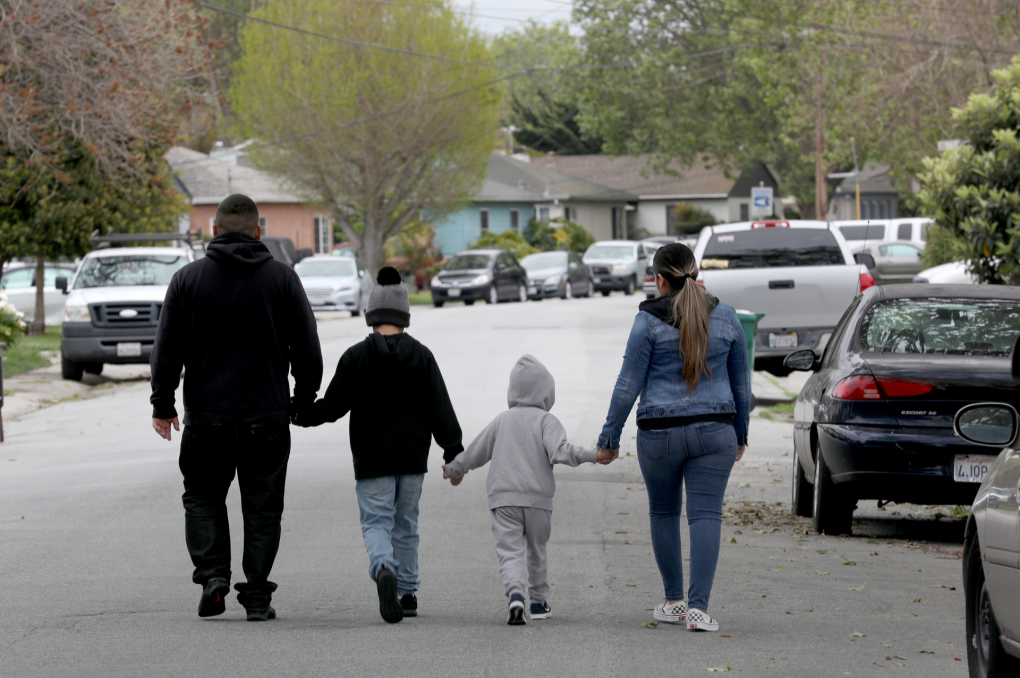
"caption": "Una madre y un padre indocumentados caminan con sus dos hijos en San Lorenzo, California, el 9 de abril de 2020.",
"credit": "Liz Hafalia/The San Francisco Chronicle vía Getty Images",
"altTag": null,
"description": null,
"imgSizes": {
"medium": {
"file": "https://cdn.kqed.org/wp-content/uploads/sites/10/2024/11/pic-of-a-family-walking-along-the-street-800x532.png",
"width": 800,
"height": 532,
"mimeType": "image/png"
},
"thumbnail": {
"file": "https://cdn.kqed.org/wp-content/uploads/sites/10/2024/11/pic-of-a-family-walking-along-the-street-160x106.png",
"width": 160,
"height": 106,
"mimeType": "image/png"
},
"post-thumbnail": {
"file": "https://cdn.kqed.org/wp-content/uploads/sites/10/2024/11/pic-of-a-family-walking-along-the-street-672x372.png",
"width": 672,
"height": 372,
"mimeType": "image/png"
},
"twentyfourteen-full-width": {
"file": "https://cdn.kqed.org/wp-content/uploads/sites/10/2024/11/pic-of-a-family-walking-along-the-street-1020x576.png",
"width": 1020,
"height": 576,
"mimeType": "image/png"
},
"kqedFullSize": {
"file": "https://cdn.kqed.org/wp-content/uploads/sites/10/2024/11/pic-of-a-family-walking-along-the-street.png",
"width": 1020,
"height": 678
}
},
"isLoading": false,
"fetchFailed": false
},
"news_12017013": {
"type": "attachments",
"id": "news_12017013",
"meta": {
"index": "attachments_1716263798",
"site": "news",
"id": "12017013",
"found": true
},
"title": "Castaneda3_crop",
"publishDate": 1733508835,
"status": "inherit",
"parent": 11825276,
"modified": 1733510653,
"caption": "Jesús Antonio Castañeda Serna preaches to parishioners of his new church, Iglesia del Espíritu Santo, or Holy Spirit Church. Castañeda was charged with 22 counts of battery, sexual battery, attempted sexual battery and attempt to prevent a witness/victim from prosecuting.",
"credit": "Alex Hall/KQED",
"altTag": "A priest in a green robe addresses parishioners.",
"description": null,
"imgSizes": {
"medium": {
"file": "https://cdn.kqed.org/wp-content/uploads/sites/10/2020/06/Castaneda3_crop-800x581.png",
"width": 800,
"height": 581,
"mimeType": "image/png"
},
"large": {
"file": "https://cdn.kqed.org/wp-content/uploads/sites/10/2020/06/Castaneda3_crop-1020x741.png",
"width": 1020,
"height": 741,
"mimeType": "image/png"
},
"thumbnail": {
"file": "https://cdn.kqed.org/wp-content/uploads/sites/10/2020/06/Castaneda3_crop-160x116.png",
"width": 160,
"height": 116,
"mimeType": "image/png"
},
"1536x1536": {
"file": "https://cdn.kqed.org/wp-content/uploads/sites/10/2020/06/Castaneda3_crop-1536x1115.png",
"width": 1536,
"height": 1115,
"mimeType": "image/png"
},
"post-thumbnail": {
"file": "https://cdn.kqed.org/wp-content/uploads/sites/10/2020/06/Castaneda3_crop-672x372.png",
"width": 672,
"height": 372,
"mimeType": "image/png"
},
"twentyfourteen-full-width": {
"file": "https://cdn.kqed.org/wp-content/uploads/sites/10/2020/06/Castaneda3_crop-1038x576.png",
"width": 1038,
"height": 576,
"mimeType": "image/png"
},
"kqedFullSize": {
"file": "https://cdn.kqed.org/wp-content/uploads/sites/10/2020/06/Castaneda3_crop.png",
"width": 1920,
"height": 1394
}
},
"isLoading": false,
"fetchFailed": false
},
"news_12016824": {
"type": "attachments",
"id": "news_12016824",
"meta": {
"index": "attachments_1716263798",
"site": "news",
"id": "12016824",
"found": true
},
"title": "120324-ICE-Detention-CC-AP-01-CM",
"publishDate": 1733423895,
"status": "inherit",
"parent": 12016823,
"modified": 1733423929,
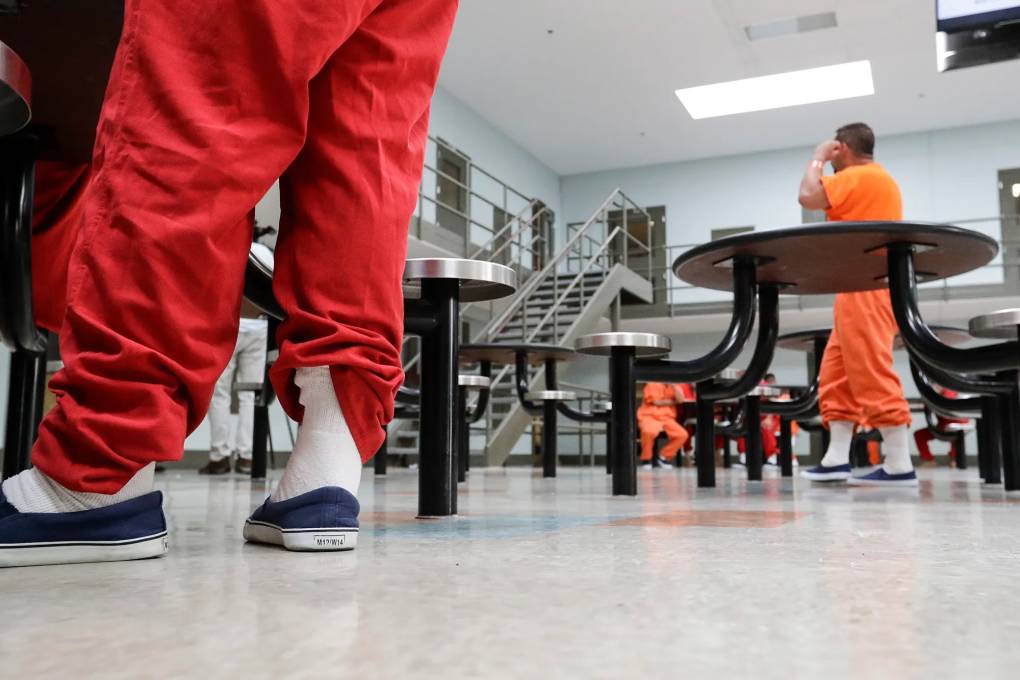
"caption": "ICE is looking to add to its six detention facilities in California with a new one in the Bay Area. Detainees at an ICE Processing Center housing unit in Adelanto gather in a common area.",
"credit": "Chris Carlson/AP Photo",
"altTag": null,
"description": null,
"imgSizes": {
"medium": {
"file": "https://cdn.kqed.org/wp-content/uploads/sites/10/2024/12/120324-ICE-Detention-CC-AP-01-CM-800x533.jpg",
"width": 800,
"height": 533,
"mimeType": "image/jpeg"
},
"large": {
"file": "https://cdn.kqed.org/wp-content/uploads/sites/10/2024/12/120324-ICE-Detention-CC-AP-01-CM-1020x680.jpg",
"width": 1020,
"height": 680,
"mimeType": "image/jpeg"
},
"thumbnail": {
"file": "https://cdn.kqed.org/wp-content/uploads/sites/10/2024/12/120324-ICE-Detention-CC-AP-01-CM-160x107.jpg",
"width": 160,
"height": 107,
"mimeType": "image/jpeg"
},
"1536x1536": {
"file": "https://cdn.kqed.org/wp-content/uploads/sites/10/2024/12/120324-ICE-Detention-CC-AP-01-CM-1536x1024.jpg",
"width": 1536,
"height": 1024,
"mimeType": "image/jpeg"
},
"post-thumbnail": {
"file": "https://cdn.kqed.org/wp-content/uploads/sites/10/2024/12/120324-ICE-Detention-CC-AP-01-CM-672x372.jpg",
"width": 672,
"height": 372,
"mimeType": "image/jpeg"
},
"twentyfourteen-full-width": {
"file": "https://cdn.kqed.org/wp-content/uploads/sites/10/2024/12/120324-ICE-Detention-CC-AP-01-CM-1038x576.jpg",
"width": 1038,
"height": 576,
"mimeType": "image/jpeg"
},
"full-width": {
"file": "https://cdn.kqed.org/wp-content/uploads/sites/10/2024/12/120324-ICE-Detention-CC-AP-01-CM-1920x1280.jpg",
"width": 1920,
"height": 1280,
"mimeType": "image/jpeg"
},
"kqedFullSize": {
"file": "https://cdn.kqed.org/wp-content/uploads/sites/10/2024/12/120324-ICE-Detention-CC-AP-01-CM.jpg",
"width": 2000,
"height": 1333
}
},
"isLoading": false,
"fetchFailed": false
},
"news_12016443": {
"type": "attachments",
"id": "news_12016443",
"meta": {
"index": "attachments_1716263798",
"site": "news",
"id": "12016443",
"found": true
},
"title": "ClassroomSanctuarySpace",
"publishDate": 1733254813,
"status": "inherit",
"parent": 12016440,
"modified": 1733254828,
"caption": null,
"credit": "Daisy Nguyen/ KQED",
"altTag": null,
"description": null,
"imgSizes": {
"medium": {
"file": "https://cdn.kqed.org/wp-content/uploads/sites/10/2024/12/ClassroomSanctuarySpace-800x600.jpg",
"width": 800,
"height": 600,
"mimeType": "image/jpeg"
},
"large": {
"file": "https://cdn.kqed.org/wp-content/uploads/sites/10/2024/12/ClassroomSanctuarySpace-1020x765.jpg",
"width": 1020,
"height": 765,
"mimeType": "image/jpeg"
},
"thumbnail": {
"file": "https://cdn.kqed.org/wp-content/uploads/sites/10/2024/12/ClassroomSanctuarySpace-160x120.jpg",
"width": 160,
"height": 120,
"mimeType": "image/jpeg"
},
"1536x1536": {
"file": "https://cdn.kqed.org/wp-content/uploads/sites/10/2024/12/ClassroomSanctuarySpace-1536x1152.jpg",
"width": 1536,
"height": 1152,
"mimeType": "image/jpeg"
},
"post-thumbnail": {
"file": "https://cdn.kqed.org/wp-content/uploads/sites/10/2024/12/ClassroomSanctuarySpace-672x372.jpg",
"width": 672,
"height": 372,
"mimeType": "image/jpeg"
},
"twentyfourteen-full-width": {
"file": "https://cdn.kqed.org/wp-content/uploads/sites/10/2024/12/ClassroomSanctuarySpace-1038x576.jpg",
"width": 1038,
"height": 576,
"mimeType": "image/jpeg"
},
"full-width": {
"file": "https://cdn.kqed.org/wp-content/uploads/sites/10/2024/12/ClassroomSanctuarySpace-1920x1440.jpg",
"width": 1920,
"height": 1440,
"mimeType": "image/jpeg"
},
"kqedFullSize": {
"file": "https://cdn.kqed.org/wp-content/uploads/sites/10/2024/12/ClassroomSanctuarySpace.jpg",
"width": 2000,
"height": 1500
}
},
"isLoading": false,
"fetchFailed": false
},
"news_11732826": {
"type": "attachments",
"id": "news_11732826",
"meta": {
"index": "attachments_1716263798",
"site": "news",
"id": "11732826",
"found": true
},
"title": "Immigration_Court-qut",
"publishDate": 1552532316,
"status": "inherit",
"parent": 11732523,
"modified": 1732749211,
"caption": "Supporters of California sanctuary laws rally in front of the 9th Circuit Court of Appeals in San Francisco.",
"credit": "Julie Small/KQED",
"altTag": null,
"description": null,
"imgSizes": {
"thumbnail": {
"file": "https://cdn.kqed.org/wp-content/uploads/sites/10/2019/03/Immigration_Court-qut-160x120.jpg",
"width": 160,
"height": 120,
"mimeType": "image/jpeg"
},
"medium": {
"file": "https://cdn.kqed.org/wp-content/uploads/sites/10/2019/03/Immigration_Court-qut-800x600.jpg",
"width": 800,
"height": 600,
"mimeType": "image/jpeg"
},
"large": {
"file": "https://cdn.kqed.org/wp-content/uploads/sites/10/2019/03/Immigration_Court-qut-1020x765.jpg",
"width": 1020,
"height": 765,
"mimeType": "image/jpeg"
},
"complete_open_graph": {
"file": "https://cdn.kqed.org/wp-content/uploads/sites/10/2019/03/Immigration_Court-qut-1200x900.jpg",
"width": 1200,
"height": 900,
"mimeType": "image/jpeg"
},
"post-thumbnail": {
"file": "https://cdn.kqed.org/wp-content/uploads/sites/10/2019/03/Immigration_Court-qut-672x372.jpg",
"width": 672,
"height": 372,
"mimeType": "image/jpeg"
},
"twentyfourteen-full-width": {
"file": "https://cdn.kqed.org/wp-content/uploads/sites/10/2019/03/Immigration_Court-qut-1038x576.jpg",
"width": 1038,
"height": 576,
"mimeType": "image/jpeg"
},
"full-width": {
"file": "https://cdn.kqed.org/wp-content/uploads/sites/10/2019/03/Immigration_Court-qut-1920x1440.jpg",
"width": 1920,
"height": 1440,
"mimeType": "image/jpeg"
},
"guest-author-32": {
"file": "https://cdn.kqed.org/wp-content/uploads/sites/10/2019/03/Immigration_Court-qut-32x32.jpg",
"width": 32,
"height": 32,
"mimeType": "image/jpeg"
},
"guest-author-50": {
"file": "https://cdn.kqed.org/wp-content/uploads/sites/10/2019/03/Immigration_Court-qut-50x50.jpg",
"width": 50,
"height": 50,
"mimeType": "image/jpeg"
},
"guest-author-64": {
"file": "https://cdn.kqed.org/wp-content/uploads/sites/10/2019/03/Immigration_Court-qut-64x64.jpg",
"width": 64,
"height": 64,
"mimeType": "image/jpeg"
},
"guest-author-96": {
"file": "https://cdn.kqed.org/wp-content/uploads/sites/10/2019/03/Immigration_Court-qut-96x96.jpg",
"width": 96,
"height": 96,
"mimeType": "image/jpeg"
},
"guest-author-128": {
"file": "https://cdn.kqed.org/wp-content/uploads/sites/10/2019/03/Immigration_Court-qut-128x128.jpg",
"width": 128,
"height": 128,
"mimeType": "image/jpeg"
},
"kqedFullSize": {
"file": "https://cdn.kqed.org/wp-content/uploads/sites/10/2019/03/Immigration_Court-qut.jpg",
"width": 1920,
"height": 1440
}
},
"isLoading": false,
"fetchFailed": false
},
"news_12015638": {
"type": "attachments",
"id": "news_12015638",
"meta": {
"index": "attachments_1716263798",
"site": "news",
"id": "12015638",
"found": true
},
"title": "US-VOTE-POLITICS-TRUMP",
"publishDate": 1732314911,
"status": "inherit",
"parent": 12015637,
"modified": 1732319380,
"caption": "A woman wearing a \"California Moms for America\" shirt shows her support during a rally in anticipation of former President Donald Trump's arrival at a fundraising event in San Francisco on June 6, 2024. ",
"credit": "Josh Edelson/AFP via Getty Images",
"altTag": null,
"description": null,
"imgSizes": {
"medium": {
"file": "https://cdn.kqed.org/wp-content/uploads/sites/10/2024/11/GettyImages-2155726271-800x520.jpg",
"width": 800,
"height": 520,
"mimeType": "image/jpeg"
},
"large": {
"file": "https://cdn.kqed.org/wp-content/uploads/sites/10/2024/11/GettyImages-2155726271-1020x663.jpg",
"width": 1020,
"height": 663,
"mimeType": "image/jpeg"
},
"thumbnail": {
"file": "https://cdn.kqed.org/wp-content/uploads/sites/10/2024/11/GettyImages-2155726271-160x104.jpg",
"width": 160,
"height": 104,
"mimeType": "image/jpeg"
},
"1536x1536": {
"file": "https://cdn.kqed.org/wp-content/uploads/sites/10/2024/11/GettyImages-2155726271-1536x999.jpg",
"width": 1536,
"height": 999,
"mimeType": "image/jpeg"
},
"2048x2048": {
"file": "https://cdn.kqed.org/wp-content/uploads/sites/10/2024/11/GettyImages-2155726271-2048x1332.jpg",
"width": 2048,
"height": 1332,
"mimeType": "image/jpeg"
},
"post-thumbnail": {
"file": "https://cdn.kqed.org/wp-content/uploads/sites/10/2024/11/GettyImages-2155726271-672x372.jpg",
"width": 672,
"height": 372,
"mimeType": "image/jpeg"
},
"twentyfourteen-full-width": {
"file": "https://cdn.kqed.org/wp-content/uploads/sites/10/2024/11/GettyImages-2155726271-1038x576.jpg",
"width": 1038,
"height": 576,
"mimeType": "image/jpeg"
},
"full-width": {
"file": "https://cdn.kqed.org/wp-content/uploads/sites/10/2024/11/GettyImages-2155726271-1920x1249.jpg",
"width": 1920,
"height": 1249,
"mimeType": "image/jpeg"
},
"kqedFullSize": {
"file": "https://cdn.kqed.org/wp-content/uploads/sites/10/2024/11/GettyImages-2155726271-scaled.jpg",
"width": 2560,
"height": 1665
}
},
"isLoading": false,
"fetchFailed": false
},
"news_12014519": {
"type": "attachments",
"id": "news_12014519",
"meta": {
"index": "attachments_1716263798",
"site": "news",
"id": "12014519",
"found": true
},
"title": "GettyImages-1217922027_edited",
"publishDate": 1731627825,
"status": "inherit",
"parent": 12014436,
"modified": 1731627992,
"caption": "An undocumented mother and father walk with their two sons in San Lorenzo, Calif. on April 9, 2020. ",
"credit": "Liz Hafalia/The San Francisco Chronicle via Getty Images",
"altTag": null,
"description": null,
"imgSizes": {
"medium": {
"file": "https://cdn.kqed.org/wp-content/uploads/sites/10/2024/11/GettyImages-1217922027_edited-800x532.png",
"width": 800,
"height": 532,
"mimeType": "image/png"
},
"large": {
"file": "https://cdn.kqed.org/wp-content/uploads/sites/10/2024/11/GettyImages-1217922027_edited-1020x678.png",
"width": 1020,
"height": 678,
"mimeType": "image/png"
},
"thumbnail": {
"file": "https://cdn.kqed.org/wp-content/uploads/sites/10/2024/11/GettyImages-1217922027_edited-160x106.png",
"width": 160,
"height": 106,
"mimeType": "image/png"
},
"1536x1536": {
"file": "https://cdn.kqed.org/wp-content/uploads/sites/10/2024/11/GettyImages-1217922027_edited-1536x1022.png",
"width": 1536,
"height": 1022,
"mimeType": "image/png"
},
"post-thumbnail": {
"file": "https://cdn.kqed.org/wp-content/uploads/sites/10/2024/11/GettyImages-1217922027_edited-672x372.png",
"width": 672,
"height": 372,
"mimeType": "image/png"
},
"twentyfourteen-full-width": {
"file": "https://cdn.kqed.org/wp-content/uploads/sites/10/2024/11/GettyImages-1217922027_edited-1038x576.png",
"width": 1038,
"height": 576,
"mimeType": "image/png"
},
"kqedFullSize": {
"file": "https://cdn.kqed.org/wp-content/uploads/sites/10/2024/11/GettyImages-1217922027_edited.png",
"width": 1920,
"height": 1277
}
},
"isLoading": false,
"fetchFailed": false
},
"news_12014015": {
"type": "attachments",
"id": "news_12014015",
"meta": {
"index": "attachments_1716263798",
"site": "news",
"id": "12014015",
"found": true
},
"title": "Rogelio_Garcia_-_Convivir[1]",
"publishDate": 1731359518,
"status": "inherit",
"parent": 0,
"modified": 1731368672,
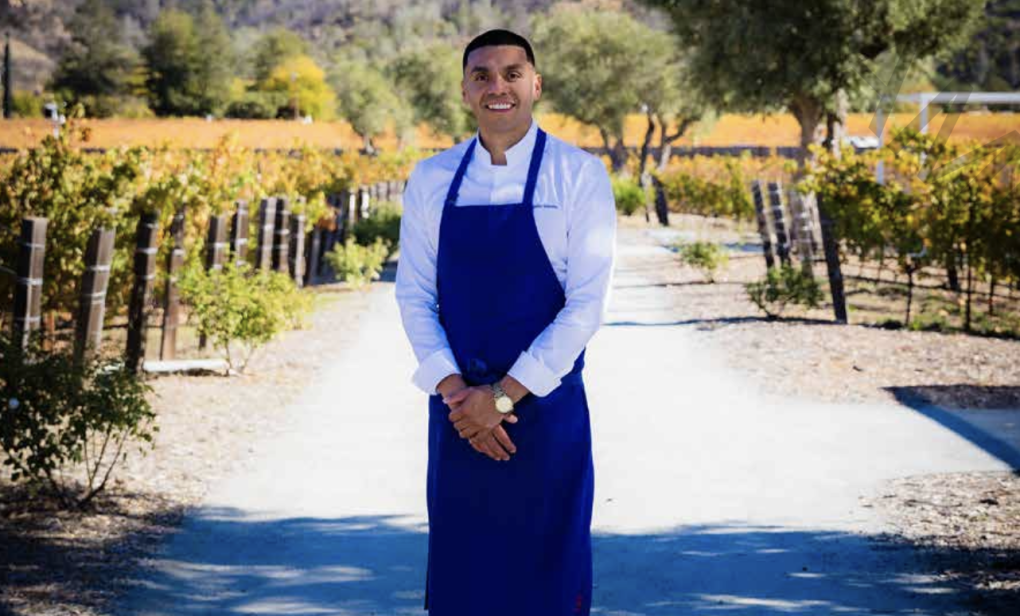
"caption": "Chef Rogelio Garcia is executive chef of Auro, a Michelin Star-winning restaurant at the Four Seasons Resort in Calistoga.",
"credit": "Courtesy of John Troxell",
"altTag": null,
"description": null,
"imgSizes": {
"medium": {
"file": "https://cdn.kqed.org/wp-content/uploads/sites/10/2024/11/Rogelio_Garcia_-_Convivir1-e1731360269373-800x483.png",
"width": 800,
"height": 483,
"mimeType": "image/png"
},
"large": {
"file": "https://cdn.kqed.org/wp-content/uploads/sites/10/2024/11/Rogelio_Garcia_-_Convivir1-e1731360269373-1020x616.png",
"width": 1020,
"height": 616,
"mimeType": "image/png"
},
"thumbnail": {
"file": "https://cdn.kqed.org/wp-content/uploads/sites/10/2024/11/Rogelio_Garcia_-_Convivir1-e1731360269373-160x97.png",
"width": 160,
"height": 97,
"mimeType": "image/png"
},
"1536x1536": {
"file": "https://cdn.kqed.org/wp-content/uploads/sites/10/2024/11/Rogelio_Garcia_-_Convivir1-1267x1536.png",
"width": 1267,
"height": 1536,
"mimeType": "image/png"
},
"post-thumbnail": {
"file": "https://cdn.kqed.org/wp-content/uploads/sites/10/2024/11/Rogelio_Garcia_-_Convivir1-e1731360269373-672x372.png",
"width": 672,
"height": 372,
"mimeType": "image/png"
},
"twentyfourteen-full-width": {
"file": "https://cdn.kqed.org/wp-content/uploads/sites/10/2024/11/Rogelio_Garcia_-_Convivir1-e1731360269373-1038x576.png",
"width": 1038,
"height": 576,
"mimeType": "image/png"
},
"kqedFullSize": {
"file": "https://cdn.kqed.org/wp-content/uploads/sites/10/2024/11/Rogelio_Garcia_-_Convivir1-e1731360269373.png",
"width": 1282,
"height": 774
}
},
"isLoading": false,
"fetchFailed": false
},
"news_12014019": {
"type": "attachments",
"id": "news_12014019",
"meta": {
"index": "attachments_1716263798",
"site": "news",
"id": "12014019",
"found": true
},
"title": "npr.brightspotcdn copy",
"publishDate": 1731361728,
"status": "inherit",
"parent": 12014017,
"modified": 1731361760,
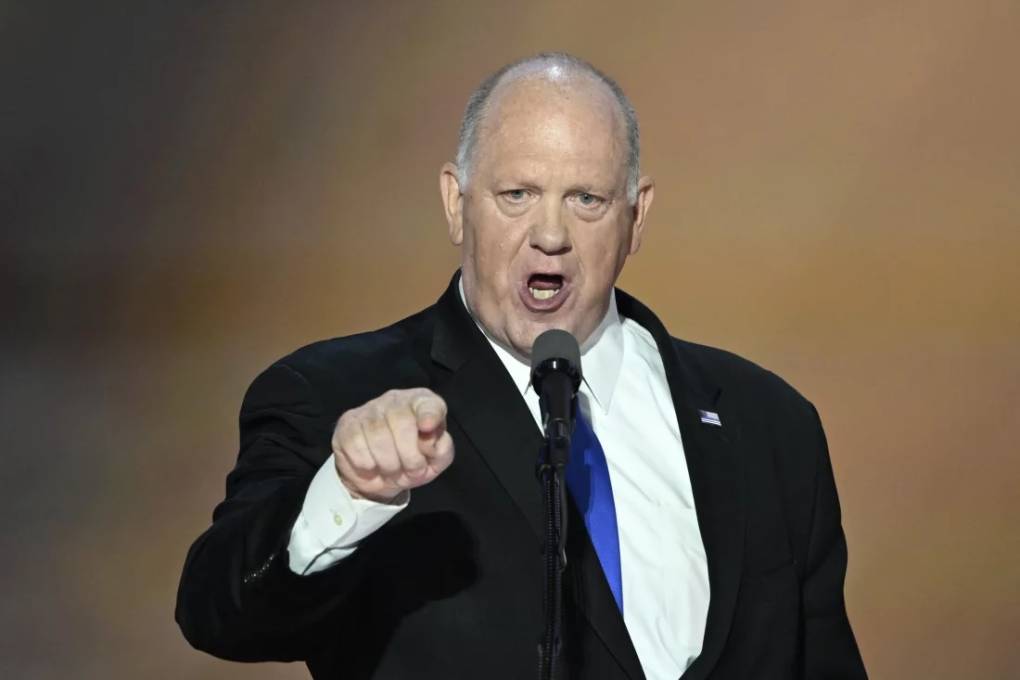
"caption": "Tom Homan speaks at the Republican National Convention in Milwaukee in July. Trump announced on Sunday that the former acting ICE director will oversee border control in his second administration.",
"credit": "Andrew Caballero-Reynolds/AFP via Getty Images",
"altTag": null,
"description": null,
"imgSizes": {
"medium": {
"file": "https://cdn.kqed.org/wp-content/uploads/sites/10/2024/11/npr.brightspotcdn-copy-800x533.jpg",
"width": 800,
"height": 533,
"mimeType": "image/jpeg"
},
"large": {
"file": "https://cdn.kqed.org/wp-content/uploads/sites/10/2024/11/npr.brightspotcdn-copy-1020x680.jpg",
"width": 1020,
"height": 680,
"mimeType": "image/jpeg"
},
"thumbnail": {
"file": "https://cdn.kqed.org/wp-content/uploads/sites/10/2024/11/npr.brightspotcdn-copy-160x107.jpg",
"width": 160,
"height": 107,
"mimeType": "image/jpeg"
},
"post-thumbnail": {
"file": "https://cdn.kqed.org/wp-content/uploads/sites/10/2024/11/npr.brightspotcdn-copy-672x372.jpg",
"width": 672,
"height": 372,
"mimeType": "image/jpeg"
},
"twentyfourteen-full-width": {
"file": "https://cdn.kqed.org/wp-content/uploads/sites/10/2024/11/npr.brightspotcdn-copy-1038x576.jpg",
"width": 1038,
"height": 576,
"mimeType": "image/jpeg"
},
"kqedFullSize": {
"file": "https://cdn.kqed.org/wp-content/uploads/sites/10/2024/11/npr.brightspotcdn-copy.jpg",
"width": 1100,
"height": 733
}
},
"isLoading": false,
"fetchFailed": false
},
"news_12013976": {
"type": "attachments",
"id": "news_12013976",
"meta": {
"index": "attachments_1716263798",
"site": "news",
"id": "12013976",
"found": true
},
"title": "01_110824-Deferred-Action-ZS-04",
"publishDate": 1731352840,
"status": "inherit",
"parent": 12013960,
"modified": 1731365370,
"caption": "Alejandro Gamez in his home in Hawthorne on Nov. 8, 2024. ",
"credit": "Zaydee Sanchez/CalMatters",
"altTag": "A man looks at the camera with light on his face and a house in the background.",
"description": null,
"imgSizes": {
"medium": {
"file": "https://cdn.kqed.org/wp-content/uploads/sites/10/2024/11/01_110824-Deferred-Action-ZS-04-800x533.jpg",
"width": 800,
"height": 533,
"mimeType": "image/jpeg"
},
"large": {
"file": "https://cdn.kqed.org/wp-content/uploads/sites/10/2024/11/01_110824-Deferred-Action-ZS-04-1020x680.jpg",
"width": 1020,
"height": 680,
"mimeType": "image/jpeg"
},
"thumbnail": {
"file": "https://cdn.kqed.org/wp-content/uploads/sites/10/2024/11/01_110824-Deferred-Action-ZS-04-160x107.jpg",
"width": 160,
"height": 107,
"mimeType": "image/jpeg"
},
"1536x1536": {
"file": "https://cdn.kqed.org/wp-content/uploads/sites/10/2024/11/01_110824-Deferred-Action-ZS-04-1536x1024.jpg",
"width": 1536,
"height": 1024,
"mimeType": "image/jpeg"
},
"post-thumbnail": {
"file": "https://cdn.kqed.org/wp-content/uploads/sites/10/2024/11/01_110824-Deferred-Action-ZS-04-672x372.jpg",
"width": 672,
"height": 372,
"mimeType": "image/jpeg"
},
"twentyfourteen-full-width": {
"file": "https://cdn.kqed.org/wp-content/uploads/sites/10/2024/11/01_110824-Deferred-Action-ZS-04-1038x576.jpg",
"width": 1038,
"height": 576,
"mimeType": "image/jpeg"
},
"full-width": {
"file": "https://cdn.kqed.org/wp-content/uploads/sites/10/2024/11/01_110824-Deferred-Action-ZS-04-1920x1280.jpg",
"width": 1920,
"height": 1280,
"mimeType": "image/jpeg"
},
"kqedFullSize": {
"file": "https://cdn.kqed.org/wp-content/uploads/sites/10/2024/11/01_110824-Deferred-Action-ZS-04.jpg",
"width": 2000,
"height": 1333
}
},
"isLoading": false,
"fetchFailed": false
},
"news_12013699": {
"type": "attachments",
"id": "news_12013699",
"meta": {
"index": "attachments_1716263798",
"site": "news",
"id": "12013699",
"found": true
},
"title": "TOPSHOT-US-VOTE-POLITICS-BIDEN-MIGRATION",
"publishDate": 1731093498,
"status": "inherit",
"parent": 12013693,
"modified": 1731096723,
"caption": "U.S. President Joe Biden (left) speaks with U.S. Border Patrol agents as he visits the U.S.-Mexico border in Brownsville, Texas, on Feb. 29, 2024. ",
"credit": "Jim Watson/AFP via Getty Images",
"altTag": null,
"description": null,
"imgSizes": {
"medium": {
"file": "https://cdn.kqed.org/wp-content/uploads/sites/10/2024/11/GettyImages-2041440993-800x534.jpg",
"width": 800,
"height": 534,
"mimeType": "image/jpeg"
},
"large": {
"file": "https://cdn.kqed.org/wp-content/uploads/sites/10/2024/11/GettyImages-2041440993-1020x680.jpg",
"width": 1020,
"height": 680,
"mimeType": "image/jpeg"
},
"thumbnail": {
"file": "https://cdn.kqed.org/wp-content/uploads/sites/10/2024/11/GettyImages-2041440993-160x107.jpg",
"width": 160,
"height": 107,
"mimeType": "image/jpeg"
},
"post-thumbnail": {
"file": "https://cdn.kqed.org/wp-content/uploads/sites/10/2024/11/GettyImages-2041440993-672x372.jpg",
"width": 672,
"height": 372,
"mimeType": "image/jpeg"
},
"twentyfourteen-full-width": {
"file": "https://cdn.kqed.org/wp-content/uploads/sites/10/2024/11/GettyImages-2041440993-1024x576.jpg",
"width": 1024,
"height": 576,
"mimeType": "image/jpeg"
},
"kqedFullSize": {
"file": "https://cdn.kqed.org/wp-content/uploads/sites/10/2024/11/GettyImages-2041440993.jpg",
"width": 1024,
"height": 683
}
},
"isLoading": false,
"fetchFailed": false
},
"news_12013572": {
"type": "attachments",
"id": "news_12013572",
"meta": {
"index": "attachments_1716263798",
"site": "news",
"id": "12013572",
"found": true
},
"title": "legal-aid-bay-area",
"publishDate": 1731025240,
"status": "inherit",
"parent": 12013522,
"modified": 1731098420,
"caption": "Since the results of the 2024 presidential election, many in the Bay Area remain anxious that they could be directly affected by the sweeping changes Trump campaign has promised.\n\n\n\n\n\n\n\n",
"credit": "Getty Images",
"altTag": null,
"description": null,
"imgSizes": {
"medium": {
"file": "https://cdn.kqed.org/wp-content/uploads/sites/10/2024/11/GettyImages-1171173643-800x600.jpg",
"width": 800,
"height": 600,
"mimeType": "image/jpeg"
},
"large": {
"file": "https://cdn.kqed.org/wp-content/uploads/sites/10/2024/11/GettyImages-1171173643-1020x765.jpg",
"width": 1020,
"height": 765,
"mimeType": "image/jpeg"
},
"thumbnail": {
"file": "https://cdn.kqed.org/wp-content/uploads/sites/10/2024/11/GettyImages-1171173643-160x120.jpg",
"width": 160,
"height": 120,
"mimeType": "image/jpeg"
},
"1536x1536": {
"file": "https://cdn.kqed.org/wp-content/uploads/sites/10/2024/11/GettyImages-1171173643-1536x1152.jpg",
"width": 1536,
"height": 1152,
"mimeType": "image/jpeg"
},
"post-thumbnail": {
"file": "https://cdn.kqed.org/wp-content/uploads/sites/10/2024/11/GettyImages-1171173643-672x372.jpg",
"width": 672,
"height": 372,
"mimeType": "image/jpeg"
},
"twentyfourteen-full-width": {
"file": "https://cdn.kqed.org/wp-content/uploads/sites/10/2024/11/GettyImages-1171173643-1038x576.jpg",
"width": 1038,
"height": 576,
"mimeType": "image/jpeg"
},
"full-width": {
"file": "https://cdn.kqed.org/wp-content/uploads/sites/10/2024/11/GettyImages-1171173643-1920x1440.jpg",
"width": 1920,
"height": 1440,
"mimeType": "image/jpeg"
},
"kqedFullSize": {
"file": "https://cdn.kqed.org/wp-content/uploads/sites/10/2024/11/GettyImages-1171173643.jpg",
"width": 2000,
"height": 1500
}
},
"isLoading": false,
"fetchFailed": false
}
},
"audioPlayerReducer": {
"postId": "stream_live",
"isPaused": true,
"isPlaying": false,
"pfsActive": false,
"pledgeModalIsOpen": true,
"playerDrawerIsOpen": false,
"liveAudioPlayStartedAt": 0,
"liveAudioPlayContext": ""
},
"authorsReducer": {
"byline_news_12016823": {
"type": "authors",
"id": "byline_news_12016823",
"meta": {
"override": true
},
"slug": "byline_news_12016823",
"name": "\u003ca href=\"https://calmatters.org/author/wendy-fry/\">Wendy Fry\u003c/a>, CalMatters",
"isLoading": false
},
"byline_news_12014017": {
"type": "authors",
"id": "byline_news_12014017",
"meta": {
"override": true
},
"slug": "byline_news_12014017",
"name": "\u003ca href=\"https://www.npr.org/people/776048102/rachel-treisman\">Rachel Treisman\u003c/a>, NPR",
"isLoading": false
},
"byline_news_12013960": {
"type": "authors",
"id": "byline_news_12013960",
"meta": {
"override": true
},
"slug": "byline_news_12013960",
"name": "\u003ca href=\"https://calmatters.org/author/jeanne-kuang/\">Jeanne Kuang\u003c/a>, CalMatters",
"isLoading": false
},
"byline_news_12013693": {
"type": "authors",
"id": "byline_news_12013693",
"meta": {
"override": true
},
"slug": "byline_news_12013693",
"name": "Hannah Schoenbaum, Associated Press",
"isLoading": false
},
"tychehendricks": {
"type": "authors",
"id": "259",
"meta": {
"index": "authors_1716337520",
"id": "259",
"found": true
},
"name": "Tyche Hendricks",
"firstName": "Tyche",
"lastName": "Hendricks",
"slug": "tychehendricks",
"email": "thendricks@kqed.org",
"display_author_email": true,
"staff_mastheads": [
"news"
],
"title": "KQED Senior Editor, Immigration",
"bio": "\u003cspan style=\"font-weight: 400;\">Tyche Hendricks is KQED’s senior editor for immigration, leading coverage of the policy and politics that affect California’s immigrant communities. Her work for KQED’s radio and online audiences is also carried on NPR and other national outlets. She has been recognized with awards from the Radio and Television News Directors Association, the Society for Professional Journalists; the Education Writers Association; the Best of the West and the National Federation of Community Broadcasters. Before joining KQED in 2010, Tyche spent more than a dozen years as a newspaper reporter, notably at the \u003c/span>\u003ci>\u003cspan style=\"font-weight: 400;\">San Francisco Chronicle\u003c/span>\u003c/i>\u003cspan style=\"font-weight: 400;\">. At different times she has covered criminal justice, government and politics and urban planning. Tyche has taught in the MFA Creative Writing program at the University of San Francisco and at UC Berkeley’s Graduate School of Journalism, where she was co-director of a national immigration symposium for professional journalists. She is the author of \u003c/span>\u003ci>\u003cspan style=\"font-weight: 400;\">The Wind Doesn't Need a Passport: Stories from the U.S.-Mexico Borderlands\u003c/span>\u003c/i>\u003cspan style=\"font-weight: 400;\"> (University of California Press). \u003c/span>",
"avatar": "https://secure.gravatar.com/avatar/b8ee458e2731c2d43df86882ce17267e?s=600&d=blank&r=g",
"twitter": "tychehendricks",
"facebook": null,
"instagram": null,
"linkedin": null,
"sites": [
{
"site": "news",
"roles": [
"editor"
]
},
{
"site": "stateofhealth",
"roles": [
"editor"
]
}
],
"headData": {
"title": "Tyche Hendricks | KQED",
"description": "KQED Senior Editor, Immigration",
"ogImgSrc": "https://secure.gravatar.com/avatar/b8ee458e2731c2d43df86882ce17267e?s=600&d=blank&r=g",
"twImgSrc": "https://secure.gravatar.com/avatar/b8ee458e2731c2d43df86882ce17267e?s=600&d=blank&r=g"
},
"isLoading": false,
"link": "/author/tychehendricks"
},
"lesleymcclurg": {
"type": "authors",
"id": "11229",
"meta": {
"index": "authors_1716337520",
"id": "11229",
"found": true
},
"name": "Lesley McClurg",
"firstName": "Lesley",
"lastName": "McClurg",
"slug": "lesleymcclurg",
"email": "lmcclurg@KQED.org",
"display_author_email": false,
"staff_mastheads": [
"news",
"science"
],
"title": "KQED Health Correspondent",
"bio": "Lesley McClurg is a health correspondent and fill-in host whose work is regularly rebroadcast on NPR and PBS programs. She’s earned multiple regional Emmy awards, a national and a regional Edward R. Murrow award, and was named Best Beat Reporter by the Association of Health Care Journalists. The Society of Professional Journalists has recognized her work several times, and the Society of Environmental Journalists spotlighted her coverage of California’s historic drought.\r\n\r\nBefore joining KQED in 2016, Lesley covered food and sustainability for Capital Public Radio, environmental issues for Colorado Public Radio, and reported for KUOW and KCTS 9 in Seattle. Away from the newsroom, she loves skiing with her daughter, mountain biking with her partner, and playing with Ollie, the family’s goldendoodle. On deadline, she runs almost entirely on chocolate chips.\r\n\r\n ",
"avatar": "https://secure.gravatar.com/avatar/bab49e972ea10c774fe0f5e29dba1722b158f7c0d58a360923d1389d380b2978?s=600&d=blank&r=g",
"twitter": "lesleywmcclurg",
"bluesky": null,
"facebook": null,
"instagram": null,
"linkedin": null,
"sites": [
{
"site": "arts",
"roles": [
"author"
]
},
{
"site": "news",
"roles": [
"editor"
]
},
{
"site": "futureofyou",
"roles": [
"editor"
]
},
{
"site": "stateofhealth",
"roles": [
"author"
]
},
{
"site": "science",
"roles": [
"editor"
]
},
{
"site": "quest",
"roles": [
"subscriber"
]
},
{
"site": "forum",
"roles": [
"administrator"
]
},
{
"site": "liveblog",
"roles": [
"author"
]
}
],
"headData": {
"title": "Lesley McClurg | KQED",
"description": "KQED Health Correspondent",
"ogImgSrc": "https://secure.gravatar.com/avatar/bab49e972ea10c774fe0f5e29dba1722b158f7c0d58a360923d1389d380b2978?s=600&d=blank&r=g",
"twImgSrc": "https://secure.gravatar.com/avatar/bab49e972ea10c774fe0f5e29dba1722b158f7c0d58a360923d1389d380b2978?s=600&d=blank&r=g"
},
"isLoading": false,
"link": "/author/lesleymcclurg"
},
"ahall": {
"type": "authors",
"id": "11490",
"meta": {
"index": "authors_1716337520",
"id": "11490",
"found": true
},
"name": "Alex Hall",
"firstName": "Alex",
"lastName": "Hall",
"slug": "ahall",
"email": "ahall@kqed.org",
"display_author_email": false,
"staff_mastheads": [
"news"
],
"title": "KQED Enterprise & Accountability Reporter",
"bio": "Alex Hall is KQED's Enterprise and Accountability Reporter. She previously covered the Central Valley for five years from KQED's bureau in Fresno. Before joining KQED, Alex was an investigative reporting fellow at Wisconsin Public Radio and the Wisconsin Center for Investigative Journalism. She has also worked as a bilingual producer for NPR's investigative unit and freelance video producer for Reuters TV on the Latin America desk. She got her start in journalism in South America, where she worked as a radio producer and Spanish-English translator for CNN Chile. Her documentary and investigation into the series of deadly COVID-19 outbreaks at Foster Farms won a national Edward R. Murrow award and was named an Investigative Reporters & Editors award finalist. Alex's reporting for Reveal on the Wisconsin dairy industry's reliance on undocumented immigrant labor was made into a film, Los Lecheros, which won a regional Edward R. Murrow award for best news documentary.",
"avatar": "https://secure.gravatar.com/avatar/04c28ad4a7caa7ac2ef39c655c4030c993a3f331481d1da4799bb76ea85b9afa?s=600&d=blank&r=g",
"twitter": "@chalexhall",
"bluesky": null,
"facebook": null,
"instagram": null,
"linkedin": null,
"sites": [
{
"site": "news",
"roles": [
"editor"
]
},
{
"site": "liveblog",
"roles": [
"author"
]
}
],
"headData": {
"title": "Alex Hall | KQED",
"description": "KQED Enterprise & Accountability Reporter",
"ogImgSrc": "https://secure.gravatar.com/avatar/04c28ad4a7caa7ac2ef39c655c4030c993a3f331481d1da4799bb76ea85b9afa?s=600&d=blank&r=g",
"twImgSrc": "https://secure.gravatar.com/avatar/04c28ad4a7caa7ac2ef39c655c4030c993a3f331481d1da4799bb76ea85b9afa?s=600&d=blank&r=g"
},
"isLoading": false,
"link": "/author/ahall"
},
"btorres": {
"type": "authors",
"id": "11666",
"meta": {
"index": "authors_1716337520",
"id": "11666",
"found": true
},
"name": "Blanca Torres",
"firstName": "Blanca",
"lastName": "Torres",
"slug": "btorres",
"email": "btorres@kqed.org",
"display_author_email": true,
"staff_mastheads": [
"news"
],
"title": "Producer, Forum",
"bio": "Blanca Torres brings sharp news judgement and keen sense of lively conversation to her work as producer for Forum. She loves producing shows that leave listeners feeling like they heard distinctive voices, learned something new and gained a fresh perspective.\r\n\r\nShe joined KQED in January of 2020 after 16 years of working as a newspaper reporter most recently at the \u003cem>San Francisco Business Times,\u003c/em> where she wrote about real estate and economic development. Before that, she covered a variety of beats including crime, education, retail, workplace, the economy, consumer issues, and small business for the \u003cem>Contra Costa Times, Baltimore Sun\u003c/em> and\u003cem> The Seattle Times\u003c/em>. In addition to reporting, she worked as an editorial writer and columnist for the \u003cem>Seattle Times\u003c/em>. From 2017 to 2020, Blanca won a total of ten awards from the National Association of Real Estate Editors and won first place for land use reporting from the California News Publishers Association two years in a row. She is also a member and former board member for the National Association of Hispanic Journalists.\r\n\r\nA native of the Pacific Northwest, Blanca earned her bachelor's degree from Vanderbilt University in Nashville and a master's in fine arts in creative writing at Mills College. She lives in the East Bay with her family.",
"avatar": "https://secure.gravatar.com/avatar/50b49d19b14a1eed34f26ebf4681152cdd81574ed21851100871ccd29e578cdc?s=600&d=blank&r=g",
"twitter": "@blancawrites",
"bluesky": null,
"facebook": null,
"instagram": null,
"linkedin": null,
"sites": [
{
"site": "arts",
"roles": [
"editor"
]
},
{
"site": "news",
"roles": [
"editor"
]
},
{
"site": "forum",
"roles": [
"editor"
]
}
],
"headData": {
"title": "Blanca Torres | KQED",
"description": "Producer, Forum",
"ogImgSrc": "https://secure.gravatar.com/avatar/50b49d19b14a1eed34f26ebf4681152cdd81574ed21851100871ccd29e578cdc?s=600&d=blank&r=g",
"twImgSrc": "https://secure.gravatar.com/avatar/50b49d19b14a1eed34f26ebf4681152cdd81574ed21851100871ccd29e578cdc?s=600&d=blank&r=g"
},
"isLoading": false,
"link": "/author/btorres"
},
"ccabreralomeli": {
"type": "authors",
"id": "11708",
"meta": {
"index": "authors_1716337520",
"id": "11708",
"found": true
},
"name": "Carlos Cabrera-Lomelí",
"firstName": "Carlos",
"lastName": "Cabrera-Lomelí",
"slug": "ccabreralomeli",
"email": "ccabreralomeli@KQED.org",
"display_author_email": true,
"staff_mastheads": [
"news"
],
"title": "Community Reporter",
"bio": "Carlos Cabrera-Lomelí is a community reporter with KQED's digital engagement team. He also reports and co-produces for KQED's bilingual news hub KQED en Español. He grew up in San Francisco's Mission District and has previously worked with Univision, 48 Hills and REFORMA in Mexico City.",
"avatar": "https://secure.gravatar.com/avatar/c309be9665e484f887b818c89e273ecc673004f426f36b24d00a4d813a2e0518?s=600&d=blank&r=g",
"twitter": "@LomeliCabrera",
"bluesky": null,
"facebook": null,
"instagram": null,
"linkedin": null,
"sites": [
{
"site": "arts",
"roles": [
"editor"
]
},
{
"site": "news",
"roles": [
"editor"
]
},
{
"site": "about",
"roles": [
"editor"
]
},
{
"site": "science",
"roles": [
"editor"
]
},
{
"site": "perspectives",
"roles": [
"editor"
]
},
{
"site": "elections",
"roles": [
"editor"
]
},
{
"site": "liveblog",
"roles": [
"contributor"
]
}
],
"headData": {
"title": "Carlos Cabrera-Lomelí | KQED",
"description": "Community Reporter",
"ogImgSrc": "https://secure.gravatar.com/avatar/c309be9665e484f887b818c89e273ecc673004f426f36b24d00a4d813a2e0518?s=600&d=blank&r=g",
"twImgSrc": "https://secure.gravatar.com/avatar/c309be9665e484f887b818c89e273ecc673004f426f36b24d00a4d813a2e0518?s=600&d=blank&r=g"
},
"isLoading": false,
"link": "/author/ccabreralomeli"
},
"daisynguyen": {
"type": "authors",
"id": "11829",
"meta": {
"index": "authors_1716337520",
"id": "11829",
"found": true
},
"name": "Daisy Nguyen",
"firstName": "Daisy",
"lastName": "Nguyen",
"slug": "daisynguyen",
"email": "daisynguyen@kqed.org",
"display_author_email": true,
"staff_mastheads": [
"news"
],
"title": "KQED Contributor",
"bio": "I have covered early childhood education and child care for KQED since 2022. I focus on policies aimed at increasing access to early care and education and how they shape individual lives. I've been a journalist for more than two decades, with most of that time devoted to covering breaking news throughout California for The Associated Press. I grew up in San Francisco and studied at UC Davis and Columbia University's Graduate School of Journalism. I live in Oakland with my husband and two kids.",
"avatar": "https://secure.gravatar.com/avatar/2da2127c27f7143b53ebd419800fd55f?s=600&d=blank&r=g",
"twitter": null,
"facebook": null,
"instagram": null,
"linkedin": "https://www.linkedin.com/in/daisynguyen/",
"sites": [
{
"site": "news",
"roles": [
"author"
]
},
{
"site": "liveblog",
"roles": [
"author"
]
}
],
"headData": {
"title": "Daisy Nguyen | KQED",
"description": "KQED Contributor",
"ogImgSrc": "https://secure.gravatar.com/avatar/2da2127c27f7143b53ebd419800fd55f?s=600&d=blank&r=g",
"twImgSrc": "https://secure.gravatar.com/avatar/2da2127c27f7143b53ebd419800fd55f?s=600&d=blank&r=g"
},
"isLoading": false,
"link": "/author/daisynguyen"
}
},
"pagesReducer": {
"news_category_immigration": {
"type": "terms",
"id": "news_1169",
"meta": {
"index": "terms_1716263798",
"site": "news",
"id": "1169",
"score": 10.910194
},
"featImg": null,
"name": "Immigration",
"description": null,
"taxonomy": "category",
"headData": {
"twImgId": null,
"twTitle": null,
"ogTitle": null,
"ogImgId": null,
"twDescription": null,
"description": null,
"title": "Immigration Archives | KQED News",
"ogDescription": null
},
"ttid": 1180,
"slug": "immigration",
"isLoading": false,
"title": "Immigration",
"pageMeta": {
"site": "news",
"WpPageTemplate": "page-topic-editorial",
"currentPage": 39
},
"blocks": [
{
"blockName": "kqed/post-list",
"attrs": {
"layout": "cardArticle2",
"query": "posts/news?category=immigration",
"seeMore": false,
"paginated": true,
"page": 39
}
},
{
"blockName": "kqed/ad"
}
]
}
},
"pfsSessionReducer": {},
"postsReducer": {
"stream_live": {
"type": "live",
"id": "stream_live",
"audioUrl": "https://streams.kqed.org/kqedradio",
"title": "Live Stream",
"excerpt": "Live Stream information currently unavailable.",
"link": "/radio",
"featImg": "",
"label": {
"name": "KQED Live",
"link": "/"
}
},
"stream_kqedNewscast": {
"type": "posts",
"id": "stream_kqedNewscast",
"audioUrl": "https://www.kqed.org/.stream/anon/radio/RDnews/newscast.mp3?_=1",
"title": "KQED Newscast",
"featImg": "",
"label": {
"name": "88.5 FM",
"link": "/"
}
},
"news_12015513": {
"type": "posts",
"id": "news_12015513",
"meta": {
"index": "posts_1716263798",
"site": "news",
"id": "12015513",
"score": null,
"sort": [
1733778452000
]
},
"guestAuthors": [],
"slug": "indocumentados-que-hay-que-saber-antes-segundo-mandato-trump",
"title": "¿Indocumentado? Cómo prepararse para el segundo gobierno de Trump",
"publishDate": 1733778452,
"format": "standard",
"headTitle": "¿Indocumentado? Cómo prepararse para el segundo gobierno de Trump | KQED",
"labelTerm": {},
"content": "\u003cp>\u003cem>\u003ca href=\"https://www.kqed.org/news/12014436/undocumented-what-to-know-before-a-second-trump-term\">Read in English\u003c/a>\u003c/em>\u003c/p>\n\u003cp>El 20 de enero de 2025, Donald Trump volverá a \u003ca href=\"https://www.kqed.org/elections/results/president\">la Casa Blanca como Presidente de Estados Unidos\u003c/a> y se espera que traiga consigo cambios radicales en el sistema de inmigración del país.\u003c/p>\n\u003cp>Trump ya ha nombrado a dos personas que ocuparán puestos clave en su nueva administración: Stephen Miller como su \u003ca href=\"https://www.npr.org/2024/11/11/g-s1-33741/trump-stephen-miller-deputy-chief-of-staff-immigration-policy-deportations\">subjefe de gabinete\u003c/a> y \u003ca href=\"https://www.kqed.org/news/12014017/what-to-know-about-tom-homan-the-former-ice-head-returning-as-trumps-border-czar\">Thomas Homan como su “zar de fronteras\u003c/a>”. Ambos ayudaron a formular las políticas de inmigración durante el primer mandato de Trump, incluido \u003ca href=\"https://www.npr.org/sections/president-biden-takes-office/2021/01/21/959074750/biden-suspends-deportations-stops-remain-in-mexico-policy\">el programa “Quédate en México”\u003c/a>, que obligaba a los migrantes que pedían asilo a esperar sus audiencias judiciales en suelo mexicano, y no estadounidense, y \u003ca href=\"https://www.npr.org/2019/07/15/741769333/u-s-sets-new-asylum-rule-telling-potential-refugees-to-apply-elsewhere\">los acuerdos de “tercer país seguro”\u003c/a> que requieren a los migrantes solicitantes que pidan asilo primero en países como El Salvador o Guatemala.\u003c/p>\n\u003cp>Al regresar a la Casa Blanca, tanto Miller como Homan pretenden cumplir muchas de las promesas de campaña de las que Trump hizo en 2024. Estas incluyen poner fin al programa de \u003ca href=\"https://www.uscis.gov/es/DACA\">Acción Diferida para los Llegados en la Infancia\u003c/a> o DACA, limitar estrictamente el proceso de asilo, ampliar los centros de detención de migrantes y aplicar lo que el presidente electo ha llamado \u003ca href=\"http://EE.UU\">“la mayor operación de deportación doméstica en la historia de los EE.UU.”\u003c/a>[ad fullwidth]\u003c/p>\n\u003cp>California tiene 1,8 millones de residentes \u003ca href=\"https://www.pewresearch.org/short-reads/2024/07/22/what-we-know-about-unauthorized-immigrants-living-in-the-us/\">que carecen de estatus legal permanente\u003c/a>, según la última investigación disponible, aproximadamente el 5% de las personas que viven en el estado. En el 8% de los hogares californianos hay algún miembro de la familia sin estatus legal permanente. Ahora muchos sienten ansiedad, confusión y miedo mientras Trump sigue amenazando con la deportación de las personas que carecen de estatus legal permanente, algo que podría separar a miles de familias.\u003c/p>\n\u003cp>“En este momento, tenemos seis semanas para prepararnos para lo que yo diría que va a ser una versión mucho peor de lo que hemos visto antes”, dijo Huy Tran, director ejecutivo de \u003ca href=\"https://www.sirenimmigrantrights.org/\">Servicios, Derechos de los Inmigrantes y la Red de Educación (o SIREN por sus siglas en inglés)\u003c/a>, una organización con oficinas en San José y Fresno que ofrece asistencia jurídica, capacitación y desarrollo de liderazgo a las comunidades de inmigrantes.\u003c/p>\n\u003cp>Para entender mejor lo que nos espera y lo que las familias indocumentadas y de “estatus mixto” pueden hacer ahora mismo, hablamos con abogados de inmigración que trabajan con grupos de ayuda legal en todo el estado. Siga leyendo para conocer la opinión de los expertos, teniendo en cuenta que cada situación de inmigración es única y que para recomendaciones específicas, lo mejor es hablar con un abogado licenciado sobre su caso individual.\u003c/p>\n\u003ch2>\u003cstrong>¿Quiénes serían afectados primero por las políticas de inmigración de Trump?\u003c/strong>\u003c/h2>\n\u003cp>Trump puede prometer mucho en la campaña electoral, pero es importante cuestionar lo que realmente puede hacer como presidente, dijo Lourdes Martínez, abogada codirectora del bufete de derechos de los inmigrantes en el \u003ca href=\"https://www.centrolegal.org/\">Centro Legal de la Raza\u003c/a>, una organización sin fines de lucro de servicios legales en Oakland.\u003c/p>\n\u003cp>“La verdad es”, dijo Martínez, “que los grandes cambios en la ley avanzan con mucha lentitud”.\u003c/p>\n\u003cp>Algo que ella le recuerda a sus clientes es que Joe Biden sigue siendo el presidente hasta la toma de posesión de Trump el 20 de enero. Hasta entonces, Trump no puede hacer ningún cambio en la política de inmigración.\u003c/p>\n\u003cp>Y una vez que Trump esté en el poder, añadió, lo más probable es que se enfoque en cosas que pueda cambiar rápidamente sin necesidad de tener que pasar a través del Congreso. Martínez dijo que estas incluirían la seguridad a lo largo de la frontera entre los EE.UU. y México o la forma en que el gobierno federal maneja los \u003ca href=\"https://www.uscis.gov/es/leyes-y-politicas/otros-recursos/beneficios-de-inmigracion-en-procedimientos-de-eoir\">procesos de expulsión en curso\u003c/a> (cuando un juez decide si un inmigrante que carece de estatus legal permanente debe ser deportado del país).\u003c/p>\n\u003cp>“Ahí es donde se van a concentrar los abogados”, dijo. “La gente que ya tiene un caso en los tribunales, especialmente los que están en proceso de expulsión”.\u003c/p>\n\u003cp>Si ese es su caso, dijo Martínez, o el de un ser querido, “creo que sería prudente” \u003ca href=\"https://www.kqed.org/news/12013522/free-legal-aid-in-the-bay-area-how-it-works-where-to-find-it\">consultar a un abogado lo antes posible\u003c/a>.\u003c/p>\n\u003ch3>\u003cstrong>¿Cómo sé si estoy bajo el proceso de expulsión?\u003c/strong>\u003c/h3>\n\u003cp>La Oficina Ejecutiva de Revisión de Inmigración (o EOIR por sus siglas en inglés) del Departamento de Justicia gestiona los tribunales de inmigración, y si usted está en un procedimiento de expulsión en curso, deberían haberle enviado una carta por correo con los detalles de su próxima audiencia.\u003c/p>\n\u003cp>Si no ha recibido una carta del EOIR, puede llamar al tribunal de inmigración que gestiona su caso y tenga a mano su \u003ca href=\"https://acis.eoir.justice.gov/es/\">número de registro de extranjero\u003c/a> (“A-Number” o “Número-A”): es un número que puede encontrar en los documentos que ha recibido de las autoridades migratorias. Podrá encontrar la información para contactar el tribunal que gestiona su caso introduciendo \u003ca href=\"https://acis.eoir.justice.gov/es/\">su Número-A en el sitio web de EOIR\u003c/a>.[aside label='Más en español' tag='kqed-en-espanol']“Si usted nunca ha tenido contacto con autoridades migratorias, como ICE, es probable que no esté en el sistema”, dijo Martínez. “La mayoría de nuestros clientes aquí en el Área de la Bahía con nuevas audiencias son muy probablemente personas que fueron detenidas en la frontera y han llegado hasta aquí. Tienen un historial de detención. Saben que fueron detenidos. Y tendrán algo de documentación”.\u003c/p>\n\u003cp>La Casa Blanca puede poner mayor prioridad a los casos de deportación que ya están en curso. Según el Centro Nacional de Leyes de Inmigración, esto se llama “discreción fiscal”: \u003ca href=\"https://www.nilc.org/wp-content/uploads/2015/11/president-legal-authority-2014-08-20.pdf\">el poder de decidir a quién investigar, arrestar, detener, acusar y procesar\u003c/a>. Según datos de ICE, \u003ca href=\"https://homeland.house.gov/wp-content/uploads/2024/09/24-01143-ICEs-Signed-Response-to-Representative-Tony-Gonzales.pdf\">hay más de 662 mil 500 personas no ciudadanas con antecedentes penales en la lista\u003c/a> de casos de deportación pendientes, y eso incluye tanto a inmigrantes detenidos como no detenidos.\u003c/p>\n\u003cp>En otras palabras, si la administración Trump cambia qué casos se priorizan, eso solo afecta a las personas que ya están acudiendo a los tribunales para un proceso de expulsión en curso. Pero Martínez dijo que la enorme atención mediática que Trump obtiene de sus amenazas contra los inmigrantes sin estatus legal permanente termina creando una percepción de miedo y eso es por su designio, dijo.\u003c/p>\n\u003cp>“Es más probable que el gobierno federal haga las cosas que puedan dar visibilidad a la administración Trump, para que pueda presumir ante sus seguidores que está haciendo lo que dijo que haría”, dijo. “Lo más probable es que lo que podríamos enfrentar es en su lugar es una cultura de miedo contra la comunidad inmigrante…solo tienen que detener a algunas personas para que el miedo repercuta realmente”.\u003c/p>\n\u003cp>Incluso si usted no está en un procedimiento de expulsión en curso, los expertos recomiendan consultar con un abogado de inmigración sobre cuáles son sus mejores opciones, dependiendo de su situación específica.\u003c/p>\n\u003ch2>\u003cstrong>Si tengo DACA, ¿qué puedo hacer?\u003c/strong>\u003c/h2>\n\u003cp>Si actualmente es una de las más de las 800 mil personas a nivel nacional con DACA y es \u003ca href=\"https://unitedwedream.org/resources/daca-renewal-all-the-information-you-need-to-know-if-you-are-looking-to-renew/\">elegible para renovar esta protección\u003c/a>, los defensores recomiendan que hable con su abogado tan pronto como pueda sobre una renovación de DACA.\u003c/p>\n\u003cp>Esto se debe a que no es solo la administración entrante la que está buscando cambiar, o eliminar, el programa. Un tribunal federal que se ha ganado una reputación por sus decisiones de inmigración de mano dura \u003ca href=\"https://www.motherjones.com/politics/2024/10/daca-undocumented-youth-deportation-trump-harris-2024-fifth-circuit/\">está revisando actualmente la legalidad de DACA\u003c/a>. Con esto en mente, es posible que quiera consultar con un abogado sobre si hay algo más relacionado con su situación que podría convertirse en un estatus legítimo, dijo Martínez.\u003c/p>\n\u003cp>Recuerde: Según el gobierno federal, \u003ca href=\"https://www.uscis.gov/es/programas-humanitarios/consideracion-de-accion-diferida-para-los-llegados-en-la-infancia-daca/preguntas-frecuentes\">cualquiera que tenga DACA entró al país ilegalmente\u003c/a>, lo que significa que tener una “entrada ilegal” en su registro hace que sea muy difícil para los beneficiarios de DACA obtener el estatus permanente a través del matrimonio o el patrocinio de un empleado.\u003c/p>\n\u003cp>Pero “DACA tiene disposiciones que permiten a las personas obtener \u003ca href=\"https://unitedwedream.org/resources/daca-prep-session-4-daca-renewals-and-applying-for-advance-parole/\">libertad condicional anticipada\u003c/a>, cuando [los beneficiarios] pueden viajar fuera del país por razones muy especiales, como fines educativos, emergencias médicas o ir a visitar a un familiar que está a punto de fallecer”, dijo.\u003c/p>\n\u003cp>Y si puede obtener la libertad condicional anticipada, dijo Martínez, eso podría mejorar sus posibilidades. Si sale del país, cumple con el propósito de ese viaje y luego reingresa con su libertad condicional anticipada, “ya no se encuentra sin ingreso legal”, dijo.\u003c/p>\n\u003cp>Tener una entrada legal en su registro puede ayudar a la hora de solicitar un estatus legal, dijo. “Si hay personas acogidas a DACA por lo que podrían ser elegibles para esta libertad condicional anticipada”, dijo Martínez, “este sería el momento de hacerlo”.\u003c/p>\n\u003cfigure id=\"attachment_12015515\" class=\"wp-caption aligncenter\" style=\"max-width: 1536px\">\u003cimg loading=\"lazy\" decoding=\"async\" class=\"size-full wp-image-12015515\" src=\"https://cdn.kqed.org/wp-content/uploads/sites/10/2024/11/people-with-DACA-SIGNS.png\" alt=\"\" width=\"1536\" height=\"936\" srcset=\"https://cdn.kqed.org/wp-content/uploads/sites/10/2024/11/people-with-DACA-SIGNS.png 1536w, https://cdn.kqed.org/wp-content/uploads/sites/10/2024/11/people-with-DACA-SIGNS-800x488.png 800w, https://cdn.kqed.org/wp-content/uploads/sites/10/2024/11/people-with-DACA-SIGNS-1020x622.png 1020w, https://cdn.kqed.org/wp-content/uploads/sites/10/2024/11/people-with-DACA-SIGNS-160x98.png 160w\" sizes=\"auto, (max-width: 1536px) 100vw, 1536px\">\u003cfigcaption class=\"wp-caption-text\">Jóvenes inmigrantes y simpatizantes caminan sosteniendo carteles durante una manifestación en apoyo a la Acción Diferida para los Llegados en la Infancia (DACA) en Los Ángeles, California, el 1 de septiembre de 2017. \u003ccite>(Frederic J. Brown/AFP vía Getty Images)\u003c/cite>\u003c/figcaption>\u003c/figure>\n\u003ch2>\u003cstrong>Cómo se puede preparar para el 20 de enero si su familia es de estatus mixto\u003c/strong>\u003c/h2>\n\u003cp>Una situación muy común que ven los abogados de inmigración son las familias con estatus mixto: cuando uno de los padres o el cónyuge carece de estatus legal permanente mientras que otros miembros de la familia son ciudadanos o residentes permanentes.\u003c/p>\n\u003cp>A veces, los miembros de la familia con estatus legal pueden hacer peticiones para familiares directos sin estatus legal permanente, dijo Gilberto Nicolás González, abogado de inmigración del \u003ca href=\"https://www.larazacrc.org/\">Centro de Recursos Comunitarios La Raza\u003c/a> en San Francisco. “Si conoce a alguien de su familia directa que tenga algún tipo de estatus legal y usted no lo tiene, hable con él para ver si estaría dispuesto a solicitarlo por usted”, recomendó.\u003c/p>\n\u003cp>Algo importante a tener en cuenta, en junio, \u003ca href=\"https://www.americanimmigrationcouncil.org/research/biden-parole-place-announcement-helping-mixed-status-families-stay-together\">la administración Biden anunció “Parole in Place”\u003c/a>, un programa que habría permitido a los cónyuges e hijastros indocumentados de ciudadanos estadounidenses solicitar una tarjeta verde sin tener que salir primero de EE.UU. Sin embargo, después de sólo una semana de aceptar solicitudes, \u003ca href=\"https://www.npr.org/2024/11/08/g-s1-33370/judge-biden-program-immigrant-spouses-deportation\">un juez federal de Texas lo anuló\u003c/a>. Esto significa que en muchas situaciones los cónyuges sin estatus legal permanente siguen teniendo que abandonar temporalmente el país si quieren solicitar el estatus legal a pesar de estar ya casados con un ciudadano estadounidense.\u003c/p>\n\u003cp>González añade que hay algunas pequeñas cosas que las familias pueden hacer para mantenerse unidas si un familiar corre el riesgo de ser deportado.\u003c/p>\n\u003cp>“Es importante que la gente sepa que no debe publicar su ubicación en Internet”, dijo, y añadió que los funcionarios de inmigración pueden trabajar con las fuerzas de orden público locales para utilizar la información disponible en las redes sociales para localizar a los inmigrantes que tienen una orden de deportación.\u003c/p>\n\u003cfigure id=\"attachment_12015516\" class=\"wp-caption aligncenter\" style=\"max-width: 1536px\">\u003cimg loading=\"lazy\" decoding=\"async\" class=\"size-full wp-image-12015516\" src=\"https://cdn.kqed.org/wp-content/uploads/sites/10/2024/11/mother-with-young-child.png\" alt=\"\" width=\"1536\" height=\"1023\" srcset=\"https://cdn.kqed.org/wp-content/uploads/sites/10/2024/11/mother-with-young-child.png 1536w, https://cdn.kqed.org/wp-content/uploads/sites/10/2024/11/mother-with-young-child-800x533.png 800w, https://cdn.kqed.org/wp-content/uploads/sites/10/2024/11/mother-with-young-child-1020x679.png 1020w, https://cdn.kqed.org/wp-content/uploads/sites/10/2024/11/mother-with-young-child-160x107.png 160w\" sizes=\"auto, (max-width: 1536px) 100vw, 1536px\">\u003cfigcaption class=\"wp-caption-text\">Familias asisten a un taller para inmigrantes sin estatus legal permanente en Coachella, California, durante el primer mandato de Trump, el 24 de febrero de 2017. \u003ccite>(David McNew/AFP vía Getty Images)\u003c/cite>\u003c/figcaption>\u003c/figure>\n\u003cp>La mayoría de las ciudades del Área de la Bahía y \u003ca href=\"https://www.npr.org/sections/thetwo-way/2017/10/05/555920658/california-governor-signs-sanctuary-state-bill\">todo el estado de California\u003c/a> han adoptado lo que se conoce como leyes “santuario”, por las que los funcionarios locales y estatales no cooperan con las fuerzas federales de inmigración. Sin embargo, los defensores subrayan que estas políticas \u003ca href=\"https://calmatters.org/justice/2018/05/rebelling-against-californias-sanctuary-law-from-inside-california/\">no son escudos perfectos\u003c/a>. Por eso les recuerdan a los habitantes que eviten situaciones en las que puedan terminar detenidos o interrogados por las fuerzas del orden.\u003c/p>\n\u003cp>Las familias también deben prepararse para lo peor, dijo Cathy Sakimura, directora ejecutiva de \u003ca href=\"https://lsc-sf.org/how-we-can-help/\">Legal Services for Children\u003c/a>, una organización de ayuda legal con sede en San Francisco que se dedica principalmente a menores que entraron en el país sin sus padres. Una de las difíciles preguntas que los adultos con hijos que son ciudadanos estadounidenses deben considerar al hacer un plan de emergencia es, dijo, “¿Quién debe cuidar a los niños si los padres son deportados?”\u003c/p>\n\u003cp>“Los padres pueden ser capaces de llenar una custodia de reserva, por ejemplo, o algún otro tipo de documentos de planificación patrimonial en torno a nombrar quién se hará cargo de sus hijos si algo les sucediera”, dijo Sakimura. Dijo que lo mejor es hablar con un abogado ahora sobre la preparación de documentos legales y financieros y la forma de abordar las necesidades específicas que los niños puedan tener si los padres son repentinamente puestos bajo la custodia de los oficiales de inmigración.\u003c/p>\n\u003ch2>\u003cstrong>Recuerde que la Constitución aún nos protege …\u003c/strong>\u003c/h2>\n\u003cp>En el verano de 2019, durante la última presidencia de Trump, el ICE anunció que llevaría a cabo \u003ca href=\"https://www.univision.com/noticias/inmigracion/comienza-el-operativo-de-ice-para-arrestar-a-indocumentados-con-orden-de-deportacion-final\">redadas a gran escala para detener a inmigrantes que carecen de estatus legal permanente en todo el país\u003c/a>. En la mayoría de los estados, ICE detuvo a unas pocas docenas de individuos a la vez, pero en Mississippi, \u003ca href=\"https://www.npr.org/2019/08/07/749243985/mississippi-immigration-raids-net-hundreds-of-workers\">los funcionarios arrestaron a cientos de inmigrantes que trabajaban en plantas de procesamiento de alimentos\u003c/a>. En ese momento, los defensores de los inmigrantes estaban en alerta máxima, siguiendo los movimientos del ICE las veinticuatro horas del día para proporcionar información y asistencia jurídica a las personas vulnerables.\u003c/p>\n\u003cp>Una de las organizaciones que lideró este esfuerzo en California fue \u003ca href=\"https://www.sirenimmigrantrights.org/\">SIREN\u003c/a>, que ha organizado continuamente talleres en escuelas, iglesias y centros comunitarios para informar a la población de lo que debe hacer si un agente del ICE toca a su puerta. Las personas que asistieron a estas sesiones de preparación también recibieron \u003ca href=\"https://www.ilrc.org/sites/default/files/documents/red_card-self_srv-english.pdf\">pequeñas tarjetas rojas en varios idiomas que enumeraban sus derechos durante un encuentro con el ICE\u003c/a>.\u003c/p>\n\u003cfigure id=\"attachment_12017224\" class=\"wp-caption aligncenter\" style=\"max-width: 1173px\">\u003cimg loading=\"lazy\" decoding=\"async\" class=\"size-full wp-image-12017224\" src=\"https://cdn.kqed.org/wp-content/uploads/sites/10/2024/11/red_cards-02_0.jpg\" alt=\"Una baraja de tarjetas rojas.\" width=\"1173\" height=\"879\" srcset=\"https://cdn.kqed.org/wp-content/uploads/sites/10/2024/11/red_cards-02_0.jpg 1173w, https://cdn.kqed.org/wp-content/uploads/sites/10/2024/11/red_cards-02_0-800x599.jpg 800w, https://cdn.kqed.org/wp-content/uploads/sites/10/2024/11/red_cards-02_0-1020x764.jpg 1020w, https://cdn.kqed.org/wp-content/uploads/sites/10/2024/11/red_cards-02_0-160x120.jpg 160w\" sizes=\"auto, (max-width: 1173px) 100vw, 1173px\">\u003cfigcaption class=\"wp-caption-text\">En sus entrenamientos comunitarios, SIREN reparte pequeñas tarjetas rojas que explican los derechos de una persona durante un encuentro con ICE.\u003c/figcaption>\u003c/figure>\n\u003cp>Incluso cuando usted está cara a cara con un agente de inmigración, dijo Tran de SIREN, “la Constitución sigue siendo aplicable, y eso es lo que las tarjetas rojas se basan en”.\u003c/p>\n\u003cp>“Estos son los derechos que cada persona dentro de los EE.UU. puede utilizar porque se trata de normas y expectativas que se establecen en la aplicación de la ley”, explicó, y agregó que las protecciones de la Constitución se aplican independientemente de su estatus migratorio.\u003c/p>\n\u003ch2>\u003cstrong>… y también por nuestra comunidad\u003c/strong>\u003c/h2>\n\u003cp>Hay numerosas enseñanzas de la primera gestión de Trump que los inmigrantes que carecen de un estatus legal permanente, junto con sus familias y defensores- pueden aplicar ahora, dijo Martínez. “Una lección que aprendimos es la importancia de la acción comunitaria a nivel local”.\u003c/p>\n\u003cp>“Vivir con miedo es muy mal para nuestra salud mental y emocional”, dijo. “Es muy importante estar en comunidad, para construir sistemas de apoyo que son verdaderamente eficaces de manera pragmática, para impulsar defensas como las políticas de santuario, pero también responder al impacto emocional y psicológico de todo esto.”\u003c/p>\n\u003cp>“La realidad es que nos estamos preparando para cambios que no serán fáciles de afrontar”, dijo Martínez. “En última instancia, el verdadero poder lo tiene la gente”.\u003c/p>\n\u003cp>“Sé que es muy difícil creerlo cuando eres una persona indocumentada, pero el verdadero poder son realmente sus recursos internos para resistir estos ataques de miedo y no dejarse llevar por el terror”.\u003c/p>\n\u003cp>\u003cem>Esta guía incluye información de Dana Cronin, de KQED, y de Associated Press.\u003c/em>\u003c/p>\n\u003chr>\n\u003cp>\u003cem>Este artículo fue traducido por la periodista, \u003ca href=\"https://twitter.com/soytapatia\">María Peña\u003c/a> y editado por el periodista, \u003ca>Carlos Cabrera-Lomelí\u003c/a>.\u003c/em>\u003c/p>\n\u003cp>[ad fullwidth]\u003c/p>\n\u003cp>[ad floatright]\u003c/p>\n",
"blocks": [],
"excerpt": "Hay varias cosas que puede hacer para protegerse y a sus seres queridos si es indocumentado durante el segundo gobierno de Trump.",
"status": "publish",
"parent": 0,
"modified": 1733778452,
"stats": {
"hasAudio": false,
"hasVideo": false,
"hasChartOrMap": false,
"iframeSrcs": [],
"hasGoogleForm": false,
"hasGallery": false,
"hasHearkenModule": false,
"hasPolis": false,
"paragraphCount": 45,
"wordCount": 3061
},
"headData": {
"title": "¿Indocumentado? Cómo prepararse para el segundo gobierno de Trump | KQED",
"description": "Hay varias cosas que puede hacer para protegerse y a sus seres queridos si es indocumentado durante el segundo gobierno de Trump.",
"ogTitle": "",
"ogDescription": "",
"ogImgId": "",
"twTitle": "",
"twDescription": "",
"twImgId": "",
"schema": {
"@context": "https://schema.org",
"@type": "NewsArticle",
"headline": "¿Indocumentado? Cómo prepararse para el segundo gobierno de Trump",
"datePublished": "2024-12-09T13:07:32-08:00",
"dateModified": "2024-12-09T13:07:32-08:00",
"image": "https://cdn.kqed.org/wp-content/uploads/2020/02/KQED-OG-Image@1x.png",
"isAccessibleForFree": "True",
"publisher": {
"@type": "NewsMediaOrganization",
"@id": "https://www.kqed.org/#organization",
"name": "KQED",
"logo": "https://cdn.kqed.org/wp-content/uploads/2020/02/KQED-OG-Image@1x.png",
"url": "https://www.kqed.org",
"sameAs": [
"https://www.facebook.com/KQED",
"https://twitter.com/KQED",
"https://www.instagram.com/kqed/",
"https://www.tiktok.com/@kqedofficial",
"https://www.linkedin.com/company/kqed",
"https://www.youtube.com/channel/UCeC0IOo7i1P_61zVUWbJ4nw"
]
}
}
},
"source": "KQED en Español",
"sourceUrl": "https://www.kqed.org/kqedenespanol",
"sticky": false,
"nprStoryId": "kqed-12015513",
"excludeFromSiteSearch": "Include",
"articleAge": "0",
"path": "/news/12015513/indocumentados-que-hay-que-saber-antes-segundo-mandato-trump",
"audioTrackLength": null,
"parsedContent": [
{
"type": "contentString",
"content": "\u003cdiv class=\"post-body\">\u003cp>\u003cp>\u003cem>\u003ca href=\"https://www.kqed.org/news/12014436/undocumented-what-to-know-before-a-second-trump-term\">Read in English\u003c/a>\u003c/em>\u003c/p>\n\u003cp>El 20 de enero de 2025, Donald Trump volverá a \u003ca href=\"https://www.kqed.org/elections/results/president\">la Casa Blanca como Presidente de Estados Unidos\u003c/a> y se espera que traiga consigo cambios radicales en el sistema de inmigración del país.\u003c/p>\n\u003cp>Trump ya ha nombrado a dos personas que ocuparán puestos clave en su nueva administración: Stephen Miller como su \u003ca href=\"https://www.npr.org/2024/11/11/g-s1-33741/trump-stephen-miller-deputy-chief-of-staff-immigration-policy-deportations\">subjefe de gabinete\u003c/a> y \u003ca href=\"https://www.kqed.org/news/12014017/what-to-know-about-tom-homan-the-former-ice-head-returning-as-trumps-border-czar\">Thomas Homan como su “zar de fronteras\u003c/a>”. Ambos ayudaron a formular las políticas de inmigración durante el primer mandato de Trump, incluido \u003ca href=\"https://www.npr.org/sections/president-biden-takes-office/2021/01/21/959074750/biden-suspends-deportations-stops-remain-in-mexico-policy\">el programa “Quédate en México”\u003c/a>, que obligaba a los migrantes que pedían asilo a esperar sus audiencias judiciales en suelo mexicano, y no estadounidense, y \u003ca href=\"https://www.npr.org/2019/07/15/741769333/u-s-sets-new-asylum-rule-telling-potential-refugees-to-apply-elsewhere\">los acuerdos de “tercer país seguro”\u003c/a> que requieren a los migrantes solicitantes que pidan asilo primero en países como El Salvador o Guatemala.\u003c/p>\n\u003cp>Al regresar a la Casa Blanca, tanto Miller como Homan pretenden cumplir muchas de las promesas de campaña de las que Trump hizo en 2024. Estas incluyen poner fin al programa de \u003ca href=\"https://www.uscis.gov/es/DACA\">Acción Diferida para los Llegados en la Infancia\u003c/a> o DACA, limitar estrictamente el proceso de asilo, ampliar los centros de detención de migrantes y aplicar lo que el presidente electo ha llamado \u003ca href=\"http://EE.UU\">“la mayor operación de deportación doméstica en la historia de los EE.UU.”\u003c/a>\u003c/p>\u003c/div>",
"attributes": {
"named": {},
"numeric": []
}
},
{
"type": "component",
"content": "",
"name": "ad",
"attributes": {
"named": {
"label": "fullwidth"
},
"numeric": [
"fullwidth"
]
}
},
{
"type": "contentString",
"content": "\u003cdiv class=\"post-body\">\u003cp>\u003c/p>\n\u003cp>California tiene 1,8 millones de residentes \u003ca href=\"https://www.pewresearch.org/short-reads/2024/07/22/what-we-know-about-unauthorized-immigrants-living-in-the-us/\">que carecen de estatus legal permanente\u003c/a>, según la última investigación disponible, aproximadamente el 5% de las personas que viven en el estado. En el 8% de los hogares californianos hay algún miembro de la familia sin estatus legal permanente. Ahora muchos sienten ansiedad, confusión y miedo mientras Trump sigue amenazando con la deportación de las personas que carecen de estatus legal permanente, algo que podría separar a miles de familias.\u003c/p>\n\u003cp>“En este momento, tenemos seis semanas para prepararnos para lo que yo diría que va a ser una versión mucho peor de lo que hemos visto antes”, dijo Huy Tran, director ejecutivo de \u003ca href=\"https://www.sirenimmigrantrights.org/\">Servicios, Derechos de los Inmigrantes y la Red de Educación (o SIREN por sus siglas en inglés)\u003c/a>, una organización con oficinas en San José y Fresno que ofrece asistencia jurídica, capacitación y desarrollo de liderazgo a las comunidades de inmigrantes.\u003c/p>\n\u003cp>Para entender mejor lo que nos espera y lo que las familias indocumentadas y de “estatus mixto” pueden hacer ahora mismo, hablamos con abogados de inmigración que trabajan con grupos de ayuda legal en todo el estado. Siga leyendo para conocer la opinión de los expertos, teniendo en cuenta que cada situación de inmigración es única y que para recomendaciones específicas, lo mejor es hablar con un abogado licenciado sobre su caso individual.\u003c/p>\n\u003ch2>\u003cstrong>¿Quiénes serían afectados primero por las políticas de inmigración de Trump?\u003c/strong>\u003c/h2>\n\u003cp>Trump puede prometer mucho en la campaña electoral, pero es importante cuestionar lo que realmente puede hacer como presidente, dijo Lourdes Martínez, abogada codirectora del bufete de derechos de los inmigrantes en el \u003ca href=\"https://www.centrolegal.org/\">Centro Legal de la Raza\u003c/a>, una organización sin fines de lucro de servicios legales en Oakland.\u003c/p>\n\u003cp>“La verdad es”, dijo Martínez, “que los grandes cambios en la ley avanzan con mucha lentitud”.\u003c/p>\n\u003cp>Algo que ella le recuerda a sus clientes es que Joe Biden sigue siendo el presidente hasta la toma de posesión de Trump el 20 de enero. Hasta entonces, Trump no puede hacer ningún cambio en la política de inmigración.\u003c/p>\n\u003cp>Y una vez que Trump esté en el poder, añadió, lo más probable es que se enfoque en cosas que pueda cambiar rápidamente sin necesidad de tener que pasar a través del Congreso. Martínez dijo que estas incluirían la seguridad a lo largo de la frontera entre los EE.UU. y México o la forma en que el gobierno federal maneja los \u003ca href=\"https://www.uscis.gov/es/leyes-y-politicas/otros-recursos/beneficios-de-inmigracion-en-procedimientos-de-eoir\">procesos de expulsión en curso\u003c/a> (cuando un juez decide si un inmigrante que carece de estatus legal permanente debe ser deportado del país).\u003c/p>\n\u003cp>“Ahí es donde se van a concentrar los abogados”, dijo. “La gente que ya tiene un caso en los tribunales, especialmente los que están en proceso de expulsión”.\u003c/p>\n\u003cp>Si ese es su caso, dijo Martínez, o el de un ser querido, “creo que sería prudente” \u003ca href=\"https://www.kqed.org/news/12013522/free-legal-aid-in-the-bay-area-how-it-works-where-to-find-it\">consultar a un abogado lo antes posible\u003c/a>.\u003c/p>\n\u003ch3>\u003cstrong>¿Cómo sé si estoy bajo el proceso de expulsión?\u003c/strong>\u003c/h3>\n\u003cp>La Oficina Ejecutiva de Revisión de Inmigración (o EOIR por sus siglas en inglés) del Departamento de Justicia gestiona los tribunales de inmigración, y si usted está en un procedimiento de expulsión en curso, deberían haberle enviado una carta por correo con los detalles de su próxima audiencia.\u003c/p>\n\u003cp>Si no ha recibido una carta del EOIR, puede llamar al tribunal de inmigración que gestiona su caso y tenga a mano su \u003ca href=\"https://acis.eoir.justice.gov/es/\">número de registro de extranjero\u003c/a> (“A-Number” o “Número-A”): es un número que puede encontrar en los documentos que ha recibido de las autoridades migratorias. Podrá encontrar la información para contactar el tribunal que gestiona su caso introduciendo \u003ca href=\"https://acis.eoir.justice.gov/es/\">su Número-A en el sitio web de EOIR\u003c/a>.\u003c/p>\u003c/div>",
"attributes": {
"named": {},
"numeric": []
}
},
{
"type": "component",
"content": "",
"name": "aside",
"attributes": {
"named": {
"label": "Más en español ",
"tag": "kqed-en-espanol"
},
"numeric": []
}
},
{
"type": "contentString",
"content": "\u003cdiv class=\"post-body\">\u003cp>“Si usted nunca ha tenido contacto con autoridades migratorias, como ICE, es probable que no esté en el sistema”, dijo Martínez. “La mayoría de nuestros clientes aquí en el Área de la Bahía con nuevas audiencias son muy probablemente personas que fueron detenidas en la frontera y han llegado hasta aquí. Tienen un historial de detención. Saben que fueron detenidos. Y tendrán algo de documentación”.\u003c/p>\n\u003cp>La Casa Blanca puede poner mayor prioridad a los casos de deportación que ya están en curso. Según el Centro Nacional de Leyes de Inmigración, esto se llama “discreción fiscal”: \u003ca href=\"https://www.nilc.org/wp-content/uploads/2015/11/president-legal-authority-2014-08-20.pdf\">el poder de decidir a quién investigar, arrestar, detener, acusar y procesar\u003c/a>. Según datos de ICE, \u003ca href=\"https://homeland.house.gov/wp-content/uploads/2024/09/24-01143-ICEs-Signed-Response-to-Representative-Tony-Gonzales.pdf\">hay más de 662 mil 500 personas no ciudadanas con antecedentes penales en la lista\u003c/a> de casos de deportación pendientes, y eso incluye tanto a inmigrantes detenidos como no detenidos.\u003c/p>\n\u003cp>En otras palabras, si la administración Trump cambia qué casos se priorizan, eso solo afecta a las personas que ya están acudiendo a los tribunales para un proceso de expulsión en curso. Pero Martínez dijo que la enorme atención mediática que Trump obtiene de sus amenazas contra los inmigrantes sin estatus legal permanente termina creando una percepción de miedo y eso es por su designio, dijo.\u003c/p>\n\u003cp>“Es más probable que el gobierno federal haga las cosas que puedan dar visibilidad a la administración Trump, para que pueda presumir ante sus seguidores que está haciendo lo que dijo que haría”, dijo. “Lo más probable es que lo que podríamos enfrentar es en su lugar es una cultura de miedo contra la comunidad inmigrante…solo tienen que detener a algunas personas para que el miedo repercuta realmente”.\u003c/p>\n\u003cp>Incluso si usted no está en un procedimiento de expulsión en curso, los expertos recomiendan consultar con un abogado de inmigración sobre cuáles son sus mejores opciones, dependiendo de su situación específica.\u003c/p>\n\u003ch2>\u003cstrong>Si tengo DACA, ¿qué puedo hacer?\u003c/strong>\u003c/h2>\n\u003cp>Si actualmente es una de las más de las 800 mil personas a nivel nacional con DACA y es \u003ca href=\"https://unitedwedream.org/resources/daca-renewal-all-the-information-you-need-to-know-if-you-are-looking-to-renew/\">elegible para renovar esta protección\u003c/a>, los defensores recomiendan que hable con su abogado tan pronto como pueda sobre una renovación de DACA.\u003c/p>\n\u003cp>Esto se debe a que no es solo la administración entrante la que está buscando cambiar, o eliminar, el programa. Un tribunal federal que se ha ganado una reputación por sus decisiones de inmigración de mano dura \u003ca href=\"https://www.motherjones.com/politics/2024/10/daca-undocumented-youth-deportation-trump-harris-2024-fifth-circuit/\">está revisando actualmente la legalidad de DACA\u003c/a>. Con esto en mente, es posible que quiera consultar con un abogado sobre si hay algo más relacionado con su situación que podría convertirse en un estatus legítimo, dijo Martínez.\u003c/p>\n\u003cp>Recuerde: Según el gobierno federal, \u003ca href=\"https://www.uscis.gov/es/programas-humanitarios/consideracion-de-accion-diferida-para-los-llegados-en-la-infancia-daca/preguntas-frecuentes\">cualquiera que tenga DACA entró al país ilegalmente\u003c/a>, lo que significa que tener una “entrada ilegal” en su registro hace que sea muy difícil para los beneficiarios de DACA obtener el estatus permanente a través del matrimonio o el patrocinio de un empleado.\u003c/p>\n\u003cp>Pero “DACA tiene disposiciones que permiten a las personas obtener \u003ca href=\"https://unitedwedream.org/resources/daca-prep-session-4-daca-renewals-and-applying-for-advance-parole/\">libertad condicional anticipada\u003c/a>, cuando [los beneficiarios] pueden viajar fuera del país por razones muy especiales, como fines educativos, emergencias médicas o ir a visitar a un familiar que está a punto de fallecer”, dijo.\u003c/p>\n\u003cp>Y si puede obtener la libertad condicional anticipada, dijo Martínez, eso podría mejorar sus posibilidades. Si sale del país, cumple con el propósito de ese viaje y luego reingresa con su libertad condicional anticipada, “ya no se encuentra sin ingreso legal”, dijo.\u003c/p>\n\u003cp>Tener una entrada legal en su registro puede ayudar a la hora de solicitar un estatus legal, dijo. “Si hay personas acogidas a DACA por lo que podrían ser elegibles para esta libertad condicional anticipada”, dijo Martínez, “este sería el momento de hacerlo”.\u003c/p>\n\u003cfigure id=\"attachment_12015515\" class=\"wp-caption aligncenter\" style=\"max-width: 1536px\">\u003cimg loading=\"lazy\" decoding=\"async\" class=\"size-full wp-image-12015515\" src=\"https://cdn.kqed.org/wp-content/uploads/sites/10/2024/11/people-with-DACA-SIGNS.png\" alt=\"\" width=\"1536\" height=\"936\" srcset=\"https://cdn.kqed.org/wp-content/uploads/sites/10/2024/11/people-with-DACA-SIGNS.png 1536w, https://cdn.kqed.org/wp-content/uploads/sites/10/2024/11/people-with-DACA-SIGNS-800x488.png 800w, https://cdn.kqed.org/wp-content/uploads/sites/10/2024/11/people-with-DACA-SIGNS-1020x622.png 1020w, https://cdn.kqed.org/wp-content/uploads/sites/10/2024/11/people-with-DACA-SIGNS-160x98.png 160w\" sizes=\"auto, (max-width: 1536px) 100vw, 1536px\">\u003cfigcaption class=\"wp-caption-text\">Jóvenes inmigrantes y simpatizantes caminan sosteniendo carteles durante una manifestación en apoyo a la Acción Diferida para los Llegados en la Infancia (DACA) en Los Ángeles, California, el 1 de septiembre de 2017. \u003ccite>(Frederic J. Brown/AFP vía Getty Images)\u003c/cite>\u003c/figcaption>\u003c/figure>\n\u003ch2>\u003cstrong>Cómo se puede preparar para el 20 de enero si su familia es de estatus mixto\u003c/strong>\u003c/h2>\n\u003cp>Una situación muy común que ven los abogados de inmigración son las familias con estatus mixto: cuando uno de los padres o el cónyuge carece de estatus legal permanente mientras que otros miembros de la familia son ciudadanos o residentes permanentes.\u003c/p>\n\u003cp>A veces, los miembros de la familia con estatus legal pueden hacer peticiones para familiares directos sin estatus legal permanente, dijo Gilberto Nicolás González, abogado de inmigración del \u003ca href=\"https://www.larazacrc.org/\">Centro de Recursos Comunitarios La Raza\u003c/a> en San Francisco. “Si conoce a alguien de su familia directa que tenga algún tipo de estatus legal y usted no lo tiene, hable con él para ver si estaría dispuesto a solicitarlo por usted”, recomendó.\u003c/p>\n\u003cp>Algo importante a tener en cuenta, en junio, \u003ca href=\"https://www.americanimmigrationcouncil.org/research/biden-parole-place-announcement-helping-mixed-status-families-stay-together\">la administración Biden anunció “Parole in Place”\u003c/a>, un programa que habría permitido a los cónyuges e hijastros indocumentados de ciudadanos estadounidenses solicitar una tarjeta verde sin tener que salir primero de EE.UU. Sin embargo, después de sólo una semana de aceptar solicitudes, \u003ca href=\"https://www.npr.org/2024/11/08/g-s1-33370/judge-biden-program-immigrant-spouses-deportation\">un juez federal de Texas lo anuló\u003c/a>. Esto significa que en muchas situaciones los cónyuges sin estatus legal permanente siguen teniendo que abandonar temporalmente el país si quieren solicitar el estatus legal a pesar de estar ya casados con un ciudadano estadounidense.\u003c/p>\n\u003cp>González añade que hay algunas pequeñas cosas que las familias pueden hacer para mantenerse unidas si un familiar corre el riesgo de ser deportado.\u003c/p>\n\u003cp>“Es importante que la gente sepa que no debe publicar su ubicación en Internet”, dijo, y añadió que los funcionarios de inmigración pueden trabajar con las fuerzas de orden público locales para utilizar la información disponible en las redes sociales para localizar a los inmigrantes que tienen una orden de deportación.\u003c/p>\n\u003cfigure id=\"attachment_12015516\" class=\"wp-caption aligncenter\" style=\"max-width: 1536px\">\u003cimg loading=\"lazy\" decoding=\"async\" class=\"size-full wp-image-12015516\" src=\"https://cdn.kqed.org/wp-content/uploads/sites/10/2024/11/mother-with-young-child.png\" alt=\"\" width=\"1536\" height=\"1023\" srcset=\"https://cdn.kqed.org/wp-content/uploads/sites/10/2024/11/mother-with-young-child.png 1536w, https://cdn.kqed.org/wp-content/uploads/sites/10/2024/11/mother-with-young-child-800x533.png 800w, https://cdn.kqed.org/wp-content/uploads/sites/10/2024/11/mother-with-young-child-1020x679.png 1020w, https://cdn.kqed.org/wp-content/uploads/sites/10/2024/11/mother-with-young-child-160x107.png 160w\" sizes=\"auto, (max-width: 1536px) 100vw, 1536px\">\u003cfigcaption class=\"wp-caption-text\">Familias asisten a un taller para inmigrantes sin estatus legal permanente en Coachella, California, durante el primer mandato de Trump, el 24 de febrero de 2017. \u003ccite>(David McNew/AFP vía Getty Images)\u003c/cite>\u003c/figcaption>\u003c/figure>\n\u003cp>La mayoría de las ciudades del Área de la Bahía y \u003ca href=\"https://www.npr.org/sections/thetwo-way/2017/10/05/555920658/california-governor-signs-sanctuary-state-bill\">todo el estado de California\u003c/a> han adoptado lo que se conoce como leyes “santuario”, por las que los funcionarios locales y estatales no cooperan con las fuerzas federales de inmigración. Sin embargo, los defensores subrayan que estas políticas \u003ca href=\"https://calmatters.org/justice/2018/05/rebelling-against-californias-sanctuary-law-from-inside-california/\">no son escudos perfectos\u003c/a>. Por eso les recuerdan a los habitantes que eviten situaciones en las que puedan terminar detenidos o interrogados por las fuerzas del orden.\u003c/p>\n\u003cp>Las familias también deben prepararse para lo peor, dijo Cathy Sakimura, directora ejecutiva de \u003ca href=\"https://lsc-sf.org/how-we-can-help/\">Legal Services for Children\u003c/a>, una organización de ayuda legal con sede en San Francisco que se dedica principalmente a menores que entraron en el país sin sus padres. Una de las difíciles preguntas que los adultos con hijos que son ciudadanos estadounidenses deben considerar al hacer un plan de emergencia es, dijo, “¿Quién debe cuidar a los niños si los padres son deportados?”\u003c/p>\n\u003cp>“Los padres pueden ser capaces de llenar una custodia de reserva, por ejemplo, o algún otro tipo de documentos de planificación patrimonial en torno a nombrar quién se hará cargo de sus hijos si algo les sucediera”, dijo Sakimura. Dijo que lo mejor es hablar con un abogado ahora sobre la preparación de documentos legales y financieros y la forma de abordar las necesidades específicas que los niños puedan tener si los padres son repentinamente puestos bajo la custodia de los oficiales de inmigración.\u003c/p>\n\u003ch2>\u003cstrong>Recuerde que la Constitución aún nos protege …\u003c/strong>\u003c/h2>\n\u003cp>En el verano de 2019, durante la última presidencia de Trump, el ICE anunció que llevaría a cabo \u003ca href=\"https://www.univision.com/noticias/inmigracion/comienza-el-operativo-de-ice-para-arrestar-a-indocumentados-con-orden-de-deportacion-final\">redadas a gran escala para detener a inmigrantes que carecen de estatus legal permanente en todo el país\u003c/a>. En la mayoría de los estados, ICE detuvo a unas pocas docenas de individuos a la vez, pero en Mississippi, \u003ca href=\"https://www.npr.org/2019/08/07/749243985/mississippi-immigration-raids-net-hundreds-of-workers\">los funcionarios arrestaron a cientos de inmigrantes que trabajaban en plantas de procesamiento de alimentos\u003c/a>. En ese momento, los defensores de los inmigrantes estaban en alerta máxima, siguiendo los movimientos del ICE las veinticuatro horas del día para proporcionar información y asistencia jurídica a las personas vulnerables.\u003c/p>\n\u003cp>Una de las organizaciones que lideró este esfuerzo en California fue \u003ca href=\"https://www.sirenimmigrantrights.org/\">SIREN\u003c/a>, que ha organizado continuamente talleres en escuelas, iglesias y centros comunitarios para informar a la población de lo que debe hacer si un agente del ICE toca a su puerta. Las personas que asistieron a estas sesiones de preparación también recibieron \u003ca href=\"https://www.ilrc.org/sites/default/files/documents/red_card-self_srv-english.pdf\">pequeñas tarjetas rojas en varios idiomas que enumeraban sus derechos durante un encuentro con el ICE\u003c/a>.\u003c/p>\n\u003cfigure id=\"attachment_12017224\" class=\"wp-caption aligncenter\" style=\"max-width: 1173px\">\u003cimg loading=\"lazy\" decoding=\"async\" class=\"size-full wp-image-12017224\" src=\"https://cdn.kqed.org/wp-content/uploads/sites/10/2024/11/red_cards-02_0.jpg\" alt=\"Una baraja de tarjetas rojas.\" width=\"1173\" height=\"879\" srcset=\"https://cdn.kqed.org/wp-content/uploads/sites/10/2024/11/red_cards-02_0.jpg 1173w, https://cdn.kqed.org/wp-content/uploads/sites/10/2024/11/red_cards-02_0-800x599.jpg 800w, https://cdn.kqed.org/wp-content/uploads/sites/10/2024/11/red_cards-02_0-1020x764.jpg 1020w, https://cdn.kqed.org/wp-content/uploads/sites/10/2024/11/red_cards-02_0-160x120.jpg 160w\" sizes=\"auto, (max-width: 1173px) 100vw, 1173px\">\u003cfigcaption class=\"wp-caption-text\">En sus entrenamientos comunitarios, SIREN reparte pequeñas tarjetas rojas que explican los derechos de una persona durante un encuentro con ICE.\u003c/figcaption>\u003c/figure>\n\u003cp>Incluso cuando usted está cara a cara con un agente de inmigración, dijo Tran de SIREN, “la Constitución sigue siendo aplicable, y eso es lo que las tarjetas rojas se basan en”.\u003c/p>\n\u003cp>“Estos son los derechos que cada persona dentro de los EE.UU. puede utilizar porque se trata de normas y expectativas que se establecen en la aplicación de la ley”, explicó, y agregó que las protecciones de la Constitución se aplican independientemente de su estatus migratorio.\u003c/p>\n\u003ch2>\u003cstrong>… y también por nuestra comunidad\u003c/strong>\u003c/h2>\n\u003cp>Hay numerosas enseñanzas de la primera gestión de Trump que los inmigrantes que carecen de un estatus legal permanente, junto con sus familias y defensores- pueden aplicar ahora, dijo Martínez. “Una lección que aprendimos es la importancia de la acción comunitaria a nivel local”.\u003c/p>\n\u003cp>“Vivir con miedo es muy mal para nuestra salud mental y emocional”, dijo. “Es muy importante estar en comunidad, para construir sistemas de apoyo que son verdaderamente eficaces de manera pragmática, para impulsar defensas como las políticas de santuario, pero también responder al impacto emocional y psicológico de todo esto.”\u003c/p>\n\u003cp>“La realidad es que nos estamos preparando para cambios que no serán fáciles de afrontar”, dijo Martínez. “En última instancia, el verdadero poder lo tiene la gente”.\u003c/p>\n\u003cp>“Sé que es muy difícil creerlo cuando eres una persona indocumentada, pero el verdadero poder son realmente sus recursos internos para resistir estos ataques de miedo y no dejarse llevar por el terror”.\u003c/p>\n\u003cp>\u003cem>Esta guía incluye información de Dana Cronin, de KQED, y de Associated Press.\u003c/em>\u003c/p>\n\u003chr>\n\u003cp>\u003cem>Este artículo fue traducido por la periodista, \u003ca href=\"https://twitter.com/soytapatia\">María Peña\u003c/a> y editado por el periodista, \u003ca>Carlos Cabrera-Lomelí\u003c/a>.\u003c/em>\u003c/p>\n\u003cp>\u003c/p>\u003c/div>",
"attributes": {
"named": {},
"numeric": []
}
},
{
"type": "component",
"content": "",
"name": "ad",
"attributes": {
"named": {
"label": "fullwidth"
},
"numeric": [
"fullwidth"
]
}
},
{
"type": "contentString",
"content": "\u003cdiv class=\"post-body\">\u003cp>\u003c/p>\n\u003cp>\u003c/p>\u003c/div>",
"attributes": {
"named": {},
"numeric": []
}
},
{
"type": "component",
"content": "",
"name": "ad",
"attributes": {
"named": {
"label": "floatright"
},
"numeric": [
"floatright"
]
}
},
{
"type": "contentString",
"content": "\u003cdiv class=\"post-body\">\u003cp>\u003c/p>\n\u003c/div>\u003c/p>",
"attributes": {
"named": {},
"numeric": []
}
}
],
"link": "/news/12015513/indocumentados-que-hay-que-saber-antes-segundo-mandato-trump",
"authors": [
"11708"
],
"categories": [
"news_1169",
"news_28523",
"news_8"
],
"tags": [
"news_32707",
"news_20226",
"news_28422",
"news_28535",
"news_28790",
"news_28640"
],
"featImg": "news_12015514",
"label": "source_news_12015513"
},
"news_11825276": {
"type": "posts",
"id": "news_11825276",
"meta": {
"index": "posts_1716263798",
"site": "news",
"id": "11825276",
"score": null,
"sort": [
1733508934000
]
},
"guestAuthors": [],
"slug": "he-played-with-peoples-minds-fresno-priest-left-a-trail-of-sexual-abuse-allegations",
"title": "'He Played With People's Minds': Fresno Priest Left a Trail of Sexual Abuse Allegations",
"publishDate": 1733508934,
"format": "audio",
"headTitle": "‘He Played With People’s Minds’: Fresno Priest Left a Trail of Sexual Abuse Allegations | KQED",
"labelTerm": {
"term": 26731,
"site": "news"
},
"content": "\u003cp>\u003cem>Reader advisory: Some accounts of sexual assault in this story contain explicit details and strong language that some may find upsetting or objectionable.\u003c/em>\u003c/p>\n\u003cp>\u003ca href=\"https://www.kqed.org/news/11882683/jugo-con-la-mente-de-la-gente-un-sacerdote-de-fresno-dejo-un-rastro-de-acusaciones-de-abuso-sexual\" target=\"_blank\" rel=\"noopener noreferrer\">\u003cem>Leer en español\u003c/em>\u003c/a>\u003c/p>\n\u003cp>\u003cstrong>Update, Dec. 6, 2024\u003c/strong>\u003c/p>\n\u003cp>Since this story first published in 2020, Jesús Antonio Castañeda Serna pleaded no contest to nine counts of sexual battery and one count of attempt to dissuade a witness. The rest of the charges were dropped.\u003c/p>\n\u003cp>At a hearing in Fresno County Superior Court in April, he apologized to the survivors and the Anglican Diocese of San Joaquin.\u003c/p>\n\u003cp>“I ask that they forgive me for what I did,” Castañeda said through a translator. “I did not know of the impact that it was to them, because of everything that I caused them, emotionally, humanly and as a Christian.”\u003c/p>\n\u003cp>A judge had ordered the priest be sent to prison for up to 90 days for an evaluation to determine whether he should be given probation or serve prison time, a process that considers public safety as well as what’s best for the defendant when recommending an ultimate sentence to the court.\u003c/p>\n\u003cp>According to the prosecution, officials at Wasco State Prison wrote that Castañeda displayed poor judgment, had impulse control issues and had made poor choices leading to recurring problematic behavior over several years. They unanimously recommended that he go to prison.\u003c/p>\n\u003cp>In June, he was sentenced to 365 days in the Fresno County Jail and five years of probation. With credit for time served, he is expected to be released in late December after serving a total of six months.\u003c/p>\n\u003cp>“Normally when you have multiple victims over a long period of time and an abuse of authority and power, I would say probation is a rarity,” said Fresno County Senior Deputy District Attorney Kelly Smith, who prosecuted the case.\u003c/p>\n\u003cp>[ad fullwidth]\u003c/p>\n\u003cp>Smith said he was surprised when the judge indicated he might give a sentence of probation. But when asked, the survivors in this case said they were OK with the resolution. The important thing was that Castañeda took responsibility, and that the case was finally coming to an end, they said, according to Smith.\u003c/p>\n\u003cp>“To see that he’s not above the law, he can also go to jail. I felt like there was justice,” said Maria Estevez, one of Castañeda’s former followers who said she was glad that he won’t be able to serve as a priest while he’s on probation.\u003c/p>\n\u003cp>“God will deal with him,” she said. “We don’t even think we have the power or the ability to say this is what should happen to him.”\u003cbr>\nEstevez, who recently rejoined the church, said Castañeda rarely comes up in conversations with other parishioners. People just want to move on, she said.\u003c/p>\n\u003cp>If the survivors had said they wanted Castañeda to go to prison, Smith said he believes there would have likely been a different outcome in the case.\u003c/p>\n\u003cp>“I think ultimately that’s what swayed the court,” he said. “Ultimately these particular survivors gave the mercy to Mr. Serna that he didn’t give them.”\u003c/p>\n\u003cp>\u003cstrong>Update, July 23, 2021\u003c/strong>\u003c/p>\n\u003cp>Since this story was first published, several former parishioners who spoke to KQED filed a lawsuit against Fresno priest Jesús Antonio Castañeda Serna and the Anglican Diocese of San Joaquin, alleging Castañeda had sexually assaulted them. That lawsuit was settled.\u003c/p>\n\u003cp>Ten more people filed \u003ca href=\"https://www.documentcloud.org/documents/21012428-20210602094804722\">another lawsuit\u003c/a> against the priest and his former employer in April 2021, alleging the priest sexually assaulted them, or attempted to. One of them says she was a minor at the time.\u003c/p>\n\u003cp>Castañeda continues to preach to followers in Fresno, either via Facebook Live or in person at private events, former church members said.\u003c/p>\n\u003cp>As of late June, he still belonged to the World Communion of Christian Celtic Convergence Churches, an organization with headquarters in the United Kingdom that accepted him as a priest in January 2018.\u003c/p>\n\u003cp>“Fr. Antonio’s status remains unchanged. We await the conclusion of due process in this case,” Bruce Taylor, the group’s archbishop of North America, said.\u003c/p>\n\u003cp>Castañeda remains out on bond, awaiting a trial scheduled for March 2022. His defense attorney, Ralph Torres, declined to comment on the lawsuit filed earlier this year. Further attempts to reach Castañeda were unsuccessful.\u003c/p>\n\u003cp>\u003cstrong>Original story\u003cbr>\n\u003c/strong>\u003cbr>\nLuis said he couldn’t tell the doctor what had really happened.\u003c/p>\n\u003cp>It had been several days since he first noticed the blood in his urine and the bruising around his groin.\u003c/p>\n\u003cp>The 40-year-old native of Jalisco, Mexico, had been meeting with a popular local priest in Fresno, Jesús Antonio Castañeda Serna, who went by the name Father Antonio. His family had introduced him to Father Antonio in hope of the priest helping Luis, who had struggled with an addiction to meth, get back on his feet.\u003c/p>\n\u003cp>“A lot of people would come looking for him,” said Luis, which is not his real name. KQED is not using the real names of alleged sexual assault survivors in this story. “They said it was something … like a gift from God he had.”\u003c/p>\n\u003cp>At the time, Father Antonio was lead pastor of Our Lady of Guadalupe, a Spanish-language congregation of the Anglican Diocese of San Joaquin. The priest’s charismatic leadership drew in hundreds from Fresno’s Latino community and his rumored healing abilities had earned him the nickname “el padrecito que hace milagros” — the priest who performs miracles.\u003c/p>\n\u003cp>During sessions in Father Antonio’s office that Luis said took place over the course of several years, he would lie down on a bench or massage table wearing only his boxers, while Father Antonio prayed and rubbed oil onto his skin. The intensity of the massage was so forceful that the priest often left bruises, Luis later testified.[pullquote]A KQED investigation found Castañeda had been accused before and has moved from the Catholic Church to the Anglican Church and then to another religious group without undergoing complete background checks — or any at all.[/pullquote]He had told his mom and girlfriend that he had been hurt at his construction job. It seemed easier that way, he said. And now, at the medical clinic, the doctor asked more questions — questions that Luis said he didn’t feel comfortable answering.\u003c/p>\n\u003cp>“I didn’t tell [the doctor] that someone had touched me,” Luis told KQED in November 2019. “It’s difficult. A man touches another adult … what was I going to say — he touched me? It’s a little ridiculous. Because people wouldn’t have believed me.”\u003c/p>\n\u003cp>Luis eventually told authorities that it was during these massages — which the priest said he needed to expel a curse from his body — that Father Antonio sexually assaulted him.\u003c/p>\n\u003cfigure id=\"attachment_11826082\" class=\"wp-caption alignnone\" style=\"max-width: 800px\">\u003cimg loading=\"lazy\" decoding=\"async\" class=\"wp-image-11826082 size-medium\" src=\"https://ww2.kqed.org/app/uploads/sites/10/2020/06/RS41170_IMG_6437-qut_v2-800x533.jpg\" alt=\"Luis was one of at least two men who told Anglican church officials that Father Antonio Castañeda had sexually assaulted them for years during healing rituals involving prayer and massage that the priest said could heal them of their sexual sins. (Luis is a pseudonym. KQED is not using the real names of alleged sexual assault survivors in this story.)\" width=\"800\" height=\"533\" srcset=\"https://cdn.kqed.org/wp-content/uploads/sites/10/2020/06/RS41170_IMG_6437-qut_v2-800x533.jpg 800w, https://cdn.kqed.org/wp-content/uploads/sites/10/2020/06/RS41170_IMG_6437-qut_v2-1020x680.jpg 1020w, https://cdn.kqed.org/wp-content/uploads/sites/10/2020/06/RS41170_IMG_6437-qut_v2-160x107.jpg 160w, https://cdn.kqed.org/wp-content/uploads/sites/10/2020/06/RS41170_IMG_6437-qut_v2-1536x1024.jpg 1536w, https://cdn.kqed.org/wp-content/uploads/sites/10/2020/06/RS41170_IMG_6437-qut_v2.jpg 1920w\" sizes=\"auto, (max-width: 800px) 100vw, 800px\">\u003cfigcaption class=\"wp-caption-text\">Luis was one of at least 2 men who told Anglican church officials that Father Antonio Castañeda had sexually assaulted them for years during healing rituals involving prayer and massage that the priest said could heal them of their sexual sins. (Luis is a pseudonym. KQED is not using the real names of alleged sexual assault survivors in this story.) \u003ccite>(Alexandra Hall/KQED)\u003c/cite>\u003c/figcaption>\u003c/figure>\n\u003ch2>\u003cstrong>A cure for curses and sexual sins\u003c/strong>\u003c/h2>\n\u003cp>In 2017, several men came forward with allegations that Castañeda had sexually abused parishioners during massages that he said could heal them physically or spiritually, said Bishop Eric Menees of the Anglican Diocese of San Joaquin.\u003c/p>\n\u003cp>“All of the victims that I met with at the beginning were undocumented men and so going to the police was a scary prospect,” Menees said.\u003c/p>\n\u003cp>But, in early 2018, Luis and another man agreed to be interviewed by detectives.\u003c/p>\n\u003cp>The other alleged victim told police that Castañeda instructed him to masturbate in front of him on multiple occasions, according to a declaration by a Fresno police investigator to support an arrest warrant. He said the priest told him that he needed to see his semen to determine the exact curse or illness afflicting him. In one instance, the man said, Castañeda hugged him and told him he loved him “as a man loves a woman.”\u003c/p>\n\u003cp>Castañeda was arrested in February 2019 and released the next day on bond. Over 40 parishioners told church officials that they, or someone they knew, had been abused by Castañeda, Menees told KQED in an email.\u003c/p>\n\u003cp>So far, nine people — eight men, including Luis, and one woman — have been listed as alleged victims in the criminal case, according to court testimony.\u003c/p>\n\u003cp>Castañeda faces \u003ca href=\"https://www.documentcloud.org/documents/6951672-AC-UPDATED-COMPLAINT.html\">22 counts\u003c/a> of battery, sexual battery, attempted sexual battery and attempting to dissuade a witness. His case, which was expected to go to trial this year, has been delayed because of the coronavirus pandemic.\u003c/p>\n\u003cp>A KQED investigation found Castañeda had been accused before and has moved from the Catholic Church to the Anglican Church and then to another religious group without undergoing complete background checks — or any at all.\u003c/p>\n\u003cp>As he awaits trial, Castañeda has opened a new church where he continues to lead services.\u003c/p>\n\u003cp>Castañeda has denied all charges through his attorney, Ralph Torres, who said the priest’s accusers have misinterpreted an accepted form of traditional healing.\u003c/p>\n\u003cp>“This is a cultural thing,” Torres said. “This type of healing massage happens all over Latin America, Mexico and in the United States. Nothing unusual about that. You may have a misunderstanding, something that wasn’t appreciated.”\u003c/p>\n\u003cp>Torres said his client never sexually abused parishioners and that “the truth will come out at trial.” Torres declined KQED’s request to interview his client.\u003c/p>\n\u003cp>Witnesses who testified at a fall 2019 \u003ca href=\"https://www.kqed.org/news/11781717/fresno-priest-accused-of-sexual-abuse-of-immigrant-parishioners-to-stand-trial\">preliminary hearing\u003c/a> said the priest told them they were cursed, rubbed oil on their genitals or convinced them they had to masturbate in front of him to be healed.\u003c/p>\n\u003cfigure id=\"attachment_11825816\" class=\"wp-caption alignnone\" style=\"max-width: 800px\">\u003cimg loading=\"lazy\" decoding=\"async\" class=\"size-medium wp-image-11825816\" src=\"https://ww2.kqed.org/app/uploads/sites/10/2020/06/016_KQED_Fresno_RestinSpirit_05232020-800x533.jpg\" alt=\"One of the alleged victims in the criminal case testified that he came to this office with his ex-wife to receive counseling from Father Antonio Castañeda and was taken to a conference room and abused by the priest.\" width=\"800\" height=\"533\" srcset=\"https://cdn.kqed.org/wp-content/uploads/sites/10/2020/06/016_KQED_Fresno_RestinSpirit_05232020-800x533.jpg 800w, https://cdn.kqed.org/wp-content/uploads/sites/10/2020/06/016_KQED_Fresno_RestinSpirit_05232020-1020x680.jpg 1020w, https://cdn.kqed.org/wp-content/uploads/sites/10/2020/06/016_KQED_Fresno_RestinSpirit_05232020-160x107.jpg 160w, https://cdn.kqed.org/wp-content/uploads/sites/10/2020/06/016_KQED_Fresno_RestinSpirit_05232020-1536x1024.jpg 1536w, https://cdn.kqed.org/wp-content/uploads/sites/10/2020/06/016_KQED_Fresno_RestinSpirit_05232020.jpg 1920w\" sizes=\"auto, (max-width: 800px) 100vw, 800px\">\u003cfigcaption class=\"wp-caption-text\">One of the alleged victims in the criminal case testified that he came to this office in Fresno with his ex-wife to receive counseling from Father Antonio Castañeda and was taken to a conference room and abused by the priest. \u003ccite>(Beth LaBerge/KQED)\u003c/cite>\u003c/figcaption>\u003c/figure>\n\u003cp>Some said they sought Castañeda’s guidance in times of difficulty in their lives: the end of a relationship, addiction to alcohol or drugs, and in one case, the death of a child, according to court testimony. Often ashamed and confused about the sessions in his office, but hopeful he could help them, some parishioners said they went back to Castañeda over and over for years. Others kept the alleged abuse hidden from their own family members who, they later discovered, were also alleged victims.\u003c/p>\n\u003cp>The case raises questions about the vulnerability of adults, including undocumented immigrants, to sexual abuse in the church, and reveals how religious institutions are struggling to respond — decades after the systemic cover-up of sexual abuse in the Catholic Church first came to light.\u003c/p>\n\u003cp>“You feel like — am I still a man? Or am I even man enough?” one alleged victim in the case told KQED. “I let another guy touch me. You feel like they stole your identity.”\u003c/p>\n\u003ch2>\u003cstrong>‘Where can I find the priest who performs miracles?’\u003c/strong>\u003c/h2>\n\u003cp>Former parishioners told KQED that they believed Castañeda truly healed people, which is why many have struggled to accept the allegations.\u003c/p>\n\u003cp>Castañeda came to Fresno around 2007 and began preparing to become an Anglican priest. Parishioners said he subscribed to healing practices that included laying hands on the body to cure illnesses and performed cleansing rituals involving white candles, sheets and rubbing oil and salt on the body.[pullquote size=\"medium\" align=\"right\" citation=\"Rosalina Rodriguez, former parishioner of Our Lady of Guadalupe\"]‘He played with people’s minds. He would say, ‘You have cancer,’ or ‘You have this illness, you have this or that.’ And he was always putting illnesses on people, so that he could then cure them.’[/pullquote]Under Castañeda’s leadership, parishioners of Our Lady said they witnessed phenomena they still can’t explain: There was the story of the dying patient he brought back from life support, the man who parishioners said levitated off the floor while they prayed for him in an apparent exorcism led by the priest, and the woman whose cancer Castañeda said he had cured — purportedly removing a mass from her body — in front of the whole congregation.\u003c/p>\n\u003cp>At healing masses, Castañeda would place his hands above a parishioner’s head and they would fall to the ground, or “rest in the spirit” — having been overtaken by the Holy Spirit, former parishioners said.\u003c/p>\n\u003cp>“People would form these huge lines for him to massage them and for him to cure them. Because he cured everything,” Rosa Reynaga, one of Castañeda’s former assistants, told KQED.\u003c/p>\n\u003cp>Once, at a church yard sale, former parishioner Rosalina Rodriguez said she remembered overhearing a woman ask, “Where can I find the priest who performs miracles?”\u003c/p>\n\u003cp>Rodriguez said she heard Castañeda reply, “There is no priest here who performs miracles. It’s God.”\u003c/p>\n\u003cp>If a parishioner needed healing, Castañeda would meet with them privately in his office, several past congregants said.\u003c/p>\n\u003cp>Reynaga said she and other parishioners would often accompany Castañeda to people’s homes so he could pray for them. She said the priest told her some men needed healing because a former wife or girlfriend had cursed them.\u003c/p>\n\u003cp>“He’d say that their intimate parts were ‘tied’ so he had to massage them,” said Reynaga, adding that the priest would ask her to leave the room at a certain point during the prayer. She said she never saw him improperly touch anyone.\u003c/p>\n\u003cfigure id=\"attachment_11825818\" class=\"wp-caption alignnone\" style=\"max-width: 800px\">\u003cimg loading=\"lazy\" decoding=\"async\" class=\"size-medium wp-image-11825818\" src=\"https://ww2.kqed.org/app/uploads/sites/10/2020/06/025_KQED_Fresno_RestinSpirit_05232020-800x533.jpg\" alt=\"Rosa Reynaga, a former assistant to Father Antonio Castañeda said she and other parishioners would often accompany him to people’s homes so he could pray for them. The priest would ask her to leave the room at a certain point during the prayer. She said she never saw him improperly touch anyone.\" width=\"800\" height=\"533\" srcset=\"https://cdn.kqed.org/wp-content/uploads/sites/10/2020/06/025_KQED_Fresno_RestinSpirit_05232020-800x533.jpg 800w, https://cdn.kqed.org/wp-content/uploads/sites/10/2020/06/025_KQED_Fresno_RestinSpirit_05232020-1020x680.jpg 1020w, https://cdn.kqed.org/wp-content/uploads/sites/10/2020/06/025_KQED_Fresno_RestinSpirit_05232020-160x107.jpg 160w, https://cdn.kqed.org/wp-content/uploads/sites/10/2020/06/025_KQED_Fresno_RestinSpirit_05232020-1536x1024.jpg 1536w, https://cdn.kqed.org/wp-content/uploads/sites/10/2020/06/025_KQED_Fresno_RestinSpirit_05232020.jpg 1920w\" sizes=\"auto, (max-width: 800px) 100vw, 800px\">\u003cfigcaption class=\"wp-caption-text\">Rosa Reynaga, a former assistant to Father Antonio Castañeda, said she and other parishioners would often accompany him to people’s homes so he could pray for them. The priest would ask her to leave the room at a certain point during the prayer. She said she never saw him improperly touch anyone. \u003ccite>(Beth LaBerge/KQED)\u003c/cite>\u003c/figcaption>\u003c/figure>\n\u003cp>Some alleged victims said that Castañeda would have another person in the room assisting him during the so-called prayer massages. Witnesses to Castañeda’s healing rituals said the priest would claim to pull out yellow or black substances from people’s bodies.\u003c/p>\n\u003cp>Parishioners said Castañeda also told them he was a licensed psychologist. Attempts to find any record of Castañeda being licensed to practice psychology were unsuccessful.\u003c/p>\n\u003cp>“He played with people’s minds,” Rodriguez said. “He would say, ‘You have cancer,’ or ‘You have this illness, you have this or that.’ And he was always putting illnesses on people, so that he could then cure them.”\u003c/p>\n\u003cp>Court records show one former parishioner, José Magaña, told police that in 2015, Castañeda asked him to accompany the priest as he prayed for a young man suffering from drug addiction. Magaña said he witnessed Castañeda reach his hand up one of the leg holes of the man’s boxers and pull on his genitals as the man screamed. Magaña told police he left feeling confused and spiritually injured.\u003c/p>\n\u003cp>Magaña said he later told fellow parishioners about the incident. “I told them, you know, this happened. [They said] ‘Oh yeah, don’t worry. Yes, he does it. But it’s part of the prayer,’” Magaña said. “And I said, ‘But it’s not necessary.’”[pullquote size=\"medium\" align=\"right\" citation=\"Prof. Kristy Nabhan-Warren, Chair of Catholic Studies, University of Iowa\"]‘Folks might say, well, it’s a problem with just the Catholic Church. I would say that it’s a problem of concentration of power and lack of oversight.’[/pullquote]In the Pentecostal and charismatic Catholic traditions, it is common for a faith leader to advertise himself as an instrument of God, said professor Kristy Nabhan-Warren, chair of Catholic studies at the University of Iowa.\u003c/p>\n\u003cp>“Wherever you have an intense patriarchy or intense concentration of power in any institution — Penn State, Michigan State, gymnastics with [Larry] Nassar — you will have abuse,” she said. “Folks might say, well, it’s a problem with just the Catholic Church. I would say that it’s a problem of concentration of power and lack of oversight.”\u003c/p>\n\u003ch2>\u003cstrong>An earlier accusation\u003c/strong>\u003c/h2>\n\u003cp>Years before anyone came forward in Fresno, the Catholic Church in Washington state had grappled with an accusation of misconduct against Castañeda. Records obtained by KQED show a former church volunteer claimed Castañeda had touched him inappropriately when Castañeda was pastor of St. Juan Diego parish, in Cowiche, a 20-minute drive northwest of Yakima, Washington, from 2003 to 2005.\u003c/p>\n\u003cp>In 2007, when the Anglican Diocese of San Joaquin was considering hiring Castañeda, they contracted Oxford Document Management Company to perform a background check.\u003c/p>\n\u003cp>The company sent a questionnaire to the Catholic Diocese of Yakima, Castañeda’s former employer, asking questions including whether he had ever had sexual contact in a professional context.\u003c/p>\n\u003cp>Bishop Carlos A. Sevilla of the Yakima Diocese \u003ca href=\"https://www.documentcloud.org/documents/6957627-Diocese-Corr-AC-May-24-2007-Re-AC-Questionaire.html\">replied\u003c/a>, saying he could not complete the questionnaire, but that Castañeda had been dismissed from the clerical state in the Catholic Church for “substantive and grave reasons.” A \u003ca href=\"https://www.documentcloud.org/documents/6957642-Fax-and-Memo.html\">follow-up letter\u003c/a> gave additional detail: Castañeda had been accused of violating the seal of confession.\u003c/p>\n\u003cp>Castañeda was ordained by the Anglican Diocese anyway in 2008.\u003c/p>\n\u003cdiv style=\"width: 100%\">\n\u003c!-- iframe plugin v.4.3 wordpress.org/plugins/iframe/ -->\u003cbr>\n\u003ciframe loading=\"lazy\" src=\"https://cdn.knightlab.com/libs/timeline3/latest/embed/index.html?source=1vqpvIacwxNDmaJ6fl5gOk9zZmuTLtN_vOABkQHUNxE0&font=Default&lang=en&initial_zoom=2&height=650\" width=\"100%\" height=\"650\" frameborder=\"0\" scrolling=\"yes\" class=\"iframe-class\">\u003c/iframe>\n\u003c/div>\n\u003cp>The Catholic Diocese eventually looked into the former church volunteer’s allegation, according to an internal memo obtained by KQED.\u003c/p>\n\u003cp>The \u003ca href=\"https://www.documentcloud.org/documents/6952052-Yakima-Investigator-Memo-4.html\">document\u003c/a>, which is heavily redacted, summarizes a phone conversation between a private investigator and the man, who said he feared Castañeda because he “had a bad experience” with him. He told the investigator that Castañeda “abused his power” and would sometimes try to be “sexually aggressive” with him.\u003c/p>\n\u003cp>The man said that Castañeda had asked to examine him after he informed the priest that he had discovered a tumor in his testicle.\u003c/p>\n\u003cp>“Victim told him that he had already been to a doctor at which point Fr. Castañeda stated, ‘I’m a doctor and I am responsible for your health. You must let me see it,’” the document states. “Victim stated that, ‘Fr. Castañeda started touching me and telling me to let him check my testicles.’”\u003c/p>\n\u003cp>When the investigator asked whether Castañeda touched the man’s penis, he stated, “Yes, there and all over my testicles and then he said that everything looked okay,” according to the document.\u003c/p>\n\u003cp>The man said he became very upset with Castañeda, and “asked him if he was happy now,” the document states.\u003c/p>\n\u003cp>After the investigator’s interview with the former church volunteer, the Catholic Diocese in Yakima \u003ca href=\"https://www.documentcloud.org/documents/6929503-Informing-of-Allegation.html\">notified\u003c/a> the Anglican Diocese in Fresno in August 2009 of the allegation.\u003c/p>\n\u003cp>But the Anglican bishop at the time, John-David Schofield, \u003ca href=\"https://www.documentcloud.org/documents/6954448-Corr-W-Anglicans-Re-AC-July-Sept-2009-4.html\">responded\u003c/a> by saying he had interviewed Castañeda and that, “to the best of my ability, it appears to me Fr. Antonio has been wrongly accused.”\u003c/p>\n\u003cp>It is unclear if diocesan officials in Fresno ever told parishioners of Our Lady of Guadalupe about the allegation. Fifteen current and former parishioners — out of the 23 interviewed for this story — said they were never informed a past allegation was lodged against Castañeda. The remaining eight parishioners didn’t respond to follow-up calls about whether they had been informed.\u003c/p>\n\u003cp>When asked whether parishioners were notified of the allegation, the diocese’s current bishop, Menees, said in an email, “Due to the pending criminal and civil proceedings, I have been advised by counsel to make no comment.”[pullquote size=\"medium\" align=\"right\" citation=\"Luis (Luis is a pseudonym. KQED is not using the real names of alleged sexual assault survivors in this story.)\"]‘I started realizing that, well, this wasn’t OK. I had no idea how many people were going through the same thing as me.’[/pullquote]Three people have also filed a lawsuit against Castañeda and the Anglican Diocese of San Joaquin. They allege Castañeda sexually assaulted them and that the priest and the church violated their trust. The lawsuit claims the church was negligent in hiring and supervising Castañeda, resulting in infliction of emotional distress.\u003c/p>\n\u003cp>Last year, when the Yakima Diocese released its \u003ca href=\"https://www.documentcloud.org/documents/6774404-Yakima-Diocese-Abuse-Disclosure-List-07-09-19.html\">list of credibly accused priests\u003c/a>, Castañeda was not on it. Msgr. Robert Siler explained that’s because Castañeda was never accused of abusing a minor.\u003c/p>\n\u003cp>“I think our legal system recognizes that adults have more capacity to say, ‘No,’ and to make reports and to come forward,” he said. “Now, we’re very concerned that culturally in the Hispanic community that there is a bigger problem in people’s reluctance to come forward or their inability to say ‘No.’ Certainly we need to pay attention to that.”\u003c/p>\n\u003cp>But Siler said the responsibility to not reoffend lies with Castañeda — not a church that previously employed him — and that “we did the best we could” to warn the Anglican Diocese.\u003c/p>\n\u003cp>“I can’t imagine the Diocese of Yakima having the resources to follow him around with a sign for example saying, ‘Don’t go near this man,’” he said.\u003c/p>\n\u003ch2>\u003cstrong>‘I wanted to be OK, so I went back’\u003c/strong>\u003c/h2>\n\u003cp>Back in Fresno, Luis thought he was finally earning his family’s trust back by staying involved with the church and going to Castañeda’s office for the prayer massages.\u003c/p>\n\u003cp>Luis said the priest told him that because he had been with so many women, he was cursed. To figure out how he needed to be healed, he said, Castañeda told him he needed to see his semen.\u003c/p>\n\u003cp>“He said, ‘I have to see it, my boy. I have to cure whatever it is you have.’ … And I said, ‘No,’” Luis said, adding that the priest began requesting he remove his boxers for the sessions.\u003c/p>\n\u003cp>During one massage, Luis testified, Castañeda placed a towel over his lap and reached under the cloth — abruptly yanking hard on his penis. Luis said he abruptly doubled over in pain and tried to grab at Castañeda, but couldn’t.\u003c/p>\n\u003cp>He told Castañeda not to touch him there.\u003c/p>\n\u003cp>When Luis left the office, he said, his boxers were stained with blood. Luis said he felt that Castañeda manipulated him and other parishioners who were “anxious to be OK in our lives.”\u003c/p>\n\u003cfigure id=\"attachment_11826162\" class=\"wp-caption alignnone\" style=\"max-width: 800px\">\u003cimg loading=\"lazy\" decoding=\"async\" class=\"size-medium wp-image-11826162\" src=\"https://ww2.kqed.org/app/uploads/sites/10/2020/06/011_KQED_Fresno_RestinSpirit_BW_05232020-800x533.jpg\" alt=\"\" width=\"800\" height=\"533\" srcset=\"https://cdn.kqed.org/wp-content/uploads/sites/10/2020/06/011_KQED_Fresno_RestinSpirit_BW_05232020-800x533.jpg 800w, https://cdn.kqed.org/wp-content/uploads/sites/10/2020/06/011_KQED_Fresno_RestinSpirit_BW_05232020-1020x680.jpg 1020w, https://cdn.kqed.org/wp-content/uploads/sites/10/2020/06/011_KQED_Fresno_RestinSpirit_BW_05232020-160x107.jpg 160w, https://cdn.kqed.org/wp-content/uploads/sites/10/2020/06/011_KQED_Fresno_RestinSpirit_BW_05232020-1536x1024.jpg 1536w, https://cdn.kqed.org/wp-content/uploads/sites/10/2020/06/011_KQED_Fresno_RestinSpirit_BW_05232020.jpg 1920w\" sizes=\"auto, (max-width: 800px) 100vw, 800px\">\u003cfigcaption class=\"wp-caption-text\">Luis had struggled with meth addiction and hoped he could earn back his family’s trust by staying involved with the church and going to Father Antonio Castañeda’s office for prayer massages. Luis said the priest told him that because he had been with so many women, he was cursed. To figure out how he needed to be healed, he said the priest told him he needed to see his semen. \u003ccite>(Beth LaBerge/KQED)\u003c/cite>\u003c/figcaption>\u003c/figure>\n\u003cp>Luis would later testify the sessions with Castañeda took place over the course of several years, beginning in approximately 2014.\u003c/p>\n\u003cp>“I had this gut feeling that I’m bad and I’m falling into the same things again. And I didn’t want that. I wanted to be OK,” Luis said. “So I went back again to his sessions.”\u003c/p>\n\u003cp>But being off drugs had given Luis a sense of clarity, too.\u003c/p>\n\u003cp>“I started realizing that, well, this wasn’t OK,” he said. “I had no idea how many people were going through the same thing as me.”\u003c/p>\n\u003ch2>\u003cstrong>Defrocked again\u003c/strong>\u003c/h2>\n\u003cp>After parishioners of Our Lady of Guadalupe told Bishop Menees about Castañeda’s healing ministry in fall 2017, he said he confronted the priest about the allegations.\u003c/p>\n\u003cp>“His immediate response was to say, ‘Yes, I learned this healing ministry in India,’” Menees said in a June 2019 interview before he declined to comment further. “And I just said, ‘No, you didn’t.’”\u003c/p>\n\u003cp>Menees said priests often anoint parishioners by making the sign of the cross on the forehead.\u003c/p>\n\u003cp>“Touching anywhere else — and certainly disrobing — would always be absolutely forbidden,” he added.[aside tag=\"catholic-church-sexual-abuse\" label=\"related coverage\"]While it is common in some Latin American countries and in immigrant communities in the U.S. to consult a traditional healer who uses massage, the contact is more about helping with tense muscles or a sprain, and never involves touching genitals, said Mario Gonzalez, deputy director of Centro la Familia, a nonprofit working with the Fresno County District Attorney’s Office to assist victims of crimes.\u003c/p>\n\u003cp>“I don’t see a reason why a [healer] would make contact with that private area,” Gonzalez said.\u003c/p>\n\u003cp>That’s because there isn’t one, said UCLA psychology professor Paul R. Abramson, who works as an expert witness in civil and criminal sex abuse cases.\u003c/p>\n\u003cp>“If it’s on the genitals, the intent is sexual. He’s targeting people who won’t go to the police,” he said.\u003c/p>\n\u003cp>After the men came forward, the Anglican Diocese immediately suspended Castañeda from priestly duties. Menees said Castañeda signed a statement admitting to some of what was alleged.\u003c/p>\n\u003cp>Court records show another priest with the Anglican Diocese of San Joaquin told police that Castañeda agreed to make an announcement taking responsibility for his actions at an upcoming Sunday mass, but didn’t show up.\u003c/p>\n\u003cp>He was permanently removed from the Anglican Church shortly thereafter, Menees said, adding that Castañeda later retracted his statement.\u003c/p>\n\u003cp>Fresno police investigated Castañeda for over a year and arrested him in February 2019. The following day, police and prosecutors held a press conference urging more victims to come forward.\u003c/p>\n\u003cp>“The victims that have been contacted thus far [are] Spanish-speaking for the most part, and they are undocumented,” said Jerry Dyer, Fresno’s police chief at the time. “That seems to be who he is preying upon.”\u003c/p>\n\u003cp>At the press conference, Dyer said detectives believed Castañeda had sexually abused hundreds of people. Officers came up with the estimate by looking at the number of people who had come forward so far, times the number of years Castañeda had been an active priest in California and Washington, Dyer said later in an interview.\u003c/p>\n\u003cp>Parishioner Magaña said he spoke with several men who revealed they were abused after allegations against Castañeda were made public.\u003c/p>\n\u003cp>“I asked them, how did you allow it?” Magaña said. “They wanted to heal. They were sick and they wanted to heal.”\u003c/p>\n\u003cfigure id=\"attachment_11825821\" class=\"wp-caption alignnone\" style=\"max-width: 800px\">\u003cimg loading=\"lazy\" decoding=\"async\" class=\"size-medium wp-image-11825821\" src=\"https://ww2.kqed.org/app/uploads/sites/10/2020/06/060_KQED_Fresno_RestinSpirit_05232020-800x533.jpg\" alt=\"Luis is one of at least nine people who have been listed as alleged victims in the criminal case against Jesús Antonio Castañeda Serna, or Father Antonio Castañeda. Castañeda faces 22 counts of battery, sexual battery, attempted sexual battery and attempt to dissuade a witness.\" width=\"800\" height=\"533\" srcset=\"https://cdn.kqed.org/wp-content/uploads/sites/10/2020/06/060_KQED_Fresno_RestinSpirit_05232020-800x533.jpg 800w, https://cdn.kqed.org/wp-content/uploads/sites/10/2020/06/060_KQED_Fresno_RestinSpirit_05232020-1020x680.jpg 1020w, https://cdn.kqed.org/wp-content/uploads/sites/10/2020/06/060_KQED_Fresno_RestinSpirit_05232020-160x107.jpg 160w, https://cdn.kqed.org/wp-content/uploads/sites/10/2020/06/060_KQED_Fresno_RestinSpirit_05232020-1536x1024.jpg 1536w, https://cdn.kqed.org/wp-content/uploads/sites/10/2020/06/060_KQED_Fresno_RestinSpirit_05232020.jpg 1920w\" sizes=\"auto, (max-width: 800px) 100vw, 800px\">\u003cfigcaption class=\"wp-caption-text\">Luis is one of at least 9 people who have been listed as alleged victims in the criminal case against Jesús Antonio Castañeda Serna, or Father Antonio Castañeda. Castañeda faces 22 counts of battery, sexual battery, attempted sexual battery and attempt to dissuade a witness. \u003ccite>(Beth LaBerge/KQED)\u003c/cite>\u003c/figcaption>\u003c/figure>\n\u003ch2>\u003cstrong>The reinvented priest\u003c/strong>\u003c/h2>\n\u003cp>Several months after Castañeda was bailed out of jail, he held Sunday mass inside a rented space in Fresno at his new church, Iglesia del Espíritu Santo, or Holy Spirit Church.\u003c/p>\n\u003cp>After being defrocked by the Catholic and Anglican churches, he had been ordained a minister by the World Communion of Christian Celtic Convergence Churches, headquartered in the United Kingdom. The organization’s \u003ca href=\"http://www.celticconvergencechurch.org/\">website\u003c/a> says it’s open to ordain bishops, priests and deacons who “have failed previously in church leadership,” regardless of their “history, status and damage.”\u003c/p>\n\u003cp>Menees said many former members of Our Lady followed Castañeda to his new church.\u003c/p>\n\u003cp>“He never touched anybody,” said Flor Hernandez, who along with her husband, Javier Hernandez, left the Anglican church to follow him.\u003c/p>\n\u003cp>Hernandez, who has collected letters of support for the priest, said she was in the room once or twice when Castañeda met one-on-one with parishioners and never witnessed abuse.\u003c/p>\n\u003cp>“When he held mass, it was overcrowded,” she said while showing a photo of a church filled to capacity and Castañeda holding his hands over a woman’s head.\u003c/p>\n\u003cp>During the priest’s preliminary court hearing in fall 2019, his supporters attended and audibly chuckled, scoffed and shook their heads during witness testimony.\u003c/p>\n\u003cp>“For me, all of this that happened was because of jealousy,” parishioner Imelda Cruz said after one of Castañeda’s Sunday services.\u003c/p>\n\u003cp>Castañeda’s supporters have repeatedly pointed out that some accusers were once the priest’s closest allies and helped him with his healing ministry.\u003c/p>\n\u003cp>Bruce Taylor, the North America archbishop of Castañeda’s current church, said the organization did not run a background check on Castañeda before hiring him because he had already been ordained and screened by two other dioceses.\u003c/p>\n\u003cp>Taylor said Castañeda underwent a psychological evaluation, and he required that the priest be interviewed by three women who he said had been sexually abused as children.\u003c/p>\n\u003cp>“Women who have that kind of history have a sixth sense,” Taylor said. “They called me back and said, ‘No, he’s not like that. No, he couldn’t have done this.’”\u003c/p>\n\u003cp>Taylor suggested that the priest’s accusers could be making false allegations to obtain legal status.\u003c/p>\n\u003cp>“Illegal immigrants can become legal if a crime is committed against them. This could be a factor motivating false accusations being made against Fr. Antonio,” Taylor told KQED in an email.\u003c/p>\n\u003cp>Castañeda’s attorney Torres, has also asked witnesses in court whether they applied to change their immigration status in exchange for testifying.\u003c/p>\n\u003cp>It is unclear how many of the alleged victims have applied for U visas — for victims of crimes who cooperate with law enforcement in investigating or prosecuting a criminal case. But community advocates and police have pushed back, saying coming forward puts accusers under even more scrutiny by federal officials.\u003c/p>\n\u003cp>“Who would make up such a lie just to get a document? Who would expose themselves to court cases, to criminal background checks, to the discretion of USCIS (U.S. Citizenship and Immigration Services)?” said Gonzalez of Centro la Familia.\u003c/p>\n\u003cp>In the meantime, Castañeda’s parishioners continue to flock to his services. Since California’s stay-at-home order brought a temporary halt to in-person religious services, the priest has delivered sermons to parishioners who attend both in person and virtually via Facebook Live.\u003c/p>\n\u003cp>“We have faith that the truth is going to come out,” said Flor Hernandez.\u003c/p>\n\u003cp>\u003cstrong>\u003cem>Do you have information or story tips you would like to share?\u003c/em>\u003c/strong>\u003cbr>\n\u003cstrong>\u003cem>Email the reporter: \u003ca href=\"mailto:ahall@kqed.org\" target=\"_blank\" rel=\"noopener noreferrer\">ahall@kqed.org\u003c/a>\u003c/em>\u003c/strong>\u003cbr>\n\u003cstrong>\u003cem>Twitter \u003ca href=\"https://twitter.com/chalexhall\">@chalexhall\u003c/a>\u003c/em>\u003c/strong>\u003c/p>\n\u003cp>[ad floatright]\u003c/p>\n",
"blocks": [],
"excerpt": "A Fresno priest was accused of sexually touching at least nine adult parishioners during healing rituals he said could cure them of curses and sexual sins. He may end up serving just six months in jail.",
"status": "publish",
"parent": 0,
"modified": 1733514260,
"stats": {
"hasAudio": false,
"hasVideo": false,
"hasChartOrMap": true,
"iframeSrcs": [
"https://cdn.knightlab.com/libs/timeline3/latest/embed/index.html"
],
"hasGoogleForm": false,
"hasGallery": false,
"hasHearkenModule": false,
"hasPolis": false,
"paragraphCount": 127,
"wordCount": 5457
},
"headData": {
"title": "'He Played With People's Minds': Fresno Priest Left a Trail of Sexual Abuse Allegations | KQED",
"description": "A Fresno priest was accused of sexually touching at least nine adult parishioners during healing rituals he said could cure them of curses and sexual sins. He may end up serving just six months in jail.",
"ogTitle": "",
"ogDescription": "",
"ogImgId": "",
"twTitle": "",
"twDescription": "",
"twImgId": "",
"schema": {
"@context": "https://schema.org",
"@type": "NewsArticle",
"headline": "'He Played With People's Minds': Fresno Priest Left a Trail of Sexual Abuse Allegations",
"datePublished": "2024-12-06T10:15:34-08:00",
"dateModified": "2024-12-06T11:44:20-08:00",
"image": "https://cdn.kqed.org/wp-content/uploads/2020/02/KQED-OG-Image@1x.png",
"isAccessibleForFree": "True",
"publisher": {
"@type": "NewsMediaOrganization",
"@id": "https://www.kqed.org/#organization",
"name": "KQED",
"logo": "https://cdn.kqed.org/wp-content/uploads/2020/02/KQED-OG-Image@1x.png",
"url": "https://www.kqed.org",
"sameAs": [
"https://www.facebook.com/KQED",
"https://twitter.com/KQED",
"https://www.instagram.com/kqed/",
"https://www.tiktok.com/@kqedofficial",
"https://www.linkedin.com/company/kqed",
"https://www.youtube.com/channel/UCeC0IOo7i1P_61zVUWbJ4nw"
]
}
}
},
"audioUrl": "https://traffic.omny.fm/d/clips/0af137ef-751e-4b19-a055-aaef00d2d578/ffca7e9f-6831-41c5-bcaf-aaef00f5a073/45f81fc7-820b-427e-a0ee-b23c017c1fa7/audio.mp3",
"sticky": false,
"excludeFromSiteSearch": "Include",
"articleAge": "0",
"path": "/news/11825276/he-played-with-peoples-minds-fresno-priest-left-a-trail-of-sexual-abuse-allegations",
"audioTrackLength": null,
"parsedContent": [
{
"type": "contentString",
"content": "\u003cdiv class=\"post-body\">\u003cp>\u003cp>\u003cem>Reader advisory: Some accounts of sexual assault in this story contain explicit details and strong language that some may find upsetting or objectionable.\u003c/em>\u003c/p>\n\u003cp>\u003ca href=\"https://www.kqed.org/news/11882683/jugo-con-la-mente-de-la-gente-un-sacerdote-de-fresno-dejo-un-rastro-de-acusaciones-de-abuso-sexual\" target=\"_blank\" rel=\"noopener noreferrer\">\u003cem>Leer en español\u003c/em>\u003c/a>\u003c/p>\n\u003cp>\u003cstrong>Update, Dec. 6, 2024\u003c/strong>\u003c/p>\n\u003cp>Since this story first published in 2020, Jesús Antonio Castañeda Serna pleaded no contest to nine counts of sexual battery and one count of attempt to dissuade a witness. The rest of the charges were dropped.\u003c/p>\n\u003cp>At a hearing in Fresno County Superior Court in April, he apologized to the survivors and the Anglican Diocese of San Joaquin.\u003c/p>\n\u003cp>“I ask that they forgive me for what I did,” Castañeda said through a translator. “I did not know of the impact that it was to them, because of everything that I caused them, emotionally, humanly and as a Christian.”\u003c/p>\n\u003cp>A judge had ordered the priest be sent to prison for up to 90 days for an evaluation to determine whether he should be given probation or serve prison time, a process that considers public safety as well as what’s best for the defendant when recommending an ultimate sentence to the court.\u003c/p>\n\u003cp>According to the prosecution, officials at Wasco State Prison wrote that Castañeda displayed poor judgment, had impulse control issues and had made poor choices leading to recurring problematic behavior over several years. They unanimously recommended that he go to prison.\u003c/p>\n\u003cp>In June, he was sentenced to 365 days in the Fresno County Jail and five years of probation. With credit for time served, he is expected to be released in late December after serving a total of six months.\u003c/p>\n\u003cp>“Normally when you have multiple victims over a long period of time and an abuse of authority and power, I would say probation is a rarity,” said Fresno County Senior Deputy District Attorney Kelly Smith, who prosecuted the case.\u003c/p>\n\u003cp>\u003c/p>\u003c/div>",
"attributes": {
"named": {},
"numeric": []
}
},
{
"type": "component",
"content": "",
"name": "ad",
"attributes": {
"named": {
"label": "fullwidth"
},
"numeric": [
"fullwidth"
]
}
},
{
"type": "contentString",
"content": "\u003cdiv class=\"post-body\">\u003cp>\u003c/p>\n\u003cp>Smith said he was surprised when the judge indicated he might give a sentence of probation. But when asked, the survivors in this case said they were OK with the resolution. The important thing was that Castañeda took responsibility, and that the case was finally coming to an end, they said, according to Smith.\u003c/p>\n\u003cp>“To see that he’s not above the law, he can also go to jail. I felt like there was justice,” said Maria Estevez, one of Castañeda’s former followers who said she was glad that he won’t be able to serve as a priest while he’s on probation.\u003c/p>\n\u003cp>“God will deal with him,” she said. “We don’t even think we have the power or the ability to say this is what should happen to him.”\u003cbr>\nEstevez, who recently rejoined the church, said Castañeda rarely comes up in conversations with other parishioners. People just want to move on, she said.\u003c/p>\n\u003cp>If the survivors had said they wanted Castañeda to go to prison, Smith said he believes there would have likely been a different outcome in the case.\u003c/p>\n\u003cp>“I think ultimately that’s what swayed the court,” he said. “Ultimately these particular survivors gave the mercy to Mr. Serna that he didn’t give them.”\u003c/p>\n\u003cp>\u003cstrong>Update, July 23, 2021\u003c/strong>\u003c/p>\n\u003cp>Since this story was first published, several former parishioners who spoke to KQED filed a lawsuit against Fresno priest Jesús Antonio Castañeda Serna and the Anglican Diocese of San Joaquin, alleging Castañeda had sexually assaulted them. That lawsuit was settled.\u003c/p>\n\u003cp>Ten more people filed \u003ca href=\"https://www.documentcloud.org/documents/21012428-20210602094804722\">another lawsuit\u003c/a> against the priest and his former employer in April 2021, alleging the priest sexually assaulted them, or attempted to. One of them says she was a minor at the time.\u003c/p>\n\u003cp>Castañeda continues to preach to followers in Fresno, either via Facebook Live or in person at private events, former church members said.\u003c/p>\n\u003cp>As of late June, he still belonged to the World Communion of Christian Celtic Convergence Churches, an organization with headquarters in the United Kingdom that accepted him as a priest in January 2018.\u003c/p>\n\u003cp>“Fr. Antonio’s status remains unchanged. We await the conclusion of due process in this case,” Bruce Taylor, the group’s archbishop of North America, said.\u003c/p>\n\u003cp>Castañeda remains out on bond, awaiting a trial scheduled for March 2022. His defense attorney, Ralph Torres, declined to comment on the lawsuit filed earlier this year. Further attempts to reach Castañeda were unsuccessful.\u003c/p>\n\u003cp>\u003cstrong>Original story\u003cbr>\n\u003c/strong>\u003cbr>\nLuis said he couldn’t tell the doctor what had really happened.\u003c/p>\n\u003cp>It had been several days since he first noticed the blood in his urine and the bruising around his groin.\u003c/p>\n\u003cp>The 40-year-old native of Jalisco, Mexico, had been meeting with a popular local priest in Fresno, Jesús Antonio Castañeda Serna, who went by the name Father Antonio. His family had introduced him to Father Antonio in hope of the priest helping Luis, who had struggled with an addiction to meth, get back on his feet.\u003c/p>\n\u003cp>“A lot of people would come looking for him,” said Luis, which is not his real name. KQED is not using the real names of alleged sexual assault survivors in this story. “They said it was something … like a gift from God he had.”\u003c/p>\n\u003cp>At the time, Father Antonio was lead pastor of Our Lady of Guadalupe, a Spanish-language congregation of the Anglican Diocese of San Joaquin. The priest’s charismatic leadership drew in hundreds from Fresno’s Latino community and his rumored healing abilities had earned him the nickname “el padrecito que hace milagros” — the priest who performs miracles.\u003c/p>\n\u003cp>During sessions in Father Antonio’s office that Luis said took place over the course of several years, he would lie down on a bench or massage table wearing only his boxers, while Father Antonio prayed and rubbed oil onto his skin. The intensity of the massage was so forceful that the priest often left bruises, Luis later testified.\u003c/p>\u003c/div>",
"attributes": {
"named": {},
"numeric": []
}
},
{
"type": "component",
"content": "A KQED investigation found Castañeda had been accused before and has moved from the Catholic Church to the Anglican Church and then to another religious group without undergoing complete background checks — or any at all.",
"name": "pullquote",
"attributes": {
"named": {
"label": ""
},
"numeric": []
}
},
{
"type": "contentString",
"content": "\u003cdiv class=\"post-body\">\u003cp>He had told his mom and girlfriend that he had been hurt at his construction job. It seemed easier that way, he said. And now, at the medical clinic, the doctor asked more questions — questions that Luis said he didn’t feel comfortable answering.\u003c/p>\n\u003cp>“I didn’t tell [the doctor] that someone had touched me,” Luis told KQED in November 2019. “It’s difficult. A man touches another adult … what was I going to say — he touched me? It’s a little ridiculous. Because people wouldn’t have believed me.”\u003c/p>\n\u003cp>Luis eventually told authorities that it was during these massages — which the priest said he needed to expel a curse from his body — that Father Antonio sexually assaulted him.\u003c/p>\n\u003cfigure id=\"attachment_11826082\" class=\"wp-caption alignnone\" style=\"max-width: 800px\">\u003cimg loading=\"lazy\" decoding=\"async\" class=\"wp-image-11826082 size-medium\" src=\"https://ww2.kqed.org/app/uploads/sites/10/2020/06/RS41170_IMG_6437-qut_v2-800x533.jpg\" alt=\"Luis was one of at least two men who told Anglican church officials that Father Antonio Castañeda had sexually assaulted them for years during healing rituals involving prayer and massage that the priest said could heal them of their sexual sins. (Luis is a pseudonym. KQED is not using the real names of alleged sexual assault survivors in this story.)\" width=\"800\" height=\"533\" srcset=\"https://cdn.kqed.org/wp-content/uploads/sites/10/2020/06/RS41170_IMG_6437-qut_v2-800x533.jpg 800w, https://cdn.kqed.org/wp-content/uploads/sites/10/2020/06/RS41170_IMG_6437-qut_v2-1020x680.jpg 1020w, https://cdn.kqed.org/wp-content/uploads/sites/10/2020/06/RS41170_IMG_6437-qut_v2-160x107.jpg 160w, https://cdn.kqed.org/wp-content/uploads/sites/10/2020/06/RS41170_IMG_6437-qut_v2-1536x1024.jpg 1536w, https://cdn.kqed.org/wp-content/uploads/sites/10/2020/06/RS41170_IMG_6437-qut_v2.jpg 1920w\" sizes=\"auto, (max-width: 800px) 100vw, 800px\">\u003cfigcaption class=\"wp-caption-text\">Luis was one of at least 2 men who told Anglican church officials that Father Antonio Castañeda had sexually assaulted them for years during healing rituals involving prayer and massage that the priest said could heal them of their sexual sins. (Luis is a pseudonym. KQED is not using the real names of alleged sexual assault survivors in this story.) \u003ccite>(Alexandra Hall/KQED)\u003c/cite>\u003c/figcaption>\u003c/figure>\n\u003ch2>\u003cstrong>A cure for curses and sexual sins\u003c/strong>\u003c/h2>\n\u003cp>In 2017, several men came forward with allegations that Castañeda had sexually abused parishioners during massages that he said could heal them physically or spiritually, said Bishop Eric Menees of the Anglican Diocese of San Joaquin.\u003c/p>\n\u003cp>“All of the victims that I met with at the beginning were undocumented men and so going to the police was a scary prospect,” Menees said.\u003c/p>\n\u003cp>But, in early 2018, Luis and another man agreed to be interviewed by detectives.\u003c/p>\n\u003cp>The other alleged victim told police that Castañeda instructed him to masturbate in front of him on multiple occasions, according to a declaration by a Fresno police investigator to support an arrest warrant. He said the priest told him that he needed to see his semen to determine the exact curse or illness afflicting him. In one instance, the man said, Castañeda hugged him and told him he loved him “as a man loves a woman.”\u003c/p>\n\u003cp>Castañeda was arrested in February 2019 and released the next day on bond. Over 40 parishioners told church officials that they, or someone they knew, had been abused by Castañeda, Menees told KQED in an email.\u003c/p>\n\u003cp>So far, nine people — eight men, including Luis, and one woman — have been listed as alleged victims in the criminal case, according to court testimony.\u003c/p>\n\u003cp>Castañeda faces \u003ca href=\"https://www.documentcloud.org/documents/6951672-AC-UPDATED-COMPLAINT.html\">22 counts\u003c/a> of battery, sexual battery, attempted sexual battery and attempting to dissuade a witness. His case, which was expected to go to trial this year, has been delayed because of the coronavirus pandemic.\u003c/p>\n\u003cp>A KQED investigation found Castañeda had been accused before and has moved from the Catholic Church to the Anglican Church and then to another religious group without undergoing complete background checks — or any at all.\u003c/p>\n\u003cp>As he awaits trial, Castañeda has opened a new church where he continues to lead services.\u003c/p>\n\u003cp>Castañeda has denied all charges through his attorney, Ralph Torres, who said the priest’s accusers have misinterpreted an accepted form of traditional healing.\u003c/p>\n\u003cp>“This is a cultural thing,” Torres said. “This type of healing massage happens all over Latin America, Mexico and in the United States. Nothing unusual about that. You may have a misunderstanding, something that wasn’t appreciated.”\u003c/p>\n\u003cp>Torres said his client never sexually abused parishioners and that “the truth will come out at trial.” Torres declined KQED’s request to interview his client.\u003c/p>\n\u003cp>Witnesses who testified at a fall 2019 \u003ca href=\"https://www.kqed.org/news/11781717/fresno-priest-accused-of-sexual-abuse-of-immigrant-parishioners-to-stand-trial\">preliminary hearing\u003c/a> said the priest told them they were cursed, rubbed oil on their genitals or convinced them they had to masturbate in front of him to be healed.\u003c/p>\n\u003cfigure id=\"attachment_11825816\" class=\"wp-caption alignnone\" style=\"max-width: 800px\">\u003cimg loading=\"lazy\" decoding=\"async\" class=\"size-medium wp-image-11825816\" src=\"https://ww2.kqed.org/app/uploads/sites/10/2020/06/016_KQED_Fresno_RestinSpirit_05232020-800x533.jpg\" alt=\"One of the alleged victims in the criminal case testified that he came to this office with his ex-wife to receive counseling from Father Antonio Castañeda and was taken to a conference room and abused by the priest.\" width=\"800\" height=\"533\" srcset=\"https://cdn.kqed.org/wp-content/uploads/sites/10/2020/06/016_KQED_Fresno_RestinSpirit_05232020-800x533.jpg 800w, https://cdn.kqed.org/wp-content/uploads/sites/10/2020/06/016_KQED_Fresno_RestinSpirit_05232020-1020x680.jpg 1020w, https://cdn.kqed.org/wp-content/uploads/sites/10/2020/06/016_KQED_Fresno_RestinSpirit_05232020-160x107.jpg 160w, https://cdn.kqed.org/wp-content/uploads/sites/10/2020/06/016_KQED_Fresno_RestinSpirit_05232020-1536x1024.jpg 1536w, https://cdn.kqed.org/wp-content/uploads/sites/10/2020/06/016_KQED_Fresno_RestinSpirit_05232020.jpg 1920w\" sizes=\"auto, (max-width: 800px) 100vw, 800px\">\u003cfigcaption class=\"wp-caption-text\">One of the alleged victims in the criminal case testified that he came to this office in Fresno with his ex-wife to receive counseling from Father Antonio Castañeda and was taken to a conference room and abused by the priest. \u003ccite>(Beth LaBerge/KQED)\u003c/cite>\u003c/figcaption>\u003c/figure>\n\u003cp>Some said they sought Castañeda’s guidance in times of difficulty in their lives: the end of a relationship, addiction to alcohol or drugs, and in one case, the death of a child, according to court testimony. Often ashamed and confused about the sessions in his office, but hopeful he could help them, some parishioners said they went back to Castañeda over and over for years. Others kept the alleged abuse hidden from their own family members who, they later discovered, were also alleged victims.\u003c/p>\n\u003cp>The case raises questions about the vulnerability of adults, including undocumented immigrants, to sexual abuse in the church, and reveals how religious institutions are struggling to respond — decades after the systemic cover-up of sexual abuse in the Catholic Church first came to light.\u003c/p>\n\u003cp>“You feel like — am I still a man? Or am I even man enough?” one alleged victim in the case told KQED. “I let another guy touch me. You feel like they stole your identity.”\u003c/p>\n\u003ch2>\u003cstrong>‘Where can I find the priest who performs miracles?’\u003c/strong>\u003c/h2>\n\u003cp>Former parishioners told KQED that they believed Castañeda truly healed people, which is why many have struggled to accept the allegations.\u003c/p>\n\u003cp>Castañeda came to Fresno around 2007 and began preparing to become an Anglican priest. Parishioners said he subscribed to healing practices that included laying hands on the body to cure illnesses and performed cleansing rituals involving white candles, sheets and rubbing oil and salt on the body.\u003c/p>\u003c/div>",
"attributes": {
"named": {},
"numeric": []
}
},
{
"type": "component",
"content": "‘He played with people’s minds. He would say, ‘You have cancer,’ or ‘You have this illness, you have this or that.’ And he was always putting illnesses on people, so that he could then cure them.’",
"name": "pullquote",
"attributes": {
"named": {
"size": "medium",
"align": "right",
"citation": "Rosalina Rodriguez, former parishioner of Our Lady of Guadalupe",
"label": ""
},
"numeric": []
}
},
{
"type": "contentString",
"content": "\u003cdiv class=\"post-body\">\u003cp>Under Castañeda’s leadership, parishioners of Our Lady said they witnessed phenomena they still can’t explain: There was the story of the dying patient he brought back from life support, the man who parishioners said levitated off the floor while they prayed for him in an apparent exorcism led by the priest, and the woman whose cancer Castañeda said he had cured — purportedly removing a mass from her body — in front of the whole congregation.\u003c/p>\n\u003cp>At healing masses, Castañeda would place his hands above a parishioner’s head and they would fall to the ground, or “rest in the spirit” — having been overtaken by the Holy Spirit, former parishioners said.\u003c/p>\n\u003cp>“People would form these huge lines for him to massage them and for him to cure them. Because he cured everything,” Rosa Reynaga, one of Castañeda’s former assistants, told KQED.\u003c/p>\n\u003cp>Once, at a church yard sale, former parishioner Rosalina Rodriguez said she remembered overhearing a woman ask, “Where can I find the priest who performs miracles?”\u003c/p>\n\u003cp>Rodriguez said she heard Castañeda reply, “There is no priest here who performs miracles. It’s God.”\u003c/p>\n\u003cp>If a parishioner needed healing, Castañeda would meet with them privately in his office, several past congregants said.\u003c/p>\n\u003cp>Reynaga said she and other parishioners would often accompany Castañeda to people’s homes so he could pray for them. She said the priest told her some men needed healing because a former wife or girlfriend had cursed them.\u003c/p>\n\u003cp>“He’d say that their intimate parts were ‘tied’ so he had to massage them,” said Reynaga, adding that the priest would ask her to leave the room at a certain point during the prayer. She said she never saw him improperly touch anyone.\u003c/p>\n\u003cfigure id=\"attachment_11825818\" class=\"wp-caption alignnone\" style=\"max-width: 800px\">\u003cimg loading=\"lazy\" decoding=\"async\" class=\"size-medium wp-image-11825818\" src=\"https://ww2.kqed.org/app/uploads/sites/10/2020/06/025_KQED_Fresno_RestinSpirit_05232020-800x533.jpg\" alt=\"Rosa Reynaga, a former assistant to Father Antonio Castañeda said she and other parishioners would often accompany him to people’s homes so he could pray for them. The priest would ask her to leave the room at a certain point during the prayer. She said she never saw him improperly touch anyone.\" width=\"800\" height=\"533\" srcset=\"https://cdn.kqed.org/wp-content/uploads/sites/10/2020/06/025_KQED_Fresno_RestinSpirit_05232020-800x533.jpg 800w, https://cdn.kqed.org/wp-content/uploads/sites/10/2020/06/025_KQED_Fresno_RestinSpirit_05232020-1020x680.jpg 1020w, https://cdn.kqed.org/wp-content/uploads/sites/10/2020/06/025_KQED_Fresno_RestinSpirit_05232020-160x107.jpg 160w, https://cdn.kqed.org/wp-content/uploads/sites/10/2020/06/025_KQED_Fresno_RestinSpirit_05232020-1536x1024.jpg 1536w, https://cdn.kqed.org/wp-content/uploads/sites/10/2020/06/025_KQED_Fresno_RestinSpirit_05232020.jpg 1920w\" sizes=\"auto, (max-width: 800px) 100vw, 800px\">\u003cfigcaption class=\"wp-caption-text\">Rosa Reynaga, a former assistant to Father Antonio Castañeda, said she and other parishioners would often accompany him to people’s homes so he could pray for them. The priest would ask her to leave the room at a certain point during the prayer. She said she never saw him improperly touch anyone. \u003ccite>(Beth LaBerge/KQED)\u003c/cite>\u003c/figcaption>\u003c/figure>\n\u003cp>Some alleged victims said that Castañeda would have another person in the room assisting him during the so-called prayer massages. Witnesses to Castañeda’s healing rituals said the priest would claim to pull out yellow or black substances from people’s bodies.\u003c/p>\n\u003cp>Parishioners said Castañeda also told them he was a licensed psychologist. Attempts to find any record of Castañeda being licensed to practice psychology were unsuccessful.\u003c/p>\n\u003cp>“He played with people’s minds,” Rodriguez said. “He would say, ‘You have cancer,’ or ‘You have this illness, you have this or that.’ And he was always putting illnesses on people, so that he could then cure them.”\u003c/p>\n\u003cp>Court records show one former parishioner, José Magaña, told police that in 2015, Castañeda asked him to accompany the priest as he prayed for a young man suffering from drug addiction. Magaña said he witnessed Castañeda reach his hand up one of the leg holes of the man’s boxers and pull on his genitals as the man screamed. Magaña told police he left feeling confused and spiritually injured.\u003c/p>\n\u003cp>Magaña said he later told fellow parishioners about the incident. “I told them, you know, this happened. [They said] ‘Oh yeah, don’t worry. Yes, he does it. But it’s part of the prayer,’” Magaña said. “And I said, ‘But it’s not necessary.’”\u003c/p>\u003c/div>",
"attributes": {
"named": {},
"numeric": []
}
},
{
"type": "component",
"content": "‘Folks might say, well, it’s a problem with just the Catholic Church. I would say that it’s a problem of concentration of power and lack of oversight.’",
"name": "pullquote",
"attributes": {
"named": {
"size": "medium",
"align": "right",
"citation": "Prof. Kristy Nabhan-Warren, Chair of Catholic Studies, University of Iowa",
"label": ""
},
"numeric": []
}
},
{
"type": "contentString",
"content": "\u003cdiv class=\"post-body\">\u003cp>In the Pentecostal and charismatic Catholic traditions, it is common for a faith leader to advertise himself as an instrument of God, said professor Kristy Nabhan-Warren, chair of Catholic studies at the University of Iowa.\u003c/p>\n\u003cp>“Wherever you have an intense patriarchy or intense concentration of power in any institution — Penn State, Michigan State, gymnastics with [Larry] Nassar — you will have abuse,” she said. “Folks might say, well, it’s a problem with just the Catholic Church. I would say that it’s a problem of concentration of power and lack of oversight.”\u003c/p>\n\u003ch2>\u003cstrong>An earlier accusation\u003c/strong>\u003c/h2>\n\u003cp>Years before anyone came forward in Fresno, the Catholic Church in Washington state had grappled with an accusation of misconduct against Castañeda. Records obtained by KQED show a former church volunteer claimed Castañeda had touched him inappropriately when Castañeda was pastor of St. Juan Diego parish, in Cowiche, a 20-minute drive northwest of Yakima, Washington, from 2003 to 2005.\u003c/p>\n\u003cp>In 2007, when the Anglican Diocese of San Joaquin was considering hiring Castañeda, they contracted Oxford Document Management Company to perform a background check.\u003c/p>\n\u003cp>The company sent a questionnaire to the Catholic Diocese of Yakima, Castañeda’s former employer, asking questions including whether he had ever had sexual contact in a professional context.\u003c/p>\n\u003cp>Bishop Carlos A. Sevilla of the Yakima Diocese \u003ca href=\"https://www.documentcloud.org/documents/6957627-Diocese-Corr-AC-May-24-2007-Re-AC-Questionaire.html\">replied\u003c/a>, saying he could not complete the questionnaire, but that Castañeda had been dismissed from the clerical state in the Catholic Church for “substantive and grave reasons.” A \u003ca href=\"https://www.documentcloud.org/documents/6957642-Fax-and-Memo.html\">follow-up letter\u003c/a> gave additional detail: Castañeda had been accused of violating the seal of confession.\u003c/p>\n\u003cp>Castañeda was ordained by the Anglican Diocese anyway in 2008.\u003c/p>\n\u003cdiv style=\"width: 100%\">\n\u003c!-- iframe plugin v.4.3 wordpress.org/plugins/iframe/ -->\u003cbr>\n\u003ciframe loading=\"lazy\" src=\"https://cdn.knightlab.com/libs/timeline3/latest/embed/index.html?source=1vqpvIacwxNDmaJ6fl5gOk9zZmuTLtN_vOABkQHUNxE0&font=Default&lang=en&initial_zoom=2&height=650\" width=\"100%\" height=\"650\" frameborder=\"0\" scrolling=\"yes\" class=\"iframe-class\">\u003c/iframe>\n\u003c/div>\n\u003cp>The Catholic Diocese eventually looked into the former church volunteer’s allegation, according to an internal memo obtained by KQED.\u003c/p>\n\u003cp>The \u003ca href=\"https://www.documentcloud.org/documents/6952052-Yakima-Investigator-Memo-4.html\">document\u003c/a>, which is heavily redacted, summarizes a phone conversation between a private investigator and the man, who said he feared Castañeda because he “had a bad experience” with him. He told the investigator that Castañeda “abused his power” and would sometimes try to be “sexually aggressive” with him.\u003c/p>\n\u003cp>The man said that Castañeda had asked to examine him after he informed the priest that he had discovered a tumor in his testicle.\u003c/p>\n\u003cp>“Victim told him that he had already been to a doctor at which point Fr. Castañeda stated, ‘I’m a doctor and I am responsible for your health. You must let me see it,’” the document states. “Victim stated that, ‘Fr. Castañeda started touching me and telling me to let him check my testicles.’”\u003c/p>\n\u003cp>When the investigator asked whether Castañeda touched the man’s penis, he stated, “Yes, there and all over my testicles and then he said that everything looked okay,” according to the document.\u003c/p>\n\u003cp>The man said he became very upset with Castañeda, and “asked him if he was happy now,” the document states.\u003c/p>\n\u003cp>After the investigator’s interview with the former church volunteer, the Catholic Diocese in Yakima \u003ca href=\"https://www.documentcloud.org/documents/6929503-Informing-of-Allegation.html\">notified\u003c/a> the Anglican Diocese in Fresno in August 2009 of the allegation.\u003c/p>\n\u003cp>But the Anglican bishop at the time, John-David Schofield, \u003ca href=\"https://www.documentcloud.org/documents/6954448-Corr-W-Anglicans-Re-AC-July-Sept-2009-4.html\">responded\u003c/a> by saying he had interviewed Castañeda and that, “to the best of my ability, it appears to me Fr. Antonio has been wrongly accused.”\u003c/p>\n\u003cp>It is unclear if diocesan officials in Fresno ever told parishioners of Our Lady of Guadalupe about the allegation. Fifteen current and former parishioners — out of the 23 interviewed for this story — said they were never informed a past allegation was lodged against Castañeda. The remaining eight parishioners didn’t respond to follow-up calls about whether they had been informed.\u003c/p>\n\u003cp>When asked whether parishioners were notified of the allegation, the diocese’s current bishop, Menees, said in an email, “Due to the pending criminal and civil proceedings, I have been advised by counsel to make no comment.”\u003c/p>\u003c/div>",
"attributes": {
"named": {},
"numeric": []
}
},
{
"type": "component",
"content": "‘I started realizing that, well, this wasn’t OK. I had no idea how many people were going through the same thing as me.’",
"name": "pullquote",
"attributes": {
"named": {
"size": "medium",
"align": "right",
"citation": "Luis (Luis is a pseudonym. KQED is not using the real names of alleged sexual assault survivors in this story.)",
"label": ""
},
"numeric": []
}
},
{
"type": "contentString",
"content": "\u003cdiv class=\"post-body\">\u003cp>Three people have also filed a lawsuit against Castañeda and the Anglican Diocese of San Joaquin. They allege Castañeda sexually assaulted them and that the priest and the church violated their trust. The lawsuit claims the church was negligent in hiring and supervising Castañeda, resulting in infliction of emotional distress.\u003c/p>\n\u003cp>Last year, when the Yakima Diocese released its \u003ca href=\"https://www.documentcloud.org/documents/6774404-Yakima-Diocese-Abuse-Disclosure-List-07-09-19.html\">list of credibly accused priests\u003c/a>, Castañeda was not on it. Msgr. Robert Siler explained that’s because Castañeda was never accused of abusing a minor.\u003c/p>\n\u003cp>“I think our legal system recognizes that adults have more capacity to say, ‘No,’ and to make reports and to come forward,” he said. “Now, we’re very concerned that culturally in the Hispanic community that there is a bigger problem in people’s reluctance to come forward or their inability to say ‘No.’ Certainly we need to pay attention to that.”\u003c/p>\n\u003cp>But Siler said the responsibility to not reoffend lies with Castañeda — not a church that previously employed him — and that “we did the best we could” to warn the Anglican Diocese.\u003c/p>\n\u003cp>“I can’t imagine the Diocese of Yakima having the resources to follow him around with a sign for example saying, ‘Don’t go near this man,’” he said.\u003c/p>\n\u003ch2>\u003cstrong>‘I wanted to be OK, so I went back’\u003c/strong>\u003c/h2>\n\u003cp>Back in Fresno, Luis thought he was finally earning his family’s trust back by staying involved with the church and going to Castañeda’s office for the prayer massages.\u003c/p>\n\u003cp>Luis said the priest told him that because he had been with so many women, he was cursed. To figure out how he needed to be healed, he said, Castañeda told him he needed to see his semen.\u003c/p>\n\u003cp>“He said, ‘I have to see it, my boy. I have to cure whatever it is you have.’ … And I said, ‘No,’” Luis said, adding that the priest began requesting he remove his boxers for the sessions.\u003c/p>\n\u003cp>During one massage, Luis testified, Castañeda placed a towel over his lap and reached under the cloth — abruptly yanking hard on his penis. Luis said he abruptly doubled over in pain and tried to grab at Castañeda, but couldn’t.\u003c/p>\n\u003cp>He told Castañeda not to touch him there.\u003c/p>\n\u003cp>When Luis left the office, he said, his boxers were stained with blood. Luis said he felt that Castañeda manipulated him and other parishioners who were “anxious to be OK in our lives.”\u003c/p>\n\u003cfigure id=\"attachment_11826162\" class=\"wp-caption alignnone\" style=\"max-width: 800px\">\u003cimg loading=\"lazy\" decoding=\"async\" class=\"size-medium wp-image-11826162\" src=\"https://ww2.kqed.org/app/uploads/sites/10/2020/06/011_KQED_Fresno_RestinSpirit_BW_05232020-800x533.jpg\" alt=\"\" width=\"800\" height=\"533\" srcset=\"https://cdn.kqed.org/wp-content/uploads/sites/10/2020/06/011_KQED_Fresno_RestinSpirit_BW_05232020-800x533.jpg 800w, https://cdn.kqed.org/wp-content/uploads/sites/10/2020/06/011_KQED_Fresno_RestinSpirit_BW_05232020-1020x680.jpg 1020w, https://cdn.kqed.org/wp-content/uploads/sites/10/2020/06/011_KQED_Fresno_RestinSpirit_BW_05232020-160x107.jpg 160w, https://cdn.kqed.org/wp-content/uploads/sites/10/2020/06/011_KQED_Fresno_RestinSpirit_BW_05232020-1536x1024.jpg 1536w, https://cdn.kqed.org/wp-content/uploads/sites/10/2020/06/011_KQED_Fresno_RestinSpirit_BW_05232020.jpg 1920w\" sizes=\"auto, (max-width: 800px) 100vw, 800px\">\u003cfigcaption class=\"wp-caption-text\">Luis had struggled with meth addiction and hoped he could earn back his family’s trust by staying involved with the church and going to Father Antonio Castañeda’s office for prayer massages. Luis said the priest told him that because he had been with so many women, he was cursed. To figure out how he needed to be healed, he said the priest told him he needed to see his semen. \u003ccite>(Beth LaBerge/KQED)\u003c/cite>\u003c/figcaption>\u003c/figure>\n\u003cp>Luis would later testify the sessions with Castañeda took place over the course of several years, beginning in approximately 2014.\u003c/p>\n\u003cp>“I had this gut feeling that I’m bad and I’m falling into the same things again. And I didn’t want that. I wanted to be OK,” Luis said. “So I went back again to his sessions.”\u003c/p>\n\u003cp>But being off drugs had given Luis a sense of clarity, too.\u003c/p>\n\u003cp>“I started realizing that, well, this wasn’t OK,” he said. “I had no idea how many people were going through the same thing as me.”\u003c/p>\n\u003ch2>\u003cstrong>Defrocked again\u003c/strong>\u003c/h2>\n\u003cp>After parishioners of Our Lady of Guadalupe told Bishop Menees about Castañeda’s healing ministry in fall 2017, he said he confronted the priest about the allegations.\u003c/p>\n\u003cp>“His immediate response was to say, ‘Yes, I learned this healing ministry in India,’” Menees said in a June 2019 interview before he declined to comment further. “And I just said, ‘No, you didn’t.’”\u003c/p>\n\u003cp>Menees said priests often anoint parishioners by making the sign of the cross on the forehead.\u003c/p>\n\u003cp>“Touching anywhere else — and certainly disrobing — would always be absolutely forbidden,” he added.\u003c/p>\u003c/div>",
"attributes": {
"named": {},
"numeric": []
}
},
{
"type": "component",
"content": "",
"name": "aside",
"attributes": {
"named": {
"tag": "catholic-church-sexual-abuse",
"label": "related coverage "
},
"numeric": []
}
},
{
"type": "contentString",
"content": "\u003cdiv class=\"post-body\">\u003cp>While it is common in some Latin American countries and in immigrant communities in the U.S. to consult a traditional healer who uses massage, the contact is more about helping with tense muscles or a sprain, and never involves touching genitals, said Mario Gonzalez, deputy director of Centro la Familia, a nonprofit working with the Fresno County District Attorney’s Office to assist victims of crimes.\u003c/p>\n\u003cp>“I don’t see a reason why a [healer] would make contact with that private area,” Gonzalez said.\u003c/p>\n\u003cp>That’s because there isn’t one, said UCLA psychology professor Paul R. Abramson, who works as an expert witness in civil and criminal sex abuse cases.\u003c/p>\n\u003cp>“If it’s on the genitals, the intent is sexual. He’s targeting people who won’t go to the police,” he said.\u003c/p>\n\u003cp>After the men came forward, the Anglican Diocese immediately suspended Castañeda from priestly duties. Menees said Castañeda signed a statement admitting to some of what was alleged.\u003c/p>\n\u003cp>Court records show another priest with the Anglican Diocese of San Joaquin told police that Castañeda agreed to make an announcement taking responsibility for his actions at an upcoming Sunday mass, but didn’t show up.\u003c/p>\n\u003cp>He was permanently removed from the Anglican Church shortly thereafter, Menees said, adding that Castañeda later retracted his statement.\u003c/p>\n\u003cp>Fresno police investigated Castañeda for over a year and arrested him in February 2019. The following day, police and prosecutors held a press conference urging more victims to come forward.\u003c/p>\n\u003cp>“The victims that have been contacted thus far [are] Spanish-speaking for the most part, and they are undocumented,” said Jerry Dyer, Fresno’s police chief at the time. “That seems to be who he is preying upon.”\u003c/p>\n\u003cp>At the press conference, Dyer said detectives believed Castañeda had sexually abused hundreds of people. Officers came up with the estimate by looking at the number of people who had come forward so far, times the number of years Castañeda had been an active priest in California and Washington, Dyer said later in an interview.\u003c/p>\n\u003cp>Parishioner Magaña said he spoke with several men who revealed they were abused after allegations against Castañeda were made public.\u003c/p>\n\u003cp>“I asked them, how did you allow it?” Magaña said. “They wanted to heal. They were sick and they wanted to heal.”\u003c/p>\n\u003cfigure id=\"attachment_11825821\" class=\"wp-caption alignnone\" style=\"max-width: 800px\">\u003cimg loading=\"lazy\" decoding=\"async\" class=\"size-medium wp-image-11825821\" src=\"https://ww2.kqed.org/app/uploads/sites/10/2020/06/060_KQED_Fresno_RestinSpirit_05232020-800x533.jpg\" alt=\"Luis is one of at least nine people who have been listed as alleged victims in the criminal case against Jesús Antonio Castañeda Serna, or Father Antonio Castañeda. Castañeda faces 22 counts of battery, sexual battery, attempted sexual battery and attempt to dissuade a witness.\" width=\"800\" height=\"533\" srcset=\"https://cdn.kqed.org/wp-content/uploads/sites/10/2020/06/060_KQED_Fresno_RestinSpirit_05232020-800x533.jpg 800w, https://cdn.kqed.org/wp-content/uploads/sites/10/2020/06/060_KQED_Fresno_RestinSpirit_05232020-1020x680.jpg 1020w, https://cdn.kqed.org/wp-content/uploads/sites/10/2020/06/060_KQED_Fresno_RestinSpirit_05232020-160x107.jpg 160w, https://cdn.kqed.org/wp-content/uploads/sites/10/2020/06/060_KQED_Fresno_RestinSpirit_05232020-1536x1024.jpg 1536w, https://cdn.kqed.org/wp-content/uploads/sites/10/2020/06/060_KQED_Fresno_RestinSpirit_05232020.jpg 1920w\" sizes=\"auto, (max-width: 800px) 100vw, 800px\">\u003cfigcaption class=\"wp-caption-text\">Luis is one of at least 9 people who have been listed as alleged victims in the criminal case against Jesús Antonio Castañeda Serna, or Father Antonio Castañeda. Castañeda faces 22 counts of battery, sexual battery, attempted sexual battery and attempt to dissuade a witness. \u003ccite>(Beth LaBerge/KQED)\u003c/cite>\u003c/figcaption>\u003c/figure>\n\u003ch2>\u003cstrong>The reinvented priest\u003c/strong>\u003c/h2>\n\u003cp>Several months after Castañeda was bailed out of jail, he held Sunday mass inside a rented space in Fresno at his new church, Iglesia del Espíritu Santo, or Holy Spirit Church.\u003c/p>\n\u003cp>After being defrocked by the Catholic and Anglican churches, he had been ordained a minister by the World Communion of Christian Celtic Convergence Churches, headquartered in the United Kingdom. The organization’s \u003ca href=\"http://www.celticconvergencechurch.org/\">website\u003c/a> says it’s open to ordain bishops, priests and deacons who “have failed previously in church leadership,” regardless of their “history, status and damage.”\u003c/p>\n\u003cp>Menees said many former members of Our Lady followed Castañeda to his new church.\u003c/p>\n\u003cp>“He never touched anybody,” said Flor Hernandez, who along with her husband, Javier Hernandez, left the Anglican church to follow him.\u003c/p>\n\u003cp>Hernandez, who has collected letters of support for the priest, said she was in the room once or twice when Castañeda met one-on-one with parishioners and never witnessed abuse.\u003c/p>\n\u003cp>“When he held mass, it was overcrowded,” she said while showing a photo of a church filled to capacity and Castañeda holding his hands over a woman’s head.\u003c/p>\n\u003cp>During the priest’s preliminary court hearing in fall 2019, his supporters attended and audibly chuckled, scoffed and shook their heads during witness testimony.\u003c/p>\n\u003cp>“For me, all of this that happened was because of jealousy,” parishioner Imelda Cruz said after one of Castañeda’s Sunday services.\u003c/p>\n\u003cp>Castañeda’s supporters have repeatedly pointed out that some accusers were once the priest’s closest allies and helped him with his healing ministry.\u003c/p>\n\u003cp>Bruce Taylor, the North America archbishop of Castañeda’s current church, said the organization did not run a background check on Castañeda before hiring him because he had already been ordained and screened by two other dioceses.\u003c/p>\n\u003cp>Taylor said Castañeda underwent a psychological evaluation, and he required that the priest be interviewed by three women who he said had been sexually abused as children.\u003c/p>\n\u003cp>“Women who have that kind of history have a sixth sense,” Taylor said. “They called me back and said, ‘No, he’s not like that. No, he couldn’t have done this.’”\u003c/p>\n\u003cp>Taylor suggested that the priest’s accusers could be making false allegations to obtain legal status.\u003c/p>\n\u003cp>“Illegal immigrants can become legal if a crime is committed against them. This could be a factor motivating false accusations being made against Fr. Antonio,” Taylor told KQED in an email.\u003c/p>\n\u003cp>Castañeda’s attorney Torres, has also asked witnesses in court whether they applied to change their immigration status in exchange for testifying.\u003c/p>\n\u003cp>It is unclear how many of the alleged victims have applied for U visas — for victims of crimes who cooperate with law enforcement in investigating or prosecuting a criminal case. But community advocates and police have pushed back, saying coming forward puts accusers under even more scrutiny by federal officials.\u003c/p>\n\u003cp>“Who would make up such a lie just to get a document? Who would expose themselves to court cases, to criminal background checks, to the discretion of USCIS (U.S. Citizenship and Immigration Services)?” said Gonzalez of Centro la Familia.\u003c/p>\n\u003cp>In the meantime, Castañeda’s parishioners continue to flock to his services. Since California’s stay-at-home order brought a temporary halt to in-person religious services, the priest has delivered sermons to parishioners who attend both in person and virtually via Facebook Live.\u003c/p>\n\u003cp>“We have faith that the truth is going to come out,” said Flor Hernandez.\u003c/p>\n\u003cp>\u003cstrong>\u003cem>Do you have information or story tips you would like to share?\u003c/em>\u003c/strong>\u003cbr>\n\u003cstrong>\u003cem>Email the reporter: \u003ca href=\"mailto:ahall@kqed.org\" target=\"_blank\" rel=\"noopener noreferrer\">ahall@kqed.org\u003c/a>\u003c/em>\u003c/strong>\u003cbr>\n\u003cstrong>\u003cem>Twitter \u003ca href=\"https://twitter.com/chalexhall\">@chalexhall\u003c/a>\u003c/em>\u003c/strong>\u003c/p>\n\u003cp>\u003c/p>\u003c/div>",
"attributes": {
"named": {},
"numeric": []
}
},
{
"type": "component",
"content": "",
"name": "ad",
"attributes": {
"named": {
"label": "floatright"
},
"numeric": [
"floatright"
]
}
},
{
"type": "contentString",
"content": "\u003cdiv class=\"post-body\">\u003cp>\u003c/p>\n\u003c/div>\u003c/p>",
"attributes": {
"named": {},
"numeric": []
}
}
],
"link": "/news/11825276/he-played-with-peoples-minds-fresno-priest-left-a-trail-of-sexual-abuse-allegations",
"authors": [
"11490"
],
"programs": [
"news_26731"
],
"categories": [
"news_1169",
"news_6188",
"news_8"
],
"tags": [
"news_25609",
"news_27626",
"news_2700",
"news_24079",
"news_1527"
],
"featImg": "news_12017013",
"label": "news_26731"
},
"news_12016823": {
"type": "posts",
"id": "news_12016823",
"meta": {
"index": "posts_1716263798",
"site": "news",
"id": "12016823",
"score": null,
"sort": [
1733436036000
]
},
"guestAuthors": [],
"slug": "ice-plans-new-detention-center-near-san-francisco-can-california-stop-it",
"title": "ICE Plans New Detention Center Near San Francisco. Can California Stop It?",
"publishDate": 1733436036,
"format": "standard",
"headTitle": "ICE Plans New Detention Center Near San Francisco. Can California Stop It? | KQED",
"labelTerm": {
"term": 18481,
"site": "news"
},
"content": "\u003cp>Federal immigration authorities are looking for a potential new detention center in Northern California, an effort that alarms advocates and some Democratic state lawmakers as President-elect Donald Trump gears up to unleash his mass deportation plan.\u003c/p>\n\u003cp>In August, U.S. Immigration and Customs Enforcement (ICE) issued a request for information to identify additional detention bed space in the state as other federal agencies intensified border enforcement. The effort began in the wake of the Biden administration’s sweeping asylum ban, implemented in June, for migrants caught crossing the U.S.-Mexico border outside designated entry points. Under the ban, border agents can deport such migrants within hours or days without considering their asylum claims.\u003c/p>\n\u003cp>Advocates say an expansion of detention space would give Trump a runway to carry out more mass deportations in California. Immigrants in counties with more detention space are more likely to be arrested and detained, according to research by advocacy groups.\u003c/p>\n\u003cp>[ad fullwidth]\u003c/p>\n\u003cp>Unlike in Texas, where state officials are offering up land to the Trump administration to facilitate mass deportations, California tried to ban new federal immigrant detention centers from opening during the first Trump administration. The court blocked that, ruling that the state was unconstitutionally overstepping on federal immigration enforcement.\u003c/p>\n\u003cp>California Attorney General Rob Bonta told CalMatters that the state may be powerless to stop the possibility of a new facility.\u003c/p>\n\u003ch2>ICE’s expansion plans\u003c/h2>\n\u003cp>Federal documents show ICE issued the request for information on Aug. 14. Such requests can pave the way for federal contracts, in this case to obtain “available detention facilities for single adult populations (male and female)” in Arizona, New Mexico, Washington, Oregon, and California. Its request says the facilities should each have from 850 to 950 detention beds and “may be publicly or privately owned and publicly or privately operated.”\u003c/p>\n\u003cp>One of the facilities should be within a two-hour drive of the San Francisco field office, the documents state. The request also seeks facilities near field offices in Phoenix, El Paso, and Seattle.\u003c/p>\n\u003cp>“ICE has identified a need for immigration detention services within the Western U.S. area of responsibility,” ICE spokesman Richard Beam wrote in an email to CalMatters. “The proposed services are part of ICE’s effort to continually review its detention requirements and explore options that will afford ICE the operational flexibility needed to house the full range of detainees in the agency’s custody.”\u003c/p>\n\u003cp>[aside label='Related Coverage' tag='immigration']\u003c/p>\n\u003cp>Currently, ICE detains roughly 38,000 people every day in about 120 immigration jails across the country. In California, that number is just under 3,000 detainees each day, held in six facilities, according to the most recently available immigration data maintained by the Transactional Records Access Clearinghouse at Syracuse University.\u003c/p>\n\u003cp>That’s the third-largest population of detained immigrants in the country.\u003c/p>\n\u003cp>While ICE, the federal agency responsible for immigration enforcement, owns and operates a very small number of facilities nationwide, it mostly contracts with private prison operators such as CoreCivic, GEO Group, and Management and Training Corp. Their detention facilities house 80% of ICE’s detainees. Stock for CoreCivic and GEO Group soared upon Trump’s win last month.\u003c/p>\n\u003cp>In California, private, for-profit prison companies run all six ICE detention facilities – the Golden State Annex and Mesa Verde detention facilities in Kern County; the Adelanto Detention Facility and Desert View Annex, both in San Bernardino County; the Otay Mesa Detention Center in San Diego County; and the Imperial Regional Detention Facility in Imperial County.\u003c/p>\n\u003cp>Across all six, the federal government has the capacity to detain up to 7,188 people statewide.\u003c/p>\n\u003cfigure id=\"attachment_12015881\" class=\"wp-caption alignnone\" style=\"max-width: 2560px\">\u003ca href=\"https://cdn.kqed.org/wp-content/uploads/sites/10/2024/11/GettyImages-2167160569-scaled.jpg\">\u003cimg loading=\"lazy\" decoding=\"async\" class=\"wp-image-12015881 size-full\" src=\"https://cdn.kqed.org/wp-content/uploads/sites/10/2024/11/GettyImages-2167160569-scaled.jpg\" alt=\"\" width=\"2560\" height=\"1696\" srcset=\"https://cdn.kqed.org/wp-content/uploads/sites/10/2024/11/GettyImages-2167160569-scaled.jpg 2560w, https://cdn.kqed.org/wp-content/uploads/sites/10/2024/11/GettyImages-2167160569-800x530.jpg 800w, https://cdn.kqed.org/wp-content/uploads/sites/10/2024/11/GettyImages-2167160569-1020x676.jpg 1020w, https://cdn.kqed.org/wp-content/uploads/sites/10/2024/11/GettyImages-2167160569-160x106.jpg 160w, https://cdn.kqed.org/wp-content/uploads/sites/10/2024/11/GettyImages-2167160569-1536x1017.jpg 1536w, https://cdn.kqed.org/wp-content/uploads/sites/10/2024/11/GettyImages-2167160569-2048x1357.jpg 2048w, https://cdn.kqed.org/wp-content/uploads/sites/10/2024/11/GettyImages-2167160569-1920x1272.jpg 1920w\" sizes=\"auto, (max-width: 2560px) 100vw, 2560px\">\u003c/a>\u003cfigcaption class=\"wp-caption-text\">Former US President Donald Trump speaks about immigration and border security near Coronado National Memorial in Montezuma Pass, Arizona, Aug. 22, 2024. \u003ccite>(Olivier Touron/AFP via Getty Images)\u003c/cite>\u003c/figcaption>\u003c/figure>\n\u003cp>State Sen. María Elena Durazo, a Democrat from Los Angeles, said she was concerned about the potential economic impacts of ICE having an increased capacity for detention and, therefore, deportations.\u003c/p>\n\u003cp>“The expansion of detention in California concerns everyone in our state. Expanding detention correlates with increased ICE raids and family separation, all of which has devastating social and economic impacts for California,” she said. “In addition, these facilities are run by private for-profit companies that consistently place their bottom-line profit above the health and safety of those who work in or are detained in these facilities.”\u003c/p>\n\u003cp>Advocates argue that detention expansions lead to human rights abuses and undermine community safety.\u003c/p>\n\u003cp>“An expansion of ICE detention operations within the Bay Area and Northern California is going to be part of a reign of terror on our communities the Trump administration is threatening,” said Bree Bernwanger, a senior staff attorney on the Immigrants’ Rights team at the American Civil Liberties Union of Northern California. “We already know from existing facilities within California that ICE does not and cannot maintain safe and or healthy standards of confinement for people inside.”\u003c/p>\n\u003cp>The ACLU is suing to learn more about the federal agency’s expanded detention plans.\u003c/p>\n\u003cp>Bernwanger was referring to issues like complaints of sexually abusive pat downs. Also, in 2023, ICE allegedly retaliated against hunger strikers by storming into their cells, violently dragging them, threatening them with forced feedings, and then providing food that was not appropriate for breaking a 21-day fast, prompting a medical condition in at least one inmate, according to a claim filed by the inmate, who was represented by two advocacy groups.\u003c/p>\n\u003cp>In August, the civil liberties organization released a 34-page report detailing 485 grievances filed by detainees across six immigration detention facilities in California between 2023 and June 2024. Those grievances included allegations of hazardous facilities, inhumane treatment, medical neglect, and retaliation.\u003c/p>\n\u003cp>ICE declined to comment on the report.\u003c/p>\n\u003ch2>California failed to ban for-profit federal detention centers\u003c/h2>\n\u003cp>In December 2019, California passed a law that would have banned private immigration detention centers. It was part of a wave of resistance by California Democrats to the first Trump administration. It also prohibited the state from using for-profit prisons for any inmates starting in 2028. The for-profit facilities “contribute to over-incarceration” and “do not reflect our values,” Gov. Gavin Newsom said in a statement when signing the bill.\u003c/p>\n\u003cp>Days before the law was set to go into effect, ICE signed new contracts for its facilities in California. The federal 9th Circuit Court of Appeals later overturned the state’s ban on private prisons.\u003c/p>\n\u003cfigure id=\"attachment_12013478\" class=\"wp-caption alignnone\" style=\"max-width: 2000px\">\u003ca href=\"https://cdn.kqed.org/wp-content/uploads/sites/10/2024/11/241107-ATTORNEYGENERALBONTA-09-BL-KQED.jpg\">\u003cimg loading=\"lazy\" decoding=\"async\" class=\"wp-image-12013478 size-full\" src=\"https://cdn.kqed.org/wp-content/uploads/sites/10/2024/11/241107-ATTORNEYGENERALBONTA-09-BL-KQED.jpg\" alt=\"\" width=\"2000\" height=\"1333\" srcset=\"https://cdn.kqed.org/wp-content/uploads/sites/10/2024/11/241107-ATTORNEYGENERALBONTA-09-BL-KQED.jpg 2000w, https://cdn.kqed.org/wp-content/uploads/sites/10/2024/11/241107-ATTORNEYGENERALBONTA-09-BL-KQED-800x533.jpg 800w, https://cdn.kqed.org/wp-content/uploads/sites/10/2024/11/241107-ATTORNEYGENERALBONTA-09-BL-KQED-1020x680.jpg 1020w, https://cdn.kqed.org/wp-content/uploads/sites/10/2024/11/241107-ATTORNEYGENERALBONTA-09-BL-KQED-160x107.jpg 160w, https://cdn.kqed.org/wp-content/uploads/sites/10/2024/11/241107-ATTORNEYGENERALBONTA-09-BL-KQED-1536x1024.jpg 1536w, https://cdn.kqed.org/wp-content/uploads/sites/10/2024/11/241107-ATTORNEYGENERALBONTA-09-BL-KQED-1920x1280.jpg 1920w\" sizes=\"auto, (max-width: 2000px) 100vw, 2000px\">\u003c/a>\u003cfigcaption class=\"wp-caption-text\">Attorney General Rob Bonta speaks with KQED politics reporters Marisa Lagos and Scott Shafer for Political Breakdown at the KQED offices in San Francisco on Nov. 7, 2024. \u003ccite>(Beth LaBerge/KQED)\u003c/cite>\u003c/figcaption>\u003c/figure>\n\u003cp>Bonta, who wrote the unsuccessful ban as an Oakland Assembly member, told CalMatters in November that the state might not be able to stop ICE from opening another detention facility outside of San Francisco.\u003c/p>\n\u003cp>“It’s a matter of federal jurisdiction,” Bonta said. “It’s federal. I disagree, but my office’s disagreement was considered, and the court determined that it was a federal issue.”\u003c/p>\n\u003cp>[ad floatright]\u003c/p>\n",
"blocks": [],
"excerpt": "A possible migrant detention facility within two hours of San Francisco has some lawmakers concerned.",
"status": "publish",
"parent": 0,
"modified": 1738715710,
"stats": {
"hasAudio": false,
"hasVideo": false,
"hasChartOrMap": false,
"iframeSrcs": [],
"hasGoogleForm": false,
"hasGallery": false,
"hasHearkenModule": false,
"hasPolis": false,
"paragraphCount": 28,
"wordCount": 1208
},
"headData": {
"title": "ICE Plans New Detention Center Near San Francisco. Can California Stop It? | KQED",
"description": "A possible migrant detention facility within two hours of San Francisco has some lawmakers concerned.",
"ogTitle": "",
"ogDescription": "",
"ogImgId": "",
"twTitle": "",
"twDescription": "",
"twImgId": "",
"schema": {
"@context": "https://schema.org",
"@type": "NewsArticle",
"headline": "ICE Plans New Detention Center Near San Francisco. Can California Stop It?",
"datePublished": "2024-12-05T14:00:36-08:00",
"dateModified": "2025-02-04T16:35:10-08:00",
"image": "https://cdn.kqed.org/wp-content/uploads/2020/02/KQED-OG-Image@1x.png",
"isAccessibleForFree": "True",
"publisher": {
"@type": "NewsMediaOrganization",
"@id": "https://www.kqed.org/#organization",
"name": "KQED",
"logo": "https://cdn.kqed.org/wp-content/uploads/2020/02/KQED-OG-Image@1x.png",
"url": "https://www.kqed.org",
"sameAs": [
"https://www.facebook.com/KQED",
"https://twitter.com/KQED",
"https://www.instagram.com/kqed/",
"https://www.tiktok.com/@kqedofficial",
"https://www.linkedin.com/company/kqed",
"https://www.youtube.com/channel/UCeC0IOo7i1P_61zVUWbJ4nw"
]
}
}
},
"sticky": false,
"nprByline": "\u003ca href=\"https://calmatters.org/author/wendy-fry/\">Wendy Fry\u003c/a>, CalMatters",
"excludeFromSiteSearch": "Include",
"showOnAuthorArchivePages": "No",
"articleAge": "0",
"path": "/news/12016823/ice-plans-new-detention-center-near-san-francisco-can-california-stop-it",
"audioTrackLength": null,
"parsedContent": [
{
"type": "contentString",
"content": "\u003cdiv class=\"post-body\">\u003cp>\u003cp>Federal immigration authorities are looking for a potential new detention center in Northern California, an effort that alarms advocates and some Democratic state lawmakers as President-elect Donald Trump gears up to unleash his mass deportation plan.\u003c/p>\n\u003cp>In August, U.S. Immigration and Customs Enforcement (ICE) issued a request for information to identify additional detention bed space in the state as other federal agencies intensified border enforcement. The effort began in the wake of the Biden administration’s sweeping asylum ban, implemented in June, for migrants caught crossing the U.S.-Mexico border outside designated entry points. Under the ban, border agents can deport such migrants within hours or days without considering their asylum claims.\u003c/p>\n\u003cp>Advocates say an expansion of detention space would give Trump a runway to carry out more mass deportations in California. Immigrants in counties with more detention space are more likely to be arrested and detained, according to research by advocacy groups.\u003c/p>\n\u003cp>\u003c/p>\u003c/div>",
"attributes": {
"named": {},
"numeric": []
}
},
{
"type": "component",
"content": "",
"name": "ad",
"attributes": {
"named": {
"label": "fullwidth"
},
"numeric": [
"fullwidth"
]
}
},
{
"type": "contentString",
"content": "\u003cdiv class=\"post-body\">\u003cp>\u003c/p>\n\u003cp>Unlike in Texas, where state officials are offering up land to the Trump administration to facilitate mass deportations, California tried to ban new federal immigrant detention centers from opening during the first Trump administration. The court blocked that, ruling that the state was unconstitutionally overstepping on federal immigration enforcement.\u003c/p>\n\u003cp>California Attorney General Rob Bonta told CalMatters that the state may be powerless to stop the possibility of a new facility.\u003c/p>\n\u003ch2>ICE’s expansion plans\u003c/h2>\n\u003cp>Federal documents show ICE issued the request for information on Aug. 14. Such requests can pave the way for federal contracts, in this case to obtain “available detention facilities for single adult populations (male and female)” in Arizona, New Mexico, Washington, Oregon, and California. Its request says the facilities should each have from 850 to 950 detention beds and “may be publicly or privately owned and publicly or privately operated.”\u003c/p>\n\u003cp>One of the facilities should be within a two-hour drive of the San Francisco field office, the documents state. The request also seeks facilities near field offices in Phoenix, El Paso, and Seattle.\u003c/p>\n\u003cp>“ICE has identified a need for immigration detention services within the Western U.S. area of responsibility,” ICE spokesman Richard Beam wrote in an email to CalMatters. “The proposed services are part of ICE’s effort to continually review its detention requirements and explore options that will afford ICE the operational flexibility needed to house the full range of detainees in the agency’s custody.”\u003c/p>\n\u003cp>\u003c/p>\u003c/div>",
"attributes": {
"named": {},
"numeric": []
}
},
{
"type": "component",
"content": "",
"name": "aside",
"attributes": {
"named": {
"label": "Related Coverage ",
"tag": "immigration"
},
"numeric": []
}
},
{
"type": "contentString",
"content": "\u003cdiv class=\"post-body\">\u003cp>\u003c/p>\n\u003cp>Currently, ICE detains roughly 38,000 people every day in about 120 immigration jails across the country. In California, that number is just under 3,000 detainees each day, held in six facilities, according to the most recently available immigration data maintained by the Transactional Records Access Clearinghouse at Syracuse University.\u003c/p>\n\u003cp>That’s the third-largest population of detained immigrants in the country.\u003c/p>\n\u003cp>While ICE, the federal agency responsible for immigration enforcement, owns and operates a very small number of facilities nationwide, it mostly contracts with private prison operators such as CoreCivic, GEO Group, and Management and Training Corp. Their detention facilities house 80% of ICE’s detainees. Stock for CoreCivic and GEO Group soared upon Trump’s win last month.\u003c/p>\n\u003cp>In California, private, for-profit prison companies run all six ICE detention facilities – the Golden State Annex and Mesa Verde detention facilities in Kern County; the Adelanto Detention Facility and Desert View Annex, both in San Bernardino County; the Otay Mesa Detention Center in San Diego County; and the Imperial Regional Detention Facility in Imperial County.\u003c/p>\n\u003cp>Across all six, the federal government has the capacity to detain up to 7,188 people statewide.\u003c/p>\n\u003cfigure id=\"attachment_12015881\" class=\"wp-caption alignnone\" style=\"max-width: 2560px\">\u003ca href=\"https://cdn.kqed.org/wp-content/uploads/sites/10/2024/11/GettyImages-2167160569-scaled.jpg\">\u003cimg loading=\"lazy\" decoding=\"async\" class=\"wp-image-12015881 size-full\" src=\"https://cdn.kqed.org/wp-content/uploads/sites/10/2024/11/GettyImages-2167160569-scaled.jpg\" alt=\"\" width=\"2560\" height=\"1696\" srcset=\"https://cdn.kqed.org/wp-content/uploads/sites/10/2024/11/GettyImages-2167160569-scaled.jpg 2560w, https://cdn.kqed.org/wp-content/uploads/sites/10/2024/11/GettyImages-2167160569-800x530.jpg 800w, https://cdn.kqed.org/wp-content/uploads/sites/10/2024/11/GettyImages-2167160569-1020x676.jpg 1020w, https://cdn.kqed.org/wp-content/uploads/sites/10/2024/11/GettyImages-2167160569-160x106.jpg 160w, https://cdn.kqed.org/wp-content/uploads/sites/10/2024/11/GettyImages-2167160569-1536x1017.jpg 1536w, https://cdn.kqed.org/wp-content/uploads/sites/10/2024/11/GettyImages-2167160569-2048x1357.jpg 2048w, https://cdn.kqed.org/wp-content/uploads/sites/10/2024/11/GettyImages-2167160569-1920x1272.jpg 1920w\" sizes=\"auto, (max-width: 2560px) 100vw, 2560px\">\u003c/a>\u003cfigcaption class=\"wp-caption-text\">Former US President Donald Trump speaks about immigration and border security near Coronado National Memorial in Montezuma Pass, Arizona, Aug. 22, 2024. \u003ccite>(Olivier Touron/AFP via Getty Images)\u003c/cite>\u003c/figcaption>\u003c/figure>\n\u003cp>State Sen. María Elena Durazo, a Democrat from Los Angeles, said she was concerned about the potential economic impacts of ICE having an increased capacity for detention and, therefore, deportations.\u003c/p>\n\u003cp>“The expansion of detention in California concerns everyone in our state. Expanding detention correlates with increased ICE raids and family separation, all of which has devastating social and economic impacts for California,” she said. “In addition, these facilities are run by private for-profit companies that consistently place their bottom-line profit above the health and safety of those who work in or are detained in these facilities.”\u003c/p>\n\u003cp>Advocates argue that detention expansions lead to human rights abuses and undermine community safety.\u003c/p>\n\u003cp>“An expansion of ICE detention operations within the Bay Area and Northern California is going to be part of a reign of terror on our communities the Trump administration is threatening,” said Bree Bernwanger, a senior staff attorney on the Immigrants’ Rights team at the American Civil Liberties Union of Northern California. “We already know from existing facilities within California that ICE does not and cannot maintain safe and or healthy standards of confinement for people inside.”\u003c/p>\n\u003cp>The ACLU is suing to learn more about the federal agency’s expanded detention plans.\u003c/p>\n\u003cp>Bernwanger was referring to issues like complaints of sexually abusive pat downs. Also, in 2023, ICE allegedly retaliated against hunger strikers by storming into their cells, violently dragging them, threatening them with forced feedings, and then providing food that was not appropriate for breaking a 21-day fast, prompting a medical condition in at least one inmate, according to a claim filed by the inmate, who was represented by two advocacy groups.\u003c/p>\n\u003cp>In August, the civil liberties organization released a 34-page report detailing 485 grievances filed by detainees across six immigration detention facilities in California between 2023 and June 2024. Those grievances included allegations of hazardous facilities, inhumane treatment, medical neglect, and retaliation.\u003c/p>\n\u003cp>ICE declined to comment on the report.\u003c/p>\n\u003ch2>California failed to ban for-profit federal detention centers\u003c/h2>\n\u003cp>In December 2019, California passed a law that would have banned private immigration detention centers. It was part of a wave of resistance by California Democrats to the first Trump administration. It also prohibited the state from using for-profit prisons for any inmates starting in 2028. The for-profit facilities “contribute to over-incarceration” and “do not reflect our values,” Gov. Gavin Newsom said in a statement when signing the bill.\u003c/p>\n\u003cp>Days before the law was set to go into effect, ICE signed new contracts for its facilities in California. The federal 9th Circuit Court of Appeals later overturned the state’s ban on private prisons.\u003c/p>\n\u003cfigure id=\"attachment_12013478\" class=\"wp-caption alignnone\" style=\"max-width: 2000px\">\u003ca href=\"https://cdn.kqed.org/wp-content/uploads/sites/10/2024/11/241107-ATTORNEYGENERALBONTA-09-BL-KQED.jpg\">\u003cimg loading=\"lazy\" decoding=\"async\" class=\"wp-image-12013478 size-full\" src=\"https://cdn.kqed.org/wp-content/uploads/sites/10/2024/11/241107-ATTORNEYGENERALBONTA-09-BL-KQED.jpg\" alt=\"\" width=\"2000\" height=\"1333\" srcset=\"https://cdn.kqed.org/wp-content/uploads/sites/10/2024/11/241107-ATTORNEYGENERALBONTA-09-BL-KQED.jpg 2000w, https://cdn.kqed.org/wp-content/uploads/sites/10/2024/11/241107-ATTORNEYGENERALBONTA-09-BL-KQED-800x533.jpg 800w, https://cdn.kqed.org/wp-content/uploads/sites/10/2024/11/241107-ATTORNEYGENERALBONTA-09-BL-KQED-1020x680.jpg 1020w, https://cdn.kqed.org/wp-content/uploads/sites/10/2024/11/241107-ATTORNEYGENERALBONTA-09-BL-KQED-160x107.jpg 160w, https://cdn.kqed.org/wp-content/uploads/sites/10/2024/11/241107-ATTORNEYGENERALBONTA-09-BL-KQED-1536x1024.jpg 1536w, https://cdn.kqed.org/wp-content/uploads/sites/10/2024/11/241107-ATTORNEYGENERALBONTA-09-BL-KQED-1920x1280.jpg 1920w\" sizes=\"auto, (max-width: 2000px) 100vw, 2000px\">\u003c/a>\u003cfigcaption class=\"wp-caption-text\">Attorney General Rob Bonta speaks with KQED politics reporters Marisa Lagos and Scott Shafer for Political Breakdown at the KQED offices in San Francisco on Nov. 7, 2024. \u003ccite>(Beth LaBerge/KQED)\u003c/cite>\u003c/figcaption>\u003c/figure>\n\u003cp>Bonta, who wrote the unsuccessful ban as an Oakland Assembly member, told CalMatters in November that the state might not be able to stop ICE from opening another detention facility outside of San Francisco.\u003c/p>\n\u003cp>“It’s a matter of federal jurisdiction,” Bonta said. “It’s federal. I disagree, but my office’s disagreement was considered, and the court determined that it was a federal issue.”\u003c/p>\n\u003cp>\u003c/p>\u003c/div>",
"attributes": {
"named": {},
"numeric": []
}
},
{
"type": "component",
"content": "",
"name": "ad",
"attributes": {
"named": {
"label": "floatright"
},
"numeric": [
"floatright"
]
}
},
{
"type": "contentString",
"content": "\u003cdiv class=\"post-body\">\u003cp>\u003c/p>\n\u003c/div>\u003c/p>",
"attributes": {
"named": {},
"numeric": []
}
}
],
"link": "/news/12016823/ice-plans-new-detention-center-near-san-francisco-can-california-stop-it",
"authors": [
"byline_news_12016823"
],
"categories": [
"news_31795",
"news_1169",
"news_6188",
"news_8"
],
"tags": [
"news_32707",
"news_1323",
"news_16",
"news_21027",
"news_20202",
"news_17996",
"news_3674"
],
"affiliates": [
"news_18481"
],
"featImg": "news_12016824",
"label": "news_18481"
},
"news_12016440": {
"type": "posts",
"id": "news_12016440",
"meta": {
"index": "posts_1716263798",
"site": "news",
"id": "12016440",
"score": null,
"sort": [
1733313622000
]
},
"guestAuthors": [],
"slug": "california-bill-would-protect-schools-child-care-centers-from-immigration-raids",
"title": "California Bill Would Protect Schools, Child Care Centers From Immigration Raids",
"publishDate": 1733313622,
"format": "standard",
"headTitle": "California Bill Would Protect Schools, Child Care Centers From Immigration Raids | KQED",
"labelTerm": {
"site": "news"
},
"content": "\u003cp>Amid fear of mass deportations under the incoming Trump administration, a state lawmaker wants to make all California schools and child care centers safe havens for immigrant children by passing legislation that would limit immigration officers’ access to school grounds.\u003c/p>\n\u003cp>\u003ca href=\"https://leginfo.legislature.ca.gov/faces/billTextClient.xhtml?bill_id=202520260AB49\">The bill, introduced Monday by Assemblymember Al Muratsuchi,\u003c/a> would prohibit school or child care center employees from letting U.S. Immigration and Customs Enforcement (ICE) officers enter their sites without a valid ID, statement of purpose, court order and approval from the school district’s superintendent or director of the child care center.\u003c/p>\n\u003cp>If an ICE officer meets all those requirements, they can only enter facilities where children aren’t present.\u003c/p>\n\u003cp>\u003ca href=\"https://immigrantdataca.org/indicators/mixed-status-families\">One in 5, or 20%, of California children live in mixed-status families\u003c/a> where at least one of their relatives is an undocumented immigrant, according to researchers at the University of Southern California. Muratsuchi, who chairs the Assembly’s education committee, said the threat of being deported or becoming separated from their parents is casting fear over many of those students.\u003c/p>\n\u003cp>[ad fullwidth]\u003c/p>\n\u003cp>\u003cstrong>“\u003c/strong>Our children should not be afraid to come to school and parents should not be afraid to send their children to school,” he said.\u003c/p>\n\u003cp>State leaders worry that fear may affect students’ attendance and ability to learn.\u003c/p>\n\u003cp>Under Trump’s first term as president, Latino student attendance and academic performance dropped significantly in areas affected by deportation arrests,\u003ca href=\"https://siepr.stanford.edu/publications/policy-brief/how-strict-immigration-enforcement-harms-schoolchildren\"> according to a 2018 Stanford study\u003c/a>.\u003c/p>\n\u003cp>In late November, Gov. Gavin Newsom sent\u003ca href=\"https://content.acsa.org/governors-letter-to-schools-re-immigration-enforcement/\"> a letter to school leaders\u003c/a> to remind them that all students have the constitutional right to attend public school, regardless of their immigration status.\u003c/p>\n\u003cp>[aside postID=news_12009791 hero='https://cdn.kqed.org/wp-content/uploads/sites/10/2024/05/20240524_MobileHeadStart-39_qut-1020x680.jpg']\u003c/p>\n\u003cp>“As we continue our shared work to provide students with a safe and supportive environment, I am compelled to reaffirm the state’s unwavering commitment to the rights and dignity of all students within our education system, including immigrant students and students from immigrant families,” Newsom wrote.\u003c/p>\n\u003cp>Muratsuchi’s bill builds upon a state law that prohibits schools from gathering information about students’ immigration status and another that allows schools to deny anyone access to a campus during school hours to limit disruption to the learning environment and to ensure the safety of their staff and students.\u003c/p>\n\u003cp>Experts praised the bill for designating schools and child care centers as safe spaces for immigrant families but say it stops short of addressing the possibility of immigration crackdowns that occur near or just outside of schools when parents pick up or drop off young children.\u003c/p>\n\u003cp>“Those are vulnerable moments for parents if they are undocumented. I think that’s a real concern,” said John Rogers, an education professor at UCLA who has studied the intersection of politics and K–12 education.\u003c/p>\n\u003cp>Muratsuchi said he plans to look into the legality of establishing a buffer zone surrounding schools and child care centers that’s off-limits to immigration officers.\u003c/p>\n\u003cp>ICE has a longstanding policy that \u003ca href=\"https://www.ice.gov/doclib/ero-outreach/pdf/10029.2-policy.pdf\">discourages immigration enforcement actions in “sensitive locations,”\u003c/a> including schools, hospitals and places of worship.\u003c/p>\n\u003cp>It remains to be seen whether the Trump administration will adhere to that guidance.\u003c/p>\n\u003cp>Project 2025, a set of policy recommendations written by several former Trump administration officials, calls for rescinding all ICE memos that identify sensitive zones where immigration action should be limited.\u003c/p>\n\u003cp>\u003c/p>\n",
"blocks": [],
"excerpt": "California lawmaker says President-elect Trump’s pledge to deport undocumented immigrants has created fear for students and families. ",
"status": "publish",
"parent": 0,
"modified": 1733277621,
"stats": {
"hasAudio": false,
"hasVideo": false,
"hasChartOrMap": false,
"iframeSrcs": [],
"hasGoogleForm": false,
"hasGallery": false,
"hasHearkenModule": false,
"hasPolis": false,
"paragraphCount": 19,
"wordCount": 578
},
"headData": {
"title": "California Bill Would Protect Schools, Child Care Centers From Immigration Raids | KQED",
"description": "California lawmaker says President-elect Trump’s pledge to deport undocumented immigrants has created fear for students and families. ",
"ogTitle": "",
"ogDescription": "",
"ogImgId": "",
"twTitle": "",
"twDescription": "",
"twImgId": "",
"schema": {
"@context": "https://schema.org",
"@type": "NewsArticle",
"headline": "California Bill Would Protect Schools, Child Care Centers From Immigration Raids",
"datePublished": "2024-12-04T04:00:22-08:00",
"dateModified": "2024-12-03T18:00:21-08:00",
"image": "https://cdn.kqed.org/wp-content/uploads/2020/02/KQED-OG-Image@1x.png",
"isAccessibleForFree": "True",
"publisher": {
"@type": "NewsMediaOrganization",
"@id": "https://www.kqed.org/#organization",
"name": "KQED",
"logo": "https://cdn.kqed.org/wp-content/uploads/2020/02/KQED-OG-Image@1x.png",
"url": "https://www.kqed.org",
"sameAs": [
"https://www.facebook.com/KQED",
"https://twitter.com/KQED",
"https://www.instagram.com/kqed/",
"https://www.tiktok.com/@kqedofficial",
"https://www.linkedin.com/company/kqed",
"https://www.youtube.com/channel/UCeC0IOo7i1P_61zVUWbJ4nw"
]
}
}
},
"sticky": false,
"excludeFromSiteSearch": "Include",
"articleAge": "0",
"path": "/news/12016440/california-bill-would-protect-schools-child-care-centers-from-immigration-raids",
"audioTrackLength": null,
"parsedContent": [
{
"type": "contentString",
"content": "\u003cdiv class=\"post-body\">\u003cp>\u003cp>Amid fear of mass deportations under the incoming Trump administration, a state lawmaker wants to make all California schools and child care centers safe havens for immigrant children by passing legislation that would limit immigration officers’ access to school grounds.\u003c/p>\n\u003cp>\u003ca href=\"https://leginfo.legislature.ca.gov/faces/billTextClient.xhtml?bill_id=202520260AB49\">The bill, introduced Monday by Assemblymember Al Muratsuchi,\u003c/a> would prohibit school or child care center employees from letting U.S. Immigration and Customs Enforcement (ICE) officers enter their sites without a valid ID, statement of purpose, court order and approval from the school district’s superintendent or director of the child care center.\u003c/p>\n\u003cp>If an ICE officer meets all those requirements, they can only enter facilities where children aren’t present.\u003c/p>\n\u003cp>\u003ca href=\"https://immigrantdataca.org/indicators/mixed-status-families\">One in 5, or 20%, of California children live in mixed-status families\u003c/a> where at least one of their relatives is an undocumented immigrant, according to researchers at the University of Southern California. Muratsuchi, who chairs the Assembly’s education committee, said the threat of being deported or becoming separated from their parents is casting fear over many of those students.\u003c/p>\n\u003cp>\u003c/p>\u003c/div>",
"attributes": {
"named": {},
"numeric": []
}
},
{
"type": "component",
"content": "",
"name": "ad",
"attributes": {
"named": {
"label": "fullwidth"
},
"numeric": [
"fullwidth"
]
}
},
{
"type": "contentString",
"content": "\u003cdiv class=\"post-body\">\u003cp>\u003c/p>\n\u003cp>\u003cstrong>“\u003c/strong>Our children should not be afraid to come to school and parents should not be afraid to send their children to school,” he said.\u003c/p>\n\u003cp>State leaders worry that fear may affect students’ attendance and ability to learn.\u003c/p>\n\u003cp>Under Trump’s first term as president, Latino student attendance and academic performance dropped significantly in areas affected by deportation arrests,\u003ca href=\"https://siepr.stanford.edu/publications/policy-brief/how-strict-immigration-enforcement-harms-schoolchildren\"> according to a 2018 Stanford study\u003c/a>.\u003c/p>\n\u003cp>In late November, Gov. Gavin Newsom sent\u003ca href=\"https://content.acsa.org/governors-letter-to-schools-re-immigration-enforcement/\"> a letter to school leaders\u003c/a> to remind them that all students have the constitutional right to attend public school, regardless of their immigration status.\u003c/p>\n\u003cp>\u003c/p>\u003c/div>",
"attributes": {
"named": {},
"numeric": []
}
},
{
"type": "component",
"content": "",
"name": "aside",
"attributes": {
"named": {
"postid": "news_12009791",
"hero": "https://cdn.kqed.org/wp-content/uploads/sites/10/2024/05/20240524_MobileHeadStart-39_qut-1020x680.jpg",
"label": ""
},
"numeric": []
}
},
{
"type": "contentString",
"content": "\u003cdiv class=\"post-body\">\u003cp>\u003c/p>\n\u003cp>“As we continue our shared work to provide students with a safe and supportive environment, I am compelled to reaffirm the state’s unwavering commitment to the rights and dignity of all students within our education system, including immigrant students and students from immigrant families,” Newsom wrote.\u003c/p>\n\u003cp>Muratsuchi’s bill builds upon a state law that prohibits schools from gathering information about students’ immigration status and another that allows schools to deny anyone access to a campus during school hours to limit disruption to the learning environment and to ensure the safety of their staff and students.\u003c/p>\n\u003cp>Experts praised the bill for designating schools and child care centers as safe spaces for immigrant families but say it stops short of addressing the possibility of immigration crackdowns that occur near or just outside of schools when parents pick up or drop off young children.\u003c/p>\n\u003cp>“Those are vulnerable moments for parents if they are undocumented. I think that’s a real concern,” said John Rogers, an education professor at UCLA who has studied the intersection of politics and K–12 education.\u003c/p>\n\u003cp>Muratsuchi said he plans to look into the legality of establishing a buffer zone surrounding schools and child care centers that’s off-limits to immigration officers.\u003c/p>\n\u003cp>ICE has a longstanding policy that \u003ca href=\"https://www.ice.gov/doclib/ero-outreach/pdf/10029.2-policy.pdf\">discourages immigration enforcement actions in “sensitive locations,”\u003c/a> including schools, hospitals and places of worship.\u003c/p>\n\u003cp>It remains to be seen whether the Trump administration will adhere to that guidance.\u003c/p>\n\u003cp>Project 2025, a set of policy recommendations written by several former Trump administration officials, calls for rescinding all ICE memos that identify sensitive zones where immigration action should be limited.\u003c/p>\n\u003cp>\u003c/p>\n\u003c/div>\u003c/p>",
"attributes": {
"named": {},
"numeric": []
}
}
],
"link": "/news/12016440/california-bill-would-protect-schools-child-care-centers-from-immigration-raids",
"authors": [
"11829"
],
"categories": [
"news_1169",
"news_8",
"news_13"
],
"tags": [
"news_32102",
"news_32928",
"news_20013",
"news_6904",
"news_20445"
],
"featImg": "news_12016443",
"label": "news"
},
"news_12016037": {
"type": "posts",
"id": "news_12016037",
"meta": {
"index": "posts_1716263798",
"site": "news",
"id": "12016037",
"score": null,
"sort": [
1733148035000
]
},
"guestAuthors": [],
"slug": "california-is-a-sanctuary-state-how-much-protection-will-that-give-immigrants-from-trumps-deportation-plans",
"title": "California Is a Sanctuary State. How Much Will That Protect Immigrants From Trump's Deportation Plans?",
"publishDate": 1733148035,
"format": "standard",
"headTitle": "California Is a Sanctuary State. How Much Will That Protect Immigrants From Trump’s Deportation Plans? | KQED",
"labelTerm": {
"site": "news"
},
"content": "\u003cp>Throughout the 2024 campaign, President-elect Donald Trump promised \u003ca href=\"https://www.kqed.org/news/12014017/what-to-know-about-tom-homan-the-former-ice-head-returning-as-trumps-border-czar\">mass deportations as part of his immigration policy,\u003c/a> a strategy he says will include declaring a national emergency and deploying the U.S. military. While these promises have received significant media attention, immigration analysts say that Trump is actually \u003ca href=\"https://www.npr.org/2024/11/01/nx-s1-5164531/deportations-local-police-sheriff-trump-border-immigrants\">more likely to lean on local police\u003c/a> and sheriffs.\u003c/p>\n\u003cp>Since the Nov. 5 election, California officials \u003ca href=\"https://www.kqed.org/news/12013535/california-and-the-bay-area-took-on-trump-before-theyre-ready-to-do-it-again\">have vowed to push back against the Trump administration\u003c/a>. “I can promise to the undocumented community in California that I and my team have been thinking about you for months and the harm that might come from a Trump administration 2.0,” state Attorney General Rob Bonta said \u003ca href=\"https://apnews.com/video/california-donald-trump-donald-trump-es-government-regulations-u-s-republican-party-20c24862a8114940a6ec2cbf76cb46ac\">at a press conference in San Francisco two days after the election\u003c/a>. “We have planned for you. We have prepared for you.”\u003c/p>\n\u003cp>Multiple cities in California, including San Francisco, Oakland and San José, have in place what are commonly called “sanctuary laws”: policies designed to protect immigrants from deportation by limiting law enforcement cooperation with U.S. Immigration and Customs Enforcement (ICE). And other cities are bolstering local protections in anticipation of Trump’s pledge of mass deportations. In Los Angeles, \u003ca href=\"https://apnews.com/article/sanctuary-city-trump-deportations-immigrants-los-angeles-836cf68a756c64800bbeb0270e8a965c\">city officials unanimously passed a sanctuary ordinance \u003c/a>on Nov. 19, and in the Bay Area, Redwood City is currently debating a similar move. \u003c/p>\n\u003cp>As the clock ticks down to a second Trump term, what do we know about existing sanctuary laws in cities like San Francisco, along with policies at the state level? And what are some ways these policies do — and do not — protect immigrants from deportation?\u003c/p>\n\u003cp>[ad fullwidth]\u003c/p>\n\u003ch2>\u003cb>What is a sanctuary policy?\u003c/b>\u003cb>\u003cbr>\n\u003c/b>\u003c/h2>\n\u003cp>There’s no single definition of a “sanctuary law,” but most policies require that state and local law enforcement resources not be used for immigration enforcement. \u003ca href=\"https://www.sfcityattorney.org/2018/10/05/herrera-wins-ruling-that-san-franciscos-sanctuary-policies-comply-with-federal-law/\">Courts have upheld the legal premise of many of these laws\u003c/a>, pointing out that immigration law is an area of federal responsibility, and local governments don’t get to control how it’s enforced. \u003c/p>\n\u003cp>Nevertheless, successive administrations have worked to recruit local authorities to assist ICE in identifying and detaining immigrants who the federal agency considers “deportable.” Collaboration could include information-sharing, \u003ca href=\"https://www.ice.gov/identify-and-arrest/criminal-apprehension-program\">agreements that give agents access to prisons and jails\u003c/a>, and a program that \u003ca href=\"https://www.ice.gov/identify-and-arrest/287g\">deputizes police and sheriffs to function as immigration agents\u003c/a>.\u003c/p>\n\u003cp>\u003cb>“\u003c/b>ICE, under both Democratic and Republican presidents, has tried to coerce, pressure and encourage local law enforcement to become their ‘force multipliers,’ because there are many more police, sheriff and probation officers than there are ICE agents,” says Angela Chan, who leads immigrant advocacy efforts at the San Francisco Public Defender’s office and helped draft the sanctuary laws for both San Francisco and California.\u003c/p>\n\u003ch2>\u003cb>Why have sanctuary policies?\u003c/b>\u003c/h2>\n\u003cp>\u003cb>\u003c/b>The sanctuary movement began in the 1980s, \u003ca href=\"https://www.kalw.org/show/crosscurrents/2018-03-06/hey-area-a-history-of-san-franciscos-contested-sanctuary-city-status\">with church activists protecting undocumented Salvadorans and Guatemalans escaping civil wars\u003c/a> at a time when the U.S. was denying their asylum claims and backing the repressive governments they had fled.[aside label=\"Related Stories\" postID=\"news_12014436,news_11989910,news_12015773\"]In response, Berkeley adopted a sanctuary resolution in 1971, the first city in the country to do so, and it’d be almost two decades later that \u003ca href=\"https://www.sf.gov/information/sanctuary-city-ordinance\">San Francisco enacted its sanctuary ordinance in 1989\u003c/a> after years of organizing \u003ca href=\"https://eltecolote.org/content/en/sf-fights-to-protect-sanctuary-city-status/\">led by the city’s Central American communities\u003c/a>.\u003c/p>\n\u003cp>Since then, dozens of Democratic-led cities and \u003ca href=\"https://www.ilrc.org/state-map-immigration-enforcement-2024\">more than a dozen states\u003c/a> have followed with their own sanctuary policies, emphasizing that public safety depends on trust. At the state level, California has passed a trio of sanctuary laws — the \u003ca href=\"http://www.leginfo.ca.gov/pub/13-14/bill/asm/ab_0001-0050/ab_4_bill_20130916_enrolled.htm\">TRUST Act\u003c/a> in 2013, the \u003ca href=\"https://leginfo.legislature.ca.gov/faces/billNavClient.xhtml?bill_id=201520160AB2792\">TRUTH Act\u003c/a> in 2016 and the \u003ca href=\"https://leginfo.legislature.ca.gov/faces/billNavClient.xhtml?bill_id=201720180SB54\">California Values Act\u003c/a> in 2017 — that govern how law enforcement can interact with ICE.\u003c/p>\n\u003cp>Immigrants, the bills’ backers argue, need to feel safe going to the police to report crimes and speak up as witnesses, just like everyone else. But the \u003ca href=\"https://cmsny.org/us-undocumented-population-increased-in-july-2023-warren-090624/\">nearly 12 million unauthorized immigrants\u003c/a> and their family members, who live in communities across the country, could be unlikely to cooperate with police if they fear they’ll be reported to ICE.\u003cbr>\n\u003cbr>\nIt’s worth noting that most unauthorized immigrants \u003ca href=\"https://www.pewresearch.org/short-reads/2021/04/13/key-facts-about-the-changing-u-s-unauthorized-immigrant-population/\">have lived in the U.S. for at least a decade\u003c/a>. But under current immigration laws, an overwhelming majority don’t have any way to legalize their status, so they’re stuck in limbo.\u003c/p>\n\u003ch2>\u003cb>What does California’s sanctuary law do?\u003c/b>\u003cb>\u003c/b>\u003c/h2>\n\u003cp>When the California Values Act (\u003ca href=\"https://leginfo.legislature.ca.gov/faces/billCompareClient.xhtml?bill_id=201720180SB54&showamends=false\">SB 54\u003c/a>) took effect in 2018, the first Trump administration was working on ramping up deportations nationwide.\u003c/p>\n\u003cp>The law says that state and local resources in California shall not be used to “investigate, interrogate, detain, detect, or arrest persons for immigration enforcement purposes” or transfer people to ICE custody without a judge’s warrant.\u003cbr>\n\u003cbr>\nThere are, however, some major exceptions: SB 54 permits law enforcement to notify ICE about immigrants with any of a long list of serious convictions on their records. \u003c/p>\n\u003cp>In addition, the law makes another big exception for state prisons. The California Department of Corrections and Rehabilitation (CDCR) automatically flags immigrants in custody for ICE and turns them over after they complete their sentences. Even longtime legal residents with green cards are transferred, because they can be deportable based on their criminal record.\u003c/p>\n\u003cp>At a press conference in late November, Attorney General Bonta affirmed that law enforcement in California would continue to enforce criminal laws. However, he says he would uphold SB 54’s restrictions that prevent state officials from participating in civil immigration enforcement, even if the incoming Trump administration pressures the state.\u003cbr>\n\u003cbr>\n“The federal administration is welcome to do their job, but they cannot commandeer or conscript law enforcement in California to do their job for them,” he says. “cooperation under SB 54 on civil immigration enforcement will not be forthcoming because it would violate the law if it were.”\u003c/p>\n\u003cfigure id=\"attachment_12013478\" class=\"wp-caption alignnone\" style=\"max-width: 800px\">\u003cimg loading=\"lazy\" decoding=\"async\" class=\"size-medium wp-image-12013478\" src=\"https://cdn.kqed.org/wp-content/uploads/sites/10/2024/11/241107-ATTORNEYGENERALBONTA-09-BL-KQED-800x533.jpg\" alt=\"\" width=\"800\" height=\"533\" srcset=\"https://cdn.kqed.org/wp-content/uploads/sites/10/2024/11/241107-ATTORNEYGENERALBONTA-09-BL-KQED-800x533.jpg 800w, https://cdn.kqed.org/wp-content/uploads/sites/10/2024/11/241107-ATTORNEYGENERALBONTA-09-BL-KQED-1020x680.jpg 1020w, https://cdn.kqed.org/wp-content/uploads/sites/10/2024/11/241107-ATTORNEYGENERALBONTA-09-BL-KQED-160x107.jpg 160w, https://cdn.kqed.org/wp-content/uploads/sites/10/2024/11/241107-ATTORNEYGENERALBONTA-09-BL-KQED-1536x1024.jpg 1536w, https://cdn.kqed.org/wp-content/uploads/sites/10/2024/11/241107-ATTORNEYGENERALBONTA-09-BL-KQED-1920x1280.jpg 1920w, https://cdn.kqed.org/wp-content/uploads/sites/10/2024/11/241107-ATTORNEYGENERALBONTA-09-BL-KQED.jpg 2000w\" sizes=\"(max-width: 800px) 100vw, 800px\">\u003cfigcaption class=\"wp-caption-text\">Attorney General Rob Bonta speaks with KQED politics reporters Marisa Lagos and Scott Shafer for Political Breakdown at the KQED offices in San Francisco on Nov. 7, 2024. \u003ccite>(Beth LaBerge/KQED)\u003c/cite>\u003c/figcaption>\u003c/figure>\n\u003ch2>\u003cb>Don’t sanctuary laws prevent ICE from operating in California?\u003c/b>\u003cb>\u003cbr>\n\u003c/b>\u003c/h2>\n\u003cp>Not exactly. State laws restrict what state and local authorities can do. However, ICE is a federal agency with agents based throughout California. In addition to taking custody of immigrants handed over by prisons, they can and do track down people they believe are deportable. \u003cbr>\n\u003cbr>\nUnder President Joe Biden, ICE was guided by \u003ca href=\"https://www.ice.gov/doclib/news/guidelines-civilimmigrationlaw.pdf\">enforcement priorities\u003c/a> that focused on removing immigrants who posed a threat to national security, a threat to public safety or a threat to border security. The policy, based on an Obama-era directive, emphasized that agents would use their discretion in a way that would protect the civil rights of immigrants, even those who could be deported. In 2023, \u003ca href=\"https://www.aila.org/library/featured-issue-prosecutorial-discretion\">the Supreme Court upheld the legality of these enforcement guidelines\u003c/a>.\u003c/p>\n\u003cp>Since the Nov. 5 election, however, President-elect Trump has said he would toss out the priorities of the previous administration and that any immigrant here illegally would be subject to deportation. However, experts say the next administration will also have to set priorities because they won’t be able to remove 11 or 12 million people at once. Trump’s pick for the new role of “border czar,” Thomas Homan, who’s spent a career in immigration enforcement, has indicated he would focus first on immigrants with criminal histories.\u003c/p>\n\u003cp>An analysis by the conservative American Action Forum estimated \u003ca href=\"https://www.americanactionforum.org/daily-dish/the-reality-of-mass-deportation/?utm_source=American+Action+Forum+Emails&utm_campaign=8fb2baf00b-EMAIL_CAMPAIGN_2019_04_23_07_19_COPY_01&utm_medium=email&utm_term=0_64783a8335-8fb2baf00b-300300517\">it would cost $400 billion to $600 billion to remove 11.2 million people\u003c/a>, and it would take two decades, \u003ca href=\"https://www.pewresearch.org/short-reads/2024/07/22/what-we-know-about-unauthorized-immigrants-living-in-the-us/\">leaving a significant dent in the U.S. workforce\u003c/a>.\u003cbr>\n\u003cbr>\nDoris Meissner, a senior fellow at the nonpartisan Migration Policy Institute, says she expects that “significant” deportations are coming, along with a pervasive message that immigrants are unwelcome. \u003c/p>\n\u003cp>“There may not be mass deportations depending on how one defines that,” she says. “But there will surely be a significant climate of fear and hostility toward people that are in the country recently or people that are seen to be ‘invaders.’”\u003c/p>\n\u003ch2>\u003cb>Do local authorities ever work with ICE? \u003c/b>\u003c/h2>\n\u003cp>A number of more conservative cities and counties in California \u003ca href=\"https://calmatters.org/justice/2018/05/rebelling-against-californias-sanctuary-law-from-inside-california/\">have come out in opposition of the California Values Act since it took effect in 2018\u003c/a>, but they are bound by it and prevented, in most cases, from giving ICE access to county jails or information on the whereabouts of undocumented immigrants.\u003cbr>\n\u003cbr>\nHowever, some local law enforcement leaders do find ways around state and local sanctuary laws. That’s true right now, even in progressive San Francisco. \u003cbr>\n\u003cbr>\nOver the past year, \u003ca href=\"https://www.cbsnews.com/sanfrancisco/news/san-francisco-da-jenkins-promises-fentanyl-dealer-crackdown-withdraws-plea-deals/\">as part of a multi-agency crackdown on fentanyl dealing in the city’s Tenderloin neighborhood\u003c/a>, the San Francisco district attorney’s office has been building cases against suspected dealers, many of them young Honduran immigrants, then handing them off to the U.S. Attorney and dropping the local charges. \u003c/p>\n\u003cp>Faced with much stiffer federal penalties for drug crimes, defendants typically plead guilty, allowing federal authorities to hand them over to ICE for deportation, something San Francisco officials can’t do under sanctuary policies. \u003cbr>\n\u003cbr>\nSan Francisco District Attorney Brooke Jenkins says she supports the city’s sanctuary law and abides by it. But she’s unapologetic.\u003cbr>\n\u003cbr>\n“The spirit of Sanctuary City is not to embolden criminal behavior,” \u003ca href=\"https://omny.fm/shows/kqed-segmented-audio/hendricks-sf-fentanyl-sanctuary\">she told KQED earlier this year.\u003c/a> “It is not to embolden selling people death.” \u003c/p>\n\u003cp>While Trump has cast undocumented immigrants as brutal criminals “attacking” and “invading” the U.S., research has repeatedly shown that immigrants — \u003ca href=\"https://nij.ojp.gov/topics/articles/undocumented-immigrant-offending-rate-lower-us-born-citizen-rate\">including undocumented immigrants\u003c/a> — are \u003ca href=\"https://www.americanimmigrationcouncil.org/research/debunking-myth-immigrants-and-crime\">less likely than other people to commit crimes\u003c/a>. \u003c/p>\n\u003ch2>\u003cb>What are California and local governments doing ahead of Trump’s second term?\u003c/b>\u003c/h2>\n\u003cp>California has been successful before in withstanding legal challenges from the Trump administration against the state’s sanctuary laws. In 2020, the \u003ca href=\"https://www.courthousenews.com/supreme-court-rejects-trump-challenge-of-california-sanctuary-laws/\">U.S. Supreme Court declined to hear a Trump administration challenge to SB 54\u003c/a>, allowing the law to stand. \u003c/p>\n\u003cp>In addition to limiting what local and state law enforcement can do, SB 54 says public schools, libraries, hospitals, courthouses and other public facilities are supposed to have policies that define how they will limit interaction with ICE. And the state Attorney General’s office is required to offer model policies they can use.\u003c/p>\n\u003cp>The San Francisco Public Defender’s Angela Chan says now is the time, ahead of a second Trump term, for those local entities to take a look at their policies, clarify them and make sure staff members understand them.\u003c/p>\n\u003cp>“They should do an honest assessment of the many ways they might inadvertently — or purposely — assist ICE,” she says. “They should especially look at their data privacy policies and see how the data they collect from their residents is used and shared with other agencies. If you share data with one federal agency, it can make it very difficult to prevent — especially under a Trump administration — that federal agency from sharing it with another.”\u003c/p>\n\u003cp>[ad floatright]\u003c/p>\n",
"blocks": [],
"excerpt": "California is a so-called 'sanctuary state,' and San Francisco declared itself a 'sanctuary city' following the 2016 presidential election. So, what could we expect under the second Trump presidency? ",
"status": "publish",
"parent": 0,
"modified": 1733163409,
"stats": {
"hasAudio": false,
"hasVideo": false,
"hasChartOrMap": false,
"iframeSrcs": [],
"hasGoogleForm": false,
"hasGallery": false,
"hasHearkenModule": false,
"hasPolis": false,
"paragraphCount": 27,
"wordCount": 1870
},
"headData": {
"title": "California Is a Sanctuary State. How Much Will That Protect Immigrants From Trump's Deportation Plans? | KQED",
"description": "California is a so-called 'sanctuary state,' and San Francisco declared itself a 'sanctuary city' following the 2016 presidential election. So, what could we expect under the second Trump presidency? ",
"ogTitle": "",
"ogDescription": "",
"ogImgId": "",
"twTitle": "",
"twDescription": "",
"twImgId": "",
"schema": {
"@context": "https://schema.org",
"@type": "NewsArticle",
"headline": "California Is a Sanctuary State. How Much Will That Protect Immigrants From Trump's Deportation Plans?",
"datePublished": "2024-12-02T06:00:35-08:00",
"dateModified": "2024-12-02T10:16:49-08:00",
"image": "https://cdn.kqed.org/wp-content/uploads/2020/02/KQED-OG-Image@1x.png",
"isAccessibleForFree": "True",
"publisher": {
"@type": "NewsMediaOrganization",
"@id": "https://www.kqed.org/#organization",
"name": "KQED",
"logo": "https://cdn.kqed.org/wp-content/uploads/2020/02/KQED-OG-Image@1x.png",
"url": "https://www.kqed.org",
"sameAs": [
"https://www.facebook.com/KQED",
"https://twitter.com/KQED",
"https://www.instagram.com/kqed/",
"https://www.tiktok.com/@kqedofficial",
"https://www.linkedin.com/company/kqed",
"https://www.youtube.com/channel/UCeC0IOo7i1P_61zVUWbJ4nw"
]
}
}
},
"audioUrl": "https://traffic.omny.fm/d/clips/0af137ef-751e-4b19-a055-aaef00d2d578/ffca7e9f-6831-41c5-bcaf-aaef00f5a073/b9c47bc8-a4f6-4704-ab16-b2330114d7c0/audio.mp3?accessToken=eyJhbGciOiJIUzI1NiIsImtpZCI6IjlzYTZ6N20wdUVtT0VhcnZBUGdxVHciLCJ0eXAiOiJKV1QifQ.eyJjbGlwIjoiYjljNDdiYzgtYTRmNi00NzA0LWFiMTYtYjIzMzAxMTRkN2MwIiwiYWRzIjowfQ.kyRnKdev-C7cTwMGp3M3JdQrnRCNAO-LhKWw0n1iCQ0",
"sticky": false,
"nprStoryId": "kqed-12016037",
"excludeFromSiteSearch": "Include",
"articleAge": "0",
"path": "/news/12016037/california-is-a-sanctuary-state-how-much-protection-will-that-give-immigrants-from-trumps-deportation-plans",
"audioTrackLength": null,
"parsedContent": [
{
"type": "contentString",
"content": "\u003cdiv class=\"post-body\">\u003cp>\u003cp>Throughout the 2024 campaign, President-elect Donald Trump promised \u003ca href=\"https://www.kqed.org/news/12014017/what-to-know-about-tom-homan-the-former-ice-head-returning-as-trumps-border-czar\">mass deportations as part of his immigration policy,\u003c/a> a strategy he says will include declaring a national emergency and deploying the U.S. military. While these promises have received significant media attention, immigration analysts say that Trump is actually \u003ca href=\"https://www.npr.org/2024/11/01/nx-s1-5164531/deportations-local-police-sheriff-trump-border-immigrants\">more likely to lean on local police\u003c/a> and sheriffs.\u003c/p>\n\u003cp>Since the Nov. 5 election, California officials \u003ca href=\"https://www.kqed.org/news/12013535/california-and-the-bay-area-took-on-trump-before-theyre-ready-to-do-it-again\">have vowed to push back against the Trump administration\u003c/a>. “I can promise to the undocumented community in California that I and my team have been thinking about you for months and the harm that might come from a Trump administration 2.0,” state Attorney General Rob Bonta said \u003ca href=\"https://apnews.com/video/california-donald-trump-donald-trump-es-government-regulations-u-s-republican-party-20c24862a8114940a6ec2cbf76cb46ac\">at a press conference in San Francisco two days after the election\u003c/a>. “We have planned for you. We have prepared for you.”\u003c/p>\n\u003cp>Multiple cities in California, including San Francisco, Oakland and San José, have in place what are commonly called “sanctuary laws”: policies designed to protect immigrants from deportation by limiting law enforcement cooperation with U.S. Immigration and Customs Enforcement (ICE). And other cities are bolstering local protections in anticipation of Trump’s pledge of mass deportations. In Los Angeles, \u003ca href=\"https://apnews.com/article/sanctuary-city-trump-deportations-immigrants-los-angeles-836cf68a756c64800bbeb0270e8a965c\">city officials unanimously passed a sanctuary ordinance \u003c/a>on Nov. 19, and in the Bay Area, Redwood City is currently debating a similar move. \u003c/p>\n\u003cp>As the clock ticks down to a second Trump term, what do we know about existing sanctuary laws in cities like San Francisco, along with policies at the state level? And what are some ways these policies do — and do not — protect immigrants from deportation?\u003c/p>\n\u003cp>\u003c/p>\u003c/div>",
"attributes": {
"named": {},
"numeric": []
}
},
{
"type": "component",
"content": "",
"name": "ad",
"attributes": {
"named": {
"label": "fullwidth"
},
"numeric": [
"fullwidth"
]
}
},
{
"type": "contentString",
"content": "\u003cdiv class=\"post-body\">\u003cp>\u003c/p>\n\u003ch2>\u003cb>What is a sanctuary policy?\u003c/b>\u003cb>\u003cbr>\n\u003c/b>\u003c/h2>\n\u003cp>There’s no single definition of a “sanctuary law,” but most policies require that state and local law enforcement resources not be used for immigration enforcement. \u003ca href=\"https://www.sfcityattorney.org/2018/10/05/herrera-wins-ruling-that-san-franciscos-sanctuary-policies-comply-with-federal-law/\">Courts have upheld the legal premise of many of these laws\u003c/a>, pointing out that immigration law is an area of federal responsibility, and local governments don’t get to control how it’s enforced. \u003c/p>\n\u003cp>Nevertheless, successive administrations have worked to recruit local authorities to assist ICE in identifying and detaining immigrants who the federal agency considers “deportable.” Collaboration could include information-sharing, \u003ca href=\"https://www.ice.gov/identify-and-arrest/criminal-apprehension-program\">agreements that give agents access to prisons and jails\u003c/a>, and a program that \u003ca href=\"https://www.ice.gov/identify-and-arrest/287g\">deputizes police and sheriffs to function as immigration agents\u003c/a>.\u003c/p>\n\u003cp>\u003cb>“\u003c/b>ICE, under both Democratic and Republican presidents, has tried to coerce, pressure and encourage local law enforcement to become their ‘force multipliers,’ because there are many more police, sheriff and probation officers than there are ICE agents,” says Angela Chan, who leads immigrant advocacy efforts at the San Francisco Public Defender’s office and helped draft the sanctuary laws for both San Francisco and California.\u003c/p>\n\u003ch2>\u003cb>Why have sanctuary policies?\u003c/b>\u003c/h2>\n\u003cp>\u003cb>\u003c/b>The sanctuary movement began in the 1980s, \u003ca href=\"https://www.kalw.org/show/crosscurrents/2018-03-06/hey-area-a-history-of-san-franciscos-contested-sanctuary-city-status\">with church activists protecting undocumented Salvadorans and Guatemalans escaping civil wars\u003c/a> at a time when the U.S. was denying their asylum claims and backing the repressive governments they had fled.\u003c/p>\u003c/div>",
"attributes": {
"named": {},
"numeric": []
}
},
{
"type": "component",
"content": "",
"name": "aside",
"attributes": {
"named": {
"label": "Related Stories ",
"postid": "news_12014436,news_11989910,news_12015773"
},
"numeric": []
}
},
{
"type": "contentString",
"content": "\u003cdiv class=\"post-body\">\u003cp>In response, Berkeley adopted a sanctuary resolution in 1971, the first city in the country to do so, and it’d be almost two decades later that \u003ca href=\"https://www.sf.gov/information/sanctuary-city-ordinance\">San Francisco enacted its sanctuary ordinance in 1989\u003c/a> after years of organizing \u003ca href=\"https://eltecolote.org/content/en/sf-fights-to-protect-sanctuary-city-status/\">led by the city’s Central American communities\u003c/a>.\u003c/p>\n\u003cp>Since then, dozens of Democratic-led cities and \u003ca href=\"https://www.ilrc.org/state-map-immigration-enforcement-2024\">more than a dozen states\u003c/a> have followed with their own sanctuary policies, emphasizing that public safety depends on trust. At the state level, California has passed a trio of sanctuary laws — the \u003ca href=\"http://www.leginfo.ca.gov/pub/13-14/bill/asm/ab_0001-0050/ab_4_bill_20130916_enrolled.htm\">TRUST Act\u003c/a> in 2013, the \u003ca href=\"https://leginfo.legislature.ca.gov/faces/billNavClient.xhtml?bill_id=201520160AB2792\">TRUTH Act\u003c/a> in 2016 and the \u003ca href=\"https://leginfo.legislature.ca.gov/faces/billNavClient.xhtml?bill_id=201720180SB54\">California Values Act\u003c/a> in 2017 — that govern how law enforcement can interact with ICE.\u003c/p>\n\u003cp>Immigrants, the bills’ backers argue, need to feel safe going to the police to report crimes and speak up as witnesses, just like everyone else. But the \u003ca href=\"https://cmsny.org/us-undocumented-population-increased-in-july-2023-warren-090624/\">nearly 12 million unauthorized immigrants\u003c/a> and their family members, who live in communities across the country, could be unlikely to cooperate with police if they fear they’ll be reported to ICE.\u003cbr>\n\u003cbr>\nIt’s worth noting that most unauthorized immigrants \u003ca href=\"https://www.pewresearch.org/short-reads/2021/04/13/key-facts-about-the-changing-u-s-unauthorized-immigrant-population/\">have lived in the U.S. for at least a decade\u003c/a>. But under current immigration laws, an overwhelming majority don’t have any way to legalize their status, so they’re stuck in limbo.\u003c/p>\n\u003ch2>\u003cb>What does California’s sanctuary law do?\u003c/b>\u003cb>\u003c/b>\u003c/h2>\n\u003cp>When the California Values Act (\u003ca href=\"https://leginfo.legislature.ca.gov/faces/billCompareClient.xhtml?bill_id=201720180SB54&showamends=false\">SB 54\u003c/a>) took effect in 2018, the first Trump administration was working on ramping up deportations nationwide.\u003c/p>\n\u003cp>The law says that state and local resources in California shall not be used to “investigate, interrogate, detain, detect, or arrest persons for immigration enforcement purposes” or transfer people to ICE custody without a judge’s warrant.\u003cbr>\n\u003cbr>\nThere are, however, some major exceptions: SB 54 permits law enforcement to notify ICE about immigrants with any of a long list of serious convictions on their records. \u003c/p>\n\u003cp>In addition, the law makes another big exception for state prisons. The California Department of Corrections and Rehabilitation (CDCR) automatically flags immigrants in custody for ICE and turns them over after they complete their sentences. Even longtime legal residents with green cards are transferred, because they can be deportable based on their criminal record.\u003c/p>\n\u003cp>At a press conference in late November, Attorney General Bonta affirmed that law enforcement in California would continue to enforce criminal laws. However, he says he would uphold SB 54’s restrictions that prevent state officials from participating in civil immigration enforcement, even if the incoming Trump administration pressures the state.\u003cbr>\n\u003cbr>\n“The federal administration is welcome to do their job, but they cannot commandeer or conscript law enforcement in California to do their job for them,” he says. “cooperation under SB 54 on civil immigration enforcement will not be forthcoming because it would violate the law if it were.”\u003c/p>\n\u003cfigure id=\"attachment_12013478\" class=\"wp-caption alignnone\" style=\"max-width: 800px\">\u003cimg loading=\"lazy\" decoding=\"async\" class=\"size-medium wp-image-12013478\" src=\"https://cdn.kqed.org/wp-content/uploads/sites/10/2024/11/241107-ATTORNEYGENERALBONTA-09-BL-KQED-800x533.jpg\" alt=\"\" width=\"800\" height=\"533\" srcset=\"https://cdn.kqed.org/wp-content/uploads/sites/10/2024/11/241107-ATTORNEYGENERALBONTA-09-BL-KQED-800x533.jpg 800w, https://cdn.kqed.org/wp-content/uploads/sites/10/2024/11/241107-ATTORNEYGENERALBONTA-09-BL-KQED-1020x680.jpg 1020w, https://cdn.kqed.org/wp-content/uploads/sites/10/2024/11/241107-ATTORNEYGENERALBONTA-09-BL-KQED-160x107.jpg 160w, https://cdn.kqed.org/wp-content/uploads/sites/10/2024/11/241107-ATTORNEYGENERALBONTA-09-BL-KQED-1536x1024.jpg 1536w, https://cdn.kqed.org/wp-content/uploads/sites/10/2024/11/241107-ATTORNEYGENERALBONTA-09-BL-KQED-1920x1280.jpg 1920w, https://cdn.kqed.org/wp-content/uploads/sites/10/2024/11/241107-ATTORNEYGENERALBONTA-09-BL-KQED.jpg 2000w\" sizes=\"(max-width: 800px) 100vw, 800px\">\u003cfigcaption class=\"wp-caption-text\">Attorney General Rob Bonta speaks with KQED politics reporters Marisa Lagos and Scott Shafer for Political Breakdown at the KQED offices in San Francisco on Nov. 7, 2024. \u003ccite>(Beth LaBerge/KQED)\u003c/cite>\u003c/figcaption>\u003c/figure>\n\u003ch2>\u003cb>Don’t sanctuary laws prevent ICE from operating in California?\u003c/b>\u003cb>\u003cbr>\n\u003c/b>\u003c/h2>\n\u003cp>Not exactly. State laws restrict what state and local authorities can do. However, ICE is a federal agency with agents based throughout California. In addition to taking custody of immigrants handed over by prisons, they can and do track down people they believe are deportable. \u003cbr>\n\u003cbr>\nUnder President Joe Biden, ICE was guided by \u003ca href=\"https://www.ice.gov/doclib/news/guidelines-civilimmigrationlaw.pdf\">enforcement priorities\u003c/a> that focused on removing immigrants who posed a threat to national security, a threat to public safety or a threat to border security. The policy, based on an Obama-era directive, emphasized that agents would use their discretion in a way that would protect the civil rights of immigrants, even those who could be deported. In 2023, \u003ca href=\"https://www.aila.org/library/featured-issue-prosecutorial-discretion\">the Supreme Court upheld the legality of these enforcement guidelines\u003c/a>.\u003c/p>\n\u003cp>Since the Nov. 5 election, however, President-elect Trump has said he would toss out the priorities of the previous administration and that any immigrant here illegally would be subject to deportation. However, experts say the next administration will also have to set priorities because they won’t be able to remove 11 or 12 million people at once. Trump’s pick for the new role of “border czar,” Thomas Homan, who’s spent a career in immigration enforcement, has indicated he would focus first on immigrants with criminal histories.\u003c/p>\n\u003cp>An analysis by the conservative American Action Forum estimated \u003ca href=\"https://www.americanactionforum.org/daily-dish/the-reality-of-mass-deportation/?utm_source=American+Action+Forum+Emails&utm_campaign=8fb2baf00b-EMAIL_CAMPAIGN_2019_04_23_07_19_COPY_01&utm_medium=email&utm_term=0_64783a8335-8fb2baf00b-300300517\">it would cost $400 billion to $600 billion to remove 11.2 million people\u003c/a>, and it would take two decades, \u003ca href=\"https://www.pewresearch.org/short-reads/2024/07/22/what-we-know-about-unauthorized-immigrants-living-in-the-us/\">leaving a significant dent in the U.S. workforce\u003c/a>.\u003cbr>\n\u003cbr>\nDoris Meissner, a senior fellow at the nonpartisan Migration Policy Institute, says she expects that “significant” deportations are coming, along with a pervasive message that immigrants are unwelcome. \u003c/p>\n\u003cp>“There may not be mass deportations depending on how one defines that,” she says. “But there will surely be a significant climate of fear and hostility toward people that are in the country recently or people that are seen to be ‘invaders.’”\u003c/p>\n\u003ch2>\u003cb>Do local authorities ever work with ICE? \u003c/b>\u003c/h2>\n\u003cp>A number of more conservative cities and counties in California \u003ca href=\"https://calmatters.org/justice/2018/05/rebelling-against-californias-sanctuary-law-from-inside-california/\">have come out in opposition of the California Values Act since it took effect in 2018\u003c/a>, but they are bound by it and prevented, in most cases, from giving ICE access to county jails or information on the whereabouts of undocumented immigrants.\u003cbr>\n\u003cbr>\nHowever, some local law enforcement leaders do find ways around state and local sanctuary laws. That’s true right now, even in progressive San Francisco. \u003cbr>\n\u003cbr>\nOver the past year, \u003ca href=\"https://www.cbsnews.com/sanfrancisco/news/san-francisco-da-jenkins-promises-fentanyl-dealer-crackdown-withdraws-plea-deals/\">as part of a multi-agency crackdown on fentanyl dealing in the city’s Tenderloin neighborhood\u003c/a>, the San Francisco district attorney’s office has been building cases against suspected dealers, many of them young Honduran immigrants, then handing them off to the U.S. Attorney and dropping the local charges. \u003c/p>\n\u003cp>Faced with much stiffer federal penalties for drug crimes, defendants typically plead guilty, allowing federal authorities to hand them over to ICE for deportation, something San Francisco officials can’t do under sanctuary policies. \u003cbr>\n\u003cbr>\nSan Francisco District Attorney Brooke Jenkins says she supports the city’s sanctuary law and abides by it. But she’s unapologetic.\u003cbr>\n\u003cbr>\n“The spirit of Sanctuary City is not to embolden criminal behavior,” \u003ca href=\"https://omny.fm/shows/kqed-segmented-audio/hendricks-sf-fentanyl-sanctuary\">she told KQED earlier this year.\u003c/a> “It is not to embolden selling people death.” \u003c/p>\n\u003cp>While Trump has cast undocumented immigrants as brutal criminals “attacking” and “invading” the U.S., research has repeatedly shown that immigrants — \u003ca href=\"https://nij.ojp.gov/topics/articles/undocumented-immigrant-offending-rate-lower-us-born-citizen-rate\">including undocumented immigrants\u003c/a> — are \u003ca href=\"https://www.americanimmigrationcouncil.org/research/debunking-myth-immigrants-and-crime\">less likely than other people to commit crimes\u003c/a>. \u003c/p>\n\u003ch2>\u003cb>What are California and local governments doing ahead of Trump’s second term?\u003c/b>\u003c/h2>\n\u003cp>California has been successful before in withstanding legal challenges from the Trump administration against the state’s sanctuary laws. In 2020, the \u003ca href=\"https://www.courthousenews.com/supreme-court-rejects-trump-challenge-of-california-sanctuary-laws/\">U.S. Supreme Court declined to hear a Trump administration challenge to SB 54\u003c/a>, allowing the law to stand. \u003c/p>\n\u003cp>In addition to limiting what local and state law enforcement can do, SB 54 says public schools, libraries, hospitals, courthouses and other public facilities are supposed to have policies that define how they will limit interaction with ICE. And the state Attorney General’s office is required to offer model policies they can use.\u003c/p>\n\u003cp>The San Francisco Public Defender’s Angela Chan says now is the time, ahead of a second Trump term, for those local entities to take a look at their policies, clarify them and make sure staff members understand them.\u003c/p>\n\u003cp>“They should do an honest assessment of the many ways they might inadvertently — or purposely — assist ICE,” she says. “They should especially look at their data privacy policies and see how the data they collect from their residents is used and shared with other agencies. If you share data with one federal agency, it can make it very difficult to prevent — especially under a Trump administration — that federal agency from sharing it with another.”\u003c/p>\n\u003cp>\u003c/p>\u003c/div>",
"attributes": {
"named": {},
"numeric": []
}
},
{
"type": "component",
"content": "",
"name": "ad",
"attributes": {
"named": {
"label": "floatright"
},
"numeric": [
"floatright"
]
}
},
{
"type": "contentString",
"content": "\u003cdiv class=\"post-body\">\u003cp>\u003c/p>\n\u003c/div>\u003c/p>",
"attributes": {
"named": {},
"numeric": []
}
}
],
"link": "/news/12016037/california-is-a-sanctuary-state-how-much-protection-will-that-give-immigrants-from-trumps-deportation-plans",
"authors": [
"259"
],
"categories": [
"news_31795",
"news_1169",
"news_8",
"news_13"
],
"tags": [
"news_32707",
"news_27626",
"news_20202"
],
"featImg": "news_11732826",
"label": "news"
},
"news_12015637": {
"type": "posts",
"id": "news_12015637",
"meta": {
"index": "posts_1716263798",
"site": "news",
"id": "12015637",
"score": null,
"sort": [
1732377613000
]
},
"guestAuthors": [],
"slug": "whats-driving-some-california-women-to-support-trump",
"title": "What's Driving Some California Women to Support Trump",
"publishDate": 1732377613,
"format": "standard",
"headTitle": "What’s Driving Some California Women to Support Trump | KQED",
"labelTerm": {
"site": "news"
},
"content": "\u003cp>President-elect Donald Trump gained ground across \u003ca href=\"https://www.nytimes.com/interactive/2024/11/19/us/politics/voter-turnout-election-trump-harris.html\">nearly every California county\u003c/a> this election cycle, even while losing the state overall. Pollsters expected blowout results for Vice President Kamala Harris from female voters, but exit polls suggest women turned out for Harris in much smaller numbers than expected, according to CNN.\u003c/p>\n\u003cp>Across the liberal Bay Area, KQED heard from many people, especially moms, who are \u003ca href=\"https://www.cnn.com/interactive/2024/politics/2020-2016-exit-polls-2024-dg/\">wrestling with what message Trump’s victory sends their daughters\u003c/a>. But other mothers, even those who voted for Democrats in the past, now support Trump. They like his policies on kitchen table issues, such as the economy, and described feeling a growing discomfort with what they perceive as the extreme social policies on the left.\u003c/p>\n\u003cp>Conversations with these women about their journeys reveal complex voter sentiment. Their transitions underscore how responses to concrete local events like growing antisemitism or vaccine policies can realign political allegiances. The women remind us that voters are not monolithic but dynamic individuals whose choices are shaped by lived experiences, shifting narratives and a hope for a safer, more transparent society.\u003c/p>\n\u003cp>[ad fullwidth]\u003c/p>\n\u003ch2>A Democrat’s transformation\u003c/h2>\n\u003cp>Sara Dudley, a Jewish lawyer and mother of an 11-year-old in Sacramento, still considered herself a staunch Democrat as recently as last spring.\u003c/p>\n\u003cp>“I was blue no matter who,” she said of her long allegiance and activism on issues like climate change, worker protections and LGBTQ rights. But then came the Sacramento City Council push for a Gaza cease-fire resolution proposed by leaders in the \u003ca href=\"https://www.sacbee.com/news/local/article286837715.html\">region’s Jewish and Muslim communities\u003c/a>. At that meeting, Dudley said protesters shouted antisemitic slurs at her and created a threatening atmosphere. Twelve people were arrested, and Mayor Darrell Steinberg cleared the chambers.\u003c/p>\n\u003cp>City leaders eventually passed the cease-fire resolution and championed it as an example of the community coming together — Steinberg said at the time that “we are not at war with each other here in Sacramento.” But Dudley saw this as another example of rising antisemitism in California and thought the Democratic party leadership response was not only indifferent but permissive.\u003c/p>\n\u003cp>“I expected my elected officials to condemn this behavior, but they were silent,” she said.\u003c/p>\n\u003cp>Dudley was also disappointed by media coverage of the event, which led her to explore more conservative sources of information, which began to reshape how she saw the world.\u003c/p>\n\u003cp>“It’s not just about foreign policy — it’s about what’s happening here in California, in our schools and in our communities.”\u003c/p>\n\u003cp>From her perspective, Republican representatives at all levels of government are attacking antisemitism more aggressively and “supporting Israel unconditionally.”\u003c/p>\n\u003cp>These events drew her to the GOP, but it was Trump’s aggressive positions on border security and energy independence that further swayed her. Suddenly, Trump’s call for more domestic energy production started to make more sense.\u003c/p>\n\u003cp>“If we’re not developing that fossil fuel here in America with good paying union jobs, where are we getting our fossil fuel and gas from?” she said, adding that she trusts Trump to combat terrorism, too.\u003c/p>\n\u003cp>“The Republican plank is actually really important for national security. As a mother, I’m concerned with my son’s health and safety.”\u003c/p>\n\u003ch2>‘Policy over personality’\u003c/h2>\n\u003cp>Marilee Saurenman, a social worker and mother of three in a suburb east of Los Angeles, said she feels cautiously optimistic about the incoming administration. “It was policy over personality,” she said, explaining her decision to support Trump.\u003c/p>\n\u003cp>In her mind, she separated his controversial rhetoric — which she didn’t like — from his campaign promises, which she did. Saurenman identifies as a biracial feminist, but Harris failed to win her support.\u003c/p>\n\u003cp>“I didn’t feel that Vice President Harris was really feeling the entire pulse of the nation,” she said. “Just because you’re a female is not a good enough reason for me to vote for you.”\u003c/p>\n\u003cp>She was specifically disappointed in Harris’s handling of border security during her vice presidency. “As a mother, I want my children to be safe.”\u003c/p>\n\u003cp>Saurenman said her values have shifted increasingly right over the last decade, influenced by her pro-life stance and perception that conservatives are more focused on issues that are important to her, like family, education and safety. For example, she would like her school district to provide more transparency over what topics and framing of history will be taught to her children so she can opt in or out of lesson plans that do not align with her Catholic values.\u003c/p>\n\u003cp>She said she feels quickly judged by liberals for her support of Trump, cast as a person who is uneducated or supports criminals, which she finds “really upsetting.” In the future, she hopes people can listen more and share ideas constructively. “Although you may not agree with me, we can have mutual respect,” she said.\u003c/p>\n\u003cp>In four years, she hopes the country will be less polarized, and parents will be more involved in schools.\u003c/p>\n\u003ch2>A stand for parental rights\u003c/h2>\n\u003cp>Alayna Nord, a mother of two adolescents in a Los Angeles suburb, voted for Trump in the last three elections. She said his core motivations match hers.\u003c/p>\n\u003cp>“Christian values first and foremost,” Nord said. “And, I would say the biggest thing on my list is parental rights.”\u003c/p>\n\u003cp>She was put off when California passed a new \u003ca href=\"https://leginfo.legislature.ca.gov/faces/billTextClient.xhtml?bill_id=202320240AB1955\">law\u003c/a> that prevents schools from disclosing information about a student’s sexual orientation or gender identity. Proponents of the \u003ca href=\"https://www.npr.org/2024/07/16/nx-s1-5041437/california-bans-school-rules-requiring-parents-notification-of-childs-pronoun-change\">legislation\u003c/a> said it will help protect LGBTQ+ students who live in hostile households. But opponents said it sidesteps parental involvement.[aside label='More politics Coverage' tag='politics']“I feel that when parents are involved, you get better results on most issues, including things that are as sensitive as gender dysphoria,” Nord asserted, citing the constitution as a safeguard for parents to steer “our children and make decisions for them without interference.”\u003c/p>\n\u003cp>Her concerns extend beyond gender identity to vaccine mandates. She is one of the California parents who is upset by the vaccine requirements for California public schools. She was further inflamed when public health officials pushed the COVID-19 vaccine as a way to save lives. “The pandemic opened my eyes to agendas that I don’t feel are aligned with my values,” said Nord, stressing her support for what she described as medical freedom.\u003c/p>\n\u003cp>She said she is persuaded by Robert F. Kennedy’s pitch to “Make America Healthy Again” by regulating food toxins and holding pharmaceutical companies accountable. He’s Trump’s selection for head of the Department of Health and Human Services.\u003c/p>\n\u003cp>“I hope that a healthier, safe and more successful America will be a unifier over time,” Nord said.\u003c/p>\n\u003cp>All of these mothers — Dudley, Saurenman and Nord — prioritize what they perceive as their families’ safety and values over party affiliation.\u003c/p>\n\u003cp>[ad floatright]\u003c/p>\n",
"blocks": [],
"excerpt": "Some California women who voted for Trump were driven by concerns over parental rights, national security and perceived Democratic Party drift, revealing a complex political moment.",
"status": "publish",
"parent": 0,
"modified": 1732320238,
"stats": {
"hasAudio": false,
"hasVideo": false,
"hasChartOrMap": false,
"iframeSrcs": [],
"hasGoogleForm": false,
"hasGallery": false,
"hasHearkenModule": false,
"hasPolis": false,
"paragraphCount": 29,
"wordCount": 1199
},
"headData": {
"title": "What's Driving Some California Women to Support Trump | KQED",
"description": "Some California women who voted for Trump were driven by concerns over parental rights, national security and perceived Democratic Party drift, revealing a complex political moment.",
"ogTitle": "",
"ogDescription": "",
"ogImgId": "",
"twTitle": "",
"twDescription": "",
"twImgId": "",
"schema": {
"@context": "https://schema.org",
"@type": "NewsArticle",
"headline": "What's Driving Some California Women to Support Trump",
"datePublished": "2024-11-23T08:00:13-08:00",
"dateModified": "2024-11-22T16:03:58-08:00",
"image": "https://cdn.kqed.org/wp-content/uploads/2020/02/KQED-OG-Image@1x.png",
"isAccessibleForFree": "True",
"publisher": {
"@type": "NewsMediaOrganization",
"@id": "https://www.kqed.org/#organization",
"name": "KQED",
"logo": "https://cdn.kqed.org/wp-content/uploads/2020/02/KQED-OG-Image@1x.png",
"url": "https://www.kqed.org",
"sameAs": [
"https://www.facebook.com/KQED",
"https://twitter.com/KQED",
"https://www.instagram.com/kqed/",
"https://www.tiktok.com/@kqedofficial",
"https://www.linkedin.com/company/kqed",
"https://www.youtube.com/channel/UCeC0IOo7i1P_61zVUWbJ4nw"
]
}
}
},
"sticky": false,
"excludeFromSiteSearch": "Include",
"articleAge": "0",
"path": "/news/12015637/whats-driving-some-california-women-to-support-trump",
"audioTrackLength": null,
"parsedContent": [
{
"type": "contentString",
"content": "\u003cdiv class=\"post-body\">\u003cp>\u003cp>President-elect Donald Trump gained ground across \u003ca href=\"https://www.nytimes.com/interactive/2024/11/19/us/politics/voter-turnout-election-trump-harris.html\">nearly every California county\u003c/a> this election cycle, even while losing the state overall. Pollsters expected blowout results for Vice President Kamala Harris from female voters, but exit polls suggest women turned out for Harris in much smaller numbers than expected, according to CNN.\u003c/p>\n\u003cp>Across the liberal Bay Area, KQED heard from many people, especially moms, who are \u003ca href=\"https://www.cnn.com/interactive/2024/politics/2020-2016-exit-polls-2024-dg/\">wrestling with what message Trump’s victory sends their daughters\u003c/a>. But other mothers, even those who voted for Democrats in the past, now support Trump. They like his policies on kitchen table issues, such as the economy, and described feeling a growing discomfort with what they perceive as the extreme social policies on the left.\u003c/p>\n\u003cp>Conversations with these women about their journeys reveal complex voter sentiment. Their transitions underscore how responses to concrete local events like growing antisemitism or vaccine policies can realign political allegiances. The women remind us that voters are not monolithic but dynamic individuals whose choices are shaped by lived experiences, shifting narratives and a hope for a safer, more transparent society.\u003c/p>\n\u003cp>\u003c/p>\u003c/div>",
"attributes": {
"named": {},
"numeric": []
}
},
{
"type": "component",
"content": "",
"name": "ad",
"attributes": {
"named": {
"label": "fullwidth"
},
"numeric": [
"fullwidth"
]
}
},
{
"type": "contentString",
"content": "\u003cdiv class=\"post-body\">\u003cp>\u003c/p>\n\u003ch2>A Democrat’s transformation\u003c/h2>\n\u003cp>Sara Dudley, a Jewish lawyer and mother of an 11-year-old in Sacramento, still considered herself a staunch Democrat as recently as last spring.\u003c/p>\n\u003cp>“I was blue no matter who,” she said of her long allegiance and activism on issues like climate change, worker protections and LGBTQ rights. But then came the Sacramento City Council push for a Gaza cease-fire resolution proposed by leaders in the \u003ca href=\"https://www.sacbee.com/news/local/article286837715.html\">region’s Jewish and Muslim communities\u003c/a>. At that meeting, Dudley said protesters shouted antisemitic slurs at her and created a threatening atmosphere. Twelve people were arrested, and Mayor Darrell Steinberg cleared the chambers.\u003c/p>\n\u003cp>City leaders eventually passed the cease-fire resolution and championed it as an example of the community coming together — Steinberg said at the time that “we are not at war with each other here in Sacramento.” But Dudley saw this as another example of rising antisemitism in California and thought the Democratic party leadership response was not only indifferent but permissive.\u003c/p>\n\u003cp>“I expected my elected officials to condemn this behavior, but they were silent,” she said.\u003c/p>\n\u003cp>Dudley was also disappointed by media coverage of the event, which led her to explore more conservative sources of information, which began to reshape how she saw the world.\u003c/p>\n\u003cp>“It’s not just about foreign policy — it’s about what’s happening here in California, in our schools and in our communities.”\u003c/p>\n\u003cp>From her perspective, Republican representatives at all levels of government are attacking antisemitism more aggressively and “supporting Israel unconditionally.”\u003c/p>\n\u003cp>These events drew her to the GOP, but it was Trump’s aggressive positions on border security and energy independence that further swayed her. Suddenly, Trump’s call for more domestic energy production started to make more sense.\u003c/p>\n\u003cp>“If we’re not developing that fossil fuel here in America with good paying union jobs, where are we getting our fossil fuel and gas from?” she said, adding that she trusts Trump to combat terrorism, too.\u003c/p>\n\u003cp>“The Republican plank is actually really important for national security. As a mother, I’m concerned with my son’s health and safety.”\u003c/p>\n\u003ch2>‘Policy over personality’\u003c/h2>\n\u003cp>Marilee Saurenman, a social worker and mother of three in a suburb east of Los Angeles, said she feels cautiously optimistic about the incoming administration. “It was policy over personality,” she said, explaining her decision to support Trump.\u003c/p>\n\u003cp>In her mind, she separated his controversial rhetoric — which she didn’t like — from his campaign promises, which she did. Saurenman identifies as a biracial feminist, but Harris failed to win her support.\u003c/p>\n\u003cp>“I didn’t feel that Vice President Harris was really feeling the entire pulse of the nation,” she said. “Just because you’re a female is not a good enough reason for me to vote for you.”\u003c/p>\n\u003cp>She was specifically disappointed in Harris’s handling of border security during her vice presidency. “As a mother, I want my children to be safe.”\u003c/p>\n\u003cp>Saurenman said her values have shifted increasingly right over the last decade, influenced by her pro-life stance and perception that conservatives are more focused on issues that are important to her, like family, education and safety. For example, she would like her school district to provide more transparency over what topics and framing of history will be taught to her children so she can opt in or out of lesson plans that do not align with her Catholic values.\u003c/p>\n\u003cp>She said she feels quickly judged by liberals for her support of Trump, cast as a person who is uneducated or supports criminals, which she finds “really upsetting.” In the future, she hopes people can listen more and share ideas constructively. “Although you may not agree with me, we can have mutual respect,” she said.\u003c/p>\n\u003cp>In four years, she hopes the country will be less polarized, and parents will be more involved in schools.\u003c/p>\n\u003ch2>A stand for parental rights\u003c/h2>\n\u003cp>Alayna Nord, a mother of two adolescents in a Los Angeles suburb, voted for Trump in the last three elections. She said his core motivations match hers.\u003c/p>\n\u003cp>“Christian values first and foremost,” Nord said. “And, I would say the biggest thing on my list is parental rights.”\u003c/p>\n\u003cp>She was put off when California passed a new \u003ca href=\"https://leginfo.legislature.ca.gov/faces/billTextClient.xhtml?bill_id=202320240AB1955\">law\u003c/a> that prevents schools from disclosing information about a student’s sexual orientation or gender identity. Proponents of the \u003ca href=\"https://www.npr.org/2024/07/16/nx-s1-5041437/california-bans-school-rules-requiring-parents-notification-of-childs-pronoun-change\">legislation\u003c/a> said it will help protect LGBTQ+ students who live in hostile households. But opponents said it sidesteps parental involvement.\u003c/p>\u003c/div>",
"attributes": {
"named": {},
"numeric": []
}
},
{
"type": "component",
"content": "",
"name": "aside",
"attributes": {
"named": {
"label": "More politics Coverage ",
"tag": "politics"
},
"numeric": []
}
},
{
"type": "contentString",
"content": "\u003cdiv class=\"post-body\">\u003cp>“I feel that when parents are involved, you get better results on most issues, including things that are as sensitive as gender dysphoria,” Nord asserted, citing the constitution as a safeguard for parents to steer “our children and make decisions for them without interference.”\u003c/p>\n\u003cp>Her concerns extend beyond gender identity to vaccine mandates. She is one of the California parents who is upset by the vaccine requirements for California public schools. She was further inflamed when public health officials pushed the COVID-19 vaccine as a way to save lives. “The pandemic opened my eyes to agendas that I don’t feel are aligned with my values,” said Nord, stressing her support for what she described as medical freedom.\u003c/p>\n\u003cp>She said she is persuaded by Robert F. Kennedy’s pitch to “Make America Healthy Again” by regulating food toxins and holding pharmaceutical companies accountable. He’s Trump’s selection for head of the Department of Health and Human Services.\u003c/p>\n\u003cp>“I hope that a healthier, safe and more successful America will be a unifier over time,” Nord said.\u003c/p>\n\u003cp>All of these mothers — Dudley, Saurenman and Nord — prioritize what they perceive as their families’ safety and values over party affiliation.\u003c/p>\n\u003cp>\u003c/p>\u003c/div>",
"attributes": {
"named": {},
"numeric": []
}
},
{
"type": "component",
"content": "",
"name": "ad",
"attributes": {
"named": {
"label": "floatright"
},
"numeric": [
"floatright"
]
}
},
{
"type": "contentString",
"content": "\u003cdiv class=\"post-body\">\u003cp>\u003c/p>\n\u003c/div>\u003c/p>",
"attributes": {
"named": {},
"numeric": []
}
}
],
"link": "/news/12015637/whats-driving-some-california-women-to-support-trump",
"authors": [
"11229"
],
"categories": [
"news_31795",
"news_1758",
"news_1169",
"news_8",
"news_13"
],
"tags": [
"news_2824",
"news_28373"
],
"featImg": "news_12015638",
"label": "news"
},
"news_12014436": {
"type": "posts",
"id": "news_12014436",
"meta": {
"index": "posts_1716263798",
"site": "news",
"id": "12014436",
"score": null,
"sort": [
1731672006000
]
},
"guestAuthors": [],
"slug": "undocumented-what-to-know-before-a-second-trump-term",
"title": "Undocumented? What to Know Before a Second Trump Term",
"publishDate": 1731672006,
"format": "standard",
"headTitle": "Undocumented? What to Know Before a Second Trump Term | KQED",
"labelTerm": {
"site": "news"
},
"content": "\u003cp>\u003ca href=\"https://www.kqed.org/news/12015513/indocumentados-que-hay-que-saber-antes-segundo-mandato-trump\">\u003ci>Leer en español\u003c/i>\u003c/a>\u003c/p>\n\u003cp>On Jan. 20, 2025, Donald Trump will once again \u003ca href=\"https://www.kqed.org/elections/results/president\">step into the White House as President of the United States\u003c/a> — and is expected to bring with him sweeping changes in the country’s immigration system.\u003c/p>\n\u003cp>Trump has already named two individuals who will have key positions in his new administration: Stephen Miller \u003ca href=\"https://www.npr.org/2024/11/11/g-s1-33741/trump-stephen-miller-deputy-chief-of-staff-immigration-policy-deportations\">as his deputy chief of staff\u003c/a> and \u003ca href=\"https://www.kqed.org/news/12014017/what-to-know-about-tom-homan-the-former-ice-head-returning-as-trumps-border-czar\">Thomas Homan as his “border czar.”\u003c/a> Both helped form immigration policies during Trump’s first term, including \u003ca href=\"https://www.npr.org/sections/president-biden-takes-office/2021/01/21/959074750/biden-suspends-deportations-stops-remain-in-mexico-policy\">the “Remain in Mexico” program\u003c/a>, which forced migrants seeking asylum to wait for their court dates in Mexican — rather than American — territory, and \u003ca href=\"https://www.npr.org/2019/07/15/741769333/u-s-sets-new-asylum-rule-telling-potential-refugees-to-apply-elsewhere\">the “safe third country” agreements\u003c/a> requiring migrant seekers to first request asylum in countries like El Salvador or Guatemala.\u003c/p>\n\u003cp>As they return to the White House, both Miller and Homan \u003ca href=\"https://www.nytimes.com/2023/11/11/us/politics/trump-2025-immigration-agenda.html\">want to fulfill many of Trump’s 2024 campaign promises\u003c/a>. These include ending the \u003ca href=\"https://www.uscis.gov/DACA\">Deferred Action for Childhood Arrivals program\u003c/a> or DACA; \u003ca href=\"https://www.nytimes.com/2024/10/28/us/politics/harris-trump-asylum-immigration.html\">strictly limiting the asylum process\u003c/a>; expanding migrant detention centers; and enforcing what the president-elect \u003ca href=\"https://www.theguardian.com/us-news/article/2024/may/03/trump-mass-deportations-detention-camps-military-migrants\">has called “the largest domestic deportation operation in American history.”\u003c/a>\u003c/p>\n\u003cp>\u003ca href=\"https://www.pewresearch.org/short-reads/2024/07/22/what-we-know-about-unauthorized-immigrants-living-in-the-us/\">California has 1.8 million residents who l\u003c/a>ack permanent legal status, according to the latest available research — roughly 5% of people in the state. Eight percent of California households include a family member without a permanent legal status. Many are now feeling anxiety, confusion and fear as Trump continues to threaten deportation for people lacking permanent legal status — something that could separate thousands of families.[ad fullwidth]\u003c/p>\n\u003cp>“At this point, we have nine weeks to get ready for what I would say is going to be a much worse version of what we’ve seen before,” said Huy Tran, executive director of \u003ca href=\"https://www.sirenimmigrantrights.org/\">Services, Immigrant Rights and Education Network (SIREN)\u003c/a>, an organization with offices in San José and Fresno that offers legal aid, trainings and leadership development to immigrant communities.\u003c/p>\n\u003cp>To better understand what lies ahead and what undocumented and “mixed-status” families can do right now, we spoke to immigration attorneys working with \u003ca href=\"https://www.kqed.org/news/12013522/free-legal-aid-in-the-bay-area-how-it-works-where-to-find-it\">legal aid groups\u003c/a> throughout the state. Keep reading to hear from experts, keeping in mind that each immigration situation is unique — and that for specific recommendations, it is best to talk to a licensed attorney about your individual case.\u003c/p>\n\u003ch3>Who would first be impacted by Trump’s immigration policies?\u003c/h3>\n\u003cp>Trump may make a lot of promises on the campaign trail, but it’s important to question what he actually can do as president, said Lourdes Martínez, co-directing attorney of the immigrants’ rights practice at \u003ca href=\"https://www.centrolegal.org/\">Centro Legal de la Raza\u003c/a>, a legal services nonprofit in Oakland.\u003c/p>\n\u003cp>“The truth is,” Martínez said, “big changes to the law move very slowly.”\u003c/p>\n\u003cp>Something she reminds her clients is that Joe Biden is still the president until Trump’s inauguration on Jan. 20. Until then, Trump can’t make any changes to immigration policy.\u003c/p>\n\u003cp>And once Trump is in office, she added, he will most likely focus on things he can change quickly without needing to go through Congress. Martínez said these would include security along the U.S.-Mexico border or the way that the federal government handles \u003ca href=\"https://www.uscis.gov/laws-and-policy/other-resources/immigration-benefits-in-eoir-removal-proceedings\">active removal proceedings\u003c/a> (when a judge decides if an immigrant who lacks permanent legal status should be deported from the country.)\u003c/p>\n\u003cp>“That’s where lawyers are going to focus,” she said. “People who already have a case in court, especially those who are in removal proceedings.”\u003c/p>\n\u003cp>If that’s you, Martínez said — or a loved one — “I think it would be wise” to \u003ca href=\"https://www.kqed.org/news/12013522/free-legal-aid-in-the-bay-area-how-it-works-where-to-find-it\">check in with a lawyer as soon as possible\u003c/a>.\u003c/p>\n\u003ch3>How do you know if you are in a removal proceeding?\u003c/h3>\n\u003cp>The Executive Office of Immigration Review (EOIR) at the Department of Justice manages immigration courts, and if you’re in an active removal proceeding, they should have sent you a letter in the mail with the details of your next hearing.\u003c/p>\n\u003cp>If you \u003cem>haven’t\u003c/em> received a letter from EOIR, you can call the immigration court managing your case and have \u003ca href=\"https://acis.eoir.justice.gov/en/\">your Alien Registration Number\u003c/a> (A-Number) ready — it’s a number that you can find on documents you have received from U.S. immigration officials. You can find the contact information of the court managing your case \u003ca href=\"https://acis.eoir.justice.gov/en/\">by entering your A-Number on EOIR’s website\u003c/a>.[aside label=\"Related Stories\" postID=news_12013409,news_12013960,news_12014017]\u003c/p>\n\u003cp>“If you have never come in touch with immigration law enforcement, like Immigration and Customs Enforcement, you are likely not in the system,” Martínez said. “Most of our clients here in the Bay Area with new hearings are most likely people that were detained at the border and they’ve made their way here. They have a history of detention. They know they were detained. And they’ll have some paperwork.”\u003c/p>\n\u003cp>In active removal proceedings, a Trump White House could exert influence upon which cases are given priority. According to the National Immigration Law Center, this is called “prosecutorial discretion”: \u003ca href=\"https://www.nilc.org/wp-content/uploads/2015/11/president-legal-authority-2014-08-20.pdf\">the power to decide whom to investigate, arrest, detain, charge and prosecute\u003c/a>. According to \u003ca href=\"https://homeland.house.gov/wp-content/uploads/2024/09/24-01143-ICEs-Signed-Response-to-Representative-Tony-Gonzales.pdf\">data from Immigration & Customs Enforcement (ICE)\u003c/a>, there are over 662,500 noncitizens with criminal histories on this agency’s list of pending or ongoing cases, and that includes both detained and non-detained immigrants.\u003c/p>\n\u003cp>In other words, if the Trump administration changes which cases are prioritized, that only affects people who are \u003cem>already\u003c/em> going to court for an active removal proceeding. But Martínez said that the huge media attention Trump gets from his threats against immigrants without permanent legal status ends up creating a perception of fear — and that’s by design, she said.\u003c/p>\n\u003cp>“The federal government is more likely going to do the things that can get the Trump administration visibility, so he can show off to his supporters that he’s doing what he said he would do,” she said. “Most likely what we might face is instead a culture of terror against the immigrant community … they only have to detain a few people for the fear to really reverberate.”\u003c/p>\n\u003cp>Even if you’re not in an active removal proceeding, experts still recommend checking in with an immigration attorney on what your best options are, depending on your specific situation.\u003c/p>\n\u003ch3>If you’re on DACA, what can you do?\u003c/h3>\n\u003cp>If you are currently one of the more than 800,000 people nationally on DACA and \u003ca href=\"https://unitedwedream.org/resources/daca-renewal-all-the-information-you-need-to-know-if-you-are-looking-to-renew/\">are eligible to renew this protection\u003c/a>, advocates recommend you talk to your attorney as soon as you can about a DACA renewal.\u003c/p>\n\u003cp>This is because it’s not just the incoming Trump administration that is looking to change — or eliminate — the program; a federal court that has gained a reputation for hardline immigration decisions\u003ca href=\"https://www.motherjones.com/politics/2024/10/daca-undocumented-youth-deportation-trump-harris-2024-fifth-circuit/\"> is currently reviewing the legality of DACA\u003c/a>. With this in mind, you may want to talk with a lawyer about if there’s anything else related to your situation that could be turned into a lawful status, Martínez said.\u003c/p>\n\u003cp>Remember: According to the federal government, \u003ca href=\"https://www.uscis.gov/humanitarian/consideration-of-deferred-action-for-childhood-arrivals-daca/frequently-asked-questions\">anyone who has DACA entered the country unlawfully\u003c/a>. Having an “unlawful entry” on your record makes it very difficult for DACA recipients to then gain permanent status through marriage or employee sponsorship.\u003c/p>\n\u003cp>But “DACA does have provisions that allow people to get \u003ca href=\"https://unitedwedream.org/resources/daca-prep-session-4-daca-renewals-and-applying-for-advance-parole/\">advance parole\u003c/a>: when [recipients] are able to travel outside the country for very special reasons, such as educational purposes, medical emergencies or going to visit a family member who is about to pass away,” she said.\u003c/p>\n\u003cp>And if you can obtain advance parole, Martínez said, that could \u003cem>potentially\u003c/em> improve your chances of improving your situation. If you leave the country, fulfill the purpose of that travel and then reenter on your advance parole, “you are no longer without lawful entry,” she said.\u003c/p>\n\u003cp>Having a lawful entry on your record may help when applying for a lawful status, she said. “If there are DACAmented people out there who could be eligible for this advance parole,” Martínez said, “this would be the time to do it.”\u003c/p>\n\u003cfigure id=\"attachment_12014518\" class=\"wp-caption aligncenter\" style=\"max-width: 1920px\">\u003cimg loading=\"lazy\" decoding=\"async\" class=\"size-full wp-image-12014518\" src=\"https://cdn.kqed.org/wp-content/uploads/sites/10/2024/11/GettyImages-841662300_edited.png\" alt=\"\" width=\"1920\" height=\"1170\" srcset=\"https://cdn.kqed.org/wp-content/uploads/sites/10/2024/11/GettyImages-841662300_edited.png 1920w, https://cdn.kqed.org/wp-content/uploads/sites/10/2024/11/GettyImages-841662300_edited-800x488.png 800w, https://cdn.kqed.org/wp-content/uploads/sites/10/2024/11/GettyImages-841662300_edited-1020x622.png 1020w, https://cdn.kqed.org/wp-content/uploads/sites/10/2024/11/GettyImages-841662300_edited-160x98.png 160w, https://cdn.kqed.org/wp-content/uploads/sites/10/2024/11/GettyImages-841662300_edited-1536x936.png 1536w\" sizes=\"auto, (max-width: 1920px) 100vw, 1920px\">\u003cfigcaption class=\"wp-caption-text\">Young immigrants and supporters walk holding signs during a rally in support of Deferred Action for Childhood Arrivals (DACA) in Los Angeles, California, on Sept. 1, 2017. \u003ccite>(Frederic J. Brown/AFP via Getty Images)\u003c/cite>\u003c/figcaption>\u003c/figure>\n\u003ch3>How to prepare for Jan. 20 if your family is mixed-status\u003c/h3>\n\u003cp>A very common situation immigration attorneys see is mixed-status families — when either a parent or spouse lacks permanent legal status while others in the family are citizens or permanent residents.\u003c/p>\n\u003cp>Sometimes, family members with legal status can petition for direct relatives without permanent legal status, said Gilberto Nicolás González, immigration staff attorney at \u003ca href=\"https://www.larazacrc.org/\">La Raza Community Resource Center\u003c/a> in San Francisco. “If you know anybody who’s in your direct family who has any sort of legal status and you don’t, then please talk to them to see if they would be willing to petition for you,” he recommended.\u003c/p>\n\u003cp>Something important to keep in mind: in June, \u003ca href=\"https://www.americanimmigrationcouncil.org/research/biden-parole-place-announcement-helping-mixed-status-families-stay-together\">the Biden administration announced “Parole in Place,”\u003c/a> a program that \u003ca href=\"https://www.npr.org/2024/11/08/g-s1-33370/judge-biden-program-immigrant-spouses-deportation\">would have allowed undocumented spouses and stepchildren of American citizens to apply for a green card\u003c/a> without first having to leave the U.S. However, after only a week of accepting applications, \u003ca href=\"https://www.npr.org/2024/11/08/g-s1-33370/judge-biden-program-immigrant-spouses-deportation\">a federal judge in Texas struck down Parole in Place.\u003c/a> This means that in many situations, spouses without permanent legal status still have to temporarily leave the country if they want to apply for legal status despite already being married to a U.S. citizen.\u003c/p>\n\u003cp>González adds that there are some small things that families can do to help stay together if a relative is at risk of being deported.\u003c/p>\n\u003cp>“It’s important for people to know that they should not publish their locations online,” he said, adding that immigration officials can work with local law enforcement to use information available on social media to track down immigrants who have a deportation order.\u003c/p>\n\u003cfigure id=\"attachment_12014534\" class=\"wp-caption aligncenter\" style=\"max-width: 1920px\">\u003cimg loading=\"lazy\" decoding=\"async\" class=\"size-full wp-image-12014534\" src=\"https://cdn.kqed.org/wp-content/uploads/sites/10/2024/11/GettyImages-645467442-edited.png\" alt=\"\" width=\"1920\" height=\"1279\" srcset=\"https://cdn.kqed.org/wp-content/uploads/sites/10/2024/11/GettyImages-645467442-edited.png 1920w, https://cdn.kqed.org/wp-content/uploads/sites/10/2024/11/GettyImages-645467442-edited-800x533.png 800w, https://cdn.kqed.org/wp-content/uploads/sites/10/2024/11/GettyImages-645467442-edited-1020x679.png 1020w, https://cdn.kqed.org/wp-content/uploads/sites/10/2024/11/GettyImages-645467442-edited-160x107.png 160w, https://cdn.kqed.org/wp-content/uploads/sites/10/2024/11/GettyImages-645467442-edited-1536x1023.png 1536w\" sizes=\"auto, (max-width: 1920px) 100vw, 1920px\">\u003cfigcaption class=\"wp-caption-text\">Families attend a workshop for immigrants without permanent legal status in Coachella, California, during the first Trump term on Feb. 24, 2017. \u003ccite>(David McNew/AFP via Getty Images)\u003c/cite>\u003c/figcaption>\u003c/figure>\n\u003cp>Most cities in the Bay Area and \u003ca href=\"https://www.npr.org/sections/thetwo-way/2017/10/05/555920658/california-governor-signs-sanctuary-state-bill\">the whole state of California\u003c/a> have adopted what is referred to as “sanctuary” laws when local and state officials do not cooperate with federal immigration law enforcement. \u003cspan style=\"margin: 0px;padding: 0px\">However, advocates stress that these policies \u003ca href=\"https://calmatters.org/justice/2018/05/rebelling-against-californias-sanctuary-law-from-inside-california/\" target=\"_blank\" rel=\"noopener\">are not perfect shields\u003c/a>.\u003c/span> That’s why they remind folks to avoid situations where they could end up arrested or questioned by law enforcement.\u003c/p>\n\u003cp>Families should also prepare for the worst, said Cathy Sakimura, executive director of \u003ca href=\"https://lsc-sf.org/how-we-can-help/\">Legal Services for Children\u003c/a>, a San Francisco-based legal aid organization that primarily serves minors who entered the country without their parents. One difficult question adults with children who are U.S. citizens should consider when making an emergency plan is, she said, “Who should care for children if parents are deported?”\u003c/p>\n\u003cp>“Parents may be able to fill out a standby guardianship, for example, or some other kind of estate planning documents around nominating who they would want to take care of their child if something were to happen to them,” Sakimura said. She said that it’s best to talk to a lawyer now about preparing legal and financial documents and how to address specific needs children may have if parents are suddenly placed in the custody of immigration officials.\u003c/p>\n\u003ch3>Remember, the Constitution still protects you…\u003c/h3>\n\u003cp>In the summer of 2019, during the last Trump presidency, ICE announced that it would carry out \u003ca href=\"https://www.univision.com/noticias/inmigracion/comienza-el-operativo-de-ice-para-arrestar-a-indocumentados-con-orden-de-deportacion-final\">large-scale raids to detain immigrants who lack permanent legal status across the country\u003c/a>. In most states, ICE detained a few dozen individuals at a time, but in Mississippi, \u003ca href=\"https://www.npr.org/2019/08/07/749243985/mississippi-immigration-raids-net-hundreds-of-workers\">officials arrested hundreds of immigrants working at food processing plants\u003c/a>. At this time, immigrant advocates were on high alert, tracking ICE’s movements around the clock to get information and legal aid to vulnerable individuals.\u003c/p>\n\u003cp>One of the organizations that led this effort in California was \u003ca href=\"https://www.sirenimmigrantrights.org/\">SIREN\u003c/a>, which has consistently held workshops in schools, churches and community centers, letting people know what to do if an ICE agent knocked on their door. Folks who attended these training sessions also received \u003ca href=\"https://www.ilrc.org/sites/default/files/documents/red_card-self_srv-english.pdf\">small red cards in multiple languages that listed their rights during an encounter with ICE\u003c/a>:\u003c/p>\n\u003cfigure id=\"attachment_12014479\" class=\"wp-caption aligncenter\" style=\"max-width: 735px\">\u003cimg loading=\"lazy\" decoding=\"async\" class=\"size-full wp-image-12014479\" src=\"https://cdn.kqed.org/wp-content/uploads/sites/10/2024/11/4327a8_dd2af11554ad4f0b9ded4173d95eb379mv2.jpg\" alt=\"\" width=\"735\" height=\"420\" srcset=\"https://cdn.kqed.org/wp-content/uploads/sites/10/2024/11/4327a8_dd2af11554ad4f0b9ded4173d95eb379mv2.jpg 735w, https://cdn.kqed.org/wp-content/uploads/sites/10/2024/11/4327a8_dd2af11554ad4f0b9ded4173d95eb379mv2-160x91.jpg 160w\" sizes=\"auto, (max-width: 735px) 100vw, 735px\">\u003cfigcaption class=\"wp-caption-text\">At training sessions, SIREN hands out small red cards that explain an individual’s rights during an encounter with ICE.\u003c/figcaption>\u003c/figure>\n\u003cp>Even when you are face-to-face with an immigration official, said Tran from SIREN, “the Constitution still applies — and that’s what the red cards are based on.”\u003c/p>\n\u003cp>“These are the rights that every person within the United States can utilize because these are rules and expectations that are placed on law enforcement,” he explained, adding that the protections in the Constitution apply regardless of your immigration status.\u003c/p>\n\u003ch3>… and by your community\u003c/h3>\n\u003cp>There are many lessons from the first Trump administration that immigrants lacking permanent legal status — along with their families and advocates — can apply now, Martínez said. “One lesson learned is the importance of community action at the local level.”\u003c/p>\n\u003cp>“Living in terror is very detrimental to our mental and emotional health,” she said. “We really cannot discount the importance of being in community, to build support systems that are pragmatically really effective, \u003ca href=\"https://www.aclusocal.org/en/know-your-rights/california-values-act-sb-54#:~:text=The%20California%20Values%20Act%20(SB,into%20effect%20January%201%2C%202018.\">like sanctuary policies\u003c/a> — but also the unseen part of life, the emotional and psychological impact of this.”\u003c/p>\n\u003cp>“The reality is that we are bracing for changes that will not be easy to deal with,” Martínez said. “Ultimately, the real power is with the people.”\u003c/p>\n\u003cp>“I know that it’s really hard to believe that when you’re an undocumented person, but the real power is really your internal resources to withstand these attacks of fear and not let yourself be in a state of terror.”\u003c/p>\n\u003cp>\u003cem>This guide includes reporting from KQED’s Dana Cronin and the Associated Press.\u003c/em>\u003c/p>\n\u003cp>[ad floatright]\u003c/p>\n",
"blocks": [],
"excerpt": "Here are ways that immigrants lacking permanent legal status — and folks in mixed-status families — can prepare for the sweeping immigration changes proposed by President-elect Donald Trump for his second term. ",
"status": "publish",
"parent": 0,
"modified": 1739493699,
"stats": {
"hasAudio": false,
"hasVideo": false,
"hasChartOrMap": false,
"iframeSrcs": [],
"hasGoogleForm": false,
"hasGallery": false,
"hasHearkenModule": false,
"hasPolis": false,
"paragraphCount": 44,
"wordCount": 2429
},
"headData": {
"title": "Undocumented? What to Know Before a Second Trump Term | KQED",
"description": "Here are ways that immigrants lacking permanent legal status — and folks in mixed-status families — can prepare for the sweeping immigration changes proposed by President-elect Donald Trump for his second term. ",
"ogTitle": "",
"ogDescription": "",
"ogImgId": "",
"twTitle": "",
"twDescription": "",
"twImgId": "",
"schema": {
"@context": "https://schema.org",
"@type": "NewsArticle",
"headline": "Undocumented? What to Know Before a Second Trump Term",
"datePublished": "2024-11-15T04:00:06-08:00",
"dateModified": "2025-02-13T16:41:39-08:00",
"image": "https://cdn.kqed.org/wp-content/uploads/2020/02/KQED-OG-Image@1x.png",
"isAccessibleForFree": "True",
"publisher": {
"@type": "NewsMediaOrganization",
"@id": "https://www.kqed.org/#organization",
"name": "KQED",
"logo": "https://cdn.kqed.org/wp-content/uploads/2020/02/KQED-OG-Image@1x.png",
"url": "https://www.kqed.org",
"sameAs": [
"https://www.facebook.com/KQED",
"https://twitter.com/KQED",
"https://www.instagram.com/kqed/",
"https://www.tiktok.com/@kqedofficial",
"https://www.linkedin.com/company/kqed",
"https://www.youtube.com/channel/UCeC0IOo7i1P_61zVUWbJ4nw"
]
}
}
},
"sticky": false,
"nprStoryId": "kqed-12014436",
"excludeFromSiteSearch": "Include",
"articleAge": "0",
"path": "/news/12014436/undocumented-what-to-know-before-a-second-trump-term",
"audioTrackLength": null,
"parsedContent": [
{
"type": "contentString",
"content": "\u003cdiv class=\"post-body\">\u003cp>\u003cp>\u003ca href=\"https://www.kqed.org/news/12015513/indocumentados-que-hay-que-saber-antes-segundo-mandato-trump\">\u003ci>Leer en español\u003c/i>\u003c/a>\u003c/p>\n\u003cp>On Jan. 20, 2025, Donald Trump will once again \u003ca href=\"https://www.kqed.org/elections/results/president\">step into the White House as President of the United States\u003c/a> — and is expected to bring with him sweeping changes in the country’s immigration system.\u003c/p>\n\u003cp>Trump has already named two individuals who will have key positions in his new administration: Stephen Miller \u003ca href=\"https://www.npr.org/2024/11/11/g-s1-33741/trump-stephen-miller-deputy-chief-of-staff-immigration-policy-deportations\">as his deputy chief of staff\u003c/a> and \u003ca href=\"https://www.kqed.org/news/12014017/what-to-know-about-tom-homan-the-former-ice-head-returning-as-trumps-border-czar\">Thomas Homan as his “border czar.”\u003c/a> Both helped form immigration policies during Trump’s first term, including \u003ca href=\"https://www.npr.org/sections/president-biden-takes-office/2021/01/21/959074750/biden-suspends-deportations-stops-remain-in-mexico-policy\">the “Remain in Mexico” program\u003c/a>, which forced migrants seeking asylum to wait for their court dates in Mexican — rather than American — territory, and \u003ca href=\"https://www.npr.org/2019/07/15/741769333/u-s-sets-new-asylum-rule-telling-potential-refugees-to-apply-elsewhere\">the “safe third country” agreements\u003c/a> requiring migrant seekers to first request asylum in countries like El Salvador or Guatemala.\u003c/p>\n\u003cp>As they return to the White House, both Miller and Homan \u003ca href=\"https://www.nytimes.com/2023/11/11/us/politics/trump-2025-immigration-agenda.html\">want to fulfill many of Trump’s 2024 campaign promises\u003c/a>. These include ending the \u003ca href=\"https://www.uscis.gov/DACA\">Deferred Action for Childhood Arrivals program\u003c/a> or DACA; \u003ca href=\"https://www.nytimes.com/2024/10/28/us/politics/harris-trump-asylum-immigration.html\">strictly limiting the asylum process\u003c/a>; expanding migrant detention centers; and enforcing what the president-elect \u003ca href=\"https://www.theguardian.com/us-news/article/2024/may/03/trump-mass-deportations-detention-camps-military-migrants\">has called “the largest domestic deportation operation in American history.”\u003c/a>\u003c/p>\n\u003cp>\u003ca href=\"https://www.pewresearch.org/short-reads/2024/07/22/what-we-know-about-unauthorized-immigrants-living-in-the-us/\">California has 1.8 million residents who l\u003c/a>ack permanent legal status, according to the latest available research — roughly 5% of people in the state. Eight percent of California households include a family member without a permanent legal status. Many are now feeling anxiety, confusion and fear as Trump continues to threaten deportation for people lacking permanent legal status — something that could separate thousands of families.\u003c/p>\u003c/div>",
"attributes": {
"named": {},
"numeric": []
}
},
{
"type": "component",
"content": "",
"name": "ad",
"attributes": {
"named": {
"label": "fullwidth"
},
"numeric": [
"fullwidth"
]
}
},
{
"type": "contentString",
"content": "\u003cdiv class=\"post-body\">\u003cp>\u003c/p>\n\u003cp>“At this point, we have nine weeks to get ready for what I would say is going to be a much worse version of what we’ve seen before,” said Huy Tran, executive director of \u003ca href=\"https://www.sirenimmigrantrights.org/\">Services, Immigrant Rights and Education Network (SIREN)\u003c/a>, an organization with offices in San José and Fresno that offers legal aid, trainings and leadership development to immigrant communities.\u003c/p>\n\u003cp>To better understand what lies ahead and what undocumented and “mixed-status” families can do right now, we spoke to immigration attorneys working with \u003ca href=\"https://www.kqed.org/news/12013522/free-legal-aid-in-the-bay-area-how-it-works-where-to-find-it\">legal aid groups\u003c/a> throughout the state. Keep reading to hear from experts, keeping in mind that each immigration situation is unique — and that for specific recommendations, it is best to talk to a licensed attorney about your individual case.\u003c/p>\n\u003ch3>Who would first be impacted by Trump’s immigration policies?\u003c/h3>\n\u003cp>Trump may make a lot of promises on the campaign trail, but it’s important to question what he actually can do as president, said Lourdes Martínez, co-directing attorney of the immigrants’ rights practice at \u003ca href=\"https://www.centrolegal.org/\">Centro Legal de la Raza\u003c/a>, a legal services nonprofit in Oakland.\u003c/p>\n\u003cp>“The truth is,” Martínez said, “big changes to the law move very slowly.”\u003c/p>\n\u003cp>Something she reminds her clients is that Joe Biden is still the president until Trump’s inauguration on Jan. 20. Until then, Trump can’t make any changes to immigration policy.\u003c/p>\n\u003cp>And once Trump is in office, she added, he will most likely focus on things he can change quickly without needing to go through Congress. Martínez said these would include security along the U.S.-Mexico border or the way that the federal government handles \u003ca href=\"https://www.uscis.gov/laws-and-policy/other-resources/immigration-benefits-in-eoir-removal-proceedings\">active removal proceedings\u003c/a> (when a judge decides if an immigrant who lacks permanent legal status should be deported from the country.)\u003c/p>\n\u003cp>“That’s where lawyers are going to focus,” she said. “People who already have a case in court, especially those who are in removal proceedings.”\u003c/p>\n\u003cp>If that’s you, Martínez said — or a loved one — “I think it would be wise” to \u003ca href=\"https://www.kqed.org/news/12013522/free-legal-aid-in-the-bay-area-how-it-works-where-to-find-it\">check in with a lawyer as soon as possible\u003c/a>.\u003c/p>\n\u003ch3>How do you know if you are in a removal proceeding?\u003c/h3>\n\u003cp>The Executive Office of Immigration Review (EOIR) at the Department of Justice manages immigration courts, and if you’re in an active removal proceeding, they should have sent you a letter in the mail with the details of your next hearing.\u003c/p>\n\u003cp>If you \u003cem>haven’t\u003c/em> received a letter from EOIR, you can call the immigration court managing your case and have \u003ca href=\"https://acis.eoir.justice.gov/en/\">your Alien Registration Number\u003c/a> (A-Number) ready — it’s a number that you can find on documents you have received from U.S. immigration officials. You can find the contact information of the court managing your case \u003ca href=\"https://acis.eoir.justice.gov/en/\">by entering your A-Number on EOIR’s website\u003c/a>.\u003c/p>\u003c/div>",
"attributes": {
"named": {},
"numeric": []
}
},
{
"type": "component",
"content": "",
"name": "aside",
"attributes": {
"named": {
"label": "Related Stories ",
"postid": "news_12013409,news_12013960,news_12014017"
},
"numeric": []
}
},
{
"type": "contentString",
"content": "\u003cdiv class=\"post-body\">\u003cp>\u003c/p>\n\u003cp>“If you have never come in touch with immigration law enforcement, like Immigration and Customs Enforcement, you are likely not in the system,” Martínez said. “Most of our clients here in the Bay Area with new hearings are most likely people that were detained at the border and they’ve made their way here. They have a history of detention. They know they were detained. And they’ll have some paperwork.”\u003c/p>\n\u003cp>In active removal proceedings, a Trump White House could exert influence upon which cases are given priority. According to the National Immigration Law Center, this is called “prosecutorial discretion”: \u003ca href=\"https://www.nilc.org/wp-content/uploads/2015/11/president-legal-authority-2014-08-20.pdf\">the power to decide whom to investigate, arrest, detain, charge and prosecute\u003c/a>. According to \u003ca href=\"https://homeland.house.gov/wp-content/uploads/2024/09/24-01143-ICEs-Signed-Response-to-Representative-Tony-Gonzales.pdf\">data from Immigration & Customs Enforcement (ICE)\u003c/a>, there are over 662,500 noncitizens with criminal histories on this agency’s list of pending or ongoing cases, and that includes both detained and non-detained immigrants.\u003c/p>\n\u003cp>In other words, if the Trump administration changes which cases are prioritized, that only affects people who are \u003cem>already\u003c/em> going to court for an active removal proceeding. But Martínez said that the huge media attention Trump gets from his threats against immigrants without permanent legal status ends up creating a perception of fear — and that’s by design, she said.\u003c/p>\n\u003cp>“The federal government is more likely going to do the things that can get the Trump administration visibility, so he can show off to his supporters that he’s doing what he said he would do,” she said. “Most likely what we might face is instead a culture of terror against the immigrant community … they only have to detain a few people for the fear to really reverberate.”\u003c/p>\n\u003cp>Even if you’re not in an active removal proceeding, experts still recommend checking in with an immigration attorney on what your best options are, depending on your specific situation.\u003c/p>\n\u003ch3>If you’re on DACA, what can you do?\u003c/h3>\n\u003cp>If you are currently one of the more than 800,000 people nationally on DACA and \u003ca href=\"https://unitedwedream.org/resources/daca-renewal-all-the-information-you-need-to-know-if-you-are-looking-to-renew/\">are eligible to renew this protection\u003c/a>, advocates recommend you talk to your attorney as soon as you can about a DACA renewal.\u003c/p>\n\u003cp>This is because it’s not just the incoming Trump administration that is looking to change — or eliminate — the program; a federal court that has gained a reputation for hardline immigration decisions\u003ca href=\"https://www.motherjones.com/politics/2024/10/daca-undocumented-youth-deportation-trump-harris-2024-fifth-circuit/\"> is currently reviewing the legality of DACA\u003c/a>. With this in mind, you may want to talk with a lawyer about if there’s anything else related to your situation that could be turned into a lawful status, Martínez said.\u003c/p>\n\u003cp>Remember: According to the federal government, \u003ca href=\"https://www.uscis.gov/humanitarian/consideration-of-deferred-action-for-childhood-arrivals-daca/frequently-asked-questions\">anyone who has DACA entered the country unlawfully\u003c/a>. Having an “unlawful entry” on your record makes it very difficult for DACA recipients to then gain permanent status through marriage or employee sponsorship.\u003c/p>\n\u003cp>But “DACA does have provisions that allow people to get \u003ca href=\"https://unitedwedream.org/resources/daca-prep-session-4-daca-renewals-and-applying-for-advance-parole/\">advance parole\u003c/a>: when [recipients] are able to travel outside the country for very special reasons, such as educational purposes, medical emergencies or going to visit a family member who is about to pass away,” she said.\u003c/p>\n\u003cp>And if you can obtain advance parole, Martínez said, that could \u003cem>potentially\u003c/em> improve your chances of improving your situation. If you leave the country, fulfill the purpose of that travel and then reenter on your advance parole, “you are no longer without lawful entry,” she said.\u003c/p>\n\u003cp>Having a lawful entry on your record may help when applying for a lawful status, she said. “If there are DACAmented people out there who could be eligible for this advance parole,” Martínez said, “this would be the time to do it.”\u003c/p>\n\u003cfigure id=\"attachment_12014518\" class=\"wp-caption aligncenter\" style=\"max-width: 1920px\">\u003cimg loading=\"lazy\" decoding=\"async\" class=\"size-full wp-image-12014518\" src=\"https://cdn.kqed.org/wp-content/uploads/sites/10/2024/11/GettyImages-841662300_edited.png\" alt=\"\" width=\"1920\" height=\"1170\" srcset=\"https://cdn.kqed.org/wp-content/uploads/sites/10/2024/11/GettyImages-841662300_edited.png 1920w, https://cdn.kqed.org/wp-content/uploads/sites/10/2024/11/GettyImages-841662300_edited-800x488.png 800w, https://cdn.kqed.org/wp-content/uploads/sites/10/2024/11/GettyImages-841662300_edited-1020x622.png 1020w, https://cdn.kqed.org/wp-content/uploads/sites/10/2024/11/GettyImages-841662300_edited-160x98.png 160w, https://cdn.kqed.org/wp-content/uploads/sites/10/2024/11/GettyImages-841662300_edited-1536x936.png 1536w\" sizes=\"auto, (max-width: 1920px) 100vw, 1920px\">\u003cfigcaption class=\"wp-caption-text\">Young immigrants and supporters walk holding signs during a rally in support of Deferred Action for Childhood Arrivals (DACA) in Los Angeles, California, on Sept. 1, 2017. \u003ccite>(Frederic J. Brown/AFP via Getty Images)\u003c/cite>\u003c/figcaption>\u003c/figure>\n\u003ch3>How to prepare for Jan. 20 if your family is mixed-status\u003c/h3>\n\u003cp>A very common situation immigration attorneys see is mixed-status families — when either a parent or spouse lacks permanent legal status while others in the family are citizens or permanent residents.\u003c/p>\n\u003cp>Sometimes, family members with legal status can petition for direct relatives without permanent legal status, said Gilberto Nicolás González, immigration staff attorney at \u003ca href=\"https://www.larazacrc.org/\">La Raza Community Resource Center\u003c/a> in San Francisco. “If you know anybody who’s in your direct family who has any sort of legal status and you don’t, then please talk to them to see if they would be willing to petition for you,” he recommended.\u003c/p>\n\u003cp>Something important to keep in mind: in June, \u003ca href=\"https://www.americanimmigrationcouncil.org/research/biden-parole-place-announcement-helping-mixed-status-families-stay-together\">the Biden administration announced “Parole in Place,”\u003c/a> a program that \u003ca href=\"https://www.npr.org/2024/11/08/g-s1-33370/judge-biden-program-immigrant-spouses-deportation\">would have allowed undocumented spouses and stepchildren of American citizens to apply for a green card\u003c/a> without first having to leave the U.S. However, after only a week of accepting applications, \u003ca href=\"https://www.npr.org/2024/11/08/g-s1-33370/judge-biden-program-immigrant-spouses-deportation\">a federal judge in Texas struck down Parole in Place.\u003c/a> This means that in many situations, spouses without permanent legal status still have to temporarily leave the country if they want to apply for legal status despite already being married to a U.S. citizen.\u003c/p>\n\u003cp>González adds that there are some small things that families can do to help stay together if a relative is at risk of being deported.\u003c/p>\n\u003cp>“It’s important for people to know that they should not publish their locations online,” he said, adding that immigration officials can work with local law enforcement to use information available on social media to track down immigrants who have a deportation order.\u003c/p>\n\u003cfigure id=\"attachment_12014534\" class=\"wp-caption aligncenter\" style=\"max-width: 1920px\">\u003cimg loading=\"lazy\" decoding=\"async\" class=\"size-full wp-image-12014534\" src=\"https://cdn.kqed.org/wp-content/uploads/sites/10/2024/11/GettyImages-645467442-edited.png\" alt=\"\" width=\"1920\" height=\"1279\" srcset=\"https://cdn.kqed.org/wp-content/uploads/sites/10/2024/11/GettyImages-645467442-edited.png 1920w, https://cdn.kqed.org/wp-content/uploads/sites/10/2024/11/GettyImages-645467442-edited-800x533.png 800w, https://cdn.kqed.org/wp-content/uploads/sites/10/2024/11/GettyImages-645467442-edited-1020x679.png 1020w, https://cdn.kqed.org/wp-content/uploads/sites/10/2024/11/GettyImages-645467442-edited-160x107.png 160w, https://cdn.kqed.org/wp-content/uploads/sites/10/2024/11/GettyImages-645467442-edited-1536x1023.png 1536w\" sizes=\"auto, (max-width: 1920px) 100vw, 1920px\">\u003cfigcaption class=\"wp-caption-text\">Families attend a workshop for immigrants without permanent legal status in Coachella, California, during the first Trump term on Feb. 24, 2017. \u003ccite>(David McNew/AFP via Getty Images)\u003c/cite>\u003c/figcaption>\u003c/figure>\n\u003cp>Most cities in the Bay Area and \u003ca href=\"https://www.npr.org/sections/thetwo-way/2017/10/05/555920658/california-governor-signs-sanctuary-state-bill\">the whole state of California\u003c/a> have adopted what is referred to as “sanctuary” laws when local and state officials do not cooperate with federal immigration law enforcement. \u003cspan style=\"margin: 0px;padding: 0px\">However, advocates stress that these policies \u003ca href=\"https://calmatters.org/justice/2018/05/rebelling-against-californias-sanctuary-law-from-inside-california/\" target=\"_blank\" rel=\"noopener\">are not perfect shields\u003c/a>.\u003c/span> That’s why they remind folks to avoid situations where they could end up arrested or questioned by law enforcement.\u003c/p>\n\u003cp>Families should also prepare for the worst, said Cathy Sakimura, executive director of \u003ca href=\"https://lsc-sf.org/how-we-can-help/\">Legal Services for Children\u003c/a>, a San Francisco-based legal aid organization that primarily serves minors who entered the country without their parents. One difficult question adults with children who are U.S. citizens should consider when making an emergency plan is, she said, “Who should care for children if parents are deported?”\u003c/p>\n\u003cp>“Parents may be able to fill out a standby guardianship, for example, or some other kind of estate planning documents around nominating who they would want to take care of their child if something were to happen to them,” Sakimura said. She said that it’s best to talk to a lawyer now about preparing legal and financial documents and how to address specific needs children may have if parents are suddenly placed in the custody of immigration officials.\u003c/p>\n\u003ch3>Remember, the Constitution still protects you…\u003c/h3>\n\u003cp>In the summer of 2019, during the last Trump presidency, ICE announced that it would carry out \u003ca href=\"https://www.univision.com/noticias/inmigracion/comienza-el-operativo-de-ice-para-arrestar-a-indocumentados-con-orden-de-deportacion-final\">large-scale raids to detain immigrants who lack permanent legal status across the country\u003c/a>. In most states, ICE detained a few dozen individuals at a time, but in Mississippi, \u003ca href=\"https://www.npr.org/2019/08/07/749243985/mississippi-immigration-raids-net-hundreds-of-workers\">officials arrested hundreds of immigrants working at food processing plants\u003c/a>. At this time, immigrant advocates were on high alert, tracking ICE’s movements around the clock to get information and legal aid to vulnerable individuals.\u003c/p>\n\u003cp>One of the organizations that led this effort in California was \u003ca href=\"https://www.sirenimmigrantrights.org/\">SIREN\u003c/a>, which has consistently held workshops in schools, churches and community centers, letting people know what to do if an ICE agent knocked on their door. Folks who attended these training sessions also received \u003ca href=\"https://www.ilrc.org/sites/default/files/documents/red_card-self_srv-english.pdf\">small red cards in multiple languages that listed their rights during an encounter with ICE\u003c/a>:\u003c/p>\n\u003cfigure id=\"attachment_12014479\" class=\"wp-caption aligncenter\" style=\"max-width: 735px\">\u003cimg loading=\"lazy\" decoding=\"async\" class=\"size-full wp-image-12014479\" src=\"https://cdn.kqed.org/wp-content/uploads/sites/10/2024/11/4327a8_dd2af11554ad4f0b9ded4173d95eb379mv2.jpg\" alt=\"\" width=\"735\" height=\"420\" srcset=\"https://cdn.kqed.org/wp-content/uploads/sites/10/2024/11/4327a8_dd2af11554ad4f0b9ded4173d95eb379mv2.jpg 735w, https://cdn.kqed.org/wp-content/uploads/sites/10/2024/11/4327a8_dd2af11554ad4f0b9ded4173d95eb379mv2-160x91.jpg 160w\" sizes=\"auto, (max-width: 735px) 100vw, 735px\">\u003cfigcaption class=\"wp-caption-text\">At training sessions, SIREN hands out small red cards that explain an individual’s rights during an encounter with ICE.\u003c/figcaption>\u003c/figure>\n\u003cp>Even when you are face-to-face with an immigration official, said Tran from SIREN, “the Constitution still applies — and that’s what the red cards are based on.”\u003c/p>\n\u003cp>“These are the rights that every person within the United States can utilize because these are rules and expectations that are placed on law enforcement,” he explained, adding that the protections in the Constitution apply regardless of your immigration status.\u003c/p>\n\u003ch3>… and by your community\u003c/h3>\n\u003cp>There are many lessons from the first Trump administration that immigrants lacking permanent legal status — along with their families and advocates — can apply now, Martínez said. “One lesson learned is the importance of community action at the local level.”\u003c/p>\n\u003cp>“Living in terror is very detrimental to our mental and emotional health,” she said. “We really cannot discount the importance of being in community, to build support systems that are pragmatically really effective, \u003ca href=\"https://www.aclusocal.org/en/know-your-rights/california-values-act-sb-54#:~:text=The%20California%20Values%20Act%20(SB,into%20effect%20January%201%2C%202018.\">like sanctuary policies\u003c/a> — but also the unseen part of life, the emotional and psychological impact of this.”\u003c/p>\n\u003cp>“The reality is that we are bracing for changes that will not be easy to deal with,” Martínez said. “Ultimately, the real power is with the people.”\u003c/p>\n\u003cp>“I know that it’s really hard to believe that when you’re an undocumented person, but the real power is really your internal resources to withstand these attacks of fear and not let yourself be in a state of terror.”\u003c/p>\n\u003cp>\u003cem>This guide includes reporting from KQED’s Dana Cronin and the Associated Press.\u003c/em>\u003c/p>\n\u003cp>\u003c/p>\u003c/div>",
"attributes": {
"named": {},
"numeric": []
}
},
{
"type": "component",
"content": "",
"name": "ad",
"attributes": {
"named": {
"label": "floatright"
},
"numeric": [
"floatright"
]
}
},
{
"type": "contentString",
"content": "\u003cdiv class=\"post-body\">\u003cp>\u003c/p>\n\u003c/div>\u003c/p>",
"attributes": {
"named": {},
"numeric": []
}
}
],
"link": "/news/12014436/undocumented-what-to-know-before-a-second-trump-term",
"authors": [
"11708"
],
"categories": [
"news_1169",
"news_8",
"news_13"
],
"tags": [
"news_32707",
"news_20226",
"news_18123",
"news_32839",
"news_27626",
"news_20611",
"news_20202",
"news_17968",
"news_29111",
"news_244"
],
"featImg": "news_12014519",
"label": "news"
},
"news_12014006": {
"type": "posts",
"id": "news_12014006",
"meta": {
"index": "posts_1716263798",
"site": "news",
"id": "12014006",
"score": null,
"sort": [
1731420052000
]
},
"guestAuthors": [],
"slug": "former-top-chef-contestant-rise-from-dishwasher-michelin-star-honors",
"title": "Former ‘Top Chef’ Contestant on His Rise from Dishwasher to Michelin-Star Honors",
"publishDate": 1731420052,
"format": "standard",
"headTitle": "Former ‘Top Chef’ Contestant on His Rise from Dishwasher to Michelin-Star Honors | KQED",
"labelTerm": {},
"content": "\u003cp>\u003cem>This story was reported for K Onda KQED, a monthly newsletter focused on the Bay Area’s Latinx community. \u003ca href=\"https://www.kqed.org/newsletters/k-onda\">Click here to subscribe\u003c/a>\u003c/em>.\u003c/p>\n\u003cp>Chef Rogelio Garcia has wasted no time living out his culinary dreams. After taking an after-school job as a dishwasher at 15, he dedicated himself to rising up the ranks in fine dining.\u003c/p>\n\u003cp>In his early 20s, he was named executive chef of well-known restaurants, including Angele in Napa, as well as the Commissary and Spruce, both in \u003ca href=\"https://www.kqed.org/arts/tag/san-francisco\">San Francisco\u003c/a>. In 2018, he was a contestant on Bravo’s \u003cem>Top Chef\u003c/em>.\u003c/p>\n\u003cp>In 2022, he took on the challenge of developing and opening Auro, a restaurant in the Four Seasons Resort in Calistoga that earned a Michelin star in its first year, a major accomplishment for any chef.\u003c/p>\n\u003cfigure id=\"attachment_12014014\" class=\"wp-caption aligncenter\" style=\"max-width: 1706px\">\u003cimg loading=\"lazy\" decoding=\"async\" class=\"size-full wp-image-12014014\" src=\"https://cdn.kqed.org/wp-content/uploads/sites/10/2024/11/MushroomTacos_Convivir_p042a1-scaled-e1731360232297.jpg\" alt=\"\" width=\"1706\" height=\"1237\" srcset=\"https://cdn.kqed.org/wp-content/uploads/sites/10/2024/11/MushroomTacos_Convivir_p042a1-scaled-e1731360232297.jpg 1706w, https://cdn.kqed.org/wp-content/uploads/sites/10/2024/11/MushroomTacos_Convivir_p042a1-scaled-e1731360232297-800x580.jpg 800w, https://cdn.kqed.org/wp-content/uploads/sites/10/2024/11/MushroomTacos_Convivir_p042a1-scaled-e1731360232297-1020x740.jpg 1020w, https://cdn.kqed.org/wp-content/uploads/sites/10/2024/11/MushroomTacos_Convivir_p042a1-scaled-e1731360232297-160x116.jpg 160w, https://cdn.kqed.org/wp-content/uploads/sites/10/2024/11/MushroomTacos_Convivir_p042a1-scaled-e1731360232297-1536x1114.jpg 1536w\" sizes=\"(max-width: 1706px) 100vw, 1706px\">\u003cfigcaption class=\"wp-caption-text\">Mushroom tacos from Rogelio Garcia’s cookbook, ‘Convivir: Modern Mexican Cuisine In California’s Wine Country.’ \u003ccite>(Courtesy of John Troxell)\u003c/cite>\u003c/figcaption>\u003c/figure>\n\u003cp>In September, he released a cookbook, \u003cem>Convivir: Modern Mexican Cooking in California’s Wine Country\u003c/em>. All the while, he’s raised two sons who are now 18 and 19.\u003c/p>\n\u003cp>“When I got into this industry, I just needed a job to help my mother,” Garcia, 38, said. “It became such an amazing career.”\u003c/p>\n\u003cp>Garcia is a different kind of dreamer. He is one of more than half a million people who participate in Deferred Action for Childhood Arrivals, \u003ca href=\"https://www.kqed.org/news/tag/deferred-action-for-childhood-arrivals\">the program commonly known as DACA\u003c/a>, which was enacted in 2012 to \u003ca href=\"https://www.kqed.org/news/11881855/tired-of-living-in-limbo-daca-application-backlog-puts-immigrant-lives-on-hold\">protect immigrants from deportation\u003c/a> if they came to the United States as children.\u003c/p>\n\u003cp>[ad fullwidth]\u003c/p>\n\u003cp>Former President Donald Trump tried to end the program during his first term as president. He has promised to deport millions of undocumented immigrants in his second term, which starts in January.\u003c/p>\n\u003cp>I sat down with Garcia two days after Trump won the 2024 presidential election. The \u003ca href=\"https://www.kqed.org/news/11917125/bay-area-daca-recipients-have-mixed-emotions-on-10-year-anniversary\">possibility of DACA ending\u003c/a> keeps him up at night. His hope would be to obtain citizenship one day, but right now he doesn’t have a clear path for that.\u003c/p>\n\u003cfigure id=\"attachment_12014012\" class=\"wp-caption alignright\" style=\"max-width: 800px\">\u003cimg loading=\"lazy\" decoding=\"async\" class=\"size-medium wp-image-12014012\" src=\"https://cdn.kqed.org/wp-content/uploads/sites/10/2024/11/Convivir_Cover1-800x987.jpg\" alt=\"\" width=\"800\" height=\"987\" srcset=\"https://cdn.kqed.org/wp-content/uploads/sites/10/2024/11/Convivir_Cover1-800x987.jpg 800w, https://cdn.kqed.org/wp-content/uploads/sites/10/2024/11/Convivir_Cover1-1020x1259.jpg 1020w, https://cdn.kqed.org/wp-content/uploads/sites/10/2024/11/Convivir_Cover1-160x197.jpg 160w, https://cdn.kqed.org/wp-content/uploads/sites/10/2024/11/Convivir_Cover1-1245x1536.jpg 1245w, https://cdn.kqed.org/wp-content/uploads/sites/10/2024/11/Convivir_Cover1-1659x2048.jpg 1659w, https://cdn.kqed.org/wp-content/uploads/sites/10/2024/11/Convivir_Cover1-1920x2370.jpg 1920w\" sizes=\"(max-width: 800px) 100vw, 800px\">\u003cfigcaption class=\"wp-caption-text\">The cover of Rogelio Garcia’s cookbook, ‘Convivir: Modern Mexican Cuisine In California’s Wine Country.’ \u003ccite>(Courtesy of John Troxell)\u003c/cite>\u003c/figcaption>\u003c/figure>\n\u003cp>“A good friend of mine told me, ‘You can’t waste energy on something you can’t control, because what’s going to happen is going to happen,’” he recalled. “If it was up to me, things would be different, right? But that doesn’t mean that I’m not going to work hard and pursue my dreams and continue to inspire.”\u003c/p>\n\u003cp>Garcia walked me through the dining room at Auro, with its floor-to-ceiling windows framing a stunning view of the Napa Valley. Diners enjoy dishes influenced by Mexican, French and Japanese cuisine. He told me about some of the items he was serving that night on the tasting menu: canapes, king crab from Japan, an al pastor-inspired pineapple sauce and buñuelos for dessert.\u003c/p>\n\u003cp>Living with uncertainty has been a constant for Garcia. He and his two siblings were raised by a single mother who brought him to Los Angeles when he was 2 years old.\u003c/p>\n\u003cp>“I don’t know how she did it,” Garcia said of his mother, who navigated a new country, an unfamiliar language and tight finances. “When the holidays were coming up or my birthday or one of my siblings’ birthdays, she would definitely make an effort to make us feel special, whether it’d be cooking chiles rellenos or making flan.\u003c/p>\n\u003cp>“I knew when she was about to make dessert, it was because it was a special day.”\u003c/p>\n\u003cfigure id=\"attachment_12014013\" class=\"wp-caption aligncenter\" style=\"max-width: 800px\">\u003cimg loading=\"lazy\" decoding=\"async\" class=\"size-full wp-image-12014013\" src=\"https://cdn.kqed.org/wp-content/uploads/sites/10/2024/11/HuaracheswithShrimp_Convivir_p049a1-scaled-e1731360195186-800x620.jpg\" alt=\"\" width=\"800\" height=\"620\" srcset=\"https://cdn.kqed.org/wp-content/uploads/sites/10/2024/11/HuaracheswithShrimp_Convivir_p049a1-scaled-e1731360195186-800x620.jpg 800w, https://cdn.kqed.org/wp-content/uploads/sites/10/2024/11/HuaracheswithShrimp_Convivir_p049a1-scaled-e1731360195186-1020x790.jpg 1020w, https://cdn.kqed.org/wp-content/uploads/sites/10/2024/11/HuaracheswithShrimp_Convivir_p049a1-scaled-e1731360195186-160x124.jpg 160w, https://cdn.kqed.org/wp-content/uploads/sites/10/2024/11/HuaracheswithShrimp_Convivir_p049a1-scaled-e1731360195186-1536x1190.jpg 1536w, https://cdn.kqed.org/wp-content/uploads/sites/10/2024/11/HuaracheswithShrimp_Convivir_p049a1-scaled-e1731360195186.jpg 1706w\" sizes=\"(max-width: 800px) 100vw, 800px\">\u003cfigcaption class=\"wp-caption-text\">Huaraches with shrimp from Rogelio Garcia’s cookbook, ‘Convivir: Modern Mexican Cuisine In California’s Wine Country.’ \u003ccite>(Courtesy of John Troxell)\u003c/cite>\u003c/figcaption>\u003c/figure>\n\u003cp>When he was teenager, the family moved to the Napa Valley to be near relatives. During his time at Vintage High School in Napa, Garcia took drama classes and dreamt of becoming an actor until he learned how hard it would be to make it in Hollywood.\u003c/p>\n\u003cp>What drew him to acting was the chance to express himself as an artist. Food, he decided, could also be an avenue for that.\u003c/p>\n\u003cp>“Whatever I had inside that I wanted to come out, it was going to come out in one form or the other,” he said.\u003c/p>\n\u003cp>He considered going to culinary school, but he couldn’t afford it nor could he apply for financial aid because he was undocumented.[aside label=\"Related Stories\" postID=\"forum_2010101907777,news_12013395,news_11969685\"]“I had more time than money, so I would come in early to learn from the chef or the guy that I was working for to show me how to break down fish, show me how to do X, Y and Z,” he said of his jobs in restaurants. “I was always asking, ‘What book should I buy? What things should I watch on YouTube?’”\u003c/p>\n\u003cp>In 2012, President Obama announced DACA. Garcia began his application right away. He hired a lawyer and spent several weeks pulling together school records, his birth certificate and documents proving he had arrived in the U.S. before his 16th birthday — and that he’d lived here continuously.\u003c/p>\n\u003cp>“I felt like I won the lottery,” he said when his application was approved. “It was just incredible. I don’t have to worry about driving. I can work in places that, even if they check, it is fine because it’s all valid. So that was a huge relief for me.”\u003c/p>\n\u003cp>In 2013, he landed the executive chef role at Angele. He went on to other fine dining establishments, where worked with accomplished chefs and restaurateurs such as Traci des Jardins, Douglas Keane and Michael Mina.\u003c/p>\n\u003cp>As he built up his resume, his dream of winning a Michelin Star, one of the most prestigious awards in the culinary world, lingered. He knew that Auro would give him a chance.\u003c/p>\n\u003cp>“My personal goal was to come to this restaurant and get a Michelin star,” he said. “That’s like the ultimate prize for a chef, but I didn’t plan on doing a book and opening a restaurant at the same time.”\u003c/p>\n\u003cfigure id=\"attachment_12014011\" class=\"wp-caption aligncenter\" style=\"max-width: 800px\">\u003cimg loading=\"lazy\" decoding=\"async\" class=\"size-full wp-image-12014011\" src=\"https://cdn.kqed.org/wp-content/uploads/sites/10/2024/11/CaviarTostones_Convivir_p191a1-scaled-e1731360156713-800x644.jpg\" alt=\"\" width=\"800\" height=\"644\" srcset=\"https://cdn.kqed.org/wp-content/uploads/sites/10/2024/11/CaviarTostones_Convivir_p191a1-scaled-e1731360156713-800x644.jpg 800w, https://cdn.kqed.org/wp-content/uploads/sites/10/2024/11/CaviarTostones_Convivir_p191a1-scaled-e1731360156713-1020x821.jpg 1020w, https://cdn.kqed.org/wp-content/uploads/sites/10/2024/11/CaviarTostones_Convivir_p191a1-scaled-e1731360156713-160x129.jpg 160w, https://cdn.kqed.org/wp-content/uploads/sites/10/2024/11/CaviarTostones_Convivir_p191a1-scaled-e1731360156713-1536x1236.jpg 1536w, https://cdn.kqed.org/wp-content/uploads/sites/10/2024/11/CaviarTostones_Convivir_p191a1-scaled-e1731360156713.jpg 1706w\" sizes=\"(max-width: 800px) 100vw, 800px\">\u003cfigcaption class=\"wp-caption-text\">Branzino with shrimp mousse from Rogelio Garcia’s cookbook, ‘Convivir: Modern Mexican Cuisine In California’s Wine Country.’ \u003ccite>(Courtesy of John Troxell)\u003c/cite>\u003c/figcaption>\u003c/figure>\n\u003cp>Auro was added to the Michelin Guide in 2023, and Garcia was invited to the awards ceremony for California restaurants. Then came an invite to the after party. None of that guarantees a star.\u003c/p>\n\u003cp>“I remember the moment when they called my name and the restaurant’s name — I just couldn’t believe it,” he said.\u003c/p>\n\u003cp>Within minutes, he received so many congratulatory texts and messages that his phone froze. He relished every second. Another dream had come true.\u003c/p>\n\u003cp>That has made sharing his story all the more important. His goal with the cookbook was to demonstrate what he’s accomplished in spite of not having legal status in this country.\u003c/p>\n\u003cp>It’s also a “love letter” to his mother, California and Mexico — his biggest culinary influences. The irony is that he can’t visit Mexico without risking not being able to return to the United States.\u003c/p>\n\u003cp>“It’s like, ‘I love you from afar. I can’t wait to truly meet you and meet the people and hold you. I hold you in my heart. But I can’t be there to hold you in person,’” said Garcia, who makes it a point of speaking about his experiences at local schools. “The most important thing for me is to give back to inspire the younger generation, to young kids who are maybe lost like I was, maybe confused, maybe not guided.”\u003c/p>\n\u003cp>[ad floatright]\u003c/p>\n",
"blocks": [],
"excerpt": "Garcia is one of more than half a million DACA recipients in the country. The possibility of the program ending during a second Trump term keeps him up at night.",
"status": "publish",
"parent": 0,
"modified": 1731544961,
"stats": {
"hasAudio": false,
"hasVideo": false,
"hasChartOrMap": false,
"iframeSrcs": [],
"hasGoogleForm": false,
"hasGallery": false,
"hasHearkenModule": false,
"hasPolis": false,
"paragraphCount": 31,
"wordCount": 1358
},
"headData": {
"title": "Former ‘Top Chef’ Contestant on His Rise from Dishwasher to Michelin-Star Honors | KQED",
"description": "Garcia is one of more than half a million DACA recipients in the country. The possibility of the program ending during a second Trump term keeps him up at night.",
"ogTitle": "",
"ogDescription": "",
"ogImgId": "",
"twTitle": "",
"twDescription": "",
"twImgId": "",
"schema": {
"@context": "https://schema.org",
"@type": "NewsArticle",
"headline": "Former ‘Top Chef’ Contestant on His Rise from Dishwasher to Michelin-Star Honors",
"datePublished": "2024-11-12T06:00:52-08:00",
"dateModified": "2024-11-13T16:42:41-08:00",
"image": "https://cdn.kqed.org/wp-content/uploads/2020/02/KQED-OG-Image@1x.png",
"isAccessibleForFree": "True",
"publisher": {
"@type": "NewsMediaOrganization",
"@id": "https://www.kqed.org/#organization",
"name": "KQED",
"logo": "https://cdn.kqed.org/wp-content/uploads/2020/02/KQED-OG-Image@1x.png",
"url": "https://www.kqed.org",
"sameAs": [
"https://www.facebook.com/KQED",
"https://twitter.com/KQED",
"https://www.instagram.com/kqed/",
"https://www.tiktok.com/@kqedofficial",
"https://www.linkedin.com/company/kqed",
"https://www.youtube.com/channel/UCeC0IOo7i1P_61zVUWbJ4nw"
]
}
}
},
"source": "Commentary",
"sticky": false,
"WpOldSlug": "as-trump-targets-daca-michelin-star-chefs-dream-could-become-a-nightmare",
"nprStoryId": "kqed-12014006",
"excludeFromSiteSearch": "Include",
"articleAge": "0",
"path": "/news/12014006/former-top-chef-contestant-rise-from-dishwasher-michelin-star-honors",
"audioTrackLength": null,
"parsedContent": [
{
"type": "contentString",
"content": "\u003cdiv class=\"post-body\">\u003cp>\u003cp>\u003cem>This story was reported for K Onda KQED, a monthly newsletter focused on the Bay Area’s Latinx community. \u003ca href=\"https://www.kqed.org/newsletters/k-onda\">Click here to subscribe\u003c/a>\u003c/em>.\u003c/p>\n\u003cp>Chef Rogelio Garcia has wasted no time living out his culinary dreams. After taking an after-school job as a dishwasher at 15, he dedicated himself to rising up the ranks in fine dining.\u003c/p>\n\u003cp>In his early 20s, he was named executive chef of well-known restaurants, including Angele in Napa, as well as the Commissary and Spruce, both in \u003ca href=\"https://www.kqed.org/arts/tag/san-francisco\">San Francisco\u003c/a>. In 2018, he was a contestant on Bravo’s \u003cem>Top Chef\u003c/em>.\u003c/p>\n\u003cp>In 2022, he took on the challenge of developing and opening Auro, a restaurant in the Four Seasons Resort in Calistoga that earned a Michelin star in its first year, a major accomplishment for any chef.\u003c/p>\n\u003cfigure id=\"attachment_12014014\" class=\"wp-caption aligncenter\" style=\"max-width: 1706px\">\u003cimg loading=\"lazy\" decoding=\"async\" class=\"size-full wp-image-12014014\" src=\"https://cdn.kqed.org/wp-content/uploads/sites/10/2024/11/MushroomTacos_Convivir_p042a1-scaled-e1731360232297.jpg\" alt=\"\" width=\"1706\" height=\"1237\" srcset=\"https://cdn.kqed.org/wp-content/uploads/sites/10/2024/11/MushroomTacos_Convivir_p042a1-scaled-e1731360232297.jpg 1706w, https://cdn.kqed.org/wp-content/uploads/sites/10/2024/11/MushroomTacos_Convivir_p042a1-scaled-e1731360232297-800x580.jpg 800w, https://cdn.kqed.org/wp-content/uploads/sites/10/2024/11/MushroomTacos_Convivir_p042a1-scaled-e1731360232297-1020x740.jpg 1020w, https://cdn.kqed.org/wp-content/uploads/sites/10/2024/11/MushroomTacos_Convivir_p042a1-scaled-e1731360232297-160x116.jpg 160w, https://cdn.kqed.org/wp-content/uploads/sites/10/2024/11/MushroomTacos_Convivir_p042a1-scaled-e1731360232297-1536x1114.jpg 1536w\" sizes=\"(max-width: 1706px) 100vw, 1706px\">\u003cfigcaption class=\"wp-caption-text\">Mushroom tacos from Rogelio Garcia’s cookbook, ‘Convivir: Modern Mexican Cuisine In California’s Wine Country.’ \u003ccite>(Courtesy of John Troxell)\u003c/cite>\u003c/figcaption>\u003c/figure>\n\u003cp>In September, he released a cookbook, \u003cem>Convivir: Modern Mexican Cooking in California’s Wine Country\u003c/em>. All the while, he’s raised two sons who are now 18 and 19.\u003c/p>\n\u003cp>“When I got into this industry, I just needed a job to help my mother,” Garcia, 38, said. “It became such an amazing career.”\u003c/p>\n\u003cp>Garcia is a different kind of dreamer. He is one of more than half a million people who participate in Deferred Action for Childhood Arrivals, \u003ca href=\"https://www.kqed.org/news/tag/deferred-action-for-childhood-arrivals\">the program commonly known as DACA\u003c/a>, which was enacted in 2012 to \u003ca href=\"https://www.kqed.org/news/11881855/tired-of-living-in-limbo-daca-application-backlog-puts-immigrant-lives-on-hold\">protect immigrants from deportation\u003c/a> if they came to the United States as children.\u003c/p>\n\u003cp>\u003c/p>\u003c/div>",
"attributes": {
"named": {},
"numeric": []
}
},
{
"type": "component",
"content": "",
"name": "ad",
"attributes": {
"named": {
"label": "fullwidth"
},
"numeric": [
"fullwidth"
]
}
},
{
"type": "contentString",
"content": "\u003cdiv class=\"post-body\">\u003cp>\u003c/p>\n\u003cp>Former President Donald Trump tried to end the program during his first term as president. He has promised to deport millions of undocumented immigrants in his second term, which starts in January.\u003c/p>\n\u003cp>I sat down with Garcia two days after Trump won the 2024 presidential election. The \u003ca href=\"https://www.kqed.org/news/11917125/bay-area-daca-recipients-have-mixed-emotions-on-10-year-anniversary\">possibility of DACA ending\u003c/a> keeps him up at night. His hope would be to obtain citizenship one day, but right now he doesn’t have a clear path for that.\u003c/p>\n\u003cfigure id=\"attachment_12014012\" class=\"wp-caption alignright\" style=\"max-width: 800px\">\u003cimg loading=\"lazy\" decoding=\"async\" class=\"size-medium wp-image-12014012\" src=\"https://cdn.kqed.org/wp-content/uploads/sites/10/2024/11/Convivir_Cover1-800x987.jpg\" alt=\"\" width=\"800\" height=\"987\" srcset=\"https://cdn.kqed.org/wp-content/uploads/sites/10/2024/11/Convivir_Cover1-800x987.jpg 800w, https://cdn.kqed.org/wp-content/uploads/sites/10/2024/11/Convivir_Cover1-1020x1259.jpg 1020w, https://cdn.kqed.org/wp-content/uploads/sites/10/2024/11/Convivir_Cover1-160x197.jpg 160w, https://cdn.kqed.org/wp-content/uploads/sites/10/2024/11/Convivir_Cover1-1245x1536.jpg 1245w, https://cdn.kqed.org/wp-content/uploads/sites/10/2024/11/Convivir_Cover1-1659x2048.jpg 1659w, https://cdn.kqed.org/wp-content/uploads/sites/10/2024/11/Convivir_Cover1-1920x2370.jpg 1920w\" sizes=\"(max-width: 800px) 100vw, 800px\">\u003cfigcaption class=\"wp-caption-text\">The cover of Rogelio Garcia’s cookbook, ‘Convivir: Modern Mexican Cuisine In California’s Wine Country.’ \u003ccite>(Courtesy of John Troxell)\u003c/cite>\u003c/figcaption>\u003c/figure>\n\u003cp>“A good friend of mine told me, ‘You can’t waste energy on something you can’t control, because what’s going to happen is going to happen,’” he recalled. “If it was up to me, things would be different, right? But that doesn’t mean that I’m not going to work hard and pursue my dreams and continue to inspire.”\u003c/p>\n\u003cp>Garcia walked me through the dining room at Auro, with its floor-to-ceiling windows framing a stunning view of the Napa Valley. Diners enjoy dishes influenced by Mexican, French and Japanese cuisine. He told me about some of the items he was serving that night on the tasting menu: canapes, king crab from Japan, an al pastor-inspired pineapple sauce and buñuelos for dessert.\u003c/p>\n\u003cp>Living with uncertainty has been a constant for Garcia. He and his two siblings were raised by a single mother who brought him to Los Angeles when he was 2 years old.\u003c/p>\n\u003cp>“I don’t know how she did it,” Garcia said of his mother, who navigated a new country, an unfamiliar language and tight finances. “When the holidays were coming up or my birthday or one of my siblings’ birthdays, she would definitely make an effort to make us feel special, whether it’d be cooking chiles rellenos or making flan.\u003c/p>\n\u003cp>“I knew when she was about to make dessert, it was because it was a special day.”\u003c/p>\n\u003cfigure id=\"attachment_12014013\" class=\"wp-caption aligncenter\" style=\"max-width: 800px\">\u003cimg loading=\"lazy\" decoding=\"async\" class=\"size-full wp-image-12014013\" src=\"https://cdn.kqed.org/wp-content/uploads/sites/10/2024/11/HuaracheswithShrimp_Convivir_p049a1-scaled-e1731360195186-800x620.jpg\" alt=\"\" width=\"800\" height=\"620\" srcset=\"https://cdn.kqed.org/wp-content/uploads/sites/10/2024/11/HuaracheswithShrimp_Convivir_p049a1-scaled-e1731360195186-800x620.jpg 800w, https://cdn.kqed.org/wp-content/uploads/sites/10/2024/11/HuaracheswithShrimp_Convivir_p049a1-scaled-e1731360195186-1020x790.jpg 1020w, https://cdn.kqed.org/wp-content/uploads/sites/10/2024/11/HuaracheswithShrimp_Convivir_p049a1-scaled-e1731360195186-160x124.jpg 160w, https://cdn.kqed.org/wp-content/uploads/sites/10/2024/11/HuaracheswithShrimp_Convivir_p049a1-scaled-e1731360195186-1536x1190.jpg 1536w, https://cdn.kqed.org/wp-content/uploads/sites/10/2024/11/HuaracheswithShrimp_Convivir_p049a1-scaled-e1731360195186.jpg 1706w\" sizes=\"(max-width: 800px) 100vw, 800px\">\u003cfigcaption class=\"wp-caption-text\">Huaraches with shrimp from Rogelio Garcia’s cookbook, ‘Convivir: Modern Mexican Cuisine In California’s Wine Country.’ \u003ccite>(Courtesy of John Troxell)\u003c/cite>\u003c/figcaption>\u003c/figure>\n\u003cp>When he was teenager, the family moved to the Napa Valley to be near relatives. During his time at Vintage High School in Napa, Garcia took drama classes and dreamt of becoming an actor until he learned how hard it would be to make it in Hollywood.\u003c/p>\n\u003cp>What drew him to acting was the chance to express himself as an artist. Food, he decided, could also be an avenue for that.\u003c/p>\n\u003cp>“Whatever I had inside that I wanted to come out, it was going to come out in one form or the other,” he said.\u003c/p>\n\u003cp>He considered going to culinary school, but he couldn’t afford it nor could he apply for financial aid because he was undocumented.\u003c/p>\u003c/div>",
"attributes": {
"named": {},
"numeric": []
}
},
{
"type": "component",
"content": "",
"name": "aside",
"attributes": {
"named": {
"label": "Related Stories ",
"postid": "forum_2010101907777,news_12013395,news_11969685"
},
"numeric": []
}
},
{
"type": "contentString",
"content": "\u003cdiv class=\"post-body\">\u003cp>“I had more time than money, so I would come in early to learn from the chef or the guy that I was working for to show me how to break down fish, show me how to do X, Y and Z,” he said of his jobs in restaurants. “I was always asking, ‘What book should I buy? What things should I watch on YouTube?’”\u003c/p>\n\u003cp>In 2012, President Obama announced DACA. Garcia began his application right away. He hired a lawyer and spent several weeks pulling together school records, his birth certificate and documents proving he had arrived in the U.S. before his 16th birthday — and that he’d lived here continuously.\u003c/p>\n\u003cp>“I felt like I won the lottery,” he said when his application was approved. “It was just incredible. I don’t have to worry about driving. I can work in places that, even if they check, it is fine because it’s all valid. So that was a huge relief for me.”\u003c/p>\n\u003cp>In 2013, he landed the executive chef role at Angele. He went on to other fine dining establishments, where worked with accomplished chefs and restaurateurs such as Traci des Jardins, Douglas Keane and Michael Mina.\u003c/p>\n\u003cp>As he built up his resume, his dream of winning a Michelin Star, one of the most prestigious awards in the culinary world, lingered. He knew that Auro would give him a chance.\u003c/p>\n\u003cp>“My personal goal was to come to this restaurant and get a Michelin star,” he said. “That’s like the ultimate prize for a chef, but I didn’t plan on doing a book and opening a restaurant at the same time.”\u003c/p>\n\u003cfigure id=\"attachment_12014011\" class=\"wp-caption aligncenter\" style=\"max-width: 800px\">\u003cimg loading=\"lazy\" decoding=\"async\" class=\"size-full wp-image-12014011\" src=\"https://cdn.kqed.org/wp-content/uploads/sites/10/2024/11/CaviarTostones_Convivir_p191a1-scaled-e1731360156713-800x644.jpg\" alt=\"\" width=\"800\" height=\"644\" srcset=\"https://cdn.kqed.org/wp-content/uploads/sites/10/2024/11/CaviarTostones_Convivir_p191a1-scaled-e1731360156713-800x644.jpg 800w, https://cdn.kqed.org/wp-content/uploads/sites/10/2024/11/CaviarTostones_Convivir_p191a1-scaled-e1731360156713-1020x821.jpg 1020w, https://cdn.kqed.org/wp-content/uploads/sites/10/2024/11/CaviarTostones_Convivir_p191a1-scaled-e1731360156713-160x129.jpg 160w, https://cdn.kqed.org/wp-content/uploads/sites/10/2024/11/CaviarTostones_Convivir_p191a1-scaled-e1731360156713-1536x1236.jpg 1536w, https://cdn.kqed.org/wp-content/uploads/sites/10/2024/11/CaviarTostones_Convivir_p191a1-scaled-e1731360156713.jpg 1706w\" sizes=\"(max-width: 800px) 100vw, 800px\">\u003cfigcaption class=\"wp-caption-text\">Branzino with shrimp mousse from Rogelio Garcia’s cookbook, ‘Convivir: Modern Mexican Cuisine In California’s Wine Country.’ \u003ccite>(Courtesy of John Troxell)\u003c/cite>\u003c/figcaption>\u003c/figure>\n\u003cp>Auro was added to the Michelin Guide in 2023, and Garcia was invited to the awards ceremony for California restaurants. Then came an invite to the after party. None of that guarantees a star.\u003c/p>\n\u003cp>“I remember the moment when they called my name and the restaurant’s name — I just couldn’t believe it,” he said.\u003c/p>\n\u003cp>Within minutes, he received so many congratulatory texts and messages that his phone froze. He relished every second. Another dream had come true.\u003c/p>\n\u003cp>That has made sharing his story all the more important. His goal with the cookbook was to demonstrate what he’s accomplished in spite of not having legal status in this country.\u003c/p>\n\u003cp>It’s also a “love letter” to his mother, California and Mexico — his biggest culinary influences. The irony is that he can’t visit Mexico without risking not being able to return to the United States.\u003c/p>\n\u003cp>“It’s like, ‘I love you from afar. I can’t wait to truly meet you and meet the people and hold you. I hold you in my heart. But I can’t be there to hold you in person,’” said Garcia, who makes it a point of speaking about his experiences at local schools. “The most important thing for me is to give back to inspire the younger generation, to young kids who are maybe lost like I was, maybe confused, maybe not guided.”\u003c/p>\n\u003cp>\u003c/p>\u003c/div>",
"attributes": {
"named": {},
"numeric": []
}
},
{
"type": "component",
"content": "",
"name": "ad",
"attributes": {
"named": {
"label": "floatright"
},
"numeric": [
"floatright"
]
}
},
{
"type": "contentString",
"content": "\u003cdiv class=\"post-body\">\u003cp>\u003c/p>\n\u003c/div>\u003c/p>",
"attributes": {
"named": {},
"numeric": []
}
}
],
"link": "/news/12014006/former-top-chef-contestant-rise-from-dishwasher-michelin-star-honors",
"authors": [
"11666"
],
"categories": [
"news_24114",
"news_1169",
"news_8"
],
"tags": [
"news_20226",
"news_21021",
"news_1323",
"news_32839",
"news_333",
"news_20202"
],
"featImg": "news_12014015",
"label": "source_news_12014006"
},
"news_12014017": {
"type": "posts",
"id": "news_12014017",
"meta": {
"index": "posts_1716263798",
"site": "news",
"id": "12014017",
"score": null,
"sort": [
1731369609000
]
},
"guestAuthors": [],
"slug": "what-to-know-about-tom-homan-the-former-ice-head-returning-as-trumps-border-czar",
"title": "What to Know About Tom Homan, the Former ICE Head Returning as Trump's 'Border Czar'",
"publishDate": 1731369609,
"format": "standard",
"headTitle": "What to Know About Tom Homan, the Former ICE Head Returning as Trump’s ‘Border Czar’ | KQED",
"labelTerm": {
"term": 253,
"site": "news"
},
"content": "\u003cp>President-elect Trump announced Sunday night that Tom Homan, his former acting head of Immigration and Customs Enforcement (ICE), will join his second administration to oversee border control.\u003c/p>\n\u003cp>In his role as “border czar” — which does not require Senate confirmation — Homan will be in charge of the southern and northern U.S. borders, as well as “all Maritime and Aviation Security,” Trump said in his \u003ca href=\"https://truthsocial.com/@realDonaldTrump/posts/113462412414821782\">post on Truth Social\u003c/a>.\u003c/p>\n\u003cp>“Likewise, Tom Homan will be in charge of all Deportation of Illegal Aliens back to their Country of Origin,” Trump wrote, adding that “there is nobody better at policing and controlling our Borders.”\u003c/p>\n\u003cp>It is unclear what role Homan will take, since managing immigration requires coordination between several agencies under the Department of Homeland Security.[aside postID=news_12011983 hero='https://cdn.kqed.org/wp-content/uploads/sites/10/2024/10/241031-BORDER-CROSSINGS-ZM-02-KQED-1020x680.jpg']Homan, a former police officer and Border Patrol agent, has worked under six presidents during his three decades in law enforcement. He was executive associate director of enforcement and removal operations for Immigration and Customs Enforcement under President Obama. During that administration, ICE carried out a record number of deportations.\u003c/p>\n\u003cp>Honan repeatedly \u003ca href=\"https://www.npr.org/live-updates/trump-2024-rnc-milwaukee#former-acting-ice-director-tells-undocumented-immigrants-to-start-packing\">praised Trump\u003c/a> for being the one who did the most to secure the border.\u003c/p>\n\u003cp>Sunday’s announcement was largely expected, as Trump had said \u003ca href=\"https://ny1.com/nyc/all-boroughs/news/2024/07/15/rnc-chair-whatley-trump-project-2025\">over the summer\u003c/a> that he would tap Homan to help oversee immigration policies in his potential second term. Speaking at the National Conservatism Conference in July, Homan \u003ca href=\"https://www.npr.org/2024/08/14/nx-s1-5037992/trump-immigrants-border-mass-deportation-presidential-race-migrants\">told undocumented immigrants\u003c/a> to “wait till 2025,” adding, “If you’re here illegally, you better be looking over your shoulder.”\u003c/p>\n\u003cp>“Trump comes back in January,” Homan said. “I’ll be on his heels coming back. And I will run the biggest deportation operation this country’s ever seen.”\u003c/p>\n\u003ch2 class=\"edTag\">Homan was behind Trump’s controversial family separation policy\u003c/h2>\n\u003cp>Homan was the face of the Trump administration’s crackdown on immigration during his tenure as acting director of ICE from January 2017 to June 2018.\u003c/p>\n\u003cp>During that time, he often appeared at White House press briefings to defend his agents’ arrests of undocumented immigrants and call for stronger enforcement, \u003ca href=\"https://www.cnn.com/2024/11/10/politics/tom-homan-border-czar-ice-donald-trump/index.html\">according to CNN\u003c/a>, and \u003ca href=\"https://www.washingtonpost.com/immigration/trump-says-he-will-install-fomer-ice-chief-tom-homan-as-new-border-czar/2019/06/14/db9a88d4-8ea8-11e9-b08e-cfd89bd36d4e_story.html\">applauded Trump\u003c/a> for “taking the shackles off” ICE by allowing agents to make a broader range of arrests.\u003c/p>\n\u003cp>[ad fullwidth]\u003c/p>\n\u003cp>Notably, Homan was one of the architects behind its controversial \u003ca href=\"https://www.theatlantic.com/magazine/archive/2022/09/trump-administration-family-separation-policy-immigration/670604/\">family separation policy\u003c/a>. More than 5,500 children of immigrants were separated from their parents at the U.S.-Mexico border in 2018 under the administration’s short-lived “\u003ca href=\"https://www.npr.org/2022/08/10/1116738450/how-the-family-separation-policy-came-to-be\">Zero Tolerance\u003c/a>” policy. According to the Department of Homeland Security, as of April, there were still 1,401 children \u003ca href=\"https://www.dhs.gov/sites/default/files/2024-05/24_0422_sec_frtf-interim-progress-report-final-508.pdf\">without confirmed reunification\u003c/a>.\u003c/p>\n\u003cp>Trump signed an executive order stopping family separations in June 2018 after much condemnation from lawmakers and the public, and the Biden administration \u003ca href=\"https://www.npr.org/2021/01/27/961048895/justice-department-rescinds-trumps-zero-tolerance-immigration-policy\">officially rescinded it\u003c/a> days after President Biden took office in 2021.\u003c/p>\n\u003cp>Homan retired in frustration in 2018 when the White House failed to move his nomination toward Senate confirmation, according to the \u003ca href=\"https://www.washingtonpost.com/immigration/trump-says-he-will-install-fomer-ice-chief-tom-homan-as-new-border-czar/2019/06/14/db9a88d4-8ea8-11e9-b08e-cfd89bd36d4e_story.html\">\u003cem>Washington Post\u003c/em>\u003c/a>\u003cem>. \u003c/em>He became a Fox News contributor, joined the conservative Heritage Foundation as a visiting fellow and \u003ca href=\"https://www.nytimes.com/interactive/2024/10/22/us/politics/project-2025-trump-heritage-foundation.html\">contributed to Project 2025\u003c/a>, its controversial blueprint for reshaping the federal government\u003cem>. \u003c/em>\u003c/p>\n\u003cp>Trump had sought to distance himself from Project 2025 during his campaign, even though it \u003ca href=\"https://www.npr.org/2024/11/05/g-s1-32720/what-is-project-2025-trump-election\">overlaps with his own agenda\u003c/a>. Trump made immigration a major part of his campaign and has vowed to deport millions of immigrants who are in the country without authorization.\u003c/p>\n\u003ch2 class=\"edTag\">Homan has warned undocumented immigrants to ‘start packing’\u003c/h2>\n\u003cp>Homan spoke about how such deportations would work in an interview on Fox \u003cem>Sunday Morning Futures \u003c/em>hours before his appointment was announced, saying it would be a “well-targeted, planned operation, conducted … by the men of ICE.”\u003c/p>\n\u003cp>“When we go out there we’re gonna know who we’re looking for, we most likely know where they’re going to be and it’s gonna be done in a humane manner,” Homan said, adding that it will focus on the “public safety threats and the national security threats first.”[aside label=\"Related Stories\" postID=\"news_12013409,news_12013693,news_12013535\"]But those groups won’t be the only targets, Homan told \u003ca href=\"https://www.cbsnews.com/news/trump-mass-deportation-plan-cost-consequences-60-minutes-transcript/\">CBS’ \u003cem>60 Minutes\u003c/em>\u003c/a> last month. He said he would restart workplace enforcement after the Biden administration moved away from the controversial practice of \u003ca href=\"https://www.cnn.com/2021/10/12/politics/ice-workplace-raids/index.html\">mass worksite immigration raids\u003c/a> in favor of pursuing “exploitative employers.” He also said in that interview that “families can be deported together,” suggesting children who are U.S. citizens but with undocumented parents would have to go with them.\u003c/p>\n\u003cp>Months earlier, speaking onstage at the \u003ca href=\"https://www.npr.org/live-updates/trump-2024-rnc-milwaukee#former-acting-ice-director-tells-undocumented-immigrants-to-start-packing\">Republican National Convention\u003c/a>, Homan said Trump would designate Mexican cartels a “terrorist organization” for their role in getting \u003ca href=\"https://www.npr.org/2024/09/30/nx-s1-5124997/fentanyl-overdose-opioid-btmps-drug-cartel-xylazine-tranq-mexico-china\">fentanyl over the border\u003c/a>, warning, “He’s gonna wipe you off the face of the Earth.”\u003c/p>\n\u003cdiv class=\"ad-header \">\n\u003cp>He also addressed undocumented immigrants at large, whom he said Biden released into the country against federal law.\u003c/p>\n\u003cp>“You better start packing now,” he said, as attendees waving pro-deportation signs cheered. “‘Cause you’re going home.”\u003c/p>\n\u003cp>Trump’s anti-immigrant rhetoric and policy proposals, while clearly a winning issue with voters, aren’t being met without pushback.\u003c/p>\n\u003cp>In the days since Trump’s election, immigrants rights groups have said they stand \u003ca href=\"https://www.npr.org/2024/11/06/nx-s1-5182279/immigrant-rights-border-trump-election-migration-immigration\">ready to challenge his anti-migrant policies\u003c/a> through protests, local legislation and lawsuits. And analysts from the Brookings Institution, the American Enterprise Institute and the Niskanen Center project that lower — potentially even negative — net migration to the U.S. would hurt the country’s economy, as \u003ca href=\"https://www.npr.org/2024/11/06/nx-s1-5181327/trump-election-economy-tariffs-deportations\">NPR has reported\u003c/a>.\u003c/p>\n\u003cp>Homan is not the only appointee that Trump has named for his upcoming term. He announced last week that \u003ca href=\"https://www.npr.org/2024/11/07/nx-s1-5183242/trump-chief-of-staff-susie-wiles\">Susie Wiles\u003c/a> will be his chief of staff.\u003c/p>\n\u003cp>On Monday, Trump offered Rep. Elise Stefanik, the New York Republican who chairs the House Republican Conference, to be the U.S. ambassador to the United Nations. The role requires Senate confirmation, which is all but guaranteed in the soon-to-be Republican-controlled chamber.\u003c/p>\n\u003cp>\u003cem>Sergio Martínez-Beltrán contributed to this report.\u003c/em>\u003c/p>\n\u003c/div>\n\u003cp>\u003c/p>\n",
"blocks": [],
"excerpt": null,
"status": "publish",
"parent": 0,
"modified": 1731362462,
"stats": {
"hasAudio": false,
"hasVideo": false,
"hasChartOrMap": false,
"iframeSrcs": [],
"hasGoogleForm": false,
"hasGallery": false,
"hasHearkenModule": false,
"hasPolis": false,
"paragraphCount": 25,
"wordCount": 1090
},
"headData": {
"title": "What to Know About Tom Homan, the Former ICE Head Returning as Trump's 'Border Czar' | KQED",
"description": "President-elect Trump announced Sunday night that Tom Homan, his former acting head of Immigration and Customs Enforcement (ICE), will join his second administration to oversee border control. In his role as “border czar” — which does not require Senate confirmation — Homan will be in charge of the southern and northern U.S. borders, as well",
"ogTitle": "",
"ogDescription": "",
"ogImgId": "",
"twTitle": "",
"twDescription": "",
"twImgId": "",
"schema": {
"@context": "https://schema.org",
"@type": "NewsArticle",
"headline": "What to Know About Tom Homan, the Former ICE Head Returning as Trump's 'Border Czar'",
"datePublished": "2024-11-11T16:00:09-08:00",
"dateModified": "2024-11-11T14:01:02-08:00",
"image": "https://cdn.kqed.org/wp-content/uploads/2020/02/KQED-OG-Image@1x.png",
"isAccessibleForFree": "True",
"publisher": {
"@type": "NewsMediaOrganization",
"@id": "https://www.kqed.org/#organization",
"name": "KQED",
"logo": "https://cdn.kqed.org/wp-content/uploads/2020/02/KQED-OG-Image@1x.png",
"url": "https://www.kqed.org",
"sameAs": [
"https://www.facebook.com/KQED",
"https://twitter.com/KQED",
"https://www.instagram.com/kqed/",
"https://www.tiktok.com/@kqedofficial",
"https://www.linkedin.com/company/kqed",
"https://www.youtube.com/channel/UCeC0IOo7i1P_61zVUWbJ4nw"
]
}
}
},
"sticky": false,
"nprByline": "\u003ca href=\"https://www.npr.org/people/776048102/rachel-treisman\">Rachel Treisman\u003c/a>, NPR",
"excludeFromSiteSearch": "Include",
"showOnAuthorArchivePages": "No",
"articleAge": "0",
"path": "/news/12014017/what-to-know-about-tom-homan-the-former-ice-head-returning-as-trumps-border-czar",
"audioTrackLength": null,
"parsedContent": [
{
"type": "contentString",
"content": "\u003cdiv class=\"post-body\">\u003cp>\u003cp>President-elect Trump announced Sunday night that Tom Homan, his former acting head of Immigration and Customs Enforcement (ICE), will join his second administration to oversee border control.\u003c/p>\n\u003cp>In his role as “border czar” — which does not require Senate confirmation — Homan will be in charge of the southern and northern U.S. borders, as well as “all Maritime and Aviation Security,” Trump said in his \u003ca href=\"https://truthsocial.com/@realDonaldTrump/posts/113462412414821782\">post on Truth Social\u003c/a>.\u003c/p>\n\u003cp>“Likewise, Tom Homan will be in charge of all Deportation of Illegal Aliens back to their Country of Origin,” Trump wrote, adding that “there is nobody better at policing and controlling our Borders.”\u003c/p>\n\u003cp>It is unclear what role Homan will take, since managing immigration requires coordination between several agencies under the Department of Homeland Security.\u003c/p>\u003c/div>",
"attributes": {
"named": {},
"numeric": []
}
},
{
"type": "component",
"content": "",
"name": "aside",
"attributes": {
"named": {
"postid": "news_12011983",
"hero": "https://cdn.kqed.org/wp-content/uploads/sites/10/2024/10/241031-BORDER-CROSSINGS-ZM-02-KQED-1020x680.jpg",
"label": ""
},
"numeric": []
}
},
{
"type": "contentString",
"content": "\u003cdiv class=\"post-body\">\u003cp>Homan, a former police officer and Border Patrol agent, has worked under six presidents during his three decades in law enforcement. He was executive associate director of enforcement and removal operations for Immigration and Customs Enforcement under President Obama. During that administration, ICE carried out a record number of deportations.\u003c/p>\n\u003cp>Honan repeatedly \u003ca href=\"https://www.npr.org/live-updates/trump-2024-rnc-milwaukee#former-acting-ice-director-tells-undocumented-immigrants-to-start-packing\">praised Trump\u003c/a> for being the one who did the most to secure the border.\u003c/p>\n\u003cp>Sunday’s announcement was largely expected, as Trump had said \u003ca href=\"https://ny1.com/nyc/all-boroughs/news/2024/07/15/rnc-chair-whatley-trump-project-2025\">over the summer\u003c/a> that he would tap Homan to help oversee immigration policies in his potential second term. Speaking at the National Conservatism Conference in July, Homan \u003ca href=\"https://www.npr.org/2024/08/14/nx-s1-5037992/trump-immigrants-border-mass-deportation-presidential-race-migrants\">told undocumented immigrants\u003c/a> to “wait till 2025,” adding, “If you’re here illegally, you better be looking over your shoulder.”\u003c/p>\n\u003cp>“Trump comes back in January,” Homan said. “I’ll be on his heels coming back. And I will run the biggest deportation operation this country’s ever seen.”\u003c/p>\n\u003ch2 class=\"edTag\">Homan was behind Trump’s controversial family separation policy\u003c/h2>\n\u003cp>Homan was the face of the Trump administration’s crackdown on immigration during his tenure as acting director of ICE from January 2017 to June 2018.\u003c/p>\n\u003cp>During that time, he often appeared at White House press briefings to defend his agents’ arrests of undocumented immigrants and call for stronger enforcement, \u003ca href=\"https://www.cnn.com/2024/11/10/politics/tom-homan-border-czar-ice-donald-trump/index.html\">according to CNN\u003c/a>, and \u003ca href=\"https://www.washingtonpost.com/immigration/trump-says-he-will-install-fomer-ice-chief-tom-homan-as-new-border-czar/2019/06/14/db9a88d4-8ea8-11e9-b08e-cfd89bd36d4e_story.html\">applauded Trump\u003c/a> for “taking the shackles off” ICE by allowing agents to make a broader range of arrests.\u003c/p>\n\u003cp>\u003c/p>\u003c/div>",
"attributes": {
"named": {},
"numeric": []
}
},
{
"type": "component",
"content": "",
"name": "ad",
"attributes": {
"named": {
"label": "fullwidth"
},
"numeric": [
"fullwidth"
]
}
},
{
"type": "contentString",
"content": "\u003cdiv class=\"post-body\">\u003cp>\u003c/p>\n\u003cp>Notably, Homan was one of the architects behind its controversial \u003ca href=\"https://www.theatlantic.com/magazine/archive/2022/09/trump-administration-family-separation-policy-immigration/670604/\">family separation policy\u003c/a>. More than 5,500 children of immigrants were separated from their parents at the U.S.-Mexico border in 2018 under the administration’s short-lived “\u003ca href=\"https://www.npr.org/2022/08/10/1116738450/how-the-family-separation-policy-came-to-be\">Zero Tolerance\u003c/a>” policy. According to the Department of Homeland Security, as of April, there were still 1,401 children \u003ca href=\"https://www.dhs.gov/sites/default/files/2024-05/24_0422_sec_frtf-interim-progress-report-final-508.pdf\">without confirmed reunification\u003c/a>.\u003c/p>\n\u003cp>Trump signed an executive order stopping family separations in June 2018 after much condemnation from lawmakers and the public, and the Biden administration \u003ca href=\"https://www.npr.org/2021/01/27/961048895/justice-department-rescinds-trumps-zero-tolerance-immigration-policy\">officially rescinded it\u003c/a> days after President Biden took office in 2021.\u003c/p>\n\u003cp>Homan retired in frustration in 2018 when the White House failed to move his nomination toward Senate confirmation, according to the \u003ca href=\"https://www.washingtonpost.com/immigration/trump-says-he-will-install-fomer-ice-chief-tom-homan-as-new-border-czar/2019/06/14/db9a88d4-8ea8-11e9-b08e-cfd89bd36d4e_story.html\">\u003cem>Washington Post\u003c/em>\u003c/a>\u003cem>. \u003c/em>He became a Fox News contributor, joined the conservative Heritage Foundation as a visiting fellow and \u003ca href=\"https://www.nytimes.com/interactive/2024/10/22/us/politics/project-2025-trump-heritage-foundation.html\">contributed to Project 2025\u003c/a>, its controversial blueprint for reshaping the federal government\u003cem>. \u003c/em>\u003c/p>\n\u003cp>Trump had sought to distance himself from Project 2025 during his campaign, even though it \u003ca href=\"https://www.npr.org/2024/11/05/g-s1-32720/what-is-project-2025-trump-election\">overlaps with his own agenda\u003c/a>. Trump made immigration a major part of his campaign and has vowed to deport millions of immigrants who are in the country without authorization.\u003c/p>\n\u003ch2 class=\"edTag\">Homan has warned undocumented immigrants to ‘start packing’\u003c/h2>\n\u003cp>Homan spoke about how such deportations would work in an interview on Fox \u003cem>Sunday Morning Futures \u003c/em>hours before his appointment was announced, saying it would be a “well-targeted, planned operation, conducted … by the men of ICE.”\u003c/p>\n\u003cp>“When we go out there we’re gonna know who we’re looking for, we most likely know where they’re going to be and it’s gonna be done in a humane manner,” Homan said, adding that it will focus on the “public safety threats and the national security threats first.”\u003c/p>\u003c/div>",
"attributes": {
"named": {},
"numeric": []
}
},
{
"type": "component",
"content": "",
"name": "aside",
"attributes": {
"named": {
"label": "Related Stories ",
"postid": "news_12013409,news_12013693,news_12013535"
},
"numeric": []
}
},
{
"type": "contentString",
"content": "\u003cdiv class=\"post-body\">\u003cp>But those groups won’t be the only targets, Homan told \u003ca href=\"https://www.cbsnews.com/news/trump-mass-deportation-plan-cost-consequences-60-minutes-transcript/\">CBS’ \u003cem>60 Minutes\u003c/em>\u003c/a> last month. He said he would restart workplace enforcement after the Biden administration moved away from the controversial practice of \u003ca href=\"https://www.cnn.com/2021/10/12/politics/ice-workplace-raids/index.html\">mass worksite immigration raids\u003c/a> in favor of pursuing “exploitative employers.” He also said in that interview that “families can be deported together,” suggesting children who are U.S. citizens but with undocumented parents would have to go with them.\u003c/p>\n\u003cp>Months earlier, speaking onstage at the \u003ca href=\"https://www.npr.org/live-updates/trump-2024-rnc-milwaukee#former-acting-ice-director-tells-undocumented-immigrants-to-start-packing\">Republican National Convention\u003c/a>, Homan said Trump would designate Mexican cartels a “terrorist organization” for their role in getting \u003ca href=\"https://www.npr.org/2024/09/30/nx-s1-5124997/fentanyl-overdose-opioid-btmps-drug-cartel-xylazine-tranq-mexico-china\">fentanyl over the border\u003c/a>, warning, “He’s gonna wipe you off the face of the Earth.”\u003c/p>\n\u003cdiv class=\"ad-header \">\n\u003cp>He also addressed undocumented immigrants at large, whom he said Biden released into the country against federal law.\u003c/p>\n\u003cp>“You better start packing now,” he said, as attendees waving pro-deportation signs cheered. “‘Cause you’re going home.”\u003c/p>\n\u003cp>Trump’s anti-immigrant rhetoric and policy proposals, while clearly a winning issue with voters, aren’t being met without pushback.\u003c/p>\n\u003cp>In the days since Trump’s election, immigrants rights groups have said they stand \u003ca href=\"https://www.npr.org/2024/11/06/nx-s1-5182279/immigrant-rights-border-trump-election-migration-immigration\">ready to challenge his anti-migrant policies\u003c/a> through protests, local legislation and lawsuits. And analysts from the Brookings Institution, the American Enterprise Institute and the Niskanen Center project that lower — potentially even negative — net migration to the U.S. would hurt the country’s economy, as \u003ca href=\"https://www.npr.org/2024/11/06/nx-s1-5181327/trump-election-economy-tariffs-deportations\">NPR has reported\u003c/a>.\u003c/p>\n\u003cp>Homan is not the only appointee that Trump has named for his upcoming term. He announced last week that \u003ca href=\"https://www.npr.org/2024/11/07/nx-s1-5183242/trump-chief-of-staff-susie-wiles\">Susie Wiles\u003c/a> will be his chief of staff.\u003c/p>\n\u003cp>On Monday, Trump offered Rep. Elise Stefanik, the New York Republican who chairs the House Republican Conference, to be the U.S. ambassador to the United Nations. The role requires Senate confirmation, which is all but guaranteed in the soon-to-be Republican-controlled chamber.\u003c/p>\n\u003cp>\u003cem>Sergio Martínez-Beltrán contributed to this report.\u003c/em>\u003c/p>\n\u003c/div>\n\u003cp>\u003c/p>\n\u003c/div>\u003c/p>",
"attributes": {
"named": {},
"numeric": []
}
}
],
"link": "/news/12014017/what-to-know-about-tom-homan-the-former-ice-head-returning-as-trumps-border-czar",
"authors": [
"byline_news_12014017"
],
"categories": [
"news_1169",
"news_8",
"news_13"
],
"tags": [
"news_1323",
"news_20202",
"news_20529"
],
"affiliates": [
"news_253"
],
"featImg": "news_12014019",
"label": "news_253"
},
"news_12013960": {
"type": "posts",
"id": "news_12013960",
"meta": {
"index": "posts_1716263798",
"site": "news",
"id": "12013960",
"score": null,
"sort": [
1731362427000
]
},
"guestAuthors": [],
"slug": "california-empowered-immigrants-to-speak-up-at-work-trump-could-end-their-protections",
"title": "California Empowered Immigrants to Speak Up at Work. Trump Could End Their Protections",
"publishDate": 1731362427,
"format": "standard",
"headTitle": "California Empowered Immigrants to Speak Up at Work. Trump Could End Their Protections | KQED",
"labelTerm": {},
"content": "\u003cp>In 30 years in America, Alejandro Gamez took any job he could as an undocumented worker — at fast food restaurants, factories and car washes and driving trucks, even when conditions were poor.\u003c/p>\n\u003cp>“I had no status,” he said. “I had no options.”\u003c/p>\n\u003cp>But after speaking up in 2017 about unpaid wages at an Inglewood car wash, his fortunes changed. As part of a state investigation into that employer’s labor practices, Gamez this year became eligible for four years of protection from deportation — and a temporary work permit that seemed to open doors overnight. The 51-year-old Hawthorne resident said he can apply for better, stable jobs that pay more and provide benefits. He now has a union-represented position in a college kitchen and a Social Security number to build his credit.\u003c/p>\n\u003cp>“It changed my life,” he said in Spanish. “It is giving me many job opportunities, to be better financially and to give a better life to my family.”\u003c/p>\n\u003cp>His opportunities are thanks to a recent federal program that grants temporary legal status to workers involved in certain labor investigations. With some of the nation’s strictest workplace laws but \u003ca href=\"https://calmatters.org/california-divide/2023/09/workplace-retaliation-california-labor/\">widespread concerns of employer retaliation\u003c/a>, California has issued more than 200 requests to the U.S. Department of Homeland Security, asking it to grant legal status to workers who report violations.\u003c/p>\n\u003cp>[ad fullwidth]\u003c/p>\n\u003cp>But just months after Gamez got his reprieve, the program may be on the chopping block: President-elect Donald Trump and his advisors have\u003ca href=\"https://apnews.com/article/trump-mass-deportations-immigration-844f3050ba99552b900ed9f3a1dec22d\"> vowed mass deportations\u003c/a>, a return to workplace immigration raids and the repeal of similar temporary protection programs.\u003c/p>\n\u003cp>Gamez’s attorney, Yvonne Medrano, said she’s expecting the program to be axed soon after Trump takes office Jan. 20. Her firm, the Los Angeles-based Bet Tzedek Legal Services, is no longer pursuing new cases under the program after representing workers seeking protections in 15 different workplace investigations.\u003c/p>\n\u003cp>“Removing this protection will return workers to a time when they fear deportation for asking for minimum wage, their paychecks or any other protections they have,” Medrano said.\u003c/p>\n\u003cfigure id=\"attachment_12013975\" class=\"wp-caption alignnone\" style=\"max-width: 2000px\">\u003cimg loading=\"lazy\" decoding=\"async\" class=\"size-full wp-image-12013975\" src=\"https://cdn.kqed.org/wp-content/uploads/sites/10/2024/11/02_060622-ICE-Immigration-AP-CM.jpg\" alt=\"A person in jeans and a t-shirt stands while someone with a vest and gun ties something around them.\" width=\"2000\" height=\"1333\" srcset=\"https://cdn.kqed.org/wp-content/uploads/sites/10/2024/11/02_060622-ICE-Immigration-AP-CM.jpg 2000w, https://cdn.kqed.org/wp-content/uploads/sites/10/2024/11/02_060622-ICE-Immigration-AP-CM-800x533.jpg 800w, https://cdn.kqed.org/wp-content/uploads/sites/10/2024/11/02_060622-ICE-Immigration-AP-CM-1020x680.jpg 1020w, https://cdn.kqed.org/wp-content/uploads/sites/10/2024/11/02_060622-ICE-Immigration-AP-CM-160x107.jpg 160w, https://cdn.kqed.org/wp-content/uploads/sites/10/2024/11/02_060622-ICE-Immigration-AP-CM-1536x1024.jpg 1536w, https://cdn.kqed.org/wp-content/uploads/sites/10/2024/11/02_060622-ICE-Immigration-AP-CM-1920x1280.jpg 1920w\" sizes=\"(max-width: 2000px) 100vw, 2000px\">\u003cfigcaption class=\"wp-caption-text\">US Immigration and Customs Enforcement agents transfer an immigrant after an early morning raid in Duarte on June 6, 2022. \u003ccite>(Damian Dovarganes/AP Photo)\u003c/cite>\u003c/figcaption>\u003c/figure>\n\u003cp>Other immigration attorneys in California had already stopped filing new applications before Election Day. They said they expect Homeland Security to honor the four-year reprieves that the department has already granted, but are uncertain what happens next.\u003c/p>\n\u003cp>“This is a discretionary program,” said Jessie Hahn, senior counsel for labor and employment policy at the National Immigration Law Center, an advocacy group. “We are not anticipating that if Trump were elected he would continue the program.”\u003c/p>\n\u003cp>A Trump campaign spokesperson did not respond to a request for comment about his intentions for the program.\u003c/p>\n\u003cp>It has created another group of immigrants who have been granted temporary permission to be in the United States as the chances of a federal immigration overhaul have grown ever slimmer — making their prospects heavily dependent on the see-saw of each presidential administration.\u003c/p>\n\u003cp>The program, one of several Biden administration efforts to boost the enforcement of labor laws, aims to give state investigators easier access to witnesses who may otherwise fear reprisal for making workplace complaints.\u003c/p>\n\u003cp>It’s similar to the Obama-era Deferred Action for Childhood Arrivals program that \u003ca href=\"https://calmatters.org/education/higher-education/2024/05/undocumented-students-work/\">gave work permits\u003c/a> and temporary deportation protections to immigrants who had been brought to the U.S. without authorization as children. About 500,000 residents have that form of legal status, but the program has stopped granting new applications after challenges in the federal courts. Trump tried to rescind the program in his last term; Stephen Miller, a close Trump advisor, said he will do so again, \u003ca href=\"https://www.nytimes.com/2023/11/11/us/politics/trump-2025-immigration-agenda.html\">\u003cem>The New York Times\u003c/em> has reported\u003c/a>.\u003c/p>\n\u003cp>\u003ca href=\"https://www.dhs.gov/news/2023/01/13/dhs-announces-process-enhancements-supporting-labor-enforcement-investigations\">Deferred Action for Labor Enforcement\u003c/a> is much narrower — 7,700 workers have benefitted since January 2023. Anyone who’s not a U.S. citizen can apply if they can prove they were working for an employer under investigation. First, a state or federal labor agency must submit a letter to Homeland Security saying they need the cooperation of worker witnesses in each investigation.\u003c/p>\n\u003cp>Those granted deferred action are shielded from deportation and allowed to work legally for four years, but there is no path toward permanent residency. Some recipients see it as a way to earn money legally and get better-paying jobs outside the underground economy. Others said it gives them time — and a much quicker path to a work permit — as their other immigration-related cases wind their way through the federal bureaucracy.\u003c/p>\n\u003cp>Immigration attorneys and advocates say while some applicants are seeking reprieves from active deportation cases, most have been living and working without papers undetected, meaning they’ve come forward to federal immigration authorities for the first time.\u003c/p>\n\u003cp>It’s not clear how many of those workers are in California. A Homeland Security spokesperson would not release state-by-state figures, citing “ongoing investigations.”\u003c/p>\n\u003cp>But California is an eager participant in the program; Gov. Gavin Newsom’s administration says it was the first state to file a letter supporting worker protections. The state is home to nearly 1.5 million workers who are undocumented immigrants, making up \u003ca href=\"https://www.pewresearch.org/short-reads/2024/07/22/what-we-know-about-unauthorized-immigrants-living-in-the-us\">more than 7% of the workforce\u003c/a>.\u003c/p>\n\u003cp>Such workers are a frequent focus of the state’s labor investigations, and labor advocates say undocumented workers routinely fear both losing their jobs and being reported to immigration authorities for complaining about workplace violations.\u003c/p>\n\u003cp>“This fear can prevent them from fully cooperating with labor enforcement agencies in reporting and corroborating violations of the law,” Daniel Lopez, spokesperson for the state Labor Commissioner’s Office, said in a statement. “Ultimately, fewer protections undermine workers and impact responsible employers.”\u003c/p>\n\u003cp>In the past two years, the office, which investigates wage theft, has sent letters supporting deportation protections in 136 workplace investigations covering potentially hundreds of workers. The Division of Occupational Safety and Health has sent at least 12 letters. The Agricultural Labor Relations Board, which oversees farmworkers’ rights, has sent 10, and the Civil Rights Department, which investigates workplace discrimination complaints, has sent 60, spokespersons said.\u003c/p>\n\u003cp>The state has even paid to help immigrants get work permits. Last year, Newsom announced \u003ca href=\"https://calmatters.org/california-divide/2023/07/farmworker-labor-california/\">$4.5 million to pay\u003c/a> for free legal services to help farmworkers who are involved in labor investigations apply for deferred action. The money, allocated through mid-2026, has so far helped screen more than 500 workers for eligibility and 175 apply for the program.\u003c/p>\n\u003cp>There are as many as 800,000 seasonal and year-round farmworkers in California; at least half are believed to be undocumented.\u003c/p>\n\u003cp>“Agricultural regions have very limited access to immigration legal services,” said Jason Montiel, spokesperson for the Department of Social Services, which administers the grant to five legal aid groups statewide. “Providing farmworkers direct access to immigration legal services when their labor rights are violated increases the likelihood that they will file labor claims and collaborate with labor agencies.”\u003c/p>\n\u003cp>Newsom’s spokespersons did not respond to an inquiry about what will happen with the state grant program if federal rules change.\u003c/p>\n\u003cp>Nicole Gorney, a supervising attorney with VIDAS Legal Services, which is receiving a state grant, said that she has 12 farmworker clients waiting to be granted deferred action. She had hoped the state would expand the program to include workers in other industries.\u003c/p>\n\u003cp>“There are still a lot of workers out there who may qualify but really don’t want to come out of the shadows,” she said the morning after the election.\u003c/p>\n\u003cfigure id=\"attachment_12013974\" class=\"wp-caption alignnone\" style=\"max-width: 2000px\">\u003cimg loading=\"lazy\" decoding=\"async\" class=\"size-full wp-image-12013974\" src=\"https://cdn.kqed.org/wp-content/uploads/sites/10/2024/11/03_110824-Deferred-Action-ZS-CM-15.jpg\" alt=\"A person sits in a dark room\" width=\"2000\" height=\"1333\" srcset=\"https://cdn.kqed.org/wp-content/uploads/sites/10/2024/11/03_110824-Deferred-Action-ZS-CM-15.jpg 2000w, https://cdn.kqed.org/wp-content/uploads/sites/10/2024/11/03_110824-Deferred-Action-ZS-CM-15-800x533.jpg 800w, https://cdn.kqed.org/wp-content/uploads/sites/10/2024/11/03_110824-Deferred-Action-ZS-CM-15-1020x680.jpg 1020w, https://cdn.kqed.org/wp-content/uploads/sites/10/2024/11/03_110824-Deferred-Action-ZS-CM-15-160x107.jpg 160w, https://cdn.kqed.org/wp-content/uploads/sites/10/2024/11/03_110824-Deferred-Action-ZS-CM-15-1536x1024.jpg 1536w, https://cdn.kqed.org/wp-content/uploads/sites/10/2024/11/03_110824-Deferred-Action-ZS-CM-15-1920x1280.jpg 1920w\" sizes=\"(max-width: 2000px) 100vw, 2000px\">\u003cfigcaption class=\"wp-caption-text\">Alejandro Gamez in his home in Hawthorne on Nov. 8, 2024. \u003ccite>(Zaydee Sanchez/CalMatters.)\u003c/cite>\u003c/figcaption>\u003c/figure>\n\u003cp>Gamez’ deferred action was granted in connection with retaliation claims he and his coworkers filed against Century Car Wash in 2018. That year, they had also filed wage theft claims with the state Labor Commissioner’s Office. According to state records, they told the office their managers made them show up earlier and leave later than the businesses’ opening hours, but their time-sheets didn’t match all the hours they worked. The car wash’s co-owners denied the claims, and told the state the time-sheets were accurate.\u003c/p>\n\u003cp>After demanding payment from his managers, Gamez said he was fired, and told to leave in front of customers. According to state records, he and his coworkers won the wage claims in 2021; a state hearing officer ruled Gamez was owed more than $20,000. But the state is still investigating claims the workers were fired and questioned about their immigration status in retaliation for speaking up. Last year at Gamez’ attorney’s request, the Labor Commissioner’s Office sent a letter to Homeland Security to request deportation protection for the workers.\u003c/p>\n\u003cp>“The ongoing investigation … is being conducted by our Retaliation Complaint Investigation unit and requires worker cooperation and testimony,” Labor Commissioner Lilia Garcia-Brower wrote in the letter.\u003c/p>\n\u003cp>Reached by phone, one of Century Car Wash’s owners deferred to the co-owner, who did not respond to a request for comment.\u003c/p>\n\u003cp>Gamez said his deferred action status kept him calm last week as many immigrants feared for their futures under a second Trump administration.\u003c/p>\n\u003cp>Others who received the protection remain afraid.\u003c/p>\n\u003cp>Alejandra Montoya came to the United States five years ago fleeing “problems in the family,” she said, and found work in the Central Valley’s fields. She had a degree in business administration in her native Mexico, and said she never intended to be an undocumented immigrant. But she had a son, and stayed to raise him in Bakersfield.\u003c/p>\n\u003cp>Montoya said she enjoys farm work, despite the hard days on her hands and knees picking and bunching carrots for $3.05 per box. On a good day, when the field conditions are forgiving, she can take home $150 or more, she said.\u003c/p>\n\u003cp>Working for a contractor hired by Grimmway Farms, she said she kept her head down, until one day last September when a coworker, Rosa Sanchez, was struck by a truck and killed in the field next to hers. Montoya said workers had raised concerns about that driver and she believed the accident was preventable. Some of the workers were \u003ca href=\"https://www.latimes.com/california/story/2023-11-03/she-was-killed-in-a-carrot-field-with-her-body-nearby-workers-say-they-were-told-to-keep-picking\">told to keep working\u003c/a> around Sanchez’ body, she said. Stunned, and now knowing what else to do, she did.\u003c/p>\n\u003cp>It was “traumatic,” she said through a translator. “Inhumane.”\u003c/p>\n\u003cp>In March, the state’s workplace safety agency issued more than $65,000 of citations against Grimmway, the contractor Esparza Enterprises and another contractor that employed the driver, alleging serious safety violations for allowing employees to work “in close proximity to a Commercial Truck being driven in an unsafe manner,” according to files obtained through a public records request. Federal and state records show the driver was backing up \u003ca href=\"https://www.osha.gov/ords/imis/establishment.inspection_detail?id=1699564.015\">when the truck struck Sanchez\u003c/a>.[aside tag=\"immigration\" label=\"More Related Stories.\"]The company and its contractors have contested the citations. Esparza did not respond to a request for comment. In a statement, Grimmway spokesperson Dana Brennan wrote the company has strict policies prohibiting retaliation against employees or contractors’ employees who report issues at work.\u003c/p>\n\u003cp>“We have a confidential, anonymous, bilingual hotline where employees can report ethical concerns,” Brennan wrote. “As we have since we first learned of this tragic accident, we are committed to working with authorities throughout their investigation and extend our deepest sympathies to Ms. Sanchez’s family and her co-workers on this grievous loss.”\u003c/p>\n\u003cp>As a potential witness to the accident, Montoya applied for deferred action with the help of the United Farm Workers, and has since become more active with the organization, encouraging coworkers to apply and speaking at a union convention in September.\u003c/p>\n\u003cp>The day after the election, she said she’s both relieved she got her work permit this year and fearful that she’s given her information to federal immigration authorities. In the fields, most of the workers were talking about Trump’s victory, “about what will happen with us now.”\u003c/p>\n\u003cp>[ad floatright]\u003c/p>\n\u003cp>“It protects us from deportation,” she said of the program. “Even so, the fear exists … Whenever he wants, he can take it away.”\u003c/p>\n\n",
"blocks": [],
"excerpt": "California wants to protect witnesses in workplace investigations from deportation, but the Biden administration program for undocumented employees is at risk with Donald Trump’s return to the White House.",
"status": "publish",
"parent": 0,
"modified": 1731365374,
"stats": {
"hasAudio": false,
"hasVideo": false,
"hasChartOrMap": false,
"iframeSrcs": [],
"hasGoogleForm": false,
"hasGallery": false,
"hasHearkenModule": false,
"hasPolis": false,
"paragraphCount": 45,
"wordCount": 2098
},
"headData": {
"title": "California Empowered Immigrants to Speak Up at Work. Trump Could End Their Protections | KQED",
"description": "California wants to protect witnesses in workplace investigations from deportation, but the Biden administration program for undocumented employees is at risk with Donald Trump’s return to the White House.",
"ogTitle": "",
"ogDescription": "",
"ogImgId": "",
"twTitle": "",
"twDescription": "",
"twImgId": "",
"schema": {
"@context": "https://schema.org",
"@type": "NewsArticle",
"headline": "California Empowered Immigrants to Speak Up at Work. Trump Could End Their Protections",
"datePublished": "2024-11-11T14:00:27-08:00",
"dateModified": "2024-11-11T14:49:34-08:00",
"image": "https://cdn.kqed.org/wp-content/uploads/2020/02/KQED-OG-Image@1x.png",
"isAccessibleForFree": "True",
"publisher": {
"@type": "NewsMediaOrganization",
"@id": "https://www.kqed.org/#organization",
"name": "KQED",
"logo": "https://cdn.kqed.org/wp-content/uploads/2020/02/KQED-OG-Image@1x.png",
"url": "https://www.kqed.org",
"sameAs": [
"https://www.facebook.com/KQED",
"https://twitter.com/KQED",
"https://www.instagram.com/kqed/",
"https://www.tiktok.com/@kqedofficial",
"https://www.linkedin.com/company/kqed",
"https://www.youtube.com/channel/UCeC0IOo7i1P_61zVUWbJ4nw"
]
}
}
},
"source": "Calmatters",
"sourceUrl": "https://calmatters.org/",
"sticky": false,
"nprByline": "\u003ca href=\"https://calmatters.org/author/jeanne-kuang/\">Jeanne Kuang\u003c/a>, CalMatters",
"nprStoryId": "kqed-12013960",
"excludeFromSiteSearch": "Include",
"showOnAuthorArchivePages": "No",
"articleAge": "0",
"path": "/news/12013960/california-empowered-immigrants-to-speak-up-at-work-trump-could-end-their-protections",
"audioTrackLength": null,
"parsedContent": [
{
"type": "contentString",
"content": "\u003cdiv class=\"post-body\">\u003cp>\u003cp>In 30 years in America, Alejandro Gamez took any job he could as an undocumented worker — at fast food restaurants, factories and car washes and driving trucks, even when conditions were poor.\u003c/p>\n\u003cp>“I had no status,” he said. “I had no options.”\u003c/p>\n\u003cp>But after speaking up in 2017 about unpaid wages at an Inglewood car wash, his fortunes changed. As part of a state investigation into that employer’s labor practices, Gamez this year became eligible for four years of protection from deportation — and a temporary work permit that seemed to open doors overnight. The 51-year-old Hawthorne resident said he can apply for better, stable jobs that pay more and provide benefits. He now has a union-represented position in a college kitchen and a Social Security number to build his credit.\u003c/p>\n\u003cp>“It changed my life,” he said in Spanish. “It is giving me many job opportunities, to be better financially and to give a better life to my family.”\u003c/p>\n\u003cp>His opportunities are thanks to a recent federal program that grants temporary legal status to workers involved in certain labor investigations. With some of the nation’s strictest workplace laws but \u003ca href=\"https://calmatters.org/california-divide/2023/09/workplace-retaliation-california-labor/\">widespread concerns of employer retaliation\u003c/a>, California has issued more than 200 requests to the U.S. Department of Homeland Security, asking it to grant legal status to workers who report violations.\u003c/p>\n\u003cp>\u003c/p>\u003c/div>",
"attributes": {
"named": {},
"numeric": []
}
},
{
"type": "component",
"content": "",
"name": "ad",
"attributes": {
"named": {
"label": "fullwidth"
},
"numeric": [
"fullwidth"
]
}
},
{
"type": "contentString",
"content": "\u003cdiv class=\"post-body\">\u003cp>\u003c/p>\n\u003cp>But just months after Gamez got his reprieve, the program may be on the chopping block: President-elect Donald Trump and his advisors have\u003ca href=\"https://apnews.com/article/trump-mass-deportations-immigration-844f3050ba99552b900ed9f3a1dec22d\"> vowed mass deportations\u003c/a>, a return to workplace immigration raids and the repeal of similar temporary protection programs.\u003c/p>\n\u003cp>Gamez’s attorney, Yvonne Medrano, said she’s expecting the program to be axed soon after Trump takes office Jan. 20. Her firm, the Los Angeles-based Bet Tzedek Legal Services, is no longer pursuing new cases under the program after representing workers seeking protections in 15 different workplace investigations.\u003c/p>\n\u003cp>“Removing this protection will return workers to a time when they fear deportation for asking for minimum wage, their paychecks or any other protections they have,” Medrano said.\u003c/p>\n\u003cfigure id=\"attachment_12013975\" class=\"wp-caption alignnone\" style=\"max-width: 2000px\">\u003cimg loading=\"lazy\" decoding=\"async\" class=\"size-full wp-image-12013975\" src=\"https://cdn.kqed.org/wp-content/uploads/sites/10/2024/11/02_060622-ICE-Immigration-AP-CM.jpg\" alt=\"A person in jeans and a t-shirt stands while someone with a vest and gun ties something around them.\" width=\"2000\" height=\"1333\" srcset=\"https://cdn.kqed.org/wp-content/uploads/sites/10/2024/11/02_060622-ICE-Immigration-AP-CM.jpg 2000w, https://cdn.kqed.org/wp-content/uploads/sites/10/2024/11/02_060622-ICE-Immigration-AP-CM-800x533.jpg 800w, https://cdn.kqed.org/wp-content/uploads/sites/10/2024/11/02_060622-ICE-Immigration-AP-CM-1020x680.jpg 1020w, https://cdn.kqed.org/wp-content/uploads/sites/10/2024/11/02_060622-ICE-Immigration-AP-CM-160x107.jpg 160w, https://cdn.kqed.org/wp-content/uploads/sites/10/2024/11/02_060622-ICE-Immigration-AP-CM-1536x1024.jpg 1536w, https://cdn.kqed.org/wp-content/uploads/sites/10/2024/11/02_060622-ICE-Immigration-AP-CM-1920x1280.jpg 1920w\" sizes=\"(max-width: 2000px) 100vw, 2000px\">\u003cfigcaption class=\"wp-caption-text\">US Immigration and Customs Enforcement agents transfer an immigrant after an early morning raid in Duarte on June 6, 2022. \u003ccite>(Damian Dovarganes/AP Photo)\u003c/cite>\u003c/figcaption>\u003c/figure>\n\u003cp>Other immigration attorneys in California had already stopped filing new applications before Election Day. They said they expect Homeland Security to honor the four-year reprieves that the department has already granted, but are uncertain what happens next.\u003c/p>\n\u003cp>“This is a discretionary program,” said Jessie Hahn, senior counsel for labor and employment policy at the National Immigration Law Center, an advocacy group. “We are not anticipating that if Trump were elected he would continue the program.”\u003c/p>\n\u003cp>A Trump campaign spokesperson did not respond to a request for comment about his intentions for the program.\u003c/p>\n\u003cp>It has created another group of immigrants who have been granted temporary permission to be in the United States as the chances of a federal immigration overhaul have grown ever slimmer — making their prospects heavily dependent on the see-saw of each presidential administration.\u003c/p>\n\u003cp>The program, one of several Biden administration efforts to boost the enforcement of labor laws, aims to give state investigators easier access to witnesses who may otherwise fear reprisal for making workplace complaints.\u003c/p>\n\u003cp>It’s similar to the Obama-era Deferred Action for Childhood Arrivals program that \u003ca href=\"https://calmatters.org/education/higher-education/2024/05/undocumented-students-work/\">gave work permits\u003c/a> and temporary deportation protections to immigrants who had been brought to the U.S. without authorization as children. About 500,000 residents have that form of legal status, but the program has stopped granting new applications after challenges in the federal courts. Trump tried to rescind the program in his last term; Stephen Miller, a close Trump advisor, said he will do so again, \u003ca href=\"https://www.nytimes.com/2023/11/11/us/politics/trump-2025-immigration-agenda.html\">\u003cem>The New York Times\u003c/em> has reported\u003c/a>.\u003c/p>\n\u003cp>\u003ca href=\"https://www.dhs.gov/news/2023/01/13/dhs-announces-process-enhancements-supporting-labor-enforcement-investigations\">Deferred Action for Labor Enforcement\u003c/a> is much narrower — 7,700 workers have benefitted since January 2023. Anyone who’s not a U.S. citizen can apply if they can prove they were working for an employer under investigation. First, a state or federal labor agency must submit a letter to Homeland Security saying they need the cooperation of worker witnesses in each investigation.\u003c/p>\n\u003cp>Those granted deferred action are shielded from deportation and allowed to work legally for four years, but there is no path toward permanent residency. Some recipients see it as a way to earn money legally and get better-paying jobs outside the underground economy. Others said it gives them time — and a much quicker path to a work permit — as their other immigration-related cases wind their way through the federal bureaucracy.\u003c/p>\n\u003cp>Immigration attorneys and advocates say while some applicants are seeking reprieves from active deportation cases, most have been living and working without papers undetected, meaning they’ve come forward to federal immigration authorities for the first time.\u003c/p>\n\u003cp>It’s not clear how many of those workers are in California. A Homeland Security spokesperson would not release state-by-state figures, citing “ongoing investigations.”\u003c/p>\n\u003cp>But California is an eager participant in the program; Gov. Gavin Newsom’s administration says it was the first state to file a letter supporting worker protections. The state is home to nearly 1.5 million workers who are undocumented immigrants, making up \u003ca href=\"https://www.pewresearch.org/short-reads/2024/07/22/what-we-know-about-unauthorized-immigrants-living-in-the-us\">more than 7% of the workforce\u003c/a>.\u003c/p>\n\u003cp>Such workers are a frequent focus of the state’s labor investigations, and labor advocates say undocumented workers routinely fear both losing their jobs and being reported to immigration authorities for complaining about workplace violations.\u003c/p>\n\u003cp>“This fear can prevent them from fully cooperating with labor enforcement agencies in reporting and corroborating violations of the law,” Daniel Lopez, spokesperson for the state Labor Commissioner’s Office, said in a statement. “Ultimately, fewer protections undermine workers and impact responsible employers.”\u003c/p>\n\u003cp>In the past two years, the office, which investigates wage theft, has sent letters supporting deportation protections in 136 workplace investigations covering potentially hundreds of workers. The Division of Occupational Safety and Health has sent at least 12 letters. The Agricultural Labor Relations Board, which oversees farmworkers’ rights, has sent 10, and the Civil Rights Department, which investigates workplace discrimination complaints, has sent 60, spokespersons said.\u003c/p>\n\u003cp>The state has even paid to help immigrants get work permits. Last year, Newsom announced \u003ca href=\"https://calmatters.org/california-divide/2023/07/farmworker-labor-california/\">$4.5 million to pay\u003c/a> for free legal services to help farmworkers who are involved in labor investigations apply for deferred action. The money, allocated through mid-2026, has so far helped screen more than 500 workers for eligibility and 175 apply for the program.\u003c/p>\n\u003cp>There are as many as 800,000 seasonal and year-round farmworkers in California; at least half are believed to be undocumented.\u003c/p>\n\u003cp>“Agricultural regions have very limited access to immigration legal services,” said Jason Montiel, spokesperson for the Department of Social Services, which administers the grant to five legal aid groups statewide. “Providing farmworkers direct access to immigration legal services when their labor rights are violated increases the likelihood that they will file labor claims and collaborate with labor agencies.”\u003c/p>\n\u003cp>Newsom’s spokespersons did not respond to an inquiry about what will happen with the state grant program if federal rules change.\u003c/p>\n\u003cp>Nicole Gorney, a supervising attorney with VIDAS Legal Services, which is receiving a state grant, said that she has 12 farmworker clients waiting to be granted deferred action. She had hoped the state would expand the program to include workers in other industries.\u003c/p>\n\u003cp>“There are still a lot of workers out there who may qualify but really don’t want to come out of the shadows,” she said the morning after the election.\u003c/p>\n\u003cfigure id=\"attachment_12013974\" class=\"wp-caption alignnone\" style=\"max-width: 2000px\">\u003cimg loading=\"lazy\" decoding=\"async\" class=\"size-full wp-image-12013974\" src=\"https://cdn.kqed.org/wp-content/uploads/sites/10/2024/11/03_110824-Deferred-Action-ZS-CM-15.jpg\" alt=\"A person sits in a dark room\" width=\"2000\" height=\"1333\" srcset=\"https://cdn.kqed.org/wp-content/uploads/sites/10/2024/11/03_110824-Deferred-Action-ZS-CM-15.jpg 2000w, https://cdn.kqed.org/wp-content/uploads/sites/10/2024/11/03_110824-Deferred-Action-ZS-CM-15-800x533.jpg 800w, https://cdn.kqed.org/wp-content/uploads/sites/10/2024/11/03_110824-Deferred-Action-ZS-CM-15-1020x680.jpg 1020w, https://cdn.kqed.org/wp-content/uploads/sites/10/2024/11/03_110824-Deferred-Action-ZS-CM-15-160x107.jpg 160w, https://cdn.kqed.org/wp-content/uploads/sites/10/2024/11/03_110824-Deferred-Action-ZS-CM-15-1536x1024.jpg 1536w, https://cdn.kqed.org/wp-content/uploads/sites/10/2024/11/03_110824-Deferred-Action-ZS-CM-15-1920x1280.jpg 1920w\" sizes=\"(max-width: 2000px) 100vw, 2000px\">\u003cfigcaption class=\"wp-caption-text\">Alejandro Gamez in his home in Hawthorne on Nov. 8, 2024. \u003ccite>(Zaydee Sanchez/CalMatters.)\u003c/cite>\u003c/figcaption>\u003c/figure>\n\u003cp>Gamez’ deferred action was granted in connection with retaliation claims he and his coworkers filed against Century Car Wash in 2018. That year, they had also filed wage theft claims with the state Labor Commissioner’s Office. According to state records, they told the office their managers made them show up earlier and leave later than the businesses’ opening hours, but their time-sheets didn’t match all the hours they worked. The car wash’s co-owners denied the claims, and told the state the time-sheets were accurate.\u003c/p>\n\u003cp>After demanding payment from his managers, Gamez said he was fired, and told to leave in front of customers. According to state records, he and his coworkers won the wage claims in 2021; a state hearing officer ruled Gamez was owed more than $20,000. But the state is still investigating claims the workers were fired and questioned about their immigration status in retaliation for speaking up. Last year at Gamez’ attorney’s request, the Labor Commissioner’s Office sent a letter to Homeland Security to request deportation protection for the workers.\u003c/p>\n\u003cp>“The ongoing investigation … is being conducted by our Retaliation Complaint Investigation unit and requires worker cooperation and testimony,” Labor Commissioner Lilia Garcia-Brower wrote in the letter.\u003c/p>\n\u003cp>Reached by phone, one of Century Car Wash’s owners deferred to the co-owner, who did not respond to a request for comment.\u003c/p>\n\u003cp>Gamez said his deferred action status kept him calm last week as many immigrants feared for their futures under a second Trump administration.\u003c/p>\n\u003cp>Others who received the protection remain afraid.\u003c/p>\n\u003cp>Alejandra Montoya came to the United States five years ago fleeing “problems in the family,” she said, and found work in the Central Valley’s fields. She had a degree in business administration in her native Mexico, and said she never intended to be an undocumented immigrant. But she had a son, and stayed to raise him in Bakersfield.\u003c/p>\n\u003cp>Montoya said she enjoys farm work, despite the hard days on her hands and knees picking and bunching carrots for $3.05 per box. On a good day, when the field conditions are forgiving, she can take home $150 or more, she said.\u003c/p>\n\u003cp>Working for a contractor hired by Grimmway Farms, she said she kept her head down, until one day last September when a coworker, Rosa Sanchez, was struck by a truck and killed in the field next to hers. Montoya said workers had raised concerns about that driver and she believed the accident was preventable. Some of the workers were \u003ca href=\"https://www.latimes.com/california/story/2023-11-03/she-was-killed-in-a-carrot-field-with-her-body-nearby-workers-say-they-were-told-to-keep-picking\">told to keep working\u003c/a> around Sanchez’ body, she said. Stunned, and now knowing what else to do, she did.\u003c/p>\n\u003cp>It was “traumatic,” she said through a translator. “Inhumane.”\u003c/p>\n\u003cp>In March, the state’s workplace safety agency issued more than $65,000 of citations against Grimmway, the contractor Esparza Enterprises and another contractor that employed the driver, alleging serious safety violations for allowing employees to work “in close proximity to a Commercial Truck being driven in an unsafe manner,” according to files obtained through a public records request. Federal and state records show the driver was backing up \u003ca href=\"https://www.osha.gov/ords/imis/establishment.inspection_detail?id=1699564.015\">when the truck struck Sanchez\u003c/a>.\u003c/p>\u003c/div>",
"attributes": {
"named": {},
"numeric": []
}
},
{
"type": "component",
"content": "",
"name": "aside",
"attributes": {
"named": {
"tag": "immigration",
"label": "More Related Stories. "
},
"numeric": []
}
},
{
"type": "contentString",
"content": "\u003cdiv class=\"post-body\">\u003cp>The company and its contractors have contested the citations. Esparza did not respond to a request for comment. In a statement, Grimmway spokesperson Dana Brennan wrote the company has strict policies prohibiting retaliation against employees or contractors’ employees who report issues at work.\u003c/p>\n\u003cp>“We have a confidential, anonymous, bilingual hotline where employees can report ethical concerns,” Brennan wrote. “As we have since we first learned of this tragic accident, we are committed to working with authorities throughout their investigation and extend our deepest sympathies to Ms. Sanchez’s family and her co-workers on this grievous loss.”\u003c/p>\n\u003cp>As a potential witness to the accident, Montoya applied for deferred action with the help of the United Farm Workers, and has since become more active with the organization, encouraging coworkers to apply and speaking at a union convention in September.\u003c/p>\n\u003cp>The day after the election, she said she’s both relieved she got her work permit this year and fearful that she’s given her information to federal immigration authorities. In the fields, most of the workers were talking about Trump’s victory, “about what will happen with us now.”\u003c/p>\n\u003cp>\u003c/p>\u003c/div>",
"attributes": {
"named": {},
"numeric": []
}
},
{
"type": "component",
"content": "",
"name": "ad",
"attributes": {
"named": {
"label": "floatright"
},
"numeric": [
"floatright"
]
}
},
{
"type": "contentString",
"content": "\u003cdiv class=\"post-body\">\u003cp>\u003c/p>\n\u003cp>“It protects us from deportation,” she said of the program. “Even so, the fear exists … Whenever he wants, he can take it away.”\u003c/p>\n\n\u003c/div>\u003c/p>",
"attributes": {
"named": {},
"numeric": []
}
}
],
"link": "/news/12013960/california-empowered-immigrants-to-speak-up-at-work-trump-could-end-their-protections",
"authors": [
"byline_news_12013960"
],
"categories": [
"news_31795",
"news_1169",
"news_34551",
"news_6188",
"news_8"
],
"tags": [
"news_20202",
"news_19904"
],
"affiliates": [
"news_18481"
],
"featImg": "news_12013976",
"label": "source_news_12013960"
},
"news_12013693": {
"type": "posts",
"id": "news_12013693",
"meta": {
"index": "posts_1716263798",
"site": "news",
"id": "12013693",
"score": null,
"sort": [
1731096041000
]
},
"guestAuthors": [],
"slug": "judge-strikes-down-biden-initiative-shielding-immigrant-spouses-from-deportation",
"title": "Judge Strikes Down Biden Initiative Shielding Immigrant Spouses From Deportation",
"publishDate": 1731096041,
"format": "standard",
"headTitle": "Judge Strikes Down Biden Initiative Shielding Immigrant Spouses From Deportation | KQED",
"labelTerm": {
"site": "news"
},
"content": "\u003cp>A federal judge on Thursday struck down a Biden administration policy that aimed to ease a path to citizenship for some immigrants lacking permanent legal status who are married to U.S. citizens.\u003c/p>\n\u003cp>The program, lauded as one of the biggest presidential actions to help immigrant families in years, allowed \u003ca href=\"https://apnews.com/article/immigration-biden-spouses-citizenship-registration-da37d9cbdb45a4baca837f6dc2a09aba\">undocumented spouses and stepchildren\u003c/a> of U.S. citizens to apply for a green card without first having to leave the country.\u003c/p>\n\u003cp>The temporary relief from deportation brought a \u003ca href=\"https://apnews.com/article/immigration-texas-biden-spouses-9b282ce79793004d43e393f75081f331\">brief sense of security\u003c/a> to some 500,000 immigrants estimated to benefit from the program before Texas-based U.S. District Judge J. Campbell Barker \u003ca href=\"https://apnews.com/article/immigration-spouses-biden-program-hault-80df0dafd913a22fd7a9074d31eeab65\">put it on hold\u003c/a> in August, days after applicants filed their paperwork.\u003c/p>\n\u003cp>[ad fullwidth]\u003c/p>\n\u003cp>Barker ruled Thursday that the Biden administration had overstepped its authority by implementing the program and had stretched the legal interpretation of relevant immigration law “past its breaking point.”\u003c/p>\n\u003cp>The short-lived Biden administration initiative known as “Keeping Families Together” would have been unlikely to remain in place after \u003ca href=\"https://apnews.com/hub/donald-trump\">Donald Trump\u003c/a> took office in January. But its early termination creates greater uncertainty for immigrant families as many are bracing for Trump’s return to the White House.\u003c/p>\n\u003cp>Trump’s election victory this week sets the stage for a swift crackdown on individuals lacking permanent legal status after the Republican ran on promises of \u003ca href=\"https://apnews.com/article/trump-immigration-border-asylum-mass-deportation-a681c4980ef25e2b3a7ae670c9094f4a\">“mass deportation.”\u003c/a> The president-elect energized his supporters on the campaign trail with a litany of anti-immigrant statements, including that immigrants were “poisoning the blood” of the nation.\u003c/p>\n\u003cp>During his first term, Trump appointed Barker as a judge in Tyler, Texas, which lies in the 5th U.S. Circuit Court of Appeals, a favored venue for advocates pushing conservative arguments.\u003c/p>\n\u003cp>Barker had placed the immigration initiative on hold after Texas and 15 other states, led by their Republican attorneys general, filed a \u003ca href=\"https://apnews.com/article/immigration-citizen-spouse-biden-d02243b21b8490c912008b896a83bcd2\">legal challenge\u003c/a> accusing the executive branch of bypassing Congress to help immigrant families for “blatant political purposes.”[aside label=\"Related Stories\" postID=\"news_11928042,news_11923873,news_11918450\"]Republicans argued the initiative created costs for their states and could draw more migrants to the U.S.\u003c/p>\n\u003cp>The policy would have applied to people who have been living continuously in the U.S. for at least 10 years, do not pose a security threat and have utilized the existing legal authority known as “parole in place” that offers deportation protections.\u003c/p>\n\u003cp>Those married to a citizen by June 17, the day before the program was announced, could pay a $580 application fee and fill out a lengthy application explaining why they deserve humanitarian parole. If approved, applicants would have three years to \u003ca href=\"https://apnews.com/article/president-joe-biden-immigration-border-immigrants-11486c86ba620a04ae9dc66a3d44f346\">seek permanent residency\u003c/a> and obtain work authorization.\u003c/p>\n\u003cp>It was not immediately clear Thursday whether anyone had received approval under the program, which only accepted applications for about a week before the judge placed it on hold.\u003c/p>\n\u003cp>Noncitizen spouses are already eligible for legal status but often have to apply from their home countries. The process typically includes a yearslong wait outside of the U.S., which can separate family members with different immigration statuses.\u003c/p>\n\u003cp>\u003c/p>\n",
"blocks": [],
"excerpt": "The 'Keeping Families Together' initiative allowed undocumented spouses and stepchildren of U.S. citizens to apply for a green card without first having to leave the country. ",
"status": "publish",
"parent": 0,
"modified": 1731097131,
"stats": {
"hasAudio": false,
"hasVideo": false,
"hasChartOrMap": false,
"iframeSrcs": [],
"hasGoogleForm": false,
"hasGallery": false,
"hasHearkenModule": false,
"hasPolis": false,
"paragraphCount": 14,
"wordCount": 531
},
"headData": {
"title": "Judge Strikes Down Biden Initiative Shielding Immigrant Spouses From Deportation | KQED",
"description": "The 'Keeping Families Together' initiative allowed undocumented spouses and stepchildren of U.S. citizens to apply for a green card without first having to leave the country. ",
"ogTitle": "",
"ogDescription": "",
"ogImgId": "",
"twTitle": "",
"twDescription": "",
"twImgId": "",
"schema": {
"@context": "https://schema.org",
"@type": "NewsArticle",
"headline": "Judge Strikes Down Biden Initiative Shielding Immigrant Spouses From Deportation",
"datePublished": "2024-11-08T12:00:41-08:00",
"dateModified": "2024-11-08T12:18:51-08:00",
"image": "https://cdn.kqed.org/wp-content/uploads/2020/02/KQED-OG-Image@1x.png",
"isAccessibleForFree": "True",
"publisher": {
"@type": "NewsMediaOrganization",
"@id": "https://www.kqed.org/#organization",
"name": "KQED",
"logo": "https://cdn.kqed.org/wp-content/uploads/2020/02/KQED-OG-Image@1x.png",
"url": "https://www.kqed.org",
"sameAs": [
"https://www.facebook.com/KQED",
"https://twitter.com/KQED",
"https://www.instagram.com/kqed/",
"https://www.tiktok.com/@kqedofficial",
"https://www.linkedin.com/company/kqed",
"https://www.youtube.com/channel/UCeC0IOo7i1P_61zVUWbJ4nw"
]
}
}
},
"sticky": false,
"nprByline": "Hannah Schoenbaum, Associated Press",
"nprStoryId": "kqed-12013693",
"excludeFromSiteSearch": "Include",
"showOnAuthorArchivePages": "No",
"articleAge": "0",
"path": "/news/12013693/judge-strikes-down-biden-initiative-shielding-immigrant-spouses-from-deportation",
"audioTrackLength": null,
"parsedContent": [
{
"type": "contentString",
"content": "\u003cdiv class=\"post-body\">\u003cp>\u003cp>A federal judge on Thursday struck down a Biden administration policy that aimed to ease a path to citizenship for some immigrants lacking permanent legal status who are married to U.S. citizens.\u003c/p>\n\u003cp>The program, lauded as one of the biggest presidential actions to help immigrant families in years, allowed \u003ca href=\"https://apnews.com/article/immigration-biden-spouses-citizenship-registration-da37d9cbdb45a4baca837f6dc2a09aba\">undocumented spouses and stepchildren\u003c/a> of U.S. citizens to apply for a green card without first having to leave the country.\u003c/p>\n\u003cp>The temporary relief from deportation brought a \u003ca href=\"https://apnews.com/article/immigration-texas-biden-spouses-9b282ce79793004d43e393f75081f331\">brief sense of security\u003c/a> to some 500,000 immigrants estimated to benefit from the program before Texas-based U.S. District Judge J. Campbell Barker \u003ca href=\"https://apnews.com/article/immigration-spouses-biden-program-hault-80df0dafd913a22fd7a9074d31eeab65\">put it on hold\u003c/a> in August, days after applicants filed their paperwork.\u003c/p>\n\u003cp>\u003c/p>\u003c/div>",
"attributes": {
"named": {},
"numeric": []
}
},
{
"type": "component",
"content": "",
"name": "ad",
"attributes": {
"named": {
"label": "fullwidth"
},
"numeric": [
"fullwidth"
]
}
},
{
"type": "contentString",
"content": "\u003cdiv class=\"post-body\">\u003cp>\u003c/p>\n\u003cp>Barker ruled Thursday that the Biden administration had overstepped its authority by implementing the program and had stretched the legal interpretation of relevant immigration law “past its breaking point.”\u003c/p>\n\u003cp>The short-lived Biden administration initiative known as “Keeping Families Together” would have been unlikely to remain in place after \u003ca href=\"https://apnews.com/hub/donald-trump\">Donald Trump\u003c/a> took office in January. But its early termination creates greater uncertainty for immigrant families as many are bracing for Trump’s return to the White House.\u003c/p>\n\u003cp>Trump’s election victory this week sets the stage for a swift crackdown on individuals lacking permanent legal status after the Republican ran on promises of \u003ca href=\"https://apnews.com/article/trump-immigration-border-asylum-mass-deportation-a681c4980ef25e2b3a7ae670c9094f4a\">“mass deportation.”\u003c/a> The president-elect energized his supporters on the campaign trail with a litany of anti-immigrant statements, including that immigrants were “poisoning the blood” of the nation.\u003c/p>\n\u003cp>During his first term, Trump appointed Barker as a judge in Tyler, Texas, which lies in the 5th U.S. Circuit Court of Appeals, a favored venue for advocates pushing conservative arguments.\u003c/p>\n\u003cp>Barker had placed the immigration initiative on hold after Texas and 15 other states, led by their Republican attorneys general, filed a \u003ca href=\"https://apnews.com/article/immigration-citizen-spouse-biden-d02243b21b8490c912008b896a83bcd2\">legal challenge\u003c/a> accusing the executive branch of bypassing Congress to help immigrant families for “blatant political purposes.”\u003c/p>\u003c/div>",
"attributes": {
"named": {},
"numeric": []
}
},
{
"type": "component",
"content": "",
"name": "aside",
"attributes": {
"named": {
"label": "Related Stories ",
"postid": "news_11928042,news_11923873,news_11918450"
},
"numeric": []
}
},
{
"type": "contentString",
"content": "\u003cdiv class=\"post-body\">\u003cp>Republicans argued the initiative created costs for their states and could draw more migrants to the U.S.\u003c/p>\n\u003cp>The policy would have applied to people who have been living continuously in the U.S. for at least 10 years, do not pose a security threat and have utilized the existing legal authority known as “parole in place” that offers deportation protections.\u003c/p>\n\u003cp>Those married to a citizen by June 17, the day before the program was announced, could pay a $580 application fee and fill out a lengthy application explaining why they deserve humanitarian parole. If approved, applicants would have three years to \u003ca href=\"https://apnews.com/article/president-joe-biden-immigration-border-immigrants-11486c86ba620a04ae9dc66a3d44f346\">seek permanent residency\u003c/a> and obtain work authorization.\u003c/p>\n\u003cp>It was not immediately clear Thursday whether anyone had received approval under the program, which only accepted applications for about a week before the judge placed it on hold.\u003c/p>\n\u003cp>Noncitizen spouses are already eligible for legal status but often have to apply from their home countries. The process typically includes a yearslong wait outside of the U.S., which can separate family members with different immigration statuses.\u003c/p>\n\u003cp>\u003c/p>\n\u003c/div>\u003c/p>",
"attributes": {
"named": {},
"numeric": []
}
}
],
"link": "/news/12013693/judge-strikes-down-biden-initiative-shielding-immigrant-spouses-from-deportation",
"authors": [
"byline_news_12013693"
],
"categories": [
"news_1169",
"news_6188",
"news_8",
"news_13"
],
"featImg": "news_12013699",
"label": "news"
},
"news_12013522": {
"type": "posts",
"id": "news_12013522",
"meta": {
"index": "posts_1716263798",
"site": "news",
"id": "12013522",
"score": null,
"sort": [
1731067211000
]
},
"guestAuthors": [],
"slug": "free-legal-aid-in-the-bay-area-how-it-works-where-to-find-it",
"title": "Free Legal Aid in the Bay Area: How it Works, Where to Find it",
"publishDate": 1731067211,
"format": "standard",
"headTitle": "Free Legal Aid in the Bay Area: How it Works, Where to Find it | KQED",
"labelTerm": {
"site": "news"
},
"content": "\u003cp>\u003cem>This story was updated at 5 p.m. on Nov. 13.\u003c/em>\u003c/p>\n\u003cp>The results of Tuesday’s presidential election \u003ca href=\"https://www.kqed.org/news/12013186/san-franciscans-react-trumps-win\">have left a deep impact in the Bay Area\u003c/a>. And now, former president Donald Trump’s victory over Vice President Kamala Harris opens the door to massive changes in \u003ca href=\"https://www.npr.org/2024/11/01/nx-s1-5164531/deportations-local-police-sheriff-trump-border-immigrants\">immigration\u003c/a>, \u003ca href=\"https://www.kqed.org/news/12013256/how-health-care-could-change-under-the-new-trump-administration\">health care\u003c/a>, \u003ca href=\"https://www.npr.org/2024/11/06/nx-s1-5181327/trump-election-economy-tariffs-deportations\">national security and economic policy\u003c/a> as Trump has vowed to take the country in a radically different direction from the last four years.\u003c/p>\n\u003cp>\u003ca href=\"https://www.kqed.org/news/12013395/newsom-calls-special-session-prepare-california-legal-fight-against-trump\">California’s leaders have vowed to push back against the incoming administration in court\u003c/a>, but many residents nonetheless remain anxious that the sweeping changes Trump has promised could directly affect them.\u003c/p>\n\u003cul>\n\u003cli>\u003cstrong>Jump straight to:\u003c/strong> \u003ca href=\"#find-legal-aid-bay-area\">\u003cstrong>Where can I find free legal aid in the Bay Area?\u003c/strong>\u003c/a>\u003c/li>\n\u003c/ul>\n\u003cp>“Many folks are feeling vulnerable and insecure about how they might fit into this country at this moment,” said Cynthia Chagolla, chief program officer at Law Foundation of Silicon Valley, which provides free legal services to low- and moderate-income families in Santa Clara County. She said her team is preparing for what they expect is a higher demand for their services during the new administration, as folks respond to changes in the law.\u003c/p>\n\u003cp>“Irrespective of the outcome of the presidential election, individuals are still going to be entitled to \u003ca href=\"https://www.pbs.org/tpt/constitution-usa-peter-sagal/equality/due-process-equal-protection-and-disenfranchisement/\">due process\u003c/a>,” Chagolla said. “We want to make sure that folks know, should they receive any kind of adverse court papers … who to contact locally if they need help.”\u003c/p>\n\u003cp>The Law Foundation of Silicon Valley is one of the several organizations in the Bay Area that offer free legal aid: legal advice and representation, provided at no cost, to people who cannot afford to hire a private attorney. And there are dozens of different situations when someone may need legal assistance, not just in a criminal proceeding. For example, if you received an eviction notice from their landlord and need to know what your rights are; if you are applying for a change in your immigration status; or even if you qualify for certain public benefits but aren’t receiving what you’re entitled to.\u003c/p>\n\u003cp>Keep reading to find out more about what legal aid services are available in the Bay Area, who qualifies for free legal aid and how to best prepare for a meeting with a legal aid office.[ad fullwidth]\u003c/p>\n\u003ch2>How is legal aid different from using a private law firm?\u003c/h2>\n\u003cp>A legal aid organization is not the same thing as a private law firm.\u003c/p>\n\u003cp>While private law firms charge clients fees in exchange for legal counsel and representation, a legal aid organization provides legal representation at no charge — but only for individuals and families who meet the eligibility requirements, which are usually based on income.\u003c/p>\n\u003cp>“We are licensed attorneys with years of experience but we do not charge a dime for our services,” said Carolina Martín Ramos, executive director of La Raza Centro Legal, a legal aid and advocacy organization that has worked for decades in San Francisco’s Mission District. Martín Ramos adds that, from what she has seen, private attorneys can charge a few hundred dollars an hour. But if someone qualifies to receive services from La Raza Centro Legal, they wouldn’t have to worry about paying any attorney fees.\u003c/p>\n\u003cp>“Where folks might have to pay something, it would be a government fee,” Martín Ramos said, “So, for instance, in the context of immigration law, if you’re applying for your legal permanent residency or citizenship, the federal government will have a filing fee that has to be paid.”\u003c/p>\n\u003ch2>What can a legal aid group help me with?\u003c/h2>\n\u003cp>The legal world is vast and complex, which is why many attorneys focus on a specific type of law. Legal aid organizations also specialize in specific areas, and one group may not be able to support your needs if it falls out of their scope — so check their website or give them a call first to make sure they are able to respond to your particular situation. Below are examples of different services offered by legal aid groups that KQED spoke with in the Bay Area:\u003c/p>\n\u003cp>\u003cstrong>Housing\u003c/strong>\u003c/p>\n\u003cp>This is legal assistance for tenants facing eviction proceedings. Some groups, like the Law Foundation of Silicon Valley, also focus on supporting clients if they are experiencing poor housing conditions, like infestations or electrical issues.\u003c/p>\n\u003cp>“The services that we provide in the housing team vary from just offering advice and counsel or general information,” Chagolla said, “and then can extend up all the way through our full scope of representation, where we’re ultimately walking with tenants in court and representing tenants in court as their attorneys.”\u003c/p>\n\u003cp>\u003cstrong>Immigration\u003c/strong>\u003c/p>\n\u003cp>Martín Ramos of La Raza Centro Legal said the immigration services her organization offers can be placed into two categories: affirmative legal aid and defensive legal aid.\u003c/p>\n\u003cp>“The affirmative immigration program,” she explained, “offers services that are outside of the immigration court, outside the adversarial context, where people can apply for legal permanent residency or they can apply for citizenship and other types of immigration benefits, like a U or T visa.”\u003c/p>\n\u003cfigure id=\"attachment_12013614\" class=\"wp-caption aligncenter\" style=\"max-width: 2000px\">\u003cimg loading=\"lazy\" decoding=\"async\" class=\"size-full wp-image-12013614\" src=\"https://cdn.kqed.org/wp-content/uploads/sites/10/2024/11/GettyImages-84047778-1-edited.jpg\" alt=\"\" width=\"2000\" height=\"1333\" srcset=\"https://cdn.kqed.org/wp-content/uploads/sites/10/2024/11/GettyImages-84047778-1-edited.jpg 2000w, https://cdn.kqed.org/wp-content/uploads/sites/10/2024/11/GettyImages-84047778-1-edited-800x533.jpg 800w, https://cdn.kqed.org/wp-content/uploads/sites/10/2024/11/GettyImages-84047778-1-edited-1020x680.jpg 1020w, https://cdn.kqed.org/wp-content/uploads/sites/10/2024/11/GettyImages-84047778-1-edited-160x107.jpg 160w, https://cdn.kqed.org/wp-content/uploads/sites/10/2024/11/GettyImages-84047778-1-edited-1536x1024.jpg 1536w, https://cdn.kqed.org/wp-content/uploads/sites/10/2024/11/GettyImages-84047778-1-edited-1920x1280.jpg 1920w\" sizes=\"auto, (max-width: 2000px) 100vw, 2000px\">\u003cfigcaption class=\"wp-caption-text\">Immigration attorneys give free consultations to immigrants during a Know Your Rights event in Los Angeles, Calif. \u003ccite>(David McNew/Getty Images)\u003c/cite>\u003c/figcaption>\u003c/figure>\n\u003cp>Defensive immigration, on the other hand, deals with deportation proceedings. If deportations are scaled up during the next administration, Martín Ramos said that there is a network of legal aid groups already in place ready to respond to the needs of the region’s undocumented community.\u003c/p>\n\u003cp>“Those rapid response networks have not gone away, and will pick up and do what we did before, if we have to,” she said.\u003c/p>\n\u003cp>\u003cstrong>Consumer rights\u003c/strong>\u003c/p>\n\u003cp>The East Bay Community Law Center (EBCLC), based in Berkeley, is one of the few legal aid groups in California that provides consumer protection services.\u003c/p>\n\u003cp>Ramon Becerra Alcantar, EBCLC’s director of operations, said their consumer justice program provides “hands-on assistance and representation” on a variety of consumer issues, “including debt collection defense, student loans, car fraud, predatory lending and consumer scams.”\u003c/p>\n\u003cp>\u003cstrong>Youth services\u003c/strong>\u003c/p>\n\u003cp>Both the Law Foundation of Silicon Valley and EBCLC have teams that focus on serving kids and teenagers. “Issues range from some limited immigration matters, some school discipline or special education matters,” said the Law Foundation of Silicon Valley’s Chagolla. “We also represent children who are in dependency proceedings in the county.”\u003c/p>\n\u003cp>“The vast majority of those cases come to us by either direct referral from external partners, stakeholders or come to us through the court,” Chagolla said.\u003c/p>\n\u003cp>\u003cstrong>Workers’ rights\u003c/strong>\u003c/p>\n\u003cp>This type of legal aid usually covers issues of wage theft, retaliation, and workplace discrimination. In many instances, you can also reach out with questions if there is something happening at work that you aren’t sure if it goes against the law but want to talk to an expert about.\u003c/p>\n\u003cp>KQED also has a series of guides that cover many of the rights and protections California workers have available now, regardless of immigration status, which include:\u003c/p>\n\u003cul>\n\u003cli>\u003ca href=\"https://www.kqed.org/news/11992472/these-california-cities-just-raised-the-minimum-wage-make-sure-youre-getting-paid-the-right-amount\">What to do if your employer is paying you less than the minimum wage.\u003c/a>\u003c/li>\n\u003cli>During a heat wave, what protections are available for you if \u003ca href=\"https://www.kqed.org/news/11999014/working-inside-during-a-heat-wave-what-to-know-about-californias-new-protections\">you work indoors\u003c/a> or \u003ca href=\"https://www.kqed.org/news/11886628/feeling-the-heat-how-workers-can-advocate-for-safer-working-conditions-under-the-sun\">outdoors\u003c/a>.\u003c/li>\n\u003cli>If you are a farmworker, \u003ca href=\"https://www.kqed.org/news/11958506/guide-unsafe-working-conditions-employer-retaliation-and-worker-protections\">what do you do if your employer fires you or cuts your hours after you speak out against unsafe working conditions\u003c/a>.\u003c/li>\n\u003c/ul>\n\u003cp>\u003cstrong>Health and public benefits\u003c/strong>\u003c/p>\n\u003cp>This area involves making sure patients receive the treatment they need, which could involve negotiating with health care providers or insurance companies.\u003c/p>\n\u003cp>Chagolla said that the Law Foundation of Silicon Valley also represents individuals who are on federal or state public benefits, but who are “not getting the full amount or they have an overpayment notice from the state or federal agency saying they owe money”.\u003c/p>\n\u003cfigure id=\"attachment_12013603\" class=\"wp-caption aligncenter\" style=\"max-width: 1920px\">\u003cimg loading=\"lazy\" decoding=\"async\" class=\"size-full wp-image-12013603\" src=\"https://cdn.kqed.org/wp-content/uploads/sites/10/2024/11/GettyImages-1403824678-edited.jpg\" alt=\"\" width=\"1920\" height=\"1280\" srcset=\"https://cdn.kqed.org/wp-content/uploads/sites/10/2024/11/GettyImages-1403824678-edited.jpg 1920w, https://cdn.kqed.org/wp-content/uploads/sites/10/2024/11/GettyImages-1403824678-edited-800x533.jpg 800w, https://cdn.kqed.org/wp-content/uploads/sites/10/2024/11/GettyImages-1403824678-edited-1020x680.jpg 1020w, https://cdn.kqed.org/wp-content/uploads/sites/10/2024/11/GettyImages-1403824678-edited-160x107.jpg 160w, https://cdn.kqed.org/wp-content/uploads/sites/10/2024/11/GettyImages-1403824678-edited-1536x1024.jpg 1536w\" sizes=\"auto, (max-width: 1920px) 100vw, 1920px\">\u003cfigcaption class=\"wp-caption-text\">A woman looking at documents. \u003ccite>(Getty Images)\u003c/cite>\u003c/figcaption>\u003c/figure>\n\u003ch2>How can I best prepare for a meeting with a legal aid office?\u003c/h2>\n\u003cp>Even just thinking about courts and lawyers can be pretty overwhelming, especially if you are already in a high-pressure situation.\u003c/p>\n\u003cp>But there are things you can do to help you feel more prepared — and, crucially, to make the most of the time you have talking to a legal aid organization.\u003c/p>\n\u003cp>First off, try to have all the documents related to your situation in one place so you can easily share them when talking to an attorney.\u003c/p>\n\u003cp>“This may include court documents, letters, eviction notices, applications, case numbers,” said Becerra Alcantar of EBCLC. “Stuff like that will allow our team to better help them, especially if it’s an emergency.”\u003c/p>\n\u003cp>But even if you don’t have all your documents on hand, that’s OK, Chagolla said. “For example, if your landlord served you a notice to pay rent or quit, but you no longer have a copy of the document,” she said. “You can still call us.”\u003c/p>\n\u003cp>“I don’t want anyone walking away thinking if they don’t have paperwork that they can’t call us,” Chagolla said.[aside label=\"Related Stories\" tag=\"kqed-guides\"]\u003c/p>\n\u003cp>Something else to think about: a timeline of key events relating to your situation. For example, if you are seeking immigration help, knowing the dates of when you came into the U.S., and if there were any changes to your immigration status since then and when, can make things a lot easier, Martín Ramos said.\u003c/p>\n\u003cp>One more logistical tip: make sure you have access to an email account so that an attorney can quickly share important updates about your situation. If you don’t have an email account, or you only have access to a shared email, you can \u003ca href=\"https://support.google.com/mail/answer/56256?hl=en\">make a new one for free using tools like Gmail.\u003c/a>\u003c/p>\n\u003cp>Once you’re able to talk to an attorney, Martín Ramos strongly recommends that you are 100% honest with your attorney, to give them the full picture without holding anything back. “You are protected by attorney-client privilege,” she said. “An attorney could lose their license if they don’t respect your privacy or confidentiality.”\u003c/p>\n\u003cp>And, she stressed, let your attorney know when you \u003cem>don’t\u003c/em> understand something they’ve said, or about any aspect of the process.\u003c/p>\n\u003cp>“You can ask the attorney or legal staff to slow down, to repeat things, to tell them you don’t understand and to explain things better,” Martín Ramos said. “Even with your own attorney, you have to be your own advocate.”\u003c/p>\n\u003ch2>\u003ca id=\"find-legal-aid-bay-area\">\u003c/a>Where to find free legal aid in the Bay Area\u003c/h2>\n\u003cp>The organizations KQED spoke to for this story confirmed that the best way to get in contact with them is over the phone, but some also offer walk-in services. When talking to representatives from these organizations, make sure to check in about the income eligibility requirements for the services you are looking for, as each organization has different guidelines.\u003c/p>\n\u003cp>\u003ca href=\"https://www.lrcl.org/\">\u003cem>La Raza Centro Legal (San Francisco):\u003c/em>\u003c/a> Besides immigration legal aid, La Raza Centro Legal also has teams that serve the specific needs of youth and elders. You can make an appointment by calling 415-575-3500 or emailing pilar@lrcl.org.\u003c/p>\n\u003cp>\u003ca href=\"https://www.centrolegal.org/\">\u003cem>Centro Legal de la Raza (Oakland):\u003c/em>\u003c/a> You can call 510-437-1554 or email the team at \u003ca href=\"mailto:info@centrolegal.org\">info@centrolegal.org\u003c/a>. The center also offers several remote legal clinics covering workers’, immigrants’ and tenants’ rights each month. To register, call ahead.\u003c/p>\n\u003cp>\u003ca href=\"https://www.asianlawcaucus.org/get-help\">\u003cem>Asian Law Caucus (ALC)\u003c/em>\u003c/a>: The ALC offers legal aid services on immigration, tenant and workers’ rights issues, with interpretation services available in over 200 languages, including Arabic, Cantonese, Farsi, Korean, Mandarin, Tagalog, Spanish, Urdu, and Vietnamese. You can \u003ca href=\"https://www.asianlawcaucus.org/get-help\">complete a form on their website to request help\u003c/a> or call the ALC offices directly at 415-896-1701.\u003c/p>\n\u003cp>\u003ca href=\"https://www.lawfoundation.org/contactus\">\u003cem>Law Foundation of Silicon Valley:\u003c/em>\u003c/a> The foundation’s housing team offers walk-in hours on Thursdays from 1 p.m. till appointments are booked and the health team’s walk-in hours are on Tuesdays and Thursdays from 1 p,m. to 3 p.m. You can also call the organization’s general phone line to figure out which service works best for your needs at 408-293-4790.\u003c/p>\n\u003cp>\u003ca href=\"https://ebclc.org/get-help/\">\u003cem>East Bay Community Law Center (EBCLC):\u003c/em>\u003c/a> Besides the services listed in this guide, EBCLC offers services to small business owners, people living with HIV seeking treatment, unhoused individuals, people with a criminal record reentering society and much more. Walk-in hours for the different legal teams \u003ca href=\"https://ebclc.org/get-help/\">are available on EBCLC’s website\u003c/a> and you can also call their offices directly at 510-548-4040.\u003c/p>\n\u003cp>\u003ca href=\"https://baylegal.org/what-we-do/areas-of-practice/\">\u003cem>Bay Area Legal Aid (BALA):\u003c/em>\u003c/a> BALA has offices in seven of the Bay Area’s nine counties, each with their own contact information, but you can also use the organization’s general legal advice line at 800-551-5554.\u003c/p>\n\u003cp>\u003ca href=\"https://lsc-sf.org/how-we-can-help/\">\u003cem>Legal Services for Children (LSC):\u003c/em>\u003c/a> LSC is a San Francisco-based nonprofit that provides free legal aid for youth in both San Francisco and Alameda County. LSC represents kids who are dealing with difficult situations at home with their biological or foster family, dealing with discipline issues at school and immigration cases as well, including asylum, special immigrant juvenile status and young adults with Deferred Action for Childhood Arrivals (DACA). You can reach LSC staff on Mondays and Thursdays from 1:30 p.m. to 4:30 p.m. by calling (415) 780-6366 for English and (415) 780-6367 for Spanish.\u003c/p>\n\u003cp>[ad floatright]\u003c/p>\n",
"blocks": [],
"excerpt": "Situations when someone might need legal assistance can vary. Here's what to know about legal aid services in the Bay Area, who qualifies and how to best prepare for a meeting at a legal aid office.\r\n",
"status": "publish",
"parent": 0,
"modified": 1733721680,
"stats": {
"hasAudio": false,
"hasVideo": false,
"hasChartOrMap": false,
"iframeSrcs": [],
"hasGoogleForm": false,
"hasGallery": false,
"hasHearkenModule": false,
"hasPolis": false,
"paragraphCount": 52,
"wordCount": 2310
},
"headData": {
"title": "Free Legal Aid in the Bay Area: How it Works, Where to Find it | KQED",
"description": "Situations when someone might need legal assistance can vary. Here's what to know about legal aid services in the Bay Area, who qualifies and how to best prepare for a meeting at a legal aid office.\r\n",
"ogTitle": "",
"ogDescription": "",
"ogImgId": "",
"twTitle": "",
"twDescription": "",
"twImgId": "",
"schema": {
"@context": "https://schema.org",
"@type": "NewsArticle",
"headline": "Free Legal Aid in the Bay Area: How it Works, Where to Find it",
"datePublished": "2024-11-08T04:00:11-08:00",
"dateModified": "2024-12-08T21:21:20-08:00",
"image": "https://cdn.kqed.org/wp-content/uploads/2020/02/KQED-OG-Image@1x.png",
"isAccessibleForFree": "True",
"publisher": {
"@type": "NewsMediaOrganization",
"@id": "https://www.kqed.org/#organization",
"name": "KQED",
"logo": "https://cdn.kqed.org/wp-content/uploads/2020/02/KQED-OG-Image@1x.png",
"url": "https://www.kqed.org",
"sameAs": [
"https://www.facebook.com/KQED",
"https://twitter.com/KQED",
"https://www.instagram.com/kqed/",
"https://www.tiktok.com/@kqedofficial",
"https://www.linkedin.com/company/kqed",
"https://www.youtube.com/channel/UCeC0IOo7i1P_61zVUWbJ4nw"
]
}
}
},
"sticky": false,
"nprStoryId": "kqed-12013522",
"excludeFromSiteSearch": "Include",
"articleAge": "0",
"path": "/news/12013522/free-legal-aid-in-the-bay-area-how-it-works-where-to-find-it",
"audioTrackLength": null,
"parsedContent": [
{
"type": "contentString",
"content": "\u003cdiv class=\"post-body\">\u003cp>\u003cp>\u003cem>This story was updated at 5 p.m. on Nov. 13.\u003c/em>\u003c/p>\n\u003cp>The results of Tuesday’s presidential election \u003ca href=\"https://www.kqed.org/news/12013186/san-franciscans-react-trumps-win\">have left a deep impact in the Bay Area\u003c/a>. And now, former president Donald Trump’s victory over Vice President Kamala Harris opens the door to massive changes in \u003ca href=\"https://www.npr.org/2024/11/01/nx-s1-5164531/deportations-local-police-sheriff-trump-border-immigrants\">immigration\u003c/a>, \u003ca href=\"https://www.kqed.org/news/12013256/how-health-care-could-change-under-the-new-trump-administration\">health care\u003c/a>, \u003ca href=\"https://www.npr.org/2024/11/06/nx-s1-5181327/trump-election-economy-tariffs-deportations\">national security and economic policy\u003c/a> as Trump has vowed to take the country in a radically different direction from the last four years.\u003c/p>\n\u003cp>\u003ca href=\"https://www.kqed.org/news/12013395/newsom-calls-special-session-prepare-california-legal-fight-against-trump\">California’s leaders have vowed to push back against the incoming administration in court\u003c/a>, but many residents nonetheless remain anxious that the sweeping changes Trump has promised could directly affect them.\u003c/p>\n\u003cul>\n\u003cli>\u003cstrong>Jump straight to:\u003c/strong> \u003ca href=\"#find-legal-aid-bay-area\">\u003cstrong>Where can I find free legal aid in the Bay Area?\u003c/strong>\u003c/a>\u003c/li>\n\u003c/ul>\n\u003cp>“Many folks are feeling vulnerable and insecure about how they might fit into this country at this moment,” said Cynthia Chagolla, chief program officer at Law Foundation of Silicon Valley, which provides free legal services to low- and moderate-income families in Santa Clara County. She said her team is preparing for what they expect is a higher demand for their services during the new administration, as folks respond to changes in the law.\u003c/p>\n\u003cp>“Irrespective of the outcome of the presidential election, individuals are still going to be entitled to \u003ca href=\"https://www.pbs.org/tpt/constitution-usa-peter-sagal/equality/due-process-equal-protection-and-disenfranchisement/\">due process\u003c/a>,” Chagolla said. “We want to make sure that folks know, should they receive any kind of adverse court papers … who to contact locally if they need help.”\u003c/p>\n\u003cp>The Law Foundation of Silicon Valley is one of the several organizations in the Bay Area that offer free legal aid: legal advice and representation, provided at no cost, to people who cannot afford to hire a private attorney. And there are dozens of different situations when someone may need legal assistance, not just in a criminal proceeding. For example, if you received an eviction notice from their landlord and need to know what your rights are; if you are applying for a change in your immigration status; or even if you qualify for certain public benefits but aren’t receiving what you’re entitled to.\u003c/p>\n\u003cp>Keep reading to find out more about what legal aid services are available in the Bay Area, who qualifies for free legal aid and how to best prepare for a meeting with a legal aid office.\u003c/p>\u003c/div>",
"attributes": {
"named": {},
"numeric": []
}
},
{
"type": "component",
"content": "",
"name": "ad",
"attributes": {
"named": {
"label": "fullwidth"
},
"numeric": [
"fullwidth"
]
}
},
{
"type": "contentString",
"content": "\u003cdiv class=\"post-body\">\u003cp>\u003c/p>\n\u003ch2>How is legal aid different from using a private law firm?\u003c/h2>\n\u003cp>A legal aid organization is not the same thing as a private law firm.\u003c/p>\n\u003cp>While private law firms charge clients fees in exchange for legal counsel and representation, a legal aid organization provides legal representation at no charge — but only for individuals and families who meet the eligibility requirements, which are usually based on income.\u003c/p>\n\u003cp>“We are licensed attorneys with years of experience but we do not charge a dime for our services,” said Carolina Martín Ramos, executive director of La Raza Centro Legal, a legal aid and advocacy organization that has worked for decades in San Francisco’s Mission District. Martín Ramos adds that, from what she has seen, private attorneys can charge a few hundred dollars an hour. But if someone qualifies to receive services from La Raza Centro Legal, they wouldn’t have to worry about paying any attorney fees.\u003c/p>\n\u003cp>“Where folks might have to pay something, it would be a government fee,” Martín Ramos said, “So, for instance, in the context of immigration law, if you’re applying for your legal permanent residency or citizenship, the federal government will have a filing fee that has to be paid.”\u003c/p>\n\u003ch2>What can a legal aid group help me with?\u003c/h2>\n\u003cp>The legal world is vast and complex, which is why many attorneys focus on a specific type of law. Legal aid organizations also specialize in specific areas, and one group may not be able to support your needs if it falls out of their scope — so check their website or give them a call first to make sure they are able to respond to your particular situation. Below are examples of different services offered by legal aid groups that KQED spoke with in the Bay Area:\u003c/p>\n\u003cp>\u003cstrong>Housing\u003c/strong>\u003c/p>\n\u003cp>This is legal assistance for tenants facing eviction proceedings. Some groups, like the Law Foundation of Silicon Valley, also focus on supporting clients if they are experiencing poor housing conditions, like infestations or electrical issues.\u003c/p>\n\u003cp>“The services that we provide in the housing team vary from just offering advice and counsel or general information,” Chagolla said, “and then can extend up all the way through our full scope of representation, where we’re ultimately walking with tenants in court and representing tenants in court as their attorneys.”\u003c/p>\n\u003cp>\u003cstrong>Immigration\u003c/strong>\u003c/p>\n\u003cp>Martín Ramos of La Raza Centro Legal said the immigration services her organization offers can be placed into two categories: affirmative legal aid and defensive legal aid.\u003c/p>\n\u003cp>“The affirmative immigration program,” she explained, “offers services that are outside of the immigration court, outside the adversarial context, where people can apply for legal permanent residency or they can apply for citizenship and other types of immigration benefits, like a U or T visa.”\u003c/p>\n\u003cfigure id=\"attachment_12013614\" class=\"wp-caption aligncenter\" style=\"max-width: 2000px\">\u003cimg loading=\"lazy\" decoding=\"async\" class=\"size-full wp-image-12013614\" src=\"https://cdn.kqed.org/wp-content/uploads/sites/10/2024/11/GettyImages-84047778-1-edited.jpg\" alt=\"\" width=\"2000\" height=\"1333\" srcset=\"https://cdn.kqed.org/wp-content/uploads/sites/10/2024/11/GettyImages-84047778-1-edited.jpg 2000w, https://cdn.kqed.org/wp-content/uploads/sites/10/2024/11/GettyImages-84047778-1-edited-800x533.jpg 800w, https://cdn.kqed.org/wp-content/uploads/sites/10/2024/11/GettyImages-84047778-1-edited-1020x680.jpg 1020w, https://cdn.kqed.org/wp-content/uploads/sites/10/2024/11/GettyImages-84047778-1-edited-160x107.jpg 160w, https://cdn.kqed.org/wp-content/uploads/sites/10/2024/11/GettyImages-84047778-1-edited-1536x1024.jpg 1536w, https://cdn.kqed.org/wp-content/uploads/sites/10/2024/11/GettyImages-84047778-1-edited-1920x1280.jpg 1920w\" sizes=\"auto, (max-width: 2000px) 100vw, 2000px\">\u003cfigcaption class=\"wp-caption-text\">Immigration attorneys give free consultations to immigrants during a Know Your Rights event in Los Angeles, Calif. \u003ccite>(David McNew/Getty Images)\u003c/cite>\u003c/figcaption>\u003c/figure>\n\u003cp>Defensive immigration, on the other hand, deals with deportation proceedings. If deportations are scaled up during the next administration, Martín Ramos said that there is a network of legal aid groups already in place ready to respond to the needs of the region’s undocumented community.\u003c/p>\n\u003cp>“Those rapid response networks have not gone away, and will pick up and do what we did before, if we have to,” she said.\u003c/p>\n\u003cp>\u003cstrong>Consumer rights\u003c/strong>\u003c/p>\n\u003cp>The East Bay Community Law Center (EBCLC), based in Berkeley, is one of the few legal aid groups in California that provides consumer protection services.\u003c/p>\n\u003cp>Ramon Becerra Alcantar, EBCLC’s director of operations, said their consumer justice program provides “hands-on assistance and representation” on a variety of consumer issues, “including debt collection defense, student loans, car fraud, predatory lending and consumer scams.”\u003c/p>\n\u003cp>\u003cstrong>Youth services\u003c/strong>\u003c/p>\n\u003cp>Both the Law Foundation of Silicon Valley and EBCLC have teams that focus on serving kids and teenagers. “Issues range from some limited immigration matters, some school discipline or special education matters,” said the Law Foundation of Silicon Valley’s Chagolla. “We also represent children who are in dependency proceedings in the county.”\u003c/p>\n\u003cp>“The vast majority of those cases come to us by either direct referral from external partners, stakeholders or come to us through the court,” Chagolla said.\u003c/p>\n\u003cp>\u003cstrong>Workers’ rights\u003c/strong>\u003c/p>\n\u003cp>This type of legal aid usually covers issues of wage theft, retaliation, and workplace discrimination. In many instances, you can also reach out with questions if there is something happening at work that you aren’t sure if it goes against the law but want to talk to an expert about.\u003c/p>\n\u003cp>KQED also has a series of guides that cover many of the rights and protections California workers have available now, regardless of immigration status, which include:\u003c/p>\n\u003cul>\n\u003cli>\u003ca href=\"https://www.kqed.org/news/11992472/these-california-cities-just-raised-the-minimum-wage-make-sure-youre-getting-paid-the-right-amount\">What to do if your employer is paying you less than the minimum wage.\u003c/a>\u003c/li>\n\u003cli>During a heat wave, what protections are available for you if \u003ca href=\"https://www.kqed.org/news/11999014/working-inside-during-a-heat-wave-what-to-know-about-californias-new-protections\">you work indoors\u003c/a> or \u003ca href=\"https://www.kqed.org/news/11886628/feeling-the-heat-how-workers-can-advocate-for-safer-working-conditions-under-the-sun\">outdoors\u003c/a>.\u003c/li>\n\u003cli>If you are a farmworker, \u003ca href=\"https://www.kqed.org/news/11958506/guide-unsafe-working-conditions-employer-retaliation-and-worker-protections\">what do you do if your employer fires you or cuts your hours after you speak out against unsafe working conditions\u003c/a>.\u003c/li>\n\u003c/ul>\n\u003cp>\u003cstrong>Health and public benefits\u003c/strong>\u003c/p>\n\u003cp>This area involves making sure patients receive the treatment they need, which could involve negotiating with health care providers or insurance companies.\u003c/p>\n\u003cp>Chagolla said that the Law Foundation of Silicon Valley also represents individuals who are on federal or state public benefits, but who are “not getting the full amount or they have an overpayment notice from the state or federal agency saying they owe money”.\u003c/p>\n\u003cfigure id=\"attachment_12013603\" class=\"wp-caption aligncenter\" style=\"max-width: 1920px\">\u003cimg loading=\"lazy\" decoding=\"async\" class=\"size-full wp-image-12013603\" src=\"https://cdn.kqed.org/wp-content/uploads/sites/10/2024/11/GettyImages-1403824678-edited.jpg\" alt=\"\" width=\"1920\" height=\"1280\" srcset=\"https://cdn.kqed.org/wp-content/uploads/sites/10/2024/11/GettyImages-1403824678-edited.jpg 1920w, https://cdn.kqed.org/wp-content/uploads/sites/10/2024/11/GettyImages-1403824678-edited-800x533.jpg 800w, https://cdn.kqed.org/wp-content/uploads/sites/10/2024/11/GettyImages-1403824678-edited-1020x680.jpg 1020w, https://cdn.kqed.org/wp-content/uploads/sites/10/2024/11/GettyImages-1403824678-edited-160x107.jpg 160w, https://cdn.kqed.org/wp-content/uploads/sites/10/2024/11/GettyImages-1403824678-edited-1536x1024.jpg 1536w\" sizes=\"auto, (max-width: 1920px) 100vw, 1920px\">\u003cfigcaption class=\"wp-caption-text\">A woman looking at documents. \u003ccite>(Getty Images)\u003c/cite>\u003c/figcaption>\u003c/figure>\n\u003ch2>How can I best prepare for a meeting with a legal aid office?\u003c/h2>\n\u003cp>Even just thinking about courts and lawyers can be pretty overwhelming, especially if you are already in a high-pressure situation.\u003c/p>\n\u003cp>But there are things you can do to help you feel more prepared — and, crucially, to make the most of the time you have talking to a legal aid organization.\u003c/p>\n\u003cp>First off, try to have all the documents related to your situation in one place so you can easily share them when talking to an attorney.\u003c/p>\n\u003cp>“This may include court documents, letters, eviction notices, applications, case numbers,” said Becerra Alcantar of EBCLC. “Stuff like that will allow our team to better help them, especially if it’s an emergency.”\u003c/p>\n\u003cp>But even if you don’t have all your documents on hand, that’s OK, Chagolla said. “For example, if your landlord served you a notice to pay rent or quit, but you no longer have a copy of the document,” she said. “You can still call us.”\u003c/p>\n\u003cp>“I don’t want anyone walking away thinking if they don’t have paperwork that they can’t call us,” Chagolla said.\u003c/p>\u003c/div>",
"attributes": {
"named": {},
"numeric": []
}
},
{
"type": "component",
"content": "",
"name": "aside",
"attributes": {
"named": {
"label": "Related Stories ",
"tag": "kqed-guides"
},
"numeric": []
}
},
{
"type": "contentString",
"content": "\u003cdiv class=\"post-body\">\u003cp>\u003c/p>\n\u003cp>Something else to think about: a timeline of key events relating to your situation. For example, if you are seeking immigration help, knowing the dates of when you came into the U.S., and if there were any changes to your immigration status since then and when, can make things a lot easier, Martín Ramos said.\u003c/p>\n\u003cp>One more logistical tip: make sure you have access to an email account so that an attorney can quickly share important updates about your situation. If you don’t have an email account, or you only have access to a shared email, you can \u003ca href=\"https://support.google.com/mail/answer/56256?hl=en\">make a new one for free using tools like Gmail.\u003c/a>\u003c/p>\n\u003cp>Once you’re able to talk to an attorney, Martín Ramos strongly recommends that you are 100% honest with your attorney, to give them the full picture without holding anything back. “You are protected by attorney-client privilege,” she said. “An attorney could lose their license if they don’t respect your privacy or confidentiality.”\u003c/p>\n\u003cp>And, she stressed, let your attorney know when you \u003cem>don’t\u003c/em> understand something they’ve said, or about any aspect of the process.\u003c/p>\n\u003cp>“You can ask the attorney or legal staff to slow down, to repeat things, to tell them you don’t understand and to explain things better,” Martín Ramos said. “Even with your own attorney, you have to be your own advocate.”\u003c/p>\n\u003ch2>\u003ca id=\"find-legal-aid-bay-area\">\u003c/a>Where to find free legal aid in the Bay Area\u003c/h2>\n\u003cp>The organizations KQED spoke to for this story confirmed that the best way to get in contact with them is over the phone, but some also offer walk-in services. When talking to representatives from these organizations, make sure to check in about the income eligibility requirements for the services you are looking for, as each organization has different guidelines.\u003c/p>\n\u003cp>\u003ca href=\"https://www.lrcl.org/\">\u003cem>La Raza Centro Legal (San Francisco):\u003c/em>\u003c/a> Besides immigration legal aid, La Raza Centro Legal also has teams that serve the specific needs of youth and elders. You can make an appointment by calling 415-575-3500 or emailing pilar@lrcl.org.\u003c/p>\n\u003cp>\u003ca href=\"https://www.centrolegal.org/\">\u003cem>Centro Legal de la Raza (Oakland):\u003c/em>\u003c/a> You can call 510-437-1554 or email the team at \u003ca href=\"mailto:info@centrolegal.org\">info@centrolegal.org\u003c/a>. The center also offers several remote legal clinics covering workers’, immigrants’ and tenants’ rights each month. To register, call ahead.\u003c/p>\n\u003cp>\u003ca href=\"https://www.asianlawcaucus.org/get-help\">\u003cem>Asian Law Caucus (ALC)\u003c/em>\u003c/a>: The ALC offers legal aid services on immigration, tenant and workers’ rights issues, with interpretation services available in over 200 languages, including Arabic, Cantonese, Farsi, Korean, Mandarin, Tagalog, Spanish, Urdu, and Vietnamese. You can \u003ca href=\"https://www.asianlawcaucus.org/get-help\">complete a form on their website to request help\u003c/a> or call the ALC offices directly at 415-896-1701.\u003c/p>\n\u003cp>\u003ca href=\"https://www.lawfoundation.org/contactus\">\u003cem>Law Foundation of Silicon Valley:\u003c/em>\u003c/a> The foundation’s housing team offers walk-in hours on Thursdays from 1 p.m. till appointments are booked and the health team’s walk-in hours are on Tuesdays and Thursdays from 1 p,m. to 3 p.m. You can also call the organization’s general phone line to figure out which service works best for your needs at 408-293-4790.\u003c/p>\n\u003cp>\u003ca href=\"https://ebclc.org/get-help/\">\u003cem>East Bay Community Law Center (EBCLC):\u003c/em>\u003c/a> Besides the services listed in this guide, EBCLC offers services to small business owners, people living with HIV seeking treatment, unhoused individuals, people with a criminal record reentering society and much more. Walk-in hours for the different legal teams \u003ca href=\"https://ebclc.org/get-help/\">are available on EBCLC’s website\u003c/a> and you can also call their offices directly at 510-548-4040.\u003c/p>\n\u003cp>\u003ca href=\"https://baylegal.org/what-we-do/areas-of-practice/\">\u003cem>Bay Area Legal Aid (BALA):\u003c/em>\u003c/a> BALA has offices in seven of the Bay Area’s nine counties, each with their own contact information, but you can also use the organization’s general legal advice line at 800-551-5554.\u003c/p>\n\u003cp>\u003ca href=\"https://lsc-sf.org/how-we-can-help/\">\u003cem>Legal Services for Children (LSC):\u003c/em>\u003c/a> LSC is a San Francisco-based nonprofit that provides free legal aid for youth in both San Francisco and Alameda County. LSC represents kids who are dealing with difficult situations at home with their biological or foster family, dealing with discipline issues at school and immigration cases as well, including asylum, special immigrant juvenile status and young adults with Deferred Action for Childhood Arrivals (DACA). You can reach LSC staff on Mondays and Thursdays from 1:30 p.m. to 4:30 p.m. by calling (415) 780-6366 for English and (415) 780-6367 for Spanish.\u003c/p>\n\u003cp>\u003c/p>\u003c/div>",
"attributes": {
"named": {},
"numeric": []
}
},
{
"type": "component",
"content": "",
"name": "ad",
"attributes": {
"named": {
"label": "floatright"
},
"numeric": [
"floatright"
]
}
},
{
"type": "contentString",
"content": "\u003cdiv class=\"post-body\">\u003cp>\u003c/p>\n\u003c/div>\u003c/p>",
"attributes": {
"named": {},
"numeric": []
}
}
],
"link": "/news/12013522/free-legal-aid-in-the-bay-area-how-it-works-where-to-find-it",
"authors": [
"11708"
],
"categories": [
"news_6266",
"news_1169",
"news_8"
],
"tags": [
"news_32707",
"news_27626",
"news_1775",
"news_20202",
"news_19904",
"news_34072",
"news_98"
],
"featImg": "news_12013572",
"label": "news"
}
},
"podcastsReducer": {
"isFetching": false,
"fetchFailed": false,
"hasFetched": false,
"podcasts": {}
},
"radioProgramsReducer": {
"isFetching": false,
"fetchFailed": false,
"hasFetched": false,
"radioPrograms": {}
},
"radioSearchSegmentsReducer": {},
"programsReducer": {
"all-things-considered": {
"id": "all-things-considered",
"title": "All Things Considered",
"info": "Every weekday, \u003cem>All Things Considered\u003c/em> hosts Robert Siegel, Audie Cornish, Ari Shapiro, and Kelly McEvers present the program's trademark mix of news, interviews, commentaries, reviews, and offbeat features. Michel Martin hosts on the weekends.",
"airtime": "MON-FRI 1pm-2pm, 4:30pm-6:30pm\u003cbr />SAT-SUN 5pm-6pm",
"imageSrc": "https://cdn.kqed.org/wp-content/uploads/2024/04/All-Things-Considered-Podcast-Tile-360x360-1.jpg",
"officialWebsiteLink": "https://www.npr.org/programs/all-things-considered/",
"meta": {
"site": "news",
"source": "npr"
},
"link": "/radio/program/all-things-considered"
},
"american-suburb-podcast": {
"id": "american-suburb-podcast",
"title": "American Suburb: The Podcast",
"tagline": "The flip side of gentrification, told through one town",
"info": "Gentrification is changing cities across America, forcing people from neighborhoods they have long called home. Call them the displaced. Now those priced out of the Bay Area are looking for a better life in an unlikely place. American Suburb follows this migration to one California town along the Delta, 45 miles from San Francisco. But is this once sleepy suburb ready for them?",
"imageSrc": "https://cdn.kqed.org/wp-content/uploads/2024/04/American-Suburb-Podcast-Tile-703x703-1.jpg",
"officialWebsiteLink": "/news/series/american-suburb-podcast",
"meta": {
"site": "news",
"source": "kqed",
"order": 19
},
"link": "/news/series/american-suburb-podcast/",
"subscribe": {
"npr": "https://rpb3r.app.goo.gl/RBrW",
"apple": "https://itunes.apple.com/WebObjects/MZStore.woa/wa/viewPodcast?mt=2&id=1287748328",
"tuneIn": "https://tunein.com/radio/American-Suburb-p1086805/",
"rss": "https://ww2.kqed.org/news/series/american-suburb-podcast/feed/podcast",
"google": "https://podcasts.google.com/feed/aHR0cHM6Ly9mZWVkcy5tZWdhcGhvbmUuZm0vS1FJTkMzMDExODgxNjA5"
}
},
"baycurious": {
"id": "baycurious",
"title": "Bay Curious",
"tagline": "Exploring the Bay Area, one question at a time",
"info": "KQED’s new podcast, Bay Curious, gets to the bottom of the mysteries — both profound and peculiar — that give the Bay Area its unique identity. And we’ll do it with your help! You ask the questions. You decide what Bay Curious investigates. And you join us on the journey to find the answers.",
"imageSrc": "https://cdn.kqed.org/wp-content/uploads/2024/04/Bay-Curious-Podcast-Tile-703x703-1.jpg",
"imageAlt": "KQED Bay Curious",
"officialWebsiteLink": "/news/series/baycurious",
"meta": {
"site": "news",
"source": "kqed",
"order": 3
},
"link": "/podcasts/baycurious",
"subscribe": {
"apple": "https://podcasts.apple.com/us/podcast/bay-curious/id1172473406",
"npr": "https://www.npr.org/podcasts/500557090/bay-curious",
"rss": "https://ww2.kqed.org/news/category/bay-curious-podcast/feed/podcast",
"amazon": "https://music.amazon.com/podcasts/9a90d476-aa04-455d-9a4c-0871ed6216d4/bay-curious",
"stitcher": "https://www.stitcher.com/podcast/kqed/bay-curious",
"spotify": "https://open.spotify.com/show/6O76IdmhixfijmhTZLIJ8k"
}
},
"bbc-world-service": {
"id": "bbc-world-service",
"title": "BBC World Service",
"info": "The day's top stories from BBC News compiled twice daily in the week, once at weekends.",
"airtime": "MON-FRI 9pm-10pm, TUE-FRI 1am-2am",
"imageSrc": "https://cdn.kqed.org/wp-content/uploads/2024/04/BBC-World-Service-Podcast-Tile-360x360-1.jpg",
"officialWebsiteLink": "https://www.bbc.co.uk/sounds/play/live:bbc_world_service",
"meta": {
"site": "news",
"source": "BBC World Service"
},
"link": "/radio/program/bbc-world-service",
"subscribe": {
"apple": "https://itunes.apple.com/us/podcast/global-news-podcast/id135067274?mt=2",
"tuneIn": "https://tunein.com/radio/BBC-World-Service-p455581/",
"rss": "https://podcasts.files.bbci.co.uk/p02nq0gn.rss"
}
},
"californiareport": {
"id": "californiareport",
"title": "The California Report",
"tagline": "California, day by day",
"info": "KQED’s statewide radio news program providing daily coverage of issues, trends and public policy decisions.",
"imageSrc": "https://cdn.kqed.org/wp-content/uploads/2024/04/The-California-Report-Podcast-Tile-703x703-1.jpg",
"imageAlt": "KQED The California Report",
"officialWebsiteLink": "/californiareport",
"meta": {
"site": "news",
"source": "kqed",
"order": 8
},
"link": "/californiareport",
"subscribe": {
"apple": "https://podcasts.apple.com/us/podcast/kqeds-the-california-report/id79681292",
"amazon": "https://music.amazon.com/podcasts/26099305-72af-4542-9dde-ac1807fe36d5/kqed-s-the-california-report",
"npr": "https://www.npr.org/podcasts/432285393/the-california-report",
"stitcher": "https://www.stitcher.com/podcast/kqedfm-kqeds-the-california-report-podcast-8838",
"rss": "https://ww2.kqed.org/news/tag/tcram/feed/podcast"
}
},
"californiareportmagazine": {
"id": "californiareportmagazine",
"title": "The California Report Magazine",
"tagline": "Your state, your stories",
"info": "Every week, The California Report Magazine takes you on a road trip for the ears: to visit the places and meet the people who make California unique. The in-depth storytelling podcast from the California Report.",
"airtime": "FRI 4:30pm-5pm, 6:30pm-7pm, 11pm-11:30pm",
"imageSrc": "https://cdn.kqed.org/wp-content/uploads/2024/04/The-California-Report-Magazine-Podcast-Tile-703x703-1.jpg",
"imageAlt": "KQED The California Report Magazine",
"officialWebsiteLink": "/californiareportmagazine",
"meta": {
"site": "news",
"source": "kqed",
"order": 10
},
"link": "/californiareportmagazine",
"subscribe": {
"apple": "https://podcasts.apple.com/us/podcast/the-california-report-magazine/id1314750545",
"google": "https://podcasts.google.com/feed/aHR0cHM6Ly9mZWVkcy5tZWdhcGhvbmUuZm0vS1FJTkM3NjkwNjk1OTAz",
"npr": "https://www.npr.org/podcasts/564733126/the-california-report-magazine",
"stitcher": "https://www.stitcher.com/podcast/kqed/the-california-report-magazine",
"rss": "https://ww2.kqed.org/news/tag/tcrmag/feed/podcast"
}
},
"city-arts": {
"id": "city-arts",
"title": "City Arts & Lectures",
"info": "A one-hour radio program to hear celebrated writers, artists and thinkers address contemporary ideas and values, often discussing the creative process. Please note: tapes or transcripts are not available",
"imageSrc": "https://ww2.kqed.org/radio/wp-content/uploads/sites/50/2018/05/cityartsandlecture-300x300.jpg",
"officialWebsiteLink": "https://www.cityarts.net/",
"airtime": "SUN 1pm-2pm, TUE 10pm, WED 1am",
"meta": {
"site": "news",
"source": "City Arts & Lectures"
},
"link": "https://www.cityarts.net",
"subscribe": {
"tuneIn": "https://tunein.com/radio/City-Arts-and-Lectures-p692/",
"rss": "https://www.cityarts.net/feed/"
}
},
"closealltabs": {
"id": "closealltabs",
"title": "Close All Tabs",
"tagline": "Your irreverent guide to the trends redefining our world",
"info": "Close All Tabs breaks down how digital culture shapes our world through thoughtful insights and irreverent humor.",
"imageSrc": "https://cdn.kqed.org/wp-content/uploads/2025/02/CAT_2_Tile-scaled.jpg",
"imageAlt": "KQED Close All Tabs",
"officialWebsiteLink": "/podcasts/closealltabs",
"meta": {
"site": "news",
"source": "kqed",
"order": 1
},
"link": "/podcasts/closealltabs",
"subscribe": {
"apple": "https://podcasts.apple.com/us/podcast/close-all-tabs/id214663465",
"rss": "https://feeds.megaphone.fm/KQINC6993880386",
"amazon": "https://music.amazon.com/podcasts/92d9d4ac-67a3-4eed-b10a-fb45d45b1ef2/close-all-tabs",
"spotify": "https://open.spotify.com/show/6LAJFHnGK1pYXYzv6SIol6?si=deb0cae19813417c"
}
},
"code-switch-life-kit": {
"id": "code-switch-life-kit",
"title": "Code Switch / Life Kit",
"info": "\u003cem>Code Switch\u003c/em>, which listeners will hear in the first part of the hour, has fearless and much-needed conversations about race. Hosted by journalists of color, the show tackles the subject of race head-on, exploring how it impacts every part of society — from politics and pop culture to history, sports and more.\u003cbr />\u003cbr />\u003cem>Life Kit\u003c/em>, which will be in the second part of the hour, guides you through spaces and feelings no one prepares you for — from finances to mental health, from workplace microaggressions to imposter syndrome, from relationships to parenting. The show features experts with real world experience and shares their knowledge. Because everyone needs a little help being human.\u003cbr />\u003cbr />\u003ca href=\"https://www.npr.org/podcasts/510312/codeswitch\">\u003cem>Code Switch\u003c/em> offical site and podcast\u003c/a>\u003cbr />\u003ca href=\"https://www.npr.org/lifekit\">\u003cem>Life Kit\u003c/em> offical site and podcast\u003c/a>\u003cbr />",
"airtime": "SUN 9pm-10pm",
"imageSrc": "https://cdn.kqed.org/wp-content/uploads/2024/04/Code-Switch-Life-Kit-Podcast-Tile-360x360-1.jpg",
"meta": {
"site": "radio",
"source": "npr"
},
"link": "/radio/program/code-switch-life-kit",
"subscribe": {
"apple": "https://podcasts.apple.com/podcast/1112190608?mt=2&at=11l79Y&ct=nprdirectory",
"google": "https://podcasts.google.com/feed/aHR0cHM6Ly93d3cubnByLm9yZy9yc3MvcG9kY2FzdC5waHA_aWQ9NTEwMzEy",
"spotify": "https://open.spotify.com/show/3bExJ9JQpkwNhoHvaIIuyV",
"rss": "https://feeds.npr.org/510312/podcast.xml"
}
},
"commonwealth-club": {
"id": "commonwealth-club",
"title": "Commonwealth Club of California Podcast",
"info": "The Commonwealth Club of California is the nation's oldest and largest public affairs forum. As a non-partisan forum, The Club brings to the public airwaves diverse viewpoints on important topics. The Club's weekly radio broadcast - the oldest in the U.S., dating back to 1924 - is carried across the nation on public radio stations and is now podcasting. Our website archive features audio of our recent programs, as well as selected speeches from our long and distinguished history. This podcast feed is usually updated twice a week and is always un-edited.",
"airtime": "THU 10pm, FRI 1am",
"imageSrc": "https://cdn.kqed.org/wp-content/uploads/2024/04/Commonwealth-Club-Podcast-Tile-360x360-1.jpg",
"officialWebsiteLink": "https://www.commonwealthclub.org/podcasts",
"meta": {
"site": "news",
"source": "Commonwealth Club of California"
},
"link": "/radio/program/commonwealth-club",
"subscribe": {
"apple": "https://itunes.apple.com/us/podcast/commonwealth-club-of-california-podcast/id976334034?mt=2",
"google": "https://podcasts.google.com/feed/aHR0cDovL3d3dy5jb21tb253ZWFsdGhjbHViLm9yZy9hdWRpby9wb2RjYXN0L3dlZWtseS54bWw",
"tuneIn": "https://tunein.com/radio/Commonwealth-Club-of-California-p1060/"
}
},
"forum": {
"id": "forum",
"title": "Forum",
"tagline": "The conversation starts here",
"info": "KQED’s live call-in program discussing local, state, national and international issues, as well as in-depth interviews.",
"airtime": "MON-FRI 9am-11am, 10pm-11pm",
"imageSrc": "https://cdn.kqed.org/wp-content/uploads/2024/04/Forum-Podcast-Tile-703x703-1.jpg",
"imageAlt": "KQED Forum with Mina Kim and Alexis Madrigal",
"officialWebsiteLink": "/forum",
"meta": {
"site": "news",
"source": "kqed",
"order": 9
},
"link": "/forum",
"subscribe": {
"apple": "https://podcasts.apple.com/us/podcast/kqeds-forum/id73329719",
"google": "https://podcasts.google.com/feed/aHR0cHM6Ly9mZWVkcy5tZWdhcGhvbmUuZm0vS1FJTkM5NTU3MzgxNjMz",
"npr": "https://www.npr.org/podcasts/432307980/forum",
"stitcher": "https://www.stitcher.com/podcast/kqedfm-kqeds-forum-podcast",
"rss": "https://feeds.megaphone.fm/KQINC9557381633"
}
},
"freakonomics-radio": {
"id": "freakonomics-radio",
"title": "Freakonomics Radio",
"info": "Freakonomics Radio is a one-hour award-winning podcast and public-radio project hosted by Stephen Dubner, with co-author Steve Levitt as a regular guest. It is produced in partnership with WNYC.",
"imageSrc": "https://ww2.kqed.org/news/wp-content/uploads/sites/10/2018/05/freakonomicsRadio.png",
"officialWebsiteLink": "http://freakonomics.com/",
"airtime": "SUN 1am-2am, SAT 3pm-4pm",
"meta": {
"site": "radio",
"source": "WNYC"
},
"link": "/radio/program/freakonomics-radio",
"subscribe": {
"npr": "https://rpb3r.app.goo.gl/4s8b",
"apple": "https://itunes.apple.com/us/podcast/freakonomics-radio/id354668519",
"tuneIn": "https://tunein.com/podcasts/WNYC-Podcasts/Freakonomics-Radio-p272293/",
"rss": "https://feeds.feedburner.com/freakonomicsradio"
}
},
"fresh-air": {
"id": "fresh-air",
"title": "Fresh Air",
"info": "Hosted by Terry Gross, \u003cem>Fresh Air from WHYY\u003c/em> is the Peabody Award-winning weekday magazine of contemporary arts and issues. One of public radio's most popular programs, Fresh Air features intimate conversations with today's biggest luminaries.",
"airtime": "MON-FRI 7pm-8pm",
"imageSrc": "https://cdn.kqed.org/wp-content/uploads/2024/04/Fresh-Air-Podcast-Tile-360x360-1.jpg",
"officialWebsiteLink": "https://www.npr.org/programs/fresh-air/",
"meta": {
"site": "radio",
"source": "npr"
},
"link": "/radio/program/fresh-air",
"subscribe": {
"npr": "https://rpb3r.app.goo.gl/4s8b",
"apple": "https://itunes.apple.com/WebObjects/MZStore.woa/wa/viewPodcast?s=143441&mt=2&id=214089682&at=11l79Y&ct=nprdirectory",
"tuneIn": "https://tunein.com/radio/Fresh-Air-p17/",
"rss": "https://feeds.npr.org/381444908/podcast.xml"
}
},
"here-and-now": {
"id": "here-and-now",
"title": "Here & Now",
"info": "A live production of NPR and WBUR Boston, in collaboration with stations across the country, Here & Now reflects the fluid world of news as it's happening in the middle of the day, with timely, in-depth news, interviews and conversation. Hosted by Robin Young, Jeremy Hobson and Tonya Mosley.",
"airtime": "MON-THU 11am-12pm",
"imageSrc": "https://cdn.kqed.org/wp-content/uploads/2024/04/Here-And-Now-Podcast-Tile-360x360-1.jpg",
"officialWebsiteLink": "http://www.wbur.org/hereandnow",
"meta": {
"site": "news",
"source": "npr"
},
"link": "/radio/program/here-and-now",
"subsdcribe": {
"apple": "https://itunes.apple.com/WebObjects/MZStore.woa/wa/viewPodcast?mt=2&id=426698661",
"tuneIn": "https://tunein.com/radio/Here--Now-p211/",
"rss": "https://feeds.npr.org/510051/podcast.xml"
}
},
"hidden-brain": {
"id": "hidden-brain",
"title": "Hidden Brain",
"info": "Shankar Vedantam uses science and storytelling to reveal the unconscious patterns that drive human behavior, shape our choices and direct our relationships.",
"imageSrc": "https://ww2.kqed.org/radio/wp-content/uploads/sites/50/2018/05/hiddenbrain.jpg",
"officialWebsiteLink": "https://www.npr.org/series/423302056/hidden-brain",
"airtime": "SUN 7pm-8pm",
"meta": {
"site": "news",
"source": "NPR"
},
"link": "/radio/program/hidden-brain",
"subscribe": {
"apple": "https://itunes.apple.com/us/podcast/hidden-brain/id1028908750?mt=2",
"tuneIn": "https://tunein.com/podcasts/Science-Podcasts/Hidden-Brain-p787503/",
"rss": "https://feeds.npr.org/510308/podcast.xml"
}
},
"how-i-built-this": {
"id": "how-i-built-this",
"title": "How I Built This with Guy Raz",
"info": "Guy Raz dives into the stories behind some of the world's best known companies. How I Built This weaves a narrative journey about innovators, entrepreneurs and idealists—and the movements they built.",
"imageSrc": "https://ww2.kqed.org/news/wp-content/uploads/sites/10/2018/05/howIBuiltThis.png",
"officialWebsiteLink": "https://www.npr.org/podcasts/510313/how-i-built-this",
"airtime": "SUN 7:30pm-8pm",
"meta": {
"site": "news",
"source": "npr"
},
"link": "/radio/program/how-i-built-this",
"subscribe": {
"npr": "https://rpb3r.app.goo.gl/3zxy",
"apple": "https://itunes.apple.com/us/podcast/how-i-built-this-with-guy-raz/id1150510297?mt=2",
"tuneIn": "https://tunein.com/podcasts/Arts--Culture-Podcasts/How-I-Built-This-p910896/",
"rss": "https://feeds.npr.org/510313/podcast.xml"
}
},
"hyphenacion": {
"id": "hyphenacion",
"title": "Hyphenación",
"tagline": "Where conversation and cultura meet",
"info": "What kind of no sabo word is Hyphenación? For us, it’s about living within a hyphenation. Like being a third-gen Mexican-American from the Texas border now living that Bay Area Chicano life. Like Xorje! Each week we bring together a couple of hyphenated Latinos to talk all about personal life choices: family, careers, relationships, belonging … everything is on the table. ",
"imageSrc": "https://cdn.kqed.org/wp-content/uploads/2025/03/Hyphenacion_FinalAssets_PodcastTile.png",
"imageAlt": "KQED Hyphenación",
"officialWebsiteLink": "/podcasts/hyphenacion",
"meta": {
"site": "news",
"source": "kqed",
"order": 15
},
"link": "/podcasts/hyphenacion",
"subscribe": {
"apple": "https://podcasts.apple.com/us/podcast/hyphenaci%C3%B3n/id1191591838",
"spotify": "https://open.spotify.com/show/2p3Fifq96nw9BPcmFdIq0o?si=39209f7b25774f38",
"youtube": "https://www.youtube.com/c/kqedarts",
"amazon": "https://music.amazon.com/podcasts/6c3dd23c-93fb-4aab-97ba-1725fa6315f1/hyphenaci%C3%B3n",
"rss": "https://feeds.megaphone.fm/KQINC2275451163"
}
},
"jerrybrown": {
"id": "jerrybrown",
"title": "The Political Mind of Jerry Brown",
"tagline": "Lessons from a lifetime in politics",
"info": "The Political Mind of Jerry Brown brings listeners the wisdom of the former Governor, Mayor, and presidential candidate. Scott Shafer interviewed Brown for more than 40 hours, covering the former governor's life and half-century in the political game – and Brown has some lessons he'd like to share. ",
"imageSrc": "https://cdn.kqed.org/wp-content/uploads/2024/04/The-Political-Mind-of-Jerry-Brown-Podcast-Tile-703x703-1.jpg",
"imageAlt": "KQED The Political Mind of Jerry Brown",
"officialWebsiteLink": "/podcasts/jerrybrown",
"meta": {
"site": "news",
"source": "kqed",
"order": 18
},
"link": "/podcasts/jerrybrown",
"subscribe": {
"npr": "https://www.npr.org/podcasts/790253322/the-political-mind-of-jerry-brown",
"apple": "https://itunes.apple.com/us/podcast/id1492194549",
"rss": "https://ww2.kqed.org/news/series/jerrybrown/feed/podcast/",
"tuneIn": "http://tun.in/pjGcK",
"stitcher": "https://www.stitcher.com/podcast/kqed/the-political-mind-of-jerry-brown",
"spotify": "https://open.spotify.com/show/54C1dmuyFyKMFttY6X2j6r?si=K8SgRCoISNK6ZbjpXrX5-w",
"amazon": "https://music.amazon.com/podcasts/44420f75-3b0e-4301-ab3b-16da6b09e543/the-political-mind-of-jerry-brown"
}
},
"latino-usa": {
"id": "latino-usa",
"title": "Latino USA",
"airtime": "MON 1am-2am, SUN 6pm-7pm",
"info": "Latino USA, the radio journal of news and culture, is the only national, English-language radio program produced from a Latino perspective.",
"imageSrc": "https://ww2.kqed.org/radio/wp-content/uploads/sites/50/2018/04/latinoUsa.jpg",
"officialWebsiteLink": "http://latinousa.org/",
"meta": {
"site": "news",
"source": "npr"
},
"link": "/radio/program/latino-usa",
"subscribe": {
"npr": "https://rpb3r.app.goo.gl/xtTd",
"apple": "https://itunes.apple.com/WebObjects/MZStore.woa/wa/viewPodcast?s=143441&mt=2&id=79681317&at=11l79Y&ct=nprdirectory",
"tuneIn": "https://tunein.com/radio/Latino-USA-p621/",
"rss": "https://feeds.npr.org/510016/podcast.xml"
}
},
"marketplace": {
"id": "marketplace",
"title": "Marketplace",
"info": "Our flagship program, helmed by Kai Ryssdal, examines what the day in money delivered, through stories, conversations, newsworthy numbers and more. Updated Monday through Friday at about 3:30 p.m. PT.",
"airtime": "MON-FRI 4pm-4:30pm, MON-WED 6:30pm-7pm",
"imageSrc": "https://cdn.kqed.org/wp-content/uploads/2024/04/Marketplace-Podcast-Tile-360x360-1.jpg",
"officialWebsiteLink": "https://www.marketplace.org/",
"meta": {
"site": "news",
"source": "American Public Media"
},
"link": "/radio/program/marketplace",
"subscribe": {
"apple": "https://itunes.apple.com/WebObjects/MZStore.woa/wa/viewPodcast?s=143441&mt=2&id=201853034&at=11l79Y&ct=nprdirectory",
"tuneIn": "https://tunein.com/radio/APM-Marketplace-p88/",
"rss": "https://feeds.publicradio.org/public_feeds/marketplace-pm/rss/rss"
}
},
"masters-of-scale": {
"id": "masters-of-scale",
"title": "Masters of Scale",
"info": "Masters of Scale is an original podcast in which LinkedIn co-founder and Greylock Partner Reid Hoffman sets out to describe and prove theories that explain how great entrepreneurs take their companies from zero to a gazillion in ingenious fashion.",
"airtime": "Every other Wednesday June 12 through October 16 at 8pm (repeats Thursdays at 2am)",
"imageSrc": "https://cdn.kqed.org/wp-content/uploads/2024/04/Masters-of-Scale-Podcast-Tile-360x360-1.jpg",
"officialWebsiteLink": "https://mastersofscale.com/",
"meta": {
"site": "radio",
"source": "WaitWhat"
},
"link": "/radio/program/masters-of-scale",
"subscribe": {
"apple": "http://mastersofscale.app.link/",
"rss": "https://rss.art19.com/masters-of-scale"
}
},
"mindshift": {
"id": "mindshift",
"title": "MindShift",
"tagline": "A podcast about the future of learning and how we raise our kids",
"info": "The MindShift podcast explores the innovations in education that are shaping how kids learn. Hosts Ki Sung and Katrina Schwartz introduce listeners to educators, researchers, parents and students who are developing effective ways to improve how kids learn. We cover topics like how fed-up administrators are developing surprising tactics to deal with classroom disruptions; how listening to podcasts are helping kids develop reading skills; the consequences of overparenting; and why interdisciplinary learning can engage students on all ends of the traditional achievement spectrum. This podcast is part of the MindShift education site, a division of KQED News. KQED is an NPR/PBS member station based in San Francisco. You can also visit the MindShift website for episodes and supplemental blog posts or tweet us \u003ca href=\"https://twitter.com/MindShiftKQED\">@MindShiftKQED\u003c/a> or visit us at \u003ca href=\"/mindshift\">MindShift.KQED.org\u003c/a>",
"imageSrc": "https://cdn.kqed.org/wp-content/uploads/2024/04/Mindshift-Podcast-Tile-703x703-1.jpg",
"imageAlt": "KQED MindShift: How We Will Learn",
"officialWebsiteLink": "/mindshift/",
"meta": {
"site": "news",
"source": "kqed",
"order": 12
},
"link": "/podcasts/mindshift",
"subscribe": {
"apple": "https://podcasts.apple.com/us/podcast/mindshift-podcast/id1078765985",
"google": "https://podcasts.google.com/feed/aHR0cHM6Ly9mZWVkcy5tZWdhcGhvbmUuZm0vS1FJTkM1NzY0NjAwNDI5",
"npr": "https://www.npr.org/podcasts/464615685/mind-shift-podcast",
"stitcher": "https://www.stitcher.com/podcast/kqed/stories-teachers-share",
"spotify": "https://open.spotify.com/show/0MxSpNYZKNprFLCl7eEtyx"
}
},
"morning-edition": {
"id": "morning-edition",
"title": "Morning Edition",
"info": "\u003cem>Morning Edition\u003c/em> takes listeners around the country and the world with multi-faceted stories and commentaries every weekday. Hosts Steve Inskeep, David Greene and Rachel Martin bring you the latest breaking news and features to prepare you for the day.",
"airtime": "MON-FRI 3am-9am",
"imageSrc": "https://cdn.kqed.org/wp-content/uploads/2024/04/Morning-Edition-Podcast-Tile-360x360-1.jpg",
"officialWebsiteLink": "https://www.npr.org/programs/morning-edition/",
"meta": {
"site": "news",
"source": "npr"
},
"link": "/radio/program/morning-edition"
},
"onourwatch": {
"id": "onourwatch",
"title": "On Our Watch",
"tagline": "Deeply-reported investigative journalism",
"info": "For decades, the process for how police police themselves has been inconsistent – if not opaque. In some states, like California, these proceedings were completely hidden. After a new police transparency law unsealed scores of internal affairs files, our reporters set out to examine these cases and the shadow world of police discipline. On Our Watch brings listeners into the rooms where officers are questioned and witnesses are interrogated to find out who this system is really protecting. Is it the officers, or the public they've sworn to serve?",
"imageSrc": "https://cdn.kqed.org/wp-content/uploads/2024/04/On-Our-Watch-Podcast-Tile-703x703-1.jpg",
"imageAlt": "On Our Watch from NPR and KQED",
"officialWebsiteLink": "/podcasts/onourwatch",
"meta": {
"site": "news",
"source": "kqed",
"order": 11
},
"link": "/podcasts/onourwatch",
"subscribe": {
"apple": "https://podcasts.apple.com/podcast/id1567098962",
"google": "https://podcasts.google.com/feed/aHR0cHM6Ly9mZWVkcy5ucHIub3JnLzUxMDM2MC9wb2RjYXN0LnhtbD9zYz1nb29nbGVwb2RjYXN0cw",
"npr": "https://rpb3r.app.goo.gl/onourwatch",
"spotify": "https://open.spotify.com/show/0OLWoyizopu6tY1XiuX70x",
"tuneIn": "https://tunein.com/radio/On-Our-Watch-p1436229/",
"stitcher": "https://www.stitcher.com/show/on-our-watch",
"rss": "https://feeds.npr.org/510360/podcast.xml"
}
},
"on-the-media": {
"id": "on-the-media",
"title": "On The Media",
"info": "Our weekly podcast explores how the media 'sausage' is made, casts an incisive eye on fluctuations in the marketplace of ideas, and examines threats to the freedom of information and expression in America and abroad. For one hour a week, the show tries to lift the veil from the process of \"making media,\" especially news media, because it's through that lens that we see the world and the world sees us",
"airtime": "SUN 2pm-3pm, MON 12am-1am",
"imageSrc": "https://ww2.kqed.org/radio/wp-content/uploads/sites/50/2018/04/onTheMedia.png",
"officialWebsiteLink": "https://www.wnycstudios.org/shows/otm",
"meta": {
"site": "news",
"source": "wnyc"
},
"link": "/radio/program/on-the-media",
"subscribe": {
"apple": "https://itunes.apple.com/us/podcast/on-the-media/id73330715?mt=2",
"tuneIn": "https://tunein.com/radio/On-the-Media-p69/",
"rss": "http://feeds.wnyc.org/onthemedia"
}
},
"pbs-newshour": {
"id": "pbs-newshour",
"title": "PBS NewsHour",
"info": "Analysis, background reports and updates from the PBS NewsHour putting today's news in context.",
"airtime": "MON-FRI 3pm-4pm",
"imageSrc": "https://cdn.kqed.org/wp-content/uploads/2024/04/PBS-News-Hour-Podcast-Tile-360x360-1.jpg",
"officialWebsiteLink": "https://www.pbs.org/newshour/",
"meta": {
"site": "news",
"source": "pbs"
},
"link": "/radio/program/pbs-newshour",
"subscribe": {
"apple": "https://itunes.apple.com/us/podcast/pbs-newshour-full-show/id394432287?mt=2",
"tuneIn": "https://tunein.com/radio/PBS-NewsHour---Full-Show-p425698/",
"rss": "https://www.pbs.org/newshour/feeds/rss/podcasts/show"
}
},
"perspectives": {
"id": "perspectives",
"title": "Perspectives",
"tagline": "KQED's series of daily listener commentaries since 1991",
"info": "KQED's series of daily listener commentaries since 1991.",
"imageSrc": "https://cdn.kqed.org/wp-content/uploads/2025/01/Perspectives_Tile_Final.jpg",
"imageAlt": "KQED Perspectives",
"officialWebsiteLink": "/perspectives/",
"meta": {
"site": "radio",
"source": "kqed",
"order": 14
},
"link": "/perspectives",
"subscribe": {
"apple": "https://podcasts.apple.com/us/podcast/id73801135",
"npr": "https://www.npr.org/podcasts/432309616/perspectives",
"rss": "https://ww2.kqed.org/perspectives/category/perspectives/feed/",
"google": "https://podcasts.google.com/feed/aHR0cHM6Ly93dzIua3FlZC5vcmcvcGVyc3BlY3RpdmVzL2NhdGVnb3J5L3BlcnNwZWN0aXZlcy9mZWVkLw"
}
},
"planet-money": {
"id": "planet-money",
"title": "Planet Money",
"info": "The economy explained. Imagine you could call up a friend and say, Meet me at the bar and tell me what's going on with the economy. Now imagine that's actually a fun evening.",
"airtime": "SUN 3pm-4pm",
"imageSrc": "https://ww2.kqed.org/radio/wp-content/uploads/sites/50/2018/04/planetmoney.jpg",
"officialWebsiteLink": "https://www.npr.org/sections/money/",
"meta": {
"site": "news",
"source": "npr"
},
"link": "/radio/program/planet-money",
"subscribe": {
"npr": "https://rpb3r.app.goo.gl/M4f5",
"apple": "https://itunes.apple.com/us/podcast/planet-money/id290783428?mt=2",
"tuneIn": "https://tunein.com/podcasts/Business--Economics-Podcasts/Planet-Money-p164680/",
"rss": "https://feeds.npr.org/510289/podcast.xml"
}
},
"politicalbreakdown": {
"id": "politicalbreakdown",
"title": "Political Breakdown",
"tagline": "Politics from a personal perspective",
"info": "Political Breakdown is a new series that explores the political intersection of California and the nation. Each week hosts Scott Shafer and Marisa Lagos are joined with a new special guest to unpack politics -- with personality — and offer an insider’s glimpse at how politics happens.",
"airtime": "THU 6:30pm-7pm",
"imageSrc": "https://cdn.kqed.org/wp-content/uploads/2024/04/Political-Breakdown-2024-Podcast-Tile-703x703-1.jpg",
"imageAlt": "KQED Political Breakdown",
"officialWebsiteLink": "/podcasts/politicalbreakdown",
"meta": {
"site": "radio",
"source": "kqed",
"order": 5
},
"link": "/podcasts/politicalbreakdown",
"subscribe": {
"apple": "https://podcasts.apple.com/us/podcast/political-breakdown/id1327641087",
"amazon": "https://music.amazon.com/podcasts/e0c2d153-ad36-4c8d-901d-f1da6a724824/political-breakdown",
"npr": "https://www.npr.org/podcasts/572155894/political-breakdown",
"stitcher": "https://www.stitcher.com/podcast/kqed/political-breakdown",
"spotify": "https://open.spotify.com/show/07RVyIjIdk2WDuVehvBMoN",
"rss": "https://ww2.kqed.org/news/tag/political-breakdown/feed/podcast"
}
},
"possible": {
"id": "possible",
"title": "Possible",
"info": "Possible is hosted by entrepreneur Reid Hoffman and writer Aria Finger. Together in Possible, Hoffman and Finger lead enlightening discussions about building a brighter collective future. The show features interviews with visionary guests like Trevor Noah, Sam Altman and Janette Sadik-Khan. Possible paints an optimistic portrait of the world we can create through science, policy, business, art and our shared humanity. It asks: What if everything goes right for once? How can we get there? Each episode also includes a short fiction story generated by advanced AI GPT-4, serving as a thought-provoking springboard to speculate how humanity could leverage technology for good.",
"airtime": "SUN 2pm",
"imageSrc": "https://cdn.kqed.org/wp-content/uploads/2024/04/Possible-Podcast-Tile-360x360-1.jpg",
"officialWebsiteLink": "https://www.possible.fm/",
"meta": {
"site": "news",
"source": "Possible"
},
"link": "/radio/program/possible",
"subscribe": {
"apple": "https://podcasts.apple.com/us/podcast/possible/id1677184070",
"spotify": "https://open.spotify.com/show/730YpdUSNlMyPQwNnyjp4k"
}
},
"pri-the-world": {
"id": "pri-the-world",
"title": "PRI's The World: Latest Edition",
"info": "Each weekday, host Marco Werman and his team of producers bring you the world's most interesting stories in an hour of radio that reminds us just how small our planet really is.",
"airtime": "MON-FRI 2pm-3pm",
"imageSrc": "https://cdn.kqed.org/wp-content/uploads/2024/04/The-World-Podcast-Tile-360x360-1.jpg",
"officialWebsiteLink": "https://www.pri.org/programs/the-world",
"meta": {
"site": "news",
"source": "PRI"
},
"link": "/radio/program/pri-the-world",
"subscribe": {
"apple": "https://itunes.apple.com/us/podcast/pris-the-world-latest-edition/id278196007?mt=2",
"tuneIn": "https://tunein.com/podcasts/News--Politics-Podcasts/PRIs-The-World-p24/",
"rss": "http://feeds.feedburner.com/pri/theworld"
}
},
"radiolab": {
"id": "radiolab",
"title": "Radiolab",
"info": "A two-time Peabody Award-winner, Radiolab is an investigation told through sounds and stories, and centered around one big idea. In the Radiolab world, information sounds like music and science and culture collide. Hosted by Jad Abumrad and Robert Krulwich, the show is designed for listeners who demand skepticism, but appreciate wonder. WNYC Studios is the producer of other leading podcasts including Freakonomics Radio, Death, Sex & Money, On the Media and many more.",
"airtime": "SUN 12am-1am, SAT 2pm-3pm",
"imageSrc": "https://ww2.kqed.org/radio/wp-content/uploads/sites/50/2018/04/radiolab1400.png",
"officialWebsiteLink": "https://www.wnycstudios.org/shows/radiolab/",
"meta": {
"site": "science",
"source": "WNYC"
},
"link": "/radio/program/radiolab",
"subscribe": {
"apple": "https://itunes.apple.com/us/podcast/radiolab/id152249110?mt=2",
"tuneIn": "https://tunein.com/radio/RadioLab-p68032/",
"rss": "https://feeds.wnyc.org/radiolab"
}
},
"reveal": {
"id": "reveal",
"title": "Reveal",
"info": "Created by The Center for Investigative Reporting and PRX, Reveal is public radios first one-hour weekly radio show and podcast dedicated to investigative reporting. Credible, fact based and without a partisan agenda, Reveal combines the power and artistry of driveway moment storytelling with data-rich reporting on critically important issues. The result is stories that inform and inspire, arming our listeners with information to right injustices, hold the powerful accountable and improve lives.Reveal is hosted by Al Letson and showcases the award-winning work of CIR and newsrooms large and small across the nation. In a radio and podcast market crowded with choices, Reveal focuses on important and often surprising stories that illuminate the world for our listeners.",
"airtime": "SAT 4pm-5pm",
"imageSrc": "https://ww2.kqed.org/radio/wp-content/uploads/sites/50/2018/04/reveal300px.png",
"officialWebsiteLink": "https://www.revealnews.org/episodes/",
"meta": {
"site": "news",
"source": "npr"
},
"link": "/radio/program/reveal",
"subscribe": {
"apple": "https://itunes.apple.com/us/podcast/reveal/id886009669",
"tuneIn": "https://tunein.com/radio/Reveal-p679597/",
"rss": "http://feeds.revealradio.org/revealpodcast"
}
},
"rightnowish": {
"id": "rightnowish",
"title": "Rightnowish",
"tagline": "Art is where you find it",
"info": "Rightnowish digs into life in the Bay Area right now… ish. Journalist Pendarvis Harshaw takes us to galleries painted on the sides of liquor stores in West Oakland. We'll dance in warehouses in the Bayview, make smoothies with kids in South Berkeley, and listen to classical music in a 1984 Cutlass Supreme in Richmond. Every week, Pen talks to movers and shakers about how the Bay Area shapes what they create, and how they shape the place we call home.",
"imageSrc": "https://cdn.kqed.org/wp-content/uploads/2024/04/Rightnowish-Podcast-Tile-500x500-1.jpg",
"imageAlt": "KQED Rightnowish with Pendarvis Harshaw",
"officialWebsiteLink": "/podcasts/rightnowish",
"meta": {
"site": "arts",
"source": "kqed",
"order": 16
},
"link": "/podcasts/rightnowish",
"subscribe": {
"npr": "https://www.npr.org/podcasts/721590300/rightnowish",
"rss": "https://ww2.kqed.org/arts/programs/rightnowish/feed/podcast",
"apple": "https://podcasts.apple.com/us/podcast/rightnowish/id1482187648",
"stitcher": "https://www.stitcher.com/podcast/kqed/rightnowish",
"google": "https://podcasts.google.com/feed/aHR0cHM6Ly9mZWVkcy5tZWdhcGhvbmUuZm0vS1FJTkMxMjU5MTY3NDc4",
"spotify": "https://open.spotify.com/show/7kEJuafTzTVan7B78ttz1I"
}
},
"science-friday": {
"id": "science-friday",
"title": "Science Friday",
"info": "Science Friday is a weekly science talk show, broadcast live over public radio stations nationwide. Each week, the show focuses on science topics that are in the news and tries to bring an educated, balanced discussion to bear on the scientific issues at hand. Panels of expert guests join host Ira Flatow, a veteran science journalist, to discuss science and to take questions from listeners during the call-in portion of the program.",
"airtime": "FRI 11am-1pm",
"imageSrc": "https://cdn.kqed.org/wp-content/uploads/2024/04/Science-Friday-Podcast-Tile-360x360-1.jpg",
"officialWebsiteLink": "https://www.wnycstudios.org/shows/science-friday",
"meta": {
"site": "news",
"source": "npr"
},
"link": "/radio/program/science-friday",
"subscribe": {
"apple": "https://itunes.apple.com/WebObjects/MZStore.woa/wa/viewPodcast?s=143441&mt=2&id=73329284&at=11l79Y&ct=nprdirectory",
"tuneIn": "https://tunein.com/radio/Science-Friday-p394/",
"rss": "http://feeds.wnyc.org/science-friday"
}
},
"snap-judgment": {
"id": "snap-judgment",
"title": "Snap Judgment",
"tagline": "Real stories with killer beats",
"info": "The Snap Judgment radio show and podcast mixes real stories with killer beats to produce cinematic, dramatic radio. Snap's musical brand of storytelling dares listeners to see the world through the eyes of another. This is storytelling... with a BEAT!! Snap first aired on public radio stations nationwide in July 2010. Today, Snap Judgment airs on over 450 public radio stations and is brought to the airwaves by KQED & PRX.",
"airtime": "SAT 1pm-2pm, 9pm-10pm",
"imageSrc": "https://cdn.kqed.org/wp-content/uploads/2024/05/Snap-Judgment-Podcast-Tile-703x703-1.jpg",
"imageAlt": "KQED Snap Judgment",
"officialWebsiteLink": "https://snapjudgment.org",
"meta": {
"site": "arts",
"source": "kqed",
"order": 4
},
"link": "https://snapjudgment.org",
"subscribe": {
"apple": "https://podcasts.apple.com/us/podcast/snap-judgment/id283657561",
"npr": "https://www.npr.org/podcasts/449018144/snap-judgment",
"stitcher": "https://www.pandora.com/podcast/snap-judgment/PC:241?source=stitcher-sunset",
"spotify": "https://open.spotify.com/show/3Cct7ZWmxHNAtLgBTqjC5v",
"rss": "https://snap.feed.snapjudgment.org/"
}
},
"soldout": {
"id": "soldout",
"title": "SOLD OUT: Rethinking Housing in America",
"tagline": "A new future for housing",
"info": "Sold Out: Rethinking Housing in America",
"imageSrc": "https://cdn.kqed.org/wp-content/uploads/2024/04/Sold-Out-Podcast-Tile-703x703-1.jpg",
"imageAlt": "KQED Sold Out: Rethinking Housing in America",
"officialWebsiteLink": "/podcasts/soldout",
"meta": {
"site": "news",
"source": "kqed",
"order": 13
},
"link": "/podcasts/soldout",
"subscribe": {
"npr": "https://www.npr.org/podcasts/911586047/s-o-l-d-o-u-t-a-new-future-for-housing",
"apple": "https://podcasts.apple.com/us/podcast/introducing-sold-out-rethinking-housing-in-america/id1531354937",
"rss": "https://feeds.megaphone.fm/soldout",
"spotify": "https://open.spotify.com/show/38dTBSk2ISFoPiyYNoKn1X",
"stitcher": "https://www.stitcher.com/podcast/kqed/sold-out-rethinking-housing-in-america",
"tunein": "https://tunein.com/radio/SOLD-OUT-Rethinking-Housing-in-America-p1365871/"
}
},
"spooked": {
"id": "spooked",
"title": "Spooked",
"tagline": "True-life supernatural stories",
"info": "",
"imageSrc": "https://cdn.kqed.org/wp-content/uploads/2024/10/Spooked-Podcast-Tile-703x703-1.jpg",
"imageAlt": "KQED Spooked",
"officialWebsiteLink": "https://spookedpodcast.org/",
"meta": {
"site": "news",
"source": "kqed",
"order": 7
},
"link": "https://spookedpodcast.org/",
"subscribe": {
"apple": "https://podcasts.apple.com/us/podcast/spooked/id1279361017",
"npr": "https://www.npr.org/podcasts/549547848/snap-judgment-presents-spooked",
"spotify": "https://open.spotify.com/show/76571Rfl3m7PLJQZKQIGCT",
"rss": "https://feeds.simplecast.com/TBotaapn"
}
},
"tech-nation": {
"id": "tech-nation",
"title": "Tech Nation Radio Podcast",
"info": "Tech Nation is a weekly public radio program, hosted by Dr. Moira Gunn. Founded in 1993, it has grown from a simple interview show to a multi-faceted production, featuring conversations with noted technology and science leaders, and a weekly science and technology-related commentary.",
"airtime": "FRI 10pm",
"imageSrc": "https://cdn.kqed.org/wp-content/uploads/2024/04/Tech-Nation-Radio-Podcast-Tile-360x360-1.jpg",
"officialWebsiteLink": "http://technation.podomatic.com/",
"meta": {
"site": "science",
"source": "Tech Nation Media"
},
"link": "/radio/program/tech-nation",
"subscribe": {
"rss": "https://technation.podomatic.com/rss2.xml"
}
},
"ted-radio-hour": {
"id": "ted-radio-hour",
"title": "TED Radio Hour",
"info": "The TED Radio Hour is a journey through fascinating ideas, astonishing inventions, fresh approaches to old problems, and new ways to think and create.",
"airtime": "SUN 3pm-4pm, SAT 10pm-11pm",
"imageSrc": "https://ww2.kqed.org/radio/wp-content/uploads/sites/50/2018/04/tedRadioHour.jpg",
"officialWebsiteLink": "https://www.npr.org/programs/ted-radio-hour/?showDate=2018-06-22",
"meta": {
"site": "news",
"source": "npr"
},
"link": "/radio/program/ted-radio-hour",
"subscribe": {
"npr": "https://rpb3r.app.goo.gl/8vsS",
"apple": "https://itunes.apple.com/WebObjects/MZStore.woa/wa/viewPodcast?s=143441&mt=2&id=523121474&at=11l79Y&ct=nprdirectory",
"tuneIn": "https://tunein.com/radio/TED-Radio-Hour-p418021/",
"rss": "https://feeds.npr.org/510298/podcast.xml"
}
},
"thebay": {
"id": "thebay",
"title": "The Bay",
"tagline": "Local news to keep you rooted",
"info": "Host Devin Katayama walks you through the biggest story of the day with reporters and newsmakers.",
"imageSrc": "https://cdn.kqed.org/wp-content/uploads/2024/04/The-Bay-Podcast-Tile-703x703-1.jpg",
"imageAlt": "KQED The Bay",
"officialWebsiteLink": "/podcasts/thebay",
"meta": {
"site": "radio",
"source": "kqed",
"order": 2
},
"link": "/podcasts/thebay",
"subscribe": {
"apple": "https://podcasts.apple.com/us/podcast/the-bay/id1350043452",
"amazon": "https://music.amazon.com/podcasts/d800ea4c-7a2c-42f2-b861-edaf78a5db0b/the-bay",
"npr": "https://www.npr.org/podcasts/586725995/the-bay",
"stitcher": "https://www.stitcher.com/podcast/kqed/the-bay",
"spotify": "https://open.spotify.com/show/4BIKBKIujizLHlIlBNaAqQ",
"rss": "https://feeds.megaphone.fm/KQINC8259786327"
}
},
"thelatest": {
"id": "thelatest",
"title": "The Latest",
"tagline": "Trusted local news in real time",
"info": "",
"imageSrc": "https://cdn.kqed.org/wp-content/uploads/2025/05/The-Latest-2025-Podcast-Tile-703x703-1.jpg",
"imageAlt": "KQED The Latest",
"officialWebsiteLink": "/thelatest",
"meta": {
"site": "news",
"source": "kqed",
"order": 6
},
"link": "/thelatest",
"subscribe": {
"apple": "https://podcasts.apple.com/us/podcast/the-latest-from-kqed/id1197721799",
"npr": "https://www.npr.org/podcasts/1257949365/the-latest-from-k-q-e-d",
"spotify": "https://open.spotify.com/show/5KIIXMgM9GTi5AepwOYvIZ?si=bd3053fec7244dba",
"rss": "https://feeds.megaphone.fm/KQINC9137121918"
}
},
"theleap": {
"id": "theleap",
"title": "The Leap",
"tagline": "What if you closed your eyes, and jumped?",
"info": "Stories about people making dramatic, risky changes, told by award-winning public radio reporter Judy Campbell.",
"imageSrc": "https://cdn.kqed.org/wp-content/uploads/2024/04/The-Leap-Podcast-Tile-703x703-1.jpg",
"imageAlt": "KQED The Leap",
"officialWebsiteLink": "/podcasts/theleap",
"meta": {
"site": "news",
"source": "kqed",
"order": 17
},
"link": "/podcasts/theleap",
"subscribe": {
"apple": "https://podcasts.apple.com/us/podcast/the-leap/id1046668171",
"npr": "https://www.npr.org/podcasts/447248267/the-leap",
"stitcher": "https://www.stitcher.com/podcast/kqed/the-leap",
"spotify": "https://open.spotify.com/show/3sSlVHHzU0ytLwuGs1SD1U",
"rss": "https://ww2.kqed.org/news/programs/the-leap/feed/podcast"
}
},
"the-moth-radio-hour": {
"id": "the-moth-radio-hour",
"title": "The Moth Radio Hour",
"info": "Since its launch in 1997, The Moth has presented thousands of true stories, told live and without notes, to standing-room-only crowds worldwide. Moth storytellers stand alone, under a spotlight, with only a microphone and a roomful of strangers. The storyteller and the audience embark on a high-wire act of shared experience which is both terrifying and exhilarating. Since 2008, The Moth podcast has featured many of our favorite stories told live on Moth stages around the country. For information on all of our programs and live events, visit themoth.org.",
"airtime": "SAT 8pm-9pm and SUN 11am-12pm",
"imageSrc": "https://ww2.kqed.org/radio/wp-content/uploads/sites/50/2018/04/theMoth.jpg",
"officialWebsiteLink": "https://themoth.org/",
"meta": {
"site": "arts",
"source": "prx"
},
"link": "/radio/program/the-moth-radio-hour",
"subscribe": {
"apple": "https://itunes.apple.com/us/podcast/the-moth-podcast/id275699983?mt=2",
"tuneIn": "https://tunein.com/radio/The-Moth-p273888/",
"rss": "http://feeds.themoth.org/themothpodcast"
}
},
"the-new-yorker-radio-hour": {
"id": "the-new-yorker-radio-hour",
"title": "The New Yorker Radio Hour",
"info": "The New Yorker Radio Hour is a weekly program presented by the magazine's editor, David Remnick, and produced by WNYC Studios and The New Yorker. Each episode features a diverse mix of interviews, profiles, storytelling, and an occasional burst of humor inspired by the magazine, and shaped by its writers, artists, and editors. This isn't a radio version of a magazine, but something all its own, reflecting the rich possibilities of audio storytelling and conversation. Theme music for the show was composed and performed by Merrill Garbus of tUnE-YArDs.",
"airtime": "SAT 10am-11am",
"imageSrc": "https://cdn.kqed.org/wp-content/uploads/2024/04/The-New-Yorker-Podcast-Tile-360x360-1.jpg",
"officialWebsiteLink": "https://www.wnycstudios.org/shows/tnyradiohour",
"meta": {
"site": "arts",
"source": "WNYC"
},
"link": "/radio/program/the-new-yorker-radio-hour",
"subscribe": {
"apple": "https://itunes.apple.com/us/podcast/id1050430296",
"tuneIn": "https://tunein.com/podcasts/WNYC-Podcasts/New-Yorker-Radio-Hour-p803804/",
"rss": "https://feeds.feedburner.com/newyorkerradiohour"
}
},
"the-sam-sanders-show": {
"id": "the-sam-sanders-show",
"title": "The Sam Sanders Show",
"info": "One of public radio's most dynamic voices, Sam Sanders helped launch The NPR Politics Podcast and hosted NPR's hit show It's Been A Minute. Now, the award-winning host returns with something brand new, The Sam Sanders Show. Every week, Sam Sanders and friends dig into the culture that shapes our lives: what's driving the biggest trends, how artists really think, and even the memes you can't stop scrolling past. Sam is beloved for his way of unpacking the world and bringing you up close to fresh currents and engaging conversations. The Sam Sanders Show is smart, funny and always a good time.",
"airtime": "FRI 12-1pm AND SAT 11am-12pm",
"imageSrc": "https://cdn.kqed.org/wp-content/uploads/2025/11/The-Sam-Sanders-Show-Podcast-Tile-400x400-1.jpg",
"officialWebsiteLink": "https://www.kcrw.com/shows/the-sam-sanders-show/latest",
"meta": {
"site": "arts",
"source": "KCRW"
},
"link": "https://www.kcrw.com/shows/the-sam-sanders-show/latest",
"subscribe": {
"rss": "https://feed.cdnstream1.com/zjb/feed/download/ac/28/59/ac28594c-e1d0-4231-8728-61865cdc80e8.xml"
}
},
"the-splendid-table": {
"id": "the-splendid-table",
"title": "The Splendid Table",
"info": "\u003cem>The Splendid Table\u003c/em> hosts our nation's conversations about cooking, sustainability and food culture.",
"imageSrc": "https://cdn.kqed.org/wp-content/uploads/2024/04/The-Splendid-Table-Podcast-Tile-360x360-1.jpg",
"officialWebsiteLink": "https://www.splendidtable.org/",
"airtime": "SUN 10-11 pm",
"meta": {
"site": "radio",
"source": "npr"
},
"link": "/radio/program/the-splendid-table"
},
"this-american-life": {
"id": "this-american-life",
"title": "This American Life",
"info": "This American Life is a weekly public radio show, heard by 2.2 million people on more than 500 stations. Another 2.5 million people download the weekly podcast. It is hosted by Ira Glass, produced in collaboration with Chicago Public Media, delivered to stations by PRX The Public Radio Exchange, and has won all of the major broadcasting awards.",
"airtime": "SAT 12pm-1pm, 7pm-8pm",
"imageSrc": "https://ww2.kqed.org/radio/wp-content/uploads/sites/50/2018/04/thisAmericanLife.png",
"officialWebsiteLink": "https://www.thisamericanlife.org/",
"meta": {
"site": "news",
"source": "wbez"
},
"link": "/radio/program/this-american-life",
"subscribe": {
"apple": "https://itunes.apple.com/WebObjects/MZStore.woa/wa/viewPodcast?s=143441&mt=2&id=201671138&at=11l79Y&ct=nprdirectory",
"rss": "https://www.thisamericanlife.org/podcast/rss.xml"
}
},
"tinydeskradio": {
"id": "tinydeskradio",
"title": "Tiny Desk Radio",
"info": "We're bringing the best of Tiny Desk to the airwaves, only on public radio.",
"airtime": "SUN 8pm and SAT 9pm",
"imageSrc": "https://cdn.kqed.org/wp-content/uploads/2025/04/300x300-For-Member-Station-Logo-Tiny-Desk-Radio-@2x.png",
"officialWebsiteLink": "https://www.npr.org/series/g-s1-52030/tiny-desk-radio",
"meta": {
"site": "news",
"source": "npr"
},
"link": "/radio/program/tinydeskradio",
"subscribe": {
"rss": "https://feeds.npr.org/g-s1-52030/rss.xml"
}
},
"wait-wait-dont-tell-me": {
"id": "wait-wait-dont-tell-me",
"title": "Wait Wait... Don't Tell Me!",
"info": "Peter Sagal and Bill Kurtis host the weekly NPR News quiz show alongside some of the best and brightest news and entertainment personalities.",
"airtime": "SUN 10am-11am, SAT 11am-12pm, SAT 6pm-7pm",
"imageSrc": "https://cdn.kqed.org/wp-content/uploads/2024/04/Wait-Wait-Podcast-Tile-300x300-1.jpg",
"officialWebsiteLink": "https://www.npr.org/programs/wait-wait-dont-tell-me/",
"meta": {
"site": "news",
"source": "npr"
},
"link": "/radio/program/wait-wait-dont-tell-me",
"subscribe": {
"npr": "https://rpb3r.app.goo.gl/Xogv",
"apple": "https://itunes.apple.com/WebObjects/MZStore.woa/wa/viewPodcast?s=143441&mt=2&id=121493804&at=11l79Y&ct=nprdirectory",
"tuneIn": "https://tunein.com/radio/Wait-Wait-Dont-Tell-Me-p46/",
"rss": "https://feeds.npr.org/344098539/podcast.xml"
}
},
"weekend-edition-saturday": {
"id": "weekend-edition-saturday",
"title": "Weekend Edition Saturday",
"info": "Weekend Edition Saturday wraps up the week's news and offers a mix of analysis and features on a wide range of topics, including arts, sports, entertainment, and human interest stories. The two-hour program is hosted by NPR's Peabody Award-winning Scott Simon.",
"airtime": "SAT 5am-10am",
"imageSrc": "https://cdn.kqed.org/wp-content/uploads/2024/04/Weekend-Edition-Podcast-Tile-360x360-1.jpg",
"officialWebsiteLink": "https://www.npr.org/programs/weekend-edition-saturday/",
"meta": {
"site": "news",
"source": "npr"
},
"link": "/radio/program/weekend-edition-saturday"
},
"weekend-edition-sunday": {
"id": "weekend-edition-sunday",
"title": "Weekend Edition Sunday",
"info": "Weekend Edition Sunday features interviews with newsmakers, artists, scientists, politicians, musicians, writers, theologians and historians. The program has covered news events from Nelson Mandela's 1990 release from a South African prison to the capture of Saddam Hussein.",
"airtime": "SUN 5am-10am",
"imageSrc": "https://cdn.kqed.org/wp-content/uploads/2024/04/Weekend-Edition-Podcast-Tile-360x360-1.jpg",
"officialWebsiteLink": "https://www.npr.org/programs/weekend-edition-sunday/",
"meta": {
"site": "news",
"source": "npr"
},
"link": "/radio/program/weekend-edition-sunday"
}
},
"racesReducer": {},
"racesGenElectionReducer": {},
"racesGenElection2026Reducer": {},
"racesGenElection2026PresidentialReducer": {},
"radioSchedulesReducer": {},
"listsReducer": {
"posts/news?category=immigration": {
"isFetching": false,
"latestQuery": {
"from": 456,
"size": 12
},
"vitalsOnly": false,
"totalRequested": 12,
"isLoading": false,
"isLoadingMore": true,
"total": {
"value": 2387,
"relation": "eq"
},
"items": [
"news_12015513",
"news_11825276",
"news_12016823",
"news_12016440",
"news_12016037",
"news_12015637",
"news_12014436",
"news_12014006",
"news_12014017",
"news_12013960",
"news_12013693",
"news_12013522"
],
"complete": true
}
},
"recallGuideReducer": {
"intros": {},
"policy": {},
"candidates": {}
},
"savedArticleReducer": {
"articles": [],
"status": {}
},
"newslettersReducer": {
"isFetching": false,
"fetchFailed": false,
"hasFetched": false,
"newsletters": {},
"isSubscribing": false,
"isUnsubscribing": false,
"subscribedNewsletters": {}
},
"termsReducer": {
"about": {
"name": "About",
"type": "terms",
"id": "about",
"slug": "about",
"link": "/about",
"taxonomy": "site"
},
"arts": {
"name": "Arts & Culture",
"grouping": [
"arts",
"pop",
"trulyca"
],
"description": "KQED Arts provides daily in-depth coverage of the Bay Area's music, art, film, performing arts, literature and arts news, as well as cultural commentary and criticism.",
"type": "terms",
"id": "arts",
"slug": "arts",
"link": "/arts",
"taxonomy": "site"
},
"artschool": {
"name": "Art School",
"parent": "arts",
"type": "terms",
"id": "artschool",
"slug": "artschool",
"link": "/artschool",
"taxonomy": "site"
},
"bayareabites": {
"name": "KQED food",
"grouping": [
"food",
"bayareabites",
"checkplease"
],
"parent": "food",
"type": "terms",
"id": "bayareabites",
"slug": "bayareabites",
"link": "/food",
"taxonomy": "site"
},
"bayareahiphop": {
"name": "Bay Area Hiphop",
"type": "terms",
"id": "bayareahiphop",
"slug": "bayareahiphop",
"link": "/bayareahiphop",
"taxonomy": "site"
},
"campaign21": {
"name": "Campaign 21",
"type": "terms",
"id": "campaign21",
"slug": "campaign21",
"link": "/campaign21",
"taxonomy": "site"
},
"careers": {
"name": "Careers",
"type": "terms",
"id": "careers",
"slug": "careers",
"link": "/careers",
"taxonomy": "site"
},
"checkplease": {
"name": "KQED food",
"grouping": [
"food",
"bayareabites",
"checkplease"
],
"parent": "food",
"type": "terms",
"id": "checkplease",
"slug": "checkplease",
"link": "/food",
"taxonomy": "site"
},
"education": {
"name": "Education",
"grouping": [
"education"
],
"type": "terms",
"id": "education",
"slug": "education",
"link": "/education",
"taxonomy": "site"
},
"elections": {
"name": "Elections",
"type": "terms",
"id": "elections",
"slug": "elections",
"link": "/elections",
"taxonomy": "site"
},
"events": {
"name": "Events",
"type": "terms",
"id": "events",
"slug": "events",
"link": "/events",
"taxonomy": "site"
},
"event": {
"name": "Event",
"alias": "events",
"type": "terms",
"id": "event",
"slug": "event",
"link": "/event",
"taxonomy": "site"
},
"filmschoolshorts": {
"name": "Film School Shorts",
"type": "terms",
"id": "filmschoolshorts",
"slug": "filmschoolshorts",
"link": "/filmschoolshorts",
"taxonomy": "site"
},
"food": {
"name": "KQED food",
"grouping": [
"food",
"bayareabites",
"checkplease"
],
"type": "terms",
"id": "food",
"slug": "food",
"link": "/food",
"taxonomy": "site"
},
"forum": {
"name": "Forum",
"relatedContentQuery": "posts/forum?",
"parent": "news",
"type": "terms",
"id": "forum",
"slug": "forum",
"link": "/forum",
"taxonomy": "site"
},
"futureofyou": {
"name": "Future of You",
"grouping": [
"science",
"futureofyou"
],
"parent": "science",
"type": "terms",
"id": "futureofyou",
"slug": "futureofyou",
"link": "/futureofyou",
"taxonomy": "site"
},
"jpepinheart": {
"name": "KQED food",
"relatedContentQuery": "posts/food,bayareabites,checkplease",
"parent": "food",
"type": "terms",
"id": "jpepinheart",
"slug": "jpepinheart",
"link": "/food",
"taxonomy": "site"
},
"liveblog": {
"name": "Live Blog",
"type": "terms",
"id": "liveblog",
"slug": "liveblog",
"link": "/liveblog",
"taxonomy": "site"
},
"livetv": {
"name": "Live TV",
"parent": "tv",
"type": "terms",
"id": "livetv",
"slug": "livetv",
"link": "/livetv",
"taxonomy": "site"
},
"lowdown": {
"name": "The Lowdown",
"relatedContentQuery": "posts/lowdown?",
"parent": "news",
"type": "terms",
"id": "lowdown",
"slug": "lowdown",
"link": "/lowdown",
"taxonomy": "site"
},
"mindshift": {
"name": "Mindshift",
"parent": "news",
"description": "MindShift explores the future of education by highlighting the innovative – and sometimes counterintuitive – ways educators and parents are helping all children succeed.",
"type": "terms",
"id": "mindshift",
"slug": "mindshift",
"link": "/mindshift",
"taxonomy": "site"
},
"news": {
"name": "News",
"grouping": [
"news",
"forum"
],
"type": "terms",
"id": "news",
"slug": "news",
"link": "/news",
"taxonomy": "site"
},
"newsletters": {
"name": "newsletters",
"type": "terms",
"id": "newsletters",
"slug": "newsletters",
"link": "/newsletters",
"taxonomy": "site"
},
"perspectives": {
"name": "Perspectives",
"parent": "radio",
"type": "terms",
"id": "perspectives",
"slug": "perspectives",
"link": "/perspectives",
"taxonomy": "site"
},
"podcasts": {
"name": "Podcasts",
"type": "terms",
"id": "podcasts",
"slug": "podcasts",
"link": "/podcasts",
"taxonomy": "site"
},
"pop": {
"name": "Pop",
"parent": "arts",
"type": "terms",
"id": "pop",
"slug": "pop",
"link": "/pop",
"taxonomy": "site"
},
"pressroom": {
"name": "Pressroom",
"type": "terms",
"id": "pressroom",
"slug": "pressroom",
"link": "/pressroom",
"taxonomy": "site"
},
"quest": {
"name": "Quest",
"parent": "science",
"type": "terms",
"id": "quest",
"slug": "quest",
"link": "/quest",
"taxonomy": "site"
},
"radio": {
"name": "Radio",
"grouping": [
"forum",
"perspectives"
],
"description": "Listen to KQED Public Radio – home of Forum and The California Report – on 88.5 FM in San Francisco, 89.3 FM in Sacramento, 88.3 FM in Santa Rosa and 88.1 FM in Martinez.",
"type": "terms",
"id": "radio",
"slug": "radio",
"link": "/radio",
"taxonomy": "site"
},
"root": {
"name": "KQED",
"image": "https://ww2.kqed.org/app/uploads/2020/02/KQED-OG-Image@1x.png",
"imageWidth": 1200,
"imageHeight": 630,
"headData": {
"title": "KQED | News, Radio, Podcasts, TV | Public Media for Northern California",
"description": "KQED provides public radio, television, and independent reporting on issues that matter to the Bay Area. We’re the NPR and PBS member station for Northern California."
},
"type": "terms",
"id": "root",
"slug": "root",
"link": "/root",
"taxonomy": "site"
},
"science": {
"name": "Science",
"grouping": [
"science",
"futureofyou"
],
"description": "KQED Science brings you award-winning science and environment coverage from the Bay Area and beyond.",
"type": "terms",
"id": "science",
"slug": "science",
"link": "/science",
"taxonomy": "site"
},
"stateofhealth": {
"name": "State of Health",
"parent": "science",
"type": "terms",
"id": "stateofhealth",
"slug": "stateofhealth",
"link": "/stateofhealth",
"taxonomy": "site"
},
"support": {
"name": "Support",
"type": "terms",
"id": "support",
"slug": "support",
"link": "/support",
"taxonomy": "site"
},
"thedolist": {
"name": "The Do List",
"parent": "arts",
"type": "terms",
"id": "thedolist",
"slug": "thedolist",
"link": "/thedolist",
"taxonomy": "site"
},
"trulyca": {
"name": "Truly CA",
"grouping": [
"arts",
"pop",
"trulyca"
],
"parent": "arts",
"type": "terms",
"id": "trulyca",
"slug": "trulyca",
"link": "/trulyca",
"taxonomy": "site"
},
"tv": {
"name": "TV",
"type": "terms",
"id": "tv",
"slug": "tv",
"link": "/tv",
"taxonomy": "site"
},
"voterguide": {
"name": "Voter Guide",
"parent": "elections",
"alias": "elections",
"type": "terms",
"id": "voterguide",
"slug": "voterguide",
"link": "/voterguide",
"taxonomy": "site"
},
"guiaelectoral": {
"name": "Guia Electoral",
"parent": "elections",
"alias": "elections",
"type": "terms",
"id": "guiaelectoral",
"slug": "guiaelectoral",
"link": "/guiaelectoral",
"taxonomy": "site"
},
"news_category_immigration": {
"isLoading": true
},
"news_1169": {
"type": "terms",
"id": "news_1169",
"meta": {
"index": "terms_1716263798",
"site": "news",
"id": "1169",
"found": true
},
"relationships": {},
"featImg": null,
"name": "Immigration",
"description": null,
"taxonomy": "category",
"headData": {
"twImgId": null,
"twTitle": null,
"ogTitle": null,
"ogImgId": null,
"twDescription": null,
"description": null,
"title": "Immigration Archives | KQED News",
"ogDescription": null
},
"ttid": 1180,
"slug": "immigration",
"isLoading": false,
"link": "/news/category/immigration"
},
"source_news_12015513": {
"type": "terms",
"id": "source_news_12015513",
"meta": {
"override": true
},
"name": "KQED en Español",
"link": "https://www.kqed.org/kqedenespanol",
"isLoading": false
},
"source_news_12014006": {
"type": "terms",
"id": "source_news_12014006",
"meta": {
"override": true
},
"name": "Commentary",
"isLoading": false
},
"source_news_12013960": {
"type": "terms",
"id": "source_news_12013960",
"meta": {
"override": true
},
"name": "Calmatters",
"link": "https://calmatters.org/",
"isLoading": false
},
"news_28523": {
"type": "terms",
"id": "news_28523",
"meta": {
"index": "terms_1716263798",
"site": "news",
"id": "28523",
"found": true
},
"relationships": {},
"featImg": null,
"name": "KQED en Español",
"description": null,
"taxonomy": "category",
"headData": {
"twImgId": null,
"twTitle": null,
"ogTitle": null,
"ogImgId": null,
"twDescription": null,
"description": null,
"title": "KQED en Español Archives | KQED News",
"ogDescription": null
},
"ttid": 28540,
"slug": "kqed-en-espanol",
"isLoading": false,
"link": "/news/category/kqed-en-espanol"
},
"news_8": {
"type": "terms",
"id": "news_8",
"meta": {
"index": "terms_1716263798",
"site": "news",
"id": "8",
"found": true
},
"relationships": {},
"featImg": null,
"name": "News",
"description": null,
"taxonomy": "category",
"headData": {
"twImgId": null,
"twTitle": null,
"ogTitle": null,
"ogImgId": null,
"twDescription": null,
"description": null,
"title": "News Archives | KQED News",
"ogDescription": null
},
"ttid": 8,
"slug": "news",
"isLoading": false,
"link": "/news/category/news"
},
"news_32707": {
"type": "terms",
"id": "news_32707",
"meta": {
"index": "terms_1716263798",
"site": "news",
"id": "32707",
"found": true
},
"relationships": {},
"featImg": null,
"name": "audience-news",
"description": null,
"taxonomy": "tag",
"headData": {
"twImgId": null,
"twTitle": null,
"ogTitle": null,
"ogImgId": null,
"twDescription": null,
"description": null,
"title": "audience-news Archives | KQED News",
"ogDescription": null
},
"ttid": 32724,
"slug": "audience-news",
"isLoading": false,
"link": "/news/tag/audience-news"
},
"news_20226": {
"type": "terms",
"id": "news_20226",
"meta": {
"index": "terms_1716263798",
"site": "news",
"id": "20226",
"found": true
},
"relationships": {},
"featImg": null,
"name": "DACA",
"description": null,
"taxonomy": "tag",
"headData": {
"twImgId": null,
"twTitle": null,
"ogTitle": null,
"ogImgId": null,
"twDescription": null,
"description": null,
"title": "DACA Archives | KQED News",
"ogDescription": null
},
"ttid": 20243,
"slug": "daca",
"isLoading": false,
"link": "/news/tag/daca"
},
"news_28422": {
"type": "terms",
"id": "news_28422",
"meta": {
"index": "terms_1716263798",
"site": "news",
"id": "28422",
"found": true
},
"relationships": {},
"featImg": null,
"name": "elecciones",
"description": null,
"taxonomy": "tag",
"headData": {
"twImgId": null,
"twTitle": null,
"ogTitle": null,
"ogImgId": null,
"twDescription": null,
"description": null,
"title": "elecciones Archives | KQED News",
"ogDescription": null
},
"ttid": 28439,
"slug": "elecciones",
"isLoading": false,
"link": "/news/tag/elecciones"
},
"news_28535": {
"type": "terms",
"id": "news_28535",
"meta": {
"index": "terms_1716263798",
"site": "news",
"id": "28535",
"found": true
},
"relationships": {},
"featImg": null,
"name": "inmigración",
"description": null,
"taxonomy": "tag",
"headData": {
"twImgId": null,
"twTitle": null,
"ogTitle": null,
"ogImgId": null,
"twDescription": null,
"description": null,
"title": "inmigración Archives | KQED News",
"ogDescription": null
},
"ttid": 28552,
"slug": "inmigracion",
"isLoading": false,
"link": "/news/tag/inmigracion"
},
"news_28790": {
"type": "terms",
"id": "news_28790",
"meta": {
"index": "terms_1716263798",
"site": "news",
"id": "28790",
"found": true
},
"relationships": {},
"featImg": null,
"name": "inmigrantes",
"description": null,
"taxonomy": "tag",
"headData": {
"twImgId": null,
"twTitle": null,
"ogTitle": null,
"ogImgId": null,
"twDescription": null,
"description": null,
"title": "inmigrantes Archives | KQED News",
"ogDescription": null
},
"ttid": 28807,
"slug": "inmigrantes",
"isLoading": false,
"link": "/news/tag/inmigrantes"
},
"news_28640": {
"type": "terms",
"id": "news_28640",
"meta": {
"index": "terms_1716263798",
"site": "news",
"id": "28640",
"found": true
},
"relationships": {},
"featImg": null,
"name": "inmigrantes indocumentados",
"description": null,
"taxonomy": "tag",
"headData": {
"twImgId": null,
"twTitle": null,
"ogTitle": null,
"ogImgId": null,
"twDescription": null,
"description": null,
"title": "inmigrantes indocumentados Archives | KQED News",
"ogDescription": null
},
"ttid": 28657,
"slug": "inmigrantes-indocumentados",
"isLoading": false,
"link": "/news/tag/inmigrantes-indocumentados"
},
"news_33738": {
"type": "terms",
"id": "news_33738",
"meta": {
"index": "terms_1716263798",
"site": "news",
"id": "33738",
"found": true
},
"relationships": {},
"featImg": null,
"name": "California",
"description": null,
"taxonomy": "interest",
"headData": {
"twImgId": null,
"twTitle": null,
"ogTitle": null,
"ogImgId": null,
"twDescription": null,
"description": null,
"title": "California Archives | KQED News",
"ogDescription": null
},
"ttid": 33755,
"slug": "california",
"isLoading": false,
"link": "/news/interest/california"
},
"news_33748": {
"type": "terms",
"id": "news_33748",
"meta": {
"index": "terms_1716263798",
"site": "news",
"id": "33748",
"found": true
},
"relationships": {},
"featImg": null,
"name": "Immigration",
"description": null,
"taxonomy": "interest",
"headData": {
"twImgId": null,
"twTitle": null,
"ogTitle": null,
"ogImgId": null,
"twDescription": null,
"description": null,
"title": "Immigration Archives | KQED News",
"ogDescription": null
},
"ttid": 33765,
"slug": "immigration",
"isLoading": false,
"link": "/news/interest/immigration"
},
"news_26731": {
"type": "terms",
"id": "news_26731",
"meta": {
"index": "terms_1716263798",
"site": "news",
"id": "26731",
"found": true
},
"relationships": {},
"featImg": null,
"name": "The California Report Magazine",
"description": null,
"taxonomy": "program",
"headData": {
"twImgId": null,
"twTitle": null,
"ogTitle": null,
"ogImgId": null,
"twDescription": null,
"description": null,
"title": "The California Report Magazine Archives | KQED News",
"ogDescription": null
},
"ttid": 26748,
"slug": "the-california-report-magazine",
"isLoading": false,
"link": "/news/program/the-california-report-magazine"
},
"news_6188": {
"type": "terms",
"id": "news_6188",
"meta": {
"index": "terms_1716263798",
"site": "news",
"id": "6188",
"found": true
},
"relationships": {},
"featImg": null,
"name": "Law and Justice",
"description": null,
"taxonomy": "category",
"headData": {
"twImgId": null,
"twTitle": null,
"ogTitle": null,
"ogImgId": null,
"twDescription": null,
"description": null,
"title": "Law and Justice Archives | KQED News",
"ogDescription": null
},
"ttid": 6212,
"slug": "law-and-justice",
"isLoading": false,
"link": "/news/category/law-and-justice"
},
"news_25609": {
"type": "terms",
"id": "news_25609",
"meta": {
"index": "terms_1716263798",
"site": "news",
"id": "25609",
"found": true
},
"relationships": {},
"featImg": null,
"name": "Catholic Church sexual abuse",
"description": null,
"taxonomy": "tag",
"headData": {
"twImgId": null,
"twTitle": null,
"ogTitle": null,
"ogImgId": null,
"twDescription": null,
"description": null,
"title": "Catholic Church sexual abuse Archives | KQED News",
"ogDescription": null
},
"ttid": 25626,
"slug": "catholic-church-sexual-abuse",
"isLoading": false,
"link": "/news/tag/catholic-church-sexual-abuse"
},
"news_27626": {
"type": "terms",
"id": "news_27626",
"meta": {
"index": "terms_1716263798",
"site": "news",
"id": "27626",
"found": true
},
"relationships": {},
"featImg": null,
"name": "featured-news",
"description": null,
"taxonomy": "tag",
"headData": {
"twImgId": null,
"twTitle": null,
"ogTitle": null,
"ogImgId": null,
"twDescription": null,
"description": null,
"title": "featured-news Archives | KQED News",
"ogDescription": null
},
"ttid": 27643,
"slug": "featured-news",
"isLoading": false,
"link": "/news/tag/featured-news"
},
"news_2700": {
"type": "terms",
"id": "news_2700",
"meta": {
"index": "terms_1716263798",
"site": "news",
"id": "2700",
"found": true
},
"relationships": {},
"featImg": null,
"name": "sexual abuse",
"description": null,
"taxonomy": "tag",
"headData": {
"twImgId": null,
"twTitle": null,
"ogTitle": null,
"ogImgId": null,
"twDescription": null,
"description": null,
"title": "sexual abuse Archives | KQED News",
"ogDescription": null
},
"ttid": 2718,
"slug": "sexual-abuse",
"isLoading": false,
"link": "/news/tag/sexual-abuse"
},
"news_24079": {
"type": "terms",
"id": "news_24079",
"meta": {
"index": "terms_1716263798",
"site": "news",
"id": "24079",
"found": true
},
"relationships": {},
"featImg": null,
"name": "sexual abuse by priests",
"description": null,
"taxonomy": "tag",
"headData": {
"twImgId": null,
"twTitle": null,
"ogTitle": null,
"ogImgId": null,
"twDescription": null,
"description": null,
"title": "sexual abuse by priests Archives | KQED News",
"ogDescription": null
},
"ttid": 24096,
"slug": "sexual-abuse-by-priests",
"isLoading": false,
"link": "/news/tag/sexual-abuse-by-priests"
},
"news_1527": {
"type": "terms",
"id": "news_1527",
"meta": {
"index": "terms_1716263798",
"site": "news",
"id": "1527",
"found": true
},
"relationships": {},
"featImg": null,
"name": "sexual assault",
"description": null,
"taxonomy": "tag",
"headData": {
"twImgId": null,
"twTitle": null,
"ogTitle": null,
"ogImgId": null,
"twDescription": null,
"description": null,
"title": "sexual assault Archives | KQED News",
"ogDescription": null
},
"ttid": 1539,
"slug": "sexual-assault",
"isLoading": false,
"link": "/news/tag/sexual-assault"
},
"news_31795": {
"type": "terms",
"id": "news_31795",
"meta": {
"index": "terms_1716263798",
"site": "news",
"id": "31795",
"found": true
},
"relationships": {},
"featImg": null,
"name": "California",
"description": null,
"taxonomy": "category",
"headData": {
"twImgId": null,
"twTitle": null,
"ogTitle": null,
"ogImgId": null,
"twDescription": null,
"description": null,
"title": "California Archives | KQED News",
"ogDescription": null
},
"ttid": 31812,
"slug": "california",
"isLoading": false,
"link": "/news/category/california"
},
"news_1323": {
"type": "terms",
"id": "news_1323",
"meta": {
"index": "terms_1716263798",
"site": "news",
"id": "1323",
"found": true
},
"relationships": {},
"featImg": null,
"name": "Donald Trump",
"description": null,
"taxonomy": "tag",
"headData": {
"twImgId": null,
"twTitle": null,
"ogTitle": null,
"ogImgId": null,
"twDescription": null,
"description": null,
"title": "Donald Trump Archives | KQED News",
"ogDescription": null
},
"ttid": 1335,
"slug": "donald-trump",
"isLoading": false,
"link": "/news/tag/donald-trump"
},
"news_16": {
"type": "terms",
"id": "news_16",
"meta": {
"index": "terms_1716263798",
"site": "news",
"id": "16",
"found": true
},
"relationships": {},
"featImg": null,
"name": "Gavin Newsom",
"description": null,
"taxonomy": "tag",
"headData": {
"twImgId": null,
"twTitle": null,
"ogTitle": null,
"ogImgId": null,
"twDescription": null,
"description": null,
"title": "Gavin Newsom Archives | KQED News",
"ogDescription": null
},
"ttid": 16,
"slug": "gavin-newsom",
"isLoading": false,
"link": "/news/tag/gavin-newsom"
},
"news_21027": {
"type": "terms",
"id": "news_21027",
"meta": {
"index": "terms_1716263798",
"site": "news",
"id": "21027",
"found": true
},
"relationships": {},
"featImg": null,
"name": "ICE",
"description": null,
"taxonomy": "tag",
"headData": {
"twImgId": null,
"twTitle": null,
"ogTitle": null,
"ogImgId": null,
"twDescription": null,
"description": null,
"title": "ICE Archives | KQED News",
"ogDescription": null
},
"ttid": 21044,
"slug": "ice",
"isLoading": false,
"link": "/news/tag/ice"
},
"news_20202": {
"type": "terms",
"id": "news_20202",
"meta": {
"index": "terms_1716263798",
"site": "news",
"id": "20202",
"found": true
},
"relationships": {},
"featImg": null,
"name": "immigration",
"description": null,
"taxonomy": "tag",
"headData": {
"twImgId": null,
"twTitle": null,
"ogTitle": null,
"ogImgId": null,
"twDescription": null,
"description": null,
"title": "immigration Archives | KQED News",
"ogDescription": null
},
"ttid": 20219,
"slug": "immigration",
"isLoading": false,
"link": "/news/tag/immigration"
},
"news_17996": {
"type": "terms",
"id": "news_17996",
"meta": {
"index": "terms_1716263798",
"site": "news",
"id": "17996",
"found": true
},
"relationships": {},
"featImg": null,
"name": "News",
"description": null,
"taxonomy": "tag",
"headData": {
"twImgId": null,
"twTitle": null,
"ogTitle": null,
"ogImgId": null,
"twDescription": null,
"description": null,
"title": "News Archives | KQED News",
"ogDescription": null
},
"ttid": 18030,
"slug": "news",
"isLoading": false,
"link": "/news/tag/news"
},
"news_3674": {
"type": "terms",
"id": "news_3674",
"meta": {
"index": "terms_1716263798",
"site": "news",
"id": "3674",
"found": true
},
"relationships": {},
"featImg": null,
"name": "Rob Bonta",
"description": null,
"taxonomy": "tag",
"headData": {
"twImgId": null,
"twTitle": null,
"ogTitle": null,
"ogImgId": null,
"twDescription": null,
"description": null,
"title": "Rob Bonta Archives | KQED News",
"ogDescription": null
},
"ttid": 3692,
"slug": "rob-bonta",
"isLoading": false,
"link": "/news/tag/rob-bonta"
},
"news_18481": {
"type": "terms",
"id": "news_18481",
"meta": {
"index": "terms_1716263798",
"site": "news",
"id": "18481",
"found": true
},
"relationships": {},
"featImg": null,
"name": "CALmatters",
"description": null,
"taxonomy": "affiliate",
"headData": {
"twImgId": null,
"twTitle": null,
"ogTitle": null,
"ogImgId": null,
"twDescription": null,
"description": null,
"title": "CALmatters Archives | KQED Arts",
"ogDescription": null
},
"ttid": 18515,
"slug": "calmatters",
"isLoading": false,
"link": "/news/affiliate/calmatters"
},
"news_33733": {
"type": "terms",
"id": "news_33733",
"meta": {
"index": "terms_1716263798",
"site": "news",
"id": "33733",
"found": true
},
"relationships": {},
"featImg": null,
"name": "News",
"description": null,
"taxonomy": "interest",
"headData": {
"twImgId": null,
"twTitle": null,
"ogTitle": null,
"ogImgId": null,
"twDescription": null,
"description": null,
"title": "News Archives | KQED News",
"ogDescription": null
},
"ttid": 33750,
"slug": "news",
"isLoading": false,
"link": "/news/interest/news"
},
"news_13": {
"type": "terms",
"id": "news_13",
"meta": {
"index": "terms_1716263798",
"site": "news",
"id": "13",
"found": true
},
"relationships": {},
"name": "Politics",
"slug": "politics",
"taxonomy": "category",
"description": null,
"featImg": null,
"headData": {
"title": "Politics | KQED News",
"description": null,
"ogTitle": null,
"ogDescription": null,
"ogImgId": null,
"twTitle": null,
"twDescription": null,
"twImgId": null
},
"ttid": 13,
"isLoading": false,
"link": "/news/category/politics"
},
"news_32102": {
"type": "terms",
"id": "news_32102",
"meta": {
"index": "terms_1716263798",
"site": "news",
"id": "32102",
"found": true
},
"relationships": {},
"featImg": null,
"name": "early childhood education and care",
"description": null,
"taxonomy": "tag",
"headData": {
"twImgId": null,
"twTitle": null,
"ogTitle": null,
"ogImgId": null,
"twDescription": null,
"description": null,
"title": "early childhood education and care Archives | KQED News",
"ogDescription": null
},
"ttid": 32119,
"slug": "early-childhood-education-and-care",
"isLoading": false,
"link": "/news/tag/early-childhood-education-and-care"
},
"news_32928": {
"type": "terms",
"id": "news_32928",
"meta": {
"index": "terms_1716263798",
"site": "news",
"id": "32928",
"found": true
},
"relationships": {},
"featImg": null,
"name": "early childhood services",
"description": null,
"taxonomy": "tag",
"headData": {
"twImgId": null,
"twTitle": null,
"ogTitle": null,
"ogImgId": null,
"twDescription": null,
"description": null,
"title": "early childhood services Archives | KQED News",
"ogDescription": null
},
"ttid": 32945,
"slug": "early-childhood-services",
"isLoading": false,
"link": "/news/tag/early-childhood-services"
},
"news_20013": {
"type": "terms",
"id": "news_20013",
"meta": {
"index": "terms_1716263798",
"site": "news",
"id": "20013",
"found": true
},
"relationships": {},
"featImg": null,
"name": "education",
"description": null,
"taxonomy": "tag",
"headData": {
"twImgId": null,
"twTitle": null,
"ogTitle": null,
"ogImgId": null,
"twDescription": null,
"description": null,
"title": "education Archives | KQED News",
"ogDescription": null
},
"ttid": 20030,
"slug": "education",
"isLoading": false,
"link": "/news/tag/education"
},
"news_6904": {
"type": "terms",
"id": "news_6904",
"meta": {
"index": "terms_1716263798",
"site": "news",
"id": "6904",
"found": true
},
"relationships": {},
"featImg": null,
"name": "immigrant children",
"description": null,
"taxonomy": "tag",
"headData": {
"twImgId": null,
"twTitle": null,
"ogTitle": null,
"ogImgId": null,
"twDescription": null,
"description": null,
"title": "immigrant children Archives | KQED News",
"ogDescription": null
},
"ttid": 6928,
"slug": "immigrant-children",
"isLoading": false,
"link": "/news/tag/immigrant-children"
},
"news_20445": {
"type": "terms",
"id": "news_20445",
"meta": {
"index": "terms_1716263798",
"site": "news",
"id": "20445",
"found": true
},
"relationships": {},
"featImg": null,
"name": "Sanctuary Cities",
"description": null,
"taxonomy": "tag",
"headData": {
"twImgId": null,
"twTitle": null,
"ogTitle": null,
"ogImgId": null,
"twDescription": null,
"description": null,
"title": "Sanctuary Cities Archives | KQED News",
"ogDescription": null
},
"ttid": 20462,
"slug": "sanctuary-cities",
"isLoading": false,
"link": "/news/tag/sanctuary-cities"
},
"news_33746": {
"type": "terms",
"id": "news_33746",
"meta": {
"index": "terms_1716263798",
"site": "news",
"id": "33746",
"found": true
},
"relationships": {},
"featImg": null,
"name": "Education",
"description": null,
"taxonomy": "interest",
"headData": {
"twImgId": null,
"twTitle": null,
"ogTitle": null,
"ogImgId": null,
"twDescription": null,
"description": null,
"title": "Education Archives | KQED News",
"ogDescription": null
},
"ttid": 33763,
"slug": "education",
"isLoading": false,
"link": "/news/interest/education"
},
"news_33729": {
"type": "terms",
"id": "news_33729",
"meta": {
"index": "terms_1716263798",
"site": "news",
"id": "33729",
"found": true
},
"relationships": {},
"featImg": null,
"name": "San Francisco",
"description": null,
"taxonomy": "interest",
"headData": {
"twImgId": null,
"twTitle": null,
"ogTitle": null,
"ogImgId": null,
"twDescription": null,
"description": null,
"title": "San Francisco Archives | KQED News",
"ogDescription": null
},
"ttid": 33746,
"slug": "san-francisco",
"isLoading": false,
"link": "/news/interest/san-francisco"
},
"news_1758": {
"type": "terms",
"id": "news_1758",
"meta": {
"index": "terms_1716263798",
"site": "news",
"id": "1758",
"found": true
},
"relationships": {},
"featImg": null,
"name": "Economy",
"description": null,
"taxonomy": "category",
"headData": {
"twImgId": null,
"twTitle": null,
"ogTitle": null,
"ogImgId": null,
"twDescription": null,
"description": "Full coverage of the economy",
"title": "Economy Archives | KQED News",
"ogDescription": null
},
"ttid": 2648,
"slug": "economy",
"isLoading": false,
"link": "/news/category/economy"
},
"news_2824": {
"type": "terms",
"id": "news_2824",
"meta": {
"index": "terms_1716263798",
"site": "news",
"id": "2824",
"found": true
},
"relationships": {},
"featImg": null,
"name": "Catholic",
"description": null,
"taxonomy": "tag",
"headData": {
"twImgId": null,
"twTitle": null,
"ogTitle": null,
"ogImgId": null,
"twDescription": null,
"description": null,
"title": "Catholic Archives | KQED News",
"ogDescription": null
},
"ttid": 2842,
"slug": "catholic",
"isLoading": false,
"link": "/news/tag/catholic"
},
"news_28373": {
"type": "terms",
"id": "news_28373",
"meta": {
"index": "terms_1716263798",
"site": "news",
"id": "28373",
"found": true
},
"relationships": {},
"featImg": null,
"name": "parents",
"description": null,
"taxonomy": "tag",
"headData": {
"twImgId": null,
"twTitle": null,
"ogTitle": null,
"ogImgId": null,
"twDescription": null,
"description": null,
"title": "parents Archives | KQED News",
"ogDescription": null
},
"ttid": 28390,
"slug": "parents",
"isLoading": false,
"link": "/news/tag/parents"
},
"news_18123": {
"type": "terms",
"id": "news_18123",
"meta": {
"index": "terms_1716263798",
"site": "news",
"id": "18123",
"found": true
},
"relationships": {},
"featImg": null,
"name": "deportation",
"description": null,
"taxonomy": "tag",
"headData": {
"twImgId": null,
"twTitle": null,
"ogTitle": null,
"ogImgId": null,
"twDescription": null,
"description": null,
"title": "deportation Archives | KQED News",
"ogDescription": null
},
"ttid": 18157,
"slug": "deportation",
"isLoading": false,
"link": "/news/tag/deportation"
},
"news_32839": {
"type": "terms",
"id": "news_32839",
"meta": {
"index": "terms_1716263798",
"site": "news",
"id": "32839",
"found": true
},
"relationships": {},
"featImg": null,
"name": "Election 2024",
"description": null,
"taxonomy": "tag",
"headData": {
"twImgId": null,
"twTitle": null,
"ogTitle": null,
"ogImgId": null,
"twDescription": null,
"description": null,
"title": "Election 2024 Archives | KQED News",
"ogDescription": null
},
"ttid": 32856,
"slug": "election-2024",
"isLoading": false,
"link": "/news/tag/election-2024"
},
"news_20611": {
"type": "terms",
"id": "news_20611",
"meta": {
"index": "terms_1716263798",
"site": "news",
"id": "20611",
"found": true
},
"relationships": {},
"featImg": null,
"name": "immigrant",
"description": null,
"taxonomy": "tag",
"headData": {
"twImgId": null,
"twTitle": null,
"ogTitle": null,
"ogImgId": null,
"twDescription": null,
"description": null,
"title": "immigrant Archives | KQED News",
"ogDescription": null
},
"ttid": 20628,
"slug": "immigrant",
"isLoading": false,
"link": "/news/tag/immigrant"
},
"news_17968": {
"type": "terms",
"id": "news_17968",
"meta": {
"index": "terms_1716263798",
"site": "news",
"id": "17968",
"found": true
},
"relationships": {},
"name": "Politics",
"slug": "politics",
"taxonomy": "tag",
"description": null,
"featImg": null,
"headData": {
"title": "Politics | KQED News",
"description": null,
"ogTitle": null,
"ogDescription": null,
"ogImgId": null,
"twTitle": null,
"twDescription": null,
"twImgId": null
},
"ttid": 18002,
"isLoading": false,
"link": "/news/tag/politics"
},
"news_29111": {
"type": "terms",
"id": "news_29111",
"meta": {
"index": "terms_1716263798",
"site": "news",
"id": "29111",
"found": true
},
"relationships": {},
"name": "Presidential Election",
"slug": "presidential-election",
"taxonomy": "tag",
"description": null,
"featImg": null,
"headData": {
"title": "Presidential Election Archives | KQED News",
"description": null,
"ogTitle": null,
"ogDescription": null,
"ogImgId": null,
"twTitle": null,
"twDescription": null,
"twImgId": null
},
"ttid": 29128,
"isLoading": false,
"link": "/news/tag/presidential-election"
},
"news_244": {
"type": "terms",
"id": "news_244",
"meta": {
"index": "terms_1716263798",
"site": "news",
"id": "244",
"found": true
},
"relationships": {},
"featImg": null,
"name": "undocumented immigrants",
"description": null,
"taxonomy": "tag",
"headData": {
"twImgId": null,
"twTitle": null,
"ogTitle": null,
"ogImgId": null,
"twDescription": null,
"description": null,
"title": "undocumented immigrants Archives | KQED News",
"ogDescription": null
},
"ttid": 252,
"slug": "undocumented-immigrants",
"isLoading": false,
"link": "/news/tag/undocumented-immigrants"
},
"news_24114": {
"type": "terms",
"id": "news_24114",
"meta": {
"index": "terms_1716263798",
"site": "news",
"id": "24114",
"found": true
},
"relationships": {},
"featImg": null,
"name": "Food",
"description": null,
"taxonomy": "category",
"headData": {
"twImgId": null,
"twTitle": null,
"ogTitle": null,
"ogImgId": null,
"twDescription": null,
"description": null,
"title": "Food Archives | KQED News",
"ogDescription": null
},
"ttid": 24131,
"slug": "food",
"isLoading": false,
"link": "/news/category/food"
},
"news_21021": {
"type": "terms",
"id": "news_21021",
"meta": {
"index": "terms_1716263798",
"site": "news",
"id": "21021",
"found": true
},
"relationships": {},
"featImg": null,
"name": "Deferred Action for Childhood Arrivals",
"description": null,
"taxonomy": "tag",
"headData": {
"twImgId": null,
"twTitle": null,
"ogTitle": null,
"ogImgId": null,
"twDescription": null,
"description": null,
"title": "Deferred Action for Childhood Arrivals Archives | KQED News",
"ogDescription": null
},
"ttid": 21038,
"slug": "deferred-action-for-childhood-arrivals",
"isLoading": false,
"link": "/news/tag/deferred-action-for-childhood-arrivals"
},
"news_333": {
"type": "terms",
"id": "news_333",
"meta": {
"index": "terms_1716263798",
"site": "news",
"id": "333",
"found": true
},
"relationships": {},
"featImg": null,
"name": "Food",
"description": null,
"taxonomy": "tag",
"headData": {
"twImgId": null,
"twTitle": null,
"ogTitle": null,
"ogImgId": null,
"twDescription": null,
"description": null,
"title": "Food Archives | KQED News",
"ogDescription": null
},
"ttid": 341,
"slug": "food",
"isLoading": false,
"link": "/news/tag/food"
},
"news_33743": {
"type": "terms",
"id": "news_33743",
"meta": {
"index": "terms_1716263798",
"site": "news",
"id": "33743",
"found": true
},
"relationships": {},
"featImg": null,
"name": "North Bay",
"description": null,
"taxonomy": "interest",
"headData": {
"twImgId": null,
"twTitle": null,
"ogTitle": null,
"ogImgId": null,
"twDescription": null,
"description": null,
"title": "North Bay Archives | KQED News",
"ogDescription": null
},
"ttid": 33760,
"slug": "north-bay",
"isLoading": false,
"link": "/news/interest/north-bay"
},
"news_20529": {
"type": "terms",
"id": "news_20529",
"meta": {
"index": "terms_1716263798",
"site": "news",
"id": "20529",
"found": true
},
"relationships": {},
"featImg": null,
"name": "U.S. Immigration and Customs Enforcement",
"description": null,
"taxonomy": "tag",
"headData": {
"twImgId": null,
"twTitle": null,
"ogTitle": null,
"ogImgId": null,
"twDescription": null,
"description": null,
"title": "U.S. Immigration and Customs Enforcement Archives | KQED News",
"ogDescription": null
},
"ttid": 20546,
"slug": "u-s-immigration-and-customs-enforcement",
"isLoading": false,
"link": "/news/tag/u-s-immigration-and-customs-enforcement"
},
"news_253": {
"type": "terms",
"id": "news_253",
"meta": {
"index": "terms_1716263798",
"site": "news",
"id": "253",
"found": true
},
"relationships": {},
"featImg": null,
"name": "NPR",
"description": null,
"taxonomy": "affiliate",
"headData": {
"twImgId": null,
"twTitle": null,
"ogTitle": null,
"ogImgId": null,
"twDescription": null,
"description": "KQED is the NPR station for the Bay Area, providing award-winning news, programming, and community engagement.",
"title": "NPR Archives - Get the Latest News and Reports from California | KQED",
"ogDescription": null
},
"ttid": 7083,
"slug": "npr",
"isLoading": false,
"link": "/news/affiliate/npr"
},
"news_34551": {
"type": "terms",
"id": "news_34551",
"meta": {
"index": "terms_1716263798",
"site": "news",
"id": "34551",
"found": true
},
"relationships": {},
"name": "Labor",
"slug": "labor",
"taxonomy": "category",
"description": "We examine worker safety, workplace regulation, employment trends and union organizing.",
"featImg": null,
"headData": {
"title": "Labor | KQED News",
"description": "We examine worker safety, workplace regulation, employment trends and union organizing.",
"ogTitle": null,
"ogDescription": null,
"ogImgId": null,
"twTitle": null,
"twDescription": null,
"twImgId": null
},
"ttid": 34568,
"isLoading": false,
"link": "/news/category/labor"
},
"news_19904": {
"type": "terms",
"id": "news_19904",
"meta": {
"index": "terms_1716263798",
"site": "news",
"id": "19904",
"found": true
},
"relationships": {},
"name": "Labor",
"slug": "labor",
"taxonomy": "tag",
"description": null,
"featImg": null,
"headData": {
"title": "Labor | KQED News",
"description": null,
"ogTitle": null,
"ogDescription": null,
"ogImgId": null,
"twTitle": null,
"twDescription": null,
"twImgId": null
},
"ttid": 19921,
"isLoading": false,
"link": "/news/tag/labor"
},
"news_6266": {
"type": "terms",
"id": "news_6266",
"meta": {
"index": "terms_1716263798",
"site": "news",
"id": "6266",
"found": true
},
"relationships": {},
"featImg": null,
"name": "Housing",
"description": null,
"taxonomy": "category",
"headData": {
"twImgId": null,
"twTitle": null,
"ogTitle": null,
"ogImgId": null,
"twDescription": null,
"description": null,
"title": "Housing Archives | KQED News",
"ogDescription": null
},
"ttid": 6290,
"slug": "housing",
"isLoading": false,
"link": "/news/category/housing"
},
"news_1775": {
"type": "terms",
"id": "news_1775",
"meta": {
"index": "terms_1716263798",
"site": "news",
"id": "1775",
"found": true
},
"relationships": {},
"featImg": null,
"name": "housing",
"description": null,
"taxonomy": "tag",
"headData": {
"twImgId": null,
"twTitle": null,
"ogTitle": null,
"ogImgId": null,
"twDescription": null,
"description": null,
"title": "housing Archives | KQED News",
"ogDescription": null
},
"ttid": 1790,
"slug": "housing",
"isLoading": false,
"link": "/news/tag/housing"
},
"news_34072": {
"type": "terms",
"id": "news_34072",
"meta": {
"index": "terms_1716263798",
"site": "news",
"id": "34072",
"found": true
},
"relationships": {},
"name": "workplace",
"slug": "workplace",
"taxonomy": "tag",
"description": null,
"featImg": null,
"headData": {
"title": "workplace | KQED News",
"description": null,
"ogTitle": null,
"ogDescription": null,
"ogImgId": null,
"twTitle": null,
"twDescription": null,
"twImgId": null,
"metaRobotsNoIndex": "noindex"
},
"ttid": 34089,
"isLoading": false,
"link": "/news/tag/workplace"
},
"news_98": {
"type": "terms",
"id": "news_98",
"meta": {
"index": "terms_1716263798",
"site": "news",
"id": "98",
"found": true
},
"relationships": {},
"featImg": null,
"name": "Youth",
"description": null,
"taxonomy": "tag",
"headData": {
"twImgId": null,
"twTitle": null,
"ogTitle": null,
"ogImgId": null,
"twDescription": null,
"description": null,
"title": "Youth Archives | KQED News",
"ogDescription": null
},
"ttid": 101,
"slug": "youth",
"isLoading": false,
"link": "/news/tag/youth"
},
"news_33739": {
"type": "terms",
"id": "news_33739",
"meta": {
"index": "terms_1716263798",
"site": "news",
"id": "33739",
"found": true
},
"relationships": {},
"featImg": null,
"name": "Housing",
"description": null,
"taxonomy": "interest",
"headData": {
"twImgId": null,
"twTitle": null,
"ogTitle": null,
"ogImgId": null,
"twDescription": null,
"description": null,
"title": "Housing Archives | KQED News",
"ogDescription": null
},
"ttid": 33756,
"slug": "housing",
"isLoading": false,
"link": "/news/interest/housing"
}
},
"userPermissionsReducer": {
"wpLoggedIn": false
},
"eventsReducer": {},
"fssReducer": {},
"tvDailyScheduleReducer": {},
"tvWeeklyScheduleReducer": {},
"tvPrimetimeScheduleReducer": {},
"tvMonthlyScheduleReducer": {},
"userAccountReducer": {
"user": {
"email": null,
"emailStatus": "EMAIL_UNVALIDATED",
"loggedStatus": "LOGGED_OUT",
"loggingChecked": false,
"articles": [],
"firstName": null,
"lastName": null,
"phoneNumber": null,
"fetchingMembership": false,
"membershipError": false,
"memberships": [
{
"id": null,
"startDate": null,
"firstName": null,
"lastName": null,
"familyNumber": null,
"memberNumber": null,
"memberSince": null,
"expirationDate": null,
"pfsEligible": false,
"isSustaining": false,
"membershipLevel": "Prospect",
"membershipStatus": "Non Member",
"lastGiftDate": null,
"renewalDate": null,
"lastDonationAmount": null
}
]
},
"authModal": {
"isOpen": false,
"view": "LANDING_VIEW"
},
"error": null
},
"youthMediaReducer": {},
"checkPleaseReducer": {
"filterData": {
"region": {
"key": "Restaurant Region",
"filters": [
"Any Region"
]
},
"cuisine": {
"key": "Restaurant Cuisine",
"filters": [
"Any Cuisine"
]
}
},
"restaurantDataById": {},
"restaurantIdsSorted": [],
"error": null
},
"userAgentReducer": {
"userAgent": "Mozilla/5.0 AppleWebKit/537.36 (KHTML, like Gecko; compatible; ClaudeBot/1.0; +claudebot@anthropic.com)",
"isBot": true
},
"requestOutcomesReducer": {
"notFound": []
}
}