window.__IS_SSR__=true
window.__INITIAL_STATE__={
"attachmentsReducer": {
"audio_0": {
"type": "attachments",
"id": "audio_0",
"imgSizes": {
"kqedFullSize": {
"file": "https://ww2.kqed.org/news/wp-content/themes/KQED-unified/img/audio_bgs/background0.jpg"
}
}
},
"audio_1": {
"type": "attachments",
"id": "audio_1",
"imgSizes": {
"kqedFullSize": {
"file": "https://ww2.kqed.org/news/wp-content/themes/KQED-unified/img/audio_bgs/background1.jpg"
}
}
},
"audio_2": {
"type": "attachments",
"id": "audio_2",
"imgSizes": {
"kqedFullSize": {
"file": "https://ww2.kqed.org/news/wp-content/themes/KQED-unified/img/audio_bgs/background2.jpg"
}
}
},
"audio_3": {
"type": "attachments",
"id": "audio_3",
"imgSizes": {
"kqedFullSize": {
"file": "https://ww2.kqed.org/news/wp-content/themes/KQED-unified/img/audio_bgs/background3.jpg"
}
}
},
"audio_4": {
"type": "attachments",
"id": "audio_4",
"imgSizes": {
"kqedFullSize": {
"file": "https://ww2.kqed.org/news/wp-content/themes/KQED-unified/img/audio_bgs/background4.jpg"
}
}
},
"placeholder": {
"type": "attachments",
"id": "placeholder",
"imgSizes": {
"thumbnail": {
"file": "https://cdn.kqed.org/wp-content/uploads/2024/12/KQED-Default-Image-816638274-2000x1333-1-160x107.jpg",
"width": 160,
"height": 107,
"mimeType": "image/jpeg"
},
"medium": {
"file": "https://cdn.kqed.org/wp-content/uploads/2024/12/KQED-Default-Image-816638274-2000x1333-1-800x533.jpg",
"width": 800,
"height": 533,
"mimeType": "image/jpeg"
},
"medium_large": {
"file": "https://cdn.kqed.org/wp-content/uploads/2024/12/KQED-Default-Image-816638274-2000x1333-1-768x512.jpg",
"width": 768,
"height": 512,
"mimeType": "image/jpeg"
},
"large": {
"file": "https://cdn.kqed.org/wp-content/uploads/2024/12/KQED-Default-Image-816638274-2000x1333-1-1020x680.jpg",
"width": 1020,
"height": 680,
"mimeType": "image/jpeg"
},
"1536x1536": {
"file": "https://cdn.kqed.org/wp-content/uploads/2024/12/KQED-Default-Image-816638274-2000x1333-1-1536x1024.jpg",
"width": 1536,
"height": 1024,
"mimeType": "image/jpeg"
},
"fd-lrg": {
"file": "https://cdn.kqed.org/wp-content/uploads/2024/12/KQED-Default-Image-816638274-2000x1333-1-1536x1024.jpg",
"width": 1536,
"height": 1024,
"mimeType": "image/jpeg"
},
"fd-med": {
"file": "https://cdn.kqed.org/wp-content/uploads/2024/12/KQED-Default-Image-816638274-2000x1333-1-1020x680.jpg",
"width": 1020,
"height": 680,
"mimeType": "image/jpeg"
},
"fd-sm": {
"file": "https://cdn.kqed.org/wp-content/uploads/2024/12/KQED-Default-Image-816638274-2000x1333-1-800x533.jpg",
"width": 800,
"height": 533,
"mimeType": "image/jpeg"
},
"post-thumbnail": {
"file": "https://cdn.kqed.org/wp-content/uploads/2024/12/KQED-Default-Image-816638274-2000x1333-1-672x372.jpg",
"width": 672,
"height": 372,
"mimeType": "image/jpeg"
},
"twentyfourteen-full-width": {
"file": "https://cdn.kqed.org/wp-content/uploads/2024/12/KQED-Default-Image-816638274-2000x1333-1-1038x576.jpg",
"width": 1038,
"height": 576,
"mimeType": "image/jpeg"
},
"xxsmall": {
"file": "https://cdn.kqed.org/wp-content/uploads/2024/12/KQED-Default-Image-816638274-2000x1333-1-160x107.jpg",
"width": 160,
"height": 107,
"mimeType": "image/jpeg"
},
"xsmall": {
"file": "https://cdn.kqed.org/wp-content/uploads/2024/12/KQED-Default-Image-816638274-2000x1333-1-672x372.jpg",
"width": 672,
"height": 372,
"mimeType": "image/jpeg"
},
"small": {
"file": "https://cdn.kqed.org/wp-content/uploads/2024/12/KQED-Default-Image-816638274-2000x1333-1-672x372.jpg",
"width": 672,
"height": 372,
"mimeType": "image/jpeg"
},
"xlarge": {
"file": "https://cdn.kqed.org/wp-content/uploads/2024/12/KQED-Default-Image-816638274-2000x1333-1-1020x680.jpg",
"width": 1020,
"height": 680,
"mimeType": "image/jpeg"
},
"full-width": {
"file": "https://cdn.kqed.org/wp-content/uploads/2024/12/KQED-Default-Image-816638274-2000x1333-1-1920x1280.jpg",
"width": 1920,
"height": 1280,
"mimeType": "image/jpeg"
},
"guest-author-32": {
"file": "https://cdn.kqed.org/wp-content/uploads/2025/01/KQED-Default-Image-816638274-1333x1333-1-160x160.jpg",
"width": 32,
"height": 32,
"mimeType": "image/jpeg"
},
"guest-author-50": {
"file": "https://cdn.kqed.org/wp-content/uploads/2025/01/KQED-Default-Image-816638274-1333x1333-1-160x160.jpg",
"width": 50,
"height": 50,
"mimeType": "image/jpeg"
},
"guest-author-64": {
"file": "https://cdn.kqed.org/wp-content/uploads/2025/01/KQED-Default-Image-816638274-1333x1333-1-160x160.jpg",
"width": 64,
"height": 64,
"mimeType": "image/jpeg"
},
"guest-author-96": {
"file": "https://cdn.kqed.org/wp-content/uploads/2025/01/KQED-Default-Image-816638274-1333x1333-1-160x160.jpg",
"width": 96,
"height": 96,
"mimeType": "image/jpeg"
},
"guest-author-128": {
"file": "https://cdn.kqed.org/wp-content/uploads/2025/01/KQED-Default-Image-816638274-1333x1333-1-160x160.jpg",
"width": 128,
"height": 128,
"mimeType": "image/jpeg"
},
"detail": {
"file": "https://cdn.kqed.org/wp-content/uploads/2025/01/KQED-Default-Image-816638274-1333x1333-1-160x160.jpg",
"width": 160,
"height": 160,
"mimeType": "image/jpeg"
},
"kqedFullSize": {
"file": "https://cdn.kqed.org/wp-content/uploads/2024/12/KQED-Default-Image-816638274-2000x1333-1.jpg",
"width": 2000,
"height": 1333
}
}
},
"news_12024249": {
"type": "attachments",
"id": "news_12024249",
"meta": {
"index": "attachments_1716263798",
"site": "news",
"id": "12024249",
"found": true
},
"title": "ICE agents raid to arrest illigal immigrants.",
"publishDate": 1738015637,
"status": "inherit",
"parent": 12024246,
"modified": 1738716093,
"caption": "Thomas Giles, ICE Field Office Director (center), talks to other agents after going to arrest an immigrant with a criminal record on Sept. 8, 2022, in Los Angeles.",
"credit": "Irfan Khan / Los Angeles Times via Getty Images",
"altTag": null,
"description": null,
"imgSizes": {
"medium": {
"file": "https://cdn.kqed.org/wp-content/uploads/sites/10/2025/01/GettyImages-1243312873-800x533.jpg",
"width": 800,
"height": 533,
"mimeType": "image/jpeg"
},
"large": {
"file": "https://cdn.kqed.org/wp-content/uploads/sites/10/2025/01/GettyImages-1243312873-1020x680.jpg",
"width": 1020,
"height": 680,
"mimeType": "image/jpeg"
},
"thumbnail": {
"file": "https://cdn.kqed.org/wp-content/uploads/sites/10/2025/01/GettyImages-1243312873-160x107.jpg",
"width": 160,
"height": 107,
"mimeType": "image/jpeg"
},
"1536x1536": {
"file": "https://cdn.kqed.org/wp-content/uploads/sites/10/2025/01/GettyImages-1243312873-1536x1024.jpg",
"width": 1536,
"height": 1024,
"mimeType": "image/jpeg"
},
"2048x2048": {
"file": "https://cdn.kqed.org/wp-content/uploads/sites/10/2025/01/GettyImages-1243312873-2048x1365.jpg",
"width": 2048,
"height": 1365,
"mimeType": "image/jpeg"
},
"post-thumbnail": {
"file": "https://cdn.kqed.org/wp-content/uploads/sites/10/2025/01/GettyImages-1243312873-672x372.jpg",
"width": 672,
"height": 372,
"mimeType": "image/jpeg"
},
"twentyfourteen-full-width": {
"file": "https://cdn.kqed.org/wp-content/uploads/sites/10/2025/01/GettyImages-1243312873-1038x576.jpg",
"width": 1038,
"height": 576,
"mimeType": "image/jpeg"
},
"full-width": {
"file": "https://cdn.kqed.org/wp-content/uploads/sites/10/2025/01/GettyImages-1243312873-1920x1280.jpg",
"width": 1920,
"height": 1280,
"mimeType": "image/jpeg"
},
"kqedFullSize": {
"file": "https://cdn.kqed.org/wp-content/uploads/sites/10/2025/01/GettyImages-1243312873-scaled.jpg",
"width": 2560,
"height": 1707
}
},
"isLoading": false,
"fetchFailed": false
},
"news_12041516": {
"type": "attachments",
"id": "news_12041516",
"meta": {
"index": "attachments_1716263798",
"site": "news",
"id": "12041516",
"found": true
},
"title": "CoreCivic Otay Mesa Detention Center",
"publishDate": 1748032296,
"status": "inherit",
"parent": 12041326,
"modified": 1748032401,
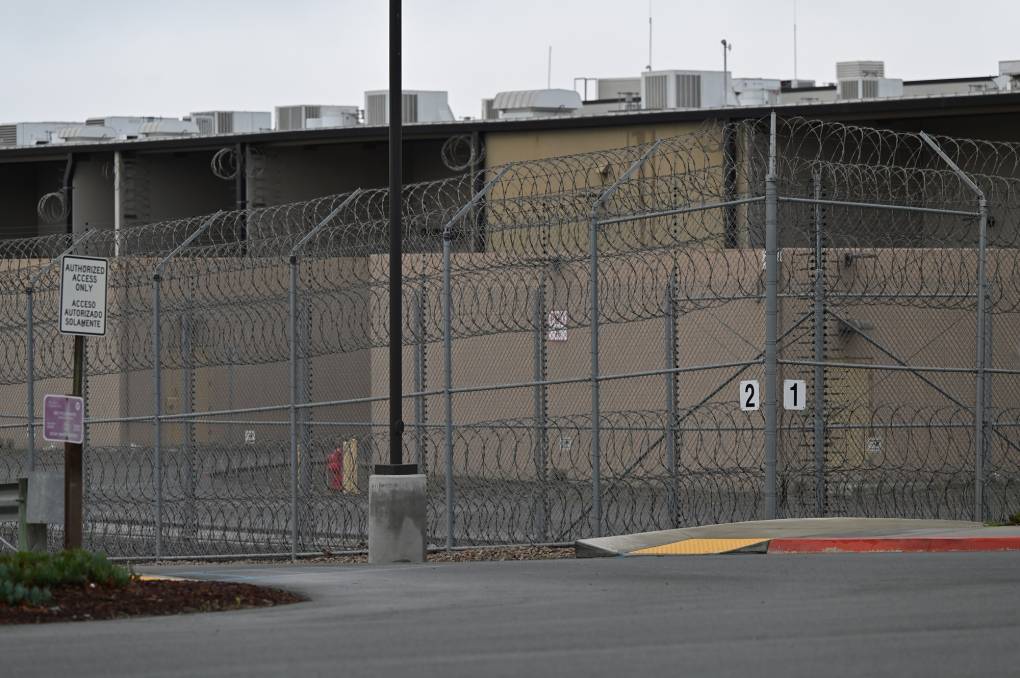
"caption": "A view of the CoreCivic Otay Mesa Detention Center in San Diego, California, on Feb. 7, 2025. The private institution has been plagued by allegations of medical negligence, abusive and retaliatory behavior against immigrants, sexual harassment, poor food and water quality and other dangerous conditions. ",
"credit": "Carlos Moreno/Anadolu via Getty Images",
"altTag": null,
"description": null,
"imgSizes": {
"medium": {
"file": "https://cdn.kqed.org/wp-content/uploads/sites/10/2025/05/CANewsroom1-800x532.jpg",
"width": 800,
"height": 532,
"mimeType": "image/jpeg"
},
"large": {
"file": "https://cdn.kqed.org/wp-content/uploads/sites/10/2025/05/CANewsroom1-1020x678.jpg",
"width": 1020,
"height": 678,
"mimeType": "image/jpeg"
},
"thumbnail": {
"file": "https://cdn.kqed.org/wp-content/uploads/sites/10/2025/05/CANewsroom1-160x106.jpg",
"width": 160,
"height": 106,
"mimeType": "image/jpeg"
},
"1536x1536": {
"file": "https://cdn.kqed.org/wp-content/uploads/sites/10/2025/05/CANewsroom1-1536x1021.jpg",
"width": 1536,
"height": 1021,
"mimeType": "image/jpeg"
},
"post-thumbnail": {
"file": "https://cdn.kqed.org/wp-content/uploads/sites/10/2025/05/CANewsroom1-672x372.jpg",
"width": 672,
"height": 372,
"mimeType": "image/jpeg"
},
"twentyfourteen-full-width": {
"file": "https://cdn.kqed.org/wp-content/uploads/sites/10/2025/05/CANewsroom1-1038x576.jpg",
"width": 1038,
"height": 576,
"mimeType": "image/jpeg"
},
"full-width": {
"file": "https://cdn.kqed.org/wp-content/uploads/sites/10/2025/05/CANewsroom1-1920x1277.jpg",
"width": 1920,
"height": 1277,
"mimeType": "image/jpeg"
},
"kqedFullSize": {
"file": "https://cdn.kqed.org/wp-content/uploads/sites/10/2025/05/CANewsroom1.jpg",
"width": 2000,
"height": 1330
}
},
"isLoading": false,
"fetchFailed": false
},
"news_12041614": {
"type": "attachments",
"id": "news_12041614",
"meta": {
"index": "attachments_1716263798",
"site": "news",
"id": "12041614",
"found": true
},
"title": "npr.brightspotcdn copy",
"publishDate": 1748117524,
"status": "inherit",
"parent": 12041613,
"modified": 1748117558,
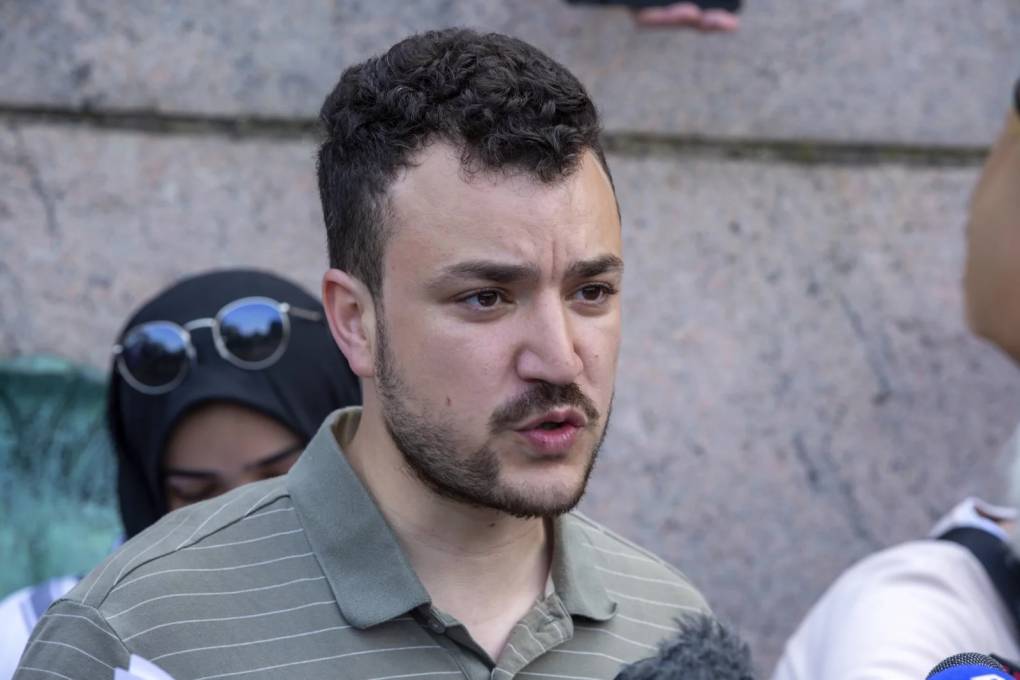
"caption": "Mahmoud Khalil has asked an immigration judge to grant him asylum, saying he feared being targeted by Israel if he's deported to Syria or Algeria.",
"credit": "Spencer Platt/Getty Images",
"altTag": null,
"description": null,
"imgSizes": {
"medium": {
"file": "https://cdn.kqed.org/wp-content/uploads/sites/10/2025/05/npr.brightspotcdn-copy-15-800x533.jpg",
"width": 800,
"height": 533,
"mimeType": "image/jpeg"
},
"large": {
"file": "https://cdn.kqed.org/wp-content/uploads/sites/10/2025/05/npr.brightspotcdn-copy-15-1020x680.jpg",
"width": 1020,
"height": 680,
"mimeType": "image/jpeg"
},
"thumbnail": {
"file": "https://cdn.kqed.org/wp-content/uploads/sites/10/2025/05/npr.brightspotcdn-copy-15-160x107.jpg",
"width": 160,
"height": 107,
"mimeType": "image/jpeg"
},
"1536x1536": {
"file": "https://cdn.kqed.org/wp-content/uploads/sites/10/2025/05/npr.brightspotcdn-copy-15-1536x1024.jpg",
"width": 1536,
"height": 1024,
"mimeType": "image/jpeg"
},
"post-thumbnail": {
"file": "https://cdn.kqed.org/wp-content/uploads/sites/10/2025/05/npr.brightspotcdn-copy-15-672x372.jpg",
"width": 672,
"height": 372,
"mimeType": "image/jpeg"
},
"twentyfourteen-full-width": {
"file": "https://cdn.kqed.org/wp-content/uploads/sites/10/2025/05/npr.brightspotcdn-copy-15-1038x576.jpg",
"width": 1038,
"height": 576,
"mimeType": "image/jpeg"
},
"kqedFullSize": {
"file": "https://cdn.kqed.org/wp-content/uploads/sites/10/2025/05/npr.brightspotcdn-copy-15.jpg",
"width": 1800,
"height": 1200
}
},
"isLoading": false,
"fetchFailed": false
},
"news_11712245": {
"type": "attachments",
"id": "news_11712245",
"meta": {
"index": "attachments_1716263798",
"site": "news",
"id": "11712245",
"found": true
},
"title": "The Association of Legal Aid Attorneys along with dozens of unions, immigrant rights organizations, and community groups held a rally on December 7, 2017 at Brooklyn Borough Hall to call on the Office of Court Administration and Chief Judge Janet DiFiore to prohibit Immigration & Customs Enforcement agents from entering state courthouses, and to end coordination with ICE.",
"publishDate": 1544730613,
"status": "inherit",
"parent": 11712244,
"modified": 1748046862,
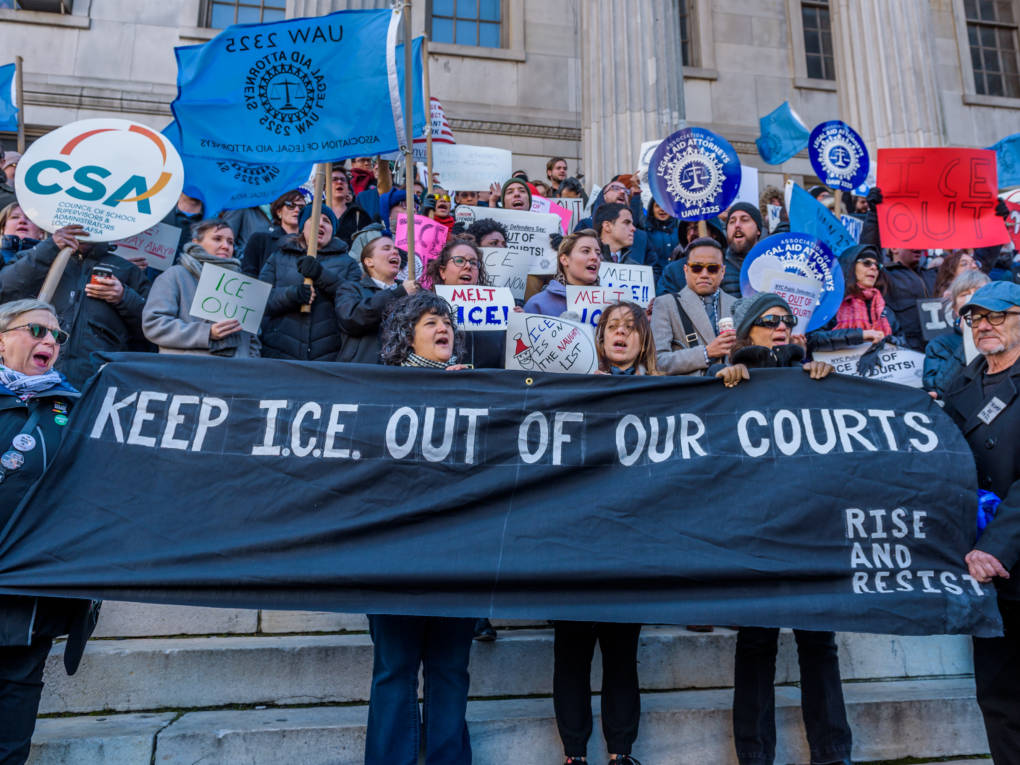
"caption": "The Association of Legal Aid Attorneys, along with dozens of unions, immigrant rights organizations and community groups, held a rally on Dec. 7, 2017, at Brooklyn Borough Hall.",
"credit": "Pacific Press/LightRocket via Getty Images",
"altTag": null,
"description": null,
"imgSizes": {
"thumbnail": {
"file": "https://cdn.kqed.org/wp-content/uploads/sites/10/2018/12/gettyimages-888870656-e9acdd0cdcb80ec5cd16b8a05023e4e5664f30fb-160x120.jpg",
"width": 160,
"height": 120,
"mimeType": "image/jpeg"
},
"medium": {
"file": "https://cdn.kqed.org/wp-content/uploads/sites/10/2018/12/gettyimages-888870656-e9acdd0cdcb80ec5cd16b8a05023e4e5664f30fb-800x600.jpg",
"width": 800,
"height": 600,
"mimeType": "image/jpeg"
},
"large": {
"file": "https://cdn.kqed.org/wp-content/uploads/sites/10/2018/12/gettyimages-888870656-e9acdd0cdcb80ec5cd16b8a05023e4e5664f30fb-1020x765.jpg",
"width": 1020,
"height": 765,
"mimeType": "image/jpeg"
},
"complete_open_graph": {
"file": "https://cdn.kqed.org/wp-content/uploads/sites/10/2018/12/gettyimages-888870656-e9acdd0cdcb80ec5cd16b8a05023e4e5664f30fb-1200x900.jpg",
"width": 1200,
"height": 900,
"mimeType": "image/jpeg"
},
"post-thumbnail": {
"file": "https://cdn.kqed.org/wp-content/uploads/sites/10/2018/12/gettyimages-888870656-e9acdd0cdcb80ec5cd16b8a05023e4e5664f30fb-672x372.jpg",
"width": 672,
"height": 372,
"mimeType": "image/jpeg"
},
"twentyfourteen-full-width": {
"file": "https://cdn.kqed.org/wp-content/uploads/sites/10/2018/12/gettyimages-888870656-e9acdd0cdcb80ec5cd16b8a05023e4e5664f30fb-1038x576.jpg",
"width": 1038,
"height": 576,
"mimeType": "image/jpeg"
},
"full-width": {
"file": "https://cdn.kqed.org/wp-content/uploads/sites/10/2018/12/gettyimages-888870656-e9acdd0cdcb80ec5cd16b8a05023e4e5664f30fb-1920x1440.jpg",
"width": 1920,
"height": 1440,
"mimeType": "image/jpeg"
},
"guest-author-32": {
"file": "https://cdn.kqed.org/wp-content/uploads/sites/10/2018/12/gettyimages-888870656-e9acdd0cdcb80ec5cd16b8a05023e4e5664f30fb-32x32.jpg",
"width": 32,
"height": 32,
"mimeType": "image/jpeg"
},
"guest-author-50": {
"file": "https://cdn.kqed.org/wp-content/uploads/sites/10/2018/12/gettyimages-888870656-e9acdd0cdcb80ec5cd16b8a05023e4e5664f30fb-50x50.jpg",
"width": 50,
"height": 50,
"mimeType": "image/jpeg"
},
"guest-author-64": {
"file": "https://cdn.kqed.org/wp-content/uploads/sites/10/2018/12/gettyimages-888870656-e9acdd0cdcb80ec5cd16b8a05023e4e5664f30fb-64x64.jpg",
"width": 64,
"height": 64,
"mimeType": "image/jpeg"
},
"guest-author-96": {
"file": "https://cdn.kqed.org/wp-content/uploads/sites/10/2018/12/gettyimages-888870656-e9acdd0cdcb80ec5cd16b8a05023e4e5664f30fb-96x96.jpg",
"width": 96,
"height": 96,
"mimeType": "image/jpeg"
},
"guest-author-128": {
"file": "https://cdn.kqed.org/wp-content/uploads/sites/10/2018/12/gettyimages-888870656-e9acdd0cdcb80ec5cd16b8a05023e4e5664f30fb-128x128.jpg",
"width": 128,
"height": 128,
"mimeType": "image/jpeg"
},
"detail": {
"file": "https://cdn.kqed.org/wp-content/uploads/sites/10/2018/12/gettyimages-888870656-e9acdd0cdcb80ec5cd16b8a05023e4e5664f30fb-150x150.jpg",
"width": 150,
"height": 150,
"mimeType": "image/jpeg"
},
"kqedFullSize": {
"file": "https://cdn.kqed.org/wp-content/uploads/sites/10/2018/12/gettyimages-888870656-e9acdd0cdcb80ec5cd16b8a05023e4e5664f30fb-e1748037342663.jpg",
"width": 2000,
"height": 1500
}
},
"isLoading": false,
"fetchFailed": false
},
"news_12040548": {
"type": "attachments",
"id": "news_12040548",
"meta": {
"index": "attachments_1716263798",
"site": "news",
"id": "12040548",
"found": true
},
"title": "WestJet aircraft taxis at Denver International Airport",
"publishDate": 1747424548,
"status": "inherit",
"parent": 12040535,
"modified": 1747426321,
"caption": "A Canadian WestJet Airlines Boeing 737 passenger aircraft taxis at Denver International Airport in Denver, Colorado, on June 20, 2019. WestJet recently announced it was suspending nine routes to U.S. cities due to low demand as Canadians avoid traveling to the U.S.",
"credit": "Robert Alexander/Getty Images",
"altTag": null,
"description": null,
"imgSizes": {
"medium": {
"file": "https://cdn.kqed.org/wp-content/uploads/sites/10/2025/05/GettyImages-1159429805-800x529.jpg",
"width": 800,
"height": 529,
"mimeType": "image/jpeg"
},
"large": {
"file": "https://cdn.kqed.org/wp-content/uploads/sites/10/2025/05/GettyImages-1159429805-1020x674.jpg",
"width": 1020,
"height": 674,
"mimeType": "image/jpeg"
},
"thumbnail": {
"file": "https://cdn.kqed.org/wp-content/uploads/sites/10/2025/05/GettyImages-1159429805-160x106.jpg",
"width": 160,
"height": 106,
"mimeType": "image/jpeg"
},
"post-thumbnail": {
"file": "https://cdn.kqed.org/wp-content/uploads/sites/10/2025/05/GettyImages-1159429805-672x372.jpg",
"width": 672,
"height": 372,
"mimeType": "image/jpeg"
},
"twentyfourteen-full-width": {
"file": "https://cdn.kqed.org/wp-content/uploads/sites/10/2025/05/GettyImages-1159429805-1024x576.jpg",
"width": 1024,
"height": 576,
"mimeType": "image/jpeg"
},
"kqedFullSize": {
"file": "https://cdn.kqed.org/wp-content/uploads/sites/10/2025/05/GettyImages-1159429805.jpg",
"width": 1024,
"height": 677
}
},
"isLoading": false,
"fetchFailed": false
},
"news_12040331": {
"type": "attachments",
"id": "news_12040331",
"meta": {
"index": "attachments_1716263798",
"site": "news",
"id": "12040331",
"found": true
},
"title": "Supreme Court Issues Opinions",
"publishDate": 1747332410,
"status": "inherit",
"parent": 12040330,
"modified": 1775005046,
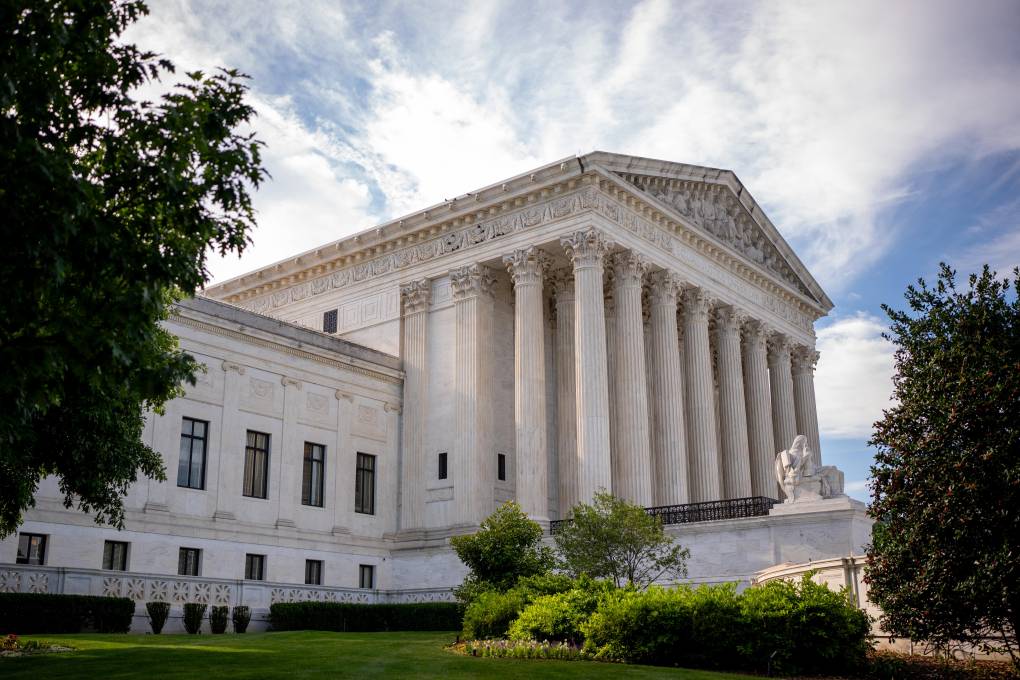
"caption": "The U.S. Supreme Court heard arguments on Thursday in a case challenging the Trump administration's effort to limit who gets birthright citizenship.",
"credit": "Andrew Harnik/Getty Images",
"altTag": null,
"description": "WASHINGTON, DC - JUNE 20: An exterior view of the Supreme Court on June 20, 2024 in Washington, DC. The Supreme Court is about to issue rulings on a variety of high profile cases dealing with abortion rights, gun rights, and former President Donald Trump's immunity claim, putting the court at the center of many hot political topics during an election year. (Photo by Andrew Harnik/Getty Images)",
"imgSizes": {
"medium": {
"file": "https://cdn.kqed.org/wp-content/uploads/sites/10/2025/05/gettyimages-2157829281-11-800x533.jpeg",
"width": 800,
"height": 533,
"mimeType": "image/jpeg"
},
"large": {
"file": "https://cdn.kqed.org/wp-content/uploads/sites/10/2025/05/gettyimages-2157829281-11-1020x680.jpeg",
"width": 1020,
"height": 680,
"mimeType": "image/jpeg"
},
"thumbnail": {
"file": "https://cdn.kqed.org/wp-content/uploads/sites/10/2025/05/gettyimages-2157829281-11-160x107.jpeg",
"width": 160,
"height": 107,
"mimeType": "image/jpeg"
},
"1536x1536": {
"file": "https://cdn.kqed.org/wp-content/uploads/sites/10/2025/05/gettyimages-2157829281-11-1536x1024.jpeg",
"width": 1536,
"height": 1024,
"mimeType": "image/jpeg"
},
"2048x2048": {
"file": "https://cdn.kqed.org/wp-content/uploads/sites/10/2025/05/gettyimages-2157829281-11-2048x1365.jpeg",
"width": 2048,
"height": 1365,
"mimeType": "image/jpeg"
},
"post-thumbnail": {
"file": "https://cdn.kqed.org/wp-content/uploads/sites/10/2025/05/gettyimages-2157829281-11-672x372.jpeg",
"width": 672,
"height": 372,
"mimeType": "image/jpeg"
},
"twentyfourteen-full-width": {
"file": "https://cdn.kqed.org/wp-content/uploads/sites/10/2025/05/gettyimages-2157829281-11-1038x576.jpeg",
"width": 1038,
"height": 576,
"mimeType": "image/jpeg"
},
"full-width": {
"file": "https://cdn.kqed.org/wp-content/uploads/sites/10/2025/05/gettyimages-2157829281-11-1920x1280.jpeg",
"width": 1920,
"height": 1280,
"mimeType": "image/jpeg"
},
"kqedFullSize": {
"file": "https://cdn.kqed.org/wp-content/uploads/sites/10/2025/05/gettyimages-2157829281-11-scaled-e1775001710822.jpeg",
"width": 2000,
"height": 1334
}
},
"isLoading": false,
"fetchFailed": false
},
"news_12035717": {
"type": "attachments",
"id": "news_12035717",
"meta": {
"index": "attachments_1716263798",
"site": "news",
"id": "12035717",
"found": true
},
"title": "npr.brightspotcdn copy",
"publishDate": 1744402668,
"status": "inherit",
"parent": 12035716,
"modified": 1744402697,
"caption": "Student negotiator Mahmoud Khalil is seen at a pro-Palestinian protest encampment on the Columbia University campus in New York, April 29, 2024. ",
"credit": "Ted Shaffrey/AP Photo",
"altTag": null,
"description": null,
"imgSizes": {
"medium": {
"file": "https://cdn.kqed.org/wp-content/uploads/sites/10/2025/04/npr.brightspotcdn-copy-15-800x534.jpg",
"width": 800,
"height": 534,
"mimeType": "image/jpeg"
},
"large": {
"file": "https://cdn.kqed.org/wp-content/uploads/sites/10/2025/04/npr.brightspotcdn-copy-15-1020x680.jpg",
"width": 1020,
"height": 680,
"mimeType": "image/jpeg"
},
"thumbnail": {
"file": "https://cdn.kqed.org/wp-content/uploads/sites/10/2025/04/npr.brightspotcdn-copy-15-160x107.jpg",
"width": 160,
"height": 107,
"mimeType": "image/jpeg"
},
"1536x1536": {
"file": "https://cdn.kqed.org/wp-content/uploads/sites/10/2025/04/npr.brightspotcdn-copy-15-1536x1024.jpg",
"width": 1536,
"height": 1024,
"mimeType": "image/jpeg"
},
"post-thumbnail": {
"file": "https://cdn.kqed.org/wp-content/uploads/sites/10/2025/04/npr.brightspotcdn-copy-15-672x372.jpg",
"width": 672,
"height": 372,
"mimeType": "image/jpeg"
},
"twentyfourteen-full-width": {
"file": "https://cdn.kqed.org/wp-content/uploads/sites/10/2025/04/npr.brightspotcdn-copy-15-1038x576.jpg",
"width": 1038,
"height": 576,
"mimeType": "image/jpeg"
},
"kqedFullSize": {
"file": "https://cdn.kqed.org/wp-content/uploads/sites/10/2025/04/npr.brightspotcdn-copy-15.jpg",
"width": 1600,
"height": 1067
}
},
"isLoading": false,
"fetchFailed": false
},
"news_11959336": {
"type": "attachments",
"id": "news_11959336",
"meta": {
"index": "attachments_1716263798",
"site": "news",
"id": "11959336",
"found": true
},
"title": "California Schools-LGBTQ Policies",
"publishDate": 1693249568,
"status": "inherit",
"parent": 12032768,
"modified": 1747169937,
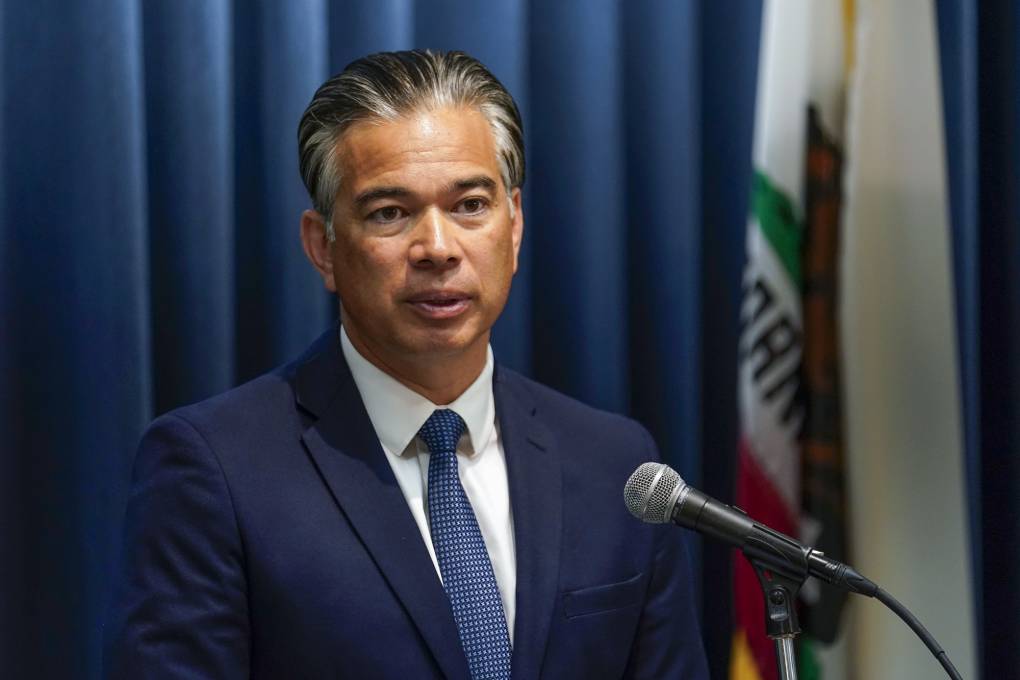
"caption": "California Attorney General Rob Bonta fields questions during a press conference on Monday, Aug. 28, 2023, in Los Angeles. ",
"credit": "Marcio Jose Sanchez/AP Photo",
"altTag": "A man wearing a navy blue suit, white shirt and blue foulard tie speaks into a microphone.",
"description": null,
"imgSizes": {
"medium": {
"file": "https://cdn.kqed.org/wp-content/uploads/sites/10/2023/08/230828-ROB-BONTA-AP-MJS-KQED-800x533.jpg",
"width": 800,
"height": 533,
"mimeType": "image/jpeg"
},
"large": {
"file": "https://cdn.kqed.org/wp-content/uploads/sites/10/2023/08/230828-ROB-BONTA-AP-MJS-KQED-1020x680.jpg",
"width": 1020,
"height": 680,
"mimeType": "image/jpeg"
},
"thumbnail": {
"file": "https://cdn.kqed.org/wp-content/uploads/sites/10/2023/08/230828-ROB-BONTA-AP-MJS-KQED-160x107.jpg",
"width": 160,
"height": 107,
"mimeType": "image/jpeg"
},
"1536x1536": {
"file": "https://cdn.kqed.org/wp-content/uploads/sites/10/2023/08/230828-ROB-BONTA-AP-MJS-KQED-1536x1024.jpg",
"width": 1536,
"height": 1024,
"mimeType": "image/jpeg"
},
"post-thumbnail": {
"file": "https://cdn.kqed.org/wp-content/uploads/sites/10/2023/08/230828-ROB-BONTA-AP-MJS-KQED-672x372.jpg",
"width": 672,
"height": 372,
"mimeType": "image/jpeg"
},
"twentyfourteen-full-width": {
"file": "https://cdn.kqed.org/wp-content/uploads/sites/10/2023/08/230828-ROB-BONTA-AP-MJS-KQED-1038x576.jpg",
"width": 1038,
"height": 576,
"mimeType": "image/jpeg"
},
"full-width": {
"file": "https://cdn.kqed.org/wp-content/uploads/sites/10/2023/08/230828-ROB-BONTA-AP-MJS-KQED-1920x1280.jpg",
"width": 1920,
"height": 1280,
"mimeType": "image/jpeg"
},
"kqedFullSize": {
"file": "https://cdn.kqed.org/wp-content/uploads/sites/10/2023/08/230828-ROB-BONTA-AP-MJS-KQED.jpg",
"width": 2000,
"height": 1333
}
},
"isLoading": false,
"fetchFailed": false
},
"news_12039425": {
"type": "attachments",
"id": "news_12039425",
"meta": {
"index": "attachments_1716263798",
"site": "news",
"id": "12039425",
"found": true
},
"title": "250508-HYPHENACION-AT-01-KQED",
"publishDate": 1746741896,
"status": "inherit",
"parent": 0,
"modified": 1746742491,
"caption": "Hyphenación host Xorje Olivares at KQED in San Francisco.",
"credit": "Alex Tran/KQED",
"altTag": null,
"description": null,
"imgSizes": {
"medium": {
"file": "https://cdn.kqed.org/wp-content/uploads/sites/10/2025/05/250508-HYPHENACION-AT-01-KQED-800x534.jpg",
"width": 800,
"height": 534,
"mimeType": "image/jpeg"
},
"large": {
"file": "https://cdn.kqed.org/wp-content/uploads/sites/10/2025/05/250508-HYPHENACION-AT-01-KQED-1020x681.jpg",
"width": 1020,
"height": 681,
"mimeType": "image/jpeg"
},
"thumbnail": {
"file": "https://cdn.kqed.org/wp-content/uploads/sites/10/2025/05/250508-HYPHENACION-AT-01-KQED-160x107.jpg",
"width": 160,
"height": 107,
"mimeType": "image/jpeg"
},
"1536x1536": {
"file": "https://cdn.kqed.org/wp-content/uploads/sites/10/2025/05/250508-HYPHENACION-AT-01-KQED-1536x1026.jpg",
"width": 1536,
"height": 1026,
"mimeType": "image/jpeg"
},
"post-thumbnail": {
"file": "https://cdn.kqed.org/wp-content/uploads/sites/10/2025/05/250508-HYPHENACION-AT-01-KQED-672x372.jpg",
"width": 672,
"height": 372,
"mimeType": "image/jpeg"
},
"twentyfourteen-full-width": {
"file": "https://cdn.kqed.org/wp-content/uploads/sites/10/2025/05/250508-HYPHENACION-AT-01-KQED-1038x576.jpg",
"width": 1038,
"height": 576,
"mimeType": "image/jpeg"
},
"full-width": {
"file": "https://cdn.kqed.org/wp-content/uploads/sites/10/2025/05/250508-HYPHENACION-AT-01-KQED-1920x1283.jpg",
"width": 1920,
"height": 1283,
"mimeType": "image/jpeg"
},
"kqedFullSize": {
"file": "https://cdn.kqed.org/wp-content/uploads/sites/10/2025/05/250508-HYPHENACION-AT-01-KQED.jpg",
"width": 2000,
"height": 1336
}
},
"isLoading": false,
"fetchFailed": false
},
"news_12039315": {
"type": "attachments",
"id": "news_12039315",
"meta": {
"index": "attachments_1716263798",
"site": "news",
"id": "12039315",
"found": true
},
"title": "03.21.2025-SoccerPractice-11-scaled",
"publishDate": 1746725418,
"status": "inherit",
"parent": 12039313,
"modified": 1746728550,
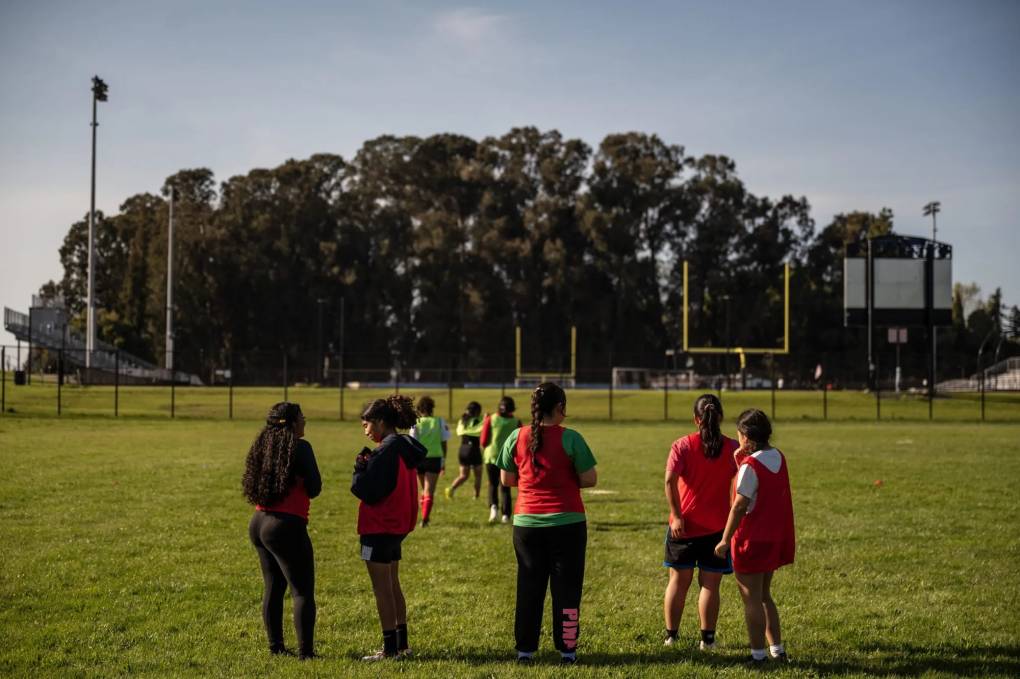
"caption": "A Soccer Without Borders Bay Area team gathered at a high school in the East Bay to practice for a weekend game against a familiar rival on Thursday, March 20, 2025.",
"credit": "Alejandro Durán for El Tímpano/CatchLight Local/ Report for America corps member",
"altTag": null,
"description": null,
"imgSizes": {
"medium": {
"file": "https://cdn.kqed.org/wp-content/uploads/sites/10/2025/05/03.21.2025-SoccerPractice-11-scaled-1-800x532.jpg",
"width": 800,
"height": 532,
"mimeType": "image/jpeg"
},
"large": {
"file": "https://cdn.kqed.org/wp-content/uploads/sites/10/2025/05/03.21.2025-SoccerPractice-11-scaled-1-1020x679.jpg",
"width": 1020,
"height": 679,
"mimeType": "image/jpeg"
},
"thumbnail": {
"file": "https://cdn.kqed.org/wp-content/uploads/sites/10/2025/05/03.21.2025-SoccerPractice-11-scaled-1-160x106.jpg",
"width": 160,
"height": 106,
"mimeType": "image/jpeg"
},
"1536x1536": {
"file": "https://cdn.kqed.org/wp-content/uploads/sites/10/2025/05/03.21.2025-SoccerPractice-11-scaled-1-1536x1022.jpg",
"width": 1536,
"height": 1022,
"mimeType": "image/jpeg"
},
"post-thumbnail": {
"file": "https://cdn.kqed.org/wp-content/uploads/sites/10/2025/05/03.21.2025-SoccerPractice-11-scaled-1-672x372.jpg",
"width": 672,
"height": 372,
"mimeType": "image/jpeg"
},
"twentyfourteen-full-width": {
"file": "https://cdn.kqed.org/wp-content/uploads/sites/10/2025/05/03.21.2025-SoccerPractice-11-scaled-1-1038x576.jpg",
"width": 1038,
"height": 576,
"mimeType": "image/jpeg"
},
"full-width": {
"file": "https://cdn.kqed.org/wp-content/uploads/sites/10/2025/05/03.21.2025-SoccerPractice-11-scaled-1-1920x1278.jpg",
"width": 1920,
"height": 1278,
"mimeType": "image/jpeg"
},
"kqedFullSize": {
"file": "https://cdn.kqed.org/wp-content/uploads/sites/10/2025/05/03.21.2025-SoccerPractice-11-scaled-1.jpg",
"width": 2000,
"height": 1331
}
},
"isLoading": false,
"fetchFailed": false
},
"news_12037936": {
"type": "attachments",
"id": "news_12037936",
"meta": {
"index": "attachments_1716263798",
"site": "news",
"id": "12037936",
"found": true
},
"title": "A KC-10 Extender is parked on the ramp as a C-5M Super Galaxy takes off at Travis Air Force Base, Calif., March 16, 2017.",
"publishDate": 1745868668,
"status": "inherit",
"parent": 12037889,
"modified": 1765567012,
"caption": "A KC-10 Extender is parked on the ramp as a C-5M Super Galaxy takes off at Travis Air Force Base, California, on March 16, 2017.",
"credit": "Hum Images/Universal Images Group via Getty Images",
"altTag": null,
"description": null,
"imgSizes": {
"medium": {
"file": "https://cdn.kqed.org/wp-content/uploads/sites/10/2025/04/TravisAirForceBaseGetty2-800x534.jpg",
"width": 800,
"height": 534,
"mimeType": "image/jpeg"
},
"large": {
"file": "https://cdn.kqed.org/wp-content/uploads/sites/10/2025/04/TravisAirForceBaseGetty2-1020x680.jpg",
"width": 1020,
"height": 680,
"mimeType": "image/jpeg"
},
"thumbnail": {
"file": "https://cdn.kqed.org/wp-content/uploads/sites/10/2025/04/TravisAirForceBaseGetty2-160x107.jpg",
"width": 160,
"height": 107,
"mimeType": "image/jpeg"
},
"1536x1536": {
"file": "https://cdn.kqed.org/wp-content/uploads/sites/10/2025/04/TravisAirForceBaseGetty2-1536x1025.jpg",
"width": 1536,
"height": 1025,
"mimeType": "image/jpeg"
},
"post-thumbnail": {
"file": "https://cdn.kqed.org/wp-content/uploads/sites/10/2025/04/TravisAirForceBaseGetty2-672x372.jpg",
"width": 672,
"height": 372,
"mimeType": "image/jpeg"
},
"twentyfourteen-full-width": {
"file": "https://cdn.kqed.org/wp-content/uploads/sites/10/2025/04/TravisAirForceBaseGetty2-1038x576.jpg",
"width": 1038,
"height": 576,
"mimeType": "image/jpeg"
},
"full-width": {
"file": "https://cdn.kqed.org/wp-content/uploads/sites/10/2025/04/TravisAirForceBaseGetty2-1920x1281.jpg",
"width": 1920,
"height": 1281,
"mimeType": "image/jpeg"
},
"kqedFullSize": {
"file": "https://cdn.kqed.org/wp-content/uploads/sites/10/2025/04/TravisAirForceBaseGetty2.jpg",
"width": 2000,
"height": 1334
}
},
"isLoading": false,
"fetchFailed": false
},
"news_12035874": {
"type": "attachments",
"id": "news_12035874",
"meta": {
"index": "attachments_1716263798",
"site": "news",
"id": "12035874",
"found": true
},
"title": "President Trump Meets With El Salvador President Nayib Bukele At The White House",
"publishDate": 1744653985,
"status": "inherit",
"parent": 12042492,
"modified": 1748970386,
"caption": "President Trump meets with President Nayib Bukele of El Salvador in the Oval Office on April 14, 2025. Trump and Bukele were expected to discuss a range of bilateral issues including the detention of Kilmar Armando Abrego Garcia, who has been held in a prison in El Salvador since March 15. ",
"credit": "Win McNamee/Getty Images",
"altTag": "Two men wearing suits shake hands while seated in chairs.",
"description": "WASHINGTON, DC - APRIL 14: U.S. President Donald Trump meets with President Nayib Bukele of El Salvador in the Oval Office of the White House April 14, 2025 in Washington, DC. Trump and Bukele were expected to discuss a range of bilateral issues including the detention of Kilmar Armando Abrego Garcia, who has been held in a prison in El Salvador since March 15. (Photo by Win McNamee/Getty Images)",
"imgSizes": {
"medium": {
"file": "https://cdn.kqed.org/wp-content/uploads/sites/10/2025/04/gettyimages-2210243092-800x533.jpeg",
"width": 800,
"height": 533,
"mimeType": "image/jpeg"
},
"large": {
"file": "https://cdn.kqed.org/wp-content/uploads/sites/10/2025/04/gettyimages-2210243092-1020x680.jpeg",
"width": 1020,
"height": 680,
"mimeType": "image/jpeg"
},
"thumbnail": {
"file": "https://cdn.kqed.org/wp-content/uploads/sites/10/2025/04/gettyimages-2210243092-160x107.jpeg",
"width": 160,
"height": 107,
"mimeType": "image/jpeg"
},
"1536x1536": {
"file": "https://cdn.kqed.org/wp-content/uploads/sites/10/2025/04/gettyimages-2210243092-1536x1023.jpeg",
"width": 1536,
"height": 1023,
"mimeType": "image/jpeg"
},
"2048x2048": {
"file": "https://cdn.kqed.org/wp-content/uploads/sites/10/2025/04/gettyimages-2210243092-2048x1365.jpeg",
"width": 2048,
"height": 1365,
"mimeType": "image/jpeg"
},
"post-thumbnail": {
"file": "https://cdn.kqed.org/wp-content/uploads/sites/10/2025/04/gettyimages-2210243092-672x372.jpeg",
"width": 672,
"height": 372,
"mimeType": "image/jpeg"
},
"twentyfourteen-full-width": {
"file": "https://cdn.kqed.org/wp-content/uploads/sites/10/2025/04/gettyimages-2210243092-1038x576.jpeg",
"width": 1038,
"height": 576,
"mimeType": "image/jpeg"
},
"full-width": {
"file": "https://cdn.kqed.org/wp-content/uploads/sites/10/2025/04/gettyimages-2210243092-1920x1279.jpeg",
"width": 1920,
"height": 1279,
"mimeType": "image/jpeg"
},
"kqedFullSize": {
"file": "https://cdn.kqed.org/wp-content/uploads/sites/10/2025/04/gettyimages-2210243092-scaled-e1745537471811.jpeg",
"width": 2000,
"height": 1333
}
},
"isLoading": false,
"fetchFailed": false
}
},
"audioPlayerReducer": {
"postId": "stream_live",
"isPaused": true,
"isPlaying": false,
"pfsActive": false,
"pledgeModalIsOpen": true,
"playerDrawerIsOpen": false,
"liveAudioPlayStartedAt": 0,
"liveAudioPlayContext": ""
},
"authorsReducer": {
"byline_news_12041326": {
"type": "authors",
"id": "byline_news_12041326",
"meta": {
"override": true
},
"slug": "byline_news_12041326",
"name": "Mark Betancourt, The California Newsroom",
"isLoading": false
},
"byline_news_12041613": {
"type": "authors",
"id": "byline_news_12041613",
"meta": {
"override": true
},
"slug": "byline_news_12041613",
"name": "\u003ca href=\"https://www.npr.org/people/427718118/adrian-florido\">Adrian Florido\u003c/a>, NPR",
"isLoading": false
},
"byline_news_12040330": {
"type": "authors",
"id": "byline_news_12040330",
"meta": {
"override": true
},
"slug": "byline_news_12040330",
"name": "Nina Totenberg, NPR",
"isLoading": false
},
"byline_news_12039313": {
"type": "authors",
"id": "byline_news_12039313",
"meta": {
"override": true
},
"slug": "byline_news_12039313",
"name": "\u003ca href=\"https://www.eltimpano.org/author/ehellerstein/\">Erica Hellerstein\u003c/a>, El Tímpano",
"isLoading": false
},
"minakim": {
"type": "authors",
"id": "243",
"meta": {
"index": "authors_1716337520",
"id": "243",
"found": true
},
"name": "Mina Kim",
"firstName": "Mina",
"lastName": "Kim",
"slug": "minakim",
"email": "mkim@kqed.org",
"display_author_email": false,
"staff_mastheads": [
"news"
],
"title": "Host, Forum",
"bio": "Mina Kim is host of the 10 a.m. statewide hour of Forum; a live daily talk show for curious Californians on issues that matter to the state and nation, with a particular emphasis on race and equity.\r\n\r\nBefore joining the Forum team, Mina was KQED’s evening news anchor, and health reporter for The California Report. Her award-winning work has included natural disasters in Napa and gun violence in Oakland. Mina grew up in St. John’s, Newfoundland.",
"avatar": "https://secure.gravatar.com/avatar/145ce657a2d08cb86d93686beb958982?s=600&d=blank&r=g",
"twitter": "mkimreporter",
"facebook": null,
"instagram": null,
"linkedin": null,
"sites": [
{
"site": "news",
"roles": [
"contributor"
]
},
{
"site": "stateofhealth",
"roles": [
"author"
]
},
{
"site": "forum",
"roles": [
"editor"
]
}
],
"headData": {
"title": "Mina Kim | KQED",
"description": "Host, Forum",
"ogImgSrc": "https://secure.gravatar.com/avatar/145ce657a2d08cb86d93686beb958982?s=600&d=blank&r=g",
"twImgSrc": "https://secure.gravatar.com/avatar/145ce657a2d08cb86d93686beb958982?s=600&d=blank&r=g"
},
"isLoading": false,
"link": "/author/minakim"
},
"tychehendricks": {
"type": "authors",
"id": "259",
"meta": {
"index": "authors_1716337520",
"id": "259",
"found": true
},
"name": "Tyche Hendricks",
"firstName": "Tyche",
"lastName": "Hendricks",
"slug": "tychehendricks",
"email": "thendricks@kqed.org",
"display_author_email": true,
"staff_mastheads": [
"news"
],
"title": "KQED Senior Editor, Immigration",
"bio": "\u003cspan style=\"font-weight: 400;\">Tyche Hendricks is KQED’s senior editor for immigration, leading coverage of the policy and politics that affect California’s immigrant communities. Her work for KQED’s radio and online audiences is also carried on NPR and other national outlets. She has been recognized with awards from the Radio and Television News Directors Association, the Society for Professional Journalists; the Education Writers Association; the Best of the West and the National Federation of Community Broadcasters. Before joining KQED in 2010, Tyche spent more than a dozen years as a newspaper reporter, notably at the \u003c/span>\u003ci>\u003cspan style=\"font-weight: 400;\">San Francisco Chronicle\u003c/span>\u003c/i>\u003cspan style=\"font-weight: 400;\">. At different times she has covered criminal justice, government and politics and urban planning. Tyche has taught in the MFA Creative Writing program at the University of San Francisco and at UC Berkeley’s Graduate School of Journalism, where she was co-director of a national immigration symposium for professional journalists. She is the author of \u003c/span>\u003ci>\u003cspan style=\"font-weight: 400;\">The Wind Doesn't Need a Passport: Stories from the U.S.-Mexico Borderlands\u003c/span>\u003c/i>\u003cspan style=\"font-weight: 400;\"> (University of California Press). \u003c/span>",
"avatar": "https://secure.gravatar.com/avatar/b8ee458e2731c2d43df86882ce17267e?s=600&d=blank&r=g",
"twitter": "tychehendricks",
"facebook": null,
"instagram": null,
"linkedin": null,
"sites": [
{
"site": "news",
"roles": [
"editor"
]
},
{
"site": "stateofhealth",
"roles": [
"editor"
]
}
],
"headData": {
"title": "Tyche Hendricks | KQED",
"description": "KQED Senior Editor, Immigration",
"ogImgSrc": "https://secure.gravatar.com/avatar/b8ee458e2731c2d43df86882ce17267e?s=600&d=blank&r=g",
"twImgSrc": "https://secure.gravatar.com/avatar/b8ee458e2731c2d43df86882ce17267e?s=600&d=blank&r=g"
},
"isLoading": false,
"link": "/author/tychehendricks"
},
"matthewgreen": {
"type": "authors",
"id": "1263",
"meta": {
"index": "authors_1716337520",
"id": "1263",
"found": true
},
"name": "Matthew Green",
"firstName": "Matthew",
"lastName": "Green",
"slug": "matthewgreen",
"email": "mgreen@kqed.org",
"display_author_email": false,
"staff_mastheads": [],
"title": "KQED Editor/Reporter",
"bio": "Matthew Green is a digital media producer for KQED News. He previously produced \u003ca href=\"http://www.kqed.org/lowdown\">The Lowdown\u003c/a>, KQED’s multimedia news education blog. Matthew's written for numerous Bay Area publications, including the Oakland Tribune and San Francisco Chronicle. He also taught journalism classes at Fremont High School in East Oakland.\r\n\r\nEmail: mgreen@kqed.org; Twitter: @MGreenKQED",
"avatar": "https://secure.gravatar.com/avatar/3bf498d1267ca02c8494f33d8cfc575e?s=600&d=blank&r=g",
"twitter": "MGreenKQED",
"facebook": null,
"instagram": null,
"linkedin": null,
"sites": [
{
"site": "news",
"roles": []
},
{
"site": "lowdown",
"roles": []
},
{
"site": "science",
"roles": []
},
{
"site": "education",
"roles": []
},
{
"site": "quest",
"roles": []
},
{
"site": "liveblog",
"roles": []
}
],
"headData": {
"title": "Matthew Green | KQED",
"description": "KQED Editor/Reporter",
"ogImgSrc": "https://secure.gravatar.com/avatar/3bf498d1267ca02c8494f33d8cfc575e?s=600&d=blank&r=g",
"twImgSrc": "https://secure.gravatar.com/avatar/3bf498d1267ca02c8494f33d8cfc575e?s=600&d=blank&r=g"
},
"isLoading": false,
"link": "/author/matthewgreen"
},
"slewis": {
"type": "authors",
"id": "8676",
"meta": {
"index": "authors_1716337520",
"id": "8676",
"found": true
},
"name": "Sukey Lewis",
"firstName": "Sukey",
"lastName": "Lewis",
"slug": "slewis",
"email": "slewis@kqed.org",
"display_author_email": true,
"staff_mastheads": [
"news"
],
"title": "KQED Contributor",
"bio": "Sukey Lewis is a criminal justice reporter and host of \u003cem>On Our Watch\u003c/em>, a new podcast from NPR and KQED about the shadow world of police discipline. In 2018, she co-founded the California Reporting Project, a coalition of newsrooms across the state focused on obtaining previously sealed internal affairs records from law enforcement. In addition to her reporting on police accountability, Sukey has investigated the bail bonds industry, California's wildfires and the high cost of prison phone calls. Sukey earned a master's degree in journalism from the University of California at Berkeley. Send news tips to slewis@kqed.org.",
"avatar": "https://secure.gravatar.com/avatar/03fd6b21024f99d8b0a1966654586de7?s=600&d=blank&r=g",
"twitter": "SukeyLewis",
"facebook": null,
"instagram": null,
"linkedin": null,
"sites": [
{
"site": "news",
"roles": [
"author",
"edit_others_posts"
]
}
],
"headData": {
"title": "Sukey Lewis | KQED",
"description": "KQED Contributor",
"ogImgSrc": "https://secure.gravatar.com/avatar/03fd6b21024f99d8b0a1966654586de7?s=600&d=blank&r=g",
"twImgSrc": "https://secure.gravatar.com/avatar/03fd6b21024f99d8b0a1966654586de7?s=600&d=blank&r=g"
},
"isLoading": false,
"link": "/author/slewis"
},
"btorres": {
"type": "authors",
"id": "11666",
"meta": {
"index": "authors_1716337520",
"id": "11666",
"found": true
},
"name": "Blanca Torres",
"firstName": "Blanca",
"lastName": "Torres",
"slug": "btorres",
"email": "btorres@kqed.org",
"display_author_email": true,
"staff_mastheads": [
"news"
],
"title": "Producer, Forum",
"bio": "Blanca Torres brings sharp news judgement and keen sense of lively conversation to her work as producer for Forum. She loves producing shows that leave listeners feeling like they heard distinctive voices, learned something new and gained a fresh perspective.\r\n\r\nShe joined KQED in January of 2020 after 16 years of working as a newspaper reporter most recently at the \u003cem>San Francisco Business Times,\u003c/em> where she wrote about real estate and economic development. Before that, she covered a variety of beats including crime, education, retail, workplace, the economy, consumer issues, and small business for the \u003cem>Contra Costa Times, Baltimore Sun\u003c/em> and\u003cem> The Seattle Times\u003c/em>. In addition to reporting, she worked as an editorial writer and columnist for the \u003cem>Seattle Times\u003c/em>. From 2017 to 2020, Blanca won a total of ten awards from the National Association of Real Estate Editors and won first place for land use reporting from the California News Publishers Association two years in a row. She is also a member and former board member for the National Association of Hispanic Journalists.\r\n\r\nA native of the Pacific Northwest, Blanca earned her bachelor's degree from Vanderbilt University in Nashville and a master's in fine arts in creative writing at Mills College. She lives in the East Bay with her family.",
"avatar": "https://secure.gravatar.com/avatar/50b49d19b14a1eed34f26ebf4681152cdd81574ed21851100871ccd29e578cdc?s=600&d=blank&r=g",
"twitter": "@blancawrites",
"bluesky": null,
"facebook": null,
"instagram": null,
"linkedin": null,
"sites": [
{
"site": "arts",
"roles": [
"editor"
]
},
{
"site": "news",
"roles": [
"editor"
]
},
{
"site": "forum",
"roles": [
"editor"
]
}
],
"headData": {
"title": "Blanca Torres | KQED",
"description": "Producer, Forum",
"ogImgSrc": "https://secure.gravatar.com/avatar/50b49d19b14a1eed34f26ebf4681152cdd81574ed21851100871ccd29e578cdc?s=600&d=blank&r=g",
"twImgSrc": "https://secure.gravatar.com/avatar/50b49d19b14a1eed34f26ebf4681152cdd81574ed21851100871ccd29e578cdc?s=600&d=blank&r=g"
},
"isLoading": false,
"link": "/author/btorres"
},
"nkhan": {
"type": "authors",
"id": "11867",
"meta": {
"index": "authors_1716337520",
"id": "11867",
"found": true
},
"name": "Nisa Khan",
"firstName": "Nisa",
"lastName": "Khan",
"slug": "nkhan",
"email": "nkhan@kqed.org",
"display_author_email": false,
"staff_mastheads": [],
"title": "KQED Contributor",
"bio": "Nisa Khan is a reporter for KQED's Audience News Desk. She was formerly a data reporter at Michigan Radio. She earned a Bachelor of Science in Information from the University of Michigan and a Master of Arts in Communication from Stanford University.",
"avatar": "https://secure.gravatar.com/avatar/8720459eef081ff64582b3506b124d58523e80e120704a0cbd9892533c914991?s=600&d=blank&r=g",
"twitter": "mnisakhan",
"bluesky": null,
"facebook": null,
"instagram": null,
"linkedin": null,
"sites": [
{
"site": "arts",
"roles": [
"editor"
]
},
{
"site": "news",
"roles": [
"editor"
]
},
{
"site": "science",
"roles": [
"editor",
"author"
]
},
{
"site": "forum",
"roles": [
"editor"
]
},
{
"site": "liveblog",
"roles": [
"contributor"
]
}
],
"headData": {
"title": "Nisa Khan | KQED",
"description": "KQED Contributor",
"ogImgSrc": "https://secure.gravatar.com/avatar/8720459eef081ff64582b3506b124d58523e80e120704a0cbd9892533c914991?s=600&d=blank&r=g",
"twImgSrc": "https://secure.gravatar.com/avatar/8720459eef081ff64582b3506b124d58523e80e120704a0cbd9892533c914991?s=600&d=blank&r=g"
},
"isLoading": false,
"link": "/author/nkhan"
}
},
"pagesReducer": {
"news_category_immigration": {
"type": "terms",
"id": "news_1169",
"meta": {
"index": "terms_1716263798",
"site": "news",
"id": "1169",
"score": 10.910236
},
"featImg": null,
"name": "Immigration",
"description": null,
"taxonomy": "category",
"headData": {
"twImgId": null,
"twTitle": null,
"ogTitle": null,
"ogImgId": null,
"twDescription": null,
"description": null,
"title": "Immigration Archives | KQED News",
"ogDescription": null
},
"ttid": 1180,
"slug": "immigration",
"isLoading": false,
"title": "Immigration",
"pageMeta": {
"site": "news",
"WpPageTemplate": "page-topic-editorial",
"currentPage": 31
},
"blocks": [
{
"blockName": "kqed/post-list",
"attrs": {
"layout": "cardArticle2",
"query": "posts/news?category=immigration",
"seeMore": false,
"paginated": true,
"page": 31
}
},
{
"blockName": "kqed/ad"
}
]
}
},
"pfsSessionReducer": {},
"postsReducer": {
"stream_live": {
"type": "live",
"id": "stream_live",
"audioUrl": "https://streams.kqed.org/kqedradio",
"title": "Live Stream",
"excerpt": "Live Stream information currently unavailable.",
"link": "/radio",
"featImg": "",
"label": {
"name": "KQED Live",
"link": "/"
}
},
"stream_kqedNewscast": {
"type": "posts",
"id": "stream_kqedNewscast",
"audioUrl": "https://www.kqed.org/.stream/anon/radio/RDnews/newscast.mp3?_=1",
"title": "KQED Newscast",
"featImg": "",
"label": {
"name": "88.5 FM",
"link": "/"
}
},
"news_12025647": {
"type": "posts",
"id": "news_12025647",
"meta": {
"index": "posts_1716263798",
"site": "news",
"id": "12025647",
"score": null,
"sort": [
1748451603000
]
},
"guestAuthors": [],
"slug": "what-to-do-if-you-encounter-ice",
"title": "What to Do If ICE Shows Up at Your Home or Workplace",
"publishDate": 1748451603,
"format": "standard",
"headTitle": "What to Do If ICE Shows Up at Your Home or Workplace | KQED",
"labelTerm": {
"site": "news"
},
"content": "\u003cp>\u003ca href=\"https://www.kqed.org/news/12026143/que-hacer-si-se-topa-con-ice\">\u003cem>Leer en español\u003c/em>\u003c/a>\u003c/p>\n\u003cp>California has \u003ca href=\"https://www.pewresearch.org/short-reads/2024/07/22/what-we-know-about-unauthorized-immigrants-living-in-the-us/\">close to 2 million undocumented residents\u003c/a> — and 8% of households include a family member without a permanent legal status.\u003c/p>\n\u003cp>This year, President Donald Trump’s return to the White House has brought \u003ca href=\"https://www.kqed.org/news/12023560/bay-area-officials-vow-uphold-sanctuary-immigrants-despite-threats-from-trump\">promises of “mass deportations,”\u003c/a> high-profile raids by U.S. Immigration and Customs Enforcement (ICE) and \u003ca href=\"https://www.nytimes.com/interactive/2025/06/27/us/ice-arrests-trump.html?smid=url-share&rsrc=deeplink#ice_arrests_California\">a sharp rise in immigration arrests in California.\u003c/a>\u003c/p>\n\u003cp>[ad fullwidth]\u003c/p>\n\u003cp>In the Bay Area, \u003ca href=\"https://www.kqed.org/news/12024332/ice-raids-in-california-how-to-sort-fact-from-rumor-online\">rumors of ICE sightings\u003c/a> continue to spread alongside news of \u003ca href=\"https://www.kqed.org/news/12050993/a-day-in-the-life-of-san-joses-rapid-response-network-built-to-resist-ice-fear\">real, verified operations by immigration agents\u003c/a>. And even after \u003ca href=\"https://www.kqed.org/news/12061545/bay-area-spared-from-federal-immigration-enforcement-surge-officials-say\">a “surge” of federal immigration enforcement planned in the region\u003c/a> for the week of Oct. 20 was called off, Bay Area residents remain on high alert.\u003c/p>\n\u003cp>As NPR has noted, \u003ca href=\"https://www.npr.org/2025/09/05/nx-s1-5517998/ice-arrest-rules-explained\">immigration agents are frequently given wide latitude\u003c/a> in the line of duty – meaning a good number of the tactics witnessed by the public since Trump’s inauguration, while shocking to many, are likely legal. And despite \u003ca href=\"https://oag.ca.gov/news/press-releases/attorney-general-bonta-reminds-california-immigrants-their-rights-and\">California’s relatively strong stance on protecting undocumented families\u003c/a>, people without legal status in the United States have always been at risk of deportations.[aside postID='news_12024332,news_12047506,news_12026817,news_11871364' label='Related Explainers']\u003c/p>\n\u003cp>But in stressful, uncertain times like these, advocates have emphasized that one of the best things people can do is to \u003ca href=\"https://laist.com/news/politics/immigration-california-students-know-your-rights\">know their rights\u003c/a>. Keep reading for what activists and legal experts say people should know about when dealing with immigration officers.\u003c/p>\n\u003cp>It may also be helpful to \u003ca href=\"https://www.ilrc.org/red-cards-tarjetas-rojas\">carry a card that details your rights\u003c/a>, like \u003ca href=\"https://www.ilrc.org/red-cards-tarjetas-rojas\">this printable version from the Immigrant Legal Resource Center\u003c/a>.\u003c/p>\n\u003cp>Bear in mind that the information below is not legal advice, and it’s recommended that you consult an immigration attorney for guidance on your specific situation.(\u003ca href=\"#lawyer\">Jump straight to a list of free or low-cost lawyers in the Bay Area\u003c/a>.)\u003c/p>\n\u003ch2>Q. How can I recognize if someone is actually an ICE agent?\u003c/h2>\n\u003cp>ICE agents can sometimes wear uniforms or gear that suggests they are police officers or probation officers, \u003ca href=\"https://www.aclusocal.org/en/icenotwelcome\">according to the American Civil Liberties Union Southern California\u003c/a>.\u003c/p>\n\u003cp>This can sometimes help \u003ca href=\"https://www.npr.org/2017/02/21/516488396/without-warrants-immigration-agents-often-pose-as-police-officers\">agents enter a home without a warrant\u003c/a>. In 2018, several \u003ca href=\"https://www.kqed.org/news/11642905/s-f-police-commissioners-want-ice-agents-to-stop-impersonating-police\">San Francisco police commissioners called on ICE\u003c/a> to stop \u003ca href=\"https://www.immigrantdefenseproject.org/raids-foia/\">these practices\u003c/a>, saying it interfered with local policing. ICE agents can also wear civilian clothes or plain dark clothing with a bulletproof vest.\u003c/p>\n\u003cp>Police officers, however, usually wear a more specific-looking uniform “with identifying insignias,” \u003ca href=\"https://www.aclusocal.org/en/icenotwelcome\">says ACLU SoCal\u003c/a>.\u003c/p>\n\u003ch2>Q. What is the difference between ICE and CBP?\u003c/h2>\n\u003cp>ICE and Customs and Border Protection (CBP) are both immigration enforcement agencies within the Department of Homeland Security.\u003c/p>\n\u003cp>\u003ca href=\"https://crsreports.congress.gov/product/pdf/LSB/LSB10362\">ICE conducts enforcement within the U.S.\u003c/a> and manages detention and deportation operations.\u003c/p>\n\u003cp>CBP conducts inspections at all U.S. “ports of entry” — at land borders, seaports and airports. And the Border Patrol, which is part of CBP, polices the land borders in between the official ports of entry.\u003c/p>\n\u003cp>Similar to ICE, CBP officers may have “police” written prominently on their uniform. “U.S. Customs and Border Protection” may be written on their sleeve or on their back.\u003c/p>\n\u003cp>Federal law grants additional powers to CBP within \u003ca href=\"https://www.aclu.org/know-your-rights/border-zone\">a wide border zone\u003c/a> that the government has defined as 100 air miles from an “external boundary” of the U.S. Within that zone — which \u003ca href=\"https://www.kqed.org/news/11801962/immigration-advocates-call-sending-border-patrol-agents-to-sanctuary-cities-a-scare-tactic\">covers most coastal cities in the country, as well as the entire Bay Area\u003c/a> — \u003ca href=\"https://crsreports.congress.gov/product/pdf/LSB/LSB10559\">CBP officers and Border Patrol agents can stop and question people\u003c/a> and board vessels, buses and trains to search for unauthorized immigrants without a warrant. They would still \u003ca href=\"https://www.acluaz.org/sites/default/files/field_documents/aclu_border_rights.pdf\">need a warrant — or consent — to enter a house\u003c/a>, however.\u003c/p>\n\u003cp>In recent months, Border Patrol agents have been deployed to American cities, including Los Angeles and Chicago, to conduct immigration arrests that would ordinarily be handled by ICE.\u003c/p>\n\u003cp>In spite of this “dissolving” of the distinction between ICE and CBP functions, Bree Bernwanger, a senior attorney at the ACLU of Northern California, says, “both agencies are bound by the same laws and the same rules, especially in the interior of the United States.”\u003c/p>\n\u003cfigure id=\"attachment_11695291\" class=\"wp-caption aligncenter\" style=\"max-width: 1920px\">\u003cimg loading=\"lazy\" decoding=\"async\" class=\"size-full wp-image-11695291\" src=\"https://cdn.kqed.org/wp-content/uploads/sites/10/2018/09/CBPSanYsidro.jpg\" alt=\"A U.S. Customs and Border Protection officer at the San Ysidro port of entry. One of the U.S.-citizen children separated recently is a seven-year-old boy who was taken from his Mexican mother at the San Ysidro port of entry after the two presented themselves legally and asked for asylum.\" width=\"1920\" height=\"1280\" srcset=\"https://cdn.kqed.org/wp-content/uploads/sites/10/2018/09/CBPSanYsidro.jpg 1920w, https://cdn.kqed.org/wp-content/uploads/sites/10/2018/09/CBPSanYsidro-160x107.jpg 160w, https://cdn.kqed.org/wp-content/uploads/sites/10/2018/09/CBPSanYsidro-800x533.jpg 800w, https://cdn.kqed.org/wp-content/uploads/sites/10/2018/09/CBPSanYsidro-1020x680.jpg 1020w, https://cdn.kqed.org/wp-content/uploads/sites/10/2018/09/CBPSanYsidro-1200x800.jpg 1200w, https://cdn.kqed.org/wp-content/uploads/sites/10/2018/09/CBPSanYsidro-1180x787.jpg 1180w, https://cdn.kqed.org/wp-content/uploads/sites/10/2018/09/CBPSanYsidro-960x640.jpg 960w, https://cdn.kqed.org/wp-content/uploads/sites/10/2018/09/CBPSanYsidro-240x160.jpg 240w, https://cdn.kqed.org/wp-content/uploads/sites/10/2018/09/CBPSanYsidro-375x250.jpg 375w, https://cdn.kqed.org/wp-content/uploads/sites/10/2018/09/CBPSanYsidro-520x347.jpg 520w\" sizes=\"auto, (max-width: 1920px) 100vw, 1920px\">\u003cfigcaption class=\"wp-caption-text\">A U.S. Customs and Border Protection (CBP) officer at the San Ysidro port of entry. \u003ccite>(Mario Tama/Getty Images)\u003c/cite>\u003c/figcaption>\u003c/figure>\n\u003cp>“And that’s true in the Bay Area, even though we are close to this maritime border,” said Bernwanger. “That doesn’t matter: If you’re a person walking down the street, if you’re a person driving your private car, Border Patrol and ICE are bound by the same rules.”\u003c/p>\n\u003cp>In these scenarios, “they have to have a reason to stop you,” said Bernwanger. They have to have a reason to suspect that you’re violating an immigration law.”\u003c/p>\n\u003cp>In most cases, both ICE and CBP also require a judicial warrant to enter a private property and an administrative warrant to make an arrest (more on this below.)\u003c/p>\n\u003ch2>Q. Wat should I say to ICE or CBP if they approach me?\u003c/h2>\n\u003cp>CBP and ICE powers at border checkpoints — including airports and land crossings – are strongest. Here, \u003ca href=\"https://www.npr.org/2025/09/05/nx-s1-5517998/ice-arrest-rules-explained\">officers can ask questions, carry out personal searches and detain people\u003c/a> with wide latitude, Ahilan Arulanantham, co-director of the UCLA School of Law’s Center for Immigration Law & Policy, told NPR.\u003c/p>\n\u003cp>But outside of this specific border context, Arulanantham stressed the difference between a “consensual” encounter with immigration agents – where you have the right to leave — and a detention.\u003c/p>\n\u003cp>“T\u003ca href=\"https://www.npr.org/2025/09/05/nx-s1-5517998/ice-arrest-rules-explained\">he first question anyone should ask\u003c/a> if they feel uncomfortable when approached by any officer is ‘Am I free to leave?’ If the officer says they are, then they should exercise their right to leave,” Arulanantham told NPR. “If the officer tries not to answer, the individual should repeat the question until they get a response.”\u003c/p>\n\u003cp>Advocates stress that you also have the right to remain silent, in all cases, when it comes to encountering ICE agents. If — for whatever reason — \u003ca href=\"https://www.aclusocal.org/en/icenotwelcome\">it’s not possible for you to remain silent, ACLU SoCal suggests\u003c/a> taking the following steps — while prioritizing your physical safety:\u003c/p>\n\u003cp>Ask the right questions:\u003c/p>\n\u003cul>\n\u003cli>Ask to see a badge or business card\u003c/li>\n\u003cli>Ask if they have a warrant signed by a judge\u003c/li>\n\u003cli>Ask for their name and title (and write it down)\u003c/li>\n\u003c/ul>\n\u003cp>Make sure the encounter is witnessed somehow:\u003c/p>\n\u003cul>\n\u003cli>Find or enlist another person to witness the encounter, like someone else in your house or someone passing by\u003c/li>\n\u003cli>Record the encounter yourself or have someone else do it — and ask them to identify which agency they’re with in the video.\u003c/li>\n\u003c/ul>\n\u003cp>You can send the video or audio of the encounter to advocacy organizations, for example \u003ca href=\"https://www.aclusocal.org/en/mobilejustice\">the ACLU’s Mobile Justice app\u003c/a>, for them to evaluate whether the footage might show any potential abuses of authority. KQED also has \u003ca href=\"https://www.kqed.org/news/11871364/recording-the-police-what-to-know-and-how-to-stay-safe-doing-it\">a guide on your rights when filming officers\u003c/a> and \u003ca href=\"https://www.kqed.org/news/12024332/ice-raids-in-california-how-to-sort-fact-from-rumor-online\">how to report ICE activity to local advocates\u003c/a>.\u003c/p>\n\u003ch2>Q. What should I do if I’m at home and an ICE agent knocks on my door?\u003c/h2>\n\u003cp>Under the Fourth Amendment, if ICE agents or any law enforcement officer — comes to your door and wants to enter your home, they either need:\u003c/p>\n\u003cul>\n\u003cli>To present a warrant signed by a judge (not just an administrative warrant from their agency) OR\u003c/li>\n\u003cli>Your consent to enter your home\u003c/li>\n\u003c/ul>\n\u003cp>Agents \u003ca href=\"https://www.axios.com/2025/01/27/ice-warrants-undocumented-immigrants-raids-arrests\">could also technically enter without permission if they report hearing an emergency happening\u003c/a> inside the home.\u003c/p>\n\u003cp>If you don’t want the agent to come in, legal advocates say, you don’t have to open the door unless the agent shows you a judicial warrant. (\u003ca href=\"https://www.nilc.org/resources/know-your-rights-what-to-do-if-arrested-detained-immigration/\">Advocates suggest asking the agent to slide the warrant under the door\u003c/a> or hold it up to a window where you can read it so you don’t have to step outside.)\u003c/p>\n\u003cp>“ICE will often trick you into giving consent by saying they are investigating a crime or need to ‘take a quick look around’ or ‘come in to talk,” warns the National Immigrant Law Center (NILC).\u003c/p>\n\u003cp>If a judge does not sign the warrant, NILC says you can tell the agent that you do not want to talk right now.\u003c/p>\n\u003ch2>Q. What do I do if an officer approaches me on the street or public transportation and asks my immigration status?\u003c/h2>\n\u003cp>Your rights are strongest in your home.\u003c/p>\n\u003cp>So, if you encounter ICE agents outside your home and you don’t have any documentation, \u003ca href=\"https://www.nilc.org/resources/know-your-rights-what-to-do-if-arrested-detained-immigration/\">you have the right to remain silent\u003c/a> and refuse to answer any questions. You also have a right to a lawyer, \u003ca href=\"https://sahanjournal.com/immigration/know-your-rights-ice-minnesota-resources/#:~:text=Because%20immigration%20violations%20are%20not,by%20local%20law%20enforcement%20does.\">although one may not be provided for you by the government\u003c/a>.\u003c/p>\n\u003cp>The law \u003ca href=\"https://cilawgroup.com/news/2014/01/23/foreign-national-in-the-u-s-what-documents-should-i-carry-with-me/\">requires noncitizens to carry their papers, such as \u003c/a>a \u003ca href=\"https://www.uscis.gov/save/current-user-agencies/commonly-used-immigration-documents\">green card or Employment Authorization Document\u003c/a>, with them — and if you have such papers, you should show them to the agent. You still, however, have the right to remain silent while you’re doing so.\u003c/p>\n\u003ch2>Q. What is the difference between an administrative warrant and a judicial warrant?\u003c/h2>\n\u003cp>To enter \u003ca href=\"https://www.congress.gov/crs-product/LSB10362\">private property like a home or the non-public areas of a business\u003c/a>, ICE and CBP officers \u003ca href=\"https://www.nilc.org/wp-content/uploads/2025/01/2025-Subpoenas-Warrants_.pdf\">need a judicial warrant\u003c/a>.\u003c/p>\n\u003cp>To arrest a person, ICE and CBP officers generally need an administrative warrant (signed by an ICE or CBP supervisor.) However, they can make an arrest without a warrant if they see a person illegally entering the country or they have “reason to believe” a person is here illegally and likely to escape before they can get a warrant.\u003c/p>\n\u003cp>That said, even if an immigration officer proceeds with arresting you, you still have constitutional protections, including the right to remain silent so you don’t say something that could incriminate you. Immigration officers cannot detain you without “reasonable suspicion” of a crime, and they cannot search you or your belongings without “probable cause” — unless you give your consent.\u003c/p>\n\u003ch2>Q. What if I’m at work and immigration officers approach me and my colleagues?\u003c/h2>\n\u003cp>ICE \u003ca href=\"https://www.nilc.org/wp-content/uploads/2017/07/EmployerGuide-NELP-NILC-2017-07-1.pdf\">tends to go to a workplace for three reasons\u003c/a>:\u003c/p>\n\u003cul>\n\u003cli>To perform a document audit to check if employees have work authorization\u003c/li>\n\u003cli>To conduct a raid — \u003ca href=\"https://www.nilc.org/wp-content/uploads/2017/07/EmployerGuide-NELP-NILC-2017-07-1.pdf\">meaning, in this case\u003c/a>, going to a workplace without informing the employer beforehand\u003c/li>\n\u003cli>To detain a specific person\u003c/li>\n\u003c/ul>\n\u003cp>ICE agents can freely enter public areas of a workplace, such as a dining area in a restaurant, a parking lot or a lobby or waiting area. But it does not give them the right to stop, question or arrest just anyone in those spaces.\u003c/p>\n\u003cfigure id=\"attachment_12013975\" class=\"wp-caption aligncenter\" style=\"max-width: 2000px\">\u003cimg loading=\"lazy\" decoding=\"async\" class=\"size-full wp-image-12013975\" src=\"https://cdn.kqed.org/wp-content/uploads/sites/10/2024/11/02_060622-ICE-Immigration-AP-CM.jpg\" alt=\"A person in jeans and a t-shirt stands while someone with a vest and gun ties something around them.\" width=\"2000\" height=\"1333\" srcset=\"https://cdn.kqed.org/wp-content/uploads/sites/10/2024/11/02_060622-ICE-Immigration-AP-CM.jpg 2000w, https://cdn.kqed.org/wp-content/uploads/sites/10/2024/11/02_060622-ICE-Immigration-AP-CM-800x533.jpg 800w, https://cdn.kqed.org/wp-content/uploads/sites/10/2024/11/02_060622-ICE-Immigration-AP-CM-1020x680.jpg 1020w, https://cdn.kqed.org/wp-content/uploads/sites/10/2024/11/02_060622-ICE-Immigration-AP-CM-160x107.jpg 160w, https://cdn.kqed.org/wp-content/uploads/sites/10/2024/11/02_060622-ICE-Immigration-AP-CM-1536x1024.jpg 1536w, https://cdn.kqed.org/wp-content/uploads/sites/10/2024/11/02_060622-ICE-Immigration-AP-CM-1920x1280.jpg 1920w\" sizes=\"auto, (max-width: 2000px) 100vw, 2000px\">\u003cfigcaption class=\"wp-caption-text\">U.S. Immigration and Customs Enforcement agents transfer an immigrant after an early morning raid on June 6, 2022. \u003ccite>(Damian Dovarganes/AP Photo)\u003c/cite>\u003c/figcaption>\u003c/figure>\n\u003cp>Agents cannot enter \u003ca href=\"https://www.nilc.org/wp-content/uploads/2017/07/EmployerGuide-NELP-NILC-2017-07-1.pdf\">a private area of the business without permission or a judicial warrant\u003c/a>. Ask to see this warrant, and see if it is signed by a judge. A judicial warrant is \u003cem>not the same\u003c/em> as an administrative warrant, which is signed by an ICE supervisor and generally assists the agent in making arrests.\u003c/p>\n\u003cp>If \u003ca href=\"https://www.nilc.org/resources/a-guide-for-employers-what-to-do-if-immigration-comes-to-your-workplace/\">an immigration officer comes to your place of work\u003c/a>, you do not have to answer questions or answer questions about other employees. But \u003ca href=\"https://www.nilc.org/resources/know-your-rights-what-to-do-if-arrested-detained-immigration/\">the National Immigration Law Center stresses not to run away\u003c/a> — instead, they recommend that it’s “safer to continue working, ask if you are being detained, and calmly ask if you may leave.”\u003c/p>\n\u003cp>If you have the ability to record the agents and if they do have a warrant, make sure they are doing what the warrant is allowing them to do.\u003c/p>\n\u003ch2>Q. What do I do if ICE has detained me?\u003c/h2>\n\u003cp>You still have\u003ca href=\"https://www.nilc.org/resources/know-your-rights-what-to-do-if-arrested-detained-immigration/\"> the right to remain silent\u003c/a> and the right to a lawyer. However, you should not lie about your immigration status, according to the National Immigration Law Center.\u003c/p>\n\u003cp>Do \u003cem>not\u003c/em> sign any documents without speaking to a lawyer first.\u003c/p>\n\u003cp>Note the officer who detained you by writing down their name and number.\u003c/p>\n\u003cp>You still have the right to receive calls when detained. The government \u003ca href=\"https://www.nilc.org/resources/know-your-rights-what-to-do-if-arrested-detained-immigration/\">will not provide you with a lawyer\u003c/a>, so you or your family will need to secure one on your own.\u003c/p>\n\u003ch2>Q. How can I find someone who’s been detained by ICE?\u003c/h2>\n\u003cp>\u003cb>Use ICE’s online system\u003c/b>\u003c/p>\n\u003cp>If the person is an adult, you can use\u003ca href=\"https://locator.ice.gov/odls/#/search\"> ICE’s own Online Detainee Locator System\u003c/a> to search for them, or you can call \u003ca href=\"https://www.help.cbp.gov/s/article/Article-1706?language=en_US\">(866) 347-2423\u003c/a>.\u003c/p>\n\u003cp>You will need to have\u003ca href=\"https://www.latimes.com/california/story/2025-06-27/what-to-do-if-relative-detained-immigration-officials\"> the person’s information\u003c/a>, like:\u003c/p>\n\u003cul>\n\u003cli>Their A-number, or the “alien registration number,” which is assigned by the Department of Homeland Security. This number can be found on a green card, work permit or other immigration documents, and is usually \u003ca href=\"https://www.uscis.gov/glossary-term/50684#:~:text=or%20A%23)-,A%2DNumber/Alien%20Registration%20Number/Alien%20Number%20(,A%2DNumber%20or%20A%23)&text=A%20unique%20seven%2D%2C%20eight%2D,Also%20see%20USCIS%20Number.\">7, 8 or 9 digits\u003c/a>.\u003c/li>\n\u003cli>Their full name\u003c/li>\n\u003cli>Their country of birth\u003c/li>\n\u003cli>Their date of birth\u003c/li>\n\u003c/ul>\n\u003cp>According to the\u003ca href=\"https://help.asylumadvocacy.org/faqs-other-topics/#detained-loved-one\"> Asylum Seeker Advocacy Project\u003c/a>, it may take a few days for a person to appear in this ICE database.\u003c/p>\n\u003cp>If the name you’re searching for isn’t showing up in the ICE system, or if you’re worried about their safety and possible deportation, you can seek out assistance from advocacy organizations like\u003ca href=\"https://www.freedomforimmigrants.org/\"> Freedom for Immigrants\u003c/a> through\u003ca href=\"https://www.freedomforimmigrants.org/reunite\"> their form online\u003c/a> or by calling 209-757-3733. (There’s more on resources for free or low-cost legal support below.)\u003c/p>\n\u003cp>\u003cb>Check the Bureau of Prisons’ search tool\u003c/b>\u003c/p>\n\u003cp>According to the NILC, \u003ca href=\"https://www.latimes.com/california/story/2025-02-12/trump-administration-immigrants-dublin-federal-prison\">this year\u003c/a>, \u003ca href=\"https://www.nilc.org/wp-content/uploads/2025/04/How-to-Locate-a-ICE-Disappearance.pdf\">“CE began using prisons run by the Bureau of Prisons (BOP) to hold people for immigration cases.” \u003c/a>\u003c/p>\n\u003cp>You can use \u003ca href=\"https://www.bop.gov/inmateloc/\">the Bureau of Prisons’ search tool\u003c/a> to look up a person. NILC says that people who are being held by the Bureau of Prisons should also show up in \u003ca href=\"https://locator.ice.gov/odls/#/search\">the ICE online locator system\u003c/a>.\u003c/p>\n\u003cp>If you know someone was detained nearby one of these prisons, \u003ca href=\"https://www.bop.gov/locations/map.jsp?region=WXR\">you can try calling that individual facility\u003c/a> too.\u003c/p>\n\u003cp>\u003cb>Looking for a minor?\u003c/b>\u003c/p>\n\u003cp>If you are trying to find a minor you suspect has been detained, you can call ICE at 1-800-203-7001.\u003c/p>\n\u003cp>You can also email the\u003ca href=\"https://www.cbp.gov/sites/default/files/assets/documents/2018-Jun/next-steps-for-families.pdf\"> Office of Refugee Resettlement\u003c/a> at information@ORRNCC.com.\u003c/p>\n\u003cp>\u003cb>Reach out to an ICE field office\u003c/b>\u003c/p>\n\u003cp>The ICE Enforcement and Removal Operations field office is in San Francisco, with an area of responsibility that includes \u003ca href=\"https://www.ice.gov/field-office/san-francisco-field-office\">Northern California, Hawaii, Guam and Saipan\u003c/a>.\u003c/p>\n\u003cp>You can contact theSF field office – which is located at 630 Sansome Street – by phone at (415) 365-8800 or by email at \u003ca href=\"mailto:SanFrancisco.Outreach@ice.dhs.gov\">SanFrancisco.Outreach@ice.dhs.gov\u003c/a>.\u003c/p>\n\u003cp>Please note: NILC warns that if you’re calling or emailing a field office, \u003ca href=\"https://www.nilc.org/wp-content/uploads/2025/04/How-to-Locate-a-ICE-Disappearance.pdf\">“don’t give more information than you need to,”\u003c/a> and “only give the necessary A number or basic information, like name and country of birth, that you would use in the online locator.”\u003c/p>\n\u003cp>If you can’t reach anyone at the field office, San Francisco has an ICE Community Relations Officer, who can be reached at \u003ca href=\"mailto:CommunityRelations.SanFrancisco@ice.dhs.gov\">CommunityRelations.SanFrancisco@ice.dhs.gov\u003c/a>.\u003c/p>\n\u003cp>\u003cb>Call a detention facility\u003c/b>\u003c/p>\n\u003cp>ICE’s website lists \u003ca href=\"https://www.ice.gov/detention-facilities\">five detention facilities\u003c/a> associated with the agency’s San Francisco field office, but not all of them are in the Bay Area or even California.\u003c/p>\n\u003cp>If\u003ca href=\"https://www.usa.gov/detained-by-ice\"> you know someone is being held at a detention facility\u003c/a>, you can call to try to get more information about them. The facilities include:\u003c/p>\n\u003cul>\n\u003cli>\u003ca href=\"https://www.ice.gov/detain/detention-facilities/golden-state-annex\">Golden State Annex\u003c/a>, located in McFarland. The number is (661) 792-2731, and you can call between 8 a.m. and 3:30 p.m.\u003c/li>\n\u003cli>\u003ca href=\"https://www.ice.gov/detain/detention-facilities/mesa-verde-ice-processing-facility\">The Mesa Verde ICE Processing Center\u003c/a>, located in Bakersfield. You can call (661) 859-1028 between 8 a.m. and 3:30 p.m.\u003c/li>\n\u003cli>\u003ca href=\"https://www.ice.gov/detain/detention-facilities/federal-detention-center-honolulu-fdc-honolulu\">Federal Detention Center, Honolulu\u003c/a>, located in Hawaii. You can call (808) 529-1970 between 8 a.m. and 3 p.m. Hawaii is three hours behind San Francisco.\u003c/li>\n\u003cli>The \u003ca href=\"https://www.ice.gov/detain/detention-facilities/guam-department-corrections-hagatna-detention-facility\">Guam Department of Corrections, Hagatna Detention Facility\u003c/a>, is in Guam. You can call (671) 777-2976 between the hours of 7:30 a.m. and 3:30 p.m. Guam is 17 hours ahead of San Francisco.\u003c/li>\n\u003cli>The \u003ca href=\"https://www.ice.gov/detain/detention-facilities/cnmi-department-corrections\">CNMI Department of Corrections\u003c/a> is in Saipan. You can call (670) 237-6000 between the hours of 8 a.m. and 4 p.m. Saipan is 17 hours ahead of San Francisco.\u003c/li>\n\u003c/ul>\n\u003cp>According to ICE’s website, people detained cannot receive incoming calls. You would have to leave a message with the office, along with the detainee’s full name, alien registration number, as well as your name and telephone number where you can be reached.\u003c/p>\n\u003cp>\u003cb>Contact the person’s consulate \u003c/b>\u003c/p>\n\u003cp>According to \u003ca href=\"https://www.nilc.org/wp-content/uploads/2025/04/How-to-Locate-a-ICE-Disappearance.pdf\">the NILC\u003c/a>, “All immigrants in ICE jails \u003ca href=\"https://www.ice.gov/detain/detention-management/national-detainee-handbook\">have the right\u003c/a> to contact their country’s consulate.”\u003c/p>\n\u003cp>You can also try contacting this office yourself in an effort to find a person. However, the \u003ca href=\"https://www.nilc.org/wp-content/uploads/2025/04/How-to-Locate-a-ICE-Disappearance.pdf\">NILC strongly suggests\u003c/a> that you do \u003ci>not\u003c/i> do this if the person is applying for asylum or fears for their life back in said country.\u003c/p>\n\u003cp>KPBS, the NPR and PBS station of San Diego, has a video guide on how to use publicly available data released by ICE:\u003c/p>\n\u003cblockquote class=\"tiktok-embed\" style=\"max-width: 605px; min-width: 325px;\" cite=\"https://www.tiktok.com/@kpbssandiego/video/7521816864264162591\" data-video-id=\"7521816864264162591\">\n\u003csection>\u003ca title=\"@kpbssandiego\" href=\"https://www.tiktok.com/@kpbssandiego?refer=embed\" target=\"_blank\" rel=\"noopener\">@kpbssandiego\u003c/a> Did you know that the federal government has a public spreadsheet that shows you exactly who is being held in immigration detention? It gives you an up-to-date picture of what is going on around the country, and is available for anyone to look up at any time. KPBS San Diego’s border reporter Gustavo Solis is here to show you how to access it. \u003ca title=\"sandiego\" href=\"https://www.tiktok.com/tag/sandiego?refer=embed\" target=\"_blank\" rel=\"noopener\">#sandiego\u003c/a> \u003ca title=\"border\" href=\"https://www.tiktok.com/tag/border?refer=embed\" target=\"_blank\" rel=\"noopener\">#border\u003c/a> \u003ca title=\"usmexicoborder\" href=\"https://www.tiktok.com/tag/usmexicoborder?refer=embed\" target=\"_blank\" rel=\"noopener\">#usmexicoborder\u003c/a> \u003ca title=\"ice\" href=\"https://www.tiktok.com/tag/ice?refer=embed\" target=\"_blank\" rel=\"noopener\">#ice\u003c/a> \u003ca title=\"immigration\" href=\"https://www.tiktok.com/tag/immigration?refer=embed\" target=\"_blank\" rel=\"noopener\">#immigration\u003c/a> \u003ca title=\"♬ original sound - KPBS San Diego\" href=\"https://www.tiktok.com/music/original-sound-KPBS-San-Diego-7521821993948252959?refer=embed\" target=\"_blank\" rel=\"noopener\">♬ original sound – KPBS San Diego\u003c/a>\u003c/section>\n\u003c/blockquote>\n\u003cp>[tiktok]\u003c/p>\n\u003cp>[aside label='Immigration Coverage' tag='immigration']\u003c/p>\n\u003cp>\u003cstrong>Look up their possible court date\u003c/strong>\u003c/p>\n\u003cp>If you are worried someone is being subject to expedited removal, check if they have a court hearing. “If someone has a pending court date, they have not yet been subject to expedited removal,” said Jordan Weiner, the legal director of the Removal Defense Program at La Raza Centro Legal in San Francisco. “But once expedited removal is applied, their court date will go away.”\u003c/p>\n\u003cp>You can search for someone’s next hearing date by using their A number on the \u003ca href=\"https://acis.eoir.justice.gov/en/\">Executive Office for Immigration Review’s website\u003c/a>.\u003c/p>\n\u003cp>People who are especially vulnerable to quick deportation without a hearing are those who are detained and do not have information showing up on the EOIR website – because they were never issued a notice to appear.\u003c/p>\n\u003cp>If someone has their case dismissed or didn’t show up on the system and then later shows up with an upcoming court date, “this likely means they passed \u003ca href=\"https://www.kqed.org/news/12047018/how-legal-experts-advocates-are-responding-to-the-detention-of-asylum-seekers\">their credible fear interview\u003c/a> and are back in proceedings before an immigration judge,” Weiner explained.\u003c/p>\n\u003cp>“Which is good because it means they can fight their case.”\u003c/p>\n\u003ch2>Hotlines for ICE encounters and sightings:\u003c/h2>\n\u003cp>Immigration advocates highly encourage people who think they have seen ICE sightings in their neighborhood to call them instead of posting on social media. With these hotlines, \u003ca href=\"https://www.kqed.org/news/12024332/ice-raids-in-california-how-to-sort-fact-from-rumor-online\">the advocates can fact-check these sightings\u003c/a>. This practice aims to prevent the spread of misinformation online, which can ripple to larger panic in the community.\u003c/p>\n\u003cp>These numbers can change, so be sure to visit \u003ca href=\"https://www.ccijustice.org/carrn\">California Collaborative for Immigrant Justice’s updated hotline list on their website\u003c/a>.\u003c/p>\n\u003cul>\n\u003cli>\u003ca href=\"https://immigrants.sf.gov/help/rapid-response\">San Francisco’s 24-hour hotline\u003c/a> to either report ICE sightings or get legal assistance: \u003cstrong>415-200-1548\u003c/strong>. This is run by the \u003ca href=\"https://sfilen.org/\">San Francisco Immigrant Legal & Education Network\u003c/a>\u003c/li>\n\u003cli>\u003ca href=\"https://www.centrolegal.org/acilep/\">Alameda County\u003c/a>: \u003cstrong>510-437-1554\u003c/strong>\u003c/li>\n\u003cli>\u003ca href=\"https://pactsj.org/\">Santa Clara County\u003c/a>: \u003cstrong>408-290-1144\u003c/strong>\u003c/li>\n\u003cli>\u003ca href=\"https://montereycountyrrn.com/\">Monterey County\u003c/a>: \u003cstrong>831-204-8082\u003c/strong>\u003c/li>\n\u003cli>\u003ca href=\"https://www.facebook.com/YARRsantacruz/\">Santa Cruz County\u003c/a>: \u003cstrong>831-239-4289\u003c/strong>\u003c/li>\n\u003cli>\u003ca href=\"https://www.marinrrn.org/\">Marin County\u003c/a>: \u003cstrong>415-991-4545\u003c/strong>\u003c/li>\n\u003cli>\u003ca href=\"https://podersf.org/wp-content/uploads/2023/11/Northern-California-Rapid-Response-Network.pdf\">San Mateo County\u003c/a>: \u003cstrong>203-666-4472\u003c/strong>\u003c/li>\n\u003cli>\u003ca href=\"https://standtogethercontracosta.org/\">Contra Costa County\u003c/a>: \u003cstrong>925-900-5151\u003c/strong>\u003c/li>\n\u003cli>Sacramento County: \u003cstrong>916-382-0256\u003c/strong>\u003c/li>\n\u003cli>\u003ca href=\"https://www.sirenimmigrantrights.org/\">Services, Immigration Rights and Education Network\u003c/a>: \u003cstrong>201-468-6088\u003c/strong> or \u003cstrong>918-609-4480\u003c/strong>\u003c/li>\n\u003cli>\u003ca href=\"http://northbayop.org/rapidresponse/\">Sonoma, Solano and Napa Counties\u003c/a>: \u003cstrong>707- 800-4544\u003c/strong>\u003c/li>\n\u003cli>\u003ca href=\"https://www.aclusocal.org/en/mobilejustice\">Mobile Justice\u003c/a>, which sends information, incident reporting, and more to the ACLU\u003c/li>\n\u003cli>If someone is inside a detention facility, they can dial \u003cstrong>9233# from a facility phone\u003c/strong> on Tuesdays, Wednesdays and Thursdays to reach the \u003ca href=\"https://www.freedomforimmigrants.org/resources\">National Immigration Detention Hotline\u003c/a>\u003c/li>\n\u003c/ul>\n\u003cp>More contacts can be found on \u003ca href=\"https://www.ccijustice.org/carrn\">California Collaborative for Immigrant Justice’s website\u003c/a>.\u003c/p>\n\u003cp>\u003ca id=\"lawyer\">\u003c/a>Selected resources for free or low-cost legal support:\u003c/p>\n\u003cul>\n\u003cli>\u003ca href=\"https://www.centrolegal.org/\">Centro Legal de la Raza\u003c/a>\u003c/li>\n\u003cli>\u003ca href=\"https://www.larazacrc.org/\">La Raza Community\u003c/a>\u003c/li>\n\u003cli>\u003ca href=\"https://www.missionaction.org/find-services/\">Mission Action\u003c/a>\u003c/li>\n\u003cli>\u003ca href=\"https://mujeresunidas.net/en/programas/\">Mujeres Unidas y Activas\u003c/a>\u003c/li>\n\u003cli>\u003ca href=\"https://www.asianlawcaucus.org/\">Asian Law Center\u003c/a>\u003c/li>\n\u003cli>\u003ca href=\"https://immigrantsrising.org/\">Immigrants Rising\u003c/a>\u003c/li>\n\u003cli>\u003ca href=\"https://unitedwedream.org/our-work/undocuhealth-wellness/\">UndocuHealth\u003c/a>\u003c/li>\n\u003cli>\u003ca href=\"https://iibayarea.org/get-involved/\">Immigration Institute of the Bay Area\u003c/a>\u003c/li>\n\u003cli>\u003ca href=\"https://www.chirla.org/\">Coalition for Humane Immigrant Rights\u003c/a>\u003c/li>\n\u003cli>\u003ca href=\"https://www.sfbar.org/jdc/immigrant-legal-defense/attorney-of-the-day-resources-for-our-immigrant-community/\">Bar Association of San Francisco\u003c/a>\u003c/li>\n\u003cli>\u003ca href=\"https://www.immigrationadvocates.org/nonprofit/legaldirectory/search?state=CA\">National Immigration Legal Services Directory for California\u003c/a>\u003c/li>\n\u003cli>\u003ca href=\"https://www.informedimmigrant.com/help/\">Informed Immigrant\u003c/a>\u003c/li>\n\u003cli>\u003ca href=\"https://help.asylumadvocacy.org/private-attorneys/\">Private immigration lawyer look-up\u003c/a>\u003c/li>\n\u003c/ul>\n\u003cp>\u003cem>This story contains reporting from KQED’s Tyche Hendricks and Carly Severn.\u003c/em>\u003c/p>\n\u003cp>[ad floatright]\u003c/p>\n",
"blocks": [],
"excerpt": "Here's what experts say people should know when dealing with immigration officers, whether on the doorstep or as part of an ICE raid on a workplace.",
"status": "publish",
"parent": 0,
"modified": 1761588111,
"stats": {
"hasAudio": false,
"hasVideo": false,
"hasChartOrMap": false,
"iframeSrcs": [],
"hasGoogleForm": false,
"hasGallery": false,
"hasHearkenModule": false,
"hasPolis": false,
"paragraphCount": 88,
"wordCount": 3449
},
"headData": {
"title": "What to Do If ICE Shows Up at Your Home or Workplace | KQED",
"description": "Here's what experts say people should know when dealing with immigration officers, whether on the doorstep or as part of an ICE raid on a workplace.",
"ogTitle": "",
"ogDescription": "",
"ogImgId": "",
"twTitle": "",
"twDescription": "",
"twImgId": "",
"translatedArticles": [
{
"path": "/news/12025647/what-to-do-if-you-encounter-ice",
"lang": "en"
},
{
"path": "/news/12026143/que-hacer-si-se-topa-con-ice",
"lang": "es"
}
],
"schema": {
"@context": "https://schema.org",
"@type": "NewsArticle",
"headline": "What to Do If ICE Shows Up at Your Home or Workplace",
"datePublished": "2025-05-28T10:00:03-07:00",
"dateModified": "2025-10-27T11:01:51-07:00",
"image": "https://cdn.kqed.org/wp-content/uploads/2020/02/KQED-OG-Image@1x.png",
"isAccessibleForFree": "True",
"publisher": {
"@type": "NewsMediaOrganization",
"@id": "https://www.kqed.org/#organization",
"name": "KQED",
"logo": "https://cdn.kqed.org/wp-content/uploads/2020/02/KQED-OG-Image@1x.png",
"url": "https://www.kqed.org",
"sameAs": [
"https://www.facebook.com/KQED",
"https://twitter.com/KQED",
"https://www.instagram.com/kqed/",
"https://www.tiktok.com/@kqedofficial",
"https://www.linkedin.com/company/kqed",
"https://www.youtube.com/channel/UCeC0IOo7i1P_61zVUWbJ4nw"
]
}
}
},
"primaryCategory": {
"termId": 34168,
"slug": "guides-and-explainers",
"name": "Guides and Explainers"
},
"audioUrl": "https://traffic.omny.fm/d/clips/0af137ef-751e-4b19-a055-aaef00d2d578/ffca7e9f-6831-41c5-bcaf-aaef00f5a073/52fb6941-6d0e-45f5-b4e5-b2f90104922a/audio.mp3",
"sticky": false,
"nprStoryId": "kqed-12025647",
"templateType": "standard",
"featuredImageType": "standard",
"excludeFromSiteSearch": "Include",
"articleAge": "0",
"path": "/news/12025647/what-to-do-if-you-encounter-ice",
"audioTrackLength": null,
"parsedContent": [
{
"type": "contentString",
"content": "\u003cdiv class=\"post-body\">\u003cp>\u003cp>\u003ca href=\"https://www.kqed.org/news/12026143/que-hacer-si-se-topa-con-ice\">\u003cem>Leer en español\u003c/em>\u003c/a>\u003c/p>\n\u003cp>California has \u003ca href=\"https://www.pewresearch.org/short-reads/2024/07/22/what-we-know-about-unauthorized-immigrants-living-in-the-us/\">close to 2 million undocumented residents\u003c/a> — and 8% of households include a family member without a permanent legal status.\u003c/p>\n\u003cp>This year, President Donald Trump’s return to the White House has brought \u003ca href=\"https://www.kqed.org/news/12023560/bay-area-officials-vow-uphold-sanctuary-immigrants-despite-threats-from-trump\">promises of “mass deportations,”\u003c/a> high-profile raids by U.S. Immigration and Customs Enforcement (ICE) and \u003ca href=\"https://www.nytimes.com/interactive/2025/06/27/us/ice-arrests-trump.html?smid=url-share&rsrc=deeplink#ice_arrests_California\">a sharp rise in immigration arrests in California.\u003c/a>\u003c/p>\n\u003cp>\u003c/p>\u003c/div>",
"attributes": {
"named": {},
"numeric": []
}
},
{
"type": "component",
"content": "",
"name": "ad",
"attributes": {
"named": {
"label": "fullwidth"
},
"numeric": [
"fullwidth"
]
}
},
{
"type": "contentString",
"content": "\u003cdiv class=\"post-body\">\u003cp>\u003c/p>\n\u003cp>In the Bay Area, \u003ca href=\"https://www.kqed.org/news/12024332/ice-raids-in-california-how-to-sort-fact-from-rumor-online\">rumors of ICE sightings\u003c/a> continue to spread alongside news of \u003ca href=\"https://www.kqed.org/news/12050993/a-day-in-the-life-of-san-joses-rapid-response-network-built-to-resist-ice-fear\">real, verified operations by immigration agents\u003c/a>. And even after \u003ca href=\"https://www.kqed.org/news/12061545/bay-area-spared-from-federal-immigration-enforcement-surge-officials-say\">a “surge” of federal immigration enforcement planned in the region\u003c/a> for the week of Oct. 20 was called off, Bay Area residents remain on high alert.\u003c/p>\n\u003cp>As NPR has noted, \u003ca href=\"https://www.npr.org/2025/09/05/nx-s1-5517998/ice-arrest-rules-explained\">immigration agents are frequently given wide latitude\u003c/a> in the line of duty – meaning a good number of the tactics witnessed by the public since Trump’s inauguration, while shocking to many, are likely legal. And despite \u003ca href=\"https://oag.ca.gov/news/press-releases/attorney-general-bonta-reminds-california-immigrants-their-rights-and\">California’s relatively strong stance on protecting undocumented families\u003c/a>, people without legal status in the United States have always been at risk of deportations.\u003c/p>\u003c/div>",
"attributes": {
"named": {},
"numeric": []
}
},
{
"type": "component",
"content": "",
"name": "aside",
"attributes": {
"named": {
"postid": "news_12024332,news_12047506,news_12026817,news_11871364",
"label": "Related Explainers "
},
"numeric": []
}
},
{
"type": "contentString",
"content": "\u003cdiv class=\"post-body\">\u003cp>\u003c/p>\n\u003cp>But in stressful, uncertain times like these, advocates have emphasized that one of the best things people can do is to \u003ca href=\"https://laist.com/news/politics/immigration-california-students-know-your-rights\">know their rights\u003c/a>. Keep reading for what activists and legal experts say people should know about when dealing with immigration officers.\u003c/p>\n\u003cp>It may also be helpful to \u003ca href=\"https://www.ilrc.org/red-cards-tarjetas-rojas\">carry a card that details your rights\u003c/a>, like \u003ca href=\"https://www.ilrc.org/red-cards-tarjetas-rojas\">this printable version from the Immigrant Legal Resource Center\u003c/a>.\u003c/p>\n\u003cp>Bear in mind that the information below is not legal advice, and it’s recommended that you consult an immigration attorney for guidance on your specific situation.(\u003ca href=\"#lawyer\">Jump straight to a list of free or low-cost lawyers in the Bay Area\u003c/a>.)\u003c/p>\n\u003ch2>Q. How can I recognize if someone is actually an ICE agent?\u003c/h2>\n\u003cp>ICE agents can sometimes wear uniforms or gear that suggests they are police officers or probation officers, \u003ca href=\"https://www.aclusocal.org/en/icenotwelcome\">according to the American Civil Liberties Union Southern California\u003c/a>.\u003c/p>\n\u003cp>This can sometimes help \u003ca href=\"https://www.npr.org/2017/02/21/516488396/without-warrants-immigration-agents-often-pose-as-police-officers\">agents enter a home without a warrant\u003c/a>. In 2018, several \u003ca href=\"https://www.kqed.org/news/11642905/s-f-police-commissioners-want-ice-agents-to-stop-impersonating-police\">San Francisco police commissioners called on ICE\u003c/a> to stop \u003ca href=\"https://www.immigrantdefenseproject.org/raids-foia/\">these practices\u003c/a>, saying it interfered with local policing. ICE agents can also wear civilian clothes or plain dark clothing with a bulletproof vest.\u003c/p>\n\u003cp>Police officers, however, usually wear a more specific-looking uniform “with identifying insignias,” \u003ca href=\"https://www.aclusocal.org/en/icenotwelcome\">says ACLU SoCal\u003c/a>.\u003c/p>\n\u003ch2>Q. What is the difference between ICE and CBP?\u003c/h2>\n\u003cp>ICE and Customs and Border Protection (CBP) are both immigration enforcement agencies within the Department of Homeland Security.\u003c/p>\n\u003cp>\u003ca href=\"https://crsreports.congress.gov/product/pdf/LSB/LSB10362\">ICE conducts enforcement within the U.S.\u003c/a> and manages detention and deportation operations.\u003c/p>\n\u003cp>CBP conducts inspections at all U.S. “ports of entry” — at land borders, seaports and airports. And the Border Patrol, which is part of CBP, polices the land borders in between the official ports of entry.\u003c/p>\n\u003cp>Similar to ICE, CBP officers may have “police” written prominently on their uniform. “U.S. Customs and Border Protection” may be written on their sleeve or on their back.\u003c/p>\n\u003cp>Federal law grants additional powers to CBP within \u003ca href=\"https://www.aclu.org/know-your-rights/border-zone\">a wide border zone\u003c/a> that the government has defined as 100 air miles from an “external boundary” of the U.S. Within that zone — which \u003ca href=\"https://www.kqed.org/news/11801962/immigration-advocates-call-sending-border-patrol-agents-to-sanctuary-cities-a-scare-tactic\">covers most coastal cities in the country, as well as the entire Bay Area\u003c/a> — \u003ca href=\"https://crsreports.congress.gov/product/pdf/LSB/LSB10559\">CBP officers and Border Patrol agents can stop and question people\u003c/a> and board vessels, buses and trains to search for unauthorized immigrants without a warrant. They would still \u003ca href=\"https://www.acluaz.org/sites/default/files/field_documents/aclu_border_rights.pdf\">need a warrant — or consent — to enter a house\u003c/a>, however.\u003c/p>\n\u003cp>In recent months, Border Patrol agents have been deployed to American cities, including Los Angeles and Chicago, to conduct immigration arrests that would ordinarily be handled by ICE.\u003c/p>\n\u003cp>In spite of this “dissolving” of the distinction between ICE and CBP functions, Bree Bernwanger, a senior attorney at the ACLU of Northern California, says, “both agencies are bound by the same laws and the same rules, especially in the interior of the United States.”\u003c/p>\n\u003cfigure id=\"attachment_11695291\" class=\"wp-caption aligncenter\" style=\"max-width: 1920px\">\u003cimg loading=\"lazy\" decoding=\"async\" class=\"size-full wp-image-11695291\" src=\"https://cdn.kqed.org/wp-content/uploads/sites/10/2018/09/CBPSanYsidro.jpg\" alt=\"A U.S. Customs and Border Protection officer at the San Ysidro port of entry. One of the U.S.-citizen children separated recently is a seven-year-old boy who was taken from his Mexican mother at the San Ysidro port of entry after the two presented themselves legally and asked for asylum.\" width=\"1920\" height=\"1280\" srcset=\"https://cdn.kqed.org/wp-content/uploads/sites/10/2018/09/CBPSanYsidro.jpg 1920w, https://cdn.kqed.org/wp-content/uploads/sites/10/2018/09/CBPSanYsidro-160x107.jpg 160w, https://cdn.kqed.org/wp-content/uploads/sites/10/2018/09/CBPSanYsidro-800x533.jpg 800w, https://cdn.kqed.org/wp-content/uploads/sites/10/2018/09/CBPSanYsidro-1020x680.jpg 1020w, https://cdn.kqed.org/wp-content/uploads/sites/10/2018/09/CBPSanYsidro-1200x800.jpg 1200w, https://cdn.kqed.org/wp-content/uploads/sites/10/2018/09/CBPSanYsidro-1180x787.jpg 1180w, https://cdn.kqed.org/wp-content/uploads/sites/10/2018/09/CBPSanYsidro-960x640.jpg 960w, https://cdn.kqed.org/wp-content/uploads/sites/10/2018/09/CBPSanYsidro-240x160.jpg 240w, https://cdn.kqed.org/wp-content/uploads/sites/10/2018/09/CBPSanYsidro-375x250.jpg 375w, https://cdn.kqed.org/wp-content/uploads/sites/10/2018/09/CBPSanYsidro-520x347.jpg 520w\" sizes=\"auto, (max-width: 1920px) 100vw, 1920px\">\u003cfigcaption class=\"wp-caption-text\">A U.S. Customs and Border Protection (CBP) officer at the San Ysidro port of entry. \u003ccite>(Mario Tama/Getty Images)\u003c/cite>\u003c/figcaption>\u003c/figure>\n\u003cp>“And that’s true in the Bay Area, even though we are close to this maritime border,” said Bernwanger. “That doesn’t matter: If you’re a person walking down the street, if you’re a person driving your private car, Border Patrol and ICE are bound by the same rules.”\u003c/p>\n\u003cp>In these scenarios, “they have to have a reason to stop you,” said Bernwanger. They have to have a reason to suspect that you’re violating an immigration law.”\u003c/p>\n\u003cp>In most cases, both ICE and CBP also require a judicial warrant to enter a private property and an administrative warrant to make an arrest (more on this below.)\u003c/p>\n\u003ch2>Q. Wat should I say to ICE or CBP if they approach me?\u003c/h2>\n\u003cp>CBP and ICE powers at border checkpoints — including airports and land crossings – are strongest. Here, \u003ca href=\"https://www.npr.org/2025/09/05/nx-s1-5517998/ice-arrest-rules-explained\">officers can ask questions, carry out personal searches and detain people\u003c/a> with wide latitude, Ahilan Arulanantham, co-director of the UCLA School of Law’s Center for Immigration Law & Policy, told NPR.\u003c/p>\n\u003cp>But outside of this specific border context, Arulanantham stressed the difference between a “consensual” encounter with immigration agents – where you have the right to leave — and a detention.\u003c/p>\n\u003cp>“T\u003ca href=\"https://www.npr.org/2025/09/05/nx-s1-5517998/ice-arrest-rules-explained\">he first question anyone should ask\u003c/a> if they feel uncomfortable when approached by any officer is ‘Am I free to leave?’ If the officer says they are, then they should exercise their right to leave,” Arulanantham told NPR. “If the officer tries not to answer, the individual should repeat the question until they get a response.”\u003c/p>\n\u003cp>Advocates stress that you also have the right to remain silent, in all cases, when it comes to encountering ICE agents. If — for whatever reason — \u003ca href=\"https://www.aclusocal.org/en/icenotwelcome\">it’s not possible for you to remain silent, ACLU SoCal suggests\u003c/a> taking the following steps — while prioritizing your physical safety:\u003c/p>\n\u003cp>Ask the right questions:\u003c/p>\n\u003cul>\n\u003cli>Ask to see a badge or business card\u003c/li>\n\u003cli>Ask if they have a warrant signed by a judge\u003c/li>\n\u003cli>Ask for their name and title (and write it down)\u003c/li>\n\u003c/ul>\n\u003cp>Make sure the encounter is witnessed somehow:\u003c/p>\n\u003cul>\n\u003cli>Find or enlist another person to witness the encounter, like someone else in your house or someone passing by\u003c/li>\n\u003cli>Record the encounter yourself or have someone else do it — and ask them to identify which agency they’re with in the video.\u003c/li>\n\u003c/ul>\n\u003cp>You can send the video or audio of the encounter to advocacy organizations, for example \u003ca href=\"https://www.aclusocal.org/en/mobilejustice\">the ACLU’s Mobile Justice app\u003c/a>, for them to evaluate whether the footage might show any potential abuses of authority. KQED also has \u003ca href=\"https://www.kqed.org/news/11871364/recording-the-police-what-to-know-and-how-to-stay-safe-doing-it\">a guide on your rights when filming officers\u003c/a> and \u003ca href=\"https://www.kqed.org/news/12024332/ice-raids-in-california-how-to-sort-fact-from-rumor-online\">how to report ICE activity to local advocates\u003c/a>.\u003c/p>\n\u003ch2>Q. What should I do if I’m at home and an ICE agent knocks on my door?\u003c/h2>\n\u003cp>Under the Fourth Amendment, if ICE agents or any law enforcement officer — comes to your door and wants to enter your home, they either need:\u003c/p>\n\u003cul>\n\u003cli>To present a warrant signed by a judge (not just an administrative warrant from their agency) OR\u003c/li>\n\u003cli>Your consent to enter your home\u003c/li>\n\u003c/ul>\n\u003cp>Agents \u003ca href=\"https://www.axios.com/2025/01/27/ice-warrants-undocumented-immigrants-raids-arrests\">could also technically enter without permission if they report hearing an emergency happening\u003c/a> inside the home.\u003c/p>\n\u003cp>If you don’t want the agent to come in, legal advocates say, you don’t have to open the door unless the agent shows you a judicial warrant. (\u003ca href=\"https://www.nilc.org/resources/know-your-rights-what-to-do-if-arrested-detained-immigration/\">Advocates suggest asking the agent to slide the warrant under the door\u003c/a> or hold it up to a window where you can read it so you don’t have to step outside.)\u003c/p>\n\u003cp>“ICE will often trick you into giving consent by saying they are investigating a crime or need to ‘take a quick look around’ or ‘come in to talk,” warns the National Immigrant Law Center (NILC).\u003c/p>\n\u003cp>If a judge does not sign the warrant, NILC says you can tell the agent that you do not want to talk right now.\u003c/p>\n\u003ch2>Q. What do I do if an officer approaches me on the street or public transportation and asks my immigration status?\u003c/h2>\n\u003cp>Your rights are strongest in your home.\u003c/p>\n\u003cp>So, if you encounter ICE agents outside your home and you don’t have any documentation, \u003ca href=\"https://www.nilc.org/resources/know-your-rights-what-to-do-if-arrested-detained-immigration/\">you have the right to remain silent\u003c/a> and refuse to answer any questions. You also have a right to a lawyer, \u003ca href=\"https://sahanjournal.com/immigration/know-your-rights-ice-minnesota-resources/#:~:text=Because%20immigration%20violations%20are%20not,by%20local%20law%20enforcement%20does.\">although one may not be provided for you by the government\u003c/a>.\u003c/p>\n\u003cp>The law \u003ca href=\"https://cilawgroup.com/news/2014/01/23/foreign-national-in-the-u-s-what-documents-should-i-carry-with-me/\">requires noncitizens to carry their papers, such as \u003c/a>a \u003ca href=\"https://www.uscis.gov/save/current-user-agencies/commonly-used-immigration-documents\">green card or Employment Authorization Document\u003c/a>, with them — and if you have such papers, you should show them to the agent. You still, however, have the right to remain silent while you’re doing so.\u003c/p>\n\u003ch2>Q. What is the difference between an administrative warrant and a judicial warrant?\u003c/h2>\n\u003cp>To enter \u003ca href=\"https://www.congress.gov/crs-product/LSB10362\">private property like a home or the non-public areas of a business\u003c/a>, ICE and CBP officers \u003ca href=\"https://www.nilc.org/wp-content/uploads/2025/01/2025-Subpoenas-Warrants_.pdf\">need a judicial warrant\u003c/a>.\u003c/p>\n\u003cp>To arrest a person, ICE and CBP officers generally need an administrative warrant (signed by an ICE or CBP supervisor.) However, they can make an arrest without a warrant if they see a person illegally entering the country or they have “reason to believe” a person is here illegally and likely to escape before they can get a warrant.\u003c/p>\n\u003cp>That said, even if an immigration officer proceeds with arresting you, you still have constitutional protections, including the right to remain silent so you don’t say something that could incriminate you. Immigration officers cannot detain you without “reasonable suspicion” of a crime, and they cannot search you or your belongings without “probable cause” — unless you give your consent.\u003c/p>\n\u003ch2>Q. What if I’m at work and immigration officers approach me and my colleagues?\u003c/h2>\n\u003cp>ICE \u003ca href=\"https://www.nilc.org/wp-content/uploads/2017/07/EmployerGuide-NELP-NILC-2017-07-1.pdf\">tends to go to a workplace for three reasons\u003c/a>:\u003c/p>\n\u003cul>\n\u003cli>To perform a document audit to check if employees have work authorization\u003c/li>\n\u003cli>To conduct a raid — \u003ca href=\"https://www.nilc.org/wp-content/uploads/2017/07/EmployerGuide-NELP-NILC-2017-07-1.pdf\">meaning, in this case\u003c/a>, going to a workplace without informing the employer beforehand\u003c/li>\n\u003cli>To detain a specific person\u003c/li>\n\u003c/ul>\n\u003cp>ICE agents can freely enter public areas of a workplace, such as a dining area in a restaurant, a parking lot or a lobby or waiting area. But it does not give them the right to stop, question or arrest just anyone in those spaces.\u003c/p>\n\u003cfigure id=\"attachment_12013975\" class=\"wp-caption aligncenter\" style=\"max-width: 2000px\">\u003cimg loading=\"lazy\" decoding=\"async\" class=\"size-full wp-image-12013975\" src=\"https://cdn.kqed.org/wp-content/uploads/sites/10/2024/11/02_060622-ICE-Immigration-AP-CM.jpg\" alt=\"A person in jeans and a t-shirt stands while someone with a vest and gun ties something around them.\" width=\"2000\" height=\"1333\" srcset=\"https://cdn.kqed.org/wp-content/uploads/sites/10/2024/11/02_060622-ICE-Immigration-AP-CM.jpg 2000w, https://cdn.kqed.org/wp-content/uploads/sites/10/2024/11/02_060622-ICE-Immigration-AP-CM-800x533.jpg 800w, https://cdn.kqed.org/wp-content/uploads/sites/10/2024/11/02_060622-ICE-Immigration-AP-CM-1020x680.jpg 1020w, https://cdn.kqed.org/wp-content/uploads/sites/10/2024/11/02_060622-ICE-Immigration-AP-CM-160x107.jpg 160w, https://cdn.kqed.org/wp-content/uploads/sites/10/2024/11/02_060622-ICE-Immigration-AP-CM-1536x1024.jpg 1536w, https://cdn.kqed.org/wp-content/uploads/sites/10/2024/11/02_060622-ICE-Immigration-AP-CM-1920x1280.jpg 1920w\" sizes=\"auto, (max-width: 2000px) 100vw, 2000px\">\u003cfigcaption class=\"wp-caption-text\">U.S. Immigration and Customs Enforcement agents transfer an immigrant after an early morning raid on June 6, 2022. \u003ccite>(Damian Dovarganes/AP Photo)\u003c/cite>\u003c/figcaption>\u003c/figure>\n\u003cp>Agents cannot enter \u003ca href=\"https://www.nilc.org/wp-content/uploads/2017/07/EmployerGuide-NELP-NILC-2017-07-1.pdf\">a private area of the business without permission or a judicial warrant\u003c/a>. Ask to see this warrant, and see if it is signed by a judge. A judicial warrant is \u003cem>not the same\u003c/em> as an administrative warrant, which is signed by an ICE supervisor and generally assists the agent in making arrests.\u003c/p>\n\u003cp>If \u003ca href=\"https://www.nilc.org/resources/a-guide-for-employers-what-to-do-if-immigration-comes-to-your-workplace/\">an immigration officer comes to your place of work\u003c/a>, you do not have to answer questions or answer questions about other employees. But \u003ca href=\"https://www.nilc.org/resources/know-your-rights-what-to-do-if-arrested-detained-immigration/\">the National Immigration Law Center stresses not to run away\u003c/a> — instead, they recommend that it’s “safer to continue working, ask if you are being detained, and calmly ask if you may leave.”\u003c/p>\n\u003cp>If you have the ability to record the agents and if they do have a warrant, make sure they are doing what the warrant is allowing them to do.\u003c/p>\n\u003ch2>Q. What do I do if ICE has detained me?\u003c/h2>\n\u003cp>You still have\u003ca href=\"https://www.nilc.org/resources/know-your-rights-what-to-do-if-arrested-detained-immigration/\"> the right to remain silent\u003c/a> and the right to a lawyer. However, you should not lie about your immigration status, according to the National Immigration Law Center.\u003c/p>\n\u003cp>Do \u003cem>not\u003c/em> sign any documents without speaking to a lawyer first.\u003c/p>\n\u003cp>Note the officer who detained you by writing down their name and number.\u003c/p>\n\u003cp>You still have the right to receive calls when detained. The government \u003ca href=\"https://www.nilc.org/resources/know-your-rights-what-to-do-if-arrested-detained-immigration/\">will not provide you with a lawyer\u003c/a>, so you or your family will need to secure one on your own.\u003c/p>\n\u003ch2>Q. How can I find someone who’s been detained by ICE?\u003c/h2>\n\u003cp>\u003cb>Use ICE’s online system\u003c/b>\u003c/p>\n\u003cp>If the person is an adult, you can use\u003ca href=\"https://locator.ice.gov/odls/#/search\"> ICE’s own Online Detainee Locator System\u003c/a> to search for them, or you can call \u003ca href=\"https://www.help.cbp.gov/s/article/Article-1706?language=en_US\">(866) 347-2423\u003c/a>.\u003c/p>\n\u003cp>You will need to have\u003ca href=\"https://www.latimes.com/california/story/2025-06-27/what-to-do-if-relative-detained-immigration-officials\"> the person’s information\u003c/a>, like:\u003c/p>\n\u003cul>\n\u003cli>Their A-number, or the “alien registration number,” which is assigned by the Department of Homeland Security. This number can be found on a green card, work permit or other immigration documents, and is usually \u003ca href=\"https://www.uscis.gov/glossary-term/50684#:~:text=or%20A%23)-,A%2DNumber/Alien%20Registration%20Number/Alien%20Number%20(,A%2DNumber%20or%20A%23)&text=A%20unique%20seven%2D%2C%20eight%2D,Also%20see%20USCIS%20Number.\">7, 8 or 9 digits\u003c/a>.\u003c/li>\n\u003cli>Their full name\u003c/li>\n\u003cli>Their country of birth\u003c/li>\n\u003cli>Their date of birth\u003c/li>\n\u003c/ul>\n\u003cp>According to the\u003ca href=\"https://help.asylumadvocacy.org/faqs-other-topics/#detained-loved-one\"> Asylum Seeker Advocacy Project\u003c/a>, it may take a few days for a person to appear in this ICE database.\u003c/p>\n\u003cp>If the name you’re searching for isn’t showing up in the ICE system, or if you’re worried about their safety and possible deportation, you can seek out assistance from advocacy organizations like\u003ca href=\"https://www.freedomforimmigrants.org/\"> Freedom for Immigrants\u003c/a> through\u003ca href=\"https://www.freedomforimmigrants.org/reunite\"> their form online\u003c/a> or by calling 209-757-3733. (There’s more on resources for free or low-cost legal support below.)\u003c/p>\n\u003cp>\u003cb>Check the Bureau of Prisons’ search tool\u003c/b>\u003c/p>\n\u003cp>According to the NILC, \u003ca href=\"https://www.latimes.com/california/story/2025-02-12/trump-administration-immigrants-dublin-federal-prison\">this year\u003c/a>, \u003ca href=\"https://www.nilc.org/wp-content/uploads/2025/04/How-to-Locate-a-ICE-Disappearance.pdf\">“CE began using prisons run by the Bureau of Prisons (BOP) to hold people for immigration cases.” \u003c/a>\u003c/p>\n\u003cp>You can use \u003ca href=\"https://www.bop.gov/inmateloc/\">the Bureau of Prisons’ search tool\u003c/a> to look up a person. NILC says that people who are being held by the Bureau of Prisons should also show up in \u003ca href=\"https://locator.ice.gov/odls/#/search\">the ICE online locator system\u003c/a>.\u003c/p>\n\u003cp>If you know someone was detained nearby one of these prisons, \u003ca href=\"https://www.bop.gov/locations/map.jsp?region=WXR\">you can try calling that individual facility\u003c/a> too.\u003c/p>\n\u003cp>\u003cb>Looking for a minor?\u003c/b>\u003c/p>\n\u003cp>If you are trying to find a minor you suspect has been detained, you can call ICE at 1-800-203-7001.\u003c/p>\n\u003cp>You can also email the\u003ca href=\"https://www.cbp.gov/sites/default/files/assets/documents/2018-Jun/next-steps-for-families.pdf\"> Office of Refugee Resettlement\u003c/a> at information@ORRNCC.com.\u003c/p>\n\u003cp>\u003cb>Reach out to an ICE field office\u003c/b>\u003c/p>\n\u003cp>The ICE Enforcement and Removal Operations field office is in San Francisco, with an area of responsibility that includes \u003ca href=\"https://www.ice.gov/field-office/san-francisco-field-office\">Northern California, Hawaii, Guam and Saipan\u003c/a>.\u003c/p>\n\u003cp>You can contact theSF field office – which is located at 630 Sansome Street – by phone at (415) 365-8800 or by email at \u003ca href=\"mailto:SanFrancisco.Outreach@ice.dhs.gov\">SanFrancisco.Outreach@ice.dhs.gov\u003c/a>.\u003c/p>\n\u003cp>Please note: NILC warns that if you’re calling or emailing a field office, \u003ca href=\"https://www.nilc.org/wp-content/uploads/2025/04/How-to-Locate-a-ICE-Disappearance.pdf\">“don’t give more information than you need to,”\u003c/a> and “only give the necessary A number or basic information, like name and country of birth, that you would use in the online locator.”\u003c/p>\n\u003cp>If you can’t reach anyone at the field office, San Francisco has an ICE Community Relations Officer, who can be reached at \u003ca href=\"mailto:CommunityRelations.SanFrancisco@ice.dhs.gov\">CommunityRelations.SanFrancisco@ice.dhs.gov\u003c/a>.\u003c/p>\n\u003cp>\u003cb>Call a detention facility\u003c/b>\u003c/p>\n\u003cp>ICE’s website lists \u003ca href=\"https://www.ice.gov/detention-facilities\">five detention facilities\u003c/a> associated with the agency’s San Francisco field office, but not all of them are in the Bay Area or even California.\u003c/p>\n\u003cp>If\u003ca href=\"https://www.usa.gov/detained-by-ice\"> you know someone is being held at a detention facility\u003c/a>, you can call to try to get more information about them. The facilities include:\u003c/p>\n\u003cul>\n\u003cli>\u003ca href=\"https://www.ice.gov/detain/detention-facilities/golden-state-annex\">Golden State Annex\u003c/a>, located in McFarland. The number is (661) 792-2731, and you can call between 8 a.m. and 3:30 p.m.\u003c/li>\n\u003cli>\u003ca href=\"https://www.ice.gov/detain/detention-facilities/mesa-verde-ice-processing-facility\">The Mesa Verde ICE Processing Center\u003c/a>, located in Bakersfield. You can call (661) 859-1028 between 8 a.m. and 3:30 p.m.\u003c/li>\n\u003cli>\u003ca href=\"https://www.ice.gov/detain/detention-facilities/federal-detention-center-honolulu-fdc-honolulu\">Federal Detention Center, Honolulu\u003c/a>, located in Hawaii. You can call (808) 529-1970 between 8 a.m. and 3 p.m. Hawaii is three hours behind San Francisco.\u003c/li>\n\u003cli>The \u003ca href=\"https://www.ice.gov/detain/detention-facilities/guam-department-corrections-hagatna-detention-facility\">Guam Department of Corrections, Hagatna Detention Facility\u003c/a>, is in Guam. You can call (671) 777-2976 between the hours of 7:30 a.m. and 3:30 p.m. Guam is 17 hours ahead of San Francisco.\u003c/li>\n\u003cli>The \u003ca href=\"https://www.ice.gov/detain/detention-facilities/cnmi-department-corrections\">CNMI Department of Corrections\u003c/a> is in Saipan. You can call (670) 237-6000 between the hours of 8 a.m. and 4 p.m. Saipan is 17 hours ahead of San Francisco.\u003c/li>\n\u003c/ul>\n\u003cp>According to ICE’s website, people detained cannot receive incoming calls. You would have to leave a message with the office, along with the detainee’s full name, alien registration number, as well as your name and telephone number where you can be reached.\u003c/p>\n\u003cp>\u003cb>Contact the person’s consulate \u003c/b>\u003c/p>\n\u003cp>According to \u003ca href=\"https://www.nilc.org/wp-content/uploads/2025/04/How-to-Locate-a-ICE-Disappearance.pdf\">the NILC\u003c/a>, “All immigrants in ICE jails \u003ca href=\"https://www.ice.gov/detain/detention-management/national-detainee-handbook\">have the right\u003c/a> to contact their country’s consulate.”\u003c/p>\n\u003cp>You can also try contacting this office yourself in an effort to find a person. However, the \u003ca href=\"https://www.nilc.org/wp-content/uploads/2025/04/How-to-Locate-a-ICE-Disappearance.pdf\">NILC strongly suggests\u003c/a> that you do \u003ci>not\u003c/i> do this if the person is applying for asylum or fears for their life back in said country.\u003c/p>\n\u003cp>KPBS, the NPR and PBS station of San Diego, has a video guide on how to use publicly available data released by ICE:\u003c/p>\n\u003cblockquote class=\"tiktok-embed\" style=\"max-width: 605px; min-width: 325px;\" cite=\"https://www.tiktok.com/@kpbssandiego/video/7521816864264162591\" data-video-id=\"7521816864264162591\">\n\u003csection>\u003ca title=\"@kpbssandiego\" href=\"https://www.tiktok.com/@kpbssandiego?refer=embed\" target=\"_blank\" rel=\"noopener\">@kpbssandiego\u003c/a> Did you know that the federal government has a public spreadsheet that shows you exactly who is being held in immigration detention? It gives you an up-to-date picture of what is going on around the country, and is available for anyone to look up at any time. KPBS San Diego’s border reporter Gustavo Solis is here to show you how to access it. \u003ca title=\"sandiego\" href=\"https://www.tiktok.com/tag/sandiego?refer=embed\" target=\"_blank\" rel=\"noopener\">#sandiego\u003c/a> \u003ca title=\"border\" href=\"https://www.tiktok.com/tag/border?refer=embed\" target=\"_blank\" rel=\"noopener\">#border\u003c/a> \u003ca title=\"usmexicoborder\" href=\"https://www.tiktok.com/tag/usmexicoborder?refer=embed\" target=\"_blank\" rel=\"noopener\">#usmexicoborder\u003c/a> \u003ca title=\"ice\" href=\"https://www.tiktok.com/tag/ice?refer=embed\" target=\"_blank\" rel=\"noopener\">#ice\u003c/a> \u003ca title=\"immigration\" href=\"https://www.tiktok.com/tag/immigration?refer=embed\" target=\"_blank\" rel=\"noopener\">#immigration\u003c/a> \u003ca title=\"♬ original sound - KPBS San Diego\" href=\"https://www.tiktok.com/music/original-sound-KPBS-San-Diego-7521821993948252959?refer=embed\" target=\"_blank\" rel=\"noopener\">♬ original sound – KPBS San Diego\u003c/a>\u003c/section>\n\u003c/blockquote>\n\u003cp>\u003c/p>\u003c/div>",
"attributes": {
"named": {},
"numeric": []
}
},
{
"type": "component",
"content": "",
"name": "tiktok",
"attributes": {
"named": {
"label": ""
},
"numeric": []
}
},
{
"type": "contentString",
"content": "\u003cdiv class=\"post-body\">\u003cp>\u003c/p>\n\u003cp>\u003c/p>\u003c/div>",
"attributes": {
"named": {},
"numeric": []
}
},
{
"type": "component",
"content": "",
"name": "aside",
"attributes": {
"named": {
"label": "Immigration Coverage ",
"tag": "immigration"
},
"numeric": []
}
},
{
"type": "contentString",
"content": "\u003cdiv class=\"post-body\">\u003cp>\u003c/p>\n\u003cp>\u003cstrong>Look up their possible court date\u003c/strong>\u003c/p>\n\u003cp>If you are worried someone is being subject to expedited removal, check if they have a court hearing. “If someone has a pending court date, they have not yet been subject to expedited removal,” said Jordan Weiner, the legal director of the Removal Defense Program at La Raza Centro Legal in San Francisco. “But once expedited removal is applied, their court date will go away.”\u003c/p>\n\u003cp>You can search for someone’s next hearing date by using their A number on the \u003ca href=\"https://acis.eoir.justice.gov/en/\">Executive Office for Immigration Review’s website\u003c/a>.\u003c/p>\n\u003cp>People who are especially vulnerable to quick deportation without a hearing are those who are detained and do not have information showing up on the EOIR website – because they were never issued a notice to appear.\u003c/p>\n\u003cp>If someone has their case dismissed or didn’t show up on the system and then later shows up with an upcoming court date, “this likely means they passed \u003ca href=\"https://www.kqed.org/news/12047018/how-legal-experts-advocates-are-responding-to-the-detention-of-asylum-seekers\">their credible fear interview\u003c/a> and are back in proceedings before an immigration judge,” Weiner explained.\u003c/p>\n\u003cp>“Which is good because it means they can fight their case.”\u003c/p>\n\u003ch2>Hotlines for ICE encounters and sightings:\u003c/h2>\n\u003cp>Immigration advocates highly encourage people who think they have seen ICE sightings in their neighborhood to call them instead of posting on social media. With these hotlines, \u003ca href=\"https://www.kqed.org/news/12024332/ice-raids-in-california-how-to-sort-fact-from-rumor-online\">the advocates can fact-check these sightings\u003c/a>. This practice aims to prevent the spread of misinformation online, which can ripple to larger panic in the community.\u003c/p>\n\u003cp>These numbers can change, so be sure to visit \u003ca href=\"https://www.ccijustice.org/carrn\">California Collaborative for Immigrant Justice’s updated hotline list on their website\u003c/a>.\u003c/p>\n\u003cul>\n\u003cli>\u003ca href=\"https://immigrants.sf.gov/help/rapid-response\">San Francisco’s 24-hour hotline\u003c/a> to either report ICE sightings or get legal assistance: \u003cstrong>415-200-1548\u003c/strong>. This is run by the \u003ca href=\"https://sfilen.org/\">San Francisco Immigrant Legal & Education Network\u003c/a>\u003c/li>\n\u003cli>\u003ca href=\"https://www.centrolegal.org/acilep/\">Alameda County\u003c/a>: \u003cstrong>510-437-1554\u003c/strong>\u003c/li>\n\u003cli>\u003ca href=\"https://pactsj.org/\">Santa Clara County\u003c/a>: \u003cstrong>408-290-1144\u003c/strong>\u003c/li>\n\u003cli>\u003ca href=\"https://montereycountyrrn.com/\">Monterey County\u003c/a>: \u003cstrong>831-204-8082\u003c/strong>\u003c/li>\n\u003cli>\u003ca href=\"https://www.facebook.com/YARRsantacruz/\">Santa Cruz County\u003c/a>: \u003cstrong>831-239-4289\u003c/strong>\u003c/li>\n\u003cli>\u003ca href=\"https://www.marinrrn.org/\">Marin County\u003c/a>: \u003cstrong>415-991-4545\u003c/strong>\u003c/li>\n\u003cli>\u003ca href=\"https://podersf.org/wp-content/uploads/2023/11/Northern-California-Rapid-Response-Network.pdf\">San Mateo County\u003c/a>: \u003cstrong>203-666-4472\u003c/strong>\u003c/li>\n\u003cli>\u003ca href=\"https://standtogethercontracosta.org/\">Contra Costa County\u003c/a>: \u003cstrong>925-900-5151\u003c/strong>\u003c/li>\n\u003cli>Sacramento County: \u003cstrong>916-382-0256\u003c/strong>\u003c/li>\n\u003cli>\u003ca href=\"https://www.sirenimmigrantrights.org/\">Services, Immigration Rights and Education Network\u003c/a>: \u003cstrong>201-468-6088\u003c/strong> or \u003cstrong>918-609-4480\u003c/strong>\u003c/li>\n\u003cli>\u003ca href=\"http://northbayop.org/rapidresponse/\">Sonoma, Solano and Napa Counties\u003c/a>: \u003cstrong>707- 800-4544\u003c/strong>\u003c/li>\n\u003cli>\u003ca href=\"https://www.aclusocal.org/en/mobilejustice\">Mobile Justice\u003c/a>, which sends information, incident reporting, and more to the ACLU\u003c/li>\n\u003cli>If someone is inside a detention facility, they can dial \u003cstrong>9233# from a facility phone\u003c/strong> on Tuesdays, Wednesdays and Thursdays to reach the \u003ca href=\"https://www.freedomforimmigrants.org/resources\">National Immigration Detention Hotline\u003c/a>\u003c/li>\n\u003c/ul>\n\u003cp>More contacts can be found on \u003ca href=\"https://www.ccijustice.org/carrn\">California Collaborative for Immigrant Justice’s website\u003c/a>.\u003c/p>\n\u003cp>\u003ca id=\"lawyer\">\u003c/a>Selected resources for free or low-cost legal support:\u003c/p>\n\u003cul>\n\u003cli>\u003ca href=\"https://www.centrolegal.org/\">Centro Legal de la Raza\u003c/a>\u003c/li>\n\u003cli>\u003ca href=\"https://www.larazacrc.org/\">La Raza Community\u003c/a>\u003c/li>\n\u003cli>\u003ca href=\"https://www.missionaction.org/find-services/\">Mission Action\u003c/a>\u003c/li>\n\u003cli>\u003ca href=\"https://mujeresunidas.net/en/programas/\">Mujeres Unidas y Activas\u003c/a>\u003c/li>\n\u003cli>\u003ca href=\"https://www.asianlawcaucus.org/\">Asian Law Center\u003c/a>\u003c/li>\n\u003cli>\u003ca href=\"https://immigrantsrising.org/\">Immigrants Rising\u003c/a>\u003c/li>\n\u003cli>\u003ca href=\"https://unitedwedream.org/our-work/undocuhealth-wellness/\">UndocuHealth\u003c/a>\u003c/li>\n\u003cli>\u003ca href=\"https://iibayarea.org/get-involved/\">Immigration Institute of the Bay Area\u003c/a>\u003c/li>\n\u003cli>\u003ca href=\"https://www.chirla.org/\">Coalition for Humane Immigrant Rights\u003c/a>\u003c/li>\n\u003cli>\u003ca href=\"https://www.sfbar.org/jdc/immigrant-legal-defense/attorney-of-the-day-resources-for-our-immigrant-community/\">Bar Association of San Francisco\u003c/a>\u003c/li>\n\u003cli>\u003ca href=\"https://www.immigrationadvocates.org/nonprofit/legaldirectory/search?state=CA\">National Immigration Legal Services Directory for California\u003c/a>\u003c/li>\n\u003cli>\u003ca href=\"https://www.informedimmigrant.com/help/\">Informed Immigrant\u003c/a>\u003c/li>\n\u003cli>\u003ca href=\"https://help.asylumadvocacy.org/private-attorneys/\">Private immigration lawyer look-up\u003c/a>\u003c/li>\n\u003c/ul>\n\u003cp>\u003cem>This story contains reporting from KQED’s Tyche Hendricks and Carly Severn.\u003c/em>\u003c/p>\n\u003cp>\u003c/p>\u003c/div>",
"attributes": {
"named": {},
"numeric": []
}
},
{
"type": "component",
"content": "",
"name": "ad",
"attributes": {
"named": {
"label": "floatright"
},
"numeric": [
"floatright"
]
}
},
{
"type": "contentString",
"content": "\u003cdiv class=\"post-body\">\u003cp>\u003c/p>\n\u003c/div>\u003c/p>",
"attributes": {
"named": {},
"numeric": []
}
}
],
"link": "/news/12025647/what-to-do-if-you-encounter-ice",
"authors": [
"11867"
],
"categories": [
"news_34167",
"news_34168",
"news_1169",
"news_6188",
"news_28250",
"news_8",
"news_13"
],
"tags": [
"news_32707",
"news_1323",
"news_20202",
"news_17968",
"news_20529",
"news_244"
],
"featImg": "news_12024249",
"label": "news"
},
"news_12041326": {
"type": "posts",
"id": "news_12041326",
"meta": {
"index": "posts_1716263798",
"site": "news",
"id": "12041326",
"score": null,
"sort": [
1748347218000
]
},
"guestAuthors": [],
"slug": "this-ethiopian-woman-was-tortured-by-her-government-the-us-is-sending-her-home-anyway",
"title": "This Ethiopian Woman Was Tortured by Her Government. The US is Sending Her Home Anyway",
"publishDate": 1748347218,
"format": "standard",
"headTitle": "This Ethiopian Woman Was Tortured by Her Government. The US is Sending Her Home Anyway | KQED",
"labelTerm": {
"site": "news"
},
"content": "\u003cp>The woman’s story is summarized only briefly in the document that seals her impending deportation: After she inadvertently witnessed an extrajudicial killing by members of the Ethiopian military, she was imprisoned and beaten for more than a week.\u003c/p>\n\u003cp>But that was only the beginning. The witness — as the \u003cem>California Newsroom\u003c/em> has chosen to call her after she asked not to be named due to safety concerns for herself and her family — fled Ethiopia and made her way to Mexico. She was planning to ask for protection in the United States. But by the time she made it to the banks of the Rio Grande, her options had narrowed.\u003c/p>\n\u003cp>President \u003ca href=\"https://www.kqed.org/news/tag/donald-trump\">Donald Trump\u003c/a>, on the day he was inaugurated for the second time, had declared that anyone trying to cross the southern border without prior authorization was part of an “invasion.” The order suspended their right to apply for asylum at the border. So the witness swam across the river to Texas, where she sought out Border Patrol agents to ask for help.\u003c/p>\n\u003cp>She didn’t know it, but there was still a way to avoid being sent home — a narrow form of protection, called the United Nations Convention Against Torture, that applies to people whose governments could torture them or allow them to be tortured. CAT is harder to qualify for than asylum and doesn’t come with the same benefits, like a path to citizenship and the possibility of bringing her family to the U.S. as well. It would, however, stop her from being deported to Ethiopia.\u003c/p>\n\u003cp>[ad fullwidth]\u003c/p>\n\u003cp>But under the president’s order, nearly all of her rights as a CAT applicant — such as the right to bring a lawyer to interviews with asylum officers and to appeal denials — had been quietly and deliberately erased, and what remains of the process now takes place under a veil of secrecy.\u003c/p>\n\u003cp>That’s according to federal guidance produced in a \u003ca href=\"https://www.npr.org/2025/02/03/nx-s1-5285543/aclu-trump-lawsuit-asylum-ban-southern-border-january\">class-action lawsuit\u003c/a> filed by the American Civil Liberties Union, a new report by two prominent human rights organizations, and independent reporting by the \u003cem>California Newsroom\u003c/em>, including nearly a dozen interviews with immigration attorneys and immigrants’ rights advocates around the country, as well as a former asylum officer.\u003c/p>\n\u003cp>The Department of Homeland Security has declined to answer the\u003cem> California Newsroom’s\u003c/em> questions about the witness’s case or how the asylum system — in particular the process of applying for protection under the Convention Against Torture — is currently working.\u003c/p>\n\u003cp>But the changes in practice appear to mean that, for thousands of people fleeing or trying to avoid torture by their own governments, the process of applying for humanitarian protection in the U.S. provides little more than false hope. And its dismantling has been so well hidden that immigration attorneys are only just now starting to catch on.\u003c/p>\n\u003cp>Ginger Jacobs, a senior partner at the San Diego firm that represents the witness, worries that many people who have legitimate claims to humanitarian protection could end up casualties of the Trump administration’s zeal to effect mass deportations.\u003c/p>\n\u003cp>“The danger is that it’s another way to disappear people,” she said.\u003c/p>\n\u003ch2>‘There’s nothing you can do’\u003c/h2>\n\u003cp>Before they can go before an immigration judge to formally plead their cases, applicants for CAT protection must first convince an asylum officer with the U.S. Citizenship and Immigration Services (USCIS) that their fear of torture is credible. For her interview on April 27, the witness spoke with the officer by phone. She sat alone in a tiny booth in the Otay Mesa Detention Center, a massive U.S. Immigration and Customs Enforcement (ICE) facility outside San Diego, where she has been detained since early April.\u003c/p>\n\u003cp>Afterward, the witness was handed the two-page document containing the short summary of what she’d told the asylum officer. A box on the document had been checked to indicate that her story was credible. But further down, another checked box indicated that the witness “did not establish it is more likely than not that she will be tortured in Ethiopia.” There was no explanation of the decision.\u003c/p>\n\u003cp>\u003cimg loading=\"lazy\" decoding=\"async\" class=\"aligncenter size-full wp-image-12041513\" src=\"https://cdn.kqed.org/wp-content/uploads/sites/10/2025/05/CANewsroom3.png\" alt=\"\" width=\"1321\" height=\"171\" srcset=\"https://cdn.kqed.org/wp-content/uploads/sites/10/2025/05/CANewsroom3.png 1321w, https://cdn.kqed.org/wp-content/uploads/sites/10/2025/05/CANewsroom3-800x104.png 800w, https://cdn.kqed.org/wp-content/uploads/sites/10/2025/05/CANewsroom3-1020x132.png 1020w, https://cdn.kqed.org/wp-content/uploads/sites/10/2025/05/CANewsroom3-160x21.png 160w\" sizes=\"auto, (max-width: 1321px) 100vw, 1321px\">\u003c/p>\n\u003cfigure id=\"attachment_12041512\" class=\"wp-caption aligncenter\" style=\"max-width: 1355px\">\u003cimg loading=\"lazy\" decoding=\"async\" class=\"size-full wp-image-12041512\" src=\"https://cdn.kqed.org/wp-content/uploads/sites/10/2025/05/CANewsroom2.jpg\" alt=\"\" width=\"1355\" height=\"181\" srcset=\"https://cdn.kqed.org/wp-content/uploads/sites/10/2025/05/CANewsroom2.jpg 1355w, https://cdn.kqed.org/wp-content/uploads/sites/10/2025/05/CANewsroom2-800x107.jpg 800w, https://cdn.kqed.org/wp-content/uploads/sites/10/2025/05/CANewsroom2-1020x136.jpg 1020w, https://cdn.kqed.org/wp-content/uploads/sites/10/2025/05/CANewsroom2-160x21.jpg 160w\" sizes=\"auto, (max-width: 1355px) 100vw, 1355px\">\u003cfigcaption class=\"wp-caption-text\">U.S. Citizenship and Immigration Services said the witness’s account of torture by the Ethiopian government was credible, but still determined she could be deported back to her country. \u003ccite>(Sydney Johnson, Jacobs & Schlesinger LLP)\u003c/cite>\u003c/figcaption>\u003c/figure>\n\u003cp>Before Jan. 20, that determination could only have been made in court by an immigration judge. Now, that single checkmark, made by an official whom the witness never saw, is the final and uncontestable decision that will send her back to the government that she believes will imprison and torture her, or worse.\u003c/p>\n\u003cp>“Her deportation officer just said, there’s nothing you can do,” said Sydney Johnson, who became the witness’s attorney after the decision was made, referring to the ICE official in charge of arranging the witness’s return to Ethiopia. (Johnson requested that her client not be interviewed directly because ICE records detainee phone calls.)\u003c/p>\n\u003cp>Had the witness arrived in the U.S. before Trump signed his executive order, “\u003ca href=\"https://www.whitehouse.gov/presidential-actions/2025/01/guaranteeing-the-states-protection-against-invasion/\">Guaranteeing the States Protection Against Invasion,”\u003c/a> she would have been given time to find a lawyer before the interview, and been allowed to have the lawyer present on the call. She would have received detailed documentation of how the asylum officer made the decision, and had the right to ask an immigration judge to review and possibly overturn it.\u003c/p>\n\u003cp>However, new \u003ca href=\"https://cdn.kqed.org/wp-content/uploads/sites/10/2025/05/gov.uscourts.dcd_.277039.52.1.pdf\" target=\"_blank\" rel=\"noopener\">federal guidance\u003c/a> for asylum officers, submitted by the U.S. Department of Justice in the ACLU lawsuit, clarifies that those rights no longer exist. In addition to claiming that the president’s suspension of asylum is illegal, the ACLU complaint specifies that his order is “depriving noncitizens of a meaningful opportunity to present CAT claims.”\u003cbr>\n[aside postID=news_12038128 hero='https://cdn.kqed.org/wp-content/uploads/sites/10/2025/04/npr.brightspotcdn-copy-21-1020x680.jpg']A \u003ca href=\"https://humanrightsfirst.org/wp-content/uploads/2025/05/ThisIsAnOrderFromTrumpReport_final1.pdf\">report published in early May\u003c/a> by researchers with Human Rights First and Refugees International calls screenings for CAT applicants a “sham” that is now being used to fast-track deportations. Some who have asked for humanitarian protection at the U.S.-Mexico border are not even granted interviews like the one the witness had, according to the report.\u003c/p>\n\u003cp>Immigration attorneys say that also includes screenings for a form of protection, similar to CAT, called “withholding of removal,” which applies to people who have been threatened or persecuted but are not facing torture. (It’s why the U.S. government was not supposed to send \u003ca href=\"https://www.npr.org/2025/04/01/nx-s1-5347427/maryland-el-salvador-error\">Kilmar Abrego Garcia\u003c/a> back to El Salvador.)\u003c/p>\n\u003cp>Both withholding of removal and CAT are enshrined in international law, and are not up for interpretation by U.S. officials, said Jennifer Scarborough, an immigration attorney who focuses on detained clients at the border and around the country. “Withholding is not discretionary,” she said. “The law says that if you meet those requirements, then the government may not deport you.”\u003c/p>\n\u003cp>If the government isn’t screening people for withholding of removal, Scarborough said, it has no way of knowing whether they meet the requirements.\u003c/p>\n\u003cp>DHS has \u003ca href=\"https://www.uscis.gov/tools/reports-and-studies/semi-monthly-credible-fear-and-reasonable-fear-receipts-and-decisions\">stopped publishing semi-monthly data\u003c/a> about screenings, making it difficult to determine how many people have been denied access to protection since the new rules went into effect.\u003c/p>\n\u003cp>“It’s such a terrifying situation,” said Jennifer Babaie, director of legal services at Las Americas Immigrant Advocacy Center in El Paso, Texas. The organization is a plaintiff in the ACLU lawsuit.\u003c/p>\n\u003cp>A former USCIS asylum officer who routinely conducted screening interviews called the new system “an erosion of due process and these people’s rights.” The person asked not to be named due to fear of reprisal from the current administration.\u003c/p>\n\u003cp>By removing these checks and balances that protect the rights of immigrants, the former asylum officer said, “the Trump administration is behaving in the same way as those governments we offer protection from.”\u003c/p>\n\u003ch2>‘A farce by design’\u003c/h2>\n\u003cp>The night before her phone screening with the asylum officer, the witness had been ill. A chronic medical condition had flared up, and that morning, she was groggy and lethargic after ICE doctors increased the dosage of her medication. She had a splitting headache. According to Johnson, her attorney, the witness said the asylum officer did not ask if she felt up to the screening interview, and the witness didn’t think she had the option to reschedule.\u003c/p>\n\u003cp>The witness told Johnson the interview lasted two hours. Twice, as she told the asylum officer her story — how prison guards had touched her breasts and taunted her as they beat her, how they poured water on her when she urinated on herself — the Amharic interpreter, who had been patched into the call, suddenly dropped off.\u003c/p>\n\u003cp>After the second time, toward the end of the call, the interpreter didn’t come back. The witness said she could continue in English as long as the asylum officer spoke slowly. She told Johnson that throughout the entire screening, the officer asked only “yes” or “no” questions. When the officer finally read back a summary, details were missing, but the witness said she was not allowed to add anything.\u003c/p>\n\u003cp>According to the current guidance under Trump’s order, “at the end of the interview, the AO [Asylum Officer] must review the summary with the individual and give him or her an opportunity to correct errors.” Officers also have the option to reschedule the interview if needed, including if the applicant doesn’t feel well or is having trouble communicating. In fact, officers were previously required to ask whether an applicant felt well enough to be interviewed, and “should avoid communicating” without an interpreter, according to internal USCIS documents reviewed by the \u003cem>California Newsroom\u003c/em>.\u003c/p>\n\u003cfigure id=\"attachment_12041501\" class=\"wp-caption aligncenter\" style=\"max-width: 2000px\">\u003cimg loading=\"lazy\" decoding=\"async\" class=\"size-full wp-image-12041501\" src=\"https://cdn.kqed.org/wp-content/uploads/sites/10/2025/05/InterviewProcedures.jpg\" alt=\"\" width=\"2000\" height=\"1188\" srcset=\"https://cdn.kqed.org/wp-content/uploads/sites/10/2025/05/InterviewProcedures.jpg 2000w, https://cdn.kqed.org/wp-content/uploads/sites/10/2025/05/InterviewProcedures-800x475.jpg 800w, https://cdn.kqed.org/wp-content/uploads/sites/10/2025/05/InterviewProcedures-1020x606.jpg 1020w, https://cdn.kqed.org/wp-content/uploads/sites/10/2025/05/InterviewProcedures-160x95.jpg 160w, https://cdn.kqed.org/wp-content/uploads/sites/10/2025/05/InterviewProcedures-1536x912.jpg 1536w, https://cdn.kqed.org/wp-content/uploads/sites/10/2025/05/InterviewProcedures-1920x1140.jpg 1920w\" sizes=\"auto, (max-width: 2000px) 100vw, 2000px\">\u003cfigcaption class=\"wp-caption-text\">Guidance for asylum officers issued by the U.S. Citizenship and Immigration Services in late January, after President Donald Trump’s executive order. \u003ccite>(Public filing in RAICES v. Noem)\u003c/cite>\u003c/figcaption>\u003c/figure>\n\u003cp>Training documents also recommend that asylum officers cross-check applicants’ fear claims with contextual information about the conditions in their countries.\u003c/p>\n\u003cp>While USCIS has declined to provide documentation of the information used to make the decision in the witness’s case, local reporting shows that since 2018, Ethiopia has been embroiled in \u003ca href=\"https://apnews.com/article/ethiopia-amhara-fano-insurgency-rebels-6108686ebbffee1458f71269380346fc\">ethnically charged fighting\u003c/a> between the government and armed militias. An April 2024 \u003ca href=\"https://upr-info.org/sites/default/files/country-document/2025-04/JS23_UPR47_Ethiopia.pdf\">joint report\u003c/a> from the World Organisation Against Torture and the Ethiopian Human Rights Council says that “enforced disappearance and torture” by government forces and other militant groups are “rampant in most parts of the country.”\u003c/p>\n\u003cp>The most recent \u003ca href=\"https://www.state.gov/reports/2023-country-reports-on-human-rights-practices/ethiopia/\">U.S. State Department report\u003c/a> on humans rights practices in Ethiopia, published in 2023, cites “credible reports of: arbitrary or unlawful killings, including extrajudicial killings; enforced disappearance; torture or cruel, inhuman or degrading treatment or punishment by the government.”\u003c/p>\n\u003cp>The \u003cem>California Newsroom\u003c/em> has omitted some details of the witness’s experience and background to protect her and her family.[aside postID=news_12038327 hero='https://cdn.kqed.org/wp-content/uploads/sites/10/2021/09/GettyImages-1031228044-1020x680.jpg']Johnson said she thinks her client’s illness, along with the incomplete translation, likely muddied what should have been an open-and-shut CAT case. She asked ICE to refer the witness back to USCIS for another interview when the witness felt well enough and proper translation was available. In an email reviewed by the \u003cem>California Newsroom\u003c/em>, an ICE officer wrote that the witness is “not eligible” for a second interview, because she’d already had one.\u003c/p>\n\u003cp>In other words, the asylum officer’s decision was final, and under the new rules, there was no way to appeal it.\u003c/p>\n\u003cp>Advocates for immigrants say there are further signs that the screening process is deteriorating as applicants’ attorneys and judges have been sidelined. Natalie Cadwalader-Schultheis, a San Diego-based attorney with Human Rights First, said screenings used to take anywhere from half an hour to four hours. She now has clients who say their interviews lasted as little as five minutes.\u003c/p>\n\u003cp>According to her organization’s new report, “these torture screenings are a farce by design.”\u003c/p>\n\u003cp>The report also highlights a trend that alarms human rights watchdogs. Some asylum seekers at the border told the researchers that their requests for humanitarian protection were ignored. “In some instances, officers told [asylum seekers] they were being transported to other facilities where they would have asylum interviews, only to be taken to staging areas for their removal,” the report says.\u003c/p>\n\u003cp>The California Newsroom asked DHS about the report’s findings, including the specific anecdotes it cites, and received no response.\u003c/p>\n\u003cp>In one testimonial from the report, a Russian woman refused to board a government flight to Costa Rica, demanding to know why she was being deported. According to the report, officers “falsely stated that there had been a court decision and told her she should just go quietly so as not to traumatize her children, who were crying.”\u003c/p>\n\u003ch2>‘It’s too quiet’\u003c/h2>\n\u003cp>Both ICE and USCIS have refused to give the witness any further documents related to her interview, according to Johnson. In one email to Johnson, reviewed by the \u003cem>California Newsroom\u003c/em>, USCIS implied that either the interview did not happen or that the agency doesn’t have to share the records with detainees’ lawyers. “The whole thing is just this incredibly frustrating cycle where nobody can tell me anything,” Johnson said.\u003c/p>\n\u003cp>When the witness asked to see the detailed notes from her interview, which asylum officers are required to take, an ICE officer suggested she file a Freedom of Information Act request, or FOIA.\u003c/p>\n\u003cp>When told about this suggestion, Scarborough, a veteran immigration attorney, called it “stupid.”\u003c/p>\n\u003cp>“You know how long it takes to get a FOIA response? Two to three months,” she said. “You know what’s going to happen in two to three months? Your client’s going to be deported.”\u003c/p>\n\u003cfigure id=\"attachment_12025344\" class=\"wp-caption aligncenter\" style=\"max-width: 1020px\">\u003cimg loading=\"lazy\" decoding=\"async\" class=\"size-full wp-image-12025344\" src=\"https://cdn.kqed.org/wp-content/uploads/sites/10/2025/02/trump-with-executive-order.jpg\" alt=\"\" width=\"1020\" height=\"680\" srcset=\"https://cdn.kqed.org/wp-content/uploads/sites/10/2025/02/trump-with-executive-order.jpg 1020w, https://cdn.kqed.org/wp-content/uploads/sites/10/2025/02/trump-with-executive-order-800x533.jpg 800w, https://cdn.kqed.org/wp-content/uploads/sites/10/2025/02/trump-with-executive-order-160x107.jpg 160w\" sizes=\"auto, (max-width: 1020px) 100vw, 1020px\">\u003cfigcaption class=\"wp-caption-text\">President Donald Trump signs executive orders in the Oval Office on Jan. 20, 2025, in Washington, DC. \u003ccite>(Anna Moneymaker/Getty Images)\u003c/cite>\u003c/figcaption>\u003c/figure>\n\u003cp>The \u003cem>California Newsroom\u003c/em> spoke with several immigration attorneys around the country who say they’re being stonewalled in similar ways.\u003c/p>\n\u003cp>“The CAT application process has been disappeared from us,” Cadwalader-Schultheis said. “It’s happening absolutely in secret, and they don’t want us understanding how it works. If we did, I think it would be very apparent just how illegal and how much of a sham this whole thing is.”\u003c/p>\n\u003cp>Several of the asylum-focused attorneys the \u003cem>California Newsroom\u003c/em> spoke with convene a weekly phone call to compare cases and try to piece together the administration’s new rules amidst a gaping lack of transparency. “We’re all just trying to figure it out in real time,” said Babaie, the Texas legal services director, who participates in the call.\u003c/p>\n\u003cp>The group seems to be at the bleeding edge of an unfolding situation that even most immigration lawyers have not yet realized, just as even the savviest experts took months to catch on to \u003ca href=\"https://www.theatlantic.com/magazine/archive/2022/09/trump-administration-family-separation-policy-immigration/670604/\">Trump’s family separation policy in 2018\u003c/a>.\u003c/p>\n\u003cp>Tess Feldman, an immigration attorney who directs Southwestern Law School’s Asylum Law Clinic, said she suspects CAT applicants are being rushed through the screening process, if they get one, then being deported quickly. Because the Trump administration has done away with a “consultation period” that previously allowed applicants to contact an attorney before their screening, she thinks many applicants may not be reaching out to lawyers at all. “It’s just silent,” she said. “That doesn’t mean there’s not a problem. In fact, it’s too quiet.”\u003c/p>\n\u003cp>“In 90 days,” she said, “I think we’ll look back and say, how did we not know this was happening in May?”\u003c/p>\n\u003ch2>‘They’re going to know she’s there’\u003c/h2>\n\u003cp>It’s unclear what high-level immigration officials actually know about recent changes to humanitarian protection. In response to questions from the \u003cem>California Newsroom\u003c/em> about what is currently happening when detained migrants express fear of returning to their countries, Matthew Tragesser, the public affairs chief at USCIS, provided links to several websites that don’t reflect the new rules, including that judges no longer review screening decisions.\u003c/p>\n\u003cp>The USCIS did not answer specific questions about the discrepancy, and why public websites that contain outdated information are still online.\u003c/p>\n\u003cp>In its class-action lawsuit, filed in U.S. District Court for the District of Columbia, the ACLU argues that the president does not have the power to broadly suspend protections laid out in law by Congress.\u003c/p>\n\u003cp>If the judge hearing the case rules to suspend the president’s executive order, thousands of asylum seekers could be allowed to stay in the country until they can apply for protection in immigration court. Those like the witness, who have already failed screenings under the order, would be allowed a do-over. But this time, they could have their lawyers present, and they’d have the right to appeal negative decisions.[aside postID=news_12037889 hero='https://cdn.kqed.org/wp-content/uploads/sites/10/2025/04/TravisAirForceBaseGetty-1020x602.jpg']In the meantime, the witness has told Johnson that other detainees at Otay Mesa have also failed their CAT screenings — and that some have disappeared in the middle of the night. The witness said she doesn’t know whether they have been moved to other facilities or deported.\u003c/p>\n\u003cp>ICE officials did not respond to questions from the \u003cem>California Newsroom\u003c/em> about when the witness will be deported. Johnson said ICE told her that the witness will be sent home as soon as the Ethiopian government provides her passport and a flight can be arranged.\u003c/p>\n\u003cp>Jacobs, who has been advising Johnson on the case, said that even by requesting the witness’s travel documents, ICE is putting her in danger. Once she arrives in Ethiopia, Jacobs said, “They’re going to know she’s there. I don’t see how she escapes from just being sent straight back to detention or prison, where she will be tortured again.”\u003c/p>\n\u003cp>This week, Johnson filed a request for an administrative stay, essentially asking ICE not to deport the witness until the ACLU lawsuit is resolved, and also requested that she be released from detention so that she can get proper medical care.\u003c/p>\n\u003cp>According to Johnson, the witness believes that if she is sent back to her country, Ethiopian officials will kill her. “She told me she would rather die here than return to die in Ethiopia,” Johnson said.\u003c/p>\n\u003cp>The witness’s cousin, a U.S. citizen who lives in California, said he knows her as a smart, kind woman who is always easy to talk to. Now, when she calls him from detention, she sounds subdued, nervous and scared. The cousin asked to be referred to only as Negash, his middle name, out of fear that the Ethiopian government would harm him if he were to return.\u003c/p>\n\u003cp>Negash said he was shocked to learn that the witness was denied the opportunity to make her case before a judge.\u003c/p>\n\u003cp>“This is my country,” he said, referring to the United States. “It’s the best country in the world. How are we going to send her to die over there?”\u003c/p>\n\u003cp>\u003ca href=\"https://www.kqed.org/californianewsroom\">\u003cem>The California Newsroom\u003c/em>\u003c/a>\u003cem> is a collaboration of public media outlets throughout the state, with NPR as its national partner.\u003c/em>\u003c/p>\n\u003cp>\u003cem>Anna Sussman contributed to this story\u003c/em>.\u003c/p>\n\u003cp>[ad floatright]\u003c/p>\n",
"blocks": [],
"excerpt": "The Trump Administration has turned the remaining sliver of hope for people fleeing torture into what experts fear is a fast track to deportation. And it’s trying to keep it a secret.",
"status": "publish",
"parent": 0,
"modified": 1748552290,
"stats": {
"hasAudio": false,
"hasVideo": false,
"hasChartOrMap": false,
"iframeSrcs": [],
"hasGoogleForm": false,
"hasGallery": false,
"hasHearkenModule": false,
"hasPolis": false,
"paragraphCount": 63,
"wordCount": 3365
},
"headData": {
"title": "This Ethiopian Woman Was Tortured by Her Government. The US is Sending Her Home Anyway | KQED",
"description": "The Trump Administration has turned the remaining sliver of hope for people fleeing torture into what experts fear is a fast track to deportation. And it’s trying to keep it a secret.",
"ogTitle": "",
"ogDescription": "",
"ogImgId": "",
"twTitle": "",
"twDescription": "",
"twImgId": "",
"schema": {
"@context": "https://schema.org",
"@type": "NewsArticle",
"headline": "This Ethiopian Woman Was Tortured by Her Government. The US is Sending Her Home Anyway",
"datePublished": "2025-05-27T05:00:18-07:00",
"dateModified": "2025-05-29T13:58:10-07:00",
"image": "https://cdn.kqed.org/wp-content/uploads/2020/02/KQED-OG-Image@1x.png",
"isAccessibleForFree": "True",
"publisher": {
"@type": "NewsMediaOrganization",
"@id": "https://www.kqed.org/#organization",
"name": "KQED",
"logo": "https://cdn.kqed.org/wp-content/uploads/2020/02/KQED-OG-Image@1x.png",
"url": "https://www.kqed.org",
"sameAs": [
"https://www.facebook.com/KQED",
"https://twitter.com/KQED",
"https://www.instagram.com/kqed/",
"https://www.tiktok.com/@kqedofficial",
"https://www.linkedin.com/company/kqed",
"https://www.youtube.com/channel/UCeC0IOo7i1P_61zVUWbJ4nw"
]
}
}
},
"sticky": false,
"nprByline": "Mark Betancourt, The California Newsroom",
"nprStoryId": "kqed-12041326",
"templateType": "standard",
"featuredImageType": "standard",
"excludeFromSiteSearch": "Include",
"showOnAuthorArchivePages": "No",
"articleAge": "0",
"path": "/news/12041326/this-ethiopian-woman-was-tortured-by-her-government-the-us-is-sending-her-home-anyway",
"audioTrackLength": null,
"parsedContent": [
{
"type": "contentString",
"content": "\u003cdiv class=\"post-body\">\u003cp>\u003cp>The woman’s story is summarized only briefly in the document that seals her impending deportation: After she inadvertently witnessed an extrajudicial killing by members of the Ethiopian military, she was imprisoned and beaten for more than a week.\u003c/p>\n\u003cp>But that was only the beginning. The witness — as the \u003cem>California Newsroom\u003c/em> has chosen to call her after she asked not to be named due to safety concerns for herself and her family — fled Ethiopia and made her way to Mexico. She was planning to ask for protection in the United States. But by the time she made it to the banks of the Rio Grande, her options had narrowed.\u003c/p>\n\u003cp>President \u003ca href=\"https://www.kqed.org/news/tag/donald-trump\">Donald Trump\u003c/a>, on the day he was inaugurated for the second time, had declared that anyone trying to cross the southern border without prior authorization was part of an “invasion.” The order suspended their right to apply for asylum at the border. So the witness swam across the river to Texas, where she sought out Border Patrol agents to ask for help.\u003c/p>\n\u003cp>She didn’t know it, but there was still a way to avoid being sent home — a narrow form of protection, called the United Nations Convention Against Torture, that applies to people whose governments could torture them or allow them to be tortured. CAT is harder to qualify for than asylum and doesn’t come with the same benefits, like a path to citizenship and the possibility of bringing her family to the U.S. as well. It would, however, stop her from being deported to Ethiopia.\u003c/p>\n\u003cp>\u003c/p>\u003c/div>",
"attributes": {
"named": {},
"numeric": []
}
},
{
"type": "component",
"content": "",
"name": "ad",
"attributes": {
"named": {
"label": "fullwidth"
},
"numeric": [
"fullwidth"
]
}
},
{
"type": "contentString",
"content": "\u003cdiv class=\"post-body\">\u003cp>\u003c/p>\n\u003cp>But under the president’s order, nearly all of her rights as a CAT applicant — such as the right to bring a lawyer to interviews with asylum officers and to appeal denials — had been quietly and deliberately erased, and what remains of the process now takes place under a veil of secrecy.\u003c/p>\n\u003cp>That’s according to federal guidance produced in a \u003ca href=\"https://www.npr.org/2025/02/03/nx-s1-5285543/aclu-trump-lawsuit-asylum-ban-southern-border-january\">class-action lawsuit\u003c/a> filed by the American Civil Liberties Union, a new report by two prominent human rights organizations, and independent reporting by the \u003cem>California Newsroom\u003c/em>, including nearly a dozen interviews with immigration attorneys and immigrants’ rights advocates around the country, as well as a former asylum officer.\u003c/p>\n\u003cp>The Department of Homeland Security has declined to answer the\u003cem> California Newsroom’s\u003c/em> questions about the witness’s case or how the asylum system — in particular the process of applying for protection under the Convention Against Torture — is currently working.\u003c/p>\n\u003cp>But the changes in practice appear to mean that, for thousands of people fleeing or trying to avoid torture by their own governments, the process of applying for humanitarian protection in the U.S. provides little more than false hope. And its dismantling has been so well hidden that immigration attorneys are only just now starting to catch on.\u003c/p>\n\u003cp>Ginger Jacobs, a senior partner at the San Diego firm that represents the witness, worries that many people who have legitimate claims to humanitarian protection could end up casualties of the Trump administration’s zeal to effect mass deportations.\u003c/p>\n\u003cp>“The danger is that it’s another way to disappear people,” she said.\u003c/p>\n\u003ch2>‘There’s nothing you can do’\u003c/h2>\n\u003cp>Before they can go before an immigration judge to formally plead their cases, applicants for CAT protection must first convince an asylum officer with the U.S. Citizenship and Immigration Services (USCIS) that their fear of torture is credible. For her interview on April 27, the witness spoke with the officer by phone. She sat alone in a tiny booth in the Otay Mesa Detention Center, a massive U.S. Immigration and Customs Enforcement (ICE) facility outside San Diego, where she has been detained since early April.\u003c/p>\n\u003cp>Afterward, the witness was handed the two-page document containing the short summary of what she’d told the asylum officer. A box on the document had been checked to indicate that her story was credible. But further down, another checked box indicated that the witness “did not establish it is more likely than not that she will be tortured in Ethiopia.” There was no explanation of the decision.\u003c/p>\n\u003cp>\u003cimg loading=\"lazy\" decoding=\"async\" class=\"aligncenter size-full wp-image-12041513\" src=\"https://cdn.kqed.org/wp-content/uploads/sites/10/2025/05/CANewsroom3.png\" alt=\"\" width=\"1321\" height=\"171\" srcset=\"https://cdn.kqed.org/wp-content/uploads/sites/10/2025/05/CANewsroom3.png 1321w, https://cdn.kqed.org/wp-content/uploads/sites/10/2025/05/CANewsroom3-800x104.png 800w, https://cdn.kqed.org/wp-content/uploads/sites/10/2025/05/CANewsroom3-1020x132.png 1020w, https://cdn.kqed.org/wp-content/uploads/sites/10/2025/05/CANewsroom3-160x21.png 160w\" sizes=\"auto, (max-width: 1321px) 100vw, 1321px\">\u003c/p>\n\u003cfigure id=\"attachment_12041512\" class=\"wp-caption aligncenter\" style=\"max-width: 1355px\">\u003cimg loading=\"lazy\" decoding=\"async\" class=\"size-full wp-image-12041512\" src=\"https://cdn.kqed.org/wp-content/uploads/sites/10/2025/05/CANewsroom2.jpg\" alt=\"\" width=\"1355\" height=\"181\" srcset=\"https://cdn.kqed.org/wp-content/uploads/sites/10/2025/05/CANewsroom2.jpg 1355w, https://cdn.kqed.org/wp-content/uploads/sites/10/2025/05/CANewsroom2-800x107.jpg 800w, https://cdn.kqed.org/wp-content/uploads/sites/10/2025/05/CANewsroom2-1020x136.jpg 1020w, https://cdn.kqed.org/wp-content/uploads/sites/10/2025/05/CANewsroom2-160x21.jpg 160w\" sizes=\"auto, (max-width: 1355px) 100vw, 1355px\">\u003cfigcaption class=\"wp-caption-text\">U.S. Citizenship and Immigration Services said the witness’s account of torture by the Ethiopian government was credible, but still determined she could be deported back to her country. \u003ccite>(Sydney Johnson, Jacobs & Schlesinger LLP)\u003c/cite>\u003c/figcaption>\u003c/figure>\n\u003cp>Before Jan. 20, that determination could only have been made in court by an immigration judge. Now, that single checkmark, made by an official whom the witness never saw, is the final and uncontestable decision that will send her back to the government that she believes will imprison and torture her, or worse.\u003c/p>\n\u003cp>“Her deportation officer just said, there’s nothing you can do,” said Sydney Johnson, who became the witness’s attorney after the decision was made, referring to the ICE official in charge of arranging the witness’s return to Ethiopia. (Johnson requested that her client not be interviewed directly because ICE records detainee phone calls.)\u003c/p>\n\u003cp>Had the witness arrived in the U.S. before Trump signed his executive order, “\u003ca href=\"https://www.whitehouse.gov/presidential-actions/2025/01/guaranteeing-the-states-protection-against-invasion/\">Guaranteeing the States Protection Against Invasion,”\u003c/a> she would have been given time to find a lawyer before the interview, and been allowed to have the lawyer present on the call. She would have received detailed documentation of how the asylum officer made the decision, and had the right to ask an immigration judge to review and possibly overturn it.\u003c/p>\n\u003cp>However, new \u003ca href=\"https://cdn.kqed.org/wp-content/uploads/sites/10/2025/05/gov.uscourts.dcd_.277039.52.1.pdf\" target=\"_blank\" rel=\"noopener\">federal guidance\u003c/a> for asylum officers, submitted by the U.S. Department of Justice in the ACLU lawsuit, clarifies that those rights no longer exist. In addition to claiming that the president’s suspension of asylum is illegal, the ACLU complaint specifies that his order is “depriving noncitizens of a meaningful opportunity to present CAT claims.”\u003cbr>\n\u003c/p>\u003c/div>",
"attributes": {
"named": {},
"numeric": []
}
},
{
"type": "component",
"content": "",
"name": "aside",
"attributes": {
"named": {
"postid": "news_12038128",
"hero": "https://cdn.kqed.org/wp-content/uploads/sites/10/2025/04/npr.brightspotcdn-copy-21-1020x680.jpg",
"label": ""
},
"numeric": []
}
},
{
"type": "contentString",
"content": "\u003cdiv class=\"post-body\">\u003cp>A \u003ca href=\"https://humanrightsfirst.org/wp-content/uploads/2025/05/ThisIsAnOrderFromTrumpReport_final1.pdf\">report published in early May\u003c/a> by researchers with Human Rights First and Refugees International calls screenings for CAT applicants a “sham” that is now being used to fast-track deportations. Some who have asked for humanitarian protection at the U.S.-Mexico border are not even granted interviews like the one the witness had, according to the report.\u003c/p>\n\u003cp>Immigration attorneys say that also includes screenings for a form of protection, similar to CAT, called “withholding of removal,” which applies to people who have been threatened or persecuted but are not facing torture. (It’s why the U.S. government was not supposed to send \u003ca href=\"https://www.npr.org/2025/04/01/nx-s1-5347427/maryland-el-salvador-error\">Kilmar Abrego Garcia\u003c/a> back to El Salvador.)\u003c/p>\n\u003cp>Both withholding of removal and CAT are enshrined in international law, and are not up for interpretation by U.S. officials, said Jennifer Scarborough, an immigration attorney who focuses on detained clients at the border and around the country. “Withholding is not discretionary,” she said. “The law says that if you meet those requirements, then the government may not deport you.”\u003c/p>\n\u003cp>If the government isn’t screening people for withholding of removal, Scarborough said, it has no way of knowing whether they meet the requirements.\u003c/p>\n\u003cp>DHS has \u003ca href=\"https://www.uscis.gov/tools/reports-and-studies/semi-monthly-credible-fear-and-reasonable-fear-receipts-and-decisions\">stopped publishing semi-monthly data\u003c/a> about screenings, making it difficult to determine how many people have been denied access to protection since the new rules went into effect.\u003c/p>\n\u003cp>“It’s such a terrifying situation,” said Jennifer Babaie, director of legal services at Las Americas Immigrant Advocacy Center in El Paso, Texas. The organization is a plaintiff in the ACLU lawsuit.\u003c/p>\n\u003cp>A former USCIS asylum officer who routinely conducted screening interviews called the new system “an erosion of due process and these people’s rights.” The person asked not to be named due to fear of reprisal from the current administration.\u003c/p>\n\u003cp>By removing these checks and balances that protect the rights of immigrants, the former asylum officer said, “the Trump administration is behaving in the same way as those governments we offer protection from.”\u003c/p>\n\u003ch2>‘A farce by design’\u003c/h2>\n\u003cp>The night before her phone screening with the asylum officer, the witness had been ill. A chronic medical condition had flared up, and that morning, she was groggy and lethargic after ICE doctors increased the dosage of her medication. She had a splitting headache. According to Johnson, her attorney, the witness said the asylum officer did not ask if she felt up to the screening interview, and the witness didn’t think she had the option to reschedule.\u003c/p>\n\u003cp>The witness told Johnson the interview lasted two hours. Twice, as she told the asylum officer her story — how prison guards had touched her breasts and taunted her as they beat her, how they poured water on her when she urinated on herself — the Amharic interpreter, who had been patched into the call, suddenly dropped off.\u003c/p>\n\u003cp>After the second time, toward the end of the call, the interpreter didn’t come back. The witness said she could continue in English as long as the asylum officer spoke slowly. She told Johnson that throughout the entire screening, the officer asked only “yes” or “no” questions. When the officer finally read back a summary, details were missing, but the witness said she was not allowed to add anything.\u003c/p>\n\u003cp>According to the current guidance under Trump’s order, “at the end of the interview, the AO [Asylum Officer] must review the summary with the individual and give him or her an opportunity to correct errors.” Officers also have the option to reschedule the interview if needed, including if the applicant doesn’t feel well or is having trouble communicating. In fact, officers were previously required to ask whether an applicant felt well enough to be interviewed, and “should avoid communicating” without an interpreter, according to internal USCIS documents reviewed by the \u003cem>California Newsroom\u003c/em>.\u003c/p>\n\u003cfigure id=\"attachment_12041501\" class=\"wp-caption aligncenter\" style=\"max-width: 2000px\">\u003cimg loading=\"lazy\" decoding=\"async\" class=\"size-full wp-image-12041501\" src=\"https://cdn.kqed.org/wp-content/uploads/sites/10/2025/05/InterviewProcedures.jpg\" alt=\"\" width=\"2000\" height=\"1188\" srcset=\"https://cdn.kqed.org/wp-content/uploads/sites/10/2025/05/InterviewProcedures.jpg 2000w, https://cdn.kqed.org/wp-content/uploads/sites/10/2025/05/InterviewProcedures-800x475.jpg 800w, https://cdn.kqed.org/wp-content/uploads/sites/10/2025/05/InterviewProcedures-1020x606.jpg 1020w, https://cdn.kqed.org/wp-content/uploads/sites/10/2025/05/InterviewProcedures-160x95.jpg 160w, https://cdn.kqed.org/wp-content/uploads/sites/10/2025/05/InterviewProcedures-1536x912.jpg 1536w, https://cdn.kqed.org/wp-content/uploads/sites/10/2025/05/InterviewProcedures-1920x1140.jpg 1920w\" sizes=\"auto, (max-width: 2000px) 100vw, 2000px\">\u003cfigcaption class=\"wp-caption-text\">Guidance for asylum officers issued by the U.S. Citizenship and Immigration Services in late January, after President Donald Trump’s executive order. \u003ccite>(Public filing in RAICES v. Noem)\u003c/cite>\u003c/figcaption>\u003c/figure>\n\u003cp>Training documents also recommend that asylum officers cross-check applicants’ fear claims with contextual information about the conditions in their countries.\u003c/p>\n\u003cp>While USCIS has declined to provide documentation of the information used to make the decision in the witness’s case, local reporting shows that since 2018, Ethiopia has been embroiled in \u003ca href=\"https://apnews.com/article/ethiopia-amhara-fano-insurgency-rebels-6108686ebbffee1458f71269380346fc\">ethnically charged fighting\u003c/a> between the government and armed militias. An April 2024 \u003ca href=\"https://upr-info.org/sites/default/files/country-document/2025-04/JS23_UPR47_Ethiopia.pdf\">joint report\u003c/a> from the World Organisation Against Torture and the Ethiopian Human Rights Council says that “enforced disappearance and torture” by government forces and other militant groups are “rampant in most parts of the country.”\u003c/p>\n\u003cp>The most recent \u003ca href=\"https://www.state.gov/reports/2023-country-reports-on-human-rights-practices/ethiopia/\">U.S. State Department report\u003c/a> on humans rights practices in Ethiopia, published in 2023, cites “credible reports of: arbitrary or unlawful killings, including extrajudicial killings; enforced disappearance; torture or cruel, inhuman or degrading treatment or punishment by the government.”\u003c/p>\n\u003cp>The \u003cem>California Newsroom\u003c/em> has omitted some details of the witness’s experience and background to protect her and her family.\u003c/p>\u003c/div>",
"attributes": {
"named": {},
"numeric": []
}
},
{
"type": "component",
"content": "",
"name": "aside",
"attributes": {
"named": {
"postid": "news_12038327",
"hero": "https://cdn.kqed.org/wp-content/uploads/sites/10/2021/09/GettyImages-1031228044-1020x680.jpg",
"label": ""
},
"numeric": []
}
},
{
"type": "contentString",
"content": "\u003cdiv class=\"post-body\">\u003cp>Johnson said she thinks her client’s illness, along with the incomplete translation, likely muddied what should have been an open-and-shut CAT case. She asked ICE to refer the witness back to USCIS for another interview when the witness felt well enough and proper translation was available. In an email reviewed by the \u003cem>California Newsroom\u003c/em>, an ICE officer wrote that the witness is “not eligible” for a second interview, because she’d already had one.\u003c/p>\n\u003cp>In other words, the asylum officer’s decision was final, and under the new rules, there was no way to appeal it.\u003c/p>\n\u003cp>Advocates for immigrants say there are further signs that the screening process is deteriorating as applicants’ attorneys and judges have been sidelined. Natalie Cadwalader-Schultheis, a San Diego-based attorney with Human Rights First, said screenings used to take anywhere from half an hour to four hours. She now has clients who say their interviews lasted as little as five minutes.\u003c/p>\n\u003cp>According to her organization’s new report, “these torture screenings are a farce by design.”\u003c/p>\n\u003cp>The report also highlights a trend that alarms human rights watchdogs. Some asylum seekers at the border told the researchers that their requests for humanitarian protection were ignored. “In some instances, officers told [asylum seekers] they were being transported to other facilities where they would have asylum interviews, only to be taken to staging areas for their removal,” the report says.\u003c/p>\n\u003cp>The California Newsroom asked DHS about the report’s findings, including the specific anecdotes it cites, and received no response.\u003c/p>\n\u003cp>In one testimonial from the report, a Russian woman refused to board a government flight to Costa Rica, demanding to know why she was being deported. According to the report, officers “falsely stated that there had been a court decision and told her she should just go quietly so as not to traumatize her children, who were crying.”\u003c/p>\n\u003ch2>‘It’s too quiet’\u003c/h2>\n\u003cp>Both ICE and USCIS have refused to give the witness any further documents related to her interview, according to Johnson. In one email to Johnson, reviewed by the \u003cem>California Newsroom\u003c/em>, USCIS implied that either the interview did not happen or that the agency doesn’t have to share the records with detainees’ lawyers. “The whole thing is just this incredibly frustrating cycle where nobody can tell me anything,” Johnson said.\u003c/p>\n\u003cp>When the witness asked to see the detailed notes from her interview, which asylum officers are required to take, an ICE officer suggested she file a Freedom of Information Act request, or FOIA.\u003c/p>\n\u003cp>When told about this suggestion, Scarborough, a veteran immigration attorney, called it “stupid.”\u003c/p>\n\u003cp>“You know how long it takes to get a FOIA response? Two to three months,” she said. “You know what’s going to happen in two to three months? Your client’s going to be deported.”\u003c/p>\n\u003cfigure id=\"attachment_12025344\" class=\"wp-caption aligncenter\" style=\"max-width: 1020px\">\u003cimg loading=\"lazy\" decoding=\"async\" class=\"size-full wp-image-12025344\" src=\"https://cdn.kqed.org/wp-content/uploads/sites/10/2025/02/trump-with-executive-order.jpg\" alt=\"\" width=\"1020\" height=\"680\" srcset=\"https://cdn.kqed.org/wp-content/uploads/sites/10/2025/02/trump-with-executive-order.jpg 1020w, https://cdn.kqed.org/wp-content/uploads/sites/10/2025/02/trump-with-executive-order-800x533.jpg 800w, https://cdn.kqed.org/wp-content/uploads/sites/10/2025/02/trump-with-executive-order-160x107.jpg 160w\" sizes=\"auto, (max-width: 1020px) 100vw, 1020px\">\u003cfigcaption class=\"wp-caption-text\">President Donald Trump signs executive orders in the Oval Office on Jan. 20, 2025, in Washington, DC. \u003ccite>(Anna Moneymaker/Getty Images)\u003c/cite>\u003c/figcaption>\u003c/figure>\n\u003cp>The \u003cem>California Newsroom\u003c/em> spoke with several immigration attorneys around the country who say they’re being stonewalled in similar ways.\u003c/p>\n\u003cp>“The CAT application process has been disappeared from us,” Cadwalader-Schultheis said. “It’s happening absolutely in secret, and they don’t want us understanding how it works. If we did, I think it would be very apparent just how illegal and how much of a sham this whole thing is.”\u003c/p>\n\u003cp>Several of the asylum-focused attorneys the \u003cem>California Newsroom\u003c/em> spoke with convene a weekly phone call to compare cases and try to piece together the administration’s new rules amidst a gaping lack of transparency. “We’re all just trying to figure it out in real time,” said Babaie, the Texas legal services director, who participates in the call.\u003c/p>\n\u003cp>The group seems to be at the bleeding edge of an unfolding situation that even most immigration lawyers have not yet realized, just as even the savviest experts took months to catch on to \u003ca href=\"https://www.theatlantic.com/magazine/archive/2022/09/trump-administration-family-separation-policy-immigration/670604/\">Trump’s family separation policy in 2018\u003c/a>.\u003c/p>\n\u003cp>Tess Feldman, an immigration attorney who directs Southwestern Law School’s Asylum Law Clinic, said she suspects CAT applicants are being rushed through the screening process, if they get one, then being deported quickly. Because the Trump administration has done away with a “consultation period” that previously allowed applicants to contact an attorney before their screening, she thinks many applicants may not be reaching out to lawyers at all. “It’s just silent,” she said. “That doesn’t mean there’s not a problem. In fact, it’s too quiet.”\u003c/p>\n\u003cp>“In 90 days,” she said, “I think we’ll look back and say, how did we not know this was happening in May?”\u003c/p>\n\u003ch2>‘They’re going to know she’s there’\u003c/h2>\n\u003cp>It’s unclear what high-level immigration officials actually know about recent changes to humanitarian protection. In response to questions from the \u003cem>California Newsroom\u003c/em> about what is currently happening when detained migrants express fear of returning to their countries, Matthew Tragesser, the public affairs chief at USCIS, provided links to several websites that don’t reflect the new rules, including that judges no longer review screening decisions.\u003c/p>\n\u003cp>The USCIS did not answer specific questions about the discrepancy, and why public websites that contain outdated information are still online.\u003c/p>\n\u003cp>In its class-action lawsuit, filed in U.S. District Court for the District of Columbia, the ACLU argues that the president does not have the power to broadly suspend protections laid out in law by Congress.\u003c/p>\n\u003cp>If the judge hearing the case rules to suspend the president’s executive order, thousands of asylum seekers could be allowed to stay in the country until they can apply for protection in immigration court. Those like the witness, who have already failed screenings under the order, would be allowed a do-over. But this time, they could have their lawyers present, and they’d have the right to appeal negative decisions.\u003c/p>\u003c/div>",
"attributes": {
"named": {},
"numeric": []
}
},
{
"type": "component",
"content": "",
"name": "aside",
"attributes": {
"named": {
"postid": "news_12037889",
"hero": "https://cdn.kqed.org/wp-content/uploads/sites/10/2025/04/TravisAirForceBaseGetty-1020x602.jpg",
"label": ""
},
"numeric": []
}
},
{
"type": "contentString",
"content": "\u003cdiv class=\"post-body\">\u003cp>In the meantime, the witness has told Johnson that other detainees at Otay Mesa have also failed their CAT screenings — and that some have disappeared in the middle of the night. The witness said she doesn’t know whether they have been moved to other facilities or deported.\u003c/p>\n\u003cp>ICE officials did not respond to questions from the \u003cem>California Newsroom\u003c/em> about when the witness will be deported. Johnson said ICE told her that the witness will be sent home as soon as the Ethiopian government provides her passport and a flight can be arranged.\u003c/p>\n\u003cp>Jacobs, who has been advising Johnson on the case, said that even by requesting the witness’s travel documents, ICE is putting her in danger. Once she arrives in Ethiopia, Jacobs said, “They’re going to know she’s there. I don’t see how she escapes from just being sent straight back to detention or prison, where she will be tortured again.”\u003c/p>\n\u003cp>This week, Johnson filed a request for an administrative stay, essentially asking ICE not to deport the witness until the ACLU lawsuit is resolved, and also requested that she be released from detention so that she can get proper medical care.\u003c/p>\n\u003cp>According to Johnson, the witness believes that if she is sent back to her country, Ethiopian officials will kill her. “She told me she would rather die here than return to die in Ethiopia,” Johnson said.\u003c/p>\n\u003cp>The witness’s cousin, a U.S. citizen who lives in California, said he knows her as a smart, kind woman who is always easy to talk to. Now, when she calls him from detention, she sounds subdued, nervous and scared. The cousin asked to be referred to only as Negash, his middle name, out of fear that the Ethiopian government would harm him if he were to return.\u003c/p>\n\u003cp>Negash said he was shocked to learn that the witness was denied the opportunity to make her case before a judge.\u003c/p>\n\u003cp>“This is my country,” he said, referring to the United States. “It’s the best country in the world. How are we going to send her to die over there?”\u003c/p>\n\u003cp>\u003ca href=\"https://www.kqed.org/californianewsroom\">\u003cem>The California Newsroom\u003c/em>\u003c/a>\u003cem> is a collaboration of public media outlets throughout the state, with NPR as its national partner.\u003c/em>\u003c/p>\n\u003cp>\u003cem>Anna Sussman contributed to this story\u003c/em>.\u003c/p>\n\u003cp>\u003c/p>\u003c/div>",
"attributes": {
"named": {},
"numeric": []
}
},
{
"type": "component",
"content": "",
"name": "ad",
"attributes": {
"named": {
"label": "floatright"
},
"numeric": [
"floatright"
]
}
},
{
"type": "contentString",
"content": "\u003cdiv class=\"post-body\">\u003cp>\u003c/p>\n\u003c/div>\u003c/p>",
"attributes": {
"named": {},
"numeric": []
}
}
],
"link": "/news/12041326/this-ethiopian-woman-was-tortured-by-her-government-the-us-is-sending-her-home-anyway",
"authors": [
"byline_news_12041326"
],
"categories": [
"news_31795",
"news_1169",
"news_8",
"news_13"
],
"tags": [
"news_18538",
"news_1323",
"news_20466",
"news_27626",
"news_34377",
"news_6884",
"news_22215",
"news_20202",
"news_20857",
"news_17968",
"news_20529"
],
"featImg": "news_12041516",
"label": "news"
},
"news_12041613": {
"type": "posts",
"id": "news_12041613",
"meta": {
"index": "posts_1716263798",
"site": "news",
"id": "12041613",
"score": null,
"sort": [
1748120402000
]
},
"guestAuthors": [],
"slug": "mahmoud-khalil-told-a-judge-his-deportation-could-be-a-death-sentence-heres-why",
"title": "Mahmoud Khalil Told a Judge His Deportation Could Be a Death Sentence. Here's Why",
"publishDate": 1748120402,
"format": "standard",
"headTitle": "Mahmoud Khalil Told a Judge His Deportation Could Be a Death Sentence. Here’s Why | KQED",
"labelTerm": {
"term": 253,
"site": "news"
},
"content": "\u003cp>JENA, La. — The immigration judge was looking out over her courtroom. Mahmoud Khalil was sitting at a table next to his lawyers as they tried to convince her not to order him deported to the Middle East.\u003c/p>\n\u003cp>“His life is at stake, your honor,” one of them, Marc Van Der Hout, told the judge.\u003c/p>\n\u003cp>Khalil was focused and stern. But he kept getting distracted. His wife was sitting in the public gallery a few feet away, cradling their tiny newborn son, Deen. The baby was cooing. Everyone could hear. And each time, Khalil couldn’t resist a smile.\u003c/p>\n\u003cp>[ad fullwidth]\u003c/p>\n\u003cp>It was a touch of levity in a courtroom otherwise heavy with the gravity of what was being discussed: Khalil’s fear that if he’s deported, the state of Israel might try to kill him.\u003c/p>\n\u003cp>Last month, Judge Jamee Comans ruled that \u003ca href=\"https://www.npr.org/2025/04/11/nx-s1-5361208/mahmoud-khalil-deported-judge-rubio-antisemitism-immigration-court\">\u003cu>Khalil could be deported \u003c/u>\u003c/a>because as an immigration judge she had no authority to question Secretary of State Marco Rubio’s determination that his pro-Palestinian activism at Columbia University was antisemitic and threatened U.S. foreign policy goals. Unless his lawyers believed he qualified for special protection like asylum, the judge said, she would order him expelled either to Syria, where he was born and raised in a camp for Palestinian refugees, or to Algeria, which gave him a passport because of his mother’s ancestry.\u003c/p>\n\u003cp>[aside postID=news_12041473 hero='https://cdn.kqed.org/wp-content/uploads/sites/10/2018/12/gettyimages-888870656-e9acdd0cdcb80ec5cd16b8a05023e4e5664f30fb-1020x765.jpg']\u003c/p>\n\u003cp>On Thursday, over 10 grueling hours behind the barbed wire of the Central Louisiana ICE Processing Center, where Khalil is being held, his lawyers called on experts via videoconference to convince the judge to grant him asylum and set him free. Here’s the heart of their argument: The Trump administration’s false, they say, and public accusations that Khalil is an anti-Semite and terrorist sympathizer have turned him into a high profile critic of Israel known around the world. Because of that, he said he fears that if he is deported to the Middle East, Israel could come after him.\u003c/p>\n\u003cp>“It could range from assassination, kidnapping, torture,” Khalil said during more than three hours of testimony that recalled key moments in his life, from his earliest memory in a Palestinian refugee camp near Damascus, Syria, to missing the birth of his son last month because he was locked up at the detention center 1,400 miles from his home in New York.\u003c/p>\n\u003cp>President Trump, Secretary of State Rubio, and other government officials “mislabeled me a terrorist, a terrorist sympathizer or a Hamas supporter, which couldn’t be further from the truth. I advocate for human rights. I never engaged in antisemitic activities,” Khalil said.\u003c/p>\n\u003cp>He challenged the government lawyers sitting a few feet from him to offer any evidence to the contrary. “I became, not by choice, a celebrity – someone who has a target on his back by these mislabels. This means wherever I go in the world, I will have that target.”\u003c/p>\n\u003cp>Judge Comans said it would be several weeks before she makes a decision on Khalil’s asylum claim. But whatever she decides will not be the final word on his fate. A federal judge in the Northeast has temporarily blocked the government from deporting him while he considers whether it violated Khalil’s constitutional right to free speech. Khalil’s lawyers are pursuing every legal option to stop his deportation and restore his green card, and have said they’ll go all the way to the Supreme Court if necessary.\u003c/p>\n\u003cfigure id=\"attachment_12041615\" class=\"wp-caption aligncenter\" style=\"max-width: 1800px\">\u003cimg loading=\"lazy\" decoding=\"async\" class=\"size-full wp-image-12041615\" src=\"https://cdn.kqed.org/wp-content/uploads/sites/10/2025/05/npr.brightspotcdn-copy-16.jpg\" alt=\"\" width=\"1800\" height=\"1350\" srcset=\"https://cdn.kqed.org/wp-content/uploads/sites/10/2025/05/npr.brightspotcdn-copy-16.jpg 1800w, https://cdn.kqed.org/wp-content/uploads/sites/10/2025/05/npr.brightspotcdn-copy-16-800x600.jpg 800w, https://cdn.kqed.org/wp-content/uploads/sites/10/2025/05/npr.brightspotcdn-copy-16-1020x765.jpg 1020w, https://cdn.kqed.org/wp-content/uploads/sites/10/2025/05/npr.brightspotcdn-copy-16-160x120.jpg 160w, https://cdn.kqed.org/wp-content/uploads/sites/10/2025/05/npr.brightspotcdn-copy-16-1536x1152.jpg 1536w\" sizes=\"auto, (max-width: 1800px) 100vw, 1800px\">\u003cfigcaption class=\"wp-caption-text\">Mahmoud Khalil has been appearing in an immigration court at the Central Louisiana ICE Processing Center, where he’s been held since immigration agents arrested him in New York on March 8. \u003ccite>(Adrian Florido/NPR)\u003c/cite>\u003c/figcaption>\u003c/figure>\n\u003cp>During Thursday’s asylum hearing, his lawyers questioned several experts on the Middle East about why they thought Khalil would be at risk if he’s sent back there.\u003c/p>\n\u003cp>“The U.S. has called him a pro-Hamas agent,” said Muriam Haleh Davis, a professor of the Middle East at U.C. Santa Cruz. She said Israel has historically targeted Hamas collaborators for assassination.\u003c/p>\n\u003cp>Khaled Elgindy, an expert on Israeli-Palestinian affairs at Georgetown University, told the court that Khalil’s newly elevated profile as a critic of Israel’s bombardment of Gaza puts him at risk of harm or arrest.\u003c/p>\n\u003cp>Khalil has achieved an ability to sway Americans, Elgindy said, so “he is a direct and potent threat to Israel’s objectives. If he can be targeted by the United States government, then certainly the Israelis would perceive him in a similar light.”\u003c/p>\n\u003cp>Lisa Wedeen, a Syria expert at the University of Chicago, testified about the ease with which, if it wanted to, Israel could target Khalil there, given Syria’s political instability and Israel’s recent expansion of the territory it controls in the country.\u003c/p>\n\u003cp>“My biggest worry is that they’ll disappear him,” Wedeen said, because of “the latitude and impunity with which Israel is able to operate in Syria.”\u003c/p>\n\u003cp>During his testimony, Khalil said that in addition to fearing Israel, he’s also concerned that if he returns to Syria, he could be targeted by former operatives of Bashar al-Assad who’ve remained in the country since Assad’s government fell last December. Khalil, who is now 30, said he organized protests against Assad as a teenager in Syria and fled the country in 2013 after two cousins he often protested with were arrested.\u003c/p>\n\u003cp>The Department of Homeland Security did not call any witnesses of its own to challenge Khalil’s claim of fear. Whether it submitted written testimony is unclear.\u003c/p>\n\u003cp>But when he cross-examined Khalil, Numa Metoyer, a lawyer for the department, asked questions probing the level of danger Khalil would actually face.\u003c/p>\n\u003cp>If he feared deportation to Syria, Metoyer asked him, why had he visited the country in January?\u003c/p>\n\u003cp>“Before March 8 was different than after March 8,” Khalil said, referring to the date ICE agents arrested him, leading President Trump to \u003ca href=\"https://x.com/POTUS/status/1899178095535350258\">\u003cu>call him\u003c/u>\u003c/a> a “Radical Foreign Pro-Hamas Student.”\u003c/p>\n\u003cp>“Because attention was brought to you here in this case, now you have been targeted by the Israeli government?” Metoyer asked.\u003c/p>\n\u003cp>The Department of Homeland Security did not immediately respond to questions about Khalil’s asylum claim. After the hearing, his lawyers said they hoped the judge will consider it “with an open mind.”\u003c/p>\n\u003cp>During his testimony, Khalil did too.\u003c/p>\n\u003cp>“Although I have no faith in the immigration system,” he said, “I hope that my presence here is not merely a formality.”\u003c/p>\n\u003cp>[ad floatright]\u003c/p>\n",
"blocks": [],
"excerpt": "Mahmoud Khalil — whom a judge ruled could be deported last month — fears that if he's deported, the state of Israel might try to kill him.",
"status": "publish",
"parent": 0,
"modified": 1748118317,
"stats": {
"hasAudio": false,
"hasVideo": false,
"hasChartOrMap": false,
"iframeSrcs": [],
"hasGoogleForm": false,
"hasGallery": false,
"hasHearkenModule": false,
"hasPolis": false,
"paragraphCount": 28,
"wordCount": 1163
},
"headData": {
"title": "Mahmoud Khalil Told a Judge His Deportation Could Be a Death Sentence. Here's Why | KQED",
"description": "Mahmoud Khalil — whom a judge ruled could be deported last month — fears that if he's deported, the state of Israel might try to kill him.",
"ogTitle": "",
"ogDescription": "",
"ogImgId": "",
"twTitle": "",
"twDescription": "",
"twImgId": "",
"schema": {
"@context": "https://schema.org",
"@type": "NewsArticle",
"headline": "Mahmoud Khalil Told a Judge His Deportation Could Be a Death Sentence. Here's Why",
"datePublished": "2025-05-24T14:00:02-07:00",
"dateModified": "2025-05-24T13:25:17-07:00",
"image": "https://cdn.kqed.org/wp-content/uploads/2020/02/KQED-OG-Image@1x.png",
"isAccessibleForFree": "True",
"publisher": {
"@type": "NewsMediaOrganization",
"@id": "https://www.kqed.org/#organization",
"name": "KQED",
"logo": "https://cdn.kqed.org/wp-content/uploads/2020/02/KQED-OG-Image@1x.png",
"url": "https://www.kqed.org",
"sameAs": [
"https://www.facebook.com/KQED",
"https://twitter.com/KQED",
"https://www.instagram.com/kqed/",
"https://www.tiktok.com/@kqedofficial",
"https://www.linkedin.com/company/kqed",
"https://www.youtube.com/channel/UCeC0IOo7i1P_61zVUWbJ4nw"
]
}
}
},
"sticky": false,
"nprByline": "\u003ca href=\"https://www.npr.org/people/427718118/adrian-florido\">Adrian Florido\u003c/a>, NPR",
"templateType": "standard",
"featuredImageType": "standard",
"excludeFromSiteSearch": "Include",
"showOnAuthorArchivePages": "No",
"articleAge": "0",
"path": "/news/12041613/mahmoud-khalil-told-a-judge-his-deportation-could-be-a-death-sentence-heres-why",
"audioTrackLength": null,
"parsedContent": [
{
"type": "contentString",
"content": "\u003cdiv class=\"post-body\">\u003cp>\u003cp>JENA, La. — The immigration judge was looking out over her courtroom. Mahmoud Khalil was sitting at a table next to his lawyers as they tried to convince her not to order him deported to the Middle East.\u003c/p>\n\u003cp>“His life is at stake, your honor,” one of them, Marc Van Der Hout, told the judge.\u003c/p>\n\u003cp>Khalil was focused and stern. But he kept getting distracted. His wife was sitting in the public gallery a few feet away, cradling their tiny newborn son, Deen. The baby was cooing. Everyone could hear. And each time, Khalil couldn’t resist a smile.\u003c/p>\n\u003cp>\u003c/p>\u003c/div>",
"attributes": {
"named": {},
"numeric": []
}
},
{
"type": "component",
"content": "",
"name": "ad",
"attributes": {
"named": {
"label": "fullwidth"
},
"numeric": [
"fullwidth"
]
}
},
{
"type": "contentString",
"content": "\u003cdiv class=\"post-body\">\u003cp>\u003c/p>\n\u003cp>It was a touch of levity in a courtroom otherwise heavy with the gravity of what was being discussed: Khalil’s fear that if he’s deported, the state of Israel might try to kill him.\u003c/p>\n\u003cp>Last month, Judge Jamee Comans ruled that \u003ca href=\"https://www.npr.org/2025/04/11/nx-s1-5361208/mahmoud-khalil-deported-judge-rubio-antisemitism-immigration-court\">\u003cu>Khalil could be deported \u003c/u>\u003c/a>because as an immigration judge she had no authority to question Secretary of State Marco Rubio’s determination that his pro-Palestinian activism at Columbia University was antisemitic and threatened U.S. foreign policy goals. Unless his lawyers believed he qualified for special protection like asylum, the judge said, she would order him expelled either to Syria, where he was born and raised in a camp for Palestinian refugees, or to Algeria, which gave him a passport because of his mother’s ancestry.\u003c/p>\n\u003cp>\u003c/p>\u003c/div>",
"attributes": {
"named": {},
"numeric": []
}
},
{
"type": "component",
"content": "",
"name": "aside",
"attributes": {
"named": {
"postid": "news_12041473",
"hero": "https://cdn.kqed.org/wp-content/uploads/sites/10/2018/12/gettyimages-888870656-e9acdd0cdcb80ec5cd16b8a05023e4e5664f30fb-1020x765.jpg",
"label": ""
},
"numeric": []
}
},
{
"type": "contentString",
"content": "\u003cdiv class=\"post-body\">\u003cp>\u003c/p>\n\u003cp>On Thursday, over 10 grueling hours behind the barbed wire of the Central Louisiana ICE Processing Center, where Khalil is being held, his lawyers called on experts via videoconference to convince the judge to grant him asylum and set him free. Here’s the heart of their argument: The Trump administration’s false, they say, and public accusations that Khalil is an anti-Semite and terrorist sympathizer have turned him into a high profile critic of Israel known around the world. Because of that, he said he fears that if he is deported to the Middle East, Israel could come after him.\u003c/p>\n\u003cp>“It could range from assassination, kidnapping, torture,” Khalil said during more than three hours of testimony that recalled key moments in his life, from his earliest memory in a Palestinian refugee camp near Damascus, Syria, to missing the birth of his son last month because he was locked up at the detention center 1,400 miles from his home in New York.\u003c/p>\n\u003cp>President Trump, Secretary of State Rubio, and other government officials “mislabeled me a terrorist, a terrorist sympathizer or a Hamas supporter, which couldn’t be further from the truth. I advocate for human rights. I never engaged in antisemitic activities,” Khalil said.\u003c/p>\n\u003cp>He challenged the government lawyers sitting a few feet from him to offer any evidence to the contrary. “I became, not by choice, a celebrity – someone who has a target on his back by these mislabels. This means wherever I go in the world, I will have that target.”\u003c/p>\n\u003cp>Judge Comans said it would be several weeks before she makes a decision on Khalil’s asylum claim. But whatever she decides will not be the final word on his fate. A federal judge in the Northeast has temporarily blocked the government from deporting him while he considers whether it violated Khalil’s constitutional right to free speech. Khalil’s lawyers are pursuing every legal option to stop his deportation and restore his green card, and have said they’ll go all the way to the Supreme Court if necessary.\u003c/p>\n\u003cfigure id=\"attachment_12041615\" class=\"wp-caption aligncenter\" style=\"max-width: 1800px\">\u003cimg loading=\"lazy\" decoding=\"async\" class=\"size-full wp-image-12041615\" src=\"https://cdn.kqed.org/wp-content/uploads/sites/10/2025/05/npr.brightspotcdn-copy-16.jpg\" alt=\"\" width=\"1800\" height=\"1350\" srcset=\"https://cdn.kqed.org/wp-content/uploads/sites/10/2025/05/npr.brightspotcdn-copy-16.jpg 1800w, https://cdn.kqed.org/wp-content/uploads/sites/10/2025/05/npr.brightspotcdn-copy-16-800x600.jpg 800w, https://cdn.kqed.org/wp-content/uploads/sites/10/2025/05/npr.brightspotcdn-copy-16-1020x765.jpg 1020w, https://cdn.kqed.org/wp-content/uploads/sites/10/2025/05/npr.brightspotcdn-copy-16-160x120.jpg 160w, https://cdn.kqed.org/wp-content/uploads/sites/10/2025/05/npr.brightspotcdn-copy-16-1536x1152.jpg 1536w\" sizes=\"auto, (max-width: 1800px) 100vw, 1800px\">\u003cfigcaption class=\"wp-caption-text\">Mahmoud Khalil has been appearing in an immigration court at the Central Louisiana ICE Processing Center, where he’s been held since immigration agents arrested him in New York on March 8. \u003ccite>(Adrian Florido/NPR)\u003c/cite>\u003c/figcaption>\u003c/figure>\n\u003cp>During Thursday’s asylum hearing, his lawyers questioned several experts on the Middle East about why they thought Khalil would be at risk if he’s sent back there.\u003c/p>\n\u003cp>“The U.S. has called him a pro-Hamas agent,” said Muriam Haleh Davis, a professor of the Middle East at U.C. Santa Cruz. She said Israel has historically targeted Hamas collaborators for assassination.\u003c/p>\n\u003cp>Khaled Elgindy, an expert on Israeli-Palestinian affairs at Georgetown University, told the court that Khalil’s newly elevated profile as a critic of Israel’s bombardment of Gaza puts him at risk of harm or arrest.\u003c/p>\n\u003cp>Khalil has achieved an ability to sway Americans, Elgindy said, so “he is a direct and potent threat to Israel’s objectives. If he can be targeted by the United States government, then certainly the Israelis would perceive him in a similar light.”\u003c/p>\n\u003cp>Lisa Wedeen, a Syria expert at the University of Chicago, testified about the ease with which, if it wanted to, Israel could target Khalil there, given Syria’s political instability and Israel’s recent expansion of the territory it controls in the country.\u003c/p>\n\u003cp>“My biggest worry is that they’ll disappear him,” Wedeen said, because of “the latitude and impunity with which Israel is able to operate in Syria.”\u003c/p>\n\u003cp>During his testimony, Khalil said that in addition to fearing Israel, he’s also concerned that if he returns to Syria, he could be targeted by former operatives of Bashar al-Assad who’ve remained in the country since Assad’s government fell last December. Khalil, who is now 30, said he organized protests against Assad as a teenager in Syria and fled the country in 2013 after two cousins he often protested with were arrested.\u003c/p>\n\u003cp>The Department of Homeland Security did not call any witnesses of its own to challenge Khalil’s claim of fear. Whether it submitted written testimony is unclear.\u003c/p>\n\u003cp>But when he cross-examined Khalil, Numa Metoyer, a lawyer for the department, asked questions probing the level of danger Khalil would actually face.\u003c/p>\n\u003cp>If he feared deportation to Syria, Metoyer asked him, why had he visited the country in January?\u003c/p>\n\u003cp>“Before March 8 was different than after March 8,” Khalil said, referring to the date ICE agents arrested him, leading President Trump to \u003ca href=\"https://x.com/POTUS/status/1899178095535350258\">\u003cu>call him\u003c/u>\u003c/a> a “Radical Foreign Pro-Hamas Student.”\u003c/p>\n\u003cp>“Because attention was brought to you here in this case, now you have been targeted by the Israeli government?” Metoyer asked.\u003c/p>\n\u003cp>The Department of Homeland Security did not immediately respond to questions about Khalil’s asylum claim. After the hearing, his lawyers said they hoped the judge will consider it “with an open mind.”\u003c/p>\n\u003cp>During his testimony, Khalil did too.\u003c/p>\n\u003cp>“Although I have no faith in the immigration system,” he said, “I hope that my presence here is not merely a formality.”\u003c/p>\n\u003cp>\u003c/p>\u003c/div>",
"attributes": {
"named": {},
"numeric": []
}
},
{
"type": "component",
"content": "",
"name": "ad",
"attributes": {
"named": {
"label": "floatright"
},
"numeric": [
"floatright"
]
}
},
{
"type": "contentString",
"content": "\u003cdiv class=\"post-body\">\u003cp>\u003c/p>\n\u003c/div>\u003c/p>",
"attributes": {
"named": {},
"numeric": []
}
}
],
"link": "/news/12041613/mahmoud-khalil-told-a-judge-his-deportation-could-be-a-death-sentence-heres-why",
"authors": [
"byline_news_12041613"
],
"categories": [
"news_1169",
"news_6188",
"news_8",
"news_13"
],
"tags": [
"news_18123",
"news_34007",
"news_27924",
"news_20202",
"news_20584",
"news_33647",
"news_22646"
],
"affiliates": [
"news_253"
],
"featImg": "news_12041614",
"label": "news_253"
},
"news_12041473": {
"type": "posts",
"id": "news_12041473",
"meta": {
"index": "posts_1716263798",
"site": "news",
"id": "12041473",
"score": null,
"sort": [
1748091621000
]
},
"guestAuthors": [],
"slug": "unprecedented-ice-officers-operating-inside-bay-area-immigration-courts-lawyers-say",
"title": "‘Unprecedented’: ICE Officers Operating Inside Bay Area Immigration Courts, Lawyers Say",
"publishDate": 1748091621,
"format": "standard",
"headTitle": "‘Unprecedented’: ICE Officers Operating Inside Bay Area Immigration Courts, Lawyers Say | KQED",
"labelTerm": {
"site": "news"
},
"content": "\u003cp>In a move Bay Area immigrant advocates say is a first, federal immigration agents are conducting enforcement operations inside \u003ca href=\"https://www.kqed.org/news/11975904/new-bay-area-immigration-court-opens-aims-to-tackle-deportation-backlog\">immigration courthouses\u003c/a>.\u003c/p>\n\u003cp>U.S. Immigration and Customs Enforcement officers showed up in the halls and waiting rooms of immigration courts in San Francisco, Concord and Sacramento this week, according to attorneys and others at the courts.\u003c/p>\n\u003cp>Advocates reported just one local arrest — of a man at the Concord court. But multiple \u003ca href=\"https://www.kpbs.org/news/border-immigration/2025/05/22/ice-agents-swarm-san-diego-immigration-court-arresting-people-after-their-hearings\">arrests have occurred in San Diego\u003c/a>, Phoenix and elsewhere.\u003c/p>\n\u003cp>“It’s outrageous and unprecedented,” said Sean McMahon, a senior attorney with the California Collaborative for Immigrant Justice. “People have the right to apply for asylum. They have the right to be heard if the government’s asserting that they’re deportable. And ICE is scaring people away from doing that.”\u003c/p>\n\u003cp>[ad fullwidth]\u003c/p>\n\u003cp>If an immigrant fails to appear for a hearing, they automatically lose their case and are ordered deported in absentia.\u003c/p>\n\u003cp>McMahon said ICE officers were at the San Francisco courthouse every day this week, questioning people entering or leaving courtrooms, and appeared at the Sacramento and Concord courts on at least one day.\u003c/p>\n\u003cp>Attorneys say they’ve observed ICE prosecutors moving to dismiss charges against immigrants who could be subject to a fast-track removal process. McMahon said they believe the prosecutors are coordinating with ICE officers in the corridors to conduct arrests as people leave the courtrooms.\u003c/p>\n\u003cp>ICE officials acknowledged the courthouse operations in a statement that read, in part: “Secretary Noem is reversing Biden’s catch and release policy that allowed millions of unvetted illegal aliens to be let loose on American streets. This Administration is once again implementing the rule of law.”\u003c/p>\n\u003cp>ICE went on to say that it considers immigrants who entered the U.S. illegally within the past two years to be subject to the fast-track deportation process — called \u003ca href=\"https://www.congress.gov/crs-product/IF11357\">expedited removal\u003c/a> — that does not require an immigration court hearing. Since expedited removal was enacted by Congress in 1996, it has been primarily applied to people at the border or who recently entered the country and are encountered within 100 miles of the border. The Trump administration has \u003ca href=\"https://www.federalregister.gov/documents/2025/01/24/2025-01720/designating-aliens-for-expedited-removal\">expanded its interpretation of the law\u003c/a> to cover people anywhere in the U.S. who can’t prove they’ve been here for at least two years.[aside postID=news_12039137 hero='https://cdn.kqed.org/wp-content/uploads/sites/10/2025/04/TravisAirForceBaseGetty2-1020x680.jpg']ICE said it will screen people it arrests under the statute for a “credible fear” of persecution in their home country, which would allow them to apply for asylum here.\u003c/p>\n\u003cp>“If no valid claim is found, aliens will be subject to a swift deportation,” the statement said.\u003c/p>\n\u003cp>President Donald Trump pledged “mass deportations” of at least a million people in the first year of his term. In an effort to carry that out, the administration has stripped away a variety of due process protections, and the Republican-controlled House of\u003c/p>\n\u003cp>Representatives just approved a \u003ca href=\"https://www.wola.org/analysis/160-billion-to-detain-and-deport-congresss-reconciliation-bill-is-a-betrayal-of-priorities-and-will-harm-the-most-vulnerable/\">massive budget increase\u003c/a> for immigration enforcement.\u003c/p>\n\u003cp>In January, the Department of Homeland Security \u003ca href=\"https://www.ice.gov/about-ice/ero/protected-areas\">revoked\u003c/a> a \u003ca href=\"https://www.dhs.gov/archive/news/2021/04/27/dhs-announces-new-guidance-limit-ice-and-cbp-civil-enforcement-actions-or-near\">Biden-era policy\u003c/a> limiting ICE enforcement in or near courthouses, as well as other “sensitive areas,” such as schools, hospitals and places of worship.\u003c/p>\n\u003cp>For ICE officers to be in the courthouses, advocates say they must receive permission from the Executive Office of Immigration Review, as the immigration court system is formally known.\u003c/p>\n\u003cp>“They’re certainly allowing it,” McMahon said. “There’s not just an awareness, but basically a tolerance of ICE’s presence at the court currently.”\u003c/p>\n\u003cp>He said that when volunteers who witnessed the arrest at the Concord immigration court on Wednesday began informing people of their legal rights, the court’s private security guards asked them to leave the facility.\u003c/p>\n\u003cp>When asked about ICE enforcement inside courthouses, EOIR spokeswoman Kathryn Mattingly declined to comment.\u003c/p>\n\u003cp>Sergio Lopez, a volunteer coordinator with the Contra Costa Immigrant Rights Alliance, was at the Concord court on Wednesday and observed the arrest. He said ICE agents in plain clothes approached him and asked for identification.\u003c/p>\n\u003cp>“They were kind of aggressive,” he said. “It is a tactic to terrify people. I’ve been receiving texts and calls from a lot of people asking questions about if it’s safe to go to the court. ‘Is it OK, or I could be arrested?’”\u003c/p>\n\u003cp>Lopez said his organization plans to deploy legal observers to monitor ICE’s actions at the Concord courthouse.\u003c/p>\n\u003cp>Advocates also called on elected officials to speak up for immigrants’ due process rights and to increase funding for legal services.\u003c/p>\n\u003cp>\u003c/p>\n",
"blocks": [],
"excerpt": "Attorneys have seen US Immigration and Customs Enforcement officers in the halls and waiting rooms of several California courthouses. Advocates reported the arrest of one man at a Concord court. ",
"status": "publish",
"parent": 0,
"modified": 1748370648,
"stats": {
"hasAudio": false,
"hasVideo": false,
"hasChartOrMap": false,
"iframeSrcs": [],
"hasGoogleForm": false,
"hasGallery": false,
"hasHearkenModule": false,
"hasPolis": false,
"paragraphCount": 23,
"wordCount": 799
},
"headData": {
"title": "‘Unprecedented’: ICE Officers Operating Inside Bay Area Immigration Courts, Lawyers Say | KQED",
"description": "Attorneys have seen US Immigration and Customs Enforcement officers in the halls and waiting rooms of several California courthouses. Advocates reported the arrest of one man at a Concord court. ",
"ogTitle": "",
"ogDescription": "",
"ogImgId": "",
"twTitle": "",
"twDescription": "",
"twImgId": "",
"schema": {
"@context": "https://schema.org",
"@type": "NewsArticle",
"headline": "‘Unprecedented’: ICE Officers Operating Inside Bay Area Immigration Courts, Lawyers Say",
"datePublished": "2025-05-24T06:00:21-07:00",
"dateModified": "2025-05-27T11:30:48-07:00",
"image": "https://cdn.kqed.org/wp-content/uploads/2020/02/KQED-OG-Image@1x.png",
"isAccessibleForFree": "True",
"publisher": {
"@type": "NewsMediaOrganization",
"@id": "https://www.kqed.org/#organization",
"name": "KQED",
"logo": "https://cdn.kqed.org/wp-content/uploads/2020/02/KQED-OG-Image@1x.png",
"url": "https://www.kqed.org",
"sameAs": [
"https://www.facebook.com/KQED",
"https://twitter.com/KQED",
"https://www.instagram.com/kqed/",
"https://www.tiktok.com/@kqedofficial",
"https://www.linkedin.com/company/kqed",
"https://www.youtube.com/channel/UCeC0IOo7i1P_61zVUWbJ4nw"
]
}
}
},
"audioUrl": "https://traffic.omny.fm/d/clips/0af137ef-751e-4b19-a055-aaef00d2d578/ffca7e9f-6831-4[…]f-aaef00f5a073/9f0e7b97-3462-4af8-ab09-b2ea0127bc5a/audio.mp3",
"sticky": false,
"nprStoryId": "kqed-12041473",
"templateType": "standard",
"featuredImageType": "standard",
"excludeFromSiteSearch": "Include",
"articleAge": "0",
"path": "/news/12041473/unprecedented-ice-officers-operating-inside-bay-area-immigration-courts-lawyers-say",
"audioTrackLength": null,
"parsedContent": [
{
"type": "contentString",
"content": "\u003cdiv class=\"post-body\">\u003cp>\u003cp>In a move Bay Area immigrant advocates say is a first, federal immigration agents are conducting enforcement operations inside \u003ca href=\"https://www.kqed.org/news/11975904/new-bay-area-immigration-court-opens-aims-to-tackle-deportation-backlog\">immigration courthouses\u003c/a>.\u003c/p>\n\u003cp>U.S. Immigration and Customs Enforcement officers showed up in the halls and waiting rooms of immigration courts in San Francisco, Concord and Sacramento this week, according to attorneys and others at the courts.\u003c/p>\n\u003cp>Advocates reported just one local arrest — of a man at the Concord court. But multiple \u003ca href=\"https://www.kpbs.org/news/border-immigration/2025/05/22/ice-agents-swarm-san-diego-immigration-court-arresting-people-after-their-hearings\">arrests have occurred in San Diego\u003c/a>, Phoenix and elsewhere.\u003c/p>\n\u003cp>“It’s outrageous and unprecedented,” said Sean McMahon, a senior attorney with the California Collaborative for Immigrant Justice. “People have the right to apply for asylum. They have the right to be heard if the government’s asserting that they’re deportable. And ICE is scaring people away from doing that.”\u003c/p>\n\u003cp>\u003c/p>\u003c/div>",
"attributes": {
"named": {},
"numeric": []
}
},
{
"type": "component",
"content": "",
"name": "ad",
"attributes": {
"named": {
"label": "fullwidth"
},
"numeric": [
"fullwidth"
]
}
},
{
"type": "contentString",
"content": "\u003cdiv class=\"post-body\">\u003cp>\u003c/p>\n\u003cp>If an immigrant fails to appear for a hearing, they automatically lose their case and are ordered deported in absentia.\u003c/p>\n\u003cp>McMahon said ICE officers were at the San Francisco courthouse every day this week, questioning people entering or leaving courtrooms, and appeared at the Sacramento and Concord courts on at least one day.\u003c/p>\n\u003cp>Attorneys say they’ve observed ICE prosecutors moving to dismiss charges against immigrants who could be subject to a fast-track removal process. McMahon said they believe the prosecutors are coordinating with ICE officers in the corridors to conduct arrests as people leave the courtrooms.\u003c/p>\n\u003cp>ICE officials acknowledged the courthouse operations in a statement that read, in part: “Secretary Noem is reversing Biden’s catch and release policy that allowed millions of unvetted illegal aliens to be let loose on American streets. This Administration is once again implementing the rule of law.”\u003c/p>\n\u003cp>ICE went on to say that it considers immigrants who entered the U.S. illegally within the past two years to be subject to the fast-track deportation process — called \u003ca href=\"https://www.congress.gov/crs-product/IF11357\">expedited removal\u003c/a> — that does not require an immigration court hearing. Since expedited removal was enacted by Congress in 1996, it has been primarily applied to people at the border or who recently entered the country and are encountered within 100 miles of the border. The Trump administration has \u003ca href=\"https://www.federalregister.gov/documents/2025/01/24/2025-01720/designating-aliens-for-expedited-removal\">expanded its interpretation of the law\u003c/a> to cover people anywhere in the U.S. who can’t prove they’ve been here for at least two years.\u003c/p>\u003c/div>",
"attributes": {
"named": {},
"numeric": []
}
},
{
"type": "component",
"content": "",
"name": "aside",
"attributes": {
"named": {
"postid": "news_12039137",
"hero": "https://cdn.kqed.org/wp-content/uploads/sites/10/2025/04/TravisAirForceBaseGetty2-1020x680.jpg",
"label": ""
},
"numeric": []
}
},
{
"type": "contentString",
"content": "\u003cdiv class=\"post-body\">\u003cp>ICE said it will screen people it arrests under the statute for a “credible fear” of persecution in their home country, which would allow them to apply for asylum here.\u003c/p>\n\u003cp>“If no valid claim is found, aliens will be subject to a swift deportation,” the statement said.\u003c/p>\n\u003cp>President Donald Trump pledged “mass deportations” of at least a million people in the first year of his term. In an effort to carry that out, the administration has stripped away a variety of due process protections, and the Republican-controlled House of\u003c/p>\n\u003cp>Representatives just approved a \u003ca href=\"https://www.wola.org/analysis/160-billion-to-detain-and-deport-congresss-reconciliation-bill-is-a-betrayal-of-priorities-and-will-harm-the-most-vulnerable/\">massive budget increase\u003c/a> for immigration enforcement.\u003c/p>\n\u003cp>In January, the Department of Homeland Security \u003ca href=\"https://www.ice.gov/about-ice/ero/protected-areas\">revoked\u003c/a> a \u003ca href=\"https://www.dhs.gov/archive/news/2021/04/27/dhs-announces-new-guidance-limit-ice-and-cbp-civil-enforcement-actions-or-near\">Biden-era policy\u003c/a> limiting ICE enforcement in or near courthouses, as well as other “sensitive areas,” such as schools, hospitals and places of worship.\u003c/p>\n\u003cp>For ICE officers to be in the courthouses, advocates say they must receive permission from the Executive Office of Immigration Review, as the immigration court system is formally known.\u003c/p>\n\u003cp>“They’re certainly allowing it,” McMahon said. “There’s not just an awareness, but basically a tolerance of ICE’s presence at the court currently.”\u003c/p>\n\u003cp>He said that when volunteers who witnessed the arrest at the Concord immigration court on Wednesday began informing people of their legal rights, the court’s private security guards asked them to leave the facility.\u003c/p>\n\u003cp>When asked about ICE enforcement inside courthouses, EOIR spokeswoman Kathryn Mattingly declined to comment.\u003c/p>\n\u003cp>Sergio Lopez, a volunteer coordinator with the Contra Costa Immigrant Rights Alliance, was at the Concord court on Wednesday and observed the arrest. He said ICE agents in plain clothes approached him and asked for identification.\u003c/p>\n\u003cp>“They were kind of aggressive,” he said. “It is a tactic to terrify people. I’ve been receiving texts and calls from a lot of people asking questions about if it’s safe to go to the court. ‘Is it OK, or I could be arrested?’”\u003c/p>\n\u003cp>Lopez said his organization plans to deploy legal observers to monitor ICE’s actions at the Concord courthouse.\u003c/p>\n\u003cp>Advocates also called on elected officials to speak up for immigrants’ due process rights and to increase funding for legal services.\u003c/p>\n\u003cp>\u003c/p>\n\u003c/div>\u003c/p>",
"attributes": {
"named": {},
"numeric": []
}
}
],
"link": "/news/12041473/unprecedented-ice-officers-operating-inside-bay-area-immigration-courts-lawyers-say",
"authors": [
"259"
],
"categories": [
"news_1169",
"news_8",
"news_13"
],
"tags": [
"news_34903",
"news_1323",
"news_20466",
"news_34377",
"news_22215",
"news_20579",
"news_17708",
"news_20202",
"news_6883",
"news_17968",
"news_20529"
],
"featImg": "news_11712245",
"label": "news"
},
"news_12040535": {
"type": "posts",
"id": "news_12040535",
"meta": {
"index": "posts_1716263798",
"site": "news",
"id": "12040535",
"score": null,
"sort": [
1747479605000
]
},
"guestAuthors": [],
"slug": "canadians-tourists-say-they-are-avoiding-the-united-states-due-to-fear",
"title": "Why Tourism Experts Fear International Visitors Will Avoid the US — Especially Canadians",
"publishDate": 1747479605,
"format": "standard",
"headTitle": "Why Tourism Experts Fear International Visitors Will Avoid the US — Especially Canadians | KQED",
"labelTerm": {
"site": "news"
},
"content": "\u003cp>In April, \u003ca href=\"https://www.kqed.org/news/tag/gavin-newsom\">Gov. Gavin Newsom\u003c/a> released \u003ca href=\"https://www.youtube.com/shorts/6b_p6TMduT8\">a cheery California tourism campaign\u003c/a> aimed at “our neighbors up north”: Canadians.\u003c/p>\n\u003cp>“\u003ca href=\"https://www.kqed.org/forum/2010101909820/california-braces-for-decline-in-international-tourists\">Sure, you-know-who’s trying to stir things up back in D.C.\u003c/a>, but don’t let that ruin your beach plans,” Newsom proclaimed in the video, calling California “the ultimate playground — 2,000 miles from Washington and a world away in mindset.”\u003c/p>\n\u003cp>https://twitter.com/CAgovernor/status/1911936383784296813\u003c/p>\n\u003cp>But Canadians \u003ca href=\"https://www.youtube.com/watch?v=CTTCDL2i_Rc\">were not convinced\u003c/a>.\u003c/p>\n\u003cp>Online, a flood of comments pushed back against the commercial, fueled by headlines focusing on \u003ca href=\"https://www.kqed.org/news/12034742/california-students-visa-cancellations-sue-trump-administration\">denials of visas to international students\u003c/a>, \u003ca href=\"https://www.the-independent.com/travel/news-and-advice/usa-travel-advice-visa-ice-b2737431.html\">detention of tourists to the U.S.\u003c/a> and \u003ca href=\"https://www.cbsnews.com/news/what-records-show-about-migrants-sent-to-salvadoran-prison-60-minutes-transcript/\">deportations of immigrants\u003c/a> — and even \u003ca href=\"https://www.bbc.com/news/articles/c4g8yj2n33yo\">some U.S. citizens\u003c/a> — which have\u003ca href=\"https://www.kqed.org/news/12034703/what-should-international-students-on-visas-and-green-cards-know-right-now\"> more people feeling anxious\u003c/a> about \u003ca href=\"https://www.kqed.org/news/12038914/what-can-you-do-if-cbp-asks-to-see-your-phone\">entering the United States under President Donald Trump’s second administration\u003c/a>.\u003c/p>\n\u003cp>Of particular national relevance to Canadians was the two-week detention of a Vancouver resident by the U.S. Immigration and Customs Enforcement, which \u003ca href=\"https://www.npr.org/2025/04/02/nx-s1-5341465/jasmine-mooney-canadian-actress-ice-detention\">made international news\u003c/a>. In her essay in \u003cem>The\u003c/em> \u003cem>Guardian, \u003c/em>Jasmine Mooney, who had been attempting to renew a U.S. work visa at the San Diego border, said she’d \u003ca href=\"https://www.theguardian.com/us-news/2025/mar/19/canadian-detained-us-immigration-jasmine-mooney\">“felt like I had been kidnapped.”\u003c/a>\u003c/p>\n\u003cp>[ad fullwidth]\u003c/p>\n\u003cp>“Can you guarantee ICE won’t detain or jail a Canadian for their posts & comments on their phones or tablets?” \u003ca href=\"https://x.com/definingf8/status/1912026226107039845?s=46&t=7BBzFwo6eYLzJIVfAlumEQ\">one user posted in reply to Newsom’s video\u003c/a> on social media platform X. “Bro sorry but it’s not worth risking getting ‘accidentally’ deported to an off country gulag just to be told ‘Too bad’ when ordered brought back by a judge,” \u003ca href=\"https://x.com/darkcobrabws/status/1911977181598593485?s=46&t=7BBzFwo6eYLzJIVfAlumEQ\">another wrote\u003c/a>, in reference to the case of \u003ca href=\"https://www.npr.org/2025/04/18/1245530806/alien-enemies-act-kilmar-abrego-garcia-deportation-constitutional-crisis\">Maryland resident\u003c/a> \u003ca href=\"https://www.npr.org/2025/04/18/1245530806/alien-enemies-act-kilmar-abrego-garcia-deportation-constitutional-crisis\">Kilmar Ábrego García,\u003c/a> an immigrant who was \u003ca href=\"https://www.npr.org/2025/04/15/nx-s1-5364887/kilmar-abrego-garcia-trump-court-order\">deported to an El Salvador megaprison\u003c/a> without due process in what the White House called an “administrative error.”\u003c/p>\n\u003cp>[aside postID=arts_13976000 hero='https://cdn.kqed.org/wp-content/uploads/sites/2/2025/05/3-images-1-1020x574.jpeg']\u003c/p>\n\u003cp>“I love your state so much (and the fact it’s blue),” \u003ca href=\"https://x.com/hellostephano/status/1911989652212597097?s=46&t=7BBzFwo6eYLzJIVfAlumEQ\">another social media post\u003c/a> read. “[B]ut there’s no chance I’m stepping foot in any part of America due to your president.”\u003c/p>\n\u003ch2>\u003cstrong>‘Please still come down’\u003c/strong>\u003c/h2>\n\u003cp>Visit California, a nonprofit organization that works closely with the state’s Office of Tourism, projects that there may be \u003ca href=\"https://www.kqed.org/news/12038735/california-tourism-expected-to-fall-for-the-1st-time-since-the-pandemic\">a 9% decrease in international visitors\u003c/a> in 2025. The biggest expected declines come from Canadian and Mexican tourists, \u003ca href=\"https://assets.visitcalifornia.com/media/?mediaId=87E7742F-52F7-4B5C-B9096B03163245D7&viewType=grid\">who visit California \u003c/a>\u003ca href=\"https://assets.visitcalifornia.com/media/?mediaId=6D8CEA36-1DEB-4D0D-A52DCEDCC0A3747C&viewType=grid\">more — and spend more here\u003c/a> — than other international visitors.\u003c/p>\n\u003cp>“On a personal level, I thought [Newsom’s] ad was quite refreshing,” said McKenzie McMillan, a travel adviser with The Travel Group, a Vancouver-based agency.\u003c/p>\n\u003cp>“We have obviously seen a significant amount of outreach from suppliers in the United States saying, ‘We love Canada and we love Canadians, please still come down,” McMillan said. “Unfortunately, I don’t think it’s going to move the needle that much.”\u003c/p>\n\u003cp>\u003c!-- iframe plugin v.4.3 wordpress.org/plugins/iframe/ -->\u003cbr>\n\u003ciframe loading=\"lazy\" title=\"Percent change of international visitors to California\" aria-label=\"Interactive line chart\" id=\"datawrapper-chart-blJUf\" src=\"https://datawrapper.dwcdn.net/blJUf/2/\" scrolling=\"no\" frameborder=\"0\" style=\"border: none;\" width=\"800\" height=\"500\" data-external=\"1\" class=\"iframe-class\">\u003c/iframe>\u003c/p>\n\u003cp>\u003ca href=\"https://www.kqed.org/forum/2010101909820/california-braces-for-decline-in-international-tourists\">KQED \u003cem>Forum\u003c/em>\u003c/a> spoke with McMillan and other figures in the world of tourism about what they’re seeing on the ground — and the scale of the potential impact on California, especially.\u003c/p>\n\u003cp>\u003cem>This interview has been edited for brevity and clarity.\u003c/em>\u003c/p>\n\u003ch2>\u003cstrong>Canadians in California: How it started…\u003c/strong>\u003c/h2>\n\u003cp>\u003cstrong>McMillan: \u003c/strong>We generally see a huge influx of travel to the U.S., especially between British Columbia and California, going into the summer.\u003c/p>\n\u003cp>From Vancouver alone in the summer, we have around 30 \u003cem>daily \u003c/em>flights between five to six California destinations. San Francisco, Los Angeles, Palm Springs, San Diego, Sacramento, Orange County. Those are all places where we’re having multiple daily flights and those flights would be sold out … So this is a seismic shift in consumer patterns for California.[aside postID=news_12039912 hero='https://cdn.kqed.org/wp-content/uploads/sites/10/2023/08/230828-ROB-BONTA-AP-MJS-KQED-1020x680.jpg']Also, for people in places like Vancouver, there is a feeling of sort of a shared cultural connection, and that extends to other coastal states — Oregon and Washington — as well. It’s a comfortable place, it’s a safe place for people to travel.\u003c/p>\n\u003ch2>\u003cstrong>… and how it’s going\u003c/strong>\u003c/h2>\n\u003cp>\u003cstrong>McMillan: \u003c/strong>[The worry] really began in about February. We had started to kind of hear from travelers who were a little bit apprehensive about visiting the United States. And then … we saw a pretty much near-complete collapse of all future bookings to California and throughout the entire United States. We saw about 30% of our business cancel that had already been booked. And then about a 90% drop in all future bookings.\u003c/p>\n\u003cp>We’re now starting to see both [AirCanada and WestJet, the country’s two largest airlines] either reducing service or dropping routes into the United States … The news just came out that \u003ca href=\"https://www.cbc.ca/news/business/westjet-suspends-nine-routes-1.7529746\">WestJet dropped nine of the routes they were anticipating for the summer. \u003c/a>\u003c/p>\n\u003cp>There’s two main reasons that we’re hearing: The first reason is a general anger towards the U.S. government, towards \u003ca href=\"https://www.npr.org/2025/05/06/nx-s1-5387465/trump-carney-canada-tariffs\">the comments about a 51st state\u003c/a>, about annexing Canada, as well as the tariff threat.\u003c/p>\n\u003cp>What we’re seeing now is a lot more fear-based and a lot of clients are very concerned about just the act of crossing the border due to \u003ca href=\"https://www.kqed.org/news/12038914/what-can-you-do-if-cbp-asks-to-see-your-phone\">increased scrutiny at the border at both airports and at the land crossings\u003c/a> for Canadians: either based on their immigration status … but also about their personal views towards the U.S. government and [if] that that could deem them inadmissible to the country.\u003c/p>\n\u003cp>That second reason is also causing a bit of a reduction in our corporate travel … being here in Vancouver, we have a huge amount of business between British Columbia and California, whether it’s the tech sector into the Bay Area or the entertainment sector into Los Angeles. And we’re starting to see now that many companies are choosing not to allow their employees to travel, due to the fear of issues that they could have at the border.\u003c/p>\n\u003cp>\u003cstrong>Hailey Branson-Potts, staff writer for the \u003cem>Los Angeles Times\u003c/em>:\u003c/strong> There’s just kind of an international distaste right now for President Trump’s economic policies. Canada — they \u003ca href=\"https://www.cntraveler.com/story/which-countries-have-issued-travel-advisories-for-the-us-1\">actually updated their travel warnings\u003c/a> to visitors a couple [of] weeks ago. They warned that border agents have the ability to \u003ca href=\"https://www.kqed.org/news/12038914/what-can-you-do-if-cbp-asks-to-see-your-phone\">search people’s personal devices, to request passwords. \u003c/a>[aside postID=news_12038914 hero='https://cdn.kqed.org/wp-content/uploads/sites/10/2025/02/ICE-three-agents.jpg']There’s \u003ca href=\"https://www.npr.org/2025/03/22/nx-s1-5336792/european-countries-canada-travel-warnings-us\">been a lot of this concern in Germany as well\u003c/a>. Reports of people who’ve not been allowed to enter [the U.S.] despite having valid visas.\u003c/p>\n\u003ch2>\u003cstrong>The blow to California’s tourism industry\u003c/strong>\u003c/h2>\n\u003cp>\u003cstrong>Branson-Potts: \u003c/strong>[Visit California and the governor’s office] are predicting in 2025, \u003ca href=\"https://www.kqed.org/news/12038735/california-tourism-expected-to-fall-for-the-1st-time-since-the-pandemic\">a 9% decline in international visits compared with last year\u003c/a>. So that brings us down to about 15 million people.\u003c/p>\n\u003cp>We are still recovering from a big drop in international visitation and visitation overall since the pandemic. So this is a big blow.\u003c/p>\n\u003cp>\u003cstrong>Pete Hillan, spokesperson for the California Hotel and Lodging Association: \u003c/strong>It’s huge. There’s no doubt that it’s one of the key economic sectors for the state, and to some degree for the nation. We’re \u003ca href=\"https://www.gov.ca.gov/2025/04/23/california-is-now-the-4th-largest-economy-in-the-world/\">the fourth [largest] economic engine in the globe\u003c/a>. You look at that proportionally in what travel, tourism, hospitality really mean as a foundation for the state. It’s hugely significant.\u003c/p>\n\u003cp>\u003cstrong>Kenny Cassady, director of business development, Acme House Company in Palm Springs: \u003c/strong>We are experiencing [Canadian] guests who may have been coming to us … who may be coming to Palm Springs for years, decades even — we’re experiencing those folks not booking their return travel for next season.\u003c/p>\n\u003cp>\u003cstrong>Hillan\u003c/strong>: International travelers are far more desirable because they tend to stay longer and they tend to spend more. They’re traveling a longer distance.\u003c/p>\n\u003cp>[Domestic tourism] is likely not going to make up for that difference.[aside postID=news_12038735 hero='https://cdn.kqed.org/wp-content/uploads/sites/10/2024/12/039_KQED_SanFrancisco_Coronavirus_03132020_7340_qed-1020x680.jpg']During the pandemic, we were shut down for about 18 months. When you have that kind of impact, it doesn’t rebound overnight, and so we were just getting back to the level of tourism it was pre-pandemic … And now to have this sort of unforced error, if you will … It’s a significant hit.\u003c/p>\n\u003ch2>\u003cstrong>The local impact on the ground\u003c/strong>\u003c/h2>\n\u003cp>\u003cstrong>Hillan: \u003c/strong>Hotels have what’s called a TOT tax, which stands for \u003ca href=\"https://sftreasurer.org/business/taxes-fees/transient-occupancy-tax-tot\">transient occupancy tax\u003c/a>. That goes only to the municipality — it is not shared like other taxes. So when a city’s budget has a deficit, which many of our cities do, unfortunately, right now, they are very dependent on that tax. When we don’t have as many visitors, it impacts the services — and to some degree, the tax status of our municipalities.\u003c/p>\n\u003cp>\u003cstrong>Cassady: \u003c/strong>When any travelers are here, whether they’re snowbirds or domestic or from Los Angeles or San Diego travelers, they’re dining in the restaurants, attending shows and events, going to fundraisers and donating to nonprofit organizations. They’re participating just like a local would because they’re here for such a long period of time.\u003c/p>\n\u003cp>And I think without those folks being here, it’s going to ripple out into sales tax and support for local organizations. And there are definitely jobs that are probably on the line. If a restaurant is not going to be as busy, they’re not gonna need as much staff.\u003c/p>\n\u003cp>\u003cstrong>Branson-Potts: \u003c/strong>There are small towns there that are also relying upon this tourism, and they are very, very scared.\u003c/p>\n\u003cp>Palm Springs Mayor Ron deHarte, just like Newsom, posted \u003ca href=\"https://www.youtube.com/watch?v=1756jfdRIC8\">his own social video a couple of days ago, addressing Canadians\u003c/a>. And he said, “Please know that you’re welcome and appreciated here.” So this is being taken very, very seriously.\u003c/p>\n\u003cp>https://www.youtube.com/watch?v=1756jfdRIC8\u003c/p>\n\u003cp>\u003cstrong>Hillan: \u003c/strong>In 2026, we have \u003ca href=\"https://www.fifa.com/en/tournaments/mens/worldcup/canadamexicousa2026/host-cities\">the World Cup coming\u003c/a>, and then in 2028, \u003ca href=\"https://www.olympics.com/en/olympic-games/los-angeles-2028\">we have the Olympics\u003c/a>.\u003c/p>\n\u003cp>And so I think the reason we remain optimistic, even though it’s a difficult period right now, is because those are huge international events, and are going to attract visitors from across the globe — visitors that will be staying for a long time.\u003c/p>\n\u003cp>[ad floatright]\u003c/p>\n",
"blocks": [],
"excerpt": "A California nonprofit that works closely with the state’s Office of Tourism projects there may be a 9% decrease in international visitors in 2025, despite California's efforts to distance itself from Washington, D.C.",
"status": "publish",
"parent": 0,
"modified": 1747681114,
"stats": {
"hasAudio": false,
"hasVideo": true,
"hasChartOrMap": true,
"iframeSrcs": [
"https://datawrapper.dwcdn.net/blJUf/2/"
],
"hasGoogleForm": false,
"hasGallery": false,
"hasHearkenModule": false,
"hasPolis": false,
"paragraphCount": 37,
"wordCount": 1802
},
"headData": {
"title": "Why Tourism Experts Fear International Visitors Will Avoid the US — Especially Canadians | KQED",
"description": "A California nonprofit that works closely with the state’s Office of Tourism projects there may be a 9% decrease in international visitors in 2025, despite California's efforts to distance itself from Washington, D.C.",
"ogTitle": "",
"ogDescription": "",
"ogImgId": "",
"twTitle": "",
"twDescription": "",
"twImgId": "",
"schema": {
"@context": "https://schema.org",
"@type": "NewsArticle",
"headline": "Why Tourism Experts Fear International Visitors Will Avoid the US — Especially Canadians",
"datePublished": "2025-05-17T04:00:05-07:00",
"dateModified": "2025-05-19T11:58:34-07:00",
"image": "https://cdn.kqed.org/wp-content/uploads/2020/02/KQED-OG-Image@1x.png",
"isAccessibleForFree": "True",
"publisher": {
"@type": "NewsMediaOrganization",
"@id": "https://www.kqed.org/#organization",
"name": "KQED",
"logo": "https://cdn.kqed.org/wp-content/uploads/2020/02/KQED-OG-Image@1x.png",
"url": "https://www.kqed.org",
"sameAs": [
"https://www.facebook.com/KQED",
"https://twitter.com/KQED",
"https://www.instagram.com/kqed/",
"https://www.tiktok.com/@kqedofficial",
"https://www.linkedin.com/company/kqed",
"https://www.youtube.com/channel/UCeC0IOo7i1P_61zVUWbJ4nw"
]
}
}
},
"sticky": false,
"nprStoryId": "kqed-12040535",
"templateType": "standard",
"featuredImageType": "standard",
"excludeFromSiteSearch": "Include",
"articleAge": "0",
"path": "/news/12040535/canadians-tourists-say-they-are-avoiding-the-united-states-due-to-fear",
"audioTrackLength": null,
"parsedContent": [
{
"type": "contentString",
"content": "\u003cdiv class=\"post-body\">\u003cp>\u003cp>In April, \u003ca href=\"https://www.kqed.org/news/tag/gavin-newsom\">Gov. Gavin Newsom\u003c/a> released \u003ca href=\"https://www.youtube.com/shorts/6b_p6TMduT8\">a cheery California tourism campaign\u003c/a> aimed at “our neighbors up north”: Canadians.\u003c/p>\n\u003cp>“\u003ca href=\"https://www.kqed.org/forum/2010101909820/california-braces-for-decline-in-international-tourists\">Sure, you-know-who’s trying to stir things up back in D.C.\u003c/a>, but don’t let that ruin your beach plans,” Newsom proclaimed in the video, calling California “the ultimate playground — 2,000 miles from Washington and a world away in mindset.”\u003c/p>\u003c/p>\u003c/div>",
"attributes": {
"named": {},
"numeric": []
}
},
{
"type": "component",
"content": "",
"name": "singleTwitterStatus",
"attributes": {
"named": {
"id": "1911936383784296813"
},
"numeric": []
}
},
{
"type": "contentString",
"content": "\u003cdiv class=\"post-body\">\u003cp>\n\u003cp>But Canadians \u003ca href=\"https://www.youtube.com/watch?v=CTTCDL2i_Rc\">were not convinced\u003c/a>.\u003c/p>\n\u003cp>Online, a flood of comments pushed back against the commercial, fueled by headlines focusing on \u003ca href=\"https://www.kqed.org/news/12034742/california-students-visa-cancellations-sue-trump-administration\">denials of visas to international students\u003c/a>, \u003ca href=\"https://www.the-independent.com/travel/news-and-advice/usa-travel-advice-visa-ice-b2737431.html\">detention of tourists to the U.S.\u003c/a> and \u003ca href=\"https://www.cbsnews.com/news/what-records-show-about-migrants-sent-to-salvadoran-prison-60-minutes-transcript/\">deportations of immigrants\u003c/a> — and even \u003ca href=\"https://www.bbc.com/news/articles/c4g8yj2n33yo\">some U.S. citizens\u003c/a> — which have\u003ca href=\"https://www.kqed.org/news/12034703/what-should-international-students-on-visas-and-green-cards-know-right-now\"> more people feeling anxious\u003c/a> about \u003ca href=\"https://www.kqed.org/news/12038914/what-can-you-do-if-cbp-asks-to-see-your-phone\">entering the United States under President Donald Trump’s second administration\u003c/a>.\u003c/p>\n\u003cp>Of particular national relevance to Canadians was the two-week detention of a Vancouver resident by the U.S. Immigration and Customs Enforcement, which \u003ca href=\"https://www.npr.org/2025/04/02/nx-s1-5341465/jasmine-mooney-canadian-actress-ice-detention\">made international news\u003c/a>. In her essay in \u003cem>The\u003c/em> \u003cem>Guardian, \u003c/em>Jasmine Mooney, who had been attempting to renew a U.S. work visa at the San Diego border, said she’d \u003ca href=\"https://www.theguardian.com/us-news/2025/mar/19/canadian-detained-us-immigration-jasmine-mooney\">“felt like I had been kidnapped.”\u003c/a>\u003c/p>\n\u003cp>\u003c/p>\u003c/div>",
"attributes": {
"named": {},
"numeric": []
}
},
{
"type": "component",
"content": "",
"name": "ad",
"attributes": {
"named": {
"label": "fullwidth"
},
"numeric": [
"fullwidth"
]
}
},
{
"type": "contentString",
"content": "\u003cdiv class=\"post-body\">\u003cp>\u003c/p>\n\u003cp>“Can you guarantee ICE won’t detain or jail a Canadian for their posts & comments on their phones or tablets?” \u003ca href=\"https://x.com/definingf8/status/1912026226107039845?s=46&t=7BBzFwo6eYLzJIVfAlumEQ\">one user posted in reply to Newsom’s video\u003c/a> on social media platform X. “Bro sorry but it’s not worth risking getting ‘accidentally’ deported to an off country gulag just to be told ‘Too bad’ when ordered brought back by a judge,” \u003ca href=\"https://x.com/darkcobrabws/status/1911977181598593485?s=46&t=7BBzFwo6eYLzJIVfAlumEQ\">another wrote\u003c/a>, in reference to the case of \u003ca href=\"https://www.npr.org/2025/04/18/1245530806/alien-enemies-act-kilmar-abrego-garcia-deportation-constitutional-crisis\">Maryland resident\u003c/a> \u003ca href=\"https://www.npr.org/2025/04/18/1245530806/alien-enemies-act-kilmar-abrego-garcia-deportation-constitutional-crisis\">Kilmar Ábrego García,\u003c/a> an immigrant who was \u003ca href=\"https://www.npr.org/2025/04/15/nx-s1-5364887/kilmar-abrego-garcia-trump-court-order\">deported to an El Salvador megaprison\u003c/a> without due process in what the White House called an “administrative error.”\u003c/p>\n\u003cp>\u003c/p>\u003c/div>",
"attributes": {
"named": {},
"numeric": []
}
},
{
"type": "component",
"content": "",
"name": "aside",
"attributes": {
"named": {
"postid": "arts_13976000",
"hero": "https://cdn.kqed.org/wp-content/uploads/sites/2/2025/05/3-images-1-1020x574.jpeg",
"label": ""
},
"numeric": []
}
},
{
"type": "contentString",
"content": "\u003cdiv class=\"post-body\">\u003cp>\u003c/p>\n\u003cp>“I love your state so much (and the fact it’s blue),” \u003ca href=\"https://x.com/hellostephano/status/1911989652212597097?s=46&t=7BBzFwo6eYLzJIVfAlumEQ\">another social media post\u003c/a> read. “[B]ut there’s no chance I’m stepping foot in any part of America due to your president.”\u003c/p>\n\u003ch2>\u003cstrong>‘Please still come down’\u003c/strong>\u003c/h2>\n\u003cp>Visit California, a nonprofit organization that works closely with the state’s Office of Tourism, projects that there may be \u003ca href=\"https://www.kqed.org/news/12038735/california-tourism-expected-to-fall-for-the-1st-time-since-the-pandemic\">a 9% decrease in international visitors\u003c/a> in 2025. The biggest expected declines come from Canadian and Mexican tourists, \u003ca href=\"https://assets.visitcalifornia.com/media/?mediaId=87E7742F-52F7-4B5C-B9096B03163245D7&viewType=grid\">who visit California \u003c/a>\u003ca href=\"https://assets.visitcalifornia.com/media/?mediaId=6D8CEA36-1DEB-4D0D-A52DCEDCC0A3747C&viewType=grid\">more — and spend more here\u003c/a> — than other international visitors.\u003c/p>\n\u003cp>“On a personal level, I thought [Newsom’s] ad was quite refreshing,” said McKenzie McMillan, a travel adviser with The Travel Group, a Vancouver-based agency.\u003c/p>\n\u003cp>“We have obviously seen a significant amount of outreach from suppliers in the United States saying, ‘We love Canada and we love Canadians, please still come down,” McMillan said. “Unfortunately, I don’t think it’s going to move the needle that much.”\u003c/p>\n\u003cp>\u003c!-- iframe plugin v.4.3 wordpress.org/plugins/iframe/ -->\u003cbr>\n\u003ciframe loading=\"lazy\" title=\"Percent change of international visitors to California\" aria-label=\"Interactive line chart\" id=\"datawrapper-chart-blJUf\" src=\"https://datawrapper.dwcdn.net/blJUf/2/\" scrolling=\"no\" frameborder=\"0\" style=\"border: none;\" width=\"800\" height=\"500\" data-external=\"1\" class=\"iframe-class\">\u003c/iframe>\u003c/p>\n\u003cp>\u003ca href=\"https://www.kqed.org/forum/2010101909820/california-braces-for-decline-in-international-tourists\">KQED \u003cem>Forum\u003c/em>\u003c/a> spoke with McMillan and other figures in the world of tourism about what they’re seeing on the ground — and the scale of the potential impact on California, especially.\u003c/p>\n\u003cp>\u003cem>This interview has been edited for brevity and clarity.\u003c/em>\u003c/p>\n\u003ch2>\u003cstrong>Canadians in California: How it started…\u003c/strong>\u003c/h2>\n\u003cp>\u003cstrong>McMillan: \u003c/strong>We generally see a huge influx of travel to the U.S., especially between British Columbia and California, going into the summer.\u003c/p>\n\u003cp>From Vancouver alone in the summer, we have around 30 \u003cem>daily \u003c/em>flights between five to six California destinations. San Francisco, Los Angeles, Palm Springs, San Diego, Sacramento, Orange County. Those are all places where we’re having multiple daily flights and those flights would be sold out … So this is a seismic shift in consumer patterns for California.\u003c/p>\u003c/div>",
"attributes": {
"named": {},
"numeric": []
}
},
{
"type": "component",
"content": "",
"name": "aside",
"attributes": {
"named": {
"postid": "news_12039912",
"hero": "https://cdn.kqed.org/wp-content/uploads/sites/10/2023/08/230828-ROB-BONTA-AP-MJS-KQED-1020x680.jpg",
"label": ""
},
"numeric": []
}
},
{
"type": "contentString",
"content": "\u003cdiv class=\"post-body\">\u003cp>Also, for people in places like Vancouver, there is a feeling of sort of a shared cultural connection, and that extends to other coastal states — Oregon and Washington — as well. It’s a comfortable place, it’s a safe place for people to travel.\u003c/p>\n\u003ch2>\u003cstrong>… and how it’s going\u003c/strong>\u003c/h2>\n\u003cp>\u003cstrong>McMillan: \u003c/strong>[The worry] really began in about February. We had started to kind of hear from travelers who were a little bit apprehensive about visiting the United States. And then … we saw a pretty much near-complete collapse of all future bookings to California and throughout the entire United States. We saw about 30% of our business cancel that had already been booked. And then about a 90% drop in all future bookings.\u003c/p>\n\u003cp>We’re now starting to see both [AirCanada and WestJet, the country’s two largest airlines] either reducing service or dropping routes into the United States … The news just came out that \u003ca href=\"https://www.cbc.ca/news/business/westjet-suspends-nine-routes-1.7529746\">WestJet dropped nine of the routes they were anticipating for the summer. \u003c/a>\u003c/p>\n\u003cp>There’s two main reasons that we’re hearing: The first reason is a general anger towards the U.S. government, towards \u003ca href=\"https://www.npr.org/2025/05/06/nx-s1-5387465/trump-carney-canada-tariffs\">the comments about a 51st state\u003c/a>, about annexing Canada, as well as the tariff threat.\u003c/p>\n\u003cp>What we’re seeing now is a lot more fear-based and a lot of clients are very concerned about just the act of crossing the border due to \u003ca href=\"https://www.kqed.org/news/12038914/what-can-you-do-if-cbp-asks-to-see-your-phone\">increased scrutiny at the border at both airports and at the land crossings\u003c/a> for Canadians: either based on their immigration status … but also about their personal views towards the U.S. government and [if] that that could deem them inadmissible to the country.\u003c/p>\n\u003cp>That second reason is also causing a bit of a reduction in our corporate travel … being here in Vancouver, we have a huge amount of business between British Columbia and California, whether it’s the tech sector into the Bay Area or the entertainment sector into Los Angeles. And we’re starting to see now that many companies are choosing not to allow their employees to travel, due to the fear of issues that they could have at the border.\u003c/p>\n\u003cp>\u003cstrong>Hailey Branson-Potts, staff writer for the \u003cem>Los Angeles Times\u003c/em>:\u003c/strong> There’s just kind of an international distaste right now for President Trump’s economic policies. Canada — they \u003ca href=\"https://www.cntraveler.com/story/which-countries-have-issued-travel-advisories-for-the-us-1\">actually updated their travel warnings\u003c/a> to visitors a couple [of] weeks ago. They warned that border agents have the ability to \u003ca href=\"https://www.kqed.org/news/12038914/what-can-you-do-if-cbp-asks-to-see-your-phone\">search people’s personal devices, to request passwords. \u003c/a>\u003c/p>\u003c/div>",
"attributes": {
"named": {},
"numeric": []
}
},
{
"type": "component",
"content": "",
"name": "aside",
"attributes": {
"named": {
"postid": "news_12038914",
"hero": "https://cdn.kqed.org/wp-content/uploads/sites/10/2025/02/ICE-three-agents.jpg",
"label": ""
},
"numeric": []
}
},
{
"type": "contentString",
"content": "\u003cdiv class=\"post-body\">\u003cp>There’s \u003ca href=\"https://www.npr.org/2025/03/22/nx-s1-5336792/european-countries-canada-travel-warnings-us\">been a lot of this concern in Germany as well\u003c/a>. Reports of people who’ve not been allowed to enter [the U.S.] despite having valid visas.\u003c/p>\n\u003ch2>\u003cstrong>The blow to California’s tourism industry\u003c/strong>\u003c/h2>\n\u003cp>\u003cstrong>Branson-Potts: \u003c/strong>[Visit California and the governor’s office] are predicting in 2025, \u003ca href=\"https://www.kqed.org/news/12038735/california-tourism-expected-to-fall-for-the-1st-time-since-the-pandemic\">a 9% decline in international visits compared with last year\u003c/a>. So that brings us down to about 15 million people.\u003c/p>\n\u003cp>We are still recovering from a big drop in international visitation and visitation overall since the pandemic. So this is a big blow.\u003c/p>\n\u003cp>\u003cstrong>Pete Hillan, spokesperson for the California Hotel and Lodging Association: \u003c/strong>It’s huge. There’s no doubt that it’s one of the key economic sectors for the state, and to some degree for the nation. We’re \u003ca href=\"https://www.gov.ca.gov/2025/04/23/california-is-now-the-4th-largest-economy-in-the-world/\">the fourth [largest] economic engine in the globe\u003c/a>. You look at that proportionally in what travel, tourism, hospitality really mean as a foundation for the state. It’s hugely significant.\u003c/p>\n\u003cp>\u003cstrong>Kenny Cassady, director of business development, Acme House Company in Palm Springs: \u003c/strong>We are experiencing [Canadian] guests who may have been coming to us … who may be coming to Palm Springs for years, decades even — we’re experiencing those folks not booking their return travel for next season.\u003c/p>\n\u003cp>\u003cstrong>Hillan\u003c/strong>: International travelers are far more desirable because they tend to stay longer and they tend to spend more. They’re traveling a longer distance.\u003c/p>\n\u003cp>[Domestic tourism] is likely not going to make up for that difference.\u003c/p>\u003c/div>",
"attributes": {
"named": {},
"numeric": []
}
},
{
"type": "component",
"content": "",
"name": "aside",
"attributes": {
"named": {
"postid": "news_12038735",
"hero": "https://cdn.kqed.org/wp-content/uploads/sites/10/2024/12/039_KQED_SanFrancisco_Coronavirus_03132020_7340_qed-1020x680.jpg",
"label": ""
},
"numeric": []
}
},
{
"type": "contentString",
"content": "\u003cdiv class=\"post-body\">\u003cp>During the pandemic, we were shut down for about 18 months. When you have that kind of impact, it doesn’t rebound overnight, and so we were just getting back to the level of tourism it was pre-pandemic … And now to have this sort of unforced error, if you will … It’s a significant hit.\u003c/p>\n\u003ch2>\u003cstrong>The local impact on the ground\u003c/strong>\u003c/h2>\n\u003cp>\u003cstrong>Hillan: \u003c/strong>Hotels have what’s called a TOT tax, which stands for \u003ca href=\"https://sftreasurer.org/business/taxes-fees/transient-occupancy-tax-tot\">transient occupancy tax\u003c/a>. That goes only to the municipality — it is not shared like other taxes. So when a city’s budget has a deficit, which many of our cities do, unfortunately, right now, they are very dependent on that tax. When we don’t have as many visitors, it impacts the services — and to some degree, the tax status of our municipalities.\u003c/p>\n\u003cp>\u003cstrong>Cassady: \u003c/strong>When any travelers are here, whether they’re snowbirds or domestic or from Los Angeles or San Diego travelers, they’re dining in the restaurants, attending shows and events, going to fundraisers and donating to nonprofit organizations. They’re participating just like a local would because they’re here for such a long period of time.\u003c/p>\n\u003cp>And I think without those folks being here, it’s going to ripple out into sales tax and support for local organizations. And there are definitely jobs that are probably on the line. If a restaurant is not going to be as busy, they’re not gonna need as much staff.\u003c/p>\n\u003cp>\u003cstrong>Branson-Potts: \u003c/strong>There are small towns there that are also relying upon this tourism, and they are very, very scared.\u003c/p>\n\u003cp>Palm Springs Mayor Ron deHarte, just like Newsom, posted \u003ca href=\"https://www.youtube.com/watch?v=1756jfdRIC8\">his own social video a couple of days ago, addressing Canadians\u003c/a>. And he said, “Please know that you’re welcome and appreciated here.” So this is being taken very, very seriously.\u003c/p>\u003c/p>\u003cp>\u003cspan class='utils-parseShortcode-shortcodes-__youtubeShortcode__embedYoutube'>\n \u003cspan class='utils-parseShortcode-shortcodes-__youtubeShortcode__embedYoutubeInside'>\n \u003ciframe\n loading='lazy'\n class='utils-parseShortcode-shortcodes-__youtubeShortcode__youtubePlayer'\n type='text/html'\n src='//www.youtube.com/embed/1756jfdRIC8'\n title='//www.youtube.com/embed/1756jfdRIC8'\n allowfullscreen='true'\n style='border:0;'>\u003c/iframe>\n \u003c/span>\n \u003c/span>\u003c/p>\u003cp>\u003cp>\u003cstrong>Hillan: \u003c/strong>In 2026, we have \u003ca href=\"https://www.fifa.com/en/tournaments/mens/worldcup/canadamexicousa2026/host-cities\">the World Cup coming\u003c/a>, and then in 2028, \u003ca href=\"https://www.olympics.com/en/olympic-games/los-angeles-2028\">we have the Olympics\u003c/a>.\u003c/p>\n\u003cp>And so I think the reason we remain optimistic, even though it’s a difficult period right now, is because those are huge international events, and are going to attract visitors from across the globe — visitors that will be staying for a long time.\u003c/p>\n\u003cp>\u003c/p>\u003c/div>",
"attributes": {
"named": {},
"numeric": []
}
},
{
"type": "component",
"content": "",
"name": "ad",
"attributes": {
"named": {
"label": "floatright"
},
"numeric": [
"floatright"
]
}
},
{
"type": "contentString",
"content": "\u003cdiv class=\"post-body\">\u003cp>\u003c/p>\n\u003c/div>\u003c/p>",
"attributes": {
"named": {},
"numeric": []
}
}
],
"link": "/news/12040535/canadians-tourists-say-they-are-avoiding-the-united-states-due-to-fear",
"authors": [
"11867",
"243"
],
"categories": [
"news_34168",
"news_1169",
"news_8",
"news_13"
],
"tags": [
"news_32707",
"news_20189",
"news_24736",
"news_1323",
"news_26702",
"news_1855",
"news_23744",
"news_20529"
],
"featImg": "news_12040548",
"label": "news"
},
"news_12040330": {
"type": "posts",
"id": "news_12040330",
"meta": {
"index": "posts_1716263798",
"site": "news",
"id": "12040330",
"score": null,
"sort": [
1747334220000
]
},
"guestAuthors": [],
"slug": "supreme-court-weighs-whether-birthright-citizenship-can-remain-law-in-america",
"title": "Supreme Court Weighs Whether Birthright Citizenship Can Remain Law in America",
"publishDate": 1747334220,
"format": "standard",
"headTitle": "Supreme Court Weighs Whether Birthright Citizenship Can Remain Law in America | KQED",
"labelTerm": {
"term": 253,
"site": "news"
},
"content": "\u003cp>At the \u003ca href=\"https://www.kqed.org/news/12033789/lets-fight-back-127-years-after-momentous-supreme-court-ruling-san-francisco-honors-wong-kim-ark\">U.S. Supreme Court\u003c/a> Thursday, the justices heard a case that challenges the constitutional provision guaranteeing automatic \u003ca href=\"https://www.kqed.org/news/12023126/california-leaders-to-sue-trump-over-birthright-citizenship-border-policies\">citizenship to all babies\u003c/a> born in the United States, but the arguments focused on a separate question: Can federal district court judges rule against the administration on a nationwide basis.\u003c/p>\n\u003cp>The justices appeared divided on the issue.\u003c/p>\n\u003cp>Several seemed skeptical of the Trump administration’s argument that lower courts should not have the right to issue nationwide injunctions.\u003c/p>\n\u003cp>[ad fullwidth]\u003c/p>\n\u003cp>“What do hospitals do with a newborn? What do states do with a newborn?” Justice Brett Kavanaugh asked Solicitor General D. John Sauer, the government’s lawyer, about how the federal government would enforce Trump’s order.\u003c/p>\n\u003cp>Justice Brown Jackson was more pointed.\u003c/p>\n\u003cp>“Your argument seems to turn our justice system, in my view at least, into a catch me if you can kind of regime … where everybody has to have a lawyer and file a lawsuit in order for the government to stop violating people’s rights,” she said.\u003c/p>\n\u003cp>But Justice Clarence Thomas seemed more receptive to Sauer’s argument, noting the U.S. had “survived” without nationwide injunctions until the 1960s.[aside postID=news_12024082 hero='https://cdn.kqed.org/wp-content/uploads/sites/10/2030/01/GettyImages-1314541146-1020x690.jpg']New Jersey Solicitor General Jeremy Feigenbaum, who represented the 22 states suing the government, told the court that nationwide injunctions should be available in “narrow circumstances” — like this case involving birthright citizenship.\u003c/p>\n\u003cp>Kelsi Corkran, who represented pregnant women and immigrant rights groups in the case, suggested allowing nationwide injunctions only when the government action is deemed by plaintiffs to be violating the Constitution. She argued that an injunction limited to only the parties in the case would not be “administratively workable.”\u003c/p>\n\u003cp>President Trump has long maintained that the Constitution does \u003cem>not \u003c/em>guarantee \u003ca href=\"https://www.kqed.org/news/12015449/a-129-year-old-san-francisco-lawsuit-could-stop-trump-from-ending-birthright-citizenship\">birthright citizenship\u003c/a>. So, on Day One of his second presidential term, \u003ca href=\"https://www.whitehouse.gov/presidential-actions/2025/01/protecting-the-meaning-and-value-of-american-citizenship/\" target=\"_blank\" rel=\"noopener\">he issued an executive order\u003c/a> barring automatic citizenship for any baby born in the U.S. whose parents entered the country illegally, or who were here legally but on a temporary visa.\u003c/p>\n\u003cp>On Thursday, \u003ca href=\"https://truthsocial.com/@realDonaldTrump/114511762010659631\" target=\"_blank\" rel=\"noopener\">he posted on Truth social\u003c/a> that “it all started right after the Civil War ended, it had nothing to do with current day Immigration Policy!” — and \u003ca href=\"https://truthsocial.com/@realDonaldTrump/114511710554568353\" target=\"_blank\" rel=\"noopener\">repeated\u003c/a> incorrect \u003ca href=\"https://www.bbc.com/news/articles/c983g6zpz28o\" target=\"_blank\" rel=\"noopener\">claims\u003c/a> that the U.S. is the only country with birthright citizenship.\u003c/p>\n\u003cp>\u003ca href=\"https://www.kqed.org/news/12036845/she-grew-up-believing-she-was-a-us-citizen-then-she-applied-for-a-passport\">Immigrant rights groups\u003c/a> and 22 states promptly challenged the Trump order in court. Since then, three federal judges, conservative and liberal, have ruled that the Trump executive order is, as one put it, “blatantly unconstitutional.” And three separate appeals courts have refused to unblock those orders while appeals are ongoing. Meanwhile, Trump’s legal claim has few supporters.\u003c/p>\n\u003cp>Nonetheless, the Trump administration took its case to the Supreme Court on an emergency basis. But instead of asking the court to rule on the legality of Trump’s executive order, the administration focused its argument on the power of federal district court judges to do what they did here — rule against the administration on a nationwide basis.\u003c/p>\n\u003cp>\u003c/p>\n",
"blocks": [],
"excerpt": "The arguments focused on whether federal district court judges can rule against the administration on a nationwide basis.",
"status": "publish",
"parent": 0,
"modified": 1747334220,
"stats": {
"hasAudio": false,
"hasVideo": false,
"hasChartOrMap": false,
"iframeSrcs": [],
"hasGoogleForm": false,
"hasGallery": false,
"hasHearkenModule": false,
"hasPolis": false,
"paragraphCount": 14,
"wordCount": 529
},
"headData": {
"title": "Supreme Court Weighs Whether Birthright Citizenship Can Remain Law in America | KQED",
"description": "The arguments focused on whether federal district court judges can rule against the administration on a nationwide basis.",
"ogTitle": "",
"ogDescription": "",
"ogImgId": "",
"twTitle": "",
"twDescription": "",
"twImgId": "",
"schema": {
"@context": "https://schema.org",
"@type": "NewsArticle",
"headline": "Supreme Court Weighs Whether Birthright Citizenship Can Remain Law in America",
"datePublished": "2025-05-15T11:37:00-07:00",
"dateModified": "2025-05-15T11:37:00-07:00",
"image": "https://cdn.kqed.org/wp-content/uploads/2020/02/KQED-OG-Image@1x.png",
"isAccessibleForFree": "True",
"publisher": {
"@type": "NewsMediaOrganization",
"@id": "https://www.kqed.org/#organization",
"name": "KQED",
"logo": "https://cdn.kqed.org/wp-content/uploads/2020/02/KQED-OG-Image@1x.png",
"url": "https://www.kqed.org",
"sameAs": [
"https://www.facebook.com/KQED",
"https://twitter.com/KQED",
"https://www.instagram.com/kqed/",
"https://www.tiktok.com/@kqedofficial",
"https://www.linkedin.com/company/kqed",
"https://www.youtube.com/channel/UCeC0IOo7i1P_61zVUWbJ4nw"
]
}
}
},
"sticky": false,
"nprByline": "Nina Totenberg, NPR",
"nprStoryId": "nx-s1-5398025",
"nprHtmlLink": "https://www.npr.org/2025/05/15/nx-s1-5398025/supreme-court-birthright-citizenship",
"nprRetrievedStory": "1",
"nprPubDate": "2025-05-15T12:38:51.076-04:00",
"nprStoryDate": "2025-05-15T12:38:51.076-04:00",
"nprLastModifiedDate": "2025-05-15T14:06:31.075-04:00",
"templateType": "standard",
"featuredImageType": "standard",
"excludeFromSiteSearch": "Include",
"showOnAuthorArchivePages": "No",
"articleAge": "0",
"path": "/news/12040330/supreme-court-weighs-whether-birthright-citizenship-can-remain-law-in-america",
"audioTrackLength": null,
"parsedContent": [
{
"type": "contentString",
"content": "\u003cdiv class=\"post-body\">\u003cp>\u003cp>At the \u003ca href=\"https://www.kqed.org/news/12033789/lets-fight-back-127-years-after-momentous-supreme-court-ruling-san-francisco-honors-wong-kim-ark\">U.S. Supreme Court\u003c/a> Thursday, the justices heard a case that challenges the constitutional provision guaranteeing automatic \u003ca href=\"https://www.kqed.org/news/12023126/california-leaders-to-sue-trump-over-birthright-citizenship-border-policies\">citizenship to all babies\u003c/a> born in the United States, but the arguments focused on a separate question: Can federal district court judges rule against the administration on a nationwide basis.\u003c/p>\n\u003cp>The justices appeared divided on the issue.\u003c/p>\n\u003cp>Several seemed skeptical of the Trump administration’s argument that lower courts should not have the right to issue nationwide injunctions.\u003c/p>\n\u003cp>\u003c/p>\u003c/div>",
"attributes": {
"named": {},
"numeric": []
}
},
{
"type": "component",
"content": "",
"name": "ad",
"attributes": {
"named": {
"label": "fullwidth"
},
"numeric": [
"fullwidth"
]
}
},
{
"type": "contentString",
"content": "\u003cdiv class=\"post-body\">\u003cp>\u003c/p>\n\u003cp>“What do hospitals do with a newborn? What do states do with a newborn?” Justice Brett Kavanaugh asked Solicitor General D. John Sauer, the government’s lawyer, about how the federal government would enforce Trump’s order.\u003c/p>\n\u003cp>Justice Brown Jackson was more pointed.\u003c/p>\n\u003cp>“Your argument seems to turn our justice system, in my view at least, into a catch me if you can kind of regime … where everybody has to have a lawyer and file a lawsuit in order for the government to stop violating people’s rights,” she said.\u003c/p>\n\u003cp>But Justice Clarence Thomas seemed more receptive to Sauer’s argument, noting the U.S. had “survived” without nationwide injunctions until the 1960s.\u003c/p>\u003c/div>",
"attributes": {
"named": {},
"numeric": []
}
},
{
"type": "component",
"content": "",
"name": "aside",
"attributes": {
"named": {
"postid": "news_12024082",
"hero": "https://cdn.kqed.org/wp-content/uploads/sites/10/2030/01/GettyImages-1314541146-1020x690.jpg",
"label": ""
},
"numeric": []
}
},
{
"type": "contentString",
"content": "\u003cdiv class=\"post-body\">\u003cp>New Jersey Solicitor General Jeremy Feigenbaum, who represented the 22 states suing the government, told the court that nationwide injunctions should be available in “narrow circumstances” — like this case involving birthright citizenship.\u003c/p>\n\u003cp>Kelsi Corkran, who represented pregnant women and immigrant rights groups in the case, suggested allowing nationwide injunctions only when the government action is deemed by plaintiffs to be violating the Constitution. She argued that an injunction limited to only the parties in the case would not be “administratively workable.”\u003c/p>\n\u003cp>President Trump has long maintained that the Constitution does \u003cem>not \u003c/em>guarantee \u003ca href=\"https://www.kqed.org/news/12015449/a-129-year-old-san-francisco-lawsuit-could-stop-trump-from-ending-birthright-citizenship\">birthright citizenship\u003c/a>. So, on Day One of his second presidential term, \u003ca href=\"https://www.whitehouse.gov/presidential-actions/2025/01/protecting-the-meaning-and-value-of-american-citizenship/\" target=\"_blank\" rel=\"noopener\">he issued an executive order\u003c/a> barring automatic citizenship for any baby born in the U.S. whose parents entered the country illegally, or who were here legally but on a temporary visa.\u003c/p>\n\u003cp>On Thursday, \u003ca href=\"https://truthsocial.com/@realDonaldTrump/114511762010659631\" target=\"_blank\" rel=\"noopener\">he posted on Truth social\u003c/a> that “it all started right after the Civil War ended, it had nothing to do with current day Immigration Policy!” — and \u003ca href=\"https://truthsocial.com/@realDonaldTrump/114511710554568353\" target=\"_blank\" rel=\"noopener\">repeated\u003c/a> incorrect \u003ca href=\"https://www.bbc.com/news/articles/c983g6zpz28o\" target=\"_blank\" rel=\"noopener\">claims\u003c/a> that the U.S. is the only country with birthright citizenship.\u003c/p>\n\u003cp>\u003ca href=\"https://www.kqed.org/news/12036845/she-grew-up-believing-she-was-a-us-citizen-then-she-applied-for-a-passport\">Immigrant rights groups\u003c/a> and 22 states promptly challenged the Trump order in court. Since then, three federal judges, conservative and liberal, have ruled that the Trump executive order is, as one put it, “blatantly unconstitutional.” And three separate appeals courts have refused to unblock those orders while appeals are ongoing. Meanwhile, Trump’s legal claim has few supporters.\u003c/p>\n\u003cp>Nonetheless, the Trump administration took its case to the Supreme Court on an emergency basis. But instead of asking the court to rule on the legality of Trump’s executive order, the administration focused its argument on the power of federal district court judges to do what they did here — rule against the administration on a nationwide basis.\u003c/p>\n\u003cp>\u003c/p>\n\u003c/div>\u003c/p>",
"attributes": {
"named": {},
"numeric": []
}
}
],
"link": "/news/12040330/supreme-court-weighs-whether-birthright-citizenship-can-remain-law-in-america",
"authors": [
"byline_news_12040330"
],
"categories": [
"news_1169",
"news_8",
"news_13"
],
"tags": [
"news_34903",
"news_18538",
"news_1323",
"news_20202",
"news_17968",
"news_932",
"news_244"
],
"affiliates": [
"news_253"
],
"featImg": "news_12040331",
"label": "news_253"
},
"news_12040160": {
"type": "posts",
"id": "news_12040160",
"meta": {
"index": "posts_1716263798",
"site": "news",
"id": "12040160",
"score": null,
"sort": [
1747323048000
]
},
"guestAuthors": [],
"slug": "sf-immigration-attorney-says-first-amendment-should-protect-mahmoud-khalil-from-deportation",
"title": "SF Immigration Attorney Says First Amendment Should Protect Mahmoud Khalil From Deportation",
"publishDate": 1747323048,
"format": "standard",
"headTitle": "SF Immigration Attorney Says First Amendment Should Protect Mahmoud Khalil From Deportation | KQED",
"labelTerm": {
"site": "news"
},
"content": "\u003cp>File folders and a laptop were spread across the dining room table in Marc Van Der Hout’s home in San Francisco’s Noe Valley neighborhood. The veteran immigration lawyer was working overtime to represent Mahmoud Khalil, one of the pro-Palestinian student activists the Trump \u003ca href=\"https://www.kqed.org/news/12035483/trump-administration-lays-out-its-evidence-for-deporting-activist-mahmoud-khalil\">administration has been trying to deport\u003c/a>.\u003c/p>\n\u003cp>Khalil’s story has sparked national attention, but it’s not totally uncharted legal territory for Van Der Hout, 76. He has been fighting for the civil rights of immigrants for decades. This time, that means working on two cases at once.\u003c/p>\n\u003cp>First, Van Der Hout and a law partner are fighting Khalil’s deportation before an immigration judge at the detention facility in Jena, La., where Khalil has been held for over two months.\u003c/p>\n\u003cp>[ad fullwidth]\u003c/p>\n\u003cp>Second, Van Der Hout is part of a national team of lawyers, including the ACLU and the Center for Constitutional Rights, arguing in federal district court in New Jersey that the Trump administration’s push to deport Khalil is illegal.\u003c/p>\n\u003cp>“You cannot deport someone under the laws for their beliefs,” Van Der Hout said. “That’s against the Constitution. But that’s what the government’s trying to do in this case and in other similar cases.”\u003c/p>\n\u003cfigure id=\"attachment_12040213\" class=\"wp-caption aligncenter\" style=\"max-width: 2000px\">\u003ca href=\"https://cdn.kqed.org/wp-content/uploads/sites/10/2025/05/250514-IMMIGRATIONLAWYER-01-BL-KQED.jpg\">\u003cimg loading=\"lazy\" decoding=\"async\" class=\"size-full wp-image-12040213\" src=\"https://cdn.kqed.org/wp-content/uploads/sites/10/2025/05/250514-IMMIGRATIONLAWYER-01-BL-KQED.jpg\" alt=\"\" width=\"2000\" height=\"1333\" srcset=\"https://cdn.kqed.org/wp-content/uploads/sites/10/2025/05/250514-IMMIGRATIONLAWYER-01-BL-KQED.jpg 2000w, https://cdn.kqed.org/wp-content/uploads/sites/10/2025/05/250514-IMMIGRATIONLAWYER-01-BL-KQED-800x533.jpg 800w, https://cdn.kqed.org/wp-content/uploads/sites/10/2025/05/250514-IMMIGRATIONLAWYER-01-BL-KQED-1020x680.jpg 1020w, https://cdn.kqed.org/wp-content/uploads/sites/10/2025/05/250514-IMMIGRATIONLAWYER-01-BL-KQED-160x107.jpg 160w, https://cdn.kqed.org/wp-content/uploads/sites/10/2025/05/250514-IMMIGRATIONLAWYER-01-BL-KQED-1536x1024.jpg 1536w, https://cdn.kqed.org/wp-content/uploads/sites/10/2025/05/250514-IMMIGRATIONLAWYER-01-BL-KQED-1920x1280.jpg 1920w\" sizes=\"auto, (max-width: 2000px) 100vw, 2000px\">\u003c/a>\u003cfigcaption class=\"wp-caption-text\">Marc Van Der Hout, a veteran immigration lawyer, sits in his offices in San Francisco on May 14, 2025. He’s representing Mahmoud Khalil, a Palestinian student and legal permanent resident who’s been detained for nearly two months as the federal government moves to revoke his green card over his political activism. \u003ccite>(Beth LaBerge/KQED)\u003c/cite>\u003c/figcaption>\u003c/figure>\n\u003cp>Khalil, 30, was finishing his master’s degree at Columbia University’s School of International and Public Affairs when he was arrested March 8 in the lobby of his student apartment building by U.S. Immigration and Customs Enforcement agents. Administration officials later indicated that the \u003ca href=\"https://www.washingtonpost.com/documents/8a3cbff6-4589-43e1-8455-042fa9555e3c.pdf?itid=lk_inline_manual_4\">arrest\u003c/a> stemmed from his role in campus protests of Israel’s bombardment of Gaza, following Hamas’ attack on Israel in October 2023. Khalil, a Syrian-born Palestinian, has not been charged with a crime.\u003c/p>\n\u003cp>Khalil is among numerous immigrant students and academics who’ve been targeted by the Trump administration, especially after speaking out about the war in Gaza. But in recent days, judges have ordered ICE to release several of them from detention, including Columbia student Mohsen Mahdawi, Tufts University student Rumeysa Ozturk and Georgetown University scholar Badar Khan Suri.\u003c/p>\n\u003ch2>Echoes of the Cold War\u003c/h2>\n\u003cp>Khalil’s case centers on \u003ca href=\"https://uscode.house.gov/view.xhtml?req=granuleid:USC-prelim-title8-section1227&num=0&edition=prelim\">an obscure 1952 provision in immigration law\u003c/a> that allows the Secretary of State to personally declare someone deportable if their presence or activities could have “serious adverse foreign policy consequences” —even if, like Khalil, they’re a lawful permanent resident (or green card holder), the most durable legal status a noncitizen can have.\u003c/p>\n\u003cp>Congress modified the Cold War-era law in 1990 to protect speech and associations that were otherwise lawful, and raised the standard for deportation. At that time, lawmakers said that the foreign policy deportation power \u003ca href=\"https://static01.nyt.com/newsgraphics/documenttools/7d4e4b335fe40d9e/7f7043c8-full.pdf\">should be used “sparingly” \u003c/a>and “not merely because there is a likelihood that an alien will make critical remarks about the United States or its policies.”\u003c/p>\n\u003cp>[aside postID=forum_2010101909250 hero='https://cdn.kqed.org/wp-content/uploads/sites/43/2025/03/GettyImages-2205115524-1-1020x574.jpg']\u003c/p>\n\u003cp>“It has been rarely, rarely used,” Van Der Hout said. “It is completely \u003ca href=\"https://www.lawfaremedia.org/article/the-khalil-case-and-the-difference-lawful-permanent-resident-status-makes\">outrageous\u003c/a> that they are using this type of statute to go after Mahmoud in this case.”\u003c/p>\n\u003cp>Over the years, Van Der Hout has litigated a number of nationally significant cases — and he said Khalil’s case echoes one from nearly four decades ago. In that case, which went all the way to the U.S. Supreme Court, the attorney represented a group of pro-Palestinian activists in Los Angeles, dubbed the LA-8, who the Reagan administration was trying to deport.\u003c/p>\n\u003cp>“They basically used the same facts: ‘You’re speaking out against U.S. policy in the Middle East, speaking out in support of Palestinian groups overseas,’” he said. “We eventually won that case, but it took 20 years.”\u003c/p>\n\u003cp>Fast forward to today, and a similar argument is playing out.\u003c/p>\n\u003cp>Shortly after Khalil’s arrest, Secretary of State Marco Rubio appeared on CBS’ “Face the Nation” saying the government had the right to deport student visa holders, as well as green-card holders like Khalil, for their protest activity.\u003c/p>\n\u003cp>“We don’t need these people in our country. We never should have allowed them in in the first place,” he said. “If you are in this country to promote Hamas, to promote terrorist organizations, to participate in vandalism, to participate in acts of rebellion and riots on campus, we never would have let you in if we had known that.”\u003c/p>\n\u003cfigure id=\"attachment_12040214\" class=\"wp-caption aligncenter\" style=\"max-width: 2000px\">\u003ca href=\"https://cdn.kqed.org/wp-content/uploads/sites/10/2025/05/250514-IMMIGRATIONLAWYER-02-BL-KQED.jpg\">\u003cimg loading=\"lazy\" decoding=\"async\" class=\"size-full wp-image-12040214\" src=\"https://cdn.kqed.org/wp-content/uploads/sites/10/2025/05/250514-IMMIGRATIONLAWYER-02-BL-KQED.jpg\" alt=\"\" width=\"2000\" height=\"1333\" srcset=\"https://cdn.kqed.org/wp-content/uploads/sites/10/2025/05/250514-IMMIGRATIONLAWYER-02-BL-KQED.jpg 2000w, https://cdn.kqed.org/wp-content/uploads/sites/10/2025/05/250514-IMMIGRATIONLAWYER-02-BL-KQED-800x533.jpg 800w, https://cdn.kqed.org/wp-content/uploads/sites/10/2025/05/250514-IMMIGRATIONLAWYER-02-BL-KQED-1020x680.jpg 1020w, https://cdn.kqed.org/wp-content/uploads/sites/10/2025/05/250514-IMMIGRATIONLAWYER-02-BL-KQED-160x107.jpg 160w, https://cdn.kqed.org/wp-content/uploads/sites/10/2025/05/250514-IMMIGRATIONLAWYER-02-BL-KQED-1536x1024.jpg 1536w, https://cdn.kqed.org/wp-content/uploads/sites/10/2025/05/250514-IMMIGRATIONLAWYER-02-BL-KQED-1920x1280.jpg 1920w\" sizes=\"auto, (max-width: 2000px) 100vw, 2000px\">\u003c/a>\u003cfigcaption class=\"wp-caption-text\">A group photo of those involved in the ‘Los Angeles Eight’ case sits on the desk of veteran immigration lawyer Marc Van Der Hout at his San Francisco office on May 14, 2025. Van Der Hout led the defense in this decades-long case challenging the government’s attempt to deport Palestinian activists for their political views. This legal fight affirmed First Amendment rights for immigrants and now shapes his defense of Mahmoud Khalil. \u003ccite>(Beth LaBerge/KQED)\u003c/cite>\u003c/figcaption>\u003c/figure>\n\u003cp>In a \u003ca href=\"https://www.nyclu.org/uploads/2025/03/04122025-Exhibit-Rubio-Determination.pdf\">memo\u003c/a> to the Department of Homeland Security, Rubio cited the rarely-used 1990 immigration statute and declared that Khalil was deportable because his presence in the U.S. would “compromise a compelling foreign policy interest” as a result of his participation in “antisemitic protests and disruptive activities, which fosters a hostile environment for Jewish students in the United States.”\u003c/p>\n\u003cp>The memo was the only evidence the government submitted to the Louisiana immigration judge Jamee Comans in pressing for Khalil to be deported. And the judge did not allow Khalil’s legal team to present evidence in his defense at an April 10 hearing, Van Der Hout said. Instead, Comans swiftly ruled in the government’s favor, saying she had no authority to question Rubio’s determination. Comans’ ruling is not yet final, and she has set a second hearing in the immigration case for May 22.\u003c/p>\n\u003cp>Van Der Hout said the government’s logic is unfounded.\u003c/p>\n\u003cp>“Really, what they’re saying is, if you criticize Israel, you’re antisemitic. And that’s basically what this case is about,” he said. “I’m Jewish, and I’ve criticized Israel many times for what it’s done to the Palestinian people, and that is not antisemitic.”\u003c/p>\n\u003cp>He added that Khalil has worked with Jewish groups and spoken out against antisemitism on Columbia’s campus. As evidence, several Jewish Columbia students submitted letters to the court testifying that they consider Khalil an ally, not an antagonist.\u003c/p>\n\u003ch2>A First Amendment Battle With Trump\u003c/h2>\n\u003cp>What the case against Khalil is really about is free speech, Van Der Hout said.\u003c/p>\n\u003cp>“I think it’s very frightening, and the American public should be very, very concerned that this administration is trying to restrict free speech — no matter whose it is,” he said. “Everybody in the United States, no matter what their status… is protected by the First Amendment of the Constitution. That is absolutely clear.”\u003c/p>\n\u003cp>But President Trump’s border czar, Tom Homan, has called Khalil a “national security threat” and suggested the First Amendment does not protect his actions.\u003c/p>\n\u003cp>[aside postID=news_12039912 hero='https://cdn.kqed.org/wp-content/uploads/sites/10/2023/08/230828-ROB-BONTA-AP-MJS-KQED-1020x680.jpg']\u003c/p>\n\u003cp>“Can you stand at a movie theater and yell ‘Fire?’ Can you slander someone verbally? Free speech has limitations,” \u003ca href=\"https://spectrumlocalnews.com/nys/central-ny/news/2025/03/13/experts-weight-in-on-pushing-the-limits-on-the-first-amendment\">he said\u003c/a> in the days after Khalil’s arrest.\u003c/p>\n\u003cp>Khalil’s free speech argument is central to the case before U.S. District Judge Michael Farbiarz in New Jersey. Farbiarz, a Biden appointee, is \u003ca href=\"https://www.nyclu.org/court-cases/mahmoud-khalil-v-donald-j-trump\">considering a habeas corpus petition\u003c/a> charging that Khalil’s arrest and detention are unconstitutional violations of his rights and that the government is retaliating against him for his political views.\u003c/p>\n\u003cp>Though similar issues arose in the LA-8 case and a couple of others over the years, they were ultimately decided on other grounds, and the question of whether a green card holder can be deported for First Amendment-protected activity hasn’t been squarely settled, UCLA Law Professor Hiroshi Motomura said.\u003c/p>\n\u003cp>“In a lot of the Trump administration immigration initiatives, they’re pushing things further than other administrations, and so you have issues that haven’t been in the courts before,” he said.\u003c/p>\n\u003cp>In addition to the free speech concerns, Motomura described the case against Khalil as part of a sea change in the country’s approach to immigration. He said the Trump administration is trying to redefine \u003ca href=\"https://www.whitehouse.gov/presidential-actions/2025/01/protecting-the-american-people-against-invasion/\">immigrants as “invaders,”\u003c/a> undermining American society, in order to expel them. And it’s sowing doubt among green card holders about how permanent their legal status really is.\u003c/p>\n\u003cp>“The Trump Administration is saying to these folks, ‘Oh, you thought you were on the inside. You thought you were just about American. But guess what? You’re not.’” Motomura said. “What the administration is trying to do is a really radical intervention in all notions of who belongs and who doesn’t and how we think about this country. And that’s why it’s so fundamental.”\u003c/p>\n\u003cfigure id=\"attachment_12040215\" class=\"wp-caption aligncenter\" style=\"max-width: 2000px\">\u003ca href=\"https://cdn.kqed.org/wp-content/uploads/sites/10/2025/05/250514-IMMIGRATIONLAWYER-03-BL-KQED.jpg\">\u003cimg loading=\"lazy\" decoding=\"async\" class=\"size-full wp-image-12040215\" src=\"https://cdn.kqed.org/wp-content/uploads/sites/10/2025/05/250514-IMMIGRATIONLAWYER-03-BL-KQED.jpg\" alt=\"\" width=\"2000\" height=\"1333\" srcset=\"https://cdn.kqed.org/wp-content/uploads/sites/10/2025/05/250514-IMMIGRATIONLAWYER-03-BL-KQED.jpg 2000w, https://cdn.kqed.org/wp-content/uploads/sites/10/2025/05/250514-IMMIGRATIONLAWYER-03-BL-KQED-800x533.jpg 800w, https://cdn.kqed.org/wp-content/uploads/sites/10/2025/05/250514-IMMIGRATIONLAWYER-03-BL-KQED-1020x680.jpg 1020w, https://cdn.kqed.org/wp-content/uploads/sites/10/2025/05/250514-IMMIGRATIONLAWYER-03-BL-KQED-160x107.jpg 160w, https://cdn.kqed.org/wp-content/uploads/sites/10/2025/05/250514-IMMIGRATIONLAWYER-03-BL-KQED-1536x1024.jpg 1536w, https://cdn.kqed.org/wp-content/uploads/sites/10/2025/05/250514-IMMIGRATIONLAWYER-03-BL-KQED-1920x1280.jpg 1920w\" sizes=\"auto, (max-width: 2000px) 100vw, 2000px\">\u003c/a>\u003cfigcaption class=\"wp-caption-text\">Marc Van Der Hout, an immigration lawyer, speaks with his client, Mahmoud Khalil, on Zoom from his offices in San Francisco on May 14, 2025. \u003ccite>(Beth LaBerge/KQED)\u003c/cite>\u003c/figcaption>\u003c/figure>\n\u003cp>Fielding emails and calls from his dining room table, Van Der Hout continued assembling evidence and editing legal briefs. He believes the outcome of Khalil’s case could have broader implications for Americans, as a test run for quashing dissent among those who speak out against the Trump administration.\u003c/p>\n\u003cp>“It is very frightening because, yes, it’s right now being directed at immigrants, but it could be directed at United States citizens very soon,” he said.\u003c/p>\n\u003cp>Late last month, Judge Farbiarz \u003ca href=\"https://www.nyclu.org/uploads/2025/03/04292025-Opinion-jurisdiction-w.pdf\">ruled\u003c/a> that Khalil’s case can move forward. In it, Khalil is not only challenging his own detention and Rubio’s determination that he’s deportable, but asking the judge to find that the Trump administration’s policy of seeking to deport any noncitizen for “protected speech” is unconstitutional, Van Der Hout explained.\u003c/p>\n\u003cp>For now, they wait. Farbiarz could rule any day —on the case as a whole or simply the question of whether Khalil can go home to New York while the legal fight unfolds. Last month, while he was incarcerated, Khalil’s wife gave birth to their first child. From the detention center, Khalil published \u003ca href=\"https://www.theguardian.com/commentisfree/2025/may/10/mahmoud-kahlil-letter-to-newborn-son\">an open letter to his newborn son\u003c/a> on Mother’s Day, saying he was “not absent out of apathy, but out of conviction.”\u003c/p>\n\u003cp>“I probably speak to him every other day,” Van Der Hout said. “He is calm. He understands it’s a political fight. He understands he’s being made an example of.”\u003c/p>\n\u003cp>[ad floatright]\u003c/p>\n",
"blocks": [],
"excerpt": "Khalil’s San Francisco-based lawyer believes the outcome of the case could serve as a litmus test for dissent in the second Trump era. ",
"status": "publish",
"parent": 0,
"modified": 1747332181,
"stats": {
"hasAudio": false,
"hasVideo": false,
"hasChartOrMap": false,
"iframeSrcs": [],
"hasGoogleForm": false,
"hasGallery": false,
"hasHearkenModule": false,
"hasPolis": false,
"paragraphCount": 38,
"wordCount": 1932
},
"headData": {
"title": "SF Immigration Attorney Says First Amendment Should Protect Mahmoud Khalil From Deportation | KQED",
"description": "Khalil’s San Francisco-based lawyer believes the outcome of the case could serve as a litmus test for dissent in the second Trump era. ",
"ogTitle": "",
"ogDescription": "",
"ogImgId": "",
"twTitle": "",
"twDescription": "",
"twImgId": "",
"schema": {
"@context": "https://schema.org",
"@type": "NewsArticle",
"headline": "SF Immigration Attorney Says First Amendment Should Protect Mahmoud Khalil From Deportation",
"datePublished": "2025-05-15T08:30:48-07:00",
"dateModified": "2025-05-15T11:03:01-07:00",
"image": "https://cdn.kqed.org/wp-content/uploads/2020/02/KQED-OG-Image@1x.png",
"isAccessibleForFree": "True",
"publisher": {
"@type": "NewsMediaOrganization",
"@id": "https://www.kqed.org/#organization",
"name": "KQED",
"logo": "https://cdn.kqed.org/wp-content/uploads/2020/02/KQED-OG-Image@1x.png",
"url": "https://www.kqed.org",
"sameAs": [
"https://www.facebook.com/KQED",
"https://twitter.com/KQED",
"https://www.instagram.com/kqed/",
"https://www.tiktok.com/@kqedofficial",
"https://www.linkedin.com/company/kqed",
"https://www.youtube.com/channel/UCeC0IOo7i1P_61zVUWbJ4nw"
]
}
}
},
"audioUrl": "https://traffic.omny.fm/d/clips/0af137ef-751e-4b19-a055-aaef00d2d578/ffca7e9f-6831-4[…]f-aaef00f5a073/06200e5e-5847-4eeb-a537-b2d701021cbb/audio.mp3",
"sticky": false,
"nprStoryId": "kqed-12040160",
"templateType": "standard",
"featuredImageType": "standard",
"excludeFromSiteSearch": "Include",
"articleAge": "0",
"path": "/news/12040160/sf-immigration-attorney-says-first-amendment-should-protect-mahmoud-khalil-from-deportation",
"audioTrackLength": null,
"parsedContent": [
{
"type": "contentString",
"content": "\u003cdiv class=\"post-body\">\u003cp>\u003cp>File folders and a laptop were spread across the dining room table in Marc Van Der Hout’s home in San Francisco’s Noe Valley neighborhood. The veteran immigration lawyer was working overtime to represent Mahmoud Khalil, one of the pro-Palestinian student activists the Trump \u003ca href=\"https://www.kqed.org/news/12035483/trump-administration-lays-out-its-evidence-for-deporting-activist-mahmoud-khalil\">administration has been trying to deport\u003c/a>.\u003c/p>\n\u003cp>Khalil’s story has sparked national attention, but it’s not totally uncharted legal territory for Van Der Hout, 76. He has been fighting for the civil rights of immigrants for decades. This time, that means working on two cases at once.\u003c/p>\n\u003cp>First, Van Der Hout and a law partner are fighting Khalil’s deportation before an immigration judge at the detention facility in Jena, La., where Khalil has been held for over two months.\u003c/p>\n\u003cp>\u003c/p>\u003c/div>",
"attributes": {
"named": {},
"numeric": []
}
},
{
"type": "component",
"content": "",
"name": "ad",
"attributes": {
"named": {
"label": "fullwidth"
},
"numeric": [
"fullwidth"
]
}
},
{
"type": "contentString",
"content": "\u003cdiv class=\"post-body\">\u003cp>\u003c/p>\n\u003cp>Second, Van Der Hout is part of a national team of lawyers, including the ACLU and the Center for Constitutional Rights, arguing in federal district court in New Jersey that the Trump administration’s push to deport Khalil is illegal.\u003c/p>\n\u003cp>“You cannot deport someone under the laws for their beliefs,” Van Der Hout said. “That’s against the Constitution. But that’s what the government’s trying to do in this case and in other similar cases.”\u003c/p>\n\u003cfigure id=\"attachment_12040213\" class=\"wp-caption aligncenter\" style=\"max-width: 2000px\">\u003ca href=\"https://cdn.kqed.org/wp-content/uploads/sites/10/2025/05/250514-IMMIGRATIONLAWYER-01-BL-KQED.jpg\">\u003cimg loading=\"lazy\" decoding=\"async\" class=\"size-full wp-image-12040213\" src=\"https://cdn.kqed.org/wp-content/uploads/sites/10/2025/05/250514-IMMIGRATIONLAWYER-01-BL-KQED.jpg\" alt=\"\" width=\"2000\" height=\"1333\" srcset=\"https://cdn.kqed.org/wp-content/uploads/sites/10/2025/05/250514-IMMIGRATIONLAWYER-01-BL-KQED.jpg 2000w, https://cdn.kqed.org/wp-content/uploads/sites/10/2025/05/250514-IMMIGRATIONLAWYER-01-BL-KQED-800x533.jpg 800w, https://cdn.kqed.org/wp-content/uploads/sites/10/2025/05/250514-IMMIGRATIONLAWYER-01-BL-KQED-1020x680.jpg 1020w, https://cdn.kqed.org/wp-content/uploads/sites/10/2025/05/250514-IMMIGRATIONLAWYER-01-BL-KQED-160x107.jpg 160w, https://cdn.kqed.org/wp-content/uploads/sites/10/2025/05/250514-IMMIGRATIONLAWYER-01-BL-KQED-1536x1024.jpg 1536w, https://cdn.kqed.org/wp-content/uploads/sites/10/2025/05/250514-IMMIGRATIONLAWYER-01-BL-KQED-1920x1280.jpg 1920w\" sizes=\"auto, (max-width: 2000px) 100vw, 2000px\">\u003c/a>\u003cfigcaption class=\"wp-caption-text\">Marc Van Der Hout, a veteran immigration lawyer, sits in his offices in San Francisco on May 14, 2025. He’s representing Mahmoud Khalil, a Palestinian student and legal permanent resident who’s been detained for nearly two months as the federal government moves to revoke his green card over his political activism. \u003ccite>(Beth LaBerge/KQED)\u003c/cite>\u003c/figcaption>\u003c/figure>\n\u003cp>Khalil, 30, was finishing his master’s degree at Columbia University’s School of International and Public Affairs when he was arrested March 8 in the lobby of his student apartment building by U.S. Immigration and Customs Enforcement agents. Administration officials later indicated that the \u003ca href=\"https://www.washingtonpost.com/documents/8a3cbff6-4589-43e1-8455-042fa9555e3c.pdf?itid=lk_inline_manual_4\">arrest\u003c/a> stemmed from his role in campus protests of Israel’s bombardment of Gaza, following Hamas’ attack on Israel in October 2023. Khalil, a Syrian-born Palestinian, has not been charged with a crime.\u003c/p>\n\u003cp>Khalil is among numerous immigrant students and academics who’ve been targeted by the Trump administration, especially after speaking out about the war in Gaza. But in recent days, judges have ordered ICE to release several of them from detention, including Columbia student Mohsen Mahdawi, Tufts University student Rumeysa Ozturk and Georgetown University scholar Badar Khan Suri.\u003c/p>\n\u003ch2>Echoes of the Cold War\u003c/h2>\n\u003cp>Khalil’s case centers on \u003ca href=\"https://uscode.house.gov/view.xhtml?req=granuleid:USC-prelim-title8-section1227&num=0&edition=prelim\">an obscure 1952 provision in immigration law\u003c/a> that allows the Secretary of State to personally declare someone deportable if their presence or activities could have “serious adverse foreign policy consequences” —even if, like Khalil, they’re a lawful permanent resident (or green card holder), the most durable legal status a noncitizen can have.\u003c/p>\n\u003cp>Congress modified the Cold War-era law in 1990 to protect speech and associations that were otherwise lawful, and raised the standard for deportation. At that time, lawmakers said that the foreign policy deportation power \u003ca href=\"https://static01.nyt.com/newsgraphics/documenttools/7d4e4b335fe40d9e/7f7043c8-full.pdf\">should be used “sparingly” \u003c/a>and “not merely because there is a likelihood that an alien will make critical remarks about the United States or its policies.”\u003c/p>\n\u003cp>\u003c/p>\u003c/div>",
"attributes": {
"named": {},
"numeric": []
}
},
{
"type": "component",
"content": "",
"name": "aside",
"attributes": {
"named": {
"postid": "forum_2010101909250",
"hero": "https://cdn.kqed.org/wp-content/uploads/sites/43/2025/03/GettyImages-2205115524-1-1020x574.jpg",
"label": ""
},
"numeric": []
}
},
{
"type": "contentString",
"content": "\u003cdiv class=\"post-body\">\u003cp>\u003c/p>\n\u003cp>“It has been rarely, rarely used,” Van Der Hout said. “It is completely \u003ca href=\"https://www.lawfaremedia.org/article/the-khalil-case-and-the-difference-lawful-permanent-resident-status-makes\">outrageous\u003c/a> that they are using this type of statute to go after Mahmoud in this case.”\u003c/p>\n\u003cp>Over the years, Van Der Hout has litigated a number of nationally significant cases — and he said Khalil’s case echoes one from nearly four decades ago. In that case, which went all the way to the U.S. Supreme Court, the attorney represented a group of pro-Palestinian activists in Los Angeles, dubbed the LA-8, who the Reagan administration was trying to deport.\u003c/p>\n\u003cp>“They basically used the same facts: ‘You’re speaking out against U.S. policy in the Middle East, speaking out in support of Palestinian groups overseas,’” he said. “We eventually won that case, but it took 20 years.”\u003c/p>\n\u003cp>Fast forward to today, and a similar argument is playing out.\u003c/p>\n\u003cp>Shortly after Khalil’s arrest, Secretary of State Marco Rubio appeared on CBS’ “Face the Nation” saying the government had the right to deport student visa holders, as well as green-card holders like Khalil, for their protest activity.\u003c/p>\n\u003cp>“We don’t need these people in our country. We never should have allowed them in in the first place,” he said. “If you are in this country to promote Hamas, to promote terrorist organizations, to participate in vandalism, to participate in acts of rebellion and riots on campus, we never would have let you in if we had known that.”\u003c/p>\n\u003cfigure id=\"attachment_12040214\" class=\"wp-caption aligncenter\" style=\"max-width: 2000px\">\u003ca href=\"https://cdn.kqed.org/wp-content/uploads/sites/10/2025/05/250514-IMMIGRATIONLAWYER-02-BL-KQED.jpg\">\u003cimg loading=\"lazy\" decoding=\"async\" class=\"size-full wp-image-12040214\" src=\"https://cdn.kqed.org/wp-content/uploads/sites/10/2025/05/250514-IMMIGRATIONLAWYER-02-BL-KQED.jpg\" alt=\"\" width=\"2000\" height=\"1333\" srcset=\"https://cdn.kqed.org/wp-content/uploads/sites/10/2025/05/250514-IMMIGRATIONLAWYER-02-BL-KQED.jpg 2000w, https://cdn.kqed.org/wp-content/uploads/sites/10/2025/05/250514-IMMIGRATIONLAWYER-02-BL-KQED-800x533.jpg 800w, https://cdn.kqed.org/wp-content/uploads/sites/10/2025/05/250514-IMMIGRATIONLAWYER-02-BL-KQED-1020x680.jpg 1020w, https://cdn.kqed.org/wp-content/uploads/sites/10/2025/05/250514-IMMIGRATIONLAWYER-02-BL-KQED-160x107.jpg 160w, https://cdn.kqed.org/wp-content/uploads/sites/10/2025/05/250514-IMMIGRATIONLAWYER-02-BL-KQED-1536x1024.jpg 1536w, https://cdn.kqed.org/wp-content/uploads/sites/10/2025/05/250514-IMMIGRATIONLAWYER-02-BL-KQED-1920x1280.jpg 1920w\" sizes=\"auto, (max-width: 2000px) 100vw, 2000px\">\u003c/a>\u003cfigcaption class=\"wp-caption-text\">A group photo of those involved in the ‘Los Angeles Eight’ case sits on the desk of veteran immigration lawyer Marc Van Der Hout at his San Francisco office on May 14, 2025. Van Der Hout led the defense in this decades-long case challenging the government’s attempt to deport Palestinian activists for their political views. This legal fight affirmed First Amendment rights for immigrants and now shapes his defense of Mahmoud Khalil. \u003ccite>(Beth LaBerge/KQED)\u003c/cite>\u003c/figcaption>\u003c/figure>\n\u003cp>In a \u003ca href=\"https://www.nyclu.org/uploads/2025/03/04122025-Exhibit-Rubio-Determination.pdf\">memo\u003c/a> to the Department of Homeland Security, Rubio cited the rarely-used 1990 immigration statute and declared that Khalil was deportable because his presence in the U.S. would “compromise a compelling foreign policy interest” as a result of his participation in “antisemitic protests and disruptive activities, which fosters a hostile environment for Jewish students in the United States.”\u003c/p>\n\u003cp>The memo was the only evidence the government submitted to the Louisiana immigration judge Jamee Comans in pressing for Khalil to be deported. And the judge did not allow Khalil’s legal team to present evidence in his defense at an April 10 hearing, Van Der Hout said. Instead, Comans swiftly ruled in the government’s favor, saying she had no authority to question Rubio’s determination. Comans’ ruling is not yet final, and she has set a second hearing in the immigration case for May 22.\u003c/p>\n\u003cp>Van Der Hout said the government’s logic is unfounded.\u003c/p>\n\u003cp>“Really, what they’re saying is, if you criticize Israel, you’re antisemitic. And that’s basically what this case is about,” he said. “I’m Jewish, and I’ve criticized Israel many times for what it’s done to the Palestinian people, and that is not antisemitic.”\u003c/p>\n\u003cp>He added that Khalil has worked with Jewish groups and spoken out against antisemitism on Columbia’s campus. As evidence, several Jewish Columbia students submitted letters to the court testifying that they consider Khalil an ally, not an antagonist.\u003c/p>\n\u003ch2>A First Amendment Battle With Trump\u003c/h2>\n\u003cp>What the case against Khalil is really about is free speech, Van Der Hout said.\u003c/p>\n\u003cp>“I think it’s very frightening, and the American public should be very, very concerned that this administration is trying to restrict free speech — no matter whose it is,” he said. “Everybody in the United States, no matter what their status… is protected by the First Amendment of the Constitution. That is absolutely clear.”\u003c/p>\n\u003cp>But President Trump’s border czar, Tom Homan, has called Khalil a “national security threat” and suggested the First Amendment does not protect his actions.\u003c/p>\n\u003cp>\u003c/p>\u003c/div>",
"attributes": {
"named": {},
"numeric": []
}
},
{
"type": "component",
"content": "",
"name": "aside",
"attributes": {
"named": {
"postid": "news_12039912",
"hero": "https://cdn.kqed.org/wp-content/uploads/sites/10/2023/08/230828-ROB-BONTA-AP-MJS-KQED-1020x680.jpg",
"label": ""
},
"numeric": []
}
},
{
"type": "contentString",
"content": "\u003cdiv class=\"post-body\">\u003cp>\u003c/p>\n\u003cp>“Can you stand at a movie theater and yell ‘Fire?’ Can you slander someone verbally? Free speech has limitations,” \u003ca href=\"https://spectrumlocalnews.com/nys/central-ny/news/2025/03/13/experts-weight-in-on-pushing-the-limits-on-the-first-amendment\">he said\u003c/a> in the days after Khalil’s arrest.\u003c/p>\n\u003cp>Khalil’s free speech argument is central to the case before U.S. District Judge Michael Farbiarz in New Jersey. Farbiarz, a Biden appointee, is \u003ca href=\"https://www.nyclu.org/court-cases/mahmoud-khalil-v-donald-j-trump\">considering a habeas corpus petition\u003c/a> charging that Khalil’s arrest and detention are unconstitutional violations of his rights and that the government is retaliating against him for his political views.\u003c/p>\n\u003cp>Though similar issues arose in the LA-8 case and a couple of others over the years, they were ultimately decided on other grounds, and the question of whether a green card holder can be deported for First Amendment-protected activity hasn’t been squarely settled, UCLA Law Professor Hiroshi Motomura said.\u003c/p>\n\u003cp>“In a lot of the Trump administration immigration initiatives, they’re pushing things further than other administrations, and so you have issues that haven’t been in the courts before,” he said.\u003c/p>\n\u003cp>In addition to the free speech concerns, Motomura described the case against Khalil as part of a sea change in the country’s approach to immigration. He said the Trump administration is trying to redefine \u003ca href=\"https://www.whitehouse.gov/presidential-actions/2025/01/protecting-the-american-people-against-invasion/\">immigrants as “invaders,”\u003c/a> undermining American society, in order to expel them. And it’s sowing doubt among green card holders about how permanent their legal status really is.\u003c/p>\n\u003cp>“The Trump Administration is saying to these folks, ‘Oh, you thought you were on the inside. You thought you were just about American. But guess what? You’re not.’” Motomura said. “What the administration is trying to do is a really radical intervention in all notions of who belongs and who doesn’t and how we think about this country. And that’s why it’s so fundamental.”\u003c/p>\n\u003cfigure id=\"attachment_12040215\" class=\"wp-caption aligncenter\" style=\"max-width: 2000px\">\u003ca href=\"https://cdn.kqed.org/wp-content/uploads/sites/10/2025/05/250514-IMMIGRATIONLAWYER-03-BL-KQED.jpg\">\u003cimg loading=\"lazy\" decoding=\"async\" class=\"size-full wp-image-12040215\" src=\"https://cdn.kqed.org/wp-content/uploads/sites/10/2025/05/250514-IMMIGRATIONLAWYER-03-BL-KQED.jpg\" alt=\"\" width=\"2000\" height=\"1333\" srcset=\"https://cdn.kqed.org/wp-content/uploads/sites/10/2025/05/250514-IMMIGRATIONLAWYER-03-BL-KQED.jpg 2000w, https://cdn.kqed.org/wp-content/uploads/sites/10/2025/05/250514-IMMIGRATIONLAWYER-03-BL-KQED-800x533.jpg 800w, https://cdn.kqed.org/wp-content/uploads/sites/10/2025/05/250514-IMMIGRATIONLAWYER-03-BL-KQED-1020x680.jpg 1020w, https://cdn.kqed.org/wp-content/uploads/sites/10/2025/05/250514-IMMIGRATIONLAWYER-03-BL-KQED-160x107.jpg 160w, https://cdn.kqed.org/wp-content/uploads/sites/10/2025/05/250514-IMMIGRATIONLAWYER-03-BL-KQED-1536x1024.jpg 1536w, https://cdn.kqed.org/wp-content/uploads/sites/10/2025/05/250514-IMMIGRATIONLAWYER-03-BL-KQED-1920x1280.jpg 1920w\" sizes=\"auto, (max-width: 2000px) 100vw, 2000px\">\u003c/a>\u003cfigcaption class=\"wp-caption-text\">Marc Van Der Hout, an immigration lawyer, speaks with his client, Mahmoud Khalil, on Zoom from his offices in San Francisco on May 14, 2025. \u003ccite>(Beth LaBerge/KQED)\u003c/cite>\u003c/figcaption>\u003c/figure>\n\u003cp>Fielding emails and calls from his dining room table, Van Der Hout continued assembling evidence and editing legal briefs. He believes the outcome of Khalil’s case could have broader implications for Americans, as a test run for quashing dissent among those who speak out against the Trump administration.\u003c/p>\n\u003cp>“It is very frightening because, yes, it’s right now being directed at immigrants, but it could be directed at United States citizens very soon,” he said.\u003c/p>\n\u003cp>Late last month, Judge Farbiarz \u003ca href=\"https://www.nyclu.org/uploads/2025/03/04292025-Opinion-jurisdiction-w.pdf\">ruled\u003c/a> that Khalil’s case can move forward. In it, Khalil is not only challenging his own detention and Rubio’s determination that he’s deportable, but asking the judge to find that the Trump administration’s policy of seeking to deport any noncitizen for “protected speech” is unconstitutional, Van Der Hout explained.\u003c/p>\n\u003cp>For now, they wait. Farbiarz could rule any day —on the case as a whole or simply the question of whether Khalil can go home to New York while the legal fight unfolds. Last month, while he was incarcerated, Khalil’s wife gave birth to their first child. From the detention center, Khalil published \u003ca href=\"https://www.theguardian.com/commentisfree/2025/may/10/mahmoud-kahlil-letter-to-newborn-son\">an open letter to his newborn son\u003c/a> on Mother’s Day, saying he was “not absent out of apathy, but out of conviction.”\u003c/p>\n\u003cp>“I probably speak to him every other day,” Van Der Hout said. “He is calm. He understands it’s a political fight. He understands he’s being made an example of.”\u003c/p>\n\u003cp>\u003c/p>\u003c/div>",
"attributes": {
"named": {},
"numeric": []
}
},
{
"type": "component",
"content": "",
"name": "ad",
"attributes": {
"named": {
"label": "floatright"
},
"numeric": [
"floatright"
]
}
},
{
"type": "contentString",
"content": "\u003cdiv class=\"post-body\">\u003cp>\u003c/p>\n\u003c/div>\u003c/p>",
"attributes": {
"named": {},
"numeric": []
}
}
],
"link": "/news/12040160/sf-immigration-attorney-says-first-amendment-should-protect-mahmoud-khalil-from-deportation",
"authors": [
"259"
],
"categories": [
"news_1169",
"news_6188",
"news_8",
"news_13"
],
"tags": [
"news_23960",
"news_18797",
"news_20202"
],
"featImg": "news_12035717",
"label": "news"
},
"news_12039912": {
"type": "posts",
"id": "news_12039912",
"meta": {
"index": "posts_1716263798",
"site": "news",
"id": "12039912",
"score": null,
"sort": [
1747169707000
]
},
"guestAuthors": [],
"slug": "california-sues-trump-over-efforts-link-federal-grants-immigration-enforcement",
"title": "California Sues Trump Over Efforts to Link Federal Grants to Immigration Enforcement",
"publishDate": 1747169707,
"format": "standard",
"headTitle": "California Sues Trump Over Efforts to Link Federal Grants to Immigration Enforcement | KQED",
"labelTerm": {
"site": "news"
},
"content": "\u003cp>Another day, another set of legal actions taken by California against \u003ca href=\"https://www.kqed.org/news/tag/donald-trump\">the Trump administration\u003c/a>.\u003c/p>\n\u003cp>State Attorney General \u003ca href=\"https://www.kqed.org/news/tag/rob-bonta\">Rob Bonta\u003c/a> filed two new lawsuits on Tuesday, along with a coalition of 19 other Democratic states, challenging the administration’s threat to withhold billions of dollars in federal transportation, counter-terrorism and emergency preparedness grants \u003ca href=\"https://www.kqed.org/news/12031821/legal-showdown-over-sanctuary-laws-tests-federal-vs-state-power-again\">if those states refuse to cooperate\u003c/a> with its immigration enforcement demands.\u003c/p>\n\u003cp>Bonta, who is leading the litigation, called the administration’s efforts a “blatantly illegal attempt to bully states” into falling in line with its hardline immigration agenda.\u003c/p>\n\u003cp>[ad fullwidth]\u003c/p>\n\u003cp>The crucial funding from the Departments of Homeland Security and Transportation has nothing to do with immigration enforcement, Bonta said.\u003c/p>\n\u003cp>“This is our money and the money of other states that he’s holding hostage for his own unlawful gain,” Bonta said during a press conference on Tuesday, held with the attorneys general of Illinois, Rhode Island and New Jersey. “President Trump can’t use these funds as his bargaining chip, as his way of ensuring states abide by his preferred policies. That’s not how a democracy works.”\u003c/p>\n\u003cfigure id=\"attachment_12024757\" class=\"wp-caption aligncenter\" style=\"max-width: 2000px\">\u003cimg loading=\"lazy\" decoding=\"async\" class=\"size-full wp-image-12024757\" src=\"https://cdn.kqed.org/wp-content/uploads/sites/10/2025/01/20250125_Immigration-Forum_DB_00985.jpg\" alt=\"\" width=\"2000\" height=\"1333\" srcset=\"https://cdn.kqed.org/wp-content/uploads/sites/10/2025/01/20250125_Immigration-Forum_DB_00985.jpg 2000w, https://cdn.kqed.org/wp-content/uploads/sites/10/2025/01/20250125_Immigration-Forum_DB_00985-800x533.jpg 800w, https://cdn.kqed.org/wp-content/uploads/sites/10/2025/01/20250125_Immigration-Forum_DB_00985-1020x680.jpg 1020w, https://cdn.kqed.org/wp-content/uploads/sites/10/2025/01/20250125_Immigration-Forum_DB_00985-160x107.jpg 160w, https://cdn.kqed.org/wp-content/uploads/sites/10/2025/01/20250125_Immigration-Forum_DB_00985-1536x1024.jpg 1536w, https://cdn.kqed.org/wp-content/uploads/sites/10/2025/01/20250125_Immigration-Forum_DB_00985-1920x1280.jpg 1920w\" sizes=\"auto, (max-width: 2000px) 100vw, 2000px\">\u003cfigcaption class=\"wp-caption-text\">People wait in line to register and enter an informational session about immigration services at Willow Cove Elementary in Pittsburg, California, Jan. 29, 2025. More than 300 people attended the event organized by Stand Together Contra Costa and the Pittsburg Unified School District, which offered free, private consultation with immigration attorneys, medical services and a resource fair. \u003ccite>(David M. Barreda/KQED)\u003c/cite>\u003c/figcaption>\u003c/figure>\n\u003cp>The two suits, filed in a Rhode Island federal court, argue that the administration’s order violates the U.S. Constitution’s Spending Clause that precludes the executive branch from overriding the authority granted by Congress, and from using spending power to coerce states.\u003c/p>\n\u003cp>The Constitution makes clear that Congress, not the president, decides how federal money is spent, Bonta said.\u003c/p>\n\u003cp>“At this point, I’d recommend the President take a course on American civics to get a refresher on how checks and balances and the separation of powers work,” he added.[aside postID=news_12039333 hero='https://cdn.kqed.org/wp-content/uploads/sites/10/2025/05/FarmersTrumpGetty-1020x680.jpg']The Departments of Homeland Security and Transportation did not respond to KQED’s requests for comment.\u003c/p>\n\u003cp>California receives over $15.7 billion in grant funding from the Department of Transportation to support and maintain its roads, railways, airports and bridges, and roughly $20 billion in funding from the Department of Homeland Security to protect against and respond to terrorist attacks and other national security threats, according to Bonta’s office.\u003c/p>\n\u003cp>None of that funding has so far been withheld from states, Bonta said, noting that the lawsuits are intended as a preemptive action.\u003c/p>\n\u003cp>Bonta has now filed \u003ca href=\"https://calmatters.org/politics/2025/01/california-trump-lawsuits/\">22 lawsuits\u003c/a> against the flurry of executive orders President Donald Trump has signed in the 16 weeks since he took office. Many of those suits — which push back against the administration’s efforts to roll back everything from offshore wind licenses, electric vehicle mandates and sanctuary cities — are still making their way through the federal court system.\u003c/p>\n\u003cp>In February, Trump issued an executive order to withhold federal funding for cities and counties across the country with sanctuary policies, a move\u003ca href=\"https://www.kqed.org/news/12037376/sf-santa-clara-counties-ask-us-court-halt-trumps-sanctuary-city-funding-freeze\"> subsequently blocked by a federal judge\u003c/a>. The administration also issued Department of Justice memos instructing federal law enforcement to investigate and prosecute local officials who don’t actively assist in immigration enforcement.\u003c/p>\n\u003cp>During the first Trump administration, San Francisco and Santa Clara sued the federal government for attempting to withhold federal funds based on their sanctuary policies; the two counties prevailed in that suit before the 9th Circuit Court of Appeals, which ruled that the policies were legal and the withholding of funds was not.\u003c/p>\n\u003cp>\u003cem>KQED’s \u003ca href=\"https://www.kqed.org/author/mlagos\">Marisa Lagos\u003c/a> contributed reporting.\u003c/em>\u003c/p>\n\u003cp>\u003c/p>\n",
"blocks": [],
"excerpt": "California and a coalition of 19 other Democratic states filed two lawsuits challenging the Trump administration’s latest threat to withhold billions in transportation and security funds.",
"status": "publish",
"parent": 0,
"modified": 1747170331,
"stats": {
"hasAudio": false,
"hasVideo": false,
"hasChartOrMap": false,
"iframeSrcs": [],
"hasGoogleForm": false,
"hasGallery": false,
"hasHearkenModule": false,
"hasPolis": false,
"paragraphCount": 16,
"wordCount": 644
},
"headData": {
"title": "California Sues Trump Over Efforts to Link Federal Grants to Immigration Enforcement | KQED",
"description": "California and a coalition of 19 other Democratic states filed two lawsuits challenging the Trump administration’s latest threat to withhold billions in transportation and security funds.",
"ogTitle": "",
"ogDescription": "",
"ogImgId": "",
"twTitle": "",
"twDescription": "",
"twImgId": "",
"schema": {
"@context": "https://schema.org",
"@type": "NewsArticle",
"headline": "California Sues Trump Over Efforts to Link Federal Grants to Immigration Enforcement",
"datePublished": "2025-05-13T13:55:07-07:00",
"dateModified": "2025-05-13T14:05:31-07:00",
"image": "https://cdn.kqed.org/wp-content/uploads/2020/02/KQED-OG-Image@1x.png",
"isAccessibleForFree": "True",
"publisher": {
"@type": "NewsMediaOrganization",
"@id": "https://www.kqed.org/#organization",
"name": "KQED",
"logo": "https://cdn.kqed.org/wp-content/uploads/2020/02/KQED-OG-Image@1x.png",
"url": "https://www.kqed.org",
"sameAs": [
"https://www.facebook.com/KQED",
"https://twitter.com/KQED",
"https://www.instagram.com/kqed/",
"https://www.tiktok.com/@kqedofficial",
"https://www.linkedin.com/company/kqed",
"https://www.youtube.com/channel/UCeC0IOo7i1P_61zVUWbJ4nw"
]
}
}
},
"sticky": false,
"nprStoryId": "kqed-12039912",
"templateType": "standard",
"featuredImageType": "standard",
"excludeFromSiteSearch": "Include",
"articleAge": "0",
"path": "/news/12039912/california-sues-trump-over-efforts-link-federal-grants-immigration-enforcement",
"audioTrackLength": null,
"parsedContent": [
{
"type": "contentString",
"content": "\u003cdiv class=\"post-body\">\u003cp>\u003cp>Another day, another set of legal actions taken by California against \u003ca href=\"https://www.kqed.org/news/tag/donald-trump\">the Trump administration\u003c/a>.\u003c/p>\n\u003cp>State Attorney General \u003ca href=\"https://www.kqed.org/news/tag/rob-bonta\">Rob Bonta\u003c/a> filed two new lawsuits on Tuesday, along with a coalition of 19 other Democratic states, challenging the administration’s threat to withhold billions of dollars in federal transportation, counter-terrorism and emergency preparedness grants \u003ca href=\"https://www.kqed.org/news/12031821/legal-showdown-over-sanctuary-laws-tests-federal-vs-state-power-again\">if those states refuse to cooperate\u003c/a> with its immigration enforcement demands.\u003c/p>\n\u003cp>Bonta, who is leading the litigation, called the administration’s efforts a “blatantly illegal attempt to bully states” into falling in line with its hardline immigration agenda.\u003c/p>\n\u003cp>\u003c/p>\u003c/div>",
"attributes": {
"named": {},
"numeric": []
}
},
{
"type": "component",
"content": "",
"name": "ad",
"attributes": {
"named": {
"label": "fullwidth"
},
"numeric": [
"fullwidth"
]
}
},
{
"type": "contentString",
"content": "\u003cdiv class=\"post-body\">\u003cp>\u003c/p>\n\u003cp>The crucial funding from the Departments of Homeland Security and Transportation has nothing to do with immigration enforcement, Bonta said.\u003c/p>\n\u003cp>“This is our money and the money of other states that he’s holding hostage for his own unlawful gain,” Bonta said during a press conference on Tuesday, held with the attorneys general of Illinois, Rhode Island and New Jersey. “President Trump can’t use these funds as his bargaining chip, as his way of ensuring states abide by his preferred policies. That’s not how a democracy works.”\u003c/p>\n\u003cfigure id=\"attachment_12024757\" class=\"wp-caption aligncenter\" style=\"max-width: 2000px\">\u003cimg loading=\"lazy\" decoding=\"async\" class=\"size-full wp-image-12024757\" src=\"https://cdn.kqed.org/wp-content/uploads/sites/10/2025/01/20250125_Immigration-Forum_DB_00985.jpg\" alt=\"\" width=\"2000\" height=\"1333\" srcset=\"https://cdn.kqed.org/wp-content/uploads/sites/10/2025/01/20250125_Immigration-Forum_DB_00985.jpg 2000w, https://cdn.kqed.org/wp-content/uploads/sites/10/2025/01/20250125_Immigration-Forum_DB_00985-800x533.jpg 800w, https://cdn.kqed.org/wp-content/uploads/sites/10/2025/01/20250125_Immigration-Forum_DB_00985-1020x680.jpg 1020w, https://cdn.kqed.org/wp-content/uploads/sites/10/2025/01/20250125_Immigration-Forum_DB_00985-160x107.jpg 160w, https://cdn.kqed.org/wp-content/uploads/sites/10/2025/01/20250125_Immigration-Forum_DB_00985-1536x1024.jpg 1536w, https://cdn.kqed.org/wp-content/uploads/sites/10/2025/01/20250125_Immigration-Forum_DB_00985-1920x1280.jpg 1920w\" sizes=\"auto, (max-width: 2000px) 100vw, 2000px\">\u003cfigcaption class=\"wp-caption-text\">People wait in line to register and enter an informational session about immigration services at Willow Cove Elementary in Pittsburg, California, Jan. 29, 2025. More than 300 people attended the event organized by Stand Together Contra Costa and the Pittsburg Unified School District, which offered free, private consultation with immigration attorneys, medical services and a resource fair. \u003ccite>(David M. Barreda/KQED)\u003c/cite>\u003c/figcaption>\u003c/figure>\n\u003cp>The two suits, filed in a Rhode Island federal court, argue that the administration’s order violates the U.S. Constitution’s Spending Clause that precludes the executive branch from overriding the authority granted by Congress, and from using spending power to coerce states.\u003c/p>\n\u003cp>The Constitution makes clear that Congress, not the president, decides how federal money is spent, Bonta said.\u003c/p>\n\u003cp>“At this point, I’d recommend the President take a course on American civics to get a refresher on how checks and balances and the separation of powers work,” he added.\u003c/p>\u003c/div>",
"attributes": {
"named": {},
"numeric": []
}
},
{
"type": "component",
"content": "",
"name": "aside",
"attributes": {
"named": {
"postid": "news_12039333",
"hero": "https://cdn.kqed.org/wp-content/uploads/sites/10/2025/05/FarmersTrumpGetty-1020x680.jpg",
"label": ""
},
"numeric": []
}
},
{
"type": "contentString",
"content": "\u003cdiv class=\"post-body\">\u003cp>The Departments of Homeland Security and Transportation did not respond to KQED’s requests for comment.\u003c/p>\n\u003cp>California receives over $15.7 billion in grant funding from the Department of Transportation to support and maintain its roads, railways, airports and bridges, and roughly $20 billion in funding from the Department of Homeland Security to protect against and respond to terrorist attacks and other national security threats, according to Bonta’s office.\u003c/p>\n\u003cp>None of that funding has so far been withheld from states, Bonta said, noting that the lawsuits are intended as a preemptive action.\u003c/p>\n\u003cp>Bonta has now filed \u003ca href=\"https://calmatters.org/politics/2025/01/california-trump-lawsuits/\">22 lawsuits\u003c/a> against the flurry of executive orders President Donald Trump has signed in the 16 weeks since he took office. Many of those suits — which push back against the administration’s efforts to roll back everything from offshore wind licenses, electric vehicle mandates and sanctuary cities — are still making their way through the federal court system.\u003c/p>\n\u003cp>In February, Trump issued an executive order to withhold federal funding for cities and counties across the country with sanctuary policies, a move\u003ca href=\"https://www.kqed.org/news/12037376/sf-santa-clara-counties-ask-us-court-halt-trumps-sanctuary-city-funding-freeze\"> subsequently blocked by a federal judge\u003c/a>. The administration also issued Department of Justice memos instructing federal law enforcement to investigate and prosecute local officials who don’t actively assist in immigration enforcement.\u003c/p>\n\u003cp>During the first Trump administration, San Francisco and Santa Clara sued the federal government for attempting to withhold federal funds based on their sanctuary policies; the two counties prevailed in that suit before the 9th Circuit Court of Appeals, which ruled that the policies were legal and the withholding of funds was not.\u003c/p>\n\u003cp>\u003cem>KQED’s \u003ca href=\"https://www.kqed.org/author/mlagos\">Marisa Lagos\u003c/a> contributed reporting.\u003c/em>\u003c/p>\n\u003cp>\u003c/p>\n\u003c/div>\u003c/p>",
"attributes": {
"named": {},
"numeric": []
}
}
],
"link": "/news/12039912/california-sues-trump-over-efforts-link-federal-grants-immigration-enforcement",
"authors": [
"1263"
],
"categories": [
"news_31795",
"news_1169",
"news_8",
"news_13"
],
"tags": [
"news_18538",
"news_1323",
"news_20466",
"news_20202",
"news_3674"
],
"featImg": "news_11959336",
"label": "news"
},
"news_12039489": {
"type": "posts",
"id": "news_12039489",
"meta": {
"index": "posts_1716263798",
"site": "news",
"id": "12039489",
"score": null,
"sort": [
1747141210000
]
},
"guestAuthors": [],
"slug": "hyphenacion-spotlights-latinx-perspectives-family-gender-roles-belonging",
"title": "Hyphenación Spotlights Latinx Perspectives on Family, Gender Roles and Belonging",
"publishDate": 1747141210,
"format": "standard",
"headTitle": "Hyphenación Spotlights Latinx Perspectives on Family, Gender Roles and Belonging | KQED",
"labelTerm": {},
"content": "\u003cp>\u003cem>\u003cstrong>This story was reported for K Onda KQED, a monthly newsletter focused on the Bay Area’s Latinx community. \u003ca href=\"https://www.kqed.org/newsletters/k-onda\">Click here to subscribe\u003c/a>.\u003c/strong>\u003c/em>\u003c/p>\n\u003cp>During a recent episode of KQED’s \u003ca href=\"https://link.chtbl.com/HyphenacionPodcast\">Hyphenación\u003c/a> podcast, San José poet Yosimar Reyes talked about his childhood nickname, Gordo, which roughly translates to “fatty.”\u003c/p>\n\u003cp>“Usually your parents are your first bully, so you get conditioned to facing the world through them,” Reyes said, referring to Latinos, laughing.\u003c/p>\n\u003cp>The cultural insight is one of many he shared in the episode titled, “Are You a Bad Person if You Don’t Take Care of Your Family?” Host Xorje Olivares interviewed Reyes and Anita Tijerina Revilla, chair of the Chicanx and Latinx Studies Department at California State University, Los Angeles, about their roles as caretakers for family members.\u003c/p>\n\u003cp>[ad fullwidth]\u003c/p>\n\u003cp>Reyes became the primary caretaker of his grandmother in her final years, while Tijerina Revilla raised her niece and nephew from the time they were small children.\u003c/p>\n\u003cp>“It takes a really powerful person to raise a little queer child and to not murder their spirit and my grandma never did that,” Reyes said. “My grandma was an alcahueta. If I wanted something, she would make it work.”\u003c/p>\n\u003cp>The conversation was funny, heartfelt and deep — exactly what \u003ca href=\"https://link.chtbl.com/HyphenacionPodcast\">Hyphenación\u003c/a> promises to deliver while centering the Latinx experience. The show, which launched April 15, is available on both audio and video platforms, leading KQED’s foray into producing video podcasts for YouTube.\u003c/p>\n\u003cp>The eight-episode first season explores a wide range of topics, such as U.S citizenship, religion and looking Latino.\u003c/p>\n\u003cp>“I want folks to have aha moments the same way I have in the course of each episode and to really have a bunch of like thinkers,” Olivares said. “In each episode, I ask a question that is really how we focus ourselves within the course of the conversation. And, we’re not asking folks to have an answer by the end of it.\u003c/p>\n\u003cp>“We’ve created this open-ended opportunity for discourse.”\u003c/p>\n\u003cp>\u003ciframe loading=\"lazy\" width=\"560\" height=\"315\" src=\"https://www.youtube.com/embed/aWnoGBdpaRo?si=FuUpll8jLuSOT2PL\" title=\"YouTube video player\" frameborder=\"0\" allow=\"accelerometer; autoplay; clipboard-write; encrypted-media; gyroscope; picture-in-picture; web-share\" referrerpolicy=\"strict-origin-when-cross-origin\" allowfullscreen>\u003c/iframe>\u003c/p>\n\u003cp>Market research suggests that younger audiences want video content. They don’t just want to hear a podcast, they also want to see it.\u003c/p>\n\u003cp>Hyphenación is a portmanteau of hyphen and nación, which means nation in Spanish. It refers to the concept that U.S. Latinos live in a hyphenated space with lots of combinations of identities, whether that involves country of origin, race, religion or relationship status.\u003c/p>\n\u003cp>“Everything I do is as a Mexican-American. I can’t just separate that from my day-to-day existence,” Olivares said. “Based on the conversations we were having with guests, it was similar in that they couldn’t separate being Puerto Rican, Dominican-American and Colombian-American from their navigation through the world.\u003c/p>\n\u003cp>“And we said, ‘OK, Hyphenación is a place where hyphenated Latinos can come talk about life’s big questions.’”\u003c/p>\n\u003cp>What I find refreshing about Hyphenación is that the podcast dives into fascinating universal topics through a lens that treats Latine guests as experts. That remains rare in mainstream media, which continues to lack diversity in both the stories it highlights and the voices it elevates as experts.\u003c/p>\n\u003cp>The podcast also represents KQED’s efforts to reach younger people and the Latinx audience in the Bay Area, which is also why K Onda exists.\u003c/p>\n\u003cp>“[KQED] is a public media institution,” Olivares said. “Part of our goals is to better reflect the community in which we’re positioned. Right now in the Bay Area, a strong proportion of the residents are Latino, so how can we create programming that works for them?”\u003c/p>\n\u003cfigure id=\"attachment_12039618\" class=\"wp-caption aligncenter\" style=\"max-width: 1920px\">\u003cimg loading=\"lazy\" decoding=\"async\" class=\"size-full wp-image-12039618\" src=\"https://cdn.kqed.org/wp-content/uploads/sites/10/2025/05/250509-HYPHENACION-SCREENCAP-1-KQED.jpg\" alt=\"\" width=\"1920\" height=\"1071\" srcset=\"https://cdn.kqed.org/wp-content/uploads/sites/10/2025/05/250509-HYPHENACION-SCREENCAP-1-KQED.jpg 1920w, https://cdn.kqed.org/wp-content/uploads/sites/10/2025/05/250509-HYPHENACION-SCREENCAP-1-KQED-800x446.jpg 800w, https://cdn.kqed.org/wp-content/uploads/sites/10/2025/05/250509-HYPHENACION-SCREENCAP-1-KQED-1020x569.jpg 1020w, https://cdn.kqed.org/wp-content/uploads/sites/10/2025/05/250509-HYPHENACION-SCREENCAP-1-KQED-160x89.jpg 160w, https://cdn.kqed.org/wp-content/uploads/sites/10/2025/05/250509-HYPHENACION-SCREENCAP-1-KQED-1536x857.jpg 1536w\" sizes=\"auto, (max-width: 1920px) 100vw, 1920px\">\u003cfigcaption class=\"wp-caption-text\">KQED’s Xorje Olivares, top left, interviewed, clockwise, San José poet Yosimar Reyes and Anita Tijerina Revilla, chair of the Chicanx and Latinx Studies Department at CSU Los Angeles, for an episode of KQED’s Hyphenación. \u003ccite>(Hyphenación/KQED)\u003c/cite>\u003c/figcaption>\u003c/figure>\n\u003cp>Before coming to KQED, Olivares held a variety of roles — reporter, producer and host — at ABC News, Sirius FM Radio and Lemonada Media, where he helped produce podcasts, including one with Julián Castro, the former Secretary of Housing and Urban Development and now head of the San Francisco-based Latino Community Foundation.\u003c/p>\n\u003cp>Olivares was raised in Texas along the U.S.-Mexico border, which helps inform his approach to storytelling and examining identity. His work is shaped by the various facets of his identity: millennial, Mexican American, Tejano, queer and his experiences across different parts of the country.\u003c/p>\n\u003cp>“My experience of Latinidad is so specific that it is my job, I feel, to show you other points of views,” he said. “My job is to present folks with maybe people they would never have thought about looking up or reading their work or hearing them wax poetic on monogamy.”[aside postID=news_12034651 hero='https://cdn.kqed.org/wp-content/uploads/sites/10/2025/04/005_KQEDARTS_ALAMEDA_LADONA_07202021-KQED.jpg']Hyphenación’s videos feature Olivares and two guests streaming from different locations. The citizenship episode features writers Karla Cornejo Villavicencio, who wrote The Undocumented Americans and Catalina and Javier Zamora, a poet and author of the memoir Solito, talking about their experiences immigrating to and living in the United States without legal authorization.\u003c/p>\n\u003cp>An upcoming episode on the meaning of the American Dream will feature journalists Paola Ramos, author of Defectors: The Rise of the Latino Far Right and What It Means for America, and Los Angeles-based Brian de los Santos.\u003c/p>\n\u003cp>In the caregiving episode, Reyes and Tijerina Revilla spoke about how they didn’t necessarily seek out to become caregivers, but embraced those roles once they were in them and how they navigated cultural expectations. Tijerina Revilla had planned on having a “child-free” lifestyle until her sister became too ill to care for her two young children.\u003c/p>\n\u003cp>“We as women and even queer men have been socialized to be the caretakers, right? Ay, you’re not married, you’re just a queer living your life so go take care of your grandma, go take care of your mom, go take care of your nieces and nephews,” she said. “Even as a young person, I already had a lot of responsibility [placed] on me. Even as a grad student, I was making much more money than anybody in my whole family.”\u003c/p>\n\u003cp>[ad floatright]\u003c/p>\n",
"blocks": [],
"excerpt": "Hyphenación explores a wide range of topics, such as U.S citizenship, religion and looking Latino. ",
"status": "publish",
"parent": 0,
"modified": 1747107035,
"stats": {
"hasAudio": false,
"hasVideo": true,
"hasChartOrMap": false,
"iframeSrcs": [],
"hasGoogleForm": false,
"hasGallery": false,
"hasHearkenModule": false,
"hasPolis": false,
"paragraphCount": 26,
"wordCount": 1114
},
"headData": {
"title": "Hyphenación Spotlights Latinx Perspectives on Family, Gender Roles and Belonging | KQED",
"description": "Hyphenación explores a wide range of topics, such as U.S citizenship, religion and looking Latino. ",
"ogTitle": "",
"ogDescription": "",
"ogImgId": "",
"twTitle": "",
"twDescription": "",
"twImgId": "",
"schema": {
"@context": "https://schema.org",
"@type": "NewsArticle",
"headline": "Hyphenación Spotlights Latinx Perspectives on Family, Gender Roles and Belonging",
"datePublished": "2025-05-13T06:00:10-07:00",
"dateModified": "2025-05-12T20:30:35-07:00",
"image": "https://cdn.kqed.org/wp-content/uploads/2020/02/KQED-OG-Image@1x.png",
"isAccessibleForFree": "True",
"publisher": {
"@type": "NewsMediaOrganization",
"@id": "https://www.kqed.org/#organization",
"name": "KQED",
"logo": "https://cdn.kqed.org/wp-content/uploads/2020/02/KQED-OG-Image@1x.png",
"url": "https://www.kqed.org",
"sameAs": [
"https://www.facebook.com/KQED",
"https://twitter.com/KQED",
"https://www.instagram.com/kqed/",
"https://www.tiktok.com/@kqedofficial",
"https://www.linkedin.com/company/kqed",
"https://www.youtube.com/channel/UCeC0IOo7i1P_61zVUWbJ4nw"
]
}
}
},
"source": "COMMENTARY",
"sticky": false,
"templateType": "standard",
"featuredImageType": "standard",
"excludeFromSiteSearch": "Include",
"articleAge": "0",
"path": "/news/12039489/hyphenacion-spotlights-latinx-perspectives-family-gender-roles-belonging",
"audioTrackLength": null,
"parsedContent": [
{
"type": "contentString",
"content": "\u003cdiv class=\"post-body\">\u003cp>\u003cp>\u003cem>\u003cstrong>This story was reported for K Onda KQED, a monthly newsletter focused on the Bay Area’s Latinx community. \u003ca href=\"https://www.kqed.org/newsletters/k-onda\">Click here to subscribe\u003c/a>.\u003c/strong>\u003c/em>\u003c/p>\n\u003cp>During a recent episode of KQED’s \u003ca href=\"https://link.chtbl.com/HyphenacionPodcast\">Hyphenación\u003c/a> podcast, San José poet Yosimar Reyes talked about his childhood nickname, Gordo, which roughly translates to “fatty.”\u003c/p>\n\u003cp>“Usually your parents are your first bully, so you get conditioned to facing the world through them,” Reyes said, referring to Latinos, laughing.\u003c/p>\n\u003cp>The cultural insight is one of many he shared in the episode titled, “Are You a Bad Person if You Don’t Take Care of Your Family?” Host Xorje Olivares interviewed Reyes and Anita Tijerina Revilla, chair of the Chicanx and Latinx Studies Department at California State University, Los Angeles, about their roles as caretakers for family members.\u003c/p>\n\u003cp>\u003c/p>\u003c/div>",
"attributes": {
"named": {},
"numeric": []
}
},
{
"type": "component",
"content": "",
"name": "ad",
"attributes": {
"named": {
"label": "fullwidth"
},
"numeric": [
"fullwidth"
]
}
},
{
"type": "contentString",
"content": "\u003cdiv class=\"post-body\">\u003cp>\u003c/p>\n\u003cp>Reyes became the primary caretaker of his grandmother in her final years, while Tijerina Revilla raised her niece and nephew from the time they were small children.\u003c/p>\n\u003cp>“It takes a really powerful person to raise a little queer child and to not murder their spirit and my grandma never did that,” Reyes said. “My grandma was an alcahueta. If I wanted something, she would make it work.”\u003c/p>\n\u003cp>The conversation was funny, heartfelt and deep — exactly what \u003ca href=\"https://link.chtbl.com/HyphenacionPodcast\">Hyphenación\u003c/a> promises to deliver while centering the Latinx experience. The show, which launched April 15, is available on both audio and video platforms, leading KQED’s foray into producing video podcasts for YouTube.\u003c/p>\n\u003cp>The eight-episode first season explores a wide range of topics, such as U.S citizenship, religion and looking Latino.\u003c/p>\n\u003cp>“I want folks to have aha moments the same way I have in the course of each episode and to really have a bunch of like thinkers,” Olivares said. “In each episode, I ask a question that is really how we focus ourselves within the course of the conversation. And, we’re not asking folks to have an answer by the end of it.\u003c/p>\n\u003cp>“We’ve created this open-ended opportunity for discourse.”\u003c/p>\n\u003cp>\u003ciframe loading=\"lazy\" width=\"560\" height=\"315\" src=\"https://www.youtube.com/embed/aWnoGBdpaRo?si=FuUpll8jLuSOT2PL\" title=\"YouTube video player\" frameborder=\"0\" allow=\"accelerometer; autoplay; clipboard-write; encrypted-media; gyroscope; picture-in-picture; web-share\" referrerpolicy=\"strict-origin-when-cross-origin\" allowfullscreen>\u003c/iframe>\u003c/p>\n\u003cp>Market research suggests that younger audiences want video content. They don’t just want to hear a podcast, they also want to see it.\u003c/p>\n\u003cp>Hyphenación is a portmanteau of hyphen and nación, which means nation in Spanish. It refers to the concept that U.S. Latinos live in a hyphenated space with lots of combinations of identities, whether that involves country of origin, race, religion or relationship status.\u003c/p>\n\u003cp>“Everything I do is as a Mexican-American. I can’t just separate that from my day-to-day existence,” Olivares said. “Based on the conversations we were having with guests, it was similar in that they couldn’t separate being Puerto Rican, Dominican-American and Colombian-American from their navigation through the world.\u003c/p>\n\u003cp>“And we said, ‘OK, Hyphenación is a place where hyphenated Latinos can come talk about life’s big questions.’”\u003c/p>\n\u003cp>What I find refreshing about Hyphenación is that the podcast dives into fascinating universal topics through a lens that treats Latine guests as experts. That remains rare in mainstream media, which continues to lack diversity in both the stories it highlights and the voices it elevates as experts.\u003c/p>\n\u003cp>The podcast also represents KQED’s efforts to reach younger people and the Latinx audience in the Bay Area, which is also why K Onda exists.\u003c/p>\n\u003cp>“[KQED] is a public media institution,” Olivares said. “Part of our goals is to better reflect the community in which we’re positioned. Right now in the Bay Area, a strong proportion of the residents are Latino, so how can we create programming that works for them?”\u003c/p>\n\u003cfigure id=\"attachment_12039618\" class=\"wp-caption aligncenter\" style=\"max-width: 1920px\">\u003cimg loading=\"lazy\" decoding=\"async\" class=\"size-full wp-image-12039618\" src=\"https://cdn.kqed.org/wp-content/uploads/sites/10/2025/05/250509-HYPHENACION-SCREENCAP-1-KQED.jpg\" alt=\"\" width=\"1920\" height=\"1071\" srcset=\"https://cdn.kqed.org/wp-content/uploads/sites/10/2025/05/250509-HYPHENACION-SCREENCAP-1-KQED.jpg 1920w, https://cdn.kqed.org/wp-content/uploads/sites/10/2025/05/250509-HYPHENACION-SCREENCAP-1-KQED-800x446.jpg 800w, https://cdn.kqed.org/wp-content/uploads/sites/10/2025/05/250509-HYPHENACION-SCREENCAP-1-KQED-1020x569.jpg 1020w, https://cdn.kqed.org/wp-content/uploads/sites/10/2025/05/250509-HYPHENACION-SCREENCAP-1-KQED-160x89.jpg 160w, https://cdn.kqed.org/wp-content/uploads/sites/10/2025/05/250509-HYPHENACION-SCREENCAP-1-KQED-1536x857.jpg 1536w\" sizes=\"auto, (max-width: 1920px) 100vw, 1920px\">\u003cfigcaption class=\"wp-caption-text\">KQED’s Xorje Olivares, top left, interviewed, clockwise, San José poet Yosimar Reyes and Anita Tijerina Revilla, chair of the Chicanx and Latinx Studies Department at CSU Los Angeles, for an episode of KQED’s Hyphenación. \u003ccite>(Hyphenación/KQED)\u003c/cite>\u003c/figcaption>\u003c/figure>\n\u003cp>Before coming to KQED, Olivares held a variety of roles — reporter, producer and host — at ABC News, Sirius FM Radio and Lemonada Media, where he helped produce podcasts, including one with Julián Castro, the former Secretary of Housing and Urban Development and now head of the San Francisco-based Latino Community Foundation.\u003c/p>\n\u003cp>Olivares was raised in Texas along the U.S.-Mexico border, which helps inform his approach to storytelling and examining identity. His work is shaped by the various facets of his identity: millennial, Mexican American, Tejano, queer and his experiences across different parts of the country.\u003c/p>\n\u003cp>“My experience of Latinidad is so specific that it is my job, I feel, to show you other points of views,” he said. “My job is to present folks with maybe people they would never have thought about looking up or reading their work or hearing them wax poetic on monogamy.”\u003c/p>\u003c/div>",
"attributes": {
"named": {},
"numeric": []
}
},
{
"type": "component",
"content": "",
"name": "aside",
"attributes": {
"named": {
"postid": "news_12034651",
"hero": "https://cdn.kqed.org/wp-content/uploads/sites/10/2025/04/005_KQEDARTS_ALAMEDA_LADONA_07202021-KQED.jpg",
"label": ""
},
"numeric": []
}
},
{
"type": "contentString",
"content": "\u003cdiv class=\"post-body\">\u003cp>Hyphenación’s videos feature Olivares and two guests streaming from different locations. The citizenship episode features writers Karla Cornejo Villavicencio, who wrote The Undocumented Americans and Catalina and Javier Zamora, a poet and author of the memoir Solito, talking about their experiences immigrating to and living in the United States without legal authorization.\u003c/p>\n\u003cp>An upcoming episode on the meaning of the American Dream will feature journalists Paola Ramos, author of Defectors: The Rise of the Latino Far Right and What It Means for America, and Los Angeles-based Brian de los Santos.\u003c/p>\n\u003cp>In the caregiving episode, Reyes and Tijerina Revilla spoke about how they didn’t necessarily seek out to become caregivers, but embraced those roles once they were in them and how they navigated cultural expectations. Tijerina Revilla had planned on having a “child-free” lifestyle until her sister became too ill to care for her two young children.\u003c/p>\n\u003cp>“We as women and even queer men have been socialized to be the caretakers, right? Ay, you’re not married, you’re just a queer living your life so go take care of your grandma, go take care of your mom, go take care of your nieces and nephews,” she said. “Even as a young person, I already had a lot of responsibility [placed] on me. Even as a grad student, I was making much more money than anybody in my whole family.”\u003c/p>\n\u003cp>\u003c/p>\u003c/div>",
"attributes": {
"named": {},
"numeric": []
}
},
{
"type": "component",
"content": "",
"name": "ad",
"attributes": {
"named": {
"label": "floatright"
},
"numeric": [
"floatright"
]
}
},
{
"type": "contentString",
"content": "\u003cdiv class=\"post-body\">\u003cp>\u003c/p>\n\u003c/div>\u003c/p>",
"attributes": {
"named": {},
"numeric": []
}
}
],
"link": "/news/12039489/hyphenacion-spotlights-latinx-perspectives-family-gender-roles-belonging",
"authors": [
"11666"
],
"categories": [
"news_31795",
"news_1169",
"news_8"
],
"tags": [
"news_18538",
"news_20202",
"news_20605",
"news_25409"
],
"featImg": "news_12039425",
"label": "source_news_12039489"
},
"news_12039313": {
"type": "posts",
"id": "news_12039313",
"meta": {
"index": "posts_1716263798",
"site": "news",
"id": "12039313",
"score": null,
"sort": [
1746727496000
]
},
"guestAuthors": [],
"slug": "as-safe-spaces-shrink-immigrant-youth-find-solace-in-the-beautiful-game",
"title": "As Safe Spaces Shrink, Immigrant Youth Find Solace in 'The Beautiful Game'",
"publishDate": 1746727496,
"format": "standard",
"headTitle": "As Safe Spaces Shrink, Immigrant Youth Find Solace in ‘The Beautiful Game’ | KQED",
"labelTerm": {
"site": "news"
},
"content": "\u003cp>\u003cem>This story was produced by \u003ca href=\"https://www.eltimpano.org/\">El Tímpano\u003c/a>, a bilingual nonprofit news outlet that amplifies the voices of Latino and Mayan immigrants in Oakland and the wider Bay Area. The original version of the story can be \u003ca href=\"https://www.eltimpano.org/english/immigrant-rights/as-safe-spaces-shrink-immigrant-youth-find-solace-in-the-beautiful-game/\">found here\u003c/a>.\u003c/em>\u003c/p>\n\u003cp>In the winter of 2019, Adelaida, an immigrant from Todos Santos, a rural region in the northern highlands of Guatemala, arrived in the Bay Area. The timing was not ideal. The then 12-year-old resettled in California just a few months before the pandemic shut down the kinds of communal spaces that could help a teenager adjust to a new life on the other side of the world.\u003c/p>\n\u003cp>Cooped up at home, Adelaida stumbled through her online classes. She struggled to make new friends. The lockdown made the already difficult acculturation process even slower. “I never had a chance to go out, explore what was out there,” she said in Spanish. “It was very hard to adjust.”\u003c/p>\n\u003cp>[ad fullwidth]\u003c/p>\n\u003cp>As the years passed, Adelaida’s sense of isolation persisted. She was navigating the routine stress of any teenager’s high school life—grades, homework, the social scene—all the while thousands of miles from the familiar comforts of home. Then, one afternoon last winter, while walking home from school, Adelaida caught a glimpse of a scene that filled her with longing. A group of girls, roughly her age, enjoying the simple pleasure of an outdoor soccer practice. “They were laughing, having fun, playing so freely,” she recalled. “And I thought: ‘I want that.’”\u003c/p>\n\u003cp>Soccer, or the beautiful game, as it’s affectionately called, is a singular global institution. It’s \u003ca href=\"https://guides.loc.gov/sports-industry/soccer\" target=\"_blank\" rel=\"noreferrer noopener\">estimated\u003c/a> that upwards of 240 million people worldwide play it —roughly two-thirds the population of the U.S.—with a fan base that tops three billion. For its legion of devotees, the sport is transcendent: at once magic, religion, a language unto itself. For immigrant youth, the sport’s global appeal has served as a cultural bridge to their new homes, \u003ca href=\"https://globalsportmatters.com/youth/2019/12/02/research-shows-importance-of-sport-for-refugee-children/\" target=\"_blank\" rel=\"noreferrer noopener\">helping\u003c/a> them build friendships that can ease the resettlement process.\u003c/p>\n\u003cfigure id=\"attachment_12039319\" class=\"wp-caption aligncenter\" style=\"max-width: 2000px\">\u003ca href=\"https://cdn.kqed.org/wp-content/uploads/sites/10/2025/05/1-03.21.2025-SoccerPractice-23-scaled-1.jpg\">\u003cimg loading=\"lazy\" decoding=\"async\" class=\"size-full wp-image-12039319\" src=\"https://cdn.kqed.org/wp-content/uploads/sites/10/2025/05/1-03.21.2025-SoccerPractice-23-scaled-1.jpg\" alt=\"\" width=\"2000\" height=\"1331\" srcset=\"https://cdn.kqed.org/wp-content/uploads/sites/10/2025/05/1-03.21.2025-SoccerPractice-23-scaled-1.jpg 2000w, https://cdn.kqed.org/wp-content/uploads/sites/10/2025/05/1-03.21.2025-SoccerPractice-23-scaled-1-800x532.jpg 800w, https://cdn.kqed.org/wp-content/uploads/sites/10/2025/05/1-03.21.2025-SoccerPractice-23-scaled-1-1020x679.jpg 1020w, https://cdn.kqed.org/wp-content/uploads/sites/10/2025/05/1-03.21.2025-SoccerPractice-23-scaled-1-160x106.jpg 160w, https://cdn.kqed.org/wp-content/uploads/sites/10/2025/05/1-03.21.2025-SoccerPractice-23-scaled-1-1536x1022.jpg 1536w, https://cdn.kqed.org/wp-content/uploads/sites/10/2025/05/1-03.21.2025-SoccerPractice-23-scaled-1-1920x1278.jpg 1920w\" sizes=\"auto, (max-width: 2000px) 100vw, 2000px\">\u003c/a>\u003cfigcaption class=\"wp-caption-text\">Maddy Boston, coach and program manager at Soccer Without Borders Bay Area, wraps her arms around a player who forgot to bring a jacket to practice on Thursday, March 20, 2025. \u003ccite>(Credit: Hiram Alejandro Durán for El Tímpano/CatchLight Local/ Report for America corps member)\u003c/cite>\u003c/figcaption>\u003c/figure>\n\u003cp>These days, the field is also a quiet oasis from the current anti-immigrant moment in the U.S. Since January 20, the Trump administration has launched what it calls “the largest deportation operation in American history,” \u003ca href=\"https://immpolicytracking.org/\" target=\"_blank\" rel=\"noreferrer noopener\">issuing\u003c/a> more than 250 sweeping changes targeting the nation’s immigration system, including policies \u003ca href=\"https://www.eltimpano.org/newsletter/immigrant-youth-in-the-crosshairs-of-the-trump-administrations-crackdown/\" target=\"_blank\" rel=\"noreferrer noopener\">aimed\u003c/a> squarely at migrant youth—moves that have chilled immigrant communities and made everyday life more fraught.\u003c/p>\n\u003cp>These changes have significant implications for immigrant youth in Alameda County, which has the second-largest population of unaccompanied minors in California, with more than 560 resettling in the community between October 2023 and June 2024, \u003ca href=\"https://www.hhs.gov/programs/social-services/unaccompanied-children-released-to-sponsors-by-county-june-2024.html\" target=\"_blank\" rel=\"noreferrer noopener\">according\u003c/a> to the latest data. As the administration targets young migrants, community members are reporting heightened levels of fear and uncertainty, said Katie Annand, an attorney at Immigrant Legal Defense, which provides legal representation to immigrant youth living in Oakland. That sense of fear can fracture “the sense of belonging that they are working so hard to find,” she explained. Finding community through soccer, she added, helps repair those ruptures.\u003c/p>\n\u003cp>As an example, Annand recalled recently asking a young client what activities brought him joy. When he mentioned soccer, she invited him to describe how the game made him feel. “And there was no hesitation,” Annand said. “His first words were: ‘I feel free.’”\u003c/p>\n\u003ch2 id=\"h-without-sanctuary-protections-safe-spaces-shrink\" class=\"wp-block-heading\">\u003cstrong>Without sanctuary protections, safe spaces shrink\u003c/strong>\u003c/h2>\n\u003cp>Since January 20, the administration has introduced a string of policies targeting migrant children. Officials have \u003ca href=\"https://www.npr.org/2025/03/07/g-s1-52674/trump-detention-families\" target=\"_blank\" rel=\"noreferrer noopener\">revived\u003c/a> family detention—a practice largely \u003ca href=\"https://apnews.com/article/immigration-detention-texas-border-c008c78469d85a7c1962a6b36ac29330\" target=\"_blank\" rel=\"noreferrer noopener\">ended\u003c/a> under the Biden administration and widely criticized for its psychological impact on children. They’ve announced \u003ca href=\"https://www.reuters.com/world/us/trump-administration-directs-ice-agents-find-deport-unaccompanied-migrant-2025-02-23/\" target=\"_blank\" rel=\"noreferrer noopener\">plans\u003c/a> to deport and prosecute hundreds of thousands of unaccompanied minors, \u003ca href=\"https://www.eltimpano.org/newsletter/trump-cuts-legal-aid-for-unaccompanied-minors-leaving-thousands-in-california-at-risk/\" target=\"_blank\" rel=\"noreferrer noopener\">terminated\u003c/a> federally funded legal aid for those children, leaving some as young as two to navigate immigration court alone, and created a new data-sharing \u003ca href=\"https://www.npr.org/2025/02/14/g-s1-48979/ice-unaccompanied-minors-database\" target=\"_blank\" rel=\"noreferrer noopener\">agreement\u003c/a> between Immigration and Customs Enforcement and the Office of Refugee Resettlement.\u003c/p>\n\u003cp>That arrangement grants immigration agents access to personal data of children released to sponsors, as well as information about the sponsors themselves, who are often part of or connected to immigrant communities. The move could dissuade guardians from taking in children who arrive in the U.S. alone and erode the firewall between the Office of Refugee Resettlement and the Department of Homeland Security that the federal government previously maintained, said Sergio Perez, Executive Director of the Center for Human Rights and Constitutional Law.\u003c/p>\n\u003cp>“The idea by the Trump administration is: ‘Here’s a treasure trove of information that we can use to better understand where all the immigrants are and where to send our agents,’” Perez said. “If you are going to take in an undocumented child, you probably have some connection to that child—familial or societal. And if you yourself are part of an immigrant community, you might be less likely to do that, if you know ICE is suddenly going to be breathing down your neck.”\u003c/p>\n\u003cfigure id=\"attachment_12039320\" class=\"wp-caption aligncenter\" style=\"max-width: 2000px\">\u003ca href=\"https://cdn.kqed.org/wp-content/uploads/sites/10/2025/05/2-03.22.2025-SoccerGame-15-scaled-1.jpg\">\u003cimg loading=\"lazy\" decoding=\"async\" class=\"size-full wp-image-12039320\" src=\"https://cdn.kqed.org/wp-content/uploads/sites/10/2025/05/2-03.22.2025-SoccerGame-15-scaled-1.jpg\" alt=\"\" width=\"2000\" height=\"1331\" srcset=\"https://cdn.kqed.org/wp-content/uploads/sites/10/2025/05/2-03.22.2025-SoccerGame-15-scaled-1.jpg 2000w, https://cdn.kqed.org/wp-content/uploads/sites/10/2025/05/2-03.22.2025-SoccerGame-15-scaled-1-800x532.jpg 800w, https://cdn.kqed.org/wp-content/uploads/sites/10/2025/05/2-03.22.2025-SoccerGame-15-scaled-1-1020x679.jpg 1020w, https://cdn.kqed.org/wp-content/uploads/sites/10/2025/05/2-03.22.2025-SoccerGame-15-scaled-1-160x106.jpg 160w, https://cdn.kqed.org/wp-content/uploads/sites/10/2025/05/2-03.22.2025-SoccerGame-15-scaled-1-1536x1022.jpg 1536w, https://cdn.kqed.org/wp-content/uploads/sites/10/2025/05/2-03.22.2025-SoccerGame-15-scaled-1-1920x1278.jpg 1920w\" sizes=\"auto, (max-width: 2000px) 100vw, 2000px\">\u003c/a>\u003cfigcaption class=\"wp-caption-text\">One of the team’s goalkeepers lies flat on the ground after their 3–1 victory on Saturday, March 22, 2025. \u003ccite>(Credit: Hiram Alejandro Durán for El Tímpano/CatchLight Local/ Report for America corps member)\u003c/cite>\u003c/figcaption>\u003c/figure>\n\u003cp>At the same time, the administration has \u003ca href=\"https://www.eltimpano.org/newsletter/as-the-world-mourns-pope-francis-bay-area-immigrants-grapple-with-safety-in-the-pews/\" target=\"_blank\" rel=\"noreferrer noopener\">stripped\u003c/a> sanctuary protections from institutions once considered off-limits: schools and churches. The result, advocates warn, is a new layer of fear in spaces that once offered safety. Many expect this wave of policies to add another layer of emotional distress to an already difficult resettlement process.\u003c/p>\n\u003cp>The best way to respond, Perez argued, is to mobilize community in the broadest sense possible. That includes “city and county laws that protect information and those spaces as best as they can,” Perez said, as well as “civic society stepping up and saying: ‘Not here.’” Children, he added, “should be able to enjoy the sun. It’s better than being in the shadows.”\u003c/p>\n\u003ch2 id=\"h-a-network-of-care-and-community-nbsp\" class=\"wp-block-heading\">\u003cstrong>A network of care and community\u003c/strong>\u003c/h2>\n\u003cfigure id=\"attachment_12039322\" class=\"wp-caption aligncenter\" style=\"max-width: 2000px\">\u003ca href=\"https://cdn.kqed.org/wp-content/uploads/sites/10/2025/05/3-03.22.2025-SoccerGame-01-scaled-1.jpg\">\u003cimg loading=\"lazy\" decoding=\"async\" class=\"size-full wp-image-12039322\" src=\"https://cdn.kqed.org/wp-content/uploads/sites/10/2025/05/3-03.22.2025-SoccerGame-01-scaled-1.jpg\" alt=\"\" width=\"2000\" height=\"1331\" srcset=\"https://cdn.kqed.org/wp-content/uploads/sites/10/2025/05/3-03.22.2025-SoccerGame-01-scaled-1.jpg 2000w, https://cdn.kqed.org/wp-content/uploads/sites/10/2025/05/3-03.22.2025-SoccerGame-01-scaled-1-800x532.jpg 800w, https://cdn.kqed.org/wp-content/uploads/sites/10/2025/05/3-03.22.2025-SoccerGame-01-scaled-1-1020x679.jpg 1020w, https://cdn.kqed.org/wp-content/uploads/sites/10/2025/05/3-03.22.2025-SoccerGame-01-scaled-1-160x106.jpg 160w, https://cdn.kqed.org/wp-content/uploads/sites/10/2025/05/3-03.22.2025-SoccerGame-01-scaled-1-1536x1022.jpg 1536w, https://cdn.kqed.org/wp-content/uploads/sites/10/2025/05/3-03.22.2025-SoccerGame-01-scaled-1-1920x1278.jpg 1920w\" sizes=\"auto, (max-width: 2000px) 100vw, 2000px\">\u003c/a>\u003cfigcaption class=\"wp-caption-text\">Teammates helping each other tie their cleats and open water bottles for the goalkeeper wearing gloves before the Saturday morning game, March 22, 2025.\u003c/figcaption>\u003c/figure>\n\u003cp>Adelaida eventually found her place on the team. After passing the practice that day, she approached the coach and asked if she could join the program, which is run by the nonprofit Soccer Without Borders, which uses free soccer programming to help immigrant and refugee youth build ties to their new communities. Adelaida was brought on board, joining a squad of newcomer girls. She has since found solace in the world’s most popular sport. “It has helped me feel more integrated in this country,” Adelaida explained. She made friends on the team, which helped her feel more settled in her new home. The twin shocks of relocation and lockdown have faded. Now, Adelaida said, “ I feel at home. I say that I am from Oakland.”\u003c/p>\n\u003cp>Researchers and advocates who work closely with recent immigrants say soccer is one of the most effective and accessible tools for helping young people rebuild their sense of self after migration. Kristina Lovato, director of UC Berkeley’s Center on Immigrant Child Welfare, interviewed dozens of young adults and unaccompanied minors across California for a forthcoming study, including immigrant youth who joined organized soccer leagues. She was struck by how the game helped ease their transition. “It’s such a friendly way that immigrants can connect to one another, and for an hour and a half on the field, let go of the mental stress that is burdening their day,” she said.\u003c/p>\n\u003cp>This cognitive stress load is often exacerbated by the material demands of relocation, such as finding stable housing, securing employment, and repaying debts accrued during their journey. “Children arrive with a huge list of to-dos and are stressed from the minute they get here,” Lovato said.\u003c/p>\n\u003cfigure id=\"attachment_12039325\" class=\"wp-caption aligncenter\" style=\"max-width: 2000px\">\u003ca href=\"https://cdn.kqed.org/wp-content/uploads/sites/10/2025/05/4-03.22.2025-SoccerGame-07-scaled-1.jpg\">\u003cimg loading=\"lazy\" decoding=\"async\" class=\"size-full wp-image-12039325\" src=\"https://cdn.kqed.org/wp-content/uploads/sites/10/2025/05/4-03.22.2025-SoccerGame-07-scaled-1.jpg\" alt=\"\" width=\"2000\" height=\"1331\" srcset=\"https://cdn.kqed.org/wp-content/uploads/sites/10/2025/05/4-03.22.2025-SoccerGame-07-scaled-1.jpg 2000w, https://cdn.kqed.org/wp-content/uploads/sites/10/2025/05/4-03.22.2025-SoccerGame-07-scaled-1-800x532.jpg 800w, https://cdn.kqed.org/wp-content/uploads/sites/10/2025/05/4-03.22.2025-SoccerGame-07-scaled-1-1020x679.jpg 1020w, https://cdn.kqed.org/wp-content/uploads/sites/10/2025/05/4-03.22.2025-SoccerGame-07-scaled-1-160x106.jpg 160w, https://cdn.kqed.org/wp-content/uploads/sites/10/2025/05/4-03.22.2025-SoccerGame-07-scaled-1-1536x1022.jpg 1536w, https://cdn.kqed.org/wp-content/uploads/sites/10/2025/05/4-03.22.2025-SoccerGame-07-scaled-1-1920x1278.jpg 1920w\" sizes=\"auto, (max-width: 2000px) 100vw, 2000px\">\u003c/a>\u003cfigcaption class=\"wp-caption-text\">Two players who combined for each of the team’s three goals celebrate their second before halftime on Thursday, March 22, 2025. \u003ccite>(Credit: Hiram Alejandro Durán for El Tímpano/CatchLight Local/ Report for America corps member)\u003c/cite>\u003c/figcaption>\u003c/figure>\n\u003cp>For many immigrant youth, the trauma of relocation captures just one emotional stage of migration. Ryan Matlow, a Stanford clinical psychologist who works with immigrant youth in the Bay Area, described numerous stages of psychological stress that accompany children across the arc of the migratory process: the trauma of leaving home, the trauma of the journey to the U.S., the trauma of crossing the border and the trauma of resettlement.\u003c/p>\n\u003cp>The rupture of leaving home can leave children unmoored and searching for a sense of belonging. For children who came from soccer-loving communities or households, the sport can help preserve their emotional ties to the countries and cultures they left behind, Matlow said. “Having opportunities to connect with practices and traditions that resonate with their cultural history is really valuable,” he explained. The social dynamics of team sports, Matlow added, can also provide emotional support during resettlement, helping children reestablish the sense of community they left behind.\u003c/p>\n\u003cp>Like Adelaida, Ana arrived in the U.S. just before the pandemic. In the early days, she was overcome by everyone she missed in Guatemala. She thought about her family and friends constantly as she tried to figure out her place in the East Bay. When school reopened, Ana decided to give soccer a try. Though she had never played before, she joined one of Soccer Without Borders’ girls’ leagues. The learning curve was steep but fulfilling. “I feel like I found my family here,” Ana said in Spanish. “Here, I feel safe. I keep meeting new people. I like to be here in this community. I have found the perfect place for myself.”\u003c/p>\n\u003cp>Another player in the league said the field lets her briefly tune out from the stress of daily life. “I put everything aside and have fun,” she said in Spanish. “It’s a safe space for me.”\u003c/p>\n\u003cp>Coaches and advocates emphasized the importance of maintaining emotionally safe environments as the political climate becomes more unwelcoming to immigrants. That means being attentive to how, and if, national politics are discussed on the field, explained Ye-Htet Soe, the program manager of the Bay Area chapter of Soccer Without Borders. “Some teams want to talk about it more, and others just want to play,” he said. For some players, bringing the administration or politics into team spaces risks damaging the psychological safety they offer. “The most important thing is creating a sense of belonging. And the way you do that through sports isn’t necessarily to talk about the issue at hand,” Soe continued. “Sometimes you need to let sport do its thing and create that sense of community, with an emphasis on fun and joy.”\u003c/p>\n\u003ch2 id=\"h-finding-a-voice-on-the-field\" class=\"wp-block-heading\">\u003cstrong>Finding a voice on the field\u003c/strong>\u003c/h2>\n\u003cfigure id=\"attachment_12039327\" class=\"wp-caption aligncenter\" style=\"max-width: 2000px\">\u003ca href=\"https://cdn.kqed.org/wp-content/uploads/sites/10/2025/05/5-03.22.2025-SoccerGame-13-scaled-1.jpg\">\u003cimg loading=\"lazy\" decoding=\"async\" class=\"size-full wp-image-12039327\" src=\"https://cdn.kqed.org/wp-content/uploads/sites/10/2025/05/5-03.22.2025-SoccerGame-13-scaled-1.jpg\" alt=\"\" width=\"2000\" height=\"1331\" srcset=\"https://cdn.kqed.org/wp-content/uploads/sites/10/2025/05/5-03.22.2025-SoccerGame-13-scaled-1.jpg 2000w, https://cdn.kqed.org/wp-content/uploads/sites/10/2025/05/5-03.22.2025-SoccerGame-13-scaled-1-800x532.jpg 800w, https://cdn.kqed.org/wp-content/uploads/sites/10/2025/05/5-03.22.2025-SoccerGame-13-scaled-1-1020x679.jpg 1020w, https://cdn.kqed.org/wp-content/uploads/sites/10/2025/05/5-03.22.2025-SoccerGame-13-scaled-1-160x106.jpg 160w, https://cdn.kqed.org/wp-content/uploads/sites/10/2025/05/5-03.22.2025-SoccerGame-13-scaled-1-1536x1022.jpg 1536w, https://cdn.kqed.org/wp-content/uploads/sites/10/2025/05/5-03.22.2025-SoccerGame-13-scaled-1-1920x1278.jpg 1920w\" sizes=\"auto, (max-width: 2000px) 100vw, 2000px\">\u003c/a>\u003cfigcaption class=\"wp-caption-text\">The teams exchanged compliments during the post-game positivity circle on Saturday, March 22, 2025. \u003ccite>(Credit: Hiram Alejandro Durán for El Tímpano/CatchLight Local/ Report for America corps member)\u003c/cite>\u003c/figcaption>\u003c/figure>\n\u003cp>On a bright Saturday afternoon in mid-April, Ana and her teammates stood in a straight line in front of their opponents after the referee blew the game’s final whistle. It had been a close, nail-biter of a game; while the two teams were evenly matched, one squeaked by with a victory after a late goal in the second half of the game. Friends and family cheered and groaned from the sidelines. Players were flushed.\u003c/p>\n\u003cp>Maddy Boston, one of the team’s coaches and a program manager at Soccer Without Borders Bay Area, gathered both squads at midfield for a ritual known as the positivity circle. Each player shared their name, country of origin and a compliment for someone on the opposing team.\u003c/p>\n\u003cp>Boston kicked off the circle with a peppy post-game recap, then opened up the floor. Ana stepped forward, shyly, praising two players on the opposing team for their crisp passing and stamina. “I loved the way you play,” she said.\u003c/p>\n\u003cp>Later, sitting on a bench, Adelaida reflected on what the team had given her. Being in the league had inspired a dream: she wanted to start a team of her own someday. “It all came from this team that helped me grow stronger as a person,” she said. Her ideal name for it?\u003c/p>\n\u003cp>United.\u003c/p>\n\u003cfigure id=\"attachment_12039328\" class=\"wp-caption aligncenter\" style=\"max-width: 2000px\">\u003ca href=\"https://cdn.kqed.org/wp-content/uploads/sites/10/2025/05/6-03.21.2025-SoccerPractice-24-scaled-1.jpg\">\u003cimg loading=\"lazy\" decoding=\"async\" class=\"size-full wp-image-12039328\" src=\"https://cdn.kqed.org/wp-content/uploads/sites/10/2025/05/6-03.21.2025-SoccerPractice-24-scaled-1.jpg\" alt=\"\" width=\"2000\" height=\"1331\" srcset=\"https://cdn.kqed.org/wp-content/uploads/sites/10/2025/05/6-03.21.2025-SoccerPractice-24-scaled-1.jpg 2000w, https://cdn.kqed.org/wp-content/uploads/sites/10/2025/05/6-03.21.2025-SoccerPractice-24-scaled-1-800x532.jpg 800w, https://cdn.kqed.org/wp-content/uploads/sites/10/2025/05/6-03.21.2025-SoccerPractice-24-scaled-1-1020x679.jpg 1020w, https://cdn.kqed.org/wp-content/uploads/sites/10/2025/05/6-03.21.2025-SoccerPractice-24-scaled-1-160x106.jpg 160w, https://cdn.kqed.org/wp-content/uploads/sites/10/2025/05/6-03.21.2025-SoccerPractice-24-scaled-1-1536x1022.jpg 1536w, https://cdn.kqed.org/wp-content/uploads/sites/10/2025/05/6-03.21.2025-SoccerPractice-24-scaled-1-1920x1278.jpg 1920w\" sizes=\"auto, (max-width: 2000px) 100vw, 2000px\">\u003c/a>\u003cfigcaption class=\"wp-caption-text\">The players and coach end practice with their team chant on Thursday, March 20, 2025. \u003ccite>(Credit: Hiram Alejandro Durán for El Tímpano/CatchLight Local/ Report for America corps member)\u003c/cite>\u003c/figcaption>\u003c/figure>\n\u003cp>[ad floatright]\u003c/p>\n",
"blocks": [],
"excerpt": "Amid the Trump administration's immigration crackdown, soccer provides a refuge for young newcomers. ",
"status": "publish",
"parent": 0,
"modified": 1746732897,
"stats": {
"hasAudio": false,
"hasVideo": false,
"hasChartOrMap": false,
"iframeSrcs": [],
"hasGoogleForm": false,
"hasGallery": false,
"hasHearkenModule": false,
"hasPolis": false,
"paragraphCount": 28,
"wordCount": 2236
},
"headData": {
"title": "As Safe Spaces Shrink, Immigrant Youth Find Solace in 'The Beautiful Game' | KQED",
"description": "Amid the Trump administration's immigration crackdown, soccer provides a refuge for young newcomers. ",
"ogTitle": "",
"ogDescription": "",
"ogImgId": "",
"twTitle": "",
"twDescription": "",
"twImgId": "",
"schema": {
"@context": "https://schema.org",
"@type": "NewsArticle",
"headline": "As Safe Spaces Shrink, Immigrant Youth Find Solace in 'The Beautiful Game'",
"datePublished": "2025-05-08T11:04:56-07:00",
"dateModified": "2025-05-08T12:34:57-07:00",
"image": "https://cdn.kqed.org/wp-content/uploads/2020/02/KQED-OG-Image@1x.png",
"isAccessibleForFree": "True",
"publisher": {
"@type": "NewsMediaOrganization",
"@id": "https://www.kqed.org/#organization",
"name": "KQED",
"logo": "https://cdn.kqed.org/wp-content/uploads/2020/02/KQED-OG-Image@1x.png",
"url": "https://www.kqed.org",
"sameAs": [
"https://www.facebook.com/KQED",
"https://twitter.com/KQED",
"https://www.instagram.com/kqed/",
"https://www.tiktok.com/@kqedofficial",
"https://www.linkedin.com/company/kqed",
"https://www.youtube.com/channel/UCeC0IOo7i1P_61zVUWbJ4nw"
]
}
}
},
"sticky": false,
"nprByline": "\u003ca href=\"https://www.eltimpano.org/author/ehellerstein/\">Erica Hellerstein\u003c/a>, El Tímpano",
"nprStoryId": "kqed-12039313",
"templateType": "standard",
"featuredImageType": "standard",
"excludeFromSiteSearch": "Include",
"showOnAuthorArchivePages": "No",
"articleAge": "0",
"path": "/news/12039313/as-safe-spaces-shrink-immigrant-youth-find-solace-in-the-beautiful-game",
"audioTrackLength": null,
"parsedContent": [
{
"type": "contentString",
"content": "\u003cdiv class=\"post-body\">\u003cp>\u003cp>\u003cem>This story was produced by \u003ca href=\"https://www.eltimpano.org/\">El Tímpano\u003c/a>, a bilingual nonprofit news outlet that amplifies the voices of Latino and Mayan immigrants in Oakland and the wider Bay Area. The original version of the story can be \u003ca href=\"https://www.eltimpano.org/english/immigrant-rights/as-safe-spaces-shrink-immigrant-youth-find-solace-in-the-beautiful-game/\">found here\u003c/a>.\u003c/em>\u003c/p>\n\u003cp>In the winter of 2019, Adelaida, an immigrant from Todos Santos, a rural region in the northern highlands of Guatemala, arrived in the Bay Area. The timing was not ideal. The then 12-year-old resettled in California just a few months before the pandemic shut down the kinds of communal spaces that could help a teenager adjust to a new life on the other side of the world.\u003c/p>\n\u003cp>Cooped up at home, Adelaida stumbled through her online classes. She struggled to make new friends. The lockdown made the already difficult acculturation process even slower. “I never had a chance to go out, explore what was out there,” she said in Spanish. “It was very hard to adjust.”\u003c/p>\n\u003cp>\u003c/p>\u003c/div>",
"attributes": {
"named": {},
"numeric": []
}
},
{
"type": "component",
"content": "",
"name": "ad",
"attributes": {
"named": {
"label": "fullwidth"
},
"numeric": [
"fullwidth"
]
}
},
{
"type": "contentString",
"content": "\u003cdiv class=\"post-body\">\u003cp>\u003c/p>\n\u003cp>As the years passed, Adelaida’s sense of isolation persisted. She was navigating the routine stress of any teenager’s high school life—grades, homework, the social scene—all the while thousands of miles from the familiar comforts of home. Then, one afternoon last winter, while walking home from school, Adelaida caught a glimpse of a scene that filled her with longing. A group of girls, roughly her age, enjoying the simple pleasure of an outdoor soccer practice. “They were laughing, having fun, playing so freely,” she recalled. “And I thought: ‘I want that.’”\u003c/p>\n\u003cp>Soccer, or the beautiful game, as it’s affectionately called, is a singular global institution. It’s \u003ca href=\"https://guides.loc.gov/sports-industry/soccer\" target=\"_blank\" rel=\"noreferrer noopener\">estimated\u003c/a> that upwards of 240 million people worldwide play it —roughly two-thirds the population of the U.S.—with a fan base that tops three billion. For its legion of devotees, the sport is transcendent: at once magic, religion, a language unto itself. For immigrant youth, the sport’s global appeal has served as a cultural bridge to their new homes, \u003ca href=\"https://globalsportmatters.com/youth/2019/12/02/research-shows-importance-of-sport-for-refugee-children/\" target=\"_blank\" rel=\"noreferrer noopener\">helping\u003c/a> them build friendships that can ease the resettlement process.\u003c/p>\n\u003cfigure id=\"attachment_12039319\" class=\"wp-caption aligncenter\" style=\"max-width: 2000px\">\u003ca href=\"https://cdn.kqed.org/wp-content/uploads/sites/10/2025/05/1-03.21.2025-SoccerPractice-23-scaled-1.jpg\">\u003cimg loading=\"lazy\" decoding=\"async\" class=\"size-full wp-image-12039319\" src=\"https://cdn.kqed.org/wp-content/uploads/sites/10/2025/05/1-03.21.2025-SoccerPractice-23-scaled-1.jpg\" alt=\"\" width=\"2000\" height=\"1331\" srcset=\"https://cdn.kqed.org/wp-content/uploads/sites/10/2025/05/1-03.21.2025-SoccerPractice-23-scaled-1.jpg 2000w, https://cdn.kqed.org/wp-content/uploads/sites/10/2025/05/1-03.21.2025-SoccerPractice-23-scaled-1-800x532.jpg 800w, https://cdn.kqed.org/wp-content/uploads/sites/10/2025/05/1-03.21.2025-SoccerPractice-23-scaled-1-1020x679.jpg 1020w, https://cdn.kqed.org/wp-content/uploads/sites/10/2025/05/1-03.21.2025-SoccerPractice-23-scaled-1-160x106.jpg 160w, https://cdn.kqed.org/wp-content/uploads/sites/10/2025/05/1-03.21.2025-SoccerPractice-23-scaled-1-1536x1022.jpg 1536w, https://cdn.kqed.org/wp-content/uploads/sites/10/2025/05/1-03.21.2025-SoccerPractice-23-scaled-1-1920x1278.jpg 1920w\" sizes=\"auto, (max-width: 2000px) 100vw, 2000px\">\u003c/a>\u003cfigcaption class=\"wp-caption-text\">Maddy Boston, coach and program manager at Soccer Without Borders Bay Area, wraps her arms around a player who forgot to bring a jacket to practice on Thursday, March 20, 2025. \u003ccite>(Credit: Hiram Alejandro Durán for El Tímpano/CatchLight Local/ Report for America corps member)\u003c/cite>\u003c/figcaption>\u003c/figure>\n\u003cp>These days, the field is also a quiet oasis from the current anti-immigrant moment in the U.S. Since January 20, the Trump administration has launched what it calls “the largest deportation operation in American history,” \u003ca href=\"https://immpolicytracking.org/\" target=\"_blank\" rel=\"noreferrer noopener\">issuing\u003c/a> more than 250 sweeping changes targeting the nation’s immigration system, including policies \u003ca href=\"https://www.eltimpano.org/newsletter/immigrant-youth-in-the-crosshairs-of-the-trump-administrations-crackdown/\" target=\"_blank\" rel=\"noreferrer noopener\">aimed\u003c/a> squarely at migrant youth—moves that have chilled immigrant communities and made everyday life more fraught.\u003c/p>\n\u003cp>These changes have significant implications for immigrant youth in Alameda County, which has the second-largest population of unaccompanied minors in California, with more than 560 resettling in the community between October 2023 and June 2024, \u003ca href=\"https://www.hhs.gov/programs/social-services/unaccompanied-children-released-to-sponsors-by-county-june-2024.html\" target=\"_blank\" rel=\"noreferrer noopener\">according\u003c/a> to the latest data. As the administration targets young migrants, community members are reporting heightened levels of fear and uncertainty, said Katie Annand, an attorney at Immigrant Legal Defense, which provides legal representation to immigrant youth living in Oakland. That sense of fear can fracture “the sense of belonging that they are working so hard to find,” she explained. Finding community through soccer, she added, helps repair those ruptures.\u003c/p>\n\u003cp>As an example, Annand recalled recently asking a young client what activities brought him joy. When he mentioned soccer, she invited him to describe how the game made him feel. “And there was no hesitation,” Annand said. “His first words were: ‘I feel free.’”\u003c/p>\n\u003ch2 id=\"h-without-sanctuary-protections-safe-spaces-shrink\" class=\"wp-block-heading\">\u003cstrong>Without sanctuary protections, safe spaces shrink\u003c/strong>\u003c/h2>\n\u003cp>Since January 20, the administration has introduced a string of policies targeting migrant children. Officials have \u003ca href=\"https://www.npr.org/2025/03/07/g-s1-52674/trump-detention-families\" target=\"_blank\" rel=\"noreferrer noopener\">revived\u003c/a> family detention—a practice largely \u003ca href=\"https://apnews.com/article/immigration-detention-texas-border-c008c78469d85a7c1962a6b36ac29330\" target=\"_blank\" rel=\"noreferrer noopener\">ended\u003c/a> under the Biden administration and widely criticized for its psychological impact on children. They’ve announced \u003ca href=\"https://www.reuters.com/world/us/trump-administration-directs-ice-agents-find-deport-unaccompanied-migrant-2025-02-23/\" target=\"_blank\" rel=\"noreferrer noopener\">plans\u003c/a> to deport and prosecute hundreds of thousands of unaccompanied minors, \u003ca href=\"https://www.eltimpano.org/newsletter/trump-cuts-legal-aid-for-unaccompanied-minors-leaving-thousands-in-california-at-risk/\" target=\"_blank\" rel=\"noreferrer noopener\">terminated\u003c/a> federally funded legal aid for those children, leaving some as young as two to navigate immigration court alone, and created a new data-sharing \u003ca href=\"https://www.npr.org/2025/02/14/g-s1-48979/ice-unaccompanied-minors-database\" target=\"_blank\" rel=\"noreferrer noopener\">agreement\u003c/a> between Immigration and Customs Enforcement and the Office of Refugee Resettlement.\u003c/p>\n\u003cp>That arrangement grants immigration agents access to personal data of children released to sponsors, as well as information about the sponsors themselves, who are often part of or connected to immigrant communities. The move could dissuade guardians from taking in children who arrive in the U.S. alone and erode the firewall between the Office of Refugee Resettlement and the Department of Homeland Security that the federal government previously maintained, said Sergio Perez, Executive Director of the Center for Human Rights and Constitutional Law.\u003c/p>\n\u003cp>“The idea by the Trump administration is: ‘Here’s a treasure trove of information that we can use to better understand where all the immigrants are and where to send our agents,’” Perez said. “If you are going to take in an undocumented child, you probably have some connection to that child—familial or societal. And if you yourself are part of an immigrant community, you might be less likely to do that, if you know ICE is suddenly going to be breathing down your neck.”\u003c/p>\n\u003cfigure id=\"attachment_12039320\" class=\"wp-caption aligncenter\" style=\"max-width: 2000px\">\u003ca href=\"https://cdn.kqed.org/wp-content/uploads/sites/10/2025/05/2-03.22.2025-SoccerGame-15-scaled-1.jpg\">\u003cimg loading=\"lazy\" decoding=\"async\" class=\"size-full wp-image-12039320\" src=\"https://cdn.kqed.org/wp-content/uploads/sites/10/2025/05/2-03.22.2025-SoccerGame-15-scaled-1.jpg\" alt=\"\" width=\"2000\" height=\"1331\" srcset=\"https://cdn.kqed.org/wp-content/uploads/sites/10/2025/05/2-03.22.2025-SoccerGame-15-scaled-1.jpg 2000w, https://cdn.kqed.org/wp-content/uploads/sites/10/2025/05/2-03.22.2025-SoccerGame-15-scaled-1-800x532.jpg 800w, https://cdn.kqed.org/wp-content/uploads/sites/10/2025/05/2-03.22.2025-SoccerGame-15-scaled-1-1020x679.jpg 1020w, https://cdn.kqed.org/wp-content/uploads/sites/10/2025/05/2-03.22.2025-SoccerGame-15-scaled-1-160x106.jpg 160w, https://cdn.kqed.org/wp-content/uploads/sites/10/2025/05/2-03.22.2025-SoccerGame-15-scaled-1-1536x1022.jpg 1536w, https://cdn.kqed.org/wp-content/uploads/sites/10/2025/05/2-03.22.2025-SoccerGame-15-scaled-1-1920x1278.jpg 1920w\" sizes=\"auto, (max-width: 2000px) 100vw, 2000px\">\u003c/a>\u003cfigcaption class=\"wp-caption-text\">One of the team’s goalkeepers lies flat on the ground after their 3–1 victory on Saturday, March 22, 2025. \u003ccite>(Credit: Hiram Alejandro Durán for El Tímpano/CatchLight Local/ Report for America corps member)\u003c/cite>\u003c/figcaption>\u003c/figure>\n\u003cp>At the same time, the administration has \u003ca href=\"https://www.eltimpano.org/newsletter/as-the-world-mourns-pope-francis-bay-area-immigrants-grapple-with-safety-in-the-pews/\" target=\"_blank\" rel=\"noreferrer noopener\">stripped\u003c/a> sanctuary protections from institutions once considered off-limits: schools and churches. The result, advocates warn, is a new layer of fear in spaces that once offered safety. Many expect this wave of policies to add another layer of emotional distress to an already difficult resettlement process.\u003c/p>\n\u003cp>The best way to respond, Perez argued, is to mobilize community in the broadest sense possible. That includes “city and county laws that protect information and those spaces as best as they can,” Perez said, as well as “civic society stepping up and saying: ‘Not here.’” Children, he added, “should be able to enjoy the sun. It’s better than being in the shadows.”\u003c/p>\n\u003ch2 id=\"h-a-network-of-care-and-community-nbsp\" class=\"wp-block-heading\">\u003cstrong>A network of care and community\u003c/strong>\u003c/h2>\n\u003cfigure id=\"attachment_12039322\" class=\"wp-caption aligncenter\" style=\"max-width: 2000px\">\u003ca href=\"https://cdn.kqed.org/wp-content/uploads/sites/10/2025/05/3-03.22.2025-SoccerGame-01-scaled-1.jpg\">\u003cimg loading=\"lazy\" decoding=\"async\" class=\"size-full wp-image-12039322\" src=\"https://cdn.kqed.org/wp-content/uploads/sites/10/2025/05/3-03.22.2025-SoccerGame-01-scaled-1.jpg\" alt=\"\" width=\"2000\" height=\"1331\" srcset=\"https://cdn.kqed.org/wp-content/uploads/sites/10/2025/05/3-03.22.2025-SoccerGame-01-scaled-1.jpg 2000w, https://cdn.kqed.org/wp-content/uploads/sites/10/2025/05/3-03.22.2025-SoccerGame-01-scaled-1-800x532.jpg 800w, https://cdn.kqed.org/wp-content/uploads/sites/10/2025/05/3-03.22.2025-SoccerGame-01-scaled-1-1020x679.jpg 1020w, https://cdn.kqed.org/wp-content/uploads/sites/10/2025/05/3-03.22.2025-SoccerGame-01-scaled-1-160x106.jpg 160w, https://cdn.kqed.org/wp-content/uploads/sites/10/2025/05/3-03.22.2025-SoccerGame-01-scaled-1-1536x1022.jpg 1536w, https://cdn.kqed.org/wp-content/uploads/sites/10/2025/05/3-03.22.2025-SoccerGame-01-scaled-1-1920x1278.jpg 1920w\" sizes=\"auto, (max-width: 2000px) 100vw, 2000px\">\u003c/a>\u003cfigcaption class=\"wp-caption-text\">Teammates helping each other tie their cleats and open water bottles for the goalkeeper wearing gloves before the Saturday morning game, March 22, 2025.\u003c/figcaption>\u003c/figure>\n\u003cp>Adelaida eventually found her place on the team. After passing the practice that day, she approached the coach and asked if she could join the program, which is run by the nonprofit Soccer Without Borders, which uses free soccer programming to help immigrant and refugee youth build ties to their new communities. Adelaida was brought on board, joining a squad of newcomer girls. She has since found solace in the world’s most popular sport. “It has helped me feel more integrated in this country,” Adelaida explained. She made friends on the team, which helped her feel more settled in her new home. The twin shocks of relocation and lockdown have faded. Now, Adelaida said, “ I feel at home. I say that I am from Oakland.”\u003c/p>\n\u003cp>Researchers and advocates who work closely with recent immigrants say soccer is one of the most effective and accessible tools for helping young people rebuild their sense of self after migration. Kristina Lovato, director of UC Berkeley’s Center on Immigrant Child Welfare, interviewed dozens of young adults and unaccompanied minors across California for a forthcoming study, including immigrant youth who joined organized soccer leagues. She was struck by how the game helped ease their transition. “It’s such a friendly way that immigrants can connect to one another, and for an hour and a half on the field, let go of the mental stress that is burdening their day,” she said.\u003c/p>\n\u003cp>This cognitive stress load is often exacerbated by the material demands of relocation, such as finding stable housing, securing employment, and repaying debts accrued during their journey. “Children arrive with a huge list of to-dos and are stressed from the minute they get here,” Lovato said.\u003c/p>\n\u003cfigure id=\"attachment_12039325\" class=\"wp-caption aligncenter\" style=\"max-width: 2000px\">\u003ca href=\"https://cdn.kqed.org/wp-content/uploads/sites/10/2025/05/4-03.22.2025-SoccerGame-07-scaled-1.jpg\">\u003cimg loading=\"lazy\" decoding=\"async\" class=\"size-full wp-image-12039325\" src=\"https://cdn.kqed.org/wp-content/uploads/sites/10/2025/05/4-03.22.2025-SoccerGame-07-scaled-1.jpg\" alt=\"\" width=\"2000\" height=\"1331\" srcset=\"https://cdn.kqed.org/wp-content/uploads/sites/10/2025/05/4-03.22.2025-SoccerGame-07-scaled-1.jpg 2000w, https://cdn.kqed.org/wp-content/uploads/sites/10/2025/05/4-03.22.2025-SoccerGame-07-scaled-1-800x532.jpg 800w, https://cdn.kqed.org/wp-content/uploads/sites/10/2025/05/4-03.22.2025-SoccerGame-07-scaled-1-1020x679.jpg 1020w, https://cdn.kqed.org/wp-content/uploads/sites/10/2025/05/4-03.22.2025-SoccerGame-07-scaled-1-160x106.jpg 160w, https://cdn.kqed.org/wp-content/uploads/sites/10/2025/05/4-03.22.2025-SoccerGame-07-scaled-1-1536x1022.jpg 1536w, https://cdn.kqed.org/wp-content/uploads/sites/10/2025/05/4-03.22.2025-SoccerGame-07-scaled-1-1920x1278.jpg 1920w\" sizes=\"auto, (max-width: 2000px) 100vw, 2000px\">\u003c/a>\u003cfigcaption class=\"wp-caption-text\">Two players who combined for each of the team’s three goals celebrate their second before halftime on Thursday, March 22, 2025. \u003ccite>(Credit: Hiram Alejandro Durán for El Tímpano/CatchLight Local/ Report for America corps member)\u003c/cite>\u003c/figcaption>\u003c/figure>\n\u003cp>For many immigrant youth, the trauma of relocation captures just one emotional stage of migration. Ryan Matlow, a Stanford clinical psychologist who works with immigrant youth in the Bay Area, described numerous stages of psychological stress that accompany children across the arc of the migratory process: the trauma of leaving home, the trauma of the journey to the U.S., the trauma of crossing the border and the trauma of resettlement.\u003c/p>\n\u003cp>The rupture of leaving home can leave children unmoored and searching for a sense of belonging. For children who came from soccer-loving communities or households, the sport can help preserve their emotional ties to the countries and cultures they left behind, Matlow said. “Having opportunities to connect with practices and traditions that resonate with their cultural history is really valuable,” he explained. The social dynamics of team sports, Matlow added, can also provide emotional support during resettlement, helping children reestablish the sense of community they left behind.\u003c/p>\n\u003cp>Like Adelaida, Ana arrived in the U.S. just before the pandemic. In the early days, she was overcome by everyone she missed in Guatemala. She thought about her family and friends constantly as she tried to figure out her place in the East Bay. When school reopened, Ana decided to give soccer a try. Though she had never played before, she joined one of Soccer Without Borders’ girls’ leagues. The learning curve was steep but fulfilling. “I feel like I found my family here,” Ana said in Spanish. “Here, I feel safe. I keep meeting new people. I like to be here in this community. I have found the perfect place for myself.”\u003c/p>\n\u003cp>Another player in the league said the field lets her briefly tune out from the stress of daily life. “I put everything aside and have fun,” she said in Spanish. “It’s a safe space for me.”\u003c/p>\n\u003cp>Coaches and advocates emphasized the importance of maintaining emotionally safe environments as the political climate becomes more unwelcoming to immigrants. That means being attentive to how, and if, national politics are discussed on the field, explained Ye-Htet Soe, the program manager of the Bay Area chapter of Soccer Without Borders. “Some teams want to talk about it more, and others just want to play,” he said. For some players, bringing the administration or politics into team spaces risks damaging the psychological safety they offer. “The most important thing is creating a sense of belonging. And the way you do that through sports isn’t necessarily to talk about the issue at hand,” Soe continued. “Sometimes you need to let sport do its thing and create that sense of community, with an emphasis on fun and joy.”\u003c/p>\n\u003ch2 id=\"h-finding-a-voice-on-the-field\" class=\"wp-block-heading\">\u003cstrong>Finding a voice on the field\u003c/strong>\u003c/h2>\n\u003cfigure id=\"attachment_12039327\" class=\"wp-caption aligncenter\" style=\"max-width: 2000px\">\u003ca href=\"https://cdn.kqed.org/wp-content/uploads/sites/10/2025/05/5-03.22.2025-SoccerGame-13-scaled-1.jpg\">\u003cimg loading=\"lazy\" decoding=\"async\" class=\"size-full wp-image-12039327\" src=\"https://cdn.kqed.org/wp-content/uploads/sites/10/2025/05/5-03.22.2025-SoccerGame-13-scaled-1.jpg\" alt=\"\" width=\"2000\" height=\"1331\" srcset=\"https://cdn.kqed.org/wp-content/uploads/sites/10/2025/05/5-03.22.2025-SoccerGame-13-scaled-1.jpg 2000w, https://cdn.kqed.org/wp-content/uploads/sites/10/2025/05/5-03.22.2025-SoccerGame-13-scaled-1-800x532.jpg 800w, https://cdn.kqed.org/wp-content/uploads/sites/10/2025/05/5-03.22.2025-SoccerGame-13-scaled-1-1020x679.jpg 1020w, https://cdn.kqed.org/wp-content/uploads/sites/10/2025/05/5-03.22.2025-SoccerGame-13-scaled-1-160x106.jpg 160w, https://cdn.kqed.org/wp-content/uploads/sites/10/2025/05/5-03.22.2025-SoccerGame-13-scaled-1-1536x1022.jpg 1536w, https://cdn.kqed.org/wp-content/uploads/sites/10/2025/05/5-03.22.2025-SoccerGame-13-scaled-1-1920x1278.jpg 1920w\" sizes=\"auto, (max-width: 2000px) 100vw, 2000px\">\u003c/a>\u003cfigcaption class=\"wp-caption-text\">The teams exchanged compliments during the post-game positivity circle on Saturday, March 22, 2025. \u003ccite>(Credit: Hiram Alejandro Durán for El Tímpano/CatchLight Local/ Report for America corps member)\u003c/cite>\u003c/figcaption>\u003c/figure>\n\u003cp>On a bright Saturday afternoon in mid-April, Ana and her teammates stood in a straight line in front of their opponents after the referee blew the game’s final whistle. It had been a close, nail-biter of a game; while the two teams were evenly matched, one squeaked by with a victory after a late goal in the second half of the game. Friends and family cheered and groaned from the sidelines. Players were flushed.\u003c/p>\n\u003cp>Maddy Boston, one of the team’s coaches and a program manager at Soccer Without Borders Bay Area, gathered both squads at midfield for a ritual known as the positivity circle. Each player shared their name, country of origin and a compliment for someone on the opposing team.\u003c/p>\n\u003cp>Boston kicked off the circle with a peppy post-game recap, then opened up the floor. Ana stepped forward, shyly, praising two players on the opposing team for their crisp passing and stamina. “I loved the way you play,” she said.\u003c/p>\n\u003cp>Later, sitting on a bench, Adelaida reflected on what the team had given her. Being in the league had inspired a dream: she wanted to start a team of her own someday. “It all came from this team that helped me grow stronger as a person,” she said. Her ideal name for it?\u003c/p>\n\u003cp>United.\u003c/p>\n\u003cfigure id=\"attachment_12039328\" class=\"wp-caption aligncenter\" style=\"max-width: 2000px\">\u003ca href=\"https://cdn.kqed.org/wp-content/uploads/sites/10/2025/05/6-03.21.2025-SoccerPractice-24-scaled-1.jpg\">\u003cimg loading=\"lazy\" decoding=\"async\" class=\"size-full wp-image-12039328\" src=\"https://cdn.kqed.org/wp-content/uploads/sites/10/2025/05/6-03.21.2025-SoccerPractice-24-scaled-1.jpg\" alt=\"\" width=\"2000\" height=\"1331\" srcset=\"https://cdn.kqed.org/wp-content/uploads/sites/10/2025/05/6-03.21.2025-SoccerPractice-24-scaled-1.jpg 2000w, https://cdn.kqed.org/wp-content/uploads/sites/10/2025/05/6-03.21.2025-SoccerPractice-24-scaled-1-800x532.jpg 800w, https://cdn.kqed.org/wp-content/uploads/sites/10/2025/05/6-03.21.2025-SoccerPractice-24-scaled-1-1020x679.jpg 1020w, https://cdn.kqed.org/wp-content/uploads/sites/10/2025/05/6-03.21.2025-SoccerPractice-24-scaled-1-160x106.jpg 160w, https://cdn.kqed.org/wp-content/uploads/sites/10/2025/05/6-03.21.2025-SoccerPractice-24-scaled-1-1536x1022.jpg 1536w, https://cdn.kqed.org/wp-content/uploads/sites/10/2025/05/6-03.21.2025-SoccerPractice-24-scaled-1-1920x1278.jpg 1920w\" sizes=\"auto, (max-width: 2000px) 100vw, 2000px\">\u003c/a>\u003cfigcaption class=\"wp-caption-text\">The players and coach end practice with their team chant on Thursday, March 20, 2025. \u003ccite>(Credit: Hiram Alejandro Durán for El Tímpano/CatchLight Local/ Report for America corps member)\u003c/cite>\u003c/figcaption>\u003c/figure>\n\u003cp>\u003c/p>\u003c/div>",
"attributes": {
"named": {},
"numeric": []
}
},
{
"type": "component",
"content": "",
"name": "ad",
"attributes": {
"named": {
"label": "floatright"
},
"numeric": [
"floatright"
]
}
},
{
"type": "contentString",
"content": "\u003cdiv class=\"post-body\">\u003cp>\u003c/p>\n\u003c/div>\u003c/p>",
"attributes": {
"named": {},
"numeric": []
}
}
],
"link": "/news/12039313/as-safe-spaces-shrink-immigrant-youth-find-solace-in-the-beautiful-game",
"authors": [
"byline_news_12039313"
],
"categories": [
"news_31795",
"news_1169",
"news_8"
],
"tags": [
"news_18538",
"news_18123",
"news_1323",
"news_20202",
"news_17996",
"news_2672",
"news_1489",
"news_98"
],
"featImg": "news_12039315",
"label": "news"
},
"news_12039137": {
"type": "posts",
"id": "news_12039137",
"meta": {
"index": "posts_1716263798",
"site": "news",
"id": "12039137",
"score": null,
"sort": [
1746703857000
]
},
"guestAuthors": [],
"slug": "bay-area-democrats-decry-trump-administrations-outrageous-plan-to-use-military-base-for-immigration-detention",
"title": "Bay Area Democrats Decry Trump Administration’s ‘Outrageous’ Plan to Use Military Base for Immigration Detention",
"publishDate": 1746703857,
"format": "standard",
"headTitle": "Bay Area Democrats Decry Trump Administration’s ‘Outrageous’ Plan to Use Military Base for Immigration Detention | KQED",
"labelTerm": {
"site": "news"
},
"content": "\u003cp>Two Bay Area Democratic members of Congress are demanding answers from U.S. Secretary of Defense Pete Hegseth about a proposal, \u003ca href=\"https://www.kqed.org/news/12037889/trump-administration-considers-immigration-detention-bay-area-military-base-records-show\">first reported by KQED\u003c/a>, to place an immigration detention facility on Travis Air Force Base in Fairfield.\u003c/p>\n\u003cp>Rep. John Garamendi, whose district includes the base, said Travis is a key staging site from which U.S. military aid is flown to Ukraine and other parts of the world, a mission he said would be harmed if part of the base is turned over to the Department of Homeland Security.\u003c/p>\n\u003cp>“It is outrageous and it is inappropriate for the administration to use Travis Air Force Base as an immigration detention facility,” he told KQED. “There are dozens of flights that leave Travis every day, moving equipment, personnel and munitions around the world. It is an absolutely critical base.”\u003c/p>\n\u003cp>[ad fullwidth]\u003c/p>\n\u003cp>Garamendi was joined by Rep. Mike Thompson, whose district flanks the base on three sides, in sending a letter to Hegseth on Monday saying they are “deeply frustrated and gravely concerned” by reports of the proposed use.\u003c/p>\n\u003cp>Among the questions they posed in the letter, Garamendi and Thompson asked:\u003c/p>\n\u003cul>\n\u003cli>How diverting space and resources for a detention center would impact Travis’s operations;\u003c/li>\n\u003cli>Whether military funds and personnel would be deployed for detention operations;\u003c/li>\n\u003cli>How the Department of Defense would ensure military personnel would not perform law enforcement activities.\u003c/li>\n\u003c/ul>\n\u003cp>Garamendi has expressed particular alarm in recent months that the Trump administration could be violating the Posse Comitatus Act, a 19th-century law that restricts federal troops from participating in civilian law enforcement.\u003c/p>\n\u003cfigure id=\"attachment_12037935\" class=\"wp-caption aligncenter\" style=\"max-width: 2000px\">\u003ca href=\"https://cdn.kqed.org/wp-content/uploads/sites/10/2025/04/TravisAirForceBaseGetty.jpg\">\u003cimg loading=\"lazy\" decoding=\"async\" class=\"size-full wp-image-12037935\" src=\"https://cdn.kqed.org/wp-content/uploads/sites/10/2025/04/TravisAirForceBaseGetty.jpg\" alt=\"\" width=\"2000\" height=\"1181\" srcset=\"https://cdn.kqed.org/wp-content/uploads/sites/10/2025/04/TravisAirForceBaseGetty.jpg 2000w, https://cdn.kqed.org/wp-content/uploads/sites/10/2025/04/TravisAirForceBaseGetty-800x472.jpg 800w, https://cdn.kqed.org/wp-content/uploads/sites/10/2025/04/TravisAirForceBaseGetty-1020x602.jpg 1020w, https://cdn.kqed.org/wp-content/uploads/sites/10/2025/04/TravisAirForceBaseGetty-160x94.jpg 160w, https://cdn.kqed.org/wp-content/uploads/sites/10/2025/04/TravisAirForceBaseGetty-1536x907.jpg 1536w, https://cdn.kqed.org/wp-content/uploads/sites/10/2025/04/TravisAirForceBaseGetty-1920x1134.jpg 1920w\" sizes=\"auto, (max-width: 2000px) 100vw, 2000px\">\u003c/a>\u003cfigcaption class=\"wp-caption-text\">Travis Air Force Base in Fairfield on Sept. 15, 2023. Rep. John Garamendi said he has “serious opposition” to using Travis Air Force base to lock up immigrants for deportation, a move he says would compromise military readiness and national security. \u003ccite>(Josh Edelson/AFP via Getty Images)\u003c/cite>\u003c/figcaption>\u003c/figure>\n\u003cp>“Assigning resources toward immigration enforcement risks blurring this crucial distinction and setting a concerning precedent for the use of military installations for purposes beyond their intended scope,” Garamendi and Thompson wrote in the letter.\u003c/p>\n\u003cp>The Department of Defense declined to respond to KQED’s request for comment on the letter, saying it would only reply to the authors.\u003c/p>\n\u003cp>The Congressmembers’ letter follows reporting based on a series of internal government emails obtained by KQED that show Defense and Homeland Security officials coordinating to evaluate several military installations, including Travis Air Force Base, for immigration detention and removal operations.\u003c/p>\n\u003cp>In February, \u003ca href=\"https://www.npr.org/2025/02/24/nx-s1-5307156/immigration-dhs-memo-trump-migrant-detention-military-bases\">NPR reported\u003c/a> on an internal Homeland Security memo that described a plan to set up an immigration detention facility at Fort Bliss, near El Paso, Texas, and use it as a model for future sites on as many as 10 other military bases.\u003c/p>\n\u003cp>In March, Garamendi and eight other Democratic members of Congress wrote to Hegseth and President Donald Trump with “staunch objection to plans to use our nation’s military installations as migrant detention centers.” A Defense official replied that Hegseth had already approved the Fort Bliss plan and said the department was actively coordinating with Homeland Security on other immigration enforcement efforts.\u003c/p>\n\u003cp>[aside postID=news_12038872 hero='https://cdn.kqed.org/wp-content/uploads/sites/10/2025/04/gettyimages-2210243092-1020x680.jpeg']\u003c/p>\n\u003cp>“In support of DHS activities, DoD maintains strict oversight to ensure that such support does not degrade overall military readiness, operational availability, or the military’s ability to respond to global contingencies,” wrote Mark Roosevelt Ditlevson, Acting Assistant Secretary of Defense for Homeland Defense and Hemispheric Affairs.\u003c/p>\n\u003cp>The budget reconciliation bill, \u003ca href=\"https://breakingdefense.com/2025/04/hasc-approves-150b-defense-increase-as-gop-shuts-down-amendments-to-curb-hegseth-doge/\">recently passed\u003c/a> out of the House Armed Services Committee with unanimous Republican support, includes language explicitly authorizing the use of military resources for immigration purposes, according to Garamendi, who is a senior member of the committee.\u003c/p>\n\u003cp>Since the start of the year, Garamendi has repeatedly criticized other moves by the Trump administration to divert military resources from Travis and elsewhere to immigration enforcement.\u003c/p>\n\u003cp>In January, Garamendi \u003ca href=\"https://garamendi.house.gov/sites/evo-subsites/garamendi.house.gov/files/evo-media-document/Letter-20250124-Military_and_EO_Deportation-1545.pdf\">wrote\u003c/a> to the Department of Defense challenging the use of military aircraft from Travis Air Force Base for deportation flights. And in February, Garamendi sent \u003ca href=\"https://garamendi.house.gov/sites/evo-subsites/garamendi.house.gov/files/evo-media-document/Letter-20250219-Travis-Medical-Deployment-GTMO.pdf\">a letter\u003c/a> raising concerns over a plan to deploy medical personnel from Travis Air Force Base’s David Grant Medical Center to the naval base at Guantanamo Bay for an immigration detention center there.\u003c/p>\n\u003cp>The flights appear to have been \u003ca href=\"https://www.wsj.com/politics/national-security/trump-deportation-flights-paused-cost-c37c577a\">halted\u003c/a>, \u003ca href=\"https://www.stripes.com/theaters/us/2025-03-05/military-deportation-flights%C2%A0migrants-17048119.html\">at least temporarily\u003c/a>. As to Guantanamo, the military has \u003ca href=\"https://www.nytimes.com/2025/05/05/us/politics/guantanamo-migrants-trump.html\">drastically scaled back\u003c/a> the planned detention operation there. And in a reply to Garamendi last month, Defense officials denied that medical personnel would be sent there from Travis.\u003c/p>\n\u003cp>Meanwhile, the Congress members were not letting up on their scrutiny or their criticism.\u003c/p>\n\u003cp>“We are deeply alarmed by Trump’s blatant abuse of presidential power and his indifference to the rule of law,” Garamendi and Thompson said in a statement on Wednesday. “We will continue Congress’s oversight role and work to ensure the American people understand the unlawful, wasteful, and dangerous path Trump is pursuing.”\u003c/p>\n\u003cp>\u003c/p>\n",
"blocks": [],
"excerpt": "In a letter this week to U.S. Secretary of Defense Pete Hegseth, two Bay Area Democrats — who represent the area that includes Travis Air Force Base — said they were “gravely concerned” over reports of the proposed use.",
"status": "publish",
"parent": 0,
"modified": 1746739562,
"stats": {
"hasAudio": false,
"hasVideo": false,
"hasChartOrMap": false,
"iframeSrcs": [],
"hasGoogleForm": false,
"hasGallery": false,
"hasHearkenModule": false,
"hasPolis": false,
"paragraphCount": 21,
"wordCount": 845
},
"headData": {
"title": "Bay Area Democrats Decry Trump Administration’s ‘Outrageous’ Plan to Use Military Base for Immigration Detention | KQED",
"description": "In a letter this week to U.S. Secretary of Defense Pete Hegseth, two Bay Area Democrats — who represent the area that includes Travis Air Force Base — said they were “gravely concerned” over reports of the proposed use.",
"ogTitle": "",
"ogDescription": "",
"ogImgId": "",
"twTitle": "",
"twDescription": "",
"twImgId": "",
"schema": {
"@context": "https://schema.org",
"@type": "NewsArticle",
"headline": "Bay Area Democrats Decry Trump Administration’s ‘Outrageous’ Plan to Use Military Base for Immigration Detention",
"datePublished": "2025-05-08T04:30:57-07:00",
"dateModified": "2025-05-08T14:26:02-07:00",
"image": "https://cdn.kqed.org/wp-content/uploads/2020/02/KQED-OG-Image@1x.png",
"isAccessibleForFree": "True",
"publisher": {
"@type": "NewsMediaOrganization",
"@id": "https://www.kqed.org/#organization",
"name": "KQED",
"logo": "https://cdn.kqed.org/wp-content/uploads/2020/02/KQED-OG-Image@1x.png",
"url": "https://www.kqed.org",
"sameAs": [
"https://www.facebook.com/KQED",
"https://twitter.com/KQED",
"https://www.instagram.com/kqed/",
"https://www.tiktok.com/@kqedofficial",
"https://www.linkedin.com/company/kqed",
"https://www.youtube.com/channel/UCeC0IOo7i1P_61zVUWbJ4nw"
]
}
}
},
"audioUrl": "https://traffic.omny.fm/d/clips/0af137ef-751e-4b19-a055-aaef00d2d578/ffca7e9f-6831-41c5-bcaf-aaef00f5a073/15602f9d-ada7-42df-8bb1-b2d70116e0e4/audio.mp3",
"sticky": false,
"nprStoryId": "kqed-12039137",
"templateType": "standard",
"featuredImageType": "standard",
"excludeFromSiteSearch": "Include",
"articleAge": "0",
"path": "/news/12039137/bay-area-democrats-decry-trump-administrations-outrageous-plan-to-use-military-base-for-immigration-detention",
"audioTrackLength": null,
"parsedContent": [
{
"type": "contentString",
"content": "\u003cdiv class=\"post-body\">\u003cp>\u003cp>Two Bay Area Democratic members of Congress are demanding answers from U.S. Secretary of Defense Pete Hegseth about a proposal, \u003ca href=\"https://www.kqed.org/news/12037889/trump-administration-considers-immigration-detention-bay-area-military-base-records-show\">first reported by KQED\u003c/a>, to place an immigration detention facility on Travis Air Force Base in Fairfield.\u003c/p>\n\u003cp>Rep. John Garamendi, whose district includes the base, said Travis is a key staging site from which U.S. military aid is flown to Ukraine and other parts of the world, a mission he said would be harmed if part of the base is turned over to the Department of Homeland Security.\u003c/p>\n\u003cp>“It is outrageous and it is inappropriate for the administration to use Travis Air Force Base as an immigration detention facility,” he told KQED. “There are dozens of flights that leave Travis every day, moving equipment, personnel and munitions around the world. It is an absolutely critical base.”\u003c/p>\n\u003cp>\u003c/p>\u003c/div>",
"attributes": {
"named": {},
"numeric": []
}
},
{
"type": "component",
"content": "",
"name": "ad",
"attributes": {
"named": {
"label": "fullwidth"
},
"numeric": [
"fullwidth"
]
}
},
{
"type": "contentString",
"content": "\u003cdiv class=\"post-body\">\u003cp>\u003c/p>\n\u003cp>Garamendi was joined by Rep. Mike Thompson, whose district flanks the base on three sides, in sending a letter to Hegseth on Monday saying they are “deeply frustrated and gravely concerned” by reports of the proposed use.\u003c/p>\n\u003cp>Among the questions they posed in the letter, Garamendi and Thompson asked:\u003c/p>\n\u003cul>\n\u003cli>How diverting space and resources for a detention center would impact Travis’s operations;\u003c/li>\n\u003cli>Whether military funds and personnel would be deployed for detention operations;\u003c/li>\n\u003cli>How the Department of Defense would ensure military personnel would not perform law enforcement activities.\u003c/li>\n\u003c/ul>\n\u003cp>Garamendi has expressed particular alarm in recent months that the Trump administration could be violating the Posse Comitatus Act, a 19th-century law that restricts federal troops from participating in civilian law enforcement.\u003c/p>\n\u003cfigure id=\"attachment_12037935\" class=\"wp-caption aligncenter\" style=\"max-width: 2000px\">\u003ca href=\"https://cdn.kqed.org/wp-content/uploads/sites/10/2025/04/TravisAirForceBaseGetty.jpg\">\u003cimg loading=\"lazy\" decoding=\"async\" class=\"size-full wp-image-12037935\" src=\"https://cdn.kqed.org/wp-content/uploads/sites/10/2025/04/TravisAirForceBaseGetty.jpg\" alt=\"\" width=\"2000\" height=\"1181\" srcset=\"https://cdn.kqed.org/wp-content/uploads/sites/10/2025/04/TravisAirForceBaseGetty.jpg 2000w, https://cdn.kqed.org/wp-content/uploads/sites/10/2025/04/TravisAirForceBaseGetty-800x472.jpg 800w, https://cdn.kqed.org/wp-content/uploads/sites/10/2025/04/TravisAirForceBaseGetty-1020x602.jpg 1020w, https://cdn.kqed.org/wp-content/uploads/sites/10/2025/04/TravisAirForceBaseGetty-160x94.jpg 160w, https://cdn.kqed.org/wp-content/uploads/sites/10/2025/04/TravisAirForceBaseGetty-1536x907.jpg 1536w, https://cdn.kqed.org/wp-content/uploads/sites/10/2025/04/TravisAirForceBaseGetty-1920x1134.jpg 1920w\" sizes=\"auto, (max-width: 2000px) 100vw, 2000px\">\u003c/a>\u003cfigcaption class=\"wp-caption-text\">Travis Air Force Base in Fairfield on Sept. 15, 2023. Rep. John Garamendi said he has “serious opposition” to using Travis Air Force base to lock up immigrants for deportation, a move he says would compromise military readiness and national security. \u003ccite>(Josh Edelson/AFP via Getty Images)\u003c/cite>\u003c/figcaption>\u003c/figure>\n\u003cp>“Assigning resources toward immigration enforcement risks blurring this crucial distinction and setting a concerning precedent for the use of military installations for purposes beyond their intended scope,” Garamendi and Thompson wrote in the letter.\u003c/p>\n\u003cp>The Department of Defense declined to respond to KQED’s request for comment on the letter, saying it would only reply to the authors.\u003c/p>\n\u003cp>The Congressmembers’ letter follows reporting based on a series of internal government emails obtained by KQED that show Defense and Homeland Security officials coordinating to evaluate several military installations, including Travis Air Force Base, for immigration detention and removal operations.\u003c/p>\n\u003cp>In February, \u003ca href=\"https://www.npr.org/2025/02/24/nx-s1-5307156/immigration-dhs-memo-trump-migrant-detention-military-bases\">NPR reported\u003c/a> on an internal Homeland Security memo that described a plan to set up an immigration detention facility at Fort Bliss, near El Paso, Texas, and use it as a model for future sites on as many as 10 other military bases.\u003c/p>\n\u003cp>In March, Garamendi and eight other Democratic members of Congress wrote to Hegseth and President Donald Trump with “staunch objection to plans to use our nation’s military installations as migrant detention centers.” A Defense official replied that Hegseth had already approved the Fort Bliss plan and said the department was actively coordinating with Homeland Security on other immigration enforcement efforts.\u003c/p>\n\u003cp>\u003c/p>\u003c/div>",
"attributes": {
"named": {},
"numeric": []
}
},
{
"type": "component",
"content": "",
"name": "aside",
"attributes": {
"named": {
"postid": "news_12038872",
"hero": "https://cdn.kqed.org/wp-content/uploads/sites/10/2025/04/gettyimages-2210243092-1020x680.jpeg",
"label": ""
},
"numeric": []
}
},
{
"type": "contentString",
"content": "\u003cdiv class=\"post-body\">\u003cp>\u003c/p>\n\u003cp>“In support of DHS activities, DoD maintains strict oversight to ensure that such support does not degrade overall military readiness, operational availability, or the military’s ability to respond to global contingencies,” wrote Mark Roosevelt Ditlevson, Acting Assistant Secretary of Defense for Homeland Defense and Hemispheric Affairs.\u003c/p>\n\u003cp>The budget reconciliation bill, \u003ca href=\"https://breakingdefense.com/2025/04/hasc-approves-150b-defense-increase-as-gop-shuts-down-amendments-to-curb-hegseth-doge/\">recently passed\u003c/a> out of the House Armed Services Committee with unanimous Republican support, includes language explicitly authorizing the use of military resources for immigration purposes, according to Garamendi, who is a senior member of the committee.\u003c/p>\n\u003cp>Since the start of the year, Garamendi has repeatedly criticized other moves by the Trump administration to divert military resources from Travis and elsewhere to immigration enforcement.\u003c/p>\n\u003cp>In January, Garamendi \u003ca href=\"https://garamendi.house.gov/sites/evo-subsites/garamendi.house.gov/files/evo-media-document/Letter-20250124-Military_and_EO_Deportation-1545.pdf\">wrote\u003c/a> to the Department of Defense challenging the use of military aircraft from Travis Air Force Base for deportation flights. And in February, Garamendi sent \u003ca href=\"https://garamendi.house.gov/sites/evo-subsites/garamendi.house.gov/files/evo-media-document/Letter-20250219-Travis-Medical-Deployment-GTMO.pdf\">a letter\u003c/a> raising concerns over a plan to deploy medical personnel from Travis Air Force Base’s David Grant Medical Center to the naval base at Guantanamo Bay for an immigration detention center there.\u003c/p>\n\u003cp>The flights appear to have been \u003ca href=\"https://www.wsj.com/politics/national-security/trump-deportation-flights-paused-cost-c37c577a\">halted\u003c/a>, \u003ca href=\"https://www.stripes.com/theaters/us/2025-03-05/military-deportation-flights%C2%A0migrants-17048119.html\">at least temporarily\u003c/a>. As to Guantanamo, the military has \u003ca href=\"https://www.nytimes.com/2025/05/05/us/politics/guantanamo-migrants-trump.html\">drastically scaled back\u003c/a> the planned detention operation there. And in a reply to Garamendi last month, Defense officials denied that medical personnel would be sent there from Travis.\u003c/p>\n\u003cp>Meanwhile, the Congress members were not letting up on their scrutiny or their criticism.\u003c/p>\n\u003cp>“We are deeply alarmed by Trump’s blatant abuse of presidential power and his indifference to the rule of law,” Garamendi and Thompson said in a statement on Wednesday. “We will continue Congress’s oversight role and work to ensure the American people understand the unlawful, wasteful, and dangerous path Trump is pursuing.”\u003c/p>\n\u003cp>\u003c/p>\n\u003c/div>\u003c/p>",
"attributes": {
"named": {},
"numeric": []
}
}
],
"link": "/news/12039137/bay-area-democrats-decry-trump-administrations-outrageous-plan-to-use-military-base-for-immigration-detention",
"authors": [
"259"
],
"categories": [
"news_31795",
"news_1169",
"news_8",
"news_13"
],
"tags": [
"news_18538",
"news_27240",
"news_1323",
"news_20466",
"news_27626",
"news_34377",
"news_22215",
"news_20202",
"news_17968",
"news_21140",
"news_20529"
],
"featImg": "news_12037936",
"label": "news"
},
"news_12038872": {
"type": "posts",
"id": "news_12038872",
"meta": {
"index": "posts_1716263798",
"site": "news",
"id": "12038872",
"score": null,
"sort": [
1746615647000
]
},
"guestAuthors": [],
"slug": "what-us-taxpayers-getting-6-million-deal-salvadoran-mega-prison",
"title": "What Are US Taxpayers Getting in $6 Million Deal With Salvadoran Mega-Prison?",
"publishDate": 1746615647,
"format": "standard",
"headTitle": "What Are US Taxpayers Getting in $6 Million Deal With Salvadoran Mega-Prison? | KQED",
"labelTerm": {
"site": "news"
},
"content": "\u003cp>In an unprecedented deal with a foreign government, the United States has paid millions of dollars to El Salvador for the incarceration of about 300 Venezuelan and Salvadoran nationals — many of whom were labeled terrorists and deported without due process under \u003ca href=\"https://www.kqed.org/news/12021919/bay-area-japanese-americans-draw-on-wwii-trauma-resist-deportation-threats\">the Alien Enemies Act of 1798\u003c/a>, an obscure wartime law.\u003c/p>\n\u003cp>But the exact terms of the controversial arrangement to hold these men in a crowded, foreign mega-prison — one that’s been cited for human rights violations — remain murky, even as lawyers, \u003ca href=\"https://www.foreign.senate.gov/imo/media/doc/shaheen_case_act_letter_to_rubio.pdf\">lawmakers\u003c/a> and the public seek answers.\u003c/p>\n\u003cp>In an email to KQED, a U.S. State Department spokesperson described the payment as “funding for El Salvador’s law enforcement and anticrime needs,” which was “provided in connection with the Government of El Salvador’s offer to receive Venezuelan Tren de Aragua (TdA) gang members removed from the United States.”\u003c/p>\n\u003cp>[ad fullwidth]\u003c/p>\n\u003cp>KQED has filed a Freedom of Information Act request for the agreement, but has yet to receive responsive documents.\u003c/p>\n\u003cp>On Tuesday, 14 media organizations, including NPR, \u003cem>The\u003c/em> \u003cem>New York Times\u003c/em> and the \u003cem>Associated Press\u003c/em>, filed a \u003ca href=\"https://storage.courtlistener.com/recap/gov.uscourts.mdd.578815/gov.uscourts.mdd.578815.108.1.pdf\">motion to intervene\u003c/a> in the case of wrongly-deported Maryland man Kilmar Armando Abrego Garcia, asking the judge to unseal recent filings and release the transcript of an apparently secret proceeding that took place on April 30. KQED is an NPR member station.\u003c/p>\n\u003cfigure id=\"attachment_11937603\" class=\"wp-caption aligncenter\" style=\"max-width: 2560px\">\u003cimg loading=\"lazy\" decoding=\"async\" class=\"wp-image-11937603 size-full\" src=\"https://cdn.kqed.org/wp-content/uploads/sites/10/2023/01/gettyimages-1161630733-c49fd69fe9a132a12a758e5f2ac175c53611ae2c-scaled.jpg\" alt=\"An America flag flies near the Statue of Liberty on Liberty Island.\" width=\"2560\" height=\"1920\" srcset=\"https://cdn.kqed.org/wp-content/uploads/sites/10/2023/01/gettyimages-1161630733-c49fd69fe9a132a12a758e5f2ac175c53611ae2c-scaled.jpg 2560w, https://cdn.kqed.org/wp-content/uploads/sites/10/2023/01/gettyimages-1161630733-c49fd69fe9a132a12a758e5f2ac175c53611ae2c-800x600.jpg 800w, https://cdn.kqed.org/wp-content/uploads/sites/10/2023/01/gettyimages-1161630733-c49fd69fe9a132a12a758e5f2ac175c53611ae2c-1020x765.jpg 1020w, https://cdn.kqed.org/wp-content/uploads/sites/10/2023/01/gettyimages-1161630733-c49fd69fe9a132a12a758e5f2ac175c53611ae2c-160x120.jpg 160w, https://cdn.kqed.org/wp-content/uploads/sites/10/2023/01/gettyimages-1161630733-c49fd69fe9a132a12a758e5f2ac175c53611ae2c-1536x1152.jpg 1536w, https://cdn.kqed.org/wp-content/uploads/sites/10/2023/01/gettyimages-1161630733-c49fd69fe9a132a12a758e5f2ac175c53611ae2c-2048x1536.jpg 2048w, https://cdn.kqed.org/wp-content/uploads/sites/10/2023/01/gettyimages-1161630733-c49fd69fe9a132a12a758e5f2ac175c53611ae2c-1920x1440.jpg 1920w\" sizes=\"auto, (max-width: 2560px) 100vw, 2560px\">\u003cfigcaption class=\"wp-caption-text\">An American flag flies near the Statue of Liberty on Liberty Island on Aug. 14, 2019, in New York City. \u003ccite>(Drew Angerer/Getty Images)\u003c/cite>\u003c/figcaption>\u003c/figure>\n\u003cp>“The case raises profound questions of separation of powers, civil liberties, and foreign relations,” the filing reads. “Such a case requires maximum transparency so that ‘the public [can] participate in and serve as a check upon’ their government.”\u003c/p>\n\u003cp>While much of the dollars-for-detention deal remains mired in secrecy, court filings, government press conferences and officials’ social media statements contain hints about the scope and legality of the unorthodox arrangement. Here’s what to know:\u003c/p>\n\u003ch2>President Nayib Bukele makes an offer\u003c/h2>\n\u003cp>Last July, then-U.S. Rep. Matt Gaetz (R-Florida) lauded the massive maximum-security complex, known as Centro de Confinamiento del Terrorismo, or CECOT, during a visit to El Salvador.\u003c/p>\n\u003cp>“There’s a lot more discipline in this prison than we see in a lot of the prisons in the United States,” Gaetz said in a \u003ca href=\"https://x.com/nayibbukele/status/1815184818683904183\">video\u003c/a> President Nayib Bukele posted on social media platform X. “And there are a lot more murderers\u003cem> here.\u003c/em>”\u003c/p>\n\u003cfigure id=\"attachment_12038931\" class=\"wp-caption aligncenter\" style=\"max-width: 2000px\">\u003cimg loading=\"lazy\" decoding=\"async\" class=\"size-full wp-image-12038931\" src=\"https://cdn.kqed.org/wp-content/uploads/sites/10/2025/05/MattGaetzAP.jpg\" alt=\"\" width=\"2000\" height=\"1333\" srcset=\"https://cdn.kqed.org/wp-content/uploads/sites/10/2025/05/MattGaetzAP.jpg 2000w, https://cdn.kqed.org/wp-content/uploads/sites/10/2025/05/MattGaetzAP-800x533.jpg 800w, https://cdn.kqed.org/wp-content/uploads/sites/10/2025/05/MattGaetzAP-1020x680.jpg 1020w, https://cdn.kqed.org/wp-content/uploads/sites/10/2025/05/MattGaetzAP-160x107.jpg 160w, https://cdn.kqed.org/wp-content/uploads/sites/10/2025/05/MattGaetzAP-1536x1024.jpg 1536w, https://cdn.kqed.org/wp-content/uploads/sites/10/2025/05/MattGaetzAP-1920x1280.jpg 1920w\" sizes=\"auto, (max-width: 2000px) 100vw, 2000px\">\u003cfigcaption class=\"wp-caption-text\">Rep. Matt Gaetz, R-Florida, speaks during the House Judiciary Committee hearing on Oversight of the U.S. Department of Homeland Security on Capitol Hill in Washington, on July 26, 2023. \u003ccite>(Jose Luis Magana/AP Photo)\u003c/cite>\u003c/figcaption>\u003c/figure>\n\u003cp>Gaetz expressed admiration for El Salvador’s “\u003ca href=\"https://www.congress.gov/crs-product/IN12510\">state of exception\u003c/a>,” the legal mechanism Bukele invoked to suspend many constitutional rights for Salvadorans to combat gang violence in the country. The crackdown has led to a sharp reduction in homicides and the \u003ca href=\"https://www.wola.org/analysis/mass-incarceration-and-democratic-deterioration-three-years-of-the-state-of-exception-in-el-salvador/\">mass incarceration\u003c/a> of tens of thousands of people since 2022.\u003c/p>\n\u003cp>“We think the good ideas in El Salvador actually have legs and can go to other places and help other people be safe and secure and hopeful and prosperous,” Gaetz said, the brightly lit bars of prisoners’ cells visible behind him.\u003c/p>\n\u003cp>Then in February, Bukele took to X to offer the United States “the opportunity to outsource part of its prison system.” In this \u003ca href=\"https://x.com/nayibbukele/status/1886606794614587573\">post\u003c/a>, Bukele stated that El Salvador will accept “only convicted criminals (including convicted U.S. citizens)” into CECOT.[aside postID=news_12037889 hero='https://cdn.kqed.org/wp-content/uploads/sites/10/2025/04/TravisAirForceBaseGetty-1020x602.jpg']Secretary of State Marco Rubio was visiting El Salvador at the time and \u003ca href=\"https://www.state.gov/secretary-rubios-meeting-with-salvadoran-president-nayib-bukele/\">met with\u003c/a> Bukele to discuss the offer. Rubio said in a March \u003ca href=\"https://www.state.gov/secretary-of-state-marco-rubio-remarks-to-the-press-3/\">press conference\u003c/a> that the verbal agreement reached during that visit was later finalized.\u003c/p>\n\u003cp>Many of the alleged Tren de Aragua members sent to CECOT had no criminal record, according to court filings. When asked by KQED if this violated the understanding between the two countries, the State Department declined to answer. \u003cem>The\u003c/em> \u003cem>New York Times\u003c/em> has \u003ca href=\"https://www.nytimes.com/2025/04/30/us/politics/trump-deportations-venezuela-el-salvador.html?unlocked_article_code=1.Dk8.tW5w.kzoxheiRdEIK&smid=nytcore-ios-share&referringSource=articleShare\">reported\u003c/a> that Bukele “wanted assurances” that the Venezuelans he’d agreed to lock up really were members of the gang.\u003c/p>\n\u003cp>In court filings, Robert Cerna, an ICE official responsible for removal operations in South Texas, declared that the agency “carefully vetted each individual alien to ensure they were in fact members of TdA.”\u003c/p>\n\u003cp>Family members and attorneys for some of the men have \u003ca href=\"https://storage.courtlistener.com/recap/gov.uscourts.dcd.278436/gov.uscourts.dcd.278436.102.8.pdf\">vehemently denied\u003c/a> their ties to the Venezuelan gang. (U.S. officials have clearly made mistakes in this process, as the related \u003ca href=\"https://www.supremecourt.gov/DocketPDF/24/24A949/354843/20250407103341248_Kristi%20Noem%20application.pdf\">case\u003c/a> of Abrego Garcia demonstrates.)\u003c/p>\n\u003cp>Dr. Doug Specht, who is an expert on\u003ca href=\"https://saisreview.sais.jhu.edu/el-salvadors-controversial-offer-housing-u-s-criminals-in-its-mega-prison/#_edn19\"> Central America, human rights and communications\u003c/a> at the University of Westminster in the United Kingdom, said it is extremely “ unusual for any country to want to — for want of a better phrase — import people who are accused of violent and extreme crimes.”\u003c/p>\n\u003cp>Adding to the irregularity of the arrangement is El Salvador’s willingness to accept deportees who were not Salvadoran, but Venezuelan nationals.\u003c/p>\n\u003cp>“That’s not a repatriation, it’s not an extradition,” Specht said. “That is a movement of human beings beyond their nationality into a state of which they have no rights.”\u003c/p>\n\u003ch2>Price tag: $6 million\u003c/h2>\n\u003cp>In a March 16 \u003ca href=\"https://x.com/nayibbukele/status/1901245427216978290\">post on\u003c/a> X, Bukele touted the arrival of “the first 238 members” of Tren de Aragua from the United States. He said they would be imprisoned in “CECOT, the Terrorism Confinement Center, for a period of one year (renewable). The United States will pay a very low fee for them, but a high one for us.”\u003c/p>\n\u003cp>The next day, White House Press Secretary Karoline Leavitt \u003ca href=\"https://www.youtube.com/watch?v=kB-LdmGd920\">said\u003c/a> in a briefing that “approximately $6 million” had been paid to El Salvador “for the detention of these foreign terrorists.” Leavitt said this fee was “pennies on the dollar” when compared with the cost of housing these individuals in a U.S. maximum security prison.\u003c/p>\n\u003cfigure id=\"attachment_11958277\" class=\"wp-caption aligncenter\" style=\"max-width: 2000px\">\u003cimg loading=\"lazy\" decoding=\"async\" class=\"size-full wp-image-11958277\" src=\"https://cdn.kqed.org/wp-content/uploads/sites/10/2023/08/230815-IMMIGRATION-RALLY-AP-JC-KQED.jpg\" alt=\"People fill a plaza holding signs in front of a large ornate building.\" width=\"2000\" height=\"1397\" srcset=\"https://cdn.kqed.org/wp-content/uploads/sites/10/2023/08/230815-IMMIGRATION-RALLY-AP-JC-KQED.jpg 2000w, https://cdn.kqed.org/wp-content/uploads/sites/10/2023/08/230815-IMMIGRATION-RALLY-AP-JC-KQED-800x559.jpg 800w, https://cdn.kqed.org/wp-content/uploads/sites/10/2023/08/230815-IMMIGRATION-RALLY-AP-JC-KQED-1020x712.jpg 1020w, https://cdn.kqed.org/wp-content/uploads/sites/10/2023/08/230815-IMMIGRATION-RALLY-AP-JC-KQED-160x112.jpg 160w, https://cdn.kqed.org/wp-content/uploads/sites/10/2023/08/230815-IMMIGRATION-RALLY-AP-JC-KQED-1536x1073.jpg 1536w, https://cdn.kqed.org/wp-content/uploads/sites/10/2023/08/230815-IMMIGRATION-RALLY-AP-JC-KQED-1920x1341.jpg 1920w\" sizes=\"auto, (max-width: 2000px) 100vw, 2000px\">\u003cfigcaption class=\"wp-caption-text\">Demonstrators hold signs at a rally held by immigrant and union groups as they march to mark May Day and protest against President Donald Trump’s efforts to boost deportations at the San Francisco City Hall on May 1, 2017. \u003ccite>(Jeff Chiu/AP Photo)\u003c/cite>\u003c/figcaption>\u003c/figure>\n\u003cp>The average annual cost of housing someone in a U.S. federal prison is about $44,000, according to a 2024 report by the \u003ca href=\"https://www.federalregister.gov/documents/2024/12/06/2024-28743/annual-determination-of-average-cost-of-incarceration-fee-coif\">U.S. Bureau of Prisons\u003c/a>. Back-of-the-napkin math shows that $6 million divided by 300 comes to an annual cost of about $20,000 per person.\u003c/p>\n\u003cp>However, without knowing the details of the arrangement, it is difficult to accurately assess any cost savings. The $6 million figure does not include the costs of transportation to El Salvador or the legal costs of defending the government’s arrangement against court challenges.\u003c/p>\n\u003cp>Specht said the U.S. government’s financial motives are secondary to its chief goal. “It’s a power play,” he said.\u003c/p>\n\u003cp>While the administration faces an uphill battle legally; politically, it’s a winning position, Specht said. “You can’t argue back against it without looking like you want to re-import dangerous people.”\u003c/p>\n\u003ch2>‘A tool in our toolkit’\u003c/h2>\n\u003cp>On March 26, U.S. Department of Homeland Security Secretary Kristi Noem also visited CECOT. Her statements in an Instagram \u003ca href=\"https://www.instagram.com/reel/DHrtPr2o311/?hl=en\">reel\u003c/a> underscore the idea that the United States retains a meaningful interest in the detention of the deportees.\u003c/p>\n\u003cp>She characterized their incarceration there as punishment “for the violence that they perpetuated in our communities.” The prison, she said, is now “a tool in our toolkit,” and thus, a part of the machinery of the U.S. detention system.\u003c/p>\n\u003cfigure id=\"attachment_12038928\" class=\"wp-caption aligncenter\" style=\"max-width: 2000px\">\u003cimg loading=\"lazy\" decoding=\"async\" class=\"wp-image-12038928 size-full\" src=\"https://cdn.kqed.org/wp-content/uploads/sites/10/2025/05/CECOTKristiNoemGetty.jpg\" alt=\"\" width=\"2000\" height=\"1333\" srcset=\"https://cdn.kqed.org/wp-content/uploads/sites/10/2025/05/CECOTKristiNoemGetty.jpg 2000w, https://cdn.kqed.org/wp-content/uploads/sites/10/2025/05/CECOTKristiNoemGetty-800x533.jpg 800w, https://cdn.kqed.org/wp-content/uploads/sites/10/2025/05/CECOTKristiNoemGetty-1020x680.jpg 1020w, https://cdn.kqed.org/wp-content/uploads/sites/10/2025/05/CECOTKristiNoemGetty-160x107.jpg 160w, https://cdn.kqed.org/wp-content/uploads/sites/10/2025/05/CECOTKristiNoemGetty-1536x1024.jpg 1536w, https://cdn.kqed.org/wp-content/uploads/sites/10/2025/05/CECOTKristiNoemGetty-1920x1280.jpg 1920w\" sizes=\"auto, (max-width: 2000px) 100vw, 2000px\">\u003cfigcaption class=\"wp-caption-text\">As prisoners stand looking out from a cell, Department of Homeland Security Secretary Kristi Noem speaks during a tour of the Terrorist Confinement Center (CECOT) on March 26, 2025, in Tecoluca, El Salvador. \u003ccite>(Alex Brandon-Pool/Getty Images)\u003c/cite>\u003c/figcaption>\u003c/figure>\n\u003cp>This is important because if the federal government retains custody over the deportees, “it probably would give them the right to bring a habeas corpus here in the United States,” according to Roger Parloff, senior editor of \u003ca href=\"https://www.lawfaremedia.org/about/about-lawfare\">Lawfare\u003c/a>, a nonprofit publication covering national security. He pointed to a 2004 Supreme Court \u003ca href=\"https://www.courtlistener.com/opinion/137000/rasul-v-bush/\">ruling\u003c/a>, which found that detainees at the Guantanamo Bay military base in Cuba had the right to challenge their detention in D.C. courts.\u003c/p>\n\u003cp>Parloff said the ACLU is relying on this ruling to challenge the foreign imprisonment of Venezuelans who were deported and locked up without due process. In \u003ca href=\"https://journaliststudio.google.com/pinpoint/document-view?collection=2250b9975bba72ea&docid=173bf7817af41b48_2250b9975bba72ea&page=1&utm_source=highlight_deep_link&dapvm=1&highlight=4db42fc37d5661c4\">court filings\u003c/a>, the administration has asserted it has no jurisdiction over the individuals held at CECOT.\u003c/p>\n\u003cp>Along with the Venezuelan nationals, 23 Salvadorans — including Abrego Garcia — who the U.S. government alleges are MS-13 gang members were also put on planes to El Salvador. A judge later determined that Abrego Garcia should never have been sent to El Salvador, and on April 10, the Supreme Court largely \u003ca href=\"https://www.supremecourt.gov/opinions/24pdf/24a949_lkhn.pdf\">upheld\u003c/a> the lower court’s ruling that the U.S. government must “facilitate” his return.\u003c/p>\n\u003cp>Four days later, during a \u003ca href=\"https://www.c-span.org/program/white-house-event/president-trump-welcomes-president-of-el-salvador-to-white-house/658588\">meeting\u003c/a> in the Oval Office, Bukele scoffed at the idea he would return Abrego Garcia, a Salvadoran citizen, to the United States: “How can I smuggle a terrorist into the United States?”\u003c/p>\n\u003cp>Both Bukele and Trump administration officials told journalists they lacked the power to return Abrego Garcia.\u003c/p>\n\u003cp>Sen. Jeanne Shaheen (D-New Hampshire), ranking member of the Senate Foreign Relations Committee, \u003ca href=\"https://www.foreign.senate.gov/imo/media/doc/shaheen_case_act_letter_to_rubio.pdf\">noted\u003c/a> the “absurdity” of the administration’s position in a letter to Rubio, given that “the administration is funding these detentions.”\u003c/p>\n\u003ch2>Prisoner swap?\u003c/h2>\n\u003cp>Part of the reason the Venezuelan nationals were sent to El Salvador, rather than their home country, is that Venezuelan President Nicolas Maduro had refused to receive them, according to \u003ca href=\"https://www.c-span.org/program/white-house-event/president-trump-meets-with-president-of-el-salvador/658589\">public statements\u003c/a> from Rubio.\u003c/p>\n\u003cp>Maduro was involved in the “intensive and delicate negotiations” that led to the multimillion-dollar arrangement to send alleged Tren de Aragua members to CECOT, according to a declaration from a senior State Department official.\u003c/p>\n\u003cfigure id=\"attachment_12038944\" class=\"wp-caption aligncenter\" style=\"max-width: 2000px\">\u003cimg loading=\"lazy\" decoding=\"async\" class=\"size-full wp-image-12038944\" src=\"https://cdn.kqed.org/wp-content/uploads/sites/10/2025/05/NicolasMaduroAP.jpg\" alt=\"\" width=\"2000\" height=\"1333\" srcset=\"https://cdn.kqed.org/wp-content/uploads/sites/10/2025/05/NicolasMaduroAP.jpg 2000w, https://cdn.kqed.org/wp-content/uploads/sites/10/2025/05/NicolasMaduroAP-800x533.jpg 800w, https://cdn.kqed.org/wp-content/uploads/sites/10/2025/05/NicolasMaduroAP-1020x680.jpg 1020w, https://cdn.kqed.org/wp-content/uploads/sites/10/2025/05/NicolasMaduroAP-160x107.jpg 160w, https://cdn.kqed.org/wp-content/uploads/sites/10/2025/05/NicolasMaduroAP-1536x1024.jpg 1536w, https://cdn.kqed.org/wp-content/uploads/sites/10/2025/05/NicolasMaduroAP-1920x1280.jpg 1920w\" sizes=\"auto, (max-width: 2000px) 100vw, 2000px\">\u003cfigcaption class=\"wp-caption-text\">Venezuelan President Nicolas Maduro speaks at the Supreme Court in Caracas, Venezuela, on July 31, 2024. \u003ccite>(Fernando Vergara/AP Photo)\u003c/cite>\u003c/figcaption>\u003c/figure>\n\u003cp>But after the outcry and lawsuits over the deportation of Venezuelans under the Alien Enemies Act, Maduro labeled the deportation a “kidnapping” and \u003ca href=\"https://www.cnn.com/2025/03/20/americas/venezuela-el-salvador-us-migrant-deportations-intl-hnk/index.html\">called\u003c/a> on Bukele to return his citizens home. (He also agreed to again receive Venezuelan deportees from the United States.)\u003c/p>\n\u003cp>In response, on April 22, Bukele made a \u003ca href=\"https://x.com/nayibbukele/status/1914802146325004726\">counteroffer\u003c/a> — posted in Spanish on X — proposing a “humanitarian agreement that includes the repatriation of 100% of the 252 Venezuelans who were deported, in exchange for the release and delivery of an identical number (252) of the thousands of political prisoners that you hold.” Bukele asked Maduro to let Venezuelan activists and journalists out of prison and to release about 50 foreign prisoners from the U.S. and two dozen other countries.\u003c/p>\n\u003cp>In an email, a State Department spokesperson said that “while this is a matter for El Salvador and the Maduro regime,” the administration supports the proposal and calls for the immediate release of “all Americans unjustly detained by the Maduro regime.”\u003c/p>\n\u003cp>Maduro’s deeply unpopular authoritarian rule has plunged Venezuela into an economic and civic crisis, according to analysis from the \u003ca href=\"https://2017-2021.state.gov/a-democratic-crisis-in-venezuela/\">State Department\u003c/a> and \u003ca href=\"https://theowp.org/venezuelas-justice-system-perpetuating-human-rights-abuses/\">international organizations\u003c/a>. Specht sees Bukele’s deal with the U.S. as a strategic move to further disrupt Venezuelan politics and expand his own power.\u003c/p>\n\u003cp>“ That kind of influence will ripple across the region,” Specht said. He worries it won’t end with a deal over a few hundred prisoners: “ I’m fearful for what that means for the millions and millions of people who live in these countries who are often just trying to exist.”\u003c/p>\n\u003ch2>Source of funds: ‘Foreign assistance’\u003c/h2>\n\u003cp>While a federal judge has \u003ca href=\"https://www.aclu.org/cases/jav-v-trump?document=ORDER#legal-documents\">blocked\u003c/a> further removals under the Alien Enemies Act, the Trump administration clearly made plans to send more people to the prison, costing taxpayers more money.\u003c/p>\n\u003cp>“Upwards of $15 million in International Narcotics Control and Law Enforcement (INCLE) funds have been set aside to send to El Salvador to house additional detainees,” Shaheen wrote in her letter to Rubio.\u003c/p>\n\u003cp>The Bureau of International Narcotics Control and Law Enforcement “supports counter-drug activities through foreign assistance,” according to the 2019 \u003ca href=\"https://trumpwhitehouse.archives.gov/wp-content/uploads/2019/05/FY-2019-Budget-Summary-FINAL.pdf\">National Drug Control Strategy\u003c/a>. Shaheen called the use of these funds for the foreign detention of unconvicted deportees “unprecedented and inappropriate.”[aside postID=news_12037508 hero='https://cdn.kqed.org/wp-content/uploads/sites/10/2021/12/026_SanJose_Immigration_08232021-1020x680.jpg']There are \u003ca href=\"https://www.govinfo.gov/content/pkg/COMPS-1071/pdf/COMPS-1071.pdf\">legal restrictions\u003c/a> on foreign assistance, including the \u003ca href=\"https://www.state.gov/bureau-of-democracy-human-rights-and-labor/releases/2025/01/leahy-law-fact-sheet\">Leahy Law\u003c/a>, which prohibits the use of federal money for international security forces “where there is credible information implicating that unit in the commission of gross violations of human rights.” A 2022 State Department \u003ca href=\"https://www.state.gov/reports/2022-country-reports-on-human-rights-practices/el-salvador/\">report\u003c/a> on El Salvador found “significant human rights issues,” which included “life-threatening” and inhumane prison conditions.\u003c/p>\n\u003cp>The State Department did not confirm the amount of money that had been set aside for this deal going forward, but said its goal is “to ensure our partners are well-equipped to handle the challenges they face, ultimately contributing to a more stable and secure region,” and that it is following “all applicable laws related to foreign assistance, including the Leahy law.”\u003c/p>\n\u003cp>Specht pointed out that the United States has used foreign assistance money for dubious purposes dating back to the Contra war in Nicaragua and the civil war in El Salvador.\u003c/p>\n\u003cp>“ The idea that this is also being funded through foreign assistance money, rather suggests that the U.S. approach to Latin America hasn’t changed a great deal,” he said.\u003c/p>\n\u003cp>Along with restrictions on the programs and countries eligible for “foreign assistance,” that spending is also supposed to be transparent.\u003c/p>\n\u003ch2>Transparency implications\u003c/h2>\n\u003cp>“Taxpayers have a right to see where and how American dollars are being used overseas,” then-Sen. Rubio \u003ca href=\"https://www.usglc.org/media/2017/04/USGLC-FATAA-Fact-Sheet.pdf\">said\u003c/a> that in 2015, in support of the Foreign Assistance Transparency and Accountability \u003ca href=\"https://www.congress.gov/114/plaws/publ191/PLAW-114publ191.pdf\">Act\u003c/a>, which he co-sponsored.\u003c/p>\n\u003cp>The law, which passed with near-unanimous support, established rigorous reporting and monitoring requirements for foreign assistance, and a public-facing dashboard that the Secretary of State is required to update quarterly to reflect foreign payments.\u003c/p>\n\u003cfigure id=\"attachment_12033556\" class=\"wp-caption aligncenter\" style=\"max-width: 1600px\">\u003cimg loading=\"lazy\" decoding=\"async\" class=\"size-full wp-image-12033556\" src=\"https://cdn.kqed.org/wp-content/uploads/sites/10/2025/03/npr.brightspotcdn-1-copy-2.jpg\" alt=\"\" width=\"1600\" height=\"1067\" srcset=\"https://cdn.kqed.org/wp-content/uploads/sites/10/2025/03/npr.brightspotcdn-1-copy-2.jpg 1600w, https://cdn.kqed.org/wp-content/uploads/sites/10/2025/03/npr.brightspotcdn-1-copy-2-800x534.jpg 800w, https://cdn.kqed.org/wp-content/uploads/sites/10/2025/03/npr.brightspotcdn-1-copy-2-1020x680.jpg 1020w, https://cdn.kqed.org/wp-content/uploads/sites/10/2025/03/npr.brightspotcdn-1-copy-2-160x107.jpg 160w, https://cdn.kqed.org/wp-content/uploads/sites/10/2025/03/npr.brightspotcdn-1-copy-2-1536x1024.jpg 1536w\" sizes=\"auto, (max-width: 1600px) 100vw, 1600px\">\u003cfigcaption class=\"wp-caption-text\">Secretary of State Marco Rubio speaks during his visit to the Yad Vashem Holocaust Memorial museum in Jerusalem on Feb. 16, 2025. \u003ccite>(Evelyn Hockstein/AFP via Getty Images)\u003c/cite>\u003c/figcaption>\u003c/figure>\n\u003cp>As of publication, the \u003ca href=\"https://foreignassistance.gov/\">dashboard\u003c/a> does not reflect a $6 million payment to El Salvador from the Bureau of International Narcotics Control and Law Enforcement this year.\u003c/p>\n\u003cp>Letters to Rubio from Shaheen and \u003ca href=\"https://democrats-foreignaffairs.house.gov/2025/4/meeks-castro-send-letter-to-rubio-demanding-answers-on-el-salvador-agreement\">members\u003c/a> of the House Foreign Affairs Committee also invoked the \u003ca href=\"https://www.state.gov/treaty-negotiation-and-signing#:~:text=The%20Case%2DZablocki%20Act%20(1,agreements%20upon%20entry%20into%20force.\">Case-Zablocki Act\u003c/a>, which requires the Secretary of State to provide Congress with information about all international treaties and agreements.\u003c/p>\n\u003cp>Parloff, the Lawfare editor, said even non-binding agreements are supposed to be shared if “they could reasonably be expected to have a significant impact on the foreign policy of the United States.”[aside postID=news_12021919 hero='https://cdn.kqed.org/wp-content/uploads/sites/10/2025/01/20250115_JapaneseAmericanActivism_GC-47-1020x680.jpg']Rep. Joaquin Castro (D/R-Texas) is among those still pushing for transparency. On April 22, he submitted a \u003ca href=\"https://castro.house.gov/imo/media/doc/roi_42925.pdf\">resolution\u003c/a> which, if passed, would require the administration to turn over all records, transcripts, calls and even artificial intelligence chats related to the negotiations and agreement.\u003c/p>\n\u003cp>The State Department did not answer KQED’s follow-up questions regarding its compliance with transparency laws or the legitimacy of using taxpayer funds to detain people abroad.\u003c/p>\n\u003cp>While complex legal wranglings are still playing out in U.S. courts, Specht said that in the broadest sense, the deal “flies in the face” of how international law has been understood and interpreted across the world. For the people who are in prison in CECOT, he fears that it may not matter.\u003c/p>\n\u003cp>“ They no longer exist as human beings,” he said. Even if a court finds they were removed illegally, “It’s already too late for most of these people. They won’t be found again.”\u003c/p>\n\u003cp>\u003cem>This story was produced with support from \u003c/em>\u003ca href=\"https://www.kqed.org/californianewsroom#:~:text=About%20the%20California%20Newsroom&text=The%20California%20Newsroom%3A&text=provides%20one%2Don%2Done%20mentorship,UC%20Berkeley%20Journalism%20Fellows%20program.\">\u003cem>The California Newsroom\u003c/em>\u003c/a>\u003cem>, a KQED-led collaboration of public media outlets throughout the state, with NPR as its national partner.\u003c/em>\u003c/p>\n\u003cp>[ad floatright]\u003c/p>\n",
"blocks": [],
"excerpt": "The Trump administration has cut an unprecedented deal to send alleged gang members to El Salvador’s notorious prison, but it won’t provide the details about the arrangement. Here’s what to know.",
"status": "publish",
"parent": 0,
"modified": 1746593266,
"stats": {
"hasAudio": false,
"hasVideo": false,
"hasChartOrMap": false,
"iframeSrcs": [],
"hasGoogleForm": false,
"hasGallery": false,
"hasHearkenModule": false,
"hasPolis": false,
"paragraphCount": 57,
"wordCount": 2810
},
"headData": {
"title": "What Are US Taxpayers Getting in $6 Million Deal With Salvadoran Mega-Prison? | KQED",
"description": "The Trump administration has cut an unprecedented deal to send alleged gang members to El Salvador’s notorious prison, but it won’t provide the details about the arrangement. Here’s what to know.",
"ogTitle": "",
"ogDescription": "",
"ogImgId": "",
"twTitle": "",
"twDescription": "",
"twImgId": "",
"schema": {
"@context": "https://schema.org",
"@type": "NewsArticle",
"headline": "What Are US Taxpayers Getting in $6 Million Deal With Salvadoran Mega-Prison?",
"datePublished": "2025-05-07T04:00:47-07:00",
"dateModified": "2025-05-06T21:47:46-07:00",
"image": "https://cdn.kqed.org/wp-content/uploads/2020/02/KQED-OG-Image@1x.png",
"isAccessibleForFree": "True",
"publisher": {
"@type": "NewsMediaOrganization",
"@id": "https://www.kqed.org/#organization",
"name": "KQED",
"logo": "https://cdn.kqed.org/wp-content/uploads/2020/02/KQED-OG-Image@1x.png",
"url": "https://www.kqed.org",
"sameAs": [
"https://www.facebook.com/KQED",
"https://twitter.com/KQED",
"https://www.instagram.com/kqed/",
"https://www.tiktok.com/@kqedofficial",
"https://www.linkedin.com/company/kqed",
"https://www.youtube.com/channel/UCeC0IOo7i1P_61zVUWbJ4nw"
]
}
}
},
"sticky": false,
"templateType": "standard",
"featuredImageType": "standard",
"excludeFromSiteSearch": "Include",
"articleAge": "0",
"path": "/news/12038872/what-us-taxpayers-getting-6-million-deal-salvadoran-mega-prison",
"audioTrackLength": null,
"parsedContent": [
{
"type": "contentString",
"content": "\u003cdiv class=\"post-body\">\u003cp>\u003cp>In an unprecedented deal with a foreign government, the United States has paid millions of dollars to El Salvador for the incarceration of about 300 Venezuelan and Salvadoran nationals — many of whom were labeled terrorists and deported without due process under \u003ca href=\"https://www.kqed.org/news/12021919/bay-area-japanese-americans-draw-on-wwii-trauma-resist-deportation-threats\">the Alien Enemies Act of 1798\u003c/a>, an obscure wartime law.\u003c/p>\n\u003cp>But the exact terms of the controversial arrangement to hold these men in a crowded, foreign mega-prison — one that’s been cited for human rights violations — remain murky, even as lawyers, \u003ca href=\"https://www.foreign.senate.gov/imo/media/doc/shaheen_case_act_letter_to_rubio.pdf\">lawmakers\u003c/a> and the public seek answers.\u003c/p>\n\u003cp>In an email to KQED, a U.S. State Department spokesperson described the payment as “funding for El Salvador’s law enforcement and anticrime needs,” which was “provided in connection with the Government of El Salvador’s offer to receive Venezuelan Tren de Aragua (TdA) gang members removed from the United States.”\u003c/p>\n\u003cp>\u003c/p>\u003c/div>",
"attributes": {
"named": {},
"numeric": []
}
},
{
"type": "component",
"content": "",
"name": "ad",
"attributes": {
"named": {
"label": "fullwidth"
},
"numeric": [
"fullwidth"
]
}
},
{
"type": "contentString",
"content": "\u003cdiv class=\"post-body\">\u003cp>\u003c/p>\n\u003cp>KQED has filed a Freedom of Information Act request for the agreement, but has yet to receive responsive documents.\u003c/p>\n\u003cp>On Tuesday, 14 media organizations, including NPR, \u003cem>The\u003c/em> \u003cem>New York Times\u003c/em> and the \u003cem>Associated Press\u003c/em>, filed a \u003ca href=\"https://storage.courtlistener.com/recap/gov.uscourts.mdd.578815/gov.uscourts.mdd.578815.108.1.pdf\">motion to intervene\u003c/a> in the case of wrongly-deported Maryland man Kilmar Armando Abrego Garcia, asking the judge to unseal recent filings and release the transcript of an apparently secret proceeding that took place on April 30. KQED is an NPR member station.\u003c/p>\n\u003cfigure id=\"attachment_11937603\" class=\"wp-caption aligncenter\" style=\"max-width: 2560px\">\u003cimg loading=\"lazy\" decoding=\"async\" class=\"wp-image-11937603 size-full\" src=\"https://cdn.kqed.org/wp-content/uploads/sites/10/2023/01/gettyimages-1161630733-c49fd69fe9a132a12a758e5f2ac175c53611ae2c-scaled.jpg\" alt=\"An America flag flies near the Statue of Liberty on Liberty Island.\" width=\"2560\" height=\"1920\" srcset=\"https://cdn.kqed.org/wp-content/uploads/sites/10/2023/01/gettyimages-1161630733-c49fd69fe9a132a12a758e5f2ac175c53611ae2c-scaled.jpg 2560w, https://cdn.kqed.org/wp-content/uploads/sites/10/2023/01/gettyimages-1161630733-c49fd69fe9a132a12a758e5f2ac175c53611ae2c-800x600.jpg 800w, https://cdn.kqed.org/wp-content/uploads/sites/10/2023/01/gettyimages-1161630733-c49fd69fe9a132a12a758e5f2ac175c53611ae2c-1020x765.jpg 1020w, https://cdn.kqed.org/wp-content/uploads/sites/10/2023/01/gettyimages-1161630733-c49fd69fe9a132a12a758e5f2ac175c53611ae2c-160x120.jpg 160w, https://cdn.kqed.org/wp-content/uploads/sites/10/2023/01/gettyimages-1161630733-c49fd69fe9a132a12a758e5f2ac175c53611ae2c-1536x1152.jpg 1536w, https://cdn.kqed.org/wp-content/uploads/sites/10/2023/01/gettyimages-1161630733-c49fd69fe9a132a12a758e5f2ac175c53611ae2c-2048x1536.jpg 2048w, https://cdn.kqed.org/wp-content/uploads/sites/10/2023/01/gettyimages-1161630733-c49fd69fe9a132a12a758e5f2ac175c53611ae2c-1920x1440.jpg 1920w\" sizes=\"auto, (max-width: 2560px) 100vw, 2560px\">\u003cfigcaption class=\"wp-caption-text\">An American flag flies near the Statue of Liberty on Liberty Island on Aug. 14, 2019, in New York City. \u003ccite>(Drew Angerer/Getty Images)\u003c/cite>\u003c/figcaption>\u003c/figure>\n\u003cp>“The case raises profound questions of separation of powers, civil liberties, and foreign relations,” the filing reads. “Such a case requires maximum transparency so that ‘the public [can] participate in and serve as a check upon’ their government.”\u003c/p>\n\u003cp>While much of the dollars-for-detention deal remains mired in secrecy, court filings, government press conferences and officials’ social media statements contain hints about the scope and legality of the unorthodox arrangement. Here’s what to know:\u003c/p>\n\u003ch2>President Nayib Bukele makes an offer\u003c/h2>\n\u003cp>Last July, then-U.S. Rep. Matt Gaetz (R-Florida) lauded the massive maximum-security complex, known as Centro de Confinamiento del Terrorismo, or CECOT, during a visit to El Salvador.\u003c/p>\n\u003cp>“There’s a lot more discipline in this prison than we see in a lot of the prisons in the United States,” Gaetz said in a \u003ca href=\"https://x.com/nayibbukele/status/1815184818683904183\">video\u003c/a> President Nayib Bukele posted on social media platform X. “And there are a lot more murderers\u003cem> here.\u003c/em>”\u003c/p>\n\u003cfigure id=\"attachment_12038931\" class=\"wp-caption aligncenter\" style=\"max-width: 2000px\">\u003cimg loading=\"lazy\" decoding=\"async\" class=\"size-full wp-image-12038931\" src=\"https://cdn.kqed.org/wp-content/uploads/sites/10/2025/05/MattGaetzAP.jpg\" alt=\"\" width=\"2000\" height=\"1333\" srcset=\"https://cdn.kqed.org/wp-content/uploads/sites/10/2025/05/MattGaetzAP.jpg 2000w, https://cdn.kqed.org/wp-content/uploads/sites/10/2025/05/MattGaetzAP-800x533.jpg 800w, https://cdn.kqed.org/wp-content/uploads/sites/10/2025/05/MattGaetzAP-1020x680.jpg 1020w, https://cdn.kqed.org/wp-content/uploads/sites/10/2025/05/MattGaetzAP-160x107.jpg 160w, https://cdn.kqed.org/wp-content/uploads/sites/10/2025/05/MattGaetzAP-1536x1024.jpg 1536w, https://cdn.kqed.org/wp-content/uploads/sites/10/2025/05/MattGaetzAP-1920x1280.jpg 1920w\" sizes=\"auto, (max-width: 2000px) 100vw, 2000px\">\u003cfigcaption class=\"wp-caption-text\">Rep. Matt Gaetz, R-Florida, speaks during the House Judiciary Committee hearing on Oversight of the U.S. Department of Homeland Security on Capitol Hill in Washington, on July 26, 2023. \u003ccite>(Jose Luis Magana/AP Photo)\u003c/cite>\u003c/figcaption>\u003c/figure>\n\u003cp>Gaetz expressed admiration for El Salvador’s “\u003ca href=\"https://www.congress.gov/crs-product/IN12510\">state of exception\u003c/a>,” the legal mechanism Bukele invoked to suspend many constitutional rights for Salvadorans to combat gang violence in the country. The crackdown has led to a sharp reduction in homicides and the \u003ca href=\"https://www.wola.org/analysis/mass-incarceration-and-democratic-deterioration-three-years-of-the-state-of-exception-in-el-salvador/\">mass incarceration\u003c/a> of tens of thousands of people since 2022.\u003c/p>\n\u003cp>“We think the good ideas in El Salvador actually have legs and can go to other places and help other people be safe and secure and hopeful and prosperous,” Gaetz said, the brightly lit bars of prisoners’ cells visible behind him.\u003c/p>\n\u003cp>Then in February, Bukele took to X to offer the United States “the opportunity to outsource part of its prison system.” In this \u003ca href=\"https://x.com/nayibbukele/status/1886606794614587573\">post\u003c/a>, Bukele stated that El Salvador will accept “only convicted criminals (including convicted U.S. citizens)” into CECOT.\u003c/p>\u003c/div>",
"attributes": {
"named": {},
"numeric": []
}
},
{
"type": "component",
"content": "",
"name": "aside",
"attributes": {
"named": {
"postid": "news_12037889",
"hero": "https://cdn.kqed.org/wp-content/uploads/sites/10/2025/04/TravisAirForceBaseGetty-1020x602.jpg",
"label": ""
},
"numeric": []
}
},
{
"type": "contentString",
"content": "\u003cdiv class=\"post-body\">\u003cp>Secretary of State Marco Rubio was visiting El Salvador at the time and \u003ca href=\"https://www.state.gov/secretary-rubios-meeting-with-salvadoran-president-nayib-bukele/\">met with\u003c/a> Bukele to discuss the offer. Rubio said in a March \u003ca href=\"https://www.state.gov/secretary-of-state-marco-rubio-remarks-to-the-press-3/\">press conference\u003c/a> that the verbal agreement reached during that visit was later finalized.\u003c/p>\n\u003cp>Many of the alleged Tren de Aragua members sent to CECOT had no criminal record, according to court filings. When asked by KQED if this violated the understanding between the two countries, the State Department declined to answer. \u003cem>The\u003c/em> \u003cem>New York Times\u003c/em> has \u003ca href=\"https://www.nytimes.com/2025/04/30/us/politics/trump-deportations-venezuela-el-salvador.html?unlocked_article_code=1.Dk8.tW5w.kzoxheiRdEIK&smid=nytcore-ios-share&referringSource=articleShare\">reported\u003c/a> that Bukele “wanted assurances” that the Venezuelans he’d agreed to lock up really were members of the gang.\u003c/p>\n\u003cp>In court filings, Robert Cerna, an ICE official responsible for removal operations in South Texas, declared that the agency “carefully vetted each individual alien to ensure they were in fact members of TdA.”\u003c/p>\n\u003cp>Family members and attorneys for some of the men have \u003ca href=\"https://storage.courtlistener.com/recap/gov.uscourts.dcd.278436/gov.uscourts.dcd.278436.102.8.pdf\">vehemently denied\u003c/a> their ties to the Venezuelan gang. (U.S. officials have clearly made mistakes in this process, as the related \u003ca href=\"https://www.supremecourt.gov/DocketPDF/24/24A949/354843/20250407103341248_Kristi%20Noem%20application.pdf\">case\u003c/a> of Abrego Garcia demonstrates.)\u003c/p>\n\u003cp>Dr. Doug Specht, who is an expert on\u003ca href=\"https://saisreview.sais.jhu.edu/el-salvadors-controversial-offer-housing-u-s-criminals-in-its-mega-prison/#_edn19\"> Central America, human rights and communications\u003c/a> at the University of Westminster in the United Kingdom, said it is extremely “ unusual for any country to want to — for want of a better phrase — import people who are accused of violent and extreme crimes.”\u003c/p>\n\u003cp>Adding to the irregularity of the arrangement is El Salvador’s willingness to accept deportees who were not Salvadoran, but Venezuelan nationals.\u003c/p>\n\u003cp>“That’s not a repatriation, it’s not an extradition,” Specht said. “That is a movement of human beings beyond their nationality into a state of which they have no rights.”\u003c/p>\n\u003ch2>Price tag: $6 million\u003c/h2>\n\u003cp>In a March 16 \u003ca href=\"https://x.com/nayibbukele/status/1901245427216978290\">post on\u003c/a> X, Bukele touted the arrival of “the first 238 members” of Tren de Aragua from the United States. He said they would be imprisoned in “CECOT, the Terrorism Confinement Center, for a period of one year (renewable). The United States will pay a very low fee for them, but a high one for us.”\u003c/p>\n\u003cp>The next day, White House Press Secretary Karoline Leavitt \u003ca href=\"https://www.youtube.com/watch?v=kB-LdmGd920\">said\u003c/a> in a briefing that “approximately $6 million” had been paid to El Salvador “for the detention of these foreign terrorists.” Leavitt said this fee was “pennies on the dollar” when compared with the cost of housing these individuals in a U.S. maximum security prison.\u003c/p>\n\u003cfigure id=\"attachment_11958277\" class=\"wp-caption aligncenter\" style=\"max-width: 2000px\">\u003cimg loading=\"lazy\" decoding=\"async\" class=\"size-full wp-image-11958277\" src=\"https://cdn.kqed.org/wp-content/uploads/sites/10/2023/08/230815-IMMIGRATION-RALLY-AP-JC-KQED.jpg\" alt=\"People fill a plaza holding signs in front of a large ornate building.\" width=\"2000\" height=\"1397\" srcset=\"https://cdn.kqed.org/wp-content/uploads/sites/10/2023/08/230815-IMMIGRATION-RALLY-AP-JC-KQED.jpg 2000w, https://cdn.kqed.org/wp-content/uploads/sites/10/2023/08/230815-IMMIGRATION-RALLY-AP-JC-KQED-800x559.jpg 800w, https://cdn.kqed.org/wp-content/uploads/sites/10/2023/08/230815-IMMIGRATION-RALLY-AP-JC-KQED-1020x712.jpg 1020w, https://cdn.kqed.org/wp-content/uploads/sites/10/2023/08/230815-IMMIGRATION-RALLY-AP-JC-KQED-160x112.jpg 160w, https://cdn.kqed.org/wp-content/uploads/sites/10/2023/08/230815-IMMIGRATION-RALLY-AP-JC-KQED-1536x1073.jpg 1536w, https://cdn.kqed.org/wp-content/uploads/sites/10/2023/08/230815-IMMIGRATION-RALLY-AP-JC-KQED-1920x1341.jpg 1920w\" sizes=\"auto, (max-width: 2000px) 100vw, 2000px\">\u003cfigcaption class=\"wp-caption-text\">Demonstrators hold signs at a rally held by immigrant and union groups as they march to mark May Day and protest against President Donald Trump’s efforts to boost deportations at the San Francisco City Hall on May 1, 2017. \u003ccite>(Jeff Chiu/AP Photo)\u003c/cite>\u003c/figcaption>\u003c/figure>\n\u003cp>The average annual cost of housing someone in a U.S. federal prison is about $44,000, according to a 2024 report by the \u003ca href=\"https://www.federalregister.gov/documents/2024/12/06/2024-28743/annual-determination-of-average-cost-of-incarceration-fee-coif\">U.S. Bureau of Prisons\u003c/a>. Back-of-the-napkin math shows that $6 million divided by 300 comes to an annual cost of about $20,000 per person.\u003c/p>\n\u003cp>However, without knowing the details of the arrangement, it is difficult to accurately assess any cost savings. The $6 million figure does not include the costs of transportation to El Salvador or the legal costs of defending the government’s arrangement against court challenges.\u003c/p>\n\u003cp>Specht said the U.S. government’s financial motives are secondary to its chief goal. “It’s a power play,” he said.\u003c/p>\n\u003cp>While the administration faces an uphill battle legally; politically, it’s a winning position, Specht said. “You can’t argue back against it without looking like you want to re-import dangerous people.”\u003c/p>\n\u003ch2>‘A tool in our toolkit’\u003c/h2>\n\u003cp>On March 26, U.S. Department of Homeland Security Secretary Kristi Noem also visited CECOT. Her statements in an Instagram \u003ca href=\"https://www.instagram.com/reel/DHrtPr2o311/?hl=en\">reel\u003c/a> underscore the idea that the United States retains a meaningful interest in the detention of the deportees.\u003c/p>\n\u003cp>She characterized their incarceration there as punishment “for the violence that they perpetuated in our communities.” The prison, she said, is now “a tool in our toolkit,” and thus, a part of the machinery of the U.S. detention system.\u003c/p>\n\u003cfigure id=\"attachment_12038928\" class=\"wp-caption aligncenter\" style=\"max-width: 2000px\">\u003cimg loading=\"lazy\" decoding=\"async\" class=\"wp-image-12038928 size-full\" src=\"https://cdn.kqed.org/wp-content/uploads/sites/10/2025/05/CECOTKristiNoemGetty.jpg\" alt=\"\" width=\"2000\" height=\"1333\" srcset=\"https://cdn.kqed.org/wp-content/uploads/sites/10/2025/05/CECOTKristiNoemGetty.jpg 2000w, https://cdn.kqed.org/wp-content/uploads/sites/10/2025/05/CECOTKristiNoemGetty-800x533.jpg 800w, https://cdn.kqed.org/wp-content/uploads/sites/10/2025/05/CECOTKristiNoemGetty-1020x680.jpg 1020w, https://cdn.kqed.org/wp-content/uploads/sites/10/2025/05/CECOTKristiNoemGetty-160x107.jpg 160w, https://cdn.kqed.org/wp-content/uploads/sites/10/2025/05/CECOTKristiNoemGetty-1536x1024.jpg 1536w, https://cdn.kqed.org/wp-content/uploads/sites/10/2025/05/CECOTKristiNoemGetty-1920x1280.jpg 1920w\" sizes=\"auto, (max-width: 2000px) 100vw, 2000px\">\u003cfigcaption class=\"wp-caption-text\">As prisoners stand looking out from a cell, Department of Homeland Security Secretary Kristi Noem speaks during a tour of the Terrorist Confinement Center (CECOT) on March 26, 2025, in Tecoluca, El Salvador. \u003ccite>(Alex Brandon-Pool/Getty Images)\u003c/cite>\u003c/figcaption>\u003c/figure>\n\u003cp>This is important because if the federal government retains custody over the deportees, “it probably would give them the right to bring a habeas corpus here in the United States,” according to Roger Parloff, senior editor of \u003ca href=\"https://www.lawfaremedia.org/about/about-lawfare\">Lawfare\u003c/a>, a nonprofit publication covering national security. He pointed to a 2004 Supreme Court \u003ca href=\"https://www.courtlistener.com/opinion/137000/rasul-v-bush/\">ruling\u003c/a>, which found that detainees at the Guantanamo Bay military base in Cuba had the right to challenge their detention in D.C. courts.\u003c/p>\n\u003cp>Parloff said the ACLU is relying on this ruling to challenge the foreign imprisonment of Venezuelans who were deported and locked up without due process. In \u003ca href=\"https://journaliststudio.google.com/pinpoint/document-view?collection=2250b9975bba72ea&docid=173bf7817af41b48_2250b9975bba72ea&page=1&utm_source=highlight_deep_link&dapvm=1&highlight=4db42fc37d5661c4\">court filings\u003c/a>, the administration has asserted it has no jurisdiction over the individuals held at CECOT.\u003c/p>\n\u003cp>Along with the Venezuelan nationals, 23 Salvadorans — including Abrego Garcia — who the U.S. government alleges are MS-13 gang members were also put on planes to El Salvador. A judge later determined that Abrego Garcia should never have been sent to El Salvador, and on April 10, the Supreme Court largely \u003ca href=\"https://www.supremecourt.gov/opinions/24pdf/24a949_lkhn.pdf\">upheld\u003c/a> the lower court’s ruling that the U.S. government must “facilitate” his return.\u003c/p>\n\u003cp>Four days later, during a \u003ca href=\"https://www.c-span.org/program/white-house-event/president-trump-welcomes-president-of-el-salvador-to-white-house/658588\">meeting\u003c/a> in the Oval Office, Bukele scoffed at the idea he would return Abrego Garcia, a Salvadoran citizen, to the United States: “How can I smuggle a terrorist into the United States?”\u003c/p>\n\u003cp>Both Bukele and Trump administration officials told journalists they lacked the power to return Abrego Garcia.\u003c/p>\n\u003cp>Sen. Jeanne Shaheen (D-New Hampshire), ranking member of the Senate Foreign Relations Committee, \u003ca href=\"https://www.foreign.senate.gov/imo/media/doc/shaheen_case_act_letter_to_rubio.pdf\">noted\u003c/a> the “absurdity” of the administration’s position in a letter to Rubio, given that “the administration is funding these detentions.”\u003c/p>\n\u003ch2>Prisoner swap?\u003c/h2>\n\u003cp>Part of the reason the Venezuelan nationals were sent to El Salvador, rather than their home country, is that Venezuelan President Nicolas Maduro had refused to receive them, according to \u003ca href=\"https://www.c-span.org/program/white-house-event/president-trump-meets-with-president-of-el-salvador/658589\">public statements\u003c/a> from Rubio.\u003c/p>\n\u003cp>Maduro was involved in the “intensive and delicate negotiations” that led to the multimillion-dollar arrangement to send alleged Tren de Aragua members to CECOT, according to a declaration from a senior State Department official.\u003c/p>\n\u003cfigure id=\"attachment_12038944\" class=\"wp-caption aligncenter\" style=\"max-width: 2000px\">\u003cimg loading=\"lazy\" decoding=\"async\" class=\"size-full wp-image-12038944\" src=\"https://cdn.kqed.org/wp-content/uploads/sites/10/2025/05/NicolasMaduroAP.jpg\" alt=\"\" width=\"2000\" height=\"1333\" srcset=\"https://cdn.kqed.org/wp-content/uploads/sites/10/2025/05/NicolasMaduroAP.jpg 2000w, https://cdn.kqed.org/wp-content/uploads/sites/10/2025/05/NicolasMaduroAP-800x533.jpg 800w, https://cdn.kqed.org/wp-content/uploads/sites/10/2025/05/NicolasMaduroAP-1020x680.jpg 1020w, https://cdn.kqed.org/wp-content/uploads/sites/10/2025/05/NicolasMaduroAP-160x107.jpg 160w, https://cdn.kqed.org/wp-content/uploads/sites/10/2025/05/NicolasMaduroAP-1536x1024.jpg 1536w, https://cdn.kqed.org/wp-content/uploads/sites/10/2025/05/NicolasMaduroAP-1920x1280.jpg 1920w\" sizes=\"auto, (max-width: 2000px) 100vw, 2000px\">\u003cfigcaption class=\"wp-caption-text\">Venezuelan President Nicolas Maduro speaks at the Supreme Court in Caracas, Venezuela, on July 31, 2024. \u003ccite>(Fernando Vergara/AP Photo)\u003c/cite>\u003c/figcaption>\u003c/figure>\n\u003cp>But after the outcry and lawsuits over the deportation of Venezuelans under the Alien Enemies Act, Maduro labeled the deportation a “kidnapping” and \u003ca href=\"https://www.cnn.com/2025/03/20/americas/venezuela-el-salvador-us-migrant-deportations-intl-hnk/index.html\">called\u003c/a> on Bukele to return his citizens home. (He also agreed to again receive Venezuelan deportees from the United States.)\u003c/p>\n\u003cp>In response, on April 22, Bukele made a \u003ca href=\"https://x.com/nayibbukele/status/1914802146325004726\">counteroffer\u003c/a> — posted in Spanish on X — proposing a “humanitarian agreement that includes the repatriation of 100% of the 252 Venezuelans who were deported, in exchange for the release and delivery of an identical number (252) of the thousands of political prisoners that you hold.” Bukele asked Maduro to let Venezuelan activists and journalists out of prison and to release about 50 foreign prisoners from the U.S. and two dozen other countries.\u003c/p>\n\u003cp>In an email, a State Department spokesperson said that “while this is a matter for El Salvador and the Maduro regime,” the administration supports the proposal and calls for the immediate release of “all Americans unjustly detained by the Maduro regime.”\u003c/p>\n\u003cp>Maduro’s deeply unpopular authoritarian rule has plunged Venezuela into an economic and civic crisis, according to analysis from the \u003ca href=\"https://2017-2021.state.gov/a-democratic-crisis-in-venezuela/\">State Department\u003c/a> and \u003ca href=\"https://theowp.org/venezuelas-justice-system-perpetuating-human-rights-abuses/\">international organizations\u003c/a>. Specht sees Bukele’s deal with the U.S. as a strategic move to further disrupt Venezuelan politics and expand his own power.\u003c/p>\n\u003cp>“ That kind of influence will ripple across the region,” Specht said. He worries it won’t end with a deal over a few hundred prisoners: “ I’m fearful for what that means for the millions and millions of people who live in these countries who are often just trying to exist.”\u003c/p>\n\u003ch2>Source of funds: ‘Foreign assistance’\u003c/h2>\n\u003cp>While a federal judge has \u003ca href=\"https://www.aclu.org/cases/jav-v-trump?document=ORDER#legal-documents\">blocked\u003c/a> further removals under the Alien Enemies Act, the Trump administration clearly made plans to send more people to the prison, costing taxpayers more money.\u003c/p>\n\u003cp>“Upwards of $15 million in International Narcotics Control and Law Enforcement (INCLE) funds have been set aside to send to El Salvador to house additional detainees,” Shaheen wrote in her letter to Rubio.\u003c/p>\n\u003cp>The Bureau of International Narcotics Control and Law Enforcement “supports counter-drug activities through foreign assistance,” according to the 2019 \u003ca href=\"https://trumpwhitehouse.archives.gov/wp-content/uploads/2019/05/FY-2019-Budget-Summary-FINAL.pdf\">National Drug Control Strategy\u003c/a>. Shaheen called the use of these funds for the foreign detention of unconvicted deportees “unprecedented and inappropriate.”\u003c/p>\u003c/div>",
"attributes": {
"named": {},
"numeric": []
}
},
{
"type": "component",
"content": "",
"name": "aside",
"attributes": {
"named": {
"postid": "news_12037508",
"hero": "https://cdn.kqed.org/wp-content/uploads/sites/10/2021/12/026_SanJose_Immigration_08232021-1020x680.jpg",
"label": ""
},
"numeric": []
}
},
{
"type": "contentString",
"content": "\u003cdiv class=\"post-body\">\u003cp>There are \u003ca href=\"https://www.govinfo.gov/content/pkg/COMPS-1071/pdf/COMPS-1071.pdf\">legal restrictions\u003c/a> on foreign assistance, including the \u003ca href=\"https://www.state.gov/bureau-of-democracy-human-rights-and-labor/releases/2025/01/leahy-law-fact-sheet\">Leahy Law\u003c/a>, which prohibits the use of federal money for international security forces “where there is credible information implicating that unit in the commission of gross violations of human rights.” A 2022 State Department \u003ca href=\"https://www.state.gov/reports/2022-country-reports-on-human-rights-practices/el-salvador/\">report\u003c/a> on El Salvador found “significant human rights issues,” which included “life-threatening” and inhumane prison conditions.\u003c/p>\n\u003cp>The State Department did not confirm the amount of money that had been set aside for this deal going forward, but said its goal is “to ensure our partners are well-equipped to handle the challenges they face, ultimately contributing to a more stable and secure region,” and that it is following “all applicable laws related to foreign assistance, including the Leahy law.”\u003c/p>\n\u003cp>Specht pointed out that the United States has used foreign assistance money for dubious purposes dating back to the Contra war in Nicaragua and the civil war in El Salvador.\u003c/p>\n\u003cp>“ The idea that this is also being funded through foreign assistance money, rather suggests that the U.S. approach to Latin America hasn’t changed a great deal,” he said.\u003c/p>\n\u003cp>Along with restrictions on the programs and countries eligible for “foreign assistance,” that spending is also supposed to be transparent.\u003c/p>\n\u003ch2>Transparency implications\u003c/h2>\n\u003cp>“Taxpayers have a right to see where and how American dollars are being used overseas,” then-Sen. Rubio \u003ca href=\"https://www.usglc.org/media/2017/04/USGLC-FATAA-Fact-Sheet.pdf\">said\u003c/a> that in 2015, in support of the Foreign Assistance Transparency and Accountability \u003ca href=\"https://www.congress.gov/114/plaws/publ191/PLAW-114publ191.pdf\">Act\u003c/a>, which he co-sponsored.\u003c/p>\n\u003cp>The law, which passed with near-unanimous support, established rigorous reporting and monitoring requirements for foreign assistance, and a public-facing dashboard that the Secretary of State is required to update quarterly to reflect foreign payments.\u003c/p>\n\u003cfigure id=\"attachment_12033556\" class=\"wp-caption aligncenter\" style=\"max-width: 1600px\">\u003cimg loading=\"lazy\" decoding=\"async\" class=\"size-full wp-image-12033556\" src=\"https://cdn.kqed.org/wp-content/uploads/sites/10/2025/03/npr.brightspotcdn-1-copy-2.jpg\" alt=\"\" width=\"1600\" height=\"1067\" srcset=\"https://cdn.kqed.org/wp-content/uploads/sites/10/2025/03/npr.brightspotcdn-1-copy-2.jpg 1600w, https://cdn.kqed.org/wp-content/uploads/sites/10/2025/03/npr.brightspotcdn-1-copy-2-800x534.jpg 800w, https://cdn.kqed.org/wp-content/uploads/sites/10/2025/03/npr.brightspotcdn-1-copy-2-1020x680.jpg 1020w, https://cdn.kqed.org/wp-content/uploads/sites/10/2025/03/npr.brightspotcdn-1-copy-2-160x107.jpg 160w, https://cdn.kqed.org/wp-content/uploads/sites/10/2025/03/npr.brightspotcdn-1-copy-2-1536x1024.jpg 1536w\" sizes=\"auto, (max-width: 1600px) 100vw, 1600px\">\u003cfigcaption class=\"wp-caption-text\">Secretary of State Marco Rubio speaks during his visit to the Yad Vashem Holocaust Memorial museum in Jerusalem on Feb. 16, 2025. \u003ccite>(Evelyn Hockstein/AFP via Getty Images)\u003c/cite>\u003c/figcaption>\u003c/figure>\n\u003cp>As of publication, the \u003ca href=\"https://foreignassistance.gov/\">dashboard\u003c/a> does not reflect a $6 million payment to El Salvador from the Bureau of International Narcotics Control and Law Enforcement this year.\u003c/p>\n\u003cp>Letters to Rubio from Shaheen and \u003ca href=\"https://democrats-foreignaffairs.house.gov/2025/4/meeks-castro-send-letter-to-rubio-demanding-answers-on-el-salvador-agreement\">members\u003c/a> of the House Foreign Affairs Committee also invoked the \u003ca href=\"https://www.state.gov/treaty-negotiation-and-signing#:~:text=The%20Case%2DZablocki%20Act%20(1,agreements%20upon%20entry%20into%20force.\">Case-Zablocki Act\u003c/a>, which requires the Secretary of State to provide Congress with information about all international treaties and agreements.\u003c/p>\n\u003cp>Parloff, the Lawfare editor, said even non-binding agreements are supposed to be shared if “they could reasonably be expected to have a significant impact on the foreign policy of the United States.”\u003c/p>\u003c/div>",
"attributes": {
"named": {},
"numeric": []
}
},
{
"type": "component",
"content": "",
"name": "aside",
"attributes": {
"named": {
"postid": "news_12021919",
"hero": "https://cdn.kqed.org/wp-content/uploads/sites/10/2025/01/20250115_JapaneseAmericanActivism_GC-47-1020x680.jpg",
"label": ""
},
"numeric": []
}
},
{
"type": "contentString",
"content": "\u003cdiv class=\"post-body\">\u003cp>Rep. Joaquin Castro (D/R-Texas) is among those still pushing for transparency. On April 22, he submitted a \u003ca href=\"https://castro.house.gov/imo/media/doc/roi_42925.pdf\">resolution\u003c/a> which, if passed, would require the administration to turn over all records, transcripts, calls and even artificial intelligence chats related to the negotiations and agreement.\u003c/p>\n\u003cp>The State Department did not answer KQED’s follow-up questions regarding its compliance with transparency laws or the legitimacy of using taxpayer funds to detain people abroad.\u003c/p>\n\u003cp>While complex legal wranglings are still playing out in U.S. courts, Specht said that in the broadest sense, the deal “flies in the face” of how international law has been understood and interpreted across the world. For the people who are in prison in CECOT, he fears that it may not matter.\u003c/p>\n\u003cp>“ They no longer exist as human beings,” he said. Even if a court finds they were removed illegally, “It’s already too late for most of these people. They won’t be found again.”\u003c/p>\n\u003cp>\u003cem>This story was produced with support from \u003c/em>\u003ca href=\"https://www.kqed.org/californianewsroom#:~:text=About%20the%20California%20Newsroom&text=The%20California%20Newsroom%3A&text=provides%20one%2Don%2Done%20mentorship,UC%20Berkeley%20Journalism%20Fellows%20program.\">\u003cem>The California Newsroom\u003c/em>\u003c/a>\u003cem>, a KQED-led collaboration of public media outlets throughout the state, with NPR as its national partner.\u003c/em>\u003c/p>\n\u003cp>\u003c/p>\u003c/div>",
"attributes": {
"named": {},
"numeric": []
}
},
{
"type": "component",
"content": "",
"name": "ad",
"attributes": {
"named": {
"label": "floatright"
},
"numeric": [
"floatright"
]
}
},
{
"type": "contentString",
"content": "\u003cdiv class=\"post-body\">\u003cp>\u003c/p>\n\u003c/div>\u003c/p>",
"attributes": {
"named": {},
"numeric": []
}
}
],
"link": "/news/12038872/what-us-taxpayers-getting-6-million-deal-salvadoran-mega-prison",
"authors": [
"8676"
],
"categories": [
"news_1169",
"news_8",
"news_13"
],
"tags": [
"news_18123",
"news_1323",
"news_22334",
"news_27626",
"news_34377",
"news_20202",
"news_20584",
"news_34468",
"news_17968"
],
"featImg": "news_12035874",
"label": "news"
}
},
"podcastsReducer": {
"isFetching": false,
"fetchFailed": false,
"hasFetched": false,
"podcasts": {}
},
"radioProgramsReducer": {
"isFetching": false,
"fetchFailed": false,
"hasFetched": false,
"radioPrograms": {}
},
"radioSearchSegmentsReducer": {},
"programsReducer": {
"all-things-considered": {
"id": "all-things-considered",
"title": "All Things Considered",
"info": "Every weekday, \u003cem>All Things Considered\u003c/em> hosts Robert Siegel, Audie Cornish, Ari Shapiro, and Kelly McEvers present the program's trademark mix of news, interviews, commentaries, reviews, and offbeat features. Michel Martin hosts on the weekends.",
"airtime": "MON-FRI 1pm-2pm, 4:30pm-6:30pm\u003cbr />SAT-SUN 5pm-6pm",
"imageSrc": "https://cdn.kqed.org/wp-content/uploads/2024/04/All-Things-Considered-Podcast-Tile-360x360-1.jpg",
"officialWebsiteLink": "https://www.npr.org/programs/all-things-considered/",
"meta": {
"site": "news",
"source": "npr"
},
"link": "/radio/program/all-things-considered"
},
"american-suburb-podcast": {
"id": "american-suburb-podcast",
"title": "American Suburb: The Podcast",
"tagline": "The flip side of gentrification, told through one town",
"info": "Gentrification is changing cities across America, forcing people from neighborhoods they have long called home. Call them the displaced. Now those priced out of the Bay Area are looking for a better life in an unlikely place. American Suburb follows this migration to one California town along the Delta, 45 miles from San Francisco. But is this once sleepy suburb ready for them?",
"imageSrc": "https://cdn.kqed.org/wp-content/uploads/2024/04/American-Suburb-Podcast-Tile-703x703-1.jpg",
"officialWebsiteLink": "/news/series/american-suburb-podcast",
"meta": {
"site": "news",
"source": "kqed",
"order": 19
},
"link": "/news/series/american-suburb-podcast/",
"subscribe": {
"npr": "https://rpb3r.app.goo.gl/RBrW",
"apple": "https://itunes.apple.com/WebObjects/MZStore.woa/wa/viewPodcast?mt=2&id=1287748328",
"tuneIn": "https://tunein.com/radio/American-Suburb-p1086805/",
"rss": "https://ww2.kqed.org/news/series/american-suburb-podcast/feed/podcast",
"google": "https://podcasts.google.com/feed/aHR0cHM6Ly9mZWVkcy5tZWdhcGhvbmUuZm0vS1FJTkMzMDExODgxNjA5"
}
},
"baycurious": {
"id": "baycurious",
"title": "Bay Curious",
"tagline": "Exploring the Bay Area, one question at a time",
"info": "KQED’s new podcast, Bay Curious, gets to the bottom of the mysteries — both profound and peculiar — that give the Bay Area its unique identity. And we’ll do it with your help! You ask the questions. You decide what Bay Curious investigates. And you join us on the journey to find the answers.",
"imageSrc": "https://cdn.kqed.org/wp-content/uploads/2024/04/Bay-Curious-Podcast-Tile-703x703-1.jpg",
"imageAlt": "KQED Bay Curious",
"officialWebsiteLink": "/news/series/baycurious",
"meta": {
"site": "news",
"source": "kqed",
"order": 3
},
"link": "/podcasts/baycurious",
"subscribe": {
"apple": "https://podcasts.apple.com/us/podcast/bay-curious/id1172473406",
"npr": "https://www.npr.org/podcasts/500557090/bay-curious",
"rss": "https://ww2.kqed.org/news/category/bay-curious-podcast/feed/podcast",
"amazon": "https://music.amazon.com/podcasts/9a90d476-aa04-455d-9a4c-0871ed6216d4/bay-curious",
"stitcher": "https://www.stitcher.com/podcast/kqed/bay-curious",
"spotify": "https://open.spotify.com/show/6O76IdmhixfijmhTZLIJ8k"
}
},
"bbc-world-service": {
"id": "bbc-world-service",
"title": "BBC World Service",
"info": "The day's top stories from BBC News compiled twice daily in the week, once at weekends.",
"airtime": "MON-FRI 9pm-10pm, TUE-FRI 1am-2am",
"imageSrc": "https://cdn.kqed.org/wp-content/uploads/2024/04/BBC-World-Service-Podcast-Tile-360x360-1.jpg",
"officialWebsiteLink": "https://www.bbc.co.uk/sounds/play/live:bbc_world_service",
"meta": {
"site": "news",
"source": "BBC World Service"
},
"link": "/radio/program/bbc-world-service",
"subscribe": {
"apple": "https://itunes.apple.com/us/podcast/global-news-podcast/id135067274?mt=2",
"tuneIn": "https://tunein.com/radio/BBC-World-Service-p455581/",
"rss": "https://podcasts.files.bbci.co.uk/p02nq0gn.rss"
}
},
"californiareport": {
"id": "californiareport",
"title": "The California Report",
"tagline": "California, day by day",
"info": "KQED’s statewide radio news program providing daily coverage of issues, trends and public policy decisions.",
"imageSrc": "https://cdn.kqed.org/wp-content/uploads/2024/04/The-California-Report-Podcast-Tile-703x703-1.jpg",
"imageAlt": "KQED The California Report",
"officialWebsiteLink": "/californiareport",
"meta": {
"site": "news",
"source": "kqed",
"order": 8
},
"link": "/californiareport",
"subscribe": {
"apple": "https://podcasts.apple.com/us/podcast/kqeds-the-california-report/id79681292",
"amazon": "https://music.amazon.com/podcasts/26099305-72af-4542-9dde-ac1807fe36d5/kqed-s-the-california-report",
"npr": "https://www.npr.org/podcasts/432285393/the-california-report",
"stitcher": "https://www.stitcher.com/podcast/kqedfm-kqeds-the-california-report-podcast-8838",
"rss": "https://ww2.kqed.org/news/tag/tcram/feed/podcast"
}
},
"californiareportmagazine": {
"id": "californiareportmagazine",
"title": "The California Report Magazine",
"tagline": "Your state, your stories",
"info": "Every week, The California Report Magazine takes you on a road trip for the ears: to visit the places and meet the people who make California unique. The in-depth storytelling podcast from the California Report.",
"airtime": "FRI 4:30pm-5pm, 6:30pm-7pm, 11pm-11:30pm",
"imageSrc": "https://cdn.kqed.org/wp-content/uploads/2024/04/The-California-Report-Magazine-Podcast-Tile-703x703-1.jpg",
"imageAlt": "KQED The California Report Magazine",
"officialWebsiteLink": "/californiareportmagazine",
"meta": {
"site": "news",
"source": "kqed",
"order": 10
},
"link": "/californiareportmagazine",
"subscribe": {
"apple": "https://podcasts.apple.com/us/podcast/the-california-report-magazine/id1314750545",
"google": "https://podcasts.google.com/feed/aHR0cHM6Ly9mZWVkcy5tZWdhcGhvbmUuZm0vS1FJTkM3NjkwNjk1OTAz",
"npr": "https://www.npr.org/podcasts/564733126/the-california-report-magazine",
"stitcher": "https://www.stitcher.com/podcast/kqed/the-california-report-magazine",
"rss": "https://ww2.kqed.org/news/tag/tcrmag/feed/podcast"
}
},
"city-arts": {
"id": "city-arts",
"title": "City Arts & Lectures",
"info": "A one-hour radio program to hear celebrated writers, artists and thinkers address contemporary ideas and values, often discussing the creative process. Please note: tapes or transcripts are not available",
"imageSrc": "https://ww2.kqed.org/radio/wp-content/uploads/sites/50/2018/05/cityartsandlecture-300x300.jpg",
"officialWebsiteLink": "https://www.cityarts.net/",
"airtime": "SUN 1pm-2pm, TUE 10pm, WED 1am",
"meta": {
"site": "news",
"source": "City Arts & Lectures"
},
"link": "https://www.cityarts.net",
"subscribe": {
"tuneIn": "https://tunein.com/radio/City-Arts-and-Lectures-p692/",
"rss": "https://www.cityarts.net/feed/"
}
},
"closealltabs": {
"id": "closealltabs",
"title": "Close All Tabs",
"tagline": "Your irreverent guide to the trends redefining our world",
"info": "Close All Tabs breaks down how digital culture shapes our world through thoughtful insights and irreverent humor.",
"imageSrc": "https://cdn.kqed.org/wp-content/uploads/2025/02/CAT_2_Tile-scaled.jpg",
"imageAlt": "KQED Close All Tabs",
"officialWebsiteLink": "/podcasts/closealltabs",
"meta": {
"site": "news",
"source": "kqed",
"order": 1
},
"link": "/podcasts/closealltabs",
"subscribe": {
"apple": "https://podcasts.apple.com/us/podcast/close-all-tabs/id214663465",
"rss": "https://feeds.megaphone.fm/KQINC6993880386",
"amazon": "https://music.amazon.com/podcasts/92d9d4ac-67a3-4eed-b10a-fb45d45b1ef2/close-all-tabs",
"spotify": "https://open.spotify.com/show/6LAJFHnGK1pYXYzv6SIol6?si=deb0cae19813417c"
}
},
"code-switch-life-kit": {
"id": "code-switch-life-kit",
"title": "Code Switch / Life Kit",
"info": "\u003cem>Code Switch\u003c/em>, which listeners will hear in the first part of the hour, has fearless and much-needed conversations about race. Hosted by journalists of color, the show tackles the subject of race head-on, exploring how it impacts every part of society — from politics and pop culture to history, sports and more.\u003cbr />\u003cbr />\u003cem>Life Kit\u003c/em>, which will be in the second part of the hour, guides you through spaces and feelings no one prepares you for — from finances to mental health, from workplace microaggressions to imposter syndrome, from relationships to parenting. The show features experts with real world experience and shares their knowledge. Because everyone needs a little help being human.\u003cbr />\u003cbr />\u003ca href=\"https://www.npr.org/podcasts/510312/codeswitch\">\u003cem>Code Switch\u003c/em> offical site and podcast\u003c/a>\u003cbr />\u003ca href=\"https://www.npr.org/lifekit\">\u003cem>Life Kit\u003c/em> offical site and podcast\u003c/a>\u003cbr />",
"airtime": "SUN 9pm-10pm",
"imageSrc": "https://cdn.kqed.org/wp-content/uploads/2024/04/Code-Switch-Life-Kit-Podcast-Tile-360x360-1.jpg",
"meta": {
"site": "radio",
"source": "npr"
},
"link": "/radio/program/code-switch-life-kit",
"subscribe": {
"apple": "https://podcasts.apple.com/podcast/1112190608?mt=2&at=11l79Y&ct=nprdirectory",
"google": "https://podcasts.google.com/feed/aHR0cHM6Ly93d3cubnByLm9yZy9yc3MvcG9kY2FzdC5waHA_aWQ9NTEwMzEy",
"spotify": "https://open.spotify.com/show/3bExJ9JQpkwNhoHvaIIuyV",
"rss": "https://feeds.npr.org/510312/podcast.xml"
}
},
"commonwealth-club": {
"id": "commonwealth-club",
"title": "Commonwealth Club of California Podcast",
"info": "The Commonwealth Club of California is the nation's oldest and largest public affairs forum. As a non-partisan forum, The Club brings to the public airwaves diverse viewpoints on important topics. The Club's weekly radio broadcast - the oldest in the U.S., dating back to 1924 - is carried across the nation on public radio stations and is now podcasting. Our website archive features audio of our recent programs, as well as selected speeches from our long and distinguished history. This podcast feed is usually updated twice a week and is always un-edited.",
"airtime": "THU 10pm, FRI 1am",
"imageSrc": "https://cdn.kqed.org/wp-content/uploads/2024/04/Commonwealth-Club-Podcast-Tile-360x360-1.jpg",
"officialWebsiteLink": "https://www.commonwealthclub.org/podcasts",
"meta": {
"site": "news",
"source": "Commonwealth Club of California"
},
"link": "/radio/program/commonwealth-club",
"subscribe": {
"apple": "https://itunes.apple.com/us/podcast/commonwealth-club-of-california-podcast/id976334034?mt=2",
"google": "https://podcasts.google.com/feed/aHR0cDovL3d3dy5jb21tb253ZWFsdGhjbHViLm9yZy9hdWRpby9wb2RjYXN0L3dlZWtseS54bWw",
"tuneIn": "https://tunein.com/radio/Commonwealth-Club-of-California-p1060/"
}
},
"forum": {
"id": "forum",
"title": "Forum",
"tagline": "The conversation starts here",
"info": "KQED’s live call-in program discussing local, state, national and international issues, as well as in-depth interviews.",
"airtime": "MON-FRI 9am-11am, 10pm-11pm",
"imageSrc": "https://cdn.kqed.org/wp-content/uploads/2024/04/Forum-Podcast-Tile-703x703-1.jpg",
"imageAlt": "KQED Forum with Mina Kim and Alexis Madrigal",
"officialWebsiteLink": "/forum",
"meta": {
"site": "news",
"source": "kqed",
"order": 9
},
"link": "/forum",
"subscribe": {
"apple": "https://podcasts.apple.com/us/podcast/kqeds-forum/id73329719",
"google": "https://podcasts.google.com/feed/aHR0cHM6Ly9mZWVkcy5tZWdhcGhvbmUuZm0vS1FJTkM5NTU3MzgxNjMz",
"npr": "https://www.npr.org/podcasts/432307980/forum",
"stitcher": "https://www.stitcher.com/podcast/kqedfm-kqeds-forum-podcast",
"rss": "https://feeds.megaphone.fm/KQINC9557381633"
}
},
"freakonomics-radio": {
"id": "freakonomics-radio",
"title": "Freakonomics Radio",
"info": "Freakonomics Radio is a one-hour award-winning podcast and public-radio project hosted by Stephen Dubner, with co-author Steve Levitt as a regular guest. It is produced in partnership with WNYC.",
"imageSrc": "https://ww2.kqed.org/news/wp-content/uploads/sites/10/2018/05/freakonomicsRadio.png",
"officialWebsiteLink": "http://freakonomics.com/",
"airtime": "SUN 1am-2am, SAT 3pm-4pm",
"meta": {
"site": "radio",
"source": "WNYC"
},
"link": "/radio/program/freakonomics-radio",
"subscribe": {
"npr": "https://rpb3r.app.goo.gl/4s8b",
"apple": "https://itunes.apple.com/us/podcast/freakonomics-radio/id354668519",
"tuneIn": "https://tunein.com/podcasts/WNYC-Podcasts/Freakonomics-Radio-p272293/",
"rss": "https://feeds.feedburner.com/freakonomicsradio"
}
},
"fresh-air": {
"id": "fresh-air",
"title": "Fresh Air",
"info": "Hosted by Terry Gross, \u003cem>Fresh Air from WHYY\u003c/em> is the Peabody Award-winning weekday magazine of contemporary arts and issues. One of public radio's most popular programs, Fresh Air features intimate conversations with today's biggest luminaries.",
"airtime": "MON-FRI 7pm-8pm",
"imageSrc": "https://cdn.kqed.org/wp-content/uploads/2024/04/Fresh-Air-Podcast-Tile-360x360-1.jpg",
"officialWebsiteLink": "https://www.npr.org/programs/fresh-air/",
"meta": {
"site": "radio",
"source": "npr"
},
"link": "/radio/program/fresh-air",
"subscribe": {
"npr": "https://rpb3r.app.goo.gl/4s8b",
"apple": "https://itunes.apple.com/WebObjects/MZStore.woa/wa/viewPodcast?s=143441&mt=2&id=214089682&at=11l79Y&ct=nprdirectory",
"tuneIn": "https://tunein.com/radio/Fresh-Air-p17/",
"rss": "https://feeds.npr.org/381444908/podcast.xml"
}
},
"here-and-now": {
"id": "here-and-now",
"title": "Here & Now",
"info": "A live production of NPR and WBUR Boston, in collaboration with stations across the country, Here & Now reflects the fluid world of news as it's happening in the middle of the day, with timely, in-depth news, interviews and conversation. Hosted by Robin Young, Jeremy Hobson and Tonya Mosley.",
"airtime": "MON-THU 11am-12pm",
"imageSrc": "https://cdn.kqed.org/wp-content/uploads/2024/04/Here-And-Now-Podcast-Tile-360x360-1.jpg",
"officialWebsiteLink": "http://www.wbur.org/hereandnow",
"meta": {
"site": "news",
"source": "npr"
},
"link": "/radio/program/here-and-now",
"subsdcribe": {
"apple": "https://itunes.apple.com/WebObjects/MZStore.woa/wa/viewPodcast?mt=2&id=426698661",
"tuneIn": "https://tunein.com/radio/Here--Now-p211/",
"rss": "https://feeds.npr.org/510051/podcast.xml"
}
},
"hidden-brain": {
"id": "hidden-brain",
"title": "Hidden Brain",
"info": "Shankar Vedantam uses science and storytelling to reveal the unconscious patterns that drive human behavior, shape our choices and direct our relationships.",
"imageSrc": "https://ww2.kqed.org/radio/wp-content/uploads/sites/50/2018/05/hiddenbrain.jpg",
"officialWebsiteLink": "https://www.npr.org/series/423302056/hidden-brain",
"airtime": "SUN 7pm-8pm",
"meta": {
"site": "news",
"source": "NPR"
},
"link": "/radio/program/hidden-brain",
"subscribe": {
"apple": "https://itunes.apple.com/us/podcast/hidden-brain/id1028908750?mt=2",
"tuneIn": "https://tunein.com/podcasts/Science-Podcasts/Hidden-Brain-p787503/",
"rss": "https://feeds.npr.org/510308/podcast.xml"
}
},
"how-i-built-this": {
"id": "how-i-built-this",
"title": "How I Built This with Guy Raz",
"info": "Guy Raz dives into the stories behind some of the world's best known companies. How I Built This weaves a narrative journey about innovators, entrepreneurs and idealists—and the movements they built.",
"imageSrc": "https://ww2.kqed.org/news/wp-content/uploads/sites/10/2018/05/howIBuiltThis.png",
"officialWebsiteLink": "https://www.npr.org/podcasts/510313/how-i-built-this",
"airtime": "SUN 7:30pm-8pm",
"meta": {
"site": "news",
"source": "npr"
},
"link": "/radio/program/how-i-built-this",
"subscribe": {
"npr": "https://rpb3r.app.goo.gl/3zxy",
"apple": "https://itunes.apple.com/us/podcast/how-i-built-this-with-guy-raz/id1150510297?mt=2",
"tuneIn": "https://tunein.com/podcasts/Arts--Culture-Podcasts/How-I-Built-This-p910896/",
"rss": "https://feeds.npr.org/510313/podcast.xml"
}
},
"hyphenacion": {
"id": "hyphenacion",
"title": "Hyphenación",
"tagline": "Where conversation and cultura meet",
"info": "What kind of no sabo word is Hyphenación? For us, it’s about living within a hyphenation. Like being a third-gen Mexican-American from the Texas border now living that Bay Area Chicano life. Like Xorje! Each week we bring together a couple of hyphenated Latinos to talk all about personal life choices: family, careers, relationships, belonging … everything is on the table. ",
"imageSrc": "https://cdn.kqed.org/wp-content/uploads/2025/03/Hyphenacion_FinalAssets_PodcastTile.png",
"imageAlt": "KQED Hyphenación",
"officialWebsiteLink": "/podcasts/hyphenacion",
"meta": {
"site": "news",
"source": "kqed",
"order": 15
},
"link": "/podcasts/hyphenacion",
"subscribe": {
"apple": "https://podcasts.apple.com/us/podcast/hyphenaci%C3%B3n/id1191591838",
"spotify": "https://open.spotify.com/show/2p3Fifq96nw9BPcmFdIq0o?si=39209f7b25774f38",
"youtube": "https://www.youtube.com/c/kqedarts",
"amazon": "https://music.amazon.com/podcasts/6c3dd23c-93fb-4aab-97ba-1725fa6315f1/hyphenaci%C3%B3n",
"rss": "https://feeds.megaphone.fm/KQINC2275451163"
}
},
"jerrybrown": {
"id": "jerrybrown",
"title": "The Political Mind of Jerry Brown",
"tagline": "Lessons from a lifetime in politics",
"info": "The Political Mind of Jerry Brown brings listeners the wisdom of the former Governor, Mayor, and presidential candidate. Scott Shafer interviewed Brown for more than 40 hours, covering the former governor's life and half-century in the political game – and Brown has some lessons he'd like to share. ",
"imageSrc": "https://cdn.kqed.org/wp-content/uploads/2024/04/The-Political-Mind-of-Jerry-Brown-Podcast-Tile-703x703-1.jpg",
"imageAlt": "KQED The Political Mind of Jerry Brown",
"officialWebsiteLink": "/podcasts/jerrybrown",
"meta": {
"site": "news",
"source": "kqed",
"order": 18
},
"link": "/podcasts/jerrybrown",
"subscribe": {
"npr": "https://www.npr.org/podcasts/790253322/the-political-mind-of-jerry-brown",
"apple": "https://itunes.apple.com/us/podcast/id1492194549",
"rss": "https://ww2.kqed.org/news/series/jerrybrown/feed/podcast/",
"tuneIn": "http://tun.in/pjGcK",
"stitcher": "https://www.stitcher.com/podcast/kqed/the-political-mind-of-jerry-brown",
"spotify": "https://open.spotify.com/show/54C1dmuyFyKMFttY6X2j6r?si=K8SgRCoISNK6ZbjpXrX5-w",
"amazon": "https://music.amazon.com/podcasts/44420f75-3b0e-4301-ab3b-16da6b09e543/the-political-mind-of-jerry-brown"
}
},
"latino-usa": {
"id": "latino-usa",
"title": "Latino USA",
"airtime": "MON 1am-2am, SUN 6pm-7pm",
"info": "Latino USA, the radio journal of news and culture, is the only national, English-language radio program produced from a Latino perspective.",
"imageSrc": "https://ww2.kqed.org/radio/wp-content/uploads/sites/50/2018/04/latinoUsa.jpg",
"officialWebsiteLink": "http://latinousa.org/",
"meta": {
"site": "news",
"source": "npr"
},
"link": "/radio/program/latino-usa",
"subscribe": {
"npr": "https://rpb3r.app.goo.gl/xtTd",
"apple": "https://itunes.apple.com/WebObjects/MZStore.woa/wa/viewPodcast?s=143441&mt=2&id=79681317&at=11l79Y&ct=nprdirectory",
"tuneIn": "https://tunein.com/radio/Latino-USA-p621/",
"rss": "https://feeds.npr.org/510016/podcast.xml"
}
},
"marketplace": {
"id": "marketplace",
"title": "Marketplace",
"info": "Our flagship program, helmed by Kai Ryssdal, examines what the day in money delivered, through stories, conversations, newsworthy numbers and more. Updated Monday through Friday at about 3:30 p.m. PT.",
"airtime": "MON-FRI 4pm-4:30pm, MON-WED 6:30pm-7pm",
"imageSrc": "https://cdn.kqed.org/wp-content/uploads/2024/04/Marketplace-Podcast-Tile-360x360-1.jpg",
"officialWebsiteLink": "https://www.marketplace.org/",
"meta": {
"site": "news",
"source": "American Public Media"
},
"link": "/radio/program/marketplace",
"subscribe": {
"apple": "https://itunes.apple.com/WebObjects/MZStore.woa/wa/viewPodcast?s=143441&mt=2&id=201853034&at=11l79Y&ct=nprdirectory",
"tuneIn": "https://tunein.com/radio/APM-Marketplace-p88/",
"rss": "https://feeds.publicradio.org/public_feeds/marketplace-pm/rss/rss"
}
},
"masters-of-scale": {
"id": "masters-of-scale",
"title": "Masters of Scale",
"info": "Masters of Scale is an original podcast in which LinkedIn co-founder and Greylock Partner Reid Hoffman sets out to describe and prove theories that explain how great entrepreneurs take their companies from zero to a gazillion in ingenious fashion.",
"airtime": "Every other Wednesday June 12 through October 16 at 8pm (repeats Thursdays at 2am)",
"imageSrc": "https://cdn.kqed.org/wp-content/uploads/2024/04/Masters-of-Scale-Podcast-Tile-360x360-1.jpg",
"officialWebsiteLink": "https://mastersofscale.com/",
"meta": {
"site": "radio",
"source": "WaitWhat"
},
"link": "/radio/program/masters-of-scale",
"subscribe": {
"apple": "http://mastersofscale.app.link/",
"rss": "https://rss.art19.com/masters-of-scale"
}
},
"mindshift": {
"id": "mindshift",
"title": "MindShift",
"tagline": "A podcast about the future of learning and how we raise our kids",
"info": "The MindShift podcast explores the innovations in education that are shaping how kids learn. Hosts Ki Sung and Katrina Schwartz introduce listeners to educators, researchers, parents and students who are developing effective ways to improve how kids learn. We cover topics like how fed-up administrators are developing surprising tactics to deal with classroom disruptions; how listening to podcasts are helping kids develop reading skills; the consequences of overparenting; and why interdisciplinary learning can engage students on all ends of the traditional achievement spectrum. This podcast is part of the MindShift education site, a division of KQED News. KQED is an NPR/PBS member station based in San Francisco. You can also visit the MindShift website for episodes and supplemental blog posts or tweet us \u003ca href=\"https://twitter.com/MindShiftKQED\">@MindShiftKQED\u003c/a> or visit us at \u003ca href=\"/mindshift\">MindShift.KQED.org\u003c/a>",
"imageSrc": "https://cdn.kqed.org/wp-content/uploads/2024/04/Mindshift-Podcast-Tile-703x703-1.jpg",
"imageAlt": "KQED MindShift: How We Will Learn",
"officialWebsiteLink": "/mindshift/",
"meta": {
"site": "news",
"source": "kqed",
"order": 12
},
"link": "/podcasts/mindshift",
"subscribe": {
"apple": "https://podcasts.apple.com/us/podcast/mindshift-podcast/id1078765985",
"google": "https://podcasts.google.com/feed/aHR0cHM6Ly9mZWVkcy5tZWdhcGhvbmUuZm0vS1FJTkM1NzY0NjAwNDI5",
"npr": "https://www.npr.org/podcasts/464615685/mind-shift-podcast",
"stitcher": "https://www.stitcher.com/podcast/kqed/stories-teachers-share",
"spotify": "https://open.spotify.com/show/0MxSpNYZKNprFLCl7eEtyx"
}
},
"morning-edition": {
"id": "morning-edition",
"title": "Morning Edition",
"info": "\u003cem>Morning Edition\u003c/em> takes listeners around the country and the world with multi-faceted stories and commentaries every weekday. Hosts Steve Inskeep, David Greene and Rachel Martin bring you the latest breaking news and features to prepare you for the day.",
"airtime": "MON-FRI 3am-9am",
"imageSrc": "https://cdn.kqed.org/wp-content/uploads/2024/04/Morning-Edition-Podcast-Tile-360x360-1.jpg",
"officialWebsiteLink": "https://www.npr.org/programs/morning-edition/",
"meta": {
"site": "news",
"source": "npr"
},
"link": "/radio/program/morning-edition"
},
"onourwatch": {
"id": "onourwatch",
"title": "On Our Watch",
"tagline": "Deeply-reported investigative journalism",
"info": "For decades, the process for how police police themselves has been inconsistent – if not opaque. In some states, like California, these proceedings were completely hidden. After a new police transparency law unsealed scores of internal affairs files, our reporters set out to examine these cases and the shadow world of police discipline. On Our Watch brings listeners into the rooms where officers are questioned and witnesses are interrogated to find out who this system is really protecting. Is it the officers, or the public they've sworn to serve?",
"imageSrc": "https://cdn.kqed.org/wp-content/uploads/2024/04/On-Our-Watch-Podcast-Tile-703x703-1.jpg",
"imageAlt": "On Our Watch from NPR and KQED",
"officialWebsiteLink": "/podcasts/onourwatch",
"meta": {
"site": "news",
"source": "kqed",
"order": 11
},
"link": "/podcasts/onourwatch",
"subscribe": {
"apple": "https://podcasts.apple.com/podcast/id1567098962",
"google": "https://podcasts.google.com/feed/aHR0cHM6Ly9mZWVkcy5ucHIub3JnLzUxMDM2MC9wb2RjYXN0LnhtbD9zYz1nb29nbGVwb2RjYXN0cw",
"npr": "https://rpb3r.app.goo.gl/onourwatch",
"spotify": "https://open.spotify.com/show/0OLWoyizopu6tY1XiuX70x",
"tuneIn": "https://tunein.com/radio/On-Our-Watch-p1436229/",
"stitcher": "https://www.stitcher.com/show/on-our-watch",
"rss": "https://feeds.npr.org/510360/podcast.xml"
}
},
"on-the-media": {
"id": "on-the-media",
"title": "On The Media",
"info": "Our weekly podcast explores how the media 'sausage' is made, casts an incisive eye on fluctuations in the marketplace of ideas, and examines threats to the freedom of information and expression in America and abroad. For one hour a week, the show tries to lift the veil from the process of \"making media,\" especially news media, because it's through that lens that we see the world and the world sees us",
"airtime": "SUN 2pm-3pm, MON 12am-1am",
"imageSrc": "https://ww2.kqed.org/radio/wp-content/uploads/sites/50/2018/04/onTheMedia.png",
"officialWebsiteLink": "https://www.wnycstudios.org/shows/otm",
"meta": {
"site": "news",
"source": "wnyc"
},
"link": "/radio/program/on-the-media",
"subscribe": {
"apple": "https://itunes.apple.com/us/podcast/on-the-media/id73330715?mt=2",
"tuneIn": "https://tunein.com/radio/On-the-Media-p69/",
"rss": "http://feeds.wnyc.org/onthemedia"
}
},
"pbs-newshour": {
"id": "pbs-newshour",
"title": "PBS NewsHour",
"info": "Analysis, background reports and updates from the PBS NewsHour putting today's news in context.",
"airtime": "MON-FRI 3pm-4pm",
"imageSrc": "https://cdn.kqed.org/wp-content/uploads/2024/04/PBS-News-Hour-Podcast-Tile-360x360-1.jpg",
"officialWebsiteLink": "https://www.pbs.org/newshour/",
"meta": {
"site": "news",
"source": "pbs"
},
"link": "/radio/program/pbs-newshour",
"subscribe": {
"apple": "https://itunes.apple.com/us/podcast/pbs-newshour-full-show/id394432287?mt=2",
"tuneIn": "https://tunein.com/radio/PBS-NewsHour---Full-Show-p425698/",
"rss": "https://www.pbs.org/newshour/feeds/rss/podcasts/show"
}
},
"perspectives": {
"id": "perspectives",
"title": "Perspectives",
"tagline": "KQED's series of daily listener commentaries since 1991",
"info": "KQED's series of daily listener commentaries since 1991.",
"imageSrc": "https://cdn.kqed.org/wp-content/uploads/2025/01/Perspectives_Tile_Final.jpg",
"imageAlt": "KQED Perspectives",
"officialWebsiteLink": "/perspectives/",
"meta": {
"site": "radio",
"source": "kqed",
"order": 14
},
"link": "/perspectives",
"subscribe": {
"apple": "https://podcasts.apple.com/us/podcast/id73801135",
"npr": "https://www.npr.org/podcasts/432309616/perspectives",
"rss": "https://ww2.kqed.org/perspectives/category/perspectives/feed/",
"google": "https://podcasts.google.com/feed/aHR0cHM6Ly93dzIua3FlZC5vcmcvcGVyc3BlY3RpdmVzL2NhdGVnb3J5L3BlcnNwZWN0aXZlcy9mZWVkLw"
}
},
"planet-money": {
"id": "planet-money",
"title": "Planet Money",
"info": "The economy explained. Imagine you could call up a friend and say, Meet me at the bar and tell me what's going on with the economy. Now imagine that's actually a fun evening.",
"airtime": "SUN 3pm-4pm",
"imageSrc": "https://ww2.kqed.org/radio/wp-content/uploads/sites/50/2018/04/planetmoney.jpg",
"officialWebsiteLink": "https://www.npr.org/sections/money/",
"meta": {
"site": "news",
"source": "npr"
},
"link": "/radio/program/planet-money",
"subscribe": {
"npr": "https://rpb3r.app.goo.gl/M4f5",
"apple": "https://itunes.apple.com/us/podcast/planet-money/id290783428?mt=2",
"tuneIn": "https://tunein.com/podcasts/Business--Economics-Podcasts/Planet-Money-p164680/",
"rss": "https://feeds.npr.org/510289/podcast.xml"
}
},
"politicalbreakdown": {
"id": "politicalbreakdown",
"title": "Political Breakdown",
"tagline": "Politics from a personal perspective",
"info": "Political Breakdown is a new series that explores the political intersection of California and the nation. Each week hosts Scott Shafer and Marisa Lagos are joined with a new special guest to unpack politics -- with personality — and offer an insider’s glimpse at how politics happens.",
"airtime": "THU 6:30pm-7pm",
"imageSrc": "https://cdn.kqed.org/wp-content/uploads/2024/04/Political-Breakdown-2024-Podcast-Tile-703x703-1.jpg",
"imageAlt": "KQED Political Breakdown",
"officialWebsiteLink": "/podcasts/politicalbreakdown",
"meta": {
"site": "radio",
"source": "kqed",
"order": 5
},
"link": "/podcasts/politicalbreakdown",
"subscribe": {
"apple": "https://podcasts.apple.com/us/podcast/political-breakdown/id1327641087",
"amazon": "https://music.amazon.com/podcasts/e0c2d153-ad36-4c8d-901d-f1da6a724824/political-breakdown",
"npr": "https://www.npr.org/podcasts/572155894/political-breakdown",
"stitcher": "https://www.stitcher.com/podcast/kqed/political-breakdown",
"spotify": "https://open.spotify.com/show/07RVyIjIdk2WDuVehvBMoN",
"rss": "https://ww2.kqed.org/news/tag/political-breakdown/feed/podcast"
}
},
"possible": {
"id": "possible",
"title": "Possible",
"info": "Possible is hosted by entrepreneur Reid Hoffman and writer Aria Finger. Together in Possible, Hoffman and Finger lead enlightening discussions about building a brighter collective future. The show features interviews with visionary guests like Trevor Noah, Sam Altman and Janette Sadik-Khan. Possible paints an optimistic portrait of the world we can create through science, policy, business, art and our shared humanity. It asks: What if everything goes right for once? How can we get there? Each episode also includes a short fiction story generated by advanced AI GPT-4, serving as a thought-provoking springboard to speculate how humanity could leverage technology for good.",
"airtime": "SUN 2pm",
"imageSrc": "https://cdn.kqed.org/wp-content/uploads/2024/04/Possible-Podcast-Tile-360x360-1.jpg",
"officialWebsiteLink": "https://www.possible.fm/",
"meta": {
"site": "news",
"source": "Possible"
},
"link": "/radio/program/possible",
"subscribe": {
"apple": "https://podcasts.apple.com/us/podcast/possible/id1677184070",
"spotify": "https://open.spotify.com/show/730YpdUSNlMyPQwNnyjp4k"
}
},
"pri-the-world": {
"id": "pri-the-world",
"title": "PRI's The World: Latest Edition",
"info": "Each weekday, host Marco Werman and his team of producers bring you the world's most interesting stories in an hour of radio that reminds us just how small our planet really is.",
"airtime": "MON-FRI 2pm-3pm",
"imageSrc": "https://cdn.kqed.org/wp-content/uploads/2024/04/The-World-Podcast-Tile-360x360-1.jpg",
"officialWebsiteLink": "https://www.pri.org/programs/the-world",
"meta": {
"site": "news",
"source": "PRI"
},
"link": "/radio/program/pri-the-world",
"subscribe": {
"apple": "https://itunes.apple.com/us/podcast/pris-the-world-latest-edition/id278196007?mt=2",
"tuneIn": "https://tunein.com/podcasts/News--Politics-Podcasts/PRIs-The-World-p24/",
"rss": "http://feeds.feedburner.com/pri/theworld"
}
},
"radiolab": {
"id": "radiolab",
"title": "Radiolab",
"info": "A two-time Peabody Award-winner, Radiolab is an investigation told through sounds and stories, and centered around one big idea. In the Radiolab world, information sounds like music and science and culture collide. Hosted by Jad Abumrad and Robert Krulwich, the show is designed for listeners who demand skepticism, but appreciate wonder. WNYC Studios is the producer of other leading podcasts including Freakonomics Radio, Death, Sex & Money, On the Media and many more.",
"airtime": "SUN 12am-1am, SAT 2pm-3pm",
"imageSrc": "https://ww2.kqed.org/radio/wp-content/uploads/sites/50/2018/04/radiolab1400.png",
"officialWebsiteLink": "https://www.wnycstudios.org/shows/radiolab/",
"meta": {
"site": "science",
"source": "WNYC"
},
"link": "/radio/program/radiolab",
"subscribe": {
"apple": "https://itunes.apple.com/us/podcast/radiolab/id152249110?mt=2",
"tuneIn": "https://tunein.com/radio/RadioLab-p68032/",
"rss": "https://feeds.wnyc.org/radiolab"
}
},
"reveal": {
"id": "reveal",
"title": "Reveal",
"info": "Created by The Center for Investigative Reporting and PRX, Reveal is public radios first one-hour weekly radio show and podcast dedicated to investigative reporting. Credible, fact based and without a partisan agenda, Reveal combines the power and artistry of driveway moment storytelling with data-rich reporting on critically important issues. The result is stories that inform and inspire, arming our listeners with information to right injustices, hold the powerful accountable and improve lives.Reveal is hosted by Al Letson and showcases the award-winning work of CIR and newsrooms large and small across the nation. In a radio and podcast market crowded with choices, Reveal focuses on important and often surprising stories that illuminate the world for our listeners.",
"airtime": "SAT 4pm-5pm",
"imageSrc": "https://ww2.kqed.org/radio/wp-content/uploads/sites/50/2018/04/reveal300px.png",
"officialWebsiteLink": "https://www.revealnews.org/episodes/",
"meta": {
"site": "news",
"source": "npr"
},
"link": "/radio/program/reveal",
"subscribe": {
"apple": "https://itunes.apple.com/us/podcast/reveal/id886009669",
"tuneIn": "https://tunein.com/radio/Reveal-p679597/",
"rss": "http://feeds.revealradio.org/revealpodcast"
}
},
"rightnowish": {
"id": "rightnowish",
"title": "Rightnowish",
"tagline": "Art is where you find it",
"info": "Rightnowish digs into life in the Bay Area right now… ish. Journalist Pendarvis Harshaw takes us to galleries painted on the sides of liquor stores in West Oakland. We'll dance in warehouses in the Bayview, make smoothies with kids in South Berkeley, and listen to classical music in a 1984 Cutlass Supreme in Richmond. Every week, Pen talks to movers and shakers about how the Bay Area shapes what they create, and how they shape the place we call home.",
"imageSrc": "https://cdn.kqed.org/wp-content/uploads/2024/04/Rightnowish-Podcast-Tile-500x500-1.jpg",
"imageAlt": "KQED Rightnowish with Pendarvis Harshaw",
"officialWebsiteLink": "/podcasts/rightnowish",
"meta": {
"site": "arts",
"source": "kqed",
"order": 16
},
"link": "/podcasts/rightnowish",
"subscribe": {
"npr": "https://www.npr.org/podcasts/721590300/rightnowish",
"rss": "https://ww2.kqed.org/arts/programs/rightnowish/feed/podcast",
"apple": "https://podcasts.apple.com/us/podcast/rightnowish/id1482187648",
"stitcher": "https://www.stitcher.com/podcast/kqed/rightnowish",
"google": "https://podcasts.google.com/feed/aHR0cHM6Ly9mZWVkcy5tZWdhcGhvbmUuZm0vS1FJTkMxMjU5MTY3NDc4",
"spotify": "https://open.spotify.com/show/7kEJuafTzTVan7B78ttz1I"
}
},
"science-friday": {
"id": "science-friday",
"title": "Science Friday",
"info": "Science Friday is a weekly science talk show, broadcast live over public radio stations nationwide. Each week, the show focuses on science topics that are in the news and tries to bring an educated, balanced discussion to bear on the scientific issues at hand. Panels of expert guests join host Ira Flatow, a veteran science journalist, to discuss science and to take questions from listeners during the call-in portion of the program.",
"airtime": "FRI 11am-1pm",
"imageSrc": "https://cdn.kqed.org/wp-content/uploads/2024/04/Science-Friday-Podcast-Tile-360x360-1.jpg",
"officialWebsiteLink": "https://www.wnycstudios.org/shows/science-friday",
"meta": {
"site": "news",
"source": "npr"
},
"link": "/radio/program/science-friday",
"subscribe": {
"apple": "https://itunes.apple.com/WebObjects/MZStore.woa/wa/viewPodcast?s=143441&mt=2&id=73329284&at=11l79Y&ct=nprdirectory",
"tuneIn": "https://tunein.com/radio/Science-Friday-p394/",
"rss": "http://feeds.wnyc.org/science-friday"
}
},
"snap-judgment": {
"id": "snap-judgment",
"title": "Snap Judgment",
"tagline": "Real stories with killer beats",
"info": "The Snap Judgment radio show and podcast mixes real stories with killer beats to produce cinematic, dramatic radio. Snap's musical brand of storytelling dares listeners to see the world through the eyes of another. This is storytelling... with a BEAT!! Snap first aired on public radio stations nationwide in July 2010. Today, Snap Judgment airs on over 450 public radio stations and is brought to the airwaves by KQED & PRX.",
"airtime": "SAT 1pm-2pm, 9pm-10pm",
"imageSrc": "https://cdn.kqed.org/wp-content/uploads/2024/05/Snap-Judgment-Podcast-Tile-703x703-1.jpg",
"imageAlt": "KQED Snap Judgment",
"officialWebsiteLink": "https://snapjudgment.org",
"meta": {
"site": "arts",
"source": "kqed",
"order": 4
},
"link": "https://snapjudgment.org",
"subscribe": {
"apple": "https://podcasts.apple.com/us/podcast/snap-judgment/id283657561",
"npr": "https://www.npr.org/podcasts/449018144/snap-judgment",
"stitcher": "https://www.pandora.com/podcast/snap-judgment/PC:241?source=stitcher-sunset",
"spotify": "https://open.spotify.com/show/3Cct7ZWmxHNAtLgBTqjC5v",
"rss": "https://snap.feed.snapjudgment.org/"
}
},
"soldout": {
"id": "soldout",
"title": "SOLD OUT: Rethinking Housing in America",
"tagline": "A new future for housing",
"info": "Sold Out: Rethinking Housing in America",
"imageSrc": "https://cdn.kqed.org/wp-content/uploads/2024/04/Sold-Out-Podcast-Tile-703x703-1.jpg",
"imageAlt": "KQED Sold Out: Rethinking Housing in America",
"officialWebsiteLink": "/podcasts/soldout",
"meta": {
"site": "news",
"source": "kqed",
"order": 13
},
"link": "/podcasts/soldout",
"subscribe": {
"npr": "https://www.npr.org/podcasts/911586047/s-o-l-d-o-u-t-a-new-future-for-housing",
"apple": "https://podcasts.apple.com/us/podcast/introducing-sold-out-rethinking-housing-in-america/id1531354937",
"rss": "https://feeds.megaphone.fm/soldout",
"spotify": "https://open.spotify.com/show/38dTBSk2ISFoPiyYNoKn1X",
"stitcher": "https://www.stitcher.com/podcast/kqed/sold-out-rethinking-housing-in-america",
"tunein": "https://tunein.com/radio/SOLD-OUT-Rethinking-Housing-in-America-p1365871/"
}
},
"spooked": {
"id": "spooked",
"title": "Spooked",
"tagline": "True-life supernatural stories",
"info": "",
"imageSrc": "https://cdn.kqed.org/wp-content/uploads/2024/10/Spooked-Podcast-Tile-703x703-1.jpg",
"imageAlt": "KQED Spooked",
"officialWebsiteLink": "https://spookedpodcast.org/",
"meta": {
"site": "news",
"source": "kqed",
"order": 7
},
"link": "https://spookedpodcast.org/",
"subscribe": {
"apple": "https://podcasts.apple.com/us/podcast/spooked/id1279361017",
"npr": "https://www.npr.org/podcasts/549547848/snap-judgment-presents-spooked",
"spotify": "https://open.spotify.com/show/76571Rfl3m7PLJQZKQIGCT",
"rss": "https://feeds.simplecast.com/TBotaapn"
}
},
"tech-nation": {
"id": "tech-nation",
"title": "Tech Nation Radio Podcast",
"info": "Tech Nation is a weekly public radio program, hosted by Dr. Moira Gunn. Founded in 1993, it has grown from a simple interview show to a multi-faceted production, featuring conversations with noted technology and science leaders, and a weekly science and technology-related commentary.",
"airtime": "FRI 10pm",
"imageSrc": "https://cdn.kqed.org/wp-content/uploads/2024/04/Tech-Nation-Radio-Podcast-Tile-360x360-1.jpg",
"officialWebsiteLink": "http://technation.podomatic.com/",
"meta": {
"site": "science",
"source": "Tech Nation Media"
},
"link": "/radio/program/tech-nation",
"subscribe": {
"rss": "https://technation.podomatic.com/rss2.xml"
}
},
"ted-radio-hour": {
"id": "ted-radio-hour",
"title": "TED Radio Hour",
"info": "The TED Radio Hour is a journey through fascinating ideas, astonishing inventions, fresh approaches to old problems, and new ways to think and create.",
"airtime": "SUN 3pm-4pm, SAT 10pm-11pm",
"imageSrc": "https://ww2.kqed.org/radio/wp-content/uploads/sites/50/2018/04/tedRadioHour.jpg",
"officialWebsiteLink": "https://www.npr.org/programs/ted-radio-hour/?showDate=2018-06-22",
"meta": {
"site": "news",
"source": "npr"
},
"link": "/radio/program/ted-radio-hour",
"subscribe": {
"npr": "https://rpb3r.app.goo.gl/8vsS",
"apple": "https://itunes.apple.com/WebObjects/MZStore.woa/wa/viewPodcast?s=143441&mt=2&id=523121474&at=11l79Y&ct=nprdirectory",
"tuneIn": "https://tunein.com/radio/TED-Radio-Hour-p418021/",
"rss": "https://feeds.npr.org/510298/podcast.xml"
}
},
"thebay": {
"id": "thebay",
"title": "The Bay",
"tagline": "Local news to keep you rooted",
"info": "Host Devin Katayama walks you through the biggest story of the day with reporters and newsmakers.",
"imageSrc": "https://cdn.kqed.org/wp-content/uploads/2024/04/The-Bay-Podcast-Tile-703x703-1.jpg",
"imageAlt": "KQED The Bay",
"officialWebsiteLink": "/podcasts/thebay",
"meta": {
"site": "radio",
"source": "kqed",
"order": 2
},
"link": "/podcasts/thebay",
"subscribe": {
"apple": "https://podcasts.apple.com/us/podcast/the-bay/id1350043452",
"amazon": "https://music.amazon.com/podcasts/d800ea4c-7a2c-42f2-b861-edaf78a5db0b/the-bay",
"npr": "https://www.npr.org/podcasts/586725995/the-bay",
"stitcher": "https://www.stitcher.com/podcast/kqed/the-bay",
"spotify": "https://open.spotify.com/show/4BIKBKIujizLHlIlBNaAqQ",
"rss": "https://feeds.megaphone.fm/KQINC8259786327"
}
},
"thelatest": {
"id": "thelatest",
"title": "The Latest",
"tagline": "Trusted local news in real time",
"info": "",
"imageSrc": "https://cdn.kqed.org/wp-content/uploads/2025/05/The-Latest-2025-Podcast-Tile-703x703-1.jpg",
"imageAlt": "KQED The Latest",
"officialWebsiteLink": "/thelatest",
"meta": {
"site": "news",
"source": "kqed",
"order": 6
},
"link": "/thelatest",
"subscribe": {
"apple": "https://podcasts.apple.com/us/podcast/the-latest-from-kqed/id1197721799",
"npr": "https://www.npr.org/podcasts/1257949365/the-latest-from-k-q-e-d",
"spotify": "https://open.spotify.com/show/5KIIXMgM9GTi5AepwOYvIZ?si=bd3053fec7244dba",
"rss": "https://feeds.megaphone.fm/KQINC9137121918"
}
},
"theleap": {
"id": "theleap",
"title": "The Leap",
"tagline": "What if you closed your eyes, and jumped?",
"info": "Stories about people making dramatic, risky changes, told by award-winning public radio reporter Judy Campbell.",
"imageSrc": "https://cdn.kqed.org/wp-content/uploads/2024/04/The-Leap-Podcast-Tile-703x703-1.jpg",
"imageAlt": "KQED The Leap",
"officialWebsiteLink": "/podcasts/theleap",
"meta": {
"site": "news",
"source": "kqed",
"order": 17
},
"link": "/podcasts/theleap",
"subscribe": {
"apple": "https://podcasts.apple.com/us/podcast/the-leap/id1046668171",
"npr": "https://www.npr.org/podcasts/447248267/the-leap",
"stitcher": "https://www.stitcher.com/podcast/kqed/the-leap",
"spotify": "https://open.spotify.com/show/3sSlVHHzU0ytLwuGs1SD1U",
"rss": "https://ww2.kqed.org/news/programs/the-leap/feed/podcast"
}
},
"the-moth-radio-hour": {
"id": "the-moth-radio-hour",
"title": "The Moth Radio Hour",
"info": "Since its launch in 1997, The Moth has presented thousands of true stories, told live and without notes, to standing-room-only crowds worldwide. Moth storytellers stand alone, under a spotlight, with only a microphone and a roomful of strangers. The storyteller and the audience embark on a high-wire act of shared experience which is both terrifying and exhilarating. Since 2008, The Moth podcast has featured many of our favorite stories told live on Moth stages around the country. For information on all of our programs and live events, visit themoth.org.",
"airtime": "SAT 8pm-9pm and SUN 11am-12pm",
"imageSrc": "https://ww2.kqed.org/radio/wp-content/uploads/sites/50/2018/04/theMoth.jpg",
"officialWebsiteLink": "https://themoth.org/",
"meta": {
"site": "arts",
"source": "prx"
},
"link": "/radio/program/the-moth-radio-hour",
"subscribe": {
"apple": "https://itunes.apple.com/us/podcast/the-moth-podcast/id275699983?mt=2",
"tuneIn": "https://tunein.com/radio/The-Moth-p273888/",
"rss": "http://feeds.themoth.org/themothpodcast"
}
},
"the-new-yorker-radio-hour": {
"id": "the-new-yorker-radio-hour",
"title": "The New Yorker Radio Hour",
"info": "The New Yorker Radio Hour is a weekly program presented by the magazine's editor, David Remnick, and produced by WNYC Studios and The New Yorker. Each episode features a diverse mix of interviews, profiles, storytelling, and an occasional burst of humor inspired by the magazine, and shaped by its writers, artists, and editors. This isn't a radio version of a magazine, but something all its own, reflecting the rich possibilities of audio storytelling and conversation. Theme music for the show was composed and performed by Merrill Garbus of tUnE-YArDs.",
"airtime": "SAT 10am-11am",
"imageSrc": "https://cdn.kqed.org/wp-content/uploads/2024/04/The-New-Yorker-Podcast-Tile-360x360-1.jpg",
"officialWebsiteLink": "https://www.wnycstudios.org/shows/tnyradiohour",
"meta": {
"site": "arts",
"source": "WNYC"
},
"link": "/radio/program/the-new-yorker-radio-hour",
"subscribe": {
"apple": "https://itunes.apple.com/us/podcast/id1050430296",
"tuneIn": "https://tunein.com/podcasts/WNYC-Podcasts/New-Yorker-Radio-Hour-p803804/",
"rss": "https://feeds.feedburner.com/newyorkerradiohour"
}
},
"the-sam-sanders-show": {
"id": "the-sam-sanders-show",
"title": "The Sam Sanders Show",
"info": "One of public radio's most dynamic voices, Sam Sanders helped launch The NPR Politics Podcast and hosted NPR's hit show It's Been A Minute. Now, the award-winning host returns with something brand new, The Sam Sanders Show. Every week, Sam Sanders and friends dig into the culture that shapes our lives: what's driving the biggest trends, how artists really think, and even the memes you can't stop scrolling past. Sam is beloved for his way of unpacking the world and bringing you up close to fresh currents and engaging conversations. The Sam Sanders Show is smart, funny and always a good time.",
"airtime": "FRI 12-1pm AND SAT 11am-12pm",
"imageSrc": "https://cdn.kqed.org/wp-content/uploads/2025/11/The-Sam-Sanders-Show-Podcast-Tile-400x400-1.jpg",
"officialWebsiteLink": "https://www.kcrw.com/shows/the-sam-sanders-show/latest",
"meta": {
"site": "arts",
"source": "KCRW"
},
"link": "https://www.kcrw.com/shows/the-sam-sanders-show/latest",
"subscribe": {
"rss": "https://feed.cdnstream1.com/zjb/feed/download/ac/28/59/ac28594c-e1d0-4231-8728-61865cdc80e8.xml"
}
},
"the-splendid-table": {
"id": "the-splendid-table",
"title": "The Splendid Table",
"info": "\u003cem>The Splendid Table\u003c/em> hosts our nation's conversations about cooking, sustainability and food culture.",
"imageSrc": "https://cdn.kqed.org/wp-content/uploads/2024/04/The-Splendid-Table-Podcast-Tile-360x360-1.jpg",
"officialWebsiteLink": "https://www.splendidtable.org/",
"airtime": "SUN 10-11 pm",
"meta": {
"site": "radio",
"source": "npr"
},
"link": "/radio/program/the-splendid-table"
},
"this-american-life": {
"id": "this-american-life",
"title": "This American Life",
"info": "This American Life is a weekly public radio show, heard by 2.2 million people on more than 500 stations. Another 2.5 million people download the weekly podcast. It is hosted by Ira Glass, produced in collaboration with Chicago Public Media, delivered to stations by PRX The Public Radio Exchange, and has won all of the major broadcasting awards.",
"airtime": "SAT 12pm-1pm, 7pm-8pm",
"imageSrc": "https://ww2.kqed.org/radio/wp-content/uploads/sites/50/2018/04/thisAmericanLife.png",
"officialWebsiteLink": "https://www.thisamericanlife.org/",
"meta": {
"site": "news",
"source": "wbez"
},
"link": "/radio/program/this-american-life",
"subscribe": {
"apple": "https://itunes.apple.com/WebObjects/MZStore.woa/wa/viewPodcast?s=143441&mt=2&id=201671138&at=11l79Y&ct=nprdirectory",
"rss": "https://www.thisamericanlife.org/podcast/rss.xml"
}
},
"tinydeskradio": {
"id": "tinydeskradio",
"title": "Tiny Desk Radio",
"info": "We're bringing the best of Tiny Desk to the airwaves, only on public radio.",
"airtime": "SUN 8pm and SAT 9pm",
"imageSrc": "https://cdn.kqed.org/wp-content/uploads/2025/04/300x300-For-Member-Station-Logo-Tiny-Desk-Radio-@2x.png",
"officialWebsiteLink": "https://www.npr.org/series/g-s1-52030/tiny-desk-radio",
"meta": {
"site": "news",
"source": "npr"
},
"link": "/radio/program/tinydeskradio",
"subscribe": {
"rss": "https://feeds.npr.org/g-s1-52030/rss.xml"
}
},
"wait-wait-dont-tell-me": {
"id": "wait-wait-dont-tell-me",
"title": "Wait Wait... Don't Tell Me!",
"info": "Peter Sagal and Bill Kurtis host the weekly NPR News quiz show alongside some of the best and brightest news and entertainment personalities.",
"airtime": "SUN 10am-11am, SAT 11am-12pm, SAT 6pm-7pm",
"imageSrc": "https://cdn.kqed.org/wp-content/uploads/2024/04/Wait-Wait-Podcast-Tile-300x300-1.jpg",
"officialWebsiteLink": "https://www.npr.org/programs/wait-wait-dont-tell-me/",
"meta": {
"site": "news",
"source": "npr"
},
"link": "/radio/program/wait-wait-dont-tell-me",
"subscribe": {
"npr": "https://rpb3r.app.goo.gl/Xogv",
"apple": "https://itunes.apple.com/WebObjects/MZStore.woa/wa/viewPodcast?s=143441&mt=2&id=121493804&at=11l79Y&ct=nprdirectory",
"tuneIn": "https://tunein.com/radio/Wait-Wait-Dont-Tell-Me-p46/",
"rss": "https://feeds.npr.org/344098539/podcast.xml"
}
},
"weekend-edition-saturday": {
"id": "weekend-edition-saturday",
"title": "Weekend Edition Saturday",
"info": "Weekend Edition Saturday wraps up the week's news and offers a mix of analysis and features on a wide range of topics, including arts, sports, entertainment, and human interest stories. The two-hour program is hosted by NPR's Peabody Award-winning Scott Simon.",
"airtime": "SAT 5am-10am",
"imageSrc": "https://cdn.kqed.org/wp-content/uploads/2024/04/Weekend-Edition-Podcast-Tile-360x360-1.jpg",
"officialWebsiteLink": "https://www.npr.org/programs/weekend-edition-saturday/",
"meta": {
"site": "news",
"source": "npr"
},
"link": "/radio/program/weekend-edition-saturday"
},
"weekend-edition-sunday": {
"id": "weekend-edition-sunday",
"title": "Weekend Edition Sunday",
"info": "Weekend Edition Sunday features interviews with newsmakers, artists, scientists, politicians, musicians, writers, theologians and historians. The program has covered news events from Nelson Mandela's 1990 release from a South African prison to the capture of Saddam Hussein.",
"airtime": "SUN 5am-10am",
"imageSrc": "https://cdn.kqed.org/wp-content/uploads/2024/04/Weekend-Edition-Podcast-Tile-360x360-1.jpg",
"officialWebsiteLink": "https://www.npr.org/programs/weekend-edition-sunday/",
"meta": {
"site": "news",
"source": "npr"
},
"link": "/radio/program/weekend-edition-sunday"
}
},
"racesReducer": {},
"racesGenElectionReducer": {},
"racesGenElection2026Reducer": {},
"racesGenElection2026PresidentialReducer": {},
"radioSchedulesReducer": {},
"listsReducer": {
"posts/news?category=immigration": {
"isFetching": false,
"latestQuery": {
"from": 360,
"size": 12
},
"vitalsOnly": false,
"totalRequested": 12,
"isLoading": false,
"isLoadingMore": true,
"total": {
"value": 2387,
"relation": "eq"
},
"items": [
"news_12025647",
"news_12041326",
"news_12041613",
"news_12041473",
"news_12040535",
"news_12040330",
"news_12040160",
"news_12039912",
"news_12039489",
"news_12039313",
"news_12039137",
"news_12038872"
],
"complete": true
}
},
"recallGuideReducer": {
"intros": {},
"policy": {},
"candidates": {}
},
"savedArticleReducer": {
"articles": [],
"status": {}
},
"newslettersReducer": {
"isFetching": false,
"fetchFailed": false,
"hasFetched": false,
"newsletters": {},
"isSubscribing": false,
"isUnsubscribing": false,
"subscribedNewsletters": {}
},
"termsReducer": {
"about": {
"name": "About",
"type": "terms",
"id": "about",
"slug": "about",
"link": "/about",
"taxonomy": "site"
},
"arts": {
"name": "Arts & Culture",
"grouping": [
"arts",
"pop",
"trulyca"
],
"description": "KQED Arts provides daily in-depth coverage of the Bay Area's music, art, film, performing arts, literature and arts news, as well as cultural commentary and criticism.",
"type": "terms",
"id": "arts",
"slug": "arts",
"link": "/arts",
"taxonomy": "site"
},
"artschool": {
"name": "Art School",
"parent": "arts",
"type": "terms",
"id": "artschool",
"slug": "artschool",
"link": "/artschool",
"taxonomy": "site"
},
"bayareabites": {
"name": "KQED food",
"grouping": [
"food",
"bayareabites",
"checkplease"
],
"parent": "food",
"type": "terms",
"id": "bayareabites",
"slug": "bayareabites",
"link": "/food",
"taxonomy": "site"
},
"bayareahiphop": {
"name": "Bay Area Hiphop",
"type": "terms",
"id": "bayareahiphop",
"slug": "bayareahiphop",
"link": "/bayareahiphop",
"taxonomy": "site"
},
"campaign21": {
"name": "Campaign 21",
"type": "terms",
"id": "campaign21",
"slug": "campaign21",
"link": "/campaign21",
"taxonomy": "site"
},
"careers": {
"name": "Careers",
"type": "terms",
"id": "careers",
"slug": "careers",
"link": "/careers",
"taxonomy": "site"
},
"checkplease": {
"name": "KQED food",
"grouping": [
"food",
"bayareabites",
"checkplease"
],
"parent": "food",
"type": "terms",
"id": "checkplease",
"slug": "checkplease",
"link": "/food",
"taxonomy": "site"
},
"education": {
"name": "Education",
"grouping": [
"education"
],
"type": "terms",
"id": "education",
"slug": "education",
"link": "/education",
"taxonomy": "site"
},
"elections": {
"name": "Elections",
"type": "terms",
"id": "elections",
"slug": "elections",
"link": "/elections",
"taxonomy": "site"
},
"events": {
"name": "Events",
"type": "terms",
"id": "events",
"slug": "events",
"link": "/events",
"taxonomy": "site"
},
"event": {
"name": "Event",
"alias": "events",
"type": "terms",
"id": "event",
"slug": "event",
"link": "/event",
"taxonomy": "site"
},
"filmschoolshorts": {
"name": "Film School Shorts",
"type": "terms",
"id": "filmschoolshorts",
"slug": "filmschoolshorts",
"link": "/filmschoolshorts",
"taxonomy": "site"
},
"food": {
"name": "KQED food",
"grouping": [
"food",
"bayareabites",
"checkplease"
],
"type": "terms",
"id": "food",
"slug": "food",
"link": "/food",
"taxonomy": "site"
},
"forum": {
"name": "Forum",
"relatedContentQuery": "posts/forum?",
"parent": "news",
"type": "terms",
"id": "forum",
"slug": "forum",
"link": "/forum",
"taxonomy": "site"
},
"futureofyou": {
"name": "Future of You",
"grouping": [
"science",
"futureofyou"
],
"parent": "science",
"type": "terms",
"id": "futureofyou",
"slug": "futureofyou",
"link": "/futureofyou",
"taxonomy": "site"
},
"jpepinheart": {
"name": "KQED food",
"relatedContentQuery": "posts/food,bayareabites,checkplease",
"parent": "food",
"type": "terms",
"id": "jpepinheart",
"slug": "jpepinheart",
"link": "/food",
"taxonomy": "site"
},
"liveblog": {
"name": "Live Blog",
"type": "terms",
"id": "liveblog",
"slug": "liveblog",
"link": "/liveblog",
"taxonomy": "site"
},
"livetv": {
"name": "Live TV",
"parent": "tv",
"type": "terms",
"id": "livetv",
"slug": "livetv",
"link": "/livetv",
"taxonomy": "site"
},
"lowdown": {
"name": "The Lowdown",
"relatedContentQuery": "posts/lowdown?",
"parent": "news",
"type": "terms",
"id": "lowdown",
"slug": "lowdown",
"link": "/lowdown",
"taxonomy": "site"
},
"mindshift": {
"name": "Mindshift",
"parent": "news",
"description": "MindShift explores the future of education by highlighting the innovative – and sometimes counterintuitive – ways educators and parents are helping all children succeed.",
"type": "terms",
"id": "mindshift",
"slug": "mindshift",
"link": "/mindshift",
"taxonomy": "site"
},
"news": {
"name": "News",
"grouping": [
"news",
"forum"
],
"type": "terms",
"id": "news",
"slug": "news",
"link": "/news",
"taxonomy": "site"
},
"newsletters": {
"name": "newsletters",
"type": "terms",
"id": "newsletters",
"slug": "newsletters",
"link": "/newsletters",
"taxonomy": "site"
},
"perspectives": {
"name": "Perspectives",
"parent": "radio",
"type": "terms",
"id": "perspectives",
"slug": "perspectives",
"link": "/perspectives",
"taxonomy": "site"
},
"podcasts": {
"name": "Podcasts",
"type": "terms",
"id": "podcasts",
"slug": "podcasts",
"link": "/podcasts",
"taxonomy": "site"
},
"pop": {
"name": "Pop",
"parent": "arts",
"type": "terms",
"id": "pop",
"slug": "pop",
"link": "/pop",
"taxonomy": "site"
},
"pressroom": {
"name": "Pressroom",
"type": "terms",
"id": "pressroom",
"slug": "pressroom",
"link": "/pressroom",
"taxonomy": "site"
},
"quest": {
"name": "Quest",
"parent": "science",
"type": "terms",
"id": "quest",
"slug": "quest",
"link": "/quest",
"taxonomy": "site"
},
"radio": {
"name": "Radio",
"grouping": [
"forum",
"perspectives"
],
"description": "Listen to KQED Public Radio – home of Forum and The California Report – on 88.5 FM in San Francisco, 89.3 FM in Sacramento, 88.3 FM in Santa Rosa and 88.1 FM in Martinez.",
"type": "terms",
"id": "radio",
"slug": "radio",
"link": "/radio",
"taxonomy": "site"
},
"root": {
"name": "KQED",
"image": "https://ww2.kqed.org/app/uploads/2020/02/KQED-OG-Image@1x.png",
"imageWidth": 1200,
"imageHeight": 630,
"headData": {
"title": "KQED | News, Radio, Podcasts, TV | Public Media for Northern California",
"description": "KQED provides public radio, television, and independent reporting on issues that matter to the Bay Area. We’re the NPR and PBS member station for Northern California."
},
"type": "terms",
"id": "root",
"slug": "root",
"link": "/root",
"taxonomy": "site"
},
"science": {
"name": "Science",
"grouping": [
"science",
"futureofyou"
],
"description": "KQED Science brings you award-winning science and environment coverage from the Bay Area and beyond.",
"type": "terms",
"id": "science",
"slug": "science",
"link": "/science",
"taxonomy": "site"
},
"stateofhealth": {
"name": "State of Health",
"parent": "science",
"type": "terms",
"id": "stateofhealth",
"slug": "stateofhealth",
"link": "/stateofhealth",
"taxonomy": "site"
},
"support": {
"name": "Support",
"type": "terms",
"id": "support",
"slug": "support",
"link": "/support",
"taxonomy": "site"
},
"thedolist": {
"name": "The Do List",
"parent": "arts",
"type": "terms",
"id": "thedolist",
"slug": "thedolist",
"link": "/thedolist",
"taxonomy": "site"
},
"trulyca": {
"name": "Truly CA",
"grouping": [
"arts",
"pop",
"trulyca"
],
"parent": "arts",
"type": "terms",
"id": "trulyca",
"slug": "trulyca",
"link": "/trulyca",
"taxonomy": "site"
},
"tv": {
"name": "TV",
"type": "terms",
"id": "tv",
"slug": "tv",
"link": "/tv",
"taxonomy": "site"
},
"voterguide": {
"name": "Voter Guide",
"parent": "elections",
"alias": "elections",
"type": "terms",
"id": "voterguide",
"slug": "voterguide",
"link": "/voterguide",
"taxonomy": "site"
},
"guiaelectoral": {
"name": "Guia Electoral",
"parent": "elections",
"alias": "elections",
"type": "terms",
"id": "guiaelectoral",
"slug": "guiaelectoral",
"link": "/guiaelectoral",
"taxonomy": "site"
},
"news_category_immigration": {
"isLoading": true
},
"news_1169": {
"type": "terms",
"id": "news_1169",
"meta": {
"index": "terms_1716263798",
"site": "news",
"id": "1169",
"found": true
},
"relationships": {},
"featImg": null,
"name": "Immigration",
"description": null,
"taxonomy": "category",
"headData": {
"twImgId": null,
"twTitle": null,
"ogTitle": null,
"ogImgId": null,
"twDescription": null,
"description": null,
"title": "Immigration Archives | KQED News",
"ogDescription": null
},
"ttid": 1180,
"slug": "immigration",
"isLoading": false,
"link": "/news/category/immigration"
},
"source_news_12039489": {
"type": "terms",
"id": "source_news_12039489",
"meta": {
"override": true
},
"name": "COMMENTARY",
"isLoading": false
},
"news_34167": {
"type": "terms",
"id": "news_34167",
"meta": {
"index": "terms_1716263798",
"site": "news",
"id": "34167",
"found": true
},
"relationships": {},
"name": "Criminal Justice",
"slug": "criminal-justice",
"taxonomy": "category",
"description": null,
"featImg": null,
"headData": {
"title": "Criminal Justice Archives | KQED News",
"description": null,
"ogTitle": null,
"ogDescription": null,
"ogImgId": null,
"twTitle": null,
"twDescription": null,
"twImgId": null
},
"ttid": 34184,
"isLoading": false,
"link": "/news/category/criminal-justice"
},
"news_34168": {
"type": "terms",
"id": "news_34168",
"meta": {
"index": "terms_1716263798",
"site": "news",
"id": "34168",
"found": true
},
"relationships": {},
"name": "Guides and Explainers",
"slug": "guides-and-explainers",
"taxonomy": "category",
"description": null,
"featImg": null,
"headData": {
"title": "Guides and Explainers Archives | KQED News",
"description": null,
"ogTitle": null,
"ogDescription": null,
"ogImgId": null,
"twTitle": null,
"twDescription": null,
"twImgId": null
},
"ttid": 34185,
"isLoading": false,
"link": "/news/category/guides-and-explainers"
},
"news_6188": {
"type": "terms",
"id": "news_6188",
"meta": {
"index": "terms_1716263798",
"site": "news",
"id": "6188",
"found": true
},
"relationships": {},
"featImg": null,
"name": "Law and Justice",
"description": null,
"taxonomy": "category",
"headData": {
"twImgId": null,
"twTitle": null,
"ogTitle": null,
"ogImgId": null,
"twDescription": null,
"description": null,
"title": "Law and Justice Archives | KQED News",
"ogDescription": null
},
"ttid": 6212,
"slug": "law-and-justice",
"isLoading": false,
"link": "/news/category/law-and-justice"
},
"news_28250": {
"type": "terms",
"id": "news_28250",
"meta": {
"index": "terms_1716263798",
"site": "news",
"id": "28250",
"found": true
},
"relationships": {},
"featImg": null,
"name": "Local",
"description": null,
"taxonomy": "category",
"headData": {
"twImgId": null,
"twTitle": null,
"ogTitle": null,
"ogImgId": null,
"twDescription": null,
"description": null,
"title": "Local Archives | KQED News",
"ogDescription": null
},
"ttid": 28267,
"slug": "local",
"isLoading": false,
"link": "/news/category/local"
},
"news_8": {
"type": "terms",
"id": "news_8",
"meta": {
"index": "terms_1716263798",
"site": "news",
"id": "8",
"found": true
},
"relationships": {},
"featImg": null,
"name": "News",
"description": null,
"taxonomy": "category",
"headData": {
"twImgId": null,
"twTitle": null,
"ogTitle": null,
"ogImgId": null,
"twDescription": null,
"description": null,
"title": "News Archives | KQED News",
"ogDescription": null
},
"ttid": 8,
"slug": "news",
"isLoading": false,
"link": "/news/category/news"
},
"news_13": {
"type": "terms",
"id": "news_13",
"meta": {
"index": "terms_1716263798",
"site": "news",
"id": "13",
"found": true
},
"relationships": {},
"name": "Politics",
"slug": "politics",
"taxonomy": "category",
"description": null,
"featImg": null,
"headData": {
"title": "Politics | KQED News",
"description": null,
"ogTitle": null,
"ogDescription": null,
"ogImgId": null,
"twTitle": null,
"twDescription": null,
"twImgId": null
},
"ttid": 13,
"isLoading": false,
"link": "/news/category/politics"
},
"news_32707": {
"type": "terms",
"id": "news_32707",
"meta": {
"index": "terms_1716263798",
"site": "news",
"id": "32707",
"found": true
},
"relationships": {},
"featImg": null,
"name": "audience-news",
"description": null,
"taxonomy": "tag",
"headData": {
"twImgId": null,
"twTitle": null,
"ogTitle": null,
"ogImgId": null,
"twDescription": null,
"description": null,
"title": "audience-news Archives | KQED News",
"ogDescription": null
},
"ttid": 32724,
"slug": "audience-news",
"isLoading": false,
"link": "/news/tag/audience-news"
},
"news_1323": {
"type": "terms",
"id": "news_1323",
"meta": {
"index": "terms_1716263798",
"site": "news",
"id": "1323",
"found": true
},
"relationships": {},
"featImg": null,
"name": "Donald Trump",
"description": null,
"taxonomy": "tag",
"headData": {
"twImgId": null,
"twTitle": null,
"ogTitle": null,
"ogImgId": null,
"twDescription": null,
"description": null,
"title": "Donald Trump Archives | KQED News",
"ogDescription": null
},
"ttid": 1335,
"slug": "donald-trump",
"isLoading": false,
"link": "/news/tag/donald-trump"
},
"news_20202": {
"type": "terms",
"id": "news_20202",
"meta": {
"index": "terms_1716263798",
"site": "news",
"id": "20202",
"found": true
},
"relationships": {},
"featImg": null,
"name": "immigration",
"description": null,
"taxonomy": "tag",
"headData": {
"twImgId": null,
"twTitle": null,
"ogTitle": null,
"ogImgId": null,
"twDescription": null,
"description": null,
"title": "immigration Archives | KQED News",
"ogDescription": null
},
"ttid": 20219,
"slug": "immigration",
"isLoading": false,
"link": "/news/tag/immigration"
},
"news_17968": {
"type": "terms",
"id": "news_17968",
"meta": {
"index": "terms_1716263798",
"site": "news",
"id": "17968",
"found": true
},
"relationships": {},
"name": "Politics",
"slug": "politics",
"taxonomy": "tag",
"description": null,
"featImg": null,
"headData": {
"title": "Politics | KQED News",
"description": null,
"ogTitle": null,
"ogDescription": null,
"ogImgId": null,
"twTitle": null,
"twDescription": null,
"twImgId": null
},
"ttid": 18002,
"isLoading": false,
"link": "/news/tag/politics"
},
"news_20529": {
"type": "terms",
"id": "news_20529",
"meta": {
"index": "terms_1716263798",
"site": "news",
"id": "20529",
"found": true
},
"relationships": {},
"featImg": null,
"name": "U.S. Immigration and Customs Enforcement",
"description": null,
"taxonomy": "tag",
"headData": {
"twImgId": null,
"twTitle": null,
"ogTitle": null,
"ogImgId": null,
"twDescription": null,
"description": null,
"title": "U.S. Immigration and Customs Enforcement Archives | KQED News",
"ogDescription": null
},
"ttid": 20546,
"slug": "u-s-immigration-and-customs-enforcement",
"isLoading": false,
"link": "/news/tag/u-s-immigration-and-customs-enforcement"
},
"news_244": {
"type": "terms",
"id": "news_244",
"meta": {
"index": "terms_1716263798",
"site": "news",
"id": "244",
"found": true
},
"relationships": {},
"featImg": null,
"name": "undocumented immigrants",
"description": null,
"taxonomy": "tag",
"headData": {
"twImgId": null,
"twTitle": null,
"ogTitle": null,
"ogImgId": null,
"twDescription": null,
"description": null,
"title": "undocumented immigrants Archives | KQED News",
"ogDescription": null
},
"ttid": 252,
"slug": "undocumented-immigrants",
"isLoading": false,
"link": "/news/tag/undocumented-immigrants"
},
"news_33738": {
"type": "terms",
"id": "news_33738",
"meta": {
"index": "terms_1716263798",
"site": "news",
"id": "33738",
"found": true
},
"relationships": {},
"featImg": null,
"name": "California",
"description": null,
"taxonomy": "interest",
"headData": {
"twImgId": null,
"twTitle": null,
"ogTitle": null,
"ogImgId": null,
"twDescription": null,
"description": null,
"title": "California Archives | KQED News",
"ogDescription": null
},
"ttid": 33755,
"slug": "california",
"isLoading": false,
"link": "/news/interest/california"
},
"news_33745": {
"type": "terms",
"id": "news_33745",
"meta": {
"index": "terms_1716263798",
"site": "news",
"id": "33745",
"found": true
},
"relationships": {},
"featImg": null,
"name": "Criminal Justice",
"description": null,
"taxonomy": "interest",
"headData": {
"twImgId": null,
"twTitle": null,
"ogTitle": null,
"ogImgId": null,
"twDescription": null,
"description": null,
"title": "Criminal Justice Archives | KQED News",
"ogDescription": null
},
"ttid": 33762,
"slug": "criminal-justice",
"isLoading": false,
"link": "/news/interest/criminal-justice"
},
"news_33748": {
"type": "terms",
"id": "news_33748",
"meta": {
"index": "terms_1716263798",
"site": "news",
"id": "33748",
"found": true
},
"relationships": {},
"featImg": null,
"name": "Immigration",
"description": null,
"taxonomy": "interest",
"headData": {
"twImgId": null,
"twTitle": null,
"ogTitle": null,
"ogImgId": null,
"twDescription": null,
"description": null,
"title": "Immigration Archives | KQED News",
"ogDescription": null
},
"ttid": 33765,
"slug": "immigration",
"isLoading": false,
"link": "/news/interest/immigration"
},
"news_33734": {
"type": "terms",
"id": "news_33734",
"meta": {
"index": "terms_1716263798",
"site": "news",
"id": "33734",
"found": true
},
"relationships": {},
"featImg": null,
"name": "Local Politics",
"description": null,
"taxonomy": "interest",
"headData": {
"twImgId": null,
"twTitle": null,
"ogTitle": null,
"ogImgId": null,
"twDescription": null,
"description": null,
"title": "Local Politics Archives | KQED News",
"ogDescription": null
},
"ttid": 33751,
"slug": "local-politics",
"isLoading": false,
"link": "/news/interest/local-politics"
},
"news_33733": {
"type": "terms",
"id": "news_33733",
"meta": {
"index": "terms_1716263798",
"site": "news",
"id": "33733",
"found": true
},
"relationships": {},
"featImg": null,
"name": "News",
"description": null,
"taxonomy": "interest",
"headData": {
"twImgId": null,
"twTitle": null,
"ogTitle": null,
"ogImgId": null,
"twDescription": null,
"description": null,
"title": "News Archives | KQED News",
"ogDescription": null
},
"ttid": 33750,
"slug": "news",
"isLoading": false,
"link": "/news/interest/news"
},
"news_31795": {
"type": "terms",
"id": "news_31795",
"meta": {
"index": "terms_1716263798",
"site": "news",
"id": "31795",
"found": true
},
"relationships": {},
"featImg": null,
"name": "California",
"description": null,
"taxonomy": "category",
"headData": {
"twImgId": null,
"twTitle": null,
"ogTitle": null,
"ogImgId": null,
"twDescription": null,
"description": null,
"title": "California Archives | KQED News",
"ogDescription": null
},
"ttid": 31812,
"slug": "california",
"isLoading": false,
"link": "/news/category/california"
},
"news_18538": {
"type": "terms",
"id": "news_18538",
"meta": {
"index": "terms_1716263798",
"site": "news",
"id": "18538",
"found": true
},
"relationships": {},
"featImg": null,
"name": "California",
"description": null,
"taxonomy": "tag",
"headData": {
"twImgId": null,
"twTitle": null,
"ogTitle": null,
"ogImgId": null,
"twDescription": null,
"description": null,
"title": "California Archives | KQED News",
"ogDescription": null
},
"ttid": 31,
"slug": "california",
"isLoading": false,
"link": "/news/tag/california"
},
"news_20466": {
"type": "terms",
"id": "news_20466",
"meta": {
"index": "terms_1716263798",
"site": "news",
"id": "20466",
"found": true
},
"relationships": {},
"featImg": null,
"name": "Executive Order",
"description": null,
"taxonomy": "tag",
"headData": {
"twImgId": null,
"twTitle": null,
"ogTitle": null,
"ogImgId": null,
"twDescription": null,
"description": null,
"title": "Executive Order Archives | KQED News",
"ogDescription": null
},
"ttid": 20483,
"slug": "executive-order",
"isLoading": false,
"link": "/news/tag/executive-order"
},
"news_27626": {
"type": "terms",
"id": "news_27626",
"meta": {
"index": "terms_1716263798",
"site": "news",
"id": "27626",
"found": true
},
"relationships": {},
"featImg": null,
"name": "featured-news",
"description": null,
"taxonomy": "tag",
"headData": {
"twImgId": null,
"twTitle": null,
"ogTitle": null,
"ogImgId": null,
"twDescription": null,
"description": null,
"title": "featured-news Archives | KQED News",
"ogDescription": null
},
"ttid": 27643,
"slug": "featured-news",
"isLoading": false,
"link": "/news/tag/featured-news"
},
"news_34377": {
"type": "terms",
"id": "news_34377",
"meta": {
"index": "terms_1716263798",
"site": "news",
"id": "34377",
"found": true
},
"relationships": {},
"name": "featured-politics",
"slug": "featured-politics",
"taxonomy": "tag",
"description": null,
"featImg": null,
"headData": {
"title": "featured-politics Archives | KQED News",
"description": null,
"ogTitle": null,
"ogDescription": null,
"ogImgId": null,
"twTitle": null,
"twDescription": null,
"twImgId": null
},
"ttid": 34394,
"isLoading": false,
"link": "/news/tag/featured-politics"
},
"news_6884": {
"type": "terms",
"id": "news_6884",
"meta": {
"index": "terms_1716263798",
"site": "news",
"id": "6884",
"found": true
},
"relationships": {},
"featImg": null,
"name": "ICE detention",
"description": null,
"taxonomy": "tag",
"headData": {
"twImgId": null,
"twTitle": null,
"ogTitle": null,
"ogImgId": null,
"twDescription": null,
"description": null,
"title": "ICE detention Archives | KQED News",
"ogDescription": null
},
"ttid": 6908,
"slug": "ice-detention",
"isLoading": false,
"link": "/news/tag/ice-detention"
},
"news_22215": {
"type": "terms",
"id": "news_22215",
"meta": {
"index": "terms_1716263798",
"site": "news",
"id": "22215",
"found": true
},
"relationships": {},
"featImg": null,
"name": "immigrant detention centers",
"description": null,
"taxonomy": "tag",
"headData": {
"twImgId": null,
"twTitle": null,
"ogTitle": null,
"ogImgId": null,
"twDescription": null,
"description": null,
"title": "immigrant detention centers Archives | KQED News",
"ogDescription": null
},
"ttid": 22232,
"slug": "immigrant-detention-centers",
"isLoading": false,
"link": "/news/tag/immigrant-detention-centers"
},
"news_20857": {
"type": "terms",
"id": "news_20857",
"meta": {
"index": "terms_1716263798",
"site": "news",
"id": "20857",
"found": true
},
"relationships": {},
"featImg": null,
"name": "Immigration Customs and Enforcement",
"description": null,
"taxonomy": "tag",
"headData": {
"twImgId": null,
"twTitle": null,
"ogTitle": null,
"ogImgId": null,
"twDescription": null,
"description": null,
"title": "Immigration Customs and Enforcement Archives | KQED News",
"ogDescription": null
},
"ttid": 20874,
"slug": "immigration-customs-and-enforcement",
"isLoading": false,
"link": "/news/tag/immigration-customs-and-enforcement"
},
"news_18123": {
"type": "terms",
"id": "news_18123",
"meta": {
"index": "terms_1716263798",
"site": "news",
"id": "18123",
"found": true
},
"relationships": {},
"featImg": null,
"name": "deportation",
"description": null,
"taxonomy": "tag",
"headData": {
"twImgId": null,
"twTitle": null,
"ogTitle": null,
"ogImgId": null,
"twDescription": null,
"description": null,
"title": "deportation Archives | KQED News",
"ogDescription": null
},
"ttid": 18157,
"slug": "deportation",
"isLoading": false,
"link": "/news/tag/deportation"
},
"news_34007": {
"type": "terms",
"id": "news_34007",
"meta": {
"index": "terms_1716263798",
"site": "news",
"id": "34007",
"found": true
},
"relationships": {},
"featImg": null,
"name": "Hamas-Israel war",
"description": null,
"taxonomy": "tag",
"headData": {
"twImgId": null,
"twTitle": null,
"ogTitle": null,
"ogImgId": null,
"twDescription": null,
"description": null,
"title": "Hamas-Israel war Archives | KQED News",
"ogDescription": null
},
"ttid": 34024,
"slug": "hamas-israel-war",
"isLoading": false,
"link": "/news/tag/hamas-israel-war"
},
"news_27924": {
"type": "terms",
"id": "news_27924",
"meta": {
"index": "terms_1716263798",
"site": "news",
"id": "27924",
"found": true
},
"relationships": {},
"featImg": null,
"name": "immigrant students",
"description": null,
"taxonomy": "tag",
"headData": {
"twImgId": null,
"twTitle": null,
"ogTitle": null,
"ogImgId": null,
"twDescription": null,
"description": null,
"title": "immigrant students Archives | KQED News",
"ogDescription": null
},
"ttid": 27941,
"slug": "immigrant-students",
"isLoading": false,
"link": "/news/tag/immigrant-students"
},
"news_20584": {
"type": "terms",
"id": "news_20584",
"meta": {
"index": "terms_1716263798",
"site": "news",
"id": "20584",
"found": true
},
"relationships": {},
"featImg": null,
"name": "immigration detention",
"description": null,
"taxonomy": "tag",
"headData": {
"twImgId": null,
"twTitle": null,
"ogTitle": null,
"ogImgId": null,
"twDescription": null,
"description": null,
"title": "immigration detention Archives | KQED News",
"ogDescription": null
},
"ttid": 20601,
"slug": "immigration-detention",
"isLoading": false,
"link": "/news/tag/immigration-detention"
},
"news_33647": {
"type": "terms",
"id": "news_33647",
"meta": {
"index": "terms_1716263798",
"site": "news",
"id": "33647",
"found": true
},
"relationships": {},
"featImg": null,
"name": "pro-palestinian protest",
"description": null,
"taxonomy": "tag",
"headData": {
"twImgId": null,
"twTitle": null,
"ogTitle": null,
"ogImgId": null,
"twDescription": null,
"description": null,
"title": "pro-palestinian protest Archives | KQED News",
"ogDescription": null
},
"ttid": 33664,
"slug": "pro-palestinian-protest",
"isLoading": false,
"link": "/news/tag/pro-palestinian-protest"
},
"news_22646": {
"type": "terms",
"id": "news_22646",
"meta": {
"index": "terms_1716263798",
"site": "news",
"id": "22646",
"found": true
},
"relationships": {},
"featImg": null,
"name": "student activism",
"description": null,
"taxonomy": "tag",
"headData": {
"twImgId": null,
"twTitle": null,
"ogTitle": null,
"ogImgId": null,
"twDescription": null,
"description": null,
"title": "student activism Archives | KQED News",
"ogDescription": null
},
"ttid": 22663,
"slug": "student-activism",
"isLoading": false,
"link": "/news/tag/student-activism"
},
"news_253": {
"type": "terms",
"id": "news_253",
"meta": {
"index": "terms_1716263798",
"site": "news",
"id": "253",
"found": true
},
"relationships": {},
"featImg": null,
"name": "NPR",
"description": null,
"taxonomy": "affiliate",
"headData": {
"twImgId": null,
"twTitle": null,
"ogTitle": null,
"ogImgId": null,
"twDescription": null,
"description": "KQED is the NPR station for the Bay Area, providing award-winning news, programming, and community engagement.",
"title": "NPR Archives - Get the Latest News and Reports from California | KQED",
"ogDescription": null
},
"ttid": 7083,
"slug": "npr",
"isLoading": false,
"link": "/news/affiliate/npr"
},
"news_33746": {
"type": "terms",
"id": "news_33746",
"meta": {
"index": "terms_1716263798",
"site": "news",
"id": "33746",
"found": true
},
"relationships": {},
"featImg": null,
"name": "Education",
"description": null,
"taxonomy": "interest",
"headData": {
"twImgId": null,
"twTitle": null,
"ogTitle": null,
"ogImgId": null,
"twDescription": null,
"description": null,
"title": "Education Archives | KQED News",
"ogDescription": null
},
"ttid": 33763,
"slug": "education",
"isLoading": false,
"link": "/news/interest/education"
},
"news_34903": {
"type": "terms",
"id": "news_34903",
"meta": {
"index": "terms_1716263798",
"site": "news",
"id": "34903",
"found": true
},
"relationships": {},
"name": "birthright citizenship",
"slug": "birthright-citizenship",
"taxonomy": "tag",
"description": null,
"featImg": null,
"headData": {
"title": "birthright citizenship | KQED News",
"description": null,
"ogTitle": null,
"ogDescription": null,
"ogImgId": null,
"twTitle": null,
"twDescription": null,
"twImgId": null
},
"ttid": 34920,
"isLoading": false,
"link": "/news/tag/birthright-citizenship"
},
"news_20579": {
"type": "terms",
"id": "news_20579",
"meta": {
"index": "terms_1716263798",
"site": "news",
"id": "20579",
"found": true
},
"relationships": {},
"featImg": null,
"name": "immigrant rights",
"description": null,
"taxonomy": "tag",
"headData": {
"twImgId": null,
"twTitle": null,
"ogTitle": null,
"ogImgId": null,
"twDescription": null,
"description": null,
"title": "immigrant rights Archives | KQED News",
"ogDescription": null
},
"ttid": 20596,
"slug": "immigrant-rights",
"isLoading": false,
"link": "/news/tag/immigrant-rights"
},
"news_17708": {
"type": "terms",
"id": "news_17708",
"meta": {
"index": "terms_1716263798",
"site": "news",
"id": "17708",
"found": true
},
"relationships": {},
"featImg": null,
"name": "immigrants",
"description": null,
"taxonomy": "tag",
"headData": {
"twImgId": null,
"twTitle": null,
"ogTitle": null,
"ogImgId": null,
"twDescription": null,
"description": null,
"title": "immigrants Archives | KQED News",
"ogDescription": null
},
"ttid": 17742,
"slug": "immigrants",
"isLoading": false,
"link": "/news/tag/immigrants"
},
"news_6883": {
"type": "terms",
"id": "news_6883",
"meta": {
"index": "terms_1716263798",
"site": "news",
"id": "6883",
"found": true
},
"relationships": {},
"featImg": null,
"name": "immigration courts",
"description": null,
"taxonomy": "tag",
"headData": {
"twImgId": null,
"twTitle": null,
"ogTitle": null,
"ogImgId": null,
"twDescription": null,
"description": null,
"title": "immigration courts Archives | KQED News",
"ogDescription": null
},
"ttid": 6907,
"slug": "immigration-courts",
"isLoading": false,
"link": "/news/tag/immigration-courts"
},
"news_20189": {
"type": "terms",
"id": "news_20189",
"meta": {
"index": "terms_1716263798",
"site": "news",
"id": "20189",
"found": true
},
"relationships": {},
"featImg": null,
"name": "canada",
"description": null,
"taxonomy": "tag",
"headData": {
"twImgId": null,
"twTitle": null,
"ogTitle": null,
"ogImgId": null,
"twDescription": null,
"description": null,
"title": "canada Archives | KQED News",
"ogDescription": null
},
"ttid": 20206,
"slug": "canada",
"isLoading": false,
"link": "/news/tag/canada"
},
"news_24736": {
"type": "terms",
"id": "news_24736",
"meta": {
"index": "terms_1716263798",
"site": "news",
"id": "24736",
"found": true
},
"relationships": {},
"featImg": null,
"name": "CBP",
"description": null,
"taxonomy": "tag",
"headData": {
"twImgId": null,
"twTitle": null,
"ogTitle": null,
"ogImgId": null,
"twDescription": null,
"description": null,
"title": "CBP Archives | KQED News",
"ogDescription": null
},
"ttid": 24753,
"slug": "cbp",
"isLoading": false,
"link": "/news/tag/cbp"
},
"news_26702": {
"type": "terms",
"id": "news_26702",
"meta": {
"index": "terms_1716263798",
"site": "news",
"id": "26702",
"found": true
},
"relationships": {},
"featImg": null,
"name": "KQED guides",
"description": null,
"taxonomy": "tag",
"headData": {
"twImgId": null,
"twTitle": null,
"ogTitle": null,
"ogImgId": null,
"twDescription": null,
"description": null,
"title": "KQED guides Archives | KQED News",
"ogDescription": null
},
"ttid": 26719,
"slug": "kqed-guides",
"isLoading": false,
"link": "/news/tag/kqed-guides"
},
"news_1855": {
"type": "terms",
"id": "news_1855",
"meta": {
"index": "terms_1716263798",
"site": "news",
"id": "1855",
"found": true
},
"relationships": {},
"featImg": null,
"name": "travel",
"description": null,
"taxonomy": "tag",
"headData": {
"twImgId": null,
"twTitle": null,
"ogTitle": null,
"ogImgId": null,
"twDescription": null,
"description": null,
"title": "travel Archives | KQED News",
"ogDescription": null
},
"ttid": 1870,
"slug": "travel",
"isLoading": false,
"link": "/news/tag/travel"
},
"news_23744": {
"type": "terms",
"id": "news_23744",
"meta": {
"index": "terms_1716263798",
"site": "news",
"id": "23744",
"found": true
},
"relationships": {},
"featImg": null,
"name": "U.S. Customs and Border Enforcement",
"description": null,
"taxonomy": "tag",
"headData": {
"twImgId": null,
"twTitle": null,
"ogTitle": null,
"ogImgId": null,
"twDescription": null,
"description": null,
"title": "U.S. Customs and Border Enforcement Archives | KQED News",
"ogDescription": null
},
"ttid": 23761,
"slug": "u-s-customs-and-border-enforcement",
"isLoading": false,
"link": "/news/tag/u-s-customs-and-border-enforcement"
},
"news_932": {
"type": "terms",
"id": "news_932",
"meta": {
"index": "terms_1716263798",
"site": "news",
"id": "932",
"found": true
},
"relationships": {},
"featImg": null,
"name": "supreme court",
"description": null,
"taxonomy": "tag",
"headData": {
"twImgId": null,
"twTitle": null,
"ogTitle": null,
"ogImgId": null,
"twDescription": null,
"description": null,
"title": "supreme court Archives | KQED News",
"ogDescription": null
},
"ttid": 942,
"slug": "supreme-court",
"isLoading": false,
"link": "/news/tag/supreme-court"
},
"news_23960": {
"type": "terms",
"id": "news_23960",
"meta": {
"index": "terms_1716263798",
"site": "news",
"id": "23960",
"found": true
},
"relationships": {},
"featImg": null,
"name": "First Amendment",
"description": null,
"taxonomy": "tag",
"headData": {
"twImgId": null,
"twTitle": null,
"ogTitle": null,
"ogImgId": null,
"twDescription": null,
"description": null,
"title": "First Amendment Archives | KQED News",
"ogDescription": null
},
"ttid": 23977,
"slug": "first-amendment",
"isLoading": false,
"link": "/news/tag/first-amendment"
},
"news_18797": {
"type": "terms",
"id": "news_18797",
"meta": {
"index": "terms_1716263798",
"site": "news",
"id": "18797",
"found": true
},
"relationships": {},
"featImg": null,
"name": "free speech",
"description": null,
"taxonomy": "tag",
"headData": {
"twImgId": null,
"twTitle": null,
"ogTitle": null,
"ogImgId": null,
"twDescription": null,
"description": null,
"title": "free speech Archives | KQED News",
"ogDescription": null
},
"ttid": 18814,
"slug": "free-speech",
"isLoading": false,
"link": "/news/tag/free-speech"
},
"news_3674": {
"type": "terms",
"id": "news_3674",
"meta": {
"index": "terms_1716263798",
"site": "news",
"id": "3674",
"found": true
},
"relationships": {},
"featImg": null,
"name": "Rob Bonta",
"description": null,
"taxonomy": "tag",
"headData": {
"twImgId": null,
"twTitle": null,
"ogTitle": null,
"ogImgId": null,
"twDescription": null,
"description": null,
"title": "Rob Bonta Archives | KQED News",
"ogDescription": null
},
"ttid": 3692,
"slug": "rob-bonta",
"isLoading": false,
"link": "/news/tag/rob-bonta"
},
"news_20605": {
"type": "terms",
"id": "news_20605",
"meta": {
"index": "terms_1716263798",
"site": "news",
"id": "20605",
"found": true
},
"relationships": {},
"featImg": null,
"name": "Latino",
"description": null,
"taxonomy": "tag",
"headData": {
"twImgId": null,
"twTitle": null,
"ogTitle": null,
"ogImgId": null,
"twDescription": null,
"description": null,
"title": "Latino Archives | KQED News",
"ogDescription": null
},
"ttid": 20622,
"slug": "latino",
"isLoading": false,
"link": "/news/tag/latino"
},
"news_25409": {
"type": "terms",
"id": "news_25409",
"meta": {
"index": "terms_1716263798",
"site": "news",
"id": "25409",
"found": true
},
"relationships": {},
"featImg": null,
"name": "Latinx",
"description": null,
"taxonomy": "tag",
"headData": {
"twImgId": null,
"twTitle": null,
"ogTitle": null,
"ogImgId": null,
"twDescription": null,
"description": null,
"title": "Latinx Archives | KQED News",
"ogDescription": null
},
"ttid": 25426,
"slug": "latinx",
"isLoading": false,
"link": "/news/tag/latinx"
},
"news_17996": {
"type": "terms",
"id": "news_17996",
"meta": {
"index": "terms_1716263798",
"site": "news",
"id": "17996",
"found": true
},
"relationships": {},
"featImg": null,
"name": "News",
"description": null,
"taxonomy": "tag",
"headData": {
"twImgId": null,
"twTitle": null,
"ogTitle": null,
"ogImgId": null,
"twDescription": null,
"description": null,
"title": "News Archives | KQED News",
"ogDescription": null
},
"ttid": 18030,
"slug": "news",
"isLoading": false,
"link": "/news/tag/news"
},
"news_2672": {
"type": "terms",
"id": "news_2672",
"meta": {
"index": "terms_1716263798",
"site": "news",
"id": "2672",
"found": true
},
"relationships": {},
"featImg": null,
"name": "Photography",
"description": "Witness the Bay Area through captivating images and compelling narratives. Explore the latest visually-driven storytelling by KQED and immerse yourself in the heart of our community.",
"taxonomy": "tag",
"headData": {
"twImgId": null,
"twTitle": null,
"ogTitle": null,
"ogImgId": null,
"twDescription": null,
"description": "Witness the Bay Area through captivating images and compelling narratives. Explore the latest visually-driven storytelling by KQED and immerse yourself in the heart of our community.",
"title": "Photography Archives | KQED News",
"ogDescription": null
},
"ttid": 2689,
"slug": "photography",
"isLoading": false,
"link": "/news/tag/photography"
},
"news_1489": {
"type": "terms",
"id": "news_1489",
"meta": {
"index": "terms_1716263798",
"site": "news",
"id": "1489",
"found": true
},
"relationships": {},
"featImg": null,
"name": "soccer",
"description": null,
"taxonomy": "tag",
"headData": {
"twImgId": null,
"twTitle": null,
"ogTitle": null,
"ogImgId": null,
"twDescription": null,
"description": null,
"title": "soccer Archives | KQED News",
"ogDescription": null
},
"ttid": 1501,
"slug": "soccer",
"isLoading": false,
"link": "/news/tag/soccer"
},
"news_98": {
"type": "terms",
"id": "news_98",
"meta": {
"index": "terms_1716263798",
"site": "news",
"id": "98",
"found": true
},
"relationships": {},
"featImg": null,
"name": "Youth",
"description": null,
"taxonomy": "tag",
"headData": {
"twImgId": null,
"twTitle": null,
"ogTitle": null,
"ogImgId": null,
"twDescription": null,
"description": null,
"title": "Youth Archives | KQED News",
"ogDescription": null
},
"ttid": 101,
"slug": "youth",
"isLoading": false,
"link": "/news/tag/youth"
},
"news_27240": {
"type": "terms",
"id": "news_27240",
"meta": {
"index": "terms_1716263798",
"site": "news",
"id": "27240",
"found": true
},
"relationships": {},
"featImg": null,
"name": "detention centers",
"description": null,
"taxonomy": "tag",
"headData": {
"twImgId": null,
"twTitle": null,
"ogTitle": null,
"ogImgId": null,
"twDescription": null,
"description": null,
"title": "detention centers Archives | KQED News",
"ogDescription": null
},
"ttid": 27257,
"slug": "detention-centers",
"isLoading": false,
"link": "/news/tag/detention-centers"
},
"news_21140": {
"type": "terms",
"id": "news_21140",
"meta": {
"index": "terms_1716263798",
"site": "news",
"id": "21140",
"found": true
},
"relationships": {},
"featImg": null,
"name": "Travis Air Force Base",
"description": null,
"taxonomy": "tag",
"headData": {
"twImgId": null,
"twTitle": null,
"ogTitle": null,
"ogImgId": null,
"twDescription": null,
"description": null,
"title": "Travis Air Force Base Archives | KQED News",
"ogDescription": null
},
"ttid": 21157,
"slug": "travis-air-force-base",
"isLoading": false,
"link": "/news/tag/travis-air-force-base"
},
"news_22334": {
"type": "terms",
"id": "news_22334",
"meta": {
"index": "terms_1716263798",
"site": "news",
"id": "22334",
"found": true
},
"relationships": {},
"featImg": null,
"name": "El Salvador",
"description": null,
"taxonomy": "tag",
"headData": {
"twImgId": null,
"twTitle": null,
"ogTitle": null,
"ogImgId": null,
"twDescription": null,
"description": null,
"title": "El Salvador Archives | KQED News",
"ogDescription": null
},
"ttid": 22351,
"slug": "el-salvador",
"isLoading": false,
"link": "/news/tag/el-salvador"
},
"news_34468": {
"type": "terms",
"id": "news_34468",
"meta": {
"index": "terms_1716263798",
"site": "news",
"id": "34468",
"found": true
},
"relationships": {},
"name": "mass deportations",
"slug": "mass-deportations",
"taxonomy": "tag",
"description": null,
"featImg": null,
"headData": {
"title": "mass deportations | KQED News",
"description": null,
"ogTitle": null,
"ogDescription": null,
"ogImgId": null,
"twTitle": null,
"twDescription": null,
"twImgId": null
},
"ttid": 34485,
"isLoading": false,
"link": "/news/tag/mass-deportations"
}
},
"userPermissionsReducer": {
"wpLoggedIn": false
},
"eventsReducer": {},
"fssReducer": {},
"tvDailyScheduleReducer": {},
"tvWeeklyScheduleReducer": {},
"tvPrimetimeScheduleReducer": {},
"tvMonthlyScheduleReducer": {},
"userAccountReducer": {
"user": {
"email": null,
"emailStatus": "EMAIL_UNVALIDATED",
"loggedStatus": "LOGGED_OUT",
"loggingChecked": false,
"articles": [],
"firstName": null,
"lastName": null,
"phoneNumber": null,
"fetchingMembership": false,
"membershipError": false,
"memberships": [
{
"id": null,
"startDate": null,
"firstName": null,
"lastName": null,
"familyNumber": null,
"memberNumber": null,
"memberSince": null,
"expirationDate": null,
"pfsEligible": false,
"isSustaining": false,
"membershipLevel": "Prospect",
"membershipStatus": "Non Member",
"lastGiftDate": null,
"renewalDate": null,
"lastDonationAmount": null
}
]
},
"authModal": {
"isOpen": false,
"view": "LANDING_VIEW"
},
"error": null
},
"youthMediaReducer": {},
"checkPleaseReducer": {
"filterData": {
"region": {
"key": "Restaurant Region",
"filters": [
"Any Region"
]
},
"cuisine": {
"key": "Restaurant Cuisine",
"filters": [
"Any Cuisine"
]
}
},
"restaurantDataById": {},
"restaurantIdsSorted": [],
"error": null
},
"userAgentReducer": {
"userAgent": "Mozilla/5.0 AppleWebKit/537.36 (KHTML, like Gecko; compatible; ClaudeBot/1.0; +claudebot@anthropic.com)",
"isBot": true
},
"requestOutcomesReducer": {
"notFound": []
}
}