window.__IS_SSR__=true
window.__INITIAL_STATE__={
"attachmentsReducer": {
"audio_0": {
"type": "attachments",
"id": "audio_0",
"imgSizes": {
"kqedFullSize": {
"file": "https://ww2.kqed.org/news/wp-content/themes/KQED-unified/img/audio_bgs/background0.jpg"
}
}
},
"audio_1": {
"type": "attachments",
"id": "audio_1",
"imgSizes": {
"kqedFullSize": {
"file": "https://ww2.kqed.org/news/wp-content/themes/KQED-unified/img/audio_bgs/background1.jpg"
}
}
},
"audio_2": {
"type": "attachments",
"id": "audio_2",
"imgSizes": {
"kqedFullSize": {
"file": "https://ww2.kqed.org/news/wp-content/themes/KQED-unified/img/audio_bgs/background2.jpg"
}
}
},
"audio_3": {
"type": "attachments",
"id": "audio_3",
"imgSizes": {
"kqedFullSize": {
"file": "https://ww2.kqed.org/news/wp-content/themes/KQED-unified/img/audio_bgs/background3.jpg"
}
}
},
"audio_4": {
"type": "attachments",
"id": "audio_4",
"imgSizes": {
"kqedFullSize": {
"file": "https://ww2.kqed.org/news/wp-content/themes/KQED-unified/img/audio_bgs/background4.jpg"
}
}
},
"placeholder": {
"type": "attachments",
"id": "placeholder",
"imgSizes": {
"thumbnail": {
"file": "https://cdn.kqed.org/wp-content/uploads/2024/12/KQED-Default-Image-816638274-2000x1333-1-160x107.jpg",
"width": 160,
"height": 107,
"mimeType": "image/jpeg"
},
"medium": {
"file": "https://cdn.kqed.org/wp-content/uploads/2024/12/KQED-Default-Image-816638274-2000x1333-1-800x533.jpg",
"width": 800,
"height": 533,
"mimeType": "image/jpeg"
},
"medium_large": {
"file": "https://cdn.kqed.org/wp-content/uploads/2024/12/KQED-Default-Image-816638274-2000x1333-1-768x512.jpg",
"width": 768,
"height": 512,
"mimeType": "image/jpeg"
},
"large": {
"file": "https://cdn.kqed.org/wp-content/uploads/2024/12/KQED-Default-Image-816638274-2000x1333-1-1020x680.jpg",
"width": 1020,
"height": 680,
"mimeType": "image/jpeg"
},
"1536x1536": {
"file": "https://cdn.kqed.org/wp-content/uploads/2024/12/KQED-Default-Image-816638274-2000x1333-1-1536x1024.jpg",
"width": 1536,
"height": 1024,
"mimeType": "image/jpeg"
},
"fd-lrg": {
"file": "https://cdn.kqed.org/wp-content/uploads/2024/12/KQED-Default-Image-816638274-2000x1333-1-1536x1024.jpg",
"width": 1536,
"height": 1024,
"mimeType": "image/jpeg"
},
"fd-med": {
"file": "https://cdn.kqed.org/wp-content/uploads/2024/12/KQED-Default-Image-816638274-2000x1333-1-1020x680.jpg",
"width": 1020,
"height": 680,
"mimeType": "image/jpeg"
},
"fd-sm": {
"file": "https://cdn.kqed.org/wp-content/uploads/2024/12/KQED-Default-Image-816638274-2000x1333-1-800x533.jpg",
"width": 800,
"height": 533,
"mimeType": "image/jpeg"
},
"post-thumbnail": {
"file": "https://cdn.kqed.org/wp-content/uploads/2024/12/KQED-Default-Image-816638274-2000x1333-1-672x372.jpg",
"width": 672,
"height": 372,
"mimeType": "image/jpeg"
},
"twentyfourteen-full-width": {
"file": "https://cdn.kqed.org/wp-content/uploads/2024/12/KQED-Default-Image-816638274-2000x1333-1-1038x576.jpg",
"width": 1038,
"height": 576,
"mimeType": "image/jpeg"
},
"xxsmall": {
"file": "https://cdn.kqed.org/wp-content/uploads/2024/12/KQED-Default-Image-816638274-2000x1333-1-160x107.jpg",
"width": 160,
"height": 107,
"mimeType": "image/jpeg"
},
"xsmall": {
"file": "https://cdn.kqed.org/wp-content/uploads/2024/12/KQED-Default-Image-816638274-2000x1333-1-672x372.jpg",
"width": 672,
"height": 372,
"mimeType": "image/jpeg"
},
"small": {
"file": "https://cdn.kqed.org/wp-content/uploads/2024/12/KQED-Default-Image-816638274-2000x1333-1-672x372.jpg",
"width": 672,
"height": 372,
"mimeType": "image/jpeg"
},
"xlarge": {
"file": "https://cdn.kqed.org/wp-content/uploads/2024/12/KQED-Default-Image-816638274-2000x1333-1-1020x680.jpg",
"width": 1020,
"height": 680,
"mimeType": "image/jpeg"
},
"full-width": {
"file": "https://cdn.kqed.org/wp-content/uploads/2024/12/KQED-Default-Image-816638274-2000x1333-1-1920x1280.jpg",
"width": 1920,
"height": 1280,
"mimeType": "image/jpeg"
},
"guest-author-32": {
"file": "https://cdn.kqed.org/wp-content/uploads/2025/01/KQED-Default-Image-816638274-1333x1333-1-160x160.jpg",
"width": 32,
"height": 32,
"mimeType": "image/jpeg"
},
"guest-author-50": {
"file": "https://cdn.kqed.org/wp-content/uploads/2025/01/KQED-Default-Image-816638274-1333x1333-1-160x160.jpg",
"width": 50,
"height": 50,
"mimeType": "image/jpeg"
},
"guest-author-64": {
"file": "https://cdn.kqed.org/wp-content/uploads/2025/01/KQED-Default-Image-816638274-1333x1333-1-160x160.jpg",
"width": 64,
"height": 64,
"mimeType": "image/jpeg"
},
"guest-author-96": {
"file": "https://cdn.kqed.org/wp-content/uploads/2025/01/KQED-Default-Image-816638274-1333x1333-1-160x160.jpg",
"width": 96,
"height": 96,
"mimeType": "image/jpeg"
},
"guest-author-128": {
"file": "https://cdn.kqed.org/wp-content/uploads/2025/01/KQED-Default-Image-816638274-1333x1333-1-160x160.jpg",
"width": 128,
"height": 128,
"mimeType": "image/jpeg"
},
"detail": {
"file": "https://cdn.kqed.org/wp-content/uploads/2025/01/KQED-Default-Image-816638274-1333x1333-1-160x160.jpg",
"width": 160,
"height": 160,
"mimeType": "image/jpeg"
},
"kqedFullSize": {
"file": "https://cdn.kqed.org/wp-content/uploads/2024/12/KQED-Default-Image-816638274-2000x1333-1.jpg",
"width": 2000,
"height": 1333
}
}
},
"news_12038667": {
"type": "attachments",
"id": "news_12038667",
"meta": {
"index": "attachments_1716263798",
"site": "news",
"id": "12038667",
"found": true
},
"title": "250319-UCBerkeleyProtest-17-BL_qed",
"publishDate": 1746385430,
"status": "inherit",
"parent": 12038665,
"modified": 1746386151,
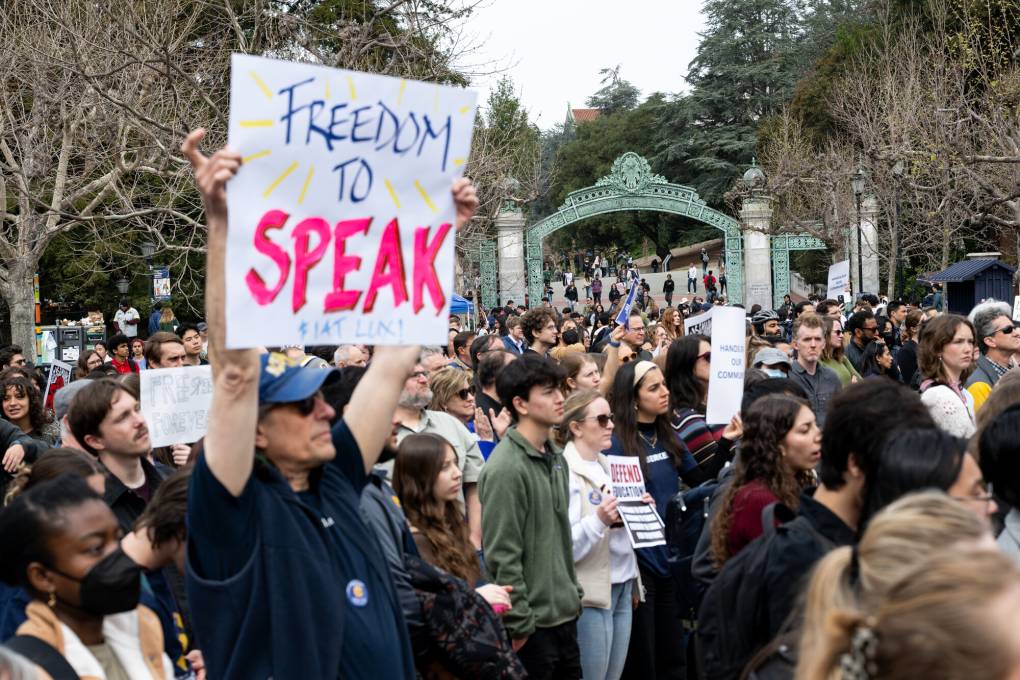
"caption": "University of California, Berkeley issued an advisory last week saying upcoming international travel was risky due to 'strict vetting and enforcement.' Faculty, students, and supporters gathered on Sproul Plaza at the University of California, Berkeley, on March 19, 2025, to protest the Trump administration's scrutiny of campus protests and curriculum nationwide. ",
"credit": "Beth LaBerge/KQED",
"altTag": "A student holds a sign saying 'Freedom to Speak' with several people standing in the background.",
"description": null,
"imgSizes": {
"medium": {
"file": "https://cdn.kqed.org/wp-content/uploads/sites/10/2025/05/250319-UCBerkeleyProtest-17-BL_qed-800x533.jpg",
"width": 800,
"height": 533,
"mimeType": "image/jpeg"
},
"large": {
"file": "https://cdn.kqed.org/wp-content/uploads/sites/10/2025/05/250319-UCBerkeleyProtest-17-BL_qed-1020x680.jpg",
"width": 1020,
"height": 680,
"mimeType": "image/jpeg"
},
"thumbnail": {
"file": "https://cdn.kqed.org/wp-content/uploads/sites/10/2025/05/250319-UCBerkeleyProtest-17-BL_qed-160x107.jpg",
"width": 160,
"height": 107,
"mimeType": "image/jpeg"
},
"1536x1536": {
"file": "https://cdn.kqed.org/wp-content/uploads/sites/10/2025/05/250319-UCBerkeleyProtest-17-BL_qed-1536x1024.jpg",
"width": 1536,
"height": 1024,
"mimeType": "image/jpeg"
},
"post-thumbnail": {
"file": "https://cdn.kqed.org/wp-content/uploads/sites/10/2025/05/250319-UCBerkeleyProtest-17-BL_qed-672x372.jpg",
"width": 672,
"height": 372,
"mimeType": "image/jpeg"
},
"twentyfourteen-full-width": {
"file": "https://cdn.kqed.org/wp-content/uploads/sites/10/2025/05/250319-UCBerkeleyProtest-17-BL_qed-1038x576.jpg",
"width": 1038,
"height": 576,
"mimeType": "image/jpeg"
},
"full-width": {
"file": "https://cdn.kqed.org/wp-content/uploads/sites/10/2025/05/250319-UCBerkeleyProtest-17-BL_qed-1920x1280.jpg",
"width": 1920,
"height": 1280,
"mimeType": "image/jpeg"
},
"kqedFullSize": {
"file": "https://cdn.kqed.org/wp-content/uploads/sites/10/2025/05/250319-UCBerkeleyProtest-17-BL_qed.jpg",
"width": 2000,
"height": 1333
}
},
"isLoading": false,
"fetchFailed": false
},
"news_12038553": {
"type": "attachments",
"id": "news_12038553",
"meta": {
"index": "attachments_1716263798",
"site": "news",
"id": "12038553",
"found": true
},
"title": "npr.brightspotcdn copy",
"publishDate": 1746208975,
"status": "inherit",
"parent": 12038552,
"modified": 1746209006,
"caption": "Hungarian police remove a protester blocking the entrance of the Parliament building in Budapest on April 14, as Hungarian lawmakers were expected to approve constitutional changes further clamping down on rights for certain groups, part of Prime Minister Viktor Orbán's 'Easter cleanup' against his domestic opponents.",
"credit": "Peter Kohalmi/AFP via Getty Images",
"altTag": null,
"description": null,
"imgSizes": {
"medium": {
"file": "https://cdn.kqed.org/wp-content/uploads/sites/10/2025/05/npr.brightspotcdn-copy-1-800x474.jpg",
"width": 800,
"height": 474,
"mimeType": "image/jpeg"
},
"large": {
"file": "https://cdn.kqed.org/wp-content/uploads/sites/10/2025/05/npr.brightspotcdn-copy-1-1020x604.jpg",
"width": 1020,
"height": 604,
"mimeType": "image/jpeg"
},
"thumbnail": {
"file": "https://cdn.kqed.org/wp-content/uploads/sites/10/2025/05/npr.brightspotcdn-copy-1-160x95.jpg",
"width": 160,
"height": 95,
"mimeType": "image/jpeg"
},
"1536x1536": {
"file": "https://cdn.kqed.org/wp-content/uploads/sites/10/2025/05/npr.brightspotcdn-copy-1-1536x910.jpg",
"width": 1536,
"height": 910,
"mimeType": "image/jpeg"
},
"post-thumbnail": {
"file": "https://cdn.kqed.org/wp-content/uploads/sites/10/2025/05/npr.brightspotcdn-copy-1-672x372.jpg",
"width": 672,
"height": 372,
"mimeType": "image/jpeg"
},
"twentyfourteen-full-width": {
"file": "https://cdn.kqed.org/wp-content/uploads/sites/10/2025/05/npr.brightspotcdn-copy-1-1038x576.jpg",
"width": 1038,
"height": 576,
"mimeType": "image/jpeg"
},
"kqedFullSize": {
"file": "https://cdn.kqed.org/wp-content/uploads/sites/10/2025/05/npr.brightspotcdn-copy-1.jpg",
"width": 1600,
"height": 948
}
},
"isLoading": false,
"fetchFailed": false
},
"news_12038197": {
"type": "attachments",
"id": "news_12038197",
"meta": {
"index": "attachments_1716263798",
"site": "news",
"id": "12038197",
"found": true
},
"title": "250429-FALLOFSAIGON-12-BL-KQED",
"publishDate": 1746032530,
"status": "inherit",
"parent": 0,
"modified": 1746135752,
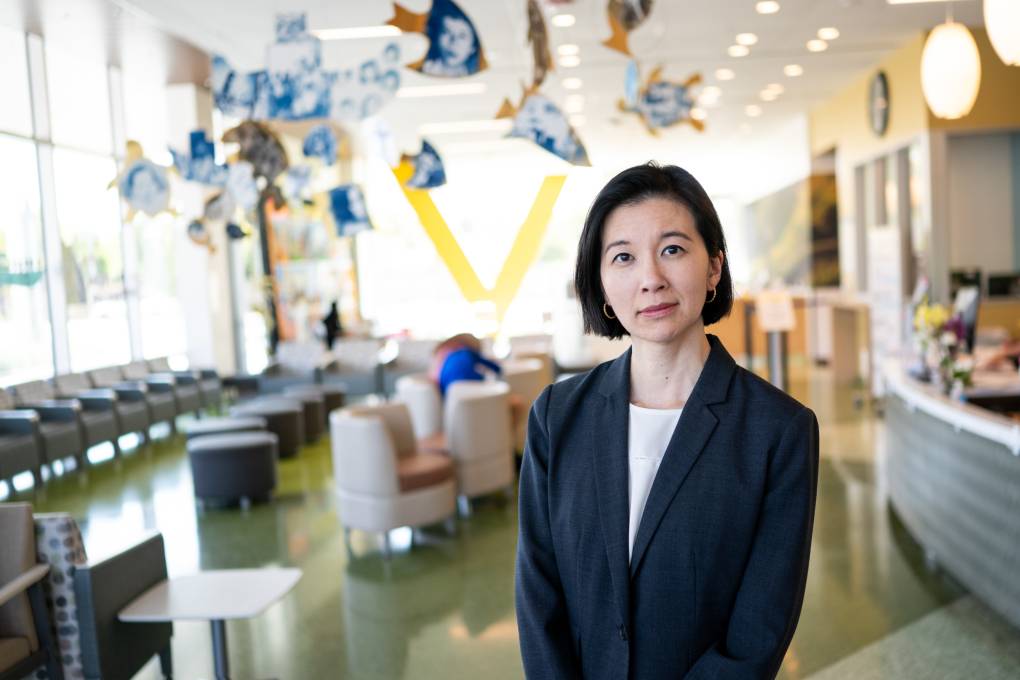
"caption": "HaNhi Tran, senior manager at the Vietnamese American Service Center in San José, stands inside the center on April 29, 2025, where she leads a team providing health and social services to the Vietnamese American community.",
"credit": "Beth LaBerge/KQED",
"altTag": null,
"description": null,
"imgSizes": {
"medium": {
"file": "https://cdn.kqed.org/wp-content/uploads/sites/10/2025/04/250429-FALLOFSAIGON-12-BL-KQED-800x533.jpg",
"width": 800,
"height": 533,
"mimeType": "image/jpeg"
},
"large": {
"file": "https://cdn.kqed.org/wp-content/uploads/sites/10/2025/04/250429-FALLOFSAIGON-12-BL-KQED-1020x680.jpg",
"width": 1020,
"height": 680,
"mimeType": "image/jpeg"
},
"thumbnail": {
"file": "https://cdn.kqed.org/wp-content/uploads/sites/10/2025/04/250429-FALLOFSAIGON-12-BL-KQED-160x107.jpg",
"width": 160,
"height": 107,
"mimeType": "image/jpeg"
},
"1536x1536": {
"file": "https://cdn.kqed.org/wp-content/uploads/sites/10/2025/04/250429-FALLOFSAIGON-12-BL-KQED-1536x1024.jpg",
"width": 1536,
"height": 1024,
"mimeType": "image/jpeg"
},
"post-thumbnail": {
"file": "https://cdn.kqed.org/wp-content/uploads/sites/10/2025/04/250429-FALLOFSAIGON-12-BL-KQED-672x372.jpg",
"width": 672,
"height": 372,
"mimeType": "image/jpeg"
},
"twentyfourteen-full-width": {
"file": "https://cdn.kqed.org/wp-content/uploads/sites/10/2025/04/250429-FALLOFSAIGON-12-BL-KQED-1038x576.jpg",
"width": 1038,
"height": 576,
"mimeType": "image/jpeg"
},
"full-width": {
"file": "https://cdn.kqed.org/wp-content/uploads/sites/10/2025/04/250429-FALLOFSAIGON-12-BL-KQED-1920x1280.jpg",
"width": 1920,
"height": 1280,
"mimeType": "image/jpeg"
},
"kqedFullSize": {
"file": "https://cdn.kqed.org/wp-content/uploads/sites/10/2025/04/250429-FALLOFSAIGON-12-BL-KQED.jpg",
"width": 2000,
"height": 1333
}
},
"isLoading": false,
"fetchFailed": false
},
"news_11888806": {
"type": "attachments",
"id": "news_11888806",
"meta": {
"index": "attachments_1716263798",
"site": "news",
"id": "11888806",
"found": true
},
"title": "Father And Son From Honduras Seeking Asylum In The U.S. Await The Court's Decision On Their Status",
"publishDate": 1631785462,
"status": "inherit",
"parent": 11888754,
"modified": 1749678492,
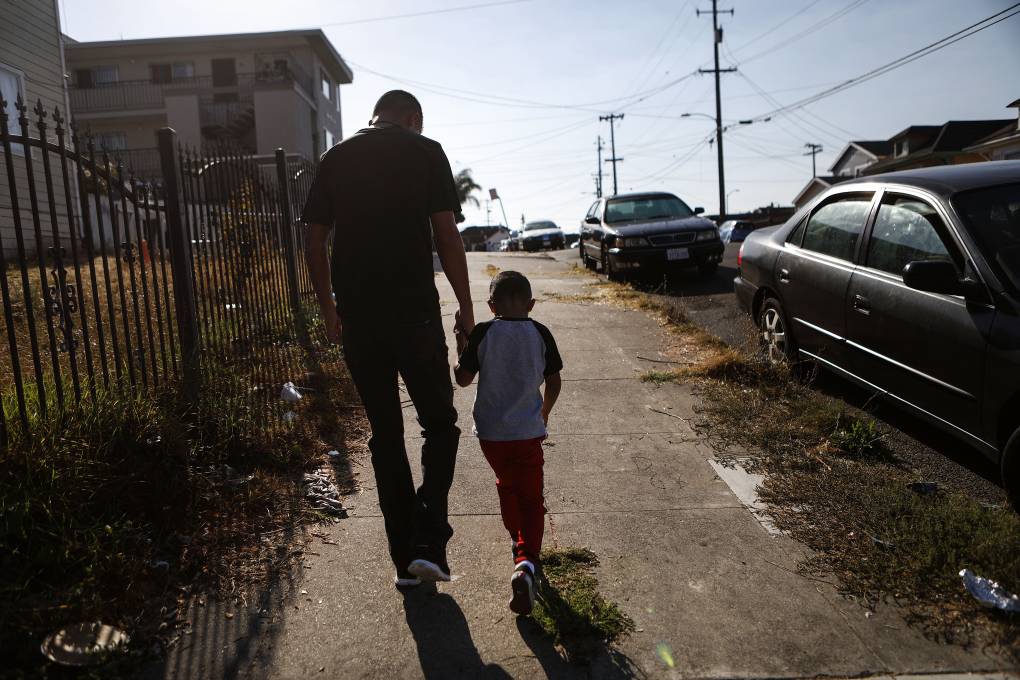
"caption": "A Honduran father and his 6-year-old son walk to Sunday Mass on Sept. 9, 2018, in Oakland, California. They were one of almost 2,600 families separated due to the Trump administration's \"zero tolerance\" immigration policy. ",
"credit": "Mario Tama/Getty Images",
"altTag": "A man and young boy hold hands as they walk in silhouette on an urban sidewalk in early morning sun.",
"description": "Honduran father Juan and his six-year-old son Anthony walk on their way to attend Sunday Mass on September 9, 2018 in Oakland, California. They fled their country, leaving many family members behind, and crossed the U.S. border in April at a lawful port of entry in Brownsville, Texas seeking asylum. They were soon separated and spent the next 85 days apart in detention. Juan was sent to Tulsa, Oklahoma, while his son was sent to a detention shelter New York. They were one of almost 2,600 families separated due to the Trump administration's \"zero tolerance\" immigration policy. Juan said it took six weeks from the time of separation until he was able to make a phone call to his son. They were finally reunited in July 2018.",
"imgSizes": {
"medium": {
"file": "https://cdn.kqed.org/wp-content/uploads/sites/10/2021/09/GettyImages-1031228044-800x533.jpg",
"width": 800,
"height": 533,
"mimeType": "image/jpeg"
},
"large": {
"file": "https://cdn.kqed.org/wp-content/uploads/sites/10/2021/09/GettyImages-1031228044-1020x680.jpg",
"width": 1020,
"height": 680,
"mimeType": "image/jpeg"
},
"thumbnail": {
"file": "https://cdn.kqed.org/wp-content/uploads/sites/10/2021/09/GettyImages-1031228044-160x107.jpg",
"width": 160,
"height": 107,
"mimeType": "image/jpeg"
},
"1536x1536": {
"file": "https://cdn.kqed.org/wp-content/uploads/sites/10/2021/09/GettyImages-1031228044-1536x1024.jpg",
"width": 1536,
"height": 1024,
"mimeType": "image/jpeg"
},
"2048x2048": {
"file": "https://cdn.kqed.org/wp-content/uploads/sites/10/2021/09/GettyImages-1031228044-2048x1365.jpg",
"width": 2048,
"height": 1365,
"mimeType": "image/jpeg"
},
"post-thumbnail": {
"file": "https://cdn.kqed.org/wp-content/uploads/sites/10/2021/09/GettyImages-1031228044-672x372.jpg",
"width": 672,
"height": 372,
"mimeType": "image/jpeg"
},
"twentyfourteen-full-width": {
"file": "https://cdn.kqed.org/wp-content/uploads/sites/10/2021/09/GettyImages-1031228044-1038x576.jpg",
"width": 1038,
"height": 576,
"mimeType": "image/jpeg"
},
"full-width": {
"file": "https://cdn.kqed.org/wp-content/uploads/sites/10/2021/09/GettyImages-1031228044-1920x1280.jpg",
"width": 1920,
"height": 1280,
"mimeType": "image/jpeg"
},
"kqedFullSize": {
"file": "https://cdn.kqed.org/wp-content/uploads/sites/10/2021/09/GettyImages-1031228044-scaled-e1776901494677.jpg",
"width": 2000,
"height": 1334
}
},
"isLoading": false,
"fetchFailed": false
},
"news_12038090": {
"type": "attachments",
"id": "news_12038090",
"meta": {
"index": "attachments_1716263798",
"site": "news",
"id": "12038090",
"found": true
},
"title": "CMDetentionICE1",
"publishDate": 1745956729,
"status": "inherit",
"parent": 12038087,
"modified": 1745956768,
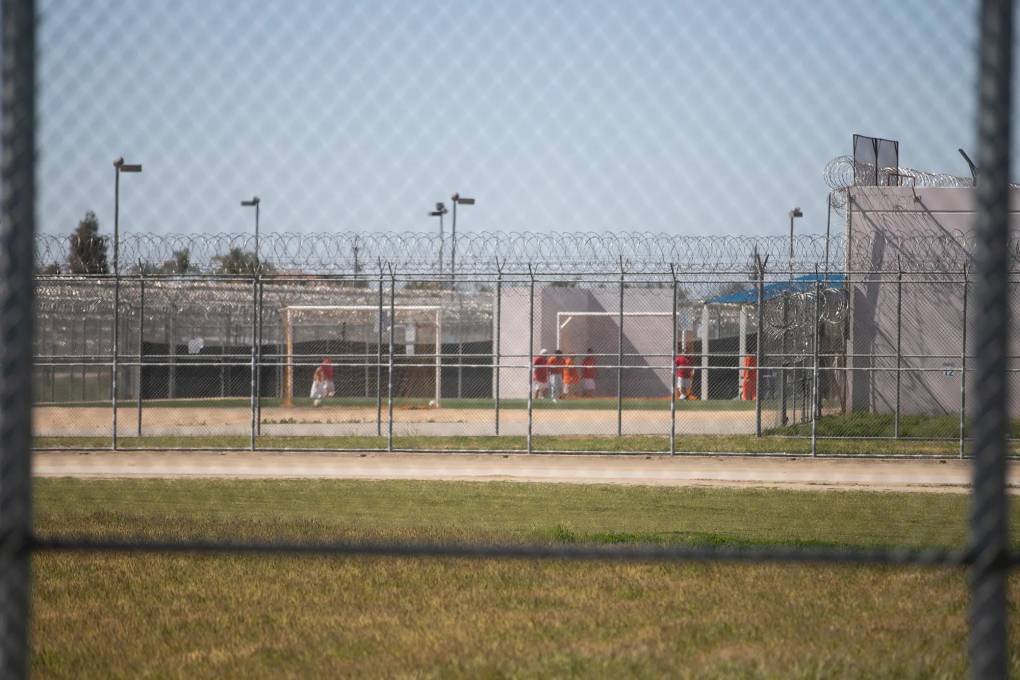
"caption": "People detained inside the Golden State Annex, a U.S. Immigration and Customs Enforcement detention facility run by The GEO Group, in McFarland on March 9, 2025.",
"credit": "Larry Valenzuela/CalMatters/CatchLight Local",
"altTag": null,
"description": null,
"imgSizes": {
"medium": {
"file": "https://cdn.kqed.org/wp-content/uploads/sites/10/2025/04/CMDetentionICE1-800x533.jpg",
"width": 800,
"height": 533,
"mimeType": "image/jpeg"
},
"large": {
"file": "https://cdn.kqed.org/wp-content/uploads/sites/10/2025/04/CMDetentionICE1-1020x680.jpg",
"width": 1020,
"height": 680,
"mimeType": "image/jpeg"
},
"thumbnail": {
"file": "https://cdn.kqed.org/wp-content/uploads/sites/10/2025/04/CMDetentionICE1-160x107.jpg",
"width": 160,
"height": 107,
"mimeType": "image/jpeg"
},
"1536x1536": {
"file": "https://cdn.kqed.org/wp-content/uploads/sites/10/2025/04/CMDetentionICE1-1536x1024.jpg",
"width": 1536,
"height": 1024,
"mimeType": "image/jpeg"
},
"post-thumbnail": {
"file": "https://cdn.kqed.org/wp-content/uploads/sites/10/2025/04/CMDetentionICE1-672x372.jpg",
"width": 672,
"height": 372,
"mimeType": "image/jpeg"
},
"twentyfourteen-full-width": {
"file": "https://cdn.kqed.org/wp-content/uploads/sites/10/2025/04/CMDetentionICE1-1038x576.jpg",
"width": 1038,
"height": 576,
"mimeType": "image/jpeg"
},
"full-width": {
"file": "https://cdn.kqed.org/wp-content/uploads/sites/10/2025/04/CMDetentionICE1-1920x1280.jpg",
"width": 1920,
"height": 1280,
"mimeType": "image/jpeg"
},
"kqedFullSize": {
"file": "https://cdn.kqed.org/wp-content/uploads/sites/10/2025/04/CMDetentionICE1.jpg",
"width": 2000,
"height": 1333
}
},
"isLoading": false,
"fetchFailed": false
},
"news_12037935": {
"type": "attachments",
"id": "news_12037935",
"meta": {
"index": "attachments_1716263798",
"site": "news",
"id": "12037935",
"found": true
},
"title": "US-TECH-LAND",
"publishDate": 1745868501,
"status": "inherit",
"parent": 12037889,
"modified": 1745931977,
"caption": "Travis Air Force Base in Fairfield on Sept. 15, 2023. Rep. John Garamendi said he has “serious opposition” to using Travis Air Force base to lock up immigrants for deportation, a move he says would compromise military readiness and national security.",
"credit": "Josh Edelson/AFP via Getty Images",
"altTag": null,
"description": null,
"imgSizes": {
"medium": {
"file": "https://cdn.kqed.org/wp-content/uploads/sites/10/2025/04/TravisAirForceBaseGetty-800x472.jpg",
"width": 800,
"height": 472,
"mimeType": "image/jpeg"
},
"large": {
"file": "https://cdn.kqed.org/wp-content/uploads/sites/10/2025/04/TravisAirForceBaseGetty-1020x602.jpg",
"width": 1020,
"height": 602,
"mimeType": "image/jpeg"
},
"thumbnail": {
"file": "https://cdn.kqed.org/wp-content/uploads/sites/10/2025/04/TravisAirForceBaseGetty-160x94.jpg",
"width": 160,
"height": 94,
"mimeType": "image/jpeg"
},
"1536x1536": {
"file": "https://cdn.kqed.org/wp-content/uploads/sites/10/2025/04/TravisAirForceBaseGetty-1536x907.jpg",
"width": 1536,
"height": 907,
"mimeType": "image/jpeg"
},
"post-thumbnail": {
"file": "https://cdn.kqed.org/wp-content/uploads/sites/10/2025/04/TravisAirForceBaseGetty-672x372.jpg",
"width": 672,
"height": 372,
"mimeType": "image/jpeg"
},
"twentyfourteen-full-width": {
"file": "https://cdn.kqed.org/wp-content/uploads/sites/10/2025/04/TravisAirForceBaseGetty-1038x576.jpg",
"width": 1038,
"height": 576,
"mimeType": "image/jpeg"
},
"full-width": {
"file": "https://cdn.kqed.org/wp-content/uploads/sites/10/2025/04/TravisAirForceBaseGetty-1920x1134.jpg",
"width": 1920,
"height": 1134,
"mimeType": "image/jpeg"
},
"kqedFullSize": {
"file": "https://cdn.kqed.org/wp-content/uploads/sites/10/2025/04/TravisAirForceBaseGetty.jpg",
"width": 2000,
"height": 1181
}
},
"isLoading": false,
"fetchFailed": false
},
"news_12024728": {
"type": "attachments",
"id": "news_12024728",
"meta": {
"index": "attachments_1716263798",
"site": "news",
"id": "12024728",
"found": true
},
"title": "20250129_UcBerkeleyRally_GC-1",
"publishDate": 1738196347,
"status": "inherit",
"parent": 0,
"modified": 1738198234,
"caption": "Hundreds of students and supporters rally, in solidarity with their undocumented classmates in response to the mass deportations ordered by the Trump administration at Sproul Plaza on the UC Berkeley campus on Wednesday, Jan. 29, 2025.",
"credit": "Gina Castro/KQED",
"altTag": null,
"description": null,
"imgSizes": {
"medium": {
"file": "https://cdn.kqed.org/wp-content/uploads/sites/10/2025/01/20250129_UcBerkeleyRally_GC-1-800x533.jpg",
"width": 800,
"height": 533,
"mimeType": "image/jpeg"
},
"large": {
"file": "https://cdn.kqed.org/wp-content/uploads/sites/10/2025/01/20250129_UcBerkeleyRally_GC-1-1020x680.jpg",
"width": 1020,
"height": 680,
"mimeType": "image/jpeg"
},
"thumbnail": {
"file": "https://cdn.kqed.org/wp-content/uploads/sites/10/2025/01/20250129_UcBerkeleyRally_GC-1-160x107.jpg",
"width": 160,
"height": 107,
"mimeType": "image/jpeg"
},
"1536x1536": {
"file": "https://cdn.kqed.org/wp-content/uploads/sites/10/2025/01/20250129_UcBerkeleyRally_GC-1-1536x1024.jpg",
"width": 1536,
"height": 1024,
"mimeType": "image/jpeg"
},
"post-thumbnail": {
"file": "https://cdn.kqed.org/wp-content/uploads/sites/10/2025/01/20250129_UcBerkeleyRally_GC-1-672x372.jpg",
"width": 672,
"height": 372,
"mimeType": "image/jpeg"
},
"twentyfourteen-full-width": {
"file": "https://cdn.kqed.org/wp-content/uploads/sites/10/2025/01/20250129_UcBerkeleyRally_GC-1-1038x576.jpg",
"width": 1038,
"height": 576,
"mimeType": "image/jpeg"
},
"full-width": {
"file": "https://cdn.kqed.org/wp-content/uploads/sites/10/2025/01/20250129_UcBerkeleyRally_GC-1-1920x1280.jpg",
"width": 1920,
"height": 1280,
"mimeType": "image/jpeg"
},
"kqedFullSize": {
"file": "https://cdn.kqed.org/wp-content/uploads/sites/10/2025/01/20250129_UcBerkeleyRally_GC-1.jpg",
"width": 2000,
"height": 1333
}
},
"isLoading": false,
"fetchFailed": false
},
"news_11939415": {
"type": "attachments",
"id": "news_11939415",
"meta": {
"index": "attachments_1716263798",
"site": "news",
"id": "11939415",
"found": true
},
"parent": 11939412,
"imgSizes": {
"twentyfourteen-full-width": {
"file": "https://cdn.kqed.org/wp-content/uploads/sites/10/2023/01/GettyImages-1246581187-1038x576.jpg",
"width": 1038,
"mimeType": "image/jpeg",
"height": 576
},
"thumbnail": {
"file": "https://cdn.kqed.org/wp-content/uploads/sites/10/2023/01/GettyImages-1246581187-160x120.jpg",
"width": 160,
"mimeType": "image/jpeg",
"height": 120
},
"post-thumbnail": {
"file": "https://cdn.kqed.org/wp-content/uploads/sites/10/2023/01/GettyImages-1246581187-672x372.jpg",
"width": 672,
"mimeType": "image/jpeg",
"height": 372
},
"kqedFullSize": {
"file": "https://cdn.kqed.org/wp-content/uploads/sites/10/2023/01/GettyImages-1246581187-scaled.jpg",
"width": 2560,
"height": 1920
},
"2048x2048": {
"file": "https://cdn.kqed.org/wp-content/uploads/sites/10/2023/01/GettyImages-1246581187-2048x1536.jpg",
"width": 2048,
"mimeType": "image/jpeg",
"height": 1536
},
"large": {
"file": "https://cdn.kqed.org/wp-content/uploads/sites/10/2023/01/GettyImages-1246581187-1020x765.jpg",
"width": 1020,
"mimeType": "image/jpeg",
"height": 765
},
"1536x1536": {
"file": "https://cdn.kqed.org/wp-content/uploads/sites/10/2023/01/GettyImages-1246581187-1536x1152.jpg",
"width": 1536,
"mimeType": "image/jpeg",
"height": 1152
},
"full-width": {
"file": "https://cdn.kqed.org/wp-content/uploads/sites/10/2023/01/GettyImages-1246581187-1920x1440.jpg",
"width": 1920,
"mimeType": "image/jpeg",
"height": 1440
},
"medium": {
"file": "https://cdn.kqed.org/wp-content/uploads/sites/10/2023/01/GettyImages-1246581187-800x600.jpg",
"width": 800,
"mimeType": "image/jpeg",
"height": 600
}
},
"publishDate": 1674829153,
"modified": 1705699777,
"caption": "An aerial view of some trailers that house farmworkers and their families at California Terra Garden in Half Moon Bay, as seen on Thursday, Jan. 26, 2023. The suspect in the mass killing is believed to have lived with his wife in one of the trailers. ",
"description": "Some of the housing provided to the farmworkers and their families at the mushroom farm on Thursday, Jan. 26, 2023 in Half Moon Bay, Calif. The suspect is said to live with his wife in the upper left house with blue tarp.",
"title": "CAHALFMOON",
"credit": "Paul Kuroda/Washington Post, via Getty Images",
"status": "inherit",
"altTag": "An aerial view of a number of trailers on a farm site.",
"isLoading": false,
"fetchFailed": false
},
"news_12036953": {
"type": "attachments",
"id": "news_12036953",
"meta": {
"index": "attachments_1716263798",
"site": "news",
"id": "12036953",
"found": true
},
"title": "250421-PopeReax-05-BL_qed",
"publishDate": 1745264889,
"status": "inherit",
"parent": 12036912,
"modified": 1745264901,
"caption": "A parishioner kneels in front of a portrait of Pope Francis at the Cathedral of Saint Mary of the Assumption in San Francisco on April 21, 2025.",
"credit": "Beth LaBerge/KQED",
"altTag": null,
"description": null,
"imgSizes": {
"medium": {
"file": "https://cdn.kqed.org/wp-content/uploads/sites/10/2025/04/250421-PopeReax-05-BL_qed-800x533.jpg",
"width": 800,
"height": 533,
"mimeType": "image/jpeg"
},
"large": {
"file": "https://cdn.kqed.org/wp-content/uploads/sites/10/2025/04/250421-PopeReax-05-BL_qed-1020x680.jpg",
"width": 1020,
"height": 680,
"mimeType": "image/jpeg"
},
"thumbnail": {
"file": "https://cdn.kqed.org/wp-content/uploads/sites/10/2025/04/250421-PopeReax-05-BL_qed-160x107.jpg",
"width": 160,
"height": 107,
"mimeType": "image/jpeg"
},
"1536x1536": {
"file": "https://cdn.kqed.org/wp-content/uploads/sites/10/2025/04/250421-PopeReax-05-BL_qed-1536x1024.jpg",
"width": 1536,
"height": 1024,
"mimeType": "image/jpeg"
},
"post-thumbnail": {
"file": "https://cdn.kqed.org/wp-content/uploads/sites/10/2025/04/250421-PopeReax-05-BL_qed-672x372.jpg",
"width": 672,
"height": 372,
"mimeType": "image/jpeg"
},
"twentyfourteen-full-width": {
"file": "https://cdn.kqed.org/wp-content/uploads/sites/10/2025/04/250421-PopeReax-05-BL_qed-1038x576.jpg",
"width": 1038,
"height": 576,
"mimeType": "image/jpeg"
},
"full-width": {
"file": "https://cdn.kqed.org/wp-content/uploads/sites/10/2025/04/250421-PopeReax-05-BL_qed-1920x1280.jpg",
"width": 1920,
"height": 1280,
"mimeType": "image/jpeg"
},
"kqedFullSize": {
"file": "https://cdn.kqed.org/wp-content/uploads/sites/10/2025/04/250421-PopeReax-05-BL_qed.jpg",
"width": 1999,
"height": 1333
}
},
"isLoading": false,
"fetchFailed": false
},
"news_12036838": {
"type": "attachments",
"id": "news_12036838",
"meta": {
"index": "attachments_1716263798",
"site": "news",
"id": "12036838",
"found": true
},
"title": "npr.brightspotcdn copy",
"publishDate": 1745089686,
"status": "inherit",
"parent": 12036835,
"modified": 1745089711,
"caption": "The US Supreme Court is seen near sunset in Washington on Oct. 18, 2018.",
"credit": "Manuel Balce Ceneta/AP",
"altTag": null,
"description": null,
"imgSizes": {
"medium": {
"file": "https://cdn.kqed.org/wp-content/uploads/sites/10/2025/04/npr.brightspotcdn-copy-16-800x533.jpg",
"width": 800,
"height": 533,
"mimeType": "image/jpeg"
},
"large": {
"file": "https://cdn.kqed.org/wp-content/uploads/sites/10/2025/04/npr.brightspotcdn-copy-16-1020x680.jpg",
"width": 1020,
"height": 680,
"mimeType": "image/jpeg"
},
"thumbnail": {
"file": "https://cdn.kqed.org/wp-content/uploads/sites/10/2025/04/npr.brightspotcdn-copy-16-160x107.jpg",
"width": 160,
"height": 107,
"mimeType": "image/jpeg"
},
"1536x1536": {
"file": "https://cdn.kqed.org/wp-content/uploads/sites/10/2025/04/npr.brightspotcdn-copy-16-1536x1023.jpg",
"width": 1536,
"height": 1023,
"mimeType": "image/jpeg"
},
"post-thumbnail": {
"file": "https://cdn.kqed.org/wp-content/uploads/sites/10/2025/04/npr.brightspotcdn-copy-16-672x372.jpg",
"width": 672,
"height": 372,
"mimeType": "image/jpeg"
},
"twentyfourteen-full-width": {
"file": "https://cdn.kqed.org/wp-content/uploads/sites/10/2025/04/npr.brightspotcdn-copy-16-1038x576.jpg",
"width": 1038,
"height": 576,
"mimeType": "image/jpeg"
},
"kqedFullSize": {
"file": "https://cdn.kqed.org/wp-content/uploads/sites/10/2025/04/npr.brightspotcdn-copy-16.jpg",
"width": 1600,
"height": 1066
}
},
"isLoading": false,
"fetchFailed": false
},
"news_12036143": {
"type": "attachments",
"id": "news_12036143",
"meta": {
"index": "attachments_1716263798",
"site": "news",
"id": "12036143",
"found": true
},
"title": "Narcocorridos",
"publishDate": 1744763441,
"status": "inherit",
"parent": 12036107,
"modified": 1744825004,
"caption": "People dance to a band playing corridos at the Lido Club in South Gate, California. One of the most cherished traditions within Mexican regional music, corridos are narrative ballads that tell a story, sometimes about the crime, violence and misogyny that have plagued Mexico for decades.",
"credit": "Gregory Bojorquez/Getty Images",
"altTag": null,
"description": null,
"imgSizes": {
"medium": {
"file": "https://cdn.kqed.org/wp-content/uploads/sites/10/2025/04/GettyImages-1341918465_qed-800x532.jpg",
"width": 800,
"height": 532,
"mimeType": "image/jpeg"
},
"large": {
"file": "https://cdn.kqed.org/wp-content/uploads/sites/10/2025/04/GettyImages-1341918465_qed-1020x678.jpg",
"width": 1020,
"height": 678,
"mimeType": "image/jpeg"
},
"thumbnail": {
"file": "https://cdn.kqed.org/wp-content/uploads/sites/10/2025/04/GettyImages-1341918465_qed-160x106.jpg",
"width": 160,
"height": 106,
"mimeType": "image/jpeg"
},
"1536x1536": {
"file": "https://cdn.kqed.org/wp-content/uploads/sites/10/2025/04/GettyImages-1341918465_qed-1536x1021.jpg",
"width": 1536,
"height": 1021,
"mimeType": "image/jpeg"
},
"post-thumbnail": {
"file": "https://cdn.kqed.org/wp-content/uploads/sites/10/2025/04/GettyImages-1341918465_qed-672x372.jpg",
"width": 672,
"height": 372,
"mimeType": "image/jpeg"
},
"twentyfourteen-full-width": {
"file": "https://cdn.kqed.org/wp-content/uploads/sites/10/2025/04/GettyImages-1341918465_qed-1038x576.jpg",
"width": 1038,
"height": 576,
"mimeType": "image/jpeg"
},
"full-width": {
"file": "https://cdn.kqed.org/wp-content/uploads/sites/10/2025/04/GettyImages-1341918465_qed-1920x1276.jpg",
"width": 1920,
"height": 1276,
"mimeType": "image/jpeg"
},
"kqedFullSize": {
"file": "https://cdn.kqed.org/wp-content/uploads/sites/10/2025/04/GettyImages-1341918465_qed.jpg",
"width": 2000,
"height": 1329
}
},
"isLoading": false,
"fetchFailed": false
},
"news_12035784": {
"type": "attachments",
"id": "news_12035784",
"meta": {
"index": "attachments_1716263798",
"site": "news",
"id": "12035784",
"found": true
},
"title": "retirement benefits",
"publishDate": 1744479120,
"status": "inherit",
"parent": 12035781,
"modified": 1744488629,
"caption": "Bay Area economic justice advocates worry that the Trump administration's decision to cancel the social security numbers of 6,300 immigrants, and possibly more, will drive more people into the financial shadows.\n",
"credit": "Getty Images",
"altTag": null,
"description": null,
"imgSizes": {
"medium": {
"file": "https://cdn.kqed.org/wp-content/uploads/sites/10/2025/04/iStock_000047219414_Large_qed-800x533.jpg",
"width": 800,
"height": 533,
"mimeType": "image/jpeg"
},
"large": {
"file": "https://cdn.kqed.org/wp-content/uploads/sites/10/2025/04/iStock_000047219414_Large_qed-1020x680.jpg",
"width": 1020,
"height": 680,
"mimeType": "image/jpeg"
},
"thumbnail": {
"file": "https://cdn.kqed.org/wp-content/uploads/sites/10/2025/04/iStock_000047219414_Large_qed-160x107.jpg",
"width": 160,
"height": 107,
"mimeType": "image/jpeg"
},
"1536x1536": {
"file": "https://cdn.kqed.org/wp-content/uploads/sites/10/2025/04/iStock_000047219414_Large_qed-1536x1024.jpg",
"width": 1536,
"height": 1024,
"mimeType": "image/jpeg"
},
"post-thumbnail": {
"file": "https://cdn.kqed.org/wp-content/uploads/sites/10/2025/04/iStock_000047219414_Large_qed-672x372.jpg",
"width": 672,
"height": 372,
"mimeType": "image/jpeg"
},
"twentyfourteen-full-width": {
"file": "https://cdn.kqed.org/wp-content/uploads/sites/10/2025/04/iStock_000047219414_Large_qed-1038x576.jpg",
"width": 1038,
"height": 576,
"mimeType": "image/jpeg"
},
"full-width": {
"file": "https://cdn.kqed.org/wp-content/uploads/sites/10/2025/04/iStock_000047219414_Large_qed-1920x1280.jpg",
"width": 1920,
"height": 1280,
"mimeType": "image/jpeg"
},
"kqedFullSize": {
"file": "https://cdn.kqed.org/wp-content/uploads/sites/10/2025/04/iStock_000047219414_Large_qed.jpg",
"width": 2000,
"height": 1333
}
},
"isLoading": false,
"fetchFailed": false
}
},
"audioPlayerReducer": {
"postId": "stream_live",
"isPaused": true,
"isPlaying": false,
"pfsActive": false,
"pledgeModalIsOpen": true,
"playerDrawerIsOpen": false,
"liveAudioPlayStartedAt": 0,
"liveAudioPlayContext": ""
},
"authorsReducer": {
"byline_news_12038665": {
"type": "authors",
"id": "byline_news_12038665",
"meta": {
"override": true
},
"slug": "byline_news_12038665",
"name": "Makiya Seminera \u003cbr> Associated Press",
"isLoading": false
},
"byline_news_12038552": {
"type": "authors",
"id": "byline_news_12038552",
"meta": {
"override": true
},
"slug": "byline_news_12038552",
"name": "\u003ca href=\"https://www.npr.org/people/4569077/frank-langfitt\">Frank Langfitt\u003c/a>, NPR",
"isLoading": false
},
"byline_news_12038327": {
"type": "authors",
"id": "byline_news_12038327",
"meta": {
"override": true
},
"slug": "byline_news_12038327",
"name": "Mark Betancourt, The California Newsroom",
"isLoading": false
},
"byline_news_12038087": {
"type": "authors",
"id": "byline_news_12038087",
"meta": {
"override": true
},
"slug": "byline_news_12038087",
"name": "\u003ca href=\"https://calmatters.org/author/wendy-fry/\" target=\"_blank\" rel=\"noopener\">Wendy Fry\u003c/a>, CalMatters",
"isLoading": false
},
"byline_news_12037662": {
"type": "authors",
"id": "byline_news_12037662",
"meta": {
"override": true
},
"slug": "byline_news_12037662",
"name": "Janie Har and Kate Brumback, Associated Press",
"isLoading": false
},
"byline_news_12036835": {
"type": "authors",
"id": "byline_news_12036835",
"meta": {
"override": true
},
"slug": "byline_news_12036835",
"name": "\u003ca href=\"https://www.npr.org/people/297147616/jasmine-garsd\">Jasmine Garsd\u003c/a>, NPR",
"isLoading": false
},
"tychehendricks": {
"type": "authors",
"id": "259",
"meta": {
"index": "authors_1716337520",
"id": "259",
"found": true
},
"name": "Tyche Hendricks",
"firstName": "Tyche",
"lastName": "Hendricks",
"slug": "tychehendricks",
"email": "thendricks@kqed.org",
"display_author_email": true,
"staff_mastheads": [
"news"
],
"title": "KQED Senior Editor, Immigration",
"bio": "\u003cspan style=\"font-weight: 400;\">Tyche Hendricks is KQED’s senior editor for immigration, leading coverage of the policy and politics that affect California’s immigrant communities. Her work for KQED’s radio and online audiences is also carried on NPR and other national outlets. She has been recognized with awards from the Radio and Television News Directors Association, the Society for Professional Journalists; the Education Writers Association; the Best of the West and the National Federation of Community Broadcasters. Before joining KQED in 2010, Tyche spent more than a dozen years as a newspaper reporter, notably at the \u003c/span>\u003ci>\u003cspan style=\"font-weight: 400;\">San Francisco Chronicle\u003c/span>\u003c/i>\u003cspan style=\"font-weight: 400;\">. At different times she has covered criminal justice, government and politics and urban planning. Tyche has taught in the MFA Creative Writing program at the University of San Francisco and at UC Berkeley’s Graduate School of Journalism, where she was co-director of a national immigration symposium for professional journalists. She is the author of \u003c/span>\u003ci>\u003cspan style=\"font-weight: 400;\">The Wind Doesn't Need a Passport: Stories from the U.S.-Mexico Borderlands\u003c/span>\u003c/i>\u003cspan style=\"font-weight: 400;\"> (University of California Press). \u003c/span>",
"avatar": "https://secure.gravatar.com/avatar/b8ee458e2731c2d43df86882ce17267e?s=600&d=blank&r=g",
"twitter": "tychehendricks",
"facebook": null,
"instagram": null,
"linkedin": null,
"sites": [
{
"site": "news",
"roles": [
"editor"
]
},
{
"site": "stateofhealth",
"roles": [
"editor"
]
}
],
"headData": {
"title": "Tyche Hendricks | KQED",
"description": "KQED Senior Editor, Immigration",
"ogImgSrc": "https://secure.gravatar.com/avatar/b8ee458e2731c2d43df86882ce17267e?s=600&d=blank&r=g",
"twImgSrc": "https://secure.gravatar.com/avatar/b8ee458e2731c2d43df86882ce17267e?s=600&d=blank&r=g"
},
"isLoading": false,
"link": "/author/tychehendricks"
},
"matthewgreen": {
"type": "authors",
"id": "1263",
"meta": {
"index": "authors_1716337520",
"id": "1263",
"found": true
},
"name": "Matthew Green",
"firstName": "Matthew",
"lastName": "Green",
"slug": "matthewgreen",
"email": "mgreen@kqed.org",
"display_author_email": false,
"staff_mastheads": [],
"title": "KQED Editor/Reporter",
"bio": "Matthew Green is a digital media producer for KQED News. He previously produced \u003ca href=\"http://www.kqed.org/lowdown\">The Lowdown\u003c/a>, KQED’s multimedia news education blog. Matthew's written for numerous Bay Area publications, including the Oakland Tribune and San Francisco Chronicle. He also taught journalism classes at Fremont High School in East Oakland.\r\n\r\nEmail: mgreen@kqed.org; Twitter: @MGreenKQED",
"avatar": "https://secure.gravatar.com/avatar/3bf498d1267ca02c8494f33d8cfc575e?s=600&d=blank&r=g",
"twitter": "MGreenKQED",
"facebook": null,
"instagram": null,
"linkedin": null,
"sites": [
{
"site": "news",
"roles": []
},
{
"site": "lowdown",
"roles": []
},
{
"site": "science",
"roles": []
},
{
"site": "education",
"roles": []
},
{
"site": "quest",
"roles": []
},
{
"site": "liveblog",
"roles": []
}
],
"headData": {
"title": "Matthew Green | KQED",
"description": "KQED Editor/Reporter",
"ogImgSrc": "https://secure.gravatar.com/avatar/3bf498d1267ca02c8494f33d8cfc575e?s=600&d=blank&r=g",
"twImgSrc": "https://secure.gravatar.com/avatar/3bf498d1267ca02c8494f33d8cfc575e?s=600&d=blank&r=g"
},
"isLoading": false,
"link": "/author/matthewgreen"
},
"fjhabvala": {
"type": "authors",
"id": "8659",
"meta": {
"index": "authors_1716337520",
"id": "8659",
"found": true
},
"name": "Farida Jhabvala Romero",
"firstName": "Farida",
"lastName": "Jhabvala Romero",
"slug": "fjhabvala",
"email": "fjhabvala@kqed.org",
"display_author_email": true,
"staff_mastheads": [
"news"
],
"title": "KQED Contributor",
"bio": "Farida Jhabvala Romero is a Labor Correspondent for KQED. She previously covered immigration. Farida was \u003ca href=\"https://www.ccnma.org/2022-most-influential-latina-journalists\">named\u003c/a> one of the 10 Most Influential Latina Journalists in California in 2022 by the California Chicano News Media Association. Her work has won awards from the Society of Professional Journalists (Northern California), as well as a national and regional Edward M. Murrow Award for the collaborative reporting projects “Dangerous Air” and “Graying California.” Before joining KQED, Farida worked as a producer at Radio Bilingüe, a national public radio network. Farida earned her master’s degree in journalism from Stanford University.",
"avatar": "https://secure.gravatar.com/avatar/f9f022d4e2609741874222a1e9d41f48fea74011aa7c615eef91d9a50c944ebe?s=600&d=blank&r=g",
"twitter": "FaridaJhabvala",
"bluesky": null,
"facebook": null,
"instagram": null,
"linkedin": "https://www.linkedin.com/in/faridajhabvala/",
"sites": [
{
"site": "news",
"roles": [
"editor"
]
},
{
"site": "stateofhealth",
"roles": [
"author"
]
},
{
"site": "liveblog",
"roles": [
"author"
]
}
],
"headData": {
"title": "Farida Jhabvala Romero | KQED",
"description": "KQED Contributor",
"ogImgSrc": "https://secure.gravatar.com/avatar/f9f022d4e2609741874222a1e9d41f48fea74011aa7c615eef91d9a50c944ebe?s=600&d=blank&r=g",
"twImgSrc": "https://secure.gravatar.com/avatar/f9f022d4e2609741874222a1e9d41f48fea74011aa7c615eef91d9a50c944ebe?s=600&d=blank&r=g"
},
"isLoading": false,
"link": "/author/fjhabvala"
},
"abandlamudi": {
"type": "authors",
"id": "11672",
"meta": {
"index": "authors_1716337520",
"id": "11672",
"found": true
},
"name": "Adhiti Bandlamudi",
"firstName": "Adhiti",
"lastName": "Bandlamudi",
"slug": "abandlamudi",
"email": "abandlamudi@kqed.org",
"display_author_email": false,
"staff_mastheads": [
"news"
],
"title": "KQED Housing Reporter",
"bio": "Adhiti Bandlamudi reports for KQED's Housing desk. She focuses on how housing gets built across the Bay Area. Before joining KQED in 2020, she reported for WUNC in Durham, North Carolina, WABE in Atlanta, Georgia and Capital Public Radio in Sacramento. In 2017, she was awarded a Kroc Fellowship at NPR where she reported on everything from sprinkles to the Golden State Killer's arrest. When she's not reporting, she's baking new recipes in her kitchen or watching movies with friends and family. She's originally from Georgia and has strong opinions about Great British Bake Off.",
"avatar": "https://secure.gravatar.com/avatar/868129c8b257bb99a3500e2c86a65400?s=600&d=mm&r=g",
"twitter": "oddity_adhiti",
"facebook": null,
"instagram": null,
"linkedin": null,
"sites": [
{
"site": "arts",
"roles": [
"author"
]
},
{
"site": "news",
"roles": [
"editor"
]
},
{
"site": "liveblog",
"roles": [
"author"
]
}
],
"headData": {
"title": "Adhiti Bandlamudi | KQED",
"description": "KQED Housing Reporter",
"ogImgSrc": "https://secure.gravatar.com/avatar/868129c8b257bb99a3500e2c86a65400?s=600&d=mm&r=g",
"twImgSrc": "https://secure.gravatar.com/avatar/868129c8b257bb99a3500e2c86a65400?s=600&d=mm&r=g"
},
"isLoading": false,
"link": "/author/abandlamudi"
},
"nkhan": {
"type": "authors",
"id": "11867",
"meta": {
"index": "authors_1716337520",
"id": "11867",
"found": true
},
"name": "Nisa Khan",
"firstName": "Nisa",
"lastName": "Khan",
"slug": "nkhan",
"email": "nkhan@kqed.org",
"display_author_email": false,
"staff_mastheads": [],
"title": "KQED Contributor",
"bio": "Nisa Khan is a reporter for KQED's Audience News Desk. She was formerly a data reporter at Michigan Radio. She earned a Bachelor of Science in Information from the University of Michigan and a Master of Arts in Communication from Stanford University.",
"avatar": "https://secure.gravatar.com/avatar/8720459eef081ff64582b3506b124d58523e80e120704a0cbd9892533c914991?s=600&d=blank&r=g",
"twitter": "mnisakhan",
"bluesky": null,
"facebook": null,
"instagram": null,
"linkedin": null,
"sites": [
{
"site": "arts",
"roles": [
"editor"
]
},
{
"site": "news",
"roles": [
"editor"
]
},
{
"site": "science",
"roles": [
"editor",
"author"
]
},
{
"site": "forum",
"roles": [
"editor"
]
},
{
"site": "liveblog",
"roles": [
"contributor"
]
}
],
"headData": {
"title": "Nisa Khan | KQED",
"description": "KQED Contributor",
"ogImgSrc": "https://secure.gravatar.com/avatar/8720459eef081ff64582b3506b124d58523e80e120704a0cbd9892533c914991?s=600&d=blank&r=g",
"twImgSrc": "https://secure.gravatar.com/avatar/8720459eef081ff64582b3506b124d58523e80e120704a0cbd9892533c914991?s=600&d=blank&r=g"
},
"isLoading": false,
"link": "/author/nkhan"
},
"kdebenedetti": {
"type": "authors",
"id": "11913",
"meta": {
"index": "authors_1716337520",
"id": "11913",
"found": true
},
"name": "Katie DeBenedetti",
"firstName": "Katie",
"lastName": "DeBenedetti",
"slug": "kdebenedetti",
"email": "kdebenedetti@kqed.org",
"display_author_email": false,
"staff_mastheads": [
"news",
"science"
],
"title": "KQED Contributor",
"bio": "Katie DeBenedetti is a digital reporter covering daily news for the Express Desk. Prior to joining KQED as a culture reporting intern in January 2024, she covered education and city government for the Napa Valley Register.",
"avatar": "https://secure.gravatar.com/avatar/6e31073cb8f7e4214ab03f42771d0f45?s=600&d=blank&r=g",
"twitter": null,
"facebook": null,
"instagram": null,
"linkedin": null,
"sites": [
{
"site": "news",
"roles": [
"author"
]
},
{
"site": "science",
"roles": [
"author"
]
},
{
"site": "liveblog",
"roles": [
"author"
]
}
],
"headData": {
"title": "Katie DeBenedetti | KQED",
"description": "KQED Contributor",
"ogImgSrc": "https://secure.gravatar.com/avatar/6e31073cb8f7e4214ab03f42771d0f45?s=600&d=blank&r=g",
"twImgSrc": "https://secure.gravatar.com/avatar/6e31073cb8f7e4214ab03f42771d0f45?s=600&d=blank&r=g"
},
"isLoading": false,
"link": "/author/kdebenedetti"
}
},
"pagesReducer": {
"news_category_immigration": {
"type": "terms",
"id": "news_1169",
"meta": {
"index": "terms_1716263798",
"site": "news",
"id": "1169",
"score": 10.910236
},
"featImg": null,
"name": "Immigration",
"description": null,
"taxonomy": "category",
"headData": {
"twImgId": null,
"twTitle": null,
"ogTitle": null,
"ogImgId": null,
"twDescription": null,
"description": null,
"title": "Immigration Archives | KQED News",
"ogDescription": null
},
"ttid": 1180,
"slug": "immigration",
"isLoading": false,
"title": "Immigration",
"pageMeta": {
"site": "news",
"WpPageTemplate": "page-topic-editorial",
"currentPage": 32
},
"blocks": [
{
"blockName": "kqed/post-list",
"attrs": {
"layout": "cardArticle2",
"query": "posts/news?category=immigration",
"seeMore": false,
"paginated": true,
"page": 32
}
},
{
"blockName": "kqed/ad"
}
]
}
},
"pfsSessionReducer": {},
"postsReducer": {
"stream_live": {
"type": "live",
"id": "stream_live",
"audioUrl": "https://streams.kqed.org/kqedradio",
"title": "Live Stream",
"excerpt": "Live Stream information currently unavailable.",
"link": "/radio",
"featImg": "",
"label": {
"name": "KQED Live",
"link": "/"
}
},
"stream_kqedNewscast": {
"type": "posts",
"id": "stream_kqedNewscast",
"audioUrl": "https://www.kqed.org/.stream/anon/radio/RDnews/newscast.mp3?_=1",
"title": "KQED Newscast",
"featImg": "",
"label": {
"name": "88.5 FM",
"link": "/"
}
},
"news_12038665": {
"type": "posts",
"id": "news_12038665",
"meta": {
"index": "posts_1716263798",
"site": "news",
"id": "12038665",
"score": null,
"sort": [
1746389758000
]
},
"guestAuthors": [],
"slug": "visa-crackdown-leads-international-students-in-the-us-to-reconsider-summer-travel",
"title": "Visa Crackdown Leads International Students in the US to Reconsider Summer Travel",
"publishDate": 1746389758,
"format": "standard",
"headTitle": "Visa Crackdown Leads International Students in the US to Reconsider Summer Travel | KQED",
"labelTerm": {
"site": "news"
},
"content": "\u003cp>On summer break from a Ph.D. program, an international student at University of California, San Diego, was planning a trip with a few friends to Hawaii. But after seeing international students across the United States \u003ca href=\"https://apnews.com/article/international-student-f1-visa-revoked-college-f12320b435b6bf9cf723f1e8eb8c67ae\">stripped of their legal status\u003c/a>, the student decided against it.\u003c/p>\n\u003cp>Any travel, even inside the U.S., just didn’t seem worth the risk.\u003c/p>\n\u003cp>“I probably am going to skip that to … have as few interactions with governments as possible,” said the student, who spoke on condition of anonymity out of fear of being targeted.\u003c/p>\n\u003cp>International students weighing travel to see family, take a vacation or conduct research are thinking twice because of the \u003ca href=\"https://apnews.com/article/trump-immigration-enforcement-deportation-public-polling-df7d0d35dfa031e1444bfa9e9e0b13bd\">Trump administration’s crackdown\u003c/a>, which has added to a sense of vulnerability.\u003c/p>\n\u003cp>Even before students suddenly began losing permission to study in the U.S., some colleges were encouraging international students and faculty to \u003ca href=\"https://apnews.com/article/college-admissions-international-student-enrollment-trump-fd8b6b8f298629bbcc7339568b1c76f3\">postpone travel\u003c/a>, citing government efforts to deport students involved in \u003ca href=\"https://apnews.com/article/columbia-university-mahmoud-khalil-ice-15014bcbb921f21a9f704d5acdcae7a8\">pro-Palestinian activism\u003c/a>. As the scale of the status terminations emerged in recent weeks, more schools have cautioned against non-essential travel abroad for international students.\u003c/p>\n\u003cp>[ad fullwidth]\u003c/p>\n\u003cp>University of California, Berkeley, for one, issued an advisory last week saying upcoming international travel was risky due to “strict vetting and enforcement.”\u003c/p>\n\u003cp>At least 1,220 students at 187 colleges, universities and university systems have had their visas revoked or legal status terminated since late March, according to an Associated Press review of university statements, correspondence with school officials and court records.\u003c/p>\n\u003cp>The number of affected students appears far higher, though. At least 4,736 international students’ visa records were terminated in a government database that maintains their legal status, according to an April 10 Immigration and Customs Enforcement response to inquiries from Congress.\u003c/p>\n\u003cp>Suddenly at risk for deportation, some students \u003ca href=\"https://apnews.com/article/international-student-visa-status-restraining-order-64a97b4fabc5264ed20b179952cdabff\">went into hiding\u003c/a> while others \u003ca href=\"https://apnews.com/article/college-international-student-f1-visa-ice-trump-7a1d186c06a5fdb2f64506dcf208105a\">left the country\u003c/a> on their own. Many of the students said they had only minor infractions on their records or didn’t know why their records were removed.\u003c/p>\n\u003cp>After federal judges raised due process concerns in several students’ cases, the U.S. government \u003ca href=\"https://apnews.com/article/international-student-status-restored-9e8a7cb90f4193ec52bf06edc5094cd9\">reversed the terminations\u003c/a> but then issued new guidance \u003ca href=\"https://apnews.com/article/international-student-visa-f1-sevis-status-716ce8e67e2c3093eba4092e57ba1612\">expanding the reasons\u003c/a> international students can lose their legal status in the future.\u003c/p>\n\u003cp>Under the new policy, valid reasons for status termination include the revocation of the visas students used to enter the U.S. In the past, if a student’s visa was revoked, they generally could stay in the U.S. to finish school. They simply would not be able to reenter if they left the country.\u003c/p>\n\u003cp>The fast-evolving situation has left colleges struggling to advise students.\u003c/p>\n\u003cp>A Michigan college employee who helps international students navigate the visa process said they are inquiring more than ever about summer travel. The employee, who spoke on condition of anonymity because he was not authorized to speak to the media, said he often has been unable to give sufficient answers.\u003c/p>\n\u003cp>Last year, the U.S. hosted around 1.1 million international students, a source of essential tuition revenue at many schools. Advocates say that number is likely to shrink as the crackdown hurts America’s appeal.\u003c/p>\n\u003cp>Over the past few weeks, Rishi Oza’s immigration law firm in North Carolina has received calls about travel risks almost daily from people of varied immigration status, including international students.\u003c/p>\n\u003cp>“You kind of shake your head and say, ‘Is this the character of the country we want?’” Oza said. “It just seems that it’s a bit out of whack that people are fearful of leaving and whether they’ll be able to come back.”\u003c/p>\n\u003cp>Students in the U.S. with a visa need to decide if their travels are critical, Oza said.\u003c/p>\n\u003cp>When attempting reentry after leaving the country, they should bring immigration documents, school transcripts and even court documents if they were charged with a crime and the court dismissed the case. Ultimately, lawyers can’t foretell what will happen at the airport, he said.\u003c/p>\n\u003cp>The unpredictability has put one international student at the University of Illinois in distress. The student, who requested anonymity to avoid being targeted, has laid low since one of his classmates left the country after their legal status was terminated.\u003c/p>\n\u003cp>The student’s plan to travel to his home country in Asia this summer causes feelings of panic, but he has nowhere else to stay. He bought his plane ticket and is committed to the trip. His anxiety over what could happen when he returns, however, is still there.\u003c/p>\n\u003cp>“Right now,” he said, “I’m afraid I might not be able to come back.”\u003c/p>\n\u003cp>___\u003c/p>\n\u003cp>\u003c/p>\n\u003cp>\u003cem>Associated Press reporter Christopher L. Keller contributed from Albuquerque, New Mexico.\u003c/em>\u003c/p>\n\n",
"blocks": [],
"excerpt": "International students weighing travel to see family, take a vacation or conduct research are thinking twice because of the Trump administration’s crackdown, which has added to a sense of vulnerability.",
"status": "publish",
"parent": 0,
"modified": 1746386332,
"stats": {
"hasAudio": false,
"hasVideo": false,
"hasChartOrMap": false,
"iframeSrcs": [],
"hasGoogleForm": false,
"hasGallery": false,
"hasHearkenModule": false,
"hasPolis": false,
"paragraphCount": 25,
"wordCount": 798
},
"headData": {
"title": "Visa Crackdown Leads International Students in the US to Reconsider Summer Travel | KQED",
"description": "International students weighing travel to see family, take a vacation or conduct research are thinking twice because of the Trump administration’s crackdown, which has added to a sense of vulnerability.",
"ogTitle": "",
"ogDescription": "",
"ogImgId": "",
"twTitle": "",
"twDescription": "",
"twImgId": "",
"schema": {
"@context": "https://schema.org",
"@type": "NewsArticle",
"headline": "Visa Crackdown Leads International Students in the US to Reconsider Summer Travel",
"datePublished": "2025-05-04T13:15:58-07:00",
"dateModified": "2025-05-04T12:18:52-07:00",
"image": "https://cdn.kqed.org/wp-content/uploads/2020/02/KQED-OG-Image@1x.png",
"isAccessibleForFree": "True",
"publisher": {
"@type": "NewsMediaOrganization",
"@id": "https://www.kqed.org/#organization",
"name": "KQED",
"logo": "https://cdn.kqed.org/wp-content/uploads/2020/02/KQED-OG-Image@1x.png",
"url": "https://www.kqed.org",
"sameAs": [
"https://www.facebook.com/KQED",
"https://twitter.com/KQED",
"https://www.instagram.com/kqed/",
"https://www.tiktok.com/@kqedofficial",
"https://www.linkedin.com/company/kqed",
"https://www.youtube.com/channel/UCeC0IOo7i1P_61zVUWbJ4nw"
]
}
}
},
"sticky": false,
"nprByline": "Makiya Seminera \u003cbr> Associated Press",
"templateType": "standard",
"featuredImageType": "standard",
"excludeFromSiteSearch": "Include",
"showOnAuthorArchivePages": "No",
"articleAge": "0",
"path": "/news/12038665/visa-crackdown-leads-international-students-in-the-us-to-reconsider-summer-travel",
"audioTrackLength": null,
"parsedContent": [
{
"type": "contentString",
"content": "\u003cdiv class=\"post-body\">\u003cp>\u003cp>On summer break from a Ph.D. program, an international student at University of California, San Diego, was planning a trip with a few friends to Hawaii. But after seeing international students across the United States \u003ca href=\"https://apnews.com/article/international-student-f1-visa-revoked-college-f12320b435b6bf9cf723f1e8eb8c67ae\">stripped of their legal status\u003c/a>, the student decided against it.\u003c/p>\n\u003cp>Any travel, even inside the U.S., just didn’t seem worth the risk.\u003c/p>\n\u003cp>“I probably am going to skip that to … have as few interactions with governments as possible,” said the student, who spoke on condition of anonymity out of fear of being targeted.\u003c/p>\n\u003cp>International students weighing travel to see family, take a vacation or conduct research are thinking twice because of the \u003ca href=\"https://apnews.com/article/trump-immigration-enforcement-deportation-public-polling-df7d0d35dfa031e1444bfa9e9e0b13bd\">Trump administration’s crackdown\u003c/a>, which has added to a sense of vulnerability.\u003c/p>\n\u003cp>Even before students suddenly began losing permission to study in the U.S., some colleges were encouraging international students and faculty to \u003ca href=\"https://apnews.com/article/college-admissions-international-student-enrollment-trump-fd8b6b8f298629bbcc7339568b1c76f3\">postpone travel\u003c/a>, citing government efforts to deport students involved in \u003ca href=\"https://apnews.com/article/columbia-university-mahmoud-khalil-ice-15014bcbb921f21a9f704d5acdcae7a8\">pro-Palestinian activism\u003c/a>. As the scale of the status terminations emerged in recent weeks, more schools have cautioned against non-essential travel abroad for international students.\u003c/p>\n\u003cp>\u003c/p>\u003c/div>",
"attributes": {
"named": {},
"numeric": []
}
},
{
"type": "component",
"content": "",
"name": "ad",
"attributes": {
"named": {
"label": "fullwidth"
},
"numeric": [
"fullwidth"
]
}
},
{
"type": "contentString",
"content": "\u003cdiv class=\"post-body\">\u003cp>\u003c/p>\n\u003cp>University of California, Berkeley, for one, issued an advisory last week saying upcoming international travel was risky due to “strict vetting and enforcement.”\u003c/p>\n\u003cp>At least 1,220 students at 187 colleges, universities and university systems have had their visas revoked or legal status terminated since late March, according to an Associated Press review of university statements, correspondence with school officials and court records.\u003c/p>\n\u003cp>The number of affected students appears far higher, though. At least 4,736 international students’ visa records were terminated in a government database that maintains their legal status, according to an April 10 Immigration and Customs Enforcement response to inquiries from Congress.\u003c/p>\n\u003cp>Suddenly at risk for deportation, some students \u003ca href=\"https://apnews.com/article/international-student-visa-status-restraining-order-64a97b4fabc5264ed20b179952cdabff\">went into hiding\u003c/a> while others \u003ca href=\"https://apnews.com/article/college-international-student-f1-visa-ice-trump-7a1d186c06a5fdb2f64506dcf208105a\">left the country\u003c/a> on their own. Many of the students said they had only minor infractions on their records or didn’t know why their records were removed.\u003c/p>\n\u003cp>After federal judges raised due process concerns in several students’ cases, the U.S. government \u003ca href=\"https://apnews.com/article/international-student-status-restored-9e8a7cb90f4193ec52bf06edc5094cd9\">reversed the terminations\u003c/a> but then issued new guidance \u003ca href=\"https://apnews.com/article/international-student-visa-f1-sevis-status-716ce8e67e2c3093eba4092e57ba1612\">expanding the reasons\u003c/a> international students can lose their legal status in the future.\u003c/p>\n\u003cp>Under the new policy, valid reasons for status termination include the revocation of the visas students used to enter the U.S. In the past, if a student’s visa was revoked, they generally could stay in the U.S. to finish school. They simply would not be able to reenter if they left the country.\u003c/p>\n\u003cp>The fast-evolving situation has left colleges struggling to advise students.\u003c/p>\n\u003cp>A Michigan college employee who helps international students navigate the visa process said they are inquiring more than ever about summer travel. The employee, who spoke on condition of anonymity because he was not authorized to speak to the media, said he often has been unable to give sufficient answers.\u003c/p>\n\u003cp>Last year, the U.S. hosted around 1.1 million international students, a source of essential tuition revenue at many schools. Advocates say that number is likely to shrink as the crackdown hurts America’s appeal.\u003c/p>\n\u003cp>Over the past few weeks, Rishi Oza’s immigration law firm in North Carolina has received calls about travel risks almost daily from people of varied immigration status, including international students.\u003c/p>\n\u003cp>“You kind of shake your head and say, ‘Is this the character of the country we want?’” Oza said. “It just seems that it’s a bit out of whack that people are fearful of leaving and whether they’ll be able to come back.”\u003c/p>\n\u003cp>Students in the U.S. with a visa need to decide if their travels are critical, Oza said.\u003c/p>\n\u003cp>When attempting reentry after leaving the country, they should bring immigration documents, school transcripts and even court documents if they were charged with a crime and the court dismissed the case. Ultimately, lawyers can’t foretell what will happen at the airport, he said.\u003c/p>\n\u003cp>The unpredictability has put one international student at the University of Illinois in distress. The student, who requested anonymity to avoid being targeted, has laid low since one of his classmates left the country after their legal status was terminated.\u003c/p>\n\u003cp>The student’s plan to travel to his home country in Asia this summer causes feelings of panic, but he has nowhere else to stay. He bought his plane ticket and is committed to the trip. His anxiety over what could happen when he returns, however, is still there.\u003c/p>\n\u003cp>“Right now,” he said, “I’m afraid I might not be able to come back.”\u003c/p>\n\u003cp>___\u003c/p>\n\u003cp>\u003c/p>\n\u003cp>\u003cem>Associated Press reporter Christopher L. Keller contributed from Albuquerque, New Mexico.\u003c/em>\u003c/p>\n\n\u003c/div>\u003c/p>",
"attributes": {
"named": {},
"numeric": []
}
}
],
"link": "/news/12038665/visa-crackdown-leads-international-students-in-the-us-to-reconsider-summer-travel",
"authors": [
"byline_news_12038665"
],
"categories": [
"news_18540",
"news_1169",
"news_8"
],
"tags": [
"news_20013",
"news_20202",
"news_740"
],
"featImg": "news_12038667",
"label": "news"
},
"news_12038552": {
"type": "posts",
"id": "news_12038552",
"meta": {
"index": "posts_1716263798",
"site": "news",
"id": "12038552",
"score": null,
"sort": [
1746291652000
]
},
"guestAuthors": [],
"slug": "people-who-fled-authoritarian-regimes-say-trumps-tactics-remind-them-of-home",
"title": "People Who Fled Authoritarian Regimes Say Trump's Tactics Remind Them of Home",
"publishDate": 1746291652,
"format": "standard",
"headTitle": "People Who Fled Authoritarian Regimes Say Trump’s Tactics Remind Them of Home | KQED",
"labelTerm": {
"term": 253,
"site": "news"
},
"content": "\u003cp>Last year, \u003ca href=\"https://www.atlanticcouncil.org/expert/david-koranyi/\">David Koranyi\u003c/a> attended his mother’s 70th birthday party back home in Hungary, but the indirect route he took highlights the \u003ca href=\"https://www.europarl.europa.eu/news/en/press-room/20220909IPR40137/meps-hungary-can-no-longer-be-considered-a-full-democracy\">autocratic rule\u003c/a> that grips his homeland. Instead of flying straight to Hungary, Koranyi flew to neighboring Austria and then turned off his phone and drove across the border where there was no passport control and he knew he could slip in undetected.\u003c/p>\n\u003cp>Koranyi runs an organization called \u003ca href=\"https://www.actionfordemocracy.org/\">Action for Democracy\u003c/a> that has mobilized Hungarians overseas to vote back home, where political scientists say Prime Minister Viktor Orbán has tilted the electoral landscape toward his ruling party. The government says Koranyi threatens Hungary’s sovereignty; pro-government media routinely call him an “enemy of the state.”\u003c/p>\n\u003cp>[ad fullwidth]\u003c/p>\n\u003cp>“Friends and even embassies in Hungary … told me that maybe it’s better if I don’t come back to Hungary anytime soon,” says Koranyi, who was concerned Orbán’s government might try to detain him.\u003c/p>\n\u003cp>Threats like this are one reason Koranyi came to America and became a citizen in 2022. So, he’s been struck to see U.S. government agents stopping and aggressively questioning people — including \u003ca href=\"https://www.cnn.com/2025/04/18/us/us-citizen-detained-canada/index.html\">citizens\u003c/a>, \u003ca href=\"https://www.pbs.org/newshour/world/u-s-detention-of-european-and-canadian-tourists-creates-fear-over-traveling-to-america\">tourists\u003c/a> and \u003ca href=\"https://www.wgbh.org/news/local/2025-03-14/green-card-holder-from-new-hampshire-interrogated-at-logan-airport-detained\">green-card holders\u003c/a> — returning to America.\u003c/p>\n\u003cfigure id=\"attachment_12038554\" class=\"wp-caption aligncenter\" style=\"max-width: 1600px\">\u003cimg loading=\"lazy\" decoding=\"async\" class=\"size-full wp-image-12038554\" src=\"https://cdn.kqed.org/wp-content/uploads/sites/10/2025/05/npr.brightspotcdn-copy-2.jpg\" alt=\"\" width=\"1600\" height=\"2000\" srcset=\"https://cdn.kqed.org/wp-content/uploads/sites/10/2025/05/npr.brightspotcdn-copy-2.jpg 1600w, https://cdn.kqed.org/wp-content/uploads/sites/10/2025/05/npr.brightspotcdn-copy-2-800x1000.jpg 800w, https://cdn.kqed.org/wp-content/uploads/sites/10/2025/05/npr.brightspotcdn-copy-2-1020x1275.jpg 1020w, https://cdn.kqed.org/wp-content/uploads/sites/10/2025/05/npr.brightspotcdn-copy-2-160x200.jpg 160w, https://cdn.kqed.org/wp-content/uploads/sites/10/2025/05/npr.brightspotcdn-copy-2-1229x1536.jpg 1229w\" sizes=\"auto, (max-width: 1600px) 100vw, 1600px\">\u003cfigcaption class=\"wp-caption-text\">Amir Makled is a Michigan-based attorney who was detained by federal agents when returning to the US from a family vacation. \u003ccite>(Courtesy of Amir Makled)\u003c/cite>\u003c/figcaption>\u003c/figure>\n\u003cp>They include \u003ca href=\"https://www.npr.org/2025/04/09/nx-s1-5357455/attorney-detained-by-immigration-authorities\">Michigan lawyer Amir Makled\u003c/a>, who was stopped at Detroit Metro Airport in early April as he returned from a family vacation. Makled, who said agents asked to search his phone, thinks he was targeted because he represents a pro-Palestinian protester at the University of Michigan.\u003c/p>\n\u003ch2>‘I’m not going to be a dictator’\u003c/h2>\n\u003cp>“I never in a million years would have imagined that atmosphere of fear and that random searches at border crossings and looking into people’s phones … is something that I would live through in my life in the United States,” says Koranyi, who lives in New York.[aside postID=news_12026783 hero='https://cdn.kqed.org/wp-content/uploads/sites/10/2025/02/GettyImages-1148899659-1020x736.jpg']Countless people have left authoritarian countries for the promise of freedom and safety in the United States. NPR reached out to Koranyi and a dozen others to get their impressions of the Trump administration’s first several months in power. Most — but not all — said some of the administration’s tactics reminded them of those used by the regimes they fled.\u003c/p>\n\u003cp>In fact, a survey in February found that \u003ca href=\"https://brightlinewatch.org/\">hundreds of U.S.-based scholars\u003c/a> think the United States is moving swiftly from a liberal democracy toward some form of authoritarianism.\u003c/p>\n\u003cp>“This is an elected government, obviously, but it is behaving as an authoritarian one,” says Steven Levitsky, a professor of government at Harvard University and co-author of \u003cem>How Democracies Die\u003c/em>. “It is engaging in a rapid and systematic weaponization of the machinery of government and its deployment to punish rivals, to protect allies and to bully elements of the media.”\u003c/p>\n\u003ch2>Some immigrants say Trump is the victim\u003c/h2>\n\u003cp>Last fall, President Trump insisted he would not be an autocrat beyond Inauguration Day, when he said he would all but lock down the southern border and green-light drilling for energy.\u003c/p>\n\u003cp>“After that I’m not going to be a dictator,” Trump pledged to applause at a \u003ca href=\"https://www.youtube.com/watch?v=TI0TfaIpr9s\">Fox News town hall\u003c/a> during the campaign.\u003c/p>\n\u003cp>Some U.S. immigrants from authoritarian countries say Trump has kept his word. \u003ca href=\"https://www.heritage.org/china/heritage-explains/lily-tang-williams-growing-communist-china\">Lily Tang Williams\u003c/a>, who is \u003ca href=\"https://www.wmur.com/article/lily-tang-williams-2026-campaign-congress-nh-0425/64437326\">running for Congress\u003c/a> for a third time in New Hampshire as a Republican, says it wasn’t Trump but former President Joe Biden, who most reminded her of the authoritarian leaders back in her homeland, China.\u003c/p>\n\u003cp>“Who censored us during the COVID times [and] put us in Facebook jail?” Tang Williams said in an interview with NPR. “It was not Trump. Trump himself was censored.”\u003c/p>\n\u003cp>Tang Williams says she blames the Biden administration for \u003ca href=\"https://www.pbs.org/newshour/politics/zuckerberg-says-the-white-house-pressured-facebook-to-censor-some-covid-19-content-during-the-pandemic\">putting pressure\u003c/a> on Facebook and Twitter to crack down on certain posts, including a meme she said she posted about mask mandates.\u003c/p>\n\u003cp>The Biden administration has said it was encouraging responsible action to protect public health.\u003c/p>\n\u003cp>If the Trump administration’s tactics have unsettled immigrants such as Koranyi, they’ve instilled fear in others, such as \u003ca href=\"https://www.middlebury.edu/college/people/fulya-pinar\">Fulya Pinar\u003c/a>, a professor at Middlebury College in Vermont.\u003c/p>\n\u003cfigure id=\"attachment_12038555\" class=\"wp-caption aligncenter\" style=\"max-width: 1600px\">\u003cimg loading=\"lazy\" decoding=\"async\" class=\"size-full wp-image-12038555\" src=\"https://cdn.kqed.org/wp-content/uploads/sites/10/2025/05/npr.brightspotcdn-1-copy.jpg\" alt=\"\" width=\"1600\" height=\"1067\" srcset=\"https://cdn.kqed.org/wp-content/uploads/sites/10/2025/05/npr.brightspotcdn-1-copy.jpg 1600w, https://cdn.kqed.org/wp-content/uploads/sites/10/2025/05/npr.brightspotcdn-1-copy-800x534.jpg 800w, https://cdn.kqed.org/wp-content/uploads/sites/10/2025/05/npr.brightspotcdn-1-copy-1020x680.jpg 1020w, https://cdn.kqed.org/wp-content/uploads/sites/10/2025/05/npr.brightspotcdn-1-copy-160x107.jpg 160w, https://cdn.kqed.org/wp-content/uploads/sites/10/2025/05/npr.brightspotcdn-1-copy-1536x1024.jpg 1536w\" sizes=\"auto, (max-width: 1600px) 100vw, 1600px\">\u003cfigcaption class=\"wp-caption-text\">Turkish President Recep Tayyip Erdogan (left) and Hungarian Prime Minister Viktor Orbán shake hands after a joint statement at the Carmelite Monastery in Budapest, Hungary, in 2023. \u003ccite>(Denes Erdos/AP)\u003c/cite>\u003c/figcaption>\u003c/figure>\n\u003ch2>Similar authoritarian tactics by Turkey’s Erdogan\u003c/h2>\n\u003cp>Pinar grew up in Turkey and says she watched Recep Tayyip Erdogan, the country’s \u003ca href=\"https://www.npr.org/2023/05/13/1175887249/turkey-recep-tayyip-erdogan-leader-president-election\">autocratic president\u003c/a>, attack scholars and consolidate power over the news media. She says she moved to the U.S. in 2016 to study for her Ph.D. and to have intellectual freedom.\u003c/p>\n\u003cp>“It was about survival as an academic,” Pinar recalls, “to be able to continue thinking, teaching, writing without fear.”\u003c/p>\n\u003cp>Since taking office, Trump has withheld or threatened to withhold \u003ca href=\"https://www.npr.org/2025/04/02/1242229717/who-loses-when-trump-cuts-funding-to-universities\">billions of dollars\u003c/a> in federal contracts and research grants from universities, including \u003ca href=\"https://www.npr.org/2025/04/14/nx-s1-5364829/trump-administration-freezes-funds-after-harvard-rejects-dei-demands\">Harvard\u003c/a>, saying they haven’t done enough to fight antisemitism. In this atmosphere, Pinar worries some students could report her. She’s teaching Anthropologies of the Middle East this semester and doing so differently than in the past.\u003c/p>\n\u003cp>In her lectures, for instance, Pinar used to cite death tolls for conflicts such as the war in Gaza. Now, she directs students to readings where they can find answers on their own. It’s a way to insulate herself from charges of bias.\u003c/p>\n\u003ch2>Fear in college classrooms\u003c/h2>\n\u003cp>“I’m trying to be more careful,” says Pinar, who is untenured. “At the end of the semester, students usually provide feedback about professors, and then your promotion depends on that.”\u003c/p>\n\u003cp>Pinar’s worries are representative, according to the \u003ca href=\"https://criticalissues.umd.edu/middle-east-scholar-barometer\">Middle East Scholar Barometer\u003c/a>, which tracks the opinions of scholars who teach about the region. A survey in February found 57% of professors in the U.S. felt more pressure under the Trump administration to self-censor when discussing Israeli-Palestinian issues.\u003c/p>\n\u003cp>Having left Turkey’s autocracy for America’s freedom, Pinar says she never saw a period like this coming.\u003c/p>\n\u003cp>“I feel quite fragile because I feel like I can’t work freely here,” Pinar continues. “It just feels like I’m stuck.”\u003c/p>\n\u003cp>In addition to taking on universities, the Trump administration has also targeted news organizations that cover the president critically. The Federal Communications Commission is investigating broadcast news networks — including ABC, CBS and NBC — over allegations that they have \u003ca href=\"https://deadline.com/2025/01/fcc-complaints-trump-cbs-nbc-abc-1236263995/\">favored Democrats\u003c/a>. Trump has also attacked public broadcasters. In a social media post, he called NPR and PBS\u003ca href=\"https://www.npr.org/2025/04/16/nx-s1-5366151/president-trump-plans-order-to-cut-funding-for-npr-and-pbs\"> “radical left monsters”\u003c/a> that hurt the country.\u003c/p>\n\u003cfigure id=\"attachment_12038557\" class=\"wp-caption aligncenter\" style=\"max-width: 1600px\">\u003cimg loading=\"lazy\" decoding=\"async\" class=\"size-full wp-image-12038557\" src=\"https://cdn.kqed.org/wp-content/uploads/sites/10/2025/05/npr.brightspotcdn-copy-3.jpg\" alt=\"\" width=\"1600\" height=\"1067\" srcset=\"https://cdn.kqed.org/wp-content/uploads/sites/10/2025/05/npr.brightspotcdn-copy-3.jpg 1600w, https://cdn.kqed.org/wp-content/uploads/sites/10/2025/05/npr.brightspotcdn-copy-3-800x534.jpg 800w, https://cdn.kqed.org/wp-content/uploads/sites/10/2025/05/npr.brightspotcdn-copy-3-1020x680.jpg 1020w, https://cdn.kqed.org/wp-content/uploads/sites/10/2025/05/npr.brightspotcdn-copy-3-160x107.jpg 160w, https://cdn.kqed.org/wp-content/uploads/sites/10/2025/05/npr.brightspotcdn-copy-3-1536x1024.jpg 1536w\" sizes=\"auto, (max-width: 1600px) 100vw, 1600px\">\u003cfigcaption class=\"wp-caption-text\">Maria Ressa gestures after she and her online news outfit Rappler were acquitted of tax evasion cases against her at the Court of Tax Appeals in Quezon City, Metro Manila, in January 2023. \u003ccite>(Jam Sta Rosa/AFP via Getty Images)\u003c/cite>\u003c/figcaption>\u003c/figure>\n\u003ch2>Threatening to strip licenses from TV news broadcasters\u003c/h2>\n\u003cp>Journalist \u003ca href=\"https://www.sipa.columbia.edu/communities-connections/faculty/maria-ressa\">Maria Ressa\u003c/a> says Rodrigo Duterte, the Philippines’ autocratic former president, used similar tactics. In 2020, Duterte’s government refused to \u003ca href=\"https://www.npr.org/2020/05/09/853217038/it-s-unbelievable-shutdown-of-philippines-major-broadcaster-worries-many\">renew the license\u003c/a> of the country’s largest broadcaster and shut it down.\u003c/p>\n\u003cp>Duterte left office in 2022 and is now awaiting \u003ca href=\"https://www.npr.org/2025/03/13/nx-s1-5326081/rodrigo-duterte-to-face-trial-in-the-hague-for-charges-of-crimes-against-humanity\">trial in The Hague\u003c/a> on charges of crimes against humanity for allegedly allowing tens of thousands of extrajudicial killings during his war on the country’s drug trade. But Ressa says the damage he did to the news media endures.\u003c/p>\n\u003cp>“That network, even after the end of Duterte’s reign, never got its license … back,” says Ressa, who once ran the broadcaster herself. “What is damaged in this time period, what is destroyed, stays destroyed.”\u003c/p>\n\u003cp>Ressa won the Nobel Peace Prize in 2021 for standing up to Duterte’s attacks on her and her news site, Rappler. At one point, she faced the possibility of more than a century in prison on tax evasion and cyber-libel charges that human rights groups say were politically motivated. Ressa is spending this semester teaching at Columbia University. A dual citizen, she has a message for people here.\u003c/p>\n\u003cp>“Americans are slow to respond, but I know what fear does,” she says. “Don’t let fear paralyze you because you are at your strongest now, and every day you do not act and hold the line on your rights, you get weaker.”\u003c/p>\n\u003cp>[ad floatright]\u003c/p>\n",
"blocks": [],
"excerpt": "People who have left authoritarian countries for the promise of freedom and safety in the US say some of the Trump administration's tactics remind them of those used by the regimes they fled.",
"status": "publish",
"parent": 0,
"modified": 1746210822,
"stats": {
"hasAudio": false,
"hasVideo": false,
"hasChartOrMap": false,
"iframeSrcs": [],
"hasGoogleForm": false,
"hasGallery": false,
"hasHearkenModule": false,
"hasPolis": false,
"paragraphCount": 31,
"wordCount": 1518
},
"headData": {
"title": "People Who Fled Authoritarian Regimes Say Trump's Tactics Remind Them of Home | KQED",
"description": "People who have left authoritarian countries for the promise of freedom and safety in the US say some of the Trump administration's tactics remind them of those used by the regimes they fled.",
"ogTitle": "",
"ogDescription": "",
"ogImgId": "",
"twTitle": "",
"twDescription": "",
"twImgId": "",
"schema": {
"@context": "https://schema.org",
"@type": "NewsArticle",
"headline": "People Who Fled Authoritarian Regimes Say Trump's Tactics Remind Them of Home",
"datePublished": "2025-05-03T10:00:52-07:00",
"dateModified": "2025-05-02T11:33:42-07:00",
"image": "https://cdn.kqed.org/wp-content/uploads/2020/02/KQED-OG-Image@1x.png",
"isAccessibleForFree": "True",
"publisher": {
"@type": "NewsMediaOrganization",
"@id": "https://www.kqed.org/#organization",
"name": "KQED",
"logo": "https://cdn.kqed.org/wp-content/uploads/2020/02/KQED-OG-Image@1x.png",
"url": "https://www.kqed.org",
"sameAs": [
"https://www.facebook.com/KQED",
"https://twitter.com/KQED",
"https://www.instagram.com/kqed/",
"https://www.tiktok.com/@kqedofficial",
"https://www.linkedin.com/company/kqed",
"https://www.youtube.com/channel/UCeC0IOo7i1P_61zVUWbJ4nw"
]
}
}
},
"sticky": false,
"nprByline": "\u003ca href=\"https://www.npr.org/people/4569077/frank-langfitt\">Frank Langfitt\u003c/a>, NPR",
"templateType": "standard",
"featuredImageType": "standard",
"excludeFromSiteSearch": "Include",
"showOnAuthorArchivePages": "No",
"articleAge": "0",
"path": "/news/12038552/people-who-fled-authoritarian-regimes-say-trumps-tactics-remind-them-of-home",
"audioTrackLength": null,
"parsedContent": [
{
"type": "contentString",
"content": "\u003cdiv class=\"post-body\">\u003cp>\u003cp>Last year, \u003ca href=\"https://www.atlanticcouncil.org/expert/david-koranyi/\">David Koranyi\u003c/a> attended his mother’s 70th birthday party back home in Hungary, but the indirect route he took highlights the \u003ca href=\"https://www.europarl.europa.eu/news/en/press-room/20220909IPR40137/meps-hungary-can-no-longer-be-considered-a-full-democracy\">autocratic rule\u003c/a> that grips his homeland. Instead of flying straight to Hungary, Koranyi flew to neighboring Austria and then turned off his phone and drove across the border where there was no passport control and he knew he could slip in undetected.\u003c/p>\n\u003cp>Koranyi runs an organization called \u003ca href=\"https://www.actionfordemocracy.org/\">Action for Democracy\u003c/a> that has mobilized Hungarians overseas to vote back home, where political scientists say Prime Minister Viktor Orbán has tilted the electoral landscape toward his ruling party. The government says Koranyi threatens Hungary’s sovereignty; pro-government media routinely call him an “enemy of the state.”\u003c/p>\n\u003cp>\u003c/p>\u003c/div>",
"attributes": {
"named": {},
"numeric": []
}
},
{
"type": "component",
"content": "",
"name": "ad",
"attributes": {
"named": {
"label": "fullwidth"
},
"numeric": [
"fullwidth"
]
}
},
{
"type": "contentString",
"content": "\u003cdiv class=\"post-body\">\u003cp>\u003c/p>\n\u003cp>“Friends and even embassies in Hungary … told me that maybe it’s better if I don’t come back to Hungary anytime soon,” says Koranyi, who was concerned Orbán’s government might try to detain him.\u003c/p>\n\u003cp>Threats like this are one reason Koranyi came to America and became a citizen in 2022. So, he’s been struck to see U.S. government agents stopping and aggressively questioning people — including \u003ca href=\"https://www.cnn.com/2025/04/18/us/us-citizen-detained-canada/index.html\">citizens\u003c/a>, \u003ca href=\"https://www.pbs.org/newshour/world/u-s-detention-of-european-and-canadian-tourists-creates-fear-over-traveling-to-america\">tourists\u003c/a> and \u003ca href=\"https://www.wgbh.org/news/local/2025-03-14/green-card-holder-from-new-hampshire-interrogated-at-logan-airport-detained\">green-card holders\u003c/a> — returning to America.\u003c/p>\n\u003cfigure id=\"attachment_12038554\" class=\"wp-caption aligncenter\" style=\"max-width: 1600px\">\u003cimg loading=\"lazy\" decoding=\"async\" class=\"size-full wp-image-12038554\" src=\"https://cdn.kqed.org/wp-content/uploads/sites/10/2025/05/npr.brightspotcdn-copy-2.jpg\" alt=\"\" width=\"1600\" height=\"2000\" srcset=\"https://cdn.kqed.org/wp-content/uploads/sites/10/2025/05/npr.brightspotcdn-copy-2.jpg 1600w, https://cdn.kqed.org/wp-content/uploads/sites/10/2025/05/npr.brightspotcdn-copy-2-800x1000.jpg 800w, https://cdn.kqed.org/wp-content/uploads/sites/10/2025/05/npr.brightspotcdn-copy-2-1020x1275.jpg 1020w, https://cdn.kqed.org/wp-content/uploads/sites/10/2025/05/npr.brightspotcdn-copy-2-160x200.jpg 160w, https://cdn.kqed.org/wp-content/uploads/sites/10/2025/05/npr.brightspotcdn-copy-2-1229x1536.jpg 1229w\" sizes=\"auto, (max-width: 1600px) 100vw, 1600px\">\u003cfigcaption class=\"wp-caption-text\">Amir Makled is a Michigan-based attorney who was detained by federal agents when returning to the US from a family vacation. \u003ccite>(Courtesy of Amir Makled)\u003c/cite>\u003c/figcaption>\u003c/figure>\n\u003cp>They include \u003ca href=\"https://www.npr.org/2025/04/09/nx-s1-5357455/attorney-detained-by-immigration-authorities\">Michigan lawyer Amir Makled\u003c/a>, who was stopped at Detroit Metro Airport in early April as he returned from a family vacation. Makled, who said agents asked to search his phone, thinks he was targeted because he represents a pro-Palestinian protester at the University of Michigan.\u003c/p>\n\u003ch2>‘I’m not going to be a dictator’\u003c/h2>\n\u003cp>“I never in a million years would have imagined that atmosphere of fear and that random searches at border crossings and looking into people’s phones … is something that I would live through in my life in the United States,” says Koranyi, who lives in New York.\u003c/p>\u003c/div>",
"attributes": {
"named": {},
"numeric": []
}
},
{
"type": "component",
"content": "",
"name": "aside",
"attributes": {
"named": {
"postid": "news_12026783",
"hero": "https://cdn.kqed.org/wp-content/uploads/sites/10/2025/02/GettyImages-1148899659-1020x736.jpg",
"label": ""
},
"numeric": []
}
},
{
"type": "contentString",
"content": "\u003cdiv class=\"post-body\">\u003cp>Countless people have left authoritarian countries for the promise of freedom and safety in the United States. NPR reached out to Koranyi and a dozen others to get their impressions of the Trump administration’s first several months in power. Most — but not all — said some of the administration’s tactics reminded them of those used by the regimes they fled.\u003c/p>\n\u003cp>In fact, a survey in February found that \u003ca href=\"https://brightlinewatch.org/\">hundreds of U.S.-based scholars\u003c/a> think the United States is moving swiftly from a liberal democracy toward some form of authoritarianism.\u003c/p>\n\u003cp>“This is an elected government, obviously, but it is behaving as an authoritarian one,” says Steven Levitsky, a professor of government at Harvard University and co-author of \u003cem>How Democracies Die\u003c/em>. “It is engaging in a rapid and systematic weaponization of the machinery of government and its deployment to punish rivals, to protect allies and to bully elements of the media.”\u003c/p>\n\u003ch2>Some immigrants say Trump is the victim\u003c/h2>\n\u003cp>Last fall, President Trump insisted he would not be an autocrat beyond Inauguration Day, when he said he would all but lock down the southern border and green-light drilling for energy.\u003c/p>\n\u003cp>“After that I’m not going to be a dictator,” Trump pledged to applause at a \u003ca href=\"https://www.youtube.com/watch?v=TI0TfaIpr9s\">Fox News town hall\u003c/a> during the campaign.\u003c/p>\n\u003cp>Some U.S. immigrants from authoritarian countries say Trump has kept his word. \u003ca href=\"https://www.heritage.org/china/heritage-explains/lily-tang-williams-growing-communist-china\">Lily Tang Williams\u003c/a>, who is \u003ca href=\"https://www.wmur.com/article/lily-tang-williams-2026-campaign-congress-nh-0425/64437326\">running for Congress\u003c/a> for a third time in New Hampshire as a Republican, says it wasn’t Trump but former President Joe Biden, who most reminded her of the authoritarian leaders back in her homeland, China.\u003c/p>\n\u003cp>“Who censored us during the COVID times [and] put us in Facebook jail?” Tang Williams said in an interview with NPR. “It was not Trump. Trump himself was censored.”\u003c/p>\n\u003cp>Tang Williams says she blames the Biden administration for \u003ca href=\"https://www.pbs.org/newshour/politics/zuckerberg-says-the-white-house-pressured-facebook-to-censor-some-covid-19-content-during-the-pandemic\">putting pressure\u003c/a> on Facebook and Twitter to crack down on certain posts, including a meme she said she posted about mask mandates.\u003c/p>\n\u003cp>The Biden administration has said it was encouraging responsible action to protect public health.\u003c/p>\n\u003cp>If the Trump administration’s tactics have unsettled immigrants such as Koranyi, they’ve instilled fear in others, such as \u003ca href=\"https://www.middlebury.edu/college/people/fulya-pinar\">Fulya Pinar\u003c/a>, a professor at Middlebury College in Vermont.\u003c/p>\n\u003cfigure id=\"attachment_12038555\" class=\"wp-caption aligncenter\" style=\"max-width: 1600px\">\u003cimg loading=\"lazy\" decoding=\"async\" class=\"size-full wp-image-12038555\" src=\"https://cdn.kqed.org/wp-content/uploads/sites/10/2025/05/npr.brightspotcdn-1-copy.jpg\" alt=\"\" width=\"1600\" height=\"1067\" srcset=\"https://cdn.kqed.org/wp-content/uploads/sites/10/2025/05/npr.brightspotcdn-1-copy.jpg 1600w, https://cdn.kqed.org/wp-content/uploads/sites/10/2025/05/npr.brightspotcdn-1-copy-800x534.jpg 800w, https://cdn.kqed.org/wp-content/uploads/sites/10/2025/05/npr.brightspotcdn-1-copy-1020x680.jpg 1020w, https://cdn.kqed.org/wp-content/uploads/sites/10/2025/05/npr.brightspotcdn-1-copy-160x107.jpg 160w, https://cdn.kqed.org/wp-content/uploads/sites/10/2025/05/npr.brightspotcdn-1-copy-1536x1024.jpg 1536w\" sizes=\"auto, (max-width: 1600px) 100vw, 1600px\">\u003cfigcaption class=\"wp-caption-text\">Turkish President Recep Tayyip Erdogan (left) and Hungarian Prime Minister Viktor Orbán shake hands after a joint statement at the Carmelite Monastery in Budapest, Hungary, in 2023. \u003ccite>(Denes Erdos/AP)\u003c/cite>\u003c/figcaption>\u003c/figure>\n\u003ch2>Similar authoritarian tactics by Turkey’s Erdogan\u003c/h2>\n\u003cp>Pinar grew up in Turkey and says she watched Recep Tayyip Erdogan, the country’s \u003ca href=\"https://www.npr.org/2023/05/13/1175887249/turkey-recep-tayyip-erdogan-leader-president-election\">autocratic president\u003c/a>, attack scholars and consolidate power over the news media. She says she moved to the U.S. in 2016 to study for her Ph.D. and to have intellectual freedom.\u003c/p>\n\u003cp>“It was about survival as an academic,” Pinar recalls, “to be able to continue thinking, teaching, writing without fear.”\u003c/p>\n\u003cp>Since taking office, Trump has withheld or threatened to withhold \u003ca href=\"https://www.npr.org/2025/04/02/1242229717/who-loses-when-trump-cuts-funding-to-universities\">billions of dollars\u003c/a> in federal contracts and research grants from universities, including \u003ca href=\"https://www.npr.org/2025/04/14/nx-s1-5364829/trump-administration-freezes-funds-after-harvard-rejects-dei-demands\">Harvard\u003c/a>, saying they haven’t done enough to fight antisemitism. In this atmosphere, Pinar worries some students could report her. She’s teaching Anthropologies of the Middle East this semester and doing so differently than in the past.\u003c/p>\n\u003cp>In her lectures, for instance, Pinar used to cite death tolls for conflicts such as the war in Gaza. Now, she directs students to readings where they can find answers on their own. It’s a way to insulate herself from charges of bias.\u003c/p>\n\u003ch2>Fear in college classrooms\u003c/h2>\n\u003cp>“I’m trying to be more careful,” says Pinar, who is untenured. “At the end of the semester, students usually provide feedback about professors, and then your promotion depends on that.”\u003c/p>\n\u003cp>Pinar’s worries are representative, according to the \u003ca href=\"https://criticalissues.umd.edu/middle-east-scholar-barometer\">Middle East Scholar Barometer\u003c/a>, which tracks the opinions of scholars who teach about the region. A survey in February found 57% of professors in the U.S. felt more pressure under the Trump administration to self-censor when discussing Israeli-Palestinian issues.\u003c/p>\n\u003cp>Having left Turkey’s autocracy for America’s freedom, Pinar says she never saw a period like this coming.\u003c/p>\n\u003cp>“I feel quite fragile because I feel like I can’t work freely here,” Pinar continues. “It just feels like I’m stuck.”\u003c/p>\n\u003cp>In addition to taking on universities, the Trump administration has also targeted news organizations that cover the president critically. The Federal Communications Commission is investigating broadcast news networks — including ABC, CBS and NBC — over allegations that they have \u003ca href=\"https://deadline.com/2025/01/fcc-complaints-trump-cbs-nbc-abc-1236263995/\">favored Democrats\u003c/a>. Trump has also attacked public broadcasters. In a social media post, he called NPR and PBS\u003ca href=\"https://www.npr.org/2025/04/16/nx-s1-5366151/president-trump-plans-order-to-cut-funding-for-npr-and-pbs\"> “radical left monsters”\u003c/a> that hurt the country.\u003c/p>\n\u003cfigure id=\"attachment_12038557\" class=\"wp-caption aligncenter\" style=\"max-width: 1600px\">\u003cimg loading=\"lazy\" decoding=\"async\" class=\"size-full wp-image-12038557\" src=\"https://cdn.kqed.org/wp-content/uploads/sites/10/2025/05/npr.brightspotcdn-copy-3.jpg\" alt=\"\" width=\"1600\" height=\"1067\" srcset=\"https://cdn.kqed.org/wp-content/uploads/sites/10/2025/05/npr.brightspotcdn-copy-3.jpg 1600w, https://cdn.kqed.org/wp-content/uploads/sites/10/2025/05/npr.brightspotcdn-copy-3-800x534.jpg 800w, https://cdn.kqed.org/wp-content/uploads/sites/10/2025/05/npr.brightspotcdn-copy-3-1020x680.jpg 1020w, https://cdn.kqed.org/wp-content/uploads/sites/10/2025/05/npr.brightspotcdn-copy-3-160x107.jpg 160w, https://cdn.kqed.org/wp-content/uploads/sites/10/2025/05/npr.brightspotcdn-copy-3-1536x1024.jpg 1536w\" sizes=\"auto, (max-width: 1600px) 100vw, 1600px\">\u003cfigcaption class=\"wp-caption-text\">Maria Ressa gestures after she and her online news outfit Rappler were acquitted of tax evasion cases against her at the Court of Tax Appeals in Quezon City, Metro Manila, in January 2023. \u003ccite>(Jam Sta Rosa/AFP via Getty Images)\u003c/cite>\u003c/figcaption>\u003c/figure>\n\u003ch2>Threatening to strip licenses from TV news broadcasters\u003c/h2>\n\u003cp>Journalist \u003ca href=\"https://www.sipa.columbia.edu/communities-connections/faculty/maria-ressa\">Maria Ressa\u003c/a> says Rodrigo Duterte, the Philippines’ autocratic former president, used similar tactics. In 2020, Duterte’s government refused to \u003ca href=\"https://www.npr.org/2020/05/09/853217038/it-s-unbelievable-shutdown-of-philippines-major-broadcaster-worries-many\">renew the license\u003c/a> of the country’s largest broadcaster and shut it down.\u003c/p>\n\u003cp>Duterte left office in 2022 and is now awaiting \u003ca href=\"https://www.npr.org/2025/03/13/nx-s1-5326081/rodrigo-duterte-to-face-trial-in-the-hague-for-charges-of-crimes-against-humanity\">trial in The Hague\u003c/a> on charges of crimes against humanity for allegedly allowing tens of thousands of extrajudicial killings during his war on the country’s drug trade. But Ressa says the damage he did to the news media endures.\u003c/p>\n\u003cp>“That network, even after the end of Duterte’s reign, never got its license … back,” says Ressa, who once ran the broadcaster herself. “What is damaged in this time period, what is destroyed, stays destroyed.”\u003c/p>\n\u003cp>Ressa won the Nobel Peace Prize in 2021 for standing up to Duterte’s attacks on her and her news site, Rappler. At one point, she faced the possibility of more than a century in prison on tax evasion and cyber-libel charges that human rights groups say were politically motivated. Ressa is spending this semester teaching at Columbia University. A dual citizen, she has a message for people here.\u003c/p>\n\u003cp>“Americans are slow to respond, but I know what fear does,” she says. “Don’t let fear paralyze you because you are at your strongest now, and every day you do not act and hold the line on your rights, you get weaker.”\u003c/p>\n\u003cp>\u003c/p>\u003c/div>",
"attributes": {
"named": {},
"numeric": []
}
},
{
"type": "component",
"content": "",
"name": "ad",
"attributes": {
"named": {
"label": "floatright"
},
"numeric": [
"floatright"
]
}
},
{
"type": "contentString",
"content": "\u003cdiv class=\"post-body\">\u003cp>\u003c/p>\n\u003c/div>\u003c/p>",
"attributes": {
"named": {},
"numeric": []
}
}
],
"link": "/news/12038552/people-who-fled-authoritarian-regimes-say-trumps-tactics-remind-them-of-home",
"authors": [
"byline_news_12038552"
],
"categories": [
"news_1169",
"news_8",
"news_13"
],
"tags": [
"news_28843",
"news_1323",
"news_35016",
"news_20202",
"news_5055",
"news_17968",
"news_292",
"news_35017"
],
"affiliates": [
"news_253"
],
"featImg": "news_12038553",
"label": "news_253"
},
"news_12038447": {
"type": "posts",
"id": "news_12038447",
"meta": {
"index": "posts_1716263798",
"site": "news",
"id": "12038447",
"score": null,
"sort": [
1746183621000
]
},
"guestAuthors": [],
"slug": "50-years-after-the-fall-of-saigon-how-can-vietnamese-american-families-come-to-terms-with-the-past",
"title": "50 Years After the Fall of Saigon, How Can Vietnamese American Families Process the Past?",
"publishDate": 1746183621,
"format": "standard",
"headTitle": "50 Years After the Fall of Saigon, How Can Vietnamese American Families Process the Past? | KQED",
"labelTerm": {
"site": "news"
},
"content": "\u003cp>Growing up in Orange County’s Little Saigon, HaNhi Tran said she didn’t have time for many conversations with her parents about their past in Vietnam.\u003c/p>\n\u003cp>It wasn’t the norm to talk. They were focused on surviving and working. She was focused on school.\u003c/p>\n\u003cp>“We didn’t have a lot of time together,” Tran said. “I didn’t even know what to ask.”\u003c/p>\n\u003cp>But she knew the broad strokes around what happened to her family in \u003ca href=\"https://www.kqed.org/news/12037680/san-jose-became-home-betty-duong-vietnamese-americans\">April 1975\u003c/a>, or “Black April”: when American soldiers pulled out of South Vietnam and the decades-long war officially ended. Over those years, it’s estimated that approximately \u003ca href=\"https://www.theguardian.com/world/2025/apr/29/50-years-on-from-the-fall-of-saigon-and-the-end-of-the-vietnam-war\">2 million Vietnamese civilians\u003c/a> were killed.\u003c/p>\n\u003cp>[ad fullwidth]\u003c/p>\n\u003cp>Tran knew how harrowing the war was for her parents. Her father, who was in the South Vietnamese military, was imprisoned in a labor camp for years. After his release, he met her mother and the pair fled the country, just the two of them. They arrived in America as refugees by boat — a journey so dangerous \u003ca href=\"https://www.pbs.org/wgbh/americanexperience/lastdays/firstdaysstoryproject/slideshow/boat-peoples-journey/\">many people were lost at sea\u003c/a>.\u003c/p>\n\u003cp>Recalling her family’s story makes Tran tear up.\u003c/p>\n\u003cp>“I have so much gratitude that I’m not sure I knew to have back then,” she said. “I wouldn’t be able to go to school here, be a professional, be a lawyer and now giving back to the community in the way that I am, without that sacrifice.”\u003c/p>\n\u003ch2>\u003cstrong>Opening up conversations \u003c/strong>\u003c/h2>\n\u003cp>Tran is currently the senior manager at Santa Clara County’s \u003ca href=\"https://vasc.santaclaracounty.gov/home\">Vietnamese American Service Center\u003c/a>.\u003c/p>\n\u003cp>The county was a major place for refugees to settle after the war, and \u003ca href=\"https://www.sccoe.org/news/NR/Pages/NewModelCurriculumUnveiledtoEducators.aspx\">10% of San José residents identify\u003c/a> as Vietnamese American — making it the largest Vietnamese population for a single city outside of Vietnam.\u003c/p>\n\u003cp>\u003ca href=\"https://vasc.santaclaracounty.gov/about-us\">VASC was born in 2022 \u003c/a>out of \u003ca href=\"https://files.santaclaracounty.gov/migrated/vha-full-2011_0.pdf?VersionId=htyMDKO7wy0w3nfVLKUp6R3k3X4z17j8\">an earlier county health assessment\u003c/a> that found disparities in mental and physical health care for the Vietnamese population — as well as trouble accessing services due to language barriers. Tran described VASC as a “one stop shop,” helping people access \u003ca href=\"https://vasc.santaclaracounty.gov/services/find-healthcare-services\">resources as varied\u003c/a> as legal help to the senior nutrition programs and internal medicine, but also functioning as a community space where people — especially elders — gather for yoga, dancing and karaoke.\u003c/p>\n\u003cp>[aside postID=forum_2010101909727 hero='https://cdn.kqed.org/wp-content/uploads/sites/43/2025/04/GettyImages-515513498-1-1020x574.jpg']\u003c/p>\n\u003cp>“I am so proud to say in the three years that we’ve existed and operated, we’ve become a really trusted place for the community,” Tran said, adding that VASC also serves other communities like Spanish speakers.\u003c/p>\n\u003cp>Through the month of April, VASC held a series of events exploring the 50th anniversary of Black April. During these events, Tran saw that some seniors are eager to share their story with the younger generations.\u003c/p>\n\u003cp>“They’re worried … as we move farther and farther away from 1975, that what they experienced, it’s going to be forgotten,” Tran said.\u003c/p>\n\u003cp>The passing of this anniversary — which is \u003ca href=\"https://www.kqed.org/news/12037680/san-jose-became-home-betty-duong-vietnamese-americans\">complex within the diaspora itself\u003c/a> — and the attendant media coverage may be bringing up painful memories for many Vietnamese and Vietnamese Americans. But if you’re seeing this up-close, how can you sensitively talk about these complicated feelings and events?\u003c/p>\n\u003cp>“A lot of times, this is an experience many people don’t want to revisit.” said Justin Hu-Nguyen, the co-executive director of mobility justice at Bike East Bay who previously worked at the Southeast Asian Development Center in San Francisco. “They want to stay closed, but that is what makes it harder for them to process that trauma and really build forward on it … it seems like yesterday for a lot of them.”\u003c/p>\n\u003cp>KQED spoke to community leaders, activists and mental health experts on how to connect with older family and community members about this particular anniversary — balanced with the complexities of navigating your family’s history for your own mental health.\u003c/p>\n\u003cfigure id=\"attachment_12038198\" class=\"wp-caption aligncenter\" style=\"max-width: 2000px\">\u003cimg loading=\"lazy\" decoding=\"async\" class=\"size-full wp-image-12038198\" src=\"https://cdn.kqed.org/wp-content/uploads/sites/10/2025/04/250429-FALLOFSAIGON-16-BL-KQED.jpg\" alt=\"\" width=\"2000\" height=\"1333\" srcset=\"https://cdn.kqed.org/wp-content/uploads/sites/10/2025/04/250429-FALLOFSAIGON-16-BL-KQED.jpg 2000w, https://cdn.kqed.org/wp-content/uploads/sites/10/2025/04/250429-FALLOFSAIGON-16-BL-KQED-800x533.jpg 800w, https://cdn.kqed.org/wp-content/uploads/sites/10/2025/04/250429-FALLOFSAIGON-16-BL-KQED-1020x680.jpg 1020w, https://cdn.kqed.org/wp-content/uploads/sites/10/2025/04/250429-FALLOFSAIGON-16-BL-KQED-160x107.jpg 160w, https://cdn.kqed.org/wp-content/uploads/sites/10/2025/04/250429-FALLOFSAIGON-16-BL-KQED-1536x1024.jpg 1536w, https://cdn.kqed.org/wp-content/uploads/sites/10/2025/04/250429-FALLOFSAIGON-16-BL-KQED-1920x1280.jpg 1920w\" sizes=\"auto, (max-width: 2000px) 100vw, 2000px\">\u003cfigcaption class=\"wp-caption-text\">The Vietnamese American Service Center in San José, stands inside the center on April 29, 2025. \u003ccite>(Beth LaBerge/KQED)\u003c/cite>\u003c/figcaption>\u003c/figure>\n\u003ch2>\u003cstrong>Doing the research …\u003c/strong>\u003c/h2>\n\u003cp>Michelle Vo, \u003ca href=\"https://www.michellevolcsw.com/\">a social worker based in Cupertino\u003c/a> whose clients are majority Asian American, is herself is the daughter of Vietnamese immigrants — and suggested that \u003cem>before \u003c/em>starting a conversation with elders, younger generations in the diaspora should first try doing their own research about the Fall of Saigon, to put things into context.\u003c/p>\n\u003cp>“My dad was only 12. My mother was only 10,” Vo said — and knowing this, she said,“provides a very compassionate approach of, ‘They were just children trying to survive, or growing up, in such an unstable and traumatizing situation.’”\u003c/p>\n\u003cp>Tran said she became more familiar with the details about Black April — and thus about the context for her family’s history — through her involvement with the Vietnamese American community growing up, and helping with events about Black April.\u003c/p>\n\u003cp>“I learned so much that I didn’t know,” she said. “Because I didn’t even know \u003cem>what \u003c/em>questions to ask my parents.”\u003c/p>\n\u003cfigure id=\"attachment_12038193\" class=\"wp-caption aligncenter\" style=\"max-width: 2000px\">\u003cimg loading=\"lazy\" decoding=\"async\" class=\"size-full wp-image-12038193\" src=\"https://cdn.kqed.org/wp-content/uploads/sites/10/2025/04/250424-FALLOFSAIGON-02-BL-KQED.jpg\" alt=\"\" width=\"2000\" height=\"1333\" srcset=\"https://cdn.kqed.org/wp-content/uploads/sites/10/2025/04/250424-FALLOFSAIGON-02-BL-KQED.jpg 2000w, https://cdn.kqed.org/wp-content/uploads/sites/10/2025/04/250424-FALLOFSAIGON-02-BL-KQED-800x533.jpg 800w, https://cdn.kqed.org/wp-content/uploads/sites/10/2025/04/250424-FALLOFSAIGON-02-BL-KQED-1020x680.jpg 1020w, https://cdn.kqed.org/wp-content/uploads/sites/10/2025/04/250424-FALLOFSAIGON-02-BL-KQED-160x107.jpg 160w, https://cdn.kqed.org/wp-content/uploads/sites/10/2025/04/250424-FALLOFSAIGON-02-BL-KQED-1536x1024.jpg 1536w, https://cdn.kqed.org/wp-content/uploads/sites/10/2025/04/250424-FALLOFSAIGON-02-BL-KQED-1920x1280.jpg 1920w\" sizes=\"auto, (max-width: 2000px) 100vw, 2000px\">\u003cfigcaption class=\"wp-caption-text\">Therapist Michelle Vo stands outside of her office in Cupertino on April 24, 2025. \u003ccite>(Beth LaBerge/KQED)\u003c/cite>\u003c/figcaption>\u003c/figure>\n\u003cp>Knowing more about the circumstances also helped Tran understand the context of some of the decisions her parents made for her family — and let go of some lingering resentments.\u003c/p>\n\u003cp>“I think that’s just so important: to have a conversation with them where it’s truly about understanding,” she said. “Versus coming from a place of some of this generational trauma [and] defensiveness.”\u003c/p>\n\u003ch2>\u003cstrong>… while acknowledging the challenges for your own mental health\u003c/strong>\u003c/h2>\n\u003cp>Vo said many Asian American children “carry ancestral wounds” of elders who have survived or grown up during war. Guilt is a major emotion her clients struggle with — “guilt of the sacrifice of what our parents and elders did, and then the pressure to uphold and make them proud.”[aside postID=news_12037893 hero='https://cdn.kqed.org/wp-content/uploads/sites/10/2025/04/20250412_MIENGAMEMORIES_23-KQED-1020x680.jpg']But Vo said it is important for younger generations to know that they “are not responsible for healing their elders.”\u003c/p>\n\u003cp>“There’s a pressure to uphold these unspoken and direct expectations to fulfill the ‘filial piety’ — which is respecting our elders, caring for them,” she said.\u003c/p>\n\u003cp>However, this can be difficult in many Asian American households, who may have a more collectivist view of family, said Vo. “It’s definitely a privilege to learn from our heritage and the stories of suffering and resilience shared by our elders,” she said — but “it is also a privilege to be given the opportunity to take care of ourselves and forge a path because of their sacrifices.”\u003c/p>\n\u003cp>Hu-Nguyen also stressed the long-term role of intergenerational trauma for Vietnamese Americans — a phenomenon formally known as the “intergenerational transfer of trauma,” first recognized in the descendants of Holocaust survivors, in which \u003ca href=\"https://www.kqed.org/news/11616586/just-like-my-mother-how-we-inherit-our-parents-traits-and-tragedies\">trauma can literally be passed down genetically to the next generations\u003c/a>.\u003c/p>\n\u003cp>“Whether you are first generation or 1.5 or second generation, this generational trauma is something that we’re all growing with,” he said. “This is a long haul.”\u003c/p>\n\u003cfigure id=\"attachment_12038199\" class=\"wp-caption aligncenter\" style=\"max-width: 2000px\">\u003cimg loading=\"lazy\" decoding=\"async\" class=\"size-full wp-image-12038199\" src=\"https://cdn.kqed.org/wp-content/uploads/sites/10/2025/04/250429-FALLOFSAIGON-09-BL-KQED.jpg\" alt=\"\" width=\"2000\" height=\"1333\" srcset=\"https://cdn.kqed.org/wp-content/uploads/sites/10/2025/04/250429-FALLOFSAIGON-09-BL-KQED.jpg 2000w, https://cdn.kqed.org/wp-content/uploads/sites/10/2025/04/250429-FALLOFSAIGON-09-BL-KQED-800x533.jpg 800w, https://cdn.kqed.org/wp-content/uploads/sites/10/2025/04/250429-FALLOFSAIGON-09-BL-KQED-1020x680.jpg 1020w, https://cdn.kqed.org/wp-content/uploads/sites/10/2025/04/250429-FALLOFSAIGON-09-BL-KQED-160x107.jpg 160w, https://cdn.kqed.org/wp-content/uploads/sites/10/2025/04/250429-FALLOFSAIGON-09-BL-KQED-1536x1024.jpg 1536w, https://cdn.kqed.org/wp-content/uploads/sites/10/2025/04/250429-FALLOFSAIGON-09-BL-KQED-1920x1280.jpg 1920w\" sizes=\"auto, (max-width: 2000px) 100vw, 2000px\">\u003cfigcaption class=\"wp-caption-text\">Attendees participate in a yoga and dancercise class at the Vietnamese American Service Center in San José on April 29, 2025. \u003ccite>(Beth LaBerge/KQED)\u003c/cite>\u003c/figcaption>\u003c/figure>\n\u003cp>\u003ca href=\"https://files.santaclaracounty.gov/migrated/vha-full-2011_0.pdf?VersionId=htyMDKO7wy0w3nfVLKUp6R3k3X4z17j8\">The Santa Clara Vietnamese American health survey\u003c/a> that spurred the creation of VASC found that nearly 1 in 10 Vietnamese adults reported feeling like they might need to see a health professional due to issues with their mental health, emotions, nerves, or alcohol or drugs. Meanwhile, a higher percentage of the county’s Vietnamese middle and high school students reported symptoms of depression than all Asian and Pacific Islanders, white people and students in the county overall.\u003c/p>\n\u003cp>”Losing your home, losing your country, sometimes the chemical warfare used back then … is very impactful to generations and generations after,” said Hu-Nguyen.\u003c/p>\n\u003ch2>\u003cstrong>Learning to communicate, listen and watch for cues\u003c/strong>\u003c/h2>\n\u003cp>People can practice active learning skills, like nodding your head, validating comments and avoiding judgement, Vo said.\u003c/p>\n\u003cp>She said that younger generations can also allow loved ones to share at a “high level, without going into detail.” For example, they could ask holistic questions about their family’s favorite foods from Vietnam, or about their memories of school before the end of the war.[aside postID=news_11616586 hero='https://ww2.kqed.org/app/uploads/sites/10/2017/09/My-Linh-Le-packing-1180x885.jpg']“Concern about re-traumatization of ‘opening old wounds’ is a very natural worry during any type of anniversary, any grief anniversary, death anniversary,” Vo said. But family members are “not the mental health professionals, so we don’t need to ‘heal’ or ‘solve’ … just be active listeners, with ears perked up.”\u003c/p>\n\u003cp>During this conversation, Vo said that it helps to keep track of your elder’s physical cues — in case it’s time to pause and assess how they are feeling.\u003c/p>\n\u003cp>“Are they making eye contact?” Vo explained. “Are they breathing a different way? Are they pacing or kind of moving? Are they getting teary?”\u003c/p>\n\u003cp>She said many in the community find it difficult to express their feelings verbally, so it can be helpful to be lightly vigilant for family members giving any physical cues for hitting pause on a conversation that’s perhaps getting too intense for them.\u003c/p>\n\u003cp>“They might say, actually, ‘I’m hungry. Oh, Mom has a headache,’” Vo advised.\u003c/p>\n\u003ch2>\u003cstrong>Meeting people where they’re at — and decentering therapy\u003c/strong>\u003c/h2>\n\u003cp>Vo said one of the most important tips is meeting people “where they are” — and not insisting that elders immediately open up or go to therapy.\u003c/p>\n\u003cp>Mental health, she explained, is still “very much stigmatized” in \u003ca href=\"https://www.uclahealth.org/news/article/confronting-mental-health-barriers-asian-american-and-2\">Asian and Vietnamese communities\u003c/a>. “We might have our agenda to heal and support, but the best way that we can be compassionate is to be curious about where people would like to go,” she said. “And most importantly, meet people where they are, shoulder by shoulder: ‘I’m here with you.’”[aside postID=news_12037680 hero='https://cdn.kqed.org/wp-content/uploads/sites/10/2025/04/20240403_BETTYDUONG_GC-12-KQED-1020x680.jpg']Vo said people should think on how they’ve seen their elders manage their emotions or discuss vulnerable topics in the past. Younger generations should try asking themselves, “Is this something I even want to talk about? Is it healthy for us to do?”\u003c/p>\n\u003cp>“Talking about trauma can be, of course, important,” she said. “However, what is most important is that individuals who \u003cem>experience \u003c/em>that trauma have control over their reaction and emotional responses.”\u003c/p>\n\u003cp>This is where you can take the lead from your elders, Vo said. If they want to talk, listen attentively. If they don’t, you can reassure them that you are still interested and can perhaps nudge them to talk to someone else in their family.\u003c/p>\n\u003cp>“Elders also want to protect their young,” stressed Vo, “so talking about emotions can bring up feelings of shame. And because they have had such a different lived experience here in America, transferring that emotional burden to our children can also be very difficult for elders too.”\u003c/p>\n\u003cp>If you sense your family member is just not ready to talk with you, you can care for them in other ways, she said. On or around Black April, she said, you could suggest going on walks, having meals together as a family, going on errands or joining them on their favorite activities — just staying present.\u003c/p>\n\u003ch2>\u003cstrong>Knowing talk therapy may not be for everyone\u003c/strong>\u003c/h2>\n\u003cp>Hu-Nguyen notes that therapy “is a very Western way of seeing things.”\u003c/p>\n\u003cp>“How do we really give them the support and really feel included as a community and a way that they can find healing and restoration?” he said. “A lot of people feel, especially elders, [they] haven’t been talking about it. [They] feel that they’re alone in this hurt.\u003c/p>\n\u003cp>But “there’s a community there to help,” he said.\u003c/p>\n\u003cp>Vo added that not everyone “benefits from externally speaking and processing,” and that “some people and some cultures or generations benefit from a sense of belonging and security of having their families present with them without directly saying it.”\u003c/p>\n\u003cp>Hu-Nguyen said culturally, some people may find it hard to ask elders intrusive questions. There are ways he recommended to circumvent this feeling, by asking people to write down their stories, share a poem, \u003ca href=\"https://www.kqed.org/news/12037891/how-paris-by-night-became-the-spirit-of-vietnamese-american-life\">watch other stories around Vietnam\u003c/a> or immerse themselves in art projects.\u003c/p>\n\u003cp>“Those things are really important for sharing what’s on their heart and how to approach it — in a way that isn’t as direct or confrontational,” he said.\u003c/p>\n\u003ch2>\u003cstrong>‘Leveling expectations’ and finding other spaces\u003c/strong>\u003c/h2>\n\u003cp>Flooding someone’s feelings by asking many questions about the past, Vo said, can be “a lot for anyone to experience.” And some younger generations may need to acknowledge that “some people might not feel ready to speak about it, while some folks might not want to ever stop talking about it,” she said.\u003c/p>\n\u003cp>Vo said that as you prepare to speak with someone, “level your expectations” and “think about how they showed up in the past.”[aside postID=arts_13975100 hero='https://cdn.kqed.org/wp-content/uploads/sites/2/2025/04/tony-looking-at-urns-4-1020x574.jpeg']“Of course, we will feel disappointed when they don’t show up fully as warm or accepting,” Vo said. In these situations, she said, it’s important for younger generations not just to check their patience and learn “the skills to self-soothe,” but also to have “other spaces to allow us to open up fully.”\u003c/p>\n\u003cp>Other spaces could include Vietnamese American community centers and groups. Tran said at VASC, she noticed that some elders were willing to open up about their family history to younger generations \u003cem>not \u003c/em>in their family — especially those who are eager listeners.\u003c/p>\n\u003cp>“They’re more willing to share it because you don’t have the same complications or potential baggage sometimes that exists within a family,” she said. She added that staff members and other community members often work as “proxies” for their younger family members. And it works both ways — for the staff, elders may likely have a similar experience as their parents or grandparents.\u003c/p>\n\u003cp>“I hope that it’s two-way,” she said. “Learning their stories is healing for me and my generation.”\u003c/p>\n\u003cp>Tran said her connection to Vietnamese American communities gave her a “stronger sense of identity.”\u003c/p>\n\u003cp>“It makes me feel like you want to really honor our collective communities’ resilience,” she said, “but then in some ways it inspires me, and us, to think about other communities that may be facing challenges now — other refugee communities.”\u003c/p>\n\u003cp>That preservation of history — and connection to culture and traditions — is important, Hu-Nguyen said.\u003c/p>\n\u003cp>“There [was] a moment where I think a lot of the community wanted to close their eyes and not remember it,” he said. “But … here we are, we build our community up from so little to one where people are graduates. We have people in Congress … We have people in leadership roles, entrepreneurs. And that’s such a joy.\u003c/p>\n\u003cp>“Even more so with the context of where we are and who we are, and who our community was, and who our ancestors are,” he said. “And I think that’s lost if we become ahistorical.”\u003c/p>\n\u003ch2>\u003cstrong>How you can find more resources and support\u003c/strong>\u003c/h2>\n\u003cp>Having mental health support that is \u003ca href=\"https://www.kqed.org/arts/13881725/where-to-find-affordable-culturally-competent-therapy-in-bay-area-and-beyond\">culturally competent and familiar with a client’s background\u003c/a> can be a major way to build trust — especially with groups who historically have a stigma surrounding mental health.\u003c/p>\n\u003cp>When a person walks into VASC, “you’ll see that even though we provide behavioral health services, we don’t label it as such,” Tran said. “Because we don’t want them to feel, ‘Oh, my neighbor is going to know my business if I show up to that clinic that has a sign on it that has ‘behavior health.’”\u003c/p>\n\u003cp>She said that the connections VASC is able to make with programming — like exercise classes — allows staff members to build relationships with elders, and then nudge them to the clinic, if the time is right.\u003c/p>\n\u003cfigure id=\"attachment_12038194\" class=\"wp-caption aligncenter\" style=\"max-width: 2000px\">\u003cimg loading=\"lazy\" decoding=\"async\" class=\"size-full wp-image-12038194\" src=\"https://cdn.kqed.org/wp-content/uploads/sites/10/2025/04/250429-FALLOFSAIGON-02-BL-KQED.jpg\" alt=\"\" width=\"2000\" height=\"1333\" srcset=\"https://cdn.kqed.org/wp-content/uploads/sites/10/2025/04/250429-FALLOFSAIGON-02-BL-KQED.jpg 2000w, https://cdn.kqed.org/wp-content/uploads/sites/10/2025/04/250429-FALLOFSAIGON-02-BL-KQED-800x533.jpg 800w, https://cdn.kqed.org/wp-content/uploads/sites/10/2025/04/250429-FALLOFSAIGON-02-BL-KQED-1020x680.jpg 1020w, https://cdn.kqed.org/wp-content/uploads/sites/10/2025/04/250429-FALLOFSAIGON-02-BL-KQED-160x107.jpg 160w, https://cdn.kqed.org/wp-content/uploads/sites/10/2025/04/250429-FALLOFSAIGON-02-BL-KQED-1536x1024.jpg 1536w, https://cdn.kqed.org/wp-content/uploads/sites/10/2025/04/250429-FALLOFSAIGON-02-BL-KQED-1920x1280.jpg 1920w\" sizes=\"auto, (max-width: 2000px) 100vw, 2000px\">\u003cfigcaption class=\"wp-caption-text\">Attendees participate in a yoga and dancercise class at the Vietnamese American Service Center in San José on April 29, 2025. \u003ccite>(Beth LaBerge/KQED)\u003c/cite>\u003c/figcaption>\u003c/figure>\n\u003cp>According to the latest data from the American Psychological Association, only \u003ca href=\"https://www.apa.org/workforce/data-tools/demographics\">around 4% of active psychologists in the United States\u003c/a> identify as Asian, compared to 79% white psychologists.\u003c/p>\n\u003cp>Another major barrier for Asian American communities in accessing mental health and other resources in California is language — especially when those languages are as varied as, say, Khmer and Lao, Hu-Nguyen said. And without language access or culturally competent resources, people who “need it the most” will be missed entirely, he warned.\u003c/p>\n\u003cp>“I think the hard part is that the diaspora is so diasporic,” Hu-Nguyen said — not every Asian American population around the Bay Area is as dense as Santa Clara’s Vietnamese American community.\u003c/p>\n\u003cp>“Talking to your elected officials really helps find resources,” he advised. “Pushing for these community centers to have different language access is really important.”\u003c/p>\n\u003cp>Hu-Nguyen said another major way to fill these gaps is directly training young people of the diaspora — whether Cambodian or Burmese or Vietnamese — into mental health and community programs.\u003c/p>\n\u003cp>“Making sure the community can serve the community is really important,” he said. “They’re the ones that share a narrative with their elders and also carry that. And how do they help process together, as a community?”\u003c/p>\n\u003cp>Physical and mental health resources for Asian American communities in the Bay Area include:\u003c/p>\n\u003cul>\n\u003cli>\u003ca href=\"https://www.asianmhc.org/\">Asian Mental Health Collective\u003c/a>\u003c/li>\n\u003cli>\u003ca href=\"https://www.asianmentalhealthproject.com/\">Asian Mental Health Project\u003c/a>\u003c/li>\n\u003cli>\u003ca href=\"https://vasc.santaclaracounty.gov/home\">Vietnamese American Service Center\u003c/a>\u003c/li>\n\u003cli>\u003ca href=\"https://aaci.org/\">Asian Americans for Community Involvement\u003c/a>\u003c/li>\n\u003cli>Local churches and temples\u003c/li>\n\u003cli>Reaching out to a local nonprofit or community center focused on mental health\u003c/li>\n\u003cli>\u003ca href=\"https://www.vacceb.org/\">Vietnamese American Community Center of The East Bay\u003c/a>\u003c/li>\n\u003cli>\u003ca href=\"https://seadcenter.org/\">Southeast Asian Development Center\u003c/a>\u003c/li>\n\u003cli>\u003ca href=\"https://www.kqed.org/podcasts/778/how-to-do-therapy-with-sahaj-kohli\">Brown Girl Therapy\u003c/a>\u003c/li>\n\u003cli>\u003ca href=\"https://searac.org/\">Southeast Asian Community Center\u003c/a>\u003c/li>\n\u003cli>\u003ca href=\"https://www.viet-care.org/mental-health-outreach-services\">Viet Care\u003c/a>\u003c/li>\n\u003cli>\u003ca href=\"https://www.ocapica.org/shine.html\">Project SHINE-OC\u003c/a>\u003c/li>\n\u003c/ul>\n\u003cp>[ad floatright]\u003c/p>\n",
"blocks": [],
"excerpt": "The passing of this anniversary and the attendant media coverage may be bringing up painful memories for many Vietnamese Americans. Intergenerational dialogue could help cope with complex and often painful feelings in the Vietnamese diaspora 50 years on.",
"status": "publish",
"parent": 0,
"modified": 1746142785,
"stats": {
"hasAudio": false,
"hasVideo": false,
"hasChartOrMap": false,
"iframeSrcs": [],
"hasGoogleForm": false,
"hasGallery": false,
"hasHearkenModule": false,
"hasPolis": false,
"paragraphCount": 70,
"wordCount": 3245
},
"headData": {
"title": "50 Years After the Fall of Saigon, How Can Vietnamese American Families Process the Past? | KQED",
"description": "The passing of this anniversary and the attendant media coverage may be bringing up painful memories for many Vietnamese Americans. Intergenerational dialogue could help cope with complex and often painful feelings in the Vietnamese diaspora 50 years on.",
"ogTitle": "",
"ogDescription": "",
"ogImgId": "",
"twTitle": "",
"twDescription": "",
"twImgId": "",
"schema": {
"@context": "https://schema.org",
"@type": "NewsArticle",
"headline": "50 Years After the Fall of Saigon, How Can Vietnamese American Families Process the Past?",
"datePublished": "2025-05-02T04:00:21-07:00",
"dateModified": "2025-05-01T16:39:45-07:00",
"image": "https://cdn.kqed.org/wp-content/uploads/2020/02/KQED-OG-Image@1x.png",
"isAccessibleForFree": "True",
"publisher": {
"@type": "NewsMediaOrganization",
"@id": "https://www.kqed.org/#organization",
"name": "KQED",
"logo": "https://cdn.kqed.org/wp-content/uploads/2020/02/KQED-OG-Image@1x.png",
"url": "https://www.kqed.org",
"sameAs": [
"https://www.facebook.com/KQED",
"https://twitter.com/KQED",
"https://www.instagram.com/kqed/",
"https://www.tiktok.com/@kqedofficial",
"https://www.linkedin.com/company/kqed",
"https://www.youtube.com/channel/UCeC0IOo7i1P_61zVUWbJ4nw"
]
}
}
},
"sticky": false,
"templateType": "standard",
"featuredImageType": "standard",
"excludeFromSiteSearch": "Include",
"articleAge": "0",
"path": "/news/12038447/50-years-after-the-fall-of-saigon-how-can-vietnamese-american-families-come-to-terms-with-the-past",
"audioTrackLength": null,
"parsedContent": [
{
"type": "contentString",
"content": "\u003cdiv class=\"post-body\">\u003cp>\u003cp>Growing up in Orange County’s Little Saigon, HaNhi Tran said she didn’t have time for many conversations with her parents about their past in Vietnam.\u003c/p>\n\u003cp>It wasn’t the norm to talk. They were focused on surviving and working. She was focused on school.\u003c/p>\n\u003cp>“We didn’t have a lot of time together,” Tran said. “I didn’t even know what to ask.”\u003c/p>\n\u003cp>But she knew the broad strokes around what happened to her family in \u003ca href=\"https://www.kqed.org/news/12037680/san-jose-became-home-betty-duong-vietnamese-americans\">April 1975\u003c/a>, or “Black April”: when American soldiers pulled out of South Vietnam and the decades-long war officially ended. Over those years, it’s estimated that approximately \u003ca href=\"https://www.theguardian.com/world/2025/apr/29/50-years-on-from-the-fall-of-saigon-and-the-end-of-the-vietnam-war\">2 million Vietnamese civilians\u003c/a> were killed.\u003c/p>\n\u003cp>\u003c/p>\u003c/div>",
"attributes": {
"named": {},
"numeric": []
}
},
{
"type": "component",
"content": "",
"name": "ad",
"attributes": {
"named": {
"label": "fullwidth"
},
"numeric": [
"fullwidth"
]
}
},
{
"type": "contentString",
"content": "\u003cdiv class=\"post-body\">\u003cp>\u003c/p>\n\u003cp>Tran knew how harrowing the war was for her parents. Her father, who was in the South Vietnamese military, was imprisoned in a labor camp for years. After his release, he met her mother and the pair fled the country, just the two of them. They arrived in America as refugees by boat — a journey so dangerous \u003ca href=\"https://www.pbs.org/wgbh/americanexperience/lastdays/firstdaysstoryproject/slideshow/boat-peoples-journey/\">many people were lost at sea\u003c/a>.\u003c/p>\n\u003cp>Recalling her family’s story makes Tran tear up.\u003c/p>\n\u003cp>“I have so much gratitude that I’m not sure I knew to have back then,” she said. “I wouldn’t be able to go to school here, be a professional, be a lawyer and now giving back to the community in the way that I am, without that sacrifice.”\u003c/p>\n\u003ch2>\u003cstrong>Opening up conversations \u003c/strong>\u003c/h2>\n\u003cp>Tran is currently the senior manager at Santa Clara County’s \u003ca href=\"https://vasc.santaclaracounty.gov/home\">Vietnamese American Service Center\u003c/a>.\u003c/p>\n\u003cp>The county was a major place for refugees to settle after the war, and \u003ca href=\"https://www.sccoe.org/news/NR/Pages/NewModelCurriculumUnveiledtoEducators.aspx\">10% of San José residents identify\u003c/a> as Vietnamese American — making it the largest Vietnamese population for a single city outside of Vietnam.\u003c/p>\n\u003cp>\u003ca href=\"https://vasc.santaclaracounty.gov/about-us\">VASC was born in 2022 \u003c/a>out of \u003ca href=\"https://files.santaclaracounty.gov/migrated/vha-full-2011_0.pdf?VersionId=htyMDKO7wy0w3nfVLKUp6R3k3X4z17j8\">an earlier county health assessment\u003c/a> that found disparities in mental and physical health care for the Vietnamese population — as well as trouble accessing services due to language barriers. Tran described VASC as a “one stop shop,” helping people access \u003ca href=\"https://vasc.santaclaracounty.gov/services/find-healthcare-services\">resources as varied\u003c/a> as legal help to the senior nutrition programs and internal medicine, but also functioning as a community space where people — especially elders — gather for yoga, dancing and karaoke.\u003c/p>\n\u003cp>\u003c/p>\u003c/div>",
"attributes": {
"named": {},
"numeric": []
}
},
{
"type": "component",
"content": "",
"name": "aside",
"attributes": {
"named": {
"postid": "forum_2010101909727",
"hero": "https://cdn.kqed.org/wp-content/uploads/sites/43/2025/04/GettyImages-515513498-1-1020x574.jpg",
"label": ""
},
"numeric": []
}
},
{
"type": "contentString",
"content": "\u003cdiv class=\"post-body\">\u003cp>\u003c/p>\n\u003cp>“I am so proud to say in the three years that we’ve existed and operated, we’ve become a really trusted place for the community,” Tran said, adding that VASC also serves other communities like Spanish speakers.\u003c/p>\n\u003cp>Through the month of April, VASC held a series of events exploring the 50th anniversary of Black April. During these events, Tran saw that some seniors are eager to share their story with the younger generations.\u003c/p>\n\u003cp>“They’re worried … as we move farther and farther away from 1975, that what they experienced, it’s going to be forgotten,” Tran said.\u003c/p>\n\u003cp>The passing of this anniversary — which is \u003ca href=\"https://www.kqed.org/news/12037680/san-jose-became-home-betty-duong-vietnamese-americans\">complex within the diaspora itself\u003c/a> — and the attendant media coverage may be bringing up painful memories for many Vietnamese and Vietnamese Americans. But if you’re seeing this up-close, how can you sensitively talk about these complicated feelings and events?\u003c/p>\n\u003cp>“A lot of times, this is an experience many people don’t want to revisit.” said Justin Hu-Nguyen, the co-executive director of mobility justice at Bike East Bay who previously worked at the Southeast Asian Development Center in San Francisco. “They want to stay closed, but that is what makes it harder for them to process that trauma and really build forward on it … it seems like yesterday for a lot of them.”\u003c/p>\n\u003cp>KQED spoke to community leaders, activists and mental health experts on how to connect with older family and community members about this particular anniversary — balanced with the complexities of navigating your family’s history for your own mental health.\u003c/p>\n\u003cfigure id=\"attachment_12038198\" class=\"wp-caption aligncenter\" style=\"max-width: 2000px\">\u003cimg loading=\"lazy\" decoding=\"async\" class=\"size-full wp-image-12038198\" src=\"https://cdn.kqed.org/wp-content/uploads/sites/10/2025/04/250429-FALLOFSAIGON-16-BL-KQED.jpg\" alt=\"\" width=\"2000\" height=\"1333\" srcset=\"https://cdn.kqed.org/wp-content/uploads/sites/10/2025/04/250429-FALLOFSAIGON-16-BL-KQED.jpg 2000w, https://cdn.kqed.org/wp-content/uploads/sites/10/2025/04/250429-FALLOFSAIGON-16-BL-KQED-800x533.jpg 800w, https://cdn.kqed.org/wp-content/uploads/sites/10/2025/04/250429-FALLOFSAIGON-16-BL-KQED-1020x680.jpg 1020w, https://cdn.kqed.org/wp-content/uploads/sites/10/2025/04/250429-FALLOFSAIGON-16-BL-KQED-160x107.jpg 160w, https://cdn.kqed.org/wp-content/uploads/sites/10/2025/04/250429-FALLOFSAIGON-16-BL-KQED-1536x1024.jpg 1536w, https://cdn.kqed.org/wp-content/uploads/sites/10/2025/04/250429-FALLOFSAIGON-16-BL-KQED-1920x1280.jpg 1920w\" sizes=\"auto, (max-width: 2000px) 100vw, 2000px\">\u003cfigcaption class=\"wp-caption-text\">The Vietnamese American Service Center in San José, stands inside the center on April 29, 2025. \u003ccite>(Beth LaBerge/KQED)\u003c/cite>\u003c/figcaption>\u003c/figure>\n\u003ch2>\u003cstrong>Doing the research …\u003c/strong>\u003c/h2>\n\u003cp>Michelle Vo, \u003ca href=\"https://www.michellevolcsw.com/\">a social worker based in Cupertino\u003c/a> whose clients are majority Asian American, is herself is the daughter of Vietnamese immigrants — and suggested that \u003cem>before \u003c/em>starting a conversation with elders, younger generations in the diaspora should first try doing their own research about the Fall of Saigon, to put things into context.\u003c/p>\n\u003cp>“My dad was only 12. My mother was only 10,” Vo said — and knowing this, she said,“provides a very compassionate approach of, ‘They were just children trying to survive, or growing up, in such an unstable and traumatizing situation.’”\u003c/p>\n\u003cp>Tran said she became more familiar with the details about Black April — and thus about the context for her family’s history — through her involvement with the Vietnamese American community growing up, and helping with events about Black April.\u003c/p>\n\u003cp>“I learned so much that I didn’t know,” she said. “Because I didn’t even know \u003cem>what \u003c/em>questions to ask my parents.”\u003c/p>\n\u003cfigure id=\"attachment_12038193\" class=\"wp-caption aligncenter\" style=\"max-width: 2000px\">\u003cimg loading=\"lazy\" decoding=\"async\" class=\"size-full wp-image-12038193\" src=\"https://cdn.kqed.org/wp-content/uploads/sites/10/2025/04/250424-FALLOFSAIGON-02-BL-KQED.jpg\" alt=\"\" width=\"2000\" height=\"1333\" srcset=\"https://cdn.kqed.org/wp-content/uploads/sites/10/2025/04/250424-FALLOFSAIGON-02-BL-KQED.jpg 2000w, https://cdn.kqed.org/wp-content/uploads/sites/10/2025/04/250424-FALLOFSAIGON-02-BL-KQED-800x533.jpg 800w, https://cdn.kqed.org/wp-content/uploads/sites/10/2025/04/250424-FALLOFSAIGON-02-BL-KQED-1020x680.jpg 1020w, https://cdn.kqed.org/wp-content/uploads/sites/10/2025/04/250424-FALLOFSAIGON-02-BL-KQED-160x107.jpg 160w, https://cdn.kqed.org/wp-content/uploads/sites/10/2025/04/250424-FALLOFSAIGON-02-BL-KQED-1536x1024.jpg 1536w, https://cdn.kqed.org/wp-content/uploads/sites/10/2025/04/250424-FALLOFSAIGON-02-BL-KQED-1920x1280.jpg 1920w\" sizes=\"auto, (max-width: 2000px) 100vw, 2000px\">\u003cfigcaption class=\"wp-caption-text\">Therapist Michelle Vo stands outside of her office in Cupertino on April 24, 2025. \u003ccite>(Beth LaBerge/KQED)\u003c/cite>\u003c/figcaption>\u003c/figure>\n\u003cp>Knowing more about the circumstances also helped Tran understand the context of some of the decisions her parents made for her family — and let go of some lingering resentments.\u003c/p>\n\u003cp>“I think that’s just so important: to have a conversation with them where it’s truly about understanding,” she said. “Versus coming from a place of some of this generational trauma [and] defensiveness.”\u003c/p>\n\u003ch2>\u003cstrong>… while acknowledging the challenges for your own mental health\u003c/strong>\u003c/h2>\n\u003cp>Vo said many Asian American children “carry ancestral wounds” of elders who have survived or grown up during war. Guilt is a major emotion her clients struggle with — “guilt of the sacrifice of what our parents and elders did, and then the pressure to uphold and make them proud.”\u003c/p>\u003c/div>",
"attributes": {
"named": {},
"numeric": []
}
},
{
"type": "component",
"content": "",
"name": "aside",
"attributes": {
"named": {
"postid": "news_12037893",
"hero": "https://cdn.kqed.org/wp-content/uploads/sites/10/2025/04/20250412_MIENGAMEMORIES_23-KQED-1020x680.jpg",
"label": ""
},
"numeric": []
}
},
{
"type": "contentString",
"content": "\u003cdiv class=\"post-body\">\u003cp>But Vo said it is important for younger generations to know that they “are not responsible for healing their elders.”\u003c/p>\n\u003cp>“There’s a pressure to uphold these unspoken and direct expectations to fulfill the ‘filial piety’ — which is respecting our elders, caring for them,” she said.\u003c/p>\n\u003cp>However, this can be difficult in many Asian American households, who may have a more collectivist view of family, said Vo. “It’s definitely a privilege to learn from our heritage and the stories of suffering and resilience shared by our elders,” she said — but “it is also a privilege to be given the opportunity to take care of ourselves and forge a path because of their sacrifices.”\u003c/p>\n\u003cp>Hu-Nguyen also stressed the long-term role of intergenerational trauma for Vietnamese Americans — a phenomenon formally known as the “intergenerational transfer of trauma,” first recognized in the descendants of Holocaust survivors, in which \u003ca href=\"https://www.kqed.org/news/11616586/just-like-my-mother-how-we-inherit-our-parents-traits-and-tragedies\">trauma can literally be passed down genetically to the next generations\u003c/a>.\u003c/p>\n\u003cp>“Whether you are first generation or 1.5 or second generation, this generational trauma is something that we’re all growing with,” he said. “This is a long haul.”\u003c/p>\n\u003cfigure id=\"attachment_12038199\" class=\"wp-caption aligncenter\" style=\"max-width: 2000px\">\u003cimg loading=\"lazy\" decoding=\"async\" class=\"size-full wp-image-12038199\" src=\"https://cdn.kqed.org/wp-content/uploads/sites/10/2025/04/250429-FALLOFSAIGON-09-BL-KQED.jpg\" alt=\"\" width=\"2000\" height=\"1333\" srcset=\"https://cdn.kqed.org/wp-content/uploads/sites/10/2025/04/250429-FALLOFSAIGON-09-BL-KQED.jpg 2000w, https://cdn.kqed.org/wp-content/uploads/sites/10/2025/04/250429-FALLOFSAIGON-09-BL-KQED-800x533.jpg 800w, https://cdn.kqed.org/wp-content/uploads/sites/10/2025/04/250429-FALLOFSAIGON-09-BL-KQED-1020x680.jpg 1020w, https://cdn.kqed.org/wp-content/uploads/sites/10/2025/04/250429-FALLOFSAIGON-09-BL-KQED-160x107.jpg 160w, https://cdn.kqed.org/wp-content/uploads/sites/10/2025/04/250429-FALLOFSAIGON-09-BL-KQED-1536x1024.jpg 1536w, https://cdn.kqed.org/wp-content/uploads/sites/10/2025/04/250429-FALLOFSAIGON-09-BL-KQED-1920x1280.jpg 1920w\" sizes=\"auto, (max-width: 2000px) 100vw, 2000px\">\u003cfigcaption class=\"wp-caption-text\">Attendees participate in a yoga and dancercise class at the Vietnamese American Service Center in San José on April 29, 2025. \u003ccite>(Beth LaBerge/KQED)\u003c/cite>\u003c/figcaption>\u003c/figure>\n\u003cp>\u003ca href=\"https://files.santaclaracounty.gov/migrated/vha-full-2011_0.pdf?VersionId=htyMDKO7wy0w3nfVLKUp6R3k3X4z17j8\">The Santa Clara Vietnamese American health survey\u003c/a> that spurred the creation of VASC found that nearly 1 in 10 Vietnamese adults reported feeling like they might need to see a health professional due to issues with their mental health, emotions, nerves, or alcohol or drugs. Meanwhile, a higher percentage of the county’s Vietnamese middle and high school students reported symptoms of depression than all Asian and Pacific Islanders, white people and students in the county overall.\u003c/p>\n\u003cp>”Losing your home, losing your country, sometimes the chemical warfare used back then … is very impactful to generations and generations after,” said Hu-Nguyen.\u003c/p>\n\u003ch2>\u003cstrong>Learning to communicate, listen and watch for cues\u003c/strong>\u003c/h2>\n\u003cp>People can practice active learning skills, like nodding your head, validating comments and avoiding judgement, Vo said.\u003c/p>\n\u003cp>She said that younger generations can also allow loved ones to share at a “high level, without going into detail.” For example, they could ask holistic questions about their family’s favorite foods from Vietnam, or about their memories of school before the end of the war.\u003c/p>\u003c/div>",
"attributes": {
"named": {},
"numeric": []
}
},
{
"type": "component",
"content": "",
"name": "aside",
"attributes": {
"named": {
"postid": "news_11616586",
"hero": "https://ww2.kqed.org/app/uploads/sites/10/2017/09/My-Linh-Le-packing-1180x885.jpg",
"label": ""
},
"numeric": []
}
},
{
"type": "contentString",
"content": "\u003cdiv class=\"post-body\">\u003cp>“Concern about re-traumatization of ‘opening old wounds’ is a very natural worry during any type of anniversary, any grief anniversary, death anniversary,” Vo said. But family members are “not the mental health professionals, so we don’t need to ‘heal’ or ‘solve’ … just be active listeners, with ears perked up.”\u003c/p>\n\u003cp>During this conversation, Vo said that it helps to keep track of your elder’s physical cues — in case it’s time to pause and assess how they are feeling.\u003c/p>\n\u003cp>“Are they making eye contact?” Vo explained. “Are they breathing a different way? Are they pacing or kind of moving? Are they getting teary?”\u003c/p>\n\u003cp>She said many in the community find it difficult to express their feelings verbally, so it can be helpful to be lightly vigilant for family members giving any physical cues for hitting pause on a conversation that’s perhaps getting too intense for them.\u003c/p>\n\u003cp>“They might say, actually, ‘I’m hungry. Oh, Mom has a headache,’” Vo advised.\u003c/p>\n\u003ch2>\u003cstrong>Meeting people where they’re at — and decentering therapy\u003c/strong>\u003c/h2>\n\u003cp>Vo said one of the most important tips is meeting people “where they are” — and not insisting that elders immediately open up or go to therapy.\u003c/p>\n\u003cp>Mental health, she explained, is still “very much stigmatized” in \u003ca href=\"https://www.uclahealth.org/news/article/confronting-mental-health-barriers-asian-american-and-2\">Asian and Vietnamese communities\u003c/a>. “We might have our agenda to heal and support, but the best way that we can be compassionate is to be curious about where people would like to go,” she said. “And most importantly, meet people where they are, shoulder by shoulder: ‘I’m here with you.’”\u003c/p>\u003c/div>",
"attributes": {
"named": {},
"numeric": []
}
},
{
"type": "component",
"content": "",
"name": "aside",
"attributes": {
"named": {
"postid": "news_12037680",
"hero": "https://cdn.kqed.org/wp-content/uploads/sites/10/2025/04/20240403_BETTYDUONG_GC-12-KQED-1020x680.jpg",
"label": ""
},
"numeric": []
}
},
{
"type": "contentString",
"content": "\u003cdiv class=\"post-body\">\u003cp>Vo said people should think on how they’ve seen their elders manage their emotions or discuss vulnerable topics in the past. Younger generations should try asking themselves, “Is this something I even want to talk about? Is it healthy for us to do?”\u003c/p>\n\u003cp>“Talking about trauma can be, of course, important,” she said. “However, what is most important is that individuals who \u003cem>experience \u003c/em>that trauma have control over their reaction and emotional responses.”\u003c/p>\n\u003cp>This is where you can take the lead from your elders, Vo said. If they want to talk, listen attentively. If they don’t, you can reassure them that you are still interested and can perhaps nudge them to talk to someone else in their family.\u003c/p>\n\u003cp>“Elders also want to protect their young,” stressed Vo, “so talking about emotions can bring up feelings of shame. And because they have had such a different lived experience here in America, transferring that emotional burden to our children can also be very difficult for elders too.”\u003c/p>\n\u003cp>If you sense your family member is just not ready to talk with you, you can care for them in other ways, she said. On or around Black April, she said, you could suggest going on walks, having meals together as a family, going on errands or joining them on their favorite activities — just staying present.\u003c/p>\n\u003ch2>\u003cstrong>Knowing talk therapy may not be for everyone\u003c/strong>\u003c/h2>\n\u003cp>Hu-Nguyen notes that therapy “is a very Western way of seeing things.”\u003c/p>\n\u003cp>“How do we really give them the support and really feel included as a community and a way that they can find healing and restoration?” he said. “A lot of people feel, especially elders, [they] haven’t been talking about it. [They] feel that they’re alone in this hurt.\u003c/p>\n\u003cp>But “there’s a community there to help,” he said.\u003c/p>\n\u003cp>Vo added that not everyone “benefits from externally speaking and processing,” and that “some people and some cultures or generations benefit from a sense of belonging and security of having their families present with them without directly saying it.”\u003c/p>\n\u003cp>Hu-Nguyen said culturally, some people may find it hard to ask elders intrusive questions. There are ways he recommended to circumvent this feeling, by asking people to write down their stories, share a poem, \u003ca href=\"https://www.kqed.org/news/12037891/how-paris-by-night-became-the-spirit-of-vietnamese-american-life\">watch other stories around Vietnam\u003c/a> or immerse themselves in art projects.\u003c/p>\n\u003cp>“Those things are really important for sharing what’s on their heart and how to approach it — in a way that isn’t as direct or confrontational,” he said.\u003c/p>\n\u003ch2>\u003cstrong>‘Leveling expectations’ and finding other spaces\u003c/strong>\u003c/h2>\n\u003cp>Flooding someone’s feelings by asking many questions about the past, Vo said, can be “a lot for anyone to experience.” And some younger generations may need to acknowledge that “some people might not feel ready to speak about it, while some folks might not want to ever stop talking about it,” she said.\u003c/p>\n\u003cp>Vo said that as you prepare to speak with someone, “level your expectations” and “think about how they showed up in the past.”\u003c/p>\u003c/div>",
"attributes": {
"named": {},
"numeric": []
}
},
{
"type": "component",
"content": "",
"name": "aside",
"attributes": {
"named": {
"postid": "arts_13975100",
"hero": "https://cdn.kqed.org/wp-content/uploads/sites/2/2025/04/tony-looking-at-urns-4-1020x574.jpeg",
"label": ""
},
"numeric": []
}
},
{
"type": "contentString",
"content": "\u003cdiv class=\"post-body\">\u003cp>“Of course, we will feel disappointed when they don’t show up fully as warm or accepting,” Vo said. In these situations, she said, it’s important for younger generations not just to check their patience and learn “the skills to self-soothe,” but also to have “other spaces to allow us to open up fully.”\u003c/p>\n\u003cp>Other spaces could include Vietnamese American community centers and groups. Tran said at VASC, she noticed that some elders were willing to open up about their family history to younger generations \u003cem>not \u003c/em>in their family — especially those who are eager listeners.\u003c/p>\n\u003cp>“They’re more willing to share it because you don’t have the same complications or potential baggage sometimes that exists within a family,” she said. She added that staff members and other community members often work as “proxies” for their younger family members. And it works both ways — for the staff, elders may likely have a similar experience as their parents or grandparents.\u003c/p>\n\u003cp>“I hope that it’s two-way,” she said. “Learning their stories is healing for me and my generation.”\u003c/p>\n\u003cp>Tran said her connection to Vietnamese American communities gave her a “stronger sense of identity.”\u003c/p>\n\u003cp>“It makes me feel like you want to really honor our collective communities’ resilience,” she said, “but then in some ways it inspires me, and us, to think about other communities that may be facing challenges now — other refugee communities.”\u003c/p>\n\u003cp>That preservation of history — and connection to culture and traditions — is important, Hu-Nguyen said.\u003c/p>\n\u003cp>“There [was] a moment where I think a lot of the community wanted to close their eyes and not remember it,” he said. “But … here we are, we build our community up from so little to one where people are graduates. We have people in Congress … We have people in leadership roles, entrepreneurs. And that’s such a joy.\u003c/p>\n\u003cp>“Even more so with the context of where we are and who we are, and who our community was, and who our ancestors are,” he said. “And I think that’s lost if we become ahistorical.”\u003c/p>\n\u003ch2>\u003cstrong>How you can find more resources and support\u003c/strong>\u003c/h2>\n\u003cp>Having mental health support that is \u003ca href=\"https://www.kqed.org/arts/13881725/where-to-find-affordable-culturally-competent-therapy-in-bay-area-and-beyond\">culturally competent and familiar with a client’s background\u003c/a> can be a major way to build trust — especially with groups who historically have a stigma surrounding mental health.\u003c/p>\n\u003cp>When a person walks into VASC, “you’ll see that even though we provide behavioral health services, we don’t label it as such,” Tran said. “Because we don’t want them to feel, ‘Oh, my neighbor is going to know my business if I show up to that clinic that has a sign on it that has ‘behavior health.’”\u003c/p>\n\u003cp>She said that the connections VASC is able to make with programming — like exercise classes — allows staff members to build relationships with elders, and then nudge them to the clinic, if the time is right.\u003c/p>\n\u003cfigure id=\"attachment_12038194\" class=\"wp-caption aligncenter\" style=\"max-width: 2000px\">\u003cimg loading=\"lazy\" decoding=\"async\" class=\"size-full wp-image-12038194\" src=\"https://cdn.kqed.org/wp-content/uploads/sites/10/2025/04/250429-FALLOFSAIGON-02-BL-KQED.jpg\" alt=\"\" width=\"2000\" height=\"1333\" srcset=\"https://cdn.kqed.org/wp-content/uploads/sites/10/2025/04/250429-FALLOFSAIGON-02-BL-KQED.jpg 2000w, https://cdn.kqed.org/wp-content/uploads/sites/10/2025/04/250429-FALLOFSAIGON-02-BL-KQED-800x533.jpg 800w, https://cdn.kqed.org/wp-content/uploads/sites/10/2025/04/250429-FALLOFSAIGON-02-BL-KQED-1020x680.jpg 1020w, https://cdn.kqed.org/wp-content/uploads/sites/10/2025/04/250429-FALLOFSAIGON-02-BL-KQED-160x107.jpg 160w, https://cdn.kqed.org/wp-content/uploads/sites/10/2025/04/250429-FALLOFSAIGON-02-BL-KQED-1536x1024.jpg 1536w, https://cdn.kqed.org/wp-content/uploads/sites/10/2025/04/250429-FALLOFSAIGON-02-BL-KQED-1920x1280.jpg 1920w\" sizes=\"auto, (max-width: 2000px) 100vw, 2000px\">\u003cfigcaption class=\"wp-caption-text\">Attendees participate in a yoga and dancercise class at the Vietnamese American Service Center in San José on April 29, 2025. \u003ccite>(Beth LaBerge/KQED)\u003c/cite>\u003c/figcaption>\u003c/figure>\n\u003cp>According to the latest data from the American Psychological Association, only \u003ca href=\"https://www.apa.org/workforce/data-tools/demographics\">around 4% of active psychologists in the United States\u003c/a> identify as Asian, compared to 79% white psychologists.\u003c/p>\n\u003cp>Another major barrier for Asian American communities in accessing mental health and other resources in California is language — especially when those languages are as varied as, say, Khmer and Lao, Hu-Nguyen said. And without language access or culturally competent resources, people who “need it the most” will be missed entirely, he warned.\u003c/p>\n\u003cp>“I think the hard part is that the diaspora is so diasporic,” Hu-Nguyen said — not every Asian American population around the Bay Area is as dense as Santa Clara’s Vietnamese American community.\u003c/p>\n\u003cp>“Talking to your elected officials really helps find resources,” he advised. “Pushing for these community centers to have different language access is really important.”\u003c/p>\n\u003cp>Hu-Nguyen said another major way to fill these gaps is directly training young people of the diaspora — whether Cambodian or Burmese or Vietnamese — into mental health and community programs.\u003c/p>\n\u003cp>“Making sure the community can serve the community is really important,” he said. “They’re the ones that share a narrative with their elders and also carry that. And how do they help process together, as a community?”\u003c/p>\n\u003cp>Physical and mental health resources for Asian American communities in the Bay Area include:\u003c/p>\n\u003cul>\n\u003cli>\u003ca href=\"https://www.asianmhc.org/\">Asian Mental Health Collective\u003c/a>\u003c/li>\n\u003cli>\u003ca href=\"https://www.asianmentalhealthproject.com/\">Asian Mental Health Project\u003c/a>\u003c/li>\n\u003cli>\u003ca href=\"https://vasc.santaclaracounty.gov/home\">Vietnamese American Service Center\u003c/a>\u003c/li>\n\u003cli>\u003ca href=\"https://aaci.org/\">Asian Americans for Community Involvement\u003c/a>\u003c/li>\n\u003cli>Local churches and temples\u003c/li>\n\u003cli>Reaching out to a local nonprofit or community center focused on mental health\u003c/li>\n\u003cli>\u003ca href=\"https://www.vacceb.org/\">Vietnamese American Community Center of The East Bay\u003c/a>\u003c/li>\n\u003cli>\u003ca href=\"https://seadcenter.org/\">Southeast Asian Development Center\u003c/a>\u003c/li>\n\u003cli>\u003ca href=\"https://www.kqed.org/podcasts/778/how-to-do-therapy-with-sahaj-kohli\">Brown Girl Therapy\u003c/a>\u003c/li>\n\u003cli>\u003ca href=\"https://searac.org/\">Southeast Asian Community Center\u003c/a>\u003c/li>\n\u003cli>\u003ca href=\"https://www.viet-care.org/mental-health-outreach-services\">Viet Care\u003c/a>\u003c/li>\n\u003cli>\u003ca href=\"https://www.ocapica.org/shine.html\">Project SHINE-OC\u003c/a>\u003c/li>\n\u003c/ul>\n\u003cp>\u003c/p>\u003c/div>",
"attributes": {
"named": {},
"numeric": []
}
},
{
"type": "component",
"content": "",
"name": "ad",
"attributes": {
"named": {
"label": "floatright"
},
"numeric": [
"floatright"
]
}
},
{
"type": "contentString",
"content": "\u003cdiv class=\"post-body\">\u003cp>\u003c/p>\n\u003c/div>\u003c/p>",
"attributes": {
"named": {},
"numeric": []
}
}
],
"link": "/news/12038447/50-years-after-the-fall-of-saigon-how-can-vietnamese-american-families-come-to-terms-with-the-past",
"authors": [
"11867"
],
"categories": [
"news_457",
"news_1169",
"news_8"
],
"tags": [
"news_24788",
"news_32707",
"news_27626",
"news_20202",
"news_2109",
"news_2138",
"news_235",
"news_5067",
"news_20043"
],
"featImg": "news_12038197",
"label": "news"
},
"news_12038327": {
"type": "posts",
"id": "news_12038327",
"meta": {
"index": "posts_1716263798",
"site": "news",
"id": "12038327",
"score": null,
"sort": [
1746097248000
]
},
"guestAuthors": [],
"slug": "doj-proposes-giving-legal-advice-to-immigrants-in-cases-it-oversees",
"title": "DOJ Proposes Giving Legal Advice to Immigrants in Cases It Oversees",
"publishDate": 1746097248,
"format": "standard",
"headTitle": "DOJ Proposes Giving Legal Advice to Immigrants in Cases It Oversees | KQED",
"labelTerm": {
"site": "news"
},
"content": "\u003cp>After abruptly declining to renew a contract with a nonprofit to provide \u003ca href=\"https://www.kqed.org/news/12026959/families-separated-at-the-border-are-protected-by-a-2023-settlement-will-trump-honor-it\">court-ordered legal assistance\u003c/a> to families separated at the border under the first Trump administration, the U.S. Department of Justice has proposed providing that service itself.\u003c/p>\n\u003cp>Experts worry that’s a conflict of interest that could put those families at risk of deportation and being separated again.\u003c/p>\n\u003cp>“[Families are] being asked to trust the government that harmed them to tell them how to move forward in the best way for them,” said Sara Van Hofwegen, managing director of legal access programs at Acacia Center for Justice, which has provided the services for the past year. “The government hasn’t shown them that they have their interests in mind.”\u003c/p>\n\u003cp>[ad fullwidth]\u003c/p>\n\u003cp>At a Wednesday hearing in federal court, the American Civil Liberties Union contended that the government is not prepared to provide legal advice to what could be as many as 8,000 individuals with complex cases and looming immigration deadlines.\u003c/p>\n\u003cp>The DOJ did not immediately respond to a request for comment.\u003c/p>\n\u003cp>The ACLU in 2018 filed a class-action lawsuit, \u003cem>\u003ca href=\"https://www.aclu.org/cases/ms-l-v-ice\">Ms. L v. ICE\u003c/a>\u003c/em>, against the federal government for illegally separating migrant families at the U.S.-Mexico border, and reached a settlement agreement with the Biden administration in 2023. The agreement provides a pathway to a temporary immigration status called parole and asylum for families who were separated, along with certain other relatives, as well as legal assistance in navigating the byzantine immigration system.[aside postID=news_12037508 hero='https://cdn.kqed.org/wp-content/uploads/sites/10/2021/12/026_SanJose_Immigration_08232021.jpg']\u003c/p>\n\u003cp>Until now, that assistance, which includes legal advice and help with immigration applications, as well as referrals to pro bono attorneys, has been provided through Acacia, a nonprofit immigrant legal defense organization, which distributed federal funding to nine subcontractor organizations around the country, including two based in California. Earlier this month, the Department of Justice abruptly informed Acacia it would not renew that contract. The contract ended yesterday.\u003c/p>\n\u003cp>Last week, \u003ca href=\"https://www.kqed.org/news/12037508/aclu-fights-trump-court-preserve-legal-aid-border-separated-families\">the ACLU asked U.S. District Court Judge Dana Sabraw\u003c/a> of the Southern District of California, who approved the settlement agreement, to intervene.\u003c/p>\n\u003cp>On Friday, the DOJ specified in court filings that its Executive Office for Immigration Review, which is part of the DOJ, plans to provide legal services to formerly separated families directly “to maximize efficiency in the delivery of the program services.”\u003c/p>\n\u003cfigure id=\"attachment_11764527\" class=\"wp-caption aligncenter\" style=\"max-width: 1920px\">\u003cimg loading=\"lazy\" decoding=\"async\" class=\"size-full wp-image-11764527\" src=\"https://cdn.kqed.org/wp-content/uploads/sites/10/2019/07/GettyImages-1159806928-e1564588162357.jpg\" alt=\"\" width=\"1920\" height=\"1280\">\u003cfigcaption class=\"wp-caption-text\">After abruptly declining to renew a contract with a nonprofit to provide court-ordered legal assistance to families separated at the border under the first Trump administration, the U.S. Department of Justice has proposed providing that service itself. \u003ccite>(John Moore/Getty Images)\u003c/cite>\u003c/figcaption>\u003c/figure>\n\u003cp>David Super, a professor of constitutional and administrative law at Georgetown University Law Center, said that EOIR’s plan is likely illegal, violating families’ constitutional right to due process.\u003c/p>\n\u003cp>“It is about as extreme a conflict of interest as you can imagine for the party that is adjudicating matters to provide legal advice,” he said, adding that he knows of no precedent for EOIR’s proposal. “The government ordinarily is quite careful to not put itself in the position of providing this sort of advice in legal matters.\u003c/p>\n\u003cp>“The only analogy that I can think of is when police officers play good cop, bad cop in the interrogation room. But that’s not legal representation and they certainly are not allowed to present themselves as the attorney for the suspects they’re questioning.”\u003c/p>\n\u003cp>In court filings, EOIR has provided little detail about how it will deliver legal services to class members, noting that by May 15, it “will begin providing regularly scheduled group sessions and self-help workshops” to “equip them with the knowledge and information to successfully navigate their immigration proceedings.”[aside postID=news_12037889 hero='https://cdn.kqed.org/wp-content/uploads/sites/10/2025/04/TravisAirForceBaseGetty.jpg']\u003c/p>\n\u003cp>In interviews, legal service providers worried that group sessions would not provide the “ in-depth individualized consultations” required under the settlement agreement and could make it difficult to serve families who speak different languages.\u003c/p>\n\u003cp>EOIR said in a court document filed yesterday that it will refer Ms. L class members to private pro bono attorneys who can provide individualized advice. Lee Gelernt, lead counsel for the ACLU in the case, contended during the hearing that this is unrealistic.\u003c/p>\n\u003cp>“We’re talking about thousands of cases,” Gelernt told the judge. “It takes a lot of work to get a firm to take one [pro bono] case.”\u003c/p>\n\u003cp>The settlement agreement required that the government “ensure that the Program is adequately resourced and funded to provide services for all unrepresented Ms. L. Settlement Class members, with the ability to increase funding to meet projected needs.”\u003c/p>\n\u003cp>Acacia has pointed out that, even under its existing contract, the government only supplied enough funding to provide legal services for about 12% of those who qualify.\u003c/p>\n\u003cp>The organization maintains a waitlist with the names and contact information of class members who are eligible for legal services under the settlement agreement, but have not yet received it. Van Hofwegen said that EOIR, communicating for the first time with Acacia, asked for a copy of the waitlist on Tuesday.\u003c/p>\n\u003cp>Van Hofwegen said that subcontracted providers have already told families they’ve been advising that services are no longer available starting May 1.\u003c/p>\n\u003cp>“There were people who were scheduled for appointments next week to finish their parole applications or to help them get ready for court hearings that are coming up,” she said. “Those appointments have been canceled.”\u003c/p>\n\u003cfigure id=\"attachment_11738375\" class=\"wp-caption aligncenter\" style=\"max-width: 1920px\">\u003cimg loading=\"lazy\" decoding=\"async\" class=\"size-full wp-image-11738375\" src=\"https://cdn.kqed.org/wp-content/uploads/sites/10/2019/04/RS36430_GettyImages-978854834-qut.jpg\" alt=\"A young girl holds a sign during a demonstration outside of the San Francisco office of the Immigration and Customs Enforcement (ICE) on June 19, 2018 in San Francisco over the Trump administration family separation policy.\" width=\"1920\" height=\"1276\" srcset=\"https://cdn.kqed.org/wp-content/uploads/sites/10/2019/04/RS36430_GettyImages-978854834-qut.jpg 1920w, https://cdn.kqed.org/wp-content/uploads/sites/10/2019/04/RS36430_GettyImages-978854834-qut-160x106.jpg 160w, https://cdn.kqed.org/wp-content/uploads/sites/10/2019/04/RS36430_GettyImages-978854834-qut-800x532.jpg 800w, https://cdn.kqed.org/wp-content/uploads/sites/10/2019/04/RS36430_GettyImages-978854834-qut-1020x678.jpg 1020w, https://cdn.kqed.org/wp-content/uploads/sites/10/2019/04/RS36430_GettyImages-978854834-qut-1200x798.jpg 1200w\" sizes=\"auto, (max-width: 1920px) 100vw, 1920px\">\u003cfigcaption class=\"wp-caption-text\">A young girl holds a sign during a demonstration outside of the San Francisco office of the Immigration and Customs Enforcement on June 19, 2018, in San Francisco over the first Trump administration’s family separation policy. \u003ccite>(Justin Sullivan/Getty Images)\u003c/cite>\u003c/figcaption>\u003c/figure>\n\u003cp>Immigration Center for Women and Children, one of Acacia’s subcontractors, has said it cannot abandon the cases of about 10 families who face immediate court deadlines and will continue to provide them legal services on its own dime, but they’re not taking on new participants. “As of 5-1, we’re operating without any funding,” said ICWC’s directing attorney, Danielle Fritz.\u003c/p>\n\u003cp>Among Van Hofwegen’s concerns is that EOIR, which has already suffered \u003ca href=\"https://www.npr.org/2025/04/08/nx-s1-5335523/trump-immigration-judges\">staffing cuts\u003c/a>, may not have the capacity to handle the difficult cases presented by separated families. “These are people who have been through a lot, who have really complicated immigration histories, really complicated options of how to move forward,” she said.\u003c/p>\n\u003cp>Further, Fritz of ICWC worried that if services are provided directly by the EOIR from now on, program participants may be reluctant to divulge sensitive information, as they normally would as part of a legal consultation.\u003c/p>\n\u003cp>“We always emphasize in our services that even though we’re funded by the government and we have certain reporting requirements, we don’t reveal the content of our appointments or what we’re advising them,” she said. “There are going to be questions, of course, lack of trust, people may be unwilling to participate.”\u003c/p>\n\u003cp>Super, the Georgetown law professor, said that’s a reasonable fear, given that the government is essentially these families’ opposition in court, as well as the adjudicator of their cases.[aside postID=news_12038128 hero='https://cdn.kqed.org/wp-content/uploads/sites/10/2025/04/npr.brightspotcdn-copy-21.jpg']\u003c/p>\n\u003cp>“There certainly is a risk that this is going to be used to trick people into sharing information that might seem to weaken their case, when they have no representation to clarify it,” he said, citing the government’s recent use of allegedly gang-related evidence like tattoos to justify deportations.\u003c/p>\n\u003cp>“This administration is already taking information out of context,” he continued. “Putting them in a position to purport to provide legal services for immigrants facing deportation or incarceration opens the door wide for them [to get] more information they can distort.”\u003c/p>\n\u003cp>But at the hearing yesterday, Sabraw did not address the conflict-of-interest issue. Instead, he noted that the ACLU asked for relief from harms that haven’t happened yet, including the potential loss of legal status or deportation for separated family members.\u003c/p>\n\u003cp>The judge said that if class members miss important deadlines for parole or work authorization because they did not get legal services, the ACLU can ask the government, and then the court, for relief on a case-by-case basis.\u003c/p>\n\u003cp>Sabraw set a new hearing date for May 15, two weeks after the end of Acacia’s contract. He asked the ACLU to then bring any evidence that the government is failing to meet its obligations under the settlement agreement.\u003c/p>\n\u003cp>\u003cem>\u003ca href=\"https://www.kqed.org/californianewsroom#:~:text=About%20the%20California%20Newsroom&text=The%20California%20Newsroom%3A&text=provides%20one%2Don%2Done%20mentorship,UC%20Berkeley%20Journalism%20Fellows%20program.\">The California Newsroom\u003c/a> is a collaboration of public media outlets throughout the state, with NPR as its national partner\u003c/em>.\u003c/p>\n\u003cp>[ad floatright]\u003c/p>\n",
"blocks": [],
"excerpt": "Earlier this month, the Trump administration said it wouldn’t renew a contract with a legal services provider that helps separated families. Now it says the DOJ should provide the services. Experts and advocates say it’s a conflict of interest.",
"status": "publish",
"parent": 0,
"modified": 1746123007,
"stats": {
"hasAudio": false,
"hasVideo": false,
"hasChartOrMap": false,
"iframeSrcs": [],
"hasGoogleForm": false,
"hasGallery": false,
"hasHearkenModule": false,
"hasPolis": false,
"paragraphCount": 34,
"wordCount": 1518
},
"headData": {
"title": "DOJ Proposes Giving Legal Advice to Immigrants in Cases It Oversees | KQED",
"description": "Earlier this month, the Trump administration said it wouldn’t renew a contract with a legal services provider that helps separated families. Now it says the DOJ should provide the services. Experts and advocates say it’s a conflict of interest.",
"ogTitle": "",
"ogDescription": "",
"ogImgId": "",
"twTitle": "",
"twDescription": "",
"twImgId": "",
"schema": {
"@context": "https://schema.org",
"@type": "NewsArticle",
"headline": "DOJ Proposes Giving Legal Advice to Immigrants in Cases It Oversees",
"datePublished": "2025-05-01T04:00:48-07:00",
"dateModified": "2025-05-01T11:10:07-07:00",
"image": "https://cdn.kqed.org/wp-content/uploads/2020/02/KQED-OG-Image@1x.png",
"isAccessibleForFree": "True",
"publisher": {
"@type": "NewsMediaOrganization",
"@id": "https://www.kqed.org/#organization",
"name": "KQED",
"logo": "https://cdn.kqed.org/wp-content/uploads/2020/02/KQED-OG-Image@1x.png",
"url": "https://www.kqed.org",
"sameAs": [
"https://www.facebook.com/KQED",
"https://twitter.com/KQED",
"https://www.instagram.com/kqed/",
"https://www.tiktok.com/@kqedofficial",
"https://www.linkedin.com/company/kqed",
"https://www.youtube.com/channel/UCeC0IOo7i1P_61zVUWbJ4nw"
]
}
}
},
"sticky": false,
"nprByline": "Mark Betancourt, The California Newsroom",
"nprStoryId": "kqed-12038327",
"templateType": "standard",
"featuredImageType": "standard",
"excludeFromSiteSearch": "Include",
"showOnAuthorArchivePages": "No",
"articleAge": "0",
"path": "/news/12038327/doj-proposes-giving-legal-advice-to-immigrants-in-cases-it-oversees",
"audioTrackLength": null,
"parsedContent": [
{
"type": "contentString",
"content": "\u003cdiv class=\"post-body\">\u003cp>\u003cp>After abruptly declining to renew a contract with a nonprofit to provide \u003ca href=\"https://www.kqed.org/news/12026959/families-separated-at-the-border-are-protected-by-a-2023-settlement-will-trump-honor-it\">court-ordered legal assistance\u003c/a> to families separated at the border under the first Trump administration, the U.S. Department of Justice has proposed providing that service itself.\u003c/p>\n\u003cp>Experts worry that’s a conflict of interest that could put those families at risk of deportation and being separated again.\u003c/p>\n\u003cp>“[Families are] being asked to trust the government that harmed them to tell them how to move forward in the best way for them,” said Sara Van Hofwegen, managing director of legal access programs at Acacia Center for Justice, which has provided the services for the past year. “The government hasn’t shown them that they have their interests in mind.”\u003c/p>\n\u003cp>\u003c/p>\u003c/div>",
"attributes": {
"named": {},
"numeric": []
}
},
{
"type": "component",
"content": "",
"name": "ad",
"attributes": {
"named": {
"label": "fullwidth"
},
"numeric": [
"fullwidth"
]
}
},
{
"type": "contentString",
"content": "\u003cdiv class=\"post-body\">\u003cp>\u003c/p>\n\u003cp>At a Wednesday hearing in federal court, the American Civil Liberties Union contended that the government is not prepared to provide legal advice to what could be as many as 8,000 individuals with complex cases and looming immigration deadlines.\u003c/p>\n\u003cp>The DOJ did not immediately respond to a request for comment.\u003c/p>\n\u003cp>The ACLU in 2018 filed a class-action lawsuit, \u003cem>\u003ca href=\"https://www.aclu.org/cases/ms-l-v-ice\">Ms. L v. ICE\u003c/a>\u003c/em>, against the federal government for illegally separating migrant families at the U.S.-Mexico border, and reached a settlement agreement with the Biden administration in 2023. The agreement provides a pathway to a temporary immigration status called parole and asylum for families who were separated, along with certain other relatives, as well as legal assistance in navigating the byzantine immigration system.\u003c/p>\u003c/div>",
"attributes": {
"named": {},
"numeric": []
}
},
{
"type": "component",
"content": "",
"name": "aside",
"attributes": {
"named": {
"postid": "news_12037508",
"hero": "https://cdn.kqed.org/wp-content/uploads/sites/10/2021/12/026_SanJose_Immigration_08232021.jpg",
"label": ""
},
"numeric": []
}
},
{
"type": "contentString",
"content": "\u003cdiv class=\"post-body\">\u003cp>\u003c/p>\n\u003cp>Until now, that assistance, which includes legal advice and help with immigration applications, as well as referrals to pro bono attorneys, has been provided through Acacia, a nonprofit immigrant legal defense organization, which distributed federal funding to nine subcontractor organizations around the country, including two based in California. Earlier this month, the Department of Justice abruptly informed Acacia it would not renew that contract. The contract ended yesterday.\u003c/p>\n\u003cp>Last week, \u003ca href=\"https://www.kqed.org/news/12037508/aclu-fights-trump-court-preserve-legal-aid-border-separated-families\">the ACLU asked U.S. District Court Judge Dana Sabraw\u003c/a> of the Southern District of California, who approved the settlement agreement, to intervene.\u003c/p>\n\u003cp>On Friday, the DOJ specified in court filings that its Executive Office for Immigration Review, which is part of the DOJ, plans to provide legal services to formerly separated families directly “to maximize efficiency in the delivery of the program services.”\u003c/p>\n\u003cfigure id=\"attachment_11764527\" class=\"wp-caption aligncenter\" style=\"max-width: 1920px\">\u003cimg loading=\"lazy\" decoding=\"async\" class=\"size-full wp-image-11764527\" src=\"https://cdn.kqed.org/wp-content/uploads/sites/10/2019/07/GettyImages-1159806928-e1564588162357.jpg\" alt=\"\" width=\"1920\" height=\"1280\">\u003cfigcaption class=\"wp-caption-text\">After abruptly declining to renew a contract with a nonprofit to provide court-ordered legal assistance to families separated at the border under the first Trump administration, the U.S. Department of Justice has proposed providing that service itself. \u003ccite>(John Moore/Getty Images)\u003c/cite>\u003c/figcaption>\u003c/figure>\n\u003cp>David Super, a professor of constitutional and administrative law at Georgetown University Law Center, said that EOIR’s plan is likely illegal, violating families’ constitutional right to due process.\u003c/p>\n\u003cp>“It is about as extreme a conflict of interest as you can imagine for the party that is adjudicating matters to provide legal advice,” he said, adding that he knows of no precedent for EOIR’s proposal. “The government ordinarily is quite careful to not put itself in the position of providing this sort of advice in legal matters.\u003c/p>\n\u003cp>“The only analogy that I can think of is when police officers play good cop, bad cop in the interrogation room. But that’s not legal representation and they certainly are not allowed to present themselves as the attorney for the suspects they’re questioning.”\u003c/p>\n\u003cp>In court filings, EOIR has provided little detail about how it will deliver legal services to class members, noting that by May 15, it “will begin providing regularly scheduled group sessions and self-help workshops” to “equip them with the knowledge and information to successfully navigate their immigration proceedings.”\u003c/p>\u003c/div>",
"attributes": {
"named": {},
"numeric": []
}
},
{
"type": "component",
"content": "",
"name": "aside",
"attributes": {
"named": {
"postid": "news_12037889",
"hero": "https://cdn.kqed.org/wp-content/uploads/sites/10/2025/04/TravisAirForceBaseGetty.jpg",
"label": ""
},
"numeric": []
}
},
{
"type": "contentString",
"content": "\u003cdiv class=\"post-body\">\u003cp>\u003c/p>\n\u003cp>In interviews, legal service providers worried that group sessions would not provide the “ in-depth individualized consultations” required under the settlement agreement and could make it difficult to serve families who speak different languages.\u003c/p>\n\u003cp>EOIR said in a court document filed yesterday that it will refer Ms. L class members to private pro bono attorneys who can provide individualized advice. Lee Gelernt, lead counsel for the ACLU in the case, contended during the hearing that this is unrealistic.\u003c/p>\n\u003cp>“We’re talking about thousands of cases,” Gelernt told the judge. “It takes a lot of work to get a firm to take one [pro bono] case.”\u003c/p>\n\u003cp>The settlement agreement required that the government “ensure that the Program is adequately resourced and funded to provide services for all unrepresented Ms. L. Settlement Class members, with the ability to increase funding to meet projected needs.”\u003c/p>\n\u003cp>Acacia has pointed out that, even under its existing contract, the government only supplied enough funding to provide legal services for about 12% of those who qualify.\u003c/p>\n\u003cp>The organization maintains a waitlist with the names and contact information of class members who are eligible for legal services under the settlement agreement, but have not yet received it. Van Hofwegen said that EOIR, communicating for the first time with Acacia, asked for a copy of the waitlist on Tuesday.\u003c/p>\n\u003cp>Van Hofwegen said that subcontracted providers have already told families they’ve been advising that services are no longer available starting May 1.\u003c/p>\n\u003cp>“There were people who were scheduled for appointments next week to finish their parole applications or to help them get ready for court hearings that are coming up,” she said. “Those appointments have been canceled.”\u003c/p>\n\u003cfigure id=\"attachment_11738375\" class=\"wp-caption aligncenter\" style=\"max-width: 1920px\">\u003cimg loading=\"lazy\" decoding=\"async\" class=\"size-full wp-image-11738375\" src=\"https://cdn.kqed.org/wp-content/uploads/sites/10/2019/04/RS36430_GettyImages-978854834-qut.jpg\" alt=\"A young girl holds a sign during a demonstration outside of the San Francisco office of the Immigration and Customs Enforcement (ICE) on June 19, 2018 in San Francisco over the Trump administration family separation policy.\" width=\"1920\" height=\"1276\" srcset=\"https://cdn.kqed.org/wp-content/uploads/sites/10/2019/04/RS36430_GettyImages-978854834-qut.jpg 1920w, https://cdn.kqed.org/wp-content/uploads/sites/10/2019/04/RS36430_GettyImages-978854834-qut-160x106.jpg 160w, https://cdn.kqed.org/wp-content/uploads/sites/10/2019/04/RS36430_GettyImages-978854834-qut-800x532.jpg 800w, https://cdn.kqed.org/wp-content/uploads/sites/10/2019/04/RS36430_GettyImages-978854834-qut-1020x678.jpg 1020w, https://cdn.kqed.org/wp-content/uploads/sites/10/2019/04/RS36430_GettyImages-978854834-qut-1200x798.jpg 1200w\" sizes=\"auto, (max-width: 1920px) 100vw, 1920px\">\u003cfigcaption class=\"wp-caption-text\">A young girl holds a sign during a demonstration outside of the San Francisco office of the Immigration and Customs Enforcement on June 19, 2018, in San Francisco over the first Trump administration’s family separation policy. \u003ccite>(Justin Sullivan/Getty Images)\u003c/cite>\u003c/figcaption>\u003c/figure>\n\u003cp>Immigration Center for Women and Children, one of Acacia’s subcontractors, has said it cannot abandon the cases of about 10 families who face immediate court deadlines and will continue to provide them legal services on its own dime, but they’re not taking on new participants. “As of 5-1, we’re operating without any funding,” said ICWC’s directing attorney, Danielle Fritz.\u003c/p>\n\u003cp>Among Van Hofwegen’s concerns is that EOIR, which has already suffered \u003ca href=\"https://www.npr.org/2025/04/08/nx-s1-5335523/trump-immigration-judges\">staffing cuts\u003c/a>, may not have the capacity to handle the difficult cases presented by separated families. “These are people who have been through a lot, who have really complicated immigration histories, really complicated options of how to move forward,” she said.\u003c/p>\n\u003cp>Further, Fritz of ICWC worried that if services are provided directly by the EOIR from now on, program participants may be reluctant to divulge sensitive information, as they normally would as part of a legal consultation.\u003c/p>\n\u003cp>“We always emphasize in our services that even though we’re funded by the government and we have certain reporting requirements, we don’t reveal the content of our appointments or what we’re advising them,” she said. “There are going to be questions, of course, lack of trust, people may be unwilling to participate.”\u003c/p>\n\u003cp>Super, the Georgetown law professor, said that’s a reasonable fear, given that the government is essentially these families’ opposition in court, as well as the adjudicator of their cases.\u003c/p>\u003c/div>",
"attributes": {
"named": {},
"numeric": []
}
},
{
"type": "component",
"content": "",
"name": "aside",
"attributes": {
"named": {
"postid": "news_12038128",
"hero": "https://cdn.kqed.org/wp-content/uploads/sites/10/2025/04/npr.brightspotcdn-copy-21.jpg",
"label": ""
},
"numeric": []
}
},
{
"type": "contentString",
"content": "\u003cdiv class=\"post-body\">\u003cp>\u003c/p>\n\u003cp>“There certainly is a risk that this is going to be used to trick people into sharing information that might seem to weaken their case, when they have no representation to clarify it,” he said, citing the government’s recent use of allegedly gang-related evidence like tattoos to justify deportations.\u003c/p>\n\u003cp>“This administration is already taking information out of context,” he continued. “Putting them in a position to purport to provide legal services for immigrants facing deportation or incarceration opens the door wide for them [to get] more information they can distort.”\u003c/p>\n\u003cp>But at the hearing yesterday, Sabraw did not address the conflict-of-interest issue. Instead, he noted that the ACLU asked for relief from harms that haven’t happened yet, including the potential loss of legal status or deportation for separated family members.\u003c/p>\n\u003cp>The judge said that if class members miss important deadlines for parole or work authorization because they did not get legal services, the ACLU can ask the government, and then the court, for relief on a case-by-case basis.\u003c/p>\n\u003cp>Sabraw set a new hearing date for May 15, two weeks after the end of Acacia’s contract. He asked the ACLU to then bring any evidence that the government is failing to meet its obligations under the settlement agreement.\u003c/p>\n\u003cp>\u003cem>\u003ca href=\"https://www.kqed.org/californianewsroom#:~:text=About%20the%20California%20Newsroom&text=The%20California%20Newsroom%3A&text=provides%20one%2Don%2Done%20mentorship,UC%20Berkeley%20Journalism%20Fellows%20program.\">The California Newsroom\u003c/a> is a collaboration of public media outlets throughout the state, with NPR as its national partner\u003c/em>.\u003c/p>\n\u003cp>\u003c/p>\u003c/div>",
"attributes": {
"named": {},
"numeric": []
}
},
{
"type": "component",
"content": "",
"name": "ad",
"attributes": {
"named": {
"label": "floatright"
},
"numeric": [
"floatright"
]
}
},
{
"type": "contentString",
"content": "\u003cdiv class=\"post-body\">\u003cp>\u003c/p>\n\u003c/div>\u003c/p>",
"attributes": {
"named": {},
"numeric": []
}
}
],
"link": "/news/12038327/doj-proposes-giving-legal-advice-to-immigrants-in-cases-it-oversees",
"authors": [
"byline_news_12038327"
],
"categories": [
"news_1169",
"news_8",
"news_13"
],
"tags": [
"news_350",
"news_1323",
"news_23456",
"news_27626",
"news_34377",
"news_20202",
"news_17968"
],
"featImg": "news_11888806",
"label": "news"
},
"news_12038087": {
"type": "posts",
"id": "news_12038087",
"meta": {
"index": "posts_1716263798",
"site": "news",
"id": "12038087",
"score": null,
"sort": [
1745958636000
]
},
"guestAuthors": [],
"slug": "california-sent-investigators-ice-facilities-found-more-detainees-health-care-gaps",
"title": "California Sent Investigators to ICE Facilities. They Found More Detainees, and Health Care Gaps",
"publishDate": 1745958636,
"format": "standard",
"headTitle": "California Sent Investigators to ICE Facilities. They Found More Detainees, and Health Care Gaps | KQED",
"labelTerm": {},
"content": "\u003cp>\u003cem>This story was originally published by \u003ca href=\"https://calmatters.org/\">CalMatters\u003c/a>. \u003ca href=\"https://calmatters.org/subscribe-to-calmatters/\">Sign up\u003c/a> for their newsletters.\u003c/em>\u003c/p>\n\u003cp>A new report from the California Department of Justice finds that \u003ca href=\"https://www.kqed.org/news/tag/immigration\">immigration\u003c/a> detention facilities across the state continue to fall short in providing basic mental health care, with gaps in suicide prevention and treatment, recordkeeping, and use of force incidents against mentally ill detainees.\u003c/p>\n\u003cp>The report’s release today comes alongside an aggressive expansion of immigration enforcement and broader changes to immigration policy under President Donald Trump’s second administration. The timing of the report’s release signals California officials plan to continue oversight as federal officials move to expand immigration detention capacity in the state.\u003c/p>\n\u003cp>It flagged that California’s detainee population has grown since the state’s last review: more than 3,100 people were held in immigration detention statewide as of April 16, up from the daily average of about 1,750 in 2021, the report found. About 75% of those detained had no documented criminal history.\u003c/p>\n\u003cp>[ad fullwidth]\u003c/p>\n\u003cp>Investigators with the state’s Department of Justice inspected all six active immigration facilities in California. The inspections were conducted \u003ca href=\"https://legiscan.com/CA/text/AB103/id/1637414\">under a 2017 state law\u003c/a> that mandated the Attorney General’s office review and report on immigration detention facilities operating in California. It’s the fourth report to be released on conditions in facilities where noncitizens are detained in California by federal Immigration and Customs Enforcement authorities.\u003c/p>\n\u003cp>The findings come amid broader concerns about federal oversight: the report notes that the federal Department of Homeland Security recently moved to shutter internal offices tasked with investigating\u003ca href=\"https://news.bgov.com/bloomberg-government-news/civil-rights-advocates-brace-for-cuts-in-homeland-security-unit\"> civil rights complaints\u003c/a> and detention conditions. Last week, the homeland security department quietly removed more than 100 civil rights and civil liberties records from its website, sparking concerns about transparency and accountability in immigration enforcement.\u003c/p>\n\u003cfigure id=\"attachment_11959336\" class=\"wp-caption aligncenter\" style=\"max-width: 2000px\">\u003cimg loading=\"lazy\" decoding=\"async\" class=\"size-full wp-image-11959336\" src=\"https://cdn.kqed.org/wp-content/uploads/sites/10/2023/08/230828-ROB-BONTA-AP-MJS-KQED.jpg\" alt=\"California's Attorney General Rob Bonta speaks into a microphone.\" width=\"2000\" height=\"1333\" srcset=\"https://cdn.kqed.org/wp-content/uploads/sites/10/2023/08/230828-ROB-BONTA-AP-MJS-KQED.jpg 2000w, https://cdn.kqed.org/wp-content/uploads/sites/10/2023/08/230828-ROB-BONTA-AP-MJS-KQED-800x533.jpg 800w, https://cdn.kqed.org/wp-content/uploads/sites/10/2023/08/230828-ROB-BONTA-AP-MJS-KQED-1020x680.jpg 1020w, https://cdn.kqed.org/wp-content/uploads/sites/10/2023/08/230828-ROB-BONTA-AP-MJS-KQED-160x107.jpg 160w, https://cdn.kqed.org/wp-content/uploads/sites/10/2023/08/230828-ROB-BONTA-AP-MJS-KQED-1536x1024.jpg 1536w, https://cdn.kqed.org/wp-content/uploads/sites/10/2023/08/230828-ROB-BONTA-AP-MJS-KQED-1920x1280.jpg 1920w\" sizes=\"auto, (max-width: 2000px) 100vw, 2000px\">\u003cfigcaption class=\"wp-caption-text\">California Attorney General Rob Bonta fields questions during a press conference on Monday, Aug. 28, 2023, in Los Angeles. \u003ccite>(Marcio Jose Sanchez/AP Photo)\u003c/cite>\u003c/figcaption>\u003c/figure>\n\u003cp>“California’s facility reviews remain especially critical in light of efforts by the Trump Administration to both eliminate oversight of conditions at immigration detention facilities and increase its inhumane campaign of mass immigration enforcement, potentially exacerbating critical issues already present in these facilities by packing them with more people,” said Attorney General Rob Bonta.\u003c/p>\n\u003cp>The 165-page report details conditions at privately operated facilities where federal immigration officials detain people facing deportation. State investigators found “deficiencies in suicide prevention and intervention strategies” at every site, including missed mental health screenings and improper clinical decisions about when to release detainees from suicide watch.\u003c/p>\n\u003cp>Staffing shortages, poor coordination between medical and mental health care providers, and widespread problems with record-keeping contributed to the risks for detainees, many of whom suffer from depression, anxiety, and post-traumatic stress disorder, according to the report.[aside postID=news_12037889 hero='https://cdn.kqed.org/wp-content/uploads/sites/10/2025/04/TravisAirForceBaseGetty-1020x602.jpg']Conditions that can worsen mental health, such as solitary confinement, remain common, the report found. At facilities known as Desert View Annex, Imperial, and Otay Mesa, investigators found that force was disproportionately used against individuals with mental health conditions, including cases where chemical agents were deployed. At the Mesa Verde facility in Bakersfield, officials failed to properly document or report the forced transfer of detainees who had participated in a peaceful hunger strike, the report said.\u003c/p>\n\u003cp>Despite federal guidelines discouraging the isolation of detainees with mental illness, the California review found people with serious mental health conditions were routinely placed in segregation, sometimes for months at a time. Investigators found some facilities failed to properly inform detainees about protections under a federal court settlement that requires legal representation for people with severe mental health disorders.\u003c/p>\n\u003cp>Pat-down policies at the Mesa Verde center discouraged detainees from seeking health care, the review found. Detainees reported feeling that invasive searches deterred them from attending medical appointments or accessing other services.\u003c/p>\n\u003cp>A spokesman for Geo Group, the private company that operates several of the facilities, did not immediately respond to a request for comment on the just-released report, but previously told CalMatters that the company provides high-quality medical services including “around-the-clock access to medical care, which is governed by the \u003ca href=\"https://protect-us.mimecast.com/s/83yMC5y4qOUYRgA3SzbK9z?domain=ice.gov\">Performance-Based National Detention Standards\u003c/a> set by the U.S. Department of Homeland Security and independently accredited by the National Commission on Correctional Health Care.”\u003c/p>\n\u003cp>“In all instances, our contracted services are monitored by the federal government to ensure strict compliance with \u003ca href=\"https://protect-us.mimecast.com/s/UwYVCXDljNhjWwgkc6Xw7d?domain=urldefense.us\">Performance-Based National Detention Standards\u003c/a>, which apply to all ICE Processing Centers,” Geo spokesman Christopher Ferreira said in December.\u003c/p>\n\u003cp>ICE did not immediately respond to a request for comment.\u003c/p>\n\u003cp>\u003c/p>\n",
"blocks": [],
"excerpt": "A California law empowers state investigators to check on conditions at ICE detention centers. A new report raises concerns about health care inside them.",
"status": "publish",
"parent": 0,
"modified": 1745958654,
"stats": {
"hasAudio": false,
"hasVideo": false,
"hasChartOrMap": false,
"iframeSrcs": [],
"hasGoogleForm": false,
"hasGallery": false,
"hasHearkenModule": false,
"hasPolis": false,
"paragraphCount": 16,
"wordCount": 786
},
"headData": {
"title": "California Sent Investigators to ICE Facilities. They Found More Detainees, and Health Care Gaps | KQED",
"description": "A California law empowers state investigators to check on conditions at ICE detention centers. A new report raises concerns about health care inside them.",
"ogTitle": "",
"ogDescription": "",
"ogImgId": "",
"twTitle": "",
"twDescription": "",
"twImgId": "",
"schema": {
"@context": "https://schema.org",
"@type": "NewsArticle",
"headline": "California Sent Investigators to ICE Facilities. They Found More Detainees, and Health Care Gaps",
"datePublished": "2025-04-29T13:30:36-07:00",
"dateModified": "2025-04-29T13:30:54-07:00",
"image": "https://cdn.kqed.org/wp-content/uploads/2020/02/KQED-OG-Image@1x.png",
"isAccessibleForFree": "True",
"publisher": {
"@type": "NewsMediaOrganization",
"@id": "https://www.kqed.org/#organization",
"name": "KQED",
"logo": "https://cdn.kqed.org/wp-content/uploads/2020/02/KQED-OG-Image@1x.png",
"url": "https://www.kqed.org",
"sameAs": [
"https://www.facebook.com/KQED",
"https://twitter.com/KQED",
"https://www.instagram.com/kqed/",
"https://www.tiktok.com/@kqedofficial",
"https://www.linkedin.com/company/kqed",
"https://www.youtube.com/channel/UCeC0IOo7i1P_61zVUWbJ4nw"
]
}
}
},
"source": "CalMatters",
"sourceUrl": "https://calmatters.org/",
"sticky": false,
"nprByline": "\u003ca href=\"https://calmatters.org/author/wendy-fry/\" target=\"_blank\" rel=\"noopener\">Wendy Fry\u003c/a>, CalMatters",
"nprStoryId": "kqed-12038087",
"templateType": "standard",
"featuredImageType": "standard",
"excludeFromSiteSearch": "Include",
"showOnAuthorArchivePages": "No",
"articleAge": "0",
"path": "/news/12038087/california-sent-investigators-ice-facilities-found-more-detainees-health-care-gaps",
"audioTrackLength": null,
"parsedContent": [
{
"type": "contentString",
"content": "\u003cdiv class=\"post-body\">\u003cp>\u003cp>\u003cem>This story was originally published by \u003ca href=\"https://calmatters.org/\">CalMatters\u003c/a>. \u003ca href=\"https://calmatters.org/subscribe-to-calmatters/\">Sign up\u003c/a> for their newsletters.\u003c/em>\u003c/p>\n\u003cp>A new report from the California Department of Justice finds that \u003ca href=\"https://www.kqed.org/news/tag/immigration\">immigration\u003c/a> detention facilities across the state continue to fall short in providing basic mental health care, with gaps in suicide prevention and treatment, recordkeeping, and use of force incidents against mentally ill detainees.\u003c/p>\n\u003cp>The report’s release today comes alongside an aggressive expansion of immigration enforcement and broader changes to immigration policy under President Donald Trump’s second administration. The timing of the report’s release signals California officials plan to continue oversight as federal officials move to expand immigration detention capacity in the state.\u003c/p>\n\u003cp>It flagged that California’s detainee population has grown since the state’s last review: more than 3,100 people were held in immigration detention statewide as of April 16, up from the daily average of about 1,750 in 2021, the report found. About 75% of those detained had no documented criminal history.\u003c/p>\n\u003cp>\u003c/p>\u003c/div>",
"attributes": {
"named": {},
"numeric": []
}
},
{
"type": "component",
"content": "",
"name": "ad",
"attributes": {
"named": {
"label": "fullwidth"
},
"numeric": [
"fullwidth"
]
}
},
{
"type": "contentString",
"content": "\u003cdiv class=\"post-body\">\u003cp>\u003c/p>\n\u003cp>Investigators with the state’s Department of Justice inspected all six active immigration facilities in California. The inspections were conducted \u003ca href=\"https://legiscan.com/CA/text/AB103/id/1637414\">under a 2017 state law\u003c/a> that mandated the Attorney General’s office review and report on immigration detention facilities operating in California. It’s the fourth report to be released on conditions in facilities where noncitizens are detained in California by federal Immigration and Customs Enforcement authorities.\u003c/p>\n\u003cp>The findings come amid broader concerns about federal oversight: the report notes that the federal Department of Homeland Security recently moved to shutter internal offices tasked with investigating\u003ca href=\"https://news.bgov.com/bloomberg-government-news/civil-rights-advocates-brace-for-cuts-in-homeland-security-unit\"> civil rights complaints\u003c/a> and detention conditions. Last week, the homeland security department quietly removed more than 100 civil rights and civil liberties records from its website, sparking concerns about transparency and accountability in immigration enforcement.\u003c/p>\n\u003cfigure id=\"attachment_11959336\" class=\"wp-caption aligncenter\" style=\"max-width: 2000px\">\u003cimg loading=\"lazy\" decoding=\"async\" class=\"size-full wp-image-11959336\" src=\"https://cdn.kqed.org/wp-content/uploads/sites/10/2023/08/230828-ROB-BONTA-AP-MJS-KQED.jpg\" alt=\"California's Attorney General Rob Bonta speaks into a microphone.\" width=\"2000\" height=\"1333\" srcset=\"https://cdn.kqed.org/wp-content/uploads/sites/10/2023/08/230828-ROB-BONTA-AP-MJS-KQED.jpg 2000w, https://cdn.kqed.org/wp-content/uploads/sites/10/2023/08/230828-ROB-BONTA-AP-MJS-KQED-800x533.jpg 800w, https://cdn.kqed.org/wp-content/uploads/sites/10/2023/08/230828-ROB-BONTA-AP-MJS-KQED-1020x680.jpg 1020w, https://cdn.kqed.org/wp-content/uploads/sites/10/2023/08/230828-ROB-BONTA-AP-MJS-KQED-160x107.jpg 160w, https://cdn.kqed.org/wp-content/uploads/sites/10/2023/08/230828-ROB-BONTA-AP-MJS-KQED-1536x1024.jpg 1536w, https://cdn.kqed.org/wp-content/uploads/sites/10/2023/08/230828-ROB-BONTA-AP-MJS-KQED-1920x1280.jpg 1920w\" sizes=\"auto, (max-width: 2000px) 100vw, 2000px\">\u003cfigcaption class=\"wp-caption-text\">California Attorney General Rob Bonta fields questions during a press conference on Monday, Aug. 28, 2023, in Los Angeles. \u003ccite>(Marcio Jose Sanchez/AP Photo)\u003c/cite>\u003c/figcaption>\u003c/figure>\n\u003cp>“California’s facility reviews remain especially critical in light of efforts by the Trump Administration to both eliminate oversight of conditions at immigration detention facilities and increase its inhumane campaign of mass immigration enforcement, potentially exacerbating critical issues already present in these facilities by packing them with more people,” said Attorney General Rob Bonta.\u003c/p>\n\u003cp>The 165-page report details conditions at privately operated facilities where federal immigration officials detain people facing deportation. State investigators found “deficiencies in suicide prevention and intervention strategies” at every site, including missed mental health screenings and improper clinical decisions about when to release detainees from suicide watch.\u003c/p>\n\u003cp>Staffing shortages, poor coordination between medical and mental health care providers, and widespread problems with record-keeping contributed to the risks for detainees, many of whom suffer from depression, anxiety, and post-traumatic stress disorder, according to the report.\u003c/p>\u003c/div>",
"attributes": {
"named": {},
"numeric": []
}
},
{
"type": "component",
"content": "",
"name": "aside",
"attributes": {
"named": {
"postid": "news_12037889",
"hero": "https://cdn.kqed.org/wp-content/uploads/sites/10/2025/04/TravisAirForceBaseGetty-1020x602.jpg",
"label": ""
},
"numeric": []
}
},
{
"type": "contentString",
"content": "\u003cdiv class=\"post-body\">\u003cp>Conditions that can worsen mental health, such as solitary confinement, remain common, the report found. At facilities known as Desert View Annex, Imperial, and Otay Mesa, investigators found that force was disproportionately used against individuals with mental health conditions, including cases where chemical agents were deployed. At the Mesa Verde facility in Bakersfield, officials failed to properly document or report the forced transfer of detainees who had participated in a peaceful hunger strike, the report said.\u003c/p>\n\u003cp>Despite federal guidelines discouraging the isolation of detainees with mental illness, the California review found people with serious mental health conditions were routinely placed in segregation, sometimes for months at a time. Investigators found some facilities failed to properly inform detainees about protections under a federal court settlement that requires legal representation for people with severe mental health disorders.\u003c/p>\n\u003cp>Pat-down policies at the Mesa Verde center discouraged detainees from seeking health care, the review found. Detainees reported feeling that invasive searches deterred them from attending medical appointments or accessing other services.\u003c/p>\n\u003cp>A spokesman for Geo Group, the private company that operates several of the facilities, did not immediately respond to a request for comment on the just-released report, but previously told CalMatters that the company provides high-quality medical services including “around-the-clock access to medical care, which is governed by the \u003ca href=\"https://protect-us.mimecast.com/s/83yMC5y4qOUYRgA3SzbK9z?domain=ice.gov\">Performance-Based National Detention Standards\u003c/a> set by the U.S. Department of Homeland Security and independently accredited by the National Commission on Correctional Health Care.”\u003c/p>\n\u003cp>“In all instances, our contracted services are monitored by the federal government to ensure strict compliance with \u003ca href=\"https://protect-us.mimecast.com/s/UwYVCXDljNhjWwgkc6Xw7d?domain=urldefense.us\">Performance-Based National Detention Standards\u003c/a>, which apply to all ICE Processing Centers,” Geo spokesman Christopher Ferreira said in December.\u003c/p>\n\u003cp>ICE did not immediately respond to a request for comment.\u003c/p>\n\u003cp>\u003c/p>\n\u003c/div>\u003c/p>",
"attributes": {
"named": {},
"numeric": []
}
}
],
"link": "/news/12038087/california-sent-investigators-ice-facilities-found-more-detainees-health-care-gaps",
"authors": [
"byline_news_12038087"
],
"categories": [
"news_31795",
"news_1169",
"news_8",
"news_13"
],
"tags": [
"news_18538",
"news_4750",
"news_27240",
"news_1323",
"news_34377",
"news_6884",
"news_20202",
"news_20857",
"news_17968",
"news_20529"
],
"affiliates": [
"news_18481"
],
"featImg": "news_12038090",
"label": "source_news_12038087"
},
"news_12037889": {
"type": "posts",
"id": "news_12037889",
"meta": {
"index": "posts_1716263798",
"site": "news",
"id": "12037889",
"score": null,
"sort": [
1745924447000
]
},
"guestAuthors": [],
"slug": "trump-administration-considers-immigration-detention-bay-area-military-base-records-show",
"title": "Trump Administration Considers Immigration Detention on Bay Area Military Base, Records Show",
"publishDate": 1745924447,
"format": "standard",
"headTitle": "Trump Administration Considers Immigration Detention on Bay Area Military Base, Records Show | KQED",
"labelTerm": {
"site": "news"
},
"content": "\u003cp>The Trump administration is looking to build an immigration detention facility at Travis Air Force Base in Fairfield, California, and pushing to speed up a review process, according to internal government communications obtained by KQED.\u003c/p>\n\u003cp>The proposed installation is part of \u003ca href=\"https://www.kqed.org/news/12016823/ice-plans-new-detention-center-near-san-francisco-can-california-stop-it\">an aggressive effort to expand immigration detention \u003c/a>nationally, and specifically to use property owned by the U.S. Department of Defense in service of President Donald Trump’s stated goal of deporting 1 million people in his first year in office.\u003c/p>\n\u003cp>In the early April emails, federal officials discussed efforts to evaluate several military installations, including Travis Air Force Base, for Homeland Security’s immigration detention and removal operations — and tee them up for approval by Defense Secretary Pete Hegseth.\u003c/p>\n\u003cp>[ad fullwidth]\u003c/p>\n\u003cp>The emails show significant coordination among Department of Defense and Homeland Security officials to expedite the plans. The emails do not describe the scope or design of the proposed detention compound at Travis Air Force Base, nor how many people it would be expected to hold.\u003c/p>\n\u003cp>A spokesperson for U.S. Immigration and Customs Enforcement did not respond directly to questions about Travis Air Force Base, but he did affirm that ICE is actively working to expand detention capacity.\u003c/p>\n\u003cp>\u003cstrong>“\u003c/strong>While we cannot confirm individual pre-decisional conversations, we can confirm that ICE is exploring all options in California to meet its current and future detention requirements, which include new detention facilities and possible support from partner agencies,” a written statement from the agency said.\u003c/p>\n\u003cfigure id=\"attachment_12037937\" class=\"wp-caption aligncenter\" style=\"max-width: 2000px\">\u003cimg loading=\"lazy\" decoding=\"async\" class=\"size-full wp-image-12037937\" src=\"https://cdn.kqed.org/wp-content/uploads/sites/10/2025/04/TravisAirForceBaseGetty3.jpg\" alt=\"\" width=\"2000\" height=\"1182\" srcset=\"https://cdn.kqed.org/wp-content/uploads/sites/10/2025/04/TravisAirForceBaseGetty3.jpg 2000w, https://cdn.kqed.org/wp-content/uploads/sites/10/2025/04/TravisAirForceBaseGetty3-800x473.jpg 800w, https://cdn.kqed.org/wp-content/uploads/sites/10/2025/04/TravisAirForceBaseGetty3-1020x603.jpg 1020w, https://cdn.kqed.org/wp-content/uploads/sites/10/2025/04/TravisAirForceBaseGetty3-160x95.jpg 160w, https://cdn.kqed.org/wp-content/uploads/sites/10/2025/04/TravisAirForceBaseGetty3-1536x908.jpg 1536w, https://cdn.kqed.org/wp-content/uploads/sites/10/2025/04/TravisAirForceBaseGetty3-1920x1135.jpg 1920w\" sizes=\"auto, (max-width: 2000px) 100vw, 2000px\">\u003cfigcaption class=\"wp-caption-text\">A U.S. Air Force C-5 Galaxy and a C-17 Globemaster sit on the tarmac at Travis Air Force Base in Fairfield, California, on July 17, 2008. \u003ccite>(Saul Loeb/AFP via Getty Images)\u003c/cite>\u003c/figcaption>\u003c/figure>\n\u003cp>Officials at Travis Air Force Base declined to comment, and the Department of Defense did not respond to KQED’s request for comment by press time.\u003c/p>\n\u003cp>Homeland Security officials have been considering at least 10 military bases around the country for immigration detention, \u003ca href=\"https://www.npr.org/2025/02/24/nx-s1-5307156/immigration-dhs-memo-trump-migrant-detention-military-bases\">NPR has reported\u003c/a>. A February Homeland Security memo obtained by NPR described a plan to use Fort Bliss, near El Paso, TX, as a model for other facilities, with up to 1,000 people initially detained there, eventually expanding to as many as 10,000.\u003c/p>\n\u003cp>The revelation that Travis is on the list of military facilities came as a shock to East Bay Rep. John Garamendi, a Democrat and senior member of the House Armed Services Committee whose district includes the Fairfield base.\u003c/p>\n\u003cp>“Travis Air Force Base is absolutely inappropriate for an immigration detention facility,” Garamendi told KQED. “Travis has a critical national security role of providing worldwide transportation services for personnel and material around the world. An immigration facility would significantly hamper the national security work that Travis is responsible for.”[aside postID=news_12037508 hero='https://cdn.kqed.org/wp-content/uploads/sites/10/2021/12/026_SanJose_Immigration_08232021-1020x680.jpg']Earlier this year, Garamendi and other members of Congress \u003ca href=\"https://garamendi.house.gov/media/press-releases/garamendi-sends-letter-demanding-answers-pentagon-over-use-military-assets-0\">raised strenuous opposition\u003c/a> when military aircraft from the base — C-17 planes typically meant for troops or cargo — were used for deportation flights to remove immigrants from the country.\u003c/p>\n\u003cp>“Just in terms of the cost factor, to say nothing of the readiness, every time you take a military aircraft and you use it for purposes that are not directly related to the national security work, that degrades the ability of the military to do what it’s supposed to do,” he said.\u003c/p>\n\u003cp>Meanwhile, \u003ca href=\"https://www.whitehouse.gov/presidential-actions/2025/01/expanding-migrant-operations-center-at-naval-station-guantanamo-bay-to-full-capacity/\">a plan to use the U.S. naval base at Guantanamo Bay, Cuba\u003c/a>, to detain as many as 30,000 immigrants appears to have been \u003ca href=\"https://www.nbcnews.com/politics/national-security/trump-admin-rethinking-guantanamo-immigrant-detention-plan-rcna194274\">scaled back drastically\u003c/a> in the face of obstacles, including public outcry over the \u003ca href=\"https://www.kqed.org/news/12033989/guantanamo-ice-detention-costs-40-million-in-1st-month-padilla-calls-spending-exorbitant\">$40 million pricetag\u003c/a> to lock up a couple of hundred men during its first month of operation.\u003c/p>\n\u003cp>ICE is currently holding nearly 48,000 immigrants in detention facilities nationwide. Last year, ICE’s detention capacity was 41,500 beds. However, last month, \u003ca href=\"https://www.americanimmigrationcouncil.org/news/congress-approves-even-more-funding-detention-deportation\">Congress added $430,000\u003c/a> to ICE’s current-year detention budget, allowing the agency to \u003ca href=\"https://www.migrationpolicy.org/article/trump-2-immigration-first-100-days\">increase capacity to 54,500 beds\u003c/a>.\u003c/p>\n\u003cp>The number of detention beds is one factor limiting the Trump administration’s ability to increase deportations. ICE would also need to increase staffing and other resources, beyond last year’s $3.4 billion detention budget, which \u003ca href=\"https://nipnlg.org/news/press-releases/200-ngos-oppose-bidens-historic-expansion-ice-detention-system-detention-should\">advocates say was already a historic high\u003c/a>. The administration is looking to the Republican-controlled Congress to vastly expand the Homeland Security budget, and \u003ca href=\"https://www.nytimes.com/2025/04/07/us/politics/trump-administration-immigrant-detention-facilities-services.html\">\u003cem>The New York Times\u003c/em> has reported\u003c/a> that ICE has already solicited proposals from contractors worth as much as $45 billion for the next two years.\u003c/p>\n\u003cfigure id=\"attachment_12037936\" class=\"wp-caption aligncenter\" style=\"max-width: 2000px\">\u003cimg loading=\"lazy\" decoding=\"async\" class=\"size-full wp-image-12037936\" src=\"https://cdn.kqed.org/wp-content/uploads/sites/10/2025/04/TravisAirForceBaseGetty2.jpg\" alt=\"\" width=\"2000\" height=\"1334\" srcset=\"https://cdn.kqed.org/wp-content/uploads/sites/10/2025/04/TravisAirForceBaseGetty2.jpg 2000w, https://cdn.kqed.org/wp-content/uploads/sites/10/2025/04/TravisAirForceBaseGetty2-800x534.jpg 800w, https://cdn.kqed.org/wp-content/uploads/sites/10/2025/04/TravisAirForceBaseGetty2-1020x680.jpg 1020w, https://cdn.kqed.org/wp-content/uploads/sites/10/2025/04/TravisAirForceBaseGetty2-160x107.jpg 160w, https://cdn.kqed.org/wp-content/uploads/sites/10/2025/04/TravisAirForceBaseGetty2-1536x1025.jpg 1536w, https://cdn.kqed.org/wp-content/uploads/sites/10/2025/04/TravisAirForceBaseGetty2-1920x1281.jpg 1920w\" sizes=\"auto, (max-width: 2000px) 100vw, 2000px\">\u003cfigcaption class=\"wp-caption-text\">A KC-10 Extender is parked on the ramp as a C-5M Super Galaxy takes off at Travis Air Force Base, California, March 16, 2017. \u003ccite>(Hum Images/Universal Images Group via Getty Images)\u003c/cite>\u003c/figcaption>\u003c/figure>\n\u003cp>Previous administrations have \u003ca href=\"https://www.congress.gov/crs-product/IN10937\">used military bases to temporarily house \u003c/a>arriving refugees and have \u003ca href=\"https://cis.org/Arthur/Brief-History-Military-Assistance-Immigration-Enforcement\">deployed soldiers to provide logistical support to the U.S. Border Patrol\u003c/a>. But the plan to use Travis and other military facilities for ICE detention represents a more substantial move toward militarizing immigration enforcement.\u003c/p>\n\u003cp>Trump’s “border czar,” Tom Homan, has called the Department of Defense a \u003ca href=\"https://www.facebook.com/watch/?v=1712826589498788\">“force multiplier”\u003c/a> for his deportation plans.\u003c/p>\n\u003cp>However, Jehan Laner, a senior staff attorney at the Immigrant Legal Resource Center in San Francisco, argues that using military bases for ICE detention violates the Posse Comitatus Act, a 19th-century law that limits the use of military personnel to enforce domestic policies within the U.S.\u003c/p>\n\u003cp>“Our country is kind of turning towards authoritarianism when you have the military starting to do civil law enforcement,” she said. “It becomes a very scary prospect.”\u003c/p>\n\u003cp>\u003cem>\u003ca href=\"https://www.kqed.org/californianewsroom#:~:text=About%20the%20California%20Newsroom&text=The%20California%20Newsroom%3A&text=provides%20one%2Don%2Done%20mentorship,UC%20Berkeley%20Journalism%20Fellows%20program.\">The California Newsroom\u003c/a> provided editorial support for this story\u003c/em>.\u003c/p>\n\u003cp>\u003c/p>\n",
"blocks": [],
"excerpt": "Rep. John Garamendi said he has “serious opposition” to using Travis Air Force base to lock up immigrants for deportation, a move he says would compromise military readiness and national security.",
"status": "publish",
"parent": 0,
"modified": 1745947735,
"stats": {
"hasAudio": false,
"hasVideo": false,
"hasChartOrMap": false,
"iframeSrcs": [],
"hasGoogleForm": false,
"hasGallery": false,
"hasHearkenModule": false,
"hasPolis": false,
"paragraphCount": 21,
"wordCount": 966
},
"headData": {
"title": "Trump Administration Considers Immigration Detention on Bay Area Military Base, Records Show | KQED",
"description": "Rep. John Garamendi said he has “serious opposition” to using Travis Air Force base to lock up immigrants for deportation, a move he says would compromise military readiness and national security.",
"ogTitle": "",
"ogDescription": "",
"ogImgId": "",
"twTitle": "",
"twDescription": "",
"twImgId": "",
"schema": {
"@context": "https://schema.org",
"@type": "NewsArticle",
"headline": "Trump Administration Considers Immigration Detention on Bay Area Military Base, Records Show",
"datePublished": "2025-04-29T04:00:47-07:00",
"dateModified": "2025-04-29T10:28:55-07:00",
"image": "https://cdn.kqed.org/wp-content/uploads/2020/02/KQED-OG-Image@1x.png",
"isAccessibleForFree": "True",
"publisher": {
"@type": "NewsMediaOrganization",
"@id": "https://www.kqed.org/#organization",
"name": "KQED",
"logo": "https://cdn.kqed.org/wp-content/uploads/2020/02/KQED-OG-Image@1x.png",
"url": "https://www.kqed.org",
"sameAs": [
"https://www.facebook.com/KQED",
"https://twitter.com/KQED",
"https://www.instagram.com/kqed/",
"https://www.tiktok.com/@kqedofficial",
"https://www.linkedin.com/company/kqed",
"https://www.youtube.com/channel/UCeC0IOo7i1P_61zVUWbJ4nw"
]
}
}
},
"audioUrl": "https://traffic.omny.fm/d/clips/0af137ef-751e-4b19-a055-aaef00d2d578/ffca7e9f-6831-4[…]f-aaef00f5a073/6bbe2594-1697-41f6-ac22-b2ce00fc61aa/audio.mp3",
"sticky": false,
"nprStoryId": "kqed-12037889",
"templateType": "standard",
"featuredImageType": "standard",
"excludeFromSiteSearch": "Include",
"articleAge": "0",
"path": "/news/12037889/trump-administration-considers-immigration-detention-bay-area-military-base-records-show",
"audioTrackLength": null,
"parsedContent": [
{
"type": "contentString",
"content": "\u003cdiv class=\"post-body\">\u003cp>\u003cp>The Trump administration is looking to build an immigration detention facility at Travis Air Force Base in Fairfield, California, and pushing to speed up a review process, according to internal government communications obtained by KQED.\u003c/p>\n\u003cp>The proposed installation is part of \u003ca href=\"https://www.kqed.org/news/12016823/ice-plans-new-detention-center-near-san-francisco-can-california-stop-it\">an aggressive effort to expand immigration detention \u003c/a>nationally, and specifically to use property owned by the U.S. Department of Defense in service of President Donald Trump’s stated goal of deporting 1 million people in his first year in office.\u003c/p>\n\u003cp>In the early April emails, federal officials discussed efforts to evaluate several military installations, including Travis Air Force Base, for Homeland Security’s immigration detention and removal operations — and tee them up for approval by Defense Secretary Pete Hegseth.\u003c/p>\n\u003cp>\u003c/p>\u003c/div>",
"attributes": {
"named": {},
"numeric": []
}
},
{
"type": "component",
"content": "",
"name": "ad",
"attributes": {
"named": {
"label": "fullwidth"
},
"numeric": [
"fullwidth"
]
}
},
{
"type": "contentString",
"content": "\u003cdiv class=\"post-body\">\u003cp>\u003c/p>\n\u003cp>The emails show significant coordination among Department of Defense and Homeland Security officials to expedite the plans. The emails do not describe the scope or design of the proposed detention compound at Travis Air Force Base, nor how many people it would be expected to hold.\u003c/p>\n\u003cp>A spokesperson for U.S. Immigration and Customs Enforcement did not respond directly to questions about Travis Air Force Base, but he did affirm that ICE is actively working to expand detention capacity.\u003c/p>\n\u003cp>\u003cstrong>“\u003c/strong>While we cannot confirm individual pre-decisional conversations, we can confirm that ICE is exploring all options in California to meet its current and future detention requirements, which include new detention facilities and possible support from partner agencies,” a written statement from the agency said.\u003c/p>\n\u003cfigure id=\"attachment_12037937\" class=\"wp-caption aligncenter\" style=\"max-width: 2000px\">\u003cimg loading=\"lazy\" decoding=\"async\" class=\"size-full wp-image-12037937\" src=\"https://cdn.kqed.org/wp-content/uploads/sites/10/2025/04/TravisAirForceBaseGetty3.jpg\" alt=\"\" width=\"2000\" height=\"1182\" srcset=\"https://cdn.kqed.org/wp-content/uploads/sites/10/2025/04/TravisAirForceBaseGetty3.jpg 2000w, https://cdn.kqed.org/wp-content/uploads/sites/10/2025/04/TravisAirForceBaseGetty3-800x473.jpg 800w, https://cdn.kqed.org/wp-content/uploads/sites/10/2025/04/TravisAirForceBaseGetty3-1020x603.jpg 1020w, https://cdn.kqed.org/wp-content/uploads/sites/10/2025/04/TravisAirForceBaseGetty3-160x95.jpg 160w, https://cdn.kqed.org/wp-content/uploads/sites/10/2025/04/TravisAirForceBaseGetty3-1536x908.jpg 1536w, https://cdn.kqed.org/wp-content/uploads/sites/10/2025/04/TravisAirForceBaseGetty3-1920x1135.jpg 1920w\" sizes=\"auto, (max-width: 2000px) 100vw, 2000px\">\u003cfigcaption class=\"wp-caption-text\">A U.S. Air Force C-5 Galaxy and a C-17 Globemaster sit on the tarmac at Travis Air Force Base in Fairfield, California, on July 17, 2008. \u003ccite>(Saul Loeb/AFP via Getty Images)\u003c/cite>\u003c/figcaption>\u003c/figure>\n\u003cp>Officials at Travis Air Force Base declined to comment, and the Department of Defense did not respond to KQED’s request for comment by press time.\u003c/p>\n\u003cp>Homeland Security officials have been considering at least 10 military bases around the country for immigration detention, \u003ca href=\"https://www.npr.org/2025/02/24/nx-s1-5307156/immigration-dhs-memo-trump-migrant-detention-military-bases\">NPR has reported\u003c/a>. A February Homeland Security memo obtained by NPR described a plan to use Fort Bliss, near El Paso, TX, as a model for other facilities, with up to 1,000 people initially detained there, eventually expanding to as many as 10,000.\u003c/p>\n\u003cp>The revelation that Travis is on the list of military facilities came as a shock to East Bay Rep. John Garamendi, a Democrat and senior member of the House Armed Services Committee whose district includes the Fairfield base.\u003c/p>\n\u003cp>“Travis Air Force Base is absolutely inappropriate for an immigration detention facility,” Garamendi told KQED. “Travis has a critical national security role of providing worldwide transportation services for personnel and material around the world. An immigration facility would significantly hamper the national security work that Travis is responsible for.”\u003c/p>\u003c/div>",
"attributes": {
"named": {},
"numeric": []
}
},
{
"type": "component",
"content": "",
"name": "aside",
"attributes": {
"named": {
"postid": "news_12037508",
"hero": "https://cdn.kqed.org/wp-content/uploads/sites/10/2021/12/026_SanJose_Immigration_08232021-1020x680.jpg",
"label": ""
},
"numeric": []
}
},
{
"type": "contentString",
"content": "\u003cdiv class=\"post-body\">\u003cp>Earlier this year, Garamendi and other members of Congress \u003ca href=\"https://garamendi.house.gov/media/press-releases/garamendi-sends-letter-demanding-answers-pentagon-over-use-military-assets-0\">raised strenuous opposition\u003c/a> when military aircraft from the base — C-17 planes typically meant for troops or cargo — were used for deportation flights to remove immigrants from the country.\u003c/p>\n\u003cp>“Just in terms of the cost factor, to say nothing of the readiness, every time you take a military aircraft and you use it for purposes that are not directly related to the national security work, that degrades the ability of the military to do what it’s supposed to do,” he said.\u003c/p>\n\u003cp>Meanwhile, \u003ca href=\"https://www.whitehouse.gov/presidential-actions/2025/01/expanding-migrant-operations-center-at-naval-station-guantanamo-bay-to-full-capacity/\">a plan to use the U.S. naval base at Guantanamo Bay, Cuba\u003c/a>, to detain as many as 30,000 immigrants appears to have been \u003ca href=\"https://www.nbcnews.com/politics/national-security/trump-admin-rethinking-guantanamo-immigrant-detention-plan-rcna194274\">scaled back drastically\u003c/a> in the face of obstacles, including public outcry over the \u003ca href=\"https://www.kqed.org/news/12033989/guantanamo-ice-detention-costs-40-million-in-1st-month-padilla-calls-spending-exorbitant\">$40 million pricetag\u003c/a> to lock up a couple of hundred men during its first month of operation.\u003c/p>\n\u003cp>ICE is currently holding nearly 48,000 immigrants in detention facilities nationwide. Last year, ICE’s detention capacity was 41,500 beds. However, last month, \u003ca href=\"https://www.americanimmigrationcouncil.org/news/congress-approves-even-more-funding-detention-deportation\">Congress added $430,000\u003c/a> to ICE’s current-year detention budget, allowing the agency to \u003ca href=\"https://www.migrationpolicy.org/article/trump-2-immigration-first-100-days\">increase capacity to 54,500 beds\u003c/a>.\u003c/p>\n\u003cp>The number of detention beds is one factor limiting the Trump administration’s ability to increase deportations. ICE would also need to increase staffing and other resources, beyond last year’s $3.4 billion detention budget, which \u003ca href=\"https://nipnlg.org/news/press-releases/200-ngos-oppose-bidens-historic-expansion-ice-detention-system-detention-should\">advocates say was already a historic high\u003c/a>. The administration is looking to the Republican-controlled Congress to vastly expand the Homeland Security budget, and \u003ca href=\"https://www.nytimes.com/2025/04/07/us/politics/trump-administration-immigrant-detention-facilities-services.html\">\u003cem>The New York Times\u003c/em> has reported\u003c/a> that ICE has already solicited proposals from contractors worth as much as $45 billion for the next two years.\u003c/p>\n\u003cfigure id=\"attachment_12037936\" class=\"wp-caption aligncenter\" style=\"max-width: 2000px\">\u003cimg loading=\"lazy\" decoding=\"async\" class=\"size-full wp-image-12037936\" src=\"https://cdn.kqed.org/wp-content/uploads/sites/10/2025/04/TravisAirForceBaseGetty2.jpg\" alt=\"\" width=\"2000\" height=\"1334\" srcset=\"https://cdn.kqed.org/wp-content/uploads/sites/10/2025/04/TravisAirForceBaseGetty2.jpg 2000w, https://cdn.kqed.org/wp-content/uploads/sites/10/2025/04/TravisAirForceBaseGetty2-800x534.jpg 800w, https://cdn.kqed.org/wp-content/uploads/sites/10/2025/04/TravisAirForceBaseGetty2-1020x680.jpg 1020w, https://cdn.kqed.org/wp-content/uploads/sites/10/2025/04/TravisAirForceBaseGetty2-160x107.jpg 160w, https://cdn.kqed.org/wp-content/uploads/sites/10/2025/04/TravisAirForceBaseGetty2-1536x1025.jpg 1536w, https://cdn.kqed.org/wp-content/uploads/sites/10/2025/04/TravisAirForceBaseGetty2-1920x1281.jpg 1920w\" sizes=\"auto, (max-width: 2000px) 100vw, 2000px\">\u003cfigcaption class=\"wp-caption-text\">A KC-10 Extender is parked on the ramp as a C-5M Super Galaxy takes off at Travis Air Force Base, California, March 16, 2017. \u003ccite>(Hum Images/Universal Images Group via Getty Images)\u003c/cite>\u003c/figcaption>\u003c/figure>\n\u003cp>Previous administrations have \u003ca href=\"https://www.congress.gov/crs-product/IN10937\">used military bases to temporarily house \u003c/a>arriving refugees and have \u003ca href=\"https://cis.org/Arthur/Brief-History-Military-Assistance-Immigration-Enforcement\">deployed soldiers to provide logistical support to the U.S. Border Patrol\u003c/a>. But the plan to use Travis and other military facilities for ICE detention represents a more substantial move toward militarizing immigration enforcement.\u003c/p>\n\u003cp>Trump’s “border czar,” Tom Homan, has called the Department of Defense a \u003ca href=\"https://www.facebook.com/watch/?v=1712826589498788\">“force multiplier”\u003c/a> for his deportation plans.\u003c/p>\n\u003cp>However, Jehan Laner, a senior staff attorney at the Immigrant Legal Resource Center in San Francisco, argues that using military bases for ICE detention violates the Posse Comitatus Act, a 19th-century law that limits the use of military personnel to enforce domestic policies within the U.S.\u003c/p>\n\u003cp>“Our country is kind of turning towards authoritarianism when you have the military starting to do civil law enforcement,” she said. “It becomes a very scary prospect.”\u003c/p>\n\u003cp>\u003cem>\u003ca href=\"https://www.kqed.org/californianewsroom#:~:text=About%20the%20California%20Newsroom&text=The%20California%20Newsroom%3A&text=provides%20one%2Don%2Done%20mentorship,UC%20Berkeley%20Journalism%20Fellows%20program.\">The California Newsroom\u003c/a> provided editorial support for this story\u003c/em>.\u003c/p>\n\u003cp>\u003c/p>\n\u003c/div>\u003c/p>",
"attributes": {
"named": {},
"numeric": []
}
}
],
"link": "/news/12037889/trump-administration-considers-immigration-detention-bay-area-military-base-records-show",
"authors": [
"259"
],
"categories": [
"news_31795",
"news_1169",
"news_8",
"news_13"
],
"tags": [
"news_1386",
"news_18538",
"news_27240",
"news_1323",
"news_27626",
"news_34944",
"news_22215",
"news_20202",
"news_20857",
"news_21140"
],
"featImg": "news_12037935",
"label": "news"
},
"news_12037662": {
"type": "posts",
"id": "news_12037662",
"meta": {
"index": "posts_1716263798",
"site": "news",
"id": "12037662",
"score": null,
"sort": [
1745604150000
]
},
"guestAuthors": [],
"slug": "ice-is-reversing-termination-of-legal-status-for-international-students-around-us-lawyer-says",
"title": "ICE Is Reversing Termination of Legal Status for International Students Around US, Lawyer Says",
"publishDate": 1745604150,
"format": "standard",
"headTitle": "ICE Is Reversing Termination of Legal Status for International Students Around US, Lawyer Says | KQED",
"labelTerm": {
"site": "news"
},
"content": "\u003cp>The federal government is reversing the \u003ca href=\"https://apnews.com/article/international-student-f1-visa-revoked-college-f12320b435b6bf9cf723f1e8eb8c67ae\">termination of legal status\u003c/a> for international students around the U.S. after many filed court challenges against the Trump administration crackdown, a government lawyer said Friday.\u003c/p>\n\u003cp>The records in a federal student database maintained by U.S. Immigration and Customs Enforcement had been terminated in recent weeks, often without the students or their schools being notified. Judges around the country had already issued orders temporarily restoring the students’ records in dozens of lawsuits challenging the terminations.\u003c/p>\n\u003cp>More than 1,200 students nationwide suddenly lost their legal status or had visas revoked, leaving them at risk for deportation. Some left the country while others have \u003ca href=\"https://apnews.com/article/international-student-visa-status-restraining-order-64a97b4fabc5264ed20b179952cdabff\">gone into hiding\u003c/a> or stopped going to class.\u003c/p>\n\u003cp>[ad fullwidth]\u003c/p>\n\u003cp>In one of the lawsuits, a lawyer for the government read a statement in federal court in Oakland, California, that said ICE was restoring the student status for people whose records were terminated in recent weeks. Also Friday, the statement was read by a government attorney in a separate case in Washington, said lawyer Brian Green, who represents the plaintiff in that case. Green provided The Associated Press with a copy of the statement that the government lawyer emailed to him.\u003c/p>\n\u003cp>It says: “ICE is developing a policy that will provide a framework for SEVIS record terminations. Until such a policy is issued, the SEVIS records for plaintiff(s) in this case (and other similarly situated plaintiffs) will remain Active or shall be re-activated if not currently active and ICE will not modify the record solely based on the NCIC finding that resulted in the recent SEVIS record termination.”\u003c/p>\n\u003cp>Green said that the government lawyer said it would apply to all students in the same situation, not just those who had filed lawsuits.\u003c/p>\n\u003cp>[aside postID=news_12034742 hero='https://cdn.kqed.org/wp-content/uploads/sites/10/2025/04/20250129_UCBerkeleyRally_GC-72_qed-1020x680.jpg']\u003c/p>\n\u003cp>SEVIS is the Student and Exchange Visitor Information Systems database that tracks international students’ compliance with their visa status. NCIC is the National Crime Information Center, which is maintained by the FBI.\u003c/p>\n\u003cp>Last month, Secretary of State Marco Rubio said his department was revoking visas held by visitors who were acting counter to national interests, including some who protested Israel’s war in Gaza and those who face criminal charges. But many students whose status was terminated said they did not fall under those categories or had only minor infractions on their record.\u003c/p>\n\u003cp>In lawsuits in several states, students argued they were denied due process. Many were told that their status was terminated as a result of a criminal records check or that their visa had been revoked.\u003c/p>\n\u003cp>International students and their schools were \u003ca href=\"https://apnews.com/article/college-international-student-f1-visa-ice-trump-7a1d186c06a5fdb2f64506dcf208105a\">caught off guard\u003c/a> by the terminations of the students’ records. Many of the terminations were discovered when school officials were doing routine checks of the international student database or when they checked specifically after hearing about other terminations.\u003c/p>\n\u003cp>At least 1,220 students at 187 colleges, universities and university systems have had their visas revoked or their legal status terminated since late March, according to an Associated Press review of university statements, correspondence with school officials and court records. The AP has been working to confirm reports of hundreds more students who are caught up in the crackdown.\u003c/p>\n\u003cp>\u003cem>Brumback reported from Atlanta. AP reporter Christopher L. Keller contributed from Albuquerque, New Mexico.\u003c/em>\u003c/p>\n\u003cp>\u003c/p>\n",
"blocks": [],
"excerpt": "A government lawyer said the federal government is reversing the termination of legal status for international students after many filed court challenges around the US.",
"status": "publish",
"parent": 0,
"modified": 1745604347,
"stats": {
"hasAudio": false,
"hasVideo": false,
"hasChartOrMap": false,
"iframeSrcs": [],
"hasGoogleForm": false,
"hasGallery": false,
"hasHearkenModule": false,
"hasPolis": false,
"paragraphCount": 15,
"wordCount": 571
},
"headData": {
"title": "ICE Is Reversing Termination of Legal Status for International Students Around US, Lawyer Says | KQED",
"description": "A government lawyer said the federal government is reversing the termination of legal status for international students after many filed court challenges around the US.",
"ogTitle": "",
"ogDescription": "",
"ogImgId": "",
"twTitle": "",
"twDescription": "",
"twImgId": "",
"schema": {
"@context": "https://schema.org",
"@type": "NewsArticle",
"headline": "ICE Is Reversing Termination of Legal Status for International Students Around US, Lawyer Says",
"datePublished": "2025-04-25T11:02:30-07:00",
"dateModified": "2025-04-25T11:05:47-07:00",
"image": "https://cdn.kqed.org/wp-content/uploads/2020/02/KQED-OG-Image@1x.png",
"isAccessibleForFree": "True",
"publisher": {
"@type": "NewsMediaOrganization",
"@id": "https://www.kqed.org/#organization",
"name": "KQED",
"logo": "https://cdn.kqed.org/wp-content/uploads/2020/02/KQED-OG-Image@1x.png",
"url": "https://www.kqed.org",
"sameAs": [
"https://www.facebook.com/KQED",
"https://twitter.com/KQED",
"https://www.instagram.com/kqed/",
"https://www.tiktok.com/@kqedofficial",
"https://www.linkedin.com/company/kqed",
"https://www.youtube.com/channel/UCeC0IOo7i1P_61zVUWbJ4nw"
]
}
}
},
"sticky": false,
"nprByline": "Janie Har and Kate Brumback, Associated Press",
"nprStoryId": "kqed-12037662",
"templateType": "standard",
"featuredImageType": "standard",
"excludeFromSiteSearch": "Include",
"showOnAuthorArchivePages": "No",
"articleAge": "0",
"path": "/news/12037662/ice-is-reversing-termination-of-legal-status-for-international-students-around-us-lawyer-says",
"audioTrackLength": null,
"parsedContent": [
{
"type": "contentString",
"content": "\u003cdiv class=\"post-body\">\u003cp>\u003cp>The federal government is reversing the \u003ca href=\"https://apnews.com/article/international-student-f1-visa-revoked-college-f12320b435b6bf9cf723f1e8eb8c67ae\">termination of legal status\u003c/a> for international students around the U.S. after many filed court challenges against the Trump administration crackdown, a government lawyer said Friday.\u003c/p>\n\u003cp>The records in a federal student database maintained by U.S. Immigration and Customs Enforcement had been terminated in recent weeks, often without the students or their schools being notified. Judges around the country had already issued orders temporarily restoring the students’ records in dozens of lawsuits challenging the terminations.\u003c/p>\n\u003cp>More than 1,200 students nationwide suddenly lost their legal status or had visas revoked, leaving them at risk for deportation. Some left the country while others have \u003ca href=\"https://apnews.com/article/international-student-visa-status-restraining-order-64a97b4fabc5264ed20b179952cdabff\">gone into hiding\u003c/a> or stopped going to class.\u003c/p>\n\u003cp>\u003c/p>\u003c/div>",
"attributes": {
"named": {},
"numeric": []
}
},
{
"type": "component",
"content": "",
"name": "ad",
"attributes": {
"named": {
"label": "fullwidth"
},
"numeric": [
"fullwidth"
]
}
},
{
"type": "contentString",
"content": "\u003cdiv class=\"post-body\">\u003cp>\u003c/p>\n\u003cp>In one of the lawsuits, a lawyer for the government read a statement in federal court in Oakland, California, that said ICE was restoring the student status for people whose records were terminated in recent weeks. Also Friday, the statement was read by a government attorney in a separate case in Washington, said lawyer Brian Green, who represents the plaintiff in that case. Green provided The Associated Press with a copy of the statement that the government lawyer emailed to him.\u003c/p>\n\u003cp>It says: “ICE is developing a policy that will provide a framework for SEVIS record terminations. Until such a policy is issued, the SEVIS records for plaintiff(s) in this case (and other similarly situated plaintiffs) will remain Active or shall be re-activated if not currently active and ICE will not modify the record solely based on the NCIC finding that resulted in the recent SEVIS record termination.”\u003c/p>\n\u003cp>Green said that the government lawyer said it would apply to all students in the same situation, not just those who had filed lawsuits.\u003c/p>\n\u003cp>\u003c/p>\u003c/div>",
"attributes": {
"named": {},
"numeric": []
}
},
{
"type": "component",
"content": "",
"name": "aside",
"attributes": {
"named": {
"postid": "news_12034742",
"hero": "https://cdn.kqed.org/wp-content/uploads/sites/10/2025/04/20250129_UCBerkeleyRally_GC-72_qed-1020x680.jpg",
"label": ""
},
"numeric": []
}
},
{
"type": "contentString",
"content": "\u003cdiv class=\"post-body\">\u003cp>\u003c/p>\n\u003cp>SEVIS is the Student and Exchange Visitor Information Systems database that tracks international students’ compliance with their visa status. NCIC is the National Crime Information Center, which is maintained by the FBI.\u003c/p>\n\u003cp>Last month, Secretary of State Marco Rubio said his department was revoking visas held by visitors who were acting counter to national interests, including some who protested Israel’s war in Gaza and those who face criminal charges. But many students whose status was terminated said they did not fall under those categories or had only minor infractions on their record.\u003c/p>\n\u003cp>In lawsuits in several states, students argued they were denied due process. Many were told that their status was terminated as a result of a criminal records check or that their visa had been revoked.\u003c/p>\n\u003cp>International students and their schools were \u003ca href=\"https://apnews.com/article/college-international-student-f1-visa-ice-trump-7a1d186c06a5fdb2f64506dcf208105a\">caught off guard\u003c/a> by the terminations of the students’ records. Many of the terminations were discovered when school officials were doing routine checks of the international student database or when they checked specifically after hearing about other terminations.\u003c/p>\n\u003cp>At least 1,220 students at 187 colleges, universities and university systems have had their visas revoked or their legal status terminated since late March, according to an Associated Press review of university statements, correspondence with school officials and court records. The AP has been working to confirm reports of hundreds more students who are caught up in the crackdown.\u003c/p>\n\u003cp>\u003cem>Brumback reported from Atlanta. AP reporter Christopher L. Keller contributed from Albuquerque, New Mexico.\u003c/em>\u003c/p>\n\u003cp>\u003c/p>\n\u003c/div>\u003c/p>",
"attributes": {
"named": {},
"numeric": []
}
}
],
"link": "/news/12037662/ice-is-reversing-termination-of-legal-status-for-international-students-around-us-lawyer-says",
"authors": [
"byline_news_12037662"
],
"categories": [
"news_18540",
"news_1169",
"news_8",
"news_13"
],
"tags": [
"news_35247",
"news_28145",
"news_27924",
"news_20202",
"news_35257",
"news_20529"
],
"featImg": "news_12024728",
"label": "news"
},
"news_12037511": {
"type": "posts",
"id": "news_12037511",
"meta": {
"index": "posts_1716263798",
"site": "news",
"id": "12037511",
"score": null,
"sort": [
1745534381000
]
},
"guestAuthors": [],
"slug": "2-years-after-the-half-moon-bay-shooting-new-housing-for-farmers-starts-to-take-shape",
"title": "2 Years After the Half Moon Bay Shooting, New Housing for Farmers Starts to Take Shape",
"publishDate": 1745534381,
"format": "standard",
"headTitle": "2 Years After the Half Moon Bay Shooting, New Housing for Farmers Starts to Take Shape | KQED",
"labelTerm": {
"site": "news"
},
"content": "\u003cp>It’s been two years since a mass shooting at a mushroom farm in Half Moon Bay left seven people dead and shed light on the \u003ca href=\"https://www.kqed.org/news/11996924/aging-farmworkers-in-half-moon-bay-want-a-place-to-rest-with-dignity\">harsh and crowded living conditions\u003c/a> for many farmworkers. This summer, \u003ca href=\"https://www.kqed.org/news/11982817/half-moon-bay-prepares-to-break-ground-on-farmworker-housing\">new homes\u003c/a> built nearby will become available to the farmworkers who remain there and others looking for housing.\u003c/p>\n\u003cp>By mid-June, San Mateo County officials hope to open \u003ca href=\"https://www.half-moon-bay.ca.us/879/Stone-Pine-Cove-830-Stone-Pine---Afforda\">Stone Pine Cove\u003c/a>, a collection of 47 single-family homes located a mile away from downtown Half Moon Bay and east of Highway 1. About half of those homes will be available for purchase through a \u003ca href=\"https://www.smcgov.org/ceo/news/san-mateo-county-receives-5-million-state-grant-improve-build-housing-farmworkers\">state grant program,\u003c/a> which partially subsidizes the homes for low-income farmworkers.\u003c/p>\n\u003cp>[ad fullwidth]\u003c/p>\n\u003cp>“If you look on the coastside and throughout San Mateo County, finding affordable housing is very difficult,” said Supervisor Ray Mueller, whose district includes Half Moon Bay. “It’s just a really exciting project both for what it means for our community and what it means for farmworker housing in the state.”\u003c/p>\n\u003cp>The homes are manufactured by \u003ca href=\"https://www.smcgov.org/ceo/news/new-housing-farmworkers-taking-shape-stone-pine-cove-helps-fulfill-promise\">Skyline Homes\u003c/a>, a company specializing in factory-built mobile homes based in Woodland, northwest of Sacramento. Once constructed, the homes are trucked to the site in Half Moon Bay to be installed in the new community. As of January, about two-thirds of the site’s infrastructure, including the laying out of new roads and placement of utilities underground, has been completed.\u003c/p>\n\u003cp>[aside postID=news_11982817 hero='https://cdn.kqed.org/wp-content/uploads/sites/10/2024/04/240410-HMB-Farmworkers-TH-01-KQED-1020x680.jpg']\u003c/p>\n\u003cp>The project, which should open to farmworkers by June 16, initially only included 28 homes on the site, Mueller said.\u003c/p>\n\u003cp>“After we identified the lot with the city of Half Moon Bay, we quickly did an assessment and realized it could accommodate even more homes,” he said. “We also, candidly, were able to find more funding.”\u003c/p>\n\u003cp>Officials collected $16 million in federal, state and local funding, including at least \u003ca href=\"https://www.smcgov.org/ceo/news/supervisors-approve-nearly-6-million-farm-labor-housing\">$6 million from the county’s own budget\u003c/a> to fund the project.\u003c/p>\n\u003cp>Approvals for other housing developments for farmworkers are moving their way through the city and county. Just last June, \u003ca href=\"https://www.kqed.org/news/11992290/half-moon-bay-farmworker-housing-to-go-forward-after-council-rejects-appeals\">city leaders approved a 40-unit affordable housing project\u003c/a> for very low-income senior farmworkers, despite receiving appeals from locals who sought to block the project because it could lead to more traffic and have impacts on parking.\u003c/p>\n\u003cp>\u003c/p>\n",
"blocks": [],
"excerpt": "Forty-seven homes will soon be open to farmworkers and families living and working in San Mateo County. It’s one of a handful of projects aimed at housing farmworkers living in crowded conditions. ",
"status": "publish",
"parent": 0,
"modified": 1745536543,
"stats": {
"hasAudio": false,
"hasVideo": false,
"hasChartOrMap": false,
"iframeSrcs": [],
"hasGoogleForm": false,
"hasGallery": false,
"hasHearkenModule": false,
"hasPolis": false,
"paragraphCount": 11,
"wordCount": 406
},
"headData": {
"title": "2 Years After the Half Moon Bay Shooting, New Housing for Farmers Starts to Take Shape | KQED",
"description": "Forty-seven homes will soon be open to farmworkers and families living and working in San Mateo County. It’s one of a handful of projects aimed at housing farmworkers living in crowded conditions. ",
"ogTitle": "",
"ogDescription": "",
"ogImgId": "",
"twTitle": "",
"twDescription": "",
"twImgId": "",
"schema": {
"@context": "https://schema.org",
"@type": "NewsArticle",
"headline": "2 Years After the Half Moon Bay Shooting, New Housing for Farmers Starts to Take Shape",
"datePublished": "2025-04-24T15:39:41-07:00",
"dateModified": "2025-04-24T16:15:43-07:00",
"image": "https://cdn.kqed.org/wp-content/uploads/2020/02/KQED-OG-Image@1x.png",
"isAccessibleForFree": "True",
"publisher": {
"@type": "NewsMediaOrganization",
"@id": "https://www.kqed.org/#organization",
"name": "KQED",
"logo": "https://cdn.kqed.org/wp-content/uploads/2020/02/KQED-OG-Image@1x.png",
"url": "https://www.kqed.org",
"sameAs": [
"https://www.facebook.com/KQED",
"https://twitter.com/KQED",
"https://www.instagram.com/kqed/",
"https://www.tiktok.com/@kqedofficial",
"https://www.linkedin.com/company/kqed",
"https://www.youtube.com/channel/UCeC0IOo7i1P_61zVUWbJ4nw"
]
}
}
},
"sticky": false,
"nprStoryId": "kqed-12037511",
"templateType": "standard",
"featuredImageType": "standard",
"excludeFromSiteSearch": "Include",
"articleAge": "0",
"path": "/news/12037511/2-years-after-the-half-moon-bay-shooting-new-housing-for-farmers-starts-to-take-shape",
"audioTrackLength": null,
"parsedContent": [
{
"type": "contentString",
"content": "\u003cdiv class=\"post-body\">\u003cp>\u003cp>It’s been two years since a mass shooting at a mushroom farm in Half Moon Bay left seven people dead and shed light on the \u003ca href=\"https://www.kqed.org/news/11996924/aging-farmworkers-in-half-moon-bay-want-a-place-to-rest-with-dignity\">harsh and crowded living conditions\u003c/a> for many farmworkers. This summer, \u003ca href=\"https://www.kqed.org/news/11982817/half-moon-bay-prepares-to-break-ground-on-farmworker-housing\">new homes\u003c/a> built nearby will become available to the farmworkers who remain there and others looking for housing.\u003c/p>\n\u003cp>By mid-June, San Mateo County officials hope to open \u003ca href=\"https://www.half-moon-bay.ca.us/879/Stone-Pine-Cove-830-Stone-Pine---Afforda\">Stone Pine Cove\u003c/a>, a collection of 47 single-family homes located a mile away from downtown Half Moon Bay and east of Highway 1. About half of those homes will be available for purchase through a \u003ca href=\"https://www.smcgov.org/ceo/news/san-mateo-county-receives-5-million-state-grant-improve-build-housing-farmworkers\">state grant program,\u003c/a> which partially subsidizes the homes for low-income farmworkers.\u003c/p>\n\u003cp>\u003c/p>\u003c/div>",
"attributes": {
"named": {},
"numeric": []
}
},
{
"type": "component",
"content": "",
"name": "ad",
"attributes": {
"named": {
"label": "fullwidth"
},
"numeric": [
"fullwidth"
]
}
},
{
"type": "contentString",
"content": "\u003cdiv class=\"post-body\">\u003cp>\u003c/p>\n\u003cp>“If you look on the coastside and throughout San Mateo County, finding affordable housing is very difficult,” said Supervisor Ray Mueller, whose district includes Half Moon Bay. “It’s just a really exciting project both for what it means for our community and what it means for farmworker housing in the state.”\u003c/p>\n\u003cp>The homes are manufactured by \u003ca href=\"https://www.smcgov.org/ceo/news/new-housing-farmworkers-taking-shape-stone-pine-cove-helps-fulfill-promise\">Skyline Homes\u003c/a>, a company specializing in factory-built mobile homes based in Woodland, northwest of Sacramento. Once constructed, the homes are trucked to the site in Half Moon Bay to be installed in the new community. As of January, about two-thirds of the site’s infrastructure, including the laying out of new roads and placement of utilities underground, has been completed.\u003c/p>\n\u003cp>\u003c/p>\u003c/div>",
"attributes": {
"named": {},
"numeric": []
}
},
{
"type": "component",
"content": "",
"name": "aside",
"attributes": {
"named": {
"postid": "news_11982817",
"hero": "https://cdn.kqed.org/wp-content/uploads/sites/10/2024/04/240410-HMB-Farmworkers-TH-01-KQED-1020x680.jpg",
"label": ""
},
"numeric": []
}
},
{
"type": "contentString",
"content": "\u003cdiv class=\"post-body\">\u003cp>\u003c/p>\n\u003cp>The project, which should open to farmworkers by June 16, initially only included 28 homes on the site, Mueller said.\u003c/p>\n\u003cp>“After we identified the lot with the city of Half Moon Bay, we quickly did an assessment and realized it could accommodate even more homes,” he said. “We also, candidly, were able to find more funding.”\u003c/p>\n\u003cp>Officials collected $16 million in federal, state and local funding, including at least \u003ca href=\"https://www.smcgov.org/ceo/news/supervisors-approve-nearly-6-million-farm-labor-housing\">$6 million from the county’s own budget\u003c/a> to fund the project.\u003c/p>\n\u003cp>Approvals for other housing developments for farmworkers are moving their way through the city and county. Just last June, \u003ca href=\"https://www.kqed.org/news/11992290/half-moon-bay-farmworker-housing-to-go-forward-after-council-rejects-appeals\">city leaders approved a 40-unit affordable housing project\u003c/a> for very low-income senior farmworkers, despite receiving appeals from locals who sought to block the project because it could lead to more traffic and have impacts on parking.\u003c/p>\n\u003cp>\u003c/p>\n\u003c/div>\u003c/p>",
"attributes": {
"named": {},
"numeric": []
}
}
],
"link": "/news/12037511/2-years-after-the-half-moon-bay-shooting-new-housing-for-farmers-starts-to-take-shape",
"authors": [
"11672"
],
"categories": [
"news_6266",
"news_1169",
"news_8"
],
"tags": [
"news_3921",
"news_18538",
"news_1164",
"news_32332",
"news_1775",
"news_32889",
"news_17708"
],
"featImg": "news_11939415",
"label": "news"
},
"news_12036912": {
"type": "posts",
"id": "news_12036912",
"meta": {
"index": "posts_1716263798",
"site": "news",
"id": "12036912",
"score": null,
"sort": [
1745262868000
]
},
"guestAuthors": [],
"slug": "pope-francis-death-bay-area-priests-urge-catholics-carry-legacy-mercy",
"title": "After Pope Francis’ Death, Bay Area Priests Urge Catholics to Carry on Legacy of Mercy",
"publishDate": 1745262868,
"format": "standard",
"headTitle": "After Pope Francis’ Death, Bay Area Priests Urge Catholics to Carry on Legacy of Mercy | KQED",
"labelTerm": {
"site": "news"
},
"content": "\u003cp>\u003cem>Updated 3:41 p.m. Monday\u003c/em>\u003c/p>\n\u003cp>Bay Area priests are calling on the more than 1 million Catholics in the region, mourning \u003ca href=\"https://www.kqed.org/arts/13970248/pope-francis-new-autobiography-hope-review-conclave-random-house\">Pope Francis,\u003c/a> to carry on his legacy of mercy and compassion after his death early Monday.\u003c/p>\n\u003cp>Francis, a progressive voice for the \u003ca href=\"https://www.kqed.org/news/tag/catholic-church\">Roman Catholic Church\u003c/a> who spent his time in the Vatican advocating for migrants and the marginalized, died at 88 after a yearslong battle with his health. He was the first Latin American and first Jesuit priest to lead the church.\u003c/p>\n\u003cp>“He was unique among popes. One of a kind. He will be forever known as ‘the Pope of Mercy,’” Oakland Bishop Michael Barber said, recalling the pope’s declaration of a Holy Year of Mercy in 2016.\u003c/p>\n\u003cp>[ad fullwidth]\u003c/p>\n\u003cp>Francis called on Catholics to value compassion for the marginalized and to reach out to people who might have been forgotten or felt pushed out by the church’s teachings.\u003c/p>\n\u003cp>Barber pointed to Francis’ final public address on Easter Sunday, just hours before his death, during which he called for mercy for migrants amid a wave of anti-immigration policy and sentiment, including from the U.S.\u003c/p>\n\u003cp>“How much contempt is stirred up at times towards the vulnerable, the marginalized, and migrants,” Francis said. “On this day, I would like all of us to hope anew and to revive our trust in others, including those who are different than ourselves, or who come from distant lands, bringing unfamiliar customs, ways of life and ideas.”\u003c/p>\n\u003cfigure id=\"attachment_12036958\" class=\"wp-caption aligncenter\" style=\"max-width: 1999px\">\u003cimg loading=\"lazy\" decoding=\"async\" class=\"size-full wp-image-12036958\" src=\"https://cdn.kqed.org/wp-content/uploads/sites/10/2025/04/250421-PopeReax-09-BL_qed.jpg\" alt=\"\" width=\"1999\" height=\"1333\" srcset=\"https://cdn.kqed.org/wp-content/uploads/sites/10/2025/04/250421-PopeReax-09-BL_qed.jpg 1999w, https://cdn.kqed.org/wp-content/uploads/sites/10/2025/04/250421-PopeReax-09-BL_qed-800x533.jpg 800w, https://cdn.kqed.org/wp-content/uploads/sites/10/2025/04/250421-PopeReax-09-BL_qed-1020x680.jpg 1020w, https://cdn.kqed.org/wp-content/uploads/sites/10/2025/04/250421-PopeReax-09-BL_qed-160x107.jpg 160w, https://cdn.kqed.org/wp-content/uploads/sites/10/2025/04/250421-PopeReax-09-BL_qed-1536x1024.jpg 1536w, https://cdn.kqed.org/wp-content/uploads/sites/10/2025/04/250421-PopeReax-09-BL_qed-1920x1280.jpg 1920w\" sizes=\"auto, (max-width: 1999px) 100vw, 1999px\">\u003cfigcaption class=\"wp-caption-text\">An altar for Pope Francis at the Cathedral of Saint Mary of the Assumption in San Francisco on April 21, 2025. \u003ccite>(Beth LaBerge/KQED)\u003c/cite>\u003c/figcaption>\u003c/figure>\n\u003cp>In 2016, \u003ca href=\"https://www.npr.org/2016/02/18/467229313/pope-says-trump-is-not-christian\">during a visit to Mexico\u003c/a> near the U.S. border, Francis said, “A person who thinks only about building walls, wherever they may be, and not building bridges, is not Christian.” He said at the time that the comment was not directed specifically toward President Donald Trump, who was in the midst of his first campaign, a pillar of which was building a U.S.-Mexico border wall.\u003c/p>\n\u003cp>“[Francis’] messages for peace, for consideration of the marginalized, those on the peripheries, immigrants, those that have no home — that will all go down in history and be remembered, and that will be carried on,” Barber said.\u003c/p>\n\u003cp>Those messages were certainly on the minds of the few dozen Catholics like Doreen Landry who attended a midday Mass honoring the pope in Oakland on Monday.\u003c/p>\n\u003cp>“You felt drawn in by his compassion, his sensitivity to the poor and the migrants to this country,” Landry, a social worker, said on her way into the Cathedral of Christ the Light. “In fact, he spoke to JD Vance allegedly about the unlawful deportation of migrants, which I am strongly against.”[aside postID=news_12035610 hero='https://cdn.kqed.org/wp-content/uploads/sites/10/2025/04/20250129_UCBerkeleyRally_GC-72_qed-1020x680.jpg']Christina Fernandez, who said she grew in her relationship with her faith during Francis’ papacy, connected with, “in the political climate that we’re in, [his] speaking out against the oppression of people.”\u003c/p>\n\u003cp>“His humanity, his love for people,” she said through tears.\u003c/p>\n\u003cp>Francis was also an outspoken advocate for the environment. In his second papal letter, sent to bishops across the world in 2015, Francis called on Catholics to \u003ca href=\"https://www.kqed.org/science/60616/pope-francis-climate-change-a-principal-challenge-for-humanity\">take urgent action to slow climate change\u003c/a> and criticized the consumerism and economic development that have exacerbated it.\u003c/p>\n\u003cp>“Perhaps his most distinctive leadership will be his historic commitment to addressing the climate crisis,” Speaker Emerita Nancy Pelosi, a Catholic, said Monday in a statement reflecting on Francis’ leadership. “In his ground-breaking encyclical,\u003cem> Laudato Si\u003c/em>, Pope Francis writes with beauty and clarity, with moral force and fierce urgency to call on all of us to be good stewards of God’s Creation.”\u003c/p>\n\u003cp>Gov. Gavin Newsom also commended the pope’s \u003ca href=\"https://www.kqed.org/news/11984407/the-politics-and-policy-around-newsoms-vatican-climate-summit-trip\">commitment to fighting climate change\u003c/a> and his efforts to uplift the voices of the poor and vulnerable.\u003c/p>\n\u003cp>“His papacy was characterized by moral courage, a profound respect for all creation, and a deep conviction in the transformative power of love to heal and unite,” Newsom said in a statement.\u003c/p>\n\u003cp>San Francisco Archbishop Salvatore Cordileone, in a statement to his diocese on Monday, urged Catholics to “take inspiration from his words and example and put that inspiration into action.”\u003c/p>\n\u003cfigure id=\"attachment_12036946\" class=\"wp-caption aligncenter\" style=\"max-width: 2000px\">\u003cimg loading=\"lazy\" decoding=\"async\" class=\"size-full wp-image-12036946\" src=\"https://cdn.kqed.org/wp-content/uploads/sites/10/2025/04/PopeFrancisAP.jpg\" alt=\"\" width=\"2000\" height=\"1453\" srcset=\"https://cdn.kqed.org/wp-content/uploads/sites/10/2025/04/PopeFrancisAP.jpg 2000w, https://cdn.kqed.org/wp-content/uploads/sites/10/2025/04/PopeFrancisAP-800x581.jpg 800w, https://cdn.kqed.org/wp-content/uploads/sites/10/2025/04/PopeFrancisAP-1020x741.jpg 1020w, https://cdn.kqed.org/wp-content/uploads/sites/10/2025/04/PopeFrancisAP-160x116.jpg 160w, https://cdn.kqed.org/wp-content/uploads/sites/10/2025/04/PopeFrancisAP-1536x1116.jpg 1536w, https://cdn.kqed.org/wp-content/uploads/sites/10/2025/04/PopeFrancisAP-1920x1395.jpg 1920w\" sizes=\"auto, (max-width: 2000px) 100vw, 2000px\">\u003cfigcaption class=\"wp-caption-text\">Pope Francis speaks to journalists during the papal flight direct to Rio de Janeiro on July 22, 2013. \u003ccite>(Luca Zennaro/Pool Photo via AP)\u003c/cite>\u003c/figcaption>\u003c/figure>\n\u003cp>“That is the greatest tribute we could give to him,” Cordileone said.\u003c/p>\n\u003cp>Barber said Francis’ 2016 proclamation of a Holy Year of Mercy “inspired an outpouring of charitable works and led to the reconciliation of thousands of Catholics with the Lord.”\u003c/p>\n\u003cp>“He tried to reconcile those who were estranged from God and from the church, and there was a great resolve,” Barber told KQED. “A lot of people came back to the church, a lot went to confession. There was just a whole lot of positive influence from that.”\u003c/p>\n\u003cp>Barber recalled traveling to Rome a few years ago, where he hoped to attend Francis’ private morning Mass, as many bishops do when they are close to the Vatican. But he was told the service was full — Francis “was inviting all the janitors in the Vatican to come to the Mass,” Barber said.\u003c/p>\n\u003cp>“I thought, ‘Wow, that’s great, better than me [being there]. Who’s ever thought of the janitors?’” Barber said. “And he’s done the same for street sweepers and others that he saw at the periphery, that were overlooked. I think that’s one of his greatest tributes.”\u003c/p>\n\u003cp>\u003cem>KQED’s \u003c/em>\u003ca href=\"https://www.kqed.org/author/shossaini\">\u003cem>Sara Hossaini\u003c/em>\u003c/a>\u003cem> contributed to this report.\u003c/em>\u003c/p>\n\u003cp>\u003c/p>\n",
"blocks": [],
"excerpt": "Pope Francis, a progressive voice for the Roman Catholic Church who advocated for migrants and the marginalized, “was unique among popes,” Oakland Bishop Michael Barber said.",
"status": "publish",
"parent": 0,
"modified": 1745275490,
"stats": {
"hasAudio": false,
"hasVideo": false,
"hasChartOrMap": false,
"iframeSrcs": [],
"hasGoogleForm": false,
"hasGallery": false,
"hasHearkenModule": false,
"hasPolis": false,
"paragraphCount": 25,
"wordCount": 999
},
"headData": {
"title": "After Pope Francis’ Death, Bay Area Priests Urge Catholics to Carry on Legacy of Mercy | KQED",
"description": "Pope Francis, a progressive voice for the Roman Catholic Church who advocated for migrants and the marginalized, “was unique among popes,” Oakland Bishop Michael Barber said.",
"ogTitle": "",
"ogDescription": "",
"ogImgId": "",
"twTitle": "",
"twDescription": "",
"twImgId": "",
"schema": {
"@context": "https://schema.org",
"@type": "NewsArticle",
"headline": "After Pope Francis’ Death, Bay Area Priests Urge Catholics to Carry on Legacy of Mercy",
"datePublished": "2025-04-21T12:14:28-07:00",
"dateModified": "2025-04-21T15:44:50-07:00",
"image": "https://cdn.kqed.org/wp-content/uploads/2020/02/KQED-OG-Image@1x.png",
"isAccessibleForFree": "True",
"publisher": {
"@type": "NewsMediaOrganization",
"@id": "https://www.kqed.org/#organization",
"name": "KQED",
"logo": "https://cdn.kqed.org/wp-content/uploads/2020/02/KQED-OG-Image@1x.png",
"url": "https://www.kqed.org",
"sameAs": [
"https://www.facebook.com/KQED",
"https://twitter.com/KQED",
"https://www.instagram.com/kqed/",
"https://www.tiktok.com/@kqedofficial",
"https://www.linkedin.com/company/kqed",
"https://www.youtube.com/channel/UCeC0IOo7i1P_61zVUWbJ4nw"
]
}
}
},
"sticky": false,
"nprStoryId": "kqed-12036912",
"templateType": "standard",
"featuredImageType": "standard",
"excludeFromSiteSearch": "Include",
"articleAge": "0",
"path": "/news/12036912/pope-francis-death-bay-area-priests-urge-catholics-carry-legacy-mercy",
"audioTrackLength": null,
"parsedContent": [
{
"type": "contentString",
"content": "\u003cdiv class=\"post-body\">\u003cp>\u003cp>\u003cem>Updated 3:41 p.m. Monday\u003c/em>\u003c/p>\n\u003cp>Bay Area priests are calling on the more than 1 million Catholics in the region, mourning \u003ca href=\"https://www.kqed.org/arts/13970248/pope-francis-new-autobiography-hope-review-conclave-random-house\">Pope Francis,\u003c/a> to carry on his legacy of mercy and compassion after his death early Monday.\u003c/p>\n\u003cp>Francis, a progressive voice for the \u003ca href=\"https://www.kqed.org/news/tag/catholic-church\">Roman Catholic Church\u003c/a> who spent his time in the Vatican advocating for migrants and the marginalized, died at 88 after a yearslong battle with his health. He was the first Latin American and first Jesuit priest to lead the church.\u003c/p>\n\u003cp>“He was unique among popes. One of a kind. He will be forever known as ‘the Pope of Mercy,’” Oakland Bishop Michael Barber said, recalling the pope’s declaration of a Holy Year of Mercy in 2016.\u003c/p>\n\u003cp>\u003c/p>\u003c/div>",
"attributes": {
"named": {},
"numeric": []
}
},
{
"type": "component",
"content": "",
"name": "ad",
"attributes": {
"named": {
"label": "fullwidth"
},
"numeric": [
"fullwidth"
]
}
},
{
"type": "contentString",
"content": "\u003cdiv class=\"post-body\">\u003cp>\u003c/p>\n\u003cp>Francis called on Catholics to value compassion for the marginalized and to reach out to people who might have been forgotten or felt pushed out by the church’s teachings.\u003c/p>\n\u003cp>Barber pointed to Francis’ final public address on Easter Sunday, just hours before his death, during which he called for mercy for migrants amid a wave of anti-immigration policy and sentiment, including from the U.S.\u003c/p>\n\u003cp>“How much contempt is stirred up at times towards the vulnerable, the marginalized, and migrants,” Francis said. “On this day, I would like all of us to hope anew and to revive our trust in others, including those who are different than ourselves, or who come from distant lands, bringing unfamiliar customs, ways of life and ideas.”\u003c/p>\n\u003cfigure id=\"attachment_12036958\" class=\"wp-caption aligncenter\" style=\"max-width: 1999px\">\u003cimg loading=\"lazy\" decoding=\"async\" class=\"size-full wp-image-12036958\" src=\"https://cdn.kqed.org/wp-content/uploads/sites/10/2025/04/250421-PopeReax-09-BL_qed.jpg\" alt=\"\" width=\"1999\" height=\"1333\" srcset=\"https://cdn.kqed.org/wp-content/uploads/sites/10/2025/04/250421-PopeReax-09-BL_qed.jpg 1999w, https://cdn.kqed.org/wp-content/uploads/sites/10/2025/04/250421-PopeReax-09-BL_qed-800x533.jpg 800w, https://cdn.kqed.org/wp-content/uploads/sites/10/2025/04/250421-PopeReax-09-BL_qed-1020x680.jpg 1020w, https://cdn.kqed.org/wp-content/uploads/sites/10/2025/04/250421-PopeReax-09-BL_qed-160x107.jpg 160w, https://cdn.kqed.org/wp-content/uploads/sites/10/2025/04/250421-PopeReax-09-BL_qed-1536x1024.jpg 1536w, https://cdn.kqed.org/wp-content/uploads/sites/10/2025/04/250421-PopeReax-09-BL_qed-1920x1280.jpg 1920w\" sizes=\"auto, (max-width: 1999px) 100vw, 1999px\">\u003cfigcaption class=\"wp-caption-text\">An altar for Pope Francis at the Cathedral of Saint Mary of the Assumption in San Francisco on April 21, 2025. \u003ccite>(Beth LaBerge/KQED)\u003c/cite>\u003c/figcaption>\u003c/figure>\n\u003cp>In 2016, \u003ca href=\"https://www.npr.org/2016/02/18/467229313/pope-says-trump-is-not-christian\">during a visit to Mexico\u003c/a> near the U.S. border, Francis said, “A person who thinks only about building walls, wherever they may be, and not building bridges, is not Christian.” He said at the time that the comment was not directed specifically toward President Donald Trump, who was in the midst of his first campaign, a pillar of which was building a U.S.-Mexico border wall.\u003c/p>\n\u003cp>“[Francis’] messages for peace, for consideration of the marginalized, those on the peripheries, immigrants, those that have no home — that will all go down in history and be remembered, and that will be carried on,” Barber said.\u003c/p>\n\u003cp>Those messages were certainly on the minds of the few dozen Catholics like Doreen Landry who attended a midday Mass honoring the pope in Oakland on Monday.\u003c/p>\n\u003cp>“You felt drawn in by his compassion, his sensitivity to the poor and the migrants to this country,” Landry, a social worker, said on her way into the Cathedral of Christ the Light. “In fact, he spoke to JD Vance allegedly about the unlawful deportation of migrants, which I am strongly against.”\u003c/p>\u003c/div>",
"attributes": {
"named": {},
"numeric": []
}
},
{
"type": "component",
"content": "",
"name": "aside",
"attributes": {
"named": {
"postid": "news_12035610",
"hero": "https://cdn.kqed.org/wp-content/uploads/sites/10/2025/04/20250129_UCBerkeleyRally_GC-72_qed-1020x680.jpg",
"label": ""
},
"numeric": []
}
},
{
"type": "contentString",
"content": "\u003cdiv class=\"post-body\">\u003cp>Christina Fernandez, who said she grew in her relationship with her faith during Francis’ papacy, connected with, “in the political climate that we’re in, [his] speaking out against the oppression of people.”\u003c/p>\n\u003cp>“His humanity, his love for people,” she said through tears.\u003c/p>\n\u003cp>Francis was also an outspoken advocate for the environment. In his second papal letter, sent to bishops across the world in 2015, Francis called on Catholics to \u003ca href=\"https://www.kqed.org/science/60616/pope-francis-climate-change-a-principal-challenge-for-humanity\">take urgent action to slow climate change\u003c/a> and criticized the consumerism and economic development that have exacerbated it.\u003c/p>\n\u003cp>“Perhaps his most distinctive leadership will be his historic commitment to addressing the climate crisis,” Speaker Emerita Nancy Pelosi, a Catholic, said Monday in a statement reflecting on Francis’ leadership. “In his ground-breaking encyclical,\u003cem> Laudato Si\u003c/em>, Pope Francis writes with beauty and clarity, with moral force and fierce urgency to call on all of us to be good stewards of God’s Creation.”\u003c/p>\n\u003cp>Gov. Gavin Newsom also commended the pope’s \u003ca href=\"https://www.kqed.org/news/11984407/the-politics-and-policy-around-newsoms-vatican-climate-summit-trip\">commitment to fighting climate change\u003c/a> and his efforts to uplift the voices of the poor and vulnerable.\u003c/p>\n\u003cp>“His papacy was characterized by moral courage, a profound respect for all creation, and a deep conviction in the transformative power of love to heal and unite,” Newsom said in a statement.\u003c/p>\n\u003cp>San Francisco Archbishop Salvatore Cordileone, in a statement to his diocese on Monday, urged Catholics to “take inspiration from his words and example and put that inspiration into action.”\u003c/p>\n\u003cfigure id=\"attachment_12036946\" class=\"wp-caption aligncenter\" style=\"max-width: 2000px\">\u003cimg loading=\"lazy\" decoding=\"async\" class=\"size-full wp-image-12036946\" src=\"https://cdn.kqed.org/wp-content/uploads/sites/10/2025/04/PopeFrancisAP.jpg\" alt=\"\" width=\"2000\" height=\"1453\" srcset=\"https://cdn.kqed.org/wp-content/uploads/sites/10/2025/04/PopeFrancisAP.jpg 2000w, https://cdn.kqed.org/wp-content/uploads/sites/10/2025/04/PopeFrancisAP-800x581.jpg 800w, https://cdn.kqed.org/wp-content/uploads/sites/10/2025/04/PopeFrancisAP-1020x741.jpg 1020w, https://cdn.kqed.org/wp-content/uploads/sites/10/2025/04/PopeFrancisAP-160x116.jpg 160w, https://cdn.kqed.org/wp-content/uploads/sites/10/2025/04/PopeFrancisAP-1536x1116.jpg 1536w, https://cdn.kqed.org/wp-content/uploads/sites/10/2025/04/PopeFrancisAP-1920x1395.jpg 1920w\" sizes=\"auto, (max-width: 2000px) 100vw, 2000px\">\u003cfigcaption class=\"wp-caption-text\">Pope Francis speaks to journalists during the papal flight direct to Rio de Janeiro on July 22, 2013. \u003ccite>(Luca Zennaro/Pool Photo via AP)\u003c/cite>\u003c/figcaption>\u003c/figure>\n\u003cp>“That is the greatest tribute we could give to him,” Cordileone said.\u003c/p>\n\u003cp>Barber said Francis’ 2016 proclamation of a Holy Year of Mercy “inspired an outpouring of charitable works and led to the reconciliation of thousands of Catholics with the Lord.”\u003c/p>\n\u003cp>“He tried to reconcile those who were estranged from God and from the church, and there was a great resolve,” Barber told KQED. “A lot of people came back to the church, a lot went to confession. There was just a whole lot of positive influence from that.”\u003c/p>\n\u003cp>Barber recalled traveling to Rome a few years ago, where he hoped to attend Francis’ private morning Mass, as many bishops do when they are close to the Vatican. But he was told the service was full — Francis “was inviting all the janitors in the Vatican to come to the Mass,” Barber said.\u003c/p>\n\u003cp>“I thought, ‘Wow, that’s great, better than me [being there]. Who’s ever thought of the janitors?’” Barber said. “And he’s done the same for street sweepers and others that he saw at the periphery, that were overlooked. I think that’s one of his greatest tributes.”\u003c/p>\n\u003cp>\u003cem>KQED’s \u003c/em>\u003ca href=\"https://www.kqed.org/author/shossaini\">\u003cem>Sara Hossaini\u003c/em>\u003c/a>\u003cem> contributed to this report.\u003c/em>\u003c/p>\n\u003cp>\u003c/p>\n\u003c/div>\u003c/p>",
"attributes": {
"named": {},
"numeric": []
}
}
],
"link": "/news/12036912/pope-francis-death-bay-area-priests-urge-catholics-carry-legacy-mercy",
"authors": [
"11913"
],
"categories": [
"news_31795",
"news_1169",
"news_28250",
"news_8",
"news_13"
],
"tags": [
"news_1386",
"news_1177",
"news_1323",
"news_27626",
"news_20202",
"news_34054",
"news_17968",
"news_856"
],
"featImg": "news_12036953",
"label": "news"
},
"news_12036835": {
"type": "posts",
"id": "news_12036835",
"meta": {
"index": "posts_1716263798",
"site": "news",
"id": "12036835",
"score": null,
"sort": [
1745090212000
]
},
"guestAuthors": [],
"slug": "supreme-court-temporarily-blocks-new-deportations-under-alien-enemies-act",
"title": "Supreme Court Temporarily Blocks New Deportations Under Alien Enemies Act",
"publishDate": 1745090212,
"format": "standard",
"headTitle": "Supreme Court Temporarily Blocks New Deportations Under Alien Enemies Act | KQED",
"labelTerm": {
"term": 253,
"site": "news"
},
"content": "\u003cp>The Supreme Court temporarily blocked the Trump administration from deporting any Venezuelans held in the Bluebonnet Detention Center, in west-central Texas, under the Alien Enemies Act, a rarely used 18th-century wartime law that allows for accelerated removal of foreigners deemed a threat by authorities.\u003c/p>\n\u003cp>“The government is directed not to remove any member of the putative class of detainees from the United States until further order of this court,” the court said in a brief early Saturday note. Justices Clarence Thomas and Samuel Alito dissented.\u003c/p>\n\u003cp>The American Civil Liberties Union late Friday had warned that immigration authorities were moving to quickly restart removals under \u003ca href=\"https://www.npr.org/2025/04/17/1245273514/alien-enemies-act\">the Alien Enemies Act\u003c/a> despite the previous Supreme Court’s restrictions on how it can use the act. Late Thursday a group of Venezuelans detained at the Bluebonnet Detention Center was advised that they would be immediately deported. ACLU lawyer Lee Gelernt told NPR that migrants at the Anson, Texas, facility were being loaded onto buses for removal late Friday.\u003c/p>\n\u003cp>[ad fullwidth]\u003c/p>\n\u003cp>This came despite a recent \u003ca href=\"https://www.npr.org/2025/04/07/nx-s1-5345601/supreme-court-alien-enemies-act\">U.S. Supreme Court ruling\u003c/a> that found the Trump administration could continue deporting under the act — only if detainees are given due process to challenge their removal. The government says 137 migrants accused of being members of the Venezuelan gang Tren de Aragua, including a group of men sent to a prison in El Salvador, have already been deported under the Alien Enemies Act.\u003c/p>\n\u003cp>NPR was unable to independently confirm the number of people who may be deported from the Bluebonnet Detention facility. The U.S. Department of Homeland Security declined to provide details or answer additional questions about the case.\u003c/p>\n\u003cp>“We are not going to reveal the details of counter terrorism operations, and we are complying with the Supreme Court’s ruling,” said Assistant Secretary of Homeland Security Tricia McLaughlin.\u003c/p>\n\u003ch2>ACLU asked Supreme Court and federal judges for emergency injunction\u003c/h2>\n\u003cp>The ACLU late Friday had asked the Supreme Court for an emergency injunction and stay of removal. The group asked that migrants being subjected to the Alien Enemies Act be given at least 30 days advance notice.\u003c/p>\n\u003cp>“The notice the government is providing does not remotely comply with the Supreme Court’s order,” the ACLU argued in the request for an injunction. “At a minimum, the notice must be translated into a language that individuals can understand. Most importantly, there must be sufficient time for individuals to seek review. As during World War II, that notice must be at least 30 days in advance of any attempted removal.”\u003c/p>\n\u003cp>[aside postID=forum_2010101909250 hero='https://cdn.kqed.org/wp-content/uploads/sites/43/2025/03/GettyImages-2205115524-1-1020x574.jpg']\u003c/p>\n\u003cp>The group also unsuccessfully asked a federal judge to halt any new deportations. At an emergency hearing Friday evening federal Judge James Boasberg seemed to agree the forms migrants were asked to sign regarding the Act had no information regarding their right to contest and were inadequate.\u003c/p>\n\u003cp>“It doesn’t say you have the right to contest, you have the right to challenge anything. It’s just telling you here’s the notice, you’re getting removed,” Boasberg told Justice Department attorney Drew Ensign. “That certainly seems problematic to me.”\u003c/p>\n\u003cp>The Justice Department argued that the notice complies with the previous Supreme Court’s guidance on the issue.\u003c/p>\n\u003cp>Federal judges in several districts have blocked the deportation of people using the Alien Enemies Act. The \u003ca href=\"https://www.aclu.org/cases/aarp-v-trump\">ACLU sued\u003c/a> the administration again this week, in order to block deportations at several additional Texas detention centers, including Bluebonnet, a facility in west-central Texas about halfway between Lubbock and Fort Worth.\u003c/p>\n\u003cp>The ACLU alleges that in recent days, many Venezuelan migrants were specifically brought to Bluebonnet for that reason. The government denies this.\u003c/p>\n\u003cp>Boasberg earlier this week \u003ca href=\"https://www.npr.org/2025/04/16/g-s1-60696/judge-contempt-alien-enemies-act\">found probable cause\u003c/a> that the Trump administration committed criminal contempt by disobeying his ruling, only to see the Supreme Court rule that only judges where migrants are being held have jurisdiction to halt their removal.\u003c/p>\n\u003cp>\u003cem>Stella M. Chávez from The Texas Newsroom and NPR’s Ximena Bustillo contributed reporting to this story.\u003c/em>\u003c/p>\n\u003cp>\u003c/p>\n",
"blocks": [],
"excerpt": "The Trump administration has sought to implement the rarely used 18th-century wartime law that allows for accelerated removal of foreigners deemed a threat by authorities.",
"status": "publish",
"parent": 0,
"modified": 1745090212,
"stats": {
"hasAudio": false,
"hasVideo": false,
"hasChartOrMap": false,
"iframeSrcs": [],
"hasGoogleForm": false,
"hasGallery": false,
"hasHearkenModule": false,
"hasPolis": false,
"paragraphCount": 18,
"wordCount": 710
},
"headData": {
"title": "Supreme Court Temporarily Blocks New Deportations Under Alien Enemies Act | KQED",
"description": "The Trump administration has sought to implement the rarely used 18th-century wartime law that allows for accelerated removal of foreigners deemed a threat by authorities.",
"ogTitle": "",
"ogDescription": "",
"ogImgId": "",
"twTitle": "",
"twDescription": "",
"twImgId": "",
"schema": {
"@context": "https://schema.org",
"@type": "NewsArticle",
"headline": "Supreme Court Temporarily Blocks New Deportations Under Alien Enemies Act",
"datePublished": "2025-04-19T12:16:52-07:00",
"dateModified": "2025-04-19T12:16:52-07:00",
"image": "https://cdn.kqed.org/wp-content/uploads/2020/02/KQED-OG-Image@1x.png",
"isAccessibleForFree": "True",
"publisher": {
"@type": "NewsMediaOrganization",
"@id": "https://www.kqed.org/#organization",
"name": "KQED",
"logo": "https://cdn.kqed.org/wp-content/uploads/2020/02/KQED-OG-Image@1x.png",
"url": "https://www.kqed.org",
"sameAs": [
"https://www.facebook.com/KQED",
"https://twitter.com/KQED",
"https://www.instagram.com/kqed/",
"https://www.tiktok.com/@kqedofficial",
"https://www.linkedin.com/company/kqed",
"https://www.youtube.com/channel/UCeC0IOo7i1P_61zVUWbJ4nw"
]
}
}
},
"sticky": false,
"nprByline": "\u003ca href=\"https://www.npr.org/people/297147616/jasmine-garsd\">Jasmine Garsd\u003c/a>, NPR",
"nprStoryId": "kqed-12036835",
"templateType": "standard",
"featuredImageType": "standard",
"excludeFromSiteSearch": "Include",
"showOnAuthorArchivePages": "No",
"articleAge": "0",
"path": "/news/12036835/supreme-court-temporarily-blocks-new-deportations-under-alien-enemies-act",
"audioTrackLength": null,
"parsedContent": [
{
"type": "contentString",
"content": "\u003cdiv class=\"post-body\">\u003cp>\u003cp>The Supreme Court temporarily blocked the Trump administration from deporting any Venezuelans held in the Bluebonnet Detention Center, in west-central Texas, under the Alien Enemies Act, a rarely used 18th-century wartime law that allows for accelerated removal of foreigners deemed a threat by authorities.\u003c/p>\n\u003cp>“The government is directed not to remove any member of the putative class of detainees from the United States until further order of this court,” the court said in a brief early Saturday note. Justices Clarence Thomas and Samuel Alito dissented.\u003c/p>\n\u003cp>The American Civil Liberties Union late Friday had warned that immigration authorities were moving to quickly restart removals under \u003ca href=\"https://www.npr.org/2025/04/17/1245273514/alien-enemies-act\">the Alien Enemies Act\u003c/a> despite the previous Supreme Court’s restrictions on how it can use the act. Late Thursday a group of Venezuelans detained at the Bluebonnet Detention Center was advised that they would be immediately deported. ACLU lawyer Lee Gelernt told NPR that migrants at the Anson, Texas, facility were being loaded onto buses for removal late Friday.\u003c/p>\n\u003cp>\u003c/p>\u003c/div>",
"attributes": {
"named": {},
"numeric": []
}
},
{
"type": "component",
"content": "",
"name": "ad",
"attributes": {
"named": {
"label": "fullwidth"
},
"numeric": [
"fullwidth"
]
}
},
{
"type": "contentString",
"content": "\u003cdiv class=\"post-body\">\u003cp>\u003c/p>\n\u003cp>This came despite a recent \u003ca href=\"https://www.npr.org/2025/04/07/nx-s1-5345601/supreme-court-alien-enemies-act\">U.S. Supreme Court ruling\u003c/a> that found the Trump administration could continue deporting under the act — only if detainees are given due process to challenge their removal. The government says 137 migrants accused of being members of the Venezuelan gang Tren de Aragua, including a group of men sent to a prison in El Salvador, have already been deported under the Alien Enemies Act.\u003c/p>\n\u003cp>NPR was unable to independently confirm the number of people who may be deported from the Bluebonnet Detention facility. The U.S. Department of Homeland Security declined to provide details or answer additional questions about the case.\u003c/p>\n\u003cp>“We are not going to reveal the details of counter terrorism operations, and we are complying with the Supreme Court’s ruling,” said Assistant Secretary of Homeland Security Tricia McLaughlin.\u003c/p>\n\u003ch2>ACLU asked Supreme Court and federal judges for emergency injunction\u003c/h2>\n\u003cp>The ACLU late Friday had asked the Supreme Court for an emergency injunction and stay of removal. The group asked that migrants being subjected to the Alien Enemies Act be given at least 30 days advance notice.\u003c/p>\n\u003cp>“The notice the government is providing does not remotely comply with the Supreme Court’s order,” the ACLU argued in the request for an injunction. “At a minimum, the notice must be translated into a language that individuals can understand. Most importantly, there must be sufficient time for individuals to seek review. As during World War II, that notice must be at least 30 days in advance of any attempted removal.”\u003c/p>\n\u003cp>\u003c/p>\u003c/div>",
"attributes": {
"named": {},
"numeric": []
}
},
{
"type": "component",
"content": "",
"name": "aside",
"attributes": {
"named": {
"postid": "forum_2010101909250",
"hero": "https://cdn.kqed.org/wp-content/uploads/sites/43/2025/03/GettyImages-2205115524-1-1020x574.jpg",
"label": ""
},
"numeric": []
}
},
{
"type": "contentString",
"content": "\u003cdiv class=\"post-body\">\u003cp>\u003c/p>\n\u003cp>The group also unsuccessfully asked a federal judge to halt any new deportations. At an emergency hearing Friday evening federal Judge James Boasberg seemed to agree the forms migrants were asked to sign regarding the Act had no information regarding their right to contest and were inadequate.\u003c/p>\n\u003cp>“It doesn’t say you have the right to contest, you have the right to challenge anything. It’s just telling you here’s the notice, you’re getting removed,” Boasberg told Justice Department attorney Drew Ensign. “That certainly seems problematic to me.”\u003c/p>\n\u003cp>The Justice Department argued that the notice complies with the previous Supreme Court’s guidance on the issue.\u003c/p>\n\u003cp>Federal judges in several districts have blocked the deportation of people using the Alien Enemies Act. The \u003ca href=\"https://www.aclu.org/cases/aarp-v-trump\">ACLU sued\u003c/a> the administration again this week, in order to block deportations at several additional Texas detention centers, including Bluebonnet, a facility in west-central Texas about halfway between Lubbock and Fort Worth.\u003c/p>\n\u003cp>The ACLU alleges that in recent days, many Venezuelan migrants were specifically brought to Bluebonnet for that reason. The government denies this.\u003c/p>\n\u003cp>Boasberg earlier this week \u003ca href=\"https://www.npr.org/2025/04/16/g-s1-60696/judge-contempt-alien-enemies-act\">found probable cause\u003c/a> that the Trump administration committed criminal contempt by disobeying his ruling, only to see the Supreme Court rule that only judges where migrants are being held have jurisdiction to halt their removal.\u003c/p>\n\u003cp>\u003cem>Stella M. Chávez from The Texas Newsroom and NPR’s Ximena Bustillo contributed reporting to this story.\u003c/em>\u003c/p>\n\u003cp>\u003c/p>\n\u003c/div>\u003c/p>",
"attributes": {
"named": {},
"numeric": []
}
}
],
"link": "/news/12036835/supreme-court-temporarily-blocks-new-deportations-under-alien-enemies-act",
"authors": [
"byline_news_12036835"
],
"categories": [
"news_1169",
"news_6188",
"news_8",
"news_13"
],
"tags": [
"news_18123",
"news_1323",
"news_34468",
"news_1172"
],
"affiliates": [
"news_253"
],
"featImg": "news_12036838",
"label": "news_253"
},
"news_12036107": {
"type": "posts",
"id": "news_12036107",
"meta": {
"index": "posts_1716263798",
"site": "news",
"id": "12036107",
"score": null,
"sort": [
1744819225000
]
},
"guestAuthors": [],
"slug": "mexican-bands-california-shows-in-jeopardy-after-u-s-revokes-visas-over-narco-imagery",
"title": "Mexican Band’s California Shows in Jeopardy After US Revokes Visas Over Narco Imagery",
"publishDate": 1744819225,
"format": "standard",
"headTitle": "Mexican Band’s California Shows in Jeopardy After US Revokes Visas Over Narco Imagery | KQED",
"labelTerm": {
"site": "news"
},
"content": "\u003cp>Los Alegres del Barranco will likely have to cancel its U.S. tour, including a performance in Morgan Hill, after the State Department revoked the popular Mexican band’s visas for “glorifying [a] drug kingpin.”\u003c/p>\n\u003cp>The band — known for \u003ca href=\"https://www.kqed.org/news/11904539/idolo-why-singer-chalino-sanchez-is-still-a-legend-30-years-after-his-unsolved-murder\">“narco ballads” or narcocorridos\u003c/a> — drew attention from both the U.S. and Mexican governments after projecting an image of a Sinaloa drug cartel leader onto a screen at a recent concert in Mexico.\u003c/p>\n\u003cp>The group, from the Mexican state of Sinaloa, was scheduled to perform at the rodeo grounds of Rancho Grande de Morgan Hill on April 27. The concert promoter has not officially confirmed the cancellation and did not respond to KQED’s request for comment.\u003c/p>\n\u003cp>“I’m a firm believer in freedom of expression, but that doesn’t mean that expression should be free of consequences,” U.S. Deputy Secretary of State Christopher Landau wrote in a \u003ca href=\"https://x.com/DeputySecState/status/1907273733573660813\">post on X\u003c/a>. “In the Trump Administration, we take seriously our responsibility over foreigners’ access to our country. The last thing we need is a welcome mat for people who extol criminals and terrorists.”\u003c/p>\n\u003cp>[ad fullwidth]\u003c/p>\n\u003cp>During its March 29 show in Guadalajara, the band projected the image of Nemesio “El Mencho” Oseguera Ramos of the Jalisco New Generation Cartel, one of the most feared transnational drug trafficking groups.\u003c/p>\n\u003cp>The concert took place just weeks after the \u003ca href=\"https://www.npr.org/2025/03/14/nx-s1-5328058/mexico-disappeared-jalisco-cartel\">remains of dozens of missing people\u003c/a> were found at a remote ranch in the state of Jalisco, an incident that was linked to the cartel.[aside postID=news_12034651 hero='https://cdn.kqed.org/wp-content/uploads/sites/10/2025/04/005_KQEDARTS_ALAMEDA_LADONA_07202021-KQED.jpg']\u003c/p>\n\u003cp>The CJNG is one of eight criminal groups the Trump administration \u003ca href=\"https://www.state.gov/designation-of-international-cartels/\">recently declared\u003c/a> “foreign terrorist organizations” as part of its bid to “ensure the total elimination” of these groups in the U.S.\u003c/p>\n\u003cp>“It was a lack of taste to say the least,” said Juan Carlos Ramirez Pimienta, a professor of border studies at San Diego State University, noting that Mexican leaders, including its president, were quick to publicly condemn the band.\u003c/p>\n\u003cp>In a \u003ca href=\"https://www.facebook.com/photo/?fbid=1193322902157094&set=a.579115136911210\">statement\u003c/a> and \u003ca href=\"https://www.instagram.com/stories/losalegresdelbarranco1/3602310590094574725/\">video\u003c/a> posted in Spanish on social media several days later, the group apologized, claiming “it was never our intention to create controversy, much less cause offense.” The band promised to “take stricter measures” in choosing their visual and narrative content during performances.\u003c/p>\n\u003cp>However, the group, which performs regional Mexican music, also emphasized that its corridos — or ballads — are firmly rooted in Mexican culture and folklore.\u003c/p>\n\u003cp>“We reaffirm that our music is inspired by telling popular stories within Mexican music,” the group wrote.\u003c/p>\n\u003cfigure id=\"attachment_12036153\" class=\"wp-caption aligncenter\" style=\"max-width: 1920px\">\u003cimg loading=\"lazy\" decoding=\"async\" class=\"size-full wp-image-12036153\" src=\"https://cdn.kqed.org/wp-content/uploads/sites/10/2025/04/231013_PesoPluma_EG-59.jpg\" alt=\"\" width=\"1920\" height=\"1280\" srcset=\"https://cdn.kqed.org/wp-content/uploads/sites/10/2025/04/231013_PesoPluma_EG-59.jpg 1920w, https://cdn.kqed.org/wp-content/uploads/sites/10/2025/04/231013_PesoPluma_EG-59-800x533.jpg 800w, https://cdn.kqed.org/wp-content/uploads/sites/10/2025/04/231013_PesoPluma_EG-59-1020x680.jpg 1020w, https://cdn.kqed.org/wp-content/uploads/sites/10/2025/04/231013_PesoPluma_EG-59-160x107.jpg 160w, https://cdn.kqed.org/wp-content/uploads/sites/10/2025/04/231013_PesoPluma_EG-59-1536x1024.jpg 1536w\" sizes=\"auto, (max-width: 1920px) 100vw, 1920px\">\u003cfigcaption class=\"wp-caption-text\">Peso Pluma performs at the SAP Center on Friday, Oct. 13, 2023. \u003ccite>(Estefany Gonzalez for KQED)\u003c/cite>\u003c/figcaption>\u003c/figure>\n\u003cp>The backlash against the band may have an impact on other Mexican performers in the U.S. Junior H, a Mexican singer known for his corridos tumbados — a blend of traditional music with trap and hip-hop elements — avoided performing explicit corridos during his highly anticipated Coachella set last weekend, a year after \u003ca href=\"https://www.kqed.org/arts/13936406/peso-pluma-photos-fans-san-jose\">Peso Pluma\u003c/a> delivered multiple narcocorridos at the same festival.\u003c/p>\n\u003cp>Ramirez Pimienta said he’s not surprised that the U.S. government revoked the band’s work and tourism visas after such a controversial incident. However, he said there also seems to be another, more concerning element at play, given the Trump administration’s broader efforts to crack down on immigration and distance itself from neighboring countries.\u003c/p>\n\u003cp>“I do perceive another element — a political, ideological attack on Mexican-ness, Mexican identity,” he said. “The Mexican population perceives itself as being under siege — under attack — and I think they do so correctly, especially in these times. So that’s part of that whole scenario.”[aside postID=news_11904539 hero='https://cdn.kqed.org/wp-content/uploads/sites/10/2022/02/Chalino-master.jpg']\u003c/p>\n\u003cp>Although corridos and the bands that perform them have become a major industry in Mexico and are often associated with stories about drug cartels, the genre has humble origins, presenting “counternarratives” from common people struggling to survive, said Ramirez Pimienta.\u003c/p>\n\u003cp>“At least at the beginning, before it was a huge industry, they were tales from the underdog in order to make sense of what is happening in their lives,” he said, noting the corridos about migrants mistreated by Texas Rangers in the early 1900s. “I like to emphasize that corridos as a musical genre do not have a set ideology. Intrinsically, they are not one thing.”\u003c/p>\n\u003cp>Los Alegres del Barranco’s \u003ca href=\"https://www.youtube.com/watch?v=0yz_RsgiiN4\">song celebrating El Mencho\u003c/a> is not the only narcocorrido in its repertoire. Another song, “\u003ca href=\"https://www.youtube.com/watch?v=sZ1cdzkHeP8\">El 701\u003c/a>,” tells the story of Joaquín “El Chapo” Guzmán, the former leader of the Sinaloa cartel, who rose from humble beginnings to reach Forbes’ list of the world’s richest people.\u003c/p>\n\u003cp>But Ramirez Pimienta notes that, unlike some other bands in the same genre that explicitly perform corridos — often of the narco variety — Los Alegres del Barranco has a broader repertoire.\u003c/p>\n\u003cp>“Some other performers, if they were prohibited from singing corridos, they would have no act,” he said. “These guys also write love songs and rhythmic songs. So they would be able to give a concert without necessarily having to sing corridos.”\u003c/p>\n\u003cp>\u003c/p>\n",
"blocks": [],
"excerpt": "Los Alegres del Barranco will likely have to cancel its California concerts after the State Department revoked the band’s visas for extolling “criminals and terrorists.”",
"status": "publish",
"parent": 0,
"modified": 1744825246,
"stats": {
"hasAudio": false,
"hasVideo": false,
"hasChartOrMap": false,
"iframeSrcs": [],
"hasGoogleForm": false,
"hasGallery": false,
"hasHearkenModule": false,
"hasPolis": false,
"paragraphCount": 21,
"wordCount": 920
},
"headData": {
"title": "Mexican Band’s California Shows in Jeopardy After US Revokes Visas Over Narco Imagery | KQED",
"description": "Los Alegres del Barranco will likely have to cancel its California concerts after the State Department revoked the band’s visas for extolling “criminals and terrorists.”",
"ogTitle": "",
"ogDescription": "",
"ogImgId": "",
"twTitle": "",
"twDescription": "",
"twImgId": "",
"schema": {
"@context": "https://schema.org",
"@type": "NewsArticle",
"headline": "Mexican Band’s California Shows in Jeopardy After US Revokes Visas Over Narco Imagery",
"datePublished": "2025-04-16T09:00:25-07:00",
"dateModified": "2025-04-16T10:40:46-07:00",
"image": "https://cdn.kqed.org/wp-content/uploads/2020/02/KQED-OG-Image@1x.png",
"isAccessibleForFree": "True",
"publisher": {
"@type": "NewsMediaOrganization",
"@id": "https://www.kqed.org/#organization",
"name": "KQED",
"logo": "https://cdn.kqed.org/wp-content/uploads/2020/02/KQED-OG-Image@1x.png",
"url": "https://www.kqed.org",
"sameAs": [
"https://www.facebook.com/KQED",
"https://twitter.com/KQED",
"https://www.instagram.com/kqed/",
"https://www.tiktok.com/@kqedofficial",
"https://www.linkedin.com/company/kqed",
"https://www.youtube.com/channel/UCeC0IOo7i1P_61zVUWbJ4nw"
]
}
}
},
"sticky": false,
"nprStoryId": "kqed-12036107",
"templateType": "standard",
"featuredImageType": "standard",
"excludeFromSiteSearch": "Include",
"articleAge": "0",
"path": "/news/12036107/mexican-bands-california-shows-in-jeopardy-after-u-s-revokes-visas-over-narco-imagery",
"audioTrackLength": null,
"parsedContent": [
{
"type": "contentString",
"content": "\u003cdiv class=\"post-body\">\u003cp>\u003cp>Los Alegres del Barranco will likely have to cancel its U.S. tour, including a performance in Morgan Hill, after the State Department revoked the popular Mexican band’s visas for “glorifying [a] drug kingpin.”\u003c/p>\n\u003cp>The band — known for \u003ca href=\"https://www.kqed.org/news/11904539/idolo-why-singer-chalino-sanchez-is-still-a-legend-30-years-after-his-unsolved-murder\">“narco ballads” or narcocorridos\u003c/a> — drew attention from both the U.S. and Mexican governments after projecting an image of a Sinaloa drug cartel leader onto a screen at a recent concert in Mexico.\u003c/p>\n\u003cp>The group, from the Mexican state of Sinaloa, was scheduled to perform at the rodeo grounds of Rancho Grande de Morgan Hill on April 27. The concert promoter has not officially confirmed the cancellation and did not respond to KQED’s request for comment.\u003c/p>\n\u003cp>“I’m a firm believer in freedom of expression, but that doesn’t mean that expression should be free of consequences,” U.S. Deputy Secretary of State Christopher Landau wrote in a \u003ca href=\"https://x.com/DeputySecState/status/1907273733573660813\">post on X\u003c/a>. “In the Trump Administration, we take seriously our responsibility over foreigners’ access to our country. The last thing we need is a welcome mat for people who extol criminals and terrorists.”\u003c/p>\n\u003cp>\u003c/p>\u003c/div>",
"attributes": {
"named": {},
"numeric": []
}
},
{
"type": "component",
"content": "",
"name": "ad",
"attributes": {
"named": {
"label": "fullwidth"
},
"numeric": [
"fullwidth"
]
}
},
{
"type": "contentString",
"content": "\u003cdiv class=\"post-body\">\u003cp>\u003c/p>\n\u003cp>During its March 29 show in Guadalajara, the band projected the image of Nemesio “El Mencho” Oseguera Ramos of the Jalisco New Generation Cartel, one of the most feared transnational drug trafficking groups.\u003c/p>\n\u003cp>The concert took place just weeks after the \u003ca href=\"https://www.npr.org/2025/03/14/nx-s1-5328058/mexico-disappeared-jalisco-cartel\">remains of dozens of missing people\u003c/a> were found at a remote ranch in the state of Jalisco, an incident that was linked to the cartel.\u003c/p>\u003c/div>",
"attributes": {
"named": {},
"numeric": []
}
},
{
"type": "component",
"content": "",
"name": "aside",
"attributes": {
"named": {
"postid": "news_12034651",
"hero": "https://cdn.kqed.org/wp-content/uploads/sites/10/2025/04/005_KQEDARTS_ALAMEDA_LADONA_07202021-KQED.jpg",
"label": ""
},
"numeric": []
}
},
{
"type": "contentString",
"content": "\u003cdiv class=\"post-body\">\u003cp>\u003c/p>\n\u003cp>The CJNG is one of eight criminal groups the Trump administration \u003ca href=\"https://www.state.gov/designation-of-international-cartels/\">recently declared\u003c/a> “foreign terrorist organizations” as part of its bid to “ensure the total elimination” of these groups in the U.S.\u003c/p>\n\u003cp>“It was a lack of taste to say the least,” said Juan Carlos Ramirez Pimienta, a professor of border studies at San Diego State University, noting that Mexican leaders, including its president, were quick to publicly condemn the band.\u003c/p>\n\u003cp>In a \u003ca href=\"https://www.facebook.com/photo/?fbid=1193322902157094&set=a.579115136911210\">statement\u003c/a> and \u003ca href=\"https://www.instagram.com/stories/losalegresdelbarranco1/3602310590094574725/\">video\u003c/a> posted in Spanish on social media several days later, the group apologized, claiming “it was never our intention to create controversy, much less cause offense.” The band promised to “take stricter measures” in choosing their visual and narrative content during performances.\u003c/p>\n\u003cp>However, the group, which performs regional Mexican music, also emphasized that its corridos — or ballads — are firmly rooted in Mexican culture and folklore.\u003c/p>\n\u003cp>“We reaffirm that our music is inspired by telling popular stories within Mexican music,” the group wrote.\u003c/p>\n\u003cfigure id=\"attachment_12036153\" class=\"wp-caption aligncenter\" style=\"max-width: 1920px\">\u003cimg loading=\"lazy\" decoding=\"async\" class=\"size-full wp-image-12036153\" src=\"https://cdn.kqed.org/wp-content/uploads/sites/10/2025/04/231013_PesoPluma_EG-59.jpg\" alt=\"\" width=\"1920\" height=\"1280\" srcset=\"https://cdn.kqed.org/wp-content/uploads/sites/10/2025/04/231013_PesoPluma_EG-59.jpg 1920w, https://cdn.kqed.org/wp-content/uploads/sites/10/2025/04/231013_PesoPluma_EG-59-800x533.jpg 800w, https://cdn.kqed.org/wp-content/uploads/sites/10/2025/04/231013_PesoPluma_EG-59-1020x680.jpg 1020w, https://cdn.kqed.org/wp-content/uploads/sites/10/2025/04/231013_PesoPluma_EG-59-160x107.jpg 160w, https://cdn.kqed.org/wp-content/uploads/sites/10/2025/04/231013_PesoPluma_EG-59-1536x1024.jpg 1536w\" sizes=\"auto, (max-width: 1920px) 100vw, 1920px\">\u003cfigcaption class=\"wp-caption-text\">Peso Pluma performs at the SAP Center on Friday, Oct. 13, 2023. \u003ccite>(Estefany Gonzalez for KQED)\u003c/cite>\u003c/figcaption>\u003c/figure>\n\u003cp>The backlash against the band may have an impact on other Mexican performers in the U.S. Junior H, a Mexican singer known for his corridos tumbados — a blend of traditional music with trap and hip-hop elements — avoided performing explicit corridos during his highly anticipated Coachella set last weekend, a year after \u003ca href=\"https://www.kqed.org/arts/13936406/peso-pluma-photos-fans-san-jose\">Peso Pluma\u003c/a> delivered multiple narcocorridos at the same festival.\u003c/p>\n\u003cp>Ramirez Pimienta said he’s not surprised that the U.S. government revoked the band’s work and tourism visas after such a controversial incident. However, he said there also seems to be another, more concerning element at play, given the Trump administration’s broader efforts to crack down on immigration and distance itself from neighboring countries.\u003c/p>\n\u003cp>“I do perceive another element — a political, ideological attack on Mexican-ness, Mexican identity,” he said. “The Mexican population perceives itself as being under siege — under attack — and I think they do so correctly, especially in these times. So that’s part of that whole scenario.”\u003c/p>\u003c/div>",
"attributes": {
"named": {},
"numeric": []
}
},
{
"type": "component",
"content": "",
"name": "aside",
"attributes": {
"named": {
"postid": "news_11904539",
"hero": "https://cdn.kqed.org/wp-content/uploads/sites/10/2022/02/Chalino-master.jpg",
"label": ""
},
"numeric": []
}
},
{
"type": "contentString",
"content": "\u003cdiv class=\"post-body\">\u003cp>\u003c/p>\n\u003cp>Although corridos and the bands that perform them have become a major industry in Mexico and are often associated with stories about drug cartels, the genre has humble origins, presenting “counternarratives” from common people struggling to survive, said Ramirez Pimienta.\u003c/p>\n\u003cp>“At least at the beginning, before it was a huge industry, they were tales from the underdog in order to make sense of what is happening in their lives,” he said, noting the corridos about migrants mistreated by Texas Rangers in the early 1900s. “I like to emphasize that corridos as a musical genre do not have a set ideology. Intrinsically, they are not one thing.”\u003c/p>\n\u003cp>Los Alegres del Barranco’s \u003ca href=\"https://www.youtube.com/watch?v=0yz_RsgiiN4\">song celebrating El Mencho\u003c/a> is not the only narcocorrido in its repertoire. Another song, “\u003ca href=\"https://www.youtube.com/watch?v=sZ1cdzkHeP8\">El 701\u003c/a>,” tells the story of Joaquín “El Chapo” Guzmán, the former leader of the Sinaloa cartel, who rose from humble beginnings to reach Forbes’ list of the world’s richest people.\u003c/p>\n\u003cp>But Ramirez Pimienta notes that, unlike some other bands in the same genre that explicitly perform corridos — often of the narco variety — Los Alegres del Barranco has a broader repertoire.\u003c/p>\n\u003cp>“Some other performers, if they were prohibited from singing corridos, they would have no act,” he said. “These guys also write love songs and rhythmic songs. So they would be able to give a concert without necessarily having to sing corridos.”\u003c/p>\n\u003cp>\u003c/p>\n\u003c/div>\u003c/p>",
"attributes": {
"named": {},
"numeric": []
}
}
],
"link": "/news/12036107/mexican-bands-california-shows-in-jeopardy-after-u-s-revokes-visas-over-narco-imagery",
"authors": [
"1263"
],
"categories": [
"news_31795",
"news_1169",
"news_34551",
"news_28250",
"news_8",
"news_13"
],
"tags": [
"news_32662",
"news_18538",
"news_34270",
"news_18123",
"news_1323",
"news_20466",
"news_34377",
"news_20202",
"news_18142",
"news_25409",
"news_23121",
"news_29283",
"news_1425",
"news_17968"
],
"featImg": "news_12036143",
"label": "news"
},
"news_12035781": {
"type": "posts",
"id": "news_12035781",
"meta": {
"index": "posts_1716263798",
"site": "news",
"id": "12035781",
"score": null,
"sort": [
1744566908000
]
},
"guestAuthors": [],
"slug": "bay-area-advocates-slam-social-security-number-cancellations-for-thousands-of-immigrants",
"title": "Bay Area Advocates Slam Social Security Number Cancellations for Thousands of Immigrants",
"publishDate": 1744566908,
"format": "standard",
"headTitle": "Bay Area Advocates Slam Social Security Number Cancellations for Thousands of Immigrants | KQED",
"labelTerm": {
"site": "news"
},
"content": "\u003cp>The Trump administration contends that canceling the lawfully obtained social security numbers of more than 6,300 immigrants this week, thereby gutting their ability to lawfully work, will pressure them to leave the U.S.\u003c/p>\n\u003cp>But Bay Area economic justice advocates worry that the effort, which could grow to \u003ca href=\"https://www.nytimes.com/2025/04/10/us/politics/migrants-deport-social-security-doge.html\">target additional immigrants\u003c/a> without legal status, will drive more people into the financial shadows and increase distrust of the government.\u003c/p>\n\u003cp>This comes days after a plan for the \u003ca href=\"https://www.kqed.org/news/12035735/what-we-now-know-about-the-irs-ice-tax-data-deal\">Internal Revenue Service to share protected taxpayer data\u003c/a> — to help locate immigrants who have been ordered deported and are under federal criminal investigation, including for remaining in the country — prompted top IRS officials to resign.\u003c/p>\n\u003cp>Tax information has long been kept off-limits from immigration enforcement agencies, and the changes may spark a far-reaching chill through immigrant communities, said Paulina Gonzalez-Brito, who directs the San Francisco nonprofit Rise Economy.\u003c/p>\n\u003cp>[ad fullwidth]\u003c/p>\n\u003cp>“We’ve worked a long time, different administrations have worked a long time to get immigrants to participate in the economy, to pay their taxes so that they can someday naturalize,” Gonzalez-Brito said. “And now that’s being used as a weapon to disenfranchise them completely from the economic system … It’s really unfortunate and really painful to hear.”\u003c/p>\n\u003cp>Previously, undocumented immigrants were often assured they would not be targeted by immigration authorities if they filed taxes using what’s known as an individual identification taxpayer number, or ITIN, in lieu of a social security number.\u003c/p>\n\u003cp>The Trump administration’s policies \u003ca href=\"https://www.latimes.com/politics/story/2025-04-12/irs-plan-to-give-data-to-ice-could-wallop-california-where-many-immigrants-pay-taxes\">could hurt\u003c/a> contributions especially in states like California, where undocumented immigrants paid nearly $8.5 billion in state and local taxes in 2022, according to \u003ca href=\"https://itep.org/undocumented-immigrants-taxes-2024/\">a report\u003c/a> by the Institute on Taxation and Economic Policy.\u003c/p>\n\u003cp>Social security numbers are needed to work lawfully in the U.S., receive benefits and access many lower-cost bank accounts, credit cards and loans. The form of identity is the most important tool to participate in the financial system and support ourselves, said José Quiñonez, CEO of Mission Asset Fund in San Francisco.\u003c/p>\n\u003cp>“We’re basically taking away their livelihood,” he said. “This is the most dire thing that we can possibly do to people that came here looking for asylum, for refuge, for some stability to build their lives.”\u003c/p>\n\u003cp>The Department of Homeland Security identified the roughly 6,300 immigrants, who had temporary legal status, as having FBI criminal records or being on a terrorist watch list, according to a White House official. The administration terminated their parole on April 8, and moved their social security numbers to a list used to track dead people who should no longer receive benefits, previously known as the “Death Master File” (now called the “Ineligible Master File”).\u003c/p>\n\u003cp>[aside postID=news_12035735 hero='https://cdn.kqed.org/wp-content/uploads/sites/10/2025/04/internal-revenue-service_qed-1020x680.jpg']\u003c/p>\n\u003cp>“President Trump promised mass deportations and by removing the monetary incentive for illegal aliens to come and stay, we will encourage them to self-deport,” Liz Huston, a White House spokesperson, said in a statement. “He is delivering on his promise he made to the American people.”\u003c/p>\n\u003cp>The list included a 13-year-old and seven other minors, according to sources cited by the \u003cem>New York Time\u003c/em>s.\u003c/p>\n\u003cp>Gonzalez-Brito questioned whether affected immigrants would be able to dispute their social security numbers being canceled, for instance, by proving that they shouldn’t be on the terrorist list.\u003c/p>\n\u003cp>“It seems like there’s \u003ca href=\"https://www.kqed.org/news/12034004/as-deportation-fears-rise-alameda-county-invests-in-immigrant-legal-defense\">no due process rights\u003c/a> for immigrants who are targeted in this way and that just seems, to be honest, perfectly un-American,” said Gonzalez-Brito, whose organization advocates for bank policies to better serve communities with low incomes.\u003c/p>\n\u003cp>Huston did not comment on whether any of the people with frozen social security numbers are located in California, or whether the administration plans to use the tactic next on other groups. Earlier this week, DHS revoked the temporary legal status and work permits of more than 900,000 migrants who entered the U.S. during the Biden administration using the government’s CBP One app.\u003c/p>\n\u003cp>“It’s devastating to the immigrant community who have to navigate all these attacks,” said Tiffany Rose Naputi Lacsado, chief program officer at The Unity Council in Oakland, which offers services that include helping immigrants budget, file taxes and open bank accounts. “I really believe it’ll put people into the shadows. It just further threatens their lives and livelihoods.”\u003c/p>\n\u003cp>Naputi Lacsado and other advocates believe that a growing fear of deportations could lead immigrants to report fewer crimes to the police or go without the health care they need. People losing their social security numbers face a higher risk of predatory lending and exploitation if they chose to stay and join the 11 million undocumented immigrants in the country, the advocates said.\u003c/p>\n\u003cp>The tactics of revoking social security numbers or sharing IRS data for deportation purposes are unprecedented, but previous administrations have also tried to make life harder for immigrants so they self-deport, Quiñonez said.\u003c/p>\n\u003cp>“We’ve seen this before. So we need to push back, try to show that this is not the way, that this is not who we are as a country that purports to uphold liberty and freedom,” he said. “We have to come together in community to move forward together.”\u003c/p>\n\u003cp> \u003c/p>\n\u003cp>\u003c/p>\n",
"blocks": [],
"excerpt": "Bay Area economic justice advocates worry that the Trump administration's decision to cancel the social security numbers of 6,300 immigrants, and possibly more, will drive more people into the financial shadows.",
"status": "publish",
"parent": 0,
"modified": 1744656106,
"stats": {
"hasAudio": false,
"hasVideo": false,
"hasChartOrMap": false,
"iframeSrcs": [],
"hasGoogleForm": false,
"hasGallery": false,
"hasHearkenModule": false,
"hasPolis": false,
"paragraphCount": 22,
"wordCount": 933
},
"headData": {
"title": "Bay Area Advocates Slam Social Security Number Cancellations for Thousands of Immigrants | KQED",
"description": "Bay Area economic justice advocates worry that the Trump administration's decision to cancel the social security numbers of 6,300 immigrants, and possibly more, will drive more people into the financial shadows.",
"ogTitle": "",
"ogDescription": "",
"ogImgId": "",
"twTitle": "",
"twDescription": "",
"twImgId": "",
"schema": {
"@context": "https://schema.org",
"@type": "NewsArticle",
"headline": "Bay Area Advocates Slam Social Security Number Cancellations for Thousands of Immigrants",
"datePublished": "2025-04-13T10:55:08-07:00",
"dateModified": "2025-04-14T11:41:46-07:00",
"image": "https://cdn.kqed.org/wp-content/uploads/2020/02/KQED-OG-Image@1x.png",
"isAccessibleForFree": "True",
"publisher": {
"@type": "NewsMediaOrganization",
"@id": "https://www.kqed.org/#organization",
"name": "KQED",
"logo": "https://cdn.kqed.org/wp-content/uploads/2020/02/KQED-OG-Image@1x.png",
"url": "https://www.kqed.org",
"sameAs": [
"https://www.facebook.com/KQED",
"https://twitter.com/KQED",
"https://www.instagram.com/kqed/",
"https://www.tiktok.com/@kqedofficial",
"https://www.linkedin.com/company/kqed",
"https://www.youtube.com/channel/UCeC0IOo7i1P_61zVUWbJ4nw"
]
}
}
},
"audioUrl": "https://traffic.omny.fm/d/clips/0af137ef-751e-4b19-a055-aaef00d2d578/ffca7e9f-6831-4[…]f-aaef00f5a073/5d9ade00-bdc8-4303-ad55-b2bf0102bd25/audio.mp3",
"sticky": false,
"nprStoryId": "kqed-12035781",
"templateType": "standard",
"featuredImageType": "standard",
"excludeFromSiteSearch": "Include",
"articleAge": "0",
"path": "/news/12035781/bay-area-advocates-slam-social-security-number-cancellations-for-thousands-of-immigrants",
"audioTrackLength": null,
"parsedContent": [
{
"type": "contentString",
"content": "\u003cdiv class=\"post-body\">\u003cp>\u003cp>The Trump administration contends that canceling the lawfully obtained social security numbers of more than 6,300 immigrants this week, thereby gutting their ability to lawfully work, will pressure them to leave the U.S.\u003c/p>\n\u003cp>But Bay Area economic justice advocates worry that the effort, which could grow to \u003ca href=\"https://www.nytimes.com/2025/04/10/us/politics/migrants-deport-social-security-doge.html\">target additional immigrants\u003c/a> without legal status, will drive more people into the financial shadows and increase distrust of the government.\u003c/p>\n\u003cp>This comes days after a plan for the \u003ca href=\"https://www.kqed.org/news/12035735/what-we-now-know-about-the-irs-ice-tax-data-deal\">Internal Revenue Service to share protected taxpayer data\u003c/a> — to help locate immigrants who have been ordered deported and are under federal criminal investigation, including for remaining in the country — prompted top IRS officials to resign.\u003c/p>\n\u003cp>Tax information has long been kept off-limits from immigration enforcement agencies, and the changes may spark a far-reaching chill through immigrant communities, said Paulina Gonzalez-Brito, who directs the San Francisco nonprofit Rise Economy.\u003c/p>\n\u003cp>\u003c/p>\u003c/div>",
"attributes": {
"named": {},
"numeric": []
}
},
{
"type": "component",
"content": "",
"name": "ad",
"attributes": {
"named": {
"label": "fullwidth"
},
"numeric": [
"fullwidth"
]
}
},
{
"type": "contentString",
"content": "\u003cdiv class=\"post-body\">\u003cp>\u003c/p>\n\u003cp>“We’ve worked a long time, different administrations have worked a long time to get immigrants to participate in the economy, to pay their taxes so that they can someday naturalize,” Gonzalez-Brito said. “And now that’s being used as a weapon to disenfranchise them completely from the economic system … It’s really unfortunate and really painful to hear.”\u003c/p>\n\u003cp>Previously, undocumented immigrants were often assured they would not be targeted by immigration authorities if they filed taxes using what’s known as an individual identification taxpayer number, or ITIN, in lieu of a social security number.\u003c/p>\n\u003cp>The Trump administration’s policies \u003ca href=\"https://www.latimes.com/politics/story/2025-04-12/irs-plan-to-give-data-to-ice-could-wallop-california-where-many-immigrants-pay-taxes\">could hurt\u003c/a> contributions especially in states like California, where undocumented immigrants paid nearly $8.5 billion in state and local taxes in 2022, according to \u003ca href=\"https://itep.org/undocumented-immigrants-taxes-2024/\">a report\u003c/a> by the Institute on Taxation and Economic Policy.\u003c/p>\n\u003cp>Social security numbers are needed to work lawfully in the U.S., receive benefits and access many lower-cost bank accounts, credit cards and loans. The form of identity is the most important tool to participate in the financial system and support ourselves, said José Quiñonez, CEO of Mission Asset Fund in San Francisco.\u003c/p>\n\u003cp>“We’re basically taking away their livelihood,” he said. “This is the most dire thing that we can possibly do to people that came here looking for asylum, for refuge, for some stability to build their lives.”\u003c/p>\n\u003cp>The Department of Homeland Security identified the roughly 6,300 immigrants, who had temporary legal status, as having FBI criminal records or being on a terrorist watch list, according to a White House official. The administration terminated their parole on April 8, and moved their social security numbers to a list used to track dead people who should no longer receive benefits, previously known as the “Death Master File” (now called the “Ineligible Master File”).\u003c/p>\n\u003cp>\u003c/p>\u003c/div>",
"attributes": {
"named": {},
"numeric": []
}
},
{
"type": "component",
"content": "",
"name": "aside",
"attributes": {
"named": {
"postid": "news_12035735",
"hero": "https://cdn.kqed.org/wp-content/uploads/sites/10/2025/04/internal-revenue-service_qed-1020x680.jpg",
"label": ""
},
"numeric": []
}
},
{
"type": "contentString",
"content": "\u003cdiv class=\"post-body\">\u003cp>\u003c/p>\n\u003cp>“President Trump promised mass deportations and by removing the monetary incentive for illegal aliens to come and stay, we will encourage them to self-deport,” Liz Huston, a White House spokesperson, said in a statement. “He is delivering on his promise he made to the American people.”\u003c/p>\n\u003cp>The list included a 13-year-old and seven other minors, according to sources cited by the \u003cem>New York Time\u003c/em>s.\u003c/p>\n\u003cp>Gonzalez-Brito questioned whether affected immigrants would be able to dispute their social security numbers being canceled, for instance, by proving that they shouldn’t be on the terrorist list.\u003c/p>\n\u003cp>“It seems like there’s \u003ca href=\"https://www.kqed.org/news/12034004/as-deportation-fears-rise-alameda-county-invests-in-immigrant-legal-defense\">no due process rights\u003c/a> for immigrants who are targeted in this way and that just seems, to be honest, perfectly un-American,” said Gonzalez-Brito, whose organization advocates for bank policies to better serve communities with low incomes.\u003c/p>\n\u003cp>Huston did not comment on whether any of the people with frozen social security numbers are located in California, or whether the administration plans to use the tactic next on other groups. Earlier this week, DHS revoked the temporary legal status and work permits of more than 900,000 migrants who entered the U.S. during the Biden administration using the government’s CBP One app.\u003c/p>\n\u003cp>“It’s devastating to the immigrant community who have to navigate all these attacks,” said Tiffany Rose Naputi Lacsado, chief program officer at The Unity Council in Oakland, which offers services that include helping immigrants budget, file taxes and open bank accounts. “I really believe it’ll put people into the shadows. It just further threatens their lives and livelihoods.”\u003c/p>\n\u003cp>Naputi Lacsado and other advocates believe that a growing fear of deportations could lead immigrants to report fewer crimes to the police or go without the health care they need. People losing their social security numbers face a higher risk of predatory lending and exploitation if they chose to stay and join the 11 million undocumented immigrants in the country, the advocates said.\u003c/p>\n\u003cp>The tactics of revoking social security numbers or sharing IRS data for deportation purposes are unprecedented, but previous administrations have also tried to make life harder for immigrants so they self-deport, Quiñonez said.\u003c/p>\n\u003cp>“We’ve seen this before. So we need to push back, try to show that this is not the way, that this is not who we are as a country that purports to uphold liberty and freedom,” he said. “We have to come together in community to move forward together.”\u003c/p>\n\u003cp> \u003c/p>\n\u003cp>\u003c/p>\n\u003c/div>\u003c/p>",
"attributes": {
"named": {},
"numeric": []
}
}
],
"link": "/news/12035781/bay-area-advocates-slam-social-security-number-cancellations-for-thousands-of-immigrants",
"authors": [
"8659"
],
"categories": [
"news_1169",
"news_6188",
"news_8",
"news_13"
],
"tags": [
"news_1323",
"news_27626",
"news_22685",
"news_244"
],
"featImg": "news_12035784",
"label": "news"
}
},
"podcastsReducer": {
"isFetching": false,
"fetchFailed": false,
"hasFetched": false,
"podcasts": {}
},
"radioProgramsReducer": {
"isFetching": false,
"fetchFailed": false,
"hasFetched": false,
"radioPrograms": {}
},
"radioSearchSegmentsReducer": {},
"programsReducer": {
"all-things-considered": {
"id": "all-things-considered",
"title": "All Things Considered",
"info": "Every weekday, \u003cem>All Things Considered\u003c/em> hosts Robert Siegel, Audie Cornish, Ari Shapiro, and Kelly McEvers present the program's trademark mix of news, interviews, commentaries, reviews, and offbeat features. Michel Martin hosts on the weekends.",
"airtime": "MON-FRI 1pm-2pm, 4:30pm-6:30pm\u003cbr />SAT-SUN 5pm-6pm",
"imageSrc": "https://cdn.kqed.org/wp-content/uploads/2024/04/All-Things-Considered-Podcast-Tile-360x360-1.jpg",
"officialWebsiteLink": "https://www.npr.org/programs/all-things-considered/",
"meta": {
"site": "news",
"source": "npr"
},
"link": "/radio/program/all-things-considered"
},
"american-suburb-podcast": {
"id": "american-suburb-podcast",
"title": "American Suburb: The Podcast",
"tagline": "The flip side of gentrification, told through one town",
"info": "Gentrification is changing cities across America, forcing people from neighborhoods they have long called home. Call them the displaced. Now those priced out of the Bay Area are looking for a better life in an unlikely place. American Suburb follows this migration to one California town along the Delta, 45 miles from San Francisco. But is this once sleepy suburb ready for them?",
"imageSrc": "https://cdn.kqed.org/wp-content/uploads/2024/04/American-Suburb-Podcast-Tile-703x703-1.jpg",
"officialWebsiteLink": "/news/series/american-suburb-podcast",
"meta": {
"site": "news",
"source": "kqed",
"order": 19
},
"link": "/news/series/american-suburb-podcast/",
"subscribe": {
"npr": "https://rpb3r.app.goo.gl/RBrW",
"apple": "https://itunes.apple.com/WebObjects/MZStore.woa/wa/viewPodcast?mt=2&id=1287748328",
"tuneIn": "https://tunein.com/radio/American-Suburb-p1086805/",
"rss": "https://ww2.kqed.org/news/series/american-suburb-podcast/feed/podcast",
"google": "https://podcasts.google.com/feed/aHR0cHM6Ly9mZWVkcy5tZWdhcGhvbmUuZm0vS1FJTkMzMDExODgxNjA5"
}
},
"baycurious": {
"id": "baycurious",
"title": "Bay Curious",
"tagline": "Exploring the Bay Area, one question at a time",
"info": "KQED’s new podcast, Bay Curious, gets to the bottom of the mysteries — both profound and peculiar — that give the Bay Area its unique identity. And we’ll do it with your help! You ask the questions. You decide what Bay Curious investigates. And you join us on the journey to find the answers.",
"imageSrc": "https://cdn.kqed.org/wp-content/uploads/2024/04/Bay-Curious-Podcast-Tile-703x703-1.jpg",
"imageAlt": "KQED Bay Curious",
"officialWebsiteLink": "/news/series/baycurious",
"meta": {
"site": "news",
"source": "kqed",
"order": 3
},
"link": "/podcasts/baycurious",
"subscribe": {
"apple": "https://podcasts.apple.com/us/podcast/bay-curious/id1172473406",
"npr": "https://www.npr.org/podcasts/500557090/bay-curious",
"rss": "https://ww2.kqed.org/news/category/bay-curious-podcast/feed/podcast",
"amazon": "https://music.amazon.com/podcasts/9a90d476-aa04-455d-9a4c-0871ed6216d4/bay-curious",
"stitcher": "https://www.stitcher.com/podcast/kqed/bay-curious",
"spotify": "https://open.spotify.com/show/6O76IdmhixfijmhTZLIJ8k"
}
},
"bbc-world-service": {
"id": "bbc-world-service",
"title": "BBC World Service",
"info": "The day's top stories from BBC News compiled twice daily in the week, once at weekends.",
"airtime": "MON-FRI 9pm-10pm, TUE-FRI 1am-2am",
"imageSrc": "https://cdn.kqed.org/wp-content/uploads/2024/04/BBC-World-Service-Podcast-Tile-360x360-1.jpg",
"officialWebsiteLink": "https://www.bbc.co.uk/sounds/play/live:bbc_world_service",
"meta": {
"site": "news",
"source": "BBC World Service"
},
"link": "/radio/program/bbc-world-service",
"subscribe": {
"apple": "https://itunes.apple.com/us/podcast/global-news-podcast/id135067274?mt=2",
"tuneIn": "https://tunein.com/radio/BBC-World-Service-p455581/",
"rss": "https://podcasts.files.bbci.co.uk/p02nq0gn.rss"
}
},
"californiareport": {
"id": "californiareport",
"title": "The California Report",
"tagline": "California, day by day",
"info": "KQED’s statewide radio news program providing daily coverage of issues, trends and public policy decisions.",
"imageSrc": "https://cdn.kqed.org/wp-content/uploads/2024/04/The-California-Report-Podcast-Tile-703x703-1.jpg",
"imageAlt": "KQED The California Report",
"officialWebsiteLink": "/californiareport",
"meta": {
"site": "news",
"source": "kqed",
"order": 8
},
"link": "/californiareport",
"subscribe": {
"apple": "https://podcasts.apple.com/us/podcast/kqeds-the-california-report/id79681292",
"amazon": "https://music.amazon.com/podcasts/26099305-72af-4542-9dde-ac1807fe36d5/kqed-s-the-california-report",
"npr": "https://www.npr.org/podcasts/432285393/the-california-report",
"stitcher": "https://www.stitcher.com/podcast/kqedfm-kqeds-the-california-report-podcast-8838",
"rss": "https://ww2.kqed.org/news/tag/tcram/feed/podcast"
}
},
"californiareportmagazine": {
"id": "californiareportmagazine",
"title": "The California Report Magazine",
"tagline": "Your state, your stories",
"info": "Every week, The California Report Magazine takes you on a road trip for the ears: to visit the places and meet the people who make California unique. The in-depth storytelling podcast from the California Report.",
"airtime": "FRI 4:30pm-5pm, 6:30pm-7pm, 11pm-11:30pm",
"imageSrc": "https://cdn.kqed.org/wp-content/uploads/2024/04/The-California-Report-Magazine-Podcast-Tile-703x703-1.jpg",
"imageAlt": "KQED The California Report Magazine",
"officialWebsiteLink": "/californiareportmagazine",
"meta": {
"site": "news",
"source": "kqed",
"order": 10
},
"link": "/californiareportmagazine",
"subscribe": {
"apple": "https://podcasts.apple.com/us/podcast/the-california-report-magazine/id1314750545",
"google": "https://podcasts.google.com/feed/aHR0cHM6Ly9mZWVkcy5tZWdhcGhvbmUuZm0vS1FJTkM3NjkwNjk1OTAz",
"npr": "https://www.npr.org/podcasts/564733126/the-california-report-magazine",
"stitcher": "https://www.stitcher.com/podcast/kqed/the-california-report-magazine",
"rss": "https://ww2.kqed.org/news/tag/tcrmag/feed/podcast"
}
},
"city-arts": {
"id": "city-arts",
"title": "City Arts & Lectures",
"info": "A one-hour radio program to hear celebrated writers, artists and thinkers address contemporary ideas and values, often discussing the creative process. Please note: tapes or transcripts are not available",
"imageSrc": "https://ww2.kqed.org/radio/wp-content/uploads/sites/50/2018/05/cityartsandlecture-300x300.jpg",
"officialWebsiteLink": "https://www.cityarts.net/",
"airtime": "SUN 1pm-2pm, TUE 10pm, WED 1am",
"meta": {
"site": "news",
"source": "City Arts & Lectures"
},
"link": "https://www.cityarts.net",
"subscribe": {
"tuneIn": "https://tunein.com/radio/City-Arts-and-Lectures-p692/",
"rss": "https://www.cityarts.net/feed/"
}
},
"closealltabs": {
"id": "closealltabs",
"title": "Close All Tabs",
"tagline": "Your irreverent guide to the trends redefining our world",
"info": "Close All Tabs breaks down how digital culture shapes our world through thoughtful insights and irreverent humor.",
"imageSrc": "https://cdn.kqed.org/wp-content/uploads/2025/02/CAT_2_Tile-scaled.jpg",
"imageAlt": "KQED Close All Tabs",
"officialWebsiteLink": "/podcasts/closealltabs",
"meta": {
"site": "news",
"source": "kqed",
"order": 1
},
"link": "/podcasts/closealltabs",
"subscribe": {
"apple": "https://podcasts.apple.com/us/podcast/close-all-tabs/id214663465",
"rss": "https://feeds.megaphone.fm/KQINC6993880386",
"amazon": "https://music.amazon.com/podcasts/92d9d4ac-67a3-4eed-b10a-fb45d45b1ef2/close-all-tabs",
"spotify": "https://open.spotify.com/show/6LAJFHnGK1pYXYzv6SIol6?si=deb0cae19813417c"
}
},
"code-switch-life-kit": {
"id": "code-switch-life-kit",
"title": "Code Switch / Life Kit",
"info": "\u003cem>Code Switch\u003c/em>, which listeners will hear in the first part of the hour, has fearless and much-needed conversations about race. Hosted by journalists of color, the show tackles the subject of race head-on, exploring how it impacts every part of society — from politics and pop culture to history, sports and more.\u003cbr />\u003cbr />\u003cem>Life Kit\u003c/em>, which will be in the second part of the hour, guides you through spaces and feelings no one prepares you for — from finances to mental health, from workplace microaggressions to imposter syndrome, from relationships to parenting. The show features experts with real world experience and shares their knowledge. Because everyone needs a little help being human.\u003cbr />\u003cbr />\u003ca href=\"https://www.npr.org/podcasts/510312/codeswitch\">\u003cem>Code Switch\u003c/em> offical site and podcast\u003c/a>\u003cbr />\u003ca href=\"https://www.npr.org/lifekit\">\u003cem>Life Kit\u003c/em> offical site and podcast\u003c/a>\u003cbr />",
"airtime": "SUN 9pm-10pm",
"imageSrc": "https://cdn.kqed.org/wp-content/uploads/2024/04/Code-Switch-Life-Kit-Podcast-Tile-360x360-1.jpg",
"meta": {
"site": "radio",
"source": "npr"
},
"link": "/radio/program/code-switch-life-kit",
"subscribe": {
"apple": "https://podcasts.apple.com/podcast/1112190608?mt=2&at=11l79Y&ct=nprdirectory",
"google": "https://podcasts.google.com/feed/aHR0cHM6Ly93d3cubnByLm9yZy9yc3MvcG9kY2FzdC5waHA_aWQ9NTEwMzEy",
"spotify": "https://open.spotify.com/show/3bExJ9JQpkwNhoHvaIIuyV",
"rss": "https://feeds.npr.org/510312/podcast.xml"
}
},
"commonwealth-club": {
"id": "commonwealth-club",
"title": "Commonwealth Club of California Podcast",
"info": "The Commonwealth Club of California is the nation's oldest and largest public affairs forum. As a non-partisan forum, The Club brings to the public airwaves diverse viewpoints on important topics. The Club's weekly radio broadcast - the oldest in the U.S., dating back to 1924 - is carried across the nation on public radio stations and is now podcasting. Our website archive features audio of our recent programs, as well as selected speeches from our long and distinguished history. This podcast feed is usually updated twice a week and is always un-edited.",
"airtime": "THU 10pm, FRI 1am",
"imageSrc": "https://cdn.kqed.org/wp-content/uploads/2024/04/Commonwealth-Club-Podcast-Tile-360x360-1.jpg",
"officialWebsiteLink": "https://www.commonwealthclub.org/podcasts",
"meta": {
"site": "news",
"source": "Commonwealth Club of California"
},
"link": "/radio/program/commonwealth-club",
"subscribe": {
"apple": "https://itunes.apple.com/us/podcast/commonwealth-club-of-california-podcast/id976334034?mt=2",
"google": "https://podcasts.google.com/feed/aHR0cDovL3d3dy5jb21tb253ZWFsdGhjbHViLm9yZy9hdWRpby9wb2RjYXN0L3dlZWtseS54bWw",
"tuneIn": "https://tunein.com/radio/Commonwealth-Club-of-California-p1060/"
}
},
"forum": {
"id": "forum",
"title": "Forum",
"tagline": "The conversation starts here",
"info": "KQED’s live call-in program discussing local, state, national and international issues, as well as in-depth interviews.",
"airtime": "MON-FRI 9am-11am, 10pm-11pm",
"imageSrc": "https://cdn.kqed.org/wp-content/uploads/2024/04/Forum-Podcast-Tile-703x703-1.jpg",
"imageAlt": "KQED Forum with Mina Kim and Alexis Madrigal",
"officialWebsiteLink": "/forum",
"meta": {
"site": "news",
"source": "kqed",
"order": 9
},
"link": "/forum",
"subscribe": {
"apple": "https://podcasts.apple.com/us/podcast/kqeds-forum/id73329719",
"google": "https://podcasts.google.com/feed/aHR0cHM6Ly9mZWVkcy5tZWdhcGhvbmUuZm0vS1FJTkM5NTU3MzgxNjMz",
"npr": "https://www.npr.org/podcasts/432307980/forum",
"stitcher": "https://www.stitcher.com/podcast/kqedfm-kqeds-forum-podcast",
"rss": "https://feeds.megaphone.fm/KQINC9557381633"
}
},
"freakonomics-radio": {
"id": "freakonomics-radio",
"title": "Freakonomics Radio",
"info": "Freakonomics Radio is a one-hour award-winning podcast and public-radio project hosted by Stephen Dubner, with co-author Steve Levitt as a regular guest. It is produced in partnership with WNYC.",
"imageSrc": "https://ww2.kqed.org/news/wp-content/uploads/sites/10/2018/05/freakonomicsRadio.png",
"officialWebsiteLink": "http://freakonomics.com/",
"airtime": "SUN 1am-2am, SAT 3pm-4pm",
"meta": {
"site": "radio",
"source": "WNYC"
},
"link": "/radio/program/freakonomics-radio",
"subscribe": {
"npr": "https://rpb3r.app.goo.gl/4s8b",
"apple": "https://itunes.apple.com/us/podcast/freakonomics-radio/id354668519",
"tuneIn": "https://tunein.com/podcasts/WNYC-Podcasts/Freakonomics-Radio-p272293/",
"rss": "https://feeds.feedburner.com/freakonomicsradio"
}
},
"fresh-air": {
"id": "fresh-air",
"title": "Fresh Air",
"info": "Hosted by Terry Gross, \u003cem>Fresh Air from WHYY\u003c/em> is the Peabody Award-winning weekday magazine of contemporary arts and issues. One of public radio's most popular programs, Fresh Air features intimate conversations with today's biggest luminaries.",
"airtime": "MON-FRI 7pm-8pm",
"imageSrc": "https://cdn.kqed.org/wp-content/uploads/2024/04/Fresh-Air-Podcast-Tile-360x360-1.jpg",
"officialWebsiteLink": "https://www.npr.org/programs/fresh-air/",
"meta": {
"site": "radio",
"source": "npr"
},
"link": "/radio/program/fresh-air",
"subscribe": {
"npr": "https://rpb3r.app.goo.gl/4s8b",
"apple": "https://itunes.apple.com/WebObjects/MZStore.woa/wa/viewPodcast?s=143441&mt=2&id=214089682&at=11l79Y&ct=nprdirectory",
"tuneIn": "https://tunein.com/radio/Fresh-Air-p17/",
"rss": "https://feeds.npr.org/381444908/podcast.xml"
}
},
"here-and-now": {
"id": "here-and-now",
"title": "Here & Now",
"info": "A live production of NPR and WBUR Boston, in collaboration with stations across the country, Here & Now reflects the fluid world of news as it's happening in the middle of the day, with timely, in-depth news, interviews and conversation. Hosted by Robin Young, Jeremy Hobson and Tonya Mosley.",
"airtime": "MON-THU 11am-12pm",
"imageSrc": "https://cdn.kqed.org/wp-content/uploads/2024/04/Here-And-Now-Podcast-Tile-360x360-1.jpg",
"officialWebsiteLink": "http://www.wbur.org/hereandnow",
"meta": {
"site": "news",
"source": "npr"
},
"link": "/radio/program/here-and-now",
"subsdcribe": {
"apple": "https://itunes.apple.com/WebObjects/MZStore.woa/wa/viewPodcast?mt=2&id=426698661",
"tuneIn": "https://tunein.com/radio/Here--Now-p211/",
"rss": "https://feeds.npr.org/510051/podcast.xml"
}
},
"hidden-brain": {
"id": "hidden-brain",
"title": "Hidden Brain",
"info": "Shankar Vedantam uses science and storytelling to reveal the unconscious patterns that drive human behavior, shape our choices and direct our relationships.",
"imageSrc": "https://ww2.kqed.org/radio/wp-content/uploads/sites/50/2018/05/hiddenbrain.jpg",
"officialWebsiteLink": "https://www.npr.org/series/423302056/hidden-brain",
"airtime": "SUN 7pm-8pm",
"meta": {
"site": "news",
"source": "NPR"
},
"link": "/radio/program/hidden-brain",
"subscribe": {
"apple": "https://itunes.apple.com/us/podcast/hidden-brain/id1028908750?mt=2",
"tuneIn": "https://tunein.com/podcasts/Science-Podcasts/Hidden-Brain-p787503/",
"rss": "https://feeds.npr.org/510308/podcast.xml"
}
},
"how-i-built-this": {
"id": "how-i-built-this",
"title": "How I Built This with Guy Raz",
"info": "Guy Raz dives into the stories behind some of the world's best known companies. How I Built This weaves a narrative journey about innovators, entrepreneurs and idealists—and the movements they built.",
"imageSrc": "https://ww2.kqed.org/news/wp-content/uploads/sites/10/2018/05/howIBuiltThis.png",
"officialWebsiteLink": "https://www.npr.org/podcasts/510313/how-i-built-this",
"airtime": "SUN 7:30pm-8pm",
"meta": {
"site": "news",
"source": "npr"
},
"link": "/radio/program/how-i-built-this",
"subscribe": {
"npr": "https://rpb3r.app.goo.gl/3zxy",
"apple": "https://itunes.apple.com/us/podcast/how-i-built-this-with-guy-raz/id1150510297?mt=2",
"tuneIn": "https://tunein.com/podcasts/Arts--Culture-Podcasts/How-I-Built-This-p910896/",
"rss": "https://feeds.npr.org/510313/podcast.xml"
}
},
"hyphenacion": {
"id": "hyphenacion",
"title": "Hyphenación",
"tagline": "Where conversation and cultura meet",
"info": "What kind of no sabo word is Hyphenación? For us, it’s about living within a hyphenation. Like being a third-gen Mexican-American from the Texas border now living that Bay Area Chicano life. Like Xorje! Each week we bring together a couple of hyphenated Latinos to talk all about personal life choices: family, careers, relationships, belonging … everything is on the table. ",
"imageSrc": "https://cdn.kqed.org/wp-content/uploads/2025/03/Hyphenacion_FinalAssets_PodcastTile.png",
"imageAlt": "KQED Hyphenación",
"officialWebsiteLink": "/podcasts/hyphenacion",
"meta": {
"site": "news",
"source": "kqed",
"order": 15
},
"link": "/podcasts/hyphenacion",
"subscribe": {
"apple": "https://podcasts.apple.com/us/podcast/hyphenaci%C3%B3n/id1191591838",
"spotify": "https://open.spotify.com/show/2p3Fifq96nw9BPcmFdIq0o?si=39209f7b25774f38",
"youtube": "https://www.youtube.com/c/kqedarts",
"amazon": "https://music.amazon.com/podcasts/6c3dd23c-93fb-4aab-97ba-1725fa6315f1/hyphenaci%C3%B3n",
"rss": "https://feeds.megaphone.fm/KQINC2275451163"
}
},
"jerrybrown": {
"id": "jerrybrown",
"title": "The Political Mind of Jerry Brown",
"tagline": "Lessons from a lifetime in politics",
"info": "The Political Mind of Jerry Brown brings listeners the wisdom of the former Governor, Mayor, and presidential candidate. Scott Shafer interviewed Brown for more than 40 hours, covering the former governor's life and half-century in the political game – and Brown has some lessons he'd like to share. ",
"imageSrc": "https://cdn.kqed.org/wp-content/uploads/2024/04/The-Political-Mind-of-Jerry-Brown-Podcast-Tile-703x703-1.jpg",
"imageAlt": "KQED The Political Mind of Jerry Brown",
"officialWebsiteLink": "/podcasts/jerrybrown",
"meta": {
"site": "news",
"source": "kqed",
"order": 18
},
"link": "/podcasts/jerrybrown",
"subscribe": {
"npr": "https://www.npr.org/podcasts/790253322/the-political-mind-of-jerry-brown",
"apple": "https://itunes.apple.com/us/podcast/id1492194549",
"rss": "https://ww2.kqed.org/news/series/jerrybrown/feed/podcast/",
"tuneIn": "http://tun.in/pjGcK",
"stitcher": "https://www.stitcher.com/podcast/kqed/the-political-mind-of-jerry-brown",
"spotify": "https://open.spotify.com/show/54C1dmuyFyKMFttY6X2j6r?si=K8SgRCoISNK6ZbjpXrX5-w",
"amazon": "https://music.amazon.com/podcasts/44420f75-3b0e-4301-ab3b-16da6b09e543/the-political-mind-of-jerry-brown"
}
},
"latino-usa": {
"id": "latino-usa",
"title": "Latino USA",
"airtime": "MON 1am-2am, SUN 6pm-7pm",
"info": "Latino USA, the radio journal of news and culture, is the only national, English-language radio program produced from a Latino perspective.",
"imageSrc": "https://ww2.kqed.org/radio/wp-content/uploads/sites/50/2018/04/latinoUsa.jpg",
"officialWebsiteLink": "http://latinousa.org/",
"meta": {
"site": "news",
"source": "npr"
},
"link": "/radio/program/latino-usa",
"subscribe": {
"npr": "https://rpb3r.app.goo.gl/xtTd",
"apple": "https://itunes.apple.com/WebObjects/MZStore.woa/wa/viewPodcast?s=143441&mt=2&id=79681317&at=11l79Y&ct=nprdirectory",
"tuneIn": "https://tunein.com/radio/Latino-USA-p621/",
"rss": "https://feeds.npr.org/510016/podcast.xml"
}
},
"marketplace": {
"id": "marketplace",
"title": "Marketplace",
"info": "Our flagship program, helmed by Kai Ryssdal, examines what the day in money delivered, through stories, conversations, newsworthy numbers and more. Updated Monday through Friday at about 3:30 p.m. PT.",
"airtime": "MON-FRI 4pm-4:30pm, MON-WED 6:30pm-7pm",
"imageSrc": "https://cdn.kqed.org/wp-content/uploads/2024/04/Marketplace-Podcast-Tile-360x360-1.jpg",
"officialWebsiteLink": "https://www.marketplace.org/",
"meta": {
"site": "news",
"source": "American Public Media"
},
"link": "/radio/program/marketplace",
"subscribe": {
"apple": "https://itunes.apple.com/WebObjects/MZStore.woa/wa/viewPodcast?s=143441&mt=2&id=201853034&at=11l79Y&ct=nprdirectory",
"tuneIn": "https://tunein.com/radio/APM-Marketplace-p88/",
"rss": "https://feeds.publicradio.org/public_feeds/marketplace-pm/rss/rss"
}
},
"masters-of-scale": {
"id": "masters-of-scale",
"title": "Masters of Scale",
"info": "Masters of Scale is an original podcast in which LinkedIn co-founder and Greylock Partner Reid Hoffman sets out to describe and prove theories that explain how great entrepreneurs take their companies from zero to a gazillion in ingenious fashion.",
"airtime": "Every other Wednesday June 12 through October 16 at 8pm (repeats Thursdays at 2am)",
"imageSrc": "https://cdn.kqed.org/wp-content/uploads/2024/04/Masters-of-Scale-Podcast-Tile-360x360-1.jpg",
"officialWebsiteLink": "https://mastersofscale.com/",
"meta": {
"site": "radio",
"source": "WaitWhat"
},
"link": "/radio/program/masters-of-scale",
"subscribe": {
"apple": "http://mastersofscale.app.link/",
"rss": "https://rss.art19.com/masters-of-scale"
}
},
"mindshift": {
"id": "mindshift",
"title": "MindShift",
"tagline": "A podcast about the future of learning and how we raise our kids",
"info": "The MindShift podcast explores the innovations in education that are shaping how kids learn. Hosts Ki Sung and Katrina Schwartz introduce listeners to educators, researchers, parents and students who are developing effective ways to improve how kids learn. We cover topics like how fed-up administrators are developing surprising tactics to deal with classroom disruptions; how listening to podcasts are helping kids develop reading skills; the consequences of overparenting; and why interdisciplinary learning can engage students on all ends of the traditional achievement spectrum. This podcast is part of the MindShift education site, a division of KQED News. KQED is an NPR/PBS member station based in San Francisco. You can also visit the MindShift website for episodes and supplemental blog posts or tweet us \u003ca href=\"https://twitter.com/MindShiftKQED\">@MindShiftKQED\u003c/a> or visit us at \u003ca href=\"/mindshift\">MindShift.KQED.org\u003c/a>",
"imageSrc": "https://cdn.kqed.org/wp-content/uploads/2024/04/Mindshift-Podcast-Tile-703x703-1.jpg",
"imageAlt": "KQED MindShift: How We Will Learn",
"officialWebsiteLink": "/mindshift/",
"meta": {
"site": "news",
"source": "kqed",
"order": 12
},
"link": "/podcasts/mindshift",
"subscribe": {
"apple": "https://podcasts.apple.com/us/podcast/mindshift-podcast/id1078765985",
"google": "https://podcasts.google.com/feed/aHR0cHM6Ly9mZWVkcy5tZWdhcGhvbmUuZm0vS1FJTkM1NzY0NjAwNDI5",
"npr": "https://www.npr.org/podcasts/464615685/mind-shift-podcast",
"stitcher": "https://www.stitcher.com/podcast/kqed/stories-teachers-share",
"spotify": "https://open.spotify.com/show/0MxSpNYZKNprFLCl7eEtyx"
}
},
"morning-edition": {
"id": "morning-edition",
"title": "Morning Edition",
"info": "\u003cem>Morning Edition\u003c/em> takes listeners around the country and the world with multi-faceted stories and commentaries every weekday. Hosts Steve Inskeep, David Greene and Rachel Martin bring you the latest breaking news and features to prepare you for the day.",
"airtime": "MON-FRI 3am-9am",
"imageSrc": "https://cdn.kqed.org/wp-content/uploads/2024/04/Morning-Edition-Podcast-Tile-360x360-1.jpg",
"officialWebsiteLink": "https://www.npr.org/programs/morning-edition/",
"meta": {
"site": "news",
"source": "npr"
},
"link": "/radio/program/morning-edition"
},
"onourwatch": {
"id": "onourwatch",
"title": "On Our Watch",
"tagline": "Deeply-reported investigative journalism",
"info": "For decades, the process for how police police themselves has been inconsistent – if not opaque. In some states, like California, these proceedings were completely hidden. After a new police transparency law unsealed scores of internal affairs files, our reporters set out to examine these cases and the shadow world of police discipline. On Our Watch brings listeners into the rooms where officers are questioned and witnesses are interrogated to find out who this system is really protecting. Is it the officers, or the public they've sworn to serve?",
"imageSrc": "https://cdn.kqed.org/wp-content/uploads/2024/04/On-Our-Watch-Podcast-Tile-703x703-1.jpg",
"imageAlt": "On Our Watch from NPR and KQED",
"officialWebsiteLink": "/podcasts/onourwatch",
"meta": {
"site": "news",
"source": "kqed",
"order": 11
},
"link": "/podcasts/onourwatch",
"subscribe": {
"apple": "https://podcasts.apple.com/podcast/id1567098962",
"google": "https://podcasts.google.com/feed/aHR0cHM6Ly9mZWVkcy5ucHIub3JnLzUxMDM2MC9wb2RjYXN0LnhtbD9zYz1nb29nbGVwb2RjYXN0cw",
"npr": "https://rpb3r.app.goo.gl/onourwatch",
"spotify": "https://open.spotify.com/show/0OLWoyizopu6tY1XiuX70x",
"tuneIn": "https://tunein.com/radio/On-Our-Watch-p1436229/",
"stitcher": "https://www.stitcher.com/show/on-our-watch",
"rss": "https://feeds.npr.org/510360/podcast.xml"
}
},
"on-the-media": {
"id": "on-the-media",
"title": "On The Media",
"info": "Our weekly podcast explores how the media 'sausage' is made, casts an incisive eye on fluctuations in the marketplace of ideas, and examines threats to the freedom of information and expression in America and abroad. For one hour a week, the show tries to lift the veil from the process of \"making media,\" especially news media, because it's through that lens that we see the world and the world sees us",
"airtime": "SUN 2pm-3pm, MON 12am-1am",
"imageSrc": "https://ww2.kqed.org/radio/wp-content/uploads/sites/50/2018/04/onTheMedia.png",
"officialWebsiteLink": "https://www.wnycstudios.org/shows/otm",
"meta": {
"site": "news",
"source": "wnyc"
},
"link": "/radio/program/on-the-media",
"subscribe": {
"apple": "https://itunes.apple.com/us/podcast/on-the-media/id73330715?mt=2",
"tuneIn": "https://tunein.com/radio/On-the-Media-p69/",
"rss": "http://feeds.wnyc.org/onthemedia"
}
},
"pbs-newshour": {
"id": "pbs-newshour",
"title": "PBS NewsHour",
"info": "Analysis, background reports and updates from the PBS NewsHour putting today's news in context.",
"airtime": "MON-FRI 3pm-4pm",
"imageSrc": "https://cdn.kqed.org/wp-content/uploads/2024/04/PBS-News-Hour-Podcast-Tile-360x360-1.jpg",
"officialWebsiteLink": "https://www.pbs.org/newshour/",
"meta": {
"site": "news",
"source": "pbs"
},
"link": "/radio/program/pbs-newshour",
"subscribe": {
"apple": "https://itunes.apple.com/us/podcast/pbs-newshour-full-show/id394432287?mt=2",
"tuneIn": "https://tunein.com/radio/PBS-NewsHour---Full-Show-p425698/",
"rss": "https://www.pbs.org/newshour/feeds/rss/podcasts/show"
}
},
"perspectives": {
"id": "perspectives",
"title": "Perspectives",
"tagline": "KQED's series of daily listener commentaries since 1991",
"info": "KQED's series of daily listener commentaries since 1991.",
"imageSrc": "https://cdn.kqed.org/wp-content/uploads/2025/01/Perspectives_Tile_Final.jpg",
"imageAlt": "KQED Perspectives",
"officialWebsiteLink": "/perspectives/",
"meta": {
"site": "radio",
"source": "kqed",
"order": 14
},
"link": "/perspectives",
"subscribe": {
"apple": "https://podcasts.apple.com/us/podcast/id73801135",
"npr": "https://www.npr.org/podcasts/432309616/perspectives",
"rss": "https://ww2.kqed.org/perspectives/category/perspectives/feed/",
"google": "https://podcasts.google.com/feed/aHR0cHM6Ly93dzIua3FlZC5vcmcvcGVyc3BlY3RpdmVzL2NhdGVnb3J5L3BlcnNwZWN0aXZlcy9mZWVkLw"
}
},
"planet-money": {
"id": "planet-money",
"title": "Planet Money",
"info": "The economy explained. Imagine you could call up a friend and say, Meet me at the bar and tell me what's going on with the economy. Now imagine that's actually a fun evening.",
"airtime": "SUN 3pm-4pm",
"imageSrc": "https://ww2.kqed.org/radio/wp-content/uploads/sites/50/2018/04/planetmoney.jpg",
"officialWebsiteLink": "https://www.npr.org/sections/money/",
"meta": {
"site": "news",
"source": "npr"
},
"link": "/radio/program/planet-money",
"subscribe": {
"npr": "https://rpb3r.app.goo.gl/M4f5",
"apple": "https://itunes.apple.com/us/podcast/planet-money/id290783428?mt=2",
"tuneIn": "https://tunein.com/podcasts/Business--Economics-Podcasts/Planet-Money-p164680/",
"rss": "https://feeds.npr.org/510289/podcast.xml"
}
},
"politicalbreakdown": {
"id": "politicalbreakdown",
"title": "Political Breakdown",
"tagline": "Politics from a personal perspective",
"info": "Political Breakdown is a new series that explores the political intersection of California and the nation. Each week hosts Scott Shafer and Marisa Lagos are joined with a new special guest to unpack politics -- with personality — and offer an insider’s glimpse at how politics happens.",
"airtime": "THU 6:30pm-7pm",
"imageSrc": "https://cdn.kqed.org/wp-content/uploads/2024/04/Political-Breakdown-2024-Podcast-Tile-703x703-1.jpg",
"imageAlt": "KQED Political Breakdown",
"officialWebsiteLink": "/podcasts/politicalbreakdown",
"meta": {
"site": "radio",
"source": "kqed",
"order": 5
},
"link": "/podcasts/politicalbreakdown",
"subscribe": {
"apple": "https://podcasts.apple.com/us/podcast/political-breakdown/id1327641087",
"amazon": "https://music.amazon.com/podcasts/e0c2d153-ad36-4c8d-901d-f1da6a724824/political-breakdown",
"npr": "https://www.npr.org/podcasts/572155894/political-breakdown",
"stitcher": "https://www.stitcher.com/podcast/kqed/political-breakdown",
"spotify": "https://open.spotify.com/show/07RVyIjIdk2WDuVehvBMoN",
"rss": "https://ww2.kqed.org/news/tag/political-breakdown/feed/podcast"
}
},
"possible": {
"id": "possible",
"title": "Possible",
"info": "Possible is hosted by entrepreneur Reid Hoffman and writer Aria Finger. Together in Possible, Hoffman and Finger lead enlightening discussions about building a brighter collective future. The show features interviews with visionary guests like Trevor Noah, Sam Altman and Janette Sadik-Khan. Possible paints an optimistic portrait of the world we can create through science, policy, business, art and our shared humanity. It asks: What if everything goes right for once? How can we get there? Each episode also includes a short fiction story generated by advanced AI GPT-4, serving as a thought-provoking springboard to speculate how humanity could leverage technology for good.",
"airtime": "SUN 2pm",
"imageSrc": "https://cdn.kqed.org/wp-content/uploads/2024/04/Possible-Podcast-Tile-360x360-1.jpg",
"officialWebsiteLink": "https://www.possible.fm/",
"meta": {
"site": "news",
"source": "Possible"
},
"link": "/radio/program/possible",
"subscribe": {
"apple": "https://podcasts.apple.com/us/podcast/possible/id1677184070",
"spotify": "https://open.spotify.com/show/730YpdUSNlMyPQwNnyjp4k"
}
},
"pri-the-world": {
"id": "pri-the-world",
"title": "PRI's The World: Latest Edition",
"info": "Each weekday, host Marco Werman and his team of producers bring you the world's most interesting stories in an hour of radio that reminds us just how small our planet really is.",
"airtime": "MON-FRI 2pm-3pm",
"imageSrc": "https://cdn.kqed.org/wp-content/uploads/2024/04/The-World-Podcast-Tile-360x360-1.jpg",
"officialWebsiteLink": "https://www.pri.org/programs/the-world",
"meta": {
"site": "news",
"source": "PRI"
},
"link": "/radio/program/pri-the-world",
"subscribe": {
"apple": "https://itunes.apple.com/us/podcast/pris-the-world-latest-edition/id278196007?mt=2",
"tuneIn": "https://tunein.com/podcasts/News--Politics-Podcasts/PRIs-The-World-p24/",
"rss": "http://feeds.feedburner.com/pri/theworld"
}
},
"radiolab": {
"id": "radiolab",
"title": "Radiolab",
"info": "A two-time Peabody Award-winner, Radiolab is an investigation told through sounds and stories, and centered around one big idea. In the Radiolab world, information sounds like music and science and culture collide. Hosted by Jad Abumrad and Robert Krulwich, the show is designed for listeners who demand skepticism, but appreciate wonder. WNYC Studios is the producer of other leading podcasts including Freakonomics Radio, Death, Sex & Money, On the Media and many more.",
"airtime": "SUN 12am-1am, SAT 2pm-3pm",
"imageSrc": "https://ww2.kqed.org/radio/wp-content/uploads/sites/50/2018/04/radiolab1400.png",
"officialWebsiteLink": "https://www.wnycstudios.org/shows/radiolab/",
"meta": {
"site": "science",
"source": "WNYC"
},
"link": "/radio/program/radiolab",
"subscribe": {
"apple": "https://itunes.apple.com/us/podcast/radiolab/id152249110?mt=2",
"tuneIn": "https://tunein.com/radio/RadioLab-p68032/",
"rss": "https://feeds.wnyc.org/radiolab"
}
},
"reveal": {
"id": "reveal",
"title": "Reveal",
"info": "Created by The Center for Investigative Reporting and PRX, Reveal is public radios first one-hour weekly radio show and podcast dedicated to investigative reporting. Credible, fact based and without a partisan agenda, Reveal combines the power and artistry of driveway moment storytelling with data-rich reporting on critically important issues. The result is stories that inform and inspire, arming our listeners with information to right injustices, hold the powerful accountable and improve lives.Reveal is hosted by Al Letson and showcases the award-winning work of CIR and newsrooms large and small across the nation. In a radio and podcast market crowded with choices, Reveal focuses on important and often surprising stories that illuminate the world for our listeners.",
"airtime": "SAT 4pm-5pm",
"imageSrc": "https://ww2.kqed.org/radio/wp-content/uploads/sites/50/2018/04/reveal300px.png",
"officialWebsiteLink": "https://www.revealnews.org/episodes/",
"meta": {
"site": "news",
"source": "npr"
},
"link": "/radio/program/reveal",
"subscribe": {
"apple": "https://itunes.apple.com/us/podcast/reveal/id886009669",
"tuneIn": "https://tunein.com/radio/Reveal-p679597/",
"rss": "http://feeds.revealradio.org/revealpodcast"
}
},
"rightnowish": {
"id": "rightnowish",
"title": "Rightnowish",
"tagline": "Art is where you find it",
"info": "Rightnowish digs into life in the Bay Area right now… ish. Journalist Pendarvis Harshaw takes us to galleries painted on the sides of liquor stores in West Oakland. We'll dance in warehouses in the Bayview, make smoothies with kids in South Berkeley, and listen to classical music in a 1984 Cutlass Supreme in Richmond. Every week, Pen talks to movers and shakers about how the Bay Area shapes what they create, and how they shape the place we call home.",
"imageSrc": "https://cdn.kqed.org/wp-content/uploads/2024/04/Rightnowish-Podcast-Tile-500x500-1.jpg",
"imageAlt": "KQED Rightnowish with Pendarvis Harshaw",
"officialWebsiteLink": "/podcasts/rightnowish",
"meta": {
"site": "arts",
"source": "kqed",
"order": 16
},
"link": "/podcasts/rightnowish",
"subscribe": {
"npr": "https://www.npr.org/podcasts/721590300/rightnowish",
"rss": "https://ww2.kqed.org/arts/programs/rightnowish/feed/podcast",
"apple": "https://podcasts.apple.com/us/podcast/rightnowish/id1482187648",
"stitcher": "https://www.stitcher.com/podcast/kqed/rightnowish",
"google": "https://podcasts.google.com/feed/aHR0cHM6Ly9mZWVkcy5tZWdhcGhvbmUuZm0vS1FJTkMxMjU5MTY3NDc4",
"spotify": "https://open.spotify.com/show/7kEJuafTzTVan7B78ttz1I"
}
},
"science-friday": {
"id": "science-friday",
"title": "Science Friday",
"info": "Science Friday is a weekly science talk show, broadcast live over public radio stations nationwide. Each week, the show focuses on science topics that are in the news and tries to bring an educated, balanced discussion to bear on the scientific issues at hand. Panels of expert guests join host Ira Flatow, a veteran science journalist, to discuss science and to take questions from listeners during the call-in portion of the program.",
"airtime": "FRI 11am-1pm",
"imageSrc": "https://cdn.kqed.org/wp-content/uploads/2024/04/Science-Friday-Podcast-Tile-360x360-1.jpg",
"officialWebsiteLink": "https://www.wnycstudios.org/shows/science-friday",
"meta": {
"site": "news",
"source": "npr"
},
"link": "/radio/program/science-friday",
"subscribe": {
"apple": "https://itunes.apple.com/WebObjects/MZStore.woa/wa/viewPodcast?s=143441&mt=2&id=73329284&at=11l79Y&ct=nprdirectory",
"tuneIn": "https://tunein.com/radio/Science-Friday-p394/",
"rss": "http://feeds.wnyc.org/science-friday"
}
},
"snap-judgment": {
"id": "snap-judgment",
"title": "Snap Judgment",
"tagline": "Real stories with killer beats",
"info": "The Snap Judgment radio show and podcast mixes real stories with killer beats to produce cinematic, dramatic radio. Snap's musical brand of storytelling dares listeners to see the world through the eyes of another. This is storytelling... with a BEAT!! Snap first aired on public radio stations nationwide in July 2010. Today, Snap Judgment airs on over 450 public radio stations and is brought to the airwaves by KQED & PRX.",
"airtime": "SAT 1pm-2pm, 9pm-10pm",
"imageSrc": "https://cdn.kqed.org/wp-content/uploads/2024/05/Snap-Judgment-Podcast-Tile-703x703-1.jpg",
"imageAlt": "KQED Snap Judgment",
"officialWebsiteLink": "https://snapjudgment.org",
"meta": {
"site": "arts",
"source": "kqed",
"order": 4
},
"link": "https://snapjudgment.org",
"subscribe": {
"apple": "https://podcasts.apple.com/us/podcast/snap-judgment/id283657561",
"npr": "https://www.npr.org/podcasts/449018144/snap-judgment",
"stitcher": "https://www.pandora.com/podcast/snap-judgment/PC:241?source=stitcher-sunset",
"spotify": "https://open.spotify.com/show/3Cct7ZWmxHNAtLgBTqjC5v",
"rss": "https://snap.feed.snapjudgment.org/"
}
},
"soldout": {
"id": "soldout",
"title": "SOLD OUT: Rethinking Housing in America",
"tagline": "A new future for housing",
"info": "Sold Out: Rethinking Housing in America",
"imageSrc": "https://cdn.kqed.org/wp-content/uploads/2024/04/Sold-Out-Podcast-Tile-703x703-1.jpg",
"imageAlt": "KQED Sold Out: Rethinking Housing in America",
"officialWebsiteLink": "/podcasts/soldout",
"meta": {
"site": "news",
"source": "kqed",
"order": 13
},
"link": "/podcasts/soldout",
"subscribe": {
"npr": "https://www.npr.org/podcasts/911586047/s-o-l-d-o-u-t-a-new-future-for-housing",
"apple": "https://podcasts.apple.com/us/podcast/introducing-sold-out-rethinking-housing-in-america/id1531354937",
"rss": "https://feeds.megaphone.fm/soldout",
"spotify": "https://open.spotify.com/show/38dTBSk2ISFoPiyYNoKn1X",
"stitcher": "https://www.stitcher.com/podcast/kqed/sold-out-rethinking-housing-in-america",
"tunein": "https://tunein.com/radio/SOLD-OUT-Rethinking-Housing-in-America-p1365871/"
}
},
"spooked": {
"id": "spooked",
"title": "Spooked",
"tagline": "True-life supernatural stories",
"info": "",
"imageSrc": "https://cdn.kqed.org/wp-content/uploads/2024/10/Spooked-Podcast-Tile-703x703-1.jpg",
"imageAlt": "KQED Spooked",
"officialWebsiteLink": "https://spookedpodcast.org/",
"meta": {
"site": "news",
"source": "kqed",
"order": 7
},
"link": "https://spookedpodcast.org/",
"subscribe": {
"apple": "https://podcasts.apple.com/us/podcast/spooked/id1279361017",
"npr": "https://www.npr.org/podcasts/549547848/snap-judgment-presents-spooked",
"spotify": "https://open.spotify.com/show/76571Rfl3m7PLJQZKQIGCT",
"rss": "https://feeds.simplecast.com/TBotaapn"
}
},
"tech-nation": {
"id": "tech-nation",
"title": "Tech Nation Radio Podcast",
"info": "Tech Nation is a weekly public radio program, hosted by Dr. Moira Gunn. Founded in 1993, it has grown from a simple interview show to a multi-faceted production, featuring conversations with noted technology and science leaders, and a weekly science and technology-related commentary.",
"airtime": "FRI 10pm",
"imageSrc": "https://cdn.kqed.org/wp-content/uploads/2024/04/Tech-Nation-Radio-Podcast-Tile-360x360-1.jpg",
"officialWebsiteLink": "http://technation.podomatic.com/",
"meta": {
"site": "science",
"source": "Tech Nation Media"
},
"link": "/radio/program/tech-nation",
"subscribe": {
"rss": "https://technation.podomatic.com/rss2.xml"
}
},
"ted-radio-hour": {
"id": "ted-radio-hour",
"title": "TED Radio Hour",
"info": "The TED Radio Hour is a journey through fascinating ideas, astonishing inventions, fresh approaches to old problems, and new ways to think and create.",
"airtime": "SUN 3pm-4pm, SAT 10pm-11pm",
"imageSrc": "https://ww2.kqed.org/radio/wp-content/uploads/sites/50/2018/04/tedRadioHour.jpg",
"officialWebsiteLink": "https://www.npr.org/programs/ted-radio-hour/?showDate=2018-06-22",
"meta": {
"site": "news",
"source": "npr"
},
"link": "/radio/program/ted-radio-hour",
"subscribe": {
"npr": "https://rpb3r.app.goo.gl/8vsS",
"apple": "https://itunes.apple.com/WebObjects/MZStore.woa/wa/viewPodcast?s=143441&mt=2&id=523121474&at=11l79Y&ct=nprdirectory",
"tuneIn": "https://tunein.com/radio/TED-Radio-Hour-p418021/",
"rss": "https://feeds.npr.org/510298/podcast.xml"
}
},
"thebay": {
"id": "thebay",
"title": "The Bay",
"tagline": "Local news to keep you rooted",
"info": "Host Devin Katayama walks you through the biggest story of the day with reporters and newsmakers.",
"imageSrc": "https://cdn.kqed.org/wp-content/uploads/2024/04/The-Bay-Podcast-Tile-703x703-1.jpg",
"imageAlt": "KQED The Bay",
"officialWebsiteLink": "/podcasts/thebay",
"meta": {
"site": "radio",
"source": "kqed",
"order": 2
},
"link": "/podcasts/thebay",
"subscribe": {
"apple": "https://podcasts.apple.com/us/podcast/the-bay/id1350043452",
"amazon": "https://music.amazon.com/podcasts/d800ea4c-7a2c-42f2-b861-edaf78a5db0b/the-bay",
"npr": "https://www.npr.org/podcasts/586725995/the-bay",
"stitcher": "https://www.stitcher.com/podcast/kqed/the-bay",
"spotify": "https://open.spotify.com/show/4BIKBKIujizLHlIlBNaAqQ",
"rss": "https://feeds.megaphone.fm/KQINC8259786327"
}
},
"thelatest": {
"id": "thelatest",
"title": "The Latest",
"tagline": "Trusted local news in real time",
"info": "",
"imageSrc": "https://cdn.kqed.org/wp-content/uploads/2025/05/The-Latest-2025-Podcast-Tile-703x703-1.jpg",
"imageAlt": "KQED The Latest",
"officialWebsiteLink": "/thelatest",
"meta": {
"site": "news",
"source": "kqed",
"order": 6
},
"link": "/thelatest",
"subscribe": {
"apple": "https://podcasts.apple.com/us/podcast/the-latest-from-kqed/id1197721799",
"npr": "https://www.npr.org/podcasts/1257949365/the-latest-from-k-q-e-d",
"spotify": "https://open.spotify.com/show/5KIIXMgM9GTi5AepwOYvIZ?si=bd3053fec7244dba",
"rss": "https://feeds.megaphone.fm/KQINC9137121918"
}
},
"theleap": {
"id": "theleap",
"title": "The Leap",
"tagline": "What if you closed your eyes, and jumped?",
"info": "Stories about people making dramatic, risky changes, told by award-winning public radio reporter Judy Campbell.",
"imageSrc": "https://cdn.kqed.org/wp-content/uploads/2024/04/The-Leap-Podcast-Tile-703x703-1.jpg",
"imageAlt": "KQED The Leap",
"officialWebsiteLink": "/podcasts/theleap",
"meta": {
"site": "news",
"source": "kqed",
"order": 17
},
"link": "/podcasts/theleap",
"subscribe": {
"apple": "https://podcasts.apple.com/us/podcast/the-leap/id1046668171",
"npr": "https://www.npr.org/podcasts/447248267/the-leap",
"stitcher": "https://www.stitcher.com/podcast/kqed/the-leap",
"spotify": "https://open.spotify.com/show/3sSlVHHzU0ytLwuGs1SD1U",
"rss": "https://ww2.kqed.org/news/programs/the-leap/feed/podcast"
}
},
"the-moth-radio-hour": {
"id": "the-moth-radio-hour",
"title": "The Moth Radio Hour",
"info": "Since its launch in 1997, The Moth has presented thousands of true stories, told live and without notes, to standing-room-only crowds worldwide. Moth storytellers stand alone, under a spotlight, with only a microphone and a roomful of strangers. The storyteller and the audience embark on a high-wire act of shared experience which is both terrifying and exhilarating. Since 2008, The Moth podcast has featured many of our favorite stories told live on Moth stages around the country. For information on all of our programs and live events, visit themoth.org.",
"airtime": "SAT 8pm-9pm and SUN 11am-12pm",
"imageSrc": "https://ww2.kqed.org/radio/wp-content/uploads/sites/50/2018/04/theMoth.jpg",
"officialWebsiteLink": "https://themoth.org/",
"meta": {
"site": "arts",
"source": "prx"
},
"link": "/radio/program/the-moth-radio-hour",
"subscribe": {
"apple": "https://itunes.apple.com/us/podcast/the-moth-podcast/id275699983?mt=2",
"tuneIn": "https://tunein.com/radio/The-Moth-p273888/",
"rss": "http://feeds.themoth.org/themothpodcast"
}
},
"the-new-yorker-radio-hour": {
"id": "the-new-yorker-radio-hour",
"title": "The New Yorker Radio Hour",
"info": "The New Yorker Radio Hour is a weekly program presented by the magazine's editor, David Remnick, and produced by WNYC Studios and The New Yorker. Each episode features a diverse mix of interviews, profiles, storytelling, and an occasional burst of humor inspired by the magazine, and shaped by its writers, artists, and editors. This isn't a radio version of a magazine, but something all its own, reflecting the rich possibilities of audio storytelling and conversation. Theme music for the show was composed and performed by Merrill Garbus of tUnE-YArDs.",
"airtime": "SAT 10am-11am",
"imageSrc": "https://cdn.kqed.org/wp-content/uploads/2024/04/The-New-Yorker-Podcast-Tile-360x360-1.jpg",
"officialWebsiteLink": "https://www.wnycstudios.org/shows/tnyradiohour",
"meta": {
"site": "arts",
"source": "WNYC"
},
"link": "/radio/program/the-new-yorker-radio-hour",
"subscribe": {
"apple": "https://itunes.apple.com/us/podcast/id1050430296",
"tuneIn": "https://tunein.com/podcasts/WNYC-Podcasts/New-Yorker-Radio-Hour-p803804/",
"rss": "https://feeds.feedburner.com/newyorkerradiohour"
}
},
"the-sam-sanders-show": {
"id": "the-sam-sanders-show",
"title": "The Sam Sanders Show",
"info": "One of public radio's most dynamic voices, Sam Sanders helped launch The NPR Politics Podcast and hosted NPR's hit show It's Been A Minute. Now, the award-winning host returns with something brand new, The Sam Sanders Show. Every week, Sam Sanders and friends dig into the culture that shapes our lives: what's driving the biggest trends, how artists really think, and even the memes you can't stop scrolling past. Sam is beloved for his way of unpacking the world and bringing you up close to fresh currents and engaging conversations. The Sam Sanders Show is smart, funny and always a good time.",
"airtime": "FRI 12-1pm AND SAT 11am-12pm",
"imageSrc": "https://cdn.kqed.org/wp-content/uploads/2025/11/The-Sam-Sanders-Show-Podcast-Tile-400x400-1.jpg",
"officialWebsiteLink": "https://www.kcrw.com/shows/the-sam-sanders-show/latest",
"meta": {
"site": "arts",
"source": "KCRW"
},
"link": "https://www.kcrw.com/shows/the-sam-sanders-show/latest",
"subscribe": {
"rss": "https://feed.cdnstream1.com/zjb/feed/download/ac/28/59/ac28594c-e1d0-4231-8728-61865cdc80e8.xml"
}
},
"the-splendid-table": {
"id": "the-splendid-table",
"title": "The Splendid Table",
"info": "\u003cem>The Splendid Table\u003c/em> hosts our nation's conversations about cooking, sustainability and food culture.",
"imageSrc": "https://cdn.kqed.org/wp-content/uploads/2024/04/The-Splendid-Table-Podcast-Tile-360x360-1.jpg",
"officialWebsiteLink": "https://www.splendidtable.org/",
"airtime": "SUN 10-11 pm",
"meta": {
"site": "radio",
"source": "npr"
},
"link": "/radio/program/the-splendid-table"
},
"this-american-life": {
"id": "this-american-life",
"title": "This American Life",
"info": "This American Life is a weekly public radio show, heard by 2.2 million people on more than 500 stations. Another 2.5 million people download the weekly podcast. It is hosted by Ira Glass, produced in collaboration with Chicago Public Media, delivered to stations by PRX The Public Radio Exchange, and has won all of the major broadcasting awards.",
"airtime": "SAT 12pm-1pm, 7pm-8pm",
"imageSrc": "https://ww2.kqed.org/radio/wp-content/uploads/sites/50/2018/04/thisAmericanLife.png",
"officialWebsiteLink": "https://www.thisamericanlife.org/",
"meta": {
"site": "news",
"source": "wbez"
},
"link": "/radio/program/this-american-life",
"subscribe": {
"apple": "https://itunes.apple.com/WebObjects/MZStore.woa/wa/viewPodcast?s=143441&mt=2&id=201671138&at=11l79Y&ct=nprdirectory",
"rss": "https://www.thisamericanlife.org/podcast/rss.xml"
}
},
"tinydeskradio": {
"id": "tinydeskradio",
"title": "Tiny Desk Radio",
"info": "We're bringing the best of Tiny Desk to the airwaves, only on public radio.",
"airtime": "SUN 8pm and SAT 9pm",
"imageSrc": "https://cdn.kqed.org/wp-content/uploads/2025/04/300x300-For-Member-Station-Logo-Tiny-Desk-Radio-@2x.png",
"officialWebsiteLink": "https://www.npr.org/series/g-s1-52030/tiny-desk-radio",
"meta": {
"site": "news",
"source": "npr"
},
"link": "/radio/program/tinydeskradio",
"subscribe": {
"rss": "https://feeds.npr.org/g-s1-52030/rss.xml"
}
},
"wait-wait-dont-tell-me": {
"id": "wait-wait-dont-tell-me",
"title": "Wait Wait... Don't Tell Me!",
"info": "Peter Sagal and Bill Kurtis host the weekly NPR News quiz show alongside some of the best and brightest news and entertainment personalities.",
"airtime": "SUN 10am-11am, SAT 11am-12pm, SAT 6pm-7pm",
"imageSrc": "https://cdn.kqed.org/wp-content/uploads/2024/04/Wait-Wait-Podcast-Tile-300x300-1.jpg",
"officialWebsiteLink": "https://www.npr.org/programs/wait-wait-dont-tell-me/",
"meta": {
"site": "news",
"source": "npr"
},
"link": "/radio/program/wait-wait-dont-tell-me",
"subscribe": {
"npr": "https://rpb3r.app.goo.gl/Xogv",
"apple": "https://itunes.apple.com/WebObjects/MZStore.woa/wa/viewPodcast?s=143441&mt=2&id=121493804&at=11l79Y&ct=nprdirectory",
"tuneIn": "https://tunein.com/radio/Wait-Wait-Dont-Tell-Me-p46/",
"rss": "https://feeds.npr.org/344098539/podcast.xml"
}
},
"weekend-edition-saturday": {
"id": "weekend-edition-saturday",
"title": "Weekend Edition Saturday",
"info": "Weekend Edition Saturday wraps up the week's news and offers a mix of analysis and features on a wide range of topics, including arts, sports, entertainment, and human interest stories. The two-hour program is hosted by NPR's Peabody Award-winning Scott Simon.",
"airtime": "SAT 5am-10am",
"imageSrc": "https://cdn.kqed.org/wp-content/uploads/2024/04/Weekend-Edition-Podcast-Tile-360x360-1.jpg",
"officialWebsiteLink": "https://www.npr.org/programs/weekend-edition-saturday/",
"meta": {
"site": "news",
"source": "npr"
},
"link": "/radio/program/weekend-edition-saturday"
},
"weekend-edition-sunday": {
"id": "weekend-edition-sunday",
"title": "Weekend Edition Sunday",
"info": "Weekend Edition Sunday features interviews with newsmakers, artists, scientists, politicians, musicians, writers, theologians and historians. The program has covered news events from Nelson Mandela's 1990 release from a South African prison to the capture of Saddam Hussein.",
"airtime": "SUN 5am-10am",
"imageSrc": "https://cdn.kqed.org/wp-content/uploads/2024/04/Weekend-Edition-Podcast-Tile-360x360-1.jpg",
"officialWebsiteLink": "https://www.npr.org/programs/weekend-edition-sunday/",
"meta": {
"site": "news",
"source": "npr"
},
"link": "/radio/program/weekend-edition-sunday"
}
},
"racesReducer": {},
"racesGenElectionReducer": {},
"racesGenElection2026Reducer": {},
"racesGenElection2026PresidentialReducer": {},
"radioSchedulesReducer": {},
"listsReducer": {
"posts/news?category=immigration": {
"isFetching": false,
"latestQuery": {
"from": 372,
"size": 12
},
"vitalsOnly": false,
"totalRequested": 12,
"isLoading": false,
"isLoadingMore": true,
"total": {
"value": 2387,
"relation": "eq"
},
"items": [
"news_12038665",
"news_12038552",
"news_12038447",
"news_12038327",
"news_12038087",
"news_12037889",
"news_12037662",
"news_12037511",
"news_12036912",
"news_12036835",
"news_12036107",
"news_12035781"
],
"complete": true
}
},
"recallGuideReducer": {
"intros": {},
"policy": {},
"candidates": {}
},
"savedArticleReducer": {
"articles": [],
"status": {}
},
"newslettersReducer": {
"isFetching": false,
"fetchFailed": false,
"hasFetched": false,
"newsletters": {},
"isSubscribing": false,
"isUnsubscribing": false,
"subscribedNewsletters": {}
},
"termsReducer": {
"about": {
"name": "About",
"type": "terms",
"id": "about",
"slug": "about",
"link": "/about",
"taxonomy": "site"
},
"arts": {
"name": "Arts & Culture",
"grouping": [
"arts",
"pop",
"trulyca"
],
"description": "KQED Arts provides daily in-depth coverage of the Bay Area's music, art, film, performing arts, literature and arts news, as well as cultural commentary and criticism.",
"type": "terms",
"id": "arts",
"slug": "arts",
"link": "/arts",
"taxonomy": "site"
},
"artschool": {
"name": "Art School",
"parent": "arts",
"type": "terms",
"id": "artschool",
"slug": "artschool",
"link": "/artschool",
"taxonomy": "site"
},
"bayareabites": {
"name": "KQED food",
"grouping": [
"food",
"bayareabites",
"checkplease"
],
"parent": "food",
"type": "terms",
"id": "bayareabites",
"slug": "bayareabites",
"link": "/food",
"taxonomy": "site"
},
"bayareahiphop": {
"name": "Bay Area Hiphop",
"type": "terms",
"id": "bayareahiphop",
"slug": "bayareahiphop",
"link": "/bayareahiphop",
"taxonomy": "site"
},
"campaign21": {
"name": "Campaign 21",
"type": "terms",
"id": "campaign21",
"slug": "campaign21",
"link": "/campaign21",
"taxonomy": "site"
},
"careers": {
"name": "Careers",
"type": "terms",
"id": "careers",
"slug": "careers",
"link": "/careers",
"taxonomy": "site"
},
"checkplease": {
"name": "KQED food",
"grouping": [
"food",
"bayareabites",
"checkplease"
],
"parent": "food",
"type": "terms",
"id": "checkplease",
"slug": "checkplease",
"link": "/food",
"taxonomy": "site"
},
"education": {
"name": "Education",
"grouping": [
"education"
],
"type": "terms",
"id": "education",
"slug": "education",
"link": "/education",
"taxonomy": "site"
},
"elections": {
"name": "Elections",
"type": "terms",
"id": "elections",
"slug": "elections",
"link": "/elections",
"taxonomy": "site"
},
"events": {
"name": "Events",
"type": "terms",
"id": "events",
"slug": "events",
"link": "/events",
"taxonomy": "site"
},
"event": {
"name": "Event",
"alias": "events",
"type": "terms",
"id": "event",
"slug": "event",
"link": "/event",
"taxonomy": "site"
},
"filmschoolshorts": {
"name": "Film School Shorts",
"type": "terms",
"id": "filmschoolshorts",
"slug": "filmschoolshorts",
"link": "/filmschoolshorts",
"taxonomy": "site"
},
"food": {
"name": "KQED food",
"grouping": [
"food",
"bayareabites",
"checkplease"
],
"type": "terms",
"id": "food",
"slug": "food",
"link": "/food",
"taxonomy": "site"
},
"forum": {
"name": "Forum",
"relatedContentQuery": "posts/forum?",
"parent": "news",
"type": "terms",
"id": "forum",
"slug": "forum",
"link": "/forum",
"taxonomy": "site"
},
"futureofyou": {
"name": "Future of You",
"grouping": [
"science",
"futureofyou"
],
"parent": "science",
"type": "terms",
"id": "futureofyou",
"slug": "futureofyou",
"link": "/futureofyou",
"taxonomy": "site"
},
"jpepinheart": {
"name": "KQED food",
"relatedContentQuery": "posts/food,bayareabites,checkplease",
"parent": "food",
"type": "terms",
"id": "jpepinheart",
"slug": "jpepinheart",
"link": "/food",
"taxonomy": "site"
},
"liveblog": {
"name": "Live Blog",
"type": "terms",
"id": "liveblog",
"slug": "liveblog",
"link": "/liveblog",
"taxonomy": "site"
},
"livetv": {
"name": "Live TV",
"parent": "tv",
"type": "terms",
"id": "livetv",
"slug": "livetv",
"link": "/livetv",
"taxonomy": "site"
},
"lowdown": {
"name": "The Lowdown",
"relatedContentQuery": "posts/lowdown?",
"parent": "news",
"type": "terms",
"id": "lowdown",
"slug": "lowdown",
"link": "/lowdown",
"taxonomy": "site"
},
"mindshift": {
"name": "Mindshift",
"parent": "news",
"description": "MindShift explores the future of education by highlighting the innovative – and sometimes counterintuitive – ways educators and parents are helping all children succeed.",
"type": "terms",
"id": "mindshift",
"slug": "mindshift",
"link": "/mindshift",
"taxonomy": "site"
},
"news": {
"name": "News",
"grouping": [
"news",
"forum"
],
"type": "terms",
"id": "news",
"slug": "news",
"link": "/news",
"taxonomy": "site"
},
"newsletters": {
"name": "newsletters",
"type": "terms",
"id": "newsletters",
"slug": "newsletters",
"link": "/newsletters",
"taxonomy": "site"
},
"perspectives": {
"name": "Perspectives",
"parent": "radio",
"type": "terms",
"id": "perspectives",
"slug": "perspectives",
"link": "/perspectives",
"taxonomy": "site"
},
"podcasts": {
"name": "Podcasts",
"type": "terms",
"id": "podcasts",
"slug": "podcasts",
"link": "/podcasts",
"taxonomy": "site"
},
"pop": {
"name": "Pop",
"parent": "arts",
"type": "terms",
"id": "pop",
"slug": "pop",
"link": "/pop",
"taxonomy": "site"
},
"pressroom": {
"name": "Pressroom",
"type": "terms",
"id": "pressroom",
"slug": "pressroom",
"link": "/pressroom",
"taxonomy": "site"
},
"quest": {
"name": "Quest",
"parent": "science",
"type": "terms",
"id": "quest",
"slug": "quest",
"link": "/quest",
"taxonomy": "site"
},
"radio": {
"name": "Radio",
"grouping": [
"forum",
"perspectives"
],
"description": "Listen to KQED Public Radio – home of Forum and The California Report – on 88.5 FM in San Francisco, 89.3 FM in Sacramento, 88.3 FM in Santa Rosa and 88.1 FM in Martinez.",
"type": "terms",
"id": "radio",
"slug": "radio",
"link": "/radio",
"taxonomy": "site"
},
"root": {
"name": "KQED",
"image": "https://ww2.kqed.org/app/uploads/2020/02/KQED-OG-Image@1x.png",
"imageWidth": 1200,
"imageHeight": 630,
"headData": {
"title": "KQED | News, Radio, Podcasts, TV | Public Media for Northern California",
"description": "KQED provides public radio, television, and independent reporting on issues that matter to the Bay Area. We’re the NPR and PBS member station for Northern California."
},
"type": "terms",
"id": "root",
"slug": "root",
"link": "/root",
"taxonomy": "site"
},
"science": {
"name": "Science",
"grouping": [
"science",
"futureofyou"
],
"description": "KQED Science brings you award-winning science and environment coverage from the Bay Area and beyond.",
"type": "terms",
"id": "science",
"slug": "science",
"link": "/science",
"taxonomy": "site"
},
"stateofhealth": {
"name": "State of Health",
"parent": "science",
"type": "terms",
"id": "stateofhealth",
"slug": "stateofhealth",
"link": "/stateofhealth",
"taxonomy": "site"
},
"support": {
"name": "Support",
"type": "terms",
"id": "support",
"slug": "support",
"link": "/support",
"taxonomy": "site"
},
"thedolist": {
"name": "The Do List",
"parent": "arts",
"type": "terms",
"id": "thedolist",
"slug": "thedolist",
"link": "/thedolist",
"taxonomy": "site"
},
"trulyca": {
"name": "Truly CA",
"grouping": [
"arts",
"pop",
"trulyca"
],
"parent": "arts",
"type": "terms",
"id": "trulyca",
"slug": "trulyca",
"link": "/trulyca",
"taxonomy": "site"
},
"tv": {
"name": "TV",
"type": "terms",
"id": "tv",
"slug": "tv",
"link": "/tv",
"taxonomy": "site"
},
"voterguide": {
"name": "Voter Guide",
"parent": "elections",
"alias": "elections",
"type": "terms",
"id": "voterguide",
"slug": "voterguide",
"link": "/voterguide",
"taxonomy": "site"
},
"guiaelectoral": {
"name": "Guia Electoral",
"parent": "elections",
"alias": "elections",
"type": "terms",
"id": "guiaelectoral",
"slug": "guiaelectoral",
"link": "/guiaelectoral",
"taxonomy": "site"
},
"news_category_immigration": {
"isLoading": true
},
"news_1169": {
"type": "terms",
"id": "news_1169",
"meta": {
"index": "terms_1716263798",
"site": "news",
"id": "1169",
"found": true
},
"relationships": {},
"featImg": null,
"name": "Immigration",
"description": null,
"taxonomy": "category",
"headData": {
"twImgId": null,
"twTitle": null,
"ogTitle": null,
"ogImgId": null,
"twDescription": null,
"description": null,
"title": "Immigration Archives | KQED News",
"ogDescription": null
},
"ttid": 1180,
"slug": "immigration",
"isLoading": false,
"link": "/news/category/immigration"
},
"source_news_12038087": {
"type": "terms",
"id": "source_news_12038087",
"meta": {
"override": true
},
"name": "CalMatters",
"link": "https://calmatters.org/",
"isLoading": false
},
"news_18540": {
"type": "terms",
"id": "news_18540",
"meta": {
"index": "terms_1716263798",
"site": "news",
"id": "18540",
"found": true
},
"relationships": {},
"featImg": null,
"name": "Education",
"description": null,
"taxonomy": "category",
"headData": {
"twImgId": null,
"twTitle": null,
"ogTitle": null,
"ogImgId": null,
"twDescription": null,
"description": null,
"title": "Education Archives | KQED News",
"ogDescription": null
},
"ttid": 2595,
"slug": "education",
"isLoading": false,
"link": "/news/category/education"
},
"news_8": {
"type": "terms",
"id": "news_8",
"meta": {
"index": "terms_1716263798",
"site": "news",
"id": "8",
"found": true
},
"relationships": {},
"featImg": null,
"name": "News",
"description": null,
"taxonomy": "category",
"headData": {
"twImgId": null,
"twTitle": null,
"ogTitle": null,
"ogImgId": null,
"twDescription": null,
"description": null,
"title": "News Archives | KQED News",
"ogDescription": null
},
"ttid": 8,
"slug": "news",
"isLoading": false,
"link": "/news/category/news"
},
"news_20013": {
"type": "terms",
"id": "news_20013",
"meta": {
"index": "terms_1716263798",
"site": "news",
"id": "20013",
"found": true
},
"relationships": {},
"featImg": null,
"name": "education",
"description": null,
"taxonomy": "tag",
"headData": {
"twImgId": null,
"twTitle": null,
"ogTitle": null,
"ogImgId": null,
"twDescription": null,
"description": null,
"title": "education Archives | KQED News",
"ogDescription": null
},
"ttid": 20030,
"slug": "education",
"isLoading": false,
"link": "/news/tag/education"
},
"news_20202": {
"type": "terms",
"id": "news_20202",
"meta": {
"index": "terms_1716263798",
"site": "news",
"id": "20202",
"found": true
},
"relationships": {},
"featImg": null,
"name": "immigration",
"description": null,
"taxonomy": "tag",
"headData": {
"twImgId": null,
"twTitle": null,
"ogTitle": null,
"ogImgId": null,
"twDescription": null,
"description": null,
"title": "immigration Archives | KQED News",
"ogDescription": null
},
"ttid": 20219,
"slug": "immigration",
"isLoading": false,
"link": "/news/tag/immigration"
},
"news_740": {
"type": "terms",
"id": "news_740",
"meta": {
"index": "terms_1716263798",
"site": "news",
"id": "740",
"found": true
},
"relationships": {},
"featImg": null,
"name": "International",
"description": null,
"taxonomy": "tag",
"headData": {
"twImgId": null,
"twTitle": null,
"ogTitle": null,
"ogImgId": null,
"twDescription": null,
"description": null,
"title": "International Archives | KQED News",
"ogDescription": null
},
"ttid": 749,
"slug": "international",
"isLoading": false,
"link": "/news/tag/international"
},
"news_33738": {
"type": "terms",
"id": "news_33738",
"meta": {
"index": "terms_1716263798",
"site": "news",
"id": "33738",
"found": true
},
"relationships": {},
"featImg": null,
"name": "California",
"description": null,
"taxonomy": "interest",
"headData": {
"twImgId": null,
"twTitle": null,
"ogTitle": null,
"ogImgId": null,
"twDescription": null,
"description": null,
"title": "California Archives | KQED News",
"ogDescription": null
},
"ttid": 33755,
"slug": "california",
"isLoading": false,
"link": "/news/interest/california"
},
"news_33746": {
"type": "terms",
"id": "news_33746",
"meta": {
"index": "terms_1716263798",
"site": "news",
"id": "33746",
"found": true
},
"relationships": {},
"featImg": null,
"name": "Education",
"description": null,
"taxonomy": "interest",
"headData": {
"twImgId": null,
"twTitle": null,
"ogTitle": null,
"ogImgId": null,
"twDescription": null,
"description": null,
"title": "Education Archives | KQED News",
"ogDescription": null
},
"ttid": 33763,
"slug": "education",
"isLoading": false,
"link": "/news/interest/education"
},
"news_33748": {
"type": "terms",
"id": "news_33748",
"meta": {
"index": "terms_1716263798",
"site": "news",
"id": "33748",
"found": true
},
"relationships": {},
"featImg": null,
"name": "Immigration",
"description": null,
"taxonomy": "interest",
"headData": {
"twImgId": null,
"twTitle": null,
"ogTitle": null,
"ogImgId": null,
"twDescription": null,
"description": null,
"title": "Immigration Archives | KQED News",
"ogDescription": null
},
"ttid": 33765,
"slug": "immigration",
"isLoading": false,
"link": "/news/interest/immigration"
},
"news_33733": {
"type": "terms",
"id": "news_33733",
"meta": {
"index": "terms_1716263798",
"site": "news",
"id": "33733",
"found": true
},
"relationships": {},
"featImg": null,
"name": "News",
"description": null,
"taxonomy": "interest",
"headData": {
"twImgId": null,
"twTitle": null,
"ogTitle": null,
"ogImgId": null,
"twDescription": null,
"description": null,
"title": "News Archives | KQED News",
"ogDescription": null
},
"ttid": 33750,
"slug": "news",
"isLoading": false,
"link": "/news/interest/news"
},
"news_13": {
"type": "terms",
"id": "news_13",
"meta": {
"index": "terms_1716263798",
"site": "news",
"id": "13",
"found": true
},
"relationships": {},
"name": "Politics",
"slug": "politics",
"taxonomy": "category",
"description": null,
"featImg": null,
"headData": {
"title": "Politics | KQED News",
"description": null,
"ogTitle": null,
"ogDescription": null,
"ogImgId": null,
"twTitle": null,
"twDescription": null,
"twImgId": null
},
"ttid": 13,
"isLoading": false,
"link": "/news/category/politics"
},
"news_28843": {
"type": "terms",
"id": "news_28843",
"meta": {
"index": "terms_1716263798",
"site": "news",
"id": "28843",
"found": true
},
"relationships": {},
"featImg": null,
"name": "democracy",
"description": null,
"taxonomy": "tag",
"headData": {
"twImgId": null,
"twTitle": null,
"ogTitle": null,
"ogImgId": null,
"twDescription": null,
"description": null,
"title": "democracy Archives | KQED News",
"ogDescription": null
},
"ttid": 28860,
"slug": "democracy",
"isLoading": false,
"link": "/news/tag/democracy"
},
"news_1323": {
"type": "terms",
"id": "news_1323",
"meta": {
"index": "terms_1716263798",
"site": "news",
"id": "1323",
"found": true
},
"relationships": {},
"featImg": null,
"name": "Donald Trump",
"description": null,
"taxonomy": "tag",
"headData": {
"twImgId": null,
"twTitle": null,
"ogTitle": null,
"ogImgId": null,
"twDescription": null,
"description": null,
"title": "Donald Trump Archives | KQED News",
"ogDescription": null
},
"ttid": 1335,
"slug": "donald-trump",
"isLoading": false,
"link": "/news/tag/donald-trump"
},
"news_35016": {
"type": "terms",
"id": "news_35016",
"meta": {
"index": "terms_1716263798",
"site": "news",
"id": "35016",
"found": true
},
"relationships": {},
"name": "hungary",
"slug": "hungary",
"taxonomy": "tag",
"description": null,
"featImg": null,
"headData": {
"title": "hungary | KQED News",
"description": null,
"ogTitle": null,
"ogDescription": null,
"ogImgId": null,
"twTitle": null,
"twDescription": null,
"twImgId": null
},
"ttid": 35033,
"isLoading": false,
"link": "/news/tag/hungary"
},
"news_5055": {
"type": "terms",
"id": "news_5055",
"meta": {
"index": "terms_1716263798",
"site": "news",
"id": "5055",
"found": true
},
"relationships": {},
"featImg": null,
"name": "Philippines",
"description": null,
"taxonomy": "tag",
"headData": {
"twImgId": null,
"twTitle": null,
"ogTitle": null,
"ogImgId": null,
"twDescription": null,
"description": null,
"title": "Philippines Archives | KQED News",
"ogDescription": null
},
"ttid": 5076,
"slug": "philippines",
"isLoading": false,
"link": "/news/tag/philippines"
},
"news_17968": {
"type": "terms",
"id": "news_17968",
"meta": {
"index": "terms_1716263798",
"site": "news",
"id": "17968",
"found": true
},
"relationships": {},
"name": "Politics",
"slug": "politics",
"taxonomy": "tag",
"description": null,
"featImg": null,
"headData": {
"title": "Politics | KQED News",
"description": null,
"ogTitle": null,
"ogDescription": null,
"ogImgId": null,
"twTitle": null,
"twDescription": null,
"twImgId": null
},
"ttid": 18002,
"isLoading": false,
"link": "/news/tag/politics"
},
"news_292": {
"type": "terms",
"id": "news_292",
"meta": {
"index": "terms_1716263798",
"site": "news",
"id": "292",
"found": true
},
"relationships": {},
"featImg": null,
"name": "turkey",
"description": null,
"taxonomy": "tag",
"headData": {
"twImgId": null,
"twTitle": null,
"ogTitle": null,
"ogImgId": null,
"twDescription": null,
"description": null,
"title": "turkey Archives | KQED News",
"ogDescription": null
},
"ttid": 300,
"slug": "turkey",
"isLoading": false,
"link": "/news/tag/turkey"
},
"news_35017": {
"type": "terms",
"id": "news_35017",
"meta": {
"index": "terms_1716263798",
"site": "news",
"id": "35017",
"found": true
},
"relationships": {},
"name": "viktor orban",
"slug": "viktor-orban",
"taxonomy": "tag",
"description": null,
"featImg": null,
"headData": {
"title": "viktor orban | KQED News",
"description": null,
"ogTitle": null,
"ogDescription": null,
"ogImgId": null,
"twTitle": null,
"twDescription": null,
"twImgId": null
},
"ttid": 35034,
"isLoading": false,
"link": "/news/tag/viktor-orban"
},
"news_253": {
"type": "terms",
"id": "news_253",
"meta": {
"index": "terms_1716263798",
"site": "news",
"id": "253",
"found": true
},
"relationships": {},
"featImg": null,
"name": "NPR",
"description": null,
"taxonomy": "affiliate",
"headData": {
"twImgId": null,
"twTitle": null,
"ogTitle": null,
"ogImgId": null,
"twDescription": null,
"description": "KQED is the NPR station for the Bay Area, providing award-winning news, programming, and community engagement.",
"title": "NPR Archives - Get the Latest News and Reports from California | KQED",
"ogDescription": null
},
"ttid": 7083,
"slug": "npr",
"isLoading": false,
"link": "/news/affiliate/npr"
},
"news_457": {
"type": "terms",
"id": "news_457",
"meta": {
"index": "terms_1716263798",
"site": "news",
"id": "457",
"found": true
},
"relationships": {},
"featImg": null,
"name": "Health",
"description": null,
"taxonomy": "category",
"headData": {
"twImgId": null,
"twTitle": null,
"ogTitle": null,
"ogImgId": null,
"twDescription": null,
"description": null,
"title": "Health Archives | KQED News",
"ogDescription": null
},
"ttid": 16998,
"slug": "health",
"isLoading": false,
"link": "/news/category/health"
},
"news_24788": {
"type": "terms",
"id": "news_24788",
"meta": {
"index": "terms_1716263798",
"site": "news",
"id": "24788",
"found": true
},
"relationships": {},
"featImg": null,
"name": "Asian American",
"description": null,
"taxonomy": "tag",
"headData": {
"twImgId": null,
"twTitle": null,
"ogTitle": null,
"ogImgId": null,
"twDescription": null,
"description": null,
"title": "Asian American Archives | KQED News",
"ogDescription": null
},
"ttid": 24805,
"slug": "asian-american",
"isLoading": false,
"link": "/news/tag/asian-american"
},
"news_32707": {
"type": "terms",
"id": "news_32707",
"meta": {
"index": "terms_1716263798",
"site": "news",
"id": "32707",
"found": true
},
"relationships": {},
"featImg": null,
"name": "audience-news",
"description": null,
"taxonomy": "tag",
"headData": {
"twImgId": null,
"twTitle": null,
"ogTitle": null,
"ogImgId": null,
"twDescription": null,
"description": null,
"title": "audience-news Archives | KQED News",
"ogDescription": null
},
"ttid": 32724,
"slug": "audience-news",
"isLoading": false,
"link": "/news/tag/audience-news"
},
"news_27626": {
"type": "terms",
"id": "news_27626",
"meta": {
"index": "terms_1716263798",
"site": "news",
"id": "27626",
"found": true
},
"relationships": {},
"featImg": null,
"name": "featured-news",
"description": null,
"taxonomy": "tag",
"headData": {
"twImgId": null,
"twTitle": null,
"ogTitle": null,
"ogImgId": null,
"twDescription": null,
"description": null,
"title": "featured-news Archives | KQED News",
"ogDescription": null
},
"ttid": 27643,
"slug": "featured-news",
"isLoading": false,
"link": "/news/tag/featured-news"
},
"news_2109": {
"type": "terms",
"id": "news_2109",
"meta": {
"index": "terms_1716263798",
"site": "news",
"id": "2109",
"found": true
},
"relationships": {},
"featImg": null,
"name": "mental health",
"description": null,
"taxonomy": "tag",
"headData": {
"twImgId": null,
"twTitle": null,
"ogTitle": null,
"ogImgId": null,
"twDescription": null,
"description": null,
"title": "mental health Archives | KQED News",
"ogDescription": null
},
"ttid": 2124,
"slug": "mental-health",
"isLoading": false,
"link": "/news/tag/mental-health"
},
"news_2138": {
"type": "terms",
"id": "news_2138",
"meta": {
"index": "terms_1716263798",
"site": "news",
"id": "2138",
"found": true
},
"relationships": {},
"featImg": null,
"name": "trauma",
"description": null,
"taxonomy": "tag",
"headData": {
"twImgId": null,
"twTitle": null,
"ogTitle": null,
"ogImgId": null,
"twDescription": null,
"description": null,
"title": "trauma Archives | KQED News",
"ogDescription": null
},
"ttid": 2153,
"slug": "trauma",
"isLoading": false,
"link": "/news/tag/trauma"
},
"news_235": {
"type": "terms",
"id": "news_235",
"meta": {
"index": "terms_1716263798",
"site": "news",
"id": "235",
"found": true
},
"relationships": {},
"featImg": null,
"name": "Vietnam",
"description": null,
"taxonomy": "tag",
"headData": {
"twImgId": null,
"twTitle": null,
"ogTitle": null,
"ogImgId": null,
"twDescription": null,
"description": null,
"title": "Vietnam Archives | KQED News",
"ogDescription": null
},
"ttid": 243,
"slug": "vietnam",
"isLoading": false,
"link": "/news/tag/vietnam"
},
"news_5067": {
"type": "terms",
"id": "news_5067",
"meta": {
"index": "terms_1716263798",
"site": "news",
"id": "5067",
"found": true
},
"relationships": {},
"featImg": null,
"name": "Vietnam War",
"description": null,
"taxonomy": "tag",
"headData": {
"twImgId": null,
"twTitle": null,
"ogTitle": null,
"ogImgId": null,
"twDescription": null,
"description": null,
"title": "Vietnam War Archives | KQED News",
"ogDescription": null
},
"ttid": 5088,
"slug": "vietnam-war",
"isLoading": false,
"link": "/news/tag/vietnam-war"
},
"news_20043": {
"type": "terms",
"id": "news_20043",
"meta": {
"index": "terms_1716263798",
"site": "news",
"id": "20043",
"found": true
},
"relationships": {},
"featImg": null,
"name": "Vietnamese-Americans",
"description": null,
"taxonomy": "tag",
"headData": {
"twImgId": null,
"twTitle": null,
"ogTitle": null,
"ogImgId": null,
"twDescription": null,
"description": null,
"title": "Vietnamese-Americans Archives | KQED News",
"ogDescription": null
},
"ttid": 20060,
"slug": "vietnamese-americans",
"isLoading": false,
"link": "/news/tag/vietnamese-americans"
},
"news_33747": {
"type": "terms",
"id": "news_33747",
"meta": {
"index": "terms_1716263798",
"site": "news",
"id": "33747",
"found": true
},
"relationships": {},
"featImg": null,
"name": "Health",
"description": null,
"taxonomy": "interest",
"headData": {
"twImgId": null,
"twTitle": null,
"ogTitle": null,
"ogImgId": null,
"twDescription": null,
"description": null,
"title": "Health Archives | KQED News",
"ogDescription": null
},
"ttid": 33764,
"slug": "health",
"isLoading": false,
"link": "/news/interest/health"
},
"news_33731": {
"type": "terms",
"id": "news_33731",
"meta": {
"index": "terms_1716263798",
"site": "news",
"id": "33731",
"found": true
},
"relationships": {},
"featImg": null,
"name": "South Bay",
"description": null,
"taxonomy": "interest",
"headData": {
"twImgId": null,
"twTitle": null,
"ogTitle": null,
"ogImgId": null,
"twDescription": null,
"description": null,
"title": "South Bay Archives | KQED News",
"ogDescription": null
},
"ttid": 33748,
"slug": "south-bay",
"isLoading": false,
"link": "/news/interest/south-bay"
},
"news_350": {
"type": "terms",
"id": "news_350",
"meta": {
"index": "terms_1716263798",
"site": "news",
"id": "350",
"found": true
},
"relationships": {},
"featImg": null,
"name": "ACLU",
"description": null,
"taxonomy": "tag",
"headData": {
"twImgId": null,
"twTitle": null,
"ogTitle": null,
"ogImgId": null,
"twDescription": null,
"description": null,
"title": "ACLU Archives | KQED News",
"ogDescription": null
},
"ttid": 358,
"slug": "aclu",
"isLoading": false,
"link": "/news/tag/aclu"
},
"news_23456": {
"type": "terms",
"id": "news_23456",
"meta": {
"index": "terms_1716263798",
"site": "news",
"id": "23456",
"found": true
},
"relationships": {},
"featImg": null,
"name": "family separation",
"description": null,
"taxonomy": "tag",
"headData": {
"twImgId": null,
"twTitle": null,
"ogTitle": null,
"ogImgId": null,
"twDescription": null,
"description": null,
"title": "family separation Archives | KQED News",
"ogDescription": null
},
"ttid": 23473,
"slug": "family-separation",
"isLoading": false,
"link": "/news/tag/family-separation"
},
"news_34377": {
"type": "terms",
"id": "news_34377",
"meta": {
"index": "terms_1716263798",
"site": "news",
"id": "34377",
"found": true
},
"relationships": {},
"name": "featured-politics",
"slug": "featured-politics",
"taxonomy": "tag",
"description": null,
"featImg": null,
"headData": {
"title": "featured-politics Archives | KQED News",
"description": null,
"ogTitle": null,
"ogDescription": null,
"ogImgId": null,
"twTitle": null,
"twDescription": null,
"twImgId": null
},
"ttid": 34394,
"isLoading": false,
"link": "/news/tag/featured-politics"
},
"news_31795": {
"type": "terms",
"id": "news_31795",
"meta": {
"index": "terms_1716263798",
"site": "news",
"id": "31795",
"found": true
},
"relationships": {},
"featImg": null,
"name": "California",
"description": null,
"taxonomy": "category",
"headData": {
"twImgId": null,
"twTitle": null,
"ogTitle": null,
"ogImgId": null,
"twDescription": null,
"description": null,
"title": "California Archives | KQED News",
"ogDescription": null
},
"ttid": 31812,
"slug": "california",
"isLoading": false,
"link": "/news/category/california"
},
"news_18538": {
"type": "terms",
"id": "news_18538",
"meta": {
"index": "terms_1716263798",
"site": "news",
"id": "18538",
"found": true
},
"relationships": {},
"featImg": null,
"name": "California",
"description": null,
"taxonomy": "tag",
"headData": {
"twImgId": null,
"twTitle": null,
"ogTitle": null,
"ogImgId": null,
"twDescription": null,
"description": null,
"title": "California Archives | KQED News",
"ogDescription": null
},
"ttid": 31,
"slug": "california",
"isLoading": false,
"link": "/news/tag/california"
},
"news_4750": {
"type": "terms",
"id": "news_4750",
"meta": {
"index": "terms_1716263798",
"site": "news",
"id": "4750",
"found": true
},
"relationships": {},
"featImg": null,
"name": "civil rights",
"description": null,
"taxonomy": "tag",
"headData": {
"twImgId": null,
"twTitle": null,
"ogTitle": null,
"ogImgId": null,
"twDescription": null,
"description": null,
"title": "civil rights Archives | KQED News",
"ogDescription": null
},
"ttid": 4769,
"slug": "civil-rights",
"isLoading": false,
"link": "/news/tag/civil-rights"
},
"news_27240": {
"type": "terms",
"id": "news_27240",
"meta": {
"index": "terms_1716263798",
"site": "news",
"id": "27240",
"found": true
},
"relationships": {},
"featImg": null,
"name": "detention centers",
"description": null,
"taxonomy": "tag",
"headData": {
"twImgId": null,
"twTitle": null,
"ogTitle": null,
"ogImgId": null,
"twDescription": null,
"description": null,
"title": "detention centers Archives | KQED News",
"ogDescription": null
},
"ttid": 27257,
"slug": "detention-centers",
"isLoading": false,
"link": "/news/tag/detention-centers"
},
"news_6884": {
"type": "terms",
"id": "news_6884",
"meta": {
"index": "terms_1716263798",
"site": "news",
"id": "6884",
"found": true
},
"relationships": {},
"featImg": null,
"name": "ICE detention",
"description": null,
"taxonomy": "tag",
"headData": {
"twImgId": null,
"twTitle": null,
"ogTitle": null,
"ogImgId": null,
"twDescription": null,
"description": null,
"title": "ICE detention Archives | KQED News",
"ogDescription": null
},
"ttid": 6908,
"slug": "ice-detention",
"isLoading": false,
"link": "/news/tag/ice-detention"
},
"news_20857": {
"type": "terms",
"id": "news_20857",
"meta": {
"index": "terms_1716263798",
"site": "news",
"id": "20857",
"found": true
},
"relationships": {},
"featImg": null,
"name": "Immigration Customs and Enforcement",
"description": null,
"taxonomy": "tag",
"headData": {
"twImgId": null,
"twTitle": null,
"ogTitle": null,
"ogImgId": null,
"twDescription": null,
"description": null,
"title": "Immigration Customs and Enforcement Archives | KQED News",
"ogDescription": null
},
"ttid": 20874,
"slug": "immigration-customs-and-enforcement",
"isLoading": false,
"link": "/news/tag/immigration-customs-and-enforcement"
},
"news_20529": {
"type": "terms",
"id": "news_20529",
"meta": {
"index": "terms_1716263798",
"site": "news",
"id": "20529",
"found": true
},
"relationships": {},
"featImg": null,
"name": "U.S. Immigration and Customs Enforcement",
"description": null,
"taxonomy": "tag",
"headData": {
"twImgId": null,
"twTitle": null,
"ogTitle": null,
"ogImgId": null,
"twDescription": null,
"description": null,
"title": "U.S. Immigration and Customs Enforcement Archives | KQED News",
"ogDescription": null
},
"ttid": 20546,
"slug": "u-s-immigration-and-customs-enforcement",
"isLoading": false,
"link": "/news/tag/u-s-immigration-and-customs-enforcement"
},
"news_18481": {
"type": "terms",
"id": "news_18481",
"meta": {
"index": "terms_1716263798",
"site": "news",
"id": "18481",
"found": true
},
"relationships": {},
"featImg": null,
"name": "CALmatters",
"description": null,
"taxonomy": "affiliate",
"headData": {
"twImgId": null,
"twTitle": null,
"ogTitle": null,
"ogImgId": null,
"twDescription": null,
"description": null,
"title": "CALmatters Archives | KQED Arts",
"ogDescription": null
},
"ttid": 18515,
"slug": "calmatters",
"isLoading": false,
"link": "/news/affiliate/calmatters"
},
"news_33734": {
"type": "terms",
"id": "news_33734",
"meta": {
"index": "terms_1716263798",
"site": "news",
"id": "33734",
"found": true
},
"relationships": {},
"featImg": null,
"name": "Local Politics",
"description": null,
"taxonomy": "interest",
"headData": {
"twImgId": null,
"twTitle": null,
"ogTitle": null,
"ogImgId": null,
"twDescription": null,
"description": null,
"title": "Local Politics Archives | KQED News",
"ogDescription": null
},
"ttid": 33751,
"slug": "local-politics",
"isLoading": false,
"link": "/news/interest/local-politics"
},
"news_1386": {
"type": "terms",
"id": "news_1386",
"meta": {
"index": "terms_1716263798",
"site": "news",
"id": "1386",
"found": true
},
"relationships": {},
"featImg": null,
"name": "Bay Area",
"description": null,
"taxonomy": "tag",
"headData": {
"twImgId": null,
"twTitle": null,
"ogTitle": null,
"ogImgId": null,
"twDescription": null,
"description": null,
"title": "Bay Area Archives | KQED News",
"ogDescription": null
},
"ttid": 1398,
"slug": "bay-area",
"isLoading": false,
"link": "/news/tag/bay-area"
},
"news_34944": {
"type": "terms",
"id": "news_34944",
"meta": {
"index": "terms_1716263798",
"site": "news",
"id": "34944",
"found": true
},
"relationships": {},
"name": "ICE detention facility",
"slug": "ice-detention-facility",
"taxonomy": "tag",
"description": null,
"featImg": null,
"headData": {
"title": "ICE detention facility | KQED News",
"description": null,
"ogTitle": null,
"ogDescription": null,
"ogImgId": null,
"twTitle": null,
"twDescription": null,
"twImgId": null
},
"ttid": 34961,
"isLoading": false,
"link": "/news/tag/ice-detention-facility"
},
"news_22215": {
"type": "terms",
"id": "news_22215",
"meta": {
"index": "terms_1716263798",
"site": "news",
"id": "22215",
"found": true
},
"relationships": {},
"featImg": null,
"name": "immigrant detention centers",
"description": null,
"taxonomy": "tag",
"headData": {
"twImgId": null,
"twTitle": null,
"ogTitle": null,
"ogImgId": null,
"twDescription": null,
"description": null,
"title": "immigrant detention centers Archives | KQED News",
"ogDescription": null
},
"ttid": 22232,
"slug": "immigrant-detention-centers",
"isLoading": false,
"link": "/news/tag/immigrant-detention-centers"
},
"news_21140": {
"type": "terms",
"id": "news_21140",
"meta": {
"index": "terms_1716263798",
"site": "news",
"id": "21140",
"found": true
},
"relationships": {},
"featImg": null,
"name": "Travis Air Force Base",
"description": null,
"taxonomy": "tag",
"headData": {
"twImgId": null,
"twTitle": null,
"ogTitle": null,
"ogImgId": null,
"twDescription": null,
"description": null,
"title": "Travis Air Force Base Archives | KQED News",
"ogDescription": null
},
"ttid": 21157,
"slug": "travis-air-force-base",
"isLoading": false,
"link": "/news/tag/travis-air-force-base"
},
"news_35247": {
"type": "terms",
"id": "news_35247",
"meta": {
"index": "terms_1716263798",
"site": "news",
"id": "35247",
"found": true
},
"relationships": {},
"name": "foreign students",
"slug": "foreign-students",
"taxonomy": "tag",
"description": null,
"featImg": null,
"headData": {
"title": "foreign students | KQED News",
"description": null,
"ogTitle": null,
"ogDescription": null,
"ogImgId": null,
"twTitle": null,
"twDescription": null,
"twImgId": null
},
"ttid": 35264,
"isLoading": false,
"link": "/news/tag/foreign-students"
},
"news_28145": {
"type": "terms",
"id": "news_28145",
"meta": {
"index": "terms_1716263798",
"site": "news",
"id": "28145",
"found": true
},
"relationships": {},
"featImg": null,
"name": "H1B visas",
"description": null,
"taxonomy": "tag",
"headData": {
"twImgId": null,
"twTitle": null,
"ogTitle": null,
"ogImgId": null,
"twDescription": null,
"description": null,
"title": "H1B visas Archives | KQED News",
"ogDescription": null
},
"ttid": 28162,
"slug": "h1b-visas",
"isLoading": false,
"link": "/news/tag/h1b-visas"
},
"news_27924": {
"type": "terms",
"id": "news_27924",
"meta": {
"index": "terms_1716263798",
"site": "news",
"id": "27924",
"found": true
},
"relationships": {},
"featImg": null,
"name": "immigrant students",
"description": null,
"taxonomy": "tag",
"headData": {
"twImgId": null,
"twTitle": null,
"ogTitle": null,
"ogImgId": null,
"twDescription": null,
"description": null,
"title": "immigrant students Archives | KQED News",
"ogDescription": null
},
"ttid": 27941,
"slug": "immigrant-students",
"isLoading": false,
"link": "/news/tag/immigrant-students"
},
"news_35257": {
"type": "terms",
"id": "news_35257",
"meta": {
"index": "terms_1716263798",
"site": "news",
"id": "35257",
"found": true
},
"relationships": {},
"name": "student visas",
"slug": "student-visas",
"taxonomy": "tag",
"description": null,
"featImg": null,
"headData": {
"title": "student visas | KQED News",
"description": null,
"ogTitle": null,
"ogDescription": null,
"ogImgId": null,
"twTitle": null,
"twDescription": null,
"twImgId": null
},
"ttid": 35274,
"isLoading": false,
"link": "/news/tag/student-visas"
},
"news_6266": {
"type": "terms",
"id": "news_6266",
"meta": {
"index": "terms_1716263798",
"site": "news",
"id": "6266",
"found": true
},
"relationships": {},
"featImg": null,
"name": "Housing",
"description": null,
"taxonomy": "category",
"headData": {
"twImgId": null,
"twTitle": null,
"ogTitle": null,
"ogImgId": null,
"twDescription": null,
"description": null,
"title": "Housing Archives | KQED News",
"ogDescription": null
},
"ttid": 6290,
"slug": "housing",
"isLoading": false,
"link": "/news/category/housing"
},
"news_3921": {
"type": "terms",
"id": "news_3921",
"meta": {
"index": "terms_1716263798",
"site": "news",
"id": "3921",
"found": true
},
"relationships": {},
"featImg": null,
"name": "affordable housing",
"description": null,
"taxonomy": "tag",
"headData": {
"twImgId": null,
"twTitle": null,
"ogTitle": null,
"ogImgId": null,
"twDescription": null,
"description": null,
"title": "affordable housing Archives | KQED News",
"ogDescription": null
},
"ttid": 3940,
"slug": "affordable-housing",
"isLoading": false,
"link": "/news/tag/affordable-housing"
},
"news_1164": {
"type": "terms",
"id": "news_1164",
"meta": {
"index": "terms_1716263798",
"site": "news",
"id": "1164",
"found": true
},
"relationships": {},
"featImg": null,
"name": "Half Moon Bay",
"description": null,
"taxonomy": "tag",
"headData": {
"twImgId": null,
"twTitle": null,
"ogTitle": null,
"ogImgId": null,
"twDescription": null,
"description": null,
"title": "Half Moon Bay Archives | KQED News",
"ogDescription": null
},
"ttid": 1175,
"slug": "half-moon-bay",
"isLoading": false,
"link": "/news/tag/half-moon-bay"
},
"news_32332": {
"type": "terms",
"id": "news_32332",
"meta": {
"index": "terms_1716263798",
"site": "news",
"id": "32332",
"found": true
},
"relationships": {},
"featImg": null,
"name": "half moon bay shooting",
"description": null,
"taxonomy": "tag",
"headData": {
"twImgId": null,
"twTitle": null,
"ogTitle": null,
"ogImgId": null,
"twDescription": null,
"description": null,
"title": "half moon bay shooting Archives | KQED News",
"ogDescription": null
},
"ttid": 32349,
"slug": "half-moon-bay-shooting",
"isLoading": false,
"link": "/news/tag/half-moon-bay-shooting"
},
"news_1775": {
"type": "terms",
"id": "news_1775",
"meta": {
"index": "terms_1716263798",
"site": "news",
"id": "1775",
"found": true
},
"relationships": {},
"featImg": null,
"name": "housing",
"description": null,
"taxonomy": "tag",
"headData": {
"twImgId": null,
"twTitle": null,
"ogTitle": null,
"ogImgId": null,
"twDescription": null,
"description": null,
"title": "housing Archives | KQED News",
"ogDescription": null
},
"ttid": 1790,
"slug": "housing",
"isLoading": false,
"link": "/news/tag/housing"
},
"news_32889": {
"type": "terms",
"id": "news_32889",
"meta": {
"index": "terms_1716263798",
"site": "news",
"id": "32889",
"found": true
},
"relationships": {},
"featImg": null,
"name": "immigrant farmworkers",
"description": null,
"taxonomy": "tag",
"headData": {
"twImgId": null,
"twTitle": null,
"ogTitle": null,
"ogImgId": null,
"twDescription": null,
"description": null,
"title": "immigrant farmworkers Archives | KQED News",
"ogDescription": null
},
"ttid": 32906,
"slug": "immigrant-farmworkers",
"isLoading": false,
"link": "/news/tag/immigrant-farmworkers"
},
"news_17708": {
"type": "terms",
"id": "news_17708",
"meta": {
"index": "terms_1716263798",
"site": "news",
"id": "17708",
"found": true
},
"relationships": {},
"featImg": null,
"name": "immigrants",
"description": null,
"taxonomy": "tag",
"headData": {
"twImgId": null,
"twTitle": null,
"ogTitle": null,
"ogImgId": null,
"twDescription": null,
"description": null,
"title": "immigrants Archives | KQED News",
"ogDescription": null
},
"ttid": 17742,
"slug": "immigrants",
"isLoading": false,
"link": "/news/tag/immigrants"
},
"news_33739": {
"type": "terms",
"id": "news_33739",
"meta": {
"index": "terms_1716263798",
"site": "news",
"id": "33739",
"found": true
},
"relationships": {},
"featImg": null,
"name": "Housing",
"description": null,
"taxonomy": "interest",
"headData": {
"twImgId": null,
"twTitle": null,
"ogTitle": null,
"ogImgId": null,
"twDescription": null,
"description": null,
"title": "Housing Archives | KQED News",
"ogDescription": null
},
"ttid": 33756,
"slug": "housing",
"isLoading": false,
"link": "/news/interest/housing"
},
"news_28250": {
"type": "terms",
"id": "news_28250",
"meta": {
"index": "terms_1716263798",
"site": "news",
"id": "28250",
"found": true
},
"relationships": {},
"featImg": null,
"name": "Local",
"description": null,
"taxonomy": "category",
"headData": {
"twImgId": null,
"twTitle": null,
"ogTitle": null,
"ogImgId": null,
"twDescription": null,
"description": null,
"title": "Local Archives | KQED News",
"ogDescription": null
},
"ttid": 28267,
"slug": "local",
"isLoading": false,
"link": "/news/category/local"
},
"news_1177": {
"type": "terms",
"id": "news_1177",
"meta": {
"index": "terms_1716263798",
"site": "news",
"id": "1177",
"found": true
},
"relationships": {},
"featImg": null,
"name": "Catholic Church",
"description": null,
"taxonomy": "tag",
"headData": {
"twImgId": null,
"twTitle": null,
"ogTitle": null,
"ogImgId": null,
"twDescription": null,
"description": null,
"title": "Catholic Church Archives | KQED News",
"ogDescription": null
},
"ttid": 1188,
"slug": "catholic-church",
"isLoading": false,
"link": "/news/tag/catholic-church"
},
"news_34054": {
"type": "terms",
"id": "news_34054",
"meta": {
"index": "terms_1716263798",
"site": "news",
"id": "34054",
"found": true
},
"relationships": {},
"featImg": null,
"name": "oakland",
"description": null,
"taxonomy": "tag",
"headData": {
"twImgId": null,
"twTitle": null,
"ogTitle": null,
"ogImgId": null,
"twDescription": null,
"description": null,
"title": "oakland Archives | KQED News",
"ogDescription": null
},
"ttid": 34071,
"slug": "oakland",
"isLoading": false,
"link": "/news/tag/oakland"
},
"news_856": {
"type": "terms",
"id": "news_856",
"meta": {
"index": "terms_1716263798",
"site": "news",
"id": "856",
"found": true
},
"relationships": {},
"featImg": null,
"name": "Religion",
"description": null,
"taxonomy": "tag",
"headData": {
"twImgId": null,
"twTitle": null,
"ogTitle": null,
"ogImgId": null,
"twDescription": null,
"description": null,
"title": "Religion Archives | KQED News",
"ogDescription": null
},
"ttid": 866,
"slug": "religion",
"isLoading": false,
"link": "/news/tag/religion"
},
"news_33730": {
"type": "terms",
"id": "news_33730",
"meta": {
"index": "terms_1716263798",
"site": "news",
"id": "33730",
"found": true
},
"relationships": {},
"featImg": null,
"name": "Oakland",
"description": null,
"taxonomy": "interest",
"headData": {
"twImgId": null,
"twTitle": null,
"ogTitle": null,
"ogImgId": null,
"twDescription": null,
"description": null,
"title": "Oakland Archives | KQED News",
"ogDescription": null
},
"ttid": 33747,
"slug": "oakland",
"isLoading": false,
"link": "/news/interest/oakland"
},
"news_6188": {
"type": "terms",
"id": "news_6188",
"meta": {
"index": "terms_1716263798",
"site": "news",
"id": "6188",
"found": true
},
"relationships": {},
"featImg": null,
"name": "Law and Justice",
"description": null,
"taxonomy": "category",
"headData": {
"twImgId": null,
"twTitle": null,
"ogTitle": null,
"ogImgId": null,
"twDescription": null,
"description": null,
"title": "Law and Justice Archives | KQED News",
"ogDescription": null
},
"ttid": 6212,
"slug": "law-and-justice",
"isLoading": false,
"link": "/news/category/law-and-justice"
},
"news_18123": {
"type": "terms",
"id": "news_18123",
"meta": {
"index": "terms_1716263798",
"site": "news",
"id": "18123",
"found": true
},
"relationships": {},
"featImg": null,
"name": "deportation",
"description": null,
"taxonomy": "tag",
"headData": {
"twImgId": null,
"twTitle": null,
"ogTitle": null,
"ogImgId": null,
"twDescription": null,
"description": null,
"title": "deportation Archives | KQED News",
"ogDescription": null
},
"ttid": 18157,
"slug": "deportation",
"isLoading": false,
"link": "/news/tag/deportation"
},
"news_34468": {
"type": "terms",
"id": "news_34468",
"meta": {
"index": "terms_1716263798",
"site": "news",
"id": "34468",
"found": true
},
"relationships": {},
"name": "mass deportations",
"slug": "mass-deportations",
"taxonomy": "tag",
"description": null,
"featImg": null,
"headData": {
"title": "mass deportations | KQED News",
"description": null,
"ogTitle": null,
"ogDescription": null,
"ogImgId": null,
"twTitle": null,
"twDescription": null,
"twImgId": null
},
"ttid": 34485,
"isLoading": false,
"link": "/news/tag/mass-deportations"
},
"news_1172": {
"type": "terms",
"id": "news_1172",
"meta": {
"index": "terms_1716263798",
"site": "news",
"id": "1172",
"found": true
},
"relationships": {},
"featImg": null,
"name": "U.S. Supreme Court",
"description": null,
"taxonomy": "tag",
"headData": {
"twImgId": null,
"twTitle": null,
"ogTitle": null,
"ogImgId": null,
"twDescription": null,
"description": null,
"title": "U.S. Supreme Court Archives | KQED News",
"ogDescription": null
},
"ttid": 1183,
"slug": "u-s-supreme-court",
"isLoading": false,
"link": "/news/tag/u-s-supreme-court"
},
"news_34551": {
"type": "terms",
"id": "news_34551",
"meta": {
"index": "terms_1716263798",
"site": "news",
"id": "34551",
"found": true
},
"relationships": {},
"name": "Labor",
"slug": "labor",
"taxonomy": "category",
"description": "We examine worker safety, workplace regulation, employment trends and union organizing.",
"featImg": null,
"headData": {
"title": "Labor | KQED News",
"description": "We examine worker safety, workplace regulation, employment trends and union organizing.",
"ogTitle": null,
"ogDescription": null,
"ogImgId": null,
"twTitle": null,
"twDescription": null,
"twImgId": null
},
"ttid": 34568,
"isLoading": false,
"link": "/news/category/labor"
},
"news_32662": {
"type": "terms",
"id": "news_32662",
"meta": {
"index": "terms_1716263798",
"site": "news",
"id": "32662",
"found": true
},
"relationships": {},
"featImg": null,
"name": "arts and culture",
"description": null,
"taxonomy": "tag",
"headData": {
"twImgId": null,
"twTitle": null,
"ogTitle": null,
"ogImgId": null,
"twDescription": null,
"description": null,
"title": "arts and culture Archives | KQED News",
"ogDescription": null
},
"ttid": 32679,
"slug": "arts-and-culture",
"isLoading": false,
"link": "/news/tag/arts-and-culture"
},
"news_34270": {
"type": "terms",
"id": "news_34270",
"meta": {
"index": "terms_1716263798",
"site": "news",
"id": "34270",
"found": true
},
"relationships": {},
"name": "corridos",
"slug": "corridos",
"taxonomy": "tag",
"description": null,
"featImg": null,
"headData": {
"title": "corridos Archives | KQED News",
"description": null,
"ogTitle": null,
"ogDescription": null,
"ogImgId": null,
"twTitle": null,
"twDescription": null,
"twImgId": null
},
"ttid": 34287,
"isLoading": false,
"link": "/news/tag/corridos"
},
"news_20466": {
"type": "terms",
"id": "news_20466",
"meta": {
"index": "terms_1716263798",
"site": "news",
"id": "20466",
"found": true
},
"relationships": {},
"featImg": null,
"name": "Executive Order",
"description": null,
"taxonomy": "tag",
"headData": {
"twImgId": null,
"twTitle": null,
"ogTitle": null,
"ogImgId": null,
"twDescription": null,
"description": null,
"title": "Executive Order Archives | KQED News",
"ogDescription": null
},
"ttid": 20483,
"slug": "executive-order",
"isLoading": false,
"link": "/news/tag/executive-order"
},
"news_18142": {
"type": "terms",
"id": "news_18142",
"meta": {
"index": "terms_1716263798",
"site": "news",
"id": "18142",
"found": true
},
"relationships": {},
"featImg": null,
"name": "Latinos",
"description": null,
"taxonomy": "tag",
"headData": {
"twImgId": null,
"twTitle": null,
"ogTitle": null,
"ogImgId": null,
"twDescription": null,
"description": null,
"title": "Latinos Archives | KQED News",
"ogDescription": null
},
"ttid": 18176,
"slug": "latinos",
"isLoading": false,
"link": "/news/tag/latinos"
},
"news_25409": {
"type": "terms",
"id": "news_25409",
"meta": {
"index": "terms_1716263798",
"site": "news",
"id": "25409",
"found": true
},
"relationships": {},
"featImg": null,
"name": "Latinx",
"description": null,
"taxonomy": "tag",
"headData": {
"twImgId": null,
"twTitle": null,
"ogTitle": null,
"ogImgId": null,
"twDescription": null,
"description": null,
"title": "Latinx Archives | KQED News",
"ogDescription": null
},
"ttid": 25426,
"slug": "latinx",
"isLoading": false,
"link": "/news/tag/latinx"
},
"news_23121": {
"type": "terms",
"id": "news_23121",
"meta": {
"index": "terms_1716263798",
"site": "news",
"id": "23121",
"found": true
},
"relationships": {},
"featImg": null,
"name": "Mexican Americans",
"description": null,
"taxonomy": "tag",
"headData": {
"twImgId": null,
"twTitle": null,
"ogTitle": null,
"ogImgId": null,
"twDescription": null,
"description": null,
"title": "Mexican Americans Archives | KQED News",
"ogDescription": null
},
"ttid": 23138,
"slug": "mexican-americans",
"isLoading": false,
"link": "/news/tag/mexican-americans"
},
"news_29283": {
"type": "terms",
"id": "news_29283",
"meta": {
"index": "terms_1716263798",
"site": "news",
"id": "29283",
"found": true
},
"relationships": {},
"featImg": null,
"name": "Mexican music",
"description": null,
"taxonomy": "tag",
"headData": {
"twImgId": null,
"twTitle": null,
"ogTitle": null,
"ogImgId": null,
"twDescription": null,
"description": null,
"title": "Mexican music Archives | KQED News",
"ogDescription": null
},
"ttid": 29300,
"slug": "mexican-music",
"isLoading": false,
"link": "/news/tag/mexican-music"
},
"news_1425": {
"type": "terms",
"id": "news_1425",
"meta": {
"index": "terms_1716263798",
"site": "news",
"id": "1425",
"found": true
},
"relationships": {},
"featImg": null,
"name": "music",
"description": null,
"taxonomy": "tag",
"headData": {
"twImgId": null,
"twTitle": null,
"ogTitle": null,
"ogImgId": null,
"twDescription": null,
"description": null,
"title": "music Archives | KQED News",
"ogDescription": null
},
"ttid": 1437,
"slug": "music",
"isLoading": false,
"link": "/news/tag/music"
},
"news_22685": {
"type": "terms",
"id": "news_22685",
"meta": {
"index": "terms_1716263798",
"site": "news",
"id": "22685",
"found": true
},
"relationships": {},
"featImg": null,
"name": "Social Security",
"description": null,
"taxonomy": "tag",
"headData": {
"twImgId": null,
"twTitle": null,
"ogTitle": null,
"ogImgId": null,
"twDescription": null,
"description": null,
"title": "Social Security Archives | KQED News",
"ogDescription": null
},
"ttid": 22702,
"slug": "social-security",
"isLoading": false,
"link": "/news/tag/social-security"
},
"news_244": {
"type": "terms",
"id": "news_244",
"meta": {
"index": "terms_1716263798",
"site": "news",
"id": "244",
"found": true
},
"relationships": {},
"featImg": null,
"name": "undocumented immigrants",
"description": null,
"taxonomy": "tag",
"headData": {
"twImgId": null,
"twTitle": null,
"ogTitle": null,
"ogImgId": null,
"twDescription": null,
"description": null,
"title": "undocumented immigrants Archives | KQED News",
"ogDescription": null
},
"ttid": 252,
"slug": "undocumented-immigrants",
"isLoading": false,
"link": "/news/tag/undocumented-immigrants"
}
},
"userPermissionsReducer": {
"wpLoggedIn": false
},
"eventsReducer": {},
"fssReducer": {},
"tvDailyScheduleReducer": {},
"tvWeeklyScheduleReducer": {},
"tvPrimetimeScheduleReducer": {},
"tvMonthlyScheduleReducer": {},
"userAccountReducer": {
"user": {
"email": null,
"emailStatus": "EMAIL_UNVALIDATED",
"loggedStatus": "LOGGED_OUT",
"loggingChecked": false,
"articles": [],
"firstName": null,
"lastName": null,
"phoneNumber": null,
"fetchingMembership": false,
"membershipError": false,
"memberships": [
{
"id": null,
"startDate": null,
"firstName": null,
"lastName": null,
"familyNumber": null,
"memberNumber": null,
"memberSince": null,
"expirationDate": null,
"pfsEligible": false,
"isSustaining": false,
"membershipLevel": "Prospect",
"membershipStatus": "Non Member",
"lastGiftDate": null,
"renewalDate": null,
"lastDonationAmount": null
}
]
},
"authModal": {
"isOpen": false,
"view": "LANDING_VIEW"
},
"error": null
},
"youthMediaReducer": {},
"checkPleaseReducer": {
"filterData": {
"region": {
"key": "Restaurant Region",
"filters": [
"Any Region"
]
},
"cuisine": {
"key": "Restaurant Cuisine",
"filters": [
"Any Cuisine"
]
}
},
"restaurantDataById": {},
"restaurantIdsSorted": [],
"error": null
},
"userAgentReducer": {
"userAgent": "Mozilla/5.0 AppleWebKit/537.36 (KHTML, like Gecko; compatible; ClaudeBot/1.0; +claudebot@anthropic.com)",
"isBot": true
},
"requestOutcomesReducer": {
"notFound": []
}
}