window.__IS_SSR__=true
window.__INITIAL_STATE__={
"attachmentsReducer": {
"audio_0": {
"type": "attachments",
"id": "audio_0",
"imgSizes": {
"kqedFullSize": {
"file": "https://ww2.kqed.org/news/wp-content/themes/KQED-unified/img/audio_bgs/background0.jpg"
}
}
},
"audio_1": {
"type": "attachments",
"id": "audio_1",
"imgSizes": {
"kqedFullSize": {
"file": "https://ww2.kqed.org/news/wp-content/themes/KQED-unified/img/audio_bgs/background1.jpg"
}
}
},
"audio_2": {
"type": "attachments",
"id": "audio_2",
"imgSizes": {
"kqedFullSize": {
"file": "https://ww2.kqed.org/news/wp-content/themes/KQED-unified/img/audio_bgs/background2.jpg"
}
}
},
"audio_3": {
"type": "attachments",
"id": "audio_3",
"imgSizes": {
"kqedFullSize": {
"file": "https://ww2.kqed.org/news/wp-content/themes/KQED-unified/img/audio_bgs/background3.jpg"
}
}
},
"audio_4": {
"type": "attachments",
"id": "audio_4",
"imgSizes": {
"kqedFullSize": {
"file": "https://ww2.kqed.org/news/wp-content/themes/KQED-unified/img/audio_bgs/background4.jpg"
}
}
},
"placeholder": {
"type": "attachments",
"id": "placeholder",
"imgSizes": {
"thumbnail": {
"file": "https://cdn.kqed.org/wp-content/uploads/2024/12/KQED-Default-Image-816638274-2000x1333-1-160x107.jpg",
"width": 160,
"height": 107,
"mimeType": "image/jpeg"
},
"medium": {
"file": "https://cdn.kqed.org/wp-content/uploads/2024/12/KQED-Default-Image-816638274-2000x1333-1-800x533.jpg",
"width": 800,
"height": 533,
"mimeType": "image/jpeg"
},
"medium_large": {
"file": "https://cdn.kqed.org/wp-content/uploads/2024/12/KQED-Default-Image-816638274-2000x1333-1-768x512.jpg",
"width": 768,
"height": 512,
"mimeType": "image/jpeg"
},
"large": {
"file": "https://cdn.kqed.org/wp-content/uploads/2024/12/KQED-Default-Image-816638274-2000x1333-1-1020x680.jpg",
"width": 1020,
"height": 680,
"mimeType": "image/jpeg"
},
"1536x1536": {
"file": "https://cdn.kqed.org/wp-content/uploads/2024/12/KQED-Default-Image-816638274-2000x1333-1-1536x1024.jpg",
"width": 1536,
"height": 1024,
"mimeType": "image/jpeg"
},
"fd-lrg": {
"file": "https://cdn.kqed.org/wp-content/uploads/2024/12/KQED-Default-Image-816638274-2000x1333-1-1536x1024.jpg",
"width": 1536,
"height": 1024,
"mimeType": "image/jpeg"
},
"fd-med": {
"file": "https://cdn.kqed.org/wp-content/uploads/2024/12/KQED-Default-Image-816638274-2000x1333-1-1020x680.jpg",
"width": 1020,
"height": 680,
"mimeType": "image/jpeg"
},
"fd-sm": {
"file": "https://cdn.kqed.org/wp-content/uploads/2024/12/KQED-Default-Image-816638274-2000x1333-1-800x533.jpg",
"width": 800,
"height": 533,
"mimeType": "image/jpeg"
},
"post-thumbnail": {
"file": "https://cdn.kqed.org/wp-content/uploads/2024/12/KQED-Default-Image-816638274-2000x1333-1-672x372.jpg",
"width": 672,
"height": 372,
"mimeType": "image/jpeg"
},
"twentyfourteen-full-width": {
"file": "https://cdn.kqed.org/wp-content/uploads/2024/12/KQED-Default-Image-816638274-2000x1333-1-1038x576.jpg",
"width": 1038,
"height": 576,
"mimeType": "image/jpeg"
},
"xxsmall": {
"file": "https://cdn.kqed.org/wp-content/uploads/2024/12/KQED-Default-Image-816638274-2000x1333-1-160x107.jpg",
"width": 160,
"height": 107,
"mimeType": "image/jpeg"
},
"xsmall": {
"file": "https://cdn.kqed.org/wp-content/uploads/2024/12/KQED-Default-Image-816638274-2000x1333-1-672x372.jpg",
"width": 672,
"height": 372,
"mimeType": "image/jpeg"
},
"small": {
"file": "https://cdn.kqed.org/wp-content/uploads/2024/12/KQED-Default-Image-816638274-2000x1333-1-672x372.jpg",
"width": 672,
"height": 372,
"mimeType": "image/jpeg"
},
"xlarge": {
"file": "https://cdn.kqed.org/wp-content/uploads/2024/12/KQED-Default-Image-816638274-2000x1333-1-1020x680.jpg",
"width": 1020,
"height": 680,
"mimeType": "image/jpeg"
},
"full-width": {
"file": "https://cdn.kqed.org/wp-content/uploads/2024/12/KQED-Default-Image-816638274-2000x1333-1-1920x1280.jpg",
"width": 1920,
"height": 1280,
"mimeType": "image/jpeg"
},
"guest-author-32": {
"file": "https://cdn.kqed.org/wp-content/uploads/2025/01/KQED-Default-Image-816638274-1333x1333-1-160x160.jpg",
"width": 32,
"height": 32,
"mimeType": "image/jpeg"
},
"guest-author-50": {
"file": "https://cdn.kqed.org/wp-content/uploads/2025/01/KQED-Default-Image-816638274-1333x1333-1-160x160.jpg",
"width": 50,
"height": 50,
"mimeType": "image/jpeg"
},
"guest-author-64": {
"file": "https://cdn.kqed.org/wp-content/uploads/2025/01/KQED-Default-Image-816638274-1333x1333-1-160x160.jpg",
"width": 64,
"height": 64,
"mimeType": "image/jpeg"
},
"guest-author-96": {
"file": "https://cdn.kqed.org/wp-content/uploads/2025/01/KQED-Default-Image-816638274-1333x1333-1-160x160.jpg",
"width": 96,
"height": 96,
"mimeType": "image/jpeg"
},
"guest-author-128": {
"file": "https://cdn.kqed.org/wp-content/uploads/2025/01/KQED-Default-Image-816638274-1333x1333-1-160x160.jpg",
"width": 128,
"height": 128,
"mimeType": "image/jpeg"
},
"detail": {
"file": "https://cdn.kqed.org/wp-content/uploads/2025/01/KQED-Default-Image-816638274-1333x1333-1-160x160.jpg",
"width": 160,
"height": 160,
"mimeType": "image/jpeg"
},
"kqedFullSize": {
"file": "https://cdn.kqed.org/wp-content/uploads/2024/12/KQED-Default-Image-816638274-2000x1333-1.jpg",
"width": 2000,
"height": 1333
}
}
},
"news_10350722": {
"type": "attachments",
"id": "news_10350722",
"meta": {
"index": "attachments_1716263798",
"site": "news",
"id": "10350722",
"found": true
},
"parent": 10350655,
"imgSizes": {
"twentyfourteen-full-width": {
"file": "https://ww2.kqed.org/app/uploads/sites/10/2014/11/RS13171_459316502-qut-1038x576.jpg",
"width": 1038,
"mimeType": "image/jpeg",
"height": 576
},
"thumbnail": {
"file": "https://ww2.kqed.org/app/uploads/sites/10/2014/11/RS13171_459316502-qut-400x266.jpg",
"width": 400,
"mimeType": "image/jpeg",
"height": 266
},
"post-thumbnail": {
"file": "https://ww2.kqed.org/app/uploads/sites/10/2014/11/RS13171_459316502-qut-672x372.jpg",
"width": 672,
"mimeType": "image/jpeg",
"height": 372
},
"kqedFullSize": {
"file": "https://ww2.kqed.org/app/uploads/sites/10/2014/11/RS13171_459316502-qut.jpg",
"width": 1440,
"height": 961
},
"guest-author-96": {
"file": "https://ww2.kqed.org/app/uploads/sites/10/2014/11/RS13171_459316502-qut-96x96.jpg",
"width": 96,
"mimeType": "image/jpeg",
"height": 96
},
"medium": {
"file": "https://ww2.kqed.org/app/uploads/sites/10/2014/11/RS13171_459316502-qut-800x533.jpg",
"width": 800,
"mimeType": "image/jpeg",
"height": 533
},
"guest-author-64": {
"file": "https://ww2.kqed.org/app/uploads/sites/10/2014/11/RS13171_459316502-qut-64x64.jpg",
"width": 64,
"mimeType": "image/jpeg",
"height": 64
},
"detail": {
"file": "https://ww2.kqed.org/app/uploads/sites/10/2014/11/RS13171_459316502-qut-75x75.jpg",
"width": 75,
"mimeType": "image/jpeg",
"height": 75
},
"guest-author-32": {
"file": "https://ww2.kqed.org/app/uploads/sites/10/2014/11/RS13171_459316502-qut-32x32.jpg",
"width": 32,
"mimeType": "image/jpeg",
"height": 32
},
"guest-author-128": {
"file": "https://ww2.kqed.org/app/uploads/sites/10/2014/11/RS13171_459316502-qut-128x128.jpg",
"width": 128,
"mimeType": "image/jpeg",
"height": 128
}
},
"publishDate": 1416532797,
"modified": 1416532865,
"caption": " U.S. President Barack Obama announces executive actions on U.S. immigration policy . (Jim Bourg-Pool/Getty Images)",
"description": "U.S. President Barack Obama announces executive actions on U.S. immigration policy . (Jim Bourg-Pool/Getty Images)",
"title": "RS13171_459316502-qut",
"credit": null,
"status": "inherit",
"isLoading": false,
"fetchFailed": false
},
"news_10350320": {
"type": "attachments",
"id": "news_10350320",
"meta": {
"index": "attachments_1716263798",
"site": "news",
"id": "10350320",
"found": true
},
"parent": 10349663,
"imgSizes": {
"twentyfourteen-full-width": {
"file": "https://ww2.kqed.org/app/uploads/sites/10/2014/11/CandaceChen-1038x576.jpg",
"width": 1038,
"mimeType": "image/jpeg",
"height": 576
},
"thumbnail": {
"file": "https://ww2.kqed.org/app/uploads/sites/10/2014/11/CandaceChen-400x253.jpg",
"width": 400,
"mimeType": "image/jpeg",
"height": 253
},
"post-thumbnail": {
"file": "https://ww2.kqed.org/app/uploads/sites/10/2014/11/CandaceChen-672x372.jpg",
"width": 672,
"mimeType": "image/jpeg",
"height": 372
},
"kqedFullSize": {
"file": "https://ww2.kqed.org/app/uploads/sites/10/2014/11/CandaceChen.jpg",
"width": 1440,
"height": 912
},
"guest-author-96": {
"file": "https://ww2.kqed.org/app/uploads/sites/10/2014/11/CandaceChen-96x96.jpg",
"width": 96,
"mimeType": "image/jpeg",
"height": 96
},
"medium": {
"file": "https://ww2.kqed.org/app/uploads/sites/10/2014/11/CandaceChen-800x506.jpg",
"width": 800,
"mimeType": "image/jpeg",
"height": 506
},
"guest-author-64": {
"file": "https://ww2.kqed.org/app/uploads/sites/10/2014/11/CandaceChen-64x64.jpg",
"width": 64,
"mimeType": "image/jpeg",
"height": 64
},
"detail": {
"file": "https://ww2.kqed.org/app/uploads/sites/10/2014/11/CandaceChen-75x75.jpg",
"width": 75,
"mimeType": "image/jpeg",
"height": 75
},
"guest-author-32": {
"file": "https://ww2.kqed.org/app/uploads/sites/10/2014/11/CandaceChen-32x32.jpg",
"width": 32,
"mimeType": "image/jpeg",
"height": 32
},
"guest-author-128": {
"file": "https://ww2.kqed.org/app/uploads/sites/10/2014/11/CandaceChen-128x128.jpg",
"width": 128,
"mimeType": "image/jpeg",
"height": 128
}
},
"publishDate": 1416511038,
"modified": 1416511238,
"caption": "Candace Chen with the National Asian Pacific Women's Forum speaks at a protest in San Francisco's Chinatown in April, 2013. The protest was part of a national day of action in support of comprehensive immigration reform. (Deborah Svoboda/KQED)",
"description": "Candace Chen with the National Asian Pacific Women's Forum speaks at a protest in San Francisco's Chinatown in April, 2013. The protest was part of a national day of action in support of comprehensive immigration reform. (Deborah Svoboda/KQED)",
"title": "CandaceChen",
"credit": null,
"status": "inherit",
"isLoading": false,
"fetchFailed": false
},
"news_10349436": {
"type": "attachments",
"id": "news_10349436",
"meta": {
"index": "attachments_1716263798",
"site": "news",
"id": "10349436",
"found": true
},
"parent": 10349433,
"imgSizes": {
"thumbnail": {
"file": "https://ww2.kqed.org/app/uploads/sites/10/2014/11/Thanksgiving-workers-400x225.jpg",
"width": 400,
"mimeType": "image/jpeg",
"height": 225
},
"kqedFullSize": {
"file": "https://ww2.kqed.org/app/uploads/sites/10/2014/11/Thanksgiving-workers.jpg",
"width": 599,
"height": 337
},
"guest-author-96": {
"file": "https://ww2.kqed.org/app/uploads/sites/10/2014/11/Thanksgiving-workers-96x96.jpg",
"width": 96,
"mimeType": "image/jpeg",
"height": 96
},
"guest-author-64": {
"file": "https://ww2.kqed.org/app/uploads/sites/10/2014/11/Thanksgiving-workers-64x64.jpg",
"width": 64,
"mimeType": "image/jpeg",
"height": 64
},
"detail": {
"file": "https://ww2.kqed.org/app/uploads/sites/10/2014/11/Thanksgiving-workers-75x75.jpg",
"width": 75,
"mimeType": "image/jpeg",
"height": 75
},
"guest-author-32": {
"file": "https://ww2.kqed.org/app/uploads/sites/10/2014/11/Thanksgiving-workers-32x32.jpg",
"width": 32,
"mimeType": "image/jpeg",
"height": 32
},
"guest-author-128": {
"file": "https://ww2.kqed.org/app/uploads/sites/10/2014/11/Thanksgiving-workers-128x128.jpg",
"width": 128,
"mimeType": "image/jpeg",
"height": 128
}
},
"publishDate": 1416426540,
"modified": 1416439786,
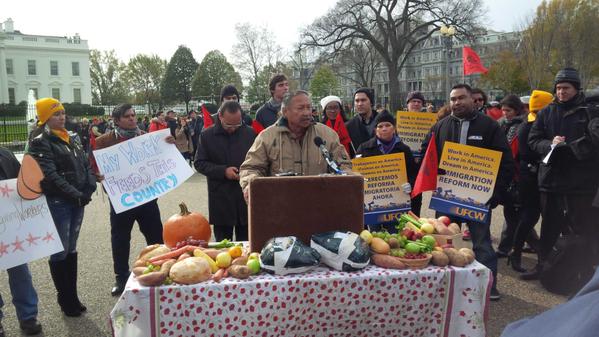
"caption": "United Farmworkers President Arturo Rodriguez at mock Thanksgiving feast in Lafayette Park, across from the White House. (Courtesy UFW)",
"description": null,
"title": "Thanksgiving workers",
"credit": null,
"status": "inherit",
"isLoading": false,
"fetchFailed": false
},
"news_147004": {
"type": "attachments",
"id": "news_147004",
"meta": {
"index": "attachments_1716263798",
"site": "news",
"id": "147004",
"found": true
},
"parent": 146984,
"imgSizes": {
"twentyfourteen-full-width": {
"file": "https://ww2.kqed.org/app/uploads/sites/10/2014/09/immigration-rally-1038x576.jpg",
"width": 1038,
"mimeType": "image/jpeg",
"height": 576
},
"thumbnail": {
"file": "https://ww2.kqed.org/app/uploads/sites/10/2014/09/immigration-rally-400x276.jpg",
"width": 400,
"mimeType": "image/jpeg",
"height": 276
},
"post-thumbnail": {
"file": "https://ww2.kqed.org/app/uploads/sites/10/2014/09/immigration-rally-672x372.jpg",
"width": 672,
"mimeType": "image/jpeg",
"height": 372
},
"kqedFullSize": {
"file": "https://ww2.kqed.org/app/uploads/sites/10/2014/09/immigration-rally-e1416424174527.jpg",
"width": 1440,
"height": 997
},
"large": {
"file": "https://ww2.kqed.org/app/uploads/sites/10/2014/09/immigration-rally-1440x996.jpg",
"width": 1440,
"mimeType": "image/jpeg",
"height": 996
},
"medium": {
"file": "https://ww2.kqed.org/app/uploads/sites/10/2014/09/immigration-rally-800x553.jpg",
"width": 800,
"mimeType": "image/jpeg",
"height": 553
}
},
"publishDate": 1409950296,
"modified": 1416424252,
"caption": "A marcher carries a U.S. flag on San Francisco's Market Street during 2013 immigration rally. (Justin Sullivan/Getty Images)",
"description": "A protester carries an American flag as he marches down Market Street during an immigration reform demonstration in San Francisco in 2013. (Justin Sullivan/Getty Images)",
"title": "Immigration-San Francisco",
"credit": null,
"status": "inherit",
"isLoading": false,
"fetchFailed": false
},
"news_10348557": {
"type": "attachments",
"id": "news_10348557",
"meta": {
"index": "attachments_1716263798",
"site": "news",
"id": "10348557",
"found": true
},
"parent": 10348543,
"imgSizes": {
"twentyfourteen-full-width": {
"file": "https://ww2.kqed.org/app/uploads/sites/10/2014/11/ImmigrationMarch-1038x576.jpg",
"width": 1038,
"mimeType": "image/jpeg",
"height": 576
},
"thumbnail": {
"file": "https://ww2.kqed.org/app/uploads/sites/10/2014/11/ImmigrationMarch-400x266.jpg",
"width": 400,
"mimeType": "image/jpeg",
"height": 266
},
"post-thumbnail": {
"file": "https://ww2.kqed.org/app/uploads/sites/10/2014/11/ImmigrationMarch-672x372.jpg",
"width": 672,
"mimeType": "image/jpeg",
"height": 372
},
"kqedFullSize": {
"file": "https://ww2.kqed.org/app/uploads/sites/10/2014/11/ImmigrationMarch-e1415987780778.jpg",
"width": 1440,
"height": 960
},
"large": {
"file": "https://ww2.kqed.org/app/uploads/sites/10/2014/11/ImmigrationMarch-1440x959.jpg",
"width": 1440,
"mimeType": "image/jpeg",
"height": 959
},
"guest-author-96": {
"file": "https://ww2.kqed.org/app/uploads/sites/10/2014/11/ImmigrationMarch-96x96.jpg",
"width": 96,
"mimeType": "image/jpeg",
"height": 96
},
"medium": {
"file": "https://ww2.kqed.org/app/uploads/sites/10/2014/11/ImmigrationMarch-800x533.jpg",
"width": 800,
"mimeType": "image/jpeg",
"height": 533
},
"guest-author-64": {
"file": "https://ww2.kqed.org/app/uploads/sites/10/2014/11/ImmigrationMarch-64x64.jpg",
"width": 64,
"mimeType": "image/jpeg",
"height": 64
},
"detail": {
"file": "https://ww2.kqed.org/app/uploads/sites/10/2014/11/ImmigrationMarch-75x75.jpg",
"width": 75,
"mimeType": "image/jpeg",
"height": 75
},
"guest-author-32": {
"file": "https://ww2.kqed.org/app/uploads/sites/10/2014/11/ImmigrationMarch-32x32.jpg",
"width": 32,
"mimeType": "image/jpeg",
"height": 32
},
"guest-author-128": {
"file": "https://ww2.kqed.org/app/uploads/sites/10/2014/11/ImmigrationMarch-128x128.jpg",
"width": 128,
"mimeType": "image/jpeg",
"height": 128
}
},
"publishDate": 1415987763,
"modified": 1415987859,
"caption": "Protesters marched to the Immigration Court to speak out against the deportation of minors and families in September. (James Tensuan/KQED)",
"description": null,
"title": "ImmigrationMarch",
"credit": null,
"status": "inherit",
"isLoading": false,
"fetchFailed": false
},
"news_10346419": {
"type": "attachments",
"id": "news_10346419",
"meta": {
"index": "attachments_1716263798",
"site": "news",
"id": "10346419",
"found": true
},
"parent": 10346251,
"imgSizes": {
"twentyfourteen-full-width": {
"file": "https://ww2.kqed.org/app/uploads/sites/10/2014/10/RS12884_6057232022_182a7c308b_o-qut-1038x576.jpg",
"width": 1038,
"mimeType": "image/jpeg",
"height": 576
},
"thumbnail": {
"file": "https://ww2.kqed.org/app/uploads/sites/10/2014/10/RS12884_6057232022_182a7c308b_o-qut-400x267.jpg",
"width": 400,
"mimeType": "image/jpeg",
"height": 267
},
"post-thumbnail": {
"file": "https://ww2.kqed.org/app/uploads/sites/10/2014/10/RS12884_6057232022_182a7c308b_o-qut-672x372.jpg",
"width": 672,
"mimeType": "image/jpeg",
"height": 372
},
"kqedFullSize": {
"file": "https://ww2.kqed.org/app/uploads/sites/10/2014/10/RS12884_6057232022_182a7c308b_o-qut.jpg",
"width": 1440,
"height": 963
},
"guest-author-96": {
"file": "https://ww2.kqed.org/app/uploads/sites/10/2014/10/RS12884_6057232022_182a7c308b_o-qut-96x96.jpg",
"width": 96,
"mimeType": "image/jpeg",
"height": 96
},
"medium": {
"file": "https://ww2.kqed.org/app/uploads/sites/10/2014/10/RS12884_6057232022_182a7c308b_o-qut-800x535.jpg",
"width": 800,
"mimeType": "image/jpeg",
"height": 535
},
"guest-author-64": {
"file": "https://ww2.kqed.org/app/uploads/sites/10/2014/10/RS12884_6057232022_182a7c308b_o-qut-64x64.jpg",
"width": 64,
"mimeType": "image/jpeg",
"height": 64
},
"detail": {
"file": "https://ww2.kqed.org/app/uploads/sites/10/2014/10/RS12884_6057232022_182a7c308b_o-qut-75x75.jpg",
"width": 75,
"mimeType": "image/jpeg",
"height": 75
},
"guest-author-32": {
"file": "https://ww2.kqed.org/app/uploads/sites/10/2014/10/RS12884_6057232022_182a7c308b_o-qut-32x32.jpg",
"width": 32,
"mimeType": "image/jpeg",
"height": 32
},
"guest-author-128": {
"file": "https://ww2.kqed.org/app/uploads/sites/10/2014/10/RS12884_6057232022_182a7c308b_o-qut-128x128.jpg",
"width": 128,
"mimeType": "image/jpeg",
"height": 128
}
},
"publishDate": 1414799908,
"modified": 1414799927,
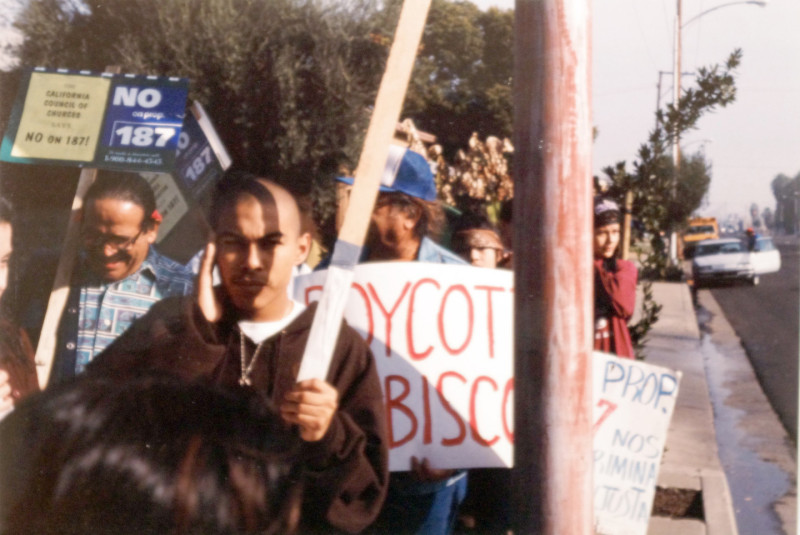
"caption": "No on 187 rally in Fresno in 1994. (David Prasad/Flickr)",
"description": "No on 187 rally in Fresno in 1994. (David Prasad/Flickr)",
"title": "RS12884_6057232022_182a7c308b_o-qut",
"credit": null,
"status": "inherit",
"isLoading": false,
"fetchFailed": false
},
"news_10345082": {
"type": "attachments",
"id": "news_10345082",
"meta": {
"index": "attachments_1716263798",
"site": "news",
"id": "10345082",
"found": true
},
"parent": 10345078,
"imgSizes": {
"twentyfourteen-full-width": {
"file": "https://ww2.kqed.org/app/uploads/sites/10/2014/10/Arabo-1038x576.jpg",
"width": 1038,
"mimeType": "image/jpeg",
"height": 576
},
"thumbnail": {
"file": "https://ww2.kqed.org/app/uploads/sites/10/2014/10/Arabo-400x225.jpg",
"width": 400,
"mimeType": "image/jpeg",
"height": 225
},
"post-thumbnail": {
"file": "https://ww2.kqed.org/app/uploads/sites/10/2014/10/Arabo-672x372.jpg",
"width": 672,
"mimeType": "image/jpeg",
"height": 372
},
"kqedFullSize": {
"file": "https://ww2.kqed.org/app/uploads/sites/10/2014/10/Arabo.jpg",
"width": 1440,
"height": 810
},
"guest-author-96": {
"file": "https://ww2.kqed.org/app/uploads/sites/10/2014/10/Arabo-96x96.jpg",
"width": 96,
"mimeType": "image/jpeg",
"height": 96
},
"medium": {
"file": "https://ww2.kqed.org/app/uploads/sites/10/2014/10/Arabo-800x450.jpg",
"width": 800,
"mimeType": "image/jpeg",
"height": 450
},
"guest-author-64": {
"file": "https://ww2.kqed.org/app/uploads/sites/10/2014/10/Arabo-64x64.jpg",
"width": 64,
"mimeType": "image/jpeg",
"height": 64
},
"detail": {
"file": "https://ww2.kqed.org/app/uploads/sites/10/2014/10/Arabo-75x75.jpg",
"width": 75,
"mimeType": "image/jpeg",
"height": 75
},
"guest-author-32": {
"file": "https://ww2.kqed.org/app/uploads/sites/10/2014/10/Arabo-32x32.jpg",
"width": 32,
"mimeType": "image/jpeg",
"height": 32
},
"guest-author-128": {
"file": "https://ww2.kqed.org/app/uploads/sites/10/2014/10/Arabo-128x128.jpg",
"width": 128,
"mimeType": "image/jpeg",
"height": 128
}
},
"publishDate": 1414174942,
"modified": 1414174942,
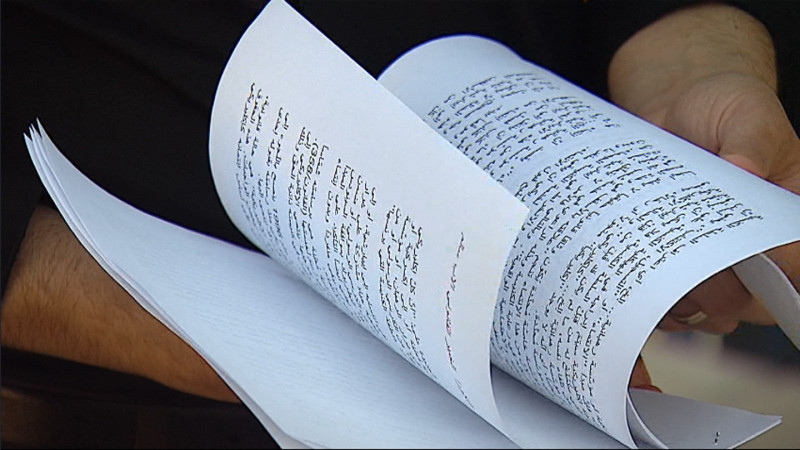
"caption": "Mark Arabo, president of the Neighborhood Market Association and a spokesman for the Chaldean-American community, flips through a printed copy of a decree calling for Chaldean Catholic priests in the United States to return to Iraq, Oct. 22, 2014. (Christopher Maue/KPBS)",
"description": "Mark Arabo, president of the Neighborhood Market Association and a spokesman for the Chaldean-American community, flips through a printed copy of a decree calling for Chaldean Catholic priests in the United States to return to Iraq, Oct. 22, 2014. (Christopher Maue/KPBS)",
"title": "Arabo",
"credit": null,
"status": "inherit",
"isLoading": false,
"fetchFailed": false
},
"news_10342639": {
"type": "attachments",
"id": "news_10342639",
"meta": {
"index": "attachments_1716263798",
"site": "news",
"id": "10342639",
"found": true
},
"parent": 10342635,
"imgSizes": {
"twentyfourteen-full-width": {
"file": "https://ww2.kqed.org/app/uploads/sites/10/2014/10/MariaSunsetProfile1-1038x576.jpg",
"width": 1038,
"mimeType": "image/jpeg",
"height": 576
},
"thumbnail": {
"file": "https://ww2.kqed.org/app/uploads/sites/10/2014/10/MariaSunsetProfile1-400x250.jpg",
"width": 400,
"mimeType": "image/jpeg",
"height": 250
},
"post-thumbnail": {
"file": "https://ww2.kqed.org/app/uploads/sites/10/2014/10/MariaSunsetProfile1-672x372.jpg",
"width": 672,
"mimeType": "image/jpeg",
"height": 372
},
"kqedFullSize": {
"file": "https://ww2.kqed.org/app/uploads/sites/10/2014/10/MariaSunsetProfile1.jpg",
"width": 1400,
"height": 875
},
"guest-author-96": {
"file": "https://ww2.kqed.org/app/uploads/sites/10/2014/10/MariaSunsetProfile1-96x96.jpg",
"width": 96,
"mimeType": "image/jpeg",
"height": 96
},
"medium": {
"file": "https://ww2.kqed.org/app/uploads/sites/10/2014/10/MariaSunsetProfile1-800x500.jpg",
"width": 800,
"mimeType": "image/jpeg",
"height": 500
},
"guest-author-64": {
"file": "https://ww2.kqed.org/app/uploads/sites/10/2014/10/MariaSunsetProfile1-64x64.jpg",
"width": 64,
"mimeType": "image/jpeg",
"height": 64
},
"detail": {
"file": "https://ww2.kqed.org/app/uploads/sites/10/2014/10/MariaSunsetProfile1-75x75.jpg",
"width": 75,
"mimeType": "image/jpeg",
"height": 75
},
"guest-author-32": {
"file": "https://ww2.kqed.org/app/uploads/sites/10/2014/10/MariaSunsetProfile1-32x32.jpg",
"width": 32,
"mimeType": "image/jpeg",
"height": 32
},
"guest-author-128": {
"file": "https://ww2.kqed.org/app/uploads/sites/10/2014/10/MariaSunsetProfile1-128x128.jpg",
"width": 128,
"mimeType": "image/jpeg",
"height": 128
}
},
"publishDate": 1412625954,
"modified": 1412625954,
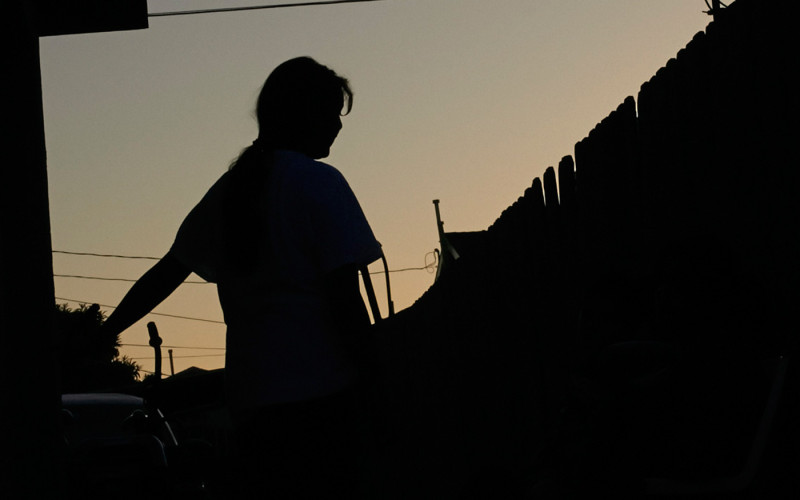
"caption": "At dusk in Los Angeles, Maria, 15, waits for word on her plea for asylum due to extortion and gang threats in El Salvador. (Alexis Kenyon/Center for Public Integrity)",
"description": "At dusk in Los Angeles, Maria, 15, waits for word on her plea for asylum from extortion and gang threats in El Salvador. (Alexis Kenyon/Center for Public Integrity)",
"title": "MariaSunsetProfile1",
"credit": null,
"status": "inherit",
"isLoading": false,
"fetchFailed": false
},
"news_148676": {
"type": "attachments",
"id": "news_148676",
"meta": {
"index": "attachments_1716263798",
"site": "news",
"id": "148676",
"found": true
},
"parent": 148667,
"imgSizes": {
"wide-featured-image": {
"file": "https://ww2.kqed.org/app/uploads/sites/10/2014/09/20140925_immigration_march_jt_005-600x300.jpg",
"width": 600,
"mimeType": "image/jpeg",
"height": 300
},
"featured-page": {
"file": "https://ww2.kqed.org/app/uploads/sites/10/2014/09/20140925_immigration_march_jt_005-315x145.jpg",
"width": 315,
"mimeType": "image/jpeg",
"height": 145
},
"thumbnail": {
"file": "https://ww2.kqed.org/app/uploads/sites/10/2014/09/20140925_immigration_march_jt_005-300x300.jpg",
"width": 300,
"mimeType": "image/jpeg",
"height": 300
},
"kqedFullSize": {
"file": "https://ww2.kqed.org/app/uploads/sites/10/2014/09/20140925_immigration_march_jt_005-e1416582611268.jpg",
"width": 1440,
"height": 960
},
"large": {
"file": "https://ww2.kqed.org/app/uploads/sites/10/2014/09/20140925_immigration_march_jt_005-1028x685.jpg",
"width": 1028,
"mimeType": "image/jpeg",
"height": 685
},
"wide-featured-image-full": {
"file": "https://ww2.kqed.org/app/uploads/sites/10/2014/09/20140925_immigration_march_jt_005-960x300.jpg",
"width": 960,
"mimeType": "image/jpeg",
"height": 300
},
"guest-author-96": {
"file": "https://ww2.kqed.org/app/uploads/sites/10/2014/09/20140925_immigration_march_jt_005-96x96.jpg",
"width": 96,
"mimeType": "image/jpeg",
"height": 96
},
"medium": {
"file": "https://ww2.kqed.org/app/uploads/sites/10/2014/09/20140925_immigration_march_jt_005-640x426.jpg",
"width": 640,
"mimeType": "image/jpeg",
"height": 426
},
"guest-author-64": {
"file": "https://ww2.kqed.org/app/uploads/sites/10/2014/09/20140925_immigration_march_jt_005-64x64.jpg",
"width": 64,
"mimeType": "image/jpeg",
"height": 64
},
"guest-author-32": {
"file": "https://ww2.kqed.org/app/uploads/sites/10/2014/09/20140925_immigration_march_jt_005-32x32.jpg",
"width": 32,
"mimeType": "image/jpeg",
"height": 32
},
"narrow-featured-image": {
"file": "https://ww2.kqed.org/app/uploads/sites/10/2014/09/20140925_immigration_march_jt_005-400x300.jpg",
"width": 400,
"mimeType": "image/jpeg",
"height": 300
},
"narrow-featured-image-full": {
"file": "https://ww2.kqed.org/app/uploads/sites/10/2014/09/20140925_immigration_march_jt_005-640x360.jpg",
"width": 640,
"mimeType": "image/jpeg",
"height": 360
},
"detail": {
"file": "https://ww2.kqed.org/app/uploads/sites/10/2014/09/20140925_immigration_march_jt_005-75x75.jpg",
"width": 75,
"mimeType": "image/jpeg",
"height": 75
},
"guest-author-128": {
"file": "https://ww2.kqed.org/app/uploads/sites/10/2014/09/20140925_immigration_march_jt_005-128x128.jpg",
"width": 128,
"mimeType": "image/jpeg",
"height": 128
}
},
"publishDate": 1411681339,
"modified": 1416582631,
"caption": "Protester in front of the Immigration Court in San Francisco on Thursday, Sept. 25, 2014. Protesters marched to the Immigration Court to speak out against the deportation of minors and families.",
"description": "Protesters listen in as talks are given in front of the Immigration Court in San Francisco on Thursday, Sept. 25, 2014. Protesters marched to the Immigration Court to speak out against the deportation of minors and families.",
"title": "Immigration-San Francisco",
"credit": null,
"status": "inherit",
"isLoading": false,
"fetchFailed": false
},
"news_148371": {
"type": "attachments",
"id": "news_148371",
"meta": {
"index": "attachments_1716263798",
"site": "news",
"id": "148371",
"found": true
},
"parent": 148363,
"imgSizes": {
"wide-featured-image": {
"file": "https://ww2.kqed.org/app/uploads/sites/10/2014/09/RS12134_Jen-obscure-600x300.jpg",
"width": 600,
"mimeType": "image/jpeg",
"height": 300
},
"featured-page": {
"file": "https://ww2.kqed.org/app/uploads/sites/10/2014/09/RS12134_Jen-obscure-315x145.jpg",
"width": 315,
"mimeType": "image/jpeg",
"height": 145
},
"thumbnail": {
"file": "https://ww2.kqed.org/app/uploads/sites/10/2014/09/RS12134_Jen-obscure-300x300.jpg",
"width": 300,
"mimeType": "image/jpeg",
"height": 300
},
"kqedFullSize": {
"file": "https://ww2.kqed.org/app/uploads/sites/10/2014/09/RS12134_Jen-obscure.jpg",
"width": 5472,
"height": 3648
},
"large": {
"file": "https://ww2.kqed.org/app/uploads/sites/10/2014/09/RS12134_Jen-obscure-1028x685.jpg",
"width": 1028,
"mimeType": "image/jpeg",
"height": 685
},
"wide-featured-image-full": {
"file": "https://ww2.kqed.org/app/uploads/sites/10/2014/09/RS12134_Jen-obscure-960x300.jpg",
"width": 960,
"mimeType": "image/jpeg",
"height": 300
},
"guest-author-96": {
"file": "https://ww2.kqed.org/app/uploads/sites/10/2014/09/RS12134_Jen-obscure-96x96.jpg",
"width": 96,
"mimeType": "image/jpeg",
"height": 96
},
"medium": {
"file": "https://ww2.kqed.org/app/uploads/sites/10/2014/09/RS12134_Jen-obscure-640x426.jpg",
"width": 640,
"mimeType": "image/jpeg",
"height": 426
},
"guest-author-64": {
"file": "https://ww2.kqed.org/app/uploads/sites/10/2014/09/RS12134_Jen-obscure-64x64.jpg",
"width": 64,
"mimeType": "image/jpeg",
"height": 64
},
"guest-author-32": {
"file": "https://ww2.kqed.org/app/uploads/sites/10/2014/09/RS12134_Jen-obscure-32x32.jpg",
"width": 32,
"mimeType": "image/jpeg",
"height": 32
},
"narrow-featured-image": {
"file": "https://ww2.kqed.org/app/uploads/sites/10/2014/09/RS12134_Jen-obscure-400x300.jpg",
"width": 400,
"mimeType": "image/jpeg",
"height": 300
},
"narrow-featured-image-full": {
"file": "https://ww2.kqed.org/app/uploads/sites/10/2014/09/RS12134_Jen-obscure-640x360.jpg",
"width": 640,
"mimeType": "image/jpeg",
"height": 360
},
"detail": {
"file": "https://ww2.kqed.org/app/uploads/sites/10/2014/09/RS12134_Jen-obscure-75x75.jpg",
"width": 75,
"mimeType": "image/jpeg",
"height": 75
},
"guest-author-128": {
"file": "https://ww2.kqed.org/app/uploads/sites/10/2014/09/RS12134_Jen-obscure-128x128.jpg",
"width": 128,
"mimeType": "image/jpeg",
"height": 128
}
},
"publishDate": 1411500828,
"modified": 1411500828,
"caption": "Jennifer Cruz es una entre cientos de menores de edad que ha llegado al Área de la Bahía desde América Central. Se está adaptando a la vida como estudiante de una escuela secundaria en el Condado de San Mateo, a pesar de su temor a ser deportada. (Jeremy Raff/KQED)",
"description": "Jennifer Cruz es una entre cientos de menores de edad que ha llegado al Área de la Bahía desde América Central. Se está adaptando a la vida como estudiante de una escuela secundaria en el Condado de San Mateo, a pesar de su temor a ser deportada. (Jeremy Raff/KQED)",
"title": "Jennifer Cruz",
"credit": null,
"status": "inherit",
"isLoading": false,
"fetchFailed": false
},
"stateofhealth_21328": {
"type": "attachments",
"id": "stateofhealth_21328",
"meta": {
"index": "attachments_1716263798",
"site": "stateofhealth",
"id": "21328",
"found": true
},
"parent": 21311,
"imgSizes": {
"twentyfourteen-full-width": {
"file": "https://ww2.kqed.org/app/uploads/sites/27/2014/09/Jirayut_New_Latthivongskorn--e1410207297503-640x576.jpg",
"width": 640,
"mimeType": "image/jpeg",
"height": 576
},
"thumbnail": {
"file": "https://ww2.kqed.org/app/uploads/sites/27/2014/09/Jirayut_New_Latthivongskorn--e1410207297503-400x444.jpg",
"width": 400,
"mimeType": "image/jpeg",
"height": 444
},
"fd-sm": {
"file": "https://ww2.kqed.org/app/uploads/sites/27/2014/09/Jirayut_New_Latthivongskorn--e1410207297503-320x356.jpg",
"width": 320,
"mimeType": "image/jpeg",
"height": 356
},
"post-thumbnail": {
"file": "https://ww2.kqed.org/app/uploads/sites/27/2014/09/Jirayut_New_Latthivongskorn--e1410207297503-640x372.jpg",
"width": 640,
"mimeType": "image/jpeg",
"height": 372
},
"kqedFullSize": {
"file": "https://ww2.kqed.org/app/uploads/sites/27/2014/09/Jirayut_New_Latthivongskorn--e1410207297503.jpg",
"width": 640,
"height": 711
},
"guest-author-96": {
"file": "https://ww2.kqed.org/app/uploads/sites/27/2014/09/Jirayut_New_Latthivongskorn--e1410207297503-96x96.jpg",
"width": 96,
"mimeType": "image/jpeg",
"height": 96
},
"guest-author-64": {
"file": "https://ww2.kqed.org/app/uploads/sites/27/2014/09/Jirayut_New_Latthivongskorn--e1410207297503-64x64.jpg",
"width": 64,
"mimeType": "image/jpeg",
"height": 64
},
"detail": {
"file": "https://ww2.kqed.org/app/uploads/sites/27/2014/09/Jirayut_New_Latthivongskorn--e1410207297503-75x75.jpg",
"width": 75,
"mimeType": "image/jpeg",
"height": 75
},
"guest-author-32": {
"file": "https://ww2.kqed.org/app/uploads/sites/27/2014/09/Jirayut_New_Latthivongskorn--e1410207297503-32x32.jpg",
"width": 32,
"mimeType": "image/jpeg",
"height": 32
},
"guest-author-128": {
"file": "https://ww2.kqed.org/app/uploads/sites/27/2014/09/Jirayut_New_Latthivongskorn--e1410207297503-128x128.jpg",
"width": 128,
"mimeType": "image/jpeg",
"height": 128
}
},
"publishDate": 1410207282,
"modified": 1410207282,
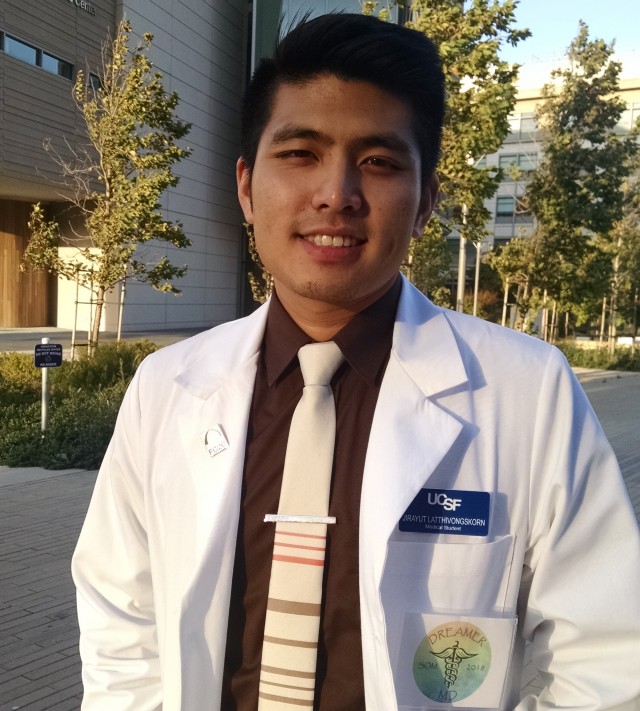
"caption": "Jirayut \"New\" Latthivongskorn, a newly-minted medical student at UCSF. ",
"description": "Jirayut \"New\" Latthivongskorn, DACA, undocumented medical student, ucsf",
"title": "Jirayut_New_Latthivongskorn",
"credit": null,
"status": "inherit",
"isLoading": false,
"fetchFailed": false
},
"news_146149": {
"type": "attachments",
"id": "news_146149",
"meta": {
"index": "attachments_1716263798",
"site": "news",
"id": "146149",
"found": true
},
"parent": 146139,
"imgSizes": {
"kqedFullSize": {
"file": "https://ww2.kqed.org/app/uploads/sites/10/2014/08/RS11898_IMG_3405-lpr.jpg",
"width": 2000,
"height": 1333
}
},
"publishDate": 1409254797,
"modified": 1409254797,
"caption": "Gerardo Mendoza and his daughters show off handcrafts Mendoza made out of Ramen noodle wrappers while he spent 26 months in an immigration lock-up. Mendoza still awaits a decision on whether he can remain in the United States.",
"description": "Gerardo Mendoza and daughters Esther (12) and Kelly (10) show items Mendoza made for them while being held in ICE detention for 26 months--purses and tiny shoes out of recycled Ramen noodle rappers. Mendoza's wife and three children didn't see him in person for more than two years. Though he was released a few months ago, he's still awaiting a final decision in his quest for US status.",
"title": "RS11898_IMG_3405-lpr",
"credit": null,
"status": "inherit",
"isLoading": false,
"fetchFailed": false
}
},
"audioPlayerReducer": {
"postId": "stream_live",
"isPaused": true,
"isPlaying": false,
"pfsActive": false,
"pledgeModalIsOpen": true,
"playerDrawerIsOpen": false,
"liveAudioPlayStartedAt": 0,
"liveAudioPlayContext": ""
},
"authorsReducer": {
"byline_news_10350655": {
"type": "authors",
"id": "byline_news_10350655",
"meta": {
"override": true
},
"slug": "byline_news_10350655",
"name": "Eyder Peralta, NPR",
"isLoading": false
},
"byline_news_10349427": {
"type": "authors",
"id": "byline_news_10349427",
"meta": {
"override": true
},
"slug": "byline_news_10349427",
"name": "Mara Liasson\u003cbr />NPR",
"isLoading": false
},
"byline_news_10345078": {
"type": "authors",
"id": "byline_news_10345078",
"meta": {
"override": true
},
"slug": "byline_news_10345078",
"name": "Megan Burks",
"isLoading": false
},
"byline_news_10342635": {
"type": "authors",
"id": "byline_news_10342635",
"meta": {
"override": true
},
"slug": "byline_news_10342635",
"name": "Susan Ferriss and Amy Isackson",
"isLoading": false
},
"anatintocalis": {
"type": "authors",
"id": "211",
"meta": {
"index": "authors_1716337520",
"id": "211",
"found": true
},
"name": "Ana Tintocalis",
"firstName": "Ana",
"lastName": "Tintocalis",
"slug": "anatintocalis",
"email": "atintocalis@kqed.org",
"display_author_email": false,
"staff_mastheads": [],
"title": null,
"bio": null,
"avatar": "https://secure.gravatar.com/avatar/722c50f51f04eff38fa0e5a3f1d29450?s=600&d=blank&r=g",
"twitter": null,
"facebook": null,
"instagram": null,
"linkedin": null,
"sites": [
{
"site": "news",
"roles": [
"subscriber"
]
},
{
"site": "stateofhealth",
"roles": [
"subscriber"
]
}
],
"headData": {
"title": "Ana Tintocalis | KQED",
"description": null,
"ogImgSrc": "https://secure.gravatar.com/avatar/722c50f51f04eff38fa0e5a3f1d29450?s=600&d=blank&r=g",
"twImgSrc": "https://secure.gravatar.com/avatar/722c50f51f04eff38fa0e5a3f1d29450?s=600&d=blank&r=g"
},
"isLoading": false,
"link": "/author/anatintocalis"
},
"kqed": {
"type": "authors",
"id": "236",
"meta": {
"index": "authors_1716337520",
"id": "236",
"found": true
},
"name": "KQED News Staff",
"firstName": "KQED News Staff",
"lastName": null,
"slug": "kqed",
"email": "faq@kqed.org",
"display_author_email": false,
"staff_mastheads": [],
"title": null,
"bio": null,
"avatar": "https://secure.gravatar.com/avatar/ef0e801a68c4c54afa9180db14084167?s=600&d=blank&r=g",
"twitter": null,
"facebook": null,
"instagram": null,
"linkedin": null,
"sites": [
{
"site": "arts",
"roles": [
"contributor"
]
},
{
"site": "news",
"roles": [
"editor"
]
},
{
"site": "futureofyou",
"roles": [
"author"
]
}
],
"headData": {
"title": "KQED News Staff | KQED",
"description": null,
"ogImgSrc": "https://secure.gravatar.com/avatar/ef0e801a68c4c54afa9180db14084167?s=600&d=blank&r=g",
"twImgSrc": "https://secure.gravatar.com/avatar/ef0e801a68c4c54afa9180db14084167?s=600&d=blank&r=g"
},
"isLoading": false,
"link": "/author/kqed"
},
"sasha-khokha": {
"type": "authors",
"id": "254",
"meta": {
"index": "authors_1716337520",
"id": "254",
"found": true
},
"name": "Sasha Khokha",
"firstName": "Sasha",
"lastName": "Khokha",
"slug": "sasha-khokha",
"email": "skhokha@kqed.org",
"display_author_email": true,
"staff_mastheads": [
"news"
],
"title": "Host, The California Report Magazine",
"bio": "Sasha Khokha is the host of \u003cem>The California Report's \u003c/em> weekly magazine program, which takes listeners on sound-rich excursions to meet the people that make the Golden State unique -- through audio documentaries and long-form stories. As \u003cem>The California Report's\u003c/em> Central Valley Bureau Chief based in Fresno for nearly a dozen years, Sasha brought the lives and concerns of rural Californians to listeners around the state. Her reporting helped expose the hidden price immigrant women janitors and farmworkers may pay to keep their jobs: sexual assault at work. It inspired two new California laws to protect them from sexual harassment. She was a key member of the reporting team for the Frontline film \u003cem>Rape on the Night Shift, \u003c/em>which was nominated for two national Emmys. Sasha has also won a national Edward R. Murrow and a national PRNDI award for investigative reporting, as well as multiple prizes from the Society for Professional Journalists. Sasha is a proud alum of the UC Berkeley Graduate School of Journalism and Brown University and a member of the South Asian Journalists Association.",
"avatar": "https://secure.gravatar.com/avatar/e4b5e1541aaeea2aa356aa1fb2a68950?s=600&d=blank&r=g",
"twitter": "KQEDSashaKhokha",
"facebook": null,
"instagram": null,
"linkedin": null,
"sites": [
{
"site": "news",
"roles": [
"editor"
]
},
{
"site": "stateofhealth",
"roles": [
"author"
]
},
{
"site": "science",
"roles": [
"author"
]
},
{
"site": "quest",
"roles": [
"subscriber"
]
}
],
"headData": {
"title": "Sasha Khokha | KQED",
"description": "Host, The California Report Magazine",
"ogImgSrc": "https://secure.gravatar.com/avatar/e4b5e1541aaeea2aa356aa1fb2a68950?s=600&d=blank&r=g",
"twImgSrc": "https://secure.gravatar.com/avatar/e4b5e1541aaeea2aa356aa1fb2a68950?s=600&d=blank&r=g"
},
"isLoading": false,
"link": "/author/sasha-khokha"
},
"scottshafer": {
"type": "authors",
"id": "255",
"meta": {
"index": "authors_1716337520",
"id": "255",
"found": true
},
"name": "Scott Shafer",
"firstName": "Scott",
"lastName": "Shafer",
"slug": "scottshafer",
"email": "sshafer@kqed.org",
"display_author_email": false,
"staff_mastheads": [
"news"
],
"title": "KQED Contributor",
"bio": "Scott Shafer is a senior editor with the KQED Politics and Government desk. He is co-host of Political Breakdown, the award-winning radio show and podcast with a personal take on the world of politics. Scott came to KQED in 1998 to host the statewide\u003cem> California Report\u003c/em>. Prior to that he had extended stints in politics and government\u003cem>.\u003c/em> He uses that inside experience at KQED in his, reporting, hosting and analysis for the politics desk. Scott collaborated \u003cem>Political Breakdown a\u003c/em>nd on \u003cem>The Political Mind of Jerry Brown, \u003c/em>an eight-part series about the life and extraordinary political career of the former governor. For fun, he plays water polo with the San Francisco Tsunami.",
"avatar": "https://secure.gravatar.com/avatar/a62ebae45b79d7aed1a39a0e3bf68104?s=600&d=blank&r=g",
"twitter": "scottshafer",
"bluesky": null,
"facebook": null,
"instagram": null,
"linkedin": null,
"sites": [
{
"site": "news",
"roles": [
"editor"
]
},
{
"site": "stateofhealth",
"roles": [
"author"
]
},
{
"site": "science",
"roles": [
"author"
]
},
{
"site": "forum",
"roles": [
"subscriber"
]
},
{
"site": "liveblog",
"roles": [
"author"
]
}
],
"headData": {
"title": "Scott Shafer | KQED",
"description": "KQED Contributor",
"ogImgSrc": "https://secure.gravatar.com/avatar/a62ebae45b79d7aed1a39a0e3bf68104?s=600&d=blank&r=g",
"twImgSrc": "https://secure.gravatar.com/avatar/a62ebae45b79d7aed1a39a0e3bf68104?s=600&d=blank&r=g"
},
"isLoading": false,
"link": "/author/scottshafer"
},
"tychehendricks": {
"type": "authors",
"id": "259",
"meta": {
"index": "authors_1716337520",
"id": "259",
"found": true
},
"name": "Tyche Hendricks",
"firstName": "Tyche",
"lastName": "Hendricks",
"slug": "tychehendricks",
"email": "thendricks@kqed.org",
"display_author_email": true,
"staff_mastheads": [
"news"
],
"title": "KQED Senior Editor, Immigration",
"bio": "\u003cspan style=\"font-weight: 400;\">Tyche Hendricks is KQED’s senior editor for immigration, leading coverage of the policy and politics that affect California’s immigrant communities. Her work for KQED’s radio and online audiences is also carried on NPR and other national outlets. She has been recognized with awards from the Radio and Television News Directors Association, the Society for Professional Journalists; the Education Writers Association; the Best of the West and the National Federation of Community Broadcasters. Before joining KQED in 2010, Tyche spent more than a dozen years as a newspaper reporter, notably at the \u003c/span>\u003ci>\u003cspan style=\"font-weight: 400;\">San Francisco Chronicle\u003c/span>\u003c/i>\u003cspan style=\"font-weight: 400;\">. At different times she has covered criminal justice, government and politics and urban planning. Tyche has taught in the MFA Creative Writing program at the University of San Francisco and at UC Berkeley’s Graduate School of Journalism, where she was co-director of a national immigration symposium for professional journalists. She is the author of \u003c/span>\u003ci>\u003cspan style=\"font-weight: 400;\">The Wind Doesn't Need a Passport: Stories from the U.S.-Mexico Borderlands\u003c/span>\u003c/i>\u003cspan style=\"font-weight: 400;\"> (University of California Press). \u003c/span>",
"avatar": "https://secure.gravatar.com/avatar/b8ee458e2731c2d43df86882ce17267e?s=600&d=blank&r=g",
"twitter": "tychehendricks",
"facebook": null,
"instagram": null,
"linkedin": null,
"sites": [
{
"site": "news",
"roles": [
"editor"
]
},
{
"site": "stateofhealth",
"roles": [
"editor"
]
}
],
"headData": {
"title": "Tyche Hendricks | KQED",
"description": "KQED Senior Editor, Immigration",
"ogImgSrc": "https://secure.gravatar.com/avatar/b8ee458e2731c2d43df86882ce17267e?s=600&d=blank&r=g",
"twImgSrc": "https://secure.gravatar.com/avatar/b8ee458e2731c2d43df86882ce17267e?s=600&d=blank&r=g"
},
"isLoading": false,
"link": "/author/tychehendricks"
},
"jtensuan": {
"type": "authors",
"id": "2598",
"meta": {
"index": "authors_1716337520",
"id": "2598",
"found": true
},
"name": "James Tensuan",
"firstName": "James",
"lastName": "Tensuan",
"slug": "jtensuan",
"email": "jtensuan@KQED.org",
"display_author_email": false,
"staff_mastheads": [],
"title": null,
"bio": null,
"avatar": "https://secure.gravatar.com/avatar/e1884a809af2335ff4d1bdc3ee242868?s=600&d=blank&r=g",
"twitter": null,
"facebook": null,
"instagram": null,
"linkedin": null,
"sites": [
{
"site": "news",
"roles": [
"contributor"
]
}
],
"headData": {
"title": "James Tensuan | KQED",
"description": null,
"ogImgSrc": "https://secure.gravatar.com/avatar/e1884a809af2335ff4d1bdc3ee242868?s=600&d=blank&r=g",
"twImgSrc": "https://secure.gravatar.com/avatar/e1884a809af2335ff4d1bdc3ee242868?s=600&d=blank&r=g"
},
"isLoading": false,
"link": "/author/jtensuan"
},
"state-of-health": {
"type": "authors",
"id": "8344",
"meta": {
"index": "authors_1716337520",
"id": "8344",
"found": true
},
"name": "State of Health",
"firstName": "State of Health",
"lastName": null,
"slug": "state-of-health",
"email": "stateofhealth@kqed.org",
"display_author_email": false,
"staff_mastheads": [],
"title": null,
"bio": null,
"avatar": "https://secure.gravatar.com/avatar/66de4bf6d331fa7402bba1ffe8135e17?s=600&d=blank&r=g",
"twitter": null,
"facebook": null,
"instagram": null,
"linkedin": null,
"sites": [
{
"site": "arts",
"roles": [
"author"
]
},
{
"site": "stateofhealth",
"roles": [
"editor"
]
}
],
"headData": {
"title": "State of Health | KQED",
"description": null,
"ogImgSrc": "https://secure.gravatar.com/avatar/66de4bf6d331fa7402bba1ffe8135e17?s=600&d=blank&r=g",
"twImgSrc": "https://secure.gravatar.com/avatar/66de4bf6d331fa7402bba1ffe8135e17?s=600&d=blank&r=g"
},
"isLoading": false,
"link": "/author/state-of-health"
}
},
"pagesReducer": {
"news_category_immigration": {
"type": "terms",
"id": "news_1169",
"meta": {
"index": "terms_1716263798",
"site": "news",
"id": "1169",
"score": 10.909731
},
"featImg": null,
"name": "Immigration",
"description": null,
"taxonomy": "category",
"headData": {
"twImgId": null,
"twTitle": null,
"ogTitle": null,
"ogImgId": null,
"twDescription": null,
"description": null,
"title": "Immigration Archives | KQED News",
"ogDescription": null
},
"ttid": 1180,
"slug": "immigration",
"isLoading": false,
"title": "Immigration",
"pageMeta": {
"site": "news",
"WpPageTemplate": "page-topic-editorial",
"currentPage": 188
},
"blocks": [
{
"blockName": "kqed/post-list",
"attrs": {
"layout": "cardArticle2",
"query": "posts/news?category=immigration",
"seeMore": false,
"paginated": true,
"page": 188
}
},
{
"blockName": "kqed/ad"
}
]
}
},
"pfsSessionReducer": {},
"postsReducer": {
"stream_live": {
"type": "live",
"id": "stream_live",
"audioUrl": "https://streams.kqed.org/kqedradio",
"title": "Live Stream",
"excerpt": "Live Stream information currently unavailable.",
"link": "/radio",
"featImg": "",
"label": {
"name": "KQED Live",
"link": "/"
}
},
"stream_kqedNewscast": {
"type": "posts",
"id": "stream_kqedNewscast",
"audioUrl": "https://www.kqed.org/.stream/anon/radio/RDnews/newscast.mp3?_=1",
"title": "KQED Newscast",
"featImg": "",
"label": {
"name": "88.5 FM",
"link": "/"
}
},
"news_10350655": {
"type": "posts",
"id": "news_10350655",
"meta": {
"index": "posts_1716263798",
"site": "news",
"id": "10350655",
"score": null,
"sort": [
1416529975000
]
},
"parent": 0,
"labelTerm": {
"site": "news",
"term": 72
},
"blocks": [],
"publishDate": 1416529975,
"format": "video",
"disqusTitle": "Obama Goes It Alone, Shielding up to 5 Million Immigrants From Deportation",
"title": "Obama Goes It Alone, Shielding up to 5 Million Immigrants From Deportation",
"headTitle": "The California Report | KQED News",
"content": "\u003cp>After six years of often heated back-and-forth with congressional Republicans over the issue of immigration, President Barack Obama announced he has decided to go it alone by deferring the deportation of up to 5 million of the estimated 12 million people who entered the United States illegally.\u003c/p>\n\u003cp>In a prime-time speech to the country, Obama said he will offer temporary protection from deportation to the parents of children who are either U.S. citizens or legal permanent residents and he will also expand protection to more \"DREAMERers,\" or children who entered the country illegally with their parents. Those two groups will also be allowed to legally work in the United States, after passing a background check and paying a fee.\u003c/p>\n\u003caside class=\"pullquote alignright\">'Pass a bill.'\u003ccite>President Obama\u003c/cite>\u003c/aside>\n\u003cp>Hitting back against Republican criticisms, Obama defended the legality of his actions, saying every president in the past 50 years has taken similar actions.\u003c/p>\n\u003cp>\"To those Members of Congress who question my authority to make our immigration system work better, or question the wisdom of me acting where Congress has failed, I have one answer: Pass a bill,\" Obama said.\u003c/p>\n\u003cp>Even before Obama delivered his speech, congressional Republicans warned that this action would kill any chance of comprehensive immigration legislation. Oklahoma Sen. Tom Coburn took it a step further, warning of a political and social firestorm.\u003c/p>\n\u003cp>[ad fullwidth]\u003c/p>\n\u003cp>\"The country's going to go nuts, because they're going to see it as a move outside the authority of the president, and it's going to be a very serious situation,\" Coburn said in an interview with USA Today. \"You're going to see — hopefully not — but you could see instances of anarchy. ... You could see violence.\"\u003c/p>\n\u003cp>One administration official said Obama's actions are \"bold\" but \"they're in keeping with precedent\" and within the president's \"existing authority.\"\u003c/p>\n\u003cp>After asking Congress not to shut down the government over this, Obama turned to the American public and asked them to remember that this is about a greater debate.\u003c/p>\n\u003cp>He said:\u003c/p>\n\u003cblockquote>\u003cp>\"It's about who we are as a country, and who we want to be for future generations.\u003c/p>\n\u003cp>\"Are we a nation that tolerates the hypocrisy of a system where workers who pick our fruit and make our beds never have a chance to get right with the law? Or are we a nation that gives them a chance to make amends, take responsibility, and give their kids a better future?\u003c/p>\n\u003cp>\"Are we a nation that accepts the cruelty of ripping children from their parents' arms? Or are we a nation that values families, and works to keep them together?\u003c/p>\n\u003cp>\"Are we a nation that educates the world's best and brightest in our universities, only to send them home to create businesses in countries that compete against us? Or are we a nation that encourages them to stay and create jobs, businesses, and industries right here in America?\"\u003c/p>\n\u003cp>That's what this debate is all about. We need more than politics as usual when it comes to immigration; we need reasoned, thoughtful, compassionate debate that focuses on our hopes, not our fears.\u003c/p>\u003c/blockquote>\n\u003cp>\u003cstrong>No Path to Citizenship\u003c/strong>\u003c/p>\n\u003cp>\"This deal does not apply to anyone who has come to this country recently,\" Obama says. \"It does not apply to anyone who might come to America illegally in the future. It does not grant citizenship, or the right to stay here permanently, or offer the same benefits that citizens receive -- only Congress can do that. All we're saying is we're not going to deport you.\"\u003c/p>\n\u003cp>\u003cstrong>Prioritizing\u003c/strong>\u003c/p>\n\u003cp>Obama says he will direct law enforcement to focus their deportation efforts on criminals.\u003c/p>\n\u003cp>\"That's why we're going to keep focusing enforcement resources on actual threats to our security,\" Obama said. \"Felons, not families. Criminals, not children. Gang members, not a mother who's working hard to provide for her kids. We'll prioritize, just like law enforcement does every day.\"\u003c/p>\n\u003cp>\u003cstrong>Congressional Inaction\u003c/strong>\u003c/p>\n\u003cp>Obama says that this problem is best solved through legislation, but the House has refused to act.\u003c/p>\n\u003cp>\"Until that happens, there are actions I have the legal authority to take as president -- the same kinds of actions taken by Democratic and Republican presidents before me -- that will help make our immigration system more fair and more just,\" Obama said.\u003c/p>\n\u003cp>\"Tonight, I am announcing those actions.\"\u003c/p>\n\u003cp>\u003cstrong>Touts Immigration Record\u003c/strong>\u003c/p>\n\u003cp>President Obama touts his record on securing the U.S./Mexico border:\u003c/p>\n\u003cblockquote>\u003cp>\"When I took office, I committed to fixing this broken immigration system. And I began by doing what I could to secure our borders. Today, we have more agents and technology deployed to secure our southern border than at any time in our history. And over the past six years, illegal border crossings have been cut by more than half. Although this summer, there was a brief spike in unaccompanied children being apprehended at our border, the number of such children is now actually lower than it's been in nearly two years. Overall, the number of people trying to cross our border illegally is at its lowest level since the 1970s. Those are the facts.\"\u003c/p>\u003c/blockquote>\n\u003cp>\u003cstrong>Update at 4:17 p.m. PT. Obama's Turnaround:\u003c/strong>\u003c/p>\n\u003cp>One piece that is certainly worth a read is one \u003ca href=\"http://www.nytimes.com/2014/11/18/us/by-using-executive-order-on-immigration-obama-would-reverse-long-held-stance.html?_r=0\">published by the New York Times that outlines Obama's turnaround on the issue of executive action\u003c/a>.\u003c/p>\n\u003cp>In many public appearances, Obama said he did not have the legal authority to act unilaterally on the issue of immigration.\u003c/p>\n\u003cp>\"If we start broadening that,\" Obama said referring to an earlier executive action that deferred the deportation of young immigrants, \"then essentially I'll be ignoring the law in a way that I think would be very difficult to defend legally. So that's not an option.\"\u003c/p>\n\u003cp>The action that Obama will announce today very clearly expands on his earlier directive to suspend the deportation of DREAMERs, children who entered the country illegally with the parents.\u003c/p>\n\u003cp>\u003cstrong>Update at 3:51 p.m. PT. A 'Middle Ground':\u003c/strong>\u003c/p>\n\u003cp>The White House has released two excerpts of President Obama's prime-time speech. In the first, he says that this approach is not amnesty. Instead, the president will say, leaving the system the way it is amounts to amnesty.\u003c/p>\n\u003cp>\u003cstrong>\"\u003c/strong>Mass amnesty would be unfair,\" Obama will say. \"Mass deportation would be both impossible and contrary to our character. What I'm describing is accountability -- a common-sense, middle-ground approach: If you meet the criteria, you can come out of the shadows and get right with the law. If you're a criminal, you'll be deported. If you plan to enter the U.S. illegally, your chances of getting caught and sent back just went up.\"\u003c/p>\n\u003cp>Obama will also challenge Republicans who question the legality and wisdom of his executive actions by asking them to \"pass a bill.\"\u003c/p>\n\u003cp>\u003cstrong>Update at 3:17 p.m. PT. The Legal Authority: \u003c/strong>\u003c/p>\n\u003cp>In a briefing with reporters Thursday afternoon, a senior White House official explained the legal reasoning behind the two big actions.\u003c/p>\n\u003cp>First, the senior administration official said, the executive branch is given \"prosecutorial discretion\" by the constitution. That means the Department of Homeland Security can set enforcement priorities and can decide whom to deport.\u003c/p>\n\u003cp>Second, they say that providing relief to young undocumented immigrants and to the parents of U.S. citizen children is justified on humanitarian grounds.\u003c/p>\n\u003cp>The official said the action is predicated on a desire not to separate parents from kids who are lawful, and an understanding that's a relationship Congress wants to respect.\u003c/p>\n\u003cp>The White House official pointed out that every president going back to President Dwight Eisenhower has used this kind of authority and President George H.W. Bush used his to give relief to 1.5 million children, about 40 percent of the undocumented population in the country at the time.\u003c/p>\n\u003cp>Rep. Raul Labrador, a Republican from Idaho, \u003ca href=\"http://www.npr.org/2014/11/20/365502157/republicans-question-legality-of-obamas-action-on-immigration\">told All Things Considered\u003c/a>, he believed this action is illegal.\u003c/p>\n\u003cp>The Department of Justice has released a memo that \u003ca href=\"http://www.justice.gov/sites/default/files/olc/opinions/attachments/2014/11/20/2014-11-19-auth-prioritize-removal.pdf\">details the legal justification\u003c/a>.\u003c/p>\n\u003cp>\u003cstrong>Update at 3:06 p.m. PT. Acting Like An Emperor: \u003c/strong>\u003c/p>\n\u003cp>Preempting Obama's speech, Speaker John Boehner, a Republican from Ohio, \u003ca href=\"http://www.speaker.gov/video/message-presidents-immigrations-speech\">released a video statement criticizing the actions\u003c/a>.\u003c/p>\n\u003cp>He said:\u003c/p>\n\u003cblockquote>\u003cp>\"Instead of working together to fix our broken immigration system, the president says he's acting on his own. That's just not how our democracy works. The president has said before that 'he's not king' and he's 'not an emperor,' but he's sure acting like one. And he's doing it a time when the American people want nothing more than for us to work together.\"\u003c/p>\u003c/blockquote>\n\u003cp>\u003cstrong>Update at 3:02 p.m. PT. Relief For Others: \u003c/strong>\u003c/p>\n\u003cp>Senior administration officials said the Department of Homeland Security will also put out new guidelines for enforcement.\u003c/p>\n\u003cp>[ad floatright]\u003c/p>\n\u003cp>Immigration officials will prioritize the deportation of criminals and new arrivals, which means that some of the immigrants who don't qualify for relief and have been in the United States for a while may never be deported.\u003c/p>\n\u003cdiv class=\"fullattribution\">Copyright 2014 NPR. To see more, visit http://www.npr.org/.\u003cimg src=\"http://www.google-analytics.com/__utm.gif?utmac=UA-5828686-4&utmdt=Obama+Will+Halt+Deportation+Of+Up+To+5+Million+Immigrants&utme=8(APIKey)9(MDAxOTAwOTE4MDEyMTkxMDAzNjczZDljZA004)\" alt=\"\">\u003c/div>\n\n",
"disqusIdentifier": "10350655 http://ww2.kqed.org/news/?p=10350655",
"disqusUrl": "https://ww2.kqed.org/news/2014/11/20/obama-will-halt-deportation-of-up-to-5-million-immigrants/",
"stats": {
"hasVideo": false,
"hasChartOrMap": false,
"hasAudio": false,
"hasPolis": false,
"wordCount": 1520,
"hasGoogleForm": false,
"hasGallery": false,
"hasHearkenModule": false,
"iframeSrcs": [],
"paragraphCount": 52
},
"modified": 1416594444,
"excerpt": "Defying congressional Republicans, he'll defer the deportation of undocumented parents of U.S. citizens.",
"headData": {
"twImgId": "",
"twTitle": "",
"ogTitle": "",
"ogImgId": "",
"twDescription": "",
"description": "Defying congressional Republicans, he'll defer the deportation of undocumented parents of U.S. citizens.",
"title": "Obama Goes It Alone, Shielding up to 5 Million Immigrants From Deportation | KQED",
"ogDescription": "",
"schema": {
"@context": "https://schema.org",
"@type": "NewsArticle",
"headline": "Obama Goes It Alone, Shielding up to 5 Million Immigrants From Deportation",
"datePublished": "2014-11-20T16:32:55-08:00",
"dateModified": "2014-11-21T10:27:24-08:00",
"image": "https://cdn.kqed.org/wp-content/uploads/2020/02/KQED-OG-Image@1x.png",
"isAccessibleForFree": "True",
"publisher": {
"@type": "NewsMediaOrganization",
"@id": "https://www.kqed.org/#organization",
"name": "KQED",
"logo": "https://cdn.kqed.org/wp-content/uploads/2020/02/KQED-OG-Image@1x.png",
"url": "https://www.kqed.org",
"sameAs": [
"https://www.facebook.com/KQED",
"https://twitter.com/KQED",
"https://www.instagram.com/kqed/",
"https://www.tiktok.com/@kqedofficial",
"https://www.linkedin.com/company/kqed",
"https://www.youtube.com/channel/UCeC0IOo7i1P_61zVUWbJ4nw"
]
}
}
},
"guestAuthors": [],
"slug": "obama-will-halt-deportation-of-up-to-5-million-immigrants",
"status": "publish",
"nprApiLink": "http://api.npr.org/query?id=365519963&apiKey=MDAxOTAwOTE4MDEyMTkxMDAzNjczZDljZA004",
"videoEmbed": "https://www.youtube.com/watch?v=U7fJOTVFsJo",
"nprByline": "Eyder Peralta, NPR",
"nprStoryDate": "Thu, 20 Nov 2014 18:00:00 -0500",
"nprLastModifiedDate": "Thu, 20 Nov 2014 19:24:51 -0500",
"nprHtmlLink": "http://www.npr.org/blogs/thetwo-way/2014/11/20/365519963/obama-will-announce-relief-for-up-to-5-million-immigrants?ft=3&f=365519963",
"nprStoryId": "365519963",
"nprRetrievedStory": "1",
"nprPubDate": "Thu, 20 Nov 2014 19:24:00 -0500",
"path": "/news/10350655/obama-will-halt-deportation-of-up-to-5-million-immigrants",
"audioTrackLength": null,
"parsedContent": [
{
"type": "contentString",
"content": "\u003cdiv class=\"post-body\">\u003cp>\u003cp>After six years of often heated back-and-forth with congressional Republicans over the issue of immigration, President Barack Obama announced he has decided to go it alone by deferring the deportation of up to 5 million of the estimated 12 million people who entered the United States illegally.\u003c/p>\n\u003cp>In a prime-time speech to the country, Obama said he will offer temporary protection from deportation to the parents of children who are either U.S. citizens or legal permanent residents and he will also expand protection to more \"DREAMERers,\" or children who entered the country illegally with their parents. Those two groups will also be allowed to legally work in the United States, after passing a background check and paying a fee.\u003c/p>\n\u003caside class=\"pullquote alignright\">'Pass a bill.'\u003ccite>President Obama\u003c/cite>\u003c/aside>\n\u003cp>Hitting back against Republican criticisms, Obama defended the legality of his actions, saying every president in the past 50 years has taken similar actions.\u003c/p>\n\u003cp>\"To those Members of Congress who question my authority to make our immigration system work better, or question the wisdom of me acting where Congress has failed, I have one answer: Pass a bill,\" Obama said.\u003c/p>\n\u003cp>Even before Obama delivered his speech, congressional Republicans warned that this action would kill any chance of comprehensive immigration legislation. Oklahoma Sen. Tom Coburn took it a step further, warning of a political and social firestorm.\u003c/p>\n\u003cp>\u003c/p>\u003c/div>",
"attributes": {
"named": {},
"numeric": []
}
},
{
"type": "component",
"content": "",
"name": "ad",
"attributes": {
"named": {
"label": "fullwidth"
},
"numeric": [
"fullwidth"
]
}
},
{
"type": "contentString",
"content": "\u003cdiv class=\"post-body\">\u003cp>\u003c/p>\n\u003cp>\"The country's going to go nuts, because they're going to see it as a move outside the authority of the president, and it's going to be a very serious situation,\" Coburn said in an interview with USA Today. \"You're going to see — hopefully not — but you could see instances of anarchy. ... You could see violence.\"\u003c/p>\n\u003cp>One administration official said Obama's actions are \"bold\" but \"they're in keeping with precedent\" and within the president's \"existing authority.\"\u003c/p>\n\u003cp>After asking Congress not to shut down the government over this, Obama turned to the American public and asked them to remember that this is about a greater debate.\u003c/p>\n\u003cp>He said:\u003c/p>\n\u003cblockquote>\u003cp>\"It's about who we are as a country, and who we want to be for future generations.\u003c/p>\n\u003cp>\"Are we a nation that tolerates the hypocrisy of a system where workers who pick our fruit and make our beds never have a chance to get right with the law? Or are we a nation that gives them a chance to make amends, take responsibility, and give their kids a better future?\u003c/p>\n\u003cp>\"Are we a nation that accepts the cruelty of ripping children from their parents' arms? Or are we a nation that values families, and works to keep them together?\u003c/p>\n\u003cp>\"Are we a nation that educates the world's best and brightest in our universities, only to send them home to create businesses in countries that compete against us? Or are we a nation that encourages them to stay and create jobs, businesses, and industries right here in America?\"\u003c/p>\n\u003cp>That's what this debate is all about. We need more than politics as usual when it comes to immigration; we need reasoned, thoughtful, compassionate debate that focuses on our hopes, not our fears.\u003c/p>\u003c/blockquote>\n\u003cp>\u003cstrong>No Path to Citizenship\u003c/strong>\u003c/p>\n\u003cp>\"This deal does not apply to anyone who has come to this country recently,\" Obama says. \"It does not apply to anyone who might come to America illegally in the future. It does not grant citizenship, or the right to stay here permanently, or offer the same benefits that citizens receive -- only Congress can do that. All we're saying is we're not going to deport you.\"\u003c/p>\n\u003cp>\u003cstrong>Prioritizing\u003c/strong>\u003c/p>\n\u003cp>Obama says he will direct law enforcement to focus their deportation efforts on criminals.\u003c/p>\n\u003cp>\"That's why we're going to keep focusing enforcement resources on actual threats to our security,\" Obama said. \"Felons, not families. Criminals, not children. Gang members, not a mother who's working hard to provide for her kids. We'll prioritize, just like law enforcement does every day.\"\u003c/p>\n\u003cp>\u003cstrong>Congressional Inaction\u003c/strong>\u003c/p>\n\u003cp>Obama says that this problem is best solved through legislation, but the House has refused to act.\u003c/p>\n\u003cp>\"Until that happens, there are actions I have the legal authority to take as president -- the same kinds of actions taken by Democratic and Republican presidents before me -- that will help make our immigration system more fair and more just,\" Obama said.\u003c/p>\n\u003cp>\"Tonight, I am announcing those actions.\"\u003c/p>\n\u003cp>\u003cstrong>Touts Immigration Record\u003c/strong>\u003c/p>\n\u003cp>President Obama touts his record on securing the U.S./Mexico border:\u003c/p>\n\u003cblockquote>\u003cp>\"When I took office, I committed to fixing this broken immigration system. And I began by doing what I could to secure our borders. Today, we have more agents and technology deployed to secure our southern border than at any time in our history. And over the past six years, illegal border crossings have been cut by more than half. Although this summer, there was a brief spike in unaccompanied children being apprehended at our border, the number of such children is now actually lower than it's been in nearly two years. Overall, the number of people trying to cross our border illegally is at its lowest level since the 1970s. Those are the facts.\"\u003c/p>\u003c/blockquote>\n\u003cp>\u003cstrong>Update at 4:17 p.m. PT. Obama's Turnaround:\u003c/strong>\u003c/p>\n\u003cp>One piece that is certainly worth a read is one \u003ca href=\"http://www.nytimes.com/2014/11/18/us/by-using-executive-order-on-immigration-obama-would-reverse-long-held-stance.html?_r=0\">published by the New York Times that outlines Obama's turnaround on the issue of executive action\u003c/a>.\u003c/p>\n\u003cp>In many public appearances, Obama said he did not have the legal authority to act unilaterally on the issue of immigration.\u003c/p>\n\u003cp>\"If we start broadening that,\" Obama said referring to an earlier executive action that deferred the deportation of young immigrants, \"then essentially I'll be ignoring the law in a way that I think would be very difficult to defend legally. So that's not an option.\"\u003c/p>\n\u003cp>The action that Obama will announce today very clearly expands on his earlier directive to suspend the deportation of DREAMERs, children who entered the country illegally with the parents.\u003c/p>\n\u003cp>\u003cstrong>Update at 3:51 p.m. PT. A 'Middle Ground':\u003c/strong>\u003c/p>\n\u003cp>The White House has released two excerpts of President Obama's prime-time speech. In the first, he says that this approach is not amnesty. Instead, the president will say, leaving the system the way it is amounts to amnesty.\u003c/p>\n\u003cp>\u003cstrong>\"\u003c/strong>Mass amnesty would be unfair,\" Obama will say. \"Mass deportation would be both impossible and contrary to our character. What I'm describing is accountability -- a common-sense, middle-ground approach: If you meet the criteria, you can come out of the shadows and get right with the law. If you're a criminal, you'll be deported. If you plan to enter the U.S. illegally, your chances of getting caught and sent back just went up.\"\u003c/p>\n\u003cp>Obama will also challenge Republicans who question the legality and wisdom of his executive actions by asking them to \"pass a bill.\"\u003c/p>\n\u003cp>\u003cstrong>Update at 3:17 p.m. PT. The Legal Authority: \u003c/strong>\u003c/p>\n\u003cp>In a briefing with reporters Thursday afternoon, a senior White House official explained the legal reasoning behind the two big actions.\u003c/p>\n\u003cp>First, the senior administration official said, the executive branch is given \"prosecutorial discretion\" by the constitution. That means the Department of Homeland Security can set enforcement priorities and can decide whom to deport.\u003c/p>\n\u003cp>Second, they say that providing relief to young undocumented immigrants and to the parents of U.S. citizen children is justified on humanitarian grounds.\u003c/p>\n\u003cp>The official said the action is predicated on a desire not to separate parents from kids who are lawful, and an understanding that's a relationship Congress wants to respect.\u003c/p>\n\u003cp>The White House official pointed out that every president going back to President Dwight Eisenhower has used this kind of authority and President George H.W. Bush used his to give relief to 1.5 million children, about 40 percent of the undocumented population in the country at the time.\u003c/p>\n\u003cp>Rep. Raul Labrador, a Republican from Idaho, \u003ca href=\"http://www.npr.org/2014/11/20/365502157/republicans-question-legality-of-obamas-action-on-immigration\">told All Things Considered\u003c/a>, he believed this action is illegal.\u003c/p>\n\u003cp>The Department of Justice has released a memo that \u003ca href=\"http://www.justice.gov/sites/default/files/olc/opinions/attachments/2014/11/20/2014-11-19-auth-prioritize-removal.pdf\">details the legal justification\u003c/a>.\u003c/p>\n\u003cp>\u003cstrong>Update at 3:06 p.m. PT. Acting Like An Emperor: \u003c/strong>\u003c/p>\n\u003cp>Preempting Obama's speech, Speaker John Boehner, a Republican from Ohio, \u003ca href=\"http://www.speaker.gov/video/message-presidents-immigrations-speech\">released a video statement criticizing the actions\u003c/a>.\u003c/p>\n\u003cp>He said:\u003c/p>\n\u003cblockquote>\u003cp>\"Instead of working together to fix our broken immigration system, the president says he's acting on his own. That's just not how our democracy works. The president has said before that 'he's not king' and he's 'not an emperor,' but he's sure acting like one. And he's doing it a time when the American people want nothing more than for us to work together.\"\u003c/p>\u003c/blockquote>\n\u003cp>\u003cstrong>Update at 3:02 p.m. PT. Relief For Others: \u003c/strong>\u003c/p>\n\u003cp>Senior administration officials said the Department of Homeland Security will also put out new guidelines for enforcement.\u003c/p>\n\u003cp>\u003c/p>\u003c/div>",
"attributes": {
"named": {},
"numeric": []
}
},
{
"type": "component",
"content": "",
"name": "ad",
"attributes": {
"named": {
"label": "floatright"
},
"numeric": [
"floatright"
]
}
},
{
"type": "contentString",
"content": "\u003cdiv class=\"post-body\">\u003cp>\u003c/p>\n\u003cp>Immigration officials will prioritize the deportation of criminals and new arrivals, which means that some of the immigrants who don't qualify for relief and have been in the United States for a while may never be deported.\u003c/p>\n\u003cdiv class=\"fullattribution\">Copyright 2014 NPR. To see more, visit http://www.npr.org/.\u003cimg src=\"http://www.google-analytics.com/__utm.gif?utmac=UA-5828686-4&utmdt=Obama+Will+Halt+Deportation+Of+Up+To+5+Million+Immigrants&utme=8(APIKey)9(MDAxOTAwOTE4MDEyMTkxMDAzNjczZDljZA004)\" alt=\"\">\u003c/div>\n\n\u003c/div>\u003c/p>",
"attributes": {
"named": {},
"numeric": []
}
}
],
"link": "/news/10350655/obama-will-halt-deportation-of-up-to-5-million-immigrants",
"authors": [
"byline_news_10350655"
],
"programs": [
"news_6944",
"news_72"
],
"categories": [
"news_1169",
"news_8",
"news_13"
],
"tags": [
"news_335",
"news_17041",
"news_244"
],
"featImg": "news_10350722",
"label": "news_72"
},
"news_10349663": {
"type": "posts",
"id": "news_10349663",
"meta": {
"index": "posts_1716263798",
"site": "news",
"id": "10349663",
"score": null,
"sort": [
1416513684000
]
},
"parent": 0,
"labelTerm": {
"site": "news",
"term": 72
},
"blocks": [],
"publishDate": 1416513684,
"format": "standard",
"disqusTitle": "Where Are the Asian Voices in the Immigration Debate?",
"title": "Where Are the Asian Voices in the Immigration Debate?",
"headTitle": "The California Report | KQED News",
"content": "\u003cp>President Barack Obama announces his executive action tonight, likely granting temporary protection from deportation for some undocumented immigrants. \u003cem>Latinos\u003c/em> have been at the forefront of calls for immigration reform. But undocumented \u003ci>Asian\u003c/i> immigrants also have a lot riding on the president's announcement.\u003c/p>\n\u003cp>That much was clear Tuesday night in San Francisco, where about 20 Asian immigrants and their family members streamed into a legal clinic. \u003ca href=\"http://www.asianlawcaucus.org/\" target=\"_blank\">Asian Law Caucus \u003c/a>immigration attorney Anoop Prasad describes who's here.\u003c/p>\n\u003cp>\"People facing deportation, people in detention, applying for citizenship,\" Prasad says. \"Basically the whole range of issues impacting Asian-American immigrants.\"\u003c/p>\n\u003caside class=\"pullquote alignright\">'To say...‘I’m living in poverty, I’m undocumented and I’m facing deportation.’ There’s this sort of embarrassment or shame with, you know, ‘Everyone else is making it, why am I not making it?''\u003ccite>Anoop Prasad, immigration attorney\u003c/cite>\u003c/aside>\n\u003cp>\u003ci> \u003c/i>Prasad says his clients have taken the brunt of stepped-up deportation by the Obama administration in recent years.\u003c/p>\n\u003cp>\"A lot of time these families are getting torn apart, where half the family is here in the U.S. and half the family is outside the U.S. and barred from returning,\" Prasad says. \"The sort of heartbreak that we see has been staggering.\"\u003c/p>\n\u003cp>[ad fullwidth]\u003c/p>\n\u003cp>\u003ci> \u003c/i>Unlike Latinos, Asian immigrants are rarely the focus of the immigration debate. But a new \u003ca href=\"http://tinyurl.com/nm22x8y\">report\u003c/a> from the \u003ca href=\"http://www.migrationpolicy.org/\">Migration Policy Institute\u003c/a> finds that California has more than 400,000 immigrants from Asia who are here illegally. So why the low profile?\u003c/p>\n\u003cp>Prasad says it's partly due to a kind of shame the community feels for not living up to the stereotype of Asian immigrants as successful and self-sufficient.\u003c/p>\n\u003cp>\"To come and say, you know, 'I'm living in poverty, I'm undocumented and I'm facing deportation.' There's this sort of embarrassment or shame with, you know, 'Everyone else is making it, why am I not making it?'\"\u003c/p>\n\u003cp>[soundcloud url=\"https://api.soundcloud.com/tracks/177854730\" params=\"color=ff5500&auto_play=false&hide_related=false&show_comments=true&show_user=true&show_reposts=false\" width=\"100%\" height=\"166\" iframe=\"true\" /]\u003c/p>\n\u003cp>\u003ca href=\"http://politicalscience.ucr.edu/people/faculty/ramakrishnan/\" target=\"_blank\">Karthick Ramakrishnan \u003c/a>is associate dean of the Public Policy School at UC Riverside. He says all these factors, plus a reluctance of Asians to rock the boat, become a self-fullfilling prophecy.\u003c/p>\n\u003cp>\"The net effect of this tends to be less attention by news media and politicians, but also less mobilization by Asian-Americans,\" Ramakrishnan says.\u003c/p>\n\u003cp>One notable exception occurred a year ago in San Francisco's Chinatown. Obama was giving a speech on immigration reform when he was suddenly heckled by a 24-year-old South Korean student. Ju Hong confronted the president and demanded he take executive action to stop the deportations.\u003c/p>\n\u003cp>Standing just feet from Obama, Hong led a few students in chants of \"Stop deportations\" and \"Yes, we can.\"\u003c/p>\n\u003cp>Another student there that day was Dean Santos, whose parents brought him to the U.S. from the Philippines illegally when he was 12 years old. A few years ago, he decided to speak out after getting caught shoplifting.\u003c/p>\n\u003cp>\"I was in deportation proceedings,\" remembers Santos. \"I had nothing else to lose. That's why I eventually spoke out.\"\u003c/p>\n\u003cp>It's a fear immigrants living in the shadows have -- that even a relatively minor brush with the law can lead to deportation.\u003c/p>\n\u003cp>Santos is excited by Obama's executive action, but he worries it won't go far enough.\u003c/p>\n\u003cp>\"People need to realize that there's still gonna be a lot of people left out in this,\" Santos said. \"It's just a Band-Aid solution.\"\u003c/p>\n\u003cp>\u003c/p>\n\u003cp>\u003ci> \u003c/i>We'll hear how\u003ci> big \u003c/i>a Band-Aid when Obama addresses the nation tonight.\u003c/p>\n\n",
"disqusIdentifier": "10349663 http://ww2.kqed.org/news/?p=10349663",
"disqusUrl": "https://ww2.kqed.org/news/2014/11/20/where-are-the-asian-voices-in-the-immigration-debate/",
"stats": {
"hasVideo": false,
"hasChartOrMap": false,
"hasAudio": false,
"hasPolis": false,
"wordCount": 627,
"hasGoogleForm": false,
"hasGallery": false,
"hasHearkenModule": false,
"iframeSrcs": [],
"paragraphCount": 20
},
"modified": 1416595433,
"excerpt": "New report finds California has more than 400,000 immigrants from Asia who are here illegally. ",
"headData": {
"twImgId": "",
"twTitle": "",
"ogTitle": "",
"ogImgId": "",
"twDescription": "",
"description": "New report finds California has more than 400,000 immigrants from Asia who are here illegally. ",
"title": "Where Are the Asian Voices in the Immigration Debate? | KQED",
"ogDescription": "",
"schema": {
"@context": "https://schema.org",
"@type": "NewsArticle",
"headline": "Where Are the Asian Voices in the Immigration Debate?",
"datePublished": "2014-11-20T12:01:24-08:00",
"dateModified": "2014-11-21T10:43:53-08:00",
"image": "https://cdn.kqed.org/wp-content/uploads/2020/02/KQED-OG-Image@1x.png",
"isAccessibleForFree": "True",
"publisher": {
"@type": "NewsMediaOrganization",
"@id": "https://www.kqed.org/#organization",
"name": "KQED",
"logo": "https://cdn.kqed.org/wp-content/uploads/2020/02/KQED-OG-Image@1x.png",
"url": "https://www.kqed.org",
"sameAs": [
"https://www.facebook.com/KQED",
"https://twitter.com/KQED",
"https://www.instagram.com/kqed/",
"https://www.tiktok.com/@kqedofficial",
"https://www.linkedin.com/company/kqed",
"https://www.youtube.com/channel/UCeC0IOo7i1P_61zVUWbJ4nw"
]
}
}
},
"guestAuthors": [],
"slug": "where-are-the-asian-voices-in-the-immigration-debate",
"status": "publish",
"customPermalink": "2014/11/20/where-are-asian-voices-in-immigration-debate/",
"path": "/news/10349663/where-are-the-asian-voices-in-the-immigration-debate",
"audioTrackLength": null,
"parsedContent": [
{
"type": "contentString",
"content": "\u003cdiv class=\"post-body\">\u003cp>\u003cp>President Barack Obama announces his executive action tonight, likely granting temporary protection from deportation for some undocumented immigrants. \u003cem>Latinos\u003c/em> have been at the forefront of calls for immigration reform. But undocumented \u003ci>Asian\u003c/i> immigrants also have a lot riding on the president's announcement.\u003c/p>\n\u003cp>That much was clear Tuesday night in San Francisco, where about 20 Asian immigrants and their family members streamed into a legal clinic. \u003ca href=\"http://www.asianlawcaucus.org/\" target=\"_blank\">Asian Law Caucus \u003c/a>immigration attorney Anoop Prasad describes who's here.\u003c/p>\n\u003cp>\"People facing deportation, people in detention, applying for citizenship,\" Prasad says. \"Basically the whole range of issues impacting Asian-American immigrants.\"\u003c/p>\n\u003caside class=\"pullquote alignright\">'To say...‘I’m living in poverty, I’m undocumented and I’m facing deportation.’ There’s this sort of embarrassment or shame with, you know, ‘Everyone else is making it, why am I not making it?''\u003ccite>Anoop Prasad, immigration attorney\u003c/cite>\u003c/aside>\n\u003cp>\u003ci> \u003c/i>Prasad says his clients have taken the brunt of stepped-up deportation by the Obama administration in recent years.\u003c/p>\n\u003cp>\"A lot of time these families are getting torn apart, where half the family is here in the U.S. and half the family is outside the U.S. and barred from returning,\" Prasad says. \"The sort of heartbreak that we see has been staggering.\"\u003c/p>\n\u003cp>\u003c/p>\u003c/div>",
"attributes": {
"named": {},
"numeric": []
}
},
{
"type": "component",
"content": "",
"name": "ad",
"attributes": {
"named": {
"label": "fullwidth"
},
"numeric": [
"fullwidth"
]
}
},
{
"type": "contentString",
"content": "\u003cdiv class=\"post-body\">\u003cp>\u003c/p>\n\u003cp>\u003ci> \u003c/i>Unlike Latinos, Asian immigrants are rarely the focus of the immigration debate. But a new \u003ca href=\"http://tinyurl.com/nm22x8y\">report\u003c/a> from the \u003ca href=\"http://www.migrationpolicy.org/\">Migration Policy Institute\u003c/a> finds that California has more than 400,000 immigrants from Asia who are here illegally. So why the low profile?\u003c/p>\n\u003cp>Prasad says it's partly due to a kind of shame the community feels for not living up to the stereotype of Asian immigrants as successful and self-sufficient.\u003c/p>\n\u003cp>\"To come and say, you know, 'I'm living in poverty, I'm undocumented and I'm facing deportation.' There's this sort of embarrassment or shame with, you know, 'Everyone else is making it, why am I not making it?'\"\u003c/p>\n\u003cp>\u003c/p>\u003cp>\u003cdiv class='utils-parseShortcode-shortcodes-__shortcodes__shortcodeWrapper'>\n \u003ciframe width='100%' height='166'\n scrolling='no' frameborder='no'\n src='https://w.soundcloud.com/player/?url=https://api.soundcloud.com/tracks/177854730&visual=true&color=ff5500&auto_play=false&hide_related=false&show_comments=true&show_user=true&show_reposts=false'\n title='https://api.soundcloud.com/tracks/177854730'>\n \u003c/iframe>\n \u003c/div>\u003c/p>\u003cp>\u003c/p>\n\u003cp>\u003ca href=\"http://politicalscience.ucr.edu/people/faculty/ramakrishnan/\" target=\"_blank\">Karthick Ramakrishnan \u003c/a>is associate dean of the Public Policy School at UC Riverside. He says all these factors, plus a reluctance of Asians to rock the boat, become a self-fullfilling prophecy.\u003c/p>\n\u003cp>\"The net effect of this tends to be less attention by news media and politicians, but also less mobilization by Asian-Americans,\" Ramakrishnan says.\u003c/p>\n\u003cp>One notable exception occurred a year ago in San Francisco's Chinatown. Obama was giving a speech on immigration reform when he was suddenly heckled by a 24-year-old South Korean student. Ju Hong confronted the president and demanded he take executive action to stop the deportations.\u003c/p>\n\u003cp>Standing just feet from Obama, Hong led a few students in chants of \"Stop deportations\" and \"Yes, we can.\"\u003c/p>\n\u003cp>Another student there that day was Dean Santos, whose parents brought him to the U.S. from the Philippines illegally when he was 12 years old. A few years ago, he decided to speak out after getting caught shoplifting.\u003c/p>\n\u003cp>\"I was in deportation proceedings,\" remembers Santos. \"I had nothing else to lose. That's why I eventually spoke out.\"\u003c/p>\n\u003cp>It's a fear immigrants living in the shadows have -- that even a relatively minor brush with the law can lead to deportation.\u003c/p>\n\u003cp>Santos is excited by Obama's executive action, but he worries it won't go far enough.\u003c/p>\n\u003cp>\"People need to realize that there's still gonna be a lot of people left out in this,\" Santos said. \"It's just a Band-Aid solution.\"\u003c/p>\n\u003cp>\u003c/p>\n\u003cp>\u003ci> \u003c/i>We'll hear how\u003ci> big \u003c/i>a Band-Aid when Obama addresses the nation tonight.\u003c/p>\n\n\u003c/div>\u003c/p>",
"attributes": {
"named": {},
"numeric": []
}
}
],
"link": "/news/10349663/where-are-the-asian-voices-in-the-immigration-debate",
"authors": [
"255"
],
"programs": [
"news_6944",
"news_72"
],
"categories": [
"news_1169",
"news_8"
],
"tags": [
"news_17041",
"news_244"
],
"featImg": "news_10350320",
"label": "news_72"
},
"news_10349433": {
"type": "posts",
"id": "news_10349433",
"meta": {
"index": "posts_1716263798",
"site": "news",
"id": "10349433",
"score": null,
"sort": [
1416499245000
]
},
"parent": 0,
"labelTerm": {
"site": "news",
"term": 72
},
"blocks": [],
"publishDate": 1416499245,
"format": "standard",
"disqusTitle": "Calif. Farmworkers Stage Mock Thanksgiving Feast in Front of White House ",
"title": "Calif. Farmworkers Stage Mock Thanksgiving Feast in Front of White House ",
"headTitle": "The California Report | KQED News",
"content": "\u003cp>You can usually find Alberto Bermejo in a sunny field near Fresno, pruning grapes or picking heavy sacks of oranges or peaches. But today he's bundled up outside the White House, joining a dozen other farmworkers who harvest celery, process turkey and pick pumpkins and apples. They're staging a \u003ca href=\"http://www.ufw.org/_board.php?mode=view&b_code=cre_leg_back&b_no=15892&page=1&field=&key=&n=45\">mock Thanksgiving feast\u003c/a> to keep the pressure on President Barack Obama to stay deportations for as many undocumented immigrants as possible \u003ca href=\"http://m.whitehouse.gov/blog/2014/11/19/tune-president-addresses-nation-immigration-reform\">when he announces executive action on immigration \u003c/a>tomorrow evening.\u003c/p>\n\u003cp>\"Without farmworkers, people don't have food on the table,\" says Bermejo in Spanish. \"But sometimes, the very people who've harvested the wine you're drinking or the food you're eating on Thanksgiving can't even enjoy a meal with their families, because they're separated from them. Or they don't have anything to eat for their own table, because they can't afford it.\"\u003c/p>\n\u003cp>[soundcloud url=\"https://api.soundcloud.com/tracks/177692065\" params=\"color=ff5500&auto_play=false&hide_related=false&show_comments=true&show_user=true&show_reposts=false\" width=\"100%\" height=\"166\" iframe=\"true\" /]\u003c/p>\n\u003cp>It's no secret that many farmworkers are undocumented, and so they can't travel to their home countries to see their families. Without papers, they're likely to earn lower wages, too.\u003c/p>\n\u003cp>It's unclear exactly who might benefit from Obama's announcement on immigration tomorrow night. Advocates speculate he will likely stay deportations for parents of U.S. citizen children and expand eligibility for the deferred action (DACA) program for young immigrants.\u003c/p>\n\u003cp>[ad fullwidth]\u003c/p>\n\u003cp>All of those actions will certainly have a seismic impact in California's immigrant communities. A \u003ca href=\"http://www.pewhispanic.org/interactives/unauthorized-immigrants-2012/\">new report out this week from the Pew Research Center\u003c/a> estimates that California is home to more than 2.4 million undocumented immigrants, more than any other state.\u003c/p>\n\u003cp>The farmworkers are also delivering letters inviting Obama to share a Thanksgiving meal in their homes.\u003c/p>\n\u003cp>\u003c/p>\n\u003cp> \u003c/p>\n\n",
"disqusIdentifier": "10349433 http://ww2.kqed.org/news/?p=10349433",
"disqusUrl": "https://ww2.kqed.org/news/2014/11/20/calif-farmworkers-stage-mock-thanksgiving-feast-in-front-of-white-house/",
"stats": {
"hasVideo": false,
"hasChartOrMap": false,
"hasAudio": false,
"hasPolis": false,
"wordCount": 319,
"hasGoogleForm": false,
"hasGallery": false,
"hasHearkenModule": false,
"iframeSrcs": [],
"paragraphCount": 9
},
"modified": 1416445233,
"excerpt": "They're keeping pressure on Obama to stay deportations for as many undocumented immigrants as possible.",
"headData": {
"twImgId": "",
"twTitle": "",
"ogTitle": "",
"ogImgId": "",
"twDescription": "",
"description": "They're keeping pressure on Obama to stay deportations for as many undocumented immigrants as possible.",
"title": "Calif. Farmworkers Stage Mock Thanksgiving Feast in Front of White House | KQED",
"ogDescription": "",
"schema": {
"@context": "https://schema.org",
"@type": "NewsArticle",
"headline": "Calif. Farmworkers Stage Mock Thanksgiving Feast in Front of White House ",
"datePublished": "2014-11-20T08:00:45-08:00",
"dateModified": "2014-11-19T17:00:33-08:00",
"image": "https://cdn.kqed.org/wp-content/uploads/2020/02/KQED-OG-Image@1x.png",
"isAccessibleForFree": "True",
"publisher": {
"@type": "NewsMediaOrganization",
"@id": "https://www.kqed.org/#organization",
"name": "KQED",
"logo": "https://cdn.kqed.org/wp-content/uploads/2020/02/KQED-OG-Image@1x.png",
"url": "https://www.kqed.org",
"sameAs": [
"https://www.facebook.com/KQED",
"https://twitter.com/KQED",
"https://www.instagram.com/kqed/",
"https://www.tiktok.com/@kqedofficial",
"https://www.linkedin.com/company/kqed",
"https://www.youtube.com/channel/UCeC0IOo7i1P_61zVUWbJ4nw"
]
}
}
},
"guestAuthors": [],
"slug": "calif-farmworkers-stage-mock-thanksgiving-feast-in-front-of-white-house",
"status": "publish",
"path": "/news/10349433/calif-farmworkers-stage-mock-thanksgiving-feast-in-front-of-white-house",
"audioTrackLength": null,
"parsedContent": [
{
"type": "contentString",
"content": "\u003cdiv class=\"post-body\">\u003cp>\u003cp>You can usually find Alberto Bermejo in a sunny field near Fresno, pruning grapes or picking heavy sacks of oranges or peaches. But today he's bundled up outside the White House, joining a dozen other farmworkers who harvest celery, process turkey and pick pumpkins and apples. They're staging a \u003ca href=\"http://www.ufw.org/_board.php?mode=view&b_code=cre_leg_back&b_no=15892&page=1&field=&key=&n=45\">mock Thanksgiving feast\u003c/a> to keep the pressure on President Barack Obama to stay deportations for as many undocumented immigrants as possible \u003ca href=\"http://m.whitehouse.gov/blog/2014/11/19/tune-president-addresses-nation-immigration-reform\">when he announces executive action on immigration \u003c/a>tomorrow evening.\u003c/p>\n\u003cp>\"Without farmworkers, people don't have food on the table,\" says Bermejo in Spanish. \"But sometimes, the very people who've harvested the wine you're drinking or the food you're eating on Thanksgiving can't even enjoy a meal with their families, because they're separated from them. Or they don't have anything to eat for their own table, because they can't afford it.\"\u003c/p>\n\u003cp>\u003c/p>\u003cp>\u003cdiv class='utils-parseShortcode-shortcodes-__shortcodes__shortcodeWrapper'>\n \u003ciframe width='100%' height='166'\n scrolling='no' frameborder='no'\n src='https://w.soundcloud.com/player/?url=https://api.soundcloud.com/tracks/177692065&visual=true&color=ff5500&auto_play=false&hide_related=false&show_comments=true&show_user=true&show_reposts=false'\n title='https://api.soundcloud.com/tracks/177692065'>\n \u003c/iframe>\n \u003c/div>\u003c/p>\u003cp>\u003c/p>\n\u003cp>It's no secret that many farmworkers are undocumented, and so they can't travel to their home countries to see their families. Without papers, they're likely to earn lower wages, too.\u003c/p>\n\u003cp>It's unclear exactly who might benefit from Obama's announcement on immigration tomorrow night. Advocates speculate he will likely stay deportations for parents of U.S. citizen children and expand eligibility for the deferred action (DACA) program for young immigrants.\u003c/p>\n\u003cp>\u003c/p>\u003c/div>",
"attributes": {
"named": {},
"numeric": []
}
},
{
"type": "component",
"content": "",
"name": "ad",
"attributes": {
"named": {
"label": "fullwidth"
},
"numeric": [
"fullwidth"
]
}
},
{
"type": "contentString",
"content": "\u003cdiv class=\"post-body\">\u003cp>\u003c/p>\n\u003cp>All of those actions will certainly have a seismic impact in California's immigrant communities. A \u003ca href=\"http://www.pewhispanic.org/interactives/unauthorized-immigrants-2012/\">new report out this week from the Pew Research Center\u003c/a> estimates that California is home to more than 2.4 million undocumented immigrants, more than any other state.\u003c/p>\n\u003cp>The farmworkers are also delivering letters inviting Obama to share a Thanksgiving meal in their homes.\u003c/p>\n\u003cp>\u003c/p>\n\u003cp> \u003c/p>\n\n\u003c/div>\u003c/p>",
"attributes": {
"named": {},
"numeric": []
}
}
],
"link": "/news/10349433/calif-farmworkers-stage-mock-thanksgiving-feast-in-front-of-white-house",
"authors": [
"254"
],
"programs": [
"news_72"
],
"categories": [
"news_1758",
"news_1169",
"news_8"
],
"tags": [
"news_2574",
"news_17041",
"news_244"
],
"featImg": "news_10349436",
"label": "news_72"
},
"news_10349427": {
"type": "posts",
"id": "news_10349427",
"meta": {
"index": "posts_1716263798",
"site": "news",
"id": "10349427",
"score": null,
"sort": [
1416424468000
]
},
"parent": 0,
"labelTerm": {
"site": "news",
"term": 6944
},
"blocks": [],
"publishDate": 1416424468,
"format": "standard",
"disqusTitle": "Obama Expected To Unveil Immigration Plan On Thursday",
"title": "Obama Expected To Unveil Immigration Plan On Thursday",
"headTitle": "News Fix | KQED News",
"content": "\u003cp>President Barack Obama is expected to unveil executive actions on immigration on Thursday and will address the issue in a speech at a Las Vegas high school on Friday, a source familiar with the process tells NPR.\u003c/p>\n\u003cp>\u003cstrong>Update at 1:28 p.m. ET: Obama Will Speak At 8 p.m. Thursday ET\u003c/strong>\u003c/p>\n\u003cp>President Obama \"will address the nation to lay out the executive actions he's taking to fix our broken immigration system,\" the White House says, announcing a video address scheduled for 8 p.m. ET.\u003c/p>\n\u003cp>The speech can be viewed at the \u003ca href=\"http://www.whitehouse.gov/live\">WhiteHouse.gov/Live\u003c/a> website, in addition to media outlets.\u003c/p>\n\u003cp>\u003cem>Our original post continues:\u003c/em>\u003c/p>\n\u003cp>[ad fullwidth]\u003c/p>\n\u003cp>Although White House officials would not confirm details, Obama spoke at the same high school in January 2013 when he called on Congress to pass a comprehensive immigration bill. Obama has long said he would take unilateral action on immigration before the end of the year if Congress did not act.\u003c/p>\n\u003cp>On Tuesday, White House Press Secretary Josh Earnest said the president was nearing a final decision on what actions to take.\u003c/p>\n\u003cp>At a discussion on immigration Wednesday at the National Press Club in Washington, D.C., Homeland Security Secretary Jeh Johnson said Obama would act \"in the coming days\" but said he did not want to get ahead of the president.\u003c/p>\n\u003cp>Johnson defended the idea of Obama acting unilaterally, saying he believes the president has \"a fairly wide latitude within existing executive authority to fix the system.\"\u003c/p>\n\u003cp>\"It can't be that we're not allowed to lift a finger to fix the broken immigration system until Congress acts,\" Johnson said. \"Well, we've been waiting for Congress to act. It can't be that we're not allowed to take action in a number of respects to reform the system. And we will. And we've identified a number of ways that we will.\"\u003c/p>\n\u003cp>\u003c/p>\n\u003cp>\u003cem>NPR's Tamara Keith contributed to this report\u003c/em>\u003c/p>\n\u003cdiv class=\"fullattribution\">Copyright 2014 NPR. To see more, visit http://www.npr.org/.\u003cimg src=\"http://www.google-analytics.com/__utm.gif?utmac=UA-5828686-4&utmdt=Obama+Expected+To+Unveil+Immigration+Plan+On+Thursday&utme=8(APIKey)9(MDAxOTAwOTE4MDEyMTkxMDAzNjczZDljZA004)\" alt=\"\">\u003c/div>\n\n",
"disqusIdentifier": "10349427 http://ww2.kqed.org/news/?p=10349427",
"disqusUrl": "https://ww2.kqed.org/news/2014/11/19/obama-expected-to-unveil-immigration-plan-on-thursday/",
"stats": {
"hasVideo": false,
"hasChartOrMap": false,
"hasAudio": false,
"hasPolis": false,
"wordCount": 335,
"hasGoogleForm": false,
"hasGallery": false,
"hasHearkenModule": false,
"iframeSrcs": [],
"paragraphCount": 13
},
"modified": 1416437313,
"excerpt": "The president is expected to take series of executive actions, then address nation on issue.",
"headData": {
"twImgId": "",
"twTitle": "",
"ogTitle": "",
"ogImgId": "",
"twDescription": "",
"description": "The president is expected to take series of executive actions, then address nation on issue.",
"title": "Obama Expected To Unveil Immigration Plan On Thursday | KQED",
"ogDescription": "",
"schema": {
"@context": "https://schema.org",
"@type": "NewsArticle",
"headline": "Obama Expected To Unveil Immigration Plan On Thursday",
"datePublished": "2014-11-19T11:14:28-08:00",
"dateModified": "2014-11-19T14:48:33-08:00",
"image": "https://cdn.kqed.org/wp-content/uploads/2020/02/KQED-OG-Image@1x.png",
"isAccessibleForFree": "True",
"publisher": {
"@type": "NewsMediaOrganization",
"@id": "https://www.kqed.org/#organization",
"name": "KQED",
"logo": "https://cdn.kqed.org/wp-content/uploads/2020/02/KQED-OG-Image@1x.png",
"url": "https://www.kqed.org",
"sameAs": [
"https://www.facebook.com/KQED",
"https://twitter.com/KQED",
"https://www.instagram.com/kqed/",
"https://www.tiktok.com/@kqedofficial",
"https://www.linkedin.com/company/kqed",
"https://www.youtube.com/channel/UCeC0IOo7i1P_61zVUWbJ4nw"
]
}
}
},
"guestAuthors": [],
"slug": "obama-expected-to-unveil-immigration-plan-on-thursday",
"status": "publish",
"nprApiLink": "http://api.npr.org/query?id=365221642&apiKey=MDAxOTAwOTE4MDEyMTkxMDAzNjczZDljZA004",
"nprByline": "Mara Liasson\u003cbr />NPR",
"nprStoryDate": "Wed, 19 Nov 2014 12:17:00 -0500",
"nprLastModifiedDate": "Wed, 19 Nov 2014 13:32:35 -0500",
"nprHtmlLink": "http://www.npr.org/blogs/thetwo-way/2014/11/19/365221642/obama-expected-to-unveil-immigration-plan-on-thursday?ft=3&f=365221642",
"nprStoryId": "365221642",
"nprRetrievedStory": "1",
"nprPubDate": "Wed, 19 Nov 2014 13:32:00 -0500",
"path": "/news/10349427/obama-expected-to-unveil-immigration-plan-on-thursday",
"audioTrackLength": null,
"parsedContent": [
{
"type": "contentString",
"content": "\u003cdiv class=\"post-body\">\u003cp>\u003cp>President Barack Obama is expected to unveil executive actions on immigration on Thursday and will address the issue in a speech at a Las Vegas high school on Friday, a source familiar with the process tells NPR.\u003c/p>\n\u003cp>\u003cstrong>Update at 1:28 p.m. ET: Obama Will Speak At 8 p.m. Thursday ET\u003c/strong>\u003c/p>\n\u003cp>President Obama \"will address the nation to lay out the executive actions he's taking to fix our broken immigration system,\" the White House says, announcing a video address scheduled for 8 p.m. ET.\u003c/p>\n\u003cp>The speech can be viewed at the \u003ca href=\"http://www.whitehouse.gov/live\">WhiteHouse.gov/Live\u003c/a> website, in addition to media outlets.\u003c/p>\n\u003cp>\u003cem>Our original post continues:\u003c/em>\u003c/p>\n\u003cp>\u003c/p>\u003c/div>",
"attributes": {
"named": {},
"numeric": []
}
},
{
"type": "component",
"content": "",
"name": "ad",
"attributes": {
"named": {
"label": "fullwidth"
},
"numeric": [
"fullwidth"
]
}
},
{
"type": "contentString",
"content": "\u003cdiv class=\"post-body\">\u003cp>\u003c/p>\n\u003cp>Although White House officials would not confirm details, Obama spoke at the same high school in January 2013 when he called on Congress to pass a comprehensive immigration bill. Obama has long said he would take unilateral action on immigration before the end of the year if Congress did not act.\u003c/p>\n\u003cp>On Tuesday, White House Press Secretary Josh Earnest said the president was nearing a final decision on what actions to take.\u003c/p>\n\u003cp>At a discussion on immigration Wednesday at the National Press Club in Washington, D.C., Homeland Security Secretary Jeh Johnson said Obama would act \"in the coming days\" but said he did not want to get ahead of the president.\u003c/p>\n\u003cp>Johnson defended the idea of Obama acting unilaterally, saying he believes the president has \"a fairly wide latitude within existing executive authority to fix the system.\"\u003c/p>\n\u003cp>\"It can't be that we're not allowed to lift a finger to fix the broken immigration system until Congress acts,\" Johnson said. \"Well, we've been waiting for Congress to act. It can't be that we're not allowed to take action in a number of respects to reform the system. And we will. And we've identified a number of ways that we will.\"\u003c/p>\n\u003cp>\u003c/p>\n\u003cp>\u003cem>NPR's Tamara Keith contributed to this report\u003c/em>\u003c/p>\n\u003cdiv class=\"fullattribution\">Copyright 2014 NPR. To see more, visit http://www.npr.org/.\u003cimg src=\"http://www.google-analytics.com/__utm.gif?utmac=UA-5828686-4&utmdt=Obama+Expected+To+Unveil+Immigration+Plan+On+Thursday&utme=8(APIKey)9(MDAxOTAwOTE4MDEyMTkxMDAzNjczZDljZA004)\" alt=\"\">\u003c/div>\n\n\u003c/div>\u003c/p>",
"attributes": {
"named": {},
"numeric": []
}
}
],
"link": "/news/10349427/obama-expected-to-unveil-immigration-plan-on-thursday",
"authors": [
"byline_news_10349427"
],
"programs": [
"news_6944"
],
"categories": [
"news_1169"
],
"tags": [
"news_1737"
],
"affiliates": [
"news_253"
],
"featImg": "news_147004",
"label": "news_6944"
},
"news_10348543": {
"type": "posts",
"id": "news_10348543",
"meta": {
"index": "posts_1716263798",
"site": "news",
"id": "10348543",
"score": null,
"sort": [
1415988685000
]
},
"parent": 0,
"labelTerm": {
"site": "news",
"term": 72
},
"blocks": [],
"publishDate": 1415988685,
"format": "standard",
"disqusTitle": "California Immigrant Advocates Applaud Obama Plan",
"title": "California Immigrant Advocates Applaud Obama Plan",
"headTitle": "The California Report | KQED News",
"content": "\u003cp>California immigrant advocates are applauding President Obama's pledge to use executive action to shield up to \u003ca href=\"http://www.nytimes.com/2014/11/14/us/obama-immigration.html\" target=\"_blank\">5 million undocumented immigrants\u003c/a> from deportation. And they’re \u003ca href=\"http://www.chirla.org/node/310\" target=\"_blank\">pushing him\u003c/a> to be bold.\u003c/p>\n\u003cp>\"We, as California advocates, continue to urge the president to move on executive action and end unjust deportations that have caused the separation of families, as quickly as possible,\" said Reshma Shamasunder, director of the California Immigrant Policy Center. “Given the stalling we've seen in Congress for so many years, we hope he is bold in his action and covers as many people as possible.”\u003c/p>\n\u003caside class=\"pullquote alignright\">'There really is no more time to delay. He must act now and it seems to me that the president understands this and he’s going to honor his word.'\u003c/aside>\n\u003cp>The president has \u003ca href=\"http://www.cbsnews.com/videos/obama-vows-to-press-ahead-with-executive-action-on-immigration/\" target=\"_blank\">vowed action\u003c/a> by the end of the year, and leaks from the administration suggest he could unveil a plan by the end of next week or soon after that. Obama first promised to act this summer when it became clear that the House would not pass a Senate immigration overhaul bill. He then \u003ca href=\"http://www.washingtonpost.com/politics/obama-delays-executive-immigration-action-until-after-midterm-elections-in-november/2014/09/06/e3ecf346-35cf-11e4-9e92-0899b306bbea_story.html\" target=\"_blank\">held off\u003c/a> until after the midterm elections, in deference to Democrats in close House and Senate races who feared that an executive move on immigration could hurt them with middle-of-the road voters.\u003c/p>\n\u003cp>Meanwhile, an election-eve poll found that Latino voters prefer Democrats but are \u003ca href=\"http://audio.californiareport.org/archive/R201411060850/d\" target=\"_blank\">growing frustrated\u003c/a> with them over a lack of action on immigration. Latinos overwhelmingly support immigration reform that includes a path to citizenship for undocumented immigrants.\u003c/p>\n\u003cp>Though the administration has not yet revealed details of the plan, Republicans in Congress are voicing \u003ca href=\"http://www.washingtonpost.com/politics/gop-debates-its-immigration-strategy-as-obama-prepares-executive-action/2014/11/13/88c02c98-6b7d-11e4-a31c-77759fc1eacc_story.html\" target=\"_blank\">fierce opposition\u003c/a>.\u003c/p>\n\u003cp>[ad fullwidth]\u003c/p>\n\u003cp>“We’re going to fight the president tooth and nail if he continues down this path,” House Speaker John Boehner told reporters Thursday. “We are looking at all options that are on the table. Our goal is to stop the president from doing this.”\u003c/p>\n\u003cp>Obama does not have the power to unilaterally grant permanent legal status to unauthorized immigrants. Instead, he is proposing administrative action that could protect perhaps several million undocumented immigrants from deportation and grant work permits to many of them, according to news reports. One group that could get relief are the parents of children who are U.S. citizens or legal residents.\u003c/p>\n\u003cp>Recent research by the Pew Hispanic Center found that of the estimated 11.3 million undocumented immigrants in the United States, 4 million live with U.S.-born children. The center also reported that immigrants without legal status are increasingly putting down roots here: On average, unauthorized immigrant adults have lived in this country for almost 13 years.\u003c/p>\n\u003cp>California is home to about 2.5 million undocumented immigrants, many of them in “mixed status” families that include U.S. citizens and lawful permanent residents.\u003c/p>\n\u003cp>Given California’s large immigrant population -- one in four residents in the state was born abroad and almost half of California children \u003ca href=\"http://www.caimmigrant.org/research-and-analysis/contributions-html/\" target=\"_blank\">have an immigrant parent\u003c/a>, according to the California Immigrant Policy Center -- it’s no surprise that Californians support immigration reform, said Shamasunder.\u003c/p>\n\u003cp>\u003c/p>\n\u003cp>“We know that amongst Latino voters and many other voters, there was huge disappointment in President Obama not moving forward with executive action over the summer,” she said. “There really is no more time to delay. He must act now and it seems to me that the president understands this and he’s going to honor his word.”\u003c/p>\n\n",
"disqusIdentifier": "10348543 http://ww2.kqed.org/news/?p=10348543",
"disqusUrl": "https://ww2.kqed.org/news/2014/11/14/california-immigrant-advocates-applaud-obama-plan/",
"stats": {
"hasVideo": false,
"hasChartOrMap": false,
"hasAudio": false,
"hasPolis": false,
"wordCount": 586,
"hasGoogleForm": false,
"hasGallery": false,
"hasHearkenModule": false,
"iframeSrcs": [],
"paragraphCount": 13
},
"modified": 1416005827,
"excerpt": "The president's plan would shield up to 5 million undocumented immigrants nationwide from deportation.",
"headData": {
"twImgId": "",
"twTitle": "",
"ogTitle": "",
"ogImgId": "",
"twDescription": "",
"description": "The president's plan would shield up to 5 million undocumented immigrants nationwide from deportation.",
"title": "California Immigrant Advocates Applaud Obama Plan | KQED",
"ogDescription": "",
"schema": {
"@context": "https://schema.org",
"@type": "NewsArticle",
"headline": "California Immigrant Advocates Applaud Obama Plan",
"datePublished": "2014-11-14T10:11:25-08:00",
"dateModified": "2014-11-14T14:57:07-08:00",
"image": "https://cdn.kqed.org/wp-content/uploads/2020/02/KQED-OG-Image@1x.png",
"isAccessibleForFree": "True",
"publisher": {
"@type": "NewsMediaOrganization",
"@id": "https://www.kqed.org/#organization",
"name": "KQED",
"logo": "https://cdn.kqed.org/wp-content/uploads/2020/02/KQED-OG-Image@1x.png",
"url": "https://www.kqed.org",
"sameAs": [
"https://www.facebook.com/KQED",
"https://twitter.com/KQED",
"https://www.instagram.com/kqed/",
"https://www.tiktok.com/@kqedofficial",
"https://www.linkedin.com/company/kqed",
"https://www.youtube.com/channel/UCeC0IOo7i1P_61zVUWbJ4nw"
]
}
}
},
"guestAuthors": [],
"slug": "california-immigrant-advocates-applaud-obama-plan",
"status": "publish",
"path": "/news/10348543/california-immigrant-advocates-applaud-obama-plan",
"audioTrackLength": null,
"parsedContent": [
{
"type": "contentString",
"content": "\u003cdiv class=\"post-body\">\u003cp>\u003cp>California immigrant advocates are applauding President Obama's pledge to use executive action to shield up to \u003ca href=\"http://www.nytimes.com/2014/11/14/us/obama-immigration.html\" target=\"_blank\">5 million undocumented immigrants\u003c/a> from deportation. And they’re \u003ca href=\"http://www.chirla.org/node/310\" target=\"_blank\">pushing him\u003c/a> to be bold.\u003c/p>\n\u003cp>\"We, as California advocates, continue to urge the president to move on executive action and end unjust deportations that have caused the separation of families, as quickly as possible,\" said Reshma Shamasunder, director of the California Immigrant Policy Center. “Given the stalling we've seen in Congress for so many years, we hope he is bold in his action and covers as many people as possible.”\u003c/p>\n\u003caside class=\"pullquote alignright\">'There really is no more time to delay. He must act now and it seems to me that the president understands this and he’s going to honor his word.'\u003c/aside>\n\u003cp>The president has \u003ca href=\"http://www.cbsnews.com/videos/obama-vows-to-press-ahead-with-executive-action-on-immigration/\" target=\"_blank\">vowed action\u003c/a> by the end of the year, and leaks from the administration suggest he could unveil a plan by the end of next week or soon after that. Obama first promised to act this summer when it became clear that the House would not pass a Senate immigration overhaul bill. He then \u003ca href=\"http://www.washingtonpost.com/politics/obama-delays-executive-immigration-action-until-after-midterm-elections-in-november/2014/09/06/e3ecf346-35cf-11e4-9e92-0899b306bbea_story.html\" target=\"_blank\">held off\u003c/a> until after the midterm elections, in deference to Democrats in close House and Senate races who feared that an executive move on immigration could hurt them with middle-of-the road voters.\u003c/p>\n\u003cp>Meanwhile, an election-eve poll found that Latino voters prefer Democrats but are \u003ca href=\"http://audio.californiareport.org/archive/R201411060850/d\" target=\"_blank\">growing frustrated\u003c/a> with them over a lack of action on immigration. Latinos overwhelmingly support immigration reform that includes a path to citizenship for undocumented immigrants.\u003c/p>\n\u003cp>Though the administration has not yet revealed details of the plan, Republicans in Congress are voicing \u003ca href=\"http://www.washingtonpost.com/politics/gop-debates-its-immigration-strategy-as-obama-prepares-executive-action/2014/11/13/88c02c98-6b7d-11e4-a31c-77759fc1eacc_story.html\" target=\"_blank\">fierce opposition\u003c/a>.\u003c/p>\n\u003cp>\u003c/p>\u003c/div>",
"attributes": {
"named": {},
"numeric": []
}
},
{
"type": "component",
"content": "",
"name": "ad",
"attributes": {
"named": {
"label": "fullwidth"
},
"numeric": [
"fullwidth"
]
}
},
{
"type": "contentString",
"content": "\u003cdiv class=\"post-body\">\u003cp>\u003c/p>\n\u003cp>“We’re going to fight the president tooth and nail if he continues down this path,” House Speaker John Boehner told reporters Thursday. “We are looking at all options that are on the table. Our goal is to stop the president from doing this.”\u003c/p>\n\u003cp>Obama does not have the power to unilaterally grant permanent legal status to unauthorized immigrants. Instead, he is proposing administrative action that could protect perhaps several million undocumented immigrants from deportation and grant work permits to many of them, according to news reports. One group that could get relief are the parents of children who are U.S. citizens or legal residents.\u003c/p>\n\u003cp>Recent research by the Pew Hispanic Center found that of the estimated 11.3 million undocumented immigrants in the United States, 4 million live with U.S.-born children. The center also reported that immigrants without legal status are increasingly putting down roots here: On average, unauthorized immigrant adults have lived in this country for almost 13 years.\u003c/p>\n\u003cp>California is home to about 2.5 million undocumented immigrants, many of them in “mixed status” families that include U.S. citizens and lawful permanent residents.\u003c/p>\n\u003cp>Given California’s large immigrant population -- one in four residents in the state was born abroad and almost half of California children \u003ca href=\"http://www.caimmigrant.org/research-and-analysis/contributions-html/\" target=\"_blank\">have an immigrant parent\u003c/a>, according to the California Immigrant Policy Center -- it’s no surprise that Californians support immigration reform, said Shamasunder.\u003c/p>\n\u003cp>\u003c/p>\n\u003cp>“We know that amongst Latino voters and many other voters, there was huge disappointment in President Obama not moving forward with executive action over the summer,” she said. “There really is no more time to delay. He must act now and it seems to me that the president understands this and he’s going to honor his word.”\u003c/p>\n\n\u003c/div>\u003c/p>",
"attributes": {
"named": {},
"numeric": []
}
}
],
"link": "/news/10348543/california-immigrant-advocates-applaud-obama-plan",
"authors": [
"259"
],
"programs": [
"news_6944",
"news_72"
],
"categories": [
"news_1169",
"news_8"
],
"tags": [
"news_335"
],
"featImg": "news_10348557",
"label": "news_72"
},
"news_10346251": {
"type": "posts",
"id": "news_10346251",
"meta": {
"index": "posts_1716263798",
"site": "news",
"id": "10346251",
"score": null,
"sort": [
1415116803000
]
},
"parent": 0,
"labelTerm": {
"site": "news",
"term": 72
},
"blocks": [],
"publishDate": 1415116803,
"format": "standard",
"disqusTitle": "Political Effects Linger 20 Years After Prop. 187 Targeted Illegal Immigration",
"title": "Political Effects Linger 20 Years After Prop. 187 Targeted Illegal Immigration",
"headTitle": "The California Report | KQED News",
"content": "\u003cp>[soundcloud url=\"https://api.soundcloud.com/tracks/175364517\" params=\"color=ff5500&inverse=false&auto_play=false&show_user=true\" width=\"100%\" height=\"20\" iframe=\"true\" /]\u003c/p>\n\u003cp>This week marks the 20th anniversary of \u003ca href=\"http://ballotpedia.org/California_Proposition_187,_Illegal_Aliens_Ineligible_for_Public_Benefits_(1994)\" target=\"_blank\">Proposition 187\u003c/a>, a ballot measure that left a profound mark on California politics.\u003c/p>\n\u003cp>It was a kind of citizens' revolt in 1994 over illegal immigration, and it passed overwhelmingly with 59 percent of the vote.\u003c/p>\n\u003cp>To understand why Prop. 187 struck such a chord 20 years ago, you have to know what was happening in California back then. There was a sense across the country that our borders were simply out of control. It was captured in a \u003ca href=\"https://www.youtube.com/watch?v=lLIzzs2HHgY\" target=\"_blank\">television ad\u003c/a>, now infamous, used by Republican Gov. \u003ca href=\"http://governors.library.ca.gov/36-wilson.html\" target=\"_blank\">Pete Wilson \u003c/a>in his re-election campaign that year.\u003c/p>\n\u003cp>\"They keep coming,\" intoned the ominous voice on the commercial. \"Two million illegal immigrants in California. The federal government won't stop them at the border, yet requires us to pay billions to take care of them.\"\u003c/p>\n\u003caside class=\"alignright\">\n\u003ch3>Pete Wilson's 1994 Prop. 187 Ad\u003c/h3>\n\u003cp>[youtube=https://www.youtube.com/watch?v=lLIzzs2HHgY]\u003c/p>\n\u003c/aside>\n\u003cp>Its provocative images of people streaming in from Mexico illegally helped propel Wilson to a re-election landslide. But it came at a cost to the Republican Party in California.\u003c/p>\n\u003cp>[ad fullwidth]\u003c/p>\n\u003cp>Earlier this month I visited the border crossing featured in that commercial.\u003c/p>\n\u003cp>\"This is right in the middle of what used to be ground zero in terms of illegal immigration,\" says Pete Nunez. Pointing toward the south and east, he notes, \"Most of what you see today wasn't here 20 years ago because it was overrun by illegal immigrants. There was no fence, there were no lights. There were no cameras. So it really served as a focal point of what was wrong with immigration policy.\"\u003c/p>\n\u003cp>Nunez was U.S. attorney for San Diego under President Ronald Reagan and one of the chief proponents of Prop. 187.\u003c/p>\n\u003cp>\"In the narrowest sense, we wanted to implement at the state level some measures that would make it more difficult for illegal aliens to survive in the state,\" Nunez says. He mentions a study at the time showing how much money illegal immigration cost California.\u003c/p>\n\u003cp>\"It was in the billions of dollars and it covered everything from public schooling, medical costs, jail costs, welfare costs -- all kinds of costs that would be passed down to the taxpayer.\"\u003c/p>\n\u003cp>Prop. 187 called for preventing undocumented immigrants from getting any public benefits, including health care and education. It required school districts to verify the immigration status of all students -- and their parents.\u003c/p>\n\u003cp>\u003c!-- iframe plugin v.4.3 wordpress.org/plugins/iframe/ -->\u003cbr>\n\u003ciframe src=\"http://cdn.knightlab.com/libs/timeline/latest/embed/index.html?source=0AtaYna8J7PTQdHhGRHFUcnREOUJ2cEI3U3RwaW5Semc&font=Bevan-PotanoSans&maptype=toner&lang=en&height=650\" width=\"100%\" height=\"650\" frameborder=\"0\" scrolling=\"yes\" class=\"iframe-class\">\u003c/iframe>\u003c/p>\n\u003cp>The issue had such resonance with voters that Democrats up for re-election, like U.S. \u003ca href=\"http://en.wikipedia.org/wiki/Dianne_Feinstein\" target=\"_blank\">Sen. Dianne Feinstein\u003c/a>, were also talking tough on border security.\u003c/p>\n\u003cp>On election night, Prop. 187 won with 59 percent of the vote. And Stanford political science professor Gary Segura notes it was a good night for Republicans.\u003c/p>\n\u003cp>\"In 1994 we re-elected a Republican governor, Republicans controlled the lower house of the state Legislature, the Senate was relatively closely divided and the congressional delegation in the House of Representatives was exactly half Republican and half Democrat.\"\u003c/p>\n\u003cp>Segura says that before 1994, Latinos were trending toward the Republican Party. Prop. 187, he says, changed everything.\u003c/p>\n\u003cp>\"After 1994 and up through 2000, approximately 1.1 million people registered to vote in the state of California\" Segura notes. \"One million of the 1.1 million were self-identified Hispanics or Latinos.\"\u003ci> \u003c/i>\u003c/p>\n\u003cp>Their clout has helped Democrats capture every statewide office from governor on down, while giving Democrats two-thirds majorities in both houses of the Legislature.\u003c/p>\n\u003cp>Some California Republicans insist there are no lingering effects of Prop. 187 for the GOP today. One high-ranking Republican official in California called anyone who would say that an \"ostrich.\" He believes Prop. 187 \"radicalized\" Latinos and other immigrants. \"Before 1994, legal Mexican immigrants were among the least likely to become citizens,\" he said.\u003c/p>\n\u003cp>Silicon Valley entrepreneur \u003ca href=\"http://www.ronunz.org/\" target=\"_blank\">Ron Unz \u003c/a>was one of the few Republicans who spoke out against Prop. 187. He says that 20 years ago most eligible immigrants didn't even bother registering to vote.\u003c/p>\n\u003cp>\"For decades the immigrant population had been growing,\" Unz says, \"while\u003ci> \u003c/i>immigrants just hadn't been politically involved, they hadn't felt it wasn't necessary for them to take part in politics.\"\u003c/p>\n\u003cp>That, he adds, allowed them to be politically scapegoated by 187.\u003c/p>\n\u003cp>Like many Latinos from immigrant families at that time, \u003ca href=\"http://asmdc.org/members/a80/\" target=\"_blank\">Lorena Gonzalez \u003c/a>decided to get involved. She was a grad student as the 187 campaign heated up. The daughter of a farmworker from Mexico, Gonzalez says her mother pushed her toward public service.\u003c/p>\n\u003cp>\"She said, 'There are a number of things you can do. You can become an attorney, you could represent immigrants, you could go into politics, you could do any of these things to really change the way [California] looks,' \" Gonzalez remembers.\u003c/p>\n\u003caside class=\"alignleft\">\n\u003ch3>KQED Newsroom\u003cbr>\nThe Legacy of Prop. 187\u003c/h3>\n\u003cp>[youtube=https://www.youtube.com/watch?v=MW-OJdhnvdI]\u003c/p>\n\u003c/aside>\n\u003cp>Today Gonzalez represents the 80th Assembly District in San Diego. Standing in Chicano Park in the working-class Barrio Logan neighborhood, she marvels at how much politics have changed since Prop. 187.\u003c/p>\n\u003cp>\"The best we could hope for, for a while there, was just to stop it and now have completely reversed it and welcomed all immigrants into our community and said we need to do something about this,\" Gonzalez says.\u003c/p>\n\u003cp>At the urging of her and nearly two dozen other Latinos in the state Legislature, California has enacted legislation allowing undocumented immigrants to obtain driver's licenses and get college loans.\u003c/p>\n\u003cp>And earlier this month, the state Senate elected its first Latino president pro tem, state Sen. \u003ca href=\"http://sd22.senate.ca.gov/\" target=\"_blank\">Kevin de León,\u003c/a> from Los Angeles. De León grew up in the San Diego neighborhood now represented by Lorena Gonzalez.\u003c/p>\n\u003cp>His path to his current post began as a young political organizer against Prop. 187. And that experience clearly influences his thinking today.\u003c/p>\n\u003cp>\"Every kid, regardless of who they are, regardless of where they come from, regardless of what language they speak or where their parents are from or where they were born or their immigration status, deserves a fair shot to make it here ,\" said de León at his splashy inauguration at the Walt Disney Concert Hall in Los Angeles.\u003c/p>\n\u003caside class=\"pullquote alignright\">\"What happened here 20 years ago in many ways is a prologue for what’s happening nationwide.'\u003ccite>Stanford political science professor Gary Segura\u003c/cite>\u003c/aside>\n\u003cp>Prop. 187 never took effect in California. It was ruled unconstitutional by the federal courts. But earlier this year de León authored legislation officially wiping the law's wording off the books. Gov. Jerry Brown signed it.\u003c/p>\n\u003cp>But the issue of illegal immigration still sparks strong feelings.\u003c/p>\n\u003cp>This summer, demonstrators protested the large number of unaccompanied minors entering the U.S. illegally from Central America. Angry crowds in Murrieta, just north of San Diego County, shouted\"U.S.A.!, U.S.A.!\" and blocked a government bus with undocumented women and children heading to a Border Patrol station.\u003c/p>\n\u003cp>And in Washington, Republicans in the House of Representatives have blocked comprehensive immigration reform that includes a path to citizenship.\u003c/p>\n\u003cp>Stanford political science professor Gary Segura says the national GOP continues to alienate Latino voters.\u003c/p>\n\u003cp>\"What happened here 20 years ago in many ways is a prologue for what's happening nationwide, so it's a really interesting path,\" Segura says. \"It's interesting to find people not learn from their mistakes.\"\u003c/p>\n\u003cp>[ad floatright]\u003c/p>\n\u003cp>But at least two Republican Congress members in the Central Valley \u003ci>have \u003c/i>changed course. \u003ca href=\"http://valadao.house.gov/\" target=\"_blank\">David Valadao \u003c/a>and \u003ca href=\"http://denham.house.gov/\" target=\"_blank\">Jeff Denham \u003c/a>both represent districts with large numbers of Latinos. Both have also endorsed a path to citizenship. And \u003ca href=\"http://www.amandarenteria.com/\" target=\"_blank\">Amanda Renteria\u003c/a>, a Latina Democrat challenging Valadao, this election is having a hard time energizing Latino voters to cast ballots -- in part because there's nothing like Prop. 187 driving them to vote.\u003c/p>\n\n",
"disqusIdentifier": "10346251 http://ww2.kqed.org/news/?p=10346251",
"disqusUrl": "https://ww2.kqed.org/news/2014/11/04/political-effects-linger-20-years-after-prop-187-targeted-illegal-immigration/",
"stats": {
"hasVideo": true,
"hasChartOrMap": false,
"hasAudio": false,
"hasPolis": false,
"wordCount": 1354,
"hasGoogleForm": false,
"hasGallery": false,
"hasHearkenModule": false,
"iframeSrcs": [],
"paragraphCount": 42
},
"modified": 1415135059,
"excerpt": "The measure was a kind of citizens' revolt over illegal immigration in 1994, and passed overwhelmingly.",
"headData": {
"twImgId": "",
"twTitle": "",
"ogTitle": "",
"ogImgId": "",
"twDescription": "",
"description": "The measure was a kind of citizens' revolt over illegal immigration in 1994, and passed overwhelmingly.",
"title": "Political Effects Linger 20 Years After Prop. 187 Targeted Illegal Immigration | KQED",
"ogDescription": "",
"schema": {
"@context": "https://schema.org",
"@type": "NewsArticle",
"headline": "Political Effects Linger 20 Years After Prop. 187 Targeted Illegal Immigration",
"datePublished": "2014-11-04T08:00:03-08:00",
"dateModified": "2014-11-04T13:04:19-08:00",
"image": "https://cdn.kqed.org/wp-content/uploads/2020/02/KQED-OG-Image@1x.png",
"isAccessibleForFree": "True",
"publisher": {
"@type": "NewsMediaOrganization",
"@id": "https://www.kqed.org/#organization",
"name": "KQED",
"logo": "https://cdn.kqed.org/wp-content/uploads/2020/02/KQED-OG-Image@1x.png",
"url": "https://www.kqed.org",
"sameAs": [
"https://www.facebook.com/KQED",
"https://twitter.com/KQED",
"https://www.instagram.com/kqed/",
"https://www.tiktok.com/@kqedofficial",
"https://www.linkedin.com/company/kqed",
"https://www.youtube.com/channel/UCeC0IOo7i1P_61zVUWbJ4nw"
]
}
}
},
"guestAuthors": [],
"slug": "political-effects-linger-20-years-after-prop-187-targeted-illegal-immigration",
"status": "publish",
"path": "/news/10346251/political-effects-linger-20-years-after-prop-187-targeted-illegal-immigration",
"audioTrackLength": null,
"parsedContent": [
{
"type": "contentString",
"content": "\u003cdiv class=\"post-body\">\u003cp>\u003cp>\u003c/p>\u003cp>\u003cdiv class='utils-parseShortcode-shortcodes-__shortcodes__shortcodeWrapper'>\n \u003ciframe width='100%' height='20'\n scrolling='no' frameborder='no'\n src='https://w.soundcloud.com/player/?url=https://api.soundcloud.com/tracks/175364517&visual=true&color=ff5500&inverse=false&auto_play=false&show_user=true'\n title='https://api.soundcloud.com/tracks/175364517'>\n \u003c/iframe>\n \u003c/div>\u003c/p>\u003cp>\u003c/p>\n\u003cp>This week marks the 20th anniversary of \u003ca href=\"http://ballotpedia.org/California_Proposition_187,_Illegal_Aliens_Ineligible_for_Public_Benefits_(1994)\" target=\"_blank\">Proposition 187\u003c/a>, a ballot measure that left a profound mark on California politics.\u003c/p>\n\u003cp>It was a kind of citizens' revolt in 1994 over illegal immigration, and it passed overwhelmingly with 59 percent of the vote.\u003c/p>\n\u003cp>To understand why Prop. 187 struck such a chord 20 years ago, you have to know what was happening in California back then. There was a sense across the country that our borders were simply out of control. It was captured in a \u003ca href=\"https://www.youtube.com/watch?v=lLIzzs2HHgY\" target=\"_blank\">television ad\u003c/a>, now infamous, used by Republican Gov. \u003ca href=\"http://governors.library.ca.gov/36-wilson.html\" target=\"_blank\">Pete Wilson \u003c/a>in his re-election campaign that year.\u003c/p>\n\u003cp>\"They keep coming,\" intoned the ominous voice on the commercial. \"Two million illegal immigrants in California. The federal government won't stop them at the border, yet requires us to pay billions to take care of them.\"\u003c/p>\n\u003caside class=\"alignright\">\n\u003ch3>Pete Wilson's 1994 Prop. 187 Ad\u003c/h3>\n\u003cp>\u003c/p>\u003cp>\u003cspan class='utils-parseShortcode-shortcodes-__youtubeShortcode__embedYoutube'>\n \u003cspan class='utils-parseShortcode-shortcodes-__youtubeShortcode__embedYoutubeInside'>\n \u003ciframe\n loading='lazy'\n class='utils-parseShortcode-shortcodes-__youtubeShortcode__youtubePlayer'\n type='text/html'\n src='//www.youtube.com/embed/lLIzzs2HHgY'\n title='//www.youtube.com/embed/lLIzzs2HHgY'\n allowfullscreen='true'\n style='border:0;'>\u003c/iframe>\n \u003c/span>\n \u003c/span>\u003c/p>\u003cp>\u003c/p>\n\u003c/aside>\n\u003cp>Its provocative images of people streaming in from Mexico illegally helped propel Wilson to a re-election landslide. But it came at a cost to the Republican Party in California.\u003c/p>\n\u003cp>\u003c/p>\u003c/div>",
"attributes": {
"named": {},
"numeric": []
}
},
{
"type": "component",
"content": "",
"name": "ad",
"attributes": {
"named": {
"label": "fullwidth"
},
"numeric": [
"fullwidth"
]
}
},
{
"type": "contentString",
"content": "\u003cdiv class=\"post-body\">\u003cp>\u003c/p>\n\u003cp>Earlier this month I visited the border crossing featured in that commercial.\u003c/p>\n\u003cp>\"This is right in the middle of what used to be ground zero in terms of illegal immigration,\" says Pete Nunez. Pointing toward the south and east, he notes, \"Most of what you see today wasn't here 20 years ago because it was overrun by illegal immigrants. There was no fence, there were no lights. There were no cameras. So it really served as a focal point of what was wrong with immigration policy.\"\u003c/p>\n\u003cp>Nunez was U.S. attorney for San Diego under President Ronald Reagan and one of the chief proponents of Prop. 187.\u003c/p>\n\u003cp>\"In the narrowest sense, we wanted to implement at the state level some measures that would make it more difficult for illegal aliens to survive in the state,\" Nunez says. He mentions a study at the time showing how much money illegal immigration cost California.\u003c/p>\n\u003cp>\"It was in the billions of dollars and it covered everything from public schooling, medical costs, jail costs, welfare costs -- all kinds of costs that would be passed down to the taxpayer.\"\u003c/p>\n\u003cp>Prop. 187 called for preventing undocumented immigrants from getting any public benefits, including health care and education. It required school districts to verify the immigration status of all students -- and their parents.\u003c/p>\n\u003cp>\u003c!-- iframe plugin v.4.3 wordpress.org/plugins/iframe/ -->\u003cbr>\n\u003ciframe src=\"http://cdn.knightlab.com/libs/timeline/latest/embed/index.html?source=0AtaYna8J7PTQdHhGRHFUcnREOUJ2cEI3U3RwaW5Semc&font=Bevan-PotanoSans&maptype=toner&lang=en&height=650\" width=\"100%\" height=\"650\" frameborder=\"0\" scrolling=\"yes\" class=\"iframe-class\">\u003c/iframe>\u003c/p>\n\u003cp>The issue had such resonance with voters that Democrats up for re-election, like U.S. \u003ca href=\"http://en.wikipedia.org/wiki/Dianne_Feinstein\" target=\"_blank\">Sen. Dianne Feinstein\u003c/a>, were also talking tough on border security.\u003c/p>\n\u003cp>On election night, Prop. 187 won with 59 percent of the vote. And Stanford political science professor Gary Segura notes it was a good night for Republicans.\u003c/p>\n\u003cp>\"In 1994 we re-elected a Republican governor, Republicans controlled the lower house of the state Legislature, the Senate was relatively closely divided and the congressional delegation in the House of Representatives was exactly half Republican and half Democrat.\"\u003c/p>\n\u003cp>Segura says that before 1994, Latinos were trending toward the Republican Party. Prop. 187, he says, changed everything.\u003c/p>\n\u003cp>\"After 1994 and up through 2000, approximately 1.1 million people registered to vote in the state of California\" Segura notes. \"One million of the 1.1 million were self-identified Hispanics or Latinos.\"\u003ci> \u003c/i>\u003c/p>\n\u003cp>Their clout has helped Democrats capture every statewide office from governor on down, while giving Democrats two-thirds majorities in both houses of the Legislature.\u003c/p>\n\u003cp>Some California Republicans insist there are no lingering effects of Prop. 187 for the GOP today. One high-ranking Republican official in California called anyone who would say that an \"ostrich.\" He believes Prop. 187 \"radicalized\" Latinos and other immigrants. \"Before 1994, legal Mexican immigrants were among the least likely to become citizens,\" he said.\u003c/p>\n\u003cp>Silicon Valley entrepreneur \u003ca href=\"http://www.ronunz.org/\" target=\"_blank\">Ron Unz \u003c/a>was one of the few Republicans who spoke out against Prop. 187. He says that 20 years ago most eligible immigrants didn't even bother registering to vote.\u003c/p>\n\u003cp>\"For decades the immigrant population had been growing,\" Unz says, \"while\u003ci> \u003c/i>immigrants just hadn't been politically involved, they hadn't felt it wasn't necessary for them to take part in politics.\"\u003c/p>\n\u003cp>That, he adds, allowed them to be politically scapegoated by 187.\u003c/p>\n\u003cp>Like many Latinos from immigrant families at that time, \u003ca href=\"http://asmdc.org/members/a80/\" target=\"_blank\">Lorena Gonzalez \u003c/a>decided to get involved. She was a grad student as the 187 campaign heated up. The daughter of a farmworker from Mexico, Gonzalez says her mother pushed her toward public service.\u003c/p>\n\u003cp>\"She said, 'There are a number of things you can do. You can become an attorney, you could represent immigrants, you could go into politics, you could do any of these things to really change the way [California] looks,' \" Gonzalez remembers.\u003c/p>\n\u003caside class=\"alignleft\">\n\u003ch3>KQED Newsroom\u003cbr>\nThe Legacy of Prop. 187\u003c/h3>\n\u003cp>\u003c/p>\u003cp>\u003cspan class='utils-parseShortcode-shortcodes-__youtubeShortcode__embedYoutube'>\n \u003cspan class='utils-parseShortcode-shortcodes-__youtubeShortcode__embedYoutubeInside'>\n \u003ciframe\n loading='lazy'\n class='utils-parseShortcode-shortcodes-__youtubeShortcode__youtubePlayer'\n type='text/html'\n src='//www.youtube.com/embed/MW-OJdhnvdI'\n title='//www.youtube.com/embed/MW-OJdhnvdI'\n allowfullscreen='true'\n style='border:0;'>\u003c/iframe>\n \u003c/span>\n \u003c/span>\u003c/p>\u003cp>\u003c/p>\n\u003c/aside>\n\u003cp>Today Gonzalez represents the 80th Assembly District in San Diego. Standing in Chicano Park in the working-class Barrio Logan neighborhood, she marvels at how much politics have changed since Prop. 187.\u003c/p>\n\u003cp>\"The best we could hope for, for a while there, was just to stop it and now have completely reversed it and welcomed all immigrants into our community and said we need to do something about this,\" Gonzalez says.\u003c/p>\n\u003cp>At the urging of her and nearly two dozen other Latinos in the state Legislature, California has enacted legislation allowing undocumented immigrants to obtain driver's licenses and get college loans.\u003c/p>\n\u003cp>And earlier this month, the state Senate elected its first Latino president pro tem, state Sen. \u003ca href=\"http://sd22.senate.ca.gov/\" target=\"_blank\">Kevin de León,\u003c/a> from Los Angeles. De León grew up in the San Diego neighborhood now represented by Lorena Gonzalez.\u003c/p>\n\u003cp>His path to his current post began as a young political organizer against Prop. 187. And that experience clearly influences his thinking today.\u003c/p>\n\u003cp>\"Every kid, regardless of who they are, regardless of where they come from, regardless of what language they speak or where their parents are from or where they were born or their immigration status, deserves a fair shot to make it here ,\" said de León at his splashy inauguration at the Walt Disney Concert Hall in Los Angeles.\u003c/p>\n\u003caside class=\"pullquote alignright\">\"What happened here 20 years ago in many ways is a prologue for what’s happening nationwide.'\u003ccite>Stanford political science professor Gary Segura\u003c/cite>\u003c/aside>\n\u003cp>Prop. 187 never took effect in California. It was ruled unconstitutional by the federal courts. But earlier this year de León authored legislation officially wiping the law's wording off the books. Gov. Jerry Brown signed it.\u003c/p>\n\u003cp>But the issue of illegal immigration still sparks strong feelings.\u003c/p>\n\u003cp>This summer, demonstrators protested the large number of unaccompanied minors entering the U.S. illegally from Central America. Angry crowds in Murrieta, just north of San Diego County, shouted\"U.S.A.!, U.S.A.!\" and blocked a government bus with undocumented women and children heading to a Border Patrol station.\u003c/p>\n\u003cp>And in Washington, Republicans in the House of Representatives have blocked comprehensive immigration reform that includes a path to citizenship.\u003c/p>\n\u003cp>Stanford political science professor Gary Segura says the national GOP continues to alienate Latino voters.\u003c/p>\n\u003cp>\"What happened here 20 years ago in many ways is a prologue for what's happening nationwide, so it's a really interesting path,\" Segura says. \"It's interesting to find people not learn from their mistakes.\"\u003c/p>\n\u003cp>\u003c/p>\u003c/div>",
"attributes": {
"named": {},
"numeric": []
}
},
{
"type": "component",
"content": "",
"name": "ad",
"attributes": {
"named": {
"label": "floatright"
},
"numeric": [
"floatright"
]
}
},
{
"type": "contentString",
"content": "\u003cdiv class=\"post-body\">\u003cp>\u003c/p>\n\u003cp>But at least two Republican Congress members in the Central Valley \u003ci>have \u003c/i>changed course. \u003ca href=\"http://valadao.house.gov/\" target=\"_blank\">David Valadao \u003c/a>and \u003ca href=\"http://denham.house.gov/\" target=\"_blank\">Jeff Denham \u003c/a>both represent districts with large numbers of Latinos. Both have also endorsed a path to citizenship. And \u003ca href=\"http://www.amandarenteria.com/\" target=\"_blank\">Amanda Renteria\u003c/a>, a Latina Democrat challenging Valadao, this election is having a hard time energizing Latino voters to cast ballots -- in part because there's nothing like Prop. 187 driving them to vote.\u003c/p>\n\n\u003c/div>\u003c/p>",
"attributes": {
"named": {},
"numeric": []
}
}
],
"link": "/news/10346251/political-effects-linger-20-years-after-prop-187-targeted-illegal-immigration",
"authors": [
"255"
],
"programs": [
"news_6944",
"news_72"
],
"categories": [
"news_1169",
"news_8",
"news_13"
],
"featImg": "news_10346419",
"label": "news_72"
},
"news_10345078": {
"type": "posts",
"id": "news_10345078",
"meta": {
"index": "posts_1716263798",
"site": "news",
"id": "10345078",
"score": null,
"sort": [
1414178619000
]
},
"parent": 0,
"labelTerm": {
"site": "news",
"term": 72
},
"blocks": [],
"publishDate": 1414178619,
"format": "standard",
"disqusTitle": "Priests Who Fled Iraq Suspended; San Diegans Appeal to Vatican",
"title": "Priests Who Fled Iraq Suspended; San Diegans Appeal to Vatican",
"headTitle": "The California Report | KQED News",
"content": "\u003cp>[soundcloud url=\"https://api.soundcloud.com/tracks/173696112\" params=\"color=ff5500&inverse=false&auto_play=false&show_user=true\" width=\"100%\" height=\"20\" iframe=\"true\" /]\u003c/p>\n\u003cp>\u003cstrong>Update, 2 p.m.: \u003c/strong>\u003cem>The regional Chaldean Catholic diocese now says canon law does allow Rev. Gorgis and the other priests to continue working until word comes down from the Vatican. Gorgis has resumed his ministry work.\u003c/em>\u003c/p>\n\u003cp>Just 14 priests serve the tens of thousands of Chaldean Catholics who have emigrated from Iraq to the western United States. A church leader in Iraq has suspended seven of those priests, including the Rev. Noel Gorgis in El Cajon.\u003c/p>\n\u003cp>Patriarch Louis Raphael Sako, the head of the church, wants the Iraqi-American priests who fled violence in Iraq to return home or leave the church. San Diego County Chaldeans oppose that and say they will appeal to the Vatican to stop it.\u003c/p>\n\u003caside class=\"pullquote alignright\">'These 10 priests are not sacrificial lambs. We’re not going to let them be sent back like cattle to a slaughter.'\u003ccite>Mark Arabo, spokesman for the Chaldean-American community\u003c/cite>\u003c/aside>\n\u003cp>A \u003ca href=\"http://saint-adday.com/permalink/6672.html\">memo\u003c/a> issued last month by Sako lists 10 priests who fled violence in Iraq and started churches in their new homes. The memo said they were to return to Iraq by Oct. 22, 2014, or face suspension. The reason: The church never officially approved their moves, which were mostly to escape the Gulf War in the 1990s.\u003c/p>\n\u003cp>[ad fullwidth]\u003c/p>\n\u003cp>The regional Chaldean Catholic diocese in San Diego has sent several appeals to Sako but learned Wednesday that Father Noel, as he is called in the community, and several other priests in California must cease ministry work as they await a response from Pope Francis.\u003c/p>\n\u003cp>\u003ca href=\"http://www.kpbs.org/news/2014/aug/06/san-diego-businessman-meeting-top-white-house-offi/\">Mark Arabo\u003c/a> is a spokesman for the Chaldean community and says parishioners are dumbfounded by Sako's actions. In recent months, ISIS militants have \u003ca href=\"http://www.kpbs.org/news/2014/aug/20/inside-asylum-process-could-bring-more-iraqis-san-/\">displaced thousands of Catholics and other religious minorities\u003c/a> in a bloody offensive across Iraq and Syria.\u003c/p>\n\u003cfigure id=\"attachment_10345091\" class=\"wp-caption alignleft\" style=\"max-width: 336px\">\u003ca href=\"http://ww2.kqed.org/news/wp-content/uploads/sites/10/2014/10/LouisSako.jpg\">\u003cimg class=\"wp-image-10345091 \" src=\"http://ww2.kqed.org/news/wp-content/uploads/sites/10/2014/10/LouisSako-400x572.jpg\" alt=\"Louis Sako (DIETER NAGL/AFP/Getty Images)\" width=\"336\" height=\"481\" srcset=\"https://ww2.kqed.org/app/uploads/sites/10/2014/10/LouisSako-400x572.jpg 400w, https://ww2.kqed.org/app/uploads/sites/10/2014/10/LouisSako-800x1145.jpg 800w, https://ww2.kqed.org/app/uploads/sites/10/2014/10/LouisSako.jpg 1440w\" sizes=\"(max-width: 336px) 100vw, 336px\">\u003c/a>\u003cfigcaption class=\"wp-caption-text\">Louis Raphael Sako, head of the Chaldean Catholic Church, wants Iraqi-American priests who fled violence in Iraq to return home or leave the church. (DIETER NAGL/AFP/Getty Images)\u003c/figcaption>\u003c/figure>\n\u003cp>\"These 10 priests are not sacrificial lambs. We're not going to let them be sent back like cattle to a slaughter,\" Arabo said. \"Because in Iraq right now, they're slaughtering priests, they're slaughtering people, they're bombing churches.\"\u003c/p>\n\u003cp>San Diego County Chaldeans are invited to an emergency mass Wednesday evening at St. Peter Chaldean Catholic Cathedral in El Cajon. In accordance with canon law, Gorgis will have to hand the service off to two other priests at the church.\u003c/p>\n\u003cp>Arabo said the suspension will force the church to cut some services and could affect prayer groups, confession and baptisms.\u003cbr>\nChaldean churches in Orange and Riverside counties and the Central Valley are also affected by Sako's decree.\u003c/p>\n\u003cp>\u003c/p>\n\u003cp>Arabo speculated that Sako recalling the priests shows the \"growing disconnect between himself and our people.\" About 80,000 Iraqi immigrants, many of them Chaldeans, live in eastern San Diego County. About 250,000 live in the United States.\u003c/p>\n\n",
"disqusIdentifier": "10345078 http://ww2.kqed.org/news/?p=10345078",
"disqusUrl": "https://ww2.kqed.org/news/2014/10/24/priests-who-fled-iraq-suspended-san-diegans-appeal-to-vatican/",
"stats": {
"hasVideo": false,
"hasChartOrMap": false,
"hasAudio": false,
"hasPolis": false,
"wordCount": 512,
"hasGoogleForm": false,
"hasGallery": false,
"hasHearkenModule": false,
"iframeSrcs": [],
"paragraphCount": 13
},
"modified": 1414189472,
"excerpt": "Head of Chaldean Catholic Church wants priests who fled violence in Iraq to return home or leave church.",
"headData": {
"twImgId": "",
"twTitle": "",
"ogTitle": "",
"ogImgId": "",
"twDescription": "",
"description": "Head of Chaldean Catholic Church wants priests who fled violence in Iraq to return home or leave church.",
"title": "Priests Who Fled Iraq Suspended; San Diegans Appeal to Vatican | KQED",
"ogDescription": "",
"schema": {
"@context": "https://schema.org",
"@type": "NewsArticle",
"headline": "Priests Who Fled Iraq Suspended; San Diegans Appeal to Vatican",
"datePublished": "2014-10-24T12:23:39-07:00",
"dateModified": "2014-10-24T15:24:32-07:00",
"image": "https://cdn.kqed.org/wp-content/uploads/2020/02/KQED-OG-Image@1x.png",
"isAccessibleForFree": "True",
"publisher": {
"@type": "NewsMediaOrganization",
"@id": "https://www.kqed.org/#organization",
"name": "KQED",
"logo": "https://cdn.kqed.org/wp-content/uploads/2020/02/KQED-OG-Image@1x.png",
"url": "https://www.kqed.org",
"sameAs": [
"https://www.facebook.com/KQED",
"https://twitter.com/KQED",
"https://www.instagram.com/kqed/",
"https://www.tiktok.com/@kqedofficial",
"https://www.linkedin.com/company/kqed",
"https://www.youtube.com/channel/UCeC0IOo7i1P_61zVUWbJ4nw"
]
}
}
},
"guestAuthors": [],
"slug": "priests-who-fled-iraq-suspended-san-diegans-appeal-to-vatican",
"status": "publish",
"nprByline": "Megan Burks",
"path": "/news/10345078/priests-who-fled-iraq-suspended-san-diegans-appeal-to-vatican",
"audioTrackLength": null,
"parsedContent": [
{
"type": "contentString",
"content": "\u003cdiv class=\"post-body\">\u003cp>\u003cp>\u003c/p>\u003cp>\u003cdiv class='utils-parseShortcode-shortcodes-__shortcodes__shortcodeWrapper'>\n \u003ciframe width='100%' height='20'\n scrolling='no' frameborder='no'\n src='https://w.soundcloud.com/player/?url=https://api.soundcloud.com/tracks/173696112&visual=true&color=ff5500&inverse=false&auto_play=false&show_user=true'\n title='https://api.soundcloud.com/tracks/173696112'>\n \u003c/iframe>\n \u003c/div>\u003c/p>\u003cp>\u003c/p>\n\u003cp>\u003cstrong>Update, 2 p.m.: \u003c/strong>\u003cem>The regional Chaldean Catholic diocese now says canon law does allow Rev. Gorgis and the other priests to continue working until word comes down from the Vatican. Gorgis has resumed his ministry work.\u003c/em>\u003c/p>\n\u003cp>Just 14 priests serve the tens of thousands of Chaldean Catholics who have emigrated from Iraq to the western United States. A church leader in Iraq has suspended seven of those priests, including the Rev. Noel Gorgis in El Cajon.\u003c/p>\n\u003cp>Patriarch Louis Raphael Sako, the head of the church, wants the Iraqi-American priests who fled violence in Iraq to return home or leave the church. San Diego County Chaldeans oppose that and say they will appeal to the Vatican to stop it.\u003c/p>\n\u003caside class=\"pullquote alignright\">'These 10 priests are not sacrificial lambs. We’re not going to let them be sent back like cattle to a slaughter.'\u003ccite>Mark Arabo, spokesman for the Chaldean-American community\u003c/cite>\u003c/aside>\n\u003cp>A \u003ca href=\"http://saint-adday.com/permalink/6672.html\">memo\u003c/a> issued last month by Sako lists 10 priests who fled violence in Iraq and started churches in their new homes. The memo said they were to return to Iraq by Oct. 22, 2014, or face suspension. The reason: The church never officially approved their moves, which were mostly to escape the Gulf War in the 1990s.\u003c/p>\n\u003cp>\u003c/p>\u003c/div>",
"attributes": {
"named": {},
"numeric": []
}
},
{
"type": "component",
"content": "",
"name": "ad",
"attributes": {
"named": {
"label": "fullwidth"
},
"numeric": [
"fullwidth"
]
}
},
{
"type": "contentString",
"content": "\u003cdiv class=\"post-body\">\u003cp>\u003c/p>\n\u003cp>The regional Chaldean Catholic diocese in San Diego has sent several appeals to Sako but learned Wednesday that Father Noel, as he is called in the community, and several other priests in California must cease ministry work as they await a response from Pope Francis.\u003c/p>\n\u003cp>\u003ca href=\"http://www.kpbs.org/news/2014/aug/06/san-diego-businessman-meeting-top-white-house-offi/\">Mark Arabo\u003c/a> is a spokesman for the Chaldean community and says parishioners are dumbfounded by Sako's actions. In recent months, ISIS militants have \u003ca href=\"http://www.kpbs.org/news/2014/aug/20/inside-asylum-process-could-bring-more-iraqis-san-/\">displaced thousands of Catholics and other religious minorities\u003c/a> in a bloody offensive across Iraq and Syria.\u003c/p>\n\u003cfigure id=\"attachment_10345091\" class=\"wp-caption alignleft\" style=\"max-width: 336px\">\u003ca href=\"http://ww2.kqed.org/news/wp-content/uploads/sites/10/2014/10/LouisSako.jpg\">\u003cimg class=\"wp-image-10345091 \" src=\"http://ww2.kqed.org/news/wp-content/uploads/sites/10/2014/10/LouisSako-400x572.jpg\" alt=\"Louis Sako (DIETER NAGL/AFP/Getty Images)\" width=\"336\" height=\"481\" srcset=\"https://ww2.kqed.org/app/uploads/sites/10/2014/10/LouisSako-400x572.jpg 400w, https://ww2.kqed.org/app/uploads/sites/10/2014/10/LouisSako-800x1145.jpg 800w, https://ww2.kqed.org/app/uploads/sites/10/2014/10/LouisSako.jpg 1440w\" sizes=\"(max-width: 336px) 100vw, 336px\">\u003c/a>\u003cfigcaption class=\"wp-caption-text\">Louis Raphael Sako, head of the Chaldean Catholic Church, wants Iraqi-American priests who fled violence in Iraq to return home or leave the church. (DIETER NAGL/AFP/Getty Images)\u003c/figcaption>\u003c/figure>\n\u003cp>\"These 10 priests are not sacrificial lambs. We're not going to let them be sent back like cattle to a slaughter,\" Arabo said. \"Because in Iraq right now, they're slaughtering priests, they're slaughtering people, they're bombing churches.\"\u003c/p>\n\u003cp>San Diego County Chaldeans are invited to an emergency mass Wednesday evening at St. Peter Chaldean Catholic Cathedral in El Cajon. In accordance with canon law, Gorgis will have to hand the service off to two other priests at the church.\u003c/p>\n\u003cp>Arabo said the suspension will force the church to cut some services and could affect prayer groups, confession and baptisms.\u003cbr>\nChaldean churches in Orange and Riverside counties and the Central Valley are also affected by Sako's decree.\u003c/p>\n\u003cp>\u003c/p>\n\u003cp>Arabo speculated that Sako recalling the priests shows the \"growing disconnect between himself and our people.\" About 80,000 Iraqi immigrants, many of them Chaldeans, live in eastern San Diego County. About 250,000 live in the United States.\u003c/p>\n\n\u003c/div>\u003c/p>",
"attributes": {
"named": {},
"numeric": []
}
}
],
"link": "/news/10345078/priests-who-fled-iraq-suspended-san-diegans-appeal-to-vatican",
"authors": [
"byline_news_10345078"
],
"programs": [
"news_72"
],
"categories": [
"news_1169",
"news_8"
],
"tags": [
"news_856",
"news_17041"
],
"affiliates": [
"news_7054"
],
"featImg": "news_10345082",
"label": "news_72"
},
"news_10342635": {
"type": "posts",
"id": "news_10342635",
"meta": {
"index": "posts_1716263798",
"site": "news",
"id": "10342635",
"score": null,
"sort": [
1412773247000
]
},
"parent": 0,
"labelTerm": {
"site": "news",
"term": 72
},
"blocks": [],
"publishDate": 1412773247,
"format": "standard",
"disqusTitle": "Teens' Life-and-Death Struggle for Asylum in America",
"title": "Teens' Life-and-Death Struggle for Asylum in America",
"headTitle": "The California Report | KQED News",
"content": "\u003cp>[soundcloud url=\"https://api.soundcloud.com/tracks/171211484\" params=\"color=ff5500&inverse=false&auto_play=false&show_user=true\" width=\"100%\" height=\"20\" iframe=\"true\" /]\u003c/p>\n\u003cp>\u003cem>This story was reported in collaboration with \u003ca href=\"http://www.publicintegrity.org/\" target=\"_blank\">The Center for Public Integrity\u003c/a>, a nonprofit, nonpartisan investigative news organization in Washington, D.C.\u003c/em>\u003c/p>\n\u003cp>LOS ANGELES -- While other kids enjoyed summer break, a teenager with more on her mind slipped into her only dressy jacket and traveled south to Anaheim, to a nondescript building housing the local office of U.S. Citizenship and Immigration Services.\u003c/p>\n\u003cp>Lithe and athletic, the girl knew she'd be less than a mile from Disneyland, \"the happiest place on Earth.\" But for Maria, a pseudonym, fun was a luxury she couldn't afford that day.\u003c/p>\n\u003cp>At the tender age of 15, she faced an interview to plead, essentially, for her life -- to ask for \u003ca href=\"https://www.publicintegrity.org/juvenile-justice\" target=\"_blank\">refuge from violence\u003c/a> so chilling her family thought it better to \u003ca href=\"https://www.publicintegrity.org/2014/07/18/15120/trains-amputations-and-roots-why-kids-are-run\" target=\"_blank\">smuggle her\u003c/a> to the United States, in the spring of 2013.\u003c/p>\n\u003cp>[ad fullwidth]\u003c/p>\n\u003cp>\"Two years ago a friend of mine died in a very cold-blooded way. She died cut to pieces,\" Maria said in Spanish, beginning to recount what she told a U.S. asylum officer. \"My best friend.\"\u003c/p>\n\u003cp>As she recalled the story again, her soft voice trembled; tears ran down her cheeks.\u003c/p>\n\u003cp>She said police in El Salvador asked her to identify body parts pulled from a bag dumped in a river -- she recognized her friend's birthmark on one of the legs. She said she also witnessed a boy shot and dragged off after a soccer game -- he was later found hanged. And before she fled, Maria said, she'd been asking her father, a U.S. truck driver, for more and more money so she could pay murderous \u003ca href=\"https://www.google.com/search?q=ms-13\" target=\"_blank\">MS-13\u003c/a> gangsters $60 a month to leave her alone.\u003c/p>\n\u003cfigure id=\"attachment_10342773\" class=\"wp-caption alignright\" style=\"max-width: 400px\">\u003ca href=\"http://ww2.kqed.org/news/wp-content/uploads/sites/10/2014/10/MariaAndPapa.jpg\">\u003cimg class=\"size-thumbnail wp-image-10342773\" src=\"http://ww2.kqed.org/news/wp-content/uploads/sites/10/2014/10/MariaAndPapa-400x283.jpg\" alt=\"Maria pleaded with her father (R) to get her out of El Salvador. Gangsters had begun to demand that Maria hand over money sent by her father. (Alexis Kenyon/Center for Public Integrity)\" width=\"400\" height=\"283\" srcset=\"https://ww2.kqed.org/app/uploads/sites/10/2014/10/MariaAndPapa-400x283.jpg 400w, https://ww2.kqed.org/app/uploads/sites/10/2014/10/MariaAndPapa-800x566.jpg 800w, https://ww2.kqed.org/app/uploads/sites/10/2014/10/MariaAndPapa.jpg 1440w\" sizes=\"(max-width: 400px) 100vw, 400px\">\u003c/a>\u003cfigcaption class=\"wp-caption-text\">Maria pleaded with her father (R) to get her out of El Salvador. Gangsters had begun to demand that Maria hand over money sent by her father. (Alexis Kenyon/Center for Public Integrity)\u003c/figcaption>\u003c/figure>\n\u003cp>\"I was traumatized,\" Maria sobbed. \"I still am from seeing that body split apart. That dismembered head. Those arms. ... As time went by, I didn't want to go out, or eat, or do anything. The only thing I wanted to do was to die. I told myself that the same thing could happen to me.\"\u003c/p>\n\u003cp>After the 90-minute interview, the asylum officer told Maria she might know the outcome of her request in two weeks. More than three months later, after starting 11th grade this fall at an LA public high school, she was still waiting for an answer.\u003c/p>\n\u003cp>\u003cstrong>A Test for U.S. Asylum\u003c/strong>\u003c/p>\n\u003cp>In coming months, the American asylum system's treatment of young people like Maria will be tested as never before -- on U.S. soil and in Central America as well.\u003c/p>\n\u003cp>The challenge to the system's integrity and humanitarian obligations follows an 88 percent increase in \"unaccompanied minors\" seized at the border this year. More than 66,000 kids traveling without parents were \u003ca href=\"http://www.cbp.gov/newsroom/stats/southwest-border-unaccompanied-children\" target=\"_blank\">apprehended by the Border Patrol \u003c/a>between October 2013 and the end of August.\u003c/p>\n\u003cp>News footage showed minors from Honduras, El Salvador and Guatemala simply walking up to agents to be taken in. Now a record number are expected to apply for asylum based on gang persecution, a basis for refugee status that's becoming more common. It's also a highly debated area of law.\u003c/p>\n\u003cp>The White House on Sept. 30 approved a plan to allow a limited number of minors to apply for refugee status -- the equivalent of asylum -- from inside those three Central American countries if their parents are in the U.S. with legal status, including, potentially, parents with temporary legal status.\u003c/p>\n\u003cp>The plan echoes in-country refugee screenings in the past inside Haiti and Vietnam. But just like Maria, who crossed the border illegally in 2013, children in home countries will face eligibility requirements for asylum refugee status that go beyond experiencing fear.\u003c/p>\n\u003cp>The asylum application system for minors on U.S. territory has been designed, over time, to be deliberative and compassionate, yet it is by no means a sure thing for kids like Maria.\u003c/p>\n\u003caside class=\"pullquote alignright\">\"As traumatic as it is seeing your friend or family member executed by a gang...generally speaking that would not be considered grounds for a refugee definition.\"\u003ccite>Former Asylum Officer Christopher Manny\u003c/cite>\u003c/aside>\n\u003cp>In the court of U.S. public opinion, some have already reacted with unvarnished hostility to the flood of teens and preteens and their claims to be seeking a haven from relentless violence.\u003c/p>\n\u003cp>\"They're going to be sucking us dry,\" Cape Cod resident Mary Woodruff \u003ca href=\"http://radioboston.wbur.org/2014/07/24/immigrant-children\" target=\"_blank\">said\u003c/a>, as Boston's WBUR radio taped public debate over a proposal to shelter detained kids at a National Guard base in the popular vacation region.\u003c/p>\n\u003cp>Yet the public writ large seems to be conflicted. Fifty-two percent of respondents in an \u003ca href=\"http://ap-gfkpoll.com/main/wp-content/uploads/2014/07/AP-GfK-July-2014-Poll-Topline-FINAL-Immigration.pdf\" target=\"_blank\">Associated Press-GfK opinion poll\u003c/a> in late July said children claiming to be fleeing gang violence shouldn't be treated as refugees in need of asylum. Yet a survey by the nonpartisan \u003ca href=\"http://publicreligion.org/research/2014/07/july-2014-unaccompanied-minors/\" target=\"_blank\">Public Religion Research Institute \u003c/a>the same month found 69 percent support for allowing minors to stay if U.S. authorities decided it was unsafe for them to be deported.\u003c/p>\n\u003cp>Unaccompanied minors have an indisputable right to request an immigration hearing and seek asylum, but immigration skeptics want these kids to be treated more like adults who are subjected to rapid \"credible fear\" tests that can lead to their \"expedited deportation.\" Refugee rights advocates, meanwhile, are trying to make sure these kids -- who have no right to appointed counsel -- have help from attorneys.\u003c/p>\n\u003cp>As federal officials rush to prioritize resolution of minors' applications, members of Congress are aggressively attacking the current asylum system as well as children's claims they actually face mortal threats. Meanwhile, pro bono lawyers are struggling to document horrors some teens have faced -- while line-level asylum officers face decisions about matters children tell them could mean life or death.\u003c/p>\n\u003cp>\u003cstrong>Truth About Terror Not Enough\u003c/strong>\u003c/p>\n\u003cp>To win asylum, or refugee status, even children have to go beyond simply proving that they're being truthful about terrifying experiences.\u003c/p>\n\u003cp>\"While age should be taken into account in making the persecution determination,\" says an asylum officers' \u003ca href=\"http://www.uscis.gov/sites/default/files/USCIS/Humanitarian/Refugees%20%26%20Asylum/Asylum/AOBTC%20Lesson%20Plans/Guidelines-for-Childrens-Asylum-Claims-31aug10.pdf\" target=\"_blank\">training guide\u003c/a>, \"not all harm to a child, including physical mistreatment and detention, constitutes persecution.\"\u003c/p>\n\u003cfigure id=\"attachment_10342776\" class=\"wp-caption alignleft\" style=\"max-width: 400px\">\u003ca href=\"http://ww2.kqed.org/news/wp-content/uploads/sites/10/2014/10/MariaHandOnHip.jpg\">\u003cimg class=\"size-thumbnail wp-image-10342776\" src=\"http://ww2.kqed.org/news/wp-content/uploads/sites/10/2014/10/MariaHandOnHip-400x286.jpg\" alt=\"While spending time with family in Los Angeles she hasn’t met before, Maria tries to relax and enjoy feeling safer. (Alexis Kenyon/Center for Public Integrity)\" width=\"400\" height=\"286\" srcset=\"https://ww2.kqed.org/app/uploads/sites/10/2014/10/MariaHandOnHip-400x286.jpg 400w, https://ww2.kqed.org/app/uploads/sites/10/2014/10/MariaHandOnHip-800x573.jpg 800w, https://ww2.kqed.org/app/uploads/sites/10/2014/10/MariaHandOnHip.jpg 1440w\" sizes=\"(max-width: 400px) 100vw, 400px\">\u003c/a>\u003cfigcaption class=\"wp-caption-text\">While spending time with family in Los Angeles she hasn’t met before, Maria tries to relax and enjoy feeling safer. (Alexis Kenyon/Center for Public Integrity)\u003c/figcaption>\u003c/figure>\n\u003cp>The Department of Homeland Security declined a request to speak with an active asylum officer. But Christopher Manny, a former asylum officer in Chicago and Miami, explained the constraints of the law.\u003c/p>\n\u003cp>\"As traumatic as it is seeing your friend or family member executed by a gang for refusing recruitment or refusing an extortion demand,\" Manny said, \"generally speaking that would not be considered grounds for a refugee definition.\"\u003c/p>\n\u003cp>Officers must also be convinced, Manny said, that children's suffering had a \"nexus,\" or was rooted in a persecutor's intent to harm them because of one or more of five reasons: religious or political persuasion, race, nationality or because they belong to an identifiable \"social group\" that's persecuted and unprotected.\u003c/p>\n\u003cp>Since minors, like adults, have no right to the appointment of counsel in deportation or asylum proceedings, they largely depend on nonprofit and pro bono attorneys who often need crash courses from colleagues because they've never studied asylum law.\u003c/p>\n\u003cp>State bar associations have put out calls for members to volunteer -- beginning with initial appearances the kids make before immigration judges. Kids are also showing up for help at advocacy groups like Los Angeles' Esperanza Immigrant Rights Project, Chicago's National Immigrant Justice Center and Washington D.C.'s Capital Area Immigrants' Rights Coalition, among others.\u003c/p>\n\u003cp>Kids in Need of Defense, a nonprofit in the nation's capital, is scrambling to match Central American minors with counsel from a pool of 8,000 potential pro bono lawyers nationwide that the group has developed at law firms, corporations and law schools.\u003c/p>\n\u003cp>In September, as part of the budget process, Congress rejected a White House request for $64 million to hire more immigration judges to clear backlogs that delay cases for years and to provide other legal support, including $15 million in direct representation for kids.\u003c/p>\n\u003cp>The Justice Department, though, is pressing ahead with \u003ca href=\"http://www.justice.gov/opa/pr/justice-department-and-cncs-announce-18-million-grants-enhance-immigration-court-proceedings\" target=\"_blank\">$1.8 million in grants\u003c/a> to groups to bolster legal representation for kids under 16. The Department of Health and Human Services, which runs shelters for the minors, announced in late September that it's providing $9 million in grants for two years to fund nonprofit legal aid groups that provide counsel.\u003c/p>\n\u003cp>It's unclear exactly how many kids will get counsel, but it can clearly make a difference. A recent \u003ca href=\"http://trac.syr.edu/immigration/reports/359/\" target=\"_blank\">analysis\u003c/a> of a decade's worth of immigration court records showed that 43 percent of about 100,000 juveniles in the courts had counsel. About half of those kids were ultimately allowed to stay for various reasons, asylum among them. Only one in 10 without counsel was successful, according to researchers at Syracuse University.\u003c/p>\n\u003cfigure id=\"attachment_10342968\" class=\"wp-caption alignright\" style=\"max-width: 400px\">\u003ca href=\"http://ww2.kqed.org/news/wp-content/uploads/sites/10/2014/10/Issa.jpg\">\u003cimg class=\"wp-image-10342968 size-thumbnail\" src=\"http://ww2.kqed.org/news/wp-content/uploads/sites/10/2014/10/Issa-400x360.jpg\" alt=\"San Diego-area Rep. Darrell Issa (R) downplayed the role of gang violence in creating the recent surge among children. (NICHOLAS KAMM/AFP/Getty Images)\" width=\"400\" height=\"360\" srcset=\"https://ww2.kqed.org/app/uploads/sites/10/2014/10/Issa-400x360.jpg 400w, https://ww2.kqed.org/app/uploads/sites/10/2014/10/Issa-800x721.jpg 800w, https://ww2.kqed.org/app/uploads/sites/10/2014/10/Issa.jpg 1440w\" sizes=\"(max-width: 400px) 100vw, 400px\">\u003c/a>\u003cfigcaption class=\"wp-caption-text\">In a June hearing, Rep. Darrell Issa (R) downplayed the role of gang violence in creating the recent child immigrant surge, saying \"You’re seeing...a flood of illegals coming here prepped to say whatever they need to say to get to stay here.\" (NICHOLAS KAMM/AFP/Getty Images)\u003c/figcaption>\u003c/figure>\n\u003cp>\"An attorney is so, so central,\" said \u003ca href=\"http://cgrs.uchastings.edu/about/bio/lisa-frydman\" target=\"_blank\">Lisa Frydman\u003c/a>, managing director of the Center for Gender and Refugee Studies at the University of California Hastings College of the Law.\u003c/p>\n\u003cp>\"How does a child begin to understand what kinds of evidence they have to put together,\" Frydman said, \"or begin to understand what the definition of a refugee even means?\"\u003c/p>\n\u003cp>Comprehending the intricacies of the law is just one challenge; lawyers also face the daunting task of figuring out how to gather statements and relevant evidence from foreign countries where people are often terrified to hand over records.\u003c/p>\n\u003cp>Under current federal law -- laws some in Congress now want changed -- minors who arrive on their own must be released from Border Patrol custody and placed in shelters within 72 hours. They receive basic child-friendly legal briefings. And if they are from \"non-contiguous\" countries, like those in Central America, they must be given a date to appear before an immigration judge before they can be deported.\u003c/p>\n\u003cp>If a child decides to seek asylum, immigration judges transfer their cases for judgment to the U.S. Asylum Office system, which is part of the Department of Homeland Security.\u003c/p>\n\u003cp>If asylum officers don't subsequently find children eligible for asylum, their cases return to immigration courts, where they can again argue for asylum in a hearing that can be more adversarial, with a government attorney cross-examining them.\u003c/p>\n\u003cp>\u003cstrong>Sorting It Out\u003c/strong>\u003c/p>\n\u003cp>As images of minors crossing the border began to dominate news programs and talk shows, the issue quickly morphed into a political football laced with confusing accusations and misleading statistics.\u003c/p>\n\u003cp>Between October and the end of June, more than 1,500 asylum requests were filed by unaccompanied minors. They added up to only 4 percent of all asylum applications nationally during that time. But minors' requests did more than double in less than a year. By the end of June, about 2,180 cases -- including Maria's, in Anaheim -- were pending resolution nationwide, according to data provided by U.S. Citizenship and Immigration Services.\u003c/p>\n\u003cfigure id=\"attachment_10342961\" class=\"wp-caption alignleft\" style=\"max-width: 400px\">\u003ca href=\"http://ww2.kqed.org/news/wp-content/uploads/sites/10/2014/10/NationalitiesChart.jpg\">\u003cimg class=\"size-thumbnail wp-image-10342961\" src=\"http://ww2.kqed.org/news/wp-content/uploads/sites/10/2014/10/NationalitiesChart-400x283.jpg\" alt=\"The number of unaccompanied minors from El Salvador, Guatemala and Honduras has soared since 2013, while fewer are arriving from Mexico. (Courtesy Center for Public Integrity)\" width=\"400\" height=\"283\" srcset=\"https://ww2.kqed.org/app/uploads/sites/10/2014/10/NationalitiesChart-400x283.jpg 400w, https://ww2.kqed.org/app/uploads/sites/10/2014/10/NationalitiesChart-800x567.jpg 800w, https://ww2.kqed.org/app/uploads/sites/10/2014/10/NationalitiesChart.jpg 1440w\" sizes=\"(max-width: 400px) 100vw, 400px\">\u003c/a>\u003cfigcaption class=\"wp-caption-text\">The number of unaccompanied minors from El Salvador, Guatemala and Honduras has soared since 2013, while fewer are arriving from Mexico. (Courtesy Center for Public Integrity)\u003c/figcaption>\u003c/figure>\n\u003cp>During the first nine months of the 2014 fiscal year, 65 percent of kids interviewed by asylum officers were granted refuge -- a rate criticized as excessive in a widely covered \u003ca href=\"http://judiciary.house.gov/index.cfm/press-releases?ID=D9573AEB-21E9-453A-BE8D-AF01A482E9B7\" target=\"_blank\">press release\u003c/a> issued in July by House of Representatives Judiciary Committee Chairman Bob Goodlatte, a Virginia Republican who opposes federal expenditures on counsel for unaccompanied minors. He declined to comment further.\u003c/p>\n\u003cp>Goodlatte's July release alleged that too many kids were being rushed to undeserving asylum status on the basis of \"proven or possible fraud,\" citing an internal report from the Department of Homeland Security.\u003c/p>\n\u003cp>What the release didn't say was that the overall numbers of kids approved during that time frame was modest: just 108 minors.\u003c/p>\n\u003cp>About 60 other cases were sent to immigration judges for what amounts to an appeal. Thirty-eight additional cases were closed for reasons that included failure to appear. Only two of the 108 minors approved were new arrivals who came in during the nine-month time frame; the rest were kids who had arrived earlier.\u003c/p>\n\u003cp>\u003cstrong>U.S. Government Reports on Brutal Gangs\u003c/strong>\u003c/p>\n\u003cp>In that recent nine-month period, some 90 percent of the kids interviewed by asylum officers were represented by counsel. On average, up to now, most minors have taken more than 300 days to file formal application forms. Because kids are kids, and are frightened, lawyers say, it can take weeks, even months, to fully understand what happened to them.\u003c/p>\n\u003cp>Asylum officers attempt to resolve cases within a few months of receiving an application. Kids' lawyers say the process is accelerating now that the Department of Homeland Security, the umbrella agency handling border and immigration matters, has made minors' cases a priority.\u003c/p>\n\u003cp>To help frame minors' stories, lawyers say they routinely submit, with applications, U.S. government reports acknowledging the pervasive, brutal control organized-crime rings now exert in Central America.\u003c/p>\n\u003cp>In 2012, the U.S. Treasury Department designated the notorious MS-13 gang -- which Maria said preyed on her -- as a \"transnational crime organization\" involved in global narcotics smuggling and other crimes. A U.S. State Department report also warned in 2006 that kids as young as 8 were targets for gang recruitment, extortion and retaliation in some countries.\u003c/p>\n\u003cp>Honduras, El Salvador and Guatemala have some of the highest per capita murder rates in the world.\u003c/p>\n\u003cp>A Congressional Research Service paper issued in July took note of a United Nations survey of about 400 Central American minors in U.S. custody in the fall of 2013. About half said they had experienced \"serious harm or threats by organized criminal groups or state actors,\" references to gangs and to corrupt police.\u003c/p>\n\u003cp>But these claims are controversial. San Diego-area GOP Rep. Darrell Issa, chair of the House Committee on Oversight and Government Reform, downplayed the role of gang violence in creating the recent surge among children.\u003c/p>\n\u003cfigure id=\"attachment_10342780\" class=\"wp-caption alignright\" style=\"max-width: 400px\">\u003ca href=\"http://ww2.kqed.org/news/wp-content/uploads/sites/10/2014/10/PatriciaOrtiz.jpg\">\u003cimg class=\"size-thumbnail wp-image-10342780\" src=\"http://ww2.kqed.org/news/wp-content/uploads/sites/10/2014/10/PatriciaOrtiz-400x454.jpg\" alt=\"Los Angeles attorney Patricia Ortiz, 30, of the Esperanza Immigrant Rights Project, shoulders the lead on dozens of U.S. asylum requests from minors fleeing organized-crime violence in Central America. (Annie Tritt/Center for Public Integrity)\" width=\"400\" height=\"454\" srcset=\"https://ww2.kqed.org/app/uploads/sites/10/2014/10/PatriciaOrtiz-400x454.jpg 400w, https://ww2.kqed.org/app/uploads/sites/10/2014/10/PatriciaOrtiz-800x908.jpg 800w, https://ww2.kqed.org/app/uploads/sites/10/2014/10/PatriciaOrtiz.jpg 1440w\" sizes=\"(max-width: 400px) 100vw, 400px\">\u003c/a>\u003cfigcaption class=\"wp-caption-text\">Los Angeles attorney Patricia Ortiz, 30, of the Esperanza Immigrant Rights Project, shoulders the lead on dozens of U.S. asylum requests from minors fleeing organized-crime violence in Central America. (Annie Tritt/Center for Public Integrity)\u003c/figcaption>\u003c/figure>\n\u003cp>\"What you're seeing is a flood of illegals coming here prepped to say whatever they need to say to get to stay here because the president of the United States has told them, in no uncertain terms: If they get here, he won't enforce the law,\" Issa said at a June congressional hearing. Reports of \"cheat sheets\" composed by smugglers hired by parents fueled the idea that kids were making stories up.\u003c/p>\n\u003cp>Maria said it was her idea in 2013 to flee El Salvador, not her father's, and she implored him to help her.\u003c/p>\n\u003cp>\"The majority of my friends that have stayed in El Salvador are terrified. Some tolerate beatings; others, threats. Others are in the gangs now. Waiting to see when it's their day to die,\" Maria said, her voice shaking.\u003c/p>\n\u003cp>\"It's a country where no one can even play safely, nor think. Nothing,\" she said. \"The police are dominated by the gangs. You go to complain about a gangster and a little while later, they know about it.\"\u003c/p>\n\u003cp>Lawyers have argued with mixed success that girls who face rape and servitude to notorious criminal bands in Central America constitute a persecuted social group.\u003c/p>\n\u003cp>They've also argued that kids who resist gang recruitment and face brutal retaliation are a social group, along with kids who witness crimes where police are either incapable or too corrupt to protect them from retaliation.\u003c/p>\n\u003cp>Lawyers for Maria at the Esperanza Immigrant Rights Project submitted a legal memo arguing that the teenager is a witness to crime who requires protection because she is vulnerable to retaliation.\u003c/p>\n\u003cp>Patricia Ortiz, Esperanza's managing attorney, is confident that the kids whose cases she's taken are truthful.\u003c/p>\n\u003cp>\"Just because all of them are telling similar stories does not mean that they are lying,\" she said. \"It just means that they're living in a country where they are not safe, and they're in a country where they can't walk out into the street without being afraid of being murdered or hurt or facing some kind of harm.\"\u003c/p>\n\u003cp>Former asylum officer Manny said officers are trained to spot stories that raise suspicions. They receive bulletins if details in multiple applicants' stories seem oddly similar.\u003c/p>\n\u003cp>\"What to look for,\" he said of children, \"is basically the consistency of their testimony, whether they seem like they believe it or whether they seem to be speaking vicariously through someone else.\"\u003c/p>\n\u003cp>[ad floatright]\u003c/p>\n\u003cp>\u003cem>\u003ca href=\"https://www.publicintegrity.org/2014/10/08/15861/life-and-death-struggle-asylum-america\" target=\"_blank\">Read the rest of the story\u003c/a> on The Center for Public Integrity's website.\u003c/em>\u003c/p>\n\n",
"disqusIdentifier": "10342635 http://ww2.kqed.org/news/?p=10342635",
"disqusUrl": "https://ww2.kqed.org/news/2014/10/08/teens-life-and-death-struggle-for-asylum-in-america/",
"stats": {
"hasVideo": false,
"hasChartOrMap": false,
"hasAudio": false,
"hasPolis": false,
"wordCount": 2888,
"hasGoogleForm": false,
"hasGallery": false,
"hasHearkenModule": false,
"iframeSrcs": [],
"paragraphCount": 69
},
"modified": 1420069502,
"excerpt": "In coming months, the American asylum system's treatment of young people will be tested as never before.",
"headData": {
"twImgId": "",
"twTitle": "",
"ogTitle": "",
"ogImgId": "",
"twDescription": "",
"description": "In coming months, the American asylum system's treatment of young people will be tested as never before.",
"title": "Teens' Life-and-Death Struggle for Asylum in America | KQED",
"ogDescription": "",
"schema": {
"@context": "https://schema.org",
"@type": "NewsArticle",
"headline": "Teens' Life-and-Death Struggle for Asylum in America",
"datePublished": "2014-10-08T06:00:47-07:00",
"dateModified": "2014-12-31T15:45:02-08:00",
"image": "https://cdn.kqed.org/wp-content/uploads/2020/02/KQED-OG-Image@1x.png",
"isAccessibleForFree": "True",
"publisher": {
"@type": "NewsMediaOrganization",
"@id": "https://www.kqed.org/#organization",
"name": "KQED",
"logo": "https://cdn.kqed.org/wp-content/uploads/2020/02/KQED-OG-Image@1x.png",
"url": "https://www.kqed.org",
"sameAs": [
"https://www.facebook.com/KQED",
"https://twitter.com/KQED",
"https://www.instagram.com/kqed/",
"https://www.tiktok.com/@kqedofficial",
"https://www.linkedin.com/company/kqed",
"https://www.youtube.com/channel/UCeC0IOo7i1P_61zVUWbJ4nw"
]
}
}
},
"guestAuthors": [],
"slug": "teens-life-and-death-struggle-for-asylum-in-america",
"status": "publish",
"nprByline": "Susan Ferriss and Amy Isackson",
"path": "/news/10342635/teens-life-and-death-struggle-for-asylum-in-america",
"audioTrackLength": null,
"parsedContent": [
{
"type": "contentString",
"content": "\u003cdiv class=\"post-body\">\u003cp>\u003cp>\u003c/p>\u003cp>\u003cdiv class='utils-parseShortcode-shortcodes-__shortcodes__shortcodeWrapper'>\n \u003ciframe width='100%' height='20'\n scrolling='no' frameborder='no'\n src='https://w.soundcloud.com/player/?url=https://api.soundcloud.com/tracks/171211484&visual=true&color=ff5500&inverse=false&auto_play=false&show_user=true'\n title='https://api.soundcloud.com/tracks/171211484'>\n \u003c/iframe>\n \u003c/div>\u003c/p>\u003cp>\u003c/p>\n\u003cp>\u003cem>This story was reported in collaboration with \u003ca href=\"http://www.publicintegrity.org/\" target=\"_blank\">The Center for Public Integrity\u003c/a>, a nonprofit, nonpartisan investigative news organization in Washington, D.C.\u003c/em>\u003c/p>\n\u003cp>LOS ANGELES -- While other kids enjoyed summer break, a teenager with more on her mind slipped into her only dressy jacket and traveled south to Anaheim, to a nondescript building housing the local office of U.S. Citizenship and Immigration Services.\u003c/p>\n\u003cp>Lithe and athletic, the girl knew she'd be less than a mile from Disneyland, \"the happiest place on Earth.\" But for Maria, a pseudonym, fun was a luxury she couldn't afford that day.\u003c/p>\n\u003cp>At the tender age of 15, she faced an interview to plead, essentially, for her life -- to ask for \u003ca href=\"https://www.publicintegrity.org/juvenile-justice\" target=\"_blank\">refuge from violence\u003c/a> so chilling her family thought it better to \u003ca href=\"https://www.publicintegrity.org/2014/07/18/15120/trains-amputations-and-roots-why-kids-are-run\" target=\"_blank\">smuggle her\u003c/a> to the United States, in the spring of 2013.\u003c/p>\n\u003cp>\u003c/p>\u003c/div>",
"attributes": {
"named": {},
"numeric": []
}
},
{
"type": "component",
"content": "",
"name": "ad",
"attributes": {
"named": {
"label": "fullwidth"
},
"numeric": [
"fullwidth"
]
}
},
{
"type": "contentString",
"content": "\u003cdiv class=\"post-body\">\u003cp>\u003c/p>\n\u003cp>\"Two years ago a friend of mine died in a very cold-blooded way. She died cut to pieces,\" Maria said in Spanish, beginning to recount what she told a U.S. asylum officer. \"My best friend.\"\u003c/p>\n\u003cp>As she recalled the story again, her soft voice trembled; tears ran down her cheeks.\u003c/p>\n\u003cp>She said police in El Salvador asked her to identify body parts pulled from a bag dumped in a river -- she recognized her friend's birthmark on one of the legs. She said she also witnessed a boy shot and dragged off after a soccer game -- he was later found hanged. And before she fled, Maria said, she'd been asking her father, a U.S. truck driver, for more and more money so she could pay murderous \u003ca href=\"https://www.google.com/search?q=ms-13\" target=\"_blank\">MS-13\u003c/a> gangsters $60 a month to leave her alone.\u003c/p>\n\u003cfigure id=\"attachment_10342773\" class=\"wp-caption alignright\" style=\"max-width: 400px\">\u003ca href=\"http://ww2.kqed.org/news/wp-content/uploads/sites/10/2014/10/MariaAndPapa.jpg\">\u003cimg class=\"size-thumbnail wp-image-10342773\" src=\"http://ww2.kqed.org/news/wp-content/uploads/sites/10/2014/10/MariaAndPapa-400x283.jpg\" alt=\"Maria pleaded with her father (R) to get her out of El Salvador. Gangsters had begun to demand that Maria hand over money sent by her father. (Alexis Kenyon/Center for Public Integrity)\" width=\"400\" height=\"283\" srcset=\"https://ww2.kqed.org/app/uploads/sites/10/2014/10/MariaAndPapa-400x283.jpg 400w, https://ww2.kqed.org/app/uploads/sites/10/2014/10/MariaAndPapa-800x566.jpg 800w, https://ww2.kqed.org/app/uploads/sites/10/2014/10/MariaAndPapa.jpg 1440w\" sizes=\"(max-width: 400px) 100vw, 400px\">\u003c/a>\u003cfigcaption class=\"wp-caption-text\">Maria pleaded with her father (R) to get her out of El Salvador. Gangsters had begun to demand that Maria hand over money sent by her father. (Alexis Kenyon/Center for Public Integrity)\u003c/figcaption>\u003c/figure>\n\u003cp>\"I was traumatized,\" Maria sobbed. \"I still am from seeing that body split apart. That dismembered head. Those arms. ... As time went by, I didn't want to go out, or eat, or do anything. The only thing I wanted to do was to die. I told myself that the same thing could happen to me.\"\u003c/p>\n\u003cp>After the 90-minute interview, the asylum officer told Maria she might know the outcome of her request in two weeks. More than three months later, after starting 11th grade this fall at an LA public high school, she was still waiting for an answer.\u003c/p>\n\u003cp>\u003cstrong>A Test for U.S. Asylum\u003c/strong>\u003c/p>\n\u003cp>In coming months, the American asylum system's treatment of young people like Maria will be tested as never before -- on U.S. soil and in Central America as well.\u003c/p>\n\u003cp>The challenge to the system's integrity and humanitarian obligations follows an 88 percent increase in \"unaccompanied minors\" seized at the border this year. More than 66,000 kids traveling without parents were \u003ca href=\"http://www.cbp.gov/newsroom/stats/southwest-border-unaccompanied-children\" target=\"_blank\">apprehended by the Border Patrol \u003c/a>between October 2013 and the end of August.\u003c/p>\n\u003cp>News footage showed minors from Honduras, El Salvador and Guatemala simply walking up to agents to be taken in. Now a record number are expected to apply for asylum based on gang persecution, a basis for refugee status that's becoming more common. It's also a highly debated area of law.\u003c/p>\n\u003cp>The White House on Sept. 30 approved a plan to allow a limited number of minors to apply for refugee status -- the equivalent of asylum -- from inside those three Central American countries if their parents are in the U.S. with legal status, including, potentially, parents with temporary legal status.\u003c/p>\n\u003cp>The plan echoes in-country refugee screenings in the past inside Haiti and Vietnam. But just like Maria, who crossed the border illegally in 2013, children in home countries will face eligibility requirements for asylum refugee status that go beyond experiencing fear.\u003c/p>\n\u003cp>The asylum application system for minors on U.S. territory has been designed, over time, to be deliberative and compassionate, yet it is by no means a sure thing for kids like Maria.\u003c/p>\n\u003caside class=\"pullquote alignright\">\"As traumatic as it is seeing your friend or family member executed by a gang...generally speaking that would not be considered grounds for a refugee definition.\"\u003ccite>Former Asylum Officer Christopher Manny\u003c/cite>\u003c/aside>\n\u003cp>In the court of U.S. public opinion, some have already reacted with unvarnished hostility to the flood of teens and preteens and their claims to be seeking a haven from relentless violence.\u003c/p>\n\u003cp>\"They're going to be sucking us dry,\" Cape Cod resident Mary Woodruff \u003ca href=\"http://radioboston.wbur.org/2014/07/24/immigrant-children\" target=\"_blank\">said\u003c/a>, as Boston's WBUR radio taped public debate over a proposal to shelter detained kids at a National Guard base in the popular vacation region.\u003c/p>\n\u003cp>Yet the public writ large seems to be conflicted. Fifty-two percent of respondents in an \u003ca href=\"http://ap-gfkpoll.com/main/wp-content/uploads/2014/07/AP-GfK-July-2014-Poll-Topline-FINAL-Immigration.pdf\" target=\"_blank\">Associated Press-GfK opinion poll\u003c/a> in late July said children claiming to be fleeing gang violence shouldn't be treated as refugees in need of asylum. Yet a survey by the nonpartisan \u003ca href=\"http://publicreligion.org/research/2014/07/july-2014-unaccompanied-minors/\" target=\"_blank\">Public Religion Research Institute \u003c/a>the same month found 69 percent support for allowing minors to stay if U.S. authorities decided it was unsafe for them to be deported.\u003c/p>\n\u003cp>Unaccompanied minors have an indisputable right to request an immigration hearing and seek asylum, but immigration skeptics want these kids to be treated more like adults who are subjected to rapid \"credible fear\" tests that can lead to their \"expedited deportation.\" Refugee rights advocates, meanwhile, are trying to make sure these kids -- who have no right to appointed counsel -- have help from attorneys.\u003c/p>\n\u003cp>As federal officials rush to prioritize resolution of minors' applications, members of Congress are aggressively attacking the current asylum system as well as children's claims they actually face mortal threats. Meanwhile, pro bono lawyers are struggling to document horrors some teens have faced -- while line-level asylum officers face decisions about matters children tell them could mean life or death.\u003c/p>\n\u003cp>\u003cstrong>Truth About Terror Not Enough\u003c/strong>\u003c/p>\n\u003cp>To win asylum, or refugee status, even children have to go beyond simply proving that they're being truthful about terrifying experiences.\u003c/p>\n\u003cp>\"While age should be taken into account in making the persecution determination,\" says an asylum officers' \u003ca href=\"http://www.uscis.gov/sites/default/files/USCIS/Humanitarian/Refugees%20%26%20Asylum/Asylum/AOBTC%20Lesson%20Plans/Guidelines-for-Childrens-Asylum-Claims-31aug10.pdf\" target=\"_blank\">training guide\u003c/a>, \"not all harm to a child, including physical mistreatment and detention, constitutes persecution.\"\u003c/p>\n\u003cfigure id=\"attachment_10342776\" class=\"wp-caption alignleft\" style=\"max-width: 400px\">\u003ca href=\"http://ww2.kqed.org/news/wp-content/uploads/sites/10/2014/10/MariaHandOnHip.jpg\">\u003cimg class=\"size-thumbnail wp-image-10342776\" src=\"http://ww2.kqed.org/news/wp-content/uploads/sites/10/2014/10/MariaHandOnHip-400x286.jpg\" alt=\"While spending time with family in Los Angeles she hasn’t met before, Maria tries to relax and enjoy feeling safer. (Alexis Kenyon/Center for Public Integrity)\" width=\"400\" height=\"286\" srcset=\"https://ww2.kqed.org/app/uploads/sites/10/2014/10/MariaHandOnHip-400x286.jpg 400w, https://ww2.kqed.org/app/uploads/sites/10/2014/10/MariaHandOnHip-800x573.jpg 800w, https://ww2.kqed.org/app/uploads/sites/10/2014/10/MariaHandOnHip.jpg 1440w\" sizes=\"(max-width: 400px) 100vw, 400px\">\u003c/a>\u003cfigcaption class=\"wp-caption-text\">While spending time with family in Los Angeles she hasn’t met before, Maria tries to relax and enjoy feeling safer. (Alexis Kenyon/Center for Public Integrity)\u003c/figcaption>\u003c/figure>\n\u003cp>The Department of Homeland Security declined a request to speak with an active asylum officer. But Christopher Manny, a former asylum officer in Chicago and Miami, explained the constraints of the law.\u003c/p>\n\u003cp>\"As traumatic as it is seeing your friend or family member executed by a gang for refusing recruitment or refusing an extortion demand,\" Manny said, \"generally speaking that would not be considered grounds for a refugee definition.\"\u003c/p>\n\u003cp>Officers must also be convinced, Manny said, that children's suffering had a \"nexus,\" or was rooted in a persecutor's intent to harm them because of one or more of five reasons: religious or political persuasion, race, nationality or because they belong to an identifiable \"social group\" that's persecuted and unprotected.\u003c/p>\n\u003cp>Since minors, like adults, have no right to the appointment of counsel in deportation or asylum proceedings, they largely depend on nonprofit and pro bono attorneys who often need crash courses from colleagues because they've never studied asylum law.\u003c/p>\n\u003cp>State bar associations have put out calls for members to volunteer -- beginning with initial appearances the kids make before immigration judges. Kids are also showing up for help at advocacy groups like Los Angeles' Esperanza Immigrant Rights Project, Chicago's National Immigrant Justice Center and Washington D.C.'s Capital Area Immigrants' Rights Coalition, among others.\u003c/p>\n\u003cp>Kids in Need of Defense, a nonprofit in the nation's capital, is scrambling to match Central American minors with counsel from a pool of 8,000 potential pro bono lawyers nationwide that the group has developed at law firms, corporations and law schools.\u003c/p>\n\u003cp>In September, as part of the budget process, Congress rejected a White House request for $64 million to hire more immigration judges to clear backlogs that delay cases for years and to provide other legal support, including $15 million in direct representation for kids.\u003c/p>\n\u003cp>The Justice Department, though, is pressing ahead with \u003ca href=\"http://www.justice.gov/opa/pr/justice-department-and-cncs-announce-18-million-grants-enhance-immigration-court-proceedings\" target=\"_blank\">$1.8 million in grants\u003c/a> to groups to bolster legal representation for kids under 16. The Department of Health and Human Services, which runs shelters for the minors, announced in late September that it's providing $9 million in grants for two years to fund nonprofit legal aid groups that provide counsel.\u003c/p>\n\u003cp>It's unclear exactly how many kids will get counsel, but it can clearly make a difference. A recent \u003ca href=\"http://trac.syr.edu/immigration/reports/359/\" target=\"_blank\">analysis\u003c/a> of a decade's worth of immigration court records showed that 43 percent of about 100,000 juveniles in the courts had counsel. About half of those kids were ultimately allowed to stay for various reasons, asylum among them. Only one in 10 without counsel was successful, according to researchers at Syracuse University.\u003c/p>\n\u003cfigure id=\"attachment_10342968\" class=\"wp-caption alignright\" style=\"max-width: 400px\">\u003ca href=\"http://ww2.kqed.org/news/wp-content/uploads/sites/10/2014/10/Issa.jpg\">\u003cimg class=\"wp-image-10342968 size-thumbnail\" src=\"http://ww2.kqed.org/news/wp-content/uploads/sites/10/2014/10/Issa-400x360.jpg\" alt=\"San Diego-area Rep. Darrell Issa (R) downplayed the role of gang violence in creating the recent surge among children. (NICHOLAS KAMM/AFP/Getty Images)\" width=\"400\" height=\"360\" srcset=\"https://ww2.kqed.org/app/uploads/sites/10/2014/10/Issa-400x360.jpg 400w, https://ww2.kqed.org/app/uploads/sites/10/2014/10/Issa-800x721.jpg 800w, https://ww2.kqed.org/app/uploads/sites/10/2014/10/Issa.jpg 1440w\" sizes=\"(max-width: 400px) 100vw, 400px\">\u003c/a>\u003cfigcaption class=\"wp-caption-text\">In a June hearing, Rep. Darrell Issa (R) downplayed the role of gang violence in creating the recent child immigrant surge, saying \"You’re seeing...a flood of illegals coming here prepped to say whatever they need to say to get to stay here.\" (NICHOLAS KAMM/AFP/Getty Images)\u003c/figcaption>\u003c/figure>\n\u003cp>\"An attorney is so, so central,\" said \u003ca href=\"http://cgrs.uchastings.edu/about/bio/lisa-frydman\" target=\"_blank\">Lisa Frydman\u003c/a>, managing director of the Center for Gender and Refugee Studies at the University of California Hastings College of the Law.\u003c/p>\n\u003cp>\"How does a child begin to understand what kinds of evidence they have to put together,\" Frydman said, \"or begin to understand what the definition of a refugee even means?\"\u003c/p>\n\u003cp>Comprehending the intricacies of the law is just one challenge; lawyers also face the daunting task of figuring out how to gather statements and relevant evidence from foreign countries where people are often terrified to hand over records.\u003c/p>\n\u003cp>Under current federal law -- laws some in Congress now want changed -- minors who arrive on their own must be released from Border Patrol custody and placed in shelters within 72 hours. They receive basic child-friendly legal briefings. And if they are from \"non-contiguous\" countries, like those in Central America, they must be given a date to appear before an immigration judge before they can be deported.\u003c/p>\n\u003cp>If a child decides to seek asylum, immigration judges transfer their cases for judgment to the U.S. Asylum Office system, which is part of the Department of Homeland Security.\u003c/p>\n\u003cp>If asylum officers don't subsequently find children eligible for asylum, their cases return to immigration courts, where they can again argue for asylum in a hearing that can be more adversarial, with a government attorney cross-examining them.\u003c/p>\n\u003cp>\u003cstrong>Sorting It Out\u003c/strong>\u003c/p>\n\u003cp>As images of minors crossing the border began to dominate news programs and talk shows, the issue quickly morphed into a political football laced with confusing accusations and misleading statistics.\u003c/p>\n\u003cp>Between October and the end of June, more than 1,500 asylum requests were filed by unaccompanied minors. They added up to only 4 percent of all asylum applications nationally during that time. But minors' requests did more than double in less than a year. By the end of June, about 2,180 cases -- including Maria's, in Anaheim -- were pending resolution nationwide, according to data provided by U.S. Citizenship and Immigration Services.\u003c/p>\n\u003cfigure id=\"attachment_10342961\" class=\"wp-caption alignleft\" style=\"max-width: 400px\">\u003ca href=\"http://ww2.kqed.org/news/wp-content/uploads/sites/10/2014/10/NationalitiesChart.jpg\">\u003cimg class=\"size-thumbnail wp-image-10342961\" src=\"http://ww2.kqed.org/news/wp-content/uploads/sites/10/2014/10/NationalitiesChart-400x283.jpg\" alt=\"The number of unaccompanied minors from El Salvador, Guatemala and Honduras has soared since 2013, while fewer are arriving from Mexico. (Courtesy Center for Public Integrity)\" width=\"400\" height=\"283\" srcset=\"https://ww2.kqed.org/app/uploads/sites/10/2014/10/NationalitiesChart-400x283.jpg 400w, https://ww2.kqed.org/app/uploads/sites/10/2014/10/NationalitiesChart-800x567.jpg 800w, https://ww2.kqed.org/app/uploads/sites/10/2014/10/NationalitiesChart.jpg 1440w\" sizes=\"(max-width: 400px) 100vw, 400px\">\u003c/a>\u003cfigcaption class=\"wp-caption-text\">The number of unaccompanied minors from El Salvador, Guatemala and Honduras has soared since 2013, while fewer are arriving from Mexico. (Courtesy Center for Public Integrity)\u003c/figcaption>\u003c/figure>\n\u003cp>During the first nine months of the 2014 fiscal year, 65 percent of kids interviewed by asylum officers were granted refuge -- a rate criticized as excessive in a widely covered \u003ca href=\"http://judiciary.house.gov/index.cfm/press-releases?ID=D9573AEB-21E9-453A-BE8D-AF01A482E9B7\" target=\"_blank\">press release\u003c/a> issued in July by House of Representatives Judiciary Committee Chairman Bob Goodlatte, a Virginia Republican who opposes federal expenditures on counsel for unaccompanied minors. He declined to comment further.\u003c/p>\n\u003cp>Goodlatte's July release alleged that too many kids were being rushed to undeserving asylum status on the basis of \"proven or possible fraud,\" citing an internal report from the Department of Homeland Security.\u003c/p>\n\u003cp>What the release didn't say was that the overall numbers of kids approved during that time frame was modest: just 108 minors.\u003c/p>\n\u003cp>About 60 other cases were sent to immigration judges for what amounts to an appeal. Thirty-eight additional cases were closed for reasons that included failure to appear. Only two of the 108 minors approved were new arrivals who came in during the nine-month time frame; the rest were kids who had arrived earlier.\u003c/p>\n\u003cp>\u003cstrong>U.S. Government Reports on Brutal Gangs\u003c/strong>\u003c/p>\n\u003cp>In that recent nine-month period, some 90 percent of the kids interviewed by asylum officers were represented by counsel. On average, up to now, most minors have taken more than 300 days to file formal application forms. Because kids are kids, and are frightened, lawyers say, it can take weeks, even months, to fully understand what happened to them.\u003c/p>\n\u003cp>Asylum officers attempt to resolve cases within a few months of receiving an application. Kids' lawyers say the process is accelerating now that the Department of Homeland Security, the umbrella agency handling border and immigration matters, has made minors' cases a priority.\u003c/p>\n\u003cp>To help frame minors' stories, lawyers say they routinely submit, with applications, U.S. government reports acknowledging the pervasive, brutal control organized-crime rings now exert in Central America.\u003c/p>\n\u003cp>In 2012, the U.S. Treasury Department designated the notorious MS-13 gang -- which Maria said preyed on her -- as a \"transnational crime organization\" involved in global narcotics smuggling and other crimes. A U.S. State Department report also warned in 2006 that kids as young as 8 were targets for gang recruitment, extortion and retaliation in some countries.\u003c/p>\n\u003cp>Honduras, El Salvador and Guatemala have some of the highest per capita murder rates in the world.\u003c/p>\n\u003cp>A Congressional Research Service paper issued in July took note of a United Nations survey of about 400 Central American minors in U.S. custody in the fall of 2013. About half said they had experienced \"serious harm or threats by organized criminal groups or state actors,\" references to gangs and to corrupt police.\u003c/p>\n\u003cp>But these claims are controversial. San Diego-area GOP Rep. Darrell Issa, chair of the House Committee on Oversight and Government Reform, downplayed the role of gang violence in creating the recent surge among children.\u003c/p>\n\u003cfigure id=\"attachment_10342780\" class=\"wp-caption alignright\" style=\"max-width: 400px\">\u003ca href=\"http://ww2.kqed.org/news/wp-content/uploads/sites/10/2014/10/PatriciaOrtiz.jpg\">\u003cimg class=\"size-thumbnail wp-image-10342780\" src=\"http://ww2.kqed.org/news/wp-content/uploads/sites/10/2014/10/PatriciaOrtiz-400x454.jpg\" alt=\"Los Angeles attorney Patricia Ortiz, 30, of the Esperanza Immigrant Rights Project, shoulders the lead on dozens of U.S. asylum requests from minors fleeing organized-crime violence in Central America. (Annie Tritt/Center for Public Integrity)\" width=\"400\" height=\"454\" srcset=\"https://ww2.kqed.org/app/uploads/sites/10/2014/10/PatriciaOrtiz-400x454.jpg 400w, https://ww2.kqed.org/app/uploads/sites/10/2014/10/PatriciaOrtiz-800x908.jpg 800w, https://ww2.kqed.org/app/uploads/sites/10/2014/10/PatriciaOrtiz.jpg 1440w\" sizes=\"(max-width: 400px) 100vw, 400px\">\u003c/a>\u003cfigcaption class=\"wp-caption-text\">Los Angeles attorney Patricia Ortiz, 30, of the Esperanza Immigrant Rights Project, shoulders the lead on dozens of U.S. asylum requests from minors fleeing organized-crime violence in Central America. (Annie Tritt/Center for Public Integrity)\u003c/figcaption>\u003c/figure>\n\u003cp>\"What you're seeing is a flood of illegals coming here prepped to say whatever they need to say to get to stay here because the president of the United States has told them, in no uncertain terms: If they get here, he won't enforce the law,\" Issa said at a June congressional hearing. Reports of \"cheat sheets\" composed by smugglers hired by parents fueled the idea that kids were making stories up.\u003c/p>\n\u003cp>Maria said it was her idea in 2013 to flee El Salvador, not her father's, and she implored him to help her.\u003c/p>\n\u003cp>\"The majority of my friends that have stayed in El Salvador are terrified. Some tolerate beatings; others, threats. Others are in the gangs now. Waiting to see when it's their day to die,\" Maria said, her voice shaking.\u003c/p>\n\u003cp>\"It's a country where no one can even play safely, nor think. Nothing,\" she said. \"The police are dominated by the gangs. You go to complain about a gangster and a little while later, they know about it.\"\u003c/p>\n\u003cp>Lawyers have argued with mixed success that girls who face rape and servitude to notorious criminal bands in Central America constitute a persecuted social group.\u003c/p>\n\u003cp>They've also argued that kids who resist gang recruitment and face brutal retaliation are a social group, along with kids who witness crimes where police are either incapable or too corrupt to protect them from retaliation.\u003c/p>\n\u003cp>Lawyers for Maria at the Esperanza Immigrant Rights Project submitted a legal memo arguing that the teenager is a witness to crime who requires protection because she is vulnerable to retaliation.\u003c/p>\n\u003cp>Patricia Ortiz, Esperanza's managing attorney, is confident that the kids whose cases she's taken are truthful.\u003c/p>\n\u003cp>\"Just because all of them are telling similar stories does not mean that they are lying,\" she said. \"It just means that they're living in a country where they are not safe, and they're in a country where they can't walk out into the street without being afraid of being murdered or hurt or facing some kind of harm.\"\u003c/p>\n\u003cp>Former asylum officer Manny said officers are trained to spot stories that raise suspicions. They receive bulletins if details in multiple applicants' stories seem oddly similar.\u003c/p>\n\u003cp>\"What to look for,\" he said of children, \"is basically the consistency of their testimony, whether they seem like they believe it or whether they seem to be speaking vicariously through someone else.\"\u003c/p>\n\u003cp>\u003c/p>\u003c/div>",
"attributes": {
"named": {},
"numeric": []
}
},
{
"type": "component",
"content": "",
"name": "ad",
"attributes": {
"named": {
"label": "floatright"
},
"numeric": [
"floatright"
]
}
},
{
"type": "contentString",
"content": "\u003cdiv class=\"post-body\">\u003cp>\u003c/p>\n\u003cp>\u003cem>\u003ca href=\"https://www.publicintegrity.org/2014/10/08/15861/life-and-death-struggle-asylum-america\" target=\"_blank\">Read the rest of the story\u003c/a> on The Center for Public Integrity's website.\u003c/em>\u003c/p>\n\n\u003c/div>\u003c/p>",
"attributes": {
"named": {},
"numeric": []
}
}
],
"link": "/news/10342635/teens-life-and-death-struggle-for-asylum-in-america",
"authors": [
"byline_news_10342635"
],
"programs": [
"news_6944",
"news_72"
],
"categories": [
"news_1169",
"news_6188",
"news_8"
],
"featImg": "news_10342639",
"label": "news_72"
},
"news_148667": {
"type": "posts",
"id": "news_148667",
"meta": {
"index": "posts_1716263798",
"site": "news",
"id": "148667",
"score": null,
"sort": [
1411686313000
]
},
"parent": 0,
"labelTerm": {
"site": "news",
"term": 6944
},
"blocks": [],
"publishDate": 1411686313,
"format": "aside",
"disqusTitle": "San Francisco Marchers Speak Out Against Deportation of Children",
"title": "San Francisco Marchers Speak Out Against Deportation of Children",
"headTitle": "News Fix | KQED News",
"content": "\u003cfigure id=\"attachment_148676\" class=\"wp-caption alignnone\" style=\"max-width: 640px\">\u003ca href=\"http://ww2.kqed.org/news/wp-content/uploads/sites/10/2014/09/20140925_immigration_march_jt_005.jpg\">\u003cimg class=\"size-medium wp-image-148676\" src=\"http://ww2.kqed.org/news/wp-content/uploads/sites/10/2014/09/20140925_immigration_march_jt_005-640x426.jpg\" alt=\"Marchers listen to speech at an anti-deportation protest at the federal Immigration Court in San Francisco on Thursday. (James Tensuan/KQED)\" width=\"640\" height=\"426\">\u003c/a>\u003cfigcaption class=\"wp-caption-text\">Marchers listen to speech at an anti-deportation protest at the federal immigration court in San Francisco on Thursday. (James Tensuan/KQED)\u003c/figcaption>\u003c/figure>\n\u003cp>Dozens of protesters marched Thursday from Justin Herman Plaza to the San Francisco Immigration Court on Montgomery Street to speak out against the deportation of minors and families who have arrived in the United States without authorization.\u003c/p>\n\u003cp>The event, which was hosted by the San Francisco Bay Coalition for Immigrant Justice, featured speakers ranging from immigration lawyers to religious leaders.\u003c/p>\n\u003cp>Community activists spoke out against fast-tracked hearings otherwise known as \"rocket dockets.\"\u003c/p>\n\u003cp>“It’s sad because they have valid points for asylum,” said immigration lawyer Laura Sanchez, referring to the children that come here fleeing violence in their home countries.\u003c/p>\n\u003cp>Jesus Ruiz of \u003ca href=\"http://www.pactsj.org\" target=\"_blank\">People Acting in Community Together\u003c/a> spoke outside the immigration court and recounted his own detention two years ago. Ruiz said that under a program called Deferred Action for Childhood Arrivals, or DACA, he has been allowed to remain in the United States.\u003c/p>\n\u003cp>[ad fullwidth]\u003c/p>\n\u003cp>\u003c/p>\n\u003cp>“The path to freedom isn’t always a legal one, just how the Underground Railroad was not,” said Ruiz.\u003c/p>\n\u003cfigure id=\"attachment_148679\" class=\"wp-caption alignnone\" style=\"max-width: 640px\">\u003ca href=\"http://ww2.kqed.org/news/wp-content/uploads/sites/10/2014/09/20140925_immigration_march_jt_001.jpg\">\u003cimg class=\"size-medium wp-image-148679\" src=\"http://ww2.kqed.org/news/wp-content/uploads/sites/10/2014/09/20140925_immigration_march_jt_001-640x426.jpg\" alt=\"Protesters with Mujeres Unidas y Activas gather at Justin Herman Plaza before marching to the Immigration Court in San Francisco. (James Tensuan/KQED)\" width=\"640\" height=\"426\" srcset=\"https://ww2.kqed.org/app/uploads/sites/10/2014/09/20140925_immigration_march_jt_001-640x426.jpg 640w, https://ww2.kqed.org/app/uploads/sites/10/2014/09/20140925_immigration_march_jt_001-1028x685.jpg 1028w\" sizes=\"(max-width: 640px) 100vw, 640px\">\u003c/a>\u003cfigcaption class=\"wp-caption-text\">Protesters with Mujeres Unidas y Activas gather at Justin Herman Plaza before marching to the immigration court in San Francisco. (James Tensuan/KQED)\u003c/figcaption>\u003c/figure>\n\u003cfigure id=\"attachment_148673\" class=\"wp-caption alignnone\" style=\"max-width: 640px\">\u003ca href=\"http://ww2.kqed.org/news/wp-content/uploads/sites/10/2014/09/20140925_immigration_march_jt_002.jpg\">\u003cimg class=\"size-medium wp-image-148673\" src=\"http://ww2.kqed.org/news/wp-content/uploads/sites/10/2014/09/20140925_immigration_march_jt_002-640x426.jpg\" alt=\"A protester holds up a cardboard cutout of a child before a march protesting deportation of minors and families. (James Tensuan/KQED)\" width=\"640\" height=\"426\" srcset=\"https://ww2.kqed.org/app/uploads/sites/10/2014/09/20140925_immigration_march_jt_002-640x426.jpg 640w, https://ww2.kqed.org/app/uploads/sites/10/2014/09/20140925_immigration_march_jt_002-1028x685.jpg 1028w\" sizes=\"(max-width: 640px) 100vw, 640px\">\u003c/a>\u003cfigcaption class=\"wp-caption-text\">A protester holds up a cardboard cutout of a child before a march protesting deportation of minors and families. (James Tensuan/KQED)\u003c/figcaption>\u003c/figure>\n\u003cfigure id=\"attachment_148674\" class=\"wp-caption alignnone\" style=\"max-width: 640px\">\u003ca href=\"http://ww2.kqed.org/news/wp-content/uploads/sites/10/2014/09/20140925_immigration_march_jt_003.jpg\">\u003cimg class=\"size-medium wp-image-148674\" src=\"http://ww2.kqed.org/news/wp-content/uploads/sites/10/2014/09/20140925_immigration_march_jt_003-640x426.jpg\" alt=\"A woman watches protesters as they walk down Market Street during anti-deportation protest in downtown San Francisco on Thursday. (James Tensuan/KQED).\" width=\"640\" height=\"426\" srcset=\"https://ww2.kqed.org/app/uploads/sites/10/2014/09/20140925_immigration_march_jt_003-640x426.jpg 640w, https://ww2.kqed.org/app/uploads/sites/10/2014/09/20140925_immigration_march_jt_003-1028x685.jpg 1028w\" sizes=\"(max-width: 640px) 100vw, 640px\">\u003c/a>\u003cfigcaption class=\"wp-caption-text\">A woman watches protesters as they walk down Market Street during anti-deportation protest in downtown San Francisco on Thursday. (James Tensuan/KQED).\u003c/figcaption>\u003c/figure>\n\n",
"disqusIdentifier": "148667 http://ww2.kqed.org/news/?p=148667",
"disqusUrl": "https://ww2.kqed.org/news/2014/09/25/san-francisco-marchers-speak-out-against-deportation-of-children/",
"stats": {
"hasVideo": false,
"hasChartOrMap": false,
"hasAudio": false,
"hasPolis": false,
"wordCount": 263,
"hasGoogleForm": false,
"hasGallery": false,
"hasHearkenModule": false,
"iframeSrcs": [],
"paragraphCount": 8
},
"modified": 1411692457,
"excerpt": "Scores of marchers turn out for protest against the deportation of minors and families. ",
"headData": {
"twImgId": "",
"twTitle": "",
"ogTitle": "",
"ogImgId": "",
"twDescription": "",
"description": "Scores of marchers turn out for protest against the deportation of minors and families. ",
"title": "San Francisco Marchers Speak Out Against Deportation of Children | KQED",
"ogDescription": "",
"schema": {
"@context": "https://schema.org",
"@type": "NewsArticle",
"headline": "San Francisco Marchers Speak Out Against Deportation of Children",
"datePublished": "2014-09-25T16:05:13-07:00",
"dateModified": "2014-09-25T17:47:37-07:00",
"image": "https://cdn.kqed.org/wp-content/uploads/2020/02/KQED-OG-Image@1x.png",
"isAccessibleForFree": "True",
"publisher": {
"@type": "NewsMediaOrganization",
"@id": "https://www.kqed.org/#organization",
"name": "KQED",
"logo": "https://cdn.kqed.org/wp-content/uploads/2020/02/KQED-OG-Image@1x.png",
"url": "https://www.kqed.org",
"sameAs": [
"https://www.facebook.com/KQED",
"https://twitter.com/KQED",
"https://www.instagram.com/kqed/",
"https://www.tiktok.com/@kqedofficial",
"https://www.linkedin.com/company/kqed",
"https://www.youtube.com/channel/UCeC0IOo7i1P_61zVUWbJ4nw"
]
}
}
},
"guestAuthors": [],
"slug": "san-francisco-marchers-speak-out-against-deportation-of-children",
"status": "publish",
"customPermalink": "2014/09/25/san-francisco-anti-deportation-protest-immigration-court/",
"path": "/news/148667/san-francisco-marchers-speak-out-against-deportation-of-children",
"audioTrackLength": null,
"parsedContent": [
{
"type": "contentString",
"content": "\u003cdiv class=\"post-body\">\u003cp>\u003cfigure id=\"attachment_148676\" class=\"wp-caption alignnone\" style=\"max-width: 640px\">\u003ca href=\"http://ww2.kqed.org/news/wp-content/uploads/sites/10/2014/09/20140925_immigration_march_jt_005.jpg\">\u003cimg class=\"size-medium wp-image-148676\" src=\"http://ww2.kqed.org/news/wp-content/uploads/sites/10/2014/09/20140925_immigration_march_jt_005-640x426.jpg\" alt=\"Marchers listen to speech at an anti-deportation protest at the federal Immigration Court in San Francisco on Thursday. (James Tensuan/KQED)\" width=\"640\" height=\"426\">\u003c/a>\u003cfigcaption class=\"wp-caption-text\">Marchers listen to speech at an anti-deportation protest at the federal immigration court in San Francisco on Thursday. (James Tensuan/KQED)\u003c/figcaption>\u003c/figure>\n\u003cp>Dozens of protesters marched Thursday from Justin Herman Plaza to the San Francisco Immigration Court on Montgomery Street to speak out against the deportation of minors and families who have arrived in the United States without authorization.\u003c/p>\n\u003cp>The event, which was hosted by the San Francisco Bay Coalition for Immigrant Justice, featured speakers ranging from immigration lawyers to religious leaders.\u003c/p>\n\u003cp>Community activists spoke out against fast-tracked hearings otherwise known as \"rocket dockets.\"\u003c/p>\n\u003cp>“It’s sad because they have valid points for asylum,” said immigration lawyer Laura Sanchez, referring to the children that come here fleeing violence in their home countries.\u003c/p>\n\u003cp>Jesus Ruiz of \u003ca href=\"http://www.pactsj.org\" target=\"_blank\">People Acting in Community Together\u003c/a> spoke outside the immigration court and recounted his own detention two years ago. Ruiz said that under a program called Deferred Action for Childhood Arrivals, or DACA, he has been allowed to remain in the United States.\u003c/p>\n\u003cp>\u003c/p>\u003c/div>",
"attributes": {
"named": {},
"numeric": []
}
},
{
"type": "component",
"content": "",
"name": "ad",
"attributes": {
"named": {
"label": "fullwidth"
},
"numeric": [
"fullwidth"
]
}
},
{
"type": "contentString",
"content": "\u003cdiv class=\"post-body\">\u003cp>\u003c/p>\n\u003cp>\u003c/p>\n\u003cp>“The path to freedom isn’t always a legal one, just how the Underground Railroad was not,” said Ruiz.\u003c/p>\n\u003cfigure id=\"attachment_148679\" class=\"wp-caption alignnone\" style=\"max-width: 640px\">\u003ca href=\"http://ww2.kqed.org/news/wp-content/uploads/sites/10/2014/09/20140925_immigration_march_jt_001.jpg\">\u003cimg class=\"size-medium wp-image-148679\" src=\"http://ww2.kqed.org/news/wp-content/uploads/sites/10/2014/09/20140925_immigration_march_jt_001-640x426.jpg\" alt=\"Protesters with Mujeres Unidas y Activas gather at Justin Herman Plaza before marching to the Immigration Court in San Francisco. (James Tensuan/KQED)\" width=\"640\" height=\"426\" srcset=\"https://ww2.kqed.org/app/uploads/sites/10/2014/09/20140925_immigration_march_jt_001-640x426.jpg 640w, https://ww2.kqed.org/app/uploads/sites/10/2014/09/20140925_immigration_march_jt_001-1028x685.jpg 1028w\" sizes=\"(max-width: 640px) 100vw, 640px\">\u003c/a>\u003cfigcaption class=\"wp-caption-text\">Protesters with Mujeres Unidas y Activas gather at Justin Herman Plaza before marching to the immigration court in San Francisco. (James Tensuan/KQED)\u003c/figcaption>\u003c/figure>\n\u003cfigure id=\"attachment_148673\" class=\"wp-caption alignnone\" style=\"max-width: 640px\">\u003ca href=\"http://ww2.kqed.org/news/wp-content/uploads/sites/10/2014/09/20140925_immigration_march_jt_002.jpg\">\u003cimg class=\"size-medium wp-image-148673\" src=\"http://ww2.kqed.org/news/wp-content/uploads/sites/10/2014/09/20140925_immigration_march_jt_002-640x426.jpg\" alt=\"A protester holds up a cardboard cutout of a child before a march protesting deportation of minors and families. (James Tensuan/KQED)\" width=\"640\" height=\"426\" srcset=\"https://ww2.kqed.org/app/uploads/sites/10/2014/09/20140925_immigration_march_jt_002-640x426.jpg 640w, https://ww2.kqed.org/app/uploads/sites/10/2014/09/20140925_immigration_march_jt_002-1028x685.jpg 1028w\" sizes=\"(max-width: 640px) 100vw, 640px\">\u003c/a>\u003cfigcaption class=\"wp-caption-text\">A protester holds up a cardboard cutout of a child before a march protesting deportation of minors and families. (James Tensuan/KQED)\u003c/figcaption>\u003c/figure>\n\u003cfigure id=\"attachment_148674\" class=\"wp-caption alignnone\" style=\"max-width: 640px\">\u003ca href=\"http://ww2.kqed.org/news/wp-content/uploads/sites/10/2014/09/20140925_immigration_march_jt_003.jpg\">\u003cimg class=\"size-medium wp-image-148674\" src=\"http://ww2.kqed.org/news/wp-content/uploads/sites/10/2014/09/20140925_immigration_march_jt_003-640x426.jpg\" alt=\"A woman watches protesters as they walk down Market Street during anti-deportation protest in downtown San Francisco on Thursday. (James Tensuan/KQED).\" width=\"640\" height=\"426\" srcset=\"https://ww2.kqed.org/app/uploads/sites/10/2014/09/20140925_immigration_march_jt_003-640x426.jpg 640w, https://ww2.kqed.org/app/uploads/sites/10/2014/09/20140925_immigration_march_jt_003-1028x685.jpg 1028w\" sizes=\"(max-width: 640px) 100vw, 640px\">\u003c/a>\u003cfigcaption class=\"wp-caption-text\">A woman watches protesters as they walk down Market Street during anti-deportation protest in downtown San Francisco on Thursday. (James Tensuan/KQED).\u003c/figcaption>\u003c/figure>\n\n\u003c/div>\u003c/p>",
"attributes": {
"named": {},
"numeric": []
}
}
],
"link": "/news/148667/san-francisco-marchers-speak-out-against-deportation-of-children",
"authors": [
"2598"
],
"programs": [
"news_6944"
],
"categories": [
"news_1169",
"news_8"
],
"tags": [
"news_6883",
"news_38"
],
"featImg": "news_148676",
"label": "news_6944"
},
"news_148363": {
"type": "posts",
"id": "news_148363",
"meta": {
"index": "posts_1716263798",
"site": "news",
"id": "148363",
"score": null,
"sort": [
1411570839000
]
},
"parent": 0,
"labelTerm": {
"site": "news",
"term": 6944
},
"blocks": [],
"publishDate": 1411570839,
"format": "aside",
"disqusTitle": "The Transition Continues: Teen Migrant From El Salvador Tries to Fit in at School",
"title": "The Transition Continues: Teen Migrant From El Salvador Tries to Fit in at School",
"headTitle": "News Fix | KQED News",
"content": "\u003cdiv class=\"wrap\">\n\u003cfigure id=\"attachment_148371\" class=\"wp-caption alignnone\" style=\"max-width: 640px\">\u003ca href=\"http://ww2.kqed.org/news/wp-content/uploads/sites/10/2014/09/RS12134_Jen-obscure.jpg\">\u003cimg class=\"size-medium wp-image-148371\" src=\"http://ww2.kqed.org/news/wp-content/uploads/sites/10/2014/09/RS12134_Jen-obscure-640x426.jpg\" alt=\"Jennifer Cruz is one of hundreds of minors arriving in the Bay Area from Central America. She's adjusting to life as a high school junior in San Mateo County even as she fears deportation. (Jeremy Raff/KQED)\" width=\"640\" height=\"426\" srcset=\"https://ww2.kqed.org/app/uploads/sites/10/2014/09/RS12134_Jen-obscure-640x426.jpg 640w, https://ww2.kqed.org/app/uploads/sites/10/2014/09/RS12134_Jen-obscure-1028x685.jpg 1028w\" sizes=\"(max-width: 640px) 100vw, 640px\">\u003c/a>\u003cfigcaption class=\"wp-caption-text\">Jennifer Cruz is one of hundreds of minors arriving in the Bay Area from Central America. She's adjusting to life as a high school junior in San Mateo County even as she fears deportation. (Jeremy Raff/KQED)\u003c/figcaption>\u003c/figure>\n\u003c/div>\n\u003cp>\u003cem>\u003cem>This is the second in a series, which began with\u003c/em> \u003ca href=\"http://ww2.kqed.org/news/2014/08/28/two-sisters-from-el-salvador-reunited-in-bay-area/\">Two Sisters From El Salvador Deal With Trauma\u003c/a>. \u003cem>And,\u003c/em> \u003ca href=\"http://ww2.kqed.org/news/2014/9/11/inmigraci%C3%B3n-de-menores-dos-hermanas-el-salvador/\">la primera parte en español\u003c/a>. \u003ca href=\"http://ww2.kqed.org/news/2014/9/30/una-immigrante-adolescente-intenta-adaptarse-a-su-estudios\">Este parte en español\u003c/a>. \u003cem>Editor's note: KQED is not using Yesenia’s last name in this publication in order to protect her identity\u003c/em>\u003c/em>\u003c/p>\n\u003cp>Most teenagers say the hardest part of going to school is getting up early.\u003c/p>\n\u003cp>Seventeen-year-old Jennifer Cruz rolls out of bed at 5:30 in the morning.\u003c/p>\n\u003cp>“I’m just so tired,” she says. “I don’t want to get up but I know I have to, so I’m up.”\u003c/p>\n\u003cp>Her little nephew is still sleeping. So Jennifer tiptoes across the hallway to the bathroom and gets ready.\u003c/p>\n\u003cp>[ad fullwidth]\u003c/p>\n\u003cp>[soundcloud url=\"https://api.soundcloud.com/tracks/182001865\" params=\"color=ff5500&auto_play=false&hide_related=false&show_comments=true&show_user=true&show_reposts=false\" width=\"100%\" height=\"166\" iframe=\"true\" /]\u003c/p>\n\u003cp>As she brushes her long brown hair, she thinks back to the school uniform she had to wear in El Salvador.\u003c/p>\n\u003cp>“It was green, red and white,” Jennifer recalls. “I had to wear a skirt with long white socks and black shoes.”\u003c/p>\n\u003cp>In America, the \"unofficial\" teenage uniform starts with skinny jeans. Jennifer wears a black pair today, a red top with some sequins and black boots.\u003c/p>\n\u003caside class=\"pullquote alignleft\">'I thought maybe the kids were going to ignore me or tease me because I’m an immigrant.'\u003c/aside>\n\u003cp>Her older sister, Yesenia, got these hand-me-down clothes from friends.\u003c/p>\n\u003cp>“Sometimes my co-workers give me free clothes,” Yesenia says. “I’ll tell them that I have a sister, I’ll show them a picture of her, and they'll say ‘I have something that will fit her.’ ”\u003c/p>\n\u003cp>Yesenia wants her baby sister to fit in.\u003c/p>\n\u003cp>But Jennifer is \u003cem>not\u003c/em> your typical teenager.\u003c/p>\n\u003cp>Violent gang members threatened her life inside and outside of school in El Salvador, even shooting at her when she walked home alone.\u003c/p>\n\u003cp>To escape the violence, Jennifer left the home she knew and journeyed across three borders in the hands of a smuggler.\u003c/p>\n\u003cp>She lives with Yesenia in San Mateo County, and now finds herself navigating the halls of an American high school for the first time.\u003c/p>\n\u003cp>Jennifer says being a new student, in a new country, makes her feel vulnerable all over again.\u003c/p>\n\u003cp>“I thought maybe the kids were going to ignore me or tease me because I’m an immigrant,” Jennifer says. “When I showed up [to school] on my first day, I was trembling with fear.”\u003c/p>\n\u003cfigure id=\"attachment_148370\" class=\"wp-caption alignnone\" style=\"max-width: 640px\">\u003ca href=\"http://ww2.kqed.org/news/wp-content/uploads/sites/10/2014/09/RS12133_Jen-HW.jpg\">\u003cimg class=\"size-medium wp-image-148370\" src=\"http://ww2.kqed.org/news/wp-content/uploads/sites/10/2014/09/RS12133_Jen-HW-640x426.jpg\" alt=\"Art is Jennifer's favorite class. School officials say she wont have enough time to complete graduation requirements before she ages out of high school. (Jeremy Raff/KQED)\" width=\"640\" height=\"426\" srcset=\"https://ww2.kqed.org/app/uploads/sites/10/2014/09/RS12133_Jen-HW-640x426.jpg 640w, https://ww2.kqed.org/app/uploads/sites/10/2014/09/RS12133_Jen-HW-1028x685.jpg 1028w\" sizes=\"(max-width: 640px) 100vw, 640px\">\u003c/a>\u003cfigcaption class=\"wp-caption-text\">Art is Jennifer's favorite class. School officials say she won't have enough time to complete graduation requirements before she ages out of high school. (Jeremy Raff/KQED)\u003c/figcaption>\u003c/figure>\n\u003cp>She says she has been surprised to find lots of new immigrant kids like her at school.\u003c/p>\n\u003cp>Every day, she and other newcomers take three English-language crash courses to help them with the basics -- from vocabulary to reading comprehension.\u003c/p>\n\u003cp>Jennifer is also taking remedial algebra, P.E. and art classes with other English-speaking students.\u003c/p>\n\u003cp>Comprehending all this new information is coming along slowly for her -- especially the English.\u003c/p>\n\u003cp>Even if she were fluent tomorrow, Jennifer would not be able to graduate. School officials say that because she turns 18 next year, she will not have enough time to satisfy all the high school requirements in time. Jennifer will have to enroll in adult school or find work at the end of next year.\u003c/p>\n\u003cp>Jennifer, however, is not worried about her academic future right now.\u003c/p>\n\u003cp>So what is on her mind? Like any teenager, the excitement of making new friends at school.\u003c/p>\n\u003cp>“We all sit on the [school] stairs and eat together,” Jennifer says. “It’s our little group. If one of us doesn’t show up to school, we will call them on their cellphone to find out what’s going on.”\u003c/p>\n\u003cp>But Jennifer admits she still does not trust her new friends well enough to share the details of what she faced in El Salvador.\u003c/p>\n\u003cp>One of her few private moments is the bus ride home. She heads straight to the back, taking a seat by the window.\u003c/p>\n\u003cp>Jennifer thinks about her legal case and her mom.\u003c/p>\n\u003cfigure id=\"attachment_148373\" class=\"wp-caption alignnone\" style=\"max-width: 640px\">\u003ca href=\"http://ww2.kqed.org/news/wp-content/uploads/sites/10/2014/09/RS12137_Jen-Yes-kitchen.jpg\">\u003cimg class=\"size-medium wp-image-148373\" src=\"http://ww2.kqed.org/news/wp-content/uploads/sites/10/2014/09/RS12137_Jen-Yes-kitchen-640x426.jpg\" alt=\"Jenni and her older sister Yesenia video-chat with their mother in El Salvador. Its the first time Yesenia has seen their mother in ten years. (Jeremy Raff/KQED)\" width=\"640\" height=\"426\" srcset=\"https://ww2.kqed.org/app/uploads/sites/10/2014/09/RS12137_Jen-Yes-kitchen-640x426.jpg 640w, https://ww2.kqed.org/app/uploads/sites/10/2014/09/RS12137_Jen-Yes-kitchen-1028x685.jpg 1028w\" sizes=\"(max-width: 640px) 100vw, 640px\">\u003c/a>\u003cfigcaption class=\"wp-caption-text\">Jenni and her older sister, Yesenia, video-chat with their mother in El Salvador. It's the first time Yesenia has seen their mother in 10 years. (Jeremy Raff/KQED)\u003c/figcaption>\u003c/figure>\n\u003cp>Her mother has been threatened by gangs in their neighborhood in El Salvador, so she is now taking refuge at a nearby church.\u003c/p>\n\u003cp>Jenni really worries.\u003c/p>\n\u003cp>Then, later that night, she receives an unexpected phone call. Her mom borrowed a smartphone and, for the first time, they have a live video connection.\u003c/p>\n\u003cp>“Hola Mommy! How are you? Did you work today?,” asks Jennifer in Spanish as she bounces up and down on her bed with excitement.\u003c/p>\n\u003cp>She hands the phone to Yesenia, who hasn’t seen their mother in 10 years. Yesenia begins to cry.\u003c/p>\n\u003cp>The past year has been rough for Yesenia.\u003c/p>\n\u003cp>She and her husband are struggling to support three relatives, their own 4-year-old, and now Jennifer . She also has to miss work so she can join her sister at her legal appointments and proceedings.\u003c/p>\n\u003cp>“It’s very difficult right now,” Yesenia says. “Right now my husband is working extra to pay the rent. We pay for anything they need.”\u003c/p>\n\u003cp>The good news is the sisters have found a pro bono lawyer after months of searching.\u003c/p>\n\u003cp>They’re working with the attorney to build Jennifer's court case so she can qualify under what’s called \"special immigrant juvenile status.\"\u003c/p>\n\u003cp>\u003c/p>\n\u003cp>Her legal case comes before the court in three weeks.\u003c/p>\n\n",
"disqusIdentifier": "148363 http://ww2.kqed.org/news/?p=148363",
"disqusUrl": "https://ww2.kqed.org/news/2014/09/24/the-transition-continues-teen-migrant-from-el-salvador-tries-to-fit-in-at-school/",
"stats": {
"hasVideo": false,
"hasChartOrMap": false,
"hasAudio": false,
"hasPolis": false,
"wordCount": 1032,
"hasGoogleForm": false,
"hasGallery": false,
"hasHearkenModule": false,
"iframeSrcs": [],
"paragraphCount": 42
},
"modified": 1421288879,
"excerpt": "She's making new friends, struggling with English and has a video chat with her mother back home.",
"headData": {
"twImgId": "",
"twTitle": "",
"ogTitle": "",
"ogImgId": "",
"twDescription": "",
"description": "She's making new friends, struggling with English and has a video chat with her mother back home.",
"title": "The Transition Continues: Teen Migrant From El Salvador Tries to Fit in at School | KQED",
"ogDescription": "",
"schema": {
"@context": "https://schema.org",
"@type": "NewsArticle",
"headline": "The Transition Continues: Teen Migrant From El Salvador Tries to Fit in at School",
"datePublished": "2014-09-24T08:00:39-07:00",
"dateModified": "2015-01-14T18:27:59-08:00",
"image": "https://cdn.kqed.org/wp-content/uploads/2020/02/KQED-OG-Image@1x.png",
"isAccessibleForFree": "True",
"publisher": {
"@type": "NewsMediaOrganization",
"@id": "https://www.kqed.org/#organization",
"name": "KQED",
"logo": "https://cdn.kqed.org/wp-content/uploads/2020/02/KQED-OG-Image@1x.png",
"url": "https://www.kqed.org",
"sameAs": [
"https://www.facebook.com/KQED",
"https://twitter.com/KQED",
"https://www.instagram.com/kqed/",
"https://www.tiktok.com/@kqedofficial",
"https://www.linkedin.com/company/kqed",
"https://www.youtube.com/channel/UCeC0IOo7i1P_61zVUWbJ4nw"
]
}
}
},
"guestAuthors": [],
"slug": "the-transition-continues-teen-migrant-from-el-salvador-tries-to-fit-in-at-school",
"status": "publish",
"customPermalink": "2014/09/24/transition-continues-teen-migrant-from-el-salvador-tries-to-fit-in-at-american-school/",
"path": "/news/148363/the-transition-continues-teen-migrant-from-el-salvador-tries-to-fit-in-at-school",
"audioTrackLength": null,
"parsedContent": [
{
"type": "contentString",
"content": "\u003cdiv class=\"post-body\">\u003cp>\u003cdiv class=\"wrap\">\n\u003cfigure id=\"attachment_148371\" class=\"wp-caption alignnone\" style=\"max-width: 640px\">\u003ca href=\"http://ww2.kqed.org/news/wp-content/uploads/sites/10/2014/09/RS12134_Jen-obscure.jpg\">\u003cimg class=\"size-medium wp-image-148371\" src=\"http://ww2.kqed.org/news/wp-content/uploads/sites/10/2014/09/RS12134_Jen-obscure-640x426.jpg\" alt=\"Jennifer Cruz is one of hundreds of minors arriving in the Bay Area from Central America. She's adjusting to life as a high school junior in San Mateo County even as she fears deportation. (Jeremy Raff/KQED)\" width=\"640\" height=\"426\" srcset=\"https://ww2.kqed.org/app/uploads/sites/10/2014/09/RS12134_Jen-obscure-640x426.jpg 640w, https://ww2.kqed.org/app/uploads/sites/10/2014/09/RS12134_Jen-obscure-1028x685.jpg 1028w\" sizes=\"(max-width: 640px) 100vw, 640px\">\u003c/a>\u003cfigcaption class=\"wp-caption-text\">Jennifer Cruz is one of hundreds of minors arriving in the Bay Area from Central America. She's adjusting to life as a high school junior in San Mateo County even as she fears deportation. (Jeremy Raff/KQED)\u003c/figcaption>\u003c/figure>\n\u003c/div>\n\u003cp>\u003cem>\u003cem>This is the second in a series, which began with\u003c/em> \u003ca href=\"http://ww2.kqed.org/news/2014/08/28/two-sisters-from-el-salvador-reunited-in-bay-area/\">Two Sisters From El Salvador Deal With Trauma\u003c/a>. \u003cem>And,\u003c/em> \u003ca href=\"http://ww2.kqed.org/news/2014/9/11/inmigraci%C3%B3n-de-menores-dos-hermanas-el-salvador/\">la primera parte en español\u003c/a>. \u003ca href=\"http://ww2.kqed.org/news/2014/9/30/una-immigrante-adolescente-intenta-adaptarse-a-su-estudios\">Este parte en español\u003c/a>. \u003cem>Editor's note: KQED is not using Yesenia’s last name in this publication in order to protect her identity\u003c/em>\u003c/em>\u003c/p>\n\u003cp>Most teenagers say the hardest part of going to school is getting up early.\u003c/p>\n\u003cp>Seventeen-year-old Jennifer Cruz rolls out of bed at 5:30 in the morning.\u003c/p>\n\u003cp>“I’m just so tired,” she says. “I don’t want to get up but I know I have to, so I’m up.”\u003c/p>\n\u003cp>Her little nephew is still sleeping. So Jennifer tiptoes across the hallway to the bathroom and gets ready.\u003c/p>\n\u003cp>\u003c/p>\u003c/div>",
"attributes": {
"named": {},
"numeric": []
}
},
{
"type": "component",
"content": "",
"name": "ad",
"attributes": {
"named": {
"label": "fullwidth"
},
"numeric": [
"fullwidth"
]
}
},
{
"type": "contentString",
"content": "\u003cdiv class=\"post-body\">\u003cp>\u003c/p>\n\u003cp>\u003c/p>\u003cp>\u003cdiv class='utils-parseShortcode-shortcodes-__shortcodes__shortcodeWrapper'>\n \u003ciframe width='100%' height='166'\n scrolling='no' frameborder='no'\n src='https://w.soundcloud.com/player/?url=https://api.soundcloud.com/tracks/182001865&visual=true&color=ff5500&auto_play=false&hide_related=false&show_comments=true&show_user=true&show_reposts=false'\n title='https://api.soundcloud.com/tracks/182001865'>\n \u003c/iframe>\n \u003c/div>\u003c/p>\u003cp>\u003c/p>\n\u003cp>As she brushes her long brown hair, she thinks back to the school uniform she had to wear in El Salvador.\u003c/p>\n\u003cp>“It was green, red and white,” Jennifer recalls. “I had to wear a skirt with long white socks and black shoes.”\u003c/p>\n\u003cp>In America, the \"unofficial\" teenage uniform starts with skinny jeans. Jennifer wears a black pair today, a red top with some sequins and black boots.\u003c/p>\n\u003caside class=\"pullquote alignleft\">'I thought maybe the kids were going to ignore me or tease me because I’m an immigrant.'\u003c/aside>\n\u003cp>Her older sister, Yesenia, got these hand-me-down clothes from friends.\u003c/p>\n\u003cp>“Sometimes my co-workers give me free clothes,” Yesenia says. “I’ll tell them that I have a sister, I’ll show them a picture of her, and they'll say ‘I have something that will fit her.’ ”\u003c/p>\n\u003cp>Yesenia wants her baby sister to fit in.\u003c/p>\n\u003cp>But Jennifer is \u003cem>not\u003c/em> your typical teenager.\u003c/p>\n\u003cp>Violent gang members threatened her life inside and outside of school in El Salvador, even shooting at her when she walked home alone.\u003c/p>\n\u003cp>To escape the violence, Jennifer left the home she knew and journeyed across three borders in the hands of a smuggler.\u003c/p>\n\u003cp>She lives with Yesenia in San Mateo County, and now finds herself navigating the halls of an American high school for the first time.\u003c/p>\n\u003cp>Jennifer says being a new student, in a new country, makes her feel vulnerable all over again.\u003c/p>\n\u003cp>“I thought maybe the kids were going to ignore me or tease me because I’m an immigrant,” Jennifer says. “When I showed up [to school] on my first day, I was trembling with fear.”\u003c/p>\n\u003cfigure id=\"attachment_148370\" class=\"wp-caption alignnone\" style=\"max-width: 640px\">\u003ca href=\"http://ww2.kqed.org/news/wp-content/uploads/sites/10/2014/09/RS12133_Jen-HW.jpg\">\u003cimg class=\"size-medium wp-image-148370\" src=\"http://ww2.kqed.org/news/wp-content/uploads/sites/10/2014/09/RS12133_Jen-HW-640x426.jpg\" alt=\"Art is Jennifer's favorite class. School officials say she wont have enough time to complete graduation requirements before she ages out of high school. (Jeremy Raff/KQED)\" width=\"640\" height=\"426\" srcset=\"https://ww2.kqed.org/app/uploads/sites/10/2014/09/RS12133_Jen-HW-640x426.jpg 640w, https://ww2.kqed.org/app/uploads/sites/10/2014/09/RS12133_Jen-HW-1028x685.jpg 1028w\" sizes=\"(max-width: 640px) 100vw, 640px\">\u003c/a>\u003cfigcaption class=\"wp-caption-text\">Art is Jennifer's favorite class. School officials say she won't have enough time to complete graduation requirements before she ages out of high school. (Jeremy Raff/KQED)\u003c/figcaption>\u003c/figure>\n\u003cp>She says she has been surprised to find lots of new immigrant kids like her at school.\u003c/p>\n\u003cp>Every day, she and other newcomers take three English-language crash courses to help them with the basics -- from vocabulary to reading comprehension.\u003c/p>\n\u003cp>Jennifer is also taking remedial algebra, P.E. and art classes with other English-speaking students.\u003c/p>\n\u003cp>Comprehending all this new information is coming along slowly for her -- especially the English.\u003c/p>\n\u003cp>Even if she were fluent tomorrow, Jennifer would not be able to graduate. School officials say that because she turns 18 next year, she will not have enough time to satisfy all the high school requirements in time. Jennifer will have to enroll in adult school or find work at the end of next year.\u003c/p>\n\u003cp>Jennifer, however, is not worried about her academic future right now.\u003c/p>\n\u003cp>So what is on her mind? Like any teenager, the excitement of making new friends at school.\u003c/p>\n\u003cp>“We all sit on the [school] stairs and eat together,” Jennifer says. “It’s our little group. If one of us doesn’t show up to school, we will call them on their cellphone to find out what’s going on.”\u003c/p>\n\u003cp>But Jennifer admits she still does not trust her new friends well enough to share the details of what she faced in El Salvador.\u003c/p>\n\u003cp>One of her few private moments is the bus ride home. She heads straight to the back, taking a seat by the window.\u003c/p>\n\u003cp>Jennifer thinks about her legal case and her mom.\u003c/p>\n\u003cfigure id=\"attachment_148373\" class=\"wp-caption alignnone\" style=\"max-width: 640px\">\u003ca href=\"http://ww2.kqed.org/news/wp-content/uploads/sites/10/2014/09/RS12137_Jen-Yes-kitchen.jpg\">\u003cimg class=\"size-medium wp-image-148373\" src=\"http://ww2.kqed.org/news/wp-content/uploads/sites/10/2014/09/RS12137_Jen-Yes-kitchen-640x426.jpg\" alt=\"Jenni and her older sister Yesenia video-chat with their mother in El Salvador. Its the first time Yesenia has seen their mother in ten years. (Jeremy Raff/KQED)\" width=\"640\" height=\"426\" srcset=\"https://ww2.kqed.org/app/uploads/sites/10/2014/09/RS12137_Jen-Yes-kitchen-640x426.jpg 640w, https://ww2.kqed.org/app/uploads/sites/10/2014/09/RS12137_Jen-Yes-kitchen-1028x685.jpg 1028w\" sizes=\"(max-width: 640px) 100vw, 640px\">\u003c/a>\u003cfigcaption class=\"wp-caption-text\">Jenni and her older sister, Yesenia, video-chat with their mother in El Salvador. It's the first time Yesenia has seen their mother in 10 years. (Jeremy Raff/KQED)\u003c/figcaption>\u003c/figure>\n\u003cp>Her mother has been threatened by gangs in their neighborhood in El Salvador, so she is now taking refuge at a nearby church.\u003c/p>\n\u003cp>Jenni really worries.\u003c/p>\n\u003cp>Then, later that night, she receives an unexpected phone call. Her mom borrowed a smartphone and, for the first time, they have a live video connection.\u003c/p>\n\u003cp>“Hola Mommy! How are you? Did you work today?,” asks Jennifer in Spanish as she bounces up and down on her bed with excitement.\u003c/p>\n\u003cp>She hands the phone to Yesenia, who hasn’t seen their mother in 10 years. Yesenia begins to cry.\u003c/p>\n\u003cp>The past year has been rough for Yesenia.\u003c/p>\n\u003cp>She and her husband are struggling to support three relatives, their own 4-year-old, and now Jennifer . She also has to miss work so she can join her sister at her legal appointments and proceedings.\u003c/p>\n\u003cp>“It’s very difficult right now,” Yesenia says. “Right now my husband is working extra to pay the rent. We pay for anything they need.”\u003c/p>\n\u003cp>The good news is the sisters have found a pro bono lawyer after months of searching.\u003c/p>\n\u003cp>They’re working with the attorney to build Jennifer's court case so she can qualify under what’s called \"special immigrant juvenile status.\"\u003c/p>\n\u003cp>\u003c/p>\n\u003cp>Her legal case comes before the court in three weeks.\u003c/p>\n\n\u003c/div>\u003c/p>",
"attributes": {
"named": {},
"numeric": []
}
}
],
"link": "/news/148363/the-transition-continues-teen-migrant-from-el-salvador-tries-to-fit-in-at-school",
"authors": [
"211"
],
"programs": [
"news_6944"
],
"categories": [
"news_1169",
"news_8"
],
"tags": [
"news_17023"
],
"featImg": "news_148371",
"label": "news_6944"
},
"stateofhealth_21311": {
"type": "posts",
"id": "stateofhealth_21311",
"meta": {
"index": "posts_1716263798",
"site": "stateofhealth",
"id": "21311",
"score": null,
"sort": [
1410212617000
]
},
"parent": 0,
"labelTerm": {
"site": "stateofhealth"
},
"blocks": [],
"publishDate": 1410212617,
"format": "aside",
"disqusTitle": "UCSF's First Undocumented Medical Student Begins Training",
"title": "UCSF's First Undocumented Medical Student Begins Training",
"headTitle": "State of Health | KQED News",
"content": "\u003cfigure id=\"attachment_21328\" class=\"wp-caption aligncenter\" style=\"max-width: 640px\">\u003ca href=\"http://ww2.kqed.org/stateofhealth/wp-content/uploads/sites/27/2014/09/Jirayut_New_Latthivongskorn--e1410207297503.jpg\">\u003cimg class=\"wp-image-21328 size-large\" src=\"http://ww2.kqed.org/stateofhealth/wp-content/uploads/sites/27/2014/09/Jirayut_New_Latthivongskorn--640x711.jpg\" alt='Jirayut \"New\" Latthivongskorn, a newly-minted medical student at UCSF. ' width=\"640\" height=\"711\">\u003c/a>\u003cfigcaption class=\"wp-caption-text\">Jirayut \"New\" Latthivongskorn, a newly minted medical student at UCSF. (Courtesy: Jirayut Latthivongskorn)\u003c/figcaption>\u003c/figure>\n\u003cp>\u003cstrong>By Mina Kim\u003c/strong>\u003c/p>\n\u003cp>I first met Jirayut “New” Latthivongskorn a little over two years ago. He was completing his undergraduate degree at UC Berkeley and had dreams of going to medical school.\u003c/p>\n\u003cp>But he had no idea if he’d ever get there. Latthivongskorn is an undocumented immigrant.\u003c/p>\n\u003cp>His parents brought him to the U.S. from Thailand on a tourist visa when he was 9 years old, and the family never left.\u003c!--more-->\u003c/p>\n\u003cp>Latthivongskorn had good reason to be worried about going to medical school in the U.S. He had already had his admission to a \u003ca title=\"Travelers Summer Research Fellowship Program\" href=\"http://weill.cornell.edu/education/programs/tra_sum_res.html\" target=\"_blank\">research fellowship program\u003c/a> at Weill Cornell Medical College rescinded -- after the school learned of his immigration status.\u003c/p>\n\u003cp>[ad fullwidth]\u003c/p>\n\u003cp>Although Cornell later readmitted him to the program, Latthivongskorn worried that medical schools would not want to admit a student who was living in the country illegally. He feared that schools might balk at a student who would have no guarantee of being able to practice medicine in the future.\u003c/p>\n\u003cp>Speed forward two years to last Friday. UCSF formally admitted its new medical school class, and one of the 149 students is Latthivongskorn. UCSF says he is its first undocumented immigrant student. Along with the other students, he was ceremoniously awarded a physician's white coat.\u003c/p>\n\u003cp>The ceremony marks the official start of a student's medical training. I talked to New about his achievement and the obstacles that lie ahead.\u003c/p>\n\u003cp>\u003ciframe src=\"https://w.soundcloud.com/player/?url=https%3A//api.soundcloud.com/tracks/166437404&color=ff5500&auto_play=false&hide_related=false&show_comments=true&show_user=true&show_reposts=false\" width=\"100%\" height=\"166\" frameborder=\"no\" scrolling=\"no\">\u003c/iframe>\u003c/p>\n\u003cp>\u003cem>(Below are excerpts from our conversation; questions and comments edited for clarity.)\u003c/em>\u003c/p>\n\u003cp>\u003cstrong>Mina Kim: What does it mean to you to reach this milestone?\u003c/strong>\u003c/p>\n\u003cp>\u003cstrong>New Latthivongskorn:\u003c/strong> Definitely surreal, thinking about how much work it took to get here and how many people and family friends and community really supported me.\u003c/p>\n\u003cp>\u003cstrong>MK: Are you guaranteed to do your residency, at which point you’ll need to be employed by a hospital?\u003c/strong>\u003c/p>\n\u003cp>\u003cstrong>NL:\u003c/strong> With Deferred Action for Childhood Arrivals, DACA, I have a work permit so I would be able to. However, there is always uncertainty with immigration and policy, and what would happen to [DACA] two years, five years down the road.\u003c/p>\n\u003cp>\u003cstrong>MK: How are you financing medical school when you're not eligible for federal loans?\u003c/strong>\u003c/p>\n\u003cp>\u003cstrong>NL: \u003c/strong>I am very fortunate that the university is able to provide some form of grant funding, private funding that the university has, donations from alumni or various funding sources that the university has. And that’s only possible because of the California DREAM Act, which is a state law that provides for private funding to be accessible by a person like myself.\u003c/p>\n\u003cp>That helps with a chunk of my tuition. (But) housing and other fees, I essentially have to come up with on my own. I’ve been looking into private loans. I am applying vigorously for private scholarships.\u003c/p>\n\u003cp>\u003cstrong>MK: How do you respond to the issue of fairness? Is it fair to give a spot at a top medical school to an undocumented student, the child of a family that broke the law?\u003c/strong>\u003c/p>\n\u003cp>\u003cstrong>NL: \u003c/strong>Now, DACA means students are able to get a work permit, they're able to get residency, they're able to get licensed, so what are the real practical concerns of admitting an undocumented immigrant. Financial aid is a big issue.\u003c/p>\n\u003cp>The real purpose is being able to train someone who will be able to effect change and improve health for the communities around us. Myself and other folks who are undocumented understand these communities. We have grown up here, we have experienced being at the edge of no access to health care. I think that we bring a really important perspective that can be seen as a positive and as an added perspective, instead of immigration status being seen as a minus.\u003c/p>\n\u003cp>\u003cstrong>MK: Two years ago, after you were re-accepted as the first undocumented student to a Cornell internship, \u003ca title=\"Undocumented Grad Chases Medical Dreams\" href=\"http://www.kqed.org/news/story/2012/06/06/96569/undocumented_grad_chases_medical_dreams?category=education\" target=\"_blank\">you told me\u003c/a>:\u003c/strong>\u003c/p>\n\u003cblockquote>\u003cp>\"It's not just about myself anymore; it's bigger than myself. If I go and I do well and they really see this is what is possible from an undocumented student, it could potentially open up a lot more doors for a lot of other students who right now are in the same boat as me.\"\u003c/p>\u003c/blockquote>\n\u003cp>\u003cstrong>MK: Is that a pressure you continue to feel, and has it intensified by being the first undocumented medical student at UCSF?\u003c/strong>\u003c/p>\n\u003cp>\u003cstrong>NL: \u003c/strong>It definitely is still very much present, and in many ways the stakes have gone up now that I am in medical school. I’ll try to not only do well in school, but I’m always conscious of how it will be for the next undocumented student coming through the door.\u003c/p>\n\u003cp>\u003c/p>\n\u003cp>\u003cem>Jirayut Latthivongskorn helped\u003ca title=\"Pre-Health Dreamers\" href=\"http://www.phdreamers.org\" target=\"_blank\"> create a website that's a resource\u003c/a> for other undocumented immigrants who want to pursue health careers.\u003c/em>\u003c/p>\n\n",
"disqusIdentifier": "21311 http://blogs.kqed.org/stateofhealth/?p=21311",
"disqusUrl": "https://ww2.kqed.org/stateofhealth/2014/09/08/ucsfs-first-undocumented-medical-student-begins-training/",
"stats": {
"hasVideo": false,
"hasChartOrMap": true,
"hasAudio": true,
"hasPolis": false,
"wordCount": 819,
"hasGoogleForm": false,
"hasGallery": false,
"hasHearkenModule": false,
"iframeSrcs": [
"https://w.soundcloud.com/player/"
],
"paragraphCount": 27
},
"modified": 1410298965,
"excerpt": "Jirayut Latthivongskorn's parents brought him to the U.S, from Thailand on a tourist visa when he was 9.",
"headData": {
"twImgId": "",
"twTitle": "",
"ogTitle": "",
"ogImgId": "",
"twDescription": "",
"description": "Jirayut Latthivongskorn's parents brought him to the U.S, from Thailand on a tourist visa when he was 9.",
"title": "UCSF's First Undocumented Medical Student Begins Training | KQED",
"ogDescription": "",
"schema": {
"@context": "https://schema.org",
"@type": "Article",
"headline": "UCSF's First Undocumented Medical Student Begins Training",
"datePublished": "2014-09-08T14:43:37-07:00",
"dateModified": "2014-09-09T14:42:45-07:00",
"image": "https://cdn.kqed.org/wp-content/uploads/2020/02/KQED-OG-Image@1x.png"
}
},
"guestAuthors": [],
"slug": "ucsfs-first-undocumented-medical-student-begins-training",
"status": "publish",
"path": "/stateofhealth/21311/ucsfs-first-undocumented-medical-student-begins-training",
"audioTrackLength": null,
"parsedContent": [
{
"type": "contentString",
"content": "\u003cdiv class=\"post-body\">\u003cp>\u003cfigure id=\"attachment_21328\" class=\"wp-caption aligncenter\" style=\"max-width: 640px\">\u003ca href=\"http://ww2.kqed.org/stateofhealth/wp-content/uploads/sites/27/2014/09/Jirayut_New_Latthivongskorn--e1410207297503.jpg\">\u003cimg class=\"wp-image-21328 size-large\" src=\"http://ww2.kqed.org/stateofhealth/wp-content/uploads/sites/27/2014/09/Jirayut_New_Latthivongskorn--640x711.jpg\" alt='Jirayut \"New\" Latthivongskorn, a newly-minted medical student at UCSF. ' width=\"640\" height=\"711\">\u003c/a>\u003cfigcaption class=\"wp-caption-text\">Jirayut \"New\" Latthivongskorn, a newly minted medical student at UCSF. (Courtesy: Jirayut Latthivongskorn)\u003c/figcaption>\u003c/figure>\n\u003cp>\u003cstrong>By Mina Kim\u003c/strong>\u003c/p>\n\u003cp>I first met Jirayut “New” Latthivongskorn a little over two years ago. He was completing his undergraduate degree at UC Berkeley and had dreams of going to medical school.\u003c/p>\n\u003cp>But he had no idea if he’d ever get there. Latthivongskorn is an undocumented immigrant.\u003c/p>\n\u003cp>His parents brought him to the U.S. from Thailand on a tourist visa when he was 9 years old, and the family never left.\u003c!--more-->\u003c/p>\n\u003cp>Latthivongskorn had good reason to be worried about going to medical school in the U.S. He had already had his admission to a \u003ca title=\"Travelers Summer Research Fellowship Program\" href=\"http://weill.cornell.edu/education/programs/tra_sum_res.html\" target=\"_blank\">research fellowship program\u003c/a> at Weill Cornell Medical College rescinded -- after the school learned of his immigration status.\u003c/p>\n\u003cp>\u003c/p>\u003c/div>",
"attributes": {
"named": {},
"numeric": []
}
},
{
"type": "component",
"content": "",
"name": "ad",
"attributes": {
"named": {
"label": "fullwidth"
},
"numeric": [
"fullwidth"
]
}
},
{
"type": "contentString",
"content": "\u003cdiv class=\"post-body\">\u003cp>\u003c/p>\n\u003cp>Although Cornell later readmitted him to the program, Latthivongskorn worried that medical schools would not want to admit a student who was living in the country illegally. He feared that schools might balk at a student who would have no guarantee of being able to practice medicine in the future.\u003c/p>\n\u003cp>Speed forward two years to last Friday. UCSF formally admitted its new medical school class, and one of the 149 students is Latthivongskorn. UCSF says he is its first undocumented immigrant student. Along with the other students, he was ceremoniously awarded a physician's white coat.\u003c/p>\n\u003cp>The ceremony marks the official start of a student's medical training. I talked to New about his achievement and the obstacles that lie ahead.\u003c/p>\n\u003cp>\u003ciframe src=\"https://w.soundcloud.com/player/?url=https%3A//api.soundcloud.com/tracks/166437404&color=ff5500&auto_play=false&hide_related=false&show_comments=true&show_user=true&show_reposts=false\" width=\"100%\" height=\"166\" frameborder=\"no\" scrolling=\"no\">\u003c/iframe>\u003c/p>\n\u003cp>\u003cem>(Below are excerpts from our conversation; questions and comments edited for clarity.)\u003c/em>\u003c/p>\n\u003cp>\u003cstrong>Mina Kim: What does it mean to you to reach this milestone?\u003c/strong>\u003c/p>\n\u003cp>\u003cstrong>New Latthivongskorn:\u003c/strong> Definitely surreal, thinking about how much work it took to get here and how many people and family friends and community really supported me.\u003c/p>\n\u003cp>\u003cstrong>MK: Are you guaranteed to do your residency, at which point you’ll need to be employed by a hospital?\u003c/strong>\u003c/p>\n\u003cp>\u003cstrong>NL:\u003c/strong> With Deferred Action for Childhood Arrivals, DACA, I have a work permit so I would be able to. However, there is always uncertainty with immigration and policy, and what would happen to [DACA] two years, five years down the road.\u003c/p>\n\u003cp>\u003cstrong>MK: How are you financing medical school when you're not eligible for federal loans?\u003c/strong>\u003c/p>\n\u003cp>\u003cstrong>NL: \u003c/strong>I am very fortunate that the university is able to provide some form of grant funding, private funding that the university has, donations from alumni or various funding sources that the university has. And that’s only possible because of the California DREAM Act, which is a state law that provides for private funding to be accessible by a person like myself.\u003c/p>\n\u003cp>That helps with a chunk of my tuition. (But) housing and other fees, I essentially have to come up with on my own. I’ve been looking into private loans. I am applying vigorously for private scholarships.\u003c/p>\n\u003cp>\u003cstrong>MK: How do you respond to the issue of fairness? Is it fair to give a spot at a top medical school to an undocumented student, the child of a family that broke the law?\u003c/strong>\u003c/p>\n\u003cp>\u003cstrong>NL: \u003c/strong>Now, DACA means students are able to get a work permit, they're able to get residency, they're able to get licensed, so what are the real practical concerns of admitting an undocumented immigrant. Financial aid is a big issue.\u003c/p>\n\u003cp>The real purpose is being able to train someone who will be able to effect change and improve health for the communities around us. Myself and other folks who are undocumented understand these communities. We have grown up here, we have experienced being at the edge of no access to health care. I think that we bring a really important perspective that can be seen as a positive and as an added perspective, instead of immigration status being seen as a minus.\u003c/p>\n\u003cp>\u003cstrong>MK: Two years ago, after you were re-accepted as the first undocumented student to a Cornell internship, \u003ca title=\"Undocumented Grad Chases Medical Dreams\" href=\"http://www.kqed.org/news/story/2012/06/06/96569/undocumented_grad_chases_medical_dreams?category=education\" target=\"_blank\">you told me\u003c/a>:\u003c/strong>\u003c/p>\n\u003cblockquote>\u003cp>\"It's not just about myself anymore; it's bigger than myself. If I go and I do well and they really see this is what is possible from an undocumented student, it could potentially open up a lot more doors for a lot of other students who right now are in the same boat as me.\"\u003c/p>\u003c/blockquote>\n\u003cp>\u003cstrong>MK: Is that a pressure you continue to feel, and has it intensified by being the first undocumented medical student at UCSF?\u003c/strong>\u003c/p>\n\u003cp>\u003cstrong>NL: \u003c/strong>It definitely is still very much present, and in many ways the stakes have gone up now that I am in medical school. I’ll try to not only do well in school, but I’m always conscious of how it will be for the next undocumented student coming through the door.\u003c/p>\n\u003cp>\u003c/p>\n\u003cp>\u003cem>Jirayut Latthivongskorn helped\u003ca title=\"Pre-Health Dreamers\" href=\"http://www.phdreamers.org\" target=\"_blank\"> create a website that's a resource\u003c/a> for other undocumented immigrants who want to pursue health careers.\u003c/em>\u003c/p>\n\n\u003c/div>\u003c/p>",
"attributes": {
"named": {},
"numeric": []
}
}
],
"link": "/stateofhealth/21311/ucsfs-first-undocumented-medical-student-begins-training",
"authors": [
"8344"
],
"categories": [
"stateofhealth_11"
],
"tags": [
"stateofhealth_791",
"stateofhealth_461",
"stateofhealth_489"
],
"featImg": "stateofhealth_21328",
"label": "stateofhealth"
},
"news_146139": {
"type": "posts",
"id": "news_146139",
"meta": {
"index": "posts_1716263798",
"site": "news",
"id": "146139",
"score": null,
"sort": [
1409315407000
]
},
"parent": 0,
"labelTerm": {
"site": "news",
"term": 6944
},
"blocks": [],
"publishDate": 1409315407,
"format": "aside",
"disqusTitle": "Migrant Kids Compete With Detainees for Day in Court",
"title": "Migrant Kids Compete With Detainees for Day in Court",
"headTitle": "News Fix | KQED News",
"content": "\u003cp>\u003cstrong>By Sara Hossaini\u003c/strong>\u003c/p>\n\u003cfigure id=\"attachment_146149\" class=\"wp-caption aligncenter\" style=\"max-width: 640px\">\u003ca href=\"http://ww2.kqed.org/news/wp-content/uploads/sites/10/2014/08/RS11898_IMG_3405-lpr.jpg\">\u003cimg class=\"size-medium wp-image-146149\" src=\"http://ww2.kqed.org/news/wp-content/uploads/sites/10/2014/08/RS11898_IMG_3405-lpr-640x426.jpg\" alt=\"Gerardo Mendoza and daughters Esther (12) and Kelly (10) show items Mendoza made for them while being held in ICE detention for 26 months--purses and tiny shoes out of recycled Ramen noodle rappers. Mendoza's wife and three children didn't see him in person for more than two years. Though he was released a few months ago, he's still awaiting a final decision in his quest for US status.\" width=\"640\" height=\"426\">\u003c/a>\u003cfigcaption class=\"wp-caption-text\">Gerardo Mendoza and his daughters show handicrafts he made out of ramen noodle wrappers while he spent 26 months in an immigration lockup. Mendoza awaits a judge's decision on whether he can remain in the United States. (Sara Hossaini/KQED)\u003c/figcaption>\u003c/figure>\n\u003cp>The influx this year of undocumented migrant children is straining already-backlogged immigration courts and creating a ripple effect of delays for others awaiting their day in court.\u003c/p>\n\u003cp>An immigrant in California facing deportation proceedings today can expect to wait two to four years for the chance to plead her case. People held in detention by U.S. Immigration and Customs Enforcement are one exception — while other cases are heard in the order they were received, hearings for detainees are the No. 1 priority and usually fast-tracked. Now, judges are being asked to make the surge of tens of thousands of unaccompanied minors, and families with children, an equally high priority.\u003c/p>\n\u003cp>Judge Dana Leigh Marks, president of the National Association of Immigration Judges, says having several “top” priorities is not the best solution.\u003c/p>\n\u003cp>“If you were to ask me which would be the cases on my docket that would be most amenable to expediting and handling quickly from beginning to end,” says Marks “the juvenile cases would be on the bottom of that list because you have a vulnerable individual who has special needs.”\u003c/p>\n\u003cp>[ad fullwidth]\u003c/p>\n\u003cp>Marks says the answer is not reshuffling the deck, but \u003ca href=\"http://www.pbs.org/newshour/bb/amid-border-crisis-immigration-judges-push-resources/\" target=\"_blank\">hiring more immigration judges\u003c/a>. (Marks and the NAIJ also want immigration court to be \u003ca href=\"http://www.pbs.org/newshour/rundown/immigration-judges-union-wants-independent-court/\" target=\"_blank\">an independent court\u003c/a>, under the judiciary branch of government, and be removed from under the umbrella of the U.S. Department of Justice). Each of the nation's 230 immigration judges currently juggles an average of 1,500 cases at a time. Marks says moving kids up is already delaying cases that have been pending for much longer.\u003c/p>\n\u003cp>Bay Area immigration lawyer Kevin Crabtree worries it could even affect detained people — who are used to being the top priority for immigration court hearings.\u003c/p>\n\u003cp>“My concern is that you’re forcing people to compete for the limited time of immigration judges. And that people who are detained … will be detained longer because of the lack of resources,” says Crabtree.\u003c/p>\n\u003cp>\u003cstrong>One Man's Prolonged Detention\u003c/strong>\u003c/p>\n\u003cp>Crabtree’s client, Gerardo Mendoza, is an example of how long some wait already. Mendoza was locked in detention for 26 months. He says he passed the days creating handicrafts out of trash.\u003c/p>\n\u003cp>“When I was over there, I learned to make backpacks for girls, hearts, tiny shoes,” he explains.\u003c/p>\n\u003cp>Back home now in Newark, a town in southern Alameda County, Mendoza and his daughters, Kelly and Esther, show me items he wove them from recycled ramen noodle wrappers.\u003c/p>\n\u003cp>“He even made a wallet for my brother, and a picture frame,” says 10-year-old Kelly.\u003c/p>\n\u003cp>ICE detention is designed to hold certain immigrants for hearings. It's not meant as a punishment, but Mendoza says it sure felt that way.\u003c/p>\n\u003cp>“At night, they close the door. It’s locked. You cannot go out,\" remembers Mendoza. \"Small windows over there, you’re looking outside. It’s really hard, I remember the beginning three days. I really, I … wanted to die.”\u003c/p>\n\u003cp>\u003ciframe width=\"100%\" height=\"166\" scrolling=\"no\" frameborder=\"no\" src=\"https://w.soundcloud.com/player/?url=https%3A//api.soundcloud.com/tracks/165339544&color=ff5500&auto_play=false&hide_related=false&show_comments=true&show_user=true&show_reposts=false\">\u003c/iframe>\u003c/p>\n\u003cp>Mendoza’s story is not unlike those of many of today’s child migrants. He himself was only 17 when he came to the United States in the 1990s, escaping violence in Guatemala that killed a brother and a cousin. He was deported once after, he says, his asylum claim was botched and denied. But he quickly made his way back to his wife and infant son in California.\u003c/p>\n\u003cp>Immigration authorities caught up with him again when that son was 15 years old. By then, Mendoza had started a janitorial business, bought a home, and had three children, all born here.\u003c/p>\n\u003cp>The children didn't see their father the entire time he was locked up — more than two years.\u003c/p>\n\u003cp>“It was hard for him to be gone that long,\" says Kelly. \"I couldn’t know why it was happening to me.”\u003c/p>\n\u003cp>“Were you thinking it was going to take that long?” I ask.\u003c/p>\n\u003cp>“Not really,” says Kelly quietly, “I like, lost hope in a couple years.”\u003c/p>\n\u003cp>Kelly says she thought she was dreaming when her dad came home one night a few months ago, after Crabtree won his release.\u003c/p>\n\u003cp>Though Mendoza’s case is still pending, he’s able to care for his family again. That includes his wife, who suffers hallucinations and has been repeatedly hospitalized. He’s also working to pay off $80,000 in legal debts.\u003c/p>\n\u003cp>Mendoza says he hopes for a more humane immigration process.\u003c/p>\n\u003cp>“This system is completely broke,” he says, “I hope they can do something soon.”\u003c/p>\n\u003cp>\u003cstrong>Balancing Competing Priorities\u003c/strong>\u003c/p>\n\u003cp>Former acting ICE director John Sandweg was in charge of enforcing that system. He agrees it is broken. But \u003ca href=\"http://www.nbcnews.com/politics/first-read/why-immigration-reform-died-congress-n145276\" target=\"_blank\">short of congressional action\u003c/a> on immigration reform, he says prioritizing the children and families who have recently crossed the border is not only smart, but doable.\u003c/p>\n\u003cp>“I think it does make sense — you should not pull capacity from the detained population in order to focus on the kids,” asserts Sandweg. “But I think there's sufficient capacity amongst the immigration court judges to maintain your priorities on detention and maintain your priorities on the border piece of it.\"\u003c/p>\n\u003cp>California Republican Assemblyman Tim Donnelly of Twin Peaks, in San Bernardino County, says that when it comes to the influx of children, he doesn’t want to see any sent back to certain death -- but speedy decisions, and deportations, are key.\u003c/p>\n\u003cp>“We need to set up a triage court,” says Donnelly. “We need to pull retired judges out, we need to set them up in tents, not courthouses, and we need to get due process handled as expeditiously as possible.”\u003c/p>\n\u003cp>Meanwhile, there’s a chance Mendoza’s prolonged detention could convince the nation’s top administrative court to \u003ca href=\"https://www.aclusocal.org/rodriguez/\">allow more immigrants out on bail\u003c/a> while they await their deportation decisions.\u003c/p>\n\u003cp>Crabtree says the Bureau of Immigration Appeals could decide no immigrant should be detained for longer than six months without a bond hearing.\u003c/p>\n\u003cp>“I believe that most Americans are not aware that this is happening,” says Crabtree, “that their own government is holding people for so long essentially for no reason.”\u003c/p>\n\u003cp>Crabtree says the move could reduce pressure on courts juggling the competing priorities of children and those in ICE detention.\u003c/p>\n\u003cp>[ad floatright]\u003c/p>\n\u003cp>The BIA is expected to issue its opinion on the matter within a few months.\u003c/p>\n\n",
"disqusIdentifier": "146139 http://ww2.kqed.org/news/?p=146139",
"disqusUrl": "https://ww2.kqed.org/news/2014/08/29/migrant-kids-compete-for-immigration-court-hearings/",
"stats": {
"hasVideo": false,
"hasChartOrMap": false,
"hasAudio": true,
"hasPolis": false,
"wordCount": 1148,
"hasGoogleForm": false,
"hasGallery": false,
"hasHearkenModule": false,
"iframeSrcs": [],
"paragraphCount": 38
},
"modified": 1409334658,
"excerpt": "As unaccompanied minors flood courts, immigrants locked in ICE detention may wait longer for hearings.",
"headData": {
"twImgId": "",
"twTitle": "",
"ogTitle": "",
"ogImgId": "",
"twDescription": "",
"description": "As unaccompanied minors flood courts, immigrants locked in ICE detention may wait longer for hearings.",
"title": "Migrant Kids Compete With Detainees for Day in Court | KQED",
"ogDescription": "",
"schema": {
"@context": "https://schema.org",
"@type": "NewsArticle",
"headline": "Migrant Kids Compete With Detainees for Day in Court",
"datePublished": "2014-08-29T05:30:07-07:00",
"dateModified": "2014-08-29T10:50:58-07:00",
"image": "https://cdn.kqed.org/wp-content/uploads/2020/02/KQED-OG-Image@1x.png",
"isAccessibleForFree": "True",
"publisher": {
"@type": "NewsMediaOrganization",
"@id": "https://www.kqed.org/#organization",
"name": "KQED",
"logo": "https://cdn.kqed.org/wp-content/uploads/2020/02/KQED-OG-Image@1x.png",
"url": "https://www.kqed.org",
"sameAs": [
"https://www.facebook.com/KQED",
"https://twitter.com/KQED",
"https://www.instagram.com/kqed/",
"https://www.tiktok.com/@kqedofficial",
"https://www.linkedin.com/company/kqed",
"https://www.youtube.com/channel/UCeC0IOo7i1P_61zVUWbJ4nw"
]
}
}
},
"guestAuthors": [],
"slug": "migrant-kids-compete-for-immigration-court-hearings",
"status": "publish",
"customPermalink": "2014/08/29/migrant-children-immigration-court-ICE-detention/",
"path": "/news/146139/migrant-kids-compete-for-immigration-court-hearings",
"audioTrackLength": null,
"parsedContent": [
{
"type": "contentString",
"content": "\u003cdiv class=\"post-body\">\u003cp>\u003cp>\u003cstrong>By Sara Hossaini\u003c/strong>\u003c/p>\n\u003cfigure id=\"attachment_146149\" class=\"wp-caption aligncenter\" style=\"max-width: 640px\">\u003ca href=\"http://ww2.kqed.org/news/wp-content/uploads/sites/10/2014/08/RS11898_IMG_3405-lpr.jpg\">\u003cimg class=\"size-medium wp-image-146149\" src=\"http://ww2.kqed.org/news/wp-content/uploads/sites/10/2014/08/RS11898_IMG_3405-lpr-640x426.jpg\" alt=\"Gerardo Mendoza and daughters Esther (12) and Kelly (10) show items Mendoza made for them while being held in ICE detention for 26 months--purses and tiny shoes out of recycled Ramen noodle rappers. Mendoza's wife and three children didn't see him in person for more than two years. Though he was released a few months ago, he's still awaiting a final decision in his quest for US status.\" width=\"640\" height=\"426\">\u003c/a>\u003cfigcaption class=\"wp-caption-text\">Gerardo Mendoza and his daughters show handicrafts he made out of ramen noodle wrappers while he spent 26 months in an immigration lockup. Mendoza awaits a judge's decision on whether he can remain in the United States. (Sara Hossaini/KQED)\u003c/figcaption>\u003c/figure>\n\u003cp>The influx this year of undocumented migrant children is straining already-backlogged immigration courts and creating a ripple effect of delays for others awaiting their day in court.\u003c/p>\n\u003cp>An immigrant in California facing deportation proceedings today can expect to wait two to four years for the chance to plead her case. People held in detention by U.S. Immigration and Customs Enforcement are one exception — while other cases are heard in the order they were received, hearings for detainees are the No. 1 priority and usually fast-tracked. Now, judges are being asked to make the surge of tens of thousands of unaccompanied minors, and families with children, an equally high priority.\u003c/p>\n\u003cp>Judge Dana Leigh Marks, president of the National Association of Immigration Judges, says having several “top” priorities is not the best solution.\u003c/p>\n\u003cp>“If you were to ask me which would be the cases on my docket that would be most amenable to expediting and handling quickly from beginning to end,” says Marks “the juvenile cases would be on the bottom of that list because you have a vulnerable individual who has special needs.”\u003c/p>\n\u003cp>\u003c/p>\u003c/div>",
"attributes": {
"named": {},
"numeric": []
}
},
{
"type": "component",
"content": "",
"name": "ad",
"attributes": {
"named": {
"label": "fullwidth"
},
"numeric": [
"fullwidth"
]
}
},
{
"type": "contentString",
"content": "\u003cdiv class=\"post-body\">\u003cp>\u003c/p>\n\u003cp>Marks says the answer is not reshuffling the deck, but \u003ca href=\"http://www.pbs.org/newshour/bb/amid-border-crisis-immigration-judges-push-resources/\" target=\"_blank\">hiring more immigration judges\u003c/a>. (Marks and the NAIJ also want immigration court to be \u003ca href=\"http://www.pbs.org/newshour/rundown/immigration-judges-union-wants-independent-court/\" target=\"_blank\">an independent court\u003c/a>, under the judiciary branch of government, and be removed from under the umbrella of the U.S. Department of Justice). Each of the nation's 230 immigration judges currently juggles an average of 1,500 cases at a time. Marks says moving kids up is already delaying cases that have been pending for much longer.\u003c/p>\n\u003cp>Bay Area immigration lawyer Kevin Crabtree worries it could even affect detained people — who are used to being the top priority for immigration court hearings.\u003c/p>\n\u003cp>“My concern is that you’re forcing people to compete for the limited time of immigration judges. And that people who are detained … will be detained longer because of the lack of resources,” says Crabtree.\u003c/p>\n\u003cp>\u003cstrong>One Man's Prolonged Detention\u003c/strong>\u003c/p>\n\u003cp>Crabtree’s client, Gerardo Mendoza, is an example of how long some wait already. Mendoza was locked in detention for 26 months. He says he passed the days creating handicrafts out of trash.\u003c/p>\n\u003cp>“When I was over there, I learned to make backpacks for girls, hearts, tiny shoes,” he explains.\u003c/p>\n\u003cp>Back home now in Newark, a town in southern Alameda County, Mendoza and his daughters, Kelly and Esther, show me items he wove them from recycled ramen noodle wrappers.\u003c/p>\n\u003cp>“He even made a wallet for my brother, and a picture frame,” says 10-year-old Kelly.\u003c/p>\n\u003cp>ICE detention is designed to hold certain immigrants for hearings. It's not meant as a punishment, but Mendoza says it sure felt that way.\u003c/p>\n\u003cp>“At night, they close the door. It’s locked. You cannot go out,\" remembers Mendoza. \"Small windows over there, you’re looking outside. It’s really hard, I remember the beginning three days. I really, I … wanted to die.”\u003c/p>\n\u003cp>\u003ciframe width=\"100%\" height=\"166\" scrolling=\"no\" frameborder=\"no\" src=\"https://w.soundcloud.com/player/?url=https%3A//api.soundcloud.com/tracks/165339544&color=ff5500&auto_play=false&hide_related=false&show_comments=true&show_user=true&show_reposts=false\">\u003c/iframe>\u003c/p>\n\u003cp>Mendoza’s story is not unlike those of many of today’s child migrants. He himself was only 17 when he came to the United States in the 1990s, escaping violence in Guatemala that killed a brother and a cousin. He was deported once after, he says, his asylum claim was botched and denied. But he quickly made his way back to his wife and infant son in California.\u003c/p>\n\u003cp>Immigration authorities caught up with him again when that son was 15 years old. By then, Mendoza had started a janitorial business, bought a home, and had three children, all born here.\u003c/p>\n\u003cp>The children didn't see their father the entire time he was locked up — more than two years.\u003c/p>\n\u003cp>“It was hard for him to be gone that long,\" says Kelly. \"I couldn’t know why it was happening to me.”\u003c/p>\n\u003cp>“Were you thinking it was going to take that long?” I ask.\u003c/p>\n\u003cp>“Not really,” says Kelly quietly, “I like, lost hope in a couple years.”\u003c/p>\n\u003cp>Kelly says she thought she was dreaming when her dad came home one night a few months ago, after Crabtree won his release.\u003c/p>\n\u003cp>Though Mendoza’s case is still pending, he’s able to care for his family again. That includes his wife, who suffers hallucinations and has been repeatedly hospitalized. He’s also working to pay off $80,000 in legal debts.\u003c/p>\n\u003cp>Mendoza says he hopes for a more humane immigration process.\u003c/p>\n\u003cp>“This system is completely broke,” he says, “I hope they can do something soon.”\u003c/p>\n\u003cp>\u003cstrong>Balancing Competing Priorities\u003c/strong>\u003c/p>\n\u003cp>Former acting ICE director John Sandweg was in charge of enforcing that system. He agrees it is broken. But \u003ca href=\"http://www.nbcnews.com/politics/first-read/why-immigration-reform-died-congress-n145276\" target=\"_blank\">short of congressional action\u003c/a> on immigration reform, he says prioritizing the children and families who have recently crossed the border is not only smart, but doable.\u003c/p>\n\u003cp>“I think it does make sense — you should not pull capacity from the detained population in order to focus on the kids,” asserts Sandweg. “But I think there's sufficient capacity amongst the immigration court judges to maintain your priorities on detention and maintain your priorities on the border piece of it.\"\u003c/p>\n\u003cp>California Republican Assemblyman Tim Donnelly of Twin Peaks, in San Bernardino County, says that when it comes to the influx of children, he doesn’t want to see any sent back to certain death -- but speedy decisions, and deportations, are key.\u003c/p>\n\u003cp>“We need to set up a triage court,” says Donnelly. “We need to pull retired judges out, we need to set them up in tents, not courthouses, and we need to get due process handled as expeditiously as possible.”\u003c/p>\n\u003cp>Meanwhile, there’s a chance Mendoza’s prolonged detention could convince the nation’s top administrative court to \u003ca href=\"https://www.aclusocal.org/rodriguez/\">allow more immigrants out on bail\u003c/a> while they await their deportation decisions.\u003c/p>\n\u003cp>Crabtree says the Bureau of Immigration Appeals could decide no immigrant should be detained for longer than six months without a bond hearing.\u003c/p>\n\u003cp>“I believe that most Americans are not aware that this is happening,” says Crabtree, “that their own government is holding people for so long essentially for no reason.”\u003c/p>\n\u003cp>Crabtree says the move could reduce pressure on courts juggling the competing priorities of children and those in ICE detention.\u003c/p>\n\u003cp>\u003c/p>\u003c/div>",
"attributes": {
"named": {},
"numeric": []
}
},
{
"type": "component",
"content": "",
"name": "ad",
"attributes": {
"named": {
"label": "floatright"
},
"numeric": [
"floatright"
]
}
},
{
"type": "contentString",
"content": "\u003cdiv class=\"post-body\">\u003cp>\u003c/p>\n\u003cp>The BIA is expected to issue its opinion on the matter within a few months.\u003c/p>\n\n\u003c/div>\u003c/p>",
"attributes": {
"named": {},
"numeric": []
}
}
],
"link": "/news/146139/migrant-kids-compete-for-immigration-court-hearings",
"authors": [
"236"
],
"programs": [
"news_6944"
],
"categories": [
"news_1169",
"news_8",
"news_13"
],
"tags": [
"news_6884",
"news_6883",
"news_6886"
],
"featImg": "news_146149",
"label": "news_6944"
}
},
"podcastsReducer": {
"isFetching": false,
"fetchFailed": false,
"hasFetched": false,
"podcasts": {}
},
"radioProgramsReducer": {
"isFetching": false,
"fetchFailed": false,
"hasFetched": false,
"radioPrograms": {}
},
"radioSearchSegmentsReducer": {},
"programsReducer": {
"all-things-considered": {
"id": "all-things-considered",
"title": "All Things Considered",
"info": "Every weekday, \u003cem>All Things Considered\u003c/em> hosts Robert Siegel, Audie Cornish, Ari Shapiro, and Kelly McEvers present the program's trademark mix of news, interviews, commentaries, reviews, and offbeat features. Michel Martin hosts on the weekends.",
"airtime": "MON-FRI 1pm-2pm, 4:30pm-6:30pm\u003cbr />SAT-SUN 5pm-6pm",
"imageSrc": "https://cdn.kqed.org/wp-content/uploads/2024/04/All-Things-Considered-Podcast-Tile-360x360-1.jpg",
"officialWebsiteLink": "https://www.npr.org/programs/all-things-considered/",
"meta": {
"site": "news",
"source": "npr"
},
"link": "/radio/program/all-things-considered"
},
"american-suburb-podcast": {
"id": "american-suburb-podcast",
"title": "American Suburb: The Podcast",
"tagline": "The flip side of gentrification, told through one town",
"info": "Gentrification is changing cities across America, forcing people from neighborhoods they have long called home. Call them the displaced. Now those priced out of the Bay Area are looking for a better life in an unlikely place. American Suburb follows this migration to one California town along the Delta, 45 miles from San Francisco. But is this once sleepy suburb ready for them?",
"imageSrc": "https://cdn.kqed.org/wp-content/uploads/2024/04/American-Suburb-Podcast-Tile-703x703-1.jpg",
"officialWebsiteLink": "/news/series/american-suburb-podcast",
"meta": {
"site": "news",
"source": "kqed",
"order": 19
},
"link": "/news/series/american-suburb-podcast/",
"subscribe": {
"npr": "https://rpb3r.app.goo.gl/RBrW",
"apple": "https://itunes.apple.com/WebObjects/MZStore.woa/wa/viewPodcast?mt=2&id=1287748328",
"tuneIn": "https://tunein.com/radio/American-Suburb-p1086805/",
"rss": "https://ww2.kqed.org/news/series/american-suburb-podcast/feed/podcast",
"google": "https://podcasts.google.com/feed/aHR0cHM6Ly9mZWVkcy5tZWdhcGhvbmUuZm0vS1FJTkMzMDExODgxNjA5"
}
},
"baycurious": {
"id": "baycurious",
"title": "Bay Curious",
"tagline": "Exploring the Bay Area, one question at a time",
"info": "KQED’s new podcast, Bay Curious, gets to the bottom of the mysteries — both profound and peculiar — that give the Bay Area its unique identity. And we’ll do it with your help! You ask the questions. You decide what Bay Curious investigates. And you join us on the journey to find the answers.",
"imageSrc": "https://cdn.kqed.org/wp-content/uploads/2024/04/Bay-Curious-Podcast-Tile-703x703-1.jpg",
"imageAlt": "KQED Bay Curious",
"officialWebsiteLink": "/news/series/baycurious",
"meta": {
"site": "news",
"source": "kqed",
"order": 3
},
"link": "/podcasts/baycurious",
"subscribe": {
"apple": "https://podcasts.apple.com/us/podcast/bay-curious/id1172473406",
"npr": "https://www.npr.org/podcasts/500557090/bay-curious",
"rss": "https://ww2.kqed.org/news/category/bay-curious-podcast/feed/podcast",
"amazon": "https://music.amazon.com/podcasts/9a90d476-aa04-455d-9a4c-0871ed6216d4/bay-curious",
"stitcher": "https://www.stitcher.com/podcast/kqed/bay-curious",
"spotify": "https://open.spotify.com/show/6O76IdmhixfijmhTZLIJ8k"
}
},
"bbc-world-service": {
"id": "bbc-world-service",
"title": "BBC World Service",
"info": "The day's top stories from BBC News compiled twice daily in the week, once at weekends.",
"airtime": "MON-FRI 9pm-10pm, TUE-FRI 1am-2am",
"imageSrc": "https://cdn.kqed.org/wp-content/uploads/2024/04/BBC-World-Service-Podcast-Tile-360x360-1.jpg",
"officialWebsiteLink": "https://www.bbc.co.uk/sounds/play/live:bbc_world_service",
"meta": {
"site": "news",
"source": "BBC World Service"
},
"link": "/radio/program/bbc-world-service",
"subscribe": {
"apple": "https://itunes.apple.com/us/podcast/global-news-podcast/id135067274?mt=2",
"tuneIn": "https://tunein.com/radio/BBC-World-Service-p455581/",
"rss": "https://podcasts.files.bbci.co.uk/p02nq0gn.rss"
}
},
"californiareport": {
"id": "californiareport",
"title": "The California Report",
"tagline": "California, day by day",
"info": "KQED’s statewide radio news program providing daily coverage of issues, trends and public policy decisions.",
"imageSrc": "https://cdn.kqed.org/wp-content/uploads/2024/04/The-California-Report-Podcast-Tile-703x703-1.jpg",
"imageAlt": "KQED The California Report",
"officialWebsiteLink": "/californiareport",
"meta": {
"site": "news",
"source": "kqed",
"order": 8
},
"link": "/californiareport",
"subscribe": {
"apple": "https://podcasts.apple.com/us/podcast/kqeds-the-california-report/id79681292",
"amazon": "https://music.amazon.com/podcasts/26099305-72af-4542-9dde-ac1807fe36d5/kqed-s-the-california-report",
"npr": "https://www.npr.org/podcasts/432285393/the-california-report",
"stitcher": "https://www.stitcher.com/podcast/kqedfm-kqeds-the-california-report-podcast-8838",
"rss": "https://ww2.kqed.org/news/tag/tcram/feed/podcast"
}
},
"californiareportmagazine": {
"id": "californiareportmagazine",
"title": "The California Report Magazine",
"tagline": "Your state, your stories",
"info": "Every week, The California Report Magazine takes you on a road trip for the ears: to visit the places and meet the people who make California unique. The in-depth storytelling podcast from the California Report.",
"airtime": "FRI 4:30pm-5pm, 6:30pm-7pm, 11pm-11:30pm",
"imageSrc": "https://cdn.kqed.org/wp-content/uploads/2024/04/The-California-Report-Magazine-Podcast-Tile-703x703-1.jpg",
"imageAlt": "KQED The California Report Magazine",
"officialWebsiteLink": "/californiareportmagazine",
"meta": {
"site": "news",
"source": "kqed",
"order": 10
},
"link": "/californiareportmagazine",
"subscribe": {
"apple": "https://podcasts.apple.com/us/podcast/the-california-report-magazine/id1314750545",
"google": "https://podcasts.google.com/feed/aHR0cHM6Ly9mZWVkcy5tZWdhcGhvbmUuZm0vS1FJTkM3NjkwNjk1OTAz",
"npr": "https://www.npr.org/podcasts/564733126/the-california-report-magazine",
"stitcher": "https://www.stitcher.com/podcast/kqed/the-california-report-magazine",
"rss": "https://ww2.kqed.org/news/tag/tcrmag/feed/podcast"
}
},
"city-arts": {
"id": "city-arts",
"title": "City Arts & Lectures",
"info": "A one-hour radio program to hear celebrated writers, artists and thinkers address contemporary ideas and values, often discussing the creative process. Please note: tapes or transcripts are not available",
"imageSrc": "https://ww2.kqed.org/radio/wp-content/uploads/sites/50/2018/05/cityartsandlecture-300x300.jpg",
"officialWebsiteLink": "https://www.cityarts.net/",
"airtime": "SUN 1pm-2pm, TUE 10pm, WED 1am",
"meta": {
"site": "news",
"source": "City Arts & Lectures"
},
"link": "https://www.cityarts.net",
"subscribe": {
"tuneIn": "https://tunein.com/radio/City-Arts-and-Lectures-p692/",
"rss": "https://www.cityarts.net/feed/"
}
},
"closealltabs": {
"id": "closealltabs",
"title": "Close All Tabs",
"tagline": "Your irreverent guide to the trends redefining our world",
"info": "Close All Tabs breaks down how digital culture shapes our world through thoughtful insights and irreverent humor.",
"imageSrc": "https://cdn.kqed.org/wp-content/uploads/2025/02/CAT_2_Tile-scaled.jpg",
"imageAlt": "KQED Close All Tabs",
"officialWebsiteLink": "/podcasts/closealltabs",
"meta": {
"site": "news",
"source": "kqed",
"order": 1
},
"link": "/podcasts/closealltabs",
"subscribe": {
"apple": "https://podcasts.apple.com/us/podcast/close-all-tabs/id214663465",
"rss": "https://feeds.megaphone.fm/KQINC6993880386",
"amazon": "https://music.amazon.com/podcasts/92d9d4ac-67a3-4eed-b10a-fb45d45b1ef2/close-all-tabs",
"spotify": "https://open.spotify.com/show/6LAJFHnGK1pYXYzv6SIol6?si=deb0cae19813417c"
}
},
"code-switch-life-kit": {
"id": "code-switch-life-kit",
"title": "Code Switch / Life Kit",
"info": "\u003cem>Code Switch\u003c/em>, which listeners will hear in the first part of the hour, has fearless and much-needed conversations about race. Hosted by journalists of color, the show tackles the subject of race head-on, exploring how it impacts every part of society — from politics and pop culture to history, sports and more.\u003cbr />\u003cbr />\u003cem>Life Kit\u003c/em>, which will be in the second part of the hour, guides you through spaces and feelings no one prepares you for — from finances to mental health, from workplace microaggressions to imposter syndrome, from relationships to parenting. The show features experts with real world experience and shares their knowledge. Because everyone needs a little help being human.\u003cbr />\u003cbr />\u003ca href=\"https://www.npr.org/podcasts/510312/codeswitch\">\u003cem>Code Switch\u003c/em> offical site and podcast\u003c/a>\u003cbr />\u003ca href=\"https://www.npr.org/lifekit\">\u003cem>Life Kit\u003c/em> offical site and podcast\u003c/a>\u003cbr />",
"airtime": "SUN 9pm-10pm",
"imageSrc": "https://cdn.kqed.org/wp-content/uploads/2024/04/Code-Switch-Life-Kit-Podcast-Tile-360x360-1.jpg",
"meta": {
"site": "radio",
"source": "npr"
},
"link": "/radio/program/code-switch-life-kit",
"subscribe": {
"apple": "https://podcasts.apple.com/podcast/1112190608?mt=2&at=11l79Y&ct=nprdirectory",
"google": "https://podcasts.google.com/feed/aHR0cHM6Ly93d3cubnByLm9yZy9yc3MvcG9kY2FzdC5waHA_aWQ9NTEwMzEy",
"spotify": "https://open.spotify.com/show/3bExJ9JQpkwNhoHvaIIuyV",
"rss": "https://feeds.npr.org/510312/podcast.xml"
}
},
"commonwealth-club": {
"id": "commonwealth-club",
"title": "Commonwealth Club of California Podcast",
"info": "The Commonwealth Club of California is the nation's oldest and largest public affairs forum. As a non-partisan forum, The Club brings to the public airwaves diverse viewpoints on important topics. The Club's weekly radio broadcast - the oldest in the U.S., dating back to 1924 - is carried across the nation on public radio stations and is now podcasting. Our website archive features audio of our recent programs, as well as selected speeches from our long and distinguished history. This podcast feed is usually updated twice a week and is always un-edited.",
"airtime": "THU 10pm, FRI 1am",
"imageSrc": "https://cdn.kqed.org/wp-content/uploads/2024/04/Commonwealth-Club-Podcast-Tile-360x360-1.jpg",
"officialWebsiteLink": "https://www.commonwealthclub.org/podcasts",
"meta": {
"site": "news",
"source": "Commonwealth Club of California"
},
"link": "/radio/program/commonwealth-club",
"subscribe": {
"apple": "https://itunes.apple.com/us/podcast/commonwealth-club-of-california-podcast/id976334034?mt=2",
"google": "https://podcasts.google.com/feed/aHR0cDovL3d3dy5jb21tb253ZWFsdGhjbHViLm9yZy9hdWRpby9wb2RjYXN0L3dlZWtseS54bWw",
"tuneIn": "https://tunein.com/radio/Commonwealth-Club-of-California-p1060/"
}
},
"forum": {
"id": "forum",
"title": "Forum",
"tagline": "The conversation starts here",
"info": "KQED’s live call-in program discussing local, state, national and international issues, as well as in-depth interviews.",
"airtime": "MON-FRI 9am-11am, 10pm-11pm",
"imageSrc": "https://cdn.kqed.org/wp-content/uploads/2024/04/Forum-Podcast-Tile-703x703-1.jpg",
"imageAlt": "KQED Forum with Mina Kim and Alexis Madrigal",
"officialWebsiteLink": "/forum",
"meta": {
"site": "news",
"source": "kqed",
"order": 9
},
"link": "/forum",
"subscribe": {
"apple": "https://podcasts.apple.com/us/podcast/kqeds-forum/id73329719",
"google": "https://podcasts.google.com/feed/aHR0cHM6Ly9mZWVkcy5tZWdhcGhvbmUuZm0vS1FJTkM5NTU3MzgxNjMz",
"npr": "https://www.npr.org/podcasts/432307980/forum",
"stitcher": "https://www.stitcher.com/podcast/kqedfm-kqeds-forum-podcast",
"rss": "https://feeds.megaphone.fm/KQINC9557381633"
}
},
"freakonomics-radio": {
"id": "freakonomics-radio",
"title": "Freakonomics Radio",
"info": "Freakonomics Radio is a one-hour award-winning podcast and public-radio project hosted by Stephen Dubner, with co-author Steve Levitt as a regular guest. It is produced in partnership with WNYC.",
"imageSrc": "https://ww2.kqed.org/news/wp-content/uploads/sites/10/2018/05/freakonomicsRadio.png",
"officialWebsiteLink": "http://freakonomics.com/",
"airtime": "SUN 1am-2am, SAT 3pm-4pm",
"meta": {
"site": "radio",
"source": "WNYC"
},
"link": "/radio/program/freakonomics-radio",
"subscribe": {
"npr": "https://rpb3r.app.goo.gl/4s8b",
"apple": "https://itunes.apple.com/us/podcast/freakonomics-radio/id354668519",
"tuneIn": "https://tunein.com/podcasts/WNYC-Podcasts/Freakonomics-Radio-p272293/",
"rss": "https://feeds.feedburner.com/freakonomicsradio"
}
},
"fresh-air": {
"id": "fresh-air",
"title": "Fresh Air",
"info": "Hosted by Terry Gross, \u003cem>Fresh Air from WHYY\u003c/em> is the Peabody Award-winning weekday magazine of contemporary arts and issues. One of public radio's most popular programs, Fresh Air features intimate conversations with today's biggest luminaries.",
"airtime": "MON-FRI 7pm-8pm",
"imageSrc": "https://cdn.kqed.org/wp-content/uploads/2024/04/Fresh-Air-Podcast-Tile-360x360-1.jpg",
"officialWebsiteLink": "https://www.npr.org/programs/fresh-air/",
"meta": {
"site": "radio",
"source": "npr"
},
"link": "/radio/program/fresh-air",
"subscribe": {
"npr": "https://rpb3r.app.goo.gl/4s8b",
"apple": "https://itunes.apple.com/WebObjects/MZStore.woa/wa/viewPodcast?s=143441&mt=2&id=214089682&at=11l79Y&ct=nprdirectory",
"tuneIn": "https://tunein.com/radio/Fresh-Air-p17/",
"rss": "https://feeds.npr.org/381444908/podcast.xml"
}
},
"here-and-now": {
"id": "here-and-now",
"title": "Here & Now",
"info": "A live production of NPR and WBUR Boston, in collaboration with stations across the country, Here & Now reflects the fluid world of news as it's happening in the middle of the day, with timely, in-depth news, interviews and conversation. Hosted by Robin Young, Jeremy Hobson and Tonya Mosley.",
"airtime": "MON-THU 11am-12pm",
"imageSrc": "https://cdn.kqed.org/wp-content/uploads/2024/04/Here-And-Now-Podcast-Tile-360x360-1.jpg",
"officialWebsiteLink": "http://www.wbur.org/hereandnow",
"meta": {
"site": "news",
"source": "npr"
},
"link": "/radio/program/here-and-now",
"subsdcribe": {
"apple": "https://itunes.apple.com/WebObjects/MZStore.woa/wa/viewPodcast?mt=2&id=426698661",
"tuneIn": "https://tunein.com/radio/Here--Now-p211/",
"rss": "https://feeds.npr.org/510051/podcast.xml"
}
},
"hidden-brain": {
"id": "hidden-brain",
"title": "Hidden Brain",
"info": "Shankar Vedantam uses science and storytelling to reveal the unconscious patterns that drive human behavior, shape our choices and direct our relationships.",
"imageSrc": "https://ww2.kqed.org/radio/wp-content/uploads/sites/50/2018/05/hiddenbrain.jpg",
"officialWebsiteLink": "https://www.npr.org/series/423302056/hidden-brain",
"airtime": "SUN 7pm-8pm",
"meta": {
"site": "news",
"source": "NPR"
},
"link": "/radio/program/hidden-brain",
"subscribe": {
"apple": "https://itunes.apple.com/us/podcast/hidden-brain/id1028908750?mt=2",
"tuneIn": "https://tunein.com/podcasts/Science-Podcasts/Hidden-Brain-p787503/",
"rss": "https://feeds.npr.org/510308/podcast.xml"
}
},
"how-i-built-this": {
"id": "how-i-built-this",
"title": "How I Built This with Guy Raz",
"info": "Guy Raz dives into the stories behind some of the world's best known companies. How I Built This weaves a narrative journey about innovators, entrepreneurs and idealists—and the movements they built.",
"imageSrc": "https://ww2.kqed.org/news/wp-content/uploads/sites/10/2018/05/howIBuiltThis.png",
"officialWebsiteLink": "https://www.npr.org/podcasts/510313/how-i-built-this",
"airtime": "SUN 7:30pm-8pm",
"meta": {
"site": "news",
"source": "npr"
},
"link": "/radio/program/how-i-built-this",
"subscribe": {
"npr": "https://rpb3r.app.goo.gl/3zxy",
"apple": "https://itunes.apple.com/us/podcast/how-i-built-this-with-guy-raz/id1150510297?mt=2",
"tuneIn": "https://tunein.com/podcasts/Arts--Culture-Podcasts/How-I-Built-This-p910896/",
"rss": "https://feeds.npr.org/510313/podcast.xml"
}
},
"hyphenacion": {
"id": "hyphenacion",
"title": "Hyphenación",
"tagline": "Where conversation and cultura meet",
"info": "What kind of no sabo word is Hyphenación? For us, it’s about living within a hyphenation. Like being a third-gen Mexican-American from the Texas border now living that Bay Area Chicano life. Like Xorje! Each week we bring together a couple of hyphenated Latinos to talk all about personal life choices: family, careers, relationships, belonging … everything is on the table. ",
"imageSrc": "https://cdn.kqed.org/wp-content/uploads/2025/03/Hyphenacion_FinalAssets_PodcastTile.png",
"imageAlt": "KQED Hyphenación",
"officialWebsiteLink": "/podcasts/hyphenacion",
"meta": {
"site": "news",
"source": "kqed",
"order": 15
},
"link": "/podcasts/hyphenacion",
"subscribe": {
"apple": "https://podcasts.apple.com/us/podcast/hyphenaci%C3%B3n/id1191591838",
"spotify": "https://open.spotify.com/show/2p3Fifq96nw9BPcmFdIq0o?si=39209f7b25774f38",
"youtube": "https://www.youtube.com/c/kqedarts",
"amazon": "https://music.amazon.com/podcasts/6c3dd23c-93fb-4aab-97ba-1725fa6315f1/hyphenaci%C3%B3n",
"rss": "https://feeds.megaphone.fm/KQINC2275451163"
}
},
"jerrybrown": {
"id": "jerrybrown",
"title": "The Political Mind of Jerry Brown",
"tagline": "Lessons from a lifetime in politics",
"info": "The Political Mind of Jerry Brown brings listeners the wisdom of the former Governor, Mayor, and presidential candidate. Scott Shafer interviewed Brown for more than 40 hours, covering the former governor's life and half-century in the political game – and Brown has some lessons he'd like to share. ",
"imageSrc": "https://cdn.kqed.org/wp-content/uploads/2024/04/The-Political-Mind-of-Jerry-Brown-Podcast-Tile-703x703-1.jpg",
"imageAlt": "KQED The Political Mind of Jerry Brown",
"officialWebsiteLink": "/podcasts/jerrybrown",
"meta": {
"site": "news",
"source": "kqed",
"order": 18
},
"link": "/podcasts/jerrybrown",
"subscribe": {
"npr": "https://www.npr.org/podcasts/790253322/the-political-mind-of-jerry-brown",
"apple": "https://itunes.apple.com/us/podcast/id1492194549",
"rss": "https://ww2.kqed.org/news/series/jerrybrown/feed/podcast/",
"tuneIn": "http://tun.in/pjGcK",
"stitcher": "https://www.stitcher.com/podcast/kqed/the-political-mind-of-jerry-brown",
"spotify": "https://open.spotify.com/show/54C1dmuyFyKMFttY6X2j6r?si=K8SgRCoISNK6ZbjpXrX5-w",
"amazon": "https://music.amazon.com/podcasts/44420f75-3b0e-4301-ab3b-16da6b09e543/the-political-mind-of-jerry-brown"
}
},
"latino-usa": {
"id": "latino-usa",
"title": "Latino USA",
"airtime": "MON 1am-2am, SUN 6pm-7pm",
"info": "Latino USA, the radio journal of news and culture, is the only national, English-language radio program produced from a Latino perspective.",
"imageSrc": "https://ww2.kqed.org/radio/wp-content/uploads/sites/50/2018/04/latinoUsa.jpg",
"officialWebsiteLink": "http://latinousa.org/",
"meta": {
"site": "news",
"source": "npr"
},
"link": "/radio/program/latino-usa",
"subscribe": {
"npr": "https://rpb3r.app.goo.gl/xtTd",
"apple": "https://itunes.apple.com/WebObjects/MZStore.woa/wa/viewPodcast?s=143441&mt=2&id=79681317&at=11l79Y&ct=nprdirectory",
"tuneIn": "https://tunein.com/radio/Latino-USA-p621/",
"rss": "https://feeds.npr.org/510016/podcast.xml"
}
},
"marketplace": {
"id": "marketplace",
"title": "Marketplace",
"info": "Our flagship program, helmed by Kai Ryssdal, examines what the day in money delivered, through stories, conversations, newsworthy numbers and more. Updated Monday through Friday at about 3:30 p.m. PT.",
"airtime": "MON-FRI 4pm-4:30pm, MON-WED 6:30pm-7pm",
"imageSrc": "https://cdn.kqed.org/wp-content/uploads/2024/04/Marketplace-Podcast-Tile-360x360-1.jpg",
"officialWebsiteLink": "https://www.marketplace.org/",
"meta": {
"site": "news",
"source": "American Public Media"
},
"link": "/radio/program/marketplace",
"subscribe": {
"apple": "https://itunes.apple.com/WebObjects/MZStore.woa/wa/viewPodcast?s=143441&mt=2&id=201853034&at=11l79Y&ct=nprdirectory",
"tuneIn": "https://tunein.com/radio/APM-Marketplace-p88/",
"rss": "https://feeds.publicradio.org/public_feeds/marketplace-pm/rss/rss"
}
},
"masters-of-scale": {
"id": "masters-of-scale",
"title": "Masters of Scale",
"info": "Masters of Scale is an original podcast in which LinkedIn co-founder and Greylock Partner Reid Hoffman sets out to describe and prove theories that explain how great entrepreneurs take their companies from zero to a gazillion in ingenious fashion.",
"airtime": "Every other Wednesday June 12 through October 16 at 8pm (repeats Thursdays at 2am)",
"imageSrc": "https://cdn.kqed.org/wp-content/uploads/2024/04/Masters-of-Scale-Podcast-Tile-360x360-1.jpg",
"officialWebsiteLink": "https://mastersofscale.com/",
"meta": {
"site": "radio",
"source": "WaitWhat"
},
"link": "/radio/program/masters-of-scale",
"subscribe": {
"apple": "http://mastersofscale.app.link/",
"rss": "https://rss.art19.com/masters-of-scale"
}
},
"mindshift": {
"id": "mindshift",
"title": "MindShift",
"tagline": "A podcast about the future of learning and how we raise our kids",
"info": "The MindShift podcast explores the innovations in education that are shaping how kids learn. Hosts Ki Sung and Katrina Schwartz introduce listeners to educators, researchers, parents and students who are developing effective ways to improve how kids learn. We cover topics like how fed-up administrators are developing surprising tactics to deal with classroom disruptions; how listening to podcasts are helping kids develop reading skills; the consequences of overparenting; and why interdisciplinary learning can engage students on all ends of the traditional achievement spectrum. This podcast is part of the MindShift education site, a division of KQED News. KQED is an NPR/PBS member station based in San Francisco. You can also visit the MindShift website for episodes and supplemental blog posts or tweet us \u003ca href=\"https://twitter.com/MindShiftKQED\">@MindShiftKQED\u003c/a> or visit us at \u003ca href=\"/mindshift\">MindShift.KQED.org\u003c/a>",
"imageSrc": "https://cdn.kqed.org/wp-content/uploads/2024/04/Mindshift-Podcast-Tile-703x703-1.jpg",
"imageAlt": "KQED MindShift: How We Will Learn",
"officialWebsiteLink": "/mindshift/",
"meta": {
"site": "news",
"source": "kqed",
"order": 12
},
"link": "/podcasts/mindshift",
"subscribe": {
"apple": "https://podcasts.apple.com/us/podcast/mindshift-podcast/id1078765985",
"google": "https://podcasts.google.com/feed/aHR0cHM6Ly9mZWVkcy5tZWdhcGhvbmUuZm0vS1FJTkM1NzY0NjAwNDI5",
"npr": "https://www.npr.org/podcasts/464615685/mind-shift-podcast",
"stitcher": "https://www.stitcher.com/podcast/kqed/stories-teachers-share",
"spotify": "https://open.spotify.com/show/0MxSpNYZKNprFLCl7eEtyx"
}
},
"morning-edition": {
"id": "morning-edition",
"title": "Morning Edition",
"info": "\u003cem>Morning Edition\u003c/em> takes listeners around the country and the world with multi-faceted stories and commentaries every weekday. Hosts Steve Inskeep, David Greene and Rachel Martin bring you the latest breaking news and features to prepare you for the day.",
"airtime": "MON-FRI 3am-9am",
"imageSrc": "https://cdn.kqed.org/wp-content/uploads/2024/04/Morning-Edition-Podcast-Tile-360x360-1.jpg",
"officialWebsiteLink": "https://www.npr.org/programs/morning-edition/",
"meta": {
"site": "news",
"source": "npr"
},
"link": "/radio/program/morning-edition"
},
"onourwatch": {
"id": "onourwatch",
"title": "On Our Watch",
"tagline": "Deeply-reported investigative journalism",
"info": "For decades, the process for how police police themselves has been inconsistent – if not opaque. In some states, like California, these proceedings were completely hidden. After a new police transparency law unsealed scores of internal affairs files, our reporters set out to examine these cases and the shadow world of police discipline. On Our Watch brings listeners into the rooms where officers are questioned and witnesses are interrogated to find out who this system is really protecting. Is it the officers, or the public they've sworn to serve?",
"imageSrc": "https://cdn.kqed.org/wp-content/uploads/2024/04/On-Our-Watch-Podcast-Tile-703x703-1.jpg",
"imageAlt": "On Our Watch from NPR and KQED",
"officialWebsiteLink": "/podcasts/onourwatch",
"meta": {
"site": "news",
"source": "kqed",
"order": 11
},
"link": "/podcasts/onourwatch",
"subscribe": {
"apple": "https://podcasts.apple.com/podcast/id1567098962",
"google": "https://podcasts.google.com/feed/aHR0cHM6Ly9mZWVkcy5ucHIub3JnLzUxMDM2MC9wb2RjYXN0LnhtbD9zYz1nb29nbGVwb2RjYXN0cw",
"npr": "https://rpb3r.app.goo.gl/onourwatch",
"spotify": "https://open.spotify.com/show/0OLWoyizopu6tY1XiuX70x",
"tuneIn": "https://tunein.com/radio/On-Our-Watch-p1436229/",
"stitcher": "https://www.stitcher.com/show/on-our-watch",
"rss": "https://feeds.npr.org/510360/podcast.xml"
}
},
"on-the-media": {
"id": "on-the-media",
"title": "On The Media",
"info": "Our weekly podcast explores how the media 'sausage' is made, casts an incisive eye on fluctuations in the marketplace of ideas, and examines threats to the freedom of information and expression in America and abroad. For one hour a week, the show tries to lift the veil from the process of \"making media,\" especially news media, because it's through that lens that we see the world and the world sees us",
"airtime": "SUN 2pm-3pm, MON 12am-1am",
"imageSrc": "https://ww2.kqed.org/radio/wp-content/uploads/sites/50/2018/04/onTheMedia.png",
"officialWebsiteLink": "https://www.wnycstudios.org/shows/otm",
"meta": {
"site": "news",
"source": "wnyc"
},
"link": "/radio/program/on-the-media",
"subscribe": {
"apple": "https://itunes.apple.com/us/podcast/on-the-media/id73330715?mt=2",
"tuneIn": "https://tunein.com/radio/On-the-Media-p69/",
"rss": "http://feeds.wnyc.org/onthemedia"
}
},
"pbs-newshour": {
"id": "pbs-newshour",
"title": "PBS NewsHour",
"info": "Analysis, background reports and updates from the PBS NewsHour putting today's news in context.",
"airtime": "MON-FRI 3pm-4pm",
"imageSrc": "https://cdn.kqed.org/wp-content/uploads/2024/04/PBS-News-Hour-Podcast-Tile-360x360-1.jpg",
"officialWebsiteLink": "https://www.pbs.org/newshour/",
"meta": {
"site": "news",
"source": "pbs"
},
"link": "/radio/program/pbs-newshour",
"subscribe": {
"apple": "https://itunes.apple.com/us/podcast/pbs-newshour-full-show/id394432287?mt=2",
"tuneIn": "https://tunein.com/radio/PBS-NewsHour---Full-Show-p425698/",
"rss": "https://www.pbs.org/newshour/feeds/rss/podcasts/show"
}
},
"perspectives": {
"id": "perspectives",
"title": "Perspectives",
"tagline": "KQED's series of daily listener commentaries since 1991",
"info": "KQED's series of daily listener commentaries since 1991.",
"imageSrc": "https://cdn.kqed.org/wp-content/uploads/2025/01/Perspectives_Tile_Final.jpg",
"imageAlt": "KQED Perspectives",
"officialWebsiteLink": "/perspectives/",
"meta": {
"site": "radio",
"source": "kqed",
"order": 14
},
"link": "/perspectives",
"subscribe": {
"apple": "https://podcasts.apple.com/us/podcast/id73801135",
"npr": "https://www.npr.org/podcasts/432309616/perspectives",
"rss": "https://ww2.kqed.org/perspectives/category/perspectives/feed/",
"google": "https://podcasts.google.com/feed/aHR0cHM6Ly93dzIua3FlZC5vcmcvcGVyc3BlY3RpdmVzL2NhdGVnb3J5L3BlcnNwZWN0aXZlcy9mZWVkLw"
}
},
"planet-money": {
"id": "planet-money",
"title": "Planet Money",
"info": "The economy explained. Imagine you could call up a friend and say, Meet me at the bar and tell me what's going on with the economy. Now imagine that's actually a fun evening.",
"airtime": "SUN 3pm-4pm",
"imageSrc": "https://ww2.kqed.org/radio/wp-content/uploads/sites/50/2018/04/planetmoney.jpg",
"officialWebsiteLink": "https://www.npr.org/sections/money/",
"meta": {
"site": "news",
"source": "npr"
},
"link": "/radio/program/planet-money",
"subscribe": {
"npr": "https://rpb3r.app.goo.gl/M4f5",
"apple": "https://itunes.apple.com/us/podcast/planet-money/id290783428?mt=2",
"tuneIn": "https://tunein.com/podcasts/Business--Economics-Podcasts/Planet-Money-p164680/",
"rss": "https://feeds.npr.org/510289/podcast.xml"
}
},
"politicalbreakdown": {
"id": "politicalbreakdown",
"title": "Political Breakdown",
"tagline": "Politics from a personal perspective",
"info": "Political Breakdown is a new series that explores the political intersection of California and the nation. Each week hosts Scott Shafer and Marisa Lagos are joined with a new special guest to unpack politics -- with personality — and offer an insider’s glimpse at how politics happens.",
"airtime": "THU 6:30pm-7pm",
"imageSrc": "https://cdn.kqed.org/wp-content/uploads/2024/04/Political-Breakdown-2024-Podcast-Tile-703x703-1.jpg",
"imageAlt": "KQED Political Breakdown",
"officialWebsiteLink": "/podcasts/politicalbreakdown",
"meta": {
"site": "radio",
"source": "kqed",
"order": 5
},
"link": "/podcasts/politicalbreakdown",
"subscribe": {
"apple": "https://podcasts.apple.com/us/podcast/political-breakdown/id1327641087",
"amazon": "https://music.amazon.com/podcasts/e0c2d153-ad36-4c8d-901d-f1da6a724824/political-breakdown",
"npr": "https://www.npr.org/podcasts/572155894/political-breakdown",
"stitcher": "https://www.stitcher.com/podcast/kqed/political-breakdown",
"spotify": "https://open.spotify.com/show/07RVyIjIdk2WDuVehvBMoN",
"rss": "https://ww2.kqed.org/news/tag/political-breakdown/feed/podcast"
}
},
"possible": {
"id": "possible",
"title": "Possible",
"info": "Possible is hosted by entrepreneur Reid Hoffman and writer Aria Finger. Together in Possible, Hoffman and Finger lead enlightening discussions about building a brighter collective future. The show features interviews with visionary guests like Trevor Noah, Sam Altman and Janette Sadik-Khan. Possible paints an optimistic portrait of the world we can create through science, policy, business, art and our shared humanity. It asks: What if everything goes right for once? How can we get there? Each episode also includes a short fiction story generated by advanced AI GPT-4, serving as a thought-provoking springboard to speculate how humanity could leverage technology for good.",
"airtime": "SUN 2pm",
"imageSrc": "https://cdn.kqed.org/wp-content/uploads/2024/04/Possible-Podcast-Tile-360x360-1.jpg",
"officialWebsiteLink": "https://www.possible.fm/",
"meta": {
"site": "news",
"source": "Possible"
},
"link": "/radio/program/possible",
"subscribe": {
"apple": "https://podcasts.apple.com/us/podcast/possible/id1677184070",
"spotify": "https://open.spotify.com/show/730YpdUSNlMyPQwNnyjp4k"
}
},
"pri-the-world": {
"id": "pri-the-world",
"title": "PRI's The World: Latest Edition",
"info": "Each weekday, host Marco Werman and his team of producers bring you the world's most interesting stories in an hour of radio that reminds us just how small our planet really is.",
"airtime": "MON-FRI 2pm-3pm",
"imageSrc": "https://cdn.kqed.org/wp-content/uploads/2024/04/The-World-Podcast-Tile-360x360-1.jpg",
"officialWebsiteLink": "https://www.pri.org/programs/the-world",
"meta": {
"site": "news",
"source": "PRI"
},
"link": "/radio/program/pri-the-world",
"subscribe": {
"apple": "https://itunes.apple.com/us/podcast/pris-the-world-latest-edition/id278196007?mt=2",
"tuneIn": "https://tunein.com/podcasts/News--Politics-Podcasts/PRIs-The-World-p24/",
"rss": "http://feeds.feedburner.com/pri/theworld"
}
},
"radiolab": {
"id": "radiolab",
"title": "Radiolab",
"info": "A two-time Peabody Award-winner, Radiolab is an investigation told through sounds and stories, and centered around one big idea. In the Radiolab world, information sounds like music and science and culture collide. Hosted by Jad Abumrad and Robert Krulwich, the show is designed for listeners who demand skepticism, but appreciate wonder. WNYC Studios is the producer of other leading podcasts including Freakonomics Radio, Death, Sex & Money, On the Media and many more.",
"airtime": "SUN 12am-1am, SAT 2pm-3pm",
"imageSrc": "https://ww2.kqed.org/radio/wp-content/uploads/sites/50/2018/04/radiolab1400.png",
"officialWebsiteLink": "https://www.wnycstudios.org/shows/radiolab/",
"meta": {
"site": "science",
"source": "WNYC"
},
"link": "/radio/program/radiolab",
"subscribe": {
"apple": "https://itunes.apple.com/us/podcast/radiolab/id152249110?mt=2",
"tuneIn": "https://tunein.com/radio/RadioLab-p68032/",
"rss": "https://feeds.wnyc.org/radiolab"
}
},
"reveal": {
"id": "reveal",
"title": "Reveal",
"info": "Created by The Center for Investigative Reporting and PRX, Reveal is public radios first one-hour weekly radio show and podcast dedicated to investigative reporting. Credible, fact based and without a partisan agenda, Reveal combines the power and artistry of driveway moment storytelling with data-rich reporting on critically important issues. The result is stories that inform and inspire, arming our listeners with information to right injustices, hold the powerful accountable and improve lives.Reveal is hosted by Al Letson and showcases the award-winning work of CIR and newsrooms large and small across the nation. In a radio and podcast market crowded with choices, Reveal focuses on important and often surprising stories that illuminate the world for our listeners.",
"airtime": "SAT 4pm-5pm",
"imageSrc": "https://ww2.kqed.org/radio/wp-content/uploads/sites/50/2018/04/reveal300px.png",
"officialWebsiteLink": "https://www.revealnews.org/episodes/",
"meta": {
"site": "news",
"source": "npr"
},
"link": "/radio/program/reveal",
"subscribe": {
"apple": "https://itunes.apple.com/us/podcast/reveal/id886009669",
"tuneIn": "https://tunein.com/radio/Reveal-p679597/",
"rss": "http://feeds.revealradio.org/revealpodcast"
}
},
"rightnowish": {
"id": "rightnowish",
"title": "Rightnowish",
"tagline": "Art is where you find it",
"info": "Rightnowish digs into life in the Bay Area right now… ish. Journalist Pendarvis Harshaw takes us to galleries painted on the sides of liquor stores in West Oakland. We'll dance in warehouses in the Bayview, make smoothies with kids in South Berkeley, and listen to classical music in a 1984 Cutlass Supreme in Richmond. Every week, Pen talks to movers and shakers about how the Bay Area shapes what they create, and how they shape the place we call home.",
"imageSrc": "https://cdn.kqed.org/wp-content/uploads/2024/04/Rightnowish-Podcast-Tile-500x500-1.jpg",
"imageAlt": "KQED Rightnowish with Pendarvis Harshaw",
"officialWebsiteLink": "/podcasts/rightnowish",
"meta": {
"site": "arts",
"source": "kqed",
"order": 16
},
"link": "/podcasts/rightnowish",
"subscribe": {
"npr": "https://www.npr.org/podcasts/721590300/rightnowish",
"rss": "https://ww2.kqed.org/arts/programs/rightnowish/feed/podcast",
"apple": "https://podcasts.apple.com/us/podcast/rightnowish/id1482187648",
"stitcher": "https://www.stitcher.com/podcast/kqed/rightnowish",
"google": "https://podcasts.google.com/feed/aHR0cHM6Ly9mZWVkcy5tZWdhcGhvbmUuZm0vS1FJTkMxMjU5MTY3NDc4",
"spotify": "https://open.spotify.com/show/7kEJuafTzTVan7B78ttz1I"
}
},
"science-friday": {
"id": "science-friday",
"title": "Science Friday",
"info": "Science Friday is a weekly science talk show, broadcast live over public radio stations nationwide. Each week, the show focuses on science topics that are in the news and tries to bring an educated, balanced discussion to bear on the scientific issues at hand. Panels of expert guests join host Ira Flatow, a veteran science journalist, to discuss science and to take questions from listeners during the call-in portion of the program.",
"airtime": "FRI 11am-1pm",
"imageSrc": "https://cdn.kqed.org/wp-content/uploads/2024/04/Science-Friday-Podcast-Tile-360x360-1.jpg",
"officialWebsiteLink": "https://www.wnycstudios.org/shows/science-friday",
"meta": {
"site": "news",
"source": "npr"
},
"link": "/radio/program/science-friday",
"subscribe": {
"apple": "https://itunes.apple.com/WebObjects/MZStore.woa/wa/viewPodcast?s=143441&mt=2&id=73329284&at=11l79Y&ct=nprdirectory",
"tuneIn": "https://tunein.com/radio/Science-Friday-p394/",
"rss": "http://feeds.wnyc.org/science-friday"
}
},
"snap-judgment": {
"id": "snap-judgment",
"title": "Snap Judgment",
"tagline": "Real stories with killer beats",
"info": "The Snap Judgment radio show and podcast mixes real stories with killer beats to produce cinematic, dramatic radio. Snap's musical brand of storytelling dares listeners to see the world through the eyes of another. This is storytelling... with a BEAT!! Snap first aired on public radio stations nationwide in July 2010. Today, Snap Judgment airs on over 450 public radio stations and is brought to the airwaves by KQED & PRX.",
"airtime": "SAT 1pm-2pm, 9pm-10pm",
"imageSrc": "https://cdn.kqed.org/wp-content/uploads/2024/05/Snap-Judgment-Podcast-Tile-703x703-1.jpg",
"imageAlt": "KQED Snap Judgment",
"officialWebsiteLink": "https://snapjudgment.org",
"meta": {
"site": "arts",
"source": "kqed",
"order": 4
},
"link": "https://snapjudgment.org",
"subscribe": {
"apple": "https://podcasts.apple.com/us/podcast/snap-judgment/id283657561",
"npr": "https://www.npr.org/podcasts/449018144/snap-judgment",
"stitcher": "https://www.pandora.com/podcast/snap-judgment/PC:241?source=stitcher-sunset",
"spotify": "https://open.spotify.com/show/3Cct7ZWmxHNAtLgBTqjC5v",
"rss": "https://snap.feed.snapjudgment.org/"
}
},
"soldout": {
"id": "soldout",
"title": "SOLD OUT: Rethinking Housing in America",
"tagline": "A new future for housing",
"info": "Sold Out: Rethinking Housing in America",
"imageSrc": "https://cdn.kqed.org/wp-content/uploads/2024/04/Sold-Out-Podcast-Tile-703x703-1.jpg",
"imageAlt": "KQED Sold Out: Rethinking Housing in America",
"officialWebsiteLink": "/podcasts/soldout",
"meta": {
"site": "news",
"source": "kqed",
"order": 13
},
"link": "/podcasts/soldout",
"subscribe": {
"npr": "https://www.npr.org/podcasts/911586047/s-o-l-d-o-u-t-a-new-future-for-housing",
"apple": "https://podcasts.apple.com/us/podcast/introducing-sold-out-rethinking-housing-in-america/id1531354937",
"rss": "https://feeds.megaphone.fm/soldout",
"spotify": "https://open.spotify.com/show/38dTBSk2ISFoPiyYNoKn1X",
"stitcher": "https://www.stitcher.com/podcast/kqed/sold-out-rethinking-housing-in-america",
"tunein": "https://tunein.com/radio/SOLD-OUT-Rethinking-Housing-in-America-p1365871/"
}
},
"spooked": {
"id": "spooked",
"title": "Spooked",
"tagline": "True-life supernatural stories",
"info": "",
"imageSrc": "https://cdn.kqed.org/wp-content/uploads/2024/10/Spooked-Podcast-Tile-703x703-1.jpg",
"imageAlt": "KQED Spooked",
"officialWebsiteLink": "https://spookedpodcast.org/",
"meta": {
"site": "news",
"source": "kqed",
"order": 7
},
"link": "https://spookedpodcast.org/",
"subscribe": {
"apple": "https://podcasts.apple.com/us/podcast/spooked/id1279361017",
"npr": "https://www.npr.org/podcasts/549547848/snap-judgment-presents-spooked",
"spotify": "https://open.spotify.com/show/76571Rfl3m7PLJQZKQIGCT",
"rss": "https://feeds.simplecast.com/TBotaapn"
}
},
"tech-nation": {
"id": "tech-nation",
"title": "Tech Nation Radio Podcast",
"info": "Tech Nation is a weekly public radio program, hosted by Dr. Moira Gunn. Founded in 1993, it has grown from a simple interview show to a multi-faceted production, featuring conversations with noted technology and science leaders, and a weekly science and technology-related commentary.",
"airtime": "FRI 10pm",
"imageSrc": "https://cdn.kqed.org/wp-content/uploads/2024/04/Tech-Nation-Radio-Podcast-Tile-360x360-1.jpg",
"officialWebsiteLink": "http://technation.podomatic.com/",
"meta": {
"site": "science",
"source": "Tech Nation Media"
},
"link": "/radio/program/tech-nation",
"subscribe": {
"rss": "https://technation.podomatic.com/rss2.xml"
}
},
"ted-radio-hour": {
"id": "ted-radio-hour",
"title": "TED Radio Hour",
"info": "The TED Radio Hour is a journey through fascinating ideas, astonishing inventions, fresh approaches to old problems, and new ways to think and create.",
"airtime": "SUN 3pm-4pm, SAT 10pm-11pm",
"imageSrc": "https://ww2.kqed.org/radio/wp-content/uploads/sites/50/2018/04/tedRadioHour.jpg",
"officialWebsiteLink": "https://www.npr.org/programs/ted-radio-hour/?showDate=2018-06-22",
"meta": {
"site": "news",
"source": "npr"
},
"link": "/radio/program/ted-radio-hour",
"subscribe": {
"npr": "https://rpb3r.app.goo.gl/8vsS",
"apple": "https://itunes.apple.com/WebObjects/MZStore.woa/wa/viewPodcast?s=143441&mt=2&id=523121474&at=11l79Y&ct=nprdirectory",
"tuneIn": "https://tunein.com/radio/TED-Radio-Hour-p418021/",
"rss": "https://feeds.npr.org/510298/podcast.xml"
}
},
"thebay": {
"id": "thebay",
"title": "The Bay",
"tagline": "Local news to keep you rooted",
"info": "Host Devin Katayama walks you through the biggest story of the day with reporters and newsmakers.",
"imageSrc": "https://cdn.kqed.org/wp-content/uploads/2024/04/The-Bay-Podcast-Tile-703x703-1.jpg",
"imageAlt": "KQED The Bay",
"officialWebsiteLink": "/podcasts/thebay",
"meta": {
"site": "radio",
"source": "kqed",
"order": 2
},
"link": "/podcasts/thebay",
"subscribe": {
"apple": "https://podcasts.apple.com/us/podcast/the-bay/id1350043452",
"amazon": "https://music.amazon.com/podcasts/d800ea4c-7a2c-42f2-b861-edaf78a5db0b/the-bay",
"npr": "https://www.npr.org/podcasts/586725995/the-bay",
"stitcher": "https://www.stitcher.com/podcast/kqed/the-bay",
"spotify": "https://open.spotify.com/show/4BIKBKIujizLHlIlBNaAqQ",
"rss": "https://feeds.megaphone.fm/KQINC8259786327"
}
},
"thelatest": {
"id": "thelatest",
"title": "The Latest",
"tagline": "Trusted local news in real time",
"info": "",
"imageSrc": "https://cdn.kqed.org/wp-content/uploads/2025/05/The-Latest-2025-Podcast-Tile-703x703-1.jpg",
"imageAlt": "KQED The Latest",
"officialWebsiteLink": "/thelatest",
"meta": {
"site": "news",
"source": "kqed",
"order": 6
},
"link": "/thelatest",
"subscribe": {
"apple": "https://podcasts.apple.com/us/podcast/the-latest-from-kqed/id1197721799",
"npr": "https://www.npr.org/podcasts/1257949365/the-latest-from-k-q-e-d",
"spotify": "https://open.spotify.com/show/5KIIXMgM9GTi5AepwOYvIZ?si=bd3053fec7244dba",
"rss": "https://feeds.megaphone.fm/KQINC9137121918"
}
},
"theleap": {
"id": "theleap",
"title": "The Leap",
"tagline": "What if you closed your eyes, and jumped?",
"info": "Stories about people making dramatic, risky changes, told by award-winning public radio reporter Judy Campbell.",
"imageSrc": "https://cdn.kqed.org/wp-content/uploads/2024/04/The-Leap-Podcast-Tile-703x703-1.jpg",
"imageAlt": "KQED The Leap",
"officialWebsiteLink": "/podcasts/theleap",
"meta": {
"site": "news",
"source": "kqed",
"order": 17
},
"link": "/podcasts/theleap",
"subscribe": {
"apple": "https://podcasts.apple.com/us/podcast/the-leap/id1046668171",
"npr": "https://www.npr.org/podcasts/447248267/the-leap",
"stitcher": "https://www.stitcher.com/podcast/kqed/the-leap",
"spotify": "https://open.spotify.com/show/3sSlVHHzU0ytLwuGs1SD1U",
"rss": "https://ww2.kqed.org/news/programs/the-leap/feed/podcast"
}
},
"the-moth-radio-hour": {
"id": "the-moth-radio-hour",
"title": "The Moth Radio Hour",
"info": "Since its launch in 1997, The Moth has presented thousands of true stories, told live and without notes, to standing-room-only crowds worldwide. Moth storytellers stand alone, under a spotlight, with only a microphone and a roomful of strangers. The storyteller and the audience embark on a high-wire act of shared experience which is both terrifying and exhilarating. Since 2008, The Moth podcast has featured many of our favorite stories told live on Moth stages around the country. For information on all of our programs and live events, visit themoth.org.",
"airtime": "SAT 8pm-9pm and SUN 11am-12pm",
"imageSrc": "https://ww2.kqed.org/radio/wp-content/uploads/sites/50/2018/04/theMoth.jpg",
"officialWebsiteLink": "https://themoth.org/",
"meta": {
"site": "arts",
"source": "prx"
},
"link": "/radio/program/the-moth-radio-hour",
"subscribe": {
"apple": "https://itunes.apple.com/us/podcast/the-moth-podcast/id275699983?mt=2",
"tuneIn": "https://tunein.com/radio/The-Moth-p273888/",
"rss": "http://feeds.themoth.org/themothpodcast"
}
},
"the-new-yorker-radio-hour": {
"id": "the-new-yorker-radio-hour",
"title": "The New Yorker Radio Hour",
"info": "The New Yorker Radio Hour is a weekly program presented by the magazine's editor, David Remnick, and produced by WNYC Studios and The New Yorker. Each episode features a diverse mix of interviews, profiles, storytelling, and an occasional burst of humor inspired by the magazine, and shaped by its writers, artists, and editors. This isn't a radio version of a magazine, but something all its own, reflecting the rich possibilities of audio storytelling and conversation. Theme music for the show was composed and performed by Merrill Garbus of tUnE-YArDs.",
"airtime": "SAT 10am-11am",
"imageSrc": "https://cdn.kqed.org/wp-content/uploads/2024/04/The-New-Yorker-Podcast-Tile-360x360-1.jpg",
"officialWebsiteLink": "https://www.wnycstudios.org/shows/tnyradiohour",
"meta": {
"site": "arts",
"source": "WNYC"
},
"link": "/radio/program/the-new-yorker-radio-hour",
"subscribe": {
"apple": "https://itunes.apple.com/us/podcast/id1050430296",
"tuneIn": "https://tunein.com/podcasts/WNYC-Podcasts/New-Yorker-Radio-Hour-p803804/",
"rss": "https://feeds.feedburner.com/newyorkerradiohour"
}
},
"the-sam-sanders-show": {
"id": "the-sam-sanders-show",
"title": "The Sam Sanders Show",
"info": "One of public radio's most dynamic voices, Sam Sanders helped launch The NPR Politics Podcast and hosted NPR's hit show It's Been A Minute. Now, the award-winning host returns with something brand new, The Sam Sanders Show. Every week, Sam Sanders and friends dig into the culture that shapes our lives: what's driving the biggest trends, how artists really think, and even the memes you can't stop scrolling past. Sam is beloved for his way of unpacking the world and bringing you up close to fresh currents and engaging conversations. The Sam Sanders Show is smart, funny and always a good time.",
"airtime": "FRI 12-1pm AND SAT 11am-12pm",
"imageSrc": "https://cdn.kqed.org/wp-content/uploads/2025/11/The-Sam-Sanders-Show-Podcast-Tile-400x400-1.jpg",
"officialWebsiteLink": "https://www.kcrw.com/shows/the-sam-sanders-show/latest",
"meta": {
"site": "arts",
"source": "KCRW"
},
"link": "https://www.kcrw.com/shows/the-sam-sanders-show/latest",
"subscribe": {
"rss": "https://feed.cdnstream1.com/zjb/feed/download/ac/28/59/ac28594c-e1d0-4231-8728-61865cdc80e8.xml"
}
},
"the-splendid-table": {
"id": "the-splendid-table",
"title": "The Splendid Table",
"info": "\u003cem>The Splendid Table\u003c/em> hosts our nation's conversations about cooking, sustainability and food culture.",
"imageSrc": "https://cdn.kqed.org/wp-content/uploads/2024/04/The-Splendid-Table-Podcast-Tile-360x360-1.jpg",
"officialWebsiteLink": "https://www.splendidtable.org/",
"airtime": "SUN 10-11 pm",
"meta": {
"site": "radio",
"source": "npr"
},
"link": "/radio/program/the-splendid-table"
},
"this-american-life": {
"id": "this-american-life",
"title": "This American Life",
"info": "This American Life is a weekly public radio show, heard by 2.2 million people on more than 500 stations. Another 2.5 million people download the weekly podcast. It is hosted by Ira Glass, produced in collaboration with Chicago Public Media, delivered to stations by PRX The Public Radio Exchange, and has won all of the major broadcasting awards.",
"airtime": "SAT 12pm-1pm, 7pm-8pm",
"imageSrc": "https://ww2.kqed.org/radio/wp-content/uploads/sites/50/2018/04/thisAmericanLife.png",
"officialWebsiteLink": "https://www.thisamericanlife.org/",
"meta": {
"site": "news",
"source": "wbez"
},
"link": "/radio/program/this-american-life",
"subscribe": {
"apple": "https://itunes.apple.com/WebObjects/MZStore.woa/wa/viewPodcast?s=143441&mt=2&id=201671138&at=11l79Y&ct=nprdirectory",
"rss": "https://www.thisamericanlife.org/podcast/rss.xml"
}
},
"tinydeskradio": {
"id": "tinydeskradio",
"title": "Tiny Desk Radio",
"info": "We're bringing the best of Tiny Desk to the airwaves, only on public radio.",
"airtime": "SUN 8pm and SAT 9pm",
"imageSrc": "https://cdn.kqed.org/wp-content/uploads/2025/04/300x300-For-Member-Station-Logo-Tiny-Desk-Radio-@2x.png",
"officialWebsiteLink": "https://www.npr.org/series/g-s1-52030/tiny-desk-radio",
"meta": {
"site": "news",
"source": "npr"
},
"link": "/radio/program/tinydeskradio",
"subscribe": {
"rss": "https://feeds.npr.org/g-s1-52030/rss.xml"
}
},
"wait-wait-dont-tell-me": {
"id": "wait-wait-dont-tell-me",
"title": "Wait Wait... Don't Tell Me!",
"info": "Peter Sagal and Bill Kurtis host the weekly NPR News quiz show alongside some of the best and brightest news and entertainment personalities.",
"airtime": "SUN 10am-11am, SAT 11am-12pm, SAT 6pm-7pm",
"imageSrc": "https://cdn.kqed.org/wp-content/uploads/2024/04/Wait-Wait-Podcast-Tile-300x300-1.jpg",
"officialWebsiteLink": "https://www.npr.org/programs/wait-wait-dont-tell-me/",
"meta": {
"site": "news",
"source": "npr"
},
"link": "/radio/program/wait-wait-dont-tell-me",
"subscribe": {
"npr": "https://rpb3r.app.goo.gl/Xogv",
"apple": "https://itunes.apple.com/WebObjects/MZStore.woa/wa/viewPodcast?s=143441&mt=2&id=121493804&at=11l79Y&ct=nprdirectory",
"tuneIn": "https://tunein.com/radio/Wait-Wait-Dont-Tell-Me-p46/",
"rss": "https://feeds.npr.org/344098539/podcast.xml"
}
},
"weekend-edition-saturday": {
"id": "weekend-edition-saturday",
"title": "Weekend Edition Saturday",
"info": "Weekend Edition Saturday wraps up the week's news and offers a mix of analysis and features on a wide range of topics, including arts, sports, entertainment, and human interest stories. The two-hour program is hosted by NPR's Peabody Award-winning Scott Simon.",
"airtime": "SAT 5am-10am",
"imageSrc": "https://cdn.kqed.org/wp-content/uploads/2024/04/Weekend-Edition-Podcast-Tile-360x360-1.jpg",
"officialWebsiteLink": "https://www.npr.org/programs/weekend-edition-saturday/",
"meta": {
"site": "news",
"source": "npr"
},
"link": "/radio/program/weekend-edition-saturday"
},
"weekend-edition-sunday": {
"id": "weekend-edition-sunday",
"title": "Weekend Edition Sunday",
"info": "Weekend Edition Sunday features interviews with newsmakers, artists, scientists, politicians, musicians, writers, theologians and historians. The program has covered news events from Nelson Mandela's 1990 release from a South African prison to the capture of Saddam Hussein.",
"airtime": "SUN 5am-10am",
"imageSrc": "https://cdn.kqed.org/wp-content/uploads/2024/04/Weekend-Edition-Podcast-Tile-360x360-1.jpg",
"officialWebsiteLink": "https://www.npr.org/programs/weekend-edition-sunday/",
"meta": {
"site": "news",
"source": "npr"
},
"link": "/radio/program/weekend-edition-sunday"
}
},
"racesReducer": {},
"racesGenElectionReducer": {},
"racesGenElection2026Reducer": {},
"racesGenElection2026PresidentialReducer": {},
"radioSchedulesReducer": {},
"listsReducer": {
"posts/news?category=immigration": {
"isFetching": false,
"latestQuery": {
"from": 2244,
"size": 12
},
"vitalsOnly": false,
"totalRequested": 12,
"isLoading": false,
"isLoadingMore": true,
"total": {
"value": 2386,
"relation": "eq"
},
"items": [
"news_10350655",
"news_10349663",
"news_10349433",
"news_10349427",
"news_10348543",
"news_10346251",
"news_10345078",
"news_10342635",
"news_148667",
"news_148363",
"stateofhealth_21311",
"news_146139"
],
"complete": true
}
},
"recallGuideReducer": {
"intros": {},
"policy": {},
"candidates": {}
},
"savedArticleReducer": {
"articles": [],
"status": {}
},
"newslettersReducer": {
"isFetching": false,
"fetchFailed": false,
"hasFetched": false,
"newsletters": {},
"isSubscribing": false,
"isUnsubscribing": false,
"subscribedNewsletters": {}
},
"termsReducer": {
"about": {
"name": "About",
"type": "terms",
"id": "about",
"slug": "about",
"link": "/about",
"taxonomy": "site"
},
"arts": {
"name": "Arts & Culture",
"grouping": [
"arts",
"pop",
"trulyca"
],
"description": "KQED Arts provides daily in-depth coverage of the Bay Area's music, art, film, performing arts, literature and arts news, as well as cultural commentary and criticism.",
"type": "terms",
"id": "arts",
"slug": "arts",
"link": "/arts",
"taxonomy": "site"
},
"artschool": {
"name": "Art School",
"parent": "arts",
"type": "terms",
"id": "artschool",
"slug": "artschool",
"link": "/artschool",
"taxonomy": "site"
},
"bayareabites": {
"name": "KQED food",
"grouping": [
"food",
"bayareabites",
"checkplease"
],
"parent": "food",
"type": "terms",
"id": "bayareabites",
"slug": "bayareabites",
"link": "/food",
"taxonomy": "site"
},
"bayareahiphop": {
"name": "Bay Area Hiphop",
"type": "terms",
"id": "bayareahiphop",
"slug": "bayareahiphop",
"link": "/bayareahiphop",
"taxonomy": "site"
},
"campaign21": {
"name": "Campaign 21",
"type": "terms",
"id": "campaign21",
"slug": "campaign21",
"link": "/campaign21",
"taxonomy": "site"
},
"careers": {
"name": "Careers",
"type": "terms",
"id": "careers",
"slug": "careers",
"link": "/careers",
"taxonomy": "site"
},
"checkplease": {
"name": "KQED food",
"grouping": [
"food",
"bayareabites",
"checkplease"
],
"parent": "food",
"type": "terms",
"id": "checkplease",
"slug": "checkplease",
"link": "/food",
"taxonomy": "site"
},
"education": {
"name": "Education",
"grouping": [
"education"
],
"type": "terms",
"id": "education",
"slug": "education",
"link": "/education",
"taxonomy": "site"
},
"elections": {
"name": "Elections",
"type": "terms",
"id": "elections",
"slug": "elections",
"link": "/elections",
"taxonomy": "site"
},
"events": {
"name": "Events",
"type": "terms",
"id": "events",
"slug": "events",
"link": "/events",
"taxonomy": "site"
},
"event": {
"name": "Event",
"alias": "events",
"type": "terms",
"id": "event",
"slug": "event",
"link": "/event",
"taxonomy": "site"
},
"filmschoolshorts": {
"name": "Film School Shorts",
"type": "terms",
"id": "filmschoolshorts",
"slug": "filmschoolshorts",
"link": "/filmschoolshorts",
"taxonomy": "site"
},
"food": {
"name": "KQED food",
"grouping": [
"food",
"bayareabites",
"checkplease"
],
"type": "terms",
"id": "food",
"slug": "food",
"link": "/food",
"taxonomy": "site"
},
"forum": {
"name": "Forum",
"relatedContentQuery": "posts/forum?",
"parent": "news",
"type": "terms",
"id": "forum",
"slug": "forum",
"link": "/forum",
"taxonomy": "site"
},
"futureofyou": {
"name": "Future of You",
"grouping": [
"science",
"futureofyou"
],
"parent": "science",
"type": "terms",
"id": "futureofyou",
"slug": "futureofyou",
"link": "/futureofyou",
"taxonomy": "site"
},
"jpepinheart": {
"name": "KQED food",
"relatedContentQuery": "posts/food,bayareabites,checkplease",
"parent": "food",
"type": "terms",
"id": "jpepinheart",
"slug": "jpepinheart",
"link": "/food",
"taxonomy": "site"
},
"liveblog": {
"name": "Live Blog",
"type": "terms",
"id": "liveblog",
"slug": "liveblog",
"link": "/liveblog",
"taxonomy": "site"
},
"livetv": {
"name": "Live TV",
"parent": "tv",
"type": "terms",
"id": "livetv",
"slug": "livetv",
"link": "/livetv",
"taxonomy": "site"
},
"lowdown": {
"name": "The Lowdown",
"relatedContentQuery": "posts/lowdown?",
"parent": "news",
"type": "terms",
"id": "lowdown",
"slug": "lowdown",
"link": "/lowdown",
"taxonomy": "site"
},
"mindshift": {
"name": "Mindshift",
"parent": "news",
"description": "MindShift explores the future of education by highlighting the innovative – and sometimes counterintuitive – ways educators and parents are helping all children succeed.",
"type": "terms",
"id": "mindshift",
"slug": "mindshift",
"link": "/mindshift",
"taxonomy": "site"
},
"news": {
"name": "News",
"grouping": [
"news",
"forum"
],
"type": "terms",
"id": "news",
"slug": "news",
"link": "/news",
"taxonomy": "site"
},
"newsletters": {
"name": "newsletters",
"type": "terms",
"id": "newsletters",
"slug": "newsletters",
"link": "/newsletters",
"taxonomy": "site"
},
"perspectives": {
"name": "Perspectives",
"parent": "radio",
"type": "terms",
"id": "perspectives",
"slug": "perspectives",
"link": "/perspectives",
"taxonomy": "site"
},
"podcasts": {
"name": "Podcasts",
"type": "terms",
"id": "podcasts",
"slug": "podcasts",
"link": "/podcasts",
"taxonomy": "site"
},
"pop": {
"name": "Pop",
"parent": "arts",
"type": "terms",
"id": "pop",
"slug": "pop",
"link": "/pop",
"taxonomy": "site"
},
"pressroom": {
"name": "Pressroom",
"type": "terms",
"id": "pressroom",
"slug": "pressroom",
"link": "/pressroom",
"taxonomy": "site"
},
"quest": {
"name": "Quest",
"parent": "science",
"type": "terms",
"id": "quest",
"slug": "quest",
"link": "/quest",
"taxonomy": "site"
},
"radio": {
"name": "Radio",
"grouping": [
"forum",
"perspectives"
],
"description": "Listen to KQED Public Radio – home of Forum and The California Report – on 88.5 FM in San Francisco, 89.3 FM in Sacramento, 88.3 FM in Santa Rosa and 88.1 FM in Martinez.",
"type": "terms",
"id": "radio",
"slug": "radio",
"link": "/radio",
"taxonomy": "site"
},
"root": {
"name": "KQED",
"image": "https://ww2.kqed.org/app/uploads/2020/02/KQED-OG-Image@1x.png",
"imageWidth": 1200,
"imageHeight": 630,
"headData": {
"title": "KQED | News, Radio, Podcasts, TV | Public Media for Northern California",
"description": "KQED provides public radio, television, and independent reporting on issues that matter to the Bay Area. We’re the NPR and PBS member station for Northern California."
},
"type": "terms",
"id": "root",
"slug": "root",
"link": "/root",
"taxonomy": "site"
},
"science": {
"name": "Science",
"grouping": [
"science",
"futureofyou"
],
"description": "KQED Science brings you award-winning science and environment coverage from the Bay Area and beyond.",
"type": "terms",
"id": "science",
"slug": "science",
"link": "/science",
"taxonomy": "site"
},
"stateofhealth": {
"name": "State of Health",
"parent": "science",
"type": "terms",
"id": "stateofhealth",
"slug": "stateofhealth",
"link": "/stateofhealth",
"taxonomy": "site"
},
"support": {
"name": "Support",
"type": "terms",
"id": "support",
"slug": "support",
"link": "/support",
"taxonomy": "site"
},
"thedolist": {
"name": "The Do List",
"parent": "arts",
"type": "terms",
"id": "thedolist",
"slug": "thedolist",
"link": "/thedolist",
"taxonomy": "site"
},
"trulyca": {
"name": "Truly CA",
"grouping": [
"arts",
"pop",
"trulyca"
],
"parent": "arts",
"type": "terms",
"id": "trulyca",
"slug": "trulyca",
"link": "/trulyca",
"taxonomy": "site"
},
"tv": {
"name": "TV",
"type": "terms",
"id": "tv",
"slug": "tv",
"link": "/tv",
"taxonomy": "site"
},
"voterguide": {
"name": "Voter Guide",
"parent": "elections",
"alias": "elections",
"type": "terms",
"id": "voterguide",
"slug": "voterguide",
"link": "/voterguide",
"taxonomy": "site"
},
"guiaelectoral": {
"name": "Guia Electoral",
"parent": "elections",
"alias": "elections",
"type": "terms",
"id": "guiaelectoral",
"slug": "guiaelectoral",
"link": "/guiaelectoral",
"taxonomy": "site"
},
"news_category_immigration": {
"isLoading": true
},
"news_1169": {
"type": "terms",
"id": "news_1169",
"meta": {
"index": "terms_1716263798",
"site": "news",
"id": "1169",
"found": true
},
"relationships": {},
"featImg": null,
"name": "Immigration",
"description": null,
"taxonomy": "category",
"headData": {
"twImgId": null,
"twTitle": null,
"ogTitle": null,
"ogImgId": null,
"twDescription": null,
"description": null,
"title": "Immigration Archives | KQED News",
"ogDescription": null
},
"ttid": 1180,
"slug": "immigration",
"isLoading": false,
"link": "/news/category/immigration"
},
"news_6944": {
"type": "terms",
"id": "news_6944",
"meta": {
"index": "terms_1716263798",
"site": "news",
"id": "6944",
"found": true
},
"relationships": {},
"featImg": "https://ww2.kqed.org/app/uploads/sites/10/2014/10/News-Fix-Logo-Web-Banners-04.png",
"name": "News Fix",
"description": null,
"taxonomy": "program",
"headData": {
"twImgId": null,
"twTitle": null,
"ogTitle": null,
"ogImgId": null,
"twDescription": null,
"description": "The News Fix is a daily news podcast from KQED that breaks down the latest headlines and provides in-depth analysis of the stories that matter to the Bay Area.",
"title": "News Fix - Daily Dose of Bay Area News | KQED",
"ogDescription": null
},
"ttid": 6968,
"slug": "news-fix",
"isLoading": false,
"link": "/news/program/news-fix"
},
"news_72": {
"type": "terms",
"id": "news_72",
"meta": {
"index": "terms_1716263798",
"site": "news",
"id": "72",
"found": true
},
"relationships": {},
"featImg": "https://ww2.kqed.org/app/uploads/sites/10/2014/10/TCR-2-Logo-Web-Banners-03.png",
"name": "The California Report",
"description": null,
"taxonomy": "program",
"headData": {
"twImgId": null,
"twTitle": null,
"ogTitle": null,
"ogImgId": null,
"twDescription": null,
"description": null,
"title": "The California Report Archives | KQED News",
"ogDescription": null
},
"ttid": 6969,
"slug": "the-california-report",
"isLoading": false,
"link": "/news/program/the-california-report"
},
"news_8": {
"type": "terms",
"id": "news_8",
"meta": {
"index": "terms_1716263798",
"site": "news",
"id": "8",
"found": true
},
"relationships": {},
"featImg": null,
"name": "News",
"description": null,
"taxonomy": "category",
"headData": {
"twImgId": null,
"twTitle": null,
"ogTitle": null,
"ogImgId": null,
"twDescription": null,
"description": null,
"title": "News Archives | KQED News",
"ogDescription": null
},
"ttid": 8,
"slug": "news",
"isLoading": false,
"link": "/news/category/news"
},
"news_13": {
"type": "terms",
"id": "news_13",
"meta": {
"index": "terms_1716263798",
"site": "news",
"id": "13",
"found": true
},
"relationships": {},
"name": "Politics",
"slug": "politics",
"taxonomy": "category",
"description": null,
"featImg": null,
"headData": {
"title": "Politics | KQED News",
"description": null,
"ogTitle": null,
"ogDescription": null,
"ogImgId": null,
"twTitle": null,
"twDescription": null,
"twImgId": null
},
"ttid": 13,
"isLoading": false,
"link": "/news/category/politics"
},
"news_335": {
"type": "terms",
"id": "news_335",
"meta": {
"index": "terms_1716263798",
"site": "news",
"id": "335",
"found": true
},
"relationships": {},
"featImg": null,
"name": "Barack Obama",
"description": null,
"taxonomy": "tag",
"headData": {
"twImgId": null,
"twTitle": null,
"ogTitle": null,
"ogImgId": null,
"twDescription": null,
"description": null,
"title": "Barack Obama Archives | KQED News",
"ogDescription": null
},
"ttid": 343,
"slug": "barack-obama",
"isLoading": false,
"link": "/news/tag/barack-obama"
},
"news_17041": {
"type": "terms",
"id": "news_17041",
"meta": {
"index": "terms_1716263798",
"site": "news",
"id": "17041",
"found": true
},
"relationships": {},
"featImg": null,
"name": "the-california-report-featured",
"description": null,
"taxonomy": "tag",
"headData": {
"twImgId": null,
"twTitle": null,
"ogTitle": null,
"ogImgId": null,
"twDescription": null,
"description": null,
"title": "the-california-report-featured Archives | KQED News",
"ogDescription": null
},
"ttid": 17067,
"slug": "the-california-report-featured",
"isLoading": false,
"link": "/news/tag/the-california-report-featured"
},
"news_244": {
"type": "terms",
"id": "news_244",
"meta": {
"index": "terms_1716263798",
"site": "news",
"id": "244",
"found": true
},
"relationships": {},
"featImg": null,
"name": "undocumented immigrants",
"description": null,
"taxonomy": "tag",
"headData": {
"twImgId": null,
"twTitle": null,
"ogTitle": null,
"ogImgId": null,
"twDescription": null,
"description": null,
"title": "undocumented immigrants Archives | KQED News",
"ogDescription": null
},
"ttid": 252,
"slug": "undocumented-immigrants",
"isLoading": false,
"link": "/news/tag/undocumented-immigrants"
},
"news_1758": {
"type": "terms",
"id": "news_1758",
"meta": {
"index": "terms_1716263798",
"site": "news",
"id": "1758",
"found": true
},
"relationships": {},
"featImg": null,
"name": "Economy",
"description": null,
"taxonomy": "category",
"headData": {
"twImgId": null,
"twTitle": null,
"ogTitle": null,
"ogImgId": null,
"twDescription": null,
"description": "Full coverage of the economy",
"title": "Economy Archives | KQED News",
"ogDescription": null
},
"ttid": 2648,
"slug": "economy",
"isLoading": false,
"link": "/news/category/economy"
},
"news_2574": {
"type": "terms",
"id": "news_2574",
"meta": {
"index": "terms_1716263798",
"site": "news",
"id": "2574",
"found": true
},
"relationships": {},
"featImg": null,
"name": "Obama",
"description": null,
"taxonomy": "tag",
"headData": {
"twImgId": null,
"twTitle": null,
"ogTitle": null,
"ogImgId": null,
"twDescription": null,
"description": null,
"title": "Obama Archives | KQED News",
"ogDescription": null
},
"ttid": 2589,
"slug": "obama",
"isLoading": false,
"link": "/news/tag/obama"
},
"news_1737": {
"type": "terms",
"id": "news_1737",
"meta": {
"index": "terms_1716263798",
"site": "news",
"id": "1737",
"found": true
},
"relationships": {},
"featImg": null,
"name": "President Obama",
"description": null,
"taxonomy": "tag",
"headData": {
"twImgId": null,
"twTitle": null,
"ogTitle": null,
"ogImgId": null,
"twDescription": null,
"description": null,
"title": "President Obama Archives | KQED News",
"ogDescription": null
},
"ttid": 1749,
"slug": "president-obama",
"isLoading": false,
"link": "/news/tag/president-obama"
},
"news_253": {
"type": "terms",
"id": "news_253",
"meta": {
"index": "terms_1716263798",
"site": "news",
"id": "253",
"found": true
},
"relationships": {},
"featImg": null,
"name": "NPR",
"description": null,
"taxonomy": "affiliate",
"headData": {
"twImgId": null,
"twTitle": null,
"ogTitle": null,
"ogImgId": null,
"twDescription": null,
"description": "KQED is the NPR station for the Bay Area, providing award-winning news, programming, and community engagement.",
"title": "NPR Archives - Get the Latest News and Reports from California | KQED",
"ogDescription": null
},
"ttid": 7083,
"slug": "npr",
"isLoading": false,
"link": "/news/affiliate/npr"
},
"news_856": {
"type": "terms",
"id": "news_856",
"meta": {
"index": "terms_1716263798",
"site": "news",
"id": "856",
"found": true
},
"relationships": {},
"featImg": null,
"name": "Religion",
"description": null,
"taxonomy": "tag",
"headData": {
"twImgId": null,
"twTitle": null,
"ogTitle": null,
"ogImgId": null,
"twDescription": null,
"description": null,
"title": "Religion Archives | KQED News",
"ogDescription": null
},
"ttid": 866,
"slug": "religion",
"isLoading": false,
"link": "/news/tag/religion"
},
"news_7054": {
"type": "terms",
"id": "news_7054",
"meta": {
"index": "terms_1716263798",
"site": "news",
"id": "7054",
"found": true
},
"relationships": {},
"featImg": null,
"name": "KPBS",
"description": null,
"taxonomy": "affiliate",
"headData": {
"twImgId": null,
"twTitle": null,
"ogTitle": null,
"ogImgId": null,
"twDescription": null,
"description": null,
"title": "KPBS Archives | KQED Arts",
"ogDescription": null
},
"ttid": 7081,
"slug": "kpbs",
"isLoading": false,
"link": "/news/affiliate/kpbs"
},
"news_6188": {
"type": "terms",
"id": "news_6188",
"meta": {
"index": "terms_1716263798",
"site": "news",
"id": "6188",
"found": true
},
"relationships": {},
"featImg": null,
"name": "Law and Justice",
"description": null,
"taxonomy": "category",
"headData": {
"twImgId": null,
"twTitle": null,
"ogTitle": null,
"ogImgId": null,
"twDescription": null,
"description": null,
"title": "Law and Justice Archives | KQED News",
"ogDescription": null
},
"ttid": 6212,
"slug": "law-and-justice",
"isLoading": false,
"link": "/news/category/law-and-justice"
},
"news_6883": {
"type": "terms",
"id": "news_6883",
"meta": {
"index": "terms_1716263798",
"site": "news",
"id": "6883",
"found": true
},
"relationships": {},
"featImg": null,
"name": "immigration courts",
"description": null,
"taxonomy": "tag",
"headData": {
"twImgId": null,
"twTitle": null,
"ogTitle": null,
"ogImgId": null,
"twDescription": null,
"description": null,
"title": "immigration courts Archives | KQED News",
"ogDescription": null
},
"ttid": 6907,
"slug": "immigration-courts",
"isLoading": false,
"link": "/news/tag/immigration-courts"
},
"news_38": {
"type": "terms",
"id": "news_38",
"meta": {
"index": "terms_1716263798",
"site": "news",
"id": "38",
"found": true
},
"relationships": {},
"featImg": null,
"name": "San Francisco",
"description": null,
"taxonomy": "tag",
"headData": {
"twImgId": null,
"twTitle": null,
"ogTitle": null,
"ogImgId": null,
"twDescription": null,
"description": null,
"title": "San Francisco Archives | KQED News",
"ogDescription": null
},
"ttid": 58,
"slug": "san-francisco",
"isLoading": false,
"link": "/news/tag/san-francisco"
},
"news_17023": {
"type": "terms",
"id": "news_17023",
"meta": {
"index": "terms_1716263798",
"site": "news",
"id": "17023",
"found": true
},
"relationships": {},
"featImg": null,
"name": "Jenni Cruz",
"description": null,
"taxonomy": "tag",
"headData": {
"twImgId": null,
"twTitle": null,
"ogTitle": null,
"ogImgId": null,
"twDescription": null,
"description": null,
"title": "Jenni Cruz Archives | KQED News",
"ogDescription": null
},
"ttid": 17049,
"slug": "jenni-cruz",
"isLoading": false,
"link": "/news/tag/jenni-cruz"
},
"stateofhealth_11": {
"type": "terms",
"id": "stateofhealth_11",
"meta": {
"index": "terms_1716263798",
"site": "stateofhealth",
"id": "11",
"found": true
},
"relationships": {},
"featImg": null,
"name": "Community Health",
"description": "\r\n\r\nFrom rural California to urban neighborhoods, where you live affects your health",
"taxonomy": "category",
"headData": {
"twImgId": null,
"twTitle": null,
"ogTitle": null,
"ogImgId": null,
"twDescription": null,
"description": "From rural California to urban neighborhoods, where you live affects your health",
"title": "Community Health Archives | KQED Arts",
"ogDescription": null
},
"ttid": 11,
"slug": "place-matters",
"isLoading": false,
"link": "/stateofhealth/category/place-matters"
},
"stateofhealth_791": {
"type": "terms",
"id": "stateofhealth_791",
"meta": {
"index": "terms_1716263798",
"site": "stateofhealth",
"id": "791",
"found": true
},
"relationships": {},
"featImg": null,
"name": "Physician Workforce",
"description": null,
"taxonomy": "tag",
"headData": {
"twImgId": null,
"twTitle": null,
"ogTitle": null,
"ogImgId": null,
"twDescription": null,
"description": null,
"title": "Physician Workforce Archives | KQED Arts",
"ogDescription": null
},
"ttid": 793,
"slug": "physician-workforce",
"isLoading": false,
"link": "/stateofhealth/tag/physician-workforce"
},
"stateofhealth_461": {
"type": "terms",
"id": "stateofhealth_461",
"meta": {
"index": "terms_1716263798",
"site": "stateofhealth",
"id": "461",
"found": true
},
"relationships": {},
"featImg": null,
"name": "Science",
"description": null,
"taxonomy": "tag",
"headData": {
"twImgId": null,
"twTitle": null,
"ogTitle": null,
"ogImgId": null,
"twDescription": null,
"description": null,
"title": "Science Archives | KQED Arts",
"ogDescription": null
},
"ttid": 462,
"slug": "science",
"isLoading": false,
"link": "/stateofhealth/tag/science"
},
"stateofhealth_489": {
"type": "terms",
"id": "stateofhealth_489",
"meta": {
"index": "terms_1716263798",
"site": "stateofhealth",
"id": "489",
"found": true
},
"relationships": {},
"featImg": null,
"name": "Undocumented Immigrants",
"description": null,
"taxonomy": "tag",
"headData": {
"twImgId": null,
"twTitle": null,
"ogTitle": null,
"ogImgId": null,
"twDescription": null,
"description": null,
"title": "Undocumented Immigrants Archives | KQED Arts",
"ogDescription": null
},
"ttid": 490,
"slug": "undocumented-immigrants",
"isLoading": false,
"link": "/stateofhealth/tag/undocumented-immigrants"
},
"news_6884": {
"type": "terms",
"id": "news_6884",
"meta": {
"index": "terms_1716263798",
"site": "news",
"id": "6884",
"found": true
},
"relationships": {},
"featImg": null,
"name": "ICE detention",
"description": null,
"taxonomy": "tag",
"headData": {
"twImgId": null,
"twTitle": null,
"ogTitle": null,
"ogImgId": null,
"twDescription": null,
"description": null,
"title": "ICE detention Archives | KQED News",
"ogDescription": null
},
"ttid": 6908,
"slug": "ice-detention",
"isLoading": false,
"link": "/news/tag/ice-detention"
},
"news_6886": {
"type": "terms",
"id": "news_6886",
"meta": {
"index": "terms_1716263798",
"site": "news",
"id": "6886",
"found": true
},
"relationships": {},
"featImg": null,
"name": "unaccompanied minors",
"description": null,
"taxonomy": "tag",
"headData": {
"twImgId": null,
"twTitle": null,
"ogTitle": null,
"ogImgId": null,
"twDescription": null,
"description": null,
"title": "unaccompanied minors Archives | KQED News",
"ogDescription": null
},
"ttid": 6910,
"slug": "unaccompanied-minors",
"isLoading": false,
"link": "/news/tag/unaccompanied-minors"
}
},
"userPermissionsReducer": {
"wpLoggedIn": false
},
"eventsReducer": {},
"fssReducer": {},
"tvDailyScheduleReducer": {},
"tvWeeklyScheduleReducer": {},
"tvPrimetimeScheduleReducer": {},
"tvMonthlyScheduleReducer": {},
"userAccountReducer": {
"user": {
"email": null,
"emailStatus": "EMAIL_UNVALIDATED",
"loggedStatus": "LOGGED_OUT",
"loggingChecked": false,
"articles": [],
"firstName": null,
"lastName": null,
"phoneNumber": null,
"fetchingMembership": false,
"membershipError": false,
"memberships": [
{
"id": null,
"startDate": null,
"firstName": null,
"lastName": null,
"familyNumber": null,
"memberNumber": null,
"memberSince": null,
"expirationDate": null,
"pfsEligible": false,
"isSustaining": false,
"membershipLevel": "Prospect",
"membershipStatus": "Non Member",
"lastGiftDate": null,
"renewalDate": null,
"lastDonationAmount": null
}
]
},
"authModal": {
"isOpen": false,
"view": "LANDING_VIEW"
},
"error": null
},
"youthMediaReducer": {},
"checkPleaseReducer": {
"filterData": {
"region": {
"key": "Restaurant Region",
"filters": [
"Any Region"
]
},
"cuisine": {
"key": "Restaurant Cuisine",
"filters": [
"Any Cuisine"
]
}
},
"restaurantDataById": {},
"restaurantIdsSorted": [],
"error": null
},
"userAgentReducer": {
"userAgent": "Mozilla/5.0 AppleWebKit/537.36 (KHTML, like Gecko; compatible; ClaudeBot/1.0; +claudebot@anthropic.com)",
"isBot": true
},
"requestOutcomesReducer": {
"notFound": []
}
}