window.__IS_SSR__=true
window.__INITIAL_STATE__={
"attachmentsReducer": {
"audio_0": {
"type": "attachments",
"id": "audio_0",
"imgSizes": {
"kqedFullSize": {
"file": "https://ww2.kqed.org/news/wp-content/themes/KQED-unified/img/audio_bgs/background0.jpg"
}
}
},
"audio_1": {
"type": "attachments",
"id": "audio_1",
"imgSizes": {
"kqedFullSize": {
"file": "https://ww2.kqed.org/news/wp-content/themes/KQED-unified/img/audio_bgs/background1.jpg"
}
}
},
"audio_2": {
"type": "attachments",
"id": "audio_2",
"imgSizes": {
"kqedFullSize": {
"file": "https://ww2.kqed.org/news/wp-content/themes/KQED-unified/img/audio_bgs/background2.jpg"
}
}
},
"audio_3": {
"type": "attachments",
"id": "audio_3",
"imgSizes": {
"kqedFullSize": {
"file": "https://ww2.kqed.org/news/wp-content/themes/KQED-unified/img/audio_bgs/background3.jpg"
}
}
},
"audio_4": {
"type": "attachments",
"id": "audio_4",
"imgSizes": {
"kqedFullSize": {
"file": "https://ww2.kqed.org/news/wp-content/themes/KQED-unified/img/audio_bgs/background4.jpg"
}
}
},
"placeholder": {
"type": "attachments",
"id": "placeholder",
"imgSizes": {
"thumbnail": {
"file": "https://cdn.kqed.org/wp-content/uploads/2024/12/KQED-Default-Image-816638274-2000x1333-1-160x107.jpg",
"width": 160,
"height": 107,
"mimeType": "image/jpeg"
},
"medium": {
"file": "https://cdn.kqed.org/wp-content/uploads/2024/12/KQED-Default-Image-816638274-2000x1333-1-800x533.jpg",
"width": 800,
"height": 533,
"mimeType": "image/jpeg"
},
"medium_large": {
"file": "https://cdn.kqed.org/wp-content/uploads/2024/12/KQED-Default-Image-816638274-2000x1333-1-768x512.jpg",
"width": 768,
"height": 512,
"mimeType": "image/jpeg"
},
"large": {
"file": "https://cdn.kqed.org/wp-content/uploads/2024/12/KQED-Default-Image-816638274-2000x1333-1-1020x680.jpg",
"width": 1020,
"height": 680,
"mimeType": "image/jpeg"
},
"1536x1536": {
"file": "https://cdn.kqed.org/wp-content/uploads/2024/12/KQED-Default-Image-816638274-2000x1333-1-1536x1024.jpg",
"width": 1536,
"height": 1024,
"mimeType": "image/jpeg"
},
"fd-lrg": {
"file": "https://cdn.kqed.org/wp-content/uploads/2024/12/KQED-Default-Image-816638274-2000x1333-1-1536x1024.jpg",
"width": 1536,
"height": 1024,
"mimeType": "image/jpeg"
},
"fd-med": {
"file": "https://cdn.kqed.org/wp-content/uploads/2024/12/KQED-Default-Image-816638274-2000x1333-1-1020x680.jpg",
"width": 1020,
"height": 680,
"mimeType": "image/jpeg"
},
"fd-sm": {
"file": "https://cdn.kqed.org/wp-content/uploads/2024/12/KQED-Default-Image-816638274-2000x1333-1-800x533.jpg",
"width": 800,
"height": 533,
"mimeType": "image/jpeg"
},
"post-thumbnail": {
"file": "https://cdn.kqed.org/wp-content/uploads/2024/12/KQED-Default-Image-816638274-2000x1333-1-672x372.jpg",
"width": 672,
"height": 372,
"mimeType": "image/jpeg"
},
"twentyfourteen-full-width": {
"file": "https://cdn.kqed.org/wp-content/uploads/2024/12/KQED-Default-Image-816638274-2000x1333-1-1038x576.jpg",
"width": 1038,
"height": 576,
"mimeType": "image/jpeg"
},
"xxsmall": {
"file": "https://cdn.kqed.org/wp-content/uploads/2024/12/KQED-Default-Image-816638274-2000x1333-1-160x107.jpg",
"width": 160,
"height": 107,
"mimeType": "image/jpeg"
},
"xsmall": {
"file": "https://cdn.kqed.org/wp-content/uploads/2024/12/KQED-Default-Image-816638274-2000x1333-1-672x372.jpg",
"width": 672,
"height": 372,
"mimeType": "image/jpeg"
},
"small": {
"file": "https://cdn.kqed.org/wp-content/uploads/2024/12/KQED-Default-Image-816638274-2000x1333-1-672x372.jpg",
"width": 672,
"height": 372,
"mimeType": "image/jpeg"
},
"xlarge": {
"file": "https://cdn.kqed.org/wp-content/uploads/2024/12/KQED-Default-Image-816638274-2000x1333-1-1020x680.jpg",
"width": 1020,
"height": 680,
"mimeType": "image/jpeg"
},
"full-width": {
"file": "https://cdn.kqed.org/wp-content/uploads/2024/12/KQED-Default-Image-816638274-2000x1333-1-1920x1280.jpg",
"width": 1920,
"height": 1280,
"mimeType": "image/jpeg"
},
"guest-author-32": {
"file": "https://cdn.kqed.org/wp-content/uploads/2025/01/KQED-Default-Image-816638274-1333x1333-1-160x160.jpg",
"width": 32,
"height": 32,
"mimeType": "image/jpeg"
},
"guest-author-50": {
"file": "https://cdn.kqed.org/wp-content/uploads/2025/01/KQED-Default-Image-816638274-1333x1333-1-160x160.jpg",
"width": 50,
"height": 50,
"mimeType": "image/jpeg"
},
"guest-author-64": {
"file": "https://cdn.kqed.org/wp-content/uploads/2025/01/KQED-Default-Image-816638274-1333x1333-1-160x160.jpg",
"width": 64,
"height": 64,
"mimeType": "image/jpeg"
},
"guest-author-96": {
"file": "https://cdn.kqed.org/wp-content/uploads/2025/01/KQED-Default-Image-816638274-1333x1333-1-160x160.jpg",
"width": 96,
"height": 96,
"mimeType": "image/jpeg"
},
"guest-author-128": {
"file": "https://cdn.kqed.org/wp-content/uploads/2025/01/KQED-Default-Image-816638274-1333x1333-1-160x160.jpg",
"width": 128,
"height": 128,
"mimeType": "image/jpeg"
},
"detail": {
"file": "https://cdn.kqed.org/wp-content/uploads/2025/01/KQED-Default-Image-816638274-1333x1333-1-160x160.jpg",
"width": 160,
"height": 160,
"mimeType": "image/jpeg"
},
"kqedFullSize": {
"file": "https://cdn.kqed.org/wp-content/uploads/2024/12/KQED-Default-Image-816638274-2000x1333-1.jpg",
"width": 2000,
"height": 1333
}
}
},
"news_11319708": {
"type": "attachments",
"id": "news_11319708",
"meta": {
"index": "attachments_1716263798",
"site": "news",
"id": "11319708",
"found": true
},
"parent": 11319707,
"imgSizes": {
"small": {
"file": "https://ww2.kqed.org/app/uploads/sites/10/2017/02/gettyimages-635661674_wide-94d098cd020ef0b577099e3222d8d9bff710f343-520x293.jpg",
"width": 520,
"mimeType": "image/jpeg",
"height": 293
},
"twentyfourteen-full-width": {
"file": "https://ww2.kqed.org/app/uploads/sites/10/2017/02/gettyimages-635661674_wide-94d098cd020ef0b577099e3222d8d9bff710f343-1038x576.jpg",
"width": 1038,
"mimeType": "image/jpeg",
"height": 576
},
"thumbnail": {
"file": "https://ww2.kqed.org/app/uploads/sites/10/2017/02/gettyimages-635661674_wide-94d098cd020ef0b577099e3222d8d9bff710f343-160x90.jpg",
"width": 160,
"mimeType": "image/jpeg",
"height": 90
},
"fd-sm": {
"file": "https://ww2.kqed.org/app/uploads/sites/10/2017/02/gettyimages-635661674_wide-94d098cd020ef0b577099e3222d8d9bff710f343-960x540.jpg",
"width": 960,
"mimeType": "image/jpeg",
"height": 540
},
"post-thumbnail": {
"file": "https://ww2.kqed.org/app/uploads/sites/10/2017/02/gettyimages-635661674_wide-94d098cd020ef0b577099e3222d8d9bff710f343-672x372.jpg",
"width": 672,
"mimeType": "image/jpeg",
"height": 372
},
"xsmall": {
"file": "https://ww2.kqed.org/app/uploads/sites/10/2017/02/gettyimages-635661674_wide-94d098cd020ef0b577099e3222d8d9bff710f343-375x211.jpg",
"width": 375,
"mimeType": "image/jpeg",
"height": 211
},
"kqedFullSize": {
"file": "https://ww2.kqed.org/app/uploads/sites/10/2017/02/gettyimages-635661674_wide-94d098cd020ef0b577099e3222d8d9bff710f343-e1487273184563.jpg",
"width": 1920,
"height": 1080
},
"large": {
"file": "https://ww2.kqed.org/app/uploads/sites/10/2017/02/gettyimages-635661674_wide-94d098cd020ef0b577099e3222d8d9bff710f343-1020x574.jpg",
"width": 1020,
"mimeType": "image/jpeg",
"height": 574
},
"xlarge": {
"file": "https://ww2.kqed.org/app/uploads/sites/10/2017/02/gettyimages-635661674_wide-94d098cd020ef0b577099e3222d8d9bff710f343-1180x664.jpg",
"width": 1180,
"mimeType": "image/jpeg",
"height": 664
},
"guest-author-50": {
"file": "https://ww2.kqed.org/app/uploads/sites/10/2017/02/gettyimages-635661674_wide-94d098cd020ef0b577099e3222d8d9bff710f343-50x50.jpg",
"width": 50,
"mimeType": "image/jpeg",
"height": 50
},
"guest-author-96": {
"file": "https://ww2.kqed.org/app/uploads/sites/10/2017/02/gettyimages-635661674_wide-94d098cd020ef0b577099e3222d8d9bff710f343-96x96.jpg",
"width": 96,
"mimeType": "image/jpeg",
"height": 96
},
"medium": {
"file": "https://ww2.kqed.org/app/uploads/sites/10/2017/02/gettyimages-635661674_wide-94d098cd020ef0b577099e3222d8d9bff710f343-800x450.jpg",
"width": 800,
"mimeType": "image/jpeg",
"height": 450
},
"guest-author-64": {
"file": "https://ww2.kqed.org/app/uploads/sites/10/2017/02/gettyimages-635661674_wide-94d098cd020ef0b577099e3222d8d9bff710f343-64x64.jpg",
"width": 64,
"mimeType": "image/jpeg",
"height": 64
},
"guest-author-32": {
"file": "https://ww2.kqed.org/app/uploads/sites/10/2017/02/gettyimages-635661674_wide-94d098cd020ef0b577099e3222d8d9bff710f343-32x32.jpg",
"width": 32,
"mimeType": "image/jpeg",
"height": 32
},
"fd-lrg": {
"file": "https://ww2.kqed.org/app/uploads/sites/10/2017/02/gettyimages-635661674_wide-94d098cd020ef0b577099e3222d8d9bff710f343-1920x1080.jpg",
"width": 1920,
"mimeType": "image/jpeg",
"height": 1080
},
"fd-med": {
"file": "https://ww2.kqed.org/app/uploads/sites/10/2017/02/gettyimages-635661674_wide-94d098cd020ef0b577099e3222d8d9bff710f343-1180x664.jpg",
"width": 1180,
"mimeType": "image/jpeg",
"height": 664
},
"full-width": {
"file": "https://ww2.kqed.org/app/uploads/sites/10/2017/02/gettyimages-635661674_wide-94d098cd020ef0b577099e3222d8d9bff710f343-1920x1080.jpg",
"width": 1920,
"mimeType": "image/jpeg",
"height": 1080
},
"detail": {
"file": "https://ww2.kqed.org/app/uploads/sites/10/2017/02/gettyimages-635661674_wide-94d098cd020ef0b577099e3222d8d9bff710f343-150x150.jpg",
"width": 150,
"mimeType": "image/jpeg",
"height": 150
},
"guest-author-128": {
"file": "https://ww2.kqed.org/app/uploads/sites/10/2017/02/gettyimages-635661674_wide-94d098cd020ef0b577099e3222d8d9bff710f343-128x128.jpg",
"width": 128,
"mimeType": "image/jpeg",
"height": 128
},
"xxsmall": {
"file": "https://ww2.kqed.org/app/uploads/sites/10/2017/02/gettyimages-635661674_wide-94d098cd020ef0b577099e3222d8d9bff710f343-240x135.jpg",
"width": 240,
"mimeType": "image/jpeg",
"height": 135
}
},
"publishDate": 1487273019,
"modified": 1487283514,
"caption": "President Trump speaks during a press conference on Feb. 16, 2017, at the White House in Washington, D.C.",
"description": "President Trump speaks during a press conference on Thursday at the White House in Washington, D.C.",
"title": "President Trump speaks during a press conference on Thursday at the White House in Washington, D.C.",
"credit": "Nicholas Kamm/AFP/Getty Images ",
"status": "inherit",
"isLoading": false,
"fetchFailed": false
},
"news_11319702": {
"type": "attachments",
"id": "news_11319702",
"meta": {
"index": "attachments_1716263798",
"site": "news",
"id": "11319702",
"found": true
},
"parent": 11319694,
"imgSizes": {
"small": {
"file": "https://ww2.kqed.org/app/uploads/sites/10/2017/02/Cooks-520x330.jpg",
"width": 520,
"mimeType": "image/jpeg",
"height": 330
},
"twentyfourteen-full-width": {
"file": "https://ww2.kqed.org/app/uploads/sites/10/2017/02/Cooks-1038x576.jpg",
"width": 1038,
"mimeType": "image/jpeg",
"height": 576
},
"thumbnail": {
"file": "https://ww2.kqed.org/app/uploads/sites/10/2017/02/Cooks-160x102.jpg",
"width": 160,
"mimeType": "image/jpeg",
"height": 102
},
"fd-sm": {
"file": "https://ww2.kqed.org/app/uploads/sites/10/2017/02/Cooks-960x609.jpg",
"width": 960,
"mimeType": "image/jpeg",
"height": 609
},
"post-thumbnail": {
"file": "https://ww2.kqed.org/app/uploads/sites/10/2017/02/Cooks-672x372.jpg",
"width": 672,
"mimeType": "image/jpeg",
"height": 372
},
"xsmall": {
"file": "https://ww2.kqed.org/app/uploads/sites/10/2017/02/Cooks-375x238.jpg",
"width": 375,
"mimeType": "image/jpeg",
"height": 238
},
"kqedFullSize": {
"file": "https://ww2.kqed.org/app/uploads/sites/10/2017/02/Cooks.jpg",
"width": 1920,
"height": 1218
},
"large": {
"file": "https://ww2.kqed.org/app/uploads/sites/10/2017/02/Cooks-1020x647.jpg",
"width": 1020,
"mimeType": "image/jpeg",
"height": 647
},
"xlarge": {
"file": "https://ww2.kqed.org/app/uploads/sites/10/2017/02/Cooks-1180x749.jpg",
"width": 1180,
"mimeType": "image/jpeg",
"height": 749
},
"guest-author-50": {
"file": "https://ww2.kqed.org/app/uploads/sites/10/2017/02/Cooks-50x50.jpg",
"width": 50,
"mimeType": "image/jpeg",
"height": 50
},
"guest-author-96": {
"file": "https://ww2.kqed.org/app/uploads/sites/10/2017/02/Cooks-96x96.jpg",
"width": 96,
"mimeType": "image/jpeg",
"height": 96
},
"medium": {
"file": "https://ww2.kqed.org/app/uploads/sites/10/2017/02/Cooks-800x508.jpg",
"width": 800,
"mimeType": "image/jpeg",
"height": 508
},
"guest-author-64": {
"file": "https://ww2.kqed.org/app/uploads/sites/10/2017/02/Cooks-64x64.jpg",
"width": 64,
"mimeType": "image/jpeg",
"height": 64
},
"guest-author-32": {
"file": "https://ww2.kqed.org/app/uploads/sites/10/2017/02/Cooks-32x32.jpg",
"width": 32,
"mimeType": "image/jpeg",
"height": 32
},
"fd-lrg": {
"file": "https://ww2.kqed.org/app/uploads/sites/10/2017/02/Cooks-1920x1218.jpg",
"width": 1920,
"mimeType": "image/jpeg",
"height": 1218
},
"fd-med": {
"file": "https://ww2.kqed.org/app/uploads/sites/10/2017/02/Cooks-1180x749.jpg",
"width": 1180,
"mimeType": "image/jpeg",
"height": 749
},
"full-width": {
"file": "https://ww2.kqed.org/app/uploads/sites/10/2017/02/Cooks-1920x1218.jpg",
"width": 1920,
"mimeType": "image/jpeg",
"height": 1218
},
"detail": {
"file": "https://ww2.kqed.org/app/uploads/sites/10/2017/02/Cooks-150x150.jpg",
"width": 150,
"mimeType": "image/jpeg",
"height": 150
},
"guest-author-128": {
"file": "https://ww2.kqed.org/app/uploads/sites/10/2017/02/Cooks-128x128.jpg",
"width": 128,
"mimeType": "image/jpeg",
"height": 128
},
"xxsmall": {
"file": "https://ww2.kqed.org/app/uploads/sites/10/2017/02/Cooks-240x152.jpg",
"width": 240,
"mimeType": "image/jpeg",
"height": 152
}
},
"publishDate": 1487271873,
"modified": 1487287593,
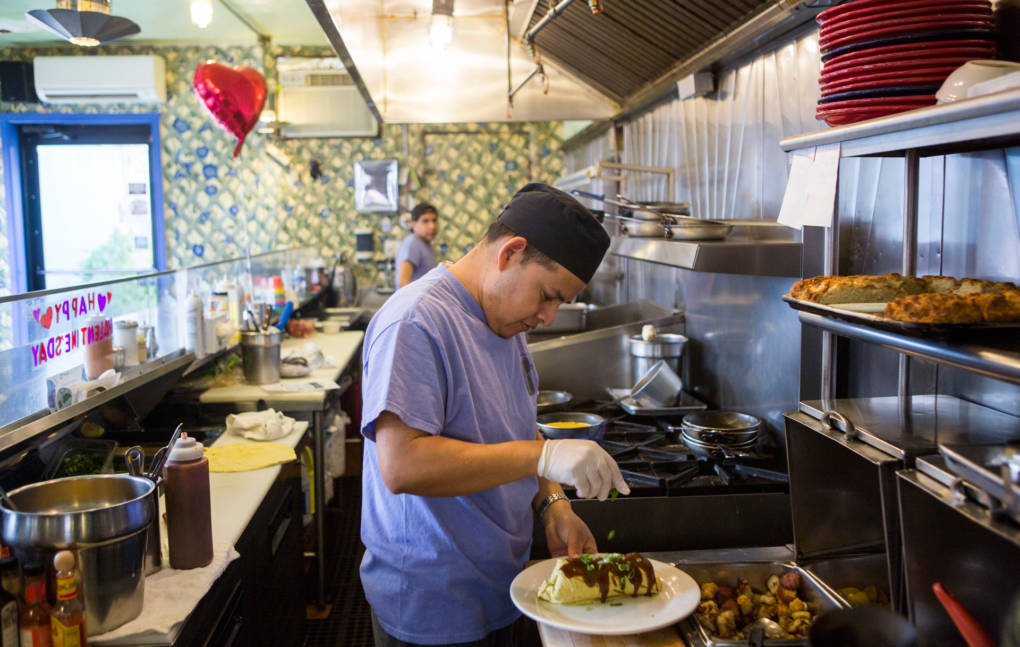
"caption": "A cook works at Morning Glory Diner Feb. 15, 2017, in Philadelphia. With the support of the owner, the majority of the staff, which is Latino, plans to skip work on Feb. 16 as part of the 'Day Without Immigrants' campaign.",
"description": "A cook works at Morning Glory Diner Feb. 15, 2017 in Philadelphia. With the support of the owner, the majority of the staff, which is Latino, plans to skip work on Feb. 16 as part of the 'Day Without Immigrants' campaign.",
"title": "Cooks",
"credit": "Jessica Kourkounis/Getty Images",
"status": "inherit",
"isLoading": false,
"fetchFailed": false
},
"news_11318033": {
"type": "attachments",
"id": "news_11318033",
"meta": {
"index": "attachments_1716263798",
"site": "news",
"id": "11318033",
"found": true
},
"parent": 11318029,
"imgSizes": {
"small": {
"file": "https://ww2.kqed.org/app/uploads/sites/10/2017/02/ICEHandout-520x347.jpg",
"width": 520,
"mimeType": "image/jpeg",
"height": 347
},
"twentyfourteen-full-width": {
"file": "https://ww2.kqed.org/app/uploads/sites/10/2017/02/ICEHandout-1038x576.jpg",
"width": 1038,
"mimeType": "image/jpeg",
"height": 576
},
"thumbnail": {
"file": "https://ww2.kqed.org/app/uploads/sites/10/2017/02/ICEHandout-160x107.jpg",
"width": 160,
"mimeType": "image/jpeg",
"height": 107
},
"fd-sm": {
"file": "https://ww2.kqed.org/app/uploads/sites/10/2017/02/ICEHandout-960x640.jpg",
"width": 960,
"mimeType": "image/jpeg",
"height": 640
},
"post-thumbnail": {
"file": "https://ww2.kqed.org/app/uploads/sites/10/2017/02/ICEHandout-672x372.jpg",
"width": 672,
"mimeType": "image/jpeg",
"height": 372
},
"xsmall": {
"file": "https://ww2.kqed.org/app/uploads/sites/10/2017/02/ICEHandout-375x250.jpg",
"width": 375,
"mimeType": "image/jpeg",
"height": 250
},
"kqedFullSize": {
"file": "https://ww2.kqed.org/app/uploads/sites/10/2017/02/ICEHandout.jpg",
"width": 1920,
"height": 1280
},
"large": {
"file": "https://ww2.kqed.org/app/uploads/sites/10/2017/02/ICEHandout-1020x680.jpg",
"width": 1020,
"mimeType": "image/jpeg",
"height": 680
},
"xlarge": {
"file": "https://ww2.kqed.org/app/uploads/sites/10/2017/02/ICEHandout-1180x787.jpg",
"width": 1180,
"mimeType": "image/jpeg",
"height": 787
},
"guest-author-50": {
"file": "https://ww2.kqed.org/app/uploads/sites/10/2017/02/ICEHandout-50x50.jpg",
"width": 50,
"mimeType": "image/jpeg",
"height": 50
},
"guest-author-96": {
"file": "https://ww2.kqed.org/app/uploads/sites/10/2017/02/ICEHandout-96x96.jpg",
"width": 96,
"mimeType": "image/jpeg",
"height": 96
},
"medium": {
"file": "https://ww2.kqed.org/app/uploads/sites/10/2017/02/ICEHandout-800x533.jpg",
"width": 800,
"mimeType": "image/jpeg",
"height": 533
},
"guest-author-64": {
"file": "https://ww2.kqed.org/app/uploads/sites/10/2017/02/ICEHandout-64x64.jpg",
"width": 64,
"mimeType": "image/jpeg",
"height": 64
},
"guest-author-32": {
"file": "https://ww2.kqed.org/app/uploads/sites/10/2017/02/ICEHandout-32x32.jpg",
"width": 32,
"mimeType": "image/jpeg",
"height": 32
},
"fd-lrg": {
"file": "https://ww2.kqed.org/app/uploads/sites/10/2017/02/ICEHandout-1920x1280.jpg",
"width": 1920,
"mimeType": "image/jpeg",
"height": 1280
},
"fd-med": {
"file": "https://ww2.kqed.org/app/uploads/sites/10/2017/02/ICEHandout-1180x787.jpg",
"width": 1180,
"mimeType": "image/jpeg",
"height": 787
},
"full-width": {
"file": "https://ww2.kqed.org/app/uploads/sites/10/2017/02/ICEHandout-1920x1280.jpg",
"width": 1920,
"mimeType": "image/jpeg",
"height": 1280
},
"detail": {
"file": "https://ww2.kqed.org/app/uploads/sites/10/2017/02/ICEHandout-150x150.jpg",
"width": 150,
"mimeType": "image/jpeg",
"height": 150
},
"guest-author-128": {
"file": "https://ww2.kqed.org/app/uploads/sites/10/2017/02/ICEHandout-128x128.jpg",
"width": 128,
"mimeType": "image/jpeg",
"height": 128
},
"xxsmall": {
"file": "https://ww2.kqed.org/app/uploads/sites/10/2017/02/ICEHandout-240x160.jpg",
"width": 240,
"mimeType": "image/jpeg",
"height": 160
}
},
"publishDate": 1487184266,
"modified": 1487184464,
"caption": "In this handout image provided by ICE, foreign nationals were arrested last week during a targeted enforcement operation.",
"description": "In this handout image provided by ICE, foreign nationals were arrested last week during a targeted enforcement operation.",
"title": "ICEHandout",
"credit": "Bryan Cox/U.S. Immigration and Customs Enforcement via Getty Images",
"status": "inherit",
"isLoading": false,
"fetchFailed": false
},
"news_11315414": {
"type": "attachments",
"id": "news_11315414",
"meta": {
"index": "attachments_1716263798",
"site": "news",
"id": "11315414",
"found": true
},
"parent": 11315413,
"imgSizes": {
"small": {
"file": "https://ww2.kqed.org/app/uploads/sites/10/2017/02/ap_17043509687891_wide-a1d6d34e8f71dbe99c192d7cdf0bb05c65e4d163-520x292.jpg",
"width": 520,
"mimeType": "image/jpeg",
"height": 292
},
"twentyfourteen-full-width": {
"file": "https://ww2.kqed.org/app/uploads/sites/10/2017/02/ap_17043509687891_wide-a1d6d34e8f71dbe99c192d7cdf0bb05c65e4d163-1038x576.jpg",
"width": 1038,
"mimeType": "image/jpeg",
"height": 576
},
"thumbnail": {
"file": "https://ww2.kqed.org/app/uploads/sites/10/2017/02/ap_17043509687891_wide-a1d6d34e8f71dbe99c192d7cdf0bb05c65e4d163-160x90.jpg",
"width": 160,
"mimeType": "image/jpeg",
"height": 90
},
"fd-sm": {
"file": "https://ww2.kqed.org/app/uploads/sites/10/2017/02/ap_17043509687891_wide-a1d6d34e8f71dbe99c192d7cdf0bb05c65e4d163-960x540.jpg",
"width": 960,
"mimeType": "image/jpeg",
"height": 540
},
"post-thumbnail": {
"file": "https://ww2.kqed.org/app/uploads/sites/10/2017/02/ap_17043509687891_wide-a1d6d34e8f71dbe99c192d7cdf0bb05c65e4d163-672x372.jpg",
"width": 672,
"mimeType": "image/jpeg",
"height": 372
},
"xsmall": {
"file": "https://ww2.kqed.org/app/uploads/sites/10/2017/02/ap_17043509687891_wide-a1d6d34e8f71dbe99c192d7cdf0bb05c65e4d163-375x211.jpg",
"width": 375,
"mimeType": "image/jpeg",
"height": 211
},
"kqedFullSize": {
"file": "https://ww2.kqed.org/app/uploads/sites/10/2017/02/ap_17043509687891_wide-a1d6d34e8f71dbe99c192d7cdf0bb05c65e4d163-e1487880645720.jpg",
"width": 1920,
"height": 1080
},
"large": {
"file": "https://ww2.kqed.org/app/uploads/sites/10/2017/02/ap_17043509687891_wide-a1d6d34e8f71dbe99c192d7cdf0bb05c65e4d163-1020x574.jpg",
"width": 1020,
"mimeType": "image/jpeg",
"height": 574
},
"xlarge": {
"file": "https://ww2.kqed.org/app/uploads/sites/10/2017/02/ap_17043509687891_wide-a1d6d34e8f71dbe99c192d7cdf0bb05c65e4d163-1180x664.jpg",
"width": 1180,
"mimeType": "image/jpeg",
"height": 664
},
"guest-author-50": {
"file": "https://ww2.kqed.org/app/uploads/sites/10/2017/02/ap_17043509687891_wide-a1d6d34e8f71dbe99c192d7cdf0bb05c65e4d163-50x50.jpg",
"width": 50,
"mimeType": "image/jpeg",
"height": 50
},
"guest-author-96": {
"file": "https://ww2.kqed.org/app/uploads/sites/10/2017/02/ap_17043509687891_wide-a1d6d34e8f71dbe99c192d7cdf0bb05c65e4d163-96x96.jpg",
"width": 96,
"mimeType": "image/jpeg",
"height": 96
},
"medium": {
"file": "https://ww2.kqed.org/app/uploads/sites/10/2017/02/ap_17043509687891_wide-a1d6d34e8f71dbe99c192d7cdf0bb05c65e4d163-800x450.jpg",
"width": 800,
"mimeType": "image/jpeg",
"height": 450
},
"guest-author-64": {
"file": "https://ww2.kqed.org/app/uploads/sites/10/2017/02/ap_17043509687891_wide-a1d6d34e8f71dbe99c192d7cdf0bb05c65e4d163-64x64.jpg",
"width": 64,
"mimeType": "image/jpeg",
"height": 64
},
"guest-author-32": {
"file": "https://ww2.kqed.org/app/uploads/sites/10/2017/02/ap_17043509687891_wide-a1d6d34e8f71dbe99c192d7cdf0bb05c65e4d163-32x32.jpg",
"width": 32,
"mimeType": "image/jpeg",
"height": 32
},
"fd-lrg": {
"file": "https://ww2.kqed.org/app/uploads/sites/10/2017/02/ap_17043509687891_wide-a1d6d34e8f71dbe99c192d7cdf0bb05c65e4d163-1920x1080.jpg",
"width": 1920,
"mimeType": "image/jpeg",
"height": 1080
},
"fd-med": {
"file": "https://ww2.kqed.org/app/uploads/sites/10/2017/02/ap_17043509687891_wide-a1d6d34e8f71dbe99c192d7cdf0bb05c65e4d163-1180x664.jpg",
"width": 1180,
"mimeType": "image/jpeg",
"height": 664
},
"full-width": {
"file": "https://ww2.kqed.org/app/uploads/sites/10/2017/02/ap_17043509687891_wide-a1d6d34e8f71dbe99c192d7cdf0bb05c65e4d163-1920x1080.jpg",
"width": 1920,
"mimeType": "image/jpeg",
"height": 1080
},
"detail": {
"file": "https://ww2.kqed.org/app/uploads/sites/10/2017/02/ap_17043509687891_wide-a1d6d34e8f71dbe99c192d7cdf0bb05c65e4d163-150x150.jpg",
"width": 150,
"mimeType": "image/jpeg",
"height": 150
},
"guest-author-128": {
"file": "https://ww2.kqed.org/app/uploads/sites/10/2017/02/ap_17043509687891_wide-a1d6d34e8f71dbe99c192d7cdf0bb05c65e4d163-128x128.jpg",
"width": 128,
"mimeType": "image/jpeg",
"height": 128
},
"xxsmall": {
"file": "https://ww2.kqed.org/app/uploads/sites/10/2017/02/ap_17043509687891_wide-a1d6d34e8f71dbe99c192d7cdf0bb05c65e4d163-240x135.jpg",
"width": 240,
"mimeType": "image/jpeg",
"height": 135
}
},
"publishDate": 1487028839,
"modified": 1487029462,
"caption": "A photo released Tuesday by U.S. Immigration and Customs Enforcement shows people being arrested during an ICE operation.",
"description": null,
"title": "A photo released Tuesday by U.S. Immigration and Customs Enforcement shows people being arrested during an ICE operation.",
"credit": "Charles Reed/U.S. Immigration and Customs Enforcement",
"status": "inherit",
"isLoading": false,
"fetchFailed": false
},
"news_11310466": {
"type": "attachments",
"id": "news_11310466",
"meta": {
"index": "attachments_1716263798",
"site": "news",
"id": "11310466",
"found": true
},
"parent": 11310396,
"imgSizes": {
"small": {
"file": "https://ww2.kqed.org/app/uploads/sites/10/2017/02/Yalla-Neymar-Jr.-520x347.jpg",
"width": 520,
"mimeType": "image/jpeg",
"height": 347
},
"twentyfourteen-full-width": {
"file": "https://ww2.kqed.org/app/uploads/sites/10/2017/02/Yalla-Neymar-Jr.-1038x576.jpg",
"width": 1038,
"mimeType": "image/jpeg",
"height": 576
},
"thumbnail": {
"file": "https://ww2.kqed.org/app/uploads/sites/10/2017/02/Yalla-Neymar-Jr.-160x107.jpg",
"width": 160,
"mimeType": "image/jpeg",
"height": 107
},
"fd-sm": {
"file": "https://ww2.kqed.org/app/uploads/sites/10/2017/02/Yalla-Neymar-Jr.-960x640.jpg",
"width": 960,
"mimeType": "image/jpeg",
"height": 640
},
"post-thumbnail": {
"file": "https://ww2.kqed.org/app/uploads/sites/10/2017/02/Yalla-Neymar-Jr.-672x372.jpg",
"width": 672,
"mimeType": "image/jpeg",
"height": 372
},
"xsmall": {
"file": "https://ww2.kqed.org/app/uploads/sites/10/2017/02/Yalla-Neymar-Jr.-375x250.jpg",
"width": 375,
"mimeType": "image/jpeg",
"height": 250
},
"kqedFullSize": {
"file": "https://ww2.kqed.org/app/uploads/sites/10/2017/02/Yalla-Neymar-Jr..jpg",
"width": 1920,
"height": 1280
},
"large": {
"file": "https://ww2.kqed.org/app/uploads/sites/10/2017/02/Yalla-Neymar-Jr.-1020x680.jpg",
"width": 1020,
"mimeType": "image/jpeg",
"height": 680
},
"xlarge": {
"file": "https://ww2.kqed.org/app/uploads/sites/10/2017/02/Yalla-Neymar-Jr.-1180x787.jpg",
"width": 1180,
"mimeType": "image/jpeg",
"height": 787
},
"guest-author-50": {
"file": "https://ww2.kqed.org/app/uploads/sites/10/2017/02/Yalla-Neymar-Jr.-50x50.jpg",
"width": 50,
"mimeType": "image/jpeg",
"height": 50
},
"guest-author-96": {
"file": "https://ww2.kqed.org/app/uploads/sites/10/2017/02/Yalla-Neymar-Jr.-96x96.jpg",
"width": 96,
"mimeType": "image/jpeg",
"height": 96
},
"medium": {
"file": "https://ww2.kqed.org/app/uploads/sites/10/2017/02/Yalla-Neymar-Jr.-800x533.jpg",
"width": 800,
"mimeType": "image/jpeg",
"height": 533
},
"guest-author-64": {
"file": "https://ww2.kqed.org/app/uploads/sites/10/2017/02/Yalla-Neymar-Jr.-64x64.jpg",
"width": 64,
"mimeType": "image/jpeg",
"height": 64
},
"guest-author-32": {
"file": "https://ww2.kqed.org/app/uploads/sites/10/2017/02/Yalla-Neymar-Jr.-32x32.jpg",
"width": 32,
"mimeType": "image/jpeg",
"height": 32
},
"fd-lrg": {
"file": "https://ww2.kqed.org/app/uploads/sites/10/2017/02/Yalla-Neymar-Jr.-1920x1280.jpg",
"width": 1920,
"mimeType": "image/jpeg",
"height": 1280
},
"fd-med": {
"file": "https://ww2.kqed.org/app/uploads/sites/10/2017/02/Yalla-Neymar-Jr.-1180x787.jpg",
"width": 1180,
"mimeType": "image/jpeg",
"height": 787
},
"full-width": {
"file": "https://ww2.kqed.org/app/uploads/sites/10/2017/02/Yalla-Neymar-Jr.-1920x1280.jpg",
"width": 1920,
"mimeType": "image/jpeg",
"height": 1280
},
"detail": {
"file": "https://ww2.kqed.org/app/uploads/sites/10/2017/02/Yalla-Neymar-Jr.-150x150.jpg",
"width": 150,
"mimeType": "image/jpeg",
"height": 150
},
"guest-author-128": {
"file": "https://ww2.kqed.org/app/uploads/sites/10/2017/02/Yalla-Neymar-Jr.-128x128.jpg",
"width": 128,
"mimeType": "image/jpeg",
"height": 128
},
"xxsmall": {
"file": "https://ww2.kqed.org/app/uploads/sites/10/2017/02/Yalla-Neymar-Jr.-240x160.jpg",
"width": 240,
"mimeType": "image/jpeg",
"height": 160
}
},
"publishDate": 1486750624,
"modified": 1487027661,
"caption": "A Yalla student wears a soccer T-shirt during an after-school lesson in El Cajon.",
"description": null,
"title": "Yalla Neymar Jr.",
"credit": "Photo by Erin Siegal McIntyre",
"status": "inherit",
"isLoading": false,
"fetchFailed": false
},
"news_11311104": {
"type": "attachments",
"id": "news_11311104",
"meta": {
"index": "attachments_1716263798",
"site": "news",
"id": "11311104",
"found": true
},
"parent": 11311103,
"imgSizes": {
"small": {
"file": "https://ww2.kqed.org/app/uploads/sites/10/2017/02/3-JUDGES-520x293.jpg",
"width": 520,
"mimeType": "image/jpeg",
"height": 293
},
"twentyfourteen-full-width": {
"file": "https://ww2.kqed.org/app/uploads/sites/10/2017/02/3-JUDGES-1038x576.jpg",
"width": 1038,
"mimeType": "image/jpeg",
"height": 576
},
"thumbnail": {
"file": "https://ww2.kqed.org/app/uploads/sites/10/2017/02/3-JUDGES-160x90.jpg",
"width": 160,
"mimeType": "image/jpeg",
"height": 90
},
"fd-sm": {
"file": "https://ww2.kqed.org/app/uploads/sites/10/2017/02/3-JUDGES-960x540.jpg",
"width": 960,
"mimeType": "image/jpeg",
"height": 540
},
"post-thumbnail": {
"file": "https://ww2.kqed.org/app/uploads/sites/10/2017/02/3-JUDGES-672x372.jpg",
"width": 672,
"mimeType": "image/jpeg",
"height": 372
},
"xsmall": {
"file": "https://ww2.kqed.org/app/uploads/sites/10/2017/02/3-JUDGES-375x211.jpg",
"width": 375,
"mimeType": "image/jpeg",
"height": 211
},
"kqedFullSize": {
"file": "https://ww2.kqed.org/app/uploads/sites/10/2017/02/3-JUDGES.jpg",
"width": 1280,
"height": 720
},
"large": {
"file": "https://ww2.kqed.org/app/uploads/sites/10/2017/02/3-JUDGES-1020x574.jpg",
"width": 1020,
"mimeType": "image/jpeg",
"height": 574
},
"xlarge": {
"file": "https://ww2.kqed.org/app/uploads/sites/10/2017/02/3-JUDGES-1180x664.jpg",
"width": 1180,
"mimeType": "image/jpeg",
"height": 664
},
"guest-author-50": {
"file": "https://ww2.kqed.org/app/uploads/sites/10/2017/02/3-JUDGES-50x50.jpg",
"width": 50,
"mimeType": "image/jpeg",
"height": 50
},
"guest-author-96": {
"file": "https://ww2.kqed.org/app/uploads/sites/10/2017/02/3-JUDGES-96x96.jpg",
"width": 96,
"mimeType": "image/jpeg",
"height": 96
},
"medium": {
"file": "https://ww2.kqed.org/app/uploads/sites/10/2017/02/3-JUDGES-800x450.jpg",
"width": 800,
"mimeType": "image/jpeg",
"height": 450
},
"guest-author-64": {
"file": "https://ww2.kqed.org/app/uploads/sites/10/2017/02/3-JUDGES-64x64.jpg",
"width": 64,
"mimeType": "image/jpeg",
"height": 64
},
"guest-author-32": {
"file": "https://ww2.kqed.org/app/uploads/sites/10/2017/02/3-JUDGES-32x32.jpg",
"width": 32,
"mimeType": "image/jpeg",
"height": 32
},
"fd-med": {
"file": "https://ww2.kqed.org/app/uploads/sites/10/2017/02/3-JUDGES-1180x664.jpg",
"width": 1180,
"mimeType": "image/jpeg",
"height": 664
},
"detail": {
"file": "https://ww2.kqed.org/app/uploads/sites/10/2017/02/3-JUDGES-150x150.jpg",
"width": 150,
"mimeType": "image/jpeg",
"height": 150
},
"guest-author-128": {
"file": "https://ww2.kqed.org/app/uploads/sites/10/2017/02/3-JUDGES-128x128.jpg",
"width": 128,
"mimeType": "image/jpeg",
"height": 128
},
"xxsmall": {
"file": "https://ww2.kqed.org/app/uploads/sites/10/2017/02/3-JUDGES-240x135.jpg",
"width": 240,
"mimeType": "image/jpeg",
"height": 135
}
},
"publishDate": 1486779875,
"modified": 1486779875,
"caption": null,
"description": null,
"title": "3 JUDGES",
"credit": null,
"status": "inherit",
"isLoading": false,
"fetchFailed": false
},
"news_11311028": {
"type": "attachments",
"id": "news_11311028",
"meta": {
"index": "attachments_1716263798",
"site": "news",
"id": "11311028",
"found": true
},
"parent": 11311026,
"imgSizes": {
"small": {
"file": "https://ww2.kqed.org/app/uploads/sites/10/2017/02/151341-full-520x347.jpeg",
"width": 520,
"mimeType": "image/jpeg",
"height": 347
},
"twentyfourteen-full-width": {
"file": "https://ww2.kqed.org/app/uploads/sites/10/2017/02/151341-full-1024x576.jpeg",
"width": 1024,
"mimeType": "image/jpeg",
"height": 576
},
"thumbnail": {
"file": "https://ww2.kqed.org/app/uploads/sites/10/2017/02/151341-full-160x107.jpeg",
"width": 160,
"mimeType": "image/jpeg",
"height": 107
},
"fd-sm": {
"file": "https://ww2.kqed.org/app/uploads/sites/10/2017/02/151341-full-960x640.jpeg",
"width": 960,
"mimeType": "image/jpeg",
"height": 640
},
"post-thumbnail": {
"file": "https://ww2.kqed.org/app/uploads/sites/10/2017/02/151341-full-672x372.jpeg",
"width": 672,
"mimeType": "image/jpeg",
"height": 372
},
"xsmall": {
"file": "https://ww2.kqed.org/app/uploads/sites/10/2017/02/151341-full-375x250.jpeg",
"width": 375,
"mimeType": "image/jpeg",
"height": 250
},
"kqedFullSize": {
"file": "https://ww2.kqed.org/app/uploads/sites/10/2017/02/151341-full.jpeg",
"width": 1024,
"height": 683
},
"large": {
"file": "https://ww2.kqed.org/app/uploads/sites/10/2017/02/151341-full-1020x680.jpeg",
"width": 1020,
"mimeType": "image/jpeg",
"height": 680
},
"guest-author-50": {
"file": "https://ww2.kqed.org/app/uploads/sites/10/2017/02/151341-full-50x50.jpeg",
"width": 50,
"mimeType": "image/jpeg",
"height": 50
},
"guest-author-96": {
"file": "https://ww2.kqed.org/app/uploads/sites/10/2017/02/151341-full-96x96.jpeg",
"width": 96,
"mimeType": "image/jpeg",
"height": 96
},
"medium": {
"file": "https://ww2.kqed.org/app/uploads/sites/10/2017/02/151341-full-800x534.jpeg",
"width": 800,
"mimeType": "image/jpeg",
"height": 534
},
"guest-author-64": {
"file": "https://ww2.kqed.org/app/uploads/sites/10/2017/02/151341-full-64x64.jpeg",
"width": 64,
"mimeType": "image/jpeg",
"height": 64
},
"guest-author-32": {
"file": "https://ww2.kqed.org/app/uploads/sites/10/2017/02/151341-full-32x32.jpeg",
"width": 32,
"mimeType": "image/jpeg",
"height": 32
},
"detail": {
"file": "https://ww2.kqed.org/app/uploads/sites/10/2017/02/151341-full-150x150.jpeg",
"width": 150,
"mimeType": "image/jpeg",
"height": 150
},
"guest-author-128": {
"file": "https://ww2.kqed.org/app/uploads/sites/10/2017/02/151341-full-128x128.jpeg",
"width": 128,
"mimeType": "image/jpeg",
"height": 128
},
"xxsmall": {
"file": "https://ww2.kqed.org/app/uploads/sites/10/2017/02/151341-full-240x160.jpeg",
"width": 240,
"mimeType": "image/jpeg",
"height": 160
}
},
"publishDate": 1486775790,
"modified": 1487959204,
"caption": "U.S. Immigration and Customs Enforcement agents detain an immigrant on Oct. 14, 2015 in Los Angeles. Under the new DHS guidelines, anyone \"who facilitates the illegal smuggling\" of a child into the U.S. could be deported by immigration agencies or referred for criminal prosecution.",
"description": "U.S. Immigration and Customs Enforcement agents detain an immigrant on Oct. 14, 2015 in Los Angeles.",
"title": "151341-full",
"credit": "John Moore/Getty Images",
"status": "inherit",
"isLoading": false,
"fetchFailed": false
},
"news_11304049": {
"type": "attachments",
"id": "news_11304049",
"meta": {
"index": "attachments_1716263798",
"site": "news",
"id": "11304049",
"found": true
},
"parent": 11304045,
"imgSizes": {
"small": {
"file": "https://ww2.kqed.org/app/uploads/sites/10/2017/02/RS11522_452938222-520x361.jpg",
"width": 520,
"mimeType": "image/jpeg",
"height": 361
},
"twentyfourteen-full-width": {
"file": "https://ww2.kqed.org/app/uploads/sites/10/2017/02/RS11522_452938222-1038x576.jpg",
"width": 1038,
"mimeType": "image/jpeg",
"height": 576
},
"thumbnail": {
"file": "https://ww2.kqed.org/app/uploads/sites/10/2017/02/RS11522_452938222-160x111.jpg",
"width": 160,
"mimeType": "image/jpeg",
"height": 111
},
"fd-sm": {
"file": "https://ww2.kqed.org/app/uploads/sites/10/2017/02/RS11522_452938222-960x666.jpg",
"width": 960,
"mimeType": "image/jpeg",
"height": 666
},
"post-thumbnail": {
"file": "https://ww2.kqed.org/app/uploads/sites/10/2017/02/RS11522_452938222-672x372.jpg",
"width": 672,
"mimeType": "image/jpeg",
"height": 372
},
"xsmall": {
"file": "https://ww2.kqed.org/app/uploads/sites/10/2017/02/RS11522_452938222-375x260.jpg",
"width": 375,
"mimeType": "image/jpeg",
"height": 260
},
"kqedFullSize": {
"file": "https://ww2.kqed.org/app/uploads/sites/10/2017/02/RS11522_452938222.jpg",
"width": 3000,
"height": 2080
},
"large": {
"file": "https://ww2.kqed.org/app/uploads/sites/10/2017/02/RS11522_452938222-1020x707.jpg",
"width": 1020,
"mimeType": "image/jpeg",
"height": 707
},
"xlarge": {
"file": "https://ww2.kqed.org/app/uploads/sites/10/2017/02/RS11522_452938222-1180x818.jpg",
"width": 1180,
"mimeType": "image/jpeg",
"height": 818
},
"guest-author-50": {
"file": "https://ww2.kqed.org/app/uploads/sites/10/2017/02/RS11522_452938222-50x50.jpg",
"width": 50,
"mimeType": "image/jpeg",
"height": 50
},
"guest-author-96": {
"file": "https://ww2.kqed.org/app/uploads/sites/10/2017/02/RS11522_452938222-96x96.jpg",
"width": 96,
"mimeType": "image/jpeg",
"height": 96
},
"medium": {
"file": "https://ww2.kqed.org/app/uploads/sites/10/2017/02/RS11522_452938222-800x555.jpg",
"width": 800,
"mimeType": "image/jpeg",
"height": 555
},
"guest-author-64": {
"file": "https://ww2.kqed.org/app/uploads/sites/10/2017/02/RS11522_452938222-64x64.jpg",
"width": 64,
"mimeType": "image/jpeg",
"height": 64
},
"guest-author-32": {
"file": "https://ww2.kqed.org/app/uploads/sites/10/2017/02/RS11522_452938222-32x32.jpg",
"width": 32,
"mimeType": "image/jpeg",
"height": 32
},
"jmtc-small-thumb": {
"file": "https://ww2.kqed.org/app/uploads/sites/10/2017/02/RS11522_452938222-280x150.jpg",
"width": 280,
"mimeType": "image/jpeg",
"height": 150
},
"fd-lrg": {
"file": "https://ww2.kqed.org/app/uploads/sites/10/2017/02/RS11522_452938222-1920x1331.jpg",
"width": 1920,
"mimeType": "image/jpeg",
"height": 1331
},
"fd-med": {
"file": "https://ww2.kqed.org/app/uploads/sites/10/2017/02/RS11522_452938222-1180x818.jpg",
"width": 1180,
"mimeType": "image/jpeg",
"height": 818
},
"full-width": {
"file": "https://ww2.kqed.org/app/uploads/sites/10/2017/02/RS11522_452938222-1920x1331.jpg",
"width": 1920,
"mimeType": "image/jpeg",
"height": 1331
},
"detail": {
"file": "https://ww2.kqed.org/app/uploads/sites/10/2017/02/RS11522_452938222-150x150.jpg",
"width": 150,
"mimeType": "image/jpeg",
"height": 150
},
"guest-author-128": {
"file": "https://ww2.kqed.org/app/uploads/sites/10/2017/02/RS11522_452938222-128x128.jpg",
"width": 128,
"mimeType": "image/jpeg",
"height": 128
},
"xxsmall": {
"file": "https://ww2.kqed.org/app/uploads/sites/10/2017/02/RS11522_452938222-240x166.jpg",
"width": 240,
"mimeType": "image/jpeg",
"height": 166
}
},
"publishDate": 1486410322,
"modified": 1548739815,
"caption": "PG&E is outsourcing some 70 IT jobs to India.",
"description": null,
"title": "Federal Jury Finds PG&E Guilty Of Obstructing Justice In San Bruno Explosion Investigation",
"credit": "Justin Sullivan/Getty Images",
"status": "inherit",
"isLoading": false,
"fetchFailed": false
},
"news_11286566": {
"type": "attachments",
"id": "news_11286566",
"meta": {
"index": "attachments_1716263798",
"site": "news",
"id": "11286566",
"found": true
},
"parent": 11286488,
"imgSizes": {
"small": {
"file": "https://ww2.kqed.org/app/uploads/sites/10/2017/01/GettyImages-632699284-520x377.jpg",
"width": 520,
"mimeType": "image/jpeg",
"height": 377
},
"twentyfourteen-full-width": {
"file": "https://ww2.kqed.org/app/uploads/sites/10/2017/01/GettyImages-632699284-1038x576.jpg",
"width": 1038,
"mimeType": "image/jpeg",
"height": 576
},
"thumbnail": {
"file": "https://ww2.kqed.org/app/uploads/sites/10/2017/01/GettyImages-632699284-160x116.jpg",
"width": 160,
"mimeType": "image/jpeg",
"height": 116
},
"fd-sm": {
"file": "https://ww2.kqed.org/app/uploads/sites/10/2017/01/GettyImages-632699284-960x696.jpg",
"width": 960,
"mimeType": "image/jpeg",
"height": 696
},
"post-thumbnail": {
"file": "https://ww2.kqed.org/app/uploads/sites/10/2017/01/GettyImages-632699284-672x372.jpg",
"width": 672,
"mimeType": "image/jpeg",
"height": 372
},
"xsmall": {
"file": "https://ww2.kqed.org/app/uploads/sites/10/2017/01/GettyImages-632699284-375x272.jpg",
"width": 375,
"mimeType": "image/jpeg",
"height": 272
},
"kqedFullSize": {
"file": "https://ww2.kqed.org/app/uploads/sites/10/2017/01/GettyImages-632699284-e1485391179853.jpg",
"width": 1920,
"height": 1392
},
"large": {
"file": "https://ww2.kqed.org/app/uploads/sites/10/2017/01/GettyImages-632699284-1020x740.jpg",
"width": 1020,
"mimeType": "image/jpeg",
"height": 740
},
"xlarge": {
"file": "https://ww2.kqed.org/app/uploads/sites/10/2017/01/GettyImages-632699284-1180x856.jpg",
"width": 1180,
"mimeType": "image/jpeg",
"height": 856
},
"guest-author-50": {
"file": "https://ww2.kqed.org/app/uploads/sites/10/2017/01/GettyImages-632699284-50x50.jpg",
"width": 50,
"mimeType": "image/jpeg",
"height": 50
},
"guest-author-96": {
"file": "https://ww2.kqed.org/app/uploads/sites/10/2017/01/GettyImages-632699284-96x96.jpg",
"width": 96,
"mimeType": "image/jpeg",
"height": 96
},
"medium": {
"file": "https://ww2.kqed.org/app/uploads/sites/10/2017/01/GettyImages-632699284-800x580.jpg",
"width": 800,
"mimeType": "image/jpeg",
"height": 580
},
"guest-author-64": {
"file": "https://ww2.kqed.org/app/uploads/sites/10/2017/01/GettyImages-632699284-64x64.jpg",
"width": 64,
"mimeType": "image/jpeg",
"height": 64
},
"guest-author-32": {
"file": "https://ww2.kqed.org/app/uploads/sites/10/2017/01/GettyImages-632699284-32x32.jpg",
"width": 32,
"mimeType": "image/jpeg",
"height": 32
},
"jmtc-small-thumb": {
"file": "https://ww2.kqed.org/app/uploads/sites/10/2017/01/GettyImages-632699284-280x150.jpg",
"width": 280,
"mimeType": "image/jpeg",
"height": 150
},
"fd-lrg": {
"file": "https://ww2.kqed.org/app/uploads/sites/10/2017/01/GettyImages-632699284-1920x1392.jpg",
"width": 1920,
"mimeType": "image/jpeg",
"height": 1392
},
"fd-med": {
"file": "https://ww2.kqed.org/app/uploads/sites/10/2017/01/GettyImages-632699284-1180x856.jpg",
"width": 1180,
"mimeType": "image/jpeg",
"height": 856
},
"full-width": {
"file": "https://ww2.kqed.org/app/uploads/sites/10/2017/01/GettyImages-632699284-1920x1392.jpg",
"width": 1920,
"mimeType": "image/jpeg",
"height": 1392
},
"detail": {
"file": "https://ww2.kqed.org/app/uploads/sites/10/2017/01/GettyImages-632699284-150x150.jpg",
"width": 150,
"mimeType": "image/jpeg",
"height": 150
},
"guest-author-128": {
"file": "https://ww2.kqed.org/app/uploads/sites/10/2017/01/GettyImages-632699284-128x128.jpg",
"width": 128,
"mimeType": "image/jpeg",
"height": 128
},
"xxsmall": {
"file": "https://ww2.kqed.org/app/uploads/sites/10/2017/01/GettyImages-632699284-240x174.jpg",
"width": 240,
"mimeType": "image/jpeg",
"height": 174
}
},
"publishDate": 1485391162,
"modified": 1486689182,
"caption": "President Donald Trump has vowed to restore \"control\" of U.S. frontiers.",
"description": "President Donald Trump",
"title": "US-POLITICS-TRUMP-HOMELAND SECURITY",
"credit": "Nicholas Kamm/AFP/Getty Images",
"status": "inherit",
"isLoading": false,
"fetchFailed": false
},
"news_10489894": {
"type": "attachments",
"id": "news_10489894",
"meta": {
"index": "attachments_1716263798",
"site": "news",
"id": "10489894",
"found": true
},
"parent": 10489893,
"imgSizes": {
"twentyfourteen-full-width": {
"file": "https://ww2.kqed.org/app/uploads/sites/10/2015/04/BART1-1038x576.jpg",
"width": 1038,
"mimeType": "image/jpeg",
"height": 576
},
"thumbnail": {
"file": "https://ww2.kqed.org/app/uploads/sites/10/2015/04/BART1-400x300.jpg",
"width": 400,
"mimeType": "image/jpeg",
"height": 300
},
"fd-sm": {
"file": "https://ww2.kqed.org/app/uploads/sites/10/2015/04/BART1-320x240.jpg",
"width": 320,
"mimeType": "image/jpeg",
"height": 240
},
"post-thumbnail": {
"file": "https://ww2.kqed.org/app/uploads/sites/10/2015/04/BART1-672x372.jpg",
"width": 672,
"mimeType": "image/jpeg",
"height": 372
},
"kqedFullSize": {
"file": "https://ww2.kqed.org/app/uploads/sites/10/2015/04/BART1.jpg",
"width": 1920,
"height": 1440
},
"large": {
"file": "https://ww2.kqed.org/app/uploads/sites/10/2015/04/BART1-1440x1080.jpg",
"width": 1440,
"mimeType": "image/jpeg",
"height": 1080
},
"guest-author-96": {
"file": "https://ww2.kqed.org/app/uploads/sites/10/2015/04/BART1-96x96.jpg",
"width": 96,
"mimeType": "image/jpeg",
"height": 96
},
"medium": {
"file": "https://ww2.kqed.org/app/uploads/sites/10/2015/04/BART1-800x600.jpg",
"width": 800,
"mimeType": "image/jpeg",
"height": 600
},
"guest-author-64": {
"file": "https://ww2.kqed.org/app/uploads/sites/10/2015/04/BART1-64x64.jpg",
"width": 64,
"mimeType": "image/jpeg",
"height": 64
},
"guest-author-32": {
"file": "https://ww2.kqed.org/app/uploads/sites/10/2015/04/BART1-32x32.jpg",
"width": 32,
"mimeType": "image/jpeg",
"height": 32
},
"fd-lrg": {
"file": "https://ww2.kqed.org/app/uploads/sites/10/2015/04/BART1-1180x885.jpg",
"width": 1180,
"mimeType": "image/jpeg",
"height": 885
},
"fd-med": {
"file": "https://ww2.kqed.org/app/uploads/sites/10/2015/04/BART1-768x576.jpg",
"width": 768,
"mimeType": "image/jpeg",
"height": 576
},
"detail": {
"file": "https://ww2.kqed.org/app/uploads/sites/10/2015/04/BART1-75x75.jpg",
"width": 75,
"mimeType": "image/jpeg",
"height": 75
},
"guest-author-128": {
"file": "https://ww2.kqed.org/app/uploads/sites/10/2015/04/BART1-128x128.jpg",
"width": 128,
"mimeType": "image/jpeg",
"height": 128
}
},
"publishDate": 1429029419,
"modified": 1442352820,
"caption": "A BART train near the system's Rockridge Station in Oakland. ",
"description": "A BART train near the system's Rockridge station in Oakland. ",
"title": "Bay Area Transportation Workers Strike Looms Ahead Of Monday Deadline",
"credit": "Justin Sullivan/Getty Images",
"status": "inherit",
"isLoading": false,
"fetchFailed": false
},
"news_11309249": {
"type": "attachments",
"id": "news_11309249",
"meta": {
"index": "attachments_1716263798",
"site": "news",
"id": "11309249",
"found": true
},
"parent": 0,
"imgSizes": {
"small": {
"file": "https://ww2.kqed.org/app/uploads/sites/10/2017/02/9thCircuitProtesters-520x285.jpg",
"width": 520,
"mimeType": "image/jpeg",
"height": 285
},
"twentyfourteen-full-width": {
"file": "https://ww2.kqed.org/app/uploads/sites/10/2017/02/9thCircuitProtesters-1038x576.jpg",
"width": 1038,
"mimeType": "image/jpeg",
"height": 576
},
"thumbnail": {
"file": "https://ww2.kqed.org/app/uploads/sites/10/2017/02/9thCircuitProtesters-160x88.jpg",
"width": 160,
"mimeType": "image/jpeg",
"height": 88
},
"fd-sm": {
"file": "https://ww2.kqed.org/app/uploads/sites/10/2017/02/9thCircuitProtesters-960x527.jpg",
"width": 960,
"mimeType": "image/jpeg",
"height": 527
},
"post-thumbnail": {
"file": "https://ww2.kqed.org/app/uploads/sites/10/2017/02/9thCircuitProtesters-672x372.jpg",
"width": 672,
"mimeType": "image/jpeg",
"height": 372
},
"xsmall": {
"file": "https://ww2.kqed.org/app/uploads/sites/10/2017/02/9thCircuitProtesters-375x206.jpg",
"width": 375,
"mimeType": "image/jpeg",
"height": 206
},
"kqedFullSize": {
"file": "https://ww2.kqed.org/app/uploads/sites/10/2017/02/9thCircuitProtesters.jpg",
"width": 1920,
"height": 1053
},
"large": {
"file": "https://ww2.kqed.org/app/uploads/sites/10/2017/02/9thCircuitProtesters-1020x559.jpg",
"width": 1020,
"mimeType": "image/jpeg",
"height": 559
},
"xlarge": {
"file": "https://ww2.kqed.org/app/uploads/sites/10/2017/02/9thCircuitProtesters-1180x647.jpg",
"width": 1180,
"mimeType": "image/jpeg",
"height": 647
},
"guest-author-50": {
"file": "https://ww2.kqed.org/app/uploads/sites/10/2017/02/9thCircuitProtesters-50x50.jpg",
"width": 50,
"mimeType": "image/jpeg",
"height": 50
},
"guest-author-96": {
"file": "https://ww2.kqed.org/app/uploads/sites/10/2017/02/9thCircuitProtesters-96x96.jpg",
"width": 96,
"mimeType": "image/jpeg",
"height": 96
},
"medium": {
"file": "https://ww2.kqed.org/app/uploads/sites/10/2017/02/9thCircuitProtesters-800x439.jpg",
"width": 800,
"mimeType": "image/jpeg",
"height": 439
},
"guest-author-64": {
"file": "https://ww2.kqed.org/app/uploads/sites/10/2017/02/9thCircuitProtesters-64x64.jpg",
"width": 64,
"mimeType": "image/jpeg",
"height": 64
},
"guest-author-32": {
"file": "https://ww2.kqed.org/app/uploads/sites/10/2017/02/9thCircuitProtesters-32x32.jpg",
"width": 32,
"mimeType": "image/jpeg",
"height": 32
},
"fd-lrg": {
"file": "https://ww2.kqed.org/app/uploads/sites/10/2017/02/9thCircuitProtesters-1920x1053.jpg",
"width": 1920,
"mimeType": "image/jpeg",
"height": 1053
},
"fd-med": {
"file": "https://ww2.kqed.org/app/uploads/sites/10/2017/02/9thCircuitProtesters-1180x647.jpg",
"width": 1180,
"mimeType": "image/jpeg",
"height": 647
},
"full-width": {
"file": "https://ww2.kqed.org/app/uploads/sites/10/2017/02/9thCircuitProtesters-1920x1053.jpg",
"width": 1920,
"mimeType": "image/jpeg",
"height": 1053
},
"detail": {
"file": "https://ww2.kqed.org/app/uploads/sites/10/2017/02/9thCircuitProtesters-150x150.jpg",
"width": 150,
"mimeType": "image/jpeg",
"height": 150
},
"guest-author-128": {
"file": "https://ww2.kqed.org/app/uploads/sites/10/2017/02/9thCircuitProtesters-128x128.jpg",
"width": 128,
"mimeType": "image/jpeg",
"height": 128
},
"xxsmall": {
"file": "https://ww2.kqed.org/app/uploads/sites/10/2017/02/9thCircuitProtesters-240x132.jpg",
"width": 240,
"mimeType": "image/jpeg",
"height": 132
}
},
"publishDate": 1486684132,
"modified": 1486688371,
"caption": "Protesters demonstrate in front of the U.S. 9th Circuit Court of Appeals in San Francisco on Feb. 7, 2017.",
"description": "Protesters demonstrate in front of the United States Ninth Circuit Court of Appeals in San Francisco on February 7, 2017.",
"title": "9thCircuitProtesters",
"credit": "Josh Edelson/AFP/Getty Images",
"status": "inherit",
"isLoading": false,
"fetchFailed": false
},
"news_11307377": {
"type": "attachments",
"id": "news_11307377",
"meta": {
"index": "attachments_1716263798",
"site": "news",
"id": "11307377",
"found": true
},
"parent": 11299749,
"imgSizes": {
"small": {
"file": "https://ww2.kqed.org/app/uploads/sites/10/2017/02/RS24213_20170208_QismatAmin_Credit_BertJohnson-2-qut-520x347.jpg",
"width": 520,
"mimeType": "image/jpeg",
"height": 347
},
"twentyfourteen-full-width": {
"file": "https://ww2.kqed.org/app/uploads/sites/10/2017/02/RS24213_20170208_QismatAmin_Credit_BertJohnson-2-qut-1038x576.jpg",
"width": 1038,
"mimeType": "image/jpeg",
"height": 576
},
"thumbnail": {
"file": "https://ww2.kqed.org/app/uploads/sites/10/2017/02/RS24213_20170208_QismatAmin_Credit_BertJohnson-2-qut-160x107.jpg",
"width": 160,
"mimeType": "image/jpeg",
"height": 107
},
"fd-sm": {
"file": "https://ww2.kqed.org/app/uploads/sites/10/2017/02/RS24213_20170208_QismatAmin_Credit_BertJohnson-2-qut-960x640.jpg",
"width": 960,
"mimeType": "image/jpeg",
"height": 640
},
"post-thumbnail": {
"file": "https://ww2.kqed.org/app/uploads/sites/10/2017/02/RS24213_20170208_QismatAmin_Credit_BertJohnson-2-qut-672x372.jpg",
"width": 672,
"mimeType": "image/jpeg",
"height": 372
},
"xsmall": {
"file": "https://ww2.kqed.org/app/uploads/sites/10/2017/02/RS24213_20170208_QismatAmin_Credit_BertJohnson-2-qut-375x250.jpg",
"width": 375,
"mimeType": "image/jpeg",
"height": 250
},
"kqedFullSize": {
"file": "https://ww2.kqed.org/app/uploads/sites/10/2017/02/RS24213_20170208_QismatAmin_Credit_BertJohnson-2-qut.jpg",
"width": 1920,
"height": 1280
},
"large": {
"file": "https://ww2.kqed.org/app/uploads/sites/10/2017/02/RS24213_20170208_QismatAmin_Credit_BertJohnson-2-qut-1020x680.jpg",
"width": 1020,
"mimeType": "image/jpeg",
"height": 680
},
"xlarge": {
"file": "https://ww2.kqed.org/app/uploads/sites/10/2017/02/RS24213_20170208_QismatAmin_Credit_BertJohnson-2-qut-1180x787.jpg",
"width": 1180,
"mimeType": "image/jpeg",
"height": 787
},
"guest-author-50": {
"file": "https://ww2.kqed.org/app/uploads/sites/10/2017/02/RS24213_20170208_QismatAmin_Credit_BertJohnson-2-qut-50x50.jpg",
"width": 50,
"mimeType": "image/jpeg",
"height": 50
},
"guest-author-96": {
"file": "https://ww2.kqed.org/app/uploads/sites/10/2017/02/RS24213_20170208_QismatAmin_Credit_BertJohnson-2-qut-96x96.jpg",
"width": 96,
"mimeType": "image/jpeg",
"height": 96
},
"medium": {
"file": "https://ww2.kqed.org/app/uploads/sites/10/2017/02/RS24213_20170208_QismatAmin_Credit_BertJohnson-2-qut-800x533.jpg",
"width": 800,
"mimeType": "image/jpeg",
"height": 533
},
"guest-author-64": {
"file": "https://ww2.kqed.org/app/uploads/sites/10/2017/02/RS24213_20170208_QismatAmin_Credit_BertJohnson-2-qut-64x64.jpg",
"width": 64,
"mimeType": "image/jpeg",
"height": 64
},
"guest-author-32": {
"file": "https://ww2.kqed.org/app/uploads/sites/10/2017/02/RS24213_20170208_QismatAmin_Credit_BertJohnson-2-qut-32x32.jpg",
"width": 32,
"mimeType": "image/jpeg",
"height": 32
},
"fd-lrg": {
"file": "https://ww2.kqed.org/app/uploads/sites/10/2017/02/RS24213_20170208_QismatAmin_Credit_BertJohnson-2-qut-1920x1280.jpg",
"width": 1920,
"mimeType": "image/jpeg",
"height": 1280
},
"fd-med": {
"file": "https://ww2.kqed.org/app/uploads/sites/10/2017/02/RS24213_20170208_QismatAmin_Credit_BertJohnson-2-qut-1180x787.jpg",
"width": 1180,
"mimeType": "image/jpeg",
"height": 787
},
"full-width": {
"file": "https://ww2.kqed.org/app/uploads/sites/10/2017/02/RS24213_20170208_QismatAmin_Credit_BertJohnson-2-qut-1920x1280.jpg",
"width": 1920,
"mimeType": "image/jpeg",
"height": 1280
},
"detail": {
"file": "https://ww2.kqed.org/app/uploads/sites/10/2017/02/RS24213_20170208_QismatAmin_Credit_BertJohnson-2-qut-150x150.jpg",
"width": 150,
"mimeType": "image/jpeg",
"height": 150
},
"guest-author-128": {
"file": "https://ww2.kqed.org/app/uploads/sites/10/2017/02/RS24213_20170208_QismatAmin_Credit_BertJohnson-2-qut-128x128.jpg",
"width": 128,
"mimeType": "image/jpeg",
"height": 128
},
"xxsmall": {
"file": "https://ww2.kqed.org/app/uploads/sites/10/2017/02/RS24213_20170208_QismatAmin_Credit_BertJohnson-2-qut-240x160.jpg",
"width": 240,
"mimeType": "image/jpeg",
"height": 160
}
},
"publishDate": 1486585889,
"modified": 1486670370,
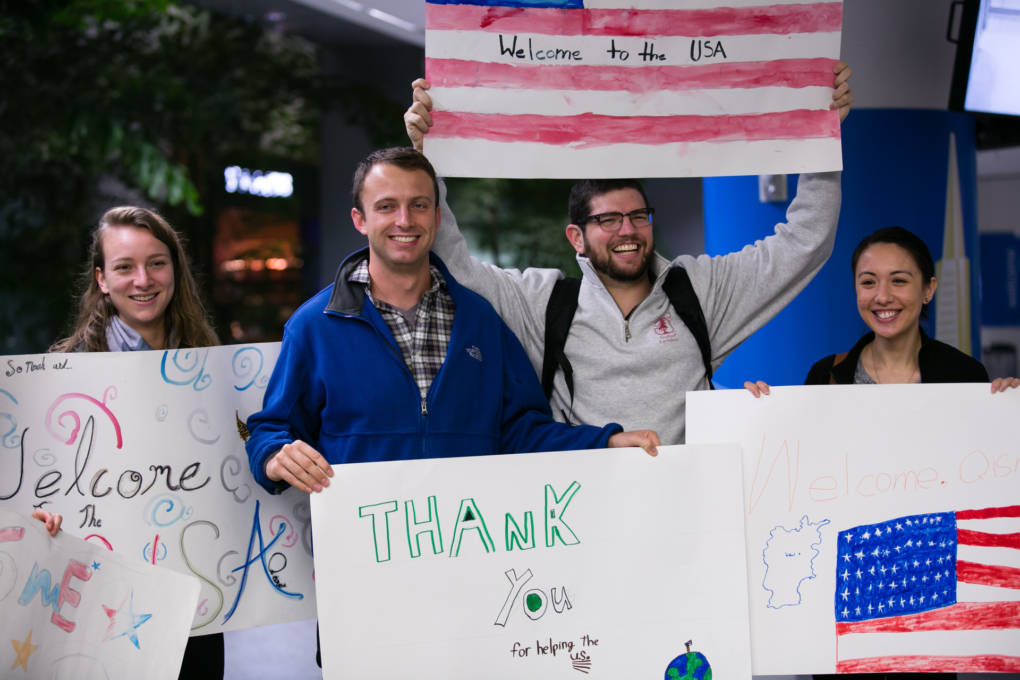
"caption": "Matt Ball (in blue sweater) and friends on Feb. 8, 2017, greet Qismat Amin, an interpreter who worked with the U.S. military in Afghanistan. ",
"description": null,
"title": "RS24213_20170208_QismatAmin_Credit_BertJohnson-2-qut",
"credit": "Bert Johnson/KQED",
"status": "inherit",
"isLoading": false,
"fetchFailed": false
}
},
"audioPlayerReducer": {
"postId": "stream_live",
"isPaused": true,
"isPlaying": false,
"pfsActive": false,
"pledgeModalIsOpen": true,
"playerDrawerIsOpen": false,
"liveAudioPlayStartedAt": 0,
"liveAudioPlayContext": ""
},
"authorsReducer": {
"byline_news_11319707": {
"type": "authors",
"id": "byline_news_11319707",
"meta": {
"override": true
},
"slug": "byline_news_11319707",
"name": "Camila Domonoske",
"isLoading": false
},
"byline_news_11319694": {
"type": "authors",
"id": "byline_news_11319694",
"meta": {
"override": true
},
"slug": "byline_news_11319694",
"name": "Bill Chappell",
"isLoading": false
},
"byline_news_11318029": {
"type": "authors",
"id": "byline_news_11318029",
"meta": {
"override": true
},
"slug": "byline_news_11318029",
"name": "Rebecca Hersher",
"isLoading": false
},
"byline_news_11315413": {
"type": "authors",
"id": "byline_news_11315413",
"meta": {
"override": true
},
"slug": "byline_news_11315413",
"name": "\u003cstrong>Camila Domonoske\u003cbr>\u003ca href=\"http://www.npr.org/sections/thetwo-way/2017/02/13/515032423/75-percent-of-immigration-raid-arrests-were-for-criminal-convictions-dhs-says\">NPR\u003c/a>\u003c/strong>",
"isLoading": false
},
"byline_news_11310396": {
"type": "authors",
"id": "byline_news_11310396",
"meta": {
"override": true
},
"slug": "byline_news_11310396",
"name": "\u003cstrong>Erin Siegal McIntyre\u003c/strong>",
"isLoading": false
},
"byline_news_11311026": {
"type": "authors",
"id": "byline_news_11311026",
"meta": {
"override": true
},
"slug": "byline_news_11311026",
"name": "\u003cstrong>\u003ca href=\"http://www.scpr.org/about/people/staff/leslie-berestein-rojas\">Leslie Berestein Rojas\u003c/a>\u003cbr />\u003ca href=\"http://www.scpr.org/\">KPCC\u003c/a>\u003c/strong>",
"isLoading": false
},
"kqed": {
"type": "authors",
"id": "236",
"meta": {
"index": "authors_1716337520",
"id": "236",
"found": true
},
"name": "KQED News Staff",
"firstName": "KQED News Staff",
"lastName": null,
"slug": "kqed",
"email": "faq@kqed.org",
"display_author_email": false,
"staff_mastheads": [],
"title": null,
"bio": null,
"avatar": "https://secure.gravatar.com/avatar/ef0e801a68c4c54afa9180db14084167?s=600&d=blank&r=g",
"twitter": null,
"facebook": null,
"instagram": null,
"linkedin": null,
"sites": [
{
"site": "arts",
"roles": [
"contributor"
]
},
{
"site": "news",
"roles": [
"editor"
]
},
{
"site": "futureofyou",
"roles": [
"author"
]
}
],
"headData": {
"title": "KQED News Staff | KQED",
"description": null,
"ogImgSrc": "https://secure.gravatar.com/avatar/ef0e801a68c4c54afa9180db14084167?s=600&d=blank&r=g",
"twImgSrc": "https://secure.gravatar.com/avatar/ef0e801a68c4c54afa9180db14084167?s=600&d=blank&r=g"
},
"isLoading": false,
"link": "/author/kqed"
},
"samharnett": {
"type": "authors",
"id": "253",
"meta": {
"index": "authors_1716337520",
"id": "253",
"found": true
},
"name": "Sam Harnett",
"firstName": "Sam",
"lastName": "Harnett",
"slug": "samharnett",
"email": "samharnett@gmail.com",
"display_author_email": false,
"staff_mastheads": [],
"title": "KQED Contributor",
"bio": "Sam Harnett covered tech and work at KQED. He is the co-creator of \u003cem>\u003ca href=\"http://www.theworldaccordingtosound.org\">The World According to Sound\u003c/a>,\u003c/em> a 90-second podcast that features different sounds and the stories behind them.\r\n\r\nBefore coming to KQED, Sam worked as an independent reporter who contributed regularly to \u003cem>The California Report, Marketplace,\u003c/em> \u003cem>The World \u003c/em>and NPR.",
"avatar": "https://secure.gravatar.com/avatar/2538b972ac02f2b9546c7a6c59a0f3d0?s=600&d=blank&r=g",
"twitter": "Samwharnett",
"facebook": null,
"instagram": null,
"linkedin": null,
"sites": [
{
"site": "news",
"roles": [
"edit_others_posts",
"subscriber"
]
},
{
"site": "stateofhealth",
"roles": [
"author"
]
},
{
"site": "science",
"roles": [
"editor"
]
},
{
"site": "quest",
"roles": [
"subscriber"
]
}
],
"headData": {
"title": "Sam Harnett | KQED",
"description": "KQED Contributor",
"ogImgSrc": "https://secure.gravatar.com/avatar/2538b972ac02f2b9546c7a6c59a0f3d0?s=600&d=blank&r=g",
"twImgSrc": "https://secure.gravatar.com/avatar/2538b972ac02f2b9546c7a6c59a0f3d0?s=600&d=blank&r=g"
},
"isLoading": false,
"link": "/author/samharnett"
},
"tgoldberg": {
"type": "authors",
"id": "258",
"meta": {
"index": "authors_1716337520",
"id": "258",
"found": true
},
"name": "Ted Goldberg",
"firstName": "Ted",
"lastName": "Goldberg",
"slug": "tgoldberg",
"email": "tgoldberg@kqed.org",
"display_author_email": true,
"staff_mastheads": [
"news"
],
"title": "KQED Managing Editor, News and Newscasts",
"bio": "Ted Goldberg is Managing Editor of News and Newscasts at KQED. His main reporting beat is the Bay Area's oil refining industry.\r\n\r\nPrior to joining KQED in 2014, Ted worked at CBS News and WCBS AM in New York and Bay City News and KCBS Radio in San Francisco. He graduated from Oberlin College in Ohio in 1998.",
"avatar": "https://secure.gravatar.com/avatar/30ce2e4fe89135e104f89be2394d16225b9d36c121b5b3cb7651ce642978b96f?s=600&d=blank&r=g",
"twitter": "TedrickG",
"bluesky": null,
"facebook": null,
"instagram": null,
"linkedin": null,
"sites": [
{
"site": "news",
"roles": [
"editor"
]
},
{
"site": "science",
"roles": [
"editor"
]
}
],
"headData": {
"title": "Ted Goldberg | KQED",
"description": "KQED Managing Editor, News and Newscasts",
"ogImgSrc": "https://secure.gravatar.com/avatar/30ce2e4fe89135e104f89be2394d16225b9d36c121b5b3cb7651ce642978b96f?s=600&d=blank&r=g",
"twImgSrc": "https://secure.gravatar.com/avatar/30ce2e4fe89135e104f89be2394d16225b9d36c121b5b3cb7651ce642978b96f?s=600&d=blank&r=g"
},
"isLoading": false,
"link": "/author/tgoldberg"
},
"mlagos": {
"type": "authors",
"id": "3239",
"meta": {
"index": "authors_1716337520",
"id": "3239",
"found": true
},
"name": "Marisa Lagos",
"firstName": "Marisa",
"lastName": "Lagos",
"slug": "mlagos",
"email": "mlagos@kqed.org",
"display_author_email": false,
"staff_mastheads": [
"news"
],
"title": "KQED Contributor",
"bio": "Marisa Lagos is a correspondent for KQED’s California Politics and Government Desk and co-hosts the award-winning show and podcast, Political Breakdown. At KQED, Lagos also conducts reporting, analysis and investigations into state, local and national politics for radio, TV, online and onstage. In 2022, she and co-host, Scott Shafer, moderated the only gubernatorial debate in California. In 2020, the \u003ci>Washington Post\u003c/i> named her one of the top political journalists in California; she was nominated for a Peabody and won several other awards for her work investigating the 2017 California wildfires. She has worked at the \u003ci>San Francisco Chronicle\u003c/i>, \u003ci>San Francisco Examiner\u003c/i> and \u003ci>Los Angeles Times\u003c/i>. A UC Santa Barbara graduate, she lives in San Francisco with her two sons and husband.",
"avatar": "https://secure.gravatar.com/avatar/a261a0d3696fc066871ef96b85b5e7d2?s=600&d=blank&r=g",
"twitter": "@mlagos",
"facebook": null,
"instagram": null,
"linkedin": null,
"sites": [
{
"site": "arts",
"roles": [
"author"
]
},
{
"site": "news",
"roles": [
"editor"
]
},
{
"site": "science",
"roles": [
"editor"
]
},
{
"site": "forum",
"roles": [
"author"
]
},
{
"site": "liveblog",
"roles": [
"author"
]
}
],
"headData": {
"title": "Marisa Lagos | KQED",
"description": "KQED Contributor",
"ogImgSrc": "https://secure.gravatar.com/avatar/a261a0d3696fc066871ef96b85b5e7d2?s=600&d=blank&r=g",
"twImgSrc": "https://secure.gravatar.com/avatar/a261a0d3696fc066871ef96b85b5e7d2?s=600&d=blank&r=g"
},
"isLoading": false,
"link": "/author/mlagos"
},
"fjhabvala": {
"type": "authors",
"id": "8659",
"meta": {
"index": "authors_1716337520",
"id": "8659",
"found": true
},
"name": "Farida Jhabvala Romero",
"firstName": "Farida",
"lastName": "Jhabvala Romero",
"slug": "fjhabvala",
"email": "fjhabvala@kqed.org",
"display_author_email": true,
"staff_mastheads": [
"news"
],
"title": "KQED Contributor",
"bio": "Farida Jhabvala Romero is a Labor Correspondent for KQED. She previously covered immigration. Farida was \u003ca href=\"https://www.ccnma.org/2022-most-influential-latina-journalists\">named\u003c/a> one of the 10 Most Influential Latina Journalists in California in 2022 by the California Chicano News Media Association. Her work has won awards from the Society of Professional Journalists (Northern California), as well as a national and regional Edward M. Murrow Award for the collaborative reporting projects “Dangerous Air” and “Graying California.” Before joining KQED, Farida worked as a producer at Radio Bilingüe, a national public radio network. Farida earned her master’s degree in journalism from Stanford University.",
"avatar": "https://secure.gravatar.com/avatar/f9f022d4e2609741874222a1e9d41f48fea74011aa7c615eef91d9a50c944ebe?s=600&d=blank&r=g",
"twitter": "FaridaJhabvala",
"bluesky": null,
"facebook": null,
"instagram": null,
"linkedin": "https://www.linkedin.com/in/faridajhabvala/",
"sites": [
{
"site": "news",
"roles": [
"editor"
]
},
{
"site": "stateofhealth",
"roles": [
"author"
]
},
{
"site": "liveblog",
"roles": [
"author"
]
}
],
"headData": {
"title": "Farida Jhabvala Romero | KQED",
"description": "KQED Contributor",
"ogImgSrc": "https://secure.gravatar.com/avatar/f9f022d4e2609741874222a1e9d41f48fea74011aa7c615eef91d9a50c944ebe?s=600&d=blank&r=g",
"twImgSrc": "https://secure.gravatar.com/avatar/f9f022d4e2609741874222a1e9d41f48fea74011aa7c615eef91d9a50c944ebe?s=600&d=blank&r=g"
},
"isLoading": false,
"link": "/author/fjhabvala"
},
"korr": {
"type": "authors",
"id": "11200",
"meta": {
"index": "authors_1716337520",
"id": "11200",
"found": true
},
"name": "Katie Orr",
"firstName": "Katie",
"lastName": "Orr",
"slug": "korr",
"email": "korr@kqed.org",
"display_author_email": false,
"staff_mastheads": [],
"title": "KQED Contributor",
"bio": "Katie Orr was a Sacramento-based reporter for KQED's Politics and Government Desk, covering the state Capitol and a variety of issues including women in politics, voting and elections and legislation. Prior to joining KQED in 2016, Katie was state government reporter for Capital Public Radio in Sacramento. She's also worked for KPBS in San Diego, where she covered City Hall.\r\n\r\nKatie received her masters degree in political science from San Diego State University and holds a Bachelors degree in broadcast journalism from Arizona State University.\r\n\r\nIn 2015 Katie won a national Clarion Award for a series of stories she did on women in California politics. She's been honored by the Society for Professional Journalists and, in 2013, was named by \u003cem>The Washington Post\u003c/em> as one of the country's top state Capitol reporters. She's also reported for the award-winning documentary series \u003cem>The View from Here \u003c/em>and was part of the team that won national PRNDI and Gabriel Awards in 2015. She lives in Sacramento with her husband. Twitter: @1KatieOrr",
"avatar": "https://secure.gravatar.com/avatar/41a40b25845adc78f50808670860449e?s=600&d=blank&r=g",
"twitter": "1katieorr",
"facebook": null,
"instagram": null,
"linkedin": null,
"sites": [
{
"site": "news",
"roles": [
"subscriber"
]
},
{
"site": "stateofhealth",
"roles": [
"author"
]
},
{
"site": "forum",
"roles": [
"author"
]
}
],
"headData": {
"title": "Katie Orr | KQED",
"description": "KQED Contributor",
"ogImgSrc": "https://secure.gravatar.com/avatar/41a40b25845adc78f50808670860449e?s=600&d=blank&r=g",
"twImgSrc": "https://secure.gravatar.com/avatar/41a40b25845adc78f50808670860449e?s=600&d=blank&r=g"
},
"isLoading": false,
"link": "/author/korr"
}
},
"pagesReducer": {
"news_category_immigration": {
"type": "terms",
"id": "news_1169",
"meta": {
"index": "terms_1716263798",
"site": "news",
"id": "1169",
"score": 10.910236
},
"featImg": null,
"name": "Immigration",
"description": null,
"taxonomy": "category",
"headData": {
"twImgId": null,
"twTitle": null,
"ogTitle": null,
"ogImgId": null,
"twDescription": null,
"description": null,
"title": "Immigration Archives | KQED News",
"ogDescription": null
},
"ttid": 1180,
"slug": "immigration",
"isLoading": false,
"title": "Immigration",
"pageMeta": {
"site": "news",
"WpPageTemplate": "page-topic-editorial",
"currentPage": 170
},
"blocks": [
{
"blockName": "kqed/post-list",
"attrs": {
"layout": "cardArticle2",
"query": "posts/news?category=immigration",
"seeMore": false,
"paginated": true,
"page": 170
}
},
{
"blockName": "kqed/ad"
}
]
}
},
"pfsSessionReducer": {},
"postsReducer": {
"stream_live": {
"type": "live",
"id": "stream_live",
"audioUrl": "https://streams.kqed.org/kqedradio",
"title": "Live Stream",
"excerpt": "Live Stream information currently unavailable.",
"link": "/radio",
"featImg": "",
"label": {
"name": "KQED Live",
"link": "/"
}
},
"stream_kqedNewscast": {
"type": "posts",
"id": "stream_kqedNewscast",
"audioUrl": "https://www.kqed.org/.stream/anon/radio/RDnews/newscast.mp3?_=1",
"title": "KQED Newscast",
"featImg": "",
"label": {
"name": "88.5 FM",
"link": "/"
}
},
"news_11319707": {
"type": "posts",
"id": "news_11319707",
"meta": {
"index": "posts_1716263798",
"site": "news",
"id": "11319707",
"score": null,
"sort": [
1487275200000
]
},
"parent": 0,
"labelTerm": {},
"blocks": [],
"publishDate": 1487275200,
"format": "standard",
"disqusTitle": "Trump Says He Will Issue 'New Executive Action' Related to Travel Ban",
"title": "Trump Says He Will Issue 'New Executive Action' Related to Travel Ban",
"headTitle": "The California Report | KQED News",
"content": "\u003cp>President Trump says his administration will continue to fight for his existing travel ban in the court system, and that he will also issue a new, \"very comprehensive order\" next week.\u003c/p>\n\u003cp>Trump provided no details on what that new order would entail, but said it would \"comprehensively protect our country.\" The president made the remarks during a news conference Thursday at the White House.\u003c/p>\n\u003cp>The president's original executive order on Jan. 27, temporarily blocking all refugees from entering the U.S. and barring travelers from seven majority-Muslim countries, prompted chaos, protests and lawsuits as officials and travelers grappled with its implications.\u003c/p>\n\u003cp>[contextly_sidebar id=\"X2kMbeStHUKzRV7Z8EtHqvcO51w9vKZa\"]\u003c/p>\n\u003cp>A federal judge's ruling on Feb. 3 halted enforcement of the executive order, and on Feb. 9 a three-judge panel of the 9th U.S. Circuit Court of Appeals \u003ca href=\"https://ww2.kqed.org/news/2017/02/09/9th-circuit-denies-reinstatement-of-trump-travel-ban/\" target=\"_blank\">denied the Justice Department's request to lift that stay\u003c/a>.\u003c/p>\n\u003cp>[ad fullwidth]\u003c/p>\n\u003cp>Trump said his administration would be \"vigorously defending this lawful order.\" He described the judge's ruling that led to the stay as \"incorrect and unsafe,\" and the appeals court's decision to uphold it as a \"bad decision.\"\u003c/p>\n\u003cp>\"We are appealing that and we are going further,\" he said. \"We're issuing a new executive action next week that will comprehensively protect our country. So we will be going along the one path and hopefully winning that at the same time we will be issuing a new and very comprehensive order to protect our people.\u003c/p>\n\u003cp>\"That will be done sometime next week, toward the beginning or middle at the latest,\" Trump said.\u003c/p>\n\u003cp>Meanwhile, the Justice Department has asked the full 9th U.S. Circuit Court of Appeals to wait until Trump's new executive action before hearing any further dispute over the travel ban, NPR's Carrie Johnson reports.\u003c/p>\n\u003cp>It's unclear how exactly this relates to Trump's comment about an ongoing appeal, but there are a large number of court cases pending against the travel ban and an array of legal options for Trump's administration.\u003c/p>\n\u003cp>During Thursday's news conference, Trump also said that the 9\u003csup>th\u003c/sup> Circuit has been overturned \"at a record number — I've heard 80 percent. I find that hard to believe, that's just a number I've heard.\"\u003c/p>\n\u003cp>[contextly_sidebar id=\"yYVYtE60nmb4Ei9MFjpdXEXyWoZn1gOa\"]\u003c/p>\n\u003cp>That's a reference to the court's Supreme Court reversal rate. NPR's Nina Totenberg reports that the 9th Circuit does not have the highest reversal rate, as Trump's use of the word \"record\" would suggest — it came in second last term and 10th in the 2014-15 term, for instance.\u003c/p>\n\u003cp>\"In sheer numbers, the Supreme Court reviews more cases from the 9\u003csup>th\u003c/sup> Circuit because it is the largest circuit,\" Nina says\u003c/p>\n\u003cp>In general, because the reversal rate applies only to cases that make it before the Supreme Court, the statistic is \"not very helpful,\" says Carl Tobias, a law professor at the University of Richmond and an expert on federal courts.\u003c/p>\n\u003cp>\"There are so few cases that come to the Supreme Court every year,\" he says. Tobias offered an example of how the numbers can be misleading, using a smaller circuit court: \"If the 8th Circuit has one appeal in a particular year and it's reversed, they have a 100 percent reversal rate. ... It really doesn't tell you very much.\"\u003c/p>\n\u003cp>\u003c/p>\n\u003cp>\"I think most people who really look closely at the 9th Circuit find that reversal rate to not be very helpful,\" he says.\u003c/p>\n\u003cdiv class=\"fullattribution\">Copyright 2017 NPR. To see more, visit http://www.npr.org/.\u003cimg src=\"http://www.google-analytics.com/__utm.gif?utmac=UA-5828686-4&utmdt=Trump+Says+He+Will+Issue+%27New+Executive+Action%27+Related+To+Travel+Ban&utme=8(APIKey)9(MDAxOTAwOTE4MDEyMTkxMDAzNjczZDljZA004)\">\u003c/div>\n\n",
"disqusIdentifier": "11319707 https://ww2.kqed.org/news/?p=11319707",
"disqusUrl": "https://ww2.kqed.org/news/2017/02/16/trump-says-he-will-issue-new-executive-action-related-to-travel-ban/",
"stats": {
"hasVideo": false,
"hasChartOrMap": false,
"hasAudio": false,
"hasPolis": false,
"wordCount": 590,
"hasGoogleForm": false,
"hasGallery": false,
"hasHearkenModule": false,
"iframeSrcs": [],
"paragraphCount": 19
},
"modified": 1487283972,
"excerpt": "The president said Thursday that his administration will be appealing a decision that imposes a stay on his travel ban — and will also be issuing a new, 'very comprehensive order' next week.",
"headData": {
"twImgId": "",
"twTitle": "",
"ogTitle": "",
"ogImgId": "",
"twDescription": "",
"description": "The president said Thursday that his administration will be appealing a decision that imposes a stay on his travel ban — and will also be issuing a new, 'very comprehensive order' next week.",
"title": "Trump Says He Will Issue 'New Executive Action' Related to Travel Ban | KQED",
"ogDescription": "",
"schema": {
"@context": "https://schema.org",
"@type": "NewsArticle",
"headline": "Trump Says He Will Issue 'New Executive Action' Related to Travel Ban",
"datePublished": "2017-02-16T12:00:00-08:00",
"dateModified": "2017-02-16T14:26:12-08:00",
"image": "https://cdn.kqed.org/wp-content/uploads/2020/02/KQED-OG-Image@1x.png",
"isAccessibleForFree": "True",
"publisher": {
"@type": "NewsMediaOrganization",
"@id": "https://www.kqed.org/#organization",
"name": "KQED",
"logo": "https://cdn.kqed.org/wp-content/uploads/2020/02/KQED-OG-Image@1x.png",
"url": "https://www.kqed.org",
"sameAs": [
"https://www.facebook.com/KQED",
"https://twitter.com/KQED",
"https://www.instagram.com/kqed/",
"https://www.tiktok.com/@kqedofficial",
"https://www.linkedin.com/company/kqed",
"https://www.youtube.com/channel/UCeC0IOo7i1P_61zVUWbJ4nw"
]
}
}
},
"guestAuthors": [],
"slug": "trump-says-he-will-issue-new-executive-action-related-to-travel-ban",
"status": "publish",
"sourceUrl": "http://www.npr.org/",
"nprApiLink": "http://api.npr.org/query?id=515607869&apiKey=MDAxOTAwOTE4MDEyMTkxMDAzNjczZDljZA004",
"nprByline": "Camila Domonoske",
"nprStoryDate": "Thu, 16 Feb 2017 14:15:00 -0500",
"nprLastModifiedDate": "Thu, 16 Feb 2017 15:04:28 -0500",
"nprHtmlLink": "http://www.npr.org/sections/thetwo-way/2017/02/16/515607869/trump-says-he-will-issue-new-executive-action-related-to-travel-ban?ft=nprml&f=515607869",
"nprImageAgency": "AFP/Getty Images",
"nprImageCredit": "Nicholas Kamm",
"source": "NPR",
"nprStoryId": "515607869",
"nprRetrievedStory": "1",
"nprPubDate": "Thu, 16 Feb 2017 15:04:00 -0500",
"path": "/news/11319707/trump-says-he-will-issue-new-executive-action-related-to-travel-ban",
"audioTrackLength": null,
"parsedContent": [
{
"type": "contentString",
"content": "\u003cdiv class=\"post-body\">\u003cp>\u003cp>President Trump says his administration will continue to fight for his existing travel ban in the court system, and that he will also issue a new, \"very comprehensive order\" next week.\u003c/p>\n\u003cp>Trump provided no details on what that new order would entail, but said it would \"comprehensively protect our country.\" The president made the remarks during a news conference Thursday at the White House.\u003c/p>\n\u003cp>The president's original executive order on Jan. 27, temporarily blocking all refugees from entering the U.S. and barring travelers from seven majority-Muslim countries, prompted chaos, protests and lawsuits as officials and travelers grappled with its implications.\u003c/p>\n\u003cp>\u003c/p>\u003cp>\u003c/p>\u003cp>\u003c/p>\n\u003cp>A federal judge's ruling on Feb. 3 halted enforcement of the executive order, and on Feb. 9 a three-judge panel of the 9th U.S. Circuit Court of Appeals \u003ca href=\"https://ww2.kqed.org/news/2017/02/09/9th-circuit-denies-reinstatement-of-trump-travel-ban/\" target=\"_blank\">denied the Justice Department's request to lift that stay\u003c/a>.\u003c/p>\n\u003cp>\u003c/p>\u003c/div>",
"attributes": {
"named": {},
"numeric": []
}
},
{
"type": "component",
"content": "",
"name": "ad",
"attributes": {
"named": {
"label": "fullwidth"
},
"numeric": [
"fullwidth"
]
}
},
{
"type": "contentString",
"content": "\u003cdiv class=\"post-body\">\u003cp>\u003c/p>\n\u003cp>Trump said his administration would be \"vigorously defending this lawful order.\" He described the judge's ruling that led to the stay as \"incorrect and unsafe,\" and the appeals court's decision to uphold it as a \"bad decision.\"\u003c/p>\n\u003cp>\"We are appealing that and we are going further,\" he said. \"We're issuing a new executive action next week that will comprehensively protect our country. So we will be going along the one path and hopefully winning that at the same time we will be issuing a new and very comprehensive order to protect our people.\u003c/p>\n\u003cp>\"That will be done sometime next week, toward the beginning or middle at the latest,\" Trump said.\u003c/p>\n\u003cp>Meanwhile, the Justice Department has asked the full 9th U.S. Circuit Court of Appeals to wait until Trump's new executive action before hearing any further dispute over the travel ban, NPR's Carrie Johnson reports.\u003c/p>\n\u003cp>It's unclear how exactly this relates to Trump's comment about an ongoing appeal, but there are a large number of court cases pending against the travel ban and an array of legal options for Trump's administration.\u003c/p>\n\u003cp>During Thursday's news conference, Trump also said that the 9\u003csup>th\u003c/sup> Circuit has been overturned \"at a record number — I've heard 80 percent. I find that hard to believe, that's just a number I've heard.\"\u003c/p>\n\u003cp>\u003c/p>\u003cp>\u003c/p>\u003cp>\u003c/p>\n\u003cp>That's a reference to the court's Supreme Court reversal rate. NPR's Nina Totenberg reports that the 9th Circuit does not have the highest reversal rate, as Trump's use of the word \"record\" would suggest — it came in second last term and 10th in the 2014-15 term, for instance.\u003c/p>\n\u003cp>\"In sheer numbers, the Supreme Court reviews more cases from the 9\u003csup>th\u003c/sup> Circuit because it is the largest circuit,\" Nina says\u003c/p>\n\u003cp>In general, because the reversal rate applies only to cases that make it before the Supreme Court, the statistic is \"not very helpful,\" says Carl Tobias, a law professor at the University of Richmond and an expert on federal courts.\u003c/p>\n\u003cp>\"There are so few cases that come to the Supreme Court every year,\" he says. Tobias offered an example of how the numbers can be misleading, using a smaller circuit court: \"If the 8th Circuit has one appeal in a particular year and it's reversed, they have a 100 percent reversal rate. ... It really doesn't tell you very much.\"\u003c/p>\n\u003cp>\u003c/p>\n\u003cp>\"I think most people who really look closely at the 9th Circuit find that reversal rate to not be very helpful,\" he says.\u003c/p>\n\u003cdiv class=\"fullattribution\">Copyright 2017 NPR. To see more, visit http://www.npr.org/.\u003cimg src=\"http://www.google-analytics.com/__utm.gif?utmac=UA-5828686-4&utmdt=Trump+Says+He+Will+Issue+%27New+Executive+Action%27+Related+To+Travel+Ban&utme=8(APIKey)9(MDAxOTAwOTE4MDEyMTkxMDAzNjczZDljZA004)\">\u003c/div>\n\n\u003c/div>\u003c/p>",
"attributes": {
"named": {},
"numeric": []
}
}
],
"link": "/news/11319707/trump-says-he-will-issue-new-executive-action-related-to-travel-ban",
"authors": [
"byline_news_11319707"
],
"programs": [
"news_6944",
"news_72"
],
"categories": [
"news_1169",
"news_8",
"news_13"
],
"tags": [
"news_1323",
"news_17041",
"news_20467"
],
"featImg": "news_11319708",
"label": "source_news_11319707"
},
"news_11319694": {
"type": "posts",
"id": "news_11319694",
"meta": {
"index": "posts_1716263798",
"site": "news",
"id": "11319694",
"score": null,
"sort": [
1487272436000
]
},
"parent": 0,
"labelTerm": {},
"blocks": [],
"publishDate": 1487272436,
"format": "standard",
"disqusTitle": "'A Day Without Immigrants' Promises a National Strike Thursday",
"title": "'A Day Without Immigrants' Promises a National Strike Thursday",
"headTitle": "The California Report | KQED News",
"content": "\u003cp>In cities around America, thousands of construction companies, restaurants and other businesses are bracing for \"A Day Without Immigrants,\" a combination boycott/strike that highlights the contributions of immigrants to U.S. business and culture.\u003c/p>\n\u003cp>The movement is a response to President Trump's immigration agenda, which includes a pledge to seal the U.S. border with Mexico and a travel ban on citizens of seven majority-Muslim countries (which is \u003ca href=\"http://www.npr.org/sections/parallels/2017/02/13/514966051/for-refugees-and-advocates-trump-immigration-order-stay-leads-to-disarray\">now on hold\u003c/a>).\u003c/p>\n\u003cp>Some businesses are closing for the day; others are staying open and pledging to contribute a share of the day's proceeds to nonprofits that aid Latino communities. In a number of cases, business owners are abiding by the wishes of their staffs, after holding votes to decide whether to open.\u003c/p>\n\u003cp>[contextly_sidebar id=\"PgL0tf0mQohRq9Dp4d1Q4rwLOH4wuXFp\"]\u003c/p>\n\u003cp>Several closures are high-profile: Chef and entrepreneur \u003ca href=\"http://www.npr.org/sections/thesalt/2017/02/15/515441650/chef-jos-andr-s-to-close-restaurants-for-day-without-immigrants\">José Andrés told NPR\u003c/a> this week, \"It was a very easy decision\" to close his restaurants in Washington, D.C., saying he wants to support his employees who had planned not to work Thursday.\u003c/p>\n\u003cp>[ad fullwidth]\u003c/p>\n\u003cp>Celebrity chef Rick Bayless, who's famous for popularizing the complex flavors of Mexico's cuisine, \u003ca href=\"https://twitter.com/Rick_Bayless/status/832018508120629248\">says he closed\u003c/a> four Chicago restaurants for the day out of respect for his staff's vote.\u003c/p>\n\u003cp>From Los Angeles, Danielle Karson reports for our Newscast unit:\u003c/p>\n\u003cblockquote>\u003cp>\"Thousands of immigrants are skipping work; not shopping; not eating at restaurants, buying gas, or sending their children to school. LA County Supervisor Hilda Solis says immigrants, regardless of legal status, contribute 40 percent of LA County's gross domestic product: almost $300 billion a year.\u003c/p>\n\u003cp>\" 'It's incumbent on us to be brave, which we're prepared to do,' Solis said. 'To step up; to say to him, not in my house; not in my county; not in my state.'\"\u003c/p>\u003c/blockquote>\n\u003cp>The day of protest comes after Immigration and Customs Enforcement agents alarmed immigrant rights advocates by arresting some 680 people in raids across the U.S. last week. \u003ca href=\"http://www.npr.org/sections/thetwo-way/2017/02/13/515032423/75-percent-of-immigration-raid-arrests-were-for-criminal-convictions-dhs-says\">As NPR has reported\u003c/a>, the Department of Homeland Security has called those raids routine, saying they targeted people who had criminal convictions.\u003c/p>\n\u003cp>In Charlotte, North Carolina, teacher Hayley Rowley tweeted an image of empty desks in her classroom \"as over half my class stays home,\" \u003ca href=\"https://twitter.com/HayleyaRowley/status/832249028251414528\">she wrote\u003c/a>.\u003c/p>\n\u003cp>https://twitter.com/HayleyaRowley/status/832249028251414528\u003c/p>\n\u003cp>More than 250 businesses in the Charlotte region are closed today, \u003ca href=\"http://wfae.org/post/more-250-businesses-remain-closed-thursday-immigrants-protest-ice-arrests?utm_content=buffer63570&utm_medium=social&utm_source=facebook.com&utm_campaign=buffer\">member station WFAE reports\u003c/a>.\u003c/p>\n\u003cp>In Kansas City, Missouri, protesters spilled off of the steps of City Hall and into a plaza — one of many cities where public rallies are being held today. According to member station \u003ca href=\"https://twitter.com/laurazig/status/832279772550070276\">KCUR's Laura Ziegler\u003c/a>, hundreds of people in Kansas City chanted \"USA! USA!\" in support of immigrants.\u003c/p>\n\u003cp>https://twitter.com/laurazig/status/832279772550070276\u003c/p>\n\u003cp>In Washington, D.C., at least two schools are closed for the day. And Ahmad Erfani, who was born in Iran and grew up in France, says he's closing his bakery, Le Caprice.\u003c/p>\n\u003cp>\"Mostly the people who work here are immigrants. We spoke with them. They thought it's good for solidarity with the others to not work,\" he tells \u003ca href=\"http://wamu.org/story/17/02/16/bars-restaurants-schools-close-doors-day-without-immigrants/\">member station WAMU\u003c/a>.\u003c/p>\n\u003cp>Erfani added, \"They are hard workers. I am not happy when I see they are not very happy these days, because it is difficult. They work hard, they come here 6 in the morning. It is not very comfortable for us.\"\u003c/p>\n\u003cp>The Day Without Immigrants comes more than 10 years after another national movement, the Great American Boycott, used a May 1 boycott to protest the \u003ca href=\"http://www.npr.org/templates/story/story.php?storyId=5373673\">Illegal Immigration Control Act of 2005\u003c/a>.\u003c/p>\n\u003cp>\u003c/p>\n\u003cp>That legislation, also called HR 4437, would have required hundreds of miles of new fencing to be built along the Mexican border, along with toughening the federal stance toward people who are in the country illegally — and toward anyone in the U.S. who offers them shelter or aid. The bill won passage in the House of Representatives before failing in the Senate.\u003c/p>\n\u003cdiv class=\"fullattribution\">Copyright 2017 NPR. To see more, visit http://www.npr.org/.\u003cimg src=\"http://www.google-analytics.com/__utm.gif?utmac=UA-5828686-4&utmdt=%27A+Day+Without+Immigrants%27+Promises+A+National+Strike+Thursday&utme=8(APIKey)9(MDAxOTAwOTE4MDEyMTkxMDAzNjczZDljZA004)\">\u003c/div>\n\n",
"disqusIdentifier": "11319694 https://ww2.kqed.org/news/?p=11319694",
"disqusUrl": "https://ww2.kqed.org/news/2017/02/16/a-day-without-immigrants-promises-a-national-strike-thursday/",
"stats": {
"hasVideo": false,
"hasChartOrMap": false,
"hasAudio": false,
"hasPolis": false,
"wordCount": 662,
"hasGoogleForm": false,
"hasGallery": false,
"hasHearkenModule": false,
"iframeSrcs": [],
"paragraphCount": 20
},
"modified": 1487287711,
"excerpt": "Some businesses are closing for the day; others are staying open and pledging to contribute a share of the day's proceeds to nonprofits that aid Latino communities.",
"headData": {
"twImgId": "",
"twTitle": "",
"ogTitle": "",
"ogImgId": "",
"twDescription": "",
"description": "Some businesses are closing for the day; others are staying open and pledging to contribute a share of the day's proceeds to nonprofits that aid Latino communities.",
"title": "'A Day Without Immigrants' Promises a National Strike Thursday | KQED",
"ogDescription": "",
"schema": {
"@context": "https://schema.org",
"@type": "NewsArticle",
"headline": "'A Day Without Immigrants' Promises a National Strike Thursday",
"datePublished": "2017-02-16T11:13:56-08:00",
"dateModified": "2017-02-16T15:28:31-08:00",
"image": "https://cdn.kqed.org/wp-content/uploads/2020/02/KQED-OG-Image@1x.png",
"isAccessibleForFree": "True",
"publisher": {
"@type": "NewsMediaOrganization",
"@id": "https://www.kqed.org/#organization",
"name": "KQED",
"logo": "https://cdn.kqed.org/wp-content/uploads/2020/02/KQED-OG-Image@1x.png",
"url": "https://www.kqed.org",
"sameAs": [
"https://www.facebook.com/KQED",
"https://twitter.com/KQED",
"https://www.instagram.com/kqed/",
"https://www.tiktok.com/@kqedofficial",
"https://www.linkedin.com/company/kqed",
"https://www.youtube.com/channel/UCeC0IOo7i1P_61zVUWbJ4nw"
]
}
}
},
"guestAuthors": [],
"slug": "a-day-without-immigrants-promises-a-national-strike-thursday",
"status": "publish",
"sourceUrl": "http://www.npr.org/",
"nprApiLink": "http://api.npr.org/query?id=515555428&apiKey=MDAxOTAwOTE4MDEyMTkxMDAzNjczZDljZA004",
"nprByline": "Bill Chappell",
"nprStoryDate": "Thu, 16 Feb 2017 09:30:00 -0500",
"nprLastModifiedDate": "Thu, 16 Feb 2017 13:46:25 -0500",
"nprHtmlLink": "http://www.npr.org/sections/thetwo-way/2017/02/16/515555428/a-day-without-immigrants-promises-a-national-strike-thursday?ft=nprml&f=515555428",
"nprImageAgency": "AP",
"nprImageCredit": "LM Otero",
"source": "NPR",
"nprStoryId": "515555428",
"nprRetrievedStory": "1",
"nprPubDate": "Thu, 16 Feb 2017 13:46:00 -0500",
"path": "/news/11319694/a-day-without-immigrants-promises-a-national-strike-thursday",
"audioTrackLength": null,
"parsedContent": [
{
"type": "contentString",
"content": "\u003cdiv class=\"post-body\">\u003cp>\u003cp>In cities around America, thousands of construction companies, restaurants and other businesses are bracing for \"A Day Without Immigrants,\" a combination boycott/strike that highlights the contributions of immigrants to U.S. business and culture.\u003c/p>\n\u003cp>The movement is a response to President Trump's immigration agenda, which includes a pledge to seal the U.S. border with Mexico and a travel ban on citizens of seven majority-Muslim countries (which is \u003ca href=\"http://www.npr.org/sections/parallels/2017/02/13/514966051/for-refugees-and-advocates-trump-immigration-order-stay-leads-to-disarray\">now on hold\u003c/a>).\u003c/p>\n\u003cp>Some businesses are closing for the day; others are staying open and pledging to contribute a share of the day's proceeds to nonprofits that aid Latino communities. In a number of cases, business owners are abiding by the wishes of their staffs, after holding votes to decide whether to open.\u003c/p>\n\u003cp>\u003c/p>\u003cp>\u003c/p>\u003cp>\u003c/p>\n\u003cp>Several closures are high-profile: Chef and entrepreneur \u003ca href=\"http://www.npr.org/sections/thesalt/2017/02/15/515441650/chef-jos-andr-s-to-close-restaurants-for-day-without-immigrants\">José Andrés told NPR\u003c/a> this week, \"It was a very easy decision\" to close his restaurants in Washington, D.C., saying he wants to support his employees who had planned not to work Thursday.\u003c/p>\n\u003cp>\u003c/p>\u003c/div>",
"attributes": {
"named": {},
"numeric": []
}
},
{
"type": "component",
"content": "",
"name": "ad",
"attributes": {
"named": {
"label": "fullwidth"
},
"numeric": [
"fullwidth"
]
}
},
{
"type": "contentString",
"content": "\u003cdiv class=\"post-body\">\u003cp>\u003c/p>\n\u003cp>Celebrity chef Rick Bayless, who's famous for popularizing the complex flavors of Mexico's cuisine, \u003ca href=\"https://twitter.com/Rick_Bayless/status/832018508120629248\">says he closed\u003c/a> four Chicago restaurants for the day out of respect for his staff's vote.\u003c/p>\n\u003cp>From Los Angeles, Danielle Karson reports for our Newscast unit:\u003c/p>\n\u003cblockquote>\u003cp>\"Thousands of immigrants are skipping work; not shopping; not eating at restaurants, buying gas, or sending their children to school. LA County Supervisor Hilda Solis says immigrants, regardless of legal status, contribute 40 percent of LA County's gross domestic product: almost $300 billion a year.\u003c/p>\n\u003cp>\" 'It's incumbent on us to be brave, which we're prepared to do,' Solis said. 'To step up; to say to him, not in my house; not in my county; not in my state.'\"\u003c/p>\u003c/blockquote>\n\u003cp>The day of protest comes after Immigration and Customs Enforcement agents alarmed immigrant rights advocates by arresting some 680 people in raids across the U.S. last week. \u003ca href=\"http://www.npr.org/sections/thetwo-way/2017/02/13/515032423/75-percent-of-immigration-raid-arrests-were-for-criminal-convictions-dhs-says\">As NPR has reported\u003c/a>, the Department of Homeland Security has called those raids routine, saying they targeted people who had criminal convictions.\u003c/p>\n\u003cp>In Charlotte, North Carolina, teacher Hayley Rowley tweeted an image of empty desks in her classroom \"as over half my class stays home,\" \u003ca href=\"https://twitter.com/HayleyaRowley/status/832249028251414528\">she wrote\u003c/a>.\u003c/p>\u003c/p>\u003c/div>",
"attributes": {
"named": {},
"numeric": []
}
},
{
"type": "component",
"content": "",
"name": "singleTwitterStatus",
"attributes": {
"named": {
"id": "832249028251414528"
},
"numeric": []
}
},
{
"type": "contentString",
"content": "\u003cdiv class=\"post-body\">\u003cp>\n\u003cp>More than 250 businesses in the Charlotte region are closed today, \u003ca href=\"http://wfae.org/post/more-250-businesses-remain-closed-thursday-immigrants-protest-ice-arrests?utm_content=buffer63570&utm_medium=social&utm_source=facebook.com&utm_campaign=buffer\">member station WFAE reports\u003c/a>.\u003c/p>\n\u003cp>In Kansas City, Missouri, protesters spilled off of the steps of City Hall and into a plaza — one of many cities where public rallies are being held today. According to member station \u003ca href=\"https://twitter.com/laurazig/status/832279772550070276\">KCUR's Laura Ziegler\u003c/a>, hundreds of people in Kansas City chanted \"USA! USA!\" in support of immigrants.\u003c/p>\u003c/p>\u003c/div>",
"attributes": {
"named": {},
"numeric": []
}
},
{
"type": "component",
"content": "",
"name": "singleTwitterStatus",
"attributes": {
"named": {
"id": "832279772550070276"
},
"numeric": []
}
},
{
"type": "contentString",
"content": "\u003cdiv class=\"post-body\">\u003cp>\n\u003cp>In Washington, D.C., at least two schools are closed for the day. And Ahmad Erfani, who was born in Iran and grew up in France, says he's closing his bakery, Le Caprice.\u003c/p>\n\u003cp>\"Mostly the people who work here are immigrants. We spoke with them. They thought it's good for solidarity with the others to not work,\" he tells \u003ca href=\"http://wamu.org/story/17/02/16/bars-restaurants-schools-close-doors-day-without-immigrants/\">member station WAMU\u003c/a>.\u003c/p>\n\u003cp>Erfani added, \"They are hard workers. I am not happy when I see they are not very happy these days, because it is difficult. They work hard, they come here 6 in the morning. It is not very comfortable for us.\"\u003c/p>\n\u003cp>The Day Without Immigrants comes more than 10 years after another national movement, the Great American Boycott, used a May 1 boycott to protest the \u003ca href=\"http://www.npr.org/templates/story/story.php?storyId=5373673\">Illegal Immigration Control Act of 2005\u003c/a>.\u003c/p>\n\u003cp>\u003c/p>\n\u003cp>That legislation, also called HR 4437, would have required hundreds of miles of new fencing to be built along the Mexican border, along with toughening the federal stance toward people who are in the country illegally — and toward anyone in the U.S. who offers them shelter or aid. The bill won passage in the House of Representatives before failing in the Senate.\u003c/p>\n\u003cdiv class=\"fullattribution\">Copyright 2017 NPR. To see more, visit http://www.npr.org/.\u003cimg src=\"http://www.google-analytics.com/__utm.gif?utmac=UA-5828686-4&utmdt=%27A+Day+Without+Immigrants%27+Promises+A+National+Strike+Thursday&utme=8(APIKey)9(MDAxOTAwOTE4MDEyMTkxMDAzNjczZDljZA004)\">\u003c/div>\n\n\u003c/div>\u003c/p>",
"attributes": {
"named": {},
"numeric": []
}
}
],
"link": "/news/11319694/a-day-without-immigrants-promises-a-national-strike-thursday",
"authors": [
"byline_news_11319694"
],
"programs": [
"news_6944",
"news_72"
],
"categories": [
"news_1758",
"news_1169",
"news_8",
"news_13"
],
"tags": [
"news_1323",
"news_20465",
"news_19904",
"news_17286"
],
"affiliates": [
"news_253"
],
"featImg": "news_11319702",
"label": "source_news_11319694"
},
"news_11318029": {
"type": "posts",
"id": "news_11318029",
"meta": {
"index": "posts_1716263798",
"site": "news",
"id": "11318029",
"score": null,
"sort": [
1487184835000
]
},
"parent": 0,
"labelTerm": {},
"blocks": [],
"publishDate": 1487184835,
"format": "standard",
"disqusTitle": "DACA Recipient Sues Government After Being Detained by Immigration Authorities",
"title": "DACA Recipient Sues Government After Being Detained by Immigration Authorities",
"headTitle": "The California Report | KQED News",
"content": "\u003cp>A 23-year-old man who was detained by Immigration and Customs Enforcement agents in Seattle on Feb. 10 says his constitutional rights have been violated and is suing the U.S. government for his release.\u003c/p>\n\u003cp>Daniel Ramirez Medina, who is currently being held by immigration authorities in Tacoma, Washington, is registered with the U.S. government under the Deferred Action for Childhood Arrivals, or DACA, program.\u003c/p>\n\u003cp>His appears to be the first arrest by ICE of a DACA recipient. A federal judge in Seattle has scheduled \u003ca href=\"https://www.documentcloud.org/documents/3462085-2016-02-14-30-Order-Setting-Briefing-Schedule.html\">a hearing\u003c/a> in the case for Friday.\u003c/p>\n\u003cp>According to court documents, Ramirez was born in Mexico and brought to the U.S. when he was about 7 years old.\u003c/p>\n\u003cp>In 2014, Ramirez was approved to stay in the U.S. under DACA. He paid a fee to register with the government, underwent an extensive background check and was granted a work permit.\u003c/p>\n\u003cp>[ad fullwidth]\u003c/p>\n\u003cp>[contextly_sidebar id=\"dvbj0C7aLAzvSgzWXHiSGJNVcRwbiqFK\"]\u003c/p>\n\u003cp>On May 5, 2016, his DACA status was renewed a second time. The renewal stated, \"Unless terminated, this decision to defer removal action will remain in effect for 2 years from the date of this notice.\"\u003c/p>\n\u003cp>Ramirez's lawsuit against the Department of Homeland Security, of which ICE is a part, was filed on Monday. The complaint alleges Ramirez was asleep at his father's home in Seattle when agents arrived with an arrest warrant for the father.\u003c/p>\n\u003cp>From \u003ca href=\"https://www.documentcloud.org/documents/3462084-Ramirez-Complaint.html\">the complaint\u003c/a>:\u003c/p>\n\u003cblockquote>\u003cp>\"Following his arrest, Mr. Ramirez's father granted the ICE officers permission to enter his home so that he could inform his two sons about his arrest. When the ICE agents entered the home, they asked Mr. Ramirez, 'Are you legally here?' Mr. Ramirez replied, 'Yes, I have a work permit.' On the recommendation of his brother (a DACA recipient who was also then present), Mr. Ramirez declined to answer additional questions at that time.\"\u003c/p>\n\u003cp>\"...The ICE agents then took Mr. Ramirez to a processing center in Seattle, Washington. When he again informed them about his work permit, one of the ICE agents stated: 'It doesn't matter, because you weren't born in this country.' At this point, the ICE agents had Mr. Ramirez's wallet, which contained his work permit, which clearly identified him as a DACA recipient with a 'C-33' code, which reflects a work authorization issued pursuant to DACA. Despite this fact, Mr. Ramirez was questioned further, fingerprinted, booked, and taken to a detention center in Tacoma, Washington.\"\u003c/p>\u003c/blockquote>\n\u003cp>Attorneys for Ramirez, whose own child is an American citizen, claim his detention without probable cause violates his Fourth and Fifth Amendment rights.\u003c/p>\n\u003cp>ICE spokeswoman Rose Richeson said Ramirez is a \"self-admitted gang member,\" NPR's Hansi Lo Wang reported.\u003c/p>\n\u003cp>Ramirez's attorney, Ethan Dettmer, said his client \"unequivocally denies\" that assertion.\u003c/p>\n\u003cp>\"While in custody, he was repeatedly pressured by U.S. Immigration and Customs Enforcement agents to falsely admit gang affiliation. The statement issued tonight by U.S. Immigration and Customs Enforcement is not accurate,\" Dettmer said.\u003c/p>\n\u003cp>[contextly_sidebar id=\"z3KSUhd1pcXhkdfvOKtxvntyW0yv2XaX\"]\u003c/p>\n\u003cp>The court complaint also addresses the seeming failure of a stopgap measure — a 24/7 law enforcement \u003ca href=\"https://www.ice.gov/lesc\">hotline\u003c/a> that DACA recipients are instructed to call if they find themselves incorrectly detained by immigration authorities, as the \u003ca href=\"https://www.uscis.gov/humanitarian/consideration-deferred-action-childhood-arrivals-process/frequently-asked-questions#mscellaneous\">U.S. Citizenship and Immigration Services website explains\u003c/a>.\u003c/p>\n\u003cp>But \"when Mr. Ramirez's counsel called the hotline, he was provided no assistance in remedying the mistake that had been made by the arresting ICE agents,\" the complaint states.\u003c/p>\n\u003cp>Ramirez's arrest comes three weeks after President Trump \u003ca href=\"https://www.federalregister.gov/documents/2017/01/30/2017-02102/enhancing-public-safety-in-the-interior-of-the-united-states\">signed an order\u003c/a> regarding the enforcement of immigration laws inside the country.\u003c/p>\n\u003cp>One section of that order addressed how federal agencies collect and share information about people in the U.S. under the Privacy Act:\u003c/p>\n\u003cblockquote>\u003cp>\"Agencies shall, to the extent consistent with applicable law, ensure that their privacy policies exclude persons who are not United States citizens or lawful permanent residents from the protections of the Privacy Act regarding personally identifiable information.\"\u003c/p>\u003c/blockquote>\n\u003cp>Advocates for DACA recipients say they would be troubled if data collected by the Obama administration through the program could now be used to deport people.\u003c/p>\n\u003cp>\u003c/p>\n\u003cp>Copyright 2017 NPR. To see more, visit \u003ca href=\"http://www.npr.org/\" target=\"_blank\">NPR.org\u003c/a>.\u003c/p>\n\n",
"disqusIdentifier": "11318029 https://ww2.kqed.org/news/?p=11318029",
"disqusUrl": "https://ww2.kqed.org/news/2017/02/15/daca-recipient-sues-government-after-being-detained-by-immigration-authorities/",
"stats": {
"hasVideo": false,
"hasChartOrMap": false,
"hasAudio": false,
"hasPolis": false,
"wordCount": 691,
"hasGoogleForm": false,
"hasGallery": false,
"hasHearkenModule": false,
"iframeSrcs": [],
"paragraphCount": 25
},
"modified": 1487201481,
"excerpt": "Daniel Ramirez Medina was arrested despite registering under the Deferred Action for Childhood Arrivals, or DACA, program. He's suing the U.S. government for violating his constitutional rights.",
"headData": {
"twImgId": "",
"twTitle": "",
"ogTitle": "",
"ogImgId": "",
"twDescription": "",
"description": "Daniel Ramirez Medina was arrested despite registering under the Deferred Action for Childhood Arrivals, or DACA, program. He's suing the U.S. government for violating his constitutional rights.",
"title": "DACA Recipient Sues Government After Being Detained by Immigration Authorities | KQED",
"ogDescription": "",
"schema": {
"@context": "https://schema.org",
"@type": "NewsArticle",
"headline": "DACA Recipient Sues Government After Being Detained by Immigration Authorities",
"datePublished": "2017-02-15T10:53:55-08:00",
"dateModified": "2017-02-15T15:31:21-08:00",
"image": "https://cdn.kqed.org/wp-content/uploads/2020/02/KQED-OG-Image@1x.png",
"isAccessibleForFree": "True",
"publisher": {
"@type": "NewsMediaOrganization",
"@id": "https://www.kqed.org/#organization",
"name": "KQED",
"logo": "https://cdn.kqed.org/wp-content/uploads/2020/02/KQED-OG-Image@1x.png",
"url": "https://www.kqed.org",
"sameAs": [
"https://www.facebook.com/KQED",
"https://twitter.com/KQED",
"https://www.instagram.com/kqed/",
"https://www.tiktok.com/@kqedofficial",
"https://www.linkedin.com/company/kqed",
"https://www.youtube.com/channel/UCeC0IOo7i1P_61zVUWbJ4nw"
]
}
}
},
"guestAuthors": [],
"slug": "daca-recipient-sues-government-after-being-detained-by-immigration-authorities",
"status": "publish",
"sourceUrl": "http://www.npr.org/",
"nprApiLink": "http://api.npr.org/query?id=515389634&apiKey=MDAxOTAwOTE4MDEyMTkxMDAzNjczZDljZA004",
"nprByline": "Rebecca Hersher",
"nprStoryDate": "Wed, 15 Feb 2017 13:21:00 -0500",
"nprLastModifiedDate": "Wed, 15 Feb 2017 13:21:44 -0500",
"nprHtmlLink": "http://www.npr.org/sections/thetwo-way/2017/02/15/515389634/daca-recipient-sues-u-s-government-after-he-is-detained-by-immigration-authoriti?ft=nprml&f=515389634",
"nprImageAgency": "AP",
"nprImageCredit": "Daniel Ramirez Medina",
"source": "NPR",
"nprStoryId": "515389634",
"nprRetrievedStory": "1",
"nprPubDate": "Wed, 15 Feb 2017 13:21:00 -0500",
"path": "/news/11318029/daca-recipient-sues-government-after-being-detained-by-immigration-authorities",
"audioTrackLength": null,
"parsedContent": [
{
"type": "contentString",
"content": "\u003cdiv class=\"post-body\">\u003cp>\u003cp>A 23-year-old man who was detained by Immigration and Customs Enforcement agents in Seattle on Feb. 10 says his constitutional rights have been violated and is suing the U.S. government for his release.\u003c/p>\n\u003cp>Daniel Ramirez Medina, who is currently being held by immigration authorities in Tacoma, Washington, is registered with the U.S. government under the Deferred Action for Childhood Arrivals, or DACA, program.\u003c/p>\n\u003cp>His appears to be the first arrest by ICE of a DACA recipient. A federal judge in Seattle has scheduled \u003ca href=\"https://www.documentcloud.org/documents/3462085-2016-02-14-30-Order-Setting-Briefing-Schedule.html\">a hearing\u003c/a> in the case for Friday.\u003c/p>\n\u003cp>According to court documents, Ramirez was born in Mexico and brought to the U.S. when he was about 7 years old.\u003c/p>\n\u003cp>In 2014, Ramirez was approved to stay in the U.S. under DACA. He paid a fee to register with the government, underwent an extensive background check and was granted a work permit.\u003c/p>\n\u003cp>\u003c/p>\u003c/div>",
"attributes": {
"named": {},
"numeric": []
}
},
{
"type": "component",
"content": "",
"name": "ad",
"attributes": {
"named": {
"label": "fullwidth"
},
"numeric": [
"fullwidth"
]
}
},
{
"type": "contentString",
"content": "\u003cdiv class=\"post-body\">\u003cp>\u003c/p>\n\u003cp>\u003c/p>\u003cp>\u003c/p>\u003cp>\u003c/p>\n\u003cp>On May 5, 2016, his DACA status was renewed a second time. The renewal stated, \"Unless terminated, this decision to defer removal action will remain in effect for 2 years from the date of this notice.\"\u003c/p>\n\u003cp>Ramirez's lawsuit against the Department of Homeland Security, of which ICE is a part, was filed on Monday. The complaint alleges Ramirez was asleep at his father's home in Seattle when agents arrived with an arrest warrant for the father.\u003c/p>\n\u003cp>From \u003ca href=\"https://www.documentcloud.org/documents/3462084-Ramirez-Complaint.html\">the complaint\u003c/a>:\u003c/p>\n\u003cblockquote>\u003cp>\"Following his arrest, Mr. Ramirez's father granted the ICE officers permission to enter his home so that he could inform his two sons about his arrest. When the ICE agents entered the home, they asked Mr. Ramirez, 'Are you legally here?' Mr. Ramirez replied, 'Yes, I have a work permit.' On the recommendation of his brother (a DACA recipient who was also then present), Mr. Ramirez declined to answer additional questions at that time.\"\u003c/p>\n\u003cp>\"...The ICE agents then took Mr. Ramirez to a processing center in Seattle, Washington. When he again informed them about his work permit, one of the ICE agents stated: 'It doesn't matter, because you weren't born in this country.' At this point, the ICE agents had Mr. Ramirez's wallet, which contained his work permit, which clearly identified him as a DACA recipient with a 'C-33' code, which reflects a work authorization issued pursuant to DACA. Despite this fact, Mr. Ramirez was questioned further, fingerprinted, booked, and taken to a detention center in Tacoma, Washington.\"\u003c/p>\u003c/blockquote>\n\u003cp>Attorneys for Ramirez, whose own child is an American citizen, claim his detention without probable cause violates his Fourth and Fifth Amendment rights.\u003c/p>\n\u003cp>ICE spokeswoman Rose Richeson said Ramirez is a \"self-admitted gang member,\" NPR's Hansi Lo Wang reported.\u003c/p>\n\u003cp>Ramirez's attorney, Ethan Dettmer, said his client \"unequivocally denies\" that assertion.\u003c/p>\n\u003cp>\"While in custody, he was repeatedly pressured by U.S. Immigration and Customs Enforcement agents to falsely admit gang affiliation. The statement issued tonight by U.S. Immigration and Customs Enforcement is not accurate,\" Dettmer said.\u003c/p>\n\u003cp>\u003c/p>\u003cp>\u003c/p>\u003cp>\u003c/p>\n\u003cp>The court complaint also addresses the seeming failure of a stopgap measure — a 24/7 law enforcement \u003ca href=\"https://www.ice.gov/lesc\">hotline\u003c/a> that DACA recipients are instructed to call if they find themselves incorrectly detained by immigration authorities, as the \u003ca href=\"https://www.uscis.gov/humanitarian/consideration-deferred-action-childhood-arrivals-process/frequently-asked-questions#mscellaneous\">U.S. Citizenship and Immigration Services website explains\u003c/a>.\u003c/p>\n\u003cp>But \"when Mr. Ramirez's counsel called the hotline, he was provided no assistance in remedying the mistake that had been made by the arresting ICE agents,\" the complaint states.\u003c/p>\n\u003cp>Ramirez's arrest comes three weeks after President Trump \u003ca href=\"https://www.federalregister.gov/documents/2017/01/30/2017-02102/enhancing-public-safety-in-the-interior-of-the-united-states\">signed an order\u003c/a> regarding the enforcement of immigration laws inside the country.\u003c/p>\n\u003cp>One section of that order addressed how federal agencies collect and share information about people in the U.S. under the Privacy Act:\u003c/p>\n\u003cblockquote>\u003cp>\"Agencies shall, to the extent consistent with applicable law, ensure that their privacy policies exclude persons who are not United States citizens or lawful permanent residents from the protections of the Privacy Act regarding personally identifiable information.\"\u003c/p>\u003c/blockquote>\n\u003cp>Advocates for DACA recipients say they would be troubled if data collected by the Obama administration through the program could now be used to deport people.\u003c/p>\n\u003cp>\u003c/p>\n\u003cp>Copyright 2017 NPR. To see more, visit \u003ca href=\"http://www.npr.org/\" target=\"_blank\">NPR.org\u003c/a>.\u003c/p>\n\n\u003c/div>\u003c/p>",
"attributes": {
"named": {},
"numeric": []
}
}
],
"link": "/news/11318029/daca-recipient-sues-government-after-being-detained-by-immigration-authorities",
"authors": [
"byline_news_11318029"
],
"programs": [
"news_6944",
"news_72"
],
"categories": [
"news_1169",
"news_6188",
"news_8",
"news_13"
],
"tags": [
"news_20226",
"news_1323",
"news_19542",
"news_17286",
"news_17041"
],
"affiliates": [
"news_253"
],
"featImg": "news_11318033",
"label": "source_news_11318029"
},
"news_11315413": {
"type": "posts",
"id": "news_11315413",
"meta": {
"index": "posts_1716263798",
"site": "news",
"id": "11315413",
"score": null,
"sort": [
1487029466000
]
},
"guestAuthors": [],
"slug": "75-percent-of-immigration-raid-arrests-were-for-criminal-convictions-dhs-says",
"title": "75 Percent of Immigration Raid Arrests Were for Criminal Convictions, DHS Says",
"publishDate": 1487029466,
"format": "standard",
"headTitle": "75 Percent of Immigration Raid Arrests Were for Criminal Convictions, DHS Says | KQED",
"labelTerm": {},
"content": "\u003cp>Immigration and Customs Enforcement arrested 680 people in raids across the U.S. last week, approximately three-fourths of whom had prior criminal convictions, according to Homeland Security Secretary John Kelly.\u003c/p>\n\u003cp>The convictions were for offenses “including, but not limited to, homicide, aggravated sexual abuse, sexual assault of a minor, lewd and lascivious acts with a child, indecent liberties with a minor, drug trafficking, battery, assault, DUI and weapons charges.”\u003c/p>\n\u003cp>The Department of Homeland Security did not specify how many of the convictions were for the most serious crimes, like homicide and sexual assault; in regional fact sheets, ICE provided more detailed information on only 15 arrested individuals. It’s also unclear whether the 75 percent statistic includes more minor crimes than the examples listed.\u003c/p>\n\u003cp>The raids prompted an outcry from immigrant rights advocates, concerned about the scale and synchronization of the raids — which they described as unusual, despite ICE’s characterizations of the operations as “routine” — and by shifts in practice compared with previous ICE operations.\u003c/p>\n\u003cp>For instance, last week’s ICE arrests included “collateral damage,” or people who were picked up despite not being targeted in the operations — for instance, because they were in the same place as a person who \u003cem>was \u003c/em>targeted, and did not have documentation.\u003c/p>\n\u003cp>[ad fullwidth]\u003c/p>\n\u003cp>Individuals swept up in this way are presumably among the quarter of those arrested that Kelly did not identify as having a criminal conviction.\u003c/p>\n\u003cp>Immigration activists had also expressed concern over what kinds of crimes could lead a person to be a target for deportation. Kelly’s statement notes that some of the people arrested had convictions for serious crimes such as homicide and sexual assault, but it’s not clear how many of the arrests were for those crimes and how many for crimes such as drunken driving.\u003c/p>\n\u003cp>President Trump’s \u003ca href=\"https://www.whitehouse.gov/the-press-office/2017/01/25/presidential-executive-order-enhancing-public-safety-interior-united\">executive order\u003c/a> on the deportation of “criminal aliens” allows a person to be targeted for deportation over \u003cem>any \u003c/em>crime. It’s unclear from Kelly’s statement whether any lower-level crimes, like immigration offenses, are included in the 75 percent tally.\u003c/p>\n\u003cp>Joseph Villela, the director of policy at the immigrant rights group CHIRLA, told NPR on Sunday night that his organization had reports of people being arrested in the raids who would not have been prioritized for deportation before.\u003c/p>\n\u003cp>“There were individuals that had, first, no criminal conviction — second, maybe a minor conviction — but third, some of them had a previous deportation order and that was what made them a priority,” he said. “This is a shift that reflected [President Trump’s] executive order.”‘\u003c/p>\n\u003cp>Villela said there was a lack of transparency from ICE officials about how many people were affected by the raids, and that at one point CHIRLA’s legal team received false information about a client’s whereabouts.\u003c/p>\n\u003cp>He described a “deficit of trust” between advocacy groups and the enforcement agency.\u003c/p>\n\u003cp>“Forgive us for not believing 100 percent of what [ICE] are saying when in the field … they were not forthcoming in regards to the real numbers of individuals that were affected,” he said.\u003c/p>\n\u003cp>While President Trump has characterized the raids as fulfilling a campaign pledge to deport “criminals” in the country illegally, immigration officials have maintained the series of actions were just business as usual — in some cases, saying the operations were planned months in advance.\u003c/p>\n\u003cp>That discrepancy continued on Monday. During a joint news conference with Canadian Prime Minister Justin Trudeau, Trump praised Kelly and said the raids were fulfilling a campaign promise.\u003c/p>\n\u003cp>Meanwhile, Kelly characterized the raids as “consistent with the routine, targeted arrests carried out by ICE’s Fugitive Operations teams on a daily basis.”\u003c/p>\n\u003cp>The Trump administration has also said that in deporting people in the country illegally, the focus is on threats to “national security and public safety.”\u003c/p>\n\u003cp>\u003c/p>\n\u003cp>The statement from Kelly characterized recent arrests using slightly different terms. The 680 individuals arrested “pose a threat to public safety, border security or the integrity of our nation’s immigration system,” he wrote.\u003c/p>\n\u003cdiv class=\"fullattribution\">\u003cem>Copyright 2017 NPR. To see more, visit \u003ca href=\"http://www.npr.org/.\">www.npr.org\u003c/a>.\u003c/em>\u003c/div>\n\n",
"blocks": [],
"excerpt": "Of 680 people arrested, around three-quarters had convictions, Homeland Secretary John Kelly said. But raids also swept up people with no criminal record.",
"status": "publish",
"parent": 0,
"modified": 1727476737,
"stats": {
"hasAudio": false,
"hasVideo": false,
"hasChartOrMap": false,
"iframeSrcs": [],
"hasGoogleForm": false,
"hasGallery": false,
"hasHearkenModule": false,
"hasPolis": false,
"paragraphCount": 20,
"wordCount": 720
},
"headData": {
"title": "75 Percent of Immigration Raid Arrests Were for Criminal Convictions, DHS Says | KQED",
"description": "Of 680 people arrested, around three-quarters had convictions, Homeland Secretary John Kelly said. But raids also swept up people with no criminal record.",
"ogTitle": "",
"ogDescription": "",
"ogImgId": "",
"twTitle": "",
"twDescription": "",
"twImgId": "",
"schema": {
"@context": "https://schema.org",
"@type": "NewsArticle",
"headline": "75 Percent of Immigration Raid Arrests Were for Criminal Convictions, DHS Says",
"datePublished": "2017-02-13T15:44:26-08:00",
"dateModified": "2024-09-27T15:38:57-07:00",
"image": "https://cdn.kqed.org/wp-content/uploads/2020/02/KQED-OG-Image@1x.png",
"isAccessibleForFree": "True",
"publisher": {
"@type": "NewsMediaOrganization",
"@id": "https://www.kqed.org/#organization",
"name": "KQED",
"logo": "https://cdn.kqed.org/wp-content/uploads/2020/02/KQED-OG-Image@1x.png",
"url": "https://www.kqed.org",
"sameAs": [
"https://www.facebook.com/KQED",
"https://twitter.com/KQED",
"https://www.instagram.com/kqed/",
"https://www.tiktok.com/@kqedofficial",
"https://www.linkedin.com/company/kqed",
"https://www.youtube.com/channel/UCeC0IOo7i1P_61zVUWbJ4nw"
]
}
}
},
"source": "NPR",
"sourceUrl": "http://www.npr.org/sections/thetwo-way/2017/02/13/515032423/75-percent-of-immigration-raid-arrests-were-for-criminal-convictions-dhs-says",
"sticky": false,
"nprImageCredit": "Charles Reed/U.S. Immigration and Customs Enforcement",
"nprByline": "\u003cstrong>Camila Domonoske\u003cbr>\u003ca href=\"http://www.npr.org/sections/thetwo-way/2017/02/13/515032423/75-percent-of-immigration-raid-arrests-were-for-criminal-convictions-dhs-says\">NPR\u003c/a>\u003c/strong>",
"nprImageAgency": "AP",
"nprStoryId": "515032423",
"nprApiLink": "http://api.npr.org/query?id=515032423&apiKey=MDAxOTAwOTE4MDEyMTkxMDAzNjczZDljZA004",
"nprHtmlLink": "http://www.npr.org/sections/thetwo-way/2017/02/13/515032423/75-percent-of-immigration-raid-arrests-were-for-criminal-convictions-dhs-says?ft=nprml&f=515032423",
"nprRetrievedStory": "1",
"nprPubDate": "Mon, 13 Feb 2017 18:24:00 -0500",
"nprStoryDate": "Mon, 13 Feb 2017 16:12:00 -0500",
"nprLastModifiedDate": "Mon, 13 Feb 2017 18:24:18 -0500",
"path": "/news/11315413/75-percent-of-immigration-raid-arrests-were-for-criminal-convictions-dhs-says",
"audioTrackLength": null,
"parsedContent": [
{
"type": "contentString",
"content": "\u003cdiv class=\"post-body\">\u003cp>\u003cp>Immigration and Customs Enforcement arrested 680 people in raids across the U.S. last week, approximately three-fourths of whom had prior criminal convictions, according to Homeland Security Secretary John Kelly.\u003c/p>\n\u003cp>The convictions were for offenses “including, but not limited to, homicide, aggravated sexual abuse, sexual assault of a minor, lewd and lascivious acts with a child, indecent liberties with a minor, drug trafficking, battery, assault, DUI and weapons charges.”\u003c/p>\n\u003cp>The Department of Homeland Security did not specify how many of the convictions were for the most serious crimes, like homicide and sexual assault; in regional fact sheets, ICE provided more detailed information on only 15 arrested individuals. It’s also unclear whether the 75 percent statistic includes more minor crimes than the examples listed.\u003c/p>\n\u003cp>The raids prompted an outcry from immigrant rights advocates, concerned about the scale and synchronization of the raids — which they described as unusual, despite ICE’s characterizations of the operations as “routine” — and by shifts in practice compared with previous ICE operations.\u003c/p>\n\u003cp>For instance, last week’s ICE arrests included “collateral damage,” or people who were picked up despite not being targeted in the operations — for instance, because they were in the same place as a person who \u003cem>was \u003c/em>targeted, and did not have documentation.\u003c/p>\n\u003cp>\u003c/p>\u003c/div>",
"attributes": {
"named": {},
"numeric": []
}
},
{
"type": "component",
"content": "",
"name": "ad",
"attributes": {
"named": {
"label": "fullwidth"
},
"numeric": [
"fullwidth"
]
}
},
{
"type": "contentString",
"content": "\u003cdiv class=\"post-body\">\u003cp>\u003c/p>\n\u003cp>Individuals swept up in this way are presumably among the quarter of those arrested that Kelly did not identify as having a criminal conviction.\u003c/p>\n\u003cp>Immigration activists had also expressed concern over what kinds of crimes could lead a person to be a target for deportation. Kelly’s statement notes that some of the people arrested had convictions for serious crimes such as homicide and sexual assault, but it’s not clear how many of the arrests were for those crimes and how many for crimes such as drunken driving.\u003c/p>\n\u003cp>President Trump’s \u003ca href=\"https://www.whitehouse.gov/the-press-office/2017/01/25/presidential-executive-order-enhancing-public-safety-interior-united\">executive order\u003c/a> on the deportation of “criminal aliens” allows a person to be targeted for deportation over \u003cem>any \u003c/em>crime. It’s unclear from Kelly’s statement whether any lower-level crimes, like immigration offenses, are included in the 75 percent tally.\u003c/p>\n\u003cp>Joseph Villela, the director of policy at the immigrant rights group CHIRLA, told NPR on Sunday night that his organization had reports of people being arrested in the raids who would not have been prioritized for deportation before.\u003c/p>\n\u003cp>“There were individuals that had, first, no criminal conviction — second, maybe a minor conviction — but third, some of them had a previous deportation order and that was what made them a priority,” he said. “This is a shift that reflected [President Trump’s] executive order.”‘\u003c/p>\n\u003cp>Villela said there was a lack of transparency from ICE officials about how many people were affected by the raids, and that at one point CHIRLA’s legal team received false information about a client’s whereabouts.\u003c/p>\n\u003cp>He described a “deficit of trust” between advocacy groups and the enforcement agency.\u003c/p>\n\u003cp>“Forgive us for not believing 100 percent of what [ICE] are saying when in the field … they were not forthcoming in regards to the real numbers of individuals that were affected,” he said.\u003c/p>\n\u003cp>While President Trump has characterized the raids as fulfilling a campaign pledge to deport “criminals” in the country illegally, immigration officials have maintained the series of actions were just business as usual — in some cases, saying the operations were planned months in advance.\u003c/p>\n\u003cp>That discrepancy continued on Monday. During a joint news conference with Canadian Prime Minister Justin Trudeau, Trump praised Kelly and said the raids were fulfilling a campaign promise.\u003c/p>\n\u003cp>Meanwhile, Kelly characterized the raids as “consistent with the routine, targeted arrests carried out by ICE’s Fugitive Operations teams on a daily basis.”\u003c/p>\n\u003cp>The Trump administration has also said that in deporting people in the country illegally, the focus is on threats to “national security and public safety.”\u003c/p>\n\u003cp>\u003c/p>\n\u003cp>The statement from Kelly characterized recent arrests using slightly different terms. The 680 individuals arrested “pose a threat to public safety, border security or the integrity of our nation’s immigration system,” he wrote.\u003c/p>\n\u003cdiv class=\"fullattribution\">\u003cem>Copyright 2017 NPR. To see more, visit \u003ca href=\"http://www.npr.org/.\">www.npr.org\u003c/a>.\u003c/em>\u003c/div>\n\n\u003c/div>\u003c/p>",
"attributes": {
"named": {},
"numeric": []
}
}
],
"link": "/news/11315413/75-percent-of-immigration-raid-arrests-were-for-criminal-convictions-dhs-says",
"authors": [
"byline_news_11315413"
],
"programs": [
"news_6944",
"news_72"
],
"categories": [
"news_1169",
"news_6188",
"news_8",
"news_33520"
],
"tags": [
"news_1323",
"news_20202",
"news_20529"
],
"affiliates": [
"news_253"
],
"featImg": "news_11315414",
"label": "source_news_11315413"
},
"news_11310396": {
"type": "posts",
"id": "news_11310396",
"meta": {
"index": "posts_1716263798",
"site": "news",
"id": "11310396",
"score": null,
"sort": [
1486888230000
]
},
"parent": 0,
"labelTerm": {
"site": "news",
"term": 72
},
"blocks": [],
"publishDate": 1486888230,
"format": "standard",
"disqusTitle": "Soccer Is the Best Way to Solve Problems, Say Refugee Kids",
"title": "Soccer Is the Best Way to Solve Problems, Say Refugee Kids",
"headTitle": "The California Report | KQED News",
"content": "\u003cp>Inside a nondescript building on the corner of East Main Street and Avocado Boulevard in El Cajon, dozens upon dozens of shiny porcelain soccer balls sit on desktops and counters. It's hard to find a level surface that isn’t playing host to a small soccer ball-shaped vase.\u003c/p>\n\u003cp>Instead of holding flowers, each holds writing utensils. It almost looks like an army of No.2 pencils and pens have punctured each little ball.\u003c/p>\n\u003cp>Welcome to \u003ca href=\"https://www.facebook.com/YALLASD/\">Yalla.\u003c/a>\u003c/p>\n\u003cp>The word means \"Let's Go!\" in Arabic, and the concept is deceptively simple: Use an existing passion to inspire learning in students. Yalla’s young participants are composed entirely of \u003ca href=\"https://ww2.kqed.org/news/2017/02/06/three-refugees-three-journeys-to-california/\" target=\"_blank\">refugees and immigrants\u003c/a>.\u003c/p>\n\u003cp>“We use soccer as a hook to entice children to come in and get academic,” admits Sarah Cooper, the organization’s interim executive director. “The kids come in, and they want to play soccer.”\u003c/p>\n\u003cp>[ad fullwidth]\u003c/p>\n\u003cp>[gallery type=\"rectangular\" ids=\"11310467,11310468,11310470,11310471\"]\u003c/p>\n\u003cp>But in order to join the teams, they first have to commit to an intensive after-school study program.\u003c/p>\n\u003cp>Yalla also stands for \u003ca href=\"http://yallasd.org/\" target=\"_blank\">Youth and Leaders Living Actively\u003c/a>. The unique organization fuses a potent blend of sport and study to help participants adjust and excel at life in the United States.\u003c/p>\n\u003cp>The organization was founded in 2009 by Lebanese-American Mark Kabbal. His own family had fled war, and after arriving in the U.S., he quickly identified a need to better support refugee kids, particularly in Southern California.\u003c/p>\n\u003cp>Since the 1970s, San Diego County in particular has been a hot spot for refugee resettlement. More than 14,500 Iraqi refugees have been resettled here over the last eight years, and it’s estimated Iraqi-Americans now make up a third of El Cajon’s population. Today, around 40 percent of Yalla’s cohort is Iraqi.\u003c/p>\n\u003cp>[audio src=\"http://www.kqed.org/.stream/anon/radio/tcrmag/2017/02/2017-02-10a-tcrmag.mp3\" Image=\"https://ww2.kqed.org/news/wp-content/uploads/sites/10/2017/02/Yalla-Neymar-Jr.-800x533.jpg\" Title=\"Soccer Is the Best Way to Solve Problems, Say Refugee Kids\" program=\"The California Report\"]\u003c/p>\n\u003cp>The teens and children at Yalla range in age from 6 to 18. They’re from a stew of countries that have grappled with conflict, including Congo, Sri Lanka, Pakistan, Colombia, Syria, Guatemala and Afghanistan. Approximately 1,500 kids have been helped by the program.\u003c/p>\n\u003cp>But despite their diverse countries of origin, the Yalla kids share a die-hard obsession: soccer.\u003c/p>\n\u003cp>“Whether they're coming from African countries like Liberia or Sudan, or coming from Latin American countries, they all play soccer,” Cooper explains wryly. “And that is something they can do together without having to share a language.”\u003c/p>\n\u003cp>The recipe generally works well. Last year, the 20 graduating seniors raised $2.4 million in scholarships. Two were named Gates Millennium scholars.\u003c/p>\n\u003cp>The program is funded through donations and through partnerships with the \u003ca href=\"http://www.cdss.ca.gov/refugeeprogram/PG5062.htm\">Refugee School Impact Grant Program\u003c/a> (RSIG), administered through the Cajon Valley School District and the California Department of Social Services.\u003c/p>\n\u003cp>Once in a while, tutor supervisor Zainab Salih says, kids get rowdy and have to be reprimanded.\u003c/p>\n\u003cp>“We tell them, if you don't behave, you're going to spend five extra minutes inside the academy,” she explains. “And they’re like, 'No! I can't lose the soccer time!' ”\u003c/p>\n\u003cfigure id=\"attachment_11310469\" class=\"wp-caption alignnone\" style=\"max-width: 800px\">\u003cimg class=\"size-medium wp-image-11310469\" src=\"https://ww2.kqed.org/news/wp-content/uploads/sites/10/2017/02/Yalla-Class-800x533.jpg\" alt=\"Zainab Salih (right) tutors Fadi Alaksan as part of the Yalla program.\" width=\"800\" height=\"533\" srcset=\"https://ww2.kqed.org/app/uploads/sites/10/2017/02/Yalla-Class-800x533.jpg 800w, https://ww2.kqed.org/app/uploads/sites/10/2017/02/Yalla-Class-160x107.jpg 160w, https://ww2.kqed.org/app/uploads/sites/10/2017/02/Yalla-Class-1020x680.jpg 1020w, https://ww2.kqed.org/app/uploads/sites/10/2017/02/Yalla-Class.jpg 1920w, https://ww2.kqed.org/app/uploads/sites/10/2017/02/Yalla-Class-1180x787.jpg 1180w, https://ww2.kqed.org/app/uploads/sites/10/2017/02/Yalla-Class-960x640.jpg 960w, https://ww2.kqed.org/app/uploads/sites/10/2017/02/Yalla-Class-240x160.jpg 240w, https://ww2.kqed.org/app/uploads/sites/10/2017/02/Yalla-Class-375x250.jpg 375w, https://ww2.kqed.org/app/uploads/sites/10/2017/02/Yalla-Class-520x347.jpg 520w\" sizes=\"(max-width: 800px) 100vw, 800px\">\u003cfigcaption class=\"wp-caption-text\">Zainab Salih (right) tutors Fadi Alaksan as part of the Yalla program. \u003ccite>(Photo by Erin Siegal McIntyre)\u003c/cite>\u003c/figcaption>\u003c/figure>\n\u003cp>Salih herself is a refugee. Alongside her husband, she worked for the U.S. Army Corps of Engineers in Baghdad, which she eventually fled after receiving threats.\u003c/p>\n\u003cp>The younger kids in the program, she says, barely remember their countries of origin.\u003c/p>\n\u003cp>“They have no idea about Iraq,” she continues. “The older ones have stories, they still remember the violence, the bombs, the blood. ... Sometimes when they start talking, you feel the pain in their voice and in their eyes.”\u003c/p>\n\u003cp>Salih says that the students’ thirst for soccer -- which could perhaps be called an obsession -- often extends to the classroom. Many write essays and poems on the topic.\u003c/p>\n\u003cp>“When they choose a story to read, it's always about soccer,” Salih says. “And then they’ll go and read the same story two or three times.”\u003c/p>\n\u003cp>Every afternoon at Yalla headquarters, a team of volunteer tutors work the adjoining classroom areas, providing one-on-one assistance. Kids use Google Chromebooks and learn from interactive online platforms like Khan Academy and Imagine Learning.\u003c/p>\n\u003cp>At times, the concepts can be tough.\u003c/p>\n\u003cp>On a recent Wednesday, a boy from Guatemala vainly tried to understand both the practical aspects of his online English lesson while grasping its content: dog sledding. A patient tutor sat beside him, warding off frustration and trying to explain.\u003c/p>\n\u003cp>Another volunteer tutor, retiree Patrick Foley, says hearing President Trump's rhetoric about immigrants provoked him to work at Yalla.\u003c/p>\n\u003cp>“The campaign of xenophobia and racism was one that I wanted to respond to,” Foley recalls. “And the only thing I could think of to do in a constructive way was to volunteer here, so that the students understand: that is not my America.”\u003c/p>\n\u003cfigure id=\"attachment_11310472\" class=\"wp-caption alignright\" style=\"max-width: 800px\">\u003cimg class=\"size-medium wp-image-11310472\" src=\"https://ww2.kqed.org/news/wp-content/uploads/sites/10/2017/02/Yalla-Hug-800x1169.jpg\" alt=\"Osama Abdulazeez (right) hugs teammate Dani Matti during a pick-up soccer game.\" width=\"800\" height=\"1169\" srcset=\"https://ww2.kqed.org/app/uploads/sites/10/2017/02/Yalla-Hug-800x1169.jpg 800w, https://ww2.kqed.org/app/uploads/sites/10/2017/02/Yalla-Hug-160x234.jpg 160w, https://ww2.kqed.org/app/uploads/sites/10/2017/02/Yalla-Hug-1020x1490.jpg 1020w, https://ww2.kqed.org/app/uploads/sites/10/2017/02/Yalla-Hug.jpg 1920w, https://ww2.kqed.org/app/uploads/sites/10/2017/02/Yalla-Hug-1180x1724.jpg 1180w, https://ww2.kqed.org/app/uploads/sites/10/2017/02/Yalla-Hug-960x1403.jpg 960w, https://ww2.kqed.org/app/uploads/sites/10/2017/02/Yalla-Hug-240x351.jpg 240w, https://ww2.kqed.org/app/uploads/sites/10/2017/02/Yalla-Hug-375x548.jpg 375w, https://ww2.kqed.org/app/uploads/sites/10/2017/02/Yalla-Hug-520x760.jpg 520w\" sizes=\"(max-width: 800px) 100vw, 800px\">\u003cfigcaption class=\"wp-caption-text\">Osama Abdulazeez (right) hugs teammate Dani Matti during a pickup soccer game. \u003ccite>(Photo by Erin Siegal McIntyre)\u003c/cite>\u003c/figcaption>\u003c/figure>\n\u003cp>The ongoing political climate has worried some in El Cajon. Still, others like Salih are trying to remain optimistic and hopeful.\u003c/p>\n\u003cp>“We’ve got to believe in our president and try to adapt,” she says. “Maybe he doesn’t see the good about our Muslim faith and us being immigrants right now, but I believe that if we prove [ourselves], he’s gonna see the good in us.”\u003c/p>\n\u003cp>For the children and teens at Yalla, the soccer field is a both a place of belonging and a place where they can, albeit temporarily, forget about the outside world and focus on one thing: improving their game.\u003c/p>\n\u003cp>Weekday practices, games and Yalla’s Sunday street soccer pickup games are fiercely competitive. During the Sunday games, co-ed teams of six play each other on the concrete basketball courts outside Cajon Valley Middle School. Community members are invited to participate.\u003c/p>\n\u003cp>“Coach Ryan, man, he's the smartest person you'll ever meet in soccer,” declares 14-year-old Osama Abdulazeez. “He knows everything.”\u003c/p>\n\u003cp>Osama came to the United States with his parents and younger brother when he was 10. Back in Iraq, he played soccer in the street.\u003c/p>\n\u003cp>His first months in the United States, Osama says, were difficult, and he struggled to adjust in school, barely speaking English. Then he found out about Yalla through a friend.\u003c/p>\n\u003cp>[ad floatright]\u003c/p>\n\u003cp>“I feel really grateful,” Osama says, noting that he dreamed of playing “serious” soccer in the U.S. even before his family arrived. “Yalla really blessed me. It's amazing. Soccer is the best way to solve problems.”\u003c/p>\n\n",
"disqusIdentifier": "11310396 https://ww2.kqed.org/news/?p=11310396",
"disqusUrl": "https://ww2.kqed.org/news/2017/02/12/soccer-is-the-best-way-to-solve-problems-say-refugee-kids/",
"stats": {
"hasVideo": false,
"hasChartOrMap": false,
"hasAudio": true,
"hasPolis": false,
"wordCount": 1190,
"hasGoogleForm": false,
"hasGallery": true,
"hasHearkenModule": false,
"iframeSrcs": [],
"paragraphCount": 37
},
"modified": 1487028069,
"excerpt": "The organization Yalla uses soccer to bring refugee kids together, and engage them in an intensive tutoring program to improve their academics, too.",
"headData": {
"twImgId": "",
"twTitle": "",
"ogTitle": "",
"ogImgId": "",
"twDescription": "",
"description": "The organization Yalla uses soccer to bring refugee kids together, and engage them in an intensive tutoring program to improve their academics, too.",
"title": "Soccer Is the Best Way to Solve Problems, Say Refugee Kids | KQED",
"ogDescription": "",
"schema": {
"@context": "https://schema.org",
"@type": "NewsArticle",
"headline": "Soccer Is the Best Way to Solve Problems, Say Refugee Kids",
"datePublished": "2017-02-12T00:30:30-08:00",
"dateModified": "2017-02-13T15:21:09-08:00",
"image": "https://cdn.kqed.org/wp-content/uploads/2020/02/KQED-OG-Image@1x.png",
"isAccessibleForFree": "True",
"publisher": {
"@type": "NewsMediaOrganization",
"@id": "https://www.kqed.org/#organization",
"name": "KQED",
"logo": "https://cdn.kqed.org/wp-content/uploads/2020/02/KQED-OG-Image@1x.png",
"url": "https://www.kqed.org",
"sameAs": [
"https://www.facebook.com/KQED",
"https://twitter.com/KQED",
"https://www.instagram.com/kqed/",
"https://www.tiktok.com/@kqedofficial",
"https://www.linkedin.com/company/kqed",
"https://www.youtube.com/channel/UCeC0IOo7i1P_61zVUWbJ4nw"
]
}
}
},
"guestAuthors": [],
"slug": "soccer-is-the-best-way-to-solve-problems-say-refugee-kids",
"status": "publish",
"nprByline": "\u003cstrong>Erin Siegal McIntyre\u003c/strong>",
"path": "/news/11310396/soccer-is-the-best-way-to-solve-problems-say-refugee-kids",
"audioTrackLength": null,
"parsedContent": [
{
"type": "contentString",
"content": "\u003cdiv class=\"post-body\">\u003cp>\u003cp>Inside a nondescript building on the corner of East Main Street and Avocado Boulevard in El Cajon, dozens upon dozens of shiny porcelain soccer balls sit on desktops and counters. It's hard to find a level surface that isn’t playing host to a small soccer ball-shaped vase.\u003c/p>\n\u003cp>Instead of holding flowers, each holds writing utensils. It almost looks like an army of No.2 pencils and pens have punctured each little ball.\u003c/p>\n\u003cp>Welcome to \u003ca href=\"https://www.facebook.com/YALLASD/\">Yalla.\u003c/a>\u003c/p>\n\u003cp>The word means \"Let's Go!\" in Arabic, and the concept is deceptively simple: Use an existing passion to inspire learning in students. Yalla’s young participants are composed entirely of \u003ca href=\"https://ww2.kqed.org/news/2017/02/06/three-refugees-three-journeys-to-california/\" target=\"_blank\">refugees and immigrants\u003c/a>.\u003c/p>\n\u003cp>“We use soccer as a hook to entice children to come in and get academic,” admits Sarah Cooper, the organization’s interim executive director. “The kids come in, and they want to play soccer.”\u003c/p>\n\u003cp>\u003c/p>\u003c/div>",
"attributes": {
"named": {},
"numeric": []
}
},
{
"type": "component",
"content": "",
"name": "ad",
"attributes": {
"named": {
"label": "fullwidth"
},
"numeric": [
"fullwidth"
]
}
},
{
"type": "contentString",
"content": "\u003cdiv class=\"post-body\">\u003cp>\u003c/p>\n\u003cp>\u003c/p>\u003c/div>",
"attributes": {
"named": {},
"numeric": []
}
},
{
"type": "component",
"content": "",
"name": "gallery",
"attributes": {
"named": {
"type": "rectangular",
"ids": "11310467,11310468,11310470,11310471",
"label": ""
},
"numeric": []
}
},
{
"type": "contentString",
"content": "\u003cdiv class=\"post-body\">\u003cp>\u003c/p>\n\u003cp>But in order to join the teams, they first have to commit to an intensive after-school study program.\u003c/p>\n\u003cp>Yalla also stands for \u003ca href=\"http://yallasd.org/\" target=\"_blank\">Youth and Leaders Living Actively\u003c/a>. The unique organization fuses a potent blend of sport and study to help participants adjust and excel at life in the United States.\u003c/p>\n\u003cp>The organization was founded in 2009 by Lebanese-American Mark Kabbal. His own family had fled war, and after arriving in the U.S., he quickly identified a need to better support refugee kids, particularly in Southern California.\u003c/p>\n\u003cp>Since the 1970s, San Diego County in particular has been a hot spot for refugee resettlement. More than 14,500 Iraqi refugees have been resettled here over the last eight years, and it’s estimated Iraqi-Americans now make up a third of El Cajon’s population. Today, around 40 percent of Yalla’s cohort is Iraqi.\u003c/p>\n\u003cp>\u003c/p>\u003c/div>",
"attributes": {
"named": {},
"numeric": []
}
},
{
"type": "component",
"content": "",
"name": "audio",
"attributes": {
"named": {
"src": "http://www.kqed.org/.stream/anon/radio/tcrmag/2017/02/2017-02-10a-tcrmag.mp3",
"image": "https://ww2.kqed.org/news/wp-content/uploads/sites/10/2017/02/Yalla-Neymar-Jr.-800x533.jpg",
"title": "Soccer Is the Best Way to Solve Problems, Say Refugee Kids",
"program": "The California Report",
"label": ""
},
"numeric": []
}
},
{
"type": "contentString",
"content": "\u003cdiv class=\"post-body\">\u003cp>\u003c/p>\n\u003cp>The teens and children at Yalla range in age from 6 to 18. They’re from a stew of countries that have grappled with conflict, including Congo, Sri Lanka, Pakistan, Colombia, Syria, Guatemala and Afghanistan. Approximately 1,500 kids have been helped by the program.\u003c/p>\n\u003cp>But despite their diverse countries of origin, the Yalla kids share a die-hard obsession: soccer.\u003c/p>\n\u003cp>“Whether they're coming from African countries like Liberia or Sudan, or coming from Latin American countries, they all play soccer,” Cooper explains wryly. “And that is something they can do together without having to share a language.”\u003c/p>\n\u003cp>The recipe generally works well. Last year, the 20 graduating seniors raised $2.4 million in scholarships. Two were named Gates Millennium scholars.\u003c/p>\n\u003cp>The program is funded through donations and through partnerships with the \u003ca href=\"http://www.cdss.ca.gov/refugeeprogram/PG5062.htm\">Refugee School Impact Grant Program\u003c/a> (RSIG), administered through the Cajon Valley School District and the California Department of Social Services.\u003c/p>\n\u003cp>Once in a while, tutor supervisor Zainab Salih says, kids get rowdy and have to be reprimanded.\u003c/p>\n\u003cp>“We tell them, if you don't behave, you're going to spend five extra minutes inside the academy,” she explains. “And they’re like, 'No! I can't lose the soccer time!' ”\u003c/p>\n\u003cfigure id=\"attachment_11310469\" class=\"wp-caption alignnone\" style=\"max-width: 800px\">\u003cimg class=\"size-medium wp-image-11310469\" src=\"https://ww2.kqed.org/news/wp-content/uploads/sites/10/2017/02/Yalla-Class-800x533.jpg\" alt=\"Zainab Salih (right) tutors Fadi Alaksan as part of the Yalla program.\" width=\"800\" height=\"533\" srcset=\"https://ww2.kqed.org/app/uploads/sites/10/2017/02/Yalla-Class-800x533.jpg 800w, https://ww2.kqed.org/app/uploads/sites/10/2017/02/Yalla-Class-160x107.jpg 160w, https://ww2.kqed.org/app/uploads/sites/10/2017/02/Yalla-Class-1020x680.jpg 1020w, https://ww2.kqed.org/app/uploads/sites/10/2017/02/Yalla-Class.jpg 1920w, https://ww2.kqed.org/app/uploads/sites/10/2017/02/Yalla-Class-1180x787.jpg 1180w, https://ww2.kqed.org/app/uploads/sites/10/2017/02/Yalla-Class-960x640.jpg 960w, https://ww2.kqed.org/app/uploads/sites/10/2017/02/Yalla-Class-240x160.jpg 240w, https://ww2.kqed.org/app/uploads/sites/10/2017/02/Yalla-Class-375x250.jpg 375w, https://ww2.kqed.org/app/uploads/sites/10/2017/02/Yalla-Class-520x347.jpg 520w\" sizes=\"(max-width: 800px) 100vw, 800px\">\u003cfigcaption class=\"wp-caption-text\">Zainab Salih (right) tutors Fadi Alaksan as part of the Yalla program. \u003ccite>(Photo by Erin Siegal McIntyre)\u003c/cite>\u003c/figcaption>\u003c/figure>\n\u003cp>Salih herself is a refugee. Alongside her husband, she worked for the U.S. Army Corps of Engineers in Baghdad, which she eventually fled after receiving threats.\u003c/p>\n\u003cp>The younger kids in the program, she says, barely remember their countries of origin.\u003c/p>\n\u003cp>“They have no idea about Iraq,” she continues. “The older ones have stories, they still remember the violence, the bombs, the blood. ... Sometimes when they start talking, you feel the pain in their voice and in their eyes.”\u003c/p>\n\u003cp>Salih says that the students’ thirst for soccer -- which could perhaps be called an obsession -- often extends to the classroom. Many write essays and poems on the topic.\u003c/p>\n\u003cp>“When they choose a story to read, it's always about soccer,” Salih says. “And then they’ll go and read the same story two or three times.”\u003c/p>\n\u003cp>Every afternoon at Yalla headquarters, a team of volunteer tutors work the adjoining classroom areas, providing one-on-one assistance. Kids use Google Chromebooks and learn from interactive online platforms like Khan Academy and Imagine Learning.\u003c/p>\n\u003cp>At times, the concepts can be tough.\u003c/p>\n\u003cp>On a recent Wednesday, a boy from Guatemala vainly tried to understand both the practical aspects of his online English lesson while grasping its content: dog sledding. A patient tutor sat beside him, warding off frustration and trying to explain.\u003c/p>\n\u003cp>Another volunteer tutor, retiree Patrick Foley, says hearing President Trump's rhetoric about immigrants provoked him to work at Yalla.\u003c/p>\n\u003cp>“The campaign of xenophobia and racism was one that I wanted to respond to,” Foley recalls. “And the only thing I could think of to do in a constructive way was to volunteer here, so that the students understand: that is not my America.”\u003c/p>\n\u003cfigure id=\"attachment_11310472\" class=\"wp-caption alignright\" style=\"max-width: 800px\">\u003cimg class=\"size-medium wp-image-11310472\" src=\"https://ww2.kqed.org/news/wp-content/uploads/sites/10/2017/02/Yalla-Hug-800x1169.jpg\" alt=\"Osama Abdulazeez (right) hugs teammate Dani Matti during a pick-up soccer game.\" width=\"800\" height=\"1169\" srcset=\"https://ww2.kqed.org/app/uploads/sites/10/2017/02/Yalla-Hug-800x1169.jpg 800w, https://ww2.kqed.org/app/uploads/sites/10/2017/02/Yalla-Hug-160x234.jpg 160w, https://ww2.kqed.org/app/uploads/sites/10/2017/02/Yalla-Hug-1020x1490.jpg 1020w, https://ww2.kqed.org/app/uploads/sites/10/2017/02/Yalla-Hug.jpg 1920w, https://ww2.kqed.org/app/uploads/sites/10/2017/02/Yalla-Hug-1180x1724.jpg 1180w, https://ww2.kqed.org/app/uploads/sites/10/2017/02/Yalla-Hug-960x1403.jpg 960w, https://ww2.kqed.org/app/uploads/sites/10/2017/02/Yalla-Hug-240x351.jpg 240w, https://ww2.kqed.org/app/uploads/sites/10/2017/02/Yalla-Hug-375x548.jpg 375w, https://ww2.kqed.org/app/uploads/sites/10/2017/02/Yalla-Hug-520x760.jpg 520w\" sizes=\"(max-width: 800px) 100vw, 800px\">\u003cfigcaption class=\"wp-caption-text\">Osama Abdulazeez (right) hugs teammate Dani Matti during a pickup soccer game. \u003ccite>(Photo by Erin Siegal McIntyre)\u003c/cite>\u003c/figcaption>\u003c/figure>\n\u003cp>The ongoing political climate has worried some in El Cajon. Still, others like Salih are trying to remain optimistic and hopeful.\u003c/p>\n\u003cp>“We’ve got to believe in our president and try to adapt,” she says. “Maybe he doesn’t see the good about our Muslim faith and us being immigrants right now, but I believe that if we prove [ourselves], he’s gonna see the good in us.”\u003c/p>\n\u003cp>For the children and teens at Yalla, the soccer field is a both a place of belonging and a place where they can, albeit temporarily, forget about the outside world and focus on one thing: improving their game.\u003c/p>\n\u003cp>Weekday practices, games and Yalla’s Sunday street soccer pickup games are fiercely competitive. During the Sunday games, co-ed teams of six play each other on the concrete basketball courts outside Cajon Valley Middle School. Community members are invited to participate.\u003c/p>\n\u003cp>“Coach Ryan, man, he's the smartest person you'll ever meet in soccer,” declares 14-year-old Osama Abdulazeez. “He knows everything.”\u003c/p>\n\u003cp>Osama came to the United States with his parents and younger brother when he was 10. Back in Iraq, he played soccer in the street.\u003c/p>\n\u003cp>His first months in the United States, Osama says, were difficult, and he struggled to adjust in school, barely speaking English. Then he found out about Yalla through a friend.\u003c/p>\n\u003cp>\u003c/p>\u003c/div>",
"attributes": {
"named": {},
"numeric": []
}
},
{
"type": "component",
"content": "",
"name": "ad",
"attributes": {
"named": {
"label": "floatright"
},
"numeric": [
"floatright"
]
}
},
{
"type": "contentString",
"content": "\u003cdiv class=\"post-body\">\u003cp>\u003c/p>\n\u003cp>“I feel really grateful,” Osama says, noting that he dreamed of playing “serious” soccer in the U.S. even before his family arrived. “Yalla really blessed me. It's amazing. Soccer is the best way to solve problems.”\u003c/p>\n\n\u003c/div>\u003c/p>",
"attributes": {
"named": {},
"numeric": []
}
}
],
"link": "/news/11310396/soccer-is-the-best-way-to-solve-problems-say-refugee-kids",
"authors": [
"byline_news_11310396"
],
"programs": [
"news_72"
],
"categories": [
"news_18540",
"news_1169",
"news_8",
"news_10"
],
"tags": [
"news_19006",
"news_111",
"news_17286",
"news_17041",
"news_98"
],
"featImg": "news_11310466",
"label": "news_72"
},
"news_11311103": {
"type": "posts",
"id": "news_11311103",
"meta": {
"index": "posts_1716263798",
"site": "news",
"id": "11311103",
"score": null,
"sort": [
1486780976000
]
},
"guestAuthors": [],
"slug": "fight-over-immigration-ban-continues-california-public-school-policy-national-security-analysis",
"title": "Fight Over Immigration Ban Continues, California Public School Policy, National Security Analysis",
"publishDate": 1486780976,
"format": "video",
"headTitle": "Fight Over Immigration Ban Continues, California Public School Policy, National Security Analysis | KQED",
"labelTerm": {
"term": 7052,
"site": "news"
},
"content": "\u003cp>\u003cstrong>Fight Over Immigration Ban Continues\u003c/strong>\u003c/p>\n\u003cp>After a three-judge panel of the 9\u003csup>th\u003c/sup> U.S. Circuit Court of Appeals unanimously refused to reinstate President Trump’s executive order to restrict travel from seven predominantly Muslim countries, the president vowed he would take other actions to increase national security – as soon as next week, he suggested at a press conference Friday. UC Berkeley Law School interim dean Melissa Murray and KQED California Politics and Government senior editor Scott Shafer join Thuy Vu.\u003c/p>\n\u003cp>\u003cstrong>California Public School Policy\u003c/strong>\u003c/p>\n\u003cp>The confirmation of Betsy DeVos, a staunch supporter of so-called school choice, as secretary of the U.S. Department of Education raises questions about the impact of federal policy on California’s public schools and their roughly 6 million students. Also this week, San Francisco led the nation in making City College tuition free for all residents of the city. Learning Policy Institute President Linda Darling-Hammond and UC Berkeley education professor Janelle Scott join Thuy Vu.\u003c/p>\n\u003cp>\u003cstrong>National Security Analysis\u003c/strong>\u003c/p>\n\u003cp>[ad fullwidth]\u003c/p>\n\u003cp>\u003c/p>\n\u003cp>NPR correspondent David Welna describes his recent visit to Guantanamo Bay prison and discusses recent national security developments, including the impact of President Trump’s executive order on foreign relations.\u003c/p>\n\n",
"blocks": [],
"excerpt": "A look at the legal setback to the controversial travel ban and NPR's David Welna on national security.",
"status": "publish",
"parent": 0,
"modified": 1738179161,
"stats": {
"hasAudio": false,
"hasVideo": false,
"hasChartOrMap": false,
"iframeSrcs": [],
"hasGoogleForm": false,
"hasGallery": false,
"hasHearkenModule": false,
"hasPolis": false,
"paragraphCount": 8,
"wordCount": 202
},
"headData": {
"title": "Fight Over Immigration Ban Continues, California Public School Policy, National Security Analysis | KQED",
"description": "A look at the legal setback to the controversial travel ban and NPR's David Welna on national security.",
"ogTitle": "",
"ogDescription": "",
"ogImgId": "",
"twTitle": "",
"twDescription": "",
"twImgId": "",
"schema": {
"@context": "https://schema.org",
"@type": "NewsArticle",
"headline": "Fight Over Immigration Ban Continues, California Public School Policy, National Security Analysis",
"datePublished": "2017-02-10T18:42:56-08:00",
"dateModified": "2025-01-29T11:32:41-08:00",
"image": "https://cdn.kqed.org/wp-content/uploads/2020/02/KQED-OG-Image@1x.png",
"isAccessibleForFree": "True",
"publisher": {
"@type": "NewsMediaOrganization",
"@id": "https://www.kqed.org/#organization",
"name": "KQED",
"logo": "https://cdn.kqed.org/wp-content/uploads/2020/02/KQED-OG-Image@1x.png",
"url": "https://www.kqed.org",
"sameAs": [
"https://www.facebook.com/KQED",
"https://twitter.com/KQED",
"https://www.instagram.com/kqed/",
"https://www.tiktok.com/@kqedofficial",
"https://www.linkedin.com/company/kqed",
"https://www.youtube.com/channel/UCeC0IOo7i1P_61zVUWbJ4nw"
]
}
}
},
"videoEmbed": "https://youtu.be/T0LnWha1ypU",
"sticky": false,
"path": "/news/11311103/fight-over-immigration-ban-continues-california-public-school-policy-national-security-analysis",
"audioTrackLength": null,
"parsedContent": [
{
"type": "contentString",
"content": "\u003cdiv class=\"post-body\">\u003cp>\u003cp>\u003cstrong>Fight Over Immigration Ban Continues\u003c/strong>\u003c/p>\n\u003cp>After a three-judge panel of the 9\u003csup>th\u003c/sup> U.S. Circuit Court of Appeals unanimously refused to reinstate President Trump’s executive order to restrict travel from seven predominantly Muslim countries, the president vowed he would take other actions to increase national security – as soon as next week, he suggested at a press conference Friday. UC Berkeley Law School interim dean Melissa Murray and KQED California Politics and Government senior editor Scott Shafer join Thuy Vu.\u003c/p>\n\u003cp>\u003cstrong>California Public School Policy\u003c/strong>\u003c/p>\n\u003cp>The confirmation of Betsy DeVos, a staunch supporter of so-called school choice, as secretary of the U.S. Department of Education raises questions about the impact of federal policy on California’s public schools and their roughly 6 million students. Also this week, San Francisco led the nation in making City College tuition free for all residents of the city. Learning Policy Institute President Linda Darling-Hammond and UC Berkeley education professor Janelle Scott join Thuy Vu.\u003c/p>\n\u003cp>\u003cstrong>National Security Analysis\u003c/strong>\u003c/p>\n\u003cp>\u003c/p>\u003c/div>",
"attributes": {
"named": {},
"numeric": []
}
},
{
"type": "component",
"content": "",
"name": "ad",
"attributes": {
"named": {
"label": "fullwidth"
},
"numeric": [
"fullwidth"
]
}
},
{
"type": "contentString",
"content": "\u003cdiv class=\"post-body\">\u003cp>\u003c/p>\n\u003cp>\u003c/p>\n\u003cp>NPR correspondent David Welna describes his recent visit to Guantanamo Bay prison and discusses recent national security developments, including the impact of President Trump’s executive order on foreign relations.\u003c/p>\n\n\u003c/div>\u003c/p>",
"attributes": {
"named": {},
"numeric": []
}
}
],
"link": "/news/11311103/fight-over-immigration-ban-continues-california-public-school-policy-national-security-analysis",
"authors": [
"236"
],
"programs": [
"news_7052"
],
"categories": [
"news_1169",
"news_6188",
"news_8",
"news_13"
],
"tags": [
"news_1323",
"news_20202",
"news_20297",
"news_19177",
"news_20530"
],
"featImg": "news_11311104",
"label": "news_7052"
},
"news_11311026": {
"type": "posts",
"id": "news_11311026",
"meta": {
"index": "posts_1716263798",
"site": "news",
"id": "11311026",
"score": null,
"sort": [
1486778204000
]
},
"parent": 0,
"labelTerm": {},
"blocks": [],
"publishDate": 1486778204,
"format": "standard",
"disqusTitle": "ICE Officials Announce 161 Arrests in Southern California This Week",
"title": "ICE Officials Announce 161 Arrests in Southern California This Week",
"headTitle": "The California Report | KQED News",
"content": "\u003cp>U.S. Immigration and Customs Enforcement officials announced Friday they have arrested 161 people in six Southern California counties over the past five days, insisting that the latest actions are part of their periodic enforcement operations.\u003c/p>\n\u003cp>Calling the latest arrests an \"enforcement surge,\" they said they have been targeting immigrants with criminal histories who are in the country illegally, as they have done for the past few years.\u003c/p>\n\u003cp>David Marin, field office director for ICE enforcement and removal operations in the Los Angeles area, told reporters on a conference call Friday that any reports of mass arrests are false and creates panic in the community.\u003c/p>\n\u003cp>\"The rash of these recent reports about ICE checkpoints and random sweeps and the like -- it is all false, and it is definitely dangerous and irresponsible because reports like that create a panic, and they put communities and law enforcement at risk,” he said.\u003c/p>\n\u003cp>Marin said ICE did not target any so-called \"sanctuary cities\" for enforcement. He said the arrests occurred in six of the seven counties of his agency's coverage area.\u003c/p>\n\u003cp>[ad fullwidth]\u003c/p>\n\u003cp>But he also complained that his agency's job has gotten more difficult because of the recent legislation passed by local governments, some of which forbid local law enforcement agencies from assisting in immigration enforcement.\u003c/p>\n\u003cp>Officials said they had no specific orders from President Donald Trump's administration to carry out the raids. Shortly after taking office, the president signed an executive order targeting any immigrants living in the country illegally as priorities for deportation, particularly those with outstanding deportation orders, the Associated Press reported.\u003c/p>\n\u003cp>The order also listed as priorities convicted criminals, those arrested for any criminal offense, those who committed fraud and anyone who may have committed a crime.\u003c/p>\n\u003cp>The \u003ca href=\"https://www.washingtonpost.com/national/federal-agents-conduct-sweeping-immigration-enforcement-raids-in-at-least-6-states/2017/02/10/4b9f443a-efc8-11e6-b4ff-ac2cf509efe5_story.html?hpid=hp_hp-top-table-main_iceraids-420pm%3Ahomepage%2Fstory&utm_term=.9e88419226b5\" target=\"_blank\">Washington Post reported Friday\u003c/a> that authorities launched a \"series of raids, traffic stops and checkpoints\" in about six states Thursday and Friday, citing attorneys and immigrant advocates as sources for the reports.\u003c/p>\n\u003cp>But the AP it is unclear if the latest actions are tied to Trump's order.\u003c/p>\n\u003cp>On Thursday, some Los Angeles immigration attorneys and advocates said 100 people were arrested in a day and detained at the Metropolitan Detention Center in downtown L.A. -- a figure that ICE dismissed as grossly exaggerated.\u003c/p>\n\u003cp>The reports fed fears running high in the Los Angeles area that immigration agents are stepping up attempts to find and deport immigrants.\u003c/p>\n\u003cp>Angelica Salas with CHIRLA, the Coalition for Humane Immigrant Rights of Los Angeles, said she’s heard too many reports of arrests for the current situation to be business as usual.\u003c/p>\n\u003cp>“We know what the pattern is around coordinated mass activity. And this is what coordinated mass activity looks like, where you have family members, attorneys, different people reporting this activity to us,” said Salas.\u003c/p>\n\u003cp>Salas said on a typical day, her group may receive just a couple of arrest reports, sometimes none, but that number has picked up this week.\u003c/p>\n\u003cp>ICE officials said of those arrested in Southern California this week, 150 had some kind of criminal record, 75 percent of them with felony convictions and the rest with misdemeanor convictions. Of those who did not have records, five had final deportation orders or had been previously deported. The others were described as living in the country illegally.\u003c/p>\n\u003cp>Among those picked up, according to CHIRLA, was a Van Nuys man named Manuel Mosqueda, who had a prior deportation order but did not have a criminal record.\u003c/p>\n\u003cp>At the CHIRLA office Friday morning, his daughter Marlene Mosqueda described getting a phone call from her father’s fiancée after he was arrested at his home.\u003c/p>\n\u003cp>“She was crying, and she was telling me that they came in, they wanted to ask questions,” she said. “The moment that he came out, they told him sit there, you stay there ... from there, they just asked for everybody’s identification.”\u003c/p>\n\u003cp>She and CHIRLA staff said they believe agents came to the home looking for someone else, but ended up questioning the occupants, “and they ended up taking my dad,” Mosqueda said.\u003c/p>\n\u003cp>Her father remains detained. Attorneys intervened on his behalf to stay his deportation and take his case before an immigration judge.\u003c/p>\n\u003cp>ICE officials have conducted periodic sweeps in recent years as local jurisdictions and some states -- including California -- have dialed back cooperation with federal immigration agents, refusing to hold immigrants who can otherwise be released. ICE has deployed “fugitive operations” teams to track down people who are released from local jails.\u003c/p>\n\u003cp>Marin complained that recent legislation that prevents local law enforcement agencies from cooperating with ICE on immigration enforcement has made his agency's job more difficult. But he denied that ICE targeted any so-called sanctuary cites for their \"failure to cooperate with us.\"\u003c/p>\n\u003cp>One similarly large operation by ICE in August 2015 under the Obama administration led to more than 240 arrests in Southern California over a week.\u003c/p>\n\u003cp>But there’s a change in attitude, said CHIRLA staff attorney Karla Navarrete. She said Friday that when she went to a downtown holding facility Thursday to file paperwork on behalf of someone who was arrested, an officer there told her “things have changed.”\u003c/p>\n\u003cp>“I think the difference is that we are in a different era,” Navarrette said. “That it’s been clear that there is a goal to deport 8 million people.” That is a reference to President Trump's pledge to deport millions of unauthorized immigrants, which by one estimate \u003ca href=\"http://www.latimes.com/politics/la-na-pol-trump-deportations-20170204-story.html\" target=\"_blank\">by the Los Angeles Times\u003c/a> could reach up to 8 million people.\u003c/p>\n\u003cp>In comparison, more than 2 million people were deported during Obama's administration, according to the Associated Press.\u003c/p>\n\u003cp>\u003c/p>\n\u003cp>\u003cem>This story has been updated.\u003c/em>\u003c/p>\n\n",
"disqusIdentifier": "11311026 https://ww2.kqed.org/news/?p=11311026",
"disqusUrl": "https://ww2.kqed.org/news/2017/02/10/immigration-officials-call-161-arrests-in-southern-california-routine-in-wake-of-increased-enforcement-fears/",
"stats": {
"hasVideo": false,
"hasChartOrMap": false,
"hasAudio": false,
"hasPolis": false,
"wordCount": 968,
"hasGoogleForm": false,
"hasGallery": false,
"hasHearkenModule": false,
"iframeSrcs": [],
"paragraphCount": 30
},
"modified": 1486778354,
"excerpt": "Immigration officials have conducted an “enforcement surge,” arresting 161 undocumented people over five days. They say the arrests are part of the periodic enforcement actions that they have conducted in recent years.",
"headData": {
"twImgId": "",
"twTitle": "",
"ogTitle": "",
"ogImgId": "",
"twDescription": "",
"description": "Immigration officials have conducted an “enforcement surge,” arresting 161 undocumented people over five days. They say the arrests are part of the periodic enforcement actions that they have conducted in recent years.",
"title": "ICE Officials Announce 161 Arrests in Southern California This Week | KQED",
"ogDescription": "",
"schema": {
"@context": "https://schema.org",
"@type": "NewsArticle",
"headline": "ICE Officials Announce 161 Arrests in Southern California This Week",
"datePublished": "2017-02-10T17:56:44-08:00",
"dateModified": "2017-02-10T17:59:14-08:00",
"image": "https://cdn.kqed.org/wp-content/uploads/2020/02/KQED-OG-Image@1x.png",
"isAccessibleForFree": "True",
"publisher": {
"@type": "NewsMediaOrganization",
"@id": "https://www.kqed.org/#organization",
"name": "KQED",
"logo": "https://cdn.kqed.org/wp-content/uploads/2020/02/KQED-OG-Image@1x.png",
"url": "https://www.kqed.org",
"sameAs": [
"https://www.facebook.com/KQED",
"https://twitter.com/KQED",
"https://www.instagram.com/kqed/",
"https://www.tiktok.com/@kqedofficial",
"https://www.linkedin.com/company/kqed",
"https://www.youtube.com/channel/UCeC0IOo7i1P_61zVUWbJ4nw"
]
}
}
},
"guestAuthors": [],
"slug": "immigration-officials-call-161-arrests-in-southern-california-routine-in-wake-of-increased-enforcement-fears",
"status": "publish",
"sourceUrl": "http://www.scpr.org/",
"nprByline": "\u003cstrong>\u003ca href=\"http://www.scpr.org/about/people/staff/leslie-berestein-rojas\">Leslie Berestein Rojas\u003c/a>\u003cbr />\u003ca href=\"http://www.scpr.org/\">KPCC\u003c/a>\u003c/strong>",
"source": "KPCC",
"path": "/news/11311026/immigration-officials-call-161-arrests-in-southern-california-routine-in-wake-of-increased-enforcement-fears",
"audioTrackLength": null,
"parsedContent": [
{
"type": "contentString",
"content": "\u003cdiv class=\"post-body\">\u003cp>\u003cp>U.S. Immigration and Customs Enforcement officials announced Friday they have arrested 161 people in six Southern California counties over the past five days, insisting that the latest actions are part of their periodic enforcement operations.\u003c/p>\n\u003cp>Calling the latest arrests an \"enforcement surge,\" they said they have been targeting immigrants with criminal histories who are in the country illegally, as they have done for the past few years.\u003c/p>\n\u003cp>David Marin, field office director for ICE enforcement and removal operations in the Los Angeles area, told reporters on a conference call Friday that any reports of mass arrests are false and creates panic in the community.\u003c/p>\n\u003cp>\"The rash of these recent reports about ICE checkpoints and random sweeps and the like -- it is all false, and it is definitely dangerous and irresponsible because reports like that create a panic, and they put communities and law enforcement at risk,” he said.\u003c/p>\n\u003cp>Marin said ICE did not target any so-called \"sanctuary cities\" for enforcement. He said the arrests occurred in six of the seven counties of his agency's coverage area.\u003c/p>\n\u003cp>\u003c/p>\u003c/div>",
"attributes": {
"named": {},
"numeric": []
}
},
{
"type": "component",
"content": "",
"name": "ad",
"attributes": {
"named": {
"label": "fullwidth"
},
"numeric": [
"fullwidth"
]
}
},
{
"type": "contentString",
"content": "\u003cdiv class=\"post-body\">\u003cp>\u003c/p>\n\u003cp>But he also complained that his agency's job has gotten more difficult because of the recent legislation passed by local governments, some of which forbid local law enforcement agencies from assisting in immigration enforcement.\u003c/p>\n\u003cp>Officials said they had no specific orders from President Donald Trump's administration to carry out the raids. Shortly after taking office, the president signed an executive order targeting any immigrants living in the country illegally as priorities for deportation, particularly those with outstanding deportation orders, the Associated Press reported.\u003c/p>\n\u003cp>The order also listed as priorities convicted criminals, those arrested for any criminal offense, those who committed fraud and anyone who may have committed a crime.\u003c/p>\n\u003cp>The \u003ca href=\"https://www.washingtonpost.com/national/federal-agents-conduct-sweeping-immigration-enforcement-raids-in-at-least-6-states/2017/02/10/4b9f443a-efc8-11e6-b4ff-ac2cf509efe5_story.html?hpid=hp_hp-top-table-main_iceraids-420pm%3Ahomepage%2Fstory&utm_term=.9e88419226b5\" target=\"_blank\">Washington Post reported Friday\u003c/a> that authorities launched a \"series of raids, traffic stops and checkpoints\" in about six states Thursday and Friday, citing attorneys and immigrant advocates as sources for the reports.\u003c/p>\n\u003cp>But the AP it is unclear if the latest actions are tied to Trump's order.\u003c/p>\n\u003cp>On Thursday, some Los Angeles immigration attorneys and advocates said 100 people were arrested in a day and detained at the Metropolitan Detention Center in downtown L.A. -- a figure that ICE dismissed as grossly exaggerated.\u003c/p>\n\u003cp>The reports fed fears running high in the Los Angeles area that immigration agents are stepping up attempts to find and deport immigrants.\u003c/p>\n\u003cp>Angelica Salas with CHIRLA, the Coalition for Humane Immigrant Rights of Los Angeles, said she’s heard too many reports of arrests for the current situation to be business as usual.\u003c/p>\n\u003cp>“We know what the pattern is around coordinated mass activity. And this is what coordinated mass activity looks like, where you have family members, attorneys, different people reporting this activity to us,” said Salas.\u003c/p>\n\u003cp>Salas said on a typical day, her group may receive just a couple of arrest reports, sometimes none, but that number has picked up this week.\u003c/p>\n\u003cp>ICE officials said of those arrested in Southern California this week, 150 had some kind of criminal record, 75 percent of them with felony convictions and the rest with misdemeanor convictions. Of those who did not have records, five had final deportation orders or had been previously deported. The others were described as living in the country illegally.\u003c/p>\n\u003cp>Among those picked up, according to CHIRLA, was a Van Nuys man named Manuel Mosqueda, who had a prior deportation order but did not have a criminal record.\u003c/p>\n\u003cp>At the CHIRLA office Friday morning, his daughter Marlene Mosqueda described getting a phone call from her father’s fiancée after he was arrested at his home.\u003c/p>\n\u003cp>“She was crying, and she was telling me that they came in, they wanted to ask questions,” she said. “The moment that he came out, they told him sit there, you stay there ... from there, they just asked for everybody’s identification.”\u003c/p>\n\u003cp>She and CHIRLA staff said they believe agents came to the home looking for someone else, but ended up questioning the occupants, “and they ended up taking my dad,” Mosqueda said.\u003c/p>\n\u003cp>Her father remains detained. Attorneys intervened on his behalf to stay his deportation and take his case before an immigration judge.\u003c/p>\n\u003cp>ICE officials have conducted periodic sweeps in recent years as local jurisdictions and some states -- including California -- have dialed back cooperation with federal immigration agents, refusing to hold immigrants who can otherwise be released. ICE has deployed “fugitive operations” teams to track down people who are released from local jails.\u003c/p>\n\u003cp>Marin complained that recent legislation that prevents local law enforcement agencies from cooperating with ICE on immigration enforcement has made his agency's job more difficult. But he denied that ICE targeted any so-called sanctuary cites for their \"failure to cooperate with us.\"\u003c/p>\n\u003cp>One similarly large operation by ICE in August 2015 under the Obama administration led to more than 240 arrests in Southern California over a week.\u003c/p>\n\u003cp>But there’s a change in attitude, said CHIRLA staff attorney Karla Navarrete. She said Friday that when she went to a downtown holding facility Thursday to file paperwork on behalf of someone who was arrested, an officer there told her “things have changed.”\u003c/p>\n\u003cp>“I think the difference is that we are in a different era,” Navarrette said. “That it’s been clear that there is a goal to deport 8 million people.” That is a reference to President Trump's pledge to deport millions of unauthorized immigrants, which by one estimate \u003ca href=\"http://www.latimes.com/politics/la-na-pol-trump-deportations-20170204-story.html\" target=\"_blank\">by the Los Angeles Times\u003c/a> could reach up to 8 million people.\u003c/p>\n\u003cp>In comparison, more than 2 million people were deported during Obama's administration, according to the Associated Press.\u003c/p>\n\u003cp>\u003c/p>\n\u003cp>\u003cem>This story has been updated.\u003c/em>\u003c/p>\n\n\u003c/div>\u003c/p>",
"attributes": {
"named": {},
"numeric": []
}
}
],
"link": "/news/11311026/immigration-officials-call-161-arrests-in-southern-california-routine-in-wake-of-increased-enforcement-fears",
"authors": [
"byline_news_11311026"
],
"programs": [
"news_6944",
"news_72"
],
"categories": [
"news_1169",
"news_8"
],
"tags": [
"news_17286",
"news_20529"
],
"affiliates": [
"news_7055"
],
"featImg": "news_11311028",
"label": "source_news_11311026"
},
"news_11304045": {
"type": "posts",
"id": "news_11304045",
"meta": {
"index": "posts_1716263798",
"site": "news",
"id": "11304045",
"score": null,
"sort": [
1486767451000
]
},
"guestAuthors": [],
"slug": "pge-is-using-h-1b-visas-to-send-it-jobs-overseas",
"title": "PG&E Is Using H-1B Visas to Send IT Jobs Overseas",
"publishDate": 1486767451,
"format": "standard",
"headTitle": "PG&E Is Using H-1B Visas to Send IT Jobs Overseas | KQED",
"labelTerm": {
"term": 72,
"site": "news"
},
"content": "\u003cp>Pacific Gas and Electric Co. is cutting some 70 IT jobs and sending them to a contractor based in India. This kind of outsourcing has become commonplace in the IT industry. It has been criticized for years, and there is a lot of talk in Washington, D.C., these days about how to slow it down.\u003c/p>\n\u003cp>PG&E is sending the jobs overseas as part of a larger restructuring plan to cut costs. The San Francisco Business Times first reported on how the offshoring of jobs to India \u003ca href=\"http://www.bizjournals.com/sanfrancisco/news/2017/01/19/exclusive-pg-e-pcg-layoffs-india-tata.html\" target=\"_blank\" rel=\"noopener\">fits into the plan\u003c/a>.\u003c/p>\n\u003cp>“The focus is really on doing the right thing for our customers and the right thing for the business over the long term. That’s what this is about, and it’s what drove the decision,” PG&E spokesman Brian Hertzog said.\u003c/p>\n\u003cp>[soundcloud url=”https://api.soundcloud.com/tracks/306934263″ params=”color=ff5500&auto_play=false&hide_related=false&show_comments=true&show_user=true&show_reposts=false” width=”100%” height=”166″ iframe=”true” /]\u003c/p>\n\u003cp>PG&E workers are training their replacements, some of whom are here in the U.S. on H-1B work visas. Hertzog says the jobs are related to older IT applications that PG&E wants to phase out. The H-1B workers are going to learn the ropes for the IT jobs and then send those tasks to workers in India who are far cheaper.\u003c/p>\n\u003cp>[ad fullwidth]\u003c/p>\n\u003cp>“It’s knowledge transfer,” said Paul Almeida, president of the AFL-CIO’s Department for Professional Employees, and a critic of the practice. “They’re just transferring the knowledge of the business to these foreign countries through these outsourcing firms.”\u003c/p>\n\u003cp>The outsourcing firms used by companies like PG&E to offload IT jobs are mostly based in India and get thousands of H-1B visas for their workers. This shouldn’t happen, Almeida said. The visa is designed for high-skilled workers who can’t be found in the U.S., not people doing routine IT work.\u003c/p>\n\u003cp>Almeida said these outsourcers are abusing the H-1B system and undercutting American workers like those at PG&E.\u003c/p>\n\u003cp>“When this was happening 10 years ago, it wasn’t as blatant,” Almeida said. “But it has gone on for so long. It’s become part of the business model.”\u003c/p>\n\u003cp>PG&E is far from the first to use a contractor that depends heavily on H-1B visas. Disney \u003ca href=\"https://www.nytimes.com/2016/10/14/us/judge-says-disney-didnt-violate-visa-laws-in-layoffs.html?_r=0\" target=\"_blank\" rel=\"noopener\">has done it\u003c/a>. So has Toys R Us, other utilities like Southern California Edison, and recently a public university. UC San Francisco is \u003ca href=\"https://ww2.kqed.org/news/2016/12/14/ucsf-losing-some-it-staff-to-outsourcing/\" target=\"_blank\" rel=\"noopener\">outsourcing IT jobs right now\u003c/a>. The contractor there initially brought in a transition team to understand how the university’s IT systems work — some of the workers were on H-1B visas.\u003c/p>\n\u003cp>“Nothing has happened that would deter companies from taking this action,” said Daniel Costa, director of immigration law and policy research at the Economic Policy Institute.\u003c/p>\n\u003cp>Costa said there have been attempts to reform the H-1B visa program. The Department of Labor and Department of Justice investigated Southern California Edison for the use of H-1B visas, but \u003ca href=\"http://www.computerworld.com/article/3035145/it-careers/doj-ends-probe-of-utility-over-it-replacements-no-charges-filed.html\" target=\"_blank\" rel=\"noopener\">neither found wrongdoing\u003c/a>.\u003c/p>\n\u003cp>Costa says those findings are disputable, adding that they encourage companies to outsource with the H-1B.\u003c/p>\n\u003cp>“It’s about the bottom line,” Costa said, “and if companies can do it, they will do it. If the legal framework continues to allow it, then it will continue to happen.”\u003c/p>\n\u003cp>\u003c/p>\n\u003cp>There has been a lot of anger about this kind of job loss. It’s a theme that President Trump has tapped into, and he’s signaled he plans to change the H-1B in some way. Members of Congress from both sides have introduced reform bills. Meanwhile, the IT industry and workers are anxiously waiting to see what will happen.\u003c/p>\n\n",
"blocks": [],
"excerpt": "PG&E is following an outsourcing model that has become commonplace for offshoring IT work.",
"status": "publish",
"parent": 0,
"modified": 1721151644,
"stats": {
"hasAudio": false,
"hasVideo": false,
"hasChartOrMap": false,
"iframeSrcs": [],
"hasGoogleForm": false,
"hasGallery": false,
"hasHearkenModule": false,
"hasPolis": false,
"paragraphCount": 17,
"wordCount": 673
},
"headData": {
"title": "PG&E Is Using H-1B Visas to Send IT Jobs Overseas | KQED",
"description": "PG&E is following an outsourcing model that has become commonplace for offshoring IT work.",
"ogTitle": "",
"ogDescription": "",
"ogImgId": "",
"twTitle": "",
"twDescription": "",
"twImgId": "",
"schema": {
"@context": "https://schema.org",
"@type": "NewsArticle",
"headline": "PG&E Is Using H-1B Visas to Send IT Jobs Overseas",
"datePublished": "2017-02-10T14:57:31-08:00",
"dateModified": "2024-07-16T10:40:44-07:00",
"image": "https://cdn.kqed.org/wp-content/uploads/2020/02/KQED-OG-Image@1x.png",
"isAccessibleForFree": "True",
"publisher": {
"@type": "NewsMediaOrganization",
"@id": "https://www.kqed.org/#organization",
"name": "KQED",
"logo": "https://cdn.kqed.org/wp-content/uploads/2020/02/KQED-OG-Image@1x.png",
"url": "https://www.kqed.org",
"sameAs": [
"https://www.facebook.com/KQED",
"https://twitter.com/KQED",
"https://www.instagram.com/kqed/",
"https://www.tiktok.com/@kqedofficial",
"https://www.linkedin.com/company/kqed",
"https://www.youtube.com/channel/UCeC0IOo7i1P_61zVUWbJ4nw"
]
}
}
},
"sticky": false,
"path": "/news/11304045/pge-is-using-h-1b-visas-to-send-it-jobs-overseas",
"audioTrackLength": null,
"parsedContent": [
{
"type": "contentString",
"content": "\u003cdiv class=\"post-body\">\u003cp>\u003cp>Pacific Gas and Electric Co. is cutting some 70 IT jobs and sending them to a contractor based in India. This kind of outsourcing has become commonplace in the IT industry. It has been criticized for years, and there is a lot of talk in Washington, D.C., these days about how to slow it down.\u003c/p>\n\u003cp>PG&E is sending the jobs overseas as part of a larger restructuring plan to cut costs. The San Francisco Business Times first reported on how the offshoring of jobs to India \u003ca href=\"http://www.bizjournals.com/sanfrancisco/news/2017/01/19/exclusive-pg-e-pcg-layoffs-india-tata.html\" target=\"_blank\" rel=\"noopener\">fits into the plan\u003c/a>.\u003c/p>\n\u003cp>“The focus is really on doing the right thing for our customers and the right thing for the business over the long term. That’s what this is about, and it’s what drove the decision,” PG&E spokesman Brian Hertzog said.\u003c/p>\n\u003cp>\u003c/p>\u003cp>\u003cdiv class='utils-parseShortcode-shortcodes-__shortcodes__shortcodeWrapper'>\n \u003ciframe width='”100%”' height='”166″'\n scrolling='no' frameborder='no'\n src='https://w.soundcloud.com/player/?url=”https://api.soundcloud.com/tracks/306934263″&visual=true&”color=ff5500&auto_play=false&hide_related=false&show_comments=true&show_user=true&show_reposts=false”'\n title='”https://api.soundcloud.com/tracks/306934263″'>\n \u003c/iframe>\n \u003c/div>\u003c/p>\u003cp>\u003c/p>\n\u003cp>PG&E workers are training their replacements, some of whom are here in the U.S. on H-1B work visas. Hertzog says the jobs are related to older IT applications that PG&E wants to phase out. The H-1B workers are going to learn the ropes for the IT jobs and then send those tasks to workers in India who are far cheaper.\u003c/p>\n\u003cp>\u003c/p>\u003c/div>",
"attributes": {
"named": {},
"numeric": []
}
},
{
"type": "component",
"content": "",
"name": "ad",
"attributes": {
"named": {
"label": "fullwidth"
},
"numeric": [
"fullwidth"
]
}
},
{
"type": "contentString",
"content": "\u003cdiv class=\"post-body\">\u003cp>\u003c/p>\n\u003cp>“It’s knowledge transfer,” said Paul Almeida, president of the AFL-CIO’s Department for Professional Employees, and a critic of the practice. “They’re just transferring the knowledge of the business to these foreign countries through these outsourcing firms.”\u003c/p>\n\u003cp>The outsourcing firms used by companies like PG&E to offload IT jobs are mostly based in India and get thousands of H-1B visas for their workers. This shouldn’t happen, Almeida said. The visa is designed for high-skilled workers who can’t be found in the U.S., not people doing routine IT work.\u003c/p>\n\u003cp>Almeida said these outsourcers are abusing the H-1B system and undercutting American workers like those at PG&E.\u003c/p>\n\u003cp>“When this was happening 10 years ago, it wasn’t as blatant,” Almeida said. “But it has gone on for so long. It’s become part of the business model.”\u003c/p>\n\u003cp>PG&E is far from the first to use a contractor that depends heavily on H-1B visas. Disney \u003ca href=\"https://www.nytimes.com/2016/10/14/us/judge-says-disney-didnt-violate-visa-laws-in-layoffs.html?_r=0\" target=\"_blank\" rel=\"noopener\">has done it\u003c/a>. So has Toys R Us, other utilities like Southern California Edison, and recently a public university. UC San Francisco is \u003ca href=\"https://ww2.kqed.org/news/2016/12/14/ucsf-losing-some-it-staff-to-outsourcing/\" target=\"_blank\" rel=\"noopener\">outsourcing IT jobs right now\u003c/a>. The contractor there initially brought in a transition team to understand how the university’s IT systems work — some of the workers were on H-1B visas.\u003c/p>\n\u003cp>“Nothing has happened that would deter companies from taking this action,” said Daniel Costa, director of immigration law and policy research at the Economic Policy Institute.\u003c/p>\n\u003cp>Costa said there have been attempts to reform the H-1B visa program. The Department of Labor and Department of Justice investigated Southern California Edison for the use of H-1B visas, but \u003ca href=\"http://www.computerworld.com/article/3035145/it-careers/doj-ends-probe-of-utility-over-it-replacements-no-charges-filed.html\" target=\"_blank\" rel=\"noopener\">neither found wrongdoing\u003c/a>.\u003c/p>\n\u003cp>Costa says those findings are disputable, adding that they encourage companies to outsource with the H-1B.\u003c/p>\n\u003cp>“It’s about the bottom line,” Costa said, “and if companies can do it, they will do it. If the legal framework continues to allow it, then it will continue to happen.”\u003c/p>\n\u003cp>\u003c/p>\n\u003cp>There has been a lot of anger about this kind of job loss. It’s a theme that President Trump has tapped into, and he’s signaled he plans to change the H-1B in some way. Members of Congress from both sides have introduced reform bills. Meanwhile, the IT industry and workers are anxiously waiting to see what will happen.\u003c/p>\n\n\u003c/div>\u003c/p>",
"attributes": {
"named": {},
"numeric": []
}
}
],
"link": "/news/11304045/pge-is-using-h-1b-visas-to-send-it-jobs-overseas",
"authors": [
"253"
],
"programs": [
"news_6944",
"news_72"
],
"categories": [
"news_1758",
"news_1169"
],
"tags": [
"news_20526",
"news_140"
],
"featImg": "news_11304049",
"label": "news_72"
},
"news_11309134": {
"type": "posts",
"id": "news_11309134",
"meta": {
"index": "posts_1716263798",
"site": "news",
"id": "11309134",
"score": null,
"sort": [
1486702841000
]
},
"guestAuthors": [],
"slug": "survey-30-percent-of-californians-approve-of-trumps-job-performance",
"title": "Survey: 30 Percent of Californians Approve of Trump's Job Performance",
"publishDate": 1486702841,
"format": "audio",
"headTitle": "Survey: 30 Percent of Californians Approve of Trump’s Job Performance | KQED",
"labelTerm": {
"term": 72,
"site": "news"
},
"content": "\u003cp>A \u003ca href=\"http://www.ppic.org/main/download.asp\" target=\"_blank\" rel=\"noopener\">new survey\u003c/a> from the Public Policy Institute of California finds overall that 30 percent of adults approve of the way President Trump is doing his job. But those numbers split sharply along party lines, with 72 percent of Republicans approving of the new president and 82 percent of Democrats disapproving.\u003c/p>\n\u003cp>The results demonstrate the state’s diversity, said PPIC president and CEO Mark Baldassare.\u003c/p>\n\u003cp>“Being not just geographically large but large in population, we’re a state that has a lot of unique and different political views within it that are represented,” he said.\u003c/p>\n\u003cp>Gov. Jerry Brown and the Democratic-controlled state Legislature seem to be faring well. The PPIC poll finds 62 percent of Californians approve of the job Brown’s doing — that’s the highest ever recorded by the survey. The Legislature’s approval rating is 57 percent, its highest point since 2001. However, there are deep partisan divides on that issue as well, with Republicans tending to disapprove of both.\u003c/p>\n\u003cfigure id=\"attachment_11309609\" class=\"wp-caption aligncenter\" style=\"max-width: 398px\">\u003cimg loading=\"lazy\" decoding=\"async\" class=\"wp-image-11309609 size-full\" src=\"https://ww2.kqed.org/news/wp-content/uploads/sites/10/2017/02/Gov_Leg_Approval.jpg\" alt=\"Gov_Leg_Approval\" width=\"398\" height=\"351\" srcset=\"https://cdn.kqed.org/wp-content/uploads/sites/10/2017/02/Gov_Leg_Approval.jpg 398w, https://cdn.kqed.org/wp-content/uploads/sites/10/2017/02/Gov_Leg_Approval-160x141.jpg 160w, https://cdn.kqed.org/wp-content/uploads/sites/10/2017/02/Gov_Leg_Approval-240x212.jpg 240w, https://cdn.kqed.org/wp-content/uploads/sites/10/2017/02/Gov_Leg_Approval-375x331.jpg 375w\" sizes=\"(max-width: 398px) 100vw, 398px\">\u003cfigcaption class=\"wp-caption-text\">Courtesy of PPIC \u003ccite>(Courtesy of PPIC)\u003c/cite>\u003c/figcaption>\u003c/figure>\n\u003cp>Baldassare says much of the goodwill being shown toward the governor and Legislature is likely related to California’s strong economy in recent years and the state spending money on programs people care about.\u003c/p>\n\u003cp>[ad fullwidth]\u003c/p>\n\u003cp>“But I also think that there is hope and there is expectation on the part of Californians, at this time when many Californians are troubled about the direction of the country, that our leadership here will be up to the task,” he says.\u003c/p>\n\u003cp>Climate change proved to be another partisan issue, with 65 percent of adults, including 82 percent of Democrats and 62 percent of independents, believing it is a major threat to the country’s well-being. Republicans were more likely to classify climate change as a minor threat or not a threat at all.\u003c/p>\n\u003cfigure id=\"attachment_11309610\" class=\"wp-caption aligncenter\" style=\"max-width: 392px\">\u003cimg loading=\"lazy\" decoding=\"async\" class=\"wp-image-11309610 size-full\" src=\"https://ww2.kqed.org/news/wp-content/uploads/sites/10/2017/02/ClimateChange_Gfx.jpg\" alt=\"ClimateChange_Gfx\" width=\"392\" height=\"340\" srcset=\"https://cdn.kqed.org/wp-content/uploads/sites/10/2017/02/ClimateChange_Gfx.jpg 392w, https://cdn.kqed.org/wp-content/uploads/sites/10/2017/02/ClimateChange_Gfx-160x139.jpg 160w, https://cdn.kqed.org/wp-content/uploads/sites/10/2017/02/ClimateChange_Gfx-240x208.jpg 240w, https://cdn.kqed.org/wp-content/uploads/sites/10/2017/02/ClimateChange_Gfx-375x325.jpg 375w\" sizes=\"(max-width: 392px) 100vw, 392px\">\u003cfigcaption class=\"wp-caption-text\">Courtesy of PPIC \u003ccite>(Courtesy of PPIC)\u003c/cite>\u003c/figcaption>\u003c/figure>\n\u003cp>One area that defied partisan divides was illegal immigration: 85 percent of adults, including 65 percent of Republicans, said undocumented immigrants should be allowed to stay in the country. Baldassare says many in California see immigration as a settled issue.\u003c/p>\n\u003cp>“Most Californians believe that the immigrants in our state are a net benefit to the people and economy of California,” he says.\u003c/p>\n\u003cp>\u003c/p>\n\u003cp>Among the top issues that concern Californians were the economy, immigration and education.\u003c/p>\n\n",
"blocks": [],
"excerpt": "A new survey shows blue California actually has vast internal divides.",
"status": "publish",
"parent": 0,
"modified": 1727476744,
"stats": {
"hasAudio": false,
"hasVideo": false,
"hasChartOrMap": false,
"iframeSrcs": [],
"hasGoogleForm": false,
"hasGallery": false,
"hasHearkenModule": false,
"hasPolis": false,
"paragraphCount": 12,
"wordCount": 401
},
"headData": {
"title": "Survey: 30 Percent of Californians Approve of Trump's Job Performance | KQED",
"description": "A new survey shows blue California actually has vast internal divides.",
"ogTitle": "",
"ogDescription": "",
"ogImgId": "",
"twTitle": "",
"twDescription": "",
"twImgId": "",
"schema": {
"@context": "https://schema.org",
"@type": "NewsArticle",
"headline": "Survey: 30 Percent of Californians Approve of Trump's Job Performance",
"datePublished": "2017-02-09T21:00:41-08:00",
"dateModified": "2024-09-27T15:39:04-07:00",
"image": "https://cdn.kqed.org/wp-content/uploads/2020/02/KQED-OG-Image@1x.png",
"isAccessibleForFree": "True",
"publisher": {
"@type": "NewsMediaOrganization",
"@id": "https://www.kqed.org/#organization",
"name": "KQED",
"logo": "https://cdn.kqed.org/wp-content/uploads/2020/02/KQED-OG-Image@1x.png",
"url": "https://www.kqed.org",
"sameAs": [
"https://www.facebook.com/KQED",
"https://twitter.com/KQED",
"https://www.instagram.com/kqed/",
"https://www.tiktok.com/@kqedofficial",
"https://www.linkedin.com/company/kqed",
"https://www.youtube.com/channel/UCeC0IOo7i1P_61zVUWbJ4nw"
]
}
}
},
"audioUrl": "http://www.kqed.org/.stream/anon/radio/tcr/2017/02/2017-02-10b-tcr.mp3",
"guestFields": "0",
"sticky": false,
"path": "/news/11309134/survey-30-percent-of-californians-approve-of-trumps-job-performance",
"audioTrackLength": null,
"parsedContent": [
{
"type": "contentString",
"content": "\u003cdiv class=\"post-body\">\u003cp>\u003cp>A \u003ca href=\"http://www.ppic.org/main/download.asp\" target=\"_blank\" rel=\"noopener\">new survey\u003c/a> from the Public Policy Institute of California finds overall that 30 percent of adults approve of the way President Trump is doing his job. But those numbers split sharply along party lines, with 72 percent of Republicans approving of the new president and 82 percent of Democrats disapproving.\u003c/p>\n\u003cp>The results demonstrate the state’s diversity, said PPIC president and CEO Mark Baldassare.\u003c/p>\n\u003cp>“Being not just geographically large but large in population, we’re a state that has a lot of unique and different political views within it that are represented,” he said.\u003c/p>\n\u003cp>Gov. Jerry Brown and the Democratic-controlled state Legislature seem to be faring well. The PPIC poll finds 62 percent of Californians approve of the job Brown’s doing — that’s the highest ever recorded by the survey. The Legislature’s approval rating is 57 percent, its highest point since 2001. However, there are deep partisan divides on that issue as well, with Republicans tending to disapprove of both.\u003c/p>\n\u003cfigure id=\"attachment_11309609\" class=\"wp-caption aligncenter\" style=\"max-width: 398px\">\u003cimg loading=\"lazy\" decoding=\"async\" class=\"wp-image-11309609 size-full\" src=\"https://ww2.kqed.org/news/wp-content/uploads/sites/10/2017/02/Gov_Leg_Approval.jpg\" alt=\"Gov_Leg_Approval\" width=\"398\" height=\"351\" srcset=\"https://cdn.kqed.org/wp-content/uploads/sites/10/2017/02/Gov_Leg_Approval.jpg 398w, https://cdn.kqed.org/wp-content/uploads/sites/10/2017/02/Gov_Leg_Approval-160x141.jpg 160w, https://cdn.kqed.org/wp-content/uploads/sites/10/2017/02/Gov_Leg_Approval-240x212.jpg 240w, https://cdn.kqed.org/wp-content/uploads/sites/10/2017/02/Gov_Leg_Approval-375x331.jpg 375w\" sizes=\"(max-width: 398px) 100vw, 398px\">\u003cfigcaption class=\"wp-caption-text\">Courtesy of PPIC \u003ccite>(Courtesy of PPIC)\u003c/cite>\u003c/figcaption>\u003c/figure>\n\u003cp>Baldassare says much of the goodwill being shown toward the governor and Legislature is likely related to California’s strong economy in recent years and the state spending money on programs people care about.\u003c/p>\n\u003cp>\u003c/p>\u003c/div>",
"attributes": {
"named": {},
"numeric": []
}
},
{
"type": "component",
"content": "",
"name": "ad",
"attributes": {
"named": {
"label": "fullwidth"
},
"numeric": [
"fullwidth"
]
}
},
{
"type": "contentString",
"content": "\u003cdiv class=\"post-body\">\u003cp>\u003c/p>\n\u003cp>“But I also think that there is hope and there is expectation on the part of Californians, at this time when many Californians are troubled about the direction of the country, that our leadership here will be up to the task,” he says.\u003c/p>\n\u003cp>Climate change proved to be another partisan issue, with 65 percent of adults, including 82 percent of Democrats and 62 percent of independents, believing it is a major threat to the country’s well-being. Republicans were more likely to classify climate change as a minor threat or not a threat at all.\u003c/p>\n\u003cfigure id=\"attachment_11309610\" class=\"wp-caption aligncenter\" style=\"max-width: 392px\">\u003cimg loading=\"lazy\" decoding=\"async\" class=\"wp-image-11309610 size-full\" src=\"https://ww2.kqed.org/news/wp-content/uploads/sites/10/2017/02/ClimateChange_Gfx.jpg\" alt=\"ClimateChange_Gfx\" width=\"392\" height=\"340\" srcset=\"https://cdn.kqed.org/wp-content/uploads/sites/10/2017/02/ClimateChange_Gfx.jpg 392w, https://cdn.kqed.org/wp-content/uploads/sites/10/2017/02/ClimateChange_Gfx-160x139.jpg 160w, https://cdn.kqed.org/wp-content/uploads/sites/10/2017/02/ClimateChange_Gfx-240x208.jpg 240w, https://cdn.kqed.org/wp-content/uploads/sites/10/2017/02/ClimateChange_Gfx-375x325.jpg 375w\" sizes=\"(max-width: 392px) 100vw, 392px\">\u003cfigcaption class=\"wp-caption-text\">Courtesy of PPIC \u003ccite>(Courtesy of PPIC)\u003c/cite>\u003c/figcaption>\u003c/figure>\n\u003cp>One area that defied partisan divides was illegal immigration: 85 percent of adults, including 65 percent of Republicans, said undocumented immigrants should be allowed to stay in the country. Baldassare says many in California see immigration as a settled issue.\u003c/p>\n\u003cp>“Most Californians believe that the immigrants in our state are a net benefit to the people and economy of California,” he says.\u003c/p>\n\u003cp>\u003c/p>\n\u003cp>Among the top issues that concern Californians were the economy, immigration and education.\u003c/p>\n\n\u003c/div>\u003c/p>",
"attributes": {
"named": {},
"numeric": []
}
}
],
"link": "/news/11309134/survey-30-percent-of-californians-approve-of-trumps-job-performance",
"authors": [
"11200"
],
"programs": [
"news_6944",
"news_72"
],
"categories": [
"news_34165",
"news_1758",
"news_19906",
"news_1169",
"news_6188",
"news_33520",
"news_13"
],
"tags": [
"news_255",
"news_1323",
"news_20202",
"news_30",
"news_1852",
"news_347",
"news_17286"
],
"featImg": "news_11286566",
"label": "news_72"
},
"news_11309056": {
"type": "posts",
"id": "news_11309056",
"meta": {
"index": "posts_1716263798",
"site": "news",
"id": "11309056",
"score": null,
"sort": [
1486687701000
]
},
"parent": 0,
"labelTerm": {
"site": "news",
"term": 72
},
"blocks": [],
"publishDate": 1486687701,
"format": "standard",
"disqusTitle": "BART Directors Propose Immigration Sanctuary In Transit",
"title": "BART Directors Propose Immigration Sanctuary In Transit",
"headTitle": "The California Report | KQED News",
"content": "\u003cp>Two members of BART's Board of Directors want to limit cooperation between the transit agency's police department and federal authorities in the enforcement of immigration laws.\u003c/p>\n\u003cp>The proposal, by directors Lateefah Simon and Nick Josefowitz, could mark the first sanctuary-in-transit agency in the nation that crosses through multiple counties. And it would throw BART into what's become an increasing national debate over sanctuary jurisdictions.\u003c/p>\n\u003cp>\"If our system can mirror some of the best cities and municipalities in this country that are standing up to hate and xenophobia ... we want to be on the right side of history,\" Simon said at Thursday's meeting.\u003c/p>\n\u003cp>Dozens of sanctuary cities and counties in California and the rest of the country refuse many requests from federal immigration authorities to detain, pursue or report undocumented immigrants. A recent executive order signed by President Trump threatens to cut billions of dollars in federal funds from \u003ca href=\"http://ww2.kqed.org/lowdown/2015/07/10/explainer-what-are-sanctuary-cities/\" target=\"_blank\">sanctuary cities\u003c/a>.\u003c/p>\n\u003cp>In response, Santa Clara County and \u003ca href=\"https://ww2.kqed.org/news/2017/01/31/s-f-files-suit-against-trump-saying-punishing-sanctuary-cities-is-illegal/\" target=\"_blank\">San Francisco\u003c/a> have filed lawsuits against the Trump administration.\u003c/p>\n\u003cp>[ad fullwidth]\u003c/p>\n\u003cp>Simon and Josefowitz have asked BART staff to look into further limiting cooperation between the transit district's police department and the federal government in the enforcement of federal immigration laws.\u003c/p>\n\u003cp>They want BART to join other cities in the agency's service area in limiting information about undocumented immigrants shared directly or indirectly with federal authorities.\u003c/p>\n\u003cp>\"Recent studies indicate that there are over 500,000 undocumented immigrants living in the Bay Area. Many of these immigrants ride BART every day,\" Josefowitz said during Thursday's meeting.\u003c/p>\n\u003cp>\"When local law enforcement focuses on keeping communities safe, rather than becoming entangled in federal immigration enforcement efforts, communities are safer and community members stay more engaged in the local economy,\" he said.\u003c/p>\n\u003cp>The move would amend two sections of BART's police code: one on when \"foreign nationals\" are arrested or detained, and another section on immigration violations. There are currently regulations that limit cooperation with federal authorities on immigration cases (these are Sections 422 and 428 of the department's \u003ca href=\"https://www.bart.gov/sites/default/files/docs/LEXIPOL%20POLICY%20JANUARY%202017.pdf\" target=\"_blank\">policy manual\u003c/a>). This proposal would strengthen those rules.\u003c/p>\n\u003cp>Their proposal comes days after an \u003ca href=\"https://ww2.kqed.org/news/2017/02/06/trump-california-out-of-control-and-defunding-could-be-in-store/\" target=\"_blank\">interview President Trump did with Fox News' Bill O'Reilly\u003c/a> where he reiterated his desire to punish the state of California and local governments that aim to restrict their local law enforcement from enforcing federal immigration law.\u003c/p>\n\u003cp>\"I think it's ridiculous, sanctuary cities. As you know I'm very much opposed to sanctuary cities. They breed crime,\" Trump said.\u003c/p>\n\u003cp>\"There's lots of problems. If we have to, we'll defund. We give tremendous amounts to California. California in many ways is out of control, as you know. Obviously, the voters agree. Otherwise they wouldn't have voted for me,\" Trump said.\u003c/p>\n\u003cp>BART received more than $99 million in federal funds for the 2016 fiscal year, according to the Metropolitan Transportation Commission.\u003c/p>\n\u003cp>Trump's assertion that sanctuary jurisdictions breed crime is contrary to at least one study. According to \u003ca href=\"https://www.americanprogress.org/issues/immigration/reports/2017/01/26/297366/the-effects-of-sanctuary-policies-on-crime-and-the-economy/\" target=\"_blank\">research \u003c/a>by a professor at UC San Diego, crime is significantly lower in counties that do not cooperate with federal law enforcement, compared with those that do.\u003c/p>\n\u003cp>\u003c/p>\n\u003cp>The BART Police Department does not have any records of their officers reporting anyone to federal immigration authorities in the past six years, according to agency spokeswoman Alicia Trost.\u003c/p>\n\n",
"disqusIdentifier": "11309056 https://ww2.kqed.org/news/?p=11309056",
"disqusUrl": "https://ww2.kqed.org/news/2017/02/09/bart-directors-propose-immigration-sanctuary-in-transit/",
"stats": {
"hasVideo": false,
"hasChartOrMap": false,
"hasAudio": false,
"hasPolis": false,
"wordCount": 559,
"hasGoogleForm": false,
"hasGallery": false,
"hasHearkenModule": false,
"iframeSrcs": [],
"paragraphCount": 18
},
"modified": 1486688206,
"excerpt": "'We want to be on the right side of history,' BART Director Lateefah Simon said. ",
"headData": {
"twImgId": "",
"twTitle": "",
"ogTitle": "",
"ogImgId": "",
"twDescription": "",
"description": "'We want to be on the right side of history,' BART Director Lateefah Simon said. ",
"title": "BART Directors Propose Immigration Sanctuary In Transit | KQED",
"ogDescription": "",
"schema": {
"@context": "https://schema.org",
"@type": "NewsArticle",
"headline": "BART Directors Propose Immigration Sanctuary In Transit",
"datePublished": "2017-02-09T16:48:21-08:00",
"dateModified": "2017-02-09T16:56:46-08:00",
"image": "https://cdn.kqed.org/wp-content/uploads/2020/02/KQED-OG-Image@1x.png",
"isAccessibleForFree": "True",
"publisher": {
"@type": "NewsMediaOrganization",
"@id": "https://www.kqed.org/#organization",
"name": "KQED",
"logo": "https://cdn.kqed.org/wp-content/uploads/2020/02/KQED-OG-Image@1x.png",
"url": "https://www.kqed.org",
"sameAs": [
"https://www.facebook.com/KQED",
"https://twitter.com/KQED",
"https://www.instagram.com/kqed/",
"https://www.tiktok.com/@kqedofficial",
"https://www.linkedin.com/company/kqed",
"https://www.youtube.com/channel/UCeC0IOo7i1P_61zVUWbJ4nw"
]
}
}
},
"guestAuthors": [],
"slug": "bart-directors-propose-immigration-sanctuary-in-transit",
"status": "publish",
"path": "/news/11309056/bart-directors-propose-immigration-sanctuary-in-transit",
"audioTrackLength": null,
"parsedContent": [
{
"type": "contentString",
"content": "\u003cdiv class=\"post-body\">\u003cp>\u003cp>Two members of BART's Board of Directors want to limit cooperation between the transit agency's police department and federal authorities in the enforcement of immigration laws.\u003c/p>\n\u003cp>The proposal, by directors Lateefah Simon and Nick Josefowitz, could mark the first sanctuary-in-transit agency in the nation that crosses through multiple counties. And it would throw BART into what's become an increasing national debate over sanctuary jurisdictions.\u003c/p>\n\u003cp>\"If our system can mirror some of the best cities and municipalities in this country that are standing up to hate and xenophobia ... we want to be on the right side of history,\" Simon said at Thursday's meeting.\u003c/p>\n\u003cp>Dozens of sanctuary cities and counties in California and the rest of the country refuse many requests from federal immigration authorities to detain, pursue or report undocumented immigrants. A recent executive order signed by President Trump threatens to cut billions of dollars in federal funds from \u003ca href=\"http://ww2.kqed.org/lowdown/2015/07/10/explainer-what-are-sanctuary-cities/\" target=\"_blank\">sanctuary cities\u003c/a>.\u003c/p>\n\u003cp>In response, Santa Clara County and \u003ca href=\"https://ww2.kqed.org/news/2017/01/31/s-f-files-suit-against-trump-saying-punishing-sanctuary-cities-is-illegal/\" target=\"_blank\">San Francisco\u003c/a> have filed lawsuits against the Trump administration.\u003c/p>\n\u003cp>\u003c/p>\u003c/div>",
"attributes": {
"named": {},
"numeric": []
}
},
{
"type": "component",
"content": "",
"name": "ad",
"attributes": {
"named": {
"label": "fullwidth"
},
"numeric": [
"fullwidth"
]
}
},
{
"type": "contentString",
"content": "\u003cdiv class=\"post-body\">\u003cp>\u003c/p>\n\u003cp>Simon and Josefowitz have asked BART staff to look into further limiting cooperation between the transit district's police department and the federal government in the enforcement of federal immigration laws.\u003c/p>\n\u003cp>They want BART to join other cities in the agency's service area in limiting information about undocumented immigrants shared directly or indirectly with federal authorities.\u003c/p>\n\u003cp>\"Recent studies indicate that there are over 500,000 undocumented immigrants living in the Bay Area. Many of these immigrants ride BART every day,\" Josefowitz said during Thursday's meeting.\u003c/p>\n\u003cp>\"When local law enforcement focuses on keeping communities safe, rather than becoming entangled in federal immigration enforcement efforts, communities are safer and community members stay more engaged in the local economy,\" he said.\u003c/p>\n\u003cp>The move would amend two sections of BART's police code: one on when \"foreign nationals\" are arrested or detained, and another section on immigration violations. There are currently regulations that limit cooperation with federal authorities on immigration cases (these are Sections 422 and 428 of the department's \u003ca href=\"https://www.bart.gov/sites/default/files/docs/LEXIPOL%20POLICY%20JANUARY%202017.pdf\" target=\"_blank\">policy manual\u003c/a>). This proposal would strengthen those rules.\u003c/p>\n\u003cp>Their proposal comes days after an \u003ca href=\"https://ww2.kqed.org/news/2017/02/06/trump-california-out-of-control-and-defunding-could-be-in-store/\" target=\"_blank\">interview President Trump did with Fox News' Bill O'Reilly\u003c/a> where he reiterated his desire to punish the state of California and local governments that aim to restrict their local law enforcement from enforcing federal immigration law.\u003c/p>\n\u003cp>\"I think it's ridiculous, sanctuary cities. As you know I'm very much opposed to sanctuary cities. They breed crime,\" Trump said.\u003c/p>\n\u003cp>\"There's lots of problems. If we have to, we'll defund. We give tremendous amounts to California. California in many ways is out of control, as you know. Obviously, the voters agree. Otherwise they wouldn't have voted for me,\" Trump said.\u003c/p>\n\u003cp>BART received more than $99 million in federal funds for the 2016 fiscal year, according to the Metropolitan Transportation Commission.\u003c/p>\n\u003cp>Trump's assertion that sanctuary jurisdictions breed crime is contrary to at least one study. According to \u003ca href=\"https://www.americanprogress.org/issues/immigration/reports/2017/01/26/297366/the-effects-of-sanctuary-policies-on-crime-and-the-economy/\" target=\"_blank\">research \u003c/a>by a professor at UC San Diego, crime is significantly lower in counties that do not cooperate with federal law enforcement, compared with those that do.\u003c/p>\n\u003cp>\u003c/p>\n\u003cp>The BART Police Department does not have any records of their officers reporting anyone to federal immigration authorities in the past six years, according to agency spokeswoman Alicia Trost.\u003c/p>\n\n\u003c/div>\u003c/p>",
"attributes": {
"named": {},
"numeric": []
}
}
],
"link": "/news/11309056/bart-directors-propose-immigration-sanctuary-in-transit",
"authors": [
"258"
],
"programs": [
"news_6944",
"news_72"
],
"categories": [
"news_1169",
"news_6188",
"news_8",
"news_13",
"news_1397"
],
"tags": [
"news_269",
"news_20202",
"news_20523"
],
"featImg": "news_10489894",
"label": "news_72"
},
"news_11309220": {
"type": "posts",
"id": "news_11309220",
"meta": {
"index": "posts_1716263798",
"site": "news",
"id": "11309220",
"score": null,
"sort": [
1486682542000
]
},
"parent": 0,
"labelTerm": {
"site": "news",
"term": 72
},
"blocks": [],
"publishDate": 1486682542,
"format": "image",
"disqusTitle": "9th Circuit Denies Reinstatement of Trump Travel Ban",
"title": "9th Circuit Denies Reinstatement of Trump Travel Ban",
"headTitle": "The California Report | KQED News",
"content": "\u003cp>A three-judge panel of the 9th U.S. Circuit Court of Appeals unanimously refused on Thursday to reinstate President Donald Trump's \u003ca class=\"link-complex\" href=\"https://twitter.com/search?q=%23travelban\" target=\"_blank\" rel=\"hashtag\">\u003cspan class=\"link-complex-target\">travel ban\u003c/span>\u003c/a> on travelers from seven Muslim-majority nations.\u003c/p>\n\u003cp>In a 29-page ruling, the panel -- made up of one Republican and two Democratic appointees -- wrote that they're keeping the ban on hold because they do not believe the Trump administration is likely to succeed upon appeal, or that the administration demonstrated that the ban needs to be instated.\u003c/p>\n\u003cp>The executive order sought to ban people from seven majority-Muslim nations from entering the U.S. for 90 days, and to halt the nation's refugee program for at least 120 days.\u003c/p>\n\u003cp>The ban was \u003ca href=\"https://ww2.kqed.org/news/2017/02/03/federal-judge-temporarily-blocks-trumps-travel-ban-nationwide/\">put on hold last Friday\u003c/a> by a Seattle-based judge, who issued a temporary restraining order after the states of Washington and Minnesota sued. California and more than a dozen other states joined the suit.\u003c/p>\n\u003cfigure id=\"attachment_11306239\" class=\"wp-caption aligncenter\" style=\"max-width: 800px\">\u003cimg class=\"wp-image-11306239 size-medium\" src=\"https://ww2.kqed.org/news/wp-content/uploads/sites/10/2017/02/JudgesTryptych-800x450.jpg\" alt=\"The 9th U.S. Circuit Court of Appeals panel which reviewed President Trump's travel ban: Judge William C. Canby, Jr., Judge Richard R. Clifton and Judge Michelle T. Friedland (L-R).\" width=\"800\" height=\"450\" srcset=\"https://ww2.kqed.org/app/uploads/sites/10/2017/02/JudgesTryptych-800x450.jpg 800w, https://ww2.kqed.org/app/uploads/sites/10/2017/02/JudgesTryptych-160x90.jpg 160w, https://ww2.kqed.org/app/uploads/sites/10/2017/02/JudgesTryptych-1020x574.jpg 1020w, https://ww2.kqed.org/app/uploads/sites/10/2017/02/JudgesTryptych.jpg 1920w, https://ww2.kqed.org/app/uploads/sites/10/2017/02/JudgesTryptych-1180x664.jpg 1180w, https://ww2.kqed.org/app/uploads/sites/10/2017/02/JudgesTryptych-960x540.jpg 960w, https://ww2.kqed.org/app/uploads/sites/10/2017/02/JudgesTryptych-240x135.jpg 240w, https://ww2.kqed.org/app/uploads/sites/10/2017/02/JudgesTryptych-375x211.jpg 375w, https://ww2.kqed.org/app/uploads/sites/10/2017/02/JudgesTryptych-520x293.jpg 520w\" sizes=\"(max-width: 800px) 100vw, 800px\">\u003cfigcaption class=\"wp-caption-text\">The 9th U.S. Circuit Court of Appeals panel that reviewed President Trump's travel ban: Judge William C. Canby Jr., Judge Richard R. Clifton and Judge Michelle T. Friedland (L-R).\u003c/figcaption>\u003c/figure>\n\u003cp>\"We hold that the government has not shown a likelihood of success on the merits of its appeal, nor has it shown that failure to enter a stay would cause irreparable injury, and we therefore deny its emergency motion for a stay,\" the panel wrote in their Thursday order.\u003c/p>\n\u003cp>[ad fullwidth]\u003c/p>\n\u003cp>The president responded on Twitter about 20 minutes later:\u003c/p>\n\u003cp>https://twitter.com/realDonaldTrump/status/829836231802515457\u003c/p>\n\u003cp>Much of the government's argument against the temporary restraining order was that the states did not have legal standing to challenge the president's executive order. But the appeals court wrote that the states do have standing because they demonstrated \"alleged harms\" that can be traced to the executive order.\u003c/p>\n\u003cp>The court also took issue with the government's argument that the courts did not have the authority to review the legality of Trump's executive order, writing that while the courts have historically given deference to the executive branch around immigration policy, they've rejected any claims that such policies are not subject to judicial review.\u003c/p>\n\u003cp>[contextly_sidebar id=\"G8MlfVTxIsxuQQtJ7P3drPyCW2K0d73l\"]\u003c/p>\n\u003cp>\"The Government has taken the position that the President’s decisions about immigration policy, particularly when motivated by national security concerns, are unreviewable, even if those actions potentially contravene constitutional rights and protections,\" the panel wrote. \"There is no precedent to support this claimed unreviewability, which runs contrary to the fundamental structure of our constitutional democracy.\"\u003c/p>\n\u003cp>In fact, the court wrote, \"federal courts routinely review the constitutionality of -- and even invalidate -- actions taken by the executive to promote national security, and have done so even in times of conflict.\"\u003c/p>\n\u003cp>You can read the judge's order and all the previous court filings below:\u003c/p>\n\u003cp>\u003c/p>\n\u003cp>[ninthCircutiStay0209]\u003c/p>\n\n",
"disqusIdentifier": "11309220 https://ww2.kqed.org/news/?p=11309220",
"disqusUrl": "https://ww2.kqed.org/news/2017/02/09/9th-circuit-denies-reinstatement-of-trump-travel-ban/",
"stats": {
"hasVideo": false,
"hasChartOrMap": false,
"hasAudio": false,
"hasPolis": false,
"wordCount": 470,
"hasGoogleForm": false,
"hasGallery": false,
"hasHearkenModule": false,
"iframeSrcs": [],
"paragraphCount": 15
},
"modified": 1486688725,
"excerpt": "The 9th U.S. Circuit Court of Appeals unanimously refuses to reinstate the president's ban on travelers from seven Muslim-majority nations and on the nation's refugee program.",
"headData": {
"twImgId": "",
"twTitle": "",
"ogTitle": "",
"ogImgId": "",
"twDescription": "",
"description": "The 9th U.S. Circuit Court of Appeals unanimously refuses to reinstate the president's ban on travelers from seven Muslim-majority nations and on the nation's refugee program.",
"title": "9th Circuit Denies Reinstatement of Trump Travel Ban | KQED",
"ogDescription": "",
"schema": {
"@context": "https://schema.org",
"@type": "NewsArticle",
"headline": "9th Circuit Denies Reinstatement of Trump Travel Ban",
"datePublished": "2017-02-09T15:22:22-08:00",
"dateModified": "2017-02-09T17:05:25-08:00",
"image": "https://cdn.kqed.org/wp-content/uploads/2020/02/KQED-OG-Image@1x.png",
"isAccessibleForFree": "True",
"publisher": {
"@type": "NewsMediaOrganization",
"@id": "https://www.kqed.org/#organization",
"name": "KQED",
"logo": "https://cdn.kqed.org/wp-content/uploads/2020/02/KQED-OG-Image@1x.png",
"url": "https://www.kqed.org",
"sameAs": [
"https://www.facebook.com/KQED",
"https://twitter.com/KQED",
"https://www.instagram.com/kqed/",
"https://www.tiktok.com/@kqedofficial",
"https://www.linkedin.com/company/kqed",
"https://www.youtube.com/channel/UCeC0IOo7i1P_61zVUWbJ4nw"
]
}
}
},
"guestAuthors": [],
"slug": "9th-circuit-denies-reinstatement-of-trump-travel-ban",
"status": "publish",
"path": "/news/11309220/9th-circuit-denies-reinstatement-of-trump-travel-ban",
"audioTrackLength": null,
"parsedContent": [
{
"type": "contentString",
"content": "\u003cdiv class=\"post-body\">\u003cp>\u003cp>A three-judge panel of the 9th U.S. Circuit Court of Appeals unanimously refused on Thursday to reinstate President Donald Trump's \u003ca class=\"link-complex\" href=\"https://twitter.com/search?q=%23travelban\" target=\"_blank\" rel=\"hashtag\">\u003cspan class=\"link-complex-target\">travel ban\u003c/span>\u003c/a> on travelers from seven Muslim-majority nations.\u003c/p>\n\u003cp>In a 29-page ruling, the panel -- made up of one Republican and two Democratic appointees -- wrote that they're keeping the ban on hold because they do not believe the Trump administration is likely to succeed upon appeal, or that the administration demonstrated that the ban needs to be instated.\u003c/p>\n\u003cp>The executive order sought to ban people from seven majority-Muslim nations from entering the U.S. for 90 days, and to halt the nation's refugee program for at least 120 days.\u003c/p>\n\u003cp>The ban was \u003ca href=\"https://ww2.kqed.org/news/2017/02/03/federal-judge-temporarily-blocks-trumps-travel-ban-nationwide/\">put on hold last Friday\u003c/a> by a Seattle-based judge, who issued a temporary restraining order after the states of Washington and Minnesota sued. California and more than a dozen other states joined the suit.\u003c/p>\n\u003cfigure id=\"attachment_11306239\" class=\"wp-caption aligncenter\" style=\"max-width: 800px\">\u003cimg class=\"wp-image-11306239 size-medium\" src=\"https://ww2.kqed.org/news/wp-content/uploads/sites/10/2017/02/JudgesTryptych-800x450.jpg\" alt=\"The 9th U.S. Circuit Court of Appeals panel which reviewed President Trump's travel ban: Judge William C. Canby, Jr., Judge Richard R. Clifton and Judge Michelle T. Friedland (L-R).\" width=\"800\" height=\"450\" srcset=\"https://ww2.kqed.org/app/uploads/sites/10/2017/02/JudgesTryptych-800x450.jpg 800w, https://ww2.kqed.org/app/uploads/sites/10/2017/02/JudgesTryptych-160x90.jpg 160w, https://ww2.kqed.org/app/uploads/sites/10/2017/02/JudgesTryptych-1020x574.jpg 1020w, https://ww2.kqed.org/app/uploads/sites/10/2017/02/JudgesTryptych.jpg 1920w, https://ww2.kqed.org/app/uploads/sites/10/2017/02/JudgesTryptych-1180x664.jpg 1180w, https://ww2.kqed.org/app/uploads/sites/10/2017/02/JudgesTryptych-960x540.jpg 960w, https://ww2.kqed.org/app/uploads/sites/10/2017/02/JudgesTryptych-240x135.jpg 240w, https://ww2.kqed.org/app/uploads/sites/10/2017/02/JudgesTryptych-375x211.jpg 375w, https://ww2.kqed.org/app/uploads/sites/10/2017/02/JudgesTryptych-520x293.jpg 520w\" sizes=\"(max-width: 800px) 100vw, 800px\">\u003cfigcaption class=\"wp-caption-text\">The 9th U.S. Circuit Court of Appeals panel that reviewed President Trump's travel ban: Judge William C. Canby Jr., Judge Richard R. Clifton and Judge Michelle T. Friedland (L-R).\u003c/figcaption>\u003c/figure>\n\u003cp>\"We hold that the government has not shown a likelihood of success on the merits of its appeal, nor has it shown that failure to enter a stay would cause irreparable injury, and we therefore deny its emergency motion for a stay,\" the panel wrote in their Thursday order.\u003c/p>\n\u003cp>\u003c/p>\u003c/div>",
"attributes": {
"named": {},
"numeric": []
}
},
{
"type": "component",
"content": "",
"name": "ad",
"attributes": {
"named": {
"label": "fullwidth"
},
"numeric": [
"fullwidth"
]
}
},
{
"type": "contentString",
"content": "\u003cdiv class=\"post-body\">\u003cp>\u003c/p>\n\u003cp>The president responded on Twitter about 20 minutes later:\u003c/p>\u003c/p>\u003c/div>",
"attributes": {
"named": {},
"numeric": []
}
},
{
"type": "component",
"content": "",
"name": "singleTwitterStatus",
"attributes": {
"named": {
"id": "829836231802515457"
},
"numeric": []
}
},
{
"type": "contentString",
"content": "\u003cdiv class=\"post-body\">\u003cp>\n\u003cp>Much of the government's argument against the temporary restraining order was that the states did not have legal standing to challenge the president's executive order. But the appeals court wrote that the states do have standing because they demonstrated \"alleged harms\" that can be traced to the executive order.\u003c/p>\n\u003cp>The court also took issue with the government's argument that the courts did not have the authority to review the legality of Trump's executive order, writing that while the courts have historically given deference to the executive branch around immigration policy, they've rejected any claims that such policies are not subject to judicial review.\u003c/p>\n\u003cp>\u003c/p>\u003cp>\u003c/p>\u003cp>\u003c/p>\n\u003cp>\"The Government has taken the position that the President’s decisions about immigration policy, particularly when motivated by national security concerns, are unreviewable, even if those actions potentially contravene constitutional rights and protections,\" the panel wrote. \"There is no precedent to support this claimed unreviewability, which runs contrary to the fundamental structure of our constitutional democracy.\"\u003c/p>\n\u003cp>In fact, the court wrote, \"federal courts routinely review the constitutionality of -- and even invalidate -- actions taken by the executive to promote national security, and have done so even in times of conflict.\"\u003c/p>\n\u003cp>You can read the judge's order and all the previous court filings below:\u003c/p>\n\u003cp>\u003c/p>\n\u003cp>[ninthCircutiStay0209]\u003c/p>\n\n\u003c/div>\u003c/p>",
"attributes": {
"named": {},
"numeric": []
}
}
],
"link": "/news/11309220/9th-circuit-denies-reinstatement-of-trump-travel-ban",
"authors": [
"3239"
],
"programs": [
"news_6944",
"news_72"
],
"categories": [
"news_1169",
"news_6188",
"news_8",
"news_13"
],
"tags": [
"news_1323",
"news_19542",
"news_17286",
"news_17041",
"news_17907"
],
"featImg": "news_11309249",
"label": "news_72"
},
"news_11299749": {
"type": "posts",
"id": "news_11299749",
"meta": {
"index": "posts_1716263798",
"site": "news",
"id": "11299749",
"score": null,
"sort": [
1486590353000
]
},
"guestAuthors": [],
"slug": "after-years-of-waiting-veteran-hopes-to-greet-his-afghan-interpreter-in-s-f",
"title": "After Years of Waiting, Veteran Welcomes His Afghan Interpreter 'Home'",
"publishDate": 1486590353,
"format": "image",
"headTitle": "After Years of Waiting, Veteran Welcomes His Afghan Interpreter ‘Home’ | KQED",
"labelTerm": {
"term": 72,
"site": "news"
},
"content": "\u003cp>\u003cem>Updated Wednesday, 12:35 p.m.\u003cbr>\n\u003c/em>\u003cbr>\nIt had been more than five years since Army Capt. Matthew Ball last saw the young Afghan interpreter who helped him navigate perilous territory in eastern Afghanistan \u003cdel>\u003c/del>during the 2010 surge in the U.S. war there.\u003c/p>\n\u003cp>Ball got to finally welcome his friend and former colleague, Qismat Amin, at San Francisco International Airport early Wednesday. Amin was greeted by Ball and friends who helped to advance his immigration case, and supporters who had read about the struggle to get him out of Afghanistan, where his life was in danger for working with the U.S. military.\u003c/p>\n\u003cp>“I left family in Afghanistan but actually seeing these people makes me much, much stronger,” said Amin, 25. “I feel like I have a huge family right now.”\u003c/p>\n\u003cp>He added: “It’s something I’ve been waiting for years and years. The credit goes to this guy, Capt. Matthew Ball. He’s been supporting me in every way. I don’t know how to return this favor to this guy.”\u003c/p>\n\u003cp>Ball pushed for Amin to get a U.S. visa, a process that took more than three years.\u003c/p>\n\u003cp>[ad fullwidth]\u003c/p>\n\u003cp>As Amin shook hands with people in the small crowd at the international arrivals area, some of whom told him “Thank you for your service” and “Welcome home,” Ball stood smiling nearby, taking it all in.\u003c/p>\n\u003cp>“I feel incredible,” said Ball, 30. “It’s great to see him.”\u003c/p>\n\u003cfigure id=\"attachment_11307379\" class=\"wp-caption aligncenter\" style=\"max-width: 800px\">\u003cimg loading=\"lazy\" decoding=\"async\" class=\"wp-image-11307379 size-medium\" src=\"https://ww2.kqed.org/news/wp-content/uploads/sites/10/2017/02/RS24207_20170208_QismatAmin_Credit_BertJohnson-11-qut-800x533.jpg\" alt=\"Qismit Amin and Matt Ball speak to supporters after Amin's arrival to San Francisco International Airport on Wednesday, Feb. 8, 2017, from Afghanistan.\" width=\"800\" height=\"533\" srcset=\"https://cdn.kqed.org/wp-content/uploads/sites/10/2017/02/RS24207_20170208_QismatAmin_Credit_BertJohnson-11-qut-800x533.jpg 800w, https://cdn.kqed.org/wp-content/uploads/sites/10/2017/02/RS24207_20170208_QismatAmin_Credit_BertJohnson-11-qut-160x107.jpg 160w, https://cdn.kqed.org/wp-content/uploads/sites/10/2017/02/RS24207_20170208_QismatAmin_Credit_BertJohnson-11-qut-1020x680.jpg 1020w, https://cdn.kqed.org/wp-content/uploads/sites/10/2017/02/RS24207_20170208_QismatAmin_Credit_BertJohnson-11-qut.jpg 1920w, https://cdn.kqed.org/wp-content/uploads/sites/10/2017/02/RS24207_20170208_QismatAmin_Credit_BertJohnson-11-qut-1180x787.jpg 1180w, https://cdn.kqed.org/wp-content/uploads/sites/10/2017/02/RS24207_20170208_QismatAmin_Credit_BertJohnson-11-qut-960x640.jpg 960w, https://cdn.kqed.org/wp-content/uploads/sites/10/2017/02/RS24207_20170208_QismatAmin_Credit_BertJohnson-11-qut-240x160.jpg 240w, https://cdn.kqed.org/wp-content/uploads/sites/10/2017/02/RS24207_20170208_QismatAmin_Credit_BertJohnson-11-qut-375x250.jpg 375w, https://cdn.kqed.org/wp-content/uploads/sites/10/2017/02/RS24207_20170208_QismatAmin_Credit_BertJohnson-11-qut-520x347.jpg 520w\" sizes=\"(max-width: 800px) 100vw, 800px\">\u003cfigcaption class=\"wp-caption-text\">Qismat Amin and Matthew Ball speak to supporters at San Francisco International Airport after Amin’s arrival from Afghanistan on Wednesday, Feb. 8, 2017. The two men kept in touch since Ball’s Afghanistan tour. \u003ccite>(Bert Johnson/KQED)\u003c/cite>\u003c/figcaption>\u003c/figure>\n\u003cp>Ball said his unit depended on Amin, who began working for the U.S. at age 19, during counterinsurgency missions. He noted how Amin defused tense situations, and often helped U.S. soldiers and Afghans better understand the context of their situation.\u003c/p>\n\u003cp>In recent months, the pair had called or texted each other almost daily. Ball, now a Stanford University law student, took it upon himself to get Amin to safety. The Afghan’s work for U.S. troops had made him a target for Islamic State fighters, who were threatening to kill him.\u003c/p>\n\u003cp>Ball recruited fellow Stanford students to launch a congressional inquiry into Amin’s immigration case. Ball said he feared his friend’s application had gotten stuck in a bureaucratic “black hole.”\u003c/p>\n\u003cp>“I feel like we owe it to him to make him safe. He’s done a lot for me. He’s done a lot for our country,” said Ball.\u003c/p>\n\u003cp>Amin had planned to arrive later in the month, but Ball moved up his flight after President Donald Trump signed an executive order banning citizens from seven Muslim-majority nations from entering the U.S. for 90 days. Though Afghanistan wasn’t one of those countries, Amin feared further travel restrictions could be coming.\u003c/p>\n\u003cp>\u003cspan style=\"font-weight: 400\">“I was scared. I thought like ‘I don’t want to lose this opportunity,'” said Amin. His visa was approved just days before the controversial executive order, which is being challenged in federal court.\u003c/span>\u003c/p>\n\u003cfigure id=\"attachment_11304209\" class=\"wp-caption aligncenter\" style=\"max-width: 800px\">\u003cimg loading=\"lazy\" decoding=\"async\" class=\"size-medium wp-image-11304209\" src=\"https://ww2.kqed.org/news/wp-content/uploads/sites/10/2017/02/RS24037_attachment-4-qut-800x600.jpg\" alt=\"Qismat Amin worked as an interpreter for U.S. troops in his native Afghanistan. \" width=\"800\" height=\"600\" srcset=\"https://cdn.kqed.org/wp-content/uploads/sites/10/2017/02/RS24037_attachment-4-qut-800x600.jpg 800w, https://cdn.kqed.org/wp-content/uploads/sites/10/2017/02/RS24037_attachment-4-qut-160x120.jpg 160w, https://cdn.kqed.org/wp-content/uploads/sites/10/2017/02/RS24037_attachment-4-qut.jpg 960w, https://cdn.kqed.org/wp-content/uploads/sites/10/2017/02/RS24037_attachment-4-qut-240x180.jpg 240w, https://cdn.kqed.org/wp-content/uploads/sites/10/2017/02/RS24037_attachment-4-qut-375x281.jpg 375w, https://cdn.kqed.org/wp-content/uploads/sites/10/2017/02/RS24037_attachment-4-qut-520x390.jpg 520w\" sizes=\"(max-width: 800px) 100vw, 800px\">\u003cfigcaption class=\"wp-caption-text\">Qismat Amin worked as an interpreter for U.S. troops in his native Afghanistan. \u003ccite>(Courtesy of Matthew Ball)\u003c/cite>\u003c/figcaption>\u003c/figure>\n\u003cp>A U.S. District Court judge issued a temporary restraining order blocking enforcement of the executive mandate last Friday; a higher court is reviewing the government’s appeal.\u003c/p>\n\u003cp>Some U.S. veterans are concerned that the Trump administration’s new travel restrictions are sending the signal that “America does not uphold its promises,” said Kelsey Campbell, 33, of Veterans for American Ideals.\u003c/p>\n\u003cp>If Afghans fear that they will have no protections when they collaborate with the U.S. government, that could endanger troops and missions, said Campbell. She has lobbied Congress to increase the number of Special Immigrant Visas, reserved for Afghans and Iraqis who worked for the U.S. Government.\u003cspan style=\"font-weight: 400\">\u003cbr>\n\u003c/span>\u003c/p>\n\u003cp>The demand for these visas is much greater than the number of available spots. While more than 13,000 Afghans were in the process of applying for Special Immigrant Visas as of January, the State Department had only 2,170 visas to issue for citizens of that country, said William Cocks, spokesman for the State Department’s Bureau of Consular Affairs.\u003c/p>\n\u003cp>https://twitter.com/FaridaJhabvala/status/829357245523652608\u003c/p>\n\u003cp>\u003cspan style=\"font-weight: 400\">For the next few months, \u003c/span>Ball and his wife, Giselle Rahn, are planning to host Amin at their Palo Alto apartment while the interpreter gets acclimated to life in California.\u003c/p>\n\u003cp>\u003cspan style=\"font-weight: 400\">“He’s never seen the ocean before. He’s never been out of his time zone. I had to explain to him what jet lag is,” said Ball, adding that he’s now ready to be an interpreter for his Afghan friend in the U.S. \u003c/span>\u003c/p>\n\u003cp>“I’m so excited,” Amin said. “I’m going to go outside and see America.”\u003c/p>\n\u003cp>But before he left the airport, Amin told supporters: “You are doing an incredible job for coming out here and fighting for these immigrants.”\u003c/p>\n\u003cp>\u003c/p>\n\u003cp>“America is just a place like Asia or Europe, but what makes it great is because of you great Americans,” he added. “You represent the values and the good of this country. So keep fighting!”\u003c/p>\n\n",
"blocks": [],
"excerpt": "Afghan interpreter reunites with Army captain who helped him immigrate to U.S. after the man's life was threatened for working with the American military.",
"status": "publish",
"parent": 0,
"modified": 1721152133,
"stats": {
"hasAudio": false,
"hasVideo": false,
"hasChartOrMap": false,
"iframeSrcs": [],
"hasGoogleForm": false,
"hasGallery": false,
"hasHearkenModule": false,
"hasPolis": false,
"paragraphCount": 24,
"wordCount": 952
},
"headData": {
"title": "After Years of Waiting, Veteran Welcomes His Afghan Interpreter 'Home' | KQED",
"description": "Afghan interpreter reunites with Army captain who helped him immigrate to U.S. after the man's life was threatened for working with the American military.",
"ogTitle": "",
"ogDescription": "",
"ogImgId": "",
"twTitle": "",
"twDescription": "",
"twImgId": "",
"schema": {
"@context": "https://schema.org",
"@type": "NewsArticle",
"headline": "After Years of Waiting, Veteran Welcomes His Afghan Interpreter 'Home'",
"datePublished": "2017-02-08T13:45:53-08:00",
"dateModified": "2024-07-16T10:48:53-07:00",
"image": "https://cdn.kqed.org/wp-content/uploads/2020/02/KQED-OG-Image@1x.png",
"isAccessibleForFree": "True",
"publisher": {
"@type": "NewsMediaOrganization",
"@id": "https://www.kqed.org/#organization",
"name": "KQED",
"logo": "https://cdn.kqed.org/wp-content/uploads/2020/02/KQED-OG-Image@1x.png",
"url": "https://www.kqed.org",
"sameAs": [
"https://www.facebook.com/KQED",
"https://twitter.com/KQED",
"https://www.instagram.com/kqed/",
"https://www.tiktok.com/@kqedofficial",
"https://www.linkedin.com/company/kqed",
"https://www.youtube.com/channel/UCeC0IOo7i1P_61zVUWbJ4nw"
]
}
}
},
"sticky": false,
"customPermalink": "2017/02/07/after-years-of-waiting-veteran-hopes-to-greet-his-afghan-interpreter-in-s-f/",
"path": "/news/11299749/after-years-of-waiting-veteran-hopes-to-greet-his-afghan-interpreter-in-s-f",
"audioTrackLength": null,
"parsedContent": [
{
"type": "contentString",
"content": "\u003cdiv class=\"post-body\">\u003cp>\u003cp>\u003cem>Updated Wednesday, 12:35 p.m.\u003cbr>\n\u003c/em>\u003cbr>\nIt had been more than five years since Army Capt. Matthew Ball last saw the young Afghan interpreter who helped him navigate perilous territory in eastern Afghanistan \u003cdel>\u003c/del>during the 2010 surge in the U.S. war there.\u003c/p>\n\u003cp>Ball got to finally welcome his friend and former colleague, Qismat Amin, at San Francisco International Airport early Wednesday. Amin was greeted by Ball and friends who helped to advance his immigration case, and supporters who had read about the struggle to get him out of Afghanistan, where his life was in danger for working with the U.S. military.\u003c/p>\n\u003cp>“I left family in Afghanistan but actually seeing these people makes me much, much stronger,” said Amin, 25. “I feel like I have a huge family right now.”\u003c/p>\n\u003cp>He added: “It’s something I’ve been waiting for years and years. The credit goes to this guy, Capt. Matthew Ball. He’s been supporting me in every way. I don’t know how to return this favor to this guy.”\u003c/p>\n\u003cp>Ball pushed for Amin to get a U.S. visa, a process that took more than three years.\u003c/p>\n\u003cp>\u003c/p>\u003c/div>",
"attributes": {
"named": {},
"numeric": []
}
},
{
"type": "component",
"content": "",
"name": "ad",
"attributes": {
"named": {
"label": "fullwidth"
},
"numeric": [
"fullwidth"
]
}
},
{
"type": "contentString",
"content": "\u003cdiv class=\"post-body\">\u003cp>\u003c/p>\n\u003cp>As Amin shook hands with people in the small crowd at the international arrivals area, some of whom told him “Thank you for your service” and “Welcome home,” Ball stood smiling nearby, taking it all in.\u003c/p>\n\u003cp>“I feel incredible,” said Ball, 30. “It’s great to see him.”\u003c/p>\n\u003cfigure id=\"attachment_11307379\" class=\"wp-caption aligncenter\" style=\"max-width: 800px\">\u003cimg loading=\"lazy\" decoding=\"async\" class=\"wp-image-11307379 size-medium\" src=\"https://ww2.kqed.org/news/wp-content/uploads/sites/10/2017/02/RS24207_20170208_QismatAmin_Credit_BertJohnson-11-qut-800x533.jpg\" alt=\"Qismit Amin and Matt Ball speak to supporters after Amin's arrival to San Francisco International Airport on Wednesday, Feb. 8, 2017, from Afghanistan.\" width=\"800\" height=\"533\" srcset=\"https://cdn.kqed.org/wp-content/uploads/sites/10/2017/02/RS24207_20170208_QismatAmin_Credit_BertJohnson-11-qut-800x533.jpg 800w, https://cdn.kqed.org/wp-content/uploads/sites/10/2017/02/RS24207_20170208_QismatAmin_Credit_BertJohnson-11-qut-160x107.jpg 160w, https://cdn.kqed.org/wp-content/uploads/sites/10/2017/02/RS24207_20170208_QismatAmin_Credit_BertJohnson-11-qut-1020x680.jpg 1020w, https://cdn.kqed.org/wp-content/uploads/sites/10/2017/02/RS24207_20170208_QismatAmin_Credit_BertJohnson-11-qut.jpg 1920w, https://cdn.kqed.org/wp-content/uploads/sites/10/2017/02/RS24207_20170208_QismatAmin_Credit_BertJohnson-11-qut-1180x787.jpg 1180w, https://cdn.kqed.org/wp-content/uploads/sites/10/2017/02/RS24207_20170208_QismatAmin_Credit_BertJohnson-11-qut-960x640.jpg 960w, https://cdn.kqed.org/wp-content/uploads/sites/10/2017/02/RS24207_20170208_QismatAmin_Credit_BertJohnson-11-qut-240x160.jpg 240w, https://cdn.kqed.org/wp-content/uploads/sites/10/2017/02/RS24207_20170208_QismatAmin_Credit_BertJohnson-11-qut-375x250.jpg 375w, https://cdn.kqed.org/wp-content/uploads/sites/10/2017/02/RS24207_20170208_QismatAmin_Credit_BertJohnson-11-qut-520x347.jpg 520w\" sizes=\"(max-width: 800px) 100vw, 800px\">\u003cfigcaption class=\"wp-caption-text\">Qismat Amin and Matthew Ball speak to supporters at San Francisco International Airport after Amin’s arrival from Afghanistan on Wednesday, Feb. 8, 2017. The two men kept in touch since Ball’s Afghanistan tour. \u003ccite>(Bert Johnson/KQED)\u003c/cite>\u003c/figcaption>\u003c/figure>\n\u003cp>Ball said his unit depended on Amin, who began working for the U.S. at age 19, during counterinsurgency missions. He noted how Amin defused tense situations, and often helped U.S. soldiers and Afghans better understand the context of their situation.\u003c/p>\n\u003cp>In recent months, the pair had called or texted each other almost daily. Ball, now a Stanford University law student, took it upon himself to get Amin to safety. The Afghan’s work for U.S. troops had made him a target for Islamic State fighters, who were threatening to kill him.\u003c/p>\n\u003cp>Ball recruited fellow Stanford students to launch a congressional inquiry into Amin’s immigration case. Ball said he feared his friend’s application had gotten stuck in a bureaucratic “black hole.”\u003c/p>\n\u003cp>“I feel like we owe it to him to make him safe. He’s done a lot for me. He’s done a lot for our country,” said Ball.\u003c/p>\n\u003cp>Amin had planned to arrive later in the month, but Ball moved up his flight after President Donald Trump signed an executive order banning citizens from seven Muslim-majority nations from entering the U.S. for 90 days. Though Afghanistan wasn’t one of those countries, Amin feared further travel restrictions could be coming.\u003c/p>\n\u003cp>\u003cspan style=\"font-weight: 400\">“I was scared. I thought like ‘I don’t want to lose this opportunity,'” said Amin. His visa was approved just days before the controversial executive order, which is being challenged in federal court.\u003c/span>\u003c/p>\n\u003cfigure id=\"attachment_11304209\" class=\"wp-caption aligncenter\" style=\"max-width: 800px\">\u003cimg loading=\"lazy\" decoding=\"async\" class=\"size-medium wp-image-11304209\" src=\"https://ww2.kqed.org/news/wp-content/uploads/sites/10/2017/02/RS24037_attachment-4-qut-800x600.jpg\" alt=\"Qismat Amin worked as an interpreter for U.S. troops in his native Afghanistan. \" width=\"800\" height=\"600\" srcset=\"https://cdn.kqed.org/wp-content/uploads/sites/10/2017/02/RS24037_attachment-4-qut-800x600.jpg 800w, https://cdn.kqed.org/wp-content/uploads/sites/10/2017/02/RS24037_attachment-4-qut-160x120.jpg 160w, https://cdn.kqed.org/wp-content/uploads/sites/10/2017/02/RS24037_attachment-4-qut.jpg 960w, https://cdn.kqed.org/wp-content/uploads/sites/10/2017/02/RS24037_attachment-4-qut-240x180.jpg 240w, https://cdn.kqed.org/wp-content/uploads/sites/10/2017/02/RS24037_attachment-4-qut-375x281.jpg 375w, https://cdn.kqed.org/wp-content/uploads/sites/10/2017/02/RS24037_attachment-4-qut-520x390.jpg 520w\" sizes=\"(max-width: 800px) 100vw, 800px\">\u003cfigcaption class=\"wp-caption-text\">Qismat Amin worked as an interpreter for U.S. troops in his native Afghanistan. \u003ccite>(Courtesy of Matthew Ball)\u003c/cite>\u003c/figcaption>\u003c/figure>\n\u003cp>A U.S. District Court judge issued a temporary restraining order blocking enforcement of the executive mandate last Friday; a higher court is reviewing the government’s appeal.\u003c/p>\n\u003cp>Some U.S. veterans are concerned that the Trump administration’s new travel restrictions are sending the signal that “America does not uphold its promises,” said Kelsey Campbell, 33, of Veterans for American Ideals.\u003c/p>\n\u003cp>If Afghans fear that they will have no protections when they collaborate with the U.S. government, that could endanger troops and missions, said Campbell. She has lobbied Congress to increase the number of Special Immigrant Visas, reserved for Afghans and Iraqis who worked for the U.S. Government.\u003cspan style=\"font-weight: 400\">\u003cbr>\n\u003c/span>\u003c/p>\n\u003cp>The demand for these visas is much greater than the number of available spots. While more than 13,000 Afghans were in the process of applying for Special Immigrant Visas as of January, the State Department had only 2,170 visas to issue for citizens of that country, said William Cocks, spokesman for the State Department’s Bureau of Consular Affairs.\u003c/p>\u003c/p>\u003c/div>",
"attributes": {
"named": {},
"numeric": []
}
},
{
"type": "component",
"content": "",
"name": "singleTwitterStatus",
"attributes": {
"named": {
"id": "829357245523652608"
},
"numeric": []
}
},
{
"type": "contentString",
"content": "\u003cdiv class=\"post-body\">\u003cp>\n\u003cp>\u003cspan style=\"font-weight: 400\">For the next few months, \u003c/span>Ball and his wife, Giselle Rahn, are planning to host Amin at their Palo Alto apartment while the interpreter gets acclimated to life in California.\u003c/p>\n\u003cp>\u003cspan style=\"font-weight: 400\">“He’s never seen the ocean before. He’s never been out of his time zone. I had to explain to him what jet lag is,” said Ball, adding that he’s now ready to be an interpreter for his Afghan friend in the U.S. \u003c/span>\u003c/p>\n\u003cp>“I’m so excited,” Amin said. “I’m going to go outside and see America.”\u003c/p>\n\u003cp>But before he left the airport, Amin told supporters: “You are doing an incredible job for coming out here and fighting for these immigrants.”\u003c/p>\n\u003cp>\u003c/p>\n\u003cp>“America is just a place like Asia or Europe, but what makes it great is because of you great Americans,” he added. “You represent the values and the good of this country. So keep fighting!”\u003c/p>\n\n\u003c/div>\u003c/p>",
"attributes": {
"named": {},
"numeric": []
}
}
],
"link": "/news/11299749/after-years-of-waiting-veteran-hopes-to-greet-his-afghan-interpreter-in-s-f",
"authors": [
"8659"
],
"programs": [
"news_6944",
"news_72"
],
"categories": [
"news_1169",
"news_8",
"news_13"
],
"tags": [
"news_19537",
"news_17286",
"news_17041",
"news_20467"
],
"featImg": "news_11307377",
"label": "news_72"
}
},
"podcastsReducer": {
"isFetching": false,
"fetchFailed": false,
"hasFetched": false,
"podcasts": {}
},
"radioProgramsReducer": {
"isFetching": false,
"fetchFailed": false,
"hasFetched": false,
"radioPrograms": {}
},
"radioSearchSegmentsReducer": {},
"programsReducer": {
"all-things-considered": {
"id": "all-things-considered",
"title": "All Things Considered",
"info": "Every weekday, \u003cem>All Things Considered\u003c/em> hosts Robert Siegel, Audie Cornish, Ari Shapiro, and Kelly McEvers present the program's trademark mix of news, interviews, commentaries, reviews, and offbeat features. Michel Martin hosts on the weekends.",
"airtime": "MON-FRI 1pm-2pm, 4:30pm-6:30pm\u003cbr />SAT-SUN 5pm-6pm",
"imageSrc": "https://cdn.kqed.org/wp-content/uploads/2024/04/All-Things-Considered-Podcast-Tile-360x360-1.jpg",
"officialWebsiteLink": "https://www.npr.org/programs/all-things-considered/",
"meta": {
"site": "news",
"source": "npr"
},
"link": "/radio/program/all-things-considered"
},
"american-suburb-podcast": {
"id": "american-suburb-podcast",
"title": "American Suburb: The Podcast",
"tagline": "The flip side of gentrification, told through one town",
"info": "Gentrification is changing cities across America, forcing people from neighborhoods they have long called home. Call them the displaced. Now those priced out of the Bay Area are looking for a better life in an unlikely place. American Suburb follows this migration to one California town along the Delta, 45 miles from San Francisco. But is this once sleepy suburb ready for them?",
"imageSrc": "https://cdn.kqed.org/wp-content/uploads/2024/04/American-Suburb-Podcast-Tile-703x703-1.jpg",
"officialWebsiteLink": "/news/series/american-suburb-podcast",
"meta": {
"site": "news",
"source": "kqed",
"order": 19
},
"link": "/news/series/american-suburb-podcast/",
"subscribe": {
"npr": "https://rpb3r.app.goo.gl/RBrW",
"apple": "https://itunes.apple.com/WebObjects/MZStore.woa/wa/viewPodcast?mt=2&id=1287748328",
"tuneIn": "https://tunein.com/radio/American-Suburb-p1086805/",
"rss": "https://ww2.kqed.org/news/series/american-suburb-podcast/feed/podcast",
"google": "https://podcasts.google.com/feed/aHR0cHM6Ly9mZWVkcy5tZWdhcGhvbmUuZm0vS1FJTkMzMDExODgxNjA5"
}
},
"baycurious": {
"id": "baycurious",
"title": "Bay Curious",
"tagline": "Exploring the Bay Area, one question at a time",
"info": "KQED’s new podcast, Bay Curious, gets to the bottom of the mysteries — both profound and peculiar — that give the Bay Area its unique identity. And we’ll do it with your help! You ask the questions. You decide what Bay Curious investigates. And you join us on the journey to find the answers.",
"imageSrc": "https://cdn.kqed.org/wp-content/uploads/2024/04/Bay-Curious-Podcast-Tile-703x703-1.jpg",
"imageAlt": "KQED Bay Curious",
"officialWebsiteLink": "/news/series/baycurious",
"meta": {
"site": "news",
"source": "kqed",
"order": 3
},
"link": "/podcasts/baycurious",
"subscribe": {
"apple": "https://podcasts.apple.com/us/podcast/bay-curious/id1172473406",
"npr": "https://www.npr.org/podcasts/500557090/bay-curious",
"rss": "https://ww2.kqed.org/news/category/bay-curious-podcast/feed/podcast",
"amazon": "https://music.amazon.com/podcasts/9a90d476-aa04-455d-9a4c-0871ed6216d4/bay-curious",
"stitcher": "https://www.stitcher.com/podcast/kqed/bay-curious",
"spotify": "https://open.spotify.com/show/6O76IdmhixfijmhTZLIJ8k"
}
},
"bbc-world-service": {
"id": "bbc-world-service",
"title": "BBC World Service",
"info": "The day's top stories from BBC News compiled twice daily in the week, once at weekends.",
"airtime": "MON-FRI 9pm-10pm, TUE-FRI 1am-2am",
"imageSrc": "https://cdn.kqed.org/wp-content/uploads/2024/04/BBC-World-Service-Podcast-Tile-360x360-1.jpg",
"officialWebsiteLink": "https://www.bbc.co.uk/sounds/play/live:bbc_world_service",
"meta": {
"site": "news",
"source": "BBC World Service"
},
"link": "/radio/program/bbc-world-service",
"subscribe": {
"apple": "https://itunes.apple.com/us/podcast/global-news-podcast/id135067274?mt=2",
"tuneIn": "https://tunein.com/radio/BBC-World-Service-p455581/",
"rss": "https://podcasts.files.bbci.co.uk/p02nq0gn.rss"
}
},
"californiareport": {
"id": "californiareport",
"title": "The California Report",
"tagline": "California, day by day",
"info": "KQED’s statewide radio news program providing daily coverage of issues, trends and public policy decisions.",
"imageSrc": "https://cdn.kqed.org/wp-content/uploads/2024/04/The-California-Report-Podcast-Tile-703x703-1.jpg",
"imageAlt": "KQED The California Report",
"officialWebsiteLink": "/californiareport",
"meta": {
"site": "news",
"source": "kqed",
"order": 8
},
"link": "/californiareport",
"subscribe": {
"apple": "https://podcasts.apple.com/us/podcast/kqeds-the-california-report/id79681292",
"amazon": "https://music.amazon.com/podcasts/26099305-72af-4542-9dde-ac1807fe36d5/kqed-s-the-california-report",
"npr": "https://www.npr.org/podcasts/432285393/the-california-report",
"stitcher": "https://www.stitcher.com/podcast/kqedfm-kqeds-the-california-report-podcast-8838",
"rss": "https://ww2.kqed.org/news/tag/tcram/feed/podcast"
}
},
"californiareportmagazine": {
"id": "californiareportmagazine",
"title": "The California Report Magazine",
"tagline": "Your state, your stories",
"info": "Every week, The California Report Magazine takes you on a road trip for the ears: to visit the places and meet the people who make California unique. The in-depth storytelling podcast from the California Report.",
"airtime": "FRI 4:30pm-5pm, 6:30pm-7pm, 11pm-11:30pm",
"imageSrc": "https://cdn.kqed.org/wp-content/uploads/2024/04/The-California-Report-Magazine-Podcast-Tile-703x703-1.jpg",
"imageAlt": "KQED The California Report Magazine",
"officialWebsiteLink": "/californiareportmagazine",
"meta": {
"site": "news",
"source": "kqed",
"order": 10
},
"link": "/californiareportmagazine",
"subscribe": {
"apple": "https://podcasts.apple.com/us/podcast/the-california-report-magazine/id1314750545",
"google": "https://podcasts.google.com/feed/aHR0cHM6Ly9mZWVkcy5tZWdhcGhvbmUuZm0vS1FJTkM3NjkwNjk1OTAz",
"npr": "https://www.npr.org/podcasts/564733126/the-california-report-magazine",
"stitcher": "https://www.stitcher.com/podcast/kqed/the-california-report-magazine",
"rss": "https://ww2.kqed.org/news/tag/tcrmag/feed/podcast"
}
},
"city-arts": {
"id": "city-arts",
"title": "City Arts & Lectures",
"info": "A one-hour radio program to hear celebrated writers, artists and thinkers address contemporary ideas and values, often discussing the creative process. Please note: tapes or transcripts are not available",
"imageSrc": "https://ww2.kqed.org/radio/wp-content/uploads/sites/50/2018/05/cityartsandlecture-300x300.jpg",
"officialWebsiteLink": "https://www.cityarts.net/",
"airtime": "SUN 1pm-2pm, TUE 10pm, WED 1am",
"meta": {
"site": "news",
"source": "City Arts & Lectures"
},
"link": "https://www.cityarts.net",
"subscribe": {
"tuneIn": "https://tunein.com/radio/City-Arts-and-Lectures-p692/",
"rss": "https://www.cityarts.net/feed/"
}
},
"closealltabs": {
"id": "closealltabs",
"title": "Close All Tabs",
"tagline": "Your irreverent guide to the trends redefining our world",
"info": "Close All Tabs breaks down how digital culture shapes our world through thoughtful insights and irreverent humor.",
"imageSrc": "https://cdn.kqed.org/wp-content/uploads/2025/02/CAT_2_Tile-scaled.jpg",
"imageAlt": "KQED Close All Tabs",
"officialWebsiteLink": "/podcasts/closealltabs",
"meta": {
"site": "news",
"source": "kqed",
"order": 1
},
"link": "/podcasts/closealltabs",
"subscribe": {
"apple": "https://podcasts.apple.com/us/podcast/close-all-tabs/id214663465",
"rss": "https://feeds.megaphone.fm/KQINC6993880386",
"amazon": "https://music.amazon.com/podcasts/92d9d4ac-67a3-4eed-b10a-fb45d45b1ef2/close-all-tabs",
"spotify": "https://open.spotify.com/show/6LAJFHnGK1pYXYzv6SIol6?si=deb0cae19813417c"
}
},
"code-switch-life-kit": {
"id": "code-switch-life-kit",
"title": "Code Switch / Life Kit",
"info": "\u003cem>Code Switch\u003c/em>, which listeners will hear in the first part of the hour, has fearless and much-needed conversations about race. Hosted by journalists of color, the show tackles the subject of race head-on, exploring how it impacts every part of society — from politics and pop culture to history, sports and more.\u003cbr />\u003cbr />\u003cem>Life Kit\u003c/em>, which will be in the second part of the hour, guides you through spaces and feelings no one prepares you for — from finances to mental health, from workplace microaggressions to imposter syndrome, from relationships to parenting. The show features experts with real world experience and shares their knowledge. Because everyone needs a little help being human.\u003cbr />\u003cbr />\u003ca href=\"https://www.npr.org/podcasts/510312/codeswitch\">\u003cem>Code Switch\u003c/em> offical site and podcast\u003c/a>\u003cbr />\u003ca href=\"https://www.npr.org/lifekit\">\u003cem>Life Kit\u003c/em> offical site and podcast\u003c/a>\u003cbr />",
"airtime": "SUN 9pm-10pm",
"imageSrc": "https://cdn.kqed.org/wp-content/uploads/2024/04/Code-Switch-Life-Kit-Podcast-Tile-360x360-1.jpg",
"meta": {
"site": "radio",
"source": "npr"
},
"link": "/radio/program/code-switch-life-kit",
"subscribe": {
"apple": "https://podcasts.apple.com/podcast/1112190608?mt=2&at=11l79Y&ct=nprdirectory",
"google": "https://podcasts.google.com/feed/aHR0cHM6Ly93d3cubnByLm9yZy9yc3MvcG9kY2FzdC5waHA_aWQ9NTEwMzEy",
"spotify": "https://open.spotify.com/show/3bExJ9JQpkwNhoHvaIIuyV",
"rss": "https://feeds.npr.org/510312/podcast.xml"
}
},
"commonwealth-club": {
"id": "commonwealth-club",
"title": "Commonwealth Club of California Podcast",
"info": "The Commonwealth Club of California is the nation's oldest and largest public affairs forum. As a non-partisan forum, The Club brings to the public airwaves diverse viewpoints on important topics. The Club's weekly radio broadcast - the oldest in the U.S., dating back to 1924 - is carried across the nation on public radio stations and is now podcasting. Our website archive features audio of our recent programs, as well as selected speeches from our long and distinguished history. This podcast feed is usually updated twice a week and is always un-edited.",
"airtime": "THU 10pm, FRI 1am",
"imageSrc": "https://cdn.kqed.org/wp-content/uploads/2024/04/Commonwealth-Club-Podcast-Tile-360x360-1.jpg",
"officialWebsiteLink": "https://www.commonwealthclub.org/podcasts",
"meta": {
"site": "news",
"source": "Commonwealth Club of California"
},
"link": "/radio/program/commonwealth-club",
"subscribe": {
"apple": "https://itunes.apple.com/us/podcast/commonwealth-club-of-california-podcast/id976334034?mt=2",
"google": "https://podcasts.google.com/feed/aHR0cDovL3d3dy5jb21tb253ZWFsdGhjbHViLm9yZy9hdWRpby9wb2RjYXN0L3dlZWtseS54bWw",
"tuneIn": "https://tunein.com/radio/Commonwealth-Club-of-California-p1060/"
}
},
"forum": {
"id": "forum",
"title": "Forum",
"tagline": "The conversation starts here",
"info": "KQED’s live call-in program discussing local, state, national and international issues, as well as in-depth interviews.",
"airtime": "MON-FRI 9am-11am, 10pm-11pm",
"imageSrc": "https://cdn.kqed.org/wp-content/uploads/2024/04/Forum-Podcast-Tile-703x703-1.jpg",
"imageAlt": "KQED Forum with Mina Kim and Alexis Madrigal",
"officialWebsiteLink": "/forum",
"meta": {
"site": "news",
"source": "kqed",
"order": 9
},
"link": "/forum",
"subscribe": {
"apple": "https://podcasts.apple.com/us/podcast/kqeds-forum/id73329719",
"google": "https://podcasts.google.com/feed/aHR0cHM6Ly9mZWVkcy5tZWdhcGhvbmUuZm0vS1FJTkM5NTU3MzgxNjMz",
"npr": "https://www.npr.org/podcasts/432307980/forum",
"stitcher": "https://www.stitcher.com/podcast/kqedfm-kqeds-forum-podcast",
"rss": "https://feeds.megaphone.fm/KQINC9557381633"
}
},
"freakonomics-radio": {
"id": "freakonomics-radio",
"title": "Freakonomics Radio",
"info": "Freakonomics Radio is a one-hour award-winning podcast and public-radio project hosted by Stephen Dubner, with co-author Steve Levitt as a regular guest. It is produced in partnership with WNYC.",
"imageSrc": "https://ww2.kqed.org/news/wp-content/uploads/sites/10/2018/05/freakonomicsRadio.png",
"officialWebsiteLink": "http://freakonomics.com/",
"airtime": "SUN 1am-2am, SAT 3pm-4pm",
"meta": {
"site": "radio",
"source": "WNYC"
},
"link": "/radio/program/freakonomics-radio",
"subscribe": {
"npr": "https://rpb3r.app.goo.gl/4s8b",
"apple": "https://itunes.apple.com/us/podcast/freakonomics-radio/id354668519",
"tuneIn": "https://tunein.com/podcasts/WNYC-Podcasts/Freakonomics-Radio-p272293/",
"rss": "https://feeds.feedburner.com/freakonomicsradio"
}
},
"fresh-air": {
"id": "fresh-air",
"title": "Fresh Air",
"info": "Hosted by Terry Gross, \u003cem>Fresh Air from WHYY\u003c/em> is the Peabody Award-winning weekday magazine of contemporary arts and issues. One of public radio's most popular programs, Fresh Air features intimate conversations with today's biggest luminaries.",
"airtime": "MON-FRI 7pm-8pm",
"imageSrc": "https://cdn.kqed.org/wp-content/uploads/2024/04/Fresh-Air-Podcast-Tile-360x360-1.jpg",
"officialWebsiteLink": "https://www.npr.org/programs/fresh-air/",
"meta": {
"site": "radio",
"source": "npr"
},
"link": "/radio/program/fresh-air",
"subscribe": {
"npr": "https://rpb3r.app.goo.gl/4s8b",
"apple": "https://itunes.apple.com/WebObjects/MZStore.woa/wa/viewPodcast?s=143441&mt=2&id=214089682&at=11l79Y&ct=nprdirectory",
"tuneIn": "https://tunein.com/radio/Fresh-Air-p17/",
"rss": "https://feeds.npr.org/381444908/podcast.xml"
}
},
"here-and-now": {
"id": "here-and-now",
"title": "Here & Now",
"info": "A live production of NPR and WBUR Boston, in collaboration with stations across the country, Here & Now reflects the fluid world of news as it's happening in the middle of the day, with timely, in-depth news, interviews and conversation. Hosted by Robin Young, Jeremy Hobson and Tonya Mosley.",
"airtime": "MON-THU 11am-12pm",
"imageSrc": "https://cdn.kqed.org/wp-content/uploads/2024/04/Here-And-Now-Podcast-Tile-360x360-1.jpg",
"officialWebsiteLink": "http://www.wbur.org/hereandnow",
"meta": {
"site": "news",
"source": "npr"
},
"link": "/radio/program/here-and-now",
"subsdcribe": {
"apple": "https://itunes.apple.com/WebObjects/MZStore.woa/wa/viewPodcast?mt=2&id=426698661",
"tuneIn": "https://tunein.com/radio/Here--Now-p211/",
"rss": "https://feeds.npr.org/510051/podcast.xml"
}
},
"hidden-brain": {
"id": "hidden-brain",
"title": "Hidden Brain",
"info": "Shankar Vedantam uses science and storytelling to reveal the unconscious patterns that drive human behavior, shape our choices and direct our relationships.",
"imageSrc": "https://ww2.kqed.org/radio/wp-content/uploads/sites/50/2018/05/hiddenbrain.jpg",
"officialWebsiteLink": "https://www.npr.org/series/423302056/hidden-brain",
"airtime": "SUN 7pm-8pm",
"meta": {
"site": "news",
"source": "NPR"
},
"link": "/radio/program/hidden-brain",
"subscribe": {
"apple": "https://itunes.apple.com/us/podcast/hidden-brain/id1028908750?mt=2",
"tuneIn": "https://tunein.com/podcasts/Science-Podcasts/Hidden-Brain-p787503/",
"rss": "https://feeds.npr.org/510308/podcast.xml"
}
},
"how-i-built-this": {
"id": "how-i-built-this",
"title": "How I Built This with Guy Raz",
"info": "Guy Raz dives into the stories behind some of the world's best known companies. How I Built This weaves a narrative journey about innovators, entrepreneurs and idealists—and the movements they built.",
"imageSrc": "https://ww2.kqed.org/news/wp-content/uploads/sites/10/2018/05/howIBuiltThis.png",
"officialWebsiteLink": "https://www.npr.org/podcasts/510313/how-i-built-this",
"airtime": "SUN 7:30pm-8pm",
"meta": {
"site": "news",
"source": "npr"
},
"link": "/radio/program/how-i-built-this",
"subscribe": {
"npr": "https://rpb3r.app.goo.gl/3zxy",
"apple": "https://itunes.apple.com/us/podcast/how-i-built-this-with-guy-raz/id1150510297?mt=2",
"tuneIn": "https://tunein.com/podcasts/Arts--Culture-Podcasts/How-I-Built-This-p910896/",
"rss": "https://feeds.npr.org/510313/podcast.xml"
}
},
"hyphenacion": {
"id": "hyphenacion",
"title": "Hyphenación",
"tagline": "Where conversation and cultura meet",
"info": "What kind of no sabo word is Hyphenación? For us, it’s about living within a hyphenation. Like being a third-gen Mexican-American from the Texas border now living that Bay Area Chicano life. Like Xorje! Each week we bring together a couple of hyphenated Latinos to talk all about personal life choices: family, careers, relationships, belonging … everything is on the table. ",
"imageSrc": "https://cdn.kqed.org/wp-content/uploads/2025/03/Hyphenacion_FinalAssets_PodcastTile.png",
"imageAlt": "KQED Hyphenación",
"officialWebsiteLink": "/podcasts/hyphenacion",
"meta": {
"site": "news",
"source": "kqed",
"order": 15
},
"link": "/podcasts/hyphenacion",
"subscribe": {
"apple": "https://podcasts.apple.com/us/podcast/hyphenaci%C3%B3n/id1191591838",
"spotify": "https://open.spotify.com/show/2p3Fifq96nw9BPcmFdIq0o?si=39209f7b25774f38",
"youtube": "https://www.youtube.com/c/kqedarts",
"amazon": "https://music.amazon.com/podcasts/6c3dd23c-93fb-4aab-97ba-1725fa6315f1/hyphenaci%C3%B3n",
"rss": "https://feeds.megaphone.fm/KQINC2275451163"
}
},
"jerrybrown": {
"id": "jerrybrown",
"title": "The Political Mind of Jerry Brown",
"tagline": "Lessons from a lifetime in politics",
"info": "The Political Mind of Jerry Brown brings listeners the wisdom of the former Governor, Mayor, and presidential candidate. Scott Shafer interviewed Brown for more than 40 hours, covering the former governor's life and half-century in the political game – and Brown has some lessons he'd like to share. ",
"imageSrc": "https://cdn.kqed.org/wp-content/uploads/2024/04/The-Political-Mind-of-Jerry-Brown-Podcast-Tile-703x703-1.jpg",
"imageAlt": "KQED The Political Mind of Jerry Brown",
"officialWebsiteLink": "/podcasts/jerrybrown",
"meta": {
"site": "news",
"source": "kqed",
"order": 18
},
"link": "/podcasts/jerrybrown",
"subscribe": {
"npr": "https://www.npr.org/podcasts/790253322/the-political-mind-of-jerry-brown",
"apple": "https://itunes.apple.com/us/podcast/id1492194549",
"rss": "https://ww2.kqed.org/news/series/jerrybrown/feed/podcast/",
"tuneIn": "http://tun.in/pjGcK",
"stitcher": "https://www.stitcher.com/podcast/kqed/the-political-mind-of-jerry-brown",
"spotify": "https://open.spotify.com/show/54C1dmuyFyKMFttY6X2j6r?si=K8SgRCoISNK6ZbjpXrX5-w",
"amazon": "https://music.amazon.com/podcasts/44420f75-3b0e-4301-ab3b-16da6b09e543/the-political-mind-of-jerry-brown"
}
},
"latino-usa": {
"id": "latino-usa",
"title": "Latino USA",
"airtime": "MON 1am-2am, SUN 6pm-7pm",
"info": "Latino USA, the radio journal of news and culture, is the only national, English-language radio program produced from a Latino perspective.",
"imageSrc": "https://ww2.kqed.org/radio/wp-content/uploads/sites/50/2018/04/latinoUsa.jpg",
"officialWebsiteLink": "http://latinousa.org/",
"meta": {
"site": "news",
"source": "npr"
},
"link": "/radio/program/latino-usa",
"subscribe": {
"npr": "https://rpb3r.app.goo.gl/xtTd",
"apple": "https://itunes.apple.com/WebObjects/MZStore.woa/wa/viewPodcast?s=143441&mt=2&id=79681317&at=11l79Y&ct=nprdirectory",
"tuneIn": "https://tunein.com/radio/Latino-USA-p621/",
"rss": "https://feeds.npr.org/510016/podcast.xml"
}
},
"marketplace": {
"id": "marketplace",
"title": "Marketplace",
"info": "Our flagship program, helmed by Kai Ryssdal, examines what the day in money delivered, through stories, conversations, newsworthy numbers and more. Updated Monday through Friday at about 3:30 p.m. PT.",
"airtime": "MON-FRI 4pm-4:30pm, MON-WED 6:30pm-7pm",
"imageSrc": "https://cdn.kqed.org/wp-content/uploads/2024/04/Marketplace-Podcast-Tile-360x360-1.jpg",
"officialWebsiteLink": "https://www.marketplace.org/",
"meta": {
"site": "news",
"source": "American Public Media"
},
"link": "/radio/program/marketplace",
"subscribe": {
"apple": "https://itunes.apple.com/WebObjects/MZStore.woa/wa/viewPodcast?s=143441&mt=2&id=201853034&at=11l79Y&ct=nprdirectory",
"tuneIn": "https://tunein.com/radio/APM-Marketplace-p88/",
"rss": "https://feeds.publicradio.org/public_feeds/marketplace-pm/rss/rss"
}
},
"masters-of-scale": {
"id": "masters-of-scale",
"title": "Masters of Scale",
"info": "Masters of Scale is an original podcast in which LinkedIn co-founder and Greylock Partner Reid Hoffman sets out to describe and prove theories that explain how great entrepreneurs take their companies from zero to a gazillion in ingenious fashion.",
"airtime": "Every other Wednesday June 12 through October 16 at 8pm (repeats Thursdays at 2am)",
"imageSrc": "https://cdn.kqed.org/wp-content/uploads/2024/04/Masters-of-Scale-Podcast-Tile-360x360-1.jpg",
"officialWebsiteLink": "https://mastersofscale.com/",
"meta": {
"site": "radio",
"source": "WaitWhat"
},
"link": "/radio/program/masters-of-scale",
"subscribe": {
"apple": "http://mastersofscale.app.link/",
"rss": "https://rss.art19.com/masters-of-scale"
}
},
"mindshift": {
"id": "mindshift",
"title": "MindShift",
"tagline": "A podcast about the future of learning and how we raise our kids",
"info": "The MindShift podcast explores the innovations in education that are shaping how kids learn. Hosts Ki Sung and Katrina Schwartz introduce listeners to educators, researchers, parents and students who are developing effective ways to improve how kids learn. We cover topics like how fed-up administrators are developing surprising tactics to deal with classroom disruptions; how listening to podcasts are helping kids develop reading skills; the consequences of overparenting; and why interdisciplinary learning can engage students on all ends of the traditional achievement spectrum. This podcast is part of the MindShift education site, a division of KQED News. KQED is an NPR/PBS member station based in San Francisco. You can also visit the MindShift website for episodes and supplemental blog posts or tweet us \u003ca href=\"https://twitter.com/MindShiftKQED\">@MindShiftKQED\u003c/a> or visit us at \u003ca href=\"/mindshift\">MindShift.KQED.org\u003c/a>",
"imageSrc": "https://cdn.kqed.org/wp-content/uploads/2024/04/Mindshift-Podcast-Tile-703x703-1.jpg",
"imageAlt": "KQED MindShift: How We Will Learn",
"officialWebsiteLink": "/mindshift/",
"meta": {
"site": "news",
"source": "kqed",
"order": 12
},
"link": "/podcasts/mindshift",
"subscribe": {
"apple": "https://podcasts.apple.com/us/podcast/mindshift-podcast/id1078765985",
"google": "https://podcasts.google.com/feed/aHR0cHM6Ly9mZWVkcy5tZWdhcGhvbmUuZm0vS1FJTkM1NzY0NjAwNDI5",
"npr": "https://www.npr.org/podcasts/464615685/mind-shift-podcast",
"stitcher": "https://www.stitcher.com/podcast/kqed/stories-teachers-share",
"spotify": "https://open.spotify.com/show/0MxSpNYZKNprFLCl7eEtyx"
}
},
"morning-edition": {
"id": "morning-edition",
"title": "Morning Edition",
"info": "\u003cem>Morning Edition\u003c/em> takes listeners around the country and the world with multi-faceted stories and commentaries every weekday. Hosts Steve Inskeep, David Greene and Rachel Martin bring you the latest breaking news and features to prepare you for the day.",
"airtime": "MON-FRI 3am-9am",
"imageSrc": "https://cdn.kqed.org/wp-content/uploads/2024/04/Morning-Edition-Podcast-Tile-360x360-1.jpg",
"officialWebsiteLink": "https://www.npr.org/programs/morning-edition/",
"meta": {
"site": "news",
"source": "npr"
},
"link": "/radio/program/morning-edition"
},
"onourwatch": {
"id": "onourwatch",
"title": "On Our Watch",
"tagline": "Deeply-reported investigative journalism",
"info": "For decades, the process for how police police themselves has been inconsistent – if not opaque. In some states, like California, these proceedings were completely hidden. After a new police transparency law unsealed scores of internal affairs files, our reporters set out to examine these cases and the shadow world of police discipline. On Our Watch brings listeners into the rooms where officers are questioned and witnesses are interrogated to find out who this system is really protecting. Is it the officers, or the public they've sworn to serve?",
"imageSrc": "https://cdn.kqed.org/wp-content/uploads/2024/04/On-Our-Watch-Podcast-Tile-703x703-1.jpg",
"imageAlt": "On Our Watch from NPR and KQED",
"officialWebsiteLink": "/podcasts/onourwatch",
"meta": {
"site": "news",
"source": "kqed",
"order": 11
},
"link": "/podcasts/onourwatch",
"subscribe": {
"apple": "https://podcasts.apple.com/podcast/id1567098962",
"google": "https://podcasts.google.com/feed/aHR0cHM6Ly9mZWVkcy5ucHIub3JnLzUxMDM2MC9wb2RjYXN0LnhtbD9zYz1nb29nbGVwb2RjYXN0cw",
"npr": "https://rpb3r.app.goo.gl/onourwatch",
"spotify": "https://open.spotify.com/show/0OLWoyizopu6tY1XiuX70x",
"tuneIn": "https://tunein.com/radio/On-Our-Watch-p1436229/",
"stitcher": "https://www.stitcher.com/show/on-our-watch",
"rss": "https://feeds.npr.org/510360/podcast.xml"
}
},
"on-the-media": {
"id": "on-the-media",
"title": "On The Media",
"info": "Our weekly podcast explores how the media 'sausage' is made, casts an incisive eye on fluctuations in the marketplace of ideas, and examines threats to the freedom of information and expression in America and abroad. For one hour a week, the show tries to lift the veil from the process of \"making media,\" especially news media, because it's through that lens that we see the world and the world sees us",
"airtime": "SUN 2pm-3pm, MON 12am-1am",
"imageSrc": "https://ww2.kqed.org/radio/wp-content/uploads/sites/50/2018/04/onTheMedia.png",
"officialWebsiteLink": "https://www.wnycstudios.org/shows/otm",
"meta": {
"site": "news",
"source": "wnyc"
},
"link": "/radio/program/on-the-media",
"subscribe": {
"apple": "https://itunes.apple.com/us/podcast/on-the-media/id73330715?mt=2",
"tuneIn": "https://tunein.com/radio/On-the-Media-p69/",
"rss": "http://feeds.wnyc.org/onthemedia"
}
},
"pbs-newshour": {
"id": "pbs-newshour",
"title": "PBS NewsHour",
"info": "Analysis, background reports and updates from the PBS NewsHour putting today's news in context.",
"airtime": "MON-FRI 3pm-4pm",
"imageSrc": "https://cdn.kqed.org/wp-content/uploads/2024/04/PBS-News-Hour-Podcast-Tile-360x360-1.jpg",
"officialWebsiteLink": "https://www.pbs.org/newshour/",
"meta": {
"site": "news",
"source": "pbs"
},
"link": "/radio/program/pbs-newshour",
"subscribe": {
"apple": "https://itunes.apple.com/us/podcast/pbs-newshour-full-show/id394432287?mt=2",
"tuneIn": "https://tunein.com/radio/PBS-NewsHour---Full-Show-p425698/",
"rss": "https://www.pbs.org/newshour/feeds/rss/podcasts/show"
}
},
"perspectives": {
"id": "perspectives",
"title": "Perspectives",
"tagline": "KQED's series of daily listener commentaries since 1991",
"info": "KQED's series of daily listener commentaries since 1991.",
"imageSrc": "https://cdn.kqed.org/wp-content/uploads/2025/01/Perspectives_Tile_Final.jpg",
"imageAlt": "KQED Perspectives",
"officialWebsiteLink": "/perspectives/",
"meta": {
"site": "radio",
"source": "kqed",
"order": 14
},
"link": "/perspectives",
"subscribe": {
"apple": "https://podcasts.apple.com/us/podcast/id73801135",
"npr": "https://www.npr.org/podcasts/432309616/perspectives",
"rss": "https://ww2.kqed.org/perspectives/category/perspectives/feed/",
"google": "https://podcasts.google.com/feed/aHR0cHM6Ly93dzIua3FlZC5vcmcvcGVyc3BlY3RpdmVzL2NhdGVnb3J5L3BlcnNwZWN0aXZlcy9mZWVkLw"
}
},
"planet-money": {
"id": "planet-money",
"title": "Planet Money",
"info": "The economy explained. Imagine you could call up a friend and say, Meet me at the bar and tell me what's going on with the economy. Now imagine that's actually a fun evening.",
"airtime": "SUN 3pm-4pm",
"imageSrc": "https://ww2.kqed.org/radio/wp-content/uploads/sites/50/2018/04/planetmoney.jpg",
"officialWebsiteLink": "https://www.npr.org/sections/money/",
"meta": {
"site": "news",
"source": "npr"
},
"link": "/radio/program/planet-money",
"subscribe": {
"npr": "https://rpb3r.app.goo.gl/M4f5",
"apple": "https://itunes.apple.com/us/podcast/planet-money/id290783428?mt=2",
"tuneIn": "https://tunein.com/podcasts/Business--Economics-Podcasts/Planet-Money-p164680/",
"rss": "https://feeds.npr.org/510289/podcast.xml"
}
},
"politicalbreakdown": {
"id": "politicalbreakdown",
"title": "Political Breakdown",
"tagline": "Politics from a personal perspective",
"info": "Political Breakdown is a new series that explores the political intersection of California and the nation. Each week hosts Scott Shafer and Marisa Lagos are joined with a new special guest to unpack politics -- with personality — and offer an insider’s glimpse at how politics happens.",
"airtime": "THU 6:30pm-7pm",
"imageSrc": "https://cdn.kqed.org/wp-content/uploads/2024/04/Political-Breakdown-2024-Podcast-Tile-703x703-1.jpg",
"imageAlt": "KQED Political Breakdown",
"officialWebsiteLink": "/podcasts/politicalbreakdown",
"meta": {
"site": "radio",
"source": "kqed",
"order": 5
},
"link": "/podcasts/politicalbreakdown",
"subscribe": {
"apple": "https://podcasts.apple.com/us/podcast/political-breakdown/id1327641087",
"amazon": "https://music.amazon.com/podcasts/e0c2d153-ad36-4c8d-901d-f1da6a724824/political-breakdown",
"npr": "https://www.npr.org/podcasts/572155894/political-breakdown",
"stitcher": "https://www.stitcher.com/podcast/kqed/political-breakdown",
"spotify": "https://open.spotify.com/show/07RVyIjIdk2WDuVehvBMoN",
"rss": "https://ww2.kqed.org/news/tag/political-breakdown/feed/podcast"
}
},
"possible": {
"id": "possible",
"title": "Possible",
"info": "Possible is hosted by entrepreneur Reid Hoffman and writer Aria Finger. Together in Possible, Hoffman and Finger lead enlightening discussions about building a brighter collective future. The show features interviews with visionary guests like Trevor Noah, Sam Altman and Janette Sadik-Khan. Possible paints an optimistic portrait of the world we can create through science, policy, business, art and our shared humanity. It asks: What if everything goes right for once? How can we get there? Each episode also includes a short fiction story generated by advanced AI GPT-4, serving as a thought-provoking springboard to speculate how humanity could leverage technology for good.",
"airtime": "SUN 2pm",
"imageSrc": "https://cdn.kqed.org/wp-content/uploads/2024/04/Possible-Podcast-Tile-360x360-1.jpg",
"officialWebsiteLink": "https://www.possible.fm/",
"meta": {
"site": "news",
"source": "Possible"
},
"link": "/radio/program/possible",
"subscribe": {
"apple": "https://podcasts.apple.com/us/podcast/possible/id1677184070",
"spotify": "https://open.spotify.com/show/730YpdUSNlMyPQwNnyjp4k"
}
},
"pri-the-world": {
"id": "pri-the-world",
"title": "PRI's The World: Latest Edition",
"info": "Each weekday, host Marco Werman and his team of producers bring you the world's most interesting stories in an hour of radio that reminds us just how small our planet really is.",
"airtime": "MON-FRI 2pm-3pm",
"imageSrc": "https://cdn.kqed.org/wp-content/uploads/2024/04/The-World-Podcast-Tile-360x360-1.jpg",
"officialWebsiteLink": "https://www.pri.org/programs/the-world",
"meta": {
"site": "news",
"source": "PRI"
},
"link": "/radio/program/pri-the-world",
"subscribe": {
"apple": "https://itunes.apple.com/us/podcast/pris-the-world-latest-edition/id278196007?mt=2",
"tuneIn": "https://tunein.com/podcasts/News--Politics-Podcasts/PRIs-The-World-p24/",
"rss": "http://feeds.feedburner.com/pri/theworld"
}
},
"radiolab": {
"id": "radiolab",
"title": "Radiolab",
"info": "A two-time Peabody Award-winner, Radiolab is an investigation told through sounds and stories, and centered around one big idea. In the Radiolab world, information sounds like music and science and culture collide. Hosted by Jad Abumrad and Robert Krulwich, the show is designed for listeners who demand skepticism, but appreciate wonder. WNYC Studios is the producer of other leading podcasts including Freakonomics Radio, Death, Sex & Money, On the Media and many more.",
"airtime": "SUN 12am-1am, SAT 2pm-3pm",
"imageSrc": "https://ww2.kqed.org/radio/wp-content/uploads/sites/50/2018/04/radiolab1400.png",
"officialWebsiteLink": "https://www.wnycstudios.org/shows/radiolab/",
"meta": {
"site": "science",
"source": "WNYC"
},
"link": "/radio/program/radiolab",
"subscribe": {
"apple": "https://itunes.apple.com/us/podcast/radiolab/id152249110?mt=2",
"tuneIn": "https://tunein.com/radio/RadioLab-p68032/",
"rss": "https://feeds.wnyc.org/radiolab"
}
},
"reveal": {
"id": "reveal",
"title": "Reveal",
"info": "Created by The Center for Investigative Reporting and PRX, Reveal is public radios first one-hour weekly radio show and podcast dedicated to investigative reporting. Credible, fact based and without a partisan agenda, Reveal combines the power and artistry of driveway moment storytelling with data-rich reporting on critically important issues. The result is stories that inform and inspire, arming our listeners with information to right injustices, hold the powerful accountable and improve lives.Reveal is hosted by Al Letson and showcases the award-winning work of CIR and newsrooms large and small across the nation. In a radio and podcast market crowded with choices, Reveal focuses on important and often surprising stories that illuminate the world for our listeners.",
"airtime": "SAT 4pm-5pm",
"imageSrc": "https://ww2.kqed.org/radio/wp-content/uploads/sites/50/2018/04/reveal300px.png",
"officialWebsiteLink": "https://www.revealnews.org/episodes/",
"meta": {
"site": "news",
"source": "npr"
},
"link": "/radio/program/reveal",
"subscribe": {
"apple": "https://itunes.apple.com/us/podcast/reveal/id886009669",
"tuneIn": "https://tunein.com/radio/Reveal-p679597/",
"rss": "http://feeds.revealradio.org/revealpodcast"
}
},
"rightnowish": {
"id": "rightnowish",
"title": "Rightnowish",
"tagline": "Art is where you find it",
"info": "Rightnowish digs into life in the Bay Area right now… ish. Journalist Pendarvis Harshaw takes us to galleries painted on the sides of liquor stores in West Oakland. We'll dance in warehouses in the Bayview, make smoothies with kids in South Berkeley, and listen to classical music in a 1984 Cutlass Supreme in Richmond. Every week, Pen talks to movers and shakers about how the Bay Area shapes what they create, and how they shape the place we call home.",
"imageSrc": "https://cdn.kqed.org/wp-content/uploads/2024/04/Rightnowish-Podcast-Tile-500x500-1.jpg",
"imageAlt": "KQED Rightnowish with Pendarvis Harshaw",
"officialWebsiteLink": "/podcasts/rightnowish",
"meta": {
"site": "arts",
"source": "kqed",
"order": 16
},
"link": "/podcasts/rightnowish",
"subscribe": {
"npr": "https://www.npr.org/podcasts/721590300/rightnowish",
"rss": "https://ww2.kqed.org/arts/programs/rightnowish/feed/podcast",
"apple": "https://podcasts.apple.com/us/podcast/rightnowish/id1482187648",
"stitcher": "https://www.stitcher.com/podcast/kqed/rightnowish",
"google": "https://podcasts.google.com/feed/aHR0cHM6Ly9mZWVkcy5tZWdhcGhvbmUuZm0vS1FJTkMxMjU5MTY3NDc4",
"spotify": "https://open.spotify.com/show/7kEJuafTzTVan7B78ttz1I"
}
},
"science-friday": {
"id": "science-friday",
"title": "Science Friday",
"info": "Science Friday is a weekly science talk show, broadcast live over public radio stations nationwide. Each week, the show focuses on science topics that are in the news and tries to bring an educated, balanced discussion to bear on the scientific issues at hand. Panels of expert guests join host Ira Flatow, a veteran science journalist, to discuss science and to take questions from listeners during the call-in portion of the program.",
"airtime": "FRI 11am-1pm",
"imageSrc": "https://cdn.kqed.org/wp-content/uploads/2024/04/Science-Friday-Podcast-Tile-360x360-1.jpg",
"officialWebsiteLink": "https://www.wnycstudios.org/shows/science-friday",
"meta": {
"site": "news",
"source": "npr"
},
"link": "/radio/program/science-friday",
"subscribe": {
"apple": "https://itunes.apple.com/WebObjects/MZStore.woa/wa/viewPodcast?s=143441&mt=2&id=73329284&at=11l79Y&ct=nprdirectory",
"tuneIn": "https://tunein.com/radio/Science-Friday-p394/",
"rss": "http://feeds.wnyc.org/science-friday"
}
},
"snap-judgment": {
"id": "snap-judgment",
"title": "Snap Judgment",
"tagline": "Real stories with killer beats",
"info": "The Snap Judgment radio show and podcast mixes real stories with killer beats to produce cinematic, dramatic radio. Snap's musical brand of storytelling dares listeners to see the world through the eyes of another. This is storytelling... with a BEAT!! Snap first aired on public radio stations nationwide in July 2010. Today, Snap Judgment airs on over 450 public radio stations and is brought to the airwaves by KQED & PRX.",
"airtime": "SAT 1pm-2pm, 9pm-10pm",
"imageSrc": "https://cdn.kqed.org/wp-content/uploads/2024/05/Snap-Judgment-Podcast-Tile-703x703-1.jpg",
"imageAlt": "KQED Snap Judgment",
"officialWebsiteLink": "https://snapjudgment.org",
"meta": {
"site": "arts",
"source": "kqed",
"order": 4
},
"link": "https://snapjudgment.org",
"subscribe": {
"apple": "https://podcasts.apple.com/us/podcast/snap-judgment/id283657561",
"npr": "https://www.npr.org/podcasts/449018144/snap-judgment",
"stitcher": "https://www.pandora.com/podcast/snap-judgment/PC:241?source=stitcher-sunset",
"spotify": "https://open.spotify.com/show/3Cct7ZWmxHNAtLgBTqjC5v",
"rss": "https://snap.feed.snapjudgment.org/"
}
},
"soldout": {
"id": "soldout",
"title": "SOLD OUT: Rethinking Housing in America",
"tagline": "A new future for housing",
"info": "Sold Out: Rethinking Housing in America",
"imageSrc": "https://cdn.kqed.org/wp-content/uploads/2024/04/Sold-Out-Podcast-Tile-703x703-1.jpg",
"imageAlt": "KQED Sold Out: Rethinking Housing in America",
"officialWebsiteLink": "/podcasts/soldout",
"meta": {
"site": "news",
"source": "kqed",
"order": 13
},
"link": "/podcasts/soldout",
"subscribe": {
"npr": "https://www.npr.org/podcasts/911586047/s-o-l-d-o-u-t-a-new-future-for-housing",
"apple": "https://podcasts.apple.com/us/podcast/introducing-sold-out-rethinking-housing-in-america/id1531354937",
"rss": "https://feeds.megaphone.fm/soldout",
"spotify": "https://open.spotify.com/show/38dTBSk2ISFoPiyYNoKn1X",
"stitcher": "https://www.stitcher.com/podcast/kqed/sold-out-rethinking-housing-in-america",
"tunein": "https://tunein.com/radio/SOLD-OUT-Rethinking-Housing-in-America-p1365871/"
}
},
"spooked": {
"id": "spooked",
"title": "Spooked",
"tagline": "True-life supernatural stories",
"info": "",
"imageSrc": "https://cdn.kqed.org/wp-content/uploads/2024/10/Spooked-Podcast-Tile-703x703-1.jpg",
"imageAlt": "KQED Spooked",
"officialWebsiteLink": "https://spookedpodcast.org/",
"meta": {
"site": "news",
"source": "kqed",
"order": 7
},
"link": "https://spookedpodcast.org/",
"subscribe": {
"apple": "https://podcasts.apple.com/us/podcast/spooked/id1279361017",
"npr": "https://www.npr.org/podcasts/549547848/snap-judgment-presents-spooked",
"spotify": "https://open.spotify.com/show/76571Rfl3m7PLJQZKQIGCT",
"rss": "https://feeds.simplecast.com/TBotaapn"
}
},
"tech-nation": {
"id": "tech-nation",
"title": "Tech Nation Radio Podcast",
"info": "Tech Nation is a weekly public radio program, hosted by Dr. Moira Gunn. Founded in 1993, it has grown from a simple interview show to a multi-faceted production, featuring conversations with noted technology and science leaders, and a weekly science and technology-related commentary.",
"airtime": "FRI 10pm",
"imageSrc": "https://cdn.kqed.org/wp-content/uploads/2024/04/Tech-Nation-Radio-Podcast-Tile-360x360-1.jpg",
"officialWebsiteLink": "http://technation.podomatic.com/",
"meta": {
"site": "science",
"source": "Tech Nation Media"
},
"link": "/radio/program/tech-nation",
"subscribe": {
"rss": "https://technation.podomatic.com/rss2.xml"
}
},
"ted-radio-hour": {
"id": "ted-radio-hour",
"title": "TED Radio Hour",
"info": "The TED Radio Hour is a journey through fascinating ideas, astonishing inventions, fresh approaches to old problems, and new ways to think and create.",
"airtime": "SUN 3pm-4pm, SAT 10pm-11pm",
"imageSrc": "https://ww2.kqed.org/radio/wp-content/uploads/sites/50/2018/04/tedRadioHour.jpg",
"officialWebsiteLink": "https://www.npr.org/programs/ted-radio-hour/?showDate=2018-06-22",
"meta": {
"site": "news",
"source": "npr"
},
"link": "/radio/program/ted-radio-hour",
"subscribe": {
"npr": "https://rpb3r.app.goo.gl/8vsS",
"apple": "https://itunes.apple.com/WebObjects/MZStore.woa/wa/viewPodcast?s=143441&mt=2&id=523121474&at=11l79Y&ct=nprdirectory",
"tuneIn": "https://tunein.com/radio/TED-Radio-Hour-p418021/",
"rss": "https://feeds.npr.org/510298/podcast.xml"
}
},
"thebay": {
"id": "thebay",
"title": "The Bay",
"tagline": "Local news to keep you rooted",
"info": "Host Devin Katayama walks you through the biggest story of the day with reporters and newsmakers.",
"imageSrc": "https://cdn.kqed.org/wp-content/uploads/2024/04/The-Bay-Podcast-Tile-703x703-1.jpg",
"imageAlt": "KQED The Bay",
"officialWebsiteLink": "/podcasts/thebay",
"meta": {
"site": "radio",
"source": "kqed",
"order": 2
},
"link": "/podcasts/thebay",
"subscribe": {
"apple": "https://podcasts.apple.com/us/podcast/the-bay/id1350043452",
"amazon": "https://music.amazon.com/podcasts/d800ea4c-7a2c-42f2-b861-edaf78a5db0b/the-bay",
"npr": "https://www.npr.org/podcasts/586725995/the-bay",
"stitcher": "https://www.stitcher.com/podcast/kqed/the-bay",
"spotify": "https://open.spotify.com/show/4BIKBKIujizLHlIlBNaAqQ",
"rss": "https://feeds.megaphone.fm/KQINC8259786327"
}
},
"thelatest": {
"id": "thelatest",
"title": "The Latest",
"tagline": "Trusted local news in real time",
"info": "",
"imageSrc": "https://cdn.kqed.org/wp-content/uploads/2025/05/The-Latest-2025-Podcast-Tile-703x703-1.jpg",
"imageAlt": "KQED The Latest",
"officialWebsiteLink": "/thelatest",
"meta": {
"site": "news",
"source": "kqed",
"order": 6
},
"link": "/thelatest",
"subscribe": {
"apple": "https://podcasts.apple.com/us/podcast/the-latest-from-kqed/id1197721799",
"npr": "https://www.npr.org/podcasts/1257949365/the-latest-from-k-q-e-d",
"spotify": "https://open.spotify.com/show/5KIIXMgM9GTi5AepwOYvIZ?si=bd3053fec7244dba",
"rss": "https://feeds.megaphone.fm/KQINC9137121918"
}
},
"theleap": {
"id": "theleap",
"title": "The Leap",
"tagline": "What if you closed your eyes, and jumped?",
"info": "Stories about people making dramatic, risky changes, told by award-winning public radio reporter Judy Campbell.",
"imageSrc": "https://cdn.kqed.org/wp-content/uploads/2024/04/The-Leap-Podcast-Tile-703x703-1.jpg",
"imageAlt": "KQED The Leap",
"officialWebsiteLink": "/podcasts/theleap",
"meta": {
"site": "news",
"source": "kqed",
"order": 17
},
"link": "/podcasts/theleap",
"subscribe": {
"apple": "https://podcasts.apple.com/us/podcast/the-leap/id1046668171",
"npr": "https://www.npr.org/podcasts/447248267/the-leap",
"stitcher": "https://www.stitcher.com/podcast/kqed/the-leap",
"spotify": "https://open.spotify.com/show/3sSlVHHzU0ytLwuGs1SD1U",
"rss": "https://ww2.kqed.org/news/programs/the-leap/feed/podcast"
}
},
"the-moth-radio-hour": {
"id": "the-moth-radio-hour",
"title": "The Moth Radio Hour",
"info": "Since its launch in 1997, The Moth has presented thousands of true stories, told live and without notes, to standing-room-only crowds worldwide. Moth storytellers stand alone, under a spotlight, with only a microphone and a roomful of strangers. The storyteller and the audience embark on a high-wire act of shared experience which is both terrifying and exhilarating. Since 2008, The Moth podcast has featured many of our favorite stories told live on Moth stages around the country. For information on all of our programs and live events, visit themoth.org.",
"airtime": "SAT 8pm-9pm and SUN 11am-12pm",
"imageSrc": "https://ww2.kqed.org/radio/wp-content/uploads/sites/50/2018/04/theMoth.jpg",
"officialWebsiteLink": "https://themoth.org/",
"meta": {
"site": "arts",
"source": "prx"
},
"link": "/radio/program/the-moth-radio-hour",
"subscribe": {
"apple": "https://itunes.apple.com/us/podcast/the-moth-podcast/id275699983?mt=2",
"tuneIn": "https://tunein.com/radio/The-Moth-p273888/",
"rss": "http://feeds.themoth.org/themothpodcast"
}
},
"the-new-yorker-radio-hour": {
"id": "the-new-yorker-radio-hour",
"title": "The New Yorker Radio Hour",
"info": "The New Yorker Radio Hour is a weekly program presented by the magazine's editor, David Remnick, and produced by WNYC Studios and The New Yorker. Each episode features a diverse mix of interviews, profiles, storytelling, and an occasional burst of humor inspired by the magazine, and shaped by its writers, artists, and editors. This isn't a radio version of a magazine, but something all its own, reflecting the rich possibilities of audio storytelling and conversation. Theme music for the show was composed and performed by Merrill Garbus of tUnE-YArDs.",
"airtime": "SAT 10am-11am",
"imageSrc": "https://cdn.kqed.org/wp-content/uploads/2024/04/The-New-Yorker-Podcast-Tile-360x360-1.jpg",
"officialWebsiteLink": "https://www.wnycstudios.org/shows/tnyradiohour",
"meta": {
"site": "arts",
"source": "WNYC"
},
"link": "/radio/program/the-new-yorker-radio-hour",
"subscribe": {
"apple": "https://itunes.apple.com/us/podcast/id1050430296",
"tuneIn": "https://tunein.com/podcasts/WNYC-Podcasts/New-Yorker-Radio-Hour-p803804/",
"rss": "https://feeds.feedburner.com/newyorkerradiohour"
}
},
"the-sam-sanders-show": {
"id": "the-sam-sanders-show",
"title": "The Sam Sanders Show",
"info": "One of public radio's most dynamic voices, Sam Sanders helped launch The NPR Politics Podcast and hosted NPR's hit show It's Been A Minute. Now, the award-winning host returns with something brand new, The Sam Sanders Show. Every week, Sam Sanders and friends dig into the culture that shapes our lives: what's driving the biggest trends, how artists really think, and even the memes you can't stop scrolling past. Sam is beloved for his way of unpacking the world and bringing you up close to fresh currents and engaging conversations. The Sam Sanders Show is smart, funny and always a good time.",
"airtime": "FRI 12-1pm AND SAT 11am-12pm",
"imageSrc": "https://cdn.kqed.org/wp-content/uploads/2025/11/The-Sam-Sanders-Show-Podcast-Tile-400x400-1.jpg",
"officialWebsiteLink": "https://www.kcrw.com/shows/the-sam-sanders-show/latest",
"meta": {
"site": "arts",
"source": "KCRW"
},
"link": "https://www.kcrw.com/shows/the-sam-sanders-show/latest",
"subscribe": {
"rss": "https://feed.cdnstream1.com/zjb/feed/download/ac/28/59/ac28594c-e1d0-4231-8728-61865cdc80e8.xml"
}
},
"the-splendid-table": {
"id": "the-splendid-table",
"title": "The Splendid Table",
"info": "\u003cem>The Splendid Table\u003c/em> hosts our nation's conversations about cooking, sustainability and food culture.",
"imageSrc": "https://cdn.kqed.org/wp-content/uploads/2024/04/The-Splendid-Table-Podcast-Tile-360x360-1.jpg",
"officialWebsiteLink": "https://www.splendidtable.org/",
"airtime": "SUN 10-11 pm",
"meta": {
"site": "radio",
"source": "npr"
},
"link": "/radio/program/the-splendid-table"
},
"this-american-life": {
"id": "this-american-life",
"title": "This American Life",
"info": "This American Life is a weekly public radio show, heard by 2.2 million people on more than 500 stations. Another 2.5 million people download the weekly podcast. It is hosted by Ira Glass, produced in collaboration with Chicago Public Media, delivered to stations by PRX The Public Radio Exchange, and has won all of the major broadcasting awards.",
"airtime": "SAT 12pm-1pm, 7pm-8pm",
"imageSrc": "https://ww2.kqed.org/radio/wp-content/uploads/sites/50/2018/04/thisAmericanLife.png",
"officialWebsiteLink": "https://www.thisamericanlife.org/",
"meta": {
"site": "news",
"source": "wbez"
},
"link": "/radio/program/this-american-life",
"subscribe": {
"apple": "https://itunes.apple.com/WebObjects/MZStore.woa/wa/viewPodcast?s=143441&mt=2&id=201671138&at=11l79Y&ct=nprdirectory",
"rss": "https://www.thisamericanlife.org/podcast/rss.xml"
}
},
"tinydeskradio": {
"id": "tinydeskradio",
"title": "Tiny Desk Radio",
"info": "We're bringing the best of Tiny Desk to the airwaves, only on public radio.",
"airtime": "SUN 8pm and SAT 9pm",
"imageSrc": "https://cdn.kqed.org/wp-content/uploads/2025/04/300x300-For-Member-Station-Logo-Tiny-Desk-Radio-@2x.png",
"officialWebsiteLink": "https://www.npr.org/series/g-s1-52030/tiny-desk-radio",
"meta": {
"site": "news",
"source": "npr"
},
"link": "/radio/program/tinydeskradio",
"subscribe": {
"rss": "https://feeds.npr.org/g-s1-52030/rss.xml"
}
},
"wait-wait-dont-tell-me": {
"id": "wait-wait-dont-tell-me",
"title": "Wait Wait... Don't Tell Me!",
"info": "Peter Sagal and Bill Kurtis host the weekly NPR News quiz show alongside some of the best and brightest news and entertainment personalities.",
"airtime": "SUN 10am-11am, SAT 11am-12pm, SAT 6pm-7pm",
"imageSrc": "https://cdn.kqed.org/wp-content/uploads/2024/04/Wait-Wait-Podcast-Tile-300x300-1.jpg",
"officialWebsiteLink": "https://www.npr.org/programs/wait-wait-dont-tell-me/",
"meta": {
"site": "news",
"source": "npr"
},
"link": "/radio/program/wait-wait-dont-tell-me",
"subscribe": {
"npr": "https://rpb3r.app.goo.gl/Xogv",
"apple": "https://itunes.apple.com/WebObjects/MZStore.woa/wa/viewPodcast?s=143441&mt=2&id=121493804&at=11l79Y&ct=nprdirectory",
"tuneIn": "https://tunein.com/radio/Wait-Wait-Dont-Tell-Me-p46/",
"rss": "https://feeds.npr.org/344098539/podcast.xml"
}
},
"weekend-edition-saturday": {
"id": "weekend-edition-saturday",
"title": "Weekend Edition Saturday",
"info": "Weekend Edition Saturday wraps up the week's news and offers a mix of analysis and features on a wide range of topics, including arts, sports, entertainment, and human interest stories. The two-hour program is hosted by NPR's Peabody Award-winning Scott Simon.",
"airtime": "SAT 5am-10am",
"imageSrc": "https://cdn.kqed.org/wp-content/uploads/2024/04/Weekend-Edition-Podcast-Tile-360x360-1.jpg",
"officialWebsiteLink": "https://www.npr.org/programs/weekend-edition-saturday/",
"meta": {
"site": "news",
"source": "npr"
},
"link": "/radio/program/weekend-edition-saturday"
},
"weekend-edition-sunday": {
"id": "weekend-edition-sunday",
"title": "Weekend Edition Sunday",
"info": "Weekend Edition Sunday features interviews with newsmakers, artists, scientists, politicians, musicians, writers, theologians and historians. The program has covered news events from Nelson Mandela's 1990 release from a South African prison to the capture of Saddam Hussein.",
"airtime": "SUN 5am-10am",
"imageSrc": "https://cdn.kqed.org/wp-content/uploads/2024/04/Weekend-Edition-Podcast-Tile-360x360-1.jpg",
"officialWebsiteLink": "https://www.npr.org/programs/weekend-edition-sunday/",
"meta": {
"site": "news",
"source": "npr"
},
"link": "/radio/program/weekend-edition-sunday"
}
},
"racesReducer": {},
"racesGenElectionReducer": {},
"racesGenElection2026Reducer": {},
"racesGenElection2026PresidentialReducer": {},
"radioSchedulesReducer": {},
"listsReducer": {
"posts/news?category=immigration": {
"isFetching": false,
"latestQuery": {
"from": 2028,
"size": 12
},
"vitalsOnly": false,
"totalRequested": 12,
"isLoading": false,
"isLoadingMore": true,
"total": {
"value": 2387,
"relation": "eq"
},
"items": [
"news_11319707",
"news_11319694",
"news_11318029",
"news_11315413",
"news_11310396",
"news_11311103",
"news_11311026",
"news_11304045",
"news_11309134",
"news_11309056",
"news_11309220",
"news_11299749"
],
"complete": true
}
},
"recallGuideReducer": {
"intros": {},
"policy": {},
"candidates": {}
},
"savedArticleReducer": {
"articles": [],
"status": {}
},
"newslettersReducer": {
"isFetching": false,
"fetchFailed": false,
"hasFetched": false,
"newsletters": {},
"isSubscribing": false,
"isUnsubscribing": false,
"subscribedNewsletters": {}
},
"termsReducer": {
"about": {
"name": "About",
"type": "terms",
"id": "about",
"slug": "about",
"link": "/about",
"taxonomy": "site"
},
"arts": {
"name": "Arts & Culture",
"grouping": [
"arts",
"pop",
"trulyca"
],
"description": "KQED Arts provides daily in-depth coverage of the Bay Area's music, art, film, performing arts, literature and arts news, as well as cultural commentary and criticism.",
"type": "terms",
"id": "arts",
"slug": "arts",
"link": "/arts",
"taxonomy": "site"
},
"artschool": {
"name": "Art School",
"parent": "arts",
"type": "terms",
"id": "artschool",
"slug": "artschool",
"link": "/artschool",
"taxonomy": "site"
},
"bayareabites": {
"name": "KQED food",
"grouping": [
"food",
"bayareabites",
"checkplease"
],
"parent": "food",
"type": "terms",
"id": "bayareabites",
"slug": "bayareabites",
"link": "/food",
"taxonomy": "site"
},
"bayareahiphop": {
"name": "Bay Area Hiphop",
"type": "terms",
"id": "bayareahiphop",
"slug": "bayareahiphop",
"link": "/bayareahiphop",
"taxonomy": "site"
},
"campaign21": {
"name": "Campaign 21",
"type": "terms",
"id": "campaign21",
"slug": "campaign21",
"link": "/campaign21",
"taxonomy": "site"
},
"careers": {
"name": "Careers",
"type": "terms",
"id": "careers",
"slug": "careers",
"link": "/careers",
"taxonomy": "site"
},
"checkplease": {
"name": "KQED food",
"grouping": [
"food",
"bayareabites",
"checkplease"
],
"parent": "food",
"type": "terms",
"id": "checkplease",
"slug": "checkplease",
"link": "/food",
"taxonomy": "site"
},
"education": {
"name": "Education",
"grouping": [
"education"
],
"type": "terms",
"id": "education",
"slug": "education",
"link": "/education",
"taxonomy": "site"
},
"elections": {
"name": "Elections",
"type": "terms",
"id": "elections",
"slug": "elections",
"link": "/elections",
"taxonomy": "site"
},
"events": {
"name": "Events",
"type": "terms",
"id": "events",
"slug": "events",
"link": "/events",
"taxonomy": "site"
},
"event": {
"name": "Event",
"alias": "events",
"type": "terms",
"id": "event",
"slug": "event",
"link": "/event",
"taxonomy": "site"
},
"filmschoolshorts": {
"name": "Film School Shorts",
"type": "terms",
"id": "filmschoolshorts",
"slug": "filmschoolshorts",
"link": "/filmschoolshorts",
"taxonomy": "site"
},
"food": {
"name": "KQED food",
"grouping": [
"food",
"bayareabites",
"checkplease"
],
"type": "terms",
"id": "food",
"slug": "food",
"link": "/food",
"taxonomy": "site"
},
"forum": {
"name": "Forum",
"relatedContentQuery": "posts/forum?",
"parent": "news",
"type": "terms",
"id": "forum",
"slug": "forum",
"link": "/forum",
"taxonomy": "site"
},
"futureofyou": {
"name": "Future of You",
"grouping": [
"science",
"futureofyou"
],
"parent": "science",
"type": "terms",
"id": "futureofyou",
"slug": "futureofyou",
"link": "/futureofyou",
"taxonomy": "site"
},
"jpepinheart": {
"name": "KQED food",
"relatedContentQuery": "posts/food,bayareabites,checkplease",
"parent": "food",
"type": "terms",
"id": "jpepinheart",
"slug": "jpepinheart",
"link": "/food",
"taxonomy": "site"
},
"liveblog": {
"name": "Live Blog",
"type": "terms",
"id": "liveblog",
"slug": "liveblog",
"link": "/liveblog",
"taxonomy": "site"
},
"livetv": {
"name": "Live TV",
"parent": "tv",
"type": "terms",
"id": "livetv",
"slug": "livetv",
"link": "/livetv",
"taxonomy": "site"
},
"lowdown": {
"name": "The Lowdown",
"relatedContentQuery": "posts/lowdown?",
"parent": "news",
"type": "terms",
"id": "lowdown",
"slug": "lowdown",
"link": "/lowdown",
"taxonomy": "site"
},
"mindshift": {
"name": "Mindshift",
"parent": "news",
"description": "MindShift explores the future of education by highlighting the innovative – and sometimes counterintuitive – ways educators and parents are helping all children succeed.",
"type": "terms",
"id": "mindshift",
"slug": "mindshift",
"link": "/mindshift",
"taxonomy": "site"
},
"news": {
"name": "News",
"grouping": [
"news",
"forum"
],
"type": "terms",
"id": "news",
"slug": "news",
"link": "/news",
"taxonomy": "site"
},
"newsletters": {
"name": "newsletters",
"type": "terms",
"id": "newsletters",
"slug": "newsletters",
"link": "/newsletters",
"taxonomy": "site"
},
"perspectives": {
"name": "Perspectives",
"parent": "radio",
"type": "terms",
"id": "perspectives",
"slug": "perspectives",
"link": "/perspectives",
"taxonomy": "site"
},
"podcasts": {
"name": "Podcasts",
"type": "terms",
"id": "podcasts",
"slug": "podcasts",
"link": "/podcasts",
"taxonomy": "site"
},
"pop": {
"name": "Pop",
"parent": "arts",
"type": "terms",
"id": "pop",
"slug": "pop",
"link": "/pop",
"taxonomy": "site"
},
"pressroom": {
"name": "Pressroom",
"type": "terms",
"id": "pressroom",
"slug": "pressroom",
"link": "/pressroom",
"taxonomy": "site"
},
"quest": {
"name": "Quest",
"parent": "science",
"type": "terms",
"id": "quest",
"slug": "quest",
"link": "/quest",
"taxonomy": "site"
},
"radio": {
"name": "Radio",
"grouping": [
"forum",
"perspectives"
],
"description": "Listen to KQED Public Radio – home of Forum and The California Report – on 88.5 FM in San Francisco, 89.3 FM in Sacramento, 88.3 FM in Santa Rosa and 88.1 FM in Martinez.",
"type": "terms",
"id": "radio",
"slug": "radio",
"link": "/radio",
"taxonomy": "site"
},
"root": {
"name": "KQED",
"image": "https://ww2.kqed.org/app/uploads/2020/02/KQED-OG-Image@1x.png",
"imageWidth": 1200,
"imageHeight": 630,
"headData": {
"title": "KQED | News, Radio, Podcasts, TV | Public Media for Northern California",
"description": "KQED provides public radio, television, and independent reporting on issues that matter to the Bay Area. We’re the NPR and PBS member station for Northern California."
},
"type": "terms",
"id": "root",
"slug": "root",
"link": "/root",
"taxonomy": "site"
},
"science": {
"name": "Science",
"grouping": [
"science",
"futureofyou"
],
"description": "KQED Science brings you award-winning science and environment coverage from the Bay Area and beyond.",
"type": "terms",
"id": "science",
"slug": "science",
"link": "/science",
"taxonomy": "site"
},
"stateofhealth": {
"name": "State of Health",
"parent": "science",
"type": "terms",
"id": "stateofhealth",
"slug": "stateofhealth",
"link": "/stateofhealth",
"taxonomy": "site"
},
"support": {
"name": "Support",
"type": "terms",
"id": "support",
"slug": "support",
"link": "/support",
"taxonomy": "site"
},
"thedolist": {
"name": "The Do List",
"parent": "arts",
"type": "terms",
"id": "thedolist",
"slug": "thedolist",
"link": "/thedolist",
"taxonomy": "site"
},
"trulyca": {
"name": "Truly CA",
"grouping": [
"arts",
"pop",
"trulyca"
],
"parent": "arts",
"type": "terms",
"id": "trulyca",
"slug": "trulyca",
"link": "/trulyca",
"taxonomy": "site"
},
"tv": {
"name": "TV",
"type": "terms",
"id": "tv",
"slug": "tv",
"link": "/tv",
"taxonomy": "site"
},
"voterguide": {
"name": "Voter Guide",
"parent": "elections",
"alias": "elections",
"type": "terms",
"id": "voterguide",
"slug": "voterguide",
"link": "/voterguide",
"taxonomy": "site"
},
"guiaelectoral": {
"name": "Guia Electoral",
"parent": "elections",
"alias": "elections",
"type": "terms",
"id": "guiaelectoral",
"slug": "guiaelectoral",
"link": "/guiaelectoral",
"taxonomy": "site"
},
"news_category_immigration": {
"isLoading": true
},
"news_1169": {
"type": "terms",
"id": "news_1169",
"meta": {
"index": "terms_1716263798",
"site": "news",
"id": "1169",
"found": true
},
"relationships": {},
"featImg": null,
"name": "Immigration",
"description": null,
"taxonomy": "category",
"headData": {
"twImgId": null,
"twTitle": null,
"ogTitle": null,
"ogImgId": null,
"twDescription": null,
"description": null,
"title": "Immigration Archives | KQED News",
"ogDescription": null
},
"ttid": 1180,
"slug": "immigration",
"isLoading": false,
"link": "/news/category/immigration"
},
"source_news_11319707": {
"type": "terms",
"id": "source_news_11319707",
"meta": {
"override": true
},
"name": "NPR",
"link": "http://www.npr.org/",
"isLoading": false
},
"source_news_11319694": {
"type": "terms",
"id": "source_news_11319694",
"meta": {
"override": true
},
"name": "NPR",
"link": "http://www.npr.org/",
"isLoading": false
},
"source_news_11318029": {
"type": "terms",
"id": "source_news_11318029",
"meta": {
"override": true
},
"name": "NPR",
"link": "http://www.npr.org/",
"isLoading": false
},
"source_news_11315413": {
"type": "terms",
"id": "source_news_11315413",
"meta": {
"override": true
},
"name": "NPR",
"link": "http://www.npr.org/sections/thetwo-way/2017/02/13/515032423/75-percent-of-immigration-raid-arrests-were-for-criminal-convictions-dhs-says",
"isLoading": false
},
"source_news_11311026": {
"type": "terms",
"id": "source_news_11311026",
"meta": {
"override": true
},
"name": "KPCC",
"link": "http://www.scpr.org/",
"isLoading": false
},
"news_6944": {
"type": "terms",
"id": "news_6944",
"meta": {
"index": "terms_1716263798",
"site": "news",
"id": "6944",
"found": true
},
"relationships": {},
"featImg": "https://ww2.kqed.org/app/uploads/sites/10/2014/10/News-Fix-Logo-Web-Banners-04.png",
"name": "News Fix",
"description": null,
"taxonomy": "program",
"headData": {
"twImgId": null,
"twTitle": null,
"ogTitle": null,
"ogImgId": null,
"twDescription": null,
"description": "The News Fix is a daily news podcast from KQED that breaks down the latest headlines and provides in-depth analysis of the stories that matter to the Bay Area.",
"title": "News Fix - Daily Dose of Bay Area News | KQED",
"ogDescription": null
},
"ttid": 6968,
"slug": "news-fix",
"isLoading": false,
"link": "/news/program/news-fix"
},
"news_72": {
"type": "terms",
"id": "news_72",
"meta": {
"index": "terms_1716263798",
"site": "news",
"id": "72",
"found": true
},
"relationships": {},
"featImg": "https://ww2.kqed.org/app/uploads/sites/10/2014/10/TCR-2-Logo-Web-Banners-03.png",
"name": "The California Report",
"description": null,
"taxonomy": "program",
"headData": {
"twImgId": null,
"twTitle": null,
"ogTitle": null,
"ogImgId": null,
"twDescription": null,
"description": null,
"title": "The California Report Archives | KQED News",
"ogDescription": null
},
"ttid": 6969,
"slug": "the-california-report",
"isLoading": false,
"link": "/news/program/the-california-report"
},
"news_8": {
"type": "terms",
"id": "news_8",
"meta": {
"index": "terms_1716263798",
"site": "news",
"id": "8",
"found": true
},
"relationships": {},
"featImg": null,
"name": "News",
"description": null,
"taxonomy": "category",
"headData": {
"twImgId": null,
"twTitle": null,
"ogTitle": null,
"ogImgId": null,
"twDescription": null,
"description": null,
"title": "News Archives | KQED News",
"ogDescription": null
},
"ttid": 8,
"slug": "news",
"isLoading": false,
"link": "/news/category/news"
},
"news_13": {
"type": "terms",
"id": "news_13",
"meta": {
"index": "terms_1716263798",
"site": "news",
"id": "13",
"found": true
},
"relationships": {},
"name": "Politics",
"slug": "politics",
"taxonomy": "category",
"description": null,
"featImg": null,
"headData": {
"title": "Politics | KQED News",
"description": null,
"ogTitle": null,
"ogDescription": null,
"ogImgId": null,
"twTitle": null,
"twDescription": null,
"twImgId": null
},
"ttid": 13,
"isLoading": false,
"link": "/news/category/politics"
},
"news_1323": {
"type": "terms",
"id": "news_1323",
"meta": {
"index": "terms_1716263798",
"site": "news",
"id": "1323",
"found": true
},
"relationships": {},
"featImg": null,
"name": "Donald Trump",
"description": null,
"taxonomy": "tag",
"headData": {
"twImgId": null,
"twTitle": null,
"ogTitle": null,
"ogImgId": null,
"twDescription": null,
"description": null,
"title": "Donald Trump Archives | KQED News",
"ogDescription": null
},
"ttid": 1335,
"slug": "donald-trump",
"isLoading": false,
"link": "/news/tag/donald-trump"
},
"news_17041": {
"type": "terms",
"id": "news_17041",
"meta": {
"index": "terms_1716263798",
"site": "news",
"id": "17041",
"found": true
},
"relationships": {},
"featImg": null,
"name": "the-california-report-featured",
"description": null,
"taxonomy": "tag",
"headData": {
"twImgId": null,
"twTitle": null,
"ogTitle": null,
"ogImgId": null,
"twDescription": null,
"description": null,
"title": "the-california-report-featured Archives | KQED News",
"ogDescription": null
},
"ttid": 17067,
"slug": "the-california-report-featured",
"isLoading": false,
"link": "/news/tag/the-california-report-featured"
},
"news_20467": {
"type": "terms",
"id": "news_20467",
"meta": {
"index": "terms_1716263798",
"site": "news",
"id": "20467",
"found": true
},
"relationships": {},
"featImg": null,
"name": "Travel Ban",
"description": null,
"taxonomy": "tag",
"headData": {
"twImgId": null,
"twTitle": null,
"ogTitle": null,
"ogImgId": null,
"twDescription": null,
"description": null,
"title": "Travel Ban Archives | KQED News",
"ogDescription": null
},
"ttid": 20484,
"slug": "travel-ban",
"isLoading": false,
"link": "/news/tag/travel-ban"
},
"news_1758": {
"type": "terms",
"id": "news_1758",
"meta": {
"index": "terms_1716263798",
"site": "news",
"id": "1758",
"found": true
},
"relationships": {},
"featImg": null,
"name": "Economy",
"description": null,
"taxonomy": "category",
"headData": {
"twImgId": null,
"twTitle": null,
"ogTitle": null,
"ogImgId": null,
"twDescription": null,
"description": "Full coverage of the economy",
"title": "Economy Archives | KQED News",
"ogDescription": null
},
"ttid": 2648,
"slug": "economy",
"isLoading": false,
"link": "/news/category/economy"
},
"news_20465": {
"type": "terms",
"id": "news_20465",
"meta": {
"index": "terms_1716263798",
"site": "news",
"id": "20465",
"found": true
},
"relationships": {},
"featImg": null,
"name": "immigration ban",
"description": null,
"taxonomy": "tag",
"headData": {
"twImgId": null,
"twTitle": null,
"ogTitle": null,
"ogImgId": null,
"twDescription": null,
"description": null,
"title": "immigration ban Archives | KQED News",
"ogDescription": null
},
"ttid": 20482,
"slug": "immigration-ban",
"isLoading": false,
"link": "/news/tag/immigration-ban"
},
"news_19904": {
"type": "terms",
"id": "news_19904",
"meta": {
"index": "terms_1716263798",
"site": "news",
"id": "19904",
"found": true
},
"relationships": {},
"name": "Labor",
"slug": "labor",
"taxonomy": "tag",
"description": null,
"featImg": null,
"headData": {
"title": "Labor | KQED News",
"description": null,
"ogTitle": null,
"ogDescription": null,
"ogImgId": null,
"twTitle": null,
"twDescription": null,
"twImgId": null
},
"ttid": 19921,
"isLoading": false,
"link": "/news/tag/labor"
},
"news_17286": {
"type": "terms",
"id": "news_17286",
"meta": {
"index": "terms_1716263798",
"site": "news",
"id": "17286",
"found": true
},
"relationships": {},
"featImg": null,
"name": "tcr",
"description": null,
"taxonomy": "tag",
"headData": {
"twImgId": null,
"twTitle": null,
"ogTitle": null,
"ogImgId": null,
"twDescription": null,
"description": null,
"title": "tcr Archives | KQED News",
"ogDescription": null
},
"ttid": 17318,
"slug": "tcr",
"isLoading": false,
"link": "/news/tag/tcr"
},
"news_253": {
"type": "terms",
"id": "news_253",
"meta": {
"index": "terms_1716263798",
"site": "news",
"id": "253",
"found": true
},
"relationships": {},
"featImg": null,
"name": "NPR",
"description": null,
"taxonomy": "affiliate",
"headData": {
"twImgId": null,
"twTitle": null,
"ogTitle": null,
"ogImgId": null,
"twDescription": null,
"description": "KQED is the NPR station for the Bay Area, providing award-winning news, programming, and community engagement.",
"title": "NPR Archives - Get the Latest News and Reports from California | KQED",
"ogDescription": null
},
"ttid": 7083,
"slug": "npr",
"isLoading": false,
"link": "/news/affiliate/npr"
},
"news_6188": {
"type": "terms",
"id": "news_6188",
"meta": {
"index": "terms_1716263798",
"site": "news",
"id": "6188",
"found": true
},
"relationships": {},
"featImg": null,
"name": "Law and Justice",
"description": null,
"taxonomy": "category",
"headData": {
"twImgId": null,
"twTitle": null,
"ogTitle": null,
"ogImgId": null,
"twDescription": null,
"description": null,
"title": "Law and Justice Archives | KQED News",
"ogDescription": null
},
"ttid": 6212,
"slug": "law-and-justice",
"isLoading": false,
"link": "/news/category/law-and-justice"
},
"news_20226": {
"type": "terms",
"id": "news_20226",
"meta": {
"index": "terms_1716263798",
"site": "news",
"id": "20226",
"found": true
},
"relationships": {},
"featImg": null,
"name": "DACA",
"description": null,
"taxonomy": "tag",
"headData": {
"twImgId": null,
"twTitle": null,
"ogTitle": null,
"ogImgId": null,
"twDescription": null,
"description": null,
"title": "DACA Archives | KQED News",
"ogDescription": null
},
"ttid": 20243,
"slug": "daca",
"isLoading": false,
"link": "/news/tag/daca"
},
"news_19542": {
"type": "terms",
"id": "news_19542",
"meta": {
"index": "terms_1716263798",
"site": "news",
"id": "19542",
"found": true
},
"relationships": {},
"featImg": null,
"name": "featured",
"description": null,
"taxonomy": "tag",
"headData": {
"twImgId": null,
"twTitle": null,
"ogTitle": null,
"ogImgId": null,
"twDescription": null,
"description": null,
"title": "featured Archives | KQED News",
"ogDescription": null
},
"ttid": 19559,
"slug": "featured",
"isLoading": false,
"link": "/news/tag/featured"
},
"news_33520": {
"type": "terms",
"id": "news_33520",
"meta": {
"index": "terms_1716263798",
"site": "news",
"id": "33520",
"found": true
},
"relationships": {},
"featImg": null,
"name": "Podcast",
"description": null,
"taxonomy": "category",
"headData": {
"twImgId": null,
"twTitle": null,
"ogTitle": null,
"ogImgId": null,
"twDescription": null,
"description": null,
"title": "Podcast Archives | KQED News",
"ogDescription": null
},
"ttid": 33537,
"slug": "podcast",
"isLoading": false,
"link": "/news/category/podcast"
},
"news_20202": {
"type": "terms",
"id": "news_20202",
"meta": {
"index": "terms_1716263798",
"site": "news",
"id": "20202",
"found": true
},
"relationships": {},
"featImg": null,
"name": "immigration",
"description": null,
"taxonomy": "tag",
"headData": {
"twImgId": null,
"twTitle": null,
"ogTitle": null,
"ogImgId": null,
"twDescription": null,
"description": null,
"title": "immigration Archives | KQED News",
"ogDescription": null
},
"ttid": 20219,
"slug": "immigration",
"isLoading": false,
"link": "/news/tag/immigration"
},
"news_20529": {
"type": "terms",
"id": "news_20529",
"meta": {
"index": "terms_1716263798",
"site": "news",
"id": "20529",
"found": true
},
"relationships": {},
"featImg": null,
"name": "U.S. Immigration and Customs Enforcement",
"description": null,
"taxonomy": "tag",
"headData": {
"twImgId": null,
"twTitle": null,
"ogTitle": null,
"ogImgId": null,
"twDescription": null,
"description": null,
"title": "U.S. Immigration and Customs Enforcement Archives | KQED News",
"ogDescription": null
},
"ttid": 20546,
"slug": "u-s-immigration-and-customs-enforcement",
"isLoading": false,
"link": "/news/tag/u-s-immigration-and-customs-enforcement"
},
"news_18540": {
"type": "terms",
"id": "news_18540",
"meta": {
"index": "terms_1716263798",
"site": "news",
"id": "18540",
"found": true
},
"relationships": {},
"featImg": null,
"name": "Education",
"description": null,
"taxonomy": "category",
"headData": {
"twImgId": null,
"twTitle": null,
"ogTitle": null,
"ogImgId": null,
"twDescription": null,
"description": null,
"title": "Education Archives | KQED News",
"ogDescription": null
},
"ttid": 2595,
"slug": "education",
"isLoading": false,
"link": "/news/category/education"
},
"news_10": {
"type": "terms",
"id": "news_10",
"meta": {
"index": "terms_1716263798",
"site": "news",
"id": "10",
"found": true
},
"relationships": {},
"featImg": null,
"name": "Sports",
"description": null,
"taxonomy": "category",
"headData": {
"twImgId": null,
"twTitle": null,
"ogTitle": null,
"ogImgId": null,
"twDescription": null,
"description": null,
"title": "Sports Archives | KQED News",
"ogDescription": null
},
"ttid": 10,
"slug": "sports",
"isLoading": false,
"link": "/news/category/sports"
},
"news_19006": {
"type": "terms",
"id": "news_19006",
"meta": {
"index": "terms_1716263798",
"site": "news",
"id": "19006",
"found": true
},
"relationships": {},
"featImg": null,
"name": "refugees",
"description": null,
"taxonomy": "tag",
"headData": {
"twImgId": null,
"twTitle": null,
"ogTitle": null,
"ogImgId": null,
"twDescription": null,
"description": null,
"title": "refugees Archives | KQED News",
"ogDescription": null
},
"ttid": 19023,
"slug": "refugees",
"isLoading": false,
"link": "/news/tag/refugees"
},
"news_98": {
"type": "terms",
"id": "news_98",
"meta": {
"index": "terms_1716263798",
"site": "news",
"id": "98",
"found": true
},
"relationships": {},
"featImg": null,
"name": "Youth",
"description": null,
"taxonomy": "tag",
"headData": {
"twImgId": null,
"twTitle": null,
"ogTitle": null,
"ogImgId": null,
"twDescription": null,
"description": null,
"title": "Youth Archives | KQED News",
"ogDescription": null
},
"ttid": 101,
"slug": "youth",
"isLoading": false,
"link": "/news/tag/youth"
},
"news_7052": {
"type": "terms",
"id": "news_7052",
"meta": {
"index": "terms_1716263798",
"site": "news",
"id": "7052",
"found": true
},
"relationships": {
"ogImgId": {
"data": {
"type": "attachments",
"id": "news_117396"
}
}
},
"featImg": "https://ww2.kqed.org/app/uploads/sites/10/2014/10/KQED-Newsroom-Logo-Web-Banners-051.png",
"name": "KQED Newsroom",
"description": null,
"taxonomy": "program",
"headData": {
"twImgId": null,
"twTitle": null,
"ogTitle": "KQED Newsroom",
"ogImgId": "news_117396",
"twDescription": null,
"description": "KQED Newsroom airs every Friday on KQED-9",
"title": "KQED Newsroom | KQED Arts",
"ogDescription": "KQED Newsroom is our weekly show highlighting the issues that matter most to the people of Northern California."
},
"ttid": 7078,
"slug": "kqed-newsroom",
"isLoading": false,
"link": "/news/program/kqed-newsroom"
},
"news_20297": {
"type": "terms",
"id": "news_20297",
"meta": {
"index": "terms_1716263798",
"site": "news",
"id": "20297",
"found": true
},
"relationships": {},
"featImg": "https://ww2.kqed.org/app/uploads/sites/10/2014/10/KQED-Newsroom-Logo-Web-Banners-051.png",
"name": "KQED Newsroom Full Episodes",
"description": null,
"taxonomy": "tag",
"headData": {
"twImgId": null,
"twTitle": null,
"ogTitle": null,
"ogImgId": null,
"twDescription": null,
"description": null,
"title": "KQED Newsroom Full Episodes Archives | KQED News",
"ogDescription": null
},
"ttid": 20314,
"slug": "kqed-newsroom-episode",
"isLoading": false,
"link": "/news/tag/kqed-newsroom-episode"
},
"news_19177": {
"type": "terms",
"id": "news_19177",
"meta": {
"index": "terms_1716263798",
"site": "news",
"id": "19177",
"found": true
},
"relationships": {},
"featImg": null,
"name": "kqed-newsroom-featured",
"description": null,
"taxonomy": "tag",
"headData": {
"twImgId": null,
"twTitle": null,
"ogTitle": null,
"ogImgId": null,
"twDescription": null,
"description": null,
"title": "kqed-newsroom-featured Archives | KQED News",
"ogDescription": null
},
"ttid": 19194,
"slug": "kqed-newsroom-featured",
"isLoading": false,
"link": "/news/tag/kqed-newsroom-featured"
},
"news_20530": {
"type": "terms",
"id": "news_20530",
"meta": {
"index": "terms_1716263798",
"site": "news",
"id": "20530",
"found": true
},
"relationships": {},
"featImg": null,
"name": "ninth circuit",
"description": null,
"taxonomy": "tag",
"headData": {
"twImgId": null,
"twTitle": null,
"ogTitle": null,
"ogImgId": null,
"twDescription": null,
"description": null,
"title": "ninth circuit Archives | KQED News",
"ogDescription": null
},
"ttid": 20547,
"slug": "ninth-circuit",
"isLoading": false,
"link": "/news/tag/ninth-circuit"
},
"news_7055": {
"type": "terms",
"id": "news_7055",
"meta": {
"index": "terms_1716263798",
"site": "news",
"id": "7055",
"found": true
},
"relationships": {},
"featImg": null,
"name": "KPCC",
"description": null,
"taxonomy": "affiliate",
"headData": {
"twImgId": null,
"twTitle": null,
"ogTitle": null,
"ogImgId": null,
"twDescription": null,
"description": null,
"title": "KPCC Archives | KQED Arts",
"ogDescription": null
},
"ttid": 7082,
"slug": "kpcc",
"isLoading": false,
"link": "/news/affiliate/kpcc"
},
"news_20526": {
"type": "terms",
"id": "news_20526",
"meta": {
"index": "terms_1716263798",
"site": "news",
"id": "20526",
"found": true
},
"relationships": {},
"featImg": null,
"name": "H-1B visas",
"description": null,
"taxonomy": "tag",
"headData": {
"twImgId": null,
"twTitle": null,
"ogTitle": null,
"ogImgId": null,
"twDescription": null,
"description": null,
"title": "H-1B visas Archives | KQED News",
"ogDescription": null
},
"ttid": 20543,
"slug": "h-1b-visas",
"isLoading": false,
"link": "/news/tag/h-1b-visas"
},
"news_140": {
"type": "terms",
"id": "news_140",
"meta": {
"index": "terms_1716263798",
"site": "news",
"id": "140",
"found": true
},
"relationships": {},
"featImg": null,
"name": "PG&E",
"description": null,
"taxonomy": "tag",
"headData": {
"twImgId": null,
"twTitle": null,
"ogTitle": null,
"ogImgId": null,
"twDescription": null,
"description": null,
"title": "PG&E Archives | KQED News",
"ogDescription": null
},
"ttid": 144,
"slug": "pge",
"isLoading": false,
"link": "/news/tag/pge"
},
"news_34165": {
"type": "terms",
"id": "news_34165",
"meta": {
"index": "terms_1716263798",
"site": "news",
"id": "34165",
"found": true
},
"relationships": {},
"name": "Climate",
"slug": "climate",
"taxonomy": "category",
"description": null,
"featImg": null,
"headData": {
"title": "Climate Archives | KQED News",
"description": null,
"ogTitle": null,
"ogDescription": null,
"ogImgId": null,
"twTitle": null,
"twDescription": null,
"twImgId": null
},
"ttid": 34182,
"isLoading": false,
"link": "/news/category/climate"
},
"news_19906": {
"type": "terms",
"id": "news_19906",
"meta": {
"index": "terms_1716263798",
"site": "news",
"id": "19906",
"found": true
},
"relationships": {},
"featImg": null,
"name": "Environment",
"description": null,
"taxonomy": "category",
"headData": {
"twImgId": null,
"twTitle": null,
"ogTitle": null,
"ogImgId": null,
"twDescription": null,
"description": null,
"title": "Environment Archives | KQED News",
"ogDescription": null
},
"ttid": 19923,
"slug": "environment",
"isLoading": false,
"link": "/news/category/environment"
},
"news_255": {
"type": "terms",
"id": "news_255",
"meta": {
"index": "terms_1716263798",
"site": "news",
"id": "255",
"found": true
},
"relationships": {},
"featImg": null,
"name": "climate change",
"description": null,
"taxonomy": "tag",
"headData": {
"twImgId": null,
"twTitle": null,
"ogTitle": null,
"ogImgId": null,
"twDescription": null,
"description": null,
"title": "climate change Archives | KQED News",
"ogDescription": null
},
"ttid": 263,
"slug": "climate-change",
"isLoading": false,
"link": "/news/tag/climate-change"
},
"news_30": {
"type": "terms",
"id": "news_30",
"meta": {
"index": "terms_1716263798",
"site": "news",
"id": "30",
"found": true
},
"relationships": {},
"featImg": null,
"name": "Jerry Brown",
"description": null,
"taxonomy": "tag",
"headData": {
"twImgId": null,
"twTitle": null,
"ogTitle": null,
"ogImgId": null,
"twDescription": null,
"description": null,
"title": "Jerry Brown Archives | KQED News",
"ogDescription": null
},
"ttid": 30,
"slug": "jerry-brown",
"isLoading": false,
"link": "/news/tag/jerry-brown"
},
"news_1852": {
"type": "terms",
"id": "news_1852",
"meta": {
"index": "terms_1716263798",
"site": "news",
"id": "1852",
"found": true
},
"relationships": {},
"featImg": null,
"name": "legislature",
"description": null,
"taxonomy": "tag",
"headData": {
"twImgId": null,
"twTitle": null,
"ogTitle": null,
"ogImgId": null,
"twDescription": null,
"description": null,
"title": "legislature Archives | KQED News",
"ogDescription": null
},
"ttid": 1867,
"slug": "legislature",
"isLoading": false,
"link": "/news/tag/legislature"
},
"news_347": {
"type": "terms",
"id": "news_347",
"meta": {
"index": "terms_1716263798",
"site": "news",
"id": "347",
"found": true
},
"relationships": {},
"featImg": null,
"name": "PPIC",
"description": null,
"taxonomy": "tag",
"headData": {
"twImgId": null,
"twTitle": null,
"ogTitle": null,
"ogImgId": null,
"twDescription": null,
"description": null,
"title": "PPIC Archives | KQED News",
"ogDescription": null
},
"ttid": 355,
"slug": "ppic",
"isLoading": false,
"link": "/news/tag/ppic"
},
"news_1397": {
"type": "terms",
"id": "news_1397",
"meta": {
"index": "terms_1716263798",
"site": "news",
"id": "1397",
"found": true
},
"relationships": {},
"featImg": null,
"name": "Transportation",
"description": null,
"taxonomy": "category",
"headData": {
"twImgId": null,
"twTitle": null,
"ogTitle": null,
"ogImgId": null,
"twDescription": null,
"description": null,
"title": "Transportation Archives | KQED News",
"ogDescription": null
},
"ttid": 1409,
"slug": "transportation",
"isLoading": false,
"link": "/news/category/transportation"
},
"news_269": {
"type": "terms",
"id": "news_269",
"meta": {
"index": "terms_1716263798",
"site": "news",
"id": "269",
"found": true
},
"relationships": {},
"featImg": null,
"name": "BART",
"description": null,
"taxonomy": "tag",
"headData": {
"twImgId": null,
"twTitle": null,
"ogTitle": null,
"ogImgId": null,
"twDescription": null,
"description": null,
"title": "BART Archives | KQED News",
"ogDescription": null
},
"ttid": 277,
"slug": "bart",
"isLoading": false,
"link": "/news/tag/bart"
},
"news_20523": {
"type": "terms",
"id": "news_20523",
"meta": {
"index": "terms_1716263798",
"site": "news",
"id": "20523",
"found": true
},
"relationships": {},
"featImg": null,
"name": "Sanctuary",
"description": null,
"taxonomy": "tag",
"headData": {
"twImgId": null,
"twTitle": null,
"ogTitle": null,
"ogImgId": null,
"twDescription": null,
"description": null,
"title": "Sanctuary Archives | KQED News",
"ogDescription": null
},
"ttid": 20540,
"slug": "sanctuary",
"isLoading": false,
"link": "/news/tag/sanctuary"
},
"news_17907": {
"type": "terms",
"id": "news_17907",
"meta": {
"index": "terms_1716263798",
"site": "news",
"id": "17907",
"found": true
},
"relationships": {},
"featImg": null,
"name": "U.S. 9th Circuit Court of Appeals",
"description": null,
"taxonomy": "tag",
"headData": {
"twImgId": null,
"twTitle": null,
"ogTitle": null,
"ogImgId": null,
"twDescription": null,
"description": null,
"title": "U.S. 9th Circuit Court of Appeals Archives | KQED News",
"ogDescription": null
},
"ttid": 17941,
"slug": "u-s-9th-circuit-court-of-appeals",
"isLoading": false,
"link": "/news/tag/u-s-9th-circuit-court-of-appeals"
},
"news_19537": {
"type": "terms",
"id": "news_19537",
"meta": {
"index": "terms_1716263798",
"site": "news",
"id": "19537",
"found": true
},
"relationships": {},
"featImg": null,
"name": "Afghanistan",
"description": null,
"taxonomy": "tag",
"headData": {
"twImgId": null,
"twTitle": null,
"ogTitle": null,
"ogImgId": null,
"twDescription": null,
"description": null,
"title": "Afghanistan Archives | KQED News",
"ogDescription": null
},
"ttid": 19554,
"slug": "afghanistan",
"isLoading": false,
"link": "/news/tag/afghanistan"
}
},
"userPermissionsReducer": {
"wpLoggedIn": false
},
"eventsReducer": {},
"fssReducer": {},
"tvDailyScheduleReducer": {},
"tvWeeklyScheduleReducer": {},
"tvPrimetimeScheduleReducer": {},
"tvMonthlyScheduleReducer": {},
"userAccountReducer": {
"user": {
"email": null,
"emailStatus": "EMAIL_UNVALIDATED",
"loggedStatus": "LOGGED_OUT",
"loggingChecked": false,
"articles": [],
"firstName": null,
"lastName": null,
"phoneNumber": null,
"fetchingMembership": false,
"membershipError": false,
"memberships": [
{
"id": null,
"startDate": null,
"firstName": null,
"lastName": null,
"familyNumber": null,
"memberNumber": null,
"memberSince": null,
"expirationDate": null,
"pfsEligible": false,
"isSustaining": false,
"membershipLevel": "Prospect",
"membershipStatus": "Non Member",
"lastGiftDate": null,
"renewalDate": null,
"lastDonationAmount": null
}
]
},
"authModal": {
"isOpen": false,
"view": "LANDING_VIEW"
},
"error": null
},
"youthMediaReducer": {},
"checkPleaseReducer": {
"filterData": {
"region": {
"key": "Restaurant Region",
"filters": [
"Any Region"
]
},
"cuisine": {
"key": "Restaurant Cuisine",
"filters": [
"Any Cuisine"
]
}
},
"restaurantDataById": {},
"restaurantIdsSorted": [],
"error": null
},
"userAgentReducer": {
"userAgent": "Mozilla/5.0 AppleWebKit/537.36 (KHTML, like Gecko; compatible; ClaudeBot/1.0; +claudebot@anthropic.com)",
"isBot": true
},
"requestOutcomesReducer": {
"notFound": []
}
}