window.__IS_SSR__=true
window.__INITIAL_STATE__={
"attachmentsReducer": {
"audio_0": {
"type": "attachments",
"id": "audio_0",
"imgSizes": {
"kqedFullSize": {
"file": "https://ww2.kqed.org/news/wp-content/themes/KQED-unified/img/audio_bgs/background0.jpg"
}
}
},
"audio_1": {
"type": "attachments",
"id": "audio_1",
"imgSizes": {
"kqedFullSize": {
"file": "https://ww2.kqed.org/news/wp-content/themes/KQED-unified/img/audio_bgs/background1.jpg"
}
}
},
"audio_2": {
"type": "attachments",
"id": "audio_2",
"imgSizes": {
"kqedFullSize": {
"file": "https://ww2.kqed.org/news/wp-content/themes/KQED-unified/img/audio_bgs/background2.jpg"
}
}
},
"audio_3": {
"type": "attachments",
"id": "audio_3",
"imgSizes": {
"kqedFullSize": {
"file": "https://ww2.kqed.org/news/wp-content/themes/KQED-unified/img/audio_bgs/background3.jpg"
}
}
},
"audio_4": {
"type": "attachments",
"id": "audio_4",
"imgSizes": {
"kqedFullSize": {
"file": "https://ww2.kqed.org/news/wp-content/themes/KQED-unified/img/audio_bgs/background4.jpg"
}
}
},
"placeholder": {
"type": "attachments",
"id": "placeholder",
"imgSizes": {
"thumbnail": {
"file": "https://cdn.kqed.org/wp-content/uploads/2024/12/KQED-Default-Image-816638274-2000x1333-1-160x107.jpg",
"width": 160,
"height": 107,
"mimeType": "image/jpeg"
},
"medium": {
"file": "https://cdn.kqed.org/wp-content/uploads/2024/12/KQED-Default-Image-816638274-2000x1333-1-800x533.jpg",
"width": 800,
"height": 533,
"mimeType": "image/jpeg"
},
"medium_large": {
"file": "https://cdn.kqed.org/wp-content/uploads/2024/12/KQED-Default-Image-816638274-2000x1333-1-768x512.jpg",
"width": 768,
"height": 512,
"mimeType": "image/jpeg"
},
"large": {
"file": "https://cdn.kqed.org/wp-content/uploads/2024/12/KQED-Default-Image-816638274-2000x1333-1-1020x680.jpg",
"width": 1020,
"height": 680,
"mimeType": "image/jpeg"
},
"1536x1536": {
"file": "https://cdn.kqed.org/wp-content/uploads/2024/12/KQED-Default-Image-816638274-2000x1333-1-1536x1024.jpg",
"width": 1536,
"height": 1024,
"mimeType": "image/jpeg"
},
"fd-lrg": {
"file": "https://cdn.kqed.org/wp-content/uploads/2024/12/KQED-Default-Image-816638274-2000x1333-1-1536x1024.jpg",
"width": 1536,
"height": 1024,
"mimeType": "image/jpeg"
},
"fd-med": {
"file": "https://cdn.kqed.org/wp-content/uploads/2024/12/KQED-Default-Image-816638274-2000x1333-1-1020x680.jpg",
"width": 1020,
"height": 680,
"mimeType": "image/jpeg"
},
"fd-sm": {
"file": "https://cdn.kqed.org/wp-content/uploads/2024/12/KQED-Default-Image-816638274-2000x1333-1-800x533.jpg",
"width": 800,
"height": 533,
"mimeType": "image/jpeg"
},
"post-thumbnail": {
"file": "https://cdn.kqed.org/wp-content/uploads/2024/12/KQED-Default-Image-816638274-2000x1333-1-672x372.jpg",
"width": 672,
"height": 372,
"mimeType": "image/jpeg"
},
"twentyfourteen-full-width": {
"file": "https://cdn.kqed.org/wp-content/uploads/2024/12/KQED-Default-Image-816638274-2000x1333-1-1038x576.jpg",
"width": 1038,
"height": 576,
"mimeType": "image/jpeg"
},
"xxsmall": {
"file": "https://cdn.kqed.org/wp-content/uploads/2024/12/KQED-Default-Image-816638274-2000x1333-1-160x107.jpg",
"width": 160,
"height": 107,
"mimeType": "image/jpeg"
},
"xsmall": {
"file": "https://cdn.kqed.org/wp-content/uploads/2024/12/KQED-Default-Image-816638274-2000x1333-1-672x372.jpg",
"width": 672,
"height": 372,
"mimeType": "image/jpeg"
},
"small": {
"file": "https://cdn.kqed.org/wp-content/uploads/2024/12/KQED-Default-Image-816638274-2000x1333-1-672x372.jpg",
"width": 672,
"height": 372,
"mimeType": "image/jpeg"
},
"xlarge": {
"file": "https://cdn.kqed.org/wp-content/uploads/2024/12/KQED-Default-Image-816638274-2000x1333-1-1020x680.jpg",
"width": 1020,
"height": 680,
"mimeType": "image/jpeg"
},
"full-width": {
"file": "https://cdn.kqed.org/wp-content/uploads/2024/12/KQED-Default-Image-816638274-2000x1333-1-1920x1280.jpg",
"width": 1920,
"height": 1280,
"mimeType": "image/jpeg"
},
"guest-author-32": {
"file": "https://cdn.kqed.org/wp-content/uploads/2025/01/KQED-Default-Image-816638274-1333x1333-1-160x160.jpg",
"width": 32,
"height": 32,
"mimeType": "image/jpeg"
},
"guest-author-50": {
"file": "https://cdn.kqed.org/wp-content/uploads/2025/01/KQED-Default-Image-816638274-1333x1333-1-160x160.jpg",
"width": 50,
"height": 50,
"mimeType": "image/jpeg"
},
"guest-author-64": {
"file": "https://cdn.kqed.org/wp-content/uploads/2025/01/KQED-Default-Image-816638274-1333x1333-1-160x160.jpg",
"width": 64,
"height": 64,
"mimeType": "image/jpeg"
},
"guest-author-96": {
"file": "https://cdn.kqed.org/wp-content/uploads/2025/01/KQED-Default-Image-816638274-1333x1333-1-160x160.jpg",
"width": 96,
"height": 96,
"mimeType": "image/jpeg"
},
"guest-author-128": {
"file": "https://cdn.kqed.org/wp-content/uploads/2025/01/KQED-Default-Image-816638274-1333x1333-1-160x160.jpg",
"width": 128,
"height": 128,
"mimeType": "image/jpeg"
},
"detail": {
"file": "https://cdn.kqed.org/wp-content/uploads/2025/01/KQED-Default-Image-816638274-1333x1333-1-160x160.jpg",
"width": 160,
"height": 160,
"mimeType": "image/jpeg"
},
"kqedFullSize": {
"file": "https://cdn.kqed.org/wp-content/uploads/2024/12/KQED-Default-Image-816638274-2000x1333-1.jpg",
"width": 2000,
"height": 1333
}
}
},
"news_12064810": {
"type": "attachments",
"id": "news_12064810",
"meta": {
"index": "attachments_1716263798",
"site": "news",
"id": "12064810",
"found": true
},
"title": "U.S. Customs and Border Protection Agent",
"publishDate": 1763595140,
"status": "inherit",
"parent": 12064801,
"modified": 1763595174,
"caption": "A U.S. Customs and Border Protection logo is seen on a vest worn by an agent on Sept. 26, 2025, in San Diego, California. Oakland school officials and immigration advocates believe a targeted enforcement operation on Wednesday led to a car crash near Hoover Elementary School and the Harriet Tubman preschool.",
"credit": "Kevin Carter/Getty Images",
"altTag": null,
"description": null,
"imgSizes": {
"thumbnail": {
"file": "https://cdn.kqed.org/wp-content/uploads/sites/10/2025/11/ICEGetty-160x107.jpg",
"width": 160,
"height": 107,
"mimeType": "image/jpeg"
},
"1536x1536": {
"file": "https://cdn.kqed.org/wp-content/uploads/sites/10/2025/11/ICEGetty-1536x1024.jpg",
"width": 1536,
"height": 1024,
"mimeType": "image/jpeg"
},
"post-thumbnail": {
"file": "https://cdn.kqed.org/wp-content/uploads/sites/10/2025/11/ICEGetty-672x372.jpg",
"width": 672,
"height": 372,
"mimeType": "image/jpeg"
},
"twentyfourteen-full-width": {
"file": "https://cdn.kqed.org/wp-content/uploads/sites/10/2025/11/ICEGetty-1038x576.jpg",
"width": 1038,
"height": 576,
"mimeType": "image/jpeg"
},
"npr-cds-wide": {
"file": "https://cdn.kqed.org/wp-content/uploads/sites/10/2025/11/ICEGetty-1200x675.jpg",
"width": 1200,
"height": 675,
"mimeType": "image/jpeg"
},
"kqedFullSize": {
"file": "https://cdn.kqed.org/wp-content/uploads/sites/10/2025/11/ICEGetty.jpg",
"width": 2000,
"height": 1333
}
},
"isLoading": false,
"fetchFailed": false
},
"news_12064280": {
"type": "attachments",
"id": "news_12064280",
"meta": {
"index": "attachments_1716263798",
"site": "news",
"id": "12064280",
"found": true
},
"title": "Mr. Lopez sits on his bed in his home in Pittsburg on Nov. 15, 2025.",
"publishDate": 1763347695,
"status": "inherit",
"parent": 0,
"modified": 1763576714,
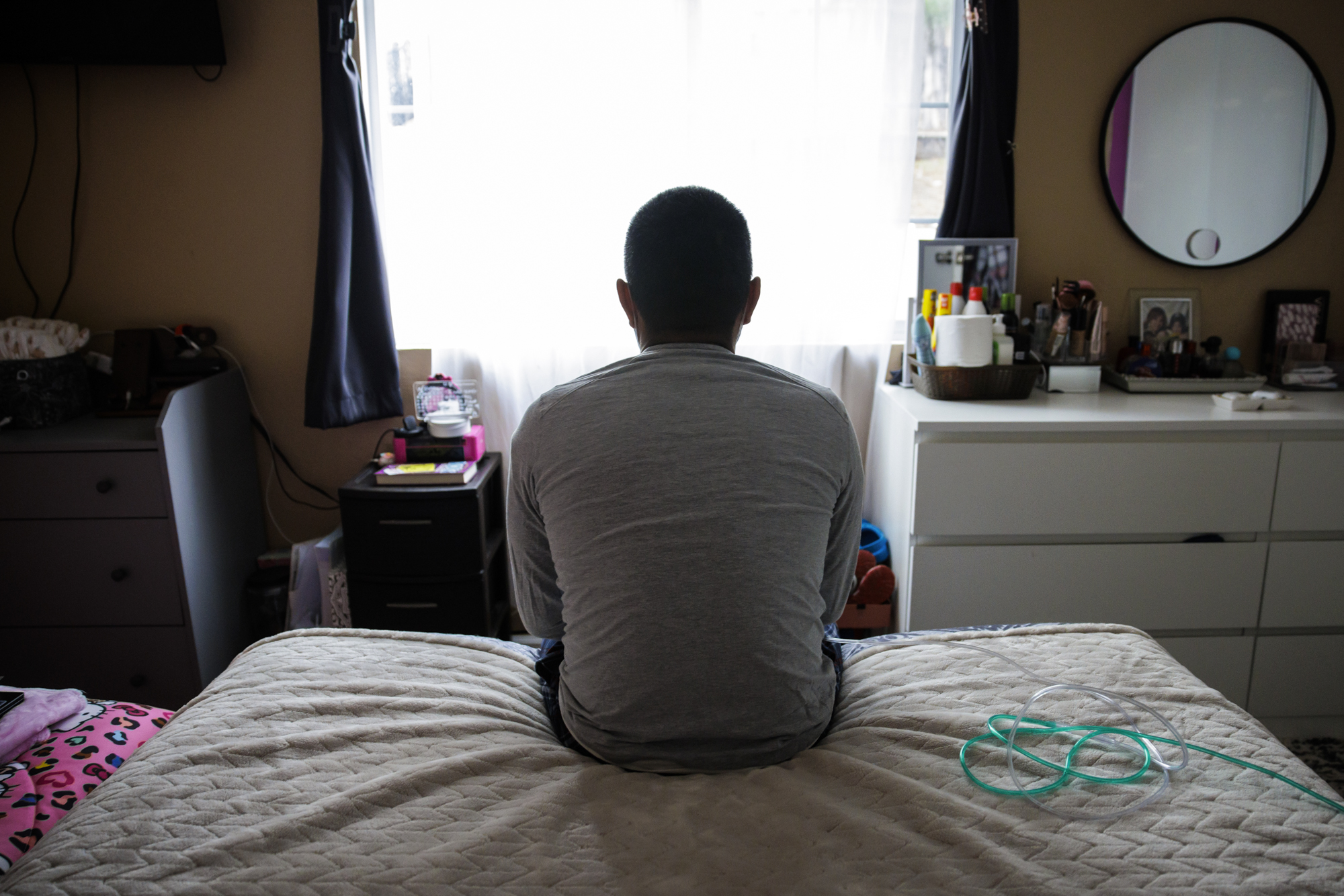
"caption": "Mr. Lopez sits beside his breathing tube on a bed in his home in Pittsburg on Nov. 15, 2025.",
"credit": "Martin do Nascimento/KQED",
"altTag": null,
"description": null,
"imgSizes": {
"thumbnail": {
"file": "https://cdn.kqed.org/wp-content/uploads/sites/10/2025/11/251115-DEADLY-LUNG-DISEASE-MD-01-KQED-1-160x107.jpg",
"width": 160,
"height": 107,
"mimeType": "image/jpeg"
},
"1536x1536": {
"file": "https://cdn.kqed.org/wp-content/uploads/sites/10/2025/11/251115-DEADLY-LUNG-DISEASE-MD-01-KQED-1-1536x1025.jpg",
"width": 1536,
"height": 1025,
"mimeType": "image/jpeg"
},
"post-thumbnail": {
"file": "https://cdn.kqed.org/wp-content/uploads/sites/10/2025/11/251115-DEADLY-LUNG-DISEASE-MD-01-KQED-1-672x372.jpg",
"width": 672,
"height": 372,
"mimeType": "image/jpeg"
},
"twentyfourteen-full-width": {
"file": "https://cdn.kqed.org/wp-content/uploads/sites/10/2025/11/251115-DEADLY-LUNG-DISEASE-MD-01-KQED-1-1038x576.jpg",
"width": 1038,
"height": 576,
"mimeType": "image/jpeg"
},
"npr-cds-wide": {
"file": "https://cdn.kqed.org/wp-content/uploads/sites/10/2025/11/251115-DEADLY-LUNG-DISEASE-MD-01-KQED-1-1200x675.jpg",
"width": 1200,
"height": 675,
"mimeType": "image/jpeg"
},
"kqedFullSize": {
"file": "https://cdn.kqed.org/wp-content/uploads/sites/10/2025/11/251115-DEADLY-LUNG-DISEASE-MD-01-KQED-1.jpg",
"width": 2000,
"height": 1334
}
},
"isLoading": false,
"fetchFailed": false
},
"news_12062016": {
"type": "attachments",
"id": "news_12062016",
"meta": {
"index": "attachments_1716263798",
"site": "news",
"id": "12062016",
"found": true
},
"title": "20251028_IMMIGRANT MASS-_HERNANDEZ-17-KQED",
"publishDate": 1761753039,
"status": "inherit",
"parent": 0,
"modified": 1763168870,
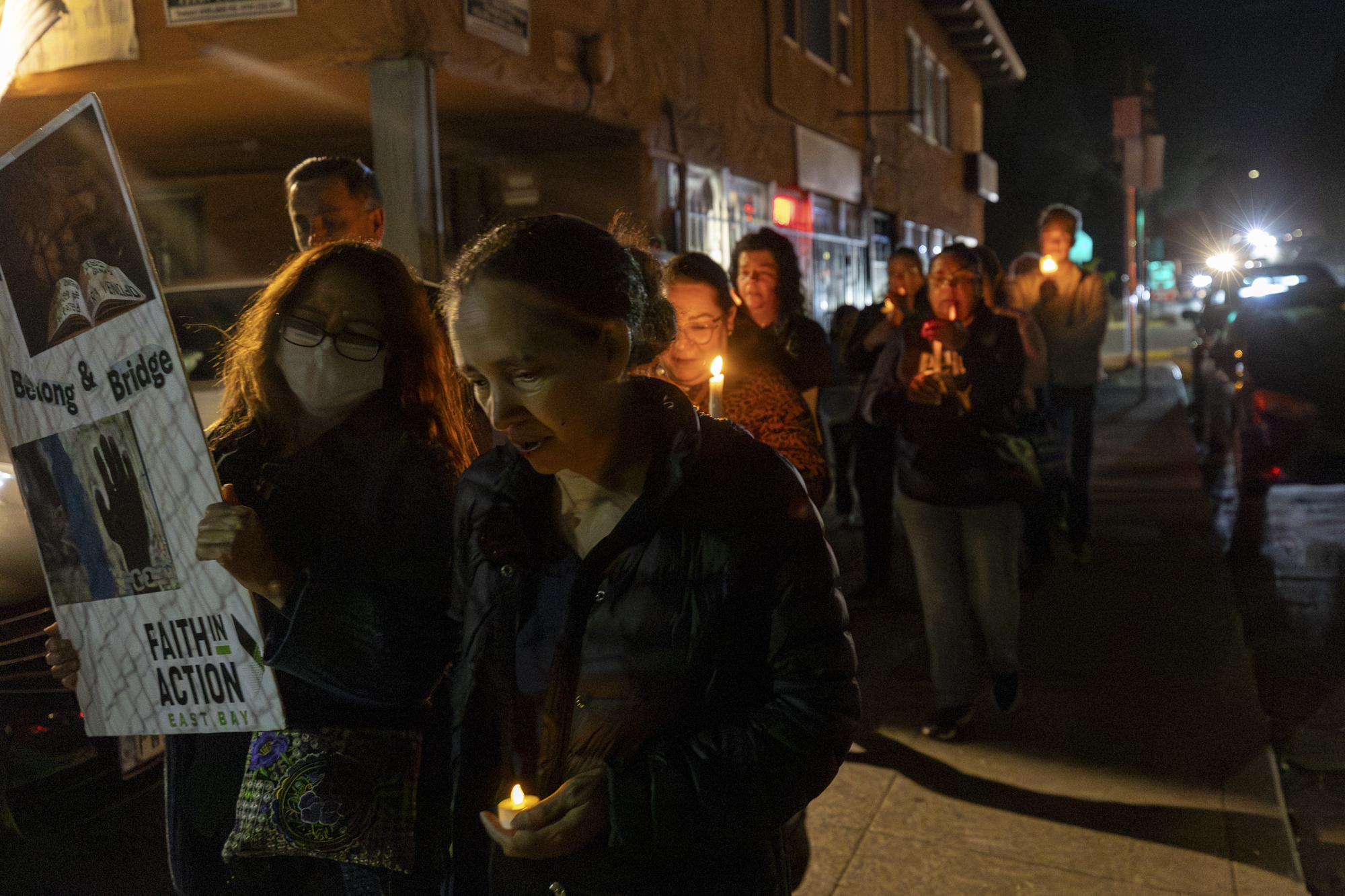
"caption": "Faith in Action East Bay members join a candlelight procession outside Saint Jarlath’s Church during a vigil for immigrant families on Oct. 28, 2025, in Oakland.",
"credit": "Gustavo Hernandez/KQED",
"altTag": null,
"description": null,
"imgSizes": {
"thumbnail": {
"file": "https://cdn.kqed.org/wp-content/uploads/sites/10/2025/10/20251028_IMMIGRANT-MASS-_HERNANDEZ-17-KQED-160x107.jpg",
"width": 160,
"height": 107,
"mimeType": "image/jpeg"
},
"1536x1536": {
"file": "https://cdn.kqed.org/wp-content/uploads/sites/10/2025/10/20251028_IMMIGRANT-MASS-_HERNANDEZ-17-KQED-1536x1024.jpg",
"width": 1536,
"height": 1024,
"mimeType": "image/jpeg"
},
"post-thumbnail": {
"file": "https://cdn.kqed.org/wp-content/uploads/sites/10/2025/10/20251028_IMMIGRANT-MASS-_HERNANDEZ-17-KQED-672x372.jpg",
"width": 672,
"height": 372,
"mimeType": "image/jpeg"
},
"twentyfourteen-full-width": {
"file": "https://cdn.kqed.org/wp-content/uploads/sites/10/2025/10/20251028_IMMIGRANT-MASS-_HERNANDEZ-17-KQED-1038x576.jpg",
"width": 1038,
"height": 576,
"mimeType": "image/jpeg"
},
"npr-cds-wide": {
"file": "https://cdn.kqed.org/wp-content/uploads/sites/10/2025/10/20251028_IMMIGRANT-MASS-_HERNANDEZ-17-KQED-1600x900.jpg",
"width": 1600,
"height": 900,
"mimeType": "image/jpeg"
},
"kqedFullSize": {
"file": "https://cdn.kqed.org/wp-content/uploads/sites/10/2025/10/20251028_IMMIGRANT-MASS-_HERNANDEZ-17-KQED.jpg",
"width": 2000,
"height": 1333
}
},
"isLoading": false,
"fetchFailed": false
},
"news_11963529": {
"type": "attachments",
"id": "news_11963529",
"meta": {
"index": "attachments_1716263798",
"site": "news",
"id": "11963529",
"found": true
},
"title": "18 wheeler semi truck on road at sunrise",
"publishDate": 1696525955,
"status": "inherit",
"parent": 11963514,
"modified": 1763164813,
"caption": "A semitrailer on a freeway.",
"credit": "Getty Images",
"altTag": "A semitrailer on a freeway.",
"description": null,
"imgSizes": {
"medium": {
"file": "https://cdn.kqed.org/wp-content/uploads/sites/10/2023/10/231005-TRUCK-GETTY-KQED-800x534.jpg",
"width": 800,
"height": 534,
"mimeType": "image/jpeg"
},
"large": {
"file": "https://cdn.kqed.org/wp-content/uploads/sites/10/2023/10/231005-TRUCK-GETTY-KQED-1020x680.jpg",
"width": 1020,
"height": 680,
"mimeType": "image/jpeg"
},
"thumbnail": {
"file": "https://cdn.kqed.org/wp-content/uploads/sites/10/2023/10/231005-TRUCK-GETTY-KQED-160x107.jpg",
"width": 160,
"height": 107,
"mimeType": "image/jpeg"
},
"1536x1536": {
"file": "https://cdn.kqed.org/wp-content/uploads/sites/10/2023/10/231005-TRUCK-GETTY-KQED-1536x1025.jpg",
"width": 1536,
"height": 1025,
"mimeType": "image/jpeg"
},
"post-thumbnail": {
"file": "https://cdn.kqed.org/wp-content/uploads/sites/10/2023/10/231005-TRUCK-GETTY-KQED-672x372.jpg",
"width": 672,
"height": 372,
"mimeType": "image/jpeg"
},
"twentyfourteen-full-width": {
"file": "https://cdn.kqed.org/wp-content/uploads/sites/10/2023/10/231005-TRUCK-GETTY-KQED-1038x576.jpg",
"width": 1038,
"height": 576,
"mimeType": "image/jpeg"
},
"full-width": {
"file": "https://cdn.kqed.org/wp-content/uploads/sites/10/2023/10/231005-TRUCK-GETTY-KQED-1920x1281.jpg",
"width": 1920,
"height": 1281,
"mimeType": "image/jpeg"
},
"kqedFullSize": {
"file": "https://cdn.kqed.org/wp-content/uploads/sites/10/2023/10/231005-TRUCK-GETTY-KQED.jpg",
"width": 2000,
"height": 1334
}
},
"isLoading": false,
"fetchFailed": false
},
"news_12064027": {
"type": "attachments",
"id": "news_12064027",
"meta": {
"index": "attachments_1716263798",
"site": "news",
"id": "12064027",
"found": true
},
"title": "Immigration Commentator Detained",
"publishDate": 1763070004,
"status": "inherit",
"parent": 12063851,
"modified": 1763070053,
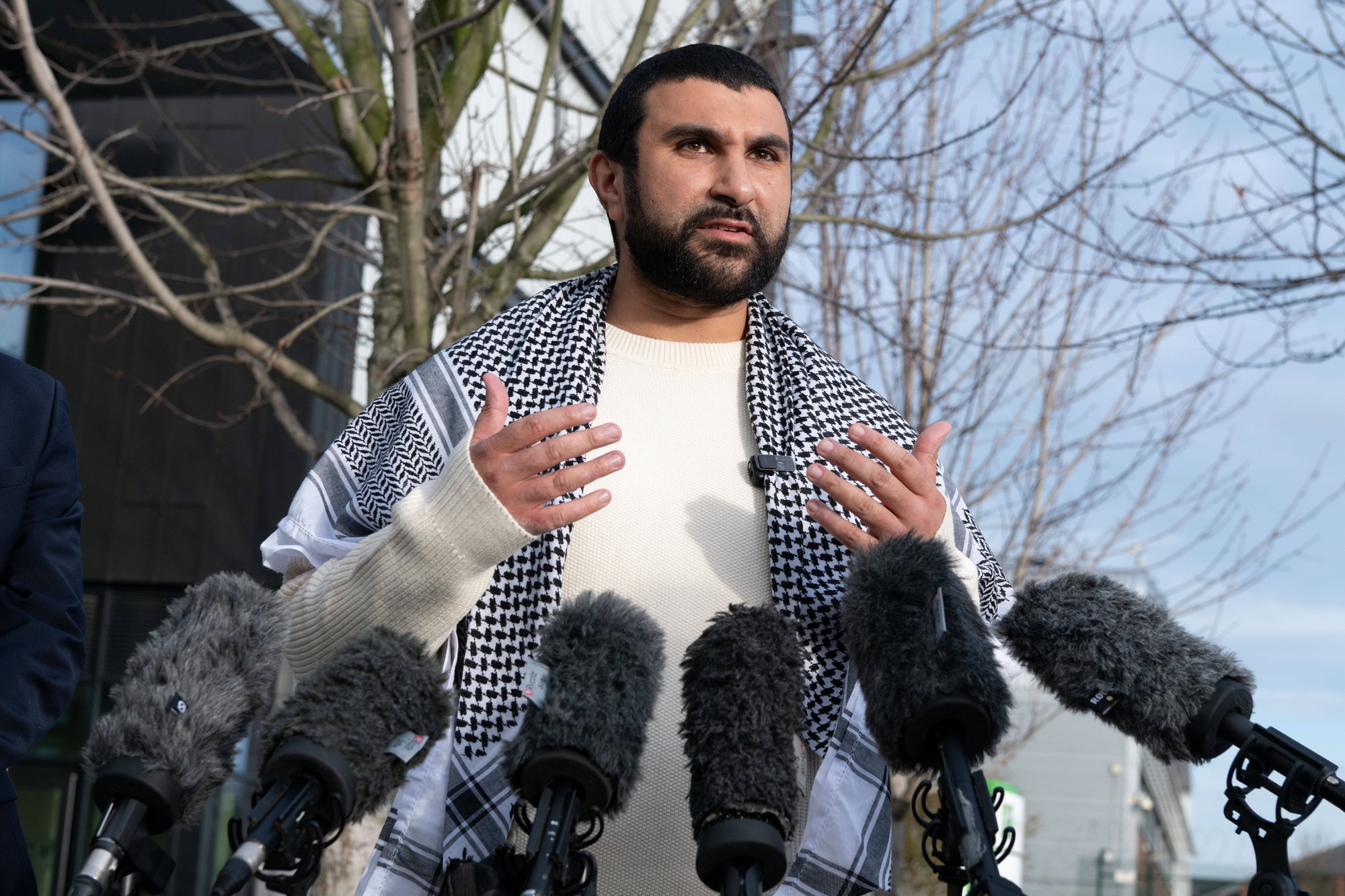
"caption": "British political commentator Sami Hamdi speaks to the media in London on Thursday, Nov. 13, 2025, upon his return to the U.K. after he was arrested by Immigration and Customs Enforcement on Oct. 26, while on a speaking tour in the U.S.",
"credit": "Thomas Krych/AP Photo",
"altTag": null,
"description": null,
"imgSizes": {
"thumbnail": {
"file": "https://cdn.kqed.org/wp-content/uploads/sites/10/2025/11/SamiHamdiLondonAP-160x107.jpg",
"width": 160,
"height": 107,
"mimeType": "image/jpeg"
},
"1536x1536": {
"file": "https://cdn.kqed.org/wp-content/uploads/sites/10/2025/11/SamiHamdiLondonAP-1536x1024.jpg",
"width": 1536,
"height": 1024,
"mimeType": "image/jpeg"
},
"post-thumbnail": {
"file": "https://cdn.kqed.org/wp-content/uploads/sites/10/2025/11/SamiHamdiLondonAP-672x372.jpg",
"width": 672,
"height": 372,
"mimeType": "image/jpeg"
},
"twentyfourteen-full-width": {
"file": "https://cdn.kqed.org/wp-content/uploads/sites/10/2025/11/SamiHamdiLondonAP-1038x576.jpg",
"width": 1038,
"height": 576,
"mimeType": "image/jpeg"
},
"npr-cds-wide": {
"file": "https://cdn.kqed.org/wp-content/uploads/sites/10/2025/11/SamiHamdiLondonAP-1200x675.jpg",
"width": 1200,
"height": 675,
"mimeType": "image/jpeg"
},
"kqedFullSize": {
"file": "https://cdn.kqed.org/wp-content/uploads/sites/10/2025/11/SamiHamdiLondonAP.jpg",
"width": 2000,
"height": 1333
}
},
"isLoading": false,
"fetchFailed": false
},
"news_12063947": {
"type": "attachments",
"id": "news_12063947",
"meta": {
"index": "attachments_1716263798",
"site": "news",
"id": "12063947",
"found": true
},
"title": "Home healthcare",
"publishDate": 1762998778,
"status": "inherit",
"parent": 12063843,
"modified": 1762998817,
"caption": "A senior woman at home receiving health care.",
"credit": "LPETTET via Getty Images",
"altTag": null,
"description": null,
"imgSizes": {
"thumbnail": {
"file": "https://cdn.kqed.org/wp-content/uploads/sites/10/2025/11/CaregiverGetty-160x107.jpg",
"width": 160,
"height": 107,
"mimeType": "image/jpeg"
},
"1536x1536": {
"file": "https://cdn.kqed.org/wp-content/uploads/sites/10/2025/11/CaregiverGetty-1536x1024.jpg",
"width": 1536,
"height": 1024,
"mimeType": "image/jpeg"
},
"post-thumbnail": {
"file": "https://cdn.kqed.org/wp-content/uploads/sites/10/2025/11/CaregiverGetty-672x372.jpg",
"width": 672,
"height": 372,
"mimeType": "image/jpeg"
},
"twentyfourteen-full-width": {
"file": "https://cdn.kqed.org/wp-content/uploads/sites/10/2025/11/CaregiverGetty-1038x576.jpg",
"width": 1038,
"height": 576,
"mimeType": "image/jpeg"
},
"npr-cds-wide": {
"file": "https://cdn.kqed.org/wp-content/uploads/sites/10/2025/11/CaregiverGetty-1200x675.jpg",
"width": 1200,
"height": 675,
"mimeType": "image/jpeg"
},
"kqedFullSize": {
"file": "https://cdn.kqed.org/wp-content/uploads/sites/10/2025/11/CaregiverGetty.jpg",
"width": 2000,
"height": 1333
}
},
"isLoading": false,
"fetchFailed": false
},
"news_12063909": {
"type": "attachments",
"id": "news_12063909",
"meta": {
"index": "attachments_1716263798",
"site": "news",
"id": "12063909",
"found": true
},
"title": "251024-CoastGuard-01-BL_qed",
"publishDate": 1762992686,
"status": "inherit",
"parent": 12063898,
"modified": 1762992696,
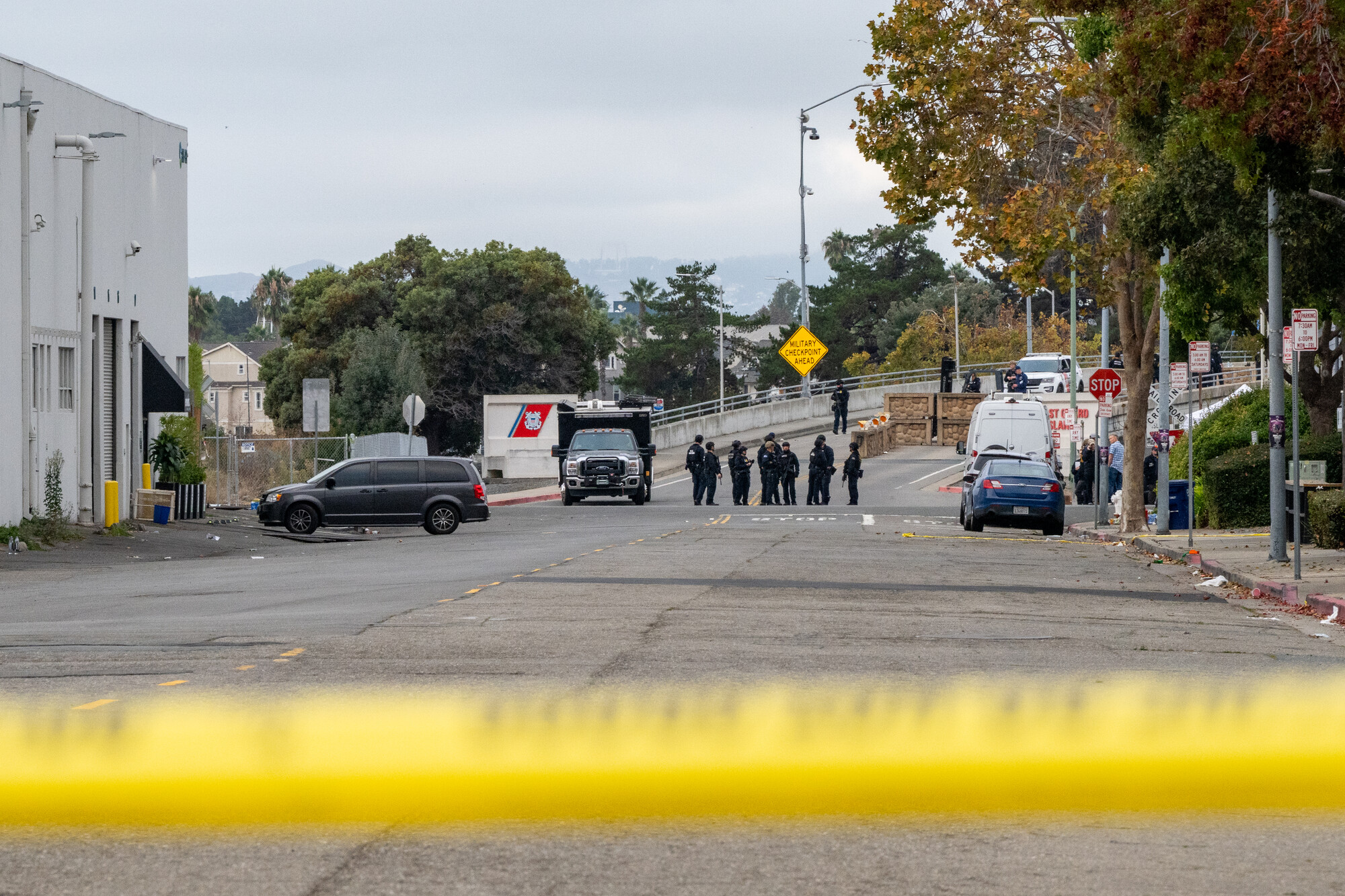
"caption": "Law enforcement agents stand at the intersection of Dennison Street and Embarcadero in front of Coast Guard Island in Oakland on Oct. 24, 2025, following a shooting late last night in which security personnel opened fire on a U-Haul near the base.",
"credit": "Beth LaBerge/KQED",
"altTag": null,
"description": null,
"imgSizes": {
"thumbnail": {
"file": "https://cdn.kqed.org/wp-content/uploads/sites/10/2025/11/251024-CoastGuard-01-BL_qed-160x107.jpg",
"width": 160,
"height": 107,
"mimeType": "image/jpeg"
},
"1536x1536": {
"file": "https://cdn.kqed.org/wp-content/uploads/sites/10/2025/11/251024-CoastGuard-01-BL_qed-1536x1024.jpg",
"width": 1536,
"height": 1024,
"mimeType": "image/jpeg"
},
"post-thumbnail": {
"file": "https://cdn.kqed.org/wp-content/uploads/sites/10/2025/11/251024-CoastGuard-01-BL_qed-672x372.jpg",
"width": 672,
"height": 372,
"mimeType": "image/jpeg"
},
"twentyfourteen-full-width": {
"file": "https://cdn.kqed.org/wp-content/uploads/sites/10/2025/11/251024-CoastGuard-01-BL_qed-1038x576.jpg",
"width": 1038,
"height": 576,
"mimeType": "image/jpeg"
},
"npr-cds-wide": {
"file": "https://cdn.kqed.org/wp-content/uploads/sites/10/2025/11/251024-CoastGuard-01-BL_qed-1200x675.jpg",
"width": 1200,
"height": 675,
"mimeType": "image/jpeg"
},
"kqedFullSize": {
"file": "https://cdn.kqed.org/wp-content/uploads/sites/10/2025/11/251024-CoastGuard-01-BL_qed.jpg",
"width": 2000,
"height": 1333
}
},
"isLoading": false,
"fetchFailed": false
},
"news_12063879": {
"type": "attachments",
"id": "news_12063879",
"meta": {
"index": "attachments_1716263798",
"site": "news",
"id": "12063879",
"found": true
},
"title": "251112-OAKLANDLANDLORD00011_TV-KQED",
"publishDate": 1762986413,
"status": "inherit",
"parent": 0,
"modified": 1762994914,
"caption": "A home in Oakland where tenants are allegedly being threatened with immigration enforcement by their landlords on Nov. 12, 2025.",
"credit": "Tâm Vũ/KQED",
"altTag": null,
"description": null,
"imgSizes": {
"thumbnail": {
"file": "https://cdn.kqed.org/wp-content/uploads/sites/10/2025/11/251112-OAKLANDLANDLORD00011_TV-KQED-160x107.jpg",
"width": 160,
"height": 107,
"mimeType": "image/jpeg"
},
"1536x1536": {
"file": "https://cdn.kqed.org/wp-content/uploads/sites/10/2025/11/251112-OAKLANDLANDLORD00011_TV-KQED-1536x1024.jpg",
"width": 1536,
"height": 1024,
"mimeType": "image/jpeg"
},
"post-thumbnail": {
"file": "https://cdn.kqed.org/wp-content/uploads/sites/10/2025/11/251112-OAKLANDLANDLORD00011_TV-KQED-672x372.jpg",
"width": 672,
"height": 372,
"mimeType": "image/jpeg"
},
"twentyfourteen-full-width": {
"file": "https://cdn.kqed.org/wp-content/uploads/sites/10/2025/11/251112-OAKLANDLANDLORD00011_TV-KQED-1038x576.jpg",
"width": 1038,
"height": 576,
"mimeType": "image/jpeg"
},
"npr-cds-wide": {
"file": "https://cdn.kqed.org/wp-content/uploads/sites/10/2025/11/251112-OAKLANDLANDLORD00011_TV-KQED-1200x675.jpg",
"width": 1200,
"height": 675,
"mimeType": "image/jpeg"
},
"kqedFullSize": {
"file": "https://cdn.kqed.org/wp-content/uploads/sites/10/2025/11/251112-OAKLANDLANDLORD00011_TV-KQED.jpg",
"width": 2000,
"height": 1333
}
},
"isLoading": false,
"fetchFailed": false
},
"news_12063629": {
"type": "attachments",
"id": "news_12063629",
"meta": {
"index": "attachments_1716263798",
"site": "news",
"id": "12063629",
"found": true
},
"title": "231029_OAKDiadelosMuertosFestival_EG-38",
"publishDate": 1762806227,
"status": "inherit",
"parent": 12062734,
"modified": 1762974661,
"caption": "Xol Venegas wears handmade butterfly gloves to the Oakland Día de los Muertos Festival in Fruitvale on Sunday, Oct. 29, 2023. Día de los Muertos is her favorite holiday. \"It's about that nobody gets forgotten in the end. That everybody feels a sense of community,\" she said.",
"credit": "Estefany Gonzalez for KQED",
"altTag": null,
"description": null,
"imgSizes": {
"thumbnail": {
"file": "https://cdn.kqed.org/wp-content/uploads/sites/10/2025/11/231029_OAKDiadelosMuertosFestival_EG-38-160x107.jpg",
"width": 160,
"height": 107,
"mimeType": "image/jpeg"
},
"1536x1536": {
"file": "https://cdn.kqed.org/wp-content/uploads/sites/10/2025/11/231029_OAKDiadelosMuertosFestival_EG-38-1536x1024.jpg",
"width": 1536,
"height": 1024,
"mimeType": "image/jpeg"
},
"post-thumbnail": {
"file": "https://cdn.kqed.org/wp-content/uploads/sites/10/2025/11/231029_OAKDiadelosMuertosFestival_EG-38-672x372.jpg",
"width": 672,
"height": 372,
"mimeType": "image/jpeg"
},
"twentyfourteen-full-width": {
"file": "https://cdn.kqed.org/wp-content/uploads/sites/10/2025/11/231029_OAKDiadelosMuertosFestival_EG-38-1038x576.jpg",
"width": 1038,
"height": 576,
"mimeType": "image/jpeg"
},
"npr-cds-wide": {
"file": "https://cdn.kqed.org/wp-content/uploads/sites/10/2025/11/231029_OAKDiadelosMuertosFestival_EG-38-1200x675.jpg",
"width": 1200,
"height": 675,
"mimeType": "image/jpeg"
},
"kqedFullSize": {
"file": "https://cdn.kqed.org/wp-content/uploads/sites/10/2025/11/231029_OAKDiadelosMuertosFestival_EG-38.jpg",
"width": 1920,
"height": 1280
}
},
"isLoading": false,
"fetchFailed": false
},
"news_12063685": {
"type": "attachments",
"id": "news_12063685",
"meta": {
"index": "attachments_1716263798",
"site": "news",
"id": "12063685",
"found": true
},
"title": "20251106_ICE Vigil_GH-15_qed",
"publishDate": 1762811431,
"status": "inherit",
"parent": 12063676,
"modified": 1762811465,
"caption": "A demonstrator holds a sign reading “Santuario: Manteniendo Familias Unidas” (“Sanctuary: Keeping Families United”) during the Faith in Action “Walking Our Faith” vigil outside the San Francisco Immigration Court on Nov. 6, 2025. The multi-faith gathering called for compassion and protection for immigrant families.",
"credit": "Gustavo Hernandez/KQED",
"altTag": null,
"description": null,
"imgSizes": {
"thumbnail": {
"file": "https://cdn.kqed.org/wp-content/uploads/sites/10/2025/11/20251106_ICE-Vigil_GH-15_qed-160x107.jpg",
"width": 160,
"height": 107,
"mimeType": "image/jpeg"
},
"1536x1536": {
"file": "https://cdn.kqed.org/wp-content/uploads/sites/10/2025/11/20251106_ICE-Vigil_GH-15_qed-1536x1024.jpg",
"width": 1536,
"height": 1024,
"mimeType": "image/jpeg"
},
"post-thumbnail": {
"file": "https://cdn.kqed.org/wp-content/uploads/sites/10/2025/11/20251106_ICE-Vigil_GH-15_qed-672x372.jpg",
"width": 672,
"height": 372,
"mimeType": "image/jpeg"
},
"twentyfourteen-full-width": {
"file": "https://cdn.kqed.org/wp-content/uploads/sites/10/2025/11/20251106_ICE-Vigil_GH-15_qed-1038x576.jpg",
"width": 1038,
"height": 576,
"mimeType": "image/jpeg"
},
"npr-cds-wide": {
"file": "https://cdn.kqed.org/wp-content/uploads/sites/10/2025/11/20251106_ICE-Vigil_GH-15_qed-1200x675.jpg",
"width": 1200,
"height": 675,
"mimeType": "image/jpeg"
},
"kqedFullSize": {
"file": "https://cdn.kqed.org/wp-content/uploads/sites/10/2025/11/20251106_ICE-Vigil_GH-15_qed.jpg",
"width": 2000,
"height": 1333
}
},
"isLoading": false,
"fetchFailed": false
},
"news_12063527": {
"type": "attachments",
"id": "news_12063527",
"meta": {
"index": "attachments_1716263798",
"site": "news",
"id": "12063527",
"found": true
},
"title": "251023-MAYOR LEE PRESSER-MD-02_qed",
"publishDate": 1762558007,
"status": "inherit",
"parent": 12063471,
"modified": 1762558017,
"caption": "Oakland Mayor Barbara Lee speaks at a press conference at Oakland City Hall on Oct. 23, 2025.",
"credit": "Martin do Nascimento/KQED",
"altTag": null,
"description": null,
"imgSizes": {
"thumbnail": {
"file": "https://cdn.kqed.org/wp-content/uploads/sites/10/2025/11/251023-MAYOR-LEE-PRESSER-MD-02_qed-160x107.jpg",
"width": 160,
"height": 107,
"mimeType": "image/jpeg"
},
"1536x1536": {
"file": "https://cdn.kqed.org/wp-content/uploads/sites/10/2025/11/251023-MAYOR-LEE-PRESSER-MD-02_qed-1536x1024.jpg",
"width": 1536,
"height": 1024,
"mimeType": "image/jpeg"
},
"post-thumbnail": {
"file": "https://cdn.kqed.org/wp-content/uploads/sites/10/2025/11/251023-MAYOR-LEE-PRESSER-MD-02_qed-672x372.jpg",
"width": 672,
"height": 372,
"mimeType": "image/jpeg"
},
"twentyfourteen-full-width": {
"file": "https://cdn.kqed.org/wp-content/uploads/sites/10/2025/11/251023-MAYOR-LEE-PRESSER-MD-02_qed-1038x576.jpg",
"width": 1038,
"height": 576,
"mimeType": "image/jpeg"
},
"npr-cds-wide": {
"file": "https://cdn.kqed.org/wp-content/uploads/sites/10/2025/11/251023-MAYOR-LEE-PRESSER-MD-02_qed-1200x675.jpg",
"width": 1200,
"height": 675,
"mimeType": "image/jpeg"
},
"kqedFullSize": {
"file": "https://cdn.kqed.org/wp-content/uploads/sites/10/2025/11/251023-MAYOR-LEE-PRESSER-MD-02_qed.jpg",
"width": 2000,
"height": 1333
}
},
"isLoading": false,
"fetchFailed": false
},
"news_12063322": {
"type": "attachments",
"id": "news_12063322",
"meta": {
"index": "attachments_1716263798",
"site": "news",
"id": "12063322",
"found": true
},
"title": "20251106_ICE VIGIL_GH-3-KQED",
"publishDate": 1762470168,
"status": "inherit",
"parent": 0,
"modified": 1762470299,
"caption": "Faith in Action organizers march north on Montgomery Street during the “Walking Our Faith” vigil for prayer and caring in San Francisco on Nov. 6, 2025.",
"credit": "Gustavo Hernandez/KQED",
"altTag": null,
"description": null,
"imgSizes": {
"thumbnail": {
"file": "https://cdn.kqed.org/wp-content/uploads/sites/10/2025/11/20251106_ICE-VIGIL_GH-3-KQED-160x107.jpg",
"width": 160,
"height": 107,
"mimeType": "image/jpeg"
},
"1536x1536": {
"file": "https://cdn.kqed.org/wp-content/uploads/sites/10/2025/11/20251106_ICE-VIGIL_GH-3-KQED-1536x1024.jpg",
"width": 1536,
"height": 1024,
"mimeType": "image/jpeg"
},
"post-thumbnail": {
"file": "https://cdn.kqed.org/wp-content/uploads/sites/10/2025/11/20251106_ICE-VIGIL_GH-3-KQED-672x372.jpg",
"width": 672,
"height": 372,
"mimeType": "image/jpeg"
},
"twentyfourteen-full-width": {
"file": "https://cdn.kqed.org/wp-content/uploads/sites/10/2025/11/20251106_ICE-VIGIL_GH-3-KQED-1038x576.jpg",
"width": 1038,
"height": 576,
"mimeType": "image/jpeg"
},
"npr-cds-wide": {
"file": "https://cdn.kqed.org/wp-content/uploads/sites/10/2025/11/20251106_ICE-VIGIL_GH-3-KQED-1200x675.jpg",
"width": 1200,
"height": 675,
"mimeType": "image/jpeg"
},
"kqedFullSize": {
"file": "https://cdn.kqed.org/wp-content/uploads/sites/10/2025/11/20251106_ICE-VIGIL_GH-3-KQED.jpg",
"width": 2000,
"height": 1333
}
},
"isLoading": false,
"fetchFailed": false
}
},
"audioPlayerReducer": {
"postId": "stream_live",
"isPaused": true,
"isPlaying": false,
"pfsActive": false,
"pledgeModalIsOpen": true,
"playerDrawerIsOpen": false,
"liveAudioPlayStartedAt": 0,
"liveAudioPlayContext": ""
},
"authorsReducer": {
"tychehendricks": {
"type": "authors",
"id": "259",
"meta": {
"index": "authors_1716337520",
"id": "259",
"found": true
},
"name": "Tyche Hendricks",
"firstName": "Tyche",
"lastName": "Hendricks",
"slug": "tychehendricks",
"email": "thendricks@kqed.org",
"display_author_email": true,
"staff_mastheads": [
"news"
],
"title": "KQED Senior Editor, Immigration",
"bio": "\u003cspan style=\"font-weight: 400;\">Tyche Hendricks is KQED’s senior editor for immigration, leading coverage of the policy and politics that affect California’s immigrant communities. Her work for KQED’s radio and online audiences is also carried on NPR and other national outlets. She has been recognized with awards from the Radio and Television News Directors Association, the Society for Professional Journalists; the Education Writers Association; the Best of the West and the National Federation of Community Broadcasters. Before joining KQED in 2010, Tyche spent more than a dozen years as a newspaper reporter, notably at the \u003c/span>\u003ci>\u003cspan style=\"font-weight: 400;\">San Francisco Chronicle\u003c/span>\u003c/i>\u003cspan style=\"font-weight: 400;\">. At different times she has covered criminal justice, government and politics and urban planning. Tyche has taught in the MFA Creative Writing program at the University of San Francisco and at UC Berkeley’s Graduate School of Journalism, where she was co-director of a national immigration symposium for professional journalists. She is the author of \u003c/span>\u003ci>\u003cspan style=\"font-weight: 400;\">The Wind Doesn't Need a Passport: Stories from the U.S.-Mexico Borderlands\u003c/span>\u003c/i>\u003cspan style=\"font-weight: 400;\"> (University of California Press). \u003c/span>",
"avatar": "https://secure.gravatar.com/avatar/b8ee458e2731c2d43df86882ce17267e?s=600&d=blank&r=g",
"twitter": "tychehendricks",
"facebook": null,
"instagram": null,
"linkedin": null,
"sites": [
{
"site": "news",
"roles": [
"editor"
]
},
{
"site": "stateofhealth",
"roles": [
"editor"
]
}
],
"headData": {
"title": "Tyche Hendricks | KQED",
"description": "KQED Senior Editor, Immigration",
"ogImgSrc": "https://secure.gravatar.com/avatar/b8ee458e2731c2d43df86882ce17267e?s=600&d=blank&r=g",
"twImgSrc": "https://secure.gravatar.com/avatar/b8ee458e2731c2d43df86882ce17267e?s=600&d=blank&r=g"
},
"isLoading": false,
"link": "/author/tychehendricks"
},
"aemslie": {
"type": "authors",
"id": "3206",
"meta": {
"index": "authors_1716337520",
"id": "3206",
"found": true
},
"name": "Alex Emslie",
"firstName": "Alex",
"lastName": "Emslie",
"slug": "aemslie",
"email": "aemslie@kqed.org",
"display_author_email": true,
"staff_mastheads": [
"news"
],
"title": "KQED Senior Editor",
"bio": "Alex Emslie is senior editor of talent and development at KQED, where he manages dozens of early career journalists and oversees news department internships.\r\n\r\nHe is a former carpenter and proud graduate of City College of San Francisco and San Francisco State University, where he studied journalism and criminal justice before joining KQED in 2013.\r\n\r\nAlex produced investigative journalism focused on \u003ca href=\"https://www.kqed.org/news/11667594/the-trials-of-marvin-mutch-video\">criminal justice\u003c/a> and policing for most of a decade. He has broken major stories about \u003ca href=\"https://www.kqed.org/news/135682/amid-a-series-of-vallejo-police-shootings-one-officers-name-stands-out\">police use of deadly force\u003c/a>, \u003ca href=\"https://www.kqed.org/news/10454955/racist-texts-prompt-sfpd-internal-investigation\">officer misconduct\u003c/a> and \u003ca href=\"https://www.kqed.org/news/11712239/terrorist-or-troll-judge-to-weigh-whether-oakland-man-really-intended-to-attack-bay-area\">other\u003c/a> \u003ca href=\"https://www.kqed.org/news/11221414/hayward-paid-159000-to-husband-of-retired-police-chief-documents-show\">high\u003c/a>-\u003ca href=\"https://www.kqed.org/news/10622762/the-forgotten-tracking-two-homicides-in-san-francisco-public-housing\">profile\u003c/a> \u003ca href=\"https://www.kqed.org/news/11624516/federal-agency-promoted-ranger-just-months-after-his-gun-was-stolen-and-used-in-steinle-killing\">cases\u003c/a>. He co-founded the \u003ca href=\"https://projects.scpr.org/california-reporting-project/\">California Reporting Project\u003c/a> in 2019 to obtain and report on previously confidential police internal investigations. The effort produced well over 100 original stories and changed the course of multiple criminal cases.\r\n\r\nHis work has been recognized with numerous journalism awards, including a national Edward R. Murrow award for several years of \u003ca href=\"https://www.kqed.org/news/11688481/sfpd-officers-in-mario-woods-case-recount-shooting-in-newly-filed-depositions\">reporting\u003c/a> on the San Francisco Police shooting of Mario Woods. His \u003ca href=\"https://www.kqed.org/news/147854/half-of-those-killed-by-san-francisco-police-are-mentally-ill\">reporting\u003c/a> on police killings of people in psychiatric crisis was cited in amicus briefs before the U.S. Supreme Court.\r\n\r\nAlex now enjoys mentoring the next generation of journalists at KQED.",
"avatar": "https://secure.gravatar.com/avatar/e691e65209f20e9da202bd730ead5663?s=600&d=blank&r=g",
"twitter": "SFNewsReporter",
"facebook": null,
"instagram": null,
"linkedin": null,
"sites": [
{
"site": "arts",
"roles": [
"editor"
]
},
{
"site": "news",
"roles": [
"editor"
]
},
{
"site": "mindshift",
"roles": [
"editor"
]
},
{
"site": "stateofhealth",
"roles": [
"editor"
]
},
{
"site": "science",
"roles": [
"administrator"
]
}
],
"headData": {
"title": "Alex Emslie | KQED",
"description": "KQED Senior Editor",
"ogImgSrc": "https://secure.gravatar.com/avatar/e691e65209f20e9da202bd730ead5663?s=600&d=blank&r=g",
"twImgSrc": "https://secure.gravatar.com/avatar/e691e65209f20e9da202bd730ead5663?s=600&d=blank&r=g"
},
"isLoading": false,
"link": "/author/aemslie"
},
"fjhabvala": {
"type": "authors",
"id": "8659",
"meta": {
"index": "authors_1716337520",
"id": "8659",
"found": true
},
"name": "Farida Jhabvala Romero",
"firstName": "Farida",
"lastName": "Jhabvala Romero",
"slug": "fjhabvala",
"email": "fjhabvala@kqed.org",
"display_author_email": true,
"staff_mastheads": [
"news"
],
"title": "KQED Contributor",
"bio": "Farida Jhabvala Romero is a Labor Correspondent for KQED. She previously covered immigration. Farida was \u003ca href=\"https://www.ccnma.org/2022-most-influential-latina-journalists\">named\u003c/a> one of the 10 Most Influential Latina Journalists in California in 2022 by the California Chicano News Media Association. Her work has won awards from the Society of Professional Journalists (Northern California), as well as a national and regional Edward M. Murrow Award for the collaborative reporting projects “Dangerous Air” and “Graying California.” Before joining KQED, Farida worked as a producer at Radio Bilingüe, a national public radio network. Farida earned her master’s degree in journalism from Stanford University.",
"avatar": "https://secure.gravatar.com/avatar/f9f022d4e2609741874222a1e9d41f48fea74011aa7c615eef91d9a50c944ebe?s=600&d=blank&r=g",
"twitter": "FaridaJhabvala",
"bluesky": null,
"facebook": null,
"instagram": null,
"linkedin": "https://www.linkedin.com/in/faridajhabvala/",
"sites": [
{
"site": "news",
"roles": [
"editor"
]
},
{
"site": "stateofhealth",
"roles": [
"author"
]
},
{
"site": "liveblog",
"roles": [
"author"
]
}
],
"headData": {
"title": "Farida Jhabvala Romero | KQED",
"description": "KQED Contributor",
"ogImgSrc": "https://secure.gravatar.com/avatar/f9f022d4e2609741874222a1e9d41f48fea74011aa7c615eef91d9a50c944ebe?s=600&d=blank&r=g",
"twImgSrc": "https://secure.gravatar.com/avatar/f9f022d4e2609741874222a1e9d41f48fea74011aa7c615eef91d9a50c944ebe?s=600&d=blank&r=g"
},
"isLoading": false,
"link": "/author/fjhabvala"
},
"btorres": {
"type": "authors",
"id": "11666",
"meta": {
"index": "authors_1716337520",
"id": "11666",
"found": true
},
"name": "Blanca Torres",
"firstName": "Blanca",
"lastName": "Torres",
"slug": "btorres",
"email": "btorres@kqed.org",
"display_author_email": true,
"staff_mastheads": [
"news"
],
"title": "Producer, Forum",
"bio": "Blanca Torres brings sharp news judgement and keen sense of lively conversation to her work as producer for Forum. She loves producing shows that leave listeners feeling like they heard distinctive voices, learned something new and gained a fresh perspective.\r\n\r\nShe joined KQED in January of 2020 after 16 years of working as a newspaper reporter most recently at the \u003cem>San Francisco Business Times,\u003c/em> where she wrote about real estate and economic development. Before that, she covered a variety of beats including crime, education, retail, workplace, the economy, consumer issues, and small business for the \u003cem>Contra Costa Times, Baltimore Sun\u003c/em> and\u003cem> The Seattle Times\u003c/em>. In addition to reporting, she worked as an editorial writer and columnist for the \u003cem>Seattle Times\u003c/em>. From 2017 to 2020, Blanca won a total of ten awards from the National Association of Real Estate Editors and won first place for land use reporting from the California News Publishers Association two years in a row. She is also a member and former board member for the National Association of Hispanic Journalists.\r\n\r\nA native of the Pacific Northwest, Blanca earned her bachelor's degree from Vanderbilt University in Nashville and a master's in fine arts in creative writing at Mills College. She lives in the East Bay with her family.",
"avatar": "https://secure.gravatar.com/avatar/50b49d19b14a1eed34f26ebf4681152cdd81574ed21851100871ccd29e578cdc?s=600&d=blank&r=g",
"twitter": "@blancawrites",
"bluesky": null,
"facebook": null,
"instagram": null,
"linkedin": null,
"sites": [
{
"site": "arts",
"roles": [
"editor"
]
},
{
"site": "news",
"roles": [
"editor"
]
},
{
"site": "forum",
"roles": [
"editor"
]
}
],
"headData": {
"title": "Blanca Torres | KQED",
"description": "Producer, Forum",
"ogImgSrc": "https://secure.gravatar.com/avatar/50b49d19b14a1eed34f26ebf4681152cdd81574ed21851100871ccd29e578cdc?s=600&d=blank&r=g",
"twImgSrc": "https://secure.gravatar.com/avatar/50b49d19b14a1eed34f26ebf4681152cdd81574ed21851100871ccd29e578cdc?s=600&d=blank&r=g"
},
"isLoading": false,
"link": "/author/btorres"
},
"ccabreralomeli": {
"type": "authors",
"id": "11708",
"meta": {
"index": "authors_1716337520",
"id": "11708",
"found": true
},
"name": "Carlos Cabrera-Lomelí",
"firstName": "Carlos",
"lastName": "Cabrera-Lomelí",
"slug": "ccabreralomeli",
"email": "ccabreralomeli@KQED.org",
"display_author_email": true,
"staff_mastheads": [
"news"
],
"title": "Community Reporter",
"bio": "Carlos Cabrera-Lomelí is a community reporter with KQED's digital engagement team. He also reports and co-produces for KQED's bilingual news hub KQED en Español. He grew up in San Francisco's Mission District and has previously worked with Univision, 48 Hills and REFORMA in Mexico City.",
"avatar": "https://secure.gravatar.com/avatar/c309be9665e484f887b818c89e273ecc673004f426f36b24d00a4d813a2e0518?s=600&d=blank&r=g",
"twitter": "@LomeliCabrera",
"bluesky": null,
"facebook": null,
"instagram": null,
"linkedin": null,
"sites": [
{
"site": "arts",
"roles": [
"editor"
]
},
{
"site": "news",
"roles": [
"editor"
]
},
{
"site": "about",
"roles": [
"editor"
]
},
{
"site": "science",
"roles": [
"editor"
]
},
{
"site": "perspectives",
"roles": [
"editor"
]
},
{
"site": "elections",
"roles": [
"editor"
]
},
{
"site": "liveblog",
"roles": [
"contributor"
]
}
],
"headData": {
"title": "Carlos Cabrera-Lomelí | KQED",
"description": "Community Reporter",
"ogImgSrc": "https://secure.gravatar.com/avatar/c309be9665e484f887b818c89e273ecc673004f426f36b24d00a4d813a2e0518?s=600&d=blank&r=g",
"twImgSrc": "https://secure.gravatar.com/avatar/c309be9665e484f887b818c89e273ecc673004f426f36b24d00a4d813a2e0518?s=600&d=blank&r=g"
},
"isLoading": false,
"link": "/author/ccabreralomeli"
},
"jlara": {
"type": "authors",
"id": "11761",
"meta": {
"index": "authors_1716337520",
"id": "11761",
"found": true
},
"name": "Juan Carlos Lara",
"firstName": "Juan Carlos",
"lastName": "Lara",
"slug": "jlara",
"email": "jlara@kqed.org",
"display_author_email": false,
"staff_mastheads": [],
"title": "KQED Contributor",
"bio": null,
"avatar": "https://secure.gravatar.com/avatar/19e2052b9b05657c5ff2af2121846e9c?s=600&d=blank&r=g",
"twitter": null,
"facebook": null,
"instagram": null,
"linkedin": null,
"sites": [
{
"site": "arts",
"roles": [
"editor"
]
},
{
"site": "news",
"roles": [
"editor"
]
},
{
"site": "forum",
"roles": [
"editor"
]
},
{
"site": "liveblog",
"roles": [
"contributor"
]
}
],
"headData": {
"title": "Juan Carlos Lara | KQED",
"description": "KQED Contributor",
"ogImgSrc": "https://secure.gravatar.com/avatar/19e2052b9b05657c5ff2af2121846e9c?s=600&d=blank&r=g",
"twImgSrc": "https://secure.gravatar.com/avatar/19e2052b9b05657c5ff2af2121846e9c?s=600&d=blank&r=g"
},
"isLoading": false,
"link": "/author/jlara"
},
"kdebenedetti": {
"type": "authors",
"id": "11913",
"meta": {
"index": "authors_1716337520",
"id": "11913",
"found": true
},
"name": "Katie DeBenedetti",
"firstName": "Katie",
"lastName": "DeBenedetti",
"slug": "kdebenedetti",
"email": "kdebenedetti@kqed.org",
"display_author_email": false,
"staff_mastheads": [
"news",
"science"
],
"title": "KQED Contributor",
"bio": "Katie DeBenedetti is a digital reporter covering daily news for the Express Desk. Prior to joining KQED as a culture reporting intern in January 2024, she covered education and city government for the Napa Valley Register.",
"avatar": "https://secure.gravatar.com/avatar/6e31073cb8f7e4214ab03f42771d0f45?s=600&d=blank&r=g",
"twitter": null,
"facebook": null,
"instagram": null,
"linkedin": null,
"sites": [
{
"site": "news",
"roles": [
"author"
]
},
{
"site": "science",
"roles": [
"author"
]
},
{
"site": "liveblog",
"roles": [
"author"
]
}
],
"headData": {
"title": "Katie DeBenedetti | KQED",
"description": "KQED Contributor",
"ogImgSrc": "https://secure.gravatar.com/avatar/6e31073cb8f7e4214ab03f42771d0f45?s=600&d=blank&r=g",
"twImgSrc": "https://secure.gravatar.com/avatar/6e31073cb8f7e4214ab03f42771d0f45?s=600&d=blank&r=g"
},
"isLoading": false,
"link": "/author/kdebenedetti"
},
"emanoukian": {
"type": "authors",
"id": "11925",
"meta": {
"index": "authors_1716337520",
"id": "11925",
"found": true
},
"name": "Elize Manoukian",
"firstName": "Elize",
"lastName": "Manoukian",
"slug": "emanoukian",
"email": "emanoukian@KQED.org",
"display_author_email": false,
"staff_mastheads": [
"news"
],
"title": "Digital News Editor",
"bio": "Elize Manoukian is an award-winning audio producer and Senior Editor on the Express Desk, KQED's digital news platform. Her work has appeared on KPFA, Interlochen Public Radio, Oregon Public Broadcast, the New York Daily News, LA Times and the San Diego Union-Tribune.",
"avatar": "https://secure.gravatar.com/avatar/4525f1a8e46ccb30933b32653d9772064cfefe3fa655eb45b3b3a80341f6bdad?s=600&d=blank&r=g",
"twitter": null,
"bluesky": null,
"facebook": null,
"instagram": null,
"linkedin": null,
"sites": [
{
"site": "arts",
"roles": [
"editor"
]
},
{
"site": "news",
"roles": [
"editor"
]
},
{
"site": "science",
"roles": [
"editor"
]
}
],
"headData": {
"title": "Elize Manoukian | KQED",
"description": "Digital News Editor",
"ogImgSrc": "https://secure.gravatar.com/avatar/4525f1a8e46ccb30933b32653d9772064cfefe3fa655eb45b3b3a80341f6bdad?s=600&d=blank&r=g",
"twImgSrc": "https://secure.gravatar.com/avatar/4525f1a8e46ccb30933b32653d9772064cfefe3fa655eb45b3b3a80341f6bdad?s=600&d=blank&r=g"
},
"isLoading": false,
"link": "/author/emanoukian"
},
"nsuliman": {
"type": "authors",
"id": "11985",
"meta": {
"index": "authors_1716337520",
"id": "11985",
"found": true
},
"name": "Nibras Suliman",
"firstName": "Nibras",
"lastName": "Suliman",
"slug": "nsuliman",
"email": "nsuliman@kqed.org",
"display_author_email": false,
"staff_mastheads": [],
"title": "KQED Contributor",
"bio": null,
"avatar": "https://secure.gravatar.com/avatar/581946774e0249b1fcdfb01d4f143d12?s=600&d=blank&r=g",
"twitter": null,
"facebook": null,
"instagram": null,
"linkedin": null,
"sites": [
{
"site": "news",
"roles": []
}
],
"headData": {
"title": "Nibras Suliman | KQED",
"description": "KQED Contributor",
"ogImgSrc": "https://secure.gravatar.com/avatar/581946774e0249b1fcdfb01d4f143d12?s=600&d=blank&r=g",
"twImgSrc": "https://secure.gravatar.com/avatar/581946774e0249b1fcdfb01d4f143d12?s=600&d=blank&r=g"
},
"isLoading": false,
"link": "/author/nsuliman"
},
"aaliahmad": {
"type": "authors",
"id": "11986",
"meta": {
"index": "authors_1716337520",
"id": "11986",
"found": true
},
"name": "Ayah Ali-Ahmad",
"firstName": "Ayah",
"lastName": "Ali-Ahmad",
"slug": "aaliahmad",
"email": "aaliahmad@KQED.org",
"display_author_email": false,
"staff_mastheads": [],
"title": "KQED Contributor",
"bio": null,
"avatar": "https://secure.gravatar.com/avatar/1cf54f187a5e1064b2cfef3f3d2f1e4f93e453395d56912aca6382a6071ec3ed?s=600&d=blank&r=g",
"twitter": "ayahaliahmad",
"bluesky": null,
"facebook": null,
"instagram": null,
"linkedin": null,
"sites": [
{
"site": "news",
"roles": [
"subscriber"
]
}
],
"headData": {
"title": "Ayah Ali-Ahmad | KQED",
"description": "KQED Contributor",
"ogImgSrc": "https://secure.gravatar.com/avatar/1cf54f187a5e1064b2cfef3f3d2f1e4f93e453395d56912aca6382a6071ec3ed?s=600&d=blank&r=g",
"twImgSrc": "https://secure.gravatar.com/avatar/1cf54f187a5e1064b2cfef3f3d2f1e4f93e453395d56912aca6382a6071ec3ed?s=600&d=blank&r=g"
},
"isLoading": false,
"link": "/author/aaliahmad"
}
},
"pagesReducer": {
"news_category_immigration": {
"type": "terms",
"id": "news_1169",
"meta": {
"index": "terms_1716263798",
"site": "news",
"id": "1169",
"score": 10.909687
},
"featImg": null,
"name": "Immigration",
"description": null,
"taxonomy": "category",
"headData": {
"twImgId": null,
"twTitle": null,
"ogTitle": null,
"ogImgId": null,
"twDescription": null,
"description": null,
"title": "Immigration Archives | KQED News",
"ogDescription": null
},
"ttid": 1180,
"slug": "immigration",
"isLoading": false,
"title": "Immigration",
"pageMeta": {
"site": "news",
"WpPageTemplate": "page-topic-editorial",
"currentPage": 16
},
"blocks": [
{
"blockName": "kqed/post-list",
"attrs": {
"layout": "cardArticle2",
"query": "posts/news?category=immigration",
"seeMore": false,
"paginated": true,
"page": 16
}
},
{
"blockName": "kqed/ad"
}
]
}
},
"pfsSessionReducer": {},
"postsReducer": {
"stream_live": {
"type": "live",
"id": "stream_live",
"audioUrl": "https://streams.kqed.org/kqedradio",
"title": "Live Stream",
"excerpt": "Live Stream information currently unavailable.",
"link": "/radio",
"featImg": "",
"label": {
"name": "KQED Live",
"link": "/"
}
},
"stream_kqedNewscast": {
"type": "posts",
"id": "stream_kqedNewscast",
"audioUrl": "https://www.kqed.org/.stream/anon/radio/RDnews/newscast.mp3?_=1",
"title": "KQED Newscast",
"featImg": "",
"label": {
"name": "88.5 FM",
"link": "/"
}
},
"news_12064801": {
"type": "posts",
"id": "news_12064801",
"meta": {
"index": "posts_1716263798",
"site": "news",
"id": "12064801",
"score": null,
"sort": [
1763598504000
]
},
"guestAuthors": [],
"slug": "heres-what-we-know-about-ice-activity-near-west-oakland-schools",
"title": "Here’s What We Know About ICE Activity Near West Oakland Schools",
"publishDate": 1763598504,
"format": "standard",
"headTitle": "Here’s What We Know About ICE Activity Near West Oakland Schools | KQED",
"labelTerm": {
"site": "news"
},
"content": "\u003cp>Two schools in \u003ca href=\"https://www.kqed.org/news/tag/west-oakland\">West Oakland\u003c/a> and concerned neighbors were on alert Wednesday after an immigration enforcement operation appeared to have led to a car crash near the campuses.\u003c/p>\n\u003cp>Though the schools followed the district’s “\u003ca href=\"https://docs.google.com/document/d/1uvwTgGIS_2SFTspbEnU7oPMTggaP8QOS6ieKHCDEh2c/edit?tab=t.0\">secure protocol\u003c/a>” for Immigration and Customs Enforcement activity, the Oakland Unified School District and Alameda County’s rapid response network said the sites were not targeted by ICE and remained safe.\u003c/p>\n\u003cp>Here’s what we know, and don’t know, about the incident.\u003c/p>\n\u003cp>[ad fullwidth]\u003c/p>\n\u003ch2>Enforcement activity in West Oakland\u003c/h2>\n\u003cp>According to the Alameda County Immigration Legal Education Partnership, federal immigration officers were conducting targeted enforcement activity in the area on Wednesday morning when a vehicle crashed.\u003c/p>\n\u003cp>The crash happened just before 10 a.m. on the 800 block of 31st Street as “an outside law enforcement agency was conducting an investigation within the City of Oakland,” according to the Oakland Police Department, which is investigating the collision.\u003c/p>\n\u003cfigure id=\"attachment_12043210\" class=\"wp-caption aligncenter\" style=\"max-width: 2000px\">\u003cimg loading=\"lazy\" decoding=\"async\" class=\"size-full wp-image-12043210\" src=\"https://cdn.kqed.org/wp-content/uploads/sites/10/2025/06/250428-OUSD-OFFICE-FILE-MD-04_qed.jpg\" alt=\"\" width=\"2000\" height=\"1333\" srcset=\"https://cdn.kqed.org/wp-content/uploads/sites/10/2025/06/250428-OUSD-OFFICE-FILE-MD-04_qed.jpg 2000w, https://cdn.kqed.org/wp-content/uploads/sites/10/2025/06/250428-OUSD-OFFICE-FILE-MD-04_qed-160x107.jpg 160w, https://cdn.kqed.org/wp-content/uploads/sites/10/2025/06/250428-OUSD-OFFICE-FILE-MD-04_qed-1536x1024.jpg 1536w\" sizes=\"auto, (max-width: 2000px) 100vw, 2000px\">\u003cfigcaption class=\"wp-caption-text\">The Oakland Unified School District Offices in Oakland on April 28, 2025. \u003ccite>(Martin do Nascimento/KQED)\u003c/cite>\u003c/figcaption>\u003c/figure>\n\u003cp>The outside agency — presumed to be ICE — was trying to contact a vehicle involved in its case, Oakland police said. That vehicle collided with another vehicle, which was not involved in the operation.\u003c/p>\n\u003cp>Councilmember Carroll Fife \u003ca href=\"https://www.instagram.com/p/DRQJ6nGEk8E/?hl=en\">said in a video on social media\u003c/a> that the crash happened as a parent dropping their child off at school was “chased by masked men” believed to be ICE officers.\u003c/p>\n\u003cp>Monique Berlanga, who heads Centro Legal de la Raza in Oakland, said the collision scared people in the neighborhood, where there are multiple OUSD campuses.\u003c/p>\n\u003ch2>Schools respond\u003c/h2>\n\u003cp>The district said in a message to parents on Wednesday that it placed Hoover Elementary School and Harriet Tubman Child Development Center under its secure school protocol after hearing reports of ICE activity in their vicinity.\u003c/p>\n\u003cp>“Your child is safe in school,” the message continued, adding that other campuses were following standard protocol for ICE activity.\u003c/p>\n\u003cfigure id=\"attachment_12013785\" class=\"wp-caption aligncenter\" style=\"max-width: 2000px\">\u003cimg loading=\"lazy\" decoding=\"async\" class=\"wp-image-12013785 size-full\" src=\"https://cdn.kqed.org/wp-content/uploads/sites/10/2024/11/030_KQEDScience_IntCommunitySchoolOakland_10202022_qed.jpg\" alt=\"\" width=\"2000\" height=\"1333\" srcset=\"https://cdn.kqed.org/wp-content/uploads/sites/10/2024/11/030_KQEDScience_IntCommunitySchoolOakland_10202022_qed.jpg 2000w, https://cdn.kqed.org/wp-content/uploads/sites/10/2024/11/030_KQEDScience_IntCommunitySchoolOakland_10202022_qed-800x533.jpg 800w, https://cdn.kqed.org/wp-content/uploads/sites/10/2024/11/030_KQEDScience_IntCommunitySchoolOakland_10202022_qed-1020x680.jpg 1020w, https://cdn.kqed.org/wp-content/uploads/sites/10/2024/11/030_KQEDScience_IntCommunitySchoolOakland_10202022_qed-160x107.jpg 160w, https://cdn.kqed.org/wp-content/uploads/sites/10/2024/11/030_KQEDScience_IntCommunitySchoolOakland_10202022_qed-1536x1024.jpg 1536w, https://cdn.kqed.org/wp-content/uploads/sites/10/2024/11/030_KQEDScience_IntCommunitySchoolOakland_10202022_qed-1920x1280.jpg 1920w\" sizes=\"auto, (max-width: 2000px) 100vw, 2000px\">\u003cfigcaption class=\"wp-caption-text\">Students at recess at an Oakland school on Oct. 20, 2022. \u003ccite>(Beth LaBerge/KQED)\u003c/cite>\u003c/figcaption>\u003c/figure>\n\u003cp>Berlanga said the Alameda County Immigration Legal Education Partnership got reports that staff at Hoover questioned the officers and asked them to identify themselves, but that they had not been able to confirm what agency they were with. She said the network had no reason to believe that either school was the target of enforcement activity.\u003c/p>\n\u003cp>“It appears likely that this was targeted ICE enforcement nearby the school, which may have been related to a collision nearby,” she said.\u003c/p>\n\u003cp>Still, the incident rattled community members and sparked a protest of about 50 people, including Oakland teachers and teachers union staff, outside Hoover in the late morning.\u003c/p>\n\u003cp>They told KQED they were gathered to support families and school staff if there was increased ICE presence, especially around pickup time.\u003c/p>\n\u003cp>Olivia Udovic, a kindergarten teacher and Oakland Education Association officer, said principals were driving some students home from school.\u003c/p>\n\u003ch2>What we don’t know\u003c/h2>\n\u003cp>Oakland police said their investigation into the crash is ongoing, and they did not specify which outside law enforcement agency was involved.[aside postID=news_12063793 hero='https://cdn.kqed.org/wp-content/uploads/sites/10/2025/10/20251028_IMMIGRANT-MASS-_HERNANDEZ-17-KQED.jpg']OUSD said it had heard reports of ICE presence in other Oakland neighborhoods, including between 71st and 81st avenues and International Boulevard, but those had not been confirmed. ICE did not immediately respond to a request for comment.\u003c/p>\n\u003cp>Fife said that after the collision, neighbors surrounded the immigration officials’ vehicle and prevented them from making any arrest, though that has not been confirmed. Berlanga said ACILEP was still determining whether the morning’s enforcement activity had led to any arrests.\u003c/p>\n\u003cp>Mayor Barbara Lee said in a statement that her office was in communication with the school district and police about the reports.\u003c/p>\n\u003cp>“I want to reiterate to our immigrant community: Oakland stands firmly with you — this is who we are and what we believe. You are not alone, and we will not be intimidated by federal operations designed to create fear and division,” she wrote.\u003c/p>\n\u003cp>\u003cem>KQED’s \u003c/em>\u003ca href=\"https://www.kqed.org/author/jlara\">\u003cem>Juan Carlos Lara\u003c/em>\u003c/a>\u003cem> contributed to this report.\u003c/em>\u003c/p>\n\u003cp>\u003c/p>\n",
"blocks": [],
"excerpt": "Oakland school officials and immigration advocates believe a targeted enforcement operation led to a car crash near Hoover Elementary School and the Harriet Tubman preschool.",
"status": "publish",
"parent": 0,
"modified": 1763600480,
"stats": {
"hasAudio": false,
"hasVideo": false,
"hasChartOrMap": false,
"iframeSrcs": [],
"hasGoogleForm": false,
"hasGallery": false,
"hasHearkenModule": false,
"hasPolis": false,
"paragraphCount": 22,
"wordCount": 704
},
"headData": {
"title": "Here’s What We Know About ICE Activity Near West Oakland Schools | KQED",
"description": "Oakland school officials and immigration advocates believe a targeted enforcement operation led to a car crash near Hoover Elementary School and the Harriet Tubman preschool.",
"ogTitle": "",
"ogDescription": "",
"ogImgId": "",
"twTitle": "",
"twDescription": "",
"twImgId": "",
"schema": {
"@context": "https://schema.org",
"@type": "NewsArticle",
"headline": "Here’s What We Know About ICE Activity Near West Oakland Schools",
"datePublished": "2025-11-19T16:28:24-08:00",
"dateModified": "2025-11-19T17:01:20-08:00",
"image": "https://cdn.kqed.org/wp-content/uploads/2020/02/KQED-OG-Image@1x.png",
"isAccessibleForFree": "True",
"publisher": {
"@type": "NewsMediaOrganization",
"@id": "https://www.kqed.org/#organization",
"name": "KQED",
"logo": "https://cdn.kqed.org/wp-content/uploads/2020/02/KQED-OG-Image@1x.png",
"url": "https://www.kqed.org",
"sameAs": [
"https://www.facebook.com/KQED",
"https://twitter.com/KQED",
"https://www.instagram.com/kqed/",
"https://www.tiktok.com/@kqedofficial",
"https://www.linkedin.com/company/kqed",
"https://www.youtube.com/channel/UCeC0IOo7i1P_61zVUWbJ4nw"
]
}
}
},
"primaryCategory": {
"termId": 1169,
"slug": "immigration",
"name": "Immigration"
},
"sticky": false,
"nprStoryId": "kqed-12064801",
"templateType": "standard",
"featuredImageType": "standard",
"excludeFromSiteSearch": "Include",
"articleAge": "0",
"path": "/news/12064801/heres-what-we-know-about-ice-activity-near-west-oakland-schools",
"audioTrackLength": null,
"parsedContent": [
{
"type": "contentString",
"content": "\u003cdiv class=\"post-body\">\u003cp>\u003cp>Two schools in \u003ca href=\"https://www.kqed.org/news/tag/west-oakland\">West Oakland\u003c/a> and concerned neighbors were on alert Wednesday after an immigration enforcement operation appeared to have led to a car crash near the campuses.\u003c/p>\n\u003cp>Though the schools followed the district’s “\u003ca href=\"https://docs.google.com/document/d/1uvwTgGIS_2SFTspbEnU7oPMTggaP8QOS6ieKHCDEh2c/edit?tab=t.0\">secure protocol\u003c/a>” for Immigration and Customs Enforcement activity, the Oakland Unified School District and Alameda County’s rapid response network said the sites were not targeted by ICE and remained safe.\u003c/p>\n\u003cp>Here’s what we know, and don’t know, about the incident.\u003c/p>\n\u003cp>\u003c/p>\u003c/div>",
"attributes": {
"named": {},
"numeric": []
}
},
{
"type": "component",
"content": "",
"name": "ad",
"attributes": {
"named": {
"label": "fullwidth"
},
"numeric": [
"fullwidth"
]
}
},
{
"type": "contentString",
"content": "\u003cdiv class=\"post-body\">\u003cp>\u003c/p>\n\u003ch2>Enforcement activity in West Oakland\u003c/h2>\n\u003cp>According to the Alameda County Immigration Legal Education Partnership, federal immigration officers were conducting targeted enforcement activity in the area on Wednesday morning when a vehicle crashed.\u003c/p>\n\u003cp>The crash happened just before 10 a.m. on the 800 block of 31st Street as “an outside law enforcement agency was conducting an investigation within the City of Oakland,” according to the Oakland Police Department, which is investigating the collision.\u003c/p>\n\u003cfigure id=\"attachment_12043210\" class=\"wp-caption aligncenter\" style=\"max-width: 2000px\">\u003cimg loading=\"lazy\" decoding=\"async\" class=\"size-full wp-image-12043210\" src=\"https://cdn.kqed.org/wp-content/uploads/sites/10/2025/06/250428-OUSD-OFFICE-FILE-MD-04_qed.jpg\" alt=\"\" width=\"2000\" height=\"1333\" srcset=\"https://cdn.kqed.org/wp-content/uploads/sites/10/2025/06/250428-OUSD-OFFICE-FILE-MD-04_qed.jpg 2000w, https://cdn.kqed.org/wp-content/uploads/sites/10/2025/06/250428-OUSD-OFFICE-FILE-MD-04_qed-160x107.jpg 160w, https://cdn.kqed.org/wp-content/uploads/sites/10/2025/06/250428-OUSD-OFFICE-FILE-MD-04_qed-1536x1024.jpg 1536w\" sizes=\"auto, (max-width: 2000px) 100vw, 2000px\">\u003cfigcaption class=\"wp-caption-text\">The Oakland Unified School District Offices in Oakland on April 28, 2025. \u003ccite>(Martin do Nascimento/KQED)\u003c/cite>\u003c/figcaption>\u003c/figure>\n\u003cp>The outside agency — presumed to be ICE — was trying to contact a vehicle involved in its case, Oakland police said. That vehicle collided with another vehicle, which was not involved in the operation.\u003c/p>\n\u003cp>Councilmember Carroll Fife \u003ca href=\"https://www.instagram.com/p/DRQJ6nGEk8E/?hl=en\">said in a video on social media\u003c/a> that the crash happened as a parent dropping their child off at school was “chased by masked men” believed to be ICE officers.\u003c/p>\n\u003cp>Monique Berlanga, who heads Centro Legal de la Raza in Oakland, said the collision scared people in the neighborhood, where there are multiple OUSD campuses.\u003c/p>\n\u003ch2>Schools respond\u003c/h2>\n\u003cp>The district said in a message to parents on Wednesday that it placed Hoover Elementary School and Harriet Tubman Child Development Center under its secure school protocol after hearing reports of ICE activity in their vicinity.\u003c/p>\n\u003cp>“Your child is safe in school,” the message continued, adding that other campuses were following standard protocol for ICE activity.\u003c/p>\n\u003cfigure id=\"attachment_12013785\" class=\"wp-caption aligncenter\" style=\"max-width: 2000px\">\u003cimg loading=\"lazy\" decoding=\"async\" class=\"wp-image-12013785 size-full\" src=\"https://cdn.kqed.org/wp-content/uploads/sites/10/2024/11/030_KQEDScience_IntCommunitySchoolOakland_10202022_qed.jpg\" alt=\"\" width=\"2000\" height=\"1333\" srcset=\"https://cdn.kqed.org/wp-content/uploads/sites/10/2024/11/030_KQEDScience_IntCommunitySchoolOakland_10202022_qed.jpg 2000w, https://cdn.kqed.org/wp-content/uploads/sites/10/2024/11/030_KQEDScience_IntCommunitySchoolOakland_10202022_qed-800x533.jpg 800w, https://cdn.kqed.org/wp-content/uploads/sites/10/2024/11/030_KQEDScience_IntCommunitySchoolOakland_10202022_qed-1020x680.jpg 1020w, https://cdn.kqed.org/wp-content/uploads/sites/10/2024/11/030_KQEDScience_IntCommunitySchoolOakland_10202022_qed-160x107.jpg 160w, https://cdn.kqed.org/wp-content/uploads/sites/10/2024/11/030_KQEDScience_IntCommunitySchoolOakland_10202022_qed-1536x1024.jpg 1536w, https://cdn.kqed.org/wp-content/uploads/sites/10/2024/11/030_KQEDScience_IntCommunitySchoolOakland_10202022_qed-1920x1280.jpg 1920w\" sizes=\"auto, (max-width: 2000px) 100vw, 2000px\">\u003cfigcaption class=\"wp-caption-text\">Students at recess at an Oakland school on Oct. 20, 2022. \u003ccite>(Beth LaBerge/KQED)\u003c/cite>\u003c/figcaption>\u003c/figure>\n\u003cp>Berlanga said the Alameda County Immigration Legal Education Partnership got reports that staff at Hoover questioned the officers and asked them to identify themselves, but that they had not been able to confirm what agency they were with. She said the network had no reason to believe that either school was the target of enforcement activity.\u003c/p>\n\u003cp>“It appears likely that this was targeted ICE enforcement nearby the school, which may have been related to a collision nearby,” she said.\u003c/p>\n\u003cp>Still, the incident rattled community members and sparked a protest of about 50 people, including Oakland teachers and teachers union staff, outside Hoover in the late morning.\u003c/p>\n\u003cp>They told KQED they were gathered to support families and school staff if there was increased ICE presence, especially around pickup time.\u003c/p>\n\u003cp>Olivia Udovic, a kindergarten teacher and Oakland Education Association officer, said principals were driving some students home from school.\u003c/p>\n\u003ch2>What we don’t know\u003c/h2>\n\u003cp>Oakland police said their investigation into the crash is ongoing, and they did not specify which outside law enforcement agency was involved.\u003c/p>\u003c/div>",
"attributes": {
"named": {},
"numeric": []
}
},
{
"type": "component",
"content": "",
"name": "aside",
"attributes": {
"named": {
"postid": "news_12063793",
"hero": "https://cdn.kqed.org/wp-content/uploads/sites/10/2025/10/20251028_IMMIGRANT-MASS-_HERNANDEZ-17-KQED.jpg",
"label": ""
},
"numeric": []
}
},
{
"type": "contentString",
"content": "\u003cdiv class=\"post-body\">\u003cp>OUSD said it had heard reports of ICE presence in other Oakland neighborhoods, including between 71st and 81st avenues and International Boulevard, but those had not been confirmed. ICE did not immediately respond to a request for comment.\u003c/p>\n\u003cp>Fife said that after the collision, neighbors surrounded the immigration officials’ vehicle and prevented them from making any arrest, though that has not been confirmed. Berlanga said ACILEP was still determining whether the morning’s enforcement activity had led to any arrests.\u003c/p>\n\u003cp>Mayor Barbara Lee said in a statement that her office was in communication with the school district and police about the reports.\u003c/p>\n\u003cp>“I want to reiterate to our immigrant community: Oakland stands firmly with you — this is who we are and what we believe. You are not alone, and we will not be intimidated by federal operations designed to create fear and division,” she wrote.\u003c/p>\n\u003cp>\u003cem>KQED’s \u003c/em>\u003ca href=\"https://www.kqed.org/author/jlara\">\u003cem>Juan Carlos Lara\u003c/em>\u003c/a>\u003cem> contributed to this report.\u003c/em>\u003c/p>\n\u003cp>\u003c/p>\n\u003c/div>\u003c/p>",
"attributes": {
"named": {},
"numeric": []
}
}
],
"link": "/news/12064801/heres-what-we-know-about-ice-activity-near-west-oakland-schools",
"authors": [
"11913"
],
"categories": [
"news_31795",
"news_1169",
"news_28250",
"news_8",
"news_13"
],
"tags": [
"news_1386",
"news_1323",
"news_18352",
"news_18066",
"news_35606",
"news_35558",
"news_17708",
"news_20202",
"news_34054",
"news_20529",
"news_244",
"news_2318"
],
"featImg": "news_12064810",
"label": "news"
},
"news_12064693": {
"type": "posts",
"id": "news_12064693",
"meta": {
"index": "posts_1716263798",
"site": "news",
"id": "12064693",
"score": null,
"sort": [
1763579020000
]
},
"guestAuthors": [],
"slug": "california-doctors-urge-ban-on-engineered-stone-as-silicosis-cases-surge",
"title": "California Doctors Urge Ban on Engineered Stone as Silicosis Cases Surge",
"publishDate": 1763579020,
"format": "standard",
"headTitle": "California Doctors Urge Ban on Engineered Stone as Silicosis Cases Surge | KQED",
"labelTerm": {
"site": "news"
},
"content": "\u003cp>A former stoneworker named Lopez sat confined to his \u003ca href=\"https://www.kqed.org/news/tag/east-bay\">East Bay\u003c/a> home, breathing with the help of a whirring oxygen supply machine through clear tubes pronged to his nostrils. After years of making kitchen countertops from engineered stone, the 43-year-old was \u003ca href=\"https://www.kqed.org/news/11969381/california-regulators-to-vote-on-emergency-rules-for-stonecutters-safety\">diagnosed with silicosis\u003c/a>, an often deadly lung disease linked to inhaling toxic dust the material releases when powercut.\u003c/p>\n\u003cp>The once-active father of four now awaits a double lung transplant. He can no longer support his family or walk a few steps without pausing to catch his breath. Two stonecutter friends died after working with the man-made material, also known as artificial stone or quartz. Three others are on a waitlist for lung transplants, he said.\u003c/p>\n\u003cp>“I feel desperate just sitting here unable to do anything,” said Lopez, an undocumented immigrant who worked in California for more than two decades. KQED is withholding his full name, as he fears losing vital medical care if arrested by federal authorities.\u003c/p>\n\u003cp>[ad fullwidth]\u003c/p>\n\u003cp>“It’s agonizing waiting for the hospital to call me so I can finally get the transplant I’m waiting for and be able to go back to work,” he said.\u003c/p>\n\u003cp>As silicosis cases surge in California’s countertop fabrication industry, medical and occupational safety experts warn that current regulations won’t protect hundreds more relatively young workers like Lopez from contracting the incurable illness. The state must act urgently to phase out hazardous engineered stone from fabrication shops, as Australia did, they say, to stem a growing health crisis.\u003c/p>\n\u003cp>Australia banned the use, supply and manufacture of engineered stone benchtops in July 2024, forcing major manufacturers to switch to silica-free alternatives in that market, though they still sell their higher-silica products in the U.S. The companies maintain that their products are safe if fabrication shops follow protocols.\u003c/p>\n\u003cfigure id=\"attachment_12064718\" class=\"wp-caption aligncenter\" style=\"max-width: 2000px\">\u003cimg loading=\"lazy\" decoding=\"async\" class=\"size-full wp-image-12064718\" src=\"https://cdn.kqed.org/wp-content/uploads/sites/10/2025/11/251119-Miners-Lung-silicosis-01-KQED.jpg\" alt=\"\" width=\"2000\" height=\"1500\" srcset=\"https://cdn.kqed.org/wp-content/uploads/sites/10/2025/11/251119-Miners-Lung-silicosis-01-KQED.jpg 2000w, https://cdn.kqed.org/wp-content/uploads/sites/10/2025/11/251119-Miners-Lung-silicosis-01-KQED-160x120.jpg 160w, https://cdn.kqed.org/wp-content/uploads/sites/10/2025/11/251119-Miners-Lung-silicosis-01-KQED-1536x1152.jpg 1536w\" sizes=\"auto, (max-width: 2000px) 100vw, 2000px\">\u003cfigcaption class=\"wp-caption-text\">A photo of a pair lungs with silicosis used in a Cal/OSHA presentation slide about the disease, and rising number of cases in California, at a public meeting on Nov. 13, 2025. \u003ccite>(Courtesy of Museomed via Wikimedia Commons)\u003c/cite>\u003c/figcaption>\u003c/figure>\n\u003cp>“Silicosis is preventable when proper safety and health measures are in place to protect workers against inhalation of silica dust in the workplace,” a spokesperson for Cosentino North America said in a statement. “The company continues its efforts in research and development for the ongoing improvement of its products.”\u003c/p>\n\u003cp>Between 1,000 to 1,500 stoneworkers in California could develop silicosis within the next decade, leading to roughly 285 deaths, according to California’s Division of Occupational Safety and Health, or Cal/OSHA. The state is home to about 5,000 countertop fabrication workers, predominantly Latino immigrants.\u003c/p>\n\u003cp>Artificial stone in the U.S. market often contains more than 90% pulverized crystalline silica, far more than natural stones such as marble and granite. When workers powercut, polish and grind slabs of the material, tiny silica particles are released. If inhaled, they can lodge in the lungs and cause tissue scarring that progressively impedes breathing. Respirable silica can also lead to lung cancer, chronic obstructive pulmonary disease and other illnesses.[aside postID=news_12033036 hero='https://cdn.kqed.org/wp-content/uploads/sites/10/2025/03/StonecutterGetty-1020x680.jpg']To save lives, the Governor’s Office could issue an emergency declaration pausing the processing of artificial stone until a permanent ban is pursued through rulemaking, according to a Sept. 4 memorandum obtained by KQED. Drafted by a committee of doctors, occupational safety experts and worker advocates convened by Cal/OSHA, the letter was addressed to the state board responsible for adopting new workplace safety regulations, but was not sent.\u003c/p>\n\u003cp>Gov. Gavin Newsom’s press office did not respond to requests for comment about his position on banning engineered stone in fabrication shops. A spokesperson with the Department of Industrial Relations, which oversees press requests for both Cal/OSHA and the Occupational Safety and Health Standards Board, said the draft had not been vetted.\u003c/p>\n\u003cp>“The memo referenced … is an incomplete working draft by the Silica Technical Committee and not by Cal/OSHA. None of the recommendations are final,” the spokesperson said in a statement. “Cal/OSHA continually works to protect the health and safety of California’s workers and enforces all regulations adopted by the Board.”\u003c/p>\n\u003cp>Several board members have publicly expressed dismay for months at the steep climb in silicosis cases, but the agenda for their next meeting on Thursday does not include decision-making on artificial stone.\u003c/p>\n\u003cp>Maegan Ortiz, director of the Instituto de Educacion Popular del Sur de California, said that although the state approved stricter standards nearly two years ago, California has made little progress in protecting stoneworkers still inhaling engineered stone dust on the job.\u003c/p>\n\u003cfigure id=\"attachment_12064281\" class=\"wp-caption aligncenter\" style=\"max-width: 2000px\">\u003cimg loading=\"lazy\" decoding=\"async\" class=\"size-full wp-image-12064281\" src=\"https://cdn.kqed.org/wp-content/uploads/sites/10/2025/11/251115-DEADLY-LUNG-DISEASE-MD-04-KQED-2.jpg\" alt=\"\" width=\"2000\" height=\"1334\" srcset=\"https://cdn.kqed.org/wp-content/uploads/sites/10/2025/11/251115-DEADLY-LUNG-DISEASE-MD-04-KQED-2.jpg 2000w, https://cdn.kqed.org/wp-content/uploads/sites/10/2025/11/251115-DEADLY-LUNG-DISEASE-MD-04-KQED-2-160x107.jpg 160w, https://cdn.kqed.org/wp-content/uploads/sites/10/2025/11/251115-DEADLY-LUNG-DISEASE-MD-04-KQED-2-1536x1025.jpg 1536w\" sizes=\"auto, (max-width: 2000px) 100vw, 2000px\">\u003cfigcaption class=\"wp-caption-text\">Lopez adjusts the breathing tube connected to his oxygen tank in his home in Pittsburg on Nov. 15, 2025. \u003ccite>(Martin do Nascimento/KQED)\u003c/cite>\u003c/figcaption>\u003c/figure>\n\u003cp>“We need to ban this. I think the concern is great, but it is kind of like thoughts and prayers in the face of other crises that don’t go far enough,” said Ortiz, whose organization has been surveying stoneworkers in Los Angeles County, the state’s silicosis epicenter. “We’ve seen the conditions ourselves on the ground in terms of the amount of dust that is there, even in these bigger shops that are following the regulations. Workers see the dust, they carry it on them.”\u003c/p>\n\u003cp>Since 2019, more than 430 workers have been confirmed with silicosis in California, including 25 who died and 48 who underwent a lung transplant, according to state public health officials tracking \u003ca href=\"https://www.cdph.ca.gov/Programs/CCDPHP/DEODC/OHB/Pages/essdashboard.aspx\">reported cases\u003c/a>. Half of those sick are located in Los Angeles County. Nearly all are Latino men, some in their 20s, who said they didn’t know how dangerous artificial stone dust could be. About 40% of silicosis cases were identified this year.\u003c/p>\n\u003cp>Lopez said he worked in licensed shops using safety gear and methods his supervisors said would protect him. He wore filter masks and cut and polished engineered stone with machines that covered slabs with water to suppress dust. But mounting evidence shows silica particles in artificial stone dust are so small and toxic that it doesn’t take much to hurt workers. Silica can penetrate filter masks and remain on workers’ clothes and tools when water dries.\u003c/p>\n\u003cp>Australia tried banning drycutting of engineered stone, similar to Cal/OSHA rules in place since December 2023 and a bill Newsom signed last month, SB 20. Australia also tried additional safeguards, including full-face powered air-purifying respirators, ventilation systems and monitoring, like California’s strict \u003ca href=\"https://worksafewithsilica.org/employer-information#rp\">regulations\u003c/a> that go beyond federal requirements. But in both places, experts say, the sophisticated and costly measures are not realistic for an industry made up of mostly small shops with only a few workers.\u003c/p>\n\u003cfigure id=\"attachment_12064282\" class=\"wp-caption aligncenter\" style=\"max-width: 2000px\">\u003cimg loading=\"lazy\" decoding=\"async\" class=\"size-full wp-image-12064282\" src=\"https://cdn.kqed.org/wp-content/uploads/sites/10/2025/11/251115-DEADLY-LUNG-DISEASE-MD-05-KQED-2.jpg\" alt=\"\" width=\"2000\" height=\"1334\" srcset=\"https://cdn.kqed.org/wp-content/uploads/sites/10/2025/11/251115-DEADLY-LUNG-DISEASE-MD-05-KQED-2.jpg 2000w, https://cdn.kqed.org/wp-content/uploads/sites/10/2025/11/251115-DEADLY-LUNG-DISEASE-MD-05-KQED-2-160x107.jpg 160w, https://cdn.kqed.org/wp-content/uploads/sites/10/2025/11/251115-DEADLY-LUNG-DISEASE-MD-05-KQED-2-1536x1025.jpg 1536w\" sizes=\"auto, (max-width: 2000px) 100vw, 2000px\">\u003cfigcaption class=\"wp-caption-text\">Lopez coils the breathing tube connected to his oxygen tank in his home in Pittsburg on Nov. 15, 2025. \u003ccite>(Martin do Nascimento/KQED)\u003c/cite>\u003c/figcaption>\u003c/figure>\n\u003cp>“I think it’s completely unfeasible,” said Dr. Ryan Hoy, a respiratory physician and researcher at Monash University in Melbourne, Australia. “I often use the analogy that you can work with asbestos safely, you can work with uranium safely, but you need to have in place very sophisticated control measures.”\u003c/p>\n\u003cp>In California, most fabrication shops are not complying with drycutting bans, respiratory protection, monitoring or other requirements. About 94% of 107 worksites investigated by Cal/OSHA had violations of the silica regulations as of Oct. 16.\u003c/p>\n\u003cp>Lopez’s wife said she wished her husband had more accurate information from manufacturers, vendors and employers before working with artificial stone so he could have chosen whether to take on the risk. Considering the impact of his disease on her family, the 41-year-old choked back tears.\u003c/p>\n\u003cp>“It’s painful because I’ve always seen him working. He’s always looked out for us. He’s the pillar of our family,” she said in Spanish, adding that her youngest son is 3. “It hurts us deeply.”\u003c/p>\n\u003cfigure id=\"attachment_12064276\" class=\"wp-caption aligncenter\" style=\"max-width: 2000px\">\u003cimg loading=\"lazy\" decoding=\"async\" class=\"size-full wp-image-12064276\" src=\"https://cdn.kqed.org/wp-content/uploads/sites/10/2025/11/251115-DEADLY-LUNG-DISEASE-MD-03-KQED.jpg\" alt=\"\" width=\"2000\" height=\"1334\" srcset=\"https://cdn.kqed.org/wp-content/uploads/sites/10/2025/11/251115-DEADLY-LUNG-DISEASE-MD-03-KQED.jpg 2000w, https://cdn.kqed.org/wp-content/uploads/sites/10/2025/11/251115-DEADLY-LUNG-DISEASE-MD-03-KQED-160x107.jpg 160w, https://cdn.kqed.org/wp-content/uploads/sites/10/2025/11/251115-DEADLY-LUNG-DISEASE-MD-03-KQED-1536x1025.jpg 1536w\" sizes=\"auto, (max-width: 2000px) 100vw, 2000px\">\u003cfigcaption class=\"wp-caption-text\">Lopez’s wife draws in a coloring book with their 3-year-old in their home in Pittsburg on Nov. 15, 2025. \u003ccite>(Martin do Nascimento/KQED)\u003c/cite>\u003c/figcaption>\u003c/figure>\n\u003cp>Lopez’s state disability benefits have run out, he said, and the family relies on financial support from their oldest daughter, a 20-year-old medical assistant. He became one of hundreds of workers in the U.S. and other countries who have sued top manufacturers of engineered stone — including Minnesota-based Cambria, Israel-based Caesarstone and Cosentino, headquartered in Spain — claiming silica-related injuries.\u003c/p>\n\u003cp>Caesarstone, which generated nearly half of its $303 million in revenue so far this year in the U.S. market, reported claims by more than 500 individuals in its latest \u003ca href=\"https://ir.caesarstone.com/news/news-details/2025/Caesarstone-Reports-Third-Quarter-2025-Financial-Results/default.aspx\">financial results\u003c/a>. The company recorded a $46 million provision for probable losses, with $24.3 million covered by insurance. But costs could grow, as most of the 320 U.S. claims are awaiting trial.\u003c/p>\n\u003cp>Caesarstone won one case in the U.S., which remains under appeal, and settled another this year, according to Nahum Trust, Caesarstone’s chief financial officer, during an earnings call this month. Last year, a jury \u003ca href=\"https://www.latimes.com/california/story/2024-08-07/jury-finds-stone-companies-at-fault-in-suit-by-countertop-cutter-with-silicosis\">awarded\u003c/a> a 34-year-old stoneworker $52 million after finding Caesarstone and other companies liable, a decision the company has appealed.\u003c/p>\n\u003cp>The company developed crystalline silica-free countertop surfaces in preparation for restrictions in Australia and recently unveiled what it advertises as safer alternatives for fabrication workers in the U.S. Caesarstone’s sales were down this quarter in the U.S. and Canada, due to softness in the market and competitive pressures, according to Trust, but sales are up in Australia.\u003c/p>\n\u003cfigure id=\"attachment_12033047\" class=\"wp-caption aligncenter\" style=\"max-width: 1999px\">\u003cimg loading=\"lazy\" decoding=\"async\" class=\"size-full wp-image-12033047\" src=\"https://cdn.kqed.org/wp-content/uploads/sites/10/2025/03/231017-StonecutterSilicosis-002-BL_qed.jpg\" alt=\"\" width=\"1999\" height=\"1333\" srcset=\"https://cdn.kqed.org/wp-content/uploads/sites/10/2025/03/231017-StonecutterSilicosis-002-BL_qed.jpg 1999w, https://cdn.kqed.org/wp-content/uploads/sites/10/2025/03/231017-StonecutterSilicosis-002-BL_qed-800x533.jpg 800w, https://cdn.kqed.org/wp-content/uploads/sites/10/2025/03/231017-StonecutterSilicosis-002-BL_qed-1020x680.jpg 1020w, https://cdn.kqed.org/wp-content/uploads/sites/10/2025/03/231017-StonecutterSilicosis-002-BL_qed-160x107.jpg 160w, https://cdn.kqed.org/wp-content/uploads/sites/10/2025/03/231017-StonecutterSilicosis-002-BL_qed-1536x1024.jpg 1536w, https://cdn.kqed.org/wp-content/uploads/sites/10/2025/03/231017-StonecutterSilicosis-002-BL_qed-1920x1280.jpg 1920w\" sizes=\"auto, (max-width: 1999px) 100vw, 1999px\">\u003cfigcaption class=\"wp-caption-text\">A stone fabricator places his hand on a table that he cut at his home in San Francisco on Oct. 17, 2023. \u003ccite>(Beth LaBerge/KQED)\u003c/cite>\u003c/figcaption>\u003c/figure>\n\u003cp>“Our first year of real growth in this market since the silica ban implementation,” Trust said. “This reflects early recovery and the successful launch of our zero silica collection.”\u003c/p>\n\u003cp>Cosentino said it has also moved to offer newer products due to safety concerns, including a new mineral-surface product with zero crystalline silica that will be available next year globally.\u003c/p>\n\u003cp>Cosentino, Caesarstone and associations representing manufacturers declined to comment on why they continue selling their high-silica engineered stone products in the U.S. if they have alternatives for the Australian market.\u003c/p>\n\u003cp>Global demand for artificial stone, a multibillion-dollar industry in the U.S., is expected to significantly grow. In California, sales are expected to increase even more due to efforts to rebuild the more than 16,000 homes and buildings destroyed by January wildfires in Los Angeles.[aside postID=news_12063843 hero='https://cdn.kqed.org/wp-content/uploads/sites/10/2025/11/CaregiverGetty.jpg']Consumers prefer the stain-resistant material because it’s often cheaper than natural stone and offers diverse colors and designs. But many homeowners don’t know of the potential health impacts to the workers who make their countertops.\u003c/p>\n\u003cp>Pulmonologists predict silicosis cases will keep rising, even if exposure to silica dust stopped immediately. By the time workers feel symptoms, the disease has often advanced, Hoy said.\u003c/p>\n\u003cp>“Unfortunately, that is definitely the tip of the iceberg of workers that are currently affected,” said Hoy, who screened stoneworkers in Australia for silicosis and treats diagnosed patients.\u003c/p>\n\u003cp>As manufacturers switched to silica-free products in Australia, costs increased, but consumers still purchased countertops for renovations and new buildings. The industry carried on without the old material.\u003c/p>\n\u003cp>Dr. Hayley Barnes, a pulmonologist who studied silicosis in Australia, said that initially, talking about banning the material in that country felt like a huge ordeal, with predictions that the building industry would collapse and jobs would disappear. But that didn’t happen, she said.\u003c/p>\n\u003cp>“The companies just made a low-silica or no-silica product, which is currently available in Australia and many other countries,” Barnes said.\u003c/p>\n\u003cp>Now medical director of UCSF’s Interstitial Lung Disease Program, she worries many cases in California have not yet been diagnosed, and stoneworkers are suffering.\u003c/p>\n\u003cfigure id=\"attachment_12037908\" class=\"wp-caption aligncenter\" style=\"max-width: 2000px\">\u003cimg loading=\"lazy\" decoding=\"async\" class=\"size-full wp-image-12037908\" src=\"https://cdn.kqed.org/wp-content/uploads/sites/10/2025/04/20250424_UCSFFILE_GC-12-KQED.jpg\" alt=\"\" width=\"2000\" height=\"1236\" srcset=\"https://cdn.kqed.org/wp-content/uploads/sites/10/2025/04/20250424_UCSFFILE_GC-12-KQED.jpg 2000w, https://cdn.kqed.org/wp-content/uploads/sites/10/2025/04/20250424_UCSFFILE_GC-12-KQED-800x494.jpg 800w, https://cdn.kqed.org/wp-content/uploads/sites/10/2025/04/20250424_UCSFFILE_GC-12-KQED-1020x630.jpg 1020w, https://cdn.kqed.org/wp-content/uploads/sites/10/2025/04/20250424_UCSFFILE_GC-12-KQED-160x99.jpg 160w, https://cdn.kqed.org/wp-content/uploads/sites/10/2025/04/20250424_UCSFFILE_GC-12-KQED-1536x949.jpg 1536w, https://cdn.kqed.org/wp-content/uploads/sites/10/2025/04/20250424_UCSFFILE_GC-12-KQED-1920x1187.jpg 1920w\" sizes=\"auto, (max-width: 2000px) 100vw, 2000px\">\u003cfigcaption class=\"wp-caption-text\">UCSF Medical Center at Mission Bay in San Francisco on April 24, 2025. \u003ccite>(Gina Castro/KQED)\u003c/cite>\u003c/figcaption>\u003c/figure>\n\u003cp>“We could do better. It’s been done elsewhere,” Barnes said. “People would still get their houses and apartments built and workers would be better protected.”\u003c/p>\n\u003cp>Dr. Sheiphali Gandhi, an assistant professor of medicine at UCSF and a colleague of Barnes who treats dozens of silicosis patients, said she wants California to begin phasing out artificial stone countertops. The move would ensure consumers purchase materials that also protect workers, she said.\u003c/p>\n\u003cp>“We’ve tried all these regulations, but we still are seeing that the cases are going up,” Gandhi said. “We need to move towards the more effective strategies of elimination or substitution, where we really go for safer alternatives.”\u003c/p>\n\u003cp>For now, Gandhi must wade through a stack of about 40 additional cases of very sick workers she has been referred.\u003c/p>\n\u003cp>“It’s just like every month, my mailbox is full of more referrals of silicosis cases,” she said. “The number of cases is exploding. It’s insane.”\u003c/p>\n\u003cp>[ad floatright]\u003c/p>\n",
"blocks": [],
"excerpt": "California stoneworkers are becoming severely ill from silica dust exposure from cutting engineered stone, prompting urgent warnings from doctors and workplace safety experts as Australia’s 2024 ban underscores the urgency.",
"status": "publish",
"parent": 0,
"modified": 1763593637,
"stats": {
"hasAudio": false,
"hasVideo": false,
"hasChartOrMap": false,
"iframeSrcs": [],
"hasGoogleForm": false,
"hasGallery": false,
"hasHearkenModule": false,
"hasPolis": false,
"paragraphCount": 42,
"wordCount": 2244
},
"headData": {
"title": "California Doctors Urge Ban on Engineered Stone as Silicosis Cases Surge | KQED",
"description": "California stoneworkers are becoming severely ill from silica dust exposure from cutting engineered stone, prompting urgent warnings from doctors and workplace safety experts as Australia’s 2024 ban underscores the urgency.",
"ogTitle": "",
"ogDescription": "",
"ogImgId": "",
"twTitle": "",
"twDescription": "",
"twImgId": "",
"schema": {
"@context": "https://schema.org",
"@type": "NewsArticle",
"headline": "California Doctors Urge Ban on Engineered Stone as Silicosis Cases Surge",
"datePublished": "2025-11-19T11:03:40-08:00",
"dateModified": "2025-11-19T15:07:17-08:00",
"image": "https://cdn.kqed.org/wp-content/uploads/2020/02/KQED-OG-Image@1x.png",
"isAccessibleForFree": "True",
"publisher": {
"@type": "NewsMediaOrganization",
"@id": "https://www.kqed.org/#organization",
"name": "KQED",
"logo": "https://cdn.kqed.org/wp-content/uploads/2020/02/KQED-OG-Image@1x.png",
"url": "https://www.kqed.org",
"sameAs": [
"https://www.facebook.com/KQED",
"https://twitter.com/KQED",
"https://www.instagram.com/kqed/",
"https://www.tiktok.com/@kqedofficial",
"https://www.linkedin.com/company/kqed",
"https://www.youtube.com/channel/UCeC0IOo7i1P_61zVUWbJ4nw"
]
}
}
},
"primaryCategory": {
"termId": 34551,
"slug": "labor",
"name": "Labor"
},
"audioUrl": "https://traffic.omny.fm/d/clips/0af137ef-751e-4b19-a055-aaef00d2d578/ffca7e9f-6831-41c5-bcaf-aaef00f5a073/a9946184-eac8-4789-8614-b39a011c3b2f/audio.mp3",
"sticky": false,
"nprStoryId": "kqed-12064693",
"templateType": "standard",
"featuredImageType": "standard",
"excludeFromSiteSearch": "Include",
"articleAge": "0",
"path": "/news/12064693/california-doctors-urge-ban-on-engineered-stone-as-silicosis-cases-surge",
"audioTrackLength": null,
"parsedContent": [
{
"type": "contentString",
"content": "\u003cdiv class=\"post-body\">\u003cp>\u003cp>A former stoneworker named Lopez sat confined to his \u003ca href=\"https://www.kqed.org/news/tag/east-bay\">East Bay\u003c/a> home, breathing with the help of a whirring oxygen supply machine through clear tubes pronged to his nostrils. After years of making kitchen countertops from engineered stone, the 43-year-old was \u003ca href=\"https://www.kqed.org/news/11969381/california-regulators-to-vote-on-emergency-rules-for-stonecutters-safety\">diagnosed with silicosis\u003c/a>, an often deadly lung disease linked to inhaling toxic dust the material releases when powercut.\u003c/p>\n\u003cp>The once-active father of four now awaits a double lung transplant. He can no longer support his family or walk a few steps without pausing to catch his breath. Two stonecutter friends died after working with the man-made material, also known as artificial stone or quartz. Three others are on a waitlist for lung transplants, he said.\u003c/p>\n\u003cp>“I feel desperate just sitting here unable to do anything,” said Lopez, an undocumented immigrant who worked in California for more than two decades. KQED is withholding his full name, as he fears losing vital medical care if arrested by federal authorities.\u003c/p>\n\u003cp>\u003c/p>\u003c/div>",
"attributes": {
"named": {},
"numeric": []
}
},
{
"type": "component",
"content": "",
"name": "ad",
"attributes": {
"named": {
"label": "fullwidth"
},
"numeric": [
"fullwidth"
]
}
},
{
"type": "contentString",
"content": "\u003cdiv class=\"post-body\">\u003cp>\u003c/p>\n\u003cp>“It’s agonizing waiting for the hospital to call me so I can finally get the transplant I’m waiting for and be able to go back to work,” he said.\u003c/p>\n\u003cp>As silicosis cases surge in California’s countertop fabrication industry, medical and occupational safety experts warn that current regulations won’t protect hundreds more relatively young workers like Lopez from contracting the incurable illness. The state must act urgently to phase out hazardous engineered stone from fabrication shops, as Australia did, they say, to stem a growing health crisis.\u003c/p>\n\u003cp>Australia banned the use, supply and manufacture of engineered stone benchtops in July 2024, forcing major manufacturers to switch to silica-free alternatives in that market, though they still sell their higher-silica products in the U.S. The companies maintain that their products are safe if fabrication shops follow protocols.\u003c/p>\n\u003cfigure id=\"attachment_12064718\" class=\"wp-caption aligncenter\" style=\"max-width: 2000px\">\u003cimg loading=\"lazy\" decoding=\"async\" class=\"size-full wp-image-12064718\" src=\"https://cdn.kqed.org/wp-content/uploads/sites/10/2025/11/251119-Miners-Lung-silicosis-01-KQED.jpg\" alt=\"\" width=\"2000\" height=\"1500\" srcset=\"https://cdn.kqed.org/wp-content/uploads/sites/10/2025/11/251119-Miners-Lung-silicosis-01-KQED.jpg 2000w, https://cdn.kqed.org/wp-content/uploads/sites/10/2025/11/251119-Miners-Lung-silicosis-01-KQED-160x120.jpg 160w, https://cdn.kqed.org/wp-content/uploads/sites/10/2025/11/251119-Miners-Lung-silicosis-01-KQED-1536x1152.jpg 1536w\" sizes=\"auto, (max-width: 2000px) 100vw, 2000px\">\u003cfigcaption class=\"wp-caption-text\">A photo of a pair lungs with silicosis used in a Cal/OSHA presentation slide about the disease, and rising number of cases in California, at a public meeting on Nov. 13, 2025. \u003ccite>(Courtesy of Museomed via Wikimedia Commons)\u003c/cite>\u003c/figcaption>\u003c/figure>\n\u003cp>“Silicosis is preventable when proper safety and health measures are in place to protect workers against inhalation of silica dust in the workplace,” a spokesperson for Cosentino North America said in a statement. “The company continues its efforts in research and development for the ongoing improvement of its products.”\u003c/p>\n\u003cp>Between 1,000 to 1,500 stoneworkers in California could develop silicosis within the next decade, leading to roughly 285 deaths, according to California’s Division of Occupational Safety and Health, or Cal/OSHA. The state is home to about 5,000 countertop fabrication workers, predominantly Latino immigrants.\u003c/p>\n\u003cp>Artificial stone in the U.S. market often contains more than 90% pulverized crystalline silica, far more than natural stones such as marble and granite. When workers powercut, polish and grind slabs of the material, tiny silica particles are released. If inhaled, they can lodge in the lungs and cause tissue scarring that progressively impedes breathing. Respirable silica can also lead to lung cancer, chronic obstructive pulmonary disease and other illnesses.\u003c/p>\u003c/div>",
"attributes": {
"named": {},
"numeric": []
}
},
{
"type": "component",
"content": "",
"name": "aside",
"attributes": {
"named": {
"postid": "news_12033036",
"hero": "https://cdn.kqed.org/wp-content/uploads/sites/10/2025/03/StonecutterGetty-1020x680.jpg",
"label": ""
},
"numeric": []
}
},
{
"type": "contentString",
"content": "\u003cdiv class=\"post-body\">\u003cp>To save lives, the Governor’s Office could issue an emergency declaration pausing the processing of artificial stone until a permanent ban is pursued through rulemaking, according to a Sept. 4 memorandum obtained by KQED. Drafted by a committee of doctors, occupational safety experts and worker advocates convened by Cal/OSHA, the letter was addressed to the state board responsible for adopting new workplace safety regulations, but was not sent.\u003c/p>\n\u003cp>Gov. Gavin Newsom’s press office did not respond to requests for comment about his position on banning engineered stone in fabrication shops. A spokesperson with the Department of Industrial Relations, which oversees press requests for both Cal/OSHA and the Occupational Safety and Health Standards Board, said the draft had not been vetted.\u003c/p>\n\u003cp>“The memo referenced … is an incomplete working draft by the Silica Technical Committee and not by Cal/OSHA. None of the recommendations are final,” the spokesperson said in a statement. “Cal/OSHA continually works to protect the health and safety of California’s workers and enforces all regulations adopted by the Board.”\u003c/p>\n\u003cp>Several board members have publicly expressed dismay for months at the steep climb in silicosis cases, but the agenda for their next meeting on Thursday does not include decision-making on artificial stone.\u003c/p>\n\u003cp>Maegan Ortiz, director of the Instituto de Educacion Popular del Sur de California, said that although the state approved stricter standards nearly two years ago, California has made little progress in protecting stoneworkers still inhaling engineered stone dust on the job.\u003c/p>\n\u003cfigure id=\"attachment_12064281\" class=\"wp-caption aligncenter\" style=\"max-width: 2000px\">\u003cimg loading=\"lazy\" decoding=\"async\" class=\"size-full wp-image-12064281\" src=\"https://cdn.kqed.org/wp-content/uploads/sites/10/2025/11/251115-DEADLY-LUNG-DISEASE-MD-04-KQED-2.jpg\" alt=\"\" width=\"2000\" height=\"1334\" srcset=\"https://cdn.kqed.org/wp-content/uploads/sites/10/2025/11/251115-DEADLY-LUNG-DISEASE-MD-04-KQED-2.jpg 2000w, https://cdn.kqed.org/wp-content/uploads/sites/10/2025/11/251115-DEADLY-LUNG-DISEASE-MD-04-KQED-2-160x107.jpg 160w, https://cdn.kqed.org/wp-content/uploads/sites/10/2025/11/251115-DEADLY-LUNG-DISEASE-MD-04-KQED-2-1536x1025.jpg 1536w\" sizes=\"auto, (max-width: 2000px) 100vw, 2000px\">\u003cfigcaption class=\"wp-caption-text\">Lopez adjusts the breathing tube connected to his oxygen tank in his home in Pittsburg on Nov. 15, 2025. \u003ccite>(Martin do Nascimento/KQED)\u003c/cite>\u003c/figcaption>\u003c/figure>\n\u003cp>“We need to ban this. I think the concern is great, but it is kind of like thoughts and prayers in the face of other crises that don’t go far enough,” said Ortiz, whose organization has been surveying stoneworkers in Los Angeles County, the state’s silicosis epicenter. “We’ve seen the conditions ourselves on the ground in terms of the amount of dust that is there, even in these bigger shops that are following the regulations. Workers see the dust, they carry it on them.”\u003c/p>\n\u003cp>Since 2019, more than 430 workers have been confirmed with silicosis in California, including 25 who died and 48 who underwent a lung transplant, according to state public health officials tracking \u003ca href=\"https://www.cdph.ca.gov/Programs/CCDPHP/DEODC/OHB/Pages/essdashboard.aspx\">reported cases\u003c/a>. Half of those sick are located in Los Angeles County. Nearly all are Latino men, some in their 20s, who said they didn’t know how dangerous artificial stone dust could be. About 40% of silicosis cases were identified this year.\u003c/p>\n\u003cp>Lopez said he worked in licensed shops using safety gear and methods his supervisors said would protect him. He wore filter masks and cut and polished engineered stone with machines that covered slabs with water to suppress dust. But mounting evidence shows silica particles in artificial stone dust are so small and toxic that it doesn’t take much to hurt workers. Silica can penetrate filter masks and remain on workers’ clothes and tools when water dries.\u003c/p>\n\u003cp>Australia tried banning drycutting of engineered stone, similar to Cal/OSHA rules in place since December 2023 and a bill Newsom signed last month, SB 20. Australia also tried additional safeguards, including full-face powered air-purifying respirators, ventilation systems and monitoring, like California’s strict \u003ca href=\"https://worksafewithsilica.org/employer-information#rp\">regulations\u003c/a> that go beyond federal requirements. But in both places, experts say, the sophisticated and costly measures are not realistic for an industry made up of mostly small shops with only a few workers.\u003c/p>\n\u003cfigure id=\"attachment_12064282\" class=\"wp-caption aligncenter\" style=\"max-width: 2000px\">\u003cimg loading=\"lazy\" decoding=\"async\" class=\"size-full wp-image-12064282\" src=\"https://cdn.kqed.org/wp-content/uploads/sites/10/2025/11/251115-DEADLY-LUNG-DISEASE-MD-05-KQED-2.jpg\" alt=\"\" width=\"2000\" height=\"1334\" srcset=\"https://cdn.kqed.org/wp-content/uploads/sites/10/2025/11/251115-DEADLY-LUNG-DISEASE-MD-05-KQED-2.jpg 2000w, https://cdn.kqed.org/wp-content/uploads/sites/10/2025/11/251115-DEADLY-LUNG-DISEASE-MD-05-KQED-2-160x107.jpg 160w, https://cdn.kqed.org/wp-content/uploads/sites/10/2025/11/251115-DEADLY-LUNG-DISEASE-MD-05-KQED-2-1536x1025.jpg 1536w\" sizes=\"auto, (max-width: 2000px) 100vw, 2000px\">\u003cfigcaption class=\"wp-caption-text\">Lopez coils the breathing tube connected to his oxygen tank in his home in Pittsburg on Nov. 15, 2025. \u003ccite>(Martin do Nascimento/KQED)\u003c/cite>\u003c/figcaption>\u003c/figure>\n\u003cp>“I think it’s completely unfeasible,” said Dr. Ryan Hoy, a respiratory physician and researcher at Monash University in Melbourne, Australia. “I often use the analogy that you can work with asbestos safely, you can work with uranium safely, but you need to have in place very sophisticated control measures.”\u003c/p>\n\u003cp>In California, most fabrication shops are not complying with drycutting bans, respiratory protection, monitoring or other requirements. About 94% of 107 worksites investigated by Cal/OSHA had violations of the silica regulations as of Oct. 16.\u003c/p>\n\u003cp>Lopez’s wife said she wished her husband had more accurate information from manufacturers, vendors and employers before working with artificial stone so he could have chosen whether to take on the risk. Considering the impact of his disease on her family, the 41-year-old choked back tears.\u003c/p>\n\u003cp>“It’s painful because I’ve always seen him working. He’s always looked out for us. He’s the pillar of our family,” she said in Spanish, adding that her youngest son is 3. “It hurts us deeply.”\u003c/p>\n\u003cfigure id=\"attachment_12064276\" class=\"wp-caption aligncenter\" style=\"max-width: 2000px\">\u003cimg loading=\"lazy\" decoding=\"async\" class=\"size-full wp-image-12064276\" src=\"https://cdn.kqed.org/wp-content/uploads/sites/10/2025/11/251115-DEADLY-LUNG-DISEASE-MD-03-KQED.jpg\" alt=\"\" width=\"2000\" height=\"1334\" srcset=\"https://cdn.kqed.org/wp-content/uploads/sites/10/2025/11/251115-DEADLY-LUNG-DISEASE-MD-03-KQED.jpg 2000w, https://cdn.kqed.org/wp-content/uploads/sites/10/2025/11/251115-DEADLY-LUNG-DISEASE-MD-03-KQED-160x107.jpg 160w, https://cdn.kqed.org/wp-content/uploads/sites/10/2025/11/251115-DEADLY-LUNG-DISEASE-MD-03-KQED-1536x1025.jpg 1536w\" sizes=\"auto, (max-width: 2000px) 100vw, 2000px\">\u003cfigcaption class=\"wp-caption-text\">Lopez’s wife draws in a coloring book with their 3-year-old in their home in Pittsburg on Nov. 15, 2025. \u003ccite>(Martin do Nascimento/KQED)\u003c/cite>\u003c/figcaption>\u003c/figure>\n\u003cp>Lopez’s state disability benefits have run out, he said, and the family relies on financial support from their oldest daughter, a 20-year-old medical assistant. He became one of hundreds of workers in the U.S. and other countries who have sued top manufacturers of engineered stone — including Minnesota-based Cambria, Israel-based Caesarstone and Cosentino, headquartered in Spain — claiming silica-related injuries.\u003c/p>\n\u003cp>Caesarstone, which generated nearly half of its $303 million in revenue so far this year in the U.S. market, reported claims by more than 500 individuals in its latest \u003ca href=\"https://ir.caesarstone.com/news/news-details/2025/Caesarstone-Reports-Third-Quarter-2025-Financial-Results/default.aspx\">financial results\u003c/a>. The company recorded a $46 million provision for probable losses, with $24.3 million covered by insurance. But costs could grow, as most of the 320 U.S. claims are awaiting trial.\u003c/p>\n\u003cp>Caesarstone won one case in the U.S., which remains under appeal, and settled another this year, according to Nahum Trust, Caesarstone’s chief financial officer, during an earnings call this month. Last year, a jury \u003ca href=\"https://www.latimes.com/california/story/2024-08-07/jury-finds-stone-companies-at-fault-in-suit-by-countertop-cutter-with-silicosis\">awarded\u003c/a> a 34-year-old stoneworker $52 million after finding Caesarstone and other companies liable, a decision the company has appealed.\u003c/p>\n\u003cp>The company developed crystalline silica-free countertop surfaces in preparation for restrictions in Australia and recently unveiled what it advertises as safer alternatives for fabrication workers in the U.S. Caesarstone’s sales were down this quarter in the U.S. and Canada, due to softness in the market and competitive pressures, according to Trust, but sales are up in Australia.\u003c/p>\n\u003cfigure id=\"attachment_12033047\" class=\"wp-caption aligncenter\" style=\"max-width: 1999px\">\u003cimg loading=\"lazy\" decoding=\"async\" class=\"size-full wp-image-12033047\" src=\"https://cdn.kqed.org/wp-content/uploads/sites/10/2025/03/231017-StonecutterSilicosis-002-BL_qed.jpg\" alt=\"\" width=\"1999\" height=\"1333\" srcset=\"https://cdn.kqed.org/wp-content/uploads/sites/10/2025/03/231017-StonecutterSilicosis-002-BL_qed.jpg 1999w, https://cdn.kqed.org/wp-content/uploads/sites/10/2025/03/231017-StonecutterSilicosis-002-BL_qed-800x533.jpg 800w, https://cdn.kqed.org/wp-content/uploads/sites/10/2025/03/231017-StonecutterSilicosis-002-BL_qed-1020x680.jpg 1020w, https://cdn.kqed.org/wp-content/uploads/sites/10/2025/03/231017-StonecutterSilicosis-002-BL_qed-160x107.jpg 160w, https://cdn.kqed.org/wp-content/uploads/sites/10/2025/03/231017-StonecutterSilicosis-002-BL_qed-1536x1024.jpg 1536w, https://cdn.kqed.org/wp-content/uploads/sites/10/2025/03/231017-StonecutterSilicosis-002-BL_qed-1920x1280.jpg 1920w\" sizes=\"auto, (max-width: 1999px) 100vw, 1999px\">\u003cfigcaption class=\"wp-caption-text\">A stone fabricator places his hand on a table that he cut at his home in San Francisco on Oct. 17, 2023. \u003ccite>(Beth LaBerge/KQED)\u003c/cite>\u003c/figcaption>\u003c/figure>\n\u003cp>“Our first year of real growth in this market since the silica ban implementation,” Trust said. “This reflects early recovery and the successful launch of our zero silica collection.”\u003c/p>\n\u003cp>Cosentino said it has also moved to offer newer products due to safety concerns, including a new mineral-surface product with zero crystalline silica that will be available next year globally.\u003c/p>\n\u003cp>Cosentino, Caesarstone and associations representing manufacturers declined to comment on why they continue selling their high-silica engineered stone products in the U.S. if they have alternatives for the Australian market.\u003c/p>\n\u003cp>Global demand for artificial stone, a multibillion-dollar industry in the U.S., is expected to significantly grow. In California, sales are expected to increase even more due to efforts to rebuild the more than 16,000 homes and buildings destroyed by January wildfires in Los Angeles.\u003c/p>\u003c/div>",
"attributes": {
"named": {},
"numeric": []
}
},
{
"type": "component",
"content": "",
"name": "aside",
"attributes": {
"named": {
"postid": "news_12063843",
"hero": "https://cdn.kqed.org/wp-content/uploads/sites/10/2025/11/CaregiverGetty.jpg",
"label": ""
},
"numeric": []
}
},
{
"type": "contentString",
"content": "\u003cdiv class=\"post-body\">\u003cp>Consumers prefer the stain-resistant material because it’s often cheaper than natural stone and offers diverse colors and designs. But many homeowners don’t know of the potential health impacts to the workers who make their countertops.\u003c/p>\n\u003cp>Pulmonologists predict silicosis cases will keep rising, even if exposure to silica dust stopped immediately. By the time workers feel symptoms, the disease has often advanced, Hoy said.\u003c/p>\n\u003cp>“Unfortunately, that is definitely the tip of the iceberg of workers that are currently affected,” said Hoy, who screened stoneworkers in Australia for silicosis and treats diagnosed patients.\u003c/p>\n\u003cp>As manufacturers switched to silica-free products in Australia, costs increased, but consumers still purchased countertops for renovations and new buildings. The industry carried on without the old material.\u003c/p>\n\u003cp>Dr. Hayley Barnes, a pulmonologist who studied silicosis in Australia, said that initially, talking about banning the material in that country felt like a huge ordeal, with predictions that the building industry would collapse and jobs would disappear. But that didn’t happen, she said.\u003c/p>\n\u003cp>“The companies just made a low-silica or no-silica product, which is currently available in Australia and many other countries,” Barnes said.\u003c/p>\n\u003cp>Now medical director of UCSF’s Interstitial Lung Disease Program, she worries many cases in California have not yet been diagnosed, and stoneworkers are suffering.\u003c/p>\n\u003cfigure id=\"attachment_12037908\" class=\"wp-caption aligncenter\" style=\"max-width: 2000px\">\u003cimg loading=\"lazy\" decoding=\"async\" class=\"size-full wp-image-12037908\" src=\"https://cdn.kqed.org/wp-content/uploads/sites/10/2025/04/20250424_UCSFFILE_GC-12-KQED.jpg\" alt=\"\" width=\"2000\" height=\"1236\" srcset=\"https://cdn.kqed.org/wp-content/uploads/sites/10/2025/04/20250424_UCSFFILE_GC-12-KQED.jpg 2000w, https://cdn.kqed.org/wp-content/uploads/sites/10/2025/04/20250424_UCSFFILE_GC-12-KQED-800x494.jpg 800w, https://cdn.kqed.org/wp-content/uploads/sites/10/2025/04/20250424_UCSFFILE_GC-12-KQED-1020x630.jpg 1020w, https://cdn.kqed.org/wp-content/uploads/sites/10/2025/04/20250424_UCSFFILE_GC-12-KQED-160x99.jpg 160w, https://cdn.kqed.org/wp-content/uploads/sites/10/2025/04/20250424_UCSFFILE_GC-12-KQED-1536x949.jpg 1536w, https://cdn.kqed.org/wp-content/uploads/sites/10/2025/04/20250424_UCSFFILE_GC-12-KQED-1920x1187.jpg 1920w\" sizes=\"auto, (max-width: 2000px) 100vw, 2000px\">\u003cfigcaption class=\"wp-caption-text\">UCSF Medical Center at Mission Bay in San Francisco on April 24, 2025. \u003ccite>(Gina Castro/KQED)\u003c/cite>\u003c/figcaption>\u003c/figure>\n\u003cp>“We could do better. It’s been done elsewhere,” Barnes said. “People would still get their houses and apartments built and workers would be better protected.”\u003c/p>\n\u003cp>Dr. Sheiphali Gandhi, an assistant professor of medicine at UCSF and a colleague of Barnes who treats dozens of silicosis patients, said she wants California to begin phasing out artificial stone countertops. The move would ensure consumers purchase materials that also protect workers, she said.\u003c/p>\n\u003cp>“We’ve tried all these regulations, but we still are seeing that the cases are going up,” Gandhi said. “We need to move towards the more effective strategies of elimination or substitution, where we really go for safer alternatives.”\u003c/p>\n\u003cp>For now, Gandhi must wade through a stack of about 40 additional cases of very sick workers she has been referred.\u003c/p>\n\u003cp>“It’s just like every month, my mailbox is full of more referrals of silicosis cases,” she said. “The number of cases is exploding. It’s insane.”\u003c/p>\n\u003cp>\u003c/p>\u003c/div>",
"attributes": {
"named": {},
"numeric": []
}
},
{
"type": "component",
"content": "",
"name": "ad",
"attributes": {
"named": {
"label": "floatright"
},
"numeric": [
"floatright"
]
}
},
{
"type": "contentString",
"content": "\u003cdiv class=\"post-body\">\u003cp>\u003c/p>\n\u003c/div>\u003c/p>",
"attributes": {
"named": {},
"numeric": []
}
}
],
"link": "/news/12064693/california-doctors-urge-ban-on-engineered-stone-as-silicosis-cases-surge",
"authors": [
"8659"
],
"categories": [
"news_457",
"news_1169",
"news_34551",
"news_8"
],
"tags": [
"news_1386",
"news_6145",
"news_18538",
"news_32132",
"news_27626",
"news_18543",
"news_35118",
"news_35825",
"news_20202",
"news_19904",
"news_2215",
"news_32943",
"news_32380"
],
"featImg": "news_12064280",
"label": "news"
},
"news_12063793": {
"type": "posts",
"id": "news_12063793",
"meta": {
"index": "posts_1716263798",
"site": "news",
"id": "12063793",
"score": null,
"sort": [
1763305245000
]
},
"guestAuthors": [],
"slug": "as-enforcement-intensifies-churches-become-sanctuaries-for-immigrants-seeking-peace",
"title": "As Enforcement Intensifies, Churches Become Sanctuaries for Immigrants Seeking Peace",
"publishDate": 1763305245,
"format": "standard",
"headTitle": "As Enforcement Intensifies, Churches Become Sanctuaries for Immigrants Seeking Peace | KQED",
"labelTerm": {
"site": "news"
},
"content": "\u003cp>On a recent Thursday evening, on the edge of Oakland’s \u003ca href=\"https://www.kqed.org/news/tag/fruitvale\">Fruitvale neighborhood\u003c/a>, scores of parishioners carrying candles made a quiet procession out the heavy wooden doors of St. Jarlath Catholic Church, past the glowing stained-glass windows and around the block.\u003c/p>\n\u003cp>This special service centered on a \u003ca href=\"https://www.xavier.edu/jesuitresource/online-resources/prayer-index/immigrants-and-refugees\">prayer\u003c/a>, written by the late Pope Francis, for the \u003ca href=\"https://www.kqed.org/news/12061294/federal-immigration-agents-in-the-bay-what-we-know-and-dont-know\">protection of immigrants\u003c/a>: “May we seek a world where none are forced to leave their home and where all can live in freedom, dignity and peace.”\u003c/p>\n\u003cp>These words were a balm for Vicente, 57, a welder with glasses and a goatee, whose 10-year-old son walked beside him.\u003c/p>\n\u003cp>[ad fullwidth]\u003c/p>\n\u003cp>Vicente, who’s originally from Mexico but has built a life in the East Bay over the past quarter-century, said the Trump administration’s aggressive approach to immigration enforcement has left his family, friends and coworkers in a constant state of anxiety. KQED is not using his last name because, even with a lawyer’s help, he’s been unable to obtain a secure immigration status.\u003c/p>\n\u003cp>“We’re all living with this same panic,” Vicente said. “More than anything, it’s the fear of being separated from our children.”\u003c/p>\n\u003cfigure id=\"attachment_12062012\" class=\"wp-caption aligncenter\" style=\"max-width: 2000px\">\u003cimg loading=\"lazy\" decoding=\"async\" class=\"size-full wp-image-12062012\" src=\"https://cdn.kqed.org/wp-content/uploads/sites/10/2025/10/20251028_IMMIGRANT-MASS-_HERNANDEZ-3-KQED.jpg\" alt=\"\" width=\"2000\" height=\"1333\" srcset=\"https://cdn.kqed.org/wp-content/uploads/sites/10/2025/10/20251028_IMMIGRANT-MASS-_HERNANDEZ-3-KQED.jpg 2000w, https://cdn.kqed.org/wp-content/uploads/sites/10/2025/10/20251028_IMMIGRANT-MASS-_HERNANDEZ-3-KQED-160x107.jpg 160w, https://cdn.kqed.org/wp-content/uploads/sites/10/2025/10/20251028_IMMIGRANT-MASS-_HERNANDEZ-3-KQED-1536x1024.jpg 1536w\" sizes=\"auto, (max-width: 2000px) 100vw, 2000px\">\u003cfigcaption class=\"wp-caption-text\">Fr. Simon Mbuthi stands outside St. Jarlath’s Church in Oakland before a vigil for immigrant families on Oct. 28, 2025. \u003ccite>(Gustavo Hernandez/KQED)\u003c/cite>\u003c/figcaption>\u003c/figure>\n\u003cp>St. Jarlath’s pastor, Father Simon Mbuthi, organized the mass at the request of \u003ca href=\"https://fiaeastbay.org\">Faith in Action East Bay\u003c/a>, a multi-denominational community organizing network that advocates for immigrants. He said he was also moved to act because he had seen fewer students show up for catechism classes as their immigrant parents are fearful of leaving their homes any more than necessary.\u003c/p>\n\u003cp>“It’s to dispel fear, first of all, and also to let them know that they are not alone in this,” said Mbuthi, who’s originally from Kenya and holds mass in both Spanish and English. “We want to show them solidarity.”\u003c/p>\n\u003cp>As Mbuthi stood outside the church in his red clerical robe, he said Francis’s prayer was not only meant to offer comfort but also a plea to God to open the hearts of those in power, namely the people making decisions about immigration enforcement — “that they may see our brothers and sisters not as criminals, not as enemies, but as human beings.”\u003c/p>\n\u003ch2>Faith communities mobilize\u003c/h2>\n\u003cp>With social media feeds and TV news filled with videos of masked immigration agents smashing car windows and wrestling people to the ground in Chicago, Los Angeles and other U.S. cities, Mbuthi is one of many Bay Area faith leaders working to build solidarity — and offer some solace.\u003c/p>\n\u003cp>His mass took place shortly before the U.S. Conference of Catholic Bishops issued a near-unanimous \u003ca href=\"https://www.usccb.org/news/2025/us-bishops-issue-special-message-immigration-plenary-assembly-baltimore\">special pastoral message\u003c/a> on Wednesday, condemning the government for “the indiscriminate mass deportation of people.”\u003c/p>\n\u003cfigure id=\"attachment_12062014\" class=\"wp-caption aligncenter\" style=\"max-width: 2000px\">\u003cimg loading=\"lazy\" decoding=\"async\" class=\"size-full wp-image-12062014\" src=\"https://cdn.kqed.org/wp-content/uploads/sites/10/2025/10/20251028_IMMIGRANT-MASS-_HERNANDEZ-5-KQED.jpg\" alt=\"\" width=\"2000\" height=\"1333\" srcset=\"https://cdn.kqed.org/wp-content/uploads/sites/10/2025/10/20251028_IMMIGRANT-MASS-_HERNANDEZ-5-KQED.jpg 2000w, https://cdn.kqed.org/wp-content/uploads/sites/10/2025/10/20251028_IMMIGRANT-MASS-_HERNANDEZ-5-KQED-160x107.jpg 160w, https://cdn.kqed.org/wp-content/uploads/sites/10/2025/10/20251028_IMMIGRANT-MASS-_HERNANDEZ-5-KQED-1536x1024.jpg 1536w\" sizes=\"auto, (max-width: 2000px) 100vw, 2000px\">\u003cfigcaption class=\"wp-caption-text\">A son and mother hold hands in prayer during a vigil for immigrant families at St. Jarlath’s Church in Oakland on Oct. 28, 2025. \u003ccite>(Gustavo Hernandez/KQED)\u003c/cite>\u003c/figcaption>\u003c/figure>\n\u003cp>“We are saddened by the state of contemporary debate and the vilification of immigrants,” the bishops wrote in the rare unified message. “We feel compelled now in this environment to raise our voices in defense of God-given human dignity.”\u003c/p>\n\u003cp>For months, as immigration enforcement ramped up in President Donald Trump’s second term, \u003ca href=\"https://www.kqed.org/news/12063228/bay-area-religious-leaders-hold-interfaith-vigil-outside-of-ice-office-in-san-francisco\">religious leaders of many faiths have held vigils\u003c/a> outside the San Francisco office of U.S. Immigration and Customs Enforcement, calling for an end to the agency’s increasingly harsh tactics that they say separate families and violate people’s rights.\u003c/p>\n\u003cp>And in late October, when dozens of Border Patrol agents were deployed to U.S. Coast Guard Base Alameda with \u003ca href=\"https://www.kqed.org/news/12061080/federal-border-agents-to-arrive-in-bay-area-as-cities-brace-for-enforcement-surge\">a plan to “surge”\u003c/a> them onto Bay Area streets, clergy were prominent among those protesting at the gates. The operation was \u003ca href=\"https://www.kqed.org/news/12061209/lurie-trump-is-calling-off-plans-to-send-federal-troops-to-san-francisco\">canceled at the last minute\u003c/a>, following reports of phone calls to Trump made by tech executives at the behest of San Francisco Mayor Daniel Lurie.\u003c/p>\n\u003cfigure id=\"attachment_12062017\" class=\"wp-caption aligncenter\" style=\"max-width: 2000px\">\u003cimg loading=\"lazy\" decoding=\"async\" class=\"size-full wp-image-12062017\" src=\"https://cdn.kqed.org/wp-content/uploads/sites/10/2025/10/20251028_IMMIGRANT-MASS-_HERNANDEZ-20-KQED.jpg\" alt=\"\" width=\"2000\" height=\"1333\" srcset=\"https://cdn.kqed.org/wp-content/uploads/sites/10/2025/10/20251028_IMMIGRANT-MASS-_HERNANDEZ-20-KQED.jpg 2000w, https://cdn.kqed.org/wp-content/uploads/sites/10/2025/10/20251028_IMMIGRANT-MASS-_HERNANDEZ-20-KQED-160x107.jpg 160w, https://cdn.kqed.org/wp-content/uploads/sites/10/2025/10/20251028_IMMIGRANT-MASS-_HERNANDEZ-20-KQED-1536x1024.jpg 1536w\" sizes=\"auto, (max-width: 2000px) 100vw, 2000px\">\u003cfigcaption class=\"wp-caption-text\">Parishioners kneel and raise candles as clergy lead a blessing outside St. Jarlath’s Church in Oakland during a vigil for immigrant families on Oct. 28, 2025. \u003ccite>(Gustavo Hernandez/KQED)\u003c/cite>\u003c/figcaption>\u003c/figure>\n\u003cp>The protests come amid a sharp rise in arrests and detentions, as the Trump administration aims for “mass” deportations. ICE \u003ca href=\"https://enforcementdashboard.com/ice-arrests/?state=CALIFORNIA&composition=All&age_group=All&nationality_group=All&from_date=&to_date=\">arrests in California\u003c/a> shot up from 456 in July 2024 to 2,874 this past July, the most recent month for which data is available.\u003c/p>\n\u003cp>Deportations from California grew 78% — to roughly 5,500 people in the first seven months of 2025 compared to the same period last year, the \u003ca href=\"https://www.sfchronicle.com/california/article/ice-deported-california-21075519.php\">\u003cem>San Francisco Chronicle\u003c/em> reported\u003c/a>, citing data obtained by the \u003ca href=\"https://deportationdata.org\">Deportation Data Project\u003c/a> at UC Berkeley.\u003c/p>\n\u003cp>“Many of us have been deeply distressed to see so many of our immigrant neighbors treated in such brutal ways,” Rev. Marjorie Matthews, pastor of Plymouth United Church of Christ in Oakland, said at a recent rally.\u003c/p>\n\u003ch2>Dignity emboldened in faith\u003c/h2>\n\u003cp>At St. Jarlath’s, Vicente said he has barely wanted to leave the house lately, but he felt safe to attend the service because Faith in Action, a group he volunteers with, was involved. After the mass, organizers provided information to parishioners about the county’s rapid response hotline for verifying ICE activity and about resources for families whose loved ones face detention.\u003c/p>\n\u003cp>“We feel more secure doing this vigil because there are people here who understand the issue,” he said.\u003c/p>\n\u003cfigure id=\"attachment_12062011\" class=\"wp-caption aligncenter\" style=\"max-width: 2000px\">\u003cimg loading=\"lazy\" decoding=\"async\" class=\"size-full wp-image-12062011\" src=\"https://cdn.kqed.org/wp-content/uploads/sites/10/2025/10/20251028_IMMIGRANT-MASS-_HERNANDEZ-2-KQED.jpg\" alt=\"\" width=\"2000\" height=\"1333\" srcset=\"https://cdn.kqed.org/wp-content/uploads/sites/10/2025/10/20251028_IMMIGRANT-MASS-_HERNANDEZ-2-KQED.jpg 2000w, https://cdn.kqed.org/wp-content/uploads/sites/10/2025/10/20251028_IMMIGRANT-MASS-_HERNANDEZ-2-KQED-160x107.jpg 160w, https://cdn.kqed.org/wp-content/uploads/sites/10/2025/10/20251028_IMMIGRANT-MASS-_HERNANDEZ-2-KQED-1536x1024.jpg 1536w\" sizes=\"auto, (max-width: 2000px) 100vw, 2000px\">\u003cfigcaption class=\"wp-caption-text\">Faith in Action organizer Emma Paulino stands before a mural of Our Lady of Guadalupe at St. Jarlath’s Church in Oakland on Oct. 28, 2025. \u003ccite>(Gustavo Hernandez/KQED)\u003c/cite>\u003c/figcaption>\u003c/figure>\n\u003cp>Emma Paulino, a longtime organizer with Faith in Action who asked Father Mbuthi to hold the service, said people need to see their clergy accompany them through this difficult time.\u003c/p>\n\u003cp>“For many families, immigrant families, the church is their second home,” said Paulino, whose short gray hair framed her weathered face. “The church is a place where we feel safe, where we feel like this is my community.”\u003c/p>\n\u003cp>With one in four Californians born in another country, the impact of Trump’s immigration crackdown is widely felt. Nearly 40% of likely California voters say they know someone whose mental health and finances are suffering as a result, according to an October \u003ca href=\"https://www.calwellness.org/news/new-poll-finds-californians-deeply-connected-to-their-communities-but-anxious-about-healthcare-and-affordability/\">poll by the California Wellness Foundation\u003c/a>.[aside postID=news_12063676 hero='https://cdn.kqed.org/wp-content/uploads/sites/10/2025/11/20251106_ICE-Vigil_GH-15_qed.jpg']Another recent poll, by the Public Policy Institute of California, found nearly \u003ca href=\"https://www.ppic.org/publication/ppic-statewide-survey-californians-and-their-government-october-2025/\">three-quarters of Californians consider immigrants a benefit\u003c/a> to the state and say undocumented immigrants should be allowed to stay legally if they meet certain requirements. Additionally, 71% said they disapprove of ICE’s performance.\u003c/p>\n\u003cp>One of them is Jim Wood, a lawyer and lifelong Oaklander, who’s a member of the St. Jarlath congregation and offers free legal services to others in the parish.\u003c/p>\n\u003cp>“People who have come here deserve so much better than what it is that this country is giving them,” said Wood, 77, as he walked in the evening procession. “These are extraordinarily courageous people.”\u003c/p>\n\u003cp>He said he takes seriously Francis’s call to pray even for those whose actions he abhors.\u003c/p>\n\u003cp>“The hardest thing that we can do is to stand up to the Trump administration with compassion, with love,” he said. “We learned from the civil rights movement that that is extraordinarily powerful and effective in creating change.”\u003c/p>\n\u003cfigure id=\"attachment_12062013\" class=\"wp-caption aligncenter\" style=\"max-width: 2000px\">\u003cimg loading=\"lazy\" decoding=\"async\" class=\"size-full wp-image-12062013\" src=\"https://cdn.kqed.org/wp-content/uploads/sites/10/2025/10/20251028_IMMIGRANT-MASS-_HERNANDEZ-4-KQED.jpg\" alt=\"\" width=\"2000\" height=\"1333\" srcset=\"https://cdn.kqed.org/wp-content/uploads/sites/10/2025/10/20251028_IMMIGRANT-MASS-_HERNANDEZ-4-KQED.jpg 2000w, https://cdn.kqed.org/wp-content/uploads/sites/10/2025/10/20251028_IMMIGRANT-MASS-_HERNANDEZ-4-KQED-160x107.jpg 160w, https://cdn.kqed.org/wp-content/uploads/sites/10/2025/10/20251028_IMMIGRANT-MASS-_HERNANDEZ-4-KQED-1536x1024.jpg 1536w\" sizes=\"auto, (max-width: 2000px) 100vw, 2000px\">\u003cfigcaption class=\"wp-caption-text\">A man prays inside St. Jarlath’s Church during a vigil for immigrant families on Oct. 28, 2025, in Oakland. \u003ccite>(Gustavo Hernandez/KQED)\u003c/cite>\u003c/figcaption>\u003c/figure>\n\u003cp>For Vicente, walking with his son and his priest and the other members of Faith in Action through the dark streets with candles raised meant a lot.\u003c/p>\n\u003cp>“Gathering together in faith gives us strength,” he said. “We can say, ‘We’re here. And we’re working and helping this country.’ It’s a way of saying, ‘Here I am.’”\u003c/p>\n\u003cp>For advocates like Paulino, reminding people of their inherent worth is both an antidote to fear and a source of power — one they can draw from to organize for change.\u003c/p>\n\u003cp>“For me, as a person of faith, my dignity is not something that somebody in a political power position gives to me,” she said. “It’s a gift from God. We have been created in the image of God, and that is something that no one can take away from us.”\u003c/p>\n\u003cp>[ad floatright]\u003c/p>\n",
"blocks": [],
"excerpt": "Across the Bay Area, faith communities are creating spaces where immigrants can reclaim dignity and find solace amid escalating ICE enforcement, including a recent Oakland candlelight service that drew families seeking safety and solidarity.",
"status": "publish",
"parent": 0,
"modified": 1763400149,
"stats": {
"hasAudio": false,
"hasVideo": false,
"hasChartOrMap": false,
"iframeSrcs": [],
"hasGoogleForm": false,
"hasGallery": false,
"hasHearkenModule": false,
"hasPolis": false,
"paragraphCount": 31,
"wordCount": 1478
},
"headData": {
"title": "As Enforcement Intensifies, Churches Become Sanctuaries for Immigrants Seeking Peace | KQED",
"description": "Across the Bay Area, faith communities are creating spaces where immigrants can reclaim dignity and find solace amid escalating ICE enforcement, including a recent Oakland candlelight service that drew families seeking safety and solidarity.",
"ogTitle": "",
"ogDescription": "",
"ogImgId": "",
"twTitle": "",
"twDescription": "",
"twImgId": "",
"schema": {
"@context": "https://schema.org",
"@type": "NewsArticle",
"headline": "As Enforcement Intensifies, Churches Become Sanctuaries for Immigrants Seeking Peace",
"datePublished": "2025-11-16T07:00:45-08:00",
"dateModified": "2025-11-17T09:22:29-08:00",
"image": "https://cdn.kqed.org/wp-content/uploads/2020/02/KQED-OG-Image@1x.png",
"isAccessibleForFree": "True",
"publisher": {
"@type": "NewsMediaOrganization",
"@id": "https://www.kqed.org/#organization",
"name": "KQED",
"logo": "https://cdn.kqed.org/wp-content/uploads/2020/02/KQED-OG-Image@1x.png",
"url": "https://www.kqed.org",
"sameAs": [
"https://www.facebook.com/KQED",
"https://twitter.com/KQED",
"https://www.instagram.com/kqed/",
"https://www.tiktok.com/@kqedofficial",
"https://www.linkedin.com/company/kqed",
"https://www.youtube.com/channel/UCeC0IOo7i1P_61zVUWbJ4nw"
]
}
}
},
"primaryCategory": {
"termId": 1169,
"slug": "immigration",
"name": "Immigration"
},
"audioUrl": "https://traffic.omny.fm/d/clips/0af137ef-751e-4b19-a055-aaef00d2d578/ffca7e9f-6831-41c5-bcaf-aaef00f5a073/744a1105-70aa-4f75-b3c8-b393011bbacc/audio.mp3",
"sticky": false,
"nprStoryId": "kqed-12063793",
"templateType": "standard",
"featuredImageType": "standard",
"excludeFromSiteSearch": "Include",
"articleAge": "0",
"path": "/news/12063793/as-enforcement-intensifies-churches-become-sanctuaries-for-immigrants-seeking-peace",
"audioTrackLength": null,
"parsedContent": [
{
"type": "contentString",
"content": "\u003cdiv class=\"post-body\">\u003cp>\u003cp>On a recent Thursday evening, on the edge of Oakland’s \u003ca href=\"https://www.kqed.org/news/tag/fruitvale\">Fruitvale neighborhood\u003c/a>, scores of parishioners carrying candles made a quiet procession out the heavy wooden doors of St. Jarlath Catholic Church, past the glowing stained-glass windows and around the block.\u003c/p>\n\u003cp>This special service centered on a \u003ca href=\"https://www.xavier.edu/jesuitresource/online-resources/prayer-index/immigrants-and-refugees\">prayer\u003c/a>, written by the late Pope Francis, for the \u003ca href=\"https://www.kqed.org/news/12061294/federal-immigration-agents-in-the-bay-what-we-know-and-dont-know\">protection of immigrants\u003c/a>: “May we seek a world where none are forced to leave their home and where all can live in freedom, dignity and peace.”\u003c/p>\n\u003cp>These words were a balm for Vicente, 57, a welder with glasses and a goatee, whose 10-year-old son walked beside him.\u003c/p>\n\u003cp>\u003c/p>\u003c/div>",
"attributes": {
"named": {},
"numeric": []
}
},
{
"type": "component",
"content": "",
"name": "ad",
"attributes": {
"named": {
"label": "fullwidth"
},
"numeric": [
"fullwidth"
]
}
},
{
"type": "contentString",
"content": "\u003cdiv class=\"post-body\">\u003cp>\u003c/p>\n\u003cp>Vicente, who’s originally from Mexico but has built a life in the East Bay over the past quarter-century, said the Trump administration’s aggressive approach to immigration enforcement has left his family, friends and coworkers in a constant state of anxiety. KQED is not using his last name because, even with a lawyer’s help, he’s been unable to obtain a secure immigration status.\u003c/p>\n\u003cp>“We’re all living with this same panic,” Vicente said. “More than anything, it’s the fear of being separated from our children.”\u003c/p>\n\u003cfigure id=\"attachment_12062012\" class=\"wp-caption aligncenter\" style=\"max-width: 2000px\">\u003cimg loading=\"lazy\" decoding=\"async\" class=\"size-full wp-image-12062012\" src=\"https://cdn.kqed.org/wp-content/uploads/sites/10/2025/10/20251028_IMMIGRANT-MASS-_HERNANDEZ-3-KQED.jpg\" alt=\"\" width=\"2000\" height=\"1333\" srcset=\"https://cdn.kqed.org/wp-content/uploads/sites/10/2025/10/20251028_IMMIGRANT-MASS-_HERNANDEZ-3-KQED.jpg 2000w, https://cdn.kqed.org/wp-content/uploads/sites/10/2025/10/20251028_IMMIGRANT-MASS-_HERNANDEZ-3-KQED-160x107.jpg 160w, https://cdn.kqed.org/wp-content/uploads/sites/10/2025/10/20251028_IMMIGRANT-MASS-_HERNANDEZ-3-KQED-1536x1024.jpg 1536w\" sizes=\"auto, (max-width: 2000px) 100vw, 2000px\">\u003cfigcaption class=\"wp-caption-text\">Fr. Simon Mbuthi stands outside St. Jarlath’s Church in Oakland before a vigil for immigrant families on Oct. 28, 2025. \u003ccite>(Gustavo Hernandez/KQED)\u003c/cite>\u003c/figcaption>\u003c/figure>\n\u003cp>St. Jarlath’s pastor, Father Simon Mbuthi, organized the mass at the request of \u003ca href=\"https://fiaeastbay.org\">Faith in Action East Bay\u003c/a>, a multi-denominational community organizing network that advocates for immigrants. He said he was also moved to act because he had seen fewer students show up for catechism classes as their immigrant parents are fearful of leaving their homes any more than necessary.\u003c/p>\n\u003cp>“It’s to dispel fear, first of all, and also to let them know that they are not alone in this,” said Mbuthi, who’s originally from Kenya and holds mass in both Spanish and English. “We want to show them solidarity.”\u003c/p>\n\u003cp>As Mbuthi stood outside the church in his red clerical robe, he said Francis’s prayer was not only meant to offer comfort but also a plea to God to open the hearts of those in power, namely the people making decisions about immigration enforcement — “that they may see our brothers and sisters not as criminals, not as enemies, but as human beings.”\u003c/p>\n\u003ch2>Faith communities mobilize\u003c/h2>\n\u003cp>With social media feeds and TV news filled with videos of masked immigration agents smashing car windows and wrestling people to the ground in Chicago, Los Angeles and other U.S. cities, Mbuthi is one of many Bay Area faith leaders working to build solidarity — and offer some solace.\u003c/p>\n\u003cp>His mass took place shortly before the U.S. Conference of Catholic Bishops issued a near-unanimous \u003ca href=\"https://www.usccb.org/news/2025/us-bishops-issue-special-message-immigration-plenary-assembly-baltimore\">special pastoral message\u003c/a> on Wednesday, condemning the government for “the indiscriminate mass deportation of people.”\u003c/p>\n\u003cfigure id=\"attachment_12062014\" class=\"wp-caption aligncenter\" style=\"max-width: 2000px\">\u003cimg loading=\"lazy\" decoding=\"async\" class=\"size-full wp-image-12062014\" src=\"https://cdn.kqed.org/wp-content/uploads/sites/10/2025/10/20251028_IMMIGRANT-MASS-_HERNANDEZ-5-KQED.jpg\" alt=\"\" width=\"2000\" height=\"1333\" srcset=\"https://cdn.kqed.org/wp-content/uploads/sites/10/2025/10/20251028_IMMIGRANT-MASS-_HERNANDEZ-5-KQED.jpg 2000w, https://cdn.kqed.org/wp-content/uploads/sites/10/2025/10/20251028_IMMIGRANT-MASS-_HERNANDEZ-5-KQED-160x107.jpg 160w, https://cdn.kqed.org/wp-content/uploads/sites/10/2025/10/20251028_IMMIGRANT-MASS-_HERNANDEZ-5-KQED-1536x1024.jpg 1536w\" sizes=\"auto, (max-width: 2000px) 100vw, 2000px\">\u003cfigcaption class=\"wp-caption-text\">A son and mother hold hands in prayer during a vigil for immigrant families at St. Jarlath’s Church in Oakland on Oct. 28, 2025. \u003ccite>(Gustavo Hernandez/KQED)\u003c/cite>\u003c/figcaption>\u003c/figure>\n\u003cp>“We are saddened by the state of contemporary debate and the vilification of immigrants,” the bishops wrote in the rare unified message. “We feel compelled now in this environment to raise our voices in defense of God-given human dignity.”\u003c/p>\n\u003cp>For months, as immigration enforcement ramped up in President Donald Trump’s second term, \u003ca href=\"https://www.kqed.org/news/12063228/bay-area-religious-leaders-hold-interfaith-vigil-outside-of-ice-office-in-san-francisco\">religious leaders of many faiths have held vigils\u003c/a> outside the San Francisco office of U.S. Immigration and Customs Enforcement, calling for an end to the agency’s increasingly harsh tactics that they say separate families and violate people’s rights.\u003c/p>\n\u003cp>And in late October, when dozens of Border Patrol agents were deployed to U.S. Coast Guard Base Alameda with \u003ca href=\"https://www.kqed.org/news/12061080/federal-border-agents-to-arrive-in-bay-area-as-cities-brace-for-enforcement-surge\">a plan to “surge”\u003c/a> them onto Bay Area streets, clergy were prominent among those protesting at the gates. The operation was \u003ca href=\"https://www.kqed.org/news/12061209/lurie-trump-is-calling-off-plans-to-send-federal-troops-to-san-francisco\">canceled at the last minute\u003c/a>, following reports of phone calls to Trump made by tech executives at the behest of San Francisco Mayor Daniel Lurie.\u003c/p>\n\u003cfigure id=\"attachment_12062017\" class=\"wp-caption aligncenter\" style=\"max-width: 2000px\">\u003cimg loading=\"lazy\" decoding=\"async\" class=\"size-full wp-image-12062017\" src=\"https://cdn.kqed.org/wp-content/uploads/sites/10/2025/10/20251028_IMMIGRANT-MASS-_HERNANDEZ-20-KQED.jpg\" alt=\"\" width=\"2000\" height=\"1333\" srcset=\"https://cdn.kqed.org/wp-content/uploads/sites/10/2025/10/20251028_IMMIGRANT-MASS-_HERNANDEZ-20-KQED.jpg 2000w, https://cdn.kqed.org/wp-content/uploads/sites/10/2025/10/20251028_IMMIGRANT-MASS-_HERNANDEZ-20-KQED-160x107.jpg 160w, https://cdn.kqed.org/wp-content/uploads/sites/10/2025/10/20251028_IMMIGRANT-MASS-_HERNANDEZ-20-KQED-1536x1024.jpg 1536w\" sizes=\"auto, (max-width: 2000px) 100vw, 2000px\">\u003cfigcaption class=\"wp-caption-text\">Parishioners kneel and raise candles as clergy lead a blessing outside St. Jarlath’s Church in Oakland during a vigil for immigrant families on Oct. 28, 2025. \u003ccite>(Gustavo Hernandez/KQED)\u003c/cite>\u003c/figcaption>\u003c/figure>\n\u003cp>The protests come amid a sharp rise in arrests and detentions, as the Trump administration aims for “mass” deportations. ICE \u003ca href=\"https://enforcementdashboard.com/ice-arrests/?state=CALIFORNIA&composition=All&age_group=All&nationality_group=All&from_date=&to_date=\">arrests in California\u003c/a> shot up from 456 in July 2024 to 2,874 this past July, the most recent month for which data is available.\u003c/p>\n\u003cp>Deportations from California grew 78% — to roughly 5,500 people in the first seven months of 2025 compared to the same period last year, the \u003ca href=\"https://www.sfchronicle.com/california/article/ice-deported-california-21075519.php\">\u003cem>San Francisco Chronicle\u003c/em> reported\u003c/a>, citing data obtained by the \u003ca href=\"https://deportationdata.org\">Deportation Data Project\u003c/a> at UC Berkeley.\u003c/p>\n\u003cp>“Many of us have been deeply distressed to see so many of our immigrant neighbors treated in such brutal ways,” Rev. Marjorie Matthews, pastor of Plymouth United Church of Christ in Oakland, said at a recent rally.\u003c/p>\n\u003ch2>Dignity emboldened in faith\u003c/h2>\n\u003cp>At St. Jarlath’s, Vicente said he has barely wanted to leave the house lately, but he felt safe to attend the service because Faith in Action, a group he volunteers with, was involved. After the mass, organizers provided information to parishioners about the county’s rapid response hotline for verifying ICE activity and about resources for families whose loved ones face detention.\u003c/p>\n\u003cp>“We feel more secure doing this vigil because there are people here who understand the issue,” he said.\u003c/p>\n\u003cfigure id=\"attachment_12062011\" class=\"wp-caption aligncenter\" style=\"max-width: 2000px\">\u003cimg loading=\"lazy\" decoding=\"async\" class=\"size-full wp-image-12062011\" src=\"https://cdn.kqed.org/wp-content/uploads/sites/10/2025/10/20251028_IMMIGRANT-MASS-_HERNANDEZ-2-KQED.jpg\" alt=\"\" width=\"2000\" height=\"1333\" srcset=\"https://cdn.kqed.org/wp-content/uploads/sites/10/2025/10/20251028_IMMIGRANT-MASS-_HERNANDEZ-2-KQED.jpg 2000w, https://cdn.kqed.org/wp-content/uploads/sites/10/2025/10/20251028_IMMIGRANT-MASS-_HERNANDEZ-2-KQED-160x107.jpg 160w, https://cdn.kqed.org/wp-content/uploads/sites/10/2025/10/20251028_IMMIGRANT-MASS-_HERNANDEZ-2-KQED-1536x1024.jpg 1536w\" sizes=\"auto, (max-width: 2000px) 100vw, 2000px\">\u003cfigcaption class=\"wp-caption-text\">Faith in Action organizer Emma Paulino stands before a mural of Our Lady of Guadalupe at St. Jarlath’s Church in Oakland on Oct. 28, 2025. \u003ccite>(Gustavo Hernandez/KQED)\u003c/cite>\u003c/figcaption>\u003c/figure>\n\u003cp>Emma Paulino, a longtime organizer with Faith in Action who asked Father Mbuthi to hold the service, said people need to see their clergy accompany them through this difficult time.\u003c/p>\n\u003cp>“For many families, immigrant families, the church is their second home,” said Paulino, whose short gray hair framed her weathered face. “The church is a place where we feel safe, where we feel like this is my community.”\u003c/p>\n\u003cp>With one in four Californians born in another country, the impact of Trump’s immigration crackdown is widely felt. Nearly 40% of likely California voters say they know someone whose mental health and finances are suffering as a result, according to an October \u003ca href=\"https://www.calwellness.org/news/new-poll-finds-californians-deeply-connected-to-their-communities-but-anxious-about-healthcare-and-affordability/\">poll by the California Wellness Foundation\u003c/a>.\u003c/p>\u003c/div>",
"attributes": {
"named": {},
"numeric": []
}
},
{
"type": "component",
"content": "",
"name": "aside",
"attributes": {
"named": {
"postid": "news_12063676",
"hero": "https://cdn.kqed.org/wp-content/uploads/sites/10/2025/11/20251106_ICE-Vigil_GH-15_qed.jpg",
"label": ""
},
"numeric": []
}
},
{
"type": "contentString",
"content": "\u003cdiv class=\"post-body\">\u003cp>Another recent poll, by the Public Policy Institute of California, found nearly \u003ca href=\"https://www.ppic.org/publication/ppic-statewide-survey-californians-and-their-government-october-2025/\">three-quarters of Californians consider immigrants a benefit\u003c/a> to the state and say undocumented immigrants should be allowed to stay legally if they meet certain requirements. Additionally, 71% said they disapprove of ICE’s performance.\u003c/p>\n\u003cp>One of them is Jim Wood, a lawyer and lifelong Oaklander, who’s a member of the St. Jarlath congregation and offers free legal services to others in the parish.\u003c/p>\n\u003cp>“People who have come here deserve so much better than what it is that this country is giving them,” said Wood, 77, as he walked in the evening procession. “These are extraordinarily courageous people.”\u003c/p>\n\u003cp>He said he takes seriously Francis’s call to pray even for those whose actions he abhors.\u003c/p>\n\u003cp>“The hardest thing that we can do is to stand up to the Trump administration with compassion, with love,” he said. “We learned from the civil rights movement that that is extraordinarily powerful and effective in creating change.”\u003c/p>\n\u003cfigure id=\"attachment_12062013\" class=\"wp-caption aligncenter\" style=\"max-width: 2000px\">\u003cimg loading=\"lazy\" decoding=\"async\" class=\"size-full wp-image-12062013\" src=\"https://cdn.kqed.org/wp-content/uploads/sites/10/2025/10/20251028_IMMIGRANT-MASS-_HERNANDEZ-4-KQED.jpg\" alt=\"\" width=\"2000\" height=\"1333\" srcset=\"https://cdn.kqed.org/wp-content/uploads/sites/10/2025/10/20251028_IMMIGRANT-MASS-_HERNANDEZ-4-KQED.jpg 2000w, https://cdn.kqed.org/wp-content/uploads/sites/10/2025/10/20251028_IMMIGRANT-MASS-_HERNANDEZ-4-KQED-160x107.jpg 160w, https://cdn.kqed.org/wp-content/uploads/sites/10/2025/10/20251028_IMMIGRANT-MASS-_HERNANDEZ-4-KQED-1536x1024.jpg 1536w\" sizes=\"auto, (max-width: 2000px) 100vw, 2000px\">\u003cfigcaption class=\"wp-caption-text\">A man prays inside St. Jarlath’s Church during a vigil for immigrant families on Oct. 28, 2025, in Oakland. \u003ccite>(Gustavo Hernandez/KQED)\u003c/cite>\u003c/figcaption>\u003c/figure>\n\u003cp>For Vicente, walking with his son and his priest and the other members of Faith in Action through the dark streets with candles raised meant a lot.\u003c/p>\n\u003cp>“Gathering together in faith gives us strength,” he said. “We can say, ‘We’re here. And we’re working and helping this country.’ It’s a way of saying, ‘Here I am.’”\u003c/p>\n\u003cp>For advocates like Paulino, reminding people of their inherent worth is both an antidote to fear and a source of power — one they can draw from to organize for change.\u003c/p>\n\u003cp>“For me, as a person of faith, my dignity is not something that somebody in a political power position gives to me,” she said. “It’s a gift from God. We have been created in the image of God, and that is something that no one can take away from us.”\u003c/p>\n\u003cp>\u003c/p>\u003c/div>",
"attributes": {
"named": {},
"numeric": []
}
},
{
"type": "component",
"content": "",
"name": "ad",
"attributes": {
"named": {
"label": "floatright"
},
"numeric": [
"floatright"
]
}
},
{
"type": "contentString",
"content": "\u003cdiv class=\"post-body\">\u003cp>\u003c/p>\n\u003c/div>\u003c/p>",
"attributes": {
"named": {},
"numeric": []
}
}
],
"link": "/news/12063793/as-enforcement-intensifies-churches-become-sanctuaries-for-immigrants-seeking-peace",
"authors": [
"259"
],
"categories": [
"news_31795",
"news_1169",
"news_28250",
"news_8",
"news_13"
],
"tags": [
"news_2824",
"news_1177",
"news_22060",
"news_21641",
"news_27626",
"news_85",
"news_35606",
"news_35558",
"news_20202",
"news_34054",
"news_17968",
"news_20529"
],
"featImg": "news_12062016",
"label": "news"
},
"news_12063980": {
"type": "posts",
"id": "news_12063980",
"meta": {
"index": "posts_1716263798",
"site": "news",
"id": "12063980",
"score": null,
"sort": [
1763164577000
]
},
"guestAuthors": [],
"slug": "california-is-revoking-licenses-of-17000-immigrant-truckers-amid-federal-pressure",
"title": "California Is Revoking Licenses of 17,000 Immigrant Truckers Amid Federal Pressure",
"publishDate": 1763164577,
"format": "standard",
"headTitle": "California Is Revoking Licenses of 17,000 Immigrant Truckers Amid Federal Pressure | KQED",
"labelTerm": {
"site": "news"
},
"content": "\u003cp>Around 17,000 immigrant truck drivers in California are set to have their commercial driver’s licenses revoked by the \u003ca href=\"https://www.kqed.org/news/tag/department-of-motor-vehicles\">Department of Motor Vehicles\u003c/a>, raising concerns from truckers and advocates for their livelihood and the effect on the state’s economy.\u003c/p>\n\u003cp>According to the DMV, the expiration dates of these licenses go past the time drivers are legally allowed to be in the U.S. The agency notified drivers of the move in letters sent out in the last week.\u003c/p>\n\u003cp>Drivers will lose their licenses 60 days after receiving the letter, which also affects their personal licenses. Commercial truckers, many of them immigrants, make up a crucial part of the state’s transportation and distribution system.\u003c/p>\n\u003cp>[ad fullwidth]\u003c/p>\n\u003cp>“How are you going to support your family when you’ve lost your job?” said Bill Aboudi, owner of the AB Trucking Company, based out of the Port of Oakland.\u003c/p>\n\u003cp>Aboudi said an overwhelming majority of the truckers he works with have recently immigrated from places such as Ukraine and Afghanistan and have a temporary work permit while they apply for asylum — a process with a timeline they cannot control.\u003c/p>\n\u003cp>The license revocations come amid pressure from the Trump administration. In September, the DMV began \u003ca href=\"https://www.dmv.ca.gov/portal/important-changes-to-limited-term-legal-presence-cdl-requirements/\">a review\u003c/a> of licenses held by non-domiciled commercial drivers — immigrant drivers in the country with certain work visas — after the federal Department of Transportation \u003ca href=\"https://www.fmcsa.dot.gov/sites/fmcsa.dot.gov/files/2025-09/Interim%20Final%20Rule_Restoring%20Integrity%20to%20the%20Issuance%20of%20Non-Domiciled%20Commercial%20Drivers%20Licenses.pdf\">issued stricter rules\u003c/a> that limit which lawfully present foreigners qualify for commercial licenses.\u003c/p>\n\u003cfigure id=\"attachment_12036220\" class=\"wp-caption aligncenter\" style=\"max-width: 2000px\">\u003cimg loading=\"lazy\" decoding=\"async\" class=\"size-full wp-image-12036220\" src=\"https://cdn.kqed.org/wp-content/uploads/sites/10/2025/04/250306-PORT-OF-OAKLAND-MD-04_qed.jpg\" alt=\"\" width=\"2000\" height=\"1333\" srcset=\"https://cdn.kqed.org/wp-content/uploads/sites/10/2025/04/250306-PORT-OF-OAKLAND-MD-04_qed.jpg 2000w, https://cdn.kqed.org/wp-content/uploads/sites/10/2025/04/250306-PORT-OF-OAKLAND-MD-04_qed-800x533.jpg 800w, https://cdn.kqed.org/wp-content/uploads/sites/10/2025/04/250306-PORT-OF-OAKLAND-MD-04_qed-1020x680.jpg 1020w, https://cdn.kqed.org/wp-content/uploads/sites/10/2025/04/250306-PORT-OF-OAKLAND-MD-04_qed-160x107.jpg 160w, https://cdn.kqed.org/wp-content/uploads/sites/10/2025/04/250306-PORT-OF-OAKLAND-MD-04_qed-1536x1024.jpg 1536w, https://cdn.kqed.org/wp-content/uploads/sites/10/2025/04/250306-PORT-OF-OAKLAND-MD-04_qed-1920x1280.jpg 1920w\" sizes=\"auto, (max-width: 2000px) 100vw, 2000px\">\u003cfigcaption class=\"wp-caption-text\">The Port of Oakland on March 6, 2025. \u003ccite>(Martin do Nascimento/KQED)\u003c/cite>\u003c/figcaption>\u003c/figure>\n\u003cp>Last month, administration officials pointed to \u003ca href=\"https://apnews.com/article/crash-jashanpreet-singh-california-ad268515fbe4ff67d9376c141e8995c5\">a fiery crash\u003c/a> that killed three people in San Bernardino County when a truck slammed into several vehicles on the 10 Freeway. Jashanpreet Singh, 21, was accused of driving while intoxicated, and soon after, Trump administration officials shared on social media that he has no legal immigration status.\u003c/p>\n\u003cp>“This is exactly why I set new restrictions that prohibit ILLEGAL IMMIGRANTS from operating trucks,” \u003ca href=\"https://x.com/SecDuffy/status/1981348481345475014\">wrote\u003c/a> Secretary of Transportation Sean Duffy, who has also threatened to \u003ca href=\"https://apnews.com/article/california-truck-licenses-immigration-aafb6807c1f40158d705ee116df53ad0\">pull $160 million\u003c/a> in federal funding from California for what he called the state’s refusal to follow his agency’s new rules for commercial licenses.\u003c/p>\n\u003cp>After confirming that thousands of immigrant truckers will lose their licenses, Duffy claimed victory on Thursday. “This is just the tip of the iceberg,” he said in a statement. “My team will continue to force California to prove they have removed every illegal immigrant from behind the wheel of semitrucks and school buses.”[aside postID=news_12062811 hero='https://cdn.kqed.org/wp-content/uploads/sites/10/2025/11/CostcoTruckGetty.jpg']State officials have pushed back against Duffy’s declaration, noting that the drivers who will lose their licenses are not in the country illegally and have some form of work permit from the federal government.\u003c/p>\n\u003cp>“Once again, Sean ‘Road Rules’ Duffy fails to share the truth — spreading easily disproven falsehoods in a sad and desperate attempt to please his dear leader,” said Brandon Richards, spokesperson for Gov. Gavin Newsom.\u003c/p>\n\u003cp>Labor groups, however, have criticized the state’s decision to revoke these licenses.\u003c/p>\n\u003cp>“They should have pushed back harder on the federal government,” said Shane Gusman, legislative director for Teamsters California, adding that in the letters that the DMV sent out to truckers, it justified its actions by pointing to the Trump administration’s new rules.\u003c/p>\n\u003cp>But on Thursday, a federal judge issued an emergency stay blocking the White House from enforcing these regulations until the courts reach a final decision about their legality. With this latest update, California should rescind the letters it has already sent out, Gusman said: “Those federal rules are not in effect right now. … There’s no authority for the letter.”\u003c/p>\n\u003cfigure id=\"attachment_12052396\" class=\"wp-caption aligncenter\" style=\"max-width: 2000px\">\u003cimg loading=\"lazy\" decoding=\"async\" class=\"size-full wp-image-12052396\" src=\"https://cdn.kqed.org/wp-content/uploads/sites/10/2025/08/230928-EAGLE-ROCK-SETTLE-MD-07_qed.jpg\" alt=\"\" width=\"2000\" height=\"1333\" srcset=\"https://cdn.kqed.org/wp-content/uploads/sites/10/2025/08/230928-EAGLE-ROCK-SETTLE-MD-07_qed.jpg 2000w, https://cdn.kqed.org/wp-content/uploads/sites/10/2025/08/230928-EAGLE-ROCK-SETTLE-MD-07_qed-160x107.jpg 160w, https://cdn.kqed.org/wp-content/uploads/sites/10/2025/08/230928-EAGLE-ROCK-SETTLE-MD-07_qed-1536x1024.jpg 1536w\" sizes=\"auto, (max-width: 2000px) 100vw, 2000px\">\u003cfigcaption class=\"wp-caption-text\">Trucks leave the Port of Oakland on Sept. 28, 2023. \u003ccite>(Martin do Nascimento/KQED)\u003c/cite>\u003c/figcaption>\u003c/figure>\n\u003cp>Newsom’s office did not respond to questions from KQED on how it plans to move forward while the federal rules remain frozen.\u003c/p>\n\u003cp>But not taking action to bring these drivers back into the workforce could have serious consequences for the state’s economy, Gusman said.\u003c/p>\n\u003cp>“If you just look at any one of our major ports where cargo is coming in and out, it is a largely immigrant workforce from the driver’s side of things,” he said.\u003c/p>\n\u003cp>And consumers could potentially see higher prices in the future.\u003c/p>\n\u003cp>“When you have a pool of drivers pulled out, the trucking industry will have to balance it out,” said Aboudi of the AB Trucking Company. “That is going to weaken our trucking system in the state, applying demand, and of course, costs will go up.”\u003c/p>\n\u003cp>\u003c/p>\n",
"blocks": [],
"excerpt": "The commercial licenses expire in 60 days, but labor groups contend that the courts have temporarily frozen the federal rules restricting which foreigners can drive trucks.",
"status": "publish",
"parent": 0,
"modified": 1763165617,
"stats": {
"hasAudio": false,
"hasVideo": false,
"hasChartOrMap": false,
"iframeSrcs": [],
"hasGoogleForm": false,
"hasGallery": false,
"hasHearkenModule": false,
"hasPolis": false,
"paragraphCount": 20,
"wordCount": 802
},
"headData": {
"title": "California Is Revoking Licenses of 17,000 Immigrant Truckers Amid Federal Pressure | KQED",
"description": "The commercial licenses expire in 60 days, but labor groups contend that the courts have temporarily frozen the federal rules restricting which foreigners can drive trucks.",
"ogTitle": "",
"ogDescription": "",
"ogImgId": "",
"twTitle": "",
"twDescription": "",
"twImgId": "",
"schema": {
"@context": "https://schema.org",
"@type": "NewsArticle",
"headline": "California Is Revoking Licenses of 17,000 Immigrant Truckers Amid Federal Pressure",
"datePublished": "2025-11-14T15:56:17-08:00",
"dateModified": "2025-11-14T16:13:37-08:00",
"image": "https://cdn.kqed.org/wp-content/uploads/2020/02/KQED-OG-Image@1x.png",
"isAccessibleForFree": "True",
"publisher": {
"@type": "NewsMediaOrganization",
"@id": "https://www.kqed.org/#organization",
"name": "KQED",
"logo": "https://cdn.kqed.org/wp-content/uploads/2020/02/KQED-OG-Image@1x.png",
"url": "https://www.kqed.org",
"sameAs": [
"https://www.facebook.com/KQED",
"https://twitter.com/KQED",
"https://www.instagram.com/kqed/",
"https://www.tiktok.com/@kqedofficial",
"https://www.linkedin.com/company/kqed",
"https://www.youtube.com/channel/UCeC0IOo7i1P_61zVUWbJ4nw"
]
}
}
},
"primaryCategory": {
"termId": 1169,
"slug": "immigration",
"name": "Immigration"
},
"sticky": false,
"nprStoryId": "kqed-12063980",
"templateType": "standard",
"featuredImageType": "standard",
"excludeFromSiteSearch": "Include",
"articleAge": "0",
"path": "/news/12063980/california-is-revoking-licenses-of-17000-immigrant-truckers-amid-federal-pressure",
"audioTrackLength": null,
"parsedContent": [
{
"type": "contentString",
"content": "\u003cdiv class=\"post-body\">\u003cp>\u003cp>Around 17,000 immigrant truck drivers in California are set to have their commercial driver’s licenses revoked by the \u003ca href=\"https://www.kqed.org/news/tag/department-of-motor-vehicles\">Department of Motor Vehicles\u003c/a>, raising concerns from truckers and advocates for their livelihood and the effect on the state’s economy.\u003c/p>\n\u003cp>According to the DMV, the expiration dates of these licenses go past the time drivers are legally allowed to be in the U.S. The agency notified drivers of the move in letters sent out in the last week.\u003c/p>\n\u003cp>Drivers will lose their licenses 60 days after receiving the letter, which also affects their personal licenses. Commercial truckers, many of them immigrants, make up a crucial part of the state’s transportation and distribution system.\u003c/p>\n\u003cp>\u003c/p>\u003c/div>",
"attributes": {
"named": {},
"numeric": []
}
},
{
"type": "component",
"content": "",
"name": "ad",
"attributes": {
"named": {
"label": "fullwidth"
},
"numeric": [
"fullwidth"
]
}
},
{
"type": "contentString",
"content": "\u003cdiv class=\"post-body\">\u003cp>\u003c/p>\n\u003cp>“How are you going to support your family when you’ve lost your job?” said Bill Aboudi, owner of the AB Trucking Company, based out of the Port of Oakland.\u003c/p>\n\u003cp>Aboudi said an overwhelming majority of the truckers he works with have recently immigrated from places such as Ukraine and Afghanistan and have a temporary work permit while they apply for asylum — a process with a timeline they cannot control.\u003c/p>\n\u003cp>The license revocations come amid pressure from the Trump administration. In September, the DMV began \u003ca href=\"https://www.dmv.ca.gov/portal/important-changes-to-limited-term-legal-presence-cdl-requirements/\">a review\u003c/a> of licenses held by non-domiciled commercial drivers — immigrant drivers in the country with certain work visas — after the federal Department of Transportation \u003ca href=\"https://www.fmcsa.dot.gov/sites/fmcsa.dot.gov/files/2025-09/Interim%20Final%20Rule_Restoring%20Integrity%20to%20the%20Issuance%20of%20Non-Domiciled%20Commercial%20Drivers%20Licenses.pdf\">issued stricter rules\u003c/a> that limit which lawfully present foreigners qualify for commercial licenses.\u003c/p>\n\u003cfigure id=\"attachment_12036220\" class=\"wp-caption aligncenter\" style=\"max-width: 2000px\">\u003cimg loading=\"lazy\" decoding=\"async\" class=\"size-full wp-image-12036220\" src=\"https://cdn.kqed.org/wp-content/uploads/sites/10/2025/04/250306-PORT-OF-OAKLAND-MD-04_qed.jpg\" alt=\"\" width=\"2000\" height=\"1333\" srcset=\"https://cdn.kqed.org/wp-content/uploads/sites/10/2025/04/250306-PORT-OF-OAKLAND-MD-04_qed.jpg 2000w, https://cdn.kqed.org/wp-content/uploads/sites/10/2025/04/250306-PORT-OF-OAKLAND-MD-04_qed-800x533.jpg 800w, https://cdn.kqed.org/wp-content/uploads/sites/10/2025/04/250306-PORT-OF-OAKLAND-MD-04_qed-1020x680.jpg 1020w, https://cdn.kqed.org/wp-content/uploads/sites/10/2025/04/250306-PORT-OF-OAKLAND-MD-04_qed-160x107.jpg 160w, https://cdn.kqed.org/wp-content/uploads/sites/10/2025/04/250306-PORT-OF-OAKLAND-MD-04_qed-1536x1024.jpg 1536w, https://cdn.kqed.org/wp-content/uploads/sites/10/2025/04/250306-PORT-OF-OAKLAND-MD-04_qed-1920x1280.jpg 1920w\" sizes=\"auto, (max-width: 2000px) 100vw, 2000px\">\u003cfigcaption class=\"wp-caption-text\">The Port of Oakland on March 6, 2025. \u003ccite>(Martin do Nascimento/KQED)\u003c/cite>\u003c/figcaption>\u003c/figure>\n\u003cp>Last month, administration officials pointed to \u003ca href=\"https://apnews.com/article/crash-jashanpreet-singh-california-ad268515fbe4ff67d9376c141e8995c5\">a fiery crash\u003c/a> that killed three people in San Bernardino County when a truck slammed into several vehicles on the 10 Freeway. Jashanpreet Singh, 21, was accused of driving while intoxicated, and soon after, Trump administration officials shared on social media that he has no legal immigration status.\u003c/p>\n\u003cp>“This is exactly why I set new restrictions that prohibit ILLEGAL IMMIGRANTS from operating trucks,” \u003ca href=\"https://x.com/SecDuffy/status/1981348481345475014\">wrote\u003c/a> Secretary of Transportation Sean Duffy, who has also threatened to \u003ca href=\"https://apnews.com/article/california-truck-licenses-immigration-aafb6807c1f40158d705ee116df53ad0\">pull $160 million\u003c/a> in federal funding from California for what he called the state’s refusal to follow his agency’s new rules for commercial licenses.\u003c/p>\n\u003cp>After confirming that thousands of immigrant truckers will lose their licenses, Duffy claimed victory on Thursday. “This is just the tip of the iceberg,” he said in a statement. “My team will continue to force California to prove they have removed every illegal immigrant from behind the wheel of semitrucks and school buses.”\u003c/p>\u003c/div>",
"attributes": {
"named": {},
"numeric": []
}
},
{
"type": "component",
"content": "",
"name": "aside",
"attributes": {
"named": {
"postid": "news_12062811",
"hero": "https://cdn.kqed.org/wp-content/uploads/sites/10/2025/11/CostcoTruckGetty.jpg",
"label": ""
},
"numeric": []
}
},
{
"type": "contentString",
"content": "\u003cdiv class=\"post-body\">\u003cp>State officials have pushed back against Duffy’s declaration, noting that the drivers who will lose their licenses are not in the country illegally and have some form of work permit from the federal government.\u003c/p>\n\u003cp>“Once again, Sean ‘Road Rules’ Duffy fails to share the truth — spreading easily disproven falsehoods in a sad and desperate attempt to please his dear leader,” said Brandon Richards, spokesperson for Gov. Gavin Newsom.\u003c/p>\n\u003cp>Labor groups, however, have criticized the state’s decision to revoke these licenses.\u003c/p>\n\u003cp>“They should have pushed back harder on the federal government,” said Shane Gusman, legislative director for Teamsters California, adding that in the letters that the DMV sent out to truckers, it justified its actions by pointing to the Trump administration’s new rules.\u003c/p>\n\u003cp>But on Thursday, a federal judge issued an emergency stay blocking the White House from enforcing these regulations until the courts reach a final decision about their legality. With this latest update, California should rescind the letters it has already sent out, Gusman said: “Those federal rules are not in effect right now. … There’s no authority for the letter.”\u003c/p>\n\u003cfigure id=\"attachment_12052396\" class=\"wp-caption aligncenter\" style=\"max-width: 2000px\">\u003cimg loading=\"lazy\" decoding=\"async\" class=\"size-full wp-image-12052396\" src=\"https://cdn.kqed.org/wp-content/uploads/sites/10/2025/08/230928-EAGLE-ROCK-SETTLE-MD-07_qed.jpg\" alt=\"\" width=\"2000\" height=\"1333\" srcset=\"https://cdn.kqed.org/wp-content/uploads/sites/10/2025/08/230928-EAGLE-ROCK-SETTLE-MD-07_qed.jpg 2000w, https://cdn.kqed.org/wp-content/uploads/sites/10/2025/08/230928-EAGLE-ROCK-SETTLE-MD-07_qed-160x107.jpg 160w, https://cdn.kqed.org/wp-content/uploads/sites/10/2025/08/230928-EAGLE-ROCK-SETTLE-MD-07_qed-1536x1024.jpg 1536w\" sizes=\"auto, (max-width: 2000px) 100vw, 2000px\">\u003cfigcaption class=\"wp-caption-text\">Trucks leave the Port of Oakland on Sept. 28, 2023. \u003ccite>(Martin do Nascimento/KQED)\u003c/cite>\u003c/figcaption>\u003c/figure>\n\u003cp>Newsom’s office did not respond to questions from KQED on how it plans to move forward while the federal rules remain frozen.\u003c/p>\n\u003cp>But not taking action to bring these drivers back into the workforce could have serious consequences for the state’s economy, Gusman said.\u003c/p>\n\u003cp>“If you just look at any one of our major ports where cargo is coming in and out, it is a largely immigrant workforce from the driver’s side of things,” he said.\u003c/p>\n\u003cp>And consumers could potentially see higher prices in the future.\u003c/p>\n\u003cp>“When you have a pool of drivers pulled out, the trucking industry will have to balance it out,” said Aboudi of the AB Trucking Company. “That is going to weaken our trucking system in the state, applying demand, and of course, costs will go up.”\u003c/p>\n\u003cp>\u003c/p>\n\u003c/div>\u003c/p>",
"attributes": {
"named": {},
"numeric": []
}
}
],
"link": "/news/12063980/california-is-revoking-licenses-of-17000-immigrant-truckers-amid-federal-pressure",
"authors": [
"11708",
"11761"
],
"categories": [
"news_31795",
"news_1169",
"news_34551",
"news_8",
"news_13"
],
"tags": [
"news_18538",
"news_3651",
"news_1323",
"news_17940",
"news_18545",
"news_16",
"news_35825",
"news_20202",
"news_19904",
"news_32380"
],
"featImg": "news_11963529",
"label": "news"
},
"news_12063851": {
"type": "posts",
"id": "news_12063851",
"meta": {
"index": "posts_1716263798",
"site": "news",
"id": "12063851",
"score": null,
"sort": [
1763074674000
]
},
"guestAuthors": [],
"slug": "weeks-after-sfo-arrest-political-commentator-sami-hamdi-is-released-and-leaves-us",
"title": "Weeks After SFO Arrest, Political Commentator Sami Hamdi Is Released and Leaves US",
"publishDate": 1763074674,
"format": "standard",
"headTitle": "Weeks After SFO Arrest, Political Commentator Sami Hamdi Is Released and Leaves US | KQED",
"labelTerm": {
"site": "news"
},
"content": "\u003cp>British political commentator Sami Hamdi voluntarily left the U.S. on Wednesday after more than two weeks in federal immigration detention following his arrest \u003ca href=\"https://www.kqed.org/news/12061703/british-commentator-sami-hamdis-detention-at-sfo-raises-alarms-over-free-speech\">at San Francisco International Airport\u003c/a>.\u003c/p>\n\u003cp>Hamdi, who is Muslim and a vocal critic of the Israeli government, was on a national speaking tour at the time of his detainment. The Department of Homeland Security accused him of being a supporter of terrorism and cheering on Hamas after its attack on Israel on Oct. 7, 2023.\u003c/p>\n\u003cp>Hamdi’s detention is part of a larger effort by the Trump administration to crack down on adversarial speech by noncitizens, particularly surrounding Israel and the war in Gaza, raising concerns about the erosion of First Amendment rights.\u003c/p>\n\u003cp>[ad fullwidth]\u003c/p>\n\u003cp>“This administration has made it clear that if you are critical of Israel and its policies in Gaza, you’re subject to efforts at removal of you from the United States,” UC Davis law professor Kevin Johnson said.\u003c/p>\n\u003cp>Immigration and Customs Enforcement officers detained Hamdi at SFO on Oct. 26, just a day after he spoke at the annual gala of the Council on American-Islamic Relations’ Sacramento chapter. He was headed to Florida, where he was scheduled to appear at another CAIR event later that evening.\u003c/p>\n\u003cp>Hamdi, who was taken to the Golden State Annex detention facility in McFarland after his arrest, said he was transported in shackles at least twice during his detention without notice, crowded into rooms with dozens of men and forced to wait hours for medical attention.[aside postID=news_12061703 hero='https://cdn.kqed.org/wp-content/uploads/sites/10/2025/10/SamiHamdiGetty.jpg']Following Hamdi’s arrest, Department of Homeland Security Assistant Secretary Tricia McLaughlin \u003ca href=\"https://x.com/TriciaOhio/status/1982514569307197749\">announced on social media platform X \u003c/a>that his visa had been revoked and that he was in ICE custody pending removal from the U.S., but his departure this week was voluntary rather than a deportation.\u003c/p>\n\u003cp>“Under President Trump, those who support terrorism and undermine American national security will not be allowed to work or visit this country,” McLaughlin said.\u003c/p>\n\u003cp>But according to CAIR’s California chapter, the government did not file criminal charges against Hamdi or allege in court that he posed any security threat. The organization said that the government brought only a claim that he had overstayed his visa, which was possible because DHS revoked his visa during his visit.\u003c/p>\n\u003cp>Hamdi’s attorneys said the detention was a show of political retaliation and a violation of his First Amendment rights that sought to suppress his future speech.\u003c/p>\n\u003cp>In a statement, the California chapter of CAIR said Hamdi was detained “at the urging of well-known anti-Muslim, anti-Palestinian extremists,” and added that his arrest occurred after a set of public appearances where Hamdi was vocal on Palestinian human rights.\u003c/p>\n\u003cp>“Hamdi’s case is part of a broader pattern of authorities targeting journalists and advocates who speak out for Palestinian human rights and criticize Israeli government policies,” it continued.\u003c/p>\n\u003cfigure id=\"attachment_12041614\" class=\"wp-caption aligncenter\" style=\"max-width: 1800px\">\u003cimg loading=\"lazy\" decoding=\"async\" class=\"size-full wp-image-12041614\" src=\"https://cdn.kqed.org/wp-content/uploads/sites/10/2025/05/npr.brightspotcdn-copy-15.jpg\" alt=\"\" width=\"1800\" height=\"1200\" srcset=\"https://cdn.kqed.org/wp-content/uploads/sites/10/2025/05/npr.brightspotcdn-copy-15.jpg 1800w, https://cdn.kqed.org/wp-content/uploads/sites/10/2025/05/npr.brightspotcdn-copy-15-800x533.jpg 800w, https://cdn.kqed.org/wp-content/uploads/sites/10/2025/05/npr.brightspotcdn-copy-15-1020x680.jpg 1020w, https://cdn.kqed.org/wp-content/uploads/sites/10/2025/05/npr.brightspotcdn-copy-15-160x107.jpg 160w, https://cdn.kqed.org/wp-content/uploads/sites/10/2025/05/npr.brightspotcdn-copy-15-1536x1024.jpg 1536w\" sizes=\"auto, (max-width: 1800px) 100vw, 1800px\">\u003cfigcaption class=\"wp-caption-text\">Mahmoud Khalil has asked an immigration judge to grant him asylum, saying he feared being targeted by Israel if he’s deported to Syria or Algeria. \u003ccite>(Spencer Platt/Getty Images)\u003c/cite>\u003c/figcaption>\u003c/figure>\n\u003cp>In March, ICE officers arrested Columbia University student \u003ca href=\"https://www.kqed.org/news/12040160/sf-immigration-attorney-says-first-amendment-should-protect-mahmoud-khalil-from-deportation\">Mahmoud Khalil\u003c/a>, an Algerian American legal permanent resident. Khalil was one of the most vocal spokespeople and negotiators at Columbia’s high-profile Gaza solidarity encampment in spring 2024.\u003c/p>\n\u003cp>The same month, Tufts student Rümeysa Öztürk was detained, though she was released after a federal judge found her arrest was likely in retaliation for a student newspaper op-ed she wrote that was critical of the campus’ response to the war in Gaza.\u003c/p>\n\u003cp>The State Department detained and initiated deportation hearings against another Columbia student activist, Mohsen Mahdawi, a lawful permanent resident, based on claims that his actions were harmful to foreign policy.[aside postID=news_12038872 hero='https://cdn.kqed.org/wp-content/uploads/sites/10/2025/04/gettyimages-2210243092-1020x680.jpeg']Johnson, the UC Davis law professor, said the Trump administration is unlike any other modern presidency in “using the immigration laws to target political dissenters, to target Muslims, to target Latinos, and using immigration laws in ways that are really extraordinary.”\u003c/p>\n\u003cp>The laws surrounding free speech for immigrants and noncitizens are not firmly established and have been much more restricted in the past, he said.\u003c/p>\n\u003cp>During the McCarthy-era rise of anti-communism fear and paranoia, the Supreme Court ruled in a number of cases that immigrants could be deported for expressing views sympathetic toward the Communist Party or its figures.\u003c/p>\n\u003cp>The Trump administration has also invoked the Alien Enemies Act of 1798, a wartime law that allows the president to remove people from the country without a hearing. The move came in an attempt to \u003ca href=\"https://www.kqed.org/news/12033527/trump-asks-supreme-court-to-allow-deportations-under-alien-enemies-act\">deport Venezuelan nationals\u003c/a> who Trump alleged were part of Tren de Aragua, a criminal organization on the administration’s foreign terrorist list.\u003c/p>\n\u003cp>Such a measure has only been taken three times in U.S. history — during the War of 1812 and the first and second World Wars — and can only be employed by a president if they determine that a foreign government is conducting an “invasion” outside of wartime, \u003ca href=\"https://www.congress.gov/crs-product/LSB11269\">according to Congress\u003c/a>.\u003c/p>\n\u003cp>“It appears that this administration is returning to an effort to regulate ideology among non-civilians in this country,” Johnson said.\u003c/p>\n\u003cfigure id=\"attachment_12040480\" class=\"wp-caption aligncenter\" style=\"max-width: 1600px\">\u003cimg loading=\"lazy\" decoding=\"async\" class=\"size-full wp-image-12040480\" src=\"https://cdn.kqed.org/wp-content/uploads/sites/10/2025/05/npr.brightspotcdn-copy-5.jpg\" alt=\"\" width=\"1600\" height=\"1067\" srcset=\"https://cdn.kqed.org/wp-content/uploads/sites/10/2025/05/npr.brightspotcdn-copy-5.jpg 1600w, https://cdn.kqed.org/wp-content/uploads/sites/10/2025/05/npr.brightspotcdn-copy-5-800x534.jpg 800w, https://cdn.kqed.org/wp-content/uploads/sites/10/2025/05/npr.brightspotcdn-copy-5-1020x680.jpg 1020w, https://cdn.kqed.org/wp-content/uploads/sites/10/2025/05/npr.brightspotcdn-copy-5-160x107.jpg 160w, https://cdn.kqed.org/wp-content/uploads/sites/10/2025/05/npr.brightspotcdn-copy-5-1536x1024.jpg 1536w\" sizes=\"auto, (max-width: 1600px) 100vw, 1600px\">\u003cfigcaption class=\"wp-caption-text\">The U.S. Supreme Court heard arguments on May 15, 2025, in a case challenging the Trump administration’s effort to limit who gets birthright citizenship. \u003ccite>(Andrew Harnik/Getty Images)\u003c/cite>\u003c/figcaption>\u003c/figure>\n\u003cp>An immigration judge in September ordered that Khalil should be deported for withholding information in his green card application, but his case is still undergoing an appeal. While federal judges have ordered that Öztürk and Mahdawi be freed from detention, the Trump administration is still pursuing deportation.\u003c/p>\n\u003cp>Trump’s invocation of the Alien Enemies Act has faced a slew of legal challenges from the Supreme Court and federal appeals courts, but the high court hasn’t yet ruled directly on whether his use of the law to deport Venezuelan nationals is legal.\u003c/p>\n\u003cp>Soon, Johnson said, it’s likely that the Supreme Court will revisit the question of how protected noncitizen speech in the country is.\u003c/p>\n\u003cp>“We’ll have to see what the Supreme Court decides,” he said.\u003c/p>\n\u003cp>\u003cem>KQED’s \u003c/em>\u003ca href=\"https://www.kqed.org/author/shossaini\">\u003cem>Sara Hossaini\u003c/em>\u003c/a>\u003cem> contributed to this report.\u003c/em>\u003c/p>\n\u003cp>[ad floatright]\u003c/p>\n",
"blocks": [],
"excerpt": "British commentator Sami Hamdi, who is Muslim and a vocal critic of the Israeli government, was on a U.S. speaking tour when ICE officers detained him at San Francisco International Airport last month.",
"status": "publish",
"parent": 0,
"modified": 1763077164,
"stats": {
"hasAudio": false,
"hasVideo": false,
"hasChartOrMap": false,
"iframeSrcs": [],
"hasGoogleForm": false,
"hasGallery": false,
"hasHearkenModule": false,
"hasPolis": false,
"paragraphCount": 26,
"wordCount": 1091
},
"headData": {
"title": "Weeks After SFO Arrest, Political Commentator Sami Hamdi Is Released and Leaves US | KQED",
"description": "British commentator Sami Hamdi, who is Muslim and a vocal critic of the Israeli government, was on a U.S. speaking tour when ICE officers detained him at San Francisco International Airport last month.",
"ogTitle": "",
"ogDescription": "",
"ogImgId": "",
"twTitle": "",
"twDescription": "",
"twImgId": "",
"schema": {
"@context": "https://schema.org",
"@type": "NewsArticle",
"headline": "Weeks After SFO Arrest, Political Commentator Sami Hamdi Is Released and Leaves US",
"datePublished": "2025-11-13T14:57:54-08:00",
"dateModified": "2025-11-13T15:39:24-08:00",
"image": "https://cdn.kqed.org/wp-content/uploads/2020/02/KQED-OG-Image@1x.png",
"isAccessibleForFree": "True",
"publisher": {
"@type": "NewsMediaOrganization",
"@id": "https://www.kqed.org/#organization",
"name": "KQED",
"logo": "https://cdn.kqed.org/wp-content/uploads/2020/02/KQED-OG-Image@1x.png",
"url": "https://www.kqed.org",
"sameAs": [
"https://www.facebook.com/KQED",
"https://twitter.com/KQED",
"https://www.instagram.com/kqed/",
"https://www.tiktok.com/@kqedofficial",
"https://www.linkedin.com/company/kqed",
"https://www.youtube.com/channel/UCeC0IOo7i1P_61zVUWbJ4nw"
]
}
}
},
"primaryCategory": {
"termId": 1169,
"slug": "immigration",
"name": "Immigration"
},
"sticky": false,
"nprStoryId": "kqed-12063851",
"templateType": "standard",
"featuredImageType": "standard",
"excludeFromSiteSearch": "Include",
"articleAge": "0",
"path": "/news/12063851/weeks-after-sfo-arrest-political-commentator-sami-hamdi-is-released-and-leaves-us",
"audioTrackLength": null,
"parsedContent": [
{
"type": "contentString",
"content": "\u003cdiv class=\"post-body\">\u003cp>\u003cp>British political commentator Sami Hamdi voluntarily left the U.S. on Wednesday after more than two weeks in federal immigration detention following his arrest \u003ca href=\"https://www.kqed.org/news/12061703/british-commentator-sami-hamdis-detention-at-sfo-raises-alarms-over-free-speech\">at San Francisco International Airport\u003c/a>.\u003c/p>\n\u003cp>Hamdi, who is Muslim and a vocal critic of the Israeli government, was on a national speaking tour at the time of his detainment. The Department of Homeland Security accused him of being a supporter of terrorism and cheering on Hamas after its attack on Israel on Oct. 7, 2023.\u003c/p>\n\u003cp>Hamdi’s detention is part of a larger effort by the Trump administration to crack down on adversarial speech by noncitizens, particularly surrounding Israel and the war in Gaza, raising concerns about the erosion of First Amendment rights.\u003c/p>\n\u003cp>\u003c/p>\u003c/div>",
"attributes": {
"named": {},
"numeric": []
}
},
{
"type": "component",
"content": "",
"name": "ad",
"attributes": {
"named": {
"label": "fullwidth"
},
"numeric": [
"fullwidth"
]
}
},
{
"type": "contentString",
"content": "\u003cdiv class=\"post-body\">\u003cp>\u003c/p>\n\u003cp>“This administration has made it clear that if you are critical of Israel and its policies in Gaza, you’re subject to efforts at removal of you from the United States,” UC Davis law professor Kevin Johnson said.\u003c/p>\n\u003cp>Immigration and Customs Enforcement officers detained Hamdi at SFO on Oct. 26, just a day after he spoke at the annual gala of the Council on American-Islamic Relations’ Sacramento chapter. He was headed to Florida, where he was scheduled to appear at another CAIR event later that evening.\u003c/p>\n\u003cp>Hamdi, who was taken to the Golden State Annex detention facility in McFarland after his arrest, said he was transported in shackles at least twice during his detention without notice, crowded into rooms with dozens of men and forced to wait hours for medical attention.\u003c/p>\u003c/div>",
"attributes": {
"named": {},
"numeric": []
}
},
{
"type": "component",
"content": "",
"name": "aside",
"attributes": {
"named": {
"postid": "news_12061703",
"hero": "https://cdn.kqed.org/wp-content/uploads/sites/10/2025/10/SamiHamdiGetty.jpg",
"label": ""
},
"numeric": []
}
},
{
"type": "contentString",
"content": "\u003cdiv class=\"post-body\">\u003cp>Following Hamdi’s arrest, Department of Homeland Security Assistant Secretary Tricia McLaughlin \u003ca href=\"https://x.com/TriciaOhio/status/1982514569307197749\">announced on social media platform X \u003c/a>that his visa had been revoked and that he was in ICE custody pending removal from the U.S., but his departure this week was voluntary rather than a deportation.\u003c/p>\n\u003cp>“Under President Trump, those who support terrorism and undermine American national security will not be allowed to work or visit this country,” McLaughlin said.\u003c/p>\n\u003cp>But according to CAIR’s California chapter, the government did not file criminal charges against Hamdi or allege in court that he posed any security threat. The organization said that the government brought only a claim that he had overstayed his visa, which was possible because DHS revoked his visa during his visit.\u003c/p>\n\u003cp>Hamdi’s attorneys said the detention was a show of political retaliation and a violation of his First Amendment rights that sought to suppress his future speech.\u003c/p>\n\u003cp>In a statement, the California chapter of CAIR said Hamdi was detained “at the urging of well-known anti-Muslim, anti-Palestinian extremists,” and added that his arrest occurred after a set of public appearances where Hamdi was vocal on Palestinian human rights.\u003c/p>\n\u003cp>“Hamdi’s case is part of a broader pattern of authorities targeting journalists and advocates who speak out for Palestinian human rights and criticize Israeli government policies,” it continued.\u003c/p>\n\u003cfigure id=\"attachment_12041614\" class=\"wp-caption aligncenter\" style=\"max-width: 1800px\">\u003cimg loading=\"lazy\" decoding=\"async\" class=\"size-full wp-image-12041614\" src=\"https://cdn.kqed.org/wp-content/uploads/sites/10/2025/05/npr.brightspotcdn-copy-15.jpg\" alt=\"\" width=\"1800\" height=\"1200\" srcset=\"https://cdn.kqed.org/wp-content/uploads/sites/10/2025/05/npr.brightspotcdn-copy-15.jpg 1800w, https://cdn.kqed.org/wp-content/uploads/sites/10/2025/05/npr.brightspotcdn-copy-15-800x533.jpg 800w, https://cdn.kqed.org/wp-content/uploads/sites/10/2025/05/npr.brightspotcdn-copy-15-1020x680.jpg 1020w, https://cdn.kqed.org/wp-content/uploads/sites/10/2025/05/npr.brightspotcdn-copy-15-160x107.jpg 160w, https://cdn.kqed.org/wp-content/uploads/sites/10/2025/05/npr.brightspotcdn-copy-15-1536x1024.jpg 1536w\" sizes=\"auto, (max-width: 1800px) 100vw, 1800px\">\u003cfigcaption class=\"wp-caption-text\">Mahmoud Khalil has asked an immigration judge to grant him asylum, saying he feared being targeted by Israel if he’s deported to Syria or Algeria. \u003ccite>(Spencer Platt/Getty Images)\u003c/cite>\u003c/figcaption>\u003c/figure>\n\u003cp>In March, ICE officers arrested Columbia University student \u003ca href=\"https://www.kqed.org/news/12040160/sf-immigration-attorney-says-first-amendment-should-protect-mahmoud-khalil-from-deportation\">Mahmoud Khalil\u003c/a>, an Algerian American legal permanent resident. Khalil was one of the most vocal spokespeople and negotiators at Columbia’s high-profile Gaza solidarity encampment in spring 2024.\u003c/p>\n\u003cp>The same month, Tufts student Rümeysa Öztürk was detained, though she was released after a federal judge found her arrest was likely in retaliation for a student newspaper op-ed she wrote that was critical of the campus’ response to the war in Gaza.\u003c/p>\n\u003cp>The State Department detained and initiated deportation hearings against another Columbia student activist, Mohsen Mahdawi, a lawful permanent resident, based on claims that his actions were harmful to foreign policy.\u003c/p>\u003c/div>",
"attributes": {
"named": {},
"numeric": []
}
},
{
"type": "component",
"content": "",
"name": "aside",
"attributes": {
"named": {
"postid": "news_12038872",
"hero": "https://cdn.kqed.org/wp-content/uploads/sites/10/2025/04/gettyimages-2210243092-1020x680.jpeg",
"label": ""
},
"numeric": []
}
},
{
"type": "contentString",
"content": "\u003cdiv class=\"post-body\">\u003cp>Johnson, the UC Davis law professor, said the Trump administration is unlike any other modern presidency in “using the immigration laws to target political dissenters, to target Muslims, to target Latinos, and using immigration laws in ways that are really extraordinary.”\u003c/p>\n\u003cp>The laws surrounding free speech for immigrants and noncitizens are not firmly established and have been much more restricted in the past, he said.\u003c/p>\n\u003cp>During the McCarthy-era rise of anti-communism fear and paranoia, the Supreme Court ruled in a number of cases that immigrants could be deported for expressing views sympathetic toward the Communist Party or its figures.\u003c/p>\n\u003cp>The Trump administration has also invoked the Alien Enemies Act of 1798, a wartime law that allows the president to remove people from the country without a hearing. The move came in an attempt to \u003ca href=\"https://www.kqed.org/news/12033527/trump-asks-supreme-court-to-allow-deportations-under-alien-enemies-act\">deport Venezuelan nationals\u003c/a> who Trump alleged were part of Tren de Aragua, a criminal organization on the administration’s foreign terrorist list.\u003c/p>\n\u003cp>Such a measure has only been taken three times in U.S. history — during the War of 1812 and the first and second World Wars — and can only be employed by a president if they determine that a foreign government is conducting an “invasion” outside of wartime, \u003ca href=\"https://www.congress.gov/crs-product/LSB11269\">according to Congress\u003c/a>.\u003c/p>\n\u003cp>“It appears that this administration is returning to an effort to regulate ideology among non-civilians in this country,” Johnson said.\u003c/p>\n\u003cfigure id=\"attachment_12040480\" class=\"wp-caption aligncenter\" style=\"max-width: 1600px\">\u003cimg loading=\"lazy\" decoding=\"async\" class=\"size-full wp-image-12040480\" src=\"https://cdn.kqed.org/wp-content/uploads/sites/10/2025/05/npr.brightspotcdn-copy-5.jpg\" alt=\"\" width=\"1600\" height=\"1067\" srcset=\"https://cdn.kqed.org/wp-content/uploads/sites/10/2025/05/npr.brightspotcdn-copy-5.jpg 1600w, https://cdn.kqed.org/wp-content/uploads/sites/10/2025/05/npr.brightspotcdn-copy-5-800x534.jpg 800w, https://cdn.kqed.org/wp-content/uploads/sites/10/2025/05/npr.brightspotcdn-copy-5-1020x680.jpg 1020w, https://cdn.kqed.org/wp-content/uploads/sites/10/2025/05/npr.brightspotcdn-copy-5-160x107.jpg 160w, https://cdn.kqed.org/wp-content/uploads/sites/10/2025/05/npr.brightspotcdn-copy-5-1536x1024.jpg 1536w\" sizes=\"auto, (max-width: 1600px) 100vw, 1600px\">\u003cfigcaption class=\"wp-caption-text\">The U.S. Supreme Court heard arguments on May 15, 2025, in a case challenging the Trump administration’s effort to limit who gets birthright citizenship. \u003ccite>(Andrew Harnik/Getty Images)\u003c/cite>\u003c/figcaption>\u003c/figure>\n\u003cp>An immigration judge in September ordered that Khalil should be deported for withholding information in his green card application, but his case is still undergoing an appeal. While federal judges have ordered that Öztürk and Mahdawi be freed from detention, the Trump administration is still pursuing deportation.\u003c/p>\n\u003cp>Trump’s invocation of the Alien Enemies Act has faced a slew of legal challenges from the Supreme Court and federal appeals courts, but the high court hasn’t yet ruled directly on whether his use of the law to deport Venezuelan nationals is legal.\u003c/p>\n\u003cp>Soon, Johnson said, it’s likely that the Supreme Court will revisit the question of how protected noncitizen speech in the country is.\u003c/p>\n\u003cp>“We’ll have to see what the Supreme Court decides,” he said.\u003c/p>\n\u003cp>\u003cem>KQED’s \u003c/em>\u003ca href=\"https://www.kqed.org/author/shossaini\">\u003cem>Sara Hossaini\u003c/em>\u003c/a>\u003cem> contributed to this report.\u003c/em>\u003c/p>\n\u003cp>\u003c/p>\u003c/div>",
"attributes": {
"named": {},
"numeric": []
}
},
{
"type": "component",
"content": "",
"name": "ad",
"attributes": {
"named": {
"label": "floatright"
},
"numeric": [
"floatright"
]
}
},
{
"type": "contentString",
"content": "\u003cdiv class=\"post-body\">\u003cp>\u003c/p>\n\u003c/div>\u003c/p>",
"attributes": {
"named": {},
"numeric": []
}
}
],
"link": "/news/12063851/weeks-after-sfo-arrest-political-commentator-sami-hamdi-is-released-and-leaves-us",
"authors": [
"11913"
],
"categories": [
"news_31795",
"news_1169",
"news_6188",
"news_28250",
"news_8",
"news_13"
],
"tags": [
"news_21200",
"news_1323",
"news_6631",
"news_20202",
"news_20584",
"news_33333",
"news_17968",
"news_38",
"news_2767",
"news_20529"
],
"featImg": "news_12064027",
"label": "news"
},
"news_12063843": {
"type": "posts",
"id": "news_12063843",
"meta": {
"index": "posts_1716263798",
"site": "news",
"id": "12063843",
"score": null,
"sort": [
1763049632000
]
},
"guestAuthors": [],
"slug": "santa-clara-county-sues-home-care-business-over-wage-theft-exploiting-immigrant-workers",
"title": "Santa Clara County Sues Home Care Business Over Wage Theft, Exploiting Immigrant Workers",
"publishDate": 1763049632,
"format": "standard",
"headTitle": "Santa Clara County Sues Home Care Business Over Wage Theft, Exploiting Immigrant Workers | KQED",
"labelTerm": {
"site": "news"
},
"content": "\u003cp>\u003ca href=\"https://www.kqed.org/news/tag/santa-clara-county\">Santa Clara County\u003c/a> officials announced Wednesday a sweeping civil enforcement action against a Milpitas-based home care business, alleging its owners perpetrated a complex scheme to exploit immigrant caregivers.\u003c/p>\n\u003cp>The county said the owners paid “extreme sub-minimum wages,” forced “egregious work conditions” and committed identity theft.\u003c/p>\n\u003cp>County Counsel Tony LoPresti filed the lawsuit against Safejourney Transport LLC, which conducts business under the title Happy Trip Home Care. The \u003ca href=\"https://drive.google.com/file/d/1t8RT7C1soYl52WmmJd1u3okq84BA9Xx5/view?usp=sharing\">complaint\u003c/a> said its owners, who used multiple aliases to operate, recruited primarily Filipino immigrants through word-of-mouth networks. The owners then allegedly compensated them in cash or by electronic transfer for grueling 24-hour shifts, sometimes paying as little as $4.17 an hour.\u003c/p>\n\u003cp>[ad fullwidth]\u003c/p>\n\u003cp>At a Nov. 12 press conference in San José, LoPresti said the lawsuit sends a “clear and simple” message to employers.\u003c/p>\n\u003cp>“We will hold accountable employers who seek to profit by violating the law and exploiting vulnerable immigrant workers,” LoPresti said. “We will be sure that they face their day in court.”\u003c/p>\n\u003cp>The county alleged Armando Ogerio De Castro Jr., Michelle Sison Delos Reyes and Edmund Vasquez Olaso charged clients $300 to $500 a day for 24-hour care, but only paid the caregivers $100 to $250. The defendants “routinely pocketed more than half of the money” that clients paid for the caregivers’ work, the complaint states.\u003c/p>\n\u003cp>By paying in cash and not issuing itemized wage statements, the complaint said, the business ensured caregivers did not have the documents that would “reflect their true hours, employer, and hourly rate.”\u003c/p>\n\u003cp>Caregivers were expected to be on call for their entire 24-hour shift, often woken “every few hours at night” to assist clients. The county alleged workers were denied all meal and rest breaks, and in some cases, were directed to perform uncompensated domestic labor like cooking and cleaning for the owners themselves, or clients’ spouses.[aside postID=news_12062811 hero='https://cdn.kqed.org/wp-content/uploads/sites/10/2025/11/CostcoTruckGetty.jpg']“The job these immigrant workers perform is grueling,” said LoPresti, who added that the lawsuit is a result of a yearlong investigation. “And yet, in spite of shouldering that very heavy responsibility, defendants pay them next to nothing.”\u003c/p>\n\u003cp>The allegations extend beyond wage theft, detailing at least one instance where defendants took possession of a caregiver’s passport and bank account information. They then allegedly “performed numerous unauthorized transactions” using the caregiver’s account to transfer money to themselves, pay their own landlord and attorney and make personal purchases.\u003c/p>\n\u003cp>The business is not licensed under the Home Care Consumer Protection Act, according to the county. The complaint also states that two of the owners, Delos Reyes and Olaso, have previously been subject to two separate elder abuse restraining orders, filed by the County’s Public Guardian.\u003c/p>\n\u003cp>Officials emphasized that this business model hinges on exploiting a vulnerable population. Speaking at the conference, former in-home care worker Tess Brillante said caregivers, many of whom are immigrants, are often desperate for work.\u003c/p>\n\u003cp>“Workers not only need the job for their livelihood, but also to send money back home to support their families,” Brillante said. “And most caregivers will endure anything to just keep their job.”\u003c/p>\n\u003cp>By 2030, older adults will outnumber children in Santa Clara County, increasing the demand for these services, according to the California Department of Finance.\u003c/p>\n\u003cp>This lawsuit is the latest move in Santa Clara County’s multi-pronged effort to combat wage theft, an issue that costs workers nationwide an estimated $15 billion annually. In October, the county successfully pushed for SB 261, a new state law that \u003ca href=\"https://www.kqed.org/news/12060714/new-california-law-imposes-massive-fines-on-employers-who-refuse-to-pay-stolen-wages\">imposes triple penalties on employers\u003c/a> who ignore wage theft judgments.\u003c/p>\n\u003cp>This new lawsuit, LoPresti said, is a direct message of protection for immigrants at a time when these communities are being increasingly targeted.\u003c/p>\n\u003cp>“When the federal administration is doing everything they can, trying to create a culture of fear in these communities, we want to make sure that those immigrant workers know that they still have rights.”\u003c/p>\n\u003cp>The business and its owners could not immediately be reached for comment.\u003c/p>\n\u003cp>\u003c/p>\n",
"blocks": [],
"excerpt": "Santa Clara County alleged immigrant caregivers were paid as little as $4 an hour for 24-hour shifts, while owners pocketed over half of client fees and stole one worker's passport.",
"status": "publish",
"parent": 0,
"modified": 1763421734,
"stats": {
"hasAudio": false,
"hasVideo": false,
"hasChartOrMap": false,
"iframeSrcs": [],
"hasGoogleForm": false,
"hasGallery": false,
"hasHearkenModule": false,
"hasPolis": false,
"paragraphCount": 19,
"wordCount": 713
},
"headData": {
"title": "Santa Clara County Sues Home Care Business Over Wage Theft, Exploiting Immigrant Workers | KQED",
"description": "Santa Clara County alleged immigrant caregivers were paid as little as $4 an hour for 24-hour shifts, while owners pocketed over half of client fees and stole one worker's passport.",
"ogTitle": "",
"ogDescription": "",
"ogImgId": "",
"twTitle": "",
"twDescription": "",
"twImgId": "",
"schema": {
"@context": "https://schema.org",
"@type": "NewsArticle",
"headline": "Santa Clara County Sues Home Care Business Over Wage Theft, Exploiting Immigrant Workers",
"datePublished": "2025-11-13T08:00:32-08:00",
"dateModified": "2025-11-17T15:22:14-08:00",
"image": "https://cdn.kqed.org/wp-content/uploads/2020/02/KQED-OG-Image@1x.png",
"isAccessibleForFree": "True",
"publisher": {
"@type": "NewsMediaOrganization",
"@id": "https://www.kqed.org/#organization",
"name": "KQED",
"logo": "https://cdn.kqed.org/wp-content/uploads/2020/02/KQED-OG-Image@1x.png",
"url": "https://www.kqed.org",
"sameAs": [
"https://www.facebook.com/KQED",
"https://twitter.com/KQED",
"https://www.instagram.com/kqed/",
"https://www.tiktok.com/@kqedofficial",
"https://www.linkedin.com/company/kqed",
"https://www.youtube.com/channel/UCeC0IOo7i1P_61zVUWbJ4nw"
]
}
}
},
"primaryCategory": {
"termId": 34551,
"slug": "labor",
"name": "Labor"
},
"sticky": false,
"nprStoryId": "kqed-12063843",
"templateType": "standard",
"featuredImageType": "standard",
"excludeFromSiteSearch": "Include",
"showOnAuthorArchivePages": "No",
"articleAge": "0",
"path": "/news/12063843/santa-clara-county-sues-home-care-business-over-wage-theft-exploiting-immigrant-workers",
"audioTrackLength": null,
"parsedContent": [
{
"type": "contentString",
"content": "\u003cdiv class=\"post-body\">\u003cp>\u003cp>\u003ca href=\"https://www.kqed.org/news/tag/santa-clara-county\">Santa Clara County\u003c/a> officials announced Wednesday a sweeping civil enforcement action against a Milpitas-based home care business, alleging its owners perpetrated a complex scheme to exploit immigrant caregivers.\u003c/p>\n\u003cp>The county said the owners paid “extreme sub-minimum wages,” forced “egregious work conditions” and committed identity theft.\u003c/p>\n\u003cp>County Counsel Tony LoPresti filed the lawsuit against Safejourney Transport LLC, which conducts business under the title Happy Trip Home Care. The \u003ca href=\"https://drive.google.com/file/d/1t8RT7C1soYl52WmmJd1u3okq84BA9Xx5/view?usp=sharing\">complaint\u003c/a> said its owners, who used multiple aliases to operate, recruited primarily Filipino immigrants through word-of-mouth networks. The owners then allegedly compensated them in cash or by electronic transfer for grueling 24-hour shifts, sometimes paying as little as $4.17 an hour.\u003c/p>\n\u003cp>\u003c/p>\u003c/div>",
"attributes": {
"named": {},
"numeric": []
}
},
{
"type": "component",
"content": "",
"name": "ad",
"attributes": {
"named": {
"label": "fullwidth"
},
"numeric": [
"fullwidth"
]
}
},
{
"type": "contentString",
"content": "\u003cdiv class=\"post-body\">\u003cp>\u003c/p>\n\u003cp>At a Nov. 12 press conference in San José, LoPresti said the lawsuit sends a “clear and simple” message to employers.\u003c/p>\n\u003cp>“We will hold accountable employers who seek to profit by violating the law and exploiting vulnerable immigrant workers,” LoPresti said. “We will be sure that they face their day in court.”\u003c/p>\n\u003cp>The county alleged Armando Ogerio De Castro Jr., Michelle Sison Delos Reyes and Edmund Vasquez Olaso charged clients $300 to $500 a day for 24-hour care, but only paid the caregivers $100 to $250. The defendants “routinely pocketed more than half of the money” that clients paid for the caregivers’ work, the complaint states.\u003c/p>\n\u003cp>By paying in cash and not issuing itemized wage statements, the complaint said, the business ensured caregivers did not have the documents that would “reflect their true hours, employer, and hourly rate.”\u003c/p>\n\u003cp>Caregivers were expected to be on call for their entire 24-hour shift, often woken “every few hours at night” to assist clients. The county alleged workers were denied all meal and rest breaks, and in some cases, were directed to perform uncompensated domestic labor like cooking and cleaning for the owners themselves, or clients’ spouses.\u003c/p>\u003c/div>",
"attributes": {
"named": {},
"numeric": []
}
},
{
"type": "component",
"content": "",
"name": "aside",
"attributes": {
"named": {
"postid": "news_12062811",
"hero": "https://cdn.kqed.org/wp-content/uploads/sites/10/2025/11/CostcoTruckGetty.jpg",
"label": ""
},
"numeric": []
}
},
{
"type": "contentString",
"content": "\u003cdiv class=\"post-body\">\u003cp>“The job these immigrant workers perform is grueling,” said LoPresti, who added that the lawsuit is a result of a yearlong investigation. “And yet, in spite of shouldering that very heavy responsibility, defendants pay them next to nothing.”\u003c/p>\n\u003cp>The allegations extend beyond wage theft, detailing at least one instance where defendants took possession of a caregiver’s passport and bank account information. They then allegedly “performed numerous unauthorized transactions” using the caregiver’s account to transfer money to themselves, pay their own landlord and attorney and make personal purchases.\u003c/p>\n\u003cp>The business is not licensed under the Home Care Consumer Protection Act, according to the county. The complaint also states that two of the owners, Delos Reyes and Olaso, have previously been subject to two separate elder abuse restraining orders, filed by the County’s Public Guardian.\u003c/p>\n\u003cp>Officials emphasized that this business model hinges on exploiting a vulnerable population. Speaking at the conference, former in-home care worker Tess Brillante said caregivers, many of whom are immigrants, are often desperate for work.\u003c/p>\n\u003cp>“Workers not only need the job for their livelihood, but also to send money back home to support their families,” Brillante said. “And most caregivers will endure anything to just keep their job.”\u003c/p>\n\u003cp>By 2030, older adults will outnumber children in Santa Clara County, increasing the demand for these services, according to the California Department of Finance.\u003c/p>\n\u003cp>This lawsuit is the latest move in Santa Clara County’s multi-pronged effort to combat wage theft, an issue that costs workers nationwide an estimated $15 billion annually. In October, the county successfully pushed for SB 261, a new state law that \u003ca href=\"https://www.kqed.org/news/12060714/new-california-law-imposes-massive-fines-on-employers-who-refuse-to-pay-stolen-wages\">imposes triple penalties on employers\u003c/a> who ignore wage theft judgments.\u003c/p>\n\u003cp>This new lawsuit, LoPresti said, is a direct message of protection for immigrants at a time when these communities are being increasingly targeted.\u003c/p>\n\u003cp>“When the federal administration is doing everything they can, trying to create a culture of fear in these communities, we want to make sure that those immigrant workers know that they still have rights.”\u003c/p>\n\u003cp>The business and its owners could not immediately be reached for comment.\u003c/p>\n\u003cp>\u003c/p>\n\u003c/div>\u003c/p>",
"attributes": {
"named": {},
"numeric": []
}
}
],
"link": "/news/12063843/santa-clara-county-sues-home-care-business-over-wage-theft-exploiting-immigrant-workers",
"authors": [
"11986"
],
"categories": [
"news_457",
"news_1169",
"news_34551",
"news_6188",
"news_28250",
"news_8"
],
"tags": [
"news_18538",
"news_20579",
"news_35825",
"news_20202",
"news_19904",
"news_24863",
"news_32377",
"news_29865",
"news_1749",
"news_18188",
"news_32380",
"news_18208",
"news_3733"
],
"featImg": "news_12063947",
"label": "news"
},
"news_12063898": {
"type": "posts",
"id": "news_12063898",
"meta": {
"index": "posts_1716263798",
"site": "news",
"id": "12063898",
"score": null,
"sort": [
1763042453000
]
},
"guestAuthors": [],
"slug": "suspected-u-haul-driver-tried-to-flee-hospital-after-coast-guard-shooting-police-report-says",
"title": "Suspected U-Haul Driver Tried to Flee Hospital After Coast Guard Shooting, Police Report Says",
"publishDate": 1763042453,
"format": "standard",
"headTitle": "Suspected U-Haul Driver Tried to Flee Hospital After Coast Guard Shooting, Police Report Says | KQED",
"labelTerm": {
"site": "news"
},
"content": "\u003cp>New details have emerged surrounding the East Bay woman charged with backing a \u003ca href=\"https://www.kqed.org/news/12062859/suspected-u-haul-driver-charged-with-assaulting-federal-officers-after-bay-area-protest\">U-Haul truck toward federal officials\u003c/a> at Alameda’s Coast Guard Island last month amid protests over escalating immigration enforcement in the Bay Area.\u003c/p>\n\u003cp>Bella Thompson, 26, was tackled and handcuffed to a gurney after she tried to flee custody the night of Oct. 23 at an Oakland hospital where she was taken after being shot by Coast Guard personnel, according to an Alameda Police Department report obtained by KQED.\u003c/p>\n\u003cp>“I wrapped my arms around her torso and used a take-down to bring Thompson onto the ground,” Alameda Police Officer Frank Tom said in the report.\u003c/p>\n\u003cp>[ad fullwidth]\u003c/p>\n\u003cp>Thompson was detained at Highland Hospital by Alameda police who suspected she was the driver who reversed the U-Haul truck erratically toward a blockade of Coast Guard officials on the bridge to the East Bay island base. She’d been taken to the medical center for treatment of a gunshot wound after Coast Guard officers \u003ca href=\"https://www.kqed.org/news/12061436/2-injured-after-officers-shoot-at-truck-outside-alameda-base-following-day-of-protests\">shot at the truck\u003c/a>, striking Thompson and a bystander.\u003c/p>\n\u003cp>Alameda police were guarding her while awaiting the arrival of FBI agents for “further questioning” when she asked to use the bathroom, according to the report.\u003c/p>\n\u003cp>Tom wrote that he removed Thompson’s handcuffs and allowed her to walk to the restroom across the hall. As he stood outside, propping the door open, she suddenly rushed out of the bathroom and tried to run away, he said.\u003c/p>\n\u003cfigure id=\"attachment_12063475\" class=\"wp-caption aligncenter\" style=\"max-width: 2000px\">\u003cimg loading=\"lazy\" decoding=\"async\" class=\"size-full wp-image-12063475\" src=\"https://cdn.kqed.org/wp-content/uploads/sites/10/2025/11/UHaulAP2.jpg\" alt=\"\" width=\"2000\" height=\"1333\" srcset=\"https://cdn.kqed.org/wp-content/uploads/sites/10/2025/11/UHaulAP2.jpg 2000w, https://cdn.kqed.org/wp-content/uploads/sites/10/2025/11/UHaulAP2-160x107.jpg 160w, https://cdn.kqed.org/wp-content/uploads/sites/10/2025/11/UHaulAP2-1536x1024.jpg 1536w\" sizes=\"auto, (max-width: 2000px) 100vw, 2000px\">\u003cfigcaption class=\"wp-caption-text\">Law enforcement officers investigate the entrance to Coast Guard Base Alameda after shots were fired at a U-Haul truck, according to an officer at the scene on Oct. 24, 2025, in Oakland, California. \u003ccite>(Noah Berger/AP Photo)\u003c/cite>\u003c/figcaption>\u003c/figure>\n\u003cp>Tom recounted tackling Thompson while an Alameda County sheriff’s deputy put pressure on her back and tried to handcuff her. He said he placed two sets of handcuffs on her, put her on a gurney and secured both of her hands to its sides.\u003c/p>\n\u003cp>She was put under arrest for resisting a peace officer.\u003c/p>\n\u003cp>Thompson has since been charged in U.S. District Court with assaulting federal officers with a dangerous or deadly weapon.\u003c/p>\n\u003cp>Last month’s \u003ca href=\"https://www.kqed.org/news/12061191/activists-federal-agents-clash-at-coast-guard-base-during-immigration-crackdown\">protests at Coast Guard Island\u003c/a> came as the Department of Homeland Security said it planned to use the base as a “place of operation” for immigration enforcement ahead of a planned “surge” into San Francisco.\u003c/p>\n\u003cp>Escalated immigration enforcement — which many warned was a likely precursor to National Guard deployment — was called off in San Francisco and the wider Bay Area, but tensions still flared near the base throughout the day after Border Patrol vehicles rolled onto the island around 7 a.m.[aside postID=news_12062859 hero='https://cdn.kqed.org/wp-content/uploads/sites/10/2025/11/UHaulCoastGuardAlamedaAP.jpg']Hundreds of protesters tried for hours to block the intersection of Embarcadero and Dennison Street in Oakland, which leads to the single bridge access onto Coast Guard Island. One officer threw what appeared to be a flash-bang grenade into the crowd, another exited their vehicle and shot pepper powder at a local faith leader trying to block the road, and a van drove over the ankle of an organizer who was trying to speak with the agents inside, according to activists.\u003c/p>\n\u003cp>In the early afternoon, California Highway Patrol cleared the majority of the crowd, arresting two people who refused to disperse.\u003c/p>\n\u003cp>According to the criminal complaint against Thompson, the U-Haul truck arrived at the intersection hours later, shortly before 10 p.m. The driver — later identified as Thompson — got out of the vehicle and joined a few dozen remaining protesters for about five minutes before returning to the truck.\u003c/p>\n\u003cp>After the truck lined up facing away from the bridge, video footage shows it begin to slowly reverse, course correct and accelerate backward as officers shout repeated orders to stop, according to the complaint. Officers then opened fire on the truck.\u003c/p>\n\u003cp>After the initial gunshots, the truck reversed more quickly for another few seconds before coming to a halt and quickly pulling forward. It appeared to pause for about 30 seconds at the intersection leading off the bridge before driving away.\u003c/p>\n\u003cp>After her detention at Highland Hospital, Thompson was transferred to John George Psychiatric Hospital for a psychiatric evaluation.\u003c/p>\n\u003cp>The police report said she was later placed on a 72-hour involuntary psychiatric hold by a different agency, whose identity was redacted.\u003c/p>\n\u003cp>She’s currently being held without bail on the federal charge and is due in court on Friday for a bail hearing.\u003c/p>\n\u003cp>\u003cem>KQED’s \u003c/em>\u003ca href=\"https://www.kqed.org/author/jsmall\">\u003cem>Julie Small\u003c/em>\u003c/a>\u003cem> and \u003c/em>\u003ca href=\"https://www.kqed.org/author/ahall\">\u003cem>Alex Hall\u003c/em>\u003c/a>\u003cem> contributed to this report.\u003c/em>\u003c/p>\n\u003cp>\u003c/p>\n",
"blocks": [],
"excerpt": "New details have emerged surrounding the East Bay woman who is charged with backing a U-Haul truck toward federal officials at Alameda’s Coast Guard Island last month amid protests.",
"status": "publish",
"parent": 0,
"modified": 1762997844,
"stats": {
"hasAudio": false,
"hasVideo": false,
"hasChartOrMap": false,
"iframeSrcs": [],
"hasGoogleForm": false,
"hasGallery": false,
"hasHearkenModule": false,
"hasPolis": false,
"paragraphCount": 21,
"wordCount": 784
},
"headData": {
"title": "Suspected U-Haul Driver Tried to Flee Hospital After Coast Guard Shooting, Police Report Says | KQED",
"description": "New details have emerged surrounding the East Bay woman who is charged with backing a U-Haul truck toward federal officials at Alameda’s Coast Guard Island last month amid protests.",
"ogTitle": "",
"ogDescription": "",
"ogImgId": "",
"twTitle": "",
"twDescription": "",
"twImgId": "",
"schema": {
"@context": "https://schema.org",
"@type": "NewsArticle",
"headline": "Suspected U-Haul Driver Tried to Flee Hospital After Coast Guard Shooting, Police Report Says",
"datePublished": "2025-11-13T06:00:53-08:00",
"dateModified": "2025-11-12T17:37:24-08:00",
"image": "https://cdn.kqed.org/wp-content/uploads/2020/02/KQED-OG-Image@1x.png",
"isAccessibleForFree": "True",
"publisher": {
"@type": "NewsMediaOrganization",
"@id": "https://www.kqed.org/#organization",
"name": "KQED",
"logo": "https://cdn.kqed.org/wp-content/uploads/2020/02/KQED-OG-Image@1x.png",
"url": "https://www.kqed.org",
"sameAs": [
"https://www.facebook.com/KQED",
"https://twitter.com/KQED",
"https://www.instagram.com/kqed/",
"https://www.tiktok.com/@kqedofficial",
"https://www.linkedin.com/company/kqed",
"https://www.youtube.com/channel/UCeC0IOo7i1P_61zVUWbJ4nw"
]
}
}
},
"primaryCategory": {
"termId": 34167,
"slug": "criminal-justice",
"name": "Criminal Justice"
},
"sticky": false,
"templateType": "standard",
"featuredImageType": "standard",
"excludeFromSiteSearch": "Include",
"articleAge": "0",
"path": "/news/12063898/suspected-u-haul-driver-tried-to-flee-hospital-after-coast-guard-shooting-police-report-says",
"audioTrackLength": null,
"parsedContent": [
{
"type": "contentString",
"content": "\u003cdiv class=\"post-body\">\u003cp>\u003cp>New details have emerged surrounding the East Bay woman charged with backing a \u003ca href=\"https://www.kqed.org/news/12062859/suspected-u-haul-driver-charged-with-assaulting-federal-officers-after-bay-area-protest\">U-Haul truck toward federal officials\u003c/a> at Alameda’s Coast Guard Island last month amid protests over escalating immigration enforcement in the Bay Area.\u003c/p>\n\u003cp>Bella Thompson, 26, was tackled and handcuffed to a gurney after she tried to flee custody the night of Oct. 23 at an Oakland hospital where she was taken after being shot by Coast Guard personnel, according to an Alameda Police Department report obtained by KQED.\u003c/p>\n\u003cp>“I wrapped my arms around her torso and used a take-down to bring Thompson onto the ground,” Alameda Police Officer Frank Tom said in the report.\u003c/p>\n\u003cp>\u003c/p>\u003c/div>",
"attributes": {
"named": {},
"numeric": []
}
},
{
"type": "component",
"content": "",
"name": "ad",
"attributes": {
"named": {
"label": "fullwidth"
},
"numeric": [
"fullwidth"
]
}
},
{
"type": "contentString",
"content": "\u003cdiv class=\"post-body\">\u003cp>\u003c/p>\n\u003cp>Thompson was detained at Highland Hospital by Alameda police who suspected she was the driver who reversed the U-Haul truck erratically toward a blockade of Coast Guard officials on the bridge to the East Bay island base. She’d been taken to the medical center for treatment of a gunshot wound after Coast Guard officers \u003ca href=\"https://www.kqed.org/news/12061436/2-injured-after-officers-shoot-at-truck-outside-alameda-base-following-day-of-protests\">shot at the truck\u003c/a>, striking Thompson and a bystander.\u003c/p>\n\u003cp>Alameda police were guarding her while awaiting the arrival of FBI agents for “further questioning” when she asked to use the bathroom, according to the report.\u003c/p>\n\u003cp>Tom wrote that he removed Thompson’s handcuffs and allowed her to walk to the restroom across the hall. As he stood outside, propping the door open, she suddenly rushed out of the bathroom and tried to run away, he said.\u003c/p>\n\u003cfigure id=\"attachment_12063475\" class=\"wp-caption aligncenter\" style=\"max-width: 2000px\">\u003cimg loading=\"lazy\" decoding=\"async\" class=\"size-full wp-image-12063475\" src=\"https://cdn.kqed.org/wp-content/uploads/sites/10/2025/11/UHaulAP2.jpg\" alt=\"\" width=\"2000\" height=\"1333\" srcset=\"https://cdn.kqed.org/wp-content/uploads/sites/10/2025/11/UHaulAP2.jpg 2000w, https://cdn.kqed.org/wp-content/uploads/sites/10/2025/11/UHaulAP2-160x107.jpg 160w, https://cdn.kqed.org/wp-content/uploads/sites/10/2025/11/UHaulAP2-1536x1024.jpg 1536w\" sizes=\"auto, (max-width: 2000px) 100vw, 2000px\">\u003cfigcaption class=\"wp-caption-text\">Law enforcement officers investigate the entrance to Coast Guard Base Alameda after shots were fired at a U-Haul truck, according to an officer at the scene on Oct. 24, 2025, in Oakland, California. \u003ccite>(Noah Berger/AP Photo)\u003c/cite>\u003c/figcaption>\u003c/figure>\n\u003cp>Tom recounted tackling Thompson while an Alameda County sheriff’s deputy put pressure on her back and tried to handcuff her. He said he placed two sets of handcuffs on her, put her on a gurney and secured both of her hands to its sides.\u003c/p>\n\u003cp>She was put under arrest for resisting a peace officer.\u003c/p>\n\u003cp>Thompson has since been charged in U.S. District Court with assaulting federal officers with a dangerous or deadly weapon.\u003c/p>\n\u003cp>Last month’s \u003ca href=\"https://www.kqed.org/news/12061191/activists-federal-agents-clash-at-coast-guard-base-during-immigration-crackdown\">protests at Coast Guard Island\u003c/a> came as the Department of Homeland Security said it planned to use the base as a “place of operation” for immigration enforcement ahead of a planned “surge” into San Francisco.\u003c/p>\n\u003cp>Escalated immigration enforcement — which many warned was a likely precursor to National Guard deployment — was called off in San Francisco and the wider Bay Area, but tensions still flared near the base throughout the day after Border Patrol vehicles rolled onto the island around 7 a.m.\u003c/p>\u003c/div>",
"attributes": {
"named": {},
"numeric": []
}
},
{
"type": "component",
"content": "",
"name": "aside",
"attributes": {
"named": {
"postid": "news_12062859",
"hero": "https://cdn.kqed.org/wp-content/uploads/sites/10/2025/11/UHaulCoastGuardAlamedaAP.jpg",
"label": ""
},
"numeric": []
}
},
{
"type": "contentString",
"content": "\u003cdiv class=\"post-body\">\u003cp>Hundreds of protesters tried for hours to block the intersection of Embarcadero and Dennison Street in Oakland, which leads to the single bridge access onto Coast Guard Island. One officer threw what appeared to be a flash-bang grenade into the crowd, another exited their vehicle and shot pepper powder at a local faith leader trying to block the road, and a van drove over the ankle of an organizer who was trying to speak with the agents inside, according to activists.\u003c/p>\n\u003cp>In the early afternoon, California Highway Patrol cleared the majority of the crowd, arresting two people who refused to disperse.\u003c/p>\n\u003cp>According to the criminal complaint against Thompson, the U-Haul truck arrived at the intersection hours later, shortly before 10 p.m. The driver — later identified as Thompson — got out of the vehicle and joined a few dozen remaining protesters for about five minutes before returning to the truck.\u003c/p>\n\u003cp>After the truck lined up facing away from the bridge, video footage shows it begin to slowly reverse, course correct and accelerate backward as officers shout repeated orders to stop, according to the complaint. Officers then opened fire on the truck.\u003c/p>\n\u003cp>After the initial gunshots, the truck reversed more quickly for another few seconds before coming to a halt and quickly pulling forward. It appeared to pause for about 30 seconds at the intersection leading off the bridge before driving away.\u003c/p>\n\u003cp>After her detention at Highland Hospital, Thompson was transferred to John George Psychiatric Hospital for a psychiatric evaluation.\u003c/p>\n\u003cp>The police report said she was later placed on a 72-hour involuntary psychiatric hold by a different agency, whose identity was redacted.\u003c/p>\n\u003cp>She’s currently being held without bail on the federal charge and is due in court on Friday for a bail hearing.\u003c/p>\n\u003cp>\u003cem>KQED’s \u003c/em>\u003ca href=\"https://www.kqed.org/author/jsmall\">\u003cem>Julie Small\u003c/em>\u003c/a>\u003cem> and \u003c/em>\u003ca href=\"https://www.kqed.org/author/ahall\">\u003cem>Alex Hall\u003c/em>\u003c/a>\u003cem> contributed to this report.\u003c/em>\u003c/p>\n\u003cp>\u003c/p>\n\u003c/div>\u003c/p>",
"attributes": {
"named": {},
"numeric": []
}
}
],
"link": "/news/12063898/suspected-u-haul-driver-tried-to-flee-hospital-after-coast-guard-shooting-police-report-says",
"authors": [
"11913"
],
"categories": [
"news_34167",
"news_1169",
"news_28250",
"news_8",
"news_13"
],
"tags": [
"news_260",
"news_21130",
"news_17725",
"news_21200",
"news_27626",
"news_35606",
"news_20202",
"news_745",
"news_22923",
"news_20529"
],
"featImg": "news_12063909",
"label": "news"
},
"news_12063847": {
"type": "posts",
"id": "news_12063847",
"meta": {
"index": "posts_1716263798",
"site": "news",
"id": "12063847",
"score": null,
"sort": [
1762994121000
]
},
"guestAuthors": [],
"slug": "oakland-tenants-say-landlord-used-immigration-threats-to-push-them-out",
"title": "Oakland Tenants Say Landlord Used Immigration Threats to Push Them Out",
"publishDate": 1762994121,
"format": "standard",
"headTitle": "Oakland Tenants Say Landlord Used Immigration Threats to Push Them Out | KQED",
"labelTerm": {
"site": "news"
},
"content": "\u003cp>Tenants in East \u003ca href=\"https://www.kqed.org/news/tag/oakland\">Oakland\u003c/a> are suing their landlord, who they said threatened them with immigration enforcement to force them out of their homes.\u003c/p>\n\u003cp>The plaintiffs alleged that Bay Area-based investor Darrick Chavis, who last May bought the properties where they live, offered them $5,000 to move out — much lower than what \u003ca href=\"https://www.oaklandca.gov/files/assets/city/v/1/housing-comm-dev/documents/rap/property-owners/form_notice-to-tenants-of-move-out-negotiation-rights_en_7.17.24_final.pdf\">Oakland law requires for buy-out offers\u003c/a>. They said that after they refused that offer, he began a monthslong harassment campaign to drive them out.\u003c/p>\n\u003cp>Tenant Benito Briones said he and his wife, Veronica Hernandez, have lived in their Princeton Street home for 20 years, where they care for their grandchild. Briones shared with attorneys text messages that he received in May from a number claiming to be Chavis. After mentioning the buy-out offer, Chavis sent another message to Briones, which read: “My Attorney asked are you legal ?”\u003c/p>\n\u003cp>[ad fullwidth]\u003c/p>\n\u003cp>“This was not a question — this was a threat,” Hernandez said in Spanish at a press conference on Tuesday at the Alameda County Courthouse.\u003c/p>\n\u003cp>“This was using immigration as a weapon to scare us and force us to abandon our home,” she said.\u003c/p>\n\u003cp>Hernandez said her family has a legal immigration status, but clarified that this lawsuit is meant to protect all her neighbors.\u003c/p>\n\u003cp>“Our neighbors are mostly Latino immigrants,” she said. “In the current climate where we see ICE raids across California, for a landlord to ask about your immigration status is not just irresponsible, it is harassment.”\u003c/p>\n\u003cp>Tenants at two properties that Chavis bought are being represented by attorneys with the housing rights nonprofit California Center for Movement Legal Services.\u003c/p>\n\u003cp>The lawsuit alleges that Chavis sent similar messages to Rafael Reyez Zarragoza, who pays rent for his 89-year-old mother.[aside postID=news_12044014 hero='https://cdn.kqed.org/wp-content/uploads/sites/10/2025/04/024_SanFrancisco_Housing_07292021_qed-1020x680.jpg']Reyez Zarragoza said he turned down the buy-out offer in May, and then received a text from the same number claiming to be Chavis. According to Reyez Zarragoza, it read: “Are you legal my staff was asking?” — which was followed by: “Hopefully we can make a deal.”\u003c/p>\n\u003cp>A month later, after Reyez Zarragoza once again declined to end the lease, he received a message that stated: “Ok no problem hope your legal you’ll hear from my attorneys soon and yes we’re checking.”\u003c/p>\n\u003cp>State law \u003ca href=\"https://leginfo.legislature.ca.gov/faces/billTextClient.xhtml?bill_id=201720180AB291\">prohibits landlords\u003c/a> from threatening immigrant tenants with reporting them to immigration officials. Advocates have pointed out that immigrants lacking permanent legal status \u003ca href=\"https://www.kqed.org/news/12044014/renter-tenant-protections-without-lease-california-contract-renting-law\">are especially vulnerable to neglect and abuse\u003c/a> from their landlords, who may threaten them with contacting law enforcement if they speak up about needed repairs or an unlawful eviction.\u003c/p>\n\u003cp>“Regardless of whether you’re documented or not, there’s no difference: We all have the same housing rights,” Leah Simon-Weisberg, executive director of California Center for Movement Legal Services, told KQED earlier this year. “If a landlord is discriminating against you based on your immigration status, that’s illegal.”\u003c/p>\n\u003cp>The lawsuit also states that Chavis failed to make necessary repairs to the property and may be exposing residents to lead from the buildings’ older layers of paint.\u003c/p>\n\u003cp>“Residents just want to stay in their homes,” said Valarie Bachelor, director of Alliance of Californians for Community Empowerment, a housing rights group that has helped these tenants organize.\u003c/p>\n\u003cp>She said that Chavis has refused to provide tenants with an address for mailing rent checks.\u003c/p>\n\u003cp>“They want a conversation with him to be able to live there, stay there and have a relationship with them so that they can be there safely with their families,” Bachelor said.\u003c/p>\n\u003cp>When KQED attempted to contact the number that tenants received messages from, the individual who answered denied being Chavis and hung up.\u003c/p>\n\u003cp>The Oakland City Attorney’s office shared with KQED a letter it sent to Chavis in July, which confirmed several of the tenants’ claims that their rent was unlawfully rejected and that Chavis failed to repair mold and broken windows.\u003c/p>\n\u003cp>Chavis has previously shared on social media that he specializes in flipping homes. He currently holds a California real estate license — which has been both previously \u003ca href=\"https://www2.dre.ca.gov/publicasp/pplinfo.asp?License_id=01396212\">suspended and revoked\u003c/a> — and is registered to an address at a gym in Vacaville.\u003c/p>\n\u003cp>\u003c/p>\n",
"blocks": [],
"excerpt": "East Oakland residents said their Bay Area-based landlord began a monthslong harassment campaign over their immigration status after they rejected his buy-out offer. ",
"status": "publish",
"parent": 0,
"modified": 1762996088,
"stats": {
"hasAudio": false,
"hasVideo": false,
"hasChartOrMap": false,
"iframeSrcs": [],
"hasGoogleForm": false,
"hasGallery": false,
"hasHearkenModule": false,
"hasPolis": false,
"paragraphCount": 21,
"wordCount": 738
},
"headData": {
"title": "Oakland Tenants Say Landlord Used Immigration Threats to Push Them Out | KQED",
"description": "East Oakland residents said their Bay Area-based landlord began a monthslong harassment campaign over their immigration status after they rejected his buy-out offer. ",
"ogTitle": "",
"ogDescription": "",
"ogImgId": "",
"twTitle": "",
"twDescription": "",
"twImgId": "",
"schema": {
"@context": "https://schema.org",
"@type": "NewsArticle",
"headline": "Oakland Tenants Say Landlord Used Immigration Threats to Push Them Out",
"datePublished": "2025-11-12T16:35:21-08:00",
"dateModified": "2025-11-12T17:08:08-08:00",
"image": "https://cdn.kqed.org/wp-content/uploads/2020/02/KQED-OG-Image@1x.png",
"isAccessibleForFree": "True",
"publisher": {
"@type": "NewsMediaOrganization",
"@id": "https://www.kqed.org/#organization",
"name": "KQED",
"logo": "https://cdn.kqed.org/wp-content/uploads/2020/02/KQED-OG-Image@1x.png",
"url": "https://www.kqed.org",
"sameAs": [
"https://www.facebook.com/KQED",
"https://twitter.com/KQED",
"https://www.instagram.com/kqed/",
"https://www.tiktok.com/@kqedofficial",
"https://www.linkedin.com/company/kqed",
"https://www.youtube.com/channel/UCeC0IOo7i1P_61zVUWbJ4nw"
]
}
}
},
"primaryCategory": {
"termId": 1169,
"slug": "immigration",
"name": "Immigration"
},
"sticky": false,
"nprStoryId": "kqed-12063847",
"templateType": "standard",
"featuredImageType": "standard",
"excludeFromSiteSearch": "Include",
"articleAge": "0",
"path": "/news/12063847/oakland-tenants-say-landlord-used-immigration-threats-to-push-them-out",
"audioTrackLength": null,
"parsedContent": [
{
"type": "contentString",
"content": "\u003cdiv class=\"post-body\">\u003cp>\u003cp>Tenants in East \u003ca href=\"https://www.kqed.org/news/tag/oakland\">Oakland\u003c/a> are suing their landlord, who they said threatened them with immigration enforcement to force them out of their homes.\u003c/p>\n\u003cp>The plaintiffs alleged that Bay Area-based investor Darrick Chavis, who last May bought the properties where they live, offered them $5,000 to move out — much lower than what \u003ca href=\"https://www.oaklandca.gov/files/assets/city/v/1/housing-comm-dev/documents/rap/property-owners/form_notice-to-tenants-of-move-out-negotiation-rights_en_7.17.24_final.pdf\">Oakland law requires for buy-out offers\u003c/a>. They said that after they refused that offer, he began a monthslong harassment campaign to drive them out.\u003c/p>\n\u003cp>Tenant Benito Briones said he and his wife, Veronica Hernandez, have lived in their Princeton Street home for 20 years, where they care for their grandchild. Briones shared with attorneys text messages that he received in May from a number claiming to be Chavis. After mentioning the buy-out offer, Chavis sent another message to Briones, which read: “My Attorney asked are you legal ?”\u003c/p>\n\u003cp>\u003c/p>\u003c/div>",
"attributes": {
"named": {},
"numeric": []
}
},
{
"type": "component",
"content": "",
"name": "ad",
"attributes": {
"named": {
"label": "fullwidth"
},
"numeric": [
"fullwidth"
]
}
},
{
"type": "contentString",
"content": "\u003cdiv class=\"post-body\">\u003cp>\u003c/p>\n\u003cp>“This was not a question — this was a threat,” Hernandez said in Spanish at a press conference on Tuesday at the Alameda County Courthouse.\u003c/p>\n\u003cp>“This was using immigration as a weapon to scare us and force us to abandon our home,” she said.\u003c/p>\n\u003cp>Hernandez said her family has a legal immigration status, but clarified that this lawsuit is meant to protect all her neighbors.\u003c/p>\n\u003cp>“Our neighbors are mostly Latino immigrants,” she said. “In the current climate where we see ICE raids across California, for a landlord to ask about your immigration status is not just irresponsible, it is harassment.”\u003c/p>\n\u003cp>Tenants at two properties that Chavis bought are being represented by attorneys with the housing rights nonprofit California Center for Movement Legal Services.\u003c/p>\n\u003cp>The lawsuit alleges that Chavis sent similar messages to Rafael Reyez Zarragoza, who pays rent for his 89-year-old mother.\u003c/p>\u003c/div>",
"attributes": {
"named": {},
"numeric": []
}
},
{
"type": "component",
"content": "",
"name": "aside",
"attributes": {
"named": {
"postid": "news_12044014",
"hero": "https://cdn.kqed.org/wp-content/uploads/sites/10/2025/04/024_SanFrancisco_Housing_07292021_qed-1020x680.jpg",
"label": ""
},
"numeric": []
}
},
{
"type": "contentString",
"content": "\u003cdiv class=\"post-body\">\u003cp>Reyez Zarragoza said he turned down the buy-out offer in May, and then received a text from the same number claiming to be Chavis. According to Reyez Zarragoza, it read: “Are you legal my staff was asking?” — which was followed by: “Hopefully we can make a deal.”\u003c/p>\n\u003cp>A month later, after Reyez Zarragoza once again declined to end the lease, he received a message that stated: “Ok no problem hope your legal you’ll hear from my attorneys soon and yes we’re checking.”\u003c/p>\n\u003cp>State law \u003ca href=\"https://leginfo.legislature.ca.gov/faces/billTextClient.xhtml?bill_id=201720180AB291\">prohibits landlords\u003c/a> from threatening immigrant tenants with reporting them to immigration officials. Advocates have pointed out that immigrants lacking permanent legal status \u003ca href=\"https://www.kqed.org/news/12044014/renter-tenant-protections-without-lease-california-contract-renting-law\">are especially vulnerable to neglect and abuse\u003c/a> from their landlords, who may threaten them with contacting law enforcement if they speak up about needed repairs or an unlawful eviction.\u003c/p>\n\u003cp>“Regardless of whether you’re documented or not, there’s no difference: We all have the same housing rights,” Leah Simon-Weisberg, executive director of California Center for Movement Legal Services, told KQED earlier this year. “If a landlord is discriminating against you based on your immigration status, that’s illegal.”\u003c/p>\n\u003cp>The lawsuit also states that Chavis failed to make necessary repairs to the property and may be exposing residents to lead from the buildings’ older layers of paint.\u003c/p>\n\u003cp>“Residents just want to stay in their homes,” said Valarie Bachelor, director of Alliance of Californians for Community Empowerment, a housing rights group that has helped these tenants organize.\u003c/p>\n\u003cp>She said that Chavis has refused to provide tenants with an address for mailing rent checks.\u003c/p>\n\u003cp>“They want a conversation with him to be able to live there, stay there and have a relationship with them so that they can be there safely with their families,” Bachelor said.\u003c/p>\n\u003cp>When KQED attempted to contact the number that tenants received messages from, the individual who answered denied being Chavis and hung up.\u003c/p>\n\u003cp>The Oakland City Attorney’s office shared with KQED a letter it sent to Chavis in July, which confirmed several of the tenants’ claims that their rent was unlawfully rejected and that Chavis failed to repair mold and broken windows.\u003c/p>\n\u003cp>Chavis has previously shared on social media that he specializes in flipping homes. He currently holds a California real estate license — which has been both previously \u003ca href=\"https://www2.dre.ca.gov/publicasp/pplinfo.asp?License_id=01396212\">suspended and revoked\u003c/a> — and is registered to an address at a gym in Vacaville.\u003c/p>\n\u003cp>\u003c/p>\n\u003c/div>\u003c/p>",
"attributes": {
"named": {},
"numeric": []
}
}
],
"link": "/news/12063847/oakland-tenants-say-landlord-used-immigration-threats-to-push-them-out",
"authors": [
"11985",
"11708"
],
"categories": [
"news_6266",
"news_1169",
"news_6188",
"news_28250",
"news_8"
],
"tags": [
"news_18066",
"news_1775",
"news_20202",
"news_28957",
"news_21891",
"news_34054",
"news_3924",
"news_27707",
"news_34973",
"news_20529"
],
"featImg": "news_12063879",
"label": "news"
},
"news_12062734": {
"type": "posts",
"id": "news_12062734",
"meta": {
"index": "posts_1716263798",
"site": "news",
"id": "12062734",
"score": null,
"sort": [
1762957857000
]
},
"guestAuthors": [],
"slug": "how-californians-are-reclaiming-dia-de-los-muertos-as-an-act-of-cultural-resistance",
"title": "How Californians Are Reclaiming Día De Los Muertos as an Act of Cultural Resistance",
"publishDate": 1762957857,
"format": "standard",
"headTitle": "How Californians Are Reclaiming Día De Los Muertos as an Act of Cultural Resistance | KQED",
"labelTerm": {},
"content": "\u003cp>\u003cem>This story was reported for K Onda KQED, a monthly newsletter focused on the Bay Area’s Latinx community. \u003ca href=\"https://www.kqed.org/newsletters/k-onda\">Click here to subscribe\u003c/a>.\u003c/em>\u003c/p>\n\u003cp>I had planned to spend Nov. 1, a Saturday, cleaning and organizing my house. Then my friend Susie Sanchez-Young, owner of The Designing Chica, texted me to suggest I come to a Día de los Muertos event in Lafayette, a mere 15 minutes from my home.\u003c/p>\n\u003cp>That afternoon, my kids and I drove up a windy hill to find parking in Oakmont Cemetery, which sits on a serene and picturesque hill offering amazing views of the north Interstate 680 corridor. We were there not to visit a particular departed loved one, but all of them — the dead.\u003c/p>\n\u003cp>The event featured some elements I’ve come to expect from a Mexican-themed lineup: performances by a mariachi, a folkloric dance company and traditional Aztec dancers.\u003cbr>\nIt was lively without feeling overly cheery, which I appreciated because it provided a sense of community among everyone who wanted to soak in culture, tradition and sacred rituals of mourning.\u003c/p>\n\u003cp>[ad fullwidth]\u003c/p>\n\u003cp>I did not grow up observing Día de los Muertos as anything more than the Mexican version of All Saints Day, a holy day of obligation for Catholics. I don’t build an elaborate altar. But this year, I found myself leaning into Día de los Muertos as an act of honoring loved ones as well as resisting assimilation, embracing artistic expression and reclaiming my Indigenous heritage.\u003c/p>\n\u003cp>The practice of honoring the deceased stretches back thousands of years to the Indigenous peoples of Mexico. Yet the rituals and iconography associated with this observation have modern roots in California.\u003c/p>\n\u003cp>San Francisco artist and curator \u003ca href=\"https://rioyanez.com/\">Rio Yañez\u003c/a> grew up immersed in Día de los Muertos. His father, the late Rene Yañez, co-founded the altar exhibits and procession in San Francisco’s Mission District in the 1970s and ‘80s that are credited with starting the Día de los Muertos celebrations on the West Coast.\u003c/p>\n\u003cfigure id=\"attachment_12063630\" class=\"wp-caption aligncenter\" style=\"max-width: 1920px\">\u003cimg loading=\"lazy\" decoding=\"async\" class=\"size-full wp-image-12063630\" src=\"https://cdn.kqed.org/wp-content/uploads/sites/10/2025/11/231029_OAKDiadelosMuertosFestival_EG-2.jpg\" alt=\"\" width=\"1920\" height=\"1280\" srcset=\"https://cdn.kqed.org/wp-content/uploads/sites/10/2025/11/231029_OAKDiadelosMuertosFestival_EG-2.jpg 1920w, https://cdn.kqed.org/wp-content/uploads/sites/10/2025/11/231029_OAKDiadelosMuertosFestival_EG-2-160x107.jpg 160w, https://cdn.kqed.org/wp-content/uploads/sites/10/2025/11/231029_OAKDiadelosMuertosFestival_EG-2-1536x1024.jpg 1536w\" sizes=\"auto, (max-width: 1920px) 100vw, 1920px\">\u003cfigcaption class=\"wp-caption-text\">Yobani Nava Chavez made an altar for her son, Eduardo Yobani Nava Chavez, a former teacher, at the Oakland Día de los Muertos Festival in Fruitvale in 2023. The altar is decorated with masks that his former students made by hand. \u003ccite>(Estefany Gonzalez for KQED)\u003c/cite>\u003c/figcaption>\u003c/figure>\n\u003cp>The holiday became a touchstone for the Chicano movement as a way to assert cultural identity and resistance. Still, Rio Yañez said his father, who was born in Mexico, was called out for not being Chicano enough and for reimagining traditions.\u003c/p>\n\u003cp>“I grew up with my dad being constantly reminded that he was failing a purity test for Day of the Dead,” he said during \u003ca href=\"https://www.kqed.org/forum/2010101911846/how-dia-de-los-muertos-continues-to-evolve\">a show I produced for KQED’s Forum\u003c/a>. “As a Chicano, as a Mexican American, adaptation, reinvention, reinterpretation — that is always what (Día de los Muertos) has been about.”\u003c/p>\n\u003cp>Yañez co-curated an exhibit at SOMArts called Día de Los Muertos 2025: We Love You that featured female and nonbinary artists presenting different interpretations of an altar. He noted that altars for public view often include political statements, call attention to issues and challenge the status quo.[aside postID=news_12059504 hero='https://cdn.kqed.org/wp-content/uploads/sites/10/2025/10/20250930_HISPANICSERVINGINSTITUTIONS_GC-7-KQED.jpg']I’m now used to seeing jack-o’-lanterns next to Catrinas in many American homes, signaling the holiday’s place in mainstream America. The irony is that while many non-Latinos now embrace Día de los Muertos, they often focus more on the aesthetics and festive aspects instead of seeing it as a channel for grief, remembrance and connection.\u003c/p>\n\u003cp>“We can stop Mattel from making Catrina Barbies,” Yañez told me. “Where we can make a difference and have some control is in what we can do as a community and for each other and how we engage with each other.”\u003c/p>\n\u003cp>Día de los Muertos has turned into a cultural phenomenon because it’s a rare opportunity to talk about the dead outside of a funeral context, said Luisa Navarro, a Texas native who runs a blog and gift shop in Brooklyn called \u003ca href=\"https://mexicoinmypocket.com/\">Mexico in My Pocket\u003c/a> and recently released a book titled Mexico’s Day of the Dead.\u003c/p>\n\u003cp>“We are a very inviting culture. We have room at the table for everyone, but it’s important to educate yourself and understand the holiday,” she told me. “I try to avoid shaming people and policing people who don’t understand. Instead, I tell stories and educate people about the meaning and origin.”\u003c/p>\n\u003cp>The essence of the holiday remains remembering deceased loved ones, but observing this practice has also served as an act of resistance and resilience since the time Spanish colonizers failed to stamp it out.\u003c/p>\n\u003cp>“I’m on this mission to share our stories, to spread awareness because there’s so many misconceptions and stereotypes about our culture,” Navarro said. “It is so, so, so beautiful how the Chicano movement and how our community has continued to amplify our stories, to keep our traditions alive and to keep our duality alive. And I’m so so proud of that.”\u003c/p>\n\u003cfigure id=\"attachment_12063326\" class=\"wp-caption aligncenter\" style=\"max-width: 2000px\">\u003cimg loading=\"lazy\" decoding=\"async\" class=\"size-full wp-image-12063326\" src=\"https://cdn.kqed.org/wp-content/uploads/sites/10/2025/11/20251106_ICE-VIGIL_GH-15-KQED.jpg\" alt=\"\" width=\"2000\" height=\"1333\" srcset=\"https://cdn.kqed.org/wp-content/uploads/sites/10/2025/11/20251106_ICE-VIGIL_GH-15-KQED.jpg 2000w, https://cdn.kqed.org/wp-content/uploads/sites/10/2025/11/20251106_ICE-VIGIL_GH-15-KQED-160x107.jpg 160w, https://cdn.kqed.org/wp-content/uploads/sites/10/2025/11/20251106_ICE-VIGIL_GH-15-KQED-1536x1024.jpg 1536w\" sizes=\"auto, (max-width: 2000px) 100vw, 2000px\">\u003cfigcaption class=\"wp-caption-text\">A demonstrator holds a sign reading “Santuario: Manteniendo Familias Unidas” (“Sanctuary: Keeping Families United”) during the Faith in Action “Walking Our Faith” vigil outside the San Francisco Immigration Court on Nov. 6, 2025. \u003ccite>(Gustavo Hernandez/KQED)\u003c/cite>\u003c/figcaption>\u003c/figure>\n\u003cp>This year has been a psychologically difficult year for immigrant communities that are under attack by the Trump administration, which has used brutal tactics to detain immigrants.\u003c/p>\n\u003cp>As I reflected on this, I thought of how Belinda Hernandez-Arriaga, founder and CEO of Ayudando Latinos A Soñar, a nonprofit that \u003ca href=\"https://www.kqed.org/news/12021877/california-nonprofit-empowers-half-moon-bay-farmworkers-healing-resources\">serves the immigrant community\u003c/a> in Half Moon Bay, uses culture as a cure.\u003c/p>\n\u003cp>“It’s been especially important during the last couple of years of COVID, where there was a lot of loss. And with our recent, two years ago, the mass shooting of our seven farm workers, the Día de los Muertos and the altar gave us a place to come together as a community to grieve and to remember and to not forget,” she said during the Forum show. “It’s a portal for mental health. It’s also a portal for well-being and resistance and community.”\u003c/p>\n\u003cp>Back at Oakmont Cemetery, I stood in a long line with my 6-year-old daughter, who waited patiently for close to an hour to have her face painted in the Catrina style.\u003c/p>\n\u003cp>We watched the Aztec dancers light copal, a tree resin that has been used for rituals for thousands of years, and perform a ceremonial dance. I explained that the Indigenous people have populated Mexico for centuries and started the very practice we took part in that day. I then explained that after the Spanish arrived, the cultures mixed, and continue evolving into the version we have today.\u003c/p>\n\u003cp>Later that evening, we lit a candle in front of a display of photographs of deceased loved ones and talked about who they were. Among the collection are \u003ca href=\"https://ww2.kqed.org/arts/2021/12/15/how-vicente-fernandez-earned-appreciation-for-rancheros-like-my-dad/\">photos of my dad\u003c/a>, the only grandparent my children have not met because he passed away before they were born.\u003c/p>\n\u003cp>They asked me about his favorite foods and what he was like. It was a simple observation of Día de los Muertos, and one small way to keep his memory alive for the next generation.\u003c/p>\n\u003cp>[ad floatright]\u003c/p>\n",
"blocks": [],
"excerpt": "Across California, Día de los Muertos events unite families in honoring the dead through art, tradition and the enduring strength of Mexican and Chicano culture.",
"status": "publish",
"parent": 0,
"modified": 1762982187,
"stats": {
"hasAudio": false,
"hasVideo": false,
"hasChartOrMap": false,
"iframeSrcs": [],
"hasGoogleForm": false,
"hasGallery": false,
"hasHearkenModule": false,
"hasPolis": false,
"paragraphCount": 24,
"wordCount": 1304
},
"headData": {
"title": "How Californians Are Reclaiming Día De Los Muertos as an Act of Cultural Resistance | KQED",
"description": "Across California, Día de los Muertos events unite families in honoring the dead through art, tradition and the enduring strength of Mexican and Chicano culture.",
"ogTitle": "",
"ogDescription": "",
"ogImgId": "",
"twTitle": "",
"twDescription": "",
"twImgId": "",
"schema": {
"@context": "https://schema.org",
"@type": "NewsArticle",
"headline": "How Californians Are Reclaiming Día De Los Muertos as an Act of Cultural Resistance",
"datePublished": "2025-11-12T06:30:57-08:00",
"dateModified": "2025-11-12T13:16:27-08:00",
"image": "https://cdn.kqed.org/wp-content/uploads/2020/02/KQED-OG-Image@1x.png",
"isAccessibleForFree": "True",
"publisher": {
"@type": "NewsMediaOrganization",
"@id": "https://www.kqed.org/#organization",
"name": "KQED",
"logo": "https://cdn.kqed.org/wp-content/uploads/2020/02/KQED-OG-Image@1x.png",
"url": "https://www.kqed.org",
"sameAs": [
"https://www.facebook.com/KQED",
"https://twitter.com/KQED",
"https://www.instagram.com/kqed/",
"https://www.tiktok.com/@kqedofficial",
"https://www.linkedin.com/company/kqed",
"https://www.youtube.com/channel/UCeC0IOo7i1P_61zVUWbJ4nw"
]
}
}
},
"primaryCategory": {
"termId": 34169,
"slug": "cultural-commentary",
"name": "Cultural Commentary"
},
"source": "COMMENTARY",
"sticky": false,
"nprStoryId": "kqed-12062734",
"templateType": "standard",
"featuredImageType": "standard",
"excludeFromSiteSearch": "Include",
"articleAge": "0",
"path": "/news/12062734/how-californians-are-reclaiming-dia-de-los-muertos-as-an-act-of-cultural-resistance",
"audioTrackLength": null,
"parsedContent": [
{
"type": "contentString",
"content": "\u003cdiv class=\"post-body\">\u003cp>\u003cp>\u003cem>This story was reported for K Onda KQED, a monthly newsletter focused on the Bay Area’s Latinx community. \u003ca href=\"https://www.kqed.org/newsletters/k-onda\">Click here to subscribe\u003c/a>.\u003c/em>\u003c/p>\n\u003cp>I had planned to spend Nov. 1, a Saturday, cleaning and organizing my house. Then my friend Susie Sanchez-Young, owner of The Designing Chica, texted me to suggest I come to a Día de los Muertos event in Lafayette, a mere 15 minutes from my home.\u003c/p>\n\u003cp>That afternoon, my kids and I drove up a windy hill to find parking in Oakmont Cemetery, which sits on a serene and picturesque hill offering amazing views of the north Interstate 680 corridor. We were there not to visit a particular departed loved one, but all of them — the dead.\u003c/p>\n\u003cp>The event featured some elements I’ve come to expect from a Mexican-themed lineup: performances by a mariachi, a folkloric dance company and traditional Aztec dancers.\u003cbr>\nIt was lively without feeling overly cheery, which I appreciated because it provided a sense of community among everyone who wanted to soak in culture, tradition and sacred rituals of mourning.\u003c/p>\n\u003cp>\u003c/p>\u003c/div>",
"attributes": {
"named": {},
"numeric": []
}
},
{
"type": "component",
"content": "",
"name": "ad",
"attributes": {
"named": {
"label": "fullwidth"
},
"numeric": [
"fullwidth"
]
}
},
{
"type": "contentString",
"content": "\u003cdiv class=\"post-body\">\u003cp>\u003c/p>\n\u003cp>I did not grow up observing Día de los Muertos as anything more than the Mexican version of All Saints Day, a holy day of obligation for Catholics. I don’t build an elaborate altar. But this year, I found myself leaning into Día de los Muertos as an act of honoring loved ones as well as resisting assimilation, embracing artistic expression and reclaiming my Indigenous heritage.\u003c/p>\n\u003cp>The practice of honoring the deceased stretches back thousands of years to the Indigenous peoples of Mexico. Yet the rituals and iconography associated with this observation have modern roots in California.\u003c/p>\n\u003cp>San Francisco artist and curator \u003ca href=\"https://rioyanez.com/\">Rio Yañez\u003c/a> grew up immersed in Día de los Muertos. His father, the late Rene Yañez, co-founded the altar exhibits and procession in San Francisco’s Mission District in the 1970s and ‘80s that are credited with starting the Día de los Muertos celebrations on the West Coast.\u003c/p>\n\u003cfigure id=\"attachment_12063630\" class=\"wp-caption aligncenter\" style=\"max-width: 1920px\">\u003cimg loading=\"lazy\" decoding=\"async\" class=\"size-full wp-image-12063630\" src=\"https://cdn.kqed.org/wp-content/uploads/sites/10/2025/11/231029_OAKDiadelosMuertosFestival_EG-2.jpg\" alt=\"\" width=\"1920\" height=\"1280\" srcset=\"https://cdn.kqed.org/wp-content/uploads/sites/10/2025/11/231029_OAKDiadelosMuertosFestival_EG-2.jpg 1920w, https://cdn.kqed.org/wp-content/uploads/sites/10/2025/11/231029_OAKDiadelosMuertosFestival_EG-2-160x107.jpg 160w, https://cdn.kqed.org/wp-content/uploads/sites/10/2025/11/231029_OAKDiadelosMuertosFestival_EG-2-1536x1024.jpg 1536w\" sizes=\"auto, (max-width: 1920px) 100vw, 1920px\">\u003cfigcaption class=\"wp-caption-text\">Yobani Nava Chavez made an altar for her son, Eduardo Yobani Nava Chavez, a former teacher, at the Oakland Día de los Muertos Festival in Fruitvale in 2023. The altar is decorated with masks that his former students made by hand. \u003ccite>(Estefany Gonzalez for KQED)\u003c/cite>\u003c/figcaption>\u003c/figure>\n\u003cp>The holiday became a touchstone for the Chicano movement as a way to assert cultural identity and resistance. Still, Rio Yañez said his father, who was born in Mexico, was called out for not being Chicano enough and for reimagining traditions.\u003c/p>\n\u003cp>“I grew up with my dad being constantly reminded that he was failing a purity test for Day of the Dead,” he said during \u003ca href=\"https://www.kqed.org/forum/2010101911846/how-dia-de-los-muertos-continues-to-evolve\">a show I produced for KQED’s Forum\u003c/a>. “As a Chicano, as a Mexican American, adaptation, reinvention, reinterpretation — that is always what (Día de los Muertos) has been about.”\u003c/p>\n\u003cp>Yañez co-curated an exhibit at SOMArts called Día de Los Muertos 2025: We Love You that featured female and nonbinary artists presenting different interpretations of an altar. He noted that altars for public view often include political statements, call attention to issues and challenge the status quo.\u003c/p>\u003c/div>",
"attributes": {
"named": {},
"numeric": []
}
},
{
"type": "component",
"content": "",
"name": "aside",
"attributes": {
"named": {
"postid": "news_12059504",
"hero": "https://cdn.kqed.org/wp-content/uploads/sites/10/2025/10/20250930_HISPANICSERVINGINSTITUTIONS_GC-7-KQED.jpg",
"label": ""
},
"numeric": []
}
},
{
"type": "contentString",
"content": "\u003cdiv class=\"post-body\">\u003cp>I’m now used to seeing jack-o’-lanterns next to Catrinas in many American homes, signaling the holiday’s place in mainstream America. The irony is that while many non-Latinos now embrace Día de los Muertos, they often focus more on the aesthetics and festive aspects instead of seeing it as a channel for grief, remembrance and connection.\u003c/p>\n\u003cp>“We can stop Mattel from making Catrina Barbies,” Yañez told me. “Where we can make a difference and have some control is in what we can do as a community and for each other and how we engage with each other.”\u003c/p>\n\u003cp>Día de los Muertos has turned into a cultural phenomenon because it’s a rare opportunity to talk about the dead outside of a funeral context, said Luisa Navarro, a Texas native who runs a blog and gift shop in Brooklyn called \u003ca href=\"https://mexicoinmypocket.com/\">Mexico in My Pocket\u003c/a> and recently released a book titled Mexico’s Day of the Dead.\u003c/p>\n\u003cp>“We are a very inviting culture. We have room at the table for everyone, but it’s important to educate yourself and understand the holiday,” she told me. “I try to avoid shaming people and policing people who don’t understand. Instead, I tell stories and educate people about the meaning and origin.”\u003c/p>\n\u003cp>The essence of the holiday remains remembering deceased loved ones, but observing this practice has also served as an act of resistance and resilience since the time Spanish colonizers failed to stamp it out.\u003c/p>\n\u003cp>“I’m on this mission to share our stories, to spread awareness because there’s so many misconceptions and stereotypes about our culture,” Navarro said. “It is so, so, so beautiful how the Chicano movement and how our community has continued to amplify our stories, to keep our traditions alive and to keep our duality alive. And I’m so so proud of that.”\u003c/p>\n\u003cfigure id=\"attachment_12063326\" class=\"wp-caption aligncenter\" style=\"max-width: 2000px\">\u003cimg loading=\"lazy\" decoding=\"async\" class=\"size-full wp-image-12063326\" src=\"https://cdn.kqed.org/wp-content/uploads/sites/10/2025/11/20251106_ICE-VIGIL_GH-15-KQED.jpg\" alt=\"\" width=\"2000\" height=\"1333\" srcset=\"https://cdn.kqed.org/wp-content/uploads/sites/10/2025/11/20251106_ICE-VIGIL_GH-15-KQED.jpg 2000w, https://cdn.kqed.org/wp-content/uploads/sites/10/2025/11/20251106_ICE-VIGIL_GH-15-KQED-160x107.jpg 160w, https://cdn.kqed.org/wp-content/uploads/sites/10/2025/11/20251106_ICE-VIGIL_GH-15-KQED-1536x1024.jpg 1536w\" sizes=\"auto, (max-width: 2000px) 100vw, 2000px\">\u003cfigcaption class=\"wp-caption-text\">A demonstrator holds a sign reading “Santuario: Manteniendo Familias Unidas” (“Sanctuary: Keeping Families United”) during the Faith in Action “Walking Our Faith” vigil outside the San Francisco Immigration Court on Nov. 6, 2025. \u003ccite>(Gustavo Hernandez/KQED)\u003c/cite>\u003c/figcaption>\u003c/figure>\n\u003cp>This year has been a psychologically difficult year for immigrant communities that are under attack by the Trump administration, which has used brutal tactics to detain immigrants.\u003c/p>\n\u003cp>As I reflected on this, I thought of how Belinda Hernandez-Arriaga, founder and CEO of Ayudando Latinos A Soñar, a nonprofit that \u003ca href=\"https://www.kqed.org/news/12021877/california-nonprofit-empowers-half-moon-bay-farmworkers-healing-resources\">serves the immigrant community\u003c/a> in Half Moon Bay, uses culture as a cure.\u003c/p>\n\u003cp>“It’s been especially important during the last couple of years of COVID, where there was a lot of loss. And with our recent, two years ago, the mass shooting of our seven farm workers, the Día de los Muertos and the altar gave us a place to come together as a community to grieve and to remember and to not forget,” she said during the Forum show. “It’s a portal for mental health. It’s also a portal for well-being and resistance and community.”\u003c/p>\n\u003cp>Back at Oakmont Cemetery, I stood in a long line with my 6-year-old daughter, who waited patiently for close to an hour to have her face painted in the Catrina style.\u003c/p>\n\u003cp>We watched the Aztec dancers light copal, a tree resin that has been used for rituals for thousands of years, and perform a ceremonial dance. I explained that the Indigenous people have populated Mexico for centuries and started the very practice we took part in that day. I then explained that after the Spanish arrived, the cultures mixed, and continue evolving into the version we have today.\u003c/p>\n\u003cp>Later that evening, we lit a candle in front of a display of photographs of deceased loved ones and talked about who they were. Among the collection are \u003ca href=\"https://ww2.kqed.org/arts/2021/12/15/how-vicente-fernandez-earned-appreciation-for-rancheros-like-my-dad/\">photos of my dad\u003c/a>, the only grandparent my children have not met because he passed away before they were born.\u003c/p>\n\u003cp>They asked me about his favorite foods and what he was like. It was a simple observation of Día de los Muertos, and one small way to keep his memory alive for the next generation.\u003c/p>\n\u003cp>\u003c/p>\u003c/div>",
"attributes": {
"named": {},
"numeric": []
}
},
{
"type": "component",
"content": "",
"name": "ad",
"attributes": {
"named": {
"label": "floatright"
},
"numeric": [
"floatright"
]
}
},
{
"type": "contentString",
"content": "\u003cdiv class=\"post-body\">\u003cp>\u003c/p>\n\u003c/div>\u003c/p>",
"attributes": {
"named": {},
"numeric": []
}
}
],
"link": "/news/12062734/how-californians-are-reclaiming-dia-de-los-muertos-as-an-act-of-cultural-resistance",
"authors": [
"11666"
],
"categories": [
"news_223",
"news_31795",
"news_34169",
"news_1169",
"news_8"
],
"tags": [
"news_19133",
"news_32662",
"news_18538",
"news_20132",
"news_27626",
"news_20605",
"news_25409"
],
"featImg": "news_12063629",
"label": "source_news_12062734"
},
"news_12063676": {
"type": "posts",
"id": "news_12063676",
"meta": {
"index": "posts_1716263798",
"site": "news",
"id": "12063676",
"score": null,
"sort": [
1762818234000
]
},
"guestAuthors": [],
"slug": "bay-area-lawyers-ask-court-to-stop-ice-from-keeping-immigrants-in-holding-rooms-for-days",
"title": "Bay Area Lawyers Ask Court to Stop ICE From Keeping Immigrants in Holding Rooms for Days",
"publishDate": 1762818234,
"format": "standard",
"headTitle": "Bay Area Lawyers Ask Court to Stop ICE From Keeping Immigrants in Holding Rooms for Days | KQED",
"labelTerm": {
"site": "news"
},
"content": "\u003cp>Civil rights advocates argued in federal court on Monday that immigrants are being \u003ca href=\"https://www.kqed.org/news/12060821/bay-area-advocates-head-to-court-to-halt-trump-administrations-immigration-policies\">detained in unacceptable conditions\u003c/a> in the U.S. Immigration and Customs Enforcement field office in downtown San Francisco.\u003c/p>\n\u003cp>Asylum seekers and others detained \u003ca href=\"https://www.kqed.org/news/12056762/bay-area-immigrant-advocates-sue-the-trump-administration-to-end-courthouse-arrests\">while showing up for their immigration court date\u003c/a> have been kept for days at a time in rooms meant to hold people for less than 12 hours, according to advocates.\u003c/p>\n\u003cp>The Lawyers’ Committee for Civil Rights of the San Francisco Bay Area — one of the groups that has sued the federal government — said that this practice violates both federal law and the Constitution, and it is asking the court to provide immediate relief to detained immigrants.\u003c/p>\n\u003cp>[ad fullwidth]\u003c/p>\n\u003cp>The lawsuit alleges that ICE has kept immigrants detained at the 630 Sansome St. holding site in “a state of sleep deprivation.” Plaintiffs say they were forced to sleep on either the floor or metal benches, with only a sheet of plastic for cover in cold rooms where the lights were kept on 24 hours a day.\u003c/p>\n\u003cp>“These spaces cannot hold people safely for more than 12 hours, fundamentally, as a matter of operations and a matter of physical layout,” LCCRSF attorney Marissa Hatton declared at federal court in San José.\u003c/p>\n\u003cfigure id=\"attachment_12063700\" class=\"wp-caption aligncenter\" style=\"max-width: 1999px\">\u003cimg loading=\"lazy\" decoding=\"async\" class=\"size-full wp-image-12063700\" src=\"https://cdn.kqed.org/wp-content/uploads/sites/10/2025/11/251014-AntifaRoundtableFolo-19-BL_qed.jpg\" alt=\"\" width=\"1999\" height=\"1333\" srcset=\"https://cdn.kqed.org/wp-content/uploads/sites/10/2025/11/251014-AntifaRoundtableFolo-19-BL_qed.jpg 1999w, https://cdn.kqed.org/wp-content/uploads/sites/10/2025/11/251014-AntifaRoundtableFolo-19-BL_qed-160x107.jpg 160w, https://cdn.kqed.org/wp-content/uploads/sites/10/2025/11/251014-AntifaRoundtableFolo-19-BL_qed-1536x1024.jpg 1536w\" sizes=\"auto, (max-width: 1999px) 100vw, 1999px\">\u003cfigcaption class=\"wp-caption-text\">People line up outside the ICE Field Office in downtown San Francisco on Oct. 14, 2025, for scheduled check-ins and immigration-related appointments. \u003ccite>(Beth LaBerge/KQED)\u003c/cite>\u003c/figcaption>\u003c/figure>\n\u003cp>One plaintiff, Martin Hernandez Torres, told lawyers that federal agents deprived him of his blood pressure medication while he was detained overnight, resulting in a hypertensive crisis that may have left him with permanent brain damage.\u003c/p>\n\u003cp>For years, ICE has kept individuals awaiting deportation or a hearing in hold rooms like the one in downtown San Francisco for up to 12 hours at a time — as required by the agency’s own standards.\u003c/p>\n\u003cp>But as it ramped up operations under the Trump administration in recent months, ICE leadership issued a waiver in June for its own rule and allowed for detentions of up to several days.[aside postID=news_12063228 hero='https://cdn.kqed.org/wp-content/uploads/sites/10/2025/11/20251106_ICE-VIGIL_GH-3-KQED.jpg']LCCRSF and other civil groups argue that the federal government made this change without making changes to its procedures and practices “necessary for longer-term incarceration,” like making bedding, medication or hygiene products available to detainees.\u003c/p>\n\u003cp>Officials with ICE said their agencies do not comment on pending litigation, but the attorney representing the federal government, Douglas Earl Johns, told Biden-appointed Judge P. Casey Pitts that the waiver to the 12-hour rule “is applied operationally on an individual basis.”\u003c/p>\n\u003cp>Earlier this year, several members of Congress and immigrant justice groups in New York \u003ca href=\"https://gothamist.com/news/theyre-killing-us-immigrants-complain-of-inhumane-conditions-inside-nyc-holding-site\">similarly accused ICE\u003c/a> of keeping immigrants \u003ca href=\"https://www.nyic.org/2025/07/new-video-shows-inhumane-conditions-inside-ice-detention-center-at-26-federal-plaza-ice-breaking-oversight-law/\">detained in “inhumane conditions”\u003c/a> after detaining them at their court hearings.\u003c/p>\n\u003cp>Civil rights groups are asking the court to freeze ICE’s waiver of its 12-hour rule and require federal agents to provide detained individuals with basic medical screenings, prescribed medication and improve overall conditions in the holding rooms.\u003c/p>\n\u003cp>The court did not make a decision on Monday, but the next scheduled hearing is set for Dec. 9.\u003c/p>\n\u003cp>\u003cem>KQED’s \u003c/em>\u003ca href=\"https://www.kqed.org/author/tychehendricks\">\u003cem>Tyche Hendricks\u003c/em>\u003c/a>\u003cem> contributed to this report.\u003c/em>\u003c/p>\n\u003cp>\u003c/p>\n",
"blocks": [],
"excerpt": "Civil rights advocates argued in federal court on Monday that immigrants are being detained in unacceptable conditions in the downtown San Francisco ICE field office.",
"status": "publish",
"parent": 0,
"modified": 1762819294,
"stats": {
"hasAudio": false,
"hasVideo": false,
"hasChartOrMap": false,
"iframeSrcs": [],
"hasGoogleForm": false,
"hasGallery": false,
"hasHearkenModule": false,
"hasPolis": false,
"paragraphCount": 15,
"wordCount": 553
},
"headData": {
"title": "Bay Area Lawyers Ask Court to Stop ICE From Keeping Immigrants in Holding Rooms for Days | KQED",
"description": "Civil rights advocates argued in federal court on Monday that immigrants are being detained in unacceptable conditions in the downtown San Francisco ICE field office.",
"ogTitle": "",
"ogDescription": "",
"ogImgId": "",
"twTitle": "",
"twDescription": "",
"twImgId": "",
"schema": {
"@context": "https://schema.org",
"@type": "NewsArticle",
"headline": "Bay Area Lawyers Ask Court to Stop ICE From Keeping Immigrants in Holding Rooms for Days",
"datePublished": "2025-11-10T15:43:54-08:00",
"dateModified": "2025-11-10T16:01:34-08:00",
"image": "https://cdn.kqed.org/wp-content/uploads/2020/02/KQED-OG-Image@1x.png",
"isAccessibleForFree": "True",
"publisher": {
"@type": "NewsMediaOrganization",
"@id": "https://www.kqed.org/#organization",
"name": "KQED",
"logo": "https://cdn.kqed.org/wp-content/uploads/2020/02/KQED-OG-Image@1x.png",
"url": "https://www.kqed.org",
"sameAs": [
"https://www.facebook.com/KQED",
"https://twitter.com/KQED",
"https://www.instagram.com/kqed/",
"https://www.tiktok.com/@kqedofficial",
"https://www.linkedin.com/company/kqed",
"https://www.youtube.com/channel/UCeC0IOo7i1P_61zVUWbJ4nw"
]
}
}
},
"primaryCategory": {
"termId": 1169,
"slug": "immigration",
"name": "Immigration"
},
"sticky": false,
"nprStoryId": "kqed-12063676",
"templateType": "standard",
"featuredImageType": "standard",
"excludeFromSiteSearch": "Include",
"articleAge": "0",
"path": "/news/12063676/bay-area-lawyers-ask-court-to-stop-ice-from-keeping-immigrants-in-holding-rooms-for-days",
"audioTrackLength": null,
"parsedContent": [
{
"type": "contentString",
"content": "\u003cdiv class=\"post-body\">\u003cp>\u003cp>Civil rights advocates argued in federal court on Monday that immigrants are being \u003ca href=\"https://www.kqed.org/news/12060821/bay-area-advocates-head-to-court-to-halt-trump-administrations-immigration-policies\">detained in unacceptable conditions\u003c/a> in the U.S. Immigration and Customs Enforcement field office in downtown San Francisco.\u003c/p>\n\u003cp>Asylum seekers and others detained \u003ca href=\"https://www.kqed.org/news/12056762/bay-area-immigrant-advocates-sue-the-trump-administration-to-end-courthouse-arrests\">while showing up for their immigration court date\u003c/a> have been kept for days at a time in rooms meant to hold people for less than 12 hours, according to advocates.\u003c/p>\n\u003cp>The Lawyers’ Committee for Civil Rights of the San Francisco Bay Area — one of the groups that has sued the federal government — said that this practice violates both federal law and the Constitution, and it is asking the court to provide immediate relief to detained immigrants.\u003c/p>\n\u003cp>\u003c/p>\u003c/div>",
"attributes": {
"named": {},
"numeric": []
}
},
{
"type": "component",
"content": "",
"name": "ad",
"attributes": {
"named": {
"label": "fullwidth"
},
"numeric": [
"fullwidth"
]
}
},
{
"type": "contentString",
"content": "\u003cdiv class=\"post-body\">\u003cp>\u003c/p>\n\u003cp>The lawsuit alleges that ICE has kept immigrants detained at the 630 Sansome St. holding site in “a state of sleep deprivation.” Plaintiffs say they were forced to sleep on either the floor or metal benches, with only a sheet of plastic for cover in cold rooms where the lights were kept on 24 hours a day.\u003c/p>\n\u003cp>“These spaces cannot hold people safely for more than 12 hours, fundamentally, as a matter of operations and a matter of physical layout,” LCCRSF attorney Marissa Hatton declared at federal court in San José.\u003c/p>\n\u003cfigure id=\"attachment_12063700\" class=\"wp-caption aligncenter\" style=\"max-width: 1999px\">\u003cimg loading=\"lazy\" decoding=\"async\" class=\"size-full wp-image-12063700\" src=\"https://cdn.kqed.org/wp-content/uploads/sites/10/2025/11/251014-AntifaRoundtableFolo-19-BL_qed.jpg\" alt=\"\" width=\"1999\" height=\"1333\" srcset=\"https://cdn.kqed.org/wp-content/uploads/sites/10/2025/11/251014-AntifaRoundtableFolo-19-BL_qed.jpg 1999w, https://cdn.kqed.org/wp-content/uploads/sites/10/2025/11/251014-AntifaRoundtableFolo-19-BL_qed-160x107.jpg 160w, https://cdn.kqed.org/wp-content/uploads/sites/10/2025/11/251014-AntifaRoundtableFolo-19-BL_qed-1536x1024.jpg 1536w\" sizes=\"auto, (max-width: 1999px) 100vw, 1999px\">\u003cfigcaption class=\"wp-caption-text\">People line up outside the ICE Field Office in downtown San Francisco on Oct. 14, 2025, for scheduled check-ins and immigration-related appointments. \u003ccite>(Beth LaBerge/KQED)\u003c/cite>\u003c/figcaption>\u003c/figure>\n\u003cp>One plaintiff, Martin Hernandez Torres, told lawyers that federal agents deprived him of his blood pressure medication while he was detained overnight, resulting in a hypertensive crisis that may have left him with permanent brain damage.\u003c/p>\n\u003cp>For years, ICE has kept individuals awaiting deportation or a hearing in hold rooms like the one in downtown San Francisco for up to 12 hours at a time — as required by the agency’s own standards.\u003c/p>\n\u003cp>But as it ramped up operations under the Trump administration in recent months, ICE leadership issued a waiver in June for its own rule and allowed for detentions of up to several days.\u003c/p>\u003c/div>",
"attributes": {
"named": {},
"numeric": []
}
},
{
"type": "component",
"content": "",
"name": "aside",
"attributes": {
"named": {
"postid": "news_12063228",
"hero": "https://cdn.kqed.org/wp-content/uploads/sites/10/2025/11/20251106_ICE-VIGIL_GH-3-KQED.jpg",
"label": ""
},
"numeric": []
}
},
{
"type": "contentString",
"content": "\u003cdiv class=\"post-body\">\u003cp>LCCRSF and other civil groups argue that the federal government made this change without making changes to its procedures and practices “necessary for longer-term incarceration,” like making bedding, medication or hygiene products available to detainees.\u003c/p>\n\u003cp>Officials with ICE said their agencies do not comment on pending litigation, but the attorney representing the federal government, Douglas Earl Johns, told Biden-appointed Judge P. Casey Pitts that the waiver to the 12-hour rule “is applied operationally on an individual basis.”\u003c/p>\n\u003cp>Earlier this year, several members of Congress and immigrant justice groups in New York \u003ca href=\"https://gothamist.com/news/theyre-killing-us-immigrants-complain-of-inhumane-conditions-inside-nyc-holding-site\">similarly accused ICE\u003c/a> of keeping immigrants \u003ca href=\"https://www.nyic.org/2025/07/new-video-shows-inhumane-conditions-inside-ice-detention-center-at-26-federal-plaza-ice-breaking-oversight-law/\">detained in “inhumane conditions”\u003c/a> after detaining them at their court hearings.\u003c/p>\n\u003cp>Civil rights groups are asking the court to freeze ICE’s waiver of its 12-hour rule and require federal agents to provide detained individuals with basic medical screenings, prescribed medication and improve overall conditions in the holding rooms.\u003c/p>\n\u003cp>The court did not make a decision on Monday, but the next scheduled hearing is set for Dec. 9.\u003c/p>\n\u003cp>\u003cem>KQED’s \u003c/em>\u003ca href=\"https://www.kqed.org/author/tychehendricks\">\u003cem>Tyche Hendricks\u003c/em>\u003c/a>\u003cem> contributed to this report.\u003c/em>\u003c/p>\n\u003cp>\u003c/p>\n\u003c/div>\u003c/p>",
"attributes": {
"named": {},
"numeric": []
}
}
],
"link": "/news/12063676/bay-area-lawyers-ask-court-to-stop-ice-from-keeping-immigrants-in-holding-rooms-for-days",
"authors": [
"11708"
],
"categories": [
"news_1169",
"news_28250",
"news_8",
"news_13"
],
"tags": [
"news_4750",
"news_35606",
"news_20579",
"news_17708",
"news_20202",
"news_17968",
"news_38",
"news_20529",
"news_244"
],
"featImg": "news_12063685",
"label": "news"
},
"news_12063471": {
"type": "posts",
"id": "news_12063471",
"meta": {
"index": "posts_1716263798",
"site": "news",
"id": "12063471",
"score": null,
"sort": [
1762558267000
]
},
"guestAuthors": [],
"slug": "oakland-mayor-wary-of-coast-guards-wish-to-take-over-road-leading-to-island-base",
"title": "Oakland Mayor Wary of Coast Guard’s Wish to Take Over Road Leading to Island Base",
"publishDate": 1762558267,
"format": "standard",
"headTitle": "Oakland Mayor Wary of Coast Guard’s Wish to Take Over Road Leading to Island Base | KQED",
"labelTerm": {
"site": "news"
},
"content": "\u003cp>Oakland Mayor \u003ca href=\"https://www.kqed.org/news/tag/barbara-lee\">Barbara Lee\u003c/a> said Friday she was surprised to learn that the U.S. Coast Guard is looking to take control of a city-owned road and bridge to the agency’s Alameda base, where \u003ca href=\"https://www.kqed.org/news/12061191/activists-federal-agents-clash-at-coast-guard-base-during-immigration-crackdown\">protests erupted last month\u003c/a> over a planned immigration enforcement surge.\u003c/p>\n\u003cp>Lee told KQED that she found out about the Coast Guard’s request like everyone else: through the news, which the \u003cem>San Francisco Chronicle\u003c/em> first reported.\u003c/p>\n\u003cp>“We have a large immigrant community in Oakland. We don’t cooperate with ICE. This is something that we’re looking at and trying to understand what they’re talking about and why they would even think about doing this here,” she said. “They never called me.”\u003c/p>\n\u003cp>[ad fullwidth]\u003c/p>\n\u003cp>In a Monday email to Brendan Moriarty, Oakland’s director of real estate and special projects, Coast Guard Lt. Cmdr. Jordan Converse expressed interest in obtaining “permanent control of the roadway extending from the Embarcadero and Dennison St intersection back to the Port of Oakland Parcel Boundary.”\u003c/p>\n\u003cp>Converse, who heads the Coast Guard’s real estate management on the West Coast, said the agency was interested in purchasing the property through either a permanent easement or fee title to the property.\u003c/p>\n\u003cfigure id=\"attachment_12063475\" class=\"wp-caption aligncenter\" style=\"max-width: 2000px\">\u003cimg loading=\"lazy\" decoding=\"async\" class=\"size-full wp-image-12063475\" src=\"https://cdn.kqed.org/wp-content/uploads/sites/10/2025/11/UHaulAP2.jpg\" alt=\"\" width=\"2000\" height=\"1333\" srcset=\"https://cdn.kqed.org/wp-content/uploads/sites/10/2025/11/UHaulAP2.jpg 2000w, https://cdn.kqed.org/wp-content/uploads/sites/10/2025/11/UHaulAP2-160x107.jpg 160w, https://cdn.kqed.org/wp-content/uploads/sites/10/2025/11/UHaulAP2-1536x1024.jpg 1536w\" sizes=\"auto, (max-width: 2000px) 100vw, 2000px\">\u003cfigcaption class=\"wp-caption-text\">Law enforcement officers investigate the entrance to Coast Guard Base Alameda after shots were fired at a U-Haul truck, according to an officer at the scene on Oct. 24, 2025, in Oakland, California. \u003ccite>(Noah Berger/AP Photo)\u003c/cite>\u003c/figcaption>\u003c/figure>\n\u003cp>The road became a flashpoint late last month after the Trump administration planned to use Alameda’s Coast Guard Island as a staging ground for dozens of\u003ca href=\"https://www.kqed.org/news/12061080/federal-border-agents-to-arrive-in-bay-area-as-cities-brace-for-enforcement-surge\"> federal agents\u003c/a> as part of a widely anticipated ramp-up of immigration enforcement in the Bay Area. The action was \u003ca href=\"https://www.kqed.org/news/12061209/lurie-trump-is-calling-off-plans-to-send-federal-troops-to-san-francisco\">eventually called off\u003c/a> after President Trump said he spoke with San Francisco Mayor Daniel Lurie.\u003c/p>\n\u003cp>While the rally on the bridge on Oct. 23 was mostly peaceful, two people were arrested, and federal officers injured some protesters with less-lethal weapons.\u003c/p>\n\u003cp>\u003ca href=\"https://www.kqed.org/news/12061191/activists-federal-agents-clash-at-coast-guard-base-during-immigration-crackdown\">Tensions flared again at night\u003c/a> when some protesters refused to leave the bridge and a U-Haul truck backed toward the Coast Guard blockade, leading law enforcement to open fire, \u003ca href=\"https://www.kqed.org/news/12061436/2-injured-after-officers-shoot-at-truck-outside-alameda-base-following-day-of-protests\">injuring two people\u003c/a>. The suspected driver has \u003ca href=\"https://www.kqed.org/news/12062859/suspected-u-haul-driver-charged-with-assaulting-federal-officers-after-bay-area-protest\">been charged\u003c/a>.[aside postID=news_12062859 hero='https://cdn.kqed.org/wp-content/uploads/sites/10/2025/11/UHaulCoastGuardAlamedaAP.jpg']Sean Maher, a city spokesperson, said the request to give up the land would require review and City Council approval.\u003c/p>\n\u003cp>But the Coast Guard may already have an ally on Oakland City Council. Noel Gallo, whose district includes the road to the island, told KQED on Friday that he has been meeting with the Coast Guard “on a regular basis” and is willing to consider the request in exchange for “their help” with issues in their vicinity.\u003c/p>\n\u003cp>This includes a nascent idea to build a $25 million housing project for veterans near Union Point Park, south of the approach that the Coast Guard hopes to annex. Gallo also said he wants the Coast Guard to continue to help the city remove abandoned boats and debris from the Oakland Estuary.\u003c/p>\n\u003cp>Gallo met with Converse and two other Coast Guard officials on Friday afternoon at the road, which is currently managed by Oakland’s Department of Transportation and provides the only public vehicle access to the island.\u003c/p>\n\u003cp>“We need to work together, and that’s what’s missing within government,” Gallo said. “For me, it is very plain and very direct that I need to work with the Coast Guard. They’re asking for access to property that hasn’t been used for years.”\u003c/p>\n\u003cp>\u003c/p>\n",
"blocks": [],
"excerpt": "Oakland currently owns the road and bridge that serves as the only public vehicle access to Coast Guard Island, where protests erupted last month.",
"status": "publish",
"parent": 0,
"modified": 1762559333,
"stats": {
"hasAudio": false,
"hasVideo": false,
"hasChartOrMap": false,
"iframeSrcs": [],
"hasGoogleForm": false,
"hasGallery": false,
"hasHearkenModule": false,
"hasPolis": false,
"paragraphCount": 14,
"wordCount": 623
},
"headData": {
"title": "Oakland Mayor Wary of Coast Guard’s Wish to Take Over Road Leading to Island Base | KQED",
"description": "Oakland currently owns the road and bridge that serves as the only public vehicle access to Coast Guard Island, where protests erupted last month.",
"ogTitle": "",
"ogDescription": "",
"ogImgId": "",
"twTitle": "",
"twDescription": "",
"twImgId": "",
"schema": {
"@context": "https://schema.org",
"@type": "NewsArticle",
"headline": "Oakland Mayor Wary of Coast Guard’s Wish to Take Over Road Leading to Island Base",
"datePublished": "2025-11-07T15:31:07-08:00",
"dateModified": "2025-11-07T15:48:53-08:00",
"image": "https://cdn.kqed.org/wp-content/uploads/2020/02/KQED-OG-Image@1x.png",
"isAccessibleForFree": "True",
"publisher": {
"@type": "NewsMediaOrganization",
"@id": "https://www.kqed.org/#organization",
"name": "KQED",
"logo": "https://cdn.kqed.org/wp-content/uploads/2020/02/KQED-OG-Image@1x.png",
"url": "https://www.kqed.org",
"sameAs": [
"https://www.facebook.com/KQED",
"https://twitter.com/KQED",
"https://www.instagram.com/kqed/",
"https://www.tiktok.com/@kqedofficial",
"https://www.linkedin.com/company/kqed",
"https://www.youtube.com/channel/UCeC0IOo7i1P_61zVUWbJ4nw"
]
}
}
},
"primaryCategory": {
"termId": 1169,
"slug": "immigration",
"name": "Immigration"
},
"sticky": false,
"nprStoryId": "kqed-12063471",
"templateType": "standard",
"featuredImageType": "standard",
"excludeFromSiteSearch": "Include",
"articleAge": "0",
"path": "/news/12063471/oakland-mayor-wary-of-coast-guards-wish-to-take-over-road-leading-to-island-base",
"audioTrackLength": null,
"parsedContent": [
{
"type": "contentString",
"content": "\u003cdiv class=\"post-body\">\u003cp>\u003cp>Oakland Mayor \u003ca href=\"https://www.kqed.org/news/tag/barbara-lee\">Barbara Lee\u003c/a> said Friday she was surprised to learn that the U.S. Coast Guard is looking to take control of a city-owned road and bridge to the agency’s Alameda base, where \u003ca href=\"https://www.kqed.org/news/12061191/activists-federal-agents-clash-at-coast-guard-base-during-immigration-crackdown\">protests erupted last month\u003c/a> over a planned immigration enforcement surge.\u003c/p>\n\u003cp>Lee told KQED that she found out about the Coast Guard’s request like everyone else: through the news, which the \u003cem>San Francisco Chronicle\u003c/em> first reported.\u003c/p>\n\u003cp>“We have a large immigrant community in Oakland. We don’t cooperate with ICE. This is something that we’re looking at and trying to understand what they’re talking about and why they would even think about doing this here,” she said. “They never called me.”\u003c/p>\n\u003cp>\u003c/p>\u003c/div>",
"attributes": {
"named": {},
"numeric": []
}
},
{
"type": "component",
"content": "",
"name": "ad",
"attributes": {
"named": {
"label": "fullwidth"
},
"numeric": [
"fullwidth"
]
}
},
{
"type": "contentString",
"content": "\u003cdiv class=\"post-body\">\u003cp>\u003c/p>\n\u003cp>In a Monday email to Brendan Moriarty, Oakland’s director of real estate and special projects, Coast Guard Lt. Cmdr. Jordan Converse expressed interest in obtaining “permanent control of the roadway extending from the Embarcadero and Dennison St intersection back to the Port of Oakland Parcel Boundary.”\u003c/p>\n\u003cp>Converse, who heads the Coast Guard’s real estate management on the West Coast, said the agency was interested in purchasing the property through either a permanent easement or fee title to the property.\u003c/p>\n\u003cfigure id=\"attachment_12063475\" class=\"wp-caption aligncenter\" style=\"max-width: 2000px\">\u003cimg loading=\"lazy\" decoding=\"async\" class=\"size-full wp-image-12063475\" src=\"https://cdn.kqed.org/wp-content/uploads/sites/10/2025/11/UHaulAP2.jpg\" alt=\"\" width=\"2000\" height=\"1333\" srcset=\"https://cdn.kqed.org/wp-content/uploads/sites/10/2025/11/UHaulAP2.jpg 2000w, https://cdn.kqed.org/wp-content/uploads/sites/10/2025/11/UHaulAP2-160x107.jpg 160w, https://cdn.kqed.org/wp-content/uploads/sites/10/2025/11/UHaulAP2-1536x1024.jpg 1536w\" sizes=\"auto, (max-width: 2000px) 100vw, 2000px\">\u003cfigcaption class=\"wp-caption-text\">Law enforcement officers investigate the entrance to Coast Guard Base Alameda after shots were fired at a U-Haul truck, according to an officer at the scene on Oct. 24, 2025, in Oakland, California. \u003ccite>(Noah Berger/AP Photo)\u003c/cite>\u003c/figcaption>\u003c/figure>\n\u003cp>The road became a flashpoint late last month after the Trump administration planned to use Alameda’s Coast Guard Island as a staging ground for dozens of\u003ca href=\"https://www.kqed.org/news/12061080/federal-border-agents-to-arrive-in-bay-area-as-cities-brace-for-enforcement-surge\"> federal agents\u003c/a> as part of a widely anticipated ramp-up of immigration enforcement in the Bay Area. The action was \u003ca href=\"https://www.kqed.org/news/12061209/lurie-trump-is-calling-off-plans-to-send-federal-troops-to-san-francisco\">eventually called off\u003c/a> after President Trump said he spoke with San Francisco Mayor Daniel Lurie.\u003c/p>\n\u003cp>While the rally on the bridge on Oct. 23 was mostly peaceful, two people were arrested, and federal officers injured some protesters with less-lethal weapons.\u003c/p>\n\u003cp>\u003ca href=\"https://www.kqed.org/news/12061191/activists-federal-agents-clash-at-coast-guard-base-during-immigration-crackdown\">Tensions flared again at night\u003c/a> when some protesters refused to leave the bridge and a U-Haul truck backed toward the Coast Guard blockade, leading law enforcement to open fire, \u003ca href=\"https://www.kqed.org/news/12061436/2-injured-after-officers-shoot-at-truck-outside-alameda-base-following-day-of-protests\">injuring two people\u003c/a>. The suspected driver has \u003ca href=\"https://www.kqed.org/news/12062859/suspected-u-haul-driver-charged-with-assaulting-federal-officers-after-bay-area-protest\">been charged\u003c/a>.\u003c/p>\u003c/div>",
"attributes": {
"named": {},
"numeric": []
}
},
{
"type": "component",
"content": "",
"name": "aside",
"attributes": {
"named": {
"postid": "news_12062859",
"hero": "https://cdn.kqed.org/wp-content/uploads/sites/10/2025/11/UHaulCoastGuardAlamedaAP.jpg",
"label": ""
},
"numeric": []
}
},
{
"type": "contentString",
"content": "\u003cdiv class=\"post-body\">\u003cp>Sean Maher, a city spokesperson, said the request to give up the land would require review and City Council approval.\u003c/p>\n\u003cp>But the Coast Guard may already have an ally on Oakland City Council. Noel Gallo, whose district includes the road to the island, told KQED on Friday that he has been meeting with the Coast Guard “on a regular basis” and is willing to consider the request in exchange for “their help” with issues in their vicinity.\u003c/p>\n\u003cp>This includes a nascent idea to build a $25 million housing project for veterans near Union Point Park, south of the approach that the Coast Guard hopes to annex. Gallo also said he wants the Coast Guard to continue to help the city remove abandoned boats and debris from the Oakland Estuary.\u003c/p>\n\u003cp>Gallo met with Converse and two other Coast Guard officials on Friday afternoon at the road, which is currently managed by Oakland’s Department of Transportation and provides the only public vehicle access to the island.\u003c/p>\n\u003cp>“We need to work together, and that’s what’s missing within government,” Gallo said. “For me, it is very plain and very direct that I need to work with the Coast Guard. They’re asking for access to property that hasn’t been used for years.”\u003c/p>\n\u003cp>\u003c/p>\n\u003c/div>\u003c/p>",
"attributes": {
"named": {},
"numeric": []
}
}
],
"link": "/news/12063471/oakland-mayor-wary-of-coast-guards-wish-to-take-over-road-leading-to-island-base",
"authors": [
"11925",
"3206"
],
"categories": [
"news_31795",
"news_34167",
"news_1169",
"news_28250",
"news_8",
"news_13"
],
"tags": [
"news_260",
"news_22185",
"news_1386",
"news_18538",
"news_21130",
"news_17626",
"news_17725",
"news_1323",
"news_27626",
"news_35606",
"news_20202",
"news_34054",
"news_34661",
"news_22923",
"news_20529"
],
"featImg": "news_12063527",
"label": "news"
},
"news_12063228": {
"type": "posts",
"id": "news_12063228",
"meta": {
"index": "posts_1716263798",
"site": "news",
"id": "12063228",
"score": null,
"sort": [
1762475646000
]
},
"guestAuthors": [],
"slug": "bay-area-religious-leaders-hold-interfaith-vigil-outside-of-ice-office-in-san-francisco",
"title": "Bay Area Religious Leaders Hold Interfaith Vigil Outside of ICE Office in San Francisco",
"publishDate": 1762475646,
"format": "standard",
"headTitle": "Bay Area Religious Leaders Hold Interfaith Vigil Outside of ICE Office in San Francisco | KQED",
"labelTerm": {
"site": "news"
},
"content": "\u003cp>Scores of \u003ca href=\"https://www.kqed.org/news/tag/bay-area\">Bay Area\u003c/a> faith leaders marched and prayed as part of a vigil outside of Immigration and Customs Enforcement’s San Francisco field office on Thursday.\u003c/p>\n\u003cp>The group — some of whom donned colorful robes, stoles and yarmulkes — marched roughly half a mile from an immigration courthouse on Montgomery Street to ICE’s office at 630 Sansome St.\u003c/p>\n\u003cp>Organizers said religious leaders have historically played important roles in leading or supporting social movements and that they hope to provide moral guidance and support at a time when they feel so many vulnerable communities are under attack.\u003c/p>\n\u003cp>[ad fullwidth]\u003c/p>\n\u003cp>“There are many, many groups being targeted, but immigrants are being targeted uniquely by our government,” said Rabbi Allan Berkowitz, an organizer of the event. “Camps being built by ICE to concentrate immigrants, brutal raids by ICE officers who are acting unconstitutionally … So, we feel that immigrants are at this moment particularly in need of our support and rehumanization as the government attempts to dehumanize them.”\u003c/p>\n\u003cp>“Many of us have been deeply distressed to see so many of our immigrant neighbors treated in such brutal ways,” said Marjorie Matthews, senior pastor of Plymouth Church in Oakland. “We believe that we should do unto others as we would have them do unto us. That’s a calling of so many faith traditions.”\u003c/p>\n\u003cfigure id=\"attachment_12063324\" class=\"wp-caption aligncenter\" style=\"max-width: 2000px\">\u003cimg loading=\"lazy\" decoding=\"async\" class=\"size-full wp-image-12063324\" src=\"https://cdn.kqed.org/wp-content/uploads/sites/10/2025/11/20251106_ICE-VIGIL_GH-13-KQED.jpg\" alt=\"\" width=\"2000\" height=\"1333\" srcset=\"https://cdn.kqed.org/wp-content/uploads/sites/10/2025/11/20251106_ICE-VIGIL_GH-13-KQED.jpg 2000w, https://cdn.kqed.org/wp-content/uploads/sites/10/2025/11/20251106_ICE-VIGIL_GH-13-KQED-160x107.jpg 160w, https://cdn.kqed.org/wp-content/uploads/sites/10/2025/11/20251106_ICE-VIGIL_GH-13-KQED-1536x1024.jpg 1536w\" sizes=\"auto, (max-width: 2000px) 100vw, 2000px\">\u003cfigcaption class=\"wp-caption-text\">Marjorie Mathews, senior pastor at Plymouth Jazz & Justice Church in Oakland, speaks to participants during the Faith in Action vigil outside 630 Sansome St. in San Francisco on Nov. 6, 2025. \u003ccite>(Gustavo Hernandez/KQED)\u003c/cite>\u003c/figcaption>\u003c/figure>\n\u003cp>Rev. Penny Nixon with the Peninsula Solidarity Cohort said she is painfully aware of “the atrocities being committed against so many of our neighbors.”\u003c/p>\n\u003cp>Two weeks ago, Nixon and her colleague went to a \u003ca href=\"https://www.kqed.org/news/12061191/activists-federal-agents-clash-at-coast-guard-base-during-immigration-crackdown\">protest outside of Alameda’s Coast Guard station\u003c/a>, where residents had gathered to oppose a reported influx of federal immigration officials.[aside postID=news_12062774 hero='https://cdn.kqed.org/wp-content/uploads/sites/10/2025/06/CORECIVICCALCITY1-KQED.jpg']“My colleague, who I went with, Rev. Jorge Bautista, he was shot in the face with a pepper ball about six feet away,” Nixon said. “They’re targeting faith leaders in a way to try to scare us and send a message that nothing is sacred.”\u003c/p>\n\u003cp>The group drew the attention of onlookers on foot and in their cars.\u003c/p>\n\u003cp>Kelly Gilliam said she was driving on her way to work when she saw four or five ministers and wondered what was happening. When she rounded the corner and saw the full group, which she estimated to number about 150, she parked her car.\u003c/p>\n\u003cp>“How can you pass this up, right? Gilliam said. “I have never in my life seen all different congregations coming together.”\u003c/p>\n\u003cp>Organizers took time to recount stories of residents who had been detained and deported in recent months and the hardship those detentions had created for family members.\u003c/p>\n\u003cp>Nearby, on a bus stop bench, onlooker Janice Benjio was brought to tears.\u003c/p>\n\u003cfigure id=\"attachment_12063326\" class=\"wp-caption aligncenter\" style=\"max-width: 2000px\">\u003cimg loading=\"lazy\" decoding=\"async\" class=\"size-full wp-image-12063326\" src=\"https://cdn.kqed.org/wp-content/uploads/sites/10/2025/11/20251106_ICE-VIGIL_GH-15-KQED.jpg\" alt=\"\" width=\"2000\" height=\"1333\" srcset=\"https://cdn.kqed.org/wp-content/uploads/sites/10/2025/11/20251106_ICE-VIGIL_GH-15-KQED.jpg 2000w, https://cdn.kqed.org/wp-content/uploads/sites/10/2025/11/20251106_ICE-VIGIL_GH-15-KQED-160x107.jpg 160w, https://cdn.kqed.org/wp-content/uploads/sites/10/2025/11/20251106_ICE-VIGIL_GH-15-KQED-1536x1024.jpg 1536w\" sizes=\"auto, (max-width: 2000px) 100vw, 2000px\">\u003cfigcaption class=\"wp-caption-text\">A demonstrator holds a sign reading “Santuario: Manteniendo Familias Unidas” (“Sanctuary: Keeping Families United”) during the Faith in Action “Walking Our Faith” vigil outside the San Francisco Immigration Court in San Francisco on Nov. 6, 2025. \u003ccite>(Gustavo Hernandez/KQED)\u003c/cite>\u003c/figcaption>\u003c/figure>\n\u003cp>Benjio explained that she was waiting for her friend and ex-boyfriend, an immigrant from Turkey who was inside the ICE office for an annual check-in. She said she flew in from Florida to be there for him as they were both concerned about the possibility of officials detaining him.\u003c/p>\n\u003cp>“When I stand here, it’s like a helpless, hopeless feeling. I have no idea what will happen,” Benjio said. “I’m very moved by the people that are here to support everyone who is in a situation of immigration.”\u003c/p>\n\u003cp>When her friend finally exited the building, Benjio jumped with excitement, and the pair embraced.\u003c/p>\n\u003cp>\u003c/p>\n",
"blocks": [],
"excerpt": "Organizers called for “moral courage” in the face of the Trump administration’s increased immigration enforcement in recent months. ",
"status": "publish",
"parent": 0,
"modified": 1762479018,
"stats": {
"hasAudio": false,
"hasVideo": false,
"hasChartOrMap": false,
"iframeSrcs": [],
"hasGoogleForm": false,
"hasGallery": false,
"hasHearkenModule": false,
"hasPolis": false,
"paragraphCount": 17,
"wordCount": 673
},
"headData": {
"title": "Bay Area Religious Leaders Hold Interfaith Vigil Outside of ICE Office in San Francisco | KQED",
"description": "Organizers called for “moral courage” in the face of the Trump administration’s increased immigration enforcement in recent months. ",
"ogTitle": "",
"ogDescription": "",
"ogImgId": "",
"twTitle": "",
"twDescription": "",
"twImgId": "",
"schema": {
"@context": "https://schema.org",
"@type": "NewsArticle",
"headline": "Bay Area Religious Leaders Hold Interfaith Vigil Outside of ICE Office in San Francisco",
"datePublished": "2025-11-06T16:34:06-08:00",
"dateModified": "2025-11-06T17:30:18-08:00",
"image": "https://cdn.kqed.org/wp-content/uploads/2020/02/KQED-OG-Image@1x.png",
"isAccessibleForFree": "True",
"publisher": {
"@type": "NewsMediaOrganization",
"@id": "https://www.kqed.org/#organization",
"name": "KQED",
"logo": "https://cdn.kqed.org/wp-content/uploads/2020/02/KQED-OG-Image@1x.png",
"url": "https://www.kqed.org",
"sameAs": [
"https://www.facebook.com/KQED",
"https://twitter.com/KQED",
"https://www.instagram.com/kqed/",
"https://www.tiktok.com/@kqedofficial",
"https://www.linkedin.com/company/kqed",
"https://www.youtube.com/channel/UCeC0IOo7i1P_61zVUWbJ4nw"
]
}
}
},
"primaryCategory": {
"termId": 1169,
"slug": "immigration",
"name": "Immigration"
},
"sticky": false,
"nprStoryId": "kqed-12063228",
"templateType": "standard",
"featuredImageType": "standard",
"excludeFromSiteSearch": "Include",
"articleAge": "0",
"path": "/news/12063228/bay-area-religious-leaders-hold-interfaith-vigil-outside-of-ice-office-in-san-francisco",
"audioTrackLength": null,
"parsedContent": [
{
"type": "contentString",
"content": "\u003cdiv class=\"post-body\">\u003cp>\u003cp>Scores of \u003ca href=\"https://www.kqed.org/news/tag/bay-area\">Bay Area\u003c/a> faith leaders marched and prayed as part of a vigil outside of Immigration and Customs Enforcement’s San Francisco field office on Thursday.\u003c/p>\n\u003cp>The group — some of whom donned colorful robes, stoles and yarmulkes — marched roughly half a mile from an immigration courthouse on Montgomery Street to ICE’s office at 630 Sansome St.\u003c/p>\n\u003cp>Organizers said religious leaders have historically played important roles in leading or supporting social movements and that they hope to provide moral guidance and support at a time when they feel so many vulnerable communities are under attack.\u003c/p>\n\u003cp>\u003c/p>\u003c/div>",
"attributes": {
"named": {},
"numeric": []
}
},
{
"type": "component",
"content": "",
"name": "ad",
"attributes": {
"named": {
"label": "fullwidth"
},
"numeric": [
"fullwidth"
]
}
},
{
"type": "contentString",
"content": "\u003cdiv class=\"post-body\">\u003cp>\u003c/p>\n\u003cp>“There are many, many groups being targeted, but immigrants are being targeted uniquely by our government,” said Rabbi Allan Berkowitz, an organizer of the event. “Camps being built by ICE to concentrate immigrants, brutal raids by ICE officers who are acting unconstitutionally … So, we feel that immigrants are at this moment particularly in need of our support and rehumanization as the government attempts to dehumanize them.”\u003c/p>\n\u003cp>“Many of us have been deeply distressed to see so many of our immigrant neighbors treated in such brutal ways,” said Marjorie Matthews, senior pastor of Plymouth Church in Oakland. “We believe that we should do unto others as we would have them do unto us. That’s a calling of so many faith traditions.”\u003c/p>\n\u003cfigure id=\"attachment_12063324\" class=\"wp-caption aligncenter\" style=\"max-width: 2000px\">\u003cimg loading=\"lazy\" decoding=\"async\" class=\"size-full wp-image-12063324\" src=\"https://cdn.kqed.org/wp-content/uploads/sites/10/2025/11/20251106_ICE-VIGIL_GH-13-KQED.jpg\" alt=\"\" width=\"2000\" height=\"1333\" srcset=\"https://cdn.kqed.org/wp-content/uploads/sites/10/2025/11/20251106_ICE-VIGIL_GH-13-KQED.jpg 2000w, https://cdn.kqed.org/wp-content/uploads/sites/10/2025/11/20251106_ICE-VIGIL_GH-13-KQED-160x107.jpg 160w, https://cdn.kqed.org/wp-content/uploads/sites/10/2025/11/20251106_ICE-VIGIL_GH-13-KQED-1536x1024.jpg 1536w\" sizes=\"auto, (max-width: 2000px) 100vw, 2000px\">\u003cfigcaption class=\"wp-caption-text\">Marjorie Mathews, senior pastor at Plymouth Jazz & Justice Church in Oakland, speaks to participants during the Faith in Action vigil outside 630 Sansome St. in San Francisco on Nov. 6, 2025. \u003ccite>(Gustavo Hernandez/KQED)\u003c/cite>\u003c/figcaption>\u003c/figure>\n\u003cp>Rev. Penny Nixon with the Peninsula Solidarity Cohort said she is painfully aware of “the atrocities being committed against so many of our neighbors.”\u003c/p>\n\u003cp>Two weeks ago, Nixon and her colleague went to a \u003ca href=\"https://www.kqed.org/news/12061191/activists-federal-agents-clash-at-coast-guard-base-during-immigration-crackdown\">protest outside of Alameda’s Coast Guard station\u003c/a>, where residents had gathered to oppose a reported influx of federal immigration officials.\u003c/p>\u003c/div>",
"attributes": {
"named": {},
"numeric": []
}
},
{
"type": "component",
"content": "",
"name": "aside",
"attributes": {
"named": {
"postid": "news_12062774",
"hero": "https://cdn.kqed.org/wp-content/uploads/sites/10/2025/06/CORECIVICCALCITY1-KQED.jpg",
"label": ""
},
"numeric": []
}
},
{
"type": "contentString",
"content": "\u003cdiv class=\"post-body\">\u003cp>“My colleague, who I went with, Rev. Jorge Bautista, he was shot in the face with a pepper ball about six feet away,” Nixon said. “They’re targeting faith leaders in a way to try to scare us and send a message that nothing is sacred.”\u003c/p>\n\u003cp>The group drew the attention of onlookers on foot and in their cars.\u003c/p>\n\u003cp>Kelly Gilliam said she was driving on her way to work when she saw four or five ministers and wondered what was happening. When she rounded the corner and saw the full group, which she estimated to number about 150, she parked her car.\u003c/p>\n\u003cp>“How can you pass this up, right? Gilliam said. “I have never in my life seen all different congregations coming together.”\u003c/p>\n\u003cp>Organizers took time to recount stories of residents who had been detained and deported in recent months and the hardship those detentions had created for family members.\u003c/p>\n\u003cp>Nearby, on a bus stop bench, onlooker Janice Benjio was brought to tears.\u003c/p>\n\u003cfigure id=\"attachment_12063326\" class=\"wp-caption aligncenter\" style=\"max-width: 2000px\">\u003cimg loading=\"lazy\" decoding=\"async\" class=\"size-full wp-image-12063326\" src=\"https://cdn.kqed.org/wp-content/uploads/sites/10/2025/11/20251106_ICE-VIGIL_GH-15-KQED.jpg\" alt=\"\" width=\"2000\" height=\"1333\" srcset=\"https://cdn.kqed.org/wp-content/uploads/sites/10/2025/11/20251106_ICE-VIGIL_GH-15-KQED.jpg 2000w, https://cdn.kqed.org/wp-content/uploads/sites/10/2025/11/20251106_ICE-VIGIL_GH-15-KQED-160x107.jpg 160w, https://cdn.kqed.org/wp-content/uploads/sites/10/2025/11/20251106_ICE-VIGIL_GH-15-KQED-1536x1024.jpg 1536w\" sizes=\"auto, (max-width: 2000px) 100vw, 2000px\">\u003cfigcaption class=\"wp-caption-text\">A demonstrator holds a sign reading “Santuario: Manteniendo Familias Unidas” (“Sanctuary: Keeping Families United”) during the Faith in Action “Walking Our Faith” vigil outside the San Francisco Immigration Court in San Francisco on Nov. 6, 2025. \u003ccite>(Gustavo Hernandez/KQED)\u003c/cite>\u003c/figcaption>\u003c/figure>\n\u003cp>Benjio explained that she was waiting for her friend and ex-boyfriend, an immigrant from Turkey who was inside the ICE office for an annual check-in. She said she flew in from Florida to be there for him as they were both concerned about the possibility of officials detaining him.\u003c/p>\n\u003cp>“When I stand here, it’s like a helpless, hopeless feeling. I have no idea what will happen,” Benjio said. “I’m very moved by the people that are here to support everyone who is in a situation of immigration.”\u003c/p>\n\u003cp>When her friend finally exited the building, Benjio jumped with excitement, and the pair embraced.\u003c/p>\n\u003cp>\u003c/p>\n\u003c/div>\u003c/p>",
"attributes": {
"named": {},
"numeric": []
}
}
],
"link": "/news/12063228/bay-area-religious-leaders-hold-interfaith-vigil-outside-of-ice-office-in-san-francisco",
"authors": [
"11761"
],
"categories": [
"news_1169",
"news_28250",
"news_8",
"news_13"
],
"tags": [
"news_35599",
"news_34944",
"news_35606",
"news_20202",
"news_38",
"news_20529"
],
"featImg": "news_12063322",
"label": "news"
}
},
"podcastsReducer": {
"isFetching": false,
"fetchFailed": false,
"hasFetched": false,
"podcasts": {}
},
"radioProgramsReducer": {
"isFetching": false,
"fetchFailed": false,
"hasFetched": false,
"radioPrograms": {}
},
"radioSearchSegmentsReducer": {},
"programsReducer": {
"all-things-considered": {
"id": "all-things-considered",
"title": "All Things Considered",
"info": "Every weekday, \u003cem>All Things Considered\u003c/em> hosts Robert Siegel, Audie Cornish, Ari Shapiro, and Kelly McEvers present the program's trademark mix of news, interviews, commentaries, reviews, and offbeat features. Michel Martin hosts on the weekends.",
"airtime": "MON-FRI 1pm-2pm, 4:30pm-6:30pm\u003cbr />SAT-SUN 5pm-6pm",
"imageSrc": "https://cdn.kqed.org/wp-content/uploads/2024/04/All-Things-Considered-Podcast-Tile-360x360-1.jpg",
"officialWebsiteLink": "https://www.npr.org/programs/all-things-considered/",
"meta": {
"site": "news",
"source": "npr"
},
"link": "/radio/program/all-things-considered"
},
"american-suburb-podcast": {
"id": "american-suburb-podcast",
"title": "American Suburb: The Podcast",
"tagline": "The flip side of gentrification, told through one town",
"info": "Gentrification is changing cities across America, forcing people from neighborhoods they have long called home. Call them the displaced. Now those priced out of the Bay Area are looking for a better life in an unlikely place. American Suburb follows this migration to one California town along the Delta, 45 miles from San Francisco. But is this once sleepy suburb ready for them?",
"imageSrc": "https://cdn.kqed.org/wp-content/uploads/2024/04/American-Suburb-Podcast-Tile-703x703-1.jpg",
"officialWebsiteLink": "/news/series/american-suburb-podcast",
"meta": {
"site": "news",
"source": "kqed",
"order": 19
},
"link": "/news/series/american-suburb-podcast/",
"subscribe": {
"npr": "https://rpb3r.app.goo.gl/RBrW",
"apple": "https://itunes.apple.com/WebObjects/MZStore.woa/wa/viewPodcast?mt=2&id=1287748328",
"tuneIn": "https://tunein.com/radio/American-Suburb-p1086805/",
"rss": "https://ww2.kqed.org/news/series/american-suburb-podcast/feed/podcast",
"google": "https://podcasts.google.com/feed/aHR0cHM6Ly9mZWVkcy5tZWdhcGhvbmUuZm0vS1FJTkMzMDExODgxNjA5"
}
},
"baycurious": {
"id": "baycurious",
"title": "Bay Curious",
"tagline": "Exploring the Bay Area, one question at a time",
"info": "KQED’s new podcast, Bay Curious, gets to the bottom of the mysteries — both profound and peculiar — that give the Bay Area its unique identity. And we’ll do it with your help! You ask the questions. You decide what Bay Curious investigates. And you join us on the journey to find the answers.",
"imageSrc": "https://cdn.kqed.org/wp-content/uploads/2024/04/Bay-Curious-Podcast-Tile-703x703-1.jpg",
"imageAlt": "KQED Bay Curious",
"officialWebsiteLink": "/news/series/baycurious",
"meta": {
"site": "news",
"source": "kqed",
"order": 3
},
"link": "/podcasts/baycurious",
"subscribe": {
"apple": "https://podcasts.apple.com/us/podcast/bay-curious/id1172473406",
"npr": "https://www.npr.org/podcasts/500557090/bay-curious",
"rss": "https://ww2.kqed.org/news/category/bay-curious-podcast/feed/podcast",
"amazon": "https://music.amazon.com/podcasts/9a90d476-aa04-455d-9a4c-0871ed6216d4/bay-curious",
"stitcher": "https://www.stitcher.com/podcast/kqed/bay-curious",
"spotify": "https://open.spotify.com/show/6O76IdmhixfijmhTZLIJ8k"
}
},
"bbc-world-service": {
"id": "bbc-world-service",
"title": "BBC World Service",
"info": "The day's top stories from BBC News compiled twice daily in the week, once at weekends.",
"airtime": "MON-FRI 9pm-10pm, TUE-FRI 1am-2am",
"imageSrc": "https://cdn.kqed.org/wp-content/uploads/2024/04/BBC-World-Service-Podcast-Tile-360x360-1.jpg",
"officialWebsiteLink": "https://www.bbc.co.uk/sounds/play/live:bbc_world_service",
"meta": {
"site": "news",
"source": "BBC World Service"
},
"link": "/radio/program/bbc-world-service",
"subscribe": {
"apple": "https://itunes.apple.com/us/podcast/global-news-podcast/id135067274?mt=2",
"tuneIn": "https://tunein.com/radio/BBC-World-Service-p455581/",
"rss": "https://podcasts.files.bbci.co.uk/p02nq0gn.rss"
}
},
"californiareport": {
"id": "californiareport",
"title": "The California Report",
"tagline": "California, day by day",
"info": "KQED’s statewide radio news program providing daily coverage of issues, trends and public policy decisions.",
"imageSrc": "https://cdn.kqed.org/wp-content/uploads/2024/04/The-California-Report-Podcast-Tile-703x703-1.jpg",
"imageAlt": "KQED The California Report",
"officialWebsiteLink": "/californiareport",
"meta": {
"site": "news",
"source": "kqed",
"order": 8
},
"link": "/californiareport",
"subscribe": {
"apple": "https://podcasts.apple.com/us/podcast/kqeds-the-california-report/id79681292",
"amazon": "https://music.amazon.com/podcasts/26099305-72af-4542-9dde-ac1807fe36d5/kqed-s-the-california-report",
"npr": "https://www.npr.org/podcasts/432285393/the-california-report",
"stitcher": "https://www.stitcher.com/podcast/kqedfm-kqeds-the-california-report-podcast-8838",
"rss": "https://ww2.kqed.org/news/tag/tcram/feed/podcast"
}
},
"californiareportmagazine": {
"id": "californiareportmagazine",
"title": "The California Report Magazine",
"tagline": "Your state, your stories",
"info": "Every week, The California Report Magazine takes you on a road trip for the ears: to visit the places and meet the people who make California unique. The in-depth storytelling podcast from the California Report.",
"airtime": "FRI 4:30pm-5pm, 6:30pm-7pm, 11pm-11:30pm",
"imageSrc": "https://cdn.kqed.org/wp-content/uploads/2024/04/The-California-Report-Magazine-Podcast-Tile-703x703-1.jpg",
"imageAlt": "KQED The California Report Magazine",
"officialWebsiteLink": "/californiareportmagazine",
"meta": {
"site": "news",
"source": "kqed",
"order": 10
},
"link": "/californiareportmagazine",
"subscribe": {
"apple": "https://podcasts.apple.com/us/podcast/the-california-report-magazine/id1314750545",
"google": "https://podcasts.google.com/feed/aHR0cHM6Ly9mZWVkcy5tZWdhcGhvbmUuZm0vS1FJTkM3NjkwNjk1OTAz",
"npr": "https://www.npr.org/podcasts/564733126/the-california-report-magazine",
"stitcher": "https://www.stitcher.com/podcast/kqed/the-california-report-magazine",
"rss": "https://ww2.kqed.org/news/tag/tcrmag/feed/podcast"
}
},
"city-arts": {
"id": "city-arts",
"title": "City Arts & Lectures",
"info": "A one-hour radio program to hear celebrated writers, artists and thinkers address contemporary ideas and values, often discussing the creative process. Please note: tapes or transcripts are not available",
"imageSrc": "https://ww2.kqed.org/radio/wp-content/uploads/sites/50/2018/05/cityartsandlecture-300x300.jpg",
"officialWebsiteLink": "https://www.cityarts.net/",
"airtime": "SUN 1pm-2pm, TUE 10pm, WED 1am",
"meta": {
"site": "news",
"source": "City Arts & Lectures"
},
"link": "https://www.cityarts.net",
"subscribe": {
"tuneIn": "https://tunein.com/radio/City-Arts-and-Lectures-p692/",
"rss": "https://www.cityarts.net/feed/"
}
},
"closealltabs": {
"id": "closealltabs",
"title": "Close All Tabs",
"tagline": "Your irreverent guide to the trends redefining our world",
"info": "Close All Tabs breaks down how digital culture shapes our world through thoughtful insights and irreverent humor.",
"imageSrc": "https://cdn.kqed.org/wp-content/uploads/2025/02/CAT_2_Tile-scaled.jpg",
"imageAlt": "KQED Close All Tabs",
"officialWebsiteLink": "/podcasts/closealltabs",
"meta": {
"site": "news",
"source": "kqed",
"order": 1
},
"link": "/podcasts/closealltabs",
"subscribe": {
"apple": "https://podcasts.apple.com/us/podcast/close-all-tabs/id214663465",
"rss": "https://feeds.megaphone.fm/KQINC6993880386",
"amazon": "https://music.amazon.com/podcasts/92d9d4ac-67a3-4eed-b10a-fb45d45b1ef2/close-all-tabs",
"spotify": "https://open.spotify.com/show/6LAJFHnGK1pYXYzv6SIol6?si=deb0cae19813417c"
}
},
"code-switch-life-kit": {
"id": "code-switch-life-kit",
"title": "Code Switch / Life Kit",
"info": "\u003cem>Code Switch\u003c/em>, which listeners will hear in the first part of the hour, has fearless and much-needed conversations about race. Hosted by journalists of color, the show tackles the subject of race head-on, exploring how it impacts every part of society — from politics and pop culture to history, sports and more.\u003cbr />\u003cbr />\u003cem>Life Kit\u003c/em>, which will be in the second part of the hour, guides you through spaces and feelings no one prepares you for — from finances to mental health, from workplace microaggressions to imposter syndrome, from relationships to parenting. The show features experts with real world experience and shares their knowledge. Because everyone needs a little help being human.\u003cbr />\u003cbr />\u003ca href=\"https://www.npr.org/podcasts/510312/codeswitch\">\u003cem>Code Switch\u003c/em> offical site and podcast\u003c/a>\u003cbr />\u003ca href=\"https://www.npr.org/lifekit\">\u003cem>Life Kit\u003c/em> offical site and podcast\u003c/a>\u003cbr />",
"airtime": "SUN 9pm-10pm",
"imageSrc": "https://cdn.kqed.org/wp-content/uploads/2024/04/Code-Switch-Life-Kit-Podcast-Tile-360x360-1.jpg",
"meta": {
"site": "radio",
"source": "npr"
},
"link": "/radio/program/code-switch-life-kit",
"subscribe": {
"apple": "https://podcasts.apple.com/podcast/1112190608?mt=2&at=11l79Y&ct=nprdirectory",
"google": "https://podcasts.google.com/feed/aHR0cHM6Ly93d3cubnByLm9yZy9yc3MvcG9kY2FzdC5waHA_aWQ9NTEwMzEy",
"spotify": "https://open.spotify.com/show/3bExJ9JQpkwNhoHvaIIuyV",
"rss": "https://feeds.npr.org/510312/podcast.xml"
}
},
"commonwealth-club": {
"id": "commonwealth-club",
"title": "Commonwealth Club of California Podcast",
"info": "The Commonwealth Club of California is the nation's oldest and largest public affairs forum. As a non-partisan forum, The Club brings to the public airwaves diverse viewpoints on important topics. The Club's weekly radio broadcast - the oldest in the U.S., dating back to 1924 - is carried across the nation on public radio stations and is now podcasting. Our website archive features audio of our recent programs, as well as selected speeches from our long and distinguished history. This podcast feed is usually updated twice a week and is always un-edited.",
"airtime": "THU 10pm, FRI 1am",
"imageSrc": "https://cdn.kqed.org/wp-content/uploads/2024/04/Commonwealth-Club-Podcast-Tile-360x360-1.jpg",
"officialWebsiteLink": "https://www.commonwealthclub.org/podcasts",
"meta": {
"site": "news",
"source": "Commonwealth Club of California"
},
"link": "/radio/program/commonwealth-club",
"subscribe": {
"apple": "https://itunes.apple.com/us/podcast/commonwealth-club-of-california-podcast/id976334034?mt=2",
"google": "https://podcasts.google.com/feed/aHR0cDovL3d3dy5jb21tb253ZWFsdGhjbHViLm9yZy9hdWRpby9wb2RjYXN0L3dlZWtseS54bWw",
"tuneIn": "https://tunein.com/radio/Commonwealth-Club-of-California-p1060/"
}
},
"forum": {
"id": "forum",
"title": "Forum",
"tagline": "The conversation starts here",
"info": "KQED’s live call-in program discussing local, state, national and international issues, as well as in-depth interviews.",
"airtime": "MON-FRI 9am-11am, 10pm-11pm",
"imageSrc": "https://cdn.kqed.org/wp-content/uploads/2024/04/Forum-Podcast-Tile-703x703-1.jpg",
"imageAlt": "KQED Forum with Mina Kim and Alexis Madrigal",
"officialWebsiteLink": "/forum",
"meta": {
"site": "news",
"source": "kqed",
"order": 9
},
"link": "/forum",
"subscribe": {
"apple": "https://podcasts.apple.com/us/podcast/kqeds-forum/id73329719",
"google": "https://podcasts.google.com/feed/aHR0cHM6Ly9mZWVkcy5tZWdhcGhvbmUuZm0vS1FJTkM5NTU3MzgxNjMz",
"npr": "https://www.npr.org/podcasts/432307980/forum",
"stitcher": "https://www.stitcher.com/podcast/kqedfm-kqeds-forum-podcast",
"rss": "https://feeds.megaphone.fm/KQINC9557381633"
}
},
"freakonomics-radio": {
"id": "freakonomics-radio",
"title": "Freakonomics Radio",
"info": "Freakonomics Radio is a one-hour award-winning podcast and public-radio project hosted by Stephen Dubner, with co-author Steve Levitt as a regular guest. It is produced in partnership with WNYC.",
"imageSrc": "https://ww2.kqed.org/news/wp-content/uploads/sites/10/2018/05/freakonomicsRadio.png",
"officialWebsiteLink": "http://freakonomics.com/",
"airtime": "SUN 1am-2am, SAT 3pm-4pm",
"meta": {
"site": "radio",
"source": "WNYC"
},
"link": "/radio/program/freakonomics-radio",
"subscribe": {
"npr": "https://rpb3r.app.goo.gl/4s8b",
"apple": "https://itunes.apple.com/us/podcast/freakonomics-radio/id354668519",
"tuneIn": "https://tunein.com/podcasts/WNYC-Podcasts/Freakonomics-Radio-p272293/",
"rss": "https://feeds.feedburner.com/freakonomicsradio"
}
},
"fresh-air": {
"id": "fresh-air",
"title": "Fresh Air",
"info": "Hosted by Terry Gross, \u003cem>Fresh Air from WHYY\u003c/em> is the Peabody Award-winning weekday magazine of contemporary arts and issues. One of public radio's most popular programs, Fresh Air features intimate conversations with today's biggest luminaries.",
"airtime": "MON-FRI 7pm-8pm",
"imageSrc": "https://cdn.kqed.org/wp-content/uploads/2024/04/Fresh-Air-Podcast-Tile-360x360-1.jpg",
"officialWebsiteLink": "https://www.npr.org/programs/fresh-air/",
"meta": {
"site": "radio",
"source": "npr"
},
"link": "/radio/program/fresh-air",
"subscribe": {
"npr": "https://rpb3r.app.goo.gl/4s8b",
"apple": "https://itunes.apple.com/WebObjects/MZStore.woa/wa/viewPodcast?s=143441&mt=2&id=214089682&at=11l79Y&ct=nprdirectory",
"tuneIn": "https://tunein.com/radio/Fresh-Air-p17/",
"rss": "https://feeds.npr.org/381444908/podcast.xml"
}
},
"here-and-now": {
"id": "here-and-now",
"title": "Here & Now",
"info": "A live production of NPR and WBUR Boston, in collaboration with stations across the country, Here & Now reflects the fluid world of news as it's happening in the middle of the day, with timely, in-depth news, interviews and conversation. Hosted by Robin Young, Jeremy Hobson and Tonya Mosley.",
"airtime": "MON-THU 11am-12pm",
"imageSrc": "https://cdn.kqed.org/wp-content/uploads/2024/04/Here-And-Now-Podcast-Tile-360x360-1.jpg",
"officialWebsiteLink": "http://www.wbur.org/hereandnow",
"meta": {
"site": "news",
"source": "npr"
},
"link": "/radio/program/here-and-now",
"subsdcribe": {
"apple": "https://itunes.apple.com/WebObjects/MZStore.woa/wa/viewPodcast?mt=2&id=426698661",
"tuneIn": "https://tunein.com/radio/Here--Now-p211/",
"rss": "https://feeds.npr.org/510051/podcast.xml"
}
},
"hidden-brain": {
"id": "hidden-brain",
"title": "Hidden Brain",
"info": "Shankar Vedantam uses science and storytelling to reveal the unconscious patterns that drive human behavior, shape our choices and direct our relationships.",
"imageSrc": "https://ww2.kqed.org/radio/wp-content/uploads/sites/50/2018/05/hiddenbrain.jpg",
"officialWebsiteLink": "https://www.npr.org/series/423302056/hidden-brain",
"airtime": "SUN 7pm-8pm",
"meta": {
"site": "news",
"source": "NPR"
},
"link": "/radio/program/hidden-brain",
"subscribe": {
"apple": "https://itunes.apple.com/us/podcast/hidden-brain/id1028908750?mt=2",
"tuneIn": "https://tunein.com/podcasts/Science-Podcasts/Hidden-Brain-p787503/",
"rss": "https://feeds.npr.org/510308/podcast.xml"
}
},
"how-i-built-this": {
"id": "how-i-built-this",
"title": "How I Built This with Guy Raz",
"info": "Guy Raz dives into the stories behind some of the world's best known companies. How I Built This weaves a narrative journey about innovators, entrepreneurs and idealists—and the movements they built.",
"imageSrc": "https://ww2.kqed.org/news/wp-content/uploads/sites/10/2018/05/howIBuiltThis.png",
"officialWebsiteLink": "https://www.npr.org/podcasts/510313/how-i-built-this",
"airtime": "SUN 7:30pm-8pm",
"meta": {
"site": "news",
"source": "npr"
},
"link": "/radio/program/how-i-built-this",
"subscribe": {
"npr": "https://rpb3r.app.goo.gl/3zxy",
"apple": "https://itunes.apple.com/us/podcast/how-i-built-this-with-guy-raz/id1150510297?mt=2",
"tuneIn": "https://tunein.com/podcasts/Arts--Culture-Podcasts/How-I-Built-This-p910896/",
"rss": "https://feeds.npr.org/510313/podcast.xml"
}
},
"hyphenacion": {
"id": "hyphenacion",
"title": "Hyphenación",
"tagline": "Where conversation and cultura meet",
"info": "What kind of no sabo word is Hyphenación? For us, it’s about living within a hyphenation. Like being a third-gen Mexican-American from the Texas border now living that Bay Area Chicano life. Like Xorje! Each week we bring together a couple of hyphenated Latinos to talk all about personal life choices: family, careers, relationships, belonging … everything is on the table. ",
"imageSrc": "https://cdn.kqed.org/wp-content/uploads/2025/03/Hyphenacion_FinalAssets_PodcastTile.png",
"imageAlt": "KQED Hyphenación",
"officialWebsiteLink": "/podcasts/hyphenacion",
"meta": {
"site": "news",
"source": "kqed",
"order": 15
},
"link": "/podcasts/hyphenacion",
"subscribe": {
"apple": "https://podcasts.apple.com/us/podcast/hyphenaci%C3%B3n/id1191591838",
"spotify": "https://open.spotify.com/show/2p3Fifq96nw9BPcmFdIq0o?si=39209f7b25774f38",
"youtube": "https://www.youtube.com/c/kqedarts",
"amazon": "https://music.amazon.com/podcasts/6c3dd23c-93fb-4aab-97ba-1725fa6315f1/hyphenaci%C3%B3n",
"rss": "https://feeds.megaphone.fm/KQINC2275451163"
}
},
"jerrybrown": {
"id": "jerrybrown",
"title": "The Political Mind of Jerry Brown",
"tagline": "Lessons from a lifetime in politics",
"info": "The Political Mind of Jerry Brown brings listeners the wisdom of the former Governor, Mayor, and presidential candidate. Scott Shafer interviewed Brown for more than 40 hours, covering the former governor's life and half-century in the political game – and Brown has some lessons he'd like to share. ",
"imageSrc": "https://cdn.kqed.org/wp-content/uploads/2024/04/The-Political-Mind-of-Jerry-Brown-Podcast-Tile-703x703-1.jpg",
"imageAlt": "KQED The Political Mind of Jerry Brown",
"officialWebsiteLink": "/podcasts/jerrybrown",
"meta": {
"site": "news",
"source": "kqed",
"order": 18
},
"link": "/podcasts/jerrybrown",
"subscribe": {
"npr": "https://www.npr.org/podcasts/790253322/the-political-mind-of-jerry-brown",
"apple": "https://itunes.apple.com/us/podcast/id1492194549",
"rss": "https://ww2.kqed.org/news/series/jerrybrown/feed/podcast/",
"tuneIn": "http://tun.in/pjGcK",
"stitcher": "https://www.stitcher.com/podcast/kqed/the-political-mind-of-jerry-brown",
"spotify": "https://open.spotify.com/show/54C1dmuyFyKMFttY6X2j6r?si=K8SgRCoISNK6ZbjpXrX5-w",
"amazon": "https://music.amazon.com/podcasts/44420f75-3b0e-4301-ab3b-16da6b09e543/the-political-mind-of-jerry-brown"
}
},
"latino-usa": {
"id": "latino-usa",
"title": "Latino USA",
"airtime": "MON 1am-2am, SUN 6pm-7pm",
"info": "Latino USA, the radio journal of news and culture, is the only national, English-language radio program produced from a Latino perspective.",
"imageSrc": "https://ww2.kqed.org/radio/wp-content/uploads/sites/50/2018/04/latinoUsa.jpg",
"officialWebsiteLink": "http://latinousa.org/",
"meta": {
"site": "news",
"source": "npr"
},
"link": "/radio/program/latino-usa",
"subscribe": {
"npr": "https://rpb3r.app.goo.gl/xtTd",
"apple": "https://itunes.apple.com/WebObjects/MZStore.woa/wa/viewPodcast?s=143441&mt=2&id=79681317&at=11l79Y&ct=nprdirectory",
"tuneIn": "https://tunein.com/radio/Latino-USA-p621/",
"rss": "https://feeds.npr.org/510016/podcast.xml"
}
},
"marketplace": {
"id": "marketplace",
"title": "Marketplace",
"info": "Our flagship program, helmed by Kai Ryssdal, examines what the day in money delivered, through stories, conversations, newsworthy numbers and more. Updated Monday through Friday at about 3:30 p.m. PT.",
"airtime": "MON-FRI 4pm-4:30pm, MON-WED 6:30pm-7pm",
"imageSrc": "https://cdn.kqed.org/wp-content/uploads/2024/04/Marketplace-Podcast-Tile-360x360-1.jpg",
"officialWebsiteLink": "https://www.marketplace.org/",
"meta": {
"site": "news",
"source": "American Public Media"
},
"link": "/radio/program/marketplace",
"subscribe": {
"apple": "https://itunes.apple.com/WebObjects/MZStore.woa/wa/viewPodcast?s=143441&mt=2&id=201853034&at=11l79Y&ct=nprdirectory",
"tuneIn": "https://tunein.com/radio/APM-Marketplace-p88/",
"rss": "https://feeds.publicradio.org/public_feeds/marketplace-pm/rss/rss"
}
},
"masters-of-scale": {
"id": "masters-of-scale",
"title": "Masters of Scale",
"info": "Masters of Scale is an original podcast in which LinkedIn co-founder and Greylock Partner Reid Hoffman sets out to describe and prove theories that explain how great entrepreneurs take their companies from zero to a gazillion in ingenious fashion.",
"airtime": "Every other Wednesday June 12 through October 16 at 8pm (repeats Thursdays at 2am)",
"imageSrc": "https://cdn.kqed.org/wp-content/uploads/2024/04/Masters-of-Scale-Podcast-Tile-360x360-1.jpg",
"officialWebsiteLink": "https://mastersofscale.com/",
"meta": {
"site": "radio",
"source": "WaitWhat"
},
"link": "/radio/program/masters-of-scale",
"subscribe": {
"apple": "http://mastersofscale.app.link/",
"rss": "https://rss.art19.com/masters-of-scale"
}
},
"mindshift": {
"id": "mindshift",
"title": "MindShift",
"tagline": "A podcast about the future of learning and how we raise our kids",
"info": "The MindShift podcast explores the innovations in education that are shaping how kids learn. Hosts Ki Sung and Katrina Schwartz introduce listeners to educators, researchers, parents and students who are developing effective ways to improve how kids learn. We cover topics like how fed-up administrators are developing surprising tactics to deal with classroom disruptions; how listening to podcasts are helping kids develop reading skills; the consequences of overparenting; and why interdisciplinary learning can engage students on all ends of the traditional achievement spectrum. This podcast is part of the MindShift education site, a division of KQED News. KQED is an NPR/PBS member station based in San Francisco. You can also visit the MindShift website for episodes and supplemental blog posts or tweet us \u003ca href=\"https://twitter.com/MindShiftKQED\">@MindShiftKQED\u003c/a> or visit us at \u003ca href=\"/mindshift\">MindShift.KQED.org\u003c/a>",
"imageSrc": "https://cdn.kqed.org/wp-content/uploads/2024/04/Mindshift-Podcast-Tile-703x703-1.jpg",
"imageAlt": "KQED MindShift: How We Will Learn",
"officialWebsiteLink": "/mindshift/",
"meta": {
"site": "news",
"source": "kqed",
"order": 12
},
"link": "/podcasts/mindshift",
"subscribe": {
"apple": "https://podcasts.apple.com/us/podcast/mindshift-podcast/id1078765985",
"google": "https://podcasts.google.com/feed/aHR0cHM6Ly9mZWVkcy5tZWdhcGhvbmUuZm0vS1FJTkM1NzY0NjAwNDI5",
"npr": "https://www.npr.org/podcasts/464615685/mind-shift-podcast",
"stitcher": "https://www.stitcher.com/podcast/kqed/stories-teachers-share",
"spotify": "https://open.spotify.com/show/0MxSpNYZKNprFLCl7eEtyx"
}
},
"morning-edition": {
"id": "morning-edition",
"title": "Morning Edition",
"info": "\u003cem>Morning Edition\u003c/em> takes listeners around the country and the world with multi-faceted stories and commentaries every weekday. Hosts Steve Inskeep, David Greene and Rachel Martin bring you the latest breaking news and features to prepare you for the day.",
"airtime": "MON-FRI 3am-9am",
"imageSrc": "https://cdn.kqed.org/wp-content/uploads/2024/04/Morning-Edition-Podcast-Tile-360x360-1.jpg",
"officialWebsiteLink": "https://www.npr.org/programs/morning-edition/",
"meta": {
"site": "news",
"source": "npr"
},
"link": "/radio/program/morning-edition"
},
"onourwatch": {
"id": "onourwatch",
"title": "On Our Watch",
"tagline": "Deeply-reported investigative journalism",
"info": "For decades, the process for how police police themselves has been inconsistent – if not opaque. In some states, like California, these proceedings were completely hidden. After a new police transparency law unsealed scores of internal affairs files, our reporters set out to examine these cases and the shadow world of police discipline. On Our Watch brings listeners into the rooms where officers are questioned and witnesses are interrogated to find out who this system is really protecting. Is it the officers, or the public they've sworn to serve?",
"imageSrc": "https://cdn.kqed.org/wp-content/uploads/2024/04/On-Our-Watch-Podcast-Tile-703x703-1.jpg",
"imageAlt": "On Our Watch from NPR and KQED",
"officialWebsiteLink": "/podcasts/onourwatch",
"meta": {
"site": "news",
"source": "kqed",
"order": 11
},
"link": "/podcasts/onourwatch",
"subscribe": {
"apple": "https://podcasts.apple.com/podcast/id1567098962",
"google": "https://podcasts.google.com/feed/aHR0cHM6Ly9mZWVkcy5ucHIub3JnLzUxMDM2MC9wb2RjYXN0LnhtbD9zYz1nb29nbGVwb2RjYXN0cw",
"npr": "https://rpb3r.app.goo.gl/onourwatch",
"spotify": "https://open.spotify.com/show/0OLWoyizopu6tY1XiuX70x",
"tuneIn": "https://tunein.com/radio/On-Our-Watch-p1436229/",
"stitcher": "https://www.stitcher.com/show/on-our-watch",
"rss": "https://feeds.npr.org/510360/podcast.xml"
}
},
"on-the-media": {
"id": "on-the-media",
"title": "On The Media",
"info": "Our weekly podcast explores how the media 'sausage' is made, casts an incisive eye on fluctuations in the marketplace of ideas, and examines threats to the freedom of information and expression in America and abroad. For one hour a week, the show tries to lift the veil from the process of \"making media,\" especially news media, because it's through that lens that we see the world and the world sees us",
"airtime": "SUN 2pm-3pm, MON 12am-1am",
"imageSrc": "https://ww2.kqed.org/radio/wp-content/uploads/sites/50/2018/04/onTheMedia.png",
"officialWebsiteLink": "https://www.wnycstudios.org/shows/otm",
"meta": {
"site": "news",
"source": "wnyc"
},
"link": "/radio/program/on-the-media",
"subscribe": {
"apple": "https://itunes.apple.com/us/podcast/on-the-media/id73330715?mt=2",
"tuneIn": "https://tunein.com/radio/On-the-Media-p69/",
"rss": "http://feeds.wnyc.org/onthemedia"
}
},
"pbs-newshour": {
"id": "pbs-newshour",
"title": "PBS NewsHour",
"info": "Analysis, background reports and updates from the PBS NewsHour putting today's news in context.",
"airtime": "MON-FRI 3pm-4pm",
"imageSrc": "https://cdn.kqed.org/wp-content/uploads/2024/04/PBS-News-Hour-Podcast-Tile-360x360-1.jpg",
"officialWebsiteLink": "https://www.pbs.org/newshour/",
"meta": {
"site": "news",
"source": "pbs"
},
"link": "/radio/program/pbs-newshour",
"subscribe": {
"apple": "https://itunes.apple.com/us/podcast/pbs-newshour-full-show/id394432287?mt=2",
"tuneIn": "https://tunein.com/radio/PBS-NewsHour---Full-Show-p425698/",
"rss": "https://www.pbs.org/newshour/feeds/rss/podcasts/show"
}
},
"perspectives": {
"id": "perspectives",
"title": "Perspectives",
"tagline": "KQED's series of daily listener commentaries since 1991",
"info": "KQED's series of daily listener commentaries since 1991.",
"imageSrc": "https://cdn.kqed.org/wp-content/uploads/2025/01/Perspectives_Tile_Final.jpg",
"imageAlt": "KQED Perspectives",
"officialWebsiteLink": "/perspectives/",
"meta": {
"site": "radio",
"source": "kqed",
"order": 14
},
"link": "/perspectives",
"subscribe": {
"apple": "https://podcasts.apple.com/us/podcast/id73801135",
"npr": "https://www.npr.org/podcasts/432309616/perspectives",
"rss": "https://ww2.kqed.org/perspectives/category/perspectives/feed/",
"google": "https://podcasts.google.com/feed/aHR0cHM6Ly93dzIua3FlZC5vcmcvcGVyc3BlY3RpdmVzL2NhdGVnb3J5L3BlcnNwZWN0aXZlcy9mZWVkLw"
}
},
"planet-money": {
"id": "planet-money",
"title": "Planet Money",
"info": "The economy explained. Imagine you could call up a friend and say, Meet me at the bar and tell me what's going on with the economy. Now imagine that's actually a fun evening.",
"airtime": "SUN 3pm-4pm",
"imageSrc": "https://ww2.kqed.org/radio/wp-content/uploads/sites/50/2018/04/planetmoney.jpg",
"officialWebsiteLink": "https://www.npr.org/sections/money/",
"meta": {
"site": "news",
"source": "npr"
},
"link": "/radio/program/planet-money",
"subscribe": {
"npr": "https://rpb3r.app.goo.gl/M4f5",
"apple": "https://itunes.apple.com/us/podcast/planet-money/id290783428?mt=2",
"tuneIn": "https://tunein.com/podcasts/Business--Economics-Podcasts/Planet-Money-p164680/",
"rss": "https://feeds.npr.org/510289/podcast.xml"
}
},
"politicalbreakdown": {
"id": "politicalbreakdown",
"title": "Political Breakdown",
"tagline": "Politics from a personal perspective",
"info": "Political Breakdown is a new series that explores the political intersection of California and the nation. Each week hosts Scott Shafer and Marisa Lagos are joined with a new special guest to unpack politics -- with personality — and offer an insider’s glimpse at how politics happens.",
"airtime": "THU 6:30pm-7pm",
"imageSrc": "https://cdn.kqed.org/wp-content/uploads/2024/04/Political-Breakdown-2024-Podcast-Tile-703x703-1.jpg",
"imageAlt": "KQED Political Breakdown",
"officialWebsiteLink": "/podcasts/politicalbreakdown",
"meta": {
"site": "radio",
"source": "kqed",
"order": 5
},
"link": "/podcasts/politicalbreakdown",
"subscribe": {
"apple": "https://podcasts.apple.com/us/podcast/political-breakdown/id1327641087",
"amazon": "https://music.amazon.com/podcasts/e0c2d153-ad36-4c8d-901d-f1da6a724824/political-breakdown",
"npr": "https://www.npr.org/podcasts/572155894/political-breakdown",
"stitcher": "https://www.stitcher.com/podcast/kqed/political-breakdown",
"spotify": "https://open.spotify.com/show/07RVyIjIdk2WDuVehvBMoN",
"rss": "https://ww2.kqed.org/news/tag/political-breakdown/feed/podcast"
}
},
"possible": {
"id": "possible",
"title": "Possible",
"info": "Possible is hosted by entrepreneur Reid Hoffman and writer Aria Finger. Together in Possible, Hoffman and Finger lead enlightening discussions about building a brighter collective future. The show features interviews with visionary guests like Trevor Noah, Sam Altman and Janette Sadik-Khan. Possible paints an optimistic portrait of the world we can create through science, policy, business, art and our shared humanity. It asks: What if everything goes right for once? How can we get there? Each episode also includes a short fiction story generated by advanced AI GPT-4, serving as a thought-provoking springboard to speculate how humanity could leverage technology for good.",
"airtime": "SUN 2pm",
"imageSrc": "https://cdn.kqed.org/wp-content/uploads/2024/04/Possible-Podcast-Tile-360x360-1.jpg",
"officialWebsiteLink": "https://www.possible.fm/",
"meta": {
"site": "news",
"source": "Possible"
},
"link": "/radio/program/possible",
"subscribe": {
"apple": "https://podcasts.apple.com/us/podcast/possible/id1677184070",
"spotify": "https://open.spotify.com/show/730YpdUSNlMyPQwNnyjp4k"
}
},
"pri-the-world": {
"id": "pri-the-world",
"title": "PRI's The World: Latest Edition",
"info": "Each weekday, host Marco Werman and his team of producers bring you the world's most interesting stories in an hour of radio that reminds us just how small our planet really is.",
"airtime": "MON-FRI 2pm-3pm",
"imageSrc": "https://cdn.kqed.org/wp-content/uploads/2024/04/The-World-Podcast-Tile-360x360-1.jpg",
"officialWebsiteLink": "https://www.pri.org/programs/the-world",
"meta": {
"site": "news",
"source": "PRI"
},
"link": "/radio/program/pri-the-world",
"subscribe": {
"apple": "https://itunes.apple.com/us/podcast/pris-the-world-latest-edition/id278196007?mt=2",
"tuneIn": "https://tunein.com/podcasts/News--Politics-Podcasts/PRIs-The-World-p24/",
"rss": "http://feeds.feedburner.com/pri/theworld"
}
},
"radiolab": {
"id": "radiolab",
"title": "Radiolab",
"info": "A two-time Peabody Award-winner, Radiolab is an investigation told through sounds and stories, and centered around one big idea. In the Radiolab world, information sounds like music and science and culture collide. Hosted by Jad Abumrad and Robert Krulwich, the show is designed for listeners who demand skepticism, but appreciate wonder. WNYC Studios is the producer of other leading podcasts including Freakonomics Radio, Death, Sex & Money, On the Media and many more.",
"airtime": "SUN 12am-1am, SAT 2pm-3pm",
"imageSrc": "https://ww2.kqed.org/radio/wp-content/uploads/sites/50/2018/04/radiolab1400.png",
"officialWebsiteLink": "https://www.wnycstudios.org/shows/radiolab/",
"meta": {
"site": "science",
"source": "WNYC"
},
"link": "/radio/program/radiolab",
"subscribe": {
"apple": "https://itunes.apple.com/us/podcast/radiolab/id152249110?mt=2",
"tuneIn": "https://tunein.com/radio/RadioLab-p68032/",
"rss": "https://feeds.wnyc.org/radiolab"
}
},
"reveal": {
"id": "reveal",
"title": "Reveal",
"info": "Created by The Center for Investigative Reporting and PRX, Reveal is public radios first one-hour weekly radio show and podcast dedicated to investigative reporting. Credible, fact based and without a partisan agenda, Reveal combines the power and artistry of driveway moment storytelling with data-rich reporting on critically important issues. The result is stories that inform and inspire, arming our listeners with information to right injustices, hold the powerful accountable and improve lives.Reveal is hosted by Al Letson and showcases the award-winning work of CIR and newsrooms large and small across the nation. In a radio and podcast market crowded with choices, Reveal focuses on important and often surprising stories that illuminate the world for our listeners.",
"airtime": "SAT 4pm-5pm",
"imageSrc": "https://ww2.kqed.org/radio/wp-content/uploads/sites/50/2018/04/reveal300px.png",
"officialWebsiteLink": "https://www.revealnews.org/episodes/",
"meta": {
"site": "news",
"source": "npr"
},
"link": "/radio/program/reveal",
"subscribe": {
"apple": "https://itunes.apple.com/us/podcast/reveal/id886009669",
"tuneIn": "https://tunein.com/radio/Reveal-p679597/",
"rss": "http://feeds.revealradio.org/revealpodcast"
}
},
"rightnowish": {
"id": "rightnowish",
"title": "Rightnowish",
"tagline": "Art is where you find it",
"info": "Rightnowish digs into life in the Bay Area right now… ish. Journalist Pendarvis Harshaw takes us to galleries painted on the sides of liquor stores in West Oakland. We'll dance in warehouses in the Bayview, make smoothies with kids in South Berkeley, and listen to classical music in a 1984 Cutlass Supreme in Richmond. Every week, Pen talks to movers and shakers about how the Bay Area shapes what they create, and how they shape the place we call home.",
"imageSrc": "https://cdn.kqed.org/wp-content/uploads/2024/04/Rightnowish-Podcast-Tile-500x500-1.jpg",
"imageAlt": "KQED Rightnowish with Pendarvis Harshaw",
"officialWebsiteLink": "/podcasts/rightnowish",
"meta": {
"site": "arts",
"source": "kqed",
"order": 16
},
"link": "/podcasts/rightnowish",
"subscribe": {
"npr": "https://www.npr.org/podcasts/721590300/rightnowish",
"rss": "https://ww2.kqed.org/arts/programs/rightnowish/feed/podcast",
"apple": "https://podcasts.apple.com/us/podcast/rightnowish/id1482187648",
"stitcher": "https://www.stitcher.com/podcast/kqed/rightnowish",
"google": "https://podcasts.google.com/feed/aHR0cHM6Ly9mZWVkcy5tZWdhcGhvbmUuZm0vS1FJTkMxMjU5MTY3NDc4",
"spotify": "https://open.spotify.com/show/7kEJuafTzTVan7B78ttz1I"
}
},
"science-friday": {
"id": "science-friday",
"title": "Science Friday",
"info": "Science Friday is a weekly science talk show, broadcast live over public radio stations nationwide. Each week, the show focuses on science topics that are in the news and tries to bring an educated, balanced discussion to bear on the scientific issues at hand. Panels of expert guests join host Ira Flatow, a veteran science journalist, to discuss science and to take questions from listeners during the call-in portion of the program.",
"airtime": "FRI 11am-1pm",
"imageSrc": "https://cdn.kqed.org/wp-content/uploads/2024/04/Science-Friday-Podcast-Tile-360x360-1.jpg",
"officialWebsiteLink": "https://www.wnycstudios.org/shows/science-friday",
"meta": {
"site": "news",
"source": "npr"
},
"link": "/radio/program/science-friday",
"subscribe": {
"apple": "https://itunes.apple.com/WebObjects/MZStore.woa/wa/viewPodcast?s=143441&mt=2&id=73329284&at=11l79Y&ct=nprdirectory",
"tuneIn": "https://tunein.com/radio/Science-Friday-p394/",
"rss": "http://feeds.wnyc.org/science-friday"
}
},
"snap-judgment": {
"id": "snap-judgment",
"title": "Snap Judgment",
"tagline": "Real stories with killer beats",
"info": "The Snap Judgment radio show and podcast mixes real stories with killer beats to produce cinematic, dramatic radio. Snap's musical brand of storytelling dares listeners to see the world through the eyes of another. This is storytelling... with a BEAT!! Snap first aired on public radio stations nationwide in July 2010. Today, Snap Judgment airs on over 450 public radio stations and is brought to the airwaves by KQED & PRX.",
"airtime": "SAT 1pm-2pm, 9pm-10pm",
"imageSrc": "https://cdn.kqed.org/wp-content/uploads/2024/05/Snap-Judgment-Podcast-Tile-703x703-1.jpg",
"imageAlt": "KQED Snap Judgment",
"officialWebsiteLink": "https://snapjudgment.org",
"meta": {
"site": "arts",
"source": "kqed",
"order": 4
},
"link": "https://snapjudgment.org",
"subscribe": {
"apple": "https://podcasts.apple.com/us/podcast/snap-judgment/id283657561",
"npr": "https://www.npr.org/podcasts/449018144/snap-judgment",
"stitcher": "https://www.pandora.com/podcast/snap-judgment/PC:241?source=stitcher-sunset",
"spotify": "https://open.spotify.com/show/3Cct7ZWmxHNAtLgBTqjC5v",
"rss": "https://snap.feed.snapjudgment.org/"
}
},
"soldout": {
"id": "soldout",
"title": "SOLD OUT: Rethinking Housing in America",
"tagline": "A new future for housing",
"info": "Sold Out: Rethinking Housing in America",
"imageSrc": "https://cdn.kqed.org/wp-content/uploads/2024/04/Sold-Out-Podcast-Tile-703x703-1.jpg",
"imageAlt": "KQED Sold Out: Rethinking Housing in America",
"officialWebsiteLink": "/podcasts/soldout",
"meta": {
"site": "news",
"source": "kqed",
"order": 13
},
"link": "/podcasts/soldout",
"subscribe": {
"npr": "https://www.npr.org/podcasts/911586047/s-o-l-d-o-u-t-a-new-future-for-housing",
"apple": "https://podcasts.apple.com/us/podcast/introducing-sold-out-rethinking-housing-in-america/id1531354937",
"rss": "https://feeds.megaphone.fm/soldout",
"spotify": "https://open.spotify.com/show/38dTBSk2ISFoPiyYNoKn1X",
"stitcher": "https://www.stitcher.com/podcast/kqed/sold-out-rethinking-housing-in-america",
"tunein": "https://tunein.com/radio/SOLD-OUT-Rethinking-Housing-in-America-p1365871/"
}
},
"spooked": {
"id": "spooked",
"title": "Spooked",
"tagline": "True-life supernatural stories",
"info": "",
"imageSrc": "https://cdn.kqed.org/wp-content/uploads/2024/10/Spooked-Podcast-Tile-703x703-1.jpg",
"imageAlt": "KQED Spooked",
"officialWebsiteLink": "https://spookedpodcast.org/",
"meta": {
"site": "news",
"source": "kqed",
"order": 7
},
"link": "https://spookedpodcast.org/",
"subscribe": {
"apple": "https://podcasts.apple.com/us/podcast/spooked/id1279361017",
"npr": "https://www.npr.org/podcasts/549547848/snap-judgment-presents-spooked",
"spotify": "https://open.spotify.com/show/76571Rfl3m7PLJQZKQIGCT",
"rss": "https://feeds.simplecast.com/TBotaapn"
}
},
"tech-nation": {
"id": "tech-nation",
"title": "Tech Nation Radio Podcast",
"info": "Tech Nation is a weekly public radio program, hosted by Dr. Moira Gunn. Founded in 1993, it has grown from a simple interview show to a multi-faceted production, featuring conversations with noted technology and science leaders, and a weekly science and technology-related commentary.",
"airtime": "FRI 10pm",
"imageSrc": "https://cdn.kqed.org/wp-content/uploads/2024/04/Tech-Nation-Radio-Podcast-Tile-360x360-1.jpg",
"officialWebsiteLink": "http://technation.podomatic.com/",
"meta": {
"site": "science",
"source": "Tech Nation Media"
},
"link": "/radio/program/tech-nation",
"subscribe": {
"rss": "https://technation.podomatic.com/rss2.xml"
}
},
"ted-radio-hour": {
"id": "ted-radio-hour",
"title": "TED Radio Hour",
"info": "The TED Radio Hour is a journey through fascinating ideas, astonishing inventions, fresh approaches to old problems, and new ways to think and create.",
"airtime": "SUN 3pm-4pm, SAT 10pm-11pm",
"imageSrc": "https://ww2.kqed.org/radio/wp-content/uploads/sites/50/2018/04/tedRadioHour.jpg",
"officialWebsiteLink": "https://www.npr.org/programs/ted-radio-hour/?showDate=2018-06-22",
"meta": {
"site": "news",
"source": "npr"
},
"link": "/radio/program/ted-radio-hour",
"subscribe": {
"npr": "https://rpb3r.app.goo.gl/8vsS",
"apple": "https://itunes.apple.com/WebObjects/MZStore.woa/wa/viewPodcast?s=143441&mt=2&id=523121474&at=11l79Y&ct=nprdirectory",
"tuneIn": "https://tunein.com/radio/TED-Radio-Hour-p418021/",
"rss": "https://feeds.npr.org/510298/podcast.xml"
}
},
"thebay": {
"id": "thebay",
"title": "The Bay",
"tagline": "Local news to keep you rooted",
"info": "Host Devin Katayama walks you through the biggest story of the day with reporters and newsmakers.",
"imageSrc": "https://cdn.kqed.org/wp-content/uploads/2024/04/The-Bay-Podcast-Tile-703x703-1.jpg",
"imageAlt": "KQED The Bay",
"officialWebsiteLink": "/podcasts/thebay",
"meta": {
"site": "radio",
"source": "kqed",
"order": 2
},
"link": "/podcasts/thebay",
"subscribe": {
"apple": "https://podcasts.apple.com/us/podcast/the-bay/id1350043452",
"amazon": "https://music.amazon.com/podcasts/d800ea4c-7a2c-42f2-b861-edaf78a5db0b/the-bay",
"npr": "https://www.npr.org/podcasts/586725995/the-bay",
"stitcher": "https://www.stitcher.com/podcast/kqed/the-bay",
"spotify": "https://open.spotify.com/show/4BIKBKIujizLHlIlBNaAqQ",
"rss": "https://feeds.megaphone.fm/KQINC8259786327"
}
},
"thelatest": {
"id": "thelatest",
"title": "The Latest",
"tagline": "Trusted local news in real time",
"info": "",
"imageSrc": "https://cdn.kqed.org/wp-content/uploads/2025/05/The-Latest-2025-Podcast-Tile-703x703-1.jpg",
"imageAlt": "KQED The Latest",
"officialWebsiteLink": "/thelatest",
"meta": {
"site": "news",
"source": "kqed",
"order": 6
},
"link": "/thelatest",
"subscribe": {
"apple": "https://podcasts.apple.com/us/podcast/the-latest-from-kqed/id1197721799",
"npr": "https://www.npr.org/podcasts/1257949365/the-latest-from-k-q-e-d",
"spotify": "https://open.spotify.com/show/5KIIXMgM9GTi5AepwOYvIZ?si=bd3053fec7244dba",
"rss": "https://feeds.megaphone.fm/KQINC9137121918"
}
},
"theleap": {
"id": "theleap",
"title": "The Leap",
"tagline": "What if you closed your eyes, and jumped?",
"info": "Stories about people making dramatic, risky changes, told by award-winning public radio reporter Judy Campbell.",
"imageSrc": "https://cdn.kqed.org/wp-content/uploads/2024/04/The-Leap-Podcast-Tile-703x703-1.jpg",
"imageAlt": "KQED The Leap",
"officialWebsiteLink": "/podcasts/theleap",
"meta": {
"site": "news",
"source": "kqed",
"order": 17
},
"link": "/podcasts/theleap",
"subscribe": {
"apple": "https://podcasts.apple.com/us/podcast/the-leap/id1046668171",
"npr": "https://www.npr.org/podcasts/447248267/the-leap",
"stitcher": "https://www.stitcher.com/podcast/kqed/the-leap",
"spotify": "https://open.spotify.com/show/3sSlVHHzU0ytLwuGs1SD1U",
"rss": "https://ww2.kqed.org/news/programs/the-leap/feed/podcast"
}
},
"the-moth-radio-hour": {
"id": "the-moth-radio-hour",
"title": "The Moth Radio Hour",
"info": "Since its launch in 1997, The Moth has presented thousands of true stories, told live and without notes, to standing-room-only crowds worldwide. Moth storytellers stand alone, under a spotlight, with only a microphone and a roomful of strangers. The storyteller and the audience embark on a high-wire act of shared experience which is both terrifying and exhilarating. Since 2008, The Moth podcast has featured many of our favorite stories told live on Moth stages around the country. For information on all of our programs and live events, visit themoth.org.",
"airtime": "SAT 8pm-9pm and SUN 11am-12pm",
"imageSrc": "https://ww2.kqed.org/radio/wp-content/uploads/sites/50/2018/04/theMoth.jpg",
"officialWebsiteLink": "https://themoth.org/",
"meta": {
"site": "arts",
"source": "prx"
},
"link": "/radio/program/the-moth-radio-hour",
"subscribe": {
"apple": "https://itunes.apple.com/us/podcast/the-moth-podcast/id275699983?mt=2",
"tuneIn": "https://tunein.com/radio/The-Moth-p273888/",
"rss": "http://feeds.themoth.org/themothpodcast"
}
},
"the-new-yorker-radio-hour": {
"id": "the-new-yorker-radio-hour",
"title": "The New Yorker Radio Hour",
"info": "The New Yorker Radio Hour is a weekly program presented by the magazine's editor, David Remnick, and produced by WNYC Studios and The New Yorker. Each episode features a diverse mix of interviews, profiles, storytelling, and an occasional burst of humor inspired by the magazine, and shaped by its writers, artists, and editors. This isn't a radio version of a magazine, but something all its own, reflecting the rich possibilities of audio storytelling and conversation. Theme music for the show was composed and performed by Merrill Garbus of tUnE-YArDs.",
"airtime": "SAT 10am-11am",
"imageSrc": "https://cdn.kqed.org/wp-content/uploads/2024/04/The-New-Yorker-Podcast-Tile-360x360-1.jpg",
"officialWebsiteLink": "https://www.wnycstudios.org/shows/tnyradiohour",
"meta": {
"site": "arts",
"source": "WNYC"
},
"link": "/radio/program/the-new-yorker-radio-hour",
"subscribe": {
"apple": "https://itunes.apple.com/us/podcast/id1050430296",
"tuneIn": "https://tunein.com/podcasts/WNYC-Podcasts/New-Yorker-Radio-Hour-p803804/",
"rss": "https://feeds.feedburner.com/newyorkerradiohour"
}
},
"the-sam-sanders-show": {
"id": "the-sam-sanders-show",
"title": "The Sam Sanders Show",
"info": "One of public radio's most dynamic voices, Sam Sanders helped launch The NPR Politics Podcast and hosted NPR's hit show It's Been A Minute. Now, the award-winning host returns with something brand new, The Sam Sanders Show. Every week, Sam Sanders and friends dig into the culture that shapes our lives: what's driving the biggest trends, how artists really think, and even the memes you can't stop scrolling past. Sam is beloved for his way of unpacking the world and bringing you up close to fresh currents and engaging conversations. The Sam Sanders Show is smart, funny and always a good time.",
"airtime": "FRI 12-1pm AND SAT 11am-12pm",
"imageSrc": "https://cdn.kqed.org/wp-content/uploads/2025/11/The-Sam-Sanders-Show-Podcast-Tile-400x400-1.jpg",
"officialWebsiteLink": "https://www.kcrw.com/shows/the-sam-sanders-show/latest",
"meta": {
"site": "arts",
"source": "KCRW"
},
"link": "https://www.kcrw.com/shows/the-sam-sanders-show/latest",
"subscribe": {
"rss": "https://feed.cdnstream1.com/zjb/feed/download/ac/28/59/ac28594c-e1d0-4231-8728-61865cdc80e8.xml"
}
},
"the-splendid-table": {
"id": "the-splendid-table",
"title": "The Splendid Table",
"info": "\u003cem>The Splendid Table\u003c/em> hosts our nation's conversations about cooking, sustainability and food culture.",
"imageSrc": "https://cdn.kqed.org/wp-content/uploads/2024/04/The-Splendid-Table-Podcast-Tile-360x360-1.jpg",
"officialWebsiteLink": "https://www.splendidtable.org/",
"airtime": "SUN 10-11 pm",
"meta": {
"site": "radio",
"source": "npr"
},
"link": "/radio/program/the-splendid-table"
},
"this-american-life": {
"id": "this-american-life",
"title": "This American Life",
"info": "This American Life is a weekly public radio show, heard by 2.2 million people on more than 500 stations. Another 2.5 million people download the weekly podcast. It is hosted by Ira Glass, produced in collaboration with Chicago Public Media, delivered to stations by PRX The Public Radio Exchange, and has won all of the major broadcasting awards.",
"airtime": "SAT 12pm-1pm, 7pm-8pm",
"imageSrc": "https://ww2.kqed.org/radio/wp-content/uploads/sites/50/2018/04/thisAmericanLife.png",
"officialWebsiteLink": "https://www.thisamericanlife.org/",
"meta": {
"site": "news",
"source": "wbez"
},
"link": "/radio/program/this-american-life",
"subscribe": {
"apple": "https://itunes.apple.com/WebObjects/MZStore.woa/wa/viewPodcast?s=143441&mt=2&id=201671138&at=11l79Y&ct=nprdirectory",
"rss": "https://www.thisamericanlife.org/podcast/rss.xml"
}
},
"tinydeskradio": {
"id": "tinydeskradio",
"title": "Tiny Desk Radio",
"info": "We're bringing the best of Tiny Desk to the airwaves, only on public radio.",
"airtime": "SUN 8pm and SAT 9pm",
"imageSrc": "https://cdn.kqed.org/wp-content/uploads/2025/04/300x300-For-Member-Station-Logo-Tiny-Desk-Radio-@2x.png",
"officialWebsiteLink": "https://www.npr.org/series/g-s1-52030/tiny-desk-radio",
"meta": {
"site": "news",
"source": "npr"
},
"link": "/radio/program/tinydeskradio",
"subscribe": {
"rss": "https://feeds.npr.org/g-s1-52030/rss.xml"
}
},
"wait-wait-dont-tell-me": {
"id": "wait-wait-dont-tell-me",
"title": "Wait Wait... Don't Tell Me!",
"info": "Peter Sagal and Bill Kurtis host the weekly NPR News quiz show alongside some of the best and brightest news and entertainment personalities.",
"airtime": "SUN 10am-11am, SAT 11am-12pm, SAT 6pm-7pm",
"imageSrc": "https://cdn.kqed.org/wp-content/uploads/2024/04/Wait-Wait-Podcast-Tile-300x300-1.jpg",
"officialWebsiteLink": "https://www.npr.org/programs/wait-wait-dont-tell-me/",
"meta": {
"site": "news",
"source": "npr"
},
"link": "/radio/program/wait-wait-dont-tell-me",
"subscribe": {
"npr": "https://rpb3r.app.goo.gl/Xogv",
"apple": "https://itunes.apple.com/WebObjects/MZStore.woa/wa/viewPodcast?s=143441&mt=2&id=121493804&at=11l79Y&ct=nprdirectory",
"tuneIn": "https://tunein.com/radio/Wait-Wait-Dont-Tell-Me-p46/",
"rss": "https://feeds.npr.org/344098539/podcast.xml"
}
},
"weekend-edition-saturday": {
"id": "weekend-edition-saturday",
"title": "Weekend Edition Saturday",
"info": "Weekend Edition Saturday wraps up the week's news and offers a mix of analysis and features on a wide range of topics, including arts, sports, entertainment, and human interest stories. The two-hour program is hosted by NPR's Peabody Award-winning Scott Simon.",
"airtime": "SAT 5am-10am",
"imageSrc": "https://cdn.kqed.org/wp-content/uploads/2024/04/Weekend-Edition-Podcast-Tile-360x360-1.jpg",
"officialWebsiteLink": "https://www.npr.org/programs/weekend-edition-saturday/",
"meta": {
"site": "news",
"source": "npr"
},
"link": "/radio/program/weekend-edition-saturday"
},
"weekend-edition-sunday": {
"id": "weekend-edition-sunday",
"title": "Weekend Edition Sunday",
"info": "Weekend Edition Sunday features interviews with newsmakers, artists, scientists, politicians, musicians, writers, theologians and historians. The program has covered news events from Nelson Mandela's 1990 release from a South African prison to the capture of Saddam Hussein.",
"airtime": "SUN 5am-10am",
"imageSrc": "https://cdn.kqed.org/wp-content/uploads/2024/04/Weekend-Edition-Podcast-Tile-360x360-1.jpg",
"officialWebsiteLink": "https://www.npr.org/programs/weekend-edition-sunday/",
"meta": {
"site": "news",
"source": "npr"
},
"link": "/radio/program/weekend-edition-sunday"
}
},
"racesReducer": {},
"racesGenElectionReducer": {},
"racesGenElection2026Reducer": {},
"racesGenElection2026PresidentialReducer": {},
"radioSchedulesReducer": {},
"listsReducer": {
"posts/news?category=immigration": {
"isFetching": false,
"latestQuery": {
"from": 180,
"size": 12
},
"vitalsOnly": false,
"totalRequested": 12,
"isLoading": false,
"isLoadingMore": true,
"total": {
"value": 2386,
"relation": "eq"
},
"items": [
"news_12064801",
"news_12064693",
"news_12063793",
"news_12063980",
"news_12063851",
"news_12063843",
"news_12063898",
"news_12063847",
"news_12062734",
"news_12063676",
"news_12063471",
"news_12063228"
],
"complete": true
}
},
"recallGuideReducer": {
"intros": {},
"policy": {},
"candidates": {}
},
"savedArticleReducer": {
"articles": [],
"status": {}
},
"newslettersReducer": {
"isFetching": false,
"fetchFailed": false,
"hasFetched": false,
"newsletters": {},
"isSubscribing": false,
"isUnsubscribing": false,
"subscribedNewsletters": {}
},
"termsReducer": {
"about": {
"name": "About",
"type": "terms",
"id": "about",
"slug": "about",
"link": "/about",
"taxonomy": "site"
},
"arts": {
"name": "Arts & Culture",
"grouping": [
"arts",
"pop",
"trulyca"
],
"description": "KQED Arts provides daily in-depth coverage of the Bay Area's music, art, film, performing arts, literature and arts news, as well as cultural commentary and criticism.",
"type": "terms",
"id": "arts",
"slug": "arts",
"link": "/arts",
"taxonomy": "site"
},
"artschool": {
"name": "Art School",
"parent": "arts",
"type": "terms",
"id": "artschool",
"slug": "artschool",
"link": "/artschool",
"taxonomy": "site"
},
"bayareabites": {
"name": "KQED food",
"grouping": [
"food",
"bayareabites",
"checkplease"
],
"parent": "food",
"type": "terms",
"id": "bayareabites",
"slug": "bayareabites",
"link": "/food",
"taxonomy": "site"
},
"bayareahiphop": {
"name": "Bay Area Hiphop",
"type": "terms",
"id": "bayareahiphop",
"slug": "bayareahiphop",
"link": "/bayareahiphop",
"taxonomy": "site"
},
"campaign21": {
"name": "Campaign 21",
"type": "terms",
"id": "campaign21",
"slug": "campaign21",
"link": "/campaign21",
"taxonomy": "site"
},
"careers": {
"name": "Careers",
"type": "terms",
"id": "careers",
"slug": "careers",
"link": "/careers",
"taxonomy": "site"
},
"checkplease": {
"name": "KQED food",
"grouping": [
"food",
"bayareabites",
"checkplease"
],
"parent": "food",
"type": "terms",
"id": "checkplease",
"slug": "checkplease",
"link": "/food",
"taxonomy": "site"
},
"education": {
"name": "Education",
"grouping": [
"education"
],
"type": "terms",
"id": "education",
"slug": "education",
"link": "/education",
"taxonomy": "site"
},
"elections": {
"name": "Elections",
"type": "terms",
"id": "elections",
"slug": "elections",
"link": "/elections",
"taxonomy": "site"
},
"events": {
"name": "Events",
"type": "terms",
"id": "events",
"slug": "events",
"link": "/events",
"taxonomy": "site"
},
"event": {
"name": "Event",
"alias": "events",
"type": "terms",
"id": "event",
"slug": "event",
"link": "/event",
"taxonomy": "site"
},
"filmschoolshorts": {
"name": "Film School Shorts",
"type": "terms",
"id": "filmschoolshorts",
"slug": "filmschoolshorts",
"link": "/filmschoolshorts",
"taxonomy": "site"
},
"food": {
"name": "KQED food",
"grouping": [
"food",
"bayareabites",
"checkplease"
],
"type": "terms",
"id": "food",
"slug": "food",
"link": "/food",
"taxonomy": "site"
},
"forum": {
"name": "Forum",
"relatedContentQuery": "posts/forum?",
"parent": "news",
"type": "terms",
"id": "forum",
"slug": "forum",
"link": "/forum",
"taxonomy": "site"
},
"futureofyou": {
"name": "Future of You",
"grouping": [
"science",
"futureofyou"
],
"parent": "science",
"type": "terms",
"id": "futureofyou",
"slug": "futureofyou",
"link": "/futureofyou",
"taxonomy": "site"
},
"jpepinheart": {
"name": "KQED food",
"relatedContentQuery": "posts/food,bayareabites,checkplease",
"parent": "food",
"type": "terms",
"id": "jpepinheart",
"slug": "jpepinheart",
"link": "/food",
"taxonomy": "site"
},
"liveblog": {
"name": "Live Blog",
"type": "terms",
"id": "liveblog",
"slug": "liveblog",
"link": "/liveblog",
"taxonomy": "site"
},
"livetv": {
"name": "Live TV",
"parent": "tv",
"type": "terms",
"id": "livetv",
"slug": "livetv",
"link": "/livetv",
"taxonomy": "site"
},
"lowdown": {
"name": "The Lowdown",
"relatedContentQuery": "posts/lowdown?",
"parent": "news",
"type": "terms",
"id": "lowdown",
"slug": "lowdown",
"link": "/lowdown",
"taxonomy": "site"
},
"mindshift": {
"name": "Mindshift",
"parent": "news",
"description": "MindShift explores the future of education by highlighting the innovative – and sometimes counterintuitive – ways educators and parents are helping all children succeed.",
"type": "terms",
"id": "mindshift",
"slug": "mindshift",
"link": "/mindshift",
"taxonomy": "site"
},
"news": {
"name": "News",
"grouping": [
"news",
"forum"
],
"type": "terms",
"id": "news",
"slug": "news",
"link": "/news",
"taxonomy": "site"
},
"newsletters": {
"name": "newsletters",
"type": "terms",
"id": "newsletters",
"slug": "newsletters",
"link": "/newsletters",
"taxonomy": "site"
},
"perspectives": {
"name": "Perspectives",
"parent": "radio",
"type": "terms",
"id": "perspectives",
"slug": "perspectives",
"link": "/perspectives",
"taxonomy": "site"
},
"podcasts": {
"name": "Podcasts",
"type": "terms",
"id": "podcasts",
"slug": "podcasts",
"link": "/podcasts",
"taxonomy": "site"
},
"pop": {
"name": "Pop",
"parent": "arts",
"type": "terms",
"id": "pop",
"slug": "pop",
"link": "/pop",
"taxonomy": "site"
},
"pressroom": {
"name": "Pressroom",
"type": "terms",
"id": "pressroom",
"slug": "pressroom",
"link": "/pressroom",
"taxonomy": "site"
},
"quest": {
"name": "Quest",
"parent": "science",
"type": "terms",
"id": "quest",
"slug": "quest",
"link": "/quest",
"taxonomy": "site"
},
"radio": {
"name": "Radio",
"grouping": [
"forum",
"perspectives"
],
"description": "Listen to KQED Public Radio – home of Forum and The California Report – on 88.5 FM in San Francisco, 89.3 FM in Sacramento, 88.3 FM in Santa Rosa and 88.1 FM in Martinez.",
"type": "terms",
"id": "radio",
"slug": "radio",
"link": "/radio",
"taxonomy": "site"
},
"root": {
"name": "KQED",
"image": "https://ww2.kqed.org/app/uploads/2020/02/KQED-OG-Image@1x.png",
"imageWidth": 1200,
"imageHeight": 630,
"headData": {
"title": "KQED | News, Radio, Podcasts, TV | Public Media for Northern California",
"description": "KQED provides public radio, television, and independent reporting on issues that matter to the Bay Area. We’re the NPR and PBS member station for Northern California."
},
"type": "terms",
"id": "root",
"slug": "root",
"link": "/root",
"taxonomy": "site"
},
"science": {
"name": "Science",
"grouping": [
"science",
"futureofyou"
],
"description": "KQED Science brings you award-winning science and environment coverage from the Bay Area and beyond.",
"type": "terms",
"id": "science",
"slug": "science",
"link": "/science",
"taxonomy": "site"
},
"stateofhealth": {
"name": "State of Health",
"parent": "science",
"type": "terms",
"id": "stateofhealth",
"slug": "stateofhealth",
"link": "/stateofhealth",
"taxonomy": "site"
},
"support": {
"name": "Support",
"type": "terms",
"id": "support",
"slug": "support",
"link": "/support",
"taxonomy": "site"
},
"thedolist": {
"name": "The Do List",
"parent": "arts",
"type": "terms",
"id": "thedolist",
"slug": "thedolist",
"link": "/thedolist",
"taxonomy": "site"
},
"trulyca": {
"name": "Truly CA",
"grouping": [
"arts",
"pop",
"trulyca"
],
"parent": "arts",
"type": "terms",
"id": "trulyca",
"slug": "trulyca",
"link": "/trulyca",
"taxonomy": "site"
},
"tv": {
"name": "TV",
"type": "terms",
"id": "tv",
"slug": "tv",
"link": "/tv",
"taxonomy": "site"
},
"voterguide": {
"name": "Voter Guide",
"parent": "elections",
"alias": "elections",
"type": "terms",
"id": "voterguide",
"slug": "voterguide",
"link": "/voterguide",
"taxonomy": "site"
},
"guiaelectoral": {
"name": "Guia Electoral",
"parent": "elections",
"alias": "elections",
"type": "terms",
"id": "guiaelectoral",
"slug": "guiaelectoral",
"link": "/guiaelectoral",
"taxonomy": "site"
},
"news_category_immigration": {
"isLoading": true
},
"news_1169": {
"type": "terms",
"id": "news_1169",
"meta": {
"index": "terms_1716263798",
"site": "news",
"id": "1169",
"found": true
},
"relationships": {},
"featImg": null,
"name": "Immigration",
"description": null,
"taxonomy": "category",
"headData": {
"twImgId": null,
"twTitle": null,
"ogTitle": null,
"ogImgId": null,
"twDescription": null,
"description": null,
"title": "Immigration Archives | KQED News",
"ogDescription": null
},
"ttid": 1180,
"slug": "immigration",
"isLoading": false,
"link": "/news/category/immigration"
},
"source_news_12062734": {
"type": "terms",
"id": "source_news_12062734",
"meta": {
"override": true
},
"name": "COMMENTARY",
"isLoading": false
},
"news_31795": {
"type": "terms",
"id": "news_31795",
"meta": {
"index": "terms_1716263798",
"site": "news",
"id": "31795",
"found": true
},
"relationships": {},
"featImg": null,
"name": "California",
"description": null,
"taxonomy": "category",
"headData": {
"twImgId": null,
"twTitle": null,
"ogTitle": null,
"ogImgId": null,
"twDescription": null,
"description": null,
"title": "California Archives | KQED News",
"ogDescription": null
},
"ttid": 31812,
"slug": "california",
"isLoading": false,
"link": "/news/category/california"
},
"news_28250": {
"type": "terms",
"id": "news_28250",
"meta": {
"index": "terms_1716263798",
"site": "news",
"id": "28250",
"found": true
},
"relationships": {},
"featImg": null,
"name": "Local",
"description": null,
"taxonomy": "category",
"headData": {
"twImgId": null,
"twTitle": null,
"ogTitle": null,
"ogImgId": null,
"twDescription": null,
"description": null,
"title": "Local Archives | KQED News",
"ogDescription": null
},
"ttid": 28267,
"slug": "local",
"isLoading": false,
"link": "/news/category/local"
},
"news_8": {
"type": "terms",
"id": "news_8",
"meta": {
"index": "terms_1716263798",
"site": "news",
"id": "8",
"found": true
},
"relationships": {},
"featImg": null,
"name": "News",
"description": null,
"taxonomy": "category",
"headData": {
"twImgId": null,
"twTitle": null,
"ogTitle": null,
"ogImgId": null,
"twDescription": null,
"description": null,
"title": "News Archives | KQED News",
"ogDescription": null
},
"ttid": 8,
"slug": "news",
"isLoading": false,
"link": "/news/category/news"
},
"news_13": {
"type": "terms",
"id": "news_13",
"meta": {
"index": "terms_1716263798",
"site": "news",
"id": "13",
"found": true
},
"relationships": {},
"name": "Politics",
"slug": "politics",
"taxonomy": "category",
"description": null,
"featImg": null,
"headData": {
"title": "Politics | KQED News",
"description": null,
"ogTitle": null,
"ogDescription": null,
"ogImgId": null,
"twTitle": null,
"twDescription": null,
"twImgId": null
},
"ttid": 13,
"isLoading": false,
"link": "/news/category/politics"
},
"news_1386": {
"type": "terms",
"id": "news_1386",
"meta": {
"index": "terms_1716263798",
"site": "news",
"id": "1386",
"found": true
},
"relationships": {},
"featImg": null,
"name": "Bay Area",
"description": null,
"taxonomy": "tag",
"headData": {
"twImgId": null,
"twTitle": null,
"ogTitle": null,
"ogImgId": null,
"twDescription": null,
"description": null,
"title": "Bay Area Archives | KQED News",
"ogDescription": null
},
"ttid": 1398,
"slug": "bay-area",
"isLoading": false,
"link": "/news/tag/bay-area"
},
"news_1323": {
"type": "terms",
"id": "news_1323",
"meta": {
"index": "terms_1716263798",
"site": "news",
"id": "1323",
"found": true
},
"relationships": {},
"featImg": null,
"name": "Donald Trump",
"description": null,
"taxonomy": "tag",
"headData": {
"twImgId": null,
"twTitle": null,
"ogTitle": null,
"ogImgId": null,
"twDescription": null,
"description": null,
"title": "Donald Trump Archives | KQED News",
"ogDescription": null
},
"ttid": 1335,
"slug": "donald-trump",
"isLoading": false,
"link": "/news/tag/donald-trump"
},
"news_18352": {
"type": "terms",
"id": "news_18352",
"meta": {
"index": "terms_1716263798",
"site": "news",
"id": "18352",
"found": true
},
"relationships": {},
"featImg": null,
"name": "East Bay",
"description": null,
"taxonomy": "tag",
"headData": {
"twImgId": null,
"twTitle": null,
"ogTitle": null,
"ogImgId": null,
"twDescription": null,
"description": null,
"title": "East Bay Archives | KQED News",
"ogDescription": null
},
"ttid": 18386,
"slug": "east-bay",
"isLoading": false,
"link": "/news/tag/east-bay"
},
"news_18066": {
"type": "terms",
"id": "news_18066",
"meta": {
"index": "terms_1716263798",
"site": "news",
"id": "18066",
"found": true
},
"relationships": {},
"featImg": null,
"name": "east oakland",
"description": null,
"taxonomy": "tag",
"headData": {
"twImgId": null,
"twTitle": null,
"ogTitle": null,
"ogImgId": null,
"twDescription": null,
"description": null,
"title": "east oakland Archives | KQED News",
"ogDescription": null
},
"ttid": 18100,
"slug": "east-oakland",
"isLoading": false,
"link": "/news/tag/east-oakland"
},
"news_35606": {
"type": "terms",
"id": "news_35606",
"meta": {
"index": "terms_1716263798",
"site": "news",
"id": "35606",
"found": true
},
"relationships": {},
"name": "ICE raids",
"slug": "ice-raids",
"taxonomy": "tag",
"description": null,
"featImg": null,
"headData": {
"title": "ICE raids | KQED News",
"description": null,
"ogTitle": null,
"ogDescription": null,
"ogImgId": null,
"twTitle": null,
"twDescription": null,
"twImgId": null
},
"ttid": 35623,
"isLoading": false,
"link": "/news/tag/ice-raids"
},
"news_35558": {
"type": "terms",
"id": "news_35558",
"meta": {
"index": "terms_1716263798",
"site": "news",
"id": "35558",
"found": true
},
"relationships": {},
"name": "immigrant families",
"slug": "immigrant-families",
"taxonomy": "tag",
"description": null,
"featImg": null,
"headData": {
"title": "immigrant families | KQED News",
"description": null,
"ogTitle": null,
"ogDescription": null,
"ogImgId": null,
"twTitle": null,
"twDescription": null,
"twImgId": null
},
"ttid": 35575,
"isLoading": false,
"link": "/news/tag/immigrant-families"
},
"news_17708": {
"type": "terms",
"id": "news_17708",
"meta": {
"index": "terms_1716263798",
"site": "news",
"id": "17708",
"found": true
},
"relationships": {},
"featImg": null,
"name": "immigrants",
"description": null,
"taxonomy": "tag",
"headData": {
"twImgId": null,
"twTitle": null,
"ogTitle": null,
"ogImgId": null,
"twDescription": null,
"description": null,
"title": "immigrants Archives | KQED News",
"ogDescription": null
},
"ttid": 17742,
"slug": "immigrants",
"isLoading": false,
"link": "/news/tag/immigrants"
},
"news_20202": {
"type": "terms",
"id": "news_20202",
"meta": {
"index": "terms_1716263798",
"site": "news",
"id": "20202",
"found": true
},
"relationships": {},
"featImg": null,
"name": "immigration",
"description": null,
"taxonomy": "tag",
"headData": {
"twImgId": null,
"twTitle": null,
"ogTitle": null,
"ogImgId": null,
"twDescription": null,
"description": null,
"title": "immigration Archives | KQED News",
"ogDescription": null
},
"ttid": 20219,
"slug": "immigration",
"isLoading": false,
"link": "/news/tag/immigration"
},
"news_34054": {
"type": "terms",
"id": "news_34054",
"meta": {
"index": "terms_1716263798",
"site": "news",
"id": "34054",
"found": true
},
"relationships": {},
"featImg": null,
"name": "oakland",
"description": null,
"taxonomy": "tag",
"headData": {
"twImgId": null,
"twTitle": null,
"ogTitle": null,
"ogImgId": null,
"twDescription": null,
"description": null,
"title": "oakland Archives | KQED News",
"ogDescription": null
},
"ttid": 34071,
"slug": "oakland",
"isLoading": false,
"link": "/news/tag/oakland"
},
"news_20529": {
"type": "terms",
"id": "news_20529",
"meta": {
"index": "terms_1716263798",
"site": "news",
"id": "20529",
"found": true
},
"relationships": {},
"featImg": null,
"name": "U.S. Immigration and Customs Enforcement",
"description": null,
"taxonomy": "tag",
"headData": {
"twImgId": null,
"twTitle": null,
"ogTitle": null,
"ogImgId": null,
"twDescription": null,
"description": null,
"title": "U.S. Immigration and Customs Enforcement Archives | KQED News",
"ogDescription": null
},
"ttid": 20546,
"slug": "u-s-immigration-and-customs-enforcement",
"isLoading": false,
"link": "/news/tag/u-s-immigration-and-customs-enforcement"
},
"news_244": {
"type": "terms",
"id": "news_244",
"meta": {
"index": "terms_1716263798",
"site": "news",
"id": "244",
"found": true
},
"relationships": {},
"featImg": null,
"name": "undocumented immigrants",
"description": null,
"taxonomy": "tag",
"headData": {
"twImgId": null,
"twTitle": null,
"ogTitle": null,
"ogImgId": null,
"twDescription": null,
"description": null,
"title": "undocumented immigrants Archives | KQED News",
"ogDescription": null
},
"ttid": 252,
"slug": "undocumented-immigrants",
"isLoading": false,
"link": "/news/tag/undocumented-immigrants"
},
"news_2318": {
"type": "terms",
"id": "news_2318",
"meta": {
"index": "terms_1716263798",
"site": "news",
"id": "2318",
"found": true
},
"relationships": {},
"featImg": null,
"name": "West Oakland",
"description": null,
"taxonomy": "tag",
"headData": {
"twImgId": null,
"twTitle": null,
"ogTitle": null,
"ogImgId": null,
"twDescription": null,
"description": null,
"title": "West Oakland Archives | KQED News",
"ogDescription": null
},
"ttid": 2333,
"slug": "west-oakland",
"isLoading": false,
"link": "/news/tag/west-oakland"
},
"news_33748": {
"type": "terms",
"id": "news_33748",
"meta": {
"index": "terms_1716263798",
"site": "news",
"id": "33748",
"found": true
},
"relationships": {},
"featImg": null,
"name": "Immigration",
"description": null,
"taxonomy": "interest",
"headData": {
"twImgId": null,
"twTitle": null,
"ogTitle": null,
"ogImgId": null,
"twDescription": null,
"description": null,
"title": "Immigration Archives | KQED News",
"ogDescription": null
},
"ttid": 33765,
"slug": "immigration",
"isLoading": false,
"link": "/news/interest/immigration"
},
"news_33733": {
"type": "terms",
"id": "news_33733",
"meta": {
"index": "terms_1716263798",
"site": "news",
"id": "33733",
"found": true
},
"relationships": {},
"featImg": null,
"name": "News",
"description": null,
"taxonomy": "interest",
"headData": {
"twImgId": null,
"twTitle": null,
"ogTitle": null,
"ogImgId": null,
"twDescription": null,
"description": null,
"title": "News Archives | KQED News",
"ogDescription": null
},
"ttid": 33750,
"slug": "news",
"isLoading": false,
"link": "/news/interest/news"
},
"news_33730": {
"type": "terms",
"id": "news_33730",
"meta": {
"index": "terms_1716263798",
"site": "news",
"id": "33730",
"found": true
},
"relationships": {},
"featImg": null,
"name": "Oakland",
"description": null,
"taxonomy": "interest",
"headData": {
"twImgId": null,
"twTitle": null,
"ogTitle": null,
"ogImgId": null,
"twDescription": null,
"description": null,
"title": "Oakland Archives | KQED News",
"ogDescription": null
},
"ttid": 33747,
"slug": "oakland",
"isLoading": false,
"link": "/news/interest/oakland"
},
"news_457": {
"type": "terms",
"id": "news_457",
"meta": {
"index": "terms_1716263798",
"site": "news",
"id": "457",
"found": true
},
"relationships": {},
"featImg": null,
"name": "Health",
"description": null,
"taxonomy": "category",
"headData": {
"twImgId": null,
"twTitle": null,
"ogTitle": null,
"ogImgId": null,
"twDescription": null,
"description": null,
"title": "Health Archives | KQED News",
"ogDescription": null
},
"ttid": 16998,
"slug": "health",
"isLoading": false,
"link": "/news/category/health"
},
"news_34551": {
"type": "terms",
"id": "news_34551",
"meta": {
"index": "terms_1716263798",
"site": "news",
"id": "34551",
"found": true
},
"relationships": {},
"name": "Labor",
"slug": "labor",
"taxonomy": "category",
"description": "We examine worker safety, workplace regulation, employment trends and union organizing.",
"featImg": null,
"headData": {
"title": "Labor | KQED News",
"description": "We examine worker safety, workplace regulation, employment trends and union organizing.",
"ogTitle": null,
"ogDescription": null,
"ogImgId": null,
"twTitle": null,
"twDescription": null,
"twImgId": null
},
"ttid": 34568,
"isLoading": false,
"link": "/news/category/labor"
},
"news_6145": {
"type": "terms",
"id": "news_6145",
"meta": {
"index": "terms_1716263798",
"site": "news",
"id": "6145",
"found": true
},
"relationships": {},
"featImg": null,
"name": "Cal-OSHA",
"description": null,
"taxonomy": "tag",
"headData": {
"twImgId": null,
"twTitle": null,
"ogTitle": null,
"ogImgId": null,
"twDescription": null,
"description": null,
"title": "Cal-OSHA Archives | KQED News",
"ogDescription": null
},
"ttid": 6169,
"slug": "cal-osha",
"isLoading": false,
"link": "/news/tag/cal-osha"
},
"news_18538": {
"type": "terms",
"id": "news_18538",
"meta": {
"index": "terms_1716263798",
"site": "news",
"id": "18538",
"found": true
},
"relationships": {},
"featImg": null,
"name": "California",
"description": null,
"taxonomy": "tag",
"headData": {
"twImgId": null,
"twTitle": null,
"ogTitle": null,
"ogImgId": null,
"twDescription": null,
"description": null,
"title": "California Archives | KQED News",
"ogDescription": null
},
"ttid": 31,
"slug": "california",
"isLoading": false,
"link": "/news/tag/california"
},
"news_32132": {
"type": "terms",
"id": "news_32132",
"meta": {
"index": "terms_1716263798",
"site": "news",
"id": "32132",
"found": true
},
"relationships": {},
"featImg": null,
"name": "chronic disease",
"description": null,
"taxonomy": "tag",
"headData": {
"twImgId": null,
"twTitle": null,
"ogTitle": null,
"ogImgId": null,
"twDescription": null,
"description": null,
"title": "chronic disease Archives | KQED News",
"ogDescription": null
},
"ttid": 32149,
"slug": "chronic-disease",
"isLoading": false,
"link": "/news/tag/chronic-disease"
},
"news_27626": {
"type": "terms",
"id": "news_27626",
"meta": {
"index": "terms_1716263798",
"site": "news",
"id": "27626",
"found": true
},
"relationships": {},
"featImg": null,
"name": "featured-news",
"description": null,
"taxonomy": "tag",
"headData": {
"twImgId": null,
"twTitle": null,
"ogTitle": null,
"ogImgId": null,
"twDescription": null,
"description": null,
"title": "featured-news Archives | KQED News",
"ogDescription": null
},
"ttid": 27643,
"slug": "featured-news",
"isLoading": false,
"link": "/news/tag/featured-news"
},
"news_18543": {
"type": "terms",
"id": "news_18543",
"meta": {
"index": "terms_1716263798",
"site": "news",
"id": "18543",
"found": true
},
"relationships": {},
"featImg": null,
"name": "Health",
"description": null,
"taxonomy": "tag",
"headData": {
"twImgId": null,
"twTitle": null,
"ogTitle": null,
"ogImgId": null,
"twDescription": null,
"description": null,
"title": "Health Archives | KQED News",
"ogDescription": null
},
"ttid": 466,
"slug": "health",
"isLoading": false,
"link": "/news/tag/health"
},
"news_35118": {
"type": "terms",
"id": "news_35118",
"meta": {
"index": "terms_1716263798",
"site": "news",
"id": "35118",
"found": true
},
"relationships": {},
"name": "health care",
"slug": "health-care",
"taxonomy": "tag",
"description": null,
"featImg": null,
"headData": {
"title": "health care | KQED News",
"description": null,
"ogTitle": null,
"ogDescription": null,
"ogImgId": null,
"twTitle": null,
"twDescription": null,
"twImgId": null
},
"ttid": 35135,
"isLoading": false,
"link": "/news/tag/health-care"
},
"news_35825": {
"type": "terms",
"id": "news_35825",
"meta": {
"index": "terms_1716263798",
"site": "news",
"id": "35825",
"found": true
},
"relationships": {},
"name": "immigrant workers",
"slug": "immigrant-workers",
"taxonomy": "tag",
"description": null,
"featImg": null,
"headData": {
"title": "immigrant workers | KQED News",
"description": null,
"ogTitle": null,
"ogDescription": null,
"ogImgId": null,
"twTitle": null,
"twDescription": null,
"twImgId": null
},
"ttid": 35842,
"isLoading": false,
"link": "/news/tag/immigrant-workers"
},
"news_19904": {
"type": "terms",
"id": "news_19904",
"meta": {
"index": "terms_1716263798",
"site": "news",
"id": "19904",
"found": true
},
"relationships": {},
"name": "Labor",
"slug": "labor",
"taxonomy": "tag",
"description": null,
"featImg": null,
"headData": {
"title": "Labor | KQED News",
"description": null,
"ogTitle": null,
"ogDescription": null,
"ogImgId": null,
"twTitle": null,
"twDescription": null,
"twImgId": null
},
"ttid": 19921,
"isLoading": false,
"link": "/news/tag/labor"
},
"news_2215": {
"type": "terms",
"id": "news_2215",
"meta": {
"index": "terms_1716263798",
"site": "news",
"id": "2215",
"found": true
},
"relationships": {},
"featImg": null,
"name": "lungs",
"description": null,
"taxonomy": "tag",
"headData": {
"twImgId": null,
"twTitle": null,
"ogTitle": null,
"ogImgId": null,
"twDescription": null,
"description": null,
"title": "lungs Archives | KQED News",
"ogDescription": null
},
"ttid": 2230,
"slug": "lungs",
"isLoading": false,
"link": "/news/tag/lungs"
},
"news_32943": {
"type": "terms",
"id": "news_32943",
"meta": {
"index": "terms_1716263798",
"site": "news",
"id": "32943",
"found": true
},
"relationships": {},
"featImg": null,
"name": "silicosis",
"description": null,
"taxonomy": "tag",
"headData": {
"twImgId": null,
"twTitle": null,
"ogTitle": null,
"ogImgId": null,
"twDescription": null,
"description": null,
"title": "silicosis Archives | KQED News",
"ogDescription": null
},
"ttid": 32960,
"slug": "silicosis",
"isLoading": false,
"link": "/news/tag/silicosis"
},
"news_32380": {
"type": "terms",
"id": "news_32380",
"meta": {
"index": "terms_1716263798",
"site": "news",
"id": "32380",
"found": true
},
"relationships": {},
"featImg": null,
"name": "undocumented workers",
"description": null,
"taxonomy": "tag",
"headData": {
"twImgId": null,
"twTitle": null,
"ogTitle": null,
"ogImgId": null,
"twDescription": null,
"description": null,
"title": "undocumented workers Archives | KQED News",
"ogDescription": null
},
"ttid": 32397,
"slug": "undocumented-workers",
"isLoading": false,
"link": "/news/tag/undocumented-workers"
},
"news_33747": {
"type": "terms",
"id": "news_33747",
"meta": {
"index": "terms_1716263798",
"site": "news",
"id": "33747",
"found": true
},
"relationships": {},
"featImg": null,
"name": "Health",
"description": null,
"taxonomy": "interest",
"headData": {
"twImgId": null,
"twTitle": null,
"ogTitle": null,
"ogImgId": null,
"twDescription": null,
"description": null,
"title": "Health Archives | KQED News",
"ogDescription": null
},
"ttid": 33764,
"slug": "health",
"isLoading": false,
"link": "/news/interest/health"
},
"news_2824": {
"type": "terms",
"id": "news_2824",
"meta": {
"index": "terms_1716263798",
"site": "news",
"id": "2824",
"found": true
},
"relationships": {},
"featImg": null,
"name": "Catholic",
"description": null,
"taxonomy": "tag",
"headData": {
"twImgId": null,
"twTitle": null,
"ogTitle": null,
"ogImgId": null,
"twDescription": null,
"description": null,
"title": "Catholic Archives | KQED News",
"ogDescription": null
},
"ttid": 2842,
"slug": "catholic",
"isLoading": false,
"link": "/news/tag/catholic"
},
"news_1177": {
"type": "terms",
"id": "news_1177",
"meta": {
"index": "terms_1716263798",
"site": "news",
"id": "1177",
"found": true
},
"relationships": {},
"featImg": null,
"name": "Catholic Church",
"description": null,
"taxonomy": "tag",
"headData": {
"twImgId": null,
"twTitle": null,
"ogTitle": null,
"ogImgId": null,
"twDescription": null,
"description": null,
"title": "Catholic Church Archives | KQED News",
"ogDescription": null
},
"ttid": 1188,
"slug": "catholic-church",
"isLoading": false,
"link": "/news/tag/catholic-church"
},
"news_22060": {
"type": "terms",
"id": "news_22060",
"meta": {
"index": "terms_1716263798",
"site": "news",
"id": "22060",
"found": true
},
"relationships": {},
"featImg": null,
"name": "church",
"description": null,
"taxonomy": "tag",
"headData": {
"twImgId": null,
"twTitle": null,
"ogTitle": null,
"ogImgId": null,
"twDescription": null,
"description": null,
"title": "church Archives | KQED News",
"ogDescription": null
},
"ttid": 22077,
"slug": "church",
"isLoading": false,
"link": "/news/tag/church"
},
"news_21641": {
"type": "terms",
"id": "news_21641",
"meta": {
"index": "terms_1716263798",
"site": "news",
"id": "21641",
"found": true
},
"relationships": {},
"featImg": null,
"name": "churches",
"description": null,
"taxonomy": "tag",
"headData": {
"twImgId": null,
"twTitle": null,
"ogTitle": null,
"ogImgId": null,
"twDescription": null,
"description": null,
"title": "churches Archives | KQED News",
"ogDescription": null
},
"ttid": 21658,
"slug": "churches",
"isLoading": false,
"link": "/news/tag/churches"
},
"news_85": {
"type": "terms",
"id": "news_85",
"meta": {
"index": "terms_1716263798",
"site": "news",
"id": "85",
"found": true
},
"relationships": {},
"featImg": null,
"name": "Fruitvale",
"description": null,
"taxonomy": "tag",
"headData": {
"twImgId": null,
"twTitle": null,
"ogTitle": null,
"ogImgId": null,
"twDescription": null,
"description": null,
"title": "Fruitvale Archives | KQED News",
"ogDescription": null
},
"ttid": 87,
"slug": "fruitvale",
"isLoading": false,
"link": "/news/tag/fruitvale"
},
"news_17968": {
"type": "terms",
"id": "news_17968",
"meta": {
"index": "terms_1716263798",
"site": "news",
"id": "17968",
"found": true
},
"relationships": {},
"name": "Politics",
"slug": "politics",
"taxonomy": "tag",
"description": null,
"featImg": null,
"headData": {
"title": "Politics | KQED News",
"description": null,
"ogTitle": null,
"ogDescription": null,
"ogImgId": null,
"twTitle": null,
"twDescription": null,
"twImgId": null
},
"ttid": 18002,
"isLoading": false,
"link": "/news/tag/politics"
},
"news_33734": {
"type": "terms",
"id": "news_33734",
"meta": {
"index": "terms_1716263798",
"site": "news",
"id": "33734",
"found": true
},
"relationships": {},
"featImg": null,
"name": "Local Politics",
"description": null,
"taxonomy": "interest",
"headData": {
"twImgId": null,
"twTitle": null,
"ogTitle": null,
"ogImgId": null,
"twDescription": null,
"description": null,
"title": "Local Politics Archives | KQED News",
"ogDescription": null
},
"ttid": 33751,
"slug": "local-politics",
"isLoading": false,
"link": "/news/interest/local-politics"
},
"news_3651": {
"type": "terms",
"id": "news_3651",
"meta": {
"index": "terms_1716263798",
"site": "news",
"id": "3651",
"found": true
},
"relationships": {},
"featImg": null,
"name": "California economy",
"description": null,
"taxonomy": "tag",
"headData": {
"twImgId": null,
"twTitle": null,
"ogTitle": null,
"ogImgId": null,
"twDescription": null,
"description": null,
"title": "California economy Archives | KQED News",
"ogDescription": null
},
"ttid": 3669,
"slug": "california-economy",
"isLoading": false,
"link": "/news/tag/california-economy"
},
"news_17940": {
"type": "terms",
"id": "news_17940",
"meta": {
"index": "terms_1716263798",
"site": "news",
"id": "17940",
"found": true
},
"relationships": {},
"featImg": null,
"name": "Drivers' Licenses",
"description": null,
"taxonomy": "tag",
"headData": {
"twImgId": null,
"twTitle": null,
"ogTitle": null,
"ogImgId": null,
"twDescription": null,
"description": null,
"title": "Drivers' Licenses Archives | KQED News",
"ogDescription": null
},
"ttid": 17974,
"slug": "drivers-licenses",
"isLoading": false,
"link": "/news/tag/drivers-licenses"
},
"news_18545": {
"type": "terms",
"id": "news_18545",
"meta": {
"index": "terms_1716263798",
"site": "news",
"id": "18545",
"found": true
},
"relationships": {},
"featImg": null,
"name": "Economy",
"description": null,
"taxonomy": "tag",
"headData": {
"twImgId": null,
"twTitle": null,
"ogTitle": null,
"ogImgId": null,
"twDescription": null,
"description": null,
"title": "Economy Archives | KQED News",
"ogDescription": null
},
"ttid": 1771,
"slug": "economy",
"isLoading": false,
"link": "/news/tag/economy"
},
"news_16": {
"type": "terms",
"id": "news_16",
"meta": {
"index": "terms_1716263798",
"site": "news",
"id": "16",
"found": true
},
"relationships": {},
"featImg": null,
"name": "Gavin Newsom",
"description": null,
"taxonomy": "tag",
"headData": {
"twImgId": null,
"twTitle": null,
"ogTitle": null,
"ogImgId": null,
"twDescription": null,
"description": null,
"title": "Gavin Newsom Archives | KQED News",
"ogDescription": null
},
"ttid": 16,
"slug": "gavin-newsom",
"isLoading": false,
"link": "/news/tag/gavin-newsom"
},
"news_33738": {
"type": "terms",
"id": "news_33738",
"meta": {
"index": "terms_1716263798",
"site": "news",
"id": "33738",
"found": true
},
"relationships": {},
"featImg": null,
"name": "California",
"description": null,
"taxonomy": "interest",
"headData": {
"twImgId": null,
"twTitle": null,
"ogTitle": null,
"ogImgId": null,
"twDescription": null,
"description": null,
"title": "California Archives | KQED News",
"ogDescription": null
},
"ttid": 33755,
"slug": "california",
"isLoading": false,
"link": "/news/interest/california"
},
"news_6188": {
"type": "terms",
"id": "news_6188",
"meta": {
"index": "terms_1716263798",
"site": "news",
"id": "6188",
"found": true
},
"relationships": {},
"featImg": null,
"name": "Law and Justice",
"description": null,
"taxonomy": "category",
"headData": {
"twImgId": null,
"twTitle": null,
"ogTitle": null,
"ogImgId": null,
"twDescription": null,
"description": null,
"title": "Law and Justice Archives | KQED News",
"ogDescription": null
},
"ttid": 6212,
"slug": "law-and-justice",
"isLoading": false,
"link": "/news/category/law-and-justice"
},
"news_21200": {
"type": "terms",
"id": "news_21200",
"meta": {
"index": "terms_1716263798",
"site": "news",
"id": "21200",
"found": true
},
"relationships": {},
"featImg": null,
"name": "Customs and Border Protection",
"description": null,
"taxonomy": "tag",
"headData": {
"twImgId": null,
"twTitle": null,
"ogTitle": null,
"ogImgId": null,
"twDescription": null,
"description": null,
"title": "Customs and Border Protection Archives | KQED News",
"ogDescription": null
},
"ttid": 21217,
"slug": "customs-and-border-protection",
"isLoading": false,
"link": "/news/tag/customs-and-border-protection"
},
"news_6631": {
"type": "terms",
"id": "news_6631",
"meta": {
"index": "terms_1716263798",
"site": "news",
"id": "6631",
"found": true
},
"relationships": {},
"featImg": null,
"name": "Gaza",
"description": null,
"taxonomy": "tag",
"headData": {
"twImgId": null,
"twTitle": null,
"ogTitle": null,
"ogImgId": null,
"twDescription": null,
"description": null,
"title": "Gaza Archives | KQED News",
"ogDescription": null
},
"ttid": 6655,
"slug": "gaza",
"isLoading": false,
"link": "/news/tag/gaza"
},
"news_20584": {
"type": "terms",
"id": "news_20584",
"meta": {
"index": "terms_1716263798",
"site": "news",
"id": "20584",
"found": true
},
"relationships": {},
"featImg": null,
"name": "immigration detention",
"description": null,
"taxonomy": "tag",
"headData": {
"twImgId": null,
"twTitle": null,
"ogTitle": null,
"ogImgId": null,
"twDescription": null,
"description": null,
"title": "immigration detention Archives | KQED News",
"ogDescription": null
},
"ttid": 20601,
"slug": "immigration-detention",
"isLoading": false,
"link": "/news/tag/immigration-detention"
},
"news_33333": {
"type": "terms",
"id": "news_33333",
"meta": {
"index": "terms_1716263798",
"site": "news",
"id": "33333",
"found": true
},
"relationships": {},
"featImg": null,
"name": "Israel-Hamas War",
"description": null,
"taxonomy": "tag",
"headData": {
"twImgId": null,
"twTitle": null,
"ogTitle": null,
"ogImgId": null,
"twDescription": null,
"description": null,
"title": "Israel-Hamas War Archives | KQED News",
"ogDescription": null
},
"ttid": 33350,
"slug": "israel-hamas-war",
"isLoading": false,
"link": "/news/tag/israel-hamas-war"
},
"news_38": {
"type": "terms",
"id": "news_38",
"meta": {
"index": "terms_1716263798",
"site": "news",
"id": "38",
"found": true
},
"relationships": {},
"featImg": null,
"name": "San Francisco",
"description": null,
"taxonomy": "tag",
"headData": {
"twImgId": null,
"twTitle": null,
"ogTitle": null,
"ogImgId": null,
"twDescription": null,
"description": null,
"title": "San Francisco Archives | KQED News",
"ogDescription": null
},
"ttid": 58,
"slug": "san-francisco",
"isLoading": false,
"link": "/news/tag/san-francisco"
},
"news_2767": {
"type": "terms",
"id": "news_2767",
"meta": {
"index": "terms_1716263798",
"site": "news",
"id": "2767",
"found": true
},
"relationships": {},
"featImg": null,
"name": "San Francisco international Airport",
"description": null,
"taxonomy": "tag",
"headData": {
"twImgId": null,
"twTitle": null,
"ogTitle": null,
"ogImgId": null,
"twDescription": null,
"description": null,
"title": "San Francisco international Airport Archives | KQED News",
"ogDescription": null
},
"ttid": 2785,
"slug": "san-francisco-international-airport",
"isLoading": false,
"link": "/news/tag/san-francisco-international-airport"
},
"news_20579": {
"type": "terms",
"id": "news_20579",
"meta": {
"index": "terms_1716263798",
"site": "news",
"id": "20579",
"found": true
},
"relationships": {},
"featImg": null,
"name": "immigrant rights",
"description": null,
"taxonomy": "tag",
"headData": {
"twImgId": null,
"twTitle": null,
"ogTitle": null,
"ogImgId": null,
"twDescription": null,
"description": null,
"title": "immigrant rights Archives | KQED News",
"ogDescription": null
},
"ttid": 20596,
"slug": "immigrant-rights",
"isLoading": false,
"link": "/news/tag/immigrant-rights"
},
"news_24863": {
"type": "terms",
"id": "news_24863",
"meta": {
"index": "terms_1716263798",
"site": "news",
"id": "24863",
"found": true
},
"relationships": {},
"featImg": null,
"name": "labor disputes",
"description": null,
"taxonomy": "tag",
"headData": {
"twImgId": null,
"twTitle": null,
"ogTitle": null,
"ogImgId": null,
"twDescription": null,
"description": null,
"title": "labor disputes Archives | KQED News",
"ogDescription": null
},
"ttid": 24880,
"slug": "labor-disputes",
"isLoading": false,
"link": "/news/tag/labor-disputes"
},
"news_32377": {
"type": "terms",
"id": "news_32377",
"meta": {
"index": "terms_1716263798",
"site": "news",
"id": "32377",
"found": true
},
"relationships": {},
"featImg": null,
"name": "labor laws",
"description": null,
"taxonomy": "tag",
"headData": {
"twImgId": null,
"twTitle": null,
"ogTitle": null,
"ogImgId": null,
"twDescription": null,
"description": null,
"title": "labor laws Archives | KQED News",
"ogDescription": null
},
"ttid": 32394,
"slug": "labor-laws",
"isLoading": false,
"link": "/news/tag/labor-laws"
},
"news_29865": {
"type": "terms",
"id": "news_29865",
"meta": {
"index": "terms_1716263798",
"site": "news",
"id": "29865",
"found": true
},
"relationships": {},
"featImg": null,
"name": "labor rights",
"description": null,
"taxonomy": "tag",
"headData": {
"twImgId": null,
"twTitle": null,
"ogTitle": null,
"ogImgId": null,
"twDescription": null,
"description": null,
"title": "labor rights Archives | KQED News",
"ogDescription": null
},
"ttid": 29882,
"slug": "labor-rights",
"isLoading": false,
"link": "/news/tag/labor-rights"
},
"news_1749": {
"type": "terms",
"id": "news_1749",
"meta": {
"index": "terms_1716263798",
"site": "news",
"id": "1749",
"found": true
},
"relationships": {},
"featImg": null,
"name": "Santa Clara",
"description": null,
"taxonomy": "tag",
"headData": {
"twImgId": null,
"twTitle": null,
"ogTitle": null,
"ogImgId": null,
"twDescription": null,
"description": null,
"title": "Santa Clara Archives | KQED News",
"ogDescription": null
},
"ttid": 1761,
"slug": "santa-clara",
"isLoading": false,
"link": "/news/tag/santa-clara"
},
"news_18188": {
"type": "terms",
"id": "news_18188",
"meta": {
"index": "terms_1716263798",
"site": "news",
"id": "18188",
"found": true
},
"relationships": {},
"featImg": null,
"name": "Santa Clara County",
"description": null,
"taxonomy": "tag",
"headData": {
"twImgId": null,
"twTitle": null,
"ogTitle": null,
"ogImgId": null,
"twDescription": null,
"description": null,
"title": "Santa Clara County Archives | KQED News",
"ogDescription": null
},
"ttid": 18222,
"slug": "santa-clara-county",
"isLoading": false,
"link": "/news/tag/santa-clara-county"
},
"news_18208": {
"type": "terms",
"id": "news_18208",
"meta": {
"index": "terms_1716263798",
"site": "news",
"id": "18208",
"found": true
},
"relationships": {},
"featImg": null,
"name": "wage theft",
"description": null,
"taxonomy": "tag",
"headData": {
"twImgId": null,
"twTitle": null,
"ogTitle": null,
"ogImgId": null,
"twDescription": null,
"description": null,
"title": "wage theft Archives | KQED News",
"ogDescription": null
},
"ttid": 18242,
"slug": "wage-theft",
"isLoading": false,
"link": "/news/tag/wage-theft"
},
"news_3733": {
"type": "terms",
"id": "news_3733",
"meta": {
"index": "terms_1716263798",
"site": "news",
"id": "3733",
"found": true
},
"relationships": {},
"featImg": null,
"name": "wages",
"description": null,
"taxonomy": "tag",
"headData": {
"twImgId": null,
"twTitle": null,
"ogTitle": null,
"ogImgId": null,
"twDescription": null,
"description": null,
"title": "wages Archives | KQED News",
"ogDescription": null
},
"ttid": 3751,
"slug": "wages",
"isLoading": false,
"link": "/news/tag/wages"
},
"news_33731": {
"type": "terms",
"id": "news_33731",
"meta": {
"index": "terms_1716263798",
"site": "news",
"id": "33731",
"found": true
},
"relationships": {},
"featImg": null,
"name": "South Bay",
"description": null,
"taxonomy": "interest",
"headData": {
"twImgId": null,
"twTitle": null,
"ogTitle": null,
"ogImgId": null,
"twDescription": null,
"description": null,
"title": "South Bay Archives | KQED News",
"ogDescription": null
},
"ttid": 33748,
"slug": "south-bay",
"isLoading": false,
"link": "/news/interest/south-bay"
},
"news_34167": {
"type": "terms",
"id": "news_34167",
"meta": {
"index": "terms_1716263798",
"site": "news",
"id": "34167",
"found": true
},
"relationships": {},
"name": "Criminal Justice",
"slug": "criminal-justice",
"taxonomy": "category",
"description": null,
"featImg": null,
"headData": {
"title": "Criminal Justice Archives | KQED News",
"description": null,
"ogTitle": null,
"ogDescription": null,
"ogImgId": null,
"twTitle": null,
"twDescription": null,
"twImgId": null
},
"ttid": 34184,
"isLoading": false,
"link": "/news/category/criminal-justice"
},
"news_260": {
"type": "terms",
"id": "news_260",
"meta": {
"index": "terms_1716263798",
"site": "news",
"id": "260",
"found": true
},
"relationships": {},
"featImg": null,
"name": "Alameda County",
"description": null,
"taxonomy": "tag",
"headData": {
"twImgId": null,
"twTitle": null,
"ogTitle": null,
"ogImgId": null,
"twDescription": null,
"description": null,
"title": "Alameda County Archives | KQED News",
"ogDescription": null
},
"ttid": 268,
"slug": "alameda-county",
"isLoading": false,
"link": "/news/tag/alameda-county"
},
"news_21130": {
"type": "terms",
"id": "news_21130",
"meta": {
"index": "terms_1716263798",
"site": "news",
"id": "21130",
"found": true
},
"relationships": {},
"name": "Coast Guard",
"slug": "coast-guard",
"taxonomy": "tag",
"description": null,
"featImg": null,
"headData": {
"title": "Coast Guard | KQED News",
"description": null,
"ogTitle": null,
"ogDescription": null,
"ogImgId": null,
"twTitle": null,
"twDescription": null,
"twImgId": null,
"metaRobotsNoIndex": "noindex"
},
"ttid": 21147,
"isLoading": false,
"link": "/news/tag/coast-guard"
},
"news_17725": {
"type": "terms",
"id": "news_17725",
"meta": {
"index": "terms_1716263798",
"site": "news",
"id": "17725",
"found": true
},
"relationships": {},
"featImg": null,
"name": "criminal justice",
"description": null,
"taxonomy": "tag",
"headData": {
"twImgId": null,
"twTitle": null,
"ogTitle": null,
"ogImgId": null,
"twDescription": null,
"description": null,
"title": "criminal justice Archives | KQED News",
"ogDescription": null
},
"ttid": 17759,
"slug": "criminal-justice",
"isLoading": false,
"link": "/news/tag/criminal-justice"
},
"news_745": {
"type": "terms",
"id": "news_745",
"meta": {
"index": "terms_1716263798",
"site": "news",
"id": "745",
"found": true
},
"relationships": {},
"featImg": null,
"name": "protests",
"description": null,
"taxonomy": "tag",
"headData": {
"twImgId": null,
"twTitle": null,
"ogTitle": null,
"ogImgId": null,
"twDescription": null,
"description": null,
"title": "protests Archives | KQED News",
"ogDescription": null
},
"ttid": 754,
"slug": "protests",
"isLoading": false,
"link": "/news/tag/protests"
},
"news_22923": {
"type": "terms",
"id": "news_22923",
"meta": {
"index": "terms_1716263798",
"site": "news",
"id": "22923",
"found": true
},
"relationships": {},
"name": "U.S. Coast Guard",
"slug": "u-s-coast-guard",
"taxonomy": "tag",
"description": null,
"featImg": null,
"headData": {
"title": "U.S. Coast Guard | KQED News",
"description": null,
"ogTitle": null,
"ogDescription": null,
"ogImgId": null,
"twTitle": null,
"twDescription": null,
"twImgId": null,
"metaRobotsNoIndex": "noindex"
},
"ttid": 22940,
"isLoading": false,
"link": "/news/tag/u-s-coast-guard"
},
"news_6266": {
"type": "terms",
"id": "news_6266",
"meta": {
"index": "terms_1716263798",
"site": "news",
"id": "6266",
"found": true
},
"relationships": {},
"featImg": null,
"name": "Housing",
"description": null,
"taxonomy": "category",
"headData": {
"twImgId": null,
"twTitle": null,
"ogTitle": null,
"ogImgId": null,
"twDescription": null,
"description": null,
"title": "Housing Archives | KQED News",
"ogDescription": null
},
"ttid": 6290,
"slug": "housing",
"isLoading": false,
"link": "/news/category/housing"
},
"news_1775": {
"type": "terms",
"id": "news_1775",
"meta": {
"index": "terms_1716263798",
"site": "news",
"id": "1775",
"found": true
},
"relationships": {},
"featImg": null,
"name": "housing",
"description": null,
"taxonomy": "tag",
"headData": {
"twImgId": null,
"twTitle": null,
"ogTitle": null,
"ogImgId": null,
"twDescription": null,
"description": null,
"title": "housing Archives | KQED News",
"ogDescription": null
},
"ttid": 1790,
"slug": "housing",
"isLoading": false,
"link": "/news/tag/housing"
},
"news_28957": {
"type": "terms",
"id": "news_28957",
"meta": {
"index": "terms_1716263798",
"site": "news",
"id": "28957",
"found": true
},
"relationships": {},
"featImg": null,
"name": "landlords",
"description": null,
"taxonomy": "tag",
"headData": {
"twImgId": null,
"twTitle": null,
"ogTitle": null,
"ogImgId": null,
"twDescription": null,
"description": null,
"title": "landlords Archives | KQED News",
"ogDescription": null
},
"ttid": 28974,
"slug": "landlords",
"isLoading": false,
"link": "/news/tag/landlords"
},
"news_21891": {
"type": "terms",
"id": "news_21891",
"meta": {
"index": "terms_1716263798",
"site": "news",
"id": "21891",
"found": true
},
"relationships": {},
"featImg": null,
"name": "lawsuits",
"description": null,
"taxonomy": "tag",
"headData": {
"twImgId": null,
"twTitle": null,
"ogTitle": null,
"ogImgId": null,
"twDescription": null,
"description": null,
"title": "lawsuits Archives | KQED News",
"ogDescription": null
},
"ttid": 21908,
"slug": "lawsuits",
"isLoading": false,
"link": "/news/tag/lawsuits"
},
"news_3924": {
"type": "terms",
"id": "news_3924",
"meta": {
"index": "terms_1716263798",
"site": "news",
"id": "3924",
"found": true
},
"relationships": {},
"name": "Rent Control",
"slug": "rent-control",
"taxonomy": "tag",
"description": null,
"featImg": null,
"headData": {
"title": "Rent Control | KQED News",
"description": null,
"ogTitle": null,
"ogDescription": null,
"ogImgId": null,
"twTitle": null,
"twDescription": null,
"twImgId": null
},
"ttid": 3943,
"isLoading": false,
"link": "/news/tag/rent-control"
},
"news_27707": {
"type": "terms",
"id": "news_27707",
"meta": {
"index": "terms_1716263798",
"site": "news",
"id": "27707",
"found": true
},
"relationships": {},
"featImg": null,
"name": "tenants",
"description": null,
"taxonomy": "tag",
"headData": {
"twImgId": null,
"twTitle": null,
"ogTitle": null,
"ogImgId": null,
"twDescription": null,
"description": null,
"title": "tenants Archives | KQED News",
"ogDescription": null
},
"ttid": 27724,
"slug": "tenants",
"isLoading": false,
"link": "/news/tag/tenants"
},
"news_34973": {
"type": "terms",
"id": "news_34973",
"meta": {
"index": "terms_1716263798",
"site": "news",
"id": "34973",
"found": true
},
"relationships": {},
"name": "tenants rights",
"slug": "tenants-rights",
"taxonomy": "tag",
"description": null,
"featImg": null,
"headData": {
"title": "tenants rights | KQED News",
"description": null,
"ogTitle": null,
"ogDescription": null,
"ogImgId": null,
"twTitle": null,
"twDescription": null,
"twImgId": null
},
"ttid": 34990,
"isLoading": false,
"link": "/news/tag/tenants-rights"
},
"news_223": {
"type": "terms",
"id": "news_223",
"meta": {
"index": "terms_1716263798",
"site": "news",
"id": "223",
"found": true
},
"relationships": {},
"featImg": null,
"name": "Arts and Culture",
"description": null,
"taxonomy": "category",
"headData": {
"twImgId": null,
"twTitle": null,
"ogTitle": null,
"ogImgId": null,
"twDescription": null,
"description": null,
"title": "Arts and Culture Archives | KQED News",
"ogDescription": null
},
"ttid": 231,
"slug": "arts-and-culture",
"isLoading": false,
"link": "/news/category/arts-and-culture"
},
"news_34169": {
"type": "terms",
"id": "news_34169",
"meta": {
"index": "terms_1716263798",
"site": "news",
"id": "34169",
"found": true
},
"relationships": {},
"name": "Cultural Commentary",
"slug": "cultural-commentary",
"taxonomy": "category",
"description": null,
"featImg": null,
"headData": {
"title": "Cultural Commentary Archives | KQED News",
"description": null,
"ogTitle": null,
"ogDescription": null,
"ogImgId": null,
"twTitle": null,
"twDescription": null,
"twImgId": null
},
"ttid": 34186,
"isLoading": false,
"link": "/news/category/cultural-commentary"
},
"news_19133": {
"type": "terms",
"id": "news_19133",
"meta": {
"index": "terms_1716263798",
"site": "news",
"id": "19133",
"found": true
},
"relationships": {},
"featImg": null,
"name": "Arts",
"description": null,
"taxonomy": "tag",
"headData": {
"twImgId": null,
"twTitle": null,
"ogTitle": null,
"ogImgId": null,
"twDescription": null,
"description": null,
"title": "Arts Archives | KQED News",
"ogDescription": null
},
"ttid": 19150,
"slug": "arts",
"isLoading": false,
"link": "/news/tag/arts"
},
"news_32662": {
"type": "terms",
"id": "news_32662",
"meta": {
"index": "terms_1716263798",
"site": "news",
"id": "32662",
"found": true
},
"relationships": {},
"featImg": null,
"name": "arts and culture",
"description": null,
"taxonomy": "tag",
"headData": {
"twImgId": null,
"twTitle": null,
"ogTitle": null,
"ogImgId": null,
"twDescription": null,
"description": null,
"title": "arts and culture Archives | KQED News",
"ogDescription": null
},
"ttid": 32679,
"slug": "arts-and-culture",
"isLoading": false,
"link": "/news/tag/arts-and-culture"
},
"news_20132": {
"type": "terms",
"id": "news_20132",
"meta": {
"index": "terms_1716263798",
"site": "news",
"id": "20132",
"found": true
},
"relationships": {},
"featImg": null,
"name": "Dia de Los Muertos",
"description": null,
"taxonomy": "tag",
"headData": {
"twImgId": null,
"twTitle": null,
"ogTitle": null,
"ogImgId": null,
"twDescription": null,
"description": null,
"title": "Dia de Los Muertos Archives | KQED News",
"ogDescription": null
},
"ttid": 20149,
"slug": "dia-de-los-muertos",
"isLoading": false,
"link": "/news/tag/dia-de-los-muertos"
},
"news_20605": {
"type": "terms",
"id": "news_20605",
"meta": {
"index": "terms_1716263798",
"site": "news",
"id": "20605",
"found": true
},
"relationships": {},
"featImg": null,
"name": "Latino",
"description": null,
"taxonomy": "tag",
"headData": {
"twImgId": null,
"twTitle": null,
"ogTitle": null,
"ogImgId": null,
"twDescription": null,
"description": null,
"title": "Latino Archives | KQED News",
"ogDescription": null
},
"ttid": 20622,
"slug": "latino",
"isLoading": false,
"link": "/news/tag/latino"
},
"news_25409": {
"type": "terms",
"id": "news_25409",
"meta": {
"index": "terms_1716263798",
"site": "news",
"id": "25409",
"found": true
},
"relationships": {},
"featImg": null,
"name": "Latinx",
"description": null,
"taxonomy": "tag",
"headData": {
"twImgId": null,
"twTitle": null,
"ogTitle": null,
"ogImgId": null,
"twDescription": null,
"description": null,
"title": "Latinx Archives | KQED News",
"ogDescription": null
},
"ttid": 25426,
"slug": "latinx",
"isLoading": false,
"link": "/news/tag/latinx"
},
"news_33729": {
"type": "terms",
"id": "news_33729",
"meta": {
"index": "terms_1716263798",
"site": "news",
"id": "33729",
"found": true
},
"relationships": {},
"featImg": null,
"name": "San Francisco",
"description": null,
"taxonomy": "interest",
"headData": {
"twImgId": null,
"twTitle": null,
"ogTitle": null,
"ogImgId": null,
"twDescription": null,
"description": null,
"title": "San Francisco Archives | KQED News",
"ogDescription": null
},
"ttid": 33746,
"slug": "san-francisco",
"isLoading": false,
"link": "/news/interest/san-francisco"
},
"news_4750": {
"type": "terms",
"id": "news_4750",
"meta": {
"index": "terms_1716263798",
"site": "news",
"id": "4750",
"found": true
},
"relationships": {},
"featImg": null,
"name": "civil rights",
"description": null,
"taxonomy": "tag",
"headData": {
"twImgId": null,
"twTitle": null,
"ogTitle": null,
"ogImgId": null,
"twDescription": null,
"description": null,
"title": "civil rights Archives | KQED News",
"ogDescription": null
},
"ttid": 4769,
"slug": "civil-rights",
"isLoading": false,
"link": "/news/tag/civil-rights"
},
"news_22185": {
"type": "terms",
"id": "news_22185",
"meta": {
"index": "terms_1716263798",
"site": "news",
"id": "22185",
"found": true
},
"relationships": {},
"featImg": null,
"name": "Barbara Lee",
"description": null,
"taxonomy": "tag",
"headData": {
"twImgId": null,
"twTitle": null,
"ogTitle": null,
"ogImgId": null,
"twDescription": null,
"description": null,
"title": "Barbara Lee Archives | KQED News",
"ogDescription": null
},
"ttid": 22202,
"slug": "barbara-lee",
"isLoading": false,
"link": "/news/tag/barbara-lee"
},
"news_17626": {
"type": "terms",
"id": "news_17626",
"meta": {
"index": "terms_1716263798",
"site": "news",
"id": "17626",
"found": true
},
"relationships": {},
"featImg": null,
"name": "crime",
"description": null,
"taxonomy": "tag",
"headData": {
"twImgId": null,
"twTitle": null,
"ogTitle": null,
"ogImgId": null,
"twDescription": null,
"description": null,
"title": "crime Archives | KQED News",
"ogDescription": null
},
"ttid": 17660,
"slug": "crime",
"isLoading": false,
"link": "/news/tag/crime"
},
"news_34661": {
"type": "terms",
"id": "news_34661",
"meta": {
"index": "terms_1716263798",
"site": "news",
"id": "34661",
"found": true
},
"relationships": {},
"name": "Oakland Mayor",
"slug": "oakland-mayor",
"taxonomy": "tag",
"description": null,
"featImg": null,
"headData": {
"title": "Oakland Mayor | KQED News",
"description": null,
"ogTitle": null,
"ogDescription": null,
"ogImgId": null,
"twTitle": null,
"twDescription": null,
"twImgId": null
},
"ttid": 34678,
"isLoading": false,
"link": "/news/tag/oakland-mayor"
},
"news_35599": {
"type": "terms",
"id": "news_35599",
"meta": {
"index": "terms_1716263798",
"site": "news",
"id": "35599",
"found": true
},
"relationships": {},
"name": "detention center",
"slug": "detention-center",
"taxonomy": "tag",
"description": null,
"featImg": null,
"headData": {
"title": "detention center | KQED News",
"description": null,
"ogTitle": null,
"ogDescription": null,
"ogImgId": null,
"twTitle": null,
"twDescription": null,
"twImgId": null
},
"ttid": 35616,
"isLoading": false,
"link": "/news/tag/detention-center"
},
"news_34944": {
"type": "terms",
"id": "news_34944",
"meta": {
"index": "terms_1716263798",
"site": "news",
"id": "34944",
"found": true
},
"relationships": {},
"name": "ICE detention facility",
"slug": "ice-detention-facility",
"taxonomy": "tag",
"description": null,
"featImg": null,
"headData": {
"title": "ICE detention facility | KQED News",
"description": null,
"ogTitle": null,
"ogDescription": null,
"ogImgId": null,
"twTitle": null,
"twDescription": null,
"twImgId": null
},
"ttid": 34961,
"isLoading": false,
"link": "/news/tag/ice-detention-facility"
}
},
"userPermissionsReducer": {
"wpLoggedIn": false
},
"eventsReducer": {},
"fssReducer": {},
"tvDailyScheduleReducer": {},
"tvWeeklyScheduleReducer": {},
"tvPrimetimeScheduleReducer": {},
"tvMonthlyScheduleReducer": {},
"userAccountReducer": {
"user": {
"email": null,
"emailStatus": "EMAIL_UNVALIDATED",
"loggedStatus": "LOGGED_OUT",
"loggingChecked": false,
"articles": [],
"firstName": null,
"lastName": null,
"phoneNumber": null,
"fetchingMembership": false,
"membershipError": false,
"memberships": [
{
"id": null,
"startDate": null,
"firstName": null,
"lastName": null,
"familyNumber": null,
"memberNumber": null,
"memberSince": null,
"expirationDate": null,
"pfsEligible": false,
"isSustaining": false,
"membershipLevel": "Prospect",
"membershipStatus": "Non Member",
"lastGiftDate": null,
"renewalDate": null,
"lastDonationAmount": null
}
]
},
"authModal": {
"isOpen": false,
"view": "LANDING_VIEW"
},
"error": null
},
"youthMediaReducer": {},
"checkPleaseReducer": {
"filterData": {
"region": {
"key": "Restaurant Region",
"filters": [
"Any Region"
]
},
"cuisine": {
"key": "Restaurant Cuisine",
"filters": [
"Any Cuisine"
]
}
},
"restaurantDataById": {},
"restaurantIdsSorted": [],
"error": null
},
"userAgentReducer": {
"userAgent": "Mozilla/5.0 AppleWebKit/537.36 (KHTML, like Gecko; compatible; ClaudeBot/1.0; +claudebot@anthropic.com)",
"isBot": true
},
"requestOutcomesReducer": {
"notFound": []
}
}