window.__IS_SSR__=true
window.__INITIAL_STATE__={
"attachmentsReducer": {
"audio_0": {
"type": "attachments",
"id": "audio_0",
"imgSizes": {
"kqedFullSize": {
"file": "https://ww2.kqed.org/news/wp-content/themes/KQED-unified/img/audio_bgs/background0.jpg"
}
}
},
"audio_1": {
"type": "attachments",
"id": "audio_1",
"imgSizes": {
"kqedFullSize": {
"file": "https://ww2.kqed.org/news/wp-content/themes/KQED-unified/img/audio_bgs/background1.jpg"
}
}
},
"audio_2": {
"type": "attachments",
"id": "audio_2",
"imgSizes": {
"kqedFullSize": {
"file": "https://ww2.kqed.org/news/wp-content/themes/KQED-unified/img/audio_bgs/background2.jpg"
}
}
},
"audio_3": {
"type": "attachments",
"id": "audio_3",
"imgSizes": {
"kqedFullSize": {
"file": "https://ww2.kqed.org/news/wp-content/themes/KQED-unified/img/audio_bgs/background3.jpg"
}
}
},
"audio_4": {
"type": "attachments",
"id": "audio_4",
"imgSizes": {
"kqedFullSize": {
"file": "https://ww2.kqed.org/news/wp-content/themes/KQED-unified/img/audio_bgs/background4.jpg"
}
}
},
"placeholder": {
"type": "attachments",
"id": "placeholder",
"imgSizes": {
"thumbnail": {
"file": "https://cdn.kqed.org/wp-content/uploads/2024/12/KQED-Default-Image-816638274-2000x1333-1-160x107.jpg",
"width": 160,
"height": 107,
"mimeType": "image/jpeg"
},
"medium": {
"file": "https://cdn.kqed.org/wp-content/uploads/2024/12/KQED-Default-Image-816638274-2000x1333-1-800x533.jpg",
"width": 800,
"height": 533,
"mimeType": "image/jpeg"
},
"medium_large": {
"file": "https://cdn.kqed.org/wp-content/uploads/2024/12/KQED-Default-Image-816638274-2000x1333-1-768x512.jpg",
"width": 768,
"height": 512,
"mimeType": "image/jpeg"
},
"large": {
"file": "https://cdn.kqed.org/wp-content/uploads/2024/12/KQED-Default-Image-816638274-2000x1333-1-1020x680.jpg",
"width": 1020,
"height": 680,
"mimeType": "image/jpeg"
},
"1536x1536": {
"file": "https://cdn.kqed.org/wp-content/uploads/2024/12/KQED-Default-Image-816638274-2000x1333-1-1536x1024.jpg",
"width": 1536,
"height": 1024,
"mimeType": "image/jpeg"
},
"fd-lrg": {
"file": "https://cdn.kqed.org/wp-content/uploads/2024/12/KQED-Default-Image-816638274-2000x1333-1-1536x1024.jpg",
"width": 1536,
"height": 1024,
"mimeType": "image/jpeg"
},
"fd-med": {
"file": "https://cdn.kqed.org/wp-content/uploads/2024/12/KQED-Default-Image-816638274-2000x1333-1-1020x680.jpg",
"width": 1020,
"height": 680,
"mimeType": "image/jpeg"
},
"fd-sm": {
"file": "https://cdn.kqed.org/wp-content/uploads/2024/12/KQED-Default-Image-816638274-2000x1333-1-800x533.jpg",
"width": 800,
"height": 533,
"mimeType": "image/jpeg"
},
"post-thumbnail": {
"file": "https://cdn.kqed.org/wp-content/uploads/2024/12/KQED-Default-Image-816638274-2000x1333-1-672x372.jpg",
"width": 672,
"height": 372,
"mimeType": "image/jpeg"
},
"twentyfourteen-full-width": {
"file": "https://cdn.kqed.org/wp-content/uploads/2024/12/KQED-Default-Image-816638274-2000x1333-1-1038x576.jpg",
"width": 1038,
"height": 576,
"mimeType": "image/jpeg"
},
"xxsmall": {
"file": "https://cdn.kqed.org/wp-content/uploads/2024/12/KQED-Default-Image-816638274-2000x1333-1-160x107.jpg",
"width": 160,
"height": 107,
"mimeType": "image/jpeg"
},
"xsmall": {
"file": "https://cdn.kqed.org/wp-content/uploads/2024/12/KQED-Default-Image-816638274-2000x1333-1-672x372.jpg",
"width": 672,
"height": 372,
"mimeType": "image/jpeg"
},
"small": {
"file": "https://cdn.kqed.org/wp-content/uploads/2024/12/KQED-Default-Image-816638274-2000x1333-1-672x372.jpg",
"width": 672,
"height": 372,
"mimeType": "image/jpeg"
},
"xlarge": {
"file": "https://cdn.kqed.org/wp-content/uploads/2024/12/KQED-Default-Image-816638274-2000x1333-1-1020x680.jpg",
"width": 1020,
"height": 680,
"mimeType": "image/jpeg"
},
"full-width": {
"file": "https://cdn.kqed.org/wp-content/uploads/2024/12/KQED-Default-Image-816638274-2000x1333-1-1920x1280.jpg",
"width": 1920,
"height": 1280,
"mimeType": "image/jpeg"
},
"guest-author-32": {
"file": "https://cdn.kqed.org/wp-content/uploads/2025/01/KQED-Default-Image-816638274-1333x1333-1-160x160.jpg",
"width": 32,
"height": 32,
"mimeType": "image/jpeg"
},
"guest-author-50": {
"file": "https://cdn.kqed.org/wp-content/uploads/2025/01/KQED-Default-Image-816638274-1333x1333-1-160x160.jpg",
"width": 50,
"height": 50,
"mimeType": "image/jpeg"
},
"guest-author-64": {
"file": "https://cdn.kqed.org/wp-content/uploads/2025/01/KQED-Default-Image-816638274-1333x1333-1-160x160.jpg",
"width": 64,
"height": 64,
"mimeType": "image/jpeg"
},
"guest-author-96": {
"file": "https://cdn.kqed.org/wp-content/uploads/2025/01/KQED-Default-Image-816638274-1333x1333-1-160x160.jpg",
"width": 96,
"height": 96,
"mimeType": "image/jpeg"
},
"guest-author-128": {
"file": "https://cdn.kqed.org/wp-content/uploads/2025/01/KQED-Default-Image-816638274-1333x1333-1-160x160.jpg",
"width": 128,
"height": 128,
"mimeType": "image/jpeg"
},
"detail": {
"file": "https://cdn.kqed.org/wp-content/uploads/2025/01/KQED-Default-Image-816638274-1333x1333-1-160x160.jpg",
"width": 160,
"height": 160,
"mimeType": "image/jpeg"
},
"kqedFullSize": {
"file": "https://cdn.kqed.org/wp-content/uploads/2024/12/KQED-Default-Image-816638274-2000x1333-1.jpg",
"width": 2000,
"height": 1333
}
}
},
"news_11804662": {
"type": "attachments",
"id": "news_11804662",
"meta": {
"index": "attachments_1716263798",
"site": "news",
"id": "11804662",
"found": true
},
"title": "John-Garamendi",
"publishDate": 1583198835,
"status": "inherit",
"parent": 11804430,
"modified": 1751487973,
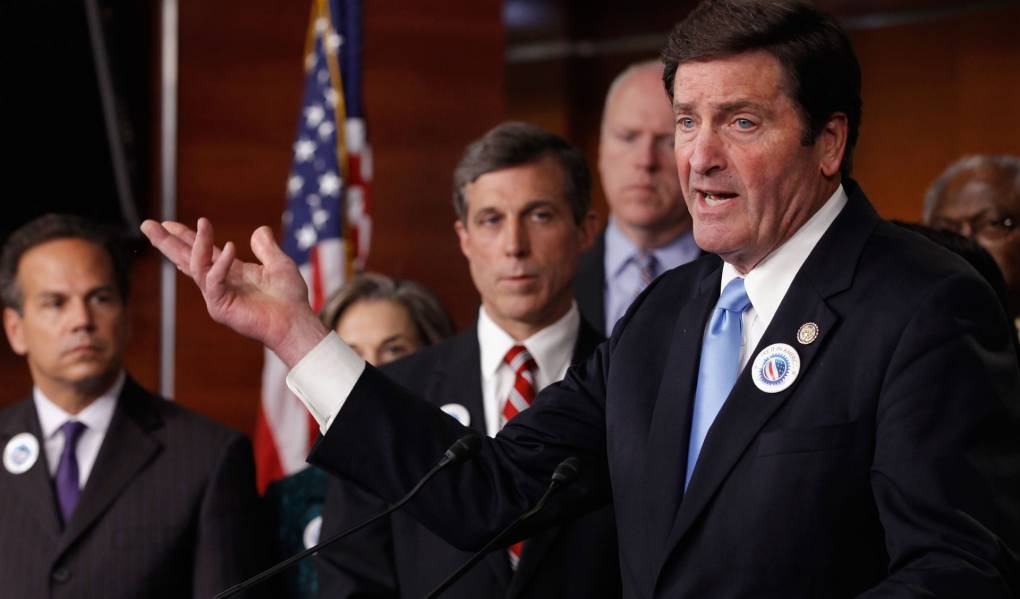
"caption": "North Bay Rep. John Garamendi (right), pictured in 2011. A new investigation, led by Bay Area Rep. Garamendi and Massachusetts Sen. Elizabeth Warren, says the President’s immigration agenda may come at the cost of military readiness and morale. ",
"credit": "Chip Somodevilla/Getty Images",
"altTag": "North Bay Rep. John Garamendi (right), pictured in 2011. Garamendi and two other California congressmen want clarity from federal health officials in the wake of a whistleblower complaint.",
"description": "North Bay Rep. John Garamendi (right), pictured in 2011. Garamendi and two other California congressmen want clarity from federal health officials in the wake of a whistleblower complaint.",
"imgSizes": {
"thumbnail": {
"file": "https://cdn.kqed.org/wp-content/uploads/sites/10/2020/03/John-Garamendi-160x94.jpg",
"width": 160,
"height": 94,
"mimeType": "image/jpeg"
},
"medium": {
"file": "https://cdn.kqed.org/wp-content/uploads/sites/10/2020/03/John-Garamendi-800x470.jpg",
"width": 800,
"height": 470,
"mimeType": "image/jpeg"
},
"large": {
"file": "https://cdn.kqed.org/wp-content/uploads/sites/10/2020/03/John-Garamendi-1020x599.jpg",
"width": 1020,
"height": 599,
"mimeType": "image/jpeg"
},
"post-thumbnail": {
"file": "https://cdn.kqed.org/wp-content/uploads/sites/10/2020/03/John-Garamendi-672x372.jpg",
"width": 672,
"height": 372,
"mimeType": "image/jpeg"
},
"twentyfourteen-full-width": {
"file": "https://cdn.kqed.org/wp-content/uploads/sites/10/2020/03/John-Garamendi-1038x576.jpg",
"width": 1038,
"height": 576,
"mimeType": "image/jpeg"
},
"full-width": {
"file": "https://cdn.kqed.org/wp-content/uploads/sites/10/2020/03/John-Garamendi-1920x1128.jpg",
"width": 1920,
"height": 1128,
"mimeType": "image/jpeg"
},
"apple_news_ca_landscape_12_9": {
"file": "https://cdn.kqed.org/wp-content/uploads/sites/10/2020/03/John-Garamendi-1832x1128.jpg",
"width": 1832,
"height": 1128,
"mimeType": "image/jpeg"
},
"apple_news_ca_landscape_9_7": {
"file": "https://cdn.kqed.org/wp-content/uploads/sites/10/2020/03/John-Garamendi-1376x1032.jpg",
"width": 1376,
"height": 1032,
"mimeType": "image/jpeg"
},
"apple_news_ca_landscape_5_5": {
"file": "https://cdn.kqed.org/wp-content/uploads/sites/10/2020/03/John-Garamendi-1044x783.jpg",
"width": 1044,
"height": 783,
"mimeType": "image/jpeg"
},
"apple_news_ca_landscape_4_7": {
"file": "https://cdn.kqed.org/wp-content/uploads/sites/10/2020/03/John-Garamendi-632x474.jpg",
"width": 632,
"height": 474,
"mimeType": "image/jpeg"
},
"apple_news_ca_landscape_4_0": {
"file": "https://cdn.kqed.org/wp-content/uploads/sites/10/2020/03/John-Garamendi-536x402.jpg",
"width": 536,
"height": 402,
"mimeType": "image/jpeg"
},
"apple_news_ca_portrait_12_9": {
"file": "https://cdn.kqed.org/wp-content/uploads/sites/10/2020/03/John-Garamendi-1122x1128.jpg",
"width": 1122,
"height": 1128,
"mimeType": "image/jpeg"
},
"apple_news_ca_portrait_9_7": {
"file": "https://cdn.kqed.org/wp-content/uploads/sites/10/2020/03/John-Garamendi-840x1120.jpg",
"width": 840,
"height": 1120,
"mimeType": "image/jpeg"
},
"apple_news_ca_portrait_5_5": {
"file": "https://cdn.kqed.org/wp-content/uploads/sites/10/2020/03/John-Garamendi-687x916.jpg",
"width": 687,
"height": 916,
"mimeType": "image/jpeg"
},
"apple_news_ca_portrait_4_7": {
"file": "https://cdn.kqed.org/wp-content/uploads/sites/10/2020/03/John-Garamendi-414x552.jpg",
"width": 414,
"height": 552,
"mimeType": "image/jpeg"
},
"apple_news_ca_portrait_4_0": {
"file": "https://cdn.kqed.org/wp-content/uploads/sites/10/2020/03/John-Garamendi-354x472.jpg",
"width": 354,
"height": 472,
"mimeType": "image/jpeg"
},
"apple_news_ca_square_12_9": {
"file": "https://cdn.kqed.org/wp-content/uploads/sites/10/2020/03/John-Garamendi-1472x1128.jpg",
"width": 1472,
"height": 1128,
"mimeType": "image/jpeg"
},
"apple_news_ca_square_9_7": {
"file": "https://cdn.kqed.org/wp-content/uploads/sites/10/2020/03/John-Garamendi-1104x1104.jpg",
"width": 1104,
"height": 1104,
"mimeType": "image/jpeg"
},
"apple_news_ca_square_5_5": {
"file": "https://cdn.kqed.org/wp-content/uploads/sites/10/2020/03/John-Garamendi-912x912.jpg",
"width": 912,
"height": 912,
"mimeType": "image/jpeg"
},
"apple_news_ca_square_4_7": {
"file": "https://cdn.kqed.org/wp-content/uploads/sites/10/2020/03/John-Garamendi-550x550.jpg",
"width": 550,
"height": 550,
"mimeType": "image/jpeg"
},
"apple_news_ca_square_4_0": {
"file": "https://cdn.kqed.org/wp-content/uploads/sites/10/2020/03/John-Garamendi-470x470.jpg",
"width": 470,
"height": 470,
"mimeType": "image/jpeg"
},
"kqedFullSize": {
"file": "https://cdn.kqed.org/wp-content/uploads/sites/10/2020/03/John-Garamendi.jpg",
"width": 1920,
"height": 1128
}
},
"isLoading": false,
"fetchFailed": false
},
"news_12066641": {
"type": "attachments",
"id": "news_12066641",
"meta": {
"index": "attachments_1716263798",
"site": "news",
"id": "12066641",
"found": true
},
"title": "Federal Enforcement-Los Angeles",
"publishDate": 1765393573,
"status": "inherit",
"parent": 12066625,
"modified": 1765393613,
"caption": "Members of the California National Guard and U.S. Marines guard a federal building on June 17, 2025, in Los Angeles. ",
"credit": "Damian Dovarganes/AP Photo",
"altTag": null,
"description": null,
"imgSizes": {
"thumbnail": {
"file": "https://cdn.kqed.org/wp-content/uploads/sites/10/2025/12/CaliforniaNationalGuardAP-160x107.jpg",
"width": 160,
"height": 107,
"mimeType": "image/jpeg"
},
"1536x1536": {
"file": "https://cdn.kqed.org/wp-content/uploads/sites/10/2025/12/CaliforniaNationalGuardAP-1536x1027.jpg",
"width": 1536,
"height": 1027,
"mimeType": "image/jpeg"
},
"post-thumbnail": {
"file": "https://cdn.kqed.org/wp-content/uploads/sites/10/2025/12/CaliforniaNationalGuardAP-672x372.jpg",
"width": 672,
"height": 372,
"mimeType": "image/jpeg"
},
"twentyfourteen-full-width": {
"file": "https://cdn.kqed.org/wp-content/uploads/sites/10/2025/12/CaliforniaNationalGuardAP-1038x576.jpg",
"width": 1038,
"height": 576,
"mimeType": "image/jpeg"
},
"npr-cds-wide": {
"file": "https://cdn.kqed.org/wp-content/uploads/sites/10/2025/12/CaliforniaNationalGuardAP-1200x675.jpg",
"width": 1200,
"height": 675,
"mimeType": "image/jpeg"
},
"kqedFullSize": {
"file": "https://cdn.kqed.org/wp-content/uploads/sites/10/2025/12/CaliforniaNationalGuardAP.jpg",
"width": 2000,
"height": 1337
}
},
"isLoading": false,
"fetchFailed": false
},
"news_11979156": {
"type": "attachments",
"id": "news_11979156",
"meta": {
"index": "attachments_1716263798",
"site": "news",
"id": "11979156",
"found": true
},
"title": "240212-ImmigrationCourt-31-BL_qut",
"publishDate": 1710283094,
"status": "inherit",
"parent": 11979131,
"modified": 1748456121,
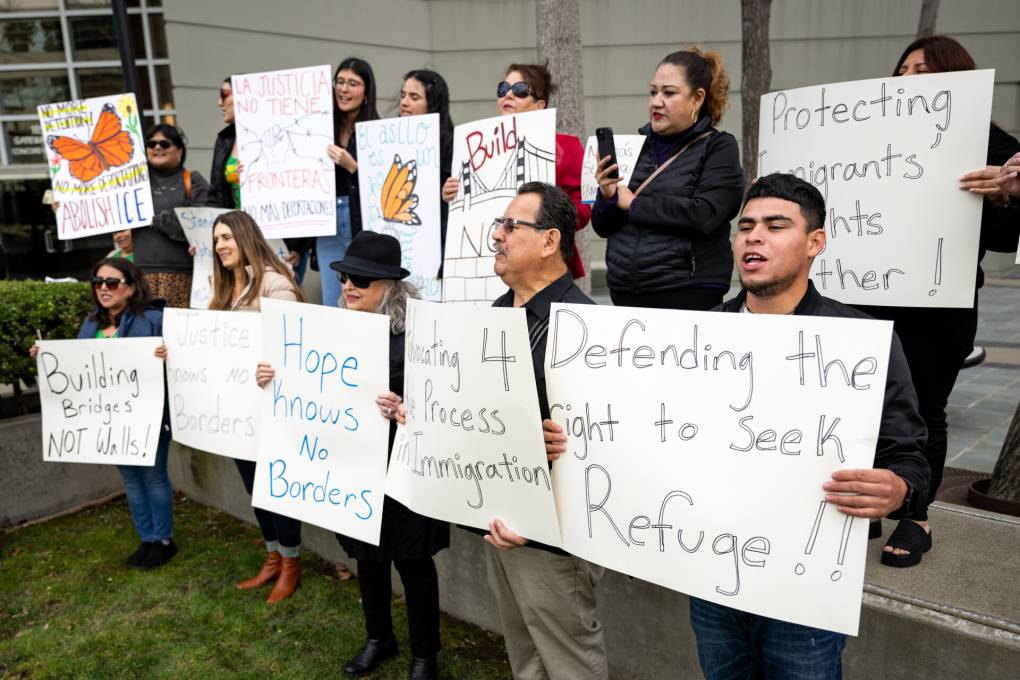
"caption": "Immigration rights supporters stand outside the new Concord Immigration Court in Concord during a press conference on Feb. 12, 2024.",
"credit": "Beth LaBerge/KQED",
"altTag": null,
"description": null,
"imgSizes": {
"medium": {
"file": "https://cdn.kqed.org/wp-content/uploads/sites/10/2024/03/240212-ImmigrationCourt-31-BL_qut-800x533.jpg",
"width": 800,
"height": 533,
"mimeType": "image/jpeg"
},
"large": {
"file": "https://cdn.kqed.org/wp-content/uploads/sites/10/2024/03/240212-ImmigrationCourt-31-BL_qut-1020x680.jpg",
"width": 1020,
"height": 680,
"mimeType": "image/jpeg"
},
"thumbnail": {
"file": "https://cdn.kqed.org/wp-content/uploads/sites/10/2024/03/240212-ImmigrationCourt-31-BL_qut-160x107.jpg",
"width": 160,
"height": 107,
"mimeType": "image/jpeg"
},
"1536x1536": {
"file": "https://cdn.kqed.org/wp-content/uploads/sites/10/2024/03/240212-ImmigrationCourt-31-BL_qut-1536x1024.jpg",
"width": 1536,
"height": 1024,
"mimeType": "image/jpeg"
},
"post-thumbnail": {
"file": "https://cdn.kqed.org/wp-content/uploads/sites/10/2024/03/240212-ImmigrationCourt-31-BL_qut-672x372.jpg",
"width": 672,
"height": 372,
"mimeType": "image/jpeg"
},
"twentyfourteen-full-width": {
"file": "https://cdn.kqed.org/wp-content/uploads/sites/10/2024/03/240212-ImmigrationCourt-31-BL_qut-1038x576.jpg",
"width": 1038,
"height": 576,
"mimeType": "image/jpeg"
},
"kqedFullSize": {
"file": "https://cdn.kqed.org/wp-content/uploads/sites/10/2024/03/240212-ImmigrationCourt-31-BL_qut.jpg",
"width": 1920,
"height": 1280
}
},
"isLoading": false,
"fetchFailed": false
},
"news_12066517": {
"type": "attachments",
"id": "news_12066517",
"meta": {
"index": "attachments_1716263798",
"site": "news",
"id": "12066517",
"found": true
},
"title": "BilalMahmoodKQED1",
"publishDate": 1765323538,
"status": "inherit",
"parent": 12066486,
"modified": 1765323820,
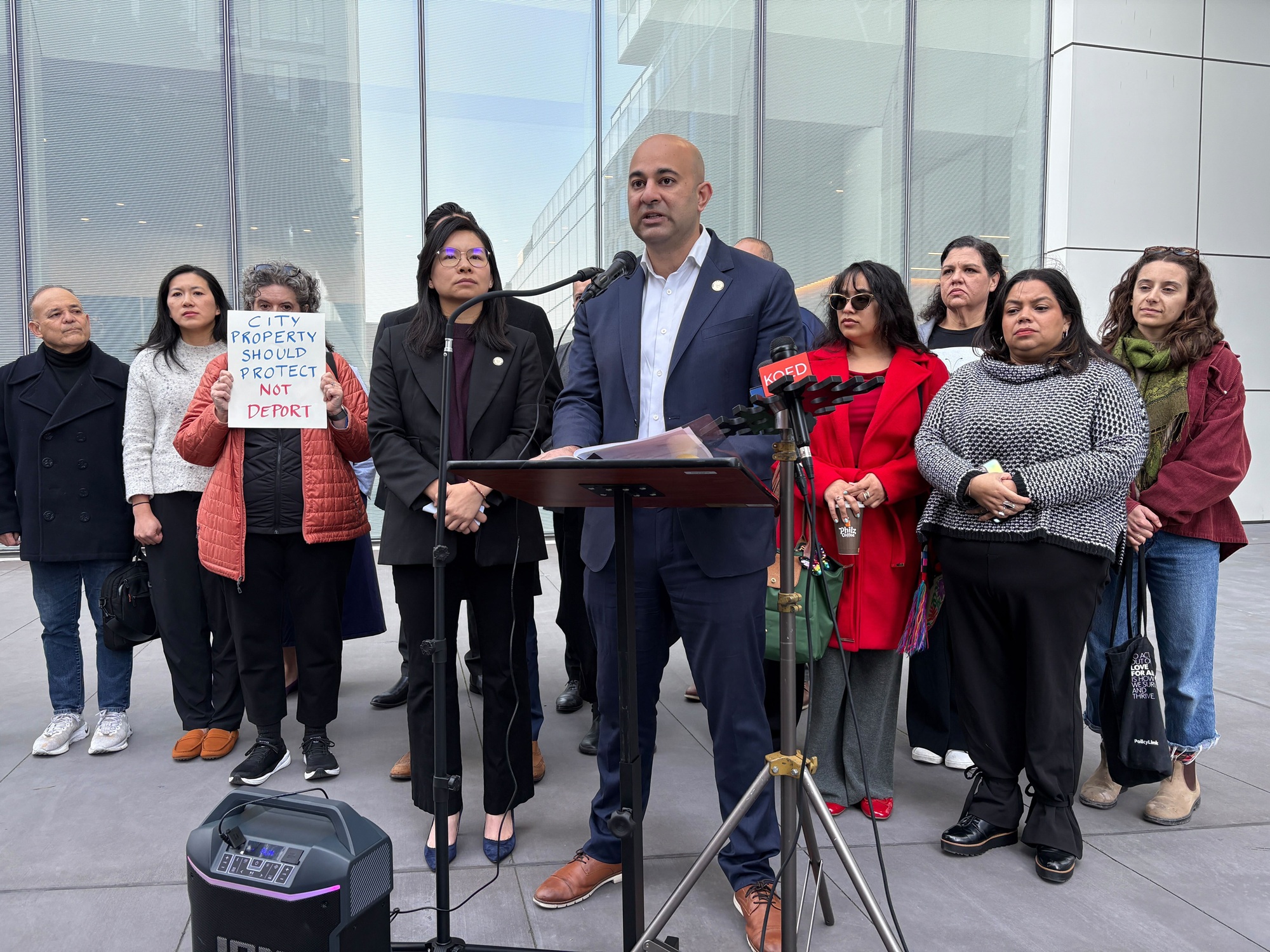
"caption": "Supervisors Bilal Mahmood and Chyanne Chen are proposing to block federal immigration activity from city-owned spaces.",
"credit": "Sydney Johnson/KQED",
"altTag": null,
"description": null,
"imgSizes": {
"thumbnail": {
"file": "https://cdn.kqed.org/wp-content/uploads/sites/10/2025/12/BilalMahmoodKQED1-160x120.jpg",
"width": 160,
"height": 120,
"mimeType": "image/jpeg"
},
"1536x1536": {
"file": "https://cdn.kqed.org/wp-content/uploads/sites/10/2025/12/BilalMahmoodKQED1-1536x1152.jpg",
"width": 1536,
"height": 1152,
"mimeType": "image/jpeg"
},
"post-thumbnail": {
"file": "https://cdn.kqed.org/wp-content/uploads/sites/10/2025/12/BilalMahmoodKQED1-672x372.jpg",
"width": 672,
"height": 372,
"mimeType": "image/jpeg"
},
"twentyfourteen-full-width": {
"file": "https://cdn.kqed.org/wp-content/uploads/sites/10/2025/12/BilalMahmoodKQED1-1038x576.jpg",
"width": 1038,
"height": 576,
"mimeType": "image/jpeg"
},
"npr-cds-wide": {
"file": "https://cdn.kqed.org/wp-content/uploads/sites/10/2025/12/BilalMahmoodKQED1-1200x675.jpg",
"width": 1200,
"height": 675,
"mimeType": "image/jpeg"
},
"kqedFullSize": {
"file": "https://cdn.kqed.org/wp-content/uploads/sites/10/2025/12/BilalMahmoodKQED1.jpg",
"width": 2000,
"height": 1500
}
},
"isLoading": false,
"fetchFailed": false
},
"news_12044826": {
"type": "attachments",
"id": "news_12044826",
"meta": {
"index": "attachments_1716263798",
"site": "news",
"id": "12044826",
"found": true
},
"title": "Protests Erupt In L.A. County Sparked By Federal Immigration Raids",
"publishDate": 1750202502,
"status": "inherit",
"parent": 12044637,
"modified": 1757026443,
"caption": "A police officer holds a less lethal rifle as protesters confront California National Guard soldiers and police outside of a federal building, as protests continue in Los Angeles following 3 days of clashes with police after a series of immigration raids on June 9, 2025. ",
"credit": "David McNew/Getty Images",
"altTag": null,
"description": null,
"imgSizes": {
"medium": {
"file": "https://cdn.kqed.org/wp-content/uploads/sites/10/2025/06/GettyImages-2219434485-2000x1333.jpg",
"width": 2000,
"height": 1333,
"mimeType": "image/jpeg"
},
"large": {
"file": "https://cdn.kqed.org/wp-content/uploads/sites/10/2025/06/GettyImages-2219434485-2000x1333.jpg",
"width": 2000,
"height": 1333,
"mimeType": "image/jpeg"
},
"thumbnail": {
"file": "https://cdn.kqed.org/wp-content/uploads/sites/10/2025/06/GettyImages-2219434485-160x107.jpg",
"width": 160,
"height": 107,
"mimeType": "image/jpeg"
},
"1536x1536": {
"file": "https://cdn.kqed.org/wp-content/uploads/sites/10/2025/06/GettyImages-2219434485-1536x1024.jpg",
"width": 1536,
"height": 1024,
"mimeType": "image/jpeg"
},
"2048x2048": {
"file": "https://cdn.kqed.org/wp-content/uploads/sites/10/2025/06/GettyImages-2219434485-2048x1365.jpg",
"width": 2048,
"height": 1365,
"mimeType": "image/jpeg"
},
"post-thumbnail": {
"file": "https://cdn.kqed.org/wp-content/uploads/sites/10/2025/06/GettyImages-2219434485-672x372.jpg",
"width": 672,
"height": 372,
"mimeType": "image/jpeg"
},
"twentyfourteen-full-width": {
"file": "https://cdn.kqed.org/wp-content/uploads/sites/10/2025/06/GettyImages-2219434485-1038x576.jpg",
"width": 1038,
"height": 576,
"mimeType": "image/jpeg"
},
"full-width": {
"file": "https://cdn.kqed.org/wp-content/uploads/sites/10/2025/06/GettyImages-2219434485-2000x1333.jpg",
"width": 2000,
"height": 1333,
"mimeType": "image/jpeg"
},
"kqedFullSize": {
"file": "https://cdn.kqed.org/wp-content/uploads/sites/10/2025/06/GettyImages-2219434485-scaled-e1753393070287.jpg",
"width": 2000,
"height": 1334
}
},
"isLoading": false,
"fetchFailed": false
},
"news_12005684": {
"type": "attachments",
"id": "news_12005684",
"meta": {
"index": "attachments_1716263798",
"site": "news",
"id": "12005684",
"found": true
},
"title": "US passports",
"publishDate": 1726861630,
"status": "inherit",
"parent": 12005679,
"modified": 1764793132,
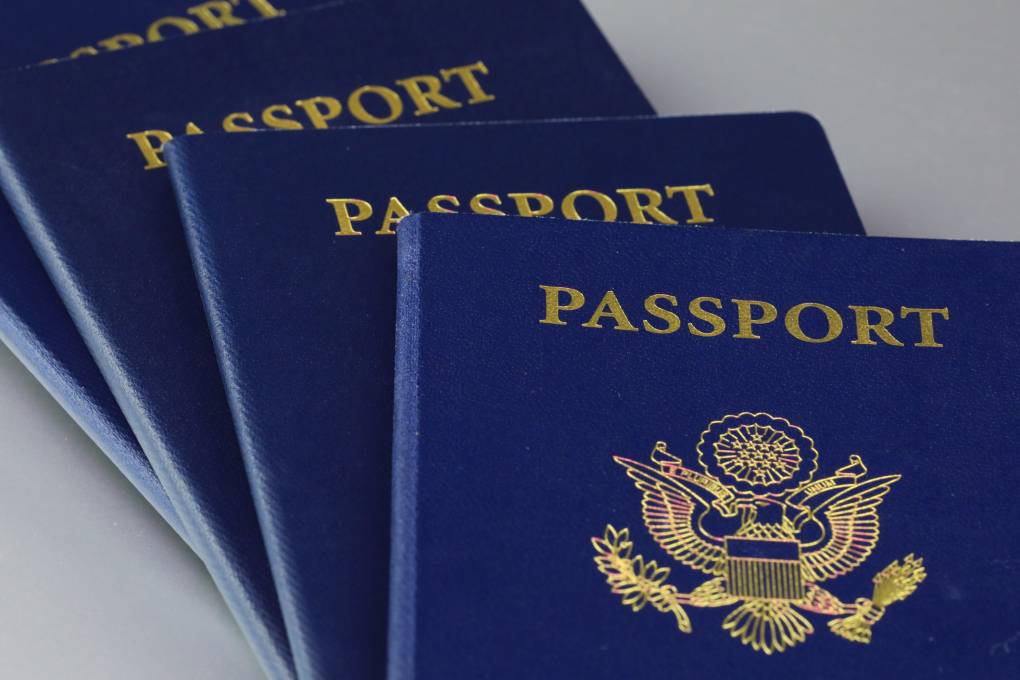
"caption": "A U.S. passport enables travel to more than 180 countries without needing a visa beforehand.",
"credit": "Douglas Sacha/Getty Images",
"altTag": null,
"description": null,
"imgSizes": {
"medium": {
"file": "https://cdn.kqed.org/wp-content/uploads/sites/10/2024/09/GettyImages-1277623147-800x533.jpg",
"width": 800,
"height": 533,
"mimeType": "image/jpeg"
},
"large": {
"file": "https://cdn.kqed.org/wp-content/uploads/sites/10/2024/09/GettyImages-1277623147-1020x680.jpg",
"width": 1020,
"height": 680,
"mimeType": "image/jpeg"
},
"thumbnail": {
"file": "https://cdn.kqed.org/wp-content/uploads/sites/10/2024/09/GettyImages-1277623147-160x107.jpg",
"width": 160,
"height": 107,
"mimeType": "image/jpeg"
},
"1536x1536": {
"file": "https://cdn.kqed.org/wp-content/uploads/sites/10/2024/09/GettyImages-1277623147-1536x1023.jpg",
"width": 1536,
"height": 1023,
"mimeType": "image/jpeg"
},
"2048x2048": {
"file": "https://cdn.kqed.org/wp-content/uploads/sites/10/2024/09/GettyImages-1277623147-2048x1364.jpg",
"width": 2048,
"height": 1364,
"mimeType": "image/jpeg"
},
"post-thumbnail": {
"file": "https://cdn.kqed.org/wp-content/uploads/sites/10/2024/09/GettyImages-1277623147-672x372.jpg",
"width": 672,
"height": 372,
"mimeType": "image/jpeg"
},
"twentyfourteen-full-width": {
"file": "https://cdn.kqed.org/wp-content/uploads/sites/10/2024/09/GettyImages-1277623147-1038x576.jpg",
"width": 1038,
"height": 576,
"mimeType": "image/jpeg"
},
"full-width": {
"file": "https://cdn.kqed.org/wp-content/uploads/sites/10/2024/09/GettyImages-1277623147-1920x1279.jpg",
"width": 1920,
"height": 1279,
"mimeType": "image/jpeg"
},
"kqedFullSize": {
"file": "https://cdn.kqed.org/wp-content/uploads/sites/10/2024/09/GettyImages-1277623147.jpg",
"width": 2121,
"height": 1413
}
},
"isLoading": false,
"fetchFailed": false
},
"news_12065612": {
"type": "attachments",
"id": "news_12065612",
"meta": {
"index": "attachments_1716263798",
"site": "news",
"id": "12065612",
"found": true
},
"title": "PAKISTAN-AFGHANISTAN-REFUGEES-MUSIC",
"publishDate": 1764618319,
"status": "inherit",
"parent": 12065607,
"modified": 1764618408,
"caption": "In this photograph taken on Sept. 2, 2025, Afghan refugee Shayma is pictured during an interview with AFP at her residence in Islamabad. Before their scheduled February flight, President Donald Trump indefinitely suspended refugee admissions, stranding around 15,000 Afghans already prepared to fly out from Islamabad. ",
"credit": "Farooq Naeem/AFP via Getty Images",
"altTag": null,
"description": null,
"imgSizes": {
"thumbnail": {
"file": "https://cdn.kqed.org/wp-content/uploads/sites/10/2025/12/AfghanRefugeeGetty-160x107.jpg",
"width": 160,
"height": 107,
"mimeType": "image/jpeg"
},
"1536x1536": {
"file": "https://cdn.kqed.org/wp-content/uploads/sites/10/2025/12/AfghanRefugeeGetty-1536x1024.jpg",
"width": 1536,
"height": 1024,
"mimeType": "image/jpeg"
},
"post-thumbnail": {
"file": "https://cdn.kqed.org/wp-content/uploads/sites/10/2025/12/AfghanRefugeeGetty-672x372.jpg",
"width": 672,
"height": 372,
"mimeType": "image/jpeg"
},
"twentyfourteen-full-width": {
"file": "https://cdn.kqed.org/wp-content/uploads/sites/10/2025/12/AfghanRefugeeGetty-1038x576.jpg",
"width": 1038,
"height": 576,
"mimeType": "image/jpeg"
},
"npr-cds-wide": {
"file": "https://cdn.kqed.org/wp-content/uploads/sites/10/2025/12/AfghanRefugeeGetty-1200x675.jpg",
"width": 1200,
"height": 675,
"mimeType": "image/jpeg"
},
"kqedFullSize": {
"file": "https://cdn.kqed.org/wp-content/uploads/sites/10/2025/12/AfghanRefugeeGetty.jpg",
"width": 2000,
"height": 1333
}
},
"isLoading": false,
"fetchFailed": false
},
"news_12065425": {
"type": "attachments",
"id": "news_12065425",
"meta": {
"index": "attachments_1716263798",
"site": "news",
"id": "12065425",
"found": true
},
"title": "091125-Melon-Farm-and-Kerman-LV-22",
"publishDate": 1764116266,
"status": "inherit",
"parent": 12065421,
"modified": 1764177730,
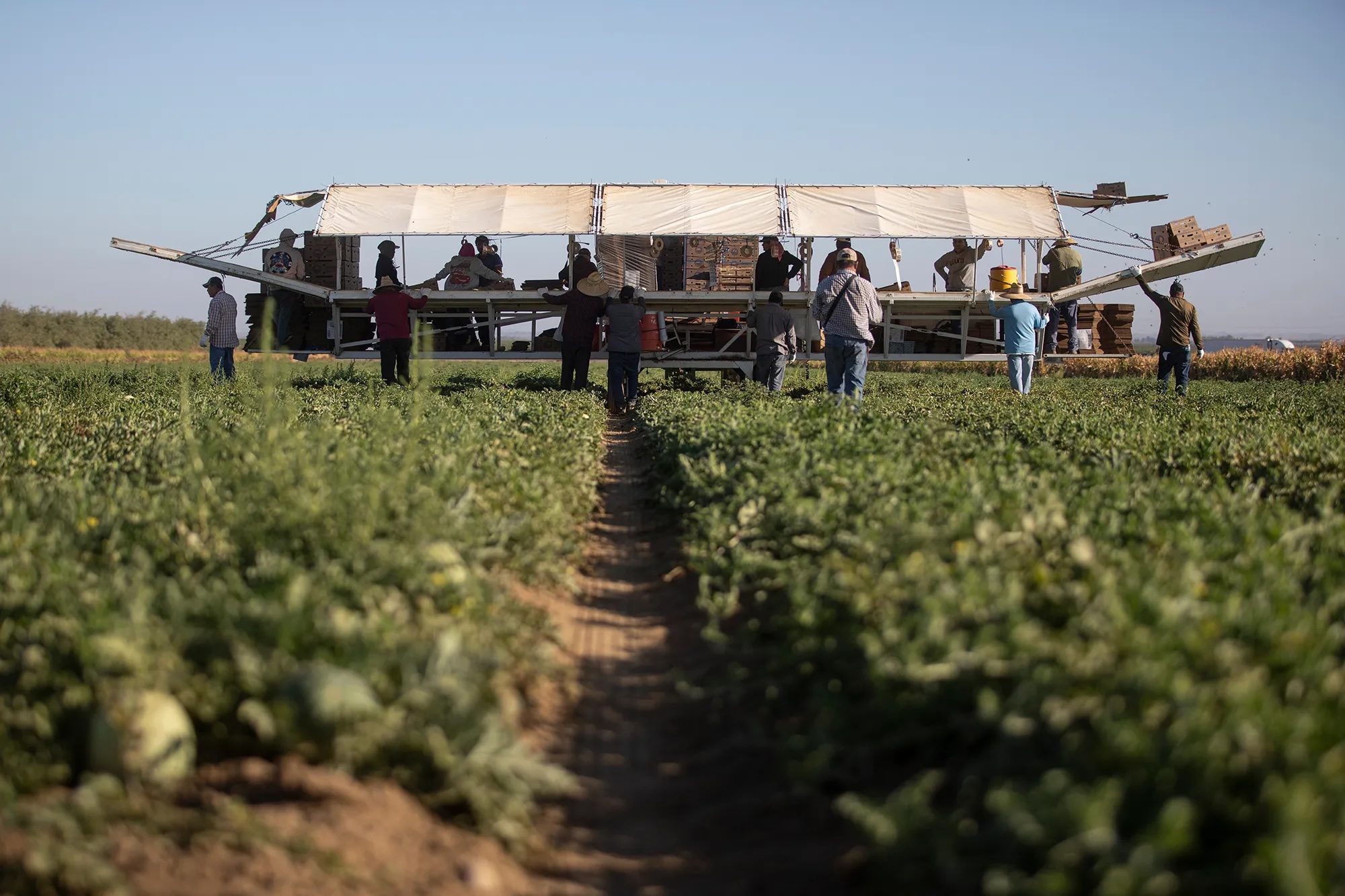
"caption": "Farmworkers harvest melons behind a tractor on a melon farm outside of Firebaugh on Sept. 11, 2025. ",
"credit": "Larry Valenzuela, CalMatters/CatchLight Local",
"altTag": null,
"description": null,
"imgSizes": {
"thumbnail": {
"file": "https://cdn.kqed.org/wp-content/uploads/sites/10/2025/11/091125-Melon-Farm-and-Kerman-LV-22-160x107.jpeg",
"width": 160,
"height": 107,
"mimeType": "image/jpeg"
},
"1536x1536": {
"file": "https://cdn.kqed.org/wp-content/uploads/sites/10/2025/11/091125-Melon-Farm-and-Kerman-LV-22-1536x1024.jpeg",
"width": 1536,
"height": 1024,
"mimeType": "image/jpeg"
},
"post-thumbnail": {
"file": "https://cdn.kqed.org/wp-content/uploads/sites/10/2025/11/091125-Melon-Farm-and-Kerman-LV-22-672x372.jpeg",
"width": 672,
"height": 372,
"mimeType": "image/jpeg"
},
"twentyfourteen-full-width": {
"file": "https://cdn.kqed.org/wp-content/uploads/sites/10/2025/11/091125-Melon-Farm-and-Kerman-LV-22-1038x576.jpeg",
"width": 1038,
"height": 576,
"mimeType": "image/jpeg"
},
"npr-cds-wide": {
"file": "https://cdn.kqed.org/wp-content/uploads/sites/10/2025/11/091125-Melon-Farm-and-Kerman-LV-22-1200x675.jpeg",
"width": 1200,
"height": 675,
"mimeType": "image/jpeg"
},
"kqedFullSize": {
"file": "https://cdn.kqed.org/wp-content/uploads/sites/10/2025/11/091125-Melon-Farm-and-Kerman-LV-22.jpeg",
"width": 2000,
"height": 1333
}
},
"isLoading": false,
"fetchFailed": false
},
"news_12065491": {
"type": "attachments",
"id": "news_12065491",
"meta": {
"index": "attachments_1716263798",
"site": "news",
"id": "12065491",
"found": true
},
"title": "112823_DACA-Students_AE_CM_20",
"publishDate": 1764188381,
"status": "inherit",
"parent": 12065490,
"modified": 1764188402,
"caption": "Stickers and flyers on a table in the Undocumented Community Center at the College of San Mateo in San Mateo, on Nov. 28, 2023. At this center, students without legal status can access financial and legal aid as well as guidance in navigating grant applications.",
"credit": "Photo by Amaya Edwards for CalMatters",
"altTag": null,
"description": null,
"imgSizes": {
"thumbnail": {
"file": "https://cdn.kqed.org/wp-content/uploads/sites/10/2025/11/112823_DACA-Students_AE_CM_20-160x107.jpeg",
"width": 160,
"height": 107,
"mimeType": "image/jpeg"
},
"1536x1536": {
"file": "https://cdn.kqed.org/wp-content/uploads/sites/10/2025/11/112823_DACA-Students_AE_CM_20-1536x1024.jpeg",
"width": 1536,
"height": 1024,
"mimeType": "image/jpeg"
},
"post-thumbnail": {
"file": "https://cdn.kqed.org/wp-content/uploads/sites/10/2025/11/112823_DACA-Students_AE_CM_20-672x372.jpeg",
"width": 672,
"height": 372,
"mimeType": "image/jpeg"
},
"twentyfourteen-full-width": {
"file": "https://cdn.kqed.org/wp-content/uploads/sites/10/2025/11/112823_DACA-Students_AE_CM_20-1038x576.jpeg",
"width": 1038,
"height": 576,
"mimeType": "image/jpeg"
},
"npr-cds-wide": {
"file": "https://cdn.kqed.org/wp-content/uploads/sites/10/2025/11/112823_DACA-Students_AE_CM_20-1200x675.jpeg",
"width": 1200,
"height": 675,
"mimeType": "image/jpeg"
},
"kqedFullSize": {
"file": "https://cdn.kqed.org/wp-content/uploads/sites/10/2025/11/112823_DACA-Students_AE_CM_20.jpeg",
"width": 2000,
"height": 1333
}
},
"isLoading": false,
"fetchFailed": false
},
"news_11902344": {
"type": "attachments",
"id": "news_11902344",
"meta": {
"index": "attachments_1716263798",
"site": "news",
"id": "11902344",
"found": true
},
"title": "IMG_4486",
"publishDate": 1642797019,
"status": "inherit",
"parent": 11902290,
"modified": 1764031599,
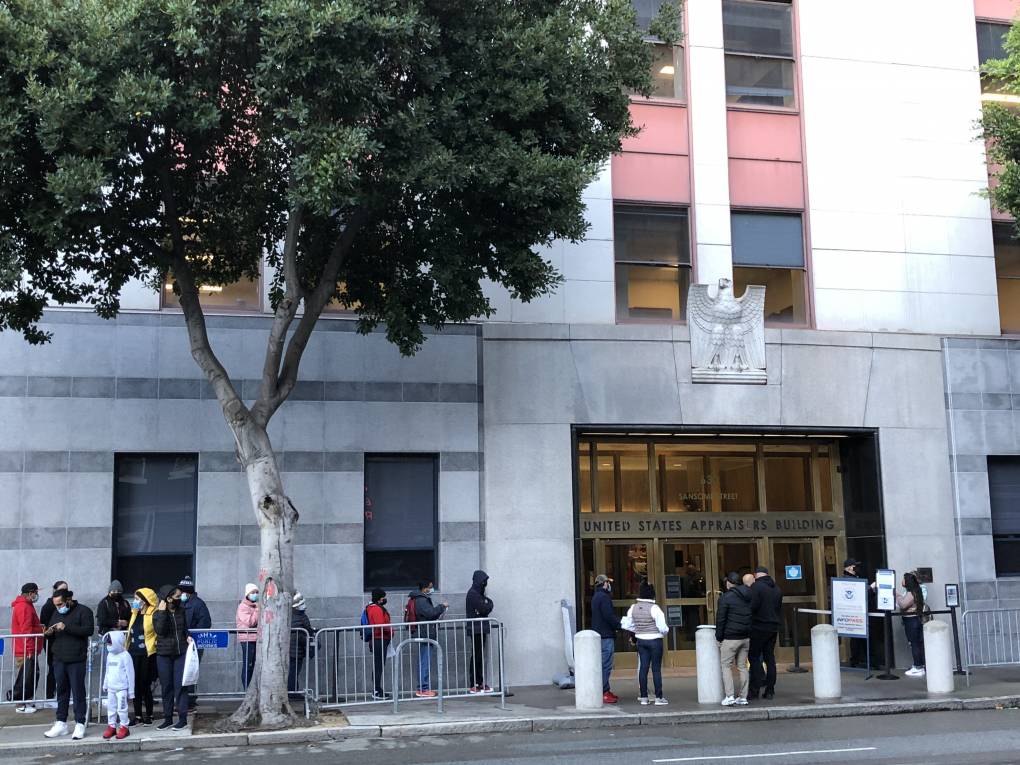
"caption": "People line up to go through security at 630 Sansome St. in San Francisco on Dec. 15, 2021, where the Executive Office for Immigration Review holds hearings for immigrants held in detention.",
"credit": "Tyche Hendricks/KQED",
"altTag": "People stand in line outside of a court building.",
"description": null,
"imgSizes": {
"medium": {
"file": "https://cdn.kqed.org/wp-content/uploads/sites/10/2022/01/IMG_4486-800x600.jpeg",
"width": 800,
"height": 600,
"mimeType": "image/jpeg"
},
"large": {
"file": "https://cdn.kqed.org/wp-content/uploads/sites/10/2022/01/IMG_4486-1020x765.jpeg",
"width": 1020,
"height": 765,
"mimeType": "image/jpeg"
},
"thumbnail": {
"file": "https://cdn.kqed.org/wp-content/uploads/sites/10/2022/01/IMG_4486-160x120.jpeg",
"width": 160,
"height": 120,
"mimeType": "image/jpeg"
},
"1536x1536": {
"file": "https://cdn.kqed.org/wp-content/uploads/sites/10/2022/01/IMG_4486-1536x1152.jpeg",
"width": 1536,
"height": 1152,
"mimeType": "image/jpeg"
},
"2048x2048": {
"file": "https://cdn.kqed.org/wp-content/uploads/sites/10/2022/01/IMG_4486-2048x1536.jpeg",
"width": 2048,
"height": 1536,
"mimeType": "image/jpeg"
},
"post-thumbnail": {
"file": "https://cdn.kqed.org/wp-content/uploads/sites/10/2022/01/IMG_4486-672x372.jpeg",
"width": 672,
"height": 372,
"mimeType": "image/jpeg"
},
"twentyfourteen-full-width": {
"file": "https://cdn.kqed.org/wp-content/uploads/sites/10/2022/01/IMG_4486-1038x576.jpeg",
"width": 1038,
"height": 576,
"mimeType": "image/jpeg"
},
"full-width": {
"file": "https://cdn.kqed.org/wp-content/uploads/sites/10/2022/01/IMG_4486-1920x1440.jpeg",
"width": 1920,
"height": 1440,
"mimeType": "image/jpeg"
},
"kqedFullSize": {
"file": "https://cdn.kqed.org/wp-content/uploads/sites/10/2022/01/IMG_4486-scaled-e1642797113744.jpeg",
"width": 1920,
"height": 1440
}
},
"isLoading": false,
"fetchFailed": false
},
"news_12065121": {
"type": "attachments",
"id": "news_12065121",
"meta": {
"index": "attachments_1716263798",
"site": "news",
"id": "12065121",
"found": true
},
"title": "Oakland School And Community Responds To Morning ICE Confrontation",
"publishDate": 1763768981,
"status": "inherit",
"parent": 12065068,
"modified": 1763769022,
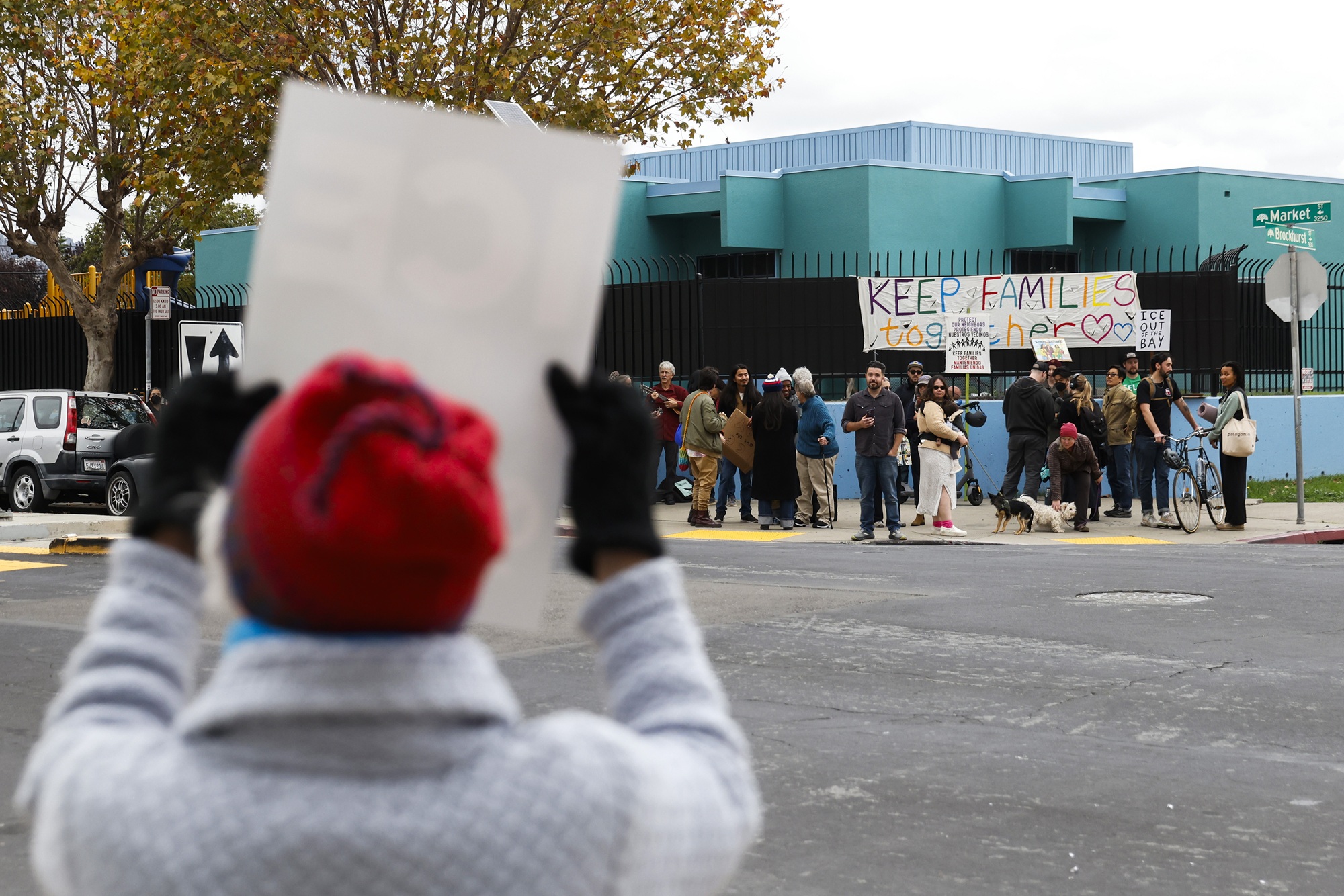
"caption": "Demonstrators picket in solidarity outside of Hoover Elementary School in Oakland, California, on Wednesday, Nov. 19, 2025, following morning reports of a failed arrest of a community member by ICE agents nearby.",
"credit": "Jessica Christian/San Francisco Chronicle via Getty Images",
"altTag": null,
"description": null,
"imgSizes": {
"thumbnail": {
"file": "https://cdn.kqed.org/wp-content/uploads/sites/10/2025/11/HooverElementaryGetty-160x107.jpg",
"width": 160,
"height": 107,
"mimeType": "image/jpeg"
},
"1536x1536": {
"file": "https://cdn.kqed.org/wp-content/uploads/sites/10/2025/11/HooverElementaryGetty-1536x1025.jpg",
"width": 1536,
"height": 1025,
"mimeType": "image/jpeg"
},
"post-thumbnail": {
"file": "https://cdn.kqed.org/wp-content/uploads/sites/10/2025/11/HooverElementaryGetty-672x372.jpg",
"width": 672,
"height": 372,
"mimeType": "image/jpeg"
},
"twentyfourteen-full-width": {
"file": "https://cdn.kqed.org/wp-content/uploads/sites/10/2025/11/HooverElementaryGetty-1038x576.jpg",
"width": 1038,
"height": 576,
"mimeType": "image/jpeg"
},
"npr-cds-wide": {
"file": "https://cdn.kqed.org/wp-content/uploads/sites/10/2025/11/HooverElementaryGetty-1200x675.jpg",
"width": 1200,
"height": 675,
"mimeType": "image/jpeg"
},
"kqedFullSize": {
"file": "https://cdn.kqed.org/wp-content/uploads/sites/10/2025/11/HooverElementaryGetty.jpg",
"width": 2000,
"height": 1334
}
},
"isLoading": false,
"fetchFailed": false
},
"news_12037105": {
"type": "attachments",
"id": "news_12037105",
"meta": {
"index": "attachments_1716263798",
"site": "news",
"id": "12037105",
"found": true
},
"title": "The Federal Courthouse in Oakland on Aug. 16, 2023.",
"publishDate": 1745345804,
"status": "inherit",
"parent": 12037103,
"modified": 1745345829,
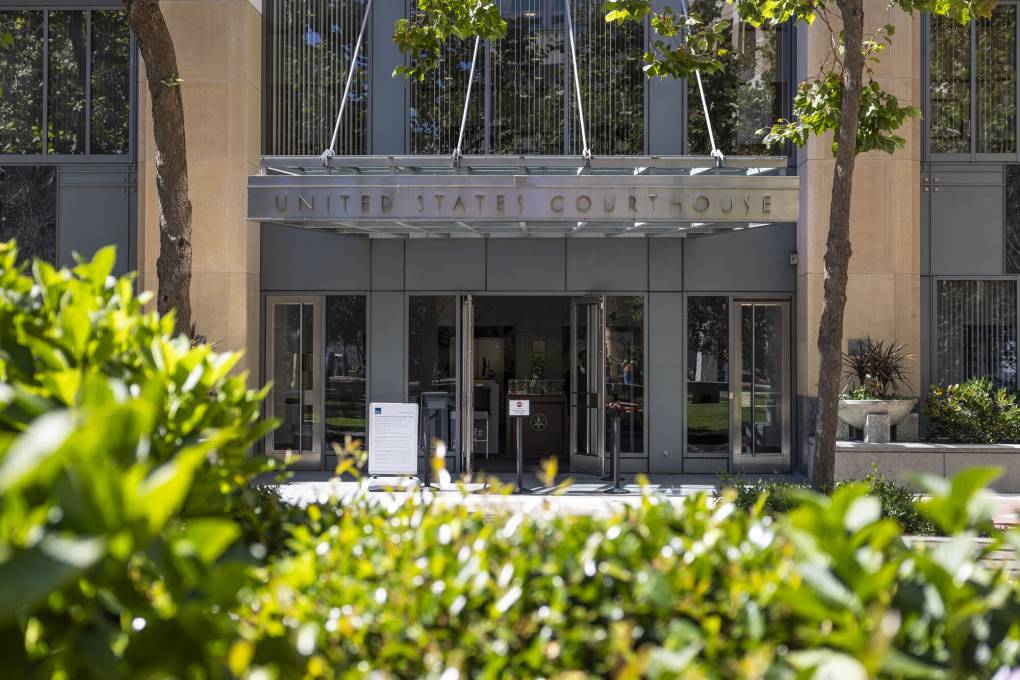
"caption": "The Federal Courthouse in Oakland on Aug. 16, 2023.",
"credit": "Martin do Nascimento/KQED",
"altTag": null,
"description": null,
"imgSizes": {
"medium": {
"file": "https://cdn.kqed.org/wp-content/uploads/sites/10/2025/04/230816-Dublin-Womens-Prison-Suit-MD-01_qed-800x533.jpg",
"width": 800,
"height": 533,
"mimeType": "image/jpeg"
},
"large": {
"file": "https://cdn.kqed.org/wp-content/uploads/sites/10/2025/04/230816-Dublin-Womens-Prison-Suit-MD-01_qed-1020x680.jpg",
"width": 1020,
"height": 680,
"mimeType": "image/jpeg"
},
"thumbnail": {
"file": "https://cdn.kqed.org/wp-content/uploads/sites/10/2025/04/230816-Dublin-Womens-Prison-Suit-MD-01_qed-160x107.jpg",
"width": 160,
"height": 107,
"mimeType": "image/jpeg"
},
"1536x1536": {
"file": "https://cdn.kqed.org/wp-content/uploads/sites/10/2025/04/230816-Dublin-Womens-Prison-Suit-MD-01_qed-1536x1024.jpg",
"width": 1536,
"height": 1024,
"mimeType": "image/jpeg"
},
"post-thumbnail": {
"file": "https://cdn.kqed.org/wp-content/uploads/sites/10/2025/04/230816-Dublin-Womens-Prison-Suit-MD-01_qed-672x372.jpg",
"width": 672,
"height": 372,
"mimeType": "image/jpeg"
},
"twentyfourteen-full-width": {
"file": "https://cdn.kqed.org/wp-content/uploads/sites/10/2025/04/230816-Dublin-Womens-Prison-Suit-MD-01_qed-1038x576.jpg",
"width": 1038,
"height": 576,
"mimeType": "image/jpeg"
},
"full-width": {
"file": "https://cdn.kqed.org/wp-content/uploads/sites/10/2025/04/230816-Dublin-Womens-Prison-Suit-MD-01_qed-1920x1280.jpg",
"width": 1920,
"height": 1280,
"mimeType": "image/jpeg"
},
"kqedFullSize": {
"file": "https://cdn.kqed.org/wp-content/uploads/sites/10/2025/04/230816-Dublin-Womens-Prison-Suit-MD-01_qed.jpg",
"width": 2000,
"height": 1333
}
},
"isLoading": false,
"fetchFailed": false
}
},
"audioPlayerReducer": {
"postId": "stream_live",
"isPaused": true,
"isPlaying": false,
"pfsActive": false,
"pledgeModalIsOpen": true,
"playerDrawerIsOpen": false,
"liveAudioPlayStartedAt": 0,
"liveAudioPlayContext": ""
},
"authorsReducer": {
"byline_news_12065421": {
"type": "authors",
"id": "byline_news_12065421",
"meta": {
"override": true
},
"slug": "byline_news_12065421",
"name": "Jocelyn Wiener, CalMatters",
"isLoading": false
},
"byline_news_12065490": {
"type": "authors",
"id": "byline_news_12065490",
"meta": {
"override": true
},
"slug": "byline_news_12065490",
"name": "Adam Echelman and Mikhail Zinshteyn, CalMatters",
"isLoading": false
},
"tychehendricks": {
"type": "authors",
"id": "259",
"meta": {
"index": "authors_1716337520",
"id": "259",
"found": true
},
"name": "Tyche Hendricks",
"firstName": "Tyche",
"lastName": "Hendricks",
"slug": "tychehendricks",
"email": "thendricks@kqed.org",
"display_author_email": true,
"staff_mastheads": [
"news"
],
"title": "KQED Senior Editor, Immigration",
"bio": "\u003cspan style=\"font-weight: 400;\">Tyche Hendricks is KQED’s senior editor for immigration, leading coverage of the policy and politics that affect California’s immigrant communities. Her work for KQED’s radio and online audiences is also carried on NPR and other national outlets. She has been recognized with awards from the Radio and Television News Directors Association, the Society for Professional Journalists; the Education Writers Association; the Best of the West and the National Federation of Community Broadcasters. Before joining KQED in 2010, Tyche spent more than a dozen years as a newspaper reporter, notably at the \u003c/span>\u003ci>\u003cspan style=\"font-weight: 400;\">San Francisco Chronicle\u003c/span>\u003c/i>\u003cspan style=\"font-weight: 400;\">. At different times she has covered criminal justice, government and politics and urban planning. Tyche has taught in the MFA Creative Writing program at the University of San Francisco and at UC Berkeley’s Graduate School of Journalism, where she was co-director of a national immigration symposium for professional journalists. She is the author of \u003c/span>\u003ci>\u003cspan style=\"font-weight: 400;\">The Wind Doesn't Need a Passport: Stories from the U.S.-Mexico Borderlands\u003c/span>\u003c/i>\u003cspan style=\"font-weight: 400;\"> (University of California Press). \u003c/span>",
"avatar": "https://secure.gravatar.com/avatar/b8ee458e2731c2d43df86882ce17267e?s=600&d=blank&r=g",
"twitter": "tychehendricks",
"facebook": null,
"instagram": null,
"linkedin": null,
"sites": [
{
"site": "news",
"roles": [
"editor"
]
},
{
"site": "stateofhealth",
"roles": [
"editor"
]
}
],
"headData": {
"title": "Tyche Hendricks | KQED",
"description": "KQED Senior Editor, Immigration",
"ogImgSrc": "https://secure.gravatar.com/avatar/b8ee458e2731c2d43df86882ce17267e?s=600&d=blank&r=g",
"twImgSrc": "https://secure.gravatar.com/avatar/b8ee458e2731c2d43df86882ce17267e?s=600&d=blank&r=g"
},
"isLoading": false,
"link": "/author/tychehendricks"
},
"shossaini": {
"type": "authors",
"id": "3214",
"meta": {
"index": "authors_1716337520",
"id": "3214",
"found": true
},
"name": "Sara Hossaini",
"firstName": "Sara",
"lastName": "Hossaini",
"slug": "shossaini",
"email": "shossaini@kqed.org",
"display_author_email": true,
"staff_mastheads": [
"news"
],
"title": "KQED Reporter",
"bio": "Sara Hossaini came to general assignment reporting at KQED in 2013 after two winters reporting at Wyoming Public Radio. She holds a bachelor's degree in broadcast journalism from the University of Nebraska-Lincoln. Her radio romance began after a bitter breakup with documentary film (Ok, maybe it's still complicated). Her first simultaneous jobs in San Francisco were as Associate Producer on a PBS film series through the Center for Asian American Media and as a butler. She likes to trot, plot and make things with her hands.",
"avatar": "https://secure.gravatar.com/avatar/060e9f56b9554e17942e89f413242774?s=600&d=blank&r=g",
"twitter": "mshossaini",
"facebook": null,
"instagram": null,
"linkedin": null,
"sites": [
{
"site": "news",
"roles": [
"author"
]
},
{
"site": "stateofhealth",
"roles": [
"author"
]
}
],
"headData": {
"title": "Sara Hossaini | KQED",
"description": "KQED Reporter",
"ogImgSrc": "https://secure.gravatar.com/avatar/060e9f56b9554e17942e89f413242774?s=600&d=blank&r=g",
"twImgSrc": "https://secure.gravatar.com/avatar/060e9f56b9554e17942e89f413242774?s=600&d=blank&r=g"
},
"isLoading": false,
"link": "/author/shossaini"
},
"mlagos": {
"type": "authors",
"id": "3239",
"meta": {
"index": "authors_1716337520",
"id": "3239",
"found": true
},
"name": "Marisa Lagos",
"firstName": "Marisa",
"lastName": "Lagos",
"slug": "mlagos",
"email": "mlagos@kqed.org",
"display_author_email": false,
"staff_mastheads": [
"news"
],
"title": "KQED Contributor",
"bio": "Marisa Lagos is a correspondent for KQED’s California Politics and Government Desk and co-hosts the award-winning show and podcast, Political Breakdown. At KQED, Lagos also conducts reporting, analysis and investigations into state, local and national politics for radio, TV, online and onstage. In 2022, she and co-host, Scott Shafer, moderated the only gubernatorial debate in California. In 2020, the \u003ci>Washington Post\u003c/i> named her one of the top political journalists in California; she was nominated for a Peabody and won several other awards for her work investigating the 2017 California wildfires. She has worked at the \u003ci>San Francisco Chronicle\u003c/i>, \u003ci>San Francisco Examiner\u003c/i> and \u003ci>Los Angeles Times\u003c/i>. A UC Santa Barbara graduate, she lives in San Francisco with her two sons and husband.",
"avatar": "https://secure.gravatar.com/avatar/a261a0d3696fc066871ef96b85b5e7d2?s=600&d=blank&r=g",
"twitter": "@mlagos",
"facebook": null,
"instagram": null,
"linkedin": null,
"sites": [
{
"site": "arts",
"roles": [
"author"
]
},
{
"site": "news",
"roles": [
"editor"
]
},
{
"site": "science",
"roles": [
"editor"
]
},
{
"site": "forum",
"roles": [
"author"
]
},
{
"site": "liveblog",
"roles": [
"author"
]
}
],
"headData": {
"title": "Marisa Lagos | KQED",
"description": "KQED Contributor",
"ogImgSrc": "https://secure.gravatar.com/avatar/a261a0d3696fc066871ef96b85b5e7d2?s=600&d=blank&r=g",
"twImgSrc": "https://secure.gravatar.com/avatar/a261a0d3696fc066871ef96b85b5e7d2?s=600&d=blank&r=g"
},
"isLoading": false,
"link": "/author/mlagos"
},
"jsmall": {
"type": "authors",
"id": "6625",
"meta": {
"index": "authors_1716337520",
"id": "6625",
"found": true
},
"name": "Julie Small",
"firstName": "Julie",
"lastName": "Small",
"slug": "jsmall",
"email": "jsmall@kqed.org",
"display_author_email": true,
"staff_mastheads": [
"news"
],
"title": "KQED Contributor",
"bio": "Julie Small reports on criminal justice and immigration.\r\n\r\nShe was part of a team at KQED awarded a regional 2019 Edward R. Murrow award for continuing coverage of the Trump Administration's family separation policy.\r\n\r\nThe Society for Professional Journalists recognized Julie's 2018 \u003ca href=\"https://www.kqed.org/news/11636262/the-officer-tased-him-31-times-the-sheriff-called-his-death-an-accident\">reporting\u003c/a> on the San Joaquin County Sheriff's \u003ca href=\"https://www.kqed.org/news/11634689/autopsy-doctors-sheriff-overrode-death-findings-to-protect-law-enforcement\">interference\u003c/a> in death investigations with an Excellence in Journalism Award for Ongoing Coverage.\r\n\r\nJulie's\u003ca href=\"https://www.kqed.org/news/11039666/two-mentally-ill-inmates-died-one-month-in-santa-clara\"> reporting\u003c/a> with Lisa Pickoff-White on the treatment of mentally ill offenders in California jails earned a 2017 regional Edward R. Murrow Award for news reporting and an investigative reporting award from the SPJ of Northern California.\r\n\r\nBefore joining KQED, Julie covered government and politics in Sacramento for Southern California Public Radio (SCPR). Her 2010 \u003ca href=\"https://www.scpr.org/specials/prisonmedical/\">series\u003c/a> on lapses in California’s prison medical care also won a regional Edward R. Murrow Award for investigative reporting and a Golden Mic Award from the RTNDA of Southern California.\r\n\r\nJulie began her career in journalism in 2000 as the deputy foreign editor for public radio's \u003cem>Marketplace, \u003c/em>while earning her master's degree in journalism from USC’s Annenberg School of Communication.",
"avatar": "https://secure.gravatar.com/avatar/4baedf201468df97be97c2a9dd7585d0?s=600&d=blank&r=g",
"twitter": "@SmallRadio2",
"facebook": null,
"instagram": null,
"linkedin": null,
"sites": [
{
"site": "news",
"roles": [
"editor"
]
},
{
"site": "stateofhealth",
"roles": [
"author"
]
},
{
"site": "science",
"roles": [
"author"
]
}
],
"headData": {
"title": "Julie Small | KQED",
"description": "KQED Contributor",
"ogImgSrc": "https://secure.gravatar.com/avatar/4baedf201468df97be97c2a9dd7585d0?s=600&d=blank&r=g",
"twImgSrc": "https://secure.gravatar.com/avatar/4baedf201468df97be97c2a9dd7585d0?s=600&d=blank&r=g"
},
"isLoading": false,
"link": "/author/jsmall"
},
"sjohnson": {
"type": "authors",
"id": "11840",
"meta": {
"index": "authors_1716337520",
"id": "11840",
"found": true
},
"name": "Sydney Johnson",
"firstName": "Sydney",
"lastName": "Johnson",
"slug": "sjohnson",
"email": "sjohnson@kqed.org",
"display_author_email": false,
"staff_mastheads": [
"news"
],
"title": "KQED Reporter",
"bio": "Sydney Johnson is a general assignment reporter at KQED. She previously reported on public health and city government at the San Francisco Examiner, and before that, she covered statewide education policy for EdSource. Her reporting has won multiple local, state and national awards. Sydney is a graduate of the University of California, Berkeley and lives in San Francisco.",
"avatar": "https://secure.gravatar.com/avatar/97855f2719b72ad6190b7c535fe642c8?s=600&d=blank&r=g",
"twitter": "sydneyfjohnson",
"facebook": null,
"instagram": null,
"linkedin": null,
"sites": [
{
"site": "news",
"roles": [
"editor"
]
}
],
"headData": {
"title": "Sydney Johnson | KQED",
"description": "KQED Reporter",
"ogImgSrc": "https://secure.gravatar.com/avatar/97855f2719b72ad6190b7c535fe642c8?s=600&d=blank&r=g",
"twImgSrc": "https://secure.gravatar.com/avatar/97855f2719b72ad6190b7c535fe642c8?s=600&d=blank&r=g"
},
"isLoading": false,
"link": "/author/sjohnson"
},
"nkhan": {
"type": "authors",
"id": "11867",
"meta": {
"index": "authors_1716337520",
"id": "11867",
"found": true
},
"name": "Nisa Khan",
"firstName": "Nisa",
"lastName": "Khan",
"slug": "nkhan",
"email": "nkhan@kqed.org",
"display_author_email": false,
"staff_mastheads": [],
"title": "KQED Contributor",
"bio": "Nisa Khan is a reporter for KQED's Audience News Desk. She was formerly a data reporter at Michigan Radio. She earned a Bachelor of Science in Information from the University of Michigan and a Master of Arts in Communication from Stanford University.",
"avatar": "https://secure.gravatar.com/avatar/8720459eef081ff64582b3506b124d58523e80e120704a0cbd9892533c914991?s=600&d=blank&r=g",
"twitter": "mnisakhan",
"bluesky": null,
"facebook": null,
"instagram": null,
"linkedin": null,
"sites": [
{
"site": "arts",
"roles": [
"editor"
]
},
{
"site": "news",
"roles": [
"editor"
]
},
{
"site": "science",
"roles": [
"editor",
"author"
]
},
{
"site": "forum",
"roles": [
"editor"
]
},
{
"site": "liveblog",
"roles": [
"contributor"
]
}
],
"headData": {
"title": "Nisa Khan | KQED",
"description": "KQED Contributor",
"ogImgSrc": "https://secure.gravatar.com/avatar/8720459eef081ff64582b3506b124d58523e80e120704a0cbd9892533c914991?s=600&d=blank&r=g",
"twImgSrc": "https://secure.gravatar.com/avatar/8720459eef081ff64582b3506b124d58523e80e120704a0cbd9892533c914991?s=600&d=blank&r=g"
},
"isLoading": false,
"link": "/author/nkhan"
},
"kdebenedetti": {
"type": "authors",
"id": "11913",
"meta": {
"index": "authors_1716337520",
"id": "11913",
"found": true
},
"name": "Katie DeBenedetti",
"firstName": "Katie",
"lastName": "DeBenedetti",
"slug": "kdebenedetti",
"email": "kdebenedetti@kqed.org",
"display_author_email": false,
"staff_mastheads": [
"news",
"science"
],
"title": "KQED Contributor",
"bio": "Katie DeBenedetti is a digital reporter covering daily news for the Express Desk. Prior to joining KQED as a culture reporting intern in January 2024, she covered education and city government for the Napa Valley Register.",
"avatar": "https://secure.gravatar.com/avatar/6e31073cb8f7e4214ab03f42771d0f45?s=600&d=blank&r=g",
"twitter": null,
"facebook": null,
"instagram": null,
"linkedin": null,
"sites": [
{
"site": "news",
"roles": [
"author"
]
},
{
"site": "science",
"roles": [
"author"
]
},
{
"site": "liveblog",
"roles": [
"author"
]
}
],
"headData": {
"title": "Katie DeBenedetti | KQED",
"description": "KQED Contributor",
"ogImgSrc": "https://secure.gravatar.com/avatar/6e31073cb8f7e4214ab03f42771d0f45?s=600&d=blank&r=g",
"twImgSrc": "https://secure.gravatar.com/avatar/6e31073cb8f7e4214ab03f42771d0f45?s=600&d=blank&r=g"
},
"isLoading": false,
"link": "/author/kdebenedetti"
}
},
"pagesReducer": {
"news_category_immigration": {
"type": "terms",
"id": "news_1169",
"meta": {
"index": "terms_1716263798",
"site": "news",
"id": "1169",
"score": 10.909731
},
"featImg": null,
"name": "Immigration",
"description": null,
"taxonomy": "category",
"headData": {
"twImgId": null,
"twTitle": null,
"ogTitle": null,
"ogImgId": null,
"twDescription": null,
"description": null,
"title": "Immigration Archives | KQED News",
"ogDescription": null
},
"ttid": 1180,
"slug": "immigration",
"isLoading": false,
"title": "Immigration",
"pageMeta": {
"site": "news",
"WpPageTemplate": "page-topic-editorial",
"currentPage": 15
},
"blocks": [
{
"blockName": "kqed/post-list",
"attrs": {
"layout": "cardArticle2",
"query": "posts/news?category=immigration",
"seeMore": false,
"paginated": true,
"page": 15
}
},
{
"blockName": "kqed/ad"
}
]
}
},
"pfsSessionReducer": {},
"postsReducer": {
"stream_live": {
"type": "live",
"id": "stream_live",
"audioUrl": "https://streams.kqed.org/kqedradio",
"title": "Live Stream",
"excerpt": "Live Stream information currently unavailable.",
"link": "/radio",
"featImg": "",
"label": {
"name": "KQED Live",
"link": "/"
}
},
"stream_kqedNewscast": {
"type": "posts",
"id": "stream_kqedNewscast",
"audioUrl": "https://www.kqed.org/.stream/anon/radio/RDnews/newscast.mp3?_=1",
"title": "KQED Newscast",
"featImg": "",
"label": {
"name": "88.5 FM",
"link": "/"
}
},
"news_12066906": {
"type": "posts",
"id": "news_12066906",
"meta": {
"index": "posts_1716263798",
"site": "news",
"id": "12066906",
"score": null,
"sort": [
1765567254000
]
},
"guestAuthors": [],
"slug": "pentagon-diverted-2b-of-military-spending-to-immigration-enforcement-democrats-say",
"title": "Pentagon Diverted $2 Billion of Military Spending to Immigration Enforcement, Democrats Say",
"publishDate": 1765567254,
"format": "standard",
"headTitle": "Pentagon Diverted $2 Billion of Military Spending to Immigration Enforcement, Democrats Say | KQED",
"labelTerm": {
"site": "news"
},
"content": "\u003cp>A Bay Area lawmaker is among a group of Democrats who say the Pentagon has diverted more than $2 billion in military funds toward \u003ca href=\"https://www.kqed.org/news/12058799/trumps-national-guard-moves-are-part-of-a-dangerous-plan-california-ag-warns\">the Trump administration’s aggressive immigration enforcement\u003c/a> agenda.\u003c/p>\n\u003cp>\u003ca href=\"https://www.kqed.org/news/tag/john-garamendi\">Rep. John Garamendi, D-Fairfield,\u003c/a> whose district includes Travis Air Force Base, on Thursday said deploying soldiers and funding to the Southern border undermines national security and threatens military readiness.\u003c/p>\n\u003cp>\u003cstrong>“\u003c/strong>The [Army’s] 101st Division, which is one of the three divisions that we keep always ready to go in a moment’s notice, has been \u003ca href=\"https://www.northcom.mil/Newsroom/Press-Releases/Article/4323057/joint-task-forcesouthern-border-conducts-transfer-of-authority-from-10th-mounta/\">diverted\u003c/a> to border activities,” said Garamendi, who serves as the ranking Democrat on the House Armed Services Committee. “So the management, the infrastructure, the logistics — all of that is totally disrupted. And they are not prepared to depart at a moment’s notice to some urgency around the world.”\u003c/p>\n\u003cp>[ad fullwidth]\u003c/p>\n\u003cp>The \u003ca href=\"https://www.warren.senate.gov/imo/media/doc/cost_report_on_diverting_military_resources_for_immigration_enforcement.pdf\">review \u003c/a>of Pentagon border funding, co-authored by Massachusetts Sen. Elizabeth Warren, California Sens. Alex Padilla and Adam Schiff and nine other members of Congress, found that the Department of Defense has committed $1.3 billion for border enforcement, including troops and wall construction. And the agency’s budget \u003ca href=\"https://comptroller.war.gov/Portals/45/Documents/defbudget/FY2026/FY2026_Budget_Request_Overview_Book.pdf\">request\u003c/a> for fiscal year 2026 indicated plans to spend an additional $5 billion on southern border operations alone.\u003c/p>\n\u003cp>The report also highlighted the Pentagon’s commitment to spend:\u003c/p>\n\u003cul>\n\u003cli>$250 million to deploy troops in U.S. cities, aiding immigration operations\u003c/li>\n\u003cli>$420 million for detention operations on military bases, including Guantanamo\u003c/li>\n\u003cli>$55 million to reassign military lawyers as immigration judges\u003c/li>\n\u003cli>$40 million for air transport of detainees, including deportation flights\u003c/li>\n\u003c/ul>\n\u003cp>“What is clear is that the public can expect DoD to spend billions more on immigration enforcement in the near future,” the report stated.\u003c/p>\n\u003cp>The Democrats called the diversion of funds a waste of taxpayer resources and “baffling,” in light of the Republican-controlled Congress’s unprecedented $170 billion allocation to the Department of Homeland Security earlier this year.\u003c/p>\n\u003cfigure id=\"attachment_12037936\" class=\"wp-caption aligncenter\" style=\"max-width: 2000px\">\u003cimg loading=\"lazy\" decoding=\"async\" class=\"size-full wp-image-12037936\" src=\"https://cdn.kqed.org/wp-content/uploads/sites/10/2025/04/TravisAirForceBaseGetty2.jpg\" alt=\"\" width=\"2000\" height=\"1334\" srcset=\"https://cdn.kqed.org/wp-content/uploads/sites/10/2025/04/TravisAirForceBaseGetty2.jpg 2000w, https://cdn.kqed.org/wp-content/uploads/sites/10/2025/04/TravisAirForceBaseGetty2-800x534.jpg 800w, https://cdn.kqed.org/wp-content/uploads/sites/10/2025/04/TravisAirForceBaseGetty2-1020x680.jpg 1020w, https://cdn.kqed.org/wp-content/uploads/sites/10/2025/04/TravisAirForceBaseGetty2-160x107.jpg 160w, https://cdn.kqed.org/wp-content/uploads/sites/10/2025/04/TravisAirForceBaseGetty2-1536x1025.jpg 1536w, https://cdn.kqed.org/wp-content/uploads/sites/10/2025/04/TravisAirForceBaseGetty2-1920x1281.jpg 1920w\" sizes=\"auto, (max-width: 2000px) 100vw, 2000px\">\u003cfigcaption class=\"wp-caption-text\">A KC-10 Extender is parked on the ramp as a C-5M Super Galaxy takes off at Travis Air Force Base, California, on March 16, 2017. \u003ccite>(Hum Images/Universal Images Group via Getty Images)\u003c/cite>\u003c/figcaption>\u003c/figure>\n\u003cp>This year, Garamendi has strenuously resisted the Pentagon’s use of military aircraft for deportation flights, the use of the U.S. naval base at Guantanamo Bay, Cuba, for immigration detention, and a proposal — first reported by KQED — to build \u003ca href=\"https://www.kqed.org/news/12037889/trump-administration-considers-immigration-detention-bay-area-military-base-records-show\">an immigration detention center at Travis\u003c/a>. After he and North Bay Democratic Rep. Mike Thompson raised questions, Garamendi said military officials told them the plan had been \u003ca href=\"https://www.kqed.org/news/12055651/trump-administrations-plans-for-ice-detention-on-bay-area-military-base-are-on-hold\">put on hold\u003c/a>.\u003c/p>\n\u003cp>The lawmaker also said he believes redirecting troops to immigration efforts at the border and in cities such as Los Angeles is a violation of \u003ca href=\"https://www.kqed.org/news/12066202/california-renews-push-to-bring-national-guard-back-under-newsoms-command\">the Posse Comitatus Act\u003c/a>, an 1878 law that limits the use of military personnel to police domestic laws.\u003c/p>\n\u003cp>“One of the things we’ve learned about the Trump administration is they don’t much care what the law is. They simply will do what they want to do, regardless of the law. It’s kind of like, ‘catch me if you can,’” he said\u003cem>.\u003c/em> “We’re gonna call it out. We’re gonna say it’s illegal. It’s the use of the military for domestic law enforcement purposes.”[aside postID=news_12066492 hero='https://cdn.kqed.org/wp-content/uploads/sites/10/2024/03/240212-ImmigrationCourt-31-BL_qut-1020x680.jpg']The Defense Department has not addressed the question of legality. But in a statement, Press Secretary Kingsley Wilson affirmed that the Pentagon is committing resources to immigration efforts. With a nearly $1 trillion defense budget, there’s plenty of money to go around, she said.\u003c/p>\n\u003cp>“Operations with the Department of Homeland Security wouldn’t be necessary if Joe Biden didn’t turn the Southern Border into a national security threat, but this administration is proud to fix the problem Democrats started,” she said. “Spending allocated money on one mission does not mean other missions become depleted. That’s ludicrous and just plain stupid.”\u003c/p>\n\u003cp>The Department of Homeland Security did not respond to a request for comment.\u003c/p>\n\u003cp>In a Dec. 9 \u003ca href=\"https://www.warren.senate.gov/imo/media/doc/cover_letter_to_pentagon_on_immigration_deployment_costs_report.pdf\">letter\u003c/a>, the Democrats shared the report with Defense Secretary Pete Hegseth and asked a series of pointed questions about how the military funds are being used. They also cited news reports that the deployments in support of Homeland Security operations are hurting troop morale and raising concerns about retention and recruitment.\u003c/p>\n\u003cp>“Similar deployments during the first Trump administration led to higher instances of alcohol and drug abuse amongst servicemembers assigned to these missions, and potentially contributed to several tragic suicides,” the letter said. “We urge you to uphold the commitment you made to the Senate during your confirmation process and stop using the military for these political stunts.”\u003c/p>\n\u003cp>Padilla noted that the report comes on the heels of a \u003ca href=\"https://www.kqed.org/news/12066625/federal-judge-orders-trump-to-return-national-guard-troops-in-la-to-state-control\">federal judge’s ruling on \u003c/a>Wednesday ordering the Trump administration to end the National Guard deployment in Los Angeles and return the federalized troops to California’s control.\u003c/p>\n\u003cp>On Thursday, the Senate Armed Services Committee held a \u003ca href=\"https://www.armed-services.senate.gov/hearings/to-receive-testimony-on-the-administrations-deployment-of-the-national-guard-across-the-united-states\">hearing\u003c/a> on the deployment of the National Guard across the U.S.\u003c/p>\n\u003cp>\u003c/p>\n",
"blocks": [],
"excerpt": "A new investigation, led by Bay Area Rep. John Garamendi and Massachusetts Sen. Elizabeth Warren, says the President’s immigration agenda may come at the cost of military readiness and morale. ",
"status": "publish",
"parent": 0,
"modified": 1765571388,
"stats": {
"hasAudio": false,
"hasVideo": false,
"hasChartOrMap": false,
"iframeSrcs": [],
"hasGoogleForm": false,
"hasGallery": false,
"hasHearkenModule": false,
"hasPolis": false,
"paragraphCount": 18,
"wordCount": 892
},
"headData": {
"title": "Pentagon Diverted $2 Billion of Military Spending to Immigration Enforcement, Democrats Say | KQED",
"description": "A new investigation, led by Bay Area Rep. John Garamendi and Massachusetts Sen. Elizabeth Warren, says the President’s immigration agenda may come at the cost of military readiness and morale. ",
"ogTitle": "",
"ogDescription": "",
"ogImgId": "",
"twTitle": "",
"twDescription": "",
"twImgId": "",
"schema": {
"@context": "https://schema.org",
"@type": "NewsArticle",
"headline": "Pentagon Diverted $2 Billion of Military Spending to Immigration Enforcement, Democrats Say",
"datePublished": "2025-12-12T11:20:54-08:00",
"dateModified": "2025-12-12T12:29:48-08:00",
"image": "https://cdn.kqed.org/wp-content/uploads/2020/02/KQED-OG-Image@1x.png",
"isAccessibleForFree": "True",
"publisher": {
"@type": "NewsMediaOrganization",
"@id": "https://www.kqed.org/#organization",
"name": "KQED",
"logo": "https://cdn.kqed.org/wp-content/uploads/2020/02/KQED-OG-Image@1x.png",
"url": "https://www.kqed.org",
"sameAs": [
"https://www.facebook.com/KQED",
"https://twitter.com/KQED",
"https://www.instagram.com/kqed/",
"https://www.tiktok.com/@kqedofficial",
"https://www.linkedin.com/company/kqed",
"https://www.youtube.com/channel/UCeC0IOo7i1P_61zVUWbJ4nw"
]
}
}
},
"primaryCategory": {
"termId": 1169,
"slug": "immigration",
"name": "Immigration"
},
"audioUrl": "https://traffic.omny.fm/d/clips/0af137ef-751e-4b19-a055-aaef00d2d578/ffca7e9f-6831-4[…]f-aaef00f5a073/4aa53f61-f91b-46bc-8d82-b3b1013df6a9/audio.mp3",
"sticky": false,
"nprStoryId": "kqed-12066906",
"templateType": "standard",
"featuredImageType": "standard",
"excludeFromSiteSearch": "Include",
"articleAge": "0",
"path": "/news/12066906/pentagon-diverted-2b-of-military-spending-to-immigration-enforcement-democrats-say",
"audioTrackLength": null,
"parsedContent": [
{
"type": "contentString",
"content": "\u003cdiv class=\"post-body\">\u003cp>\u003cp>A Bay Area lawmaker is among a group of Democrats who say the Pentagon has diverted more than $2 billion in military funds toward \u003ca href=\"https://www.kqed.org/news/12058799/trumps-national-guard-moves-are-part-of-a-dangerous-plan-california-ag-warns\">the Trump administration’s aggressive immigration enforcement\u003c/a> agenda.\u003c/p>\n\u003cp>\u003ca href=\"https://www.kqed.org/news/tag/john-garamendi\">Rep. John Garamendi, D-Fairfield,\u003c/a> whose district includes Travis Air Force Base, on Thursday said deploying soldiers and funding to the Southern border undermines national security and threatens military readiness.\u003c/p>\n\u003cp>\u003cstrong>“\u003c/strong>The [Army’s] 101st Division, which is one of the three divisions that we keep always ready to go in a moment’s notice, has been \u003ca href=\"https://www.northcom.mil/Newsroom/Press-Releases/Article/4323057/joint-task-forcesouthern-border-conducts-transfer-of-authority-from-10th-mounta/\">diverted\u003c/a> to border activities,” said Garamendi, who serves as the ranking Democrat on the House Armed Services Committee. “So the management, the infrastructure, the logistics — all of that is totally disrupted. And they are not prepared to depart at a moment’s notice to some urgency around the world.”\u003c/p>\n\u003cp>\u003c/p>\u003c/div>",
"attributes": {
"named": {},
"numeric": []
}
},
{
"type": "component",
"content": "",
"name": "ad",
"attributes": {
"named": {
"label": "fullwidth"
},
"numeric": [
"fullwidth"
]
}
},
{
"type": "contentString",
"content": "\u003cdiv class=\"post-body\">\u003cp>\u003c/p>\n\u003cp>The \u003ca href=\"https://www.warren.senate.gov/imo/media/doc/cost_report_on_diverting_military_resources_for_immigration_enforcement.pdf\">review \u003c/a>of Pentagon border funding, co-authored by Massachusetts Sen. Elizabeth Warren, California Sens. Alex Padilla and Adam Schiff and nine other members of Congress, found that the Department of Defense has committed $1.3 billion for border enforcement, including troops and wall construction. And the agency’s budget \u003ca href=\"https://comptroller.war.gov/Portals/45/Documents/defbudget/FY2026/FY2026_Budget_Request_Overview_Book.pdf\">request\u003c/a> for fiscal year 2026 indicated plans to spend an additional $5 billion on southern border operations alone.\u003c/p>\n\u003cp>The report also highlighted the Pentagon’s commitment to spend:\u003c/p>\n\u003cul>\n\u003cli>$250 million to deploy troops in U.S. cities, aiding immigration operations\u003c/li>\n\u003cli>$420 million for detention operations on military bases, including Guantanamo\u003c/li>\n\u003cli>$55 million to reassign military lawyers as immigration judges\u003c/li>\n\u003cli>$40 million for air transport of detainees, including deportation flights\u003c/li>\n\u003c/ul>\n\u003cp>“What is clear is that the public can expect DoD to spend billions more on immigration enforcement in the near future,” the report stated.\u003c/p>\n\u003cp>The Democrats called the diversion of funds a waste of taxpayer resources and “baffling,” in light of the Republican-controlled Congress’s unprecedented $170 billion allocation to the Department of Homeland Security earlier this year.\u003c/p>\n\u003cfigure id=\"attachment_12037936\" class=\"wp-caption aligncenter\" style=\"max-width: 2000px\">\u003cimg loading=\"lazy\" decoding=\"async\" class=\"size-full wp-image-12037936\" src=\"https://cdn.kqed.org/wp-content/uploads/sites/10/2025/04/TravisAirForceBaseGetty2.jpg\" alt=\"\" width=\"2000\" height=\"1334\" srcset=\"https://cdn.kqed.org/wp-content/uploads/sites/10/2025/04/TravisAirForceBaseGetty2.jpg 2000w, https://cdn.kqed.org/wp-content/uploads/sites/10/2025/04/TravisAirForceBaseGetty2-800x534.jpg 800w, https://cdn.kqed.org/wp-content/uploads/sites/10/2025/04/TravisAirForceBaseGetty2-1020x680.jpg 1020w, https://cdn.kqed.org/wp-content/uploads/sites/10/2025/04/TravisAirForceBaseGetty2-160x107.jpg 160w, https://cdn.kqed.org/wp-content/uploads/sites/10/2025/04/TravisAirForceBaseGetty2-1536x1025.jpg 1536w, https://cdn.kqed.org/wp-content/uploads/sites/10/2025/04/TravisAirForceBaseGetty2-1920x1281.jpg 1920w\" sizes=\"auto, (max-width: 2000px) 100vw, 2000px\">\u003cfigcaption class=\"wp-caption-text\">A KC-10 Extender is parked on the ramp as a C-5M Super Galaxy takes off at Travis Air Force Base, California, on March 16, 2017. \u003ccite>(Hum Images/Universal Images Group via Getty Images)\u003c/cite>\u003c/figcaption>\u003c/figure>\n\u003cp>This year, Garamendi has strenuously resisted the Pentagon’s use of military aircraft for deportation flights, the use of the U.S. naval base at Guantanamo Bay, Cuba, for immigration detention, and a proposal — first reported by KQED — to build \u003ca href=\"https://www.kqed.org/news/12037889/trump-administration-considers-immigration-detention-bay-area-military-base-records-show\">an immigration detention center at Travis\u003c/a>. After he and North Bay Democratic Rep. Mike Thompson raised questions, Garamendi said military officials told them the plan had been \u003ca href=\"https://www.kqed.org/news/12055651/trump-administrations-plans-for-ice-detention-on-bay-area-military-base-are-on-hold\">put on hold\u003c/a>.\u003c/p>\n\u003cp>The lawmaker also said he believes redirecting troops to immigration efforts at the border and in cities such as Los Angeles is a violation of \u003ca href=\"https://www.kqed.org/news/12066202/california-renews-push-to-bring-national-guard-back-under-newsoms-command\">the Posse Comitatus Act\u003c/a>, an 1878 law that limits the use of military personnel to police domestic laws.\u003c/p>\n\u003cp>“One of the things we’ve learned about the Trump administration is they don’t much care what the law is. They simply will do what they want to do, regardless of the law. It’s kind of like, ‘catch me if you can,’” he said\u003cem>.\u003c/em> “We’re gonna call it out. We’re gonna say it’s illegal. It’s the use of the military for domestic law enforcement purposes.”\u003c/p>\u003c/div>",
"attributes": {
"named": {},
"numeric": []
}
},
{
"type": "component",
"content": "",
"name": "aside",
"attributes": {
"named": {
"postid": "news_12066492",
"hero": "https://cdn.kqed.org/wp-content/uploads/sites/10/2024/03/240212-ImmigrationCourt-31-BL_qut-1020x680.jpg",
"label": ""
},
"numeric": []
}
},
{
"type": "contentString",
"content": "\u003cdiv class=\"post-body\">\u003cp>The Defense Department has not addressed the question of legality. But in a statement, Press Secretary Kingsley Wilson affirmed that the Pentagon is committing resources to immigration efforts. With a nearly $1 trillion defense budget, there’s plenty of money to go around, she said.\u003c/p>\n\u003cp>“Operations with the Department of Homeland Security wouldn’t be necessary if Joe Biden didn’t turn the Southern Border into a national security threat, but this administration is proud to fix the problem Democrats started,” she said. “Spending allocated money on one mission does not mean other missions become depleted. That’s ludicrous and just plain stupid.”\u003c/p>\n\u003cp>The Department of Homeland Security did not respond to a request for comment.\u003c/p>\n\u003cp>In a Dec. 9 \u003ca href=\"https://www.warren.senate.gov/imo/media/doc/cover_letter_to_pentagon_on_immigration_deployment_costs_report.pdf\">letter\u003c/a>, the Democrats shared the report with Defense Secretary Pete Hegseth and asked a series of pointed questions about how the military funds are being used. They also cited news reports that the deployments in support of Homeland Security operations are hurting troop morale and raising concerns about retention and recruitment.\u003c/p>\n\u003cp>“Similar deployments during the first Trump administration led to higher instances of alcohol and drug abuse amongst servicemembers assigned to these missions, and potentially contributed to several tragic suicides,” the letter said. “We urge you to uphold the commitment you made to the Senate during your confirmation process and stop using the military for these political stunts.”\u003c/p>\n\u003cp>Padilla noted that the report comes on the heels of a \u003ca href=\"https://www.kqed.org/news/12066625/federal-judge-orders-trump-to-return-national-guard-troops-in-la-to-state-control\">federal judge’s ruling on \u003c/a>Wednesday ordering the Trump administration to end the National Guard deployment in Los Angeles and return the federalized troops to California’s control.\u003c/p>\n\u003cp>On Thursday, the Senate Armed Services Committee held a \u003ca href=\"https://www.armed-services.senate.gov/hearings/to-receive-testimony-on-the-administrations-deployment-of-the-national-guard-across-the-united-states\">hearing\u003c/a> on the deployment of the National Guard across the U.S.\u003c/p>\n\u003cp>\u003c/p>\n\u003c/div>\u003c/p>",
"attributes": {
"named": {},
"numeric": []
}
}
],
"link": "/news/12066906/pentagon-diverted-2b-of-military-spending-to-immigration-enforcement-democrats-say",
"authors": [
"259"
],
"categories": [
"news_1169",
"news_8",
"news_13"
],
"tags": [
"news_20716",
"news_19112",
"news_27240",
"news_1323",
"news_24972",
"news_22215",
"news_20202",
"news_21791",
"news_1537",
"news_20100",
"news_17968",
"news_21140",
"news_20529",
"news_21417"
],
"featImg": "news_11804662",
"label": "news"
},
"news_12066625": {
"type": "posts",
"id": "news_12066625",
"meta": {
"index": "posts_1716263798",
"site": "news",
"id": "12066625",
"score": null,
"sort": [
1765396554000
]
},
"guestAuthors": [],
"slug": "federal-judge-orders-trump-to-return-national-guard-troops-in-la-to-state-control",
"title": "Federal Judge Orders Trump to Return National Guard Troops in LA to State Control",
"publishDate": 1765396554,
"format": "standard",
"headTitle": "Federal Judge Orders Trump to Return National Guard Troops in LA to State Control | KQED",
"labelTerm": {
"site": "news"
},
"content": "\u003cp>A federal judge on Wednesday \u003ca href=\"https://storage.courtlistener.com/recap/gov.uscourts.cand.450934/gov.uscourts.cand.450934.225.0_3.pdf\">ordered\u003c/a> President Donald Trump to end his deployment of 300 California National Guard troops to Los Angeles and return control to Gov. Gavin Newsom, ruling that there is no evidence to justify the ongoing military presence among civilians.\u003c/p>\n\u003cp>The ruling by U.S. District Judge Charles Breyer in San Francisco, which followed a Friday \u003ca href=\"https://www.kqed.org/news/12066202/california-renews-push-to-bring-national-guard-back-under-newsoms-command\">hearing,\u003c/a> bluntly rejects the Trump administration’s argument that the troops’ presence in Los Angeles remains necessary in order to enforce federal laws and flatly dismisses their contention that the courts have no place to review such an order.\u003c/p>\n\u003cp>“The founders designed our government to be a system of checks and balances. Defendants, however, make clear that the only check they want is a blank one,” Breyer wrote.\u003c/p>\n\u003cp>[ad fullwidth]\u003c/p>\n\u003cp>“Six months after they first federalized the California National Guard, defendants still retain control of approximately 300 Guardsmen, despite no evidence that execution of federal law is impeded in any way — let alone significantly. What’s more, defendants have sent California Guardsmen into other states, effectively creating a national police force made up of state troops,” he added in his scathing opening remarks.\u003c/p>\n\u003cp>California leaders celebrated the decision.\u003c/p>\n\u003cp>“Once again, a court has firmly rejected the president’s attempt to make the National Guard a traveling national police force,” said Attorney General Rob Bonta. “The president is not king. And he cannot federalize the National Guard whenever, wherever, and for however long he wants, without justification. This is a good day for our democracy and the strength of the rule of law.”\u003c/p>\n\u003cfigure id=\"attachment_12058864\" class=\"wp-caption aligncenter\" style=\"max-width: 2000px\">\u003cimg loading=\"lazy\" decoding=\"async\" class=\"size-full wp-image-12058864\" src=\"https://cdn.kqed.org/wp-content/uploads/sites/10/2025/10/RobBontaTrumpGetty.jpg\" alt=\"\" width=\"2000\" height=\"1333\" srcset=\"https://cdn.kqed.org/wp-content/uploads/sites/10/2025/10/RobBontaTrumpGetty.jpg 2000w, https://cdn.kqed.org/wp-content/uploads/sites/10/2025/10/RobBontaTrumpGetty-160x107.jpg 160w, https://cdn.kqed.org/wp-content/uploads/sites/10/2025/10/RobBontaTrumpGetty-1536x1024.jpg 1536w\" sizes=\"auto, (max-width: 2000px) 100vw, 2000px\">\u003cfigcaption class=\"wp-caption-text\">California Attorney General Rob Bonta is briefed by members of his Civil Rights Enforcement Section on litigation challenging the Trump administration at his offices in downtown Los Angeles, California, on March 11, 2025. \u003ccite>(Allen J. Schaben/Los Angeles Times via Getty Images)\u003c/cite>\u003c/figcaption>\u003c/figure>\n\u003cp>The ruling will not take effect until Monday, giving the Trump administration time to appeal to the 9th Circuit Court of Appeals, which earlier this year \u003ca href=\"https://www.kqed.org/news/12043920/judge-weighs-californias-lawsuit-over-trumps-troop-deployment-in-la\">halted\u003c/a> a previous, temporary ruling by Breyer that also \u003ca href=\"https://www.kqed.org/news/12043935/how-solid-is-californias-legal-case-against-trump-deploying-troops-to-la\">blocked the president from using the troops\u003c/a>. The appeals court later \u003ca href=\"https://calmatters.org/justice/2025/06/9th-circuit-los-angeles-national-guard/\">ruled in favor\u003c/a> of the president.\u003c/p>\n\u003cp>The appeals court is also considering a \u003ca href=\"https://www.kqed.org/news/12054322/judge-rules-trump-violated-law-by-sending-troops-to-los-angeles\">separate decision\u003c/a> from Breyer that prohibited the administration from using troops to patrol civilians in L.A.\u003c/p>\n\u003cp>The Department of Justice declined to comment on the ruling.\u003c/p>\n\u003cp>At issue in the current ruling is whether Trump had the authority to call up 300 members of the California National Guard over Newsom’s objections in June, amid immigration raids and subsequent protests in L.A. The state sued after that initial deployment. In August, the president extended the deployment through Nov. 4 — Election Day in California — and then, in October, moved again to lengthen the deployment through Feb. 2, 2026.[aside postID=news_12066492 hero='https://cdn.kqed.org/wp-content/uploads/sites/10/2024/03/240212-ImmigrationCourt-31-BL_qut-1020x680.jpg']Loyola Law School professor Jessica Levinson said that although the 9th Circuit might accord the Trump administration more deference on appeal, Breyer’s order painstakingly spells out why the government has not met the necessary standard under the law it used to justify the deployment: that it was unable to execute federal law.\u003c/p>\n\u003cp>“What we have here is a decision that basically says the Trump administration doesn’t get to just point to statutory language and say that the conditions are satisfied,” she said. “And Judge Breyer spends a good deal of time in this 35-page decision saying, I think you are able to execute federal law through the regular forces. And what happened on the ground doesn’t rise to the level of what you need to, as a president, do to take this fairly extraordinary step of federalizing National Guard members — again, when a governor doesn’t want you to.”\u003c/p>\n\u003cp>Breyer homed in on that question of whether there was an ongoing inability to execute federal laws in L.A., noting that in mid-August, Homeland Security Secretary Kristi Noem “announced that the immigration enforcement mission had succeeded: the administration had ‘Removed the Worst of the Worst Illegal Aliens,’ arresting ‘4,481 illegal aliens in the Los Angeles area’ since June 6.”\u003c/p>\n\u003cp>“In August of 2025, the situation in Los Angeles was calm,” Breyer wrote, adding that the administration at that point justified the extension of the deployment through Election Day by citing the June protests and a July incident in Ventura County — 50 miles away.\u003c/p>\n\u003cp>The October extension order, he wrote, was similarly justified based on past events, minor recent incidents and the situation in another state, Oregon.\u003c/p>\n\u003cfigure id=\"attachment_12052297\" class=\"wp-caption aligncenter\" style=\"max-width: 2000px\">\u003cimg loading=\"lazy\" decoding=\"async\" class=\"size-full wp-image-12052297\" src=\"https://cdn.kqed.org/wp-content/uploads/sites/10/2025/08/NationalGuardLAAP.jpg\" alt=\"\" width=\"2000\" height=\"1328\" srcset=\"https://cdn.kqed.org/wp-content/uploads/sites/10/2025/08/NationalGuardLAAP.jpg 2000w, https://cdn.kqed.org/wp-content/uploads/sites/10/2025/08/NationalGuardLAAP-160x106.jpg 160w, https://cdn.kqed.org/wp-content/uploads/sites/10/2025/08/NationalGuardLAAP-1536x1020.jpg 1536w\" sizes=\"auto, (max-width: 2000px) 100vw, 2000px\">\u003cfigcaption class=\"wp-caption-text\">Protesters stand off against California National Guard soldiers at the Federal Building in downtown Los Angeles during a “No Kings” protest on June 14, 2025. \u003ccite>(Richard Vogel/AP Photo)\u003c/cite>\u003c/figcaption>\u003c/figure>\n\u003cp>Breyer noted that the law cited by the Trump administration states that the president may call up National Guard troops when he “is unable” to execute federal law, writing that it’s clear “that the word ‘is’ conveys the present tense,” and that mere risk of future violence cannot justify something as serious as using military troops to police civilians.\u003c/p>\n\u003cp>“It is also a core right of the people to be able to gather in protest of their government and its policies — even when doing so is provocative, and even when doing so causes inconvenience,” Breyer wrote. “It is profoundly un-American to suggest that people peacefully exercising their fundamental right to protest constitute a risk justifying the federalization of military forces. Such logic, if accepted, would dangerously water down this precondition for federalization and run headfirst into the First Amendment.”\u003c/p>\n\u003cp>Trump has also deployed troops to Illinois, Oregon and Washington, D.C., over local objections. Lawsuits related to those cases are pending; the Illinois case is before the U.S. Supreme Court. California has filed in support of all of those cases, and also secured a ruling in October blocking the deployment of California National Guard troops to Oregon.\u003c/p>\n\u003cp>Levinson said those cases will remain separate because the legality of the deployment hinges on the facts on the ground.\u003c/p>\n\u003cp>“So these cases can’t really be consolidated,” she said. “This is not just a question of what does the law say. It’s a question of what does the law allow under different circumstances. … And so, what we see in all of these cases is federal judges looking at what’s actually happening. Are these protests turning violent? Can ICE agents execute immigration law?”\u003c/p>\n\u003cp>[ad floatright]\u003c/p>\n",
"blocks": [],
"excerpt": "Judge Charles Breyer in San Francisco rejected the government’s claims that troops are needed to enforce federal law. The Trump administration will have time to appeal.",
"status": "publish",
"parent": 0,
"modified": 1765398935,
"stats": {
"hasAudio": false,
"hasVideo": false,
"hasChartOrMap": false,
"iframeSrcs": [],
"hasGoogleForm": false,
"hasGallery": false,
"hasHearkenModule": false,
"hasPolis": false,
"paragraphCount": 21,
"wordCount": 1136
},
"headData": {
"title": "Federal Judge Orders Trump to Return National Guard Troops in LA to State Control | KQED",
"description": "Judge Charles Breyer in San Francisco rejected the government’s claims that troops are needed to enforce federal law. The Trump administration will have time to appeal.",
"ogTitle": "",
"ogDescription": "",
"ogImgId": "",
"twTitle": "",
"twDescription": "",
"twImgId": "",
"schema": {
"@context": "https://schema.org",
"@type": "NewsArticle",
"headline": "Federal Judge Orders Trump to Return National Guard Troops in LA to State Control",
"datePublished": "2025-12-10T11:55:54-08:00",
"dateModified": "2025-12-10T12:35:35-08:00",
"image": "https://cdn.kqed.org/wp-content/uploads/2020/02/KQED-OG-Image@1x.png",
"isAccessibleForFree": "True",
"publisher": {
"@type": "NewsMediaOrganization",
"@id": "https://www.kqed.org/#organization",
"name": "KQED",
"logo": "https://cdn.kqed.org/wp-content/uploads/2020/02/KQED-OG-Image@1x.png",
"url": "https://www.kqed.org",
"sameAs": [
"https://www.facebook.com/KQED",
"https://twitter.com/KQED",
"https://www.instagram.com/kqed/",
"https://www.tiktok.com/@kqedofficial",
"https://www.linkedin.com/company/kqed",
"https://www.youtube.com/channel/UCeC0IOo7i1P_61zVUWbJ4nw"
]
}
}
},
"primaryCategory": {
"termId": 13,
"slug": "politics",
"name": "Politics"
},
"sticky": false,
"nprStoryId": "kqed-12066625",
"templateType": "standard",
"featuredImageType": "standard",
"excludeFromSiteSearch": "Include",
"articleAge": "0",
"path": "/news/12066625/federal-judge-orders-trump-to-return-national-guard-troops-in-la-to-state-control",
"audioTrackLength": null,
"parsedContent": [
{
"type": "contentString",
"content": "\u003cdiv class=\"post-body\">\u003cp>\u003cp>A federal judge on Wednesday \u003ca href=\"https://storage.courtlistener.com/recap/gov.uscourts.cand.450934/gov.uscourts.cand.450934.225.0_3.pdf\">ordered\u003c/a> President Donald Trump to end his deployment of 300 California National Guard troops to Los Angeles and return control to Gov. Gavin Newsom, ruling that there is no evidence to justify the ongoing military presence among civilians.\u003c/p>\n\u003cp>The ruling by U.S. District Judge Charles Breyer in San Francisco, which followed a Friday \u003ca href=\"https://www.kqed.org/news/12066202/california-renews-push-to-bring-national-guard-back-under-newsoms-command\">hearing,\u003c/a> bluntly rejects the Trump administration’s argument that the troops’ presence in Los Angeles remains necessary in order to enforce federal laws and flatly dismisses their contention that the courts have no place to review such an order.\u003c/p>\n\u003cp>“The founders designed our government to be a system of checks and balances. Defendants, however, make clear that the only check they want is a blank one,” Breyer wrote.\u003c/p>\n\u003cp>\u003c/p>\u003c/div>",
"attributes": {
"named": {},
"numeric": []
}
},
{
"type": "component",
"content": "",
"name": "ad",
"attributes": {
"named": {
"label": "fullwidth"
},
"numeric": [
"fullwidth"
]
}
},
{
"type": "contentString",
"content": "\u003cdiv class=\"post-body\">\u003cp>\u003c/p>\n\u003cp>“Six months after they first federalized the California National Guard, defendants still retain control of approximately 300 Guardsmen, despite no evidence that execution of federal law is impeded in any way — let alone significantly. What’s more, defendants have sent California Guardsmen into other states, effectively creating a national police force made up of state troops,” he added in his scathing opening remarks.\u003c/p>\n\u003cp>California leaders celebrated the decision.\u003c/p>\n\u003cp>“Once again, a court has firmly rejected the president’s attempt to make the National Guard a traveling national police force,” said Attorney General Rob Bonta. “The president is not king. And he cannot federalize the National Guard whenever, wherever, and for however long he wants, without justification. This is a good day for our democracy and the strength of the rule of law.”\u003c/p>\n\u003cfigure id=\"attachment_12058864\" class=\"wp-caption aligncenter\" style=\"max-width: 2000px\">\u003cimg loading=\"lazy\" decoding=\"async\" class=\"size-full wp-image-12058864\" src=\"https://cdn.kqed.org/wp-content/uploads/sites/10/2025/10/RobBontaTrumpGetty.jpg\" alt=\"\" width=\"2000\" height=\"1333\" srcset=\"https://cdn.kqed.org/wp-content/uploads/sites/10/2025/10/RobBontaTrumpGetty.jpg 2000w, https://cdn.kqed.org/wp-content/uploads/sites/10/2025/10/RobBontaTrumpGetty-160x107.jpg 160w, https://cdn.kqed.org/wp-content/uploads/sites/10/2025/10/RobBontaTrumpGetty-1536x1024.jpg 1536w\" sizes=\"auto, (max-width: 2000px) 100vw, 2000px\">\u003cfigcaption class=\"wp-caption-text\">California Attorney General Rob Bonta is briefed by members of his Civil Rights Enforcement Section on litigation challenging the Trump administration at his offices in downtown Los Angeles, California, on March 11, 2025. \u003ccite>(Allen J. Schaben/Los Angeles Times via Getty Images)\u003c/cite>\u003c/figcaption>\u003c/figure>\n\u003cp>The ruling will not take effect until Monday, giving the Trump administration time to appeal to the 9th Circuit Court of Appeals, which earlier this year \u003ca href=\"https://www.kqed.org/news/12043920/judge-weighs-californias-lawsuit-over-trumps-troop-deployment-in-la\">halted\u003c/a> a previous, temporary ruling by Breyer that also \u003ca href=\"https://www.kqed.org/news/12043935/how-solid-is-californias-legal-case-against-trump-deploying-troops-to-la\">blocked the president from using the troops\u003c/a>. The appeals court later \u003ca href=\"https://calmatters.org/justice/2025/06/9th-circuit-los-angeles-national-guard/\">ruled in favor\u003c/a> of the president.\u003c/p>\n\u003cp>The appeals court is also considering a \u003ca href=\"https://www.kqed.org/news/12054322/judge-rules-trump-violated-law-by-sending-troops-to-los-angeles\">separate decision\u003c/a> from Breyer that prohibited the administration from using troops to patrol civilians in L.A.\u003c/p>\n\u003cp>The Department of Justice declined to comment on the ruling.\u003c/p>\n\u003cp>At issue in the current ruling is whether Trump had the authority to call up 300 members of the California National Guard over Newsom’s objections in June, amid immigration raids and subsequent protests in L.A. The state sued after that initial deployment. In August, the president extended the deployment through Nov. 4 — Election Day in California — and then, in October, moved again to lengthen the deployment through Feb. 2, 2026.\u003c/p>\u003c/div>",
"attributes": {
"named": {},
"numeric": []
}
},
{
"type": "component",
"content": "",
"name": "aside",
"attributes": {
"named": {
"postid": "news_12066492",
"hero": "https://cdn.kqed.org/wp-content/uploads/sites/10/2024/03/240212-ImmigrationCourt-31-BL_qut-1020x680.jpg",
"label": ""
},
"numeric": []
}
},
{
"type": "contentString",
"content": "\u003cdiv class=\"post-body\">\u003cp>Loyola Law School professor Jessica Levinson said that although the 9th Circuit might accord the Trump administration more deference on appeal, Breyer’s order painstakingly spells out why the government has not met the necessary standard under the law it used to justify the deployment: that it was unable to execute federal law.\u003c/p>\n\u003cp>“What we have here is a decision that basically says the Trump administration doesn’t get to just point to statutory language and say that the conditions are satisfied,” she said. “And Judge Breyer spends a good deal of time in this 35-page decision saying, I think you are able to execute federal law through the regular forces. And what happened on the ground doesn’t rise to the level of what you need to, as a president, do to take this fairly extraordinary step of federalizing National Guard members — again, when a governor doesn’t want you to.”\u003c/p>\n\u003cp>Breyer homed in on that question of whether there was an ongoing inability to execute federal laws in L.A., noting that in mid-August, Homeland Security Secretary Kristi Noem “announced that the immigration enforcement mission had succeeded: the administration had ‘Removed the Worst of the Worst Illegal Aliens,’ arresting ‘4,481 illegal aliens in the Los Angeles area’ since June 6.”\u003c/p>\n\u003cp>“In August of 2025, the situation in Los Angeles was calm,” Breyer wrote, adding that the administration at that point justified the extension of the deployment through Election Day by citing the June protests and a July incident in Ventura County — 50 miles away.\u003c/p>\n\u003cp>The October extension order, he wrote, was similarly justified based on past events, minor recent incidents and the situation in another state, Oregon.\u003c/p>\n\u003cfigure id=\"attachment_12052297\" class=\"wp-caption aligncenter\" style=\"max-width: 2000px\">\u003cimg loading=\"lazy\" decoding=\"async\" class=\"size-full wp-image-12052297\" src=\"https://cdn.kqed.org/wp-content/uploads/sites/10/2025/08/NationalGuardLAAP.jpg\" alt=\"\" width=\"2000\" height=\"1328\" srcset=\"https://cdn.kqed.org/wp-content/uploads/sites/10/2025/08/NationalGuardLAAP.jpg 2000w, https://cdn.kqed.org/wp-content/uploads/sites/10/2025/08/NationalGuardLAAP-160x106.jpg 160w, https://cdn.kqed.org/wp-content/uploads/sites/10/2025/08/NationalGuardLAAP-1536x1020.jpg 1536w\" sizes=\"auto, (max-width: 2000px) 100vw, 2000px\">\u003cfigcaption class=\"wp-caption-text\">Protesters stand off against California National Guard soldiers at the Federal Building in downtown Los Angeles during a “No Kings” protest on June 14, 2025. \u003ccite>(Richard Vogel/AP Photo)\u003c/cite>\u003c/figcaption>\u003c/figure>\n\u003cp>Breyer noted that the law cited by the Trump administration states that the president may call up National Guard troops when he “is unable” to execute federal law, writing that it’s clear “that the word ‘is’ conveys the present tense,” and that mere risk of future violence cannot justify something as serious as using military troops to police civilians.\u003c/p>\n\u003cp>“It is also a core right of the people to be able to gather in protest of their government and its policies — even when doing so is provocative, and even when doing so causes inconvenience,” Breyer wrote. “It is profoundly un-American to suggest that people peacefully exercising their fundamental right to protest constitute a risk justifying the federalization of military forces. Such logic, if accepted, would dangerously water down this precondition for federalization and run headfirst into the First Amendment.”\u003c/p>\n\u003cp>Trump has also deployed troops to Illinois, Oregon and Washington, D.C., over local objections. Lawsuits related to those cases are pending; the Illinois case is before the U.S. Supreme Court. California has filed in support of all of those cases, and also secured a ruling in October blocking the deployment of California National Guard troops to Oregon.\u003c/p>\n\u003cp>Levinson said those cases will remain separate because the legality of the deployment hinges on the facts on the ground.\u003c/p>\n\u003cp>“So these cases can’t really be consolidated,” she said. “This is not just a question of what does the law say. It’s a question of what does the law allow under different circumstances. … And so, what we see in all of these cases is federal judges looking at what’s actually happening. Are these protests turning violent? Can ICE agents execute immigration law?”\u003c/p>\n\u003cp>\u003c/p>\u003c/div>",
"attributes": {
"named": {},
"numeric": []
}
},
{
"type": "component",
"content": "",
"name": "ad",
"attributes": {
"named": {
"label": "floatright"
},
"numeric": [
"floatright"
]
}
},
{
"type": "contentString",
"content": "\u003cdiv class=\"post-body\">\u003cp>\u003c/p>\n\u003c/div>\u003c/p>",
"attributes": {
"named": {},
"numeric": []
}
}
],
"link": "/news/12066625/federal-judge-orders-trump-to-return-national-guard-troops-in-la-to-state-control",
"authors": [
"3239"
],
"categories": [
"news_31795",
"news_1169",
"news_6188",
"news_8",
"news_13"
],
"tags": [
"news_1386",
"news_18538",
"news_20098",
"news_1323",
"news_34377",
"news_35606",
"news_20202",
"news_19954",
"news_4",
"news_79",
"news_17968",
"news_38"
],
"featImg": "news_12066641",
"label": "news"
},
"news_12066492": {
"type": "posts",
"id": "news_12066492",
"meta": {
"index": "posts_1716263798",
"site": "news",
"id": "12066492",
"score": null,
"sort": [
1765328716000
]
},
"guestAuthors": [],
"slug": "us-judge-hears-lawsuits-over-ice-arrests-at-courthouses-immigration-check-ins",
"title": "US Judge Hears Lawsuits Over ICE Arrests at Courthouses, Immigration Check-Ins",
"publishDate": 1765328716,
"format": "standard",
"headTitle": "US Judge Hears Lawsuits Over ICE Arrests at Courthouses, Immigration Check-Ins | KQED",
"labelTerm": {
"site": "news"
},
"content": "\u003cp>After hearings on Tuesday in two related cases, a federal judge in San José is set to decide whether to temporarily block Trump administration \u003ca href=\"https://www.kqed.org/news/12056762/bay-area-immigrant-advocates-sue-the-trump-administration-to-end-courthouse-arrests\">arrests at immigration courthouses\u003c/a> and check-in appointments.\u003c/p>\n\u003cp>U.S. District Judge P. Casey Pitts quizzed lawyers for the government, as well as for the Bay Area civil rights organizations that brought the lawsuits alleging U.S. Immigration and Customs Enforcement has essentially turned mandatory court hearings and ICE check-ins into traps — ensnaring people who are following the rules in hopes of winning a legal way to stay in the country.\u003c/p>\n\u003cp>The cases are \u003ca href=\"https://www.kqed.org/news/12060821/bay-area-advocates-head-to-court-to-halt-trump-administrations-immigration-policies\">part of a larger legal pushback\u003c/a> by immigrant advocacy groups across the country, challenging the Trump administration’s aggressive immigration enforcement tactics.\u003c/p>\n\u003cp>[ad fullwidth]\u003c/p>\n\u003cp>Since May, U.S. Immigration and Customs Enforcement has been handcuffing asylum seekers and others in the halls of immigration courthouses and at required check-ins with ICE, resulting in more than 100 arrests in Northern and Central California. Many of those arrested had previously been granted conditional release and allowed to remain out of custody, typically after border agents had determined they were not dangerous and would show up for their hearings.\u003c/p>\n\u003cp>Lawyers representing immigrants in the two cases argued that both the \u003ca href=\"https://www.google.com/url?q=https://lccrsf.org/wp-content/uploads/2025/10/2025-10-16-Dkt-No-94-705-Motion-Courthouse-Arrests.pdf&sa=D&source=docs&ust=1765332439579751&usg=AOvVaw2ilDpL-79bjt4YO7Bha2hI\" target=\"_blank\" rel=\"noopener\">courthouse arrests\u003c/a> and the \u003ca href=\"https://www.google.com/url?q=https://www.aclunc.org/sites/default/files/2025.10.16%2520%255B48%255D%2520Plts%2520705%2520Motion%2520to%2520Postpone%2520Effective%2520Date%2520of%2520Agency%2520Action%2520or%2520Preserve%2520Status%2520or%2520Rights.pdf&sa=D&source=docs&ust=1765332475568008&usg=AOvVaw1zmcS1lxWUxXtP8-mIRY04\" target=\"_blank\" rel=\"noopener\">rearrest of people\u003c/a> who had been previously released were unheard of before this year — and called the actions arbitrary and illegal.\u003c/p>\n\u003cp>“Just imagine if the government changed a [policy] and all of a sudden you could be thrown in jail at any time. Imagine how that would harm you. That’s how it harms our clients,” said Bree Bernwanger, a senior staff attorney for the ACLU of Northern California, who is representing plaintiffs in the lawsuit challenging rearrests.\u003c/p>\n\u003cfigure id=\"attachment_12063685\" class=\"wp-caption aligncenter\" style=\"max-width: 2000px\">\u003cimg loading=\"lazy\" decoding=\"async\" class=\"size-full wp-image-12063685\" src=\"https://cdn.kqed.org/wp-content/uploads/sites/10/2025/11/20251106_ICE-Vigil_GH-15_qed.jpg\" alt=\"\" width=\"2000\" height=\"1333\" srcset=\"https://cdn.kqed.org/wp-content/uploads/sites/10/2025/11/20251106_ICE-Vigil_GH-15_qed.jpg 2000w, https://cdn.kqed.org/wp-content/uploads/sites/10/2025/11/20251106_ICE-Vigil_GH-15_qed-160x107.jpg 160w, https://cdn.kqed.org/wp-content/uploads/sites/10/2025/11/20251106_ICE-Vigil_GH-15_qed-1536x1024.jpg 1536w\" sizes=\"auto, (max-width: 2000px) 100vw, 2000px\">\u003cfigcaption class=\"wp-caption-text\">A demonstrator holds a sign reading “Santuario: Manteniendo Familias Unidas” (“Sanctuary: Keeping Families United”) during the Faith in Action “Walking Our Faith” vigil outside the San Francisco Immigration Court on Nov. 6, 2025. The multi-faith gathering called for compassion and protection for immigrant families. \u003ccite>(Gustavo Hernandez/KQED)\u003c/cite>\u003c/figcaption>\u003c/figure>\n\u003cp>She said the courthouse arrests — challenged in the other case, which was argued by attorneys with the Lawyers’ Committee for Civil Rights of the San Francisco Bay Area — are also causing irreparable harm to people trying to defend themselves in immigration court.\u003c/p>\n\u003cp>If an immigrant fails to appear for a hearing, they automatically lose their case and are ordered deported in absentia.\u003c/p>\n\u003cp>The plaintiffs have asked Pitts, who was appointed to the bench by former President Joe Biden, to halt the arrests while the cases are decided.\u003c/p>\n\u003cp>Lawyers for the government argued that ICE has the authority to make arrests where and how the agency deems fit. They say new policies for\u003ca href=\"https://www.ice.gov/doclib/foia/policy/11072.4.pdf\"> ICE\u003c/a> and the \u003ca href=\"https://perma.cc/S9CB-FP96\">immigration courts \u003c/a>that now deem arrests in or near courthouses acceptable simply reflect the will of voters who elected President Donald Trump on a promise to crack down on illegal immigration.\u003c/p>\n\u003cp>In late May, ICE officials acknowledged the courthouse operations in a statement that read, in part: “Secretary Noem is reversing Biden’s catch and release policy that allowed millions of unvetted illegal aliens to be let loose on American streets. This Administration is once again implementing the rule of law.”[aside postID=news_12062774 hero='https://cdn.kqed.org/wp-content/uploads/sites/10/2025/06/CORECIVICCALCITY1-KQED.jpg']With regard to rearresting immigrants who are following the law and abiding by the terms of their release, the government lawyers deny there’s a new policy and say the Trump administration is simply reinterpreting the law.\u003c/p>\n\u003cp>But Bernwanger said the administration has radically reversed a four-decade-long policy of not redetaining immigrants unless there is a material change in their circumstances.\u003c/p>\n\u003cp>“Congress has never interpreted the detention statutes that way,” she said. “Immigration agencies, under every prior president since these immigration statutes were enacted, have never interpreted the laws that way. And that’s because that’s just not what they say.”\u003c/p>\n\u003cp>The cases are being heard at a time when California immigration lawyers say they are seeing another new and unprecedented trend: immigrants who are in the process of becoming legal U.S. residents being arrested when they attend their green card interviews.\u003c/p>\n\u003cp>Late last month, in a ruling on a separate part of the courthouse arrest case, Pitts ordered ICE to immediately improve the conditions in its short-term holding cells in downtown San Francisco, where the agency has begun detaining people for days at a time in a facility not meant for overnight use.\u003c/p>\n\u003cp>Detainees claimed the conditions were punishing and inhumane. Pitts agreed and ordered ICE to provide mattresses and clean bedding, hygiene supplies and medical care, and to dim the lights at night.\u003c/p>\n\u003cp>On the current question of halting the arrests while the cases play out, Pitts said he will rule “as quickly as possible.”\u003c/p>\n\u003cp>\u003c/p>\n",
"blocks": [],
"excerpt": "The lawsuits, brought by Bay Area civil rights groups, challenge the Trump administration’s aggressive immigration enforcement tactics. ",
"status": "publish",
"parent": 0,
"modified": 1765388487,
"stats": {
"hasAudio": false,
"hasVideo": false,
"hasChartOrMap": false,
"iframeSrcs": [],
"hasGoogleForm": false,
"hasGallery": false,
"hasHearkenModule": false,
"hasPolis": false,
"paragraphCount": 19,
"wordCount": 831
},
"headData": {
"title": "US Judge Hears Lawsuits Over ICE Arrests at Courthouses, Immigration Check-Ins | KQED",
"description": "The lawsuits, brought by Bay Area civil rights groups, challenge the Trump administration’s aggressive immigration enforcement tactics. ",
"ogTitle": "",
"ogDescription": "",
"ogImgId": "",
"twTitle": "",
"twDescription": "",
"twImgId": "",
"schema": {
"@context": "https://schema.org",
"@type": "NewsArticle",
"headline": "US Judge Hears Lawsuits Over ICE Arrests at Courthouses, Immigration Check-Ins",
"datePublished": "2025-12-09T17:05:16-08:00",
"dateModified": "2025-12-10T09:41:27-08:00",
"image": "https://cdn.kqed.org/wp-content/uploads/2020/02/KQED-OG-Image@1x.png",
"isAccessibleForFree": "True",
"publisher": {
"@type": "NewsMediaOrganization",
"@id": "https://www.kqed.org/#organization",
"name": "KQED",
"logo": "https://cdn.kqed.org/wp-content/uploads/2020/02/KQED-OG-Image@1x.png",
"url": "https://www.kqed.org",
"sameAs": [
"https://www.facebook.com/KQED",
"https://twitter.com/KQED",
"https://www.instagram.com/kqed/",
"https://www.tiktok.com/@kqedofficial",
"https://www.linkedin.com/company/kqed",
"https://www.youtube.com/channel/UCeC0IOo7i1P_61zVUWbJ4nw"
]
}
}
},
"primaryCategory": {
"termId": 1169,
"slug": "immigration",
"name": "Immigration"
},
"audioUrl": "https://traffic.omny.fm/d/clips/0af137ef-751e-4b19-a055-aaef00d2d578/ffca7e9f-6831-41c5-bcaf-aaef00f5a073/42cbb5bf-934a-4be8-8f1a-b3af011f4668/audio.mp3",
"sticky": false,
"nprStoryId": "kqed-12066492",
"templateType": "standard",
"featuredImageType": "standard",
"excludeFromSiteSearch": "Include",
"articleAge": "0",
"path": "/news/12066492/us-judge-hears-lawsuits-over-ice-arrests-at-courthouses-immigration-check-ins",
"audioTrackLength": null,
"parsedContent": [
{
"type": "contentString",
"content": "\u003cdiv class=\"post-body\">\u003cp>\u003cp>After hearings on Tuesday in two related cases, a federal judge in San José is set to decide whether to temporarily block Trump administration \u003ca href=\"https://www.kqed.org/news/12056762/bay-area-immigrant-advocates-sue-the-trump-administration-to-end-courthouse-arrests\">arrests at immigration courthouses\u003c/a> and check-in appointments.\u003c/p>\n\u003cp>U.S. District Judge P. Casey Pitts quizzed lawyers for the government, as well as for the Bay Area civil rights organizations that brought the lawsuits alleging U.S. Immigration and Customs Enforcement has essentially turned mandatory court hearings and ICE check-ins into traps — ensnaring people who are following the rules in hopes of winning a legal way to stay in the country.\u003c/p>\n\u003cp>The cases are \u003ca href=\"https://www.kqed.org/news/12060821/bay-area-advocates-head-to-court-to-halt-trump-administrations-immigration-policies\">part of a larger legal pushback\u003c/a> by immigrant advocacy groups across the country, challenging the Trump administration’s aggressive immigration enforcement tactics.\u003c/p>\n\u003cp>\u003c/p>\u003c/div>",
"attributes": {
"named": {},
"numeric": []
}
},
{
"type": "component",
"content": "",
"name": "ad",
"attributes": {
"named": {
"label": "fullwidth"
},
"numeric": [
"fullwidth"
]
}
},
{
"type": "contentString",
"content": "\u003cdiv class=\"post-body\">\u003cp>\u003c/p>\n\u003cp>Since May, U.S. Immigration and Customs Enforcement has been handcuffing asylum seekers and others in the halls of immigration courthouses and at required check-ins with ICE, resulting in more than 100 arrests in Northern and Central California. Many of those arrested had previously been granted conditional release and allowed to remain out of custody, typically after border agents had determined they were not dangerous and would show up for their hearings.\u003c/p>\n\u003cp>Lawyers representing immigrants in the two cases argued that both the \u003ca href=\"https://www.google.com/url?q=https://lccrsf.org/wp-content/uploads/2025/10/2025-10-16-Dkt-No-94-705-Motion-Courthouse-Arrests.pdf&sa=D&source=docs&ust=1765332439579751&usg=AOvVaw2ilDpL-79bjt4YO7Bha2hI\" target=\"_blank\" rel=\"noopener\">courthouse arrests\u003c/a> and the \u003ca href=\"https://www.google.com/url?q=https://www.aclunc.org/sites/default/files/2025.10.16%2520%255B48%255D%2520Plts%2520705%2520Motion%2520to%2520Postpone%2520Effective%2520Date%2520of%2520Agency%2520Action%2520or%2520Preserve%2520Status%2520or%2520Rights.pdf&sa=D&source=docs&ust=1765332475568008&usg=AOvVaw1zmcS1lxWUxXtP8-mIRY04\" target=\"_blank\" rel=\"noopener\">rearrest of people\u003c/a> who had been previously released were unheard of before this year — and called the actions arbitrary and illegal.\u003c/p>\n\u003cp>“Just imagine if the government changed a [policy] and all of a sudden you could be thrown in jail at any time. Imagine how that would harm you. That’s how it harms our clients,” said Bree Bernwanger, a senior staff attorney for the ACLU of Northern California, who is representing plaintiffs in the lawsuit challenging rearrests.\u003c/p>\n\u003cfigure id=\"attachment_12063685\" class=\"wp-caption aligncenter\" style=\"max-width: 2000px\">\u003cimg loading=\"lazy\" decoding=\"async\" class=\"size-full wp-image-12063685\" src=\"https://cdn.kqed.org/wp-content/uploads/sites/10/2025/11/20251106_ICE-Vigil_GH-15_qed.jpg\" alt=\"\" width=\"2000\" height=\"1333\" srcset=\"https://cdn.kqed.org/wp-content/uploads/sites/10/2025/11/20251106_ICE-Vigil_GH-15_qed.jpg 2000w, https://cdn.kqed.org/wp-content/uploads/sites/10/2025/11/20251106_ICE-Vigil_GH-15_qed-160x107.jpg 160w, https://cdn.kqed.org/wp-content/uploads/sites/10/2025/11/20251106_ICE-Vigil_GH-15_qed-1536x1024.jpg 1536w\" sizes=\"auto, (max-width: 2000px) 100vw, 2000px\">\u003cfigcaption class=\"wp-caption-text\">A demonstrator holds a sign reading “Santuario: Manteniendo Familias Unidas” (“Sanctuary: Keeping Families United”) during the Faith in Action “Walking Our Faith” vigil outside the San Francisco Immigration Court on Nov. 6, 2025. The multi-faith gathering called for compassion and protection for immigrant families. \u003ccite>(Gustavo Hernandez/KQED)\u003c/cite>\u003c/figcaption>\u003c/figure>\n\u003cp>She said the courthouse arrests — challenged in the other case, which was argued by attorneys with the Lawyers’ Committee for Civil Rights of the San Francisco Bay Area — are also causing irreparable harm to people trying to defend themselves in immigration court.\u003c/p>\n\u003cp>If an immigrant fails to appear for a hearing, they automatically lose their case and are ordered deported in absentia.\u003c/p>\n\u003cp>The plaintiffs have asked Pitts, who was appointed to the bench by former President Joe Biden, to halt the arrests while the cases are decided.\u003c/p>\n\u003cp>Lawyers for the government argued that ICE has the authority to make arrests where and how the agency deems fit. They say new policies for\u003ca href=\"https://www.ice.gov/doclib/foia/policy/11072.4.pdf\"> ICE\u003c/a> and the \u003ca href=\"https://perma.cc/S9CB-FP96\">immigration courts \u003c/a>that now deem arrests in or near courthouses acceptable simply reflect the will of voters who elected President Donald Trump on a promise to crack down on illegal immigration.\u003c/p>\n\u003cp>In late May, ICE officials acknowledged the courthouse operations in a statement that read, in part: “Secretary Noem is reversing Biden’s catch and release policy that allowed millions of unvetted illegal aliens to be let loose on American streets. This Administration is once again implementing the rule of law.”\u003c/p>\u003c/div>",
"attributes": {
"named": {},
"numeric": []
}
},
{
"type": "component",
"content": "",
"name": "aside",
"attributes": {
"named": {
"postid": "news_12062774",
"hero": "https://cdn.kqed.org/wp-content/uploads/sites/10/2025/06/CORECIVICCALCITY1-KQED.jpg",
"label": ""
},
"numeric": []
}
},
{
"type": "contentString",
"content": "\u003cdiv class=\"post-body\">\u003cp>With regard to rearresting immigrants who are following the law and abiding by the terms of their release, the government lawyers deny there’s a new policy and say the Trump administration is simply reinterpreting the law.\u003c/p>\n\u003cp>But Bernwanger said the administration has radically reversed a four-decade-long policy of not redetaining immigrants unless there is a material change in their circumstances.\u003c/p>\n\u003cp>“Congress has never interpreted the detention statutes that way,” she said. “Immigration agencies, under every prior president since these immigration statutes were enacted, have never interpreted the laws that way. And that’s because that’s just not what they say.”\u003c/p>\n\u003cp>The cases are being heard at a time when California immigration lawyers say they are seeing another new and unprecedented trend: immigrants who are in the process of becoming legal U.S. residents being arrested when they attend their green card interviews.\u003c/p>\n\u003cp>Late last month, in a ruling on a separate part of the courthouse arrest case, Pitts ordered ICE to immediately improve the conditions in its short-term holding cells in downtown San Francisco, where the agency has begun detaining people for days at a time in a facility not meant for overnight use.\u003c/p>\n\u003cp>Detainees claimed the conditions were punishing and inhumane. Pitts agreed and ordered ICE to provide mattresses and clean bedding, hygiene supplies and medical care, and to dim the lights at night.\u003c/p>\n\u003cp>On the current question of halting the arrests while the cases play out, Pitts said he will rule “as quickly as possible.”\u003c/p>\n\u003cp>\u003c/p>\n\u003c/div>\u003c/p>",
"attributes": {
"named": {},
"numeric": []
}
}
],
"link": "/news/12066492/us-judge-hears-lawsuits-over-ice-arrests-at-courthouses-immigration-check-ins",
"authors": [
"259"
],
"categories": [
"news_31795",
"news_34167",
"news_1169",
"news_6188",
"news_8",
"news_13"
],
"tags": [
"news_350",
"news_4750",
"news_17725",
"news_1323",
"news_27626",
"news_35606",
"news_17708",
"news_20202",
"news_19954",
"news_18541",
"news_21285",
"news_20529",
"news_244"
],
"featImg": "news_11979156",
"label": "news"
},
"news_12066486": {
"type": "posts",
"id": "news_12066486",
"meta": {
"index": "posts_1716263798",
"site": "news",
"id": "12066486",
"score": null,
"sort": [
1765324437000
]
},
"guestAuthors": [],
"slug": "san-francisco-supervisors-look-to-block-ice-from-city-property",
"title": "San Francisco Supervisors Look to Block ICE From City Property",
"publishDate": 1765324437,
"format": "standard",
"headTitle": "San Francisco Supervisors Look to Block ICE From City Property | KQED",
"labelTerm": {
"site": "news"
},
"content": "\u003cp>San Francisco is looking to strengthen its \u003ca href=\"https://www.kqed.org/news/12027607/sfs-long-history-as-sanctuary-city-faces-renewed-challenges-under-trump\">sanctuary city status\u003c/a> by prohibiting federal law enforcement agencies from using city-owned properties for immigration enforcement.\u003c/p>\n\u003cp>The new proposal from Supervisor Bilal Mahmood comes amid an uptick in U.S. Immigration and Customs Enforcement (ICE) activity both locally and around the country, and just weeks after San Francisco narrowly averted President Donald Trump’s call for a federal immigration surge in the city.\u003c/p>\n\u003cp>“We can’t blur the lines between local government and federal immigration enforcement,” Mahmood, who is the son of immigrants, said at a press conference on Tuesday. “It is our job to deliver services. It is our job to make residents feel they can trust us. And it is our job to make sure that this city works for everyone.”\u003c/p>\n\u003cp>[ad fullwidth]\u003c/p>\n\u003cp>The proposed legislation would block agencies like ICE from using city-owned buildings, parks and even parking lots for anything that could disrupt public services.\u003c/p>\n\u003cp>It would also amend San Francisco’s Administrative Code to clarify that federal immigration enforcement is not a city purpose, and allow the city attorney to take legal action for unauthorized use of city property.\u003c/p>\n\u003cp>Other cities with dense immigrant populations, like San José, have similarly sought to create so-called “\u003ca href=\"https://www.kqed.org/news/12060893/south-bay-leaders-aim-to-create-ice-free-zones\">ICE-free zones\u003c/a>” in the wake of rising deportations and increased immigration raids across the country.\u003c/p>\n\u003cfigure id=\"attachment_12066528\" class=\"wp-caption aligncenter\" style=\"max-width: 2000px\">\u003cimg loading=\"lazy\" decoding=\"async\" class=\"size-full wp-image-12066528\" src=\"https://cdn.kqed.org/wp-content/uploads/sites/10/2025/12/ChyanneChenKQED1.jpg\" alt=\"\" width=\"2000\" height=\"1500\" srcset=\"https://cdn.kqed.org/wp-content/uploads/sites/10/2025/12/ChyanneChenKQED1.jpg 2000w, https://cdn.kqed.org/wp-content/uploads/sites/10/2025/12/ChyanneChenKQED1-160x120.jpg 160w, https://cdn.kqed.org/wp-content/uploads/sites/10/2025/12/ChyanneChenKQED1-1536x1152.jpg 1536w\" sizes=\"auto, (max-width: 2000px) 100vw, 2000px\">\u003cfigcaption class=\"wp-caption-text\">A proposal co-sponsored by Supervisor Chyanne Chen and written by City Attorney David Chiu goes to the Board of Supervisors in January. It would let the city attorney take legal action if federal agents use city property for unauthorized purposes, including immigration enforcement. \u003ccite>(Sydney Johnson/KQED)\u003c/cite>\u003c/figcaption>\u003c/figure>\n\u003cp>San Francisco would be among the first cities in the nation to codify what federal law enforcement can and cannot do on city properties, which Mahmood said gives the proposal stronger teeth than some approaches other cities are taking.\u003c/p>\n\u003cp>“Other actions that we’ve heard about across the country that we learned from were non-binding resolutions, or they were executive orders by the respective mayor,” Mahmood said. “Here, as a legislative body, we are taking action to make this into law.”\u003c/p>\n\u003cp>California also recently moved to bar law enforcement, including ICE agents, from \u003ca href=\"https://www.kqed.org/news/12059088/masking-law-just-part-of-bigger-fight-over-immigration-enforcement\">wearing masks during operations\u003c/a>; however, the Trump administration is fighting the ban in court.\u003c/p>\n\u003cp>“Our immigration unit sees the human costs of detention and deportation every single day. People are taken from their families with little warning, held in remote facilities, and forced to navigate a system where due process is far from assured,” said San Francisco Public Defender Mano Raju, who is supporting the legislation.[aside postID=news_12065708 hero='https://cdn.kqed.org/wp-content/uploads/sites/10/2025/04/250325-ApartmentsonWestside-06-BL_qed-1020x680.jpg']Mayor Daniel Lurie, who has refrained from mentioning Trump by name, recently helped the city navigate the president’s threats to send in the National Guard and other federal agencies to carry out a large-scale federal immigration crackdown.\u003c/p>\n\u003cp>Lurie, along with wealthy billionaires like Salesforce CEO Marc Benioff and Nvidia CEO Jensen Huang, managed to convince the president to \u003ca href=\"https://www.kqed.org/news/12061209/lurie-trump-is-calling-off-plans-to-send-federal-troops-to-san-francisco\">hold off on sending troops\u003c/a> directly to the city.\u003c/p>\n\u003cp>But federal immigration enforcement has increased overall this year. Arrests outside the city’s immigration court and high-profile incidents, like when a \u003ca href=\"https://www.kqed.org/news/12047397/ice-officers-drive-through-protesters-trying-to-stop-arrest-at-sf-immigration-court\">van drove through a group\u003c/a> of anti-ICE protestors, have all led to rising tensions.\u003c/p>\n\u003cp>At Tuesday’s press conference, Mahmood and other immigrant advocates said many of the communities they serve are fearful of escalating ICE arrests and other demonstrations of force.\u003c/p>\n\u003cp>Mahmood, whose district includes the Tenderloin, where many immigrant families live, explained how undocumented families have stayed home from school, work, medical appointments or other public services to avoid encountering immigration officials.\u003c/p>\n\u003cfigure id=\"attachment_12028393\" class=\"wp-caption aligncenter\" style=\"max-width: 2000px\">\u003cimg loading=\"lazy\" decoding=\"async\" class=\"size-full wp-image-12028393\" src=\"https://cdn.kqed.org/wp-content/uploads/sites/10/2025/02/250224-SFPD-POLICE-COMMISSIONER-PROTEST-MD-23.jpg\" alt=\"\" width=\"2000\" height=\"1333\" srcset=\"https://cdn.kqed.org/wp-content/uploads/sites/10/2025/02/250224-SFPD-POLICE-COMMISSIONER-PROTEST-MD-23.jpg 2000w, https://cdn.kqed.org/wp-content/uploads/sites/10/2025/02/250224-SFPD-POLICE-COMMISSIONER-PROTEST-MD-23-800x533.jpg 800w, https://cdn.kqed.org/wp-content/uploads/sites/10/2025/02/250224-SFPD-POLICE-COMMISSIONER-PROTEST-MD-23-1020x680.jpg 1020w, https://cdn.kqed.org/wp-content/uploads/sites/10/2025/02/250224-SFPD-POLICE-COMMISSIONER-PROTEST-MD-23-160x107.jpg 160w, https://cdn.kqed.org/wp-content/uploads/sites/10/2025/02/250224-SFPD-POLICE-COMMISSIONER-PROTEST-MD-23-1536x1024.jpg 1536w, https://cdn.kqed.org/wp-content/uploads/sites/10/2025/02/250224-SFPD-POLICE-COMMISSIONER-PROTEST-MD-23-1920x1280.jpg 1920w\" sizes=\"auto, (max-width: 2000px) 100vw, 2000px\">\u003cfigcaption class=\"wp-caption-text\">San Francisco Public Defender Mano Raju speaks at a rally protesting Mayor Daniel Lurie’s attempt to remove Max Carter-Oberstone from the Police Commission on the steps of San Francisco City Hall, on Feb. 24, 2025. \u003ccite>(Martin do Nascimento/KQED)\u003c/cite>\u003c/figcaption>\u003c/figure>\n\u003cp>“San Francisco works best when people can move through our city without fear,” Raju said. “The ICE-free zones ordinance reinforces that vision by making clear that city property cannot be repurposed in ways that create fear or that undermine the trust our communities place in public institutions.”\u003c/p>\n\u003cp>Nearly four in five Chinatown residents are also immigrants, according to Annie Lee, managing director for policy at Chinese for Affirmative Action, which is based in the neighborhood.\u003c/p>\n\u003cp>“Immigrant safety must be paramount for San Francisco because immigrants are our neighbors, they are our friends, they are our students. They drive our buses, deliver mail, they open the shops and the restaurants that we love,” Lee said at the press conference. “They make up the very fabric of this city, which has long been a beacon around the world as a place of opportunity, freedom and inclusion.”\u003c/p>\n\u003cp>The proposal, which was co-sponsored by Supervisor Chyanne Chen and written by City Attorney David Chiu, is expected to go before the full Board of Supervisors for a vote in January.\u003c/p>\n\u003cp>\u003c/p>\n",
"blocks": [],
"excerpt": "The plan would allow the city attorney to take legal action if federal law enforcement uses city property for unauthorized means, including immigration enforcement.",
"status": "publish",
"parent": 0,
"modified": 1765403974,
"stats": {
"hasAudio": false,
"hasVideo": false,
"hasChartOrMap": false,
"iframeSrcs": [],
"hasGoogleForm": false,
"hasGallery": false,
"hasHearkenModule": false,
"hasPolis": false,
"paragraphCount": 20,
"wordCount": 867
},
"headData": {
"title": "San Francisco Supervisors Look to Block ICE From City Property | KQED",
"description": "The plan would allow the city attorney to take legal action if federal law enforcement uses city property for unauthorized means, including immigration enforcement.",
"ogTitle": "",
"ogDescription": "",
"ogImgId": "",
"twTitle": "",
"twDescription": "",
"twImgId": "",
"schema": {
"@context": "https://schema.org",
"@type": "NewsArticle",
"headline": "San Francisco Supervisors Look to Block ICE From City Property",
"datePublished": "2025-12-09T15:53:57-08:00",
"dateModified": "2025-12-10T13:59:34-08:00",
"image": "https://cdn.kqed.org/wp-content/uploads/2020/02/KQED-OG-Image@1x.png",
"isAccessibleForFree": "True",
"publisher": {
"@type": "NewsMediaOrganization",
"@id": "https://www.kqed.org/#organization",
"name": "KQED",
"logo": "https://cdn.kqed.org/wp-content/uploads/2020/02/KQED-OG-Image@1x.png",
"url": "https://www.kqed.org",
"sameAs": [
"https://www.facebook.com/KQED",
"https://twitter.com/KQED",
"https://www.instagram.com/kqed/",
"https://www.tiktok.com/@kqedofficial",
"https://www.linkedin.com/company/kqed",
"https://www.youtube.com/channel/UCeC0IOo7i1P_61zVUWbJ4nw"
]
}
}
},
"primaryCategory": {
"termId": 1169,
"slug": "immigration",
"name": "Immigration"
},
"sticky": false,
"nprStoryId": "kqed-12066486",
"templateType": "standard",
"featuredImageType": "standard",
"excludeFromSiteSearch": "Include",
"articleAge": "0",
"path": "/news/12066486/san-francisco-supervisors-look-to-block-ice-from-city-property",
"audioTrackLength": null,
"parsedContent": [
{
"type": "contentString",
"content": "\u003cdiv class=\"post-body\">\u003cp>\u003cp>San Francisco is looking to strengthen its \u003ca href=\"https://www.kqed.org/news/12027607/sfs-long-history-as-sanctuary-city-faces-renewed-challenges-under-trump\">sanctuary city status\u003c/a> by prohibiting federal law enforcement agencies from using city-owned properties for immigration enforcement.\u003c/p>\n\u003cp>The new proposal from Supervisor Bilal Mahmood comes amid an uptick in U.S. Immigration and Customs Enforcement (ICE) activity both locally and around the country, and just weeks after San Francisco narrowly averted President Donald Trump’s call for a federal immigration surge in the city.\u003c/p>\n\u003cp>“We can’t blur the lines between local government and federal immigration enforcement,” Mahmood, who is the son of immigrants, said at a press conference on Tuesday. “It is our job to deliver services. It is our job to make residents feel they can trust us. And it is our job to make sure that this city works for everyone.”\u003c/p>\n\u003cp>\u003c/p>\u003c/div>",
"attributes": {
"named": {},
"numeric": []
}
},
{
"type": "component",
"content": "",
"name": "ad",
"attributes": {
"named": {
"label": "fullwidth"
},
"numeric": [
"fullwidth"
]
}
},
{
"type": "contentString",
"content": "\u003cdiv class=\"post-body\">\u003cp>\u003c/p>\n\u003cp>The proposed legislation would block agencies like ICE from using city-owned buildings, parks and even parking lots for anything that could disrupt public services.\u003c/p>\n\u003cp>It would also amend San Francisco’s Administrative Code to clarify that federal immigration enforcement is not a city purpose, and allow the city attorney to take legal action for unauthorized use of city property.\u003c/p>\n\u003cp>Other cities with dense immigrant populations, like San José, have similarly sought to create so-called “\u003ca href=\"https://www.kqed.org/news/12060893/south-bay-leaders-aim-to-create-ice-free-zones\">ICE-free zones\u003c/a>” in the wake of rising deportations and increased immigration raids across the country.\u003c/p>\n\u003cfigure id=\"attachment_12066528\" class=\"wp-caption aligncenter\" style=\"max-width: 2000px\">\u003cimg loading=\"lazy\" decoding=\"async\" class=\"size-full wp-image-12066528\" src=\"https://cdn.kqed.org/wp-content/uploads/sites/10/2025/12/ChyanneChenKQED1.jpg\" alt=\"\" width=\"2000\" height=\"1500\" srcset=\"https://cdn.kqed.org/wp-content/uploads/sites/10/2025/12/ChyanneChenKQED1.jpg 2000w, https://cdn.kqed.org/wp-content/uploads/sites/10/2025/12/ChyanneChenKQED1-160x120.jpg 160w, https://cdn.kqed.org/wp-content/uploads/sites/10/2025/12/ChyanneChenKQED1-1536x1152.jpg 1536w\" sizes=\"auto, (max-width: 2000px) 100vw, 2000px\">\u003cfigcaption class=\"wp-caption-text\">A proposal co-sponsored by Supervisor Chyanne Chen and written by City Attorney David Chiu goes to the Board of Supervisors in January. It would let the city attorney take legal action if federal agents use city property for unauthorized purposes, including immigration enforcement. \u003ccite>(Sydney Johnson/KQED)\u003c/cite>\u003c/figcaption>\u003c/figure>\n\u003cp>San Francisco would be among the first cities in the nation to codify what federal law enforcement can and cannot do on city properties, which Mahmood said gives the proposal stronger teeth than some approaches other cities are taking.\u003c/p>\n\u003cp>“Other actions that we’ve heard about across the country that we learned from were non-binding resolutions, or they were executive orders by the respective mayor,” Mahmood said. “Here, as a legislative body, we are taking action to make this into law.”\u003c/p>\n\u003cp>California also recently moved to bar law enforcement, including ICE agents, from \u003ca href=\"https://www.kqed.org/news/12059088/masking-law-just-part-of-bigger-fight-over-immigration-enforcement\">wearing masks during operations\u003c/a>; however, the Trump administration is fighting the ban in court.\u003c/p>\n\u003cp>“Our immigration unit sees the human costs of detention and deportation every single day. People are taken from their families with little warning, held in remote facilities, and forced to navigate a system where due process is far from assured,” said San Francisco Public Defender Mano Raju, who is supporting the legislation.\u003c/p>\u003c/div>",
"attributes": {
"named": {},
"numeric": []
}
},
{
"type": "component",
"content": "",
"name": "aside",
"attributes": {
"named": {
"postid": "news_12065708",
"hero": "https://cdn.kqed.org/wp-content/uploads/sites/10/2025/04/250325-ApartmentsonWestside-06-BL_qed-1020x680.jpg",
"label": ""
},
"numeric": []
}
},
{
"type": "contentString",
"content": "\u003cdiv class=\"post-body\">\u003cp>Mayor Daniel Lurie, who has refrained from mentioning Trump by name, recently helped the city navigate the president’s threats to send in the National Guard and other federal agencies to carry out a large-scale federal immigration crackdown.\u003c/p>\n\u003cp>Lurie, along with wealthy billionaires like Salesforce CEO Marc Benioff and Nvidia CEO Jensen Huang, managed to convince the president to \u003ca href=\"https://www.kqed.org/news/12061209/lurie-trump-is-calling-off-plans-to-send-federal-troops-to-san-francisco\">hold off on sending troops\u003c/a> directly to the city.\u003c/p>\n\u003cp>But federal immigration enforcement has increased overall this year. Arrests outside the city’s immigration court and high-profile incidents, like when a \u003ca href=\"https://www.kqed.org/news/12047397/ice-officers-drive-through-protesters-trying-to-stop-arrest-at-sf-immigration-court\">van drove through a group\u003c/a> of anti-ICE protestors, have all led to rising tensions.\u003c/p>\n\u003cp>At Tuesday’s press conference, Mahmood and other immigrant advocates said many of the communities they serve are fearful of escalating ICE arrests and other demonstrations of force.\u003c/p>\n\u003cp>Mahmood, whose district includes the Tenderloin, where many immigrant families live, explained how undocumented families have stayed home from school, work, medical appointments or other public services to avoid encountering immigration officials.\u003c/p>\n\u003cfigure id=\"attachment_12028393\" class=\"wp-caption aligncenter\" style=\"max-width: 2000px\">\u003cimg loading=\"lazy\" decoding=\"async\" class=\"size-full wp-image-12028393\" src=\"https://cdn.kqed.org/wp-content/uploads/sites/10/2025/02/250224-SFPD-POLICE-COMMISSIONER-PROTEST-MD-23.jpg\" alt=\"\" width=\"2000\" height=\"1333\" srcset=\"https://cdn.kqed.org/wp-content/uploads/sites/10/2025/02/250224-SFPD-POLICE-COMMISSIONER-PROTEST-MD-23.jpg 2000w, https://cdn.kqed.org/wp-content/uploads/sites/10/2025/02/250224-SFPD-POLICE-COMMISSIONER-PROTEST-MD-23-800x533.jpg 800w, https://cdn.kqed.org/wp-content/uploads/sites/10/2025/02/250224-SFPD-POLICE-COMMISSIONER-PROTEST-MD-23-1020x680.jpg 1020w, https://cdn.kqed.org/wp-content/uploads/sites/10/2025/02/250224-SFPD-POLICE-COMMISSIONER-PROTEST-MD-23-160x107.jpg 160w, https://cdn.kqed.org/wp-content/uploads/sites/10/2025/02/250224-SFPD-POLICE-COMMISSIONER-PROTEST-MD-23-1536x1024.jpg 1536w, https://cdn.kqed.org/wp-content/uploads/sites/10/2025/02/250224-SFPD-POLICE-COMMISSIONER-PROTEST-MD-23-1920x1280.jpg 1920w\" sizes=\"auto, (max-width: 2000px) 100vw, 2000px\">\u003cfigcaption class=\"wp-caption-text\">San Francisco Public Defender Mano Raju speaks at a rally protesting Mayor Daniel Lurie’s attempt to remove Max Carter-Oberstone from the Police Commission on the steps of San Francisco City Hall, on Feb. 24, 2025. \u003ccite>(Martin do Nascimento/KQED)\u003c/cite>\u003c/figcaption>\u003c/figure>\n\u003cp>“San Francisco works best when people can move through our city without fear,” Raju said. “The ICE-free zones ordinance reinforces that vision by making clear that city property cannot be repurposed in ways that create fear or that undermine the trust our communities place in public institutions.”\u003c/p>\n\u003cp>Nearly four in five Chinatown residents are also immigrants, according to Annie Lee, managing director for policy at Chinese for Affirmative Action, which is based in the neighborhood.\u003c/p>\n\u003cp>“Immigrant safety must be paramount for San Francisco because immigrants are our neighbors, they are our friends, they are our students. They drive our buses, deliver mail, they open the shops and the restaurants that we love,” Lee said at the press conference. “They make up the very fabric of this city, which has long been a beacon around the world as a place of opportunity, freedom and inclusion.”\u003c/p>\n\u003cp>The proposal, which was co-sponsored by Supervisor Chyanne Chen and written by City Attorney David Chiu, is expected to go before the full Board of Supervisors for a vote in January.\u003c/p>\n\u003cp>\u003c/p>\n\u003c/div>\u003c/p>",
"attributes": {
"named": {},
"numeric": []
}
}
],
"link": "/news/12066486/san-francisco-supervisors-look-to-block-ice-from-city-property",
"authors": [
"11840"
],
"categories": [
"news_1169",
"news_28250",
"news_8",
"news_13"
],
"tags": [
"news_1386",
"news_35666",
"news_167",
"news_1323",
"news_35606",
"news_20202",
"news_17968",
"news_38",
"news_196",
"news_18541",
"news_18775",
"news_20529"
],
"featImg": "news_12066517",
"label": "news"
},
"news_12066202": {
"type": "posts",
"id": "news_12066202",
"meta": {
"index": "posts_1716263798",
"site": "news",
"id": "12066202",
"score": null,
"sort": [
1764984516000
]
},
"guestAuthors": [],
"slug": "california-renews-push-to-bring-national-guard-back-under-newsoms-command",
"title": "California Renews Push to Bring National Guard Back Under Newsom’s Command",
"publishDate": 1764984516,
"format": "standard",
"headTitle": "California Renews Push to Bring National Guard Back Under Newsom’s Command | KQED",
"labelTerm": {
"site": "news"
},
"content": "\u003cp>Lawyers for California and for the Trump administration returned to court on Friday to argue whether the president has the authority to extend the federal deployment of \u003ca href=\"https://www.kqed.org/news/12051954/judge-to-rule-whether-trumps-use-of-troops-in-la-violated-federal-law\">more than 300 members of the state’s National Guard\u003c/a> indefinitely.\u003c/p>\n\u003cp>In a U.S. District Court in San Francisco, Judge Charles Breyer spent the better part of an hour-and-a-half-long hearing asking the U.S. attorney to cite specific evidence to support the decision to federalize state troops during protests against immigration enforcement in Los Angeles.\u003c/p>\n\u003cp>“What evidence is there?” Breyer repeatedly asked Deputy Assistant Attorney General Eric Hamilton, who alleged threats to federal personnel and property.\u003c/p>\n\u003cp>[ad fullwidth]\u003c/p>\n\u003cp>Breyer then asked the U.S. attorney whether there are any checks on the president’s power to determine the length of a deployment.\u003c/p>\n\u003cp>“Is it your view that the president can keep troops federalized indefinitely without any judicial review?” Breyer asked.\u003c/p>\n\u003cp>https://www.youtube.com/watch?v=fV4Fyi2qwrU\u003c/p>\n\u003cp>“Yes,” Hamilton answered.\u003c/p>\n\u003cp>“In other words, like diamonds, it’s forever, right?” Breyer pressed. “As long as the president believes in his discretion that justifies the federalization of the National Guard, it’s forever.”\u003c/p>\n\u003cp>California challenged President Donald Trump’s ongoing deployment in a renewed \u003ca href=\"https://oag.ca.gov/news/press-releases/new-filing-attorney-general-bonta-and-governor-newsom-ask-court-block-renewed\">motion\u003c/a> in September, after the president extended the federalization of 300 troops through the November election, and again through Feb. 2.\u003c/p>\n\u003cp>“The federal government has taken the remarkable position that they can make decisions about the deployment of the National Guard, including here,” Bonta said after the hearing. “And judges can do nothing about it, that there is no check, that there is no balance, that there is no coequal branch of government called the judiciary to review their decision.”\u003c/p>\n\u003cp>Breyer did not immediately issue a ruling on Friday, but said one would come soon.\u003c/p>\n\u003cp>The judge previously ruled that the use of \u003ca href=\"https://www.kqed.org/news/12054322/judge-rules-trump-violated-law-by-sending-troops-to-los-angeles\">state troops \u003c/a>violated the Constitution and the Posse Comitatus Act and ordered the administration to cease using them for policing activities. However, because federal appeals court judges \u003ca href=\"https://storage.courtlistener.com/recap/gov.uscourts.ca9.33862d2f-fcee-484b-82e0-2aefd5de7aaa/gov.uscourts.ca9.33862d2f-fcee-484b-82e0-2aefd5de7aaa.7.0.pdf\">granted\u003c/a> the government’s request for a stay, the order never took effect.[aside postID=news_12060875 hero='https://cdn.kqed.org/wp-content/uploads/sites/10/2025/10/NationalGuardGetty.jpg']Defense Secretary Pete Hegseth initially federalized 4000 National Guard troops and more than 700 Marines to Los Angeles in early June.\u003c/p>\n\u003cp>“Violent protests threaten the security of and significant damage to Federal immigration detention facilities and other Federal property,” Trump said in a June 7 memo. “To the extent that protests or acts of violence directly inhibit the execution of the laws, they constitute a form of rebellion.”\u003c/p>\n\u003cp>The necessity of that deployment has been the center of a see-sawing legal battle between California and the Trump administration, and has become the model for mobilizations throughout the country.\u003c/p>\n\u003cp>In October, the Trump administration redeployed 214 California National Guard troops to Portland, an action ultimately prevented by \u003ca href=\"https://www.kqed.org/news/12059205/sf-appeals-court-appears-reluctant-to-block-trumps-national-guard-deployment-to-portland\">a federal judge in Oregon\u003c/a>. Those guards remained outside the city at a base until November, when the president released them from their mission. At this time, the troops are in the process of demobilizing at Fort Hood, Texas, according to a spokesperson for Northern Command, but are still under the federal government’s command.\u003c/p>\n\u003cp>The 100 troops in Los Angeles “remain staged at various locations” according to the U.S. government’s \u003ca href=\"https://cdn.kqed.org/wp-content/uploads/sites/10/2025/12/214.pdf\">court filings\u003c/a>, “to provide rapid response protection support to federal facilities, functions, and personnel.”\u003c/p>\n\u003cp>The state’s argument also drew attention to an \u003ca href=\"https://cdn.kqed.org/wp-content/uploads/sites/10/2025/12/212-2.pdf\">Aug. 25 presidential order\u003c/a> instructing “the Secretary of Defense [to] ensure the availability of a standing National Guard quick reaction force that shall be resourced, trained, and available for rapid nationwide deployment.”\u003c/p>\n\u003cp>As the administration’s justification for the initial mobilization in Los Angeles remained the subject of fierce national debate over the limits of presidential power, California argued that the continued federalization of the 100 troops could no longer be rationalized by any measure.\u003c/p>\n\u003cp>“The lack of any violence or other justifying events in Los Angeles and Defendants’ choice to remove most of those troops from Los Angeles confirms it,” Bonta asserted in \u003ca href=\"https://cdn.kqed.org/wp-content/uploads/sites/10/2025/12/Renewed-Motion.pdf\">court filings\u003c/a> urging the court to “enjoin any continued federalization and deployment of National Guard troops in and around Los Angeles, and end this unlawful federalization now.”\u003c/p>\n\u003cp>California has also argued that the Trump administration’s federalization of the state’s National Guard has become a blueprint in a war against blue states and cities.\u003c/p>\n\u003cp>“Defendants began to implement in other parts of the country the model of military occupation that began in Los Angeles,” attorneys wrote in court filings.\u003c/p>\n\u003cp>It remained unclear, however, what effect a ruling on California’s renewed motion would have, given other cases challenging the federalization of state’s national guard moving through the courts. That includes Trump v. Illinois, which is on the emergency docket before the U.S. Supreme Court.\u003c/p>\n\u003cp>After the hearing, Bonta said that all of the cases currently moving through the courts focus on the same component of the law that allows the president to deploy the National Guard if there’s an inability to execute the federal law with the regular forces.\u003c/p>\n\u003cp>“And that’s what the U.S. Supreme Court is going to look at, at least the aspect of what are regular forces and how you’re supposed to analyze that issue,” Bonta said.\u003c/p>\n\u003cp>\u003cem>KQED’s Amanda Hernandez contributed to this report. \u003c/em>\u003c/p>\n\u003cp>\u003c/p>\n",
"blocks": [],
"excerpt": "California Attorney General Rob Bonta said the state’s National Guard is not President Donald Trump’s “royal guard.” \r\n",
"status": "publish",
"parent": 0,
"modified": 1765232322,
"stats": {
"hasAudio": false,
"hasVideo": true,
"hasChartOrMap": false,
"iframeSrcs": [],
"hasGoogleForm": false,
"hasGallery": false,
"hasHearkenModule": false,
"hasPolis": false,
"paragraphCount": 26,
"wordCount": 948
},
"headData": {
"title": "California Renews Push to Bring National Guard Back Under Newsom’s Command | KQED",
"description": "California Attorney General Rob Bonta said the state’s National Guard is not President Donald Trump’s “royal guard.” \r\n",
"ogTitle": "",
"ogDescription": "",
"ogImgId": "",
"twTitle": "",
"twDescription": "",
"twImgId": "",
"schema": {
"@context": "https://schema.org",
"@type": "NewsArticle",
"headline": "California Renews Push to Bring National Guard Back Under Newsom’s Command",
"datePublished": "2025-12-05T17:28:36-08:00",
"dateModified": "2025-12-08T14:18:42-08:00",
"image": "https://cdn.kqed.org/wp-content/uploads/2020/02/KQED-OG-Image@1x.png",
"isAccessibleForFree": "True",
"publisher": {
"@type": "NewsMediaOrganization",
"@id": "https://www.kqed.org/#organization",
"name": "KQED",
"logo": "https://cdn.kqed.org/wp-content/uploads/2020/02/KQED-OG-Image@1x.png",
"url": "https://www.kqed.org",
"sameAs": [
"https://www.facebook.com/KQED",
"https://twitter.com/KQED",
"https://www.instagram.com/kqed/",
"https://www.tiktok.com/@kqedofficial",
"https://www.linkedin.com/company/kqed",
"https://www.youtube.com/channel/UCeC0IOo7i1P_61zVUWbJ4nw"
]
}
}
},
"primaryCategory": {
"termId": 31795,
"slug": "california",
"name": "California"
},
"sticky": false,
"nprStoryId": "kqed-12066202",
"templateType": "standard",
"featuredImageType": "standard",
"excludeFromSiteSearch": "Include",
"articleAge": "0",
"path": "/news/12066202/california-renews-push-to-bring-national-guard-back-under-newsoms-command",
"audioTrackLength": null,
"parsedContent": [
{
"type": "contentString",
"content": "\u003cdiv class=\"post-body\">\u003cp>\u003cp>Lawyers for California and for the Trump administration returned to court on Friday to argue whether the president has the authority to extend the federal deployment of \u003ca href=\"https://www.kqed.org/news/12051954/judge-to-rule-whether-trumps-use-of-troops-in-la-violated-federal-law\">more than 300 members of the state’s National Guard\u003c/a> indefinitely.\u003c/p>\n\u003cp>In a U.S. District Court in San Francisco, Judge Charles Breyer spent the better part of an hour-and-a-half-long hearing asking the U.S. attorney to cite specific evidence to support the decision to federalize state troops during protests against immigration enforcement in Los Angeles.\u003c/p>\n\u003cp>“What evidence is there?” Breyer repeatedly asked Deputy Assistant Attorney General Eric Hamilton, who alleged threats to federal personnel and property.\u003c/p>\n\u003cp>\u003c/p>\u003c/div>",
"attributes": {
"named": {},
"numeric": []
}
},
{
"type": "component",
"content": "",
"name": "ad",
"attributes": {
"named": {
"label": "fullwidth"
},
"numeric": [
"fullwidth"
]
}
},
{
"type": "contentString",
"content": "\u003cdiv class=\"post-body\">\u003cp>\u003c/p>\n\u003cp>Breyer then asked the U.S. attorney whether there are any checks on the president’s power to determine the length of a deployment.\u003c/p>\n\u003cp>“Is it your view that the president can keep troops federalized indefinitely without any judicial review?” Breyer asked.\u003c/p>\u003c/p>\u003cp>\u003cspan class='utils-parseShortcode-shortcodes-__youtubeShortcode__embedYoutube'>\n \u003cspan class='utils-parseShortcode-shortcodes-__youtubeShortcode__embedYoutubeInside'>\n \u003ciframe\n loading='lazy'\n class='utils-parseShortcode-shortcodes-__youtubeShortcode__youtubePlayer'\n type='text/html'\n src='//www.youtube.com/embed/fV4Fyi2qwrU'\n title='//www.youtube.com/embed/fV4Fyi2qwrU'\n allowfullscreen='true'\n style='border:0;'>\u003c/iframe>\n \u003c/span>\n \u003c/span>\u003c/p>\u003cp>\u003cp>“Yes,” Hamilton answered.\u003c/p>\n\u003cp>“In other words, like diamonds, it’s forever, right?” Breyer pressed. “As long as the president believes in his discretion that justifies the federalization of the National Guard, it’s forever.”\u003c/p>\n\u003cp>California challenged President Donald Trump’s ongoing deployment in a renewed \u003ca href=\"https://oag.ca.gov/news/press-releases/new-filing-attorney-general-bonta-and-governor-newsom-ask-court-block-renewed\">motion\u003c/a> in September, after the president extended the federalization of 300 troops through the November election, and again through Feb. 2.\u003c/p>\n\u003cp>“The federal government has taken the remarkable position that they can make decisions about the deployment of the National Guard, including here,” Bonta said after the hearing. “And judges can do nothing about it, that there is no check, that there is no balance, that there is no coequal branch of government called the judiciary to review their decision.”\u003c/p>\n\u003cp>Breyer did not immediately issue a ruling on Friday, but said one would come soon.\u003c/p>\n\u003cp>The judge previously ruled that the use of \u003ca href=\"https://www.kqed.org/news/12054322/judge-rules-trump-violated-law-by-sending-troops-to-los-angeles\">state troops \u003c/a>violated the Constitution and the Posse Comitatus Act and ordered the administration to cease using them for policing activities. However, because federal appeals court judges \u003ca href=\"https://storage.courtlistener.com/recap/gov.uscourts.ca9.33862d2f-fcee-484b-82e0-2aefd5de7aaa/gov.uscourts.ca9.33862d2f-fcee-484b-82e0-2aefd5de7aaa.7.0.pdf\">granted\u003c/a> the government’s request for a stay, the order never took effect.\u003c/p>\u003c/div>",
"attributes": {
"named": {},
"numeric": []
}
},
{
"type": "component",
"content": "",
"name": "aside",
"attributes": {
"named": {
"postid": "news_12060875",
"hero": "https://cdn.kqed.org/wp-content/uploads/sites/10/2025/10/NationalGuardGetty.jpg",
"label": ""
},
"numeric": []
}
},
{
"type": "contentString",
"content": "\u003cdiv class=\"post-body\">\u003cp>Defense Secretary Pete Hegseth initially federalized 4000 National Guard troops and more than 700 Marines to Los Angeles in early June.\u003c/p>\n\u003cp>“Violent protests threaten the security of and significant damage to Federal immigration detention facilities and other Federal property,” Trump said in a June 7 memo. “To the extent that protests or acts of violence directly inhibit the execution of the laws, they constitute a form of rebellion.”\u003c/p>\n\u003cp>The necessity of that deployment has been the center of a see-sawing legal battle between California and the Trump administration, and has become the model for mobilizations throughout the country.\u003c/p>\n\u003cp>In October, the Trump administration redeployed 214 California National Guard troops to Portland, an action ultimately prevented by \u003ca href=\"https://www.kqed.org/news/12059205/sf-appeals-court-appears-reluctant-to-block-trumps-national-guard-deployment-to-portland\">a federal judge in Oregon\u003c/a>. Those guards remained outside the city at a base until November, when the president released them from their mission. At this time, the troops are in the process of demobilizing at Fort Hood, Texas, according to a spokesperson for Northern Command, but are still under the federal government’s command.\u003c/p>\n\u003cp>The 100 troops in Los Angeles “remain staged at various locations” according to the U.S. government’s \u003ca href=\"https://cdn.kqed.org/wp-content/uploads/sites/10/2025/12/214.pdf\">court filings\u003c/a>, “to provide rapid response protection support to federal facilities, functions, and personnel.”\u003c/p>\n\u003cp>The state’s argument also drew attention to an \u003ca href=\"https://cdn.kqed.org/wp-content/uploads/sites/10/2025/12/212-2.pdf\">Aug. 25 presidential order\u003c/a> instructing “the Secretary of Defense [to] ensure the availability of a standing National Guard quick reaction force that shall be resourced, trained, and available for rapid nationwide deployment.”\u003c/p>\n\u003cp>As the administration’s justification for the initial mobilization in Los Angeles remained the subject of fierce national debate over the limits of presidential power, California argued that the continued federalization of the 100 troops could no longer be rationalized by any measure.\u003c/p>\n\u003cp>“The lack of any violence or other justifying events in Los Angeles and Defendants’ choice to remove most of those troops from Los Angeles confirms it,” Bonta asserted in \u003ca href=\"https://cdn.kqed.org/wp-content/uploads/sites/10/2025/12/Renewed-Motion.pdf\">court filings\u003c/a> urging the court to “enjoin any continued federalization and deployment of National Guard troops in and around Los Angeles, and end this unlawful federalization now.”\u003c/p>\n\u003cp>California has also argued that the Trump administration’s federalization of the state’s National Guard has become a blueprint in a war against blue states and cities.\u003c/p>\n\u003cp>“Defendants began to implement in other parts of the country the model of military occupation that began in Los Angeles,” attorneys wrote in court filings.\u003c/p>\n\u003cp>It remained unclear, however, what effect a ruling on California’s renewed motion would have, given other cases challenging the federalization of state’s national guard moving through the courts. That includes Trump v. Illinois, which is on the emergency docket before the U.S. Supreme Court.\u003c/p>\n\u003cp>After the hearing, Bonta said that all of the cases currently moving through the courts focus on the same component of the law that allows the president to deploy the National Guard if there’s an inability to execute the federal law with the regular forces.\u003c/p>\n\u003cp>“And that’s what the U.S. Supreme Court is going to look at, at least the aspect of what are regular forces and how you’re supposed to analyze that issue,” Bonta said.\u003c/p>\n\u003cp>\u003cem>KQED’s Amanda Hernandez contributed to this report. \u003c/em>\u003c/p>\n\u003cp>\u003c/p>\n\u003c/div>\u003c/p>",
"attributes": {
"named": {},
"numeric": []
}
}
],
"link": "/news/12066202/california-renews-push-to-bring-national-guard-back-under-newsoms-command",
"authors": [
"6625"
],
"categories": [
"news_31795",
"news_1169",
"news_6188",
"news_8",
"news_13"
],
"tags": [
"news_1386",
"news_18538",
"news_20098",
"news_1323",
"news_27626",
"news_34377",
"news_4",
"news_79",
"news_17968",
"news_38"
],
"featImg": "news_12044826",
"label": "news"
},
"news_12065885": {
"type": "posts",
"id": "news_12065885",
"meta": {
"index": "posts_1716263798",
"site": "news",
"id": "12065885",
"score": null,
"sort": [
1764849630000
]
},
"guestAuthors": [],
"slug": "ice-immigration-us-citizens-detained-carry-passports-documentation-green-card",
"title": "Should US Citizens Carry Their Passports?",
"publishDate": 1764849630,
"format": "standard",
"headTitle": "Should US Citizens Carry Their Passports? | KQED",
"labelTerm": {
"site": "news"
},
"content": "\u003cp>\u003ca href=\"https://www.propublica.org/article/immigration-dhs-american-citizens-arrested-detained-against-will\">More than 170 American citizens\u003c/a> have been detained during raids by U.S. Immigration and Customs Enforcement, as well as during protests, according to an October investigation by \u003cem>ProPublica\u003c/em>.\u003c/p>\n\u003cp>Among the detained were nearly 20 children. In some cases, citizens have been held for 24 hours without being able to call a lawyer or a loved one.\u003c/p>\n\u003cp>Regardless of potential legal recourse, the threat of mistakenly being taken into ICE detention — and \u003ca href=\"https://www.kqed.org/news/12047506/searching-for-a-loved-one-in-ice-custody-heres-what-you-need-to-know\">potentially disappearing into labyrinthine immigration custody\u003c/a> — has \u003ca href=\"https://www.reddit.com/r/AskUS/comments/1m0w113/how_many_of_you_are_carrying_your_us_passport/\">some\u003c/a> \u003ca href=\"https://www.tiktok.com/@imalawyerinreallife/video/7463630715998162222\">U.S. citizens\u003c/a> \u003ca href=\"https://www.cnn.com/2019/08/16/us/immigration-citizens-carrying-passports\">wondering\u003c/a> \u003ca href=\"https://www.reddit.com/r/immigration/comments/1i8n698/lpt_us_citizens_who_are_brown_should_carry_their/\">online\u003c/a> if they should carry their passport or other documents with them to prove their citizenship.\u003c/p>\n\u003cp>[ad fullwidth]\u003c/p>\n\u003cp>Of \u003ca href=\"https://www.propublica.org/article/immigration-dhs-american-citizens-arrested-detained-against-will\">the 50 American citizens \u003cem>ProPublica\u003c/em> found who were held \u003cem>after\u003c/em> immigration agents questioned their citizenship\u003c/a>, almost all were Latino. This fall, a Supreme Court decision allows \u003ca href=\"https://www.supremecourt.gov/opinions/24pdf/25a169_5h25.pdf\">immigration agents to consider race\u003c/a> during sweeps in Los Angeles.\u003c/p>\n\u003cp>So amid the efforts of President Donald Trump’s administration to \u003ca href=\"https://www.kqed.org/news/12060135/families-once-torn-apart-at-border-face-renewed-threat-of-separation\">ramp up\u003c/a> \u003ca href=\"https://www.kqed.org/news/12058936/masking-bill-fuels-california-legal-battle-over-federal-immigration-agents\">immigration enforcement\u003c/a> \u003ca href=\"https://www.msnbc.com/opinion/msnbc-opinion/ice-memo-deportation-due-process-six-hours-rcna218745\">across the country\u003c/a> this year, what do legal experts and advocates say about how U.S. citizens can protect themselves — and whether carrying proof of citizenship is a good idea?\u003c/p>\n\u003ch2>Do U.S. citizens have to carry their documents?\u003c/h2>\n\u003cp>Richard Boswell, law professor at UC Law School, San Francisco, called it “most troubling” that U.S. citizens should be considering carrying proof of citizenship in this context, and that “there is no reason why government officers can or should be questioning people about their citizenship without any reason to suspect that they are non-citizens who are here unlawfully.”\u003c/p>\n\u003cp>“At the same time, I understand the practical warning about carrying the original of one’s passport as a way of making it less likely that you will be arrested,” Boswell said.\u003c/p>\n\u003cfigure id=\"attachment_12054806\" class=\"wp-caption aligncenter\" style=\"max-width: 2000px\">\u003cimg loading=\"lazy\" decoding=\"async\" class=\"size-full wp-image-12054806\" src=\"https://cdn.kqed.org/wp-content/uploads/sites/10/2025/09/GettyImages-1243312873_NEWS.jpg\" alt=\"\" width=\"2000\" height=\"1333\" srcset=\"https://cdn.kqed.org/wp-content/uploads/sites/10/2025/09/GettyImages-1243312873_NEWS.jpg 2000w, https://cdn.kqed.org/wp-content/uploads/sites/10/2025/09/GettyImages-1243312873_NEWS-160x107.jpg 160w, https://cdn.kqed.org/wp-content/uploads/sites/10/2025/09/GettyImages-1243312873_NEWS-1536x1024.jpg 1536w\" sizes=\"auto, (max-width: 2000px) 100vw, 2000px\">\u003cfigcaption class=\"wp-caption-text\">Thomas Giles, Field Office Director, center, talks to a raiding party agent after a raid to arrest an illegal immigrant with a criminal record on Thursday, Sept. 8, 2022, in Los Angeles. \u003ccite>(Irfan Khan/Los Angeles Times/ Getty Images)\u003c/cite>\u003c/figcaption>\u003c/figure>\n\u003cp>But “if they have evidence that I have broken the law or that I am a non-citizen in the US in violation, the law places the burden on [an immigration officer] to have that evidence before they arrest me,” Boswell said. “I don’t have the legal obligation to give them that information in advance.”\u003c/p>\n\u003cp>This very question — of whether U.S. citizens should need to prove their status — highlights the gulf between what \u003cem>should \u003c/em>happen according to the law and what’s actually happening on the ground, said Bree Bernwanger, a senior attorney at ACLU NorCal.[aside postID=news_12025647 hero='https://cdn.kqed.org/wp-content/uploads/sites/10/2018/09/CBPSanYsidro-1180x787.jpg']“There is no legal requirement that U.S. citizens carry papers or have proof of their citizenship on them,” Bernwanger said. “There shouldn’t be a reason to have to carry your papers, because immigration agents aren’t supposed to stop people or detain them,” unless they have reasonable suspicion that the individual is unlawfully in the U.S., she said.\u003c/p>\n\u003cp>Nonetheless, citizens may choose to make practical decisions around carrying documentation anyway, Bernwanger said, because of “our immigration agencies that are violating the law here and that are causing this anxiety and concern and confusion.”\u003c/p>\n\u003cp>“People just kind of have to make their own decisions about what they’re comfortable with in the face of this lawless enforcement,” Bernwanger said. “And that’s not fair.”\u003c/p>\n\u003cp>Saira Hussain, a senior staff attorney at the Electronic Frontier Foundation, told \u003ca href=\"https://www.huffpost.com/entry/proof-of-citizenship-trump-deportations_l_680675f2e4b066a6887ab2f0\">the Huffington Post\u003c/a> that U.S. citizens picked up by ICE “have a very strong civil rights suit because of \u003ca href=\"https://www.americanimmigrationcouncil.org/blog/supreme-courts-decision-racial-profiling-immigration-raids/\">the racial profiling\u003c/a> involved and the detention that would be involved.”\u003c/p>\n\u003cp>The Department of Homeland Security did not respond to KQED’s request for comment. When contacted for comment by the reporters of October’s \u003ca href=\"https://www.propublica.org/article/immigration-dhs-american-citizens-arrested-detained-against-will\">\u003cem>ProPublica\u003c/em> investigation\u003c/a>, DHS claimed that agents do not racially profile or target Americans.\u003c/p>\n\u003cp>“We have said it a million times: ICE does NOT arrest or deport U.S. citizens,” Assistant Secretary Tricia McLaughlin said \u003ca href=\"https://www.dhs.gov/news/2025/10/01/dhs-debunks-new-york-times-false-reporting-dhs-does-not-deport-us-citizens\">in response\u003c/a> to \u003ca href=\"https://www.nytimes.com/2025/09/29/us/trump-immigration-agents-us-citizens.html\">a \u003cem>New York Times\u003c/em>\u003c/a> that featured stories of detained Americans.\u003c/p>\n\u003ch2>What kind of documentation could someone potentially use to prove their citizenship?\u003c/h2>\n\u003cp>Proof of \u003ca href=\"https://travel.state.gov/content/travel/en/passports/how-apply/citizenship-evidence.html\">citizenship documents\u003c/a> include:\u003c/p>\n\u003cul>\n\u003cli>U.S. passport\u003c/li>\n\u003cli>\u003ca href=\"https://travel.state.gov/content/travel/en/passports/need-passport/card.html\">U.S. passport card\u003c/a>\u003c/li>\n\u003cli>\u003ca href=\"https://www.cdc.gov/nchs/w2w/index.htm\">U.S. birth certificate\u003c/a> that has been issued by the city, county, or state of birth\u003c/li>\n\u003cli>\u003ca href=\"https://travel.state.gov/en/international-travel/living-abroad/birth.html\">Consular Report of Birth Abroad\u003c/a>\u003c/li>\n\u003cli>\u003ca href=\"https://www.usa.gov/certificate-citizenship-naturalization\">Certificate of Naturalization\u003c/a>\u003c/li>\n\u003cli>\u003ca href=\"https://www.usa.gov/certificate-citizenship-naturalization\">Certificate of Citizenship\u003c/a>\u003c/li>\n\u003c/ul>\n\u003cp>A Real ID does not prove citizenship, but it does prove your identity, and \u003ca href=\"https://www.dmv.ca.gov/portal/driver-licenses-identification-cards/real-id/what-is-real-id/real-id-info-non-u-s-citizens/\">only immigrants with legal status in the U.S. can obtain one\u003c/a>. However, there have been \u003ca href=\"https://www.msnbc.com/opinion/msnbc-opinion/ice-detained-us-citizen-immigration-crackdown-lawsuit-rcna238744\">reports of ICE agents refusing to accept\u003c/a> this form of ID.\u003c/p>\n\u003cp>If a person does decide to carry their actual, original documentation with them — like a passport — Bernwanger warned there’s a risk that ICE or CBP officers may confiscate it, or that your document could be otherwise lost in the confusion.\u003c/p>\n\u003cp>“There is a real risk that if you are stopped, if you’re detained, if you were arrested — even if it’s unlawful — that your documents will be held,” she said.\u003c/p>\n\u003cfigure id=\"attachment_11848802\" class=\"wp-caption aligncenter\" style=\"max-width: 1920px\">\u003cimg loading=\"lazy\" decoding=\"async\" class=\"size-full wp-image-11848802\" src=\"https://cdn.kqed.org/wp-content/uploads/sites/10/2020/11/iStock-1130785257_1_1920x.jpg\" alt=\"Biometric passport with visa stamp for United States\" width=\"1920\" height=\"1281\" srcset=\"https://cdn.kqed.org/wp-content/uploads/sites/10/2020/11/iStock-1130785257_1_1920x.jpg 1920w, https://cdn.kqed.org/wp-content/uploads/sites/10/2020/11/iStock-1130785257_1_1920x-800x534.jpg 800w, https://cdn.kqed.org/wp-content/uploads/sites/10/2020/11/iStock-1130785257_1_1920x-1020x681.jpg 1020w, https://cdn.kqed.org/wp-content/uploads/sites/10/2020/11/iStock-1130785257_1_1920x-160x107.jpg 160w, https://cdn.kqed.org/wp-content/uploads/sites/10/2020/11/iStock-1130785257_1_1920x-1536x1025.jpg 1536w\" sizes=\"auto, (max-width: 1920px) 100vw, 1920px\">\u003cfigcaption class=\"wp-caption-text\">An H1B visa issued Nov. 25, 2020. KQED’s Forum spoke to experts about how H-1B visa holders in the Bay Area are reacting to the latest White House order. \u003ccite>(iStock)\u003c/cite>\u003c/figcaption>\u003c/figure>\n\u003cp>An \u003ca href=\"https://www.facebook.com/mario.smith.549/videos/4124931194388551/\">alternative that’s being discussed\u003c/a> online could be carrying a legible copy of your passport or other proof of citizenship. Even a black and white photocopy of your passport’s photo page or \u003ca href=\"https://travel.state.gov/content/travel/en/passports/need-passport/card.html\">your passport card\u003c/a> should be able to accomplish that, Bernwanger said.\u003c/p>\n\u003cp>What about having a photo of your documentation on your phone, to potentially show an immigration officer? Again, Boswell stressed the need for that officer to have evidence that a person is unlawfully present in the U.S. — and cautioned that even just unlocking your phone to show your proof of citizenship “could be viewed as permission [for an officer] to go rummaging through it in search of other things.”\u003c/p>\n\u003ch2>Do non-citizens have to carry documentation with them?\u003c/h2>\n\u003cp>Unlike citizens, U.S. law said that non-citizen immigrants \u003cem>should \u003c/em>actually carry documentation of their legal status in the country with them at all times.\u003c/p>\n\u003cp>Immigrants with work authorization should carry documentation like a green card or an I-94 with them — and this should be their actual, original documentation, Bernwanger said.\u003c/p>\n\u003ch2>Should I have multiple copies of my documentation anyway?\u003c/h2>\n\u003cp>Given what Bernwanger called the “real risk that documents will be confiscated during encounters with immigration agents just based on what we’ve seen elsewhere,” she recommended that citizens and non-citizens alike should make multiple, clear copies of their immigration documentation and store them securely at home in a place they can be quickly located.\u003c/p>\n\u003cp>Bernwanger also advised you to “leave copies with your trusted family members,” who could then provide them in the event that you are detained by immigration enforcement.\u003c/p>\n\u003cp>\u003cem>This story has been updated to reflect that of the 50 American citizens \u003c/em>ProPublica \u003cem>found who were held after immigration agents questioned their citizenship, almost all were Latino.\u003c/em>\u003c/p>\n\u003cp>[ad floatright]\u003c/p>\n",
"blocks": [],
"excerpt": "As immigration raids continue across the state, some U.S. citizens have wondered if they should carry documentation to avoid being detained. Here’s what experts and advocates say.",
"status": "publish",
"parent": 0,
"modified": 1764963692,
"stats": {
"hasAudio": false,
"hasVideo": false,
"hasChartOrMap": false,
"iframeSrcs": [],
"hasGoogleForm": false,
"hasGallery": false,
"hasHearkenModule": false,
"hasPolis": false,
"paragraphCount": 27,
"wordCount": 1235
},
"headData": {
"title": "Should US Citizens Carry Their Passports? | KQED",
"description": "As immigration raids continue across the state, some U.S. citizens have wondered if they should carry documentation to avoid being detained. Here’s what experts and advocates say.",
"ogTitle": "",
"ogDescription": "",
"ogImgId": "",
"twTitle": "",
"twDescription": "",
"twImgId": "",
"schema": {
"@context": "https://schema.org",
"@type": "NewsArticle",
"headline": "Should US Citizens Carry Their Passports?",
"datePublished": "2025-12-04T04:00:30-08:00",
"dateModified": "2025-12-05T11:41:32-08:00",
"image": "https://cdn.kqed.org/wp-content/uploads/2020/02/KQED-OG-Image@1x.png",
"isAccessibleForFree": "True",
"publisher": {
"@type": "NewsMediaOrganization",
"@id": "https://www.kqed.org/#organization",
"name": "KQED",
"logo": "https://cdn.kqed.org/wp-content/uploads/2020/02/KQED-OG-Image@1x.png",
"url": "https://www.kqed.org",
"sameAs": [
"https://www.facebook.com/KQED",
"https://twitter.com/KQED",
"https://www.instagram.com/kqed/",
"https://www.tiktok.com/@kqedofficial",
"https://www.linkedin.com/company/kqed",
"https://www.youtube.com/channel/UCeC0IOo7i1P_61zVUWbJ4nw"
]
}
}
},
"primaryCategory": {
"termId": 34168,
"slug": "guides-and-explainers",
"name": "Guides and Explainers"
},
"sticky": false,
"nprStoryId": "kqed-12065885",
"templateType": "standard",
"featuredImageType": "standard",
"excludeFromSiteSearch": "Include",
"articleAge": "0",
"path": "/news/12065885/ice-immigration-us-citizens-detained-carry-passports-documentation-green-card",
"audioTrackLength": null,
"parsedContent": [
{
"type": "contentString",
"content": "\u003cdiv class=\"post-body\">\u003cp>\u003cp>\u003ca href=\"https://www.propublica.org/article/immigration-dhs-american-citizens-arrested-detained-against-will\">More than 170 American citizens\u003c/a> have been detained during raids by U.S. Immigration and Customs Enforcement, as well as during protests, according to an October investigation by \u003cem>ProPublica\u003c/em>.\u003c/p>\n\u003cp>Among the detained were nearly 20 children. In some cases, citizens have been held for 24 hours without being able to call a lawyer or a loved one.\u003c/p>\n\u003cp>Regardless of potential legal recourse, the threat of mistakenly being taken into ICE detention — and \u003ca href=\"https://www.kqed.org/news/12047506/searching-for-a-loved-one-in-ice-custody-heres-what-you-need-to-know\">potentially disappearing into labyrinthine immigration custody\u003c/a> — has \u003ca href=\"https://www.reddit.com/r/AskUS/comments/1m0w113/how_many_of_you_are_carrying_your_us_passport/\">some\u003c/a> \u003ca href=\"https://www.tiktok.com/@imalawyerinreallife/video/7463630715998162222\">U.S. citizens\u003c/a> \u003ca href=\"https://www.cnn.com/2019/08/16/us/immigration-citizens-carrying-passports\">wondering\u003c/a> \u003ca href=\"https://www.reddit.com/r/immigration/comments/1i8n698/lpt_us_citizens_who_are_brown_should_carry_their/\">online\u003c/a> if they should carry their passport or other documents with them to prove their citizenship.\u003c/p>\n\u003cp>\u003c/p>\u003c/div>",
"attributes": {
"named": {},
"numeric": []
}
},
{
"type": "component",
"content": "",
"name": "ad",
"attributes": {
"named": {
"label": "fullwidth"
},
"numeric": [
"fullwidth"
]
}
},
{
"type": "contentString",
"content": "\u003cdiv class=\"post-body\">\u003cp>\u003c/p>\n\u003cp>Of \u003ca href=\"https://www.propublica.org/article/immigration-dhs-american-citizens-arrested-detained-against-will\">the 50 American citizens \u003cem>ProPublica\u003c/em> found who were held \u003cem>after\u003c/em> immigration agents questioned their citizenship\u003c/a>, almost all were Latino. This fall, a Supreme Court decision allows \u003ca href=\"https://www.supremecourt.gov/opinions/24pdf/25a169_5h25.pdf\">immigration agents to consider race\u003c/a> during sweeps in Los Angeles.\u003c/p>\n\u003cp>So amid the efforts of President Donald Trump’s administration to \u003ca href=\"https://www.kqed.org/news/12060135/families-once-torn-apart-at-border-face-renewed-threat-of-separation\">ramp up\u003c/a> \u003ca href=\"https://www.kqed.org/news/12058936/masking-bill-fuels-california-legal-battle-over-federal-immigration-agents\">immigration enforcement\u003c/a> \u003ca href=\"https://www.msnbc.com/opinion/msnbc-opinion/ice-memo-deportation-due-process-six-hours-rcna218745\">across the country\u003c/a> this year, what do legal experts and advocates say about how U.S. citizens can protect themselves — and whether carrying proof of citizenship is a good idea?\u003c/p>\n\u003ch2>Do U.S. citizens have to carry their documents?\u003c/h2>\n\u003cp>Richard Boswell, law professor at UC Law School, San Francisco, called it “most troubling” that U.S. citizens should be considering carrying proof of citizenship in this context, and that “there is no reason why government officers can or should be questioning people about their citizenship without any reason to suspect that they are non-citizens who are here unlawfully.”\u003c/p>\n\u003cp>“At the same time, I understand the practical warning about carrying the original of one’s passport as a way of making it less likely that you will be arrested,” Boswell said.\u003c/p>\n\u003cfigure id=\"attachment_12054806\" class=\"wp-caption aligncenter\" style=\"max-width: 2000px\">\u003cimg loading=\"lazy\" decoding=\"async\" class=\"size-full wp-image-12054806\" src=\"https://cdn.kqed.org/wp-content/uploads/sites/10/2025/09/GettyImages-1243312873_NEWS.jpg\" alt=\"\" width=\"2000\" height=\"1333\" srcset=\"https://cdn.kqed.org/wp-content/uploads/sites/10/2025/09/GettyImages-1243312873_NEWS.jpg 2000w, https://cdn.kqed.org/wp-content/uploads/sites/10/2025/09/GettyImages-1243312873_NEWS-160x107.jpg 160w, https://cdn.kqed.org/wp-content/uploads/sites/10/2025/09/GettyImages-1243312873_NEWS-1536x1024.jpg 1536w\" sizes=\"auto, (max-width: 2000px) 100vw, 2000px\">\u003cfigcaption class=\"wp-caption-text\">Thomas Giles, Field Office Director, center, talks to a raiding party agent after a raid to arrest an illegal immigrant with a criminal record on Thursday, Sept. 8, 2022, in Los Angeles. \u003ccite>(Irfan Khan/Los Angeles Times/ Getty Images)\u003c/cite>\u003c/figcaption>\u003c/figure>\n\u003cp>But “if they have evidence that I have broken the law or that I am a non-citizen in the US in violation, the law places the burden on [an immigration officer] to have that evidence before they arrest me,” Boswell said. “I don’t have the legal obligation to give them that information in advance.”\u003c/p>\n\u003cp>This very question — of whether U.S. citizens should need to prove their status — highlights the gulf between what \u003cem>should \u003c/em>happen according to the law and what’s actually happening on the ground, said Bree Bernwanger, a senior attorney at ACLU NorCal.\u003c/p>\u003c/div>",
"attributes": {
"named": {},
"numeric": []
}
},
{
"type": "component",
"content": "",
"name": "aside",
"attributes": {
"named": {
"postid": "news_12025647",
"hero": "https://cdn.kqed.org/wp-content/uploads/sites/10/2018/09/CBPSanYsidro-1180x787.jpg",
"label": ""
},
"numeric": []
}
},
{
"type": "contentString",
"content": "\u003cdiv class=\"post-body\">\u003cp>“There is no legal requirement that U.S. citizens carry papers or have proof of their citizenship on them,” Bernwanger said. “There shouldn’t be a reason to have to carry your papers, because immigration agents aren’t supposed to stop people or detain them,” unless they have reasonable suspicion that the individual is unlawfully in the U.S., she said.\u003c/p>\n\u003cp>Nonetheless, citizens may choose to make practical decisions around carrying documentation anyway, Bernwanger said, because of “our immigration agencies that are violating the law here and that are causing this anxiety and concern and confusion.”\u003c/p>\n\u003cp>“People just kind of have to make their own decisions about what they’re comfortable with in the face of this lawless enforcement,” Bernwanger said. “And that’s not fair.”\u003c/p>\n\u003cp>Saira Hussain, a senior staff attorney at the Electronic Frontier Foundation, told \u003ca href=\"https://www.huffpost.com/entry/proof-of-citizenship-trump-deportations_l_680675f2e4b066a6887ab2f0\">the Huffington Post\u003c/a> that U.S. citizens picked up by ICE “have a very strong civil rights suit because of \u003ca href=\"https://www.americanimmigrationcouncil.org/blog/supreme-courts-decision-racial-profiling-immigration-raids/\">the racial profiling\u003c/a> involved and the detention that would be involved.”\u003c/p>\n\u003cp>The Department of Homeland Security did not respond to KQED’s request for comment. When contacted for comment by the reporters of October’s \u003ca href=\"https://www.propublica.org/article/immigration-dhs-american-citizens-arrested-detained-against-will\">\u003cem>ProPublica\u003c/em> investigation\u003c/a>, DHS claimed that agents do not racially profile or target Americans.\u003c/p>\n\u003cp>“We have said it a million times: ICE does NOT arrest or deport U.S. citizens,” Assistant Secretary Tricia McLaughlin said \u003ca href=\"https://www.dhs.gov/news/2025/10/01/dhs-debunks-new-york-times-false-reporting-dhs-does-not-deport-us-citizens\">in response\u003c/a> to \u003ca href=\"https://www.nytimes.com/2025/09/29/us/trump-immigration-agents-us-citizens.html\">a \u003cem>New York Times\u003c/em>\u003c/a> that featured stories of detained Americans.\u003c/p>\n\u003ch2>What kind of documentation could someone potentially use to prove their citizenship?\u003c/h2>\n\u003cp>Proof of \u003ca href=\"https://travel.state.gov/content/travel/en/passports/how-apply/citizenship-evidence.html\">citizenship documents\u003c/a> include:\u003c/p>\n\u003cul>\n\u003cli>U.S. passport\u003c/li>\n\u003cli>\u003ca href=\"https://travel.state.gov/content/travel/en/passports/need-passport/card.html\">U.S. passport card\u003c/a>\u003c/li>\n\u003cli>\u003ca href=\"https://www.cdc.gov/nchs/w2w/index.htm\">U.S. birth certificate\u003c/a> that has been issued by the city, county, or state of birth\u003c/li>\n\u003cli>\u003ca href=\"https://travel.state.gov/en/international-travel/living-abroad/birth.html\">Consular Report of Birth Abroad\u003c/a>\u003c/li>\n\u003cli>\u003ca href=\"https://www.usa.gov/certificate-citizenship-naturalization\">Certificate of Naturalization\u003c/a>\u003c/li>\n\u003cli>\u003ca href=\"https://www.usa.gov/certificate-citizenship-naturalization\">Certificate of Citizenship\u003c/a>\u003c/li>\n\u003c/ul>\n\u003cp>A Real ID does not prove citizenship, but it does prove your identity, and \u003ca href=\"https://www.dmv.ca.gov/portal/driver-licenses-identification-cards/real-id/what-is-real-id/real-id-info-non-u-s-citizens/\">only immigrants with legal status in the U.S. can obtain one\u003c/a>. However, there have been \u003ca href=\"https://www.msnbc.com/opinion/msnbc-opinion/ice-detained-us-citizen-immigration-crackdown-lawsuit-rcna238744\">reports of ICE agents refusing to accept\u003c/a> this form of ID.\u003c/p>\n\u003cp>If a person does decide to carry their actual, original documentation with them — like a passport — Bernwanger warned there’s a risk that ICE or CBP officers may confiscate it, or that your document could be otherwise lost in the confusion.\u003c/p>\n\u003cp>“There is a real risk that if you are stopped, if you’re detained, if you were arrested — even if it’s unlawful — that your documents will be held,” she said.\u003c/p>\n\u003cfigure id=\"attachment_11848802\" class=\"wp-caption aligncenter\" style=\"max-width: 1920px\">\u003cimg loading=\"lazy\" decoding=\"async\" class=\"size-full wp-image-11848802\" src=\"https://cdn.kqed.org/wp-content/uploads/sites/10/2020/11/iStock-1130785257_1_1920x.jpg\" alt=\"Biometric passport with visa stamp for United States\" width=\"1920\" height=\"1281\" srcset=\"https://cdn.kqed.org/wp-content/uploads/sites/10/2020/11/iStock-1130785257_1_1920x.jpg 1920w, https://cdn.kqed.org/wp-content/uploads/sites/10/2020/11/iStock-1130785257_1_1920x-800x534.jpg 800w, https://cdn.kqed.org/wp-content/uploads/sites/10/2020/11/iStock-1130785257_1_1920x-1020x681.jpg 1020w, https://cdn.kqed.org/wp-content/uploads/sites/10/2020/11/iStock-1130785257_1_1920x-160x107.jpg 160w, https://cdn.kqed.org/wp-content/uploads/sites/10/2020/11/iStock-1130785257_1_1920x-1536x1025.jpg 1536w\" sizes=\"auto, (max-width: 1920px) 100vw, 1920px\">\u003cfigcaption class=\"wp-caption-text\">An H1B visa issued Nov. 25, 2020. KQED’s Forum spoke to experts about how H-1B visa holders in the Bay Area are reacting to the latest White House order. \u003ccite>(iStock)\u003c/cite>\u003c/figcaption>\u003c/figure>\n\u003cp>An \u003ca href=\"https://www.facebook.com/mario.smith.549/videos/4124931194388551/\">alternative that’s being discussed\u003c/a> online could be carrying a legible copy of your passport or other proof of citizenship. Even a black and white photocopy of your passport’s photo page or \u003ca href=\"https://travel.state.gov/content/travel/en/passports/need-passport/card.html\">your passport card\u003c/a> should be able to accomplish that, Bernwanger said.\u003c/p>\n\u003cp>What about having a photo of your documentation on your phone, to potentially show an immigration officer? Again, Boswell stressed the need for that officer to have evidence that a person is unlawfully present in the U.S. — and cautioned that even just unlocking your phone to show your proof of citizenship “could be viewed as permission [for an officer] to go rummaging through it in search of other things.”\u003c/p>\n\u003ch2>Do non-citizens have to carry documentation with them?\u003c/h2>\n\u003cp>Unlike citizens, U.S. law said that non-citizen immigrants \u003cem>should \u003c/em>actually carry documentation of their legal status in the country with them at all times.\u003c/p>\n\u003cp>Immigrants with work authorization should carry documentation like a green card or an I-94 with them — and this should be their actual, original documentation, Bernwanger said.\u003c/p>\n\u003ch2>Should I have multiple copies of my documentation anyway?\u003c/h2>\n\u003cp>Given what Bernwanger called the “real risk that documents will be confiscated during encounters with immigration agents just based on what we’ve seen elsewhere,” she recommended that citizens and non-citizens alike should make multiple, clear copies of their immigration documentation and store them securely at home in a place they can be quickly located.\u003c/p>\n\u003cp>Bernwanger also advised you to “leave copies with your trusted family members,” who could then provide them in the event that you are detained by immigration enforcement.\u003c/p>\n\u003cp>\u003cem>This story has been updated to reflect that of the 50 American citizens \u003c/em>ProPublica \u003cem>found who were held after immigration agents questioned their citizenship, almost all were Latino.\u003c/em>\u003c/p>\n\u003cp>\u003c/p>\u003c/div>",
"attributes": {
"named": {},
"numeric": []
}
},
{
"type": "component",
"content": "",
"name": "ad",
"attributes": {
"named": {
"label": "floatright"
},
"numeric": [
"floatright"
]
}
},
{
"type": "contentString",
"content": "\u003cdiv class=\"post-body\">\u003cp>\u003c/p>\n\u003c/div>\u003c/p>",
"attributes": {
"named": {},
"numeric": []
}
}
],
"link": "/news/12065885/ice-immigration-us-citizens-detained-carry-passports-documentation-green-card",
"authors": [
"11867"
],
"categories": [
"news_34168",
"news_1169",
"news_8",
"news_1397"
],
"tags": [
"news_20281",
"news_32707",
"news_4750",
"news_35888",
"news_27626",
"news_20579",
"news_20202",
"news_34515",
"news_34550",
"news_17968",
"news_22530"
],
"featImg": "news_12005684",
"label": "news"
},
"news_12065607": {
"type": "posts",
"id": "news_12065607",
"meta": {
"index": "posts_1716263798",
"site": "news",
"id": "12065607",
"score": null,
"sort": [
1764636219000
]
},
"guestAuthors": [],
"slug": "bay-area-afghans-grow-worried-as-trump-targets-immigration-after-dc-shooting",
"title": "Bay Area Afghans Grow Worried as Trump Targets Immigration After DC Shooting",
"publishDate": 1764636219,
"format": "standard",
"headTitle": "Bay Area Afghans Grow Worried as Trump Targets Immigration After DC Shooting | KQED",
"labelTerm": {
"site": "news"
},
"content": "\u003cp>Afghan American leaders in the Bay Area are increasingly worried that last week’s \u003ca href=\"https://www.kqed.org/news/12065556/newsom-condemns-violence-of-any-kind-after-national-guard-troops-are-shot-in-d-c\">shooting of two National Guard members\u003c/a> near the White House will spark a political backlash against Afghan evacuees nationwide.\u003c/p>\n\u003cp>Rahmanullah Lakanwal, a 29-year-old Afghan national who served in a CIA-backed strike force in Afghanistan before being evacuated to the U.S. in 2021, is accused of killing Army Spc. Sarah Beckstrom and wounding Air Force Staff Sgt. Andrew Wolfe. Leaders of the Bay Area’s Afghan community said they were horrified by the attack.\u003c/p>\n\u003cp>Fremont is home to one of the \u003ca href=\"https://www.kqed.org/news/12053196/how-fremont-became-a-hub-for-afghan-americans\">largest Afghan populations in the U.S.\u003c/a>, but across the Bay Area, Afghan Americans said they are already feeling the fervor surrounding the case.\u003c/p>\n\u003cp>[ad fullwidth]\u003c/p>\n\u003cp>Afghan American Foundation Board Chair Joseph Azam of Oakland said the community is concerned that the alleged actions of one man will now be used to justify broad restrictions on immigration.\u003c/p>\n\u003cp>“As Americans, anybody who doesn’t start with the horror of what happened is missing the gravity of this moment,” Azam said. “But there’s also fear. People are nervous for their safety because political rhetoric comes with real danger.”\u003c/p>\n\u003cp>Speaking to reporters after the shooting, President Trump vacillated from suggesting the suspect might have gone “cuckoo” to arguing he was not properly vetted. He went on to \u003ca href=\"https://www.pbs.org/newshour/politics/watch-are-you-stupid-trump-rebuffs-reporters-question-on-afghan-resettlement-vetting\">insult\u003c/a> a CBS reporter who tried to ask why his own administration had recently described the evacuee vetting process as thorough.\u003c/p>\n\u003cfigure id=\"attachment_12051925\" class=\"wp-caption aligncenter\" style=\"max-width: 2000px\">\u003cimg loading=\"lazy\" decoding=\"async\" class=\"wp-image-12051925 size-full\" src=\"https://cdn.kqed.org/wp-content/uploads/sites/10/2025/08/GettyImages-2229572233-scaled-e1756854510343.jpg\" alt=\"\" width=\"2000\" height=\"1334\">\u003cfigcaption class=\"wp-caption-text\">U.S. President Donald Trump answers questions during a press conference in the James S. Brady Press Briefing Room of the White House on Aug. 11, 2025, in Washington, D.C. Trump announced he will use his authority to place the D.C. Metropolitan Police Department under federal control to assist in crime prevention in the nation’s capital, and that the National Guard will be deployed to D.C. \u003ccite>(Andrew Harnik/Getty Images)\u003c/cite>\u003c/figcaption>\u003c/figure>\n\u003cp>At one point, he launched into familiar anti-immigrant rhetoric, describing them as criminals and a national security threat, saying: “For the most part, we don’t want them.”\u003c/p>\n\u003cp>In the wake of the shooting, the Trump administration said it would halt the processing of Afghan immigration applications. Azam said many in the community worry that the federal response signals a return to the suspicion and xenophobia that Middle Easterners and others faced after the Sept. 11 attacks.\u003c/p>\n\u003cp>“I’m hearing a sense that we’re going back in time, to darker periods when communities have been scapegoated, targeted and used as political pawns,” he said.\u003c/p>\n\u003cp>State Sen. Aisha Wahab (D–Hayward), the first Afghan American \u003ca href=\"https://www.kqed.org/news/11932627/aisha-wahab-on-her-historic-election-to-the-state-senate\">elected to the California Legislature\u003c/a>, called the attacks on National Guard members on U.S. soil “disheartening.”[aside postID=news_12063980 hero='https://cdn.kqed.org/wp-content/uploads/sites/10/2023/10/231005-TRUCK-GETTY-KQED-1020x680.jpg']Wahab said that while many questions remain for investigators, it’s clear that Afghans undergo some of the most rigorous security screening of any immigrant population, such as biometric data and interagency scrutiny.\u003c/p>\n\u003cp>“The mere fact of this incident taking place should not be used as an excuse by political parties to demonize immigrants,” Wahab said.\u003c/p>\n\u003cp>She noted that Afghans who worked alongside U.S. forces did so under extraordinary circumstances — and at great personal risk — after being \u003ca href=\"https://www.kqed.org/news/12040425/bay-area-afghans-allies-decry-trumps-end-of-tps-theyre-terrified\">promised a path to safety\u003c/a> for themselves and their immediate families. Many, she said, are still coping with trauma from decades of war. She called for a balanced response.\u003c/p>\n\u003cp>“There are individuals that will have mental health issues, that will have PTSD, that will have a lot of other concerns,” Wahab said, “but we also are a nation built by immigrants. And we need to honor that and make sure that people feel welcomed and supported and treated equally.”\u003c/p>\n\u003cp>Azam said approximately 80% of recent Afghan arrivals are working, with many employed at major American companies or serving in the U.S. military. Halting their progress because of one violent act, he said, would be “a tough pill to swallow.”\u003c/p>\n\u003cfigure id=\"attachment_12060605\" class=\"wp-caption aligncenter\" style=\"max-width: 2000px\">\u003cimg loading=\"lazy\" decoding=\"async\" class=\"size-full wp-image-12060605\" src=\"https://cdn.kqed.org/wp-content/uploads/sites/10/2025/10/20251018_NoKingsOakland_Hernandez-26_qed.jpg\" alt=\"\" width=\"2000\" height=\"1333\" srcset=\"https://cdn.kqed.org/wp-content/uploads/sites/10/2025/10/20251018_NoKingsOakland_Hernandez-26_qed.jpg 2000w, https://cdn.kqed.org/wp-content/uploads/sites/10/2025/10/20251018_NoKingsOakland_Hernandez-26_qed-160x107.jpg 160w, https://cdn.kqed.org/wp-content/uploads/sites/10/2025/10/20251018_NoKingsOakland_Hernandez-26_qed-1536x1024.jpg 1536w\" sizes=\"auto, (max-width: 2000px) 100vw, 2000px\">\u003cfigcaption class=\"wp-caption-text\">A demonstrator’s silhouette is cast beneath an American flag during the No Kings National Day of Action in Oakland on Oct. 18, 2025. \u003ccite>(Gustavo Hernandez/KQED)\u003c/cite>\u003c/figcaption>\u003c/figure>\n\u003cp>He called on national leaders in both parties to return to the bipartisan cooperation that once guided Afghan resettlement, pointing to the 2021 testimony of Trump’s former national security advisor-turned United Nations ambassador, Mike Waltz.\u003c/p>\n\u003cp>Waltz, the first Green Beret elected to the U.S. House, \u003ca href=\"https://www.congress.gov/117/crec/2021/06/22/167/108/CREC-2021-06-22.pdf\">appeared\u003c/a> before Congress alongside one of his former Afghan interpreters as he urged the Biden White House to take care of its allies as the U.S. military completed its \u003ca href=\"https://www.kqed.org/forum/2010101885239/afghanistan-in-a-long-history-of-military-withdrawals\">withdrawal from Afghanistan\u003c/a>.\u003c/p>\n\u003cp>“We need to ask ourselves, as Americans, what message are we sending in terms of keeping our promises, not only with the Afghans, but again, around the world?” Waltz testified. “The bottom line is, we need to get them out. We have a moral obligation to get them out. This is not just a moral obligation, but it is a national security obligation.”\u003c/p>\n\u003cp>Azam said the answer to one heinous act is not collective punishment: “I hope cooler heads prevail.”\u003c/p>\n\u003cp>\u003c/p>\n",
"blocks": [],
"excerpt": "Afghan American leaders said they were horrified by the shooting of two National Guard members near the White House and feared it would be used to justify broad restrictions on immigration.",
"status": "publish",
"parent": 0,
"modified": 1764637983,
"stats": {
"hasAudio": false,
"hasVideo": false,
"hasChartOrMap": false,
"iframeSrcs": [],
"hasGoogleForm": false,
"hasGallery": false,
"hasHearkenModule": false,
"hasPolis": false,
"paragraphCount": 20,
"wordCount": 898
},
"headData": {
"title": "Bay Area Afghans Grow Worried as Trump Targets Immigration After DC Shooting | KQED",
"description": "Afghan American leaders said they were horrified by the shooting of two National Guard members near the White House and feared it would be used to justify broad restrictions on immigration.",
"ogTitle": "",
"ogDescription": "",
"ogImgId": "",
"twTitle": "",
"twDescription": "",
"twImgId": "",
"schema": {
"@context": "https://schema.org",
"@type": "NewsArticle",
"headline": "Bay Area Afghans Grow Worried as Trump Targets Immigration After DC Shooting",
"datePublished": "2025-12-01T16:43:39-08:00",
"dateModified": "2025-12-01T17:13:03-08:00",
"image": "https://cdn.kqed.org/wp-content/uploads/2020/02/KQED-OG-Image@1x.png",
"isAccessibleForFree": "True",
"publisher": {
"@type": "NewsMediaOrganization",
"@id": "https://www.kqed.org/#organization",
"name": "KQED",
"logo": "https://cdn.kqed.org/wp-content/uploads/2020/02/KQED-OG-Image@1x.png",
"url": "https://www.kqed.org",
"sameAs": [
"https://www.facebook.com/KQED",
"https://twitter.com/KQED",
"https://www.instagram.com/kqed/",
"https://www.tiktok.com/@kqedofficial",
"https://www.linkedin.com/company/kqed",
"https://www.youtube.com/channel/UCeC0IOo7i1P_61zVUWbJ4nw"
]
}
}
},
"primaryCategory": {
"termId": 1169,
"slug": "immigration",
"name": "Immigration"
},
"sticky": false,
"nprStoryId": "kqed-12065607",
"templateType": "standard",
"featuredImageType": "standard",
"excludeFromSiteSearch": "Include",
"articleAge": "0",
"path": "/news/12065607/bay-area-afghans-grow-worried-as-trump-targets-immigration-after-dc-shooting",
"audioTrackLength": null,
"parsedContent": [
{
"type": "contentString",
"content": "\u003cdiv class=\"post-body\">\u003cp>\u003cp>Afghan American leaders in the Bay Area are increasingly worried that last week’s \u003ca href=\"https://www.kqed.org/news/12065556/newsom-condemns-violence-of-any-kind-after-national-guard-troops-are-shot-in-d-c\">shooting of two National Guard members\u003c/a> near the White House will spark a political backlash against Afghan evacuees nationwide.\u003c/p>\n\u003cp>Rahmanullah Lakanwal, a 29-year-old Afghan national who served in a CIA-backed strike force in Afghanistan before being evacuated to the U.S. in 2021, is accused of killing Army Spc. Sarah Beckstrom and wounding Air Force Staff Sgt. Andrew Wolfe. Leaders of the Bay Area’s Afghan community said they were horrified by the attack.\u003c/p>\n\u003cp>Fremont is home to one of the \u003ca href=\"https://www.kqed.org/news/12053196/how-fremont-became-a-hub-for-afghan-americans\">largest Afghan populations in the U.S.\u003c/a>, but across the Bay Area, Afghan Americans said they are already feeling the fervor surrounding the case.\u003c/p>\n\u003cp>\u003c/p>\u003c/div>",
"attributes": {
"named": {},
"numeric": []
}
},
{
"type": "component",
"content": "",
"name": "ad",
"attributes": {
"named": {
"label": "fullwidth"
},
"numeric": [
"fullwidth"
]
}
},
{
"type": "contentString",
"content": "\u003cdiv class=\"post-body\">\u003cp>\u003c/p>\n\u003cp>Afghan American Foundation Board Chair Joseph Azam of Oakland said the community is concerned that the alleged actions of one man will now be used to justify broad restrictions on immigration.\u003c/p>\n\u003cp>“As Americans, anybody who doesn’t start with the horror of what happened is missing the gravity of this moment,” Azam said. “But there’s also fear. People are nervous for their safety because political rhetoric comes with real danger.”\u003c/p>\n\u003cp>Speaking to reporters after the shooting, President Trump vacillated from suggesting the suspect might have gone “cuckoo” to arguing he was not properly vetted. He went on to \u003ca href=\"https://www.pbs.org/newshour/politics/watch-are-you-stupid-trump-rebuffs-reporters-question-on-afghan-resettlement-vetting\">insult\u003c/a> a CBS reporter who tried to ask why his own administration had recently described the evacuee vetting process as thorough.\u003c/p>\n\u003cfigure id=\"attachment_12051925\" class=\"wp-caption aligncenter\" style=\"max-width: 2000px\">\u003cimg loading=\"lazy\" decoding=\"async\" class=\"wp-image-12051925 size-full\" src=\"https://cdn.kqed.org/wp-content/uploads/sites/10/2025/08/GettyImages-2229572233-scaled-e1756854510343.jpg\" alt=\"\" width=\"2000\" height=\"1334\">\u003cfigcaption class=\"wp-caption-text\">U.S. President Donald Trump answers questions during a press conference in the James S. Brady Press Briefing Room of the White House on Aug. 11, 2025, in Washington, D.C. Trump announced he will use his authority to place the D.C. Metropolitan Police Department under federal control to assist in crime prevention in the nation’s capital, and that the National Guard will be deployed to D.C. \u003ccite>(Andrew Harnik/Getty Images)\u003c/cite>\u003c/figcaption>\u003c/figure>\n\u003cp>At one point, he launched into familiar anti-immigrant rhetoric, describing them as criminals and a national security threat, saying: “For the most part, we don’t want them.”\u003c/p>\n\u003cp>In the wake of the shooting, the Trump administration said it would halt the processing of Afghan immigration applications. Azam said many in the community worry that the federal response signals a return to the suspicion and xenophobia that Middle Easterners and others faced after the Sept. 11 attacks.\u003c/p>\n\u003cp>“I’m hearing a sense that we’re going back in time, to darker periods when communities have been scapegoated, targeted and used as political pawns,” he said.\u003c/p>\n\u003cp>State Sen. Aisha Wahab (D–Hayward), the first Afghan American \u003ca href=\"https://www.kqed.org/news/11932627/aisha-wahab-on-her-historic-election-to-the-state-senate\">elected to the California Legislature\u003c/a>, called the attacks on National Guard members on U.S. soil “disheartening.”\u003c/p>\u003c/div>",
"attributes": {
"named": {},
"numeric": []
}
},
{
"type": "component",
"content": "",
"name": "aside",
"attributes": {
"named": {
"postid": "news_12063980",
"hero": "https://cdn.kqed.org/wp-content/uploads/sites/10/2023/10/231005-TRUCK-GETTY-KQED-1020x680.jpg",
"label": ""
},
"numeric": []
}
},
{
"type": "contentString",
"content": "\u003cdiv class=\"post-body\">\u003cp>Wahab said that while many questions remain for investigators, it’s clear that Afghans undergo some of the most rigorous security screening of any immigrant population, such as biometric data and interagency scrutiny.\u003c/p>\n\u003cp>“The mere fact of this incident taking place should not be used as an excuse by political parties to demonize immigrants,” Wahab said.\u003c/p>\n\u003cp>She noted that Afghans who worked alongside U.S. forces did so under extraordinary circumstances — and at great personal risk — after being \u003ca href=\"https://www.kqed.org/news/12040425/bay-area-afghans-allies-decry-trumps-end-of-tps-theyre-terrified\">promised a path to safety\u003c/a> for themselves and their immediate families. Many, she said, are still coping with trauma from decades of war. She called for a balanced response.\u003c/p>\n\u003cp>“There are individuals that will have mental health issues, that will have PTSD, that will have a lot of other concerns,” Wahab said, “but we also are a nation built by immigrants. And we need to honor that and make sure that people feel welcomed and supported and treated equally.”\u003c/p>\n\u003cp>Azam said approximately 80% of recent Afghan arrivals are working, with many employed at major American companies or serving in the U.S. military. Halting their progress because of one violent act, he said, would be “a tough pill to swallow.”\u003c/p>\n\u003cfigure id=\"attachment_12060605\" class=\"wp-caption aligncenter\" style=\"max-width: 2000px\">\u003cimg loading=\"lazy\" decoding=\"async\" class=\"size-full wp-image-12060605\" src=\"https://cdn.kqed.org/wp-content/uploads/sites/10/2025/10/20251018_NoKingsOakland_Hernandez-26_qed.jpg\" alt=\"\" width=\"2000\" height=\"1333\" srcset=\"https://cdn.kqed.org/wp-content/uploads/sites/10/2025/10/20251018_NoKingsOakland_Hernandez-26_qed.jpg 2000w, https://cdn.kqed.org/wp-content/uploads/sites/10/2025/10/20251018_NoKingsOakland_Hernandez-26_qed-160x107.jpg 160w, https://cdn.kqed.org/wp-content/uploads/sites/10/2025/10/20251018_NoKingsOakland_Hernandez-26_qed-1536x1024.jpg 1536w\" sizes=\"auto, (max-width: 2000px) 100vw, 2000px\">\u003cfigcaption class=\"wp-caption-text\">A demonstrator’s silhouette is cast beneath an American flag during the No Kings National Day of Action in Oakland on Oct. 18, 2025. \u003ccite>(Gustavo Hernandez/KQED)\u003c/cite>\u003c/figcaption>\u003c/figure>\n\u003cp>He called on national leaders in both parties to return to the bipartisan cooperation that once guided Afghan resettlement, pointing to the 2021 testimony of Trump’s former national security advisor-turned United Nations ambassador, Mike Waltz.\u003c/p>\n\u003cp>Waltz, the first Green Beret elected to the U.S. House, \u003ca href=\"https://www.congress.gov/117/crec/2021/06/22/167/108/CREC-2021-06-22.pdf\">appeared\u003c/a> before Congress alongside one of his former Afghan interpreters as he urged the Biden White House to take care of its allies as the U.S. military completed its \u003ca href=\"https://www.kqed.org/forum/2010101885239/afghanistan-in-a-long-history-of-military-withdrawals\">withdrawal from Afghanistan\u003c/a>.\u003c/p>\n\u003cp>“We need to ask ourselves, as Americans, what message are we sending in terms of keeping our promises, not only with the Afghans, but again, around the world?” Waltz testified. “The bottom line is, we need to get them out. We have a moral obligation to get them out. This is not just a moral obligation, but it is a national security obligation.”\u003c/p>\n\u003cp>Azam said the answer to one heinous act is not collective punishment: “I hope cooler heads prevail.”\u003c/p>\n\u003cp>\u003c/p>\n\u003c/div>\u003c/p>",
"attributes": {
"named": {},
"numeric": []
}
}
],
"link": "/news/12065607/bay-area-afghans-grow-worried-as-trump-targets-immigration-after-dc-shooting",
"authors": [
"3214"
],
"categories": [
"news_31795",
"news_1169",
"news_28250",
"news_8",
"news_13"
],
"tags": [
"news_29800",
"news_29803",
"news_19537",
"news_1386",
"news_1323",
"news_27626",
"news_20202",
"news_17968"
],
"featImg": "news_12065612",
"label": "news"
},
"news_12065421": {
"type": "posts",
"id": "news_12065421",
"meta": {
"index": "posts_1716263798",
"site": "news",
"id": "12065421",
"score": null,
"sort": [
1764514818000
]
},
"guestAuthors": [],
"slug": "how-fear-of-trumps-immigration-blitz-is-changing-life-in-california-farm-towns",
"title": "How Fear of Trump’s Immigration Blitz Is Changing Life in California Farm Towns",
"publishDate": 1764514818,
"format": "image",
"headTitle": "How Fear of Trump’s Immigration Blitz Is Changing Life in California Farm Towns | KQED",
"labelTerm": {},
"content": "\u003cp>\u003cem>This story was originally published by \u003ca href=\"https://calmatters.org/\">CalMatters\u003c/a>. \u003ca href=\"https://calmatters.org/subscribe-to-calmatters/\">Sign up\u003c/a> for their newsletters.\u003c/em>\u003c/p>\n\u003cp>Trailing in the shade of a \u003ca href=\"https://www.kqed.org/news/tag/farming\">tractor-pulled harvester\u003c/a>, a small huddle of people in broad hats trawl the ochre rows of a green field. Every six or so feet, someone squats down and pulls into the morning sunlight a bright, spotted watermelon.\u003c/p>\n\u003cp>Walking a dozen yards behind this crew of pickers is their supervisor, Raul. He has done this for 21 years, since he was 18.\u003c/p>\n\u003cp>[ad fullwidth]\u003c/p>\n\u003cp>He, better than anybody, knows that perfectly ripe watermelons aren’t just pulled off the vine, they’re chosen. And the choosing still relies, as it ever has, on workers who are delicate with the fruit and severe with the choice. The job requires years of repetition: seeing the right melon, bending to heft it, cutting its root and placing it carefully on the harvester bed or a bag hanging off the back.\u003c/p>\n\u003cp>Rookies have trouble. They pick a melon before it’s ready, or they fumble the blades and cut themselves, or their bodies simply inform them after a day or a week of bending and lifting and bending and lifting that they will not be getting out of bed that morning.\u003c/p>\n\u003cfigure>\u003cimg decoding=\"async\" src=\"https://calmatters.org/wp-content/uploads/2025/11/091125-Melon-Farm-and-Kerman-LV-44-1024x682.jpg\" alt=\"A back view of a person in work clothes and a hat walking through a field of watermelons as workers harvest in the background on a tractor.\">\u003cfigcaption>A farmworker walks through a field where melons are harvested at a farm outside of Firebaugh on Sept. 11, 2025. Photo by Larry Valenzuela, CalMatters/CatchLight Local\u003c/figcaption>\u003c/figure>\n\u003cp>Raul knows this land. He raised his kids in the farmland around the town of Firebaugh, 38 miles west of \u003ca href=\"https://www.kqed.org/news/tag/fresno\">Fresno\u003c/a>.\u003c/p>\n\u003cp>He points to a grove of full-grown almond trees near the Del Bosque melon farm where he works.\u003c/p>\n\u003cp>“We were putting in those trees when they were young, my first year,” Raul said in Spanish.\u003c/p>\n\u003cp>For the last two decades, Raul would drive north when the melon harvest ends to work in the vineyards and then the apple and cherry orchards.\u003c/p>\n\u003cp>But this year is different, and Raul, who didn’t want his last name used in this story because he is in the country illegally, is not sure how much longer he can stay in the United States.[aside postID=news_12055072 hero='https://cdn.kqed.org/wp-content/uploads/sites/10/2025/09/20250903_FARMLABORCRISIS_GC-20-KQED.jpg']As this year’s harvest ends, the small Central Valley towns that rely on migrant or undocumented labor to survive are themselves forced to imagine the end of a way of life.\u003c/p>\n\u003cp>The worry here is the workers might not return next year, at least not in the numbers that sustain local economies and power the state’s \u003ca href=\"https://plantingseedsblog.cdfa.ca.gov/wordpress/?p=29277\">$60 billion agricultural industry\u003c/a>, which grows three-fourths of the fruits and nuts consumed in the U.S.\u003c/p>\n\u003cp>The second \u003ca href=\"https://www.kqed.org/news/tag/donald-trump\">Trump administration \u003c/a>has pledged to carry out the largest deportation program in American history. They have, so far, mostly left the agricultural industry alone. But Trump and his advisers \u003ca href=\"https://www.politico.com/news/2025/08/08/trump-teased-a-solution-for-farmers-its-likely-not-coming-soon-00498932\">have wavered\u003c/a> on whether to protect farms from \u003ca href=\"https://www.kqed.org/immigration\">immigration raids,\u003c/a> so the seasonal workers and their employers will have to wait and see.\u003c/p>\n\u003cp>In the meantime, what connects tiny truck stop towns and big cities of this part of the valley \u003ca href=\"https://calmatters.org/justice/2025/03/immigration-raids-rumors/\">is fear\u003c/a>: of \u003ca href=\"https://calmatters.org/environment/water/2024/04/california-farmers-groundwater-probation-kings-county/\">tightened water allocations\u003c/a>, of \u003ca href=\"https://calmatters.org/economy/2025/08/california-european-wines-tariffs/\">market turbulence\u003c/a> and, this year, of immigration agents.\u003c/p>\n\u003cp>Small farm towns in the Central Valley are similar in their seasonal economics to a beach town on the East Coast: Both swell in summer with a population boom, then dig in for a slow winter. Firebaugh City Manager Ben Gallegos said the town of 4,000 grows to 8,000 people in the summer, then empties out after the harvest.\u003c/p>\n\u003cp>The story plays out in the numbers, but already this year’s numbers tell a different tale.\u003c/p>\n\u003cfigure>\n\u003cfigure>\u003cimg decoding=\"async\" src=\"https://calmatters.org/wp-content/uploads/2025/11/091125-Melon-Farm-and-Kerman-LV-04-1024x682.jpg\" alt=\"A ground-level view of three watermelons growing on a vine in the middle of a field with the sun rising in the background, as workers pick in the far distance, just out of focus.\">\u003c/figure>\n\u003cfigure>\u003cimg decoding=\"async\" src=\"https://calmatters.org/wp-content/uploads/2025/11/091125-Melon-Farm-and-Kerman-LV-13-1024x682.jpg\" alt=\"A person holds up a watermelon after picking it from a field to put it on a conveyor belt while working in a watermelon field. The person has a slight shadow over their face to not show their identity.\">\u003c/figure>\u003cfigcaption>\u003cstrong>First: \u003c/strong>Melons in a field at a melon farm outside of Firebaugh. \u003cstrong>Last:\u003c/strong> A farmworker picks up a melon while harvesting at a melon farm outside of Firebaugh on Sept. 11, 2025. Photos by Larry Valenzuela, CalMatters/CatchLight Local\u003c/figcaption>\u003c/figure>\n\u003cp>In the second quarter of the year, which runs from April 1 to June 30, total taxable transactions in Firebaugh were down 29% from the same quarter last year, according to the California Department of Tax and Fee Administration. In nearby Chowchilla, total taxable receipts are down 21% in the second quarter of this year compared to the same period last year.\u003c/p>\n\u003cp>People don’t want to shop or go out to eat, Gallegos said. The city of Firebaugh is staring down cuts to its police force, its parks and its senior center. In September, the appearance of county probation officers dressed in green fatigues caused waves of panicked Whatsapp texts. Some people went into hiding.\u003c/p>\n\u003cp>The food bank in Firebaugh used to serve about 50 families. Today, at weekly distributions behind city hall, that number is up to 150. When it’s over, volunteers take the remaining food boxes to families who are too afraid to leave their homes.\u003c/p>\n\u003cp>“We need those individuals to drive our community,” Gallegos said. “They’re the ones that eat at our local restaurants, they’re the ones that shop at our local stores. Without them, what do we do?\u003c/p>\n\u003cfigure>\u003cimg decoding=\"async\" src=\"https://calmatters.org/wp-content/uploads/2025/11/091125-Melon-Farm-and-Kerman-LV-06-1024x682.jpg\" alt=\"A side view of field workers picking watermelons in a green field filled with vines behind a tractor pulling a conveyor belt. In the background are more green fields and a view of a semi-truck driving on a highway.\">\u003cfigcaption>Farmworkers harvest melons behind a tractor on a melon farm outside of Firebaugh on Sept. 11, 2025. Photo by Larry Valenzuela, CalMatters/CatchLight Local\u003c/figcaption>\u003c/figure>\n\u003cp>“They’re scared to come out \u003ca href=\"https://calmatters.org/justice/2025/09/la-immigration-sweeps-supreme-court/\">because of the color of their skin\u003c/a>.”\u003c/p>\n\u003cp>Raul and his crew of six pickers will have to choose, too. Will they come back?\u003c/p>\n\u003ch2>Borrowed time\u003c/h2>\n\u003cp>“My clients say this country’s not for them anymore,” said Fresno immigration attorney Jesus Ibañez, who works with farmworkers. “They feel like they’re on borrowed time here. That sentiment is not one I heard a lot one year ago.”\u003c/p>\n\u003cp>The choices to stay or self-deport come down to money, but also the futures those farmworkers want for their children born in the United States, Ibañez said.[aside postID=news_12065240 hero='https://cdn.kqed.org/wp-content/uploads/sites/10/2022/01/IMG_4486-1020x765.jpeg']Sometimes the choice is more complicated – the U.S. isn’t as safe for them as it was, but its school districts still offer things like mental health care and physical therapy that migrant workers fear they won’t get in their home countries. Balanced against that is the possibility of \u003ca href=\"https://calmatters.org/politics/2025/10/caregiver-deportation-california/\">one or both parents being deported\u003c/a>, leaving the children with no legal guardians in this country.\u003c/p>\n\u003cp>Statistically, it’s difficult to even know the number of farmworkers employed today, let alone how much the fear of deportation is affecting employment in the industry. In late October, Ag Alert, a publication of the California Farm Bureau, \u003ca href=\"https://www.agalert.com/california-ag-news/archives/october-22-2025/farmworkers-set-fear-aside-to-pick-california-bounty/\">broke the news\u003c/a> that both the U.S. Department of Agriculture and the U.S. Department of Labor canceled annual farmworker labor surveys. That means that, for the first time since the late 1980s, there is no federal documentation of farmworker hours, wages or demographics. Historically, \u003ca href=\"http://www.ers.usda.gov/data-products/chart-gallery/chart-detail?chartId=63466\">about 40% of farmworkers\u003c/a> in the last decade were undocumented.\u003c/p>\n\u003cp>The nonpartisan Pew Research Center found that more immigrants \u003ca href=\"https://www.pewresearch.org/short-reads/2025/08/21/key-findings-about-us-immigrants/?mod=ANLink\">left the country or were deported\u003c/a> this year than the number who arrived. If the trend holds until the end of the year, 2025 will be the first year since the 1960s that \u003ca href=\"https://calmatters.org/justice/2025/08/immigrant-population-declines/\">the population of immigrants in the U.S. falls\u003c/a>.\u003c/p>\n\u003cp>For Raul, the question of returning is simple. He will need to earn money so he can support his kids, so he plans on coming back.\u003c/p>\n\u003cp>“Que quisiera un padre? Raul said. “Quiere que sea lo mejor para los hijos.”\u003c/p>\n\u003cp>\u003cem>What would a father want? He wants what’s best for his children.\u003c/em>\u003c/p>\n\u003ch2>A town shaped by a river\u003c/h2>\n\u003cp>The road into Firebaugh rolls up and over a wash, next to the spot where Andrew Firebaugh founded a ferry across the San Joaquin River that became an important stop on stagecoach routes.\u003c/p>\n\u003cp>The river has always been what kept this town alive, first as an obstacle around which they built a settlement and later as the lifeblood of its farms and fields.\u003c/p>\n\u003cfigure>\u003cimg decoding=\"async\" src=\"https://calmatters.org/wp-content/uploads/2025/11/091125-Melon-Farm-and-Kerman-LV-38-1024x682.jpg\" alt=\"A water tower that reads “Firebaugh” on its side over a street in a small town, with vehicles driving by between local businesses.\">\u003cfigcaption>The water tower in Firebaugh on Sept. 11, 2025. Photo by Larry Valenzuela, CalMatters/CatchLight Local\u003c/figcaption>\u003c/figure>\n\u003cp>Just outside of town, the pavement has fractured and buckled. The street signs are tiny and faded on the broad grid of roads bounded by fields that push right up to the street. You orient yourself with both cardinal directions and crops.\u003c/p>\n\u003cp>\u003cem>Prunus amygdalus\u003c/em>, also called almond trees, look like they’re raising their arms. \u003cem>Pistacia vera\u003c/em>, the pistachio tree, look like they’re shrugging.\u003c/p>\n\u003cp>Uncovered truck bed bins spill ripe red tomatoes on tight turns. Tractors with their tillers raised trundle slowly down the highway. On the side of the road bobs of lettuce heads peek out of the ground, followed by a massive pile of unhulled almonds, and then a series of palm trees, some very tall and some a little squat.\u003c/p>\n\u003cfigure>\n\u003cfigure>\u003cimg decoding=\"async\" src=\"https://calmatters.org/wp-content/uploads/2025/11/092425-Melon-Farm-Day-2-LV-13-1024x682.jpg\" alt=\"A ground-level view of two rows of trees growing crops in an agricultural field on a cloudy morning.\">\u003c/figure>\n\u003cfigure>\u003cimg decoding=\"async\" src=\"https://calmatters.org/wp-content/uploads/2025/11/092425_Melon-Farm-Day-2_LV_CM_08-1024x682.jpg\" alt=\"A semi-truck carrying crops drives down the street during an early morning illuminated by the soft orange light of the sunrise.\">\u003c/figure>\u003cfigcaption>\u003cstrong>First:\u003c/strong> Rows of trees in an orchard outside of Firebaugh.\u003cstrong> Last:\u003c/strong> A truck carrying crops drives through farmland outside of Firebaugh in Fresno County on Sept. 24, 2025. Photo by Larry Valenzuela, CalMatters/CatchLight Local\u003c/figcaption>\u003c/figure>\n\u003cp>At the corner of one of these roads, just before it meets the interstate, is the melon farm owned by Joe Del Bosque, Raul’s employer of 21 years. And the first thing people inclined to these kinds of questions will ask Del Bosque is why he hires undocumented labor.\u003c/p>\n\u003cp>He begins explaining his trouble hiring people on the federal H-2A visa, which permits employers to hire foreign seasonal workers. It’s not just that he has to pay them $3 more per hour, Del Bosque said. It’s that he must also pay for their transportation to and from the farm every day. He must pay for the rooms where they sleep and the food they eat. It is, he said, economically impossible to rely on the visa program.\u003c/p>\n\u003cp>The next suggestion is hiring local people. Del Bosque laughed and said he tried that. The locals made it a week, at the most, and then found some other way to make money that didn’t leave them sore all over.\u003c/p>\n\u003cp>He knows that one day soon, he’ll likely have to turn over operations to the only family member active in the business, his son-in-law. But that’s only if there’s still a farm to hand over.\u003c/p>\n\u003cp>“I don’t have a lot of confidence that the future of our farm and a lot of farms is looking very good right now,” Del Bosque said.\u003c/p>\n\u003cfigure>\u003cimg decoding=\"async\" src=\"https://calmatters.org/wp-content/uploads/2025/11/091125-Melon-Farm-and-Kerman-LV-30.jpg\" alt=\"A ground-level view of a man dressed in a cowboy hat and a button-down shirt standing in a watermelon field. The vines from the field are visible in the lower portion of the frame, with a part of a mountain range peaking out in the background and a blue sky as the backdrop.\">\u003cfigcaption>Joe Del Bosque, owner of Del Bosque Farms, stands in one of his melon fields as they are being harvested outside of Firebaugh on Sept. 11, 2025. Photo by Larry Valenzuela, CalMatters/CatchLight Local\u003c/figcaption>\u003c/figure>\n\u003cp>The U.S. Department of Labor is already sounding the alarm on losing farmworkers and the threat that poses to the nation’s food supply in a \u003ca href=\"https://www.federalregister.gov/documents/2025/10/02/2025-19365/adverse-effect-wage-rate-methodology-for-the-temporary-employment-of-h-2a-nonimmigrants-in-non-range\">notice in the Federal Register in October.\u003c/a>\u003c/p>\n\u003cp>“The near total cessation of the inflow of illegal aliens combined with the lack of an available legal workforce, results in significant disruptions to production costs and threatening the stability of domestic food production and prices for U.S consumers,” the department said in a rule-making proposal that would allow employers to pay H-2A workers less than they are paying now.\u003c/p>\n\u003cp>“Unless the Department acts immediately to provide a source of stable and lawful labor, this threat will grow,” the notice said, citing the likelihood of enhanced immigration enforcement under the budget bill Trump signed earlier this year.\u003c/p>\n\u003cp>Those longer-term consequences in the labor market won’t be felt evenly.\u003c/p>\n\u003ch2>This is Trump country\u003c/h2>\n\u003cp>Fresno County and the rest of the Central Valley went for Trump in the 2024 election. Del Bosque calls himself a conservative, though he \u003ca href=\"https://www.opensecrets.org/donor-lookup/results?name=joe+del+bosque\">donates to both parties\u003c/a> – Democratic Sen. Adam Schiff and former President \u003ca href=\"https://obamaoralhistory.columbia.edu/interviews/joe-del-bosque\">Barack Obama\u003c/a> have both made public visits to his acreage.\u003c/p>\n\u003cp>Next to his farm – right up on the property line where everyone will see it – is a massive Trump 2024 sign, erected by his neighbor. No one driving to the Del Bosque Farm will miss it. Del Bosque laughs about it, but it’s also a reflection of how their differing crops help define their politics.\u003c/p>\n\u003cfigure>\u003cimg decoding=\"async\" src=\"https://calmatters.org/wp-content/uploads/2025/11/091125-Melon-Farm-and-Kerman-LV-34-1024x682.jpg\" alt=\"A banner on a sign that reads “2024 TRUMP END THIS HELL SAVE AMERICA NOW” on the side of a country road next to a fence. In the background is a red barn on a ranch and a mountain range.\">\u003cfigcaption>A Trump sign posted on a neighboring property of Del Bosque Farms outside of Firebaugh on Sept. 11, 2025. Photo by Larry Valenzuela, CalMatters/CatchLight Local\u003c/figcaption>\u003c/figure>\n\u003cp>Del Bosque grows melons, which are labor intensive and require lots of people to work long hours. He supports an easier path to employment for undocumented workers. Next door, his neighbor grows almonds. They only require one person to drive a “shaker” to get the nuts out of the trees and another to operate the basket that catches them as they fall. His neighbor, whom CalMatters was unable to contact, doesn’t require much labor at all.\u003c/p>\n\u003cp>“Here’s the thing, not all farms are the same, not all farmers are the same,” Del Bosque said. “I’m concerned about these people. (The neighbor) is not concerned about that, because he has almonds. He manages his almonds with just him and one or two more people.\u003c/p>\n\u003cp>“He can do his whole farm with two, three people. So this immigration (enforcement) does not affect him at all.”\u003c/p>\n\u003cp>Author and Central Valley farmer David Mas Masumoto wrote about neighborly tension in his 1995 “Epitaph for a Peach.”\u003c/p>\n\u003cp>“We depend on labor from Mexico, part of a seasonal flow of men and families. Many come here for the summer, return to Mexico during the slow winter months, and return the following year. They’re predominantly young men with the faces of boys. We’re dependent on their strong backs and quick hands. And they are hungry for work.…\u003c/p>\n\u003cp>“This September, farmers drive down the road staring straight ahead, steering clear of a chance meeting with a competitor who was once a neighbor. Eyes avoid eyes, hands hesitate and refrain from waving. It’s an ugly September.”\u003c/p>\n\u003cp>Politics out here can make it a whole ugly season.\u003c/p>\n\u003ch2>‘Big and rapid change’\u003c/h2>\n\u003cp>What if they don’t come back?\u003c/p>\n\u003cp>“We don’t have a precedent for trying to understand that major of a disruption to our state’s economy and demographics,” said Liz Carlisle, an associate professor in the Environmental Studies Program at UC Santa Barbara.\u003c/p>\n\u003cfigure>\u003cimg decoding=\"async\" src=\"https://calmatters.org/wp-content/uploads/2025/11/092425-Melon-Farm-Day-2-LV-12-1024x682.jpg\" alt=\"A view of field workers walking in a line between rows of trees in an agricultural field and a country road. The workers are walking along power poles near the field as the sun rises in the background, casting a golden haze across the sky.\">\u003cfigcaption>Farmworkers walk past rows of trees on an orchard outside of Firebaugh in Fresno County on Sept. 24, 2025. Photo by Larry Valenzuela, CalMatters/CatchLight Local\u003c/figcaption>\u003c/figure>\n\u003cp>Something is changing in one of the world’s most productive agricultural regions. \u003ca href=\"https://www.kqed.org/news/12060895/visiting-a-vineyard-to-see-how-the-bays-wine-industry-is-doing\">Wine grapes are going unharvested\u003c/a>, rotting in the fields, as exports to Canada collapsed under new tariffs and younger consumers started shying away from alcohol.\u003c/p>\n\u003cp>\u003ca href=\"https://www.siliconvalley.com/2025/01/28/california-groundwater-crisis-farms-fail/\">Land values are cratering\u003c/a> in places with limited water, leaving farmers in multi-million dollar debt. Water costs are skyrocketing in part because of a \u003ca href=\"https://water.ca.gov/programs/groundwater-management/sgma-groundwater-management\">2014 conservation law\u003c/a> that seeks to regulate years of agricultural over-pumping.\u003c/p>\n\u003cp>“I do think we’re looking at the potential of really big and rapid change to California’s agricultural sector and all of the workers and everything that touches the economy,” Carlisle said. “It’s kind of a perfect storm because you have major shifts in trade policy at the same time as you have major shifts in the workforce at the same time you have major shifts in climate and potential regulatory responses to those climate impacts.\u003c/p>\n\u003cp>“So that’s a lot of huge transformations for people in the agricultural sector to try to manage at once.”\u003c/p>\n\u003cp>This year, the problems were the usual problems: Five or six big storms clobbered the Central Valley with rain and hail, hitting young crops just as they were approaching maturity. But larger battles loom.[aside postID=news_12063793 hero='https://cdn.kqed.org/wp-content/uploads/sites/10/2025/10/20251028_IMMIGRANT-MASS-_HERNANDEZ-17-KQED.jpg']During the first Trump administration, the labor market for Central Valley farmers tightened significantly, said California Fresh Fruits Association president Daniel Hartwig, when migration numbers plummeted and farms would lose workers to a neighboring operation that offered an extra 25 cents per hour.\u003c/p>\n\u003cp>During this second go-round with Trump as president, those concerns seem almost archaic. Now, Hartwig said, he’ll spend a couple hours every week running down rumors of immigration enforcement: an unmarked white van in Madera County that turned out to belong to a carpet cleaning business; a cluster of cars outside a health clinic that turned out to be a local police operation; a shaky TikTok of unknown provenance showing men in green fatigues that sent farmworkers rushing back to their homes.\u003c/p>\n\u003cp>“If you did let your imagination run wild, especially if you were undocumented, everywhere you look, around the corner, is somebody that you’re fearful is going to try and get you and deport you,” Hartwig said.\u003c/p>\n\u003cp>Now these towns in the lower basin of the Central Valley hunker down for an anxious winter, on the farms, at the food bank, in Firebaugh’s City Hall.\u003c/p>\n\u003cp>They are dependent on so many factors out of their own control. Executive impulses in the White House. Cloud formations and wind speeds. Commodity prices set globally. Water prices set locally. And in the winter there is time to think and there is time to ask questions.\u003c/p>\n\u003cp>Will the federal government increase immigration enforcement at farms? Will it rain enough early in the season? Will it rain too much when the fruit is in the fields? Could there be a repeat of last year’s heat wave? Or this year’s storms? What if the water gets costlier? What if the commodities get cheaper?\u003c/p>\n\u003cp>And a question perhaps more crucial than any other: What if they don’t come back?\u003c/p>\n\u003cp>\u003cem>Editor’s note: Author David Mas Masumoto is a member of the CalMatters board of director\u003c/em>s.\u003c/p>\n\u003cp>\u003cem>This article was \u003ca href=\"https://calmatters.org/economy/2025/11/immigration-california-farms/\">originally published on CalMatters\u003c/a> and was republished under the \u003ca href=\"https://creativecommons.org/licenses/by-nc-nd/4.0/\">Creative Commons Attribution-NonCommercial-NoDerivatives\u003c/a> license.\u003c/em>\u003c/p>\n\u003cp>[ad floatright]\u003c/p>\n",
"blocks": [],
"excerpt": "Tax receipts are down almost 30% in one California farm town, where immigrants are afraid to go out and some longtime workers are weighing self-deportation.",
"status": "publish",
"parent": 0,
"modified": 1764608495,
"stats": {
"hasAudio": false,
"hasVideo": false,
"hasChartOrMap": false,
"iframeSrcs": [],
"hasGoogleForm": false,
"hasGallery": false,
"hasHearkenModule": false,
"hasPolis": false,
"paragraphCount": 68,
"wordCount": 3079
},
"headData": {
"title": "How Fear of Trump’s Immigration Blitz Is Changing Life in California Farm Towns | KQED",
"description": "Tax receipts are down almost 30% in one California farm town, where immigrants are afraid to go out and some longtime workers are weighing self-deportation.",
"ogTitle": "",
"ogDescription": "",
"ogImgId": "",
"twTitle": "",
"twDescription": "",
"twImgId": "",
"schema": {
"@context": "https://schema.org",
"@type": "NewsArticle",
"headline": "How Fear of Trump’s Immigration Blitz Is Changing Life in California Farm Towns",
"datePublished": "2025-11-30T07:00:18-08:00",
"dateModified": "2025-12-01T09:01:35-08:00",
"image": "https://cdn.kqed.org/wp-content/uploads/2020/02/KQED-OG-Image@1x.png",
"isAccessibleForFree": "True",
"publisher": {
"@type": "NewsMediaOrganization",
"@id": "https://www.kqed.org/#organization",
"name": "KQED",
"logo": "https://cdn.kqed.org/wp-content/uploads/2020/02/KQED-OG-Image@1x.png",
"url": "https://www.kqed.org",
"sameAs": [
"https://www.facebook.com/KQED",
"https://twitter.com/KQED",
"https://www.instagram.com/kqed/",
"https://www.tiktok.com/@kqedofficial",
"https://www.linkedin.com/company/kqed",
"https://www.youtube.com/channel/UCeC0IOo7i1P_61zVUWbJ4nw"
]
}
}
},
"primaryCategory": {
"termId": 1169,
"slug": "immigration",
"name": "Immigration"
},
"source": "CalMatters",
"sticky": false,
"nprByline": "Jocelyn Wiener, CalMatters",
"nprStoryId": "kqed-12065421",
"templateType": "standard",
"featuredImageType": "standard",
"excludeFromSiteSearch": "Include",
"showOnAuthorArchivePages": "No",
"articleAge": "0",
"path": "/news/12065421/how-fear-of-trumps-immigration-blitz-is-changing-life-in-california-farm-towns",
"audioTrackLength": null,
"parsedContent": [
{
"type": "contentString",
"content": "\u003cdiv class=\"post-body\">\u003cp>\u003cp>\u003cem>This story was originally published by \u003ca href=\"https://calmatters.org/\">CalMatters\u003c/a>. \u003ca href=\"https://calmatters.org/subscribe-to-calmatters/\">Sign up\u003c/a> for their newsletters.\u003c/em>\u003c/p>\n\u003cp>Trailing in the shade of a \u003ca href=\"https://www.kqed.org/news/tag/farming\">tractor-pulled harvester\u003c/a>, a small huddle of people in broad hats trawl the ochre rows of a green field. Every six or so feet, someone squats down and pulls into the morning sunlight a bright, spotted watermelon.\u003c/p>\n\u003cp>Walking a dozen yards behind this crew of pickers is their supervisor, Raul. He has done this for 21 years, since he was 18.\u003c/p>\n\u003cp>\u003c/p>\u003c/div>",
"attributes": {
"named": {},
"numeric": []
}
},
{
"type": "component",
"content": "",
"name": "ad",
"attributes": {
"named": {
"label": "fullwidth"
},
"numeric": [
"fullwidth"
]
}
},
{
"type": "contentString",
"content": "\u003cdiv class=\"post-body\">\u003cp>\u003c/p>\n\u003cp>He, better than anybody, knows that perfectly ripe watermelons aren’t just pulled off the vine, they’re chosen. And the choosing still relies, as it ever has, on workers who are delicate with the fruit and severe with the choice. The job requires years of repetition: seeing the right melon, bending to heft it, cutting its root and placing it carefully on the harvester bed or a bag hanging off the back.\u003c/p>\n\u003cp>Rookies have trouble. They pick a melon before it’s ready, or they fumble the blades and cut themselves, or their bodies simply inform them after a day or a week of bending and lifting and bending and lifting that they will not be getting out of bed that morning.\u003c/p>\n\u003cfigure>\u003cimg decoding=\"async\" src=\"https://calmatters.org/wp-content/uploads/2025/11/091125-Melon-Farm-and-Kerman-LV-44-1024x682.jpg\" alt=\"A back view of a person in work clothes and a hat walking through a field of watermelons as workers harvest in the background on a tractor.\">\u003cfigcaption>A farmworker walks through a field where melons are harvested at a farm outside of Firebaugh on Sept. 11, 2025. Photo by Larry Valenzuela, CalMatters/CatchLight Local\u003c/figcaption>\u003c/figure>\n\u003cp>Raul knows this land. He raised his kids in the farmland around the town of Firebaugh, 38 miles west of \u003ca href=\"https://www.kqed.org/news/tag/fresno\">Fresno\u003c/a>.\u003c/p>\n\u003cp>He points to a grove of full-grown almond trees near the Del Bosque melon farm where he works.\u003c/p>\n\u003cp>“We were putting in those trees when they were young, my first year,” Raul said in Spanish.\u003c/p>\n\u003cp>For the last two decades, Raul would drive north when the melon harvest ends to work in the vineyards and then the apple and cherry orchards.\u003c/p>\n\u003cp>But this year is different, and Raul, who didn’t want his last name used in this story because he is in the country illegally, is not sure how much longer he can stay in the United States.\u003c/p>\u003c/div>",
"attributes": {
"named": {},
"numeric": []
}
},
{
"type": "component",
"content": "",
"name": "aside",
"attributes": {
"named": {
"postid": "news_12055072",
"hero": "https://cdn.kqed.org/wp-content/uploads/sites/10/2025/09/20250903_FARMLABORCRISIS_GC-20-KQED.jpg",
"label": ""
},
"numeric": []
}
},
{
"type": "contentString",
"content": "\u003cdiv class=\"post-body\">\u003cp>As this year’s harvest ends, the small Central Valley towns that rely on migrant or undocumented labor to survive are themselves forced to imagine the end of a way of life.\u003c/p>\n\u003cp>The worry here is the workers might not return next year, at least not in the numbers that sustain local economies and power the state’s \u003ca href=\"https://plantingseedsblog.cdfa.ca.gov/wordpress/?p=29277\">$60 billion agricultural industry\u003c/a>, which grows three-fourths of the fruits and nuts consumed in the U.S.\u003c/p>\n\u003cp>The second \u003ca href=\"https://www.kqed.org/news/tag/donald-trump\">Trump administration \u003c/a>has pledged to carry out the largest deportation program in American history. They have, so far, mostly left the agricultural industry alone. But Trump and his advisers \u003ca href=\"https://www.politico.com/news/2025/08/08/trump-teased-a-solution-for-farmers-its-likely-not-coming-soon-00498932\">have wavered\u003c/a> on whether to protect farms from \u003ca href=\"https://www.kqed.org/immigration\">immigration raids,\u003c/a> so the seasonal workers and their employers will have to wait and see.\u003c/p>\n\u003cp>In the meantime, what connects tiny truck stop towns and big cities of this part of the valley \u003ca href=\"https://calmatters.org/justice/2025/03/immigration-raids-rumors/\">is fear\u003c/a>: of \u003ca href=\"https://calmatters.org/environment/water/2024/04/california-farmers-groundwater-probation-kings-county/\">tightened water allocations\u003c/a>, of \u003ca href=\"https://calmatters.org/economy/2025/08/california-european-wines-tariffs/\">market turbulence\u003c/a> and, this year, of immigration agents.\u003c/p>\n\u003cp>Small farm towns in the Central Valley are similar in their seasonal economics to a beach town on the East Coast: Both swell in summer with a population boom, then dig in for a slow winter. Firebaugh City Manager Ben Gallegos said the town of 4,000 grows to 8,000 people in the summer, then empties out after the harvest.\u003c/p>\n\u003cp>The story plays out in the numbers, but already this year’s numbers tell a different tale.\u003c/p>\n\u003cfigure>\n\u003cfigure>\u003cimg decoding=\"async\" src=\"https://calmatters.org/wp-content/uploads/2025/11/091125-Melon-Farm-and-Kerman-LV-04-1024x682.jpg\" alt=\"A ground-level view of three watermelons growing on a vine in the middle of a field with the sun rising in the background, as workers pick in the far distance, just out of focus.\">\u003c/figure>\n\u003cfigure>\u003cimg decoding=\"async\" src=\"https://calmatters.org/wp-content/uploads/2025/11/091125-Melon-Farm-and-Kerman-LV-13-1024x682.jpg\" alt=\"A person holds up a watermelon after picking it from a field to put it on a conveyor belt while working in a watermelon field. The person has a slight shadow over their face to not show their identity.\">\u003c/figure>\u003cfigcaption>\u003cstrong>First: \u003c/strong>Melons in a field at a melon farm outside of Firebaugh. \u003cstrong>Last:\u003c/strong> A farmworker picks up a melon while harvesting at a melon farm outside of Firebaugh on Sept. 11, 2025. Photos by Larry Valenzuela, CalMatters/CatchLight Local\u003c/figcaption>\u003c/figure>\n\u003cp>In the second quarter of the year, which runs from April 1 to June 30, total taxable transactions in Firebaugh were down 29% from the same quarter last year, according to the California Department of Tax and Fee Administration. In nearby Chowchilla, total taxable receipts are down 21% in the second quarter of this year compared to the same period last year.\u003c/p>\n\u003cp>People don’t want to shop or go out to eat, Gallegos said. The city of Firebaugh is staring down cuts to its police force, its parks and its senior center. In September, the appearance of county probation officers dressed in green fatigues caused waves of panicked Whatsapp texts. Some people went into hiding.\u003c/p>\n\u003cp>The food bank in Firebaugh used to serve about 50 families. Today, at weekly distributions behind city hall, that number is up to 150. When it’s over, volunteers take the remaining food boxes to families who are too afraid to leave their homes.\u003c/p>\n\u003cp>“We need those individuals to drive our community,” Gallegos said. “They’re the ones that eat at our local restaurants, they’re the ones that shop at our local stores. Without them, what do we do?\u003c/p>\n\u003cfigure>\u003cimg decoding=\"async\" src=\"https://calmatters.org/wp-content/uploads/2025/11/091125-Melon-Farm-and-Kerman-LV-06-1024x682.jpg\" alt=\"A side view of field workers picking watermelons in a green field filled with vines behind a tractor pulling a conveyor belt. In the background are more green fields and a view of a semi-truck driving on a highway.\">\u003cfigcaption>Farmworkers harvest melons behind a tractor on a melon farm outside of Firebaugh on Sept. 11, 2025. Photo by Larry Valenzuela, CalMatters/CatchLight Local\u003c/figcaption>\u003c/figure>\n\u003cp>“They’re scared to come out \u003ca href=\"https://calmatters.org/justice/2025/09/la-immigration-sweeps-supreme-court/\">because of the color of their skin\u003c/a>.”\u003c/p>\n\u003cp>Raul and his crew of six pickers will have to choose, too. Will they come back?\u003c/p>\n\u003ch2>Borrowed time\u003c/h2>\n\u003cp>“My clients say this country’s not for them anymore,” said Fresno immigration attorney Jesus Ibañez, who works with farmworkers. “They feel like they’re on borrowed time here. That sentiment is not one I heard a lot one year ago.”\u003c/p>\n\u003cp>The choices to stay or self-deport come down to money, but also the futures those farmworkers want for their children born in the United States, Ibañez said.\u003c/p>\u003c/div>",
"attributes": {
"named": {},
"numeric": []
}
},
{
"type": "component",
"content": "",
"name": "aside",
"attributes": {
"named": {
"postid": "news_12065240",
"hero": "https://cdn.kqed.org/wp-content/uploads/sites/10/2022/01/IMG_4486-1020x765.jpeg",
"label": ""
},
"numeric": []
}
},
{
"type": "contentString",
"content": "\u003cdiv class=\"post-body\">\u003cp>Sometimes the choice is more complicated – the U.S. isn’t as safe for them as it was, but its school districts still offer things like mental health care and physical therapy that migrant workers fear they won’t get in their home countries. Balanced against that is the possibility of \u003ca href=\"https://calmatters.org/politics/2025/10/caregiver-deportation-california/\">one or both parents being deported\u003c/a>, leaving the children with no legal guardians in this country.\u003c/p>\n\u003cp>Statistically, it’s difficult to even know the number of farmworkers employed today, let alone how much the fear of deportation is affecting employment in the industry. In late October, Ag Alert, a publication of the California Farm Bureau, \u003ca href=\"https://www.agalert.com/california-ag-news/archives/october-22-2025/farmworkers-set-fear-aside-to-pick-california-bounty/\">broke the news\u003c/a> that both the U.S. Department of Agriculture and the U.S. Department of Labor canceled annual farmworker labor surveys. That means that, for the first time since the late 1980s, there is no federal documentation of farmworker hours, wages or demographics. Historically, \u003ca href=\"http://www.ers.usda.gov/data-products/chart-gallery/chart-detail?chartId=63466\">about 40% of farmworkers\u003c/a> in the last decade were undocumented.\u003c/p>\n\u003cp>The nonpartisan Pew Research Center found that more immigrants \u003ca href=\"https://www.pewresearch.org/short-reads/2025/08/21/key-findings-about-us-immigrants/?mod=ANLink\">left the country or were deported\u003c/a> this year than the number who arrived. If the trend holds until the end of the year, 2025 will be the first year since the 1960s that \u003ca href=\"https://calmatters.org/justice/2025/08/immigrant-population-declines/\">the population of immigrants in the U.S. falls\u003c/a>.\u003c/p>\n\u003cp>For Raul, the question of returning is simple. He will need to earn money so he can support his kids, so he plans on coming back.\u003c/p>\n\u003cp>“Que quisiera un padre? Raul said. “Quiere que sea lo mejor para los hijos.”\u003c/p>\n\u003cp>\u003cem>What would a father want? He wants what’s best for his children.\u003c/em>\u003c/p>\n\u003ch2>A town shaped by a river\u003c/h2>\n\u003cp>The road into Firebaugh rolls up and over a wash, next to the spot where Andrew Firebaugh founded a ferry across the San Joaquin River that became an important stop on stagecoach routes.\u003c/p>\n\u003cp>The river has always been what kept this town alive, first as an obstacle around which they built a settlement and later as the lifeblood of its farms and fields.\u003c/p>\n\u003cfigure>\u003cimg decoding=\"async\" src=\"https://calmatters.org/wp-content/uploads/2025/11/091125-Melon-Farm-and-Kerman-LV-38-1024x682.jpg\" alt=\"A water tower that reads “Firebaugh” on its side over a street in a small town, with vehicles driving by between local businesses.\">\u003cfigcaption>The water tower in Firebaugh on Sept. 11, 2025. Photo by Larry Valenzuela, CalMatters/CatchLight Local\u003c/figcaption>\u003c/figure>\n\u003cp>Just outside of town, the pavement has fractured and buckled. The street signs are tiny and faded on the broad grid of roads bounded by fields that push right up to the street. You orient yourself with both cardinal directions and crops.\u003c/p>\n\u003cp>\u003cem>Prunus amygdalus\u003c/em>, also called almond trees, look like they’re raising their arms. \u003cem>Pistacia vera\u003c/em>, the pistachio tree, look like they’re shrugging.\u003c/p>\n\u003cp>Uncovered truck bed bins spill ripe red tomatoes on tight turns. Tractors with their tillers raised trundle slowly down the highway. On the side of the road bobs of lettuce heads peek out of the ground, followed by a massive pile of unhulled almonds, and then a series of palm trees, some very tall and some a little squat.\u003c/p>\n\u003cfigure>\n\u003cfigure>\u003cimg decoding=\"async\" src=\"https://calmatters.org/wp-content/uploads/2025/11/092425-Melon-Farm-Day-2-LV-13-1024x682.jpg\" alt=\"A ground-level view of two rows of trees growing crops in an agricultural field on a cloudy morning.\">\u003c/figure>\n\u003cfigure>\u003cimg decoding=\"async\" src=\"https://calmatters.org/wp-content/uploads/2025/11/092425_Melon-Farm-Day-2_LV_CM_08-1024x682.jpg\" alt=\"A semi-truck carrying crops drives down the street during an early morning illuminated by the soft orange light of the sunrise.\">\u003c/figure>\u003cfigcaption>\u003cstrong>First:\u003c/strong> Rows of trees in an orchard outside of Firebaugh.\u003cstrong> Last:\u003c/strong> A truck carrying crops drives through farmland outside of Firebaugh in Fresno County on Sept. 24, 2025. Photo by Larry Valenzuela, CalMatters/CatchLight Local\u003c/figcaption>\u003c/figure>\n\u003cp>At the corner of one of these roads, just before it meets the interstate, is the melon farm owned by Joe Del Bosque, Raul’s employer of 21 years. And the first thing people inclined to these kinds of questions will ask Del Bosque is why he hires undocumented labor.\u003c/p>\n\u003cp>He begins explaining his trouble hiring people on the federal H-2A visa, which permits employers to hire foreign seasonal workers. It’s not just that he has to pay them $3 more per hour, Del Bosque said. It’s that he must also pay for their transportation to and from the farm every day. He must pay for the rooms where they sleep and the food they eat. It is, he said, economically impossible to rely on the visa program.\u003c/p>\n\u003cp>The next suggestion is hiring local people. Del Bosque laughed and said he tried that. The locals made it a week, at the most, and then found some other way to make money that didn’t leave them sore all over.\u003c/p>\n\u003cp>He knows that one day soon, he’ll likely have to turn over operations to the only family member active in the business, his son-in-law. But that’s only if there’s still a farm to hand over.\u003c/p>\n\u003cp>“I don’t have a lot of confidence that the future of our farm and a lot of farms is looking very good right now,” Del Bosque said.\u003c/p>\n\u003cfigure>\u003cimg decoding=\"async\" src=\"https://calmatters.org/wp-content/uploads/2025/11/091125-Melon-Farm-and-Kerman-LV-30.jpg\" alt=\"A ground-level view of a man dressed in a cowboy hat and a button-down shirt standing in a watermelon field. The vines from the field are visible in the lower portion of the frame, with a part of a mountain range peaking out in the background and a blue sky as the backdrop.\">\u003cfigcaption>Joe Del Bosque, owner of Del Bosque Farms, stands in one of his melon fields as they are being harvested outside of Firebaugh on Sept. 11, 2025. Photo by Larry Valenzuela, CalMatters/CatchLight Local\u003c/figcaption>\u003c/figure>\n\u003cp>The U.S. Department of Labor is already sounding the alarm on losing farmworkers and the threat that poses to the nation’s food supply in a \u003ca href=\"https://www.federalregister.gov/documents/2025/10/02/2025-19365/adverse-effect-wage-rate-methodology-for-the-temporary-employment-of-h-2a-nonimmigrants-in-non-range\">notice in the Federal Register in October.\u003c/a>\u003c/p>\n\u003cp>“The near total cessation of the inflow of illegal aliens combined with the lack of an available legal workforce, results in significant disruptions to production costs and threatening the stability of domestic food production and prices for U.S consumers,” the department said in a rule-making proposal that would allow employers to pay H-2A workers less than they are paying now.\u003c/p>\n\u003cp>“Unless the Department acts immediately to provide a source of stable and lawful labor, this threat will grow,” the notice said, citing the likelihood of enhanced immigration enforcement under the budget bill Trump signed earlier this year.\u003c/p>\n\u003cp>Those longer-term consequences in the labor market won’t be felt evenly.\u003c/p>\n\u003ch2>This is Trump country\u003c/h2>\n\u003cp>Fresno County and the rest of the Central Valley went for Trump in the 2024 election. Del Bosque calls himself a conservative, though he \u003ca href=\"https://www.opensecrets.org/donor-lookup/results?name=joe+del+bosque\">donates to both parties\u003c/a> – Democratic Sen. Adam Schiff and former President \u003ca href=\"https://obamaoralhistory.columbia.edu/interviews/joe-del-bosque\">Barack Obama\u003c/a> have both made public visits to his acreage.\u003c/p>\n\u003cp>Next to his farm – right up on the property line where everyone will see it – is a massive Trump 2024 sign, erected by his neighbor. No one driving to the Del Bosque Farm will miss it. Del Bosque laughs about it, but it’s also a reflection of how their differing crops help define their politics.\u003c/p>\n\u003cfigure>\u003cimg decoding=\"async\" src=\"https://calmatters.org/wp-content/uploads/2025/11/091125-Melon-Farm-and-Kerman-LV-34-1024x682.jpg\" alt=\"A banner on a sign that reads “2024 TRUMP END THIS HELL SAVE AMERICA NOW” on the side of a country road next to a fence. In the background is a red barn on a ranch and a mountain range.\">\u003cfigcaption>A Trump sign posted on a neighboring property of Del Bosque Farms outside of Firebaugh on Sept. 11, 2025. Photo by Larry Valenzuela, CalMatters/CatchLight Local\u003c/figcaption>\u003c/figure>\n\u003cp>Del Bosque grows melons, which are labor intensive and require lots of people to work long hours. He supports an easier path to employment for undocumented workers. Next door, his neighbor grows almonds. They only require one person to drive a “shaker” to get the nuts out of the trees and another to operate the basket that catches them as they fall. His neighbor, whom CalMatters was unable to contact, doesn’t require much labor at all.\u003c/p>\n\u003cp>“Here’s the thing, not all farms are the same, not all farmers are the same,” Del Bosque said. “I’m concerned about these people. (The neighbor) is not concerned about that, because he has almonds. He manages his almonds with just him and one or two more people.\u003c/p>\n\u003cp>“He can do his whole farm with two, three people. So this immigration (enforcement) does not affect him at all.”\u003c/p>\n\u003cp>Author and Central Valley farmer David Mas Masumoto wrote about neighborly tension in his 1995 “Epitaph for a Peach.”\u003c/p>\n\u003cp>“We depend on labor from Mexico, part of a seasonal flow of men and families. Many come here for the summer, return to Mexico during the slow winter months, and return the following year. They’re predominantly young men with the faces of boys. We’re dependent on their strong backs and quick hands. And they are hungry for work.…\u003c/p>\n\u003cp>“This September, farmers drive down the road staring straight ahead, steering clear of a chance meeting with a competitor who was once a neighbor. Eyes avoid eyes, hands hesitate and refrain from waving. It’s an ugly September.”\u003c/p>\n\u003cp>Politics out here can make it a whole ugly season.\u003c/p>\n\u003ch2>‘Big and rapid change’\u003c/h2>\n\u003cp>What if they don’t come back?\u003c/p>\n\u003cp>“We don’t have a precedent for trying to understand that major of a disruption to our state’s economy and demographics,” said Liz Carlisle, an associate professor in the Environmental Studies Program at UC Santa Barbara.\u003c/p>\n\u003cfigure>\u003cimg decoding=\"async\" src=\"https://calmatters.org/wp-content/uploads/2025/11/092425-Melon-Farm-Day-2-LV-12-1024x682.jpg\" alt=\"A view of field workers walking in a line between rows of trees in an agricultural field and a country road. The workers are walking along power poles near the field as the sun rises in the background, casting a golden haze across the sky.\">\u003cfigcaption>Farmworkers walk past rows of trees on an orchard outside of Firebaugh in Fresno County on Sept. 24, 2025. Photo by Larry Valenzuela, CalMatters/CatchLight Local\u003c/figcaption>\u003c/figure>\n\u003cp>Something is changing in one of the world’s most productive agricultural regions. \u003ca href=\"https://www.kqed.org/news/12060895/visiting-a-vineyard-to-see-how-the-bays-wine-industry-is-doing\">Wine grapes are going unharvested\u003c/a>, rotting in the fields, as exports to Canada collapsed under new tariffs and younger consumers started shying away from alcohol.\u003c/p>\n\u003cp>\u003ca href=\"https://www.siliconvalley.com/2025/01/28/california-groundwater-crisis-farms-fail/\">Land values are cratering\u003c/a> in places with limited water, leaving farmers in multi-million dollar debt. Water costs are skyrocketing in part because of a \u003ca href=\"https://water.ca.gov/programs/groundwater-management/sgma-groundwater-management\">2014 conservation law\u003c/a> that seeks to regulate years of agricultural over-pumping.\u003c/p>\n\u003cp>“I do think we’re looking at the potential of really big and rapid change to California’s agricultural sector and all of the workers and everything that touches the economy,” Carlisle said. “It’s kind of a perfect storm because you have major shifts in trade policy at the same time as you have major shifts in the workforce at the same time you have major shifts in climate and potential regulatory responses to those climate impacts.\u003c/p>\n\u003cp>“So that’s a lot of huge transformations for people in the agricultural sector to try to manage at once.”\u003c/p>\n\u003cp>This year, the problems were the usual problems: Five or six big storms clobbered the Central Valley with rain and hail, hitting young crops just as they were approaching maturity. But larger battles loom.\u003c/p>\u003c/div>",
"attributes": {
"named": {},
"numeric": []
}
},
{
"type": "component",
"content": "",
"name": "aside",
"attributes": {
"named": {
"postid": "news_12063793",
"hero": "https://cdn.kqed.org/wp-content/uploads/sites/10/2025/10/20251028_IMMIGRANT-MASS-_HERNANDEZ-17-KQED.jpg",
"label": ""
},
"numeric": []
}
},
{
"type": "contentString",
"content": "\u003cdiv class=\"post-body\">\u003cp>During the first Trump administration, the labor market for Central Valley farmers tightened significantly, said California Fresh Fruits Association president Daniel Hartwig, when migration numbers plummeted and farms would lose workers to a neighboring operation that offered an extra 25 cents per hour.\u003c/p>\n\u003cp>During this second go-round with Trump as president, those concerns seem almost archaic. Now, Hartwig said, he’ll spend a couple hours every week running down rumors of immigration enforcement: an unmarked white van in Madera County that turned out to belong to a carpet cleaning business; a cluster of cars outside a health clinic that turned out to be a local police operation; a shaky TikTok of unknown provenance showing men in green fatigues that sent farmworkers rushing back to their homes.\u003c/p>\n\u003cp>“If you did let your imagination run wild, especially if you were undocumented, everywhere you look, around the corner, is somebody that you’re fearful is going to try and get you and deport you,” Hartwig said.\u003c/p>\n\u003cp>Now these towns in the lower basin of the Central Valley hunker down for an anxious winter, on the farms, at the food bank, in Firebaugh’s City Hall.\u003c/p>\n\u003cp>They are dependent on so many factors out of their own control. Executive impulses in the White House. Cloud formations and wind speeds. Commodity prices set globally. Water prices set locally. And in the winter there is time to think and there is time to ask questions.\u003c/p>\n\u003cp>Will the federal government increase immigration enforcement at farms? Will it rain enough early in the season? Will it rain too much when the fruit is in the fields? Could there be a repeat of last year’s heat wave? Or this year’s storms? What if the water gets costlier? What if the commodities get cheaper?\u003c/p>\n\u003cp>And a question perhaps more crucial than any other: What if they don’t come back?\u003c/p>\n\u003cp>\u003cem>Editor’s note: Author David Mas Masumoto is a member of the CalMatters board of director\u003c/em>s.\u003c/p>\n\u003cp>\u003cem>This article was \u003ca href=\"https://calmatters.org/economy/2025/11/immigration-california-farms/\">originally published on CalMatters\u003c/a> and was republished under the \u003ca href=\"https://creativecommons.org/licenses/by-nc-nd/4.0/\">Creative Commons Attribution-NonCommercial-NoDerivatives\u003c/a> license.\u003c/em>\u003c/p>\n\u003cp>\u003c/p>\u003c/div>",
"attributes": {
"named": {},
"numeric": []
}
},
{
"type": "component",
"content": "",
"name": "ad",
"attributes": {
"named": {
"label": "floatright"
},
"numeric": [
"floatright"
]
}
},
{
"type": "contentString",
"content": "\u003cdiv class=\"post-body\">\u003cp>\u003c/p>\n\u003c/div>\u003c/p>",
"attributes": {
"named": {},
"numeric": []
}
}
],
"link": "/news/12065421/how-fear-of-trumps-immigration-blitz-is-changing-life-in-california-farm-towns",
"authors": [
"byline_news_12065421"
],
"categories": [
"news_31795",
"news_24114",
"news_1169",
"news_8"
],
"tags": [
"news_4092",
"news_18538",
"news_22772",
"news_1323",
"news_20202"
],
"featImg": "news_12065425",
"label": "source_news_12065421"
},
"news_12065490": {
"type": "posts",
"id": "news_12065490",
"meta": {
"index": "posts_1716263798",
"site": "news",
"id": "12065490",
"score": null,
"sort": [
1764255627000
]
},
"guestAuthors": [],
"slug": "misinformation-spreads-as-trump-moves-to-cut-aid-for-some-california-students",
"title": "Misinformation Spreads as Trump Moves to Cut Aid for Some California Students",
"publishDate": 1764255627,
"format": "standard",
"headTitle": "Misinformation Spreads as Trump Moves to Cut Aid for Some California Students | KQED",
"labelTerm": {},
"content": "\u003cp>\u003cem>This story was originally published by \u003ca href=\"https://calmatters.org/\">CalMatters\u003c/a>. \u003ca href=\"https://calmatters.org/subscribe-to-calmatters/\">Sign up\u003c/a> for their newsletters.\u003c/em>\u003c/p>\n\u003cp>Hours after the \u003ca href=\"https://www.kqed.org/news/tag/donald-trump\">Trump administration\u003c/a> sued \u003ca href=\"https://www.kqed.org/news/tag/california\">California\u003c/a> last week, threatening to end key benefits for students without legal status, Michelle was scrolling social media when she saw a video that made her panic.\u003c/p>\n\u003cp>The Trump administration \u003ca href=\"https://storage.courtlistener.com/recap/gov.uscourts.caed.475466/gov.uscourts.caed.475466.1.0.pdf\">is challenging\u003c/a> California’s policy of providing in-state tuition, scholarships and subsidized loans to immigrants without legal status — including Michelle, an immigrant who is a community college student in \u003ca href=\"https://www.kqed.org/news/tag/san-mateo-county\">San Mateo County\u003c/a>. CalMatters has agreed to withhold her full name because she fears drawing attention to her legal status.\u003c/p>\n\u003cp>On TikTok, rumors swirled. Michelle saw a video of a young man, around her age, asking if the Free Application for Federal Student Aid, or FAFSA, \u003ca href=\"https://www.tiktok.com/@king.squidwardd/video/7574821777012985118?q=is%20fafsa%20getting%20taken%20away%20king.squidwardd&t=1764088724748\">is gone\u003c/a>.\u003c/p>\n\u003cp>[ad fullwidth]\u003c/p>\n\u003cp>In reality, FAFSA is still around, and while the new lawsuit could affect some students’ financial aid, some top legal experts say the Trump administration is unlikely to win. Regardless, the court process may take weeks or much longer to resolve the government’s claims against California.\u003c/p>\n\u003cp>In the lawsuit, the U.S. Department of Justice alleges that California’s policy of granting in-state tuition and financial aid for some students without legal status is unconstitutional. Federal lawyers also argue that California’s policies violate a 1996 federal law, which bars states from providing benefits to residents without legal status that aren’t also available to U.S. citizens who live anywhere in the U.S. The Justice Department is arguing that California either needs to drop the policy or let all U.S. citizens, including those who are out-of-state, pay the same rate.[aside postID=news_12063723 hero='https://cdn.kqed.org/wp-content/uploads/sites/10/2025/11/251110-COLLEGE-STUDENTS-CALFRESH-MD-01-KQED.jpg']In California, over \u003ca href=\"https://www.higheredimmigrationportal.org/state/california/\">100,000 college students\u003c/a> lack legal status, according to one estimate by an alliance of university leaders who advocate for immigrants. Federal assistance, such as Pell grants and federal student loans, are off-limits to anyone who isn’t a U.S. citizen or does not have permanent legal status. California has its own money for college financial aid, which it distributes according to state law.\u003c/p>\n\u003cp>As long as individuals meet certain requirements, such as attending three years of high school in California, they’re eligible for in-state tuition, saving as much as $39,000 of dollars each year \u003ca href=\"https://admission.universityofcalifornia.edu/tuition-financial-aid/tuition-cost-of-attendance/\">compared\u003c/a> to their out-of-state peers. Once they meet those requirements, students without legal status can also qualify for the state’s cornerstone financial aid program, known as Cal Grant, though \u003ca href=\"https://www.csac.ca.gov/undocumented-student-affordability-report\">only a small fraction\u003c/a> of these students actually apply for and receive it.\u003c/p>\n\u003cp>To Kevin Johnson, a law professor at UC Davis, Trump’s actions may be more about political wins than legal ones. “The Trump administration is engaged in a full-court press on undocumented immigrants and so-called sanctuary jurisdictions, and California and Governor Newsom in particular,” Johnson said. That the U.S. Department of Justice named the suit “United States of America v. Newsom” is another indication that this is political, he added.\u003c/p>\n\u003cp>Others noted that states have\u003ca href=\"https://calmatters.org/education/k-12-education/2025/08/immigrants-california/\"> already invested\u003c/a> in students without legal status and denying them an affordable path toward a college education is a waste of resources. Economists have pointed out that immigrants without status also are \u003ca href=\"https://calmatters.org/economy/2025/11/immigration-california-farms/\">integral\u003c/a> to the U.S. workforce and aren’t \u003ca href=\"https://calmatters.org/politics/2025/06/trumps-first-immigration-crackdown-shrank-californias-population-it-could-happen-again/\">easily replaceable\u003c/a>.\u003c/p>\n\u003ch2>‘We didn’t expect them to go this low’\u003c/h2>\n\u003cp>Even weak lawsuits or outright misinformation can make students nervous during November, when college and financial aid application season is in full swing.\u003c/p>\n\u003cp>On TikTok, videos of students \u003ca href=\"https://www.tiktok.com/@biancadanae_/video/7351047038030597422?q=fafsa%20glitches&t=1764088866073\">panicking\u003c/a> about the financial aid system surfaced last winter, after the Biden administration delayed and botched the rollout of the new FAFSA. Among its many \u003ca href=\"https://calmatters.org/education/higher-education/2024/02/federal-financial-aid/\">glitches\u003c/a>, the new form prevented students whose parents lacked a Social Security number from submitting their information.[aside postID=news_12065240 hero='https://cdn.kqed.org/wp-content/uploads/sites/10/2022/01/IMG_4486-1020x765.jpeg']After Trump was elected last November, fears about the \u003ca href=\"https://www.tiktok.com/@brisprivatediary/video/7434187434746711327?q=is%20fafsa%20getting%20taken%20away&t=1764076992930\">total demise\u003c/a> of federal financial aid swirled again on TikTok. Over the course of this year, as his administration targets universities and continues to dismantle the U.S. Department of Education, those fears have \u003ca href=\"https://www.tiktok.com/@christian_jwalker/video/7484092163530280235?q=is%20fafsa%20getting%20taken%20away&t=1764076992930\">persisted\u003c/a>.\u003c/p>\n\u003cp>In California, Trump seeks to impose a $1 billion penalty on UCLA for alleged civil rights abuses, though a federal judge recently \u003ca href=\"https://calmatters.org/education/higher-education/2025/11/uc/\">handed the White House a temporary loss \u003c/a>on that front. His administration is also suing California colleges and universities for alleged antisemitism violations and has sought to freeze or curtail billions of dollars in federal research funding.\u003c/p>\n\u003cp>Much of those freezes have been blocked or reversed \u003ca href=\"https://calmatters.org/education/2025/09/ucla-research-grants/\">by federal judges\u003c/a>, but hundreds of millions of dollars still remain \u003ca href=\"https://calmatters.org/education/higher-education/2025/11/uc-tuition/#:~:text=Nearly%20800%20employees,totalling%20%24230%20million\">cut off to campuses\u003c/a>. Much, if not all, of those friction points between California and Trump could be resolved through settlements and negotiations, which are political in nature, said UCLA law professor Hiroshi Motomura in an interview.\u003c/p>\n\u003cp>Before Trump was elected, state leaders, including Assemblymember \u003ca href=\"https://calmatters.digitaldemocracy.org/legislators/david-alvarez-112993\">David Alvarez\u003c/a>, a Chula Vista Democrat, pushed for California to offer additional benefits to students without legal status, such as the opportunity to work \u003ca href=\"https://calmatters.org/education/higher-education/2024/05/undocumented-students-work/\">campus jobs\u003c/a>.\u003c/p>\n\u003cp>Now, with access to financial aid programs at risk for these students, Alvarez said the focus is shifting. “We didn’t expect it would go this low as to go after students that the president had previously said should be welcomed here.” In 2024, Trump told a podcast host that students should \u003ca href=\"https://x.com/theallinpod/status/1803932968794108081?lang=en\">“automatically”\u003c/a> receive “a Green Card,” otherwise known as permanent residency, when they get their college diploma.\u003c/p>\n\u003ch2>Legal scholars doubt Trump’s lawsuit will win\u003c/h2>\n\u003cp>The lawsuit against California is the Trump administration’s sixth against states with policies allowing in-state tuition for students without legal status. The White House went after \u003ca href=\"https://www.texastribune.org/2025/06/04/texas-justice-department-lawsuit-undocumented-in-state-tuition/\">Texas first\u003c/a>, in June. Underscoring how much of a bipartisan issue in-state tuition is, Texan lawmakers were the first in the U.S. to enshrine the policy in 2001. In all, \u003ca href=\"https://www.higheredimmigrationportal.org/states/\">more than\u003c/a> 20 states passed some in-state tuition policy benefiting some residents without legal status.\u003c/p>\n\u003cp>Trump’s legal attacks on the policy this year prompted leaders in \u003ca href=\"https://www.courtlistener.com/docket/70562424/united-states-v-beshear/\">Kentucky\u003c/a>, \u003ca href=\"https://www.insidehighered.com/news/quick-takes/2025/08/06/after-doj-sues-okla-ends-state-tuition-noncitizens\">Oklahoma\u003c/a> and \u003ca href=\"https://www.texastribune.org/2025/06/04/texas-justice-department-lawsuit-undocumented-in-state-tuition/\">Texas\u003c/a> to side with the White House to terminate the benefit in those respective states. Some \u003ca href=\"https://www.insidehighered.com/news/quick-takes/2025/11/20/judge-lets-group-defend-kys-undocumented-state-tuition\">legal groups\u003c/a> that want to continue in-state tuition for students lacking legal status are challenging those states’ moves.[aside postID=news_12065375 hero='https://cdn.kqed.org/wp-content/uploads/sites/10/2025/11/240508-Berkeley-High-File-MD-03_qed.jpg']Trump has also sued Minnesota and Illinois, states with Democrats as governors and attorneys general who are \u003ca href=\"https://storage.courtlistener.com/recap/gov.uscourts.mnd.226137/gov.uscourts.mnd.226137.9.0.pdf\">challenging\u003c/a> Trump’s \u003ca href=\"https://storage.courtlistener.com/recap/gov.uscourts.ilsd.106533/gov.uscourts.ilsd.106533.18.0.pdf\">lawsuits\u003c/a>.\u003c/p>\n\u003cp>The U.S. Department of Justice \u003ca href=\"https://storage.courtlistener.com/recap/gov.uscourts.caed.475466/gov.uscourts.caed.475466.1.0.pdf#page=12\">says that\u003c/a> the federal law in question bars students without legal status from receiving in-state tuition and financial aid benefits based on their living in the state. This, the federal lawyers argue, violates federal law since public campuses in California require U.S. citizens from other states to pay higher tuition rates.\u003c/p>\n\u003cp>However, California’s law, \u003ca href=\"https://leginfo.legislature.ca.gov/faces/billTextClient.xhtml?bill_id=200120020AB540\">Assembly Bill 540\u003c/a>, doesn’t extend in-state tuition based on where students live, scholars and a previous court ruling say. Instead, students generally need to prove that they \u003ca href=\"https://www.csac.ca.gov/post/california-nonresident-tuition-exemption\">attended three years of high school\u003c/a> or community college in California; they also need to earn in California a high school diploma or obtain enough community college credits to be eligible for transfer into a public university.\u003c/p>\n\u003cp>The Department of Justice says those three-year high school or community college requirements are tantamount to an in-state residency criteria and therefore violate the 1996 federal law.\u003c/p>\n\u003cp>But the California Supreme Court in 2010 already \u003ca href=\"https://cases.justia.com/california/supreme-court/S167791.PDF?ts=1462305163\">struck down that interpretation\u003c/a>. The high court observed that some students living in areas bordering California are permitted to study at California high schools. High school students from out of state enrolled in private boarding schools also satisfy the requirement; they don’t count as residents of California either. And students who were residents of California during high school but moved to a different state could still enroll in California colleges or universities paying in-state tuition.\u003c/p>\n\u003cp>All of these scenarios require a student to complete the same AB 540 application as students who lack legal status. The only difference is that students without status must also complete an affidavit that they’ll pursue legal residency as soon as they can.\u003c/p>\n\u003cp>In fact, the University of California enrolled more students under AB 540 who were legal U.S. residents than those who weren’t, the state high court said then.\u003c/p>\n\u003cp>“If Congress had intended to prohibit states entirely from making unlawful aliens eligible for in-state tuition, it could easily have done so,” the state Supreme Court wrote in 2010. But Congress didn’t do that, the court noted.\u003c/p>\n\u003cp>Lawmakers in California who passed AB 540 in 2001 knew what the federal law restricted, said Motomura, and they crafted a state law that wouldn’t contravene what Congress intended. “It was drafted to avoid the residency test, and it was drafted to avoid the exclusion of U.S. citizens,” he said.\u003c/p>\n\u003ch2>What’s likely next\u003c/h2>\n\u003cp>California has already signaled that it will fight the lawsuit. “The Trump Administration has once again missed the mark with its latest attack on California, and we look forward to proving it in court,” wrote Nina Sheridan, a spokesperson for the California Department of Justice.\u003c/p>\n\u003cp>Both the UC and the community college system said their tuition and financial aid policies have always been legally compliant. The Cal State University system did not respond to a request for comment.[aside postID=news_12063793 hero='https://cdn.kqed.org/wp-content/uploads/sites/10/2025/10/20251028_IMMIGRANT-MASS-_HERNANDEZ-17-KQED.jpg']The Trump administration may also seek a preliminary injunction to halt California’s in-state tuition law for nonresidents, which would again expose Californians to a seesaw of temporary court orders, sometimes contradictory in nature, while the full legal merits of the case play out slowly in court.\u003c/p>\n\u003cp>Thomas A. Saenz, president and general counsel for the Mexican American Legal Defense and Educational Fund, or MALDEF, thinks the U.S. Supreme Court will likely side with California despite its conservative orientation if the case goes that far.\u003c/p>\n\u003cp>A major legal question underscoring the case against California is when and how federal rules preempt or supersede state laws. The Trump White House is arguing California’s in-state policies are preempted by federal law. But the legal concept of preemption is a pillar in jurisprudence. Liberal and conservative interests benefit similarly from a consistent application of preemption as a legal concept, Saenz said. For example, businesses rely on preemption rules in situations where a state law is more progressive or consumer-friendly than a federal rule and want courts to defend them from following the more demanding state rules.\u003c/p>\n\u003cp>The U.S. Supreme Court is “going to be very wary of making bad law in the realm of preemption, because it could then come back to bite the right wing in protecting businesses,” Saenz said.\u003c/p>\n\u003cp>For Michelle and other students without legal status navigating their own financial aid applications — and the misinformation online — a series of temporary court orders could create more panic. Financial aid is top of mind, said Michelle, but she doesn’t have time to track the legal back-and-forth of her eligibility.\u003c/p>\n\u003cp>In addition to being a full-time student, Michelle works four days a week at a restaurant, saving up money not only to support herself but also her family. She’s the oldest of four kids and said she sends $500 to her parents each month.\u003c/p>\n\u003cp>College is “an opportunity for me to be someone in life, to make my parents proud,” she said. Asked about the lawsuit at the cafeteria of her college, Michelle made a choking gesture with her hand, as though the threat of losing financial aid next year could kill her. “Trump is taking that opportunity away because he doesn’t like immigrants.”\u003c/p>\n\u003cp>The deadline to submit financial aid applications for community college is Sept. 2, but Michelle is already working on her application, just in case.\u003c/p>\n\u003cp>\u003cem>This article was \u003ca href=\"https://calmatters.org/economy/2025/11/electric-bills-will-not-reflect-historically-low-profit-margins/\">originally published on CalMatters\u003c/a> and was republished under the \u003ca href=\"https://creativecommons.org/licenses/by-nc-nd/4.0/\">Creative Commons Attribution-NonCommercial-NoDerivatives\u003c/a> license.\u003c/em>\u003c/p>\n\u003cp>[ad floatright]\u003c/p>\n",
"blocks": [],
"excerpt": "The Trump administration is suing California, asking the state to end its policies allowing students without legal status to access in-state tuition and financial aid. But the administration’s legal argument is weak, according to top legal experts.\r\n\r\n\r\n",
"status": "publish",
"parent": 0,
"modified": 1764191367,
"stats": {
"hasAudio": false,
"hasVideo": false,
"hasChartOrMap": false,
"iframeSrcs": [],
"hasGoogleForm": false,
"hasGallery": false,
"hasHearkenModule": false,
"hasPolis": false,
"paragraphCount": 37,
"wordCount": 2098
},
"headData": {
"title": "Misinformation Spreads as Trump Moves to Cut Aid for Some California Students | KQED",
"description": "The Trump administration is suing California, asking the state to end its policies allowing students without legal status to access in-state tuition and financial aid. But the administration’s legal argument is weak, according to top legal experts.\r\n\r\n\r\n",
"ogTitle": "",
"ogDescription": "",
"ogImgId": "",
"twTitle": "",
"twDescription": "",
"twImgId": "",
"schema": {
"@context": "https://schema.org",
"@type": "NewsArticle",
"headline": "Misinformation Spreads as Trump Moves to Cut Aid for Some California Students",
"datePublished": "2025-11-27T07:00:27-08:00",
"dateModified": "2025-11-26T13:09:27-08:00",
"image": "https://cdn.kqed.org/wp-content/uploads/2020/02/KQED-OG-Image@1x.png",
"isAccessibleForFree": "True",
"publisher": {
"@type": "NewsMediaOrganization",
"@id": "https://www.kqed.org/#organization",
"name": "KQED",
"logo": "https://cdn.kqed.org/wp-content/uploads/2020/02/KQED-OG-Image@1x.png",
"url": "https://www.kqed.org",
"sameAs": [
"https://www.facebook.com/KQED",
"https://twitter.com/KQED",
"https://www.instagram.com/kqed/",
"https://www.tiktok.com/@kqedofficial",
"https://www.linkedin.com/company/kqed",
"https://www.youtube.com/channel/UCeC0IOo7i1P_61zVUWbJ4nw"
]
}
}
},
"primaryCategory": {
"termId": 18540,
"slug": "education",
"name": "Education"
},
"source": "CalMatters",
"sourceUrl": "https://calmatters.org/",
"sticky": false,
"nprByline": "Adam Echelman and Mikhail Zinshteyn, CalMatters",
"nprStoryId": "kqed-12064807",
"templateType": "standard",
"featuredImageType": "standard",
"excludeFromSiteSearch": "Include",
"showOnAuthorArchivePages": "No",
"articleAge": "0",
"path": "/news/12065490/misinformation-spreads-as-trump-moves-to-cut-aid-for-some-california-students",
"audioTrackLength": null,
"parsedContent": [
{
"type": "contentString",
"content": "\u003cdiv class=\"post-body\">\u003cp>\u003cp>\u003cem>This story was originally published by \u003ca href=\"https://calmatters.org/\">CalMatters\u003c/a>. \u003ca href=\"https://calmatters.org/subscribe-to-calmatters/\">Sign up\u003c/a> for their newsletters.\u003c/em>\u003c/p>\n\u003cp>Hours after the \u003ca href=\"https://www.kqed.org/news/tag/donald-trump\">Trump administration\u003c/a> sued \u003ca href=\"https://www.kqed.org/news/tag/california\">California\u003c/a> last week, threatening to end key benefits for students without legal status, Michelle was scrolling social media when she saw a video that made her panic.\u003c/p>\n\u003cp>The Trump administration \u003ca href=\"https://storage.courtlistener.com/recap/gov.uscourts.caed.475466/gov.uscourts.caed.475466.1.0.pdf\">is challenging\u003c/a> California’s policy of providing in-state tuition, scholarships and subsidized loans to immigrants without legal status — including Michelle, an immigrant who is a community college student in \u003ca href=\"https://www.kqed.org/news/tag/san-mateo-county\">San Mateo County\u003c/a>. CalMatters has agreed to withhold her full name because she fears drawing attention to her legal status.\u003c/p>\n\u003cp>On TikTok, rumors swirled. Michelle saw a video of a young man, around her age, asking if the Free Application for Federal Student Aid, or FAFSA, \u003ca href=\"https://www.tiktok.com/@king.squidwardd/video/7574821777012985118?q=is%20fafsa%20getting%20taken%20away%20king.squidwardd&t=1764088724748\">is gone\u003c/a>.\u003c/p>\n\u003cp>\u003c/p>\u003c/div>",
"attributes": {
"named": {},
"numeric": []
}
},
{
"type": "component",
"content": "",
"name": "ad",
"attributes": {
"named": {
"label": "fullwidth"
},
"numeric": [
"fullwidth"
]
}
},
{
"type": "contentString",
"content": "\u003cdiv class=\"post-body\">\u003cp>\u003c/p>\n\u003cp>In reality, FAFSA is still around, and while the new lawsuit could affect some students’ financial aid, some top legal experts say the Trump administration is unlikely to win. Regardless, the court process may take weeks or much longer to resolve the government’s claims against California.\u003c/p>\n\u003cp>In the lawsuit, the U.S. Department of Justice alleges that California’s policy of granting in-state tuition and financial aid for some students without legal status is unconstitutional. Federal lawyers also argue that California’s policies violate a 1996 federal law, which bars states from providing benefits to residents without legal status that aren’t also available to U.S. citizens who live anywhere in the U.S. The Justice Department is arguing that California either needs to drop the policy or let all U.S. citizens, including those who are out-of-state, pay the same rate.\u003c/p>\u003c/div>",
"attributes": {
"named": {},
"numeric": []
}
},
{
"type": "component",
"content": "",
"name": "aside",
"attributes": {
"named": {
"postid": "news_12063723",
"hero": "https://cdn.kqed.org/wp-content/uploads/sites/10/2025/11/251110-COLLEGE-STUDENTS-CALFRESH-MD-01-KQED.jpg",
"label": ""
},
"numeric": []
}
},
{
"type": "contentString",
"content": "\u003cdiv class=\"post-body\">\u003cp>In California, over \u003ca href=\"https://www.higheredimmigrationportal.org/state/california/\">100,000 college students\u003c/a> lack legal status, according to one estimate by an alliance of university leaders who advocate for immigrants. Federal assistance, such as Pell grants and federal student loans, are off-limits to anyone who isn’t a U.S. citizen or does not have permanent legal status. California has its own money for college financial aid, which it distributes according to state law.\u003c/p>\n\u003cp>As long as individuals meet certain requirements, such as attending three years of high school in California, they’re eligible for in-state tuition, saving as much as $39,000 of dollars each year \u003ca href=\"https://admission.universityofcalifornia.edu/tuition-financial-aid/tuition-cost-of-attendance/\">compared\u003c/a> to their out-of-state peers. Once they meet those requirements, students without legal status can also qualify for the state’s cornerstone financial aid program, known as Cal Grant, though \u003ca href=\"https://www.csac.ca.gov/undocumented-student-affordability-report\">only a small fraction\u003c/a> of these students actually apply for and receive it.\u003c/p>\n\u003cp>To Kevin Johnson, a law professor at UC Davis, Trump’s actions may be more about political wins than legal ones. “The Trump administration is engaged in a full-court press on undocumented immigrants and so-called sanctuary jurisdictions, and California and Governor Newsom in particular,” Johnson said. That the U.S. Department of Justice named the suit “United States of America v. Newsom” is another indication that this is political, he added.\u003c/p>\n\u003cp>Others noted that states have\u003ca href=\"https://calmatters.org/education/k-12-education/2025/08/immigrants-california/\"> already invested\u003c/a> in students without legal status and denying them an affordable path toward a college education is a waste of resources. Economists have pointed out that immigrants without status also are \u003ca href=\"https://calmatters.org/economy/2025/11/immigration-california-farms/\">integral\u003c/a> to the U.S. workforce and aren’t \u003ca href=\"https://calmatters.org/politics/2025/06/trumps-first-immigration-crackdown-shrank-californias-population-it-could-happen-again/\">easily replaceable\u003c/a>.\u003c/p>\n\u003ch2>‘We didn’t expect them to go this low’\u003c/h2>\n\u003cp>Even weak lawsuits or outright misinformation can make students nervous during November, when college and financial aid application season is in full swing.\u003c/p>\n\u003cp>On TikTok, videos of students \u003ca href=\"https://www.tiktok.com/@biancadanae_/video/7351047038030597422?q=fafsa%20glitches&t=1764088866073\">panicking\u003c/a> about the financial aid system surfaced last winter, after the Biden administration delayed and botched the rollout of the new FAFSA. Among its many \u003ca href=\"https://calmatters.org/education/higher-education/2024/02/federal-financial-aid/\">glitches\u003c/a>, the new form prevented students whose parents lacked a Social Security number from submitting their information.\u003c/p>\u003c/div>",
"attributes": {
"named": {},
"numeric": []
}
},
{
"type": "component",
"content": "",
"name": "aside",
"attributes": {
"named": {
"postid": "news_12065240",
"hero": "https://cdn.kqed.org/wp-content/uploads/sites/10/2022/01/IMG_4486-1020x765.jpeg",
"label": ""
},
"numeric": []
}
},
{
"type": "contentString",
"content": "\u003cdiv class=\"post-body\">\u003cp>After Trump was elected last November, fears about the \u003ca href=\"https://www.tiktok.com/@brisprivatediary/video/7434187434746711327?q=is%20fafsa%20getting%20taken%20away&t=1764076992930\">total demise\u003c/a> of federal financial aid swirled again on TikTok. Over the course of this year, as his administration targets universities and continues to dismantle the U.S. Department of Education, those fears have \u003ca href=\"https://www.tiktok.com/@christian_jwalker/video/7484092163530280235?q=is%20fafsa%20getting%20taken%20away&t=1764076992930\">persisted\u003c/a>.\u003c/p>\n\u003cp>In California, Trump seeks to impose a $1 billion penalty on UCLA for alleged civil rights abuses, though a federal judge recently \u003ca href=\"https://calmatters.org/education/higher-education/2025/11/uc/\">handed the White House a temporary loss \u003c/a>on that front. His administration is also suing California colleges and universities for alleged antisemitism violations and has sought to freeze or curtail billions of dollars in federal research funding.\u003c/p>\n\u003cp>Much of those freezes have been blocked or reversed \u003ca href=\"https://calmatters.org/education/2025/09/ucla-research-grants/\">by federal judges\u003c/a>, but hundreds of millions of dollars still remain \u003ca href=\"https://calmatters.org/education/higher-education/2025/11/uc-tuition/#:~:text=Nearly%20800%20employees,totalling%20%24230%20million\">cut off to campuses\u003c/a>. Much, if not all, of those friction points between California and Trump could be resolved through settlements and negotiations, which are political in nature, said UCLA law professor Hiroshi Motomura in an interview.\u003c/p>\n\u003cp>Before Trump was elected, state leaders, including Assemblymember \u003ca href=\"https://calmatters.digitaldemocracy.org/legislators/david-alvarez-112993\">David Alvarez\u003c/a>, a Chula Vista Democrat, pushed for California to offer additional benefits to students without legal status, such as the opportunity to work \u003ca href=\"https://calmatters.org/education/higher-education/2024/05/undocumented-students-work/\">campus jobs\u003c/a>.\u003c/p>\n\u003cp>Now, with access to financial aid programs at risk for these students, Alvarez said the focus is shifting. “We didn’t expect it would go this low as to go after students that the president had previously said should be welcomed here.” In 2024, Trump told a podcast host that students should \u003ca href=\"https://x.com/theallinpod/status/1803932968794108081?lang=en\">“automatically”\u003c/a> receive “a Green Card,” otherwise known as permanent residency, when they get their college diploma.\u003c/p>\n\u003ch2>Legal scholars doubt Trump’s lawsuit will win\u003c/h2>\n\u003cp>The lawsuit against California is the Trump administration’s sixth against states with policies allowing in-state tuition for students without legal status. The White House went after \u003ca href=\"https://www.texastribune.org/2025/06/04/texas-justice-department-lawsuit-undocumented-in-state-tuition/\">Texas first\u003c/a>, in June. Underscoring how much of a bipartisan issue in-state tuition is, Texan lawmakers were the first in the U.S. to enshrine the policy in 2001. In all, \u003ca href=\"https://www.higheredimmigrationportal.org/states/\">more than\u003c/a> 20 states passed some in-state tuition policy benefiting some residents without legal status.\u003c/p>\n\u003cp>Trump’s legal attacks on the policy this year prompted leaders in \u003ca href=\"https://www.courtlistener.com/docket/70562424/united-states-v-beshear/\">Kentucky\u003c/a>, \u003ca href=\"https://www.insidehighered.com/news/quick-takes/2025/08/06/after-doj-sues-okla-ends-state-tuition-noncitizens\">Oklahoma\u003c/a> and \u003ca href=\"https://www.texastribune.org/2025/06/04/texas-justice-department-lawsuit-undocumented-in-state-tuition/\">Texas\u003c/a> to side with the White House to terminate the benefit in those respective states. Some \u003ca href=\"https://www.insidehighered.com/news/quick-takes/2025/11/20/judge-lets-group-defend-kys-undocumented-state-tuition\">legal groups\u003c/a> that want to continue in-state tuition for students lacking legal status are challenging those states’ moves.\u003c/p>\u003c/div>",
"attributes": {
"named": {},
"numeric": []
}
},
{
"type": "component",
"content": "",
"name": "aside",
"attributes": {
"named": {
"postid": "news_12065375",
"hero": "https://cdn.kqed.org/wp-content/uploads/sites/10/2025/11/240508-Berkeley-High-File-MD-03_qed.jpg",
"label": ""
},
"numeric": []
}
},
{
"type": "contentString",
"content": "\u003cdiv class=\"post-body\">\u003cp>Trump has also sued Minnesota and Illinois, states with Democrats as governors and attorneys general who are \u003ca href=\"https://storage.courtlistener.com/recap/gov.uscourts.mnd.226137/gov.uscourts.mnd.226137.9.0.pdf\">challenging\u003c/a> Trump’s \u003ca href=\"https://storage.courtlistener.com/recap/gov.uscourts.ilsd.106533/gov.uscourts.ilsd.106533.18.0.pdf\">lawsuits\u003c/a>.\u003c/p>\n\u003cp>The U.S. Department of Justice \u003ca href=\"https://storage.courtlistener.com/recap/gov.uscourts.caed.475466/gov.uscourts.caed.475466.1.0.pdf#page=12\">says that\u003c/a> the federal law in question bars students without legal status from receiving in-state tuition and financial aid benefits based on their living in the state. This, the federal lawyers argue, violates federal law since public campuses in California require U.S. citizens from other states to pay higher tuition rates.\u003c/p>\n\u003cp>However, California’s law, \u003ca href=\"https://leginfo.legislature.ca.gov/faces/billTextClient.xhtml?bill_id=200120020AB540\">Assembly Bill 540\u003c/a>, doesn’t extend in-state tuition based on where students live, scholars and a previous court ruling say. Instead, students generally need to prove that they \u003ca href=\"https://www.csac.ca.gov/post/california-nonresident-tuition-exemption\">attended three years of high school\u003c/a> or community college in California; they also need to earn in California a high school diploma or obtain enough community college credits to be eligible for transfer into a public university.\u003c/p>\n\u003cp>The Department of Justice says those three-year high school or community college requirements are tantamount to an in-state residency criteria and therefore violate the 1996 federal law.\u003c/p>\n\u003cp>But the California Supreme Court in 2010 already \u003ca href=\"https://cases.justia.com/california/supreme-court/S167791.PDF?ts=1462305163\">struck down that interpretation\u003c/a>. The high court observed that some students living in areas bordering California are permitted to study at California high schools. High school students from out of state enrolled in private boarding schools also satisfy the requirement; they don’t count as residents of California either. And students who were residents of California during high school but moved to a different state could still enroll in California colleges or universities paying in-state tuition.\u003c/p>\n\u003cp>All of these scenarios require a student to complete the same AB 540 application as students who lack legal status. The only difference is that students without status must also complete an affidavit that they’ll pursue legal residency as soon as they can.\u003c/p>\n\u003cp>In fact, the University of California enrolled more students under AB 540 who were legal U.S. residents than those who weren’t, the state high court said then.\u003c/p>\n\u003cp>“If Congress had intended to prohibit states entirely from making unlawful aliens eligible for in-state tuition, it could easily have done so,” the state Supreme Court wrote in 2010. But Congress didn’t do that, the court noted.\u003c/p>\n\u003cp>Lawmakers in California who passed AB 540 in 2001 knew what the federal law restricted, said Motomura, and they crafted a state law that wouldn’t contravene what Congress intended. “It was drafted to avoid the residency test, and it was drafted to avoid the exclusion of U.S. citizens,” he said.\u003c/p>\n\u003ch2>What’s likely next\u003c/h2>\n\u003cp>California has already signaled that it will fight the lawsuit. “The Trump Administration has once again missed the mark with its latest attack on California, and we look forward to proving it in court,” wrote Nina Sheridan, a spokesperson for the California Department of Justice.\u003c/p>\n\u003cp>Both the UC and the community college system said their tuition and financial aid policies have always been legally compliant. The Cal State University system did not respond to a request for comment.\u003c/p>\u003c/div>",
"attributes": {
"named": {},
"numeric": []
}
},
{
"type": "component",
"content": "",
"name": "aside",
"attributes": {
"named": {
"postid": "news_12063793",
"hero": "https://cdn.kqed.org/wp-content/uploads/sites/10/2025/10/20251028_IMMIGRANT-MASS-_HERNANDEZ-17-KQED.jpg",
"label": ""
},
"numeric": []
}
},
{
"type": "contentString",
"content": "\u003cdiv class=\"post-body\">\u003cp>The Trump administration may also seek a preliminary injunction to halt California’s in-state tuition law for nonresidents, which would again expose Californians to a seesaw of temporary court orders, sometimes contradictory in nature, while the full legal merits of the case play out slowly in court.\u003c/p>\n\u003cp>Thomas A. Saenz, president and general counsel for the Mexican American Legal Defense and Educational Fund, or MALDEF, thinks the U.S. Supreme Court will likely side with California despite its conservative orientation if the case goes that far.\u003c/p>\n\u003cp>A major legal question underscoring the case against California is when and how federal rules preempt or supersede state laws. The Trump White House is arguing California’s in-state policies are preempted by federal law. But the legal concept of preemption is a pillar in jurisprudence. Liberal and conservative interests benefit similarly from a consistent application of preemption as a legal concept, Saenz said. For example, businesses rely on preemption rules in situations where a state law is more progressive or consumer-friendly than a federal rule and want courts to defend them from following the more demanding state rules.\u003c/p>\n\u003cp>The U.S. Supreme Court is “going to be very wary of making bad law in the realm of preemption, because it could then come back to bite the right wing in protecting businesses,” Saenz said.\u003c/p>\n\u003cp>For Michelle and other students without legal status navigating their own financial aid applications — and the misinformation online — a series of temporary court orders could create more panic. Financial aid is top of mind, said Michelle, but she doesn’t have time to track the legal back-and-forth of her eligibility.\u003c/p>\n\u003cp>In addition to being a full-time student, Michelle works four days a week at a restaurant, saving up money not only to support herself but also her family. She’s the oldest of four kids and said she sends $500 to her parents each month.\u003c/p>\n\u003cp>College is “an opportunity for me to be someone in life, to make my parents proud,” she said. Asked about the lawsuit at the cafeteria of her college, Michelle made a choking gesture with her hand, as though the threat of losing financial aid next year could kill her. “Trump is taking that opportunity away because he doesn’t like immigrants.”\u003c/p>\n\u003cp>The deadline to submit financial aid applications for community college is Sept. 2, but Michelle is already working on her application, just in case.\u003c/p>\n\u003cp>\u003cem>This article was \u003ca href=\"https://calmatters.org/economy/2025/11/electric-bills-will-not-reflect-historically-low-profit-margins/\">originally published on CalMatters\u003c/a> and was republished under the \u003ca href=\"https://creativecommons.org/licenses/by-nc-nd/4.0/\">Creative Commons Attribution-NonCommercial-NoDerivatives\u003c/a> license.\u003c/em>\u003c/p>\n\u003cp>\u003c/p>\u003c/div>",
"attributes": {
"named": {},
"numeric": []
}
},
{
"type": "component",
"content": "",
"name": "ad",
"attributes": {
"named": {
"label": "floatright"
},
"numeric": [
"floatright"
]
}
},
{
"type": "contentString",
"content": "\u003cdiv class=\"post-body\">\u003cp>\u003c/p>\n\u003c/div>\u003c/p>",
"attributes": {
"named": {},
"numeric": []
}
}
],
"link": "/news/12065490/misinformation-spreads-as-trump-moves-to-cut-aid-for-some-california-students",
"authors": [
"byline_news_12065490"
],
"categories": [
"news_31795",
"news_18540",
"news_1169",
"news_8"
],
"tags": [
"news_18538",
"news_22772",
"news_1323",
"news_20013",
"news_20202"
],
"affiliates": [
"news_18481"
],
"featImg": "news_12065491",
"label": "source_news_12065490"
},
"news_12065240": {
"type": "posts",
"id": "news_12065240",
"meta": {
"index": "posts_1716263798",
"site": "news",
"id": "12065240",
"score": null,
"sort": [
1764031362000
]
},
"guestAuthors": [],
"slug": "after-trump-fires-5-more-sf-immigration-judges-legal-scholars-fear-a-more-partisan-system",
"title": "After Trump Fires 5 More SF Immigration Judges, Legal Scholars Fear a More Partisan System",
"publishDate": 1764031362,
"format": "standard",
"headTitle": "After Trump Fires 5 More SF Immigration Judges, Legal Scholars Fear a More Partisan System | KQED",
"labelTerm": {
"site": "news"
},
"content": "\u003cp>After five federal judges were fired last week in San Francisco, legal scholars and advocates are warning that t\u003ca href=\"https://www.kqed.org/news/tag/donald-trump\">he Trump administration\u003c/a> is taking unprecedented steps to remake the \u003ca href=\"https://www.kqed.org/news/tag/immigration-court\">immigration court system\u003c/a>.\u003c/p>\n\u003cp>Friday’s firings bring the total number of immigration court judges removed by the Trump Administration to 90 across the country, including 12 on the Bay Area’s bench, according to the National Association of Immigration Judges. This overhaul comes amid a nationwide backlog of immigration cases — with about 120,000 currently pending in the Bay Area alone.\u003c/p>\n\u003cp>UC Davis Law Professor Kevin Johnson said that it’s not uncommon for presidents to appoint judges whose philosophy matches their own, but that the current administration appears to be not only at hiring, but firing, the federal judges based on their immigration ideology.\u003c/p>\n\u003cp>“It’s very aggressive, and it’s like nothing we’ve seen in any of the previous five or six administrations. I don’t remember it ever happening in U.S. history,” he told KQED. “But it’s happening now.”\u003c/p>\n\u003cp>[ad fullwidth]\u003c/p>\n\u003cp>On Friday, Judges Amber George, Jeremiah Johnson, Louis Gordon, Shuting Chen and Patrick Savage were fired from San Francisco’s immigration court, which at the start of the year had more than 20 judges, according to Milli Atkinson, the director of the Immigrant Legal Defense Program with the Bar Association of San Francisco.\u003c/p>\n\u003cp>Now, she said, the bench is down to just nine judges.\u003c/p>\n\u003cp>Earlier this year, at least \u003ca href=\"https://www.kqed.org/news/12054620/despite-a-growing-case-backlog-trump-fires-6th-san-francisco-immigration-judge\">seven other Bay Area judges were fired\u003c/a>, including the \u003ca href=\"https://www.kqed.org/news/12055416/trump-fires-san-franciscos-top-immigration-judge\">city’s top judge, Loi McCleskey, who was terminated\u003c/a> after just over a year on the job in September.\u003c/p>\n\u003cfigure id=\"attachment_12063685\" class=\"wp-caption aligncenter\" style=\"max-width: 2000px\">\u003cimg loading=\"lazy\" decoding=\"async\" class=\"size-full wp-image-12063685\" src=\"https://cdn.kqed.org/wp-content/uploads/sites/10/2025/11/20251106_ICE-Vigil_GH-15_qed.jpg\" alt=\"\" width=\"2000\" height=\"1333\" srcset=\"https://cdn.kqed.org/wp-content/uploads/sites/10/2025/11/20251106_ICE-Vigil_GH-15_qed.jpg 2000w, https://cdn.kqed.org/wp-content/uploads/sites/10/2025/11/20251106_ICE-Vigil_GH-15_qed-160x107.jpg 160w, https://cdn.kqed.org/wp-content/uploads/sites/10/2025/11/20251106_ICE-Vigil_GH-15_qed-1536x1024.jpg 1536w\" sizes=\"auto, (max-width: 2000px) 100vw, 2000px\">\u003cfigcaption class=\"wp-caption-text\">A demonstrator holds a sign reading “Santuario: Manteniendo Familias Unidas” (“Sanctuary: Keeping Families United”) during the Faith in Action “Walking Our Faith” vigil outside the San Francisco Immigration Court on Nov. 6, 2025. The multi-faith gathering called for compassion and protection for immigrant families. \u003ccite>(Gustavo Hernandez/KQED)\u003c/cite>\u003c/figcaption>\u003c/figure>\n\u003cp>The firings of longstanding adjudicators have been without explanation from the DOJ, according to Atkinson.\u003c/p>\n\u003cp>“The general belief among the immigration legal community is that they are trying to remove judges who’ve been longstanding civil servants who’ve been very experienced in adjudicating these cases here in San Francisco and filling the bench with judges who are more aligned with the political beliefs of this administration and are going to follow policy memos and directives from the administration,” she said.\u003c/p>\n\u003cp>The Department of Justice did not respond to a request for comment on Monday.\u003c/p>\n\u003cp>San Francisco’s immigration court has historically granted asylum at higher rates than the national average, and 11 of the 12 judges who have lost their jobs have higher-than-average asylum-granting rates. The three San Francisco judges with the highest rates of asylum were all terminated earlier this year.[aside postID=news_12065068 hero='https://cdn.kqed.org/wp-content/uploads/sites/10/2025/11/HooverElementaryGetty.jpg']Attorneys told KQED in September that the discrepancy between rates across jurisdictions is likely due to a multitude of factors, including that asylum seekers in San Francisco are more likely to have representation and required to meet different standards than in some other states.\u003c/p>\n\u003cp>Former immigration judge Dana Leigh Marks told KQED at the time that the firings also appear to be targeting those who have previously worked in immigrant advocacy rights, private practice or public interest law, while others who rose through the ranks as prosecutors for the Immigration and Customs Enforcement Division of the Department of Homeland Security have kept their appointments.\u003c/p>\n\u003cp>“This is an effort to change things by removing people as well as selecting new people who are going to be with their party line,” Professor Kevin Johnson said.\u003c/p>\n\u003cp>Atkinson said that the firings will require a major reshuffling of scheduled proceedings, which will make attorneys’ jobs more difficult, since they usually know how the presiding judge runs proceedings and tailor preparation and testimony and preparation to fit their style.\u003c/p>\n\u003cp>It is also jarring for asylum seekers.\u003c/p>\n\u003cfigure id=\"attachment_12003275\" class=\"wp-caption aligncenter\" style=\"max-width: 2000px\">\u003cimg loading=\"lazy\" decoding=\"async\" class=\"wp-image-12003275 size-full\" src=\"https://cdn.kqed.org/wp-content/uploads/sites/10/2024/09/USDeptofJusticeGetty.jpg\" alt=\"\" width=\"2000\" height=\"1333\" srcset=\"https://cdn.kqed.org/wp-content/uploads/sites/10/2024/09/USDeptofJusticeGetty.jpg 2000w, https://cdn.kqed.org/wp-content/uploads/sites/10/2024/09/USDeptofJusticeGetty-800x533.jpg 800w, https://cdn.kqed.org/wp-content/uploads/sites/10/2024/09/USDeptofJusticeGetty-1020x680.jpg 1020w, https://cdn.kqed.org/wp-content/uploads/sites/10/2024/09/USDeptofJusticeGetty-160x107.jpg 160w, https://cdn.kqed.org/wp-content/uploads/sites/10/2024/09/USDeptofJusticeGetty-1536x1024.jpg 1536w, https://cdn.kqed.org/wp-content/uploads/sites/10/2024/09/USDeptofJusticeGetty-1920x1280.jpg 1920w\" sizes=\"auto, (max-width: 2000px) 100vw, 2000px\">\u003cfigcaption class=\"wp-caption-text\">In August, the U.S. Department of Justice lowered the prerequisites to qualify for temporary judge positions, removing the requirement that candidates have prior experience. \u003ccite>(J. David Ake/Getty Images)\u003c/cite>\u003c/figcaption>\u003c/figure>\n\u003cp>“People are being arrested when they go to their hearings. They’re being arrested when they show up for appointments. So, they’re already terrified,” Atkinson said. “Now, everything that they’d been working towards and kind of building themselves up for mentally to prepare for — to suddenly have that taken out from under them is really challenging.”\u003c/p>\n\u003cp>The shake-up will also add more strain to an overloaded immigration system, especially as temporary judges filling in remotely are no longer required to have a background in immigration law.\u003c/p>\n\u003cp>In August, the DOJ lowered the prerequisites to qualify for temporary judge positions, removing the requirement that candidates have prior experience. The following week, the federal government authorized 600 military lawyers to serve as temporary immigration judges, NPR reported.[aside postID=news_12063980 hero='https://cdn.kqed.org/wp-content/uploads/sites/10/2023/10/231005-TRUCK-GETTY-KQED-1020x680.jpg']Experts who spoke with KQED worried more, though, that in the long term, the firings could be making way for a more partisan immigration court system.\u003c/p>\n\u003cp>“This has just been so extreme that it really is a radical departure from past experiences in terms of people being fired despite good performance,” Marks said.\u003c/p>\n\u003cp>While the court’s enforcement priorities typically shift with each administration, since it is housed within the Department of Justice, Atkinson said sitting judges are now under unprecedented pressure to make decisions that the DOJ agrees with, or face possible termination.\u003c/p>\n\u003cp>New immigration judge job\u003ca href=\"https://join.justice.gov/\"> postings\u003c/a> in San Francisco and other cities, \u003ca href=\"https://x.com/Sec_Noem\">advertised\u003c/a> on social media by Homeland Security Secretary Kristi Noem the day before the firings, seek candidates to apply for roles as “deportation judges,” who would “restore integrity and honor to our Nation’s Immigration Court system” and ensure that “only aliens with legally meritorious claims are allowed to remain.”\u003c/p>\n\u003cp>“I think immigration judges are the canaries in the coal mine of the judicial system in America, they are the early warning system,” Marks said. “I fear that this kind of erratic, irrational and probably illegal behavior by the administration is just starting at the immigration courts. And I worry as to how it’s going to affect the legal system writ large.”\u003c/p>\n\u003cp>\u003cem>KQED’s \u003c/em>\u003ca href=\"https://www.kqed.org/author/wcruz\">\u003cem>Billy Cruz\u003c/em>\u003c/a>\u003cem> contributed to this report.\u003c/em>\u003c/p>\n\u003cp>[ad floatright]\u003c/p>\n",
"blocks": [],
"excerpt": "Legal experts who spoke with KQED worried that sitting judges are now under unprecedented pressure to make decisions that the DOJ agrees with or face possible termination. ",
"status": "publish",
"parent": 0,
"modified": 1764032943,
"stats": {
"hasAudio": false,
"hasVideo": false,
"hasChartOrMap": false,
"iframeSrcs": [],
"hasGoogleForm": false,
"hasGallery": false,
"hasHearkenModule": false,
"hasPolis": false,
"paragraphCount": 25,
"wordCount": 1124
},
"headData": {
"title": "After Trump Fires 5 More SF Immigration Judges, Legal Scholars Fear a More Partisan System | KQED",
"description": "Legal experts who spoke with KQED worried that sitting judges are now under unprecedented pressure to make decisions that the DOJ agrees with or face possible termination. ",
"ogTitle": "",
"ogDescription": "",
"ogImgId": "",
"twTitle": "",
"twDescription": "",
"twImgId": "",
"schema": {
"@context": "https://schema.org",
"@type": "NewsArticle",
"headline": "After Trump Fires 5 More SF Immigration Judges, Legal Scholars Fear a More Partisan System",
"datePublished": "2025-11-24T16:42:42-08:00",
"dateModified": "2025-11-24T17:09:03-08:00",
"image": "https://cdn.kqed.org/wp-content/uploads/2020/02/KQED-OG-Image@1x.png",
"isAccessibleForFree": "True",
"publisher": {
"@type": "NewsMediaOrganization",
"@id": "https://www.kqed.org/#organization",
"name": "KQED",
"logo": "https://cdn.kqed.org/wp-content/uploads/2020/02/KQED-OG-Image@1x.png",
"url": "https://www.kqed.org",
"sameAs": [
"https://www.facebook.com/KQED",
"https://twitter.com/KQED",
"https://www.instagram.com/kqed/",
"https://www.tiktok.com/@kqedofficial",
"https://www.linkedin.com/company/kqed",
"https://www.youtube.com/channel/UCeC0IOo7i1P_61zVUWbJ4nw"
]
}
}
},
"primaryCategory": {
"termId": 1169,
"slug": "immigration",
"name": "Immigration"
},
"sticky": false,
"nprStoryId": "kqed-12065240",
"templateType": "standard",
"featuredImageType": "standard",
"excludeFromSiteSearch": "Include",
"articleAge": "0",
"path": "/news/12065240/after-trump-fires-5-more-sf-immigration-judges-legal-scholars-fear-a-more-partisan-system",
"audioTrackLength": null,
"parsedContent": [
{
"type": "contentString",
"content": "\u003cdiv class=\"post-body\">\u003cp>\u003cp>After five federal judges were fired last week in San Francisco, legal scholars and advocates are warning that t\u003ca href=\"https://www.kqed.org/news/tag/donald-trump\">he Trump administration\u003c/a> is taking unprecedented steps to remake the \u003ca href=\"https://www.kqed.org/news/tag/immigration-court\">immigration court system\u003c/a>.\u003c/p>\n\u003cp>Friday’s firings bring the total number of immigration court judges removed by the Trump Administration to 90 across the country, including 12 on the Bay Area’s bench, according to the National Association of Immigration Judges. This overhaul comes amid a nationwide backlog of immigration cases — with about 120,000 currently pending in the Bay Area alone.\u003c/p>\n\u003cp>UC Davis Law Professor Kevin Johnson said that it’s not uncommon for presidents to appoint judges whose philosophy matches their own, but that the current administration appears to be not only at hiring, but firing, the federal judges based on their immigration ideology.\u003c/p>\n\u003cp>“It’s very aggressive, and it’s like nothing we’ve seen in any of the previous five or six administrations. I don’t remember it ever happening in U.S. history,” he told KQED. “But it’s happening now.”\u003c/p>\n\u003cp>\u003c/p>\u003c/div>",
"attributes": {
"named": {},
"numeric": []
}
},
{
"type": "component",
"content": "",
"name": "ad",
"attributes": {
"named": {
"label": "fullwidth"
},
"numeric": [
"fullwidth"
]
}
},
{
"type": "contentString",
"content": "\u003cdiv class=\"post-body\">\u003cp>\u003c/p>\n\u003cp>On Friday, Judges Amber George, Jeremiah Johnson, Louis Gordon, Shuting Chen and Patrick Savage were fired from San Francisco’s immigration court, which at the start of the year had more than 20 judges, according to Milli Atkinson, the director of the Immigrant Legal Defense Program with the Bar Association of San Francisco.\u003c/p>\n\u003cp>Now, she said, the bench is down to just nine judges.\u003c/p>\n\u003cp>Earlier this year, at least \u003ca href=\"https://www.kqed.org/news/12054620/despite-a-growing-case-backlog-trump-fires-6th-san-francisco-immigration-judge\">seven other Bay Area judges were fired\u003c/a>, including the \u003ca href=\"https://www.kqed.org/news/12055416/trump-fires-san-franciscos-top-immigration-judge\">city’s top judge, Loi McCleskey, who was terminated\u003c/a> after just over a year on the job in September.\u003c/p>\n\u003cfigure id=\"attachment_12063685\" class=\"wp-caption aligncenter\" style=\"max-width: 2000px\">\u003cimg loading=\"lazy\" decoding=\"async\" class=\"size-full wp-image-12063685\" src=\"https://cdn.kqed.org/wp-content/uploads/sites/10/2025/11/20251106_ICE-Vigil_GH-15_qed.jpg\" alt=\"\" width=\"2000\" height=\"1333\" srcset=\"https://cdn.kqed.org/wp-content/uploads/sites/10/2025/11/20251106_ICE-Vigil_GH-15_qed.jpg 2000w, https://cdn.kqed.org/wp-content/uploads/sites/10/2025/11/20251106_ICE-Vigil_GH-15_qed-160x107.jpg 160w, https://cdn.kqed.org/wp-content/uploads/sites/10/2025/11/20251106_ICE-Vigil_GH-15_qed-1536x1024.jpg 1536w\" sizes=\"auto, (max-width: 2000px) 100vw, 2000px\">\u003cfigcaption class=\"wp-caption-text\">A demonstrator holds a sign reading “Santuario: Manteniendo Familias Unidas” (“Sanctuary: Keeping Families United”) during the Faith in Action “Walking Our Faith” vigil outside the San Francisco Immigration Court on Nov. 6, 2025. The multi-faith gathering called for compassion and protection for immigrant families. \u003ccite>(Gustavo Hernandez/KQED)\u003c/cite>\u003c/figcaption>\u003c/figure>\n\u003cp>The firings of longstanding adjudicators have been without explanation from the DOJ, according to Atkinson.\u003c/p>\n\u003cp>“The general belief among the immigration legal community is that they are trying to remove judges who’ve been longstanding civil servants who’ve been very experienced in adjudicating these cases here in San Francisco and filling the bench with judges who are more aligned with the political beliefs of this administration and are going to follow policy memos and directives from the administration,” she said.\u003c/p>\n\u003cp>The Department of Justice did not respond to a request for comment on Monday.\u003c/p>\n\u003cp>San Francisco’s immigration court has historically granted asylum at higher rates than the national average, and 11 of the 12 judges who have lost their jobs have higher-than-average asylum-granting rates. The three San Francisco judges with the highest rates of asylum were all terminated earlier this year.\u003c/p>\u003c/div>",
"attributes": {
"named": {},
"numeric": []
}
},
{
"type": "component",
"content": "",
"name": "aside",
"attributes": {
"named": {
"postid": "news_12065068",
"hero": "https://cdn.kqed.org/wp-content/uploads/sites/10/2025/11/HooverElementaryGetty.jpg",
"label": ""
},
"numeric": []
}
},
{
"type": "contentString",
"content": "\u003cdiv class=\"post-body\">\u003cp>Attorneys told KQED in September that the discrepancy between rates across jurisdictions is likely due to a multitude of factors, including that asylum seekers in San Francisco are more likely to have representation and required to meet different standards than in some other states.\u003c/p>\n\u003cp>Former immigration judge Dana Leigh Marks told KQED at the time that the firings also appear to be targeting those who have previously worked in immigrant advocacy rights, private practice or public interest law, while others who rose through the ranks as prosecutors for the Immigration and Customs Enforcement Division of the Department of Homeland Security have kept their appointments.\u003c/p>\n\u003cp>“This is an effort to change things by removing people as well as selecting new people who are going to be with their party line,” Professor Kevin Johnson said.\u003c/p>\n\u003cp>Atkinson said that the firings will require a major reshuffling of scheduled proceedings, which will make attorneys’ jobs more difficult, since they usually know how the presiding judge runs proceedings and tailor preparation and testimony and preparation to fit their style.\u003c/p>\n\u003cp>It is also jarring for asylum seekers.\u003c/p>\n\u003cfigure id=\"attachment_12003275\" class=\"wp-caption aligncenter\" style=\"max-width: 2000px\">\u003cimg loading=\"lazy\" decoding=\"async\" class=\"wp-image-12003275 size-full\" src=\"https://cdn.kqed.org/wp-content/uploads/sites/10/2024/09/USDeptofJusticeGetty.jpg\" alt=\"\" width=\"2000\" height=\"1333\" srcset=\"https://cdn.kqed.org/wp-content/uploads/sites/10/2024/09/USDeptofJusticeGetty.jpg 2000w, https://cdn.kqed.org/wp-content/uploads/sites/10/2024/09/USDeptofJusticeGetty-800x533.jpg 800w, https://cdn.kqed.org/wp-content/uploads/sites/10/2024/09/USDeptofJusticeGetty-1020x680.jpg 1020w, https://cdn.kqed.org/wp-content/uploads/sites/10/2024/09/USDeptofJusticeGetty-160x107.jpg 160w, https://cdn.kqed.org/wp-content/uploads/sites/10/2024/09/USDeptofJusticeGetty-1536x1024.jpg 1536w, https://cdn.kqed.org/wp-content/uploads/sites/10/2024/09/USDeptofJusticeGetty-1920x1280.jpg 1920w\" sizes=\"auto, (max-width: 2000px) 100vw, 2000px\">\u003cfigcaption class=\"wp-caption-text\">In August, the U.S. Department of Justice lowered the prerequisites to qualify for temporary judge positions, removing the requirement that candidates have prior experience. \u003ccite>(J. David Ake/Getty Images)\u003c/cite>\u003c/figcaption>\u003c/figure>\n\u003cp>“People are being arrested when they go to their hearings. They’re being arrested when they show up for appointments. So, they’re already terrified,” Atkinson said. “Now, everything that they’d been working towards and kind of building themselves up for mentally to prepare for — to suddenly have that taken out from under them is really challenging.”\u003c/p>\n\u003cp>The shake-up will also add more strain to an overloaded immigration system, especially as temporary judges filling in remotely are no longer required to have a background in immigration law.\u003c/p>\n\u003cp>In August, the DOJ lowered the prerequisites to qualify for temporary judge positions, removing the requirement that candidates have prior experience. The following week, the federal government authorized 600 military lawyers to serve as temporary immigration judges, NPR reported.\u003c/p>\u003c/div>",
"attributes": {
"named": {},
"numeric": []
}
},
{
"type": "component",
"content": "",
"name": "aside",
"attributes": {
"named": {
"postid": "news_12063980",
"hero": "https://cdn.kqed.org/wp-content/uploads/sites/10/2023/10/231005-TRUCK-GETTY-KQED-1020x680.jpg",
"label": ""
},
"numeric": []
}
},
{
"type": "contentString",
"content": "\u003cdiv class=\"post-body\">\u003cp>Experts who spoke with KQED worried more, though, that in the long term, the firings could be making way for a more partisan immigration court system.\u003c/p>\n\u003cp>“This has just been so extreme that it really is a radical departure from past experiences in terms of people being fired despite good performance,” Marks said.\u003c/p>\n\u003cp>While the court’s enforcement priorities typically shift with each administration, since it is housed within the Department of Justice, Atkinson said sitting judges are now under unprecedented pressure to make decisions that the DOJ agrees with, or face possible termination.\u003c/p>\n\u003cp>New immigration judge job\u003ca href=\"https://join.justice.gov/\"> postings\u003c/a> in San Francisco and other cities, \u003ca href=\"https://x.com/Sec_Noem\">advertised\u003c/a> on social media by Homeland Security Secretary Kristi Noem the day before the firings, seek candidates to apply for roles as “deportation judges,” who would “restore integrity and honor to our Nation’s Immigration Court system” and ensure that “only aliens with legally meritorious claims are allowed to remain.”\u003c/p>\n\u003cp>“I think immigration judges are the canaries in the coal mine of the judicial system in America, they are the early warning system,” Marks said. “I fear that this kind of erratic, irrational and probably illegal behavior by the administration is just starting at the immigration courts. And I worry as to how it’s going to affect the legal system writ large.”\u003c/p>\n\u003cp>\u003cem>KQED’s \u003c/em>\u003ca href=\"https://www.kqed.org/author/wcruz\">\u003cem>Billy Cruz\u003c/em>\u003c/a>\u003cem> contributed to this report.\u003c/em>\u003c/p>\n\u003cp>\u003c/p>\u003c/div>",
"attributes": {
"named": {},
"numeric": []
}
},
{
"type": "component",
"content": "",
"name": "ad",
"attributes": {
"named": {
"label": "floatright"
},
"numeric": [
"floatright"
]
}
},
{
"type": "contentString",
"content": "\u003cdiv class=\"post-body\">\u003cp>\u003c/p>\n\u003c/div>\u003c/p>",
"attributes": {
"named": {},
"numeric": []
}
}
],
"link": "/news/12065240/after-trump-fires-5-more-sf-immigration-judges-legal-scholars-fear-a-more-partisan-system",
"authors": [
"11913"
],
"categories": [
"news_1169",
"news_6188",
"news_28250",
"news_8"
],
"tags": [
"news_1386",
"news_1323",
"news_35606",
"news_17708",
"news_20202",
"news_6883",
"news_38",
"news_20529",
"news_244"
],
"featImg": "news_11902344",
"label": "news"
},
"news_12065068": {
"type": "posts",
"id": "news_12065068",
"meta": {
"index": "posts_1716263798",
"site": "news",
"id": "12065068",
"score": null,
"sort": [
1763769539000
]
},
"guestAuthors": [],
"slug": "ice-crash-in-west-oakland-totals-pregnant-womans-car",
"title": "ICE Crash in West Oakland Totals Pregnant Woman’s Car",
"publishDate": 1763769539,
"format": "standard",
"headTitle": "ICE Crash in West Oakland Totals Pregnant Woman’s Car | KQED",
"labelTerm": {
"site": "news"
},
"content": "\u003cp>Satima Flaherty was working from \u003ca href=\"https://www.kqed.org/news/12064801/heres-what-we-know-about-ice-activity-near-west-oakland-schools\">her West Oakland home on Wednesday \u003c/a>when she heard tires screeching and a loud smash outside her door.\u003c/p>\n\u003cp>She rushed to her front window, assuming there had been a car crash — and hoped it didn’t involve hers.\u003c/p>\n\u003cp>“I go outside, I look, it’s my car,” she recalled. “I was almost in tears.”\u003c/p>\n\u003cp>Flaherty said she saw an older man, who appeared to be limping, get out of the grey Dodge Charger that rammed into the front of her black Honda and take off down the street.\u003c/p>\n\u003cp>[ad fullwidth]\u003c/p>\n\u003cp>At first, she thought it had been a typical hit-and-run until neighbors informed her that the officers on scene were federal immigration officials who had been following the man.\u003c/p>\n\u003cp>The collision occurred after 9 a.m. Wednesday morning, shortly before reports that Immigration and Customs Enforcement agents had been spotted conducting a targeted enforcement operation nearby Hoover Elementary School.\u003c/p>\n\u003cp>The commotion led to secure lockout procedures at Hoover and Harriet Tubman Child Development Center and standard protocol for ICE activity at other nearby Oakland Unified School District sites.\u003c/p>\n\u003cfigure id=\"attachment_11626216\" class=\"wp-caption aligncenter\" style=\"max-width: 1920px\">\u003cimg loading=\"lazy\" decoding=\"async\" class=\"wp-image-11626216 size-full\" src=\"https://cdn.kqed.org/wp-content/uploads/sites/10/2017/10/RS18012_GettyImages-492659230-e1509046076403.jpg\" alt=\"A U.S. Immigration and Customs Enforcement (ICE) agent detains an immigrant in Los Angeles in 2015.\" width=\"1920\" height=\"1280\">\u003cfigcaption class=\"wp-caption-text\">A U.S. Immigration and Customs Enforcement (ICE) agent. \u003ccite>(John Moore/Getty Images)\u003c/cite>\u003c/figcaption>\u003c/figure>\n\u003cp>According to Councilmember Carroll Fife, the targeted man had been dropping a child off at school that morning when he was “chased by masked men,” believed to be ICE officers.\u003c/p>\n\u003cp>The crash came just months after Oakland loosened its vehicle chase policies for local law enforcement, reversing restrictions from 2022 intended to protect bystanders during high-speed pursuits. Oakland’s rules don’t apply to state and federal agencies, including ICE and the Department of Homeland Security. The speed at which the agents and the pursued vehicle were traveling is unknown.\u003c/p>\n\u003cp>Flaherty said that when she went outside to check on her car, she approached the agents, who were searching through the Dodge. They told her that Oakland Police would follow up on the incident and drove away, she said, guessing they were still in pursuit of the man they had aimed to detain.[aside postID=news_12064801 hero='https://cdn.kqed.org/wp-content/uploads/sites/10/2025/11/ICEGetty.jpg']“It left me with a huge amount of damage and no accountability,” she said.\u003c/p>\n\u003cp>The front bumper of Flaherty’s car was completely totaled and undrivable, she said.\u003c/p>\n\u003cp>She filed a police report with OPD later that day, but said she hasn’t been contacted. In a statement on Wednesday, OPD said it was investigating the collision.\u003c/p>\n\u003cp>“It’s kind of like I’m just left dangling here,” Flaherty told KQED. “It’s going to be a setback, especially during the holidays.”\u003c/p>\n\u003cp>The 38-year-old Oakland native, who lives with her nine-year-old daughter and mother, said she doesn’t have a reliable way to take her child to school or visit the clients she serves as a social worker. She is also pregnant and relies on her car to get to and from prenatal doctor’s appointments.\u003c/p>\n\u003cp>Her mother has a car, but it isn’t in reliable condition, she said.\u003c/p>\n\u003cp>Flaherty said Fife offered to help her get reimbursed for a rental car, but she doesn’t have one yet. Instead, she’s used Uber to travel to and from her daughter’s school at pick-up and drop-off and took Thursday off from work.\u003c/p>\n\u003cp>She has insurance and said she’s begun the claim process, but isn’t expecting to get enough compensation to replace the car. She started a \u003ca href=\"https://www.gofundme.com/f/ice-hit-and-run-victim-seeking-help-for-reliable-vehicle\">fundraiser on GoFundMe\u003c/a> asking neighbors to help her raise money to purchase a new vehicle in the meantime.\u003c/p>\n\u003cp>She said she wanted to be able to be independent again, but didn’t want to see the driver get in trouble.\u003c/p>\n\u003cp>“It caused a huge setback for me, but for me, it’s material stuff and for him, it’s his life. When he was running, he was running for his life,” she said.\u003c/p>\n\u003cp>\u003c/p>\n",
"blocks": [],
"excerpt": "West Oakland resident Satima Flaherty said she’s been left with no accountability after a federal immigration enforcement operation led to a collision outside her home.",
"status": "publish",
"parent": 0,
"modified": 1763771027,
"stats": {
"hasAudio": false,
"hasVideo": false,
"hasChartOrMap": false,
"iframeSrcs": [],
"hasGoogleForm": false,
"hasGallery": false,
"hasHearkenModule": false,
"hasPolis": false,
"paragraphCount": 21,
"wordCount": 693
},
"headData": {
"title": "ICE Crash in West Oakland Totals Pregnant Woman’s Car | KQED",
"description": "West Oakland resident Satima Flaherty said she’s been left with no accountability after a federal immigration enforcement operation led to a collision outside her home.",
"ogTitle": "",
"ogDescription": "",
"ogImgId": "",
"twTitle": "",
"twDescription": "",
"twImgId": "",
"schema": {
"@context": "https://schema.org",
"@type": "NewsArticle",
"headline": "ICE Crash in West Oakland Totals Pregnant Woman’s Car",
"datePublished": "2025-11-21T15:58:59-08:00",
"dateModified": "2025-11-21T16:23:47-08:00",
"image": "https://cdn.kqed.org/wp-content/uploads/2020/02/KQED-OG-Image@1x.png",
"isAccessibleForFree": "True",
"publisher": {
"@type": "NewsMediaOrganization",
"@id": "https://www.kqed.org/#organization",
"name": "KQED",
"logo": "https://cdn.kqed.org/wp-content/uploads/2020/02/KQED-OG-Image@1x.png",
"url": "https://www.kqed.org",
"sameAs": [
"https://www.facebook.com/KQED",
"https://twitter.com/KQED",
"https://www.instagram.com/kqed/",
"https://www.tiktok.com/@kqedofficial",
"https://www.linkedin.com/company/kqed",
"https://www.youtube.com/channel/UCeC0IOo7i1P_61zVUWbJ4nw"
]
}
}
},
"primaryCategory": {
"termId": 1169,
"slug": "immigration",
"name": "Immigration"
},
"sticky": false,
"nprStoryId": "kqed-12065068",
"templateType": "standard",
"featuredImageType": "standard",
"excludeFromSiteSearch": "Include",
"articleAge": "0",
"path": "/news/12065068/ice-crash-in-west-oakland-totals-pregnant-womans-car",
"audioTrackLength": null,
"parsedContent": [
{
"type": "contentString",
"content": "\u003cdiv class=\"post-body\">\u003cp>\u003cp>Satima Flaherty was working from \u003ca href=\"https://www.kqed.org/news/12064801/heres-what-we-know-about-ice-activity-near-west-oakland-schools\">her West Oakland home on Wednesday \u003c/a>when she heard tires screeching and a loud smash outside her door.\u003c/p>\n\u003cp>She rushed to her front window, assuming there had been a car crash — and hoped it didn’t involve hers.\u003c/p>\n\u003cp>“I go outside, I look, it’s my car,” she recalled. “I was almost in tears.”\u003c/p>\n\u003cp>Flaherty said she saw an older man, who appeared to be limping, get out of the grey Dodge Charger that rammed into the front of her black Honda and take off down the street.\u003c/p>\n\u003cp>\u003c/p>\u003c/div>",
"attributes": {
"named": {},
"numeric": []
}
},
{
"type": "component",
"content": "",
"name": "ad",
"attributes": {
"named": {
"label": "fullwidth"
},
"numeric": [
"fullwidth"
]
}
},
{
"type": "contentString",
"content": "\u003cdiv class=\"post-body\">\u003cp>\u003c/p>\n\u003cp>At first, she thought it had been a typical hit-and-run until neighbors informed her that the officers on scene were federal immigration officials who had been following the man.\u003c/p>\n\u003cp>The collision occurred after 9 a.m. Wednesday morning, shortly before reports that Immigration and Customs Enforcement agents had been spotted conducting a targeted enforcement operation nearby Hoover Elementary School.\u003c/p>\n\u003cp>The commotion led to secure lockout procedures at Hoover and Harriet Tubman Child Development Center and standard protocol for ICE activity at other nearby Oakland Unified School District sites.\u003c/p>\n\u003cfigure id=\"attachment_11626216\" class=\"wp-caption aligncenter\" style=\"max-width: 1920px\">\u003cimg loading=\"lazy\" decoding=\"async\" class=\"wp-image-11626216 size-full\" src=\"https://cdn.kqed.org/wp-content/uploads/sites/10/2017/10/RS18012_GettyImages-492659230-e1509046076403.jpg\" alt=\"A U.S. Immigration and Customs Enforcement (ICE) agent detains an immigrant in Los Angeles in 2015.\" width=\"1920\" height=\"1280\">\u003cfigcaption class=\"wp-caption-text\">A U.S. Immigration and Customs Enforcement (ICE) agent. \u003ccite>(John Moore/Getty Images)\u003c/cite>\u003c/figcaption>\u003c/figure>\n\u003cp>According to Councilmember Carroll Fife, the targeted man had been dropping a child off at school that morning when he was “chased by masked men,” believed to be ICE officers.\u003c/p>\n\u003cp>The crash came just months after Oakland loosened its vehicle chase policies for local law enforcement, reversing restrictions from 2022 intended to protect bystanders during high-speed pursuits. Oakland’s rules don’t apply to state and federal agencies, including ICE and the Department of Homeland Security. The speed at which the agents and the pursued vehicle were traveling is unknown.\u003c/p>\n\u003cp>Flaherty said that when she went outside to check on her car, she approached the agents, who were searching through the Dodge. They told her that Oakland Police would follow up on the incident and drove away, she said, guessing they were still in pursuit of the man they had aimed to detain.\u003c/p>\u003c/div>",
"attributes": {
"named": {},
"numeric": []
}
},
{
"type": "component",
"content": "",
"name": "aside",
"attributes": {
"named": {
"postid": "news_12064801",
"hero": "https://cdn.kqed.org/wp-content/uploads/sites/10/2025/11/ICEGetty.jpg",
"label": ""
},
"numeric": []
}
},
{
"type": "contentString",
"content": "\u003cdiv class=\"post-body\">\u003cp>“It left me with a huge amount of damage and no accountability,” she said.\u003c/p>\n\u003cp>The front bumper of Flaherty’s car was completely totaled and undrivable, she said.\u003c/p>\n\u003cp>She filed a police report with OPD later that day, but said she hasn’t been contacted. In a statement on Wednesday, OPD said it was investigating the collision.\u003c/p>\n\u003cp>“It’s kind of like I’m just left dangling here,” Flaherty told KQED. “It’s going to be a setback, especially during the holidays.”\u003c/p>\n\u003cp>The 38-year-old Oakland native, who lives with her nine-year-old daughter and mother, said she doesn’t have a reliable way to take her child to school or visit the clients she serves as a social worker. She is also pregnant and relies on her car to get to and from prenatal doctor’s appointments.\u003c/p>\n\u003cp>Her mother has a car, but it isn’t in reliable condition, she said.\u003c/p>\n\u003cp>Flaherty said Fife offered to help her get reimbursed for a rental car, but she doesn’t have one yet. Instead, she’s used Uber to travel to and from her daughter’s school at pick-up and drop-off and took Thursday off from work.\u003c/p>\n\u003cp>She has insurance and said she’s begun the claim process, but isn’t expecting to get enough compensation to replace the car. She started a \u003ca href=\"https://www.gofundme.com/f/ice-hit-and-run-victim-seeking-help-for-reliable-vehicle\">fundraiser on GoFundMe\u003c/a> asking neighbors to help her raise money to purchase a new vehicle in the meantime.\u003c/p>\n\u003cp>She said she wanted to be able to be independent again, but didn’t want to see the driver get in trouble.\u003c/p>\n\u003cp>“It caused a huge setback for me, but for me, it’s material stuff and for him, it’s his life. When he was running, he was running for his life,” she said.\u003c/p>\n\u003cp>\u003c/p>\n\u003c/div>\u003c/p>",
"attributes": {
"named": {},
"numeric": []
}
}
],
"link": "/news/12065068/ice-crash-in-west-oakland-totals-pregnant-womans-car",
"authors": [
"11913"
],
"categories": [
"news_31795",
"news_1169",
"news_8"
],
"tags": [
"news_18352",
"news_35606",
"news_20202",
"news_34054",
"news_20529",
"news_2318"
],
"featImg": "news_12065121",
"label": "news"
},
"news_12063606": {
"type": "posts",
"id": "news_12063606",
"meta": {
"index": "posts_1716263798",
"site": "news",
"id": "12063606",
"score": null,
"sort": [
1763754929000
]
},
"guestAuthors": [],
"slug": "woman-charged-with-driving-truck-toward-federal-officers-in-alameda-is-freed-on-bail",
"title": "Woman Charged With Driving Truck Toward Federal Officers in Alameda Is Freed on Bail",
"publishDate": 1763754929,
"format": "standard",
"headTitle": "Woman Charged With Driving Truck Toward Federal Officers in Alameda Is Freed on Bail | KQED",
"labelTerm": {
"site": "news"
},
"content": "\u003cp>The woman facing federal charges for \u003ca href=\"https://www.kqed.org/news/12062859/suspected-u-haul-driver-charged-with-assaulting-federal-officers-after-bay-area-protest\">driving a U-Haul truck toward Coast Guard officers\u003c/a> during an immigration protest in Oakland last month was released on bail early Friday.\u003c/p>\n\u003cp>Bella Thompson, 26, is expected to reside with her parents in Southern California while attending an outpatient mental health treatment program pending trial, according to new court filings.\u003c/p>\n\u003cp>Thompson is accused of \u003ca href=\"https://www.kqed.org/news/12061436/2-injured-after-officers-shoot-at-truck-outside-alameda-base-following-day-of-protests\">reversing a U-Haul truck toward a blockade of federal officers\u003c/a> on the bridge to Alameda’s Coast Guard Island on the night of Oct. 23. That day, U.S. Border Patrol agents had arrived on the base ahead of a \u003ca href=\"https://www.kqed.org/news/12061209/lurie-trump-is-calling-off-plans-to-send-federal-troops-to-san-francisco\">planned “surge”\u003c/a> of immigration enforcement activity in San Francisco.\u003c/p>\n\u003cp>[ad fullwidth]\u003c/p>\n\u003cp>At the time, the Coast Guard said the Department of Homeland Security planned to use the base as a “\u003ca href=\"https://www.kqed.org/news/12061080/federal-border-agents-to-arrive-in-bay-area-as-cities-brace-for-enforcement-surge\">place of operation\u003c/a>.”\u003c/p>\n\u003cp>Their arrival that morning sparked protests across the Bay Area, including at the intersection of Dennison Street and Embarcadero in Oakland, which leads onto the base’s single access bridge. For hours, hundreds of activists tried to block vehicles from driving on or off the island, though most dispersed in the afternoon after California Highway Patrol cleared the road.\u003c/p>\n\u003cp>Shortly before 10 p.m., prosecutors say, Thompson arrived at the intersection, where a few dozen protesters remained. Prosecutors allege she reversed the truck onto the bridge and defied orders to stop.\u003c/p>\n\u003cfigure id=\"attachment_12062874\" class=\"wp-caption aligncenter\" style=\"max-width: 2000px\">\u003cimg loading=\"lazy\" decoding=\"async\" class=\"size-full wp-image-12062874\" src=\"https://cdn.kqed.org/wp-content/uploads/sites/10/2025/11/UHaulCoastGuardAlamedaAP.jpg\" alt=\"\" width=\"2000\" height=\"1333\" srcset=\"https://cdn.kqed.org/wp-content/uploads/sites/10/2025/11/UHaulCoastGuardAlamedaAP.jpg 2000w, https://cdn.kqed.org/wp-content/uploads/sites/10/2025/11/UHaulCoastGuardAlamedaAP-160x107.jpg 160w, https://cdn.kqed.org/wp-content/uploads/sites/10/2025/11/UHaulCoastGuardAlamedaAP-1536x1024.jpg 1536w\" sizes=\"auto, (max-width: 2000px) 100vw, 2000px\">\u003cfigcaption class=\"wp-caption-text\">Police officers examine a U-Haul truck involved in a shooting at the entrance to Coast Guard Base Alameda, according to an officer at the scene, Friday, Oct. 24, 2025, in Oakland, California. \u003ccite>(Noah Berger/AP Photo)\u003c/cite>\u003c/figcaption>\u003c/figure>\n\u003cp>They say Coast Guard personnel feared for their lives and opened fire on the truck, striking Thompson and a bystander.\u003c/p>\n\u003cp>Thompson drove off but was detained later that night at Highland Hospital in Oakland, where she was being treated for a gunshot wound to the back.\u003c/p>\n\u003cp>The order to release Thompson pending trial on Thursday comes a week after she appeared in court for a bail hearing that was sealed to the public, since defense attorneys said it would include discussion of her mental health diagnosis and medical and hospitalization information.\u003c/p>\n\u003cp>According to federal prosecutors, she returned to the court on Thursday for further proceedings and was ultimately granted bail. They moved to pause Thompson’s release that day, saying they planned to appeal the decision.[aside postID=news_12063471 hero='https://cdn.kqed.org/wp-content/uploads/sites/10/2025/11/251023-MAYOR-LEE-PRESSER-MD-02_qed.jpg']Prosecutors had argued that Thompson should remain in custody pending trial, calling her a “danger to the community” and citing her \u003ca href=\"https://www.kqed.org/news/12063898/suspected-u-haul-driver-tried-to-flee-hospital-after-coast-guard-shooting-police-report-says\">attempt to flee detention\u003c/a> on the night of her arrest.\u003c/p>\n\u003cp>According to police reports, Thompson tried to escape Alameda police officers at Highland Hospital after asking to use the restroom. Officers wrote that they tackled her to the ground and handcuffed her to a gurney.\u003c/p>\n\u003cp>That night, Thompson was transferred to John George Psychiatric Hospital and underwent a mental health evaluation. She was later placed on a 72-hour involuntary psychiatric hold before being booked into Santa Rita Jail in Dublin.\u003c/p>\n\u003cp>“The conditions of release currently set — which include release to a ‘partial hospitalization plan’ — are insufficient to ensure the safety of the community,” the government’s motion read.\u003c/p>\n\u003cp>District Judge Casey Pitts late Thursday granted a temporary delay on her release until 4 p.m. Friday. Normally, that order would have required Thompson to remain in custody until it expired or Pitts issued a further instruction, but she was released around 2:30 a.m. Friday, according to her attorneys.\u003c/p>\n\u003cfigure id=\"attachment_12063909\" class=\"wp-caption aligncenter\" style=\"max-width: 2000px\">\u003cimg loading=\"lazy\" decoding=\"async\" class=\"size-full wp-image-12063909\" src=\"https://cdn.kqed.org/wp-content/uploads/sites/10/2025/11/251024-CoastGuard-01-BL_qed.jpg\" alt=\"\" width=\"2000\" height=\"1333\" srcset=\"https://cdn.kqed.org/wp-content/uploads/sites/10/2025/11/251024-CoastGuard-01-BL_qed.jpg 2000w, https://cdn.kqed.org/wp-content/uploads/sites/10/2025/11/251024-CoastGuard-01-BL_qed-160x107.jpg 160w, https://cdn.kqed.org/wp-content/uploads/sites/10/2025/11/251024-CoastGuard-01-BL_qed-1536x1024.jpg 1536w\" sizes=\"auto, (max-width: 2000px) 100vw, 2000px\">\u003cfigcaption class=\"wp-caption-text\">Law enforcement agents stand at the intersection of Dennison Street and Embarcadero in front of Coast Guard Island in Oakland on Oct. 24, 2025, following a shooting late last night in which security personnel opened fire on a U-Haul near the base. \u003ccite>(Beth LaBerge/KQED)\u003c/cite>\u003c/figcaption>\u003c/figure>\n\u003cp>In a motion they filed Friday morning opposing the delay of Thompson’s release, attorneys Elisse Larouche and Kaitlyn Frysek wrote that the government did not make a strong case that her release posed a danger to the community, citing that she had no criminal record and would be required to reside with her parents in Southern California pending trial.\u003c/p>\n\u003cp>They also wrote that delaying bail would delay Thompson’s participation in a mental health treatment program 25 hours per week beginning Monday, and could cause potential harm to her mental health.\u003c/p>\n\u003cp>Pitts vacated the temporary delay of release on Friday morning, writing that it was not warranted since Thompson had been released from custody and “a judge had ‘appropriately tailored’ the conditions of release ‘to avoid risk to the community’” pending appeal.\u003c/p>\n\u003cp>\u003c/p>\n",
"blocks": [],
"excerpt": "Bella Thompson, who was shot by federal officers near the bridge to Coast Guard Island during an immigration protest, will attend mental health treatment pending trial.",
"status": "publish",
"parent": 0,
"modified": 1763756567,
"stats": {
"hasAudio": false,
"hasVideo": false,
"hasChartOrMap": false,
"iframeSrcs": [],
"hasGoogleForm": false,
"hasGallery": false,
"hasHearkenModule": false,
"hasPolis": false,
"paragraphCount": 19,
"wordCount": 796
},
"headData": {
"title": "Woman Charged With Driving Truck Toward Federal Officers in Alameda Is Freed on Bail | KQED",
"description": "Bella Thompson, who was shot by federal officers near the bridge to Coast Guard Island during an immigration protest, will attend mental health treatment pending trial.",
"ogTitle": "",
"ogDescription": "",
"ogImgId": "",
"twTitle": "",
"twDescription": "",
"twImgId": "",
"schema": {
"@context": "https://schema.org",
"@type": "NewsArticle",
"headline": "Woman Charged With Driving Truck Toward Federal Officers in Alameda Is Freed on Bail",
"datePublished": "2025-11-21T11:55:29-08:00",
"dateModified": "2025-11-21T12:22:47-08:00",
"image": "https://cdn.kqed.org/wp-content/uploads/2020/02/KQED-OG-Image@1x.png",
"isAccessibleForFree": "True",
"publisher": {
"@type": "NewsMediaOrganization",
"@id": "https://www.kqed.org/#organization",
"name": "KQED",
"logo": "https://cdn.kqed.org/wp-content/uploads/2020/02/KQED-OG-Image@1x.png",
"url": "https://www.kqed.org",
"sameAs": [
"https://www.facebook.com/KQED",
"https://twitter.com/KQED",
"https://www.instagram.com/kqed/",
"https://www.tiktok.com/@kqedofficial",
"https://www.linkedin.com/company/kqed",
"https://www.youtube.com/channel/UCeC0IOo7i1P_61zVUWbJ4nw"
]
}
}
},
"primaryCategory": {
"termId": 34167,
"slug": "criminal-justice",
"name": "Criminal Justice"
},
"sticky": false,
"nprStoryId": "kqed-12063606",
"templateType": "standard",
"featuredImageType": "standard",
"excludeFromSiteSearch": "Include",
"articleAge": "0",
"path": "/news/12063606/woman-charged-with-driving-truck-toward-federal-officers-in-alameda-is-freed-on-bail",
"audioTrackLength": null,
"parsedContent": [
{
"type": "contentString",
"content": "\u003cdiv class=\"post-body\">\u003cp>\u003cp>The woman facing federal charges for \u003ca href=\"https://www.kqed.org/news/12062859/suspected-u-haul-driver-charged-with-assaulting-federal-officers-after-bay-area-protest\">driving a U-Haul truck toward Coast Guard officers\u003c/a> during an immigration protest in Oakland last month was released on bail early Friday.\u003c/p>\n\u003cp>Bella Thompson, 26, is expected to reside with her parents in Southern California while attending an outpatient mental health treatment program pending trial, according to new court filings.\u003c/p>\n\u003cp>Thompson is accused of \u003ca href=\"https://www.kqed.org/news/12061436/2-injured-after-officers-shoot-at-truck-outside-alameda-base-following-day-of-protests\">reversing a U-Haul truck toward a blockade of federal officers\u003c/a> on the bridge to Alameda’s Coast Guard Island on the night of Oct. 23. That day, U.S. Border Patrol agents had arrived on the base ahead of a \u003ca href=\"https://www.kqed.org/news/12061209/lurie-trump-is-calling-off-plans-to-send-federal-troops-to-san-francisco\">planned “surge”\u003c/a> of immigration enforcement activity in San Francisco.\u003c/p>\n\u003cp>\u003c/p>\u003c/div>",
"attributes": {
"named": {},
"numeric": []
}
},
{
"type": "component",
"content": "",
"name": "ad",
"attributes": {
"named": {
"label": "fullwidth"
},
"numeric": [
"fullwidth"
]
}
},
{
"type": "contentString",
"content": "\u003cdiv class=\"post-body\">\u003cp>\u003c/p>\n\u003cp>At the time, the Coast Guard said the Department of Homeland Security planned to use the base as a “\u003ca href=\"https://www.kqed.org/news/12061080/federal-border-agents-to-arrive-in-bay-area-as-cities-brace-for-enforcement-surge\">place of operation\u003c/a>.”\u003c/p>\n\u003cp>Their arrival that morning sparked protests across the Bay Area, including at the intersection of Dennison Street and Embarcadero in Oakland, which leads onto the base’s single access bridge. For hours, hundreds of activists tried to block vehicles from driving on or off the island, though most dispersed in the afternoon after California Highway Patrol cleared the road.\u003c/p>\n\u003cp>Shortly before 10 p.m., prosecutors say, Thompson arrived at the intersection, where a few dozen protesters remained. Prosecutors allege she reversed the truck onto the bridge and defied orders to stop.\u003c/p>\n\u003cfigure id=\"attachment_12062874\" class=\"wp-caption aligncenter\" style=\"max-width: 2000px\">\u003cimg loading=\"lazy\" decoding=\"async\" class=\"size-full wp-image-12062874\" src=\"https://cdn.kqed.org/wp-content/uploads/sites/10/2025/11/UHaulCoastGuardAlamedaAP.jpg\" alt=\"\" width=\"2000\" height=\"1333\" srcset=\"https://cdn.kqed.org/wp-content/uploads/sites/10/2025/11/UHaulCoastGuardAlamedaAP.jpg 2000w, https://cdn.kqed.org/wp-content/uploads/sites/10/2025/11/UHaulCoastGuardAlamedaAP-160x107.jpg 160w, https://cdn.kqed.org/wp-content/uploads/sites/10/2025/11/UHaulCoastGuardAlamedaAP-1536x1024.jpg 1536w\" sizes=\"auto, (max-width: 2000px) 100vw, 2000px\">\u003cfigcaption class=\"wp-caption-text\">Police officers examine a U-Haul truck involved in a shooting at the entrance to Coast Guard Base Alameda, according to an officer at the scene, Friday, Oct. 24, 2025, in Oakland, California. \u003ccite>(Noah Berger/AP Photo)\u003c/cite>\u003c/figcaption>\u003c/figure>\n\u003cp>They say Coast Guard personnel feared for their lives and opened fire on the truck, striking Thompson and a bystander.\u003c/p>\n\u003cp>Thompson drove off but was detained later that night at Highland Hospital in Oakland, where she was being treated for a gunshot wound to the back.\u003c/p>\n\u003cp>The order to release Thompson pending trial on Thursday comes a week after she appeared in court for a bail hearing that was sealed to the public, since defense attorneys said it would include discussion of her mental health diagnosis and medical and hospitalization information.\u003c/p>\n\u003cp>According to federal prosecutors, she returned to the court on Thursday for further proceedings and was ultimately granted bail. They moved to pause Thompson’s release that day, saying they planned to appeal the decision.\u003c/p>\u003c/div>",
"attributes": {
"named": {},
"numeric": []
}
},
{
"type": "component",
"content": "",
"name": "aside",
"attributes": {
"named": {
"postid": "news_12063471",
"hero": "https://cdn.kqed.org/wp-content/uploads/sites/10/2025/11/251023-MAYOR-LEE-PRESSER-MD-02_qed.jpg",
"label": ""
},
"numeric": []
}
},
{
"type": "contentString",
"content": "\u003cdiv class=\"post-body\">\u003cp>Prosecutors had argued that Thompson should remain in custody pending trial, calling her a “danger to the community” and citing her \u003ca href=\"https://www.kqed.org/news/12063898/suspected-u-haul-driver-tried-to-flee-hospital-after-coast-guard-shooting-police-report-says\">attempt to flee detention\u003c/a> on the night of her arrest.\u003c/p>\n\u003cp>According to police reports, Thompson tried to escape Alameda police officers at Highland Hospital after asking to use the restroom. Officers wrote that they tackled her to the ground and handcuffed her to a gurney.\u003c/p>\n\u003cp>That night, Thompson was transferred to John George Psychiatric Hospital and underwent a mental health evaluation. She was later placed on a 72-hour involuntary psychiatric hold before being booked into Santa Rita Jail in Dublin.\u003c/p>\n\u003cp>“The conditions of release currently set — which include release to a ‘partial hospitalization plan’ — are insufficient to ensure the safety of the community,” the government’s motion read.\u003c/p>\n\u003cp>District Judge Casey Pitts late Thursday granted a temporary delay on her release until 4 p.m. Friday. Normally, that order would have required Thompson to remain in custody until it expired or Pitts issued a further instruction, but she was released around 2:30 a.m. Friday, according to her attorneys.\u003c/p>\n\u003cfigure id=\"attachment_12063909\" class=\"wp-caption aligncenter\" style=\"max-width: 2000px\">\u003cimg loading=\"lazy\" decoding=\"async\" class=\"size-full wp-image-12063909\" src=\"https://cdn.kqed.org/wp-content/uploads/sites/10/2025/11/251024-CoastGuard-01-BL_qed.jpg\" alt=\"\" width=\"2000\" height=\"1333\" srcset=\"https://cdn.kqed.org/wp-content/uploads/sites/10/2025/11/251024-CoastGuard-01-BL_qed.jpg 2000w, https://cdn.kqed.org/wp-content/uploads/sites/10/2025/11/251024-CoastGuard-01-BL_qed-160x107.jpg 160w, https://cdn.kqed.org/wp-content/uploads/sites/10/2025/11/251024-CoastGuard-01-BL_qed-1536x1024.jpg 1536w\" sizes=\"auto, (max-width: 2000px) 100vw, 2000px\">\u003cfigcaption class=\"wp-caption-text\">Law enforcement agents stand at the intersection of Dennison Street and Embarcadero in front of Coast Guard Island in Oakland on Oct. 24, 2025, following a shooting late last night in which security personnel opened fire on a U-Haul near the base. \u003ccite>(Beth LaBerge/KQED)\u003c/cite>\u003c/figcaption>\u003c/figure>\n\u003cp>In a motion they filed Friday morning opposing the delay of Thompson’s release, attorneys Elisse Larouche and Kaitlyn Frysek wrote that the government did not make a strong case that her release posed a danger to the community, citing that she had no criminal record and would be required to reside with her parents in Southern California pending trial.\u003c/p>\n\u003cp>They also wrote that delaying bail would delay Thompson’s participation in a mental health treatment program 25 hours per week beginning Monday, and could cause potential harm to her mental health.\u003c/p>\n\u003cp>Pitts vacated the temporary delay of release on Friday morning, writing that it was not warranted since Thompson had been released from custody and “a judge had ‘appropriately tailored’ the conditions of release ‘to avoid risk to the community’” pending appeal.\u003c/p>\n\u003cp>\u003c/p>\n\u003c/div>\u003c/p>",
"attributes": {
"named": {},
"numeric": []
}
}
],
"link": "/news/12063606/woman-charged-with-driving-truck-toward-federal-officers-in-alameda-is-freed-on-bail",
"authors": [
"11913"
],
"categories": [
"news_34167",
"news_1169",
"news_28250",
"news_8",
"news_13"
],
"tags": [
"news_260",
"news_21130",
"news_17725",
"news_35606",
"news_20202",
"news_19954",
"news_34054",
"news_17968",
"news_745",
"news_22923",
"news_20529"
],
"featImg": "news_12037105",
"label": "news"
}
},
"podcastsReducer": {
"isFetching": false,
"fetchFailed": false,
"hasFetched": false,
"podcasts": {}
},
"radioProgramsReducer": {
"isFetching": false,
"fetchFailed": false,
"hasFetched": false,
"radioPrograms": {}
},
"radioSearchSegmentsReducer": {},
"programsReducer": {
"all-things-considered": {
"id": "all-things-considered",
"title": "All Things Considered",
"info": "Every weekday, \u003cem>All Things Considered\u003c/em> hosts Robert Siegel, Audie Cornish, Ari Shapiro, and Kelly McEvers present the program's trademark mix of news, interviews, commentaries, reviews, and offbeat features. Michel Martin hosts on the weekends.",
"airtime": "MON-FRI 1pm-2pm, 4:30pm-6:30pm\u003cbr />SAT-SUN 5pm-6pm",
"imageSrc": "https://cdn.kqed.org/wp-content/uploads/2024/04/All-Things-Considered-Podcast-Tile-360x360-1.jpg",
"officialWebsiteLink": "https://www.npr.org/programs/all-things-considered/",
"meta": {
"site": "news",
"source": "npr"
},
"link": "/radio/program/all-things-considered"
},
"american-suburb-podcast": {
"id": "american-suburb-podcast",
"title": "American Suburb: The Podcast",
"tagline": "The flip side of gentrification, told through one town",
"info": "Gentrification is changing cities across America, forcing people from neighborhoods they have long called home. Call them the displaced. Now those priced out of the Bay Area are looking for a better life in an unlikely place. American Suburb follows this migration to one California town along the Delta, 45 miles from San Francisco. But is this once sleepy suburb ready for them?",
"imageSrc": "https://cdn.kqed.org/wp-content/uploads/2024/04/American-Suburb-Podcast-Tile-703x703-1.jpg",
"officialWebsiteLink": "/news/series/american-suburb-podcast",
"meta": {
"site": "news",
"source": "kqed",
"order": 19
},
"link": "/news/series/american-suburb-podcast/",
"subscribe": {
"npr": "https://rpb3r.app.goo.gl/RBrW",
"apple": "https://itunes.apple.com/WebObjects/MZStore.woa/wa/viewPodcast?mt=2&id=1287748328",
"tuneIn": "https://tunein.com/radio/American-Suburb-p1086805/",
"rss": "https://ww2.kqed.org/news/series/american-suburb-podcast/feed/podcast",
"google": "https://podcasts.google.com/feed/aHR0cHM6Ly9mZWVkcy5tZWdhcGhvbmUuZm0vS1FJTkMzMDExODgxNjA5"
}
},
"baycurious": {
"id": "baycurious",
"title": "Bay Curious",
"tagline": "Exploring the Bay Area, one question at a time",
"info": "KQED’s new podcast, Bay Curious, gets to the bottom of the mysteries — both profound and peculiar — that give the Bay Area its unique identity. And we’ll do it with your help! You ask the questions. You decide what Bay Curious investigates. And you join us on the journey to find the answers.",
"imageSrc": "https://cdn.kqed.org/wp-content/uploads/2024/04/Bay-Curious-Podcast-Tile-703x703-1.jpg",
"imageAlt": "KQED Bay Curious",
"officialWebsiteLink": "/news/series/baycurious",
"meta": {
"site": "news",
"source": "kqed",
"order": 3
},
"link": "/podcasts/baycurious",
"subscribe": {
"apple": "https://podcasts.apple.com/us/podcast/bay-curious/id1172473406",
"npr": "https://www.npr.org/podcasts/500557090/bay-curious",
"rss": "https://ww2.kqed.org/news/category/bay-curious-podcast/feed/podcast",
"amazon": "https://music.amazon.com/podcasts/9a90d476-aa04-455d-9a4c-0871ed6216d4/bay-curious",
"stitcher": "https://www.stitcher.com/podcast/kqed/bay-curious",
"spotify": "https://open.spotify.com/show/6O76IdmhixfijmhTZLIJ8k"
}
},
"bbc-world-service": {
"id": "bbc-world-service",
"title": "BBC World Service",
"info": "The day's top stories from BBC News compiled twice daily in the week, once at weekends.",
"airtime": "MON-FRI 9pm-10pm, TUE-FRI 1am-2am",
"imageSrc": "https://cdn.kqed.org/wp-content/uploads/2024/04/BBC-World-Service-Podcast-Tile-360x360-1.jpg",
"officialWebsiteLink": "https://www.bbc.co.uk/sounds/play/live:bbc_world_service",
"meta": {
"site": "news",
"source": "BBC World Service"
},
"link": "/radio/program/bbc-world-service",
"subscribe": {
"apple": "https://itunes.apple.com/us/podcast/global-news-podcast/id135067274?mt=2",
"tuneIn": "https://tunein.com/radio/BBC-World-Service-p455581/",
"rss": "https://podcasts.files.bbci.co.uk/p02nq0gn.rss"
}
},
"californiareport": {
"id": "californiareport",
"title": "The California Report",
"tagline": "California, day by day",
"info": "KQED’s statewide radio news program providing daily coverage of issues, trends and public policy decisions.",
"imageSrc": "https://cdn.kqed.org/wp-content/uploads/2024/04/The-California-Report-Podcast-Tile-703x703-1.jpg",
"imageAlt": "KQED The California Report",
"officialWebsiteLink": "/californiareport",
"meta": {
"site": "news",
"source": "kqed",
"order": 8
},
"link": "/californiareport",
"subscribe": {
"apple": "https://podcasts.apple.com/us/podcast/kqeds-the-california-report/id79681292",
"amazon": "https://music.amazon.com/podcasts/26099305-72af-4542-9dde-ac1807fe36d5/kqed-s-the-california-report",
"npr": "https://www.npr.org/podcasts/432285393/the-california-report",
"stitcher": "https://www.stitcher.com/podcast/kqedfm-kqeds-the-california-report-podcast-8838",
"rss": "https://ww2.kqed.org/news/tag/tcram/feed/podcast"
}
},
"californiareportmagazine": {
"id": "californiareportmagazine",
"title": "The California Report Magazine",
"tagline": "Your state, your stories",
"info": "Every week, The California Report Magazine takes you on a road trip for the ears: to visit the places and meet the people who make California unique. The in-depth storytelling podcast from the California Report.",
"airtime": "FRI 4:30pm-5pm, 6:30pm-7pm, 11pm-11:30pm",
"imageSrc": "https://cdn.kqed.org/wp-content/uploads/2024/04/The-California-Report-Magazine-Podcast-Tile-703x703-1.jpg",
"imageAlt": "KQED The California Report Magazine",
"officialWebsiteLink": "/californiareportmagazine",
"meta": {
"site": "news",
"source": "kqed",
"order": 10
},
"link": "/californiareportmagazine",
"subscribe": {
"apple": "https://podcasts.apple.com/us/podcast/the-california-report-magazine/id1314750545",
"google": "https://podcasts.google.com/feed/aHR0cHM6Ly9mZWVkcy5tZWdhcGhvbmUuZm0vS1FJTkM3NjkwNjk1OTAz",
"npr": "https://www.npr.org/podcasts/564733126/the-california-report-magazine",
"stitcher": "https://www.stitcher.com/podcast/kqed/the-california-report-magazine",
"rss": "https://ww2.kqed.org/news/tag/tcrmag/feed/podcast"
}
},
"city-arts": {
"id": "city-arts",
"title": "City Arts & Lectures",
"info": "A one-hour radio program to hear celebrated writers, artists and thinkers address contemporary ideas and values, often discussing the creative process. Please note: tapes or transcripts are not available",
"imageSrc": "https://ww2.kqed.org/radio/wp-content/uploads/sites/50/2018/05/cityartsandlecture-300x300.jpg",
"officialWebsiteLink": "https://www.cityarts.net/",
"airtime": "SUN 1pm-2pm, TUE 10pm, WED 1am",
"meta": {
"site": "news",
"source": "City Arts & Lectures"
},
"link": "https://www.cityarts.net",
"subscribe": {
"tuneIn": "https://tunein.com/radio/City-Arts-and-Lectures-p692/",
"rss": "https://www.cityarts.net/feed/"
}
},
"closealltabs": {
"id": "closealltabs",
"title": "Close All Tabs",
"tagline": "Your irreverent guide to the trends redefining our world",
"info": "Close All Tabs breaks down how digital culture shapes our world through thoughtful insights and irreverent humor.",
"imageSrc": "https://cdn.kqed.org/wp-content/uploads/2025/02/CAT_2_Tile-scaled.jpg",
"imageAlt": "KQED Close All Tabs",
"officialWebsiteLink": "/podcasts/closealltabs",
"meta": {
"site": "news",
"source": "kqed",
"order": 1
},
"link": "/podcasts/closealltabs",
"subscribe": {
"apple": "https://podcasts.apple.com/us/podcast/close-all-tabs/id214663465",
"rss": "https://feeds.megaphone.fm/KQINC6993880386",
"amazon": "https://music.amazon.com/podcasts/92d9d4ac-67a3-4eed-b10a-fb45d45b1ef2/close-all-tabs",
"spotify": "https://open.spotify.com/show/6LAJFHnGK1pYXYzv6SIol6?si=deb0cae19813417c"
}
},
"code-switch-life-kit": {
"id": "code-switch-life-kit",
"title": "Code Switch / Life Kit",
"info": "\u003cem>Code Switch\u003c/em>, which listeners will hear in the first part of the hour, has fearless and much-needed conversations about race. Hosted by journalists of color, the show tackles the subject of race head-on, exploring how it impacts every part of society — from politics and pop culture to history, sports and more.\u003cbr />\u003cbr />\u003cem>Life Kit\u003c/em>, which will be in the second part of the hour, guides you through spaces and feelings no one prepares you for — from finances to mental health, from workplace microaggressions to imposter syndrome, from relationships to parenting. The show features experts with real world experience and shares their knowledge. Because everyone needs a little help being human.\u003cbr />\u003cbr />\u003ca href=\"https://www.npr.org/podcasts/510312/codeswitch\">\u003cem>Code Switch\u003c/em> offical site and podcast\u003c/a>\u003cbr />\u003ca href=\"https://www.npr.org/lifekit\">\u003cem>Life Kit\u003c/em> offical site and podcast\u003c/a>\u003cbr />",
"airtime": "SUN 9pm-10pm",
"imageSrc": "https://cdn.kqed.org/wp-content/uploads/2024/04/Code-Switch-Life-Kit-Podcast-Tile-360x360-1.jpg",
"meta": {
"site": "radio",
"source": "npr"
},
"link": "/radio/program/code-switch-life-kit",
"subscribe": {
"apple": "https://podcasts.apple.com/podcast/1112190608?mt=2&at=11l79Y&ct=nprdirectory",
"google": "https://podcasts.google.com/feed/aHR0cHM6Ly93d3cubnByLm9yZy9yc3MvcG9kY2FzdC5waHA_aWQ9NTEwMzEy",
"spotify": "https://open.spotify.com/show/3bExJ9JQpkwNhoHvaIIuyV",
"rss": "https://feeds.npr.org/510312/podcast.xml"
}
},
"commonwealth-club": {
"id": "commonwealth-club",
"title": "Commonwealth Club of California Podcast",
"info": "The Commonwealth Club of California is the nation's oldest and largest public affairs forum. As a non-partisan forum, The Club brings to the public airwaves diverse viewpoints on important topics. The Club's weekly radio broadcast - the oldest in the U.S., dating back to 1924 - is carried across the nation on public radio stations and is now podcasting. Our website archive features audio of our recent programs, as well as selected speeches from our long and distinguished history. This podcast feed is usually updated twice a week and is always un-edited.",
"airtime": "THU 10pm, FRI 1am",
"imageSrc": "https://cdn.kqed.org/wp-content/uploads/2024/04/Commonwealth-Club-Podcast-Tile-360x360-1.jpg",
"officialWebsiteLink": "https://www.commonwealthclub.org/podcasts",
"meta": {
"site": "news",
"source": "Commonwealth Club of California"
},
"link": "/radio/program/commonwealth-club",
"subscribe": {
"apple": "https://itunes.apple.com/us/podcast/commonwealth-club-of-california-podcast/id976334034?mt=2",
"google": "https://podcasts.google.com/feed/aHR0cDovL3d3dy5jb21tb253ZWFsdGhjbHViLm9yZy9hdWRpby9wb2RjYXN0L3dlZWtseS54bWw",
"tuneIn": "https://tunein.com/radio/Commonwealth-Club-of-California-p1060/"
}
},
"forum": {
"id": "forum",
"title": "Forum",
"tagline": "The conversation starts here",
"info": "KQED’s live call-in program discussing local, state, national and international issues, as well as in-depth interviews.",
"airtime": "MON-FRI 9am-11am, 10pm-11pm",
"imageSrc": "https://cdn.kqed.org/wp-content/uploads/2024/04/Forum-Podcast-Tile-703x703-1.jpg",
"imageAlt": "KQED Forum with Mina Kim and Alexis Madrigal",
"officialWebsiteLink": "/forum",
"meta": {
"site": "news",
"source": "kqed",
"order": 9
},
"link": "/forum",
"subscribe": {
"apple": "https://podcasts.apple.com/us/podcast/kqeds-forum/id73329719",
"google": "https://podcasts.google.com/feed/aHR0cHM6Ly9mZWVkcy5tZWdhcGhvbmUuZm0vS1FJTkM5NTU3MzgxNjMz",
"npr": "https://www.npr.org/podcasts/432307980/forum",
"stitcher": "https://www.stitcher.com/podcast/kqedfm-kqeds-forum-podcast",
"rss": "https://feeds.megaphone.fm/KQINC9557381633"
}
},
"freakonomics-radio": {
"id": "freakonomics-radio",
"title": "Freakonomics Radio",
"info": "Freakonomics Radio is a one-hour award-winning podcast and public-radio project hosted by Stephen Dubner, with co-author Steve Levitt as a regular guest. It is produced in partnership with WNYC.",
"imageSrc": "https://ww2.kqed.org/news/wp-content/uploads/sites/10/2018/05/freakonomicsRadio.png",
"officialWebsiteLink": "http://freakonomics.com/",
"airtime": "SUN 1am-2am, SAT 3pm-4pm",
"meta": {
"site": "radio",
"source": "WNYC"
},
"link": "/radio/program/freakonomics-radio",
"subscribe": {
"npr": "https://rpb3r.app.goo.gl/4s8b",
"apple": "https://itunes.apple.com/us/podcast/freakonomics-radio/id354668519",
"tuneIn": "https://tunein.com/podcasts/WNYC-Podcasts/Freakonomics-Radio-p272293/",
"rss": "https://feeds.feedburner.com/freakonomicsradio"
}
},
"fresh-air": {
"id": "fresh-air",
"title": "Fresh Air",
"info": "Hosted by Terry Gross, \u003cem>Fresh Air from WHYY\u003c/em> is the Peabody Award-winning weekday magazine of contemporary arts and issues. One of public radio's most popular programs, Fresh Air features intimate conversations with today's biggest luminaries.",
"airtime": "MON-FRI 7pm-8pm",
"imageSrc": "https://cdn.kqed.org/wp-content/uploads/2024/04/Fresh-Air-Podcast-Tile-360x360-1.jpg",
"officialWebsiteLink": "https://www.npr.org/programs/fresh-air/",
"meta": {
"site": "radio",
"source": "npr"
},
"link": "/radio/program/fresh-air",
"subscribe": {
"npr": "https://rpb3r.app.goo.gl/4s8b",
"apple": "https://itunes.apple.com/WebObjects/MZStore.woa/wa/viewPodcast?s=143441&mt=2&id=214089682&at=11l79Y&ct=nprdirectory",
"tuneIn": "https://tunein.com/radio/Fresh-Air-p17/",
"rss": "https://feeds.npr.org/381444908/podcast.xml"
}
},
"here-and-now": {
"id": "here-and-now",
"title": "Here & Now",
"info": "A live production of NPR and WBUR Boston, in collaboration with stations across the country, Here & Now reflects the fluid world of news as it's happening in the middle of the day, with timely, in-depth news, interviews and conversation. Hosted by Robin Young, Jeremy Hobson and Tonya Mosley.",
"airtime": "MON-THU 11am-12pm",
"imageSrc": "https://cdn.kqed.org/wp-content/uploads/2024/04/Here-And-Now-Podcast-Tile-360x360-1.jpg",
"officialWebsiteLink": "http://www.wbur.org/hereandnow",
"meta": {
"site": "news",
"source": "npr"
},
"link": "/radio/program/here-and-now",
"subsdcribe": {
"apple": "https://itunes.apple.com/WebObjects/MZStore.woa/wa/viewPodcast?mt=2&id=426698661",
"tuneIn": "https://tunein.com/radio/Here--Now-p211/",
"rss": "https://feeds.npr.org/510051/podcast.xml"
}
},
"hidden-brain": {
"id": "hidden-brain",
"title": "Hidden Brain",
"info": "Shankar Vedantam uses science and storytelling to reveal the unconscious patterns that drive human behavior, shape our choices and direct our relationships.",
"imageSrc": "https://ww2.kqed.org/radio/wp-content/uploads/sites/50/2018/05/hiddenbrain.jpg",
"officialWebsiteLink": "https://www.npr.org/series/423302056/hidden-brain",
"airtime": "SUN 7pm-8pm",
"meta": {
"site": "news",
"source": "NPR"
},
"link": "/radio/program/hidden-brain",
"subscribe": {
"apple": "https://itunes.apple.com/us/podcast/hidden-brain/id1028908750?mt=2",
"tuneIn": "https://tunein.com/podcasts/Science-Podcasts/Hidden-Brain-p787503/",
"rss": "https://feeds.npr.org/510308/podcast.xml"
}
},
"how-i-built-this": {
"id": "how-i-built-this",
"title": "How I Built This with Guy Raz",
"info": "Guy Raz dives into the stories behind some of the world's best known companies. How I Built This weaves a narrative journey about innovators, entrepreneurs and idealists—and the movements they built.",
"imageSrc": "https://ww2.kqed.org/news/wp-content/uploads/sites/10/2018/05/howIBuiltThis.png",
"officialWebsiteLink": "https://www.npr.org/podcasts/510313/how-i-built-this",
"airtime": "SUN 7:30pm-8pm",
"meta": {
"site": "news",
"source": "npr"
},
"link": "/radio/program/how-i-built-this",
"subscribe": {
"npr": "https://rpb3r.app.goo.gl/3zxy",
"apple": "https://itunes.apple.com/us/podcast/how-i-built-this-with-guy-raz/id1150510297?mt=2",
"tuneIn": "https://tunein.com/podcasts/Arts--Culture-Podcasts/How-I-Built-This-p910896/",
"rss": "https://feeds.npr.org/510313/podcast.xml"
}
},
"hyphenacion": {
"id": "hyphenacion",
"title": "Hyphenación",
"tagline": "Where conversation and cultura meet",
"info": "What kind of no sabo word is Hyphenación? For us, it’s about living within a hyphenation. Like being a third-gen Mexican-American from the Texas border now living that Bay Area Chicano life. Like Xorje! Each week we bring together a couple of hyphenated Latinos to talk all about personal life choices: family, careers, relationships, belonging … everything is on the table. ",
"imageSrc": "https://cdn.kqed.org/wp-content/uploads/2025/03/Hyphenacion_FinalAssets_PodcastTile.png",
"imageAlt": "KQED Hyphenación",
"officialWebsiteLink": "/podcasts/hyphenacion",
"meta": {
"site": "news",
"source": "kqed",
"order": 15
},
"link": "/podcasts/hyphenacion",
"subscribe": {
"apple": "https://podcasts.apple.com/us/podcast/hyphenaci%C3%B3n/id1191591838",
"spotify": "https://open.spotify.com/show/2p3Fifq96nw9BPcmFdIq0o?si=39209f7b25774f38",
"youtube": "https://www.youtube.com/c/kqedarts",
"amazon": "https://music.amazon.com/podcasts/6c3dd23c-93fb-4aab-97ba-1725fa6315f1/hyphenaci%C3%B3n",
"rss": "https://feeds.megaphone.fm/KQINC2275451163"
}
},
"jerrybrown": {
"id": "jerrybrown",
"title": "The Political Mind of Jerry Brown",
"tagline": "Lessons from a lifetime in politics",
"info": "The Political Mind of Jerry Brown brings listeners the wisdom of the former Governor, Mayor, and presidential candidate. Scott Shafer interviewed Brown for more than 40 hours, covering the former governor's life and half-century in the political game – and Brown has some lessons he'd like to share. ",
"imageSrc": "https://cdn.kqed.org/wp-content/uploads/2024/04/The-Political-Mind-of-Jerry-Brown-Podcast-Tile-703x703-1.jpg",
"imageAlt": "KQED The Political Mind of Jerry Brown",
"officialWebsiteLink": "/podcasts/jerrybrown",
"meta": {
"site": "news",
"source": "kqed",
"order": 18
},
"link": "/podcasts/jerrybrown",
"subscribe": {
"npr": "https://www.npr.org/podcasts/790253322/the-political-mind-of-jerry-brown",
"apple": "https://itunes.apple.com/us/podcast/id1492194549",
"rss": "https://ww2.kqed.org/news/series/jerrybrown/feed/podcast/",
"tuneIn": "http://tun.in/pjGcK",
"stitcher": "https://www.stitcher.com/podcast/kqed/the-political-mind-of-jerry-brown",
"spotify": "https://open.spotify.com/show/54C1dmuyFyKMFttY6X2j6r?si=K8SgRCoISNK6ZbjpXrX5-w",
"amazon": "https://music.amazon.com/podcasts/44420f75-3b0e-4301-ab3b-16da6b09e543/the-political-mind-of-jerry-brown"
}
},
"latino-usa": {
"id": "latino-usa",
"title": "Latino USA",
"airtime": "MON 1am-2am, SUN 6pm-7pm",
"info": "Latino USA, the radio journal of news and culture, is the only national, English-language radio program produced from a Latino perspective.",
"imageSrc": "https://ww2.kqed.org/radio/wp-content/uploads/sites/50/2018/04/latinoUsa.jpg",
"officialWebsiteLink": "http://latinousa.org/",
"meta": {
"site": "news",
"source": "npr"
},
"link": "/radio/program/latino-usa",
"subscribe": {
"npr": "https://rpb3r.app.goo.gl/xtTd",
"apple": "https://itunes.apple.com/WebObjects/MZStore.woa/wa/viewPodcast?s=143441&mt=2&id=79681317&at=11l79Y&ct=nprdirectory",
"tuneIn": "https://tunein.com/radio/Latino-USA-p621/",
"rss": "https://feeds.npr.org/510016/podcast.xml"
}
},
"marketplace": {
"id": "marketplace",
"title": "Marketplace",
"info": "Our flagship program, helmed by Kai Ryssdal, examines what the day in money delivered, through stories, conversations, newsworthy numbers and more. Updated Monday through Friday at about 3:30 p.m. PT.",
"airtime": "MON-FRI 4pm-4:30pm, MON-WED 6:30pm-7pm",
"imageSrc": "https://cdn.kqed.org/wp-content/uploads/2024/04/Marketplace-Podcast-Tile-360x360-1.jpg",
"officialWebsiteLink": "https://www.marketplace.org/",
"meta": {
"site": "news",
"source": "American Public Media"
},
"link": "/radio/program/marketplace",
"subscribe": {
"apple": "https://itunes.apple.com/WebObjects/MZStore.woa/wa/viewPodcast?s=143441&mt=2&id=201853034&at=11l79Y&ct=nprdirectory",
"tuneIn": "https://tunein.com/radio/APM-Marketplace-p88/",
"rss": "https://feeds.publicradio.org/public_feeds/marketplace-pm/rss/rss"
}
},
"masters-of-scale": {
"id": "masters-of-scale",
"title": "Masters of Scale",
"info": "Masters of Scale is an original podcast in which LinkedIn co-founder and Greylock Partner Reid Hoffman sets out to describe and prove theories that explain how great entrepreneurs take their companies from zero to a gazillion in ingenious fashion.",
"airtime": "Every other Wednesday June 12 through October 16 at 8pm (repeats Thursdays at 2am)",
"imageSrc": "https://cdn.kqed.org/wp-content/uploads/2024/04/Masters-of-Scale-Podcast-Tile-360x360-1.jpg",
"officialWebsiteLink": "https://mastersofscale.com/",
"meta": {
"site": "radio",
"source": "WaitWhat"
},
"link": "/radio/program/masters-of-scale",
"subscribe": {
"apple": "http://mastersofscale.app.link/",
"rss": "https://rss.art19.com/masters-of-scale"
}
},
"mindshift": {
"id": "mindshift",
"title": "MindShift",
"tagline": "A podcast about the future of learning and how we raise our kids",
"info": "The MindShift podcast explores the innovations in education that are shaping how kids learn. Hosts Ki Sung and Katrina Schwartz introduce listeners to educators, researchers, parents and students who are developing effective ways to improve how kids learn. We cover topics like how fed-up administrators are developing surprising tactics to deal with classroom disruptions; how listening to podcasts are helping kids develop reading skills; the consequences of overparenting; and why interdisciplinary learning can engage students on all ends of the traditional achievement spectrum. This podcast is part of the MindShift education site, a division of KQED News. KQED is an NPR/PBS member station based in San Francisco. You can also visit the MindShift website for episodes and supplemental blog posts or tweet us \u003ca href=\"https://twitter.com/MindShiftKQED\">@MindShiftKQED\u003c/a> or visit us at \u003ca href=\"/mindshift\">MindShift.KQED.org\u003c/a>",
"imageSrc": "https://cdn.kqed.org/wp-content/uploads/2024/04/Mindshift-Podcast-Tile-703x703-1.jpg",
"imageAlt": "KQED MindShift: How We Will Learn",
"officialWebsiteLink": "/mindshift/",
"meta": {
"site": "news",
"source": "kqed",
"order": 12
},
"link": "/podcasts/mindshift",
"subscribe": {
"apple": "https://podcasts.apple.com/us/podcast/mindshift-podcast/id1078765985",
"google": "https://podcasts.google.com/feed/aHR0cHM6Ly9mZWVkcy5tZWdhcGhvbmUuZm0vS1FJTkM1NzY0NjAwNDI5",
"npr": "https://www.npr.org/podcasts/464615685/mind-shift-podcast",
"stitcher": "https://www.stitcher.com/podcast/kqed/stories-teachers-share",
"spotify": "https://open.spotify.com/show/0MxSpNYZKNprFLCl7eEtyx"
}
},
"morning-edition": {
"id": "morning-edition",
"title": "Morning Edition",
"info": "\u003cem>Morning Edition\u003c/em> takes listeners around the country and the world with multi-faceted stories and commentaries every weekday. Hosts Steve Inskeep, David Greene and Rachel Martin bring you the latest breaking news and features to prepare you for the day.",
"airtime": "MON-FRI 3am-9am",
"imageSrc": "https://cdn.kqed.org/wp-content/uploads/2024/04/Morning-Edition-Podcast-Tile-360x360-1.jpg",
"officialWebsiteLink": "https://www.npr.org/programs/morning-edition/",
"meta": {
"site": "news",
"source": "npr"
},
"link": "/radio/program/morning-edition"
},
"onourwatch": {
"id": "onourwatch",
"title": "On Our Watch",
"tagline": "Deeply-reported investigative journalism",
"info": "For decades, the process for how police police themselves has been inconsistent – if not opaque. In some states, like California, these proceedings were completely hidden. After a new police transparency law unsealed scores of internal affairs files, our reporters set out to examine these cases and the shadow world of police discipline. On Our Watch brings listeners into the rooms where officers are questioned and witnesses are interrogated to find out who this system is really protecting. Is it the officers, or the public they've sworn to serve?",
"imageSrc": "https://cdn.kqed.org/wp-content/uploads/2024/04/On-Our-Watch-Podcast-Tile-703x703-1.jpg",
"imageAlt": "On Our Watch from NPR and KQED",
"officialWebsiteLink": "/podcasts/onourwatch",
"meta": {
"site": "news",
"source": "kqed",
"order": 11
},
"link": "/podcasts/onourwatch",
"subscribe": {
"apple": "https://podcasts.apple.com/podcast/id1567098962",
"google": "https://podcasts.google.com/feed/aHR0cHM6Ly9mZWVkcy5ucHIub3JnLzUxMDM2MC9wb2RjYXN0LnhtbD9zYz1nb29nbGVwb2RjYXN0cw",
"npr": "https://rpb3r.app.goo.gl/onourwatch",
"spotify": "https://open.spotify.com/show/0OLWoyizopu6tY1XiuX70x",
"tuneIn": "https://tunein.com/radio/On-Our-Watch-p1436229/",
"stitcher": "https://www.stitcher.com/show/on-our-watch",
"rss": "https://feeds.npr.org/510360/podcast.xml"
}
},
"on-the-media": {
"id": "on-the-media",
"title": "On The Media",
"info": "Our weekly podcast explores how the media 'sausage' is made, casts an incisive eye on fluctuations in the marketplace of ideas, and examines threats to the freedom of information and expression in America and abroad. For one hour a week, the show tries to lift the veil from the process of \"making media,\" especially news media, because it's through that lens that we see the world and the world sees us",
"airtime": "SUN 2pm-3pm, MON 12am-1am",
"imageSrc": "https://ww2.kqed.org/radio/wp-content/uploads/sites/50/2018/04/onTheMedia.png",
"officialWebsiteLink": "https://www.wnycstudios.org/shows/otm",
"meta": {
"site": "news",
"source": "wnyc"
},
"link": "/radio/program/on-the-media",
"subscribe": {
"apple": "https://itunes.apple.com/us/podcast/on-the-media/id73330715?mt=2",
"tuneIn": "https://tunein.com/radio/On-the-Media-p69/",
"rss": "http://feeds.wnyc.org/onthemedia"
}
},
"pbs-newshour": {
"id": "pbs-newshour",
"title": "PBS NewsHour",
"info": "Analysis, background reports and updates from the PBS NewsHour putting today's news in context.",
"airtime": "MON-FRI 3pm-4pm",
"imageSrc": "https://cdn.kqed.org/wp-content/uploads/2024/04/PBS-News-Hour-Podcast-Tile-360x360-1.jpg",
"officialWebsiteLink": "https://www.pbs.org/newshour/",
"meta": {
"site": "news",
"source": "pbs"
},
"link": "/radio/program/pbs-newshour",
"subscribe": {
"apple": "https://itunes.apple.com/us/podcast/pbs-newshour-full-show/id394432287?mt=2",
"tuneIn": "https://tunein.com/radio/PBS-NewsHour---Full-Show-p425698/",
"rss": "https://www.pbs.org/newshour/feeds/rss/podcasts/show"
}
},
"perspectives": {
"id": "perspectives",
"title": "Perspectives",
"tagline": "KQED's series of daily listener commentaries since 1991",
"info": "KQED's series of daily listener commentaries since 1991.",
"imageSrc": "https://cdn.kqed.org/wp-content/uploads/2025/01/Perspectives_Tile_Final.jpg",
"imageAlt": "KQED Perspectives",
"officialWebsiteLink": "/perspectives/",
"meta": {
"site": "radio",
"source": "kqed",
"order": 14
},
"link": "/perspectives",
"subscribe": {
"apple": "https://podcasts.apple.com/us/podcast/id73801135",
"npr": "https://www.npr.org/podcasts/432309616/perspectives",
"rss": "https://ww2.kqed.org/perspectives/category/perspectives/feed/",
"google": "https://podcasts.google.com/feed/aHR0cHM6Ly93dzIua3FlZC5vcmcvcGVyc3BlY3RpdmVzL2NhdGVnb3J5L3BlcnNwZWN0aXZlcy9mZWVkLw"
}
},
"planet-money": {
"id": "planet-money",
"title": "Planet Money",
"info": "The economy explained. Imagine you could call up a friend and say, Meet me at the bar and tell me what's going on with the economy. Now imagine that's actually a fun evening.",
"airtime": "SUN 3pm-4pm",
"imageSrc": "https://ww2.kqed.org/radio/wp-content/uploads/sites/50/2018/04/planetmoney.jpg",
"officialWebsiteLink": "https://www.npr.org/sections/money/",
"meta": {
"site": "news",
"source": "npr"
},
"link": "/radio/program/planet-money",
"subscribe": {
"npr": "https://rpb3r.app.goo.gl/M4f5",
"apple": "https://itunes.apple.com/us/podcast/planet-money/id290783428?mt=2",
"tuneIn": "https://tunein.com/podcasts/Business--Economics-Podcasts/Planet-Money-p164680/",
"rss": "https://feeds.npr.org/510289/podcast.xml"
}
},
"politicalbreakdown": {
"id": "politicalbreakdown",
"title": "Political Breakdown",
"tagline": "Politics from a personal perspective",
"info": "Political Breakdown is a new series that explores the political intersection of California and the nation. Each week hosts Scott Shafer and Marisa Lagos are joined with a new special guest to unpack politics -- with personality — and offer an insider’s glimpse at how politics happens.",
"airtime": "THU 6:30pm-7pm",
"imageSrc": "https://cdn.kqed.org/wp-content/uploads/2024/04/Political-Breakdown-2024-Podcast-Tile-703x703-1.jpg",
"imageAlt": "KQED Political Breakdown",
"officialWebsiteLink": "/podcasts/politicalbreakdown",
"meta": {
"site": "radio",
"source": "kqed",
"order": 5
},
"link": "/podcasts/politicalbreakdown",
"subscribe": {
"apple": "https://podcasts.apple.com/us/podcast/political-breakdown/id1327641087",
"amazon": "https://music.amazon.com/podcasts/e0c2d153-ad36-4c8d-901d-f1da6a724824/political-breakdown",
"npr": "https://www.npr.org/podcasts/572155894/political-breakdown",
"stitcher": "https://www.stitcher.com/podcast/kqed/political-breakdown",
"spotify": "https://open.spotify.com/show/07RVyIjIdk2WDuVehvBMoN",
"rss": "https://ww2.kqed.org/news/tag/political-breakdown/feed/podcast"
}
},
"possible": {
"id": "possible",
"title": "Possible",
"info": "Possible is hosted by entrepreneur Reid Hoffman and writer Aria Finger. Together in Possible, Hoffman and Finger lead enlightening discussions about building a brighter collective future. The show features interviews with visionary guests like Trevor Noah, Sam Altman and Janette Sadik-Khan. Possible paints an optimistic portrait of the world we can create through science, policy, business, art and our shared humanity. It asks: What if everything goes right for once? How can we get there? Each episode also includes a short fiction story generated by advanced AI GPT-4, serving as a thought-provoking springboard to speculate how humanity could leverage technology for good.",
"airtime": "SUN 2pm",
"imageSrc": "https://cdn.kqed.org/wp-content/uploads/2024/04/Possible-Podcast-Tile-360x360-1.jpg",
"officialWebsiteLink": "https://www.possible.fm/",
"meta": {
"site": "news",
"source": "Possible"
},
"link": "/radio/program/possible",
"subscribe": {
"apple": "https://podcasts.apple.com/us/podcast/possible/id1677184070",
"spotify": "https://open.spotify.com/show/730YpdUSNlMyPQwNnyjp4k"
}
},
"pri-the-world": {
"id": "pri-the-world",
"title": "PRI's The World: Latest Edition",
"info": "Each weekday, host Marco Werman and his team of producers bring you the world's most interesting stories in an hour of radio that reminds us just how small our planet really is.",
"airtime": "MON-FRI 2pm-3pm",
"imageSrc": "https://cdn.kqed.org/wp-content/uploads/2024/04/The-World-Podcast-Tile-360x360-1.jpg",
"officialWebsiteLink": "https://www.pri.org/programs/the-world",
"meta": {
"site": "news",
"source": "PRI"
},
"link": "/radio/program/pri-the-world",
"subscribe": {
"apple": "https://itunes.apple.com/us/podcast/pris-the-world-latest-edition/id278196007?mt=2",
"tuneIn": "https://tunein.com/podcasts/News--Politics-Podcasts/PRIs-The-World-p24/",
"rss": "http://feeds.feedburner.com/pri/theworld"
}
},
"radiolab": {
"id": "radiolab",
"title": "Radiolab",
"info": "A two-time Peabody Award-winner, Radiolab is an investigation told through sounds and stories, and centered around one big idea. In the Radiolab world, information sounds like music and science and culture collide. Hosted by Jad Abumrad and Robert Krulwich, the show is designed for listeners who demand skepticism, but appreciate wonder. WNYC Studios is the producer of other leading podcasts including Freakonomics Radio, Death, Sex & Money, On the Media and many more.",
"airtime": "SUN 12am-1am, SAT 2pm-3pm",
"imageSrc": "https://ww2.kqed.org/radio/wp-content/uploads/sites/50/2018/04/radiolab1400.png",
"officialWebsiteLink": "https://www.wnycstudios.org/shows/radiolab/",
"meta": {
"site": "science",
"source": "WNYC"
},
"link": "/radio/program/radiolab",
"subscribe": {
"apple": "https://itunes.apple.com/us/podcast/radiolab/id152249110?mt=2",
"tuneIn": "https://tunein.com/radio/RadioLab-p68032/",
"rss": "https://feeds.wnyc.org/radiolab"
}
},
"reveal": {
"id": "reveal",
"title": "Reveal",
"info": "Created by The Center for Investigative Reporting and PRX, Reveal is public radios first one-hour weekly radio show and podcast dedicated to investigative reporting. Credible, fact based and without a partisan agenda, Reveal combines the power and artistry of driveway moment storytelling with data-rich reporting on critically important issues. The result is stories that inform and inspire, arming our listeners with information to right injustices, hold the powerful accountable and improve lives.Reveal is hosted by Al Letson and showcases the award-winning work of CIR and newsrooms large and small across the nation. In a radio and podcast market crowded with choices, Reveal focuses on important and often surprising stories that illuminate the world for our listeners.",
"airtime": "SAT 4pm-5pm",
"imageSrc": "https://ww2.kqed.org/radio/wp-content/uploads/sites/50/2018/04/reveal300px.png",
"officialWebsiteLink": "https://www.revealnews.org/episodes/",
"meta": {
"site": "news",
"source": "npr"
},
"link": "/radio/program/reveal",
"subscribe": {
"apple": "https://itunes.apple.com/us/podcast/reveal/id886009669",
"tuneIn": "https://tunein.com/radio/Reveal-p679597/",
"rss": "http://feeds.revealradio.org/revealpodcast"
}
},
"rightnowish": {
"id": "rightnowish",
"title": "Rightnowish",
"tagline": "Art is where you find it",
"info": "Rightnowish digs into life in the Bay Area right now… ish. Journalist Pendarvis Harshaw takes us to galleries painted on the sides of liquor stores in West Oakland. We'll dance in warehouses in the Bayview, make smoothies with kids in South Berkeley, and listen to classical music in a 1984 Cutlass Supreme in Richmond. Every week, Pen talks to movers and shakers about how the Bay Area shapes what they create, and how they shape the place we call home.",
"imageSrc": "https://cdn.kqed.org/wp-content/uploads/2024/04/Rightnowish-Podcast-Tile-500x500-1.jpg",
"imageAlt": "KQED Rightnowish with Pendarvis Harshaw",
"officialWebsiteLink": "/podcasts/rightnowish",
"meta": {
"site": "arts",
"source": "kqed",
"order": 16
},
"link": "/podcasts/rightnowish",
"subscribe": {
"npr": "https://www.npr.org/podcasts/721590300/rightnowish",
"rss": "https://ww2.kqed.org/arts/programs/rightnowish/feed/podcast",
"apple": "https://podcasts.apple.com/us/podcast/rightnowish/id1482187648",
"stitcher": "https://www.stitcher.com/podcast/kqed/rightnowish",
"google": "https://podcasts.google.com/feed/aHR0cHM6Ly9mZWVkcy5tZWdhcGhvbmUuZm0vS1FJTkMxMjU5MTY3NDc4",
"spotify": "https://open.spotify.com/show/7kEJuafTzTVan7B78ttz1I"
}
},
"science-friday": {
"id": "science-friday",
"title": "Science Friday",
"info": "Science Friday is a weekly science talk show, broadcast live over public radio stations nationwide. Each week, the show focuses on science topics that are in the news and tries to bring an educated, balanced discussion to bear on the scientific issues at hand. Panels of expert guests join host Ira Flatow, a veteran science journalist, to discuss science and to take questions from listeners during the call-in portion of the program.",
"airtime": "FRI 11am-1pm",
"imageSrc": "https://cdn.kqed.org/wp-content/uploads/2024/04/Science-Friday-Podcast-Tile-360x360-1.jpg",
"officialWebsiteLink": "https://www.wnycstudios.org/shows/science-friday",
"meta": {
"site": "news",
"source": "npr"
},
"link": "/radio/program/science-friday",
"subscribe": {
"apple": "https://itunes.apple.com/WebObjects/MZStore.woa/wa/viewPodcast?s=143441&mt=2&id=73329284&at=11l79Y&ct=nprdirectory",
"tuneIn": "https://tunein.com/radio/Science-Friday-p394/",
"rss": "http://feeds.wnyc.org/science-friday"
}
},
"snap-judgment": {
"id": "snap-judgment",
"title": "Snap Judgment",
"tagline": "Real stories with killer beats",
"info": "The Snap Judgment radio show and podcast mixes real stories with killer beats to produce cinematic, dramatic radio. Snap's musical brand of storytelling dares listeners to see the world through the eyes of another. This is storytelling... with a BEAT!! Snap first aired on public radio stations nationwide in July 2010. Today, Snap Judgment airs on over 450 public radio stations and is brought to the airwaves by KQED & PRX.",
"airtime": "SAT 1pm-2pm, 9pm-10pm",
"imageSrc": "https://cdn.kqed.org/wp-content/uploads/2024/05/Snap-Judgment-Podcast-Tile-703x703-1.jpg",
"imageAlt": "KQED Snap Judgment",
"officialWebsiteLink": "https://snapjudgment.org",
"meta": {
"site": "arts",
"source": "kqed",
"order": 4
},
"link": "https://snapjudgment.org",
"subscribe": {
"apple": "https://podcasts.apple.com/us/podcast/snap-judgment/id283657561",
"npr": "https://www.npr.org/podcasts/449018144/snap-judgment",
"stitcher": "https://www.pandora.com/podcast/snap-judgment/PC:241?source=stitcher-sunset",
"spotify": "https://open.spotify.com/show/3Cct7ZWmxHNAtLgBTqjC5v",
"rss": "https://snap.feed.snapjudgment.org/"
}
},
"soldout": {
"id": "soldout",
"title": "SOLD OUT: Rethinking Housing in America",
"tagline": "A new future for housing",
"info": "Sold Out: Rethinking Housing in America",
"imageSrc": "https://cdn.kqed.org/wp-content/uploads/2024/04/Sold-Out-Podcast-Tile-703x703-1.jpg",
"imageAlt": "KQED Sold Out: Rethinking Housing in America",
"officialWebsiteLink": "/podcasts/soldout",
"meta": {
"site": "news",
"source": "kqed",
"order": 13
},
"link": "/podcasts/soldout",
"subscribe": {
"npr": "https://www.npr.org/podcasts/911586047/s-o-l-d-o-u-t-a-new-future-for-housing",
"apple": "https://podcasts.apple.com/us/podcast/introducing-sold-out-rethinking-housing-in-america/id1531354937",
"rss": "https://feeds.megaphone.fm/soldout",
"spotify": "https://open.spotify.com/show/38dTBSk2ISFoPiyYNoKn1X",
"stitcher": "https://www.stitcher.com/podcast/kqed/sold-out-rethinking-housing-in-america",
"tunein": "https://tunein.com/radio/SOLD-OUT-Rethinking-Housing-in-America-p1365871/"
}
},
"spooked": {
"id": "spooked",
"title": "Spooked",
"tagline": "True-life supernatural stories",
"info": "",
"imageSrc": "https://cdn.kqed.org/wp-content/uploads/2024/10/Spooked-Podcast-Tile-703x703-1.jpg",
"imageAlt": "KQED Spooked",
"officialWebsiteLink": "https://spookedpodcast.org/",
"meta": {
"site": "news",
"source": "kqed",
"order": 7
},
"link": "https://spookedpodcast.org/",
"subscribe": {
"apple": "https://podcasts.apple.com/us/podcast/spooked/id1279361017",
"npr": "https://www.npr.org/podcasts/549547848/snap-judgment-presents-spooked",
"spotify": "https://open.spotify.com/show/76571Rfl3m7PLJQZKQIGCT",
"rss": "https://feeds.simplecast.com/TBotaapn"
}
},
"tech-nation": {
"id": "tech-nation",
"title": "Tech Nation Radio Podcast",
"info": "Tech Nation is a weekly public radio program, hosted by Dr. Moira Gunn. Founded in 1993, it has grown from a simple interview show to a multi-faceted production, featuring conversations with noted technology and science leaders, and a weekly science and technology-related commentary.",
"airtime": "FRI 10pm",
"imageSrc": "https://cdn.kqed.org/wp-content/uploads/2024/04/Tech-Nation-Radio-Podcast-Tile-360x360-1.jpg",
"officialWebsiteLink": "http://technation.podomatic.com/",
"meta": {
"site": "science",
"source": "Tech Nation Media"
},
"link": "/radio/program/tech-nation",
"subscribe": {
"rss": "https://technation.podomatic.com/rss2.xml"
}
},
"ted-radio-hour": {
"id": "ted-radio-hour",
"title": "TED Radio Hour",
"info": "The TED Radio Hour is a journey through fascinating ideas, astonishing inventions, fresh approaches to old problems, and new ways to think and create.",
"airtime": "SUN 3pm-4pm, SAT 10pm-11pm",
"imageSrc": "https://ww2.kqed.org/radio/wp-content/uploads/sites/50/2018/04/tedRadioHour.jpg",
"officialWebsiteLink": "https://www.npr.org/programs/ted-radio-hour/?showDate=2018-06-22",
"meta": {
"site": "news",
"source": "npr"
},
"link": "/radio/program/ted-radio-hour",
"subscribe": {
"npr": "https://rpb3r.app.goo.gl/8vsS",
"apple": "https://itunes.apple.com/WebObjects/MZStore.woa/wa/viewPodcast?s=143441&mt=2&id=523121474&at=11l79Y&ct=nprdirectory",
"tuneIn": "https://tunein.com/radio/TED-Radio-Hour-p418021/",
"rss": "https://feeds.npr.org/510298/podcast.xml"
}
},
"thebay": {
"id": "thebay",
"title": "The Bay",
"tagline": "Local news to keep you rooted",
"info": "Host Devin Katayama walks you through the biggest story of the day with reporters and newsmakers.",
"imageSrc": "https://cdn.kqed.org/wp-content/uploads/2024/04/The-Bay-Podcast-Tile-703x703-1.jpg",
"imageAlt": "KQED The Bay",
"officialWebsiteLink": "/podcasts/thebay",
"meta": {
"site": "radio",
"source": "kqed",
"order": 2
},
"link": "/podcasts/thebay",
"subscribe": {
"apple": "https://podcasts.apple.com/us/podcast/the-bay/id1350043452",
"amazon": "https://music.amazon.com/podcasts/d800ea4c-7a2c-42f2-b861-edaf78a5db0b/the-bay",
"npr": "https://www.npr.org/podcasts/586725995/the-bay",
"stitcher": "https://www.stitcher.com/podcast/kqed/the-bay",
"spotify": "https://open.spotify.com/show/4BIKBKIujizLHlIlBNaAqQ",
"rss": "https://feeds.megaphone.fm/KQINC8259786327"
}
},
"thelatest": {
"id": "thelatest",
"title": "The Latest",
"tagline": "Trusted local news in real time",
"info": "",
"imageSrc": "https://cdn.kqed.org/wp-content/uploads/2025/05/The-Latest-2025-Podcast-Tile-703x703-1.jpg",
"imageAlt": "KQED The Latest",
"officialWebsiteLink": "/thelatest",
"meta": {
"site": "news",
"source": "kqed",
"order": 6
},
"link": "/thelatest",
"subscribe": {
"apple": "https://podcasts.apple.com/us/podcast/the-latest-from-kqed/id1197721799",
"npr": "https://www.npr.org/podcasts/1257949365/the-latest-from-k-q-e-d",
"spotify": "https://open.spotify.com/show/5KIIXMgM9GTi5AepwOYvIZ?si=bd3053fec7244dba",
"rss": "https://feeds.megaphone.fm/KQINC9137121918"
}
},
"theleap": {
"id": "theleap",
"title": "The Leap",
"tagline": "What if you closed your eyes, and jumped?",
"info": "Stories about people making dramatic, risky changes, told by award-winning public radio reporter Judy Campbell.",
"imageSrc": "https://cdn.kqed.org/wp-content/uploads/2024/04/The-Leap-Podcast-Tile-703x703-1.jpg",
"imageAlt": "KQED The Leap",
"officialWebsiteLink": "/podcasts/theleap",
"meta": {
"site": "news",
"source": "kqed",
"order": 17
},
"link": "/podcasts/theleap",
"subscribe": {
"apple": "https://podcasts.apple.com/us/podcast/the-leap/id1046668171",
"npr": "https://www.npr.org/podcasts/447248267/the-leap",
"stitcher": "https://www.stitcher.com/podcast/kqed/the-leap",
"spotify": "https://open.spotify.com/show/3sSlVHHzU0ytLwuGs1SD1U",
"rss": "https://ww2.kqed.org/news/programs/the-leap/feed/podcast"
}
},
"the-moth-radio-hour": {
"id": "the-moth-radio-hour",
"title": "The Moth Radio Hour",
"info": "Since its launch in 1997, The Moth has presented thousands of true stories, told live and without notes, to standing-room-only crowds worldwide. Moth storytellers stand alone, under a spotlight, with only a microphone and a roomful of strangers. The storyteller and the audience embark on a high-wire act of shared experience which is both terrifying and exhilarating. Since 2008, The Moth podcast has featured many of our favorite stories told live on Moth stages around the country. For information on all of our programs and live events, visit themoth.org.",
"airtime": "SAT 8pm-9pm and SUN 11am-12pm",
"imageSrc": "https://ww2.kqed.org/radio/wp-content/uploads/sites/50/2018/04/theMoth.jpg",
"officialWebsiteLink": "https://themoth.org/",
"meta": {
"site": "arts",
"source": "prx"
},
"link": "/radio/program/the-moth-radio-hour",
"subscribe": {
"apple": "https://itunes.apple.com/us/podcast/the-moth-podcast/id275699983?mt=2",
"tuneIn": "https://tunein.com/radio/The-Moth-p273888/",
"rss": "http://feeds.themoth.org/themothpodcast"
}
},
"the-new-yorker-radio-hour": {
"id": "the-new-yorker-radio-hour",
"title": "The New Yorker Radio Hour",
"info": "The New Yorker Radio Hour is a weekly program presented by the magazine's editor, David Remnick, and produced by WNYC Studios and The New Yorker. Each episode features a diverse mix of interviews, profiles, storytelling, and an occasional burst of humor inspired by the magazine, and shaped by its writers, artists, and editors. This isn't a radio version of a magazine, but something all its own, reflecting the rich possibilities of audio storytelling and conversation. Theme music for the show was composed and performed by Merrill Garbus of tUnE-YArDs.",
"airtime": "SAT 10am-11am",
"imageSrc": "https://cdn.kqed.org/wp-content/uploads/2024/04/The-New-Yorker-Podcast-Tile-360x360-1.jpg",
"officialWebsiteLink": "https://www.wnycstudios.org/shows/tnyradiohour",
"meta": {
"site": "arts",
"source": "WNYC"
},
"link": "/radio/program/the-new-yorker-radio-hour",
"subscribe": {
"apple": "https://itunes.apple.com/us/podcast/id1050430296",
"tuneIn": "https://tunein.com/podcasts/WNYC-Podcasts/New-Yorker-Radio-Hour-p803804/",
"rss": "https://feeds.feedburner.com/newyorkerradiohour"
}
},
"the-sam-sanders-show": {
"id": "the-sam-sanders-show",
"title": "The Sam Sanders Show",
"info": "One of public radio's most dynamic voices, Sam Sanders helped launch The NPR Politics Podcast and hosted NPR's hit show It's Been A Minute. Now, the award-winning host returns with something brand new, The Sam Sanders Show. Every week, Sam Sanders and friends dig into the culture that shapes our lives: what's driving the biggest trends, how artists really think, and even the memes you can't stop scrolling past. Sam is beloved for his way of unpacking the world and bringing you up close to fresh currents and engaging conversations. The Sam Sanders Show is smart, funny and always a good time.",
"airtime": "FRI 12-1pm AND SAT 11am-12pm",
"imageSrc": "https://cdn.kqed.org/wp-content/uploads/2025/11/The-Sam-Sanders-Show-Podcast-Tile-400x400-1.jpg",
"officialWebsiteLink": "https://www.kcrw.com/shows/the-sam-sanders-show/latest",
"meta": {
"site": "arts",
"source": "KCRW"
},
"link": "https://www.kcrw.com/shows/the-sam-sanders-show/latest",
"subscribe": {
"rss": "https://feed.cdnstream1.com/zjb/feed/download/ac/28/59/ac28594c-e1d0-4231-8728-61865cdc80e8.xml"
}
},
"the-splendid-table": {
"id": "the-splendid-table",
"title": "The Splendid Table",
"info": "\u003cem>The Splendid Table\u003c/em> hosts our nation's conversations about cooking, sustainability and food culture.",
"imageSrc": "https://cdn.kqed.org/wp-content/uploads/2024/04/The-Splendid-Table-Podcast-Tile-360x360-1.jpg",
"officialWebsiteLink": "https://www.splendidtable.org/",
"airtime": "SUN 10-11 pm",
"meta": {
"site": "radio",
"source": "npr"
},
"link": "/radio/program/the-splendid-table"
},
"this-american-life": {
"id": "this-american-life",
"title": "This American Life",
"info": "This American Life is a weekly public radio show, heard by 2.2 million people on more than 500 stations. Another 2.5 million people download the weekly podcast. It is hosted by Ira Glass, produced in collaboration with Chicago Public Media, delivered to stations by PRX The Public Radio Exchange, and has won all of the major broadcasting awards.",
"airtime": "SAT 12pm-1pm, 7pm-8pm",
"imageSrc": "https://ww2.kqed.org/radio/wp-content/uploads/sites/50/2018/04/thisAmericanLife.png",
"officialWebsiteLink": "https://www.thisamericanlife.org/",
"meta": {
"site": "news",
"source": "wbez"
},
"link": "/radio/program/this-american-life",
"subscribe": {
"apple": "https://itunes.apple.com/WebObjects/MZStore.woa/wa/viewPodcast?s=143441&mt=2&id=201671138&at=11l79Y&ct=nprdirectory",
"rss": "https://www.thisamericanlife.org/podcast/rss.xml"
}
},
"tinydeskradio": {
"id": "tinydeskradio",
"title": "Tiny Desk Radio",
"info": "We're bringing the best of Tiny Desk to the airwaves, only on public radio.",
"airtime": "SUN 8pm and SAT 9pm",
"imageSrc": "https://cdn.kqed.org/wp-content/uploads/2025/04/300x300-For-Member-Station-Logo-Tiny-Desk-Radio-@2x.png",
"officialWebsiteLink": "https://www.npr.org/series/g-s1-52030/tiny-desk-radio",
"meta": {
"site": "news",
"source": "npr"
},
"link": "/radio/program/tinydeskradio",
"subscribe": {
"rss": "https://feeds.npr.org/g-s1-52030/rss.xml"
}
},
"wait-wait-dont-tell-me": {
"id": "wait-wait-dont-tell-me",
"title": "Wait Wait... Don't Tell Me!",
"info": "Peter Sagal and Bill Kurtis host the weekly NPR News quiz show alongside some of the best and brightest news and entertainment personalities.",
"airtime": "SUN 10am-11am, SAT 11am-12pm, SAT 6pm-7pm",
"imageSrc": "https://cdn.kqed.org/wp-content/uploads/2024/04/Wait-Wait-Podcast-Tile-300x300-1.jpg",
"officialWebsiteLink": "https://www.npr.org/programs/wait-wait-dont-tell-me/",
"meta": {
"site": "news",
"source": "npr"
},
"link": "/radio/program/wait-wait-dont-tell-me",
"subscribe": {
"npr": "https://rpb3r.app.goo.gl/Xogv",
"apple": "https://itunes.apple.com/WebObjects/MZStore.woa/wa/viewPodcast?s=143441&mt=2&id=121493804&at=11l79Y&ct=nprdirectory",
"tuneIn": "https://tunein.com/radio/Wait-Wait-Dont-Tell-Me-p46/",
"rss": "https://feeds.npr.org/344098539/podcast.xml"
}
},
"weekend-edition-saturday": {
"id": "weekend-edition-saturday",
"title": "Weekend Edition Saturday",
"info": "Weekend Edition Saturday wraps up the week's news and offers a mix of analysis and features on a wide range of topics, including arts, sports, entertainment, and human interest stories. The two-hour program is hosted by NPR's Peabody Award-winning Scott Simon.",
"airtime": "SAT 5am-10am",
"imageSrc": "https://cdn.kqed.org/wp-content/uploads/2024/04/Weekend-Edition-Podcast-Tile-360x360-1.jpg",
"officialWebsiteLink": "https://www.npr.org/programs/weekend-edition-saturday/",
"meta": {
"site": "news",
"source": "npr"
},
"link": "/radio/program/weekend-edition-saturday"
},
"weekend-edition-sunday": {
"id": "weekend-edition-sunday",
"title": "Weekend Edition Sunday",
"info": "Weekend Edition Sunday features interviews with newsmakers, artists, scientists, politicians, musicians, writers, theologians and historians. The program has covered news events from Nelson Mandela's 1990 release from a South African prison to the capture of Saddam Hussein.",
"airtime": "SUN 5am-10am",
"imageSrc": "https://cdn.kqed.org/wp-content/uploads/2024/04/Weekend-Edition-Podcast-Tile-360x360-1.jpg",
"officialWebsiteLink": "https://www.npr.org/programs/weekend-edition-sunday/",
"meta": {
"site": "news",
"source": "npr"
},
"link": "/radio/program/weekend-edition-sunday"
}
},
"racesReducer": {},
"racesGenElectionReducer": {},
"racesGenElection2026Reducer": {},
"racesGenElection2026PresidentialReducer": {},
"radioSchedulesReducer": {},
"listsReducer": {
"posts/news?category=immigration": {
"isFetching": false,
"latestQuery": {
"from": 168,
"size": 12
},
"vitalsOnly": false,
"totalRequested": 12,
"isLoading": false,
"isLoadingMore": true,
"total": {
"value": 2386,
"relation": "eq"
},
"items": [
"news_12066906",
"news_12066625",
"news_12066492",
"news_12066486",
"news_12066202",
"news_12065885",
"news_12065607",
"news_12065421",
"news_12065490",
"news_12065240",
"news_12065068",
"news_12063606"
],
"complete": true
}
},
"recallGuideReducer": {
"intros": {},
"policy": {},
"candidates": {}
},
"savedArticleReducer": {
"articles": [],
"status": {}
},
"newslettersReducer": {
"isFetching": false,
"fetchFailed": false,
"hasFetched": false,
"newsletters": {},
"isSubscribing": false,
"isUnsubscribing": false,
"subscribedNewsletters": {}
},
"termsReducer": {
"about": {
"name": "About",
"type": "terms",
"id": "about",
"slug": "about",
"link": "/about",
"taxonomy": "site"
},
"arts": {
"name": "Arts & Culture",
"grouping": [
"arts",
"pop",
"trulyca"
],
"description": "KQED Arts provides daily in-depth coverage of the Bay Area's music, art, film, performing arts, literature and arts news, as well as cultural commentary and criticism.",
"type": "terms",
"id": "arts",
"slug": "arts",
"link": "/arts",
"taxonomy": "site"
},
"artschool": {
"name": "Art School",
"parent": "arts",
"type": "terms",
"id": "artschool",
"slug": "artschool",
"link": "/artschool",
"taxonomy": "site"
},
"bayareabites": {
"name": "KQED food",
"grouping": [
"food",
"bayareabites",
"checkplease"
],
"parent": "food",
"type": "terms",
"id": "bayareabites",
"slug": "bayareabites",
"link": "/food",
"taxonomy": "site"
},
"bayareahiphop": {
"name": "Bay Area Hiphop",
"type": "terms",
"id": "bayareahiphop",
"slug": "bayareahiphop",
"link": "/bayareahiphop",
"taxonomy": "site"
},
"campaign21": {
"name": "Campaign 21",
"type": "terms",
"id": "campaign21",
"slug": "campaign21",
"link": "/campaign21",
"taxonomy": "site"
},
"careers": {
"name": "Careers",
"type": "terms",
"id": "careers",
"slug": "careers",
"link": "/careers",
"taxonomy": "site"
},
"checkplease": {
"name": "KQED food",
"grouping": [
"food",
"bayareabites",
"checkplease"
],
"parent": "food",
"type": "terms",
"id": "checkplease",
"slug": "checkplease",
"link": "/food",
"taxonomy": "site"
},
"education": {
"name": "Education",
"grouping": [
"education"
],
"type": "terms",
"id": "education",
"slug": "education",
"link": "/education",
"taxonomy": "site"
},
"elections": {
"name": "Elections",
"type": "terms",
"id": "elections",
"slug": "elections",
"link": "/elections",
"taxonomy": "site"
},
"events": {
"name": "Events",
"type": "terms",
"id": "events",
"slug": "events",
"link": "/events",
"taxonomy": "site"
},
"event": {
"name": "Event",
"alias": "events",
"type": "terms",
"id": "event",
"slug": "event",
"link": "/event",
"taxonomy": "site"
},
"filmschoolshorts": {
"name": "Film School Shorts",
"type": "terms",
"id": "filmschoolshorts",
"slug": "filmschoolshorts",
"link": "/filmschoolshorts",
"taxonomy": "site"
},
"food": {
"name": "KQED food",
"grouping": [
"food",
"bayareabites",
"checkplease"
],
"type": "terms",
"id": "food",
"slug": "food",
"link": "/food",
"taxonomy": "site"
},
"forum": {
"name": "Forum",
"relatedContentQuery": "posts/forum?",
"parent": "news",
"type": "terms",
"id": "forum",
"slug": "forum",
"link": "/forum",
"taxonomy": "site"
},
"futureofyou": {
"name": "Future of You",
"grouping": [
"science",
"futureofyou"
],
"parent": "science",
"type": "terms",
"id": "futureofyou",
"slug": "futureofyou",
"link": "/futureofyou",
"taxonomy": "site"
},
"jpepinheart": {
"name": "KQED food",
"relatedContentQuery": "posts/food,bayareabites,checkplease",
"parent": "food",
"type": "terms",
"id": "jpepinheart",
"slug": "jpepinheart",
"link": "/food",
"taxonomy": "site"
},
"liveblog": {
"name": "Live Blog",
"type": "terms",
"id": "liveblog",
"slug": "liveblog",
"link": "/liveblog",
"taxonomy": "site"
},
"livetv": {
"name": "Live TV",
"parent": "tv",
"type": "terms",
"id": "livetv",
"slug": "livetv",
"link": "/livetv",
"taxonomy": "site"
},
"lowdown": {
"name": "The Lowdown",
"relatedContentQuery": "posts/lowdown?",
"parent": "news",
"type": "terms",
"id": "lowdown",
"slug": "lowdown",
"link": "/lowdown",
"taxonomy": "site"
},
"mindshift": {
"name": "Mindshift",
"parent": "news",
"description": "MindShift explores the future of education by highlighting the innovative – and sometimes counterintuitive – ways educators and parents are helping all children succeed.",
"type": "terms",
"id": "mindshift",
"slug": "mindshift",
"link": "/mindshift",
"taxonomy": "site"
},
"news": {
"name": "News",
"grouping": [
"news",
"forum"
],
"type": "terms",
"id": "news",
"slug": "news",
"link": "/news",
"taxonomy": "site"
},
"newsletters": {
"name": "newsletters",
"type": "terms",
"id": "newsletters",
"slug": "newsletters",
"link": "/newsletters",
"taxonomy": "site"
},
"perspectives": {
"name": "Perspectives",
"parent": "radio",
"type": "terms",
"id": "perspectives",
"slug": "perspectives",
"link": "/perspectives",
"taxonomy": "site"
},
"podcasts": {
"name": "Podcasts",
"type": "terms",
"id": "podcasts",
"slug": "podcasts",
"link": "/podcasts",
"taxonomy": "site"
},
"pop": {
"name": "Pop",
"parent": "arts",
"type": "terms",
"id": "pop",
"slug": "pop",
"link": "/pop",
"taxonomy": "site"
},
"pressroom": {
"name": "Pressroom",
"type": "terms",
"id": "pressroom",
"slug": "pressroom",
"link": "/pressroom",
"taxonomy": "site"
},
"quest": {
"name": "Quest",
"parent": "science",
"type": "terms",
"id": "quest",
"slug": "quest",
"link": "/quest",
"taxonomy": "site"
},
"radio": {
"name": "Radio",
"grouping": [
"forum",
"perspectives"
],
"description": "Listen to KQED Public Radio – home of Forum and The California Report – on 88.5 FM in San Francisco, 89.3 FM in Sacramento, 88.3 FM in Santa Rosa and 88.1 FM in Martinez.",
"type": "terms",
"id": "radio",
"slug": "radio",
"link": "/radio",
"taxonomy": "site"
},
"root": {
"name": "KQED",
"image": "https://ww2.kqed.org/app/uploads/2020/02/KQED-OG-Image@1x.png",
"imageWidth": 1200,
"imageHeight": 630,
"headData": {
"title": "KQED | News, Radio, Podcasts, TV | Public Media for Northern California",
"description": "KQED provides public radio, television, and independent reporting on issues that matter to the Bay Area. We’re the NPR and PBS member station for Northern California."
},
"type": "terms",
"id": "root",
"slug": "root",
"link": "/root",
"taxonomy": "site"
},
"science": {
"name": "Science",
"grouping": [
"science",
"futureofyou"
],
"description": "KQED Science brings you award-winning science and environment coverage from the Bay Area and beyond.",
"type": "terms",
"id": "science",
"slug": "science",
"link": "/science",
"taxonomy": "site"
},
"stateofhealth": {
"name": "State of Health",
"parent": "science",
"type": "terms",
"id": "stateofhealth",
"slug": "stateofhealth",
"link": "/stateofhealth",
"taxonomy": "site"
},
"support": {
"name": "Support",
"type": "terms",
"id": "support",
"slug": "support",
"link": "/support",
"taxonomy": "site"
},
"thedolist": {
"name": "The Do List",
"parent": "arts",
"type": "terms",
"id": "thedolist",
"slug": "thedolist",
"link": "/thedolist",
"taxonomy": "site"
},
"trulyca": {
"name": "Truly CA",
"grouping": [
"arts",
"pop",
"trulyca"
],
"parent": "arts",
"type": "terms",
"id": "trulyca",
"slug": "trulyca",
"link": "/trulyca",
"taxonomy": "site"
},
"tv": {
"name": "TV",
"type": "terms",
"id": "tv",
"slug": "tv",
"link": "/tv",
"taxonomy": "site"
},
"voterguide": {
"name": "Voter Guide",
"parent": "elections",
"alias": "elections",
"type": "terms",
"id": "voterguide",
"slug": "voterguide",
"link": "/voterguide",
"taxonomy": "site"
},
"guiaelectoral": {
"name": "Guia Electoral",
"parent": "elections",
"alias": "elections",
"type": "terms",
"id": "guiaelectoral",
"slug": "guiaelectoral",
"link": "/guiaelectoral",
"taxonomy": "site"
},
"news_category_immigration": {
"isLoading": true
},
"news_1169": {
"type": "terms",
"id": "news_1169",
"meta": {
"index": "terms_1716263798",
"site": "news",
"id": "1169",
"found": true
},
"relationships": {},
"featImg": null,
"name": "Immigration",
"description": null,
"taxonomy": "category",
"headData": {
"twImgId": null,
"twTitle": null,
"ogTitle": null,
"ogImgId": null,
"twDescription": null,
"description": null,
"title": "Immigration Archives | KQED News",
"ogDescription": null
},
"ttid": 1180,
"slug": "immigration",
"isLoading": false,
"link": "/news/category/immigration"
},
"source_news_12065421": {
"type": "terms",
"id": "source_news_12065421",
"meta": {
"override": true
},
"name": "CalMatters",
"isLoading": false
},
"source_news_12065490": {
"type": "terms",
"id": "source_news_12065490",
"meta": {
"override": true
},
"name": "CalMatters",
"link": "https://calmatters.org/",
"isLoading": false
},
"news_8": {
"type": "terms",
"id": "news_8",
"meta": {
"index": "terms_1716263798",
"site": "news",
"id": "8",
"found": true
},
"relationships": {},
"featImg": null,
"name": "News",
"description": null,
"taxonomy": "category",
"headData": {
"twImgId": null,
"twTitle": null,
"ogTitle": null,
"ogImgId": null,
"twDescription": null,
"description": null,
"title": "News Archives | KQED News",
"ogDescription": null
},
"ttid": 8,
"slug": "news",
"isLoading": false,
"link": "/news/category/news"
},
"news_13": {
"type": "terms",
"id": "news_13",
"meta": {
"index": "terms_1716263798",
"site": "news",
"id": "13",
"found": true
},
"relationships": {},
"name": "Politics",
"slug": "politics",
"taxonomy": "category",
"description": null,
"featImg": null,
"headData": {
"title": "Politics | KQED News",
"description": null,
"ogTitle": null,
"ogDescription": null,
"ogImgId": null,
"twTitle": null,
"twDescription": null,
"twImgId": null
},
"ttid": 13,
"isLoading": false,
"link": "/news/category/politics"
},
"news_20716": {
"type": "terms",
"id": "news_20716",
"meta": {
"index": "terms_1716263798",
"site": "news",
"id": "20716",
"found": true
},
"relationships": {},
"featImg": null,
"name": "Adam Schiff",
"description": null,
"taxonomy": "tag",
"headData": {
"twImgId": null,
"twTitle": null,
"ogTitle": null,
"ogImgId": null,
"twDescription": null,
"description": null,
"title": "Adam Schiff Archives | KQED News",
"ogDescription": null
},
"ttid": 20733,
"slug": "adam-schiff",
"isLoading": false,
"link": "/news/tag/adam-schiff"
},
"news_19112": {
"type": "terms",
"id": "news_19112",
"meta": {
"index": "terms_1716263798",
"site": "news",
"id": "19112",
"found": true
},
"relationships": {},
"featImg": null,
"name": "Alex Padilla",
"description": null,
"taxonomy": "tag",
"headData": {
"twImgId": null,
"twTitle": null,
"ogTitle": null,
"ogImgId": null,
"twDescription": null,
"description": null,
"title": "Alex Padilla Archives | KQED News",
"ogDescription": null
},
"ttid": 19129,
"slug": "alex-padilla",
"isLoading": false,
"link": "/news/tag/alex-padilla"
},
"news_27240": {
"type": "terms",
"id": "news_27240",
"meta": {
"index": "terms_1716263798",
"site": "news",
"id": "27240",
"found": true
},
"relationships": {},
"featImg": null,
"name": "detention centers",
"description": null,
"taxonomy": "tag",
"headData": {
"twImgId": null,
"twTitle": null,
"ogTitle": null,
"ogImgId": null,
"twDescription": null,
"description": null,
"title": "detention centers Archives | KQED News",
"ogDescription": null
},
"ttid": 27257,
"slug": "detention-centers",
"isLoading": false,
"link": "/news/tag/detention-centers"
},
"news_1323": {
"type": "terms",
"id": "news_1323",
"meta": {
"index": "terms_1716263798",
"site": "news",
"id": "1323",
"found": true
},
"relationships": {},
"featImg": null,
"name": "Donald Trump",
"description": null,
"taxonomy": "tag",
"headData": {
"twImgId": null,
"twTitle": null,
"ogTitle": null,
"ogImgId": null,
"twDescription": null,
"description": null,
"title": "Donald Trump Archives | KQED News",
"ogDescription": null
},
"ttid": 1335,
"slug": "donald-trump",
"isLoading": false,
"link": "/news/tag/donald-trump"
},
"news_24972": {
"type": "terms",
"id": "news_24972",
"meta": {
"index": "terms_1716263798",
"site": "news",
"id": "24972",
"found": true
},
"relationships": {},
"featImg": null,
"name": "Elizabeth Warren",
"description": null,
"taxonomy": "tag",
"headData": {
"twImgId": null,
"twTitle": null,
"ogTitle": null,
"ogImgId": null,
"twDescription": null,
"description": null,
"title": "Elizabeth Warren Archives | KQED News",
"ogDescription": null
},
"ttid": 24989,
"slug": "elizabeth-warren",
"isLoading": false,
"link": "/news/tag/elizabeth-warren"
},
"news_22215": {
"type": "terms",
"id": "news_22215",
"meta": {
"index": "terms_1716263798",
"site": "news",
"id": "22215",
"found": true
},
"relationships": {},
"featImg": null,
"name": "immigrant detention centers",
"description": null,
"taxonomy": "tag",
"headData": {
"twImgId": null,
"twTitle": null,
"ogTitle": null,
"ogImgId": null,
"twDescription": null,
"description": null,
"title": "immigrant detention centers Archives | KQED News",
"ogDescription": null
},
"ttid": 22232,
"slug": "immigrant-detention-centers",
"isLoading": false,
"link": "/news/tag/immigrant-detention-centers"
},
"news_20202": {
"type": "terms",
"id": "news_20202",
"meta": {
"index": "terms_1716263798",
"site": "news",
"id": "20202",
"found": true
},
"relationships": {},
"featImg": null,
"name": "immigration",
"description": null,
"taxonomy": "tag",
"headData": {
"twImgId": null,
"twTitle": null,
"ogTitle": null,
"ogImgId": null,
"twDescription": null,
"description": null,
"title": "immigration Archives | KQED News",
"ogDescription": null
},
"ttid": 20219,
"slug": "immigration",
"isLoading": false,
"link": "/news/tag/immigration"
},
"news_21791": {
"type": "terms",
"id": "news_21791",
"meta": {
"index": "terms_1716263798",
"site": "news",
"id": "21791",
"found": true
},
"relationships": {},
"featImg": null,
"name": "immigration enforcement",
"description": null,
"taxonomy": "tag",
"headData": {
"twImgId": null,
"twTitle": null,
"ogTitle": null,
"ogImgId": null,
"twDescription": null,
"description": null,
"title": "immigration enforcement Archives | KQED News",
"ogDescription": null
},
"ttid": 21808,
"slug": "immigration-enforcement",
"isLoading": false,
"link": "/news/tag/immigration-enforcement"
},
"news_1537": {
"type": "terms",
"id": "news_1537",
"meta": {
"index": "terms_1716263798",
"site": "news",
"id": "1537",
"found": true
},
"relationships": {},
"featImg": null,
"name": "John Garamendi",
"description": null,
"taxonomy": "tag",
"headData": {
"twImgId": null,
"twTitle": null,
"ogTitle": null,
"ogImgId": null,
"twDescription": null,
"description": null,
"title": "John Garamendi Archives | KQED News",
"ogDescription": null
},
"ttid": 1549,
"slug": "john-garamendi",
"isLoading": false,
"link": "/news/tag/john-garamendi"
},
"news_20100": {
"type": "terms",
"id": "news_20100",
"meta": {
"index": "terms_1716263798",
"site": "news",
"id": "20100",
"found": true
},
"relationships": {},
"featImg": null,
"name": "Pentagon",
"description": null,
"taxonomy": "tag",
"headData": {
"twImgId": null,
"twTitle": null,
"ogTitle": null,
"ogImgId": null,
"twDescription": null,
"description": null,
"title": "Pentagon Archives | KQED News",
"ogDescription": null
},
"ttid": 20117,
"slug": "pentagon",
"isLoading": false,
"link": "/news/tag/pentagon"
},
"news_17968": {
"type": "terms",
"id": "news_17968",
"meta": {
"index": "terms_1716263798",
"site": "news",
"id": "17968",
"found": true
},
"relationships": {},
"name": "Politics",
"slug": "politics",
"taxonomy": "tag",
"description": null,
"featImg": null,
"headData": {
"title": "Politics | KQED News",
"description": null,
"ogTitle": null,
"ogDescription": null,
"ogImgId": null,
"twTitle": null,
"twDescription": null,
"twImgId": null
},
"ttid": 18002,
"isLoading": false,
"link": "/news/tag/politics"
},
"news_21140": {
"type": "terms",
"id": "news_21140",
"meta": {
"index": "terms_1716263798",
"site": "news",
"id": "21140",
"found": true
},
"relationships": {},
"featImg": null,
"name": "Travis Air Force Base",
"description": null,
"taxonomy": "tag",
"headData": {
"twImgId": null,
"twTitle": null,
"ogTitle": null,
"ogImgId": null,
"twDescription": null,
"description": null,
"title": "Travis Air Force Base Archives | KQED News",
"ogDescription": null
},
"ttid": 21157,
"slug": "travis-air-force-base",
"isLoading": false,
"link": "/news/tag/travis-air-force-base"
},
"news_20529": {
"type": "terms",
"id": "news_20529",
"meta": {
"index": "terms_1716263798",
"site": "news",
"id": "20529",
"found": true
},
"relationships": {},
"featImg": null,
"name": "U.S. Immigration and Customs Enforcement",
"description": null,
"taxonomy": "tag",
"headData": {
"twImgId": null,
"twTitle": null,
"ogTitle": null,
"ogImgId": null,
"twDescription": null,
"description": null,
"title": "U.S. Immigration and Customs Enforcement Archives | KQED News",
"ogDescription": null
},
"ttid": 20546,
"slug": "u-s-immigration-and-customs-enforcement",
"isLoading": false,
"link": "/news/tag/u-s-immigration-and-customs-enforcement"
},
"news_21417": {
"type": "terms",
"id": "news_21417",
"meta": {
"index": "terms_1716263798",
"site": "news",
"id": "21417",
"found": true
},
"relationships": {},
"featImg": null,
"name": "U.S. Military",
"description": null,
"taxonomy": "tag",
"headData": {
"twImgId": null,
"twTitle": null,
"ogTitle": null,
"ogImgId": null,
"twDescription": null,
"description": null,
"title": "U.S. Military Archives | KQED News",
"ogDescription": null
},
"ttid": 21434,
"slug": "u-s-military",
"isLoading": false,
"link": "/news/tag/u-s-military"
},
"news_33748": {
"type": "terms",
"id": "news_33748",
"meta": {
"index": "terms_1716263798",
"site": "news",
"id": "33748",
"found": true
},
"relationships": {},
"featImg": null,
"name": "Immigration",
"description": null,
"taxonomy": "interest",
"headData": {
"twImgId": null,
"twTitle": null,
"ogTitle": null,
"ogImgId": null,
"twDescription": null,
"description": null,
"title": "Immigration Archives | KQED News",
"ogDescription": null
},
"ttid": 33765,
"slug": "immigration",
"isLoading": false,
"link": "/news/interest/immigration"
},
"news_33734": {
"type": "terms",
"id": "news_33734",
"meta": {
"index": "terms_1716263798",
"site": "news",
"id": "33734",
"found": true
},
"relationships": {},
"featImg": null,
"name": "Local Politics",
"description": null,
"taxonomy": "interest",
"headData": {
"twImgId": null,
"twTitle": null,
"ogTitle": null,
"ogImgId": null,
"twDescription": null,
"description": null,
"title": "Local Politics Archives | KQED News",
"ogDescription": null
},
"ttid": 33751,
"slug": "local-politics",
"isLoading": false,
"link": "/news/interest/local-politics"
},
"news_33733": {
"type": "terms",
"id": "news_33733",
"meta": {
"index": "terms_1716263798",
"site": "news",
"id": "33733",
"found": true
},
"relationships": {},
"featImg": null,
"name": "News",
"description": null,
"taxonomy": "interest",
"headData": {
"twImgId": null,
"twTitle": null,
"ogTitle": null,
"ogImgId": null,
"twDescription": null,
"description": null,
"title": "News Archives | KQED News",
"ogDescription": null
},
"ttid": 33750,
"slug": "news",
"isLoading": false,
"link": "/news/interest/news"
},
"news_31795": {
"type": "terms",
"id": "news_31795",
"meta": {
"index": "terms_1716263798",
"site": "news",
"id": "31795",
"found": true
},
"relationships": {},
"featImg": null,
"name": "California",
"description": null,
"taxonomy": "category",
"headData": {
"twImgId": null,
"twTitle": null,
"ogTitle": null,
"ogImgId": null,
"twDescription": null,
"description": null,
"title": "California Archives | KQED News",
"ogDescription": null
},
"ttid": 31812,
"slug": "california",
"isLoading": false,
"link": "/news/category/california"
},
"news_6188": {
"type": "terms",
"id": "news_6188",
"meta": {
"index": "terms_1716263798",
"site": "news",
"id": "6188",
"found": true
},
"relationships": {},
"featImg": null,
"name": "Law and Justice",
"description": null,
"taxonomy": "category",
"headData": {
"twImgId": null,
"twTitle": null,
"ogTitle": null,
"ogImgId": null,
"twDescription": null,
"description": null,
"title": "Law and Justice Archives | KQED News",
"ogDescription": null
},
"ttid": 6212,
"slug": "law-and-justice",
"isLoading": false,
"link": "/news/category/law-and-justice"
},
"news_1386": {
"type": "terms",
"id": "news_1386",
"meta": {
"index": "terms_1716263798",
"site": "news",
"id": "1386",
"found": true
},
"relationships": {},
"featImg": null,
"name": "Bay Area",
"description": null,
"taxonomy": "tag",
"headData": {
"twImgId": null,
"twTitle": null,
"ogTitle": null,
"ogImgId": null,
"twDescription": null,
"description": null,
"title": "Bay Area Archives | KQED News",
"ogDescription": null
},
"ttid": 1398,
"slug": "bay-area",
"isLoading": false,
"link": "/news/tag/bay-area"
},
"news_18538": {
"type": "terms",
"id": "news_18538",
"meta": {
"index": "terms_1716263798",
"site": "news",
"id": "18538",
"found": true
},
"relationships": {},
"featImg": null,
"name": "California",
"description": null,
"taxonomy": "tag",
"headData": {
"twImgId": null,
"twTitle": null,
"ogTitle": null,
"ogImgId": null,
"twDescription": null,
"description": null,
"title": "California Archives | KQED News",
"ogDescription": null
},
"ttid": 31,
"slug": "california",
"isLoading": false,
"link": "/news/tag/california"
},
"news_20098": {
"type": "terms",
"id": "news_20098",
"meta": {
"index": "terms_1716263798",
"site": "news",
"id": "20098",
"found": true
},
"relationships": {},
"featImg": null,
"name": "California National Guard",
"description": null,
"taxonomy": "tag",
"headData": {
"twImgId": null,
"twTitle": null,
"ogTitle": null,
"ogImgId": null,
"twDescription": null,
"description": null,
"title": "California National Guard Archives | KQED News",
"ogDescription": null
},
"ttid": 20115,
"slug": "california-national-guard",
"isLoading": false,
"link": "/news/tag/california-national-guard"
},
"news_34377": {
"type": "terms",
"id": "news_34377",
"meta": {
"index": "terms_1716263798",
"site": "news",
"id": "34377",
"found": true
},
"relationships": {},
"name": "featured-politics",
"slug": "featured-politics",
"taxonomy": "tag",
"description": null,
"featImg": null,
"headData": {
"title": "featured-politics Archives | KQED News",
"description": null,
"ogTitle": null,
"ogDescription": null,
"ogImgId": null,
"twTitle": null,
"twDescription": null,
"twImgId": null
},
"ttid": 34394,
"isLoading": false,
"link": "/news/tag/featured-politics"
},
"news_35606": {
"type": "terms",
"id": "news_35606",
"meta": {
"index": "terms_1716263798",
"site": "news",
"id": "35606",
"found": true
},
"relationships": {},
"name": "ICE raids",
"slug": "ice-raids",
"taxonomy": "tag",
"description": null,
"featImg": null,
"headData": {
"title": "ICE raids | KQED News",
"description": null,
"ogTitle": null,
"ogDescription": null,
"ogImgId": null,
"twTitle": null,
"twDescription": null,
"twImgId": null
},
"ttid": 35623,
"isLoading": false,
"link": "/news/tag/ice-raids"
},
"news_19954": {
"type": "terms",
"id": "news_19954",
"meta": {
"index": "terms_1716263798",
"site": "news",
"id": "19954",
"found": true
},
"relationships": {},
"featImg": null,
"name": "Law and Justice",
"description": null,
"taxonomy": "tag",
"headData": {
"twImgId": null,
"twTitle": null,
"ogTitle": null,
"ogImgId": null,
"twDescription": null,
"description": null,
"title": "Law and Justice Archives | KQED News",
"ogDescription": null
},
"ttid": 19971,
"slug": "law-and-justice",
"isLoading": false,
"link": "/news/tag/law-and-justice"
},
"news_4": {
"type": "terms",
"id": "news_4",
"meta": {
"index": "terms_1716263798",
"site": "news",
"id": "4",
"found": true
},
"relationships": {},
"featImg": null,
"name": "los angeles",
"description": null,
"taxonomy": "tag",
"headData": {
"twImgId": null,
"twTitle": null,
"ogTitle": null,
"ogImgId": null,
"twDescription": null,
"description": null,
"title": "los angeles Archives | KQED News",
"ogDescription": null
},
"ttid": 4,
"slug": "los-angeles",
"isLoading": false,
"link": "/news/tag/los-angeles"
},
"news_79": {
"type": "terms",
"id": "news_79",
"meta": {
"index": "terms_1716263798",
"site": "news",
"id": "79",
"found": true
},
"relationships": {},
"featImg": null,
"name": "National Guard",
"description": null,
"taxonomy": "tag",
"headData": {
"twImgId": null,
"twTitle": null,
"ogTitle": null,
"ogImgId": null,
"twDescription": null,
"description": null,
"title": "National Guard Archives | KQED News",
"ogDescription": null
},
"ttid": 80,
"slug": "national-guard",
"isLoading": false,
"link": "/news/tag/national-guard"
},
"news_38": {
"type": "terms",
"id": "news_38",
"meta": {
"index": "terms_1716263798",
"site": "news",
"id": "38",
"found": true
},
"relationships": {},
"featImg": null,
"name": "San Francisco",
"description": null,
"taxonomy": "tag",
"headData": {
"twImgId": null,
"twTitle": null,
"ogTitle": null,
"ogImgId": null,
"twDescription": null,
"description": null,
"title": "San Francisco Archives | KQED News",
"ogDescription": null
},
"ttid": 58,
"slug": "san-francisco",
"isLoading": false,
"link": "/news/tag/san-francisco"
},
"news_34167": {
"type": "terms",
"id": "news_34167",
"meta": {
"index": "terms_1716263798",
"site": "news",
"id": "34167",
"found": true
},
"relationships": {},
"name": "Criminal Justice",
"slug": "criminal-justice",
"taxonomy": "category",
"description": null,
"featImg": null,
"headData": {
"title": "Criminal Justice Archives | KQED News",
"description": null,
"ogTitle": null,
"ogDescription": null,
"ogImgId": null,
"twTitle": null,
"twDescription": null,
"twImgId": null
},
"ttid": 34184,
"isLoading": false,
"link": "/news/category/criminal-justice"
},
"news_350": {
"type": "terms",
"id": "news_350",
"meta": {
"index": "terms_1716263798",
"site": "news",
"id": "350",
"found": true
},
"relationships": {},
"featImg": null,
"name": "ACLU",
"description": null,
"taxonomy": "tag",
"headData": {
"twImgId": null,
"twTitle": null,
"ogTitle": null,
"ogImgId": null,
"twDescription": null,
"description": null,
"title": "ACLU Archives | KQED News",
"ogDescription": null
},
"ttid": 358,
"slug": "aclu",
"isLoading": false,
"link": "/news/tag/aclu"
},
"news_4750": {
"type": "terms",
"id": "news_4750",
"meta": {
"index": "terms_1716263798",
"site": "news",
"id": "4750",
"found": true
},
"relationships": {},
"featImg": null,
"name": "civil rights",
"description": null,
"taxonomy": "tag",
"headData": {
"twImgId": null,
"twTitle": null,
"ogTitle": null,
"ogImgId": null,
"twDescription": null,
"description": null,
"title": "civil rights Archives | KQED News",
"ogDescription": null
},
"ttid": 4769,
"slug": "civil-rights",
"isLoading": false,
"link": "/news/tag/civil-rights"
},
"news_17725": {
"type": "terms",
"id": "news_17725",
"meta": {
"index": "terms_1716263798",
"site": "news",
"id": "17725",
"found": true
},
"relationships": {},
"featImg": null,
"name": "criminal justice",
"description": null,
"taxonomy": "tag",
"headData": {
"twImgId": null,
"twTitle": null,
"ogTitle": null,
"ogImgId": null,
"twDescription": null,
"description": null,
"title": "criminal justice Archives | KQED News",
"ogDescription": null
},
"ttid": 17759,
"slug": "criminal-justice",
"isLoading": false,
"link": "/news/tag/criminal-justice"
},
"news_27626": {
"type": "terms",
"id": "news_27626",
"meta": {
"index": "terms_1716263798",
"site": "news",
"id": "27626",
"found": true
},
"relationships": {},
"featImg": null,
"name": "featured-news",
"description": null,
"taxonomy": "tag",
"headData": {
"twImgId": null,
"twTitle": null,
"ogTitle": null,
"ogImgId": null,
"twDescription": null,
"description": null,
"title": "featured-news Archives | KQED News",
"ogDescription": null
},
"ttid": 27643,
"slug": "featured-news",
"isLoading": false,
"link": "/news/tag/featured-news"
},
"news_17708": {
"type": "terms",
"id": "news_17708",
"meta": {
"index": "terms_1716263798",
"site": "news",
"id": "17708",
"found": true
},
"relationships": {},
"featImg": null,
"name": "immigrants",
"description": null,
"taxonomy": "tag",
"headData": {
"twImgId": null,
"twTitle": null,
"ogTitle": null,
"ogImgId": null,
"twDescription": null,
"description": null,
"title": "immigrants Archives | KQED News",
"ogDescription": null
},
"ttid": 17742,
"slug": "immigrants",
"isLoading": false,
"link": "/news/tag/immigrants"
},
"news_18541": {
"type": "terms",
"id": "news_18541",
"meta": {
"index": "terms_1716263798",
"site": "news",
"id": "18541",
"found": true
},
"relationships": {},
"featImg": null,
"name": "San Jose",
"description": null,
"taxonomy": "tag",
"headData": {
"twImgId": null,
"twTitle": null,
"ogTitle": null,
"ogImgId": null,
"twDescription": null,
"description": null,
"title": "San Jose Archives | KQED News",
"ogDescription": null
},
"ttid": 91,
"slug": "san-jose",
"isLoading": false,
"link": "/news/tag/san-jose"
},
"news_21285": {
"type": "terms",
"id": "news_21285",
"meta": {
"index": "terms_1716263798",
"site": "news",
"id": "21285",
"found": true
},
"relationships": {},
"featImg": null,
"name": "South Bay",
"description": null,
"taxonomy": "tag",
"headData": {
"twImgId": null,
"twTitle": null,
"ogTitle": null,
"ogImgId": null,
"twDescription": null,
"description": null,
"title": "South Bay Archives | KQED News",
"ogDescription": null
},
"ttid": 21302,
"slug": "south-bay",
"isLoading": false,
"link": "/news/tag/south-bay"
},
"news_244": {
"type": "terms",
"id": "news_244",
"meta": {
"index": "terms_1716263798",
"site": "news",
"id": "244",
"found": true
},
"relationships": {},
"featImg": null,
"name": "undocumented immigrants",
"description": null,
"taxonomy": "tag",
"headData": {
"twImgId": null,
"twTitle": null,
"ogTitle": null,
"ogImgId": null,
"twDescription": null,
"description": null,
"title": "undocumented immigrants Archives | KQED News",
"ogDescription": null
},
"ttid": 252,
"slug": "undocumented-immigrants",
"isLoading": false,
"link": "/news/tag/undocumented-immigrants"
},
"news_33731": {
"type": "terms",
"id": "news_33731",
"meta": {
"index": "terms_1716263798",
"site": "news",
"id": "33731",
"found": true
},
"relationships": {},
"featImg": null,
"name": "South Bay",
"description": null,
"taxonomy": "interest",
"headData": {
"twImgId": null,
"twTitle": null,
"ogTitle": null,
"ogImgId": null,
"twDescription": null,
"description": null,
"title": "South Bay Archives | KQED News",
"ogDescription": null
},
"ttid": 33748,
"slug": "south-bay",
"isLoading": false,
"link": "/news/interest/south-bay"
},
"news_28250": {
"type": "terms",
"id": "news_28250",
"meta": {
"index": "terms_1716263798",
"site": "news",
"id": "28250",
"found": true
},
"relationships": {},
"featImg": null,
"name": "Local",
"description": null,
"taxonomy": "category",
"headData": {
"twImgId": null,
"twTitle": null,
"ogTitle": null,
"ogImgId": null,
"twDescription": null,
"description": null,
"title": "Local Archives | KQED News",
"ogDescription": null
},
"ttid": 28267,
"slug": "local",
"isLoading": false,
"link": "/news/category/local"
},
"news_35666": {
"type": "terms",
"id": "news_35666",
"meta": {
"index": "terms_1716263798",
"site": "news",
"id": "35666",
"found": true
},
"relationships": {},
"name": "bilal mahmood",
"slug": "bilal-mahmood",
"taxonomy": "tag",
"description": null,
"featImg": null,
"headData": {
"title": "bilal mahmood | KQED News",
"description": null,
"ogTitle": null,
"ogDescription": null,
"ogImgId": null,
"twTitle": null,
"twDescription": null,
"twImgId": null
},
"ttid": 35683,
"isLoading": false,
"link": "/news/tag/bilal-mahmood"
},
"news_167": {
"type": "terms",
"id": "news_167",
"meta": {
"index": "terms_1716263798",
"site": "news",
"id": "167",
"found": true
},
"relationships": {},
"featImg": null,
"name": "David Chiu",
"description": null,
"taxonomy": "tag",
"headData": {
"twImgId": null,
"twTitle": null,
"ogTitle": null,
"ogImgId": null,
"twDescription": null,
"description": null,
"title": "David Chiu Archives | KQED News",
"ogDescription": null
},
"ttid": 174,
"slug": "david-chiu",
"isLoading": false,
"link": "/news/tag/david-chiu"
},
"news_196": {
"type": "terms",
"id": "news_196",
"meta": {
"index": "terms_1716263798",
"site": "news",
"id": "196",
"found": true
},
"relationships": {},
"featImg": null,
"name": "San Francisco Board of Supervisors",
"description": null,
"taxonomy": "tag",
"headData": {
"twImgId": null,
"twTitle": null,
"ogTitle": null,
"ogImgId": null,
"twDescription": null,
"description": null,
"title": "San Francisco Board of Supervisors Archives | KQED News",
"ogDescription": null
},
"ttid": 204,
"slug": "san-francisco-board-of-supervisors",
"isLoading": false,
"link": "/news/tag/san-francisco-board-of-supervisors"
},
"news_18775": {
"type": "terms",
"id": "news_18775",
"meta": {
"index": "terms_1716263798",
"site": "news",
"id": "18775",
"found": true
},
"relationships": {},
"featImg": null,
"name": "sanctuary city",
"description": null,
"taxonomy": "tag",
"headData": {
"twImgId": null,
"twTitle": null,
"ogTitle": null,
"ogImgId": null,
"twDescription": null,
"description": null,
"title": "sanctuary city Archives | KQED News",
"ogDescription": null
},
"ttid": 18792,
"slug": "sanctuary-city",
"isLoading": false,
"link": "/news/tag/sanctuary-city"
},
"news_33729": {
"type": "terms",
"id": "news_33729",
"meta": {
"index": "terms_1716263798",
"site": "news",
"id": "33729",
"found": true
},
"relationships": {},
"featImg": null,
"name": "San Francisco",
"description": null,
"taxonomy": "interest",
"headData": {
"twImgId": null,
"twTitle": null,
"ogTitle": null,
"ogImgId": null,
"twDescription": null,
"description": null,
"title": "San Francisco Archives | KQED News",
"ogDescription": null
},
"ttid": 33746,
"slug": "san-francisco",
"isLoading": false,
"link": "/news/interest/san-francisco"
},
"news_34168": {
"type": "terms",
"id": "news_34168",
"meta": {
"index": "terms_1716263798",
"site": "news",
"id": "34168",
"found": true
},
"relationships": {},
"name": "Guides and Explainers",
"slug": "guides-and-explainers",
"taxonomy": "category",
"description": null,
"featImg": null,
"headData": {
"title": "Guides and Explainers Archives | KQED News",
"description": null,
"ogTitle": null,
"ogDescription": null,
"ogImgId": null,
"twTitle": null,
"twDescription": null,
"twImgId": null
},
"ttid": 34185,
"isLoading": false,
"link": "/news/category/guides-and-explainers"
},
"news_1397": {
"type": "terms",
"id": "news_1397",
"meta": {
"index": "terms_1716263798",
"site": "news",
"id": "1397",
"found": true
},
"relationships": {},
"featImg": null,
"name": "Transportation",
"description": null,
"taxonomy": "category",
"headData": {
"twImgId": null,
"twTitle": null,
"ogTitle": null,
"ogImgId": null,
"twDescription": null,
"description": null,
"title": "Transportation Archives | KQED News",
"ogDescription": null
},
"ttid": 1409,
"slug": "transportation",
"isLoading": false,
"link": "/news/category/transportation"
},
"news_20281": {
"type": "terms",
"id": "news_20281",
"meta": {
"index": "terms_1716263798",
"site": "news",
"id": "20281",
"found": true
},
"relationships": {},
"featImg": null,
"name": "air travel",
"description": null,
"taxonomy": "tag",
"headData": {
"twImgId": null,
"twTitle": null,
"ogTitle": null,
"ogImgId": null,
"twDescription": null,
"description": null,
"title": "air travel Archives | KQED News",
"ogDescription": null
},
"ttid": 20298,
"slug": "air-travel",
"isLoading": false,
"link": "/news/tag/air-travel"
},
"news_32707": {
"type": "terms",
"id": "news_32707",
"meta": {
"index": "terms_1716263798",
"site": "news",
"id": "32707",
"found": true
},
"relationships": {},
"featImg": null,
"name": "audience-news",
"description": null,
"taxonomy": "tag",
"headData": {
"twImgId": null,
"twTitle": null,
"ogTitle": null,
"ogImgId": null,
"twDescription": null,
"description": null,
"title": "audience-news Archives | KQED News",
"ogDescription": null
},
"ttid": 32724,
"slug": "audience-news",
"isLoading": false,
"link": "/news/tag/audience-news"
},
"news_35888": {
"type": "terms",
"id": "news_35888",
"meta": {
"index": "terms_1716263798",
"site": "news",
"id": "35888",
"found": true
},
"relationships": {},
"name": "featured-audience-news",
"slug": "featured-audience-news",
"taxonomy": "tag",
"description": null,
"featImg": null,
"headData": {
"title": "featured-audience-news | KQED News",
"description": null,
"ogTitle": null,
"ogDescription": null,
"ogImgId": null,
"twTitle": null,
"twDescription": null,
"twImgId": null
},
"ttid": 35905,
"isLoading": false,
"link": "/news/tag/featured-audience-news"
},
"news_20579": {
"type": "terms",
"id": "news_20579",
"meta": {
"index": "terms_1716263798",
"site": "news",
"id": "20579",
"found": true
},
"relationships": {},
"featImg": null,
"name": "immigrant rights",
"description": null,
"taxonomy": "tag",
"headData": {
"twImgId": null,
"twTitle": null,
"ogTitle": null,
"ogImgId": null,
"twDescription": null,
"description": null,
"title": "immigrant rights Archives | KQED News",
"ogDescription": null
},
"ttid": 20596,
"slug": "immigrant-rights",
"isLoading": false,
"link": "/news/tag/immigrant-rights"
},
"news_34515": {
"type": "terms",
"id": "news_34515",
"meta": {
"index": "terms_1716263798",
"site": "news",
"id": "34515",
"found": true
},
"relationships": {},
"name": "non-citizens",
"slug": "non-citizens",
"taxonomy": "tag",
"description": null,
"featImg": null,
"headData": {
"title": "non-citizens | KQED News",
"description": null,
"ogTitle": null,
"ogDescription": null,
"ogImgId": null,
"twTitle": null,
"twDescription": null,
"twImgId": null,
"metaRobotsNoIndex": "noindex"
},
"ttid": 34532,
"isLoading": false,
"link": "/news/tag/non-citizens"
},
"news_34550": {
"type": "terms",
"id": "news_34550",
"meta": {
"index": "terms_1716263798",
"site": "news",
"id": "34550",
"found": true
},
"relationships": {},
"name": "passport",
"slug": "passport",
"taxonomy": "tag",
"description": null,
"featImg": null,
"headData": {
"title": "passport | KQED News",
"description": null,
"ogTitle": null,
"ogDescription": null,
"ogImgId": null,
"twTitle": null,
"twDescription": null,
"twImgId": null
},
"ttid": 34567,
"isLoading": false,
"link": "/news/tag/passport"
},
"news_22530": {
"type": "terms",
"id": "news_22530",
"meta": {
"index": "terms_1716263798",
"site": "news",
"id": "22530",
"found": true
},
"relationships": {},
"featImg": null,
"name": "U.S.Citizenship and Immigration Services",
"description": null,
"taxonomy": "tag",
"headData": {
"twImgId": null,
"twTitle": null,
"ogTitle": null,
"ogImgId": null,
"twDescription": null,
"description": null,
"title": "U.S.Citizenship and Immigration Services Archives | KQED News",
"ogDescription": null
},
"ttid": 22547,
"slug": "u-s-citizenship-and-immigration-services",
"isLoading": false,
"link": "/news/tag/u-s-citizenship-and-immigration-services"
},
"news_33738": {
"type": "terms",
"id": "news_33738",
"meta": {
"index": "terms_1716263798",
"site": "news",
"id": "33738",
"found": true
},
"relationships": {},
"featImg": null,
"name": "California",
"description": null,
"taxonomy": "interest",
"headData": {
"twImgId": null,
"twTitle": null,
"ogTitle": null,
"ogImgId": null,
"twDescription": null,
"description": null,
"title": "California Archives | KQED News",
"ogDescription": null
},
"ttid": 33755,
"slug": "california",
"isLoading": false,
"link": "/news/interest/california"
},
"news_29800": {
"type": "terms",
"id": "news_29800",
"meta": {
"index": "terms_1716263798",
"site": "news",
"id": "29800",
"found": true
},
"relationships": {},
"name": "afghan american",
"slug": "afghan-american",
"taxonomy": "tag",
"description": null,
"featImg": null,
"headData": {
"title": "afghan american | KQED News",
"description": null,
"ogTitle": null,
"ogDescription": null,
"ogImgId": null,
"twTitle": null,
"twDescription": null,
"twImgId": null,
"metaRobotsNoIndex": "noindex"
},
"ttid": 29817,
"isLoading": false,
"link": "/news/tag/afghan-american"
},
"news_29803": {
"type": "terms",
"id": "news_29803",
"meta": {
"index": "terms_1716263798",
"site": "news",
"id": "29803",
"found": true
},
"relationships": {},
"featImg": null,
"name": "Afghan refugees",
"description": null,
"taxonomy": "tag",
"headData": {
"twImgId": null,
"twTitle": null,
"ogTitle": null,
"ogImgId": null,
"twDescription": null,
"description": null,
"title": "Afghan refugees Archives | KQED News",
"ogDescription": null
},
"ttid": 29820,
"slug": "afghan-refugees",
"isLoading": false,
"link": "/news/tag/afghan-refugees"
},
"news_19537": {
"type": "terms",
"id": "news_19537",
"meta": {
"index": "terms_1716263798",
"site": "news",
"id": "19537",
"found": true
},
"relationships": {},
"featImg": null,
"name": "Afghanistan",
"description": null,
"taxonomy": "tag",
"headData": {
"twImgId": null,
"twTitle": null,
"ogTitle": null,
"ogImgId": null,
"twDescription": null,
"description": null,
"title": "Afghanistan Archives | KQED News",
"ogDescription": null
},
"ttid": 19554,
"slug": "afghanistan",
"isLoading": false,
"link": "/news/tag/afghanistan"
},
"news_24114": {
"type": "terms",
"id": "news_24114",
"meta": {
"index": "terms_1716263798",
"site": "news",
"id": "24114",
"found": true
},
"relationships": {},
"featImg": null,
"name": "Food",
"description": null,
"taxonomy": "category",
"headData": {
"twImgId": null,
"twTitle": null,
"ogTitle": null,
"ogImgId": null,
"twDescription": null,
"description": null,
"title": "Food Archives | KQED News",
"ogDescription": null
},
"ttid": 24131,
"slug": "food",
"isLoading": false,
"link": "/news/category/food"
},
"news_4092": {
"type": "terms",
"id": "news_4092",
"meta": {
"index": "terms_1716263798",
"site": "news",
"id": "4092",
"found": true
},
"relationships": {},
"featImg": null,
"name": "agriculture",
"description": null,
"taxonomy": "tag",
"headData": {
"twImgId": null,
"twTitle": null,
"ogTitle": null,
"ogImgId": null,
"twDescription": null,
"description": null,
"title": "agriculture Archives | KQED News",
"ogDescription": null
},
"ttid": 4111,
"slug": "agriculture-2",
"isLoading": false,
"link": "/news/tag/agriculture-2"
},
"news_22772": {
"type": "terms",
"id": "news_22772",
"meta": {
"index": "terms_1716263798",
"site": "news",
"id": "22772",
"found": true
},
"relationships": {},
"featImg": null,
"name": "CALmatters",
"description": null,
"taxonomy": "tag",
"headData": {
"twImgId": null,
"twTitle": null,
"ogTitle": null,
"ogImgId": null,
"twDescription": null,
"description": null,
"title": "CALmatters Archives | KQED News",
"ogDescription": null
},
"ttid": 22789,
"slug": "calmatters",
"isLoading": false,
"link": "/news/tag/calmatters"
},
"news_18540": {
"type": "terms",
"id": "news_18540",
"meta": {
"index": "terms_1716263798",
"site": "news",
"id": "18540",
"found": true
},
"relationships": {},
"featImg": null,
"name": "Education",
"description": null,
"taxonomy": "category",
"headData": {
"twImgId": null,
"twTitle": null,
"ogTitle": null,
"ogImgId": null,
"twDescription": null,
"description": null,
"title": "Education Archives | KQED News",
"ogDescription": null
},
"ttid": 2595,
"slug": "education",
"isLoading": false,
"link": "/news/category/education"
},
"news_20013": {
"type": "terms",
"id": "news_20013",
"meta": {
"index": "terms_1716263798",
"site": "news",
"id": "20013",
"found": true
},
"relationships": {},
"featImg": null,
"name": "education",
"description": null,
"taxonomy": "tag",
"headData": {
"twImgId": null,
"twTitle": null,
"ogTitle": null,
"ogImgId": null,
"twDescription": null,
"description": null,
"title": "education Archives | KQED News",
"ogDescription": null
},
"ttid": 20030,
"slug": "education",
"isLoading": false,
"link": "/news/tag/education"
},
"news_18481": {
"type": "terms",
"id": "news_18481",
"meta": {
"index": "terms_1716263798",
"site": "news",
"id": "18481",
"found": true
},
"relationships": {},
"featImg": null,
"name": "CALmatters",
"description": null,
"taxonomy": "affiliate",
"headData": {
"twImgId": null,
"twTitle": null,
"ogTitle": null,
"ogImgId": null,
"twDescription": null,
"description": null,
"title": "CALmatters Archives | KQED Arts",
"ogDescription": null
},
"ttid": 18515,
"slug": "calmatters",
"isLoading": false,
"link": "/news/affiliate/calmatters"
},
"news_33746": {
"type": "terms",
"id": "news_33746",
"meta": {
"index": "terms_1716263798",
"site": "news",
"id": "33746",
"found": true
},
"relationships": {},
"featImg": null,
"name": "Education",
"description": null,
"taxonomy": "interest",
"headData": {
"twImgId": null,
"twTitle": null,
"ogTitle": null,
"ogImgId": null,
"twDescription": null,
"description": null,
"title": "Education Archives | KQED News",
"ogDescription": null
},
"ttid": 33763,
"slug": "education",
"isLoading": false,
"link": "/news/interest/education"
},
"news_6883": {
"type": "terms",
"id": "news_6883",
"meta": {
"index": "terms_1716263798",
"site": "news",
"id": "6883",
"found": true
},
"relationships": {},
"featImg": null,
"name": "immigration courts",
"description": null,
"taxonomy": "tag",
"headData": {
"twImgId": null,
"twTitle": null,
"ogTitle": null,
"ogImgId": null,
"twDescription": null,
"description": null,
"title": "immigration courts Archives | KQED News",
"ogDescription": null
},
"ttid": 6907,
"slug": "immigration-courts",
"isLoading": false,
"link": "/news/tag/immigration-courts"
},
"news_18352": {
"type": "terms",
"id": "news_18352",
"meta": {
"index": "terms_1716263798",
"site": "news",
"id": "18352",
"found": true
},
"relationships": {},
"featImg": null,
"name": "East Bay",
"description": null,
"taxonomy": "tag",
"headData": {
"twImgId": null,
"twTitle": null,
"ogTitle": null,
"ogImgId": null,
"twDescription": null,
"description": null,
"title": "East Bay Archives | KQED News",
"ogDescription": null
},
"ttid": 18386,
"slug": "east-bay",
"isLoading": false,
"link": "/news/tag/east-bay"
},
"news_34054": {
"type": "terms",
"id": "news_34054",
"meta": {
"index": "terms_1716263798",
"site": "news",
"id": "34054",
"found": true
},
"relationships": {},
"featImg": null,
"name": "oakland",
"description": null,
"taxonomy": "tag",
"headData": {
"twImgId": null,
"twTitle": null,
"ogTitle": null,
"ogImgId": null,
"twDescription": null,
"description": null,
"title": "oakland Archives | KQED News",
"ogDescription": null
},
"ttid": 34071,
"slug": "oakland",
"isLoading": false,
"link": "/news/tag/oakland"
},
"news_2318": {
"type": "terms",
"id": "news_2318",
"meta": {
"index": "terms_1716263798",
"site": "news",
"id": "2318",
"found": true
},
"relationships": {},
"featImg": null,
"name": "West Oakland",
"description": null,
"taxonomy": "tag",
"headData": {
"twImgId": null,
"twTitle": null,
"ogTitle": null,
"ogImgId": null,
"twDescription": null,
"description": null,
"title": "West Oakland Archives | KQED News",
"ogDescription": null
},
"ttid": 2333,
"slug": "west-oakland",
"isLoading": false,
"link": "/news/tag/west-oakland"
},
"news_33745": {
"type": "terms",
"id": "news_33745",
"meta": {
"index": "terms_1716263798",
"site": "news",
"id": "33745",
"found": true
},
"relationships": {},
"featImg": null,
"name": "Criminal Justice",
"description": null,
"taxonomy": "interest",
"headData": {
"twImgId": null,
"twTitle": null,
"ogTitle": null,
"ogImgId": null,
"twDescription": null,
"description": null,
"title": "Criminal Justice Archives | KQED News",
"ogDescription": null
},
"ttid": 33762,
"slug": "criminal-justice",
"isLoading": false,
"link": "/news/interest/criminal-justice"
},
"news_260": {
"type": "terms",
"id": "news_260",
"meta": {
"index": "terms_1716263798",
"site": "news",
"id": "260",
"found": true
},
"relationships": {},
"featImg": null,
"name": "Alameda County",
"description": null,
"taxonomy": "tag",
"headData": {
"twImgId": null,
"twTitle": null,
"ogTitle": null,
"ogImgId": null,
"twDescription": null,
"description": null,
"title": "Alameda County Archives | KQED News",
"ogDescription": null
},
"ttid": 268,
"slug": "alameda-county",
"isLoading": false,
"link": "/news/tag/alameda-county"
},
"news_21130": {
"type": "terms",
"id": "news_21130",
"meta": {
"index": "terms_1716263798",
"site": "news",
"id": "21130",
"found": true
},
"relationships": {},
"name": "Coast Guard",
"slug": "coast-guard",
"taxonomy": "tag",
"description": null,
"featImg": null,
"headData": {
"title": "Coast Guard | KQED News",
"description": null,
"ogTitle": null,
"ogDescription": null,
"ogImgId": null,
"twTitle": null,
"twDescription": null,
"twImgId": null,
"metaRobotsNoIndex": "noindex"
},
"ttid": 21147,
"isLoading": false,
"link": "/news/tag/coast-guard"
},
"news_745": {
"type": "terms",
"id": "news_745",
"meta": {
"index": "terms_1716263798",
"site": "news",
"id": "745",
"found": true
},
"relationships": {},
"featImg": null,
"name": "protests",
"description": null,
"taxonomy": "tag",
"headData": {
"twImgId": null,
"twTitle": null,
"ogTitle": null,
"ogImgId": null,
"twDescription": null,
"description": null,
"title": "protests Archives | KQED News",
"ogDescription": null
},
"ttid": 754,
"slug": "protests",
"isLoading": false,
"link": "/news/tag/protests"
},
"news_22923": {
"type": "terms",
"id": "news_22923",
"meta": {
"index": "terms_1716263798",
"site": "news",
"id": "22923",
"found": true
},
"relationships": {},
"name": "U.S. Coast Guard",
"slug": "u-s-coast-guard",
"taxonomy": "tag",
"description": null,
"featImg": null,
"headData": {
"title": "U.S. Coast Guard | KQED News",
"description": null,
"ogTitle": null,
"ogDescription": null,
"ogImgId": null,
"twTitle": null,
"twDescription": null,
"twImgId": null,
"metaRobotsNoIndex": "noindex"
},
"ttid": 22940,
"isLoading": false,
"link": "/news/tag/u-s-coast-guard"
},
"news_33730": {
"type": "terms",
"id": "news_33730",
"meta": {
"index": "terms_1716263798",
"site": "news",
"id": "33730",
"found": true
},
"relationships": {},
"featImg": null,
"name": "Oakland",
"description": null,
"taxonomy": "interest",
"headData": {
"twImgId": null,
"twTitle": null,
"ogTitle": null,
"ogImgId": null,
"twDescription": null,
"description": null,
"title": "Oakland Archives | KQED News",
"ogDescription": null
},
"ttid": 33747,
"slug": "oakland",
"isLoading": false,
"link": "/news/interest/oakland"
}
},
"userPermissionsReducer": {
"wpLoggedIn": false
},
"eventsReducer": {},
"fssReducer": {},
"tvDailyScheduleReducer": {},
"tvWeeklyScheduleReducer": {},
"tvPrimetimeScheduleReducer": {},
"tvMonthlyScheduleReducer": {},
"userAccountReducer": {
"user": {
"email": null,
"emailStatus": "EMAIL_UNVALIDATED",
"loggedStatus": "LOGGED_OUT",
"loggingChecked": false,
"articles": [],
"firstName": null,
"lastName": null,
"phoneNumber": null,
"fetchingMembership": false,
"membershipError": false,
"memberships": [
{
"id": null,
"startDate": null,
"firstName": null,
"lastName": null,
"familyNumber": null,
"memberNumber": null,
"memberSince": null,
"expirationDate": null,
"pfsEligible": false,
"isSustaining": false,
"membershipLevel": "Prospect",
"membershipStatus": "Non Member",
"lastGiftDate": null,
"renewalDate": null,
"lastDonationAmount": null
}
]
},
"authModal": {
"isOpen": false,
"view": "LANDING_VIEW"
},
"error": null
},
"youthMediaReducer": {},
"checkPleaseReducer": {
"filterData": {
"region": {
"key": "Restaurant Region",
"filters": [
"Any Region"
]
},
"cuisine": {
"key": "Restaurant Cuisine",
"filters": [
"Any Cuisine"
]
}
},
"restaurantDataById": {},
"restaurantIdsSorted": [],
"error": null
},
"userAgentReducer": {
"userAgent": "Mozilla/5.0 AppleWebKit/537.36 (KHTML, like Gecko; compatible; ClaudeBot/1.0; +claudebot@anthropic.com)",
"isBot": true
},
"requestOutcomesReducer": {
"notFound": []
}
}