window.__IS_SSR__=true
window.__INITIAL_STATE__={
"attachmentsReducer": {
"audio_0": {
"type": "attachments",
"id": "audio_0",
"imgSizes": {
"kqedFullSize": {
"file": "https://ww2.kqed.org/news/wp-content/themes/KQED-unified/img/audio_bgs/background0.jpg"
}
}
},
"audio_1": {
"type": "attachments",
"id": "audio_1",
"imgSizes": {
"kqedFullSize": {
"file": "https://ww2.kqed.org/news/wp-content/themes/KQED-unified/img/audio_bgs/background1.jpg"
}
}
},
"audio_2": {
"type": "attachments",
"id": "audio_2",
"imgSizes": {
"kqedFullSize": {
"file": "https://ww2.kqed.org/news/wp-content/themes/KQED-unified/img/audio_bgs/background2.jpg"
}
}
},
"audio_3": {
"type": "attachments",
"id": "audio_3",
"imgSizes": {
"kqedFullSize": {
"file": "https://ww2.kqed.org/news/wp-content/themes/KQED-unified/img/audio_bgs/background3.jpg"
}
}
},
"audio_4": {
"type": "attachments",
"id": "audio_4",
"imgSizes": {
"kqedFullSize": {
"file": "https://ww2.kqed.org/news/wp-content/themes/KQED-unified/img/audio_bgs/background4.jpg"
}
}
},
"placeholder": {
"type": "attachments",
"id": "placeholder",
"imgSizes": {
"thumbnail": {
"file": "https://cdn.kqed.org/wp-content/uploads/2024/12/KQED-Default-Image-816638274-2000x1333-1-160x107.jpg",
"width": 160,
"height": 107,
"mimeType": "image/jpeg"
},
"medium": {
"file": "https://cdn.kqed.org/wp-content/uploads/2024/12/KQED-Default-Image-816638274-2000x1333-1-800x533.jpg",
"width": 800,
"height": 533,
"mimeType": "image/jpeg"
},
"medium_large": {
"file": "https://cdn.kqed.org/wp-content/uploads/2024/12/KQED-Default-Image-816638274-2000x1333-1-768x512.jpg",
"width": 768,
"height": 512,
"mimeType": "image/jpeg"
},
"large": {
"file": "https://cdn.kqed.org/wp-content/uploads/2024/12/KQED-Default-Image-816638274-2000x1333-1-1020x680.jpg",
"width": 1020,
"height": 680,
"mimeType": "image/jpeg"
},
"1536x1536": {
"file": "https://cdn.kqed.org/wp-content/uploads/2024/12/KQED-Default-Image-816638274-2000x1333-1-1536x1024.jpg",
"width": 1536,
"height": 1024,
"mimeType": "image/jpeg"
},
"fd-lrg": {
"file": "https://cdn.kqed.org/wp-content/uploads/2024/12/KQED-Default-Image-816638274-2000x1333-1-1536x1024.jpg",
"width": 1536,
"height": 1024,
"mimeType": "image/jpeg"
},
"fd-med": {
"file": "https://cdn.kqed.org/wp-content/uploads/2024/12/KQED-Default-Image-816638274-2000x1333-1-1020x680.jpg",
"width": 1020,
"height": 680,
"mimeType": "image/jpeg"
},
"fd-sm": {
"file": "https://cdn.kqed.org/wp-content/uploads/2024/12/KQED-Default-Image-816638274-2000x1333-1-800x533.jpg",
"width": 800,
"height": 533,
"mimeType": "image/jpeg"
},
"post-thumbnail": {
"file": "https://cdn.kqed.org/wp-content/uploads/2024/12/KQED-Default-Image-816638274-2000x1333-1-672x372.jpg",
"width": 672,
"height": 372,
"mimeType": "image/jpeg"
},
"twentyfourteen-full-width": {
"file": "https://cdn.kqed.org/wp-content/uploads/2024/12/KQED-Default-Image-816638274-2000x1333-1-1038x576.jpg",
"width": 1038,
"height": 576,
"mimeType": "image/jpeg"
},
"xxsmall": {
"file": "https://cdn.kqed.org/wp-content/uploads/2024/12/KQED-Default-Image-816638274-2000x1333-1-160x107.jpg",
"width": 160,
"height": 107,
"mimeType": "image/jpeg"
},
"xsmall": {
"file": "https://cdn.kqed.org/wp-content/uploads/2024/12/KQED-Default-Image-816638274-2000x1333-1-672x372.jpg",
"width": 672,
"height": 372,
"mimeType": "image/jpeg"
},
"small": {
"file": "https://cdn.kqed.org/wp-content/uploads/2024/12/KQED-Default-Image-816638274-2000x1333-1-672x372.jpg",
"width": 672,
"height": 372,
"mimeType": "image/jpeg"
},
"xlarge": {
"file": "https://cdn.kqed.org/wp-content/uploads/2024/12/KQED-Default-Image-816638274-2000x1333-1-1020x680.jpg",
"width": 1020,
"height": 680,
"mimeType": "image/jpeg"
},
"full-width": {
"file": "https://cdn.kqed.org/wp-content/uploads/2024/12/KQED-Default-Image-816638274-2000x1333-1-1920x1280.jpg",
"width": 1920,
"height": 1280,
"mimeType": "image/jpeg"
},
"guest-author-32": {
"file": "https://cdn.kqed.org/wp-content/uploads/2025/01/KQED-Default-Image-816638274-1333x1333-1-160x160.jpg",
"width": 32,
"height": 32,
"mimeType": "image/jpeg"
},
"guest-author-50": {
"file": "https://cdn.kqed.org/wp-content/uploads/2025/01/KQED-Default-Image-816638274-1333x1333-1-160x160.jpg",
"width": 50,
"height": 50,
"mimeType": "image/jpeg"
},
"guest-author-64": {
"file": "https://cdn.kqed.org/wp-content/uploads/2025/01/KQED-Default-Image-816638274-1333x1333-1-160x160.jpg",
"width": 64,
"height": 64,
"mimeType": "image/jpeg"
},
"guest-author-96": {
"file": "https://cdn.kqed.org/wp-content/uploads/2025/01/KQED-Default-Image-816638274-1333x1333-1-160x160.jpg",
"width": 96,
"height": 96,
"mimeType": "image/jpeg"
},
"guest-author-128": {
"file": "https://cdn.kqed.org/wp-content/uploads/2025/01/KQED-Default-Image-816638274-1333x1333-1-160x160.jpg",
"width": 128,
"height": 128,
"mimeType": "image/jpeg"
},
"detail": {
"file": "https://cdn.kqed.org/wp-content/uploads/2025/01/KQED-Default-Image-816638274-1333x1333-1-160x160.jpg",
"width": 160,
"height": 160,
"mimeType": "image/jpeg"
},
"kqedFullSize": {
"file": "https://cdn.kqed.org/wp-content/uploads/2024/12/KQED-Default-Image-816638274-2000x1333-1.jpg",
"width": 2000,
"height": 1333
}
}
},
"news_12063322": {
"type": "attachments",
"id": "news_12063322",
"meta": {
"index": "attachments_1716263798",
"site": "news",
"id": "12063322",
"found": true
},
"title": "20251106_ICE VIGIL_GH-3-KQED",
"publishDate": 1762470168,
"status": "inherit",
"parent": 0,
"modified": 1762470299,
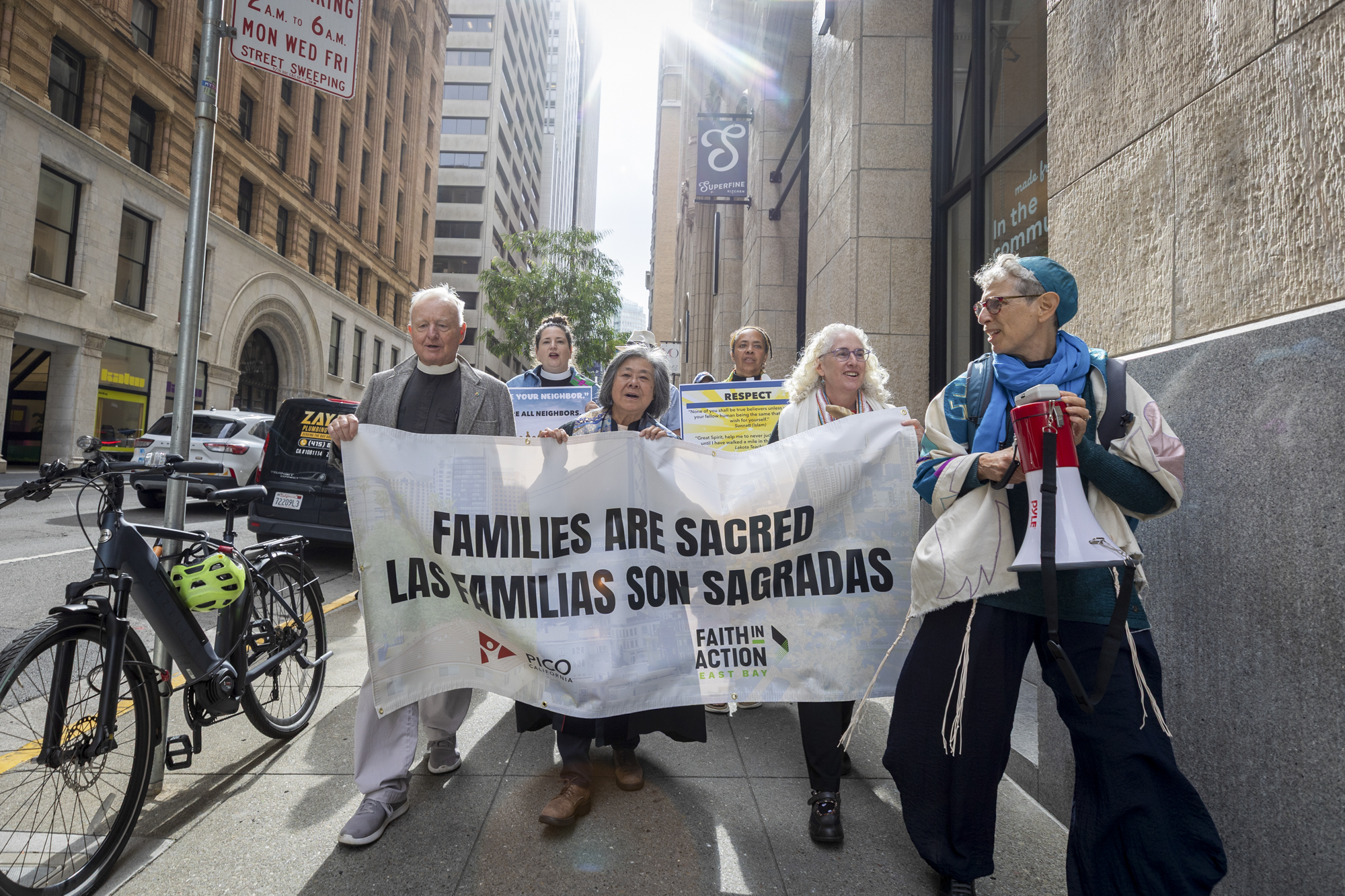
"caption": "Faith in Action organizers march north on Montgomery Street during the “Walking Our Faith” vigil for prayer and caring in San Francisco on Nov. 6, 2025. Organizers called for “moral courage” in the face of the Trump administration’s increased immigration enforcement in recent months. ",
"credit": "Gustavo Hernandez/KQED",
"altTag": null,
"description": null,
"imgSizes": {
"thumbnail": {
"file": "https://cdn.kqed.org/wp-content/uploads/sites/10/2025/11/20251106_ICE-VIGIL_GH-3-KQED-160x107.jpg",
"width": 160,
"height": 107,
"mimeType": "image/jpeg"
},
"1536x1536": {
"file": "https://cdn.kqed.org/wp-content/uploads/sites/10/2025/11/20251106_ICE-VIGIL_GH-3-KQED-1536x1024.jpg",
"width": 1536,
"height": 1024,
"mimeType": "image/jpeg"
},
"post-thumbnail": {
"file": "https://cdn.kqed.org/wp-content/uploads/sites/10/2025/11/20251106_ICE-VIGIL_GH-3-KQED-672x372.jpg",
"width": 672,
"height": 372,
"mimeType": "image/jpeg"
},
"twentyfourteen-full-width": {
"file": "https://cdn.kqed.org/wp-content/uploads/sites/10/2025/11/20251106_ICE-VIGIL_GH-3-KQED-1038x576.jpg",
"width": 1038,
"height": 576,
"mimeType": "image/jpeg"
},
"npr-cds-wide": {
"file": "https://cdn.kqed.org/wp-content/uploads/sites/10/2025/11/20251106_ICE-VIGIL_GH-3-KQED-1200x675.jpg",
"width": 1200,
"height": 675,
"mimeType": "image/jpeg"
},
"kqedFullSize": {
"file": "https://cdn.kqed.org/wp-content/uploads/sites/10/2025/11/20251106_ICE-VIGIL_GH-3-KQED.jpg",
"width": 2000,
"height": 1333
}
},
"isLoading": false,
"fetchFailed": false
},
"news_12062874": {
"type": "attachments",
"id": "news_12062874",
"meta": {
"index": "attachments_1716263798",
"site": "news",
"id": "12062874",
"found": true
},
"title": "Federal Enforcement San Francisco",
"publishDate": 1762293562,
"status": "inherit",
"parent": 12062859,
"modified": 1762293588,
"caption": "Police officers examine a U-Haul truck involved in a shooting at the entrance to Coast Guard Base Alameda, according to an officer at the scene, Friday, Oct. 24, 2025, in Oakland, California.",
"credit": "Noah Berger/AP Photo",
"altTag": null,
"description": null,
"imgSizes": {
"thumbnail": {
"file": "https://cdn.kqed.org/wp-content/uploads/sites/10/2025/11/UHaulCoastGuardAlamedaAP-160x107.jpg",
"width": 160,
"height": 107,
"mimeType": "image/jpeg"
},
"1536x1536": {
"file": "https://cdn.kqed.org/wp-content/uploads/sites/10/2025/11/UHaulCoastGuardAlamedaAP-1536x1024.jpg",
"width": 1536,
"height": 1024,
"mimeType": "image/jpeg"
},
"post-thumbnail": {
"file": "https://cdn.kqed.org/wp-content/uploads/sites/10/2025/11/UHaulCoastGuardAlamedaAP-672x372.jpg",
"width": 672,
"height": 372,
"mimeType": "image/jpeg"
},
"twentyfourteen-full-width": {
"file": "https://cdn.kqed.org/wp-content/uploads/sites/10/2025/11/UHaulCoastGuardAlamedaAP-1038x576.jpg",
"width": 1038,
"height": 576,
"mimeType": "image/jpeg"
},
"npr-cds-wide": {
"file": "https://cdn.kqed.org/wp-content/uploads/sites/10/2025/11/UHaulCoastGuardAlamedaAP-1200x675.jpg",
"width": 1200,
"height": 675,
"mimeType": "image/jpeg"
},
"kqedFullSize": {
"file": "https://cdn.kqed.org/wp-content/uploads/sites/10/2025/11/UHaulCoastGuardAlamedaAP.jpg",
"width": 2000,
"height": 1333
}
},
"isLoading": false,
"fetchFailed": false
},
"news_12046564": {
"type": "attachments",
"id": "news_12046564",
"meta": {
"index": "attachments_1716263798",
"site": "news",
"id": "12046564",
"found": true
},
"title": "The Core Civic detention facility in California City on June 28, 2025.",
"publishDate": 1751304998,
"status": "inherit",
"parent": 12071374,
"modified": 1788542280,
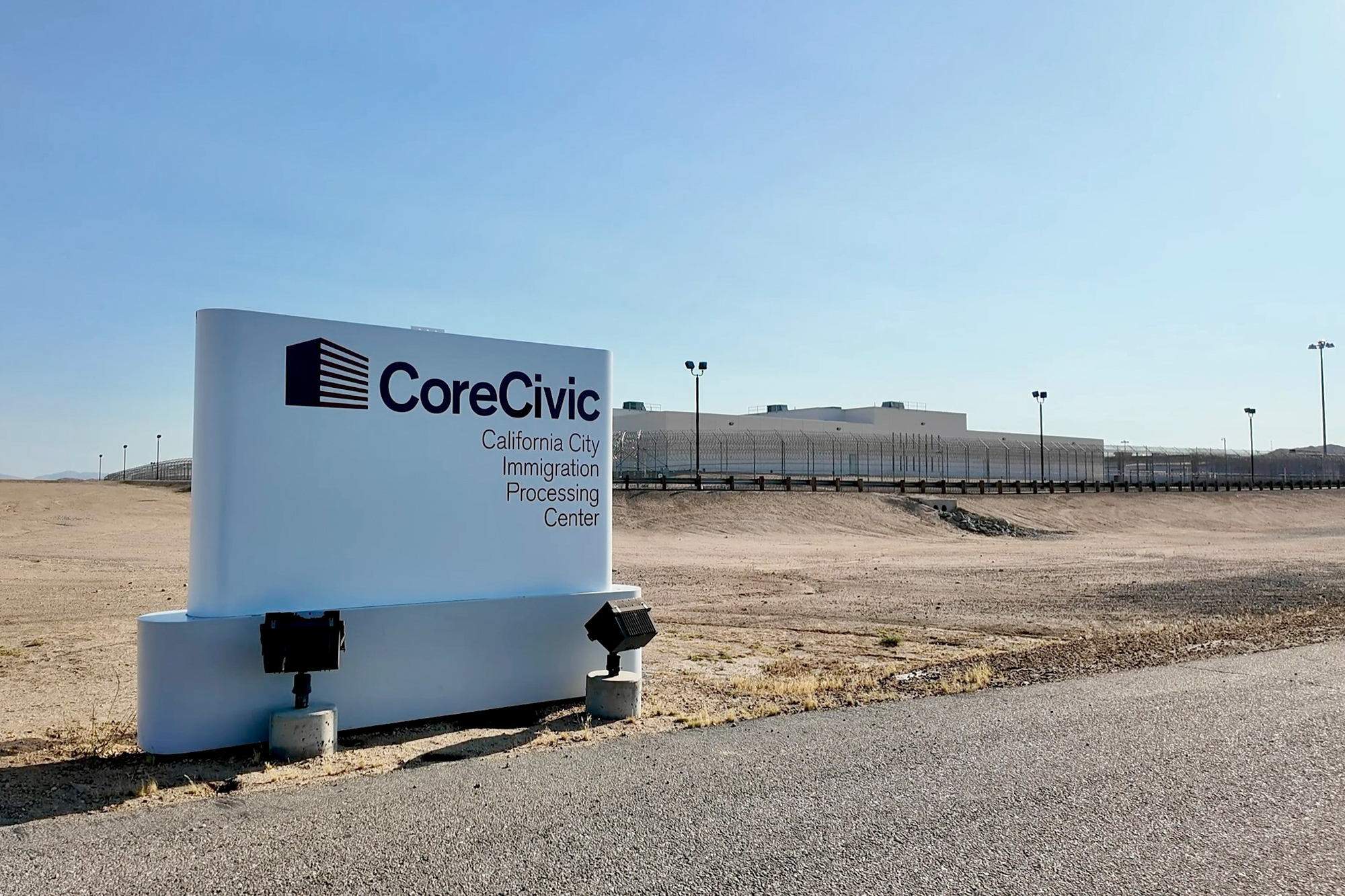
"caption": "The CoreCivic detention facility in California City, California, on June 28, 2025.",
"credit": "Saul Gonzalez/KQED",
"altTag": null,
"description": null,
"imgSizes": {
"thumbnail": {
"file": "https://cdn.kqed.org/wp-content/uploads/sites/10/2025/06/CORECIVICCALCITY1-KQED-160x107.jpg",
"width": 160,
"height": 107,
"mimeType": "image/jpeg"
},
"1536x1536": {
"file": "https://cdn.kqed.org/wp-content/uploads/sites/10/2025/06/CORECIVICCALCITY1-KQED-1536x1024.jpg",
"width": 1536,
"height": 1024,
"mimeType": "image/jpeg"
},
"post-thumbnail": {
"file": "https://cdn.kqed.org/wp-content/uploads/sites/10/2025/06/CORECIVICCALCITY1-KQED-672x372.jpg",
"width": 672,
"height": 372,
"mimeType": "image/jpeg"
},
"twentyfourteen-full-width": {
"file": "https://cdn.kqed.org/wp-content/uploads/sites/10/2025/06/CORECIVICCALCITY1-KQED-1038x576.jpg",
"width": 1038,
"height": 576,
"mimeType": "image/jpeg"
},
"kqedFullSize": {
"file": "https://cdn.kqed.org/wp-content/uploads/sites/10/2025/06/CORECIVICCALCITY1-KQED.jpg",
"width": 2000,
"height": 1333
}
},
"isLoading": false,
"fetchFailed": false
},
"news_12062600": {
"type": "attachments",
"id": "news_12062600",
"meta": {
"index": "attachments_1716263798",
"site": "news",
"id": "12062600",
"found": true
},
"title": "111623_Sam-Altman_AP_CM_01",
"publishDate": 1761950606,
"status": "inherit",
"parent": 12062523,
"modified": 1775852918,
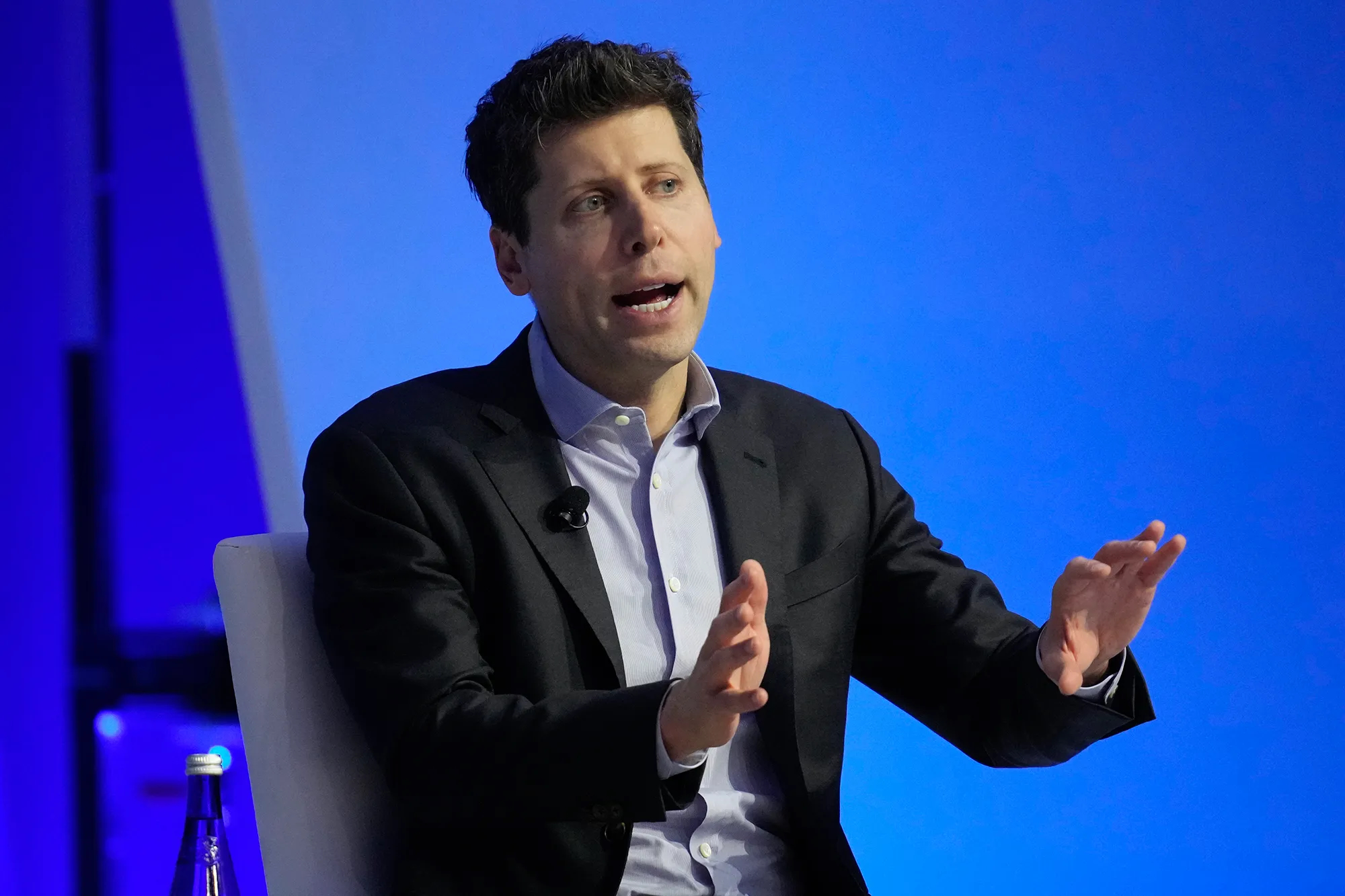
"caption": "OpenAI restructured to a for-profit company in a move tied to an agreement with California Attorney General Rob Bonta. Company CEO Sam Altman participates in a discussion in San Francisco on Nov. 16, 2023.",
"credit": "Photo by Eric Risberg, AP Photo",
"altTag": null,
"description": null,
"imgSizes": {
"thumbnail": {
"file": "https://cdn.kqed.org/wp-content/uploads/sites/10/2025/10/111623_Sam-Altman_AP_CM_01-160x107.jpeg",
"width": 160,
"height": 107,
"mimeType": "image/jpeg"
},
"1536x1536": {
"file": "https://cdn.kqed.org/wp-content/uploads/sites/10/2025/10/111623_Sam-Altman_AP_CM_01-1536x1024.jpeg",
"width": 1536,
"height": 1024,
"mimeType": "image/jpeg"
},
"post-thumbnail": {
"file": "https://cdn.kqed.org/wp-content/uploads/sites/10/2025/10/111623_Sam-Altman_AP_CM_01-672x372.jpeg",
"width": 672,
"height": 372,
"mimeType": "image/jpeg"
},
"twentyfourteen-full-width": {
"file": "https://cdn.kqed.org/wp-content/uploads/sites/10/2025/10/111623_Sam-Altman_AP_CM_01-1038x576.jpeg",
"width": 1038,
"height": 576,
"mimeType": "image/jpeg"
},
"npr-cds-wide": {
"file": "https://cdn.kqed.org/wp-content/uploads/sites/10/2025/10/111623_Sam-Altman_AP_CM_01-1200x675.jpeg",
"width": 1200,
"height": 675,
"mimeType": "image/jpeg"
},
"kqedFullSize": {
"file": "https://cdn.kqed.org/wp-content/uploads/sites/10/2025/10/111623_Sam-Altman_AP_CM_01.jpeg",
"width": 2000,
"height": 1333
}
},
"isLoading": false,
"fetchFailed": false
},
"news_12062264": {
"type": "attachments",
"id": "news_12062264",
"meta": {
"index": "attachments_1716263798",
"site": "news",
"id": "12062264",
"found": true
},
"title": "Israeli-Forces-Uproot-Olive-Trees-in-West-Bank",
"publishDate": 1761846502,
"status": "inherit",
"parent": 12062258,
"modified": 1761846594,
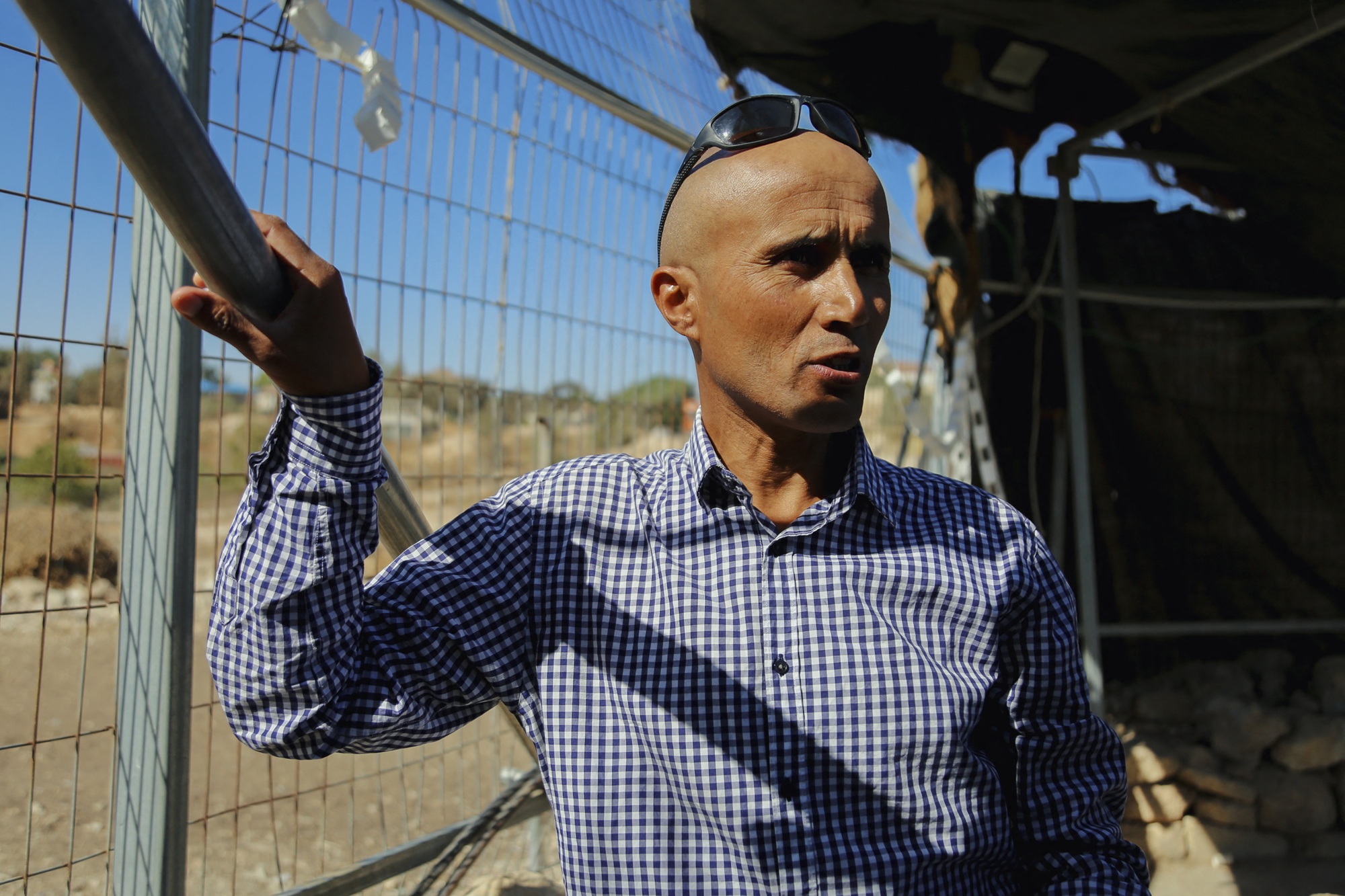
"caption": "A man stands near a fenced area in Umm al-Khair, Masafer Yatta, south of Hebron, West Bank, on Oct. 8, 2025. Israeli forces have uprooted about 150 olive trees and placed barbed wire near Palestinian lands and homes in the area. ",
"credit": "Mosab Shawer/Middle East Images/AFP via Getty Images",
"altTag": null,
"description": null,
"imgSizes": {
"thumbnail": {
"file": "https://cdn.kqed.org/wp-content/uploads/sites/10/2025/10/Eid-Al-Hathaleen-Getty-160x107.jpg",
"width": 160,
"height": 107,
"mimeType": "image/jpeg"
},
"1536x1536": {
"file": "https://cdn.kqed.org/wp-content/uploads/sites/10/2025/10/Eid-Al-Hathaleen-Getty-1536x1024.jpg",
"width": 1536,
"height": 1024,
"mimeType": "image/jpeg"
},
"post-thumbnail": {
"file": "https://cdn.kqed.org/wp-content/uploads/sites/10/2025/10/Eid-Al-Hathaleen-Getty-672x372.jpg",
"width": 672,
"height": 372,
"mimeType": "image/jpeg"
},
"twentyfourteen-full-width": {
"file": "https://cdn.kqed.org/wp-content/uploads/sites/10/2025/10/Eid-Al-Hathaleen-Getty-1038x576.jpg",
"width": 1038,
"height": 576,
"mimeType": "image/jpeg"
},
"npr-cds-wide": {
"file": "https://cdn.kqed.org/wp-content/uploads/sites/10/2025/10/Eid-Al-Hathaleen-Getty-1600x900.jpg",
"width": 1600,
"height": 900,
"mimeType": "image/jpeg"
},
"kqedFullSize": {
"file": "https://cdn.kqed.org/wp-content/uploads/sites/10/2025/10/Eid-Al-Hathaleen-Getty.jpg",
"width": 2000,
"height": 1333
}
},
"isLoading": false,
"fetchFailed": false
},
"news_12062054": {
"type": "attachments",
"id": "news_12062054",
"meta": {
"index": "attachments_1716263798",
"site": "news",
"id": "12062054",
"found": true
},
"title": "250924-SJICE-JG-1_qed",
"publishDate": 1761763574,
"status": "inherit",
"parent": 12061923,
"modified": 1761763597,
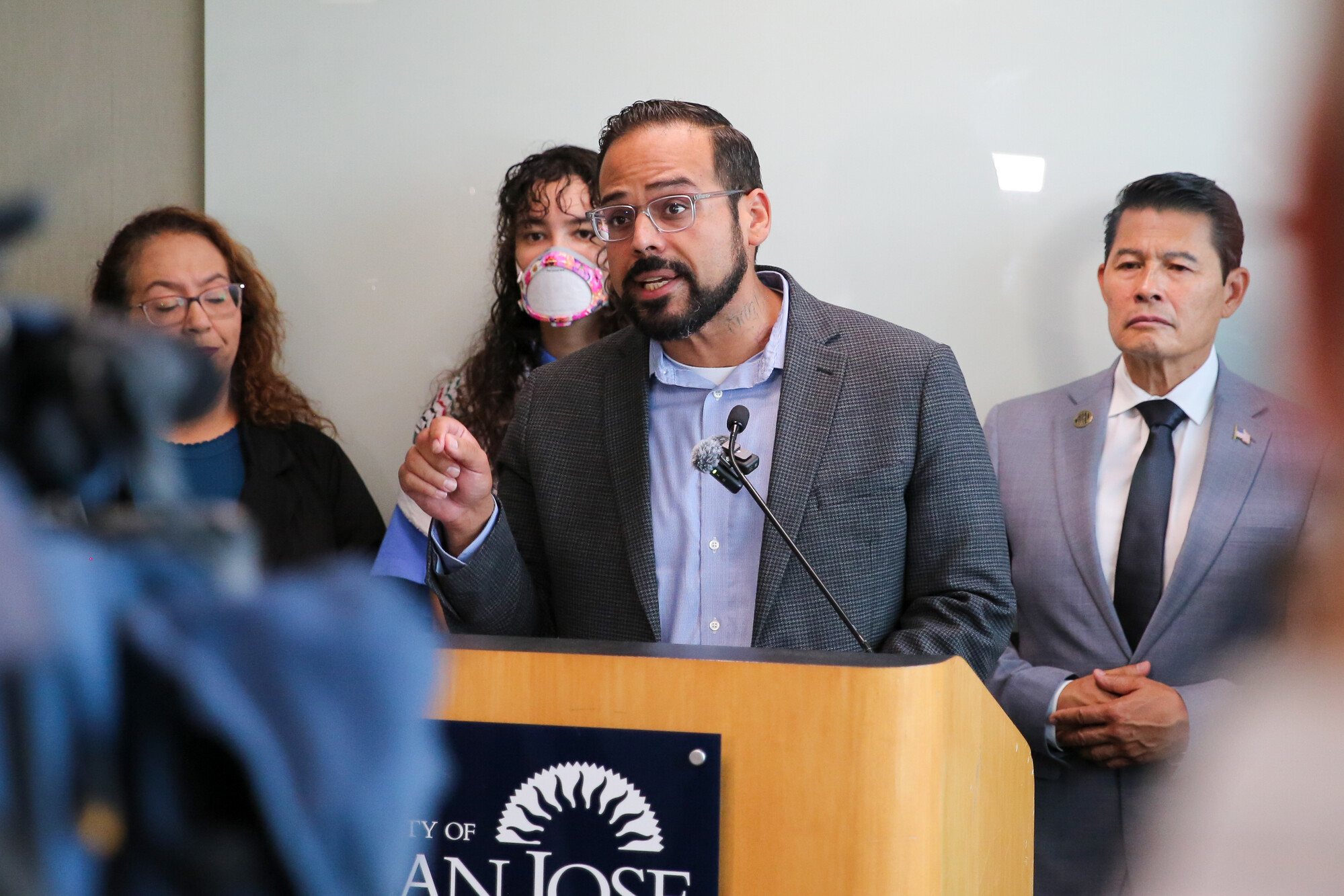
"caption": "San José District 5 City Councilmember Peter Ortiz speaks during a Sept. 24, 2025, press conference about an immigration arrest at a local nonprofit.",
"credit": "Joseph Geha/KQED",
"altTag": null,
"description": null,
"imgSizes": {
"thumbnail": {
"file": "https://cdn.kqed.org/wp-content/uploads/sites/10/2025/10/250924-SJICE-JG-1_qed-160x107.jpg",
"width": 160,
"height": 107,
"mimeType": "image/jpeg"
},
"1536x1536": {
"file": "https://cdn.kqed.org/wp-content/uploads/sites/10/2025/10/250924-SJICE-JG-1_qed-1536x1024.jpg",
"width": 1536,
"height": 1024,
"mimeType": "image/jpeg"
},
"post-thumbnail": {
"file": "https://cdn.kqed.org/wp-content/uploads/sites/10/2025/10/250924-SJICE-JG-1_qed-672x372.jpg",
"width": 672,
"height": 372,
"mimeType": "image/jpeg"
},
"twentyfourteen-full-width": {
"file": "https://cdn.kqed.org/wp-content/uploads/sites/10/2025/10/250924-SJICE-JG-1_qed-1038x576.jpg",
"width": 1038,
"height": 576,
"mimeType": "image/jpeg"
},
"npr-cds-wide": {
"file": "https://cdn.kqed.org/wp-content/uploads/sites/10/2025/10/250924-SJICE-JG-1_qed-1600x900.jpg",
"width": 1600,
"height": 900,
"mimeType": "image/jpeg"
},
"kqedFullSize": {
"file": "https://cdn.kqed.org/wp-content/uploads/sites/10/2025/10/250924-SJICE-JG-1_qed.jpg",
"width": 1999,
"height": 1333
}
},
"isLoading": false,
"fetchFailed": false
},
"news_11843813": {
"type": "attachments",
"id": "news_11843813",
"meta": {
"index": "attachments_1716263798",
"site": "news",
"id": "11843813",
"found": true
},
"parent": 11843123,
"imgSizes": {
"apple_news_ca_landscape_5_5": {
"file": "https://ww2.kqed.org/app/uploads/sites/10/2020/10/uber-lyft-protest-sign-1044x783.jpg",
"width": 1044,
"mimeType": "image/jpeg",
"height": 783
},
"apple_news_ca_square_4_0": {
"file": "https://ww2.kqed.org/app/uploads/sites/10/2020/10/uber-lyft-protest-sign-470x470.jpg",
"width": 470,
"mimeType": "image/jpeg",
"height": 470
},
"twentyfourteen-full-width": {
"file": "https://ww2.kqed.org/app/uploads/sites/10/2020/10/uber-lyft-protest-sign-1038x576.jpg",
"width": 1038,
"mimeType": "image/jpeg",
"height": 576
},
"thumbnail": {
"file": "https://ww2.kqed.org/app/uploads/sites/10/2020/10/uber-lyft-protest-sign-160x111.jpg",
"width": 160,
"mimeType": "image/jpeg",
"height": 111
},
"post-thumbnail": {
"file": "https://ww2.kqed.org/app/uploads/sites/10/2020/10/uber-lyft-protest-sign-672x372.jpg",
"width": 672,
"mimeType": "image/jpeg",
"height": 372
},
"kqedFullSize": {
"file": "https://ww2.kqed.org/app/uploads/sites/10/2020/10/uber-lyft-protest-sign.jpg",
"width": 1920,
"height": 1330
},
"apple_news_ca_landscape_4_7": {
"file": "https://ww2.kqed.org/app/uploads/sites/10/2020/10/uber-lyft-protest-sign-632x474.jpg",
"width": 632,
"mimeType": "image/jpeg",
"height": 474
},
"large": {
"file": "https://ww2.kqed.org/app/uploads/sites/10/2020/10/uber-lyft-protest-sign-1020x707.jpg",
"width": 1020,
"mimeType": "image/jpeg",
"height": 707
},
"apple_news_ca_landscape_4_0": {
"file": "https://ww2.kqed.org/app/uploads/sites/10/2020/10/uber-lyft-protest-sign-536x402.jpg",
"width": 536,
"mimeType": "image/jpeg",
"height": 402
},
"apple_news_ca_portrait_12_9": {
"file": "https://ww2.kqed.org/app/uploads/sites/10/2020/10/uber-lyft-protest-sign-1122x1330.jpg",
"width": 1122,
"mimeType": "image/jpeg",
"height": 1330
},
"medium": {
"file": "https://ww2.kqed.org/app/uploads/sites/10/2020/10/uber-lyft-protest-sign-800x554.jpg",
"width": 800,
"mimeType": "image/jpeg",
"height": 554
},
"apple_news_ca_portrait_4_0": {
"file": "https://ww2.kqed.org/app/uploads/sites/10/2020/10/uber-lyft-protest-sign-354x472.jpg",
"width": 354,
"mimeType": "image/jpeg",
"height": 472
},
"apple_news_ca_portrait_9_7": {
"file": "https://ww2.kqed.org/app/uploads/sites/10/2020/10/uber-lyft-protest-sign-840x1120.jpg",
"width": 840,
"mimeType": "image/jpeg",
"height": 1120
},
"apple_news_ca_landscape_12_9": {
"file": "https://ww2.kqed.org/app/uploads/sites/10/2020/10/uber-lyft-protest-sign-1832x1330.jpg",
"width": 1832,
"mimeType": "image/jpeg",
"height": 1330
},
"apple_news_ca_square_9_7": {
"file": "https://ww2.kqed.org/app/uploads/sites/10/2020/10/uber-lyft-protest-sign-1104x1104.jpg",
"width": 1104,
"mimeType": "image/jpeg",
"height": 1104
},
"1536x1536": {
"file": "https://ww2.kqed.org/app/uploads/sites/10/2020/10/uber-lyft-protest-sign-1536x1064.jpg",
"width": 1536,
"mimeType": "image/jpeg",
"height": 1064
},
"apple_news_ca_portrait_4_7": {
"file": "https://ww2.kqed.org/app/uploads/sites/10/2020/10/uber-lyft-protest-sign-414x552.jpg",
"width": 414,
"mimeType": "image/jpeg",
"height": 552
},
"apple_news_ca_square_12_9": {
"file": "https://ww2.kqed.org/app/uploads/sites/10/2020/10/uber-lyft-protest-sign-1472x1330.jpg",
"width": 1472,
"mimeType": "image/jpeg",
"height": 1330
},
"apple_news_ca_portrait_5_5": {
"file": "https://ww2.kqed.org/app/uploads/sites/10/2020/10/uber-lyft-protest-sign-687x916.jpg",
"width": 687,
"mimeType": "image/jpeg",
"height": 916
},
"apple_news_ca_square_4_7": {
"file": "https://ww2.kqed.org/app/uploads/sites/10/2020/10/uber-lyft-protest-sign-550x550.jpg",
"width": 550,
"mimeType": "image/jpeg",
"height": 550
},
"apple_news_ca_landscape_9_7": {
"file": "https://ww2.kqed.org/app/uploads/sites/10/2020/10/uber-lyft-protest-sign-1376x1032.jpg",
"width": 1376,
"mimeType": "image/jpeg",
"height": 1032
},
"apple_news_ca_square_5_5": {
"file": "https://ww2.kqed.org/app/uploads/sites/10/2020/10/uber-lyft-protest-sign-912x912.jpg",
"width": 912,
"mimeType": "image/jpeg",
"height": 912
}
},
"publishDate": 1603753946,
"modified": 1678823724,
"caption": "A supporter of ride-hail drivers holds a sign during a protest in front of Uber headquarters in May 2019. Prop. 22, backed by huge amounts of cash from gig companies, would create a new class of worker in California.",
"description": "A supporter of ride-hail drivers holds a sign during a protest in front of Uber headquarters in May, 2019. Prop. 22, backed by huge amounts of cash from gig companies, would create a new class of worker in California.",
"title": "uber-lyft-protest-sign",
"credit": "Justin Sullivan/Getty Images",
"status": "inherit",
"altTag": "Protesters stand on a sidewalk in front of an office, and next to a car with Lyft and Uber stickers on the back. A woman holds a sign that says: Uber: 'Pay Drivers a Living Wage.'",
"isLoading": false,
"fetchFailed": false
},
"news_12042200": {
"type": "attachments",
"id": "news_12042200",
"meta": {
"index": "attachments_1716263798",
"site": "news",
"id": "12042200",
"found": true
},
"title": "008_KQED_630Sansome_02052020_1470_qed",
"publishDate": 1748630169,
"status": "inherit",
"parent": 12042197,
"modified": 1784932362,
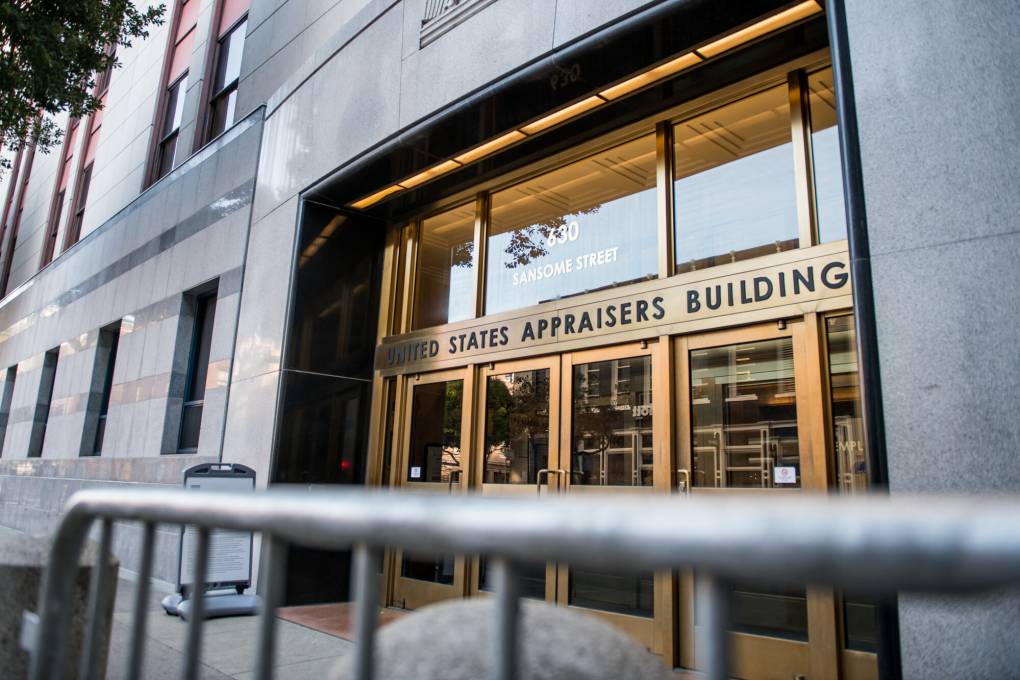
"caption": "The U.S. Immigration & Customs Enforcement building at 630 Sansome St., in San Francisco, California, on Feb. 5, 2020.",
"credit": "Beth LaBerge/KQED",
"altTag": null,
"description": null,
"imgSizes": {
"medium": {
"file": "https://cdn.kqed.org/wp-content/uploads/sites/10/2025/05/008_KQED_630Sansome_02052020_1470_qed-800x533.jpg",
"width": 800,
"height": 533,
"mimeType": "image/jpeg"
},
"large": {
"file": "https://cdn.kqed.org/wp-content/uploads/sites/10/2025/05/008_KQED_630Sansome_02052020_1470_qed-1020x680.jpg",
"width": 1020,
"height": 680,
"mimeType": "image/jpeg"
},
"thumbnail": {
"file": "https://cdn.kqed.org/wp-content/uploads/sites/10/2025/05/008_KQED_630Sansome_02052020_1470_qed-160x107.jpg",
"width": 160,
"height": 107,
"mimeType": "image/jpeg"
},
"1536x1536": {
"file": "https://cdn.kqed.org/wp-content/uploads/sites/10/2025/05/008_KQED_630Sansome_02052020_1470_qed-1536x1024.jpg",
"width": 1536,
"height": 1024,
"mimeType": "image/jpeg"
},
"post-thumbnail": {
"file": "https://cdn.kqed.org/wp-content/uploads/sites/10/2025/05/008_KQED_630Sansome_02052020_1470_qed-672x372.jpg",
"width": 672,
"height": 372,
"mimeType": "image/jpeg"
},
"twentyfourteen-full-width": {
"file": "https://cdn.kqed.org/wp-content/uploads/sites/10/2025/05/008_KQED_630Sansome_02052020_1470_qed-1038x576.jpg",
"width": 1038,
"height": 576,
"mimeType": "image/jpeg"
},
"full-width": {
"file": "https://cdn.kqed.org/wp-content/uploads/sites/10/2025/05/008_KQED_630Sansome_02052020_1470_qed-1920x1280.jpg",
"width": 1920,
"height": 1280,
"mimeType": "image/jpeg"
},
"kqedFullSize": {
"file": "https://cdn.kqed.org/wp-content/uploads/sites/10/2025/05/008_KQED_630Sansome_02052020_1470_qed.jpg",
"width": 1999,
"height": 1333
}
},
"isLoading": false,
"fetchFailed": false
},
"news_12061731": {
"type": "attachments",
"id": "news_12061731",
"meta": {
"index": "attachments_1716263798",
"site": "news",
"id": "12061731",
"found": true
},
"title": "20251026_FAMILYMEMBERSARRESTED_HERNANDEZ-1-KQED",
"publishDate": 1761599050,
"status": "inherit",
"parent": 0,
"modified": 1761674035,
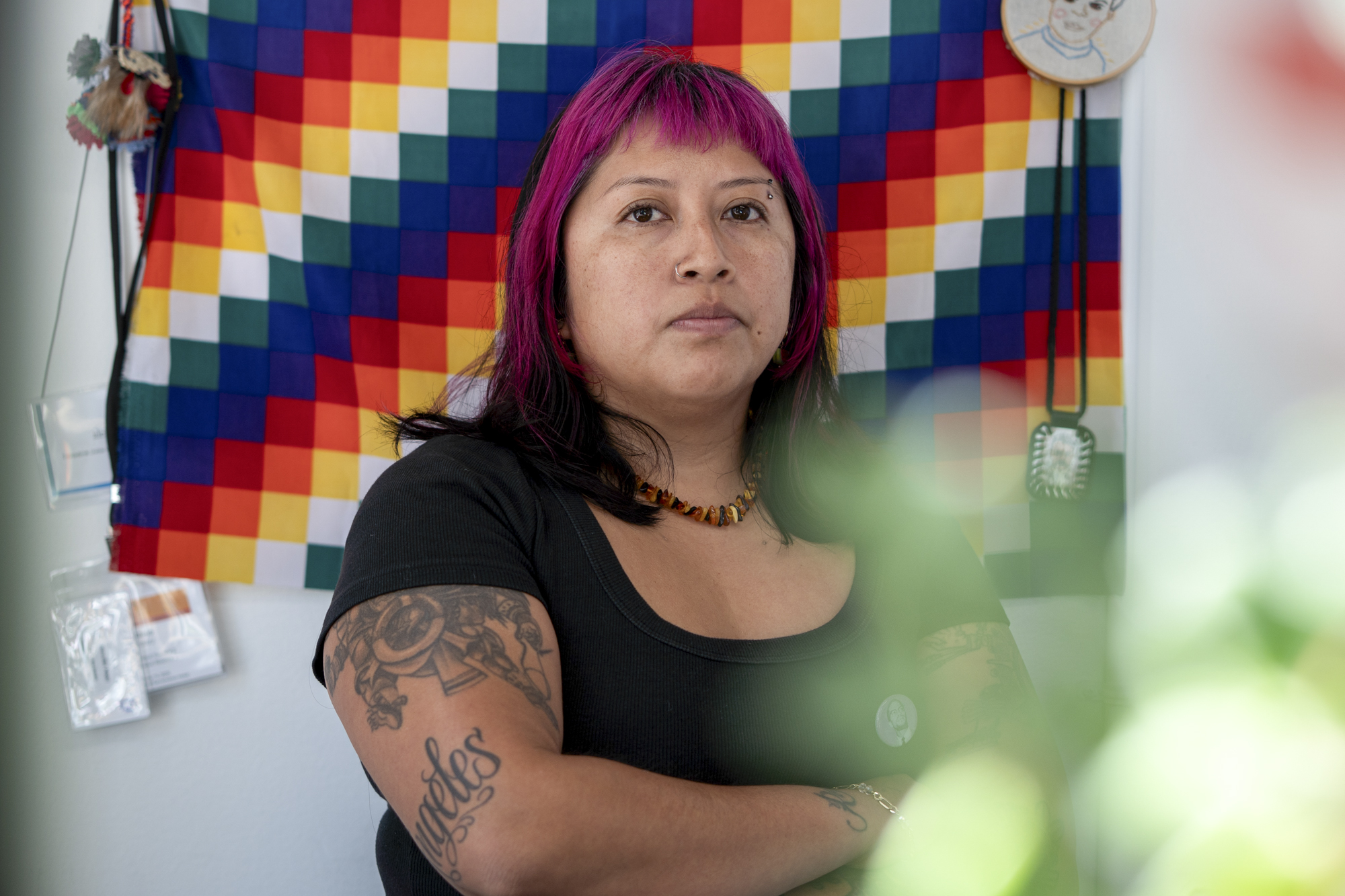
"caption": "Jennifer Alejo leads a workers’ rights organization in Oakland on Oct. 27, 2025. Alejo and her sister Citlali helped organize their family after ICE arrested 14 relatives during a June worksite raid in Los Angeles.",
"credit": "Gustavo Hernandez/KQED",
"altTag": null,
"description": null,
"imgSizes": {
"thumbnail": {
"file": "https://cdn.kqed.org/wp-content/uploads/sites/10/2025/10/20251026_FAMILYMEMBERSARRESTED_HERNANDEZ-1-KQED-160x107.jpg",
"width": 160,
"height": 107,
"mimeType": "image/jpeg"
},
"1536x1536": {
"file": "https://cdn.kqed.org/wp-content/uploads/sites/10/2025/10/20251026_FAMILYMEMBERSARRESTED_HERNANDEZ-1-KQED-1536x1024.jpg",
"width": 1536,
"height": 1024,
"mimeType": "image/jpeg"
},
"post-thumbnail": {
"file": "https://cdn.kqed.org/wp-content/uploads/sites/10/2025/10/20251026_FAMILYMEMBERSARRESTED_HERNANDEZ-1-KQED-672x372.jpg",
"width": 672,
"height": 372,
"mimeType": "image/jpeg"
},
"twentyfourteen-full-width": {
"file": "https://cdn.kqed.org/wp-content/uploads/sites/10/2025/10/20251026_FAMILYMEMBERSARRESTED_HERNANDEZ-1-KQED-1038x576.jpg",
"width": 1038,
"height": 576,
"mimeType": "image/jpeg"
},
"npr-cds-wide": {
"file": "https://cdn.kqed.org/wp-content/uploads/sites/10/2025/10/20251026_FAMILYMEMBERSARRESTED_HERNANDEZ-1-KQED-1600x900.jpg",
"width": 1600,
"height": 900,
"mimeType": "image/jpeg"
},
"kqedFullSize": {
"file": "https://cdn.kqed.org/wp-content/uploads/sites/10/2025/10/20251026_FAMILYMEMBERSARRESTED_HERNANDEZ-1-KQED.jpg",
"width": 2000,
"height": 1333
}
},
"isLoading": false,
"fetchFailed": false
},
"news_12061707": {
"type": "attachments",
"id": "news_12061707",
"meta": {
"index": "attachments_1716263798",
"site": "news",
"id": "12061707",
"found": true
},
"title": "American Muslims for Palestine, 17th Annual Convention for Palestine in Illinois",
"publishDate": 1761594151,
"status": "inherit",
"parent": 12061703,
"modified": 1761594378,
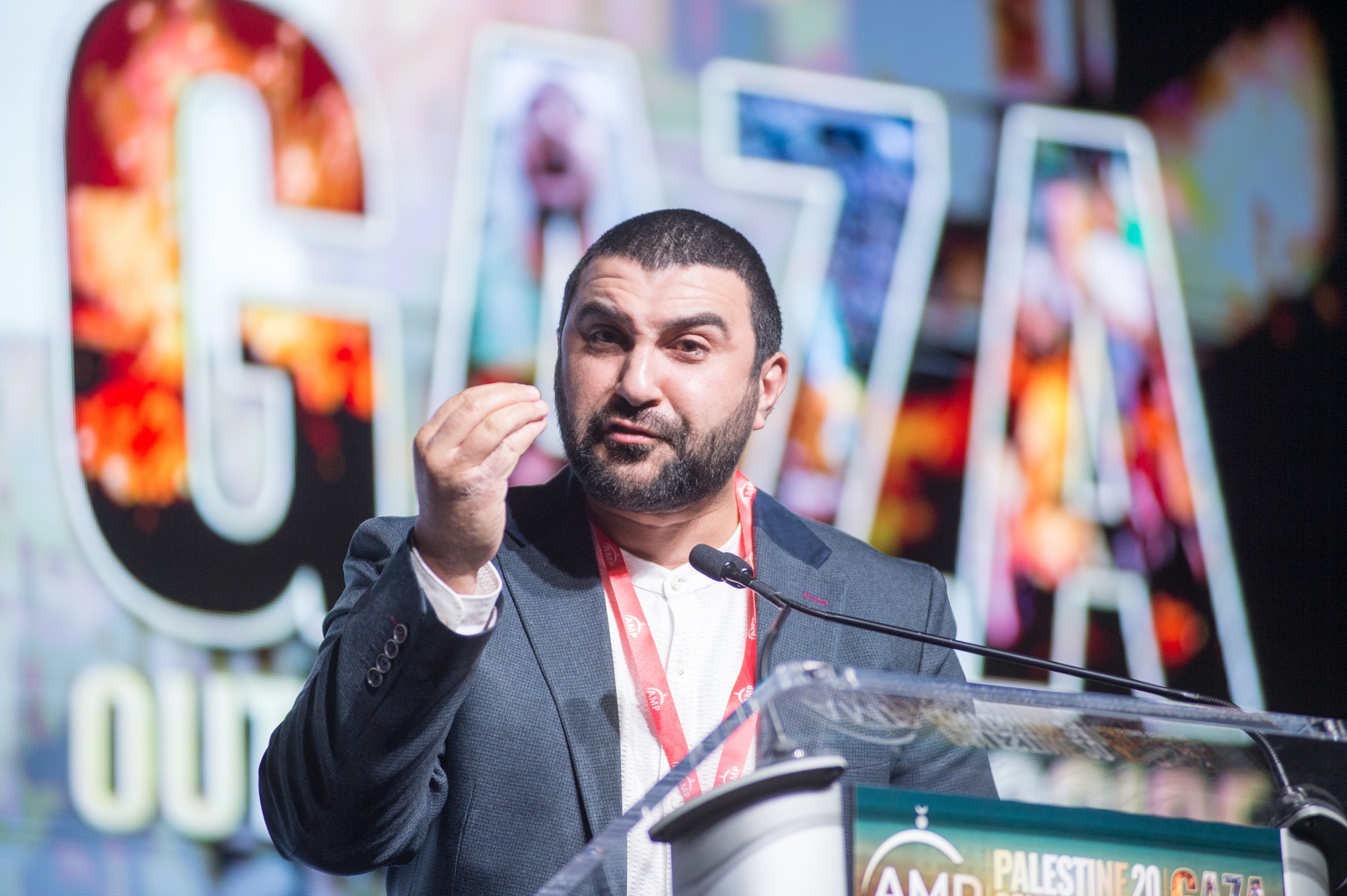
"caption": "Sami Hamdi, managing director of the International Interest, during a speech at the 17th Annual Convention for Palestine at the Tinley Park Convention Center in Tinley Park, Illinois, on Nov. 30, 2024.",
"credit": "Jacek Boczarski/Anadolu via Getty Images",
"altTag": null,
"description": null,
"imgSizes": {
"thumbnail": {
"file": "https://cdn.kqed.org/wp-content/uploads/sites/10/2025/10/SamiHamdiGetty-160x106.jpg",
"width": 160,
"height": 106,
"mimeType": "image/jpeg"
},
"1536x1536": {
"file": "https://cdn.kqed.org/wp-content/uploads/sites/10/2025/10/SamiHamdiGetty-1536x1022.jpg",
"width": 1536,
"height": 1022,
"mimeType": "image/jpeg"
},
"post-thumbnail": {
"file": "https://cdn.kqed.org/wp-content/uploads/sites/10/2025/10/SamiHamdiGetty-672x372.jpg",
"width": 672,
"height": 372,
"mimeType": "image/jpeg"
},
"twentyfourteen-full-width": {
"file": "https://cdn.kqed.org/wp-content/uploads/sites/10/2025/10/SamiHamdiGetty-1038x576.jpg",
"width": 1038,
"height": 576,
"mimeType": "image/jpeg"
},
"npr-cds-wide": {
"file": "https://cdn.kqed.org/wp-content/uploads/sites/10/2025/10/SamiHamdiGetty-1600x900.jpg",
"width": 1600,
"height": 900,
"mimeType": "image/jpeg"
},
"kqedFullSize": {
"file": "https://cdn.kqed.org/wp-content/uploads/sites/10/2025/10/SamiHamdiGetty.jpg",
"width": 2000,
"height": 1331
}
},
"isLoading": false,
"fetchFailed": false
},
"news_12061726": {
"type": "attachments",
"id": "news_12061726",
"meta": {
"index": "attachments_1716263798",
"site": "news",
"id": "12061726",
"found": true
},
"title": "060722-Sac-County-Voter-Registrar-MG-CM-02",
"publishDate": 1761598711,
"status": "inherit",
"parent": 12061723,
"modified": 1761599877,
"caption": "Voters cast their ballots at the Sacramento County Registrar of Voters office in Sacramento on June 7, 2022.",
"credit": "Miguel Gutierrez Jr./CalMatters",
"altTag": null,
"description": null,
"imgSizes": {
"thumbnail": {
"file": "https://cdn.kqed.org/wp-content/uploads/sites/10/2025/10/060722-Sac-County-Voter-Registrar-MG-CM-02-160x107.jpeg",
"width": 160,
"height": 107,
"mimeType": "image/jpeg"
},
"1536x1536": {
"file": "https://cdn.kqed.org/wp-content/uploads/sites/10/2025/10/060722-Sac-County-Voter-Registrar-MG-CM-02-1536x1024.jpeg",
"width": 1536,
"height": 1024,
"mimeType": "image/jpeg"
},
"post-thumbnail": {
"file": "https://cdn.kqed.org/wp-content/uploads/sites/10/2025/10/060722-Sac-County-Voter-Registrar-MG-CM-02-672x372.jpeg",
"width": 672,
"height": 372,
"mimeType": "image/jpeg"
},
"twentyfourteen-full-width": {
"file": "https://cdn.kqed.org/wp-content/uploads/sites/10/2025/10/060722-Sac-County-Voter-Registrar-MG-CM-02-1038x576.jpeg",
"width": 1038,
"height": 576,
"mimeType": "image/jpeg"
},
"npr-cds-wide": {
"file": "https://cdn.kqed.org/wp-content/uploads/sites/10/2025/10/060722-Sac-County-Voter-Registrar-MG-CM-02-1600x900.jpeg",
"width": 1600,
"height": 900,
"mimeType": "image/jpeg"
},
"kqedFullSize": {
"file": "https://cdn.kqed.org/wp-content/uploads/sites/10/2025/10/060722-Sac-County-Voter-Registrar-MG-CM-02.jpeg",
"width": 2000,
"height": 1333
}
},
"isLoading": false,
"fetchFailed": false
},
"news_12041396": {
"type": "attachments",
"id": "news_12041396",
"meta": {
"index": "attachments_1716263798",
"site": "news",
"id": "12041396",
"found": true
},
"title": "250128-SFImmigration-25-BL_qed",
"publishDate": 1747954329,
"status": "inherit",
"parent": 12041112,
"modified": 1764713928,
"caption": "San Francisco Supervisor Jackie Fielder speaks during a press conference with elected and public safety officials and labor leaders in front of City Hall in San Francisco on Jan. 28, 2025.",
"credit": "Beth LaBerge/KQED",
"altTag": null,
"description": null,
"imgSizes": {
"medium": {
"file": "https://cdn.kqed.org/wp-content/uploads/sites/10/2025/05/250128-SFImmigration-25-BL_qed-800x533.jpg",
"width": 800,
"height": 533,
"mimeType": "image/jpeg"
},
"large": {
"file": "https://cdn.kqed.org/wp-content/uploads/sites/10/2025/05/250128-SFImmigration-25-BL_qed-1020x680.jpg",
"width": 1020,
"height": 680,
"mimeType": "image/jpeg"
},
"thumbnail": {
"file": "https://cdn.kqed.org/wp-content/uploads/sites/10/2025/05/250128-SFImmigration-25-BL_qed-160x107.jpg",
"width": 160,
"height": 107,
"mimeType": "image/jpeg"
},
"1536x1536": {
"file": "https://cdn.kqed.org/wp-content/uploads/sites/10/2025/05/250128-SFImmigration-25-BL_qed-1536x1024.jpg",
"width": 1536,
"height": 1024,
"mimeType": "image/jpeg"
},
"post-thumbnail": {
"file": "https://cdn.kqed.org/wp-content/uploads/sites/10/2025/05/250128-SFImmigration-25-BL_qed-672x372.jpg",
"width": 672,
"height": 372,
"mimeType": "image/jpeg"
},
"twentyfourteen-full-width": {
"file": "https://cdn.kqed.org/wp-content/uploads/sites/10/2025/05/250128-SFImmigration-25-BL_qed-1038x576.jpg",
"width": 1038,
"height": 576,
"mimeType": "image/jpeg"
},
"full-width": {
"file": "https://cdn.kqed.org/wp-content/uploads/sites/10/2025/05/250128-SFImmigration-25-BL_qed-1920x1280.jpg",
"width": 1920,
"height": 1280,
"mimeType": "image/jpeg"
},
"kqedFullSize": {
"file": "https://cdn.kqed.org/wp-content/uploads/sites/10/2025/05/250128-SFImmigration-25-BL_qed.jpg",
"width": 2000,
"height": 1333
}
},
"isLoading": false,
"fetchFailed": false
}
},
"audioPlayerReducer": {
"postId": "stream_live",
"isPaused": true,
"isPlaying": false,
"pfsActive": false,
"pledgeModalIsOpen": true,
"playerDrawerIsOpen": false,
"liveAudioPlayStartedAt": 0,
"liveAudioPlayContext": ""
},
"authorsReducer": {
"byline_news_12062523": {
"type": "authors",
"id": "byline_news_12062523",
"meta": {
"override": true
},
"slug": "byline_news_12062523",
"name": "Khari Johnson and Levi Sumagaysay, CalMatters",
"isLoading": false
},
"byline_news_12061723": {
"type": "authors",
"id": "byline_news_12061723",
"meta": {
"override": true
},
"slug": "byline_news_12061723",
"name": "Maya C. Miller, CalMatters",
"isLoading": false
},
"tychehendricks": {
"type": "authors",
"id": "259",
"meta": {
"index": "authors_1716337520",
"id": "259",
"found": true
},
"name": "Tyche Hendricks",
"firstName": "Tyche",
"lastName": "Hendricks",
"slug": "tychehendricks",
"email": "thendricks@kqed.org",
"display_author_email": true,
"staff_mastheads": [
"news"
],
"title": "KQED Senior Editor, Immigration",
"bio": "\u003cspan style=\"font-weight: 400;\">Tyche Hendricks is KQED’s senior editor for immigration, leading coverage of the policy and politics that affect California’s immigrant communities. Her work for KQED’s radio and online audiences is also carried on NPR and other national outlets. She has been recognized with awards from the Radio and Television News Directors Association, the Society for Professional Journalists; the Education Writers Association; the Best of the West and the National Federation of Community Broadcasters. Before joining KQED in 2010, Tyche spent more than a dozen years as a newspaper reporter, notably at the \u003c/span>\u003ci>\u003cspan style=\"font-weight: 400;\">San Francisco Chronicle\u003c/span>\u003c/i>\u003cspan style=\"font-weight: 400;\">. At different times she has covered criminal justice, government and politics and urban planning. Tyche has taught in the MFA Creative Writing program at the University of San Francisco and at UC Berkeley’s Graduate School of Journalism, where she was co-director of a national immigration symposium for professional journalists. She is the author of \u003c/span>\u003ci>\u003cspan style=\"font-weight: 400;\">The Wind Doesn't Need a Passport: Stories from the U.S.-Mexico Borderlands\u003c/span>\u003c/i>\u003cspan style=\"font-weight: 400;\"> (University of California Press). \u003c/span>",
"avatar": "https://secure.gravatar.com/avatar/b8ee458e2731c2d43df86882ce17267e?s=600&d=blank&r=g",
"twitter": "tychehendricks",
"facebook": null,
"instagram": null,
"linkedin": null,
"sites": [
{
"site": "news",
"roles": [
"editor"
]
},
{
"site": "stateofhealth",
"roles": [
"editor"
]
}
],
"headData": {
"title": "Tyche Hendricks | KQED",
"description": "KQED Senior Editor, Immigration",
"ogImgSrc": "https://secure.gravatar.com/avatar/b8ee458e2731c2d43df86882ce17267e?s=600&d=blank&r=g",
"twImgSrc": "https://secure.gravatar.com/avatar/b8ee458e2731c2d43df86882ce17267e?s=600&d=blank&r=g"
},
"isLoading": false,
"link": "/author/tychehendricks"
},
"fjhabvala": {
"type": "authors",
"id": "8659",
"meta": {
"index": "authors_1716337520",
"id": "8659",
"found": true
},
"name": "Farida Jhabvala Romero",
"firstName": "Farida",
"lastName": "Jhabvala Romero",
"slug": "fjhabvala",
"email": "fjhabvala@kqed.org",
"display_author_email": true,
"staff_mastheads": [
"news"
],
"title": "KQED Contributor",
"bio": "Farida Jhabvala Romero is a Labor Correspondent for KQED. She previously covered immigration. Farida was \u003ca href=\"https://www.ccnma.org/2022-most-influential-latina-journalists\">named\u003c/a> one of the 10 Most Influential Latina Journalists in California in 2022 by the California Chicano News Media Association. Her work has won awards from the Society of Professional Journalists (Northern California), as well as a national and regional Edward M. Murrow Award for the collaborative reporting projects “Dangerous Air” and “Graying California.” Before joining KQED, Farida worked as a producer at Radio Bilingüe, a national public radio network. Farida earned her master’s degree in journalism from Stanford University.",
"avatar": "https://secure.gravatar.com/avatar/f9f022d4e2609741874222a1e9d41f48fea74011aa7c615eef91d9a50c944ebe?s=600&d=blank&r=g",
"twitter": "FaridaJhabvala",
"bluesky": null,
"facebook": null,
"instagram": null,
"linkedin": "https://www.linkedin.com/in/faridajhabvala/",
"sites": [
{
"site": "news",
"roles": [
"editor"
]
},
{
"site": "stateofhealth",
"roles": [
"author"
]
},
{
"site": "liveblog",
"roles": [
"author"
]
}
],
"headData": {
"title": "Farida Jhabvala Romero | KQED",
"description": "KQED Contributor",
"ogImgSrc": "https://secure.gravatar.com/avatar/f9f022d4e2609741874222a1e9d41f48fea74011aa7c615eef91d9a50c944ebe?s=600&d=blank&r=g",
"twImgSrc": "https://secure.gravatar.com/avatar/f9f022d4e2609741874222a1e9d41f48fea74011aa7c615eef91d9a50c944ebe?s=600&d=blank&r=g"
},
"isLoading": false,
"link": "/author/fjhabvala"
},
"jlara": {
"type": "authors",
"id": "11761",
"meta": {
"index": "authors_1716337520",
"id": "11761",
"found": true
},
"name": "Juan Carlos Lara",
"firstName": "Juan Carlos",
"lastName": "Lara",
"slug": "jlara",
"email": "jlara@kqed.org",
"display_author_email": false,
"staff_mastheads": [],
"title": "KQED Contributor",
"bio": null,
"avatar": "https://secure.gravatar.com/avatar/19e2052b9b05657c5ff2af2121846e9c?s=600&d=blank&r=g",
"twitter": null,
"facebook": null,
"instagram": null,
"linkedin": null,
"sites": [
{
"site": "arts",
"roles": [
"editor"
]
},
{
"site": "news",
"roles": [
"editor"
]
},
{
"site": "forum",
"roles": [
"editor"
]
},
{
"site": "liveblog",
"roles": [
"contributor"
]
}
],
"headData": {
"title": "Juan Carlos Lara | KQED",
"description": "KQED Contributor",
"ogImgSrc": "https://secure.gravatar.com/avatar/19e2052b9b05657c5ff2af2121846e9c?s=600&d=blank&r=g",
"twImgSrc": "https://secure.gravatar.com/avatar/19e2052b9b05657c5ff2af2121846e9c?s=600&d=blank&r=g"
},
"isLoading": false,
"link": "/author/jlara"
},
"sjohnson": {
"type": "authors",
"id": "11840",
"meta": {
"index": "authors_1716337520",
"id": "11840",
"found": true
},
"name": "Sydney Johnson",
"firstName": "Sydney",
"lastName": "Johnson",
"slug": "sjohnson",
"email": "sjohnson@kqed.org",
"display_author_email": false,
"staff_mastheads": [
"news"
],
"title": "KQED Reporter",
"bio": "Sydney Johnson is a general assignment reporter at KQED. She previously reported on public health and city government at the San Francisco Examiner, and before that, she covered statewide education policy for EdSource. Her reporting has won multiple local, state and national awards. Sydney is a graduate of the University of California, Berkeley and lives in San Francisco.",
"avatar": "https://secure.gravatar.com/avatar/97855f2719b72ad6190b7c535fe642c8?s=600&d=blank&r=g",
"twitter": "sydneyfjohnson",
"facebook": null,
"instagram": null,
"linkedin": null,
"sites": [
{
"site": "news",
"roles": [
"editor"
]
}
],
"headData": {
"title": "Sydney Johnson | KQED",
"description": "KQED Reporter",
"ogImgSrc": "https://secure.gravatar.com/avatar/97855f2719b72ad6190b7c535fe642c8?s=600&d=blank&r=g",
"twImgSrc": "https://secure.gravatar.com/avatar/97855f2719b72ad6190b7c535fe642c8?s=600&d=blank&r=g"
},
"isLoading": false,
"link": "/author/sjohnson"
},
"jgeha": {
"type": "authors",
"id": "11906",
"meta": {
"index": "authors_1716337520",
"id": "11906",
"found": true
},
"name": "Joseph Geha",
"firstName": "Joseph",
"lastName": "Geha",
"slug": "jgeha",
"email": "jgeha@kqed.org",
"display_author_email": false,
"staff_mastheads": [
"news",
"science"
],
"title": "KQED Contributor",
"bio": null,
"avatar": "https://secure.gravatar.com/avatar/ea84d2b6dd93d6369d453edf19dd583f117cd1759d2d9c9c92f9de77017354fe?s=600&d=blank&r=g",
"twitter": null,
"bluesky": null,
"facebook": null,
"instagram": null,
"linkedin": null,
"sites": [
{
"site": "news",
"roles": [
"editor"
]
},
{
"site": "liveblog",
"roles": [
"author"
]
}
],
"headData": {
"title": "Joseph Geha | KQED",
"description": "KQED Contributor",
"ogImgSrc": "https://secure.gravatar.com/avatar/ea84d2b6dd93d6369d453edf19dd583f117cd1759d2d9c9c92f9de77017354fe?s=600&d=blank&r=g",
"twImgSrc": "https://secure.gravatar.com/avatar/ea84d2b6dd93d6369d453edf19dd583f117cd1759d2d9c9c92f9de77017354fe?s=600&d=blank&r=g"
},
"isLoading": false,
"link": "/author/jgeha"
},
"kdebenedetti": {
"type": "authors",
"id": "11913",
"meta": {
"index": "authors_1716337520",
"id": "11913",
"found": true
},
"name": "Katie DeBenedetti",
"firstName": "Katie",
"lastName": "DeBenedetti",
"slug": "kdebenedetti",
"email": "kdebenedetti@kqed.org",
"display_author_email": false,
"staff_mastheads": [
"news",
"science"
],
"title": "KQED Contributor",
"bio": "Katie DeBenedetti is a digital reporter covering daily news for the Express Desk. Prior to joining KQED as a culture reporting intern in January 2024, she covered education and city government for the Napa Valley Register.",
"avatar": "https://secure.gravatar.com/avatar/6e31073cb8f7e4214ab03f42771d0f45?s=600&d=blank&r=g",
"twitter": null,
"facebook": null,
"instagram": null,
"linkedin": null,
"sites": [
{
"site": "news",
"roles": [
"author"
]
},
{
"site": "science",
"roles": [
"author"
]
},
{
"site": "liveblog",
"roles": [
"author"
]
}
],
"headData": {
"title": "Katie DeBenedetti | KQED",
"description": "KQED Contributor",
"ogImgSrc": "https://secure.gravatar.com/avatar/6e31073cb8f7e4214ab03f42771d0f45?s=600&d=blank&r=g",
"twImgSrc": "https://secure.gravatar.com/avatar/6e31073cb8f7e4214ab03f42771d0f45?s=600&d=blank&r=g"
},
"isLoading": false,
"link": "/author/kdebenedetti"
},
"emanoukian": {
"type": "authors",
"id": "11925",
"meta": {
"index": "authors_1716337520",
"id": "11925",
"found": true
},
"name": "Elize Manoukian",
"firstName": "Elize",
"lastName": "Manoukian",
"slug": "emanoukian",
"email": "emanoukian@KQED.org",
"display_author_email": false,
"staff_mastheads": [
"news"
],
"title": "Digital News Editor",
"bio": "Elize Manoukian is an award-winning audio producer and Senior Editor on the Express Desk, KQED's digital news platform. Her work has appeared on KPFA, Interlochen Public Radio, Oregon Public Broadcast, the New York Daily News, LA Times and the San Diego Union-Tribune.",
"avatar": "https://secure.gravatar.com/avatar/4525f1a8e46ccb30933b32653d9772064cfefe3fa655eb45b3b3a80341f6bdad?s=600&d=blank&r=g",
"twitter": null,
"bluesky": null,
"facebook": null,
"instagram": null,
"linkedin": null,
"sites": [
{
"site": "arts",
"roles": [
"editor"
]
},
{
"site": "news",
"roles": [
"editor"
]
},
{
"site": "science",
"roles": [
"editor"
]
}
],
"headData": {
"title": "Elize Manoukian | KQED",
"description": "Digital News Editor",
"ogImgSrc": "https://secure.gravatar.com/avatar/4525f1a8e46ccb30933b32653d9772064cfefe3fa655eb45b3b3a80341f6bdad?s=600&d=blank&r=g",
"twImgSrc": "https://secure.gravatar.com/avatar/4525f1a8e46ccb30933b32653d9772064cfefe3fa655eb45b3b3a80341f6bdad?s=600&d=blank&r=g"
},
"isLoading": false,
"link": "/author/emanoukian"
},
"aaliahmad": {
"type": "authors",
"id": "11986",
"meta": {
"index": "authors_1716337520",
"id": "11986",
"found": true
},
"name": "Ayah Ali-Ahmad",
"firstName": "Ayah",
"lastName": "Ali-Ahmad",
"slug": "aaliahmad",
"email": "aaliahmad@KQED.org",
"display_author_email": false,
"staff_mastheads": [],
"title": "KQED Contributor",
"bio": null,
"avatar": "https://secure.gravatar.com/avatar/1cf54f187a5e1064b2cfef3f3d2f1e4f93e453395d56912aca6382a6071ec3ed?s=600&d=blank&r=g",
"twitter": "ayahaliahmad",
"bluesky": null,
"facebook": null,
"instagram": null,
"linkedin": null,
"sites": [
{
"site": "news",
"roles": [
"subscriber"
]
}
],
"headData": {
"title": "Ayah Ali-Ahmad | KQED",
"description": "KQED Contributor",
"ogImgSrc": "https://secure.gravatar.com/avatar/1cf54f187a5e1064b2cfef3f3d2f1e4f93e453395d56912aca6382a6071ec3ed?s=600&d=blank&r=g",
"twImgSrc": "https://secure.gravatar.com/avatar/1cf54f187a5e1064b2cfef3f3d2f1e4f93e453395d56912aca6382a6071ec3ed?s=600&d=blank&r=g"
},
"isLoading": false,
"link": "/author/aaliahmad"
}
},
"pagesReducer": {
"news_category_immigration": {
"type": "terms",
"id": "news_1169",
"meta": {
"index": "terms_1716263798",
"site": "news",
"id": "1169",
"score": 10.909731
},
"featImg": null,
"name": "Immigration",
"description": null,
"taxonomy": "category",
"headData": {
"twImgId": null,
"twTitle": null,
"ogTitle": null,
"ogImgId": null,
"twDescription": null,
"description": null,
"title": "Immigration Archives | KQED News",
"ogDescription": null
},
"ttid": 1180,
"slug": "immigration",
"isLoading": false,
"title": "Immigration",
"pageMeta": {
"site": "news",
"WpPageTemplate": "page-topic-editorial",
"currentPage": 17
},
"blocks": [
{
"blockName": "kqed/post-list",
"attrs": {
"layout": "cardArticle2",
"query": "posts/news?category=immigration",
"seeMore": false,
"paginated": true,
"page": 17
}
},
{
"blockName": "kqed/ad"
}
]
}
},
"pfsSessionReducer": {},
"postsReducer": {
"stream_live": {
"type": "live",
"id": "stream_live",
"audioUrl": "https://streams.kqed.org/kqedradio",
"title": "Live Stream",
"excerpt": "Live Stream information currently unavailable.",
"link": "/radio",
"featImg": "",
"label": {
"name": "KQED Live",
"link": "/"
}
},
"stream_kqedNewscast": {
"type": "posts",
"id": "stream_kqedNewscast",
"audioUrl": "https://www.kqed.org/.stream/anon/radio/RDnews/newscast.mp3?_=1",
"title": "KQED Newscast",
"featImg": "",
"label": {
"name": "88.5 FM",
"link": "/"
}
},
"news_12063228": {
"type": "posts",
"id": "news_12063228",
"meta": {
"index": "posts_1716263798",
"site": "news",
"id": "12063228",
"score": null,
"sort": [
1762475646000
]
},
"guestAuthors": [],
"slug": "bay-area-religious-leaders-hold-interfaith-vigil-outside-of-ice-office-in-san-francisco",
"title": "Bay Area Religious Leaders Hold Interfaith Vigil Outside of ICE Office in San Francisco",
"publishDate": 1762475646,
"format": "standard",
"headTitle": "Bay Area Religious Leaders Hold Interfaith Vigil Outside of ICE Office in San Francisco | KQED",
"labelTerm": {
"site": "news"
},
"content": "\u003cp>Scores of \u003ca href=\"https://www.kqed.org/news/tag/bay-area\">Bay Area\u003c/a> faith leaders marched and prayed as part of a vigil outside of Immigration and Customs Enforcement’s San Francisco field office on Thursday.\u003c/p>\n\u003cp>The group — some of whom donned colorful robes, stoles and yarmulkes — marched roughly half a mile from an immigration courthouse on Montgomery Street to ICE’s office at 630 Sansome St.\u003c/p>\n\u003cp>Organizers said religious leaders have historically played important roles in leading or supporting social movements and that they hope to provide moral guidance and support at a time when they feel so many vulnerable communities are under attack.\u003c/p>\n\u003cp>[ad fullwidth]\u003c/p>\n\u003cp>“There are many, many groups being targeted, but immigrants are being targeted uniquely by our government,” said Rabbi Allan Berkowitz, an organizer of the event. “Camps being built by ICE to concentrate immigrants, brutal raids by ICE officers who are acting unconstitutionally … So, we feel that immigrants are at this moment particularly in need of our support and rehumanization as the government attempts to dehumanize them.”\u003c/p>\n\u003cp>“Many of us have been deeply distressed to see so many of our immigrant neighbors treated in such brutal ways,” said Marjorie Matthews, senior pastor of Plymouth Church in Oakland. “We believe that we should do unto others as we would have them do unto us. That’s a calling of so many faith traditions.”\u003c/p>\n\u003cfigure id=\"attachment_12063324\" class=\"wp-caption aligncenter\" style=\"max-width: 2000px\">\u003cimg loading=\"lazy\" decoding=\"async\" class=\"size-full wp-image-12063324\" src=\"https://cdn.kqed.org/wp-content/uploads/sites/10/2025/11/20251106_ICE-VIGIL_GH-13-KQED.jpg\" alt=\"\" width=\"2000\" height=\"1333\" srcset=\"https://cdn.kqed.org/wp-content/uploads/sites/10/2025/11/20251106_ICE-VIGIL_GH-13-KQED.jpg 2000w, https://cdn.kqed.org/wp-content/uploads/sites/10/2025/11/20251106_ICE-VIGIL_GH-13-KQED-160x107.jpg 160w, https://cdn.kqed.org/wp-content/uploads/sites/10/2025/11/20251106_ICE-VIGIL_GH-13-KQED-1536x1024.jpg 1536w\" sizes=\"auto, (max-width: 2000px) 100vw, 2000px\">\u003cfigcaption class=\"wp-caption-text\">Marjorie Mathews, senior pastor at Plymouth Jazz & Justice Church in Oakland, speaks to participants during the Faith in Action vigil outside 630 Sansome St. in San Francisco on Nov. 6, 2025. \u003ccite>(Gustavo Hernandez/KQED)\u003c/cite>\u003c/figcaption>\u003c/figure>\n\u003cp>Rev. Penny Nixon with the Peninsula Solidarity Cohort said she is painfully aware of “the atrocities being committed against so many of our neighbors.”\u003c/p>\n\u003cp>Two weeks ago, Nixon and her colleague went to a \u003ca href=\"https://www.kqed.org/news/12061191/activists-federal-agents-clash-at-coast-guard-base-during-immigration-crackdown\">protest outside of Alameda’s Coast Guard station\u003c/a>, where residents had gathered to oppose a reported influx of federal immigration officials.[aside postID=news_12062774 hero='https://cdn.kqed.org/wp-content/uploads/sites/10/2025/06/CORECIVICCALCITY1-KQED.jpg']“My colleague, who I went with, Rev. Jorge Bautista, he was shot in the face with a pepper ball about six feet away,” Nixon said. “They’re targeting faith leaders in a way to try to scare us and send a message that nothing is sacred.”\u003c/p>\n\u003cp>The group drew the attention of onlookers on foot and in their cars.\u003c/p>\n\u003cp>Kelly Gilliam said she was driving on her way to work when she saw four or five ministers and wondered what was happening. When she rounded the corner and saw the full group, which she estimated to number about 150, she parked her car.\u003c/p>\n\u003cp>“How can you pass this up, right? Gilliam said. “I have never in my life seen all different congregations coming together.”\u003c/p>\n\u003cp>Organizers took time to recount stories of residents who had been detained and deported in recent months and the hardship those detentions had created for family members.\u003c/p>\n\u003cp>Nearby, on a bus stop bench, onlooker Janice Benjio was brought to tears.\u003c/p>\n\u003cfigure id=\"attachment_12063326\" class=\"wp-caption aligncenter\" style=\"max-width: 2000px\">\u003cimg loading=\"lazy\" decoding=\"async\" class=\"size-full wp-image-12063326\" src=\"https://cdn.kqed.org/wp-content/uploads/sites/10/2025/11/20251106_ICE-VIGIL_GH-15-KQED.jpg\" alt=\"\" width=\"2000\" height=\"1333\" srcset=\"https://cdn.kqed.org/wp-content/uploads/sites/10/2025/11/20251106_ICE-VIGIL_GH-15-KQED.jpg 2000w, https://cdn.kqed.org/wp-content/uploads/sites/10/2025/11/20251106_ICE-VIGIL_GH-15-KQED-160x107.jpg 160w, https://cdn.kqed.org/wp-content/uploads/sites/10/2025/11/20251106_ICE-VIGIL_GH-15-KQED-1536x1024.jpg 1536w\" sizes=\"auto, (max-width: 2000px) 100vw, 2000px\">\u003cfigcaption class=\"wp-caption-text\">A demonstrator holds a sign reading “Santuario: Manteniendo Familias Unidas” (“Sanctuary: Keeping Families United”) during the Faith in Action “Walking Our Faith” vigil outside the San Francisco Immigration Court in San Francisco on Nov. 6, 2025. \u003ccite>(Gustavo Hernandez/KQED)\u003c/cite>\u003c/figcaption>\u003c/figure>\n\u003cp>Benjio explained that she was waiting for her friend and ex-boyfriend, an immigrant from Turkey who was inside the ICE office for an annual check-in. She said she flew in from Florida to be there for him as they were both concerned about the possibility of officials detaining him.\u003c/p>\n\u003cp>“When I stand here, it’s like a helpless, hopeless feeling. I have no idea what will happen,” Benjio said. “I’m very moved by the people that are here to support everyone who is in a situation of immigration.”\u003c/p>\n\u003cp>When her friend finally exited the building, Benjio jumped with excitement, and the pair embraced.\u003c/p>\n\u003cp>\u003c/p>\n",
"blocks": [],
"excerpt": "Organizers called for “moral courage” in the face of the Trump administration’s increased immigration enforcement in recent months. ",
"status": "publish",
"parent": 0,
"modified": 1762479018,
"stats": {
"hasAudio": false,
"hasVideo": false,
"hasChartOrMap": false,
"iframeSrcs": [],
"hasGoogleForm": false,
"hasGallery": false,
"hasHearkenModule": false,
"hasPolis": false,
"paragraphCount": 17,
"wordCount": 673
},
"headData": {
"title": "Bay Area Religious Leaders Hold Interfaith Vigil Outside of ICE Office in San Francisco | KQED",
"description": "Organizers called for “moral courage” in the face of the Trump administration’s increased immigration enforcement in recent months. ",
"ogTitle": "",
"ogDescription": "",
"ogImgId": "",
"twTitle": "",
"twDescription": "",
"twImgId": "",
"schema": {
"@context": "https://schema.org",
"@type": "NewsArticle",
"headline": "Bay Area Religious Leaders Hold Interfaith Vigil Outside of ICE Office in San Francisco",
"datePublished": "2025-11-06T16:34:06-08:00",
"dateModified": "2025-11-06T17:30:18-08:00",
"image": "https://cdn.kqed.org/wp-content/uploads/2020/02/KQED-OG-Image@1x.png",
"isAccessibleForFree": "True",
"publisher": {
"@type": "NewsMediaOrganization",
"@id": "https://www.kqed.org/#organization",
"name": "KQED",
"logo": "https://cdn.kqed.org/wp-content/uploads/2020/02/KQED-OG-Image@1x.png",
"url": "https://www.kqed.org",
"sameAs": [
"https://www.facebook.com/KQED",
"https://twitter.com/KQED",
"https://www.instagram.com/kqed/",
"https://www.tiktok.com/@kqedofficial",
"https://www.linkedin.com/company/kqed",
"https://www.youtube.com/channel/UCeC0IOo7i1P_61zVUWbJ4nw"
]
}
}
},
"primaryCategory": {
"termId": 1169,
"slug": "immigration",
"name": "Immigration"
},
"sticky": false,
"nprStoryId": "kqed-12063228",
"templateType": "standard",
"featuredImageType": "standard",
"excludeFromSiteSearch": "Include",
"articleAge": "0",
"path": "/news/12063228/bay-area-religious-leaders-hold-interfaith-vigil-outside-of-ice-office-in-san-francisco",
"audioTrackLength": null,
"parsedContent": [
{
"type": "contentString",
"content": "\u003cdiv class=\"post-body\">\u003cp>\u003cp>Scores of \u003ca href=\"https://www.kqed.org/news/tag/bay-area\">Bay Area\u003c/a> faith leaders marched and prayed as part of a vigil outside of Immigration and Customs Enforcement’s San Francisco field office on Thursday.\u003c/p>\n\u003cp>The group — some of whom donned colorful robes, stoles and yarmulkes — marched roughly half a mile from an immigration courthouse on Montgomery Street to ICE’s office at 630 Sansome St.\u003c/p>\n\u003cp>Organizers said religious leaders have historically played important roles in leading or supporting social movements and that they hope to provide moral guidance and support at a time when they feel so many vulnerable communities are under attack.\u003c/p>\n\u003cp>\u003c/p>\u003c/div>",
"attributes": {
"named": {},
"numeric": []
}
},
{
"type": "component",
"content": "",
"name": "ad",
"attributes": {
"named": {
"label": "fullwidth"
},
"numeric": [
"fullwidth"
]
}
},
{
"type": "contentString",
"content": "\u003cdiv class=\"post-body\">\u003cp>\u003c/p>\n\u003cp>“There are many, many groups being targeted, but immigrants are being targeted uniquely by our government,” said Rabbi Allan Berkowitz, an organizer of the event. “Camps being built by ICE to concentrate immigrants, brutal raids by ICE officers who are acting unconstitutionally … So, we feel that immigrants are at this moment particularly in need of our support and rehumanization as the government attempts to dehumanize them.”\u003c/p>\n\u003cp>“Many of us have been deeply distressed to see so many of our immigrant neighbors treated in such brutal ways,” said Marjorie Matthews, senior pastor of Plymouth Church in Oakland. “We believe that we should do unto others as we would have them do unto us. That’s a calling of so many faith traditions.”\u003c/p>\n\u003cfigure id=\"attachment_12063324\" class=\"wp-caption aligncenter\" style=\"max-width: 2000px\">\u003cimg loading=\"lazy\" decoding=\"async\" class=\"size-full wp-image-12063324\" src=\"https://cdn.kqed.org/wp-content/uploads/sites/10/2025/11/20251106_ICE-VIGIL_GH-13-KQED.jpg\" alt=\"\" width=\"2000\" height=\"1333\" srcset=\"https://cdn.kqed.org/wp-content/uploads/sites/10/2025/11/20251106_ICE-VIGIL_GH-13-KQED.jpg 2000w, https://cdn.kqed.org/wp-content/uploads/sites/10/2025/11/20251106_ICE-VIGIL_GH-13-KQED-160x107.jpg 160w, https://cdn.kqed.org/wp-content/uploads/sites/10/2025/11/20251106_ICE-VIGIL_GH-13-KQED-1536x1024.jpg 1536w\" sizes=\"auto, (max-width: 2000px) 100vw, 2000px\">\u003cfigcaption class=\"wp-caption-text\">Marjorie Mathews, senior pastor at Plymouth Jazz & Justice Church in Oakland, speaks to participants during the Faith in Action vigil outside 630 Sansome St. in San Francisco on Nov. 6, 2025. \u003ccite>(Gustavo Hernandez/KQED)\u003c/cite>\u003c/figcaption>\u003c/figure>\n\u003cp>Rev. Penny Nixon with the Peninsula Solidarity Cohort said she is painfully aware of “the atrocities being committed against so many of our neighbors.”\u003c/p>\n\u003cp>Two weeks ago, Nixon and her colleague went to a \u003ca href=\"https://www.kqed.org/news/12061191/activists-federal-agents-clash-at-coast-guard-base-during-immigration-crackdown\">protest outside of Alameda’s Coast Guard station\u003c/a>, where residents had gathered to oppose a reported influx of federal immigration officials.\u003c/p>\u003c/div>",
"attributes": {
"named": {},
"numeric": []
}
},
{
"type": "component",
"content": "",
"name": "aside",
"attributes": {
"named": {
"postid": "news_12062774",
"hero": "https://cdn.kqed.org/wp-content/uploads/sites/10/2025/06/CORECIVICCALCITY1-KQED.jpg",
"label": ""
},
"numeric": []
}
},
{
"type": "contentString",
"content": "\u003cdiv class=\"post-body\">\u003cp>“My colleague, who I went with, Rev. Jorge Bautista, he was shot in the face with a pepper ball about six feet away,” Nixon said. “They’re targeting faith leaders in a way to try to scare us and send a message that nothing is sacred.”\u003c/p>\n\u003cp>The group drew the attention of onlookers on foot and in their cars.\u003c/p>\n\u003cp>Kelly Gilliam said she was driving on her way to work when she saw four or five ministers and wondered what was happening. When she rounded the corner and saw the full group, which she estimated to number about 150, she parked her car.\u003c/p>\n\u003cp>“How can you pass this up, right? Gilliam said. “I have never in my life seen all different congregations coming together.”\u003c/p>\n\u003cp>Organizers took time to recount stories of residents who had been detained and deported in recent months and the hardship those detentions had created for family members.\u003c/p>\n\u003cp>Nearby, on a bus stop bench, onlooker Janice Benjio was brought to tears.\u003c/p>\n\u003cfigure id=\"attachment_12063326\" class=\"wp-caption aligncenter\" style=\"max-width: 2000px\">\u003cimg loading=\"lazy\" decoding=\"async\" class=\"size-full wp-image-12063326\" src=\"https://cdn.kqed.org/wp-content/uploads/sites/10/2025/11/20251106_ICE-VIGIL_GH-15-KQED.jpg\" alt=\"\" width=\"2000\" height=\"1333\" srcset=\"https://cdn.kqed.org/wp-content/uploads/sites/10/2025/11/20251106_ICE-VIGIL_GH-15-KQED.jpg 2000w, https://cdn.kqed.org/wp-content/uploads/sites/10/2025/11/20251106_ICE-VIGIL_GH-15-KQED-160x107.jpg 160w, https://cdn.kqed.org/wp-content/uploads/sites/10/2025/11/20251106_ICE-VIGIL_GH-15-KQED-1536x1024.jpg 1536w\" sizes=\"auto, (max-width: 2000px) 100vw, 2000px\">\u003cfigcaption class=\"wp-caption-text\">A demonstrator holds a sign reading “Santuario: Manteniendo Familias Unidas” (“Sanctuary: Keeping Families United”) during the Faith in Action “Walking Our Faith” vigil outside the San Francisco Immigration Court in San Francisco on Nov. 6, 2025. \u003ccite>(Gustavo Hernandez/KQED)\u003c/cite>\u003c/figcaption>\u003c/figure>\n\u003cp>Benjio explained that she was waiting for her friend and ex-boyfriend, an immigrant from Turkey who was inside the ICE office for an annual check-in. She said she flew in from Florida to be there for him as they were both concerned about the possibility of officials detaining him.\u003c/p>\n\u003cp>“When I stand here, it’s like a helpless, hopeless feeling. I have no idea what will happen,” Benjio said. “I’m very moved by the people that are here to support everyone who is in a situation of immigration.”\u003c/p>\n\u003cp>When her friend finally exited the building, Benjio jumped with excitement, and the pair embraced.\u003c/p>\n\u003cp>\u003c/p>\n\u003c/div>\u003c/p>",
"attributes": {
"named": {},
"numeric": []
}
}
],
"link": "/news/12063228/bay-area-religious-leaders-hold-interfaith-vigil-outside-of-ice-office-in-san-francisco",
"authors": [
"11761"
],
"categories": [
"news_1169",
"news_28250",
"news_8",
"news_13"
],
"tags": [
"news_35599",
"news_34944",
"news_35606",
"news_20202",
"news_38",
"news_20529"
],
"featImg": "news_12063322",
"label": "news"
},
"news_12062859": {
"type": "posts",
"id": "news_12062859",
"meta": {
"index": "posts_1716263798",
"site": "news",
"id": "12062859",
"score": null,
"sort": [
1762296266000
]
},
"guestAuthors": [],
"slug": "suspected-u-haul-driver-charged-with-assaulting-federal-officers-after-bay-area-protest",
"title": "Suspected U-Haul Driver Charged With Assaulting Federal Officers After Bay Area Protest",
"publishDate": 1762296266,
"format": "standard",
"headTitle": "Suspected U-Haul Driver Charged With Assaulting Federal Officers After Bay Area Protest | KQED",
"labelTerm": {
"site": "news"
},
"content": "\u003cp>Federal prosecutors on Tuesday announced charges against the person accused of backing a U-Haul truck toward a blockade of U.S. Coast Guard officers in Alameda, \u003ca href=\"https://www.kqed.org/news/12061436/2-injured-after-officers-shoot-at-truck-outside-alameda-base-following-day-of-protests\">leading them to open fire\u003c/a>, after protests over what was expected to be a major immigration enforcement escalation in the Bay Area last month.\u003c/p>\n\u003cp>Bella Thompson, 26, is charged with assaulting federal officers with a deadly or dangerous weapon by reversing the truck onto the bridge that leads to the island Coast Guard base around 10 p.m. Oct. 23.\u003c/p>\n\u003cp>Authorities said she accelerated toward the line of officers and law enforcement vehicles, shutting off access to the island, which is usually closed to the public. The erratic movement caused officers “to fear the possibility that the truck would strike them or their colleagues, or that it contained explosives or had an explosive device,” the U.S. attorney’s office said in a press release announcing Thompson’s arrest on Tuesday.\u003c/p>\n\u003cp>[ad fullwidth]\u003c/p>\n\u003cp>When she defied orders to stop, authorities said, Coast Guard personnel shot at the truck. At the time, the Department of Homeland Security said the U-Haul driver and a bystander were injured in the shooting and taken to local hospitals.\u003c/p>\n\u003cp>Thompson was treated at Highland Hospital, where she was detained. She was then taken to John George Psychiatric Hospital, where she was evaluated before being booked into Santa Rita Jail.\u003c/p>\n\u003cfigure id=\"attachment_12062868\" class=\"wp-caption aligncenter\" style=\"max-width: 2000px\">\u003ca href=\"https://cdn.kqed.org/wp-content/uploads/sites/10/2025/11/251024-CoastGuard-12-BL_qed.jpg\">\u003cimg loading=\"lazy\" decoding=\"async\" class=\"size-full wp-image-12062868\" src=\"https://cdn.kqed.org/wp-content/uploads/sites/10/2025/11/251024-CoastGuard-12-BL_qed.jpg\" alt=\"\" width=\"2000\" height=\"1333\" srcset=\"https://cdn.kqed.org/wp-content/uploads/sites/10/2025/11/251024-CoastGuard-12-BL_qed.jpg 2000w, https://cdn.kqed.org/wp-content/uploads/sites/10/2025/11/251024-CoastGuard-12-BL_qed-160x107.jpg 160w, https://cdn.kqed.org/wp-content/uploads/sites/10/2025/11/251024-CoastGuard-12-BL_qed-1536x1024.jpg 1536w\" sizes=\"auto, (max-width: 2000px) 100vw, 2000px\">\u003c/a>\u003cfigcaption class=\"wp-caption-text\">U.S. Coast Guard security personnel stand at the intersection of Dennison Street and Embarcadero in front of Coast Guard Island in Oakland on Oct. 24, 2025, following a shooting in which security personnel opened fire on a U-Haul near the base. \u003ccite>(Beth LaBerge/KQED)\u003c/cite>\u003c/figcaption>\u003c/figure>\n\u003cp>The incident came after \u003ca href=\"https://www.kqed.org/news/12061191/activists-federal-agents-clash-at-coast-guard-base-during-immigration-crackdown\">a day of protest\u003c/a> near Alameda’s Coast Guard Island, which was set to be used as a “place of operations” for federal immigration agents ahead of what the Trump administration was calling a “surge” into San Francisco that weekend.\u003c/p>\n\u003cp>Escalated immigration enforcement — which many warned was likely a precursor to National Guard deployment — was called off in \u003ca href=\"https://www.kqed.org/news/12061224/oakland-braces-for-possible-federal-action-after-san-francisco-dodges-trumps-attention\">San Francisco\u003c/a> and the \u003ca href=\"https://www.kqed.org/news/12061545/bay-area-spared-from-federal-immigration-enforcement-surge-officials-say\">wider Bay Area\u003c/a>, but tensions still flared near the base that day after Border Patrol agents rolled onto the island around 7 a.m.\u003c/p>\n\u003cp>Hundreds of protesters attempted to block access to and from the base, which is only accessible via bridge, for hours.\u003c/p>\n\u003cp>One officer threw what appeared to be a flash-bang grenade into the crowd, and a van drove over the ankle of an organizer who was trying to speak with the agents inside, according to activists. Another agent exited their vehicle and shot pepper powder at a local faith leader trying to block the road, according to Penny Nixon, co-director of the Peninsula Solidarity Cohort.[aside postID=news_12061191 hero='https://cdn.kqed.org/wp-content/uploads/sites/10/2025/10/GETTYIMAGES-2242445000-KQED.jpg']Hours later, when California Highway Patrol officers cleared the road, two protesters \u003ca href=\"https://www.kqed.org/news/12061191/activists-federal-agents-clash-at-coast-guard-base-during-immigration-crackdown\">were arrested\u003c/a>. The crowd mostly dispersed in the afternoon, but federal officers continued to mount a blockade of the bridge late into the night.\u003c/p>\n\u003cp>Video footage shows that shortly before 10 p.m., a U-Haul truck arrives at Embarcadero and Dennison Street, the Oakland entrance to the island base. The driver appears to get out of the vehicle and join a few remaining protesters for about five minutes, then get back into the truck.\u003c/p>\n\u003cp>After lining up facing away from the bridge, the truck begins to slowly reverse.\u003c/p>\n\u003cp>Officers can be heard yelling at the driver before shooting repeatedly at the truck. After the initial gunshots, the van reverses more quickly for another few seconds before coming to a halt and quickly pulling forward.\u003c/p>\n\u003cp>The vehicle appears to pause for about 30 seconds at the intersection leading off the bridge before driving away.\u003c/p>\n\u003cp>“Attempting to use a truck to assault federal officers performing their lawful duties is not protest, it is a violent and serious federal crime,” FBI Acting Special Agent in Charge Matt Cobo said in a statement. “Federal officers must be able to carry out their mission without fear of violence, and we will continue to support efforts to ensure that anyone who commits violence against them is held fully accountable under the law.”\u003c/p>\n\u003cp>Thompson, who lives in Oakland, appears to have been experiencing a mental health crisis prior to the incident. According to a \u003ca href=\"https://www.gofundme.com/f/help-bella-secure-housing\">GoFundMe page\u003c/a> set up in October, she had recently lost housing and income during a “bipolar disorder episode.”\u003c/p>\n\u003cp>“Bella is community oriented, dedicated to art and mutual aid — hosting fundraisers, art events, skill shares, and more through her self started community collective: \u003ca href=\"https://www.kqed.org/arts/13961701/diy-museum-queer-collective-oakland-accessibilitiy\">DIY Museum\u003c/a>,” the page reads.\u003c/p>\n\u003cp>Thompson, who grew up in Los Angeles’ San Fernando Valley and moved permanently to the East Bay in 2023, \u003ca href=\"https://www.kqed.org/arts/13961701/diy-museum-queer-collective-oakland-accessibilitiy\">previously worked as a substitute teacher\u003c/a> and organizer of the DIY Museum, a queer arts collective.\u003c/p>\n\u003cp>If convicted, she faces a maximum sentence of 20 years in prison and a $250,000 fine.\u003c/p>\n\u003cp>\u003c/p>\n",
"blocks": [],
"excerpt": "Federal prosecutors announced charges against the person accused of backing a truck toward a blockade of U.S. Coast Guard officers, leading them to open fire.",
"status": "publish",
"parent": 0,
"modified": 1762309803,
"stats": {
"hasAudio": false,
"hasVideo": false,
"hasChartOrMap": false,
"iframeSrcs": [],
"hasGoogleForm": false,
"hasGallery": false,
"hasHearkenModule": false,
"hasPolis": false,
"paragraphCount": 20,
"wordCount": 842
},
"headData": {
"title": "Suspected U-Haul Driver Charged With Assaulting Federal Officers After Bay Area Protest | KQED",
"description": "Federal prosecutors announced charges against the person accused of backing a truck toward a blockade of U.S. Coast Guard officers, leading them to open fire.",
"ogTitle": "",
"ogDescription": "",
"ogImgId": "",
"twTitle": "",
"twDescription": "",
"twImgId": "",
"schema": {
"@context": "https://schema.org",
"@type": "NewsArticle",
"headline": "Suspected U-Haul Driver Charged With Assaulting Federal Officers After Bay Area Protest",
"datePublished": "2025-11-04T14:44:26-08:00",
"dateModified": "2025-11-04T18:30:03-08:00",
"image": "https://cdn.kqed.org/wp-content/uploads/2020/02/KQED-OG-Image@1x.png",
"isAccessibleForFree": "True",
"publisher": {
"@type": "NewsMediaOrganization",
"@id": "https://www.kqed.org/#organization",
"name": "KQED",
"logo": "https://cdn.kqed.org/wp-content/uploads/2020/02/KQED-OG-Image@1x.png",
"url": "https://www.kqed.org",
"sameAs": [
"https://www.facebook.com/KQED",
"https://twitter.com/KQED",
"https://www.instagram.com/kqed/",
"https://www.tiktok.com/@kqedofficial",
"https://www.linkedin.com/company/kqed",
"https://www.youtube.com/channel/UCeC0IOo7i1P_61zVUWbJ4nw"
]
}
}
},
"primaryCategory": {
"termId": 34167,
"slug": "criminal-justice",
"name": "Criminal Justice"
},
"sticky": false,
"nprStoryId": "kqed-12062859",
"templateType": "standard",
"featuredImageType": "standard",
"excludeFromSiteSearch": "Include",
"articleAge": "0",
"path": "/news/12062859/suspected-u-haul-driver-charged-with-assaulting-federal-officers-after-bay-area-protest",
"audioTrackLength": null,
"parsedContent": [
{
"type": "contentString",
"content": "\u003cdiv class=\"post-body\">\u003cp>\u003cp>Federal prosecutors on Tuesday announced charges against the person accused of backing a U-Haul truck toward a blockade of U.S. Coast Guard officers in Alameda, \u003ca href=\"https://www.kqed.org/news/12061436/2-injured-after-officers-shoot-at-truck-outside-alameda-base-following-day-of-protests\">leading them to open fire\u003c/a>, after protests over what was expected to be a major immigration enforcement escalation in the Bay Area last month.\u003c/p>\n\u003cp>Bella Thompson, 26, is charged with assaulting federal officers with a deadly or dangerous weapon by reversing the truck onto the bridge that leads to the island Coast Guard base around 10 p.m. Oct. 23.\u003c/p>\n\u003cp>Authorities said she accelerated toward the line of officers and law enforcement vehicles, shutting off access to the island, which is usually closed to the public. The erratic movement caused officers “to fear the possibility that the truck would strike them or their colleagues, or that it contained explosives or had an explosive device,” the U.S. attorney’s office said in a press release announcing Thompson’s arrest on Tuesday.\u003c/p>\n\u003cp>\u003c/p>\u003c/div>",
"attributes": {
"named": {},
"numeric": []
}
},
{
"type": "component",
"content": "",
"name": "ad",
"attributes": {
"named": {
"label": "fullwidth"
},
"numeric": [
"fullwidth"
]
}
},
{
"type": "contentString",
"content": "\u003cdiv class=\"post-body\">\u003cp>\u003c/p>\n\u003cp>When she defied orders to stop, authorities said, Coast Guard personnel shot at the truck. At the time, the Department of Homeland Security said the U-Haul driver and a bystander were injured in the shooting and taken to local hospitals.\u003c/p>\n\u003cp>Thompson was treated at Highland Hospital, where she was detained. She was then taken to John George Psychiatric Hospital, where she was evaluated before being booked into Santa Rita Jail.\u003c/p>\n\u003cfigure id=\"attachment_12062868\" class=\"wp-caption aligncenter\" style=\"max-width: 2000px\">\u003ca href=\"https://cdn.kqed.org/wp-content/uploads/sites/10/2025/11/251024-CoastGuard-12-BL_qed.jpg\">\u003cimg loading=\"lazy\" decoding=\"async\" class=\"size-full wp-image-12062868\" src=\"https://cdn.kqed.org/wp-content/uploads/sites/10/2025/11/251024-CoastGuard-12-BL_qed.jpg\" alt=\"\" width=\"2000\" height=\"1333\" srcset=\"https://cdn.kqed.org/wp-content/uploads/sites/10/2025/11/251024-CoastGuard-12-BL_qed.jpg 2000w, https://cdn.kqed.org/wp-content/uploads/sites/10/2025/11/251024-CoastGuard-12-BL_qed-160x107.jpg 160w, https://cdn.kqed.org/wp-content/uploads/sites/10/2025/11/251024-CoastGuard-12-BL_qed-1536x1024.jpg 1536w\" sizes=\"auto, (max-width: 2000px) 100vw, 2000px\">\u003c/a>\u003cfigcaption class=\"wp-caption-text\">U.S. Coast Guard security personnel stand at the intersection of Dennison Street and Embarcadero in front of Coast Guard Island in Oakland on Oct. 24, 2025, following a shooting in which security personnel opened fire on a U-Haul near the base. \u003ccite>(Beth LaBerge/KQED)\u003c/cite>\u003c/figcaption>\u003c/figure>\n\u003cp>The incident came after \u003ca href=\"https://www.kqed.org/news/12061191/activists-federal-agents-clash-at-coast-guard-base-during-immigration-crackdown\">a day of protest\u003c/a> near Alameda’s Coast Guard Island, which was set to be used as a “place of operations” for federal immigration agents ahead of what the Trump administration was calling a “surge” into San Francisco that weekend.\u003c/p>\n\u003cp>Escalated immigration enforcement — which many warned was likely a precursor to National Guard deployment — was called off in \u003ca href=\"https://www.kqed.org/news/12061224/oakland-braces-for-possible-federal-action-after-san-francisco-dodges-trumps-attention\">San Francisco\u003c/a> and the \u003ca href=\"https://www.kqed.org/news/12061545/bay-area-spared-from-federal-immigration-enforcement-surge-officials-say\">wider Bay Area\u003c/a>, but tensions still flared near the base that day after Border Patrol agents rolled onto the island around 7 a.m.\u003c/p>\n\u003cp>Hundreds of protesters attempted to block access to and from the base, which is only accessible via bridge, for hours.\u003c/p>\n\u003cp>One officer threw what appeared to be a flash-bang grenade into the crowd, and a van drove over the ankle of an organizer who was trying to speak with the agents inside, according to activists. Another agent exited their vehicle and shot pepper powder at a local faith leader trying to block the road, according to Penny Nixon, co-director of the Peninsula Solidarity Cohort.\u003c/p>\u003c/div>",
"attributes": {
"named": {},
"numeric": []
}
},
{
"type": "component",
"content": "",
"name": "aside",
"attributes": {
"named": {
"postid": "news_12061191",
"hero": "https://cdn.kqed.org/wp-content/uploads/sites/10/2025/10/GETTYIMAGES-2242445000-KQED.jpg",
"label": ""
},
"numeric": []
}
},
{
"type": "contentString",
"content": "\u003cdiv class=\"post-body\">\u003cp>Hours later, when California Highway Patrol officers cleared the road, two protesters \u003ca href=\"https://www.kqed.org/news/12061191/activists-federal-agents-clash-at-coast-guard-base-during-immigration-crackdown\">were arrested\u003c/a>. The crowd mostly dispersed in the afternoon, but federal officers continued to mount a blockade of the bridge late into the night.\u003c/p>\n\u003cp>Video footage shows that shortly before 10 p.m., a U-Haul truck arrives at Embarcadero and Dennison Street, the Oakland entrance to the island base. The driver appears to get out of the vehicle and join a few remaining protesters for about five minutes, then get back into the truck.\u003c/p>\n\u003cp>After lining up facing away from the bridge, the truck begins to slowly reverse.\u003c/p>\n\u003cp>Officers can be heard yelling at the driver before shooting repeatedly at the truck. After the initial gunshots, the van reverses more quickly for another few seconds before coming to a halt and quickly pulling forward.\u003c/p>\n\u003cp>The vehicle appears to pause for about 30 seconds at the intersection leading off the bridge before driving away.\u003c/p>\n\u003cp>“Attempting to use a truck to assault federal officers performing their lawful duties is not protest, it is a violent and serious federal crime,” FBI Acting Special Agent in Charge Matt Cobo said in a statement. “Federal officers must be able to carry out their mission without fear of violence, and we will continue to support efforts to ensure that anyone who commits violence against them is held fully accountable under the law.”\u003c/p>\n\u003cp>Thompson, who lives in Oakland, appears to have been experiencing a mental health crisis prior to the incident. According to a \u003ca href=\"https://www.gofundme.com/f/help-bella-secure-housing\">GoFundMe page\u003c/a> set up in October, she had recently lost housing and income during a “bipolar disorder episode.”\u003c/p>\n\u003cp>“Bella is community oriented, dedicated to art and mutual aid — hosting fundraisers, art events, skill shares, and more through her self started community collective: \u003ca href=\"https://www.kqed.org/arts/13961701/diy-museum-queer-collective-oakland-accessibilitiy\">DIY Museum\u003c/a>,” the page reads.\u003c/p>\n\u003cp>Thompson, who grew up in Los Angeles’ San Fernando Valley and moved permanently to the East Bay in 2023, \u003ca href=\"https://www.kqed.org/arts/13961701/diy-museum-queer-collective-oakland-accessibilitiy\">previously worked as a substitute teacher\u003c/a> and organizer of the DIY Museum, a queer arts collective.\u003c/p>\n\u003cp>If convicted, she faces a maximum sentence of 20 years in prison and a $250,000 fine.\u003c/p>\n\u003cp>\u003c/p>\n\u003c/div>\u003c/p>",
"attributes": {
"named": {},
"numeric": []
}
}
],
"link": "/news/12062859/suspected-u-haul-driver-charged-with-assaulting-federal-officers-after-bay-area-protest",
"authors": [
"11913"
],
"categories": [
"news_34167",
"news_1169",
"news_28250",
"news_8",
"news_13"
],
"tags": [
"news_260",
"news_21130",
"news_1323",
"news_35606",
"news_20202",
"news_17968",
"news_22923"
],
"featImg": "news_12062874",
"label": "news"
},
"news_12062774": {
"type": "posts",
"id": "news_12062774",
"meta": {
"index": "posts_1716263798",
"site": "news",
"id": "12062774",
"score": null,
"sort": [
1762286636000
]
},
"guestAuthors": [],
"slug": "conditions-at-massive-new-california-immigration-facility-are-alarming-report-finds",
"title": "Conditions at Massive New California Immigration Facility ‘Are Alarming,’ Report Finds",
"publishDate": 1762286636,
"format": "standard",
"headTitle": "Conditions at Massive New California Immigration Facility ‘Are Alarming,’ Report Finds | KQED",
"labelTerm": {
"site": "news"
},
"content": "\u003cp>California’s \u003ca href=\"https://www.kqed.org/news/12054544/californias-newest-immigration-facility-is-also-its-biggest-is-it-operating-legally\">newest and largest immigration detention center\u003c/a> is dangerous for disabled people and others in its care, according to a report this week from a state disability rights watchdog agency.\u003c/p>\n\u003cp>The findings come as CoreCivic, the private prison company that operates the detention facility in the Mojave Desert town of California City, is also being sued for operating without permits.\u003c/p>\n\u003cp>The \u003ca href=\"https://www.disabilityrightsca.org/reports/california-city-ice-processing-center-a-dangerous-expansion-of-immigration-detention-in\">report\u003c/a>, released Monday, is based on an inspection by Disability Rights California. It found that the California City Immigration Processing Center overuses solitary confinement and fails to provide critical medical and mental health care, including prescribed medication and surgeries. The facility, a former state prison, is owned and operated by CoreCivic under contract with U.S. Immigration and Customs Enforcement.\u003c/p>\n\u003cp>[ad fullwidth]\u003c/p>\n\u003cp>“Nearly every detained individual DRC interviewed reported significant disability related concerns, including issues accessing medical care,” the report said.\u003c/p>\n\u003cp>In a statement, CoreCivic spokesman Brian Todd said the company takes seriously its responsibility to adhere to federal detention standards in its ICE-contracted facilities.\u003c/p>\n\u003cp>“The safety, health and well-being of the individuals entrusted to our care is our top priority,” he said.\u003c/p>\n\u003cfigure id=\"attachment_12054617\" class=\"wp-caption aligncenter\" style=\"max-width: 2000px\">\u003cimg loading=\"lazy\" decoding=\"async\" class=\"size-full wp-image-12054617\" src=\"https://cdn.kqed.org/wp-content/uploads/sites/10/2025/09/CoreCivicKQED3.jpg\" alt=\"\" width=\"2000\" height=\"1125\" srcset=\"https://cdn.kqed.org/wp-content/uploads/sites/10/2025/09/CoreCivicKQED3.jpg 2000w, https://cdn.kqed.org/wp-content/uploads/sites/10/2025/09/CoreCivicKQED3-160x90.jpg 160w, https://cdn.kqed.org/wp-content/uploads/sites/10/2025/09/CoreCivicKQED3-1536x864.jpg 1536w\" sizes=\"auto, (max-width: 2000px) 100vw, 2000px\">\u003cfigcaption class=\"wp-caption-text\">The CoreCivic Inc. California City Immigration Processing Center in California City, California, in June 2025. \u003ccite>(Saul Gonzalez/KQED)\u003c/cite>\u003c/figcaption>\u003c/figure>\n\u003cp>Disability Rights California has \u003ca href=\"https://www.disabilityrightsca.org/publications/summary-of-disability-rights-californias-authority-under-state-and-federal-law\">investigative powers\u003c/a> under state and federal law to protect the rights of people with physical, developmental and psychiatric disabilities. The organization made a two-day inspection visit to the California City Immigration Processing Center on Sept. 22 and Sept. 23, and it interviewed officials and 17 detainees.\u003c/p>\n\u003cp>The group documented reports of inadequate access to medical care, including:\u003c/p>\n\u003cul>\n\u003cli>Long delays in rescheduling surgeries that had been arranged for individuals when they were held at other California ICE facilities.\u003c/li>\n\u003cli>Failure to distribute prescription medication for diabetes, high blood pressure, migraines, seizures and a mental health disability.\u003c/li>\n\u003cli>Delayed responses to sick call requests, such as for blood in the urine and a debilitating thyroid condition.\u003c/li>\n\u003cli>Poor management of mental health care, including placing a person in crisis in an observation cell for days without psychological care.\u003c/li>\n\u003c/ul>\n\u003cp>“One individual managing a hernia reported difficulties walking, showering, and accessing the recreation yard. After making several requests over approximately three weeks for a wheelchair, staff finally provided him with one during the second day of DRC’s monitoring visit,” the Disability Rights California report noted.\u003c/p>\n\u003cp>Living conditions at the California City facility were unsanitary and insufficient, according to the oversight report, with detainees reporting inedible food, brown water and dirty housing units.\u003c/p>\n\u003cp>It also described an “unnecessary” use of solitary confinement. At the time of the site visit, the group found that 27 people were held in solitary cells, nearly around the clock.[aside postID=news_12054544 hero='https://cdn.kqed.org/wp-content/uploads/sites/10/2025/09/KernCountyICEDetentionGetty.jpg']Individuals told the investigators they had not been provided a written explanation for their placement nor an expectation of when they would be released from isolation, but they said they believed they were put in the segregation unit in retaliation for requesting improved medical care and conditions. Some were undertaking a hunger strike.\u003c/p>\n\u003cp>Conditions at the facility “are alarming,” the report concluded. “Based on the monitoring visit and related interviews, DRC finds that conditions at California City result in the abuse and neglect of people with disabilities.”\u003c/p>\n\u003cp>ICE did not immediately provide a comment on the Disability Rights California report’s allegations.\u003c/p>\n\u003cp>Todd, the CoreCivic spokesperson, denied the claims, saying that detainees have access to a full array of health care services, from screening to treatment, and that emergency care is available 24 hours a day.\u003c/p>\n\u003cp>“All detainees have daily access to sign up for medical care and mental health services. For those medical needs requiring specialized care, the facility works closely with local hospitals and providers,” he added.\u003c/p>\n\u003cfigure id=\"attachment_12054616\" class=\"wp-caption aligncenter\" style=\"max-width: 2000px\">\u003cimg loading=\"lazy\" decoding=\"async\" class=\"size-full wp-image-12054616\" src=\"https://cdn.kqed.org/wp-content/uploads/sites/10/2025/09/CoreCivicKQED2.jpg\" alt=\"\" width=\"2000\" height=\"1125\" srcset=\"https://cdn.kqed.org/wp-content/uploads/sites/10/2025/09/CoreCivicKQED2.jpg 2000w, https://cdn.kqed.org/wp-content/uploads/sites/10/2025/09/CoreCivicKQED2-160x90.jpg 160w, https://cdn.kqed.org/wp-content/uploads/sites/10/2025/09/CoreCivicKQED2-1536x864.jpg 1536w\" sizes=\"auto, (max-width: 2000px) 100vw, 2000px\">\u003cfigcaption class=\"wp-caption-text\">The CoreCivic Inc. California City Immigration Processing Center in California City, California, in June 2025. \u003ccite>(Saul Gonzalez/KQED)\u003c/cite>\u003c/figcaption>\u003c/figure>\n\u003cp>Todd said allegations of insufficient clothing, bedding and toiletries, and substandard food and water, were false. Many of the staff members eat the same meals as the detainees and drink the same water, he said.\u003c/p>\n\u003cp>He also said that “solitary confinement” does not exist at any CoreCivic facility, but he acknowledged that “restrictive housing may be used for various reasons, including medical and mental health observation and administrative/investigative purposes.” Restrictive housing and solitary confinement both refer to holding individuals in single cells apart from the general population, with little social contact. Government agencies and criminal justice experts sometimes use the terms interchangeably.\u003c/p>\n\u003cp>The prison was built in the 1990s with a 256-bed “segregation unit,” according to court filings in a lawsuit brought by advocates alleging that CoreCivic began operating the ICE facility in late August without first obtaining state and local permits.\u003c/p>\n\u003cp>ICE’s \u003ca href=\"https://www.ice.gov/detain/detention-management\">policies\u003c/a> make clear that detention is not a form of punishment, but a means of holding people who are deemed a public safety or flight risk while their immigration case is decided.\u003c/p>\n\u003cp>ICE and CoreCivic signed a two-year, $130 million \u003ca href=\"https://ir.corecivic.com/news-releases/news-release-details/corecivic-announces-new-contract-awards-california-city\">contract\u003c/a> for the 2,560-bed prison, which had been sitting vacant after California stopped using it for state prisoners in 2023.\u003c/p>\n\u003cp>As of Oct. 25, the facility was housing roughly 746 ICE detainees, according to a court declaration by the warden. CoreCivic has said it expects the detention center to be fully occupied by early next year.\u003c/p>\n\u003cp>\u003c/p>\n",
"blocks": [],
"excerpt": "The California City Immigration Processing Center, run by a private prison company, is accused of overusing solitary confinement and failing to provide critical health care.",
"status": "publish",
"parent": 0,
"modified": 1762298337,
"stats": {
"hasAudio": false,
"hasVideo": false,
"hasChartOrMap": false,
"iframeSrcs": [],
"hasGoogleForm": false,
"hasGallery": false,
"hasHearkenModule": false,
"hasPolis": false,
"paragraphCount": 23,
"wordCount": 920
},
"headData": {
"title": "Conditions at Massive New California Immigration Facility ‘Are Alarming,’ Report Finds | KQED",
"description": "The California City Immigration Processing Center, run by a private prison company, is accused of overusing solitary confinement and failing to provide critical health care.",
"ogTitle": "",
"ogDescription": "",
"ogImgId": "",
"twTitle": "",
"twDescription": "",
"twImgId": "",
"schema": {
"@context": "https://schema.org",
"@type": "NewsArticle",
"headline": "Conditions at Massive New California Immigration Facility ‘Are Alarming,’ Report Finds",
"datePublished": "2025-11-04T12:03:56-08:00",
"dateModified": "2025-11-04T15:18:57-08:00",
"image": "https://cdn.kqed.org/wp-content/uploads/2020/02/KQED-OG-Image@1x.png",
"isAccessibleForFree": "True",
"publisher": {
"@type": "NewsMediaOrganization",
"@id": "https://www.kqed.org/#organization",
"name": "KQED",
"logo": "https://cdn.kqed.org/wp-content/uploads/2020/02/KQED-OG-Image@1x.png",
"url": "https://www.kqed.org",
"sameAs": [
"https://www.facebook.com/KQED",
"https://twitter.com/KQED",
"https://www.instagram.com/kqed/",
"https://www.tiktok.com/@kqedofficial",
"https://www.linkedin.com/company/kqed",
"https://www.youtube.com/channel/UCeC0IOo7i1P_61zVUWbJ4nw"
]
}
}
},
"primaryCategory": {
"termId": 1169,
"slug": "immigration",
"name": "Immigration"
},
"audioUrl": "https://traffic.omny.fm/d/clips/0af137ef-751e-4b19-a055-aaef00d2d578/ffca7e9f-6831-41c5-bcaf-aaef00f5a073/cbb3c723-805d-4be1-ba36-b38b01222b31/audio.mp3",
"sticky": false,
"nprStoryId": "kqed-12062774",
"templateType": "standard",
"featuredImageType": "standard",
"excludeFromSiteSearch": "Include",
"articleAge": "0",
"path": "/news/12062774/conditions-at-massive-new-california-immigration-facility-are-alarming-report-finds",
"audioTrackLength": null,
"parsedContent": [
{
"type": "contentString",
"content": "\u003cdiv class=\"post-body\">\u003cp>\u003cp>California’s \u003ca href=\"https://www.kqed.org/news/12054544/californias-newest-immigration-facility-is-also-its-biggest-is-it-operating-legally\">newest and largest immigration detention center\u003c/a> is dangerous for disabled people and others in its care, according to a report this week from a state disability rights watchdog agency.\u003c/p>\n\u003cp>The findings come as CoreCivic, the private prison company that operates the detention facility in the Mojave Desert town of California City, is also being sued for operating without permits.\u003c/p>\n\u003cp>The \u003ca href=\"https://www.disabilityrightsca.org/reports/california-city-ice-processing-center-a-dangerous-expansion-of-immigration-detention-in\">report\u003c/a>, released Monday, is based on an inspection by Disability Rights California. It found that the California City Immigration Processing Center overuses solitary confinement and fails to provide critical medical and mental health care, including prescribed medication and surgeries. The facility, a former state prison, is owned and operated by CoreCivic under contract with U.S. Immigration and Customs Enforcement.\u003c/p>\n\u003cp>\u003c/p>\u003c/div>",
"attributes": {
"named": {},
"numeric": []
}
},
{
"type": "component",
"content": "",
"name": "ad",
"attributes": {
"named": {
"label": "fullwidth"
},
"numeric": [
"fullwidth"
]
}
},
{
"type": "contentString",
"content": "\u003cdiv class=\"post-body\">\u003cp>\u003c/p>\n\u003cp>“Nearly every detained individual DRC interviewed reported significant disability related concerns, including issues accessing medical care,” the report said.\u003c/p>\n\u003cp>In a statement, CoreCivic spokesman Brian Todd said the company takes seriously its responsibility to adhere to federal detention standards in its ICE-contracted facilities.\u003c/p>\n\u003cp>“The safety, health and well-being of the individuals entrusted to our care is our top priority,” he said.\u003c/p>\n\u003cfigure id=\"attachment_12054617\" class=\"wp-caption aligncenter\" style=\"max-width: 2000px\">\u003cimg loading=\"lazy\" decoding=\"async\" class=\"size-full wp-image-12054617\" src=\"https://cdn.kqed.org/wp-content/uploads/sites/10/2025/09/CoreCivicKQED3.jpg\" alt=\"\" width=\"2000\" height=\"1125\" srcset=\"https://cdn.kqed.org/wp-content/uploads/sites/10/2025/09/CoreCivicKQED3.jpg 2000w, https://cdn.kqed.org/wp-content/uploads/sites/10/2025/09/CoreCivicKQED3-160x90.jpg 160w, https://cdn.kqed.org/wp-content/uploads/sites/10/2025/09/CoreCivicKQED3-1536x864.jpg 1536w\" sizes=\"auto, (max-width: 2000px) 100vw, 2000px\">\u003cfigcaption class=\"wp-caption-text\">The CoreCivic Inc. California City Immigration Processing Center in California City, California, in June 2025. \u003ccite>(Saul Gonzalez/KQED)\u003c/cite>\u003c/figcaption>\u003c/figure>\n\u003cp>Disability Rights California has \u003ca href=\"https://www.disabilityrightsca.org/publications/summary-of-disability-rights-californias-authority-under-state-and-federal-law\">investigative powers\u003c/a> under state and federal law to protect the rights of people with physical, developmental and psychiatric disabilities. The organization made a two-day inspection visit to the California City Immigration Processing Center on Sept. 22 and Sept. 23, and it interviewed officials and 17 detainees.\u003c/p>\n\u003cp>The group documented reports of inadequate access to medical care, including:\u003c/p>\n\u003cul>\n\u003cli>Long delays in rescheduling surgeries that had been arranged for individuals when they were held at other California ICE facilities.\u003c/li>\n\u003cli>Failure to distribute prescription medication for diabetes, high blood pressure, migraines, seizures and a mental health disability.\u003c/li>\n\u003cli>Delayed responses to sick call requests, such as for blood in the urine and a debilitating thyroid condition.\u003c/li>\n\u003cli>Poor management of mental health care, including placing a person in crisis in an observation cell for days without psychological care.\u003c/li>\n\u003c/ul>\n\u003cp>“One individual managing a hernia reported difficulties walking, showering, and accessing the recreation yard. After making several requests over approximately three weeks for a wheelchair, staff finally provided him with one during the second day of DRC’s monitoring visit,” the Disability Rights California report noted.\u003c/p>\n\u003cp>Living conditions at the California City facility were unsanitary and insufficient, according to the oversight report, with detainees reporting inedible food, brown water and dirty housing units.\u003c/p>\n\u003cp>It also described an “unnecessary” use of solitary confinement. At the time of the site visit, the group found that 27 people were held in solitary cells, nearly around the clock.\u003c/p>\u003c/div>",
"attributes": {
"named": {},
"numeric": []
}
},
{
"type": "component",
"content": "",
"name": "aside",
"attributes": {
"named": {
"postid": "news_12054544",
"hero": "https://cdn.kqed.org/wp-content/uploads/sites/10/2025/09/KernCountyICEDetentionGetty.jpg",
"label": ""
},
"numeric": []
}
},
{
"type": "contentString",
"content": "\u003cdiv class=\"post-body\">\u003cp>Individuals told the investigators they had not been provided a written explanation for their placement nor an expectation of when they would be released from isolation, but they said they believed they were put in the segregation unit in retaliation for requesting improved medical care and conditions. Some were undertaking a hunger strike.\u003c/p>\n\u003cp>Conditions at the facility “are alarming,” the report concluded. “Based on the monitoring visit and related interviews, DRC finds that conditions at California City result in the abuse and neglect of people with disabilities.”\u003c/p>\n\u003cp>ICE did not immediately provide a comment on the Disability Rights California report’s allegations.\u003c/p>\n\u003cp>Todd, the CoreCivic spokesperson, denied the claims, saying that detainees have access to a full array of health care services, from screening to treatment, and that emergency care is available 24 hours a day.\u003c/p>\n\u003cp>“All detainees have daily access to sign up for medical care and mental health services. For those medical needs requiring specialized care, the facility works closely with local hospitals and providers,” he added.\u003c/p>\n\u003cfigure id=\"attachment_12054616\" class=\"wp-caption aligncenter\" style=\"max-width: 2000px\">\u003cimg loading=\"lazy\" decoding=\"async\" class=\"size-full wp-image-12054616\" src=\"https://cdn.kqed.org/wp-content/uploads/sites/10/2025/09/CoreCivicKQED2.jpg\" alt=\"\" width=\"2000\" height=\"1125\" srcset=\"https://cdn.kqed.org/wp-content/uploads/sites/10/2025/09/CoreCivicKQED2.jpg 2000w, https://cdn.kqed.org/wp-content/uploads/sites/10/2025/09/CoreCivicKQED2-160x90.jpg 160w, https://cdn.kqed.org/wp-content/uploads/sites/10/2025/09/CoreCivicKQED2-1536x864.jpg 1536w\" sizes=\"auto, (max-width: 2000px) 100vw, 2000px\">\u003cfigcaption class=\"wp-caption-text\">The CoreCivic Inc. California City Immigration Processing Center in California City, California, in June 2025. \u003ccite>(Saul Gonzalez/KQED)\u003c/cite>\u003c/figcaption>\u003c/figure>\n\u003cp>Todd said allegations of insufficient clothing, bedding and toiletries, and substandard food and water, were false. Many of the staff members eat the same meals as the detainees and drink the same water, he said.\u003c/p>\n\u003cp>He also said that “solitary confinement” does not exist at any CoreCivic facility, but he acknowledged that “restrictive housing may be used for various reasons, including medical and mental health observation and administrative/investigative purposes.” Restrictive housing and solitary confinement both refer to holding individuals in single cells apart from the general population, with little social contact. Government agencies and criminal justice experts sometimes use the terms interchangeably.\u003c/p>\n\u003cp>The prison was built in the 1990s with a 256-bed “segregation unit,” according to court filings in a lawsuit brought by advocates alleging that CoreCivic began operating the ICE facility in late August without first obtaining state and local permits.\u003c/p>\n\u003cp>ICE’s \u003ca href=\"https://www.ice.gov/detain/detention-management\">policies\u003c/a> make clear that detention is not a form of punishment, but a means of holding people who are deemed a public safety or flight risk while their immigration case is decided.\u003c/p>\n\u003cp>ICE and CoreCivic signed a two-year, $130 million \u003ca href=\"https://ir.corecivic.com/news-releases/news-release-details/corecivic-announces-new-contract-awards-california-city\">contract\u003c/a> for the 2,560-bed prison, which had been sitting vacant after California stopped using it for state prisoners in 2023.\u003c/p>\n\u003cp>As of Oct. 25, the facility was housing roughly 746 ICE detainees, according to a court declaration by the warden. CoreCivic has said it expects the detention center to be fully occupied by early next year.\u003c/p>\n\u003cp>\u003c/p>\n\u003c/div>\u003c/p>",
"attributes": {
"named": {},
"numeric": []
}
}
],
"link": "/news/12062774/conditions-at-massive-new-california-immigration-facility-are-alarming-report-finds",
"authors": [
"259"
],
"categories": [
"news_31795",
"news_1169",
"news_8",
"news_13"
],
"tags": [
"news_18538",
"news_35599",
"news_25262",
"news_35606",
"news_20202",
"news_20732"
],
"featImg": "news_12046564",
"label": "news"
},
"news_12062523": {
"type": "posts",
"id": "news_12062523",
"meta": {
"index": "posts_1716263798",
"site": "news",
"id": "12062523",
"score": null,
"sort": [
1762113614000
]
},
"guestAuthors": [],
"slug": "openai-just-cut-a-deal-with-california-critics-say-its-full-of-holes",
"title": "OpenAI Just Cut a Deal With California. Critics Say It’s Full of Holes",
"publishDate": 1762113614,
"format": "standard",
"headTitle": "OpenAI Just Cut a Deal With California. Critics Say It’s Full of Holes | KQED",
"labelTerm": {
"term": 18481,
"site": "news"
},
"content": "\u003cp>\u003cem>This story was originally published by \u003ca href=\"https://calmatters.org/\">CalMatters\u003c/a>. \u003ca href=\"https://calmatters.org/subscribe-to-calmatters/\">Sign up\u003c/a> for their newsletters.\u003c/em>\u003c/p>\n\u003cp>\u003ca href=\"https://www.kqed.org/news/category/technology\">OpenAI\u003c/a> said Tuesday it would restructure as a for-profit company in a way that addresses concerns from California Attorney General Rob Bonta, who signed off on the transformation.\u003c/p>\n\u003cp>But details of the move could revive worries that OpenAI is misusing charitable tax exemptions, experts and advocates told CalMatters. The ChatGPT maker is putting its nonprofit arm nominally in control of the for-profit entity, but there are numerous ways the for-profit company could end up calling the shots, these people said. There are also important, unanswered questions about the safeguards that are supposed to keep that from happening.\u003c/p>\n\u003cp>Under the restructuring, the newly-formed OpenAI Foundation will hold about 26 percent of \u003ca href=\"https://www.reuters.com/technology/openai-hits-500-billion-valuation-after-share-sale-source-says-2025-10-02/\">OpenAI’s valuation\u003c/a>, a share amounting to $130 billion, instantly making it one of the most well-endowed philanthropic organizations in the world. Microsoft, company employees, and other investors will hold the rest. The controlling nonprofit foundation can appoint members of the for-profit board of directors and, through a special committee, step in to address AI safety concerns. The company also pledged to remain in California.\u003c/p>\n\u003cp>[ad fullwidth]\u003c/p>\n\u003cp>OpenAI did not respond to a CalMatters request for additional details about potential safeguards to preserve the independence of the OpenAI Foundation.\u003c/p>\n\u003cp>OpenAI’s plans \u003ca href=\"https://calmatters.org/economy/technology/2025/01/openai-investigation-california/\">came under scrutiny in California because\u003c/a> Bonta, along with Delaware Attorney General Kathy Jennings, wanted to ensure the company stayed true to the mission laid out in its charter when the organization was founded as a nonprofit a decade ago to make artificial intelligence that benefits humanity. The company had pledged all “assets are irrevocably dedicated” to this purpose.\u003c/p>\n\u003cp>OpenAI has faced criticism for a wide range of impacts on society. In August, \u003ca href=\"https://www.nytimes.com/2025/08/26/technology/chatgpt-openai-suicide.html\">the parents of California teenager Adam Raine alleged in a lawsuit that ChatGPT \u003c/a>coached him on how to commit suicide. The company put restrictions on its generative AI video app Sora 2 after depictions \u003ca href=\"https://www.cbsnews.com/news/openai-martin-luther-depictions-king-jr-sora-2-app/\">of Martin Luther King Jr\u003c/a> were criticized as disrespectful. Lawmakers in California \u003ca href=\"https://calmatters.org/environment/2025/09/data-centers-california-electricity-rates/\">have also moved to mitigate\u003c/a> rising power consumption and proliferation of data centers driven by ChatGPT and similar tools. At the same time, the company has helped drive an AI boom that has seen Big Tech companies \u003ca href=\"https://calmatters.org/economy/technology/2024/10/ca-corporate-tax-revenue-surge/\">surge money into state tax coffers\u003c/a>.\u003c/p>\n\u003cp>Bonta and Jennings have both now signed \u003ca href=\"https://oag.ca.gov/system/files/attachments/press-docs/Final%20Executed%20MOU%20Between%20OpenAI%20and%20California%20AG%20re%20Notice%20of%20Conditions%20of%20Non-Objection%20%2810.27.2025%29%20%28Signed%20by%20OpenAI%29%20%28Signed%20by%20CA%20DOJ%29.pdf\">agreements with OpenAI\u003c/a> blessing its new structure.\u003c/p>\n\u003cp>[aside postID=news_12060365 hero='https://cdn.kqed.org/wp-content/uploads/sites/10/2025/10/SamAltmanGetty.jpg']\u003c/p>\n\u003cp>“We will be keeping a close eye on OpenAI to ensure ongoing adherence to its charitable mission and the protection of the safety of all Californians,” Bonta \u003ca href=\"https://oag.ca.gov/news/press-releases/attorney-general-bonta-issues-statement-openai%E2%80%99s-recapitalization-plan\">wrote\u003c/a>.\u003c/p>\n\u003cp>Robert Bartlett, a professor of law and business at Stanford Law School, has studied and worked in the venture capital ecosystem for three decades. He said OpenAI’s start as a nonprofit was unusual and related to its unique mission around artificial intelligence. But it found being a nonprofit restrictive, making it difficult to raise capital and compensate its employees with equity in the company. Its restructuring should pave the way for an eventual \u003ca href=\"https://www.reuters.com/business/openai-lays-groundwork-juggernaut-ipo-up-1-trillion-valuation-2025-10-29/\">initial public offering\u003c/a>.\u003c/p>\n\u003cp>Bartlett said the new arrangement that the nonprofit, a minority stakeholder, will have oversight of the public benefit corporation is also unusual. He said the deal envisions a “pretty active role” for the nonprofit’s safety committee, which will include the right to control safety procedures and halt the release of AI models made by the corporation. OpenAI previously \u003ca href=\"https://openai.com/index/update-on-safety-and-security-practices/\">named four members\u003c/a> of the safety committee on its website and has \u003ca href=\"https://openai.com/our-structure/\">said all current members\u003c/a> of the non-profit board will serve on the for-profit board, with some as observers.\u003c/p>\n\u003cp>But not knowing exactly how much overlap there might be between the boards of the nonprofit and the corporation is a big question, as is the ultimate composition of the committee, Bartlett said. \u003c/p>\n\u003cp>“We’ll have to see what happens, who’s on the committee, how active (they are), and their relationship to OpenAI,” Bartlett said. “Will (the structure) be meaningful and consistent with the AG’s focus on safety?”\u003c/p>\n\u003cp>Steven Adler previously led a product safety team at OpenAI. On Tuesday he published an\u003ca href=\"https://www.nytimes.com/2025/10/28/opinion/openai-chatgpt-safety.html\"> op-ed in the New York Times\u003c/a> that argues that the company can’t be trusted when they say they can safely\u003ca href=\"https://x.com/sama/status/1978129344598827128\"> deploy erotica chatbots\u003c/a> in part because it has a history of ignoring risks.\u003c/p>\n\u003cp>He told CalMatters that under the restructure that he thinks the nonprofit’s safety committee needs more independence to operate effectively. “I hope that a truly independent body will do a better job of protecting the organization’s mission than one that feels any pull toward profits,” he said.\u003c/p>\n\u003cfigure>\n\u003cblockquote>\n\u003cp>“There’s a bazillion conflicts of interest here.”\u003c/p>\n\u003cp>\u003ccite>Judith Bell, San Francisco Foundation\u003c/cite>\u003c/p>\u003c/blockquote>\n\u003c/figure>\n\u003cp>OpenAI’s restructuring drew ire from \u003ca href=\"https://www.eyesonopenai.org/\">Eyes On OpenAI\u003c/a>, a coalition of more than 60 California nonprofit organizations who have argued for more than a year that attorneys general should force the company to transfer its assets to an independent nonprofit entity. The precedent for this approach comes from Blue Cross of California, which started as a nonprofit. Following a transfer of assets to a for-profit subsidiary in the 1990s, that organization \u003ca href=\"https://pmc.ncbi.nlm.nih.gov/articles/PMC2690248/\">gave more than $3 billion in stock to two foundations\u003c/a>.\u003c/p>\n\u003cp>San Francisco Foundation chief Impact Officer Judith Bell, a member of the Eyes on OpenAI coalition, said the deal could set a precedent for startups to evade taxes, and is also concerned that under the restructuring the same people can serve on boards of directors for the for-profit and the nonprofit.\u003c/p>\n\u003cp>“There’s a bazillion conflicts of interest here,” she said, adding that those conflicts are particularly worrisome given the broad potential harms the foundation needs to keep an eye on, including how the tech impacts children, the economy, the workplace, and society.\u003c/p>\n\u003cp>The deal speaks to the tremendous influence of a corporation to push forward a deal, said Orson Aguilar, director of the advocacy nonprofit LatinoProsperity and a member of the Eyes On OpenAI coalition.\u003c/p>\n\u003cp>He believes OpenAI lost its way when key executives realized they could make an enormous amount of money for themselves. Members of the nonprofit board, meanwhile, variously quit and lost influence after some of them attempted to oust CEO Sam Altman in 2023.\u003c/p>\n\u003cp>“The nonprofit continues to operate under the influence of the for-profit it supposedly oversees and that’s been our biggest objection and nothing today tells us that anything meaningful has changed that,” he said.\u003c/p>\n\u003cp>This article was \u003ca href=\"https://calmatters.org/economy/technology/2025/10/openai-restructuring-deal-full-of-holes-critics-say/\">originally published on CalMatters\u003c/a> and was republished under the \u003ca href=\"https://creativecommons.org/licenses/by-nc-nd/4.0/\">Creative Commons Attribution-NonCommercial-NoDerivatives\u003c/a> license.\u003c/p>\n\u003cp>[ad floatright]\u003c/p>\n",
"blocks": [],
"excerpt": "The company behind ChatGPT is converting to a for-profit company and settling an investigation by California’s attorney general. Experts and advocates say the company could still exploit its charitable roots.\r\n\r\n",
"status": "publish",
"parent": 0,
"modified": 1761950860,
"stats": {
"hasAudio": false,
"hasVideo": false,
"hasChartOrMap": false,
"iframeSrcs": [],
"hasGoogleForm": false,
"hasGallery": false,
"hasHearkenModule": false,
"hasPolis": false,
"paragraphCount": 27,
"wordCount": 1133
},
"headData": {
"title": "OpenAI Just Cut a Deal With California. Critics Say It’s Full of Holes | KQED",
"description": "The company behind ChatGPT is converting to a for-profit company and settling an investigation by California’s attorney general. Experts and advocates say the company could still exploit its charitable roots.\r\n\r\n",
"ogTitle": "",
"ogDescription": "",
"ogImgId": "",
"twTitle": "",
"twDescription": "",
"twImgId": "",
"schema": {
"@context": "https://schema.org",
"@type": "NewsArticle",
"headline": "OpenAI Just Cut a Deal With California. Critics Say It’s Full of Holes",
"datePublished": "2025-11-02T12:00:14-08:00",
"dateModified": "2025-10-31T15:47:40-07:00",
"image": "https://cdn.kqed.org/wp-content/uploads/2020/02/KQED-OG-Image@1x.png",
"isAccessibleForFree": "True",
"publisher": {
"@type": "NewsMediaOrganization",
"@id": "https://www.kqed.org/#organization",
"name": "KQED",
"logo": "https://cdn.kqed.org/wp-content/uploads/2020/02/KQED-OG-Image@1x.png",
"url": "https://www.kqed.org",
"sameAs": [
"https://www.facebook.com/KQED",
"https://twitter.com/KQED",
"https://www.instagram.com/kqed/",
"https://www.tiktok.com/@kqedofficial",
"https://www.linkedin.com/company/kqed",
"https://www.youtube.com/channel/UCeC0IOo7i1P_61zVUWbJ4nw"
]
}
}
},
"primaryCategory": {
"termId": 13,
"slug": "politics",
"name": "Politics"
},
"sourceUrl": "https://calmatters.org/",
"sticky": false,
"nprByline": "Khari Johnson and Levi Sumagaysay, CalMatters",
"nprStoryId": "kqed-12061723",
"templateType": "standard",
"featuredImageType": "standard",
"excludeFromSiteSearch": "Include",
"showOnAuthorArchivePages": "No",
"articleAge": "0",
"path": "/news/12062523/openai-just-cut-a-deal-with-california-critics-say-its-full-of-holes",
"audioTrackLength": null,
"parsedContent": [
{
"type": "contentString",
"content": "\u003cdiv class=\"post-body\">\u003cp>\u003cp>\u003cem>This story was originally published by \u003ca href=\"https://calmatters.org/\">CalMatters\u003c/a>. \u003ca href=\"https://calmatters.org/subscribe-to-calmatters/\">Sign up\u003c/a> for their newsletters.\u003c/em>\u003c/p>\n\u003cp>\u003ca href=\"https://www.kqed.org/news/category/technology\">OpenAI\u003c/a> said Tuesday it would restructure as a for-profit company in a way that addresses concerns from California Attorney General Rob Bonta, who signed off on the transformation.\u003c/p>\n\u003cp>But details of the move could revive worries that OpenAI is misusing charitable tax exemptions, experts and advocates told CalMatters. The ChatGPT maker is putting its nonprofit arm nominally in control of the for-profit entity, but there are numerous ways the for-profit company could end up calling the shots, these people said. There are also important, unanswered questions about the safeguards that are supposed to keep that from happening.\u003c/p>\n\u003cp>Under the restructuring, the newly-formed OpenAI Foundation will hold about 26 percent of \u003ca href=\"https://www.reuters.com/technology/openai-hits-500-billion-valuation-after-share-sale-source-says-2025-10-02/\">OpenAI’s valuation\u003c/a>, a share amounting to $130 billion, instantly making it one of the most well-endowed philanthropic organizations in the world. Microsoft, company employees, and other investors will hold the rest. The controlling nonprofit foundation can appoint members of the for-profit board of directors and, through a special committee, step in to address AI safety concerns. The company also pledged to remain in California.\u003c/p>\n\u003cp>\u003c/p>\u003c/div>",
"attributes": {
"named": {},
"numeric": []
}
},
{
"type": "component",
"content": "",
"name": "ad",
"attributes": {
"named": {
"label": "fullwidth"
},
"numeric": [
"fullwidth"
]
}
},
{
"type": "contentString",
"content": "\u003cdiv class=\"post-body\">\u003cp>\u003c/p>\n\u003cp>OpenAI did not respond to a CalMatters request for additional details about potential safeguards to preserve the independence of the OpenAI Foundation.\u003c/p>\n\u003cp>OpenAI’s plans \u003ca href=\"https://calmatters.org/economy/technology/2025/01/openai-investigation-california/\">came under scrutiny in California because\u003c/a> Bonta, along with Delaware Attorney General Kathy Jennings, wanted to ensure the company stayed true to the mission laid out in its charter when the organization was founded as a nonprofit a decade ago to make artificial intelligence that benefits humanity. The company had pledged all “assets are irrevocably dedicated” to this purpose.\u003c/p>\n\u003cp>OpenAI has faced criticism for a wide range of impacts on society. In August, \u003ca href=\"https://www.nytimes.com/2025/08/26/technology/chatgpt-openai-suicide.html\">the parents of California teenager Adam Raine alleged in a lawsuit that ChatGPT \u003c/a>coached him on how to commit suicide. The company put restrictions on its generative AI video app Sora 2 after depictions \u003ca href=\"https://www.cbsnews.com/news/openai-martin-luther-depictions-king-jr-sora-2-app/\">of Martin Luther King Jr\u003c/a> were criticized as disrespectful. Lawmakers in California \u003ca href=\"https://calmatters.org/environment/2025/09/data-centers-california-electricity-rates/\">have also moved to mitigate\u003c/a> rising power consumption and proliferation of data centers driven by ChatGPT and similar tools. At the same time, the company has helped drive an AI boom that has seen Big Tech companies \u003ca href=\"https://calmatters.org/economy/technology/2024/10/ca-corporate-tax-revenue-surge/\">surge money into state tax coffers\u003c/a>.\u003c/p>\n\u003cp>Bonta and Jennings have both now signed \u003ca href=\"https://oag.ca.gov/system/files/attachments/press-docs/Final%20Executed%20MOU%20Between%20OpenAI%20and%20California%20AG%20re%20Notice%20of%20Conditions%20of%20Non-Objection%20%2810.27.2025%29%20%28Signed%20by%20OpenAI%29%20%28Signed%20by%20CA%20DOJ%29.pdf\">agreements with OpenAI\u003c/a> blessing its new structure.\u003c/p>\n\u003cp>\u003c/p>\u003c/div>",
"attributes": {
"named": {},
"numeric": []
}
},
{
"type": "component",
"content": "",
"name": "aside",
"attributes": {
"named": {
"postid": "news_12060365",
"hero": "https://cdn.kqed.org/wp-content/uploads/sites/10/2025/10/SamAltmanGetty.jpg",
"label": ""
},
"numeric": []
}
},
{
"type": "contentString",
"content": "\u003cdiv class=\"post-body\">\u003cp>\u003c/p>\n\u003cp>“We will be keeping a close eye on OpenAI to ensure ongoing adherence to its charitable mission and the protection of the safety of all Californians,” Bonta \u003ca href=\"https://oag.ca.gov/news/press-releases/attorney-general-bonta-issues-statement-openai%E2%80%99s-recapitalization-plan\">wrote\u003c/a>.\u003c/p>\n\u003cp>Robert Bartlett, a professor of law and business at Stanford Law School, has studied and worked in the venture capital ecosystem for three decades. He said OpenAI’s start as a nonprofit was unusual and related to its unique mission around artificial intelligence. But it found being a nonprofit restrictive, making it difficult to raise capital and compensate its employees with equity in the company. Its restructuring should pave the way for an eventual \u003ca href=\"https://www.reuters.com/business/openai-lays-groundwork-juggernaut-ipo-up-1-trillion-valuation-2025-10-29/\">initial public offering\u003c/a>.\u003c/p>\n\u003cp>Bartlett said the new arrangement that the nonprofit, a minority stakeholder, will have oversight of the public benefit corporation is also unusual. He said the deal envisions a “pretty active role” for the nonprofit’s safety committee, which will include the right to control safety procedures and halt the release of AI models made by the corporation. OpenAI previously \u003ca href=\"https://openai.com/index/update-on-safety-and-security-practices/\">named four members\u003c/a> of the safety committee on its website and has \u003ca href=\"https://openai.com/our-structure/\">said all current members\u003c/a> of the non-profit board will serve on the for-profit board, with some as observers.\u003c/p>\n\u003cp>But not knowing exactly how much overlap there might be between the boards of the nonprofit and the corporation is a big question, as is the ultimate composition of the committee, Bartlett said. \u003c/p>\n\u003cp>“We’ll have to see what happens, who’s on the committee, how active (they are), and their relationship to OpenAI,” Bartlett said. “Will (the structure) be meaningful and consistent with the AG’s focus on safety?”\u003c/p>\n\u003cp>Steven Adler previously led a product safety team at OpenAI. On Tuesday he published an\u003ca href=\"https://www.nytimes.com/2025/10/28/opinion/openai-chatgpt-safety.html\"> op-ed in the New York Times\u003c/a> that argues that the company can’t be trusted when they say they can safely\u003ca href=\"https://x.com/sama/status/1978129344598827128\"> deploy erotica chatbots\u003c/a> in part because it has a history of ignoring risks.\u003c/p>\n\u003cp>He told CalMatters that under the restructure that he thinks the nonprofit’s safety committee needs more independence to operate effectively. “I hope that a truly independent body will do a better job of protecting the organization’s mission than one that feels any pull toward profits,” he said.\u003c/p>\n\u003cfigure>\n\u003cblockquote>\n\u003cp>“There’s a bazillion conflicts of interest here.”\u003c/p>\n\u003cp>\u003ccite>Judith Bell, San Francisco Foundation\u003c/cite>\u003c/p>\u003c/blockquote>\n\u003c/figure>\n\u003cp>OpenAI’s restructuring drew ire from \u003ca href=\"https://www.eyesonopenai.org/\">Eyes On OpenAI\u003c/a>, a coalition of more than 60 California nonprofit organizations who have argued for more than a year that attorneys general should force the company to transfer its assets to an independent nonprofit entity. The precedent for this approach comes from Blue Cross of California, which started as a nonprofit. Following a transfer of assets to a for-profit subsidiary in the 1990s, that organization \u003ca href=\"https://pmc.ncbi.nlm.nih.gov/articles/PMC2690248/\">gave more than $3 billion in stock to two foundations\u003c/a>.\u003c/p>\n\u003cp>San Francisco Foundation chief Impact Officer Judith Bell, a member of the Eyes on OpenAI coalition, said the deal could set a precedent for startups to evade taxes, and is also concerned that under the restructuring the same people can serve on boards of directors for the for-profit and the nonprofit.\u003c/p>\n\u003cp>“There’s a bazillion conflicts of interest here,” she said, adding that those conflicts are particularly worrisome given the broad potential harms the foundation needs to keep an eye on, including how the tech impacts children, the economy, the workplace, and society.\u003c/p>\n\u003cp>The deal speaks to the tremendous influence of a corporation to push forward a deal, said Orson Aguilar, director of the advocacy nonprofit LatinoProsperity and a member of the Eyes On OpenAI coalition.\u003c/p>\n\u003cp>He believes OpenAI lost its way when key executives realized they could make an enormous amount of money for themselves. Members of the nonprofit board, meanwhile, variously quit and lost influence after some of them attempted to oust CEO Sam Altman in 2023.\u003c/p>\n\u003cp>“The nonprofit continues to operate under the influence of the for-profit it supposedly oversees and that’s been our biggest objection and nothing today tells us that anything meaningful has changed that,” he said.\u003c/p>\n\u003cp>This article was \u003ca href=\"https://calmatters.org/economy/technology/2025/10/openai-restructuring-deal-full-of-holes-critics-say/\">originally published on CalMatters\u003c/a> and was republished under the \u003ca href=\"https://creativecommons.org/licenses/by-nc-nd/4.0/\">Creative Commons Attribution-NonCommercial-NoDerivatives\u003c/a> license.\u003c/p>\n\u003cp>\u003c/p>\u003c/div>",
"attributes": {
"named": {},
"numeric": []
}
},
{
"type": "component",
"content": "",
"name": "ad",
"attributes": {
"named": {
"label": "floatright"
},
"numeric": [
"floatright"
]
}
},
{
"type": "contentString",
"content": "\u003cdiv class=\"post-body\">\u003cp>\u003c/p>\n\u003c/div>\u003c/p>",
"attributes": {
"named": {},
"numeric": []
}
}
],
"link": "/news/12062523/openai-just-cut-a-deal-with-california-critics-say-its-full-of-holes",
"authors": [
"byline_news_12062523"
],
"categories": [
"news_31795",
"news_1169",
"news_8",
"news_13"
],
"tags": [
"news_25184",
"news_18538",
"news_16",
"news_17968",
"news_35940",
"news_1631"
],
"affiliates": [
"news_18481"
],
"featImg": "news_12062600",
"label": "news_18481"
},
"news_12062258": {
"type": "posts",
"id": "news_12062258",
"meta": {
"index": "posts_1716263798",
"site": "news",
"id": "12062258",
"score": null,
"sort": [
1761859993000
]
},
"guestAuthors": [],
"slug": "a-village-with-close-ties-to-the-bay-area-facing-demolition-in-the-west-bank",
"title": "A Village With Close Ties to the Bay Area, Facing Demolition in the West Bank",
"publishDate": 1761859993,
"format": "standard",
"headTitle": "A Village With Close Ties to the Bay Area, Facing Demolition in the West Bank | KQED",
"labelTerm": {
"site": "news"
},
"content": "\u003cp>For nearly 10 years, progressive \u003ca href=\"https://www.kqed.org/news/tag/bay-area\">Bay Area\u003c/a> Jewish groups have maintained close ties with a Palestinian village in the occupied West Bank — providing support, facilitating \u003ca href=\"https://www.kqed.org/news/12043918/feds-detain-2-palestinian-men-at-sfo-in-us-to-speak-at-interfaith-gathering\">faith-based cultural exchanges\u003c/a> and spreading awareness about encroaching settler violence.\u003c/p>\n\u003cp>Following reports of Israel’s plans to demolish the village, Umm al-Khair, advocates are now calling for its protection.\u003c/p>\n\u003cp>“This is an unjust takeover,” said Seth Morrison, a member of the Face-to-Face Jewish-Palestinian Reparations Alliance, based out of Kehilla Community Synagogue in Piedmont, and a leader in the Bay Area’s Jewish Voice for Peace.\u003c/p>\n\u003cp>[ad fullwidth]\u003c/p>\n\u003cp>“It is essential that the Israeli Embassy know that many Americans, both Jewish and non-Jewish, are aware of this criminal action and are demanding that it change,” Morrison said.\u003c/p>\n\u003cp>On Tuesday, Israeli government and military personnel delivered 13 demolition orders and one stop-work order to Umm al-Khair, according to Chase Carter, communications director of the Center for Jewish Nonviolence. The orders included plans to dismantle a community center — “a central hub for everyone in the community, men, women and children” — as well as the center’s playground, 11 homes and a greenhouse. The stop-work order paused construction on a new house.\u003c/p>\n\u003cp>“If these demolition orders go through, the entire community is at risk of being forcibly displaced, permanently,” said Carter, whose organization has brought people from the Bay Area, including members of Kehilla Community Synagogue, to visit Umm al-Khair and other villages in the region.\u003c/p>\n\u003cfigure id=\"attachment_12062243\" class=\"wp-caption alignleft\" style=\"max-width: 1200px\">\u003cimg loading=\"lazy\" decoding=\"async\" class=\"size-full wp-image-12062243\" src=\"https://cdn.kqed.org/wp-content/uploads/sites/10/2025/10/251030-Umm-al-Khair-03-KQED.jpg\" alt=\"\" width=\"1200\" height=\"1600\" srcset=\"https://cdn.kqed.org/wp-content/uploads/sites/10/2025/10/251030-Umm-al-Khair-03-KQED.jpg 1200w, https://cdn.kqed.org/wp-content/uploads/sites/10/2025/10/251030-Umm-al-Khair-03-KQED-160x213.jpg 160w, https://cdn.kqed.org/wp-content/uploads/sites/10/2025/10/251030-Umm-al-Khair-03-KQED-1152x1536.jpg 1152w\" sizes=\"auto, (max-width: 1200px) 100vw, 1200px\">\u003cfigcaption class=\"wp-caption-text\">Residents took photos of the alleged demolition orders and stop-work order, delivered by Israeli Civil Administration employees and Israeli soldiers, on Oct. 28, 2025. \u003ccite>(Courtesy of residents of Umm al-Khair)\u003c/cite>\u003c/figcaption>\u003c/figure>\n\u003cp>“A core community of [the region] and of the nonviolent civil resistance movement, that is connected to so many of us here in the Bay Area, will be gone,” Carter said. “And that is a huge blow to our movement and solidarity activists that are trying to stay steadfast in the struggle to bring peace and justice to the region.”\u003c/p>\n\u003cp>Neither the Israeli government nor the Israeli Consul General of San Francisco responded to requests for comment.\u003c/p>\n\u003cp>In a \u003ca href=\"https://www.youtube.com/shorts/8IgggCoLZ8c\">video\u003c/a> posted Tuesday on YouTube, Eid Al-Hathaleen, an activist who lives in Umm al-Khair, said residents were given four days to appeal the orders in Israeli court. Lawyers for residents, Morrison told KQED on Thursday, said the “cases will be extremely hard,” and the likelihood of “stopping the demolitions legally is less than 20%.”\u003c/p>\n\u003cp>“I am extremely troubled by reports that the Israeli Government has resumed the demolition of Palestinian homes in Umm al-Khair,” Rep. Lateefah Simon, D-Oakland, said in a statement. “No one should live under the threat of demolition, displacement, or death. I call on the State Department to use all available levers to stop the killing and displacement of Palestinians in the West Bank.”\u003c/p>\n\u003cp>The residents of Umm al-Khair first took refuge among the rural, olive tree-dotted landscape of the South Hebron Hills in 1948, after \u003ca href=\"https://www.haaretz.com/2011-11-11/ty-article/west-bank-settlement-is-outdoing-its-neighboring-bedouin-village/0000017f-e545-df5f-a17f-ffdf19140000\">losing\u003c/a> their homes during the creation of the state of Israel. They purchased the land from Palestinians in the nearby city of Yatta and built a small agrarian community. Israel conquered the land during the Six-Day War in 1967 and has occupied it since.\u003c/p>\n\u003cp>In 1980, Israel set up a settlement, Carmel, abutting the village. The U.N. Security Council has condemned these settlements as a violation of \u003ca href=\"http://news.bbc.co.uk/2/hi/middle_east/1682640.stm\">international law\u003c/a>, which Israel has disputed. Carmel, which has grown to engulf Umm al-Khair, has drawn international \u003ca href=\"https://www.nytimes.com/2010/07/01/opinion/01kristof.html?_r=2\">criticism\u003c/a> for its expansion into neighboring communities and for the stark disparities in living conditions between the village and the settlement.\u003c/p>\n\u003cfigure id=\"attachment_12062242\" class=\"wp-caption aligncenter\" style=\"max-width: 1600px\">\u003cimg loading=\"lazy\" decoding=\"async\" class=\"size-full wp-image-12062242\" src=\"https://cdn.kqed.org/wp-content/uploads/sites/10/2025/10/251030-Umm-al-Khair-02-KQED.jpg\" alt=\"\" width=\"1600\" height=\"1200\" srcset=\"https://cdn.kqed.org/wp-content/uploads/sites/10/2025/10/251030-Umm-al-Khair-02-KQED.jpg 1600w, https://cdn.kqed.org/wp-content/uploads/sites/10/2025/10/251030-Umm-al-Khair-02-KQED-160x120.jpg 160w, https://cdn.kqed.org/wp-content/uploads/sites/10/2025/10/251030-Umm-al-Khair-02-KQED-1536x1152.jpg 1536w\" sizes=\"auto, (max-width: 1600px) 100vw, 1600px\">\u003cfigcaption class=\"wp-caption-text\">Israeli Civil Administration employees and Israeli army personnel delivered the alleged demolition orders and stop-work order to Umm al-Khair residents on Oct. 28, 2025. \u003ccite>(Courtesy of Umm al-Khair residents)\u003c/cite>\u003c/figcaption>\u003c/figure>\n\u003cp>Kehilla Rabbi Emeritus David Cooper, who has visited the village multiple times since 2016, said tensions between the growing settlement and the Palestinian residents of Umm al-Khair ratcheted up after Hamas’ attacks on Israel on Oct. 7, 2023.\u003c/p>\n\u003cp>Learning that Umm al-Khair was set to be demolished felt like discovering that a “next-door neighbor’s house” was being torn down, he said.\u003c/p>\n\u003cp>“No authority, no reason, nothing. … The neighborhood next to me is being erased,” Cooper said. “It feels as immediate as that to me, and there is no justification for it whatsoever.”[aside postID=news_12061703 hero='https://cdn.kqed.org/wp-content/uploads/sites/10/2025/10/SamiHamdiGetty.jpg']Kehilla’s connection with the village began with a series of trips organized by the Center for Jewish Nonviolence to conduct what Cooper called “nonviolent co-resistance work.” The congregation and the Jewish-Palestinian reparations group organized multiple delegations to visit Umm al-Khair, and they meet monthly with residents of the village on Zoom.\u003c/p>\n\u003cp>Eid Al-Hathaleen and his cousin Awdah were Umm al-Khair’s primary points of contact with the Bay Area. Earlier this year, the congregation invited them to the U.S. as part of an inter-faith humanitarian mission that made headlines when the activists, both of whom held visitor visas, were detained at \u003ca href=\"https://www.kqed.org/news/12043918/feds-detain-2-palestinian-men-at-sfo-in-us-to-speak-at-interfaith-gathering\">San Francisco International Airport by U.S. immigration agents\u003c/a>. Despite outcry from their local sponsors and from officials, the men were refused entry and sent home the next day.\u003c/p>\n\u003cp>One month later, Awdah Al-Hathaleen, a prominent activist featured in the Oscar-winning documentary \u003cem>No Other Land\u003c/em>, \u003ca href=\"https://www.kqed.org/news/12050131/activists-mourn-palestinian-man-killed-in-west-bank-after-being-denied-entry-at-sfo\">was killed by an Israeli settler\u003c/a>. In the Bay Area, his friends and allies mourned the loss and worried about what it signaled for the village’s future.\u003c/p>\n\u003cp>“The situation was already bad before October 2023, but it escalated dramatically after,” Philip Weintraub, another Kehilla member, told KQED in July. “We’re most fearful for the survival of the village — that was most important to Awdah — the protection and safety of the residents of Umm Al-Khair.”\u003c/p>\n\u003cfigure id=\"attachment_12062245\" class=\"wp-caption aligncenter\" style=\"max-width: 1600px\">\u003cimg loading=\"lazy\" decoding=\"async\" class=\"size-full wp-image-12062245\" src=\"https://cdn.kqed.org/wp-content/uploads/sites/10/2025/10/251030-Umm-al-Khair-05-KQED.jpg\" alt=\"\" width=\"1600\" height=\"1200\" srcset=\"https://cdn.kqed.org/wp-content/uploads/sites/10/2025/10/251030-Umm-al-Khair-05-KQED.jpg 1600w, https://cdn.kqed.org/wp-content/uploads/sites/10/2025/10/251030-Umm-al-Khair-05-KQED-160x120.jpg 160w, https://cdn.kqed.org/wp-content/uploads/sites/10/2025/10/251030-Umm-al-Khair-05-KQED-1536x1152.jpg 1536w\" sizes=\"auto, (max-width: 1600px) 100vw, 1600px\">\u003cfigcaption class=\"wp-caption-text\">Israeli army personnel delivered demolition orders on Tuesday, Oct. 28, 2025, for more than a dozen structures in Umm al-Khair, including a greenhouse that activists said was essential for sustaining the village. \u003ccite>(Courtesy of Umm al-Khair residents)\u003c/cite>\u003c/figcaption>\u003c/figure>\n\u003cp>This week’s demolition orders follow a temporary injunction \u003ca href=\"https://peacenow.org.il/en/peace-now-to-court-settlers-flout-injunction-move-into-illegal-outpost-near-palestinian-village-of-umm-al-kheir\">issued\u003c/a> earlier this month by the Jerusalem District Court forbidding settlers from inhabiting seven prefabricated homes just steps from Umm al-Khair, on the grounds that the houses were built without authorization and in violation of zoning designations, according to reporting from the \u003ca href=\"https://www.timesofisrael.com/liveblog_entry/israel-issues-demolition-orders-for-13-buildings-in-west-bank-palestinian-hamlet/\">\u003cem>Times of Israel\u003c/em>.\u003c/a> This notice has been violated, and the homes are occupied, the report said.\u003c/p>\n\u003cp>Last week, President Donald Trump said in an \u003ca href=\"https://time.com/7327689/trump-israel-gaza-deal-interview-transcript/\">interview\u003c/a> with \u003cem>Time Magazine\u003c/em> that any Israeli attempt to annex parts of the occupied West Bank will not be tolerated.\u003c/p>\n\u003cp>“It won’t happen because I gave my word to the Arab countries,” he said, in a conversation about the administration’s role in the fragile Gaza ceasefire deal. “Israel would lose all of its support from the United States if that happened.”\u003c/p>\n\u003cfigure id=\"attachment_12062247\" class=\"wp-caption aligncenter\" style=\"max-width: 1600px\">\u003cimg loading=\"lazy\" decoding=\"async\" class=\"size-full wp-image-12062247\" src=\"https://cdn.kqed.org/wp-content/uploads/sites/10/2025/10/251030-Umm-al-Khair-07-KQED.jpg\" alt=\"\" width=\"1600\" height=\"1200\" srcset=\"https://cdn.kqed.org/wp-content/uploads/sites/10/2025/10/251030-Umm-al-Khair-07-KQED.jpg 1600w, https://cdn.kqed.org/wp-content/uploads/sites/10/2025/10/251030-Umm-al-Khair-07-KQED-160x120.jpg 160w, https://cdn.kqed.org/wp-content/uploads/sites/10/2025/10/251030-Umm-al-Khair-07-KQED-1536x1152.jpg 1536w\" sizes=\"auto, (max-width: 1600px) 100vw, 1600px\">\u003cfigcaption class=\"wp-caption-text\">Israeli army personnel brought the alleged demolition orders along with Civil Administration employees on Tuesday, Oct. 28, in Umm al-Khair, a village in the West Bank. \u003ccite>(Photos courtesy of Umm al-Khair residents)\u003c/cite>\u003c/figcaption>\u003c/figure>\n\u003cp>The day before the interview was published, however, the Israeli Knesset, or parliament, voted in favor of annexing land in the West Bank.\u003c/p>\n\u003cp>And from June 18 to Sept. 25, Israeli authorities have approved the construction of 20,000 new housing units in the West Bank, according to a U.N. \u003ca href=\"https://english.wafa.ps/Pages/Details/161860\">report\u003c/a>.\u003c/p>\n\u003cp>Despite the Trump administration’s assurances, Morrison said the situation in Umm al-Khair tells another story.\u003c/p>\n\u003cp>“Unfortunately, what is happening is de facto an annexation. Since the Gaza genocide started, settler violence against Palestinians has increased a hundredfold,” he said. “Numerous people have been killed, they’ve taken over more land, they’ve built more illegal settlements. And this is part of that initiative.”\u003c/p>\n\u003cp>[ad floatright]\u003c/p>\n",
"blocks": [],
"excerpt": "A resident of the Palestinian village of Umm al-Khair, who was turned away from SFO in June, posted a video on social media of Israel’s demolition orders.",
"status": "publish",
"parent": 0,
"modified": 1761861859,
"stats": {
"hasAudio": false,
"hasVideo": false,
"hasChartOrMap": false,
"iframeSrcs": [],
"hasGoogleForm": false,
"hasGallery": false,
"hasHearkenModule": false,
"hasPolis": false,
"paragraphCount": 27,
"wordCount": 1381
},
"headData": {
"title": "A Village With Close Ties to the Bay Area, Facing Demolition in the West Bank | KQED",
"description": "A resident of the Palestinian village of Umm al-Khair, who was turned away from SFO in June, posted a video on social media of Israel’s demolition orders.",
"ogTitle": "",
"ogDescription": "",
"ogImgId": "",
"twTitle": "",
"twDescription": "",
"twImgId": "",
"schema": {
"@context": "https://schema.org",
"@type": "NewsArticle",
"headline": "A Village With Close Ties to the Bay Area, Facing Demolition in the West Bank",
"datePublished": "2025-10-30T14:33:13-07:00",
"dateModified": "2025-10-30T15:04:19-07:00",
"image": "https://cdn.kqed.org/wp-content/uploads/2020/02/KQED-OG-Image@1x.png",
"isAccessibleForFree": "True",
"publisher": {
"@type": "NewsMediaOrganization",
"@id": "https://www.kqed.org/#organization",
"name": "KQED",
"logo": "https://cdn.kqed.org/wp-content/uploads/2020/02/KQED-OG-Image@1x.png",
"url": "https://www.kqed.org",
"sameAs": [
"https://www.facebook.com/KQED",
"https://twitter.com/KQED",
"https://www.instagram.com/kqed/",
"https://www.tiktok.com/@kqedofficial",
"https://www.linkedin.com/company/kqed",
"https://www.youtube.com/channel/UCeC0IOo7i1P_61zVUWbJ4nw"
]
}
}
},
"primaryCategory": {
"termId": 8,
"slug": "news",
"name": "News"
},
"sticky": false,
"nprStoryId": "kqed-12062258",
"templateType": "standard",
"featuredImageType": "standard",
"excludeFromSiteSearch": "Include",
"articleAge": "0",
"path": "/news/12062258/a-village-with-close-ties-to-the-bay-area-facing-demolition-in-the-west-bank",
"audioTrackLength": null,
"parsedContent": [
{
"type": "contentString",
"content": "\u003cdiv class=\"post-body\">\u003cp>\u003cp>For nearly 10 years, progressive \u003ca href=\"https://www.kqed.org/news/tag/bay-area\">Bay Area\u003c/a> Jewish groups have maintained close ties with a Palestinian village in the occupied West Bank — providing support, facilitating \u003ca href=\"https://www.kqed.org/news/12043918/feds-detain-2-palestinian-men-at-sfo-in-us-to-speak-at-interfaith-gathering\">faith-based cultural exchanges\u003c/a> and spreading awareness about encroaching settler violence.\u003c/p>\n\u003cp>Following reports of Israel’s plans to demolish the village, Umm al-Khair, advocates are now calling for its protection.\u003c/p>\n\u003cp>“This is an unjust takeover,” said Seth Morrison, a member of the Face-to-Face Jewish-Palestinian Reparations Alliance, based out of Kehilla Community Synagogue in Piedmont, and a leader in the Bay Area’s Jewish Voice for Peace.\u003c/p>\n\u003cp>\u003c/p>\u003c/div>",
"attributes": {
"named": {},
"numeric": []
}
},
{
"type": "component",
"content": "",
"name": "ad",
"attributes": {
"named": {
"label": "fullwidth"
},
"numeric": [
"fullwidth"
]
}
},
{
"type": "contentString",
"content": "\u003cdiv class=\"post-body\">\u003cp>\u003c/p>\n\u003cp>“It is essential that the Israeli Embassy know that many Americans, both Jewish and non-Jewish, are aware of this criminal action and are demanding that it change,” Morrison said.\u003c/p>\n\u003cp>On Tuesday, Israeli government and military personnel delivered 13 demolition orders and one stop-work order to Umm al-Khair, according to Chase Carter, communications director of the Center for Jewish Nonviolence. The orders included plans to dismantle a community center — “a central hub for everyone in the community, men, women and children” — as well as the center’s playground, 11 homes and a greenhouse. The stop-work order paused construction on a new house.\u003c/p>\n\u003cp>“If these demolition orders go through, the entire community is at risk of being forcibly displaced, permanently,” said Carter, whose organization has brought people from the Bay Area, including members of Kehilla Community Synagogue, to visit Umm al-Khair and other villages in the region.\u003c/p>\n\u003cfigure id=\"attachment_12062243\" class=\"wp-caption alignleft\" style=\"max-width: 1200px\">\u003cimg loading=\"lazy\" decoding=\"async\" class=\"size-full wp-image-12062243\" src=\"https://cdn.kqed.org/wp-content/uploads/sites/10/2025/10/251030-Umm-al-Khair-03-KQED.jpg\" alt=\"\" width=\"1200\" height=\"1600\" srcset=\"https://cdn.kqed.org/wp-content/uploads/sites/10/2025/10/251030-Umm-al-Khair-03-KQED.jpg 1200w, https://cdn.kqed.org/wp-content/uploads/sites/10/2025/10/251030-Umm-al-Khair-03-KQED-160x213.jpg 160w, https://cdn.kqed.org/wp-content/uploads/sites/10/2025/10/251030-Umm-al-Khair-03-KQED-1152x1536.jpg 1152w\" sizes=\"auto, (max-width: 1200px) 100vw, 1200px\">\u003cfigcaption class=\"wp-caption-text\">Residents took photos of the alleged demolition orders and stop-work order, delivered by Israeli Civil Administration employees and Israeli soldiers, on Oct. 28, 2025. \u003ccite>(Courtesy of residents of Umm al-Khair)\u003c/cite>\u003c/figcaption>\u003c/figure>\n\u003cp>“A core community of [the region] and of the nonviolent civil resistance movement, that is connected to so many of us here in the Bay Area, will be gone,” Carter said. “And that is a huge blow to our movement and solidarity activists that are trying to stay steadfast in the struggle to bring peace and justice to the region.”\u003c/p>\n\u003cp>Neither the Israeli government nor the Israeli Consul General of San Francisco responded to requests for comment.\u003c/p>\n\u003cp>In a \u003ca href=\"https://www.youtube.com/shorts/8IgggCoLZ8c\">video\u003c/a> posted Tuesday on YouTube, Eid Al-Hathaleen, an activist who lives in Umm al-Khair, said residents were given four days to appeal the orders in Israeli court. Lawyers for residents, Morrison told KQED on Thursday, said the “cases will be extremely hard,” and the likelihood of “stopping the demolitions legally is less than 20%.”\u003c/p>\n\u003cp>“I am extremely troubled by reports that the Israeli Government has resumed the demolition of Palestinian homes in Umm al-Khair,” Rep. Lateefah Simon, D-Oakland, said in a statement. “No one should live under the threat of demolition, displacement, or death. I call on the State Department to use all available levers to stop the killing and displacement of Palestinians in the West Bank.”\u003c/p>\n\u003cp>The residents of Umm al-Khair first took refuge among the rural, olive tree-dotted landscape of the South Hebron Hills in 1948, after \u003ca href=\"https://www.haaretz.com/2011-11-11/ty-article/west-bank-settlement-is-outdoing-its-neighboring-bedouin-village/0000017f-e545-df5f-a17f-ffdf19140000\">losing\u003c/a> their homes during the creation of the state of Israel. They purchased the land from Palestinians in the nearby city of Yatta and built a small agrarian community. Israel conquered the land during the Six-Day War in 1967 and has occupied it since.\u003c/p>\n\u003cp>In 1980, Israel set up a settlement, Carmel, abutting the village. The U.N. Security Council has condemned these settlements as a violation of \u003ca href=\"http://news.bbc.co.uk/2/hi/middle_east/1682640.stm\">international law\u003c/a>, which Israel has disputed. Carmel, which has grown to engulf Umm al-Khair, has drawn international \u003ca href=\"https://www.nytimes.com/2010/07/01/opinion/01kristof.html?_r=2\">criticism\u003c/a> for its expansion into neighboring communities and for the stark disparities in living conditions between the village and the settlement.\u003c/p>\n\u003cfigure id=\"attachment_12062242\" class=\"wp-caption aligncenter\" style=\"max-width: 1600px\">\u003cimg loading=\"lazy\" decoding=\"async\" class=\"size-full wp-image-12062242\" src=\"https://cdn.kqed.org/wp-content/uploads/sites/10/2025/10/251030-Umm-al-Khair-02-KQED.jpg\" alt=\"\" width=\"1600\" height=\"1200\" srcset=\"https://cdn.kqed.org/wp-content/uploads/sites/10/2025/10/251030-Umm-al-Khair-02-KQED.jpg 1600w, https://cdn.kqed.org/wp-content/uploads/sites/10/2025/10/251030-Umm-al-Khair-02-KQED-160x120.jpg 160w, https://cdn.kqed.org/wp-content/uploads/sites/10/2025/10/251030-Umm-al-Khair-02-KQED-1536x1152.jpg 1536w\" sizes=\"auto, (max-width: 1600px) 100vw, 1600px\">\u003cfigcaption class=\"wp-caption-text\">Israeli Civil Administration employees and Israeli army personnel delivered the alleged demolition orders and stop-work order to Umm al-Khair residents on Oct. 28, 2025. \u003ccite>(Courtesy of Umm al-Khair residents)\u003c/cite>\u003c/figcaption>\u003c/figure>\n\u003cp>Kehilla Rabbi Emeritus David Cooper, who has visited the village multiple times since 2016, said tensions between the growing settlement and the Palestinian residents of Umm al-Khair ratcheted up after Hamas’ attacks on Israel on Oct. 7, 2023.\u003c/p>\n\u003cp>Learning that Umm al-Khair was set to be demolished felt like discovering that a “next-door neighbor’s house” was being torn down, he said.\u003c/p>\n\u003cp>“No authority, no reason, nothing. … The neighborhood next to me is being erased,” Cooper said. “It feels as immediate as that to me, and there is no justification for it whatsoever.”\u003c/p>\u003c/div>",
"attributes": {
"named": {},
"numeric": []
}
},
{
"type": "component",
"content": "",
"name": "aside",
"attributes": {
"named": {
"postid": "news_12061703",
"hero": "https://cdn.kqed.org/wp-content/uploads/sites/10/2025/10/SamiHamdiGetty.jpg",
"label": ""
},
"numeric": []
}
},
{
"type": "contentString",
"content": "\u003cdiv class=\"post-body\">\u003cp>Kehilla’s connection with the village began with a series of trips organized by the Center for Jewish Nonviolence to conduct what Cooper called “nonviolent co-resistance work.” The congregation and the Jewish-Palestinian reparations group organized multiple delegations to visit Umm al-Khair, and they meet monthly with residents of the village on Zoom.\u003c/p>\n\u003cp>Eid Al-Hathaleen and his cousin Awdah were Umm al-Khair’s primary points of contact with the Bay Area. Earlier this year, the congregation invited them to the U.S. as part of an inter-faith humanitarian mission that made headlines when the activists, both of whom held visitor visas, were detained at \u003ca href=\"https://www.kqed.org/news/12043918/feds-detain-2-palestinian-men-at-sfo-in-us-to-speak-at-interfaith-gathering\">San Francisco International Airport by U.S. immigration agents\u003c/a>. Despite outcry from their local sponsors and from officials, the men were refused entry and sent home the next day.\u003c/p>\n\u003cp>One month later, Awdah Al-Hathaleen, a prominent activist featured in the Oscar-winning documentary \u003cem>No Other Land\u003c/em>, \u003ca href=\"https://www.kqed.org/news/12050131/activists-mourn-palestinian-man-killed-in-west-bank-after-being-denied-entry-at-sfo\">was killed by an Israeli settler\u003c/a>. In the Bay Area, his friends and allies mourned the loss and worried about what it signaled for the village’s future.\u003c/p>\n\u003cp>“The situation was already bad before October 2023, but it escalated dramatically after,” Philip Weintraub, another Kehilla member, told KQED in July. “We’re most fearful for the survival of the village — that was most important to Awdah — the protection and safety of the residents of Umm Al-Khair.”\u003c/p>\n\u003cfigure id=\"attachment_12062245\" class=\"wp-caption aligncenter\" style=\"max-width: 1600px\">\u003cimg loading=\"lazy\" decoding=\"async\" class=\"size-full wp-image-12062245\" src=\"https://cdn.kqed.org/wp-content/uploads/sites/10/2025/10/251030-Umm-al-Khair-05-KQED.jpg\" alt=\"\" width=\"1600\" height=\"1200\" srcset=\"https://cdn.kqed.org/wp-content/uploads/sites/10/2025/10/251030-Umm-al-Khair-05-KQED.jpg 1600w, https://cdn.kqed.org/wp-content/uploads/sites/10/2025/10/251030-Umm-al-Khair-05-KQED-160x120.jpg 160w, https://cdn.kqed.org/wp-content/uploads/sites/10/2025/10/251030-Umm-al-Khair-05-KQED-1536x1152.jpg 1536w\" sizes=\"auto, (max-width: 1600px) 100vw, 1600px\">\u003cfigcaption class=\"wp-caption-text\">Israeli army personnel delivered demolition orders on Tuesday, Oct. 28, 2025, for more than a dozen structures in Umm al-Khair, including a greenhouse that activists said was essential for sustaining the village. \u003ccite>(Courtesy of Umm al-Khair residents)\u003c/cite>\u003c/figcaption>\u003c/figure>\n\u003cp>This week’s demolition orders follow a temporary injunction \u003ca href=\"https://peacenow.org.il/en/peace-now-to-court-settlers-flout-injunction-move-into-illegal-outpost-near-palestinian-village-of-umm-al-kheir\">issued\u003c/a> earlier this month by the Jerusalem District Court forbidding settlers from inhabiting seven prefabricated homes just steps from Umm al-Khair, on the grounds that the houses were built without authorization and in violation of zoning designations, according to reporting from the \u003ca href=\"https://www.timesofisrael.com/liveblog_entry/israel-issues-demolition-orders-for-13-buildings-in-west-bank-palestinian-hamlet/\">\u003cem>Times of Israel\u003c/em>.\u003c/a> This notice has been violated, and the homes are occupied, the report said.\u003c/p>\n\u003cp>Last week, President Donald Trump said in an \u003ca href=\"https://time.com/7327689/trump-israel-gaza-deal-interview-transcript/\">interview\u003c/a> with \u003cem>Time Magazine\u003c/em> that any Israeli attempt to annex parts of the occupied West Bank will not be tolerated.\u003c/p>\n\u003cp>“It won’t happen because I gave my word to the Arab countries,” he said, in a conversation about the administration’s role in the fragile Gaza ceasefire deal. “Israel would lose all of its support from the United States if that happened.”\u003c/p>\n\u003cfigure id=\"attachment_12062247\" class=\"wp-caption aligncenter\" style=\"max-width: 1600px\">\u003cimg loading=\"lazy\" decoding=\"async\" class=\"size-full wp-image-12062247\" src=\"https://cdn.kqed.org/wp-content/uploads/sites/10/2025/10/251030-Umm-al-Khair-07-KQED.jpg\" alt=\"\" width=\"1600\" height=\"1200\" srcset=\"https://cdn.kqed.org/wp-content/uploads/sites/10/2025/10/251030-Umm-al-Khair-07-KQED.jpg 1600w, https://cdn.kqed.org/wp-content/uploads/sites/10/2025/10/251030-Umm-al-Khair-07-KQED-160x120.jpg 160w, https://cdn.kqed.org/wp-content/uploads/sites/10/2025/10/251030-Umm-al-Khair-07-KQED-1536x1152.jpg 1536w\" sizes=\"auto, (max-width: 1600px) 100vw, 1600px\">\u003cfigcaption class=\"wp-caption-text\">Israeli army personnel brought the alleged demolition orders along with Civil Administration employees on Tuesday, Oct. 28, in Umm al-Khair, a village in the West Bank. \u003ccite>(Photos courtesy of Umm al-Khair residents)\u003c/cite>\u003c/figcaption>\u003c/figure>\n\u003cp>The day before the interview was published, however, the Israeli Knesset, or parliament, voted in favor of annexing land in the West Bank.\u003c/p>\n\u003cp>And from June 18 to Sept. 25, Israeli authorities have approved the construction of 20,000 new housing units in the West Bank, according to a U.N. \u003ca href=\"https://english.wafa.ps/Pages/Details/161860\">report\u003c/a>.\u003c/p>\n\u003cp>Despite the Trump administration’s assurances, Morrison said the situation in Umm al-Khair tells another story.\u003c/p>\n\u003cp>“Unfortunately, what is happening is de facto an annexation. Since the Gaza genocide started, settler violence against Palestinians has increased a hundredfold,” he said. “Numerous people have been killed, they’ve taken over more land, they’ve built more illegal settlements. And this is part of that initiative.”\u003c/p>\n\u003cp>\u003c/p>\u003c/div>",
"attributes": {
"named": {},
"numeric": []
}
},
{
"type": "component",
"content": "",
"name": "ad",
"attributes": {
"named": {
"label": "floatright"
},
"numeric": [
"floatright"
]
}
},
{
"type": "contentString",
"content": "\u003cdiv class=\"post-body\">\u003cp>\u003c/p>\n\u003c/div>\u003c/p>",
"attributes": {
"named": {},
"numeric": []
}
}
],
"link": "/news/12062258/a-village-with-close-ties-to-the-bay-area-facing-demolition-in-the-west-bank",
"authors": [
"11925"
],
"categories": [
"news_6266",
"news_1169",
"news_8",
"news_13"
],
"tags": [
"news_6631",
"news_33333",
"news_33647",
"news_2767",
"news_451"
],
"featImg": "news_12062264",
"label": "news"
},
"news_12061923": {
"type": "posts",
"id": "news_12061923",
"meta": {
"index": "posts_1716263798",
"site": "news",
"id": "12061923",
"score": null,
"sort": [
1761773467000
]
},
"guestAuthors": [],
"slug": "san-jose-aims-to-thwart-ice-with-new-policies-on-masks-and-public-properties",
"title": "San José Aims to Thwart ICE With New Policies on Masks and Public Properties",
"publishDate": 1761773467,
"format": "standard",
"headTitle": "San José Aims to Thwart ICE With New Policies on Masks and Public Properties | KQED",
"labelTerm": {
"site": "news"
},
"content": "\u003cp>\u003ca href=\"https://www.kqed.org/news/tag/san-jose\">San José\u003c/a> leaders, in a bid to protect immigrants amid sweeping federal crackdowns, are moving ahead with a pair of local policies aimed at restricting how and where \u003ca href=\"https://www.kqed.org/news/tag/immigration\">immigration\u003c/a> authorities can do their work in the city.\u003c/p>\n\u003cp>The City Council unanimously voted to approve a local law on Tuesday that bans all law enforcement officers, including Immigration and Customs Enforcement agents, from wearing face coverings that \u003ca href=\"https://www.kqed.org/news/12058155/san-jose-city-council-supports-ice-mask-ban-after-plainclothes-arrest\">obscure their identity\u003c/a> and requires them to wear clearly visible identification.\u003c/p>\n\u003cp>The council also advanced a plan to put restrictions on city-owned properties like parking lots, garages and land, barring them from being used for some immigration enforcement operations.\u003c/p>\n\u003cp>[ad fullwidth]\u003c/p>\n\u003cp>District 5 Councilmember Peter Ortiz, who represents a chunk of the East Side with significant Latino and Asian immigrant populations, led the charge on both policies, and said they reflect the city’s commitment to immigrants, community safety and accountability as fear of deportations and federal surges rise.\u003c/p>\n\u003cp>“When ICE and other federal agencies operate without transparency, and when they use local property as staging grounds, that fear multiplies in our communities. It erodes the trust we’ve worked so hard to build,” Ortiz said. “This is what local leadership looks like. When the federal government chooses fear, we choose community. When others look away, we act.”\u003c/p>\n\u003cfigure id=\"attachment_12053489\" class=\"wp-caption aligncenter\" style=\"max-width: 2000px\">\u003cimg loading=\"lazy\" decoding=\"async\" class=\"size-full wp-image-12053489\" src=\"https://cdn.kqed.org/wp-content/uploads/sites/10/2025/08/250128-SFImmigration-08-BL_qed-1.jpg\" alt=\"\" width=\"2000\" height=\"1333\" srcset=\"https://cdn.kqed.org/wp-content/uploads/sites/10/2025/08/250128-SFImmigration-08-BL_qed-1.jpg 2000w, https://cdn.kqed.org/wp-content/uploads/sites/10/2025/08/250128-SFImmigration-08-BL_qed-1-160x107.jpg 160w, https://cdn.kqed.org/wp-content/uploads/sites/10/2025/08/250128-SFImmigration-08-BL_qed-1-1536x1024.jpg 1536w\" sizes=\"auto, (max-width: 2000px) 100vw, 2000px\">\u003cfigcaption class=\"wp-caption-text\">A group of elected and public safety officials, labor leaders, and community members fills the steps in front of City Hall in San Francisco on Jan. 28, 2025, during a press conference to reaffirm San Francisco’s commitment to being a Sanctuary City. \u003ccite>(Beth LaBerge/KQED)\u003c/cite>\u003c/figcaption>\u003c/figure>\n\u003cp>The actions come less than a week after President Donald Trump said he was targeting San Francisco as the next city where he planned to deploy the National Guard, before backing off the threat after conversations with Mayor Daniel Lurie and billionaire tech CEOs.\u003c/p>\n\u003cp>The local masking law closely resembles the state law approved by the legislature and signed by Gov. Gavin Newsom last month, which will go into effect in January.[aside postID=news_12060893 hero='https://cdn.kqed.org/wp-content/uploads/sites/10/2025/10/PeterOrtizKQED.jpg']San José’s plan to limit how immigration authorities can use public properties is modeled after the “ICE Free Zones” executive order issued by Chicago Mayor Brandon Johnson earlier this month. Trump sent the National Guard to Chicago in early October, but a court has paused the deployment.\u003c/p>\n\u003cp>The council on Tuesday approved asking city staff to inventory the myriad properties that could be “commandeered for civil immigration enforcement activities like staging, processing, or establishing an operational base” and to have the city attorney’s office draft a policy to restrict those activities. The policy is expected to come back to the council for another approval vote later in the year.\u003c/p>\n\u003cp>Santa Clara County Supervisors, in a coordinated effort, \u003ca href=\"https://www.kqed.org/news/12060893/south-bay-leaders-aim-to-create-ice-free-zones\">approved a similar plan\u003c/a> to restrict federal agents from using facilities and land for immigration enforcement last week. San Francisco Supervisor Bilal Mahmood on Tuesday also \u003ca href=\"https://x.com/bilalmahmood/status/1983244608722354479\">said\u003c/a> he wants to see a similar plan put in place there.\u003c/p>\n\u003cp>Residents and immigrant support organizations in the South Bay, such as Amigos de Guadalupe, broadly supported the policies.\u003c/p>\n\u003cp>Dilza Gonzalez, head of organizing for the nonprofit Sacred Heart Community Services, said city leaders have a responsibility to protect all residents, regardless of background.\u003c/p>\n\u003cfigure id=\"attachment_12048135\" class=\"wp-caption aligncenter\" style=\"max-width: 2000px\">\u003cimg loading=\"lazy\" decoding=\"async\" class=\"size-full wp-image-12048135\" src=\"https://cdn.kqed.org/wp-content/uploads/sites/10/2025/07/GettyImages-2220045842-scaled-e1752857672682.jpg\" alt=\"\" width=\"2000\" height=\"1334\">\u003cfigcaption class=\"wp-caption-text\">Federal agents guard outside of a federal building and Immigration and Customs Enforcement (ICE) detention center in downtown Los Angeles as demonstrations continue after a series of immigration raids began last Friday, June 13, 2025, in Los Angeles. Tensions in the city remain high after the Trump administration called in the National Guard and the Marines against the wishes of city leaders. \u003ccite>(Spencer Platt/Getty Images)\u003c/cite>\u003c/figcaption>\u003c/figure>\n\u003cp>“Right now, many of our immigrant communities, and anybody that speaks a different language or doesn’t look American enough…we are in constant fear of getting kidnapped, of getting taken away from our families,” Gonzalez told the council. “You need to show us and our families that San José stands with them, not against them.”\u003c/p>\n\u003cp>While officials say the local rules and policies are aimed primarily at making sure immigrant residents feel supported by their local leaders, it’s unclear how much the restrictions would thwart federal immigration authorities’ work on the ground.[aside postID=news_12061844 hero='https://cdn.kqed.org/wp-content/uploads/sites/10/2025/05/008_KQED_630Sansome_02052020_1470_qed-1020x680.jpg']Federal officials, like the US Attorney for California’s Central District, Bill Essayli, have said federal agencies will simply \u003ca href=\"https://www.kqed.org/news/12059900/san-jose-could-soon-ban-ice-from-wearing-masks\">ignore the masking law\u003c/a> in the state, and even local leaders acknowledge the laws could be subject to \u003ca href=\"https://x.com/USAttyEssayli/status/1971625330722119843\">court challenges\u003c/a>.\u003c/p>\n\u003cp>City Attorney Nora Frimann told the council that the public property policy would likely only apply to places that could be used as staging areas and would need to have signs and physical barriers like chains to help restrict their use.\u003c/p>\n\u003cp>“There are some city properties that are open to the public, and we really cannot impede enforcement efforts in those areas that are public,” Frimann said.\u003c/p>\n\u003cp>Mayor Matt Mahan said public safety is built on trust, and praised local policing efforts, noting local officers rarely wear masks when working in the city.\u003c/p>\n\u003cp>“And I would like to see our federal government emulate the approach taken here,” Mahan said.\u003c/p>\n\u003cp>“And I do understand ICE’s responsibility for enforcing immigration laws, but I think we can all agree that it could be done in a much clearer, more consistent, more transparent, fairer, kinder way without the level of fear and uncertainty that’s been injected into all of our communities.”\u003c/p>\n\u003cp>\u003cem>\u003cstrong>Correction, Nov. 3:\u003c/strong> A previous version of this story incorrectly reported a community organization’s support for these policies. The name of the organization has been removed from the story.\u003c/em>\u003c/p>\n\u003cp>\u003c/p>\n",
"blocks": [],
"excerpt": "San José’s City Council approved two policies aimed at restricting how and where immigration authorities do their work in the city. ",
"status": "publish",
"parent": 0,
"modified": 1762217156,
"stats": {
"hasAudio": false,
"hasVideo": false,
"hasChartOrMap": false,
"iframeSrcs": [],
"hasGoogleForm": false,
"hasGallery": false,
"hasHearkenModule": false,
"hasPolis": false,
"paragraphCount": 21,
"wordCount": 991
},
"headData": {
"title": "San José Aims to Thwart ICE With New Policies on Masks and Public Properties | KQED",
"description": "San José’s City Council approved two policies aimed at restricting how and where immigration authorities do their work in the city. ",
"ogTitle": "",
"ogDescription": "",
"ogImgId": "",
"twTitle": "",
"twDescription": "",
"twImgId": "",
"schema": {
"@context": "https://schema.org",
"@type": "NewsArticle",
"headline": "San José Aims to Thwart ICE With New Policies on Masks and Public Properties",
"datePublished": "2025-10-29T14:31:07-07:00",
"dateModified": "2025-11-03T16:45:56-08:00",
"image": "https://cdn.kqed.org/wp-content/uploads/2020/02/KQED-OG-Image@1x.png",
"isAccessibleForFree": "True",
"publisher": {
"@type": "NewsMediaOrganization",
"@id": "https://www.kqed.org/#organization",
"name": "KQED",
"logo": "https://cdn.kqed.org/wp-content/uploads/2020/02/KQED-OG-Image@1x.png",
"url": "https://www.kqed.org",
"sameAs": [
"https://www.facebook.com/KQED",
"https://twitter.com/KQED",
"https://www.instagram.com/kqed/",
"https://www.tiktok.com/@kqedofficial",
"https://www.linkedin.com/company/kqed",
"https://www.youtube.com/channel/UCeC0IOo7i1P_61zVUWbJ4nw"
]
}
}
},
"primaryCategory": {
"termId": 1169,
"slug": "immigration",
"name": "Immigration"
},
"sticky": false,
"nprStoryId": "kqed-12061923",
"templateType": "standard",
"featuredImageType": "standard",
"excludeFromSiteSearch": "Include",
"articleAge": "0",
"path": "/news/12061923/san-jose-aims-to-thwart-ice-with-new-policies-on-masks-and-public-properties",
"audioTrackLength": null,
"parsedContent": [
{
"type": "contentString",
"content": "\u003cdiv class=\"post-body\">\u003cp>\u003cp>\u003ca href=\"https://www.kqed.org/news/tag/san-jose\">San José\u003c/a> leaders, in a bid to protect immigrants amid sweeping federal crackdowns, are moving ahead with a pair of local policies aimed at restricting how and where \u003ca href=\"https://www.kqed.org/news/tag/immigration\">immigration\u003c/a> authorities can do their work in the city.\u003c/p>\n\u003cp>The City Council unanimously voted to approve a local law on Tuesday that bans all law enforcement officers, including Immigration and Customs Enforcement agents, from wearing face coverings that \u003ca href=\"https://www.kqed.org/news/12058155/san-jose-city-council-supports-ice-mask-ban-after-plainclothes-arrest\">obscure their identity\u003c/a> and requires them to wear clearly visible identification.\u003c/p>\n\u003cp>The council also advanced a plan to put restrictions on city-owned properties like parking lots, garages and land, barring them from being used for some immigration enforcement operations.\u003c/p>\n\u003cp>\u003c/p>\u003c/div>",
"attributes": {
"named": {},
"numeric": []
}
},
{
"type": "component",
"content": "",
"name": "ad",
"attributes": {
"named": {
"label": "fullwidth"
},
"numeric": [
"fullwidth"
]
}
},
{
"type": "contentString",
"content": "\u003cdiv class=\"post-body\">\u003cp>\u003c/p>\n\u003cp>District 5 Councilmember Peter Ortiz, who represents a chunk of the East Side with significant Latino and Asian immigrant populations, led the charge on both policies, and said they reflect the city’s commitment to immigrants, community safety and accountability as fear of deportations and federal surges rise.\u003c/p>\n\u003cp>“When ICE and other federal agencies operate without transparency, and when they use local property as staging grounds, that fear multiplies in our communities. It erodes the trust we’ve worked so hard to build,” Ortiz said. “This is what local leadership looks like. When the federal government chooses fear, we choose community. When others look away, we act.”\u003c/p>\n\u003cfigure id=\"attachment_12053489\" class=\"wp-caption aligncenter\" style=\"max-width: 2000px\">\u003cimg loading=\"lazy\" decoding=\"async\" class=\"size-full wp-image-12053489\" src=\"https://cdn.kqed.org/wp-content/uploads/sites/10/2025/08/250128-SFImmigration-08-BL_qed-1.jpg\" alt=\"\" width=\"2000\" height=\"1333\" srcset=\"https://cdn.kqed.org/wp-content/uploads/sites/10/2025/08/250128-SFImmigration-08-BL_qed-1.jpg 2000w, https://cdn.kqed.org/wp-content/uploads/sites/10/2025/08/250128-SFImmigration-08-BL_qed-1-160x107.jpg 160w, https://cdn.kqed.org/wp-content/uploads/sites/10/2025/08/250128-SFImmigration-08-BL_qed-1-1536x1024.jpg 1536w\" sizes=\"auto, (max-width: 2000px) 100vw, 2000px\">\u003cfigcaption class=\"wp-caption-text\">A group of elected and public safety officials, labor leaders, and community members fills the steps in front of City Hall in San Francisco on Jan. 28, 2025, during a press conference to reaffirm San Francisco’s commitment to being a Sanctuary City. \u003ccite>(Beth LaBerge/KQED)\u003c/cite>\u003c/figcaption>\u003c/figure>\n\u003cp>The actions come less than a week after President Donald Trump said he was targeting San Francisco as the next city where he planned to deploy the National Guard, before backing off the threat after conversations with Mayor Daniel Lurie and billionaire tech CEOs.\u003c/p>\n\u003cp>The local masking law closely resembles the state law approved by the legislature and signed by Gov. Gavin Newsom last month, which will go into effect in January.\u003c/p>\u003c/div>",
"attributes": {
"named": {},
"numeric": []
}
},
{
"type": "component",
"content": "",
"name": "aside",
"attributes": {
"named": {
"postid": "news_12060893",
"hero": "https://cdn.kqed.org/wp-content/uploads/sites/10/2025/10/PeterOrtizKQED.jpg",
"label": ""
},
"numeric": []
}
},
{
"type": "contentString",
"content": "\u003cdiv class=\"post-body\">\u003cp>San José’s plan to limit how immigration authorities can use public properties is modeled after the “ICE Free Zones” executive order issued by Chicago Mayor Brandon Johnson earlier this month. Trump sent the National Guard to Chicago in early October, but a court has paused the deployment.\u003c/p>\n\u003cp>The council on Tuesday approved asking city staff to inventory the myriad properties that could be “commandeered for civil immigration enforcement activities like staging, processing, or establishing an operational base” and to have the city attorney’s office draft a policy to restrict those activities. The policy is expected to come back to the council for another approval vote later in the year.\u003c/p>\n\u003cp>Santa Clara County Supervisors, in a coordinated effort, \u003ca href=\"https://www.kqed.org/news/12060893/south-bay-leaders-aim-to-create-ice-free-zones\">approved a similar plan\u003c/a> to restrict federal agents from using facilities and land for immigration enforcement last week. San Francisco Supervisor Bilal Mahmood on Tuesday also \u003ca href=\"https://x.com/bilalmahmood/status/1983244608722354479\">said\u003c/a> he wants to see a similar plan put in place there.\u003c/p>\n\u003cp>Residents and immigrant support organizations in the South Bay, such as Amigos de Guadalupe, broadly supported the policies.\u003c/p>\n\u003cp>Dilza Gonzalez, head of organizing for the nonprofit Sacred Heart Community Services, said city leaders have a responsibility to protect all residents, regardless of background.\u003c/p>\n\u003cfigure id=\"attachment_12048135\" class=\"wp-caption aligncenter\" style=\"max-width: 2000px\">\u003cimg loading=\"lazy\" decoding=\"async\" class=\"size-full wp-image-12048135\" src=\"https://cdn.kqed.org/wp-content/uploads/sites/10/2025/07/GettyImages-2220045842-scaled-e1752857672682.jpg\" alt=\"\" width=\"2000\" height=\"1334\">\u003cfigcaption class=\"wp-caption-text\">Federal agents guard outside of a federal building and Immigration and Customs Enforcement (ICE) detention center in downtown Los Angeles as demonstrations continue after a series of immigration raids began last Friday, June 13, 2025, in Los Angeles. Tensions in the city remain high after the Trump administration called in the National Guard and the Marines against the wishes of city leaders. \u003ccite>(Spencer Platt/Getty Images)\u003c/cite>\u003c/figcaption>\u003c/figure>\n\u003cp>“Right now, many of our immigrant communities, and anybody that speaks a different language or doesn’t look American enough…we are in constant fear of getting kidnapped, of getting taken away from our families,” Gonzalez told the council. “You need to show us and our families that San José stands with them, not against them.”\u003c/p>\n\u003cp>While officials say the local rules and policies are aimed primarily at making sure immigrant residents feel supported by their local leaders, it’s unclear how much the restrictions would thwart federal immigration authorities’ work on the ground.\u003c/p>\u003c/div>",
"attributes": {
"named": {},
"numeric": []
}
},
{
"type": "component",
"content": "",
"name": "aside",
"attributes": {
"named": {
"postid": "news_12061844",
"hero": "https://cdn.kqed.org/wp-content/uploads/sites/10/2025/05/008_KQED_630Sansome_02052020_1470_qed-1020x680.jpg",
"label": ""
},
"numeric": []
}
},
{
"type": "contentString",
"content": "\u003cdiv class=\"post-body\">\u003cp>Federal officials, like the US Attorney for California’s Central District, Bill Essayli, have said federal agencies will simply \u003ca href=\"https://www.kqed.org/news/12059900/san-jose-could-soon-ban-ice-from-wearing-masks\">ignore the masking law\u003c/a> in the state, and even local leaders acknowledge the laws could be subject to \u003ca href=\"https://x.com/USAttyEssayli/status/1971625330722119843\">court challenges\u003c/a>.\u003c/p>\n\u003cp>City Attorney Nora Frimann told the council that the public property policy would likely only apply to places that could be used as staging areas and would need to have signs and physical barriers like chains to help restrict their use.\u003c/p>\n\u003cp>“There are some city properties that are open to the public, and we really cannot impede enforcement efforts in those areas that are public,” Frimann said.\u003c/p>\n\u003cp>Mayor Matt Mahan said public safety is built on trust, and praised local policing efforts, noting local officers rarely wear masks when working in the city.\u003c/p>\n\u003cp>“And I would like to see our federal government emulate the approach taken here,” Mahan said.\u003c/p>\n\u003cp>“And I do understand ICE’s responsibility for enforcing immigration laws, but I think we can all agree that it could be done in a much clearer, more consistent, more transparent, fairer, kinder way without the level of fear and uncertainty that’s been injected into all of our communities.”\u003c/p>\n\u003cp>\u003cem>\u003cstrong>Correction, Nov. 3:\u003c/strong> A previous version of this story incorrectly reported a community organization’s support for these policies. The name of the organization has been removed from the story.\u003c/em>\u003c/p>\n\u003cp>\u003c/p>\n\u003c/div>\u003c/p>",
"attributes": {
"named": {},
"numeric": []
}
}
],
"link": "/news/12061923/san-jose-aims-to-thwart-ice-with-new-policies-on-masks-and-public-properties",
"authors": [
"11906"
],
"categories": [
"news_1169",
"news_8",
"news_13"
],
"tags": [
"news_21200",
"news_1323",
"news_35606",
"news_20202",
"news_18541",
"news_21285",
"news_20529"
],
"featImg": "news_12062054",
"label": "news"
},
"news_12061967": {
"type": "posts",
"id": "news_12061967",
"meta": {
"index": "posts_1716263798",
"site": "news",
"id": "12061967",
"score": null,
"sort": [
1761748209000
]
},
"guestAuthors": [],
"slug": "sf-supervisors-propose-tax-on-wealthy-ceos-ride-hailing-companies-for-2026-ballot",
"title": "SF Supervisors Propose Tax on Wealthy CEOs, Ride-Hailing Companies for 2026 Ballot",
"publishDate": 1761748209,
"format": "standard",
"headTitle": "SF Supervisors Propose Tax on Wealthy CEOs, Ride-Hailing Companies for 2026 Ballot | KQED",
"labelTerm": {
"site": "news"
},
"content": "\u003cp>San Francisco supervisors are looking to increase taxes on the city’s wealthiest executives and ride-hailing companies through a \u003ca href=\"https://media.api.sf.gov/documents/20251024_Gross_Receipts_Tax_Increase_for_Certain_Ride_Services.pdf?utm_campaign=power_play&utm_medium=email&utm_source=sfs_newsletter&utm_term=10_26_25\">November 2026 ballot measure\u003c/a>.\u003c/p>\n\u003cp>Supervisor Connie Chan said the move was urgent after Salesforce CEO Marc Benioff’s recent comments supporting President Donald Trump’s threats to send the National Guard to San Francisco, which triggered a \u003ca href=\"https://www.kqed.org/news/12060875/san-francisco-prepares-necessary-legal-action-if-trump-deploys-national-guard\">media firestorm\u003c/a> before Benioff \u003ca href=\"https://www.kqed.org/news/12060384/salesforce-ceo-marc-benioff-walks-back-call-for-national-guard-to-san-francisco\">walked back his remarks\u003c/a> and proved instrumental in getting Trump to abandon his plans for an immigration enforcement surge in the Bay Area.\u003c/p>\n\u003cp>“They make billions in profit off of the backs of workers in San Francisco, then they can have a throwaway line and throw the entire city into turmoil. It’s time to make sure they pay their fair share,” Chan told KQED.\u003c/p>\n\u003cp>[ad fullwidth]\u003c/p>\n\u003cp>Chan’s proposal would ask city voters to reinstate the previous structure of the city’s Overpaid Executive Tax, which imposes a tax on businesses where the highest-paid executive earns more than 100 times the median compensation of San Francisco employees.. In November 2024, voters repealed parts of the executive tax through Proposition M, a comprehensive business tax reform measure. Chan’s proposal allows other changes made in Prop M to remain intact.\u003c/p>\n\u003cp>The plan would also raise taxes on ride-hailing companies, including Uber, Lyft and Waymo, similar to Proposition L on the November 2024 ballot. Although voters approved Prop L, the proposal did not take effect because Prop M included a provision that nullified the ride-share tax.\u003c/p>\n\u003cfigure id=\"attachment_12053307\" class=\"wp-caption aligncenter\" style=\"max-width: 2000px\">\u003cimg loading=\"lazy\" decoding=\"async\" class=\"size-full wp-image-12053307\" src=\"https://cdn.kqed.org/wp-content/uploads/sites/10/2025/08/231102-DriverlessTaxi-15-BL_qed.jpg\" alt=\"\" width=\"2000\" height=\"1333\" srcset=\"https://cdn.kqed.org/wp-content/uploads/sites/10/2025/08/231102-DriverlessTaxi-15-BL_qed.jpg 2000w, https://cdn.kqed.org/wp-content/uploads/sites/10/2025/08/231102-DriverlessTaxi-15-BL_qed-160x107.jpg 160w, https://cdn.kqed.org/wp-content/uploads/sites/10/2025/08/231102-DriverlessTaxi-15-BL_qed-1536x1024.jpg 1536w\" sizes=\"auto, (max-width: 2000px) 100vw, 2000px\">\u003cfigcaption class=\"wp-caption-text\">A Waymo driverless taxi drives through Downtown San Francisco, California, on Nov. 2, 2023. \u003ccite>(Carlos Avila Gonzalez/SF Chronicle )\u003c/cite>\u003c/figcaption>\u003c/figure>\n\u003cp>The ballot measure proposal needs only a 50% majority to pass, and could generate around $150-200 million annually. It has been submitted for a hearing before the Board of Supervisors Rules Committee; however, it automatically qualifies for the November 2026 ballot because four supervisors signed on — Chan, along with Supervisors Shamann Walton, Jackie Fielder and Chyanne Chen.\u003c/p>\n\u003cp>Chan, who represents the Richmond District, said the funding, which would not be earmarked for a specific purpose, is needed as the city weathers cuts from the federal government to healthcare, food benefits and the city’s public transportation system, which is facing a deficit of more than $300 million.\u003c/p>\n\u003cp>“Our city government is being put into an impossible position to step up to the plate, which is to say that this is the time and moment that billionaires need to pay their fair share,” Chan said. “We know that since January, they’ve gotten their way with the Trump administration through tax cuts.”[aside postID=news_12060384 hero='https://cdn.kqed.org/wp-content/uploads/sites/10/2024/02/ap20336794283031_custom-78b2f9039ebb1cd87ba3c4d3edf97a3854590c5a-1020x679.jpg']Other state and local officials have meanwhile put forward other ideas to solve the city’s funding gaps. Mayor Daniel Lurie is backing a \u003ca href=\"https://www.sf.gov/news-mayor-lurie-unveils-heart-of-the-city-executive-directive-to-accelerate-san-franciscos-economic-comeback\">parcel tax that would raise funding\u003c/a> for local public transit. State Sens. Scott Wiener (D-San Francisco) and Jesse Arreguín (D-Berkeley) have put forward a \u003ca href=\"https://www.kqed.org/news/12032607/first-look-at-2026-tax-proposal-to-keep-bay-area-transit-running\">regional sales tax for the November 2026\u003c/a> ballot to fund Bay Area transit agencies.\u003c/p>\n\u003cp>Lurie has not publicly commented on the recent progressive business tax measure.\u003c/p>\n\u003cp>Earlier this year, the mayor moved to \u003ca href=\"https://www.sf.gov/news-mayor-lurie-announces-next-phase-of-waymo-operations-on-market-street-to-drive-downtowns-comeback-with-new-transportation-options-coming-to-market-street-august-26\">allow Waymo’s autonomous vehicles\u003c/a> to drive along the stretch of Market Street where cars are prohibited, stirring backlash from Uber and Lyft, as well as public transportation and bicycle advocates.\u003c/p>\n\u003cp>“This measure would hinder the city’s comeback by making rides more expensive and hurting drivers,” said CJ Macklin, director of communications at Lyft. “This would be particularly devastating for low-income communities who struggle to even access the Muni system and depend on ride-share to get around. It’s the wrong move for San Francisco.”\u003c/p>\n\u003cp>“This TNC tax hits people who most rely on our platform to move and work,” a spokesperson for Uber said in an email. “It is irresponsible and blatantly ignores the city’s affordability crisis, less than a year after voters overwhelmingly approved business tax reform [Prop M] to encourage our city’s recovery.”\u003c/p>\n\u003cp>Waymo did not immediately respond to requests for comment.\u003c/p>\n\u003cp>Supervisor Matt Dorsey, who represents downtown and Mission Bay, where many major companies and ride-share services are based, did not co-sign the paperwork for the proposal.\u003c/p>\n\u003cp>But he said he’s open to a tax on ride-hailing companies to fund public transportation, and supported Prop L in 2024.\u003c/p>\n\u003cp>“My big worry as the downtown supervisor when we ask for funding for our transit service and Muni, in particular, it needs to be a tax that’s fair, reasonable and sufficient to solve the problem,” Dorsey said. “I would like for everybody to get on the same page. Public transit is something that we can’t afford to lose.”\u003c/p>\n\u003cp>\u003c/p>\n",
"blocks": [],
"excerpt": "San Francisco supervisors say recent comments from Salesforce CEO Marc Benioff warrant the proposed hike to the city’s Overpaid Executive Tax.",
"status": "publish",
"parent": 0,
"modified": 1761763045,
"stats": {
"hasAudio": false,
"hasVideo": false,
"hasChartOrMap": false,
"iframeSrcs": [],
"hasGoogleForm": false,
"hasGallery": false,
"hasHearkenModule": false,
"hasPolis": false,
"paragraphCount": 18,
"wordCount": 832
},
"headData": {
"title": "SF Supervisors Propose Tax on Wealthy CEOs, Ride-Hailing Companies for 2026 Ballot | KQED",
"description": "San Francisco supervisors say recent comments from Salesforce CEO Marc Benioff warrant the proposed hike to the city’s Overpaid Executive Tax.",
"ogTitle": "",
"ogDescription": "",
"ogImgId": "",
"twTitle": "",
"twDescription": "",
"twImgId": "",
"schema": {
"@context": "https://schema.org",
"@type": "NewsArticle",
"headline": "SF Supervisors Propose Tax on Wealthy CEOs, Ride-Hailing Companies for 2026 Ballot",
"datePublished": "2025-10-29T07:30:09-07:00",
"dateModified": "2025-10-29T11:37:25-07:00",
"image": "https://cdn.kqed.org/wp-content/uploads/2020/02/KQED-OG-Image@1x.png",
"isAccessibleForFree": "True",
"publisher": {
"@type": "NewsMediaOrganization",
"@id": "https://www.kqed.org/#organization",
"name": "KQED",
"logo": "https://cdn.kqed.org/wp-content/uploads/2020/02/KQED-OG-Image@1x.png",
"url": "https://www.kqed.org",
"sameAs": [
"https://www.facebook.com/KQED",
"https://twitter.com/KQED",
"https://www.instagram.com/kqed/",
"https://www.tiktok.com/@kqedofficial",
"https://www.linkedin.com/company/kqed",
"https://www.youtube.com/channel/UCeC0IOo7i1P_61zVUWbJ4nw"
]
}
}
},
"primaryCategory": {
"termId": 13,
"slug": "politics",
"name": "Politics"
},
"sticky": false,
"nprStoryId": "kqed-12061967",
"templateType": "standard",
"featuredImageType": "standard",
"excludeFromSiteSearch": "Include",
"articleAge": "0",
"path": "/news/12061967/sf-supervisors-propose-tax-on-wealthy-ceos-ride-hailing-companies-for-2026-ballot",
"audioTrackLength": null,
"parsedContent": [
{
"type": "contentString",
"content": "\u003cdiv class=\"post-body\">\u003cp>\u003cp>San Francisco supervisors are looking to increase taxes on the city’s wealthiest executives and ride-hailing companies through a \u003ca href=\"https://media.api.sf.gov/documents/20251024_Gross_Receipts_Tax_Increase_for_Certain_Ride_Services.pdf?utm_campaign=power_play&utm_medium=email&utm_source=sfs_newsletter&utm_term=10_26_25\">November 2026 ballot measure\u003c/a>.\u003c/p>\n\u003cp>Supervisor Connie Chan said the move was urgent after Salesforce CEO Marc Benioff’s recent comments supporting President Donald Trump’s threats to send the National Guard to San Francisco, which triggered a \u003ca href=\"https://www.kqed.org/news/12060875/san-francisco-prepares-necessary-legal-action-if-trump-deploys-national-guard\">media firestorm\u003c/a> before Benioff \u003ca href=\"https://www.kqed.org/news/12060384/salesforce-ceo-marc-benioff-walks-back-call-for-national-guard-to-san-francisco\">walked back his remarks\u003c/a> and proved instrumental in getting Trump to abandon his plans for an immigration enforcement surge in the Bay Area.\u003c/p>\n\u003cp>“They make billions in profit off of the backs of workers in San Francisco, then they can have a throwaway line and throw the entire city into turmoil. It’s time to make sure they pay their fair share,” Chan told KQED.\u003c/p>\n\u003cp>\u003c/p>\u003c/div>",
"attributes": {
"named": {},
"numeric": []
}
},
{
"type": "component",
"content": "",
"name": "ad",
"attributes": {
"named": {
"label": "fullwidth"
},
"numeric": [
"fullwidth"
]
}
},
{
"type": "contentString",
"content": "\u003cdiv class=\"post-body\">\u003cp>\u003c/p>\n\u003cp>Chan’s proposal would ask city voters to reinstate the previous structure of the city’s Overpaid Executive Tax, which imposes a tax on businesses where the highest-paid executive earns more than 100 times the median compensation of San Francisco employees.. In November 2024, voters repealed parts of the executive tax through Proposition M, a comprehensive business tax reform measure. Chan’s proposal allows other changes made in Prop M to remain intact.\u003c/p>\n\u003cp>The plan would also raise taxes on ride-hailing companies, including Uber, Lyft and Waymo, similar to Proposition L on the November 2024 ballot. Although voters approved Prop L, the proposal did not take effect because Prop M included a provision that nullified the ride-share tax.\u003c/p>\n\u003cfigure id=\"attachment_12053307\" class=\"wp-caption aligncenter\" style=\"max-width: 2000px\">\u003cimg loading=\"lazy\" decoding=\"async\" class=\"size-full wp-image-12053307\" src=\"https://cdn.kqed.org/wp-content/uploads/sites/10/2025/08/231102-DriverlessTaxi-15-BL_qed.jpg\" alt=\"\" width=\"2000\" height=\"1333\" srcset=\"https://cdn.kqed.org/wp-content/uploads/sites/10/2025/08/231102-DriverlessTaxi-15-BL_qed.jpg 2000w, https://cdn.kqed.org/wp-content/uploads/sites/10/2025/08/231102-DriverlessTaxi-15-BL_qed-160x107.jpg 160w, https://cdn.kqed.org/wp-content/uploads/sites/10/2025/08/231102-DriverlessTaxi-15-BL_qed-1536x1024.jpg 1536w\" sizes=\"auto, (max-width: 2000px) 100vw, 2000px\">\u003cfigcaption class=\"wp-caption-text\">A Waymo driverless taxi drives through Downtown San Francisco, California, on Nov. 2, 2023. \u003ccite>(Carlos Avila Gonzalez/SF Chronicle )\u003c/cite>\u003c/figcaption>\u003c/figure>\n\u003cp>The ballot measure proposal needs only a 50% majority to pass, and could generate around $150-200 million annually. It has been submitted for a hearing before the Board of Supervisors Rules Committee; however, it automatically qualifies for the November 2026 ballot because four supervisors signed on — Chan, along with Supervisors Shamann Walton, Jackie Fielder and Chyanne Chen.\u003c/p>\n\u003cp>Chan, who represents the Richmond District, said the funding, which would not be earmarked for a specific purpose, is needed as the city weathers cuts from the federal government to healthcare, food benefits and the city’s public transportation system, which is facing a deficit of more than $300 million.\u003c/p>\n\u003cp>“Our city government is being put into an impossible position to step up to the plate, which is to say that this is the time and moment that billionaires need to pay their fair share,” Chan said. “We know that since January, they’ve gotten their way with the Trump administration through tax cuts.”\u003c/p>\u003c/div>",
"attributes": {
"named": {},
"numeric": []
}
},
{
"type": "component",
"content": "",
"name": "aside",
"attributes": {
"named": {
"postid": "news_12060384",
"hero": "https://cdn.kqed.org/wp-content/uploads/sites/10/2024/02/ap20336794283031_custom-78b2f9039ebb1cd87ba3c4d3edf97a3854590c5a-1020x679.jpg",
"label": ""
},
"numeric": []
}
},
{
"type": "contentString",
"content": "\u003cdiv class=\"post-body\">\u003cp>Other state and local officials have meanwhile put forward other ideas to solve the city’s funding gaps. Mayor Daniel Lurie is backing a \u003ca href=\"https://www.sf.gov/news-mayor-lurie-unveils-heart-of-the-city-executive-directive-to-accelerate-san-franciscos-economic-comeback\">parcel tax that would raise funding\u003c/a> for local public transit. State Sens. Scott Wiener (D-San Francisco) and Jesse Arreguín (D-Berkeley) have put forward a \u003ca href=\"https://www.kqed.org/news/12032607/first-look-at-2026-tax-proposal-to-keep-bay-area-transit-running\">regional sales tax for the November 2026\u003c/a> ballot to fund Bay Area transit agencies.\u003c/p>\n\u003cp>Lurie has not publicly commented on the recent progressive business tax measure.\u003c/p>\n\u003cp>Earlier this year, the mayor moved to \u003ca href=\"https://www.sf.gov/news-mayor-lurie-announces-next-phase-of-waymo-operations-on-market-street-to-drive-downtowns-comeback-with-new-transportation-options-coming-to-market-street-august-26\">allow Waymo’s autonomous vehicles\u003c/a> to drive along the stretch of Market Street where cars are prohibited, stirring backlash from Uber and Lyft, as well as public transportation and bicycle advocates.\u003c/p>\n\u003cp>“This measure would hinder the city’s comeback by making rides more expensive and hurting drivers,” said CJ Macklin, director of communications at Lyft. “This would be particularly devastating for low-income communities who struggle to even access the Muni system and depend on ride-share to get around. It’s the wrong move for San Francisco.”\u003c/p>\n\u003cp>“This TNC tax hits people who most rely on our platform to move and work,” a spokesperson for Uber said in an email. “It is irresponsible and blatantly ignores the city’s affordability crisis, less than a year after voters overwhelmingly approved business tax reform [Prop M] to encourage our city’s recovery.”\u003c/p>\n\u003cp>Waymo did not immediately respond to requests for comment.\u003c/p>\n\u003cp>Supervisor Matt Dorsey, who represents downtown and Mission Bay, where many major companies and ride-share services are based, did not co-sign the paperwork for the proposal.\u003c/p>\n\u003cp>But he said he’s open to a tax on ride-hailing companies to fund public transportation, and supported Prop L in 2024.\u003c/p>\n\u003cp>“My big worry as the downtown supervisor when we ask for funding for our transit service and Muni, in particular, it needs to be a tax that’s fair, reasonable and sufficient to solve the problem,” Dorsey said. “I would like for everybody to get on the same page. Public transit is something that we can’t afford to lose.”\u003c/p>\n\u003cp>\u003c/p>\n\u003c/div>\u003c/p>",
"attributes": {
"named": {},
"numeric": []
}
}
],
"link": "/news/12061967/sf-supervisors-propose-tax-on-wealthy-ceos-ride-hailing-companies-for-2026-ballot",
"authors": [
"11840"
],
"categories": [
"news_31795",
"news_1169",
"news_28250",
"news_8",
"news_13"
],
"tags": [
"news_1386",
"news_34061",
"news_20098",
"news_35606",
"news_20202",
"news_4524",
"news_17897",
"news_79",
"news_18183",
"news_23667",
"news_4756",
"news_38",
"news_4523"
],
"featImg": "news_11843813",
"label": "news"
},
"news_12061844": {
"type": "posts",
"id": "news_12061844",
"meta": {
"index": "posts_1716263798",
"site": "news",
"id": "12061844",
"score": null,
"sort": [
1761739235000
]
},
"guestAuthors": [],
"slug": "after-trump-surge-scare-sf-supervisors-race-to-fund-immigrant-legal-defense",
"title": "After Trump Surge Scare, SF Supervisors Race to Fund Immigrant Legal Defense",
"publishDate": 1761739235,
"format": "standard",
"headTitle": "After Trump Surge Scare, SF Supervisors Race to Fund Immigrant Legal Defense | KQED",
"labelTerm": {
"site": "news"
},
"content": "\u003cp>\u003ca href=\"https://www.kqed.org/immigration\">San Francisco\u003c/a> leaders on Tuesday announced legislation that would \u003ca href=\"https://www.kqed.org/news/12061227/not-today-sf-officials-activists-vow-to-mobilize-against-immigration-enforcement\">bolster the city’s immigrant legal defense funds\u003c/a> and rapid response networks by $3.5 million.\u003c/p>\n\u003cp>This move follows the arrival of dozens of \u003ca href=\"https://www.kqed.org/news/12061191/activists-federal-agents-clash-at-coast-guard-base-during-immigration-crackdown\">federal agents in the Bay Area\u003c/a> last week, and President Donald Trump’s continued \u003ca href=\"https://www.kqed.org/news/12061080/federal-border-agents-to-arrive-in-bay-area-as-cities-brace-for-enforcement-surge\">threats\u003c/a> to send \u003ca href=\"https://www.kqed.org/news/12061209/lurie-trump-is-calling-off-plans-to-send-federal-troops-to-san-francisco\">federal troops to San Francisco\u003c/a> — deployments that were ultimately \u003ca href=\"https://www.kqed.org/news/12061545/bay-area-spared-from-federal-immigration-enforcement-surge-officials-say\">postponed\u003c/a>.\u003c/p>\n\u003cp>“Last week was very nerve-wracking for the Mission,” said District 9 Supervisor Jackie Fielder. Fielder, who represents the city’s most significant community of Latino immigrants, noted the immediate impact of the threat: “Teachers reported fewer students coming to school, Latino restaurants and small businesses fewer customers and many day laborers, domestic workers, and legal mobile vendors staying home.”\u003c/p>\n\u003cp>[ad fullwidth]\u003c/p>\n\u003cp>The $3.5 million supplement, spearheaded by Budget Chair Connie Chan, will support a critical network of legal aid organizations and the city’s \u003ca href=\"https://www.sfrrn.org/\">Rapid Response Network\u003c/a>, which provides immediate assistance and deploys immigration attorneys to courts and detention sites. The funds are expected to be administered by the Mayor’s Office of Housing and Community Development and will likely be distributed to organizations such as the SF Immigrant Legal Defense Collaborative and the SF Immigrant Legal and Education Network.\u003c/p>\n\u003cp>Other Bay Area counties have already increased funds towards immigrant legal aid services following the surge of immigration enforcement activity since Trump took office. Most recently, \u003ca href=\"https://www.kqed.org/news/12059894/alameda-county-approves-3-5-million-to-scale-up-immigrant-defense-amid-ice-surge\">Alameda County Supervisors\u003c/a> approved $3.5 million in emergency funds. [aside postID=news_12058784 hero='https://cdn.kqed.org/wp-content/uploads/sites/10/2025/10/20251026_FAMILYMEMBERSARRESTED_HERNANDEZ-1-KQED.jpg'] Six supervisors spoke outside City Hall on Tuesday alongside immigration organizations to make their case on why the budget expansion is needed amid fiscal constraints during the government shutdown. Although Trump backed off a surge last week, city leaders underscored that federal agents, such as ICE, are still active in the Bay Area. Supervisor Bilal Mahmood highlighted a recent detention of a Pakistani resident in the Tenderloin last week as proof that the community remains vulnerable.\u003c/p>\n\u003cp>“Though Trump called off the surge for now, ICE has been and will likely continue to be in San Francisco targeting people for arrest, especially in the courts,” Fielder said.\u003c/p>\n\u003cp>Mahmood stressed the importance of increasing funding to support residents: “from the threats they face today, as well as ensuring that we’re using every legislative toolkit in our disposal to make sure that residents continue to feel safe and the city has their back.”\u003c/p>\n\u003cp>In addition to the budget increase, Mahmood and Supervisor Chyanne Chen are drafting a request for legislation to create “ICE-free zones” on city-owned properties. Santa Clara County leaders are \u003ca href=\"https://www.kqed.org/news/12060893/south-bay-leaders-aim-to-create-ice-free-zones\">working on a similar proposal\u003c/a>, aimed at prohibiting immigration agents from public facilities like parking garages for their operations.\u003c/p>\n\u003cp>Supervisor Chan is set to formally present the legislation to the Board of Supervisors, with a vote expected at a later date. According to Supervisor Fielder’s Legislative Aide Ana Herrera, the officials aim to finalize the legislation by the end of the year.\u003c/p>\n\u003cp>\u003c/p>\n",
"blocks": [],
"excerpt": "San Francisco leaders seek to bolster immigrant defense funds by $3.5 million in the wake of enforcement fears that gripped the Bay Area.\r\n",
"status": "publish",
"parent": 0,
"modified": 1763421582,
"stats": {
"hasAudio": false,
"hasVideo": false,
"hasChartOrMap": false,
"iframeSrcs": [],
"hasGoogleForm": false,
"hasGallery": false,
"hasHearkenModule": false,
"hasPolis": false,
"paragraphCount": 11,
"wordCount": 520
},
"headData": {
"title": "After Trump Surge Scare, SF Supervisors Race to Fund Immigrant Legal Defense | KQED",
"description": "San Francisco leaders seek to bolster immigrant defense funds by $3.5 million in the wake of enforcement fears that gripped the Bay Area.\r\n",
"ogTitle": "",
"ogDescription": "",
"ogImgId": "",
"twTitle": "",
"twDescription": "",
"twImgId": "",
"schema": {
"@context": "https://schema.org",
"@type": "NewsArticle",
"headline": "After Trump Surge Scare, SF Supervisors Race to Fund Immigrant Legal Defense",
"datePublished": "2025-10-29T05:00:35-07:00",
"dateModified": "2025-11-17T15:19:42-08:00",
"image": "https://cdn.kqed.org/wp-content/uploads/2020/02/KQED-OG-Image@1x.png",
"isAccessibleForFree": "True",
"publisher": {
"@type": "NewsMediaOrganization",
"@id": "https://www.kqed.org/#organization",
"name": "KQED",
"logo": "https://cdn.kqed.org/wp-content/uploads/2020/02/KQED-OG-Image@1x.png",
"url": "https://www.kqed.org",
"sameAs": [
"https://www.facebook.com/KQED",
"https://twitter.com/KQED",
"https://www.instagram.com/kqed/",
"https://www.tiktok.com/@kqedofficial",
"https://www.linkedin.com/company/kqed",
"https://www.youtube.com/channel/UCeC0IOo7i1P_61zVUWbJ4nw"
]
}
}
},
"primaryCategory": {
"termId": 8,
"slug": "news",
"name": "News"
},
"sticky": false,
"nprStoryId": "kqed-12061844",
"templateType": "standard",
"featuredImageType": "standard",
"excludeFromSiteSearch": "Include",
"showOnAuthorArchivePages": "No",
"articleAge": "0",
"path": "/news/12061844/after-trump-surge-scare-sf-supervisors-race-to-fund-immigrant-legal-defense",
"audioTrackLength": null,
"parsedContent": [
{
"type": "contentString",
"content": "\u003cdiv class=\"post-body\">\u003cp>\u003cp>\u003ca href=\"https://www.kqed.org/immigration\">San Francisco\u003c/a> leaders on Tuesday announced legislation that would \u003ca href=\"https://www.kqed.org/news/12061227/not-today-sf-officials-activists-vow-to-mobilize-against-immigration-enforcement\">bolster the city’s immigrant legal defense funds\u003c/a> and rapid response networks by $3.5 million.\u003c/p>\n\u003cp>This move follows the arrival of dozens of \u003ca href=\"https://www.kqed.org/news/12061191/activists-federal-agents-clash-at-coast-guard-base-during-immigration-crackdown\">federal agents in the Bay Area\u003c/a> last week, and President Donald Trump’s continued \u003ca href=\"https://www.kqed.org/news/12061080/federal-border-agents-to-arrive-in-bay-area-as-cities-brace-for-enforcement-surge\">threats\u003c/a> to send \u003ca href=\"https://www.kqed.org/news/12061209/lurie-trump-is-calling-off-plans-to-send-federal-troops-to-san-francisco\">federal troops to San Francisco\u003c/a> — deployments that were ultimately \u003ca href=\"https://www.kqed.org/news/12061545/bay-area-spared-from-federal-immigration-enforcement-surge-officials-say\">postponed\u003c/a>.\u003c/p>\n\u003cp>“Last week was very nerve-wracking for the Mission,” said District 9 Supervisor Jackie Fielder. Fielder, who represents the city’s most significant community of Latino immigrants, noted the immediate impact of the threat: “Teachers reported fewer students coming to school, Latino restaurants and small businesses fewer customers and many day laborers, domestic workers, and legal mobile vendors staying home.”\u003c/p>\n\u003cp>\u003c/p>\u003c/div>",
"attributes": {
"named": {},
"numeric": []
}
},
{
"type": "component",
"content": "",
"name": "ad",
"attributes": {
"named": {
"label": "fullwidth"
},
"numeric": [
"fullwidth"
]
}
},
{
"type": "contentString",
"content": "\u003cdiv class=\"post-body\">\u003cp>\u003c/p>\n\u003cp>The $3.5 million supplement, spearheaded by Budget Chair Connie Chan, will support a critical network of legal aid organizations and the city’s \u003ca href=\"https://www.sfrrn.org/\">Rapid Response Network\u003c/a>, which provides immediate assistance and deploys immigration attorneys to courts and detention sites. The funds are expected to be administered by the Mayor’s Office of Housing and Community Development and will likely be distributed to organizations such as the SF Immigrant Legal Defense Collaborative and the SF Immigrant Legal and Education Network.\u003c/p>\n\u003cp>Other Bay Area counties have already increased funds towards immigrant legal aid services following the surge of immigration enforcement activity since Trump took office. Most recently, \u003ca href=\"https://www.kqed.org/news/12059894/alameda-county-approves-3-5-million-to-scale-up-immigrant-defense-amid-ice-surge\">Alameda County Supervisors\u003c/a> approved $3.5 million in emergency funds. \u003c/p>\u003c/div>",
"attributes": {
"named": {},
"numeric": []
}
},
{
"type": "component",
"content": "",
"name": "aside",
"attributes": {
"named": {
"postid": "news_12058784",
"hero": "https://cdn.kqed.org/wp-content/uploads/sites/10/2025/10/20251026_FAMILYMEMBERSARRESTED_HERNANDEZ-1-KQED.jpg",
"label": ""
},
"numeric": []
}
},
{
"type": "contentString",
"content": "\u003cdiv class=\"post-body\">\u003cp> Six supervisors spoke outside City Hall on Tuesday alongside immigration organizations to make their case on why the budget expansion is needed amid fiscal constraints during the government shutdown. Although Trump backed off a surge last week, city leaders underscored that federal agents, such as ICE, are still active in the Bay Area. Supervisor Bilal Mahmood highlighted a recent detention of a Pakistani resident in the Tenderloin last week as proof that the community remains vulnerable.\u003c/p>\n\u003cp>“Though Trump called off the surge for now, ICE has been and will likely continue to be in San Francisco targeting people for arrest, especially in the courts,” Fielder said.\u003c/p>\n\u003cp>Mahmood stressed the importance of increasing funding to support residents: “from the threats they face today, as well as ensuring that we’re using every legislative toolkit in our disposal to make sure that residents continue to feel safe and the city has their back.”\u003c/p>\n\u003cp>In addition to the budget increase, Mahmood and Supervisor Chyanne Chen are drafting a request for legislation to create “ICE-free zones” on city-owned properties. Santa Clara County leaders are \u003ca href=\"https://www.kqed.org/news/12060893/south-bay-leaders-aim-to-create-ice-free-zones\">working on a similar proposal\u003c/a>, aimed at prohibiting immigration agents from public facilities like parking garages for their operations.\u003c/p>\n\u003cp>Supervisor Chan is set to formally present the legislation to the Board of Supervisors, with a vote expected at a later date. According to Supervisor Fielder’s Legislative Aide Ana Herrera, the officials aim to finalize the legislation by the end of the year.\u003c/p>\n\u003cp>\u003c/p>\n\u003c/div>\u003c/p>",
"attributes": {
"named": {},
"numeric": []
}
}
],
"link": "/news/12061844/after-trump-surge-scare-sf-supervisors-race-to-fund-immigrant-legal-defense",
"authors": [
"11986"
],
"categories": [
"news_31795",
"news_1169",
"news_28250",
"news_8",
"news_13"
],
"tags": [
"news_1386",
"news_21200",
"news_35606",
"news_20202",
"news_38",
"news_20529"
],
"featImg": "news_12042200",
"label": "news"
},
"news_12058784": {
"type": "posts",
"id": "news_12058784",
"meta": {
"index": "posts_1716263798",
"site": "news",
"id": "12058784",
"score": null,
"sort": [
1761672647000
]
},
"guestAuthors": [],
"slug": "oakland-sisters-lead-fight-to-free-la-relatives-from-ice-detention",
"title": "Oakland Sisters Lead Fight to Free LA Relatives From ICE Detention",
"publishDate": 1761672647,
"format": "standard",
"headTitle": "Oakland Sisters Lead Fight to Free LA Relatives From ICE Detention | KQED",
"labelTerm": {
"site": "news"
},
"content": "\u003cp>Jennifer Alejo was taking a midmorning stroll through the serene San Francisco Botanical Garden when she got a panicked call from her mother in Los Angeles. \u003ca href=\"https://www.kqed.org/news/12043346/sf-rallies-for-david-huerta-california-union-leader-arrested-in-la-immigration-raid\">Immigration and Customs Enforcement raided\u003c/a> the garment warehouse where more than a dozen of Alejo’s cousins and uncles worked.\u003c/p>\n\u003cp>The men were handcuffed, loaded into white vans and driven away as federal agents in military gear clashed with protesters outside the warehouse’s gates.\u003c/p>\n\u003cp>At first, Alejo didn’t know how many relatives were arrested or where they were taken. Over the next frantic 24 hours of phone calls and online searches, a clearer picture emerged: ICE had detained 14 of her family members in a single swoop at Ambiance Apparel on June 6.\u003c/p>\n\u003cp>[ad fullwidth]\u003c/p>\n\u003cp>“I am freaking out because I’ve been in the Bay organizing for 10 years, but I have never gone up to the immigration machine in this way,” said Alejo, who leads the Oakland-based nonprofit Trabajadores Unidos Workers United. “So I was nervous.”\u003c/p>\n\u003cp>The Alejos’ story captures the new reality of immigration enforcement under President Donald Trump: mass workplace raids returning on a scale not seen in years, sweeping up longtime residents with no criminal records and leaving families to navigate a system stacked against them.\u003c/p>\n\u003cp>Across California and the U.S., ICE arrests and detentions have climbed sharply in recent years, as the administration renews its focus on high-profile raids and deportations — forcing communities to organize legal and financial lifelines on the fly.\u003c/p>\n\u003cfigure id=\"attachment_12061732\" class=\"wp-caption aligncenter\" style=\"max-width: 2000px\">\u003cimg loading=\"lazy\" decoding=\"async\" class=\"size-full wp-image-12061732\" src=\"https://cdn.kqed.org/wp-content/uploads/sites/10/2025/10/20251026_FAMILYMEMBERSARRESTED_HERNANDEZ-3-KQED.jpg\" alt=\"\" width=\"2000\" height=\"1333\" srcset=\"https://cdn.kqed.org/wp-content/uploads/sites/10/2025/10/20251026_FAMILYMEMBERSARRESTED_HERNANDEZ-3-KQED.jpg 2000w, https://cdn.kqed.org/wp-content/uploads/sites/10/2025/10/20251026_FAMILYMEMBERSARRESTED_HERNANDEZ-3-KQED-160x107.jpg 160w, https://cdn.kqed.org/wp-content/uploads/sites/10/2025/10/20251026_FAMILYMEMBERSARRESTED_HERNANDEZ-3-KQED-1536x1024.jpg 1536w\" sizes=\"auto, (max-width: 2000px) 100vw, 2000px\">\u003cfigcaption class=\"wp-caption-text\">Jennifer Alejo works in her office in Oakland on Oct. 27, 2025. \u003ccite>(Gustavo Hernandez/KQED)\u003c/cite>\u003c/figcaption>\u003c/figure>\n\u003cp>The Bay Area has \u003ca href=\"https://www.kqed.org/news/12061545/bay-area-spared-from-federal-immigration-enforcement-surge-officials-say\">braced for aggressive immigration arrests\u003c/a> like those seen in Los Angeles and Chicago in recent months. Last week, dozens of U.S. Customs and Border Protection agents arrived at a Coast Guard base in Alameda, prompting a \u003ca href=\"https://www.kqed.org/news/12061436/2-injured-after-officers-shoot-at-truck-outside-alameda-base-following-day-of-protests\">confrontation with protesters\u003c/a>. Tensions eased after President Donald Trump \u003ca href=\"https://www.kqed.org/news/12061209/lurie-trump-is-calling-off-plans-to-send-federal-troops-to-san-francisco\">called off a planned surge\u003c/a> of federal agents targeting San Francisco on Oct. 23, and Oakland Mayor Barbara Lee said the next day that scheduled ICE and Border Patrol operations were canceled. Still, immigrant advocates, school leaders and elected officials \u003ca href=\"https://www.kqed.org/news/12055279/oakland-latino-merchants-learn-rights-as-ice-targets-worksites\">urged residents to stay prepared\u003c/a>.\u003c/p>\n\u003cp>Alejo and his younger sister, Citlali, also a staffer at the organization, knew their relatives would have a better chance at release if the family worked together. They tapped their Bay Area networks for legal aid and fundraising, and rallied relatives and close friends in L.A. to launch Lucha Zapoteca, a public campaign named for their Indigenous Zapoteca roots from Southern Mexico.\u003c/p>\n\u003cp>Nearly five months later, public awareness about the family’s plight helped raise more than \u003ca href=\"https://www.gofundme.com/f/urgent-aid-for-families-of-14-detained-members\">$370,000\u003c/a> from thousands of donors — enough to pay immigration bonds, which can range from $1,500 to more than $25,000 each, and cover rent and groceries for relatives left without breadwinners.[aside postID=news_12057190 hero='https://cdn.kqed.org/wp-content/uploads/sites/10/2025/10/251022-FRUITVALE-MERCHANTS-MD-02-KQED.jpg']Immigration attorneys in the Bay Area and Southern California worked to free 11 of the men from the Adelanto ICE detention center and secured long-term representation.\u003c/p>\n\u003cp>“We wanted people to know that they could fight back. We didn’t know what it was going to look like, but we also knew that our community does have rights,” said Alejo, 33. “But it is hard to organize your own family into action, especially when there’s just so much at stake.”\u003c/p>\n\u003cp>The family joined protests, including outside of the Adelanto facility, and packed court hearings to show support — a factor immigration judges often consider when deciding whether to release a detainee on bond.\u003c/p>\n\u003cp>One of Alejo’s relatives is still locked up at the Adelanto facility, about 90 miles from L.A. Two were deported, including a 22-year-old who, the sisters said, didn’t realize the papers he signed sealed his removal to Tijuana. The other relative, unable to endure detention conditions, voluntarily agreed to deportation.\u003c/p>\n\u003cp>ICE did not respond to requests for comment on why Ambiance Apparel, which employs about 150 employees at its warehouse and showroom, was targeted in June or about the operation’s outcome. It’s unclear whether the 2021 \u003ca href=\"https://www.justice.gov/usao-cdca/pr/los-angeles-fashion-district-company-owner-sentenced-one-year-prison-committing-customs\">sentencing\u003c/a> of the company’s owner to one year in federal prison for failing to pay more than $35 million in taxes and customs duties was connected to the raid. Ambiance has denied any wrongdoing.\u003c/p>\n\u003cp>“Ambiance is committed to following the law and to supporting its workers, many of whom have worked for the company for decades,” said Benjamin Gluck, an attorney representing the company, in a statement.\u003c/p>\n\u003cfigure id=\"attachment_12055266\" class=\"wp-caption aligncenter\" style=\"max-width: 2000px\">\u003cimg loading=\"lazy\" decoding=\"async\" class=\"size-full wp-image-12055266\" src=\"https://cdn.kqed.org/wp-content/uploads/sites/10/2025/09/GettyImages-2221046205-scaled-e1761161380689.jpg\" alt=\"\" width=\"2000\" height=\"1345\">\u003cfigcaption class=\"wp-caption-text\">A protester carries a sign reading “Immigrants Built America!” as anti-ICE demonstrators protest outside a federal building on June 19, 2025, in Los Angeles, California. \u003ccite>(Mario Tama/Getty Images)\u003c/cite>\u003c/figcaption>\u003c/figure>\n\u003cp>White House “border czar” Tom Homan said federal agents executed a search warrant at the business, which has locations in L.A.’s Fashion District and Vernon, as part of a \u003ca href=\"https://www.nbcnews.com/news/us-news/tom-homan-trump-border-czar-los-angeles-rcna211701\">criminal investigation\u003c/a> that also swept up undocumented workers. But U.S. Attorney Bill Assaily said the judicial \u003ca href=\"https://www.nbclosangeles.com/news/local/us-attorney-confirms-fbi-federal-agencies-search-warrant-downtown-los-angeles/3717411/\">warrant\u003c/a> that gained agents’ entry to the gated worksite was only for immigration enforcement.\u003c/p>\n\u003cp>California law prohibits employers from allowing ICE into their facilities unless agents present a valid judicial warrant.\u003c/p>\n\u003cp>The roughly 10,300 ICE arrests in California from January through July represent nearly double the total for all of 2024 and more than five times the arrests in 2023, according to a KQED analysis of \u003ca href=\"https://deportationdata.org/data/ice.html\">data\u003c/a> from the UC Berkeley Deportation Data Project. About 62% of this year’s arrests occurred in ICE’s Los Angeles area of responsibility, which includes Los Angeles, Orange, Riverside, San Bernardino, Ventura, Santa Barbara and San Luis Obispo counties.\u003c/p>\n\u003cp>The Trump administration said its immigration crackdown prioritizes expelling dangerous criminals, but undocumented immigrants with no criminal records are being detained as well.\u003c/p>\n\u003cp>“I’ve said a thousand times that aperture will open,” Homan told NBC News in June. “And I said, if you’re in the country illegally, you’re not off the table.”\u003c/p>\n\u003ch2>Deciding to push back\u003c/h2>\n\u003cp>After Alejo and Citlali drove to L.A. on the evening of June 6, they met with dozens of worried relatives and friends who gathered at a Quinceañera party hall someone had secured. They tallied which family members hadn’t returned home from their shifts and spoke with two Bay Area immigration attorneys Alejo had already contacted. Her first question: Could the family help by speaking up and organizing?\u003c/p>\n\u003cp>The hall had a projector. Alejo brought in Lisa Knox of the California Center for Immigrant Justice and Luis Angel Reyes Savalza of the San Francisco Public Defender’s Office via Zoom. Both attorneys, active in local immigration rapid response networks, confirmed that public pressure could boost a legal process to get the fathers and husbands out of detention. Alejo reminded her family that it would take work and courage.\u003c/p>\n\u003cfigure id=\"attachment_12061733\" class=\"wp-caption aligncenter\" style=\"max-width: 2000px\">\u003cimg loading=\"lazy\" decoding=\"async\" class=\"size-full wp-image-12061733\" src=\"https://cdn.kqed.org/wp-content/uploads/sites/10/2025/10/20251026_FAMILYMEMBERSARRESTED_HERNANDEZ-7-KQED.jpg\" alt=\"\" width=\"2000\" height=\"1333\" srcset=\"https://cdn.kqed.org/wp-content/uploads/sites/10/2025/10/20251026_FAMILYMEMBERSARRESTED_HERNANDEZ-7-KQED.jpg 2000w, https://cdn.kqed.org/wp-content/uploads/sites/10/2025/10/20251026_FAMILYMEMBERSARRESTED_HERNANDEZ-7-KQED-160x107.jpg 160w, https://cdn.kqed.org/wp-content/uploads/sites/10/2025/10/20251026_FAMILYMEMBERSARRESTED_HERNANDEZ-7-KQED-1536x1024.jpg 1536w\" sizes=\"auto, (max-width: 2000px) 100vw, 2000px\">\u003cfigcaption class=\"wp-caption-text\">Jennifer Alejo works in her office in Oakland on Oct. 27, 2025. \u003ccite>(Gustavo Hernandez/KQED)\u003c/cite>\u003c/figcaption>\u003c/figure>\n\u003cp>“I was transparent, that, hey, this is going to be a big fight. I do think we can fight back, but we need to be vocal,” Alejo, an Oakland resident who organizes low-wage cooks, builders and other workers to combat labor violations such as wage theft.\u003c/p>\n\u003cp>Her sister Citlali, 27, who works in communications, organized Lucha Zapoteca’s first \u003ca href=\"https://www.instagram.com/p/DKsClVtpDq-/\">press conference\u003c/a> that weekend. Many relatives felt anxious, Citlali said, but Yurien Contreras was the first to volunteer to talk to reporters about her father’s arrest and what it meant for her and three younger brothers.\u003c/p>\n\u003cp>On June 9, supporters held cardboard signs with photos of their 14 detained relatives outside of Ambiance’s warehouse. When it was her turn to speak, Contreras stepped onto a wooden box near a podium and faced a wall of reporters for the first time. The 20-year-old American citizen had rushed to the warehouse in time to see federal agents lead her father and roughly 40 others away the previous Friday. She demanded that immigration authorities respect the workers’ due process rights and release them.[aside postID=news_12055279 hero='https://cdn.kqed.org/wp-content/uploads/sites/10/2025/09/250903-ICETRAINING_01023_TV-KQED.jpg']“I witnessed how they put my father in handcuffs, chained him from the waist and from his ankles,” said Yurien, speaking into a bouquet of microphones. “We suffered and still suffer from this traumatizing experience emotionally, mentally, and physically…We need our father back.”\u003c/p>\n\u003cp>Contreras said her father’s absence was particularly hard on her 4-year-old brother, who has special needs and stopped eating and talking for about a week. For the three months her father was detained, Contreras found it difficult to sleep. She ultimately deferred her college enrollment to stay home and support her family full-time.\u003c/p>\n\u003cp>Their stories struck a nerve in a city reeling from aggressive immigration sweeps and the arrival of National Guard soldiers, sometimes fully armed, sent by Trump to help federal agents. TV stations and newspapers carried the Alejo family’s story — even into the ICE Processing Center in Adelanto.\u003c/p>\n\u003cp>One of Contreras’ uncles, uncertain about what would happen to his four U.S.-born children, said another detainee peeked into his cell to tell him his family was on TV. Disbelieving, he hurried to the recreation room but missed the newscast. He waited for the next one at 6 p.m. When he finally saw his eldest daughter on screen, he wondered how his shy 23-year-old had found the strength to speak fearlessly. KQED agreed to grant the man anonymity because of his pending immigration case.\u003c/p>\n\u003cp>“It helped me a lot because I saw the support both from my family members and everyone who was there,” the man, who was released from detention in late August, said in Spanish. “It gives you more courage to cope with the case because it can be very exhausting. The psychological anguish eats at you, wears you out.”\u003c/p>\n\u003cp>He worked for 15 years in L.A.’s construction and janitorial industries before handling shipping at Ambiance for the last five years. He said it’s been hard to adjust to life after detention, as he’s unable to work while fighting his immigration case. Not knowing whether he will be deported still weighs heavily on him, but he’s grateful to Lucha Zapoteca for legal representation and financial help that keep his children and wife fed and housed.\u003c/p>\n\u003ch2>Community and strangers step in to help\u003c/h2>\n\u003cp>One vocal supporter has been the Rev. Jaime Edwards-Acton, rector at St. Stephen’s Episcopal Church in Hollywood, where the family attends services. He got involved early to raise funds and coordinate donations. His parishioners, led by two sisters in their 20s, have delivered weekly boxes of groceries, diapers and household supplies to Alejo’s relatives. The church is expanding efforts to help more Angelenos affected by ICE arrests.\u003c/p>\n\u003cp>“It’s been an amazing kind of outpouring of generosity and a desire to really want to do something, to make a positive contribution to this mess that we find ourselves in right now,” said Edwards-Acton, who also wrote letters supporting the detained Ambiance workers to the immigration court.\u003c/p>\n\u003cfigure id=\"attachment_12055746\" class=\"wp-caption aligncenter\" style=\"max-width: 2000px\">\u003cimg loading=\"lazy\" decoding=\"async\" class=\"size-full wp-image-12055746\" src=\"https://cdn.kqed.org/wp-content/uploads/sites/10/2025/09/IMG_9847-scaled-e1761671224320.jpg\" alt=\"\" width=\"2000\" height=\"1500\">\u003cfigcaption class=\"wp-caption-text\">Dozens of carwash employees and their family members rallied alongside immigrant rights activists in Los Angeles on Thursday to denounce federal immigration raids at their worksites. \u003ccite>(Courtesy of Los Angeles Worker Center Network)\u003c/cite>\u003c/figcaption>\u003c/figure>\n\u003cp>He said the Alejo family’s campaign and the broader community response have inspired him. Edwards-Acton recalled an interfaith vigil at downtown L.A.’s Grand Park, attended by about 1,000 people, where speakers included Mayor Karen Bass and Contreras. He said Contreras’ powerful testimony countered fear.\u003c/p>\n\u003cp>“That’s what kind of really moves people to action. Her courage was really contagious,” he said. “It wasn’t just a testimony of despair. It was a testimony about this tragic moment, but also how we’re fighting for justice.”\u003c/p>\n\u003cp>Contreras, who had a baby in March, spent her time attending court hearings for her father and the other detained relatives while caring for her brothers, mother and her child. Her 17-year-old brother remained withdrawn but kept his grades up. One day, he said he had a new goal — to graduate with honors to make his parents proud.\u003c/p>\n\u003cp>Their efforts paid off: Contreras’ father returned home in early September.\u003c/p>\n\u003cp>“It was a lot of hard work, a lot of times where it felt impossible for my dad to be liberated,” Contreras, who hopes to one day become an ultrasound technician, said. “We are super excited that he’s back home. We are thankful for this second opportunity with my dad.”\u003c/p>\n\u003cp>Attorneys for the Alejo family, who believe their clients were unlawfully targeted, said they face a difficult path to remain in the U.S. The Trump administration recently changed its policies to make detainees who crossed the border illegally \u003ca href=\"https://www.americanimmigrationcouncil.org/blog/bia-ruling-immigration-judges-bond-mandatory-detention-undocumented-immigrants/\">ineligible\u003c/a> for bond. Dozens of immigration judges, employed by the Department of Justice, have been \u003ca href=\"https://www.npr.org/2025/09/23/nx-s1-5550915/trump-immigration-judges\">fired \u003c/a>and temporarily replaced with military lawyers who are not trained to oversee deportation hearings.\u003c/p>\n\u003cp>As the Bay Area and other regions remain on high alert for more ICE enforcement, Alejo said her family’s story — and the support it inspired from strangers — offers hope.\u003c/p>\n\u003cp>“I feel really proud of our family for doing this,” Alejo said. “It’s also been an amazing time to prove to our community that we can organize when we come together and push back.”\u003c/p>\n\u003cp>[ad floatright]\u003c/p>\n",
"blocks": [],
"excerpt": "When 14 of their relatives were detained in an ICE raid, Jennifer and Citlali Alejo launched a grassroots campaign that united attorneys, donors and activists across California to bring them home.",
"status": "publish",
"parent": 0,
"modified": 1761688958,
"stats": {
"hasAudio": false,
"hasVideo": false,
"hasChartOrMap": false,
"iframeSrcs": [],
"hasGoogleForm": false,
"hasGallery": false,
"hasHearkenModule": false,
"hasPolis": false,
"paragraphCount": 41,
"wordCount": 2350
},
"headData": {
"title": "Oakland Sisters Lead Fight to Free LA Relatives From ICE Detention | KQED",
"description": "When 14 of their relatives were detained in an ICE raid, Jennifer and Citlali Alejo launched a grassroots campaign that united attorneys, donors and activists across California to bring them home.",
"ogTitle": "",
"ogDescription": "",
"ogImgId": "",
"twTitle": "",
"twDescription": "",
"twImgId": "",
"schema": {
"@context": "https://schema.org",
"@type": "NewsArticle",
"headline": "Oakland Sisters Lead Fight to Free LA Relatives From ICE Detention",
"datePublished": "2025-10-28T10:30:47-07:00",
"dateModified": "2025-10-28T15:02:38-07:00",
"image": "https://cdn.kqed.org/wp-content/uploads/2020/02/KQED-OG-Image@1x.png",
"isAccessibleForFree": "True",
"publisher": {
"@type": "NewsMediaOrganization",
"@id": "https://www.kqed.org/#organization",
"name": "KQED",
"logo": "https://cdn.kqed.org/wp-content/uploads/2020/02/KQED-OG-Image@1x.png",
"url": "https://www.kqed.org",
"sameAs": [
"https://www.facebook.com/KQED",
"https://twitter.com/KQED",
"https://www.instagram.com/kqed/",
"https://www.tiktok.com/@kqedofficial",
"https://www.linkedin.com/company/kqed",
"https://www.youtube.com/channel/UCeC0IOo7i1P_61zVUWbJ4nw"
]
}
}
},
"primaryCategory": {
"termId": 1169,
"slug": "immigration",
"name": "Immigration"
},
"audioUrl": "https://traffic.omny.fm/d/clips/0af137ef-751e-4b19-a055-aaef00d2d578/ffca7e9f-6831-4[…]f-aaef00f5a073/e3d2f18c-8f18-4b6b-ba2f-b36f0110611c/audio.mp3",
"sticky": false,
"nprStoryId": "kqed-12058784",
"templateType": "standard",
"featuredImageType": "standard",
"excludeFromSiteSearch": "Include",
"articleAge": "0",
"path": "/news/12058784/oakland-sisters-lead-fight-to-free-la-relatives-from-ice-detention",
"audioTrackLength": null,
"parsedContent": [
{
"type": "contentString",
"content": "\u003cdiv class=\"post-body\">\u003cp>\u003cp>Jennifer Alejo was taking a midmorning stroll through the serene San Francisco Botanical Garden when she got a panicked call from her mother in Los Angeles. \u003ca href=\"https://www.kqed.org/news/12043346/sf-rallies-for-david-huerta-california-union-leader-arrested-in-la-immigration-raid\">Immigration and Customs Enforcement raided\u003c/a> the garment warehouse where more than a dozen of Alejo’s cousins and uncles worked.\u003c/p>\n\u003cp>The men were handcuffed, loaded into white vans and driven away as federal agents in military gear clashed with protesters outside the warehouse’s gates.\u003c/p>\n\u003cp>At first, Alejo didn’t know how many relatives were arrested or where they were taken. Over the next frantic 24 hours of phone calls and online searches, a clearer picture emerged: ICE had detained 14 of her family members in a single swoop at Ambiance Apparel on June 6.\u003c/p>\n\u003cp>\u003c/p>\u003c/div>",
"attributes": {
"named": {},
"numeric": []
}
},
{
"type": "component",
"content": "",
"name": "ad",
"attributes": {
"named": {
"label": "fullwidth"
},
"numeric": [
"fullwidth"
]
}
},
{
"type": "contentString",
"content": "\u003cdiv class=\"post-body\">\u003cp>\u003c/p>\n\u003cp>“I am freaking out because I’ve been in the Bay organizing for 10 years, but I have never gone up to the immigration machine in this way,” said Alejo, who leads the Oakland-based nonprofit Trabajadores Unidos Workers United. “So I was nervous.”\u003c/p>\n\u003cp>The Alejos’ story captures the new reality of immigration enforcement under President Donald Trump: mass workplace raids returning on a scale not seen in years, sweeping up longtime residents with no criminal records and leaving families to navigate a system stacked against them.\u003c/p>\n\u003cp>Across California and the U.S., ICE arrests and detentions have climbed sharply in recent years, as the administration renews its focus on high-profile raids and deportations — forcing communities to organize legal and financial lifelines on the fly.\u003c/p>\n\u003cfigure id=\"attachment_12061732\" class=\"wp-caption aligncenter\" style=\"max-width: 2000px\">\u003cimg loading=\"lazy\" decoding=\"async\" class=\"size-full wp-image-12061732\" src=\"https://cdn.kqed.org/wp-content/uploads/sites/10/2025/10/20251026_FAMILYMEMBERSARRESTED_HERNANDEZ-3-KQED.jpg\" alt=\"\" width=\"2000\" height=\"1333\" srcset=\"https://cdn.kqed.org/wp-content/uploads/sites/10/2025/10/20251026_FAMILYMEMBERSARRESTED_HERNANDEZ-3-KQED.jpg 2000w, https://cdn.kqed.org/wp-content/uploads/sites/10/2025/10/20251026_FAMILYMEMBERSARRESTED_HERNANDEZ-3-KQED-160x107.jpg 160w, https://cdn.kqed.org/wp-content/uploads/sites/10/2025/10/20251026_FAMILYMEMBERSARRESTED_HERNANDEZ-3-KQED-1536x1024.jpg 1536w\" sizes=\"auto, (max-width: 2000px) 100vw, 2000px\">\u003cfigcaption class=\"wp-caption-text\">Jennifer Alejo works in her office in Oakland on Oct. 27, 2025. \u003ccite>(Gustavo Hernandez/KQED)\u003c/cite>\u003c/figcaption>\u003c/figure>\n\u003cp>The Bay Area has \u003ca href=\"https://www.kqed.org/news/12061545/bay-area-spared-from-federal-immigration-enforcement-surge-officials-say\">braced for aggressive immigration arrests\u003c/a> like those seen in Los Angeles and Chicago in recent months. Last week, dozens of U.S. Customs and Border Protection agents arrived at a Coast Guard base in Alameda, prompting a \u003ca href=\"https://www.kqed.org/news/12061436/2-injured-after-officers-shoot-at-truck-outside-alameda-base-following-day-of-protests\">confrontation with protesters\u003c/a>. Tensions eased after President Donald Trump \u003ca href=\"https://www.kqed.org/news/12061209/lurie-trump-is-calling-off-plans-to-send-federal-troops-to-san-francisco\">called off a planned surge\u003c/a> of federal agents targeting San Francisco on Oct. 23, and Oakland Mayor Barbara Lee said the next day that scheduled ICE and Border Patrol operations were canceled. Still, immigrant advocates, school leaders and elected officials \u003ca href=\"https://www.kqed.org/news/12055279/oakland-latino-merchants-learn-rights-as-ice-targets-worksites\">urged residents to stay prepared\u003c/a>.\u003c/p>\n\u003cp>Alejo and his younger sister, Citlali, also a staffer at the organization, knew their relatives would have a better chance at release if the family worked together. They tapped their Bay Area networks for legal aid and fundraising, and rallied relatives and close friends in L.A. to launch Lucha Zapoteca, a public campaign named for their Indigenous Zapoteca roots from Southern Mexico.\u003c/p>\n\u003cp>Nearly five months later, public awareness about the family’s plight helped raise more than \u003ca href=\"https://www.gofundme.com/f/urgent-aid-for-families-of-14-detained-members\">$370,000\u003c/a> from thousands of donors — enough to pay immigration bonds, which can range from $1,500 to more than $25,000 each, and cover rent and groceries for relatives left without breadwinners.\u003c/p>\u003c/div>",
"attributes": {
"named": {},
"numeric": []
}
},
{
"type": "component",
"content": "",
"name": "aside",
"attributes": {
"named": {
"postid": "news_12057190",
"hero": "https://cdn.kqed.org/wp-content/uploads/sites/10/2025/10/251022-FRUITVALE-MERCHANTS-MD-02-KQED.jpg",
"label": ""
},
"numeric": []
}
},
{
"type": "contentString",
"content": "\u003cdiv class=\"post-body\">\u003cp>Immigration attorneys in the Bay Area and Southern California worked to free 11 of the men from the Adelanto ICE detention center and secured long-term representation.\u003c/p>\n\u003cp>“We wanted people to know that they could fight back. We didn’t know what it was going to look like, but we also knew that our community does have rights,” said Alejo, 33. “But it is hard to organize your own family into action, especially when there’s just so much at stake.”\u003c/p>\n\u003cp>The family joined protests, including outside of the Adelanto facility, and packed court hearings to show support — a factor immigration judges often consider when deciding whether to release a detainee on bond.\u003c/p>\n\u003cp>One of Alejo’s relatives is still locked up at the Adelanto facility, about 90 miles from L.A. Two were deported, including a 22-year-old who, the sisters said, didn’t realize the papers he signed sealed his removal to Tijuana. The other relative, unable to endure detention conditions, voluntarily agreed to deportation.\u003c/p>\n\u003cp>ICE did not respond to requests for comment on why Ambiance Apparel, which employs about 150 employees at its warehouse and showroom, was targeted in June or about the operation’s outcome. It’s unclear whether the 2021 \u003ca href=\"https://www.justice.gov/usao-cdca/pr/los-angeles-fashion-district-company-owner-sentenced-one-year-prison-committing-customs\">sentencing\u003c/a> of the company’s owner to one year in federal prison for failing to pay more than $35 million in taxes and customs duties was connected to the raid. Ambiance has denied any wrongdoing.\u003c/p>\n\u003cp>“Ambiance is committed to following the law and to supporting its workers, many of whom have worked for the company for decades,” said Benjamin Gluck, an attorney representing the company, in a statement.\u003c/p>\n\u003cfigure id=\"attachment_12055266\" class=\"wp-caption aligncenter\" style=\"max-width: 2000px\">\u003cimg loading=\"lazy\" decoding=\"async\" class=\"size-full wp-image-12055266\" src=\"https://cdn.kqed.org/wp-content/uploads/sites/10/2025/09/GettyImages-2221046205-scaled-e1761161380689.jpg\" alt=\"\" width=\"2000\" height=\"1345\">\u003cfigcaption class=\"wp-caption-text\">A protester carries a sign reading “Immigrants Built America!” as anti-ICE demonstrators protest outside a federal building on June 19, 2025, in Los Angeles, California. \u003ccite>(Mario Tama/Getty Images)\u003c/cite>\u003c/figcaption>\u003c/figure>\n\u003cp>White House “border czar” Tom Homan said federal agents executed a search warrant at the business, which has locations in L.A.’s Fashion District and Vernon, as part of a \u003ca href=\"https://www.nbcnews.com/news/us-news/tom-homan-trump-border-czar-los-angeles-rcna211701\">criminal investigation\u003c/a> that also swept up undocumented workers. But U.S. Attorney Bill Assaily said the judicial \u003ca href=\"https://www.nbclosangeles.com/news/local/us-attorney-confirms-fbi-federal-agencies-search-warrant-downtown-los-angeles/3717411/\">warrant\u003c/a> that gained agents’ entry to the gated worksite was only for immigration enforcement.\u003c/p>\n\u003cp>California law prohibits employers from allowing ICE into their facilities unless agents present a valid judicial warrant.\u003c/p>\n\u003cp>The roughly 10,300 ICE arrests in California from January through July represent nearly double the total for all of 2024 and more than five times the arrests in 2023, according to a KQED analysis of \u003ca href=\"https://deportationdata.org/data/ice.html\">data\u003c/a> from the UC Berkeley Deportation Data Project. About 62% of this year’s arrests occurred in ICE’s Los Angeles area of responsibility, which includes Los Angeles, Orange, Riverside, San Bernardino, Ventura, Santa Barbara and San Luis Obispo counties.\u003c/p>\n\u003cp>The Trump administration said its immigration crackdown prioritizes expelling dangerous criminals, but undocumented immigrants with no criminal records are being detained as well.\u003c/p>\n\u003cp>“I’ve said a thousand times that aperture will open,” Homan told NBC News in June. “And I said, if you’re in the country illegally, you’re not off the table.”\u003c/p>\n\u003ch2>Deciding to push back\u003c/h2>\n\u003cp>After Alejo and Citlali drove to L.A. on the evening of June 6, they met with dozens of worried relatives and friends who gathered at a Quinceañera party hall someone had secured. They tallied which family members hadn’t returned home from their shifts and spoke with two Bay Area immigration attorneys Alejo had already contacted. Her first question: Could the family help by speaking up and organizing?\u003c/p>\n\u003cp>The hall had a projector. Alejo brought in Lisa Knox of the California Center for Immigrant Justice and Luis Angel Reyes Savalza of the San Francisco Public Defender’s Office via Zoom. Both attorneys, active in local immigration rapid response networks, confirmed that public pressure could boost a legal process to get the fathers and husbands out of detention. Alejo reminded her family that it would take work and courage.\u003c/p>\n\u003cfigure id=\"attachment_12061733\" class=\"wp-caption aligncenter\" style=\"max-width: 2000px\">\u003cimg loading=\"lazy\" decoding=\"async\" class=\"size-full wp-image-12061733\" src=\"https://cdn.kqed.org/wp-content/uploads/sites/10/2025/10/20251026_FAMILYMEMBERSARRESTED_HERNANDEZ-7-KQED.jpg\" alt=\"\" width=\"2000\" height=\"1333\" srcset=\"https://cdn.kqed.org/wp-content/uploads/sites/10/2025/10/20251026_FAMILYMEMBERSARRESTED_HERNANDEZ-7-KQED.jpg 2000w, https://cdn.kqed.org/wp-content/uploads/sites/10/2025/10/20251026_FAMILYMEMBERSARRESTED_HERNANDEZ-7-KQED-160x107.jpg 160w, https://cdn.kqed.org/wp-content/uploads/sites/10/2025/10/20251026_FAMILYMEMBERSARRESTED_HERNANDEZ-7-KQED-1536x1024.jpg 1536w\" sizes=\"auto, (max-width: 2000px) 100vw, 2000px\">\u003cfigcaption class=\"wp-caption-text\">Jennifer Alejo works in her office in Oakland on Oct. 27, 2025. \u003ccite>(Gustavo Hernandez/KQED)\u003c/cite>\u003c/figcaption>\u003c/figure>\n\u003cp>“I was transparent, that, hey, this is going to be a big fight. I do think we can fight back, but we need to be vocal,” Alejo, an Oakland resident who organizes low-wage cooks, builders and other workers to combat labor violations such as wage theft.\u003c/p>\n\u003cp>Her sister Citlali, 27, who works in communications, organized Lucha Zapoteca’s first \u003ca href=\"https://www.instagram.com/p/DKsClVtpDq-/\">press conference\u003c/a> that weekend. Many relatives felt anxious, Citlali said, but Yurien Contreras was the first to volunteer to talk to reporters about her father’s arrest and what it meant for her and three younger brothers.\u003c/p>\n\u003cp>On June 9, supporters held cardboard signs with photos of their 14 detained relatives outside of Ambiance’s warehouse. When it was her turn to speak, Contreras stepped onto a wooden box near a podium and faced a wall of reporters for the first time. The 20-year-old American citizen had rushed to the warehouse in time to see federal agents lead her father and roughly 40 others away the previous Friday. She demanded that immigration authorities respect the workers’ due process rights and release them.\u003c/p>\u003c/div>",
"attributes": {
"named": {},
"numeric": []
}
},
{
"type": "component",
"content": "",
"name": "aside",
"attributes": {
"named": {
"postid": "news_12055279",
"hero": "https://cdn.kqed.org/wp-content/uploads/sites/10/2025/09/250903-ICETRAINING_01023_TV-KQED.jpg",
"label": ""
},
"numeric": []
}
},
{
"type": "contentString",
"content": "\u003cdiv class=\"post-body\">\u003cp>“I witnessed how they put my father in handcuffs, chained him from the waist and from his ankles,” said Yurien, speaking into a bouquet of microphones. “We suffered and still suffer from this traumatizing experience emotionally, mentally, and physically…We need our father back.”\u003c/p>\n\u003cp>Contreras said her father’s absence was particularly hard on her 4-year-old brother, who has special needs and stopped eating and talking for about a week. For the three months her father was detained, Contreras found it difficult to sleep. She ultimately deferred her college enrollment to stay home and support her family full-time.\u003c/p>\n\u003cp>Their stories struck a nerve in a city reeling from aggressive immigration sweeps and the arrival of National Guard soldiers, sometimes fully armed, sent by Trump to help federal agents. TV stations and newspapers carried the Alejo family’s story — even into the ICE Processing Center in Adelanto.\u003c/p>\n\u003cp>One of Contreras’ uncles, uncertain about what would happen to his four U.S.-born children, said another detainee peeked into his cell to tell him his family was on TV. Disbelieving, he hurried to the recreation room but missed the newscast. He waited for the next one at 6 p.m. When he finally saw his eldest daughter on screen, he wondered how his shy 23-year-old had found the strength to speak fearlessly. KQED agreed to grant the man anonymity because of his pending immigration case.\u003c/p>\n\u003cp>“It helped me a lot because I saw the support both from my family members and everyone who was there,” the man, who was released from detention in late August, said in Spanish. “It gives you more courage to cope with the case because it can be very exhausting. The psychological anguish eats at you, wears you out.”\u003c/p>\n\u003cp>He worked for 15 years in L.A.’s construction and janitorial industries before handling shipping at Ambiance for the last five years. He said it’s been hard to adjust to life after detention, as he’s unable to work while fighting his immigration case. Not knowing whether he will be deported still weighs heavily on him, but he’s grateful to Lucha Zapoteca for legal representation and financial help that keep his children and wife fed and housed.\u003c/p>\n\u003ch2>Community and strangers step in to help\u003c/h2>\n\u003cp>One vocal supporter has been the Rev. Jaime Edwards-Acton, rector at St. Stephen’s Episcopal Church in Hollywood, where the family attends services. He got involved early to raise funds and coordinate donations. His parishioners, led by two sisters in their 20s, have delivered weekly boxes of groceries, diapers and household supplies to Alejo’s relatives. The church is expanding efforts to help more Angelenos affected by ICE arrests.\u003c/p>\n\u003cp>“It’s been an amazing kind of outpouring of generosity and a desire to really want to do something, to make a positive contribution to this mess that we find ourselves in right now,” said Edwards-Acton, who also wrote letters supporting the detained Ambiance workers to the immigration court.\u003c/p>\n\u003cfigure id=\"attachment_12055746\" class=\"wp-caption aligncenter\" style=\"max-width: 2000px\">\u003cimg loading=\"lazy\" decoding=\"async\" class=\"size-full wp-image-12055746\" src=\"https://cdn.kqed.org/wp-content/uploads/sites/10/2025/09/IMG_9847-scaled-e1761671224320.jpg\" alt=\"\" width=\"2000\" height=\"1500\">\u003cfigcaption class=\"wp-caption-text\">Dozens of carwash employees and their family members rallied alongside immigrant rights activists in Los Angeles on Thursday to denounce federal immigration raids at their worksites. \u003ccite>(Courtesy of Los Angeles Worker Center Network)\u003c/cite>\u003c/figcaption>\u003c/figure>\n\u003cp>He said the Alejo family’s campaign and the broader community response have inspired him. Edwards-Acton recalled an interfaith vigil at downtown L.A.’s Grand Park, attended by about 1,000 people, where speakers included Mayor Karen Bass and Contreras. He said Contreras’ powerful testimony countered fear.\u003c/p>\n\u003cp>“That’s what kind of really moves people to action. Her courage was really contagious,” he said. “It wasn’t just a testimony of despair. It was a testimony about this tragic moment, but also how we’re fighting for justice.”\u003c/p>\n\u003cp>Contreras, who had a baby in March, spent her time attending court hearings for her father and the other detained relatives while caring for her brothers, mother and her child. Her 17-year-old brother remained withdrawn but kept his grades up. One day, he said he had a new goal — to graduate with honors to make his parents proud.\u003c/p>\n\u003cp>Their efforts paid off: Contreras’ father returned home in early September.\u003c/p>\n\u003cp>“It was a lot of hard work, a lot of times where it felt impossible for my dad to be liberated,” Contreras, who hopes to one day become an ultrasound technician, said. “We are super excited that he’s back home. We are thankful for this second opportunity with my dad.”\u003c/p>\n\u003cp>Attorneys for the Alejo family, who believe their clients were unlawfully targeted, said they face a difficult path to remain in the U.S. The Trump administration recently changed its policies to make detainees who crossed the border illegally \u003ca href=\"https://www.americanimmigrationcouncil.org/blog/bia-ruling-immigration-judges-bond-mandatory-detention-undocumented-immigrants/\">ineligible\u003c/a> for bond. Dozens of immigration judges, employed by the Department of Justice, have been \u003ca href=\"https://www.npr.org/2025/09/23/nx-s1-5550915/trump-immigration-judges\">fired \u003c/a>and temporarily replaced with military lawyers who are not trained to oversee deportation hearings.\u003c/p>\n\u003cp>As the Bay Area and other regions remain on high alert for more ICE enforcement, Alejo said her family’s story — and the support it inspired from strangers — offers hope.\u003c/p>\n\u003cp>“I feel really proud of our family for doing this,” Alejo said. “It’s also been an amazing time to prove to our community that we can organize when we come together and push back.”\u003c/p>\n\u003cp>\u003c/p>\u003c/div>",
"attributes": {
"named": {},
"numeric": []
}
},
{
"type": "component",
"content": "",
"name": "ad",
"attributes": {
"named": {
"label": "floatright"
},
"numeric": [
"floatright"
]
}
},
{
"type": "contentString",
"content": "\u003cdiv class=\"post-body\">\u003cp>\u003c/p>\n\u003c/div>\u003c/p>",
"attributes": {
"named": {},
"numeric": []
}
}
],
"link": "/news/12058784/oakland-sisters-lead-fight-to-free-la-relatives-from-ice-detention",
"authors": [
"8659"
],
"categories": [
"news_31795",
"news_1169",
"news_34551",
"news_28250",
"news_8",
"news_13"
],
"tags": [
"news_1386",
"news_18538",
"news_27626",
"news_35606",
"news_35825",
"news_20202",
"news_19904",
"news_4",
"news_34054",
"news_17968",
"news_20529"
],
"featImg": "news_12061731",
"label": "news"
},
"news_12061703": {
"type": "posts",
"id": "news_12061703",
"meta": {
"index": "posts_1716263798",
"site": "news",
"id": "12061703",
"score": null,
"sort": [
1761603251000
]
},
"guestAuthors": [],
"slug": "british-commentator-sami-hamdis-detention-at-sfo-raises-alarms-over-free-speech",
"title": "British Commentator Sami Hamdi’s Detention at SFO Raises Alarms Over Free Speech",
"publishDate": 1761603251,
"format": "standard",
"headTitle": "British Commentator Sami Hamdi’s Detention at SFO Raises Alarms Over Free Speech | KQED",
"labelTerm": {
"site": "news"
},
"content": "\u003cp>Activists are warning about the erosion of free speech as they demand the release of British political commentator Sami Hamdi, who was detained at \u003ca href=\"https://www.kqed.org/news/tag/san-francisco-international-airport\">San Francisco International Airport\u003c/a> on Sunday during a speaking tour of the U.S.\u003c/p>\n\u003cp>The State Department confirmed in a \u003ca href=\"https://x.com/StateDept/status/1982564610759594104\">statement on social media\u003c/a> that Hamdi, who has been a vocal critic of Israel, had his visa revoked and will be removed from the country.\u003c/p>\n\u003cp>He was traveling across the U.S. to appear at multiple events, including the Council on American-Islamic Relations’ Sacramento chapter’s annual gala Saturday, and another CAIR gala in Florida, scheduled for Sunday night.\u003c/p>\n\u003cp>[ad fullwidth]\u003c/p>\n\u003cp>The organization alleged that Hamdi was detained because of his criticism of Israel and at the urging of right-wing political activists, including Laura Loomer, who has called herself a “\u003ca href=\"https://www.independent.co.uk/news/world/americas/us-election/laura-loomer-islamophobe-republican-primary-florida-a9677066.html\">proud Islamophobe\u003c/a>.”\u003c/p>\n\u003cp>“Abducting a prominent British Muslim journalist and political commentator on a speaking tour in the United States because he dared to criticize the Israeli government’s genocide is a blatant affront to free speech,” CAIR said in a statement.\u003c/p>\n\u003cp>Loomer wrote on X that she demanded federal authorities “treat Hamdi as the major National security threat that he is” and reported him “over his documented support for Islamic terrorism.”\u003c/p>\n\u003cp>The Department of Homeland Security \u003ca href=\"https://x.com/TriciaOhio/status/1982514569307197749\">revoked Hamdi’s visa\u003c/a> and has him in Immigration and Customs Enforcement custody as it moves to deport him, spokesperson Tricia McLaughlin said.[aside postID=news_12061545 hero='https://cdn.kqed.org/wp-content/uploads/sites/10/2025/10/251023-MAYOR-LEE-PRESSER-MD-05-KQED.jpg']“The United States has no obligation to host foreigners who support terrorism and actively undermine the safety of Americans,” the State Department said on X on Sunday. “We continue to revoke the visas of persons engaged in such activity.”\u003c/p>\n\u003cp>Hamdi is the managing director of the International Interest, an organization that says it “advises on geopolitical environments and risks across the globe.” He has also appeared on \u003ca href=\"https://www.facebook.com/reel/2469842849870782\">Al Jazeera\u003c/a>, Britain’s \u003ca href=\"https://www.instagram.com/p/DP07I53DJsj/?hl=en\">Sky News\u003c/a> and other media outlets to offer commentary on the war in Gaza.\u003c/p>\n\u003cp>His detention appears to follow others by DHS under President Trump to revoke visas from people over political speech, \u003ca href=\"https://www.cnn.com/2025/10/14/politics/state-department-revoke-visas-charlie-kirk-murder\">including people who the State Department said “celebrated” Charlie Kirk’s\u003c/a> death.\u003c/p>\n\u003cp>“Sending him to ICE detention, I think, is intentionally trying to put fear into others who are also speaking about this subject and … others who are traveling with visas as well, as public speakers or guests at different events,” said Reshad Noorzay, the executive director of CAIR Sacramento Valley/Central California.\u003c/p>\n\u003cp>California’s CAIR chapter said Monday that its legal team, as well as attorneys from the Muslim Legal Fund of America and the HMA Law Firm, are seeking Hamdi’s release.\u003c/p>\n\u003cp>Noorzay told KQED on Sunday that the organization is hoping Hamdi can reunite with his family and travel back to the United Kingdom. He said in the future, there should be a longer conversation about what the claims that led to Hamdi’s detention were and the State Department’s willingness to “act so brazenly.”\u003c/p>\n\u003cp>“It’s an attack on free speech, it’s an attack on the community and it’s really an attack on Americans who dare to criticize a foreign government and its actions,” he said.\u003c/p>\n\u003cp>\u003cem>KQED’s \u003c/em>\u003ca href=\"https://www.kqed.org/author/shossaini\">\u003cem>Sara Hossaini\u003c/em>\u003c/a>\u003cem> contributed to this report.\u003c/em>\u003c/p>\n\u003cp>\u003c/p>\n",
"blocks": [],
"excerpt": "Immigration officials on Sunday detained Hamdi, who has been a vocal critic of Israel, and the State Department said his visa was revoked as it seeks to remove him from the U.S.",
"status": "publish",
"parent": 0,
"modified": 1761605264,
"stats": {
"hasAudio": false,
"hasVideo": false,
"hasChartOrMap": false,
"iframeSrcs": [],
"hasGoogleForm": false,
"hasGallery": false,
"hasHearkenModule": false,
"hasPolis": false,
"paragraphCount": 16,
"wordCount": 590
},
"headData": {
"title": "British Commentator Sami Hamdi’s Detention at SFO Raises Alarms Over Free Speech | KQED",
"description": "Immigration officials on Sunday detained Hamdi, who has been a vocal critic of Israel, and the State Department said his visa was revoked as it seeks to remove him from the U.S.",
"ogTitle": "",
"ogDescription": "",
"ogImgId": "",
"twTitle": "",
"twDescription": "",
"twImgId": "",
"schema": {
"@context": "https://schema.org",
"@type": "NewsArticle",
"headline": "British Commentator Sami Hamdi’s Detention at SFO Raises Alarms Over Free Speech",
"datePublished": "2025-10-27T15:14:11-07:00",
"dateModified": "2025-10-27T15:47:44-07:00",
"image": "https://cdn.kqed.org/wp-content/uploads/2020/02/KQED-OG-Image@1x.png",
"isAccessibleForFree": "True",
"publisher": {
"@type": "NewsMediaOrganization",
"@id": "https://www.kqed.org/#organization",
"name": "KQED",
"logo": "https://cdn.kqed.org/wp-content/uploads/2020/02/KQED-OG-Image@1x.png",
"url": "https://www.kqed.org",
"sameAs": [
"https://www.facebook.com/KQED",
"https://twitter.com/KQED",
"https://www.instagram.com/kqed/",
"https://www.tiktok.com/@kqedofficial",
"https://www.linkedin.com/company/kqed",
"https://www.youtube.com/channel/UCeC0IOo7i1P_61zVUWbJ4nw"
]
}
}
},
"primaryCategory": {
"termId": 1169,
"slug": "immigration",
"name": "Immigration"
},
"sticky": false,
"nprStoryId": "kqed-12061703",
"templateType": "standard",
"featuredImageType": "standard",
"excludeFromSiteSearch": "Include",
"articleAge": "0",
"path": "/news/12061703/british-commentator-sami-hamdis-detention-at-sfo-raises-alarms-over-free-speech",
"audioTrackLength": null,
"parsedContent": [
{
"type": "contentString",
"content": "\u003cdiv class=\"post-body\">\u003cp>\u003cp>Activists are warning about the erosion of free speech as they demand the release of British political commentator Sami Hamdi, who was detained at \u003ca href=\"https://www.kqed.org/news/tag/san-francisco-international-airport\">San Francisco International Airport\u003c/a> on Sunday during a speaking tour of the U.S.\u003c/p>\n\u003cp>The State Department confirmed in a \u003ca href=\"https://x.com/StateDept/status/1982564610759594104\">statement on social media\u003c/a> that Hamdi, who has been a vocal critic of Israel, had his visa revoked and will be removed from the country.\u003c/p>\n\u003cp>He was traveling across the U.S. to appear at multiple events, including the Council on American-Islamic Relations’ Sacramento chapter’s annual gala Saturday, and another CAIR gala in Florida, scheduled for Sunday night.\u003c/p>\n\u003cp>\u003c/p>\u003c/div>",
"attributes": {
"named": {},
"numeric": []
}
},
{
"type": "component",
"content": "",
"name": "ad",
"attributes": {
"named": {
"label": "fullwidth"
},
"numeric": [
"fullwidth"
]
}
},
{
"type": "contentString",
"content": "\u003cdiv class=\"post-body\">\u003cp>\u003c/p>\n\u003cp>The organization alleged that Hamdi was detained because of his criticism of Israel and at the urging of right-wing political activists, including Laura Loomer, who has called herself a “\u003ca href=\"https://www.independent.co.uk/news/world/americas/us-election/laura-loomer-islamophobe-republican-primary-florida-a9677066.html\">proud Islamophobe\u003c/a>.”\u003c/p>\n\u003cp>“Abducting a prominent British Muslim journalist and political commentator on a speaking tour in the United States because he dared to criticize the Israeli government’s genocide is a blatant affront to free speech,” CAIR said in a statement.\u003c/p>\n\u003cp>Loomer wrote on X that she demanded federal authorities “treat Hamdi as the major National security threat that he is” and reported him “over his documented support for Islamic terrorism.”\u003c/p>\n\u003cp>The Department of Homeland Security \u003ca href=\"https://x.com/TriciaOhio/status/1982514569307197749\">revoked Hamdi’s visa\u003c/a> and has him in Immigration and Customs Enforcement custody as it moves to deport him, spokesperson Tricia McLaughlin said.\u003c/p>\u003c/div>",
"attributes": {
"named": {},
"numeric": []
}
},
{
"type": "component",
"content": "",
"name": "aside",
"attributes": {
"named": {
"postid": "news_12061545",
"hero": "https://cdn.kqed.org/wp-content/uploads/sites/10/2025/10/251023-MAYOR-LEE-PRESSER-MD-05-KQED.jpg",
"label": ""
},
"numeric": []
}
},
{
"type": "contentString",
"content": "\u003cdiv class=\"post-body\">\u003cp>“The United States has no obligation to host foreigners who support terrorism and actively undermine the safety of Americans,” the State Department said on X on Sunday. “We continue to revoke the visas of persons engaged in such activity.”\u003c/p>\n\u003cp>Hamdi is the managing director of the International Interest, an organization that says it “advises on geopolitical environments and risks across the globe.” He has also appeared on \u003ca href=\"https://www.facebook.com/reel/2469842849870782\">Al Jazeera\u003c/a>, Britain’s \u003ca href=\"https://www.instagram.com/p/DP07I53DJsj/?hl=en\">Sky News\u003c/a> and other media outlets to offer commentary on the war in Gaza.\u003c/p>\n\u003cp>His detention appears to follow others by DHS under President Trump to revoke visas from people over political speech, \u003ca href=\"https://www.cnn.com/2025/10/14/politics/state-department-revoke-visas-charlie-kirk-murder\">including people who the State Department said “celebrated” Charlie Kirk’s\u003c/a> death.\u003c/p>\n\u003cp>“Sending him to ICE detention, I think, is intentionally trying to put fear into others who are also speaking about this subject and … others who are traveling with visas as well, as public speakers or guests at different events,” said Reshad Noorzay, the executive director of CAIR Sacramento Valley/Central California.\u003c/p>\n\u003cp>California’s CAIR chapter said Monday that its legal team, as well as attorneys from the Muslim Legal Fund of America and the HMA Law Firm, are seeking Hamdi’s release.\u003c/p>\n\u003cp>Noorzay told KQED on Sunday that the organization is hoping Hamdi can reunite with his family and travel back to the United Kingdom. He said in the future, there should be a longer conversation about what the claims that led to Hamdi’s detention were and the State Department’s willingness to “act so brazenly.”\u003c/p>\n\u003cp>“It’s an attack on free speech, it’s an attack on the community and it’s really an attack on Americans who dare to criticize a foreign government and its actions,” he said.\u003c/p>\n\u003cp>\u003cem>KQED’s \u003c/em>\u003ca href=\"https://www.kqed.org/author/shossaini\">\u003cem>Sara Hossaini\u003c/em>\u003c/a>\u003cem> contributed to this report.\u003c/em>\u003c/p>\n\u003cp>\u003c/p>\n\u003c/div>\u003c/p>",
"attributes": {
"named": {},
"numeric": []
}
}
],
"link": "/news/12061703/british-commentator-sami-hamdis-detention-at-sfo-raises-alarms-over-free-speech",
"authors": [
"11913"
],
"categories": [
"news_31795",
"news_1169",
"news_8",
"news_13"
],
"tags": [
"news_27626",
"news_6631",
"news_35606",
"news_20202",
"news_33333",
"news_4272",
"news_17968",
"news_38",
"news_2767",
"news_451",
"news_20529"
],
"featImg": "news_12061707",
"label": "news"
},
"news_12061723": {
"type": "posts",
"id": "news_12061723",
"meta": {
"index": "posts_1716263798",
"site": "news",
"id": "12061723",
"score": null,
"sort": [
1761599481000
]
},
"guestAuthors": [],
"slug": "california-latinos-take-pride-in-voting-in-person-ice-at-polls-could-deter-that",
"title": "California Latinos Take Pride in Voting in Person. ICE at Polls Could Deter That",
"publishDate": 1761599481,
"format": "standard",
"headTitle": "California Latinos Take Pride in Voting in Person. ICE at Polls Could Deter That | KQED",
"labelTerm": {
"term": 18481,
"site": "news"
},
"content": "\u003cp>As in-person voting begins in California’s special election on redistricting, \u003ca href=\"https://www.kqed.org/news/tag/gavin-newsom\">Gov. Gavin Newsom\u003c/a> has repeatedly asserted that the Trump administration could send immigration agents to polling places in an attempt to intimidate voters and depress turnout.\u003c/p>\n\u003cp>The governor’s warnings, while unspecific, speak to what community leaders call real, palpable fears within some Latino communities that immigration agents could show up on Election Day. And ever since the Supreme Court greenlit using \u003ca href=\"https://calmatters.org/justice/2025/09/la-immigration-sweeps-supreme-court/\">racial profiling in immigration stops\u003c/a>, even U.S. citizens are scared they could be detained simply for being in the wrong place at the wrong time.\u003c/p>\n\u003cp>“You’re going to likely see members of our military in and around polling booths and voting places all across this country,” Newsom warned last week during a virtual event with former President Barack Obama in support of \u003ca href=\"https://calmatters.org/tag/prop-50/\">Proposition 50\u003c/a>. “I would say the same about ICE and Border Patrol, and I say that soberly.”\u003c/p>\n\u003cp>[ad fullwidth]\u003c/p>\n\u003cp>Newsom has not provided any evidence to suggest that the Department of Homeland Security will deploy immigration agents to polling sites. But he pointed to the Los Angeles campaign launch event for Prop. 50, his plan to redraw the state’s congressional districts to favor Democrats, where federal immigration agents blocked supporters from entering the area and detained a nearby strawberry vendor.\u003c/p>\n\u003cp>A spokesperson for Immigration and Customs Enforcement wrote in a statement that the agency “is not planning operations targeting polling locations,” but that if agents are tracking “a dangerous criminal alien” who goes near a voting site they could be arrested there. A spokesperson for Customs and Border Patrol did not respond to emailed questions.\u003c/p>\n\u003cfigure id=\"attachment_12061617\" class=\"wp-caption aligncenter\" style=\"max-width: 2000px\">\u003ca href=\"https://cdn.kqed.org/wp-content/uploads/sites/10/2025/10/20251023_BAYRESISTANCE_HERNANDEZ-13-KQED.jpg\">\u003cimg loading=\"lazy\" decoding=\"async\" class=\"size-full wp-image-12061617\" src=\"https://cdn.kqed.org/wp-content/uploads/sites/10/2025/10/20251023_BAYRESISTANCE_HERNANDEZ-13-KQED.jpg\" alt=\"\" width=\"2000\" height=\"1333\" srcset=\"https://cdn.kqed.org/wp-content/uploads/sites/10/2025/10/20251023_BAYRESISTANCE_HERNANDEZ-13-KQED.jpg 2000w, https://cdn.kqed.org/wp-content/uploads/sites/10/2025/10/20251023_BAYRESISTANCE_HERNANDEZ-13-KQED-160x107.jpg 160w, https://cdn.kqed.org/wp-content/uploads/sites/10/2025/10/20251023_BAYRESISTANCE_HERNANDEZ-13-KQED-1536x1024.jpg 1536w\" sizes=\"auto, (max-width: 2000px) 100vw, 2000px\">\u003c/a>\u003cfigcaption class=\"wp-caption-text\">A man watches from an office window as protesters pass by during the Bay Resistance march in San Francisco on Oct. 23, 2025. \u003ccite>(Gustavo Hernandez/KQED)\u003c/cite>\u003c/figcaption>\u003c/figure>\n\u003cp>The governor argues that the Trump administration’s indiscriminate immigration raids, military and National Guard deployments are intended to suppress Democratic voters and keep Republicans in control of Congress for the duration of Trump’s presidency.\u003c/p>\n\u003cp>“We know the intention of this administration — to rig next year’s midterms,” Newsom told reporters recently. “It’s absolutely predictable. It’s a script that’s been written for centuries. It’s the authoritarian playbook.”\u003c/p>\n\u003cp>The Trump administration’s Justice Department \u003ca href=\"https://www.justice.gov/opa/pr/justice-department-monitor-polling-sites-california-new-jersey\">announced on Friday\u003c/a> that it will \u003ca href=\"https://calmatters.org/politics/2025/10/proposition-50-election-monitors/\">deploy personnel to monitor polling sites in five counties\u003c/a>: Fresno, Kern, Los Angeles, Orange and Riverside on Election Day. Fresno, Kern and Riverside counties are majority Latino.\u003c/p>\n\u003cp>The poll monitors will “ensure transparency, ballot security, and compliance with federal law,” according to the department. The administration has not said whether the agents will be stationed at polling sites in addition to county election offices where ballots are counted.\u003c/p>\n\u003cp>Democrats denounced the plan.\u003c/p>\n\u003cp>“Deploying federal forces to ‘monitor’ elections is nothing more than an intimidation tactic meant to suppress the vote,” said Rusty Hicks, chair of the California Democratic Party. “What Republicans are really afraid of is record voter participation and a clear verdict from the people of California in support of Prop. 50.”\u003c/p>\n\u003ch2>\u003cstrong>‘Alarming’ number of Latinos fear ICE at polls\u003c/strong>\u003c/h2>\n\u003cp>The vast majority of Californians vote by mail, especially since the state adopted universal mail-in voting during the COVID-19 pandemic. Just over 80% of votes cast in the 2024 presidential election were mail-in ballots.\u003c/p>\n\u003cp>But casting a ballot in-person on Election Day is a point of pride for many American immigrants, especially Latinos, said Yvette Martinez, executive director of the California Democratic Party.[aside postID=news_12061545 hero='https://cdn.kqed.org/wp-content/uploads/sites/10/2025/10/251023-MAYOR-LEE-PRESSER-MD-05-KQED.jpg']“It’s a cultural thing,” said Martinez. “People want to show up and say, ‘I’m patriotic, here’s my civic duty. I’m here to vote, I’m here to make my voice heard.’ And when you quell that, it’s dangerous. And it’s actually sad.”\u003c/p>\n\u003cp>In a \u003ca href=\"https://latinocf.org/wp-content/uploads/2025/09/1.-LCF-Latino-Survey-Sept-2025-Results-by-Region.pdf\">September survey\u003c/a> of 1,200 registered Latino voters conducted by the Latino Community Foundation, a nonprofit that funds Latino advocacy, 53% said they planned to vote in person. Of those, more than half said they would vote on Election Day.\u003c/p>\n\u003cp>The same survey also found that two-thirds of the Latino voters surveyed said they were at least somewhat worried that ICE or Border Patrol agents could show up at polling places. The poll had a sampling error margin of plus or minus 2.8 percentage points.\u003c/p>\n\u003cp>“These are citizens of this country. And if they are concerned about immigration or any type of federal presence at in-person voting sites, that is alarming,” said Christian Arana, who leads policy strategy for the foundation.\u003c/p>\n\u003cp>“If people want to vote in person, it is their fundamental right,” Arana said. “I never want us to buy into the fear that you can’t participate in democracy because immigration enforcement may show up.”\u003c/p>\n\u003cp>So far in the race for Prop. 50, only 9% of registered Latino voters have returned their ballots, according to the most recent data available from Political Data Inc., compared to 19% of white voters and 13% of Black voters. California pollster Ben Tulchin, who recently surveyed Latino voters about Prop. 50, said those numbers “are not unusual” since Latino voters tend to lag other ethnic and racial groups in casting ballots.\u003c/p>\n\u003cp>\u003ca href=\"https://calmatters.digitaldemocracy.org/legislators/anna-caballero-101330\">Sen. Anna Caballero\u003c/a>, Democrat of Merced, said U.S. citizens told her they’re afraid to go outside, especially when there have been reports of ICE sightings in the region. Many of her constituents come from mixed-status families in which some family members are citizens and others aren’t. She blames the Trump administration for terrifying those families so much that they don’t want to leave their homes unless absolutely necessary.\u003c/p>\n\u003cfigure>\u003cimg decoding=\"async\" src=\"https://calmatters.org/wp-content/uploads/2025/06/060625_ICE-Raid-DTLA_JWBH_CM_02-1024x683.jpg\" alt='A heavily armed individual in military-style gear and a gas mask stands behind yellow caution tape marked \"crime scene do not cross.\" They are holding a rifle and surrounded by others in tactical uniforms. Behind them, a crowd of onlookers gathers near a building with a sign that reads \"ambiance – not open to the public.\" The scene appears tense, unfolding in an urban area.'>\u003cfigcaption>Federal immigration authorities face off against protesters during an ICE raid at Ambiance Apparel in Downtown Los Angeles on June 6, 2025. \u003cem>(J.W. Hendricks for CalMatters)\u003c/em>\u003c/figcaption>\u003c/figure>\n\u003cp>“This idea that all you have to do is pull out your driver’s license, or pull out some kind of documentation, that’s a fantasy,” said Caballero. “U.S. citizens have been detained and taken into custody.”\u003c/p>\n\u003cp>A recent \u003ca href=\"https://www.propublica.org/article/immigration-dhs-american-citizens-arrested-detained-against-will\">investigation by ProPublica\u003c/a> found that at least 170 U.S. citizens have been wrongfully detained by ICE since the second Trump administration took office, prompting intense criticism from opponents. Top Democrats on the House and Senate government oversight committees, Rep. Robert Garcia of California and Sen. Richard Blumenthal of Connecticut, have opened an investigation.\u003c/p>\n\u003cp>\u003ca href=\"https://calmatters.digitaldemocracy.org/legislators/esmeralda-soria-1989\">Assemblymember Esmeralda Soria\u003c/a>, another Merced Democrat and the daughter of Mexican immigrants, said ever since the Supreme Court \u003ca href=\"https://calmatters.org/justice/2025/09/la-immigration-sweeps-supreme-court/\">issued its racial profiling ruling\u003c/a> earlier this summer, she keeps her passport in her bag at all times.\u003c/p>\n\u003cp>“Just because you may look like an immigrant — which I don’t even know what that really means — you know, I could also be targeted,” Soria said.\u003c/p>\n\u003ch2>\u003cstrong>‘My voice will be heard’\u003c/strong>\u003c/h2>\n\u003cp>Opponents of Newsom’s redistricting plan say the governor’s warnings about Election Day intimidation and interference from federal agents are exaggerated.\u003c/p>\n\u003cp>“People see it for what it is. It’s politics, it’s headline-grabbing,” said Hector Barajas, a spokesperson for the No on 50 campaign.[aside postID=news_12061080 hero='https://cdn.kqed.org/wp-content/uploads/sites/10/2025/07/GettyImages-2220045842-2000x1334.jpg']Barajas denounced Democrats for what he said was intentional disenfranchisement of nonwhite voters, since white college-educated voters are historically far more likely to turn out during off-year elections.\u003c/p>\n\u003cp>“This is what happens with special elections, is people don’t turn out to vote, especially Hispanics, which is a sad tragedy in itself,” Barajas said.\u003c/p>\n\u003cp>Martinez said Democratic Party volunteers are for the first time urging voters to return their ballots early via mail or drop-off when they go door to door and handing out pamphlets with instructions for how to report any suspicious activity near polling sites.\u003c/p>\n\u003cp>The party has also trained hundreds of volunteers as poll watchers who will monitor polling sites for signs of intimidation or federal interference starting the weekend before Election Day.\u003c/p>\n\u003cp>Arana, with the Latino Community Foundation, said he’s choosing to vote in person as an act of defiance.\u003c/p>\n\u003cp>“I’m seeing this as a form of a declaration that I am a Latino man in the state,” he said. “My voice will be heard on this issue, and no one is ever gonna take that right away from me.”\u003c/p>\n\u003cp>\u003cem>This story was originally published by \u003ca href=\"https://calmatters.org/\">CalMatters\u003c/a>. \u003ca href=\"https://calmatters.org/subscribe-to-calmatters/\">Sign up\u003c/a> for their newsletters.\u003c/em>\u003c/p>\n\u003cp>[ad floatright]\u003c/p>\n",
"blocks": [],
"excerpt": "Gov. Gavin Newsom has repeatedly warned that immigration agents could show up at polling sites the way they did at the launch for Proposition 50. Community members and local leaders say those fears are real.\r\n",
"status": "publish",
"parent": 0,
"modified": 1761600623,
"stats": {
"hasAudio": false,
"hasVideo": false,
"hasChartOrMap": false,
"iframeSrcs": [],
"hasGoogleForm": false,
"hasGallery": false,
"hasHearkenModule": false,
"hasPolis": false,
"paragraphCount": 33,
"wordCount": 1506
},
"headData": {
"title": "California Latinos Take Pride in Voting in Person. ICE at Polls Could Deter That | KQED",
"description": "Gov. Gavin Newsom has repeatedly warned that immigration agents could show up at polling sites the way they did at the launch for Proposition 50. Community members and local leaders say those fears are real.\r\n",
"ogTitle": "",
"ogDescription": "",
"ogImgId": "",
"twTitle": "",
"twDescription": "",
"twImgId": "",
"schema": {
"@context": "https://schema.org",
"@type": "NewsArticle",
"headline": "California Latinos Take Pride in Voting in Person. ICE at Polls Could Deter That",
"datePublished": "2025-10-27T14:11:21-07:00",
"dateModified": "2025-10-27T14:30:23-07:00",
"image": "https://cdn.kqed.org/wp-content/uploads/2020/02/KQED-OG-Image@1x.png",
"isAccessibleForFree": "True",
"publisher": {
"@type": "NewsMediaOrganization",
"@id": "https://www.kqed.org/#organization",
"name": "KQED",
"logo": "https://cdn.kqed.org/wp-content/uploads/2020/02/KQED-OG-Image@1x.png",
"url": "https://www.kqed.org",
"sameAs": [
"https://www.facebook.com/KQED",
"https://twitter.com/KQED",
"https://www.instagram.com/kqed/",
"https://www.tiktok.com/@kqedofficial",
"https://www.linkedin.com/company/kqed",
"https://www.youtube.com/channel/UCeC0IOo7i1P_61zVUWbJ4nw"
]
}
}
},
"primaryCategory": {
"termId": 13,
"slug": "politics",
"name": "Politics"
},
"sourceUrl": "https://calmatters.org/",
"sticky": false,
"nprByline": "Maya C. Miller, CalMatters",
"nprStoryId": "kqed-12061723",
"templateType": "standard",
"featuredImageType": "standard",
"excludeFromSiteSearch": "Include",
"showOnAuthorArchivePages": "No",
"articleAge": "0",
"path": "/news/12061723/california-latinos-take-pride-in-voting-in-person-ice-at-polls-could-deter-that",
"audioTrackLength": null,
"parsedContent": [
{
"type": "contentString",
"content": "\u003cdiv class=\"post-body\">\u003cp>\u003cp>As in-person voting begins in California’s special election on redistricting, \u003ca href=\"https://www.kqed.org/news/tag/gavin-newsom\">Gov. Gavin Newsom\u003c/a> has repeatedly asserted that the Trump administration could send immigration agents to polling places in an attempt to intimidate voters and depress turnout.\u003c/p>\n\u003cp>The governor’s warnings, while unspecific, speak to what community leaders call real, palpable fears within some Latino communities that immigration agents could show up on Election Day. And ever since the Supreme Court greenlit using \u003ca href=\"https://calmatters.org/justice/2025/09/la-immigration-sweeps-supreme-court/\">racial profiling in immigration stops\u003c/a>, even U.S. citizens are scared they could be detained simply for being in the wrong place at the wrong time.\u003c/p>\n\u003cp>“You’re going to likely see members of our military in and around polling booths and voting places all across this country,” Newsom warned last week during a virtual event with former President Barack Obama in support of \u003ca href=\"https://calmatters.org/tag/prop-50/\">Proposition 50\u003c/a>. “I would say the same about ICE and Border Patrol, and I say that soberly.”\u003c/p>\n\u003cp>\u003c/p>\u003c/div>",
"attributes": {
"named": {},
"numeric": []
}
},
{
"type": "component",
"content": "",
"name": "ad",
"attributes": {
"named": {
"label": "fullwidth"
},
"numeric": [
"fullwidth"
]
}
},
{
"type": "contentString",
"content": "\u003cdiv class=\"post-body\">\u003cp>\u003c/p>\n\u003cp>Newsom has not provided any evidence to suggest that the Department of Homeland Security will deploy immigration agents to polling sites. But he pointed to the Los Angeles campaign launch event for Prop. 50, his plan to redraw the state’s congressional districts to favor Democrats, where federal immigration agents blocked supporters from entering the area and detained a nearby strawberry vendor.\u003c/p>\n\u003cp>A spokesperson for Immigration and Customs Enforcement wrote in a statement that the agency “is not planning operations targeting polling locations,” but that if agents are tracking “a dangerous criminal alien” who goes near a voting site they could be arrested there. A spokesperson for Customs and Border Patrol did not respond to emailed questions.\u003c/p>\n\u003cfigure id=\"attachment_12061617\" class=\"wp-caption aligncenter\" style=\"max-width: 2000px\">\u003ca href=\"https://cdn.kqed.org/wp-content/uploads/sites/10/2025/10/20251023_BAYRESISTANCE_HERNANDEZ-13-KQED.jpg\">\u003cimg loading=\"lazy\" decoding=\"async\" class=\"size-full wp-image-12061617\" src=\"https://cdn.kqed.org/wp-content/uploads/sites/10/2025/10/20251023_BAYRESISTANCE_HERNANDEZ-13-KQED.jpg\" alt=\"\" width=\"2000\" height=\"1333\" srcset=\"https://cdn.kqed.org/wp-content/uploads/sites/10/2025/10/20251023_BAYRESISTANCE_HERNANDEZ-13-KQED.jpg 2000w, https://cdn.kqed.org/wp-content/uploads/sites/10/2025/10/20251023_BAYRESISTANCE_HERNANDEZ-13-KQED-160x107.jpg 160w, https://cdn.kqed.org/wp-content/uploads/sites/10/2025/10/20251023_BAYRESISTANCE_HERNANDEZ-13-KQED-1536x1024.jpg 1536w\" sizes=\"auto, (max-width: 2000px) 100vw, 2000px\">\u003c/a>\u003cfigcaption class=\"wp-caption-text\">A man watches from an office window as protesters pass by during the Bay Resistance march in San Francisco on Oct. 23, 2025. \u003ccite>(Gustavo Hernandez/KQED)\u003c/cite>\u003c/figcaption>\u003c/figure>\n\u003cp>The governor argues that the Trump administration’s indiscriminate immigration raids, military and National Guard deployments are intended to suppress Democratic voters and keep Republicans in control of Congress for the duration of Trump’s presidency.\u003c/p>\n\u003cp>“We know the intention of this administration — to rig next year’s midterms,” Newsom told reporters recently. “It’s absolutely predictable. It’s a script that’s been written for centuries. It’s the authoritarian playbook.”\u003c/p>\n\u003cp>The Trump administration’s Justice Department \u003ca href=\"https://www.justice.gov/opa/pr/justice-department-monitor-polling-sites-california-new-jersey\">announced on Friday\u003c/a> that it will \u003ca href=\"https://calmatters.org/politics/2025/10/proposition-50-election-monitors/\">deploy personnel to monitor polling sites in five counties\u003c/a>: Fresno, Kern, Los Angeles, Orange and Riverside on Election Day. Fresno, Kern and Riverside counties are majority Latino.\u003c/p>\n\u003cp>The poll monitors will “ensure transparency, ballot security, and compliance with federal law,” according to the department. The administration has not said whether the agents will be stationed at polling sites in addition to county election offices where ballots are counted.\u003c/p>\n\u003cp>Democrats denounced the plan.\u003c/p>\n\u003cp>“Deploying federal forces to ‘monitor’ elections is nothing more than an intimidation tactic meant to suppress the vote,” said Rusty Hicks, chair of the California Democratic Party. “What Republicans are really afraid of is record voter participation and a clear verdict from the people of California in support of Prop. 50.”\u003c/p>\n\u003ch2>\u003cstrong>‘Alarming’ number of Latinos fear ICE at polls\u003c/strong>\u003c/h2>\n\u003cp>The vast majority of Californians vote by mail, especially since the state adopted universal mail-in voting during the COVID-19 pandemic. Just over 80% of votes cast in the 2024 presidential election were mail-in ballots.\u003c/p>\n\u003cp>But casting a ballot in-person on Election Day is a point of pride for many American immigrants, especially Latinos, said Yvette Martinez, executive director of the California Democratic Party.\u003c/p>\u003c/div>",
"attributes": {
"named": {},
"numeric": []
}
},
{
"type": "component",
"content": "",
"name": "aside",
"attributes": {
"named": {
"postid": "news_12061545",
"hero": "https://cdn.kqed.org/wp-content/uploads/sites/10/2025/10/251023-MAYOR-LEE-PRESSER-MD-05-KQED.jpg",
"label": ""
},
"numeric": []
}
},
{
"type": "contentString",
"content": "\u003cdiv class=\"post-body\">\u003cp>“It’s a cultural thing,” said Martinez. “People want to show up and say, ‘I’m patriotic, here’s my civic duty. I’m here to vote, I’m here to make my voice heard.’ And when you quell that, it’s dangerous. And it’s actually sad.”\u003c/p>\n\u003cp>In a \u003ca href=\"https://latinocf.org/wp-content/uploads/2025/09/1.-LCF-Latino-Survey-Sept-2025-Results-by-Region.pdf\">September survey\u003c/a> of 1,200 registered Latino voters conducted by the Latino Community Foundation, a nonprofit that funds Latino advocacy, 53% said they planned to vote in person. Of those, more than half said they would vote on Election Day.\u003c/p>\n\u003cp>The same survey also found that two-thirds of the Latino voters surveyed said they were at least somewhat worried that ICE or Border Patrol agents could show up at polling places. The poll had a sampling error margin of plus or minus 2.8 percentage points.\u003c/p>\n\u003cp>“These are citizens of this country. And if they are concerned about immigration or any type of federal presence at in-person voting sites, that is alarming,” said Christian Arana, who leads policy strategy for the foundation.\u003c/p>\n\u003cp>“If people want to vote in person, it is their fundamental right,” Arana said. “I never want us to buy into the fear that you can’t participate in democracy because immigration enforcement may show up.”\u003c/p>\n\u003cp>So far in the race for Prop. 50, only 9% of registered Latino voters have returned their ballots, according to the most recent data available from Political Data Inc., compared to 19% of white voters and 13% of Black voters. California pollster Ben Tulchin, who recently surveyed Latino voters about Prop. 50, said those numbers “are not unusual” since Latino voters tend to lag other ethnic and racial groups in casting ballots.\u003c/p>\n\u003cp>\u003ca href=\"https://calmatters.digitaldemocracy.org/legislators/anna-caballero-101330\">Sen. Anna Caballero\u003c/a>, Democrat of Merced, said U.S. citizens told her they’re afraid to go outside, especially when there have been reports of ICE sightings in the region. Many of her constituents come from mixed-status families in which some family members are citizens and others aren’t. She blames the Trump administration for terrifying those families so much that they don’t want to leave their homes unless absolutely necessary.\u003c/p>\n\u003cfigure>\u003cimg decoding=\"async\" src=\"https://calmatters.org/wp-content/uploads/2025/06/060625_ICE-Raid-DTLA_JWBH_CM_02-1024x683.jpg\" alt='A heavily armed individual in military-style gear and a gas mask stands behind yellow caution tape marked \"crime scene do not cross.\" They are holding a rifle and surrounded by others in tactical uniforms. Behind them, a crowd of onlookers gathers near a building with a sign that reads \"ambiance – not open to the public.\" The scene appears tense, unfolding in an urban area.'>\u003cfigcaption>Federal immigration authorities face off against protesters during an ICE raid at Ambiance Apparel in Downtown Los Angeles on June 6, 2025. \u003cem>(J.W. Hendricks for CalMatters)\u003c/em>\u003c/figcaption>\u003c/figure>\n\u003cp>“This idea that all you have to do is pull out your driver’s license, or pull out some kind of documentation, that’s a fantasy,” said Caballero. “U.S. citizens have been detained and taken into custody.”\u003c/p>\n\u003cp>A recent \u003ca href=\"https://www.propublica.org/article/immigration-dhs-american-citizens-arrested-detained-against-will\">investigation by ProPublica\u003c/a> found that at least 170 U.S. citizens have been wrongfully detained by ICE since the second Trump administration took office, prompting intense criticism from opponents. Top Democrats on the House and Senate government oversight committees, Rep. Robert Garcia of California and Sen. Richard Blumenthal of Connecticut, have opened an investigation.\u003c/p>\n\u003cp>\u003ca href=\"https://calmatters.digitaldemocracy.org/legislators/esmeralda-soria-1989\">Assemblymember Esmeralda Soria\u003c/a>, another Merced Democrat and the daughter of Mexican immigrants, said ever since the Supreme Court \u003ca href=\"https://calmatters.org/justice/2025/09/la-immigration-sweeps-supreme-court/\">issued its racial profiling ruling\u003c/a> earlier this summer, she keeps her passport in her bag at all times.\u003c/p>\n\u003cp>“Just because you may look like an immigrant — which I don’t even know what that really means — you know, I could also be targeted,” Soria said.\u003c/p>\n\u003ch2>\u003cstrong>‘My voice will be heard’\u003c/strong>\u003c/h2>\n\u003cp>Opponents of Newsom’s redistricting plan say the governor’s warnings about Election Day intimidation and interference from federal agents are exaggerated.\u003c/p>\n\u003cp>“People see it for what it is. It’s politics, it’s headline-grabbing,” said Hector Barajas, a spokesperson for the No on 50 campaign.\u003c/p>\u003c/div>",
"attributes": {
"named": {},
"numeric": []
}
},
{
"type": "component",
"content": "",
"name": "aside",
"attributes": {
"named": {
"postid": "news_12061080",
"hero": "https://cdn.kqed.org/wp-content/uploads/sites/10/2025/07/GettyImages-2220045842-2000x1334.jpg",
"label": ""
},
"numeric": []
}
},
{
"type": "contentString",
"content": "\u003cdiv class=\"post-body\">\u003cp>Barajas denounced Democrats for what he said was intentional disenfranchisement of nonwhite voters, since white college-educated voters are historically far more likely to turn out during off-year elections.\u003c/p>\n\u003cp>“This is what happens with special elections, is people don’t turn out to vote, especially Hispanics, which is a sad tragedy in itself,” Barajas said.\u003c/p>\n\u003cp>Martinez said Democratic Party volunteers are for the first time urging voters to return their ballots early via mail or drop-off when they go door to door and handing out pamphlets with instructions for how to report any suspicious activity near polling sites.\u003c/p>\n\u003cp>The party has also trained hundreds of volunteers as poll watchers who will monitor polling sites for signs of intimidation or federal interference starting the weekend before Election Day.\u003c/p>\n\u003cp>Arana, with the Latino Community Foundation, said he’s choosing to vote in person as an act of defiance.\u003c/p>\n\u003cp>“I’m seeing this as a form of a declaration that I am a Latino man in the state,” he said. “My voice will be heard on this issue, and no one is ever gonna take that right away from me.”\u003c/p>\n\u003cp>\u003cem>This story was originally published by \u003ca href=\"https://calmatters.org/\">CalMatters\u003c/a>. \u003ca href=\"https://calmatters.org/subscribe-to-calmatters/\">Sign up\u003c/a> for their newsletters.\u003c/em>\u003c/p>\n\u003cp>\u003c/p>\u003c/div>",
"attributes": {
"named": {},
"numeric": []
}
},
{
"type": "component",
"content": "",
"name": "ad",
"attributes": {
"named": {
"label": "floatright"
},
"numeric": [
"floatright"
]
}
},
{
"type": "contentString",
"content": "\u003cdiv class=\"post-body\">\u003cp>\u003c/p>\n\u003c/div>\u003c/p>",
"attributes": {
"named": {},
"numeric": []
}
}
],
"link": "/news/12061723/california-latinos-take-pride-in-voting-in-person-ice-at-polls-could-deter-that",
"authors": [
"byline_news_12061723"
],
"categories": [
"news_31795",
"news_1169",
"news_8",
"news_13"
],
"tags": [
"news_18538",
"news_16",
"news_20202",
"news_17968"
],
"affiliates": [
"news_18481"
],
"featImg": "news_12061726",
"label": "news_18481"
},
"news_12061453": {
"type": "posts",
"id": "news_12061453",
"meta": {
"index": "posts_1716263798",
"site": "news",
"id": "12061453",
"score": null,
"sort": [
1761347071000
]
},
"guestAuthors": [],
"slug": "sf-supervisors-push-back-on-luries-call-to-increase-federal-law-enforcement-over-fentanyl",
"title": "SF Supervisors Push Back on Lurie’s Call to Increase Federal Law Enforcement Over Fentanyl",
"publishDate": 1761347071,
"format": "standard",
"headTitle": "SF Supervisors Push Back on Lurie’s Call to Increase Federal Law Enforcement Over Fentanyl | KQED",
"labelTerm": {
"site": "news"
},
"content": "\u003cp>Mayor Daniel Lurie took a victory lap on Thursday after successfully convincing \u003ca href=\"https://www.kqed.org/news/12061209/lurie-trump-is-calling-off-plans-to-send-federal-troops-to-san-francisco\">President Donald Trump to walk back plans\u003c/a> for a \u003ca href=\"https://www.kqed.org/news/12061080/federal-border-agents-to-arrive-in-bay-area-as-cities-brace-for-enforcement-surge\">federal immigration enforcement surge\u003c/a> in San Francisco — with some observers praising his political acumen.\u003c/p>\n\u003cp>But several city leaders are angered by the mayor telling the president during a late-night phone call this week that he still welcomes support from other federal law enforcement agencies like the Federal Bureau of Investigation and the Drug Enforcement Administration.\u003c/p>\n\u003cp>Supervisors representing neighborhoods with dense immigrant populations were quick to criticize Lurie for calling for additional federal law enforcement under the Trump administration, worried such cooperation could ultimately lead to more immigration-related arrests.\u003c/p>\n\u003cp>[ad fullwidth]\u003c/p>\n\u003cp>Supervisor Jackie Fielder, whose district includes the diverse Mission District, has been particularly vocal.\u003c/p>\n\u003cp>“I take issue with the mayor meeting with Pam Bondi and his statements to welcome ATF, FBI, DEA under Trump’s leadership, because they’ve all been deputized to carry out immigration enforcement,” Fielder said. “They are looking for any reason to criminalize immigrants, and lumping them in with drug dealers is only helping them with that task of having a mass deportation machine.”\u003c/p>\n\u003cp>On Thursday, Lurie, who has \u003ca href=\"https://www.kqed.org/news/12023569/lurie-tiptoes-around-trump-as-sf-leaders-challenge-executive-orders\">refrained from saying Trump’s name publicly\u003c/a>, said he spoke directly to Attorney General Pam Bondi about working with agencies like the FBI, DEA and ATF on drug enforcement.\u003c/p>\n\u003cfigure id=\"attachment_12061109\" class=\"wp-caption aligncenter\" style=\"max-width: 2000px\">\u003cimg loading=\"lazy\" decoding=\"async\" class=\"size-full wp-image-12061109\" src=\"https://cdn.kqed.org/wp-content/uploads/sites/10/2025/10/251007_Urban-Alchemy-Rally_-2_qed-1.jpg\" alt=\"\" width=\"2000\" height=\"1333\" srcset=\"https://cdn.kqed.org/wp-content/uploads/sites/10/2025/10/251007_Urban-Alchemy-Rally_-2_qed-1.jpg 2000w, https://cdn.kqed.org/wp-content/uploads/sites/10/2025/10/251007_Urban-Alchemy-Rally_-2_qed-1-160x107.jpg 160w, https://cdn.kqed.org/wp-content/uploads/sites/10/2025/10/251007_Urban-Alchemy-Rally_-2_qed-1-1536x1024.jpg 1536w\" sizes=\"auto, (max-width: 2000px) 100vw, 2000px\">\u003cfigcaption class=\"wp-caption-text\">Mayor Daniel Lurie speaks at a rally on the steps of City Hall in San Francisco on Oct. 7, 2025. \u003ccite>(Gustavo Hernandez/KQED)\u003c/cite>\u003c/figcaption>\u003c/figure>\n\u003cp>“She echoed her willingness to partner with our local law enforcement to combat fentanyl and hold drug traffickers accountable,” Lurie said in a speech announcing Trump had changed his mind.\u003c/p>\n\u003cp>The president’s swift pivot, after weeks of threatening to send in the National Guard, comes amid a backdrop of increasing arrests by Immigration and Customs Enforcement agents often directly outside San Francisco’s immigration court.\u003c/p>\n\u003cp>Moments after Lurie’s press conference on Thursday, announcing that Trump had backed off, Supervisor Bilal Mahmood, who represents the Tenderloin, told reporters that one of his constituents had recently been arrested by ICE outside the city’s immigration courthouse.[aside postID=news_12061545 hero='https://cdn.kqed.org/wp-content/uploads/sites/10/2025/10/251023-MAYOR-LEE-PRESSER-MD-05-KQED.jpg']“A man from Pakistan, which was the home country where my family is originally from, was detained at immigration court. These tactics create trauma and erode trust in the public institutions intended to serve and protect all residents,” Mahmood said. “[Trump] may be holding back for now, but whether it’s 100 agents or one, this is unacceptable.”\u003c/p>\n\u003cp>Yet the mayor’s dealings with the Trump administration come as a relief to many who worried troops on the ground in San Francisco would only inspire more fear and chaos.\u003c/p>\n\u003cp>“Mayor Lurie deserves credit. There’s no doubt that he initiated some of these conversations, and it seems like a deliberate strategy to enlist the support of people such as Marc Benioff, a rich businessman, that Trump might listen to,” said Jason McDaniel, a politics professor at San Francisco State University.\u003c/p>\n\u003cp>Last week, Salesforce CEO Marc Benioff, who formerly supported Democratic candidates, came under fire for praising Trump and supporting calls to send the National Guard to San Francisco. Lurie spoke directly with Benioff, who later \u003ca href=\"https://www.kqed.org/news/12060384/salesforce-ceo-marc-benioff-walks-back-call-for-national-guard-to-san-francisco\">walked back his remarks and apologized\u003c/a>.\u003c/p>\n\u003cp>As tensions this week over a potential National Guard deployment loomed, Lurie repeatedly \u003ca href=\"https://www.kqed.org/news/12061106/sf-mayor-directs-police-to-protect-immigrants-protestors-ahead-of-anticipated-raids\">affirmed the city’s sanctuary status\u003c/a>, meaning local police cannot aid federal immigration enforcement. But the city also can’t interfere with these agencies operating in San Francisco, either.\u003c/p>\n\u003cfigure id=\"attachment_12038606\" class=\"wp-caption aligncenter\" style=\"max-width: 2000px\">\u003cimg loading=\"lazy\" decoding=\"async\" class=\"size-full wp-image-12038606\" src=\"https://cdn.kqed.org/wp-content/uploads/sites/10/2025/05/250502-TENDERLOINTRIAGECENTER-19-BL-KQED.jpg\" alt=\"\" width=\"2000\" height=\"1333\" srcset=\"https://cdn.kqed.org/wp-content/uploads/sites/10/2025/05/250502-TENDERLOINTRIAGECENTER-19-BL-KQED.jpg 2000w, https://cdn.kqed.org/wp-content/uploads/sites/10/2025/05/250502-TENDERLOINTRIAGECENTER-19-BL-KQED-800x533.jpg 800w, https://cdn.kqed.org/wp-content/uploads/sites/10/2025/05/250502-TENDERLOINTRIAGECENTER-19-BL-KQED-1020x680.jpg 1020w, https://cdn.kqed.org/wp-content/uploads/sites/10/2025/05/250502-TENDERLOINTRIAGECENTER-19-BL-KQED-160x107.jpg 160w, https://cdn.kqed.org/wp-content/uploads/sites/10/2025/05/250502-TENDERLOINTRIAGECENTER-19-BL-KQED-1536x1024.jpg 1536w, https://cdn.kqed.org/wp-content/uploads/sites/10/2025/05/250502-TENDERLOINTRIAGECENTER-19-BL-KQED-1920x1280.jpg 1920w\" sizes=\"auto, (max-width: 2000px) 100vw, 2000px\">\u003cfigcaption class=\"wp-caption-text\">A San Francisco Police Department officer drives through the Tenderloin neighborhood of San Francisco on May 2, 2025. \u003ccite>(Beth LaBerge/KQED)\u003c/cite>\u003c/figcaption>\u003c/figure>\n\u003cp>The city already partners with agencies like the FBI, DEA and ATF as part of a \u003ca href=\"https://omny.fm/shows/kqed-segmented-audio/hendricks-sf-fentanyl-sanctuary\">multi-agency crackdown on fentanyl dealing in the Tenderloin\u003c/a>. These agencies also assist with immigration enforcement, have the power to arrest and can turn people over to ICE for potential deportation.\u003c/p>\n\u003cp>Some city leaders want to see more of that.\u003c/p>\n\u003cp>“If drug dealers are undocumented immigrants and committing a crime in our city, they should be deported,” said Supervisor Matt Dorsey, who represents the South of Market neighborhood.\u003c/p>\n\u003cp>The U.S. attorney general’s office has cut back on street-level drug-dealing cases, Dorsey said.\u003c/p>\n\u003cp>“That was disappointing … having a good, strong cooperative federal partnership could mean a big difference,” Dorsey said, applauding the mayor’s negotiation with the president.\u003c/p>\n\u003cfigure id=\"attachment_12034108\" class=\"wp-caption aligncenter\" style=\"max-width: 2000px\">\u003cimg loading=\"lazy\" decoding=\"async\" class=\"size-full wp-image-12034108\" src=\"https://cdn.kqed.org/wp-content/uploads/sites/10/2025/04/240410-BilalMahmood-002-BL_qed.jpg\" alt=\"\" width=\"2000\" height=\"1333\" srcset=\"https://cdn.kqed.org/wp-content/uploads/sites/10/2025/04/240410-BilalMahmood-002-BL_qed.jpg 2000w, https://cdn.kqed.org/wp-content/uploads/sites/10/2025/04/240410-BilalMahmood-002-BL_qed-800x533.jpg 800w, https://cdn.kqed.org/wp-content/uploads/sites/10/2025/04/240410-BilalMahmood-002-BL_qed-1020x680.jpg 1020w, https://cdn.kqed.org/wp-content/uploads/sites/10/2025/04/240410-BilalMahmood-002-BL_qed-160x107.jpg 160w, https://cdn.kqed.org/wp-content/uploads/sites/10/2025/04/240410-BilalMahmood-002-BL_qed-1536x1024.jpg 1536w, https://cdn.kqed.org/wp-content/uploads/sites/10/2025/04/240410-BilalMahmood-002-BL_qed-1920x1280.jpg 1920w\" sizes=\"auto, (max-width: 2000px) 100vw, 2000px\">\u003cfigcaption class=\"wp-caption-text\">District 5 Supervisor Bilal Mahmood speaks with District 6 Supervisor Matt Dorsey before a press conference about strategies to end open-air drug markets in San Francisco, on April 10, 2024. \u003ccite>(Beth LaBerge/KQED)\u003c/cite>\u003c/figcaption>\u003c/figure>\n\u003cp>Previous administrations have also brought in state resources like the California Highway Patrol to assist with drug trafficking. Last year, Lurie made combating outdoor drug use and dealing a key component of his mayoral campaign.\u003c/p>\n\u003cp>“Asking for help from federal and state governments to bring more resources to bear is certainly something that I can see being a popular position and one that is consistent with the positions that Lurie has laid out,” McDaniel said of Lurie’s messaging.\u003c/p>\n\u003cp>Drug arrests and citations have increased in San Francisco this year, according to city data, and the first-term mayor claimed that the support of federal law enforcement has been helpful in that mission.\u003c/p>\n\u003cp>“We have an ongoing partnership … to tackle fentanyl,” Lurie said when asked about concerns that increased law enforcement from other federal agencies could threaten immigrants. “We’ve made progress, but we still have a lot of work to do on this front. Fentanyl is a scourge in our city, and we will work with anybody that will help us end the fentanyl crisis on our streets.”\u003c/p>\n\u003cfigure id=\"attachment_12061292\" class=\"wp-caption aligncenter\" style=\"max-width: 2000px\">\u003cimg loading=\"lazy\" decoding=\"async\" class=\"size-full wp-image-12061292\" src=\"https://cdn.kqed.org/wp-content/uploads/sites/10/2025/10/20251023_SF-CITY-HALL_HERNANDEZ-6-KQED.jpg\" alt=\"\" width=\"2000\" height=\"1333\" srcset=\"https://cdn.kqed.org/wp-content/uploads/sites/10/2025/10/20251023_SF-CITY-HALL_HERNANDEZ-6-KQED.jpg 2000w, https://cdn.kqed.org/wp-content/uploads/sites/10/2025/10/20251023_SF-CITY-HALL_HERNANDEZ-6-KQED-160x107.jpg 160w, https://cdn.kqed.org/wp-content/uploads/sites/10/2025/10/20251023_SF-CITY-HALL_HERNANDEZ-6-KQED-1536x1024.jpg 1536w\" sizes=\"auto, (max-width: 2000px) 100vw, 2000px\">\u003cfigcaption class=\"wp-caption-text\">Hundreds gathered on the steps of San Francisco City Hall for a press conference organized by faith, labor and immigrant rights groups opposing federal intervention and calling for community protection and solidarity on Oct 23, 2025. \u003ccite>(Gustavo Hernandez/KQED)\u003c/cite>\u003c/figcaption>\u003c/figure>\n\u003cp>During his address Thursday, Lurie stood flanked by the city’s public safety leaders, who supported the mayor’s calls for more cooperation with federal law enforcement agencies on drug issues. Trump also \u003ca href=\"https://truthsocial.com/@realDonaldTrump/posts/115424560133045127\">posted to Truth Social, praising Lurie\u003c/a> for the city’s progress on crime.\u003c/p>\n\u003cp>But outside City Hall, at a rally with labor unions, nurses echoed Fielder’s concerns. Many feared that immigrants with no connections to the drug trade could be targeted and racially profiled.\u003c/p>\n\u003cp>Others said increasing law enforcement to handle street-level drug challenges, including fentanyl dealing and overdoses, could have adverse public health effects.[aside postID=news_12061209 hero='https://cdn.kqed.org/wp-content/uploads/sites/10/2025/06/20250428_WarrantlessSearches_GC-29_qed.jpg']“It would just exacerbate the problem,” said Amy Erb, a registered ICU nurse in San Francisco and member of the California Nurses Association board of directors. “If we need any help from the feds, it’s to help give us health care, housing and education. Things that would support this community so that those who have been displaced won’t seek to escape with drugs.”\u003c/p>\n\u003cp>Shortly after Lurie’s announcement that the National Guard was called off, Fielder and other supervisors on Thursday announced legislation to increase funding for legal aid and other services for the immigrant community.\u003c/p>\n\u003cp>“The mayor can’t have it both ways,” said Supervisor Shamann Walton, echoing Fielder’s concerns. “We have a moral obligation to not allow for federal troops or anyone to come in and attack our communities. We know that the leadership of this country right now at the federal level, most certainly, wants to attack our residents here in San Francisco.”\u003c/p>\n\u003cp>McDaniel, the San Francisco State professor, said Lurie’s strategy with Trump is also enhanced by the fact that the mayor comes from a wealthy background and has strong business ties.\u003c/p>\n\u003cp>“There are many leaders in our country who are not given that benefit of the doubt from Trump. People like our former mayor, London Breed, who also had some working relationships with Marc Benioff,” McDaniel said. He also warned that Trump’s good graces are often slippery.\u003c/p>\n\u003cp>“Trump is known for turning on people with the slightest provocation,” he said, “or even lack thereof.”\u003c/p>\n\u003cp>[ad floatright]\u003c/p>\n",
"blocks": [],
"excerpt": "The mayor’s dealings with Trump come as a relief to many who feared troops on the ground in San Francisco would only inspire more fear and chaos.",
"status": "publish",
"parent": 0,
"modified": 1761348992,
"stats": {
"hasAudio": false,
"hasVideo": false,
"hasChartOrMap": false,
"iframeSrcs": [],
"hasGoogleForm": false,
"hasGallery": false,
"hasHearkenModule": false,
"hasPolis": false,
"paragraphCount": 32,
"wordCount": 1440
},
"headData": {
"title": "SF Supervisors Push Back on Lurie’s Call to Increase Federal Law Enforcement Over Fentanyl | KQED",
"description": "The mayor’s dealings with Trump come as a relief to many who feared troops on the ground in San Francisco would only inspire more fear and chaos.",
"ogTitle": "",
"ogDescription": "",
"ogImgId": "",
"twTitle": "",
"twDescription": "",
"twImgId": "",
"schema": {
"@context": "https://schema.org",
"@type": "NewsArticle",
"headline": "SF Supervisors Push Back on Lurie’s Call to Increase Federal Law Enforcement Over Fentanyl",
"datePublished": "2025-10-24T16:04:31-07:00",
"dateModified": "2025-10-24T16:36:32-07:00",
"image": "https://cdn.kqed.org/wp-content/uploads/2020/02/KQED-OG-Image@1x.png",
"isAccessibleForFree": "True",
"publisher": {
"@type": "NewsMediaOrganization",
"@id": "https://www.kqed.org/#organization",
"name": "KQED",
"logo": "https://cdn.kqed.org/wp-content/uploads/2020/02/KQED-OG-Image@1x.png",
"url": "https://www.kqed.org",
"sameAs": [
"https://www.facebook.com/KQED",
"https://twitter.com/KQED",
"https://www.instagram.com/kqed/",
"https://www.tiktok.com/@kqedofficial",
"https://www.linkedin.com/company/kqed",
"https://www.youtube.com/channel/UCeC0IOo7i1P_61zVUWbJ4nw"
]
}
}
},
"primaryCategory": {
"termId": 13,
"slug": "politics",
"name": "Politics"
},
"sticky": false,
"nprStoryId": "kqed-12061453",
"templateType": "standard",
"featuredImageType": "standard",
"excludeFromSiteSearch": "Include",
"articleAge": "0",
"path": "/news/12061453/sf-supervisors-push-back-on-luries-call-to-increase-federal-law-enforcement-over-fentanyl",
"audioTrackLength": null,
"parsedContent": [
{
"type": "contentString",
"content": "\u003cdiv class=\"post-body\">\u003cp>\u003cp>Mayor Daniel Lurie took a victory lap on Thursday after successfully convincing \u003ca href=\"https://www.kqed.org/news/12061209/lurie-trump-is-calling-off-plans-to-send-federal-troops-to-san-francisco\">President Donald Trump to walk back plans\u003c/a> for a \u003ca href=\"https://www.kqed.org/news/12061080/federal-border-agents-to-arrive-in-bay-area-as-cities-brace-for-enforcement-surge\">federal immigration enforcement surge\u003c/a> in San Francisco — with some observers praising his political acumen.\u003c/p>\n\u003cp>But several city leaders are angered by the mayor telling the president during a late-night phone call this week that he still welcomes support from other federal law enforcement agencies like the Federal Bureau of Investigation and the Drug Enforcement Administration.\u003c/p>\n\u003cp>Supervisors representing neighborhoods with dense immigrant populations were quick to criticize Lurie for calling for additional federal law enforcement under the Trump administration, worried such cooperation could ultimately lead to more immigration-related arrests.\u003c/p>\n\u003cp>\u003c/p>\u003c/div>",
"attributes": {
"named": {},
"numeric": []
}
},
{
"type": "component",
"content": "",
"name": "ad",
"attributes": {
"named": {
"label": "fullwidth"
},
"numeric": [
"fullwidth"
]
}
},
{
"type": "contentString",
"content": "\u003cdiv class=\"post-body\">\u003cp>\u003c/p>\n\u003cp>Supervisor Jackie Fielder, whose district includes the diverse Mission District, has been particularly vocal.\u003c/p>\n\u003cp>“I take issue with the mayor meeting with Pam Bondi and his statements to welcome ATF, FBI, DEA under Trump’s leadership, because they’ve all been deputized to carry out immigration enforcement,” Fielder said. “They are looking for any reason to criminalize immigrants, and lumping them in with drug dealers is only helping them with that task of having a mass deportation machine.”\u003c/p>\n\u003cp>On Thursday, Lurie, who has \u003ca href=\"https://www.kqed.org/news/12023569/lurie-tiptoes-around-trump-as-sf-leaders-challenge-executive-orders\">refrained from saying Trump’s name publicly\u003c/a>, said he spoke directly to Attorney General Pam Bondi about working with agencies like the FBI, DEA and ATF on drug enforcement.\u003c/p>\n\u003cfigure id=\"attachment_12061109\" class=\"wp-caption aligncenter\" style=\"max-width: 2000px\">\u003cimg loading=\"lazy\" decoding=\"async\" class=\"size-full wp-image-12061109\" src=\"https://cdn.kqed.org/wp-content/uploads/sites/10/2025/10/251007_Urban-Alchemy-Rally_-2_qed-1.jpg\" alt=\"\" width=\"2000\" height=\"1333\" srcset=\"https://cdn.kqed.org/wp-content/uploads/sites/10/2025/10/251007_Urban-Alchemy-Rally_-2_qed-1.jpg 2000w, https://cdn.kqed.org/wp-content/uploads/sites/10/2025/10/251007_Urban-Alchemy-Rally_-2_qed-1-160x107.jpg 160w, https://cdn.kqed.org/wp-content/uploads/sites/10/2025/10/251007_Urban-Alchemy-Rally_-2_qed-1-1536x1024.jpg 1536w\" sizes=\"auto, (max-width: 2000px) 100vw, 2000px\">\u003cfigcaption class=\"wp-caption-text\">Mayor Daniel Lurie speaks at a rally on the steps of City Hall in San Francisco on Oct. 7, 2025. \u003ccite>(Gustavo Hernandez/KQED)\u003c/cite>\u003c/figcaption>\u003c/figure>\n\u003cp>“She echoed her willingness to partner with our local law enforcement to combat fentanyl and hold drug traffickers accountable,” Lurie said in a speech announcing Trump had changed his mind.\u003c/p>\n\u003cp>The president’s swift pivot, after weeks of threatening to send in the National Guard, comes amid a backdrop of increasing arrests by Immigration and Customs Enforcement agents often directly outside San Francisco’s immigration court.\u003c/p>\n\u003cp>Moments after Lurie’s press conference on Thursday, announcing that Trump had backed off, Supervisor Bilal Mahmood, who represents the Tenderloin, told reporters that one of his constituents had recently been arrested by ICE outside the city’s immigration courthouse.\u003c/p>\u003c/div>",
"attributes": {
"named": {},
"numeric": []
}
},
{
"type": "component",
"content": "",
"name": "aside",
"attributes": {
"named": {
"postid": "news_12061545",
"hero": "https://cdn.kqed.org/wp-content/uploads/sites/10/2025/10/251023-MAYOR-LEE-PRESSER-MD-05-KQED.jpg",
"label": ""
},
"numeric": []
}
},
{
"type": "contentString",
"content": "\u003cdiv class=\"post-body\">\u003cp>“A man from Pakistan, which was the home country where my family is originally from, was detained at immigration court. These tactics create trauma and erode trust in the public institutions intended to serve and protect all residents,” Mahmood said. “[Trump] may be holding back for now, but whether it’s 100 agents or one, this is unacceptable.”\u003c/p>\n\u003cp>Yet the mayor’s dealings with the Trump administration come as a relief to many who worried troops on the ground in San Francisco would only inspire more fear and chaos.\u003c/p>\n\u003cp>“Mayor Lurie deserves credit. There’s no doubt that he initiated some of these conversations, and it seems like a deliberate strategy to enlist the support of people such as Marc Benioff, a rich businessman, that Trump might listen to,” said Jason McDaniel, a politics professor at San Francisco State University.\u003c/p>\n\u003cp>Last week, Salesforce CEO Marc Benioff, who formerly supported Democratic candidates, came under fire for praising Trump and supporting calls to send the National Guard to San Francisco. Lurie spoke directly with Benioff, who later \u003ca href=\"https://www.kqed.org/news/12060384/salesforce-ceo-marc-benioff-walks-back-call-for-national-guard-to-san-francisco\">walked back his remarks and apologized\u003c/a>.\u003c/p>\n\u003cp>As tensions this week over a potential National Guard deployment loomed, Lurie repeatedly \u003ca href=\"https://www.kqed.org/news/12061106/sf-mayor-directs-police-to-protect-immigrants-protestors-ahead-of-anticipated-raids\">affirmed the city’s sanctuary status\u003c/a>, meaning local police cannot aid federal immigration enforcement. But the city also can’t interfere with these agencies operating in San Francisco, either.\u003c/p>\n\u003cfigure id=\"attachment_12038606\" class=\"wp-caption aligncenter\" style=\"max-width: 2000px\">\u003cimg loading=\"lazy\" decoding=\"async\" class=\"size-full wp-image-12038606\" src=\"https://cdn.kqed.org/wp-content/uploads/sites/10/2025/05/250502-TENDERLOINTRIAGECENTER-19-BL-KQED.jpg\" alt=\"\" width=\"2000\" height=\"1333\" srcset=\"https://cdn.kqed.org/wp-content/uploads/sites/10/2025/05/250502-TENDERLOINTRIAGECENTER-19-BL-KQED.jpg 2000w, https://cdn.kqed.org/wp-content/uploads/sites/10/2025/05/250502-TENDERLOINTRIAGECENTER-19-BL-KQED-800x533.jpg 800w, https://cdn.kqed.org/wp-content/uploads/sites/10/2025/05/250502-TENDERLOINTRIAGECENTER-19-BL-KQED-1020x680.jpg 1020w, https://cdn.kqed.org/wp-content/uploads/sites/10/2025/05/250502-TENDERLOINTRIAGECENTER-19-BL-KQED-160x107.jpg 160w, https://cdn.kqed.org/wp-content/uploads/sites/10/2025/05/250502-TENDERLOINTRIAGECENTER-19-BL-KQED-1536x1024.jpg 1536w, https://cdn.kqed.org/wp-content/uploads/sites/10/2025/05/250502-TENDERLOINTRIAGECENTER-19-BL-KQED-1920x1280.jpg 1920w\" sizes=\"auto, (max-width: 2000px) 100vw, 2000px\">\u003cfigcaption class=\"wp-caption-text\">A San Francisco Police Department officer drives through the Tenderloin neighborhood of San Francisco on May 2, 2025. \u003ccite>(Beth LaBerge/KQED)\u003c/cite>\u003c/figcaption>\u003c/figure>\n\u003cp>The city already partners with agencies like the FBI, DEA and ATF as part of a \u003ca href=\"https://omny.fm/shows/kqed-segmented-audio/hendricks-sf-fentanyl-sanctuary\">multi-agency crackdown on fentanyl dealing in the Tenderloin\u003c/a>. These agencies also assist with immigration enforcement, have the power to arrest and can turn people over to ICE for potential deportation.\u003c/p>\n\u003cp>Some city leaders want to see more of that.\u003c/p>\n\u003cp>“If drug dealers are undocumented immigrants and committing a crime in our city, they should be deported,” said Supervisor Matt Dorsey, who represents the South of Market neighborhood.\u003c/p>\n\u003cp>The U.S. attorney general’s office has cut back on street-level drug-dealing cases, Dorsey said.\u003c/p>\n\u003cp>“That was disappointing … having a good, strong cooperative federal partnership could mean a big difference,” Dorsey said, applauding the mayor’s negotiation with the president.\u003c/p>\n\u003cfigure id=\"attachment_12034108\" class=\"wp-caption aligncenter\" style=\"max-width: 2000px\">\u003cimg loading=\"lazy\" decoding=\"async\" class=\"size-full wp-image-12034108\" src=\"https://cdn.kqed.org/wp-content/uploads/sites/10/2025/04/240410-BilalMahmood-002-BL_qed.jpg\" alt=\"\" width=\"2000\" height=\"1333\" srcset=\"https://cdn.kqed.org/wp-content/uploads/sites/10/2025/04/240410-BilalMahmood-002-BL_qed.jpg 2000w, https://cdn.kqed.org/wp-content/uploads/sites/10/2025/04/240410-BilalMahmood-002-BL_qed-800x533.jpg 800w, https://cdn.kqed.org/wp-content/uploads/sites/10/2025/04/240410-BilalMahmood-002-BL_qed-1020x680.jpg 1020w, https://cdn.kqed.org/wp-content/uploads/sites/10/2025/04/240410-BilalMahmood-002-BL_qed-160x107.jpg 160w, https://cdn.kqed.org/wp-content/uploads/sites/10/2025/04/240410-BilalMahmood-002-BL_qed-1536x1024.jpg 1536w, https://cdn.kqed.org/wp-content/uploads/sites/10/2025/04/240410-BilalMahmood-002-BL_qed-1920x1280.jpg 1920w\" sizes=\"auto, (max-width: 2000px) 100vw, 2000px\">\u003cfigcaption class=\"wp-caption-text\">District 5 Supervisor Bilal Mahmood speaks with District 6 Supervisor Matt Dorsey before a press conference about strategies to end open-air drug markets in San Francisco, on April 10, 2024. \u003ccite>(Beth LaBerge/KQED)\u003c/cite>\u003c/figcaption>\u003c/figure>\n\u003cp>Previous administrations have also brought in state resources like the California Highway Patrol to assist with drug trafficking. Last year, Lurie made combating outdoor drug use and dealing a key component of his mayoral campaign.\u003c/p>\n\u003cp>“Asking for help from federal and state governments to bring more resources to bear is certainly something that I can see being a popular position and one that is consistent with the positions that Lurie has laid out,” McDaniel said of Lurie’s messaging.\u003c/p>\n\u003cp>Drug arrests and citations have increased in San Francisco this year, according to city data, and the first-term mayor claimed that the support of federal law enforcement has been helpful in that mission.\u003c/p>\n\u003cp>“We have an ongoing partnership … to tackle fentanyl,” Lurie said when asked about concerns that increased law enforcement from other federal agencies could threaten immigrants. “We’ve made progress, but we still have a lot of work to do on this front. Fentanyl is a scourge in our city, and we will work with anybody that will help us end the fentanyl crisis on our streets.”\u003c/p>\n\u003cfigure id=\"attachment_12061292\" class=\"wp-caption aligncenter\" style=\"max-width: 2000px\">\u003cimg loading=\"lazy\" decoding=\"async\" class=\"size-full wp-image-12061292\" src=\"https://cdn.kqed.org/wp-content/uploads/sites/10/2025/10/20251023_SF-CITY-HALL_HERNANDEZ-6-KQED.jpg\" alt=\"\" width=\"2000\" height=\"1333\" srcset=\"https://cdn.kqed.org/wp-content/uploads/sites/10/2025/10/20251023_SF-CITY-HALL_HERNANDEZ-6-KQED.jpg 2000w, https://cdn.kqed.org/wp-content/uploads/sites/10/2025/10/20251023_SF-CITY-HALL_HERNANDEZ-6-KQED-160x107.jpg 160w, https://cdn.kqed.org/wp-content/uploads/sites/10/2025/10/20251023_SF-CITY-HALL_HERNANDEZ-6-KQED-1536x1024.jpg 1536w\" sizes=\"auto, (max-width: 2000px) 100vw, 2000px\">\u003cfigcaption class=\"wp-caption-text\">Hundreds gathered on the steps of San Francisco City Hall for a press conference organized by faith, labor and immigrant rights groups opposing federal intervention and calling for community protection and solidarity on Oct 23, 2025. \u003ccite>(Gustavo Hernandez/KQED)\u003c/cite>\u003c/figcaption>\u003c/figure>\n\u003cp>During his address Thursday, Lurie stood flanked by the city’s public safety leaders, who supported the mayor’s calls for more cooperation with federal law enforcement agencies on drug issues. Trump also \u003ca href=\"https://truthsocial.com/@realDonaldTrump/posts/115424560133045127\">posted to Truth Social, praising Lurie\u003c/a> for the city’s progress on crime.\u003c/p>\n\u003cp>But outside City Hall, at a rally with labor unions, nurses echoed Fielder’s concerns. Many feared that immigrants with no connections to the drug trade could be targeted and racially profiled.\u003c/p>\n\u003cp>Others said increasing law enforcement to handle street-level drug challenges, including fentanyl dealing and overdoses, could have adverse public health effects.\u003c/p>\u003c/div>",
"attributes": {
"named": {},
"numeric": []
}
},
{
"type": "component",
"content": "",
"name": "aside",
"attributes": {
"named": {
"postid": "news_12061209",
"hero": "https://cdn.kqed.org/wp-content/uploads/sites/10/2025/06/20250428_WarrantlessSearches_GC-29_qed.jpg",
"label": ""
},
"numeric": []
}
},
{
"type": "contentString",
"content": "\u003cdiv class=\"post-body\">\u003cp>“It would just exacerbate the problem,” said Amy Erb, a registered ICU nurse in San Francisco and member of the California Nurses Association board of directors. “If we need any help from the feds, it’s to help give us health care, housing and education. Things that would support this community so that those who have been displaced won’t seek to escape with drugs.”\u003c/p>\n\u003cp>Shortly after Lurie’s announcement that the National Guard was called off, Fielder and other supervisors on Thursday announced legislation to increase funding for legal aid and other services for the immigrant community.\u003c/p>\n\u003cp>“The mayor can’t have it both ways,” said Supervisor Shamann Walton, echoing Fielder’s concerns. “We have a moral obligation to not allow for federal troops or anyone to come in and attack our communities. We know that the leadership of this country right now at the federal level, most certainly, wants to attack our residents here in San Francisco.”\u003c/p>\n\u003cp>McDaniel, the San Francisco State professor, said Lurie’s strategy with Trump is also enhanced by the fact that the mayor comes from a wealthy background and has strong business ties.\u003c/p>\n\u003cp>“There are many leaders in our country who are not given that benefit of the doubt from Trump. People like our former mayor, London Breed, who also had some working relationships with Marc Benioff,” McDaniel said. He also warned that Trump’s good graces are often slippery.\u003c/p>\n\u003cp>“Trump is known for turning on people with the slightest provocation,” he said, “or even lack thereof.”\u003c/p>\n\u003cp>\u003c/p>\u003c/div>",
"attributes": {
"named": {},
"numeric": []
}
},
{
"type": "component",
"content": "",
"name": "ad",
"attributes": {
"named": {
"label": "floatright"
},
"numeric": [
"floatright"
]
}
},
{
"type": "contentString",
"content": "\u003cdiv class=\"post-body\">\u003cp>\u003c/p>\n\u003c/div>\u003c/p>",
"attributes": {
"named": {},
"numeric": []
}
}
],
"link": "/news/12061453/sf-supervisors-push-back-on-luries-call-to-increase-federal-law-enforcement-over-fentanyl",
"authors": [
"11840"
],
"categories": [
"news_31795",
"news_1169",
"news_28250",
"news_8",
"news_13"
],
"tags": [
"news_18538",
"news_34055",
"news_1323",
"news_25968",
"news_17999",
"news_425",
"news_36003",
"news_23051",
"news_20202",
"news_19903",
"news_22774",
"news_17968",
"news_38",
"news_196",
"news_3181"
],
"featImg": "news_12041396",
"label": "news"
}
},
"podcastsReducer": {
"isFetching": false,
"fetchFailed": false,
"hasFetched": false,
"podcasts": {}
},
"radioProgramsReducer": {
"isFetching": false,
"fetchFailed": false,
"hasFetched": false,
"radioPrograms": {}
},
"radioSearchSegmentsReducer": {},
"programsReducer": {
"all-things-considered": {
"id": "all-things-considered",
"title": "All Things Considered",
"info": "Every weekday, \u003cem>All Things Considered\u003c/em> hosts Robert Siegel, Audie Cornish, Ari Shapiro, and Kelly McEvers present the program's trademark mix of news, interviews, commentaries, reviews, and offbeat features. Michel Martin hosts on the weekends.",
"airtime": "MON-FRI 1pm-2pm, 4:30pm-6:30pm\u003cbr />SAT-SUN 5pm-6pm",
"imageSrc": "https://cdn.kqed.org/wp-content/uploads/2024/04/All-Things-Considered-Podcast-Tile-360x360-1.jpg",
"officialWebsiteLink": "https://www.npr.org/programs/all-things-considered/",
"meta": {
"site": "news",
"source": "npr"
},
"link": "/radio/program/all-things-considered"
},
"american-suburb-podcast": {
"id": "american-suburb-podcast",
"title": "American Suburb: The Podcast",
"tagline": "The flip side of gentrification, told through one town",
"info": "Gentrification is changing cities across America, forcing people from neighborhoods they have long called home. Call them the displaced. Now those priced out of the Bay Area are looking for a better life in an unlikely place. American Suburb follows this migration to one California town along the Delta, 45 miles from San Francisco. But is this once sleepy suburb ready for them?",
"imageSrc": "https://cdn.kqed.org/wp-content/uploads/2024/04/American-Suburb-Podcast-Tile-703x703-1.jpg",
"officialWebsiteLink": "/news/series/american-suburb-podcast",
"meta": {
"site": "news",
"source": "kqed",
"order": 19
},
"link": "/news/series/american-suburb-podcast/",
"subscribe": {
"npr": "https://rpb3r.app.goo.gl/RBrW",
"apple": "https://itunes.apple.com/WebObjects/MZStore.woa/wa/viewPodcast?mt=2&id=1287748328",
"tuneIn": "https://tunein.com/radio/American-Suburb-p1086805/",
"rss": "https://ww2.kqed.org/news/series/american-suburb-podcast/feed/podcast",
"google": "https://podcasts.google.com/feed/aHR0cHM6Ly9mZWVkcy5tZWdhcGhvbmUuZm0vS1FJTkMzMDExODgxNjA5"
}
},
"baycurious": {
"id": "baycurious",
"title": "Bay Curious",
"tagline": "Exploring the Bay Area, one question at a time",
"info": "KQED’s new podcast, Bay Curious, gets to the bottom of the mysteries — both profound and peculiar — that give the Bay Area its unique identity. And we’ll do it with your help! You ask the questions. You decide what Bay Curious investigates. And you join us on the journey to find the answers.",
"imageSrc": "https://cdn.kqed.org/wp-content/uploads/2024/04/Bay-Curious-Podcast-Tile-703x703-1.jpg",
"imageAlt": "KQED Bay Curious",
"officialWebsiteLink": "/news/series/baycurious",
"meta": {
"site": "news",
"source": "kqed",
"order": 3
},
"link": "/podcasts/baycurious",
"subscribe": {
"apple": "https://podcasts.apple.com/us/podcast/bay-curious/id1172473406",
"npr": "https://www.npr.org/podcasts/500557090/bay-curious",
"rss": "https://ww2.kqed.org/news/category/bay-curious-podcast/feed/podcast",
"amazon": "https://music.amazon.com/podcasts/9a90d476-aa04-455d-9a4c-0871ed6216d4/bay-curious",
"stitcher": "https://www.stitcher.com/podcast/kqed/bay-curious",
"spotify": "https://open.spotify.com/show/6O76IdmhixfijmhTZLIJ8k"
}
},
"bbc-world-service": {
"id": "bbc-world-service",
"title": "BBC World Service",
"info": "The day's top stories from BBC News compiled twice daily in the week, once at weekends.",
"airtime": "MON-FRI 9pm-10pm, TUE-FRI 1am-2am",
"imageSrc": "https://cdn.kqed.org/wp-content/uploads/2024/04/BBC-World-Service-Podcast-Tile-360x360-1.jpg",
"officialWebsiteLink": "https://www.bbc.co.uk/sounds/play/live:bbc_world_service",
"meta": {
"site": "news",
"source": "BBC World Service"
},
"link": "/radio/program/bbc-world-service",
"subscribe": {
"apple": "https://itunes.apple.com/us/podcast/global-news-podcast/id135067274?mt=2",
"tuneIn": "https://tunein.com/radio/BBC-World-Service-p455581/",
"rss": "https://podcasts.files.bbci.co.uk/p02nq0gn.rss"
}
},
"californiareport": {
"id": "californiareport",
"title": "The California Report",
"tagline": "California, day by day",
"info": "KQED’s statewide radio news program providing daily coverage of issues, trends and public policy decisions.",
"imageSrc": "https://cdn.kqed.org/wp-content/uploads/2024/04/The-California-Report-Podcast-Tile-703x703-1.jpg",
"imageAlt": "KQED The California Report",
"officialWebsiteLink": "/californiareport",
"meta": {
"site": "news",
"source": "kqed",
"order": 8
},
"link": "/californiareport",
"subscribe": {
"apple": "https://podcasts.apple.com/us/podcast/kqeds-the-california-report/id79681292",
"amazon": "https://music.amazon.com/podcasts/26099305-72af-4542-9dde-ac1807fe36d5/kqed-s-the-california-report",
"npr": "https://www.npr.org/podcasts/432285393/the-california-report",
"stitcher": "https://www.stitcher.com/podcast/kqedfm-kqeds-the-california-report-podcast-8838",
"rss": "https://ww2.kqed.org/news/tag/tcram/feed/podcast"
}
},
"californiareportmagazine": {
"id": "californiareportmagazine",
"title": "The California Report Magazine",
"tagline": "Your state, your stories",
"info": "Every week, The California Report Magazine takes you on a road trip for the ears: to visit the places and meet the people who make California unique. The in-depth storytelling podcast from the California Report.",
"airtime": "FRI 4:30pm-5pm, 6:30pm-7pm, 11pm-11:30pm",
"imageSrc": "https://cdn.kqed.org/wp-content/uploads/2024/04/The-California-Report-Magazine-Podcast-Tile-703x703-1.jpg",
"imageAlt": "KQED The California Report Magazine",
"officialWebsiteLink": "/californiareportmagazine",
"meta": {
"site": "news",
"source": "kqed",
"order": 10
},
"link": "/californiareportmagazine",
"subscribe": {
"apple": "https://podcasts.apple.com/us/podcast/the-california-report-magazine/id1314750545",
"google": "https://podcasts.google.com/feed/aHR0cHM6Ly9mZWVkcy5tZWdhcGhvbmUuZm0vS1FJTkM3NjkwNjk1OTAz",
"npr": "https://www.npr.org/podcasts/564733126/the-california-report-magazine",
"stitcher": "https://www.stitcher.com/podcast/kqed/the-california-report-magazine",
"rss": "https://ww2.kqed.org/news/tag/tcrmag/feed/podcast"
}
},
"city-arts": {
"id": "city-arts",
"title": "City Arts & Lectures",
"info": "A one-hour radio program to hear celebrated writers, artists and thinkers address contemporary ideas and values, often discussing the creative process. Please note: tapes or transcripts are not available",
"imageSrc": "https://ww2.kqed.org/radio/wp-content/uploads/sites/50/2018/05/cityartsandlecture-300x300.jpg",
"officialWebsiteLink": "https://www.cityarts.net/",
"airtime": "SUN 1pm-2pm, TUE 10pm, WED 1am",
"meta": {
"site": "news",
"source": "City Arts & Lectures"
},
"link": "https://www.cityarts.net",
"subscribe": {
"tuneIn": "https://tunein.com/radio/City-Arts-and-Lectures-p692/",
"rss": "https://www.cityarts.net/feed/"
}
},
"closealltabs": {
"id": "closealltabs",
"title": "Close All Tabs",
"tagline": "Your irreverent guide to the trends redefining our world",
"info": "Close All Tabs breaks down how digital culture shapes our world through thoughtful insights and irreverent humor.",
"imageSrc": "https://cdn.kqed.org/wp-content/uploads/2025/02/CAT_2_Tile-scaled.jpg",
"imageAlt": "KQED Close All Tabs",
"officialWebsiteLink": "/podcasts/closealltabs",
"meta": {
"site": "news",
"source": "kqed",
"order": 1
},
"link": "/podcasts/closealltabs",
"subscribe": {
"apple": "https://podcasts.apple.com/us/podcast/close-all-tabs/id214663465",
"rss": "https://feeds.megaphone.fm/KQINC6993880386",
"amazon": "https://music.amazon.com/podcasts/92d9d4ac-67a3-4eed-b10a-fb45d45b1ef2/close-all-tabs",
"spotify": "https://open.spotify.com/show/6LAJFHnGK1pYXYzv6SIol6?si=deb0cae19813417c"
}
},
"code-switch-life-kit": {
"id": "code-switch-life-kit",
"title": "Code Switch / Life Kit",
"info": "\u003cem>Code Switch\u003c/em>, which listeners will hear in the first part of the hour, has fearless and much-needed conversations about race. Hosted by journalists of color, the show tackles the subject of race head-on, exploring how it impacts every part of society — from politics and pop culture to history, sports and more.\u003cbr />\u003cbr />\u003cem>Life Kit\u003c/em>, which will be in the second part of the hour, guides you through spaces and feelings no one prepares you for — from finances to mental health, from workplace microaggressions to imposter syndrome, from relationships to parenting. The show features experts with real world experience and shares their knowledge. Because everyone needs a little help being human.\u003cbr />\u003cbr />\u003ca href=\"https://www.npr.org/podcasts/510312/codeswitch\">\u003cem>Code Switch\u003c/em> offical site and podcast\u003c/a>\u003cbr />\u003ca href=\"https://www.npr.org/lifekit\">\u003cem>Life Kit\u003c/em> offical site and podcast\u003c/a>\u003cbr />",
"airtime": "SUN 9pm-10pm",
"imageSrc": "https://cdn.kqed.org/wp-content/uploads/2024/04/Code-Switch-Life-Kit-Podcast-Tile-360x360-1.jpg",
"meta": {
"site": "radio",
"source": "npr"
},
"link": "/radio/program/code-switch-life-kit",
"subscribe": {
"apple": "https://podcasts.apple.com/podcast/1112190608?mt=2&at=11l79Y&ct=nprdirectory",
"google": "https://podcasts.google.com/feed/aHR0cHM6Ly93d3cubnByLm9yZy9yc3MvcG9kY2FzdC5waHA_aWQ9NTEwMzEy",
"spotify": "https://open.spotify.com/show/3bExJ9JQpkwNhoHvaIIuyV",
"rss": "https://feeds.npr.org/510312/podcast.xml"
}
},
"commonwealth-club": {
"id": "commonwealth-club",
"title": "Commonwealth Club of California Podcast",
"info": "The Commonwealth Club of California is the nation's oldest and largest public affairs forum. As a non-partisan forum, The Club brings to the public airwaves diverse viewpoints on important topics. The Club's weekly radio broadcast - the oldest in the U.S., dating back to 1924 - is carried across the nation on public radio stations and is now podcasting. Our website archive features audio of our recent programs, as well as selected speeches from our long and distinguished history. This podcast feed is usually updated twice a week and is always un-edited.",
"airtime": "THU 10pm, FRI 1am",
"imageSrc": "https://cdn.kqed.org/wp-content/uploads/2024/04/Commonwealth-Club-Podcast-Tile-360x360-1.jpg",
"officialWebsiteLink": "https://www.commonwealthclub.org/podcasts",
"meta": {
"site": "news",
"source": "Commonwealth Club of California"
},
"link": "/radio/program/commonwealth-club",
"subscribe": {
"apple": "https://itunes.apple.com/us/podcast/commonwealth-club-of-california-podcast/id976334034?mt=2",
"google": "https://podcasts.google.com/feed/aHR0cDovL3d3dy5jb21tb253ZWFsdGhjbHViLm9yZy9hdWRpby9wb2RjYXN0L3dlZWtseS54bWw",
"tuneIn": "https://tunein.com/radio/Commonwealth-Club-of-California-p1060/"
}
},
"forum": {
"id": "forum",
"title": "Forum",
"tagline": "The conversation starts here",
"info": "KQED’s live call-in program discussing local, state, national and international issues, as well as in-depth interviews.",
"airtime": "MON-FRI 9am-11am, 10pm-11pm",
"imageSrc": "https://cdn.kqed.org/wp-content/uploads/2024/04/Forum-Podcast-Tile-703x703-1.jpg",
"imageAlt": "KQED Forum with Mina Kim and Alexis Madrigal",
"officialWebsiteLink": "/forum",
"meta": {
"site": "news",
"source": "kqed",
"order": 9
},
"link": "/forum",
"subscribe": {
"apple": "https://podcasts.apple.com/us/podcast/kqeds-forum/id73329719",
"google": "https://podcasts.google.com/feed/aHR0cHM6Ly9mZWVkcy5tZWdhcGhvbmUuZm0vS1FJTkM5NTU3MzgxNjMz",
"npr": "https://www.npr.org/podcasts/432307980/forum",
"stitcher": "https://www.stitcher.com/podcast/kqedfm-kqeds-forum-podcast",
"rss": "https://feeds.megaphone.fm/KQINC9557381633"
}
},
"freakonomics-radio": {
"id": "freakonomics-radio",
"title": "Freakonomics Radio",
"info": "Freakonomics Radio is a one-hour award-winning podcast and public-radio project hosted by Stephen Dubner, with co-author Steve Levitt as a regular guest. It is produced in partnership with WNYC.",
"imageSrc": "https://ww2.kqed.org/news/wp-content/uploads/sites/10/2018/05/freakonomicsRadio.png",
"officialWebsiteLink": "http://freakonomics.com/",
"airtime": "SUN 1am-2am, SAT 3pm-4pm",
"meta": {
"site": "radio",
"source": "WNYC"
},
"link": "/radio/program/freakonomics-radio",
"subscribe": {
"npr": "https://rpb3r.app.goo.gl/4s8b",
"apple": "https://itunes.apple.com/us/podcast/freakonomics-radio/id354668519",
"tuneIn": "https://tunein.com/podcasts/WNYC-Podcasts/Freakonomics-Radio-p272293/",
"rss": "https://feeds.feedburner.com/freakonomicsradio"
}
},
"fresh-air": {
"id": "fresh-air",
"title": "Fresh Air",
"info": "Hosted by Terry Gross, \u003cem>Fresh Air from WHYY\u003c/em> is the Peabody Award-winning weekday magazine of contemporary arts and issues. One of public radio's most popular programs, Fresh Air features intimate conversations with today's biggest luminaries.",
"airtime": "MON-FRI 7pm-8pm",
"imageSrc": "https://cdn.kqed.org/wp-content/uploads/2024/04/Fresh-Air-Podcast-Tile-360x360-1.jpg",
"officialWebsiteLink": "https://www.npr.org/programs/fresh-air/",
"meta": {
"site": "radio",
"source": "npr"
},
"link": "/radio/program/fresh-air",
"subscribe": {
"npr": "https://rpb3r.app.goo.gl/4s8b",
"apple": "https://itunes.apple.com/WebObjects/MZStore.woa/wa/viewPodcast?s=143441&mt=2&id=214089682&at=11l79Y&ct=nprdirectory",
"tuneIn": "https://tunein.com/radio/Fresh-Air-p17/",
"rss": "https://feeds.npr.org/381444908/podcast.xml"
}
},
"here-and-now": {
"id": "here-and-now",
"title": "Here & Now",
"info": "A live production of NPR and WBUR Boston, in collaboration with stations across the country, Here & Now reflects the fluid world of news as it's happening in the middle of the day, with timely, in-depth news, interviews and conversation. Hosted by Robin Young, Jeremy Hobson and Tonya Mosley.",
"airtime": "MON-THU 11am-12pm",
"imageSrc": "https://cdn.kqed.org/wp-content/uploads/2024/04/Here-And-Now-Podcast-Tile-360x360-1.jpg",
"officialWebsiteLink": "http://www.wbur.org/hereandnow",
"meta": {
"site": "news",
"source": "npr"
},
"link": "/radio/program/here-and-now",
"subsdcribe": {
"apple": "https://itunes.apple.com/WebObjects/MZStore.woa/wa/viewPodcast?mt=2&id=426698661",
"tuneIn": "https://tunein.com/radio/Here--Now-p211/",
"rss": "https://feeds.npr.org/510051/podcast.xml"
}
},
"hidden-brain": {
"id": "hidden-brain",
"title": "Hidden Brain",
"info": "Shankar Vedantam uses science and storytelling to reveal the unconscious patterns that drive human behavior, shape our choices and direct our relationships.",
"imageSrc": "https://ww2.kqed.org/radio/wp-content/uploads/sites/50/2018/05/hiddenbrain.jpg",
"officialWebsiteLink": "https://www.npr.org/series/423302056/hidden-brain",
"airtime": "SUN 7pm-8pm",
"meta": {
"site": "news",
"source": "NPR"
},
"link": "/radio/program/hidden-brain",
"subscribe": {
"apple": "https://itunes.apple.com/us/podcast/hidden-brain/id1028908750?mt=2",
"tuneIn": "https://tunein.com/podcasts/Science-Podcasts/Hidden-Brain-p787503/",
"rss": "https://feeds.npr.org/510308/podcast.xml"
}
},
"how-i-built-this": {
"id": "how-i-built-this",
"title": "How I Built This with Guy Raz",
"info": "Guy Raz dives into the stories behind some of the world's best known companies. How I Built This weaves a narrative journey about innovators, entrepreneurs and idealists—and the movements they built.",
"imageSrc": "https://ww2.kqed.org/news/wp-content/uploads/sites/10/2018/05/howIBuiltThis.png",
"officialWebsiteLink": "https://www.npr.org/podcasts/510313/how-i-built-this",
"airtime": "SUN 7:30pm-8pm",
"meta": {
"site": "news",
"source": "npr"
},
"link": "/radio/program/how-i-built-this",
"subscribe": {
"npr": "https://rpb3r.app.goo.gl/3zxy",
"apple": "https://itunes.apple.com/us/podcast/how-i-built-this-with-guy-raz/id1150510297?mt=2",
"tuneIn": "https://tunein.com/podcasts/Arts--Culture-Podcasts/How-I-Built-This-p910896/",
"rss": "https://feeds.npr.org/510313/podcast.xml"
}
},
"hyphenacion": {
"id": "hyphenacion",
"title": "Hyphenación",
"tagline": "Where conversation and cultura meet",
"info": "What kind of no sabo word is Hyphenación? For us, it’s about living within a hyphenation. Like being a third-gen Mexican-American from the Texas border now living that Bay Area Chicano life. Like Xorje! Each week we bring together a couple of hyphenated Latinos to talk all about personal life choices: family, careers, relationships, belonging … everything is on the table. ",
"imageSrc": "https://cdn.kqed.org/wp-content/uploads/2025/03/Hyphenacion_FinalAssets_PodcastTile.png",
"imageAlt": "KQED Hyphenación",
"officialWebsiteLink": "/podcasts/hyphenacion",
"meta": {
"site": "news",
"source": "kqed",
"order": 15
},
"link": "/podcasts/hyphenacion",
"subscribe": {
"apple": "https://podcasts.apple.com/us/podcast/hyphenaci%C3%B3n/id1191591838",
"spotify": "https://open.spotify.com/show/2p3Fifq96nw9BPcmFdIq0o?si=39209f7b25774f38",
"youtube": "https://www.youtube.com/c/kqedarts",
"amazon": "https://music.amazon.com/podcasts/6c3dd23c-93fb-4aab-97ba-1725fa6315f1/hyphenaci%C3%B3n",
"rss": "https://feeds.megaphone.fm/KQINC2275451163"
}
},
"jerrybrown": {
"id": "jerrybrown",
"title": "The Political Mind of Jerry Brown",
"tagline": "Lessons from a lifetime in politics",
"info": "The Political Mind of Jerry Brown brings listeners the wisdom of the former Governor, Mayor, and presidential candidate. Scott Shafer interviewed Brown for more than 40 hours, covering the former governor's life and half-century in the political game – and Brown has some lessons he'd like to share. ",
"imageSrc": "https://cdn.kqed.org/wp-content/uploads/2024/04/The-Political-Mind-of-Jerry-Brown-Podcast-Tile-703x703-1.jpg",
"imageAlt": "KQED The Political Mind of Jerry Brown",
"officialWebsiteLink": "/podcasts/jerrybrown",
"meta": {
"site": "news",
"source": "kqed",
"order": 18
},
"link": "/podcasts/jerrybrown",
"subscribe": {
"npr": "https://www.npr.org/podcasts/790253322/the-political-mind-of-jerry-brown",
"apple": "https://itunes.apple.com/us/podcast/id1492194549",
"rss": "https://ww2.kqed.org/news/series/jerrybrown/feed/podcast/",
"tuneIn": "http://tun.in/pjGcK",
"stitcher": "https://www.stitcher.com/podcast/kqed/the-political-mind-of-jerry-brown",
"spotify": "https://open.spotify.com/show/54C1dmuyFyKMFttY6X2j6r?si=K8SgRCoISNK6ZbjpXrX5-w",
"amazon": "https://music.amazon.com/podcasts/44420f75-3b0e-4301-ab3b-16da6b09e543/the-political-mind-of-jerry-brown"
}
},
"latino-usa": {
"id": "latino-usa",
"title": "Latino USA",
"airtime": "MON 1am-2am, SUN 6pm-7pm",
"info": "Latino USA, the radio journal of news and culture, is the only national, English-language radio program produced from a Latino perspective.",
"imageSrc": "https://ww2.kqed.org/radio/wp-content/uploads/sites/50/2018/04/latinoUsa.jpg",
"officialWebsiteLink": "http://latinousa.org/",
"meta": {
"site": "news",
"source": "npr"
},
"link": "/radio/program/latino-usa",
"subscribe": {
"npr": "https://rpb3r.app.goo.gl/xtTd",
"apple": "https://itunes.apple.com/WebObjects/MZStore.woa/wa/viewPodcast?s=143441&mt=2&id=79681317&at=11l79Y&ct=nprdirectory",
"tuneIn": "https://tunein.com/radio/Latino-USA-p621/",
"rss": "https://feeds.npr.org/510016/podcast.xml"
}
},
"marketplace": {
"id": "marketplace",
"title": "Marketplace",
"info": "Our flagship program, helmed by Kai Ryssdal, examines what the day in money delivered, through stories, conversations, newsworthy numbers and more. Updated Monday through Friday at about 3:30 p.m. PT.",
"airtime": "MON-FRI 4pm-4:30pm, MON-WED 6:30pm-7pm",
"imageSrc": "https://cdn.kqed.org/wp-content/uploads/2024/04/Marketplace-Podcast-Tile-360x360-1.jpg",
"officialWebsiteLink": "https://www.marketplace.org/",
"meta": {
"site": "news",
"source": "American Public Media"
},
"link": "/radio/program/marketplace",
"subscribe": {
"apple": "https://itunes.apple.com/WebObjects/MZStore.woa/wa/viewPodcast?s=143441&mt=2&id=201853034&at=11l79Y&ct=nprdirectory",
"tuneIn": "https://tunein.com/radio/APM-Marketplace-p88/",
"rss": "https://feeds.publicradio.org/public_feeds/marketplace-pm/rss/rss"
}
},
"masters-of-scale": {
"id": "masters-of-scale",
"title": "Masters of Scale",
"info": "Masters of Scale is an original podcast in which LinkedIn co-founder and Greylock Partner Reid Hoffman sets out to describe and prove theories that explain how great entrepreneurs take their companies from zero to a gazillion in ingenious fashion.",
"airtime": "Every other Wednesday June 12 through October 16 at 8pm (repeats Thursdays at 2am)",
"imageSrc": "https://cdn.kqed.org/wp-content/uploads/2024/04/Masters-of-Scale-Podcast-Tile-360x360-1.jpg",
"officialWebsiteLink": "https://mastersofscale.com/",
"meta": {
"site": "radio",
"source": "WaitWhat"
},
"link": "/radio/program/masters-of-scale",
"subscribe": {
"apple": "http://mastersofscale.app.link/",
"rss": "https://rss.art19.com/masters-of-scale"
}
},
"mindshift": {
"id": "mindshift",
"title": "MindShift",
"tagline": "A podcast about the future of learning and how we raise our kids",
"info": "The MindShift podcast explores the innovations in education that are shaping how kids learn. Hosts Ki Sung and Katrina Schwartz introduce listeners to educators, researchers, parents and students who are developing effective ways to improve how kids learn. We cover topics like how fed-up administrators are developing surprising tactics to deal with classroom disruptions; how listening to podcasts are helping kids develop reading skills; the consequences of overparenting; and why interdisciplinary learning can engage students on all ends of the traditional achievement spectrum. This podcast is part of the MindShift education site, a division of KQED News. KQED is an NPR/PBS member station based in San Francisco. You can also visit the MindShift website for episodes and supplemental blog posts or tweet us \u003ca href=\"https://twitter.com/MindShiftKQED\">@MindShiftKQED\u003c/a> or visit us at \u003ca href=\"/mindshift\">MindShift.KQED.org\u003c/a>",
"imageSrc": "https://cdn.kqed.org/wp-content/uploads/2024/04/Mindshift-Podcast-Tile-703x703-1.jpg",
"imageAlt": "KQED MindShift: How We Will Learn",
"officialWebsiteLink": "/mindshift/",
"meta": {
"site": "news",
"source": "kqed",
"order": 12
},
"link": "/podcasts/mindshift",
"subscribe": {
"apple": "https://podcasts.apple.com/us/podcast/mindshift-podcast/id1078765985",
"google": "https://podcasts.google.com/feed/aHR0cHM6Ly9mZWVkcy5tZWdhcGhvbmUuZm0vS1FJTkM1NzY0NjAwNDI5",
"npr": "https://www.npr.org/podcasts/464615685/mind-shift-podcast",
"stitcher": "https://www.stitcher.com/podcast/kqed/stories-teachers-share",
"spotify": "https://open.spotify.com/show/0MxSpNYZKNprFLCl7eEtyx"
}
},
"morning-edition": {
"id": "morning-edition",
"title": "Morning Edition",
"info": "\u003cem>Morning Edition\u003c/em> takes listeners around the country and the world with multi-faceted stories and commentaries every weekday. Hosts Steve Inskeep, David Greene and Rachel Martin bring you the latest breaking news and features to prepare you for the day.",
"airtime": "MON-FRI 3am-9am",
"imageSrc": "https://cdn.kqed.org/wp-content/uploads/2024/04/Morning-Edition-Podcast-Tile-360x360-1.jpg",
"officialWebsiteLink": "https://www.npr.org/programs/morning-edition/",
"meta": {
"site": "news",
"source": "npr"
},
"link": "/radio/program/morning-edition"
},
"onourwatch": {
"id": "onourwatch",
"title": "On Our Watch",
"tagline": "Deeply-reported investigative journalism",
"info": "For decades, the process for how police police themselves has been inconsistent – if not opaque. In some states, like California, these proceedings were completely hidden. After a new police transparency law unsealed scores of internal affairs files, our reporters set out to examine these cases and the shadow world of police discipline. On Our Watch brings listeners into the rooms where officers are questioned and witnesses are interrogated to find out who this system is really protecting. Is it the officers, or the public they've sworn to serve?",
"imageSrc": "https://cdn.kqed.org/wp-content/uploads/2024/04/On-Our-Watch-Podcast-Tile-703x703-1.jpg",
"imageAlt": "On Our Watch from NPR and KQED",
"officialWebsiteLink": "/podcasts/onourwatch",
"meta": {
"site": "news",
"source": "kqed",
"order": 11
},
"link": "/podcasts/onourwatch",
"subscribe": {
"apple": "https://podcasts.apple.com/podcast/id1567098962",
"google": "https://podcasts.google.com/feed/aHR0cHM6Ly9mZWVkcy5ucHIub3JnLzUxMDM2MC9wb2RjYXN0LnhtbD9zYz1nb29nbGVwb2RjYXN0cw",
"npr": "https://rpb3r.app.goo.gl/onourwatch",
"spotify": "https://open.spotify.com/show/0OLWoyizopu6tY1XiuX70x",
"tuneIn": "https://tunein.com/radio/On-Our-Watch-p1436229/",
"stitcher": "https://www.stitcher.com/show/on-our-watch",
"rss": "https://feeds.npr.org/510360/podcast.xml"
}
},
"on-the-media": {
"id": "on-the-media",
"title": "On The Media",
"info": "Our weekly podcast explores how the media 'sausage' is made, casts an incisive eye on fluctuations in the marketplace of ideas, and examines threats to the freedom of information and expression in America and abroad. For one hour a week, the show tries to lift the veil from the process of \"making media,\" especially news media, because it's through that lens that we see the world and the world sees us",
"airtime": "SUN 2pm-3pm, MON 12am-1am",
"imageSrc": "https://ww2.kqed.org/radio/wp-content/uploads/sites/50/2018/04/onTheMedia.png",
"officialWebsiteLink": "https://www.wnycstudios.org/shows/otm",
"meta": {
"site": "news",
"source": "wnyc"
},
"link": "/radio/program/on-the-media",
"subscribe": {
"apple": "https://itunes.apple.com/us/podcast/on-the-media/id73330715?mt=2",
"tuneIn": "https://tunein.com/radio/On-the-Media-p69/",
"rss": "http://feeds.wnyc.org/onthemedia"
}
},
"pbs-newshour": {
"id": "pbs-newshour",
"title": "PBS NewsHour",
"info": "Analysis, background reports and updates from the PBS NewsHour putting today's news in context.",
"airtime": "MON-FRI 3pm-4pm",
"imageSrc": "https://cdn.kqed.org/wp-content/uploads/2024/04/PBS-News-Hour-Podcast-Tile-360x360-1.jpg",
"officialWebsiteLink": "https://www.pbs.org/newshour/",
"meta": {
"site": "news",
"source": "pbs"
},
"link": "/radio/program/pbs-newshour",
"subscribe": {
"apple": "https://itunes.apple.com/us/podcast/pbs-newshour-full-show/id394432287?mt=2",
"tuneIn": "https://tunein.com/radio/PBS-NewsHour---Full-Show-p425698/",
"rss": "https://www.pbs.org/newshour/feeds/rss/podcasts/show"
}
},
"perspectives": {
"id": "perspectives",
"title": "Perspectives",
"tagline": "KQED's series of daily listener commentaries since 1991",
"info": "KQED's series of daily listener commentaries since 1991.",
"imageSrc": "https://cdn.kqed.org/wp-content/uploads/2025/01/Perspectives_Tile_Final.jpg",
"imageAlt": "KQED Perspectives",
"officialWebsiteLink": "/perspectives/",
"meta": {
"site": "radio",
"source": "kqed",
"order": 14
},
"link": "/perspectives",
"subscribe": {
"apple": "https://podcasts.apple.com/us/podcast/id73801135",
"npr": "https://www.npr.org/podcasts/432309616/perspectives",
"rss": "https://ww2.kqed.org/perspectives/category/perspectives/feed/",
"google": "https://podcasts.google.com/feed/aHR0cHM6Ly93dzIua3FlZC5vcmcvcGVyc3BlY3RpdmVzL2NhdGVnb3J5L3BlcnNwZWN0aXZlcy9mZWVkLw"
}
},
"planet-money": {
"id": "planet-money",
"title": "Planet Money",
"info": "The economy explained. Imagine you could call up a friend and say, Meet me at the bar and tell me what's going on with the economy. Now imagine that's actually a fun evening.",
"airtime": "SUN 3pm-4pm",
"imageSrc": "https://ww2.kqed.org/radio/wp-content/uploads/sites/50/2018/04/planetmoney.jpg",
"officialWebsiteLink": "https://www.npr.org/sections/money/",
"meta": {
"site": "news",
"source": "npr"
},
"link": "/radio/program/planet-money",
"subscribe": {
"npr": "https://rpb3r.app.goo.gl/M4f5",
"apple": "https://itunes.apple.com/us/podcast/planet-money/id290783428?mt=2",
"tuneIn": "https://tunein.com/podcasts/Business--Economics-Podcasts/Planet-Money-p164680/",
"rss": "https://feeds.npr.org/510289/podcast.xml"
}
},
"politicalbreakdown": {
"id": "politicalbreakdown",
"title": "Political Breakdown",
"tagline": "Politics from a personal perspective",
"info": "Political Breakdown is a new series that explores the political intersection of California and the nation. Each week hosts Scott Shafer and Marisa Lagos are joined with a new special guest to unpack politics -- with personality — and offer an insider’s glimpse at how politics happens.",
"airtime": "THU 6:30pm-7pm",
"imageSrc": "https://cdn.kqed.org/wp-content/uploads/2024/04/Political-Breakdown-2024-Podcast-Tile-703x703-1.jpg",
"imageAlt": "KQED Political Breakdown",
"officialWebsiteLink": "/podcasts/politicalbreakdown",
"meta": {
"site": "radio",
"source": "kqed",
"order": 5
},
"link": "/podcasts/politicalbreakdown",
"subscribe": {
"apple": "https://podcasts.apple.com/us/podcast/political-breakdown/id1327641087",
"amazon": "https://music.amazon.com/podcasts/e0c2d153-ad36-4c8d-901d-f1da6a724824/political-breakdown",
"npr": "https://www.npr.org/podcasts/572155894/political-breakdown",
"stitcher": "https://www.stitcher.com/podcast/kqed/political-breakdown",
"spotify": "https://open.spotify.com/show/07RVyIjIdk2WDuVehvBMoN",
"rss": "https://ww2.kqed.org/news/tag/political-breakdown/feed/podcast"
}
},
"possible": {
"id": "possible",
"title": "Possible",
"info": "Possible is hosted by entrepreneur Reid Hoffman and writer Aria Finger. Together in Possible, Hoffman and Finger lead enlightening discussions about building a brighter collective future. The show features interviews with visionary guests like Trevor Noah, Sam Altman and Janette Sadik-Khan. Possible paints an optimistic portrait of the world we can create through science, policy, business, art and our shared humanity. It asks: What if everything goes right for once? How can we get there? Each episode also includes a short fiction story generated by advanced AI GPT-4, serving as a thought-provoking springboard to speculate how humanity could leverage technology for good.",
"airtime": "SUN 2pm",
"imageSrc": "https://cdn.kqed.org/wp-content/uploads/2024/04/Possible-Podcast-Tile-360x360-1.jpg",
"officialWebsiteLink": "https://www.possible.fm/",
"meta": {
"site": "news",
"source": "Possible"
},
"link": "/radio/program/possible",
"subscribe": {
"apple": "https://podcasts.apple.com/us/podcast/possible/id1677184070",
"spotify": "https://open.spotify.com/show/730YpdUSNlMyPQwNnyjp4k"
}
},
"pri-the-world": {
"id": "pri-the-world",
"title": "PRI's The World: Latest Edition",
"info": "Each weekday, host Marco Werman and his team of producers bring you the world's most interesting stories in an hour of radio that reminds us just how small our planet really is.",
"airtime": "MON-FRI 2pm-3pm",
"imageSrc": "https://cdn.kqed.org/wp-content/uploads/2024/04/The-World-Podcast-Tile-360x360-1.jpg",
"officialWebsiteLink": "https://www.pri.org/programs/the-world",
"meta": {
"site": "news",
"source": "PRI"
},
"link": "/radio/program/pri-the-world",
"subscribe": {
"apple": "https://itunes.apple.com/us/podcast/pris-the-world-latest-edition/id278196007?mt=2",
"tuneIn": "https://tunein.com/podcasts/News--Politics-Podcasts/PRIs-The-World-p24/",
"rss": "http://feeds.feedburner.com/pri/theworld"
}
},
"radiolab": {
"id": "radiolab",
"title": "Radiolab",
"info": "A two-time Peabody Award-winner, Radiolab is an investigation told through sounds and stories, and centered around one big idea. In the Radiolab world, information sounds like music and science and culture collide. Hosted by Jad Abumrad and Robert Krulwich, the show is designed for listeners who demand skepticism, but appreciate wonder. WNYC Studios is the producer of other leading podcasts including Freakonomics Radio, Death, Sex & Money, On the Media and many more.",
"airtime": "SUN 12am-1am, SAT 2pm-3pm",
"imageSrc": "https://ww2.kqed.org/radio/wp-content/uploads/sites/50/2018/04/radiolab1400.png",
"officialWebsiteLink": "https://www.wnycstudios.org/shows/radiolab/",
"meta": {
"site": "science",
"source": "WNYC"
},
"link": "/radio/program/radiolab",
"subscribe": {
"apple": "https://itunes.apple.com/us/podcast/radiolab/id152249110?mt=2",
"tuneIn": "https://tunein.com/radio/RadioLab-p68032/",
"rss": "https://feeds.wnyc.org/radiolab"
}
},
"reveal": {
"id": "reveal",
"title": "Reveal",
"info": "Created by The Center for Investigative Reporting and PRX, Reveal is public radios first one-hour weekly radio show and podcast dedicated to investigative reporting. Credible, fact based and without a partisan agenda, Reveal combines the power and artistry of driveway moment storytelling with data-rich reporting on critically important issues. The result is stories that inform and inspire, arming our listeners with information to right injustices, hold the powerful accountable and improve lives.Reveal is hosted by Al Letson and showcases the award-winning work of CIR and newsrooms large and small across the nation. In a radio and podcast market crowded with choices, Reveal focuses on important and often surprising stories that illuminate the world for our listeners.",
"airtime": "SAT 4pm-5pm",
"imageSrc": "https://ww2.kqed.org/radio/wp-content/uploads/sites/50/2018/04/reveal300px.png",
"officialWebsiteLink": "https://www.revealnews.org/episodes/",
"meta": {
"site": "news",
"source": "npr"
},
"link": "/radio/program/reveal",
"subscribe": {
"apple": "https://itunes.apple.com/us/podcast/reveal/id886009669",
"tuneIn": "https://tunein.com/radio/Reveal-p679597/",
"rss": "http://feeds.revealradio.org/revealpodcast"
}
},
"rightnowish": {
"id": "rightnowish",
"title": "Rightnowish",
"tagline": "Art is where you find it",
"info": "Rightnowish digs into life in the Bay Area right now… ish. Journalist Pendarvis Harshaw takes us to galleries painted on the sides of liquor stores in West Oakland. We'll dance in warehouses in the Bayview, make smoothies with kids in South Berkeley, and listen to classical music in a 1984 Cutlass Supreme in Richmond. Every week, Pen talks to movers and shakers about how the Bay Area shapes what they create, and how they shape the place we call home.",
"imageSrc": "https://cdn.kqed.org/wp-content/uploads/2024/04/Rightnowish-Podcast-Tile-500x500-1.jpg",
"imageAlt": "KQED Rightnowish with Pendarvis Harshaw",
"officialWebsiteLink": "/podcasts/rightnowish",
"meta": {
"site": "arts",
"source": "kqed",
"order": 16
},
"link": "/podcasts/rightnowish",
"subscribe": {
"npr": "https://www.npr.org/podcasts/721590300/rightnowish",
"rss": "https://ww2.kqed.org/arts/programs/rightnowish/feed/podcast",
"apple": "https://podcasts.apple.com/us/podcast/rightnowish/id1482187648",
"stitcher": "https://www.stitcher.com/podcast/kqed/rightnowish",
"google": "https://podcasts.google.com/feed/aHR0cHM6Ly9mZWVkcy5tZWdhcGhvbmUuZm0vS1FJTkMxMjU5MTY3NDc4",
"spotify": "https://open.spotify.com/show/7kEJuafTzTVan7B78ttz1I"
}
},
"science-friday": {
"id": "science-friday",
"title": "Science Friday",
"info": "Science Friday is a weekly science talk show, broadcast live over public radio stations nationwide. Each week, the show focuses on science topics that are in the news and tries to bring an educated, balanced discussion to bear on the scientific issues at hand. Panels of expert guests join host Ira Flatow, a veteran science journalist, to discuss science and to take questions from listeners during the call-in portion of the program.",
"airtime": "FRI 11am-1pm",
"imageSrc": "https://cdn.kqed.org/wp-content/uploads/2024/04/Science-Friday-Podcast-Tile-360x360-1.jpg",
"officialWebsiteLink": "https://www.wnycstudios.org/shows/science-friday",
"meta": {
"site": "news",
"source": "npr"
},
"link": "/radio/program/science-friday",
"subscribe": {
"apple": "https://itunes.apple.com/WebObjects/MZStore.woa/wa/viewPodcast?s=143441&mt=2&id=73329284&at=11l79Y&ct=nprdirectory",
"tuneIn": "https://tunein.com/radio/Science-Friday-p394/",
"rss": "http://feeds.wnyc.org/science-friday"
}
},
"snap-judgment": {
"id": "snap-judgment",
"title": "Snap Judgment",
"tagline": "Real stories with killer beats",
"info": "The Snap Judgment radio show and podcast mixes real stories with killer beats to produce cinematic, dramatic radio. Snap's musical brand of storytelling dares listeners to see the world through the eyes of another. This is storytelling... with a BEAT!! Snap first aired on public radio stations nationwide in July 2010. Today, Snap Judgment airs on over 450 public radio stations and is brought to the airwaves by KQED & PRX.",
"airtime": "SAT 1pm-2pm, 9pm-10pm",
"imageSrc": "https://cdn.kqed.org/wp-content/uploads/2024/05/Snap-Judgment-Podcast-Tile-703x703-1.jpg",
"imageAlt": "KQED Snap Judgment",
"officialWebsiteLink": "https://snapjudgment.org",
"meta": {
"site": "arts",
"source": "kqed",
"order": 4
},
"link": "https://snapjudgment.org",
"subscribe": {
"apple": "https://podcasts.apple.com/us/podcast/snap-judgment/id283657561",
"npr": "https://www.npr.org/podcasts/449018144/snap-judgment",
"stitcher": "https://www.pandora.com/podcast/snap-judgment/PC:241?source=stitcher-sunset",
"spotify": "https://open.spotify.com/show/3Cct7ZWmxHNAtLgBTqjC5v",
"rss": "https://snap.feed.snapjudgment.org/"
}
},
"soldout": {
"id": "soldout",
"title": "SOLD OUT: Rethinking Housing in America",
"tagline": "A new future for housing",
"info": "Sold Out: Rethinking Housing in America",
"imageSrc": "https://cdn.kqed.org/wp-content/uploads/2024/04/Sold-Out-Podcast-Tile-703x703-1.jpg",
"imageAlt": "KQED Sold Out: Rethinking Housing in America",
"officialWebsiteLink": "/podcasts/soldout",
"meta": {
"site": "news",
"source": "kqed",
"order": 13
},
"link": "/podcasts/soldout",
"subscribe": {
"npr": "https://www.npr.org/podcasts/911586047/s-o-l-d-o-u-t-a-new-future-for-housing",
"apple": "https://podcasts.apple.com/us/podcast/introducing-sold-out-rethinking-housing-in-america/id1531354937",
"rss": "https://feeds.megaphone.fm/soldout",
"spotify": "https://open.spotify.com/show/38dTBSk2ISFoPiyYNoKn1X",
"stitcher": "https://www.stitcher.com/podcast/kqed/sold-out-rethinking-housing-in-america",
"tunein": "https://tunein.com/radio/SOLD-OUT-Rethinking-Housing-in-America-p1365871/"
}
},
"spooked": {
"id": "spooked",
"title": "Spooked",
"tagline": "True-life supernatural stories",
"info": "",
"imageSrc": "https://cdn.kqed.org/wp-content/uploads/2024/10/Spooked-Podcast-Tile-703x703-1.jpg",
"imageAlt": "KQED Spooked",
"officialWebsiteLink": "https://spookedpodcast.org/",
"meta": {
"site": "news",
"source": "kqed",
"order": 7
},
"link": "https://spookedpodcast.org/",
"subscribe": {
"apple": "https://podcasts.apple.com/us/podcast/spooked/id1279361017",
"npr": "https://www.npr.org/podcasts/549547848/snap-judgment-presents-spooked",
"spotify": "https://open.spotify.com/show/76571Rfl3m7PLJQZKQIGCT",
"rss": "https://feeds.simplecast.com/TBotaapn"
}
},
"tech-nation": {
"id": "tech-nation",
"title": "Tech Nation Radio Podcast",
"info": "Tech Nation is a weekly public radio program, hosted by Dr. Moira Gunn. Founded in 1993, it has grown from a simple interview show to a multi-faceted production, featuring conversations with noted technology and science leaders, and a weekly science and technology-related commentary.",
"airtime": "FRI 10pm",
"imageSrc": "https://cdn.kqed.org/wp-content/uploads/2024/04/Tech-Nation-Radio-Podcast-Tile-360x360-1.jpg",
"officialWebsiteLink": "http://technation.podomatic.com/",
"meta": {
"site": "science",
"source": "Tech Nation Media"
},
"link": "/radio/program/tech-nation",
"subscribe": {
"rss": "https://technation.podomatic.com/rss2.xml"
}
},
"ted-radio-hour": {
"id": "ted-radio-hour",
"title": "TED Radio Hour",
"info": "The TED Radio Hour is a journey through fascinating ideas, astonishing inventions, fresh approaches to old problems, and new ways to think and create.",
"airtime": "SUN 3pm-4pm, SAT 10pm-11pm",
"imageSrc": "https://ww2.kqed.org/radio/wp-content/uploads/sites/50/2018/04/tedRadioHour.jpg",
"officialWebsiteLink": "https://www.npr.org/programs/ted-radio-hour/?showDate=2018-06-22",
"meta": {
"site": "news",
"source": "npr"
},
"link": "/radio/program/ted-radio-hour",
"subscribe": {
"npr": "https://rpb3r.app.goo.gl/8vsS",
"apple": "https://itunes.apple.com/WebObjects/MZStore.woa/wa/viewPodcast?s=143441&mt=2&id=523121474&at=11l79Y&ct=nprdirectory",
"tuneIn": "https://tunein.com/radio/TED-Radio-Hour-p418021/",
"rss": "https://feeds.npr.org/510298/podcast.xml"
}
},
"thebay": {
"id": "thebay",
"title": "The Bay",
"tagline": "Local news to keep you rooted",
"info": "Host Devin Katayama walks you through the biggest story of the day with reporters and newsmakers.",
"imageSrc": "https://cdn.kqed.org/wp-content/uploads/2024/04/The-Bay-Podcast-Tile-703x703-1.jpg",
"imageAlt": "KQED The Bay",
"officialWebsiteLink": "/podcasts/thebay",
"meta": {
"site": "radio",
"source": "kqed",
"order": 2
},
"link": "/podcasts/thebay",
"subscribe": {
"apple": "https://podcasts.apple.com/us/podcast/the-bay/id1350043452",
"amazon": "https://music.amazon.com/podcasts/d800ea4c-7a2c-42f2-b861-edaf78a5db0b/the-bay",
"npr": "https://www.npr.org/podcasts/586725995/the-bay",
"stitcher": "https://www.stitcher.com/podcast/kqed/the-bay",
"spotify": "https://open.spotify.com/show/4BIKBKIujizLHlIlBNaAqQ",
"rss": "https://feeds.megaphone.fm/KQINC8259786327"
}
},
"thelatest": {
"id": "thelatest",
"title": "The Latest",
"tagline": "Trusted local news in real time",
"info": "",
"imageSrc": "https://cdn.kqed.org/wp-content/uploads/2025/05/The-Latest-2025-Podcast-Tile-703x703-1.jpg",
"imageAlt": "KQED The Latest",
"officialWebsiteLink": "/thelatest",
"meta": {
"site": "news",
"source": "kqed",
"order": 6
},
"link": "/thelatest",
"subscribe": {
"apple": "https://podcasts.apple.com/us/podcast/the-latest-from-kqed/id1197721799",
"npr": "https://www.npr.org/podcasts/1257949365/the-latest-from-k-q-e-d",
"spotify": "https://open.spotify.com/show/5KIIXMgM9GTi5AepwOYvIZ?si=bd3053fec7244dba",
"rss": "https://feeds.megaphone.fm/KQINC9137121918"
}
},
"theleap": {
"id": "theleap",
"title": "The Leap",
"tagline": "What if you closed your eyes, and jumped?",
"info": "Stories about people making dramatic, risky changes, told by award-winning public radio reporter Judy Campbell.",
"imageSrc": "https://cdn.kqed.org/wp-content/uploads/2024/04/The-Leap-Podcast-Tile-703x703-1.jpg",
"imageAlt": "KQED The Leap",
"officialWebsiteLink": "/podcasts/theleap",
"meta": {
"site": "news",
"source": "kqed",
"order": 17
},
"link": "/podcasts/theleap",
"subscribe": {
"apple": "https://podcasts.apple.com/us/podcast/the-leap/id1046668171",
"npr": "https://www.npr.org/podcasts/447248267/the-leap",
"stitcher": "https://www.stitcher.com/podcast/kqed/the-leap",
"spotify": "https://open.spotify.com/show/3sSlVHHzU0ytLwuGs1SD1U",
"rss": "https://ww2.kqed.org/news/programs/the-leap/feed/podcast"
}
},
"the-moth-radio-hour": {
"id": "the-moth-radio-hour",
"title": "The Moth Radio Hour",
"info": "Since its launch in 1997, The Moth has presented thousands of true stories, told live and without notes, to standing-room-only crowds worldwide. Moth storytellers stand alone, under a spotlight, with only a microphone and a roomful of strangers. The storyteller and the audience embark on a high-wire act of shared experience which is both terrifying and exhilarating. Since 2008, The Moth podcast has featured many of our favorite stories told live on Moth stages around the country. For information on all of our programs and live events, visit themoth.org.",
"airtime": "SAT 8pm-9pm and SUN 11am-12pm",
"imageSrc": "https://ww2.kqed.org/radio/wp-content/uploads/sites/50/2018/04/theMoth.jpg",
"officialWebsiteLink": "https://themoth.org/",
"meta": {
"site": "arts",
"source": "prx"
},
"link": "/radio/program/the-moth-radio-hour",
"subscribe": {
"apple": "https://itunes.apple.com/us/podcast/the-moth-podcast/id275699983?mt=2",
"tuneIn": "https://tunein.com/radio/The-Moth-p273888/",
"rss": "http://feeds.themoth.org/themothpodcast"
}
},
"the-new-yorker-radio-hour": {
"id": "the-new-yorker-radio-hour",
"title": "The New Yorker Radio Hour",
"info": "The New Yorker Radio Hour is a weekly program presented by the magazine's editor, David Remnick, and produced by WNYC Studios and The New Yorker. Each episode features a diverse mix of interviews, profiles, storytelling, and an occasional burst of humor inspired by the magazine, and shaped by its writers, artists, and editors. This isn't a radio version of a magazine, but something all its own, reflecting the rich possibilities of audio storytelling and conversation. Theme music for the show was composed and performed by Merrill Garbus of tUnE-YArDs.",
"airtime": "SAT 10am-11am",
"imageSrc": "https://cdn.kqed.org/wp-content/uploads/2024/04/The-New-Yorker-Podcast-Tile-360x360-1.jpg",
"officialWebsiteLink": "https://www.wnycstudios.org/shows/tnyradiohour",
"meta": {
"site": "arts",
"source": "WNYC"
},
"link": "/radio/program/the-new-yorker-radio-hour",
"subscribe": {
"apple": "https://itunes.apple.com/us/podcast/id1050430296",
"tuneIn": "https://tunein.com/podcasts/WNYC-Podcasts/New-Yorker-Radio-Hour-p803804/",
"rss": "https://feeds.feedburner.com/newyorkerradiohour"
}
},
"the-sam-sanders-show": {
"id": "the-sam-sanders-show",
"title": "The Sam Sanders Show",
"info": "One of public radio's most dynamic voices, Sam Sanders helped launch The NPR Politics Podcast and hosted NPR's hit show It's Been A Minute. Now, the award-winning host returns with something brand new, The Sam Sanders Show. Every week, Sam Sanders and friends dig into the culture that shapes our lives: what's driving the biggest trends, how artists really think, and even the memes you can't stop scrolling past. Sam is beloved for his way of unpacking the world and bringing you up close to fresh currents and engaging conversations. The Sam Sanders Show is smart, funny and always a good time.",
"airtime": "FRI 12-1pm AND SAT 11am-12pm",
"imageSrc": "https://cdn.kqed.org/wp-content/uploads/2025/11/The-Sam-Sanders-Show-Podcast-Tile-400x400-1.jpg",
"officialWebsiteLink": "https://www.kcrw.com/shows/the-sam-sanders-show/latest",
"meta": {
"site": "arts",
"source": "KCRW"
},
"link": "https://www.kcrw.com/shows/the-sam-sanders-show/latest",
"subscribe": {
"rss": "https://feed.cdnstream1.com/zjb/feed/download/ac/28/59/ac28594c-e1d0-4231-8728-61865cdc80e8.xml"
}
},
"the-splendid-table": {
"id": "the-splendid-table",
"title": "The Splendid Table",
"info": "\u003cem>The Splendid Table\u003c/em> hosts our nation's conversations about cooking, sustainability and food culture.",
"imageSrc": "https://cdn.kqed.org/wp-content/uploads/2024/04/The-Splendid-Table-Podcast-Tile-360x360-1.jpg",
"officialWebsiteLink": "https://www.splendidtable.org/",
"airtime": "SUN 10-11 pm",
"meta": {
"site": "radio",
"source": "npr"
},
"link": "/radio/program/the-splendid-table"
},
"this-american-life": {
"id": "this-american-life",
"title": "This American Life",
"info": "This American Life is a weekly public radio show, heard by 2.2 million people on more than 500 stations. Another 2.5 million people download the weekly podcast. It is hosted by Ira Glass, produced in collaboration with Chicago Public Media, delivered to stations by PRX The Public Radio Exchange, and has won all of the major broadcasting awards.",
"airtime": "SAT 12pm-1pm, 7pm-8pm",
"imageSrc": "https://ww2.kqed.org/radio/wp-content/uploads/sites/50/2018/04/thisAmericanLife.png",
"officialWebsiteLink": "https://www.thisamericanlife.org/",
"meta": {
"site": "news",
"source": "wbez"
},
"link": "/radio/program/this-american-life",
"subscribe": {
"apple": "https://itunes.apple.com/WebObjects/MZStore.woa/wa/viewPodcast?s=143441&mt=2&id=201671138&at=11l79Y&ct=nprdirectory",
"rss": "https://www.thisamericanlife.org/podcast/rss.xml"
}
},
"tinydeskradio": {
"id": "tinydeskradio",
"title": "Tiny Desk Radio",
"info": "We're bringing the best of Tiny Desk to the airwaves, only on public radio.",
"airtime": "SUN 8pm and SAT 9pm",
"imageSrc": "https://cdn.kqed.org/wp-content/uploads/2025/04/300x300-For-Member-Station-Logo-Tiny-Desk-Radio-@2x.png",
"officialWebsiteLink": "https://www.npr.org/series/g-s1-52030/tiny-desk-radio",
"meta": {
"site": "news",
"source": "npr"
},
"link": "/radio/program/tinydeskradio",
"subscribe": {
"rss": "https://feeds.npr.org/g-s1-52030/rss.xml"
}
},
"wait-wait-dont-tell-me": {
"id": "wait-wait-dont-tell-me",
"title": "Wait Wait... Don't Tell Me!",
"info": "Peter Sagal and Bill Kurtis host the weekly NPR News quiz show alongside some of the best and brightest news and entertainment personalities.",
"airtime": "SUN 10am-11am, SAT 11am-12pm, SAT 6pm-7pm",
"imageSrc": "https://cdn.kqed.org/wp-content/uploads/2024/04/Wait-Wait-Podcast-Tile-300x300-1.jpg",
"officialWebsiteLink": "https://www.npr.org/programs/wait-wait-dont-tell-me/",
"meta": {
"site": "news",
"source": "npr"
},
"link": "/radio/program/wait-wait-dont-tell-me",
"subscribe": {
"npr": "https://rpb3r.app.goo.gl/Xogv",
"apple": "https://itunes.apple.com/WebObjects/MZStore.woa/wa/viewPodcast?s=143441&mt=2&id=121493804&at=11l79Y&ct=nprdirectory",
"tuneIn": "https://tunein.com/radio/Wait-Wait-Dont-Tell-Me-p46/",
"rss": "https://feeds.npr.org/344098539/podcast.xml"
}
},
"weekend-edition-saturday": {
"id": "weekend-edition-saturday",
"title": "Weekend Edition Saturday",
"info": "Weekend Edition Saturday wraps up the week's news and offers a mix of analysis and features on a wide range of topics, including arts, sports, entertainment, and human interest stories. The two-hour program is hosted by NPR's Peabody Award-winning Scott Simon.",
"airtime": "SAT 5am-10am",
"imageSrc": "https://cdn.kqed.org/wp-content/uploads/2024/04/Weekend-Edition-Podcast-Tile-360x360-1.jpg",
"officialWebsiteLink": "https://www.npr.org/programs/weekend-edition-saturday/",
"meta": {
"site": "news",
"source": "npr"
},
"link": "/radio/program/weekend-edition-saturday"
},
"weekend-edition-sunday": {
"id": "weekend-edition-sunday",
"title": "Weekend Edition Sunday",
"info": "Weekend Edition Sunday features interviews with newsmakers, artists, scientists, politicians, musicians, writers, theologians and historians. The program has covered news events from Nelson Mandela's 1990 release from a South African prison to the capture of Saddam Hussein.",
"airtime": "SUN 5am-10am",
"imageSrc": "https://cdn.kqed.org/wp-content/uploads/2024/04/Weekend-Edition-Podcast-Tile-360x360-1.jpg",
"officialWebsiteLink": "https://www.npr.org/programs/weekend-edition-sunday/",
"meta": {
"site": "news",
"source": "npr"
},
"link": "/radio/program/weekend-edition-sunday"
}
},
"racesReducer": {},
"racesGenElectionReducer": {},
"racesGenElection2026Reducer": {},
"racesGenElection2026PresidentialReducer": {},
"radioSchedulesReducer": {},
"listsReducer": {
"posts/news?category=immigration": {
"isFetching": false,
"latestQuery": {
"from": 192,
"size": 12
},
"vitalsOnly": false,
"totalRequested": 12,
"isLoading": false,
"isLoadingMore": true,
"total": {
"value": 2387,
"relation": "eq"
},
"items": [
"news_12063228",
"news_12062859",
"news_12062774",
"news_12062523",
"news_12062258",
"news_12061923",
"news_12061967",
"news_12061844",
"news_12058784",
"news_12061703",
"news_12061723",
"news_12061453"
],
"complete": true
}
},
"recallGuideReducer": {
"intros": {},
"policy": {},
"candidates": {}
},
"savedArticleReducer": {
"articles": [],
"status": {}
},
"newslettersReducer": {
"isFetching": false,
"fetchFailed": false,
"hasFetched": false,
"newsletters": {},
"isSubscribing": false,
"isUnsubscribing": false,
"subscribedNewsletters": {}
},
"termsReducer": {
"about": {
"name": "About",
"type": "terms",
"id": "about",
"slug": "about",
"link": "/about",
"taxonomy": "site"
},
"arts": {
"name": "Arts & Culture",
"grouping": [
"arts",
"pop",
"trulyca"
],
"description": "KQED Arts provides daily in-depth coverage of the Bay Area's music, art, film, performing arts, literature and arts news, as well as cultural commentary and criticism.",
"type": "terms",
"id": "arts",
"slug": "arts",
"link": "/arts",
"taxonomy": "site"
},
"artschool": {
"name": "Art School",
"parent": "arts",
"type": "terms",
"id": "artschool",
"slug": "artschool",
"link": "/artschool",
"taxonomy": "site"
},
"bayareabites": {
"name": "KQED food",
"grouping": [
"food",
"bayareabites",
"checkplease"
],
"parent": "food",
"type": "terms",
"id": "bayareabites",
"slug": "bayareabites",
"link": "/food",
"taxonomy": "site"
},
"bayareahiphop": {
"name": "Bay Area Hiphop",
"type": "terms",
"id": "bayareahiphop",
"slug": "bayareahiphop",
"link": "/bayareahiphop",
"taxonomy": "site"
},
"campaign21": {
"name": "Campaign 21",
"type": "terms",
"id": "campaign21",
"slug": "campaign21",
"link": "/campaign21",
"taxonomy": "site"
},
"careers": {
"name": "Careers",
"type": "terms",
"id": "careers",
"slug": "careers",
"link": "/careers",
"taxonomy": "site"
},
"checkplease": {
"name": "KQED food",
"grouping": [
"food",
"bayareabites",
"checkplease"
],
"parent": "food",
"type": "terms",
"id": "checkplease",
"slug": "checkplease",
"link": "/food",
"taxonomy": "site"
},
"education": {
"name": "Education",
"grouping": [
"education"
],
"type": "terms",
"id": "education",
"slug": "education",
"link": "/education",
"taxonomy": "site"
},
"elections": {
"name": "Elections",
"type": "terms",
"id": "elections",
"slug": "elections",
"link": "/elections",
"taxonomy": "site"
},
"events": {
"name": "Events",
"type": "terms",
"id": "events",
"slug": "events",
"link": "/events",
"taxonomy": "site"
},
"event": {
"name": "Event",
"alias": "events",
"type": "terms",
"id": "event",
"slug": "event",
"link": "/event",
"taxonomy": "site"
},
"filmschoolshorts": {
"name": "Film School Shorts",
"type": "terms",
"id": "filmschoolshorts",
"slug": "filmschoolshorts",
"link": "/filmschoolshorts",
"taxonomy": "site"
},
"food": {
"name": "KQED food",
"grouping": [
"food",
"bayareabites",
"checkplease"
],
"type": "terms",
"id": "food",
"slug": "food",
"link": "/food",
"taxonomy": "site"
},
"forum": {
"name": "Forum",
"relatedContentQuery": "posts/forum?",
"parent": "news",
"type": "terms",
"id": "forum",
"slug": "forum",
"link": "/forum",
"taxonomy": "site"
},
"futureofyou": {
"name": "Future of You",
"grouping": [
"science",
"futureofyou"
],
"parent": "science",
"type": "terms",
"id": "futureofyou",
"slug": "futureofyou",
"link": "/futureofyou",
"taxonomy": "site"
},
"jpepinheart": {
"name": "KQED food",
"relatedContentQuery": "posts/food,bayareabites,checkplease",
"parent": "food",
"type": "terms",
"id": "jpepinheart",
"slug": "jpepinheart",
"link": "/food",
"taxonomy": "site"
},
"liveblog": {
"name": "Live Blog",
"type": "terms",
"id": "liveblog",
"slug": "liveblog",
"link": "/liveblog",
"taxonomy": "site"
},
"livetv": {
"name": "Live TV",
"parent": "tv",
"type": "terms",
"id": "livetv",
"slug": "livetv",
"link": "/livetv",
"taxonomy": "site"
},
"lowdown": {
"name": "The Lowdown",
"relatedContentQuery": "posts/lowdown?",
"parent": "news",
"type": "terms",
"id": "lowdown",
"slug": "lowdown",
"link": "/lowdown",
"taxonomy": "site"
},
"mindshift": {
"name": "Mindshift",
"parent": "news",
"description": "MindShift explores the future of education by highlighting the innovative – and sometimes counterintuitive – ways educators and parents are helping all children succeed.",
"type": "terms",
"id": "mindshift",
"slug": "mindshift",
"link": "/mindshift",
"taxonomy": "site"
},
"news": {
"name": "News",
"grouping": [
"news",
"forum"
],
"type": "terms",
"id": "news",
"slug": "news",
"link": "/news",
"taxonomy": "site"
},
"newsletters": {
"name": "newsletters",
"type": "terms",
"id": "newsletters",
"slug": "newsletters",
"link": "/newsletters",
"taxonomy": "site"
},
"perspectives": {
"name": "Perspectives",
"parent": "radio",
"type": "terms",
"id": "perspectives",
"slug": "perspectives",
"link": "/perspectives",
"taxonomy": "site"
},
"podcasts": {
"name": "Podcasts",
"type": "terms",
"id": "podcasts",
"slug": "podcasts",
"link": "/podcasts",
"taxonomy": "site"
},
"pop": {
"name": "Pop",
"parent": "arts",
"type": "terms",
"id": "pop",
"slug": "pop",
"link": "/pop",
"taxonomy": "site"
},
"pressroom": {
"name": "Pressroom",
"type": "terms",
"id": "pressroom",
"slug": "pressroom",
"link": "/pressroom",
"taxonomy": "site"
},
"quest": {
"name": "Quest",
"parent": "science",
"type": "terms",
"id": "quest",
"slug": "quest",
"link": "/quest",
"taxonomy": "site"
},
"radio": {
"name": "Radio",
"grouping": [
"forum",
"perspectives"
],
"description": "Listen to KQED Public Radio – home of Forum and The California Report – on 88.5 FM in San Francisco, 89.3 FM in Sacramento, 88.3 FM in Santa Rosa and 88.1 FM in Martinez.",
"type": "terms",
"id": "radio",
"slug": "radio",
"link": "/radio",
"taxonomy": "site"
},
"root": {
"name": "KQED",
"image": "https://ww2.kqed.org/app/uploads/2020/02/KQED-OG-Image@1x.png",
"imageWidth": 1200,
"imageHeight": 630,
"headData": {
"title": "KQED | News, Radio, Podcasts, TV | Public Media for Northern California",
"description": "KQED provides public radio, television, and independent reporting on issues that matter to the Bay Area. We’re the NPR and PBS member station for Northern California."
},
"type": "terms",
"id": "root",
"slug": "root",
"link": "/root",
"taxonomy": "site"
},
"science": {
"name": "Science",
"grouping": [
"science",
"futureofyou"
],
"description": "KQED Science brings you award-winning science and environment coverage from the Bay Area and beyond.",
"type": "terms",
"id": "science",
"slug": "science",
"link": "/science",
"taxonomy": "site"
},
"stateofhealth": {
"name": "State of Health",
"parent": "science",
"type": "terms",
"id": "stateofhealth",
"slug": "stateofhealth",
"link": "/stateofhealth",
"taxonomy": "site"
},
"support": {
"name": "Support",
"type": "terms",
"id": "support",
"slug": "support",
"link": "/support",
"taxonomy": "site"
},
"thedolist": {
"name": "The Do List",
"parent": "arts",
"type": "terms",
"id": "thedolist",
"slug": "thedolist",
"link": "/thedolist",
"taxonomy": "site"
},
"trulyca": {
"name": "Truly CA",
"grouping": [
"arts",
"pop",
"trulyca"
],
"parent": "arts",
"type": "terms",
"id": "trulyca",
"slug": "trulyca",
"link": "/trulyca",
"taxonomy": "site"
},
"tv": {
"name": "TV",
"type": "terms",
"id": "tv",
"slug": "tv",
"link": "/tv",
"taxonomy": "site"
},
"voterguide": {
"name": "Voter Guide",
"parent": "elections",
"alias": "elections",
"type": "terms",
"id": "voterguide",
"slug": "voterguide",
"link": "/voterguide",
"taxonomy": "site"
},
"guiaelectoral": {
"name": "Guia Electoral",
"parent": "elections",
"alias": "elections",
"type": "terms",
"id": "guiaelectoral",
"slug": "guiaelectoral",
"link": "/guiaelectoral",
"taxonomy": "site"
},
"news_category_immigration": {
"isLoading": true
},
"news_1169": {
"type": "terms",
"id": "news_1169",
"meta": {
"index": "terms_1716263798",
"site": "news",
"id": "1169",
"found": true
},
"relationships": {},
"featImg": null,
"name": "Immigration",
"description": null,
"taxonomy": "category",
"headData": {
"twImgId": null,
"twTitle": null,
"ogTitle": null,
"ogImgId": null,
"twDescription": null,
"description": null,
"title": "Immigration Archives | KQED News",
"ogDescription": null
},
"ttid": 1180,
"slug": "immigration",
"isLoading": false,
"link": "/news/category/immigration"
},
"news_28250": {
"type": "terms",
"id": "news_28250",
"meta": {
"index": "terms_1716263798",
"site": "news",
"id": "28250",
"found": true
},
"relationships": {},
"featImg": null,
"name": "Local",
"description": null,
"taxonomy": "category",
"headData": {
"twImgId": null,
"twTitle": null,
"ogTitle": null,
"ogImgId": null,
"twDescription": null,
"description": null,
"title": "Local Archives | KQED News",
"ogDescription": null
},
"ttid": 28267,
"slug": "local",
"isLoading": false,
"link": "/news/category/local"
},
"news_8": {
"type": "terms",
"id": "news_8",
"meta": {
"index": "terms_1716263798",
"site": "news",
"id": "8",
"found": true
},
"relationships": {},
"featImg": null,
"name": "News",
"description": null,
"taxonomy": "category",
"headData": {
"twImgId": null,
"twTitle": null,
"ogTitle": null,
"ogImgId": null,
"twDescription": null,
"description": null,
"title": "News Archives | KQED News",
"ogDescription": null
},
"ttid": 8,
"slug": "news",
"isLoading": false,
"link": "/news/category/news"
},
"news_13": {
"type": "terms",
"id": "news_13",
"meta": {
"index": "terms_1716263798",
"site": "news",
"id": "13",
"found": true
},
"relationships": {},
"name": "Politics",
"slug": "politics",
"taxonomy": "category",
"description": null,
"featImg": null,
"headData": {
"title": "Politics | KQED News",
"description": null,
"ogTitle": null,
"ogDescription": null,
"ogImgId": null,
"twTitle": null,
"twDescription": null,
"twImgId": null
},
"ttid": 13,
"isLoading": false,
"link": "/news/category/politics"
},
"news_35599": {
"type": "terms",
"id": "news_35599",
"meta": {
"index": "terms_1716263798",
"site": "news",
"id": "35599",
"found": true
},
"relationships": {},
"name": "detention center",
"slug": "detention-center",
"taxonomy": "tag",
"description": null,
"featImg": null,
"headData": {
"title": "detention center | KQED News",
"description": null,
"ogTitle": null,
"ogDescription": null,
"ogImgId": null,
"twTitle": null,
"twDescription": null,
"twImgId": null
},
"ttid": 35616,
"isLoading": false,
"link": "/news/tag/detention-center"
},
"news_34944": {
"type": "terms",
"id": "news_34944",
"meta": {
"index": "terms_1716263798",
"site": "news",
"id": "34944",
"found": true
},
"relationships": {},
"name": "ICE detention facility",
"slug": "ice-detention-facility",
"taxonomy": "tag",
"description": null,
"featImg": null,
"headData": {
"title": "ICE detention facility | KQED News",
"description": null,
"ogTitle": null,
"ogDescription": null,
"ogImgId": null,
"twTitle": null,
"twDescription": null,
"twImgId": null
},
"ttid": 34961,
"isLoading": false,
"link": "/news/tag/ice-detention-facility"
},
"news_35606": {
"type": "terms",
"id": "news_35606",
"meta": {
"index": "terms_1716263798",
"site": "news",
"id": "35606",
"found": true
},
"relationships": {},
"name": "ICE raids",
"slug": "ice-raids",
"taxonomy": "tag",
"description": null,
"featImg": null,
"headData": {
"title": "ICE raids | KQED News",
"description": null,
"ogTitle": null,
"ogDescription": null,
"ogImgId": null,
"twTitle": null,
"twDescription": null,
"twImgId": null
},
"ttid": 35623,
"isLoading": false,
"link": "/news/tag/ice-raids"
},
"news_20202": {
"type": "terms",
"id": "news_20202",
"meta": {
"index": "terms_1716263798",
"site": "news",
"id": "20202",
"found": true
},
"relationships": {},
"featImg": null,
"name": "immigration",
"description": null,
"taxonomy": "tag",
"headData": {
"twImgId": null,
"twTitle": null,
"ogTitle": null,
"ogImgId": null,
"twDescription": null,
"description": null,
"title": "immigration Archives | KQED News",
"ogDescription": null
},
"ttid": 20219,
"slug": "immigration",
"isLoading": false,
"link": "/news/tag/immigration"
},
"news_38": {
"type": "terms",
"id": "news_38",
"meta": {
"index": "terms_1716263798",
"site": "news",
"id": "38",
"found": true
},
"relationships": {},
"featImg": null,
"name": "San Francisco",
"description": null,
"taxonomy": "tag",
"headData": {
"twImgId": null,
"twTitle": null,
"ogTitle": null,
"ogImgId": null,
"twDescription": null,
"description": null,
"title": "San Francisco Archives | KQED News",
"ogDescription": null
},
"ttid": 58,
"slug": "san-francisco",
"isLoading": false,
"link": "/news/tag/san-francisco"
},
"news_20529": {
"type": "terms",
"id": "news_20529",
"meta": {
"index": "terms_1716263798",
"site": "news",
"id": "20529",
"found": true
},
"relationships": {},
"featImg": null,
"name": "U.S. Immigration and Customs Enforcement",
"description": null,
"taxonomy": "tag",
"headData": {
"twImgId": null,
"twTitle": null,
"ogTitle": null,
"ogImgId": null,
"twDescription": null,
"description": null,
"title": "U.S. Immigration and Customs Enforcement Archives | KQED News",
"ogDescription": null
},
"ttid": 20546,
"slug": "u-s-immigration-and-customs-enforcement",
"isLoading": false,
"link": "/news/tag/u-s-immigration-and-customs-enforcement"
},
"news_33748": {
"type": "terms",
"id": "news_33748",
"meta": {
"index": "terms_1716263798",
"site": "news",
"id": "33748",
"found": true
},
"relationships": {},
"featImg": null,
"name": "Immigration",
"description": null,
"taxonomy": "interest",
"headData": {
"twImgId": null,
"twTitle": null,
"ogTitle": null,
"ogImgId": null,
"twDescription": null,
"description": null,
"title": "Immigration Archives | KQED News",
"ogDescription": null
},
"ttid": 33765,
"slug": "immigration",
"isLoading": false,
"link": "/news/interest/immigration"
},
"news_33734": {
"type": "terms",
"id": "news_33734",
"meta": {
"index": "terms_1716263798",
"site": "news",
"id": "33734",
"found": true
},
"relationships": {},
"featImg": null,
"name": "Local Politics",
"description": null,
"taxonomy": "interest",
"headData": {
"twImgId": null,
"twTitle": null,
"ogTitle": null,
"ogImgId": null,
"twDescription": null,
"description": null,
"title": "Local Politics Archives | KQED News",
"ogDescription": null
},
"ttid": 33751,
"slug": "local-politics",
"isLoading": false,
"link": "/news/interest/local-politics"
},
"news_33733": {
"type": "terms",
"id": "news_33733",
"meta": {
"index": "terms_1716263798",
"site": "news",
"id": "33733",
"found": true
},
"relationships": {},
"featImg": null,
"name": "News",
"description": null,
"taxonomy": "interest",
"headData": {
"twImgId": null,
"twTitle": null,
"ogTitle": null,
"ogImgId": null,
"twDescription": null,
"description": null,
"title": "News Archives | KQED News",
"ogDescription": null
},
"ttid": 33750,
"slug": "news",
"isLoading": false,
"link": "/news/interest/news"
},
"news_34167": {
"type": "terms",
"id": "news_34167",
"meta": {
"index": "terms_1716263798",
"site": "news",
"id": "34167",
"found": true
},
"relationships": {},
"name": "Criminal Justice",
"slug": "criminal-justice",
"taxonomy": "category",
"description": null,
"featImg": null,
"headData": {
"title": "Criminal Justice Archives | KQED News",
"description": null,
"ogTitle": null,
"ogDescription": null,
"ogImgId": null,
"twTitle": null,
"twDescription": null,
"twImgId": null
},
"ttid": 34184,
"isLoading": false,
"link": "/news/category/criminal-justice"
},
"news_260": {
"type": "terms",
"id": "news_260",
"meta": {
"index": "terms_1716263798",
"site": "news",
"id": "260",
"found": true
},
"relationships": {},
"featImg": null,
"name": "Alameda County",
"description": null,
"taxonomy": "tag",
"headData": {
"twImgId": null,
"twTitle": null,
"ogTitle": null,
"ogImgId": null,
"twDescription": null,
"description": null,
"title": "Alameda County Archives | KQED News",
"ogDescription": null
},
"ttid": 268,
"slug": "alameda-county",
"isLoading": false,
"link": "/news/tag/alameda-county"
},
"news_21130": {
"type": "terms",
"id": "news_21130",
"meta": {
"index": "terms_1716263798",
"site": "news",
"id": "21130",
"found": true
},
"relationships": {},
"name": "Coast Guard",
"slug": "coast-guard",
"taxonomy": "tag",
"description": null,
"featImg": null,
"headData": {
"title": "Coast Guard | KQED News",
"description": null,
"ogTitle": null,
"ogDescription": null,
"ogImgId": null,
"twTitle": null,
"twDescription": null,
"twImgId": null,
"metaRobotsNoIndex": "noindex"
},
"ttid": 21147,
"isLoading": false,
"link": "/news/tag/coast-guard"
},
"news_1323": {
"type": "terms",
"id": "news_1323",
"meta": {
"index": "terms_1716263798",
"site": "news",
"id": "1323",
"found": true
},
"relationships": {},
"featImg": null,
"name": "Donald Trump",
"description": null,
"taxonomy": "tag",
"headData": {
"twImgId": null,
"twTitle": null,
"ogTitle": null,
"ogImgId": null,
"twDescription": null,
"description": null,
"title": "Donald Trump Archives | KQED News",
"ogDescription": null
},
"ttid": 1335,
"slug": "donald-trump",
"isLoading": false,
"link": "/news/tag/donald-trump"
},
"news_17968": {
"type": "terms",
"id": "news_17968",
"meta": {
"index": "terms_1716263798",
"site": "news",
"id": "17968",
"found": true
},
"relationships": {},
"name": "Politics",
"slug": "politics",
"taxonomy": "tag",
"description": null,
"featImg": null,
"headData": {
"title": "Politics | KQED News",
"description": null,
"ogTitle": null,
"ogDescription": null,
"ogImgId": null,
"twTitle": null,
"twDescription": null,
"twImgId": null
},
"ttid": 18002,
"isLoading": false,
"link": "/news/tag/politics"
},
"news_22923": {
"type": "terms",
"id": "news_22923",
"meta": {
"index": "terms_1716263798",
"site": "news",
"id": "22923",
"found": true
},
"relationships": {},
"name": "U.S. Coast Guard",
"slug": "u-s-coast-guard",
"taxonomy": "tag",
"description": null,
"featImg": null,
"headData": {
"title": "U.S. Coast Guard | KQED News",
"description": null,
"ogTitle": null,
"ogDescription": null,
"ogImgId": null,
"twTitle": null,
"twDescription": null,
"twImgId": null,
"metaRobotsNoIndex": "noindex"
},
"ttid": 22940,
"isLoading": false,
"link": "/news/tag/u-s-coast-guard"
},
"news_33745": {
"type": "terms",
"id": "news_33745",
"meta": {
"index": "terms_1716263798",
"site": "news",
"id": "33745",
"found": true
},
"relationships": {},
"featImg": null,
"name": "Criminal Justice",
"description": null,
"taxonomy": "interest",
"headData": {
"twImgId": null,
"twTitle": null,
"ogTitle": null,
"ogImgId": null,
"twDescription": null,
"description": null,
"title": "Criminal Justice Archives | KQED News",
"ogDescription": null
},
"ttid": 33762,
"slug": "criminal-justice",
"isLoading": false,
"link": "/news/interest/criminal-justice"
},
"news_31795": {
"type": "terms",
"id": "news_31795",
"meta": {
"index": "terms_1716263798",
"site": "news",
"id": "31795",
"found": true
},
"relationships": {},
"featImg": null,
"name": "California",
"description": null,
"taxonomy": "category",
"headData": {
"twImgId": null,
"twTitle": null,
"ogTitle": null,
"ogImgId": null,
"twDescription": null,
"description": null,
"title": "California Archives | KQED News",
"ogDescription": null
},
"ttid": 31812,
"slug": "california",
"isLoading": false,
"link": "/news/category/california"
},
"news_18538": {
"type": "terms",
"id": "news_18538",
"meta": {
"index": "terms_1716263798",
"site": "news",
"id": "18538",
"found": true
},
"relationships": {},
"featImg": null,
"name": "California",
"description": null,
"taxonomy": "tag",
"headData": {
"twImgId": null,
"twTitle": null,
"ogTitle": null,
"ogImgId": null,
"twDescription": null,
"description": null,
"title": "California Archives | KQED News",
"ogDescription": null
},
"ttid": 31,
"slug": "california",
"isLoading": false,
"link": "/news/tag/california"
},
"news_25262": {
"type": "terms",
"id": "news_25262",
"meta": {
"index": "terms_1716263798",
"site": "news",
"id": "25262",
"found": true
},
"relationships": {},
"featImg": null,
"name": "disability rights",
"description": null,
"taxonomy": "tag",
"headData": {
"twImgId": null,
"twTitle": null,
"ogTitle": null,
"ogImgId": null,
"twDescription": null,
"description": null,
"title": "disability rights Archives | KQED News",
"ogDescription": null
},
"ttid": 25279,
"slug": "disability-rights",
"isLoading": false,
"link": "/news/tag/disability-rights"
},
"news_20732": {
"type": "terms",
"id": "news_20732",
"meta": {
"index": "terms_1716263798",
"site": "news",
"id": "20732",
"found": true
},
"relationships": {},
"featImg": null,
"name": "Mojave Desert",
"description": null,
"taxonomy": "tag",
"headData": {
"twImgId": null,
"twTitle": null,
"ogTitle": null,
"ogImgId": null,
"twDescription": null,
"description": null,
"title": "Mojave Desert Archives | KQED News",
"ogDescription": null
},
"ttid": 20749,
"slug": "mojave-desert",
"isLoading": false,
"link": "/news/tag/mojave-desert"
},
"news_33738": {
"type": "terms",
"id": "news_33738",
"meta": {
"index": "terms_1716263798",
"site": "news",
"id": "33738",
"found": true
},
"relationships": {},
"featImg": null,
"name": "California",
"description": null,
"taxonomy": "interest",
"headData": {
"twImgId": null,
"twTitle": null,
"ogTitle": null,
"ogImgId": null,
"twDescription": null,
"description": null,
"title": "California Archives | KQED News",
"ogDescription": null
},
"ttid": 33755,
"slug": "california",
"isLoading": false,
"link": "/news/interest/california"
},
"news_25184": {
"type": "terms",
"id": "news_25184",
"meta": {
"index": "terms_1716263798",
"site": "news",
"id": "25184",
"found": true
},
"relationships": {},
"featImg": null,
"name": "AI",
"description": null,
"taxonomy": "tag",
"headData": {
"twImgId": null,
"twTitle": null,
"ogTitle": null,
"ogImgId": null,
"twDescription": null,
"description": null,
"title": "AI Archives | KQED News",
"ogDescription": null
},
"ttid": 25201,
"slug": "ai",
"isLoading": false,
"link": "/news/tag/ai"
},
"news_16": {
"type": "terms",
"id": "news_16",
"meta": {
"index": "terms_1716263798",
"site": "news",
"id": "16",
"found": true
},
"relationships": {},
"featImg": null,
"name": "Gavin Newsom",
"description": null,
"taxonomy": "tag",
"headData": {
"twImgId": null,
"twTitle": null,
"ogTitle": null,
"ogImgId": null,
"twDescription": null,
"description": null,
"title": "Gavin Newsom Archives | KQED News",
"ogDescription": null
},
"ttid": 16,
"slug": "gavin-newsom",
"isLoading": false,
"link": "/news/tag/gavin-newsom"
},
"news_35940": {
"type": "terms",
"id": "news_35940",
"meta": {
"index": "terms_1716263798",
"site": "news",
"id": "35940",
"found": true
},
"relationships": {},
"name": "tech industry",
"slug": "tech-industry",
"taxonomy": "tag",
"description": null,
"featImg": null,
"headData": {
"title": "tech industry | KQED News",
"description": null,
"ogTitle": null,
"ogDescription": null,
"ogImgId": null,
"twTitle": null,
"twDescription": null,
"twImgId": null
},
"ttid": 35957,
"isLoading": false,
"link": "/news/tag/tech-industry"
},
"news_1631": {
"type": "terms",
"id": "news_1631",
"meta": {
"index": "terms_1716263798",
"site": "news",
"id": "1631",
"found": true
},
"relationships": {},
"name": "Technology",
"slug": "technology",
"taxonomy": "tag",
"description": null,
"featImg": null,
"headData": {
"title": "Technology | KQED News",
"description": null,
"ogTitle": null,
"ogDescription": null,
"ogImgId": null,
"twTitle": null,
"twDescription": null,
"twImgId": null
},
"ttid": 1643,
"isLoading": false,
"link": "/news/tag/technology"
},
"news_18481": {
"type": "terms",
"id": "news_18481",
"meta": {
"index": "terms_1716263798",
"site": "news",
"id": "18481",
"found": true
},
"relationships": {},
"featImg": null,
"name": "CALmatters",
"description": null,
"taxonomy": "affiliate",
"headData": {
"twImgId": null,
"twTitle": null,
"ogTitle": null,
"ogImgId": null,
"twDescription": null,
"description": null,
"title": "CALmatters Archives | KQED Arts",
"ogDescription": null
},
"ttid": 18515,
"slug": "calmatters",
"isLoading": false,
"link": "/news/affiliate/calmatters"
},
"news_33732": {
"type": "terms",
"id": "news_33732",
"meta": {
"index": "terms_1716263798",
"site": "news",
"id": "33732",
"found": true
},
"relationships": {},
"featImg": null,
"name": "Technology",
"description": null,
"taxonomy": "interest",
"headData": {
"twImgId": null,
"twTitle": null,
"ogTitle": null,
"ogImgId": null,
"twDescription": null,
"description": null,
"title": "Technology Archives | KQED News",
"ogDescription": null
},
"ttid": 33749,
"slug": "technology",
"isLoading": false,
"link": "/news/interest/technology"
},
"news_6266": {
"type": "terms",
"id": "news_6266",
"meta": {
"index": "terms_1716263798",
"site": "news",
"id": "6266",
"found": true
},
"relationships": {},
"featImg": null,
"name": "Housing",
"description": null,
"taxonomy": "category",
"headData": {
"twImgId": null,
"twTitle": null,
"ogTitle": null,
"ogImgId": null,
"twDescription": null,
"description": null,
"title": "Housing Archives | KQED News",
"ogDescription": null
},
"ttid": 6290,
"slug": "housing",
"isLoading": false,
"link": "/news/category/housing"
},
"news_6631": {
"type": "terms",
"id": "news_6631",
"meta": {
"index": "terms_1716263798",
"site": "news",
"id": "6631",
"found": true
},
"relationships": {},
"featImg": null,
"name": "Gaza",
"description": null,
"taxonomy": "tag",
"headData": {
"twImgId": null,
"twTitle": null,
"ogTitle": null,
"ogImgId": null,
"twDescription": null,
"description": null,
"title": "Gaza Archives | KQED News",
"ogDescription": null
},
"ttid": 6655,
"slug": "gaza",
"isLoading": false,
"link": "/news/tag/gaza"
},
"news_33333": {
"type": "terms",
"id": "news_33333",
"meta": {
"index": "terms_1716263798",
"site": "news",
"id": "33333",
"found": true
},
"relationships": {},
"featImg": null,
"name": "Israel-Hamas War",
"description": null,
"taxonomy": "tag",
"headData": {
"twImgId": null,
"twTitle": null,
"ogTitle": null,
"ogImgId": null,
"twDescription": null,
"description": null,
"title": "Israel-Hamas War Archives | KQED News",
"ogDescription": null
},
"ttid": 33350,
"slug": "israel-hamas-war",
"isLoading": false,
"link": "/news/tag/israel-hamas-war"
},
"news_33647": {
"type": "terms",
"id": "news_33647",
"meta": {
"index": "terms_1716263798",
"site": "news",
"id": "33647",
"found": true
},
"relationships": {},
"featImg": null,
"name": "pro-palestinian protest",
"description": null,
"taxonomy": "tag",
"headData": {
"twImgId": null,
"twTitle": null,
"ogTitle": null,
"ogImgId": null,
"twDescription": null,
"description": null,
"title": "pro-palestinian protest Archives | KQED News",
"ogDescription": null
},
"ttid": 33664,
"slug": "pro-palestinian-protest",
"isLoading": false,
"link": "/news/tag/pro-palestinian-protest"
},
"news_2767": {
"type": "terms",
"id": "news_2767",
"meta": {
"index": "terms_1716263798",
"site": "news",
"id": "2767",
"found": true
},
"relationships": {},
"featImg": null,
"name": "San Francisco international Airport",
"description": null,
"taxonomy": "tag",
"headData": {
"twImgId": null,
"twTitle": null,
"ogTitle": null,
"ogImgId": null,
"twDescription": null,
"description": null,
"title": "San Francisco international Airport Archives | KQED News",
"ogDescription": null
},
"ttid": 2785,
"slug": "san-francisco-international-airport",
"isLoading": false,
"link": "/news/tag/san-francisco-international-airport"
},
"news_451": {
"type": "terms",
"id": "news_451",
"meta": {
"index": "terms_1716263798",
"site": "news",
"id": "451",
"found": true
},
"relationships": {},
"featImg": null,
"name": "SFO",
"description": null,
"taxonomy": "tag",
"headData": {
"twImgId": null,
"twTitle": null,
"ogTitle": null,
"ogImgId": null,
"twDescription": null,
"description": null,
"title": "SFO Archives | KQED News",
"ogDescription": null
},
"ttid": 460,
"slug": "sfo",
"isLoading": false,
"link": "/news/tag/sfo"
},
"news_33729": {
"type": "terms",
"id": "news_33729",
"meta": {
"index": "terms_1716263798",
"site": "news",
"id": "33729",
"found": true
},
"relationships": {},
"featImg": null,
"name": "San Francisco",
"description": null,
"taxonomy": "interest",
"headData": {
"twImgId": null,
"twTitle": null,
"ogTitle": null,
"ogImgId": null,
"twDescription": null,
"description": null,
"title": "San Francisco Archives | KQED News",
"ogDescription": null
},
"ttid": 33746,
"slug": "san-francisco",
"isLoading": false,
"link": "/news/interest/san-francisco"
},
"news_21200": {
"type": "terms",
"id": "news_21200",
"meta": {
"index": "terms_1716263798",
"site": "news",
"id": "21200",
"found": true
},
"relationships": {},
"featImg": null,
"name": "Customs and Border Protection",
"description": null,
"taxonomy": "tag",
"headData": {
"twImgId": null,
"twTitle": null,
"ogTitle": null,
"ogImgId": null,
"twDescription": null,
"description": null,
"title": "Customs and Border Protection Archives | KQED News",
"ogDescription": null
},
"ttid": 21217,
"slug": "customs-and-border-protection",
"isLoading": false,
"link": "/news/tag/customs-and-border-protection"
},
"news_18541": {
"type": "terms",
"id": "news_18541",
"meta": {
"index": "terms_1716263798",
"site": "news",
"id": "18541",
"found": true
},
"relationships": {},
"featImg": null,
"name": "San Jose",
"description": null,
"taxonomy": "tag",
"headData": {
"twImgId": null,
"twTitle": null,
"ogTitle": null,
"ogImgId": null,
"twDescription": null,
"description": null,
"title": "San Jose Archives | KQED News",
"ogDescription": null
},
"ttid": 91,
"slug": "san-jose",
"isLoading": false,
"link": "/news/tag/san-jose"
},
"news_21285": {
"type": "terms",
"id": "news_21285",
"meta": {
"index": "terms_1716263798",
"site": "news",
"id": "21285",
"found": true
},
"relationships": {},
"featImg": null,
"name": "South Bay",
"description": null,
"taxonomy": "tag",
"headData": {
"twImgId": null,
"twTitle": null,
"ogTitle": null,
"ogImgId": null,
"twDescription": null,
"description": null,
"title": "South Bay Archives | KQED News",
"ogDescription": null
},
"ttid": 21302,
"slug": "south-bay",
"isLoading": false,
"link": "/news/tag/south-bay"
},
"news_33731": {
"type": "terms",
"id": "news_33731",
"meta": {
"index": "terms_1716263798",
"site": "news",
"id": "33731",
"found": true
},
"relationships": {},
"featImg": null,
"name": "South Bay",
"description": null,
"taxonomy": "interest",
"headData": {
"twImgId": null,
"twTitle": null,
"ogTitle": null,
"ogImgId": null,
"twDescription": null,
"description": null,
"title": "South Bay Archives | KQED News",
"ogDescription": null
},
"ttid": 33748,
"slug": "south-bay",
"isLoading": false,
"link": "/news/interest/south-bay"
},
"news_1386": {
"type": "terms",
"id": "news_1386",
"meta": {
"index": "terms_1716263798",
"site": "news",
"id": "1386",
"found": true
},
"relationships": {},
"featImg": null,
"name": "Bay Area",
"description": null,
"taxonomy": "tag",
"headData": {
"twImgId": null,
"twTitle": null,
"ogTitle": null,
"ogImgId": null,
"twDescription": null,
"description": null,
"title": "Bay Area Archives | KQED News",
"ogDescription": null
},
"ttid": 1398,
"slug": "bay-area",
"isLoading": false,
"link": "/news/tag/bay-area"
},
"news_34061": {
"type": "terms",
"id": "news_34061",
"meta": {
"index": "terms_1716263798",
"site": "news",
"id": "34061",
"found": true
},
"relationships": {},
"featImg": null,
"name": "billionaires",
"description": null,
"taxonomy": "tag",
"headData": {
"twImgId": null,
"twTitle": null,
"ogTitle": null,
"ogImgId": null,
"twDescription": null,
"description": null,
"title": "billionaires Archives | KQED News",
"ogDescription": null
},
"ttid": 34078,
"slug": "billionaires",
"isLoading": false,
"link": "/news/tag/billionaires"
},
"news_20098": {
"type": "terms",
"id": "news_20098",
"meta": {
"index": "terms_1716263798",
"site": "news",
"id": "20098",
"found": true
},
"relationships": {},
"featImg": null,
"name": "California National Guard",
"description": null,
"taxonomy": "tag",
"headData": {
"twImgId": null,
"twTitle": null,
"ogTitle": null,
"ogImgId": null,
"twDescription": null,
"description": null,
"title": "California National Guard Archives | KQED News",
"ogDescription": null
},
"ttid": 20115,
"slug": "california-national-guard",
"isLoading": false,
"link": "/news/tag/california-national-guard"
},
"news_4524": {
"type": "terms",
"id": "news_4524",
"meta": {
"index": "terms_1716263798",
"site": "news",
"id": "4524",
"found": true
},
"relationships": {},
"featImg": null,
"name": "Lyft",
"description": null,
"taxonomy": "tag",
"headData": {
"twImgId": null,
"twTitle": null,
"ogTitle": null,
"ogImgId": null,
"twDescription": null,
"description": null,
"title": "Lyft Archives | KQED News",
"ogDescription": null
},
"ttid": 4543,
"slug": "lyft",
"isLoading": false,
"link": "/news/tag/lyft"
},
"news_17897": {
"type": "terms",
"id": "news_17897",
"meta": {
"index": "terms_1716263798",
"site": "news",
"id": "17897",
"found": true
},
"relationships": {},
"featImg": null,
"name": "Marc Benioff",
"description": null,
"taxonomy": "tag",
"headData": {
"twImgId": null,
"twTitle": null,
"ogTitle": null,
"ogImgId": null,
"twDescription": null,
"description": null,
"title": "Marc Benioff Archives | KQED News",
"ogDescription": null
},
"ttid": 17931,
"slug": "marc-benioff",
"isLoading": false,
"link": "/news/tag/marc-benioff"
},
"news_79": {
"type": "terms",
"id": "news_79",
"meta": {
"index": "terms_1716263798",
"site": "news",
"id": "79",
"found": true
},
"relationships": {},
"featImg": null,
"name": "National Guard",
"description": null,
"taxonomy": "tag",
"headData": {
"twImgId": null,
"twTitle": null,
"ogTitle": null,
"ogImgId": null,
"twDescription": null,
"description": null,
"title": "National Guard Archives | KQED News",
"ogDescription": null
},
"ttid": 80,
"slug": "national-guard",
"isLoading": false,
"link": "/news/tag/national-guard"
},
"news_18183": {
"type": "terms",
"id": "news_18183",
"meta": {
"index": "terms_1716263798",
"site": "news",
"id": "18183",
"found": true
},
"relationships": {},
"featImg": null,
"name": "ride services",
"description": null,
"taxonomy": "tag",
"headData": {
"twImgId": null,
"twTitle": null,
"ogTitle": null,
"ogImgId": null,
"twDescription": null,
"description": null,
"title": "ride services Archives | KQED News",
"ogDescription": null
},
"ttid": 18217,
"slug": "ride-services",
"isLoading": false,
"link": "/news/tag/ride-services"
},
"news_23667": {
"type": "terms",
"id": "news_23667",
"meta": {
"index": "terms_1716263798",
"site": "news",
"id": "23667",
"found": true
},
"relationships": {},
"featImg": null,
"name": "ride-hailing",
"description": null,
"taxonomy": "tag",
"headData": {
"twImgId": null,
"twTitle": null,
"ogTitle": null,
"ogImgId": null,
"twDescription": null,
"description": null,
"title": "ride-hailing Archives | KQED News",
"ogDescription": null
},
"ttid": 23684,
"slug": "ride-hailing",
"isLoading": false,
"link": "/news/tag/ride-hailing"
},
"news_4756": {
"type": "terms",
"id": "news_4756",
"meta": {
"index": "terms_1716263798",
"site": "news",
"id": "4756",
"found": true
},
"relationships": {},
"featImg": null,
"name": "ride-sharing",
"description": null,
"taxonomy": "tag",
"headData": {
"twImgId": null,
"twTitle": null,
"ogTitle": null,
"ogImgId": null,
"twDescription": null,
"description": null,
"title": "ride-sharing Archives | KQED News",
"ogDescription": null
},
"ttid": 4775,
"slug": "ride-sharing",
"isLoading": false,
"link": "/news/tag/ride-sharing"
},
"news_4523": {
"type": "terms",
"id": "news_4523",
"meta": {
"index": "terms_1716263798",
"site": "news",
"id": "4523",
"found": true
},
"relationships": {},
"featImg": null,
"name": "Uber",
"description": null,
"taxonomy": "tag",
"headData": {
"twImgId": null,
"twTitle": null,
"ogTitle": null,
"ogImgId": null,
"twDescription": null,
"description": null,
"title": "Uber Archives | KQED News",
"ogDescription": null
},
"ttid": 4542,
"slug": "uber",
"isLoading": false,
"link": "/news/tag/uber"
},
"news_34551": {
"type": "terms",
"id": "news_34551",
"meta": {
"index": "terms_1716263798",
"site": "news",
"id": "34551",
"found": true
},
"relationships": {},
"name": "Labor",
"slug": "labor",
"taxonomy": "category",
"description": "We examine worker safety, workplace regulation, employment trends and union organizing.",
"featImg": null,
"headData": {
"title": "Labor | KQED News",
"description": "We examine worker safety, workplace regulation, employment trends and union organizing.",
"ogTitle": null,
"ogDescription": null,
"ogImgId": null,
"twTitle": null,
"twDescription": null,
"twImgId": null
},
"ttid": 34568,
"isLoading": false,
"link": "/news/category/labor"
},
"news_27626": {
"type": "terms",
"id": "news_27626",
"meta": {
"index": "terms_1716263798",
"site": "news",
"id": "27626",
"found": true
},
"relationships": {},
"featImg": null,
"name": "featured-news",
"description": null,
"taxonomy": "tag",
"headData": {
"twImgId": null,
"twTitle": null,
"ogTitle": null,
"ogImgId": null,
"twDescription": null,
"description": null,
"title": "featured-news Archives | KQED News",
"ogDescription": null
},
"ttid": 27643,
"slug": "featured-news",
"isLoading": false,
"link": "/news/tag/featured-news"
},
"news_35825": {
"type": "terms",
"id": "news_35825",
"meta": {
"index": "terms_1716263798",
"site": "news",
"id": "35825",
"found": true
},
"relationships": {},
"name": "immigrant workers",
"slug": "immigrant-workers",
"taxonomy": "tag",
"description": null,
"featImg": null,
"headData": {
"title": "immigrant workers | KQED News",
"description": null,
"ogTitle": null,
"ogDescription": null,
"ogImgId": null,
"twTitle": null,
"twDescription": null,
"twImgId": null
},
"ttid": 35842,
"isLoading": false,
"link": "/news/tag/immigrant-workers"
},
"news_19904": {
"type": "terms",
"id": "news_19904",
"meta": {
"index": "terms_1716263798",
"site": "news",
"id": "19904",
"found": true
},
"relationships": {},
"name": "Labor",
"slug": "labor",
"taxonomy": "tag",
"description": null,
"featImg": null,
"headData": {
"title": "Labor | KQED News",
"description": null,
"ogTitle": null,
"ogDescription": null,
"ogImgId": null,
"twTitle": null,
"twDescription": null,
"twImgId": null
},
"ttid": 19921,
"isLoading": false,
"link": "/news/tag/labor"
},
"news_4": {
"type": "terms",
"id": "news_4",
"meta": {
"index": "terms_1716263798",
"site": "news",
"id": "4",
"found": true
},
"relationships": {},
"featImg": null,
"name": "los angeles",
"description": null,
"taxonomy": "tag",
"headData": {
"twImgId": null,
"twTitle": null,
"ogTitle": null,
"ogImgId": null,
"twDescription": null,
"description": null,
"title": "los angeles Archives | KQED News",
"ogDescription": null
},
"ttid": 4,
"slug": "los-angeles",
"isLoading": false,
"link": "/news/tag/los-angeles"
},
"news_34054": {
"type": "terms",
"id": "news_34054",
"meta": {
"index": "terms_1716263798",
"site": "news",
"id": "34054",
"found": true
},
"relationships": {},
"featImg": null,
"name": "oakland",
"description": null,
"taxonomy": "tag",
"headData": {
"twImgId": null,
"twTitle": null,
"ogTitle": null,
"ogImgId": null,
"twDescription": null,
"description": null,
"title": "oakland Archives | KQED News",
"ogDescription": null
},
"ttid": 34071,
"slug": "oakland",
"isLoading": false,
"link": "/news/tag/oakland"
},
"news_4272": {
"type": "terms",
"id": "news_4272",
"meta": {
"index": "terms_1716263798",
"site": "news",
"id": "4272",
"found": true
},
"relationships": {},
"featImg": null,
"name": "Muslims",
"description": null,
"taxonomy": "tag",
"headData": {
"twImgId": null,
"twTitle": null,
"ogTitle": null,
"ogImgId": null,
"twDescription": null,
"description": null,
"title": "Muslims Archives | KQED News",
"ogDescription": null
},
"ttid": 4291,
"slug": "muslims",
"isLoading": false,
"link": "/news/tag/muslims"
},
"news_34055": {
"type": "terms",
"id": "news_34055",
"meta": {
"index": "terms_1716263798",
"site": "news",
"id": "34055",
"found": true
},
"relationships": {},
"name": "Daniel Lurie",
"slug": "daniel-lurie",
"taxonomy": "tag",
"description": null,
"featImg": null,
"headData": {
"title": "Daniel Lurie | KQED News",
"description": null,
"ogTitle": null,
"ogDescription": null,
"ogImgId": null,
"twTitle": null,
"twDescription": null,
"twImgId": null
},
"ttid": 34072,
"isLoading": false,
"link": "/news/tag/daniel-lurie"
},
"news_25968": {
"type": "terms",
"id": "news_25968",
"meta": {
"index": "terms_1716263798",
"site": "news",
"id": "25968",
"found": true
},
"relationships": {},
"featImg": null,
"name": "drug addiction",
"description": null,
"taxonomy": "tag",
"headData": {
"twImgId": null,
"twTitle": null,
"ogTitle": null,
"ogImgId": null,
"twDescription": null,
"description": null,
"title": "drug addiction Archives | KQED News",
"ogDescription": null
},
"ttid": 25985,
"slug": "drug-addiction",
"isLoading": false,
"link": "/news/tag/drug-addiction"
},
"news_17999": {
"type": "terms",
"id": "news_17999",
"meta": {
"index": "terms_1716263798",
"site": "news",
"id": "17999",
"found": true
},
"relationships": {},
"featImg": null,
"name": "drug laws",
"description": null,
"taxonomy": "tag",
"headData": {
"twImgId": null,
"twTitle": null,
"ogTitle": null,
"ogImgId": null,
"twDescription": null,
"description": null,
"title": "drug laws Archives | KQED News",
"ogDescription": null
},
"ttid": 18033,
"slug": "drug-laws",
"isLoading": false,
"link": "/news/tag/drug-laws"
},
"news_425": {
"type": "terms",
"id": "news_425",
"meta": {
"index": "terms_1716263798",
"site": "news",
"id": "425",
"found": true
},
"relationships": {},
"featImg": null,
"name": "FBI",
"description": null,
"taxonomy": "tag",
"headData": {
"twImgId": null,
"twTitle": null,
"ogTitle": null,
"ogImgId": null,
"twDescription": null,
"description": null,
"title": "FBI Archives | KQED News",
"ogDescription": null
},
"ttid": 434,
"slug": "fbi",
"isLoading": false,
"link": "/news/tag/fbi"
},
"news_36003": {
"type": "terms",
"id": "news_36003",
"meta": {
"index": "terms_1716263798",
"site": "news",
"id": "36003",
"found": true
},
"relationships": {},
"name": "federal agents",
"slug": "federal-agents",
"taxonomy": "tag",
"description": null,
"featImg": null,
"headData": {
"title": "federal agents | KQED News",
"description": null,
"ogTitle": null,
"ogDescription": null,
"ogImgId": null,
"twTitle": null,
"twDescription": null,
"twImgId": null
},
"ttid": 36020,
"isLoading": false,
"link": "/news/tag/federal-agents"
},
"news_23051": {
"type": "terms",
"id": "news_23051",
"meta": {
"index": "terms_1716263798",
"site": "news",
"id": "23051",
"found": true
},
"relationships": {},
"featImg": null,
"name": "fentanyl",
"description": null,
"taxonomy": "tag",
"headData": {
"twImgId": null,
"twTitle": null,
"ogTitle": null,
"ogImgId": null,
"twDescription": null,
"description": null,
"title": "fentanyl Archives | KQED News",
"ogDescription": null
},
"ttid": 23068,
"slug": "fentanyl",
"isLoading": false,
"link": "/news/tag/fentanyl"
},
"news_19903": {
"type": "terms",
"id": "news_19903",
"meta": {
"index": "terms_1716263798",
"site": "news",
"id": "19903",
"found": true
},
"relationships": {},
"featImg": null,
"name": "law enforcement",
"description": null,
"taxonomy": "tag",
"headData": {
"twImgId": null,
"twTitle": null,
"ogTitle": null,
"ogImgId": null,
"twDescription": null,
"description": null,
"title": "law enforcement Archives | KQED News",
"ogDescription": null
},
"ttid": 19920,
"slug": "law-enforcement",
"isLoading": false,
"link": "/news/tag/law-enforcement"
},
"news_22774": {
"type": "terms",
"id": "news_22774",
"meta": {
"index": "terms_1716263798",
"site": "news",
"id": "22774",
"found": true
},
"relationships": {},
"featImg": null,
"name": "opioids",
"description": null,
"taxonomy": "tag",
"headData": {
"twImgId": null,
"twTitle": null,
"ogTitle": null,
"ogImgId": null,
"twDescription": null,
"description": null,
"title": "opioids Archives | KQED News",
"ogDescription": null
},
"ttid": 22791,
"slug": "opioids",
"isLoading": false,
"link": "/news/tag/opioids"
},
"news_196": {
"type": "terms",
"id": "news_196",
"meta": {
"index": "terms_1716263798",
"site": "news",
"id": "196",
"found": true
},
"relationships": {},
"featImg": null,
"name": "San Francisco Board of Supervisors",
"description": null,
"taxonomy": "tag",
"headData": {
"twImgId": null,
"twTitle": null,
"ogTitle": null,
"ogImgId": null,
"twDescription": null,
"description": null,
"title": "San Francisco Board of Supervisors Archives | KQED News",
"ogDescription": null
},
"ttid": 204,
"slug": "san-francisco-board-of-supervisors",
"isLoading": false,
"link": "/news/tag/san-francisco-board-of-supervisors"
},
"news_3181": {
"type": "terms",
"id": "news_3181",
"meta": {
"index": "terms_1716263798",
"site": "news",
"id": "3181",
"found": true
},
"relationships": {},
"featImg": null,
"name": "Tenderloin",
"description": null,
"taxonomy": "tag",
"headData": {
"twImgId": null,
"twTitle": null,
"ogTitle": null,
"ogImgId": null,
"twDescription": null,
"description": null,
"title": "Tenderloin Archives | KQED News",
"ogDescription": null
},
"ttid": 3199,
"slug": "tenderloin",
"isLoading": false,
"link": "/news/tag/tenderloin"
}
},
"userPermissionsReducer": {
"wpLoggedIn": false
},
"eventsReducer": {},
"fssReducer": {},
"tvDailyScheduleReducer": {},
"tvWeeklyScheduleReducer": {},
"tvPrimetimeScheduleReducer": {},
"tvMonthlyScheduleReducer": {},
"userAccountReducer": {
"user": {
"email": null,
"emailStatus": "EMAIL_UNVALIDATED",
"loggedStatus": "LOGGED_OUT",
"loggingChecked": false,
"articles": [],
"firstName": null,
"lastName": null,
"phoneNumber": null,
"fetchingMembership": false,
"membershipError": false,
"memberships": [
{
"id": null,
"startDate": null,
"firstName": null,
"lastName": null,
"familyNumber": null,
"memberNumber": null,
"memberSince": null,
"expirationDate": null,
"pfsEligible": false,
"isSustaining": false,
"membershipLevel": "Prospect",
"membershipStatus": "Non Member",
"lastGiftDate": null,
"renewalDate": null,
"lastDonationAmount": null
}
]
},
"authModal": {
"isOpen": false,
"view": "LANDING_VIEW"
},
"error": null
},
"youthMediaReducer": {},
"checkPleaseReducer": {
"filterData": {
"region": {
"key": "Restaurant Region",
"filters": [
"Any Region"
]
},
"cuisine": {
"key": "Restaurant Cuisine",
"filters": [
"Any Cuisine"
]
}
},
"restaurantDataById": {},
"restaurantIdsSorted": [],
"error": null
},
"userAgentReducer": {
"userAgent": "Mozilla/5.0 AppleWebKit/537.36 (KHTML, like Gecko; compatible; ClaudeBot/1.0; +claudebot@anthropic.com)",
"isBot": true
},
"requestOutcomesReducer": {
"notFound": []
}
}