window.__IS_SSR__=true
window.__INITIAL_STATE__={
"attachmentsReducer": {
"audio_0": {
"type": "attachments",
"id": "audio_0",
"imgSizes": {
"kqedFullSize": {
"file": "https://ww2.kqed.org/news/wp-content/themes/KQED-unified/img/audio_bgs/background0.jpg"
}
}
},
"audio_1": {
"type": "attachments",
"id": "audio_1",
"imgSizes": {
"kqedFullSize": {
"file": "https://ww2.kqed.org/news/wp-content/themes/KQED-unified/img/audio_bgs/background1.jpg"
}
}
},
"audio_2": {
"type": "attachments",
"id": "audio_2",
"imgSizes": {
"kqedFullSize": {
"file": "https://ww2.kqed.org/news/wp-content/themes/KQED-unified/img/audio_bgs/background2.jpg"
}
}
},
"audio_3": {
"type": "attachments",
"id": "audio_3",
"imgSizes": {
"kqedFullSize": {
"file": "https://ww2.kqed.org/news/wp-content/themes/KQED-unified/img/audio_bgs/background3.jpg"
}
}
},
"audio_4": {
"type": "attachments",
"id": "audio_4",
"imgSizes": {
"kqedFullSize": {
"file": "https://ww2.kqed.org/news/wp-content/themes/KQED-unified/img/audio_bgs/background4.jpg"
}
}
},
"placeholder": {
"type": "attachments",
"id": "placeholder",
"imgSizes": {
"thumbnail": {
"file": "https://cdn.kqed.org/wp-content/uploads/2024/12/KQED-Default-Image-816638274-2000x1333-1-160x107.jpg",
"width": 160,
"height": 107,
"mimeType": "image/jpeg"
},
"medium": {
"file": "https://cdn.kqed.org/wp-content/uploads/2024/12/KQED-Default-Image-816638274-2000x1333-1-800x533.jpg",
"width": 800,
"height": 533,
"mimeType": "image/jpeg"
},
"medium_large": {
"file": "https://cdn.kqed.org/wp-content/uploads/2024/12/KQED-Default-Image-816638274-2000x1333-1-768x512.jpg",
"width": 768,
"height": 512,
"mimeType": "image/jpeg"
},
"large": {
"file": "https://cdn.kqed.org/wp-content/uploads/2024/12/KQED-Default-Image-816638274-2000x1333-1-1020x680.jpg",
"width": 1020,
"height": 680,
"mimeType": "image/jpeg"
},
"1536x1536": {
"file": "https://cdn.kqed.org/wp-content/uploads/2024/12/KQED-Default-Image-816638274-2000x1333-1-1536x1024.jpg",
"width": 1536,
"height": 1024,
"mimeType": "image/jpeg"
},
"fd-lrg": {
"file": "https://cdn.kqed.org/wp-content/uploads/2024/12/KQED-Default-Image-816638274-2000x1333-1-1536x1024.jpg",
"width": 1536,
"height": 1024,
"mimeType": "image/jpeg"
},
"fd-med": {
"file": "https://cdn.kqed.org/wp-content/uploads/2024/12/KQED-Default-Image-816638274-2000x1333-1-1020x680.jpg",
"width": 1020,
"height": 680,
"mimeType": "image/jpeg"
},
"fd-sm": {
"file": "https://cdn.kqed.org/wp-content/uploads/2024/12/KQED-Default-Image-816638274-2000x1333-1-800x533.jpg",
"width": 800,
"height": 533,
"mimeType": "image/jpeg"
},
"post-thumbnail": {
"file": "https://cdn.kqed.org/wp-content/uploads/2024/12/KQED-Default-Image-816638274-2000x1333-1-672x372.jpg",
"width": 672,
"height": 372,
"mimeType": "image/jpeg"
},
"twentyfourteen-full-width": {
"file": "https://cdn.kqed.org/wp-content/uploads/2024/12/KQED-Default-Image-816638274-2000x1333-1-1038x576.jpg",
"width": 1038,
"height": 576,
"mimeType": "image/jpeg"
},
"xxsmall": {
"file": "https://cdn.kqed.org/wp-content/uploads/2024/12/KQED-Default-Image-816638274-2000x1333-1-160x107.jpg",
"width": 160,
"height": 107,
"mimeType": "image/jpeg"
},
"xsmall": {
"file": "https://cdn.kqed.org/wp-content/uploads/2024/12/KQED-Default-Image-816638274-2000x1333-1-672x372.jpg",
"width": 672,
"height": 372,
"mimeType": "image/jpeg"
},
"small": {
"file": "https://cdn.kqed.org/wp-content/uploads/2024/12/KQED-Default-Image-816638274-2000x1333-1-672x372.jpg",
"width": 672,
"height": 372,
"mimeType": "image/jpeg"
},
"xlarge": {
"file": "https://cdn.kqed.org/wp-content/uploads/2024/12/KQED-Default-Image-816638274-2000x1333-1-1020x680.jpg",
"width": 1020,
"height": 680,
"mimeType": "image/jpeg"
},
"full-width": {
"file": "https://cdn.kqed.org/wp-content/uploads/2024/12/KQED-Default-Image-816638274-2000x1333-1-1920x1280.jpg",
"width": 1920,
"height": 1280,
"mimeType": "image/jpeg"
},
"guest-author-32": {
"file": "https://cdn.kqed.org/wp-content/uploads/2025/01/KQED-Default-Image-816638274-1333x1333-1-160x160.jpg",
"width": 32,
"height": 32,
"mimeType": "image/jpeg"
},
"guest-author-50": {
"file": "https://cdn.kqed.org/wp-content/uploads/2025/01/KQED-Default-Image-816638274-1333x1333-1-160x160.jpg",
"width": 50,
"height": 50,
"mimeType": "image/jpeg"
},
"guest-author-64": {
"file": "https://cdn.kqed.org/wp-content/uploads/2025/01/KQED-Default-Image-816638274-1333x1333-1-160x160.jpg",
"width": 64,
"height": 64,
"mimeType": "image/jpeg"
},
"guest-author-96": {
"file": "https://cdn.kqed.org/wp-content/uploads/2025/01/KQED-Default-Image-816638274-1333x1333-1-160x160.jpg",
"width": 96,
"height": 96,
"mimeType": "image/jpeg"
},
"guest-author-128": {
"file": "https://cdn.kqed.org/wp-content/uploads/2025/01/KQED-Default-Image-816638274-1333x1333-1-160x160.jpg",
"width": 128,
"height": 128,
"mimeType": "image/jpeg"
},
"detail": {
"file": "https://cdn.kqed.org/wp-content/uploads/2025/01/KQED-Default-Image-816638274-1333x1333-1-160x160.jpg",
"width": 160,
"height": 160,
"mimeType": "image/jpeg"
},
"kqedFullSize": {
"file": "https://cdn.kqed.org/wp-content/uploads/2024/12/KQED-Default-Image-816638274-2000x1333-1.jpg",
"width": 2000,
"height": 1333
}
}
},
"news_11965073": {
"type": "attachments",
"id": "news_11965073",
"meta": {
"index": "attachments_1716263798",
"site": "news",
"id": "11965073",
"found": true
},
"parent": 0,
"imgSizes": {
"twentyfourteen-full-width": {
"file": "https://cdn.kqed.org/wp-content/uploads/sites/10/2023/10/231017-LakeMercedRVs-021-BL-KQED-1038x576.jpg",
"width": 1038,
"mimeType": "image/jpeg",
"height": 576
},
"thumbnail": {
"file": "https://cdn.kqed.org/wp-content/uploads/sites/10/2023/10/231017-LakeMercedRVs-021-BL-KQED-160x107.jpg",
"width": 160,
"mimeType": "image/jpeg",
"height": 107
},
"post-thumbnail": {
"file": "https://cdn.kqed.org/wp-content/uploads/sites/10/2023/10/231017-LakeMercedRVs-021-BL-KQED-672x372.jpg",
"width": 672,
"mimeType": "image/jpeg",
"height": 372
},
"kqedFullSize": {
"file": "https://cdn.kqed.org/wp-content/uploads/sites/10/2023/10/231017-LakeMercedRVs-021-BL-KQED.jpg",
"width": 2000,
"height": 1333
},
"large": {
"file": "https://cdn.kqed.org/wp-content/uploads/sites/10/2023/10/231017-LakeMercedRVs-021-BL-KQED-1020x680.jpg",
"width": 1020,
"mimeType": "image/jpeg",
"height": 680
},
"1536x1536": {
"file": "https://cdn.kqed.org/wp-content/uploads/sites/10/2023/10/231017-LakeMercedRVs-021-BL-KQED-1536x1024.jpg",
"width": 1536,
"mimeType": "image/jpeg",
"height": 1024
},
"full-width": {
"file": "https://cdn.kqed.org/wp-content/uploads/sites/10/2023/10/231017-LakeMercedRVs-021-BL-KQED-1920x1280.jpg",
"width": 1920,
"mimeType": "image/jpeg",
"height": 1280
},
"medium": {
"file": "https://cdn.kqed.org/wp-content/uploads/sites/10/2023/10/231017-LakeMercedRVs-021-BL-KQED-800x533.jpg",
"width": 800,
"mimeType": "image/jpeg",
"height": 533
}
},
"publishDate": 1697758895,
"modified": 1713305461,
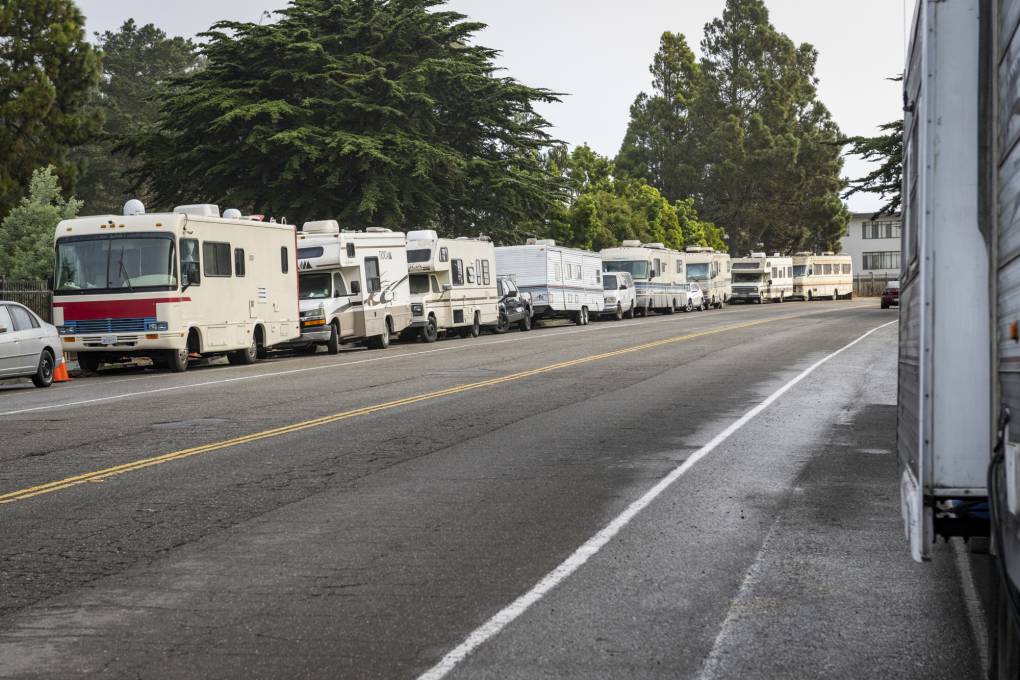
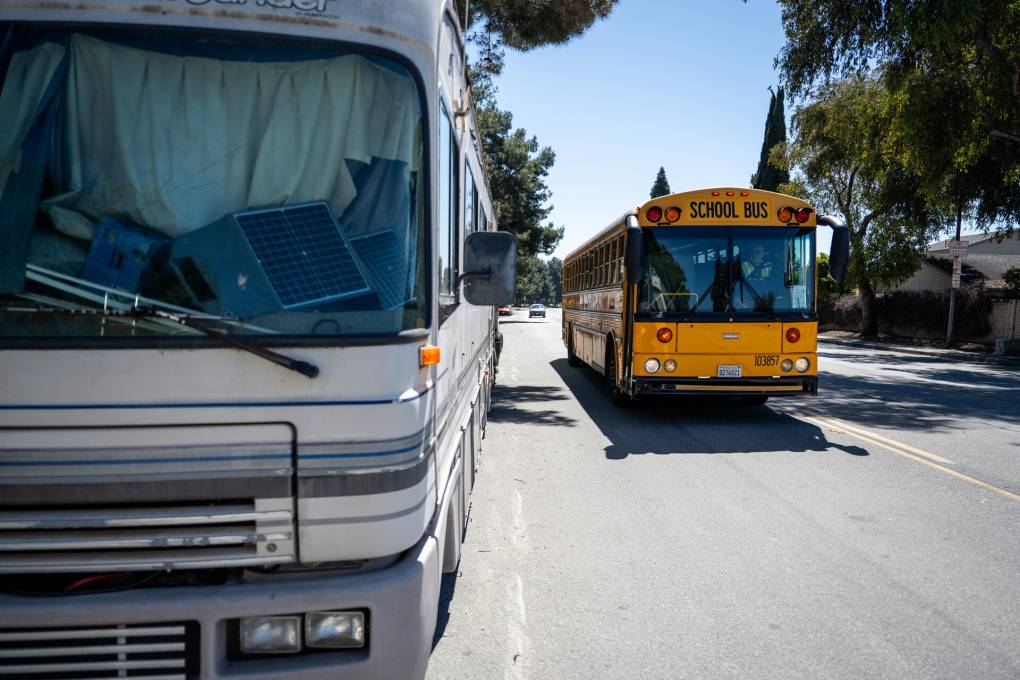
"caption": "RVs line Winston Drive in San Francisco on Oct. 17, 2023, near San Francisco State University.",
"description": null,
"title": "231017-LakeMercedRVs-021-BL-KQED",
"credit": "Beth LaBerge/KQED",
"status": "inherit",
"altTag": "A row of RVs parked along a two-lane street.",
"isLoading": false,
"fetchFailed": false
},
"news_11983025": {
"type": "attachments",
"id": "news_11983025",
"meta": {
"index": "attachments_1716263798",
"site": "news",
"id": "11983025",
"found": true
},
"parent": 11983000,
"imgSizes": {
"twentyfourteen-full-width": {
"file": "https://cdn.kqed.org/wp-content/uploads/sites/10/2024/04/GettyImages-623874284_qut-1038x576.jpg",
"width": 1038,
"mimeType": "image/jpeg",
"height": 576
},
"thumbnail": {
"file": "https://cdn.kqed.org/wp-content/uploads/sites/10/2024/04/GettyImages-623874284_qut-160x111.jpg",
"width": 160,
"mimeType": "image/jpeg",
"height": 111
},
"post-thumbnail": {
"file": "https://cdn.kqed.org/wp-content/uploads/sites/10/2024/04/GettyImages-623874284_qut-672x372.jpg",
"width": 672,
"mimeType": "image/jpeg",
"height": 372
},
"kqedFullSize": {
"file": "https://cdn.kqed.org/wp-content/uploads/sites/10/2024/04/GettyImages-623874284_qut.jpg",
"width": 1920,
"height": 1327
},
"large": {
"file": "https://cdn.kqed.org/wp-content/uploads/sites/10/2024/04/GettyImages-623874284_qut-1020x705.jpg",
"width": 1020,
"mimeType": "image/jpeg",
"height": 705
},
"1536x1536": {
"file": "https://cdn.kqed.org/wp-content/uploads/sites/10/2024/04/GettyImages-623874284_qut-1536x1062.jpg",
"width": 1536,
"mimeType": "image/jpeg",
"height": 1062
},
"medium": {
"file": "https://cdn.kqed.org/wp-content/uploads/sites/10/2024/04/GettyImages-623874284_qut-800x553.jpg",
"width": 800,
"mimeType": "image/jpeg",
"height": 553
}
},
"publishDate": 1713210545,
"modified": 1713214063,
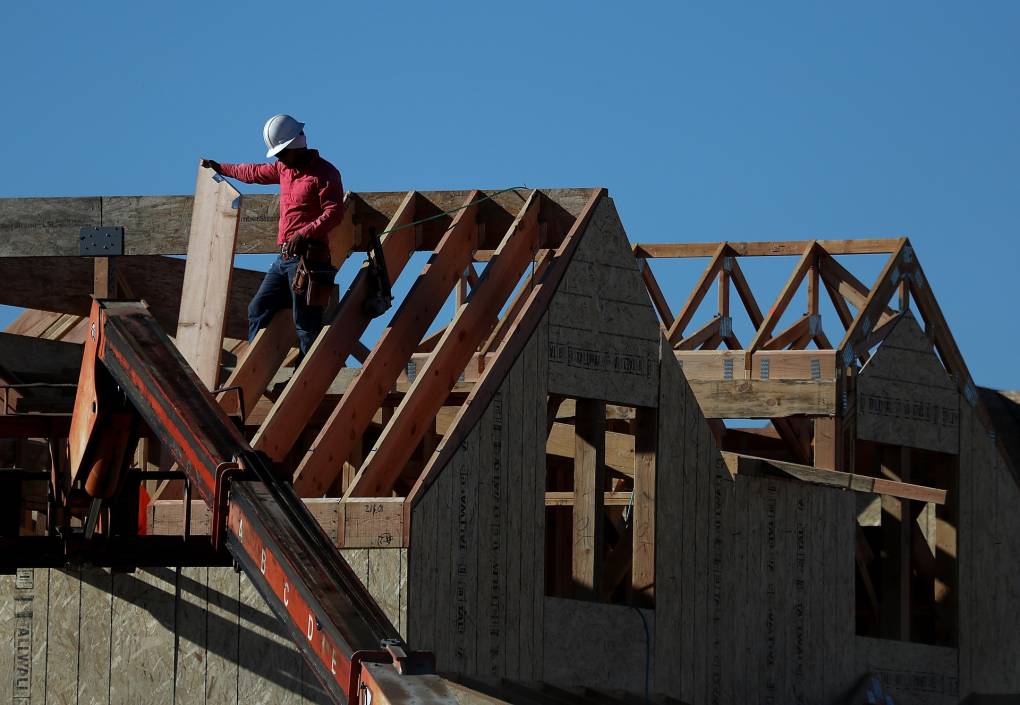
"caption": "A worker stands on the roof of a home under construction at a new housing development on Nov. 17, 2016, in San Rafael. ",
"description": null,
"title": "GettyImages-623874284_qut",
"credit": "Justin Sullivan/Getty Images",
"status": "inherit",
"altTag": "A person wearing construction equipment holds a wooden support beam while a roof is built.",
"isLoading": false,
"fetchFailed": false
},
"news_11982570": {
"type": "attachments",
"id": "news_11982570",
"meta": {
"index": "attachments_1716263798",
"site": "news",
"id": "11982570",
"found": true
},
"parent": 0,
"imgSizes": {
"twentyfourteen-full-width": {
"file": "https://cdn.kqed.org/wp-content/uploads/sites/10/2024/04/240410-HMB-Farmworkers-TH-01-KQED-1038x576.jpg",
"width": 1038,
"mimeType": "image/jpeg",
"height": 576
},
"thumbnail": {
"file": "https://cdn.kqed.org/wp-content/uploads/sites/10/2024/04/240410-HMB-Farmworkers-TH-01-KQED-160x107.jpg",
"width": 160,
"mimeType": "image/jpeg",
"height": 107
},
"post-thumbnail": {
"file": "https://cdn.kqed.org/wp-content/uploads/sites/10/2024/04/240410-HMB-Farmworkers-TH-01-KQED-672x372.jpg",
"width": 672,
"mimeType": "image/jpeg",
"height": 372
},
"kqedFullSize": {
"file": "https://cdn.kqed.org/wp-content/uploads/sites/10/2024/04/240410-HMB-Farmworkers-TH-01-KQED.jpg",
"width": 2000,
"height": 1333
},
"large": {
"file": "https://cdn.kqed.org/wp-content/uploads/sites/10/2024/04/240410-HMB-Farmworkers-TH-01-KQED-1020x680.jpg",
"width": 1020,
"mimeType": "image/jpeg",
"height": 680
},
"1536x1536": {
"file": "https://cdn.kqed.org/wp-content/uploads/sites/10/2024/04/240410-HMB-Farmworkers-TH-01-KQED-1536x1024.jpg",
"width": 1536,
"mimeType": "image/jpeg",
"height": 1024
},
"full-width": {
"file": "https://cdn.kqed.org/wp-content/uploads/sites/10/2024/04/240410-HMB-Farmworkers-TH-01-KQED-1920x1280.jpg",
"width": 1920,
"mimeType": "image/jpeg",
"height": 1280
},
"medium": {
"file": "https://cdn.kqed.org/wp-content/uploads/sites/10/2024/04/240410-HMB-Farmworkers-TH-01-KQED-800x533.jpg",
"width": 800,
"mimeType": "image/jpeg",
"height": 533
}
},
"publishDate": 1712777321,
"modified": 1712959311,
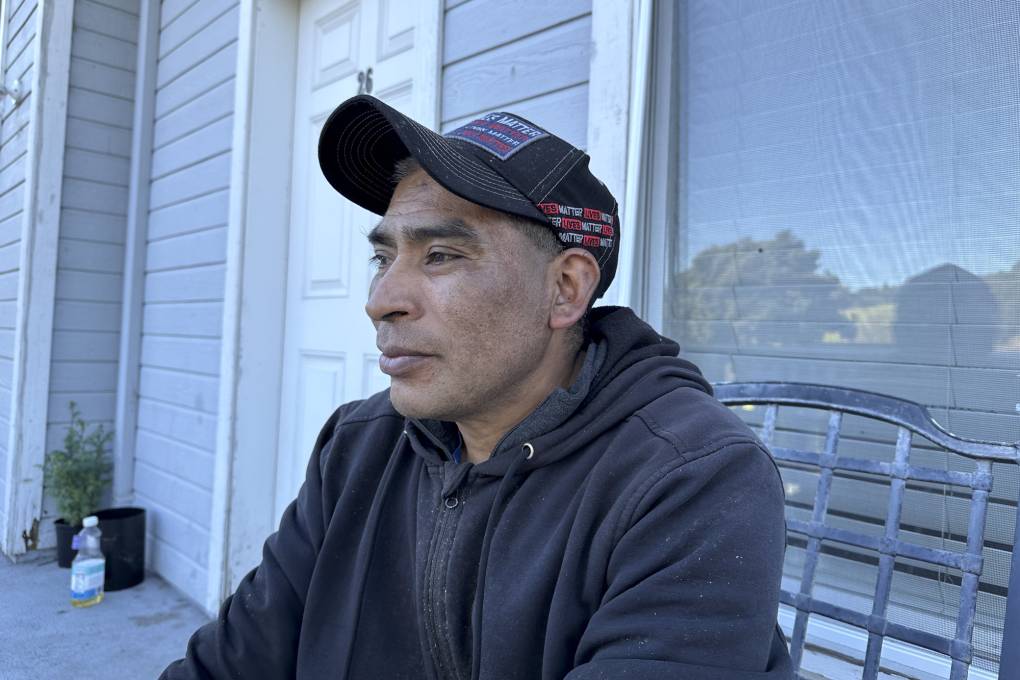
"caption": "Cornelio sits on the porch of a Half Moon Bay guesthouse, where he has a temporary room, on March 14, 2024. He survived the mass shooting at a local mushroom farm in January 2023 but continues to work there. He says he hopes the city can build safe, affordable homes for farmworkers like himself.",
"description": null,
"title": "240410-HMB Farmworkers-TH-01-KQED",
"credit": "Tyche Hendricks/KQED",
"status": "inherit",
"altTag": null,
"isLoading": false,
"fetchFailed": false
},
"news_11982891": {
"type": "attachments",
"id": "news_11982891",
"meta": {
"index": "attachments_1716263798",
"site": "news",
"id": "11982891",
"found": true
},
"parent": 11982884,
"imgSizes": {
"twentyfourteen-full-width": {
"file": "https://cdn.kqed.org/wp-content/uploads/sites/10/2024/04/102523-Paradise-Rebuild-AP-CM-01-copy-1038x576.jpg",
"width": 1038,
"mimeType": "image/jpeg",
"height": 576
},
"thumbnail": {
"file": "https://cdn.kqed.org/wp-content/uploads/sites/10/2024/04/102523-Paradise-Rebuild-AP-CM-01-copy-160x106.jpg",
"width": 160,
"mimeType": "image/jpeg",
"height": 106
},
"post-thumbnail": {
"file": "https://cdn.kqed.org/wp-content/uploads/sites/10/2024/04/102523-Paradise-Rebuild-AP-CM-01-copy-672x372.jpg",
"width": 672,
"mimeType": "image/jpeg",
"height": 372
},
"kqedFullSize": {
"file": "https://cdn.kqed.org/wp-content/uploads/sites/10/2024/04/102523-Paradise-Rebuild-AP-CM-01-copy.jpg",
"width": 2000,
"height": 1331
},
"large": {
"file": "https://cdn.kqed.org/wp-content/uploads/sites/10/2024/04/102523-Paradise-Rebuild-AP-CM-01-copy-1020x679.jpg",
"width": 1020,
"mimeType": "image/jpeg",
"height": 679
},
"1536x1536": {
"file": "https://cdn.kqed.org/wp-content/uploads/sites/10/2024/04/102523-Paradise-Rebuild-AP-CM-01-copy-1536x1022.jpg",
"width": 1536,
"mimeType": "image/jpeg",
"height": 1022
},
"full-width": {
"file": "https://cdn.kqed.org/wp-content/uploads/sites/10/2024/04/102523-Paradise-Rebuild-AP-CM-01-copy-1920x1278.jpg",
"width": 1920,
"mimeType": "image/jpeg",
"height": 1278
},
"medium": {
"file": "https://cdn.kqed.org/wp-content/uploads/sites/10/2024/04/102523-Paradise-Rebuild-AP-CM-01-copy-800x532.jpg",
"width": 800,
"mimeType": "image/jpeg",
"height": 532
}
},
"publishDate": 1713032814,
"modified": 1713032859,
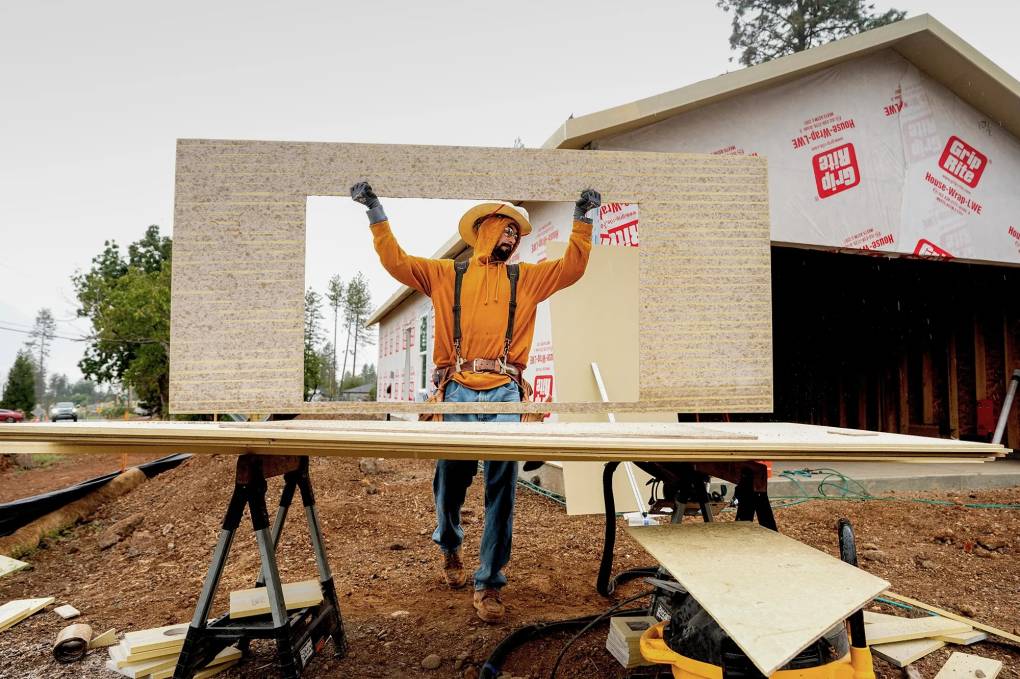
"caption": "Jose Villanueva carries siding while building a home in Paradise, Butte County, on Oct. 25, 2023. The project is partly funded by ReCoverCA, a state program providing money to rebuild homes in disaster areas.",
"description": null,
"title": "102523-Paradise-Rebuild-AP-CM-01 copy",
"credit": "Noah Berger/AP Photo",
"status": "inherit",
"altTag": null,
"isLoading": false,
"fetchFailed": false
},
"news_11982448": {
"type": "attachments",
"id": "news_11982448",
"meta": {
"index": "attachments_1716263798",
"site": "news",
"id": "11982448",
"found": true
},
"parent": 11982379,
"imgSizes": {
"twentyfourteen-full-width": {
"file": "https://cdn.kqed.org/wp-content/uploads/sites/10/2024/04/240409-SJEncampmentBan-020-BL_qut-1038x576.jpg",
"width": 1038,
"mimeType": "image/jpeg",
"height": 576
},
"thumbnail": {
"file": "https://cdn.kqed.org/wp-content/uploads/sites/10/2024/04/240409-SJEncampmentBan-020-BL_qut-160x107.jpg",
"width": 160,
"mimeType": "image/jpeg",
"height": 107
},
"post-thumbnail": {
"file": "https://cdn.kqed.org/wp-content/uploads/sites/10/2024/04/240409-SJEncampmentBan-020-BL_qut-672x372.jpg",
"width": 672,
"mimeType": "image/jpeg",
"height": 372
},
"kqedFullSize": {
"file": "https://cdn.kqed.org/wp-content/uploads/sites/10/2024/04/240409-SJEncampmentBan-020-BL_qut.jpg",
"width": 1920,
"height": 1280
},
"large": {
"file": "https://cdn.kqed.org/wp-content/uploads/sites/10/2024/04/240409-SJEncampmentBan-020-BL_qut-1020x680.jpg",
"width": 1020,
"mimeType": "image/jpeg",
"height": 680
},
"1536x1536": {
"file": "https://cdn.kqed.org/wp-content/uploads/sites/10/2024/04/240409-SJEncampmentBan-020-BL_qut-1536x1024.jpg",
"width": 1536,
"mimeType": "image/jpeg",
"height": 1024
},
"medium": {
"file": "https://cdn.kqed.org/wp-content/uploads/sites/10/2024/04/240409-SJEncampmentBan-020-BL_qut-800x533.jpg",
"width": 800,
"mimeType": "image/jpeg",
"height": 533
}
},
"publishDate": 1712704788,
"modified": 1712770902,
"caption": "A school bus passes an RV on Educational Park Drive near Independence High School in San José on April 9, 2024.",
"description": null,
"title": "240409-SJEncampmentBan-020-BL_qut",
"credit": "Beth LaBerge/KQED",
"status": "inherit",
"altTag": "A yellow school bus on the road near an RV.",
"isLoading": false,
"fetchFailed": false
},
"news_11982521": {
"type": "attachments",
"id": "news_11982521",
"meta": {
"index": "attachments_1716263798",
"site": "news",
"id": "11982521",
"found": true
},
"parent": 0,
"imgSizes": {
"twentyfourteen-full-width": {
"file": "https://cdn.kqed.org/wp-content/uploads/sites/10/2024/04/240409-SF-LIBRARY-RALLY-MD-02-KQED-4-1038x576.jpg",
"width": 1038,
"mimeType": "image/jpeg",
"height": 576
},
"thumbnail": {
"file": "https://cdn.kqed.org/wp-content/uploads/sites/10/2024/04/240409-SF-LIBRARY-RALLY-MD-02-KQED-4-160x107.jpg",
"width": 160,
"mimeType": "image/jpeg",
"height": 107
},
"post-thumbnail": {
"file": "https://cdn.kqed.org/wp-content/uploads/sites/10/2024/04/240409-SF-LIBRARY-RALLY-MD-02-KQED-4-672x372.jpg",
"width": 672,
"mimeType": "image/jpeg",
"height": 372
},
"kqedFullSize": {
"file": "https://cdn.kqed.org/wp-content/uploads/sites/10/2024/04/240409-SF-LIBRARY-RALLY-MD-02-KQED-4.jpg",
"width": 2000,
"height": 1333
},
"large": {
"file": "https://cdn.kqed.org/wp-content/uploads/sites/10/2024/04/240409-SF-LIBRARY-RALLY-MD-02-KQED-4-1020x680.jpg",
"width": 1020,
"mimeType": "image/jpeg",
"height": 680
},
"1536x1536": {
"file": "https://cdn.kqed.org/wp-content/uploads/sites/10/2024/04/240409-SF-LIBRARY-RALLY-MD-02-KQED-4-1536x1024.jpg",
"width": 1536,
"mimeType": "image/jpeg",
"height": 1024
},
"full-width": {
"file": "https://cdn.kqed.org/wp-content/uploads/sites/10/2024/04/240409-SF-LIBRARY-RALLY-MD-02-KQED-4-1920x1280.jpg",
"width": 1920,
"mimeType": "image/jpeg",
"height": 1280
},
"medium": {
"file": "https://cdn.kqed.org/wp-content/uploads/sites/10/2024/04/240409-SF-LIBRARY-RALLY-MD-02-KQED-4-800x533.jpg",
"width": 800,
"mimeType": "image/jpeg",
"height": 533
}
},
"publishDate": 1712756315,
"modified": 1712756410,
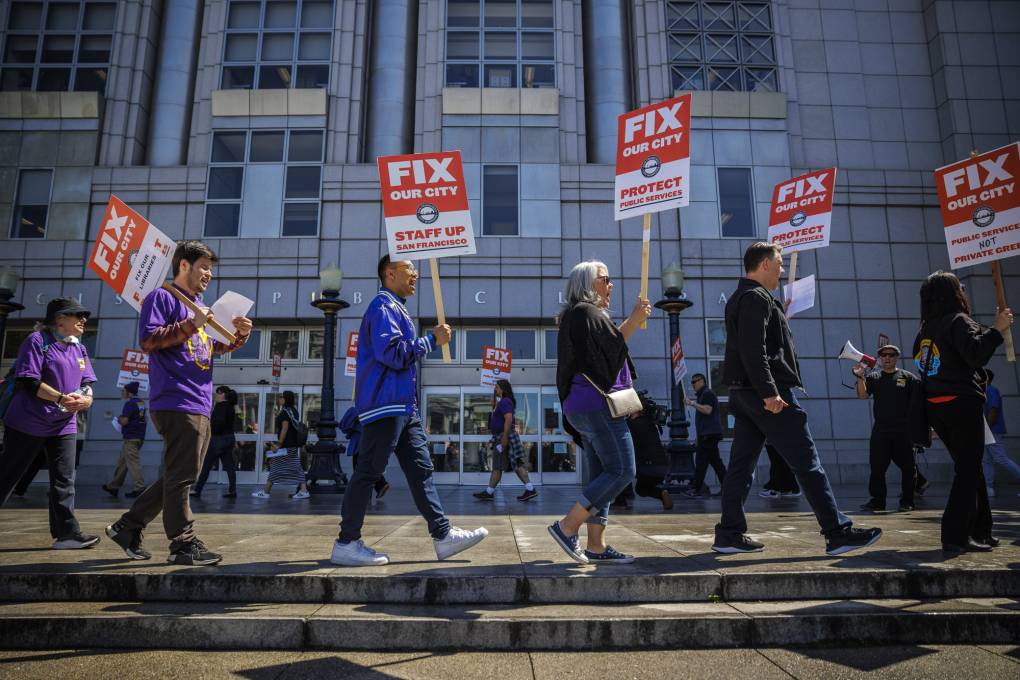
"caption": "Library workers rally in front of San Francisco's Main Library calling for greater safety measures at the city's public libraries on Apr. 9, 2024.",
"description": null,
"title": "240409-SF LIBRARY RALLY-MD-02-KQED-4",
"credit": "Martin do Nascimento/KQED",
"status": "inherit",
"altTag": null,
"isLoading": false,
"fetchFailed": false
},
"news_11982284": {
"type": "attachments",
"id": "news_11982284",
"meta": {
"index": "attachments_1716263798",
"site": "news",
"id": "11982284",
"found": true
},
"parent": 11982237,
"imgSizes": {
"twentyfourteen-full-width": {
"file": "https://cdn.kqed.org/wp-content/uploads/sites/10/2024/04/012_Oakland_LakeviewVillageTinyHomes_11032021_qut-1038x576.jpg",
"width": 1038,
"mimeType": "image/jpeg",
"height": 576
},
"thumbnail": {
"file": "https://cdn.kqed.org/wp-content/uploads/sites/10/2024/04/012_Oakland_LakeviewVillageTinyHomes_11032021_qut-160x107.jpg",
"width": 160,
"mimeType": "image/jpeg",
"height": 107
},
"post-thumbnail": {
"file": "https://cdn.kqed.org/wp-content/uploads/sites/10/2024/04/012_Oakland_LakeviewVillageTinyHomes_11032021_qut-672x372.jpg",
"width": 672,
"mimeType": "image/jpeg",
"height": 372
},
"kqedFullSize": {
"file": "https://cdn.kqed.org/wp-content/uploads/sites/10/2024/04/012_Oakland_LakeviewVillageTinyHomes_11032021_qut.jpg",
"width": 1920,
"height": 1280
},
"large": {
"file": "https://cdn.kqed.org/wp-content/uploads/sites/10/2024/04/012_Oakland_LakeviewVillageTinyHomes_11032021_qut-1020x680.jpg",
"width": 1020,
"mimeType": "image/jpeg",
"height": 680
},
"1536x1536": {
"file": "https://cdn.kqed.org/wp-content/uploads/sites/10/2024/04/012_Oakland_LakeviewVillageTinyHomes_11032021_qut-1536x1024.jpg",
"width": 1536,
"mimeType": "image/jpeg",
"height": 1024
},
"medium": {
"file": "https://cdn.kqed.org/wp-content/uploads/sites/10/2024/04/012_Oakland_LakeviewVillageTinyHomes_11032021_qut-800x533.jpg",
"width": 800,
"mimeType": "image/jpeg",
"height": 533
}
},
"publishDate": 1712616483,
"modified": 1712616720,
"caption": "A tent encampment borders the side of Lakeview Village, a community that can house 71 people, in Oakland near Lake Merritt on Nov. 3, 2021.",
"description": null,
"title": "012_Oakland_LakeviewVillageTinyHomes_11032021_qut",
"credit": "Beth LaBerge/KQED",
"status": "inherit",
"altTag": null,
"isLoading": false,
"fetchFailed": false
},
"news_11981459": {
"type": "attachments",
"id": "news_11981459",
"meta": {
"index": "attachments_1716263798",
"site": "news",
"id": "11981459",
"found": true
},
"parent": 11981458,
"imgSizes": {
"twentyfourteen-full-width": {
"file": "https://cdn.kqed.org/wp-content/uploads/sites/10/2024/03/COLDWELL-BANKER-SALE-SIGN-1020x576.jpg",
"width": 1020,
"mimeType": "image/jpeg",
"height": 576
},
"thumbnail": {
"file": "https://cdn.kqed.org/wp-content/uploads/sites/10/2024/03/COLDWELL-BANKER-SALE-SIGN-160x113.jpg",
"width": 160,
"mimeType": "image/jpeg",
"height": 113
},
"post-thumbnail": {
"file": "https://cdn.kqed.org/wp-content/uploads/sites/10/2024/03/COLDWELL-BANKER-SALE-SIGN-672x372.jpg",
"width": 672,
"mimeType": "image/jpeg",
"height": 372
},
"kqedFullSize": {
"file": "https://cdn.kqed.org/wp-content/uploads/sites/10/2024/03/COLDWELL-BANKER-SALE-SIGN.jpg",
"width": 1020,
"height": 722
},
"medium": {
"file": "https://cdn.kqed.org/wp-content/uploads/sites/10/2024/03/COLDWELL-BANKER-SALE-SIGN-800x566.jpg",
"width": 800,
"mimeType": "image/jpeg",
"height": 566
}
},
"publishDate": 1711939719,
"modified": 1712561977,
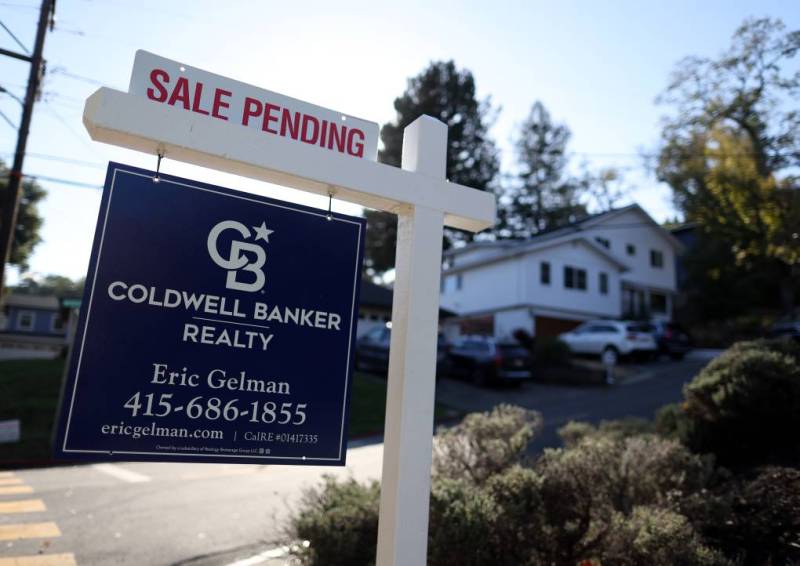
"caption": "Un cartel que dice \"venta pendiente\" delante de una casa en San Anselmo, en el Condado de Marín.",
"description": null,
"title": "COLDWELL BANKER SALE SIGN",
"credit": "Justin Sullivan/Getty Images",
"status": "inherit",
"altTag": "Hay una casa grande con un gran patio. Al lado del camino que lleva a la casa hay un cartel que dice \"venta pendiente\".",
"isLoading": false,
"fetchFailed": false
},
"news_11981749": {
"type": "attachments",
"id": "news_11981749",
"meta": {
"index": "attachments_1716263798",
"site": "news",
"id": "11981749",
"found": true
},
"parent": 11981737,
"imgSizes": {
"twentyfourteen-full-width": {
"file": "https://cdn.kqed.org/wp-content/uploads/sites/10/2024/04/vallejo-nav-center-rendering-2-1038x576.jpg",
"width": 1038,
"mimeType": "image/jpeg",
"height": 576
},
"thumbnail": {
"file": "https://cdn.kqed.org/wp-content/uploads/sites/10/2024/04/vallejo-nav-center-rendering-2-160x107.jpg",
"width": 160,
"mimeType": "image/jpeg",
"height": 107
},
"post-thumbnail": {
"file": "https://cdn.kqed.org/wp-content/uploads/sites/10/2024/04/vallejo-nav-center-rendering-2-672x372.jpg",
"width": 672,
"mimeType": "image/jpeg",
"height": 372
},
"kqedFullSize": {
"file": "https://cdn.kqed.org/wp-content/uploads/sites/10/2024/04/vallejo-nav-center-rendering-2.jpg",
"width": 1920,
"height": 1280
},
"large": {
"file": "https://cdn.kqed.org/wp-content/uploads/sites/10/2024/04/vallejo-nav-center-rendering-2-1020x680.jpg",
"width": 1020,
"mimeType": "image/jpeg",
"height": 680
},
"1536x1536": {
"file": "https://cdn.kqed.org/wp-content/uploads/sites/10/2024/04/vallejo-nav-center-rendering-2-1536x1024.jpg",
"width": 1536,
"mimeType": "image/jpeg",
"height": 1024
},
"medium": {
"file": "https://cdn.kqed.org/wp-content/uploads/sites/10/2024/04/vallejo-nav-center-rendering-2-800x533.jpg",
"width": 800,
"mimeType": "image/jpeg",
"height": 533
}
},
"publishDate": 1712165872,
"modified": 1712252507,
"caption": "A 125-bed navigation center that is expected to include 2 buildings and use modular construction is underway in Vallejo this week.",
"description": null,
"title": "vallejo-nav-center-rendering-2",
"credit": "Courtesy City of Vallejo",
"status": "inherit",
"altTag": null,
"isLoading": false,
"fetchFailed": false
},
"news_11981782": {
"type": "attachments",
"id": "news_11981782",
"meta": {
"index": "attachments_1716263798",
"site": "news",
"id": "11981782",
"found": true
},
"imgSizes": {
"twentyfourteen-full-width": {
"file": "https://ww2.kqed.org/app/uploads/sites/10/2024/04/030_KQED_TreasureIslandHousing_07062022_qut-1-1020x680.jpeg",
"width": 1038,
"mimeType": "image/jpeg",
"height": 576
},
"thumbnail": {
"file": "https://ww2.kqed.org/app/uploads/sites/10/2024/04/030_KQED_TreasureIslandHousing_07062022_qut-1-1020x680.jpeg",
"width": 160,
"mimeType": "image/jpeg",
"height": 120
},
"post-thumbnail": {
"file": "https://ww2.kqed.org/app/uploads/sites/10/2024/04/030_KQED_TreasureIslandHousing_07062022_qut-1-1020x680.jpeg",
"width": 672,
"mimeType": "image/jpeg",
"height": 372
},
"kqedFullSize": {
"file": "https://ww2.kqed.org/app/uploads/sites/10/2024/04/030_KQED_TreasureIslandHousing_07062022_qut-1-1020x680.jpeg",
"width": 2153,
"height": 1615
},
"2048x2048": {
"file": "https://ww2.kqed.org/app/uploads/sites/10/2024/04/030_KQED_TreasureIslandHousing_07062022_qut-1-1020x680.jpeg",
"width": 2048,
"mimeType": "image/jpeg",
"height": 1536
},
"large": {
"file": "https://ww2.kqed.org/app/uploads/sites/10/2024/04/030_KQED_TreasureIslandHousing_07062022_qut-1-1020x680.jpeg",
"width": 1020,
"mimeType": "image/jpeg",
"height": 765
},
"1536x1536": {
"file": "https://ww2.kqed.org/app/uploads/sites/10/2024/04/030_KQED_TreasureIslandHousing_07062022_qut-1-1020x680.jpeg",
"width": 1536,
"mimeType": "image/jpeg",
"height": 1152
},
"full-width": {
"file": "https://ww2.kqed.org/app/uploads/sites/10/2024/04/030_KQED_TreasureIslandHousing_07062022_qut-1-1020x680.jpeg",
"width": 1920,
"mimeType": "image/jpeg",
"height": 1440
},
"medium": {
"file": "https://ww2.kqed.org/app/uploads/sites/10/2024/04/030_KQED_TreasureIslandHousing_07062022_qut-1-1020x680.jpeg",
"width": 800,
"mimeType": "image/jpeg",
"height": 600
}
},
"publishDate": 1692224961,
"modified": 1692232383,
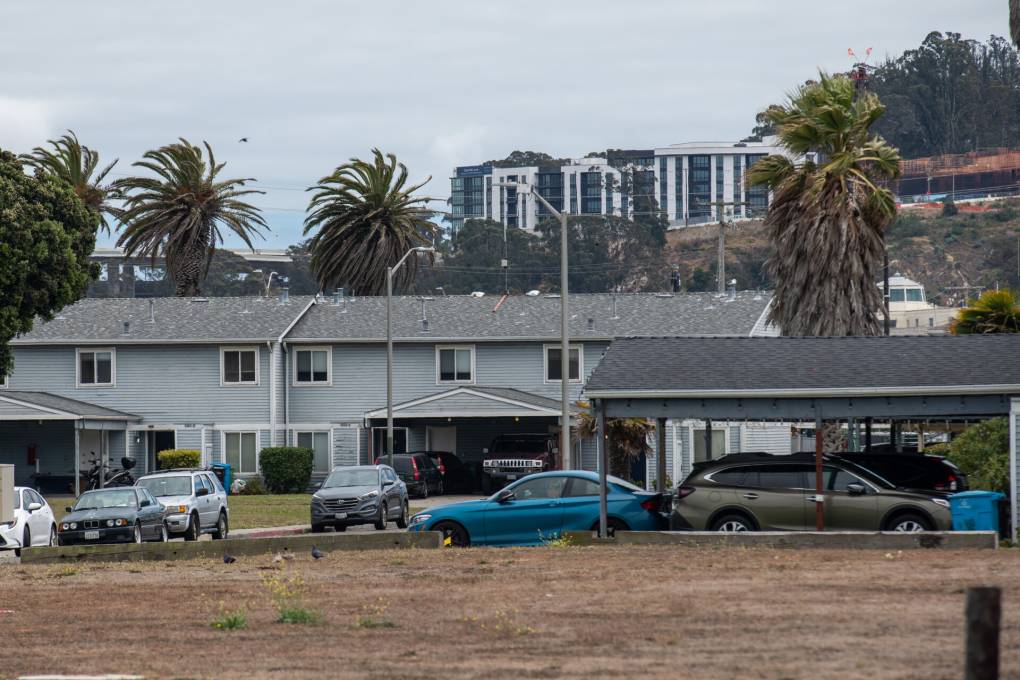
"caption": "Homes on Treasure Island sit vacant due to radiological cleanup at the site on July 6, 2022.",
"description": "Homes on Treasure Island sit vacant due to radiological cleanup at the site on July 6, 2022.",
"title": "Homes on Treasure Island sit vacant due to radiological cleanup at the site on July 6, 2022.",
"credit": "",
"status": "inherit",
"altTag": "Homes on Treasure Island sit vacant due to radiological cleanup at the site on July 6, 2022.",
"isLoading": false,
"fetchFailed": false
},
"news_11767898": {
"type": "attachments",
"id": "news_11767898",
"meta": {
"index": "attachments_1716263798",
"site": "news",
"id": "11767898",
"found": true
},
"parent": 11767538,
"imgSizes": {
"apple_news_ca_landscape_5_5": {
"file": "https://cdn.kqed.org/wp-content/uploads/sites/10/2019/08/RS37791__DSC0888-qut-1044x783.jpg",
"width": 1044,
"mimeType": "image/jpeg",
"height": 783
},
"apple_news_ca_square_4_0": {
"file": "https://cdn.kqed.org/wp-content/uploads/sites/10/2019/08/RS37791__DSC0888-qut-470x470.jpg",
"width": 470,
"mimeType": "image/jpeg",
"height": 470
},
"twentyfourteen-full-width": {
"file": "https://cdn.kqed.org/wp-content/uploads/sites/10/2019/08/RS37791__DSC0888-qut-1038x576.jpg",
"width": 1038,
"mimeType": "image/jpeg",
"height": 576
},
"thumbnail": {
"file": "https://cdn.kqed.org/wp-content/uploads/sites/10/2019/08/RS37791__DSC0888-qut-160x107.jpg",
"width": 160,
"mimeType": "image/jpeg",
"height": 107
},
"post-thumbnail": {
"file": "https://cdn.kqed.org/wp-content/uploads/sites/10/2019/08/RS37791__DSC0888-qut-672x372.jpg",
"width": 672,
"mimeType": "image/jpeg",
"height": 372
},
"kqedFullSize": {
"file": "https://cdn.kqed.org/wp-content/uploads/sites/10/2019/08/RS37791__DSC0888-qut.jpg",
"width": 1920,
"height": 1281
},
"apple_news_ca_landscape_4_7": {
"file": "https://cdn.kqed.org/wp-content/uploads/sites/10/2019/08/RS37791__DSC0888-qut-632x474.jpg",
"width": 632,
"mimeType": "image/jpeg",
"height": 474
},
"large": {
"file": "https://cdn.kqed.org/wp-content/uploads/sites/10/2019/08/RS37791__DSC0888-qut-1020x681.jpg",
"width": 1020,
"mimeType": "image/jpeg",
"height": 681
},
"complete_open_graph": {
"file": "https://cdn.kqed.org/wp-content/uploads/sites/10/2019/08/RS37791__DSC0888-qut-1200x801.jpg",
"width": 1200,
"mimeType": "image/jpeg",
"height": 801
},
"apple_news_ca_landscape_4_0": {
"file": "https://cdn.kqed.org/wp-content/uploads/sites/10/2019/08/RS37791__DSC0888-qut-536x402.jpg",
"width": 536,
"mimeType": "image/jpeg",
"height": 402
},
"apple_news_ca_portrait_12_9": {
"file": "https://cdn.kqed.org/wp-content/uploads/sites/10/2019/08/RS37791__DSC0888-qut-1122x1281.jpg",
"width": 1122,
"mimeType": "image/jpeg",
"height": 1281
},
"medium": {
"file": "https://cdn.kqed.org/wp-content/uploads/sites/10/2019/08/RS37791__DSC0888-qut-800x534.jpg",
"width": 800,
"mimeType": "image/jpeg",
"height": 534
},
"apple_news_ca_portrait_4_0": {
"file": "https://cdn.kqed.org/wp-content/uploads/sites/10/2019/08/RS37791__DSC0888-qut-354x472.jpg",
"width": 354,
"mimeType": "image/jpeg",
"height": 472
},
"apple_news_ca_portrait_9_7": {
"file": "https://cdn.kqed.org/wp-content/uploads/sites/10/2019/08/RS37791__DSC0888-qut-840x1120.jpg",
"width": 840,
"mimeType": "image/jpeg",
"height": 1120
},
"apple_news_ca_landscape_12_9": {
"file": "https://cdn.kqed.org/wp-content/uploads/sites/10/2019/08/RS37791__DSC0888-qut-1832x1281.jpg",
"width": 1832,
"mimeType": "image/jpeg",
"height": 1281
},
"apple_news_ca_square_9_7": {
"file": "https://cdn.kqed.org/wp-content/uploads/sites/10/2019/08/RS37791__DSC0888-qut-1104x1104.jpg",
"width": 1104,
"mimeType": "image/jpeg",
"height": 1104
},
"apple_news_ca_portrait_4_7": {
"file": "https://cdn.kqed.org/wp-content/uploads/sites/10/2019/08/RS37791__DSC0888-qut-414x552.jpg",
"width": 414,
"mimeType": "image/jpeg",
"height": 552
},
"apple_news_ca_square_12_9": {
"file": "https://cdn.kqed.org/wp-content/uploads/sites/10/2019/08/RS37791__DSC0888-qut-1472x1281.jpg",
"width": 1472,
"mimeType": "image/jpeg",
"height": 1281
},
"apple_news_ca_portrait_5_5": {
"file": "https://cdn.kqed.org/wp-content/uploads/sites/10/2019/08/RS37791__DSC0888-qut-687x916.jpg",
"width": 687,
"mimeType": "image/jpeg",
"height": 916
},
"full-width": {
"file": "https://cdn.kqed.org/wp-content/uploads/sites/10/2019/08/RS37791__DSC0888-qut-1920x1281.jpg",
"width": 1920,
"mimeType": "image/jpeg",
"height": 1281
},
"apple_news_ca_square_4_7": {
"file": "https://cdn.kqed.org/wp-content/uploads/sites/10/2019/08/RS37791__DSC0888-qut-550x550.jpg",
"width": 550,
"mimeType": "image/jpeg",
"height": 550
},
"apple_news_ca_landscape_9_7": {
"file": "https://cdn.kqed.org/wp-content/uploads/sites/10/2019/08/RS37791__DSC0888-qut-1376x1032.jpg",
"width": 1376,
"mimeType": "image/jpeg",
"height": 1032
},
"apple_news_ca_square_5_5": {
"file": "https://cdn.kqed.org/wp-content/uploads/sites/10/2019/08/RS37791__DSC0888-qut-912x912.jpg",
"width": 912,
"mimeType": "image/jpeg",
"height": 912
}
},
"publishDate": 1565915711,
"modified": 1712080479,
"caption": "Julieta Aquino and her daughter Alexys on the balcony of their new home, watching a construction crew build additional affordable units.",
"description": null,
"title": "RS37791__DSC0888-qut",
"credit": "Stephanie Lister/KQED",
"status": "inherit",
"altTag": "An overhead view of two women watching housing construction from their balcony.",
"isLoading": false,
"fetchFailed": false
},
"news_11981430": {
"type": "attachments",
"id": "news_11981430",
"meta": {
"index": "attachments_1716263798",
"site": "news",
"id": "11981430",
"found": true
},
"parent": 11981429,
"imgSizes": {
"twentyfourteen-full-width": {
"file": "https://cdn.kqed.org/wp-content/uploads/sites/10/2024/03/210216-fsk-01-43rd-ave_orig-1038x576.jpg",
"width": 1038,
"mimeType": "image/jpeg",
"height": 576
},
"thumbnail": {
"file": "https://cdn.kqed.org/wp-content/uploads/sites/10/2024/03/210216-fsk-01-43rd-ave_orig-160x90.jpg",
"width": 160,
"mimeType": "image/jpeg",
"height": 90
},
"post-thumbnail": {
"file": "https://cdn.kqed.org/wp-content/uploads/sites/10/2024/03/210216-fsk-01-43rd-ave_orig-672x372.jpg",
"width": 672,
"mimeType": "image/jpeg",
"height": 372
},
"kqedFullSize": {
"file": "https://cdn.kqed.org/wp-content/uploads/sites/10/2024/03/210216-fsk-01-43rd-ave_orig.jpg",
"width": 1100,
"height": 619
},
"large": {
"file": "https://cdn.kqed.org/wp-content/uploads/sites/10/2024/03/210216-fsk-01-43rd-ave_orig-1020x574.jpg",
"width": 1020,
"mimeType": "image/jpeg",
"height": 574
},
"medium": {
"file": "https://cdn.kqed.org/wp-content/uploads/sites/10/2024/03/210216-fsk-01-43rd-ave_orig-800x450.jpg",
"width": 800,
"mimeType": "image/jpeg",
"height": 450
}
},
"publishDate": 1711839439,
"modified": 1711843108,
"caption": "A mockup photo of Shirley Chisholm Village.",
"description": null,
"title": "210216-fsk-01-43rd-ave_orig",
"credit": "MidPen Housing website",
"status": "inherit",
"altTag": null,
"isLoading": false,
"fetchFailed": false
}
},
"audioPlayerReducer": {
"postId": "stream_live",
"isPaused": true,
"isPlaying": false,
"pfsActive": false,
"pledgeModalIsOpen": true,
"playerDrawerIsOpen": false,
"liveAudioPlayStartedAt": 0,
"liveAudioPlayContext": ""
},
"authorsReducer": {
"byline_news_11982884": {
"type": "authors",
"id": "byline_news_11982884",
"meta": {
"override": true
},
"slug": "byline_news_11982884",
"name": "\u003ca href=\"https://calmatters.org/author/ryan-sabalow/\">Ryan Sabalow\u003c/a>",
"isLoading": false
},
"kqed": {
"type": "authors",
"id": "236",
"meta": {
"index": "authors_1716337520",
"id": "236",
"found": true
},
"name": "KQED News Staff",
"firstName": "KQED News Staff",
"lastName": null,
"slug": "kqed",
"email": "faq@kqed.org",
"display_author_email": false,
"staff_mastheads": [],
"title": null,
"bio": null,
"avatar": "https://secure.gravatar.com/avatar/ef0e801a68c4c54afa9180db14084167?s=600&d=blank&r=g",
"twitter": null,
"facebook": null,
"instagram": null,
"linkedin": null,
"sites": [
{
"site": "arts",
"roles": [
"contributor"
]
},
{
"site": "news",
"roles": [
"editor"
]
},
{
"site": "futureofyou",
"roles": [
"author"
]
}
],
"headData": {
"title": "KQED News Staff | KQED",
"description": null,
"ogImgSrc": "https://secure.gravatar.com/avatar/ef0e801a68c4c54afa9180db14084167?s=600&d=blank&r=g",
"twImgSrc": "https://secure.gravatar.com/avatar/ef0e801a68c4c54afa9180db14084167?s=600&d=blank&r=g"
},
"isLoading": false,
"link": "/author/kqed"
},
"tychehendricks": {
"type": "authors",
"id": "259",
"meta": {
"index": "authors_1716337520",
"id": "259",
"found": true
},
"name": "Tyche Hendricks",
"firstName": "Tyche",
"lastName": "Hendricks",
"slug": "tychehendricks",
"email": "thendricks@kqed.org",
"display_author_email": true,
"staff_mastheads": [
"news"
],
"title": "KQED Senior Editor, Immigration",
"bio": "\u003cspan style=\"font-weight: 400;\">Tyche Hendricks is KQED’s senior editor for immigration, leading coverage of the policy and politics that affect California’s immigrant communities. Her work for KQED’s radio and online audiences is also carried on NPR and other national outlets. She has been recognized with awards from the Radio and Television News Directors Association, the Society for Professional Journalists; the Education Writers Association; the Best of the West and the National Federation of Community Broadcasters. Before joining KQED in 2010, Tyche spent more than a dozen years as a newspaper reporter, notably at the \u003c/span>\u003ci>\u003cspan style=\"font-weight: 400;\">San Francisco Chronicle\u003c/span>\u003c/i>\u003cspan style=\"font-weight: 400;\">. At different times she has covered criminal justice, government and politics and urban planning. Tyche has taught in the MFA Creative Writing program at the University of San Francisco and at UC Berkeley’s Graduate School of Journalism, where she was co-director of a national immigration symposium for professional journalists. She is the author of \u003c/span>\u003ci>\u003cspan style=\"font-weight: 400;\">The Wind Doesn't Need a Passport: Stories from the U.S.-Mexico Borderlands\u003c/span>\u003c/i>\u003cspan style=\"font-weight: 400;\"> (University of California Press). \u003c/span>",
"avatar": "https://secure.gravatar.com/avatar/b8ee458e2731c2d43df86882ce17267e?s=600&d=blank&r=g",
"twitter": "tychehendricks",
"facebook": null,
"instagram": null,
"linkedin": null,
"sites": [
{
"site": "news",
"roles": [
"editor"
]
},
{
"site": "stateofhealth",
"roles": [
"editor"
]
}
],
"headData": {
"title": "Tyche Hendricks | KQED",
"description": "KQED Senior Editor, Immigration",
"ogImgSrc": "https://secure.gravatar.com/avatar/b8ee458e2731c2d43df86882ce17267e?s=600&d=blank&r=g",
"twImgSrc": "https://secure.gravatar.com/avatar/b8ee458e2731c2d43df86882ce17267e?s=600&d=blank&r=g"
},
"isLoading": false,
"link": "/author/tychehendricks"
},
"vrancano": {
"type": "authors",
"id": "11276",
"meta": {
"index": "authors_1716337520",
"id": "11276",
"found": true
},
"name": "Vanessa Rancaño",
"firstName": "Vanessa",
"lastName": "Rancaño",
"slug": "vrancano",
"email": "vrancano@kqed.org",
"display_author_email": false,
"staff_mastheads": [
"news"
],
"title": "Reporter",
"bio": "Vanessa Rancaño is a features reporter for KQED. She’s also covered homelessness and education for the station and reported from the Central Valley. Her work has aired across public radio, from flagship national news shows to longform narrative podcasts. Before taking up a mic, she worked as a freelance print journalist. She’s been recognized with a number of national and regional awards. Vanessa grew up in California's Central Valley. She's a former NPR Kroc Fellow, and a graduate of the UC Berkeley Graduate School of Journalism.",
"avatar": "https://secure.gravatar.com/avatar/b3a383dfb0e7ee1c17568f2cf067904ab654d6e3de9743fc661f3c788ade1bed?s=600&d=blank&r=g",
"twitter": "vanessarancano",
"bluesky": null,
"facebook": null,
"instagram": null,
"linkedin": null,
"sites": [
{
"site": "arts",
"roles": [
"editor"
]
},
{
"site": "news",
"roles": [
"editor"
]
},
{
"site": "liveblog",
"roles": [
"contributor"
]
}
],
"headData": {
"title": "Vanessa Rancaño | KQED",
"description": "Reporter",
"ogImgSrc": "https://secure.gravatar.com/avatar/b3a383dfb0e7ee1c17568f2cf067904ab654d6e3de9743fc661f3c788ade1bed?s=600&d=blank&r=g",
"twImgSrc": "https://secure.gravatar.com/avatar/b3a383dfb0e7ee1c17568f2cf067904ab654d6e3de9743fc661f3c788ade1bed?s=600&d=blank&r=g"
},
"isLoading": false,
"link": "/author/vrancano"
},
"ebaldassari": {
"type": "authors",
"id": "11652",
"meta": {
"index": "authors_1716337520",
"id": "11652",
"found": true
},
"name": "Erin Baldassari",
"firstName": "Erin",
"lastName": "Baldassari",
"slug": "ebaldassari",
"email": "ebaldassari@KQED.org",
"display_author_email": true,
"staff_mastheads": [
"news"
],
"title": "Staff Writer",
"bio": "Erin Baldassari covers housing for KQED. She's a former print journalist and most recently worked as the transportation reporter for the \u003cem>Mercury News\u003c/em> and \u003cem>East Bay Times. \u003c/em>There, she focused on how the Bay Area’s housing shortage has changed the way people move around the region. She also served on the \u003cem>East Bay Times\u003c/em>’ 2017 Pulitzer Prize-winning team for coverage of the Ghost Ship Fire in Oakland. Prior to that, Erin worked as a breaking news and general assignment reporter for a variety of outlets in the Bay Area and the greater Boston area. A Tufts University alumna, Erin grew up in the foothills of the Sierra Nevada mountains and in Sonoma County. She is a life-long KQED listener.",
"avatar": "https://secure.gravatar.com/avatar/5e95cad64a8ca08288082212e199d2b0cbeb4fd8e8ef5339395f361032bbe005?s=600&d=blank&r=g",
"twitter": "e_baldi",
"bluesky": null,
"facebook": null,
"instagram": null,
"linkedin": null,
"sites": [
{
"site": "news",
"roles": [
"edit_others_posts",
"editor"
]
},
{
"site": "science",
"roles": [
"editor"
]
},
{
"site": "liveblog",
"roles": [
"editor"
]
}
],
"headData": {
"title": "Erin Baldassari | KQED",
"description": "Staff Writer",
"ogImgSrc": "https://secure.gravatar.com/avatar/5e95cad64a8ca08288082212e199d2b0cbeb4fd8e8ef5339395f361032bbe005?s=600&d=blank&r=g",
"twImgSrc": "https://secure.gravatar.com/avatar/5e95cad64a8ca08288082212e199d2b0cbeb4fd8e8ef5339395f361032bbe005?s=600&d=blank&r=g"
},
"isLoading": false,
"link": "/author/ebaldassari"
},
"abandlamudi": {
"type": "authors",
"id": "11672",
"meta": {
"index": "authors_1716337520",
"id": "11672",
"found": true
},
"name": "Adhiti Bandlamudi",
"firstName": "Adhiti",
"lastName": "Bandlamudi",
"slug": "abandlamudi",
"email": "abandlamudi@kqed.org",
"display_author_email": false,
"staff_mastheads": [
"news"
],
"title": "KQED Housing Reporter",
"bio": "Adhiti Bandlamudi reports for KQED's Housing desk. She focuses on how housing gets built across the Bay Area. Before joining KQED in 2020, she reported for WUNC in Durham, North Carolina, WABE in Atlanta, Georgia and Capital Public Radio in Sacramento. In 2017, she was awarded a Kroc Fellowship at NPR where she reported on everything from sprinkles to the Golden State Killer's arrest. When she's not reporting, she's baking new recipes in her kitchen or watching movies with friends and family. She's originally from Georgia and has strong opinions about Great British Bake Off.",
"avatar": "https://secure.gravatar.com/avatar/868129c8b257bb99a3500e2c86a65400?s=600&d=mm&r=g",
"twitter": "oddity_adhiti",
"facebook": null,
"instagram": null,
"linkedin": null,
"sites": [
{
"site": "arts",
"roles": [
"author"
]
},
{
"site": "news",
"roles": [
"editor"
]
},
{
"site": "liveblog",
"roles": [
"author"
]
}
],
"headData": {
"title": "Adhiti Bandlamudi | KQED",
"description": "KQED Housing Reporter",
"ogImgSrc": "https://secure.gravatar.com/avatar/868129c8b257bb99a3500e2c86a65400?s=600&d=mm&r=g",
"twImgSrc": "https://secure.gravatar.com/avatar/868129c8b257bb99a3500e2c86a65400?s=600&d=mm&r=g"
},
"isLoading": false,
"link": "/author/abandlamudi"
},
"sjohnson": {
"type": "authors",
"id": "11840",
"meta": {
"index": "authors_1716337520",
"id": "11840",
"found": true
},
"name": "Sydney Johnson",
"firstName": "Sydney",
"lastName": "Johnson",
"slug": "sjohnson",
"email": "sjohnson@kqed.org",
"display_author_email": false,
"staff_mastheads": [
"news"
],
"title": "KQED Reporter",
"bio": "Sydney Johnson is a general assignment reporter at KQED. She previously reported on public health and city government at the San Francisco Examiner, and before that, she covered statewide education policy for EdSource. Her reporting has won multiple local, state and national awards. Sydney is a graduate of the University of California, Berkeley and lives in San Francisco.",
"avatar": "https://secure.gravatar.com/avatar/97855f2719b72ad6190b7c535fe642c8?s=600&d=blank&r=g",
"twitter": "sydneyfjohnson",
"facebook": null,
"instagram": null,
"linkedin": null,
"sites": [
{
"site": "news",
"roles": [
"editor"
]
}
],
"headData": {
"title": "Sydney Johnson | KQED",
"description": "KQED Reporter",
"ogImgSrc": "https://secure.gravatar.com/avatar/97855f2719b72ad6190b7c535fe642c8?s=600&d=blank&r=g",
"twImgSrc": "https://secure.gravatar.com/avatar/97855f2719b72ad6190b7c535fe642c8?s=600&d=blank&r=g"
},
"isLoading": false,
"link": "/author/sjohnson"
},
"naltenberg": {
"type": "authors",
"id": "11896",
"meta": {
"index": "authors_1716337520",
"id": "11896",
"found": true
},
"name": "Nik Altenberg",
"firstName": "Nik",
"lastName": "Altenberg",
"slug": "naltenberg",
"email": "naltenberg@kqed.org",
"display_author_email": false,
"staff_mastheads": [],
"title": "KQED Contributor",
"bio": "Nik Altenberg is an on-call reporter for KQED and a copy editor and fact checker for Santa Cruz Local. Nik’s reporting interests include policing, public health, environment, immigration, housing and the places where these issues intersect.",
"avatar": "https://secure.gravatar.com/avatar/e391b3a18ce4a53a7ca3f3065c74418b?s=600&d=blank&r=g",
"twitter": null,
"facebook": null,
"instagram": "https://www.instagram.com/nikaltenberg/",
"linkedin": null,
"sites": [
{
"site": "news",
"roles": []
}
],
"headData": {
"title": "Nik Altenberg | KQED",
"description": "KQED Contributor",
"ogImgSrc": "https://secure.gravatar.com/avatar/e391b3a18ce4a53a7ca3f3065c74418b?s=600&d=blank&r=g",
"twImgSrc": "https://secure.gravatar.com/avatar/e391b3a18ce4a53a7ca3f3065c74418b?s=600&d=blank&r=g"
},
"isLoading": false,
"link": "/author/naltenberg"
},
"jgeha": {
"type": "authors",
"id": "11906",
"meta": {
"index": "authors_1716337520",
"id": "11906",
"found": true
},
"name": "Joseph Geha",
"firstName": "Joseph",
"lastName": "Geha",
"slug": "jgeha",
"email": "jgeha@kqed.org",
"display_author_email": false,
"staff_mastheads": [
"news",
"science"
],
"title": "KQED Contributor",
"bio": null,
"avatar": "https://secure.gravatar.com/avatar/ea84d2b6dd93d6369d453edf19dd583f117cd1759d2d9c9c92f9de77017354fe?s=600&d=blank&r=g",
"twitter": null,
"bluesky": null,
"facebook": null,
"instagram": null,
"linkedin": null,
"sites": [
{
"site": "news",
"roles": [
"editor"
]
},
{
"site": "liveblog",
"roles": [
"author"
]
}
],
"headData": {
"title": "Joseph Geha | KQED",
"description": "KQED Contributor",
"ogImgSrc": "https://secure.gravatar.com/avatar/ea84d2b6dd93d6369d453edf19dd583f117cd1759d2d9c9c92f9de77017354fe?s=600&d=blank&r=g",
"twImgSrc": "https://secure.gravatar.com/avatar/ea84d2b6dd93d6369d453edf19dd583f117cd1759d2d9c9c92f9de77017354fe?s=600&d=blank&r=g"
},
"isLoading": false,
"link": "/author/jgeha"
}
},
"pagesReducer": {
"news_category_housing": {
"type": "terms",
"id": "news_6266",
"meta": {
"index": "terms_1716263798",
"site": "news",
"id": "6266",
"score": 11.039913
},
"featImg": null,
"name": "Housing",
"description": null,
"taxonomy": "category",
"headData": {
"twImgId": null,
"twTitle": null,
"ogTitle": null,
"ogImgId": null,
"twDescription": null,
"description": null,
"title": "Housing Archives | KQED News",
"ogDescription": null
},
"ttid": 6290,
"slug": "housing",
"isLoading": false,
"title": "Housing",
"pageMeta": {
"site": "news",
"WpPageTemplate": "page-topic-editorial",
"currentPage": 41
},
"blocks": [
{
"blockName": "kqed/post-list",
"attrs": {
"layout": "cardArticle2",
"query": "posts/news?category=housing",
"seeMore": false,
"paginated": true,
"page": 41
}
},
{
"blockName": "kqed/ad"
}
]
}
},
"pfsSessionReducer": {},
"postsReducer": {
"stream_live": {
"type": "live",
"id": "stream_live",
"audioUrl": "https://streams.kqed.org/kqedradio",
"title": "Live Stream",
"excerpt": "Live Stream information currently unavailable.",
"link": "/radio",
"featImg": "",
"label": {
"name": "KQED Live",
"link": "/"
}
},
"stream_kqedNewscast": {
"type": "posts",
"id": "stream_kqedNewscast",
"audioUrl": "https://www.kqed.org/.stream/anon/radio/RDnews/newscast.mp3?_=1",
"title": "KQED Newscast",
"featImg": "",
"label": {
"name": "88.5 FM",
"link": "/"
}
},
"news_11983146": {
"type": "posts",
"id": "news_11983146",
"meta": {
"index": "posts_1716263798",
"site": "news",
"id": "11983146",
"score": null,
"sort": [
1713306661000
]
},
"guestAuthors": [],
"slug": "san-franciscos-new-parking-rules-set-to-displace-rv-community-near-sf-state",
"title": "San Francisco’s New Parking Rules Set to Displace RV Community Near SF State",
"publishDate": 1713306661,
"format": "standard",
"headTitle": "San Francisco’s New Parking Rules Set to Displace RV Community Near SF State | KQED",
"labelTerm": {
"site": "news"
},
"content": "\u003cp>After months of pressure from advocates to \u003ca href=\"https://www.kqed.org/news/11970299/city-delays-parking-restrictions-near-sf-state-offering-brief-reprieve-to-rv-community\">delay parking enforcement\u003c/a>, San Francisco will begin requiring vehicles to be moved every four hours on streets between SF State and Stonestown Galleria, affecting a large RV community in the area.\u003c/p>\n\u003cp>[pullquote size=\"medium\" align=\"right\" citation=\"Yessica Hernandez, organizer\"]‘You say this is for the safety for the public. But where are these people going to go after they are displaced? We aren’t thinking about that.’[/pullquote]Clusters of mobile homes have popped up around the Bay Area as housing has grown out of reach for many. However, the city’s effort to \u003ca href=\"https://www.kqed.org/news/11965352/san-francisco-rv-community-fears-new-parking-rules-could-push-them-closer-to-homelessness\">evict RVs through parking restrictions\u003c/a> has been met with controversy. While some residents say mobile vehicles clutter their sidewalks and present safety issues, others say the RVs are homes and urge the city to find a long-term solution where they can park.\u003c/p>\n\u003cp>Marlon Arostegui has lived in an RV in the neighborhood for two years.[aside postID=\"news_11965352,news_11970299,news_11979919\" label=\"Related Stories\"]He has a job in towing to support his niece and her partner and said he doesn’t yet know what he will do when the parking tickets start.\u003c/p>\n\u003cp>“I’ve been living at Winston Drive, and we’ve been informed that we will get parking restrictions,” Arostegui said through a Spanish translator during the San Francisco Municipal Transportation Agency’s board meeting. “We’re asking for your support in finding a secure place to park.”\u003c/p>\n\u003cp>The new rules limit parking to four hours between Lake Merced Boulevard and Buckingham Way from 8 a.m. to 6 p.m. Monday to Friday.\u003c/p>\n\u003cp>[ad fullwidth]\u003c/p>\n\u003cp>The city has not stated exactly when the new parking restrictions will begin, but new parking limit signs are now erected. Residents living in RVs in the area were given a paper flier saying that “enforcement will begin soon” for the four-hour time limits.\u003c/p>\n\u003cp>“We don’t have the conditions to pay for rent,” Leticia, who lives in an RV with her two children on Winston Drive, said at Tuesday’s SFMTA meeting. “We need a safe place. We don’t have anywhere else to go. My two daughters are in school, and I need a safe place for both of them.”\u003c/p>\n\u003cfigure id=\"attachment_11983160\" class=\"wp-caption aligncenter\" style=\"max-width: 2000px\">\u003ca href=\"https://cdn.kqed.org/wp-content/uploads/sites/10/2024/04/240415-RV-COMMUNITY-RALLY-MD-02-KQED.jpg\">\u003cimg loading=\"lazy\" decoding=\"async\" class=\"size-full wp-image-11983160\" src=\"https://cdn.kqed.org/wp-content/uploads/sites/10/2024/04/240415-RV-COMMUNITY-RALLY-MD-02-KQED.jpg\" alt=\"A man wearing a black and white track suit stands next to a woman with a green shirt in front of microphones inside a building.\" width=\"2000\" height=\"1333\" srcset=\"https://cdn.kqed.org/wp-content/uploads/sites/10/2024/04/240415-RV-COMMUNITY-RALLY-MD-02-KQED.jpg 2000w, https://cdn.kqed.org/wp-content/uploads/sites/10/2024/04/240415-RV-COMMUNITY-RALLY-MD-02-KQED-800x533.jpg 800w, https://cdn.kqed.org/wp-content/uploads/sites/10/2024/04/240415-RV-COMMUNITY-RALLY-MD-02-KQED-1020x680.jpg 1020w, https://cdn.kqed.org/wp-content/uploads/sites/10/2024/04/240415-RV-COMMUNITY-RALLY-MD-02-KQED-160x107.jpg 160w, https://cdn.kqed.org/wp-content/uploads/sites/10/2024/04/240415-RV-COMMUNITY-RALLY-MD-02-KQED-1536x1024.jpg 1536w, https://cdn.kqed.org/wp-content/uploads/sites/10/2024/04/240415-RV-COMMUNITY-RALLY-MD-02-KQED-1920x1280.jpg 1920w\" sizes=\"auto, (max-width: 2000px) 100vw, 2000px\">\u003c/a>\u003cfigcaption class=\"wp-caption-text\">Marlon Arostegui speaks at an SFMTA Board of Directors meeting at San Francisco City Hall on April 16, 2024. \u003ccite>(Martin do Nascimento/KQED)\u003c/cite>\u003c/figcaption>\u003c/figure>\n\u003cp>During Tuesday’s SFMTA board meeting, Director Jeffrey Tumlin said, however, that the city “will not be doing any enforcement of these new signs” until after a nearby road paving program is complete and after the Department of Homelessness and Supportive Housing can do additional rounds of outreach to RV residents.\u003c/p>\n\u003cp>Parking and traffic safety enforcement will ramp up across the entire city in the coming weeks as the city has hired more parking patrol officers, Tumlin said.\u003c/p>\n\u003cp>Several speakers on Tuesday protested the decision and said that they couldn’t move their vehicles because they were at work during the day. Others needed help repairing a mechanical issue in order to drive.\u003c/p>\n\u003cp>Many said they wouldn’t be able to pay the $92 ticket that the city would issue to cars that don’t move and fear those tickets could further entrench their housing challenges.\u003c/p>\n\u003cfigure id=\"attachment_11983159\" class=\"wp-caption aligncenter\" style=\"max-width: 2000px\">\u003ca href=\"https://cdn.kqed.org/wp-content/uploads/sites/10/2024/04/240415-RV-COMMUNITY-RALLY-MD-01-KQED.jpg\">\u003cimg loading=\"lazy\" decoding=\"async\" class=\"size-full wp-image-11983159\" src=\"https://cdn.kqed.org/wp-content/uploads/sites/10/2024/04/240415-RV-COMMUNITY-RALLY-MD-01-KQED.jpg\" alt=\"Three women and one man sit behind a table with microphones and computer screens.\" width=\"2000\" height=\"1333\" srcset=\"https://cdn.kqed.org/wp-content/uploads/sites/10/2024/04/240415-RV-COMMUNITY-RALLY-MD-01-KQED.jpg 2000w, https://cdn.kqed.org/wp-content/uploads/sites/10/2024/04/240415-RV-COMMUNITY-RALLY-MD-01-KQED-800x533.jpg 800w, https://cdn.kqed.org/wp-content/uploads/sites/10/2024/04/240415-RV-COMMUNITY-RALLY-MD-01-KQED-1020x680.jpg 1020w, https://cdn.kqed.org/wp-content/uploads/sites/10/2024/04/240415-RV-COMMUNITY-RALLY-MD-01-KQED-160x107.jpg 160w, https://cdn.kqed.org/wp-content/uploads/sites/10/2024/04/240415-RV-COMMUNITY-RALLY-MD-01-KQED-1536x1024.jpg 1536w, https://cdn.kqed.org/wp-content/uploads/sites/10/2024/04/240415-RV-COMMUNITY-RALLY-MD-01-KQED-1920x1280.jpg 1920w\" sizes=\"auto, (max-width: 2000px) 100vw, 2000px\">\u003c/a>\u003cfigcaption class=\"wp-caption-text\">SFMTA Board Chair Amanda Eaken (center right) and others listen to public comments during an SFMTA Board of Directors meeting at San Francisco City Hall on April 16, 2024. \u003ccite>(Martin do Nascimento/KQED)\u003c/cite>\u003c/figcaption>\u003c/figure>\n\u003cp>Across San Francisco, people living in RVs are in similar face offs with the city. About 35 RV dwellers were facing displacement when the city announced it would begin enforcing parking limits near Bernal Heights Park.\u003c/p>\n\u003cp>Some neighbors complained the vehicles clogged up the road and sidewalk around the park. But a \u003ca href=\"https://missionlocal.org/2024/03/bernal-heights-residents-buck-trend-and-fight-rv-evictions/\">group of housed neighbors\u003c/a> has also come together to delay enforcement until residents have an alternative place to go.\u003c/p>\n\u003cp>San Francisco’s Department of Homelessness and Supportive Housing has been working with people living in RVs on Winston Ave. for months to find housing placements and other solutions for people who want to stay in their RVs.\u003c/p>\n\u003cp>The Department previously told KQED it was reviewing potential locations where people living on Winstron could safely park their RVs. But no such location has been identified.\u003c/p>\n\u003cfigure id=\"attachment_11965074\" class=\"wp-caption aligncenter\" style=\"max-width: 2000px\">\u003ca href=\"https://cdn.kqed.org/wp-content/uploads/sites/10/2023/10/231017-LakeMercedRVs-023-BL-KQED.jpg\">\u003cimg loading=\"lazy\" decoding=\"async\" class=\"size-full wp-image-11965074\" src=\"https://cdn.kqed.org/wp-content/uploads/sites/10/2023/10/231017-LakeMercedRVs-023-BL-KQED.jpg\" alt=\"A ticket on a windshield of a vehicle.\" width=\"2000\" height=\"1333\" srcset=\"https://cdn.kqed.org/wp-content/uploads/sites/10/2023/10/231017-LakeMercedRVs-023-BL-KQED.jpg 2000w, https://cdn.kqed.org/wp-content/uploads/sites/10/2023/10/231017-LakeMercedRVs-023-BL-KQED-800x533.jpg 800w, https://cdn.kqed.org/wp-content/uploads/sites/10/2023/10/231017-LakeMercedRVs-023-BL-KQED-1020x680.jpg 1020w, https://cdn.kqed.org/wp-content/uploads/sites/10/2023/10/231017-LakeMercedRVs-023-BL-KQED-160x107.jpg 160w, https://cdn.kqed.org/wp-content/uploads/sites/10/2023/10/231017-LakeMercedRVs-023-BL-KQED-1536x1024.jpg 1536w, https://cdn.kqed.org/wp-content/uploads/sites/10/2023/10/231017-LakeMercedRVs-023-BL-KQED-1920x1280.jpg 1920w\" sizes=\"auto, (max-width: 2000px) 100vw, 2000px\">\u003c/a>\u003cfigcaption class=\"wp-caption-text\">An SFMTA parking ticket for street cleaning sits on the windshield of an RV along Winston Drive in San Francisco, California, on Oct. 17, 2023, near San Francisco State University. \u003ccite>(Beth LaBerge/KQED)\u003c/cite>\u003c/figcaption>\u003c/figure>\n\u003cp>“You’ll be displacing a lot of families. You say this is for the safety for the public. But where are these people going to go after they are displaced? We aren’t thinking about that,” Yessica Hernandez, an organizer who has been working with families living on Winston Drive, said during public comment. “We have a huge problem with homelessness in San Francisco, and we aren’t going to get rid of it by putting in four-hour parking restrictions.”\u003c/p>\n\u003cp>As of Tuesday, many residents who came to speak at City Hall said they felt stranded without many options ahead.\u003c/p>\n\u003cp>\u003c/p>\n\u003cp>“We need from you a safe place where we can move,” Walter Mejia, who has lived in an RV on Winston Dr for three years, said through a Spanish translator during Tuesday’s board meeting. “We don’t have the funds to pay for these parking tickets.”\u003c/p>\n\n",
"blocks": [],
"excerpt": "Housed residents say mobile vehicles clutter their sidewalks, but RV dwellers say it’s home and there’s nowhere else to park. ",
"status": "publish",
"parent": 0,
"modified": 1740516840,
"stats": {
"hasAudio": false,
"hasVideo": false,
"hasChartOrMap": false,
"iframeSrcs": [],
"hasGoogleForm": false,
"hasGallery": false,
"hasHearkenModule": false,
"hasPolis": false,
"paragraphCount": 20,
"wordCount": 934
},
"headData": {
"title": "San Francisco’s New Parking Rules Set to Displace RV Community Near SF State | KQED",
"description": "Housed residents say mobile vehicles clutter their sidewalks, but RV dwellers say it’s home and there’s nowhere else to park. ",
"ogTitle": "",
"ogDescription": "",
"ogImgId": "",
"twTitle": "",
"twDescription": "",
"twImgId": "",
"schema": {
"@context": "https://schema.org",
"@type": "NewsArticle",
"headline": "San Francisco’s New Parking Rules Set to Displace RV Community Near SF State",
"datePublished": "2024-04-16T15:31:01-07:00",
"dateModified": "2025-02-25T12:54:00-08:00",
"image": "https://cdn.kqed.org/wp-content/uploads/2020/02/KQED-OG-Image@1x.png",
"isAccessibleForFree": "True",
"publisher": {
"@type": "NewsMediaOrganization",
"@id": "https://www.kqed.org/#organization",
"name": "KQED",
"logo": "https://cdn.kqed.org/wp-content/uploads/2020/02/KQED-OG-Image@1x.png",
"url": "https://www.kqed.org",
"sameAs": [
"https://www.facebook.com/KQED",
"https://twitter.com/KQED",
"https://www.instagram.com/kqed/",
"https://www.tiktok.com/@kqedofficial",
"https://www.linkedin.com/company/kqed",
"https://www.youtube.com/channel/UCeC0IOo7i1P_61zVUWbJ4nw"
]
}
}
},
"sticky": false,
"excludeFromSiteSearch": "Include",
"articleAge": "0",
"path": "/news/11983146/san-franciscos-new-parking-rules-set-to-displace-rv-community-near-sf-state",
"audioTrackLength": null,
"parsedContent": [
{
"type": "contentString",
"content": "\u003cdiv class=\"post-body\">\u003cp>\u003cp>After months of pressure from advocates to \u003ca href=\"https://www.kqed.org/news/11970299/city-delays-parking-restrictions-near-sf-state-offering-brief-reprieve-to-rv-community\">delay parking enforcement\u003c/a>, San Francisco will begin requiring vehicles to be moved every four hours on streets between SF State and Stonestown Galleria, affecting a large RV community in the area.\u003c/p>\n\u003cp>\u003c/p>\u003c/div>",
"attributes": {
"named": {},
"numeric": []
}
},
{
"type": "component",
"content": "‘You say this is for the safety for the public. But where are these people going to go after they are displaced? We aren’t thinking about that.’",
"name": "pullquote",
"attributes": {
"named": {
"size": "medium",
"align": "right",
"citation": "Yessica Hernandez, organizer",
"label": ""
},
"numeric": []
}
},
{
"type": "contentString",
"content": "\u003cdiv class=\"post-body\">\u003cp>Clusters of mobile homes have popped up around the Bay Area as housing has grown out of reach for many. However, the city’s effort to \u003ca href=\"https://www.kqed.org/news/11965352/san-francisco-rv-community-fears-new-parking-rules-could-push-them-closer-to-homelessness\">evict RVs through parking restrictions\u003c/a> has been met with controversy. While some residents say mobile vehicles clutter their sidewalks and present safety issues, others say the RVs are homes and urge the city to find a long-term solution where they can park.\u003c/p>\n\u003cp>Marlon Arostegui has lived in an RV in the neighborhood for two years.\u003c/p>\u003c/div>",
"attributes": {
"named": {},
"numeric": []
}
},
{
"type": "component",
"content": "",
"name": "aside",
"attributes": {
"named": {
"postid": "news_11965352,news_11970299,news_11979919",
"label": "Related Stories "
},
"numeric": []
}
},
{
"type": "contentString",
"content": "\u003cdiv class=\"post-body\">\u003cp>He has a job in towing to support his niece and her partner and said he doesn’t yet know what he will do when the parking tickets start.\u003c/p>\n\u003cp>“I’ve been living at Winston Drive, and we’ve been informed that we will get parking restrictions,” Arostegui said through a Spanish translator during the San Francisco Municipal Transportation Agency’s board meeting. “We’re asking for your support in finding a secure place to park.”\u003c/p>\n\u003cp>The new rules limit parking to four hours between Lake Merced Boulevard and Buckingham Way from 8 a.m. to 6 p.m. Monday to Friday.\u003c/p>\n\u003cp>\u003c/p>\u003c/div>",
"attributes": {
"named": {},
"numeric": []
}
},
{
"type": "component",
"content": "",
"name": "ad",
"attributes": {
"named": {
"label": "fullwidth"
},
"numeric": [
"fullwidth"
]
}
},
{
"type": "contentString",
"content": "\u003cdiv class=\"post-body\">\u003cp>\u003c/p>\n\u003cp>The city has not stated exactly when the new parking restrictions will begin, but new parking limit signs are now erected. Residents living in RVs in the area were given a paper flier saying that “enforcement will begin soon” for the four-hour time limits.\u003c/p>\n\u003cp>“We don’t have the conditions to pay for rent,” Leticia, who lives in an RV with her two children on Winston Drive, said at Tuesday’s SFMTA meeting. “We need a safe place. We don’t have anywhere else to go. My two daughters are in school, and I need a safe place for both of them.”\u003c/p>\n\u003cfigure id=\"attachment_11983160\" class=\"wp-caption aligncenter\" style=\"max-width: 2000px\">\u003ca href=\"https://cdn.kqed.org/wp-content/uploads/sites/10/2024/04/240415-RV-COMMUNITY-RALLY-MD-02-KQED.jpg\">\u003cimg loading=\"lazy\" decoding=\"async\" class=\"size-full wp-image-11983160\" src=\"https://cdn.kqed.org/wp-content/uploads/sites/10/2024/04/240415-RV-COMMUNITY-RALLY-MD-02-KQED.jpg\" alt=\"A man wearing a black and white track suit stands next to a woman with a green shirt in front of microphones inside a building.\" width=\"2000\" height=\"1333\" srcset=\"https://cdn.kqed.org/wp-content/uploads/sites/10/2024/04/240415-RV-COMMUNITY-RALLY-MD-02-KQED.jpg 2000w, https://cdn.kqed.org/wp-content/uploads/sites/10/2024/04/240415-RV-COMMUNITY-RALLY-MD-02-KQED-800x533.jpg 800w, https://cdn.kqed.org/wp-content/uploads/sites/10/2024/04/240415-RV-COMMUNITY-RALLY-MD-02-KQED-1020x680.jpg 1020w, https://cdn.kqed.org/wp-content/uploads/sites/10/2024/04/240415-RV-COMMUNITY-RALLY-MD-02-KQED-160x107.jpg 160w, https://cdn.kqed.org/wp-content/uploads/sites/10/2024/04/240415-RV-COMMUNITY-RALLY-MD-02-KQED-1536x1024.jpg 1536w, https://cdn.kqed.org/wp-content/uploads/sites/10/2024/04/240415-RV-COMMUNITY-RALLY-MD-02-KQED-1920x1280.jpg 1920w\" sizes=\"auto, (max-width: 2000px) 100vw, 2000px\">\u003c/a>\u003cfigcaption class=\"wp-caption-text\">Marlon Arostegui speaks at an SFMTA Board of Directors meeting at San Francisco City Hall on April 16, 2024. \u003ccite>(Martin do Nascimento/KQED)\u003c/cite>\u003c/figcaption>\u003c/figure>\n\u003cp>During Tuesday’s SFMTA board meeting, Director Jeffrey Tumlin said, however, that the city “will not be doing any enforcement of these new signs” until after a nearby road paving program is complete and after the Department of Homelessness and Supportive Housing can do additional rounds of outreach to RV residents.\u003c/p>\n\u003cp>Parking and traffic safety enforcement will ramp up across the entire city in the coming weeks as the city has hired more parking patrol officers, Tumlin said.\u003c/p>\n\u003cp>Several speakers on Tuesday protested the decision and said that they couldn’t move their vehicles because they were at work during the day. Others needed help repairing a mechanical issue in order to drive.\u003c/p>\n\u003cp>Many said they wouldn’t be able to pay the $92 ticket that the city would issue to cars that don’t move and fear those tickets could further entrench their housing challenges.\u003c/p>\n\u003cfigure id=\"attachment_11983159\" class=\"wp-caption aligncenter\" style=\"max-width: 2000px\">\u003ca href=\"https://cdn.kqed.org/wp-content/uploads/sites/10/2024/04/240415-RV-COMMUNITY-RALLY-MD-01-KQED.jpg\">\u003cimg loading=\"lazy\" decoding=\"async\" class=\"size-full wp-image-11983159\" src=\"https://cdn.kqed.org/wp-content/uploads/sites/10/2024/04/240415-RV-COMMUNITY-RALLY-MD-01-KQED.jpg\" alt=\"Three women and one man sit behind a table with microphones and computer screens.\" width=\"2000\" height=\"1333\" srcset=\"https://cdn.kqed.org/wp-content/uploads/sites/10/2024/04/240415-RV-COMMUNITY-RALLY-MD-01-KQED.jpg 2000w, https://cdn.kqed.org/wp-content/uploads/sites/10/2024/04/240415-RV-COMMUNITY-RALLY-MD-01-KQED-800x533.jpg 800w, https://cdn.kqed.org/wp-content/uploads/sites/10/2024/04/240415-RV-COMMUNITY-RALLY-MD-01-KQED-1020x680.jpg 1020w, https://cdn.kqed.org/wp-content/uploads/sites/10/2024/04/240415-RV-COMMUNITY-RALLY-MD-01-KQED-160x107.jpg 160w, https://cdn.kqed.org/wp-content/uploads/sites/10/2024/04/240415-RV-COMMUNITY-RALLY-MD-01-KQED-1536x1024.jpg 1536w, https://cdn.kqed.org/wp-content/uploads/sites/10/2024/04/240415-RV-COMMUNITY-RALLY-MD-01-KQED-1920x1280.jpg 1920w\" sizes=\"auto, (max-width: 2000px) 100vw, 2000px\">\u003c/a>\u003cfigcaption class=\"wp-caption-text\">SFMTA Board Chair Amanda Eaken (center right) and others listen to public comments during an SFMTA Board of Directors meeting at San Francisco City Hall on April 16, 2024. \u003ccite>(Martin do Nascimento/KQED)\u003c/cite>\u003c/figcaption>\u003c/figure>\n\u003cp>Across San Francisco, people living in RVs are in similar face offs with the city. About 35 RV dwellers were facing displacement when the city announced it would begin enforcing parking limits near Bernal Heights Park.\u003c/p>\n\u003cp>Some neighbors complained the vehicles clogged up the road and sidewalk around the park. But a \u003ca href=\"https://missionlocal.org/2024/03/bernal-heights-residents-buck-trend-and-fight-rv-evictions/\">group of housed neighbors\u003c/a> has also come together to delay enforcement until residents have an alternative place to go.\u003c/p>\n\u003cp>San Francisco’s Department of Homelessness and Supportive Housing has been working with people living in RVs on Winston Ave. for months to find housing placements and other solutions for people who want to stay in their RVs.\u003c/p>\n\u003cp>The Department previously told KQED it was reviewing potential locations where people living on Winstron could safely park their RVs. But no such location has been identified.\u003c/p>\n\u003cfigure id=\"attachment_11965074\" class=\"wp-caption aligncenter\" style=\"max-width: 2000px\">\u003ca href=\"https://cdn.kqed.org/wp-content/uploads/sites/10/2023/10/231017-LakeMercedRVs-023-BL-KQED.jpg\">\u003cimg loading=\"lazy\" decoding=\"async\" class=\"size-full wp-image-11965074\" src=\"https://cdn.kqed.org/wp-content/uploads/sites/10/2023/10/231017-LakeMercedRVs-023-BL-KQED.jpg\" alt=\"A ticket on a windshield of a vehicle.\" width=\"2000\" height=\"1333\" srcset=\"https://cdn.kqed.org/wp-content/uploads/sites/10/2023/10/231017-LakeMercedRVs-023-BL-KQED.jpg 2000w, https://cdn.kqed.org/wp-content/uploads/sites/10/2023/10/231017-LakeMercedRVs-023-BL-KQED-800x533.jpg 800w, https://cdn.kqed.org/wp-content/uploads/sites/10/2023/10/231017-LakeMercedRVs-023-BL-KQED-1020x680.jpg 1020w, https://cdn.kqed.org/wp-content/uploads/sites/10/2023/10/231017-LakeMercedRVs-023-BL-KQED-160x107.jpg 160w, https://cdn.kqed.org/wp-content/uploads/sites/10/2023/10/231017-LakeMercedRVs-023-BL-KQED-1536x1024.jpg 1536w, https://cdn.kqed.org/wp-content/uploads/sites/10/2023/10/231017-LakeMercedRVs-023-BL-KQED-1920x1280.jpg 1920w\" sizes=\"auto, (max-width: 2000px) 100vw, 2000px\">\u003c/a>\u003cfigcaption class=\"wp-caption-text\">An SFMTA parking ticket for street cleaning sits on the windshield of an RV along Winston Drive in San Francisco, California, on Oct. 17, 2023, near San Francisco State University. \u003ccite>(Beth LaBerge/KQED)\u003c/cite>\u003c/figcaption>\u003c/figure>\n\u003cp>“You’ll be displacing a lot of families. You say this is for the safety for the public. But where are these people going to go after they are displaced? We aren’t thinking about that,” Yessica Hernandez, an organizer who has been working with families living on Winston Drive, said during public comment. “We have a huge problem with homelessness in San Francisco, and we aren’t going to get rid of it by putting in four-hour parking restrictions.”\u003c/p>\n\u003cp>As of Tuesday, many residents who came to speak at City Hall said they felt stranded without many options ahead.\u003c/p>\n\u003cp>\u003c/p>\n\u003cp>“We need from you a safe place where we can move,” Walter Mejia, who has lived in an RV on Winston Dr for three years, said through a Spanish translator during Tuesday’s board meeting. “We don’t have the funds to pay for these parking tickets.”\u003c/p>\n\n\u003c/div>\u003c/p>",
"attributes": {
"named": {},
"numeric": []
}
}
],
"link": "/news/11983146/san-franciscos-new-parking-rules-set-to-displace-rv-community-near-sf-state",
"authors": [
"11840"
],
"categories": [
"news_6266",
"news_8"
],
"tags": [
"news_27626",
"news_1775",
"news_24635",
"news_29607"
],
"featImg": "news_11965073",
"label": "news"
},
"news_11983000": {
"type": "posts",
"id": "news_11983000",
"meta": {
"index": "posts_1716263798",
"site": "news",
"id": "11983000",
"score": null,
"sort": [
1713277810000
]
},
"guestAuthors": [],
"slug": "california-legislators-take-aim-at-construction-fees-to-boost-housing",
"title": "California Legislators Take Aim at Construction Fees to Boost Housing",
"publishDate": 1713277810,
"format": "standard",
"headTitle": "California Legislators Take Aim at Construction Fees to Boost Housing | KQED",
"labelTerm": {},
"content": "\u003cp>After nearly a decade of trying to peel away the red tape holding back housing construction in California, legislators this year are nibbling away at the last of the low-hanging fruit: impact fees.\u003c/p>\n\u003cp>Cities impose impact fees to fund construction for new schools, road maintenance, public art installations, and other amenities. The fees vary widely based on the type of project and city — ranging from \u003ca href=\"https://ternercenter.berkeley.edu/development-fees\">as low as $12,000 per unit to as high as $157,000 per unit\u003c/a>.[pullquote size=\"medium\" align=\"right\" citation=\"Erik Schoennauer, land use consultant\"]‘The city should create a master list of all potential fees, anything conceivable.’[/pullquote]\u003c/p>\n\u003cp>“These can be really, really high costs that can make or break the math on a development,” said Sean Roberts, a developer and CEO of Villa Homes. “These fees create a barrier to actually getting homes built, and that’s not good for anybody right now in California.”\u003c/p>\n\u003cp>The constitutionality of these fees was recently challenged in the Supreme Court. Last week, the court unanimously ruled that cities should have to demonstrate the fees they are charging are reasonable. But, they left it to lower courts to decide what counts as a reasonable fee. Meaning, there won’t be any immediate changes to how much cities are charging.\u003c/p>\n\u003cp>In the meantime, a slate of bills is making its way through the legislature. None of the bills would actually reduce these fees. That’s because doing so would require tackling a much thornier question of how to make up for cities’ lost revenue. Instead, these bills aim to address other issues that developers have with the fees: that they don’t often know going into a project how much the fees will cost and that they are often due before projects even break ground.\u003c/p>\n\u003cp>[ad fullwidth]\u003c/p>\n\u003cp>[aside postID=\"news_11981595,news_11945744,news_11980019\" label=\"Related Stories\"]SB 937 would make payment due only once people are actually living in the new housing. AB 2144, authored by Assemblymember Timothy Grayson (D-Concord), and AB 1820, authored by Assemblymember Pilar Schiavo (D-Santa Clarita), would both require cities to post easily accessible information about the fees they charge. And a fifth bill, AB 1210, would cap the fees developers have to pay to connect new homes and apartment buildings to utility services, limiting the fees to 1% of the project’s estimated value.\u003c/p>\n\u003cp>As the cost of materials, labor and interest rates continue to soar, legislators see these changes as one of the last remaining levers they can pull to reduce the cost of construction and spur development across the state. And while developers generally welcome these efforts to make housing easier to build, they say there are much bigger, meatier fish to fry in the complicated politics of California housing construction.\u003c/p>\n\u003cp>Erik Schoennauer, a land use consultant who works with developers in San Jose, said he’s been advocating for the changes the bills propose for years. As it stands, he said, “there is no one-stop location” to understand what fees are due and when.\u003c/p>\n\u003cp>“The city should create a master list of all potential fees, anything conceivable,” Schoennauer said. “It’s much harder to determine what [fees] apply when you don’t even know what the maximum list is.”\u003c/p>\n\u003cp>AB 2144 would require cities to post information on impact fee schedules, along with a “nexus study,” which would break down the total cost of construction on a city’s website. AB 1820 mandates cities provide an estimate of the fees developers would have to pay within 10 days of a developer filing an application.\u003c/p>\n\u003cp>But the problems surrounding fees are much deeper than a lack of transparency, Roberts said. His company specializes in constructing prefabricated granny flats and in-law units homeowners can put in their backyards. For the past few months, he’s also been working on building clusters of small homes called cottage courts.\u003c/p>\n\u003cfigure id=\"attachment_11983026\" class=\"wp-caption aligncenter\" style=\"max-width: 1920px\">\u003ca href=\"https://cdn.kqed.org/wp-content/uploads/sites/10/2024/04/Overlook-151_qut.jpg\">\u003cimg loading=\"lazy\" decoding=\"async\" class=\"size-full wp-image-11983026\" src=\"https://cdn.kqed.org/wp-content/uploads/sites/10/2024/04/Overlook-151_qut.jpg\" alt=\"An aerial view of a green house with a solar panel on the roof and a yard.\" width=\"1920\" height=\"1440\" srcset=\"https://cdn.kqed.org/wp-content/uploads/sites/10/2024/04/Overlook-151_qut.jpg 1920w, https://cdn.kqed.org/wp-content/uploads/sites/10/2024/04/Overlook-151_qut-800x600.jpg 800w, https://cdn.kqed.org/wp-content/uploads/sites/10/2024/04/Overlook-151_qut-1020x765.jpg 1020w, https://cdn.kqed.org/wp-content/uploads/sites/10/2024/04/Overlook-151_qut-160x120.jpg 160w, https://cdn.kqed.org/wp-content/uploads/sites/10/2024/04/Overlook-151_qut-1536x1152.jpg 1536w\" sizes=\"(max-width: 1920px) 100vw, 1920px\">\u003c/a>\u003cfigcaption class=\"wp-caption-text\">While Villa Homes specializes in constructing prefabricated granny flats and in-law units, the company has started to branch out into building small and affordable single-family homes. According to Roberts, impact fees raise costs and can make these homes unaffordable. \u003ccite>(Courtesy Villa Homes)\u003c/cite>\u003c/figcaption>\u003c/figure>\n\u003cp>By design, these homes are smaller and, therefore, meant to be more affordable to purchase than a standard single-family home. But as he’s put together budget sheets for these projects, the impact fees have started to add up.\u003c/p>\n\u003cp>“The impact fees that we often run into in many jurisdictions don’t scale down, even though we’re building a smaller home at a lower price point,” he said. “At the end of the day, we want to get people into homes they can afford to buy and to do that on a private market without a bunch of government subsidies.”\u003c/p>\n\u003cp>SB 937 would push impact fees to be due once the homes are sold, but Roberts said that would only be “moving money through time.”\u003c/p>\n\u003cp>“The cost is still there,” he said. “It’s just going to be borne later in the project and ultimately by the [occupant].”\u003c/p>\n\u003cp>Sen. Scott Wiener (D- San Francisco) said he authored this bill to help developers with the upfront costs of construction but acknowledged that there is a much larger conversation still to be had about how cities rationalize exorbitant fees that can kill projects while claiming to want more housing.\u003c/p>\n\u003cp>“There are cities where the impact fees are way too high,” he said. “They’re out of whack, and they’re harming the ability of housing to be built.”\u003c/p>\n\u003cp>The high cost of these fees was at the heart of the case that went to the Supreme Court. In 2016, contractor George Sheetz was preparing to build a small home on a vacant lot in El Dorado County, but the county charged $23,000 for a “traffic impact fee,” even though, Sheetz alleged, there was no evidence the development would lead to more traffic.\u003c/p>\n\u003cp>On Friday, the U.S. Supreme Court ruled unanimously in favor of Sheetz, saying developers have a right to challenge the constitutionality of these fees. Though the case’s fate ultimately rests in a lower court, the high court’s ruling could mean more developers will take cities to court over what Sheetz argued was “extortionate fees.”\u003c/p>\n\u003cp>“The way impact fees have thus far been imposed has been arbitrary and varies widely from town to town,” Jim Wunderman, President and CEO of the Bay Area Council said in a \u003ca href=\"https://www.bayareacouncil.org/press-releases/bay-area-council-hails-supreme-court-decision-on-costly-impact-fees/\">statement\u003c/a>. The regional business advocacy organization was one of many to submit amicus briefs in favor of Sheetz’s case. “This ruling is hopefully the first step on the path to returning some fairness in how housing and other local impact fees are charged.”\u003c/p>\n\u003cp>Many cities, however, rely on these fees to fund government services and city maintenance. Jason Rhine, director of legislative affairs for the League of California Cities, argues impact fees simply account for more people living in a city once the new housing is built.\u003c/p>\n\u003cp>“Most cities do not have a lot of excess dollars lying around in their general fund to help subsidize these [new] projects,” he said. “Developers have to pay their fair share when it comes to the impact that project is going to have on their community.”\u003c/p>\n\u003cp>When voters in 1978 passed Proposition 13, which limits the amount cities can increase property taxes each year, this revenue accounted for 90% of a city’s total income. According to a \u003ca href=\"https://lao.ca.gov/Publications/Report/3497#How_Did_Proposition.A013_Change_Local_Governments_Mix_of_Tax_Revenues.3F\">study from the Legislative Analyst’s Office\u003c/a>, that share in 2016 was less than two-thirds.\u003c/p>\n\u003cp>“The biggest reason why impact fees are so pricey is due to municipal governments not having many ways to levy taxes,” said Muhammad Alameldin, a policy associate at UC Berkeley’s Terner Center for Housing Innovation.\u003c/p>\n\u003cp>Because Proposition 13 has artificially suppressed property tax revenue for decades, cities can no longer rely on property owners to foot the bill for maintaining their neighborhoods. Cities with fewer commercial centers, like San Jose or other suburban municipalities, are, therefore, in a tighter bind to find revenue.\u003c/p>\n\u003cp>Wiener said he was sympathetic to cities’ plight.\u003c/p>\n\u003cp>“We made it really hard for them to fund basic municipal services,” he said. “So, that’s why they have become overly reliant on impact fees on new housing.”\u003c/p>\n\u003cp>And he acknowledged that he and other lawmakers are kicking the can down the road on a much larger — and more meaningful — conversation.\u003c/p>\n\u003cp>[ad floatright]\u003c/p>\n\u003cp>“The much broader issue is how cities are funded in California,” Wiener said. “[My] bill is not a substitute for the broader conversation.”\u003c/p>\n\n",
"blocks": [],
"excerpt": "Cities rely on impact fees to maintain parks, schools and other amenities. But developers say the fees can prevent housing from being built. A series of new bills try to find a middle ground.",
"status": "publish",
"parent": 0,
"modified": 1718401098,
"stats": {
"hasAudio": false,
"hasVideo": false,
"hasChartOrMap": false,
"iframeSrcs": [],
"hasGoogleForm": false,
"hasGallery": false,
"hasHearkenModule": false,
"hasPolis": false,
"paragraphCount": 31,
"wordCount": 1505
},
"headData": {
"title": "California Legislators Take Aim at Construction Fees to Boost Housing | KQED",
"description": "Cities rely on impact fees to maintain parks, schools and other amenities. But developers say the fees can prevent housing from being built. A series of new bills try to find a middle ground.",
"ogTitle": "",
"ogDescription": "",
"ogImgId": "",
"twTitle": "",
"twDescription": "",
"twImgId": "",
"schema": {
"@context": "https://schema.org",
"@type": "NewsArticle",
"headline": "California Legislators Take Aim at Construction Fees to Boost Housing",
"datePublished": "2024-04-16T07:30:10-07:00",
"dateModified": "2024-06-14T14:38:18-07:00",
"image": "https://cdn.kqed.org/wp-content/uploads/2020/02/KQED-OG-Image@1x.png",
"isAccessibleForFree": "True",
"publisher": {
"@type": "NewsMediaOrganization",
"@id": "https://www.kqed.org/#organization",
"name": "KQED",
"logo": "https://cdn.kqed.org/wp-content/uploads/2020/02/KQED-OG-Image@1x.png",
"url": "https://www.kqed.org",
"sameAs": [
"https://www.facebook.com/KQED",
"https://twitter.com/KQED",
"https://www.instagram.com/kqed/",
"https://www.tiktok.com/@kqedofficial",
"https://www.linkedin.com/company/kqed",
"https://www.youtube.com/channel/UCeC0IOo7i1P_61zVUWbJ4nw"
]
}
}
},
"source": "News",
"sourceUrl": "https://www.kqed.org",
"sticky": false,
"excludeFromSiteSearch": "Include",
"articleAge": "0",
"path": "/news/11983000/california-legislators-take-aim-at-construction-fees-to-boost-housing",
"audioTrackLength": null,
"parsedContent": [
{
"type": "contentString",
"content": "\u003cdiv class=\"post-body\">\u003cp>\u003cp>After nearly a decade of trying to peel away the red tape holding back housing construction in California, legislators this year are nibbling away at the last of the low-hanging fruit: impact fees.\u003c/p>\n\u003cp>Cities impose impact fees to fund construction for new schools, road maintenance, public art installations, and other amenities. The fees vary widely based on the type of project and city — ranging from \u003ca href=\"https://ternercenter.berkeley.edu/development-fees\">as low as $12,000 per unit to as high as $157,000 per unit\u003c/a>.\u003c/p>\u003c/div>",
"attributes": {
"named": {},
"numeric": []
}
},
{
"type": "component",
"content": "‘The city should create a master list of all potential fees, anything conceivable.’",
"name": "pullquote",
"attributes": {
"named": {
"size": "medium",
"align": "right",
"citation": "Erik Schoennauer, land use consultant",
"label": ""
},
"numeric": []
}
},
{
"type": "contentString",
"content": "\u003cdiv class=\"post-body\">\u003cp>\u003c/p>\n\u003cp>“These can be really, really high costs that can make or break the math on a development,” said Sean Roberts, a developer and CEO of Villa Homes. “These fees create a barrier to actually getting homes built, and that’s not good for anybody right now in California.”\u003c/p>\n\u003cp>The constitutionality of these fees was recently challenged in the Supreme Court. Last week, the court unanimously ruled that cities should have to demonstrate the fees they are charging are reasonable. But, they left it to lower courts to decide what counts as a reasonable fee. Meaning, there won’t be any immediate changes to how much cities are charging.\u003c/p>\n\u003cp>In the meantime, a slate of bills is making its way through the legislature. None of the bills would actually reduce these fees. That’s because doing so would require tackling a much thornier question of how to make up for cities’ lost revenue. Instead, these bills aim to address other issues that developers have with the fees: that they don’t often know going into a project how much the fees will cost and that they are often due before projects even break ground.\u003c/p>\n\u003cp>\u003c/p>\u003c/div>",
"attributes": {
"named": {},
"numeric": []
}
},
{
"type": "component",
"content": "",
"name": "ad",
"attributes": {
"named": {
"label": "fullwidth"
},
"numeric": [
"fullwidth"
]
}
},
{
"type": "contentString",
"content": "\u003cdiv class=\"post-body\">\u003cp>\u003c/p>\n\u003cp>\u003c/p>\u003c/div>",
"attributes": {
"named": {},
"numeric": []
}
},
{
"type": "component",
"content": "",
"name": "aside",
"attributes": {
"named": {
"postid": "news_11981595,news_11945744,news_11980019",
"label": "Related Stories "
},
"numeric": []
}
},
{
"type": "contentString",
"content": "\u003cdiv class=\"post-body\">\u003cp>SB 937 would make payment due only once people are actually living in the new housing. AB 2144, authored by Assemblymember Timothy Grayson (D-Concord), and AB 1820, authored by Assemblymember Pilar Schiavo (D-Santa Clarita), would both require cities to post easily accessible information about the fees they charge. And a fifth bill, AB 1210, would cap the fees developers have to pay to connect new homes and apartment buildings to utility services, limiting the fees to 1% of the project’s estimated value.\u003c/p>\n\u003cp>As the cost of materials, labor and interest rates continue to soar, legislators see these changes as one of the last remaining levers they can pull to reduce the cost of construction and spur development across the state. And while developers generally welcome these efforts to make housing easier to build, they say there are much bigger, meatier fish to fry in the complicated politics of California housing construction.\u003c/p>\n\u003cp>Erik Schoennauer, a land use consultant who works with developers in San Jose, said he’s been advocating for the changes the bills propose for years. As it stands, he said, “there is no one-stop location” to understand what fees are due and when.\u003c/p>\n\u003cp>“The city should create a master list of all potential fees, anything conceivable,” Schoennauer said. “It’s much harder to determine what [fees] apply when you don’t even know what the maximum list is.”\u003c/p>\n\u003cp>AB 2144 would require cities to post information on impact fee schedules, along with a “nexus study,” which would break down the total cost of construction on a city’s website. AB 1820 mandates cities provide an estimate of the fees developers would have to pay within 10 days of a developer filing an application.\u003c/p>\n\u003cp>But the problems surrounding fees are much deeper than a lack of transparency, Roberts said. His company specializes in constructing prefabricated granny flats and in-law units homeowners can put in their backyards. For the past few months, he’s also been working on building clusters of small homes called cottage courts.\u003c/p>\n\u003cfigure id=\"attachment_11983026\" class=\"wp-caption aligncenter\" style=\"max-width: 1920px\">\u003ca href=\"https://cdn.kqed.org/wp-content/uploads/sites/10/2024/04/Overlook-151_qut.jpg\">\u003cimg loading=\"lazy\" decoding=\"async\" class=\"size-full wp-image-11983026\" src=\"https://cdn.kqed.org/wp-content/uploads/sites/10/2024/04/Overlook-151_qut.jpg\" alt=\"An aerial view of a green house with a solar panel on the roof and a yard.\" width=\"1920\" height=\"1440\" srcset=\"https://cdn.kqed.org/wp-content/uploads/sites/10/2024/04/Overlook-151_qut.jpg 1920w, https://cdn.kqed.org/wp-content/uploads/sites/10/2024/04/Overlook-151_qut-800x600.jpg 800w, https://cdn.kqed.org/wp-content/uploads/sites/10/2024/04/Overlook-151_qut-1020x765.jpg 1020w, https://cdn.kqed.org/wp-content/uploads/sites/10/2024/04/Overlook-151_qut-160x120.jpg 160w, https://cdn.kqed.org/wp-content/uploads/sites/10/2024/04/Overlook-151_qut-1536x1152.jpg 1536w\" sizes=\"(max-width: 1920px) 100vw, 1920px\">\u003c/a>\u003cfigcaption class=\"wp-caption-text\">While Villa Homes specializes in constructing prefabricated granny flats and in-law units, the company has started to branch out into building small and affordable single-family homes. According to Roberts, impact fees raise costs and can make these homes unaffordable. \u003ccite>(Courtesy Villa Homes)\u003c/cite>\u003c/figcaption>\u003c/figure>\n\u003cp>By design, these homes are smaller and, therefore, meant to be more affordable to purchase than a standard single-family home. But as he’s put together budget sheets for these projects, the impact fees have started to add up.\u003c/p>\n\u003cp>“The impact fees that we often run into in many jurisdictions don’t scale down, even though we’re building a smaller home at a lower price point,” he said. “At the end of the day, we want to get people into homes they can afford to buy and to do that on a private market without a bunch of government subsidies.”\u003c/p>\n\u003cp>SB 937 would push impact fees to be due once the homes are sold, but Roberts said that would only be “moving money through time.”\u003c/p>\n\u003cp>“The cost is still there,” he said. “It’s just going to be borne later in the project and ultimately by the [occupant].”\u003c/p>\n\u003cp>Sen. Scott Wiener (D- San Francisco) said he authored this bill to help developers with the upfront costs of construction but acknowledged that there is a much larger conversation still to be had about how cities rationalize exorbitant fees that can kill projects while claiming to want more housing.\u003c/p>\n\u003cp>“There are cities where the impact fees are way too high,” he said. “They’re out of whack, and they’re harming the ability of housing to be built.”\u003c/p>\n\u003cp>The high cost of these fees was at the heart of the case that went to the Supreme Court. In 2016, contractor George Sheetz was preparing to build a small home on a vacant lot in El Dorado County, but the county charged $23,000 for a “traffic impact fee,” even though, Sheetz alleged, there was no evidence the development would lead to more traffic.\u003c/p>\n\u003cp>On Friday, the U.S. Supreme Court ruled unanimously in favor of Sheetz, saying developers have a right to challenge the constitutionality of these fees. Though the case’s fate ultimately rests in a lower court, the high court’s ruling could mean more developers will take cities to court over what Sheetz argued was “extortionate fees.”\u003c/p>\n\u003cp>“The way impact fees have thus far been imposed has been arbitrary and varies widely from town to town,” Jim Wunderman, President and CEO of the Bay Area Council said in a \u003ca href=\"https://www.bayareacouncil.org/press-releases/bay-area-council-hails-supreme-court-decision-on-costly-impact-fees/\">statement\u003c/a>. The regional business advocacy organization was one of many to submit amicus briefs in favor of Sheetz’s case. “This ruling is hopefully the first step on the path to returning some fairness in how housing and other local impact fees are charged.”\u003c/p>\n\u003cp>Many cities, however, rely on these fees to fund government services and city maintenance. Jason Rhine, director of legislative affairs for the League of California Cities, argues impact fees simply account for more people living in a city once the new housing is built.\u003c/p>\n\u003cp>“Most cities do not have a lot of excess dollars lying around in their general fund to help subsidize these [new] projects,” he said. “Developers have to pay their fair share when it comes to the impact that project is going to have on their community.”\u003c/p>\n\u003cp>When voters in 1978 passed Proposition 13, which limits the amount cities can increase property taxes each year, this revenue accounted for 90% of a city’s total income. According to a \u003ca href=\"https://lao.ca.gov/Publications/Report/3497#How_Did_Proposition.A013_Change_Local_Governments_Mix_of_Tax_Revenues.3F\">study from the Legislative Analyst’s Office\u003c/a>, that share in 2016 was less than two-thirds.\u003c/p>\n\u003cp>“The biggest reason why impact fees are so pricey is due to municipal governments not having many ways to levy taxes,” said Muhammad Alameldin, a policy associate at UC Berkeley’s Terner Center for Housing Innovation.\u003c/p>\n\u003cp>Because Proposition 13 has artificially suppressed property tax revenue for decades, cities can no longer rely on property owners to foot the bill for maintaining their neighborhoods. Cities with fewer commercial centers, like San Jose or other suburban municipalities, are, therefore, in a tighter bind to find revenue.\u003c/p>\n\u003cp>Wiener said he was sympathetic to cities’ plight.\u003c/p>\n\u003cp>“We made it really hard for them to fund basic municipal services,” he said. “So, that’s why they have become overly reliant on impact fees on new housing.”\u003c/p>\n\u003cp>And he acknowledged that he and other lawmakers are kicking the can down the road on a much larger — and more meaningful — conversation.\u003c/p>\n\u003cp>\u003c/p>\u003c/div>",
"attributes": {
"named": {},
"numeric": []
}
},
{
"type": "component",
"content": "",
"name": "ad",
"attributes": {
"named": {
"label": "floatright"
},
"numeric": [
"floatright"
]
}
},
{
"type": "contentString",
"content": "\u003cdiv class=\"post-body\">\u003cp>\u003c/p>\n\u003cp>“The much broader issue is how cities are funded in California,” Wiener said. “[My] bill is not a substitute for the broader conversation.”\u003c/p>\n\n\u003c/div>\u003c/p>",
"attributes": {
"named": {},
"numeric": []
}
}
],
"link": "/news/11983000/california-legislators-take-aim-at-construction-fees-to-boost-housing",
"authors": [
"11672"
],
"categories": [
"news_6266",
"news_8"
],
"tags": [
"news_32695",
"news_1775",
"news_423"
],
"featImg": "news_11983025",
"label": "source_news_11983000"
},
"news_11982817": {
"type": "posts",
"id": "news_11982817",
"meta": {
"index": "posts_1716263798",
"site": "news",
"id": "11982817",
"score": null,
"sort": [
1713191457000
]
},
"parent": 0,
"labelTerm": {
"site": "news",
"term": 72
},
"blocks": [],
"publishDate": 1713191457,
"format": "standard",
"title": "Half Moon Bay Prepares to Break Ground on Farmworker Housing",
"headTitle": "Half Moon Bay Prepares to Break Ground on Farmworker Housing | KQED",
"content": "\u003cp>After their shift at a local mushroom farm one recent afternoon, two farmworkers, smudged with dirt and sawdust, trudged back to their rented rooms in Half Moon Bay.\u003c/p>\n\u003cp>The motel rooms are clean and safe and have been home for Vicente and Cornelio since shortly after a coworker opened fire at this farm and another nearby in January 2023. The men asked that we use only their first names for immigration concerns.\u003c/p>\n\u003cp>While the mass shooting claimed seven lives, it also shone a light on the terrible living conditions at the mushroom farms, which local officials decried as deplorable and heartbreaking and vowed to improve.\u003c/p>\n\u003cp>“There were four of us in the trailer,” says Vicente, 52, who has worked at the farm for three years. “We had nowhere to cook and no hot water. You endure it out of necessity. But it was not good, suffering in the cold like that.”\u003c/p>\n\u003cp>While these rooms, paid for by the county, have heat and access to a kitchen, Vicente says knowing he’ll have to move has added to his sense of vulnerability.\u003c/p>\n\u003cfigure id=\"attachment_11982572\" class=\"wp-caption alignnone\" style=\"max-width: 2000px\">\u003cimg loading=\"lazy\" decoding=\"async\" class=\"size-full wp-image-11982572\" src=\"https://cdn.kqed.org/wp-content/uploads/sites/10/2024/04/240410-HMB-Farmworkers-TH-03-KQED.jpg\" alt=\"\" width=\"2000\" height=\"1333\" srcset=\"https://cdn.kqed.org/wp-content/uploads/sites/10/2024/04/240410-HMB-Farmworkers-TH-03-KQED.jpg 2000w, https://cdn.kqed.org/wp-content/uploads/sites/10/2024/04/240410-HMB-Farmworkers-TH-03-KQED-800x533.jpg 800w, https://cdn.kqed.org/wp-content/uploads/sites/10/2024/04/240410-HMB-Farmworkers-TH-03-KQED-1020x680.jpg 1020w, https://cdn.kqed.org/wp-content/uploads/sites/10/2024/04/240410-HMB-Farmworkers-TH-03-KQED-160x107.jpg 160w, https://cdn.kqed.org/wp-content/uploads/sites/10/2024/04/240410-HMB-Farmworkers-TH-03-KQED-1536x1024.jpg 1536w, https://cdn.kqed.org/wp-content/uploads/sites/10/2024/04/240410-HMB-Farmworkers-TH-03-KQED-1920x1280.jpg 1920w\" sizes=\"(max-width: 2000px) 100vw, 2000px\">\u003cfigcaption class=\"wp-caption-text\">Half Moon Bay Mayor Joaquin Jimenez (in vest) and housing coordinator Mike Noce visit a site on March 14, 2023, where the city plans to build 47 affordable homes for farmworkers with very low incomes. The project is due to break ground next month and will include units for rent and for purchase, Noce says. \u003ccite>(Tyche Hendricks/KQED)\u003c/cite>\u003c/figcaption>\u003c/figure>\n\u003cp>“Ever since the tragedy, we feel insecure. It affected us so much,” he says, adding that he wants a home where he can reunite with his wife and 7-year-old son. The family has been separated since the shooting because they couldn’t afford a place big enough to live together, he says.\u003c/p>\n\u003cp>That desire for a permanent place could be a reality by early next year. Half Moon Bay officials plan to break ground next month to erect nearly four dozen manufactured homes. The new development, known as Stone Pine Cove, will be built on a parcel of city land, less than a 10-minute walk from downtown Half Moon Bay. It’s geared toward low-income farmworkers, like Vicente and Cornelio, and the other families displaced from the mushroom farms.\u003c/p>\n\u003cp>[pullquote align=\"right\" size=\"medium\" citation=\"Joaquín Jiménez, mayor, Half Moon Bay\"]‘We’re looking for opportunities to better the lives of our essential workers.’[/pullquote]Two other farmworker housing projects are also in the works in the area, though they’ll take longer. Together, they could create some 200 units, and make a modest dent in the acute shortage of affordable housing in coastal San Mateo County. The most recent survey available, from 2016, found \u003ca href=\"https://www.smcgov.org/housing/agricultural-workforce-housing-needs-assessment\">the county needs at least 1,000 units of farmworker housing\u003c/a>.\u003c/p>\n\u003cp>“I would be so happy to have a house like that,” says Cornelio, who still struggles with the trauma of the mass shooting, even after group therapy provided by a local community organization. “I’m so grateful to everyone who has extended a hand to us.”\u003c/p>\n\u003ch2>‘We are in an emergency’\u003c/h2>\n\u003cp>Last year, after the shooting, officials, including Gov. Gavin Newsom and Rep. Anna Eshoo, \u003ca href=\"https://www.kqed.org/news/11941716/we-have-a-moment-here-an-urgent-push-for-farmworker-housing-in-wake-of-half-moon-bay-tragedy\">pledged to transform the tragedy\u003c/a> into critically needed investments in decent farmworker housing. That’s a much more costly proposition here in the expensive Bay Area than in more rural parts of the state, and the sense of urgency continues.\u003c/p>\n\u003cp>[aside label=\"Related Stories\" postID=\"news_11939603,forum_2010101892120,news_11939470\"]“We are in an emergency,” Half Moon Bay Mayor Joaquín Jiménez says. “Families are still living crowded. They’re getting ready to move out of Half Moon Bay.”\u003c/p>\n\u003cp>Officials cobbled together the $16 million budget for Stone Pine Cove from a combination of federal, state and local sources, plus some philanthropic dollars.\u003c/p>\n\u003cp>County Supervisor Ray Mueller says ensuring good quality, affordable housing for farmworkers is not only the right thing to do, it’s important for the health of the county’s economy — where \u003ca href=\"https://www.smcgov.org/ceo/news/san-mateo-county-agriculture-production-near-100-million\">agriculture is a $100-million industry\u003c/a>, with products ranging from flowers to Brussels sprouts to Half Moon Bay’s famous pumpkins.\u003c/p>\n\u003cp>“Agriculture is incredibly important,” Mueller says. “It provides food resilience to the region. … and then obviously there’s the economics of being able to go ahead and have that thriving industry there which provides good jobs.”\u003c/p>\n\u003cp>Officials estimate San Mateo County has as many as 2,000 farmworkers overall, mostly in the area locals refer to as the “Coastside.” Mueller says he’s working to make it easier for farmers to build quality housing on their farms.\u003c/p>\n\u003cfigure id=\"attachment_11982574\" class=\"wp-caption alignnone\" style=\"max-width: 2000px\">\u003cimg loading=\"lazy\" decoding=\"async\" class=\"size-full wp-image-11982574\" src=\"https://cdn.kqed.org/wp-content/uploads/sites/10/2024/04/240410-HMB-Farmworkers-TH-05-KQED.jpg\" alt=\"\" width=\"2000\" height=\"1333\" srcset=\"https://cdn.kqed.org/wp-content/uploads/sites/10/2024/04/240410-HMB-Farmworkers-TH-05-KQED.jpg 2000w, https://cdn.kqed.org/wp-content/uploads/sites/10/2024/04/240410-HMB-Farmworkers-TH-05-KQED-800x533.jpg 800w, https://cdn.kqed.org/wp-content/uploads/sites/10/2024/04/240410-HMB-Farmworkers-TH-05-KQED-1020x680.jpg 1020w, https://cdn.kqed.org/wp-content/uploads/sites/10/2024/04/240410-HMB-Farmworkers-TH-05-KQED-160x107.jpg 160w, https://cdn.kqed.org/wp-content/uploads/sites/10/2024/04/240410-HMB-Farmworkers-TH-05-KQED-1536x1024.jpg 1536w, https://cdn.kqed.org/wp-content/uploads/sites/10/2024/04/240410-HMB-Farmworkers-TH-05-KQED-1920x1280.jpg 1920w\" sizes=\"(max-width: 2000px) 100vw, 2000px\">\u003cfigcaption class=\"wp-caption-text\">Mayor Joaquin Jimenez stops on a bridge in downtown Half Moon Bay on March 14, 2024. Jimenez, the son of a farmworker, has made farmworker housing a priority. \u003ccite>(Tyche Hendricks/KQED)\u003c/cite>\u003c/figcaption>\u003c/figure>\n\u003ch2>Affordable housing in the works\u003c/h2>\n\u003cp>The $1 million the San Mateo County Board of Supervisors committed to housing the 38 displaced mushroom farm workers for a year ran out this month, but Half Moon Bay and local foundations will cover a second year while Stone Pine Cove is built.\u003c/p>\n\u003cp>Other affordable housing projects are in the works, too, but they won’t be ready for several years. Half Moon Bay plans a 40-unit apartment building for farmworkers 55 and older. Meanwhile, the county is in the process of buying a former flower nursery where Mueller says 100 homes could be built and is eyeing two other locations.\u003c/p>\n\u003cp>“We are light years from where we were a year ago,” Mueller says. “But we haven’t crossed the finish line in terms of opening any of those housing sites. … So we can’t lose that momentum. The good news is, there’s no indication that we will.”\u003c/p>\n\u003cp>The shooting also prompted the county to create \u003ca href=\"https://www.smcgov.org/planning/farm-labor-housing-compliance\">a new task force to inspect all on-farm housing\u003c/a> in unincorporated areas to ensure it meets health and safety standards. County officials say of the roughly 50 farms they’ve visited that provide housing, they haven’t found egregious violations, but more than a quarter have been ordered to make fixes such as repairing unsafe wiring and ensuring a clean water supply.\u003c/p>\n\u003cfigure id=\"attachment_11982571\" class=\"wp-caption alignnone\" style=\"max-width: 2000px\">\u003cimg loading=\"lazy\" decoding=\"async\" class=\"size-full wp-image-11982571\" src=\"https://cdn.kqed.org/wp-content/uploads/sites/10/2024/04/240410-HMB-Farmworkers-TH-02-KQED.jpg\" alt=\"\" width=\"2000\" height=\"1333\" srcset=\"https://cdn.kqed.org/wp-content/uploads/sites/10/2024/04/240410-HMB-Farmworkers-TH-02-KQED.jpg 2000w, https://cdn.kqed.org/wp-content/uploads/sites/10/2024/04/240410-HMB-Farmworkers-TH-02-KQED-800x533.jpg 800w, https://cdn.kqed.org/wp-content/uploads/sites/10/2024/04/240410-HMB-Farmworkers-TH-02-KQED-1020x680.jpg 1020w, https://cdn.kqed.org/wp-content/uploads/sites/10/2024/04/240410-HMB-Farmworkers-TH-02-KQED-160x107.jpg 160w, https://cdn.kqed.org/wp-content/uploads/sites/10/2024/04/240410-HMB-Farmworkers-TH-02-KQED-1536x1024.jpg 1536w, https://cdn.kqed.org/wp-content/uploads/sites/10/2024/04/240410-HMB-Farmworkers-TH-02-KQED-1920x1280.jpg 1920w\" sizes=\"(max-width: 2000px) 100vw, 2000px\">\u003cfigcaption class=\"wp-caption-text\">At a Half Moon Bay City Council meeting on March 14, 2024, Mayor Joaquín Jiménez speaks about the urgency of building affordable housing for farmworkers and other essential workers with low incomes. \u003ccite>(Tyche Hendricks/KQED)\u003c/cite>\u003c/figcaption>\u003c/figure>\n\u003ch2>‘That much more severe for farmworkers’\u003c/h2>\n\u003cp>The agricultural region of coastside San Mateo County is just over a ridge from the heart of Silicon Valley, where high salaries and stock options have fueled ever-increasing housing costs.\u003c/p>\n\u003cp>A recent survey by the California Association of Realtors showed \u003ca href=\"https://www.car.org/aboutus/mediacenter/newsreleases/2024-News-Releases/4qtr2023hai#:~:text=Lassen%20(49%20percent)%20remained%20the,the%20fourth%20quarter%20of%202023.\">the median home price in San Mateo County is over $1.9 million\u003c/a>, making it the most expensive county in California.\u003c/p>\n\u003cp>Edward Flores, the faculty director at UC Merced’s Center for Community and Labor Center, says the acute housing crisis for farmworkers in San Mateo is simply a more extreme example of a statewide affordable housing problem confronting millions of workers who fill essential jobs but are paid little.\u003c/p>\n\u003cp>“Agricultural workers are among the lowest-earning occupations,” he says. “So as severe as the state’s housing crisis is for low-wage workers, it’s even that much more severe for farm workers.”\u003c/p>\n\u003cp>[ad fullwidth]\u003c/p>\n\u003cp>Most farmworkers in the Coastside earn little more than the minimum wage of $17.35/hour, Jiménez says, the Half Moon Bay mayor. But in San Mateo County, \u003ca href=\"https://livingwage.mit.edu/\">a living wage that covers the basics\u003c/a> can be well over twice that, depending on how many children a worker supports.\u003c/p>\n\u003cp>“The fact is, we need help from the county,” says Vicente, the mushroom farm worker. “Because here in Half Moon Bay the rent is really high, and we don’t earn much.”\u003c/p>\n\u003ch2>Sharing a home with 21 people\u003c/h2>\n\u003cp>As the child of farmworkers himself, Jiménez knows what it’s like when low-wage workers have to crowd into housing. During his teenage years, he says, his family shared a three-bedroom, one-bathroom house with 21 people.\u003c/p>\n\u003cp>[pullquote align=\"right\" size=\"medium\" citation=\"Vicente, farmworker\"]‘The fact is, we need help from the county. Because here in Half Moon Bay, the rent is really high, and we don’t earn much.’[/pullquote]After running \u003ca href=\"https://www.alasdreams.com\">a local\u003c/a> \u003ca href=\"https://www.alasdreams.com\">farmworker outreach program\u003c/a> for years, Jiménez is now spearheading a project to build \u003ca href=\"https://www.hmbreview.com/news/co-op-plants-opportunities-for-farmworkers/article_229f9136-7946-11ec-b1d0-1f79501ec0a3.html\">a farmworker co-op\u003c/a> in Half Moon Bay where farmworkers can profit from the produce they grow.\u003c/p>\n\u003cp>“The idea is to help them build wealth for their family,” he says. “We’re looking for opportunities to better the lives of our essential workers.”\u003c/p>\n\u003cp>On a recent visit to the future site of Stone Pine Cove, Jiménez extolled the fact that 28 of the homes will be available for purchase, using \u003ca href=\"https://www.hcd.ca.gov/grants-and-funding/programs-active/joe-serna-jr-farmworker-housing-grant\">a state program of forgivable 20-year home loans\u003c/a> geared toward agricultural workers with very low incomes.\u003c/p>\n\u003cp>“The farmworkers are going to get to own their modular home,” says Jiménez, who says home ownership is one more step toward stability.\u003c/p>\n\u003cp>The parcel sits just across a small creek from the California Terra Garden mushroom farm. When it’s developed, it will have a wildlife buffer along the creek, a walking trail and a playground for children.\u003c/p>\n\u003cp>Sitting on the porch of the guesthouse, Vicente says he can picture his son playing in a little park like that.\u003c/p>\n\u003cp>“We don’t need a fancy house,” he says. “Just a simple house with the basics, where we can be together as a family.”\u003c/p>\n\u003cp>[ad floatright]\u003c/p>\n",
"stats": {
"hasVideo": false,
"hasChartOrMap": false,
"hasAudio": false,
"hasPolis": false,
"wordCount": 1675,
"hasGoogleForm": false,
"hasGallery": false,
"hasHearkenModule": false,
"iframeSrcs": [],
"paragraphCount": 35
},
"modified": 1713195420,
"excerpt": "Last year’s mass shooting spurred local leaders to act. Dozens of homes for farmworker families should be ready in early 2024, but other projects could take years.",
"headData": {
"twImgId": "",
"twTitle": "",
"ogTitle": "",
"ogImgId": "",
"twDescription": "",
"description": "Last year’s mass shooting spurred local leaders to act. Dozens of homes for farmworker families should be ready in early 2024, but other projects could take years.",
"title": "Half Moon Bay Prepares to Break Ground on Farmworker Housing | KQED",
"ogDescription": "",
"schema": {
"@context": "https://schema.org",
"@type": "NewsArticle",
"headline": "Half Moon Bay Prepares to Break Ground on Farmworker Housing",
"datePublished": "2024-04-15T07:30:57-07:00",
"dateModified": "2024-04-15T08:37:00-07:00",
"image": "https://cdn.kqed.org/wp-content/uploads/2020/02/KQED-OG-Image@1x.png",
"isAccessibleForFree": "True",
"publisher": {
"@type": "NewsMediaOrganization",
"@id": "https://www.kqed.org/#organization",
"name": "KQED",
"logo": "https://cdn.kqed.org/wp-content/uploads/2020/02/KQED-OG-Image@1x.png",
"url": "https://www.kqed.org",
"sameAs": [
"https://www.facebook.com/KQED",
"https://twitter.com/KQED",
"https://www.instagram.com/kqed/",
"https://www.tiktok.com/@kqedofficial",
"https://www.linkedin.com/company/kqed",
"https://www.youtube.com/channel/UCeC0IOo7i1P_61zVUWbJ4nw"
]
}
}
},
"guestAuthors": [],
"slug": "half-moon-bay-prepares-to-break-ground-on-farmworker-housing",
"status": "publish",
"audioUrl": "https://traffic.omny.fm/d/clips/0af137ef-751e-4b19-a055-aaef00d2d578/ffca7e9f-6831-41c5-bcaf-aaef00f5a073/05712339-7ba0-41a4-916b-b141010298ad/audio.mp3",
"excludeFromSiteSearch": "Include",
"sticky": false,
"articleAge": "0",
"path": "/news/11982817/half-moon-bay-prepares-to-break-ground-on-farmworker-housing",
"audioTrackLength": null,
"parsedContent": [
{
"type": "contentString",
"content": "\u003cdiv class=\"post-body\">\u003cp>\u003cp>After their shift at a local mushroom farm one recent afternoon, two farmworkers, smudged with dirt and sawdust, trudged back to their rented rooms in Half Moon Bay.\u003c/p>\n\u003cp>The motel rooms are clean and safe and have been home for Vicente and Cornelio since shortly after a coworker opened fire at this farm and another nearby in January 2023. The men asked that we use only their first names for immigration concerns.\u003c/p>\n\u003cp>While the mass shooting claimed seven lives, it also shone a light on the terrible living conditions at the mushroom farms, which local officials decried as deplorable and heartbreaking and vowed to improve.\u003c/p>\n\u003cp>“There were four of us in the trailer,” says Vicente, 52, who has worked at the farm for three years. “We had nowhere to cook and no hot water. You endure it out of necessity. But it was not good, suffering in the cold like that.”\u003c/p>\n\u003cp>While these rooms, paid for by the county, have heat and access to a kitchen, Vicente says knowing he’ll have to move has added to his sense of vulnerability.\u003c/p>\n\u003cfigure id=\"attachment_11982572\" class=\"wp-caption alignnone\" style=\"max-width: 2000px\">\u003cimg loading=\"lazy\" decoding=\"async\" class=\"size-full wp-image-11982572\" src=\"https://cdn.kqed.org/wp-content/uploads/sites/10/2024/04/240410-HMB-Farmworkers-TH-03-KQED.jpg\" alt=\"\" width=\"2000\" height=\"1333\" srcset=\"https://cdn.kqed.org/wp-content/uploads/sites/10/2024/04/240410-HMB-Farmworkers-TH-03-KQED.jpg 2000w, https://cdn.kqed.org/wp-content/uploads/sites/10/2024/04/240410-HMB-Farmworkers-TH-03-KQED-800x533.jpg 800w, https://cdn.kqed.org/wp-content/uploads/sites/10/2024/04/240410-HMB-Farmworkers-TH-03-KQED-1020x680.jpg 1020w, https://cdn.kqed.org/wp-content/uploads/sites/10/2024/04/240410-HMB-Farmworkers-TH-03-KQED-160x107.jpg 160w, https://cdn.kqed.org/wp-content/uploads/sites/10/2024/04/240410-HMB-Farmworkers-TH-03-KQED-1536x1024.jpg 1536w, https://cdn.kqed.org/wp-content/uploads/sites/10/2024/04/240410-HMB-Farmworkers-TH-03-KQED-1920x1280.jpg 1920w\" sizes=\"(max-width: 2000px) 100vw, 2000px\">\u003cfigcaption class=\"wp-caption-text\">Half Moon Bay Mayor Joaquin Jimenez (in vest) and housing coordinator Mike Noce visit a site on March 14, 2023, where the city plans to build 47 affordable homes for farmworkers with very low incomes. The project is due to break ground next month and will include units for rent and for purchase, Noce says. \u003ccite>(Tyche Hendricks/KQED)\u003c/cite>\u003c/figcaption>\u003c/figure>\n\u003cp>“Ever since the tragedy, we feel insecure. It affected us so much,” he says, adding that he wants a home where he can reunite with his wife and 7-year-old son. The family has been separated since the shooting because they couldn’t afford a place big enough to live together, he says.\u003c/p>\n\u003cp>That desire for a permanent place could be a reality by early next year. Half Moon Bay officials plan to break ground next month to erect nearly four dozen manufactured homes. The new development, known as Stone Pine Cove, will be built on a parcel of city land, less than a 10-minute walk from downtown Half Moon Bay. It’s geared toward low-income farmworkers, like Vicente and Cornelio, and the other families displaced from the mushroom farms.\u003c/p>\n\u003cp>\u003c/p>\u003c/div>",
"attributes": {
"named": {},
"numeric": []
}
},
{
"type": "component",
"content": "‘We’re looking for opportunities to better the lives of our essential workers.’",
"name": "pullquote",
"attributes": {
"named": {
"align": "right",
"size": "medium",
"citation": "Joaquín Jiménez, mayor, Half Moon Bay",
"label": ""
},
"numeric": []
}
},
{
"type": "contentString",
"content": "\u003cdiv class=\"post-body\">\u003cp>Two other farmworker housing projects are also in the works in the area, though they’ll take longer. Together, they could create some 200 units, and make a modest dent in the acute shortage of affordable housing in coastal San Mateo County. The most recent survey available, from 2016, found \u003ca href=\"https://www.smcgov.org/housing/agricultural-workforce-housing-needs-assessment\">the county needs at least 1,000 units of farmworker housing\u003c/a>.\u003c/p>\n\u003cp>“I would be so happy to have a house like that,” says Cornelio, who still struggles with the trauma of the mass shooting, even after group therapy provided by a local community organization. “I’m so grateful to everyone who has extended a hand to us.”\u003c/p>\n\u003ch2>‘We are in an emergency’\u003c/h2>\n\u003cp>Last year, after the shooting, officials, including Gov. Gavin Newsom and Rep. Anna Eshoo, \u003ca href=\"https://www.kqed.org/news/11941716/we-have-a-moment-here-an-urgent-push-for-farmworker-housing-in-wake-of-half-moon-bay-tragedy\">pledged to transform the tragedy\u003c/a> into critically needed investments in decent farmworker housing. That’s a much more costly proposition here in the expensive Bay Area than in more rural parts of the state, and the sense of urgency continues.\u003c/p>\n\u003cp>\u003c/p>\u003c/div>",
"attributes": {
"named": {},
"numeric": []
}
},
{
"type": "component",
"content": "",
"name": "aside",
"attributes": {
"named": {
"label": "Related Stories ",
"postid": "news_11939603,forum_2010101892120,news_11939470"
},
"numeric": []
}
},
{
"type": "contentString",
"content": "\u003cdiv class=\"post-body\">\u003cp>“We are in an emergency,” Half Moon Bay Mayor Joaquín Jiménez says. “Families are still living crowded. They’re getting ready to move out of Half Moon Bay.”\u003c/p>\n\u003cp>Officials cobbled together the $16 million budget for Stone Pine Cove from a combination of federal, state and local sources, plus some philanthropic dollars.\u003c/p>\n\u003cp>County Supervisor Ray Mueller says ensuring good quality, affordable housing for farmworkers is not only the right thing to do, it’s important for the health of the county’s economy — where \u003ca href=\"https://www.smcgov.org/ceo/news/san-mateo-county-agriculture-production-near-100-million\">agriculture is a $100-million industry\u003c/a>, with products ranging from flowers to Brussels sprouts to Half Moon Bay’s famous pumpkins.\u003c/p>\n\u003cp>“Agriculture is incredibly important,” Mueller says. “It provides food resilience to the region. … and then obviously there’s the economics of being able to go ahead and have that thriving industry there which provides good jobs.”\u003c/p>\n\u003cp>Officials estimate San Mateo County has as many as 2,000 farmworkers overall, mostly in the area locals refer to as the “Coastside.” Mueller says he’s working to make it easier for farmers to build quality housing on their farms.\u003c/p>\n\u003cfigure id=\"attachment_11982574\" class=\"wp-caption alignnone\" style=\"max-width: 2000px\">\u003cimg loading=\"lazy\" decoding=\"async\" class=\"size-full wp-image-11982574\" src=\"https://cdn.kqed.org/wp-content/uploads/sites/10/2024/04/240410-HMB-Farmworkers-TH-05-KQED.jpg\" alt=\"\" width=\"2000\" height=\"1333\" srcset=\"https://cdn.kqed.org/wp-content/uploads/sites/10/2024/04/240410-HMB-Farmworkers-TH-05-KQED.jpg 2000w, https://cdn.kqed.org/wp-content/uploads/sites/10/2024/04/240410-HMB-Farmworkers-TH-05-KQED-800x533.jpg 800w, https://cdn.kqed.org/wp-content/uploads/sites/10/2024/04/240410-HMB-Farmworkers-TH-05-KQED-1020x680.jpg 1020w, https://cdn.kqed.org/wp-content/uploads/sites/10/2024/04/240410-HMB-Farmworkers-TH-05-KQED-160x107.jpg 160w, https://cdn.kqed.org/wp-content/uploads/sites/10/2024/04/240410-HMB-Farmworkers-TH-05-KQED-1536x1024.jpg 1536w, https://cdn.kqed.org/wp-content/uploads/sites/10/2024/04/240410-HMB-Farmworkers-TH-05-KQED-1920x1280.jpg 1920w\" sizes=\"(max-width: 2000px) 100vw, 2000px\">\u003cfigcaption class=\"wp-caption-text\">Mayor Joaquin Jimenez stops on a bridge in downtown Half Moon Bay on March 14, 2024. Jimenez, the son of a farmworker, has made farmworker housing a priority. \u003ccite>(Tyche Hendricks/KQED)\u003c/cite>\u003c/figcaption>\u003c/figure>\n\u003ch2>Affordable housing in the works\u003c/h2>\n\u003cp>The $1 million the San Mateo County Board of Supervisors committed to housing the 38 displaced mushroom farm workers for a year ran out this month, but Half Moon Bay and local foundations will cover a second year while Stone Pine Cove is built.\u003c/p>\n\u003cp>Other affordable housing projects are in the works, too, but they won’t be ready for several years. Half Moon Bay plans a 40-unit apartment building for farmworkers 55 and older. Meanwhile, the county is in the process of buying a former flower nursery where Mueller says 100 homes could be built and is eyeing two other locations.\u003c/p>\n\u003cp>“We are light years from where we were a year ago,” Mueller says. “But we haven’t crossed the finish line in terms of opening any of those housing sites. … So we can’t lose that momentum. The good news is, there’s no indication that we will.”\u003c/p>\n\u003cp>The shooting also prompted the county to create \u003ca href=\"https://www.smcgov.org/planning/farm-labor-housing-compliance\">a new task force to inspect all on-farm housing\u003c/a> in unincorporated areas to ensure it meets health and safety standards. County officials say of the roughly 50 farms they’ve visited that provide housing, they haven’t found egregious violations, but more than a quarter have been ordered to make fixes such as repairing unsafe wiring and ensuring a clean water supply.\u003c/p>\n\u003cfigure id=\"attachment_11982571\" class=\"wp-caption alignnone\" style=\"max-width: 2000px\">\u003cimg loading=\"lazy\" decoding=\"async\" class=\"size-full wp-image-11982571\" src=\"https://cdn.kqed.org/wp-content/uploads/sites/10/2024/04/240410-HMB-Farmworkers-TH-02-KQED.jpg\" alt=\"\" width=\"2000\" height=\"1333\" srcset=\"https://cdn.kqed.org/wp-content/uploads/sites/10/2024/04/240410-HMB-Farmworkers-TH-02-KQED.jpg 2000w, https://cdn.kqed.org/wp-content/uploads/sites/10/2024/04/240410-HMB-Farmworkers-TH-02-KQED-800x533.jpg 800w, https://cdn.kqed.org/wp-content/uploads/sites/10/2024/04/240410-HMB-Farmworkers-TH-02-KQED-1020x680.jpg 1020w, https://cdn.kqed.org/wp-content/uploads/sites/10/2024/04/240410-HMB-Farmworkers-TH-02-KQED-160x107.jpg 160w, https://cdn.kqed.org/wp-content/uploads/sites/10/2024/04/240410-HMB-Farmworkers-TH-02-KQED-1536x1024.jpg 1536w, https://cdn.kqed.org/wp-content/uploads/sites/10/2024/04/240410-HMB-Farmworkers-TH-02-KQED-1920x1280.jpg 1920w\" sizes=\"(max-width: 2000px) 100vw, 2000px\">\u003cfigcaption class=\"wp-caption-text\">At a Half Moon Bay City Council meeting on March 14, 2024, Mayor Joaquín Jiménez speaks about the urgency of building affordable housing for farmworkers and other essential workers with low incomes. \u003ccite>(Tyche Hendricks/KQED)\u003c/cite>\u003c/figcaption>\u003c/figure>\n\u003ch2>‘That much more severe for farmworkers’\u003c/h2>\n\u003cp>The agricultural region of coastside San Mateo County is just over a ridge from the heart of Silicon Valley, where high salaries and stock options have fueled ever-increasing housing costs.\u003c/p>\n\u003cp>A recent survey by the California Association of Realtors showed \u003ca href=\"https://www.car.org/aboutus/mediacenter/newsreleases/2024-News-Releases/4qtr2023hai#:~:text=Lassen%20(49%20percent)%20remained%20the,the%20fourth%20quarter%20of%202023.\">the median home price in San Mateo County is over $1.9 million\u003c/a>, making it the most expensive county in California.\u003c/p>\n\u003cp>Edward Flores, the faculty director at UC Merced’s Center for Community and Labor Center, says the acute housing crisis for farmworkers in San Mateo is simply a more extreme example of a statewide affordable housing problem confronting millions of workers who fill essential jobs but are paid little.\u003c/p>\n\u003cp>“Agricultural workers are among the lowest-earning occupations,” he says. “So as severe as the state’s housing crisis is for low-wage workers, it’s even that much more severe for farm workers.”\u003c/p>\n\u003cp>\u003c/p>\u003c/div>",
"attributes": {
"named": {},
"numeric": []
}
},
{
"type": "component",
"content": "",
"name": "ad",
"attributes": {
"named": {
"label": "fullwidth"
},
"numeric": [
"fullwidth"
]
}
},
{
"type": "contentString",
"content": "\u003cdiv class=\"post-body\">\u003cp>\u003c/p>\n\u003cp>Most farmworkers in the Coastside earn little more than the minimum wage of $17.35/hour, Jiménez says, the Half Moon Bay mayor. But in San Mateo County, \u003ca href=\"https://livingwage.mit.edu/\">a living wage that covers the basics\u003c/a> can be well over twice that, depending on how many children a worker supports.\u003c/p>\n\u003cp>“The fact is, we need help from the county,” says Vicente, the mushroom farm worker. “Because here in Half Moon Bay the rent is really high, and we don’t earn much.”\u003c/p>\n\u003ch2>Sharing a home with 21 people\u003c/h2>\n\u003cp>As the child of farmworkers himself, Jiménez knows what it’s like when low-wage workers have to crowd into housing. During his teenage years, he says, his family shared a three-bedroom, one-bathroom house with 21 people.\u003c/p>\n\u003cp>\u003c/p>\u003c/div>",
"attributes": {
"named": {},
"numeric": []
}
},
{
"type": "component",
"content": "‘The fact is, we need help from the county. Because here in Half Moon Bay, the rent is really high, and we don’t earn much.’",
"name": "pullquote",
"attributes": {
"named": {
"align": "right",
"size": "medium",
"citation": "Vicente, farmworker",
"label": ""
},
"numeric": []
}
},
{
"type": "contentString",
"content": "\u003cdiv class=\"post-body\">\u003cp>After running \u003ca href=\"https://www.alasdreams.com\">a local\u003c/a> \u003ca href=\"https://www.alasdreams.com\">farmworker outreach program\u003c/a> for years, Jiménez is now spearheading a project to build \u003ca href=\"https://www.hmbreview.com/news/co-op-plants-opportunities-for-farmworkers/article_229f9136-7946-11ec-b1d0-1f79501ec0a3.html\">a farmworker co-op\u003c/a> in Half Moon Bay where farmworkers can profit from the produce they grow.\u003c/p>\n\u003cp>“The idea is to help them build wealth for their family,” he says. “We’re looking for opportunities to better the lives of our essential workers.”\u003c/p>\n\u003cp>On a recent visit to the future site of Stone Pine Cove, Jiménez extolled the fact that 28 of the homes will be available for purchase, using \u003ca href=\"https://www.hcd.ca.gov/grants-and-funding/programs-active/joe-serna-jr-farmworker-housing-grant\">a state program of forgivable 20-year home loans\u003c/a> geared toward agricultural workers with very low incomes.\u003c/p>\n\u003cp>“The farmworkers are going to get to own their modular home,” says Jiménez, who says home ownership is one more step toward stability.\u003c/p>\n\u003cp>The parcel sits just across a small creek from the California Terra Garden mushroom farm. When it’s developed, it will have a wildlife buffer along the creek, a walking trail and a playground for children.\u003c/p>\n\u003cp>Sitting on the porch of the guesthouse, Vicente says he can picture his son playing in a little park like that.\u003c/p>\n\u003cp>“We don’t need a fancy house,” he says. “Just a simple house with the basics, where we can be together as a family.”\u003c/p>\n\u003cp>\u003c/p>\u003c/div>",
"attributes": {
"named": {},
"numeric": []
}
},
{
"type": "component",
"content": "",
"name": "ad",
"attributes": {
"named": {
"label": "floatright"
},
"numeric": [
"floatright"
]
}
},
{
"type": "contentString",
"content": "\u003cdiv class=\"post-body\">\u003cp>\u003c/p>\n\u003c/div>\u003c/p>",
"attributes": {
"named": {},
"numeric": []
}
}
],
"link": "/news/11982817/half-moon-bay-prepares-to-break-ground-on-farmworker-housing",
"authors": [
"259"
],
"programs": [
"news_72"
],
"categories": [
"news_6266",
"news_1169",
"news_8"
],
"tags": [
"news_18269",
"news_27626",
"news_1164",
"news_1775",
"news_20202"
],
"featImg": "news_11982570",
"label": "news_72"
},
"news_11982884": {
"type": "posts",
"id": "news_11982884",
"meta": {
"index": "posts_1716263798",
"site": "news",
"id": "11982884",
"score": null,
"sort": [
1713034843000
]
},
"guestAuthors": [],
"slug": "california-requires-solar-panels-on-new-homes-should-wildfire-victims-get-a-break",
"title": "California Requires Solar Panels on New Homes. Should Wildfire Victims Get a Break?",
"publishDate": 1713034843,
"format": "standard",
"headTitle": "California Requires Solar Panels on New Homes. Should Wildfire Victims Get a Break? | KQED",
"labelTerm": {
"term": 18481,
"site": "news"
},
"content": "\u003cp>Hundreds of homes in Joe Patterson’s Northern California Assembly district burned to the ground in the \u003ca href=\"https://calmatters.org/newsletters/whatmatters/2021/08/california-wildfires-caldor-fire-lake-tahoe/\">Caldor Fire\u003c/a>.\u003c/p>\n\u003cp>In the three years since that devastating summer, many of those rebuilding homeowners have ended up on the hook for tens of thousands of dollars, thanks to state laws that require solar panels on new homes — even on those that didn’t have them before they burned down.\u003c/p>\n\u003cp>“Trust me when I say this: $25,000 to build solar onto a house where people do not have solar is 100% an impediment to rebuilding,” \u003ca href=\"https://digitaldemocracy.calmatters.org/legislators/joe-patterson-133512\">Patterson, a Republican from Rocklin\u003c/a>, told the Assembly Natural Resources Committee earlier this week.\u003c/p>\n\u003cp>[ad fullwidth]\u003c/p>\n\u003cp>Patterson’s \u003ca href=\"https://digitaldemocracy.calmatters.org/bills/ca_202320240ab2787?slug=CA_202320240AB2787\">Assembly Bill 2787\u003c/a>, which passed the committee unanimously, would give some of those poorly-insured, low- and middle-income homeowners rebuilding after a natural disaster a break from the state’s solar-panel building requirement.\u003c/p>\n\u003cp>The bill would exempt homeowners at or below the median income for their county from the state’s building codes that require new solar on homes if they’re damaged or destroyed in a natural disaster. The legislation, which would expire in 2028, also would limit the benefit to those who don’t have an insurance plan that would cover the costs of the upgrade to new solar.\u003c/p>\n\u003cp>The bill now moves to the Assembly Appropriations Committee, where it faces an uncertain future. Last year, that committee killed a similar bill by Republican Assemblymember \u003ca href=\"https://digitaldemocracy.calmatters.org/legislators/jim-patterson-119\">Jim Patterson\u003c/a> of Fresno.\u003c/p>\n\u003cp>Joe Patterson, no relation, told CalMatters he expects his bill, which is coauthored by the Fresno Republican, to make it through the committee this time since it doesn’t contain funding for a study like last year’s bill.\u003c/p>\n\u003cp>[pullquote align=\"right\" size=\"medium\" citation=\"Assemblymember Joe Patterson (R-Rocklin)\"]‘$25,000 to build solar onto a house where people do not have solar is 100% an impediment to rebuilding.’[/pullquote]It’s another matter whether Gov. Gavin Newsom will sign it if the bill is also approved in the Senate and reaches his desk. In 2022, Newsom vetoed a similar bill, citing the need for solar power to reduce greenhouse gases that are a contributing factor for wildfires.\u003c/p>\n\u003cp>\u003ca href=\"https://calmatters.org/environment/climate-change/2024/01/california-solar-demand-plummets/\">Solar power\u003c/a> is a critical part of the \u003ca href=\"https://www.energy.ca.gov/news/2021-03/california-releases-report-charting-path-100-percent-clean-electricity\">state’s ambitious goal\u003c/a> to achieve 90% carbon-free electricity by 2035 and 100% by 2045. Large-scale and rooftop solar is projected to prove more than half of the grid’s power by 2045.\u003c/p>\n\u003cp>“Extending this exemption would nullify these positive outcomes and instead would increase homeowner energy costs at a time when many homeowners are facing rising electric rates and bills,” \u003ca href=\"https://www.gov.ca.gov/wp-content/uploads/2022/09/AB-1078-VETO.pdf?emrc=bded57\">Newsom wrote in his veto message (PDF)\u003c/a>.\u003c/p>\n\u003cp>Asked about this latest bill, Newsom’s press office responded that the governor doesn’t typically comment on pending legislation.\u003c/p>\n\u003cp>Joe Patterson said he hopes Newsom would support this bill, given that it’s more narrow than the one he vetoed in 2022, and because some Caldor Fire victims with poor insurance say they never received \u003ca href=\"https://www.latimes.com/california/story/2022-03-01/wildfire-survivors-decry-lack-of-fema-aid\">federal disaster relief cash to help them rebuild\u003c/a>.\u003c/p>\n\u003cfigure id=\"attachment_11982889\" class=\"wp-caption alignnone\" style=\"max-width: 1568px\">\u003cimg loading=\"lazy\" decoding=\"async\" class=\"size-full wp-image-11982889\" src=\"https://cdn.kqed.org/wp-content/uploads/sites/10/2024/04/102523-Paradise-Rebuild-AP-CM-02-copy.jpg\" alt=\"\" width=\"1568\" height=\"881\" srcset=\"https://cdn.kqed.org/wp-content/uploads/sites/10/2024/04/102523-Paradise-Rebuild-AP-CM-02-copy.jpg 1568w, https://cdn.kqed.org/wp-content/uploads/sites/10/2024/04/102523-Paradise-Rebuild-AP-CM-02-copy-800x449.jpg 800w, https://cdn.kqed.org/wp-content/uploads/sites/10/2024/04/102523-Paradise-Rebuild-AP-CM-02-copy-1020x573.jpg 1020w, https://cdn.kqed.org/wp-content/uploads/sites/10/2024/04/102523-Paradise-Rebuild-AP-CM-02-copy-160x90.jpg 160w, https://cdn.kqed.org/wp-content/uploads/sites/10/2024/04/102523-Paradise-Rebuild-AP-CM-02-copy-1536x863.jpg 1536w\" sizes=\"(max-width: 1568px) 100vw, 1568px\">\u003cfigcaption class=\"wp-caption-text\">The sun sets over Valley Ridge Drive in Paradise, Butte County, on Oct. 26, 2023. Empty lots, homes under construction and residences built after the Camp Fire line the street. \u003ccite>(Noah Berger/AP Photo)\u003c/cite>\u003c/figcaption>\u003c/figure>\n\u003cp>Meanwhile, the insurance crisis in California’s wildfire country has only gotten worse since.\u003c/p>\n\u003cp>After the devastating wildfire seasons of 2017 and 2018, private insurance companies have been dropping policies for hundreds of thousands of Californians, forcing many to join the state’s home insurer of last resort known as FAIR plan or risk going uninsured.\u003c/p>\n\u003cp>Just last month, State Farm announced it wasn’t renewing \u003ca href=\"https://www.ktvu.com/news/state-filing-shows-california-zip-codes-where-state-farm-plans-to-drop-policy-holders\">72,000 California home and apartment policies\u003c/a>.\u003c/p>\n\u003cp>In his \u003ca href=\"https://digitaldemocracy.calmatters.org/hearings/257724?t=1381&f=e9a00eed954ce559cf08ecd40c56158e\">testimony before the Natural Resources Committee\u003c/a>, Patterson said his district has seen skyrocketing numbers of constituents on the FAIR Plan.\u003c/p>\n\u003cp>[aside label=\"Related Stories\" postID=\"science_1991404,science_1985611\"]“In 2019, we had roughly 8,100 households covered by the FAIR Plan in my district,” Joe Patterson told the committee. “Now, in 2023, we have 41,000 people covered by the FAIR Plan.”\u003c/p>\n\u003cp>He said the FAIR plan, at most, will only pay 10% of the costs to upgrade a destroyed home to the most current building codes including mandatory solar panels.\u003c/p>\n\u003cp>“And that 10% coverage really won’t go very far, especially to cover a solar system that costs about $25,000,” Patterson told the committee.\u003c/p>\n\u003cdiv class=\"cm-leg-card cm-leg-card-padding\">\n\u003cp>As Patterson testified, sitting beside him was El Dorado County Supervisor George Turnboo. His district includes Grizzly Flats, which was torched in the Caldor Fire.\u003c/p>\n\u003cp>“The costly burden on the Caldor Fire survivors trying to rebuild their lives is not worth the minimal benefit solar technology provides them in a very high snow and forest region,” Turnboo said.\u003c/p>\n\u003cp>Their arguments resonated with the 11 members of the Natural Resources Committee, including eight Democrats, who voted to pass the bill over objections from the solar industry.\u003c/p>\n\u003cp>“We understand the very sympathetic plight that some of these folks are in,” said Kim Stone, a lobbyist for \u003ca href=\"https://digitaldemocracy.calmatters.org/people/926\">the California Solar and Storage Association\u003c/a>. “But we don’t exempt them from other building code upgrade requirements.”\u003c/p>\n\u003c/div>\n\u003cp>\u003c/p>\n",
"blocks": [],
"excerpt": "A California Republican’s bill would exempt low- and middle-income wildfire victims from solar panels requirements on rebuilt homes that didn’t have them when they burned down.",
"status": "publish",
"parent": 0,
"modified": 1727905222,
"stats": {
"hasAudio": false,
"hasVideo": false,
"hasChartOrMap": false,
"iframeSrcs": [],
"hasGoogleForm": false,
"hasGallery": false,
"hasHearkenModule": false,
"hasPolis": false,
"paragraphCount": 25,
"wordCount": 904
},
"headData": {
"title": "California Requires Solar Panels on New Homes. Should Wildfire Victims Get a Break? | KQED",
"description": "A California Republican’s bill would exempt low- and middle-income wildfire victims from solar panels requirements on rebuilt homes that didn’t have them when they burned down.",
"ogTitle": "",
"ogDescription": "",
"ogImgId": "",
"twTitle": "",
"twDescription": "",
"twImgId": "",
"schema": {
"@context": "https://schema.org",
"@type": "NewsArticle",
"headline": "California Requires Solar Panels on New Homes. Should Wildfire Victims Get a Break?",
"datePublished": "2024-04-13T12:00:43-07:00",
"dateModified": "2024-10-02T14:40:22-07:00",
"image": "https://cdn.kqed.org/wp-content/uploads/2020/02/KQED-OG-Image@1x.png",
"isAccessibleForFree": "True",
"publisher": {
"@type": "NewsMediaOrganization",
"@id": "https://www.kqed.org/#organization",
"name": "KQED",
"logo": "https://cdn.kqed.org/wp-content/uploads/2020/02/KQED-OG-Image@1x.png",
"url": "https://www.kqed.org",
"sameAs": [
"https://www.facebook.com/KQED",
"https://twitter.com/KQED",
"https://www.instagram.com/kqed/",
"https://www.tiktok.com/@kqedofficial",
"https://www.linkedin.com/company/kqed",
"https://www.youtube.com/channel/UCeC0IOo7i1P_61zVUWbJ4nw"
]
}
}
},
"sticky": false,
"nprByline": "\u003ca href=\"https://calmatters.org/author/ryan-sabalow/\">Ryan Sabalow\u003c/a>",
"excludeFromSiteSearch": "Include",
"showOnAuthorArchivePages": "No",
"articleAge": "0",
"path": "/news/11982884/california-requires-solar-panels-on-new-homes-should-wildfire-victims-get-a-break",
"audioTrackLength": null,
"parsedContent": [
{
"type": "contentString",
"content": "\u003cdiv class=\"post-body\">\u003cp>\u003cp>Hundreds of homes in Joe Patterson’s Northern California Assembly district burned to the ground in the \u003ca href=\"https://calmatters.org/newsletters/whatmatters/2021/08/california-wildfires-caldor-fire-lake-tahoe/\">Caldor Fire\u003c/a>.\u003c/p>\n\u003cp>In the three years since that devastating summer, many of those rebuilding homeowners have ended up on the hook for tens of thousands of dollars, thanks to state laws that require solar panels on new homes — even on those that didn’t have them before they burned down.\u003c/p>\n\u003cp>“Trust me when I say this: $25,000 to build solar onto a house where people do not have solar is 100% an impediment to rebuilding,” \u003ca href=\"https://digitaldemocracy.calmatters.org/legislators/joe-patterson-133512\">Patterson, a Republican from Rocklin\u003c/a>, told the Assembly Natural Resources Committee earlier this week.\u003c/p>\n\u003cp>\u003c/p>\u003c/div>",
"attributes": {
"named": {},
"numeric": []
}
},
{
"type": "component",
"content": "",
"name": "ad",
"attributes": {
"named": {
"label": "fullwidth"
},
"numeric": [
"fullwidth"
]
}
},
{
"type": "contentString",
"content": "\u003cdiv class=\"post-body\">\u003cp>\u003c/p>\n\u003cp>Patterson’s \u003ca href=\"https://digitaldemocracy.calmatters.org/bills/ca_202320240ab2787?slug=CA_202320240AB2787\">Assembly Bill 2787\u003c/a>, which passed the committee unanimously, would give some of those poorly-insured, low- and middle-income homeowners rebuilding after a natural disaster a break from the state’s solar-panel building requirement.\u003c/p>\n\u003cp>The bill would exempt homeowners at or below the median income for their county from the state’s building codes that require new solar on homes if they’re damaged or destroyed in a natural disaster. The legislation, which would expire in 2028, also would limit the benefit to those who don’t have an insurance plan that would cover the costs of the upgrade to new solar.\u003c/p>\n\u003cp>The bill now moves to the Assembly Appropriations Committee, where it faces an uncertain future. Last year, that committee killed a similar bill by Republican Assemblymember \u003ca href=\"https://digitaldemocracy.calmatters.org/legislators/jim-patterson-119\">Jim Patterson\u003c/a> of Fresno.\u003c/p>\n\u003cp>Joe Patterson, no relation, told CalMatters he expects his bill, which is coauthored by the Fresno Republican, to make it through the committee this time since it doesn’t contain funding for a study like last year’s bill.\u003c/p>\n\u003cp>\u003c/p>\u003c/div>",
"attributes": {
"named": {},
"numeric": []
}
},
{
"type": "component",
"content": "‘$25,000 to build solar onto a house where people do not have solar is 100% an impediment to rebuilding.’",
"name": "pullquote",
"attributes": {
"named": {
"align": "right",
"size": "medium",
"citation": "Assemblymember Joe Patterson (R-Rocklin)",
"label": ""
},
"numeric": []
}
},
{
"type": "contentString",
"content": "\u003cdiv class=\"post-body\">\u003cp>It’s another matter whether Gov. Gavin Newsom will sign it if the bill is also approved in the Senate and reaches his desk. In 2022, Newsom vetoed a similar bill, citing the need for solar power to reduce greenhouse gases that are a contributing factor for wildfires.\u003c/p>\n\u003cp>\u003ca href=\"https://calmatters.org/environment/climate-change/2024/01/california-solar-demand-plummets/\">Solar power\u003c/a> is a critical part of the \u003ca href=\"https://www.energy.ca.gov/news/2021-03/california-releases-report-charting-path-100-percent-clean-electricity\">state’s ambitious goal\u003c/a> to achieve 90% carbon-free electricity by 2035 and 100% by 2045. Large-scale and rooftop solar is projected to prove more than half of the grid’s power by 2045.\u003c/p>\n\u003cp>“Extending this exemption would nullify these positive outcomes and instead would increase homeowner energy costs at a time when many homeowners are facing rising electric rates and bills,” \u003ca href=\"https://www.gov.ca.gov/wp-content/uploads/2022/09/AB-1078-VETO.pdf?emrc=bded57\">Newsom wrote in his veto message (PDF)\u003c/a>.\u003c/p>\n\u003cp>Asked about this latest bill, Newsom’s press office responded that the governor doesn’t typically comment on pending legislation.\u003c/p>\n\u003cp>Joe Patterson said he hopes Newsom would support this bill, given that it’s more narrow than the one he vetoed in 2022, and because some Caldor Fire victims with poor insurance say they never received \u003ca href=\"https://www.latimes.com/california/story/2022-03-01/wildfire-survivors-decry-lack-of-fema-aid\">federal disaster relief cash to help them rebuild\u003c/a>.\u003c/p>\n\u003cfigure id=\"attachment_11982889\" class=\"wp-caption alignnone\" style=\"max-width: 1568px\">\u003cimg loading=\"lazy\" decoding=\"async\" class=\"size-full wp-image-11982889\" src=\"https://cdn.kqed.org/wp-content/uploads/sites/10/2024/04/102523-Paradise-Rebuild-AP-CM-02-copy.jpg\" alt=\"\" width=\"1568\" height=\"881\" srcset=\"https://cdn.kqed.org/wp-content/uploads/sites/10/2024/04/102523-Paradise-Rebuild-AP-CM-02-copy.jpg 1568w, https://cdn.kqed.org/wp-content/uploads/sites/10/2024/04/102523-Paradise-Rebuild-AP-CM-02-copy-800x449.jpg 800w, https://cdn.kqed.org/wp-content/uploads/sites/10/2024/04/102523-Paradise-Rebuild-AP-CM-02-copy-1020x573.jpg 1020w, https://cdn.kqed.org/wp-content/uploads/sites/10/2024/04/102523-Paradise-Rebuild-AP-CM-02-copy-160x90.jpg 160w, https://cdn.kqed.org/wp-content/uploads/sites/10/2024/04/102523-Paradise-Rebuild-AP-CM-02-copy-1536x863.jpg 1536w\" sizes=\"(max-width: 1568px) 100vw, 1568px\">\u003cfigcaption class=\"wp-caption-text\">The sun sets over Valley Ridge Drive in Paradise, Butte County, on Oct. 26, 2023. Empty lots, homes under construction and residences built after the Camp Fire line the street. \u003ccite>(Noah Berger/AP Photo)\u003c/cite>\u003c/figcaption>\u003c/figure>\n\u003cp>Meanwhile, the insurance crisis in California’s wildfire country has only gotten worse since.\u003c/p>\n\u003cp>After the devastating wildfire seasons of 2017 and 2018, private insurance companies have been dropping policies for hundreds of thousands of Californians, forcing many to join the state’s home insurer of last resort known as FAIR plan or risk going uninsured.\u003c/p>\n\u003cp>Just last month, State Farm announced it wasn’t renewing \u003ca href=\"https://www.ktvu.com/news/state-filing-shows-california-zip-codes-where-state-farm-plans-to-drop-policy-holders\">72,000 California home and apartment policies\u003c/a>.\u003c/p>\n\u003cp>In his \u003ca href=\"https://digitaldemocracy.calmatters.org/hearings/257724?t=1381&f=e9a00eed954ce559cf08ecd40c56158e\">testimony before the Natural Resources Committee\u003c/a>, Patterson said his district has seen skyrocketing numbers of constituents on the FAIR Plan.\u003c/p>\n\u003cp>\u003c/p>\u003c/div>",
"attributes": {
"named": {},
"numeric": []
}
},
{
"type": "component",
"content": "",
"name": "aside",
"attributes": {
"named": {
"label": "Related Stories ",
"postid": "science_1991404,science_1985611"
},
"numeric": []
}
},
{
"type": "contentString",
"content": "\u003cdiv class=\"post-body\">\u003cp>“In 2019, we had roughly 8,100 households covered by the FAIR Plan in my district,” Joe Patterson told the committee. “Now, in 2023, we have 41,000 people covered by the FAIR Plan.”\u003c/p>\n\u003cp>He said the FAIR plan, at most, will only pay 10% of the costs to upgrade a destroyed home to the most current building codes including mandatory solar panels.\u003c/p>\n\u003cp>“And that 10% coverage really won’t go very far, especially to cover a solar system that costs about $25,000,” Patterson told the committee.\u003c/p>\n\u003cdiv class=\"cm-leg-card cm-leg-card-padding\">\n\u003cp>As Patterson testified, sitting beside him was El Dorado County Supervisor George Turnboo. His district includes Grizzly Flats, which was torched in the Caldor Fire.\u003c/p>\n\u003cp>“The costly burden on the Caldor Fire survivors trying to rebuild their lives is not worth the minimal benefit solar technology provides them in a very high snow and forest region,” Turnboo said.\u003c/p>\n\u003cp>Their arguments resonated with the 11 members of the Natural Resources Committee, including eight Democrats, who voted to pass the bill over objections from the solar industry.\u003c/p>\n\u003cp>“We understand the very sympathetic plight that some of these folks are in,” said Kim Stone, a lobbyist for \u003ca href=\"https://digitaldemocracy.calmatters.org/people/926\">the California Solar and Storage Association\u003c/a>. “But we don’t exempt them from other building code upgrade requirements.”\u003c/p>\n\u003c/div>\n\u003cp>\u003c/p>\n\u003c/div>\u003c/p>",
"attributes": {
"named": {},
"numeric": []
}
}
],
"link": "/news/11982884/california-requires-solar-panels-on-new-homes-should-wildfire-victims-get-a-break",
"authors": [
"byline_news_11982884"
],
"categories": [
"news_31795",
"news_34165",
"news_1758",
"news_19906",
"news_6266",
"news_8",
"news_356"
],
"tags": [
"news_19204",
"news_18545",
"news_1775",
"news_3187",
"news_1857",
"news_4463"
],
"affiliates": [
"news_18481"
],
"featImg": "news_11982891",
"label": "news_18481"
},
"news_11982379": {
"type": "posts",
"id": "news_11982379",
"meta": {
"index": "posts_1716263798",
"site": "news",
"id": "11982379",
"score": null,
"sort": [
1712709574000
]
},
"guestAuthors": [],
"slug": "san-jose-leaders-ban-homeless-encampments-near-schools",
"title": "San José Leaders Ban Homeless Encampments Near Schools",
"publishDate": 1712709574,
"format": "standard",
"headTitle": "San José Leaders Ban Homeless Encampments Near Schools | KQED",
"labelTerm": {
"site": "news"
},
"content": "\u003cp>San José leaders approved new rules on Tuesday barring people experiencing homelessness from living near schools and greenlit new limits on where people in RVs can park.[pullquote size=\"medium\" align=\"right\" citation=\"Jennifer Loving, CEO of Destination: Home\"]‘We shouldn’t make it harder for those that have been pushed into our streets to survive.’[/pullquote]\u003c/p>\n\u003cp>While city officials say the changes are motivated by an immediate need to address the feeling of safety for students, homeless advocates say the move by the San José City Council lays the groundwork for more widespread restrictions against people living in tents, RVs and cars in the future.\u003c/p>\n\u003cp>“You are criminalizing the unhoused people because they don’t have a home,” Gail Osmer, a homeless advocate in San José, told the council on Tuesday. “Maybe they shouldn’t be near schools, OK? But there is no place for them to go.”\u003c/p>\n\u003cfigure id=\"attachment_11982492\" class=\"wp-caption alignnone\" style=\"max-width: 800px\">\u003cimg loading=\"lazy\" decoding=\"async\" class=\"size-medium wp-image-11982492\" src=\"https://cdn.kqed.org/wp-content/uploads/sites/10/2024/04/240409-SJEncampmentBan-019-BL_qut-800x533.jpg\" alt=\"Pink and blue paint on an RV with a sign that says 'Welcome'\" width=\"800\" height=\"533\" srcset=\"https://cdn.kqed.org/wp-content/uploads/sites/10/2024/04/240409-SJEncampmentBan-019-BL_qut-800x533.jpg 800w, https://cdn.kqed.org/wp-content/uploads/sites/10/2024/04/240409-SJEncampmentBan-019-BL_qut-1020x680.jpg 1020w, https://cdn.kqed.org/wp-content/uploads/sites/10/2024/04/240409-SJEncampmentBan-019-BL_qut-160x107.jpg 160w, https://cdn.kqed.org/wp-content/uploads/sites/10/2024/04/240409-SJEncampmentBan-019-BL_qut-1536x1024.jpg 1536w, https://cdn.kqed.org/wp-content/uploads/sites/10/2024/04/240409-SJEncampmentBan-019-BL_qut.jpg 1920w\" sizes=\"(max-width: 800px) 100vw, 800px\">\u003cfigcaption class=\"wp-caption-text\">An RV is decorated with a ‘Welcome’ sign in East San José on April 9, 2024. \u003ccite>(Beth LaBerge/KQED)\u003c/cite>\u003c/figcaption>\u003c/figure>\n\u003cp>The council voted unanimously in favor of the restrictions, though for them to become official, a second reading of the rules needs to be approved at the April 23 council meeting. Officials said they would take effect 30 days after that.\u003c/p>\n\u003cp>Under the new local laws, the city will ban all homeless encampments within 150 feet of K-12 schools citywide by establishing “School Clearance Zones.” Officials said the rules formalize and slightly expand on a similar policy the city already has in place. City staff reports said anyone violating the rule would not be subject to any “criminal enforcement” but would be given a $0 administrative citation.[aside tag=\"housing\" label=\"More Housing Coverage\"]\u003c/p>\n\u003cp>The council’s action also gives the police and other city workers broad power to tow or remove large vehicles, such as RVs, when they are parked in areas the council designates as prohibited. But first, city officials must complete a traffic study to determine if the vehicles cause safety hazards in a given area and would need to post “no overnight parking” or “no large vehicle parking” signs before any enforcement could take place.\u003c/p>\n\u003cp>Officials said the city would start with a pilot program to enforce RV restrictions around three schools: KIPP San José Collegiate, which is on the campus of Independence High School; Shirakawa Elementary School; and Challenger School in Berryessa.\u003c/p>\n\u003cp>The rules could be expanded and enforced in more areas if the council decides and if the budget for enforcement and planning can be allocated, officials said.\u003c/p>\n\u003cfigure id=\"attachment_11982454\" class=\"wp-caption alignnone\" style=\"max-width: 800px\">\u003cimg loading=\"lazy\" decoding=\"async\" class=\"size-medium wp-image-11982454\" src=\"https://cdn.kqed.org/wp-content/uploads/sites/10/2024/04/240409-SJEncampmentBan-013-BL_qut-800x533.jpg\" alt=\"A woman sweeps the sidewalk near an RV while a dog stands nearby.\" width=\"800\" height=\"533\" srcset=\"https://cdn.kqed.org/wp-content/uploads/sites/10/2024/04/240409-SJEncampmentBan-013-BL_qut-800x533.jpg 800w, https://cdn.kqed.org/wp-content/uploads/sites/10/2024/04/240409-SJEncampmentBan-013-BL_qut-1020x680.jpg 1020w, https://cdn.kqed.org/wp-content/uploads/sites/10/2024/04/240409-SJEncampmentBan-013-BL_qut-160x107.jpg 160w, https://cdn.kqed.org/wp-content/uploads/sites/10/2024/04/240409-SJEncampmentBan-013-BL_qut-1536x1024.jpg 1536w, https://cdn.kqed.org/wp-content/uploads/sites/10/2024/04/240409-SJEncampmentBan-013-BL_qut.jpg 1920w\" sizes=\"(max-width: 800px) 100vw, 800px\">\u003cfigcaption class=\"wp-caption-text\">Ana Lilia Guerrero, 37, takes her dog, Duke, outside the RV where she lives in East San José near Independence High School on April 9, 2024. \u003ccite>(Beth LaBerge/KQED)\u003c/cite>\u003c/figcaption>\u003c/figure>\n\u003cp>Ana Lilia Guerrero, 37, lives in an RV near Independence High School in East San José. She has been living in the RV for a year and a half after she lost a job cleaning homes and her apartment rent increased.\u003c/p>\n\u003cp>Living in an RV makes everyday necessities like cooking, cleaning and bathing harder to manage, Guerrero said in Spanish through an interpreter, and the new rules won’t make anything easier.\u003c/p>\n\u003cp>“We’re gonna have to scatter out, another difficulty for us to find a place to go,” Guerrero told KQED. She’s grown frustrated with city and county officials who have long talked publicly about the need to help people experiencing homelessness.\u003c/p>\n\u003cp>“All they do is promise us things, and they don’t come through with it,” she said.[pullquote size=\"medium\" align=\"right\" citation=\"Ana Lilia Guerrero, lives in an RV after she lost her job and her apartment rent increased\"]‘We’re gonna have to scatter out, another difficulty for us to find a place to go.’[/pullquote]\u003c/p>\n\u003cp>Tuesday’s approval is several months in the making after Mayor Matt Mahan and District 5 City Councilmember Peter Ortiz highlighted concerns in August from students at public charter high school, KIPP San José Collegiate.\u003c/p>\n\u003cp>The students reportedly told officials they sometimes feel unsafe coming to and from school, find needles on campus, and have been verbally harassed by people living on the street near their campus.\u003c/p>\n\u003cp>“While we are working to build basic dignified shelters, safe parking sites and more affordable housing, (students) should not have to deal with those conditions right next to their school every day,” Mahan said to reporters on Tuesday.\u003c/p>\n\u003cp>Mahan said more \u003ca href=\"https://www.kqed.org/news/11979482/san-jose-mayor-matt-mahan-calls-for-urgent-action-on-homelessness-in-city-budget-plan\">statewide and regional coordination is needed\u003c/a> to create enough interim and permanent housing solutions for people in need.\u003c/p>\n\u003cp>Homelessness \u003ca href=\"https://www.kqed.org/news/11982237/california-audit-questions-state-homelessness-spending-san-jose\">increased in San José between 2015 to 2022, from just over 4,000 to 6,650\u003c/a>. The population dipped slightly in 2023 to 6,340 — which Mahan attributes to the city’s investment in interim housing.\u003c/p>\n\u003cp>\u003c!-- iframe plugin v.4.3 wordpress.org/plugins/iframe/ -->\u003cbr>\n\u003ciframe loading=\"lazy\" title=\"Sheltered and Unsheltered Homelessness in San Jose\" aria-label=\"Stacked Bars\" id=\"datawrapper-chart-Dw8zM\" src=\"https://datawrapper.dwcdn.net/Dw8zM/1/\" scrolling=\"no\" frameborder=\"0\" style=\"width: 0; min-width: 100% !important; border: none;\" height=\"385\" width=\"100%\" class=\"iframe-class\">\u003c/iframe>\u003cbr>\n[datawrapper]\u003c/p>\n\u003cp>The city opened one safe parking site last year at the Santa Teresa VTA light rail station with space for about 45 cars and plans to open a larger site at 1300 Berryessa Road later this year, which could accommodate about 85 vehicles.\u003c/p>\n\u003cp>Jennifer Loving, the CEO of Destination: Home, a key public-private partnership working to end homelessness in Santa Clara County, said people experiencing homelessness are still desperately struggling in this region.\u003c/p>\n\u003cp>“Homelessness is a crisis for everybody in a community, but punitive approaches to managing homelessness are not effective if we’re not also making sure that we’re creating more and more places for people to go,” Loving said. “We shouldn’t make it harder for those that have been pushed into our streets to survive.”\u003c/p>\n\u003cfigure id=\"attachment_11982494\" class=\"wp-caption alignnone\" style=\"max-width: 800px\">\u003cimg loading=\"lazy\" decoding=\"async\" class=\"size-medium wp-image-11982494\" src=\"https://cdn.kqed.org/wp-content/uploads/sites/10/2024/04/240409-SJEncampmentBan-032-BL_qut-800x533.jpg\" alt=\"Purple agapantha flowers in the forefront and a row of RVs lined up next to the street in the background.\" width=\"800\" height=\"533\" srcset=\"https://cdn.kqed.org/wp-content/uploads/sites/10/2024/04/240409-SJEncampmentBan-032-BL_qut-800x533.jpg 800w, https://cdn.kqed.org/wp-content/uploads/sites/10/2024/04/240409-SJEncampmentBan-032-BL_qut-1020x680.jpg 1020w, https://cdn.kqed.org/wp-content/uploads/sites/10/2024/04/240409-SJEncampmentBan-032-BL_qut-160x107.jpg 160w, https://cdn.kqed.org/wp-content/uploads/sites/10/2024/04/240409-SJEncampmentBan-032-BL_qut-1536x1024.jpg 1536w, https://cdn.kqed.org/wp-content/uploads/sites/10/2024/04/240409-SJEncampmentBan-032-BL_qut.jpg 1920w\" sizes=\"(max-width: 800px) 100vw, 800px\">\u003cfigcaption class=\"wp-caption-text\">A row of RVs are parked on Educational Park Drive in San José on April 9, 2024. \u003ccite>(Beth LaBerge/KQED)\u003c/cite>\u003c/figcaption>\u003c/figure>\n\u003cp>[ad fullwidth]\u003c/p>\n\u003cp>\u003c/p>\n",
"blocks": [],
"excerpt": "The new rules also restrict where people living in RVs can park and sleep overnight.",
"status": "publish",
"parent": 0,
"modified": 1729027259,
"stats": {
"hasAudio": false,
"hasVideo": false,
"hasChartOrMap": true,
"iframeSrcs": [
"https://datawrapper.dwcdn.net/Dw8zM/1/"
],
"hasGoogleForm": false,
"hasGallery": false,
"hasHearkenModule": false,
"hasPolis": false,
"paragraphCount": 23,
"wordCount": 992
},
"headData": {
"title": "San José Leaders Ban Homeless Encampments Near Schools | KQED",
"description": "The new rules also restrict where people living in RVs can park and sleep overnight.",
"ogTitle": "",
"ogDescription": "",
"ogImgId": "",
"twTitle": "",
"twDescription": "",
"twImgId": "",
"schema": {
"@context": "https://schema.org",
"@type": "NewsArticle",
"headline": "San José Leaders Ban Homeless Encampments Near Schools",
"datePublished": "2024-04-09T17:39:34-07:00",
"dateModified": "2024-10-15T14:20:59-07:00",
"image": "https://cdn.kqed.org/wp-content/uploads/2020/02/KQED-OG-Image@1x.png",
"isAccessibleForFree": "True",
"publisher": {
"@type": "NewsMediaOrganization",
"@id": "https://www.kqed.org/#organization",
"name": "KQED",
"logo": "https://cdn.kqed.org/wp-content/uploads/2020/02/KQED-OG-Image@1x.png",
"url": "https://www.kqed.org",
"sameAs": [
"https://www.facebook.com/KQED",
"https://twitter.com/KQED",
"https://www.instagram.com/kqed/",
"https://www.tiktok.com/@kqedofficial",
"https://www.linkedin.com/company/kqed",
"https://www.youtube.com/channel/UCeC0IOo7i1P_61zVUWbJ4nw"
]
}
}
},
"sticky": false,
"excludeFromSiteSearch": "Include",
"articleAge": "0",
"path": "/news/11982379/san-jose-leaders-ban-homeless-encampments-near-schools",
"audioTrackLength": null,
"parsedContent": [
{
"type": "contentString",
"content": "\u003cdiv class=\"post-body\">\u003cp>\u003cp>San José leaders approved new rules on Tuesday barring people experiencing homelessness from living near schools and greenlit new limits on where people in RVs can park.\u003c/p>\u003c/div>",
"attributes": {
"named": {},
"numeric": []
}
},
{
"type": "component",
"content": "‘We shouldn’t make it harder for those that have been pushed into our streets to survive.’",
"name": "pullquote",
"attributes": {
"named": {
"size": "medium",
"align": "right",
"citation": "Jennifer Loving, CEO of Destination: Home",
"label": ""
},
"numeric": []
}
},
{
"type": "contentString",
"content": "\u003cdiv class=\"post-body\">\u003cp>\u003c/p>\n\u003cp>While city officials say the changes are motivated by an immediate need to address the feeling of safety for students, homeless advocates say the move by the San José City Council lays the groundwork for more widespread restrictions against people living in tents, RVs and cars in the future.\u003c/p>\n\u003cp>“You are criminalizing the unhoused people because they don’t have a home,” Gail Osmer, a homeless advocate in San José, told the council on Tuesday. “Maybe they shouldn’t be near schools, OK? But there is no place for them to go.”\u003c/p>\n\u003cfigure id=\"attachment_11982492\" class=\"wp-caption alignnone\" style=\"max-width: 800px\">\u003cimg loading=\"lazy\" decoding=\"async\" class=\"size-medium wp-image-11982492\" src=\"https://cdn.kqed.org/wp-content/uploads/sites/10/2024/04/240409-SJEncampmentBan-019-BL_qut-800x533.jpg\" alt=\"Pink and blue paint on an RV with a sign that says 'Welcome'\" width=\"800\" height=\"533\" srcset=\"https://cdn.kqed.org/wp-content/uploads/sites/10/2024/04/240409-SJEncampmentBan-019-BL_qut-800x533.jpg 800w, https://cdn.kqed.org/wp-content/uploads/sites/10/2024/04/240409-SJEncampmentBan-019-BL_qut-1020x680.jpg 1020w, https://cdn.kqed.org/wp-content/uploads/sites/10/2024/04/240409-SJEncampmentBan-019-BL_qut-160x107.jpg 160w, https://cdn.kqed.org/wp-content/uploads/sites/10/2024/04/240409-SJEncampmentBan-019-BL_qut-1536x1024.jpg 1536w, https://cdn.kqed.org/wp-content/uploads/sites/10/2024/04/240409-SJEncampmentBan-019-BL_qut.jpg 1920w\" sizes=\"(max-width: 800px) 100vw, 800px\">\u003cfigcaption class=\"wp-caption-text\">An RV is decorated with a ‘Welcome’ sign in East San José on April 9, 2024. \u003ccite>(Beth LaBerge/KQED)\u003c/cite>\u003c/figcaption>\u003c/figure>\n\u003cp>The council voted unanimously in favor of the restrictions, though for them to become official, a second reading of the rules needs to be approved at the April 23 council meeting. Officials said they would take effect 30 days after that.\u003c/p>\n\u003cp>Under the new local laws, the city will ban all homeless encampments within 150 feet of K-12 schools citywide by establishing “School Clearance Zones.” Officials said the rules formalize and slightly expand on a similar policy the city already has in place. City staff reports said anyone violating the rule would not be subject to any “criminal enforcement” but would be given a $0 administrative citation.\u003c/p>\u003c/div>",
"attributes": {
"named": {},
"numeric": []
}
},
{
"type": "component",
"content": "",
"name": "aside",
"attributes": {
"named": {
"tag": "housing",
"label": "More Housing Coverage "
},
"numeric": []
}
},
{
"type": "contentString",
"content": "\u003cdiv class=\"post-body\">\u003cp>\u003c/p>\n\u003cp>The council’s action also gives the police and other city workers broad power to tow or remove large vehicles, such as RVs, when they are parked in areas the council designates as prohibited. But first, city officials must complete a traffic study to determine if the vehicles cause safety hazards in a given area and would need to post “no overnight parking” or “no large vehicle parking” signs before any enforcement could take place.\u003c/p>\n\u003cp>Officials said the city would start with a pilot program to enforce RV restrictions around three schools: KIPP San José Collegiate, which is on the campus of Independence High School; Shirakawa Elementary School; and Challenger School in Berryessa.\u003c/p>\n\u003cp>The rules could be expanded and enforced in more areas if the council decides and if the budget for enforcement and planning can be allocated, officials said.\u003c/p>\n\u003cfigure id=\"attachment_11982454\" class=\"wp-caption alignnone\" style=\"max-width: 800px\">\u003cimg loading=\"lazy\" decoding=\"async\" class=\"size-medium wp-image-11982454\" src=\"https://cdn.kqed.org/wp-content/uploads/sites/10/2024/04/240409-SJEncampmentBan-013-BL_qut-800x533.jpg\" alt=\"A woman sweeps the sidewalk near an RV while a dog stands nearby.\" width=\"800\" height=\"533\" srcset=\"https://cdn.kqed.org/wp-content/uploads/sites/10/2024/04/240409-SJEncampmentBan-013-BL_qut-800x533.jpg 800w, https://cdn.kqed.org/wp-content/uploads/sites/10/2024/04/240409-SJEncampmentBan-013-BL_qut-1020x680.jpg 1020w, https://cdn.kqed.org/wp-content/uploads/sites/10/2024/04/240409-SJEncampmentBan-013-BL_qut-160x107.jpg 160w, https://cdn.kqed.org/wp-content/uploads/sites/10/2024/04/240409-SJEncampmentBan-013-BL_qut-1536x1024.jpg 1536w, https://cdn.kqed.org/wp-content/uploads/sites/10/2024/04/240409-SJEncampmentBan-013-BL_qut.jpg 1920w\" sizes=\"(max-width: 800px) 100vw, 800px\">\u003cfigcaption class=\"wp-caption-text\">Ana Lilia Guerrero, 37, takes her dog, Duke, outside the RV where she lives in East San José near Independence High School on April 9, 2024. \u003ccite>(Beth LaBerge/KQED)\u003c/cite>\u003c/figcaption>\u003c/figure>\n\u003cp>Ana Lilia Guerrero, 37, lives in an RV near Independence High School in East San José. She has been living in the RV for a year and a half after she lost a job cleaning homes and her apartment rent increased.\u003c/p>\n\u003cp>Living in an RV makes everyday necessities like cooking, cleaning and bathing harder to manage, Guerrero said in Spanish through an interpreter, and the new rules won’t make anything easier.\u003c/p>\n\u003cp>“We’re gonna have to scatter out, another difficulty for us to find a place to go,” Guerrero told KQED. She’s grown frustrated with city and county officials who have long talked publicly about the need to help people experiencing homelessness.\u003c/p>\n\u003cp>“All they do is promise us things, and they don’t come through with it,” she said.\u003c/p>\u003c/div>",
"attributes": {
"named": {},
"numeric": []
}
},
{
"type": "component",
"content": "‘We’re gonna have to scatter out, another difficulty for us to find a place to go.’",
"name": "pullquote",
"attributes": {
"named": {
"size": "medium",
"align": "right",
"citation": "Ana Lilia Guerrero, lives in an RV after she lost her job and her apartment rent increased",
"label": ""
},
"numeric": []
}
},
{
"type": "contentString",
"content": "\u003cdiv class=\"post-body\">\u003cp>\u003c/p>\n\u003cp>Tuesday’s approval is several months in the making after Mayor Matt Mahan and District 5 City Councilmember Peter Ortiz highlighted concerns in August from students at public charter high school, KIPP San José Collegiate.\u003c/p>\n\u003cp>The students reportedly told officials they sometimes feel unsafe coming to and from school, find needles on campus, and have been verbally harassed by people living on the street near their campus.\u003c/p>\n\u003cp>“While we are working to build basic dignified shelters, safe parking sites and more affordable housing, (students) should not have to deal with those conditions right next to their school every day,” Mahan said to reporters on Tuesday.\u003c/p>\n\u003cp>Mahan said more \u003ca href=\"https://www.kqed.org/news/11979482/san-jose-mayor-matt-mahan-calls-for-urgent-action-on-homelessness-in-city-budget-plan\">statewide and regional coordination is needed\u003c/a> to create enough interim and permanent housing solutions for people in need.\u003c/p>\n\u003cp>Homelessness \u003ca href=\"https://www.kqed.org/news/11982237/california-audit-questions-state-homelessness-spending-san-jose\">increased in San José between 2015 to 2022, from just over 4,000 to 6,650\u003c/a>. The population dipped slightly in 2023 to 6,340 — which Mahan attributes to the city’s investment in interim housing.\u003c/p>\n\u003cp>\u003c!-- iframe plugin v.4.3 wordpress.org/plugins/iframe/ -->\u003cbr>\n\u003ciframe loading=\"lazy\" title=\"Sheltered and Unsheltered Homelessness in San Jose\" aria-label=\"Stacked Bars\" id=\"datawrapper-chart-Dw8zM\" src=\"https://datawrapper.dwcdn.net/Dw8zM/1/\" scrolling=\"no\" frameborder=\"0\" style=\"width: 0; min-width: 100% !important; border: none;\" height=\"385\" width=\"100%\" class=\"iframe-class\">\u003c/iframe>\u003cbr>\n\u003c/p>\u003c/div>",
"attributes": {
"named": {},
"numeric": []
}
},
{
"type": "component",
"content": "",
"name": "datawrapper",
"attributes": {
"named": {
"label": ""
},
"numeric": []
}
},
{
"type": "contentString",
"content": "\u003cdiv class=\"post-body\">\u003cp>\u003c/p>\n\u003cp>The city opened one safe parking site last year at the Santa Teresa VTA light rail station with space for about 45 cars and plans to open a larger site at 1300 Berryessa Road later this year, which could accommodate about 85 vehicles.\u003c/p>\n\u003cp>Jennifer Loving, the CEO of Destination: Home, a key public-private partnership working to end homelessness in Santa Clara County, said people experiencing homelessness are still desperately struggling in this region.\u003c/p>\n\u003cp>“Homelessness is a crisis for everybody in a community, but punitive approaches to managing homelessness are not effective if we’re not also making sure that we’re creating more and more places for people to go,” Loving said. “We shouldn’t make it harder for those that have been pushed into our streets to survive.”\u003c/p>\n\u003cfigure id=\"attachment_11982494\" class=\"wp-caption alignnone\" style=\"max-width: 800px\">\u003cimg loading=\"lazy\" decoding=\"async\" class=\"size-medium wp-image-11982494\" src=\"https://cdn.kqed.org/wp-content/uploads/sites/10/2024/04/240409-SJEncampmentBan-032-BL_qut-800x533.jpg\" alt=\"Purple agapantha flowers in the forefront and a row of RVs lined up next to the street in the background.\" width=\"800\" height=\"533\" srcset=\"https://cdn.kqed.org/wp-content/uploads/sites/10/2024/04/240409-SJEncampmentBan-032-BL_qut-800x533.jpg 800w, https://cdn.kqed.org/wp-content/uploads/sites/10/2024/04/240409-SJEncampmentBan-032-BL_qut-1020x680.jpg 1020w, https://cdn.kqed.org/wp-content/uploads/sites/10/2024/04/240409-SJEncampmentBan-032-BL_qut-160x107.jpg 160w, https://cdn.kqed.org/wp-content/uploads/sites/10/2024/04/240409-SJEncampmentBan-032-BL_qut-1536x1024.jpg 1536w, https://cdn.kqed.org/wp-content/uploads/sites/10/2024/04/240409-SJEncampmentBan-032-BL_qut.jpg 1920w\" sizes=\"(max-width: 800px) 100vw, 800px\">\u003cfigcaption class=\"wp-caption-text\">A row of RVs are parked on Educational Park Drive in San José on April 9, 2024. \u003ccite>(Beth LaBerge/KQED)\u003c/cite>\u003c/figcaption>\u003c/figure>\n\u003cp>\u003c/p>\u003c/div>",
"attributes": {
"named": {},
"numeric": []
}
},
{
"type": "component",
"content": "",
"name": "ad",
"attributes": {
"named": {
"label": "fullwidth"
},
"numeric": [
"fullwidth"
]
}
},
{
"type": "contentString",
"content": "\u003cdiv class=\"post-body\">\u003cp>\u003c/p>\n\u003cp>\u003c/p>\n\u003c/div>\u003c/p>",
"attributes": {
"named": {},
"numeric": []
}
}
],
"link": "/news/11982379/san-jose-leaders-ban-homeless-encampments-near-schools",
"authors": [
"11906"
],
"categories": [
"news_31795",
"news_6266",
"news_6188",
"news_28250",
"news_8",
"news_248"
],
"tags": [
"news_27626",
"news_4020",
"news_1775",
"news_21358",
"news_24635",
"news_18541",
"news_21285",
"news_1631",
"news_29607"
],
"featImg": "news_11982448",
"label": "news"
},
"news_11982445": {
"type": "posts",
"id": "news_11982445",
"meta": {
"index": "posts_1716263798",
"site": "news",
"id": "11982445",
"score": null,
"sort": [
1712705497000
]
},
"guestAuthors": [],
"slug": "not-what-i-signed-up-for-sf-librarians-demand-more-security-guards",
"title": "'Not What I Signed Up For': SF Librarians Demand More Security Guards",
"publishDate": 1712705497,
"format": "standard",
"headTitle": "‘Not What I Signed Up For’: SF Librarians Demand More Security Guards | KQED",
"labelTerm": {
"site": "news"
},
"content": "\u003cp>About 100 librarians and their supporters rallied outside San Francisco’s Main Library on Tuesday to demand the city hire security guards for every branch. Workers decried a lack of security at most of the city’s branches and said they are often forced to de-escalate volatile situations and step into the role of providing security themselves.\u003c/p>\n\u003cp>“I am a librarian, I am a branch manager — I am not a policewoman, I am not a security guard,” said Nicole Germain, manager of the Portola Branch Library and president of the Library Guild of SEIU 1021, the union which represents San Francisco library workers.\u003c/p>\n\u003cp>As public spaces, libraries — and the people who work in them — often directly face the city’s most difficult social challenges, like homelessness and substance use disorder.\u003c/p>\n\u003cp>Currently, eight of the city’s 28 public libraries have at least one security guard.\u003c/p>\n\u003cp>Germain said on one occasion, she had to intervene when a half-naked and “mentally unstable” man began wielding a sharp metal object and yelling at people. She chose to physically put herself between the man and a group of preschoolers.\u003c/p>\n\u003cp>[ad fullwidth]\u003c/p>\n\u003cp>“This is not what I signed up for when I became a librarian,” Germain said. “However, as a branch manager and children’s librarian, that is the position I find myself in.”\u003c/p>\n\u003cp>Union negotiators have asked for more security for the city’s libraries for years. In 2019, the city agreed to hire three more security guards, including at the Portola branch.\u003c/p>\n\u003cp>Germain said it makes a difference and works as a preventative measure. “People are more apt to behave,” she said.\u003c/p>\n\u003cfigure id=\"attachment_11982522\" class=\"wp-caption alignnone\" style=\"max-width: 2000px\">\u003cimg loading=\"lazy\" decoding=\"async\" class=\"wp-image-11982522 size-full\" src=\"https://cdn.kqed.org/wp-content/uploads/sites/10/2024/04/240409-SF-LIBRARY-RALLY-MD-14-KQED-4.jpg\" alt=\"\" width=\"2000\" height=\"1333\" srcset=\"https://cdn.kqed.org/wp-content/uploads/sites/10/2024/04/240409-SF-LIBRARY-RALLY-MD-14-KQED-4.jpg 2000w, https://cdn.kqed.org/wp-content/uploads/sites/10/2024/04/240409-SF-LIBRARY-RALLY-MD-14-KQED-4-800x533.jpg 800w, https://cdn.kqed.org/wp-content/uploads/sites/10/2024/04/240409-SF-LIBRARY-RALLY-MD-14-KQED-4-1020x680.jpg 1020w, https://cdn.kqed.org/wp-content/uploads/sites/10/2024/04/240409-SF-LIBRARY-RALLY-MD-14-KQED-4-160x107.jpg 160w, https://cdn.kqed.org/wp-content/uploads/sites/10/2024/04/240409-SF-LIBRARY-RALLY-MD-14-KQED-4-1536x1024.jpg 1536w, https://cdn.kqed.org/wp-content/uploads/sites/10/2024/04/240409-SF-LIBRARY-RALLY-MD-14-KQED-4-1920x1280.jpg 1920w\" sizes=\"(max-width: 2000px) 100vw, 2000px\">\u003cfigcaption class=\"wp-caption-text\">Nicole Germain speaks at Tuesday’s rally in front of San Francisco’s Main Library. \u003ccite>(Martin do Nascimento/KQED)\u003c/cite>\u003c/figcaption>\u003c/figure>\n\u003cp>San Francisco Supervisor Connie Chan joined Tuesday’s rally to support library workers’ demands.\u003c/p>\n\u003cp>“If San Francisco can advocate for our corporations, for our pharmacies, for our downtown stores to be staffed up with guards and police and deputy sheriffs — why can’t we guard our libraries?” Chan said.\u003c/p>\n\u003cp>Chan is also chair of the city’s Budget and Finance Committee. She said San Francisco’s youth commissioners recently came to a committee meeting to talk about their priorities for the city.\u003c/p>\n\u003cp>“They talk about what they want to see in the budget, as they are our future, and where they want the city to invest our money,” Chan said. “And the one place they mentioned is the library.”\u003c/p>\n\u003cfigure id=\"attachment_11982523\" class=\"wp-caption alignnone\" style=\"max-width: 2000px\">\u003cimg loading=\"lazy\" decoding=\"async\" class=\"wp-image-11982523 size-full\" src=\"https://cdn.kqed.org/wp-content/uploads/sites/10/2024/04/240409-SF-LIBRARY-RALLY-MD-19-KQED-4.jpg\" alt=\"\" width=\"2000\" height=\"1333\" srcset=\"https://cdn.kqed.org/wp-content/uploads/sites/10/2024/04/240409-SF-LIBRARY-RALLY-MD-19-KQED-4.jpg 2000w, https://cdn.kqed.org/wp-content/uploads/sites/10/2024/04/240409-SF-LIBRARY-RALLY-MD-19-KQED-4-800x533.jpg 800w, https://cdn.kqed.org/wp-content/uploads/sites/10/2024/04/240409-SF-LIBRARY-RALLY-MD-19-KQED-4-1020x680.jpg 1020w, https://cdn.kqed.org/wp-content/uploads/sites/10/2024/04/240409-SF-LIBRARY-RALLY-MD-19-KQED-4-160x107.jpg 160w, https://cdn.kqed.org/wp-content/uploads/sites/10/2024/04/240409-SF-LIBRARY-RALLY-MD-19-KQED-4-1536x1024.jpg 1536w, https://cdn.kqed.org/wp-content/uploads/sites/10/2024/04/240409-SF-LIBRARY-RALLY-MD-19-KQED-4-1920x1280.jpg 1920w\" sizes=\"(max-width: 2000px) 100vw, 2000px\">\u003cfigcaption class=\"wp-caption-text\">District 1 Supervisor Connie Chan speaks at Tuesday’s rally in front of San Francisco’s Main Library on Larkin Street. \u003ccite>(Martin do Nascimento/KQED)\u003c/cite>\u003c/figcaption>\u003c/figure>\n\u003cp>Jessica Choy, who works part-time at the Park Branch Library in the city’s Haight-Ashbury neighborhood, said she’s also fighting for full-time employment.\u003c/p>\n\u003cp>“Our public libraries rely on a huge number of part-time workers like me. Even when we get raises, it’s not enough to get by in one of the most expensive cities in the world,” Choy said. “We’re only guaranteed 20 hours a week. So we’re hustling to get extra hours every day, some of us waking up at midnight checking our apps, trying to pick up a shift.”\u003c/p>\n\u003cp>The rally comes as San Francisco’s contracts across 10 unions, representing more than 25,000 city workers, are set to expire June 30. And for the first time in decades, negotiations over those contracts are happening against a backdrop of potential strikes. In July, the California Public Employment Relations Board \u003ca href=\"https://missionlocal.org/2023/07/strike-san-francisco-perb/\">struck down a 50-year-old city rule prohibiting city workers from striking\u003c/a>.\u003c/p>\n\u003cp>\u003c/p>\n\u003cp>Tuesday’s rally is the latest in a series of union actions, with \u003ca href=\"https://www.kqed.org/news/11980278/sf-social-welfare-workers-protest-proposition-f-saying-it-will-worsen-agencys-staffing-crisis\">workers across city departments\u003c/a> seeking to draw attention to what they say is a pervasive understaffing crisis. At these actions, the unions have also been collecting signatures from city employees pledging to join a strike if one is called.\u003c/p>\n\n",
"blocks": [],
"excerpt": "At a rally on Tuesday outside San Francisco's Main Library, workers said they are often forced to de-escalate volatile situations and step into the role of providing security themselves.\r\n\r\n",
"status": "publish",
"parent": 0,
"modified": 1725923705,
"stats": {
"hasAudio": false,
"hasVideo": false,
"hasChartOrMap": false,
"iframeSrcs": [],
"hasGoogleForm": false,
"hasGallery": false,
"hasHearkenModule": false,
"hasPolis": false,
"paragraphCount": 18,
"wordCount": 695
},
"headData": {
"title": "'Not What I Signed Up For': SF Librarians Demand More Security Guards | KQED",
"description": "At a rally on Tuesday outside San Francisco's Main Library, workers said they are often forced to de-escalate volatile situations and step into the role of providing security themselves.\r\n\r\n",
"ogTitle": "",
"ogDescription": "",
"ogImgId": "",
"twTitle": "",
"twDescription": "",
"twImgId": "",
"schema": {
"@context": "https://schema.org",
"@type": "NewsArticle",
"headline": "'Not What I Signed Up For': SF Librarians Demand More Security Guards",
"datePublished": "2024-04-09T16:31:37-07:00",
"dateModified": "2024-09-09T16:15:05-07:00",
"image": "https://cdn.kqed.org/wp-content/uploads/2020/02/KQED-OG-Image@1x.png",
"isAccessibleForFree": "True",
"publisher": {
"@type": "NewsMediaOrganization",
"@id": "https://www.kqed.org/#organization",
"name": "KQED",
"logo": "https://cdn.kqed.org/wp-content/uploads/2020/02/KQED-OG-Image@1x.png",
"url": "https://www.kqed.org",
"sameAs": [
"https://www.facebook.com/KQED",
"https://twitter.com/KQED",
"https://www.instagram.com/kqed/",
"https://www.tiktok.com/@kqedofficial",
"https://www.linkedin.com/company/kqed",
"https://www.youtube.com/channel/UCeC0IOo7i1P_61zVUWbJ4nw"
]
}
}
},
"sticky": false,
"excludeFromSiteSearch": "Include",
"articleAge": "0",
"path": "/news/11982445/not-what-i-signed-up-for-sf-librarians-demand-more-security-guards",
"audioTrackLength": null,
"parsedContent": [
{
"type": "contentString",
"content": "\u003cdiv class=\"post-body\">\u003cp>\u003cp>About 100 librarians and their supporters rallied outside San Francisco’s Main Library on Tuesday to demand the city hire security guards for every branch. Workers decried a lack of security at most of the city’s branches and said they are often forced to de-escalate volatile situations and step into the role of providing security themselves.\u003c/p>\n\u003cp>“I am a librarian, I am a branch manager — I am not a policewoman, I am not a security guard,” said Nicole Germain, manager of the Portola Branch Library and president of the Library Guild of SEIU 1021, the union which represents San Francisco library workers.\u003c/p>\n\u003cp>As public spaces, libraries — and the people who work in them — often directly face the city’s most difficult social challenges, like homelessness and substance use disorder.\u003c/p>\n\u003cp>Currently, eight of the city’s 28 public libraries have at least one security guard.\u003c/p>\n\u003cp>Germain said on one occasion, she had to intervene when a half-naked and “mentally unstable” man began wielding a sharp metal object and yelling at people. She chose to physically put herself between the man and a group of preschoolers.\u003c/p>\n\u003cp>\u003c/p>\u003c/div>",
"attributes": {
"named": {},
"numeric": []
}
},
{
"type": "component",
"content": "",
"name": "ad",
"attributes": {
"named": {
"label": "fullwidth"
},
"numeric": [
"fullwidth"
]
}
},
{
"type": "contentString",
"content": "\u003cdiv class=\"post-body\">\u003cp>\u003c/p>\n\u003cp>“This is not what I signed up for when I became a librarian,” Germain said. “However, as a branch manager and children’s librarian, that is the position I find myself in.”\u003c/p>\n\u003cp>Union negotiators have asked for more security for the city’s libraries for years. In 2019, the city agreed to hire three more security guards, including at the Portola branch.\u003c/p>\n\u003cp>Germain said it makes a difference and works as a preventative measure. “People are more apt to behave,” she said.\u003c/p>\n\u003cfigure id=\"attachment_11982522\" class=\"wp-caption alignnone\" style=\"max-width: 2000px\">\u003cimg loading=\"lazy\" decoding=\"async\" class=\"wp-image-11982522 size-full\" src=\"https://cdn.kqed.org/wp-content/uploads/sites/10/2024/04/240409-SF-LIBRARY-RALLY-MD-14-KQED-4.jpg\" alt=\"\" width=\"2000\" height=\"1333\" srcset=\"https://cdn.kqed.org/wp-content/uploads/sites/10/2024/04/240409-SF-LIBRARY-RALLY-MD-14-KQED-4.jpg 2000w, https://cdn.kqed.org/wp-content/uploads/sites/10/2024/04/240409-SF-LIBRARY-RALLY-MD-14-KQED-4-800x533.jpg 800w, https://cdn.kqed.org/wp-content/uploads/sites/10/2024/04/240409-SF-LIBRARY-RALLY-MD-14-KQED-4-1020x680.jpg 1020w, https://cdn.kqed.org/wp-content/uploads/sites/10/2024/04/240409-SF-LIBRARY-RALLY-MD-14-KQED-4-160x107.jpg 160w, https://cdn.kqed.org/wp-content/uploads/sites/10/2024/04/240409-SF-LIBRARY-RALLY-MD-14-KQED-4-1536x1024.jpg 1536w, https://cdn.kqed.org/wp-content/uploads/sites/10/2024/04/240409-SF-LIBRARY-RALLY-MD-14-KQED-4-1920x1280.jpg 1920w\" sizes=\"(max-width: 2000px) 100vw, 2000px\">\u003cfigcaption class=\"wp-caption-text\">Nicole Germain speaks at Tuesday’s rally in front of San Francisco’s Main Library. \u003ccite>(Martin do Nascimento/KQED)\u003c/cite>\u003c/figcaption>\u003c/figure>\n\u003cp>San Francisco Supervisor Connie Chan joined Tuesday’s rally to support library workers’ demands.\u003c/p>\n\u003cp>“If San Francisco can advocate for our corporations, for our pharmacies, for our downtown stores to be staffed up with guards and police and deputy sheriffs — why can’t we guard our libraries?” Chan said.\u003c/p>\n\u003cp>Chan is also chair of the city’s Budget and Finance Committee. She said San Francisco’s youth commissioners recently came to a committee meeting to talk about their priorities for the city.\u003c/p>\n\u003cp>“They talk about what they want to see in the budget, as they are our future, and where they want the city to invest our money,” Chan said. “And the one place they mentioned is the library.”\u003c/p>\n\u003cfigure id=\"attachment_11982523\" class=\"wp-caption alignnone\" style=\"max-width: 2000px\">\u003cimg loading=\"lazy\" decoding=\"async\" class=\"wp-image-11982523 size-full\" src=\"https://cdn.kqed.org/wp-content/uploads/sites/10/2024/04/240409-SF-LIBRARY-RALLY-MD-19-KQED-4.jpg\" alt=\"\" width=\"2000\" height=\"1333\" srcset=\"https://cdn.kqed.org/wp-content/uploads/sites/10/2024/04/240409-SF-LIBRARY-RALLY-MD-19-KQED-4.jpg 2000w, https://cdn.kqed.org/wp-content/uploads/sites/10/2024/04/240409-SF-LIBRARY-RALLY-MD-19-KQED-4-800x533.jpg 800w, https://cdn.kqed.org/wp-content/uploads/sites/10/2024/04/240409-SF-LIBRARY-RALLY-MD-19-KQED-4-1020x680.jpg 1020w, https://cdn.kqed.org/wp-content/uploads/sites/10/2024/04/240409-SF-LIBRARY-RALLY-MD-19-KQED-4-160x107.jpg 160w, https://cdn.kqed.org/wp-content/uploads/sites/10/2024/04/240409-SF-LIBRARY-RALLY-MD-19-KQED-4-1536x1024.jpg 1536w, https://cdn.kqed.org/wp-content/uploads/sites/10/2024/04/240409-SF-LIBRARY-RALLY-MD-19-KQED-4-1920x1280.jpg 1920w\" sizes=\"(max-width: 2000px) 100vw, 2000px\">\u003cfigcaption class=\"wp-caption-text\">District 1 Supervisor Connie Chan speaks at Tuesday’s rally in front of San Francisco’s Main Library on Larkin Street. \u003ccite>(Martin do Nascimento/KQED)\u003c/cite>\u003c/figcaption>\u003c/figure>\n\u003cp>Jessica Choy, who works part-time at the Park Branch Library in the city’s Haight-Ashbury neighborhood, said she’s also fighting for full-time employment.\u003c/p>\n\u003cp>“Our public libraries rely on a huge number of part-time workers like me. Even when we get raises, it’s not enough to get by in one of the most expensive cities in the world,” Choy said. “We’re only guaranteed 20 hours a week. So we’re hustling to get extra hours every day, some of us waking up at midnight checking our apps, trying to pick up a shift.”\u003c/p>\n\u003cp>The rally comes as San Francisco’s contracts across 10 unions, representing more than 25,000 city workers, are set to expire June 30. And for the first time in decades, negotiations over those contracts are happening against a backdrop of potential strikes. In July, the California Public Employment Relations Board \u003ca href=\"https://missionlocal.org/2023/07/strike-san-francisco-perb/\">struck down a 50-year-old city rule prohibiting city workers from striking\u003c/a>.\u003c/p>\n\u003cp>\u003c/p>\n\u003cp>Tuesday’s rally is the latest in a series of union actions, with \u003ca href=\"https://www.kqed.org/news/11980278/sf-social-welfare-workers-protest-proposition-f-saying-it-will-worsen-agencys-staffing-crisis\">workers across city departments\u003c/a> seeking to draw attention to what they say is a pervasive understaffing crisis. At these actions, the unions have also been collecting signatures from city employees pledging to join a strike if one is called.\u003c/p>\n\n\u003c/div>\u003c/p>",
"attributes": {
"named": {},
"numeric": []
}
}
],
"link": "/news/11982445/not-what-i-signed-up-for-sf-librarians-demand-more-security-guards",
"authors": [
"11896"
],
"categories": [
"news_6266",
"news_6188",
"news_28250",
"news_8"
],
"tags": [
"news_18543",
"news_4020",
"news_18179",
"news_38",
"news_23243"
],
"featImg": "news_11982521",
"label": "news"
},
"news_11982237": {
"type": "posts",
"id": "news_11982237",
"meta": {
"index": "posts_1716263798",
"site": "news",
"id": "11982237",
"score": null,
"sort": [
1712686009000
]
},
"guestAuthors": [],
"slug": "california-audit-questions-state-homelessness-spending-san-jose",
"title": "California's $20 Billion Effort to Combat Homelessness Fails to Curb Rising Unhoused Population",
"publishDate": 1712686009,
"format": "standard",
"headTitle": "California’s $20 Billion Effort to Combat Homelessness Fails to Curb Rising Unhoused Population | KQED",
"labelTerm": {
"site": "news"
},
"content": "\u003cp>California is not doing enough to track and evaluate efforts to address homelessness — despite billions of dollars spent to address the crisis, a state auditor found in a report released Tuesday.\u003c/p>\n\u003cp>The audit looked at spending in fiscal years 2020 through 2023 across California, as well as within the cities of San José and San Diego. It found a revolving door of homelessness, with most people who access services placed in interim housing. Of those, just 13% ended up with a permanent place to live, while 44% returned to homelessness.\u003c/p>\n\u003cp>State Sen. Dave Cortese (D-San José) \u003ca href=\"https://sd15.senate.ca.gov/news/senator-cortese-and-supervisor-chavez-initiate-audit-request-state-funding-san-joses-homeless\">requested the audit \u003c/a>in November 2022 after touring a sprawling San José encampment that has since been cleared. The audit request was approved in March 2023.[pullquote size=\"medium\" align=\"right\" citation=\"California Sen. Dave Cortese, D-San José, who requested the audit\"]‘There are not clear plans in place even at the local level to establish goals that would eradicate homelessness.’[/pullquote]On Tuesday, he said the audit revealed a “data desert” and added that there clearly wasn’t enough capacity — either planned or built — to ensure that people living on the streets could get permanent housing.\u003c/p>\n\u003cp>“There are not clear plans in place even at the local level to establish goals that would eradicate homelessness … on a bed-by-bed, project-by-project level,” Cortese said. “Basically, you have a system where cities are putting money out … but not based on a concrete plan.”\u003c/p>\n\u003cp>The report comes as homelessness in the state reached new heights. California now accounts for a third of the country’s unhoused population and half of its unsheltered homeless citizens. \u003ca href=\"https://docs.google.com/viewer?url=https%3A%2F%2Fwww.huduser.gov%2Fportal%2Fsites%2Fdefault%2Ffiles%2Fpdf%2F2023-AHAR-Part-1.pdf\">Over 181,000 Californians were unhoused (DOC)\u003c/a> in 2023, a nearly 20% uptick since 2019.\u003c/p>\n\u003cp>[ad fullwidth]\u003c/p>\n\u003cp>That’s despite an unprecedented nearly \u003ca href=\"https://lao.ca.gov/handouts/socservices/2023/2023-24-Budget-Housing-Homelessness-Proposed-Budget-Changes-032923.pdf\">$24 billion in state spending on homelessness over the same period (PDF)\u003c/a>, in addition to local and federal investments, according to the audit.\u003c/p>\n\u003cp>“California is facing a concerning paradox: despite an exorbitant amount of dollars spent, the state’s homeless population is not slowing down,” Sen. Roger Niello (R-Fair Oaks), vice chair of the Senate Budget Committee, said in a statement. “These audit results are a wake-up call for a shift toward solutions that prioritize self-sufficiency and cost-effectiveness.”\u003c/p>\n\u003cp>\u003c!-- iframe plugin v.4.3 wordpress.org/plugins/iframe/ -->\u003cbr>\n\u003ciframe loading=\"lazy\" title=\"California's Homeless Population, In Thousands\" aria-label=\"Column Chart\" id=\"datawrapper-chart-gPa5h\" src=\"https://datawrapper.dwcdn.net/gPa5h/3/\" scrolling=\"no\" frameborder=\"0\" style=\"width: 0; min-width: 100% !important; border: none;\" height=\"487\" data-external=\"1\" width=\"100%\" class=\"iframe-class\">\u003c/iframe>\u003c/p>\n\u003cp>At the state level, the auditor’s office focused on the California Interagency Council on Homelessness (Cal ICH) and reviewed five state-funded homelessness programs to assess cost-effectiveness. The review found the state lacks information in three of the five programs about how much they cost and whether or not they’re working — and doesn’t even have a consistent system for collecting this information for individual programs.\u003c/p>\n\u003cp>The auditor’s office found the Department of Housing and Community Development’s Homekey program and the California Department of Social Services’ CalWORKs Housing Support Program is cost‑effective but couldn’t determine whether the other three programs it studied — the State Rental Assistance Program, the Encampment Resolution Funding Program, and the Homeless Housing, Assistance and Prevention Grant Program — were because the state hasn’t collected enough data on outcomes.[aside postID=news_11981737 hero='https://cdn.kqed.org/wp-content/uploads/sites/10/2024/04/vallejo-nav-center-rendering-2-1020x680.jpg']“In the absence of this information, the State cannot determine whether these programs represent the best use of its funds,” the report states.\u003c/p>\n\u003cp>At the local level, neither city studied could account for all of its homelessness-related funding and spending despite receiving hundreds of millions of dollars, according to the report. The auditor blames a failure to establish a system for tracking and reporting spending.\u003c/p>\n\u003cp>“The absence of such a mechanism limits the transparency and accountability of the cities’ uses of funding to address homelessness,” State Auditor Grant Parks wrote in a letter to the governor and legislators.\u003c/p>\n\u003cp>The cities weren’t tracking how effective their contracts with service providers were or holding them to clear performance measures, the audit found.\u003c/p>\n\u003cp>And, despite clear evidence that placing people in permanent housing leads to better outcomes, both cities have invested heavily in developing temporary shelters and still lack the capacity to house their homeless residents at those sites. While both cities are developing permanent housing, neither “has a clear, long‑term plan to ensure that they have the housing necessary,” according to the report.\u003c/p>\n\u003cp>Susannah Parsons, director of policy and legislation for All Home, a Bay Area-based nonprofit, said that without ongoing funding to build housing at scale for people exiting homelessness, cities will continue to fall short. She was heartened, she said, by a proposed $10-$20 billion regional affordable housing bond for the Bay Area that \u003ca href=\"https://bayareahousingforall.org/frequently-asked-questions/\">could appear on the November ballot\u003c/a>.\u003c/p>\n\u003cp>“Without the ability to really fund more permanent housing solutions, folks will be stuck waiting outside for that permanent housing solution, or they will be moving inside to interim solutions, but without anywhere to go,” she said.\u003c/p>\n\u003ch2>Some other report findings included:\u003c/h2>\n\u003cul>\n\u003cli>The state agency in charge of coordinating and tracking the effectiveness of its programs — the California Interagency Council on Homelessness (Cal ICH) — has not tracked or reported on the state’s funding for homelessness programs since 2023, when it issued a report covering fiscal years 2018 through 2021. Currently, it has no plans to perform a similar assessment in the future, according to the report.\u003c/li>\n\u003cli>Cal ICH’s actions are not aligned with goals mandated by the Legislature. The report notes that without this alignment, the agency “lacks assurance that the actions it takes will effectively enable it to reach those goals.”\u003c/li>\n\u003cli>Cal ICH has no consistent method for gathering information on homelessness programs’ costs and outcomes. “As a result,” the report noted, “the state lacks information that would allow it to make data‑driven policy decisions and identify gaps in services.”\u003c/li>\n\u003cli>Cal ICH doesn’t know whether the data it gathers is accurate, nor has it used that data to evaluate whether programs to address homelessness are working.\u003c/li>\n\u003cli>The report found that 86% of people placed in housing statewide moved into interim housing rather than permanent housing.\u003c/li>\n\u003cli>When people left interim housing, only 13% moved into permanent housing. By contrast, 44% of the people who left interim housing returned to homelessness.\u003c/li>\n\u003cli>When people were placed in permanent housing, they returned to homelessness 4% of the time.\u003c/li>\n\u003c/ul>\n\u003cp>As street homelessness becomes increasingly visible, public skepticism of the state’s response has grown.\u003c/p>\n\u003cp>A demonstration of that skepticism came during the March election, when \u003ca href=\"https://www.kqed.org/news/11980236/california-voters-pass-proposition-1-requiring-counties-to-fund-programs-tackling-homelessness\">voters approved Gov. Gavin Newsom’s latest effort to tackle the homelessness crisis by the thinnest margins\u003c/a>.\u003c/p>\n\u003cp>Newsom raised more than $13 million promoting Proposition 1, which will compel county behavioral health departments to spend some of their funding on housing and drug treatment programs.[aside postID=news_11981595 hero='https://cdn.kqed.org/wp-content/uploads/sites/10/2019/08/RS37791__DSC0888-qut-1020x681.jpg']Californians continue to name homelessness as one of their \u003ca href=\"https://www.ppic.org/publication/ppic-statewide-survey-californians-and-their-government-february-2024/\">top concerns in polls\u003c/a>, and officials are increasingly responding to the pressure with calls for greater accountability over spending. Newsom has paired new funding with demands for greater oversight, while a federal judge in Los Angeles is \u003ca href=\"https://www.latimes.com/california/story/2024-03-08/federal-judge-seeks-audit-of-mayors-signature-program-inside-safe\">seeking an audit\u003c/a> of homelessness programs in the city, and auditors in \u003ca href=\"https://www.kqed.org/news/11981767/audit-finds-sf-homeless-housing-provider-misspent-taxpayer-money\">San Francisco\u003c/a> and \u003ca href=\"https://www.pressdemocrat.com/article/news/report-finds-homeless-service-provider-dema-unable-to-account-for-about-40/\">Sonoma County\u003c/a> recently investigated homeless services providers.\u003c/p>\n\u003cp>A \u003ca href=\"https://apnews.com/domestic-news-domestic-news-general-news-dac338003e3f78986bc9369430cddd0b\">scathing 2021 audit\u003c/a> found California’s management of homelessness was disjointed and lacked a centralized way to track spending or determine where efforts are duplicative. The report recommended California follow the example of other states in assigning oversight to a single entity tasked with developing a statewide strategic plan.\u003c/p>\n\u003cp>In San José, where more than 6,000 people are unhoused, Mayor Matt Mahan and his predecessor Sam Liccardo have pushed for the city to invest in interim housing as a way to quickly move unhoused residents off the streets.\u003c/p>\n\u003cp>\u003c!-- iframe plugin v.4.3 wordpress.org/plugins/iframe/ -->\u003cbr>\n\u003ciframe loading=\"lazy\" title=\"Sheltered and Unsheltered Homelessness in San Jose\" aria-label=\"Stacked Bars\" id=\"datawrapper-chart-Dw8zM\" src=\"https://datawrapper.dwcdn.net/Dw8zM/1/\" scrolling=\"no\" frameborder=\"0\" style=\"width: 0; min-width: 100% !important; border: none;\" height=\"385\" data-external=\"1\" width=\"100%\" class=\"iframe-class\">\u003c/iframe>\u003c/p>\n\u003cp>Homelessness increased in San José between 2015 to 2022, from just over 4,000 to 6,650. The population dipped slightly in 2023 to 6,340 — an accomplishment Mahan attributes to the city’s investment in interim housing.\u003c/p>\n\u003cp>In his budget proposal last month, \u003ca href=\"https://www.kqed.org/news/11979482/san-jose-mayor-matt-mahan-calls-for-urgent-action-on-homelessness-in-city-budget-plan\">Mahan proposed an increase in funding for temporary housing\u003c/a> and shelter, a shift that could result in fewer investments in building affordable housing.\u003c/p>\n\u003cp>A \u003ca href=\"https://www.kqed.org/news/11952913/san-jose-council-approves-modest-shift-toward-temporary-homeless-housing\">similar effort from the mayor was met with some resistance \u003c/a>from the council last year, but Mahan argued that a new mandate from regional water officials to clear encampments from the city’s river beds added urgency to his focus on short-term housing.\u003c/p>\n\u003cp>[aside tag=\"housing,homeless\" label=\"More Housing Stories\"]“More than anything, it seems like the audit calls for us to do more,” said Ray Bramson, chief operating officer for Destination Home, a research and advocacy organization that helps implement Santa Clara County’s plan to end homelessness. “That costs money, and at a time where we’re seeing the funds that we’re getting be reduced or cut.”\u003c/p>\n\u003cp>While local taxes and bonds have raised money in recent years, Bramson pointed out that federal housing and homelessness funding has been stagnant.\u003c/p>\n\u003cp>“This has been decades and decades of disinvestment in our poorest residents at both the state and the federal levels,” he said, reiterating a common refrain calling for ongoing — as opposed to one-time — state funding. “While there’s been more investments recently, we really need some permanent, reliable sources if we’re going to implement these big system changes.”\u003c/p>\n\u003cp>The audit report recommended the Legislature amend state law to require Cal ICH, by March 2025, to mandate reporting by state agencies on the costs and outcomes of its programs related to homelessness. To do that, Cal ICH has to establish guidelines for the agency to follow when it collects that information.\u003c/p>\n\u003cp>[pullquote size=\"medium\" align=\"right\" citation=\"Ray Bramson, chief operating officer, Destination Home\"]‘While there’s been more investments recently, we really need some permanent, reliable sources if we’re going to implement these big system changes.’[/pullquote]The audit also recommends Cal ICH determine how much it would cost to collect and publish this information annually and request the necessary funding. By September 2025, the agency should begin publishing this data on costs and outcomes annually and create a scorecard showing how well each program is doing.\u003c/p>\n\u003cp>The state is facing an estimated $73 billion budget, according to the Legislative Analysts’ Office. But despite this shortfall, Cortese said now was not the time to hold back on funding for homelessness programs.\u003c/p>\n\u003cp>“That said, it’s really really important that this [data] system that the state stood up last year starts delivering to us immediately the state’s analysis of the effectiveness of those dollars,” he said.\u003c/p>\n\u003cp>In response, Cal ICH Executive Officer Meghan Marshall said the agency “generally agrees” with the auditor’s recommendations and “will take appropriate measures to implement where possible.”\u003c/p>\n\u003cp>\u003cem>KQED correspondent \u003ca href=\"https://www.kqed.org/author/gmarzorati\">Guy Marzorati\u003c/a> contributed to this report. \u003c/em>\u003c/p>\n\u003cp>[ad floatright]\u003c/p>\n",
"blocks": [],
"excerpt": "Despite allocating about $20 billion to address homelessness in California since 2019, the state experienced a 19% increase in unhoused residents, surpassing 181,000 individuals in 2023. A state auditor reviewed both statewide and San José-specific spending.",
"status": "publish",
"parent": 0,
"modified": 1721152793,
"stats": {
"hasAudio": false,
"hasVideo": false,
"hasChartOrMap": true,
"iframeSrcs": [
"https://datawrapper.dwcdn.net/gPa5h/3/",
"https://datawrapper.dwcdn.net/Dw8zM/1/"
],
"hasGoogleForm": false,
"hasGallery": false,
"hasHearkenModule": false,
"hasPolis": false,
"paragraphCount": 36,
"wordCount": 1908
},
"headData": {
"title": "California's $20 Billion Effort to Combat Homelessness Fails to Curb Rising Unhoused Population | KQED",
"description": "Despite allocating about $20 billion to address homelessness in California since 2019, the state experienced a 19% increase in unhoused residents, surpassing 181,000 individuals in 2023. A state auditor reviewed both statewide and San José-specific spending.",
"ogTitle": "",
"ogDescription": "",
"ogImgId": "",
"twTitle": "",
"twDescription": "",
"twImgId": "",
"schema": {
"@context": "https://schema.org",
"@type": "NewsArticle",
"headline": "California's $20 Billion Effort to Combat Homelessness Fails to Curb Rising Unhoused Population",
"datePublished": "2024-04-09T11:06:49-07:00",
"dateModified": "2024-07-16T10:59:53-07:00",
"image": "https://cdn.kqed.org/wp-content/uploads/2020/02/KQED-OG-Image@1x.png",
"isAccessibleForFree": "True",
"publisher": {
"@type": "NewsMediaOrganization",
"@id": "https://www.kqed.org/#organization",
"name": "KQED",
"logo": "https://cdn.kqed.org/wp-content/uploads/2020/02/KQED-OG-Image@1x.png",
"url": "https://www.kqed.org",
"sameAs": [
"https://www.facebook.com/KQED",
"https://twitter.com/KQED",
"https://www.instagram.com/kqed/",
"https://www.tiktok.com/@kqedofficial",
"https://www.linkedin.com/company/kqed",
"https://www.youtube.com/channel/UCeC0IOo7i1P_61zVUWbJ4nw"
]
}
}
},
"sticky": false,
"excludeFromSiteSearch": "Include",
"articleAge": "0",
"path": "/news/11982237/california-audit-questions-state-homelessness-spending-san-jose",
"audioTrackLength": null,
"parsedContent": [
{
"type": "contentString",
"content": "\u003cdiv class=\"post-body\">\u003cp>\u003cp>California is not doing enough to track and evaluate efforts to address homelessness — despite billions of dollars spent to address the crisis, a state auditor found in a report released Tuesday.\u003c/p>\n\u003cp>The audit looked at spending in fiscal years 2020 through 2023 across California, as well as within the cities of San José and San Diego. It found a revolving door of homelessness, with most people who access services placed in interim housing. Of those, just 13% ended up with a permanent place to live, while 44% returned to homelessness.\u003c/p>\n\u003cp>State Sen. Dave Cortese (D-San José) \u003ca href=\"https://sd15.senate.ca.gov/news/senator-cortese-and-supervisor-chavez-initiate-audit-request-state-funding-san-joses-homeless\">requested the audit \u003c/a>in November 2022 after touring a sprawling San José encampment that has since been cleared. The audit request was approved in March 2023.\u003c/p>\u003c/div>",
"attributes": {
"named": {},
"numeric": []
}
},
{
"type": "component",
"content": "‘There are not clear plans in place even at the local level to establish goals that would eradicate homelessness.’",
"name": "pullquote",
"attributes": {
"named": {
"size": "medium",
"align": "right",
"citation": "California Sen. Dave Cortese, D-San José, who requested the audit",
"label": ""
},
"numeric": []
}
},
{
"type": "contentString",
"content": "\u003cdiv class=\"post-body\">\u003cp>On Tuesday, he said the audit revealed a “data desert” and added that there clearly wasn’t enough capacity — either planned or built — to ensure that people living on the streets could get permanent housing.\u003c/p>\n\u003cp>“There are not clear plans in place even at the local level to establish goals that would eradicate homelessness … on a bed-by-bed, project-by-project level,” Cortese said. “Basically, you have a system where cities are putting money out … but not based on a concrete plan.”\u003c/p>\n\u003cp>The report comes as homelessness in the state reached new heights. California now accounts for a third of the country’s unhoused population and half of its unsheltered homeless citizens. \u003ca href=\"https://docs.google.com/viewer?url=https%3A%2F%2Fwww.huduser.gov%2Fportal%2Fsites%2Fdefault%2Ffiles%2Fpdf%2F2023-AHAR-Part-1.pdf\">Over 181,000 Californians were unhoused (DOC)\u003c/a> in 2023, a nearly 20% uptick since 2019.\u003c/p>\n\u003cp>\u003c/p>\u003c/div>",
"attributes": {
"named": {},
"numeric": []
}
},
{
"type": "component",
"content": "",
"name": "ad",
"attributes": {
"named": {
"label": "fullwidth"
},
"numeric": [
"fullwidth"
]
}
},
{
"type": "contentString",
"content": "\u003cdiv class=\"post-body\">\u003cp>\u003c/p>\n\u003cp>That’s despite an unprecedented nearly \u003ca href=\"https://lao.ca.gov/handouts/socservices/2023/2023-24-Budget-Housing-Homelessness-Proposed-Budget-Changes-032923.pdf\">$24 billion in state spending on homelessness over the same period (PDF)\u003c/a>, in addition to local and federal investments, according to the audit.\u003c/p>\n\u003cp>“California is facing a concerning paradox: despite an exorbitant amount of dollars spent, the state’s homeless population is not slowing down,” Sen. Roger Niello (R-Fair Oaks), vice chair of the Senate Budget Committee, said in a statement. “These audit results are a wake-up call for a shift toward solutions that prioritize self-sufficiency and cost-effectiveness.”\u003c/p>\n\u003cp>\u003c!-- iframe plugin v.4.3 wordpress.org/plugins/iframe/ -->\u003cbr>\n\u003ciframe loading=\"lazy\" title=\"California's Homeless Population, In Thousands\" aria-label=\"Column Chart\" id=\"datawrapper-chart-gPa5h\" src=\"https://datawrapper.dwcdn.net/gPa5h/3/\" scrolling=\"no\" frameborder=\"0\" style=\"width: 0; min-width: 100% !important; border: none;\" height=\"487\" data-external=\"1\" width=\"100%\" class=\"iframe-class\">\u003c/iframe>\u003c/p>\n\u003cp>At the state level, the auditor’s office focused on the California Interagency Council on Homelessness (Cal ICH) and reviewed five state-funded homelessness programs to assess cost-effectiveness. The review found the state lacks information in three of the five programs about how much they cost and whether or not they’re working — and doesn’t even have a consistent system for collecting this information for individual programs.\u003c/p>\n\u003cp>The auditor’s office found the Department of Housing and Community Development’s Homekey program and the California Department of Social Services’ CalWORKs Housing Support Program is cost‑effective but couldn’t determine whether the other three programs it studied — the State Rental Assistance Program, the Encampment Resolution Funding Program, and the Homeless Housing, Assistance and Prevention Grant Program — were because the state hasn’t collected enough data on outcomes.\u003c/p>\u003c/div>",
"attributes": {
"named": {},
"numeric": []
}
},
{
"type": "component",
"content": "",
"name": "aside",
"attributes": {
"named": {
"postid": "news_11981737",
"hero": "https://cdn.kqed.org/wp-content/uploads/sites/10/2024/04/vallejo-nav-center-rendering-2-1020x680.jpg",
"label": ""
},
"numeric": []
}
},
{
"type": "contentString",
"content": "\u003cdiv class=\"post-body\">\u003cp>“In the absence of this information, the State cannot determine whether these programs represent the best use of its funds,” the report states.\u003c/p>\n\u003cp>At the local level, neither city studied could account for all of its homelessness-related funding and spending despite receiving hundreds of millions of dollars, according to the report. The auditor blames a failure to establish a system for tracking and reporting spending.\u003c/p>\n\u003cp>“The absence of such a mechanism limits the transparency and accountability of the cities’ uses of funding to address homelessness,” State Auditor Grant Parks wrote in a letter to the governor and legislators.\u003c/p>\n\u003cp>The cities weren’t tracking how effective their contracts with service providers were or holding them to clear performance measures, the audit found.\u003c/p>\n\u003cp>And, despite clear evidence that placing people in permanent housing leads to better outcomes, both cities have invested heavily in developing temporary shelters and still lack the capacity to house their homeless residents at those sites. While both cities are developing permanent housing, neither “has a clear, long‑term plan to ensure that they have the housing necessary,” according to the report.\u003c/p>\n\u003cp>Susannah Parsons, director of policy and legislation for All Home, a Bay Area-based nonprofit, said that without ongoing funding to build housing at scale for people exiting homelessness, cities will continue to fall short. She was heartened, she said, by a proposed $10-$20 billion regional affordable housing bond for the Bay Area that \u003ca href=\"https://bayareahousingforall.org/frequently-asked-questions/\">could appear on the November ballot\u003c/a>.\u003c/p>\n\u003cp>“Without the ability to really fund more permanent housing solutions, folks will be stuck waiting outside for that permanent housing solution, or they will be moving inside to interim solutions, but without anywhere to go,” she said.\u003c/p>\n\u003ch2>Some other report findings included:\u003c/h2>\n\u003cul>\n\u003cli>The state agency in charge of coordinating and tracking the effectiveness of its programs — the California Interagency Council on Homelessness (Cal ICH) — has not tracked or reported on the state’s funding for homelessness programs since 2023, when it issued a report covering fiscal years 2018 through 2021. Currently, it has no plans to perform a similar assessment in the future, according to the report.\u003c/li>\n\u003cli>Cal ICH’s actions are not aligned with goals mandated by the Legislature. The report notes that without this alignment, the agency “lacks assurance that the actions it takes will effectively enable it to reach those goals.”\u003c/li>\n\u003cli>Cal ICH has no consistent method for gathering information on homelessness programs’ costs and outcomes. “As a result,” the report noted, “the state lacks information that would allow it to make data‑driven policy decisions and identify gaps in services.”\u003c/li>\n\u003cli>Cal ICH doesn’t know whether the data it gathers is accurate, nor has it used that data to evaluate whether programs to address homelessness are working.\u003c/li>\n\u003cli>The report found that 86% of people placed in housing statewide moved into interim housing rather than permanent housing.\u003c/li>\n\u003cli>When people left interim housing, only 13% moved into permanent housing. By contrast, 44% of the people who left interim housing returned to homelessness.\u003c/li>\n\u003cli>When people were placed in permanent housing, they returned to homelessness 4% of the time.\u003c/li>\n\u003c/ul>\n\u003cp>As street homelessness becomes increasingly visible, public skepticism of the state’s response has grown.\u003c/p>\n\u003cp>A demonstration of that skepticism came during the March election, when \u003ca href=\"https://www.kqed.org/news/11980236/california-voters-pass-proposition-1-requiring-counties-to-fund-programs-tackling-homelessness\">voters approved Gov. Gavin Newsom’s latest effort to tackle the homelessness crisis by the thinnest margins\u003c/a>.\u003c/p>\n\u003cp>Newsom raised more than $13 million promoting Proposition 1, which will compel county behavioral health departments to spend some of their funding on housing and drug treatment programs.\u003c/p>\u003c/div>",
"attributes": {
"named": {},
"numeric": []
}
},
{
"type": "component",
"content": "",
"name": "aside",
"attributes": {
"named": {
"postid": "news_11981595",
"hero": "https://cdn.kqed.org/wp-content/uploads/sites/10/2019/08/RS37791__DSC0888-qut-1020x681.jpg",
"label": ""
},
"numeric": []
}
},
{
"type": "contentString",
"content": "\u003cdiv class=\"post-body\">\u003cp>Californians continue to name homelessness as one of their \u003ca href=\"https://www.ppic.org/publication/ppic-statewide-survey-californians-and-their-government-february-2024/\">top concerns in polls\u003c/a>, and officials are increasingly responding to the pressure with calls for greater accountability over spending. Newsom has paired new funding with demands for greater oversight, while a federal judge in Los Angeles is \u003ca href=\"https://www.latimes.com/california/story/2024-03-08/federal-judge-seeks-audit-of-mayors-signature-program-inside-safe\">seeking an audit\u003c/a> of homelessness programs in the city, and auditors in \u003ca href=\"https://www.kqed.org/news/11981767/audit-finds-sf-homeless-housing-provider-misspent-taxpayer-money\">San Francisco\u003c/a> and \u003ca href=\"https://www.pressdemocrat.com/article/news/report-finds-homeless-service-provider-dema-unable-to-account-for-about-40/\">Sonoma County\u003c/a> recently investigated homeless services providers.\u003c/p>\n\u003cp>A \u003ca href=\"https://apnews.com/domestic-news-domestic-news-general-news-dac338003e3f78986bc9369430cddd0b\">scathing 2021 audit\u003c/a> found California’s management of homelessness was disjointed and lacked a centralized way to track spending or determine where efforts are duplicative. The report recommended California follow the example of other states in assigning oversight to a single entity tasked with developing a statewide strategic plan.\u003c/p>\n\u003cp>In San José, where more than 6,000 people are unhoused, Mayor Matt Mahan and his predecessor Sam Liccardo have pushed for the city to invest in interim housing as a way to quickly move unhoused residents off the streets.\u003c/p>\n\u003cp>\u003c!-- iframe plugin v.4.3 wordpress.org/plugins/iframe/ -->\u003cbr>\n\u003ciframe loading=\"lazy\" title=\"Sheltered and Unsheltered Homelessness in San Jose\" aria-label=\"Stacked Bars\" id=\"datawrapper-chart-Dw8zM\" src=\"https://datawrapper.dwcdn.net/Dw8zM/1/\" scrolling=\"no\" frameborder=\"0\" style=\"width: 0; min-width: 100% !important; border: none;\" height=\"385\" data-external=\"1\" width=\"100%\" class=\"iframe-class\">\u003c/iframe>\u003c/p>\n\u003cp>Homelessness increased in San José between 2015 to 2022, from just over 4,000 to 6,650. The population dipped slightly in 2023 to 6,340 — an accomplishment Mahan attributes to the city’s investment in interim housing.\u003c/p>\n\u003cp>In his budget proposal last month, \u003ca href=\"https://www.kqed.org/news/11979482/san-jose-mayor-matt-mahan-calls-for-urgent-action-on-homelessness-in-city-budget-plan\">Mahan proposed an increase in funding for temporary housing\u003c/a> and shelter, a shift that could result in fewer investments in building affordable housing.\u003c/p>\n\u003cp>A \u003ca href=\"https://www.kqed.org/news/11952913/san-jose-council-approves-modest-shift-toward-temporary-homeless-housing\">similar effort from the mayor was met with some resistance \u003c/a>from the council last year, but Mahan argued that a new mandate from regional water officials to clear encampments from the city’s river beds added urgency to his focus on short-term housing.\u003c/p>\n\u003cp>\u003c/p>\u003c/div>",
"attributes": {
"named": {},
"numeric": []
}
},
{
"type": "component",
"content": "",
"name": "aside",
"attributes": {
"named": {
"tag": "housing,homeless",
"label": "More Housing Stories "
},
"numeric": []
}
},
{
"type": "contentString",
"content": "\u003cdiv class=\"post-body\">\u003cp>“More than anything, it seems like the audit calls for us to do more,” said Ray Bramson, chief operating officer for Destination Home, a research and advocacy organization that helps implement Santa Clara County’s plan to end homelessness. “That costs money, and at a time where we’re seeing the funds that we’re getting be reduced or cut.”\u003c/p>\n\u003cp>While local taxes and bonds have raised money in recent years, Bramson pointed out that federal housing and homelessness funding has been stagnant.\u003c/p>\n\u003cp>“This has been decades and decades of disinvestment in our poorest residents at both the state and the federal levels,” he said, reiterating a common refrain calling for ongoing — as opposed to one-time — state funding. “While there’s been more investments recently, we really need some permanent, reliable sources if we’re going to implement these big system changes.”\u003c/p>\n\u003cp>The audit report recommended the Legislature amend state law to require Cal ICH, by March 2025, to mandate reporting by state agencies on the costs and outcomes of its programs related to homelessness. To do that, Cal ICH has to establish guidelines for the agency to follow when it collects that information.\u003c/p>\n\u003cp>\u003c/p>\u003c/div>",
"attributes": {
"named": {},
"numeric": []
}
},
{
"type": "component",
"content": "‘While there’s been more investments recently, we really need some permanent, reliable sources if we’re going to implement these big system changes.’",
"name": "pullquote",
"attributes": {
"named": {
"size": "medium",
"align": "right",
"citation": "Ray Bramson, chief operating officer, Destination Home",
"label": ""
},
"numeric": []
}
},
{
"type": "contentString",
"content": "\u003cdiv class=\"post-body\">\u003cp>The audit also recommends Cal ICH determine how much it would cost to collect and publish this information annually and request the necessary funding. By September 2025, the agency should begin publishing this data on costs and outcomes annually and create a scorecard showing how well each program is doing.\u003c/p>\n\u003cp>The state is facing an estimated $73 billion budget, according to the Legislative Analysts’ Office. But despite this shortfall, Cortese said now was not the time to hold back on funding for homelessness programs.\u003c/p>\n\u003cp>“That said, it’s really really important that this [data] system that the state stood up last year starts delivering to us immediately the state’s analysis of the effectiveness of those dollars,” he said.\u003c/p>\n\u003cp>In response, Cal ICH Executive Officer Meghan Marshall said the agency “generally agrees” with the auditor’s recommendations and “will take appropriate measures to implement where possible.”\u003c/p>\n\u003cp>\u003cem>KQED correspondent \u003ca href=\"https://www.kqed.org/author/gmarzorati\">Guy Marzorati\u003c/a> contributed to this report. \u003c/em>\u003c/p>\n\u003cp>\u003c/p>\u003c/div>",
"attributes": {
"named": {},
"numeric": []
}
},
{
"type": "component",
"content": "",
"name": "ad",
"attributes": {
"named": {
"label": "floatright"
},
"numeric": [
"floatright"
]
}
},
{
"type": "contentString",
"content": "\u003cdiv class=\"post-body\">\u003cp>\u003c/p>\n\u003c/div>\u003c/p>",
"attributes": {
"named": {},
"numeric": []
}
}
],
"link": "/news/11982237/california-audit-questions-state-homelessness-spending-san-jose",
"authors": [
"11276"
],
"categories": [
"news_6266",
"news_8"
],
"tags": [
"news_18538",
"news_27626",
"news_4020",
"news_1775",
"news_38",
"news_18541",
"news_4981"
],
"featImg": "news_11982284",
"label": "news"
},
"news_11981458": {
"type": "posts",
"id": "news_11981458",
"meta": {
"index": "posts_1716263798",
"site": "news",
"id": "11981458",
"score": null,
"sort": [
1712602827000
]
},
"guestAuthors": [],
"slug": "ayuda-a-comprar-su-primera-casa-california-2023",
"title": "Cómo aplicar al programa de California que ayuda a comprar su primera casa",
"publishDate": 1712602827,
"format": "standard",
"headTitle": "Cómo aplicar al programa de California que ayuda a comprar su primera casa | KQED",
"labelTerm": {},
"content": "\u003cp>\u003cem>\u003ca href=\"https://www.kqed.org/news/11976218/california-will-help-fund-the-down-payment-for-your-first-house-heres-how-to-apply\">Leer en inglés\u003c/a>\u003c/em>\u003c/p>\n\u003cp>California Dream For All \u003ca href=\"https://www.calhfa.ca.gov/dream/#\">es un programa estatal que ofrece préstamos para quienes buscan compar una vivienda por primera vez\u003c/a>. Cuando esta iniciativa se puso en marcha el año pasado, agotó sus aproximadamente 300 millones de dólares de financiación en tan solo 11 días.\u003c/p>\n\u003cp>Sin embargo, California Dream For All comenzará aceptar solicitudes de nuevo a partir del 3 de abril.\u003c/p>\n\u003cp>El estado tiene alrededor de 250 millones de dólares disponibles los cuales se espera beneficien entre mil 600 a 2 mil nuevos solicitantes, dijo Eric Johnson, un portavoz de la Agencia de Financiamiento de Vivienda de California (o CalHFA pos sus siglas en inglés).\u003c/p>\n\u003cp>El programa, \u003ca href=\"https://www.calhfa.ca.gov/dream/#\">oficialmente denominado Préstamo de Revalorización Compartida Dream for All de California\u003c/a>, está diseñado para que el estado asuma la función que tuviera un padre o abuelo la hora de ayudar a sus crías a comprar una vivienda.\u003c/p>\n\u003cp>“El programa está diseñado para ayudar a aquellos que no han tenido el beneficio del patrimonio generacional a la hora de comprar su primera vivienda”, dijo Johnson.\u003c/p>\n\u003cp>Si espera solicitar el programa California Dream For All en 2024, siga leyendo para ver quién es elegible, cómo ha cambiado el programa este año y qué necesita hacer.\u003c/p>\n\u003cp>\u003cstrong>Ir directamente a:\u003c/strong>\u003c/p>\n\u003cul>\n\u003cli>\u003ca href=\"#Dream\">\u003cstrong>¿Cómo funciona el programa California Dream For All?\u003c/strong>\u003c/a>\u003c/li>\n\u003cli>\u003ca href=\"#solicitar\">\u003cstrong>¿Quién es elegible para solicitar en 2024?\u003c/strong>\u003c/a>\u003c/li>\n\u003c/ul>\n\u003ch3>\u003cstrong>¿Quién recibió el dinero en 2023?\u003c/strong>\u003c/h3>\n\u003cp>Aunque muy popular, el programa California Dream For All no tuvo el alcance que sus diseñadores habían esperado, ni alcanzó el objetivo demográfico previsto, dijo Adam Briones, director general de California Community Builders, una organización sin fines de lucro de investigación y defensa de la vivienda.\u003c/p>\n\u003cp>Briones y su equipo realizaron la investigación que ayudó a diseñar el programa para cerrar la brecha racial en la compra de vivienda en el estado. En California, casi el 37% de familias afroamericanas son propietarios de sus vivienda, frente al 63% de los hogares de raza blanca, \u003ca href=\"https://www.ppic.org/blog/californias-housing-divide/\">según el Instituto de Políticas Públicas de California\u003c/a> .\u003c/p>\n\u003cp>“La esperanza original del programa había sido que las \u003ca href=\"https://www.kqed.org/news/11952984/reparations-commentary\">comunidades desventajadas\u003c/a>, comunidades de bajos ingresos … serían apoyados por este programa”, dijo Briones, “porque han sido desproporcionadamente frenados por las desigualdades, tanto en las políticas públicas como en el funcionamiento de nuestro sistema económico.”\u003c/p>\n\u003cp>“Pero eso no fue lo que pasó”.\u003c/p>\n\u003cp>La primera ronda de financiación de California Dream For All ayudó a casi 2 mil 200 nuevos propietarios a adquirir viviendas. Pero de ellos, sólo el 3% eran personas afroamericanas, \u003ca href=\"https://www.calhfa.ca.gov/dream/images/dfa-phase-I-outcomes.png\">según CalHFA\u003c/a>. En comparación, el 35% de los beneficiarios eran de la raza blanca, el 33% latinos y el 19% asiáticos e isleños del Pacífico.[pullquote align=\"right\" size=\"medium\" citation=\"Eric Johnson, Agencia de Financiación de la Vivienda de California\"]‘El programa está diseñado para ayudar a aquellos que no han tenido el beneficio del patrimonio generacional a la hora de comprar su primera vivienda.’[/pullquote]Según Briones, los fondos del programa California Dream For All tampoco se distribuyeron por igual según criterios geográficos. Un porcentaje desproporcionada se distribuyó a residentes de Sacramento, dijo.\u003c/p>\n\u003cp>“Gran parte de ello tuvo que ver con el acceso al conocimiento que un gran programa se iba a poner en marcha”, dijo Briones. Pero advirtió, “si los californianos de todo el estado no se benefician del programa, va a ser realmente difícil \u003ca href=\"https://www.kqed.org/news/11917267/california-legislators-propose-helping-people-buy-homes-in-exchange-for-partial-ownership\">argumentar ante los votantes que deben seguir invirtiendo en este tipo de cosas\u003c/a>“.\u003c/p>\n\u003cp>Esta vez, los cambios al programa California Dream for All de 2024 están destinados a abordar esas disparidades, dijo Johnson. Esto es lo que hay que saber para aplicar.\u003c/p>\n\u003ch3>\u003ca id=\"Dream\">\u003c/a>¿Qué es el programa California Dream for All y cómo funciona?\u003c/h3>\n\u003cp>En el marco del programa California Dream For All, el estado dará un anticipo de hasta el 20% del costo de la vivienda, o hasta 150 mil dólares.\u003c/p>\n\u003cp>Ese dinero deberá devolverse, pero no de inmediato. Se devolverá sin intereses cuando se venda la propiedad.\u003c/p>\n\u003cp>Sin embargo, hay un inconveniente. También tiene que devolver el 20% de cualquier revalorización del valor de la vivienda (por eso el programa se llama Préstamo de Revalorización Compartida). Por tanto, si compra una casa de 600 mil dólares y es seleccionado para el programa, puede recibir un anticipo de hasta 120 mil dólares. Digamos que la vende 10 años después por 700 mil dólares, tendrá que reembolsar los 120 mil dólares iniciales de anticipo y otros 20 mil dólares adicionales.\u003c/p>\n\u003cp>En diciembre, el precio promedio de las viviendas en California era de casi 820 mil dólares, \u003ca href=\"https://www.car.org/en/marketdata/data/countysalesactivity\">según la Asociación de Agentes Inmobiliarios de California\u003c/a>.\u003c/p>\n\u003cp>“Básicamente, a cambio de una inversión del estado en su pago inicial, cuando usted vende la casa, usted debe compartir esa apreciación con el estado”, dijo Briones, añadiendo que el dinero que devuelvan los compradores se destinará a financiar futuros préstamos de California Dream for All.\u003c/p>\n\u003cp>“Como organización que trabaja para cerrar la brecha de riqueza racial pensamos que esa compensación es justa, para asegurar que podamos apoyar a las familias ahora y en el futuro”.\u003c/p>\n\u003cp>[ad fullwidth]\u003c/p>\n\u003ch3>\u003ca id=\"solicitar\">\u003c/a>¿Quién puede solicitar la ayuda de California Dream for All?\u003c/h3>\n\u003cp>Algunos de los cambios introducidos este año en el programa se refieren a “quién es cualificado”.\u003c/p>\n\u003cp>Al igual que el año pasado, los solicitantes de California Dream for All deben ser residentes de California (ciudadanos, residentes permanentes o “\u003ca href=\"https://uscode.house.gov/view.xhtml?req=(title:8%20section:1641%20edition:prelim)\">extranjeros cualificados\u003c/a>“) y compradores de su primera vivienda.\u003c/p>\n\u003cp>Pero a diferencia del año pasado, al menos una persona en la solicitud también debe ser primera generación de compradores, lo que significa que sus padres no poseen actualmente una casa en los Estados Unidos. Los solicitantes que hayan estado alguna vez en cuidado temporal también son elegibles.\u003c/p>\n\u003cp>“Creo que esto es necesario para garantizar que el programa sea destinado a las personas que realmente necesitan los fondos”, afirmó Briones de California Community Builders.[aside label='Más en español' tag='kqed-en-espanol']El año pasado los residentes con ingresos de hasta el 150% del ingeso medio podían solicitar ayudas. Pero este año, ese umbral se ha reducido al 120% del ingreso medio de la zona donde uno vive. Esos límites de ingresos oscilan ahora entre 287 mil de dólares en el Condado de Santa Clara y 132 mil de dólares en algunas de las zonas más rurales o agrícolas del estado, como los condados de Humboldt y Fresno. \u003ca href=\"https://www.calhfa.ca.gov/homeownership/limits/income/income-cadfa.pdf\">Revise la lista completa de los límites de ingresos del condado aquí\u003c/a> (PDF).\u003c/p>\n\u003cp>Johnson dijo que CalHFA se basa en los ingresos que el prestamista utiliza para calificar a los compradores de vivienda. Por ejemplo, un matrimonio solicita, entonces el prestamista utiliza sus ingresos combinados. Si una sola persona lo solicita, entonces el prestamista sólo utiliza un ingreso.\u003c/p>\n\u003cp>Los solicitantes también deben tener una puntuación crediticia de 680 y un porcentaje de endeudamiento no superior al 45%. \u003ca href=\"https://www.calhfa.ca.gov/homeownership/programs/loans-cadfa.pdf\">Lea la lista completa de requisitos de elegibilidad para California Dream for All\u003c/a> (PDF).\u003c/p>\n\u003ch3>Creo que cumplo con los requisitos para el programa California Dream For All. ¿Y ahora qué?\u003c/h3>\n\u003cp>No empiece a elegir la casa de sus sueños todavía. Johnson dijo que lo primero que debe hacer es encontrar \u003ca href=\"https://www.calhfa.ca.gov/homebuyer/lenders.htm#\">un prestamista aprobado por la CalHFA\u003c/a> que ofrezca el programa California Dream For All y que pueda pre aprobarlo. Esto se debe a que usted necesitará una \u003ca href=\"https://www.calhfa.ca.gov/homeownership/forms/pre-approval-letter-cadfa.pdf\">carta de pre-aprobación\u003c/a> (PDF) de ellos para inscribirse en el programa en abril.\u003c/p>\n\u003cp>“Averigüe para que tipo de vivienda puede cualificar”, dijo Johnson. “Trabaje con un oficial de préstamos para asegurarse de que su solicitud esté lista”.\u003c/p>\n\u003cp>El \u003ca href=\"https://www.calhfadreamforall.com/\">portal de solicitud en línea\u003c/a> se abrió el 3 de abril y permanecerá abierto hasta las 5 p.m. del 29 de abril.\u003c/p>\n\u003cp>Después de eso, usted tendrá que tomar un curso para compradores de vivienda que dura entre cinco a seis horas y luego un segundo curso de una hora sobre cómo funciona una hipoteca de apreciación compartida. Puede inscribirse en \u003ca href=\"http://calhfadreamforall.com\">calhfadreamforall.com\u003c/a> y las clases son gratuitas y en línea.\u003c/p>\n\u003cp>Si logra ser seleccionado para un préstamo del programa, tendrá 90 días para encontrar la casa de sus sueños, firmar un contrato de compra de vivienda y hacer que el prestamista reserve el préstamo a través del Sistema de Acceso Hipotecario de la CalHFA.\u003c/p>\n\u003cp>Si aún no está listo para hablar con un funcionario de préstamos, Johnson dijo que también puede hablar con un \u003ca href=\"https://www.hud.gov/states/california/homeownership/hsgcounseling\">asesor de vivienda gratuito aprobado por la Secretaría de Vivienda y Desarollo Urbano\u003c/a>, quien puede analizar sus finanzas y determinar qué necesita hacer para estar listo para comprar una casa.\u003c/p>\n\u003ch3>\u003cstrong>¿Qué sucede después de solicitar California Dream for All?\u003c/strong>\u003c/h3>\n\u003cp>A diferencia de la primera ronda de financiación del 2023 en la que se otorgaron los prestamos por orden en que la oficina recibió las solicitudes, en 2024 habrá una lotería.\u003c/p>\n\u003cp>Esto significa que no tiene que preocuparse de presentar su solicitud justo cuando se abra el programa. Johnson confirmó que tendrá hasta finales de abril para presentarla.\u003c/p>\n\u003cp>Johnson dijo que CalHFA ha dividido el estado en nueve zonas geográficas. El número de solicitantes seleccionados para los préstamos del programa California Dream for All se basará en el número de hogares dentro de cada zona. “Realmente queríamos asegurarnos de que estos fondos se distribuyeran equitativamente”, dijo.\u003c/p>\n\u003cp>“Algunas personas no tuvieron tiempo para reunir su papeleo el año pasado”, dijo Johnson. “Queríamos asegurarnos de que habíamos hecho todo lo posible y que la gente pusiera sus finanzas en orden, para asegurarnos de que pudieran tener éxito este año”.\u003c/p>\n\u003cp>Johnson dijo que no pasa nada si el solicitante comete un pequeño error en la solicitud. En vez de descalificar la aplicación, CalHFA trabajará con el solicitante para corregir cualquier equivocación.\u003c/p>\n\u003cp>“Disponemos de una plataforma de atención al cliente muy sólida”, afirmó. “Ayudamos a guiar a las personas en el proceso”.\u003c/p>\n\u003cp>Pero también dijo que es importante ir preperando todo lo requerido para solicitud lo más antes posible. Así que, si aún no lo ha hecho, \u003ca href=\"https://www.calhfa.ca.gov/homebuyer/lenders.htm\">busque un agente de préstamos\u003c/a> que pueda ayudarle.\u003c/p>\n\u003cp>Y, si no sucede este año, Johnson dijo que también podría calificar para algunos de los otros programas de asistencia para compradores de vivienda del estado.\u003c/p>\n\u003cp>\u003cem>Este artículo fue traducido por la periodista \u003ca href=\"https://www.kqed.org/author/mpena\">María Peña\u003c/a> y editado por el periodista \u003ca href=\"https://www.kqed.org/author/ccabreralomeli\">Carlos Cabrera-Lomelí\u003c/a>.\u003c/em>\u003c/p>\n\u003cp>[ad fullwidth]\u003c/p>\n\u003cp>[ad floatright]\u003c/p>\n",
"blocks": [],
"excerpt": "¿Sueña con comprar una casa en California? A partir del 8 de abril, el programa estatal California Dream for All está aceptando solicitudes para otorgar prestamos a quienes buscan comprar su primera casa.",
"status": "publish",
"parent": 0,
"modified": 1721133632,
"stats": {
"hasAudio": false,
"hasVideo": false,
"hasChartOrMap": false,
"iframeSrcs": [],
"hasGoogleForm": false,
"hasGallery": false,
"hasHearkenModule": false,
"hasPolis": false,
"paragraphCount": 45,
"wordCount": 2061
},
"headData": {
"title": "Cómo aplicar al programa de California que ayuda a comprar su primera casa | KQED",
"description": "¿Sueña con comprar una casa en California? A partir del 8 de abril, el programa estatal California Dream for All está aceptando solicitudes para otorgar prestamos a quienes buscan comprar su primera casa.",
"ogTitle": "",
"ogDescription": "",
"ogImgId": "",
"twTitle": "",
"twDescription": "",
"twImgId": "",
"schema": {
"@context": "https://schema.org",
"@type": "NewsArticle",
"headline": "Cómo aplicar al programa de California que ayuda a comprar su primera casa",
"datePublished": "2024-04-08T12:00:27-07:00",
"dateModified": "2024-07-16T05:40:32-07:00",
"image": "https://cdn.kqed.org/wp-content/uploads/2020/02/KQED-OG-Image@1x.png",
"isAccessibleForFree": "True",
"publisher": {
"@type": "NewsMediaOrganization",
"@id": "https://www.kqed.org/#organization",
"name": "KQED",
"logo": "https://cdn.kqed.org/wp-content/uploads/2020/02/KQED-OG-Image@1x.png",
"url": "https://www.kqed.org",
"sameAs": [
"https://www.facebook.com/KQED",
"https://twitter.com/KQED",
"https://www.instagram.com/kqed/",
"https://www.tiktok.com/@kqedofficial",
"https://www.linkedin.com/company/kqed",
"https://www.youtube.com/channel/UCeC0IOo7i1P_61zVUWbJ4nw"
]
}
}
},
"source": "KQED en Español",
"sourceUrl": "https://www.kqed.org/kqedenespanol",
"sticky": false,
"excludeFromSiteSearch": "Include",
"articleAge": "0",
"path": "/news/11981458/ayuda-a-comprar-su-primera-casa-california-2023",
"audioTrackLength": null,
"parsedContent": [
{
"type": "contentString",
"content": "\u003cdiv class=\"post-body\">\u003cp>\u003cp>\u003cem>\u003ca href=\"https://www.kqed.org/news/11976218/california-will-help-fund-the-down-payment-for-your-first-house-heres-how-to-apply\">Leer en inglés\u003c/a>\u003c/em>\u003c/p>\n\u003cp>California Dream For All \u003ca href=\"https://www.calhfa.ca.gov/dream/#\">es un programa estatal que ofrece préstamos para quienes buscan compar una vivienda por primera vez\u003c/a>. Cuando esta iniciativa se puso en marcha el año pasado, agotó sus aproximadamente 300 millones de dólares de financiación en tan solo 11 días.\u003c/p>\n\u003cp>Sin embargo, California Dream For All comenzará aceptar solicitudes de nuevo a partir del 3 de abril.\u003c/p>\n\u003cp>El estado tiene alrededor de 250 millones de dólares disponibles los cuales se espera beneficien entre mil 600 a 2 mil nuevos solicitantes, dijo Eric Johnson, un portavoz de la Agencia de Financiamiento de Vivienda de California (o CalHFA pos sus siglas en inglés).\u003c/p>\n\u003cp>El programa, \u003ca href=\"https://www.calhfa.ca.gov/dream/#\">oficialmente denominado Préstamo de Revalorización Compartida Dream for All de California\u003c/a>, está diseñado para que el estado asuma la función que tuviera un padre o abuelo la hora de ayudar a sus crías a comprar una vivienda.\u003c/p>\n\u003cp>“El programa está diseñado para ayudar a aquellos que no han tenido el beneficio del patrimonio generacional a la hora de comprar su primera vivienda”, dijo Johnson.\u003c/p>\n\u003cp>Si espera solicitar el programa California Dream For All en 2024, siga leyendo para ver quién es elegible, cómo ha cambiado el programa este año y qué necesita hacer.\u003c/p>\n\u003cp>\u003cstrong>Ir directamente a:\u003c/strong>\u003c/p>\n\u003cul>\n\u003cli>\u003ca href=\"#Dream\">\u003cstrong>¿Cómo funciona el programa California Dream For All?\u003c/strong>\u003c/a>\u003c/li>\n\u003cli>\u003ca href=\"#solicitar\">\u003cstrong>¿Quién es elegible para solicitar en 2024?\u003c/strong>\u003c/a>\u003c/li>\n\u003c/ul>\n\u003ch3>\u003cstrong>¿Quién recibió el dinero en 2023?\u003c/strong>\u003c/h3>\n\u003cp>Aunque muy popular, el programa California Dream For All no tuvo el alcance que sus diseñadores habían esperado, ni alcanzó el objetivo demográfico previsto, dijo Adam Briones, director general de California Community Builders, una organización sin fines de lucro de investigación y defensa de la vivienda.\u003c/p>\n\u003cp>Briones y su equipo realizaron la investigación que ayudó a diseñar el programa para cerrar la brecha racial en la compra de vivienda en el estado. En California, casi el 37% de familias afroamericanas son propietarios de sus vivienda, frente al 63% de los hogares de raza blanca, \u003ca href=\"https://www.ppic.org/blog/californias-housing-divide/\">según el Instituto de Políticas Públicas de California\u003c/a> .\u003c/p>\n\u003cp>“La esperanza original del programa había sido que las \u003ca href=\"https://www.kqed.org/news/11952984/reparations-commentary\">comunidades desventajadas\u003c/a>, comunidades de bajos ingresos … serían apoyados por este programa”, dijo Briones, “porque han sido desproporcionadamente frenados por las desigualdades, tanto en las políticas públicas como en el funcionamiento de nuestro sistema económico.”\u003c/p>\n\u003cp>“Pero eso no fue lo que pasó”.\u003c/p>\n\u003cp>La primera ronda de financiación de California Dream For All ayudó a casi 2 mil 200 nuevos propietarios a adquirir viviendas. Pero de ellos, sólo el 3% eran personas afroamericanas, \u003ca href=\"https://www.calhfa.ca.gov/dream/images/dfa-phase-I-outcomes.png\">según CalHFA\u003c/a>. En comparación, el 35% de los beneficiarios eran de la raza blanca, el 33% latinos y el 19% asiáticos e isleños del Pacífico.\u003c/p>\u003c/div>",
"attributes": {
"named": {},
"numeric": []
}
},
{
"type": "component",
"content": "‘El programa está diseñado para ayudar a aquellos que no han tenido el beneficio del patrimonio generacional a la hora de comprar su primera vivienda.’",
"name": "pullquote",
"attributes": {
"named": {
"align": "right",
"size": "medium",
"citation": "Eric Johnson, Agencia de Financiación de la Vivienda de California",
"label": ""
},
"numeric": []
}
},
{
"type": "contentString",
"content": "\u003cdiv class=\"post-body\">\u003cp>Según Briones, los fondos del programa California Dream For All tampoco se distribuyeron por igual según criterios geográficos. Un porcentaje desproporcionada se distribuyó a residentes de Sacramento, dijo.\u003c/p>\n\u003cp>“Gran parte de ello tuvo que ver con el acceso al conocimiento que un gran programa se iba a poner en marcha”, dijo Briones. Pero advirtió, “si los californianos de todo el estado no se benefician del programa, va a ser realmente difícil \u003ca href=\"https://www.kqed.org/news/11917267/california-legislators-propose-helping-people-buy-homes-in-exchange-for-partial-ownership\">argumentar ante los votantes que deben seguir invirtiendo en este tipo de cosas\u003c/a>“.\u003c/p>\n\u003cp>Esta vez, los cambios al programa California Dream for All de 2024 están destinados a abordar esas disparidades, dijo Johnson. Esto es lo que hay que saber para aplicar.\u003c/p>\n\u003ch3>\u003ca id=\"Dream\">\u003c/a>¿Qué es el programa California Dream for All y cómo funciona?\u003c/h3>\n\u003cp>En el marco del programa California Dream For All, el estado dará un anticipo de hasta el 20% del costo de la vivienda, o hasta 150 mil dólares.\u003c/p>\n\u003cp>Ese dinero deberá devolverse, pero no de inmediato. Se devolverá sin intereses cuando se venda la propiedad.\u003c/p>\n\u003cp>Sin embargo, hay un inconveniente. También tiene que devolver el 20% de cualquier revalorización del valor de la vivienda (por eso el programa se llama Préstamo de Revalorización Compartida). Por tanto, si compra una casa de 600 mil dólares y es seleccionado para el programa, puede recibir un anticipo de hasta 120 mil dólares. Digamos que la vende 10 años después por 700 mil dólares, tendrá que reembolsar los 120 mil dólares iniciales de anticipo y otros 20 mil dólares adicionales.\u003c/p>\n\u003cp>En diciembre, el precio promedio de las viviendas en California era de casi 820 mil dólares, \u003ca href=\"https://www.car.org/en/marketdata/data/countysalesactivity\">según la Asociación de Agentes Inmobiliarios de California\u003c/a>.\u003c/p>\n\u003cp>“Básicamente, a cambio de una inversión del estado en su pago inicial, cuando usted vende la casa, usted debe compartir esa apreciación con el estado”, dijo Briones, añadiendo que el dinero que devuelvan los compradores se destinará a financiar futuros préstamos de California Dream for All.\u003c/p>\n\u003cp>“Como organización que trabaja para cerrar la brecha de riqueza racial pensamos que esa compensación es justa, para asegurar que podamos apoyar a las familias ahora y en el futuro”.\u003c/p>\n\u003cp>\u003c/p>\u003c/div>",
"attributes": {
"named": {},
"numeric": []
}
},
{
"type": "component",
"content": "",
"name": "ad",
"attributes": {
"named": {
"label": "fullwidth"
},
"numeric": [
"fullwidth"
]
}
},
{
"type": "contentString",
"content": "\u003cdiv class=\"post-body\">\u003cp>\u003c/p>\n\u003ch3>\u003ca id=\"solicitar\">\u003c/a>¿Quién puede solicitar la ayuda de California Dream for All?\u003c/h3>\n\u003cp>Algunos de los cambios introducidos este año en el programa se refieren a “quién es cualificado”.\u003c/p>\n\u003cp>Al igual que el año pasado, los solicitantes de California Dream for All deben ser residentes de California (ciudadanos, residentes permanentes o “\u003ca href=\"https://uscode.house.gov/view.xhtml?req=(title:8%20section:1641%20edition:prelim)\">extranjeros cualificados\u003c/a>“) y compradores de su primera vivienda.\u003c/p>\n\u003cp>Pero a diferencia del año pasado, al menos una persona en la solicitud también debe ser primera generación de compradores, lo que significa que sus padres no poseen actualmente una casa en los Estados Unidos. Los solicitantes que hayan estado alguna vez en cuidado temporal también son elegibles.\u003c/p>\n\u003cp>“Creo que esto es necesario para garantizar que el programa sea destinado a las personas que realmente necesitan los fondos”, afirmó Briones de California Community Builders.\u003c/p>\u003c/div>",
"attributes": {
"named": {},
"numeric": []
}
},
{
"type": "component",
"content": "",
"name": "aside",
"attributes": {
"named": {
"label": "Más en español ",
"tag": "kqed-en-espanol"
},
"numeric": []
}
},
{
"type": "contentString",
"content": "\u003cdiv class=\"post-body\">\u003cp>El año pasado los residentes con ingresos de hasta el 150% del ingeso medio podían solicitar ayudas. Pero este año, ese umbral se ha reducido al 120% del ingreso medio de la zona donde uno vive. Esos límites de ingresos oscilan ahora entre 287 mil de dólares en el Condado de Santa Clara y 132 mil de dólares en algunas de las zonas más rurales o agrícolas del estado, como los condados de Humboldt y Fresno. \u003ca href=\"https://www.calhfa.ca.gov/homeownership/limits/income/income-cadfa.pdf\">Revise la lista completa de los límites de ingresos del condado aquí\u003c/a> (PDF).\u003c/p>\n\u003cp>Johnson dijo que CalHFA se basa en los ingresos que el prestamista utiliza para calificar a los compradores de vivienda. Por ejemplo, un matrimonio solicita, entonces el prestamista utiliza sus ingresos combinados. Si una sola persona lo solicita, entonces el prestamista sólo utiliza un ingreso.\u003c/p>\n\u003cp>Los solicitantes también deben tener una puntuación crediticia de 680 y un porcentaje de endeudamiento no superior al 45%. \u003ca href=\"https://www.calhfa.ca.gov/homeownership/programs/loans-cadfa.pdf\">Lea la lista completa de requisitos de elegibilidad para California Dream for All\u003c/a> (PDF).\u003c/p>\n\u003ch3>Creo que cumplo con los requisitos para el programa California Dream For All. ¿Y ahora qué?\u003c/h3>\n\u003cp>No empiece a elegir la casa de sus sueños todavía. Johnson dijo que lo primero que debe hacer es encontrar \u003ca href=\"https://www.calhfa.ca.gov/homebuyer/lenders.htm#\">un prestamista aprobado por la CalHFA\u003c/a> que ofrezca el programa California Dream For All y que pueda pre aprobarlo. Esto se debe a que usted necesitará una \u003ca href=\"https://www.calhfa.ca.gov/homeownership/forms/pre-approval-letter-cadfa.pdf\">carta de pre-aprobación\u003c/a> (PDF) de ellos para inscribirse en el programa en abril.\u003c/p>\n\u003cp>“Averigüe para que tipo de vivienda puede cualificar”, dijo Johnson. “Trabaje con un oficial de préstamos para asegurarse de que su solicitud esté lista”.\u003c/p>\n\u003cp>El \u003ca href=\"https://www.calhfadreamforall.com/\">portal de solicitud en línea\u003c/a> se abrió el 3 de abril y permanecerá abierto hasta las 5 p.m. del 29 de abril.\u003c/p>\n\u003cp>Después de eso, usted tendrá que tomar un curso para compradores de vivienda que dura entre cinco a seis horas y luego un segundo curso de una hora sobre cómo funciona una hipoteca de apreciación compartida. Puede inscribirse en \u003ca href=\"http://calhfadreamforall.com\">calhfadreamforall.com\u003c/a> y las clases son gratuitas y en línea.\u003c/p>\n\u003cp>Si logra ser seleccionado para un préstamo del programa, tendrá 90 días para encontrar la casa de sus sueños, firmar un contrato de compra de vivienda y hacer que el prestamista reserve el préstamo a través del Sistema de Acceso Hipotecario de la CalHFA.\u003c/p>\n\u003cp>Si aún no está listo para hablar con un funcionario de préstamos, Johnson dijo que también puede hablar con un \u003ca href=\"https://www.hud.gov/states/california/homeownership/hsgcounseling\">asesor de vivienda gratuito aprobado por la Secretaría de Vivienda y Desarollo Urbano\u003c/a>, quien puede analizar sus finanzas y determinar qué necesita hacer para estar listo para comprar una casa.\u003c/p>\n\u003ch3>\u003cstrong>¿Qué sucede después de solicitar California Dream for All?\u003c/strong>\u003c/h3>\n\u003cp>A diferencia de la primera ronda de financiación del 2023 en la que se otorgaron los prestamos por orden en que la oficina recibió las solicitudes, en 2024 habrá una lotería.\u003c/p>\n\u003cp>Esto significa que no tiene que preocuparse de presentar su solicitud justo cuando se abra el programa. Johnson confirmó que tendrá hasta finales de abril para presentarla.\u003c/p>\n\u003cp>Johnson dijo que CalHFA ha dividido el estado en nueve zonas geográficas. El número de solicitantes seleccionados para los préstamos del programa California Dream for All se basará en el número de hogares dentro de cada zona. “Realmente queríamos asegurarnos de que estos fondos se distribuyeran equitativamente”, dijo.\u003c/p>\n\u003cp>“Algunas personas no tuvieron tiempo para reunir su papeleo el año pasado”, dijo Johnson. “Queríamos asegurarnos de que habíamos hecho todo lo posible y que la gente pusiera sus finanzas en orden, para asegurarnos de que pudieran tener éxito este año”.\u003c/p>\n\u003cp>Johnson dijo que no pasa nada si el solicitante comete un pequeño error en la solicitud. En vez de descalificar la aplicación, CalHFA trabajará con el solicitante para corregir cualquier equivocación.\u003c/p>\n\u003cp>“Disponemos de una plataforma de atención al cliente muy sólida”, afirmó. “Ayudamos a guiar a las personas en el proceso”.\u003c/p>\n\u003cp>Pero también dijo que es importante ir preperando todo lo requerido para solicitud lo más antes posible. Así que, si aún no lo ha hecho, \u003ca href=\"https://www.calhfa.ca.gov/homebuyer/lenders.htm\">busque un agente de préstamos\u003c/a> que pueda ayudarle.\u003c/p>\n\u003cp>Y, si no sucede este año, Johnson dijo que también podría calificar para algunos de los otros programas de asistencia para compradores de vivienda del estado.\u003c/p>\n\u003cp>\u003cem>Este artículo fue traducido por la periodista \u003ca href=\"https://www.kqed.org/author/mpena\">María Peña\u003c/a> y editado por el periodista \u003ca href=\"https://www.kqed.org/author/ccabreralomeli\">Carlos Cabrera-Lomelí\u003c/a>.\u003c/em>\u003c/p>\n\u003cp>\u003c/p>\u003c/div>",
"attributes": {
"named": {},
"numeric": []
}
},
{
"type": "component",
"content": "",
"name": "ad",
"attributes": {
"named": {
"label": "fullwidth"
},
"numeric": [
"fullwidth"
]
}
},
{
"type": "contentString",
"content": "\u003cdiv class=\"post-body\">\u003cp>\u003c/p>\n\u003cp>\u003c/p>\u003c/div>",
"attributes": {
"named": {},
"numeric": []
}
},
{
"type": "component",
"content": "",
"name": "ad",
"attributes": {
"named": {
"label": "floatright"
},
"numeric": [
"floatright"
]
}
},
{
"type": "contentString",
"content": "\u003cdiv class=\"post-body\">\u003cp>\u003c/p>\n\u003c/div>\u003c/p>",
"attributes": {
"named": {},
"numeric": []
}
}
],
"link": "/news/11981458/ayuda-a-comprar-su-primera-casa-california-2023",
"authors": [
"11652"
],
"categories": [
"news_31795",
"news_6266",
"news_28523",
"news_8"
],
"tags": [
"news_32707",
"news_1775",
"news_27775",
"news_28444"
],
"featImg": "news_11981459",
"label": "source_news_11981458"
},
"news_11981737": {
"type": "posts",
"id": "news_11981737",
"meta": {
"index": "posts_1716263798",
"site": "news",
"id": "11981737",
"score": null,
"sort": [
1712178052000
]
},
"guestAuthors": [],
"slug": "after-delays-vallejos-homeless-shelter-finally-underway",
"title": "After Delays, Vallejo's Homeless Shelter Finally Underway",
"publishDate": 1712178052,
"format": "standard",
"headTitle": "After Delays, Vallejo’s Homeless Shelter Finally Underway | KQED",
"labelTerm": {
"site": "news"
},
"content": "\u003cp>The city of Vallejo plans to break ground on Thursday on a long-anticipated navigation center that will provide 125 shelter beds and wrap-around services for homeless people. Participants can stay for up to six months, with possible extensions, and be assigned a case manager to help them find permanent housing.\u003c/p>\n\u003cp>The center will be “a one-stop shop for individuals experiencing homelessness,” said Natalie Peterson, Vallejo’s assistant to the city manager. “While they’re at the navigation center, they will have access to individualized case management, medical and mental health care.” Participants will also have access to job training, she said.[pullquote size=\"medium\" align=\"right\" citation=\"Natalie Peterson, assistant to the city manager, City of Vallejo\"]‘While they’re at the navigation center, they will have access to individualized case management, medical and mental health care.’[/pullquote]The center is expected to have some onsite medical services, as well as showers, laundry, a dining hall and a community garden. There will also be accommodations for people with pets, including a kennel and a space for dogs to run around.\u003c/p>\n\u003cp>Anyone experiencing homelessness in Solano County will be eligible to be referred to the center. Drug and alcohol use will not be allowed on the site, but participants will not have to be sober or submit to drug testing to stay there, Peterson said.\u003c/p>\n\u003cp>The center will be built using modular construction and is expected to be finished in December, with people moving in shortly after. The project breaking ground is a long time coming, Peterson said.\u003c/p>\n\u003cp>[ad fullwidth]\u003c/p>\n\u003cp>When a previously planned location for the center was found unfit for human habitation in late 2021, it was just the latest in a series of significant delays to the project.\u003c/p>\n\u003cp>The idea for a center was first proposed in 2017 but has been mired in setbacks ever since. First, the onset of the COVID-19 pandemic shuttered plans to break ground in early 2020. Then, the project faced a more than $5 million funding gap in 2021 that led to the city’s former housing and community development program manager, Judy Shepard-Hall, being fired. Now, she’s \u003ca href=\"https://www.vallejosun.com/former-vallejo-housing-manager-sues-city/\">suing the city of Vallejo over it\u003c/a>, alleging then-city manager Greg Nyhoff — who later resigned — set her up to take the fall for bungling the project’s management.[aside label='More on Housing' tag='housing']“There’s been a couple different groups of city staff who have come and gone through this project,” Peterson said. “I think I can speak on behalf of all our partners; we are very excited to see this coming to fruition.”\u003c/p>\n\u003cp>Money for the construction was eventually cobbled together from state grants, city funds and leftover pandemic-era state money allocated by Solano County supervisors. About $6 million of operational costs are expected to be covered by Sutter Health, Kaiser Permanente and NorthBay Healthcare.\u003c/p>\n\u003cp>In a statement, Darryl Curry, senior vice president of Kaiser Permanente’s Napa Solano division, thanked the city of Vallejo for “perseverance in opening the Navigation Center at such a critical time for our community.”\u003c/p>\n\u003cp>“Kaiser Permanente’s $3 million contribution to the Vallejo Navigation Center emphasizes our commitment to helping the most vulnerable members of our community secure stable and affordable housing,” Curry said in a press release.\u003c/p>\n\u003cp>\u003c/p>\n",
"blocks": [],
"excerpt": "Vallejo's 125-bed navigation center will provide both shelter and services to help people find permanent housing.",
"status": "publish",
"parent": 0,
"modified": 1740521038,
"stats": {
"hasAudio": false,
"hasVideo": false,
"hasChartOrMap": false,
"iframeSrcs": [],
"hasGoogleForm": false,
"hasGallery": false,
"hasHearkenModule": false,
"hasPolis": false,
"paragraphCount": 11,
"wordCount": 575
},
"headData": {
"title": "After Delays, Vallejo's Homeless Shelter Finally Underway | KQED",
"description": "Vallejo's 125-bed navigation center will provide both shelter and services to help people find permanent housing.",
"ogTitle": "",
"ogDescription": "",
"ogImgId": "",
"twTitle": "",
"twDescription": "",
"twImgId": "",
"schema": {
"@context": "https://schema.org",
"@type": "NewsArticle",
"headline": "After Delays, Vallejo's Homeless Shelter Finally Underway",
"datePublished": "2024-04-03T14:00:52-07:00",
"dateModified": "2025-02-25T14:03:58-08:00",
"image": "https://cdn.kqed.org/wp-content/uploads/2020/02/KQED-OG-Image@1x.png",
"isAccessibleForFree": "True",
"publisher": {
"@type": "NewsMediaOrganization",
"@id": "https://www.kqed.org/#organization",
"name": "KQED",
"logo": "https://cdn.kqed.org/wp-content/uploads/2020/02/KQED-OG-Image@1x.png",
"url": "https://www.kqed.org",
"sameAs": [
"https://www.facebook.com/KQED",
"https://twitter.com/KQED",
"https://www.instagram.com/kqed/",
"https://www.tiktok.com/@kqedofficial",
"https://www.linkedin.com/company/kqed",
"https://www.youtube.com/channel/UCeC0IOo7i1P_61zVUWbJ4nw"
]
}
}
},
"sticky": false,
"excludeFromSiteSearch": "Include",
"articleAge": "0",
"path": "/news/11981737/after-delays-vallejos-homeless-shelter-finally-underway",
"audioTrackLength": null,
"parsedContent": [
{
"type": "contentString",
"content": "\u003cdiv class=\"post-body\">\u003cp>\u003cp>The city of Vallejo plans to break ground on Thursday on a long-anticipated navigation center that will provide 125 shelter beds and wrap-around services for homeless people. Participants can stay for up to six months, with possible extensions, and be assigned a case manager to help them find permanent housing.\u003c/p>\n\u003cp>The center will be “a one-stop shop for individuals experiencing homelessness,” said Natalie Peterson, Vallejo’s assistant to the city manager. “While they’re at the navigation center, they will have access to individualized case management, medical and mental health care.” Participants will also have access to job training, she said.\u003c/p>\u003c/div>",
"attributes": {
"named": {},
"numeric": []
}
},
{
"type": "component",
"content": "‘While they’re at the navigation center, they will have access to individualized case management, medical and mental health care.’",
"name": "pullquote",
"attributes": {
"named": {
"size": "medium",
"align": "right",
"citation": "Natalie Peterson, assistant to the city manager, City of Vallejo",
"label": ""
},
"numeric": []
}
},
{
"type": "contentString",
"content": "\u003cdiv class=\"post-body\">\u003cp>The center is expected to have some onsite medical services, as well as showers, laundry, a dining hall and a community garden. There will also be accommodations for people with pets, including a kennel and a space for dogs to run around.\u003c/p>\n\u003cp>Anyone experiencing homelessness in Solano County will be eligible to be referred to the center. Drug and alcohol use will not be allowed on the site, but participants will not have to be sober or submit to drug testing to stay there, Peterson said.\u003c/p>\n\u003cp>The center will be built using modular construction and is expected to be finished in December, with people moving in shortly after. The project breaking ground is a long time coming, Peterson said.\u003c/p>\n\u003cp>\u003c/p>\u003c/div>",
"attributes": {
"named": {},
"numeric": []
}
},
{
"type": "component",
"content": "",
"name": "ad",
"attributes": {
"named": {
"label": "fullwidth"
},
"numeric": [
"fullwidth"
]
}
},
{
"type": "contentString",
"content": "\u003cdiv class=\"post-body\">\u003cp>\u003c/p>\n\u003cp>When a previously planned location for the center was found unfit for human habitation in late 2021, it was just the latest in a series of significant delays to the project.\u003c/p>\n\u003cp>The idea for a center was first proposed in 2017 but has been mired in setbacks ever since. First, the onset of the COVID-19 pandemic shuttered plans to break ground in early 2020. Then, the project faced a more than $5 million funding gap in 2021 that led to the city’s former housing and community development program manager, Judy Shepard-Hall, being fired. Now, she’s \u003ca href=\"https://www.vallejosun.com/former-vallejo-housing-manager-sues-city/\">suing the city of Vallejo over it\u003c/a>, alleging then-city manager Greg Nyhoff — who later resigned — set her up to take the fall for bungling the project’s management.\u003c/p>\u003c/div>",
"attributes": {
"named": {},
"numeric": []
}
},
{
"type": "component",
"content": "",
"name": "aside",
"attributes": {
"named": {
"label": "More on Housing ",
"tag": "housing"
},
"numeric": []
}
},
{
"type": "contentString",
"content": "\u003cdiv class=\"post-body\">\u003cp>“There’s been a couple different groups of city staff who have come and gone through this project,” Peterson said. “I think I can speak on behalf of all our partners; we are very excited to see this coming to fruition.”\u003c/p>\n\u003cp>Money for the construction was eventually cobbled together from state grants, city funds and leftover pandemic-era state money allocated by Solano County supervisors. About $6 million of operational costs are expected to be covered by Sutter Health, Kaiser Permanente and NorthBay Healthcare.\u003c/p>\n\u003cp>In a statement, Darryl Curry, senior vice president of Kaiser Permanente’s Napa Solano division, thanked the city of Vallejo for “perseverance in opening the Navigation Center at such a critical time for our community.”\u003c/p>\n\u003cp>“Kaiser Permanente’s $3 million contribution to the Vallejo Navigation Center emphasizes our commitment to helping the most vulnerable members of our community secure stable and affordable housing,” Curry said in a press release.\u003c/p>\n\u003cp>\u003c/p>\n\u003c/div>\u003c/p>",
"attributes": {
"named": {},
"numeric": []
}
}
],
"link": "/news/11981737/after-delays-vallejos-homeless-shelter-finally-underway",
"authors": [
"11896"
],
"categories": [
"news_6266",
"news_8"
],
"tags": [
"news_4020",
"news_1775",
"news_273"
],
"featImg": "news_11981749",
"label": "news"
},
"news_11981767": {
"type": "posts",
"id": "news_11981767",
"meta": {
"index": "posts_1716263798",
"site": "news",
"id": "11981767",
"score": null,
"sort": [
1712173341000
]
},
"guestAuthors": [],
"slug": "audit-finds-sf-homeless-housing-provider-misspent-taxpayer-money",
"title": "Audit Finds SF Homeless Housing Provider Misspent Taxpayer Money",
"publishDate": 1712173341,
"format": "standard",
"headTitle": "Audit Finds SF Homeless Housing Provider Misspent Taxpayer Money | KQED",
"labelTerm": {
"site": "news"
},
"content": "\u003cp>A leading developer of housing for people exiting homelessness in San Francisco has been “careless and irresponsible” with taxpayer money, according to a report released Tuesday by the city controller.\u003c/p>\n\u003cp>The report details mismanagement and wasteful spending by the nonprofit, HomeRise, including $12,500 spent on a social event and $200,000 in bonuses, and comes amid rising scrutiny of the city’s nonprofits in recent years.[pullquote size=\"medium\" align=\"right\" citation=\"Greg Wagner, city controller, San Francisco\"]‘No matter the extenuating circumstances, HomeRise had an obligation to ensure public funds were managed appropriately.’[/pullquote]HomeRise operates almost a third of city-funded units that serve formerly unhoused people — some 1,500 units across 19 properties, financed by $200 million in public grants and loans.\u003c/p>\n\u003cp>The organization brought in new senior leadership last year and has begun addressing the issues, according to city officials and HomeRise leaders.\u003c/p>\n\u003cp>The nonprofit called many of the audit’s findings factually incorrect or misleading. It “presents a false picture,” they said in a formal response to the audit. “We fear that it threatens to inflict great harm on the organization.”\u003c/p>\n\u003cp>But rather than cut the organization off from future city funding, the controller urged city agencies to strengthen oversight of their contracts with HomeRise and directed HomeRise to improve how it manages city funds. The city has a “vested interest” in ensuring HomeRise remains viable, the controller wrote in his report.\u003c/p>\n\u003cp>[ad fullwidth]\u003c/p>\n\u003cp>“If the city chooses to reduce or rescind HomeRise’s city grants and agreements, there is much at stake,” the controller’s report reads. “HomeRise has a critical role as part of San Francisco’s safety net for formerly homeless residents as well as providing affordable and supportive housing units.”\u003c/p>\n\u003cp>The Department of Homelessness and Supportive Housing and the Mayor’s Office on Housing and Community Development requested the audit in 2022 after flagging issues with the nonprofit’s finances that had been going on for several years. The Controller’s Office hired Sjoberg Evashenk Consulting Inc. to undertake the audit.\u003c/p>\n\u003cp>“We are working to provide transparency and oversight with our contracting partners to better deliver services for our residents and city,” Mayor London Breed said in a statement. “This is how we work to improve how we provide services and support and to improve how our city functions.”\u003c/p>\n\u003cp>[aside label='More Housing Coverage' tag='housing']In addition to the staff bonuses and an expensive social event, the audit found widespread financial mismanagement, fueled in part by high turnover among its senior staff and high vacancy rates at its properties.\u003c/p>\n\u003cp>“This organization seems to have all the issues that other providers are having, but on steroids,” said Christin Evans, who serves on the Homeless Oversight Commission that oversees the Department of Homelessness and Supportive Housing.\u003c/p>\n\u003cp>Among its key findings, the audit determined:\u003c/p>\n\u003cul>\n\u003cli style=\"font-weight: 400\">In 2022, revenue plunged at 10 of 16 HomeRise properties reviewed by between $13,000 and $917,000, while expenses spiked, rising between 16% to more than 50% over the four-year audit period.\u003c/li>\n\u003c/ul>\n\u003cul>\n\u003cli style=\"font-weight: 400\">HomeRise lost about $6.3 million because of vacancies during the four-year audit period. Most properties had vacancies, for a vacancy rate of 14.6 percent. More than $1.7 million in rent was more than 90 days late and remained unpaid.\u003c/li>\n\u003cli style=\"font-weight: 400\">The nonprofit spent money on fundraising, staff bonuses, lunches and gifts for staff. The expenses reviewed showed “unallowable, imprudent, or questionable spending that did not meet the intent of the City’s grant agreement.”\u003c/li>\n\u003cli style=\"font-weight: 400\">As of January 2023, HomeRise had 118 credit cards in use. Over a third had credit limits of $10,000 or higher, while 21 cards had limits between $15,000 and $70,000. Many of the credit cards didn’t require approval of purchases and the nonprofit didn’t have protocols governing their use.\u003c/li>\n\u003cli style=\"font-weight: 400\">HomeRise’s Finance Department had extremely high turnover; only 5 positions out of 14 were filled by February 2023.\u003c/li>\n\u003cli style=\"font-weight: 400\">The nonprofit promoted employees to high-level positions with salary bumps ranging from $22,000 to $72,000. One salary increased by more than $87,000 (74%) in nine months.\u003c/li>\n\u003cli style=\"font-weight: 400\">HomeRise handed out bonuses of $1,000 to $10,000 per employee. HomeRise gave staff “signing” bonuses even though they’d been working there for years.\u003c/li>\n\u003cli style=\"font-weight: 400\">HomeRise held meetings focused on finding corporate expenses that could be paid for with any city grant funds that remained at the end of the year.\u003c/li>\n\u003cli style=\"font-weight: 400\">To cover payroll, the nonprofit borrowed $2.5 million from a property’s operating account to. HomeRise’s leaders said this was repaid as of October 2023.\u003c/li>\n\u003c/ul>\n\u003cp>Employee turnover and trouble filling housing vacancies are the chief problems dogging all the city’s homeless housing providers, Evans said. She pointed out that the HomeRise building with the highest level of vacancies is an SRO that doesn’t have kitchens or private bathrooms, making those units less attractive.\u003c/p>\n\u003cp>“As the Homeless Oversight Commission looks to identify ways to ensure that we’re spending our money and resources appropriately, we really need to look at repurposing the buildings that have high vacancy rates because they really don’t meet people’s long-term needs,” she said.\u003c/p>\n\u003cp>Jennifer Friedenbach, executive director of the Coalition on Homelessness, which helped found the nonprofit and still appoints members to its board, cited senior staff turnover as a major contributor to HomeRise’s troubles.\u003c/p>\n\u003cp>“When you have folks who are doing really advanced jobs and then their salaries aren’t competitive, there’s a lot of turnover,” she said. “This combination of underfunding of wages that lead to turnover and the empty units, all of this kind of spells disaster. It’s a very difficult situation.”\u003c/p>\n\u003cp>In a March 15 response to the controller’s findings, HomeRise CEO Janéa Jackson, who took over in mid-2023, and board president Gregg Miller assured the city that the organization is on its way to remedying the issues identified by the audit.\u003c/p>\n\u003cp>Under new leadership, they said HomeRise has, among other things, overhauled its budgeting process, slashed the number of credit card users to 30 and steeply reduced the credit limits on those cards, updated its policies on evictions for nonpayment and is working with city agencies to fill vacancies, cutting them by 33% over the past nine months.\u003c/p>\n\u003cp>The leaders point out that the instances of improper spending called out in the audit represent only 1.3% of the nonprofit’s $130 million operating budget over the four-year period scrutinized.\u003c/p>\n\u003cp>They criticize the audit for ignoring the “immense operational challenges” the organization faced between 2019 and 2022, including a major leadership change, the chaos of the COVID-19 pandemic, and rising inflation. The audit acknowledges these headwinds but traces the problems back further than 2019.\u003c/p>\n\u003cp>“No matter the extenuating circumstances, HomeRise had an obligation to ensure public funds were managed appropriately,” controller Greg Wagner said in a statement.\u003c/p>\n\u003cp>The city is already seeing improvements in the nonprofit’s management practices, according to a press release from the mayor’s office.\u003c/p>\n\u003cp>“I have full confidence in the new HomeRise leadership to fully implement the audit recommendations, strengthen their organization, and ultimately improve services for tenants in permanent supportive housing,” said Shireen McSpadden, Executive Director of the city’s Department of Homelessness and Supportive Housing (HSH).\u003c/p>\n\u003cp>Mayor Breed on Wednesday said the city would take measures to improve oversight of nonprofits, but didn’t offer specifics. “We don’t want to create unfair burdens on all nonprofits because of the missteps of one, but we will be putting in some new safeguards and making sure that we deal with HomeRise appropriately,” she said.\u003c/p>\n\u003cp>The audit calls for the Mayor’s Office of Housing and Community Development and HSH to work with HomeRise to create a plan to address its financial issues and bring the organization into compliance with city agreements.\u003c/p>\n\u003cp>[ad floatright]\u003c/p>\n\u003cp>“They are an incredibly important homeless housing provider that does really tremendous work, especially around eviction prevention and keeping people in housing,” Friedenbach said. “So, I’m hoping they get the support they need to turn things around and get back in good standing because we definitely don’t want to lose this housing.”\u003c/p>\n\n",
"blocks": [],
"excerpt": "While housing units sat empty the nonprofit handed out tens of thousands of dollars in bonuses and promotions.\r\n",
"status": "publish",
"parent": 0,
"modified": 1721159005,
"stats": {
"hasAudio": false,
"hasVideo": false,
"hasChartOrMap": false,
"iframeSrcs": [],
"hasGoogleForm": false,
"hasGallery": false,
"hasHearkenModule": false,
"hasPolis": false,
"paragraphCount": 27,
"wordCount": 1443
},
"headData": {
"title": "Audit Finds SF Homeless Housing Provider Misspent Taxpayer Money | KQED",
"description": "While housing units sat empty the nonprofit handed out tens of thousands of dollars in bonuses and promotions.\r\n",
"ogTitle": "",
"ogDescription": "",
"ogImgId": "",
"twTitle": "",
"twDescription": "",
"twImgId": "",
"schema": {
"@context": "https://schema.org",
"@type": "NewsArticle",
"headline": "Audit Finds SF Homeless Housing Provider Misspent Taxpayer Money",
"datePublished": "2024-04-03T12:42:21-07:00",
"dateModified": "2024-07-16T12:43:25-07:00",
"image": "https://cdn.kqed.org/wp-content/uploads/2020/02/KQED-OG-Image@1x.png",
"isAccessibleForFree": "True",
"publisher": {
"@type": "NewsMediaOrganization",
"@id": "https://www.kqed.org/#organization",
"name": "KQED",
"logo": "https://cdn.kqed.org/wp-content/uploads/2020/02/KQED-OG-Image@1x.png",
"url": "https://www.kqed.org",
"sameAs": [
"https://www.facebook.com/KQED",
"https://twitter.com/KQED",
"https://www.instagram.com/kqed/",
"https://www.tiktok.com/@kqedofficial",
"https://www.linkedin.com/company/kqed",
"https://www.youtube.com/channel/UCeC0IOo7i1P_61zVUWbJ4nw"
]
}
}
},
"sticky": false,
"excludeFromSiteSearch": "Include",
"articleAge": "0",
"path": "/news/11981767/audit-finds-sf-homeless-housing-provider-misspent-taxpayer-money",
"audioTrackLength": null,
"parsedContent": [
{
"type": "contentString",
"content": "\u003cdiv class=\"post-body\">\u003cp>\u003cp>A leading developer of housing for people exiting homelessness in San Francisco has been “careless and irresponsible” with taxpayer money, according to a report released Tuesday by the city controller.\u003c/p>\n\u003cp>The report details mismanagement and wasteful spending by the nonprofit, HomeRise, including $12,500 spent on a social event and $200,000 in bonuses, and comes amid rising scrutiny of the city’s nonprofits in recent years.\u003c/p>\u003c/div>",
"attributes": {
"named": {},
"numeric": []
}
},
{
"type": "component",
"content": "‘No matter the extenuating circumstances, HomeRise had an obligation to ensure public funds were managed appropriately.’",
"name": "pullquote",
"attributes": {
"named": {
"size": "medium",
"align": "right",
"citation": "Greg Wagner, city controller, San Francisco",
"label": ""
},
"numeric": []
}
},
{
"type": "contentString",
"content": "\u003cdiv class=\"post-body\">\u003cp>HomeRise operates almost a third of city-funded units that serve formerly unhoused people — some 1,500 units across 19 properties, financed by $200 million in public grants and loans.\u003c/p>\n\u003cp>The organization brought in new senior leadership last year and has begun addressing the issues, according to city officials and HomeRise leaders.\u003c/p>\n\u003cp>The nonprofit called many of the audit’s findings factually incorrect or misleading. It “presents a false picture,” they said in a formal response to the audit. “We fear that it threatens to inflict great harm on the organization.”\u003c/p>\n\u003cp>But rather than cut the organization off from future city funding, the controller urged city agencies to strengthen oversight of their contracts with HomeRise and directed HomeRise to improve how it manages city funds. The city has a “vested interest” in ensuring HomeRise remains viable, the controller wrote in his report.\u003c/p>\n\u003cp>\u003c/p>\u003c/div>",
"attributes": {
"named": {},
"numeric": []
}
},
{
"type": "component",
"content": "",
"name": "ad",
"attributes": {
"named": {
"label": "fullwidth"
},
"numeric": [
"fullwidth"
]
}
},
{
"type": "contentString",
"content": "\u003cdiv class=\"post-body\">\u003cp>\u003c/p>\n\u003cp>“If the city chooses to reduce or rescind HomeRise’s city grants and agreements, there is much at stake,” the controller’s report reads. “HomeRise has a critical role as part of San Francisco’s safety net for formerly homeless residents as well as providing affordable and supportive housing units.”\u003c/p>\n\u003cp>The Department of Homelessness and Supportive Housing and the Mayor’s Office on Housing and Community Development requested the audit in 2022 after flagging issues with the nonprofit’s finances that had been going on for several years. The Controller’s Office hired Sjoberg Evashenk Consulting Inc. to undertake the audit.\u003c/p>\n\u003cp>“We are working to provide transparency and oversight with our contracting partners to better deliver services for our residents and city,” Mayor London Breed said in a statement. “This is how we work to improve how we provide services and support and to improve how our city functions.”\u003c/p>\n\u003cp>\u003c/p>\u003c/div>",
"attributes": {
"named": {},
"numeric": []
}
},
{
"type": "component",
"content": "",
"name": "aside",
"attributes": {
"named": {
"label": "More Housing Coverage ",
"tag": "housing"
},
"numeric": []
}
},
{
"type": "contentString",
"content": "\u003cdiv class=\"post-body\">\u003cp>In addition to the staff bonuses and an expensive social event, the audit found widespread financial mismanagement, fueled in part by high turnover among its senior staff and high vacancy rates at its properties.\u003c/p>\n\u003cp>“This organization seems to have all the issues that other providers are having, but on steroids,” said Christin Evans, who serves on the Homeless Oversight Commission that oversees the Department of Homelessness and Supportive Housing.\u003c/p>\n\u003cp>Among its key findings, the audit determined:\u003c/p>\n\u003cul>\n\u003cli style=\"font-weight: 400\">In 2022, revenue plunged at 10 of 16 HomeRise properties reviewed by between $13,000 and $917,000, while expenses spiked, rising between 16% to more than 50% over the four-year audit period.\u003c/li>\n\u003c/ul>\n\u003cul>\n\u003cli style=\"font-weight: 400\">HomeRise lost about $6.3 million because of vacancies during the four-year audit period. Most properties had vacancies, for a vacancy rate of 14.6 percent. More than $1.7 million in rent was more than 90 days late and remained unpaid.\u003c/li>\n\u003cli style=\"font-weight: 400\">The nonprofit spent money on fundraising, staff bonuses, lunches and gifts for staff. The expenses reviewed showed “unallowable, imprudent, or questionable spending that did not meet the intent of the City’s grant agreement.”\u003c/li>\n\u003cli style=\"font-weight: 400\">As of January 2023, HomeRise had 118 credit cards in use. Over a third had credit limits of $10,000 or higher, while 21 cards had limits between $15,000 and $70,000. Many of the credit cards didn’t require approval of purchases and the nonprofit didn’t have protocols governing their use.\u003c/li>\n\u003cli style=\"font-weight: 400\">HomeRise’s Finance Department had extremely high turnover; only 5 positions out of 14 were filled by February 2023.\u003c/li>\n\u003cli style=\"font-weight: 400\">The nonprofit promoted employees to high-level positions with salary bumps ranging from $22,000 to $72,000. One salary increased by more than $87,000 (74%) in nine months.\u003c/li>\n\u003cli style=\"font-weight: 400\">HomeRise handed out bonuses of $1,000 to $10,000 per employee. HomeRise gave staff “signing” bonuses even though they’d been working there for years.\u003c/li>\n\u003cli style=\"font-weight: 400\">HomeRise held meetings focused on finding corporate expenses that could be paid for with any city grant funds that remained at the end of the year.\u003c/li>\n\u003cli style=\"font-weight: 400\">To cover payroll, the nonprofit borrowed $2.5 million from a property’s operating account to. HomeRise’s leaders said this was repaid as of October 2023.\u003c/li>\n\u003c/ul>\n\u003cp>Employee turnover and trouble filling housing vacancies are the chief problems dogging all the city’s homeless housing providers, Evans said. She pointed out that the HomeRise building with the highest level of vacancies is an SRO that doesn’t have kitchens or private bathrooms, making those units less attractive.\u003c/p>\n\u003cp>“As the Homeless Oversight Commission looks to identify ways to ensure that we’re spending our money and resources appropriately, we really need to look at repurposing the buildings that have high vacancy rates because they really don’t meet people’s long-term needs,” she said.\u003c/p>\n\u003cp>Jennifer Friedenbach, executive director of the Coalition on Homelessness, which helped found the nonprofit and still appoints members to its board, cited senior staff turnover as a major contributor to HomeRise’s troubles.\u003c/p>\n\u003cp>“When you have folks who are doing really advanced jobs and then their salaries aren’t competitive, there’s a lot of turnover,” she said. “This combination of underfunding of wages that lead to turnover and the empty units, all of this kind of spells disaster. It’s a very difficult situation.”\u003c/p>\n\u003cp>In a March 15 response to the controller’s findings, HomeRise CEO Janéa Jackson, who took over in mid-2023, and board president Gregg Miller assured the city that the organization is on its way to remedying the issues identified by the audit.\u003c/p>\n\u003cp>Under new leadership, they said HomeRise has, among other things, overhauled its budgeting process, slashed the number of credit card users to 30 and steeply reduced the credit limits on those cards, updated its policies on evictions for nonpayment and is working with city agencies to fill vacancies, cutting them by 33% over the past nine months.\u003c/p>\n\u003cp>The leaders point out that the instances of improper spending called out in the audit represent only 1.3% of the nonprofit’s $130 million operating budget over the four-year period scrutinized.\u003c/p>\n\u003cp>They criticize the audit for ignoring the “immense operational challenges” the organization faced between 2019 and 2022, including a major leadership change, the chaos of the COVID-19 pandemic, and rising inflation. The audit acknowledges these headwinds but traces the problems back further than 2019.\u003c/p>\n\u003cp>“No matter the extenuating circumstances, HomeRise had an obligation to ensure public funds were managed appropriately,” controller Greg Wagner said in a statement.\u003c/p>\n\u003cp>The city is already seeing improvements in the nonprofit’s management practices, according to a press release from the mayor’s office.\u003c/p>\n\u003cp>“I have full confidence in the new HomeRise leadership to fully implement the audit recommendations, strengthen their organization, and ultimately improve services for tenants in permanent supportive housing,” said Shireen McSpadden, Executive Director of the city’s Department of Homelessness and Supportive Housing (HSH).\u003c/p>\n\u003cp>Mayor Breed on Wednesday said the city would take measures to improve oversight of nonprofits, but didn’t offer specifics. “We don’t want to create unfair burdens on all nonprofits because of the missteps of one, but we will be putting in some new safeguards and making sure that we deal with HomeRise appropriately,” she said.\u003c/p>\n\u003cp>The audit calls for the Mayor’s Office of Housing and Community Development and HSH to work with HomeRise to create a plan to address its financial issues and bring the organization into compliance with city agreements.\u003c/p>\n\u003cp>\u003c/p>\u003c/div>",
"attributes": {
"named": {},
"numeric": []
}
},
{
"type": "component",
"content": "",
"name": "ad",
"attributes": {
"named": {
"label": "floatright"
},
"numeric": [
"floatright"
]
}
},
{
"type": "contentString",
"content": "\u003cdiv class=\"post-body\">\u003cp>\u003c/p>\n\u003cp>“They are an incredibly important homeless housing provider that does really tremendous work, especially around eviction prevention and keeping people in housing,” Friedenbach said. “So, I’m hoping they get the support they need to turn things around and get back in good standing because we definitely don’t want to lose this housing.”\u003c/p>\n\n\u003c/div>\u003c/p>",
"attributes": {
"named": {},
"numeric": []
}
}
],
"link": "/news/11981767/audit-finds-sf-homeless-housing-provider-misspent-taxpayer-money",
"authors": [
"11276"
],
"categories": [
"news_6266",
"news_8"
],
"tags": [
"news_27626",
"news_1775",
"news_28177"
],
"featImg": "news_11981782",
"label": "news"
},
"news_11981595": {
"type": "posts",
"id": "news_11981595",
"meta": {
"index": "posts_1716263798",
"site": "news",
"id": "11981595",
"score": null,
"sort": [
1712081713000
]
},
"guestAuthors": [],
"slug": "controversial-california-law-meant-to-spur-new-housing-could-get-more-teeth",
"title": "Controversial California Law Meant to Spur New Housing Could Get More Teeth",
"publishDate": 1712081713,
"format": "standard",
"headTitle": "Controversial California Law Meant to Spur New Housing Could Get More Teeth | KQED",
"labelTerm": {
"site": "news"
},
"content": "\u003cp>A controversial California law meant to scare cities into allowing more housing could grow a few more teeth.\u003c/p>\n\u003cp>Attorney General Rob Bonta announced Tuesday that he is sponsoring AB 1893, a bill by Assemblymember Buffy Wicks (D-Oakland) that would update the builder’s remedy. The law allows developers to bypass local building rules and receive automatic approval for dense housing developments in jurisdictions that are out of compliance with state housing law.\u003c/p>\n\u003cp>\u003ca href=\"https://leginfo.legislature.ca.gov/faces/billNavClient.xhtml?bill_id=202320240AB1893\">AB 1893\u003c/a> updates the original law to reduce the amount of affordable housing required for builder’s remedy projects — from 20% to 10% — and exempt developments with 10 or fewer units from providing any affordable housing at all. It also clarifies where the projects can be located and establishes standards for how large they can be, among other changes.[pullquote size=\"medium\" align=\"right\" citation=\"Adam Mayberry, architect\"]‘A bill like this would lessen the uncertainty and the risk that developers that have submitted projects are going through.’[/pullquote]\u003c/p>\n\u003cp>Bonta said the bill clarifies “how the builder’s remedy will work in different situations.\u003c/p>\n\u003cp>“It provides clear and objective standards, to provide greater guidance, more clarity, more certainty as to when the builder’s remedy applies and when projects must be approved,” he said.\u003c/p>\n\u003cp>[ad fullwidth]\u003c/p>\n\u003cp>By reducing the bill’s requirements and providing legal clarity on a law filled with ambiguities could empower more developers to use the law. And since the builder’s remedy only applies to cities or counties that don’t comply with state housing law, Wicks said the bill should further incentivize those jurisdictions to get in line.\u003c/p>\n\u003cp>“The message to local jurisdictions is very clear: The days of shirking your responsibility to your neighbors are over,” she said. “This bill is not about taking away local control. It’s about creating consequences for ignoring the law.”\u003c/p>\n\u003cp>[aside postID=\"news_11945744,news_11938267\" label=\"Related Stories\"]Though the builder’s remedy has been on the books since 1990, developers have only recently been willing to use it. That changed, in part, due to a bevy of new housing laws that have been approved over the past half-decade as the state seeks to spur the construction of some \u003ca href=\"https://statewide-housing-plan-cahcd.hub.arcgis.com/\">2.5 million new homes by 2031\u003c/a>.\u003c/p>\n\u003cp>In particular, jurisdictions are required to submit plans to the state every eight years detailing where developers can build new housing. But, because of those recent changes to state law, cities and counties not only have to plan for more housing than ever before, they also have to locate more of that housing in neighborhoods with access to highly-rated schools, grocery stores and transportation.\u003c/p>\n\u003cp>That’s meant that cities and counties have often had to resubmit plans multiple times.\u003c/p>\n\u003cp>As of Tuesday, 40% of cities and counties across the state were \u003ca href=\"https://www.hcd.ca.gov/planning-and-community-development/housing-open-data-tools/housing-element-review-and-compliance-report\">out of compliance\u003c/a> with state housing law, and in the Bay Area, 37% were out of compliance — making them potentially vulnerable to builder’s remedy projects.\u003c/p>\n\u003cp>In the past two years, \u003ca href=\"https://airtable.com/app9RDx8iUzQMybXB/shrOu16SXIFWr5Bsy/tblCmd5iq08cbtxR8/viwdVopcBuGou2AfK?backgroundColor=green\">at least 93 builder’s remedy projects\u003c/a>, representing 17,000 potential new homes or apartments, have been proposed across California, according to the pro-housing advocacy organization, YIMBY Law, which keeps a running tally — though Sonja Trauss, the organization’s executive director, admits the tally is an undercount.\u003c/p>\n\u003cp>“When a jurisdiction is in compliance with housing element law, that means they’ve made it possible to build the housing that we need,” Wicks said. “That means that they have zoned to ensure there’s enough land where it’s legal to build housing. They’ve removed constraints so that their approval process is more efficient and objective.”\u003c/p>\n\u003cp>Even without the update proposed under AB 1893, Trauss said the law has been successful “at motivating cities to get in compliance” with state housing laws.\u003c/p>\n\u003cp>“We’re looking forward to continuing to see positive results in the courts on projects using the existing program, and also looking forward to the improvements this bill promises in making the builder’s remedy even easier to use to build housing faster,” she wrote in an email.\u003c/p>\n\u003cp>The projects, however, have faced opposition from cities that have sought to block approvals under the builder’s remedy. In the wealthy Los Angeles-area city of La Cañada Flintridge, for instance, city officials denied an application for a project with 80 mixed-income apartment units, along with hotel and office space, arguing it had “self-certified” its own housing plan, making it immune to the law. Last month, a court \u003ca href=\"https://oag.ca.gov/news/press-releases/attorney-general-bonta-court-orders-la-ca%C3%B1ada-flintridge-follow-state-housing#:~:text=OAKLAND%20%E2%80%94%20California%20Attorney%20General%20Rob,did%20not%20have%20a%20compliant\">ruled against the city\u003c/a>, forcing it to proceed with processing the application.\u003c/p>\n\u003cp>AB 1893 clarifies where housing could be built, designating sites already used for housing, retail or office as appropriate and prohibiting projects on or adjacent to industrial sites. It also provides clearer objective standards for development, allowing projects to more than double or sometimes triple the density of housing the jurisdiction currently allows.\u003c/p>\n\u003cp>All of which should make it easier for developers to make sure their projects can’t be challenged in court, said Muhammad Alameldin, a policy associate with the Terner Center for Housing Innovation at UC Berkeley.\u003c/p>\n\u003cp>“It establishes a definitive objective standard,” he said. “This also diminishes the ability for local governments to disapprove projects by adding onerous standards or refusing to process applications.”\u003c/p>\n\u003cp>Alameldin said the projects are more likely to be financially feasible by lowering the requirements to provide affordable housing.\u003c/p>\n\u003cp>“So what the bill hopes to do is that by lowering the threshold, more projects will be proposed,” he said. “By making [the affordable housing requirement] 10%, then projects could start penciling across the state.”\u003c/p>\n\u003cp>One developer, Sasha Zbrozek, wasted no time submitting an application to build a five-unit townhouse on his property in the Bay Area’s Los Altos Hills. But just a month after he submitted it, city officials found it incomplete.\u003c/p>\n\u003cp>A year later, his project still hasn’t broken ground — a result, he said, of a combination of factors, including high-interest rates and regulatory hurdles. Even with the changes proposed to the builder’s remedy, Zbrozek said it’s unlikely to spur enough housing to make a dent in the state’s affordability crisis.\u003c/p>\n\u003cp>[ad floatright]\u003c/p>\n\u003cp>“I’ve realized that if I want to build homes, that it will need to be in a different state that has fewer and more favorable laws,” he said.\u003c/p>\n\n",
"blocks": [],
"excerpt": "California Attorney General Rob Bonta is partnering with Assemblymember Buffy Wicks on a bill that would update a controversial housing measure known as the 'builder's remedy' meant to get more homes built — and scare cities into following state housing law.",
"status": "publish",
"parent": 0,
"modified": 1727136733,
"stats": {
"hasAudio": false,
"hasVideo": false,
"hasChartOrMap": false,
"iframeSrcs": [],
"hasGoogleForm": false,
"hasGallery": false,
"hasHearkenModule": false,
"hasPolis": false,
"paragraphCount": 26,
"wordCount": 1119
},
"headData": {
"title": "Controversial California Law Meant to Spur New Housing Could Get More Teeth | KQED",
"description": "California Attorney General Rob Bonta is partnering with Assemblymember Buffy Wicks on a bill that would update a controversial housing measure known as the 'builder's remedy' meant to get more homes built — and scare cities into following state housing law.",
"ogTitle": "",
"ogDescription": "",
"ogImgId": "",
"twTitle": "",
"twDescription": "",
"twImgId": "",
"schema": {
"@context": "https://schema.org",
"@type": "NewsArticle",
"headline": "Controversial California Law Meant to Spur New Housing Could Get More Teeth",
"datePublished": "2024-04-02T11:15:13-07:00",
"dateModified": "2024-09-23T17:12:13-07:00",
"image": "https://cdn.kqed.org/wp-content/uploads/2020/02/KQED-OG-Image@1x.png",
"isAccessibleForFree": "True",
"publisher": {
"@type": "NewsMediaOrganization",
"@id": "https://www.kqed.org/#organization",
"name": "KQED",
"logo": "https://cdn.kqed.org/wp-content/uploads/2020/02/KQED-OG-Image@1x.png",
"url": "https://www.kqed.org",
"sameAs": [
"https://www.facebook.com/KQED",
"https://twitter.com/KQED",
"https://www.instagram.com/kqed/",
"https://www.tiktok.com/@kqedofficial",
"https://www.linkedin.com/company/kqed",
"https://www.youtube.com/channel/UCeC0IOo7i1P_61zVUWbJ4nw"
]
}
}
},
"sticky": false,
"excludeFromSiteSearch": "Include",
"articleAge": "0",
"path": "/news/11981595/controversial-california-law-meant-to-spur-new-housing-could-get-more-teeth",
"audioTrackLength": null,
"parsedContent": [
{
"type": "contentString",
"content": "\u003cdiv class=\"post-body\">\u003cp>\u003cp>A controversial California law meant to scare cities into allowing more housing could grow a few more teeth.\u003c/p>\n\u003cp>Attorney General Rob Bonta announced Tuesday that he is sponsoring AB 1893, a bill by Assemblymember Buffy Wicks (D-Oakland) that would update the builder’s remedy. The law allows developers to bypass local building rules and receive automatic approval for dense housing developments in jurisdictions that are out of compliance with state housing law.\u003c/p>\n\u003cp>\u003ca href=\"https://leginfo.legislature.ca.gov/faces/billNavClient.xhtml?bill_id=202320240AB1893\">AB 1893\u003c/a> updates the original law to reduce the amount of affordable housing required for builder’s remedy projects — from 20% to 10% — and exempt developments with 10 or fewer units from providing any affordable housing at all. It also clarifies where the projects can be located and establishes standards for how large they can be, among other changes.\u003c/p>\u003c/div>",
"attributes": {
"named": {},
"numeric": []
}
},
{
"type": "component",
"content": "‘A bill like this would lessen the uncertainty and the risk that developers that have submitted projects are going through.’",
"name": "pullquote",
"attributes": {
"named": {
"size": "medium",
"align": "right",
"citation": "Adam Mayberry, architect",
"label": ""
},
"numeric": []
}
},
{
"type": "contentString",
"content": "\u003cdiv class=\"post-body\">\u003cp>\u003c/p>\n\u003cp>Bonta said the bill clarifies “how the builder’s remedy will work in different situations.\u003c/p>\n\u003cp>“It provides clear and objective standards, to provide greater guidance, more clarity, more certainty as to when the builder’s remedy applies and when projects must be approved,” he said.\u003c/p>\n\u003cp>\u003c/p>\u003c/div>",
"attributes": {
"named": {},
"numeric": []
}
},
{
"type": "component",
"content": "",
"name": "ad",
"attributes": {
"named": {
"label": "fullwidth"
},
"numeric": [
"fullwidth"
]
}
},
{
"type": "contentString",
"content": "\u003cdiv class=\"post-body\">\u003cp>\u003c/p>\n\u003cp>By reducing the bill’s requirements and providing legal clarity on a law filled with ambiguities could empower more developers to use the law. And since the builder’s remedy only applies to cities or counties that don’t comply with state housing law, Wicks said the bill should further incentivize those jurisdictions to get in line.\u003c/p>\n\u003cp>“The message to local jurisdictions is very clear: The days of shirking your responsibility to your neighbors are over,” she said. “This bill is not about taking away local control. It’s about creating consequences for ignoring the law.”\u003c/p>\n\u003cp>\u003c/p>\u003c/div>",
"attributes": {
"named": {},
"numeric": []
}
},
{
"type": "component",
"content": "",
"name": "aside",
"attributes": {
"named": {
"postid": "news_11945744,news_11938267",
"label": "Related Stories "
},
"numeric": []
}
},
{
"type": "contentString",
"content": "\u003cdiv class=\"post-body\">\u003cp>Though the builder’s remedy has been on the books since 1990, developers have only recently been willing to use it. That changed, in part, due to a bevy of new housing laws that have been approved over the past half-decade as the state seeks to spur the construction of some \u003ca href=\"https://statewide-housing-plan-cahcd.hub.arcgis.com/\">2.5 million new homes by 2031\u003c/a>.\u003c/p>\n\u003cp>In particular, jurisdictions are required to submit plans to the state every eight years detailing where developers can build new housing. But, because of those recent changes to state law, cities and counties not only have to plan for more housing than ever before, they also have to locate more of that housing in neighborhoods with access to highly-rated schools, grocery stores and transportation.\u003c/p>\n\u003cp>That’s meant that cities and counties have often had to resubmit plans multiple times.\u003c/p>\n\u003cp>As of Tuesday, 40% of cities and counties across the state were \u003ca href=\"https://www.hcd.ca.gov/planning-and-community-development/housing-open-data-tools/housing-element-review-and-compliance-report\">out of compliance\u003c/a> with state housing law, and in the Bay Area, 37% were out of compliance — making them potentially vulnerable to builder’s remedy projects.\u003c/p>\n\u003cp>In the past two years, \u003ca href=\"https://airtable.com/app9RDx8iUzQMybXB/shrOu16SXIFWr5Bsy/tblCmd5iq08cbtxR8/viwdVopcBuGou2AfK?backgroundColor=green\">at least 93 builder’s remedy projects\u003c/a>, representing 17,000 potential new homes or apartments, have been proposed across California, according to the pro-housing advocacy organization, YIMBY Law, which keeps a running tally — though Sonja Trauss, the organization’s executive director, admits the tally is an undercount.\u003c/p>\n\u003cp>“When a jurisdiction is in compliance with housing element law, that means they’ve made it possible to build the housing that we need,” Wicks said. “That means that they have zoned to ensure there’s enough land where it’s legal to build housing. They’ve removed constraints so that their approval process is more efficient and objective.”\u003c/p>\n\u003cp>Even without the update proposed under AB 1893, Trauss said the law has been successful “at motivating cities to get in compliance” with state housing laws.\u003c/p>\n\u003cp>“We’re looking forward to continuing to see positive results in the courts on projects using the existing program, and also looking forward to the improvements this bill promises in making the builder’s remedy even easier to use to build housing faster,” she wrote in an email.\u003c/p>\n\u003cp>The projects, however, have faced opposition from cities that have sought to block approvals under the builder’s remedy. In the wealthy Los Angeles-area city of La Cañada Flintridge, for instance, city officials denied an application for a project with 80 mixed-income apartment units, along with hotel and office space, arguing it had “self-certified” its own housing plan, making it immune to the law. Last month, a court \u003ca href=\"https://oag.ca.gov/news/press-releases/attorney-general-bonta-court-orders-la-ca%C3%B1ada-flintridge-follow-state-housing#:~:text=OAKLAND%20%E2%80%94%20California%20Attorney%20General%20Rob,did%20not%20have%20a%20compliant\">ruled against the city\u003c/a>, forcing it to proceed with processing the application.\u003c/p>\n\u003cp>AB 1893 clarifies where housing could be built, designating sites already used for housing, retail or office as appropriate and prohibiting projects on or adjacent to industrial sites. It also provides clearer objective standards for development, allowing projects to more than double or sometimes triple the density of housing the jurisdiction currently allows.\u003c/p>\n\u003cp>All of which should make it easier for developers to make sure their projects can’t be challenged in court, said Muhammad Alameldin, a policy associate with the Terner Center for Housing Innovation at UC Berkeley.\u003c/p>\n\u003cp>“It establishes a definitive objective standard,” he said. “This also diminishes the ability for local governments to disapprove projects by adding onerous standards or refusing to process applications.”\u003c/p>\n\u003cp>Alameldin said the projects are more likely to be financially feasible by lowering the requirements to provide affordable housing.\u003c/p>\n\u003cp>“So what the bill hopes to do is that by lowering the threshold, more projects will be proposed,” he said. “By making [the affordable housing requirement] 10%, then projects could start penciling across the state.”\u003c/p>\n\u003cp>One developer, Sasha Zbrozek, wasted no time submitting an application to build a five-unit townhouse on his property in the Bay Area’s Los Altos Hills. But just a month after he submitted it, city officials found it incomplete.\u003c/p>\n\u003cp>A year later, his project still hasn’t broken ground — a result, he said, of a combination of factors, including high-interest rates and regulatory hurdles. Even with the changes proposed to the builder’s remedy, Zbrozek said it’s unlikely to spur enough housing to make a dent in the state’s affordability crisis.\u003c/p>\n\u003cp>\u003c/p>\u003c/div>",
"attributes": {
"named": {},
"numeric": []
}
},
{
"type": "component",
"content": "",
"name": "ad",
"attributes": {
"named": {
"label": "floatright"
},
"numeric": [
"floatright"
]
}
},
{
"type": "contentString",
"content": "\u003cdiv class=\"post-body\">\u003cp>\u003c/p>\n\u003cp>“I’ve realized that if I want to build homes, that it will need to be in a different state that has fewer and more favorable laws,” he said.\u003c/p>\n\n\u003c/div>\u003c/p>",
"attributes": {
"named": {},
"numeric": []
}
}
],
"link": "/news/11981595/controversial-california-law-meant-to-spur-new-housing-could-get-more-teeth",
"authors": [
"11652",
"11672"
],
"categories": [
"news_6266",
"news_8"
],
"tags": [
"news_3921",
"news_1386",
"news_20179",
"news_18538",
"news_27626",
"news_1775",
"news_27208",
"news_21358",
"news_3674"
],
"featImg": "news_11767898",
"label": "news"
},
"news_11981429": {
"type": "posts",
"id": "news_11981429",
"meta": {
"index": "posts_1716263798",
"site": "news",
"id": "11981429",
"score": null,
"sort": [
1711987256000
]
},
"guestAuthors": [],
"slug": "applications-to-open-for-san-franciscos-first-affordable-housing-project-for-educators",
"title": "Applications to Open for San Francisco’s 1st Affordable Housing Project for Educators",
"publishDate": 1711987256,
"format": "standard",
"headTitle": "Applications to Open for San Francisco’s 1st Affordable Housing Project for Educators | KQED",
"labelTerm": {
"site": "news"
},
"content": "\u003cp>Applications open tomorrow for San Francisco’s first affordable housing project prioritizing the city’s public school educators and employees.\u003c/p>\n\u003cp>Located in San Francisco’s Sunset District, Shirley Chisholm Village is a 135-unit 100% affordable housing project slated to open in the fall of 2024.[pullquote size=\"medium\" align=\"right\" citation=\"Anne Stanley, communications manager, San Francisco Mayor's Office of Housing and Community Development\"]‘It’s really an opportunity for educators to have an opportunity to afford and to live and contribute to the neighborhoods and the communities where they teach and they work.’[/pullquote]\u003c/p>\n\u003cp>“People who work in San Francisco should be able to afford to live here, especially our teachers who are critical to our community,” said Mayor London Breed in a statement Monday morning. “Shirley Chisholm Village is an example of our work in action to address that issue.”\u003c/p>\n\u003cp>Applications to rent or buy a unit can be made through San Francisco’s housing portal, \u003ca href=\"https://housing.sfgov.org/\">DAHLIA\u003c/a>, and will remain open through Tuesday, April 23. While the initial applications in April are for San Francisco Unified School District educators and employees only, a second application round open to the general public is expected this summer, according to the \u003ca href=\"https://www.midpen-housing.org/shirley-chisholm-village-2024/\">housing project’s website\u003c/a>.\u003c/p>\n\u003cp>The mayor’s office said eligible applicants will need to provide employment verification, including their SFUSD job code, as part of the initial application on DAHLIA and that applicants \u003ca href=\"https://www.sf.gov/get-priority-housing-lottery\">will be further prioritized\u003c/a> if they are eligible for other local housing preference programs.\u003c/p>\n\u003cp>“This is a family housing building,” said Anne Stanley, communications manager for the Mayor’s Office of Housing and Community Development. “It’s really an opportunity for educators to have an opportunity to afford and to live and contribute to the neighborhoods and the communities where they teach and they work.”[aside postID=\"news_11976959,news_11975156,news_11970993\" label=\"Related Stories\"]\u003c/p>\n\u003cp>Built on the site of a beloved \u003ca href=\"https://www.sfexaminer.com/archives/beloved-sunset-district-park-to-make-way-for-teacher-housing/article_64dbdc6f-aef0-56a0-9fcb-7570669a851d.html\">Sunset park called Playland\u003c/a>, the development is named after the first Black woman elected to the U.S. Congress. Shirley Chisholm was a staunch advocate for public education.\u003c/p>\n\u003cp>“This is the first, 100% affordable educator housing project for the city and county of San Francisco,” Stanley said. “But last year, we did award two new projects to nonprofit developers. So, there are two additional educator housing projects on the horizon.”\u003c/p>\n\u003cp>The announcement Monday marks nearly a decade since the Board of Supervisors and the Board of Education passed resolutions supporting the development of educator housing in San Francisco in June 2015. Construction on the site didn’t begin until August 2022, after the project received $24 million in federal low-income housing tax credits as well as funding from banks, a voter-approved general obligation affordable housing bond, and the San Francisco Mayor’s Office of Housing and Community Development.\u003c/p>\n\u003cp>\u003cem>KQED’s Attila Pelit, Spencer Whitney, Sara Hossaini and Azul Dahlstrom Eckman contributed to this story.\u003c/em>\u003c/p>\n\u003cp>[ad fullwidth]\u003c/p>\n\u003cp>\u003c/p>\n",
"blocks": [],
"excerpt": "Lottery applications for Shirley Chisholm Village, the first affordable housing project for San Francisco Unified School District teachers and staff, will begin April 2 and continue through April 23.",
"status": "publish",
"parent": 0,
"modified": 1722986782,
"stats": {
"hasAudio": false,
"hasVideo": false,
"hasChartOrMap": false,
"iframeSrcs": [],
"hasGoogleForm": false,
"hasGallery": false,
"hasHearkenModule": false,
"hasPolis": false,
"paragraphCount": 12,
"wordCount": 509
},
"headData": {
"title": "Applications to Open for San Francisco’s 1st Affordable Housing Project for Educators | KQED",
"description": "Lottery applications for Shirley Chisholm Village, the first affordable housing project for San Francisco Unified School District teachers and staff, will begin April 2 and continue through April 23.",
"ogTitle": "",
"ogDescription": "",
"ogImgId": "",
"twTitle": "",
"twDescription": "",
"twImgId": "",
"schema": {
"@context": "https://schema.org",
"@type": "NewsArticle",
"headline": "Applications to Open for San Francisco’s 1st Affordable Housing Project for Educators",
"datePublished": "2024-04-01T09:00:56-07:00",
"dateModified": "2024-08-06T16:26:22-07:00",
"image": "https://cdn.kqed.org/wp-content/uploads/2020/02/KQED-OG-Image@1x.png",
"isAccessibleForFree": "True",
"publisher": {
"@type": "NewsMediaOrganization",
"@id": "https://www.kqed.org/#organization",
"name": "KQED",
"logo": "https://cdn.kqed.org/wp-content/uploads/2020/02/KQED-OG-Image@1x.png",
"url": "https://www.kqed.org",
"sameAs": [
"https://www.facebook.com/KQED",
"https://twitter.com/KQED",
"https://www.instagram.com/kqed/",
"https://www.tiktok.com/@kqedofficial",
"https://www.linkedin.com/company/kqed",
"https://www.youtube.com/channel/UCeC0IOo7i1P_61zVUWbJ4nw"
]
}
}
},
"sticky": false,
"excludeFromSiteSearch": "Include",
"articleAge": "0",
"path": "/news/11981429/applications-to-open-for-san-franciscos-first-affordable-housing-project-for-educators",
"audioTrackLength": null,
"parsedContent": [
{
"type": "contentString",
"content": "\u003cdiv class=\"post-body\">\u003cp>\u003cp>Applications open tomorrow for San Francisco’s first affordable housing project prioritizing the city’s public school educators and employees.\u003c/p>\n\u003cp>Located in San Francisco’s Sunset District, Shirley Chisholm Village is a 135-unit 100% affordable housing project slated to open in the fall of 2024.\u003c/p>\u003c/div>",
"attributes": {
"named": {},
"numeric": []
}
},
{
"type": "component",
"content": "‘It’s really an opportunity for educators to have an opportunity to afford and to live and contribute to the neighborhoods and the communities where they teach and they work.’",
"name": "pullquote",
"attributes": {
"named": {
"size": "medium",
"align": "right",
"citation": "Anne Stanley, communications manager, San Francisco Mayor's Office of Housing and Community Development",
"label": ""
},
"numeric": []
}
},
{
"type": "contentString",
"content": "\u003cdiv class=\"post-body\">\u003cp>\u003c/p>\n\u003cp>“People who work in San Francisco should be able to afford to live here, especially our teachers who are critical to our community,” said Mayor London Breed in a statement Monday morning. “Shirley Chisholm Village is an example of our work in action to address that issue.”\u003c/p>\n\u003cp>Applications to rent or buy a unit can be made through San Francisco’s housing portal, \u003ca href=\"https://housing.sfgov.org/\">DAHLIA\u003c/a>, and will remain open through Tuesday, April 23. While the initial applications in April are for San Francisco Unified School District educators and employees only, a second application round open to the general public is expected this summer, according to the \u003ca href=\"https://www.midpen-housing.org/shirley-chisholm-village-2024/\">housing project’s website\u003c/a>.\u003c/p>\n\u003cp>The mayor’s office said eligible applicants will need to provide employment verification, including their SFUSD job code, as part of the initial application on DAHLIA and that applicants \u003ca href=\"https://www.sf.gov/get-priority-housing-lottery\">will be further prioritized\u003c/a> if they are eligible for other local housing preference programs.\u003c/p>\n\u003cp>“This is a family housing building,” said Anne Stanley, communications manager for the Mayor’s Office of Housing and Community Development. “It’s really an opportunity for educators to have an opportunity to afford and to live and contribute to the neighborhoods and the communities where they teach and they work.”\u003c/p>\u003c/div>",
"attributes": {
"named": {},
"numeric": []
}
},
{
"type": "component",
"content": "",
"name": "aside",
"attributes": {
"named": {
"postid": "news_11976959,news_11975156,news_11970993",
"label": "Related Stories "
},
"numeric": []
}
},
{
"type": "contentString",
"content": "\u003cdiv class=\"post-body\">\u003cp>\u003c/p>\n\u003cp>Built on the site of a beloved \u003ca href=\"https://www.sfexaminer.com/archives/beloved-sunset-district-park-to-make-way-for-teacher-housing/article_64dbdc6f-aef0-56a0-9fcb-7570669a851d.html\">Sunset park called Playland\u003c/a>, the development is named after the first Black woman elected to the U.S. Congress. Shirley Chisholm was a staunch advocate for public education.\u003c/p>\n\u003cp>“This is the first, 100% affordable educator housing project for the city and county of San Francisco,” Stanley said. “But last year, we did award two new projects to nonprofit developers. So, there are two additional educator housing projects on the horizon.”\u003c/p>\n\u003cp>The announcement Monday marks nearly a decade since the Board of Supervisors and the Board of Education passed resolutions supporting the development of educator housing in San Francisco in June 2015. Construction on the site didn’t begin until August 2022, after the project received $24 million in federal low-income housing tax credits as well as funding from banks, a voter-approved general obligation affordable housing bond, and the San Francisco Mayor’s Office of Housing and Community Development.\u003c/p>\n\u003cp>\u003cem>KQED’s Attila Pelit, Spencer Whitney, Sara Hossaini and Azul Dahlstrom Eckman contributed to this story.\u003c/em>\u003c/p>\n\u003cp>\u003c/p>\u003c/div>",
"attributes": {
"named": {},
"numeric": []
}
},
{
"type": "component",
"content": "",
"name": "ad",
"attributes": {
"named": {
"label": "fullwidth"
},
"numeric": [
"fullwidth"
]
}
},
{
"type": "contentString",
"content": "\u003cdiv class=\"post-body\">\u003cp>\u003c/p>\n\u003cp>\u003c/p>\n\u003c/div>\u003c/p>",
"attributes": {
"named": {},
"numeric": []
}
}
],
"link": "/news/11981429/applications-to-open-for-san-franciscos-first-affordable-housing-project-for-educators",
"authors": [
"236"
],
"categories": [
"news_18540",
"news_6266",
"news_8"
],
"tags": [
"news_3921",
"news_20013",
"news_1775",
"news_6931",
"news_1290"
],
"featImg": "news_11981430",
"label": "news"
}
},
"podcastsReducer": {
"isFetching": false,
"fetchFailed": false,
"hasFetched": false,
"podcasts": {}
},
"radioProgramsReducer": {
"isFetching": false,
"fetchFailed": false,
"hasFetched": false,
"radioPrograms": {}
},
"radioSearchSegmentsReducer": {},
"programsReducer": {
"all-things-considered": {
"id": "all-things-considered",
"title": "All Things Considered",
"info": "Every weekday, \u003cem>All Things Considered\u003c/em> hosts Robert Siegel, Audie Cornish, Ari Shapiro, and Kelly McEvers present the program's trademark mix of news, interviews, commentaries, reviews, and offbeat features. Michel Martin hosts on the weekends.",
"airtime": "MON-FRI 1pm-2pm, 4:30pm-6:30pm\u003cbr />SAT-SUN 5pm-6pm",
"imageSrc": "https://cdn.kqed.org/wp-content/uploads/2024/04/All-Things-Considered-Podcast-Tile-360x360-1.jpg",
"officialWebsiteLink": "https://www.npr.org/programs/all-things-considered/",
"meta": {
"site": "news",
"source": "npr"
},
"link": "/radio/program/all-things-considered"
},
"american-suburb-podcast": {
"id": "american-suburb-podcast",
"title": "American Suburb: The Podcast",
"tagline": "The flip side of gentrification, told through one town",
"info": "Gentrification is changing cities across America, forcing people from neighborhoods they have long called home. Call them the displaced. Now those priced out of the Bay Area are looking for a better life in an unlikely place. American Suburb follows this migration to one California town along the Delta, 45 miles from San Francisco. But is this once sleepy suburb ready for them?",
"imageSrc": "https://cdn.kqed.org/wp-content/uploads/2024/04/American-Suburb-Podcast-Tile-703x703-1.jpg",
"officialWebsiteLink": "/news/series/american-suburb-podcast",
"meta": {
"site": "news",
"source": "kqed",
"order": 19
},
"link": "/news/series/american-suburb-podcast/",
"subscribe": {
"npr": "https://rpb3r.app.goo.gl/RBrW",
"apple": "https://itunes.apple.com/WebObjects/MZStore.woa/wa/viewPodcast?mt=2&id=1287748328",
"tuneIn": "https://tunein.com/radio/American-Suburb-p1086805/",
"rss": "https://ww2.kqed.org/news/series/american-suburb-podcast/feed/podcast",
"google": "https://podcasts.google.com/feed/aHR0cHM6Ly9mZWVkcy5tZWdhcGhvbmUuZm0vS1FJTkMzMDExODgxNjA5"
}
},
"baycurious": {
"id": "baycurious",
"title": "Bay Curious",
"tagline": "Exploring the Bay Area, one question at a time",
"info": "KQED’s new podcast, Bay Curious, gets to the bottom of the mysteries — both profound and peculiar — that give the Bay Area its unique identity. And we’ll do it with your help! You ask the questions. You decide what Bay Curious investigates. And you join us on the journey to find the answers.",
"imageSrc": "https://cdn.kqed.org/wp-content/uploads/2024/04/Bay-Curious-Podcast-Tile-703x703-1.jpg",
"imageAlt": "KQED Bay Curious",
"officialWebsiteLink": "/news/series/baycurious",
"meta": {
"site": "news",
"source": "kqed",
"order": 3
},
"link": "/podcasts/baycurious",
"subscribe": {
"apple": "https://podcasts.apple.com/us/podcast/bay-curious/id1172473406",
"npr": "https://www.npr.org/podcasts/500557090/bay-curious",
"rss": "https://ww2.kqed.org/news/category/bay-curious-podcast/feed/podcast",
"amazon": "https://music.amazon.com/podcasts/9a90d476-aa04-455d-9a4c-0871ed6216d4/bay-curious",
"stitcher": "https://www.stitcher.com/podcast/kqed/bay-curious",
"spotify": "https://open.spotify.com/show/6O76IdmhixfijmhTZLIJ8k"
}
},
"bbc-world-service": {
"id": "bbc-world-service",
"title": "BBC World Service",
"info": "The day's top stories from BBC News compiled twice daily in the week, once at weekends.",
"airtime": "MON-FRI 9pm-10pm, TUE-FRI 1am-2am",
"imageSrc": "https://cdn.kqed.org/wp-content/uploads/2024/04/BBC-World-Service-Podcast-Tile-360x360-1.jpg",
"officialWebsiteLink": "https://www.bbc.co.uk/sounds/play/live:bbc_world_service",
"meta": {
"site": "news",
"source": "BBC World Service"
},
"link": "/radio/program/bbc-world-service",
"subscribe": {
"apple": "https://itunes.apple.com/us/podcast/global-news-podcast/id135067274?mt=2",
"tuneIn": "https://tunein.com/radio/BBC-World-Service-p455581/",
"rss": "https://podcasts.files.bbci.co.uk/p02nq0gn.rss"
}
},
"californiareport": {
"id": "californiareport",
"title": "The California Report",
"tagline": "California, day by day",
"info": "KQED’s statewide radio news program providing daily coverage of issues, trends and public policy decisions.",
"imageSrc": "https://cdn.kqed.org/wp-content/uploads/2024/04/The-California-Report-Podcast-Tile-703x703-1.jpg",
"imageAlt": "KQED The California Report",
"officialWebsiteLink": "/californiareport",
"meta": {
"site": "news",
"source": "kqed",
"order": 8
},
"link": "/californiareport",
"subscribe": {
"apple": "https://podcasts.apple.com/us/podcast/kqeds-the-california-report/id79681292",
"amazon": "https://music.amazon.com/podcasts/26099305-72af-4542-9dde-ac1807fe36d5/kqed-s-the-california-report",
"npr": "https://www.npr.org/podcasts/432285393/the-california-report",
"stitcher": "https://www.stitcher.com/podcast/kqedfm-kqeds-the-california-report-podcast-8838",
"rss": "https://ww2.kqed.org/news/tag/tcram/feed/podcast"
}
},
"californiareportmagazine": {
"id": "californiareportmagazine",
"title": "The California Report Magazine",
"tagline": "Your state, your stories",
"info": "Every week, The California Report Magazine takes you on a road trip for the ears: to visit the places and meet the people who make California unique. The in-depth storytelling podcast from the California Report.",
"airtime": "FRI 4:30pm-5pm, 6:30pm-7pm, 11pm-11:30pm",
"imageSrc": "https://cdn.kqed.org/wp-content/uploads/2024/04/The-California-Report-Magazine-Podcast-Tile-703x703-1.jpg",
"imageAlt": "KQED The California Report Magazine",
"officialWebsiteLink": "/californiareportmagazine",
"meta": {
"site": "news",
"source": "kqed",
"order": 10
},
"link": "/californiareportmagazine",
"subscribe": {
"apple": "https://podcasts.apple.com/us/podcast/the-california-report-magazine/id1314750545",
"google": "https://podcasts.google.com/feed/aHR0cHM6Ly9mZWVkcy5tZWdhcGhvbmUuZm0vS1FJTkM3NjkwNjk1OTAz",
"npr": "https://www.npr.org/podcasts/564733126/the-california-report-magazine",
"stitcher": "https://www.stitcher.com/podcast/kqed/the-california-report-magazine",
"rss": "https://ww2.kqed.org/news/tag/tcrmag/feed/podcast"
}
},
"city-arts": {
"id": "city-arts",
"title": "City Arts & Lectures",
"info": "A one-hour radio program to hear celebrated writers, artists and thinkers address contemporary ideas and values, often discussing the creative process. Please note: tapes or transcripts are not available",
"imageSrc": "https://ww2.kqed.org/radio/wp-content/uploads/sites/50/2018/05/cityartsandlecture-300x300.jpg",
"officialWebsiteLink": "https://www.cityarts.net/",
"airtime": "SUN 1pm-2pm, TUE 10pm, WED 1am",
"meta": {
"site": "news",
"source": "City Arts & Lectures"
},
"link": "https://www.cityarts.net",
"subscribe": {
"tuneIn": "https://tunein.com/radio/City-Arts-and-Lectures-p692/",
"rss": "https://www.cityarts.net/feed/"
}
},
"closealltabs": {
"id": "closealltabs",
"title": "Close All Tabs",
"tagline": "Your irreverent guide to the trends redefining our world",
"info": "Close All Tabs breaks down how digital culture shapes our world through thoughtful insights and irreverent humor.",
"imageSrc": "https://cdn.kqed.org/wp-content/uploads/2025/02/CAT_2_Tile-scaled.jpg",
"imageAlt": "KQED Close All Tabs",
"officialWebsiteLink": "/podcasts/closealltabs",
"meta": {
"site": "news",
"source": "kqed",
"order": 1
},
"link": "/podcasts/closealltabs",
"subscribe": {
"apple": "https://podcasts.apple.com/us/podcast/close-all-tabs/id214663465",
"rss": "https://feeds.megaphone.fm/KQINC6993880386",
"amazon": "https://music.amazon.com/podcasts/92d9d4ac-67a3-4eed-b10a-fb45d45b1ef2/close-all-tabs",
"spotify": "https://open.spotify.com/show/6LAJFHnGK1pYXYzv6SIol6?si=deb0cae19813417c"
}
},
"code-switch-life-kit": {
"id": "code-switch-life-kit",
"title": "Code Switch / Life Kit",
"info": "\u003cem>Code Switch\u003c/em>, which listeners will hear in the first part of the hour, has fearless and much-needed conversations about race. Hosted by journalists of color, the show tackles the subject of race head-on, exploring how it impacts every part of society — from politics and pop culture to history, sports and more.\u003cbr />\u003cbr />\u003cem>Life Kit\u003c/em>, which will be in the second part of the hour, guides you through spaces and feelings no one prepares you for — from finances to mental health, from workplace microaggressions to imposter syndrome, from relationships to parenting. The show features experts with real world experience and shares their knowledge. Because everyone needs a little help being human.\u003cbr />\u003cbr />\u003ca href=\"https://www.npr.org/podcasts/510312/codeswitch\">\u003cem>Code Switch\u003c/em> offical site and podcast\u003c/a>\u003cbr />\u003ca href=\"https://www.npr.org/lifekit\">\u003cem>Life Kit\u003c/em> offical site and podcast\u003c/a>\u003cbr />",
"airtime": "SUN 9pm-10pm",
"imageSrc": "https://cdn.kqed.org/wp-content/uploads/2024/04/Code-Switch-Life-Kit-Podcast-Tile-360x360-1.jpg",
"meta": {
"site": "radio",
"source": "npr"
},
"link": "/radio/program/code-switch-life-kit",
"subscribe": {
"apple": "https://podcasts.apple.com/podcast/1112190608?mt=2&at=11l79Y&ct=nprdirectory",
"google": "https://podcasts.google.com/feed/aHR0cHM6Ly93d3cubnByLm9yZy9yc3MvcG9kY2FzdC5waHA_aWQ9NTEwMzEy",
"spotify": "https://open.spotify.com/show/3bExJ9JQpkwNhoHvaIIuyV",
"rss": "https://feeds.npr.org/510312/podcast.xml"
}
},
"commonwealth-club": {
"id": "commonwealth-club",
"title": "Commonwealth Club of California Podcast",
"info": "The Commonwealth Club of California is the nation's oldest and largest public affairs forum. As a non-partisan forum, The Club brings to the public airwaves diverse viewpoints on important topics. The Club's weekly radio broadcast - the oldest in the U.S., dating back to 1924 - is carried across the nation on public radio stations and is now podcasting. Our website archive features audio of our recent programs, as well as selected speeches from our long and distinguished history. This podcast feed is usually updated twice a week and is always un-edited.",
"airtime": "THU 10pm, FRI 1am",
"imageSrc": "https://cdn.kqed.org/wp-content/uploads/2024/04/Commonwealth-Club-Podcast-Tile-360x360-1.jpg",
"officialWebsiteLink": "https://www.commonwealthclub.org/podcasts",
"meta": {
"site": "news",
"source": "Commonwealth Club of California"
},
"link": "/radio/program/commonwealth-club",
"subscribe": {
"apple": "https://itunes.apple.com/us/podcast/commonwealth-club-of-california-podcast/id976334034?mt=2",
"google": "https://podcasts.google.com/feed/aHR0cDovL3d3dy5jb21tb253ZWFsdGhjbHViLm9yZy9hdWRpby9wb2RjYXN0L3dlZWtseS54bWw",
"tuneIn": "https://tunein.com/radio/Commonwealth-Club-of-California-p1060/"
}
},
"forum": {
"id": "forum",
"title": "Forum",
"tagline": "The conversation starts here",
"info": "KQED’s live call-in program discussing local, state, national and international issues, as well as in-depth interviews.",
"airtime": "MON-FRI 9am-11am, 10pm-11pm",
"imageSrc": "https://cdn.kqed.org/wp-content/uploads/2024/04/Forum-Podcast-Tile-703x703-1.jpg",
"imageAlt": "KQED Forum with Mina Kim and Alexis Madrigal",
"officialWebsiteLink": "/forum",
"meta": {
"site": "news",
"source": "kqed",
"order": 9
},
"link": "/forum",
"subscribe": {
"apple": "https://podcasts.apple.com/us/podcast/kqeds-forum/id73329719",
"google": "https://podcasts.google.com/feed/aHR0cHM6Ly9mZWVkcy5tZWdhcGhvbmUuZm0vS1FJTkM5NTU3MzgxNjMz",
"npr": "https://www.npr.org/podcasts/432307980/forum",
"stitcher": "https://www.stitcher.com/podcast/kqedfm-kqeds-forum-podcast",
"rss": "https://feeds.megaphone.fm/KQINC9557381633"
}
},
"freakonomics-radio": {
"id": "freakonomics-radio",
"title": "Freakonomics Radio",
"info": "Freakonomics Radio is a one-hour award-winning podcast and public-radio project hosted by Stephen Dubner, with co-author Steve Levitt as a regular guest. It is produced in partnership with WNYC.",
"imageSrc": "https://ww2.kqed.org/news/wp-content/uploads/sites/10/2018/05/freakonomicsRadio.png",
"officialWebsiteLink": "http://freakonomics.com/",
"airtime": "SUN 1am-2am, SAT 3pm-4pm",
"meta": {
"site": "radio",
"source": "WNYC"
},
"link": "/radio/program/freakonomics-radio",
"subscribe": {
"npr": "https://rpb3r.app.goo.gl/4s8b",
"apple": "https://itunes.apple.com/us/podcast/freakonomics-radio/id354668519",
"tuneIn": "https://tunein.com/podcasts/WNYC-Podcasts/Freakonomics-Radio-p272293/",
"rss": "https://feeds.feedburner.com/freakonomicsradio"
}
},
"fresh-air": {
"id": "fresh-air",
"title": "Fresh Air",
"info": "Hosted by Terry Gross, \u003cem>Fresh Air from WHYY\u003c/em> is the Peabody Award-winning weekday magazine of contemporary arts and issues. One of public radio's most popular programs, Fresh Air features intimate conversations with today's biggest luminaries.",
"airtime": "MON-FRI 7pm-8pm",
"imageSrc": "https://cdn.kqed.org/wp-content/uploads/2024/04/Fresh-Air-Podcast-Tile-360x360-1.jpg",
"officialWebsiteLink": "https://www.npr.org/programs/fresh-air/",
"meta": {
"site": "radio",
"source": "npr"
},
"link": "/radio/program/fresh-air",
"subscribe": {
"npr": "https://rpb3r.app.goo.gl/4s8b",
"apple": "https://itunes.apple.com/WebObjects/MZStore.woa/wa/viewPodcast?s=143441&mt=2&id=214089682&at=11l79Y&ct=nprdirectory",
"tuneIn": "https://tunein.com/radio/Fresh-Air-p17/",
"rss": "https://feeds.npr.org/381444908/podcast.xml"
}
},
"here-and-now": {
"id": "here-and-now",
"title": "Here & Now",
"info": "A live production of NPR and WBUR Boston, in collaboration with stations across the country, Here & Now reflects the fluid world of news as it's happening in the middle of the day, with timely, in-depth news, interviews and conversation. Hosted by Robin Young, Jeremy Hobson and Tonya Mosley.",
"airtime": "MON-THU 11am-12pm",
"imageSrc": "https://cdn.kqed.org/wp-content/uploads/2024/04/Here-And-Now-Podcast-Tile-360x360-1.jpg",
"officialWebsiteLink": "http://www.wbur.org/hereandnow",
"meta": {
"site": "news",
"source": "npr"
},
"link": "/radio/program/here-and-now",
"subsdcribe": {
"apple": "https://itunes.apple.com/WebObjects/MZStore.woa/wa/viewPodcast?mt=2&id=426698661",
"tuneIn": "https://tunein.com/radio/Here--Now-p211/",
"rss": "https://feeds.npr.org/510051/podcast.xml"
}
},
"hidden-brain": {
"id": "hidden-brain",
"title": "Hidden Brain",
"info": "Shankar Vedantam uses science and storytelling to reveal the unconscious patterns that drive human behavior, shape our choices and direct our relationships.",
"imageSrc": "https://ww2.kqed.org/radio/wp-content/uploads/sites/50/2018/05/hiddenbrain.jpg",
"officialWebsiteLink": "https://www.npr.org/series/423302056/hidden-brain",
"airtime": "SUN 7pm-8pm",
"meta": {
"site": "news",
"source": "NPR"
},
"link": "/radio/program/hidden-brain",
"subscribe": {
"apple": "https://itunes.apple.com/us/podcast/hidden-brain/id1028908750?mt=2",
"tuneIn": "https://tunein.com/podcasts/Science-Podcasts/Hidden-Brain-p787503/",
"rss": "https://feeds.npr.org/510308/podcast.xml"
}
},
"how-i-built-this": {
"id": "how-i-built-this",
"title": "How I Built This with Guy Raz",
"info": "Guy Raz dives into the stories behind some of the world's best known companies. How I Built This weaves a narrative journey about innovators, entrepreneurs and idealists—and the movements they built.",
"imageSrc": "https://ww2.kqed.org/news/wp-content/uploads/sites/10/2018/05/howIBuiltThis.png",
"officialWebsiteLink": "https://www.npr.org/podcasts/510313/how-i-built-this",
"airtime": "SUN 7:30pm-8pm",
"meta": {
"site": "news",
"source": "npr"
},
"link": "/radio/program/how-i-built-this",
"subscribe": {
"npr": "https://rpb3r.app.goo.gl/3zxy",
"apple": "https://itunes.apple.com/us/podcast/how-i-built-this-with-guy-raz/id1150510297?mt=2",
"tuneIn": "https://tunein.com/podcasts/Arts--Culture-Podcasts/How-I-Built-This-p910896/",
"rss": "https://feeds.npr.org/510313/podcast.xml"
}
},
"hyphenacion": {
"id": "hyphenacion",
"title": "Hyphenación",
"tagline": "Where conversation and cultura meet",
"info": "What kind of no sabo word is Hyphenación? For us, it’s about living within a hyphenation. Like being a third-gen Mexican-American from the Texas border now living that Bay Area Chicano life. Like Xorje! Each week we bring together a couple of hyphenated Latinos to talk all about personal life choices: family, careers, relationships, belonging … everything is on the table. ",
"imageSrc": "https://cdn.kqed.org/wp-content/uploads/2025/03/Hyphenacion_FinalAssets_PodcastTile.png",
"imageAlt": "KQED Hyphenación",
"officialWebsiteLink": "/podcasts/hyphenacion",
"meta": {
"site": "news",
"source": "kqed",
"order": 15
},
"link": "/podcasts/hyphenacion",
"subscribe": {
"apple": "https://podcasts.apple.com/us/podcast/hyphenaci%C3%B3n/id1191591838",
"spotify": "https://open.spotify.com/show/2p3Fifq96nw9BPcmFdIq0o?si=39209f7b25774f38",
"youtube": "https://www.youtube.com/c/kqedarts",
"amazon": "https://music.amazon.com/podcasts/6c3dd23c-93fb-4aab-97ba-1725fa6315f1/hyphenaci%C3%B3n",
"rss": "https://feeds.megaphone.fm/KQINC2275451163"
}
},
"jerrybrown": {
"id": "jerrybrown",
"title": "The Political Mind of Jerry Brown",
"tagline": "Lessons from a lifetime in politics",
"info": "The Political Mind of Jerry Brown brings listeners the wisdom of the former Governor, Mayor, and presidential candidate. Scott Shafer interviewed Brown for more than 40 hours, covering the former governor's life and half-century in the political game – and Brown has some lessons he'd like to share. ",
"imageSrc": "https://cdn.kqed.org/wp-content/uploads/2024/04/The-Political-Mind-of-Jerry-Brown-Podcast-Tile-703x703-1.jpg",
"imageAlt": "KQED The Political Mind of Jerry Brown",
"officialWebsiteLink": "/podcasts/jerrybrown",
"meta": {
"site": "news",
"source": "kqed",
"order": 18
},
"link": "/podcasts/jerrybrown",
"subscribe": {
"npr": "https://www.npr.org/podcasts/790253322/the-political-mind-of-jerry-brown",
"apple": "https://itunes.apple.com/us/podcast/id1492194549",
"rss": "https://ww2.kqed.org/news/series/jerrybrown/feed/podcast/",
"tuneIn": "http://tun.in/pjGcK",
"stitcher": "https://www.stitcher.com/podcast/kqed/the-political-mind-of-jerry-brown",
"spotify": "https://open.spotify.com/show/54C1dmuyFyKMFttY6X2j6r?si=K8SgRCoISNK6ZbjpXrX5-w",
"amazon": "https://music.amazon.com/podcasts/44420f75-3b0e-4301-ab3b-16da6b09e543/the-political-mind-of-jerry-brown"
}
},
"latino-usa": {
"id": "latino-usa",
"title": "Latino USA",
"airtime": "MON 1am-2am, SUN 6pm-7pm",
"info": "Latino USA, the radio journal of news and culture, is the only national, English-language radio program produced from a Latino perspective.",
"imageSrc": "https://ww2.kqed.org/radio/wp-content/uploads/sites/50/2018/04/latinoUsa.jpg",
"officialWebsiteLink": "http://latinousa.org/",
"meta": {
"site": "news",
"source": "npr"
},
"link": "/radio/program/latino-usa",
"subscribe": {
"npr": "https://rpb3r.app.goo.gl/xtTd",
"apple": "https://itunes.apple.com/WebObjects/MZStore.woa/wa/viewPodcast?s=143441&mt=2&id=79681317&at=11l79Y&ct=nprdirectory",
"tuneIn": "https://tunein.com/radio/Latino-USA-p621/",
"rss": "https://feeds.npr.org/510016/podcast.xml"
}
},
"marketplace": {
"id": "marketplace",
"title": "Marketplace",
"info": "Our flagship program, helmed by Kai Ryssdal, examines what the day in money delivered, through stories, conversations, newsworthy numbers and more. Updated Monday through Friday at about 3:30 p.m. PT.",
"airtime": "MON-FRI 4pm-4:30pm, MON-WED 6:30pm-7pm",
"imageSrc": "https://cdn.kqed.org/wp-content/uploads/2024/04/Marketplace-Podcast-Tile-360x360-1.jpg",
"officialWebsiteLink": "https://www.marketplace.org/",
"meta": {
"site": "news",
"source": "American Public Media"
},
"link": "/radio/program/marketplace",
"subscribe": {
"apple": "https://itunes.apple.com/WebObjects/MZStore.woa/wa/viewPodcast?s=143441&mt=2&id=201853034&at=11l79Y&ct=nprdirectory",
"tuneIn": "https://tunein.com/radio/APM-Marketplace-p88/",
"rss": "https://feeds.publicradio.org/public_feeds/marketplace-pm/rss/rss"
}
},
"masters-of-scale": {
"id": "masters-of-scale",
"title": "Masters of Scale",
"info": "Masters of Scale is an original podcast in which LinkedIn co-founder and Greylock Partner Reid Hoffman sets out to describe and prove theories that explain how great entrepreneurs take their companies from zero to a gazillion in ingenious fashion.",
"airtime": "Every other Wednesday June 12 through October 16 at 8pm (repeats Thursdays at 2am)",
"imageSrc": "https://cdn.kqed.org/wp-content/uploads/2024/04/Masters-of-Scale-Podcast-Tile-360x360-1.jpg",
"officialWebsiteLink": "https://mastersofscale.com/",
"meta": {
"site": "radio",
"source": "WaitWhat"
},
"link": "/radio/program/masters-of-scale",
"subscribe": {
"apple": "http://mastersofscale.app.link/",
"rss": "https://rss.art19.com/masters-of-scale"
}
},
"mindshift": {
"id": "mindshift",
"title": "MindShift",
"tagline": "A podcast about the future of learning and how we raise our kids",
"info": "The MindShift podcast explores the innovations in education that are shaping how kids learn. Hosts Ki Sung and Katrina Schwartz introduce listeners to educators, researchers, parents and students who are developing effective ways to improve how kids learn. We cover topics like how fed-up administrators are developing surprising tactics to deal with classroom disruptions; how listening to podcasts are helping kids develop reading skills; the consequences of overparenting; and why interdisciplinary learning can engage students on all ends of the traditional achievement spectrum. This podcast is part of the MindShift education site, a division of KQED News. KQED is an NPR/PBS member station based in San Francisco. You can also visit the MindShift website for episodes and supplemental blog posts or tweet us \u003ca href=\"https://twitter.com/MindShiftKQED\">@MindShiftKQED\u003c/a> or visit us at \u003ca href=\"/mindshift\">MindShift.KQED.org\u003c/a>",
"imageSrc": "https://cdn.kqed.org/wp-content/uploads/2024/04/Mindshift-Podcast-Tile-703x703-1.jpg",
"imageAlt": "KQED MindShift: How We Will Learn",
"officialWebsiteLink": "/mindshift/",
"meta": {
"site": "news",
"source": "kqed",
"order": 12
},
"link": "/podcasts/mindshift",
"subscribe": {
"apple": "https://podcasts.apple.com/us/podcast/mindshift-podcast/id1078765985",
"google": "https://podcasts.google.com/feed/aHR0cHM6Ly9mZWVkcy5tZWdhcGhvbmUuZm0vS1FJTkM1NzY0NjAwNDI5",
"npr": "https://www.npr.org/podcasts/464615685/mind-shift-podcast",
"stitcher": "https://www.stitcher.com/podcast/kqed/stories-teachers-share",
"spotify": "https://open.spotify.com/show/0MxSpNYZKNprFLCl7eEtyx"
}
},
"morning-edition": {
"id": "morning-edition",
"title": "Morning Edition",
"info": "\u003cem>Morning Edition\u003c/em> takes listeners around the country and the world with multi-faceted stories and commentaries every weekday. Hosts Steve Inskeep, David Greene and Rachel Martin bring you the latest breaking news and features to prepare you for the day.",
"airtime": "MON-FRI 3am-9am",
"imageSrc": "https://cdn.kqed.org/wp-content/uploads/2024/04/Morning-Edition-Podcast-Tile-360x360-1.jpg",
"officialWebsiteLink": "https://www.npr.org/programs/morning-edition/",
"meta": {
"site": "news",
"source": "npr"
},
"link": "/radio/program/morning-edition"
},
"onourwatch": {
"id": "onourwatch",
"title": "On Our Watch",
"tagline": "Deeply-reported investigative journalism",
"info": "For decades, the process for how police police themselves has been inconsistent – if not opaque. In some states, like California, these proceedings were completely hidden. After a new police transparency law unsealed scores of internal affairs files, our reporters set out to examine these cases and the shadow world of police discipline. On Our Watch brings listeners into the rooms where officers are questioned and witnesses are interrogated to find out who this system is really protecting. Is it the officers, or the public they've sworn to serve?",
"imageSrc": "https://cdn.kqed.org/wp-content/uploads/2024/04/On-Our-Watch-Podcast-Tile-703x703-1.jpg",
"imageAlt": "On Our Watch from NPR and KQED",
"officialWebsiteLink": "/podcasts/onourwatch",
"meta": {
"site": "news",
"source": "kqed",
"order": 11
},
"link": "/podcasts/onourwatch",
"subscribe": {
"apple": "https://podcasts.apple.com/podcast/id1567098962",
"google": "https://podcasts.google.com/feed/aHR0cHM6Ly9mZWVkcy5ucHIub3JnLzUxMDM2MC9wb2RjYXN0LnhtbD9zYz1nb29nbGVwb2RjYXN0cw",
"npr": "https://rpb3r.app.goo.gl/onourwatch",
"spotify": "https://open.spotify.com/show/0OLWoyizopu6tY1XiuX70x",
"tuneIn": "https://tunein.com/radio/On-Our-Watch-p1436229/",
"stitcher": "https://www.stitcher.com/show/on-our-watch",
"rss": "https://feeds.npr.org/510360/podcast.xml"
}
},
"on-the-media": {
"id": "on-the-media",
"title": "On The Media",
"info": "Our weekly podcast explores how the media 'sausage' is made, casts an incisive eye on fluctuations in the marketplace of ideas, and examines threats to the freedom of information and expression in America and abroad. For one hour a week, the show tries to lift the veil from the process of \"making media,\" especially news media, because it's through that lens that we see the world and the world sees us",
"airtime": "SUN 2pm-3pm, MON 12am-1am",
"imageSrc": "https://ww2.kqed.org/radio/wp-content/uploads/sites/50/2018/04/onTheMedia.png",
"officialWebsiteLink": "https://www.wnycstudios.org/shows/otm",
"meta": {
"site": "news",
"source": "wnyc"
},
"link": "/radio/program/on-the-media",
"subscribe": {
"apple": "https://itunes.apple.com/us/podcast/on-the-media/id73330715?mt=2",
"tuneIn": "https://tunein.com/radio/On-the-Media-p69/",
"rss": "http://feeds.wnyc.org/onthemedia"
}
},
"pbs-newshour": {
"id": "pbs-newshour",
"title": "PBS NewsHour",
"info": "Analysis, background reports and updates from the PBS NewsHour putting today's news in context.",
"airtime": "MON-FRI 3pm-4pm",
"imageSrc": "https://cdn.kqed.org/wp-content/uploads/2024/04/PBS-News-Hour-Podcast-Tile-360x360-1.jpg",
"officialWebsiteLink": "https://www.pbs.org/newshour/",
"meta": {
"site": "news",
"source": "pbs"
},
"link": "/radio/program/pbs-newshour",
"subscribe": {
"apple": "https://itunes.apple.com/us/podcast/pbs-newshour-full-show/id394432287?mt=2",
"tuneIn": "https://tunein.com/radio/PBS-NewsHour---Full-Show-p425698/",
"rss": "https://www.pbs.org/newshour/feeds/rss/podcasts/show"
}
},
"perspectives": {
"id": "perspectives",
"title": "Perspectives",
"tagline": "KQED's series of daily listener commentaries since 1991",
"info": "KQED's series of daily listener commentaries since 1991.",
"imageSrc": "https://cdn.kqed.org/wp-content/uploads/2025/01/Perspectives_Tile_Final.jpg",
"imageAlt": "KQED Perspectives",
"officialWebsiteLink": "/perspectives/",
"meta": {
"site": "radio",
"source": "kqed",
"order": 14
},
"link": "/perspectives",
"subscribe": {
"apple": "https://podcasts.apple.com/us/podcast/id73801135",
"npr": "https://www.npr.org/podcasts/432309616/perspectives",
"rss": "https://ww2.kqed.org/perspectives/category/perspectives/feed/",
"google": "https://podcasts.google.com/feed/aHR0cHM6Ly93dzIua3FlZC5vcmcvcGVyc3BlY3RpdmVzL2NhdGVnb3J5L3BlcnNwZWN0aXZlcy9mZWVkLw"
}
},
"planet-money": {
"id": "planet-money",
"title": "Planet Money",
"info": "The economy explained. Imagine you could call up a friend and say, Meet me at the bar and tell me what's going on with the economy. Now imagine that's actually a fun evening.",
"airtime": "SUN 3pm-4pm",
"imageSrc": "https://ww2.kqed.org/radio/wp-content/uploads/sites/50/2018/04/planetmoney.jpg",
"officialWebsiteLink": "https://www.npr.org/sections/money/",
"meta": {
"site": "news",
"source": "npr"
},
"link": "/radio/program/planet-money",
"subscribe": {
"npr": "https://rpb3r.app.goo.gl/M4f5",
"apple": "https://itunes.apple.com/us/podcast/planet-money/id290783428?mt=2",
"tuneIn": "https://tunein.com/podcasts/Business--Economics-Podcasts/Planet-Money-p164680/",
"rss": "https://feeds.npr.org/510289/podcast.xml"
}
},
"politicalbreakdown": {
"id": "politicalbreakdown",
"title": "Political Breakdown",
"tagline": "Politics from a personal perspective",
"info": "Political Breakdown is a new series that explores the political intersection of California and the nation. Each week hosts Scott Shafer and Marisa Lagos are joined with a new special guest to unpack politics -- with personality — and offer an insider’s glimpse at how politics happens.",
"airtime": "THU 6:30pm-7pm",
"imageSrc": "https://cdn.kqed.org/wp-content/uploads/2024/04/Political-Breakdown-2024-Podcast-Tile-703x703-1.jpg",
"imageAlt": "KQED Political Breakdown",
"officialWebsiteLink": "/podcasts/politicalbreakdown",
"meta": {
"site": "radio",
"source": "kqed",
"order": 5
},
"link": "/podcasts/politicalbreakdown",
"subscribe": {
"apple": "https://podcasts.apple.com/us/podcast/political-breakdown/id1327641087",
"amazon": "https://music.amazon.com/podcasts/e0c2d153-ad36-4c8d-901d-f1da6a724824/political-breakdown",
"npr": "https://www.npr.org/podcasts/572155894/political-breakdown",
"stitcher": "https://www.stitcher.com/podcast/kqed/political-breakdown",
"spotify": "https://open.spotify.com/show/07RVyIjIdk2WDuVehvBMoN",
"rss": "https://ww2.kqed.org/news/tag/political-breakdown/feed/podcast"
}
},
"possible": {
"id": "possible",
"title": "Possible",
"info": "Possible is hosted by entrepreneur Reid Hoffman and writer Aria Finger. Together in Possible, Hoffman and Finger lead enlightening discussions about building a brighter collective future. The show features interviews with visionary guests like Trevor Noah, Sam Altman and Janette Sadik-Khan. Possible paints an optimistic portrait of the world we can create through science, policy, business, art and our shared humanity. It asks: What if everything goes right for once? How can we get there? Each episode also includes a short fiction story generated by advanced AI GPT-4, serving as a thought-provoking springboard to speculate how humanity could leverage technology for good.",
"airtime": "SUN 2pm",
"imageSrc": "https://cdn.kqed.org/wp-content/uploads/2024/04/Possible-Podcast-Tile-360x360-1.jpg",
"officialWebsiteLink": "https://www.possible.fm/",
"meta": {
"site": "news",
"source": "Possible"
},
"link": "/radio/program/possible",
"subscribe": {
"apple": "https://podcasts.apple.com/us/podcast/possible/id1677184070",
"spotify": "https://open.spotify.com/show/730YpdUSNlMyPQwNnyjp4k"
}
},
"pri-the-world": {
"id": "pri-the-world",
"title": "PRI's The World: Latest Edition",
"info": "Each weekday, host Marco Werman and his team of producers bring you the world's most interesting stories in an hour of radio that reminds us just how small our planet really is.",
"airtime": "MON-FRI 2pm-3pm",
"imageSrc": "https://cdn.kqed.org/wp-content/uploads/2024/04/The-World-Podcast-Tile-360x360-1.jpg",
"officialWebsiteLink": "https://www.pri.org/programs/the-world",
"meta": {
"site": "news",
"source": "PRI"
},
"link": "/radio/program/pri-the-world",
"subscribe": {
"apple": "https://itunes.apple.com/us/podcast/pris-the-world-latest-edition/id278196007?mt=2",
"tuneIn": "https://tunein.com/podcasts/News--Politics-Podcasts/PRIs-The-World-p24/",
"rss": "http://feeds.feedburner.com/pri/theworld"
}
},
"radiolab": {
"id": "radiolab",
"title": "Radiolab",
"info": "A two-time Peabody Award-winner, Radiolab is an investigation told through sounds and stories, and centered around one big idea. In the Radiolab world, information sounds like music and science and culture collide. Hosted by Jad Abumrad and Robert Krulwich, the show is designed for listeners who demand skepticism, but appreciate wonder. WNYC Studios is the producer of other leading podcasts including Freakonomics Radio, Death, Sex & Money, On the Media and many more.",
"airtime": "SUN 12am-1am, SAT 2pm-3pm",
"imageSrc": "https://ww2.kqed.org/radio/wp-content/uploads/sites/50/2018/04/radiolab1400.png",
"officialWebsiteLink": "https://www.wnycstudios.org/shows/radiolab/",
"meta": {
"site": "science",
"source": "WNYC"
},
"link": "/radio/program/radiolab",
"subscribe": {
"apple": "https://itunes.apple.com/us/podcast/radiolab/id152249110?mt=2",
"tuneIn": "https://tunein.com/radio/RadioLab-p68032/",
"rss": "https://feeds.wnyc.org/radiolab"
}
},
"reveal": {
"id": "reveal",
"title": "Reveal",
"info": "Created by The Center for Investigative Reporting and PRX, Reveal is public radios first one-hour weekly radio show and podcast dedicated to investigative reporting. Credible, fact based and without a partisan agenda, Reveal combines the power and artistry of driveway moment storytelling with data-rich reporting on critically important issues. The result is stories that inform and inspire, arming our listeners with information to right injustices, hold the powerful accountable and improve lives.Reveal is hosted by Al Letson and showcases the award-winning work of CIR and newsrooms large and small across the nation. In a radio and podcast market crowded with choices, Reveal focuses on important and often surprising stories that illuminate the world for our listeners.",
"airtime": "SAT 4pm-5pm",
"imageSrc": "https://ww2.kqed.org/radio/wp-content/uploads/sites/50/2018/04/reveal300px.png",
"officialWebsiteLink": "https://www.revealnews.org/episodes/",
"meta": {
"site": "news",
"source": "npr"
},
"link": "/radio/program/reveal",
"subscribe": {
"apple": "https://itunes.apple.com/us/podcast/reveal/id886009669",
"tuneIn": "https://tunein.com/radio/Reveal-p679597/",
"rss": "http://feeds.revealradio.org/revealpodcast"
}
},
"rightnowish": {
"id": "rightnowish",
"title": "Rightnowish",
"tagline": "Art is where you find it",
"info": "Rightnowish digs into life in the Bay Area right now… ish. Journalist Pendarvis Harshaw takes us to galleries painted on the sides of liquor stores in West Oakland. We'll dance in warehouses in the Bayview, make smoothies with kids in South Berkeley, and listen to classical music in a 1984 Cutlass Supreme in Richmond. Every week, Pen talks to movers and shakers about how the Bay Area shapes what they create, and how they shape the place we call home.",
"imageSrc": "https://cdn.kqed.org/wp-content/uploads/2024/04/Rightnowish-Podcast-Tile-500x500-1.jpg",
"imageAlt": "KQED Rightnowish with Pendarvis Harshaw",
"officialWebsiteLink": "/podcasts/rightnowish",
"meta": {
"site": "arts",
"source": "kqed",
"order": 16
},
"link": "/podcasts/rightnowish",
"subscribe": {
"npr": "https://www.npr.org/podcasts/721590300/rightnowish",
"rss": "https://ww2.kqed.org/arts/programs/rightnowish/feed/podcast",
"apple": "https://podcasts.apple.com/us/podcast/rightnowish/id1482187648",
"stitcher": "https://www.stitcher.com/podcast/kqed/rightnowish",
"google": "https://podcasts.google.com/feed/aHR0cHM6Ly9mZWVkcy5tZWdhcGhvbmUuZm0vS1FJTkMxMjU5MTY3NDc4",
"spotify": "https://open.spotify.com/show/7kEJuafTzTVan7B78ttz1I"
}
},
"science-friday": {
"id": "science-friday",
"title": "Science Friday",
"info": "Science Friday is a weekly science talk show, broadcast live over public radio stations nationwide. Each week, the show focuses on science topics that are in the news and tries to bring an educated, balanced discussion to bear on the scientific issues at hand. Panels of expert guests join host Ira Flatow, a veteran science journalist, to discuss science and to take questions from listeners during the call-in portion of the program.",
"airtime": "FRI 11am-1pm",
"imageSrc": "https://cdn.kqed.org/wp-content/uploads/2024/04/Science-Friday-Podcast-Tile-360x360-1.jpg",
"officialWebsiteLink": "https://www.wnycstudios.org/shows/science-friday",
"meta": {
"site": "news",
"source": "npr"
},
"link": "/radio/program/science-friday",
"subscribe": {
"apple": "https://itunes.apple.com/WebObjects/MZStore.woa/wa/viewPodcast?s=143441&mt=2&id=73329284&at=11l79Y&ct=nprdirectory",
"tuneIn": "https://tunein.com/radio/Science-Friday-p394/",
"rss": "http://feeds.wnyc.org/science-friday"
}
},
"snap-judgment": {
"id": "snap-judgment",
"title": "Snap Judgment",
"tagline": "Real stories with killer beats",
"info": "The Snap Judgment radio show and podcast mixes real stories with killer beats to produce cinematic, dramatic radio. Snap's musical brand of storytelling dares listeners to see the world through the eyes of another. This is storytelling... with a BEAT!! Snap first aired on public radio stations nationwide in July 2010. Today, Snap Judgment airs on over 450 public radio stations and is brought to the airwaves by KQED & PRX.",
"airtime": "SAT 1pm-2pm, 9pm-10pm",
"imageSrc": "https://cdn.kqed.org/wp-content/uploads/2024/05/Snap-Judgment-Podcast-Tile-703x703-1.jpg",
"imageAlt": "KQED Snap Judgment",
"officialWebsiteLink": "https://snapjudgment.org",
"meta": {
"site": "arts",
"source": "kqed",
"order": 4
},
"link": "https://snapjudgment.org",
"subscribe": {
"apple": "https://podcasts.apple.com/us/podcast/snap-judgment/id283657561",
"npr": "https://www.npr.org/podcasts/449018144/snap-judgment",
"stitcher": "https://www.pandora.com/podcast/snap-judgment/PC:241?source=stitcher-sunset",
"spotify": "https://open.spotify.com/show/3Cct7ZWmxHNAtLgBTqjC5v",
"rss": "https://snap.feed.snapjudgment.org/"
}
},
"soldout": {
"id": "soldout",
"title": "SOLD OUT: Rethinking Housing in America",
"tagline": "A new future for housing",
"info": "Sold Out: Rethinking Housing in America",
"imageSrc": "https://cdn.kqed.org/wp-content/uploads/2024/04/Sold-Out-Podcast-Tile-703x703-1.jpg",
"imageAlt": "KQED Sold Out: Rethinking Housing in America",
"officialWebsiteLink": "/podcasts/soldout",
"meta": {
"site": "news",
"source": "kqed",
"order": 13
},
"link": "/podcasts/soldout",
"subscribe": {
"npr": "https://www.npr.org/podcasts/911586047/s-o-l-d-o-u-t-a-new-future-for-housing",
"apple": "https://podcasts.apple.com/us/podcast/introducing-sold-out-rethinking-housing-in-america/id1531354937",
"rss": "https://feeds.megaphone.fm/soldout",
"spotify": "https://open.spotify.com/show/38dTBSk2ISFoPiyYNoKn1X",
"stitcher": "https://www.stitcher.com/podcast/kqed/sold-out-rethinking-housing-in-america",
"tunein": "https://tunein.com/radio/SOLD-OUT-Rethinking-Housing-in-America-p1365871/"
}
},
"spooked": {
"id": "spooked",
"title": "Spooked",
"tagline": "True-life supernatural stories",
"info": "",
"imageSrc": "https://cdn.kqed.org/wp-content/uploads/2024/10/Spooked-Podcast-Tile-703x703-1.jpg",
"imageAlt": "KQED Spooked",
"officialWebsiteLink": "https://spookedpodcast.org/",
"meta": {
"site": "news",
"source": "kqed",
"order": 7
},
"link": "https://spookedpodcast.org/",
"subscribe": {
"apple": "https://podcasts.apple.com/us/podcast/spooked/id1279361017",
"npr": "https://www.npr.org/podcasts/549547848/snap-judgment-presents-spooked",
"spotify": "https://open.spotify.com/show/76571Rfl3m7PLJQZKQIGCT",
"rss": "https://feeds.simplecast.com/TBotaapn"
}
},
"tech-nation": {
"id": "tech-nation",
"title": "Tech Nation Radio Podcast",
"info": "Tech Nation is a weekly public radio program, hosted by Dr. Moira Gunn. Founded in 1993, it has grown from a simple interview show to a multi-faceted production, featuring conversations with noted technology and science leaders, and a weekly science and technology-related commentary.",
"airtime": "FRI 10pm",
"imageSrc": "https://cdn.kqed.org/wp-content/uploads/2024/04/Tech-Nation-Radio-Podcast-Tile-360x360-1.jpg",
"officialWebsiteLink": "http://technation.podomatic.com/",
"meta": {
"site": "science",
"source": "Tech Nation Media"
},
"link": "/radio/program/tech-nation",
"subscribe": {
"rss": "https://technation.podomatic.com/rss2.xml"
}
},
"ted-radio-hour": {
"id": "ted-radio-hour",
"title": "TED Radio Hour",
"info": "The TED Radio Hour is a journey through fascinating ideas, astonishing inventions, fresh approaches to old problems, and new ways to think and create.",
"airtime": "SUN 3pm-4pm, SAT 10pm-11pm",
"imageSrc": "https://ww2.kqed.org/radio/wp-content/uploads/sites/50/2018/04/tedRadioHour.jpg",
"officialWebsiteLink": "https://www.npr.org/programs/ted-radio-hour/?showDate=2018-06-22",
"meta": {
"site": "news",
"source": "npr"
},
"link": "/radio/program/ted-radio-hour",
"subscribe": {
"npr": "https://rpb3r.app.goo.gl/8vsS",
"apple": "https://itunes.apple.com/WebObjects/MZStore.woa/wa/viewPodcast?s=143441&mt=2&id=523121474&at=11l79Y&ct=nprdirectory",
"tuneIn": "https://tunein.com/radio/TED-Radio-Hour-p418021/",
"rss": "https://feeds.npr.org/510298/podcast.xml"
}
},
"thebay": {
"id": "thebay",
"title": "The Bay",
"tagline": "Local news to keep you rooted",
"info": "Host Devin Katayama walks you through the biggest story of the day with reporters and newsmakers.",
"imageSrc": "https://cdn.kqed.org/wp-content/uploads/2024/04/The-Bay-Podcast-Tile-703x703-1.jpg",
"imageAlt": "KQED The Bay",
"officialWebsiteLink": "/podcasts/thebay",
"meta": {
"site": "radio",
"source": "kqed",
"order": 2
},
"link": "/podcasts/thebay",
"subscribe": {
"apple": "https://podcasts.apple.com/us/podcast/the-bay/id1350043452",
"amazon": "https://music.amazon.com/podcasts/d800ea4c-7a2c-42f2-b861-edaf78a5db0b/the-bay",
"npr": "https://www.npr.org/podcasts/586725995/the-bay",
"stitcher": "https://www.stitcher.com/podcast/kqed/the-bay",
"spotify": "https://open.spotify.com/show/4BIKBKIujizLHlIlBNaAqQ",
"rss": "https://feeds.megaphone.fm/KQINC8259786327"
}
},
"thelatest": {
"id": "thelatest",
"title": "The Latest",
"tagline": "Trusted local news in real time",
"info": "",
"imageSrc": "https://cdn.kqed.org/wp-content/uploads/2025/05/The-Latest-2025-Podcast-Tile-703x703-1.jpg",
"imageAlt": "KQED The Latest",
"officialWebsiteLink": "/thelatest",
"meta": {
"site": "news",
"source": "kqed",
"order": 6
},
"link": "/thelatest",
"subscribe": {
"apple": "https://podcasts.apple.com/us/podcast/the-latest-from-kqed/id1197721799",
"npr": "https://www.npr.org/podcasts/1257949365/the-latest-from-k-q-e-d",
"spotify": "https://open.spotify.com/show/5KIIXMgM9GTi5AepwOYvIZ?si=bd3053fec7244dba",
"rss": "https://feeds.megaphone.fm/KQINC9137121918"
}
},
"theleap": {
"id": "theleap",
"title": "The Leap",
"tagline": "What if you closed your eyes, and jumped?",
"info": "Stories about people making dramatic, risky changes, told by award-winning public radio reporter Judy Campbell.",
"imageSrc": "https://cdn.kqed.org/wp-content/uploads/2024/04/The-Leap-Podcast-Tile-703x703-1.jpg",
"imageAlt": "KQED The Leap",
"officialWebsiteLink": "/podcasts/theleap",
"meta": {
"site": "news",
"source": "kqed",
"order": 17
},
"link": "/podcasts/theleap",
"subscribe": {
"apple": "https://podcasts.apple.com/us/podcast/the-leap/id1046668171",
"npr": "https://www.npr.org/podcasts/447248267/the-leap",
"stitcher": "https://www.stitcher.com/podcast/kqed/the-leap",
"spotify": "https://open.spotify.com/show/3sSlVHHzU0ytLwuGs1SD1U",
"rss": "https://ww2.kqed.org/news/programs/the-leap/feed/podcast"
}
},
"the-moth-radio-hour": {
"id": "the-moth-radio-hour",
"title": "The Moth Radio Hour",
"info": "Since its launch in 1997, The Moth has presented thousands of true stories, told live and without notes, to standing-room-only crowds worldwide. Moth storytellers stand alone, under a spotlight, with only a microphone and a roomful of strangers. The storyteller and the audience embark on a high-wire act of shared experience which is both terrifying and exhilarating. Since 2008, The Moth podcast has featured many of our favorite stories told live on Moth stages around the country. For information on all of our programs and live events, visit themoth.org.",
"airtime": "SAT 8pm-9pm and SUN 11am-12pm",
"imageSrc": "https://ww2.kqed.org/radio/wp-content/uploads/sites/50/2018/04/theMoth.jpg",
"officialWebsiteLink": "https://themoth.org/",
"meta": {
"site": "arts",
"source": "prx"
},
"link": "/radio/program/the-moth-radio-hour",
"subscribe": {
"apple": "https://itunes.apple.com/us/podcast/the-moth-podcast/id275699983?mt=2",
"tuneIn": "https://tunein.com/radio/The-Moth-p273888/",
"rss": "http://feeds.themoth.org/themothpodcast"
}
},
"the-new-yorker-radio-hour": {
"id": "the-new-yorker-radio-hour",
"title": "The New Yorker Radio Hour",
"info": "The New Yorker Radio Hour is a weekly program presented by the magazine's editor, David Remnick, and produced by WNYC Studios and The New Yorker. Each episode features a diverse mix of interviews, profiles, storytelling, and an occasional burst of humor inspired by the magazine, and shaped by its writers, artists, and editors. This isn't a radio version of a magazine, but something all its own, reflecting the rich possibilities of audio storytelling and conversation. Theme music for the show was composed and performed by Merrill Garbus of tUnE-YArDs.",
"airtime": "SAT 10am-11am",
"imageSrc": "https://cdn.kqed.org/wp-content/uploads/2024/04/The-New-Yorker-Podcast-Tile-360x360-1.jpg",
"officialWebsiteLink": "https://www.wnycstudios.org/shows/tnyradiohour",
"meta": {
"site": "arts",
"source": "WNYC"
},
"link": "/radio/program/the-new-yorker-radio-hour",
"subscribe": {
"apple": "https://itunes.apple.com/us/podcast/id1050430296",
"tuneIn": "https://tunein.com/podcasts/WNYC-Podcasts/New-Yorker-Radio-Hour-p803804/",
"rss": "https://feeds.feedburner.com/newyorkerradiohour"
}
},
"the-sam-sanders-show": {
"id": "the-sam-sanders-show",
"title": "The Sam Sanders Show",
"info": "One of public radio's most dynamic voices, Sam Sanders helped launch The NPR Politics Podcast and hosted NPR's hit show It's Been A Minute. Now, the award-winning host returns with something brand new, The Sam Sanders Show. Every week, Sam Sanders and friends dig into the culture that shapes our lives: what's driving the biggest trends, how artists really think, and even the memes you can't stop scrolling past. Sam is beloved for his way of unpacking the world and bringing you up close to fresh currents and engaging conversations. The Sam Sanders Show is smart, funny and always a good time.",
"airtime": "FRI 12-1pm AND SAT 11am-12pm",
"imageSrc": "https://cdn.kqed.org/wp-content/uploads/2025/11/The-Sam-Sanders-Show-Podcast-Tile-400x400-1.jpg",
"officialWebsiteLink": "https://www.kcrw.com/shows/the-sam-sanders-show/latest",
"meta": {
"site": "arts",
"source": "KCRW"
},
"link": "https://www.kcrw.com/shows/the-sam-sanders-show/latest",
"subscribe": {
"rss": "https://feed.cdnstream1.com/zjb/feed/download/ac/28/59/ac28594c-e1d0-4231-8728-61865cdc80e8.xml"
}
},
"the-splendid-table": {
"id": "the-splendid-table",
"title": "The Splendid Table",
"info": "\u003cem>The Splendid Table\u003c/em> hosts our nation's conversations about cooking, sustainability and food culture.",
"imageSrc": "https://cdn.kqed.org/wp-content/uploads/2024/04/The-Splendid-Table-Podcast-Tile-360x360-1.jpg",
"officialWebsiteLink": "https://www.splendidtable.org/",
"airtime": "SUN 10-11 pm",
"meta": {
"site": "radio",
"source": "npr"
},
"link": "/radio/program/the-splendid-table"
},
"this-american-life": {
"id": "this-american-life",
"title": "This American Life",
"info": "This American Life is a weekly public radio show, heard by 2.2 million people on more than 500 stations. Another 2.5 million people download the weekly podcast. It is hosted by Ira Glass, produced in collaboration with Chicago Public Media, delivered to stations by PRX The Public Radio Exchange, and has won all of the major broadcasting awards.",
"airtime": "SAT 12pm-1pm, 7pm-8pm",
"imageSrc": "https://ww2.kqed.org/radio/wp-content/uploads/sites/50/2018/04/thisAmericanLife.png",
"officialWebsiteLink": "https://www.thisamericanlife.org/",
"meta": {
"site": "news",
"source": "wbez"
},
"link": "/radio/program/this-american-life",
"subscribe": {
"apple": "https://itunes.apple.com/WebObjects/MZStore.woa/wa/viewPodcast?s=143441&mt=2&id=201671138&at=11l79Y&ct=nprdirectory",
"rss": "https://www.thisamericanlife.org/podcast/rss.xml"
}
},
"tinydeskradio": {
"id": "tinydeskradio",
"title": "Tiny Desk Radio",
"info": "We're bringing the best of Tiny Desk to the airwaves, only on public radio.",
"airtime": "SUN 8pm and SAT 9pm",
"imageSrc": "https://cdn.kqed.org/wp-content/uploads/2025/04/300x300-For-Member-Station-Logo-Tiny-Desk-Radio-@2x.png",
"officialWebsiteLink": "https://www.npr.org/series/g-s1-52030/tiny-desk-radio",
"meta": {
"site": "news",
"source": "npr"
},
"link": "/radio/program/tinydeskradio",
"subscribe": {
"rss": "https://feeds.npr.org/g-s1-52030/rss.xml"
}
},
"wait-wait-dont-tell-me": {
"id": "wait-wait-dont-tell-me",
"title": "Wait Wait... Don't Tell Me!",
"info": "Peter Sagal and Bill Kurtis host the weekly NPR News quiz show alongside some of the best and brightest news and entertainment personalities.",
"airtime": "SUN 10am-11am, SAT 11am-12pm, SAT 6pm-7pm",
"imageSrc": "https://cdn.kqed.org/wp-content/uploads/2024/04/Wait-Wait-Podcast-Tile-300x300-1.jpg",
"officialWebsiteLink": "https://www.npr.org/programs/wait-wait-dont-tell-me/",
"meta": {
"site": "news",
"source": "npr"
},
"link": "/radio/program/wait-wait-dont-tell-me",
"subscribe": {
"npr": "https://rpb3r.app.goo.gl/Xogv",
"apple": "https://itunes.apple.com/WebObjects/MZStore.woa/wa/viewPodcast?s=143441&mt=2&id=121493804&at=11l79Y&ct=nprdirectory",
"tuneIn": "https://tunein.com/radio/Wait-Wait-Dont-Tell-Me-p46/",
"rss": "https://feeds.npr.org/344098539/podcast.xml"
}
},
"weekend-edition-saturday": {
"id": "weekend-edition-saturday",
"title": "Weekend Edition Saturday",
"info": "Weekend Edition Saturday wraps up the week's news and offers a mix of analysis and features on a wide range of topics, including arts, sports, entertainment, and human interest stories. The two-hour program is hosted by NPR's Peabody Award-winning Scott Simon.",
"airtime": "SAT 5am-10am",
"imageSrc": "https://cdn.kqed.org/wp-content/uploads/2024/04/Weekend-Edition-Podcast-Tile-360x360-1.jpg",
"officialWebsiteLink": "https://www.npr.org/programs/weekend-edition-saturday/",
"meta": {
"site": "news",
"source": "npr"
},
"link": "/radio/program/weekend-edition-saturday"
},
"weekend-edition-sunday": {
"id": "weekend-edition-sunday",
"title": "Weekend Edition Sunday",
"info": "Weekend Edition Sunday features interviews with newsmakers, artists, scientists, politicians, musicians, writers, theologians and historians. The program has covered news events from Nelson Mandela's 1990 release from a South African prison to the capture of Saddam Hussein.",
"airtime": "SUN 5am-10am",
"imageSrc": "https://cdn.kqed.org/wp-content/uploads/2024/04/Weekend-Edition-Podcast-Tile-360x360-1.jpg",
"officialWebsiteLink": "https://www.npr.org/programs/weekend-edition-sunday/",
"meta": {
"site": "news",
"source": "npr"
},
"link": "/radio/program/weekend-edition-sunday"
}
},
"racesReducer": {},
"racesGenElectionReducer": {},
"racesGenElection2026Reducer": {},
"racesGenElection2026PresidentialReducer": {},
"radioSchedulesReducer": {},
"listsReducer": {
"posts/news?category=housing": {
"isFetching": false,
"latestQuery": {
"from": 480,
"size": 12
},
"vitalsOnly": false,
"totalRequested": 12,
"isLoading": false,
"isLoadingMore": true,
"total": {
"value": 2339,
"relation": "eq"
},
"items": [
"news_11983146",
"news_11983000",
"news_11982817",
"news_11982884",
"news_11982379",
"news_11982445",
"news_11982237",
"news_11981458",
"news_11981737",
"news_11981767",
"news_11981595",
"news_11981429"
],
"complete": true
}
},
"recallGuideReducer": {
"intros": {},
"policy": {},
"candidates": {}
},
"savedArticleReducer": {
"articles": [],
"status": {}
},
"newslettersReducer": {
"isFetching": false,
"fetchFailed": false,
"hasFetched": false,
"newsletters": {},
"isSubscribing": false,
"isUnsubscribing": false,
"subscribedNewsletters": {}
},
"termsReducer": {
"about": {
"name": "About",
"type": "terms",
"id": "about",
"slug": "about",
"link": "/about",
"taxonomy": "site"
},
"arts": {
"name": "Arts & Culture",
"grouping": [
"arts",
"pop",
"trulyca"
],
"description": "KQED Arts provides daily in-depth coverage of the Bay Area's music, art, film, performing arts, literature and arts news, as well as cultural commentary and criticism.",
"type": "terms",
"id": "arts",
"slug": "arts",
"link": "/arts",
"taxonomy": "site"
},
"artschool": {
"name": "Art School",
"parent": "arts",
"type": "terms",
"id": "artschool",
"slug": "artschool",
"link": "/artschool",
"taxonomy": "site"
},
"bayareabites": {
"name": "KQED food",
"grouping": [
"food",
"bayareabites",
"checkplease"
],
"parent": "food",
"type": "terms",
"id": "bayareabites",
"slug": "bayareabites",
"link": "/food",
"taxonomy": "site"
},
"bayareahiphop": {
"name": "Bay Area Hiphop",
"type": "terms",
"id": "bayareahiphop",
"slug": "bayareahiphop",
"link": "/bayareahiphop",
"taxonomy": "site"
},
"campaign21": {
"name": "Campaign 21",
"type": "terms",
"id": "campaign21",
"slug": "campaign21",
"link": "/campaign21",
"taxonomy": "site"
},
"careers": {
"name": "Careers",
"type": "terms",
"id": "careers",
"slug": "careers",
"link": "/careers",
"taxonomy": "site"
},
"checkplease": {
"name": "KQED food",
"grouping": [
"food",
"bayareabites",
"checkplease"
],
"parent": "food",
"type": "terms",
"id": "checkplease",
"slug": "checkplease",
"link": "/food",
"taxonomy": "site"
},
"education": {
"name": "Education",
"grouping": [
"education"
],
"type": "terms",
"id": "education",
"slug": "education",
"link": "/education",
"taxonomy": "site"
},
"elections": {
"name": "Elections",
"type": "terms",
"id": "elections",
"slug": "elections",
"link": "/elections",
"taxonomy": "site"
},
"events": {
"name": "Events",
"type": "terms",
"id": "events",
"slug": "events",
"link": "/events",
"taxonomy": "site"
},
"event": {
"name": "Event",
"alias": "events",
"type": "terms",
"id": "event",
"slug": "event",
"link": "/event",
"taxonomy": "site"
},
"filmschoolshorts": {
"name": "Film School Shorts",
"type": "terms",
"id": "filmschoolshorts",
"slug": "filmschoolshorts",
"link": "/filmschoolshorts",
"taxonomy": "site"
},
"food": {
"name": "KQED food",
"grouping": [
"food",
"bayareabites",
"checkplease"
],
"type": "terms",
"id": "food",
"slug": "food",
"link": "/food",
"taxonomy": "site"
},
"forum": {
"name": "Forum",
"relatedContentQuery": "posts/forum?",
"parent": "news",
"type": "terms",
"id": "forum",
"slug": "forum",
"link": "/forum",
"taxonomy": "site"
},
"futureofyou": {
"name": "Future of You",
"grouping": [
"science",
"futureofyou"
],
"parent": "science",
"type": "terms",
"id": "futureofyou",
"slug": "futureofyou",
"link": "/futureofyou",
"taxonomy": "site"
},
"jpepinheart": {
"name": "KQED food",
"relatedContentQuery": "posts/food,bayareabites,checkplease",
"parent": "food",
"type": "terms",
"id": "jpepinheart",
"slug": "jpepinheart",
"link": "/food",
"taxonomy": "site"
},
"liveblog": {
"name": "Live Blog",
"type": "terms",
"id": "liveblog",
"slug": "liveblog",
"link": "/liveblog",
"taxonomy": "site"
},
"livetv": {
"name": "Live TV",
"parent": "tv",
"type": "terms",
"id": "livetv",
"slug": "livetv",
"link": "/livetv",
"taxonomy": "site"
},
"lowdown": {
"name": "The Lowdown",
"relatedContentQuery": "posts/lowdown?",
"parent": "news",
"type": "terms",
"id": "lowdown",
"slug": "lowdown",
"link": "/lowdown",
"taxonomy": "site"
},
"mindshift": {
"name": "Mindshift",
"parent": "news",
"description": "MindShift explores the future of education by highlighting the innovative – and sometimes counterintuitive – ways educators and parents are helping all children succeed.",
"type": "terms",
"id": "mindshift",
"slug": "mindshift",
"link": "/mindshift",
"taxonomy": "site"
},
"news": {
"name": "News",
"grouping": [
"news",
"forum"
],
"type": "terms",
"id": "news",
"slug": "news",
"link": "/news",
"taxonomy": "site"
},
"newsletters": {
"name": "newsletters",
"type": "terms",
"id": "newsletters",
"slug": "newsletters",
"link": "/newsletters",
"taxonomy": "site"
},
"perspectives": {
"name": "Perspectives",
"parent": "radio",
"type": "terms",
"id": "perspectives",
"slug": "perspectives",
"link": "/perspectives",
"taxonomy": "site"
},
"podcasts": {
"name": "Podcasts",
"type": "terms",
"id": "podcasts",
"slug": "podcasts",
"link": "/podcasts",
"taxonomy": "site"
},
"pop": {
"name": "Pop",
"parent": "arts",
"type": "terms",
"id": "pop",
"slug": "pop",
"link": "/pop",
"taxonomy": "site"
},
"pressroom": {
"name": "Pressroom",
"type": "terms",
"id": "pressroom",
"slug": "pressroom",
"link": "/pressroom",
"taxonomy": "site"
},
"quest": {
"name": "Quest",
"parent": "science",
"type": "terms",
"id": "quest",
"slug": "quest",
"link": "/quest",
"taxonomy": "site"
},
"radio": {
"name": "Radio",
"grouping": [
"forum",
"perspectives"
],
"description": "Listen to KQED Public Radio – home of Forum and The California Report – on 88.5 FM in San Francisco, 89.3 FM in Sacramento, 88.3 FM in Santa Rosa and 88.1 FM in Martinez.",
"type": "terms",
"id": "radio",
"slug": "radio",
"link": "/radio",
"taxonomy": "site"
},
"root": {
"name": "KQED",
"image": "https://ww2.kqed.org/app/uploads/2020/02/KQED-OG-Image@1x.png",
"imageWidth": 1200,
"imageHeight": 630,
"headData": {
"title": "KQED | News, Radio, Podcasts, TV | Public Media for Northern California",
"description": "KQED provides public radio, television, and independent reporting on issues that matter to the Bay Area. We’re the NPR and PBS member station for Northern California."
},
"type": "terms",
"id": "root",
"slug": "root",
"link": "/root",
"taxonomy": "site"
},
"science": {
"name": "Science",
"grouping": [
"science",
"futureofyou"
],
"description": "KQED Science brings you award-winning science and environment coverage from the Bay Area and beyond.",
"type": "terms",
"id": "science",
"slug": "science",
"link": "/science",
"taxonomy": "site"
},
"stateofhealth": {
"name": "State of Health",
"parent": "science",
"type": "terms",
"id": "stateofhealth",
"slug": "stateofhealth",
"link": "/stateofhealth",
"taxonomy": "site"
},
"support": {
"name": "Support",
"type": "terms",
"id": "support",
"slug": "support",
"link": "/support",
"taxonomy": "site"
},
"thedolist": {
"name": "The Do List",
"parent": "arts",
"type": "terms",
"id": "thedolist",
"slug": "thedolist",
"link": "/thedolist",
"taxonomy": "site"
},
"trulyca": {
"name": "Truly CA",
"grouping": [
"arts",
"pop",
"trulyca"
],
"parent": "arts",
"type": "terms",
"id": "trulyca",
"slug": "trulyca",
"link": "/trulyca",
"taxonomy": "site"
},
"tv": {
"name": "TV",
"type": "terms",
"id": "tv",
"slug": "tv",
"link": "/tv",
"taxonomy": "site"
},
"voterguide": {
"name": "Voter Guide",
"parent": "elections",
"alias": "elections",
"type": "terms",
"id": "voterguide",
"slug": "voterguide",
"link": "/voterguide",
"taxonomy": "site"
},
"guiaelectoral": {
"name": "Guia Electoral",
"parent": "elections",
"alias": "elections",
"type": "terms",
"id": "guiaelectoral",
"slug": "guiaelectoral",
"link": "/guiaelectoral",
"taxonomy": "site"
},
"news_category_housing": {
"isLoading": true
},
"news_6266": {
"type": "terms",
"id": "news_6266",
"meta": {
"index": "terms_1716263798",
"site": "news",
"id": "6266",
"found": true
},
"relationships": {},
"featImg": null,
"name": "Housing",
"description": null,
"taxonomy": "category",
"headData": {
"twImgId": null,
"twTitle": null,
"ogTitle": null,
"ogImgId": null,
"twDescription": null,
"description": null,
"title": "Housing Archives | KQED News",
"ogDescription": null
},
"ttid": 6290,
"slug": "housing",
"isLoading": false,
"link": "/news/category/housing"
},
"source_news_11983000": {
"type": "terms",
"id": "source_news_11983000",
"meta": {
"override": true
},
"name": "News",
"link": "https://www.kqed.org",
"isLoading": false
},
"source_news_11981458": {
"type": "terms",
"id": "source_news_11981458",
"meta": {
"override": true
},
"name": "KQED en Español",
"link": "https://www.kqed.org/kqedenespanol",
"isLoading": false
},
"news_8": {
"type": "terms",
"id": "news_8",
"meta": {
"index": "terms_1716263798",
"site": "news",
"id": "8",
"found": true
},
"relationships": {},
"featImg": null,
"name": "News",
"description": null,
"taxonomy": "category",
"headData": {
"twImgId": null,
"twTitle": null,
"ogTitle": null,
"ogImgId": null,
"twDescription": null,
"description": null,
"title": "News Archives | KQED News",
"ogDescription": null
},
"ttid": 8,
"slug": "news",
"isLoading": false,
"link": "/news/category/news"
},
"news_27626": {
"type": "terms",
"id": "news_27626",
"meta": {
"index": "terms_1716263798",
"site": "news",
"id": "27626",
"found": true
},
"relationships": {},
"featImg": null,
"name": "featured-news",
"description": null,
"taxonomy": "tag",
"headData": {
"twImgId": null,
"twTitle": null,
"ogTitle": null,
"ogImgId": null,
"twDescription": null,
"description": null,
"title": "featured-news Archives | KQED News",
"ogDescription": null
},
"ttid": 27643,
"slug": "featured-news",
"isLoading": false,
"link": "/news/tag/featured-news"
},
"news_1775": {
"type": "terms",
"id": "news_1775",
"meta": {
"index": "terms_1716263798",
"site": "news",
"id": "1775",
"found": true
},
"relationships": {},
"featImg": null,
"name": "housing",
"description": null,
"taxonomy": "tag",
"headData": {
"twImgId": null,
"twTitle": null,
"ogTitle": null,
"ogImgId": null,
"twDescription": null,
"description": null,
"title": "housing Archives | KQED News",
"ogDescription": null
},
"ttid": 1790,
"slug": "housing",
"isLoading": false,
"link": "/news/tag/housing"
},
"news_24635": {
"type": "terms",
"id": "news_24635",
"meta": {
"index": "terms_1716263798",
"site": "news",
"id": "24635",
"found": true
},
"relationships": {},
"featImg": null,
"name": "RVs",
"description": null,
"taxonomy": "tag",
"headData": {
"twImgId": null,
"twTitle": null,
"ogTitle": null,
"ogImgId": null,
"twDescription": null,
"description": null,
"title": "RVs Archives | KQED News",
"ogDescription": null
},
"ttid": 24652,
"slug": "rvs",
"isLoading": false,
"link": "/news/tag/rvs"
},
"news_29607": {
"type": "terms",
"id": "news_29607",
"meta": {
"index": "terms_1716263798",
"site": "news",
"id": "29607",
"found": true
},
"relationships": {},
"featImg": null,
"name": "unhoused",
"description": null,
"taxonomy": "tag",
"headData": {
"twImgId": null,
"twTitle": null,
"ogTitle": null,
"ogImgId": null,
"twDescription": null,
"description": null,
"title": "unhoused Archives | KQED News",
"ogDescription": null
},
"ttid": 29624,
"slug": "unhoused",
"isLoading": false,
"link": "/news/tag/unhoused"
},
"news_32695": {
"type": "terms",
"id": "news_32695",
"meta": {
"index": "terms_1716263798",
"site": "news",
"id": "32695",
"found": true
},
"relationships": {},
"featImg": null,
"name": "construction",
"description": null,
"taxonomy": "tag",
"headData": {
"twImgId": null,
"twTitle": null,
"ogTitle": null,
"ogImgId": null,
"twDescription": null,
"description": null,
"title": "construction Archives | KQED News",
"ogDescription": null
},
"ttid": 32712,
"slug": "construction",
"isLoading": false,
"link": "/news/tag/construction"
},
"news_423": {
"type": "terms",
"id": "news_423",
"meta": {
"index": "terms_1716263798",
"site": "news",
"id": "423",
"found": true
},
"relationships": {},
"featImg": null,
"name": "taxes",
"description": null,
"taxonomy": "tag",
"headData": {
"twImgId": null,
"twTitle": null,
"ogTitle": null,
"ogImgId": null,
"twDescription": null,
"description": null,
"title": "taxes Archives | KQED News",
"ogDescription": null
},
"ttid": 432,
"slug": "taxes",
"isLoading": false,
"link": "/news/tag/taxes"
},
"news_33739": {
"type": "terms",
"id": "news_33739",
"meta": {
"index": "terms_1716263798",
"site": "news",
"id": "33739",
"found": true
},
"relationships": {},
"featImg": null,
"name": "Housing",
"description": null,
"taxonomy": "interest",
"headData": {
"twImgId": null,
"twTitle": null,
"ogTitle": null,
"ogImgId": null,
"twDescription": null,
"description": null,
"title": "Housing Archives | KQED News",
"ogDescription": null
},
"ttid": 33756,
"slug": "housing",
"isLoading": false,
"link": "/news/interest/housing"
},
"news_72": {
"type": "terms",
"id": "news_72",
"meta": {
"index": "terms_1716263798",
"site": "news",
"id": "72",
"found": true
},
"relationships": {},
"featImg": "https://ww2.kqed.org/app/uploads/sites/10/2014/10/TCR-2-Logo-Web-Banners-03.png",
"name": "The California Report",
"description": null,
"taxonomy": "program",
"headData": {
"twImgId": null,
"twTitle": null,
"ogTitle": null,
"ogImgId": null,
"twDescription": null,
"description": null,
"title": "The California Report Archives | KQED News",
"ogDescription": null
},
"ttid": 6969,
"slug": "the-california-report",
"isLoading": false,
"link": "/news/program/the-california-report"
},
"news_1169": {
"type": "terms",
"id": "news_1169",
"meta": {
"index": "terms_1716263798",
"site": "news",
"id": "1169",
"found": true
},
"relationships": {},
"featImg": null,
"name": "Immigration",
"description": null,
"taxonomy": "category",
"headData": {
"twImgId": null,
"twTitle": null,
"ogTitle": null,
"ogImgId": null,
"twDescription": null,
"description": null,
"title": "Immigration Archives | KQED News",
"ogDescription": null
},
"ttid": 1180,
"slug": "immigration",
"isLoading": false,
"link": "/news/category/immigration"
},
"news_18269": {
"type": "terms",
"id": "news_18269",
"meta": {
"index": "terms_1716263798",
"site": "news",
"id": "18269",
"found": true
},
"relationships": {},
"featImg": null,
"name": "farmworkers",
"description": null,
"taxonomy": "tag",
"headData": {
"twImgId": null,
"twTitle": null,
"ogTitle": null,
"ogImgId": null,
"twDescription": null,
"description": null,
"title": "farmworkers Archives | KQED News",
"ogDescription": null
},
"ttid": 18303,
"slug": "farmworkers",
"isLoading": false,
"link": "/news/tag/farmworkers"
},
"news_1164": {
"type": "terms",
"id": "news_1164",
"meta": {
"index": "terms_1716263798",
"site": "news",
"id": "1164",
"found": true
},
"relationships": {},
"featImg": null,
"name": "Half Moon Bay",
"description": null,
"taxonomy": "tag",
"headData": {
"twImgId": null,
"twTitle": null,
"ogTitle": null,
"ogImgId": null,
"twDescription": null,
"description": null,
"title": "Half Moon Bay Archives | KQED News",
"ogDescription": null
},
"ttid": 1175,
"slug": "half-moon-bay",
"isLoading": false,
"link": "/news/tag/half-moon-bay"
},
"news_20202": {
"type": "terms",
"id": "news_20202",
"meta": {
"index": "terms_1716263798",
"site": "news",
"id": "20202",
"found": true
},
"relationships": {},
"featImg": null,
"name": "immigration",
"description": null,
"taxonomy": "tag",
"headData": {
"twImgId": null,
"twTitle": null,
"ogTitle": null,
"ogImgId": null,
"twDescription": null,
"description": null,
"title": "immigration Archives | KQED News",
"ogDescription": null
},
"ttid": 20219,
"slug": "immigration",
"isLoading": false,
"link": "/news/tag/immigration"
},
"news_33748": {
"type": "terms",
"id": "news_33748",
"meta": {
"index": "terms_1716263798",
"site": "news",
"id": "33748",
"found": true
},
"relationships": {},
"featImg": null,
"name": "Immigration",
"description": null,
"taxonomy": "interest",
"headData": {
"twImgId": null,
"twTitle": null,
"ogTitle": null,
"ogImgId": null,
"twDescription": null,
"description": null,
"title": "Immigration Archives | KQED News",
"ogDescription": null
},
"ttid": 33765,
"slug": "immigration",
"isLoading": false,
"link": "/news/interest/immigration"
},
"news_33733": {
"type": "terms",
"id": "news_33733",
"meta": {
"index": "terms_1716263798",
"site": "news",
"id": "33733",
"found": true
},
"relationships": {},
"featImg": null,
"name": "News",
"description": null,
"taxonomy": "interest",
"headData": {
"twImgId": null,
"twTitle": null,
"ogTitle": null,
"ogImgId": null,
"twDescription": null,
"description": null,
"title": "News Archives | KQED News",
"ogDescription": null
},
"ttid": 33750,
"slug": "news",
"isLoading": false,
"link": "/news/interest/news"
},
"news_33744": {
"type": "terms",
"id": "news_33744",
"meta": {
"index": "terms_1716263798",
"site": "news",
"id": "33744",
"found": true
},
"relationships": {},
"featImg": null,
"name": "Peninsula",
"description": null,
"taxonomy": "interest",
"headData": {
"twImgId": null,
"twTitle": null,
"ogTitle": null,
"ogImgId": null,
"twDescription": null,
"description": null,
"title": "Peninsula Archives | KQED News",
"ogDescription": null
},
"ttid": 33761,
"slug": "peninsula",
"isLoading": false,
"link": "/news/interest/peninsula"
},
"news_31795": {
"type": "terms",
"id": "news_31795",
"meta": {
"index": "terms_1716263798",
"site": "news",
"id": "31795",
"found": true
},
"relationships": {},
"featImg": null,
"name": "California",
"description": null,
"taxonomy": "category",
"headData": {
"twImgId": null,
"twTitle": null,
"ogTitle": null,
"ogImgId": null,
"twDescription": null,
"description": null,
"title": "California Archives | KQED News",
"ogDescription": null
},
"ttid": 31812,
"slug": "california",
"isLoading": false,
"link": "/news/category/california"
},
"news_34165": {
"type": "terms",
"id": "news_34165",
"meta": {
"index": "terms_1716263798",
"site": "news",
"id": "34165",
"found": true
},
"relationships": {},
"name": "Climate",
"slug": "climate",
"taxonomy": "category",
"description": null,
"featImg": null,
"headData": {
"title": "Climate Archives | KQED News",
"description": null,
"ogTitle": null,
"ogDescription": null,
"ogImgId": null,
"twTitle": null,
"twDescription": null,
"twImgId": null
},
"ttid": 34182,
"isLoading": false,
"link": "/news/category/climate"
},
"news_1758": {
"type": "terms",
"id": "news_1758",
"meta": {
"index": "terms_1716263798",
"site": "news",
"id": "1758",
"found": true
},
"relationships": {},
"featImg": null,
"name": "Economy",
"description": null,
"taxonomy": "category",
"headData": {
"twImgId": null,
"twTitle": null,
"ogTitle": null,
"ogImgId": null,
"twDescription": null,
"description": "Full coverage of the economy",
"title": "Economy Archives | KQED News",
"ogDescription": null
},
"ttid": 2648,
"slug": "economy",
"isLoading": false,
"link": "/news/category/economy"
},
"news_19906": {
"type": "terms",
"id": "news_19906",
"meta": {
"index": "terms_1716263798",
"site": "news",
"id": "19906",
"found": true
},
"relationships": {},
"featImg": null,
"name": "Environment",
"description": null,
"taxonomy": "category",
"headData": {
"twImgId": null,
"twTitle": null,
"ogTitle": null,
"ogImgId": null,
"twDescription": null,
"description": null,
"title": "Environment Archives | KQED News",
"ogDescription": null
},
"ttid": 19923,
"slug": "environment",
"isLoading": false,
"link": "/news/category/environment"
},
"news_356": {
"type": "terms",
"id": "news_356",
"meta": {
"index": "terms_1716263798",
"site": "news",
"id": "356",
"found": true
},
"relationships": {},
"featImg": null,
"name": "Science",
"description": null,
"taxonomy": "category",
"headData": {
"twImgId": null,
"twTitle": null,
"ogTitle": null,
"ogImgId": null,
"twDescription": null,
"description": null,
"title": "Science Archives | KQED News",
"ogDescription": null
},
"ttid": 364,
"slug": "science",
"isLoading": false,
"link": "/news/category/science"
},
"news_19204": {
"type": "terms",
"id": "news_19204",
"meta": {
"index": "terms_1716263798",
"site": "news",
"id": "19204",
"found": true
},
"relationships": {},
"featImg": null,
"name": "climate",
"description": null,
"taxonomy": "tag",
"headData": {
"twImgId": null,
"twTitle": null,
"ogTitle": null,
"ogImgId": null,
"twDescription": null,
"description": null,
"title": "climate Archives | KQED News",
"ogDescription": null
},
"ttid": 19221,
"slug": "climate",
"isLoading": false,
"link": "/news/tag/climate"
},
"news_18545": {
"type": "terms",
"id": "news_18545",
"meta": {
"index": "terms_1716263798",
"site": "news",
"id": "18545",
"found": true
},
"relationships": {},
"featImg": null,
"name": "Economy",
"description": null,
"taxonomy": "tag",
"headData": {
"twImgId": null,
"twTitle": null,
"ogTitle": null,
"ogImgId": null,
"twDescription": null,
"description": null,
"title": "Economy Archives | KQED News",
"ogDescription": null
},
"ttid": 1771,
"slug": "economy",
"isLoading": false,
"link": "/news/tag/economy"
},
"news_3187": {
"type": "terms",
"id": "news_3187",
"meta": {
"index": "terms_1716263798",
"site": "news",
"id": "3187",
"found": true
},
"relationships": {},
"featImg": null,
"name": "science",
"description": null,
"taxonomy": "tag",
"headData": {
"twImgId": null,
"twTitle": null,
"ogTitle": null,
"ogImgId": null,
"twDescription": null,
"description": null,
"title": "science Archives | KQED News",
"ogDescription": null
},
"ttid": 3205,
"slug": "science-2",
"isLoading": false,
"link": "/news/tag/science-2"
},
"news_1857": {
"type": "terms",
"id": "news_1857",
"meta": {
"index": "terms_1716263798",
"site": "news",
"id": "1857",
"found": true
},
"relationships": {},
"featImg": null,
"name": "Solar",
"description": null,
"taxonomy": "tag",
"headData": {
"twImgId": null,
"twTitle": null,
"ogTitle": null,
"ogImgId": null,
"twDescription": null,
"description": null,
"title": "Solar Archives | KQED News",
"ogDescription": null
},
"ttid": 1872,
"slug": "solar",
"isLoading": false,
"link": "/news/tag/solar"
},
"news_4463": {
"type": "terms",
"id": "news_4463",
"meta": {
"index": "terms_1716263798",
"site": "news",
"id": "4463",
"found": true
},
"relationships": {},
"featImg": null,
"name": "wildfires",
"description": null,
"taxonomy": "tag",
"headData": {
"twImgId": null,
"twTitle": null,
"ogTitle": null,
"ogImgId": null,
"twDescription": null,
"description": null,
"title": "wildfires Archives | KQED News",
"ogDescription": null
},
"ttid": 4482,
"slug": "wildfires",
"isLoading": false,
"link": "/news/tag/wildfires"
},
"news_18481": {
"type": "terms",
"id": "news_18481",
"meta": {
"index": "terms_1716263798",
"site": "news",
"id": "18481",
"found": true
},
"relationships": {},
"featImg": null,
"name": "CALmatters",
"description": null,
"taxonomy": "affiliate",
"headData": {
"twImgId": null,
"twTitle": null,
"ogTitle": null,
"ogImgId": null,
"twDescription": null,
"description": null,
"title": "CALmatters Archives | KQED Arts",
"ogDescription": null
},
"ttid": 18515,
"slug": "calmatters",
"isLoading": false,
"link": "/news/affiliate/calmatters"
},
"news_33738": {
"type": "terms",
"id": "news_33738",
"meta": {
"index": "terms_1716263798",
"site": "news",
"id": "33738",
"found": true
},
"relationships": {},
"featImg": null,
"name": "California",
"description": null,
"taxonomy": "interest",
"headData": {
"twImgId": null,
"twTitle": null,
"ogTitle": null,
"ogImgId": null,
"twDescription": null,
"description": null,
"title": "California Archives | KQED News",
"ogDescription": null
},
"ttid": 33755,
"slug": "california",
"isLoading": false,
"link": "/news/interest/california"
},
"news_33750": {
"type": "terms",
"id": "news_33750",
"meta": {
"index": "terms_1716263798",
"site": "news",
"id": "33750",
"found": true
},
"relationships": {},
"featImg": null,
"name": "Climate",
"description": null,
"taxonomy": "interest",
"headData": {
"twImgId": null,
"twTitle": null,
"ogTitle": null,
"ogImgId": null,
"twDescription": null,
"description": null,
"title": "Climate Archives | KQED News",
"ogDescription": null
},
"ttid": 33767,
"slug": "climate",
"isLoading": false,
"link": "/news/interest/climate"
},
"news_33737": {
"type": "terms",
"id": "news_33737",
"meta": {
"index": "terms_1716263798",
"site": "news",
"id": "33737",
"found": true
},
"relationships": {},
"featImg": null,
"name": "Science",
"description": null,
"taxonomy": "interest",
"headData": {
"twImgId": null,
"twTitle": null,
"ogTitle": null,
"ogImgId": null,
"twDescription": null,
"description": null,
"title": "Science Archives | KQED News",
"ogDescription": null
},
"ttid": 33754,
"slug": "science",
"isLoading": false,
"link": "/news/interest/science"
},
"news_6188": {
"type": "terms",
"id": "news_6188",
"meta": {
"index": "terms_1716263798",
"site": "news",
"id": "6188",
"found": true
},
"relationships": {},
"featImg": null,
"name": "Law and Justice",
"description": null,
"taxonomy": "category",
"headData": {
"twImgId": null,
"twTitle": null,
"ogTitle": null,
"ogImgId": null,
"twDescription": null,
"description": null,
"title": "Law and Justice Archives | KQED News",
"ogDescription": null
},
"ttid": 6212,
"slug": "law-and-justice",
"isLoading": false,
"link": "/news/category/law-and-justice"
},
"news_28250": {
"type": "terms",
"id": "news_28250",
"meta": {
"index": "terms_1716263798",
"site": "news",
"id": "28250",
"found": true
},
"relationships": {},
"featImg": null,
"name": "Local",
"description": null,
"taxonomy": "category",
"headData": {
"twImgId": null,
"twTitle": null,
"ogTitle": null,
"ogImgId": null,
"twDescription": null,
"description": null,
"title": "Local Archives | KQED News",
"ogDescription": null
},
"ttid": 28267,
"slug": "local",
"isLoading": false,
"link": "/news/category/local"
},
"news_248": {
"type": "terms",
"id": "news_248",
"meta": {
"index": "terms_1716263798",
"site": "news",
"id": "248",
"found": true
},
"relationships": {},
"featImg": null,
"name": "Technology",
"description": null,
"taxonomy": "category",
"headData": {
"twImgId": null,
"twTitle": null,
"ogTitle": null,
"ogImgId": null,
"twDescription": null,
"description": null,
"title": "Technology Archives | KQED News",
"ogDescription": null
},
"ttid": 256,
"slug": "technology",
"isLoading": false,
"link": "/news/category/technology"
},
"news_4020": {
"type": "terms",
"id": "news_4020",
"meta": {
"index": "terms_1716263798",
"site": "news",
"id": "4020",
"found": true
},
"relationships": {},
"name": "Homelessness",
"slug": "homelessness",
"taxonomy": "tag",
"description": null,
"featImg": null,
"headData": {
"title": "Homelessness | KQED News",
"description": null,
"ogTitle": null,
"ogDescription": null,
"ogImgId": null,
"twTitle": null,
"twDescription": null,
"twImgId": null,
"metaRobotsNoIndex": "index"
},
"ttid": 4039,
"isLoading": false,
"link": "/news/tag/homelessness"
},
"news_21358": {
"type": "terms",
"id": "news_21358",
"meta": {
"index": "terms_1716263798",
"site": "news",
"id": "21358",
"found": true
},
"relationships": {},
"featImg": null,
"name": "housing crisis",
"description": null,
"taxonomy": "tag",
"headData": {
"twImgId": null,
"twTitle": null,
"ogTitle": null,
"ogImgId": null,
"twDescription": null,
"description": null,
"title": "housing crisis Archives | KQED News",
"ogDescription": null
},
"ttid": 21375,
"slug": "housing-crisis",
"isLoading": false,
"link": "/news/tag/housing-crisis"
},
"news_18541": {
"type": "terms",
"id": "news_18541",
"meta": {
"index": "terms_1716263798",
"site": "news",
"id": "18541",
"found": true
},
"relationships": {},
"featImg": null,
"name": "San Jose",
"description": null,
"taxonomy": "tag",
"headData": {
"twImgId": null,
"twTitle": null,
"ogTitle": null,
"ogImgId": null,
"twDescription": null,
"description": null,
"title": "San Jose Archives | KQED News",
"ogDescription": null
},
"ttid": 91,
"slug": "san-jose",
"isLoading": false,
"link": "/news/tag/san-jose"
},
"news_21285": {
"type": "terms",
"id": "news_21285",
"meta": {
"index": "terms_1716263798",
"site": "news",
"id": "21285",
"found": true
},
"relationships": {},
"featImg": null,
"name": "South Bay",
"description": null,
"taxonomy": "tag",
"headData": {
"twImgId": null,
"twTitle": null,
"ogTitle": null,
"ogImgId": null,
"twDescription": null,
"description": null,
"title": "South Bay Archives | KQED News",
"ogDescription": null
},
"ttid": 21302,
"slug": "south-bay",
"isLoading": false,
"link": "/news/tag/south-bay"
},
"news_1631": {
"type": "terms",
"id": "news_1631",
"meta": {
"index": "terms_1716263798",
"site": "news",
"id": "1631",
"found": true
},
"relationships": {},
"name": "Technology",
"slug": "technology",
"taxonomy": "tag",
"description": null,
"featImg": null,
"headData": {
"title": "Technology | KQED News",
"description": null,
"ogTitle": null,
"ogDescription": null,
"ogImgId": null,
"twTitle": null,
"twDescription": null,
"twImgId": null
},
"ttid": 1643,
"isLoading": false,
"link": "/news/tag/technology"
},
"news_18543": {
"type": "terms",
"id": "news_18543",
"meta": {
"index": "terms_1716263798",
"site": "news",
"id": "18543",
"found": true
},
"relationships": {},
"featImg": null,
"name": "Health",
"description": null,
"taxonomy": "tag",
"headData": {
"twImgId": null,
"twTitle": null,
"ogTitle": null,
"ogImgId": null,
"twDescription": null,
"description": null,
"title": "Health Archives | KQED News",
"ogDescription": null
},
"ttid": 466,
"slug": "health",
"isLoading": false,
"link": "/news/tag/health"
},
"news_18179": {
"type": "terms",
"id": "news_18179",
"meta": {
"index": "terms_1716263798",
"site": "news",
"id": "18179",
"found": true
},
"relationships": {},
"featImg": null,
"name": "libraries",
"description": null,
"taxonomy": "tag",
"headData": {
"twImgId": null,
"twTitle": null,
"ogTitle": null,
"ogImgId": null,
"twDescription": null,
"description": null,
"title": "libraries Archives | KQED News",
"ogDescription": null
},
"ttid": 18213,
"slug": "libraries",
"isLoading": false,
"link": "/news/tag/libraries"
},
"news_38": {
"type": "terms",
"id": "news_38",
"meta": {
"index": "terms_1716263798",
"site": "news",
"id": "38",
"found": true
},
"relationships": {},
"featImg": null,
"name": "San Francisco",
"description": null,
"taxonomy": "tag",
"headData": {
"twImgId": null,
"twTitle": null,
"ogTitle": null,
"ogImgId": null,
"twDescription": null,
"description": null,
"title": "San Francisco Archives | KQED News",
"ogDescription": null
},
"ttid": 58,
"slug": "san-francisco",
"isLoading": false,
"link": "/news/tag/san-francisco"
},
"news_23243": {
"type": "terms",
"id": "news_23243",
"meta": {
"index": "terms_1716263798",
"site": "news",
"id": "23243",
"found": true
},
"relationships": {},
"featImg": null,
"name": "San Francisco Public Library",
"description": null,
"taxonomy": "tag",
"headData": {
"twImgId": null,
"twTitle": null,
"ogTitle": null,
"ogImgId": null,
"twDescription": null,
"description": null,
"title": "San Francisco Public Library Archives | KQED News",
"ogDescription": null
},
"ttid": 23260,
"slug": "san-francisco-public-library",
"isLoading": false,
"link": "/news/tag/san-francisco-public-library"
},
"news_33745": {
"type": "terms",
"id": "news_33745",
"meta": {
"index": "terms_1716263798",
"site": "news",
"id": "33745",
"found": true
},
"relationships": {},
"featImg": null,
"name": "Criminal Justice",
"description": null,
"taxonomy": "interest",
"headData": {
"twImgId": null,
"twTitle": null,
"ogTitle": null,
"ogImgId": null,
"twDescription": null,
"description": null,
"title": "Criminal Justice Archives | KQED News",
"ogDescription": null
},
"ttid": 33762,
"slug": "criminal-justice",
"isLoading": false,
"link": "/news/interest/criminal-justice"
},
"news_33746": {
"type": "terms",
"id": "news_33746",
"meta": {
"index": "terms_1716263798",
"site": "news",
"id": "33746",
"found": true
},
"relationships": {},
"featImg": null,
"name": "Education",
"description": null,
"taxonomy": "interest",
"headData": {
"twImgId": null,
"twTitle": null,
"ogTitle": null,
"ogImgId": null,
"twDescription": null,
"description": null,
"title": "Education Archives | KQED News",
"ogDescription": null
},
"ttid": 33763,
"slug": "education",
"isLoading": false,
"link": "/news/interest/education"
},
"news_33734": {
"type": "terms",
"id": "news_33734",
"meta": {
"index": "terms_1716263798",
"site": "news",
"id": "33734",
"found": true
},
"relationships": {},
"featImg": null,
"name": "Local Politics",
"description": null,
"taxonomy": "interest",
"headData": {
"twImgId": null,
"twTitle": null,
"ogTitle": null,
"ogImgId": null,
"twDescription": null,
"description": null,
"title": "Local Politics Archives | KQED News",
"ogDescription": null
},
"ttid": 33751,
"slug": "local-politics",
"isLoading": false,
"link": "/news/interest/local-politics"
},
"news_33729": {
"type": "terms",
"id": "news_33729",
"meta": {
"index": "terms_1716263798",
"site": "news",
"id": "33729",
"found": true
},
"relationships": {},
"featImg": null,
"name": "San Francisco",
"description": null,
"taxonomy": "interest",
"headData": {
"twImgId": null,
"twTitle": null,
"ogTitle": null,
"ogImgId": null,
"twDescription": null,
"description": null,
"title": "San Francisco Archives | KQED News",
"ogDescription": null
},
"ttid": 33746,
"slug": "san-francisco",
"isLoading": false,
"link": "/news/interest/san-francisco"
},
"news_18538": {
"type": "terms",
"id": "news_18538",
"meta": {
"index": "terms_1716263798",
"site": "news",
"id": "18538",
"found": true
},
"relationships": {},
"featImg": null,
"name": "California",
"description": null,
"taxonomy": "tag",
"headData": {
"twImgId": null,
"twTitle": null,
"ogTitle": null,
"ogImgId": null,
"twDescription": null,
"description": null,
"title": "California Archives | KQED News",
"ogDescription": null
},
"ttid": 31,
"slug": "california",
"isLoading": false,
"link": "/news/tag/california"
},
"news_4981": {
"type": "terms",
"id": "news_4981",
"meta": {
"index": "terms_1716263798",
"site": "news",
"id": "4981",
"found": true
},
"relationships": {},
"featImg": null,
"name": "Sonoma County",
"description": null,
"taxonomy": "tag",
"headData": {
"twImgId": null,
"twTitle": null,
"ogTitle": null,
"ogImgId": null,
"twDescription": null,
"description": null,
"title": "Sonoma County Archives | KQED News",
"ogDescription": null
},
"ttid": 5000,
"slug": "sonoma-county",
"isLoading": false,
"link": "/news/tag/sonoma-county"
},
"news_28523": {
"type": "terms",
"id": "news_28523",
"meta": {
"index": "terms_1716263798",
"site": "news",
"id": "28523",
"found": true
},
"relationships": {},
"featImg": null,
"name": "KQED en Español",
"description": null,
"taxonomy": "category",
"headData": {
"twImgId": null,
"twTitle": null,
"ogTitle": null,
"ogImgId": null,
"twDescription": null,
"description": null,
"title": "KQED en Español Archives | KQED News",
"ogDescription": null
},
"ttid": 28540,
"slug": "kqed-en-espanol",
"isLoading": false,
"link": "/news/category/kqed-en-espanol"
},
"news_32707": {
"type": "terms",
"id": "news_32707",
"meta": {
"index": "terms_1716263798",
"site": "news",
"id": "32707",
"found": true
},
"relationships": {},
"featImg": null,
"name": "audience-news",
"description": null,
"taxonomy": "tag",
"headData": {
"twImgId": null,
"twTitle": null,
"ogTitle": null,
"ogImgId": null,
"twDescription": null,
"description": null,
"title": "audience-news Archives | KQED News",
"ogDescription": null
},
"ttid": 32724,
"slug": "audience-news",
"isLoading": false,
"link": "/news/tag/audience-news"
},
"news_27775": {
"type": "terms",
"id": "news_27775",
"meta": {
"index": "terms_1716263798",
"site": "news",
"id": "27775",
"found": true
},
"relationships": {},
"featImg": null,
"name": "kqed en español",
"description": null,
"taxonomy": "tag",
"headData": {
"twImgId": null,
"twTitle": null,
"ogTitle": null,
"ogImgId": null,
"twDescription": null,
"description": null,
"title": "kqed en español Archives | KQED News",
"ogDescription": null
},
"ttid": 27792,
"slug": "kqed-en-espanol",
"isLoading": false,
"link": "/news/tag/kqed-en-espanol"
},
"news_28444": {
"type": "terms",
"id": "news_28444",
"meta": {
"index": "terms_1716263798",
"site": "news",
"id": "28444",
"found": true
},
"relationships": {},
"featImg": null,
"name": "kqedenespanol",
"description": null,
"taxonomy": "tag",
"headData": {
"twImgId": null,
"twTitle": null,
"ogTitle": null,
"ogImgId": null,
"twDescription": null,
"description": null,
"title": "kqedenespanol Archives | KQED News",
"ogDescription": null
},
"ttid": 28461,
"slug": "kqedenespanol",
"isLoading": false,
"link": "/news/tag/kqedenespanol"
},
"news_273": {
"type": "terms",
"id": "news_273",
"meta": {
"index": "terms_1716263798",
"site": "news",
"id": "273",
"found": true
},
"relationships": {},
"featImg": null,
"name": "Vallejo",
"description": null,
"taxonomy": "tag",
"headData": {
"twImgId": null,
"twTitle": null,
"ogTitle": null,
"ogImgId": null,
"twDescription": null,
"description": null,
"title": "Vallejo Archives | KQED News",
"ogDescription": null
},
"ttid": 281,
"slug": "vallejo",
"isLoading": false,
"link": "/news/tag/vallejo"
},
"news_28177": {
"type": "terms",
"id": "news_28177",
"meta": {
"index": "terms_1716263798",
"site": "news",
"id": "28177",
"found": true
},
"relationships": {},
"name": "san francisco city controller's office",
"slug": "san-francisco-city-controllers-office",
"taxonomy": "tag",
"description": null,
"featImg": null,
"headData": {
"title": "san francisco city controller's office | KQED News",
"description": null,
"ogTitle": null,
"ogDescription": null,
"ogImgId": null,
"twTitle": null,
"twDescription": null,
"twImgId": null,
"metaRobotsNoIndex": "noindex"
},
"ttid": 28194,
"isLoading": false,
"link": "/news/tag/san-francisco-city-controllers-office"
},
"news_3921": {
"type": "terms",
"id": "news_3921",
"meta": {
"index": "terms_1716263798",
"site": "news",
"id": "3921",
"found": true
},
"relationships": {},
"featImg": null,
"name": "affordable housing",
"description": null,
"taxonomy": "tag",
"headData": {
"twImgId": null,
"twTitle": null,
"ogTitle": null,
"ogImgId": null,
"twDescription": null,
"description": null,
"title": "affordable housing Archives | KQED News",
"ogDescription": null
},
"ttid": 3940,
"slug": "affordable-housing",
"isLoading": false,
"link": "/news/tag/affordable-housing"
},
"news_1386": {
"type": "terms",
"id": "news_1386",
"meta": {
"index": "terms_1716263798",
"site": "news",
"id": "1386",
"found": true
},
"relationships": {},
"featImg": null,
"name": "Bay Area",
"description": null,
"taxonomy": "tag",
"headData": {
"twImgId": null,
"twTitle": null,
"ogTitle": null,
"ogImgId": null,
"twDescription": null,
"description": null,
"title": "Bay Area Archives | KQED News",
"ogDescription": null
},
"ttid": 1398,
"slug": "bay-area",
"isLoading": false,
"link": "/news/tag/bay-area"
},
"news_20179": {
"type": "terms",
"id": "news_20179",
"meta": {
"index": "terms_1716263798",
"site": "news",
"id": "20179",
"found": true
},
"relationships": {},
"featImg": null,
"name": "Buffy Wicks",
"description": null,
"taxonomy": "tag",
"headData": {
"twImgId": null,
"twTitle": null,
"ogTitle": null,
"ogImgId": null,
"twDescription": null,
"description": null,
"title": "Buffy Wicks Archives | KQED News",
"ogDescription": null
},
"ttid": 20196,
"slug": "buffy-wicks",
"isLoading": false,
"link": "/news/tag/buffy-wicks"
},
"news_27208": {
"type": "terms",
"id": "news_27208",
"meta": {
"index": "terms_1716263798",
"site": "news",
"id": "27208",
"found": true
},
"relationships": {},
"featImg": null,
"name": "housing affordability",
"description": null,
"taxonomy": "tag",
"headData": {
"twImgId": null,
"twTitle": null,
"ogTitle": null,
"ogImgId": null,
"twDescription": null,
"description": null,
"title": "housing affordability Archives | KQED News",
"ogDescription": null
},
"ttid": 27225,
"slug": "housing-affordability",
"isLoading": false,
"link": "/news/tag/housing-affordability"
},
"news_3674": {
"type": "terms",
"id": "news_3674",
"meta": {
"index": "terms_1716263798",
"site": "news",
"id": "3674",
"found": true
},
"relationships": {},
"featImg": null,
"name": "Rob Bonta",
"description": null,
"taxonomy": "tag",
"headData": {
"twImgId": null,
"twTitle": null,
"ogTitle": null,
"ogImgId": null,
"twDescription": null,
"description": null,
"title": "Rob Bonta Archives | KQED News",
"ogDescription": null
},
"ttid": 3692,
"slug": "rob-bonta",
"isLoading": false,
"link": "/news/tag/rob-bonta"
},
"news_18540": {
"type": "terms",
"id": "news_18540",
"meta": {
"index": "terms_1716263798",
"site": "news",
"id": "18540",
"found": true
},
"relationships": {},
"featImg": null,
"name": "Education",
"description": null,
"taxonomy": "category",
"headData": {
"twImgId": null,
"twTitle": null,
"ogTitle": null,
"ogImgId": null,
"twDescription": null,
"description": null,
"title": "Education Archives | KQED News",
"ogDescription": null
},
"ttid": 2595,
"slug": "education",
"isLoading": false,
"link": "/news/category/education"
},
"news_20013": {
"type": "terms",
"id": "news_20013",
"meta": {
"index": "terms_1716263798",
"site": "news",
"id": "20013",
"found": true
},
"relationships": {},
"featImg": null,
"name": "education",
"description": null,
"taxonomy": "tag",
"headData": {
"twImgId": null,
"twTitle": null,
"ogTitle": null,
"ogImgId": null,
"twDescription": null,
"description": null,
"title": "education Archives | KQED News",
"ogDescription": null
},
"ttid": 20030,
"slug": "education",
"isLoading": false,
"link": "/news/tag/education"
},
"news_6931": {
"type": "terms",
"id": "news_6931",
"meta": {
"index": "terms_1716263798",
"site": "news",
"id": "6931",
"found": true
},
"relationships": {},
"featImg": null,
"name": "London Breed",
"description": null,
"taxonomy": "tag",
"headData": {
"twImgId": null,
"twTitle": null,
"ogTitle": null,
"ogImgId": null,
"twDescription": null,
"description": null,
"title": "London Breed Archives | KQED News",
"ogDescription": null
},
"ttid": 6955,
"slug": "london-breed",
"isLoading": false,
"link": "/news/tag/london-breed"
},
"news_1290": {
"type": "terms",
"id": "news_1290",
"meta": {
"index": "terms_1716263798",
"site": "news",
"id": "1290",
"found": true
},
"relationships": {},
"featImg": null,
"name": "SFUSD",
"description": null,
"taxonomy": "tag",
"headData": {
"twImgId": null,
"twTitle": null,
"ogTitle": null,
"ogImgId": null,
"twDescription": null,
"description": null,
"title": "SFUSD Archives | KQED News",
"ogDescription": null
},
"ttid": 1302,
"slug": "sfusd",
"isLoading": false,
"link": "/news/tag/sfusd"
}
},
"userPermissionsReducer": {
"wpLoggedIn": false
},
"eventsReducer": {},
"fssReducer": {},
"tvDailyScheduleReducer": {},
"tvWeeklyScheduleReducer": {},
"tvPrimetimeScheduleReducer": {},
"tvMonthlyScheduleReducer": {},
"userAccountReducer": {
"user": {
"email": null,
"emailStatus": "EMAIL_UNVALIDATED",
"loggedStatus": "LOGGED_OUT",
"loggingChecked": false,
"articles": [],
"firstName": null,
"lastName": null,
"phoneNumber": null,
"fetchingMembership": false,
"membershipError": false,
"memberships": [
{
"id": null,
"startDate": null,
"firstName": null,
"lastName": null,
"familyNumber": null,
"memberNumber": null,
"memberSince": null,
"expirationDate": null,
"pfsEligible": false,
"isSustaining": false,
"membershipLevel": "Prospect",
"membershipStatus": "Non Member",
"lastGiftDate": null,
"renewalDate": null,
"lastDonationAmount": null
}
]
},
"authModal": {
"isOpen": false,
"view": "LANDING_VIEW"
},
"error": null
},
"youthMediaReducer": {},
"checkPleaseReducer": {
"filterData": {
"region": {
"key": "Restaurant Region",
"filters": [
"Any Region"
]
},
"cuisine": {
"key": "Restaurant Cuisine",
"filters": [
"Any Cuisine"
]
}
},
"restaurantDataById": {},
"restaurantIdsSorted": [],
"error": null
},
"userAgentReducer": {
"userAgent": "Mozilla/5.0 AppleWebKit/537.36 (KHTML, like Gecko; compatible; ClaudeBot/1.0; +claudebot@anthropic.com)",
"isBot": true
},
"requestOutcomesReducer": {
"notFound": []
}
}