window.__IS_SSR__=true
window.__INITIAL_STATE__={
"attachmentsReducer": {
"audio_0": {
"type": "attachments",
"id": "audio_0",
"imgSizes": {
"kqedFullSize": {
"file": "https://ww2.kqed.org/news/wp-content/themes/KQED-unified/img/audio_bgs/background0.jpg"
}
}
},
"audio_1": {
"type": "attachments",
"id": "audio_1",
"imgSizes": {
"kqedFullSize": {
"file": "https://ww2.kqed.org/news/wp-content/themes/KQED-unified/img/audio_bgs/background1.jpg"
}
}
},
"audio_2": {
"type": "attachments",
"id": "audio_2",
"imgSizes": {
"kqedFullSize": {
"file": "https://ww2.kqed.org/news/wp-content/themes/KQED-unified/img/audio_bgs/background2.jpg"
}
}
},
"audio_3": {
"type": "attachments",
"id": "audio_3",
"imgSizes": {
"kqedFullSize": {
"file": "https://ww2.kqed.org/news/wp-content/themes/KQED-unified/img/audio_bgs/background3.jpg"
}
}
},
"audio_4": {
"type": "attachments",
"id": "audio_4",
"imgSizes": {
"kqedFullSize": {
"file": "https://ww2.kqed.org/news/wp-content/themes/KQED-unified/img/audio_bgs/background4.jpg"
}
}
},
"placeholder": {
"type": "attachments",
"id": "placeholder",
"imgSizes": {
"thumbnail": {
"file": "https://cdn.kqed.org/wp-content/uploads/2024/12/KQED-Default-Image-816638274-2000x1333-1-160x107.jpg",
"width": 160,
"height": 107,
"mimeType": "image/jpeg"
},
"medium": {
"file": "https://cdn.kqed.org/wp-content/uploads/2024/12/KQED-Default-Image-816638274-2000x1333-1-800x533.jpg",
"width": 800,
"height": 533,
"mimeType": "image/jpeg"
},
"medium_large": {
"file": "https://cdn.kqed.org/wp-content/uploads/2024/12/KQED-Default-Image-816638274-2000x1333-1-768x512.jpg",
"width": 768,
"height": 512,
"mimeType": "image/jpeg"
},
"large": {
"file": "https://cdn.kqed.org/wp-content/uploads/2024/12/KQED-Default-Image-816638274-2000x1333-1-1020x680.jpg",
"width": 1020,
"height": 680,
"mimeType": "image/jpeg"
},
"1536x1536": {
"file": "https://cdn.kqed.org/wp-content/uploads/2024/12/KQED-Default-Image-816638274-2000x1333-1-1536x1024.jpg",
"width": 1536,
"height": 1024,
"mimeType": "image/jpeg"
},
"fd-lrg": {
"file": "https://cdn.kqed.org/wp-content/uploads/2024/12/KQED-Default-Image-816638274-2000x1333-1-1536x1024.jpg",
"width": 1536,
"height": 1024,
"mimeType": "image/jpeg"
},
"fd-med": {
"file": "https://cdn.kqed.org/wp-content/uploads/2024/12/KQED-Default-Image-816638274-2000x1333-1-1020x680.jpg",
"width": 1020,
"height": 680,
"mimeType": "image/jpeg"
},
"fd-sm": {
"file": "https://cdn.kqed.org/wp-content/uploads/2024/12/KQED-Default-Image-816638274-2000x1333-1-800x533.jpg",
"width": 800,
"height": 533,
"mimeType": "image/jpeg"
},
"post-thumbnail": {
"file": "https://cdn.kqed.org/wp-content/uploads/2024/12/KQED-Default-Image-816638274-2000x1333-1-672x372.jpg",
"width": 672,
"height": 372,
"mimeType": "image/jpeg"
},
"twentyfourteen-full-width": {
"file": "https://cdn.kqed.org/wp-content/uploads/2024/12/KQED-Default-Image-816638274-2000x1333-1-1038x576.jpg",
"width": 1038,
"height": 576,
"mimeType": "image/jpeg"
},
"xxsmall": {
"file": "https://cdn.kqed.org/wp-content/uploads/2024/12/KQED-Default-Image-816638274-2000x1333-1-160x107.jpg",
"width": 160,
"height": 107,
"mimeType": "image/jpeg"
},
"xsmall": {
"file": "https://cdn.kqed.org/wp-content/uploads/2024/12/KQED-Default-Image-816638274-2000x1333-1-672x372.jpg",
"width": 672,
"height": 372,
"mimeType": "image/jpeg"
},
"small": {
"file": "https://cdn.kqed.org/wp-content/uploads/2024/12/KQED-Default-Image-816638274-2000x1333-1-672x372.jpg",
"width": 672,
"height": 372,
"mimeType": "image/jpeg"
},
"xlarge": {
"file": "https://cdn.kqed.org/wp-content/uploads/2024/12/KQED-Default-Image-816638274-2000x1333-1-1020x680.jpg",
"width": 1020,
"height": 680,
"mimeType": "image/jpeg"
},
"full-width": {
"file": "https://cdn.kqed.org/wp-content/uploads/2024/12/KQED-Default-Image-816638274-2000x1333-1-1920x1280.jpg",
"width": 1920,
"height": 1280,
"mimeType": "image/jpeg"
},
"guest-author-32": {
"file": "https://cdn.kqed.org/wp-content/uploads/2025/01/KQED-Default-Image-816638274-1333x1333-1-160x160.jpg",
"width": 32,
"height": 32,
"mimeType": "image/jpeg"
},
"guest-author-50": {
"file": "https://cdn.kqed.org/wp-content/uploads/2025/01/KQED-Default-Image-816638274-1333x1333-1-160x160.jpg",
"width": 50,
"height": 50,
"mimeType": "image/jpeg"
},
"guest-author-64": {
"file": "https://cdn.kqed.org/wp-content/uploads/2025/01/KQED-Default-Image-816638274-1333x1333-1-160x160.jpg",
"width": 64,
"height": 64,
"mimeType": "image/jpeg"
},
"guest-author-96": {
"file": "https://cdn.kqed.org/wp-content/uploads/2025/01/KQED-Default-Image-816638274-1333x1333-1-160x160.jpg",
"width": 96,
"height": 96,
"mimeType": "image/jpeg"
},
"guest-author-128": {
"file": "https://cdn.kqed.org/wp-content/uploads/2025/01/KQED-Default-Image-816638274-1333x1333-1-160x160.jpg",
"width": 128,
"height": 128,
"mimeType": "image/jpeg"
},
"detail": {
"file": "https://cdn.kqed.org/wp-content/uploads/2025/01/KQED-Default-Image-816638274-1333x1333-1-160x160.jpg",
"width": 160,
"height": 160,
"mimeType": "image/jpeg"
},
"kqedFullSize": {
"file": "https://cdn.kqed.org/wp-content/uploads/2024/12/KQED-Default-Image-816638274-2000x1333-1.jpg",
"width": 2000,
"height": 1333
}
}
},
"news_11981374": {
"type": "attachments",
"id": "news_11981374",
"meta": {
"index": "attachments_1716263798",
"site": "news",
"id": "11981374",
"found": true
},
"parent": 11981358,
"imgSizes": {
"twentyfourteen-full-width": {
"file": "https://cdn.kqed.org/wp-content/uploads/sites/10/2024/03/036_Berkeley_PeoplesPark_02192021_qut-1038x576.jpg",
"width": 1038,
"mimeType": "image/jpeg",
"height": 576
},
"thumbnail": {
"file": "https://cdn.kqed.org/wp-content/uploads/sites/10/2024/03/036_Berkeley_PeoplesPark_02192021_qut-160x107.jpg",
"width": 160,
"mimeType": "image/jpeg",
"height": 107
},
"post-thumbnail": {
"file": "https://cdn.kqed.org/wp-content/uploads/sites/10/2024/03/036_Berkeley_PeoplesPark_02192021_qut-672x372.jpg",
"width": 672,
"mimeType": "image/jpeg",
"height": 372
},
"kqedFullSize": {
"file": "https://cdn.kqed.org/wp-content/uploads/sites/10/2024/03/036_Berkeley_PeoplesPark_02192021_qut.jpg",
"width": 1920,
"height": 1280
},
"large": {
"file": "https://cdn.kqed.org/wp-content/uploads/sites/10/2024/03/036_Berkeley_PeoplesPark_02192021_qut-1020x680.jpg",
"width": 1020,
"mimeType": "image/jpeg",
"height": 680
},
"1536x1536": {
"file": "https://cdn.kqed.org/wp-content/uploads/sites/10/2024/03/036_Berkeley_PeoplesPark_02192021_qut-1536x1024.jpg",
"width": 1536,
"mimeType": "image/jpeg",
"height": 1024
},
"medium": {
"file": "https://cdn.kqed.org/wp-content/uploads/sites/10/2024/03/036_Berkeley_PeoplesPark_02192021_qut-800x533.jpg",
"width": 800,
"mimeType": "image/jpeg",
"height": 533
}
},
"publishDate": 1711757778,
"modified": 1711759263,
"caption": "A sign says, 'Save Peoples Park, No More Buildings' at People's Park in Berkeley in 2021.",
"description": null,
"title": "036_Berkeley_PeoplesPark_02192021_qut",
"credit": "Beth LaBerge/KQED",
"status": "inherit",
"altTag": "A sign that says 'Save people's park' is hung between trees, next to a tent, in a park.",
"isLoading": false,
"fetchFailed": false
},
"news_11981420": {
"type": "attachments",
"id": "news_11981420",
"meta": {
"index": "attachments_1716263798",
"site": "news",
"id": "11981420",
"found": true
},
"parent": 11981418,
"imgSizes": {
"twentyfourteen-full-width": {
"file": "https://cdn.kqed.org/wp-content/uploads/sites/10/2024/03/032024_CalWorks-Hearing_JLV_CM_15-copy-1038x576.jpg",
"width": 1038,
"mimeType": "image/jpeg",
"height": 576
},
"thumbnail": {
"file": "https://cdn.kqed.org/wp-content/uploads/sites/10/2024/03/032024_CalWorks-Hearing_JLV_CM_15-copy-160x107.jpg",
"width": 160,
"mimeType": "image/jpeg",
"height": 107
},
"post-thumbnail": {
"file": "https://cdn.kqed.org/wp-content/uploads/sites/10/2024/03/032024_CalWorks-Hearing_JLV_CM_15-copy-672x372.jpg",
"width": 672,
"mimeType": "image/jpeg",
"height": 372
},
"kqedFullSize": {
"file": "https://cdn.kqed.org/wp-content/uploads/sites/10/2024/03/032024_CalWorks-Hearing_JLV_CM_15-copy.jpg",
"width": 2000,
"height": 1333
},
"large": {
"file": "https://cdn.kqed.org/wp-content/uploads/sites/10/2024/03/032024_CalWorks-Hearing_JLV_CM_15-copy-1020x680.jpg",
"width": 1020,
"mimeType": "image/jpeg",
"height": 680
},
"1536x1536": {
"file": "https://cdn.kqed.org/wp-content/uploads/sites/10/2024/03/032024_CalWorks-Hearing_JLV_CM_15-copy-1536x1024.jpg",
"width": 1536,
"mimeType": "image/jpeg",
"height": 1024
},
"full-width": {
"file": "https://cdn.kqed.org/wp-content/uploads/sites/10/2024/03/032024_CalWorks-Hearing_JLV_CM_15-copy-1920x1280.jpg",
"width": 1920,
"mimeType": "image/jpeg",
"height": 1280
},
"medium": {
"file": "https://cdn.kqed.org/wp-content/uploads/sites/10/2024/03/032024_CalWorks-Hearing_JLV_CM_15-copy-800x533.jpg",
"width": 800,
"mimeType": "image/jpeg",
"height": 533
}
},
"publishDate": 1711833797,
"modified": 1711833872,
"caption": "Joy Perrin, a mother of 2 children, testifies at the Budget Subcommittee on Human Services hearing at the state Capitol in Sacramento March 20, 2024. With the help of CalWORKS, Perrin was able to secure housing for her and her family. ",
"description": null,
"title": "032024_CalWorks-Hearing_JLV_CM_15 copy",
"credit": "José Luis Villegas for CalMatters",
"status": "inherit",
"altTag": "A concerned-looking white woman looks on in a courtroom with another woman in the background.",
"isLoading": false,
"fetchFailed": false
},
"news_11981405": {
"type": "attachments",
"id": "news_11981405",
"meta": {
"index": "attachments_1716263798",
"site": "news",
"id": "11981405",
"found": true
},
"parent": 11981399,
"imgSizes": {
"twentyfourteen-full-width": {
"file": "https://cdn.kqed.org/wp-content/uploads/sites/10/2024/03/GettyImages-1858797321-1024x576.jpg",
"width": 1024,
"mimeType": "image/jpeg",
"height": 576
},
"thumbnail": {
"file": "https://cdn.kqed.org/wp-content/uploads/sites/10/2024/03/GettyImages-1858797321-160x107.jpg",
"width": 160,
"mimeType": "image/jpeg",
"height": 107
},
"post-thumbnail": {
"file": "https://cdn.kqed.org/wp-content/uploads/sites/10/2024/03/GettyImages-1858797321-672x372.jpg",
"width": 672,
"mimeType": "image/jpeg",
"height": 372
},
"kqedFullSize": {
"file": "https://cdn.kqed.org/wp-content/uploads/sites/10/2024/03/GettyImages-1858797321.jpg",
"width": 1024,
"height": 683
},
"large": {
"file": "https://cdn.kqed.org/wp-content/uploads/sites/10/2024/03/GettyImages-1858797321-1020x680.jpg",
"width": 1020,
"mimeType": "image/jpeg",
"height": 680
},
"medium": {
"file": "https://cdn.kqed.org/wp-content/uploads/sites/10/2024/03/GettyImages-1858797321-800x534.jpg",
"width": 800,
"mimeType": "image/jpeg",
"height": 534
}
},
"publishDate": 1711821692,
"modified": 1711821773,
"caption": "Asylum seeking migrants wait to be processed by the US Border Patrol after crossing from Mexico at a makeshift camp next to the US border wall on Dec. 13, 2023 in Jacumba Hot Springs, California. ",
"description": null,
"title": "Migrants At The US-Mexico Border",
"credit": "Qian Weizhong/VCG via Getty Images",
"status": "inherit",
"altTag": "Two small girls in pink coats sit outside a tent with people in the background.",
"isLoading": false,
"fetchFailed": false
},
"news_11962789": {
"type": "attachments",
"id": "news_11962789",
"meta": {
"index": "attachments_1716263798",
"site": "news",
"id": "11962789",
"found": true
},
"parent": 11962776,
"imgSizes": {
"thumbnail": {
"file": "https://ww2.kqed.org/app/uploads/sites/10/2023/09/KQED_Podcast_tiles_-_NPR_network_The_Bay-1-160x160.png",
"width": 160,
"mimeType": "image/png",
"height": 160
},
"kqedFullSize": {
"file": "https://ww2.kqed.org/app/uploads/sites/10/2023/09/KQED_Podcast_tiles_-_NPR_network_The_Bay-1.png",
"width": 300,
"height": 300
}
},
"publishDate": 1695936674,
"modified": 1695936674,
"caption": null,
"description": null,
"title": "KQED_Podcast_tiles_-_NPR_network_The_Bay",
"credit": null,
"status": "inherit",
"altTag": null,
"isLoading": false,
"fetchFailed": false
},
"news_11981208": {
"type": "attachments",
"id": "news_11981208",
"meta": {
"index": "attachments_1716263798",
"site": "news",
"id": "11981208",
"found": true
},
"parent": 0,
"imgSizes": {
"twentyfourteen-full-width": {
"file": "https://cdn.kqed.org/wp-content/uploads/sites/10/2024/03/240328-TOMIQUIA-MOSS-MD-02-KQED-1-1038x576.jpg",
"width": 1038,
"mimeType": "image/jpeg",
"height": 576
},
"thumbnail": {
"file": "https://cdn.kqed.org/wp-content/uploads/sites/10/2024/03/240328-TOMIQUIA-MOSS-MD-02-KQED-1-160x107.jpg",
"width": 160,
"mimeType": "image/jpeg",
"height": 107
},
"post-thumbnail": {
"file": "https://cdn.kqed.org/wp-content/uploads/sites/10/2024/03/240328-TOMIQUIA-MOSS-MD-02-KQED-1-672x372.jpg",
"width": 672,
"mimeType": "image/jpeg",
"height": 372
},
"kqedFullSize": {
"file": "https://cdn.kqed.org/wp-content/uploads/sites/10/2024/03/240328-TOMIQUIA-MOSS-MD-02-KQED-1.jpg",
"width": 2000,
"height": 1333
},
"large": {
"file": "https://cdn.kqed.org/wp-content/uploads/sites/10/2024/03/240328-TOMIQUIA-MOSS-MD-02-KQED-1-1020x680.jpg",
"width": 1020,
"mimeType": "image/jpeg",
"height": 680
},
"1536x1536": {
"file": "https://cdn.kqed.org/wp-content/uploads/sites/10/2024/03/240328-TOMIQUIA-MOSS-MD-02-KQED-1-1536x1024.jpg",
"width": 1536,
"mimeType": "image/jpeg",
"height": 1024
},
"full-width": {
"file": "https://cdn.kqed.org/wp-content/uploads/sites/10/2024/03/240328-TOMIQUIA-MOSS-MD-02-KQED-1-1920x1280.jpg",
"width": 1920,
"mimeType": "image/jpeg",
"height": 1280
},
"medium": {
"file": "https://cdn.kqed.org/wp-content/uploads/sites/10/2024/03/240328-TOMIQUIA-MOSS-MD-02-KQED-1-800x533.jpg",
"width": 800,
"mimeType": "image/jpeg",
"height": 533
}
},
"publishDate": 1711671021,
"modified": 1711672899,
"caption": "California Secretary of the Business, Consumer Services and Housing Agency Tomiquia Moss at KQED Headquarters in San Francisco on March 28, 2024.",
"description": null,
"title": "240328-TOMIQUIA MOSS-MD-02-KQED-1",
"credit": "Martin do Nascimento/KQED",
"status": "inherit",
"altTag": null,
"isLoading": false,
"fetchFailed": false
},
"news_11980876": {
"type": "attachments",
"id": "news_11980876",
"meta": {
"index": "attachments_1716263798",
"site": "news",
"id": "11980876",
"found": true
},
"parent": 11980785,
"imgSizes": {
"twentyfourteen-full-width": {
"file": "https://cdn.kqed.org/wp-content/uploads/sites/10/2024/03/240313-SB-9-SanJose-KSM-6_qut-1038x576.jpg",
"width": 1038,
"mimeType": "image/jpeg",
"height": 576
},
"thumbnail": {
"file": "https://cdn.kqed.org/wp-content/uploads/sites/10/2024/03/240313-SB-9-SanJose-KSM-6_qut-160x107.jpg",
"width": 160,
"mimeType": "image/jpeg",
"height": 107
},
"post-thumbnail": {
"file": "https://cdn.kqed.org/wp-content/uploads/sites/10/2024/03/240313-SB-9-SanJose-KSM-6_qut-672x372.jpg",
"width": 672,
"mimeType": "image/jpeg",
"height": 372
},
"kqedFullSize": {
"file": "https://cdn.kqed.org/wp-content/uploads/sites/10/2024/03/240313-SB-9-SanJose-KSM-6_qut.jpg",
"width": 1920,
"height": 1280
},
"large": {
"file": "https://cdn.kqed.org/wp-content/uploads/sites/10/2024/03/240313-SB-9-SanJose-KSM-6_qut-1020x680.jpg",
"width": 1020,
"mimeType": "image/jpeg",
"height": 680
},
"1536x1536": {
"file": "https://cdn.kqed.org/wp-content/uploads/sites/10/2024/03/240313-SB-9-SanJose-KSM-6_qut-1536x1024.jpg",
"width": 1536,
"mimeType": "image/jpeg",
"height": 1024
},
"medium": {
"file": "https://cdn.kqed.org/wp-content/uploads/sites/10/2024/03/240313-SB-9-SanJose-KSM-6_qut-800x533.jpg",
"width": 800,
"mimeType": "image/jpeg",
"height": 533
}
},
"publishDate": 1711490281,
"modified": 1711490325,
"caption": "Brian Tremaine points out the boundaries of the lot to be carved off of their original lot in San José on March 13, 2024.",
"description": null,
"title": "240313-SB-9-SanJose-KSM-6_qut",
"credit": "Kathryn Styer Martínez/KQED",
"status": "inherit",
"altTag": null,
"isLoading": false,
"fetchFailed": false
},
"news_11980925": {
"type": "attachments",
"id": "news_11980925",
"meta": {
"index": "attachments_1716263798",
"site": "news",
"id": "11980925",
"found": true
},
"parent": 11980910,
"imgSizes": {
"twentyfourteen-full-width": {
"file": "https://cdn.kqed.org/wp-content/uploads/sites/10/2024/03/001_KQED_LondonBreedQA_05232023_qut-1-1038x576.jpg",
"width": 1038,
"mimeType": "image/jpeg",
"height": 576
},
"thumbnail": {
"file": "https://cdn.kqed.org/wp-content/uploads/sites/10/2024/03/001_KQED_LondonBreedQA_05232023_qut-1-160x107.jpg",
"width": 160,
"mimeType": "image/jpeg",
"height": 107
},
"post-thumbnail": {
"file": "https://cdn.kqed.org/wp-content/uploads/sites/10/2024/03/001_KQED_LondonBreedQA_05232023_qut-1-672x372.jpg",
"width": 672,
"mimeType": "image/jpeg",
"height": 372
},
"kqedFullSize": {
"file": "https://cdn.kqed.org/wp-content/uploads/sites/10/2024/03/001_KQED_LondonBreedQA_05232023_qut-1.jpg",
"width": 1920,
"height": 1280
},
"large": {
"file": "https://cdn.kqed.org/wp-content/uploads/sites/10/2024/03/001_KQED_LondonBreedQA_05232023_qut-1-1020x680.jpg",
"width": 1020,
"mimeType": "image/jpeg",
"height": 680
},
"1536x1536": {
"file": "https://cdn.kqed.org/wp-content/uploads/sites/10/2024/03/001_KQED_LondonBreedQA_05232023_qut-1-1536x1024.jpg",
"width": 1536,
"mimeType": "image/jpeg",
"height": 1024
},
"medium": {
"file": "https://cdn.kqed.org/wp-content/uploads/sites/10/2024/03/001_KQED_LondonBreedQA_05232023_qut-1-800x533.jpg",
"width": 800,
"mimeType": "image/jpeg",
"height": 533
}
},
"publishDate": 1711496287,
"modified": 1711496315,
"caption": "San Francisco Board of Supervisors President Aaron Peskin and San Francisco Mayor London Breed speak with a crowd gathered for a Q&A about the fentanyl drug crisis in San Francisco at UN Plaza on May 23, 2023.",
"description": null,
"title": "001_KQED_LondonBreedQA_05232023_qut (1)",
"credit": "Beth LaBerge/KQED",
"status": "inherit",
"altTag": null,
"isLoading": false,
"fetchFailed": false
},
"news_11980762": {
"type": "attachments",
"id": "news_11980762",
"meta": {
"index": "attachments_1716263798",
"site": "news",
"id": "11980762",
"found": true
},
"parent": 11980757,
"imgSizes": {
"twentyfourteen-full-width": {
"file": "https://cdn.kqed.org/wp-content/uploads/sites/10/2024/03/092120_BerryessaHighlands_AW_CM_09-copy-1038x576.jpg",
"width": 1038,
"mimeType": "image/jpeg",
"height": 576
},
"thumbnail": {
"file": "https://cdn.kqed.org/wp-content/uploads/sites/10/2024/03/092120_BerryessaHighlands_AW_CM_09-copy-160x107.jpg",
"width": 160,
"mimeType": "image/jpeg",
"height": 107
},
"post-thumbnail": {
"file": "https://cdn.kqed.org/wp-content/uploads/sites/10/2024/03/092120_BerryessaHighlands_AW_CM_09-copy-672x372.jpg",
"width": 672,
"mimeType": "image/jpeg",
"height": 372
},
"kqedFullSize": {
"file": "https://cdn.kqed.org/wp-content/uploads/sites/10/2024/03/092120_BerryessaHighlands_AW_CM_09-copy.jpg",
"width": 2000,
"height": 1333
},
"large": {
"file": "https://cdn.kqed.org/wp-content/uploads/sites/10/2024/03/092120_BerryessaHighlands_AW_CM_09-copy-1020x680.jpg",
"width": 1020,
"mimeType": "image/jpeg",
"height": 680
},
"1536x1536": {
"file": "https://cdn.kqed.org/wp-content/uploads/sites/10/2024/03/092120_BerryessaHighlands_AW_CM_09-copy-1536x1024.jpg",
"width": 1536,
"mimeType": "image/jpeg",
"height": 1024
},
"full-width": {
"file": "https://cdn.kqed.org/wp-content/uploads/sites/10/2024/03/092120_BerryessaHighlands_AW_CM_09-copy-1920x1280.jpg",
"width": 1920,
"mimeType": "image/jpeg",
"height": 1280
},
"medium": {
"file": "https://cdn.kqed.org/wp-content/uploads/sites/10/2024/03/092120_BerryessaHighlands_AW_CM_09-copy-800x533.jpg",
"width": 800,
"mimeType": "image/jpeg",
"height": 533
}
},
"publishDate": 1711473844,
"modified": 1711473879,
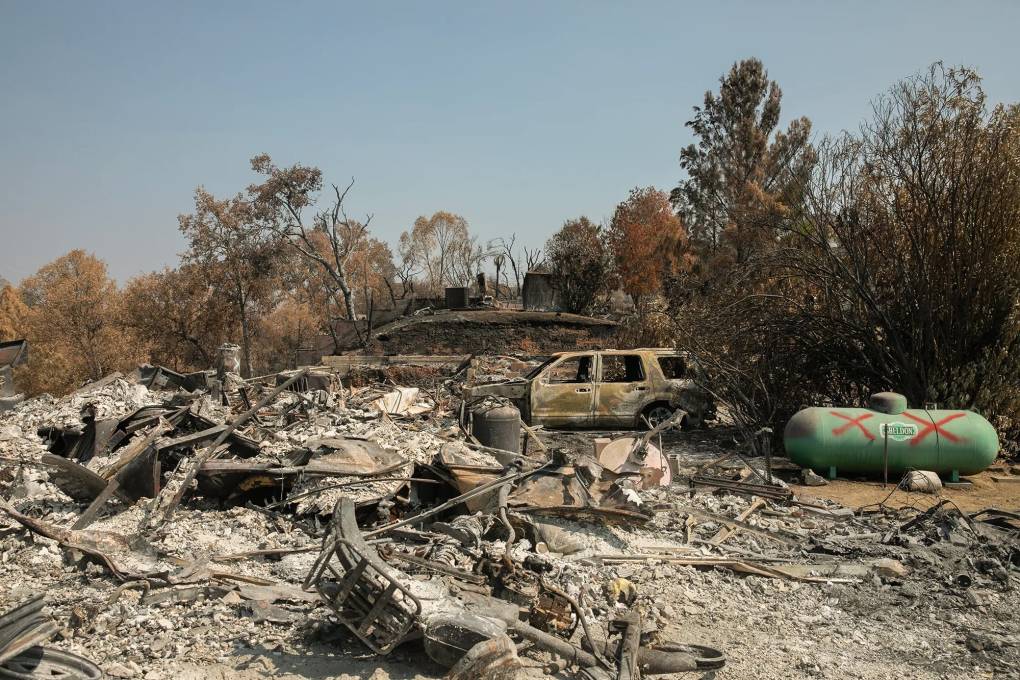
"caption": "The remains of a burned home in Berryessa Highlands on Sept. 21, 2020.\n",
"description": null,
"title": "092120_BerryessaHighlands_AW_CM_09 copy",
"credit": "Anne Wernikoff for CalMatters",
"status": "inherit",
"altTag": null,
"isLoading": false,
"fetchFailed": false
},
"news_11980662": {
"type": "attachments",
"id": "news_11980662",
"meta": {
"index": "attachments_1716263798",
"site": "news",
"id": "11980662",
"found": true
},
"parent": 11980661,
"imgSizes": {
"twentyfourteen-full-width": {
"file": "https://cdn.kqed.org/wp-content/uploads/sites/10/2024/03/016_KQED_LondonBreedQA_05232023_qut-1038x576.jpg",
"width": 1038,
"mimeType": "image/jpeg",
"height": 576
},
"thumbnail": {
"file": "https://cdn.kqed.org/wp-content/uploads/sites/10/2024/03/016_KQED_LondonBreedQA_05232023_qut-160x107.jpg",
"width": 160,
"mimeType": "image/jpeg",
"height": 107
},
"post-thumbnail": {
"file": "https://cdn.kqed.org/wp-content/uploads/sites/10/2024/03/016_KQED_LondonBreedQA_05232023_qut-672x372.jpg",
"width": 672,
"mimeType": "image/jpeg",
"height": 372
},
"kqedFullSize": {
"file": "https://cdn.kqed.org/wp-content/uploads/sites/10/2024/03/016_KQED_LondonBreedQA_05232023_qut.jpg",
"width": 1920,
"height": 1280
},
"large": {
"file": "https://cdn.kqed.org/wp-content/uploads/sites/10/2024/03/016_KQED_LondonBreedQA_05232023_qut-1020x680.jpg",
"width": 1020,
"mimeType": "image/jpeg",
"height": 680
},
"1536x1536": {
"file": "https://cdn.kqed.org/wp-content/uploads/sites/10/2024/03/016_KQED_LondonBreedQA_05232023_qut-1536x1024.jpg",
"width": 1536,
"mimeType": "image/jpeg",
"height": 1024
},
"medium": {
"file": "https://cdn.kqed.org/wp-content/uploads/sites/10/2024/03/016_KQED_LondonBreedQA_05232023_qut-800x533.jpg",
"width": 800,
"mimeType": "image/jpeg",
"height": 533
}
},
"publishDate": 1711390809,
"modified": 1711390846,
"caption": "San Francisco Mayor London Breed and San Francisco Board of Supervisors President Aaron Peskin speak with a crowd gathered for a Q&A about the fentanyl drug crisis in San Francisco at UN Plaza on May 23, 2023.",
"description": null,
"title": "016_KQED_LondonBreedQA_05232023_qut",
"credit": "Beth LaBerge/KQED",
"status": "inherit",
"altTag": null,
"isLoading": false,
"fetchFailed": false
},
"news_11980548": {
"type": "attachments",
"id": "news_11980548",
"meta": {
"index": "attachments_1716263798",
"site": "news",
"id": "11980548",
"found": true
},
"parent": 11980547,
"imgSizes": {
"twentyfourteen-full-width": {
"file": "https://cdn.kqed.org/wp-content/uploads/sites/10/2024/03/231219-Homeless-Deaths-Data-MD-09_qut-1038x576.jpg",
"width": 1038,
"mimeType": "image/jpeg",
"height": 576
},
"thumbnail": {
"file": "https://cdn.kqed.org/wp-content/uploads/sites/10/2024/03/231219-Homeless-Deaths-Data-MD-09_qut-160x107.jpg",
"width": 160,
"mimeType": "image/jpeg",
"height": 107
},
"post-thumbnail": {
"file": "https://cdn.kqed.org/wp-content/uploads/sites/10/2024/03/231219-Homeless-Deaths-Data-MD-09_qut-672x372.jpg",
"width": 672,
"mimeType": "image/jpeg",
"height": 372
},
"kqedFullSize": {
"file": "https://cdn.kqed.org/wp-content/uploads/sites/10/2024/03/231219-Homeless-Deaths-Data-MD-09_qut.jpg",
"width": 1920,
"height": 1280
},
"large": {
"file": "https://cdn.kqed.org/wp-content/uploads/sites/10/2024/03/231219-Homeless-Deaths-Data-MD-09_qut-1020x680.jpg",
"width": 1020,
"mimeType": "image/jpeg",
"height": 680
},
"1536x1536": {
"file": "https://cdn.kqed.org/wp-content/uploads/sites/10/2024/03/231219-Homeless-Deaths-Data-MD-09_qut-1536x1024.jpg",
"width": 1536,
"mimeType": "image/jpeg",
"height": 1024
},
"medium": {
"file": "https://cdn.kqed.org/wp-content/uploads/sites/10/2024/03/231219-Homeless-Deaths-Data-MD-09_qut-800x533.jpg",
"width": 800,
"mimeType": "image/jpeg",
"height": 533
}
},
"publishDate": 1711145423,
"modified": 1711227860,
"caption": "Eduardo Adrian Aviles Garza, known as 'Monkey,' prays at a memorial in December commemorating the 201 unhoused people who died in Santa Clara County in 2023.",
"description": null,
"title": "231219-Homeless Deaths Data-MD-09_qut",
"credit": "Martin do Nascimento/KQED",
"status": "inherit",
"altTag": "A man prays with his hands held up, behind others, outside.",
"isLoading": false,
"fetchFailed": false
},
"news_11980601": {
"type": "attachments",
"id": "news_11980601",
"meta": {
"index": "attachments_1716263798",
"site": "news",
"id": "11980601",
"found": true
},
"parent": 11980592,
"imgSizes": {
"twentyfourteen-full-width": {
"file": "https://cdn.kqed.org/wp-content/uploads/sites/10/2024/03/GettyImages-lpi1681_83-1038x576.jpg",
"width": 1038,
"mimeType": "image/jpeg",
"height": 576
},
"thumbnail": {
"file": "https://cdn.kqed.org/wp-content/uploads/sites/10/2024/03/GettyImages-lpi1681_83-160x104.jpg",
"width": 160,
"mimeType": "image/jpeg",
"height": 104
},
"post-thumbnail": {
"file": "https://cdn.kqed.org/wp-content/uploads/sites/10/2024/03/GettyImages-lpi1681_83-672x372.jpg",
"width": 672,
"mimeType": "image/jpeg",
"height": 372
},
"kqedFullSize": {
"file": "https://cdn.kqed.org/wp-content/uploads/sites/10/2024/03/GettyImages-lpi1681_83.jpg",
"width": 2150,
"height": 1395
},
"2048x2048": {
"file": "https://cdn.kqed.org/wp-content/uploads/sites/10/2024/03/GettyImages-lpi1681_83-2048x1329.jpg",
"width": 2048,
"mimeType": "image/jpeg",
"height": 1329
},
"large": {
"file": "https://cdn.kqed.org/wp-content/uploads/sites/10/2024/03/GettyImages-lpi1681_83-1020x662.jpg",
"width": 1020,
"mimeType": "image/jpeg",
"height": 662
},
"1536x1536": {
"file": "https://cdn.kqed.org/wp-content/uploads/sites/10/2024/03/GettyImages-lpi1681_83-1536x997.jpg",
"width": 1536,
"mimeType": "image/jpeg",
"height": 997
},
"full-width": {
"file": "https://cdn.kqed.org/wp-content/uploads/sites/10/2024/03/GettyImages-lpi1681_83-1920x1246.jpg",
"width": 1920,
"mimeType": "image/jpeg",
"height": 1246
},
"medium": {
"file": "https://cdn.kqed.org/wp-content/uploads/sites/10/2024/03/GettyImages-lpi1681_83-800x519.jpg",
"width": 800,
"mimeType": "image/jpeg",
"height": 519
}
},
"publishDate": 1711156880,
"modified": 1711156965,
"caption": null,
"description": null,
"title": "Houses viewed from Mount Davidson, San Francisco, United States of America",
"credit": "John Elk III/Getty Images",
"status": "inherit",
"altTag": null,
"isLoading": false,
"fetchFailed": false
},
"news_11980571": {
"type": "attachments",
"id": "news_11980571",
"meta": {
"index": "attachments_1716263798",
"site": "news",
"id": "11980571",
"found": true
},
"title": "US-ECONOMY-HOUSING-RENT",
"publishDate": 1711152822,
"status": "inherit",
"parent": 11980565,
"modified": 1754519584,
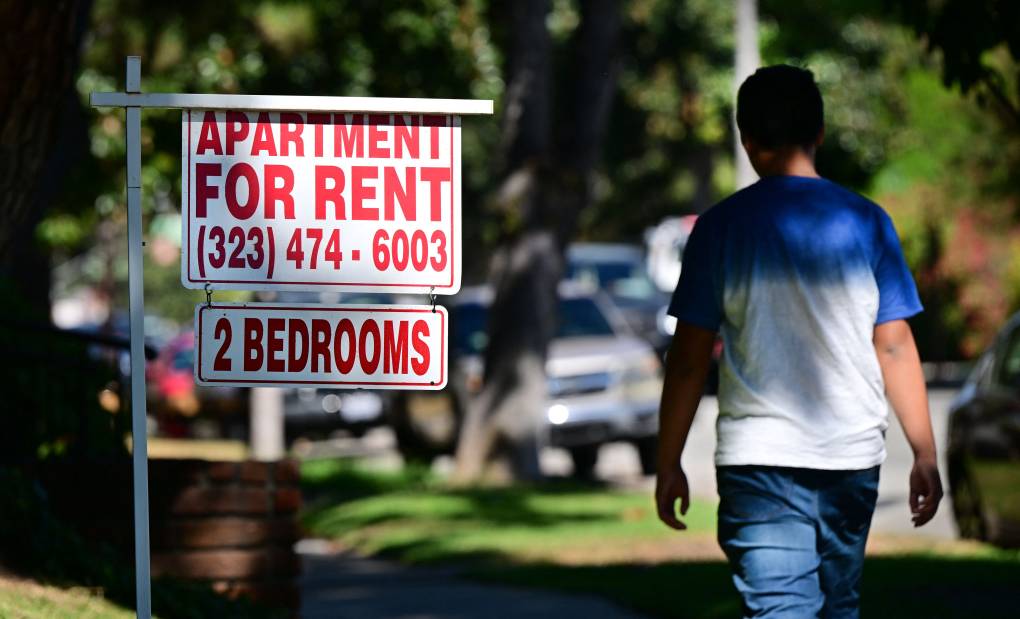
"caption": "An apartment for rent sign is posted in South Pasadena, California. Giving cash directly to renters is one policy tool that takes out the bureaucracy of renters needing to apply for federal vouchers and then find a landlord who will accept the voucher.",
"credit": "Frederic J. Brown/AFP via Getty Images",
"altTag": "A man walks by a 'for rent' sign.",
"description": null,
"imgSizes": {
"medium": {
"file": "https://cdn.kqed.org/wp-content/uploads/sites/10/2024/03/GettyImages-1244095544-800x485.jpg",
"width": 800,
"height": 485,
"mimeType": "image/jpeg"
},
"large": {
"file": "https://cdn.kqed.org/wp-content/uploads/sites/10/2024/03/GettyImages-1244095544-1020x619.jpg",
"width": 1020,
"height": 619,
"mimeType": "image/jpeg"
},
"thumbnail": {
"file": "https://cdn.kqed.org/wp-content/uploads/sites/10/2024/03/GettyImages-1244095544-160x97.jpg",
"width": 160,
"height": 97,
"mimeType": "image/jpeg"
},
"1536x1536": {
"file": "https://cdn.kqed.org/wp-content/uploads/sites/10/2024/03/GettyImages-1244095544-1536x932.jpg",
"width": 1536,
"height": 932,
"mimeType": "image/jpeg"
},
"2048x2048": {
"file": "https://cdn.kqed.org/wp-content/uploads/sites/10/2024/03/GettyImages-1244095544-2048x1242.jpg",
"width": 2048,
"height": 1242,
"mimeType": "image/jpeg"
},
"post-thumbnail": {
"file": "https://cdn.kqed.org/wp-content/uploads/sites/10/2024/03/GettyImages-1244095544-672x372.jpg",
"width": 672,
"height": 372,
"mimeType": "image/jpeg"
},
"twentyfourteen-full-width": {
"file": "https://cdn.kqed.org/wp-content/uploads/sites/10/2024/03/GettyImages-1244095544-1038x576.jpg",
"width": 1038,
"height": 576,
"mimeType": "image/jpeg"
},
"full-width": {
"file": "https://cdn.kqed.org/wp-content/uploads/sites/10/2024/03/GettyImages-1244095544-1920x1164.jpg",
"width": 1920,
"height": 1164,
"mimeType": "image/jpeg"
},
"kqedFullSize": {
"file": "https://cdn.kqed.org/wp-content/uploads/sites/10/2024/03/GettyImages-1244095544-scaled.jpg",
"width": 2560,
"height": 1553
}
},
"isLoading": false,
"fetchFailed": false
}
},
"audioPlayerReducer": {
"postId": "stream_live",
"isPaused": true,
"isPlaying": false,
"pfsActive": false,
"pledgeModalIsOpen": true,
"playerDrawerIsOpen": false,
"liveAudioPlayStartedAt": 0,
"liveAudioPlayContext": ""
},
"authorsReducer": {
"byline_news_11981418": {
"type": "authors",
"id": "byline_news_11981418",
"meta": {
"override": true
},
"slug": "byline_news_11981418",
"name": "\u003ca href=\"https://calmatters.org/author/kervy-robles/\">Justo Robles\u003c/a>",
"isLoading": false
},
"byline_news_11981399": {
"type": "authors",
"id": "byline_news_11981399",
"meta": {
"override": true
},
"slug": "byline_news_11981399",
"name": "Elliot Spagat\u003cbr>Associated Press",
"isLoading": false
},
"byline_news_11980757": {
"type": "authors",
"id": "byline_news_11980757",
"meta": {
"override": true
},
"slug": "byline_news_11980757",
"name": "\u003ca href=\"https://calmatters.org/author/levi-sumagaysay/\">Levi Sumagaysay\u003c/a>",
"isLoading": false
},
"byline_news_11980592": {
"type": "authors",
"id": "byline_news_11980592",
"meta": {
"override": true
},
"slug": "byline_news_11980592",
"name": "\u003ca href=\"https://www.npr.org/people/2788801/scott-horsley\">Scott Horsley\u003c/a>",
"isLoading": false
},
"byline_news_11980565": {
"type": "authors",
"id": "byline_news_11980565",
"meta": {
"override": true
},
"slug": "byline_news_11980565",
"name": "\u003ca href=\"https://calmatters.org/author/marisa-kendall/\">Marisa Kendall\u003c/a>",
"isLoading": false
},
"gmarzorati": {
"type": "authors",
"id": "227",
"meta": {
"index": "authors_1716337520",
"id": "227",
"found": true
},
"name": "Guy Marzorati",
"firstName": "Guy",
"lastName": "Marzorati",
"slug": "gmarzorati",
"email": "gmarzorati@KQED.org",
"display_author_email": true,
"staff_mastheads": [
"news"
],
"title": "Correspondent",
"bio": "Guy Marzorati is a correspondent on KQED's California Politics and Government Desk, based in San Jose. A graduate of Santa Clara University, Guy joined KQED in 2013. He reports on state and local politics and produces KQED's digital voter guide.",
"avatar": "https://secure.gravatar.com/avatar/e7038b8dbfd55b104369b76b1cd0b9de?s=600&d=blank&r=g",
"twitter": "guymarzorati",
"facebook": null,
"instagram": null,
"linkedin": null,
"sites": [
{
"site": "",
"roles": [
"editor"
]
},
{
"site": "news",
"roles": [
"editor"
]
},
{
"site": "science",
"roles": [
"editor"
]
},
{
"site": "forum",
"roles": [
"editor"
]
},
{
"site": "elections",
"roles": [
"editor"
]
},
{
"site": "liveblog",
"roles": [
"editor"
]
}
],
"headData": {
"title": "Guy Marzorati | KQED",
"description": "Correspondent",
"ogImgSrc": "https://secure.gravatar.com/avatar/e7038b8dbfd55b104369b76b1cd0b9de?s=600&d=blank&r=g",
"twImgSrc": "https://secure.gravatar.com/avatar/e7038b8dbfd55b104369b76b1cd0b9de?s=600&d=blank&r=g"
},
"isLoading": false,
"link": "/author/gmarzorati"
},
"mlagos": {
"type": "authors",
"id": "3239",
"meta": {
"index": "authors_1716337520",
"id": "3239",
"found": true
},
"name": "Marisa Lagos",
"firstName": "Marisa",
"lastName": "Lagos",
"slug": "mlagos",
"email": "mlagos@kqed.org",
"display_author_email": false,
"staff_mastheads": [
"news"
],
"title": "KQED Contributor",
"bio": "Marisa Lagos is a correspondent for KQED’s California Politics and Government Desk and co-hosts the award-winning show and podcast, Political Breakdown. At KQED, Lagos also conducts reporting, analysis and investigations into state, local and national politics for radio, TV, online and onstage. In 2022, she and co-host, Scott Shafer, moderated the only gubernatorial debate in California. In 2020, the \u003ci>Washington Post\u003c/i> named her one of the top political journalists in California; she was nominated for a Peabody and won several other awards for her work investigating the 2017 California wildfires. She has worked at the \u003ci>San Francisco Chronicle\u003c/i>, \u003ci>San Francisco Examiner\u003c/i> and \u003ci>Los Angeles Times\u003c/i>. A UC Santa Barbara graduate, she lives in San Francisco with her two sons and husband.",
"avatar": "https://secure.gravatar.com/avatar/a261a0d3696fc066871ef96b85b5e7d2?s=600&d=blank&r=g",
"twitter": "@mlagos",
"facebook": null,
"instagram": null,
"linkedin": null,
"sites": [
{
"site": "arts",
"roles": [
"author"
]
},
{
"site": "news",
"roles": [
"editor"
]
},
{
"site": "science",
"roles": [
"editor"
]
},
{
"site": "forum",
"roles": [
"author"
]
},
{
"site": "liveblog",
"roles": [
"author"
]
}
],
"headData": {
"title": "Marisa Lagos | KQED",
"description": "KQED Contributor",
"ogImgSrc": "https://secure.gravatar.com/avatar/a261a0d3696fc066871ef96b85b5e7d2?s=600&d=blank&r=g",
"twImgSrc": "https://secure.gravatar.com/avatar/a261a0d3696fc066871ef96b85b5e7d2?s=600&d=blank&r=g"
},
"isLoading": false,
"link": "/author/mlagos"
},
"ecruzguevarra": {
"type": "authors",
"id": "8654",
"meta": {
"index": "authors_1716337520",
"id": "8654",
"found": true
},
"name": "Ericka Cruz Guevarra",
"firstName": "Ericka",
"lastName": "Cruz Guevarra",
"slug": "ecruzguevarra",
"email": "ecruzguevarra@kqed.org",
"display_author_email": true,
"staff_mastheads": [
"news"
],
"title": "Producer, The Bay Podcast",
"bio": "Ericka Cruz Guevarra is host of \u003ca href=\"https://www.kqed.org/podcasts/thebay\">\u003cem>The Bay\u003c/em>\u003c/a> podcast at KQED. Before host, she was the show’s producer. Her work in that capacity includes a three-part reported series on policing in Vallejo, which won a 2020 excellence in journalism award from the Society of Professional Journalists. Ericka has worked as a breaking news reporter at Oregon Public Broadcasting, helped produce the Code Switch podcast, and was KQED’s inaugural Raul Ramirez Diversity Fund intern. She’s also an alumna of NPR’s Next Generation Radio program. Send her an email if you have strong feelings about whether Fairfield and Suisun City are the Bay. Ericka is represented by SAG-AFTRA.",
"avatar": "https://secure.gravatar.com/avatar/accefc1de4bafc7e234b69bcb9b6f6536c130fd84709bc3069ef11a78787e1bb?s=600&d=blank&r=g",
"twitter": "NotoriousECG",
"bluesky": null,
"facebook": null,
"instagram": null,
"linkedin": null,
"sites": [
{
"site": "arts",
"roles": [
"subscriber"
]
},
{
"site": "news",
"roles": [
"editor",
"manage_categories"
]
},
{
"site": "futureofyou",
"roles": [
"subscriber"
]
},
{
"site": "stateofhealth",
"roles": [
"subscriber"
]
},
{
"site": "science",
"roles": [
"editor"
]
},
{
"site": "forum",
"roles": [
"subscriber"
]
}
],
"headData": {
"title": "Ericka Cruz Guevarra | KQED",
"description": "Producer, The Bay Podcast",
"ogImgSrc": "https://secure.gravatar.com/avatar/accefc1de4bafc7e234b69bcb9b6f6536c130fd84709bc3069ef11a78787e1bb?s=600&d=blank&r=g",
"twImgSrc": "https://secure.gravatar.com/avatar/accefc1de4bafc7e234b69bcb9b6f6536c130fd84709bc3069ef11a78787e1bb?s=600&d=blank&r=g"
},
"isLoading": false,
"link": "/author/ecruzguevarra"
},
"vrancano": {
"type": "authors",
"id": "11276",
"meta": {
"index": "authors_1716337520",
"id": "11276",
"found": true
},
"name": "Vanessa Rancaño",
"firstName": "Vanessa",
"lastName": "Rancaño",
"slug": "vrancano",
"email": "vrancano@kqed.org",
"display_author_email": false,
"staff_mastheads": [
"news"
],
"title": "Reporter",
"bio": "Vanessa Rancaño is a features reporter for KQED. She’s also covered homelessness and education for the station and reported from the Central Valley. Her work has aired across public radio, from flagship national news shows to longform narrative podcasts. Before taking up a mic, she worked as a freelance print journalist. She’s been recognized with a number of national and regional awards. Vanessa grew up in California's Central Valley. She's a former NPR Kroc Fellow, and a graduate of the UC Berkeley Graduate School of Journalism.",
"avatar": "https://secure.gravatar.com/avatar/b3a383dfb0e7ee1c17568f2cf067904ab654d6e3de9743fc661f3c788ade1bed?s=600&d=blank&r=g",
"twitter": "vanessarancano",
"bluesky": null,
"facebook": null,
"instagram": null,
"linkedin": null,
"sites": [
{
"site": "arts",
"roles": [
"editor"
]
},
{
"site": "news",
"roles": [
"editor"
]
},
{
"site": "liveblog",
"roles": [
"contributor"
]
}
],
"headData": {
"title": "Vanessa Rancaño | KQED",
"description": "Reporter",
"ogImgSrc": "https://secure.gravatar.com/avatar/b3a383dfb0e7ee1c17568f2cf067904ab654d6e3de9743fc661f3c788ade1bed?s=600&d=blank&r=g",
"twImgSrc": "https://secure.gravatar.com/avatar/b3a383dfb0e7ee1c17568f2cf067904ab654d6e3de9743fc661f3c788ade1bed?s=600&d=blank&r=g"
},
"isLoading": false,
"link": "/author/vrancano"
},
"amontecillo": {
"type": "authors",
"id": "11649",
"meta": {
"index": "authors_1716337520",
"id": "11649",
"found": true
},
"name": "Alan Montecillo",
"firstName": "Alan",
"lastName": "Montecillo",
"slug": "amontecillo",
"email": "amontecillo@kqed.org",
"display_author_email": false,
"staff_mastheads": [
"news"
],
"title": "KQED Contributor",
"bio": "Alan Montecillo is the senior editor of \u003cem>\u003ca href=\"http://kqed.org/thebay\">The Bay\u003c/a>, \u003c/em> KQED's local news podcast. Before moving to the Bay Area, he worked as a senior talk show producer for WILL in Champaign-Urbana, Illinois and at Oregon Public Broadcasting in Portland, Oregon. He has won journalism awards from the Society of Professional Journalists Northern California, the Public Media Journalists Association, The Signal Awards, and has also received a regional Edward R. Murrow award. Alan is a Filipino American from Hong Kong and a graduate of Reed College.",
"avatar": "https://secure.gravatar.com/avatar/268f53a2066899ea9efdd8a5900218b17c822d9862cbc9326cccec53ef41d349?s=600&d=blank&r=g",
"twitter": "alanmontecillo",
"bluesky": null,
"facebook": null,
"instagram": null,
"linkedin": null,
"sites": [
{
"site": "",
"roles": [
"editor"
]
},
{
"site": "news",
"roles": [
"editor",
"manage_categories"
]
}
],
"headData": {
"title": "Alan Montecillo | KQED",
"description": "KQED Contributor",
"ogImgSrc": "https://secure.gravatar.com/avatar/268f53a2066899ea9efdd8a5900218b17c822d9862cbc9326cccec53ef41d349?s=600&d=blank&r=g",
"twImgSrc": "https://secure.gravatar.com/avatar/268f53a2066899ea9efdd8a5900218b17c822d9862cbc9326cccec53ef41d349?s=600&d=blank&r=g"
},
"isLoading": false,
"link": "/author/amontecillo"
},
"ebaldassari": {
"type": "authors",
"id": "11652",
"meta": {
"index": "authors_1716337520",
"id": "11652",
"found": true
},
"name": "Erin Baldassari",
"firstName": "Erin",
"lastName": "Baldassari",
"slug": "ebaldassari",
"email": "ebaldassari@KQED.org",
"display_author_email": true,
"staff_mastheads": [
"news"
],
"title": "Staff Writer",
"bio": "Erin Baldassari covers housing for KQED. She's a former print journalist and most recently worked as the transportation reporter for the \u003cem>Mercury News\u003c/em> and \u003cem>East Bay Times. \u003c/em>There, she focused on how the Bay Area’s housing shortage has changed the way people move around the region. She also served on the \u003cem>East Bay Times\u003c/em>’ 2017 Pulitzer Prize-winning team for coverage of the Ghost Ship Fire in Oakland. Prior to that, Erin worked as a breaking news and general assignment reporter for a variety of outlets in the Bay Area and the greater Boston area. A Tufts University alumna, Erin grew up in the foothills of the Sierra Nevada mountains and in Sonoma County. She is a life-long KQED listener.",
"avatar": "https://secure.gravatar.com/avatar/5e95cad64a8ca08288082212e199d2b0cbeb4fd8e8ef5339395f361032bbe005?s=600&d=blank&r=g",
"twitter": "e_baldi",
"bluesky": null,
"facebook": null,
"instagram": null,
"linkedin": null,
"sites": [
{
"site": "news",
"roles": [
"edit_others_posts",
"editor"
]
},
{
"site": "science",
"roles": [
"editor"
]
},
{
"site": "liveblog",
"roles": [
"editor"
]
}
],
"headData": {
"title": "Erin Baldassari | KQED",
"description": "Staff Writer",
"ogImgSrc": "https://secure.gravatar.com/avatar/5e95cad64a8ca08288082212e199d2b0cbeb4fd8e8ef5339395f361032bbe005?s=600&d=blank&r=g",
"twImgSrc": "https://secure.gravatar.com/avatar/5e95cad64a8ca08288082212e199d2b0cbeb4fd8e8ef5339395f361032bbe005?s=600&d=blank&r=g"
},
"isLoading": false,
"link": "/author/ebaldassari"
},
"abandlamudi": {
"type": "authors",
"id": "11672",
"meta": {
"index": "authors_1716337520",
"id": "11672",
"found": true
},
"name": "Adhiti Bandlamudi",
"firstName": "Adhiti",
"lastName": "Bandlamudi",
"slug": "abandlamudi",
"email": "abandlamudi@kqed.org",
"display_author_email": false,
"staff_mastheads": [
"news"
],
"title": "KQED Housing Reporter",
"bio": "Adhiti Bandlamudi reports for KQED's Housing desk. She focuses on how housing gets built across the Bay Area. Before joining KQED in 2020, she reported for WUNC in Durham, North Carolina, WABE in Atlanta, Georgia and Capital Public Radio in Sacramento. In 2017, she was awarded a Kroc Fellowship at NPR where she reported on everything from sprinkles to the Golden State Killer's arrest. When she's not reporting, she's baking new recipes in her kitchen or watching movies with friends and family. She's originally from Georgia and has strong opinions about Great British Bake Off.",
"avatar": "https://secure.gravatar.com/avatar/868129c8b257bb99a3500e2c86a65400?s=600&d=mm&r=g",
"twitter": "oddity_adhiti",
"facebook": null,
"instagram": null,
"linkedin": null,
"sites": [
{
"site": "arts",
"roles": [
"author"
]
},
{
"site": "news",
"roles": [
"editor"
]
},
{
"site": "liveblog",
"roles": [
"author"
]
}
],
"headData": {
"title": "Adhiti Bandlamudi | KQED",
"description": "KQED Housing Reporter",
"ogImgSrc": "https://secure.gravatar.com/avatar/868129c8b257bb99a3500e2c86a65400?s=600&d=mm&r=g",
"twImgSrc": "https://secure.gravatar.com/avatar/868129c8b257bb99a3500e2c86a65400?s=600&d=mm&r=g"
},
"isLoading": false,
"link": "/author/abandlamudi"
},
"jrodriguez": {
"type": "authors",
"id": "11690",
"meta": {
"index": "authors_1716337520",
"id": "11690",
"found": true
},
"name": "Joe Fitzgerald Rodriguez",
"firstName": "Joe",
"lastName": "Fitzgerald Rodriguez",
"slug": "jrodriguez",
"email": "jrodriguez@kqed.org",
"display_author_email": true,
"staff_mastheads": [
"news"
],
"title": "Reporter and Producer",
"bio": "Joe Fitzgerald Rodriguez is a reporter and digital producer for KQED covering politics. Joe most recently wrote for the \u003cem>San Francisco Examiner\u003c/em> as a political columnist covering The City. He was raised in San Francisco and has spent his reporting career in his beloved, foggy, city by the bay. Joe was 12-years-old when he conducted his first interview in journalism, grilling former San Francisco Mayor Willie Brown for the Marina Middle School newspaper, \u003cem>The Penguin Press, \u003c/em>and he continues to report on the San Francisco Bay Area to this day.",
"avatar": "https://secure.gravatar.com/avatar/2247beb0564c1e9c62228d5649d2edac?s=600&d=blank&r=g",
"twitter": "FitztheReporter",
"facebook": null,
"instagram": "https://www.instagram.com/fitzthereporter/",
"linkedin": null,
"sites": [
{
"site": "",
"roles": [
"editor"
]
},
{
"site": "arts",
"roles": [
"editor"
]
},
{
"site": "news",
"roles": [
"editor"
]
},
{
"site": "science",
"roles": [
"editor"
]
},
{
"site": "elections",
"roles": [
"editor"
]
},
{
"site": "liveblog",
"roles": [
"editor"
]
}
],
"headData": {
"title": "Joe Fitzgerald Rodriguez | KQED",
"description": "Reporter and Producer",
"ogImgSrc": "https://secure.gravatar.com/avatar/2247beb0564c1e9c62228d5649d2edac?s=600&d=blank&r=g",
"twImgSrc": "https://secure.gravatar.com/avatar/2247beb0564c1e9c62228d5649d2edac?s=600&d=blank&r=g"
},
"isLoading": false,
"link": "/author/jrodriguez"
},
"mesquinca": {
"type": "authors",
"id": "11802",
"meta": {
"index": "authors_1716337520",
"id": "11802",
"found": true
},
"name": "Maria Esquinca",
"firstName": "Maria",
"lastName": "Esquinca",
"slug": "mesquinca",
"email": "mesquinca@kqed.org",
"display_author_email": false,
"staff_mastheads": [],
"title": "Producer, The Bay",
"bio": "María Esquinca is a producer of The Bay. Before that, she was a New York Women’s Foundation IGNITE Fellow at Latino USA. She worked at Radio Bilingue where she covered the San Joaquin Valley. Maria has interned at WLRN, News 21, The New York Times Student Journalism Institute and at Crain’s Detroit Business as a Dow Jones News Fund Business Reporting Intern. She is an MFA graduate from the University of Miami. In 2017, she graduated from the Walter Cronkite School of Journalism and Mass Communication with a Master of Mass Communication. A fronteriza, she was born in Ciudad Juárez, Chihuahua, Mexico and grew up in El Paso, Texas.",
"avatar": "https://secure.gravatar.com/avatar/77cedba18aae91da775038ba06dcd8d0?s=600&d=blank&r=g",
"twitter": "@m_esquinca",
"facebook": null,
"instagram": null,
"linkedin": null,
"sites": [
{
"site": "news",
"roles": []
}
],
"headData": {
"title": "Maria Esquinca | KQED",
"description": "Producer, The Bay",
"ogImgSrc": "https://secure.gravatar.com/avatar/77cedba18aae91da775038ba06dcd8d0?s=600&d=blank&r=g",
"twImgSrc": "https://secure.gravatar.com/avatar/77cedba18aae91da775038ba06dcd8d0?s=600&d=blank&r=g"
},
"isLoading": false,
"link": "/author/mesquinca"
}
},
"pagesReducer": {
"news_category_housing": {
"type": "terms",
"id": "news_6266",
"meta": {
"index": "terms_1716263798",
"site": "news",
"id": "6266",
"score": 11.039913
},
"featImg": null,
"name": "Housing",
"description": null,
"taxonomy": "category",
"headData": {
"twImgId": null,
"twTitle": null,
"ogTitle": null,
"ogImgId": null,
"twDescription": null,
"description": null,
"title": "Housing Archives | KQED News",
"ogDescription": null
},
"ttid": 6290,
"slug": "housing",
"isLoading": false,
"title": "Housing",
"pageMeta": {
"site": "news",
"WpPageTemplate": "page-topic-editorial",
"currentPage": 42
},
"blocks": [
{
"blockName": "kqed/post-list",
"attrs": {
"layout": "cardArticle2",
"query": "posts/news?category=housing",
"seeMore": false,
"paginated": true,
"page": 42
}
},
{
"blockName": "kqed/ad"
}
]
}
},
"pfsSessionReducer": {},
"postsReducer": {
"stream_live": {
"type": "live",
"id": "stream_live",
"audioUrl": "https://streams.kqed.org/kqedradio",
"title": "Live Stream",
"excerpt": "Live Stream information currently unavailable.",
"link": "/radio",
"featImg": "",
"label": {
"name": "KQED Live",
"link": "/"
}
},
"stream_kqedNewscast": {
"type": "posts",
"id": "stream_kqedNewscast",
"audioUrl": "https://www.kqed.org/.stream/anon/radio/RDnews/newscast.mp3?_=1",
"title": "KQED Newscast",
"featImg": "",
"label": {
"name": "88.5 FM",
"link": "/"
}
},
"news_11981358": {
"type": "posts",
"id": "news_11981358",
"meta": {
"index": "posts_1716263798",
"site": "news",
"id": "11981358",
"score": null,
"sort": [
1711976455000
]
},
"parent": 0,
"labelTerm": {
"site": "news"
},
"blocks": [],
"publishDate": 1711976455,
"format": "standard",
"title": "UC Berkeley's Plan to Build Housing on People's Park Heads to California Supreme Court",
"headTitle": "UC Berkeley’s Plan to Build Housing on People’s Park Heads to California Supreme Court | KQED",
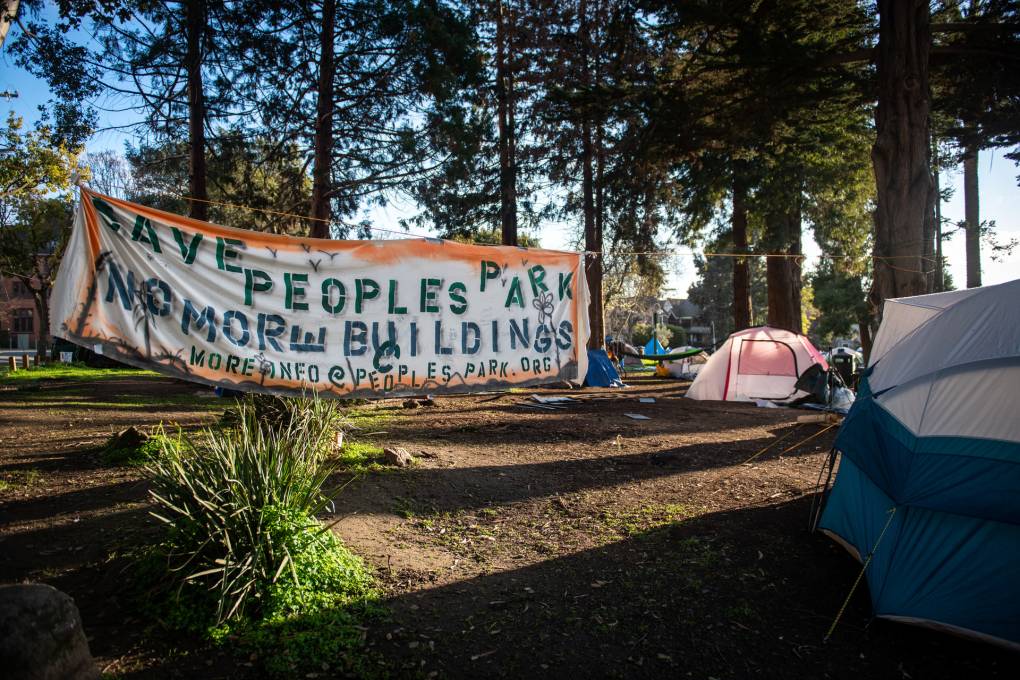
"content": "\u003cp>The California Supreme Court will hear oral arguments on Wednesday in a case brought by two groups opposed to UC Berkeley’s plan to build student housing at People’s Park.\u003c/p>\n\u003cp>The case hinges on whether the court considers noise from future residents a form of pollution and whether housing developers should be held to stricter standards when it comes to studying alternative sites for proposed projects. Depending on how the court rules, it could empower community members to demand that developers do extra studies before building new housing, potentially lengthening an already tedious process.\u003c/p>\n\u003cp>“If a person is vehemently opposed to a project, they can go to court and say ‘tell them to do more studies,’” said Chris Elmendorf, a professor at UC Davis specializing in land-use law. “Maybe the court agrees, or maybe the court disagrees, but while the project is in court, it’s effectively on hold.”\u003c/p>\n\u003cp>[aside postID=news_11971858,news_11972091,news_11971577 label='What Happened in Peoples Park']This case, over the planned development of People’s Park, stems from a 2021 lawsuit brought by Make UC A Good Neighbor and The People’s Park Historic District Advocacy Group against UC Berkeley’s heavily contested \u003ca href=\"https://capitalstrategies.berkeley.edu/planning-documents\">Long Range Development Plan\u003c/a>, which aims to add nearly 12,000 new student beds and 8 million square feet of new classrooms, research labs, libraries and other amenities.\u003c/p>\n\u003cp>The most controversial development in the plan is the proposal to build housing on People’s Park, including a dormitory for students and \u003ca href=\"https://www.kqed.org/news/11972108/uc-berkeleys-housing-project-in-peoples-park-still-needs-a-developer\">nonprofit-run\u003c/a> apartments for unhoused and low-income people. Many who oppose the project \u003ca href=\"https://www.kqed.org/news/11971915/peoples-park-fight-pits-housing-against-history\">want, instead, to preserve the park and its history as a site for political activism in the 1960s and 1970s\u003c/a>.\u003c/p>\n\u003cp>The suit argues that UC Berkeley didn’t adequately consider alternative sites for all of the new structures in the expansion plan, including the People’s Park housing development, and didn’t properly analyze how noise from students on the newly expanded campus would impact neighbors and city residents.\u003c/p>\n\u003cp>Though a new state law was passed to clear the way for housing at the park following the original filing of the lawsuit, it is narrowly tailored to this project and to others like it. Legal experts say the court’s decision, though, may still have wide-ranging implications for the California Environmental Quality Act (CEQA) and its power over future housing projects across the state.\u003c/p>\n\u003cp>Under CEQA, noise is considered a form of pollution but had previously been considered in cases regarding concert venues or industrial sites, for example. This suit is the first to argue that noise generated by future residents is a form of environmental pollution.\u003c/p>\n\u003cp>In February 2023, an appellate court agreed and ruled that UC Berkeley needed to go back to the drawing board to consider alternative sites for both the new housing at People’s Park and the housing being built elsewhere on campus and that it needed to assess the impact of potential noise from future residents on the surrounding neighborhood.\u003c/p>\n\u003cp>[aside postID=news_11971915 hero='https://cdn.kqed.org/wp-content/uploads/sites/10/2024/01/240108-LEV-MARCUS-MD-01-KQED-1020x680.jpg']“This case, to me, presents such a stark violation of CEQA,” said Thomas Lippe, an attorney for the two plaintiffs. “Some people might have been surprised by [the appellate court’s] noise ruling, but the alternative location ruling, it’s really just black letter law. You have to do it.”\u003c/p>\n\u003cp>California’s legislators disagreed. They quickly \u003ca href=\"https://www.kqed.org/news/11959483/legislation-that-could-push-peoples-park-student-housing-project-forward-heads-to-newsom\">passed\u003c/a> AB 1307 by Assemblymember Buffy Wicks (D-Berkeley), which amended CEQA so developers don’t have to consider noise generated by future residents as having a “significant effect on the environment” and so that public universities did not have to consider alternative locations for projects. The law was narrowly tailored to the People’s Park project and other housing projects located on public college or university campus grounds. Under the law, the housing development can be no larger than five acres, must be surrounded by urban space, and must have already completed an environmental impact report.\u003c/p>\n\u003cp>That means housing developers — at UC Berkeley or at any other university across the state — may still have to consider noise from future residents when evaluating projects if they extend outside of those limitations.\u003c/p>\n\u003cp>However, Elmendorf argued that this case could still have wider implications. Depending on the California Supreme Court’s decision, he said it could determine whether lower courts will continue to interpret and apply CEQA in the broadest possible way, yielding future legal surprises that delay, or ultimately kill, housing developments.\u003c/p>\n\u003cp>[ad fullwidth]\u003c/p>\n\u003cp>As California’s housing and climate crises grow more dire, CEQA’s impact is even more salient. Since he took office in 2019, Gov. Gavin Newsom has signed more than 20 bills into law that seek to limit CEQA’s scope, including Wicks’ law, in an effort to fast-track more housing being built. Advocates argue that while people wait for housing to be built, they live farther away from city centers, commute more and exacerbate the effects of climate change.\u003c/p>\n\u003cp>“The assumption that it’s always better to take more time making up your mind before doing something and that’s always going to be better for the environment — that assumption does not make sense anymore,” Elmendorf said.\u003c/p>\n\u003cp>[pullquote size=\"medium\" align=\"right\" citation=\"Chris Elmendorf, UC Davis professor\"]‘The assumption that it’s always better to take more time making up your mind before doing something and that’s always going to be better for the environment — that assumption does not make sense anymore.’[/pullquote]The university currently provides the lowest amount of student housing within the UC system: about 22% of its more than 45,000 undergraduate and graduate students have access to university-provided housing. The People’s Park project, along with other housing included in the long-range plan, would effectively double the number of beds it currently provides.\u003c/p>\n\u003cp>Depending on how the Supreme Court rules, UC Berkeley could be required to consider alternative sites or conduct additional environmental studies. The court will hear oral arguments on Wednesday and is expected to release a decision within 90 days of that hearing.\u003c/p>\n\u003cp>Regardless of what happens, UC Berkeley officials said they remain committed to the decision to build housing at People’s Park and to expand the campus. If they have to do additional studies, they will.\u003c/p>\n\u003cp>“Even if the Supreme Court should rule against us, that won’t stop the project,” UC Berkeley spokesperson Dan Mogulof said. “If, by some chance, the Supreme Court asks for additional environmental analysis, that’s exactly what we’ll do.”\u003c/p>\n\u003cp>[ad floatright]\u003c/p>\n",
"stats": {
"hasVideo": false,
"hasChartOrMap": false,
"hasAudio": false,
"hasPolis": false,
"wordCount": 1161,
"hasGoogleForm": false,
"hasGallery": false,
"hasHearkenModule": false,
"iframeSrcs": [],
"paragraphCount": 21
},
"modified": 1711979978,
"excerpt": "The California Supreme Court will hear arguments this week in a case brought over plans to build on the historic People’s Park — which could have larger implications for housing in the state.",
"headData": {
"twImgId": "",
"twTitle": "",
"ogTitle": "",
"ogImgId": "",
"twDescription": "",
"description": "The California Supreme Court will hear arguments this week in a case brought over plans to build on the historic People’s Park — which could have larger implications for housing in the state.",
"title": "UC Berkeley's Plan to Build Housing on People's Park Heads to California Supreme Court | KQED",
"ogDescription": "",
"schema": {
"@context": "https://schema.org",
"@type": "NewsArticle",
"headline": "UC Berkeley's Plan to Build Housing on People's Park Heads to California Supreme Court",
"datePublished": "2024-04-01T06:00:55-07:00",
"dateModified": "2024-04-01T06:59:38-07:00",
"image": "https://cdn.kqed.org/wp-content/uploads/2020/02/KQED-OG-Image@1x.png",
"isAccessibleForFree": "True",
"publisher": {
"@type": "NewsMediaOrganization",
"@id": "https://www.kqed.org/#organization",
"name": "KQED",
"logo": "https://cdn.kqed.org/wp-content/uploads/2020/02/KQED-OG-Image@1x.png",
"url": "https://www.kqed.org",
"sameAs": [
"https://www.facebook.com/KQED",
"https://twitter.com/KQED",
"https://www.instagram.com/kqed/",
"https://www.tiktok.com/@kqedofficial",
"https://www.linkedin.com/company/kqed",
"https://www.youtube.com/channel/UCeC0IOo7i1P_61zVUWbJ4nw"
]
}
}
},
"guestAuthors": [],
"slug": "uc-berkeleys-plan-to-build-housing-on-peoples-park-heads-to-california-supreme-court",
"status": "publish",
"excludeFromSiteSearch": "Include",
"sticky": false,
"articleAge": "0",
"path": "/news/11981358/uc-berkeleys-plan-to-build-housing-on-peoples-park-heads-to-california-supreme-court",
"audioTrackLength": null,
"parsedContent": [
{
"type": "contentString",
"content": "\u003cdiv class=\"post-body\">\u003cp>\u003cp>The California Supreme Court will hear oral arguments on Wednesday in a case brought by two groups opposed to UC Berkeley’s plan to build student housing at People’s Park.\u003c/p>\n\u003cp>The case hinges on whether the court considers noise from future residents a form of pollution and whether housing developers should be held to stricter standards when it comes to studying alternative sites for proposed projects. Depending on how the court rules, it could empower community members to demand that developers do extra studies before building new housing, potentially lengthening an already tedious process.\u003c/p>\n\u003cp>“If a person is vehemently opposed to a project, they can go to court and say ‘tell them to do more studies,’” said Chris Elmendorf, a professor at UC Davis specializing in land-use law. “Maybe the court agrees, or maybe the court disagrees, but while the project is in court, it’s effectively on hold.”\u003c/p>\n\u003cp>\u003c/p>\u003c/div>",
"attributes": {
"named": {},
"numeric": []
}
},
{
"type": "component",
"content": "",
"name": "aside",
"attributes": {
"named": {
"postid": "news_11971858,news_11972091,news_11971577",
"label": "What Happened in Peoples Park "
},
"numeric": []
}
},
{
"type": "contentString",
"content": "\u003cdiv class=\"post-body\">\u003cp>This case, over the planned development of People’s Park, stems from a 2021 lawsuit brought by Make UC A Good Neighbor and The People’s Park Historic District Advocacy Group against UC Berkeley’s heavily contested \u003ca href=\"https://capitalstrategies.berkeley.edu/planning-documents\">Long Range Development Plan\u003c/a>, which aims to add nearly 12,000 new student beds and 8 million square feet of new classrooms, research labs, libraries and other amenities.\u003c/p>\n\u003cp>The most controversial development in the plan is the proposal to build housing on People’s Park, including a dormitory for students and \u003ca href=\"https://www.kqed.org/news/11972108/uc-berkeleys-housing-project-in-peoples-park-still-needs-a-developer\">nonprofit-run\u003c/a> apartments for unhoused and low-income people. Many who oppose the project \u003ca href=\"https://www.kqed.org/news/11971915/peoples-park-fight-pits-housing-against-history\">want, instead, to preserve the park and its history as a site for political activism in the 1960s and 1970s\u003c/a>.\u003c/p>\n\u003cp>The suit argues that UC Berkeley didn’t adequately consider alternative sites for all of the new structures in the expansion plan, including the People’s Park housing development, and didn’t properly analyze how noise from students on the newly expanded campus would impact neighbors and city residents.\u003c/p>\n\u003cp>Though a new state law was passed to clear the way for housing at the park following the original filing of the lawsuit, it is narrowly tailored to this project and to others like it. Legal experts say the court’s decision, though, may still have wide-ranging implications for the California Environmental Quality Act (CEQA) and its power over future housing projects across the state.\u003c/p>\n\u003cp>Under CEQA, noise is considered a form of pollution but had previously been considered in cases regarding concert venues or industrial sites, for example. This suit is the first to argue that noise generated by future residents is a form of environmental pollution.\u003c/p>\n\u003cp>In February 2023, an appellate court agreed and ruled that UC Berkeley needed to go back to the drawing board to consider alternative sites for both the new housing at People’s Park and the housing being built elsewhere on campus and that it needed to assess the impact of potential noise from future residents on the surrounding neighborhood.\u003c/p>\n\u003cp>\u003c/p>\u003c/div>",
"attributes": {
"named": {},
"numeric": []
}
},
{
"type": "component",
"content": "",
"name": "aside",
"attributes": {
"named": {
"postid": "news_11971915",
"hero": "https://cdn.kqed.org/wp-content/uploads/sites/10/2024/01/240108-LEV-MARCUS-MD-01-KQED-1020x680.jpg",
"label": ""
},
"numeric": []
}
},
{
"type": "contentString",
"content": "\u003cdiv class=\"post-body\">\u003cp>“This case, to me, presents such a stark violation of CEQA,” said Thomas Lippe, an attorney for the two plaintiffs. “Some people might have been surprised by [the appellate court’s] noise ruling, but the alternative location ruling, it’s really just black letter law. You have to do it.”\u003c/p>\n\u003cp>California’s legislators disagreed. They quickly \u003ca href=\"https://www.kqed.org/news/11959483/legislation-that-could-push-peoples-park-student-housing-project-forward-heads-to-newsom\">passed\u003c/a> AB 1307 by Assemblymember Buffy Wicks (D-Berkeley), which amended CEQA so developers don’t have to consider noise generated by future residents as having a “significant effect on the environment” and so that public universities did not have to consider alternative locations for projects. The law was narrowly tailored to the People’s Park project and other housing projects located on public college or university campus grounds. Under the law, the housing development can be no larger than five acres, must be surrounded by urban space, and must have already completed an environmental impact report.\u003c/p>\n\u003cp>That means housing developers — at UC Berkeley or at any other university across the state — may still have to consider noise from future residents when evaluating projects if they extend outside of those limitations.\u003c/p>\n\u003cp>However, Elmendorf argued that this case could still have wider implications. Depending on the California Supreme Court’s decision, he said it could determine whether lower courts will continue to interpret and apply CEQA in the broadest possible way, yielding future legal surprises that delay, or ultimately kill, housing developments.\u003c/p>\n\u003cp>\u003c/p>\u003c/div>",
"attributes": {
"named": {},
"numeric": []
}
},
{
"type": "component",
"content": "",
"name": "ad",
"attributes": {
"named": {
"label": "fullwidth"
},
"numeric": [
"fullwidth"
]
}
},
{
"type": "contentString",
"content": "\u003cdiv class=\"post-body\">\u003cp>\u003c/p>\n\u003cp>As California’s housing and climate crises grow more dire, CEQA’s impact is even more salient. Since he took office in 2019, Gov. Gavin Newsom has signed more than 20 bills into law that seek to limit CEQA’s scope, including Wicks’ law, in an effort to fast-track more housing being built. Advocates argue that while people wait for housing to be built, they live farther away from city centers, commute more and exacerbate the effects of climate change.\u003c/p>\n\u003cp>“The assumption that it’s always better to take more time making up your mind before doing something and that’s always going to be better for the environment — that assumption does not make sense anymore,” Elmendorf said.\u003c/p>\n\u003cp>\u003c/p>\u003c/div>",
"attributes": {
"named": {},
"numeric": []
}
},
{
"type": "component",
"content": "‘The assumption that it’s always better to take more time making up your mind before doing something and that’s always going to be better for the environment — that assumption does not make sense anymore.’",
"name": "pullquote",
"attributes": {
"named": {
"size": "medium",
"align": "right",
"citation": "Chris Elmendorf, UC Davis professor",
"label": ""
},
"numeric": []
}
},
{
"type": "contentString",
"content": "\u003cdiv class=\"post-body\">\u003cp>The university currently provides the lowest amount of student housing within the UC system: about 22% of its more than 45,000 undergraduate and graduate students have access to university-provided housing. The People’s Park project, along with other housing included in the long-range plan, would effectively double the number of beds it currently provides.\u003c/p>\n\u003cp>Depending on how the Supreme Court rules, UC Berkeley could be required to consider alternative sites or conduct additional environmental studies. The court will hear oral arguments on Wednesday and is expected to release a decision within 90 days of that hearing.\u003c/p>\n\u003cp>Regardless of what happens, UC Berkeley officials said they remain committed to the decision to build housing at People’s Park and to expand the campus. If they have to do additional studies, they will.\u003c/p>\n\u003cp>“Even if the Supreme Court should rule against us, that won’t stop the project,” UC Berkeley spokesperson Dan Mogulof said. “If, by some chance, the Supreme Court asks for additional environmental analysis, that’s exactly what we’ll do.”\u003c/p>\n\u003cp>\u003c/p>\u003c/div>",
"attributes": {
"named": {},
"numeric": []
}
},
{
"type": "component",
"content": "",
"name": "ad",
"attributes": {
"named": {
"label": "floatright"
},
"numeric": [
"floatright"
]
}
},
{
"type": "contentString",
"content": "\u003cdiv class=\"post-body\">\u003cp>\u003c/p>\n\u003c/div>\u003c/p>",
"attributes": {
"named": {},
"numeric": []
}
}
],
"link": "/news/11981358/uc-berkeleys-plan-to-build-housing-on-peoples-park-heads-to-california-supreme-court",
"authors": [
"11672"
],
"categories": [
"news_6266",
"news_8"
],
"tags": [
"news_4248",
"news_1775",
"news_29198",
"news_17597"
],
"featImg": "news_11981374",
"label": "news"
},
"news_11981418": {
"type": "posts",
"id": "news_11981418",
"meta": {
"index": "posts_1716263798",
"site": "news",
"id": "11981418",
"score": null,
"sort": [
1711882808000
]
},
"guestAuthors": [],
"slug": "california-may-cut-2-calworks-programs-over-budget-deficit-potentially-affecting-thousands-of-families",
"title": "California May Cut 2 CalWORKS Programs Over Budget Deficit, Potentially Affecting Thousands of Families",
"publishDate": 1711882808,
"format": "standard",
"headTitle": "California May Cut 2 CalWORKS Programs Over Budget Deficit, Potentially Affecting Thousands of Families | KQED",
"labelTerm": {
"term": 18481,
"site": "news"
},
"content": "\u003cp>Joy Perrin had been living in a van with her two children for several months when she walked into a welfare office in 2018. She had left an abusive partner and had failed her first semester at Laney College in Oakland.\u003c/p>\n\u003cp>A social worker told Perrin she qualified for the CalWORKS family stabilization program, which provides cash assistance, transitional housing and counseling to families experiencing crises such as domestic violence, substance abuse, or the risk of homelessness.\u003c/p>\n\u003cp>Five years later, Perrin spoke to lawmakers on March 20, trying to save the program that helped her find a safe home and achieve an associate’s degree in biology.\u003c/p>\n\u003cp>“This program gave me the opportunity to show my children that poverty doesn’t have to be our name,” said Perrin, who plans to study radiology. “Not only am I a testament of the power of this program, but my children will be able to share their stories and how it can change their path to their future.”\u003c/p>\n\u003cp>Because California faces a projected budget shortfall of $38 billion to $73 billion, Gov. Gavin Newsom in January \u003ca href=\"https://calmatters.org/politics/2024/01/newsom-budget-california/\">proposed cuts\u003c/a> that would wipe out funding for the family stabilization program and for another CalWORKS program that subsidizes jobs for lower-income recipients.\u003c/p>\n\u003cfigure id=\"attachment_11981421\" class=\"wp-caption alignnone\" style=\"max-width: 1568px\">\u003cimg loading=\"lazy\" decoding=\"async\" class=\"size-full wp-image-11981421\" src=\"https://cdn.kqed.org/wp-content/uploads/sites/10/2024/03/032024_CalWorks-Hearing_JLV_CM_03-copy.jpg\" alt=\"A room full of people seated and listening.\" width=\"1568\" height=\"1045\" srcset=\"https://cdn.kqed.org/wp-content/uploads/sites/10/2024/03/032024_CalWorks-Hearing_JLV_CM_03-copy.jpg 1568w, https://cdn.kqed.org/wp-content/uploads/sites/10/2024/03/032024_CalWorks-Hearing_JLV_CM_03-copy-800x533.jpg 800w, https://cdn.kqed.org/wp-content/uploads/sites/10/2024/03/032024_CalWorks-Hearing_JLV_CM_03-copy-1020x680.jpg 1020w, https://cdn.kqed.org/wp-content/uploads/sites/10/2024/03/032024_CalWorks-Hearing_JLV_CM_03-copy-160x107.jpg 160w, https://cdn.kqed.org/wp-content/uploads/sites/10/2024/03/032024_CalWorks-Hearing_JLV_CM_03-copy-1536x1024.jpg 1536w\" sizes=\"(max-width: 1568px) 100vw, 1568px\">\u003cfigcaption class=\"wp-caption-text\">Attendees at the Budget Subcommittee on Human Services hearing at the state Capitol in Sacramento on March 20, 2024. \u003ccite>(José Luis Villegas for CalMatters)\u003c/cite>\u003c/figcaption>\u003c/figure>\n\u003cp>Both cuts would undermine CalWORKS’ effectiveness, advocates say, and contradict the governor’s stated goals of helping move families out of poverty.\u003c/p>\n\u003cp>The family stabilization program serves more than 31,000 people. The extended subsidized employment program reaches about 8,000 participants a month. In total 354,000 households with 659,000 children receive CalWORKS benefits a year.\u003c/p>\n\u003ch2>CalWORKS cuts\u003c/h2>\n\u003cp>To shrink CalWORKS’ $7 billion annual budget, Newsom would take away what’s left of the $55 million from family stabilization this year and $71 million next year and $134 million each year from the expanded subsidized employment program — along with other cuts.\u003c/p>\n\u003cp>Some lawmakers are resisting.\u003c/p>\n\u003cp>Assemblymember Corey Jackson, the Moreno Valley Democrat who chairs the Assembly’s Human Services Committee, held the recent hearing to make clear how many people would be hurt.\u003c/p>\n\u003cp>He told CalMatters he opposes “a vast majority” of Newsom’s proposed cuts to CalWORKS and is seeking alternatives.\u003c/p>\n\u003cfigure id=\"attachment_11981424\" class=\"wp-caption alignright\" style=\"max-width: 1257px\">\u003cimg loading=\"lazy\" decoding=\"async\" class=\"size-full wp-image-11981424\" src=\"https://cdn.kqed.org/wp-content/uploads/sites/10/2024/03/032024_CalWorks-Hearing_JLV_CM_05-copy-e1711834742992.jpg\" alt=\"An African American man in a gray suit with black tie listens from behind a desk with his name on it.\" width=\"1257\" height=\"754\" srcset=\"https://cdn.kqed.org/wp-content/uploads/sites/10/2024/03/032024_CalWorks-Hearing_JLV_CM_05-copy-e1711834742992.jpg 1257w, https://cdn.kqed.org/wp-content/uploads/sites/10/2024/03/032024_CalWorks-Hearing_JLV_CM_05-copy-e1711834742992-800x480.jpg 800w, https://cdn.kqed.org/wp-content/uploads/sites/10/2024/03/032024_CalWorks-Hearing_JLV_CM_05-copy-e1711834742992-1020x612.jpg 1020w, https://cdn.kqed.org/wp-content/uploads/sites/10/2024/03/032024_CalWorks-Hearing_JLV_CM_05-copy-e1711834742992-160x96.jpg 160w\" sizes=\"(max-width: 1257px) 100vw, 1257px\">\u003cfigcaption class=\"wp-caption-text\">Assemblymember Corey Jackson, chairperson of the Human Services Committee, at a hearing at the state Capitol on March 20, 2024. \u003ccite>(José Luis Villegas for CalMatters)\u003c/cite>\u003c/figcaption>\u003c/figure>\n\u003cp>“The question is no longer whether something is a good program; the question is whether it is more important than another,” Jackson said. “CalWORKS is one of the most important programs that the state has. Very few can compete with it from a priorities perspective.”\u003c/p>\n\u003cp>State senators recently proposed shrinking the state budget shortfall by trimming current-year allocations. They agreed with Newsom’s plan to take back $336 million from CalWORKs, saying the money “is projected to be unexpended and should have no programmatic impact.”\u003c/p>\n\u003cp>But that doesn’t mean the cuts are set in stone. Newsom’s administration has proposed “a number of solutions across state government,” said H.D. Palmer, a spokesperson for Newsom’s finance department, including some funding for both CalWORKS programs.\u003c/p>\n\u003cp>[ad fullwidth]\u003c/p>\n\u003cp>The nonpartisan Legislative Analyst’s Office is also recommending \u003ca href=\"https://lao.ca.gov/Publications/Report/4872\">reducing CalWORKS funding\u003c/a> to reflect “consistently unspent funds,” said Sonia Russo, a policy analyst there. Almost $40 million a year remains unspent in the subsidized employment program, she said, though the family stabilization program spends all of its funds each year.\u003c/p>\n\u003ch2>A family’s lifeline\u003c/h2>\n\u003cp>Part of the federal Temporary Assistance for Needy Families program, generally known as welfare, CalWORKS requires recipients to get a job or participate in activities intended to lead to employment.\u003c/p>\n\u003cp>Its subsidized employment program helps people transition off public assistance by placing them into jobs and paying part of their wages.\u003c/p>\n\u003cp>[pullquote align=\"right\" size=\"medium\" citation=\"Assemblymember Corey Jackson (D-Moreno Valley)\"]‘CalWORKS is one of the most important programs that the state has. Very few can compete with it from a priorities perspective.’[/pullquote]At the height of the pandemic, the subsidized employment program’s caseload dropped, largely due to worksite closures and restrictions. But it began rebounding in 2021 and this year increased again, though still below pre-pandemic levels.\u003c/p>\n\u003cp>Lizbet Paz Alegria, a program participant, said it’s a lifeline for many who need it.\u003c/p>\n\u003cp>Paz Alegria, a Mexican-born immigrant, sought CalWORKS help in 2022 because her husband at the time had lost his job. Bills were piling up and she and her three children needed to escape domestic violence, she said.\u003c/p>\n\u003cp>The subsidized employment program gave her a job at a San Mateo County resource center, where she helps other Spanish-speaking CalWORKS participants find employment.\u003c/p>\n\u003cp>“I was so grateful, because I was placed in a position to welcome families,” she told CalMatters, “and they see in me someone who has walked in their shoes, who knows that feeling of desperation.”\u003c/p>\n\u003cp>Paz Alegria is a permanent resident who immigrated more than two decades ago. Many other immigrants do not qualify for CalWORKS benefits because they are undocumented or have legal status but have lived fewer than five years in the U.S.\u003c/p>\n\u003cfigure id=\"attachment_11981422\" class=\"wp-caption alignnone\" style=\"max-width: 1568px\">\u003cimg loading=\"lazy\" decoding=\"async\" class=\"size-full wp-image-11981422\" src=\"https://cdn.kqed.org/wp-content/uploads/sites/10/2024/03/032024_CalWorks-Hearing_JLV_CM_20-copy.jpg\" alt=\"A woman with blond hair and a red cardigan stands in court, looking toward the floor.\" width=\"1568\" height=\"1045\" srcset=\"https://cdn.kqed.org/wp-content/uploads/sites/10/2024/03/032024_CalWorks-Hearing_JLV_CM_20-copy.jpg 1568w, https://cdn.kqed.org/wp-content/uploads/sites/10/2024/03/032024_CalWorks-Hearing_JLV_CM_20-copy-800x533.jpg 800w, https://cdn.kqed.org/wp-content/uploads/sites/10/2024/03/032024_CalWorks-Hearing_JLV_CM_20-copy-1020x680.jpg 1020w, https://cdn.kqed.org/wp-content/uploads/sites/10/2024/03/032024_CalWorks-Hearing_JLV_CM_20-copy-160x107.jpg 160w, https://cdn.kqed.org/wp-content/uploads/sites/10/2024/03/032024_CalWorks-Hearing_JLV_CM_20-copy-1536x1024.jpg 1536w\" sizes=\"(max-width: 1568px) 100vw, 1568px\">\u003cfigcaption class=\"wp-caption-text\">Lizbeth Paz Alegria at the Budget Subcommittee on Human Services hearing at the state Capitol in Sacramento on March 20, 2024. \u003ccite>(José Luis Villegas for CalMatters)\u003c/cite>\u003c/figcaption>\u003c/figure>\n\u003cp>CalWORKS bases its grants on the number of eligible family members in a household. The average cash grant was $1,021 a month last year, though families living in high-cost coastal counties, such as Los Angeles and San Francisco, received 5% more than families in inland counties, such as Shasta and Fresno.\u003c/p>\n\u003cp>In Fresno County, where poverty is nearly 19% higher than the rest of the state, more than 8,000 people received employment services from CalWORKS last year, said Maria Rodriguez-Lopez, the county’s deputy director of employment services.\u003c/p>\n\u003cp>The county contracts with the Marjaree Mason Center to help domestic violence victims. Last year the center handled 8,748 domestic violence cases, Rodriquez-Lopez said, and more than 500 people, including 257 children, participated in the family stabilization program.\u003c/p>\n\u003cp>“If funding is terminated, the risk of transitioning out of this contract is high,” Rodriguez-Lopez said. “However our department will make every attempt to mitigate the negative consequences to our families.”\u003c/p>\n\u003ch2>A question of priorities\u003c/h2>\n\u003cp>Jackson said the state has an obligation to prevent its vulnerable population from plunging further into a financial crisis. Last year California’s \u003ca href=\"https://calmatters.org/california-divide/2023/10/poverty-rate-california/\">poverty\u003c/a> rate grew from 11.7% in 2021 to 13.2%, with 5 million people living in poverty, \u003ca href=\"https://www.ppic.org/wp-content/uploads/JTF_PovertyJTF.pdf\">according to the Public Policy Institute\u003c/a>.\u003c/p>\n\u003cp>[aside label=\"Related Stories\" postID=\"news_11969301,news_11980559,news_11949192\"]“I agree there must be cuts,” Jackson said. “The only question is where and whether we accomplish this through a just process.”\u003c/p>\n\u003cp>Jackson said he and other lawmakers have asked Assembly Speaker Robert Rivas to “not rush the process so people are not hurt due to political theater.”\u003c/p>\n\u003cp>Advocacy groups and nonprofits wrote a joint letter to legislative leaders predicting the cuts won’t save money but will instead cost the state: “Every $1 in CalWORKs received by a family saves the state $8 by preventing increases in child protective services, worsened children and parents’ health, and reductions in future education, employment and earnings,” it said.\u003c/p>\n\u003cp>State Sen. Scott Weiner, the San Francisco Democrat who chairs the Senate Budget Committee, said it will release a budget package later this spring. “Our goal will be to protect our progress for California and mitigate any impact on core program improvements of recent years, including CalWORKS.”\u003c/p>\n\u003cp>[ad floatright]\u003c/p>\n",
"blocks": [],
"excerpt": "The state is considering zeroing out funds for CalWORKS family stabilization and job subsidy programs to help balance the budget.",
"status": "publish",
"parent": 0,
"modified": 1725922090,
"stats": {
"hasAudio": false,
"hasVideo": false,
"hasChartOrMap": false,
"iframeSrcs": [],
"hasGoogleForm": false,
"hasGallery": false,
"hasHearkenModule": false,
"hasPolis": false,
"paragraphCount": 34,
"wordCount": 1341
},
"headData": {
"title": "California May Cut 2 CalWORKS Programs Over Budget Deficit, Potentially Affecting Thousands of Families | KQED",
"description": "The state is considering zeroing out funds for CalWORKS family stabilization and job subsidy programs to help balance the budget.",
"ogTitle": "",
"ogDescription": "",
"ogImgId": "",
"twTitle": "",
"twDescription": "",
"twImgId": "",
"schema": {
"@context": "https://schema.org",
"@type": "NewsArticle",
"headline": "California May Cut 2 CalWORKS Programs Over Budget Deficit, Potentially Affecting Thousands of Families",
"datePublished": "2024-03-31T04:00:08-07:00",
"dateModified": "2024-09-09T15:48:10-07:00",
"image": "https://cdn.kqed.org/wp-content/uploads/2020/02/KQED-OG-Image@1x.png",
"isAccessibleForFree": "True",
"publisher": {
"@type": "NewsMediaOrganization",
"@id": "https://www.kqed.org/#organization",
"name": "KQED",
"logo": "https://cdn.kqed.org/wp-content/uploads/2020/02/KQED-OG-Image@1x.png",
"url": "https://www.kqed.org",
"sameAs": [
"https://www.facebook.com/KQED",
"https://twitter.com/KQED",
"https://www.instagram.com/kqed/",
"https://www.tiktok.com/@kqedofficial",
"https://www.linkedin.com/company/kqed",
"https://www.youtube.com/channel/UCeC0IOo7i1P_61zVUWbJ4nw"
]
}
}
},
"sticky": false,
"nprByline": "\u003ca href=\"https://calmatters.org/author/kervy-robles/\">Justo Robles\u003c/a>",
"excludeFromSiteSearch": "Include",
"showOnAuthorArchivePages": "No",
"articleAge": "0",
"path": "/news/11981418/california-may-cut-2-calworks-programs-over-budget-deficit-potentially-affecting-thousands-of-families",
"audioTrackLength": null,
"parsedContent": [
{
"type": "contentString",
"content": "\u003cdiv class=\"post-body\">\u003cp>\u003cp>Joy Perrin had been living in a van with her two children for several months when she walked into a welfare office in 2018. She had left an abusive partner and had failed her first semester at Laney College in Oakland.\u003c/p>\n\u003cp>A social worker told Perrin she qualified for the CalWORKS family stabilization program, which provides cash assistance, transitional housing and counseling to families experiencing crises such as domestic violence, substance abuse, or the risk of homelessness.\u003c/p>\n\u003cp>Five years later, Perrin spoke to lawmakers on March 20, trying to save the program that helped her find a safe home and achieve an associate’s degree in biology.\u003c/p>\n\u003cp>“This program gave me the opportunity to show my children that poverty doesn’t have to be our name,” said Perrin, who plans to study radiology. “Not only am I a testament of the power of this program, but my children will be able to share their stories and how it can change their path to their future.”\u003c/p>\n\u003cp>Because California faces a projected budget shortfall of $38 billion to $73 billion, Gov. Gavin Newsom in January \u003ca href=\"https://calmatters.org/politics/2024/01/newsom-budget-california/\">proposed cuts\u003c/a> that would wipe out funding for the family stabilization program and for another CalWORKS program that subsidizes jobs for lower-income recipients.\u003c/p>\n\u003cfigure id=\"attachment_11981421\" class=\"wp-caption alignnone\" style=\"max-width: 1568px\">\u003cimg loading=\"lazy\" decoding=\"async\" class=\"size-full wp-image-11981421\" src=\"https://cdn.kqed.org/wp-content/uploads/sites/10/2024/03/032024_CalWorks-Hearing_JLV_CM_03-copy.jpg\" alt=\"A room full of people seated and listening.\" width=\"1568\" height=\"1045\" srcset=\"https://cdn.kqed.org/wp-content/uploads/sites/10/2024/03/032024_CalWorks-Hearing_JLV_CM_03-copy.jpg 1568w, https://cdn.kqed.org/wp-content/uploads/sites/10/2024/03/032024_CalWorks-Hearing_JLV_CM_03-copy-800x533.jpg 800w, https://cdn.kqed.org/wp-content/uploads/sites/10/2024/03/032024_CalWorks-Hearing_JLV_CM_03-copy-1020x680.jpg 1020w, https://cdn.kqed.org/wp-content/uploads/sites/10/2024/03/032024_CalWorks-Hearing_JLV_CM_03-copy-160x107.jpg 160w, https://cdn.kqed.org/wp-content/uploads/sites/10/2024/03/032024_CalWorks-Hearing_JLV_CM_03-copy-1536x1024.jpg 1536w\" sizes=\"(max-width: 1568px) 100vw, 1568px\">\u003cfigcaption class=\"wp-caption-text\">Attendees at the Budget Subcommittee on Human Services hearing at the state Capitol in Sacramento on March 20, 2024. \u003ccite>(José Luis Villegas for CalMatters)\u003c/cite>\u003c/figcaption>\u003c/figure>\n\u003cp>Both cuts would undermine CalWORKS’ effectiveness, advocates say, and contradict the governor’s stated goals of helping move families out of poverty.\u003c/p>\n\u003cp>The family stabilization program serves more than 31,000 people. The extended subsidized employment program reaches about 8,000 participants a month. In total 354,000 households with 659,000 children receive CalWORKS benefits a year.\u003c/p>\n\u003ch2>CalWORKS cuts\u003c/h2>\n\u003cp>To shrink CalWORKS’ $7 billion annual budget, Newsom would take away what’s left of the $55 million from family stabilization this year and $71 million next year and $134 million each year from the expanded subsidized employment program — along with other cuts.\u003c/p>\n\u003cp>Some lawmakers are resisting.\u003c/p>\n\u003cp>Assemblymember Corey Jackson, the Moreno Valley Democrat who chairs the Assembly’s Human Services Committee, held the recent hearing to make clear how many people would be hurt.\u003c/p>\n\u003cp>He told CalMatters he opposes “a vast majority” of Newsom’s proposed cuts to CalWORKS and is seeking alternatives.\u003c/p>\n\u003cfigure id=\"attachment_11981424\" class=\"wp-caption alignright\" style=\"max-width: 1257px\">\u003cimg loading=\"lazy\" decoding=\"async\" class=\"size-full wp-image-11981424\" src=\"https://cdn.kqed.org/wp-content/uploads/sites/10/2024/03/032024_CalWorks-Hearing_JLV_CM_05-copy-e1711834742992.jpg\" alt=\"An African American man in a gray suit with black tie listens from behind a desk with his name on it.\" width=\"1257\" height=\"754\" srcset=\"https://cdn.kqed.org/wp-content/uploads/sites/10/2024/03/032024_CalWorks-Hearing_JLV_CM_05-copy-e1711834742992.jpg 1257w, https://cdn.kqed.org/wp-content/uploads/sites/10/2024/03/032024_CalWorks-Hearing_JLV_CM_05-copy-e1711834742992-800x480.jpg 800w, https://cdn.kqed.org/wp-content/uploads/sites/10/2024/03/032024_CalWorks-Hearing_JLV_CM_05-copy-e1711834742992-1020x612.jpg 1020w, https://cdn.kqed.org/wp-content/uploads/sites/10/2024/03/032024_CalWorks-Hearing_JLV_CM_05-copy-e1711834742992-160x96.jpg 160w\" sizes=\"(max-width: 1257px) 100vw, 1257px\">\u003cfigcaption class=\"wp-caption-text\">Assemblymember Corey Jackson, chairperson of the Human Services Committee, at a hearing at the state Capitol on March 20, 2024. \u003ccite>(José Luis Villegas for CalMatters)\u003c/cite>\u003c/figcaption>\u003c/figure>\n\u003cp>“The question is no longer whether something is a good program; the question is whether it is more important than another,” Jackson said. “CalWORKS is one of the most important programs that the state has. Very few can compete with it from a priorities perspective.”\u003c/p>\n\u003cp>State senators recently proposed shrinking the state budget shortfall by trimming current-year allocations. They agreed with Newsom’s plan to take back $336 million from CalWORKs, saying the money “is projected to be unexpended and should have no programmatic impact.”\u003c/p>\n\u003cp>But that doesn’t mean the cuts are set in stone. Newsom’s administration has proposed “a number of solutions across state government,” said H.D. Palmer, a spokesperson for Newsom’s finance department, including some funding for both CalWORKS programs.\u003c/p>\n\u003cp>\u003c/p>\u003c/div>",
"attributes": {
"named": {},
"numeric": []
}
},
{
"type": "component",
"content": "",
"name": "ad",
"attributes": {
"named": {
"label": "fullwidth"
},
"numeric": [
"fullwidth"
]
}
},
{
"type": "contentString",
"content": "\u003cdiv class=\"post-body\">\u003cp>\u003c/p>\n\u003cp>The nonpartisan Legislative Analyst’s Office is also recommending \u003ca href=\"https://lao.ca.gov/Publications/Report/4872\">reducing CalWORKS funding\u003c/a> to reflect “consistently unspent funds,” said Sonia Russo, a policy analyst there. Almost $40 million a year remains unspent in the subsidized employment program, she said, though the family stabilization program spends all of its funds each year.\u003c/p>\n\u003ch2>A family’s lifeline\u003c/h2>\n\u003cp>Part of the federal Temporary Assistance for Needy Families program, generally known as welfare, CalWORKS requires recipients to get a job or participate in activities intended to lead to employment.\u003c/p>\n\u003cp>Its subsidized employment program helps people transition off public assistance by placing them into jobs and paying part of their wages.\u003c/p>\n\u003cp>\u003c/p>\u003c/div>",
"attributes": {
"named": {},
"numeric": []
}
},
{
"type": "component",
"content": "‘CalWORKS is one of the most important programs that the state has. Very few can compete with it from a priorities perspective.’",
"name": "pullquote",
"attributes": {
"named": {
"align": "right",
"size": "medium",
"citation": "Assemblymember Corey Jackson (D-Moreno Valley)",
"label": ""
},
"numeric": []
}
},
{
"type": "contentString",
"content": "\u003cdiv class=\"post-body\">\u003cp>At the height of the pandemic, the subsidized employment program’s caseload dropped, largely due to worksite closures and restrictions. But it began rebounding in 2021 and this year increased again, though still below pre-pandemic levels.\u003c/p>\n\u003cp>Lizbet Paz Alegria, a program participant, said it’s a lifeline for many who need it.\u003c/p>\n\u003cp>Paz Alegria, a Mexican-born immigrant, sought CalWORKS help in 2022 because her husband at the time had lost his job. Bills were piling up and she and her three children needed to escape domestic violence, she said.\u003c/p>\n\u003cp>The subsidized employment program gave her a job at a San Mateo County resource center, where she helps other Spanish-speaking CalWORKS participants find employment.\u003c/p>\n\u003cp>“I was so grateful, because I was placed in a position to welcome families,” she told CalMatters, “and they see in me someone who has walked in their shoes, who knows that feeling of desperation.”\u003c/p>\n\u003cp>Paz Alegria is a permanent resident who immigrated more than two decades ago. Many other immigrants do not qualify for CalWORKS benefits because they are undocumented or have legal status but have lived fewer than five years in the U.S.\u003c/p>\n\u003cfigure id=\"attachment_11981422\" class=\"wp-caption alignnone\" style=\"max-width: 1568px\">\u003cimg loading=\"lazy\" decoding=\"async\" class=\"size-full wp-image-11981422\" src=\"https://cdn.kqed.org/wp-content/uploads/sites/10/2024/03/032024_CalWorks-Hearing_JLV_CM_20-copy.jpg\" alt=\"A woman with blond hair and a red cardigan stands in court, looking toward the floor.\" width=\"1568\" height=\"1045\" srcset=\"https://cdn.kqed.org/wp-content/uploads/sites/10/2024/03/032024_CalWorks-Hearing_JLV_CM_20-copy.jpg 1568w, https://cdn.kqed.org/wp-content/uploads/sites/10/2024/03/032024_CalWorks-Hearing_JLV_CM_20-copy-800x533.jpg 800w, https://cdn.kqed.org/wp-content/uploads/sites/10/2024/03/032024_CalWorks-Hearing_JLV_CM_20-copy-1020x680.jpg 1020w, https://cdn.kqed.org/wp-content/uploads/sites/10/2024/03/032024_CalWorks-Hearing_JLV_CM_20-copy-160x107.jpg 160w, https://cdn.kqed.org/wp-content/uploads/sites/10/2024/03/032024_CalWorks-Hearing_JLV_CM_20-copy-1536x1024.jpg 1536w\" sizes=\"(max-width: 1568px) 100vw, 1568px\">\u003cfigcaption class=\"wp-caption-text\">Lizbeth Paz Alegria at the Budget Subcommittee on Human Services hearing at the state Capitol in Sacramento on March 20, 2024. \u003ccite>(José Luis Villegas for CalMatters)\u003c/cite>\u003c/figcaption>\u003c/figure>\n\u003cp>CalWORKS bases its grants on the number of eligible family members in a household. The average cash grant was $1,021 a month last year, though families living in high-cost coastal counties, such as Los Angeles and San Francisco, received 5% more than families in inland counties, such as Shasta and Fresno.\u003c/p>\n\u003cp>In Fresno County, where poverty is nearly 19% higher than the rest of the state, more than 8,000 people received employment services from CalWORKS last year, said Maria Rodriguez-Lopez, the county’s deputy director of employment services.\u003c/p>\n\u003cp>The county contracts with the Marjaree Mason Center to help domestic violence victims. Last year the center handled 8,748 domestic violence cases, Rodriquez-Lopez said, and more than 500 people, including 257 children, participated in the family stabilization program.\u003c/p>\n\u003cp>“If funding is terminated, the risk of transitioning out of this contract is high,” Rodriguez-Lopez said. “However our department will make every attempt to mitigate the negative consequences to our families.”\u003c/p>\n\u003ch2>A question of priorities\u003c/h2>\n\u003cp>Jackson said the state has an obligation to prevent its vulnerable population from plunging further into a financial crisis. Last year California’s \u003ca href=\"https://calmatters.org/california-divide/2023/10/poverty-rate-california/\">poverty\u003c/a> rate grew from 11.7% in 2021 to 13.2%, with 5 million people living in poverty, \u003ca href=\"https://www.ppic.org/wp-content/uploads/JTF_PovertyJTF.pdf\">according to the Public Policy Institute\u003c/a>.\u003c/p>\n\u003cp>\u003c/p>\u003c/div>",
"attributes": {
"named": {},
"numeric": []
}
},
{
"type": "component",
"content": "",
"name": "aside",
"attributes": {
"named": {
"label": "Related Stories ",
"postid": "news_11969301,news_11980559,news_11949192"
},
"numeric": []
}
},
{
"type": "contentString",
"content": "\u003cdiv class=\"post-body\">\u003cp>“I agree there must be cuts,” Jackson said. “The only question is where and whether we accomplish this through a just process.”\u003c/p>\n\u003cp>Jackson said he and other lawmakers have asked Assembly Speaker Robert Rivas to “not rush the process so people are not hurt due to political theater.”\u003c/p>\n\u003cp>Advocacy groups and nonprofits wrote a joint letter to legislative leaders predicting the cuts won’t save money but will instead cost the state: “Every $1 in CalWORKs received by a family saves the state $8 by preventing increases in child protective services, worsened children and parents’ health, and reductions in future education, employment and earnings,” it said.\u003c/p>\n\u003cp>State Sen. Scott Weiner, the San Francisco Democrat who chairs the Senate Budget Committee, said it will release a budget package later this spring. “Our goal will be to protect our progress for California and mitigate any impact on core program improvements of recent years, including CalWORKS.”\u003c/p>\n\u003cp>\u003c/p>\u003c/div>",
"attributes": {
"named": {},
"numeric": []
}
},
{
"type": "component",
"content": "",
"name": "ad",
"attributes": {
"named": {
"label": "floatright"
},
"numeric": [
"floatright"
]
}
},
{
"type": "contentString",
"content": "\u003cdiv class=\"post-body\">\u003cp>\u003c/p>\n\u003c/div>\u003c/p>",
"attributes": {
"named": {},
"numeric": []
}
}
],
"link": "/news/11981418/california-may-cut-2-calworks-programs-over-budget-deficit-potentially-affecting-thousands-of-families",
"authors": [
"byline_news_11981418"
],
"categories": [
"news_6266",
"news_8"
],
"tags": [
"news_402",
"news_21405",
"news_27626",
"news_16",
"news_1775",
"news_1760"
],
"affiliates": [
"news_18481"
],
"featImg": "news_11981420",
"label": "news_18481"
},
"news_11981399": {
"type": "posts",
"id": "news_11981399",
"meta": {
"index": "posts_1716263798",
"site": "news",
"id": "11981399",
"score": null,
"sort": [
1711825258000
]
},
"guestAuthors": [],
"slug": "judge-questions-border-patrol-stand-on-not-being-responsible-for-childrens-welfare-at-migrant-camps",
"title": "Judge Questions Border Patrol Stand on Not Being Responsible for Children's Welfare at Migrant Camps",
"publishDate": 1711825258,
"format": "standard",
"headTitle": "Judge Questions Border Patrol Stand on Not Being Responsible for Children’s Welfare at Migrant Camps | KQED",
"labelTerm": {
"site": "news"
},
"content": "\u003cp>A federal judge on Friday sharply questioned the Biden administration’s position that it bears no responsibility for housing and feeding migrant children while they wait in makeshift camps along the U.S-Mexico border.\u003c/p>\n\u003cp>The Border Patrol does not dispute the conditions at the camps, where migrants wait under open skies or sometimes in tents or structures made of tree branches while short on food and water. The migrants, who crossed the border illegally, are waiting there for Border Patrol agents to arrest and process them. The question is whether they are in legal custody.\u003c/p>\n\u003cp>That would start a 72-hour limit on how long children can be held and require emergency medical services and guarantees of physical safety, among other things.\u003c/p>\n\u003cp>[ad fullwidth]\u003c/p>\n\u003cp>U.S. District Judge Dolly Gee said evidence presented by migrant advocacy groups appeared to support the definition of legal custody. “Are they free to leave?” she asked.\u003c/p>\n\u003cp>“As long as they do not proceed further into the United States,” answered Justice Department attorney Fizza Batool.\u003c/p>\n\u003cp>Gee, who was appointed by former Democratic President Bill Clinton, acknowledged it was complicated — “like dancing on the head of a pin” — because some children arrive on their own at the camps and are not sent there by Border Patrol agents.\u003c/p>\n\u003cp>Advocates are seeking to enforce \u003ca href=\"https://apnews.com/article/us-news-ap-top-news-az-state-wire-ca-state-wire-immigration-e69ba2785cce42bfa1c81efce8175120\">a 1997 court-supervised settlement\u003c/a> on custody conditions for migrant children, which includes the time limit and services including toilets, sinks and temperature controls. Gee did not rule after a half-hour hearing in Los Angeles.\u003c/p>\n\u003cp>Children traveling alone must be turned over within 72 hours to the U.S. Health and Human Services Department, which generally releases them to family in the United States while an immigration judge considers asylum. Asylum-seeking families are typically released in the U.S. while their cases wind through courts.\u003c/p>\n\u003cp>The legal challenge focuses on two areas in California: one between two border fences in San Diego and another in \u003ca href=\"https://apnews.com/article/border-emergency-asylum-biden-senate-immigration-aa424bab9d68cacbf56cb0564aa59c5b\">a remote mountainous region\u003c/a> east of San Diego. When the number of migrants was particularly high last year, they waited for several days to be arrested and processed by overwhelmed Border Patrol agents. From May to December, agents distributed colored wristbands to prioritize whom to process first.\u003c/p>\n\u003cp>[aside label=\"Related Stories\" postID=\"news_11979131,news_11977405,news_11973981\"]Advocates say the Border Patrol often directs migrants to the camps, sometimes even driving them there. Agents are often seen nearby keeping a loose watch until buses and vans arrive.\u003c/p>\n\u003cp>The Justice Department, which rejects advocates’ label of “open-air detention sites,” says smugglers send migrants to camps. It says agents giving them water and snacks is a humanitarian gesture and that any agent who sends, or even escorts, migrants there is “no different than any law enforcement officer directing heightened traffic to avoid disorder and disarray.”\u003c/p>\n\u003cp>The Border Patrol generally arrests migrants at the camps within 12 hours of encountering them, down from 24 hours last year, Brent Schwerdtfeger, a senior official in the agency’s San Diego sector, said in a court filing. The agency has more than doubled the number of buses in the San Diego area to 15 for speedier processing.\u003c/p>\n\u003cp>On Friday, 33 migrants, including two small children, waited between border walls in San Diego until agents came to ask they empty their pockets, remove shoelaces and submit to weapons searches before being taken in vans to a holding station. They were primarily from China and India, with others from Afghanistan, Azerbaijan and Georgia. Agents spoke to them in English.\u003c/p>\n\u003cp>Pedro Rios, a volunteer with American Friends of Service Committee, delivered turkey sandwiches and hot tea and coffee through spaces in the border wall. He gave pain relievers and ointment to a limping Chinese woman who had fallen from the wall.\u003c/p>\n\u003cp>Kedian William, 38, said she left a 10-year-old daughter with family in Jamaica because she couldn’t afford the journey, including airfare to Mexico, but that asthma would have made the trip difficult for her child anyway. She planned to apply for asylum and settle with family in New York, having fled her home after her sister-in-law, her sister-in-law’s husband and their child were killed last year.\u003c/p>\n\u003cp>William said she attempted to reach the camp on Wednesday but fled back into Tijuana to avoid Mexican authorities in pursuit. She tried again a day later, waiting six hours on U.S. soil for agents to pick her up for processing.\u003c/p>\n\u003cp>\u003c/p>\n",
"blocks": [],
"excerpt": "A federal judge said evidence presented by migrant advocacy groups appeared to support the definition of legal custody, which would start a 72-hour limit on how long children can be held without guarantees of safety.",
"status": "publish",
"parent": 0,
"modified": 1725922093,
"stats": {
"hasAudio": false,
"hasVideo": false,
"hasChartOrMap": false,
"iframeSrcs": [],
"hasGoogleForm": false,
"hasGallery": false,
"hasHearkenModule": false,
"hasPolis": false,
"paragraphCount": 18,
"wordCount": 762
},
"headData": {
"title": "Judge Questions Border Patrol Stand on Not Being Responsible for Children's Welfare at Migrant Camps | KQED",
"description": "A federal judge said evidence presented by migrant advocacy groups appeared to support the definition of legal custody, which would start a 72-hour limit on how long children can be held without guarantees of safety.",
"ogTitle": "",
"ogDescription": "",
"ogImgId": "",
"twTitle": "",
"twDescription": "",
"twImgId": "",
"schema": {
"@context": "https://schema.org",
"@type": "NewsArticle",
"headline": "Judge Questions Border Patrol Stand on Not Being Responsible for Children's Welfare at Migrant Camps",
"datePublished": "2024-03-30T12:00:58-07:00",
"dateModified": "2024-09-09T15:48:13-07:00",
"image": "https://cdn.kqed.org/wp-content/uploads/2020/02/KQED-OG-Image@1x.png",
"isAccessibleForFree": "True",
"publisher": {
"@type": "NewsMediaOrganization",
"@id": "https://www.kqed.org/#organization",
"name": "KQED",
"logo": "https://cdn.kqed.org/wp-content/uploads/2020/02/KQED-OG-Image@1x.png",
"url": "https://www.kqed.org",
"sameAs": [
"https://www.facebook.com/KQED",
"https://twitter.com/KQED",
"https://www.instagram.com/kqed/",
"https://www.tiktok.com/@kqedofficial",
"https://www.linkedin.com/company/kqed",
"https://www.youtube.com/channel/UCeC0IOo7i1P_61zVUWbJ4nw"
]
}
}
},
"sticky": false,
"nprByline": "Elliot Spagat\u003cbr>Associated Press",
"excludeFromSiteSearch": "Include",
"showOnAuthorArchivePages": "No",
"articleAge": "0",
"path": "/news/11981399/judge-questions-border-patrol-stand-on-not-being-responsible-for-childrens-welfare-at-migrant-camps",
"audioTrackLength": null,
"parsedContent": [
{
"type": "contentString",
"content": "\u003cdiv class=\"post-body\">\u003cp>\u003cp>A federal judge on Friday sharply questioned the Biden administration’s position that it bears no responsibility for housing and feeding migrant children while they wait in makeshift camps along the U.S-Mexico border.\u003c/p>\n\u003cp>The Border Patrol does not dispute the conditions at the camps, where migrants wait under open skies or sometimes in tents or structures made of tree branches while short on food and water. The migrants, who crossed the border illegally, are waiting there for Border Patrol agents to arrest and process them. The question is whether they are in legal custody.\u003c/p>\n\u003cp>That would start a 72-hour limit on how long children can be held and require emergency medical services and guarantees of physical safety, among other things.\u003c/p>\n\u003cp>\u003c/p>\u003c/div>",
"attributes": {
"named": {},
"numeric": []
}
},
{
"type": "component",
"content": "",
"name": "ad",
"attributes": {
"named": {
"label": "fullwidth"
},
"numeric": [
"fullwidth"
]
}
},
{
"type": "contentString",
"content": "\u003cdiv class=\"post-body\">\u003cp>\u003c/p>\n\u003cp>U.S. District Judge Dolly Gee said evidence presented by migrant advocacy groups appeared to support the definition of legal custody. “Are they free to leave?” she asked.\u003c/p>\n\u003cp>“As long as they do not proceed further into the United States,” answered Justice Department attorney Fizza Batool.\u003c/p>\n\u003cp>Gee, who was appointed by former Democratic President Bill Clinton, acknowledged it was complicated — “like dancing on the head of a pin” — because some children arrive on their own at the camps and are not sent there by Border Patrol agents.\u003c/p>\n\u003cp>Advocates are seeking to enforce \u003ca href=\"https://apnews.com/article/us-news-ap-top-news-az-state-wire-ca-state-wire-immigration-e69ba2785cce42bfa1c81efce8175120\">a 1997 court-supervised settlement\u003c/a> on custody conditions for migrant children, which includes the time limit and services including toilets, sinks and temperature controls. Gee did not rule after a half-hour hearing in Los Angeles.\u003c/p>\n\u003cp>Children traveling alone must be turned over within 72 hours to the U.S. Health and Human Services Department, which generally releases them to family in the United States while an immigration judge considers asylum. Asylum-seeking families are typically released in the U.S. while their cases wind through courts.\u003c/p>\n\u003cp>The legal challenge focuses on two areas in California: one between two border fences in San Diego and another in \u003ca href=\"https://apnews.com/article/border-emergency-asylum-biden-senate-immigration-aa424bab9d68cacbf56cb0564aa59c5b\">a remote mountainous region\u003c/a> east of San Diego. When the number of migrants was particularly high last year, they waited for several days to be arrested and processed by overwhelmed Border Patrol agents. From May to December, agents distributed colored wristbands to prioritize whom to process first.\u003c/p>\n\u003cp>\u003c/p>\u003c/div>",
"attributes": {
"named": {},
"numeric": []
}
},
{
"type": "component",
"content": "",
"name": "aside",
"attributes": {
"named": {
"label": "Related Stories ",
"postid": "news_11979131,news_11977405,news_11973981"
},
"numeric": []
}
},
{
"type": "contentString",
"content": "\u003cdiv class=\"post-body\">\u003cp>Advocates say the Border Patrol often directs migrants to the camps, sometimes even driving them there. Agents are often seen nearby keeping a loose watch until buses and vans arrive.\u003c/p>\n\u003cp>The Justice Department, which rejects advocates’ label of “open-air detention sites,” says smugglers send migrants to camps. It says agents giving them water and snacks is a humanitarian gesture and that any agent who sends, or even escorts, migrants there is “no different than any law enforcement officer directing heightened traffic to avoid disorder and disarray.”\u003c/p>\n\u003cp>The Border Patrol generally arrests migrants at the camps within 12 hours of encountering them, down from 24 hours last year, Brent Schwerdtfeger, a senior official in the agency’s San Diego sector, said in a court filing. The agency has more than doubled the number of buses in the San Diego area to 15 for speedier processing.\u003c/p>\n\u003cp>On Friday, 33 migrants, including two small children, waited between border walls in San Diego until agents came to ask they empty their pockets, remove shoelaces and submit to weapons searches before being taken in vans to a holding station. They were primarily from China and India, with others from Afghanistan, Azerbaijan and Georgia. Agents spoke to them in English.\u003c/p>\n\u003cp>Pedro Rios, a volunteer with American Friends of Service Committee, delivered turkey sandwiches and hot tea and coffee through spaces in the border wall. He gave pain relievers and ointment to a limping Chinese woman who had fallen from the wall.\u003c/p>\n\u003cp>Kedian William, 38, said she left a 10-year-old daughter with family in Jamaica because she couldn’t afford the journey, including airfare to Mexico, but that asthma would have made the trip difficult for her child anyway. She planned to apply for asylum and settle with family in New York, having fled her home after her sister-in-law, her sister-in-law’s husband and their child were killed last year.\u003c/p>\n\u003cp>William said she attempted to reach the camp on Wednesday but fled back into Tijuana to avoid Mexican authorities in pursuit. She tried again a day later, waiting six hours on U.S. soil for agents to pick her up for processing.\u003c/p>\n\u003cp>\u003c/p>\n\u003c/div>\u003c/p>",
"attributes": {
"named": {},
"numeric": []
}
}
],
"link": "/news/11981399/judge-questions-border-patrol-stand-on-not-being-responsible-for-childrens-welfare-at-migrant-camps",
"authors": [
"byline_news_11981399"
],
"categories": [
"news_6266",
"news_8"
],
"tags": [
"news_20458",
"news_1775",
"news_20202",
"news_717"
],
"featImg": "news_11981405",
"label": "news"
},
"news_11981131": {
"type": "posts",
"id": "news_11981131",
"meta": {
"index": "posts_1716263798",
"site": "news",
"id": "11981131",
"score": null,
"sort": [
1711706408000
]
},
"guestAuthors": [],
"slug": "march-news-roundup-street-spirit-lives-on-macro-oakland-and-aaron-peskin-for-sf-mayor",
"title": "March News Roundup: Street Spirit Lives On, MACRO Oakland, and Aaron Peskin for SF Mayor?",
"publishDate": 1711706408,
"format": "audio",
"headTitle": "March News Roundup: Street Spirit Lives On, MACRO Oakland, and Aaron Peskin for SF Mayor? | KQED",
"labelTerm": {},
"content": "\u003cp class=\"p1\">\u003ca href=\"#episode-transcript\">\u003ci>View the full episode transcript.\u003c/i>\u003c/a>\u003c/p>\n\u003cp>\u003cspan style=\"font-weight: 400\">In this edition of The Bay’s monthly news roundup, Ericka, Maria and Alan talk about the resurgence of the East Bay’s Street Spirit newspaper, a new non-emergency phone line for Oakland residents, and Aaron Peskin’s potential bid for San Francisco mayor.\u003c/span>\u003c/p>\n\u003cp>\u003cstrong>Links:\u003c/strong>\u003c/p>\n\u003cul>\n\u003cli>Berkeleyside: \u003ca href=\"https://www.berkeleyside.org/2024/03/01/street-spirit-homeless-newspaper-back-in-print?goal=0_aad4b5ee64-b8e5c003d0-333786926&mc_cid=b8e5c003d0&mc_eid=491aa37a27-\">Street Spirit homeless newspaper is back in print\u003c/a>\u003c/li>\n\u003cli>The Oaklandside: \u003ca href=\"https://oaklandside.org/2024/03/21/oakland-macro-crisis-response-phone-number-contact/\">MACRO, Oakland’s non-emergency crisis response team, now has a phone number\u003c/a>\u003c/li>\n\u003cli>KQED: \u003ca class=\"c-link c-message_attachment__title_link\" href=\"https://www.kqed.org/news/11979849/peskins-rumored-mayor-run-has-same-strength-and-weakness-housing\" target=\"_blank\" rel=\"noopener noreferrer\" data-qa=\"message_attachment_title_link\">\u003cspan dir=\"auto\">Aaron Peskin’s Rumored Run for SF Mayor Has Same Strength and Weakness: Housing\u003c/span>\u003c/a>\u003c/li>\n\u003c/ul>\n\u003cp>\u003c!-- iframe plugin v.4.3 wordpress.org/plugins/iframe/ -->\u003cbr>\n\u003ciframe loading=\"lazy\" frameborder=\"0\" height=\"200\" scrolling=\"no\" src=\"https://playlist.megaphone.fm/?e=KQINC4898698236\" width=\"100%\" class=\"iframe-class\">\u003c/iframe>\u003c/p>\n\u003ch2 id=\"episode-transcript\">Episode Transcript\u003c/h2>\n\u003cp>\u003ci>This is a computer-generated transcript. While our team has reviewed it, there may be errors.\u003c/i>\u003c/p>\n\u003cp>[ad fullwidth]\u003c/p>\n\u003cp>\u003cstrong>Ericka Cruz Guevarra: \u003c/strong> I’m Ericka Cruz Guevarra, and welcome to the Bay local news to keep you rooted. And welcome to our March News roundup, where me and the Bay team sit down to talk about some of the other stories that we’ve been following this month. I’m here with producer Maria Esquinca. Hey.\u003c/p>\n\u003cp>\u003cstrong>Maria Esquinca: \u003c/strong>Hello. Hello, hello.\u003c/p>\n\u003cp>\u003cstrong>Ericka Cruz Guevarra: \u003c/strong>And senior editor Alan Montecillo. What’s up? Allan.\u003c/p>\n\u003cp>\u003cstrong>Allan Montecillo: \u003c/strong>Hey.\u003c/p>\n\u003cp>\u003cstrong>Ericka Cruz Guevarra: \u003c/strong>And, it’s officially spring in the Bay area, which is my favorite. How are y’all feeling?\u003c/p>\n\u003cp>\u003cstrong>Maria Esquinca: \u003c/strong>I’m feeling really excited for the flowers, the sunlight. I can’t wait to go to Lake Merritt and hang out with my friends and feel the sun. So I’m pretty. I’m pretty excited.\u003c/p>\n\u003cp>\u003cstrong>Allan Montecillo: \u003c/strong>I’m cautiously optimistic about spring. Obviously, it is very, very pretty. There’s, you know, the super blooms. You can see the wildflowers. I can definitely feel spring on my face, if you know what I mean. Like I’m sneezing all the time.\u003c/p>\n\u003cp>\u003cstrong>Ericka Cruz Guevarra: \u003c/strong>Y’all, as listeners probably heard Allan a bunch in the hot seat. Sort of. On a personal note from me, you probably didn’t hear as much from me as usual this month because I was dealing with some family stuff, helping my mom recover from breast cancer, which I do feel comfortable talking about because it is such a common thing.\u003c/p>\n\u003cp>\u003cstrong>Ericka Cruz Guevarra: \u003c/strong>So many people deal with breast cancer. She’s doing really well. She’s recovering, she’s feeling good. So I feel like that was also sort of a turn of the winter to spring, the shift and the transition on that end for me. So shout out to the Bay team for holding it down.\u003c/p>\n\u003cp>\u003cstrong>Allan Montecillo: \u003c/strong>Of course. And you know, we’re all very, very happy and relief that your mom’s doing well.\u003c/p>\n\u003cp>\u003cstrong>Allan Montecillo: \u003c/strong>Yeah. Shout out to mom. All right, well, let’s hop into some of the other stories we’ve been following this month, starting with Maria, who has some pretty good news out of the East Bay.\u003c/p>\n\u003cp>\u003cstrong>Maria Esquinca: \u003c/strong>Yeah. So something that happened earlier this month is that the Street Spirit newspaper is back in print after being out of print for eight months.\u003c/p>\n\u003cp>\u003cstrong>Ericka Cruz Guevarra: \u003c/strong>I mean, I think I’ve seen news, like are usually very concerned to hear whenever, like a newspaper goes out of business or stops printing. But can you remind us of, like what street spirit was known for? Like what kind of reporting were they doing in the East Bay, and what role did it serve in the community?\u003c/p>\n\u003cp>\u003cstrong>Maria Esquinca: \u003c/strong>It was created in the 90s when the Oakland Tribune was sold by homeless people, and the founders noticed that the irony of it was, you know, unhoused people were selling this newspaper. But the coverage that they saw out of the Oakland Tribune was not reflecting their stories and was actually disparaging of of unhoused people.\u003c/p>\n\u003cp>\u003cstrong>Maria Esquinca: \u003c/strong>And so that was the seed of this newspaper. And so it’s a it’s a monthly newspaper that is sold by homeless people. They get some of the funds back from, selling them. And I think the intention is really to have a publication that is written by and for unhoused people, for.\u003c/p>\n\u003cp>\u003cstrong>Alastair Boone \u003c/strong>The purpose of st reet spirit is to shed light on the experience of homelessness.\u003c/p>\n\u003cp>\u003cstrong>Maria Esquinca: \u003c/strong>Alastair Boone, the current director of Street Spirit, spoke in July about some of this, the intention behind it and I think really responding to. How sometimes news coverage of unhoused people does not even include them. It does not quote them. And so really responding to what they see as an absence of homeless people and stories that report about them.\u003c/p>\n\u003cp>\u003cstrong>Alastair Boone \u003c/strong>So that means that every story we publish is either written by somebody who has experience of homelessness, or if it’s like a new style article. We go to great lengths to make sure that it has people, their voices and their experiences are represented in this story.\u003c/p>\n\u003cp>\u003cstrong>Maria Esquinca: \u003c/strong>And I think it’s also important to highlight that it’s not just reporting on the problem and the trauma and and the violence and the sort of heaviness that is associated with, homeless people. Like, it’s kind of a magazine style publication that also includes more joyous stories.\u003c/p>\n\u003cp>\u003cstrong>Alastair Boone \u003c/strong>But we try to we try to make each issue joyful and, you know, not just kind of focus on the bad stuff that happens.\u003c/p>\n\u003cp>\u003cstrong>Allan Montecillo: \u003c/strong>And I know it was out of print for a while because it was facing financial challenges. Right?\u003c/p>\n\u003cp>\u003cstrong>Maria Esquinca: \u003c/strong>So what happened was that back in May, the nonprofit that funded them pulled out and was unable to continue. The current director and the current editor in chief, Bradley Penner, basically, raised $250,000 from individual donations, and that’s enough to cover them until the end of the year. The newspaper will be continued to be printed and sold, around 40 vendors in Berkeley, Oakland and Fairfax.\u003c/p>\n\u003cp>\u003cstrong>Maria Esquinca: \u003c/strong>All these newspapers and and some of the funds directly go back to them. So it’s a way to support them. And Alistair Boon also mentioned that this event, ways to support them. So that includes anything from volunteering to raising funds on your own and donating them to the publication. And so if people you know are interested in supporting their work, there’s like a number of ways to to do that.\u003c/p>\n\u003cp>\u003cstrong>Ericka Cruz Guevarra: \u003c/strong>Well, thank you so much, Maria. For that piece of good news. When we come back, we’ll talk about a new phone number for non-emergency situations in Oakland and Aaron Peskin running for mayor. Stay with us.\u003c/p>\n\u003cp>\u003cstrong>Ericka Cruz Guevarra: \u003c/strong>Support for KQED podcasts comes from Star One Credit Union, now offering real time money movement with instant pay, make transfers and payments instantly between financial institutions online or through Star One’s mobile app. Star one credit union in your best interest.\u003c/p>\n\u003cp>\u003cstrong>Ericka Cruz Guevarra: \u003c/strong>And welcome back to The Bay’s monthly news roundup, where we discuss the stories that we’ve been following this month. And up next is my story, which is about a new phone line that residents in Oakland can call for nonviolent, non-emergency situations.\u003c/p>\n\u003cp>\u003cstrong>Maria Esquinca: \u003c/strong>So when you’re talking about, nonviolent and non-emergency situations, what are we talking about?\u003c/p>\n\u003cp>\u003cstrong>Ericka Cruz Guevarra: \u003c/strong>This phone line, which is called the Mobile Assistance Community Responders of Oakland, line or macro for short, is really about giving community members in Oakland a number to call for nonviolent, non-emergency situations where maybe someone could use some help or some connections with social services. Maybe they could use some water or some blankets.\u003c/p>\n\u003cp>\u003cstrong>Ericka Cruz Guevarra: \u003c/strong>Some examples of the kinds of things that Oakland residents can pick up the phone for would be a wellness check for someone on the streets, a noise complaint, someone maybe being drunk in public, or even panhandling. When you call macro, you’re really reaching out to civilian responders. So in other words, not police. And the whole idea behind macro was really to be an alternative to police…\u003c/p>\n\u003cp>\u003cstrong>Ericka Cruz Guevarra: \u003c/strong>…Who so often in all parts of the state and the country are kind of the only people that you can call when you see someone having a mental health crisis on the streets, or you see a homeless person suffering on the streets. And so the idea behind macro is to create an alternative to police that can actually connect people with services, and perhaps be more helpful when people are in crisis.\u003c/p>\n\u003cp>\u003cstrong>Allan Montecillo: \u003c/strong>Is this, a new thing for the Bay area, for California? How common is something like this?\u003c/p>\n\u003cp>\u003cstrong>Ericka Cruz Guevarra: \u003c/strong>There are definitely other versions of this across the Bay area. But I think what’s really different about this in Oakland are what’s really changed in Oakland is that this is a separate line from 901 that civilians can call. That basically makes it easier on 911 dispatchers who are, as the Oakland side has reported, really overwhelmed by the number of calls that they get every year, majority of which are actually non-emergency related calls.\u003c/p>\n\u003cp>\u003cstrong>Ericka Cruz Guevarra: \u003c/strong>And that’s really meant that the 901 system in the city has really struggled to respond quickly to actual emergencies in a timely manner. Macro actually first launched in April of 2022, and until now, in order to reach macro civilian responders, you had to call 911, and then have your your non-emergency call diverted through these sort of other channels before you could actually reach a macro responder. But this new number makes it so that you can reach a, a macro responder directly.\u003c/p>\n\u003cp>\u003cstrong>Allan Montecillo: \u003c/strong>We should probably tell people what the phone number is, right?\u003c/p>\n\u003cp>\u003cstrong>Ericka Cruz Guevarra: \u003c/strong>Yes. So, if you have a pen and paper, write this down. The phone number is (510) 446-2276. And they also have an email address which is Macro@Oakland ca.gov. All right. Well, that was my story. And last but not least, Alan, what’s your story?\u003c/p>\n\u003cp>\u003cstrong>Allan Montecillo: \u003c/strong>There’s a mayoral election in San Francisco this November. Mayor London Breed is running for another term. It is already very competitive. There are, you know, several major candidates at this point, but there’s one very prominent politician in the city who many people have speculated or even have confirmed with other sources, although he won’t say it yet. And that’s Board of Supervisors President Aaron Peskin.\u003c/p>\n\u003cp>\u003cstrong>Maria Esquinca: \u003c/strong>I think this is really interesting, and I think it’s putting a little wrench on local San Francisco politics, especially coming off of the primaries. How is this expected to kind of shift things?\u003c/p>\n\u003cp>\u003cstrong>Allan Montecillo: \u003c/strong>Well, I think it might be helpful to start with who Aaron Peskin is. I think he’s very well known to people who have been in San Francisco a long time, probably less so for people outside of the city. He’s been in office for a while. He was elected in the early 2000. He’s been on the board for more than 20 years. He’s historically represented North Beach Chinatown in the Financial district. He’s someone who really, you know, knows how the city works, has been in politics a long time.\u003c/p>\n\u003cp>\u003cstrong>Allan Montecillo: \u003c/strong>He is someone who I think most would say is in the progressive camp, at least in terms of, you know, who his main political alliances have been with. You know, I wouldn’t call him like a, you know, very progressive or a very left candidate. But I think what what makes his possible candidacy interesting now is because right now, all of the major candidates currently running for mayor are moderates. Mayor London breed. You have former supervisor and one time, you know briefly mayor Mark Farrell.\u003c/p>\n\u003cp>\u003cstrong>Allan Montecillo: \u003c/strong>There’s also Daniel Lurie, the nonprofit executive, and Levi Strauss er and you have supervisor Asher Safai, but there isn’t really a candidate who the more left leaning and progressive interest groups and voters are really energized by right now. And that’s why many people are wondering that if Peskin decides to run, if if he could be that candidate, and if in a ranked choice voting system, he might actually have a shot.\u003c/p>\n\u003cp>\u003cstrong>Ericka Cruz Guevarra: \u003c/strong>Well, Alan, you mentioned Aaron Peskin hasn’t officially declared his candidacy for mayor. So how do we know this? How likely is it? And is it basically a sure thing at this point?\u003c/p>\n\u003cp>\u003cstrong>Allan Montecillo: \u003c/strong>Basically, several publications say, including the Chronicle, including San Francisco Standard, that sources close to Peskin have told them that he plans to run. But when asked directly currently, he will not say that he’s running. There’s been some speculation that one reason he’s held off is because right now, you can really see the moderate candidates going at each other already.\u003c/p>\n\u003cp>\u003cstrong>Allan Montecillo: \u003c/strong>You know, Mayor London Breed is vulnerable. Her unfavorable favorables are very high. So, you know, I don’t know if it’s for sure a sure thing. I think people would be surprised that after all this kind of hubbub, he decides not to run.\u003c/p>\n\u003cp>\u003cstrong>Maria Esquinca: \u003c/strong>Well, another interesting part of this is there’s been a lot of reporting, including a story by Mission Local in The Guardian, about the political contributions in S.F. that can be traced back to the tech industry and and these billionaires. How do you think that will play a role in this?\u003c/p>\n\u003cp>\u003cstrong>Allan Montecillo: \u003c/strong>They’re already coming out and saying, we do not want this guy as the mayor after the primary. The founder of grow SF told KQED and other reporters that they’re basically saying anybody but Peskin grow S.F.. Moderate politicians and groups see Peskin as a as someone who’s basically presided over San Francisco’s decline. One main objection to Aaron Peskin is when it comes to housing.\u003c/p>\n\u003cp>\u003cstrong>Allan Montecillo: \u003c/strong>You know, there’s been a much stronger push in California for, you know, I guess the term Nimby. Yes. In my backyard, basically people who say we need to build housing much, much more aggressively all over the city, including market rate housing if we’re going to solve the housing crisis. Peskin has generally prioritized affordable housing while also wanting to limit construction. In some cases when he feels like it might negatively affect the surrounding neighborhood.\u003c/p>\n\u003cp>\u003cstrong>Allan Montecillo: \u003c/strong>He once said, in a separate fight over density, which we only get into, essentially, we can save San Francisco without destroying San Francisco. So to a lot of the moderate aligned politicians who want to build much more housing, they say, this guy, he’s just said, no in my backyard Nimby, someone who’s going to stop change. But yeah, we’ll see what happens.\u003c/p>\n\u003cp>\u003cstrong>Ericka Cruz Guevarra: \u003c/strong>Well, thank you so much, Alan, for that story. Usually we end it off right here, but we do want to try something a little bit different after a meal. I usually like something a little sweet, a soda, some dessert for y’all. We want to end off with just some good news. Something that we as a team, are excited about. And one big thing is KEXP, a new radio station in the Bay.\u003c/p>\n\u003cp>\u003cstrong>Ericka Cruz Guevarra: \u003c/strong>Yeah, I think this is going to be really cool for the Bay area’s independent music scene, as many of us from the Bay know. You know, we are a place where independent artists are working on and making really cool stuff, and that’s kind of KEXP’s bread and butter. So I think that’s going to be really exciting. I already saved the station and my favorites and my car.\u003c/p>\n\u003cp>\u003cstrong>Allan Montecillo: \u003c/strong>92.7.\u003c/p>\n\u003cp>\u003cstrong>Ericka Cruz Guevarra: \u003c/strong>Yeah. Exciting stuff.\u003c/p>\n\u003cp>\u003cstrong>Maria Esquinca: \u003c/strong>Yeah.\u003c/p>\n\u003cp>\u003cstrong>Ericka Cruz Guevarra: \u003c/strong>And Maria, what are you excited about?\u003c/p>\n\u003cp>\u003cstrong>Maria Esquinca: \u003c/strong>Well, it’s no surprise because I’ve talked about this a lot to Allan and ECG. April is National Poetry Month. I’m a poet, I love poetry, I think everyone is a poet. And so I’m very excited that there’s a whole month to celebrate poetry and a little tradition that we kind of have going on since I came on the show is that every April we feature a Bay poet, so listeners can expect that dropping in our feed sometime in April. And I do want, Plug Medicine for nightmares, which is a local bookstore in the mission, and they have tons of poetry events all year round. And so there could be someone to, to look for and. Yeah.\u003c/p>\n\u003cp>\u003cstrong>Ericka Cruz Guevarra: \u003c/strong>And what about you, Allan?\u003c/p>\n\u003cp>\u003cstrong>Allan Montecillo: \u003c/strong>Oh, I mean, it’s March Madness. There are brackets going on at KQED. I think third and fourth right now in both the men’s and women’s side. There’s a batch of games this weekend. Stanford is still in. I have them going to the Final Four, but losing to Iowa in the finals. Sorry, but I can’t bet against Caitlin Clark. But that that’s a lot of what I’m looking forward to in the in the next week or so.\u003c/p>\n\u003cp>\u003cstrong>Ericka Cruz Guevarra: \u003c/strong>Well, Maria, look forward to celebrating National Poetry Month with you and Allan. Good luck in your March Madness bracket.\u003c/p>\n\u003cp>\u003cstrong>Allan Montecillo: \u003c/strong>Thank you.\u003c/p>\n\u003cp>\u003cstrong>Maria Esquinca: \u003c/strong>Thank you.\u003c/p>\n\u003cp>\u003cstrong>Ericka Cruz Guevarra: \u003c/strong>And I’m Ericka Cruz Guevarra. The Bay is a production of member supported KQED in San Francisco. Shout out to our intern, Ellie Prickett-Morgan, for the tape that you heard in this episode. The rest of our podcast team here at KQED includes Jen Chien, our director of podcasts, Katie Sprenger, our podcast operations manager, Cesar Saldana, our podcast engagement producer, Maha Sanad and our podcast engagement intern, and Holly Kernan, our chief content officer. The Bay is a production of member supported KQED in San Francisco. I’m Ericka Cruz Guevarra. Peace.\u003c/p>\n\u003cp>[ad floatright]\u003c/p>\n\u003cp> \u003c/p>\n\n",
"blocks": [],
"excerpt": null,
"status": "publish",
"parent": 0,
"modified": 1725923709,
"stats": {
"hasAudio": true,
"hasVideo": false,
"hasChartOrMap": false,
"iframeSrcs": [],
"hasGoogleForm": false,
"hasGallery": false,
"hasHearkenModule": false,
"hasPolis": false,
"paragraphCount": 66,
"wordCount": 3133
},
"headData": {
"title": "March News Roundup: Street Spirit Lives On, MACRO Oakland, and Aaron Peskin for SF Mayor? | KQED",
"description": "View the full episode transcript. In this edition of The Bay’s monthly news roundup, Ericka, Maria and Alan talk about the resurgence of the East Bay’s Street Spirit newspaper, a new non-emergency phone line for Oakland residents, and Aaron Peskin’s potential bid for San Francisco mayor. Links: Berkeleyside: Street Spirit homeless newspaper is back in print The Oaklandside: MACRO, Oakland’s non-emergency crisis response team, now has a phone number KQED: Aaron Peskin's Rumored Run for SF Mayor Has Same Strength and Weakness: Housing Episode Transcript This is a computer-generated transcript. While our team has reviewed it, there may be errors.",
"ogTitle": "",
"ogDescription": "",
"ogImgId": "",
"twTitle": "",
"twDescription": "",
"twImgId": "",
"schema": {
"@context": "https://schema.org",
"@type": "NewsArticle",
"headline": "March News Roundup: Street Spirit Lives On, MACRO Oakland, and Aaron Peskin for SF Mayor?",
"datePublished": "2024-03-29T03:00:08-07:00",
"dateModified": "2024-09-09T16:15:09-07:00",
"image": "https://cdn.kqed.org/wp-content/uploads/2020/02/KQED-OG-Image@1x.png",
"isAccessibleForFree": "True",
"publisher": {
"@type": "NewsMediaOrganization",
"@id": "https://www.kqed.org/#organization",
"name": "KQED",
"logo": "https://cdn.kqed.org/wp-content/uploads/2020/02/KQED-OG-Image@1x.png",
"url": "https://www.kqed.org",
"sameAs": [
"https://www.facebook.com/KQED",
"https://twitter.com/KQED",
"https://www.instagram.com/kqed/",
"https://www.tiktok.com/@kqedofficial",
"https://www.linkedin.com/company/kqed",
"https://www.youtube.com/channel/UCeC0IOo7i1P_61zVUWbJ4nw"
]
}
}
},
"source": "The Bay",
"sourceUrl": "https://www.kqed.org/podcasts/thebay",
"audioUrl": "https://www.podtrac.com/pts/redirect.mp3/chrt.fm/track/G6C7C3/traffic.megaphone.fm/KQINC4898698236.mp3?updated=1711651094",
"sticky": false,
"excludeFromSiteSearch": "Include",
"articleAge": "0",
"path": "/news/11981131/march-news-roundup-street-spirit-lives-on-macro-oakland-and-aaron-peskin-for-sf-mayor",
"audioTrackLength": null,
"parsedContent": [
{
"type": "contentString",
"content": "\u003cdiv class=\"post-body\">\u003cp>\u003cp class=\"p1\">\u003ca href=\"#episode-transcript\">\u003ci>View the full episode transcript.\u003c/i>\u003c/a>\u003c/p>\n\u003cp>\u003cspan style=\"font-weight: 400\">In this edition of The Bay’s monthly news roundup, Ericka, Maria and Alan talk about the resurgence of the East Bay’s Street Spirit newspaper, a new non-emergency phone line for Oakland residents, and Aaron Peskin’s potential bid for San Francisco mayor.\u003c/span>\u003c/p>\n\u003cp>\u003cstrong>Links:\u003c/strong>\u003c/p>\n\u003cul>\n\u003cli>Berkeleyside: \u003ca href=\"https://www.berkeleyside.org/2024/03/01/street-spirit-homeless-newspaper-back-in-print?goal=0_aad4b5ee64-b8e5c003d0-333786926&mc_cid=b8e5c003d0&mc_eid=491aa37a27-\">Street Spirit homeless newspaper is back in print\u003c/a>\u003c/li>\n\u003cli>The Oaklandside: \u003ca href=\"https://oaklandside.org/2024/03/21/oakland-macro-crisis-response-phone-number-contact/\">MACRO, Oakland’s non-emergency crisis response team, now has a phone number\u003c/a>\u003c/li>\n\u003cli>KQED: \u003ca class=\"c-link c-message_attachment__title_link\" href=\"https://www.kqed.org/news/11979849/peskins-rumored-mayor-run-has-same-strength-and-weakness-housing\" target=\"_blank\" rel=\"noopener noreferrer\" data-qa=\"message_attachment_title_link\">\u003cspan dir=\"auto\">Aaron Peskin’s Rumored Run for SF Mayor Has Same Strength and Weakness: Housing\u003c/span>\u003c/a>\u003c/li>\n\u003c/ul>\n\u003cp>\u003c!-- iframe plugin v.4.3 wordpress.org/plugins/iframe/ -->\u003cbr>\n\u003ciframe loading=\"lazy\" frameborder=\"0\" height=\"200\" scrolling=\"no\" src=\"https://playlist.megaphone.fm/?e=KQINC4898698236\" width=\"100%\" class=\"iframe-class\">\u003c/iframe>\u003c/div>",
"attributes": {
"named": {},
"numeric": []
}
},
{
"type": "contentString",
"content": "\u003cdiv class=\"post-content post-body\">\u003ch2 id=\"episode-transcript\">Episode Transcript\u003c/h2>\n\u003cp>\u003ci>This is a computer-generated transcript. While our team has reviewed it, there may be errors.\u003c/i>\u003c/p>\n\u003cp>\u003c/p>\n\u003cp>\u003cstrong>Ericka Cruz Guevarra: \u003c/strong> I’m Ericka Cruz Guevarra, and welcome to the Bay local news to keep you rooted. And welcome to our March News roundup, where me and the Bay team sit down to talk about some of the other stories that we’ve been following this month. I’m here with producer Maria Esquinca. Hey.\u003c/p>\n\u003cp>\u003cstrong>Maria Esquinca: \u003c/strong>Hello. Hello, hello.\u003c/p>\n\u003cp>\u003cstrong>Ericka Cruz Guevarra: \u003c/strong>And senior editor Alan Montecillo. What’s up? Allan.\u003c/p>\n\u003cp>\u003cstrong>Allan Montecillo: \u003c/strong>Hey.\u003c/p>\n\u003cp>\u003cstrong>Ericka Cruz Guevarra: \u003c/strong>And, it’s officially spring in the Bay area, which is my favorite. How are y’all feeling?\u003c/p>\n\u003cp>\u003cstrong>Maria Esquinca: \u003c/strong>I’m feeling really excited for the flowers, the sunlight. I can’t wait to go to Lake Merritt and hang out with my friends and feel the sun. So I’m pretty. I’m pretty excited.\u003c/p>\n\u003cp>\u003cstrong>Allan Montecillo: \u003c/strong>I’m cautiously optimistic about spring. Obviously, it is very, very pretty. There’s, you know, the super blooms. You can see the wildflowers. I can definitely feel spring on my face, if you know what I mean. Like I’m sneezing all the time.\u003c/p>\n\u003cp>\u003cstrong>Ericka Cruz Guevarra: \u003c/strong>Y’all, as listeners probably heard Allan a bunch in the hot seat. Sort of. On a personal note from me, you probably didn’t hear as much from me as usual this month because I was dealing with some family stuff, helping my mom recover from breast cancer, which I do feel comfortable talking about because it is such a common thing.\u003c/p>\n\u003cp>\u003cstrong>Ericka Cruz Guevarra: \u003c/strong>So many people deal with breast cancer. She’s doing really well. She’s recovering, she’s feeling good. So I feel like that was also sort of a turn of the winter to spring, the shift and the transition on that end for me. So shout out to the Bay team for holding it down.\u003c/p>\n\u003cp>\u003cstrong>Allan Montecillo: \u003c/strong>Of course. And you know, we’re all very, very happy and relief that your mom’s doing well.\u003c/p>\n\u003cp>\u003cstrong>Allan Montecillo: \u003c/strong>Yeah. Shout out to mom. All right, well, let’s hop into some of the other stories we’ve been following this month, starting with Maria, who has some pretty good news out of the East Bay.\u003c/p>\n\u003cp>\u003cstrong>Maria Esquinca: \u003c/strong>Yeah. So something that happened earlier this month is that the Street Spirit newspaper is back in print after being out of print for eight months.\u003c/p>\n\u003cp>\u003cstrong>Ericka Cruz Guevarra: \u003c/strong>I mean, I think I’ve seen news, like are usually very concerned to hear whenever, like a newspaper goes out of business or stops printing. But can you remind us of, like what street spirit was known for? Like what kind of reporting were they doing in the East Bay, and what role did it serve in the community?\u003c/p>\n\u003cp>\u003cstrong>Maria Esquinca: \u003c/strong>It was created in the 90s when the Oakland Tribune was sold by homeless people, and the founders noticed that the irony of it was, you know, unhoused people were selling this newspaper. But the coverage that they saw out of the Oakland Tribune was not reflecting their stories and was actually disparaging of of unhoused people.\u003c/p>\n\u003cp>\u003cstrong>Maria Esquinca: \u003c/strong>And so that was the seed of this newspaper. And so it’s a it’s a monthly newspaper that is sold by homeless people. They get some of the funds back from, selling them. And I think the intention is really to have a publication that is written by and for unhoused people, for.\u003c/p>\n\u003cp>\u003cstrong>Alastair Boone \u003c/strong>The purpose of st reet spirit is to shed light on the experience of homelessness.\u003c/p>\n\u003cp>\u003cstrong>Maria Esquinca: \u003c/strong>Alastair Boone, the current director of Street Spirit, spoke in July about some of this, the intention behind it and I think really responding to. How sometimes news coverage of unhoused people does not even include them. It does not quote them. And so really responding to what they see as an absence of homeless people and stories that report about them.\u003c/p>\n\u003cp>\u003cstrong>Alastair Boone \u003c/strong>So that means that every story we publish is either written by somebody who has experience of homelessness, or if it’s like a new style article. We go to great lengths to make sure that it has people, their voices and their experiences are represented in this story.\u003c/p>\n\u003cp>\u003cstrong>Maria Esquinca: \u003c/strong>And I think it’s also important to highlight that it’s not just reporting on the problem and the trauma and and the violence and the sort of heaviness that is associated with, homeless people. Like, it’s kind of a magazine style publication that also includes more joyous stories.\u003c/p>\n\u003cp>\u003cstrong>Alastair Boone \u003c/strong>But we try to we try to make each issue joyful and, you know, not just kind of focus on the bad stuff that happens.\u003c/p>\n\u003cp>\u003cstrong>Allan Montecillo: \u003c/strong>And I know it was out of print for a while because it was facing financial challenges. Right?\u003c/p>\n\u003cp>\u003cstrong>Maria Esquinca: \u003c/strong>So what happened was that back in May, the nonprofit that funded them pulled out and was unable to continue. The current director and the current editor in chief, Bradley Penner, basically, raised $250,000 from individual donations, and that’s enough to cover them until the end of the year. The newspaper will be continued to be printed and sold, around 40 vendors in Berkeley, Oakland and Fairfax.\u003c/p>\n\u003cp>\u003cstrong>Maria Esquinca: \u003c/strong>All these newspapers and and some of the funds directly go back to them. So it’s a way to support them. And Alistair Boon also mentioned that this event, ways to support them. So that includes anything from volunteering to raising funds on your own and donating them to the publication. And so if people you know are interested in supporting their work, there’s like a number of ways to to do that.\u003c/p>\n\u003cp>\u003cstrong>Ericka Cruz Guevarra: \u003c/strong>Well, thank you so much, Maria. For that piece of good news. When we come back, we’ll talk about a new phone number for non-emergency situations in Oakland and Aaron Peskin running for mayor. Stay with us.\u003c/p>\n\u003cp>\u003cstrong>Ericka Cruz Guevarra: \u003c/strong>Support for KQED podcasts comes from Star One Credit Union, now offering real time money movement with instant pay, make transfers and payments instantly between financial institutions online or through Star One’s mobile app. Star one credit union in your best interest.\u003c/p>\n\u003cp>\u003cstrong>Ericka Cruz Guevarra: \u003c/strong>And welcome back to The Bay’s monthly news roundup, where we discuss the stories that we’ve been following this month. And up next is my story, which is about a new phone line that residents in Oakland can call for nonviolent, non-emergency situations.\u003c/p>\n\u003cp>\u003cstrong>Maria Esquinca: \u003c/strong>So when you’re talking about, nonviolent and non-emergency situations, what are we talking about?\u003c/p>\n\u003cp>\u003cstrong>Ericka Cruz Guevarra: \u003c/strong>This phone line, which is called the Mobile Assistance Community Responders of Oakland, line or macro for short, is really about giving community members in Oakland a number to call for nonviolent, non-emergency situations where maybe someone could use some help or some connections with social services. Maybe they could use some water or some blankets.\u003c/p>\n\u003cp>\u003cstrong>Ericka Cruz Guevarra: \u003c/strong>Some examples of the kinds of things that Oakland residents can pick up the phone for would be a wellness check for someone on the streets, a noise complaint, someone maybe being drunk in public, or even panhandling. When you call macro, you’re really reaching out to civilian responders. So in other words, not police. And the whole idea behind macro was really to be an alternative to police…\u003c/p>\n\u003cp>\u003cstrong>Ericka Cruz Guevarra: \u003c/strong>…Who so often in all parts of the state and the country are kind of the only people that you can call when you see someone having a mental health crisis on the streets, or you see a homeless person suffering on the streets. And so the idea behind macro is to create an alternative to police that can actually connect people with services, and perhaps be more helpful when people are in crisis.\u003c/p>\n\u003cp>\u003cstrong>Allan Montecillo: \u003c/strong>Is this, a new thing for the Bay area, for California? How common is something like this?\u003c/p>\n\u003cp>\u003cstrong>Ericka Cruz Guevarra: \u003c/strong>There are definitely other versions of this across the Bay area. But I think what’s really different about this in Oakland are what’s really changed in Oakland is that this is a separate line from 901 that civilians can call. That basically makes it easier on 911 dispatchers who are, as the Oakland side has reported, really overwhelmed by the number of calls that they get every year, majority of which are actually non-emergency related calls.\u003c/p>\n\u003cp>\u003cstrong>Ericka Cruz Guevarra: \u003c/strong>And that’s really meant that the 901 system in the city has really struggled to respond quickly to actual emergencies in a timely manner. Macro actually first launched in April of 2022, and until now, in order to reach macro civilian responders, you had to call 911, and then have your your non-emergency call diverted through these sort of other channels before you could actually reach a macro responder. But this new number makes it so that you can reach a, a macro responder directly.\u003c/p>\n\u003cp>\u003cstrong>Allan Montecillo: \u003c/strong>We should probably tell people what the phone number is, right?\u003c/p>\n\u003cp>\u003cstrong>Ericka Cruz Guevarra: \u003c/strong>Yes. So, if you have a pen and paper, write this down. The phone number is (510) 446-2276. And they also have an email address which is Macro@Oakland ca.gov. All right. Well, that was my story. And last but not least, Alan, what’s your story?\u003c/p>\n\u003cp>\u003cstrong>Allan Montecillo: \u003c/strong>There’s a mayoral election in San Francisco this November. Mayor London Breed is running for another term. It is already very competitive. There are, you know, several major candidates at this point, but there’s one very prominent politician in the city who many people have speculated or even have confirmed with other sources, although he won’t say it yet. And that’s Board of Supervisors President Aaron Peskin.\u003c/p>\n\u003cp>\u003cstrong>Maria Esquinca: \u003c/strong>I think this is really interesting, and I think it’s putting a little wrench on local San Francisco politics, especially coming off of the primaries. How is this expected to kind of shift things?\u003c/p>\n\u003cp>\u003cstrong>Allan Montecillo: \u003c/strong>Well, I think it might be helpful to start with who Aaron Peskin is. I think he’s very well known to people who have been in San Francisco a long time, probably less so for people outside of the city. He’s been in office for a while. He was elected in the early 2000. He’s been on the board for more than 20 years. He’s historically represented North Beach Chinatown in the Financial district. He’s someone who really, you know, knows how the city works, has been in politics a long time.\u003c/p>\n\u003cp>\u003cstrong>Allan Montecillo: \u003c/strong>He is someone who I think most would say is in the progressive camp, at least in terms of, you know, who his main political alliances have been with. You know, I wouldn’t call him like a, you know, very progressive or a very left candidate. But I think what what makes his possible candidacy interesting now is because right now, all of the major candidates currently running for mayor are moderates. Mayor London breed. You have former supervisor and one time, you know briefly mayor Mark Farrell.\u003c/p>\n\u003cp>\u003cstrong>Allan Montecillo: \u003c/strong>There’s also Daniel Lurie, the nonprofit executive, and Levi Strauss er and you have supervisor Asher Safai, but there isn’t really a candidate who the more left leaning and progressive interest groups and voters are really energized by right now. And that’s why many people are wondering that if Peskin decides to run, if if he could be that candidate, and if in a ranked choice voting system, he might actually have a shot.\u003c/p>\n\u003cp>\u003cstrong>Ericka Cruz Guevarra: \u003c/strong>Well, Alan, you mentioned Aaron Peskin hasn’t officially declared his candidacy for mayor. So how do we know this? How likely is it? And is it basically a sure thing at this point?\u003c/p>\n\u003cp>\u003cstrong>Allan Montecillo: \u003c/strong>Basically, several publications say, including the Chronicle, including San Francisco Standard, that sources close to Peskin have told them that he plans to run. But when asked directly currently, he will not say that he’s running. There’s been some speculation that one reason he’s held off is because right now, you can really see the moderate candidates going at each other already.\u003c/p>\n\u003cp>\u003cstrong>Allan Montecillo: \u003c/strong>You know, Mayor London Breed is vulnerable. Her unfavorable favorables are very high. So, you know, I don’t know if it’s for sure a sure thing. I think people would be surprised that after all this kind of hubbub, he decides not to run.\u003c/p>\n\u003cp>\u003cstrong>Maria Esquinca: \u003c/strong>Well, another interesting part of this is there’s been a lot of reporting, including a story by Mission Local in The Guardian, about the political contributions in S.F. that can be traced back to the tech industry and and these billionaires. How do you think that will play a role in this?\u003c/p>\n\u003cp>\u003cstrong>Allan Montecillo: \u003c/strong>They’re already coming out and saying, we do not want this guy as the mayor after the primary. The founder of grow SF told KQED and other reporters that they’re basically saying anybody but Peskin grow S.F.. Moderate politicians and groups see Peskin as a as someone who’s basically presided over San Francisco’s decline. One main objection to Aaron Peskin is when it comes to housing.\u003c/p>\n\u003cp>\u003cstrong>Allan Montecillo: \u003c/strong>You know, there’s been a much stronger push in California for, you know, I guess the term Nimby. Yes. In my backyard, basically people who say we need to build housing much, much more aggressively all over the city, including market rate housing if we’re going to solve the housing crisis. Peskin has generally prioritized affordable housing while also wanting to limit construction. In some cases when he feels like it might negatively affect the surrounding neighborhood.\u003c/p>\n\u003cp>\u003cstrong>Allan Montecillo: \u003c/strong>He once said, in a separate fight over density, which we only get into, essentially, we can save San Francisco without destroying San Francisco. So to a lot of the moderate aligned politicians who want to build much more housing, they say, this guy, he’s just said, no in my backyard Nimby, someone who’s going to stop change. But yeah, we’ll see what happens.\u003c/p>\n\u003cp>\u003cstrong>Ericka Cruz Guevarra: \u003c/strong>Well, thank you so much, Alan, for that story. Usually we end it off right here, but we do want to try something a little bit different after a meal. I usually like something a little sweet, a soda, some dessert for y’all. We want to end off with just some good news. Something that we as a team, are excited about. And one big thing is KEXP, a new radio station in the Bay.\u003c/p>\n\u003cp>\u003cstrong>Ericka Cruz Guevarra: \u003c/strong>Yeah, I think this is going to be really cool for the Bay area’s independent music scene, as many of us from the Bay know. You know, we are a place where independent artists are working on and making really cool stuff, and that’s kind of KEXP’s bread and butter. So I think that’s going to be really exciting. I already saved the station and my favorites and my car.\u003c/p>\n\u003cp>\u003cstrong>Allan Montecillo: \u003c/strong>92.7.\u003c/p>\n\u003cp>\u003cstrong>Ericka Cruz Guevarra: \u003c/strong>Yeah. Exciting stuff.\u003c/p>\n\u003cp>\u003cstrong>Maria Esquinca: \u003c/strong>Yeah.\u003c/p>\n\u003cp>\u003cstrong>Ericka Cruz Guevarra: \u003c/strong>And Maria, what are you excited about?\u003c/p>\n\u003cp>\u003cstrong>Maria Esquinca: \u003c/strong>Well, it’s no surprise because I’ve talked about this a lot to Allan and ECG. April is National Poetry Month. I’m a poet, I love poetry, I think everyone is a poet. And so I’m very excited that there’s a whole month to celebrate poetry and a little tradition that we kind of have going on since I came on the show is that every April we feature a Bay poet, so listeners can expect that dropping in our feed sometime in April. And I do want, Plug Medicine for nightmares, which is a local bookstore in the mission, and they have tons of poetry events all year round. And so there could be someone to, to look for and. Yeah.\u003c/p>\n\u003cp>\u003cstrong>Ericka Cruz Guevarra: \u003c/strong>And what about you, Allan?\u003c/p>\n\u003cp>\u003cstrong>Allan Montecillo: \u003c/strong>Oh, I mean, it’s March Madness. There are brackets going on at KQED. I think third and fourth right now in both the men’s and women’s side. There’s a batch of games this weekend. Stanford is still in. I have them going to the Final Four, but losing to Iowa in the finals. Sorry, but I can’t bet against Caitlin Clark. But that that’s a lot of what I’m looking forward to in the in the next week or so.\u003c/p>\n\u003cp>\u003cstrong>Ericka Cruz Guevarra: \u003c/strong>Well, Maria, look forward to celebrating National Poetry Month with you and Allan. Good luck in your March Madness bracket.\u003c/p>\n\u003cp>\u003cstrong>Allan Montecillo: \u003c/strong>Thank you.\u003c/p>\n\u003cp>\u003cstrong>Maria Esquinca: \u003c/strong>Thank you.\u003c/p>\n\u003cp>\u003cstrong>Ericka Cruz Guevarra: \u003c/strong>And I’m Ericka Cruz Guevarra. The Bay is a production of member supported KQED in San Francisco. Shout out to our intern, Ellie Prickett-Morgan, for the tape that you heard in this episode. The rest of our podcast team here at KQED includes Jen Chien, our director of podcasts, Katie Sprenger, our podcast operations manager, Cesar Saldana, our podcast engagement producer, Maha Sanad and our podcast engagement intern, and Holly Kernan, our chief content officer. The Bay is a production of member supported KQED in San Francisco. I’m Ericka Cruz Guevarra. Peace.\u003c/p>\n\u003cp>\u003c/p>\n\u003cp> \u003c/p>\n\n\u003c/div>"
}
],
"link": "/news/11981131/march-news-roundup-street-spirit-lives-on-macro-oakland-and-aaron-peskin-for-sf-mayor",
"authors": [
"8654",
"11802",
"11649"
],
"categories": [
"news_6266",
"news_8"
],
"tags": [
"news_195",
"news_32839",
"news_4020",
"news_33812",
"news_22598"
],
"featImg": "news_11962789",
"label": "source_news_11981131"
},
"news_11981112": {
"type": "posts",
"id": "news_11981112",
"meta": {
"index": "posts_1716263798",
"site": "news",
"id": "11981112",
"score": null,
"sort": [
1711672217000
]
},
"guestAuthors": [],
"slug": "how-tomiquia-moss-newsoms-top-housing-official-plans-to-reduce-homelessness",
"title": "How Tomiquia Moss, Newsom's Top Housing Official, Plans to Reduce Homelessness",
"publishDate": 1711672217,
"format": "audio",
"headTitle": "How Tomiquia Moss, Newsom’s Top Housing Official, Plans to Reduce Homelessness | KQED",
"labelTerm": {},
"content": "\u003cp>\u003cspan style=\"font-weight: 400\">As California grapples with how to reduce homelessness, Marisa and Guy sit down with Governor Gavin Newsom’s top housing official. Tomiquia Moss spent her career trying to chip away at the state’s homelessness crisis, starting as a social worker in San Francisco’s Tenderloin neighborhood to now, as the Secretary of the Business, Consumer Services and Housing Agency. \u003c/span>\u003c/p>\n\u003cp>[ad fullwidth]\u003c/p>\u003cp>\u003c/p>\n",
"blocks": [],
"excerpt": null,
"status": "publish",
"parent": 0,
"modified": 1725922096,
"stats": {
"hasAudio": false,
"hasVideo": false,
"hasChartOrMap": false,
"iframeSrcs": [],
"hasGoogleForm": false,
"hasGallery": false,
"hasHearkenModule": false,
"hasPolis": false,
"paragraphCount": 3,
"wordCount": 67
},
"headData": {
"title": "How Tomiquia Moss, Newsom's Top Housing Official, Plans to Reduce Homelessness | KQED",
"description": "As California grapples with how to reduce homelessness, Marisa and Guy sit down with Governor Gavin Newsom’s top housing official. Tomiquia Moss spent her career trying to chip away at the state's homelessness crisis, starting as a social worker in San Francisco's Tenderloin neighborhood to now, as the Secretary of the Business, Consumer Services and Housing Agency. ",
"ogTitle": "",
"ogDescription": "",
"ogImgId": "",
"twTitle": "",
"twDescription": "",
"twImgId": "",
"schema": {
"@context": "https://schema.org",
"@type": "NewsArticle",
"headline": "How Tomiquia Moss, Newsom's Top Housing Official, Plans to Reduce Homelessness",
"datePublished": "2024-03-28T17:30:17-07:00",
"dateModified": "2024-09-09T15:48:16-07:00",
"image": "https://cdn.kqed.org/wp-content/uploads/2020/02/KQED-OG-Image@1x.png",
"isAccessibleForFree": "True",
"publisher": {
"@type": "NewsMediaOrganization",
"@id": "https://www.kqed.org/#organization",
"name": "KQED",
"logo": "https://cdn.kqed.org/wp-content/uploads/2020/02/KQED-OG-Image@1x.png",
"url": "https://www.kqed.org",
"sameAs": [
"https://www.facebook.com/KQED",
"https://twitter.com/KQED",
"https://www.instagram.com/kqed/",
"https://www.tiktok.com/@kqedofficial",
"https://www.linkedin.com/company/kqed",
"https://www.youtube.com/channel/UCeC0IOo7i1P_61zVUWbJ4nw"
]
}
}
},
"source": "Political Breakdown",
"audioUrl": "https://www.podtrac.com/pts/redirect.mp3/chrt.fm/track/G6C7C3/traffic.megaphone.fm/KQINC4109832205.mp3?updated=1711671245",
"sticky": false,
"excludeFromSiteSearch": "Include",
"articleAge": "0",
"path": "/news/11981112/how-tomiquia-moss-newsoms-top-housing-official-plans-to-reduce-homelessness",
"audioTrackLength": null,
"parsedContent": [
{
"type": "contentString",
"content": "\u003cdiv class=\"post-body\">\u003cp>\u003cp>\u003cspan style=\"font-weight: 400\">As California grapples with how to reduce homelessness, Marisa and Guy sit down with Governor Gavin Newsom’s top housing official. Tomiquia Moss spent her career trying to chip away at the state’s homelessness crisis, starting as a social worker in San Francisco’s Tenderloin neighborhood to now, as the Secretary of the Business, Consumer Services and Housing Agency. \u003c/span>\u003c/p>\n\u003cp>\u003c/p>\u003c/div>",
"attributes": {
"named": {},
"numeric": []
}
},
{
"type": "component",
"content": "",
"name": "ad",
"attributes": {
"named": {
"label": "fullwidth"
},
"numeric": [
"fullwidth"
]
}
},
{
"type": "contentString",
"content": "\u003cdiv class=\"post-body\">\u003cp>\u003c/p>\u003cp>\u003c/p>\n\u003c/div>\u003c/p>",
"attributes": {
"named": {},
"numeric": []
}
}
],
"link": "/news/11981112/how-tomiquia-moss-newsoms-top-housing-official-plans-to-reduce-homelessness",
"authors": [
"3239",
"227"
],
"programs": [
"news_33544"
],
"categories": [
"news_6266",
"news_8"
],
"tags": [
"news_32839",
"news_4020",
"news_1775",
"news_22235",
"news_17968"
],
"featImg": "news_11981208",
"label": "source_news_11981112"
},
"news_11980785": {
"type": "posts",
"id": "news_11980785",
"meta": {
"index": "posts_1716263798",
"site": "news",
"id": "11980785",
"score": null,
"sort": [
1711537242000
]
},
"guestAuthors": [],
"slug": "these-california-companies-want-to-buy-your-backyard-and-build-a-house",
"title": "These California Companies Want to Buy Your Backyard — and Build a House",
"publishDate": 1711537242,
"format": "standard",
"headTitle": "These California Companies Want to Buy Your Backyard — and Build a House | KQED",
"labelTerm": {},
"content": "\u003cp>Brian and Gail Tremaine moved to East San José 45 years ago for the quiet. On the outskirts of this Silicon Valley city, atop what was once an apricot orchard, the couple kept sheep, goats and horses.\u003c/p>\n\u003cp>They planted mulberry trees along the driveway and carved terraces and patios out of the sloping hillside, but a portion of the 1.7-acre property remained untamed.\u003c/p>\n\u003cp>“It’s just become an area where we need to do weed control and keep it clean because the county gets after us if the weeds get too high,” said Brian Tremaine, 75. “We’re getting to the age where we want less land.”\u003c/p>\n\u003cp>The couple first considered building an accessory dwelling unit (ADU) or backyard cottage. But the cost — with estimates ranging from $500,000 to $700,000 — was formidable, Brian Tremaine said, as was the idea of taking out a second mortgage.\u003c/p>\n\u003cfigure id=\"attachment_11979558\" class=\"wp-caption alignnone\" style=\"max-width: 2000px\">\u003cimg loading=\"lazy\" decoding=\"async\" class=\"size-full wp-image-11979558\" src=\"https://cdn.kqed.org/wp-content/uploads/sites/10/2024/03/240313-SB-9-SANJOSE-KSM-8-KQED.jpg\" alt=\"\" width=\"2000\" height=\"1333\" srcset=\"https://cdn.kqed.org/wp-content/uploads/sites/10/2024/03/240313-SB-9-SANJOSE-KSM-8-KQED.jpg 2000w, https://cdn.kqed.org/wp-content/uploads/sites/10/2024/03/240313-SB-9-SANJOSE-KSM-8-KQED-800x533.jpg 800w, https://cdn.kqed.org/wp-content/uploads/sites/10/2024/03/240313-SB-9-SANJOSE-KSM-8-KQED-1020x680.jpg 1020w, https://cdn.kqed.org/wp-content/uploads/sites/10/2024/03/240313-SB-9-SANJOSE-KSM-8-KQED-160x107.jpg 160w, https://cdn.kqed.org/wp-content/uploads/sites/10/2024/03/240313-SB-9-SANJOSE-KSM-8-KQED-1536x1024.jpg 1536w, https://cdn.kqed.org/wp-content/uploads/sites/10/2024/03/240313-SB-9-SANJOSE-KSM-8-KQED-1920x1280.jpg 1920w\" sizes=\"(max-width: 2000px) 100vw, 2000px\">\u003cfigcaption class=\"wp-caption-text\">Brian and Gail Tremaine stand in the parcel of land that will be carved from their original parcel in San José on March 13, 2024. \u003ccite>(Kathryn Styer Martínez/KQED)\u003c/cite>\u003c/figcaption>\u003c/figure>\n\u003cp>That’s when they learned about \u003ca href=\"https://www.buildcasa.com/\">BuildCasa \u003c/a>— a company that would purchase a portion of their backyard and assist them in splitting the lot under SB 9, a controversial law that went into effect in January 2022. It allows property owners to build up to two duplexes on most single-family properties.\u003c/p>\n\u003cp>At the time of its passage, supporters hailed it as the end of single-family zoning in California and an opportunity to spur more housing, while critics worried it would spark a dramatic shift in the makeup of California’s suburban neighborhoods. But in the first two years since the law was in effect, it has produced little in the way of either new lots or housing.\u003c/p>\n\u003cp>A KQED survey of 16 cities of varying sizes across the state found that between 2022 and 2023, the cities collectively approved 75 lot split applications and 112 applications for new units under the law. That’s compared to more than 8,800 ADUs the cities permitted during the same time frame.\u003c/p>\n\u003cp>\u003c!-- iframe plugin v.4.3 wordpress.org/plugins/iframe/ -->\u003cbr>\n\u003ciframe loading=\"lazy\" src=\"https://datawrapper.dwcdn.net/ih4uc/4/?v=3\" width=\"800\" height=\"620\" scrolling=\"yes\" class=\"iframe-class\" frameborder=\"0\">\u003c/iframe>\u003c/p>\n\u003cp>However, a growing cadre of companies is hoping to jumpstart the construction of SB 9 projects by taking on the permitting and development work themselves, as well as making it easier for homeowners to take advantage of the law.\u003c/p>\n\u003cp>“These types of projects are really costly and complicated for a homeowner to take on,” said Ben Bear, co-founder and CEO of BuildCasa. “They’re basically asking the homeowner to be a developer, which, from a financial and capabilities perspective, is a challenge.”\u003c/p>\n\u003cp>In Southern California, \u003ca href=\"https://yardsworth.com/\">Yardsworth\u003c/a> has emerged with a model similar to BuildCasa. But unlike the latter company, which sells the lots to developers, Yardsworth plans to develop the lots themselves and either sell or rent out the new homes. Elsewhere in the state, other companies are specializing in particular aspects of SB 9.\u003c/p>\n\u003cp>[pullquote align=\"right\" size=\"medium\" citation=\"Ben Bear, co-founder and CEO, BuildCasa.\"]‘These types of projects are really costly and complicated for a homeowner to take on. They’re basically asking the homeowner to be a developer, which, from a financial and capabilities perspective, is a challenge.’[/pullquote]Bear said his clients make, on average, just over $100,000 selling the new lot — though in high-priced areas of the state, the amounts have been as high as $400,000. Homeowners get to keep their existing home and mortgage.\u003c/p>\n\u003cp>The tradeoff, he said, is a reduction in the value of the existing property by 10% or less.\u003c/p>\n\u003cp>“So there’s a major positive benefit when you compare those two numbers,” Bear said.\u003c/p>\n\u003cp>Whether these offers are enticing enough to encourage more homeowners to take advantage of SB 9 remains to be seen.\u003c/p>\n\u003cp>Muhammad Alameldin, a policy associate at the Terner Center for Housing Innovation at UC Berkeley, is skeptical that these companies alone can kickstart the construction of new housing because few projects are financially viable under SB 9. He said that without changing the law itself, it would likely result in only a smattering of new homes each year.\u003c/p>\n\u003cp>“If we do not go back after implementation and reform and fix some of the requirements of [SB 9],” he said, “then what’s the point of even having this big fight in the first place?”\u003c/p>\n\u003ch2>Slow uptake\u003c/h2>\n\u003cp>After the law went into effect, many cities implemented their own restrictions on SB 9 projects. Alameldin co-authored a \u003ca href=\"https://ternercenter.berkeley.edu/research-and-policy/sb-9-turns-one-applications/\">2023 report\u003c/a> detailing many of them: limitations on the size of new units, open space requirements and burdensome fees, to name a few.\u003c/p>\n\u003cp>It was a story that had been told before — with ADUs, which were first \u003ca href=\"https://bipartisanpolicy.org/blog/accessory-dwelling-units-adus-in-california/#:~:text=In%202016%2C%20the%20state%20legislature,zoning%20ordinances%20and%20permitting%20processes.\">legalized statewide in 2016\u003c/a>. It took several years and nearly a dozen new laws to reduce regulations and spur construction. In 2016, just over\u003ca href=\"https://bipartisanpolicy.org/blog/accessory-dwelling-units-adus-in-california/#:~:text=As%20soon%20as%20the%20first,19%25%20of%20new%20housing%20permits.\"> 1,000 ADUs were approved\u003c/a> across the state. In 2022, there were nearly 25,000 — comprising \u003ca href=\"https://www.hcd.ca.gov/planning-and-community-development/housing-open-data-tools/housing-element-implementation-and-apr-dashboard\">nearly a fifth\u003c/a> of the state’s estimated housing supply.\u003c/p>\n\u003cfigure id=\"attachment_11979557\" class=\"wp-caption alignnone\" style=\"max-width: 2000px\">\u003cimg loading=\"lazy\" decoding=\"async\" class=\"size-full wp-image-11979557\" src=\"https://cdn.kqed.org/wp-content/uploads/sites/10/2024/03/240313-SB-9-SANJOSE-KSM-5-KQED.jpg\" alt=\"\" width=\"2000\" height=\"1333\" srcset=\"https://cdn.kqed.org/wp-content/uploads/sites/10/2024/03/240313-SB-9-SANJOSE-KSM-5-KQED.jpg 2000w, https://cdn.kqed.org/wp-content/uploads/sites/10/2024/03/240313-SB-9-SANJOSE-KSM-5-KQED-800x533.jpg 800w, https://cdn.kqed.org/wp-content/uploads/sites/10/2024/03/240313-SB-9-SANJOSE-KSM-5-KQED-1020x680.jpg 1020w, https://cdn.kqed.org/wp-content/uploads/sites/10/2024/03/240313-SB-9-SANJOSE-KSM-5-KQED-160x107.jpg 160w, https://cdn.kqed.org/wp-content/uploads/sites/10/2024/03/240313-SB-9-SANJOSE-KSM-5-KQED-1536x1024.jpg 1536w, https://cdn.kqed.org/wp-content/uploads/sites/10/2024/03/240313-SB-9-SANJOSE-KSM-5-KQED-1920x1280.jpg 1920w\" sizes=\"(max-width: 2000px) 100vw, 2000px\">\u003cfigcaption class=\"wp-caption-text\">The plot of land that will be carved off of Gail and Brian Tremaine’s original lot in San José on March 13, 2024. \u003ccite>(Kathryn Styer Martínez/KQED)\u003c/cite>\u003c/figcaption>\u003c/figure>\n\u003cp>“It wasn’t by accident,” Alameldin said. “It was years and years of legislation by multiple authors from the Assembly and Senate, who kept improving the law year after year.”\u003c/p>\n\u003cp>State Sen. Toni Atkins, SB 9’s original author, has introduced a bill, \u003ca href=\"https://sd39.senate.ca.gov/news/20230320-senate-leader-atkins-introduces-legislation-improve-access-oversight-california-home\">SB 450\u003c/a>, that begins to address some of the issues that developers, planning staff and homeowners have faced. It would set a time limit for jurisdictions to approve or reject applications for SB 9 projects and mandate that new housing not be held to stricter design standards than other homes.\u003c/p>\n\u003cp>The bill passed in the Senate and Assembly last year but was then put on hold. It’s eligible for a floor vote this year.\u003c/p>\n\u003cp>In a statement, Atkins acknowledged the slow rollout of SB 9 and said she was committed to “finding solutions to the housing crisis by building on past legislative efforts, like SB 9.”\u003c/p>\n\u003cp>[ad fullwidth]\u003c/p>\n\u003cp>“Implementation of new legislation like SB 9 doesn’t happen overnight; it takes time and thoughtful consideration,” Atkins wrote. “SB 9 is a modest tool that gives homeowners control of housing options that best meet their needs.”\u003c/p>\n\u003cp>But even with the proposed changes, some developers said SB 450 doesn’t go far enough. Several said they would like to see an anti-speculation measure removed that requires applicants to live on the property for three years after undergoing a lot split.\u003c/p>\n\u003cp>Doing so would make the projects more enticing to developers, said Peter Taormina, the managing owner of a development company called Cypress Pacific Investors, who is hoping the provision can be changed in subsequent legislation.\u003c/p>\n\u003cp>[pullquote align=\"right\" size=\"medium\" citation=\"State Sen. Toni Atkins (D-San Diego)\"]‘Implementation of new legislation like SB 9 doesn’t happen overnight; it takes time and thoughtful consideration. SB 9 is a modest tool that gives homeowners control of housing options that best meet their needs.’[/pullquote]“You’re going to have to let the people that do this for a living, roll up their sleeves and do it,” said Taormina, who is in the process of completing an SB 9 project in Marina, California, that consists of splitting three parcels into six with a home and an in-law unit on each. “The end result will be [that] housing will be created.”\u003c/p>\n\u003cp>But Matt Lucido, co-founder and CEO of Yardsworth, identified less tangible barriers, as well. Most people simply aren’t aware of the bill, he said, and even if they are, they may be reluctant to sell a portion of their backyard.\u003c/p>\n\u003cp>“It’s a really emotional thing. People are attached to their backyards, even if they don’t use them,” he said. “You’re asking them to carve off a piece of the American dream.”\u003c/p>\n\u003cp>To help potential clients overcome this hurdle, Yardsworth introduced a \u003ca href=\"https://zerodownca.com/\">new offer\u003c/a> earlier this month: The company will fund the down payment on a new home in exchange for a portion of the homebuyer’s yet-to-sentimentalized backyard. Lucido said that can help solve two problems simultaneously — adding housing amid a shortage and helping renters become owners.\u003c/p>\n\u003ch2>Homeowners leverage their lots\u003c/h2>\n\u003cp>For those willing to take on an SB 9 project, the leaders of BuildCasa and Yardsworth said their clients tended to fall into two categories: retirees looking to downsize in place — similar to the Tremaines in San José — or younger homeowners hoping to leverage the equity in their properties without taking on debt.\u003c/p>\n\u003cp>The latter was the case for one of Yardsworth’s clients, former Olympian Jamele Mason, who competed in the 2012 Summer Games in the men’s 400-meter hurdles. Mason bought his South Los Angeles home in February 2020, right before the pandemic lockdowns.\u003c/p>\n\u003cp>[aside label=\"Related Stories\" postID=\"news_11968455,news_11806332,news_11770372\"]At first, he thought maintaining the large backyard, with its lemon tree and pergola, would be a fun pastime. But, he quickly realized it was more work than pleasure.\u003c/p>\n\u003cp>“So, I ripped up all the grass that was in the back. I put in artificial turf to try to make it as low maintenance as possible,” he said. “Turns out there is still maintenance that needs to be done.”\u003c/p>\n\u003cp>He learned about Yardsworth while researching ways to pull equity out of his house without having to sell and contacted the company last fall to begin the process. In January, he began working for Yardsworth as a sales manager.\u003c/p>\n\u003cp>Mason, 34, said he plans to use the $135,000 he got from Yardsworth to buy an investment property in Houston, where he grew up. He hopes the additional property will set him up for a more comfortable retirement, something he admitted was a constant worry.\u003c/p>\n\u003cp>“I put everything I had into purchasing this house,” Mason said. “So, when I found out that I could pull the money out, I was like, ‘Wow, that’s actually a really cool way to leverage what I have.’”\u003c/p>\n\u003cp>In other cases, homeowners opt to keep their split lots vacant as an investment — either to pass down to their children or sell later. Such was the case with roughly half of Peter Riechers’ 80 or so clients, who are spread out across the state, he said. The president of civil engineering firm Riechers Engineering said he was so motivated by SB 9’s potential that he came out of a 15-year retirement when the law went into effect.\u003c/p>\n\u003cp>“It was so exciting — still is very exciting,” he said. “You’ve got all this land sitting there, not being used … when it could be used for this housing crisis we have in California.”\u003c/p>\n\u003cp>[pullquote align=\"right\" size=\"medium\" citation=\"Peter Riechers, president, Riechers Engineering\"]‘It was so exciting — still is very exciting. You’ve got all this land sitting there, not being used … when it could be used for this housing crisis we have in California.’[/pullquote]Easton McAllister, the owner of DeBolt Civil Engineering, which is based out of Danville, said his company has taken on at least 50 lot splits. In roughly a dozen cases, he said he’s also offered to complete the work for free in exchange for an option to purchase the newly split lot.\u003c/p>\n\u003cp>It is unclear whether these companies’ models of shepherding property owners through the process — and then selling the newly split lots or developing them themselves — are in keeping with the spirit of SB 9’s anti-speculation protections. Atkins declined to be interviewed and didn’t respond to a request for comment via email.\u003c/p>\n\u003cp>But both Mason and the Tremaines said their projects wouldn’t have happened without some kind of professional assistance. Brian Tremaine said he wouldn’t even have known where to start.\u003c/p>\n\u003cp>“If you ever go to the county, it’s impossible. … Who do you talk to?” he said. “That would have taken months — probably years, literally — just to figure it out.”\u003c/p>\n\u003cp>In Los Angeles, Mason is bracing for a duplex to be built behind his single-story home, while the Tremaines said they don’t yet know what kind of home might be built in their backyard.\u003c/p>\n\u003cp>But that’s not what worries Gail Tremaine. The law requires at least 40% of the existing lot to be sectioned off, which, in the Tremaines’ case, made for an awkward gerrymandering of the property. It meant they not only had to carve off the unused portion of their backyard but a portion of their front yard, as well.\u003c/p>\n\u003cp>“That kind of tugs at my heart a little,” she said. “You know, change is always hard. And the older you get, the harder change is.”\u003c/p>\n\u003cp>[ad floatright]\u003c/p>\n",
"blocks": [],
"excerpt": "SB 9, which went into effect in January 2022, allows property owners to split their lot into two parcels and build a duplex on each lot.",
"status": "publish",
"parent": 0,
"modified": 1725928095,
"stats": {
"hasAudio": false,
"hasVideo": false,
"hasChartOrMap": true,
"iframeSrcs": [
"https://datawrapper.dwcdn.net/ih4uc/4/"
],
"hasGoogleForm": false,
"hasGallery": false,
"hasHearkenModule": false,
"hasPolis": false,
"paragraphCount": 48,
"wordCount": 2254
},
"headData": {
"title": "These California Companies Want to Buy Your Backyard — and Build a House | KQED",
"description": "SB 9, which went into effect in January 2022, allows property owners to split their lot into two parcels and build a duplex on each lot.",
"ogTitle": "",
"ogDescription": "",
"ogImgId": "",
"twTitle": "",
"twDescription": "",
"twImgId": "",
"schema": {
"@context": "https://schema.org",
"@type": "NewsArticle",
"headline": "These California Companies Want to Buy Your Backyard — and Build a House",
"datePublished": "2024-03-27T04:00:42-07:00",
"dateModified": "2024-09-09T17:28:15-07:00",
"image": "https://cdn.kqed.org/wp-content/uploads/2020/02/KQED-OG-Image@1x.png",
"isAccessibleForFree": "True",
"publisher": {
"@type": "NewsMediaOrganization",
"@id": "https://www.kqed.org/#organization",
"name": "KQED",
"logo": "https://cdn.kqed.org/wp-content/uploads/2020/02/KQED-OG-Image@1x.png",
"url": "https://www.kqed.org",
"sameAs": [
"https://www.facebook.com/KQED",
"https://twitter.com/KQED",
"https://www.instagram.com/kqed/",
"https://www.tiktok.com/@kqedofficial",
"https://www.linkedin.com/company/kqed",
"https://www.youtube.com/channel/UCeC0IOo7i1P_61zVUWbJ4nw"
]
}
}
},
"source": "TCRAM",
"sticky": false,
"excludeFromSiteSearch": "Include",
"articleAge": "0",
"path": "/news/11980785/these-california-companies-want-to-buy-your-backyard-and-build-a-house",
"audioTrackLength": null,
"parsedContent": [
{
"type": "contentString",
"content": "\u003cdiv class=\"post-body\">\u003cp>\u003cp>Brian and Gail Tremaine moved to East San José 45 years ago for the quiet. On the outskirts of this Silicon Valley city, atop what was once an apricot orchard, the couple kept sheep, goats and horses.\u003c/p>\n\u003cp>They planted mulberry trees along the driveway and carved terraces and patios out of the sloping hillside, but a portion of the 1.7-acre property remained untamed.\u003c/p>\n\u003cp>“It’s just become an area where we need to do weed control and keep it clean because the county gets after us if the weeds get too high,” said Brian Tremaine, 75. “We’re getting to the age where we want less land.”\u003c/p>\n\u003cp>The couple first considered building an accessory dwelling unit (ADU) or backyard cottage. But the cost — with estimates ranging from $500,000 to $700,000 — was formidable, Brian Tremaine said, as was the idea of taking out a second mortgage.\u003c/p>\n\u003cfigure id=\"attachment_11979558\" class=\"wp-caption alignnone\" style=\"max-width: 2000px\">\u003cimg loading=\"lazy\" decoding=\"async\" class=\"size-full wp-image-11979558\" src=\"https://cdn.kqed.org/wp-content/uploads/sites/10/2024/03/240313-SB-9-SANJOSE-KSM-8-KQED.jpg\" alt=\"\" width=\"2000\" height=\"1333\" srcset=\"https://cdn.kqed.org/wp-content/uploads/sites/10/2024/03/240313-SB-9-SANJOSE-KSM-8-KQED.jpg 2000w, https://cdn.kqed.org/wp-content/uploads/sites/10/2024/03/240313-SB-9-SANJOSE-KSM-8-KQED-800x533.jpg 800w, https://cdn.kqed.org/wp-content/uploads/sites/10/2024/03/240313-SB-9-SANJOSE-KSM-8-KQED-1020x680.jpg 1020w, https://cdn.kqed.org/wp-content/uploads/sites/10/2024/03/240313-SB-9-SANJOSE-KSM-8-KQED-160x107.jpg 160w, https://cdn.kqed.org/wp-content/uploads/sites/10/2024/03/240313-SB-9-SANJOSE-KSM-8-KQED-1536x1024.jpg 1536w, https://cdn.kqed.org/wp-content/uploads/sites/10/2024/03/240313-SB-9-SANJOSE-KSM-8-KQED-1920x1280.jpg 1920w\" sizes=\"(max-width: 2000px) 100vw, 2000px\">\u003cfigcaption class=\"wp-caption-text\">Brian and Gail Tremaine stand in the parcel of land that will be carved from their original parcel in San José on March 13, 2024. \u003ccite>(Kathryn Styer Martínez/KQED)\u003c/cite>\u003c/figcaption>\u003c/figure>\n\u003cp>That’s when they learned about \u003ca href=\"https://www.buildcasa.com/\">BuildCasa \u003c/a>— a company that would purchase a portion of their backyard and assist them in splitting the lot under SB 9, a controversial law that went into effect in January 2022. It allows property owners to build up to two duplexes on most single-family properties.\u003c/p>\n\u003cp>At the time of its passage, supporters hailed it as the end of single-family zoning in California and an opportunity to spur more housing, while critics worried it would spark a dramatic shift in the makeup of California’s suburban neighborhoods. But in the first two years since the law was in effect, it has produced little in the way of either new lots or housing.\u003c/p>\n\u003cp>A KQED survey of 16 cities of varying sizes across the state found that between 2022 and 2023, the cities collectively approved 75 lot split applications and 112 applications for new units under the law. That’s compared to more than 8,800 ADUs the cities permitted during the same time frame.\u003c/p>\n\u003cp>\u003c!-- iframe plugin v.4.3 wordpress.org/plugins/iframe/ -->\u003cbr>\n\u003ciframe loading=\"lazy\" src=\"https://datawrapper.dwcdn.net/ih4uc/4/?v=3\" width=\"800\" height=\"620\" scrolling=\"yes\" class=\"iframe-class\" frameborder=\"0\">\u003c/iframe>\u003c/p>\n\u003cp>However, a growing cadre of companies is hoping to jumpstart the construction of SB 9 projects by taking on the permitting and development work themselves, as well as making it easier for homeowners to take advantage of the law.\u003c/p>\n\u003cp>“These types of projects are really costly and complicated for a homeowner to take on,” said Ben Bear, co-founder and CEO of BuildCasa. “They’re basically asking the homeowner to be a developer, which, from a financial and capabilities perspective, is a challenge.”\u003c/p>\n\u003cp>In Southern California, \u003ca href=\"https://yardsworth.com/\">Yardsworth\u003c/a> has emerged with a model similar to BuildCasa. But unlike the latter company, which sells the lots to developers, Yardsworth plans to develop the lots themselves and either sell or rent out the new homes. Elsewhere in the state, other companies are specializing in particular aspects of SB 9.\u003c/p>\n\u003cp>\u003c/p>\u003c/div>",
"attributes": {
"named": {},
"numeric": []
}
},
{
"type": "component",
"content": "‘These types of projects are really costly and complicated for a homeowner to take on. They’re basically asking the homeowner to be a developer, which, from a financial and capabilities perspective, is a challenge.’",
"name": "pullquote",
"attributes": {
"named": {
"align": "right",
"size": "medium",
"citation": "Ben Bear, co-founder and CEO, BuildCasa.",
"label": ""
},
"numeric": []
}
},
{
"type": "contentString",
"content": "\u003cdiv class=\"post-body\">\u003cp>Bear said his clients make, on average, just over $100,000 selling the new lot — though in high-priced areas of the state, the amounts have been as high as $400,000. Homeowners get to keep their existing home and mortgage.\u003c/p>\n\u003cp>The tradeoff, he said, is a reduction in the value of the existing property by 10% or less.\u003c/p>\n\u003cp>“So there’s a major positive benefit when you compare those two numbers,” Bear said.\u003c/p>\n\u003cp>Whether these offers are enticing enough to encourage more homeowners to take advantage of SB 9 remains to be seen.\u003c/p>\n\u003cp>Muhammad Alameldin, a policy associate at the Terner Center for Housing Innovation at UC Berkeley, is skeptical that these companies alone can kickstart the construction of new housing because few projects are financially viable under SB 9. He said that without changing the law itself, it would likely result in only a smattering of new homes each year.\u003c/p>\n\u003cp>“If we do not go back after implementation and reform and fix some of the requirements of [SB 9],” he said, “then what’s the point of even having this big fight in the first place?”\u003c/p>\n\u003ch2>Slow uptake\u003c/h2>\n\u003cp>After the law went into effect, many cities implemented their own restrictions on SB 9 projects. Alameldin co-authored a \u003ca href=\"https://ternercenter.berkeley.edu/research-and-policy/sb-9-turns-one-applications/\">2023 report\u003c/a> detailing many of them: limitations on the size of new units, open space requirements and burdensome fees, to name a few.\u003c/p>\n\u003cp>It was a story that had been told before — with ADUs, which were first \u003ca href=\"https://bipartisanpolicy.org/blog/accessory-dwelling-units-adus-in-california/#:~:text=In%202016%2C%20the%20state%20legislature,zoning%20ordinances%20and%20permitting%20processes.\">legalized statewide in 2016\u003c/a>. It took several years and nearly a dozen new laws to reduce regulations and spur construction. In 2016, just over\u003ca href=\"https://bipartisanpolicy.org/blog/accessory-dwelling-units-adus-in-california/#:~:text=As%20soon%20as%20the%20first,19%25%20of%20new%20housing%20permits.\"> 1,000 ADUs were approved\u003c/a> across the state. In 2022, there were nearly 25,000 — comprising \u003ca href=\"https://www.hcd.ca.gov/planning-and-community-development/housing-open-data-tools/housing-element-implementation-and-apr-dashboard\">nearly a fifth\u003c/a> of the state’s estimated housing supply.\u003c/p>\n\u003cfigure id=\"attachment_11979557\" class=\"wp-caption alignnone\" style=\"max-width: 2000px\">\u003cimg loading=\"lazy\" decoding=\"async\" class=\"size-full wp-image-11979557\" src=\"https://cdn.kqed.org/wp-content/uploads/sites/10/2024/03/240313-SB-9-SANJOSE-KSM-5-KQED.jpg\" alt=\"\" width=\"2000\" height=\"1333\" srcset=\"https://cdn.kqed.org/wp-content/uploads/sites/10/2024/03/240313-SB-9-SANJOSE-KSM-5-KQED.jpg 2000w, https://cdn.kqed.org/wp-content/uploads/sites/10/2024/03/240313-SB-9-SANJOSE-KSM-5-KQED-800x533.jpg 800w, https://cdn.kqed.org/wp-content/uploads/sites/10/2024/03/240313-SB-9-SANJOSE-KSM-5-KQED-1020x680.jpg 1020w, https://cdn.kqed.org/wp-content/uploads/sites/10/2024/03/240313-SB-9-SANJOSE-KSM-5-KQED-160x107.jpg 160w, https://cdn.kqed.org/wp-content/uploads/sites/10/2024/03/240313-SB-9-SANJOSE-KSM-5-KQED-1536x1024.jpg 1536w, https://cdn.kqed.org/wp-content/uploads/sites/10/2024/03/240313-SB-9-SANJOSE-KSM-5-KQED-1920x1280.jpg 1920w\" sizes=\"(max-width: 2000px) 100vw, 2000px\">\u003cfigcaption class=\"wp-caption-text\">The plot of land that will be carved off of Gail and Brian Tremaine’s original lot in San José on March 13, 2024. \u003ccite>(Kathryn Styer Martínez/KQED)\u003c/cite>\u003c/figcaption>\u003c/figure>\n\u003cp>“It wasn’t by accident,” Alameldin said. “It was years and years of legislation by multiple authors from the Assembly and Senate, who kept improving the law year after year.”\u003c/p>\n\u003cp>State Sen. Toni Atkins, SB 9’s original author, has introduced a bill, \u003ca href=\"https://sd39.senate.ca.gov/news/20230320-senate-leader-atkins-introduces-legislation-improve-access-oversight-california-home\">SB 450\u003c/a>, that begins to address some of the issues that developers, planning staff and homeowners have faced. It would set a time limit for jurisdictions to approve or reject applications for SB 9 projects and mandate that new housing not be held to stricter design standards than other homes.\u003c/p>\n\u003cp>The bill passed in the Senate and Assembly last year but was then put on hold. It’s eligible for a floor vote this year.\u003c/p>\n\u003cp>In a statement, Atkins acknowledged the slow rollout of SB 9 and said she was committed to “finding solutions to the housing crisis by building on past legislative efforts, like SB 9.”\u003c/p>\n\u003cp>\u003c/p>\u003c/div>",
"attributes": {
"named": {},
"numeric": []
}
},
{
"type": "component",
"content": "",
"name": "ad",
"attributes": {
"named": {
"label": "fullwidth"
},
"numeric": [
"fullwidth"
]
}
},
{
"type": "contentString",
"content": "\u003cdiv class=\"post-body\">\u003cp>\u003c/p>\n\u003cp>“Implementation of new legislation like SB 9 doesn’t happen overnight; it takes time and thoughtful consideration,” Atkins wrote. “SB 9 is a modest tool that gives homeowners control of housing options that best meet their needs.”\u003c/p>\n\u003cp>But even with the proposed changes, some developers said SB 450 doesn’t go far enough. Several said they would like to see an anti-speculation measure removed that requires applicants to live on the property for three years after undergoing a lot split.\u003c/p>\n\u003cp>Doing so would make the projects more enticing to developers, said Peter Taormina, the managing owner of a development company called Cypress Pacific Investors, who is hoping the provision can be changed in subsequent legislation.\u003c/p>\n\u003cp>\u003c/p>\u003c/div>",
"attributes": {
"named": {},
"numeric": []
}
},
{
"type": "component",
"content": "‘Implementation of new legislation like SB 9 doesn’t happen overnight; it takes time and thoughtful consideration. SB 9 is a modest tool that gives homeowners control of housing options that best meet their needs.’",
"name": "pullquote",
"attributes": {
"named": {
"align": "right",
"size": "medium",
"citation": "State Sen. Toni Atkins (D-San Diego)",
"label": ""
},
"numeric": []
}
},
{
"type": "contentString",
"content": "\u003cdiv class=\"post-body\">\u003cp>“You’re going to have to let the people that do this for a living, roll up their sleeves and do it,” said Taormina, who is in the process of completing an SB 9 project in Marina, California, that consists of splitting three parcels into six with a home and an in-law unit on each. “The end result will be [that] housing will be created.”\u003c/p>\n\u003cp>But Matt Lucido, co-founder and CEO of Yardsworth, identified less tangible barriers, as well. Most people simply aren’t aware of the bill, he said, and even if they are, they may be reluctant to sell a portion of their backyard.\u003c/p>\n\u003cp>“It’s a really emotional thing. People are attached to their backyards, even if they don’t use them,” he said. “You’re asking them to carve off a piece of the American dream.”\u003c/p>\n\u003cp>To help potential clients overcome this hurdle, Yardsworth introduced a \u003ca href=\"https://zerodownca.com/\">new offer\u003c/a> earlier this month: The company will fund the down payment on a new home in exchange for a portion of the homebuyer’s yet-to-sentimentalized backyard. Lucido said that can help solve two problems simultaneously — adding housing amid a shortage and helping renters become owners.\u003c/p>\n\u003ch2>Homeowners leverage their lots\u003c/h2>\n\u003cp>For those willing to take on an SB 9 project, the leaders of BuildCasa and Yardsworth said their clients tended to fall into two categories: retirees looking to downsize in place — similar to the Tremaines in San José — or younger homeowners hoping to leverage the equity in their properties without taking on debt.\u003c/p>\n\u003cp>The latter was the case for one of Yardsworth’s clients, former Olympian Jamele Mason, who competed in the 2012 Summer Games in the men’s 400-meter hurdles. Mason bought his South Los Angeles home in February 2020, right before the pandemic lockdowns.\u003c/p>\n\u003cp>\u003c/p>\u003c/div>",
"attributes": {
"named": {},
"numeric": []
}
},
{
"type": "component",
"content": "",
"name": "aside",
"attributes": {
"named": {
"label": "Related Stories ",
"postid": "news_11968455,news_11806332,news_11770372"
},
"numeric": []
}
},
{
"type": "contentString",
"content": "\u003cdiv class=\"post-body\">\u003cp>At first, he thought maintaining the large backyard, with its lemon tree and pergola, would be a fun pastime. But, he quickly realized it was more work than pleasure.\u003c/p>\n\u003cp>“So, I ripped up all the grass that was in the back. I put in artificial turf to try to make it as low maintenance as possible,” he said. “Turns out there is still maintenance that needs to be done.”\u003c/p>\n\u003cp>He learned about Yardsworth while researching ways to pull equity out of his house without having to sell and contacted the company last fall to begin the process. In January, he began working for Yardsworth as a sales manager.\u003c/p>\n\u003cp>Mason, 34, said he plans to use the $135,000 he got from Yardsworth to buy an investment property in Houston, where he grew up. He hopes the additional property will set him up for a more comfortable retirement, something he admitted was a constant worry.\u003c/p>\n\u003cp>“I put everything I had into purchasing this house,” Mason said. “So, when I found out that I could pull the money out, I was like, ‘Wow, that’s actually a really cool way to leverage what I have.’”\u003c/p>\n\u003cp>In other cases, homeowners opt to keep their split lots vacant as an investment — either to pass down to their children or sell later. Such was the case with roughly half of Peter Riechers’ 80 or so clients, who are spread out across the state, he said. The president of civil engineering firm Riechers Engineering said he was so motivated by SB 9’s potential that he came out of a 15-year retirement when the law went into effect.\u003c/p>\n\u003cp>“It was so exciting — still is very exciting,” he said. “You’ve got all this land sitting there, not being used … when it could be used for this housing crisis we have in California.”\u003c/p>\n\u003cp>\u003c/p>\u003c/div>",
"attributes": {
"named": {},
"numeric": []
}
},
{
"type": "component",
"content": "‘It was so exciting — still is very exciting. You’ve got all this land sitting there, not being used … when it could be used for this housing crisis we have in California.’",
"name": "pullquote",
"attributes": {
"named": {
"align": "right",
"size": "medium",
"citation": "Peter Riechers, president, Riechers Engineering",
"label": ""
},
"numeric": []
}
},
{
"type": "contentString",
"content": "\u003cdiv class=\"post-body\">\u003cp>Easton McAllister, the owner of DeBolt Civil Engineering, which is based out of Danville, said his company has taken on at least 50 lot splits. In roughly a dozen cases, he said he’s also offered to complete the work for free in exchange for an option to purchase the newly split lot.\u003c/p>\n\u003cp>It is unclear whether these companies’ models of shepherding property owners through the process — and then selling the newly split lots or developing them themselves — are in keeping with the spirit of SB 9’s anti-speculation protections. Atkins declined to be interviewed and didn’t respond to a request for comment via email.\u003c/p>\n\u003cp>But both Mason and the Tremaines said their projects wouldn’t have happened without some kind of professional assistance. Brian Tremaine said he wouldn’t even have known where to start.\u003c/p>\n\u003cp>“If you ever go to the county, it’s impossible. … Who do you talk to?” he said. “That would have taken months — probably years, literally — just to figure it out.”\u003c/p>\n\u003cp>In Los Angeles, Mason is bracing for a duplex to be built behind his single-story home, while the Tremaines said they don’t yet know what kind of home might be built in their backyard.\u003c/p>\n\u003cp>But that’s not what worries Gail Tremaine. The law requires at least 40% of the existing lot to be sectioned off, which, in the Tremaines’ case, made for an awkward gerrymandering of the property. It meant they not only had to carve off the unused portion of their backyard but a portion of their front yard, as well.\u003c/p>\n\u003cp>“That kind of tugs at my heart a little,” she said. “You know, change is always hard. And the older you get, the harder change is.”\u003c/p>\n\u003cp>\u003c/p>\u003c/div>",
"attributes": {
"named": {},
"numeric": []
}
},
{
"type": "component",
"content": "",
"name": "ad",
"attributes": {
"named": {
"label": "floatright"
},
"numeric": [
"floatright"
]
}
},
{
"type": "contentString",
"content": "\u003cdiv class=\"post-body\">\u003cp>\u003c/p>\n\u003c/div>\u003c/p>",
"attributes": {
"named": {},
"numeric": []
}
}
],
"link": "/news/11980785/these-california-companies-want-to-buy-your-backyard-and-build-a-house",
"authors": [
"11652"
],
"programs": [
"news_72"
],
"categories": [
"news_31795",
"news_6266",
"news_8"
],
"tags": [
"news_3921",
"news_18538",
"news_27626",
"news_1775",
"news_27208",
"news_21358",
"news_17968",
"news_5986"
],
"featImg": "news_11980876",
"label": "source_news_11980785"
},
"news_11980910": {
"type": "posts",
"id": "news_11980910",
"meta": {
"index": "posts_1716263798",
"site": "news",
"id": "11980910",
"score": null,
"sort": [
1711496445000
]
},
"guestAuthors": [],
"slug": "sf-supervisors-reject-breeds-veto-of-peskins-housing-density-law",
"title": "SF Supervisors Reject Breed's Veto of Peskin’s Housing Density Law",
"publishDate": 1711496445,
"format": "standard",
"headTitle": "SF Supervisors Reject Breed’s Veto of Peskin’s Housing Density Law | KQED",
"labelTerm": {
"site": "news"
},
"content": "\u003cp>The San Francisco Board of Supervisors voted on Tuesday to overturn Mayor London Breed’s veto of legislation limiting housing heights.\u003c/p>\n\u003cp>Board of Supervisors President Aaron Peskin authored the legislation limiting how high buildings in the Jackson Square Historic District and nearby neighborhoods can be built.[pullquote size=\"medium\" align=\"right\" citation=\"San Francisco Board of Supervisors President Aaron Peskin\"]‘It is not the way government is supposed to work if we’re going to conduct ourselves maturely.’[/pullquote]Peskin told the board it was “particularly depressing, and in my mind, unprofessional” that Breed did not discuss amendments before vetoing the legislation. He said that kind of compromise is a normal political convention in San Francisco.\u003c/p>\n\u003cp>“It is not the way government is supposed to work if we’re going to conduct ourselves maturely,” said Peskin, who is considering a run for mayor.\u003c/p>\n\u003cp>Should he jump into the mayor’s race, Peskin will likely argue he is successfully defending neighborhood character from moderate Democrats who would offer sweetheart deals to housing developers.\u003c/p>\n\u003cp>[ad fullwidth]\u003c/p>\n\u003cp>\u003cstrong>Catch up fast: \u003c/strong>A city law authored by Peskin last year allowed for more housing to be built downtown, but it inadvertently loosened height limits in the Jackson Square Historic District and the Northeast Waterfront Historic District. Peskin’s legislation to restore height restrictions in waterfront neighborhoods passed on March 5.[pullquote size=\"medium\" align=\"right\" citation=\"Rafael Mandelman, San Francisco Supervisor, District 8\"]‘… I have not even agreed with Peskin on several of the land use and housing items that came before the board. But on this one, on the merits, he is correct.’[/pullquote]Breed vetoed it on March 14. In her veto letter to the supervisors, she cited San Francisco’s need to build taller and more dense developments to reach the state’s mandated goal of 82,000 new housing units by 2031.\u003c/p>\n\u003cp>A supermajority — eight out of 11 supervisors — voted to override her veto.\u003c/p>\n\u003cp>Supervisor Rafael Mandelman was among the lawmakers upholding Peskin’s legislation.\u003c/p>\n\u003cp>“I have not agreed with President Peskin on everything that has come before this board. I have not even agreed with Peskin on several of the land use and housing items that came before the board,” he said. “But on this one, on the merits, he is correct. The opposition to this is pure politics.”\u003c/p>\n\u003cp>\u003cstrong>The opposing view: \u003c/strong>Supervisors Matt Dorsey, Joel Engardio and Myrna Melgar voted against rejecting Breed’s veto.\u003c/p>\n\u003cp>Dorsey said the legislation would allow more neighborhoods to claim historic exemptions, making it more difficult for the city to meet its production goals.\u003c/p>\n\u003cp>“Taller buildings won’t hurt our city, but exclusionary zoning will,” he said.\u003c/p>\n\u003cp>In a statement, Breed said the veto is a setback to making housing more affordable.\u003c/p>\n\u003cp>“There are those who say they want to see change, and yet when the proposals come, they will say, ‘Not here, not this way,’” she said. “But we will never address our housing shortage without bold and sustained action — and real solutions.”[aside label='More on Politics and Government' tag='politics']\u003cstrong>What we are watching: \u003c/strong>Breed and Peskin are in clear opposition on how San Francisco should solve its ongoing housing crisis. Breed is aligned with state Sen. Scott Wiener, who favors unrestricted housing development across the city. Peskin favors the housing policies of San Francisco’s progressive Democrats, who prioritize existing tenants and neighborhood character when deciding where to build.\u003c/p>\n\u003cp>In a statement, Wiener called the vote a “black eye” for San Francisco amid its “debilitating housing crisis.”\u003c/p>\n\u003cp>“Today’s vote by the Board of Supervisors sends exactly the wrong message on housing. It’s deeply disappointing,” he said. “I’m grateful to Mayor Breed for vetoing the bad legislation — her leadership on housing has been extraordinary.”\u003c/p>\n\u003cp>In her State of the City speech earlier this month, breed promised to veto any “anti-housing” legislation. She can now tell voters on the campaign trail that she is keeping that promise, even if she was overruled.\u003c/p>\n\u003cp>\u003c/p>\n",
"blocks": [],
"excerpt": "The fate of the legislation was largely seen as a proxy battle between Mayor London Breed and Board of Supervisors President Aaron Peskin, who could be opponents in November’s mayoral election.",
"status": "publish",
"parent": 0,
"modified": 1725922099,
"stats": {
"hasAudio": false,
"hasVideo": false,
"hasChartOrMap": false,
"iframeSrcs": [],
"hasGoogleForm": false,
"hasGallery": false,
"hasHearkenModule": false,
"hasPolis": false,
"paragraphCount": 18,
"wordCount": 713
},
"headData": {
"title": "SF Supervisors Reject Breed's Veto of Peskin’s Housing Density Law | KQED",
"description": "The fate of the legislation was largely seen as a proxy battle between Mayor London Breed and Board of Supervisors President Aaron Peskin, who could be opponents in November’s mayoral election.",
"ogTitle": "",
"ogDescription": "",
"ogImgId": "",
"twTitle": "",
"twDescription": "",
"twImgId": "",
"schema": {
"@context": "https://schema.org",
"@type": "NewsArticle",
"headline": "SF Supervisors Reject Breed's Veto of Peskin’s Housing Density Law",
"datePublished": "2024-03-26T16:40:45-07:00",
"dateModified": "2024-09-09T15:48:19-07:00",
"image": "https://cdn.kqed.org/wp-content/uploads/2020/02/KQED-OG-Image@1x.png",
"isAccessibleForFree": "True",
"publisher": {
"@type": "NewsMediaOrganization",
"@id": "https://www.kqed.org/#organization",
"name": "KQED",
"logo": "https://cdn.kqed.org/wp-content/uploads/2020/02/KQED-OG-Image@1x.png",
"url": "https://www.kqed.org",
"sameAs": [
"https://www.facebook.com/KQED",
"https://twitter.com/KQED",
"https://www.instagram.com/kqed/",
"https://www.tiktok.com/@kqedofficial",
"https://www.linkedin.com/company/kqed",
"https://www.youtube.com/channel/UCeC0IOo7i1P_61zVUWbJ4nw"
]
}
}
},
"sticky": false,
"excludeFromSiteSearch": "Include",
"articleAge": "0",
"path": "/news/11980910/sf-supervisors-reject-breeds-veto-of-peskins-housing-density-law",
"audioTrackLength": null,
"parsedContent": [
{
"type": "contentString",
"content": "\u003cdiv class=\"post-body\">\u003cp>\u003cp>The San Francisco Board of Supervisors voted on Tuesday to overturn Mayor London Breed’s veto of legislation limiting housing heights.\u003c/p>\n\u003cp>Board of Supervisors President Aaron Peskin authored the legislation limiting how high buildings in the Jackson Square Historic District and nearby neighborhoods can be built.\u003c/p>\u003c/div>",
"attributes": {
"named": {},
"numeric": []
}
},
{
"type": "component",
"content": "‘It is not the way government is supposed to work if we’re going to conduct ourselves maturely.’",
"name": "pullquote",
"attributes": {
"named": {
"size": "medium",
"align": "right",
"citation": "San Francisco Board of Supervisors President Aaron Peskin",
"label": ""
},
"numeric": []
}
},
{
"type": "contentString",
"content": "\u003cdiv class=\"post-body\">\u003cp>Peskin told the board it was “particularly depressing, and in my mind, unprofessional” that Breed did not discuss amendments before vetoing the legislation. He said that kind of compromise is a normal political convention in San Francisco.\u003c/p>\n\u003cp>“It is not the way government is supposed to work if we’re going to conduct ourselves maturely,” said Peskin, who is considering a run for mayor.\u003c/p>\n\u003cp>Should he jump into the mayor’s race, Peskin will likely argue he is successfully defending neighborhood character from moderate Democrats who would offer sweetheart deals to housing developers.\u003c/p>\n\u003cp>\u003c/p>\u003c/div>",
"attributes": {
"named": {},
"numeric": []
}
},
{
"type": "component",
"content": "",
"name": "ad",
"attributes": {
"named": {
"label": "fullwidth"
},
"numeric": [
"fullwidth"
]
}
},
{
"type": "contentString",
"content": "\u003cdiv class=\"post-body\">\u003cp>\u003c/p>\n\u003cp>\u003cstrong>Catch up fast: \u003c/strong>A city law authored by Peskin last year allowed for more housing to be built downtown, but it inadvertently loosened height limits in the Jackson Square Historic District and the Northeast Waterfront Historic District. Peskin’s legislation to restore height restrictions in waterfront neighborhoods passed on March 5.\u003c/p>\u003c/div>",
"attributes": {
"named": {},
"numeric": []
}
},
{
"type": "component",
"content": "‘… I have not even agreed with Peskin on several of the land use and housing items that came before the board. But on this one, on the merits, he is correct.’",
"name": "pullquote",
"attributes": {
"named": {
"size": "medium",
"align": "right",
"citation": "Rafael Mandelman, San Francisco Supervisor, District 8",
"label": ""
},
"numeric": []
}
},
{
"type": "contentString",
"content": "\u003cdiv class=\"post-body\">\u003cp>Breed vetoed it on March 14. In her veto letter to the supervisors, she cited San Francisco’s need to build taller and more dense developments to reach the state’s mandated goal of 82,000 new housing units by 2031.\u003c/p>\n\u003cp>A supermajority — eight out of 11 supervisors — voted to override her veto.\u003c/p>\n\u003cp>Supervisor Rafael Mandelman was among the lawmakers upholding Peskin’s legislation.\u003c/p>\n\u003cp>“I have not agreed with President Peskin on everything that has come before this board. I have not even agreed with Peskin on several of the land use and housing items that came before the board,” he said. “But on this one, on the merits, he is correct. The opposition to this is pure politics.”\u003c/p>\n\u003cp>\u003cstrong>The opposing view: \u003c/strong>Supervisors Matt Dorsey, Joel Engardio and Myrna Melgar voted against rejecting Breed’s veto.\u003c/p>\n\u003cp>Dorsey said the legislation would allow more neighborhoods to claim historic exemptions, making it more difficult for the city to meet its production goals.\u003c/p>\n\u003cp>“Taller buildings won’t hurt our city, but exclusionary zoning will,” he said.\u003c/p>\n\u003cp>In a statement, Breed said the veto is a setback to making housing more affordable.\u003c/p>\n\u003cp>“There are those who say they want to see change, and yet when the proposals come, they will say, ‘Not here, not this way,’” she said. “But we will never address our housing shortage without bold and sustained action — and real solutions.”\u003c/p>\u003c/div>",
"attributes": {
"named": {},
"numeric": []
}
},
{
"type": "component",
"content": "",
"name": "aside",
"attributes": {
"named": {
"label": "More on Politics and Government ",
"tag": "politics"
},
"numeric": []
}
},
{
"type": "contentString",
"content": "\u003cdiv class=\"post-body\">\u003cp>\u003cstrong>What we are watching: \u003c/strong>Breed and Peskin are in clear opposition on how San Francisco should solve its ongoing housing crisis. Breed is aligned with state Sen. Scott Wiener, who favors unrestricted housing development across the city. Peskin favors the housing policies of San Francisco’s progressive Democrats, who prioritize existing tenants and neighborhood character when deciding where to build.\u003c/p>\n\u003cp>In a statement, Wiener called the vote a “black eye” for San Francisco amid its “debilitating housing crisis.”\u003c/p>\n\u003cp>“Today’s vote by the Board of Supervisors sends exactly the wrong message on housing. It’s deeply disappointing,” he said. “I’m grateful to Mayor Breed for vetoing the bad legislation — her leadership on housing has been extraordinary.”\u003c/p>\n\u003cp>In her State of the City speech earlier this month, breed promised to veto any “anti-housing” legislation. She can now tell voters on the campaign trail that she is keeping that promise, even if she was overruled.\u003c/p>\n\u003cp>\u003c/p>\n\u003c/div>\u003c/p>",
"attributes": {
"named": {},
"numeric": []
}
}
],
"link": "/news/11980910/sf-supervisors-reject-breeds-veto-of-peskins-housing-density-law",
"authors": [
"11690"
],
"categories": [
"news_6266",
"news_8"
],
"tags": [
"news_195",
"news_1775",
"news_6931",
"news_17968",
"news_38"
],
"featImg": "news_11980925",
"label": "news"
},
"news_11980757": {
"type": "posts",
"id": "news_11980757",
"meta": {
"index": "posts_1716263798",
"site": "news",
"id": "11980757",
"score": null,
"sort": [
1711486849000
]
},
"guestAuthors": [],
"slug": "state-insurance-chief-tries-to-fix-insurance-market-hit-by-climate-change-rising-premiums-and-canceled-policies",
"title": "California Insurance Market 'In Chaos' Says Former State Commissioner, Amid Rising Premiums and Canceled Policies",
"publishDate": 1711486849,
"format": "standard",
"headTitle": "California Insurance Market ‘In Chaos’ Says Former State Commissioner, Amid Rising Premiums and Canceled Policies | KQED",
"labelTerm": {
"term": 18481,
"site": "news"
},
"content": "\u003cp>With more California homeowners just discovering their insurance policies are getting canceled — and hundreds of thousands of others stuck with a pricey option of last resort — state Insurance Commissioner Ricardo Lara’s efforts to fix the home insurance market can’t come quickly enough.\u003c/p>\n\u003cp>Lara has introduced two main regulations, with more to come. The \u003ca href=\"https://www.insurance.ca.gov/0400-news/0100-press-releases/2024/release007-2024.cfm\">first\u003c/a>, unveiled last month, aims to streamline rate reviews. State law allows the Insurance Department to approve or deny insurers’ requests to raise premiums. Insurance companies complain the process has been holding up the increases they seek due to increased costs due to rising climate-change risks and inflation.\u003c/p>\n\u003cp>The \u003ca href=\"https://www.insurance.ca.gov/0400-news/0100-press-releases/2024/release011-2024.cfm\">second regulation\u003c/a> will let insurers use catastrophe modeling — which combines historical data with projected risk and losses — along with other factors when setting their premiums. California is the last state to allow for catastrophe modeling.\u003c/p>\n\u003cp>[ad fullwidth]\u003c/p>\n\u003cp>“We’re undertaking the state’s largest insurance reform,” Lara said during a press conference earlier this month. “We can no longer look solely to the past to guide us to the future.”\u003c/p>\n\u003cp>He said catastrophe modeling will lead to “more reliable rates,” “greater insurance availability” and “safer communities,” because he said it would further encourage and reward wildfire mitigation by homeowners and communities. Insurance Department spokesperson Michael Soller said success would mean fewer homeowners needing to turn to the FAIR Plan, the state-mandated insurer of last resort.\u003c/p>\n\u003cp>Insurance trade groups, which stand to benefit most from the new regulations, agree with Lara’s support for catastrophe modeling and support his so-called sustainable insurance strategy. So do fire chiefs, to an extent. But almost everyone else — homeowners, consumer groups and former insurance commissioners — has lingering concerns.\u003c/p>\n\u003cp>[pullquote align=\"right\" size=\"medium\" citation=\"U.S. Rep. John Garamendi (D-Calif.)\"]‘One of the critical things a commissioner does is to analyze the market and provide the public with information. (Lara) didn’t use his power to control the industry and second, to inform Californians.’[/pullquote]\u003ca href=\"https://www.congress.gov/member/john-garamendi/G000559\">U.S. Rep. John Garamendi\u003c/a>, a Democrat representing parts of Solano and Contra Costa counties, had two stints as state insurance commissioner in the mid-1990s and early 2000s. He said the insurance market is “in chaos” — and that Lara should be holding public hearings and demanding insurance company executives testify to explain to Californians why their premiums are rising.\u003c/p>\n\u003cp>“One of the critical things a commissioner does is to analyze the market and provide the public with information,” Garamendi said in an interview with CalMatters. “(Lara) didn’t use his power to control the industry and second, to inform Californians.”\u003c/p>\n\u003cp>The criticism drew a retort from Soller: “Commissioner Lara is fixing decadeslong neglected issues that have led to this crisis. He is focused on safeguarding the integrity of the state’s insurance market, not second-guessing from predecessors who had their chance and failed to act.”\u003c/p>\n\u003cp>Dave Winnacker, chief of the East Bay’s Moraga-Orinda Fire District, said the upsides of catastrophe modeling include being able to credit what homeowners, communities and governments do to lessen wildfire risk. That includes being able to account for the numbers and proximity of firefighters in certain areas, Winnacker said.\u003c/p>\n\u003cp>[pullquote align=\"right\" size=\"medium\" citation=\"Michael Soller, deputy commissioner for communications, California Department of Insurance\"]‘Commissioner Lara is fixing decadeslong neglected issues that have led to this crisis. He is focused on safeguarding the integrity of the state’s insurance market, not second-guessing from predecessors who had their chance and failed to act.’[/pullquote]“Depending on where you are in a state, and that’s tied to population density, the number of firefighters available could affect the outcome (of a wildfire),” he said, adding that catastrophe models should reflect that.\u003c/p>\n\u003cp>He also said he and other fire chiefs are working to ensure the interests of consumers, fire professionals, insurers and the state are aligned. Insurers may not know what homeowners, communities and local fire departments are doing to reduce wildfire risk. One idea: a database to share that information.\u003c/p>\n\u003cp>“There is no future in which we can price our way out of this crisis with just premiums,” Winnacker said, adding that everyone needs to work together.\u003c/p>\n\u003cp>Dave Jones, the state insurance commissioner for eight years before Lara took over in 2019, said he is “trying to avoid looking over the shoulder of my successor.”\u003c/p>\n\u003cp>Jones is now director of the Climate Risk Initiative Center for Law, Energy & the Environment at UC Berkeley School of Law. He said it is good for consumers that the catastrophe-modeling regulation could take forest management into consideration. But he said he’s not sure Lara’s actions will be sufficient.\u003c/p>\n\u003cfigure id=\"attachment_11980763\" class=\"wp-caption alignnone\" style=\"max-width: 1568px\">\u003cimg loading=\"lazy\" decoding=\"async\" class=\"size-full wp-image-11980763\" src=\"https://cdn.kqed.org/wp-content/uploads/sites/10/2024/03/092622_PressConference_LJ_CM_11-copy.jpg\" alt=\"\" width=\"1568\" height=\"1045\" srcset=\"https://cdn.kqed.org/wp-content/uploads/sites/10/2024/03/092622_PressConference_LJ_CM_11-copy.jpg 1568w, https://cdn.kqed.org/wp-content/uploads/sites/10/2024/03/092622_PressConference_LJ_CM_11-copy-800x533.jpg 800w, https://cdn.kqed.org/wp-content/uploads/sites/10/2024/03/092622_PressConference_LJ_CM_11-copy-1020x680.jpg 1020w, https://cdn.kqed.org/wp-content/uploads/sites/10/2024/03/092622_PressConference_LJ_CM_11-copy-160x107.jpg 160w, https://cdn.kqed.org/wp-content/uploads/sites/10/2024/03/092622_PressConference_LJ_CM_11-copy-1536x1024.jpg 1536w\" sizes=\"(max-width: 1568px) 100vw, 1568px\">\u003cfigcaption class=\"wp-caption-text\">State Insurance Commissioner Ricardo Lara speaks during a press conference with Los Angeles labor leaders and advocates in Commerce, Los Angeles County, on Sept. 26, 2022. \u003ccite>(Alisha Jucevic for CalMatters)\u003c/cite>\u003c/figcaption>\u003c/figure>\n\u003cp>Before the end of the year, Lara is also expected to issue a regulation allowing insurers to factor reinsurance costs into their rates. Reinsurance is insurance for insurance companies in the event of large payouts. That plus the other new regulations may “help in the short to mid term,” giving insurance companies the ability to raise premiums, Jones told CalMatters.\u003c/p>\n\u003cp>However, he said those actions may “ultimately be overwhelmed by our failure to stop the fossil-fuel industry, which is contributing to rising temperatures” and, therefore, insurance losses.\u003c/p>\n\u003cp>Jones also pointed out that Florida has long allowed insurers to use catastrophe modeling and has let them factor in reinsurance costs in their rates — yet its insurance market is in worse shape than California’s.\u003c/p>\n\u003cp>[aside label=\"Related Stories\" postID=\"science_1985175,news_11968643,news_11962131\"]“Florida has done what insurers are asking for,” Jones said. Yet “Florida’s rates are three or four times the national average.”\u003c/p>\n\u003cp>Mark Friedlander, spokesperson for the Insurance Information Institute, an industry group, confirmed that the group estimates that Florida’s average home insurance premium was $6,000, or 3 1/2 times the national average, in 2023.\u003c/p>\n\u003cp>In addition, Jones said Florida’s version of California’s last-resort FAIR Plan — called the Citizens Property Insurance Corp. because it’s funded with a surcharge on policyholders — has \u003ca href=\"https://www.citizensfla.com/policies-in-force\">more than 1 million policies\u003c/a>. California’s \u003ca href=\"https://calmatters.org/economy/2024/01/california-fire-insurance-2/\">growing FAIR Plan\u003c/a>, run by a pool of insurers, \u003ca href=\"https://www.sacbee.com/article286650045.html\">has 373,000 policies\u003c/a>, its president told state lawmakers recently.\u003c/p>\n\u003cp>“That raises the question,” Jones said. “Giving insurers (higher rates) and shifting the burden to all Californians … whether that’s going to be enough in the face of growing background risk associated with climate change.”\u003c/p>\n\u003cp>Meanwhile, last week, State Farm said that it is not renewing policies for 30,000 California homeowners, as well as refusing to cover all commercial apartments by not renewing 42,000 of those policies.\u003c/p>\n\u003cp>This is happening despite California approving State Farm’s requests to levy double-digit premium increases last year.\u003c/p>\n\u003cp>“One of our roles as the insurance regulator is to hold insurance companies accountable for their words and deeds,” said Soller, the Insurance Department spokesperson. “State Farm General’s decision … raises serious questions about its financial situation — questions the company must answer to regulators.”\u003c/p>\n\u003cp>State Farm spokesperson Sevag Sarkissian would not comment beyond the statement the company put on its website last week, which read in part: “This decision was not made lightly and only after careful analysis of State Farm General’s financial health, which continues to be impacted by inflation, catastrophe exposure, reinsurance costs, and the limitations of working within decades-old insurance regulations.”\u003c/p>\n\u003cp>Sarkissian also referred CalMatters to the Personal Insurance Federation of California, which counts State Farm as a member. The industry group’s president, Rex Frazier, said in an email last week that allowing insurers to use catastrophe modeling would help with insurance availability. Yet in its statement, State Farm acknowledged the actions Lara is taking to try to fix the insurance availability and affordability crisis in California, even as it announced its decision not to renew tens of thousands of homeowners.\u003c/p>\n\u003cp>Joyce Kaufman, a retiree in June Lake in Mono County, recently received a notice of nonrenewal for her homeowners insurance with Farmers, which she said she and her husband were dreading but expecting.\u003c/p>\n\u003cp>[pullquote align=\"right\" size=\"medium\" citation=\"Dave Jones, former state insurance commissioner\"]‘That raises the question … Giving insurers (higher rates) and shifting the burden to all Californians … whether that’s going to be enough in the face of growing background risk associated with climate change.’[/pullquote]“I’m not really sure what the state’s trying to do, both at the commissioner and legislative level,” Kaufman said. And losing the ability to renew her policy is affecting her other insurance needs, she said. As her broker helps look for an alternative, her \u003ca href=\"https://calmatters.org/economy/2023/12/california-car-insurance/\">auto premium is now going up \u003c/a>about $300 a year because it will no longer be bundled with home insurance.\u003c/p>\n\u003cp>As the new regulations give insurance companies what they had asked for, one part of Lara’s strategy — which he first \u003ca href=\"https://calmatters.org/politics/2023/09/california-insurance-crisis/\">laid out last year\u003c/a> after an executive order by the governor — is conspicuously missing. Lara had said insurance companies would be required “to commit to writing at least 85% of their statewide market share in wildfire-distressed underserved areas.”\u003c/p>\n\u003cp>That provision is nowhere in the text of Lara’s unveiled regulations so far — an omission not lost on consumer groups or former commissioner Jones.\u003c/p>\n\u003cp>“Where is that 85% ?” asked Carmen Balber, executive director of Consumer Watchdog. Soller, the Insurance Department’s spokesperson, said that part of the commissioner’s strategy is coming.\u003c/p>\n\u003cp>Balber also said she is concerned that the catastrophe-modeling regulation “appears to not comply with the transparency requirements of Prop. 103,” the voter-approved law that regulates the insurance industry.\u003c/p>\n\u003cp>According to the text of the regulation on catastrophe modeling, the public will be able to take part in reviewing catastrophe models before they’re deemed acceptable. However, anyone who helps review the models must sign a nondisclosure agreement.\u003c/p>\n\u003cp>“If a big chunk of your insurance rate is behind a ‘black box,’ then that’s not what the voters passed,” when they passed Proposition 103 in 1988, Balber said. “At the end of the day, if the commissioner passes something that hides something behind closed doors, we’ll have to consider challenging it.”\u003c/p>\n\u003cp>\u003cem>For the record: This story has been revised to identify Rex Frazier as president of the Personal Insurance Federation of California.\u003c/em>\u003c/p>\n\u003cp>[ad floatright]\u003c/p>\n",
"blocks": [],
"excerpt": "Insurance nonrenewals continue even as Insurance Commissioner Ricardo Lara introduces regulations favored by the industry.",
"status": "publish",
"parent": 0,
"modified": 1726000575,
"stats": {
"hasAudio": false,
"hasVideo": false,
"hasChartOrMap": false,
"iframeSrcs": [],
"hasGoogleForm": false,
"hasGallery": false,
"hasHearkenModule": false,
"hasPolis": false,
"paragraphCount": 38,
"wordCount": 1855
},
"headData": {
"title": "California Insurance Market 'In Chaos' Says Former State Commissioner, Amid Rising Premiums and Canceled Policies | KQED",
"description": "Insurance nonrenewals continue even as Insurance Commissioner Ricardo Lara introduces regulations favored by the industry.",
"ogTitle": "",
"ogDescription": "",
"ogImgId": "",
"twTitle": "",
"twDescription": "",
"twImgId": "",
"schema": {
"@context": "https://schema.org",
"@type": "NewsArticle",
"headline": "California Insurance Market 'In Chaos' Says Former State Commissioner, Amid Rising Premiums and Canceled Policies",
"datePublished": "2024-03-26T14:00:49-07:00",
"dateModified": "2024-09-10T13:36:15-07:00",
"image": "https://cdn.kqed.org/wp-content/uploads/2020/02/KQED-OG-Image@1x.png",
"isAccessibleForFree": "True",
"publisher": {
"@type": "NewsMediaOrganization",
"@id": "https://www.kqed.org/#organization",
"name": "KQED",
"logo": "https://cdn.kqed.org/wp-content/uploads/2020/02/KQED-OG-Image@1x.png",
"url": "https://www.kqed.org",
"sameAs": [
"https://www.facebook.com/KQED",
"https://twitter.com/KQED",
"https://www.instagram.com/kqed/",
"https://www.tiktok.com/@kqedofficial",
"https://www.linkedin.com/company/kqed",
"https://www.youtube.com/channel/UCeC0IOo7i1P_61zVUWbJ4nw"
]
}
}
},
"sticky": false,
"nprByline": "\u003ca href=\"https://calmatters.org/author/levi-sumagaysay/\">Levi Sumagaysay\u003c/a>",
"excludeFromSiteSearch": "Include",
"showOnAuthorArchivePages": "No",
"articleAge": "0",
"path": "/news/11980757/state-insurance-chief-tries-to-fix-insurance-market-hit-by-climate-change-rising-premiums-and-canceled-policies",
"audioTrackLength": null,
"parsedContent": [
{
"type": "contentString",
"content": "\u003cdiv class=\"post-body\">\u003cp>\u003cp>With more California homeowners just discovering their insurance policies are getting canceled — and hundreds of thousands of others stuck with a pricey option of last resort — state Insurance Commissioner Ricardo Lara’s efforts to fix the home insurance market can’t come quickly enough.\u003c/p>\n\u003cp>Lara has introduced two main regulations, with more to come. The \u003ca href=\"https://www.insurance.ca.gov/0400-news/0100-press-releases/2024/release007-2024.cfm\">first\u003c/a>, unveiled last month, aims to streamline rate reviews. State law allows the Insurance Department to approve or deny insurers’ requests to raise premiums. Insurance companies complain the process has been holding up the increases they seek due to increased costs due to rising climate-change risks and inflation.\u003c/p>\n\u003cp>The \u003ca href=\"https://www.insurance.ca.gov/0400-news/0100-press-releases/2024/release011-2024.cfm\">second regulation\u003c/a> will let insurers use catastrophe modeling — which combines historical data with projected risk and losses — along with other factors when setting their premiums. California is the last state to allow for catastrophe modeling.\u003c/p>\n\u003cp>\u003c/p>\u003c/div>",
"attributes": {
"named": {},
"numeric": []
}
},
{
"type": "component",
"content": "",
"name": "ad",
"attributes": {
"named": {
"label": "fullwidth"
},
"numeric": [
"fullwidth"
]
}
},
{
"type": "contentString",
"content": "\u003cdiv class=\"post-body\">\u003cp>\u003c/p>\n\u003cp>“We’re undertaking the state’s largest insurance reform,” Lara said during a press conference earlier this month. “We can no longer look solely to the past to guide us to the future.”\u003c/p>\n\u003cp>He said catastrophe modeling will lead to “more reliable rates,” “greater insurance availability” and “safer communities,” because he said it would further encourage and reward wildfire mitigation by homeowners and communities. Insurance Department spokesperson Michael Soller said success would mean fewer homeowners needing to turn to the FAIR Plan, the state-mandated insurer of last resort.\u003c/p>\n\u003cp>Insurance trade groups, which stand to benefit most from the new regulations, agree with Lara’s support for catastrophe modeling and support his so-called sustainable insurance strategy. So do fire chiefs, to an extent. But almost everyone else — homeowners, consumer groups and former insurance commissioners — has lingering concerns.\u003c/p>\n\u003cp>\u003c/p>\u003c/div>",
"attributes": {
"named": {},
"numeric": []
}
},
{
"type": "component",
"content": "‘One of the critical things a commissioner does is to analyze the market and provide the public with information. (Lara) didn’t use his power to control the industry and second, to inform Californians.’",
"name": "pullquote",
"attributes": {
"named": {
"align": "right",
"size": "medium",
"citation": "U.S. Rep. John Garamendi (D-Calif.)",
"label": ""
},
"numeric": []
}
},
{
"type": "contentString",
"content": "\u003cdiv class=\"post-body\">\u003cp>\u003ca href=\"https://www.congress.gov/member/john-garamendi/G000559\">U.S. Rep. John Garamendi\u003c/a>, a Democrat representing parts of Solano and Contra Costa counties, had two stints as state insurance commissioner in the mid-1990s and early 2000s. He said the insurance market is “in chaos” — and that Lara should be holding public hearings and demanding insurance company executives testify to explain to Californians why their premiums are rising.\u003c/p>\n\u003cp>“One of the critical things a commissioner does is to analyze the market and provide the public with information,” Garamendi said in an interview with CalMatters. “(Lara) didn’t use his power to control the industry and second, to inform Californians.”\u003c/p>\n\u003cp>The criticism drew a retort from Soller: “Commissioner Lara is fixing decadeslong neglected issues that have led to this crisis. He is focused on safeguarding the integrity of the state’s insurance market, not second-guessing from predecessors who had their chance and failed to act.”\u003c/p>\n\u003cp>Dave Winnacker, chief of the East Bay’s Moraga-Orinda Fire District, said the upsides of catastrophe modeling include being able to credit what homeowners, communities and governments do to lessen wildfire risk. That includes being able to account for the numbers and proximity of firefighters in certain areas, Winnacker said.\u003c/p>\n\u003cp>\u003c/p>\u003c/div>",
"attributes": {
"named": {},
"numeric": []
}
},
{
"type": "component",
"content": "‘Commissioner Lara is fixing decadeslong neglected issues that have led to this crisis. He is focused on safeguarding the integrity of the state’s insurance market, not second-guessing from predecessors who had their chance and failed to act.’",
"name": "pullquote",
"attributes": {
"named": {
"align": "right",
"size": "medium",
"citation": "Michael Soller, deputy commissioner for communications, California Department of Insurance",
"label": ""
},
"numeric": []
}
},
{
"type": "contentString",
"content": "\u003cdiv class=\"post-body\">\u003cp>“Depending on where you are in a state, and that’s tied to population density, the number of firefighters available could affect the outcome (of a wildfire),” he said, adding that catastrophe models should reflect that.\u003c/p>\n\u003cp>He also said he and other fire chiefs are working to ensure the interests of consumers, fire professionals, insurers and the state are aligned. Insurers may not know what homeowners, communities and local fire departments are doing to reduce wildfire risk. One idea: a database to share that information.\u003c/p>\n\u003cp>“There is no future in which we can price our way out of this crisis with just premiums,” Winnacker said, adding that everyone needs to work together.\u003c/p>\n\u003cp>Dave Jones, the state insurance commissioner for eight years before Lara took over in 2019, said he is “trying to avoid looking over the shoulder of my successor.”\u003c/p>\n\u003cp>Jones is now director of the Climate Risk Initiative Center for Law, Energy & the Environment at UC Berkeley School of Law. He said it is good for consumers that the catastrophe-modeling regulation could take forest management into consideration. But he said he’s not sure Lara’s actions will be sufficient.\u003c/p>\n\u003cfigure id=\"attachment_11980763\" class=\"wp-caption alignnone\" style=\"max-width: 1568px\">\u003cimg loading=\"lazy\" decoding=\"async\" class=\"size-full wp-image-11980763\" src=\"https://cdn.kqed.org/wp-content/uploads/sites/10/2024/03/092622_PressConference_LJ_CM_11-copy.jpg\" alt=\"\" width=\"1568\" height=\"1045\" srcset=\"https://cdn.kqed.org/wp-content/uploads/sites/10/2024/03/092622_PressConference_LJ_CM_11-copy.jpg 1568w, https://cdn.kqed.org/wp-content/uploads/sites/10/2024/03/092622_PressConference_LJ_CM_11-copy-800x533.jpg 800w, https://cdn.kqed.org/wp-content/uploads/sites/10/2024/03/092622_PressConference_LJ_CM_11-copy-1020x680.jpg 1020w, https://cdn.kqed.org/wp-content/uploads/sites/10/2024/03/092622_PressConference_LJ_CM_11-copy-160x107.jpg 160w, https://cdn.kqed.org/wp-content/uploads/sites/10/2024/03/092622_PressConference_LJ_CM_11-copy-1536x1024.jpg 1536w\" sizes=\"(max-width: 1568px) 100vw, 1568px\">\u003cfigcaption class=\"wp-caption-text\">State Insurance Commissioner Ricardo Lara speaks during a press conference with Los Angeles labor leaders and advocates in Commerce, Los Angeles County, on Sept. 26, 2022. \u003ccite>(Alisha Jucevic for CalMatters)\u003c/cite>\u003c/figcaption>\u003c/figure>\n\u003cp>Before the end of the year, Lara is also expected to issue a regulation allowing insurers to factor reinsurance costs into their rates. Reinsurance is insurance for insurance companies in the event of large payouts. That plus the other new regulations may “help in the short to mid term,” giving insurance companies the ability to raise premiums, Jones told CalMatters.\u003c/p>\n\u003cp>However, he said those actions may “ultimately be overwhelmed by our failure to stop the fossil-fuel industry, which is contributing to rising temperatures” and, therefore, insurance losses.\u003c/p>\n\u003cp>Jones also pointed out that Florida has long allowed insurers to use catastrophe modeling and has let them factor in reinsurance costs in their rates — yet its insurance market is in worse shape than California’s.\u003c/p>\n\u003cp>\u003c/p>\u003c/div>",
"attributes": {
"named": {},
"numeric": []
}
},
{
"type": "component",
"content": "",
"name": "aside",
"attributes": {
"named": {
"label": "Related Stories ",
"postid": "science_1985175,news_11968643,news_11962131"
},
"numeric": []
}
},
{
"type": "contentString",
"content": "\u003cdiv class=\"post-body\">\u003cp>“Florida has done what insurers are asking for,” Jones said. Yet “Florida’s rates are three or four times the national average.”\u003c/p>\n\u003cp>Mark Friedlander, spokesperson for the Insurance Information Institute, an industry group, confirmed that the group estimates that Florida’s average home insurance premium was $6,000, or 3 1/2 times the national average, in 2023.\u003c/p>\n\u003cp>In addition, Jones said Florida’s version of California’s last-resort FAIR Plan — called the Citizens Property Insurance Corp. because it’s funded with a surcharge on policyholders — has \u003ca href=\"https://www.citizensfla.com/policies-in-force\">more than 1 million policies\u003c/a>. California’s \u003ca href=\"https://calmatters.org/economy/2024/01/california-fire-insurance-2/\">growing FAIR Plan\u003c/a>, run by a pool of insurers, \u003ca href=\"https://www.sacbee.com/article286650045.html\">has 373,000 policies\u003c/a>, its president told state lawmakers recently.\u003c/p>\n\u003cp>“That raises the question,” Jones said. “Giving insurers (higher rates) and shifting the burden to all Californians … whether that’s going to be enough in the face of growing background risk associated with climate change.”\u003c/p>\n\u003cp>Meanwhile, last week, State Farm said that it is not renewing policies for 30,000 California homeowners, as well as refusing to cover all commercial apartments by not renewing 42,000 of those policies.\u003c/p>\n\u003cp>This is happening despite California approving State Farm’s requests to levy double-digit premium increases last year.\u003c/p>\n\u003cp>“One of our roles as the insurance regulator is to hold insurance companies accountable for their words and deeds,” said Soller, the Insurance Department spokesperson. “State Farm General’s decision … raises serious questions about its financial situation — questions the company must answer to regulators.”\u003c/p>\n\u003cp>State Farm spokesperson Sevag Sarkissian would not comment beyond the statement the company put on its website last week, which read in part: “This decision was not made lightly and only after careful analysis of State Farm General’s financial health, which continues to be impacted by inflation, catastrophe exposure, reinsurance costs, and the limitations of working within decades-old insurance regulations.”\u003c/p>\n\u003cp>Sarkissian also referred CalMatters to the Personal Insurance Federation of California, which counts State Farm as a member. The industry group’s president, Rex Frazier, said in an email last week that allowing insurers to use catastrophe modeling would help with insurance availability. Yet in its statement, State Farm acknowledged the actions Lara is taking to try to fix the insurance availability and affordability crisis in California, even as it announced its decision not to renew tens of thousands of homeowners.\u003c/p>\n\u003cp>Joyce Kaufman, a retiree in June Lake in Mono County, recently received a notice of nonrenewal for her homeowners insurance with Farmers, which she said she and her husband were dreading but expecting.\u003c/p>\n\u003cp>\u003c/p>\u003c/div>",
"attributes": {
"named": {},
"numeric": []
}
},
{
"type": "component",
"content": "‘That raises the question … Giving insurers (higher rates) and shifting the burden to all Californians … whether that’s going to be enough in the face of growing background risk associated with climate change.’",
"name": "pullquote",
"attributes": {
"named": {
"align": "right",
"size": "medium",
"citation": "Dave Jones, former state insurance commissioner",
"label": ""
},
"numeric": []
}
},
{
"type": "contentString",
"content": "\u003cdiv class=\"post-body\">\u003cp>“I’m not really sure what the state’s trying to do, both at the commissioner and legislative level,” Kaufman said. And losing the ability to renew her policy is affecting her other insurance needs, she said. As her broker helps look for an alternative, her \u003ca href=\"https://calmatters.org/economy/2023/12/california-car-insurance/\">auto premium is now going up \u003c/a>about $300 a year because it will no longer be bundled with home insurance.\u003c/p>\n\u003cp>As the new regulations give insurance companies what they had asked for, one part of Lara’s strategy — which he first \u003ca href=\"https://calmatters.org/politics/2023/09/california-insurance-crisis/\">laid out last year\u003c/a> after an executive order by the governor — is conspicuously missing. Lara had said insurance companies would be required “to commit to writing at least 85% of their statewide market share in wildfire-distressed underserved areas.”\u003c/p>\n\u003cp>That provision is nowhere in the text of Lara’s unveiled regulations so far — an omission not lost on consumer groups or former commissioner Jones.\u003c/p>\n\u003cp>“Where is that 85% ?” asked Carmen Balber, executive director of Consumer Watchdog. Soller, the Insurance Department’s spokesperson, said that part of the commissioner’s strategy is coming.\u003c/p>\n\u003cp>Balber also said she is concerned that the catastrophe-modeling regulation “appears to not comply with the transparency requirements of Prop. 103,” the voter-approved law that regulates the insurance industry.\u003c/p>\n\u003cp>According to the text of the regulation on catastrophe modeling, the public will be able to take part in reviewing catastrophe models before they’re deemed acceptable. However, anyone who helps review the models must sign a nondisclosure agreement.\u003c/p>\n\u003cp>“If a big chunk of your insurance rate is behind a ‘black box,’ then that’s not what the voters passed,” when they passed Proposition 103 in 1988, Balber said. “At the end of the day, if the commissioner passes something that hides something behind closed doors, we’ll have to consider challenging it.”\u003c/p>\n\u003cp>\u003cem>For the record: This story has been revised to identify Rex Frazier as president of the Personal Insurance Federation of California.\u003c/em>\u003c/p>\n\u003cp>\u003c/p>\u003c/div>",
"attributes": {
"named": {},
"numeric": []
}
},
{
"type": "component",
"content": "",
"name": "ad",
"attributes": {
"named": {
"label": "floatright"
},
"numeric": [
"floatright"
]
}
},
{
"type": "contentString",
"content": "\u003cdiv class=\"post-body\">\u003cp>\u003c/p>\n\u003c/div>\u003c/p>",
"attributes": {
"named": {},
"numeric": []
}
}
],
"link": "/news/11980757/state-insurance-chief-tries-to-fix-insurance-market-hit-by-climate-change-rising-premiums-and-canceled-policies",
"authors": [
"byline_news_11980757"
],
"categories": [
"news_34165",
"news_6266",
"news_8"
],
"tags": [
"news_18538",
"news_255",
"news_1775",
"news_18159"
],
"affiliates": [
"news_18481"
],
"featImg": "news_11980762",
"label": "news_18481"
},
"news_11980661": {
"type": "posts",
"id": "news_11980661",
"meta": {
"index": "posts_1716263798",
"site": "news",
"id": "11980661",
"score": null,
"sort": [
1711393156000
]
},
"guestAuthors": [],
"slug": "sf-supervisors-vote-on-overturning-breed-veto-peskins-housing-density-law",
"title": "SF Supervisors to Vote on Overturning Breed Veto of Peskin’s Housing Density Law",
"publishDate": 1711393156,
"format": "standard",
"headTitle": "SF Supervisors to Vote on Overturning Breed Veto of Peskin’s Housing Density Law | KQED",
"labelTerm": {
"site": "news"
},
"content": "\u003cp>On Tuesday, the San Francisco Board of Supervisors will consider rejecting Mayor London Breed’s veto of legislation introduced by Aaron Peskin that restricts housing density on the city’s northeast waterfront. The legislation impacts the height of buildings in the Jackson Square Historic District and nearby neighborhoods.[pullquote size=\"medium\" align=\"right\" citation=\"San Francisco Board of Supervisors President Aaron Peskin\"]‘The override of the veto on Tuesday is really going to create precedent as to whether or not San Francisco is going to have sensible planning in the future.’[/pullquote]Breed and Peskin’s sparring on housing is an early salvo in a possible election matchup. Breed is running to retain her seat, and Peskin has said he’s considering joining the race. He would be the only politician from San Francisco’s progressive Democrat wing to run.\u003c/p>\n\u003cp>“The override of the veto on Tuesday is really going to create precedent as to whether or not San Francisco is going to have sensible planning in the future,” Peskin told KQED.\u003c/p>\n\u003cp>\u003cstrong>Catch up fast: \u003c/strong>The current law allows unrestricted construction in the Jackson Square Historic District and Northeast Waterfront Historic District. Peskin’s legislation passed on March 5. A supermajority — 8 out of 11 supervisors — is the threshold to override the veto. If every member of the Board of Supervisors who voted to approve the height limit also votes to overturn Breed’s veto, the legislation will survive.\u003c/p>\n\u003cp>Some Telegraph Hill residents fear recently proposed housing projects will change the character of their neighborhoods. Frances Schreiberg, a neighbor who lives on Vallejo Street, wrote in a February letter to the Board of Supervisors that the community would resemble Miami Beach with a wall of expensive high rises built along the Embarcadero if Peskin’s legislation did not pass.\u003c/p>\n\u003cp>[ad fullwidth]\u003c/p>\n\u003cp>\u003cstrong>The opposing view: \u003c/strong>Breed vetoed Peskin’s legislation on March 14. In a letter to the Board of Supervisors, she said taller and denser housing construction is needed for San Francisco to reach the state’s mandated goal of building 82,000 housing units by 2031.[pullquote size=\"medium\" align=\"right\" citation=\"San Francisco Mayor London Breed\"]‘Many areas of San Francisco, including eastern neighborhoods like the South of Market, Potrero Hill, and the Mission, have also already removed density limits to encourage new housing.’[/pullquote]“Many areas of San Francisco, including eastern neighborhoods like the South of Market, Potrero Hill, and the Mission, have also already removed density limits to encourage new housing,” Breed wrote in the letter.\u003cu> \u003c/u>\u003c/p>\n\u003cp>\u003cstrong>The context: \u003c/strong>The legislation and Breed’s veto clearly stake out \u003ca href=\"https://www.kqed.org/news/11979849/peskins-rumored-mayor-run-has-same-strength-and-weakness-housing\">the two lawmakers’ positions on the future of housing development in San Francisco\u003c/a>. Breed is for building housing in an unrestricted fashion across the city, and Peskin favors building in selective neighborhoods depending on the needs of existing tenants and homeowners.[aside postID=news_11979849 hero='https://cdn.kqed.org/wp-content/uploads/sites/10/2024/03/007_KQED_LondonBreedQA_05232023_qut-1020x680.jpg']Breed said she would veto any “anti-housing” legislation that crossed her desk in her State of the City speech earlier this month. Peskin argued Breed’s housing policies threaten San Francisco’s iconic nature.\u003c/p>\n\u003cp>“San Francisco is the envy of great cities around the world because it is a beautiful place, surrounded by water on three sides and has had a history of smart, careful planning,” he said. “All of that is now in jeopardy, as the mayor has pushed a series of laws to allow high-rise development along San Francisco’s waterfront, which is really a very special zone that needs to be treated with the utmost care.”\u003c/p>\n\u003cp>\u003cstrong>What we are watching: \u003c/strong>Win or lose, Breed and Peskin will be able to use this housing battle on mailers to San Francisco voters to argue their philosophy on new development.\u003c/p>\n\u003cp>\u003c/p>\n",
"blocks": [],
"excerpt": "Mayor London Breed’s veto of legislation introduced by Supervisor Aaron Peskin, which impacts the height of buildings in the Jackson Square Historic District and nearby neighborhoods, reveals a clash between the two over the future of housing development in San Francisco. ",
"status": "publish",
"parent": 0,
"modified": 1725922104,
"stats": {
"hasAudio": false,
"hasVideo": false,
"hasChartOrMap": false,
"iframeSrcs": [],
"hasGoogleForm": false,
"hasGallery": false,
"hasHearkenModule": false,
"hasPolis": false,
"paragraphCount": 10,
"wordCount": 664
},
"headData": {
"title": "SF Supervisors to Vote on Overturning Breed Veto of Peskin’s Housing Density Law | KQED",
"description": "Mayor London Breed’s veto of legislation introduced by Supervisor Aaron Peskin, which impacts the height of buildings in the Jackson Square Historic District and nearby neighborhoods, reveals a clash between the two over the future of housing development in San Francisco. ",
"ogTitle": "",
"ogDescription": "",
"ogImgId": "",
"twTitle": "",
"twDescription": "",
"twImgId": "",
"schema": {
"@context": "https://schema.org",
"@type": "NewsArticle",
"headline": "SF Supervisors to Vote on Overturning Breed Veto of Peskin’s Housing Density Law",
"datePublished": "2024-03-25T11:59:16-07:00",
"dateModified": "2024-09-09T15:48:24-07:00",
"image": "https://cdn.kqed.org/wp-content/uploads/2020/02/KQED-OG-Image@1x.png",
"isAccessibleForFree": "True",
"publisher": {
"@type": "NewsMediaOrganization",
"@id": "https://www.kqed.org/#organization",
"name": "KQED",
"logo": "https://cdn.kqed.org/wp-content/uploads/2020/02/KQED-OG-Image@1x.png",
"url": "https://www.kqed.org",
"sameAs": [
"https://www.facebook.com/KQED",
"https://twitter.com/KQED",
"https://www.instagram.com/kqed/",
"https://www.tiktok.com/@kqedofficial",
"https://www.linkedin.com/company/kqed",
"https://www.youtube.com/channel/UCeC0IOo7i1P_61zVUWbJ4nw"
]
}
}
},
"sticky": false,
"excludeFromSiteSearch": "Include",
"articleAge": "0",
"path": "/news/11980661/sf-supervisors-vote-on-overturning-breed-veto-peskins-housing-density-law",
"audioTrackLength": null,
"parsedContent": [
{
"type": "contentString",
"content": "\u003cdiv class=\"post-body\">\u003cp>\u003cp>On Tuesday, the San Francisco Board of Supervisors will consider rejecting Mayor London Breed’s veto of legislation introduced by Aaron Peskin that restricts housing density on the city’s northeast waterfront. The legislation impacts the height of buildings in the Jackson Square Historic District and nearby neighborhoods.\u003c/p>\u003c/div>",
"attributes": {
"named": {},
"numeric": []
}
},
{
"type": "component",
"content": "‘The override of the veto on Tuesday is really going to create precedent as to whether or not San Francisco is going to have sensible planning in the future.’",
"name": "pullquote",
"attributes": {
"named": {
"size": "medium",
"align": "right",
"citation": "San Francisco Board of Supervisors President Aaron Peskin",
"label": ""
},
"numeric": []
}
},
{
"type": "contentString",
"content": "\u003cdiv class=\"post-body\">\u003cp>Breed and Peskin’s sparring on housing is an early salvo in a possible election matchup. Breed is running to retain her seat, and Peskin has said he’s considering joining the race. He would be the only politician from San Francisco’s progressive Democrat wing to run.\u003c/p>\n\u003cp>“The override of the veto on Tuesday is really going to create precedent as to whether or not San Francisco is going to have sensible planning in the future,” Peskin told KQED.\u003c/p>\n\u003cp>\u003cstrong>Catch up fast: \u003c/strong>The current law allows unrestricted construction in the Jackson Square Historic District and Northeast Waterfront Historic District. Peskin’s legislation passed on March 5. A supermajority — 8 out of 11 supervisors — is the threshold to override the veto. If every member of the Board of Supervisors who voted to approve the height limit also votes to overturn Breed’s veto, the legislation will survive.\u003c/p>\n\u003cp>Some Telegraph Hill residents fear recently proposed housing projects will change the character of their neighborhoods. Frances Schreiberg, a neighbor who lives on Vallejo Street, wrote in a February letter to the Board of Supervisors that the community would resemble Miami Beach with a wall of expensive high rises built along the Embarcadero if Peskin’s legislation did not pass.\u003c/p>\n\u003cp>\u003c/p>\u003c/div>",
"attributes": {
"named": {},
"numeric": []
}
},
{
"type": "component",
"content": "",
"name": "ad",
"attributes": {
"named": {
"label": "fullwidth"
},
"numeric": [
"fullwidth"
]
}
},
{
"type": "contentString",
"content": "\u003cdiv class=\"post-body\">\u003cp>\u003c/p>\n\u003cp>\u003cstrong>The opposing view: \u003c/strong>Breed vetoed Peskin’s legislation on March 14. In a letter to the Board of Supervisors, she said taller and denser housing construction is needed for San Francisco to reach the state’s mandated goal of building 82,000 housing units by 2031.\u003c/p>\u003c/div>",
"attributes": {
"named": {},
"numeric": []
}
},
{
"type": "component",
"content": "‘Many areas of San Francisco, including eastern neighborhoods like the South of Market, Potrero Hill, and the Mission, have also already removed density limits to encourage new housing.’",
"name": "pullquote",
"attributes": {
"named": {
"size": "medium",
"align": "right",
"citation": "San Francisco Mayor London Breed",
"label": ""
},
"numeric": []
}
},
{
"type": "contentString",
"content": "\u003cdiv class=\"post-body\">\u003cp>“Many areas of San Francisco, including eastern neighborhoods like the South of Market, Potrero Hill, and the Mission, have also already removed density limits to encourage new housing,” Breed wrote in the letter.\u003cu> \u003c/u>\u003c/p>\n\u003cp>\u003cstrong>The context: \u003c/strong>The legislation and Breed’s veto clearly stake out \u003ca href=\"https://www.kqed.org/news/11979849/peskins-rumored-mayor-run-has-same-strength-and-weakness-housing\">the two lawmakers’ positions on the future of housing development in San Francisco\u003c/a>. Breed is for building housing in an unrestricted fashion across the city, and Peskin favors building in selective neighborhoods depending on the needs of existing tenants and homeowners.\u003c/p>\u003c/div>",
"attributes": {
"named": {},
"numeric": []
}
},
{
"type": "component",
"content": "",
"name": "aside",
"attributes": {
"named": {
"postid": "news_11979849",
"hero": "https://cdn.kqed.org/wp-content/uploads/sites/10/2024/03/007_KQED_LondonBreedQA_05232023_qut-1020x680.jpg",
"label": ""
},
"numeric": []
}
},
{
"type": "contentString",
"content": "\u003cdiv class=\"post-body\">\u003cp>Breed said she would veto any “anti-housing” legislation that crossed her desk in her State of the City speech earlier this month. Peskin argued Breed’s housing policies threaten San Francisco’s iconic nature.\u003c/p>\n\u003cp>“San Francisco is the envy of great cities around the world because it is a beautiful place, surrounded by water on three sides and has had a history of smart, careful planning,” he said. “All of that is now in jeopardy, as the mayor has pushed a series of laws to allow high-rise development along San Francisco’s waterfront, which is really a very special zone that needs to be treated with the utmost care.”\u003c/p>\n\u003cp>\u003cstrong>What we are watching: \u003c/strong>Win or lose, Breed and Peskin will be able to use this housing battle on mailers to San Francisco voters to argue their philosophy on new development.\u003c/p>\n\u003cp>\u003c/p>\n\u003c/div>\u003c/p>",
"attributes": {
"named": {},
"numeric": []
}
}
],
"link": "/news/11980661/sf-supervisors-vote-on-overturning-breed-veto-peskins-housing-density-law",
"authors": [
"11690"
],
"categories": [
"news_6266",
"news_8"
],
"tags": [
"news_195",
"news_27626",
"news_1775",
"news_6931",
"news_17968",
"news_38",
"news_33177"
],
"featImg": "news_11980662",
"label": "news"
},
"news_11980547": {
"type": "posts",
"id": "news_11980547",
"meta": {
"index": "posts_1716263798",
"site": "news",
"id": "11980547",
"score": null,
"sort": [
1711364420000
]
},
"guestAuthors": [],
"slug": "why-california-doesnt-know-how-many-people-are-dying-while-homeless",
"title": "Why California Doesn't Know How Many People Are Dying While Homeless",
"publishDate": 1711364420,
"format": "image",
"headTitle": "Why California Doesn’t Know How Many People Are Dying While Homeless | KQED",
"labelTerm": {
"site": "news"
},
"content": "\u003cp>[dropcap]N[/dropcap]early a decade ago, David Modersbach had what he thought was a straightforward question: How many unhoused people had died that year?\u003c/p>\n\u003cp>The grants manager and his team at \u003ca href=\"https://www.achch.org/\">Alameda County Health Care for the Homeless\u003c/a> knew people were dying on the streets, but they wanted more than anecdotal evidence; they wanted data that could show them the big picture and help them hone their strategies.\u003c/p>\n\u003cp>They queried the coroner’s bureau and were stunned by the response: only a single death had been reported.\u003c/p>\n\u003cp>“We realized there’s a lot of work to do,” Modersbach said.\u003c/p>\n\u003cp>What followed was a bootstrap campaign to fill the data gap. It took years, and the work was sometimes lonely, often tedious and consistently heartbreaking. When the team finally released its first report in 2022, detailing deaths from 2018–20, they counted 195 people in Alameda County who died while homeless in 2018, plus another 189 people with recent histories of homelessness whose housing status couldn’t be verified at their time of death.\u003c/p>\n\u003cfigure id=\"attachment_11979700\" class=\"wp-caption aligncenter\" style=\"max-width: 2000px\">\u003ca href=\"https://ww2.kqed.org/news/david-modersbach-works-in-his-office-in-oakland-on-march-15-2024/\">\u003cimg loading=\"lazy\" decoding=\"async\" class=\"size-full wp-image-11979700\" src=\"https://cdn.kqed.org/wp-content/uploads/sites/10/2024/03/240315-DAVID-MODERSBACH-MD-01-KQED.jpg\" alt=\"a man with glasses and long hair, wearing a flannel shirt, sits behind a computer\" width=\"2000\" height=\"1333\" srcset=\"https://cdn.kqed.org/wp-content/uploads/sites/10/2024/03/240315-DAVID-MODERSBACH-MD-01-KQED.jpg 2000w, https://cdn.kqed.org/wp-content/uploads/sites/10/2024/03/240315-DAVID-MODERSBACH-MD-01-KQED-800x533.jpg 800w, https://cdn.kqed.org/wp-content/uploads/sites/10/2024/03/240315-DAVID-MODERSBACH-MD-01-KQED-1020x680.jpg 1020w, https://cdn.kqed.org/wp-content/uploads/sites/10/2024/03/240315-DAVID-MODERSBACH-MD-01-KQED-160x107.jpg 160w, https://cdn.kqed.org/wp-content/uploads/sites/10/2024/03/240315-DAVID-MODERSBACH-MD-01-KQED-1536x1024.jpg 1536w, https://cdn.kqed.org/wp-content/uploads/sites/10/2024/03/240315-DAVID-MODERSBACH-MD-01-KQED-1920x1280.jpg 1920w\" sizes=\"(max-width: 2000px) 100vw, 2000px\">\u003c/a>\u003cfigcaption class=\"wp-caption-text\">David Modersbach works in his office in Oakland. Modersbach has spearheaded Alameda County’s efforts to count the deaths of unhoused residents. \u003ccite>(Martin do Nascimento/KQED)\u003c/cite>\u003c/figcaption>\u003c/figure>\n\u003cp>As more Californians have fallen into homelessness — a number greater than \u003ca href=\"https://www.huduser.gov/portal/sites/default/files/pdf/2023-AHAR-Part-1.pdf\">181,000 at last count (PDF)\u003c/a> — more have died while unhoused, but the state’s ability to track these deaths and assess the scope of the problem hasn’t kept pace.\u003c/p>\n\u003cp>Spurred in part by Alameda County’s efforts, which are considered a national model for the field, the state recently began taking steps toward collecting this data. In 2022, California added a field to death records for homelessness status, and this year, \u003ca href=\"https://leginfo.legislature.ca.gov/faces/billTextClient.xhtml?bill_id=202320240AB271\">a law went into effect that empowers counties to set up homeless death review committees to determine the root causes of homeless mortality\u003c/a>.\u003c/p>\n\u003cp>California is among several jurisdictions across the country seeking this data. The pandemic put a spotlight on the health vulnerabilities accompanying homelessness, and that has led to growing national interest in the topic, said Barbara DiPietro, senior director of policy for the National Health Care for the Homeless Council. \u003ca href=\"https://www.healthaffairs.org/doi/full/10.1377/hlthaff.2023.01039\">A recent study\u003c/a> from researchers at the University of Pennsylvania and NYU found the death rate of people experiencing homelessness increased 238% between 2011 and 2020.\u003c/p>\n\u003cp>[pullquote size=\"medium\" align=\"right\" citation=\"Barbara DiPietro, National Health Care for the Homeless Council\"]‘Not only is living unhoused very dangerous and high risk for people experiencing homelessness, this isn’t good for communities either.’[/pullquote]“One of the things that hopefully we took away from COVID is that homelessness is a public health issue,” she said. “Not only is living unhoused very dangerous and high risk for people experiencing homelessness, this isn’t good for communities either.”\u003c/p>\n\u003cp>Researchers said the data is critical in assessing whether the state’s public health interventions for people on the streets work.\u003c/p>\n\u003cp>“That is how we work to change things,” said Dr. Margot Kushel, director of the UCSF Benioff Housing and Homelessness Initiative. “One of the problems with not reporting it is that it makes it harder to act.”\u003c/p>\n\u003cp>But getting statewide — let alone national — data detailing the number of unhoused deaths requires meticulous reporting on the part of local agencies. In the case of Alameda County, it was a system Modersbach had to build from scratch.\u003c/p>\n\u003ch2>How they count\u003c/h2>\n\u003cp>For each homeless mortality report, Modersbach and his colleagues first scour thousands of county death records, searching for clues that suggest homelessness: words like “encampment,” “tent” and “shelter.” They then cross reference that list with a database of everyone in the county who has experienced homelessness in the past five years — itself a bespoke repository that draws on the agency’s healthcare data and records from the county’s shelter and homeless assistance programs. To capture anyone they might miss, they cull information from service providers, media accounts and a public online portal for submitting tips about deaths.\u003c/p>\n\u003cp>[aside postID=news_11973859,news_11974385]Since they began tracking homeless mortality, the team has traced an 80% increase in the number of deaths, which rose from 195 in 2018 to 351 in 2022, \u003ca href=\"https://www.achch.org/alameda-county-homeless-mortality.html\">the most recent year for which data was reported\u003c/a>. Over the same period, homelessness in the county jumped by nearly the same amount — or 77% — from 5,496 people to 9,747.\u003c/p>\n\u003cp>Behind the numbers are snapshots of how and where people are dying. A body found in a car. An overdose at an encampment. People mangled by cars or trains; others charred. Modersbach finds the tableau at once unsurprising and shocking.\u003c/p>\n\u003cp>“We see the same inequities in our mortality data that are reflected in homelessness,” he said. Black people are overrepresented, comprising \u003ca href=\"https://public.tableau.com/app/profile/asr1451/viz/TableauAlamedaCounty-HDXandSurveyData/SurveyTOC\">48% of the unhoused population\u003c/a> and accounting for 44% of the deaths — though they represent only 19% of deaths in the county’s general population.\u003c/p>\n\u003cp>People who are unhoused die at five times the rate of those with housing and do so more than two decades sooner — at an average age of 52.\u003c/p>\n\u003cp>[ad fullwidth]\u003c/p>\n\u003ch2>The data shapes decisions\u003c/h2>\n\u003cp>Most of the deaths could be prevented, said Amy Garlin, Medical Director for Alameda County Health Care for the Homeless.\u003c/p>\n\u003cp>“You could say almost all of these deaths are preventable if you go far enough upstream,” Garlin said.\u003c/p>\n\u003cp>The largest share, 44% of the deaths among the homeless population, were caused by acute or chronic medical conditions, like heart disease, cancer, diabetes and infections. Some of those appear to have been more immediately avoidable, Garlin said. “If these people had had medical care, they may not have died this year.”\u003c/p>\n\u003cp>At an encampment along East 12th Street in Oakland, Angel Gonzalez, 40, remembered the friends he’d known there who had died. An asthma attack claimed one, exposure another and a third succumbed to a fever. Though Gonzalez said he didn’t know what had caused the fever, he said people are often sick, and rat bites are common.\u003c/p>\n\u003cp>“Health-wise here, it’s bad,” he said.\u003c/p>\n\u003cp>There’s frequent violence, too. Gonzalez described a drive-by shooting that killed one friend and wounded others. But what claims most people in the camp, he and others said, is overdoses.\u003c/p>\n\u003cp>“The fentanyl is killing mostly everybody,” Gonzalez said, explaining that people unwittingly use fentanyl-laced meth or other drugs. “It’s kind of scary.”\u003c/p>\n\u003cfigure id=\"attachment_11980551\" class=\"wp-caption aligncenter\" style=\"max-width: 1920px\">\u003ca href=\"https://ww2.kqed.org/news/2024/03/25/why-california-doesnt-know-how-many-people-are-dying-while-homeless/angel-gonzalez_qut/\" rel=\"attachment wp-att-11980551\">\u003cimg loading=\"lazy\" decoding=\"async\" class=\"size-full wp-image-11980551\" src=\"https://cdn.kqed.org/wp-content/uploads/sites/10/2024/03/Angel-Gonzalez_qut.jpg\" alt=\"a man stands in front of some cars and tents and belongings in an encampment\" width=\"1920\" height=\"1440\" srcset=\"https://cdn.kqed.org/wp-content/uploads/sites/10/2024/03/Angel-Gonzalez_qut.jpg 1920w, https://cdn.kqed.org/wp-content/uploads/sites/10/2024/03/Angel-Gonzalez_qut-800x600.jpg 800w, https://cdn.kqed.org/wp-content/uploads/sites/10/2024/03/Angel-Gonzalez_qut-1020x765.jpg 1020w, https://cdn.kqed.org/wp-content/uploads/sites/10/2024/03/Angel-Gonzalez_qut-160x120.jpg 160w, https://cdn.kqed.org/wp-content/uploads/sites/10/2024/03/Angel-Gonzalez_qut-1536x1152.jpg 1536w\" sizes=\"(max-width: 1920px) 100vw, 1920px\">\u003c/a>\u003cfigcaption class=\"wp-caption-text\">Angel Gonzalez, 40, at an encampment on East 12th Street in Oakland, has seen many deaths at the camp, including from fevers, exposure, asthma attacks and gunshot wounds. But the most common cause by far is drug overdoses. \u003ccite>(Vanessa Rancano/KQED)\u003c/cite>\u003c/figcaption>\u003c/figure>\n\u003cp>The mortality data compiled by Modersbach’s team reflects this, with an alarming rate of overdose deaths among unhoused residents that is 44 times the general population’s. In response, they’ve expanded their harm reduction services, focusing on naloxone distribution and installing dispensers in shelters.\u003c/p>\n\u003cp>At the East 12th Street camp, Gonzalez pointed out a purple dispenser on the street corner. Though Modersbach’s team had not installed it, it still proved lifesaving, Gonzalez said, when a friend recently used one of the naloxone sprays to reverse an overdose.\u003c/p>\n\u003cp>Alameda County Healthcare for the Homeless received \u003ca href=\"https://www.cdc.gov/drugoverdose/od2a/local.html\">a grant from the Centers for Disease Control and Prevention\u003c/a> in 2023 to fund overdose response, a key part of their strategy to reduce mortality, and Modersbach credits their data for helping them get it.\u003c/p>\n\u003cp>[pullquote size=\"medium\" align=\"right\" citation=\"Amy Garlin, Alameda County Health Care for the Homeless\"]‘You could say almost all of these deaths are preventable if you go far enough upstream.’[/pullquote]In Minnesota, the only state with a statewide robust system for tracking homeless mortality, public health officials took a similar approach. A report on deaths between 2017 and 2021 showed unhoused people in the state were 10 times more likely than the general population to die of an overdose. Shortly after that data was released in 2023, state lawmakers passed drug overdose prevention legislation that expanded harm reduction and housing programs for people experiencing homelessness, decriminalized drug paraphernalia — a first for the U.S. — and funded “\u003ca href=\"https://mn.gov/dhs/people-we-serve/adults/health-care/alcohol-drugs-addictions/programs-and-services/safe-recovery-sites.jsp\">safe recovery sites\u003c/a>” that offer clean needles, fentanyl testing and will eventually offer supervised drug consumption.\u003c/p>\n\u003cp>“Having the data was really useful in making the case for some of those things, both with legislators and with the public and advocates,” said Josh Leopold, senior advisor on health, homelessness and housing at the Minnesota Department of Health.\u003c/p>\n\u003cp>Alameda County’s latest homeless mortality report is now prompting the team to focus on how to extend palliative care services to unhoused people with terminal illnesses. Garlin estimates almost one-fifth of those who died in 2022 would likely have been eligible for hospice care.\u003c/p>\n\u003ch2>What’s next in the ‘labor of love’\u003c/h2>\n\u003cp>Modersbach’s team is also working to automate the most tedious aspects of compiling the county’s homeless mortality report and aims to launch a public dashboard later this year that will make information available quarterly.\u003c/p>\n\u003cp>“The biggest challenge is that we do not have timely data that we can act upon more quickly because of the workarounds that we have to do to get an accurate count,” Modersbach said. “We’re almost always looking backwards.”\u003c/p>\n\u003cp>[aside postID=news_11977614 hero='https://cdn.kqed.org/wp-content/uploads/sites/10/2024/03/021422-FRESNO-HOMELESS-LV-08-CM-1020x680.jpg']The county’s latest tally, for 2022, was released at the beginning of 2024.\u003c/p>\n\u003cp>Santa Cruz, San Diego, San Mateo, Sacramento, \u003ca href=\"http://publichealth.lacounty.gov/chie/\">Los Angeles\u003c/a> and \u003ca href=\"https://www.kqed.org/news/11820967/deaths-of-homeless-people-spike-in-san-francisco\">San Francisco\u003c/a> are among the counties with varying degrees of reporting on homeless deaths. In Santa Clara County, an early champion of this work, \u003ca href=\"https://data.sccgov.org/Health/Medical-Examiner-Coroner-Unhoused-Homeless-Deaths-/kemd-3zbq/data\">a public dashboard tracking homeless mortality is updated nightly\u003c/a>. A spokesperson for the Medical Examiner’s Office credited its partnership with a third-party vendor with allowing it to return results so quickly. So far this year, the dashboard listed 51 deaths.\u003c/p>\n\u003cp>Across the country, about two dozen jurisdictions have homeless mortality reports that are issued with some regularity, according to DiPietro of the National Healthcare for the Homeless Council, which tracks these efforts. But because the reporting isn’t standardized, it’s difficult to draw comparisons between them, she said.\u003c/p>\n\u003cfigure id=\"attachment_11979769\" class=\"wp-caption aligncenter\" style=\"max-width: 2000px\">\u003ca href=\"https://ww2.kqed.org/news/240315-david-modersbach-md-03-kqed-02/\">\u003cimg loading=\"lazy\" decoding=\"async\" class=\"size-full wp-image-11979769\" src=\"https://cdn.kqed.org/wp-content/uploads/sites/10/2024/03/240315-DAVID-MODERSBACH-MD-03-KQED-02.jpg\" alt=\"a computer screen shows a tally of numbers\" width=\"2000\" height=\"1333\" srcset=\"https://cdn.kqed.org/wp-content/uploads/sites/10/2024/03/240315-DAVID-MODERSBACH-MD-03-KQED-02.jpg 2000w, https://cdn.kqed.org/wp-content/uploads/sites/10/2024/03/240315-DAVID-MODERSBACH-MD-03-KQED-02-800x533.jpg 800w, https://cdn.kqed.org/wp-content/uploads/sites/10/2024/03/240315-DAVID-MODERSBACH-MD-03-KQED-02-1020x680.jpg 1020w, https://cdn.kqed.org/wp-content/uploads/sites/10/2024/03/240315-DAVID-MODERSBACH-MD-03-KQED-02-160x107.jpg 160w, https://cdn.kqed.org/wp-content/uploads/sites/10/2024/03/240315-DAVID-MODERSBACH-MD-03-KQED-02-1536x1024.jpg 1536w, https://cdn.kqed.org/wp-content/uploads/sites/10/2024/03/240315-DAVID-MODERSBACH-MD-03-KQED-02-1920x1280.jpg 1920w\" sizes=\"(max-width: 2000px) 100vw, 2000px\">\u003c/a>\u003cfigcaption class=\"wp-caption-text\">Statistics on homeless mortality in Alameda County on David Modersbach’s computer in his office in Oakland on March 15, 2024. \u003ccite>(Martin do Nascimento/KQED)\u003c/cite>\u003c/figcaption>\u003c/figure>\n\u003cp>In California, despite the recent efforts to improve this tracking, limited resources will likely continue to hamper the reporting of homeless deaths. Since 2022, when the state added a field on death reports to indicate a person’s housing status, Modersbach has seen some evidence people are filling it out, but he worries many unhoused deaths will continue to go uncounted around the state because the funeral directors, coroners and physicians filling out the reports don’t often have the resources to determine whether someone was housed.\u003c/p>\n\u003cp>“This is a lonely, costly battle to just put all this information together, not a funded mandate,” he said. “It’s kind of a labor of love.”\u003c/p>\n\u003cp>In counties with well-established systems for tracking these deaths, Modersbach hopes AB 271, by Assemblymember Sharon Quirk-Silva (D-La Palma), will make a difference. The new law allows counties to create homeless death review committees and access sensitive information about people who died. The data, which includes medical, mental health and criminal records, goes beyond what Modersbach and his team have so far been able to collect, giving them greater insight into the circumstances surrounding a person’s death.\u003c/p>\n\u003cp>Alameda County assembled its death review committee last year, bringing together officials from several county agencies, homeless service providers and formerly unhoused people with the aim of finding ways to keep more people experiencing homelessness alive.\u003c/p>\n\u003cp>“It’s just getting started,” Modersbach said, “but this is the future for us.”\u003c/p>\n\u003cp>[ad floatright]\u003c/p>\n",
"blocks": [],
"excerpt": "As more Californians have fallen into homelessness, more have died unhoused, but the state’s ability to track these deaths and assess the scope of the problem hasn’t caught up. ",
"status": "publish",
"parent": 0,
"modified": 1721121195,
"stats": {
"hasAudio": false,
"hasVideo": false,
"hasChartOrMap": false,
"iframeSrcs": [],
"hasGoogleForm": false,
"hasGallery": false,
"hasHearkenModule": false,
"hasPolis": false,
"paragraphCount": 42,
"wordCount": 2065
},
"headData": {
"title": "Why California Doesn't Know How Many People Are Dying While Homeless | KQED",
"description": "As more Californians have fallen into homelessness, more have died unhoused, but the state’s ability to track these deaths and assess the scope of the problem hasn’t caught up. ",
"ogTitle": "",
"ogDescription": "",
"ogImgId": "",
"twTitle": "",
"twDescription": "",
"twImgId": "",
"schema": {
"@context": "https://schema.org",
"@type": "NewsArticle",
"headline": "Why California Doesn't Know How Many People Are Dying While Homeless",
"datePublished": "2024-03-25T04:00:20-07:00",
"dateModified": "2024-07-16T02:13:15-07:00",
"image": "https://cdn.kqed.org/wp-content/uploads/2020/02/KQED-OG-Image@1x.png",
"isAccessibleForFree": "True",
"publisher": {
"@type": "NewsMediaOrganization",
"@id": "https://www.kqed.org/#organization",
"name": "KQED",
"logo": "https://cdn.kqed.org/wp-content/uploads/2020/02/KQED-OG-Image@1x.png",
"url": "https://www.kqed.org",
"sameAs": [
"https://www.facebook.com/KQED",
"https://twitter.com/KQED",
"https://www.instagram.com/kqed/",
"https://www.tiktok.com/@kqedofficial",
"https://www.linkedin.com/company/kqed",
"https://www.youtube.com/channel/UCeC0IOo7i1P_61zVUWbJ4nw"
]
}
}
},
"audioUrl": "https://traffic.omny.fm/d/clips/0af137ef-751e-4b19-a055-aaef00d2d578/ffca7e9f-6831-41c5-bcaf-aaef00f5a073/52cf0ed5-5881-4dad-90bf-b13f0105624e/audio.mp3",
"sticky": false,
"excludeFromSiteSearch": "Include",
"articleAge": "0",
"path": "/news/11980547/why-california-doesnt-know-how-many-people-are-dying-while-homeless",
"audioTrackLength": null,
"parsedContent": [
{
"type": "contentString",
"content": "\u003cdiv class=\"post-body\">\u003cp>\u003cp>\u003c/p>\u003cp>\u003cspan class=\"utils-parseShortcode-shortcodes-__dropcapShortcode__dropcap\">N\u003c/span>\u003c/p>\u003cp>early a decade ago, David Modersbach had what he thought was a straightforward question: How many unhoused people had died that year?\u003c/p>\n\u003cp>The grants manager and his team at \u003ca href=\"https://www.achch.org/\">Alameda County Health Care for the Homeless\u003c/a> knew people were dying on the streets, but they wanted more than anecdotal evidence; they wanted data that could show them the big picture and help them hone their strategies.\u003c/p>\n\u003cp>They queried the coroner’s bureau and were stunned by the response: only a single death had been reported.\u003c/p>\n\u003cp>“We realized there’s a lot of work to do,” Modersbach said.\u003c/p>\n\u003cp>What followed was a bootstrap campaign to fill the data gap. It took years, and the work was sometimes lonely, often tedious and consistently heartbreaking. When the team finally released its first report in 2022, detailing deaths from 2018–20, they counted 195 people in Alameda County who died while homeless in 2018, plus another 189 people with recent histories of homelessness whose housing status couldn’t be verified at their time of death.\u003c/p>\n\u003cfigure id=\"attachment_11979700\" class=\"wp-caption aligncenter\" style=\"max-width: 2000px\">\u003ca href=\"https://ww2.kqed.org/news/david-modersbach-works-in-his-office-in-oakland-on-march-15-2024/\">\u003cimg loading=\"lazy\" decoding=\"async\" class=\"size-full wp-image-11979700\" src=\"https://cdn.kqed.org/wp-content/uploads/sites/10/2024/03/240315-DAVID-MODERSBACH-MD-01-KQED.jpg\" alt=\"a man with glasses and long hair, wearing a flannel shirt, sits behind a computer\" width=\"2000\" height=\"1333\" srcset=\"https://cdn.kqed.org/wp-content/uploads/sites/10/2024/03/240315-DAVID-MODERSBACH-MD-01-KQED.jpg 2000w, https://cdn.kqed.org/wp-content/uploads/sites/10/2024/03/240315-DAVID-MODERSBACH-MD-01-KQED-800x533.jpg 800w, https://cdn.kqed.org/wp-content/uploads/sites/10/2024/03/240315-DAVID-MODERSBACH-MD-01-KQED-1020x680.jpg 1020w, https://cdn.kqed.org/wp-content/uploads/sites/10/2024/03/240315-DAVID-MODERSBACH-MD-01-KQED-160x107.jpg 160w, https://cdn.kqed.org/wp-content/uploads/sites/10/2024/03/240315-DAVID-MODERSBACH-MD-01-KQED-1536x1024.jpg 1536w, https://cdn.kqed.org/wp-content/uploads/sites/10/2024/03/240315-DAVID-MODERSBACH-MD-01-KQED-1920x1280.jpg 1920w\" sizes=\"(max-width: 2000px) 100vw, 2000px\">\u003c/a>\u003cfigcaption class=\"wp-caption-text\">David Modersbach works in his office in Oakland. Modersbach has spearheaded Alameda County’s efforts to count the deaths of unhoused residents. \u003ccite>(Martin do Nascimento/KQED)\u003c/cite>\u003c/figcaption>\u003c/figure>\n\u003cp>As more Californians have fallen into homelessness — a number greater than \u003ca href=\"https://www.huduser.gov/portal/sites/default/files/pdf/2023-AHAR-Part-1.pdf\">181,000 at last count (PDF)\u003c/a> — more have died while unhoused, but the state’s ability to track these deaths and assess the scope of the problem hasn’t kept pace.\u003c/p>\n\u003cp>Spurred in part by Alameda County’s efforts, which are considered a national model for the field, the state recently began taking steps toward collecting this data. In 2022, California added a field to death records for homelessness status, and this year, \u003ca href=\"https://leginfo.legislature.ca.gov/faces/billTextClient.xhtml?bill_id=202320240AB271\">a law went into effect that empowers counties to set up homeless death review committees to determine the root causes of homeless mortality\u003c/a>.\u003c/p>\n\u003cp>California is among several jurisdictions across the country seeking this data. The pandemic put a spotlight on the health vulnerabilities accompanying homelessness, and that has led to growing national interest in the topic, said Barbara DiPietro, senior director of policy for the National Health Care for the Homeless Council. \u003ca href=\"https://www.healthaffairs.org/doi/full/10.1377/hlthaff.2023.01039\">A recent study\u003c/a> from researchers at the University of Pennsylvania and NYU found the death rate of people experiencing homelessness increased 238% between 2011 and 2020.\u003c/p>\n\u003cp>\u003c/p>\u003c/div>",
"attributes": {
"named": {},
"numeric": []
}
},
{
"type": "component",
"content": "‘Not only is living unhoused very dangerous and high risk for people experiencing homelessness, this isn’t good for communities either.’",
"name": "pullquote",
"attributes": {
"named": {
"size": "medium",
"align": "right",
"citation": "Barbara DiPietro, National Health Care for the Homeless Council",
"label": ""
},
"numeric": []
}
},
{
"type": "contentString",
"content": "\u003cdiv class=\"post-body\">\u003cp>“One of the things that hopefully we took away from COVID is that homelessness is a public health issue,” she said. “Not only is living unhoused very dangerous and high risk for people experiencing homelessness, this isn’t good for communities either.”\u003c/p>\n\u003cp>Researchers said the data is critical in assessing whether the state’s public health interventions for people on the streets work.\u003c/p>\n\u003cp>“That is how we work to change things,” said Dr. Margot Kushel, director of the UCSF Benioff Housing and Homelessness Initiative. “One of the problems with not reporting it is that it makes it harder to act.”\u003c/p>\n\u003cp>But getting statewide — let alone national — data detailing the number of unhoused deaths requires meticulous reporting on the part of local agencies. In the case of Alameda County, it was a system Modersbach had to build from scratch.\u003c/p>\n\u003ch2>How they count\u003c/h2>\n\u003cp>For each homeless mortality report, Modersbach and his colleagues first scour thousands of county death records, searching for clues that suggest homelessness: words like “encampment,” “tent” and “shelter.” They then cross reference that list with a database of everyone in the county who has experienced homelessness in the past five years — itself a bespoke repository that draws on the agency’s healthcare data and records from the county’s shelter and homeless assistance programs. To capture anyone they might miss, they cull information from service providers, media accounts and a public online portal for submitting tips about deaths.\u003c/p>\n\u003cp>\u003c/p>\u003c/div>",
"attributes": {
"named": {},
"numeric": []
}
},
{
"type": "component",
"content": "",
"name": "aside",
"attributes": {
"named": {
"postid": "news_11973859,news_11974385",
"label": ""
},
"numeric": []
}
},
{
"type": "contentString",
"content": "\u003cdiv class=\"post-body\">\u003cp>Since they began tracking homeless mortality, the team has traced an 80% increase in the number of deaths, which rose from 195 in 2018 to 351 in 2022, \u003ca href=\"https://www.achch.org/alameda-county-homeless-mortality.html\">the most recent year for which data was reported\u003c/a>. Over the same period, homelessness in the county jumped by nearly the same amount — or 77% — from 5,496 people to 9,747.\u003c/p>\n\u003cp>Behind the numbers are snapshots of how and where people are dying. A body found in a car. An overdose at an encampment. People mangled by cars or trains; others charred. Modersbach finds the tableau at once unsurprising and shocking.\u003c/p>\n\u003cp>“We see the same inequities in our mortality data that are reflected in homelessness,” he said. Black people are overrepresented, comprising \u003ca href=\"https://public.tableau.com/app/profile/asr1451/viz/TableauAlamedaCounty-HDXandSurveyData/SurveyTOC\">48% of the unhoused population\u003c/a> and accounting for 44% of the deaths — though they represent only 19% of deaths in the county’s general population.\u003c/p>\n\u003cp>People who are unhoused die at five times the rate of those with housing and do so more than two decades sooner — at an average age of 52.\u003c/p>\n\u003cp>\u003c/p>\u003c/div>",
"attributes": {
"named": {},
"numeric": []
}
},
{
"type": "component",
"content": "",
"name": "ad",
"attributes": {
"named": {
"label": "fullwidth"
},
"numeric": [
"fullwidth"
]
}
},
{
"type": "contentString",
"content": "\u003cdiv class=\"post-body\">\u003cp>\u003c/p>\n\u003ch2>The data shapes decisions\u003c/h2>\n\u003cp>Most of the deaths could be prevented, said Amy Garlin, Medical Director for Alameda County Health Care for the Homeless.\u003c/p>\n\u003cp>“You could say almost all of these deaths are preventable if you go far enough upstream,” Garlin said.\u003c/p>\n\u003cp>The largest share, 44% of the deaths among the homeless population, were caused by acute or chronic medical conditions, like heart disease, cancer, diabetes and infections. Some of those appear to have been more immediately avoidable, Garlin said. “If these people had had medical care, they may not have died this year.”\u003c/p>\n\u003cp>At an encampment along East 12th Street in Oakland, Angel Gonzalez, 40, remembered the friends he’d known there who had died. An asthma attack claimed one, exposure another and a third succumbed to a fever. Though Gonzalez said he didn’t know what had caused the fever, he said people are often sick, and rat bites are common.\u003c/p>\n\u003cp>“Health-wise here, it’s bad,” he said.\u003c/p>\n\u003cp>There’s frequent violence, too. Gonzalez described a drive-by shooting that killed one friend and wounded others. But what claims most people in the camp, he and others said, is overdoses.\u003c/p>\n\u003cp>“The fentanyl is killing mostly everybody,” Gonzalez said, explaining that people unwittingly use fentanyl-laced meth or other drugs. “It’s kind of scary.”\u003c/p>\n\u003cfigure id=\"attachment_11980551\" class=\"wp-caption aligncenter\" style=\"max-width: 1920px\">\u003ca href=\"https://ww2.kqed.org/news/2024/03/25/why-california-doesnt-know-how-many-people-are-dying-while-homeless/angel-gonzalez_qut/\" rel=\"attachment wp-att-11980551\">\u003cimg loading=\"lazy\" decoding=\"async\" class=\"size-full wp-image-11980551\" src=\"https://cdn.kqed.org/wp-content/uploads/sites/10/2024/03/Angel-Gonzalez_qut.jpg\" alt=\"a man stands in front of some cars and tents and belongings in an encampment\" width=\"1920\" height=\"1440\" srcset=\"https://cdn.kqed.org/wp-content/uploads/sites/10/2024/03/Angel-Gonzalez_qut.jpg 1920w, https://cdn.kqed.org/wp-content/uploads/sites/10/2024/03/Angel-Gonzalez_qut-800x600.jpg 800w, https://cdn.kqed.org/wp-content/uploads/sites/10/2024/03/Angel-Gonzalez_qut-1020x765.jpg 1020w, https://cdn.kqed.org/wp-content/uploads/sites/10/2024/03/Angel-Gonzalez_qut-160x120.jpg 160w, https://cdn.kqed.org/wp-content/uploads/sites/10/2024/03/Angel-Gonzalez_qut-1536x1152.jpg 1536w\" sizes=\"(max-width: 1920px) 100vw, 1920px\">\u003c/a>\u003cfigcaption class=\"wp-caption-text\">Angel Gonzalez, 40, at an encampment on East 12th Street in Oakland, has seen many deaths at the camp, including from fevers, exposure, asthma attacks and gunshot wounds. But the most common cause by far is drug overdoses. \u003ccite>(Vanessa Rancano/KQED)\u003c/cite>\u003c/figcaption>\u003c/figure>\n\u003cp>The mortality data compiled by Modersbach’s team reflects this, with an alarming rate of overdose deaths among unhoused residents that is 44 times the general population’s. In response, they’ve expanded their harm reduction services, focusing on naloxone distribution and installing dispensers in shelters.\u003c/p>\n\u003cp>At the East 12th Street camp, Gonzalez pointed out a purple dispenser on the street corner. Though Modersbach’s team had not installed it, it still proved lifesaving, Gonzalez said, when a friend recently used one of the naloxone sprays to reverse an overdose.\u003c/p>\n\u003cp>Alameda County Healthcare for the Homeless received \u003ca href=\"https://www.cdc.gov/drugoverdose/od2a/local.html\">a grant from the Centers for Disease Control and Prevention\u003c/a> in 2023 to fund overdose response, a key part of their strategy to reduce mortality, and Modersbach credits their data for helping them get it.\u003c/p>\n\u003cp>\u003c/p>\u003c/div>",
"attributes": {
"named": {},
"numeric": []
}
},
{
"type": "component",
"content": "‘You could say almost all of these deaths are preventable if you go far enough upstream.’",
"name": "pullquote",
"attributes": {
"named": {
"size": "medium",
"align": "right",
"citation": "Amy Garlin, Alameda County Health Care for the Homeless",
"label": ""
},
"numeric": []
}
},
{
"type": "contentString",
"content": "\u003cdiv class=\"post-body\">\u003cp>In Minnesota, the only state with a statewide robust system for tracking homeless mortality, public health officials took a similar approach. A report on deaths between 2017 and 2021 showed unhoused people in the state were 10 times more likely than the general population to die of an overdose. Shortly after that data was released in 2023, state lawmakers passed drug overdose prevention legislation that expanded harm reduction and housing programs for people experiencing homelessness, decriminalized drug paraphernalia — a first for the U.S. — and funded “\u003ca href=\"https://mn.gov/dhs/people-we-serve/adults/health-care/alcohol-drugs-addictions/programs-and-services/safe-recovery-sites.jsp\">safe recovery sites\u003c/a>” that offer clean needles, fentanyl testing and will eventually offer supervised drug consumption.\u003c/p>\n\u003cp>“Having the data was really useful in making the case for some of those things, both with legislators and with the public and advocates,” said Josh Leopold, senior advisor on health, homelessness and housing at the Minnesota Department of Health.\u003c/p>\n\u003cp>Alameda County’s latest homeless mortality report is now prompting the team to focus on how to extend palliative care services to unhoused people with terminal illnesses. Garlin estimates almost one-fifth of those who died in 2022 would likely have been eligible for hospice care.\u003c/p>\n\u003ch2>What’s next in the ‘labor of love’\u003c/h2>\n\u003cp>Modersbach’s team is also working to automate the most tedious aspects of compiling the county’s homeless mortality report and aims to launch a public dashboard later this year that will make information available quarterly.\u003c/p>\n\u003cp>“The biggest challenge is that we do not have timely data that we can act upon more quickly because of the workarounds that we have to do to get an accurate count,” Modersbach said. “We’re almost always looking backwards.”\u003c/p>\n\u003cp>\u003c/p>\u003c/div>",
"attributes": {
"named": {},
"numeric": []
}
},
{
"type": "component",
"content": "",
"name": "aside",
"attributes": {
"named": {
"postid": "news_11977614",
"hero": "https://cdn.kqed.org/wp-content/uploads/sites/10/2024/03/021422-FRESNO-HOMELESS-LV-08-CM-1020x680.jpg",
"label": ""
},
"numeric": []
}
},
{
"type": "contentString",
"content": "\u003cdiv class=\"post-body\">\u003cp>The county’s latest tally, for 2022, was released at the beginning of 2024.\u003c/p>\n\u003cp>Santa Cruz, San Diego, San Mateo, Sacramento, \u003ca href=\"http://publichealth.lacounty.gov/chie/\">Los Angeles\u003c/a> and \u003ca href=\"https://www.kqed.org/news/11820967/deaths-of-homeless-people-spike-in-san-francisco\">San Francisco\u003c/a> are among the counties with varying degrees of reporting on homeless deaths. In Santa Clara County, an early champion of this work, \u003ca href=\"https://data.sccgov.org/Health/Medical-Examiner-Coroner-Unhoused-Homeless-Deaths-/kemd-3zbq/data\">a public dashboard tracking homeless mortality is updated nightly\u003c/a>. A spokesperson for the Medical Examiner’s Office credited its partnership with a third-party vendor with allowing it to return results so quickly. So far this year, the dashboard listed 51 deaths.\u003c/p>\n\u003cp>Across the country, about two dozen jurisdictions have homeless mortality reports that are issued with some regularity, according to DiPietro of the National Healthcare for the Homeless Council, which tracks these efforts. But because the reporting isn’t standardized, it’s difficult to draw comparisons between them, she said.\u003c/p>\n\u003cfigure id=\"attachment_11979769\" class=\"wp-caption aligncenter\" style=\"max-width: 2000px\">\u003ca href=\"https://ww2.kqed.org/news/240315-david-modersbach-md-03-kqed-02/\">\u003cimg loading=\"lazy\" decoding=\"async\" class=\"size-full wp-image-11979769\" src=\"https://cdn.kqed.org/wp-content/uploads/sites/10/2024/03/240315-DAVID-MODERSBACH-MD-03-KQED-02.jpg\" alt=\"a computer screen shows a tally of numbers\" width=\"2000\" height=\"1333\" srcset=\"https://cdn.kqed.org/wp-content/uploads/sites/10/2024/03/240315-DAVID-MODERSBACH-MD-03-KQED-02.jpg 2000w, https://cdn.kqed.org/wp-content/uploads/sites/10/2024/03/240315-DAVID-MODERSBACH-MD-03-KQED-02-800x533.jpg 800w, https://cdn.kqed.org/wp-content/uploads/sites/10/2024/03/240315-DAVID-MODERSBACH-MD-03-KQED-02-1020x680.jpg 1020w, https://cdn.kqed.org/wp-content/uploads/sites/10/2024/03/240315-DAVID-MODERSBACH-MD-03-KQED-02-160x107.jpg 160w, https://cdn.kqed.org/wp-content/uploads/sites/10/2024/03/240315-DAVID-MODERSBACH-MD-03-KQED-02-1536x1024.jpg 1536w, https://cdn.kqed.org/wp-content/uploads/sites/10/2024/03/240315-DAVID-MODERSBACH-MD-03-KQED-02-1920x1280.jpg 1920w\" sizes=\"(max-width: 2000px) 100vw, 2000px\">\u003c/a>\u003cfigcaption class=\"wp-caption-text\">Statistics on homeless mortality in Alameda County on David Modersbach’s computer in his office in Oakland on March 15, 2024. \u003ccite>(Martin do Nascimento/KQED)\u003c/cite>\u003c/figcaption>\u003c/figure>\n\u003cp>In California, despite the recent efforts to improve this tracking, limited resources will likely continue to hamper the reporting of homeless deaths. Since 2022, when the state added a field on death reports to indicate a person’s housing status, Modersbach has seen some evidence people are filling it out, but he worries many unhoused deaths will continue to go uncounted around the state because the funeral directors, coroners and physicians filling out the reports don’t often have the resources to determine whether someone was housed.\u003c/p>\n\u003cp>“This is a lonely, costly battle to just put all this information together, not a funded mandate,” he said. “It’s kind of a labor of love.”\u003c/p>\n\u003cp>In counties with well-established systems for tracking these deaths, Modersbach hopes AB 271, by Assemblymember Sharon Quirk-Silva (D-La Palma), will make a difference. The new law allows counties to create homeless death review committees and access sensitive information about people who died. The data, which includes medical, mental health and criminal records, goes beyond what Modersbach and his team have so far been able to collect, giving them greater insight into the circumstances surrounding a person’s death.\u003c/p>\n\u003cp>Alameda County assembled its death review committee last year, bringing together officials from several county agencies, homeless service providers and formerly unhoused people with the aim of finding ways to keep more people experiencing homelessness alive.\u003c/p>\n\u003cp>“It’s just getting started,” Modersbach said, “but this is the future for us.”\u003c/p>\n\u003cp>\u003c/p>\u003c/div>",
"attributes": {
"named": {},
"numeric": []
}
},
{
"type": "component",
"content": "",
"name": "ad",
"attributes": {
"named": {
"label": "floatright"
},
"numeric": [
"floatright"
]
}
},
{
"type": "contentString",
"content": "\u003cdiv class=\"post-body\">\u003cp>\u003c/p>\n\u003c/div>\u003c/p>",
"attributes": {
"named": {},
"numeric": []
}
}
],
"link": "/news/11980547/why-california-doesnt-know-how-many-people-are-dying-while-homeless",
"authors": [
"11276"
],
"categories": [
"news_457",
"news_6266",
"news_8"
],
"tags": [
"news_260",
"news_27626",
"news_4020"
],
"featImg": "news_11980548",
"label": "news"
},
"news_11980592": {
"type": "posts",
"id": "news_11980592",
"meta": {
"index": "posts_1716263798",
"site": "news",
"id": "11980592",
"score": null,
"sort": [
1711285220000
]
},
"guestAuthors": [],
"slug": "recently-sold-a-home-you-might-get-part-of-your-realtor-fee-back",
"title": "National Realtors Settlement: What it Means for Buying and Selling a Home",
"publishDate": 1711285220,
"format": "standard",
"headTitle": "National Realtors Settlement: What it Means for Buying and Selling a Home | KQED",
"labelTerm": {
"term": 253,
"site": "news"
},
"content": "\u003cp>Big changes are coming to the way people buy and sell houses in the United States. The National Association of Realtors settled a lawsuit last week that could up-end the way real estate agents are paid, doing away with the traditional agent’s commission of 5–6%. That’s prompting a reckoning for buyers, sellers and real estate agents. Here are six things to know.\u003c/p>\n\u003ch2>What if you already sold a house?\u003c/h2>\n\u003cp>As part of the settlement, the National Association of Realtors agreed to pay $418 million over the next four years. That’s in addition to $210 million that various brokerage firms had already agreed to pay. Lawyers will get a chunk of that money, but the rest will go to people who sold their homes in recent years and paid what critics argue were inflated real estate commissions. Eligibility depends on where you live, but in some parts of the country, the settlement covers people who sold homes as much as a decade ago.\u003c/p>\n\u003cp>“We don’t know the exact number, but we estimate it to be in the neighborhood of 40 or 50 million” people, says Benjamin Brown, co-chair of the anti-trust practice at Cohen Milstein, one of the law firms involved in the class-action case.\u003c/p>\n\u003cp>To find out if they’re entitled to compensation, sellers can check the lawyers’ website: \u003ca href=\"https://www.realestatecommissionlitigation.com/\">www.realestatecommissionlitigation.com\u003c/a>.\u003c/p>\n\u003ch2>How will this change real estate commissions?\u003c/h2>\n\u003cp>For decades, the norm in this country has been for the person selling a home to pay both her own agent and the buyer’s agent. What’s more, the buyer’s share of that commission had to be spelled out in order to advertise the home on the big regional listing sites. Realtors insist they never fixed those commissions, but as a practical matter, the public notice worked to set a standard — often in the neighborhood of 5 or 6%, split between the seller’s agent and the buyer’s agent.\u003c/p>\n\u003cp>[aside postID=news_11980019 hero='https://cdn.kqed.org/wp-content/uploads/sites/10/2024/03/GettyImages-1468009097-1020x680.jpg']For a home priced at $400,000 — which is close to the national average — that works out to $20,000 to $24,000 in commissions — much higher than people in other countries typically pay. In Germany, commissions average 4.5%. In the U.K., they’re under 2%.\u003c/p>\n\u003cp>Starting in July, sellers will no longer have to spell out a commission for the buyer’s agent. Advocates say that should lead to more negotiation, more competition and ultimately lower costs.\u003c/p>\n\u003ch2>What increased negotiations mean for buyers and sellers?\u003c/h2>\n\u003cp>There’s going to be more opportunity to shop around, and likely a wider array of services, from deluxe agents who charge a premium price to discount agents with more limited services — similar to what exists in other markets like stock brokers and travel agents.\u003c/p>\n\u003cp>Sellers may be able to negotiate a flat fee to market their house, not connected to the selling price. Buyers may be able to purchase a la carte services — paying less if they do their own house-hunting on the Internet and more if they want to be chauffeured around to open houses.\u003c/p>\n\u003cp>[ad fullwidth]\u003c/p>\n\u003cp>Many sellers may decide not to pay the buyer’s agent, leaving buyers to shoulder that cost on their own, or go without an agent altogether.\u003c/p>\n\u003cp>Overall expenses are expected to be significantly lower, however. Economists at the \u003ca href=\"https://www.richmondfed.org/publications/research/economic_brief/2024/eb_24-08\">Federal Reserve Bank of Richmond\u003c/a> estimate the changes could save homebuyers $30 billion a year, with most of those savings coming out of the pockets of real estate agents.\u003c/p>\n\u003ch2>What does this mean for agents?\u003c/h2>\n\u003cp>Agents are still sorting out what this might mean for their business. When fees are more negotiable, agents will have to make the case for what they’re worth. But the best agents feel like they do that already.\u003c/p>\n\u003cp>[pullquote align=\"right\" size=\"medium\" citation=\"Kevin Wilson, president, Greater Nashville Realtors\"]‘Do I think that Realtors have to learn to do business in a different way? Absolutely. But I also think this is a wrinkle in the landscape. Not a landmine.’[/pullquote]“Do I think that Realtors have to learn to do business in a different way? Absolutely,” says Kevin Wilson, president of the Greater Nashville Realtors. “But I also think this is a wrinkle in the landscape. Not a landmine.”\u003c/p>\n\u003cp>A drop in commissions might drive some agents into other lines of work, but that’s not necessarily a bad thing. The U.S. has 2.5 to 3 million real estate agents — which is far more than any other country, relative to the size of its housing market. For example, the U.S. has about six times more home sales each year than the U.K. does, but 26 times more agents.\u003c/p>\n\u003cp>“Do we see agents that work with buyers start to phase out of the business because they’re just not getting as many clients?” asks Jovani Ortiz, an agent on Long Island. “These are sort of the unknowns that most agents are looking at right now.”\u003c/p>\n\u003cp>While the commission pie is likely to shrink, it may be cut into fewer slices, so the remaining agents might end up making the same amount of money.\u003c/p>\n\u003ch2>With home prices and mortgage rates already high, how will homebuyers pay for their own agents?\u003c/h2>\n\u003cp>While sellers have traditionally paid buyers’ agents in the U.S. (and built that expense into the sales price of their home), many sellers may opt not to pay buyers’ agents in the future. In that case, buyers will have to pay their own agent out of pocket, on top of a down payment and other closing costs. Finding thousands of dollars to pay an agent could be a challenge, especially for first-time buyers, who typically have limited funds and also the greatest need for an agent’s guidance. First-time buyers accounted for just 26% of existing home sales in February — tying a record low.\u003c/p>\n\u003cp>[pullquote align=\"right\" size=\"medium\" citation=\"Vanessa Perry, professor, George Washington University School of Business\"]‘Many first time buyers are already at the absolute max of what they’re able to borrow. They’re not going to be able to come up with any additional cash to pay their own agent’[/pullquote]“Many first time buyers are already at the absolute max of what they’re able to borrow,” says Vanessa Perry, a professor at George Washington University School of Business and a fellow at the Urban Institute’s Housing Policy Finance Center. “They’re not going to be able to come up with any additional cash to pay their own agent.”\u003c/p>\n\u003cdiv>\n\u003cp>Home sellers could still agree through negotiation to pay the buyer’s agent. But in a hot housing market, sellers may have little incentive to do so. Eventually, buyers may be able to fold the cost of their agent’s commission into their mortgage, stretching the payments out over the life of the loan. But that will require a change in mortgage underwriting rules. Over time, lower real estate commissions should lead to somewhat lower housing prices.\u003c/p>\n\u003ch2>What should people who are thinking of buying or selling in the next six months do?\u003c/h2>\n\u003cp>The settlement’s changes in commission rules take effect in July, just as many people will be shopping for homes ahead of a new school year. But it’s not clear how quickly the landscape will change. Buyers and sellers may want to talk with their agent about the costs and benefits of moving before the deadline or waiting until the new rules are in place. Remember, commissions account for $20,000 to $24,000 on a typical home. Still, that’s just one factor to consider when deciding when to buy or sell — along with interest rates, the supply of homes on the market and life circumstances like a new job or family member.\u003c/p>\n\u003c/div>\n\u003cp>[ad floatright]\u003c/p>\n",
"blocks": [],
"excerpt": null,
"status": "publish",
"parent": 0,
"modified": 1721127626,
"stats": {
"hasAudio": false,
"hasVideo": false,
"hasChartOrMap": false,
"iframeSrcs": [],
"hasGoogleForm": false,
"hasGallery": false,
"hasHearkenModule": false,
"hasPolis": false,
"paragraphCount": 22,
"wordCount": 1385
},
"headData": {
"title": "National Realtors Settlement: What it Means for Buying and Selling a Home | KQED",
"description": "Big changes are coming to the way people buy and sell houses in the United States. The National Association of Realtors settled a lawsuit last week that could up-end the way real estate agents are paid, doing away with the traditional agent’s commission of 5–6%. That’s prompting a reckoning for buyers, sellers and real estate",
"ogTitle": "",
"ogDescription": "",
"ogImgId": "",
"twTitle": "",
"twDescription": "",
"twImgId": "",
"schema": {
"@context": "https://schema.org",
"@type": "NewsArticle",
"headline": "National Realtors Settlement: What it Means for Buying and Selling a Home",
"datePublished": "2024-03-24T06:00:20-07:00",
"dateModified": "2024-07-16T04:00:26-07:00",
"image": "https://cdn.kqed.org/wp-content/uploads/2020/02/KQED-OG-Image@1x.png",
"isAccessibleForFree": "True",
"publisher": {
"@type": "NewsMediaOrganization",
"@id": "https://www.kqed.org/#organization",
"name": "KQED",
"logo": "https://cdn.kqed.org/wp-content/uploads/2020/02/KQED-OG-Image@1x.png",
"url": "https://www.kqed.org",
"sameAs": [
"https://www.facebook.com/KQED",
"https://twitter.com/KQED",
"https://www.instagram.com/kqed/",
"https://www.tiktok.com/@kqedofficial",
"https://www.linkedin.com/company/kqed",
"https://www.youtube.com/channel/UCeC0IOo7i1P_61zVUWbJ4nw"
]
}
}
},
"sticky": false,
"nprByline": "\u003ca href=\"https://www.npr.org/people/2788801/scott-horsley\">Scott Horsley\u003c/a>",
"excludeFromSiteSearch": "Include",
"showOnAuthorArchivePages": "No",
"articleAge": "0",
"path": "/news/11980592/recently-sold-a-home-you-might-get-part-of-your-realtor-fee-back",
"audioTrackLength": null,
"parsedContent": [
{
"type": "contentString",
"content": "\u003cdiv class=\"post-body\">\u003cp>\u003cp>Big changes are coming to the way people buy and sell houses in the United States. The National Association of Realtors settled a lawsuit last week that could up-end the way real estate agents are paid, doing away with the traditional agent’s commission of 5–6%. That’s prompting a reckoning for buyers, sellers and real estate agents. Here are six things to know.\u003c/p>\n\u003ch2>What if you already sold a house?\u003c/h2>\n\u003cp>As part of the settlement, the National Association of Realtors agreed to pay $418 million over the next four years. That’s in addition to $210 million that various brokerage firms had already agreed to pay. Lawyers will get a chunk of that money, but the rest will go to people who sold their homes in recent years and paid what critics argue were inflated real estate commissions. Eligibility depends on where you live, but in some parts of the country, the settlement covers people who sold homes as much as a decade ago.\u003c/p>\n\u003cp>“We don’t know the exact number, but we estimate it to be in the neighborhood of 40 or 50 million” people, says Benjamin Brown, co-chair of the anti-trust practice at Cohen Milstein, one of the law firms involved in the class-action case.\u003c/p>\n\u003cp>To find out if they’re entitled to compensation, sellers can check the lawyers’ website: \u003ca href=\"https://www.realestatecommissionlitigation.com/\">www.realestatecommissionlitigation.com\u003c/a>.\u003c/p>\n\u003ch2>How will this change real estate commissions?\u003c/h2>\n\u003cp>For decades, the norm in this country has been for the person selling a home to pay both her own agent and the buyer’s agent. What’s more, the buyer’s share of that commission had to be spelled out in order to advertise the home on the big regional listing sites. Realtors insist they never fixed those commissions, but as a practical matter, the public notice worked to set a standard — often in the neighborhood of 5 or 6%, split between the seller’s agent and the buyer’s agent.\u003c/p>\n\u003cp>\u003c/p>\u003c/div>",
"attributes": {
"named": {},
"numeric": []
}
},
{
"type": "component",
"content": "",
"name": "aside",
"attributes": {
"named": {
"postid": "news_11980019",
"hero": "https://cdn.kqed.org/wp-content/uploads/sites/10/2024/03/GettyImages-1468009097-1020x680.jpg",
"label": ""
},
"numeric": []
}
},
{
"type": "contentString",
"content": "\u003cdiv class=\"post-body\">\u003cp>For a home priced at $400,000 — which is close to the national average — that works out to $20,000 to $24,000 in commissions — much higher than people in other countries typically pay. In Germany, commissions average 4.5%. In the U.K., they’re under 2%.\u003c/p>\n\u003cp>Starting in July, sellers will no longer have to spell out a commission for the buyer’s agent. Advocates say that should lead to more negotiation, more competition and ultimately lower costs.\u003c/p>\n\u003ch2>What increased negotiations mean for buyers and sellers?\u003c/h2>\n\u003cp>There’s going to be more opportunity to shop around, and likely a wider array of services, from deluxe agents who charge a premium price to discount agents with more limited services — similar to what exists in other markets like stock brokers and travel agents.\u003c/p>\n\u003cp>Sellers may be able to negotiate a flat fee to market their house, not connected to the selling price. Buyers may be able to purchase a la carte services — paying less if they do their own house-hunting on the Internet and more if they want to be chauffeured around to open houses.\u003c/p>\n\u003cp>\u003c/p>\u003c/div>",
"attributes": {
"named": {},
"numeric": []
}
},
{
"type": "component",
"content": "",
"name": "ad",
"attributes": {
"named": {
"label": "fullwidth"
},
"numeric": [
"fullwidth"
]
}
},
{
"type": "contentString",
"content": "\u003cdiv class=\"post-body\">\u003cp>\u003c/p>\n\u003cp>Many sellers may decide not to pay the buyer’s agent, leaving buyers to shoulder that cost on their own, or go without an agent altogether.\u003c/p>\n\u003cp>Overall expenses are expected to be significantly lower, however. Economists at the \u003ca href=\"https://www.richmondfed.org/publications/research/economic_brief/2024/eb_24-08\">Federal Reserve Bank of Richmond\u003c/a> estimate the changes could save homebuyers $30 billion a year, with most of those savings coming out of the pockets of real estate agents.\u003c/p>\n\u003ch2>What does this mean for agents?\u003c/h2>\n\u003cp>Agents are still sorting out what this might mean for their business. When fees are more negotiable, agents will have to make the case for what they’re worth. But the best agents feel like they do that already.\u003c/p>\n\u003cp>\u003c/p>\u003c/div>",
"attributes": {
"named": {},
"numeric": []
}
},
{
"type": "component",
"content": "‘Do I think that Realtors have to learn to do business in a different way? Absolutely. But I also think this is a wrinkle in the landscape. Not a landmine.’",
"name": "pullquote",
"attributes": {
"named": {
"align": "right",
"size": "medium",
"citation": "Kevin Wilson, president, Greater Nashville Realtors",
"label": ""
},
"numeric": []
}
},
{
"type": "contentString",
"content": "\u003cdiv class=\"post-body\">\u003cp>“Do I think that Realtors have to learn to do business in a different way? Absolutely,” says Kevin Wilson, president of the Greater Nashville Realtors. “But I also think this is a wrinkle in the landscape. Not a landmine.”\u003c/p>\n\u003cp>A drop in commissions might drive some agents into other lines of work, but that’s not necessarily a bad thing. The U.S. has 2.5 to 3 million real estate agents — which is far more than any other country, relative to the size of its housing market. For example, the U.S. has about six times more home sales each year than the U.K. does, but 26 times more agents.\u003c/p>\n\u003cp>“Do we see agents that work with buyers start to phase out of the business because they’re just not getting as many clients?” asks Jovani Ortiz, an agent on Long Island. “These are sort of the unknowns that most agents are looking at right now.”\u003c/p>\n\u003cp>While the commission pie is likely to shrink, it may be cut into fewer slices, so the remaining agents might end up making the same amount of money.\u003c/p>\n\u003ch2>With home prices and mortgage rates already high, how will homebuyers pay for their own agents?\u003c/h2>\n\u003cp>While sellers have traditionally paid buyers’ agents in the U.S. (and built that expense into the sales price of their home), many sellers may opt not to pay buyers’ agents in the future. In that case, buyers will have to pay their own agent out of pocket, on top of a down payment and other closing costs. Finding thousands of dollars to pay an agent could be a challenge, especially for first-time buyers, who typically have limited funds and also the greatest need for an agent’s guidance. First-time buyers accounted for just 26% of existing home sales in February — tying a record low.\u003c/p>\n\u003cp>\u003c/p>\u003c/div>",
"attributes": {
"named": {},
"numeric": []
}
},
{
"type": "component",
"content": "‘Many first time buyers are already at the absolute max of what they’re able to borrow. They’re not going to be able to come up with any additional cash to pay their own agent’",
"name": "pullquote",
"attributes": {
"named": {
"align": "right",
"size": "medium",
"citation": "Vanessa Perry, professor, George Washington University School of Business",
"label": ""
},
"numeric": []
}
},
{
"type": "contentString",
"content": "\u003cdiv class=\"post-body\">\u003cp>“Many first time buyers are already at the absolute max of what they’re able to borrow,” says Vanessa Perry, a professor at George Washington University School of Business and a fellow at the Urban Institute’s Housing Policy Finance Center. “They’re not going to be able to come up with any additional cash to pay their own agent.”\u003c/p>\n\u003cdiv>\n\u003cp>Home sellers could still agree through negotiation to pay the buyer’s agent. But in a hot housing market, sellers may have little incentive to do so. Eventually, buyers may be able to fold the cost of their agent’s commission into their mortgage, stretching the payments out over the life of the loan. But that will require a change in mortgage underwriting rules. Over time, lower real estate commissions should lead to somewhat lower housing prices.\u003c/p>\n\u003ch2>What should people who are thinking of buying or selling in the next six months do?\u003c/h2>\n\u003cp>The settlement’s changes in commission rules take effect in July, just as many people will be shopping for homes ahead of a new school year. But it’s not clear how quickly the landscape will change. Buyers and sellers may want to talk with their agent about the costs and benefits of moving before the deadline or waiting until the new rules are in place. Remember, commissions account for $20,000 to $24,000 on a typical home. Still, that’s just one factor to consider when deciding when to buy or sell — along with interest rates, the supply of homes on the market and life circumstances like a new job or family member.\u003c/p>\n\u003c/div>\n\u003cp>\u003c/p>\u003c/div>",
"attributes": {
"named": {},
"numeric": []
}
},
{
"type": "component",
"content": "",
"name": "ad",
"attributes": {
"named": {
"label": "floatright"
},
"numeric": [
"floatright"
]
}
},
{
"type": "contentString",
"content": "\u003cdiv class=\"post-body\">\u003cp>\u003c/p>\n\u003c/div>\u003c/p>",
"attributes": {
"named": {},
"numeric": []
}
}
],
"link": "/news/11980592/recently-sold-a-home-you-might-get-part-of-your-realtor-fee-back",
"authors": [
"byline_news_11980592"
],
"categories": [
"news_1758",
"news_6266",
"news_8"
],
"tags": [
"news_1775",
"news_137"
],
"affiliates": [
"news_253"
],
"featImg": "news_11980601",
"label": "news_253"
},
"news_11980565": {
"type": "posts",
"id": "news_11980565",
"meta": {
"index": "posts_1716263798",
"site": "news",
"id": "11980565",
"score": null,
"sort": [
1711209608000
]
},
"parent": 0,
"labelTerm": {},
"blocks": [],
"publishDate": 1711209608,
"format": "standard",
"title": "The Feds Want Organizations to Give Cash Straight to Renters. But Who Will Pay for It?",
"headTitle": "The Feds Want Organizations to Give Cash Straight to Renters. But Who Will Pay for It? | KQED",
"content": "\u003cp>Guaranteed income has become a buzzword in California as the state struggles to stop people from getting priced out of their homes and landing on the streets.\u003c/p>\n\u003cp>The latest entity pushing to give cash directly to people in need isn’t a nonprofit or an uber-progressive politician — it’s a massive federal agency not typically known for its innovation.\u003c/p>\n\u003cp>The U.S. Department of Housing and Urban Development is encouraging local housing authorities to experiment with giving cash directly to renters in pilot programs it wants to track. It wants to know if this simplified method, which cuts down on red tape and puts more power in tenants’ hands, works better than its decades-old approach: a voucher system where money flows from the federal government to the local housing authority to the landlord’s pocket.\u003c/p>\n\u003cp>If the tests succeed, they could inspire national change.\u003c/p>\n\u003cp>“This could be a significant sea change in how HUD implements subsidies,” said Jimar Wilson, vice president of the Southern California market for national housing nonprofit Enterprise Community Partners, which is considering getting involved in the test program.\u003c/p>\n\u003cp>Advocates say the pilots could help more people find housing by making landlords less likely to discriminate against renters who get federal aid. At least one California housing authority — in Silicon Valley — is very interested in participating.\u003c/p>\n\u003cp>But nobody knows what these programs would look like and, most importantly, how they would be funded. Despite advocating for guaranteed income pilot programs, HUD said it can’t use federal money, placing the idea in limbo until funding sources come forward. Santa Clara County’s housing authority has pushed back on HUD’s claim that it can’t use federal money for this purpose.\u003c/p>\n\u003cp>[aside link1='https://www.kqed.org/podcasts/soldout,Sold Out - Rethinking Housing in America' hero='https://cdn.kqed.org/wp-content/uploads/sites/35/2023/10/horizontal-image-1020x574.png']“HUD doing this and being willing to look at the role of cash aid or direct cash assistance or subsidies in this way is moving in the right direction,” said Jennifer Loving, CEO of Santa Clara County-based nonprofit Destination: Home. “What would make it incredibly perfect is if they were championing new funding for this.”\u003c/p>\n\u003cp>HUD published \u003ca href=\"https://www.huduser.gov/portal/pdredge/pdr-edge-frm-asst-sec-090523.html\">an online article in September\u003c/a> calling for nonprofits to partner with it on cash-aid pilots, convened \u003ca href=\"https://www.huduser.gov/portal/event/quarterlyupdate-November2023.html#:~:text=On%20Thursday%2C%20November%2016%2C%202023,cash%20assistance%20programs%20and%20housing.\">an in-person event in November\u003c/a> to discuss cash aid and has been hosting monthly virtual meetings on the topic attended by nonprofits and housing authorities around the country.\u003c/p>\n\u003cp>HUD offered CalMatters an interview with one of the September article’s co-authors — then rescinded the offer two days later. Instead, a HUD spokesperson sent an emailed statement that referenced the article, November event, and monthly meetings but failed to address several of CalMatters’ questions.\u003c/p>\n\u003cp>“The Biden-Harris Administration has made strides to expand, streamline, and strengthen the (Housing Choice Voucher) program, including continuing to explore a broad range of actions to improve and expand rental assistance for low-income households,” spokesperson Andra Higgs wrote.\u003c/p>\n\u003cp>[ad fullwidth]\u003c/p>\n\u003ch2>Why give people cash?\u003c/h2>\n\u003cp>The idea of giving cash directly to people in need, known as guaranteed income, is \u003ca href=\"https://calmatters.org/california-divide/2023/02/universal-basic-income/\">swiftly gaining traction in California\u003c/a>. Nonprofits, \u003ca href=\"https://www.kqed.org/forum/2010101895209/concord-launches-guaranteed-income-pilot-as-programs-gain-traction-in-the-bay-area\">cities\u003c/a> and counties throughout the state have launched \u003ca href=\"https://calmatters.org/california-divide/2024/01/guaranteed-income-program/\">dozens\u003c/a> of \u003ca href=\"https://www.kqed.org/news/11934613/gift-is-san-franciscos-guaranteed-income-program-for-transgender-people-heres-how-to-apply\">local programs\u003c/a>. Even Gov. Gavin Newsom recently \u003ca href=\"https://www.cdss.ca.gov/Portals/13/Press%20Releases/2023/CDSS-News-Release-Guaranteed-Income-Pilots.pdf\">set aside $35 million (PDF)\u003c/a> to fund a handful of programs testing the idea. \u003ca href=\"https://www.kqed.org/news/11946467/study-shows-limits-of-stocktons-guaranteed-income-program-during-pandemic\">Early results\u003c/a> suggest this model has helped people become more financially stable.\u003c/p>\n\u003cp>Philadelphia is already \u003ca href=\"https://phdcphila.org/residents-and-landlords/homebuyers-and-renters/phlhousing-plus/\">testing giving 300 renters cash instead of housing vouchers\u003c/a> — a program \u003ca href=\"https://www.npr.org/2024/03/19/1238053555/rent-cash-philadelphia-hud-housing-vouchers\">HUD is keeping a close eye on\u003c/a>.\u003c/p>\n\u003cp>So far, cash aid programs have been limited to scattered, small-scale, temporary pilots that lack the resources to scale up. HUD jumping into the ring marks the first time a federal agency is taking a cohesive look at the model and potentially creating a path for it to influence national policy.\u003c/p>\n\u003cp>“That’s what’s exciting about this, the fact that the initial call has come from HUD,” said Alexa Rosenberg, who co-leads Enterprise’s economic mobility initiatives.\u003c/p>\n\u003cp>HUD operates the country’s Housing Choice Voucher program (also known as Section 8), which doles out vouchers to low-income tenants who can’t afford market-rate rent. The program started in the 1970s as an alternative to place-based subsidized housing. Instead of having to rent an apartment in a building specifically designated as affordable housing, the tenant can use the voucher to pay a portion of the rent at any market-rate property. Payments under the voucher system go directly to the landlord, who first has to pass a housing inspection. Tenants pay 30% of their income toward rent, and the voucher covers the rest.\u003c/p>\n\u003cp>That system, which is a cornerstone of America’s subsidized housing program, has several problems. People languish for years on waitlists before they get a voucher, and many never get one at all. \u003ca href=\"https://www.cbpp.org/research/housing/families-wait-years-for-housing-vouchers-due-to-inadequate-funding\">Only about one in four households\u003c/a> eligible for rental assistance receives it, according to the Center on Budget and Policy Priorities.\u003c/p>\n\u003cp>For those tenants lucky enough to score a voucher, \u003ca href=\"https://www.huduser.gov/portal/portal/sites/default/files/pdf/Voucher-Success_Rates.pdf\">about 40% can’t use it (PDF)\u003c/a>: They either can’t find an apartment that meets HUD’s requirements or a landlord willing to accept the voucher, according to HUD data. Though California prohibits landlords from discriminating against a potential tenant based on their source of income, \u003ca href=\"https://www.latimes.com/california/story/2022-11-19/california-outlawed-section-8-housing-discrimination-why-it-still-persists\">many still refuse to rent to voucher-holders\u003c/a>.\u003c/p>\n\u003cp>The direct cash program could eliminate some of those issues. \u003ca href=\"https://www.huduser.gov/portal/sites/default/files/pdredge/DRA-proposal-9-5-23.pdf\">The housing department (PDF)\u003c/a> envisions allowing the tenant to inspect their own unit rather than having to wait for an official inspection from their local housing authority. And the landlord would not have to sign a contract with the housing authority. Instead, the renter would pay the landlord directly, just like any other renter. Advocates say that could help prevent discrimination.\u003c/p>\n\u003cp>Santa Clara County’s housing authority is “very interested” in participating, said deputy executive director Angie Garcia-Nguyen. Her team has been attending monthly virtual meetings hosted by HUD.\u003c/p>\n\u003cp>“We thought this would be a good opportunity to learn where we have been a barrier in folks achieving housing,” she said.\u003c/p>\n\u003cp>Margarita Lares, chief programs officer for the Housing Authority of the City of Los Angeles, is less convinced. She worries that without oversight, renters will spend the cash they get from this program on things other than rent — leaving their landlords in the lurch.\u003c/p>\n\u003cp>Not everyone within HUD is convinced cash is necessarily the answer, either. The current voucher system is working, said Richard Monocchio, principal deputy assistant secretary of HUD’s Office of Public and Indian Housing. He called it “the best homelessness prevention program of all time.” While he said he has nothing against testing cash aid, he doesn’t think it will prevent discrimination, and he’s focused instead on increasing resources for the existing program.\u003c/p>\n\u003cp>“I don’t want to do anything to diminish this program,” he said. “I mean, it’s the largest rental assistance program in history, and it works.”\u003c/p>\n\u003cfigure id=\"attachment_11980574\" class=\"wp-caption aligncenter\" style=\"max-width: 1024px\">\u003ca href=\"https://ww2.kqed.org/news/2024/03/23/the-feds-want-organizations-to-give-cash-straight-to-renters-but-who-will-pay-for-it/sfchroniclehousingcrunch/\" rel=\"attachment wp-att-11980574\">\u003cimg loading=\"lazy\" decoding=\"async\" class=\"size-full wp-image-11980574\" src=\"https://cdn.kqed.org/wp-content/uploads/sites/10/2024/03/GettyImages-1309172817.jpg\" alt=\"\" width=\"1024\" height=\"683\" srcset=\"https://cdn.kqed.org/wp-content/uploads/sites/10/2024/03/GettyImages-1309172817.jpg 1024w, https://cdn.kqed.org/wp-content/uploads/sites/10/2024/03/GettyImages-1309172817-800x534.jpg 800w, https://cdn.kqed.org/wp-content/uploads/sites/10/2024/03/GettyImages-1309172817-1020x680.jpg 1020w, https://cdn.kqed.org/wp-content/uploads/sites/10/2024/03/GettyImages-1309172817-160x107.jpg 160w\" sizes=\"(max-width: 1024px) 100vw, 1024px\">\u003c/a>\u003cfigcaption class=\"wp-caption-text\">With the housing crisis in California, many nonprofit groups and advocates are eager for new ways to improve access to affordable housing. \u003ccite>(Gabrielle Lurie/The San Francisco Chronicle via Getty Images)\u003c/cite>\u003c/figcaption>\u003c/figure>\n\u003ch2>So, who’s paying for this?\u003c/h2>\n\u003cp>Santa Clara County’s main hang-up when it comes to a cash-aid pilot? A lack of money.\u003c/p>\n\u003cp>\u003ca href=\"https://www.huduser.gov/portal/pdredge/pdr-edge-frm-asst-sec-090523.html\">HUD said it doesn’t have the authority\u003c/a> to use federal funds to pay for this experiment. Garcia-Nguyen disagrees. She said Santa Clara County, as part of \u003ca href=\"https://www.hud.gov/mtw\">HUD’s Moving to Work program\u003c/a> — which is supposed to fund innovation — should be allowed to use federal dollars.\u003c/p>\n\u003cp>Without federal money, Garcia-Nguyen doesn’t see a way forward. Their average housing voucher payment is $2,200 per month. HUD envisions these pilots lasting up to four years, and experts say each one likely would need a few hundred people in order to demonstrate convincing results.\u003c/p>\n\u003cp>“We’re going to need a lot of money,” Garcia-Nguyen said.\u003c/p>\n\u003cp>HUD has indicated it will reconsider its position on Moving to Work funds, Garcia-Nguyen said, and now they’re waiting for the agency’s final determination.\u003c/p>\n\u003cp>HUD declined to comment to CalMatters on the funding question.\u003c/p>\n\u003cp>In the meantime, HUD expects nonprofits to pay for this effort. But so far, none has committed.\u003c/p>\n\u003cp>“We haven’t seen our members jumping at this,” said Amanda Misiko Andere, CEO of Funders Together to End Homelessness, an organization made up of homelessness nonprofits.\u003c/p>\n\u003cp>[pullquote size=\"medium\" align=\"right\" citation=\"Angie Garcia-Nguyen, Santa Clara County housing authority\"]‘We’re going to need a lot of money.’[/pullquote]Housing organizations generally support the concept of cash aid, but are reluctant to be the first one to throw their hat in the ring, said Jeanne Fekade-Sellassie, executive director of Funders for Housing and Opportunity. Before they commit, they want more details about what the programs will look like.\u003c/p>\n\u003cp>So far, HUD’s best bet is likely Enterprise. The national housing nonprofit could act as an umbrella agency that helps coordinate the pilots — making sure they operate with similar guidelines, setting evaluation metrics and bringing together funders, Rosenberg said.\u003c/p>\n\u003cp>Enterprise wants a year to plan its approach, pick locations for pilots and identify resources. Just to fund that year of planning, Enterprise will need about $850,000, Rosenberg said. After that, she estimates it would cost between $4.7 million and $7.7 million to fund each pilot for between three and five years, plus an additional $2 or $3 million in infrastructure costs. She hopes they launch at least five pilots.\u003c/p>\n\u003cp>But Enterprise isn’t committing to anything until it has funding in hand.\u003c/p>\n\u003ch2>What comes next for HUD rent experiment?\u003c/h2>\n\u003cp>Even if these pilot programs get off the ground and succeed — essentially proving to the federal government that cash payments work — what happens next is unclear. HUD has promised to watch these pilots carefully and learn from them, and if they work, it could use the data to encourage Congress to fund larger programs where HUD plays a bigger role.\u003c/p>\n\u003cp>Any overarching change to the way HUD doles out housing assistance also would require Congressional approval, which is no small feat. That could take years if it happens at all.\u003c/p>\n\u003cp>But in the meantime, HUD could incorporate the change into its policy in smaller ways. For example, HUD could decide that the roughly 130 members of its Moving to Work program (including Santa Clara County) can give cash directly to renters, Rosenberg said.\u003c/p>\n\u003cp>Garcia-Nguyen hopes the pilot program will help spark some sort of federal change.\u003c/p>\n\u003cp>“Would I see it in my lifetime? I don’t know,” she said. “But I hope to at least be part of it, part of what helped discover it.”\u003c/p>\n\u003cp>[ad floatright]\u003c/p>\n",
"stats": {
"hasVideo": false,
"hasChartOrMap": false,
"hasAudio": false,
"hasPolis": false,
"wordCount": 1879,
"hasGoogleForm": false,
"hasGallery": false,
"hasHearkenModule": false,
"iframeSrcs": [],
"paragraphCount": 43
},
"modified": 1711391953,
"excerpt": "The U.S. Department of Housing and Urban Development wants to study pilot programs that give cash straight to renters — instead of vouchers.",
"headData": {
"twImgId": "",
"twTitle": "",
"ogTitle": "",
"ogImgId": "",
"twDescription": "",
"description": "The U.S. Department of Housing and Urban Development wants to study pilot programs that give cash straight to renters — instead of vouchers.",
"title": "The Feds Want Organizations to Give Cash Straight to Renters. But Who Will Pay for It? | KQED",
"ogDescription": "",
"schema": {
"@context": "https://schema.org",
"@type": "NewsArticle",
"headline": "The Feds Want Organizations to Give Cash Straight to Renters. But Who Will Pay for It?",
"datePublished": "2024-03-23T09:00:08-07:00",
"dateModified": "2024-03-25T11:39:13-07:00",
"image": "https://cdn.kqed.org/wp-content/uploads/2020/02/KQED-OG-Image@1x.png",
"isAccessibleForFree": "True",
"publisher": {
"@type": "NewsMediaOrganization",
"@id": "https://www.kqed.org/#organization",
"name": "KQED",
"logo": "https://cdn.kqed.org/wp-content/uploads/2020/02/KQED-OG-Image@1x.png",
"url": "https://www.kqed.org",
"sameAs": [
"https://www.facebook.com/KQED",
"https://twitter.com/KQED",
"https://www.instagram.com/kqed/",
"https://www.tiktok.com/@kqedofficial",
"https://www.linkedin.com/company/kqed",
"https://www.youtube.com/channel/UCeC0IOo7i1P_61zVUWbJ4nw"
]
}
}
},
"guestAuthors": [],
"slug": "the-feds-want-organizations-to-give-cash-straight-to-renters-but-who-will-pay-for-it",
"status": "publish",
"sourceUrl": "https://calmatters.org/housing/homelessness/2024/03/california-renters-federal-cash/",
"nprByline": "\u003ca href=\"https://calmatters.org/author/marisa-kendall/\">Marisa Kendall\u003c/a>",
"excludeFromSiteSearch": "Include",
"sticky": false,
"source": "CalMatters",
"showOnAuthorArchivePages": "No",
"articleAge": "0",
"path": "/news/11980565/the-feds-want-organizations-to-give-cash-straight-to-renters-but-who-will-pay-for-it",
"audioTrackLength": null,
"parsedContent": [
{
"type": "contentString",
"content": "\u003cdiv class=\"post-body\">\u003cp>\u003cp>Guaranteed income has become a buzzword in California as the state struggles to stop people from getting priced out of their homes and landing on the streets.\u003c/p>\n\u003cp>The latest entity pushing to give cash directly to people in need isn’t a nonprofit or an uber-progressive politician — it’s a massive federal agency not typically known for its innovation.\u003c/p>\n\u003cp>The U.S. Department of Housing and Urban Development is encouraging local housing authorities to experiment with giving cash directly to renters in pilot programs it wants to track. It wants to know if this simplified method, which cuts down on red tape and puts more power in tenants’ hands, works better than its decades-old approach: a voucher system where money flows from the federal government to the local housing authority to the landlord’s pocket.\u003c/p>\n\u003cp>If the tests succeed, they could inspire national change.\u003c/p>\n\u003cp>“This could be a significant sea change in how HUD implements subsidies,” said Jimar Wilson, vice president of the Southern California market for national housing nonprofit Enterprise Community Partners, which is considering getting involved in the test program.\u003c/p>\n\u003cp>Advocates say the pilots could help more people find housing by making landlords less likely to discriminate against renters who get federal aid. At least one California housing authority — in Silicon Valley — is very interested in participating.\u003c/p>\n\u003cp>But nobody knows what these programs would look like and, most importantly, how they would be funded. Despite advocating for guaranteed income pilot programs, HUD said it can’t use federal money, placing the idea in limbo until funding sources come forward. Santa Clara County’s housing authority has pushed back on HUD’s claim that it can’t use federal money for this purpose.\u003c/p>\n\u003cp>\u003c/p>\u003c/div>",
"attributes": {
"named": {},
"numeric": []
}
},
{
"type": "component",
"content": "",
"name": "aside",
"attributes": {
"named": {
"link1": "https://www.kqed.org/podcasts/soldout,Sold Out - Rethinking Housing in America",
"hero": "https://cdn.kqed.org/wp-content/uploads/sites/35/2023/10/horizontal-image-1020x574.png",
"label": ""
},
"numeric": []
}
},
{
"type": "contentString",
"content": "\u003cdiv class=\"post-body\">\u003cp>“HUD doing this and being willing to look at the role of cash aid or direct cash assistance or subsidies in this way is moving in the right direction,” said Jennifer Loving, CEO of Santa Clara County-based nonprofit Destination: Home. “What would make it incredibly perfect is if they were championing new funding for this.”\u003c/p>\n\u003cp>HUD published \u003ca href=\"https://www.huduser.gov/portal/pdredge/pdr-edge-frm-asst-sec-090523.html\">an online article in September\u003c/a> calling for nonprofits to partner with it on cash-aid pilots, convened \u003ca href=\"https://www.huduser.gov/portal/event/quarterlyupdate-November2023.html#:~:text=On%20Thursday%2C%20November%2016%2C%202023,cash%20assistance%20programs%20and%20housing.\">an in-person event in November\u003c/a> to discuss cash aid and has been hosting monthly virtual meetings on the topic attended by nonprofits and housing authorities around the country.\u003c/p>\n\u003cp>HUD offered CalMatters an interview with one of the September article’s co-authors — then rescinded the offer two days later. Instead, a HUD spokesperson sent an emailed statement that referenced the article, November event, and monthly meetings but failed to address several of CalMatters’ questions.\u003c/p>\n\u003cp>“The Biden-Harris Administration has made strides to expand, streamline, and strengthen the (Housing Choice Voucher) program, including continuing to explore a broad range of actions to improve and expand rental assistance for low-income households,” spokesperson Andra Higgs wrote.\u003c/p>\n\u003cp>\u003c/p>\u003c/div>",
"attributes": {
"named": {},
"numeric": []
}
},
{
"type": "component",
"content": "",
"name": "ad",
"attributes": {
"named": {
"label": "fullwidth"
},
"numeric": [
"fullwidth"
]
}
},
{
"type": "contentString",
"content": "\u003cdiv class=\"post-body\">\u003cp>\u003c/p>\n\u003ch2>Why give people cash?\u003c/h2>\n\u003cp>The idea of giving cash directly to people in need, known as guaranteed income, is \u003ca href=\"https://calmatters.org/california-divide/2023/02/universal-basic-income/\">swiftly gaining traction in California\u003c/a>. Nonprofits, \u003ca href=\"https://www.kqed.org/forum/2010101895209/concord-launches-guaranteed-income-pilot-as-programs-gain-traction-in-the-bay-area\">cities\u003c/a> and counties throughout the state have launched \u003ca href=\"https://calmatters.org/california-divide/2024/01/guaranteed-income-program/\">dozens\u003c/a> of \u003ca href=\"https://www.kqed.org/news/11934613/gift-is-san-franciscos-guaranteed-income-program-for-transgender-people-heres-how-to-apply\">local programs\u003c/a>. Even Gov. Gavin Newsom recently \u003ca href=\"https://www.cdss.ca.gov/Portals/13/Press%20Releases/2023/CDSS-News-Release-Guaranteed-Income-Pilots.pdf\">set aside $35 million (PDF)\u003c/a> to fund a handful of programs testing the idea. \u003ca href=\"https://www.kqed.org/news/11946467/study-shows-limits-of-stocktons-guaranteed-income-program-during-pandemic\">Early results\u003c/a> suggest this model has helped people become more financially stable.\u003c/p>\n\u003cp>Philadelphia is already \u003ca href=\"https://phdcphila.org/residents-and-landlords/homebuyers-and-renters/phlhousing-plus/\">testing giving 300 renters cash instead of housing vouchers\u003c/a> — a program \u003ca href=\"https://www.npr.org/2024/03/19/1238053555/rent-cash-philadelphia-hud-housing-vouchers\">HUD is keeping a close eye on\u003c/a>.\u003c/p>\n\u003cp>So far, cash aid programs have been limited to scattered, small-scale, temporary pilots that lack the resources to scale up. HUD jumping into the ring marks the first time a federal agency is taking a cohesive look at the model and potentially creating a path for it to influence national policy.\u003c/p>\n\u003cp>“That’s what’s exciting about this, the fact that the initial call has come from HUD,” said Alexa Rosenberg, who co-leads Enterprise’s economic mobility initiatives.\u003c/p>\n\u003cp>HUD operates the country’s Housing Choice Voucher program (also known as Section 8), which doles out vouchers to low-income tenants who can’t afford market-rate rent. The program started in the 1970s as an alternative to place-based subsidized housing. Instead of having to rent an apartment in a building specifically designated as affordable housing, the tenant can use the voucher to pay a portion of the rent at any market-rate property. Payments under the voucher system go directly to the landlord, who first has to pass a housing inspection. Tenants pay 30% of their income toward rent, and the voucher covers the rest.\u003c/p>\n\u003cp>That system, which is a cornerstone of America’s subsidized housing program, has several problems. People languish for years on waitlists before they get a voucher, and many never get one at all. \u003ca href=\"https://www.cbpp.org/research/housing/families-wait-years-for-housing-vouchers-due-to-inadequate-funding\">Only about one in four households\u003c/a> eligible for rental assistance receives it, according to the Center on Budget and Policy Priorities.\u003c/p>\n\u003cp>For those tenants lucky enough to score a voucher, \u003ca href=\"https://www.huduser.gov/portal/portal/sites/default/files/pdf/Voucher-Success_Rates.pdf\">about 40% can’t use it (PDF)\u003c/a>: They either can’t find an apartment that meets HUD’s requirements or a landlord willing to accept the voucher, according to HUD data. Though California prohibits landlords from discriminating against a potential tenant based on their source of income, \u003ca href=\"https://www.latimes.com/california/story/2022-11-19/california-outlawed-section-8-housing-discrimination-why-it-still-persists\">many still refuse to rent to voucher-holders\u003c/a>.\u003c/p>\n\u003cp>The direct cash program could eliminate some of those issues. \u003ca href=\"https://www.huduser.gov/portal/sites/default/files/pdredge/DRA-proposal-9-5-23.pdf\">The housing department (PDF)\u003c/a> envisions allowing the tenant to inspect their own unit rather than having to wait for an official inspection from their local housing authority. And the landlord would not have to sign a contract with the housing authority. Instead, the renter would pay the landlord directly, just like any other renter. Advocates say that could help prevent discrimination.\u003c/p>\n\u003cp>Santa Clara County’s housing authority is “very interested” in participating, said deputy executive director Angie Garcia-Nguyen. Her team has been attending monthly virtual meetings hosted by HUD.\u003c/p>\n\u003cp>“We thought this would be a good opportunity to learn where we have been a barrier in folks achieving housing,” she said.\u003c/p>\n\u003cp>Margarita Lares, chief programs officer for the Housing Authority of the City of Los Angeles, is less convinced. She worries that without oversight, renters will spend the cash they get from this program on things other than rent — leaving their landlords in the lurch.\u003c/p>\n\u003cp>Not everyone within HUD is convinced cash is necessarily the answer, either. The current voucher system is working, said Richard Monocchio, principal deputy assistant secretary of HUD’s Office of Public and Indian Housing. He called it “the best homelessness prevention program of all time.” While he said he has nothing against testing cash aid, he doesn’t think it will prevent discrimination, and he’s focused instead on increasing resources for the existing program.\u003c/p>\n\u003cp>“I don’t want to do anything to diminish this program,” he said. “I mean, it’s the largest rental assistance program in history, and it works.”\u003c/p>\n\u003cfigure id=\"attachment_11980574\" class=\"wp-caption aligncenter\" style=\"max-width: 1024px\">\u003ca href=\"https://ww2.kqed.org/news/2024/03/23/the-feds-want-organizations-to-give-cash-straight-to-renters-but-who-will-pay-for-it/sfchroniclehousingcrunch/\" rel=\"attachment wp-att-11980574\">\u003cimg loading=\"lazy\" decoding=\"async\" class=\"size-full wp-image-11980574\" src=\"https://cdn.kqed.org/wp-content/uploads/sites/10/2024/03/GettyImages-1309172817.jpg\" alt=\"\" width=\"1024\" height=\"683\" srcset=\"https://cdn.kqed.org/wp-content/uploads/sites/10/2024/03/GettyImages-1309172817.jpg 1024w, https://cdn.kqed.org/wp-content/uploads/sites/10/2024/03/GettyImages-1309172817-800x534.jpg 800w, https://cdn.kqed.org/wp-content/uploads/sites/10/2024/03/GettyImages-1309172817-1020x680.jpg 1020w, https://cdn.kqed.org/wp-content/uploads/sites/10/2024/03/GettyImages-1309172817-160x107.jpg 160w\" sizes=\"(max-width: 1024px) 100vw, 1024px\">\u003c/a>\u003cfigcaption class=\"wp-caption-text\">With the housing crisis in California, many nonprofit groups and advocates are eager for new ways to improve access to affordable housing. \u003ccite>(Gabrielle Lurie/The San Francisco Chronicle via Getty Images)\u003c/cite>\u003c/figcaption>\u003c/figure>\n\u003ch2>So, who’s paying for this?\u003c/h2>\n\u003cp>Santa Clara County’s main hang-up when it comes to a cash-aid pilot? A lack of money.\u003c/p>\n\u003cp>\u003ca href=\"https://www.huduser.gov/portal/pdredge/pdr-edge-frm-asst-sec-090523.html\">HUD said it doesn’t have the authority\u003c/a> to use federal funds to pay for this experiment. Garcia-Nguyen disagrees. She said Santa Clara County, as part of \u003ca href=\"https://www.hud.gov/mtw\">HUD’s Moving to Work program\u003c/a> — which is supposed to fund innovation — should be allowed to use federal dollars.\u003c/p>\n\u003cp>Without federal money, Garcia-Nguyen doesn’t see a way forward. Their average housing voucher payment is $2,200 per month. HUD envisions these pilots lasting up to four years, and experts say each one likely would need a few hundred people in order to demonstrate convincing results.\u003c/p>\n\u003cp>“We’re going to need a lot of money,” Garcia-Nguyen said.\u003c/p>\n\u003cp>HUD has indicated it will reconsider its position on Moving to Work funds, Garcia-Nguyen said, and now they’re waiting for the agency’s final determination.\u003c/p>\n\u003cp>HUD declined to comment to CalMatters on the funding question.\u003c/p>\n\u003cp>In the meantime, HUD expects nonprofits to pay for this effort. But so far, none has committed.\u003c/p>\n\u003cp>“We haven’t seen our members jumping at this,” said Amanda Misiko Andere, CEO of Funders Together to End Homelessness, an organization made up of homelessness nonprofits.\u003c/p>\n\u003cp>\u003c/p>\u003c/div>",
"attributes": {
"named": {},
"numeric": []
}
},
{
"type": "component",
"content": "‘We’re going to need a lot of money.’",
"name": "pullquote",
"attributes": {
"named": {
"size": "medium",
"align": "right",
"citation": "Angie Garcia-Nguyen, Santa Clara County housing authority",
"label": ""
},
"numeric": []
}
},
{
"type": "contentString",
"content": "\u003cdiv class=\"post-body\">\u003cp>Housing organizations generally support the concept of cash aid, but are reluctant to be the first one to throw their hat in the ring, said Jeanne Fekade-Sellassie, executive director of Funders for Housing and Opportunity. Before they commit, they want more details about what the programs will look like.\u003c/p>\n\u003cp>So far, HUD’s best bet is likely Enterprise. The national housing nonprofit could act as an umbrella agency that helps coordinate the pilots — making sure they operate with similar guidelines, setting evaluation metrics and bringing together funders, Rosenberg said.\u003c/p>\n\u003cp>Enterprise wants a year to plan its approach, pick locations for pilots and identify resources. Just to fund that year of planning, Enterprise will need about $850,000, Rosenberg said. After that, she estimates it would cost between $4.7 million and $7.7 million to fund each pilot for between three and five years, plus an additional $2 or $3 million in infrastructure costs. She hopes they launch at least five pilots.\u003c/p>\n\u003cp>But Enterprise isn’t committing to anything until it has funding in hand.\u003c/p>\n\u003ch2>What comes next for HUD rent experiment?\u003c/h2>\n\u003cp>Even if these pilot programs get off the ground and succeed — essentially proving to the federal government that cash payments work — what happens next is unclear. HUD has promised to watch these pilots carefully and learn from them, and if they work, it could use the data to encourage Congress to fund larger programs where HUD plays a bigger role.\u003c/p>\n\u003cp>Any overarching change to the way HUD doles out housing assistance also would require Congressional approval, which is no small feat. That could take years if it happens at all.\u003c/p>\n\u003cp>But in the meantime, HUD could incorporate the change into its policy in smaller ways. For example, HUD could decide that the roughly 130 members of its Moving to Work program (including Santa Clara County) can give cash directly to renters, Rosenberg said.\u003c/p>\n\u003cp>Garcia-Nguyen hopes the pilot program will help spark some sort of federal change.\u003c/p>\n\u003cp>“Would I see it in my lifetime? I don’t know,” she said. “But I hope to at least be part of it, part of what helped discover it.”\u003c/p>\n\u003cp>\u003c/p>\u003c/div>",
"attributes": {
"named": {},
"numeric": []
}
},
{
"type": "component",
"content": "",
"name": "ad",
"attributes": {
"named": {
"label": "floatright"
},
"numeric": [
"floatright"
]
}
},
{
"type": "contentString",
"content": "\u003cdiv class=\"post-body\">\u003cp>\u003c/p>\n\u003c/div>\u003c/p>",
"attributes": {
"named": {},
"numeric": []
}
}
],
"link": "/news/11980565/the-feds-want-organizations-to-give-cash-straight-to-renters-but-who-will-pay-for-it",
"authors": [
"byline_news_11980565"
],
"categories": [
"news_6266",
"news_8"
],
"tags": [
"news_3921",
"news_829",
"news_20809"
],
"affiliates": [
"news_18481"
],
"featImg": "news_11980571",
"label": "source_news_11980565"
}
},
"podcastsReducer": {
"isFetching": false,
"fetchFailed": false,
"hasFetched": false,
"podcasts": {}
},
"radioProgramsReducer": {
"isFetching": false,
"fetchFailed": false,
"hasFetched": false,
"radioPrograms": {}
},
"radioSearchSegmentsReducer": {},
"programsReducer": {
"all-things-considered": {
"id": "all-things-considered",
"title": "All Things Considered",
"info": "Every weekday, \u003cem>All Things Considered\u003c/em> hosts Robert Siegel, Audie Cornish, Ari Shapiro, and Kelly McEvers present the program's trademark mix of news, interviews, commentaries, reviews, and offbeat features. Michel Martin hosts on the weekends.",
"airtime": "MON-FRI 1pm-2pm, 4:30pm-6:30pm\u003cbr />SAT-SUN 5pm-6pm",
"imageSrc": "https://cdn.kqed.org/wp-content/uploads/2024/04/All-Things-Considered-Podcast-Tile-360x360-1.jpg",
"officialWebsiteLink": "https://www.npr.org/programs/all-things-considered/",
"meta": {
"site": "news",
"source": "npr"
},
"link": "/radio/program/all-things-considered"
},
"american-suburb-podcast": {
"id": "american-suburb-podcast",
"title": "American Suburb: The Podcast",
"tagline": "The flip side of gentrification, told through one town",
"info": "Gentrification is changing cities across America, forcing people from neighborhoods they have long called home. Call them the displaced. Now those priced out of the Bay Area are looking for a better life in an unlikely place. American Suburb follows this migration to one California town along the Delta, 45 miles from San Francisco. But is this once sleepy suburb ready for them?",
"imageSrc": "https://cdn.kqed.org/wp-content/uploads/2024/04/American-Suburb-Podcast-Tile-703x703-1.jpg",
"officialWebsiteLink": "/news/series/american-suburb-podcast",
"meta": {
"site": "news",
"source": "kqed",
"order": 19
},
"link": "/news/series/american-suburb-podcast/",
"subscribe": {
"npr": "https://rpb3r.app.goo.gl/RBrW",
"apple": "https://itunes.apple.com/WebObjects/MZStore.woa/wa/viewPodcast?mt=2&id=1287748328",
"tuneIn": "https://tunein.com/radio/American-Suburb-p1086805/",
"rss": "https://ww2.kqed.org/news/series/american-suburb-podcast/feed/podcast",
"google": "https://podcasts.google.com/feed/aHR0cHM6Ly9mZWVkcy5tZWdhcGhvbmUuZm0vS1FJTkMzMDExODgxNjA5"
}
},
"baycurious": {
"id": "baycurious",
"title": "Bay Curious",
"tagline": "Exploring the Bay Area, one question at a time",
"info": "KQED’s new podcast, Bay Curious, gets to the bottom of the mysteries — both profound and peculiar — that give the Bay Area its unique identity. And we’ll do it with your help! You ask the questions. You decide what Bay Curious investigates. And you join us on the journey to find the answers.",
"imageSrc": "https://cdn.kqed.org/wp-content/uploads/2024/04/Bay-Curious-Podcast-Tile-703x703-1.jpg",
"imageAlt": "KQED Bay Curious",
"officialWebsiteLink": "/news/series/baycurious",
"meta": {
"site": "news",
"source": "kqed",
"order": 3
},
"link": "/podcasts/baycurious",
"subscribe": {
"apple": "https://podcasts.apple.com/us/podcast/bay-curious/id1172473406",
"npr": "https://www.npr.org/podcasts/500557090/bay-curious",
"rss": "https://ww2.kqed.org/news/category/bay-curious-podcast/feed/podcast",
"amazon": "https://music.amazon.com/podcasts/9a90d476-aa04-455d-9a4c-0871ed6216d4/bay-curious",
"stitcher": "https://www.stitcher.com/podcast/kqed/bay-curious",
"spotify": "https://open.spotify.com/show/6O76IdmhixfijmhTZLIJ8k"
}
},
"bbc-world-service": {
"id": "bbc-world-service",
"title": "BBC World Service",
"info": "The day's top stories from BBC News compiled twice daily in the week, once at weekends.",
"airtime": "MON-FRI 9pm-10pm, TUE-FRI 1am-2am",
"imageSrc": "https://cdn.kqed.org/wp-content/uploads/2024/04/BBC-World-Service-Podcast-Tile-360x360-1.jpg",
"officialWebsiteLink": "https://www.bbc.co.uk/sounds/play/live:bbc_world_service",
"meta": {
"site": "news",
"source": "BBC World Service"
},
"link": "/radio/program/bbc-world-service",
"subscribe": {
"apple": "https://itunes.apple.com/us/podcast/global-news-podcast/id135067274?mt=2",
"tuneIn": "https://tunein.com/radio/BBC-World-Service-p455581/",
"rss": "https://podcasts.files.bbci.co.uk/p02nq0gn.rss"
}
},
"californiareport": {
"id": "californiareport",
"title": "The California Report",
"tagline": "California, day by day",
"info": "KQED’s statewide radio news program providing daily coverage of issues, trends and public policy decisions.",
"imageSrc": "https://cdn.kqed.org/wp-content/uploads/2024/04/The-California-Report-Podcast-Tile-703x703-1.jpg",
"imageAlt": "KQED The California Report",
"officialWebsiteLink": "/californiareport",
"meta": {
"site": "news",
"source": "kqed",
"order": 8
},
"link": "/californiareport",
"subscribe": {
"apple": "https://podcasts.apple.com/us/podcast/kqeds-the-california-report/id79681292",
"amazon": "https://music.amazon.com/podcasts/26099305-72af-4542-9dde-ac1807fe36d5/kqed-s-the-california-report",
"npr": "https://www.npr.org/podcasts/432285393/the-california-report",
"stitcher": "https://www.stitcher.com/podcast/kqedfm-kqeds-the-california-report-podcast-8838",
"rss": "https://ww2.kqed.org/news/tag/tcram/feed/podcast"
}
},
"californiareportmagazine": {
"id": "californiareportmagazine",
"title": "The California Report Magazine",
"tagline": "Your state, your stories",
"info": "Every week, The California Report Magazine takes you on a road trip for the ears: to visit the places and meet the people who make California unique. The in-depth storytelling podcast from the California Report.",
"airtime": "FRI 4:30pm-5pm, 6:30pm-7pm, 11pm-11:30pm",
"imageSrc": "https://cdn.kqed.org/wp-content/uploads/2024/04/The-California-Report-Magazine-Podcast-Tile-703x703-1.jpg",
"imageAlt": "KQED The California Report Magazine",
"officialWebsiteLink": "/californiareportmagazine",
"meta": {
"site": "news",
"source": "kqed",
"order": 10
},
"link": "/californiareportmagazine",
"subscribe": {
"apple": "https://podcasts.apple.com/us/podcast/the-california-report-magazine/id1314750545",
"google": "https://podcasts.google.com/feed/aHR0cHM6Ly9mZWVkcy5tZWdhcGhvbmUuZm0vS1FJTkM3NjkwNjk1OTAz",
"npr": "https://www.npr.org/podcasts/564733126/the-california-report-magazine",
"stitcher": "https://www.stitcher.com/podcast/kqed/the-california-report-magazine",
"rss": "https://ww2.kqed.org/news/tag/tcrmag/feed/podcast"
}
},
"city-arts": {
"id": "city-arts",
"title": "City Arts & Lectures",
"info": "A one-hour radio program to hear celebrated writers, artists and thinkers address contemporary ideas and values, often discussing the creative process. Please note: tapes or transcripts are not available",
"imageSrc": "https://ww2.kqed.org/radio/wp-content/uploads/sites/50/2018/05/cityartsandlecture-300x300.jpg",
"officialWebsiteLink": "https://www.cityarts.net/",
"airtime": "SUN 1pm-2pm, TUE 10pm, WED 1am",
"meta": {
"site": "news",
"source": "City Arts & Lectures"
},
"link": "https://www.cityarts.net",
"subscribe": {
"tuneIn": "https://tunein.com/radio/City-Arts-and-Lectures-p692/",
"rss": "https://www.cityarts.net/feed/"
}
},
"closealltabs": {
"id": "closealltabs",
"title": "Close All Tabs",
"tagline": "Your irreverent guide to the trends redefining our world",
"info": "Close All Tabs breaks down how digital culture shapes our world through thoughtful insights and irreverent humor.",
"imageSrc": "https://cdn.kqed.org/wp-content/uploads/2025/02/CAT_2_Tile-scaled.jpg",
"imageAlt": "KQED Close All Tabs",
"officialWebsiteLink": "/podcasts/closealltabs",
"meta": {
"site": "news",
"source": "kqed",
"order": 1
},
"link": "/podcasts/closealltabs",
"subscribe": {
"apple": "https://podcasts.apple.com/us/podcast/close-all-tabs/id214663465",
"rss": "https://feeds.megaphone.fm/KQINC6993880386",
"amazon": "https://music.amazon.com/podcasts/92d9d4ac-67a3-4eed-b10a-fb45d45b1ef2/close-all-tabs",
"spotify": "https://open.spotify.com/show/6LAJFHnGK1pYXYzv6SIol6?si=deb0cae19813417c"
}
},
"code-switch-life-kit": {
"id": "code-switch-life-kit",
"title": "Code Switch / Life Kit",
"info": "\u003cem>Code Switch\u003c/em>, which listeners will hear in the first part of the hour, has fearless and much-needed conversations about race. Hosted by journalists of color, the show tackles the subject of race head-on, exploring how it impacts every part of society — from politics and pop culture to history, sports and more.\u003cbr />\u003cbr />\u003cem>Life Kit\u003c/em>, which will be in the second part of the hour, guides you through spaces and feelings no one prepares you for — from finances to mental health, from workplace microaggressions to imposter syndrome, from relationships to parenting. The show features experts with real world experience and shares their knowledge. Because everyone needs a little help being human.\u003cbr />\u003cbr />\u003ca href=\"https://www.npr.org/podcasts/510312/codeswitch\">\u003cem>Code Switch\u003c/em> offical site and podcast\u003c/a>\u003cbr />\u003ca href=\"https://www.npr.org/lifekit\">\u003cem>Life Kit\u003c/em> offical site and podcast\u003c/a>\u003cbr />",
"airtime": "SUN 9pm-10pm",
"imageSrc": "https://cdn.kqed.org/wp-content/uploads/2024/04/Code-Switch-Life-Kit-Podcast-Tile-360x360-1.jpg",
"meta": {
"site": "radio",
"source": "npr"
},
"link": "/radio/program/code-switch-life-kit",
"subscribe": {
"apple": "https://podcasts.apple.com/podcast/1112190608?mt=2&at=11l79Y&ct=nprdirectory",
"google": "https://podcasts.google.com/feed/aHR0cHM6Ly93d3cubnByLm9yZy9yc3MvcG9kY2FzdC5waHA_aWQ9NTEwMzEy",
"spotify": "https://open.spotify.com/show/3bExJ9JQpkwNhoHvaIIuyV",
"rss": "https://feeds.npr.org/510312/podcast.xml"
}
},
"commonwealth-club": {
"id": "commonwealth-club",
"title": "Commonwealth Club of California Podcast",
"info": "The Commonwealth Club of California is the nation's oldest and largest public affairs forum. As a non-partisan forum, The Club brings to the public airwaves diverse viewpoints on important topics. The Club's weekly radio broadcast - the oldest in the U.S., dating back to 1924 - is carried across the nation on public radio stations and is now podcasting. Our website archive features audio of our recent programs, as well as selected speeches from our long and distinguished history. This podcast feed is usually updated twice a week and is always un-edited.",
"airtime": "THU 10pm, FRI 1am",
"imageSrc": "https://cdn.kqed.org/wp-content/uploads/2024/04/Commonwealth-Club-Podcast-Tile-360x360-1.jpg",
"officialWebsiteLink": "https://www.commonwealthclub.org/podcasts",
"meta": {
"site": "news",
"source": "Commonwealth Club of California"
},
"link": "/radio/program/commonwealth-club",
"subscribe": {
"apple": "https://itunes.apple.com/us/podcast/commonwealth-club-of-california-podcast/id976334034?mt=2",
"google": "https://podcasts.google.com/feed/aHR0cDovL3d3dy5jb21tb253ZWFsdGhjbHViLm9yZy9hdWRpby9wb2RjYXN0L3dlZWtseS54bWw",
"tuneIn": "https://tunein.com/radio/Commonwealth-Club-of-California-p1060/"
}
},
"forum": {
"id": "forum",
"title": "Forum",
"tagline": "The conversation starts here",
"info": "KQED’s live call-in program discussing local, state, national and international issues, as well as in-depth interviews.",
"airtime": "MON-FRI 9am-11am, 10pm-11pm",
"imageSrc": "https://cdn.kqed.org/wp-content/uploads/2024/04/Forum-Podcast-Tile-703x703-1.jpg",
"imageAlt": "KQED Forum with Mina Kim and Alexis Madrigal",
"officialWebsiteLink": "/forum",
"meta": {
"site": "news",
"source": "kqed",
"order": 9
},
"link": "/forum",
"subscribe": {
"apple": "https://podcasts.apple.com/us/podcast/kqeds-forum/id73329719",
"google": "https://podcasts.google.com/feed/aHR0cHM6Ly9mZWVkcy5tZWdhcGhvbmUuZm0vS1FJTkM5NTU3MzgxNjMz",
"npr": "https://www.npr.org/podcasts/432307980/forum",
"stitcher": "https://www.stitcher.com/podcast/kqedfm-kqeds-forum-podcast",
"rss": "https://feeds.megaphone.fm/KQINC9557381633"
}
},
"freakonomics-radio": {
"id": "freakonomics-radio",
"title": "Freakonomics Radio",
"info": "Freakonomics Radio is a one-hour award-winning podcast and public-radio project hosted by Stephen Dubner, with co-author Steve Levitt as a regular guest. It is produced in partnership with WNYC.",
"imageSrc": "https://ww2.kqed.org/news/wp-content/uploads/sites/10/2018/05/freakonomicsRadio.png",
"officialWebsiteLink": "http://freakonomics.com/",
"airtime": "SUN 1am-2am, SAT 3pm-4pm",
"meta": {
"site": "radio",
"source": "WNYC"
},
"link": "/radio/program/freakonomics-radio",
"subscribe": {
"npr": "https://rpb3r.app.goo.gl/4s8b",
"apple": "https://itunes.apple.com/us/podcast/freakonomics-radio/id354668519",
"tuneIn": "https://tunein.com/podcasts/WNYC-Podcasts/Freakonomics-Radio-p272293/",
"rss": "https://feeds.feedburner.com/freakonomicsradio"
}
},
"fresh-air": {
"id": "fresh-air",
"title": "Fresh Air",
"info": "Hosted by Terry Gross, \u003cem>Fresh Air from WHYY\u003c/em> is the Peabody Award-winning weekday magazine of contemporary arts and issues. One of public radio's most popular programs, Fresh Air features intimate conversations with today's biggest luminaries.",
"airtime": "MON-FRI 7pm-8pm",
"imageSrc": "https://cdn.kqed.org/wp-content/uploads/2024/04/Fresh-Air-Podcast-Tile-360x360-1.jpg",
"officialWebsiteLink": "https://www.npr.org/programs/fresh-air/",
"meta": {
"site": "radio",
"source": "npr"
},
"link": "/radio/program/fresh-air",
"subscribe": {
"npr": "https://rpb3r.app.goo.gl/4s8b",
"apple": "https://itunes.apple.com/WebObjects/MZStore.woa/wa/viewPodcast?s=143441&mt=2&id=214089682&at=11l79Y&ct=nprdirectory",
"tuneIn": "https://tunein.com/radio/Fresh-Air-p17/",
"rss": "https://feeds.npr.org/381444908/podcast.xml"
}
},
"here-and-now": {
"id": "here-and-now",
"title": "Here & Now",
"info": "A live production of NPR and WBUR Boston, in collaboration with stations across the country, Here & Now reflects the fluid world of news as it's happening in the middle of the day, with timely, in-depth news, interviews and conversation. Hosted by Robin Young, Jeremy Hobson and Tonya Mosley.",
"airtime": "MON-THU 11am-12pm",
"imageSrc": "https://cdn.kqed.org/wp-content/uploads/2024/04/Here-And-Now-Podcast-Tile-360x360-1.jpg",
"officialWebsiteLink": "http://www.wbur.org/hereandnow",
"meta": {
"site": "news",
"source": "npr"
},
"link": "/radio/program/here-and-now",
"subsdcribe": {
"apple": "https://itunes.apple.com/WebObjects/MZStore.woa/wa/viewPodcast?mt=2&id=426698661",
"tuneIn": "https://tunein.com/radio/Here--Now-p211/",
"rss": "https://feeds.npr.org/510051/podcast.xml"
}
},
"hidden-brain": {
"id": "hidden-brain",
"title": "Hidden Brain",
"info": "Shankar Vedantam uses science and storytelling to reveal the unconscious patterns that drive human behavior, shape our choices and direct our relationships.",
"imageSrc": "https://ww2.kqed.org/radio/wp-content/uploads/sites/50/2018/05/hiddenbrain.jpg",
"officialWebsiteLink": "https://www.npr.org/series/423302056/hidden-brain",
"airtime": "SUN 7pm-8pm",
"meta": {
"site": "news",
"source": "NPR"
},
"link": "/radio/program/hidden-brain",
"subscribe": {
"apple": "https://itunes.apple.com/us/podcast/hidden-brain/id1028908750?mt=2",
"tuneIn": "https://tunein.com/podcasts/Science-Podcasts/Hidden-Brain-p787503/",
"rss": "https://feeds.npr.org/510308/podcast.xml"
}
},
"how-i-built-this": {
"id": "how-i-built-this",
"title": "How I Built This with Guy Raz",
"info": "Guy Raz dives into the stories behind some of the world's best known companies. How I Built This weaves a narrative journey about innovators, entrepreneurs and idealists—and the movements they built.",
"imageSrc": "https://ww2.kqed.org/news/wp-content/uploads/sites/10/2018/05/howIBuiltThis.png",
"officialWebsiteLink": "https://www.npr.org/podcasts/510313/how-i-built-this",
"airtime": "SUN 7:30pm-8pm",
"meta": {
"site": "news",
"source": "npr"
},
"link": "/radio/program/how-i-built-this",
"subscribe": {
"npr": "https://rpb3r.app.goo.gl/3zxy",
"apple": "https://itunes.apple.com/us/podcast/how-i-built-this-with-guy-raz/id1150510297?mt=2",
"tuneIn": "https://tunein.com/podcasts/Arts--Culture-Podcasts/How-I-Built-This-p910896/",
"rss": "https://feeds.npr.org/510313/podcast.xml"
}
},
"hyphenacion": {
"id": "hyphenacion",
"title": "Hyphenación",
"tagline": "Where conversation and cultura meet",
"info": "What kind of no sabo word is Hyphenación? For us, it’s about living within a hyphenation. Like being a third-gen Mexican-American from the Texas border now living that Bay Area Chicano life. Like Xorje! Each week we bring together a couple of hyphenated Latinos to talk all about personal life choices: family, careers, relationships, belonging … everything is on the table. ",
"imageSrc": "https://cdn.kqed.org/wp-content/uploads/2025/03/Hyphenacion_FinalAssets_PodcastTile.png",
"imageAlt": "KQED Hyphenación",
"officialWebsiteLink": "/podcasts/hyphenacion",
"meta": {
"site": "news",
"source": "kqed",
"order": 15
},
"link": "/podcasts/hyphenacion",
"subscribe": {
"apple": "https://podcasts.apple.com/us/podcast/hyphenaci%C3%B3n/id1191591838",
"spotify": "https://open.spotify.com/show/2p3Fifq96nw9BPcmFdIq0o?si=39209f7b25774f38",
"youtube": "https://www.youtube.com/c/kqedarts",
"amazon": "https://music.amazon.com/podcasts/6c3dd23c-93fb-4aab-97ba-1725fa6315f1/hyphenaci%C3%B3n",
"rss": "https://feeds.megaphone.fm/KQINC2275451163"
}
},
"jerrybrown": {
"id": "jerrybrown",
"title": "The Political Mind of Jerry Brown",
"tagline": "Lessons from a lifetime in politics",
"info": "The Political Mind of Jerry Brown brings listeners the wisdom of the former Governor, Mayor, and presidential candidate. Scott Shafer interviewed Brown for more than 40 hours, covering the former governor's life and half-century in the political game – and Brown has some lessons he'd like to share. ",
"imageSrc": "https://cdn.kqed.org/wp-content/uploads/2024/04/The-Political-Mind-of-Jerry-Brown-Podcast-Tile-703x703-1.jpg",
"imageAlt": "KQED The Political Mind of Jerry Brown",
"officialWebsiteLink": "/podcasts/jerrybrown",
"meta": {
"site": "news",
"source": "kqed",
"order": 18
},
"link": "/podcasts/jerrybrown",
"subscribe": {
"npr": "https://www.npr.org/podcasts/790253322/the-political-mind-of-jerry-brown",
"apple": "https://itunes.apple.com/us/podcast/id1492194549",
"rss": "https://ww2.kqed.org/news/series/jerrybrown/feed/podcast/",
"tuneIn": "http://tun.in/pjGcK",
"stitcher": "https://www.stitcher.com/podcast/kqed/the-political-mind-of-jerry-brown",
"spotify": "https://open.spotify.com/show/54C1dmuyFyKMFttY6X2j6r?si=K8SgRCoISNK6ZbjpXrX5-w",
"amazon": "https://music.amazon.com/podcasts/44420f75-3b0e-4301-ab3b-16da6b09e543/the-political-mind-of-jerry-brown"
}
},
"latino-usa": {
"id": "latino-usa",
"title": "Latino USA",
"airtime": "MON 1am-2am, SUN 6pm-7pm",
"info": "Latino USA, the radio journal of news and culture, is the only national, English-language radio program produced from a Latino perspective.",
"imageSrc": "https://ww2.kqed.org/radio/wp-content/uploads/sites/50/2018/04/latinoUsa.jpg",
"officialWebsiteLink": "http://latinousa.org/",
"meta": {
"site": "news",
"source": "npr"
},
"link": "/radio/program/latino-usa",
"subscribe": {
"npr": "https://rpb3r.app.goo.gl/xtTd",
"apple": "https://itunes.apple.com/WebObjects/MZStore.woa/wa/viewPodcast?s=143441&mt=2&id=79681317&at=11l79Y&ct=nprdirectory",
"tuneIn": "https://tunein.com/radio/Latino-USA-p621/",
"rss": "https://feeds.npr.org/510016/podcast.xml"
}
},
"marketplace": {
"id": "marketplace",
"title": "Marketplace",
"info": "Our flagship program, helmed by Kai Ryssdal, examines what the day in money delivered, through stories, conversations, newsworthy numbers and more. Updated Monday through Friday at about 3:30 p.m. PT.",
"airtime": "MON-FRI 4pm-4:30pm, MON-WED 6:30pm-7pm",
"imageSrc": "https://cdn.kqed.org/wp-content/uploads/2024/04/Marketplace-Podcast-Tile-360x360-1.jpg",
"officialWebsiteLink": "https://www.marketplace.org/",
"meta": {
"site": "news",
"source": "American Public Media"
},
"link": "/radio/program/marketplace",
"subscribe": {
"apple": "https://itunes.apple.com/WebObjects/MZStore.woa/wa/viewPodcast?s=143441&mt=2&id=201853034&at=11l79Y&ct=nprdirectory",
"tuneIn": "https://tunein.com/radio/APM-Marketplace-p88/",
"rss": "https://feeds.publicradio.org/public_feeds/marketplace-pm/rss/rss"
}
},
"masters-of-scale": {
"id": "masters-of-scale",
"title": "Masters of Scale",
"info": "Masters of Scale is an original podcast in which LinkedIn co-founder and Greylock Partner Reid Hoffman sets out to describe and prove theories that explain how great entrepreneurs take their companies from zero to a gazillion in ingenious fashion.",
"airtime": "Every other Wednesday June 12 through October 16 at 8pm (repeats Thursdays at 2am)",
"imageSrc": "https://cdn.kqed.org/wp-content/uploads/2024/04/Masters-of-Scale-Podcast-Tile-360x360-1.jpg",
"officialWebsiteLink": "https://mastersofscale.com/",
"meta": {
"site": "radio",
"source": "WaitWhat"
},
"link": "/radio/program/masters-of-scale",
"subscribe": {
"apple": "http://mastersofscale.app.link/",
"rss": "https://rss.art19.com/masters-of-scale"
}
},
"mindshift": {
"id": "mindshift",
"title": "MindShift",
"tagline": "A podcast about the future of learning and how we raise our kids",
"info": "The MindShift podcast explores the innovations in education that are shaping how kids learn. Hosts Ki Sung and Katrina Schwartz introduce listeners to educators, researchers, parents and students who are developing effective ways to improve how kids learn. We cover topics like how fed-up administrators are developing surprising tactics to deal with classroom disruptions; how listening to podcasts are helping kids develop reading skills; the consequences of overparenting; and why interdisciplinary learning can engage students on all ends of the traditional achievement spectrum. This podcast is part of the MindShift education site, a division of KQED News. KQED is an NPR/PBS member station based in San Francisco. You can also visit the MindShift website for episodes and supplemental blog posts or tweet us \u003ca href=\"https://twitter.com/MindShiftKQED\">@MindShiftKQED\u003c/a> or visit us at \u003ca href=\"/mindshift\">MindShift.KQED.org\u003c/a>",
"imageSrc": "https://cdn.kqed.org/wp-content/uploads/2024/04/Mindshift-Podcast-Tile-703x703-1.jpg",
"imageAlt": "KQED MindShift: How We Will Learn",
"officialWebsiteLink": "/mindshift/",
"meta": {
"site": "news",
"source": "kqed",
"order": 12
},
"link": "/podcasts/mindshift",
"subscribe": {
"apple": "https://podcasts.apple.com/us/podcast/mindshift-podcast/id1078765985",
"google": "https://podcasts.google.com/feed/aHR0cHM6Ly9mZWVkcy5tZWdhcGhvbmUuZm0vS1FJTkM1NzY0NjAwNDI5",
"npr": "https://www.npr.org/podcasts/464615685/mind-shift-podcast",
"stitcher": "https://www.stitcher.com/podcast/kqed/stories-teachers-share",
"spotify": "https://open.spotify.com/show/0MxSpNYZKNprFLCl7eEtyx"
}
},
"morning-edition": {
"id": "morning-edition",
"title": "Morning Edition",
"info": "\u003cem>Morning Edition\u003c/em> takes listeners around the country and the world with multi-faceted stories and commentaries every weekday. Hosts Steve Inskeep, David Greene and Rachel Martin bring you the latest breaking news and features to prepare you for the day.",
"airtime": "MON-FRI 3am-9am",
"imageSrc": "https://cdn.kqed.org/wp-content/uploads/2024/04/Morning-Edition-Podcast-Tile-360x360-1.jpg",
"officialWebsiteLink": "https://www.npr.org/programs/morning-edition/",
"meta": {
"site": "news",
"source": "npr"
},
"link": "/radio/program/morning-edition"
},
"onourwatch": {
"id": "onourwatch",
"title": "On Our Watch",
"tagline": "Deeply-reported investigative journalism",
"info": "For decades, the process for how police police themselves has been inconsistent – if not opaque. In some states, like California, these proceedings were completely hidden. After a new police transparency law unsealed scores of internal affairs files, our reporters set out to examine these cases and the shadow world of police discipline. On Our Watch brings listeners into the rooms where officers are questioned and witnesses are interrogated to find out who this system is really protecting. Is it the officers, or the public they've sworn to serve?",
"imageSrc": "https://cdn.kqed.org/wp-content/uploads/2024/04/On-Our-Watch-Podcast-Tile-703x703-1.jpg",
"imageAlt": "On Our Watch from NPR and KQED",
"officialWebsiteLink": "/podcasts/onourwatch",
"meta": {
"site": "news",
"source": "kqed",
"order": 11
},
"link": "/podcasts/onourwatch",
"subscribe": {
"apple": "https://podcasts.apple.com/podcast/id1567098962",
"google": "https://podcasts.google.com/feed/aHR0cHM6Ly9mZWVkcy5ucHIub3JnLzUxMDM2MC9wb2RjYXN0LnhtbD9zYz1nb29nbGVwb2RjYXN0cw",
"npr": "https://rpb3r.app.goo.gl/onourwatch",
"spotify": "https://open.spotify.com/show/0OLWoyizopu6tY1XiuX70x",
"tuneIn": "https://tunein.com/radio/On-Our-Watch-p1436229/",
"stitcher": "https://www.stitcher.com/show/on-our-watch",
"rss": "https://feeds.npr.org/510360/podcast.xml"
}
},
"on-the-media": {
"id": "on-the-media",
"title": "On The Media",
"info": "Our weekly podcast explores how the media 'sausage' is made, casts an incisive eye on fluctuations in the marketplace of ideas, and examines threats to the freedom of information and expression in America and abroad. For one hour a week, the show tries to lift the veil from the process of \"making media,\" especially news media, because it's through that lens that we see the world and the world sees us",
"airtime": "SUN 2pm-3pm, MON 12am-1am",
"imageSrc": "https://ww2.kqed.org/radio/wp-content/uploads/sites/50/2018/04/onTheMedia.png",
"officialWebsiteLink": "https://www.wnycstudios.org/shows/otm",
"meta": {
"site": "news",
"source": "wnyc"
},
"link": "/radio/program/on-the-media",
"subscribe": {
"apple": "https://itunes.apple.com/us/podcast/on-the-media/id73330715?mt=2",
"tuneIn": "https://tunein.com/radio/On-the-Media-p69/",
"rss": "http://feeds.wnyc.org/onthemedia"
}
},
"pbs-newshour": {
"id": "pbs-newshour",
"title": "PBS NewsHour",
"info": "Analysis, background reports and updates from the PBS NewsHour putting today's news in context.",
"airtime": "MON-FRI 3pm-4pm",
"imageSrc": "https://cdn.kqed.org/wp-content/uploads/2024/04/PBS-News-Hour-Podcast-Tile-360x360-1.jpg",
"officialWebsiteLink": "https://www.pbs.org/newshour/",
"meta": {
"site": "news",
"source": "pbs"
},
"link": "/radio/program/pbs-newshour",
"subscribe": {
"apple": "https://itunes.apple.com/us/podcast/pbs-newshour-full-show/id394432287?mt=2",
"tuneIn": "https://tunein.com/radio/PBS-NewsHour---Full-Show-p425698/",
"rss": "https://www.pbs.org/newshour/feeds/rss/podcasts/show"
}
},
"perspectives": {
"id": "perspectives",
"title": "Perspectives",
"tagline": "KQED's series of daily listener commentaries since 1991",
"info": "KQED's series of daily listener commentaries since 1991.",
"imageSrc": "https://cdn.kqed.org/wp-content/uploads/2025/01/Perspectives_Tile_Final.jpg",
"imageAlt": "KQED Perspectives",
"officialWebsiteLink": "/perspectives/",
"meta": {
"site": "radio",
"source": "kqed",
"order": 14
},
"link": "/perspectives",
"subscribe": {
"apple": "https://podcasts.apple.com/us/podcast/id73801135",
"npr": "https://www.npr.org/podcasts/432309616/perspectives",
"rss": "https://ww2.kqed.org/perspectives/category/perspectives/feed/",
"google": "https://podcasts.google.com/feed/aHR0cHM6Ly93dzIua3FlZC5vcmcvcGVyc3BlY3RpdmVzL2NhdGVnb3J5L3BlcnNwZWN0aXZlcy9mZWVkLw"
}
},
"planet-money": {
"id": "planet-money",
"title": "Planet Money",
"info": "The economy explained. Imagine you could call up a friend and say, Meet me at the bar and tell me what's going on with the economy. Now imagine that's actually a fun evening.",
"airtime": "SUN 3pm-4pm",
"imageSrc": "https://ww2.kqed.org/radio/wp-content/uploads/sites/50/2018/04/planetmoney.jpg",
"officialWebsiteLink": "https://www.npr.org/sections/money/",
"meta": {
"site": "news",
"source": "npr"
},
"link": "/radio/program/planet-money",
"subscribe": {
"npr": "https://rpb3r.app.goo.gl/M4f5",
"apple": "https://itunes.apple.com/us/podcast/planet-money/id290783428?mt=2",
"tuneIn": "https://tunein.com/podcasts/Business--Economics-Podcasts/Planet-Money-p164680/",
"rss": "https://feeds.npr.org/510289/podcast.xml"
}
},
"politicalbreakdown": {
"id": "politicalbreakdown",
"title": "Political Breakdown",
"tagline": "Politics from a personal perspective",
"info": "Political Breakdown is a new series that explores the political intersection of California and the nation. Each week hosts Scott Shafer and Marisa Lagos are joined with a new special guest to unpack politics -- with personality — and offer an insider’s glimpse at how politics happens.",
"airtime": "THU 6:30pm-7pm",
"imageSrc": "https://cdn.kqed.org/wp-content/uploads/2024/04/Political-Breakdown-2024-Podcast-Tile-703x703-1.jpg",
"imageAlt": "KQED Political Breakdown",
"officialWebsiteLink": "/podcasts/politicalbreakdown",
"meta": {
"site": "radio",
"source": "kqed",
"order": 5
},
"link": "/podcasts/politicalbreakdown",
"subscribe": {
"apple": "https://podcasts.apple.com/us/podcast/political-breakdown/id1327641087",
"amazon": "https://music.amazon.com/podcasts/e0c2d153-ad36-4c8d-901d-f1da6a724824/political-breakdown",
"npr": "https://www.npr.org/podcasts/572155894/political-breakdown",
"stitcher": "https://www.stitcher.com/podcast/kqed/political-breakdown",
"spotify": "https://open.spotify.com/show/07RVyIjIdk2WDuVehvBMoN",
"rss": "https://ww2.kqed.org/news/tag/political-breakdown/feed/podcast"
}
},
"possible": {
"id": "possible",
"title": "Possible",
"info": "Possible is hosted by entrepreneur Reid Hoffman and writer Aria Finger. Together in Possible, Hoffman and Finger lead enlightening discussions about building a brighter collective future. The show features interviews with visionary guests like Trevor Noah, Sam Altman and Janette Sadik-Khan. Possible paints an optimistic portrait of the world we can create through science, policy, business, art and our shared humanity. It asks: What if everything goes right for once? How can we get there? Each episode also includes a short fiction story generated by advanced AI GPT-4, serving as a thought-provoking springboard to speculate how humanity could leverage technology for good.",
"airtime": "SUN 2pm",
"imageSrc": "https://cdn.kqed.org/wp-content/uploads/2024/04/Possible-Podcast-Tile-360x360-1.jpg",
"officialWebsiteLink": "https://www.possible.fm/",
"meta": {
"site": "news",
"source": "Possible"
},
"link": "/radio/program/possible",
"subscribe": {
"apple": "https://podcasts.apple.com/us/podcast/possible/id1677184070",
"spotify": "https://open.spotify.com/show/730YpdUSNlMyPQwNnyjp4k"
}
},
"pri-the-world": {
"id": "pri-the-world",
"title": "PRI's The World: Latest Edition",
"info": "Each weekday, host Marco Werman and his team of producers bring you the world's most interesting stories in an hour of radio that reminds us just how small our planet really is.",
"airtime": "MON-FRI 2pm-3pm",
"imageSrc": "https://cdn.kqed.org/wp-content/uploads/2024/04/The-World-Podcast-Tile-360x360-1.jpg",
"officialWebsiteLink": "https://www.pri.org/programs/the-world",
"meta": {
"site": "news",
"source": "PRI"
},
"link": "/radio/program/pri-the-world",
"subscribe": {
"apple": "https://itunes.apple.com/us/podcast/pris-the-world-latest-edition/id278196007?mt=2",
"tuneIn": "https://tunein.com/podcasts/News--Politics-Podcasts/PRIs-The-World-p24/",
"rss": "http://feeds.feedburner.com/pri/theworld"
}
},
"radiolab": {
"id": "radiolab",
"title": "Radiolab",
"info": "A two-time Peabody Award-winner, Radiolab is an investigation told through sounds and stories, and centered around one big idea. In the Radiolab world, information sounds like music and science and culture collide. Hosted by Jad Abumrad and Robert Krulwich, the show is designed for listeners who demand skepticism, but appreciate wonder. WNYC Studios is the producer of other leading podcasts including Freakonomics Radio, Death, Sex & Money, On the Media and many more.",
"airtime": "SUN 12am-1am, SAT 2pm-3pm",
"imageSrc": "https://ww2.kqed.org/radio/wp-content/uploads/sites/50/2018/04/radiolab1400.png",
"officialWebsiteLink": "https://www.wnycstudios.org/shows/radiolab/",
"meta": {
"site": "science",
"source": "WNYC"
},
"link": "/radio/program/radiolab",
"subscribe": {
"apple": "https://itunes.apple.com/us/podcast/radiolab/id152249110?mt=2",
"tuneIn": "https://tunein.com/radio/RadioLab-p68032/",
"rss": "https://feeds.wnyc.org/radiolab"
}
},
"reveal": {
"id": "reveal",
"title": "Reveal",
"info": "Created by The Center for Investigative Reporting and PRX, Reveal is public radios first one-hour weekly radio show and podcast dedicated to investigative reporting. Credible, fact based and without a partisan agenda, Reveal combines the power and artistry of driveway moment storytelling with data-rich reporting on critically important issues. The result is stories that inform and inspire, arming our listeners with information to right injustices, hold the powerful accountable and improve lives.Reveal is hosted by Al Letson and showcases the award-winning work of CIR and newsrooms large and small across the nation. In a radio and podcast market crowded with choices, Reveal focuses on important and often surprising stories that illuminate the world for our listeners.",
"airtime": "SAT 4pm-5pm",
"imageSrc": "https://ww2.kqed.org/radio/wp-content/uploads/sites/50/2018/04/reveal300px.png",
"officialWebsiteLink": "https://www.revealnews.org/episodes/",
"meta": {
"site": "news",
"source": "npr"
},
"link": "/radio/program/reveal",
"subscribe": {
"apple": "https://itunes.apple.com/us/podcast/reveal/id886009669",
"tuneIn": "https://tunein.com/radio/Reveal-p679597/",
"rss": "http://feeds.revealradio.org/revealpodcast"
}
},
"rightnowish": {
"id": "rightnowish",
"title": "Rightnowish",
"tagline": "Art is where you find it",
"info": "Rightnowish digs into life in the Bay Area right now… ish. Journalist Pendarvis Harshaw takes us to galleries painted on the sides of liquor stores in West Oakland. We'll dance in warehouses in the Bayview, make smoothies with kids in South Berkeley, and listen to classical music in a 1984 Cutlass Supreme in Richmond. Every week, Pen talks to movers and shakers about how the Bay Area shapes what they create, and how they shape the place we call home.",
"imageSrc": "https://cdn.kqed.org/wp-content/uploads/2024/04/Rightnowish-Podcast-Tile-500x500-1.jpg",
"imageAlt": "KQED Rightnowish with Pendarvis Harshaw",
"officialWebsiteLink": "/podcasts/rightnowish",
"meta": {
"site": "arts",
"source": "kqed",
"order": 16
},
"link": "/podcasts/rightnowish",
"subscribe": {
"npr": "https://www.npr.org/podcasts/721590300/rightnowish",
"rss": "https://ww2.kqed.org/arts/programs/rightnowish/feed/podcast",
"apple": "https://podcasts.apple.com/us/podcast/rightnowish/id1482187648",
"stitcher": "https://www.stitcher.com/podcast/kqed/rightnowish",
"google": "https://podcasts.google.com/feed/aHR0cHM6Ly9mZWVkcy5tZWdhcGhvbmUuZm0vS1FJTkMxMjU5MTY3NDc4",
"spotify": "https://open.spotify.com/show/7kEJuafTzTVan7B78ttz1I"
}
},
"science-friday": {
"id": "science-friday",
"title": "Science Friday",
"info": "Science Friday is a weekly science talk show, broadcast live over public radio stations nationwide. Each week, the show focuses on science topics that are in the news and tries to bring an educated, balanced discussion to bear on the scientific issues at hand. Panels of expert guests join host Ira Flatow, a veteran science journalist, to discuss science and to take questions from listeners during the call-in portion of the program.",
"airtime": "FRI 11am-1pm",
"imageSrc": "https://cdn.kqed.org/wp-content/uploads/2024/04/Science-Friday-Podcast-Tile-360x360-1.jpg",
"officialWebsiteLink": "https://www.wnycstudios.org/shows/science-friday",
"meta": {
"site": "news",
"source": "npr"
},
"link": "/radio/program/science-friday",
"subscribe": {
"apple": "https://itunes.apple.com/WebObjects/MZStore.woa/wa/viewPodcast?s=143441&mt=2&id=73329284&at=11l79Y&ct=nprdirectory",
"tuneIn": "https://tunein.com/radio/Science-Friday-p394/",
"rss": "http://feeds.wnyc.org/science-friday"
}
},
"snap-judgment": {
"id": "snap-judgment",
"title": "Snap Judgment",
"tagline": "Real stories with killer beats",
"info": "The Snap Judgment radio show and podcast mixes real stories with killer beats to produce cinematic, dramatic radio. Snap's musical brand of storytelling dares listeners to see the world through the eyes of another. This is storytelling... with a BEAT!! Snap first aired on public radio stations nationwide in July 2010. Today, Snap Judgment airs on over 450 public radio stations and is brought to the airwaves by KQED & PRX.",
"airtime": "SAT 1pm-2pm, 9pm-10pm",
"imageSrc": "https://cdn.kqed.org/wp-content/uploads/2024/05/Snap-Judgment-Podcast-Tile-703x703-1.jpg",
"imageAlt": "KQED Snap Judgment",
"officialWebsiteLink": "https://snapjudgment.org",
"meta": {
"site": "arts",
"source": "kqed",
"order": 4
},
"link": "https://snapjudgment.org",
"subscribe": {
"apple": "https://podcasts.apple.com/us/podcast/snap-judgment/id283657561",
"npr": "https://www.npr.org/podcasts/449018144/snap-judgment",
"stitcher": "https://www.pandora.com/podcast/snap-judgment/PC:241?source=stitcher-sunset",
"spotify": "https://open.spotify.com/show/3Cct7ZWmxHNAtLgBTqjC5v",
"rss": "https://snap.feed.snapjudgment.org/"
}
},
"soldout": {
"id": "soldout",
"title": "SOLD OUT: Rethinking Housing in America",
"tagline": "A new future for housing",
"info": "Sold Out: Rethinking Housing in America",
"imageSrc": "https://cdn.kqed.org/wp-content/uploads/2024/04/Sold-Out-Podcast-Tile-703x703-1.jpg",
"imageAlt": "KQED Sold Out: Rethinking Housing in America",
"officialWebsiteLink": "/podcasts/soldout",
"meta": {
"site": "news",
"source": "kqed",
"order": 13
},
"link": "/podcasts/soldout",
"subscribe": {
"npr": "https://www.npr.org/podcasts/911586047/s-o-l-d-o-u-t-a-new-future-for-housing",
"apple": "https://podcasts.apple.com/us/podcast/introducing-sold-out-rethinking-housing-in-america/id1531354937",
"rss": "https://feeds.megaphone.fm/soldout",
"spotify": "https://open.spotify.com/show/38dTBSk2ISFoPiyYNoKn1X",
"stitcher": "https://www.stitcher.com/podcast/kqed/sold-out-rethinking-housing-in-america",
"tunein": "https://tunein.com/radio/SOLD-OUT-Rethinking-Housing-in-America-p1365871/"
}
},
"spooked": {
"id": "spooked",
"title": "Spooked",
"tagline": "True-life supernatural stories",
"info": "",
"imageSrc": "https://cdn.kqed.org/wp-content/uploads/2024/10/Spooked-Podcast-Tile-703x703-1.jpg",
"imageAlt": "KQED Spooked",
"officialWebsiteLink": "https://spookedpodcast.org/",
"meta": {
"site": "news",
"source": "kqed",
"order": 7
},
"link": "https://spookedpodcast.org/",
"subscribe": {
"apple": "https://podcasts.apple.com/us/podcast/spooked/id1279361017",
"npr": "https://www.npr.org/podcasts/549547848/snap-judgment-presents-spooked",
"spotify": "https://open.spotify.com/show/76571Rfl3m7PLJQZKQIGCT",
"rss": "https://feeds.simplecast.com/TBotaapn"
}
},
"tech-nation": {
"id": "tech-nation",
"title": "Tech Nation Radio Podcast",
"info": "Tech Nation is a weekly public radio program, hosted by Dr. Moira Gunn. Founded in 1993, it has grown from a simple interview show to a multi-faceted production, featuring conversations with noted technology and science leaders, and a weekly science and technology-related commentary.",
"airtime": "FRI 10pm",
"imageSrc": "https://cdn.kqed.org/wp-content/uploads/2024/04/Tech-Nation-Radio-Podcast-Tile-360x360-1.jpg",
"officialWebsiteLink": "http://technation.podomatic.com/",
"meta": {
"site": "science",
"source": "Tech Nation Media"
},
"link": "/radio/program/tech-nation",
"subscribe": {
"rss": "https://technation.podomatic.com/rss2.xml"
}
},
"ted-radio-hour": {
"id": "ted-radio-hour",
"title": "TED Radio Hour",
"info": "The TED Radio Hour is a journey through fascinating ideas, astonishing inventions, fresh approaches to old problems, and new ways to think and create.",
"airtime": "SUN 3pm-4pm, SAT 10pm-11pm",
"imageSrc": "https://ww2.kqed.org/radio/wp-content/uploads/sites/50/2018/04/tedRadioHour.jpg",
"officialWebsiteLink": "https://www.npr.org/programs/ted-radio-hour/?showDate=2018-06-22",
"meta": {
"site": "news",
"source": "npr"
},
"link": "/radio/program/ted-radio-hour",
"subscribe": {
"npr": "https://rpb3r.app.goo.gl/8vsS",
"apple": "https://itunes.apple.com/WebObjects/MZStore.woa/wa/viewPodcast?s=143441&mt=2&id=523121474&at=11l79Y&ct=nprdirectory",
"tuneIn": "https://tunein.com/radio/TED-Radio-Hour-p418021/",
"rss": "https://feeds.npr.org/510298/podcast.xml"
}
},
"thebay": {
"id": "thebay",
"title": "The Bay",
"tagline": "Local news to keep you rooted",
"info": "Host Devin Katayama walks you through the biggest story of the day with reporters and newsmakers.",
"imageSrc": "https://cdn.kqed.org/wp-content/uploads/2024/04/The-Bay-Podcast-Tile-703x703-1.jpg",
"imageAlt": "KQED The Bay",
"officialWebsiteLink": "/podcasts/thebay",
"meta": {
"site": "radio",
"source": "kqed",
"order": 2
},
"link": "/podcasts/thebay",
"subscribe": {
"apple": "https://podcasts.apple.com/us/podcast/the-bay/id1350043452",
"amazon": "https://music.amazon.com/podcasts/d800ea4c-7a2c-42f2-b861-edaf78a5db0b/the-bay",
"npr": "https://www.npr.org/podcasts/586725995/the-bay",
"stitcher": "https://www.stitcher.com/podcast/kqed/the-bay",
"spotify": "https://open.spotify.com/show/4BIKBKIujizLHlIlBNaAqQ",
"rss": "https://feeds.megaphone.fm/KQINC8259786327"
}
},
"thelatest": {
"id": "thelatest",
"title": "The Latest",
"tagline": "Trusted local news in real time",
"info": "",
"imageSrc": "https://cdn.kqed.org/wp-content/uploads/2025/05/The-Latest-2025-Podcast-Tile-703x703-1.jpg",
"imageAlt": "KQED The Latest",
"officialWebsiteLink": "/thelatest",
"meta": {
"site": "news",
"source": "kqed",
"order": 6
},
"link": "/thelatest",
"subscribe": {
"apple": "https://podcasts.apple.com/us/podcast/the-latest-from-kqed/id1197721799",
"npr": "https://www.npr.org/podcasts/1257949365/the-latest-from-k-q-e-d",
"spotify": "https://open.spotify.com/show/5KIIXMgM9GTi5AepwOYvIZ?si=bd3053fec7244dba",
"rss": "https://feeds.megaphone.fm/KQINC9137121918"
}
},
"theleap": {
"id": "theleap",
"title": "The Leap",
"tagline": "What if you closed your eyes, and jumped?",
"info": "Stories about people making dramatic, risky changes, told by award-winning public radio reporter Judy Campbell.",
"imageSrc": "https://cdn.kqed.org/wp-content/uploads/2024/04/The-Leap-Podcast-Tile-703x703-1.jpg",
"imageAlt": "KQED The Leap",
"officialWebsiteLink": "/podcasts/theleap",
"meta": {
"site": "news",
"source": "kqed",
"order": 17
},
"link": "/podcasts/theleap",
"subscribe": {
"apple": "https://podcasts.apple.com/us/podcast/the-leap/id1046668171",
"npr": "https://www.npr.org/podcasts/447248267/the-leap",
"stitcher": "https://www.stitcher.com/podcast/kqed/the-leap",
"spotify": "https://open.spotify.com/show/3sSlVHHzU0ytLwuGs1SD1U",
"rss": "https://ww2.kqed.org/news/programs/the-leap/feed/podcast"
}
},
"the-moth-radio-hour": {
"id": "the-moth-radio-hour",
"title": "The Moth Radio Hour",
"info": "Since its launch in 1997, The Moth has presented thousands of true stories, told live and without notes, to standing-room-only crowds worldwide. Moth storytellers stand alone, under a spotlight, with only a microphone and a roomful of strangers. The storyteller and the audience embark on a high-wire act of shared experience which is both terrifying and exhilarating. Since 2008, The Moth podcast has featured many of our favorite stories told live on Moth stages around the country. For information on all of our programs and live events, visit themoth.org.",
"airtime": "SAT 8pm-9pm and SUN 11am-12pm",
"imageSrc": "https://ww2.kqed.org/radio/wp-content/uploads/sites/50/2018/04/theMoth.jpg",
"officialWebsiteLink": "https://themoth.org/",
"meta": {
"site": "arts",
"source": "prx"
},
"link": "/radio/program/the-moth-radio-hour",
"subscribe": {
"apple": "https://itunes.apple.com/us/podcast/the-moth-podcast/id275699983?mt=2",
"tuneIn": "https://tunein.com/radio/The-Moth-p273888/",
"rss": "http://feeds.themoth.org/themothpodcast"
}
},
"the-new-yorker-radio-hour": {
"id": "the-new-yorker-radio-hour",
"title": "The New Yorker Radio Hour",
"info": "The New Yorker Radio Hour is a weekly program presented by the magazine's editor, David Remnick, and produced by WNYC Studios and The New Yorker. Each episode features a diverse mix of interviews, profiles, storytelling, and an occasional burst of humor inspired by the magazine, and shaped by its writers, artists, and editors. This isn't a radio version of a magazine, but something all its own, reflecting the rich possibilities of audio storytelling and conversation. Theme music for the show was composed and performed by Merrill Garbus of tUnE-YArDs.",
"airtime": "SAT 10am-11am",
"imageSrc": "https://cdn.kqed.org/wp-content/uploads/2024/04/The-New-Yorker-Podcast-Tile-360x360-1.jpg",
"officialWebsiteLink": "https://www.wnycstudios.org/shows/tnyradiohour",
"meta": {
"site": "arts",
"source": "WNYC"
},
"link": "/radio/program/the-new-yorker-radio-hour",
"subscribe": {
"apple": "https://itunes.apple.com/us/podcast/id1050430296",
"tuneIn": "https://tunein.com/podcasts/WNYC-Podcasts/New-Yorker-Radio-Hour-p803804/",
"rss": "https://feeds.feedburner.com/newyorkerradiohour"
}
},
"the-sam-sanders-show": {
"id": "the-sam-sanders-show",
"title": "The Sam Sanders Show",
"info": "One of public radio's most dynamic voices, Sam Sanders helped launch The NPR Politics Podcast and hosted NPR's hit show It's Been A Minute. Now, the award-winning host returns with something brand new, The Sam Sanders Show. Every week, Sam Sanders and friends dig into the culture that shapes our lives: what's driving the biggest trends, how artists really think, and even the memes you can't stop scrolling past. Sam is beloved for his way of unpacking the world and bringing you up close to fresh currents and engaging conversations. The Sam Sanders Show is smart, funny and always a good time.",
"airtime": "FRI 12-1pm AND SAT 11am-12pm",
"imageSrc": "https://cdn.kqed.org/wp-content/uploads/2025/11/The-Sam-Sanders-Show-Podcast-Tile-400x400-1.jpg",
"officialWebsiteLink": "https://www.kcrw.com/shows/the-sam-sanders-show/latest",
"meta": {
"site": "arts",
"source": "KCRW"
},
"link": "https://www.kcrw.com/shows/the-sam-sanders-show/latest",
"subscribe": {
"rss": "https://feed.cdnstream1.com/zjb/feed/download/ac/28/59/ac28594c-e1d0-4231-8728-61865cdc80e8.xml"
}
},
"the-splendid-table": {
"id": "the-splendid-table",
"title": "The Splendid Table",
"info": "\u003cem>The Splendid Table\u003c/em> hosts our nation's conversations about cooking, sustainability and food culture.",
"imageSrc": "https://cdn.kqed.org/wp-content/uploads/2024/04/The-Splendid-Table-Podcast-Tile-360x360-1.jpg",
"officialWebsiteLink": "https://www.splendidtable.org/",
"airtime": "SUN 10-11 pm",
"meta": {
"site": "radio",
"source": "npr"
},
"link": "/radio/program/the-splendid-table"
},
"this-american-life": {
"id": "this-american-life",
"title": "This American Life",
"info": "This American Life is a weekly public radio show, heard by 2.2 million people on more than 500 stations. Another 2.5 million people download the weekly podcast. It is hosted by Ira Glass, produced in collaboration with Chicago Public Media, delivered to stations by PRX The Public Radio Exchange, and has won all of the major broadcasting awards.",
"airtime": "SAT 12pm-1pm, 7pm-8pm",
"imageSrc": "https://ww2.kqed.org/radio/wp-content/uploads/sites/50/2018/04/thisAmericanLife.png",
"officialWebsiteLink": "https://www.thisamericanlife.org/",
"meta": {
"site": "news",
"source": "wbez"
},
"link": "/radio/program/this-american-life",
"subscribe": {
"apple": "https://itunes.apple.com/WebObjects/MZStore.woa/wa/viewPodcast?s=143441&mt=2&id=201671138&at=11l79Y&ct=nprdirectory",
"rss": "https://www.thisamericanlife.org/podcast/rss.xml"
}
},
"tinydeskradio": {
"id": "tinydeskradio",
"title": "Tiny Desk Radio",
"info": "We're bringing the best of Tiny Desk to the airwaves, only on public radio.",
"airtime": "SUN 8pm and SAT 9pm",
"imageSrc": "https://cdn.kqed.org/wp-content/uploads/2025/04/300x300-For-Member-Station-Logo-Tiny-Desk-Radio-@2x.png",
"officialWebsiteLink": "https://www.npr.org/series/g-s1-52030/tiny-desk-radio",
"meta": {
"site": "news",
"source": "npr"
},
"link": "/radio/program/tinydeskradio",
"subscribe": {
"rss": "https://feeds.npr.org/g-s1-52030/rss.xml"
}
},
"wait-wait-dont-tell-me": {
"id": "wait-wait-dont-tell-me",
"title": "Wait Wait... Don't Tell Me!",
"info": "Peter Sagal and Bill Kurtis host the weekly NPR News quiz show alongside some of the best and brightest news and entertainment personalities.",
"airtime": "SUN 10am-11am, SAT 11am-12pm, SAT 6pm-7pm",
"imageSrc": "https://cdn.kqed.org/wp-content/uploads/2024/04/Wait-Wait-Podcast-Tile-300x300-1.jpg",
"officialWebsiteLink": "https://www.npr.org/programs/wait-wait-dont-tell-me/",
"meta": {
"site": "news",
"source": "npr"
},
"link": "/radio/program/wait-wait-dont-tell-me",
"subscribe": {
"npr": "https://rpb3r.app.goo.gl/Xogv",
"apple": "https://itunes.apple.com/WebObjects/MZStore.woa/wa/viewPodcast?s=143441&mt=2&id=121493804&at=11l79Y&ct=nprdirectory",
"tuneIn": "https://tunein.com/radio/Wait-Wait-Dont-Tell-Me-p46/",
"rss": "https://feeds.npr.org/344098539/podcast.xml"
}
},
"weekend-edition-saturday": {
"id": "weekend-edition-saturday",
"title": "Weekend Edition Saturday",
"info": "Weekend Edition Saturday wraps up the week's news and offers a mix of analysis and features on a wide range of topics, including arts, sports, entertainment, and human interest stories. The two-hour program is hosted by NPR's Peabody Award-winning Scott Simon.",
"airtime": "SAT 5am-10am",
"imageSrc": "https://cdn.kqed.org/wp-content/uploads/2024/04/Weekend-Edition-Podcast-Tile-360x360-1.jpg",
"officialWebsiteLink": "https://www.npr.org/programs/weekend-edition-saturday/",
"meta": {
"site": "news",
"source": "npr"
},
"link": "/radio/program/weekend-edition-saturday"
},
"weekend-edition-sunday": {
"id": "weekend-edition-sunday",
"title": "Weekend Edition Sunday",
"info": "Weekend Edition Sunday features interviews with newsmakers, artists, scientists, politicians, musicians, writers, theologians and historians. The program has covered news events from Nelson Mandela's 1990 release from a South African prison to the capture of Saddam Hussein.",
"airtime": "SUN 5am-10am",
"imageSrc": "https://cdn.kqed.org/wp-content/uploads/2024/04/Weekend-Edition-Podcast-Tile-360x360-1.jpg",
"officialWebsiteLink": "https://www.npr.org/programs/weekend-edition-sunday/",
"meta": {
"site": "news",
"source": "npr"
},
"link": "/radio/program/weekend-edition-sunday"
}
},
"racesReducer": {},
"racesGenElectionReducer": {},
"racesGenElection2026Reducer": {},
"racesGenElection2026PresidentialReducer": {},
"radioSchedulesReducer": {},
"listsReducer": {
"posts/news?category=housing": {
"isFetching": false,
"latestQuery": {
"from": 492,
"size": 12
},
"vitalsOnly": false,
"totalRequested": 12,
"isLoading": false,
"isLoadingMore": true,
"total": {
"value": 2339,
"relation": "eq"
},
"items": [
"news_11981358",
"news_11981418",
"news_11981399",
"news_11981131",
"news_11981112",
"news_11980785",
"news_11980910",
"news_11980757",
"news_11980661",
"news_11980547",
"news_11980592",
"news_11980565"
],
"complete": true
}
},
"recallGuideReducer": {
"intros": {},
"policy": {},
"candidates": {}
},
"savedArticleReducer": {
"articles": [],
"status": {}
},
"newslettersReducer": {
"isFetching": false,
"fetchFailed": false,
"hasFetched": false,
"newsletters": {},
"isSubscribing": false,
"isUnsubscribing": false,
"subscribedNewsletters": {}
},
"termsReducer": {
"about": {
"name": "About",
"type": "terms",
"id": "about",
"slug": "about",
"link": "/about",
"taxonomy": "site"
},
"arts": {
"name": "Arts & Culture",
"grouping": [
"arts",
"pop",
"trulyca"
],
"description": "KQED Arts provides daily in-depth coverage of the Bay Area's music, art, film, performing arts, literature and arts news, as well as cultural commentary and criticism.",
"type": "terms",
"id": "arts",
"slug": "arts",
"link": "/arts",
"taxonomy": "site"
},
"artschool": {
"name": "Art School",
"parent": "arts",
"type": "terms",
"id": "artschool",
"slug": "artschool",
"link": "/artschool",
"taxonomy": "site"
},
"bayareabites": {
"name": "KQED food",
"grouping": [
"food",
"bayareabites",
"checkplease"
],
"parent": "food",
"type": "terms",
"id": "bayareabites",
"slug": "bayareabites",
"link": "/food",
"taxonomy": "site"
},
"bayareahiphop": {
"name": "Bay Area Hiphop",
"type": "terms",
"id": "bayareahiphop",
"slug": "bayareahiphop",
"link": "/bayareahiphop",
"taxonomy": "site"
},
"campaign21": {
"name": "Campaign 21",
"type": "terms",
"id": "campaign21",
"slug": "campaign21",
"link": "/campaign21",
"taxonomy": "site"
},
"careers": {
"name": "Careers",
"type": "terms",
"id": "careers",
"slug": "careers",
"link": "/careers",
"taxonomy": "site"
},
"checkplease": {
"name": "KQED food",
"grouping": [
"food",
"bayareabites",
"checkplease"
],
"parent": "food",
"type": "terms",
"id": "checkplease",
"slug": "checkplease",
"link": "/food",
"taxonomy": "site"
},
"education": {
"name": "Education",
"grouping": [
"education"
],
"type": "terms",
"id": "education",
"slug": "education",
"link": "/education",
"taxonomy": "site"
},
"elections": {
"name": "Elections",
"type": "terms",
"id": "elections",
"slug": "elections",
"link": "/elections",
"taxonomy": "site"
},
"events": {
"name": "Events",
"type": "terms",
"id": "events",
"slug": "events",
"link": "/events",
"taxonomy": "site"
},
"event": {
"name": "Event",
"alias": "events",
"type": "terms",
"id": "event",
"slug": "event",
"link": "/event",
"taxonomy": "site"
},
"filmschoolshorts": {
"name": "Film School Shorts",
"type": "terms",
"id": "filmschoolshorts",
"slug": "filmschoolshorts",
"link": "/filmschoolshorts",
"taxonomy": "site"
},
"food": {
"name": "KQED food",
"grouping": [
"food",
"bayareabites",
"checkplease"
],
"type": "terms",
"id": "food",
"slug": "food",
"link": "/food",
"taxonomy": "site"
},
"forum": {
"name": "Forum",
"relatedContentQuery": "posts/forum?",
"parent": "news",
"type": "terms",
"id": "forum",
"slug": "forum",
"link": "/forum",
"taxonomy": "site"
},
"futureofyou": {
"name": "Future of You",
"grouping": [
"science",
"futureofyou"
],
"parent": "science",
"type": "terms",
"id": "futureofyou",
"slug": "futureofyou",
"link": "/futureofyou",
"taxonomy": "site"
},
"jpepinheart": {
"name": "KQED food",
"relatedContentQuery": "posts/food,bayareabites,checkplease",
"parent": "food",
"type": "terms",
"id": "jpepinheart",
"slug": "jpepinheart",
"link": "/food",
"taxonomy": "site"
},
"liveblog": {
"name": "Live Blog",
"type": "terms",
"id": "liveblog",
"slug": "liveblog",
"link": "/liveblog",
"taxonomy": "site"
},
"livetv": {
"name": "Live TV",
"parent": "tv",
"type": "terms",
"id": "livetv",
"slug": "livetv",
"link": "/livetv",
"taxonomy": "site"
},
"lowdown": {
"name": "The Lowdown",
"relatedContentQuery": "posts/lowdown?",
"parent": "news",
"type": "terms",
"id": "lowdown",
"slug": "lowdown",
"link": "/lowdown",
"taxonomy": "site"
},
"mindshift": {
"name": "Mindshift",
"parent": "news",
"description": "MindShift explores the future of education by highlighting the innovative – and sometimes counterintuitive – ways educators and parents are helping all children succeed.",
"type": "terms",
"id": "mindshift",
"slug": "mindshift",
"link": "/mindshift",
"taxonomy": "site"
},
"news": {
"name": "News",
"grouping": [
"news",
"forum"
],
"type": "terms",
"id": "news",
"slug": "news",
"link": "/news",
"taxonomy": "site"
},
"newsletters": {
"name": "newsletters",
"type": "terms",
"id": "newsletters",
"slug": "newsletters",
"link": "/newsletters",
"taxonomy": "site"
},
"perspectives": {
"name": "Perspectives",
"parent": "radio",
"type": "terms",
"id": "perspectives",
"slug": "perspectives",
"link": "/perspectives",
"taxonomy": "site"
},
"podcasts": {
"name": "Podcasts",
"type": "terms",
"id": "podcasts",
"slug": "podcasts",
"link": "/podcasts",
"taxonomy": "site"
},
"pop": {
"name": "Pop",
"parent": "arts",
"type": "terms",
"id": "pop",
"slug": "pop",
"link": "/pop",
"taxonomy": "site"
},
"pressroom": {
"name": "Pressroom",
"type": "terms",
"id": "pressroom",
"slug": "pressroom",
"link": "/pressroom",
"taxonomy": "site"
},
"quest": {
"name": "Quest",
"parent": "science",
"type": "terms",
"id": "quest",
"slug": "quest",
"link": "/quest",
"taxonomy": "site"
},
"radio": {
"name": "Radio",
"grouping": [
"forum",
"perspectives"
],
"description": "Listen to KQED Public Radio – home of Forum and The California Report – on 88.5 FM in San Francisco, 89.3 FM in Sacramento, 88.3 FM in Santa Rosa and 88.1 FM in Martinez.",
"type": "terms",
"id": "radio",
"slug": "radio",
"link": "/radio",
"taxonomy": "site"
},
"root": {
"name": "KQED",
"image": "https://ww2.kqed.org/app/uploads/2020/02/KQED-OG-Image@1x.png",
"imageWidth": 1200,
"imageHeight": 630,
"headData": {
"title": "KQED | News, Radio, Podcasts, TV | Public Media for Northern California",
"description": "KQED provides public radio, television, and independent reporting on issues that matter to the Bay Area. We’re the NPR and PBS member station for Northern California."
},
"type": "terms",
"id": "root",
"slug": "root",
"link": "/root",
"taxonomy": "site"
},
"science": {
"name": "Science",
"grouping": [
"science",
"futureofyou"
],
"description": "KQED Science brings you award-winning science and environment coverage from the Bay Area and beyond.",
"type": "terms",
"id": "science",
"slug": "science",
"link": "/science",
"taxonomy": "site"
},
"stateofhealth": {
"name": "State of Health",
"parent": "science",
"type": "terms",
"id": "stateofhealth",
"slug": "stateofhealth",
"link": "/stateofhealth",
"taxonomy": "site"
},
"support": {
"name": "Support",
"type": "terms",
"id": "support",
"slug": "support",
"link": "/support",
"taxonomy": "site"
},
"thedolist": {
"name": "The Do List",
"parent": "arts",
"type": "terms",
"id": "thedolist",
"slug": "thedolist",
"link": "/thedolist",
"taxonomy": "site"
},
"trulyca": {
"name": "Truly CA",
"grouping": [
"arts",
"pop",
"trulyca"
],
"parent": "arts",
"type": "terms",
"id": "trulyca",
"slug": "trulyca",
"link": "/trulyca",
"taxonomy": "site"
},
"tv": {
"name": "TV",
"type": "terms",
"id": "tv",
"slug": "tv",
"link": "/tv",
"taxonomy": "site"
},
"voterguide": {
"name": "Voter Guide",
"parent": "elections",
"alias": "elections",
"type": "terms",
"id": "voterguide",
"slug": "voterguide",
"link": "/voterguide",
"taxonomy": "site"
},
"guiaelectoral": {
"name": "Guia Electoral",
"parent": "elections",
"alias": "elections",
"type": "terms",
"id": "guiaelectoral",
"slug": "guiaelectoral",
"link": "/guiaelectoral",
"taxonomy": "site"
},
"news_category_housing": {
"isLoading": true
},
"news_6266": {
"type": "terms",
"id": "news_6266",
"meta": {
"index": "terms_1716263798",
"site": "news",
"id": "6266",
"found": true
},
"relationships": {},
"featImg": null,
"name": "Housing",
"description": null,
"taxonomy": "category",
"headData": {
"twImgId": null,
"twTitle": null,
"ogTitle": null,
"ogImgId": null,
"twDescription": null,
"description": null,
"title": "Housing Archives | KQED News",
"ogDescription": null
},
"ttid": 6290,
"slug": "housing",
"isLoading": false,
"link": "/news/category/housing"
},
"source_news_11981131": {
"type": "terms",
"id": "source_news_11981131",
"meta": {
"override": true
},
"name": "The Bay",
"link": "https://www.kqed.org/podcasts/thebay",
"isLoading": false
},
"source_news_11981112": {
"type": "terms",
"id": "source_news_11981112",
"meta": {
"override": true
},
"name": "Political Breakdown",
"isLoading": false
},
"source_news_11980785": {
"type": "terms",
"id": "source_news_11980785",
"meta": {
"override": true
},
"name": "TCRAM",
"isLoading": false
},
"source_news_11980565": {
"type": "terms",
"id": "source_news_11980565",
"meta": {
"override": true
},
"name": "CalMatters",
"link": "https://calmatters.org/housing/homelessness/2024/03/california-renters-federal-cash/",
"isLoading": false
},
"news_8": {
"type": "terms",
"id": "news_8",
"meta": {
"index": "terms_1716263798",
"site": "news",
"id": "8",
"found": true
},
"relationships": {},
"featImg": null,
"name": "News",
"description": null,
"taxonomy": "category",
"headData": {
"twImgId": null,
"twTitle": null,
"ogTitle": null,
"ogImgId": null,
"twDescription": null,
"description": null,
"title": "News Archives | KQED News",
"ogDescription": null
},
"ttid": 8,
"slug": "news",
"isLoading": false,
"link": "/news/category/news"
},
"news_4248": {
"type": "terms",
"id": "news_4248",
"meta": {
"index": "terms_1716263798",
"site": "news",
"id": "4248",
"found": true
},
"relationships": {},
"featImg": null,
"name": "ceqa",
"description": null,
"taxonomy": "tag",
"headData": {
"twImgId": null,
"twTitle": null,
"ogTitle": null,
"ogImgId": null,
"twDescription": null,
"description": null,
"title": "ceqa Archives | KQED News",
"ogDescription": null
},
"ttid": 4267,
"slug": "ceqa",
"isLoading": false,
"link": "/news/tag/ceqa"
},
"news_1775": {
"type": "terms",
"id": "news_1775",
"meta": {
"index": "terms_1716263798",
"site": "news",
"id": "1775",
"found": true
},
"relationships": {},
"featImg": null,
"name": "housing",
"description": null,
"taxonomy": "tag",
"headData": {
"twImgId": null,
"twTitle": null,
"ogTitle": null,
"ogImgId": null,
"twDescription": null,
"description": null,
"title": "housing Archives | KQED News",
"ogDescription": null
},
"ttid": 1790,
"slug": "housing",
"isLoading": false,
"link": "/news/tag/housing"
},
"news_29198": {
"type": "terms",
"id": "news_29198",
"meta": {
"index": "terms_1716263798",
"site": "news",
"id": "29198",
"found": true
},
"relationships": {},
"featImg": null,
"name": "people's park",
"description": null,
"taxonomy": "tag",
"headData": {
"twImgId": null,
"twTitle": null,
"ogTitle": null,
"ogImgId": null,
"twDescription": null,
"description": null,
"title": "people's park Archives | KQED News",
"ogDescription": null
},
"ttid": 29215,
"slug": "peoples-park",
"isLoading": false,
"link": "/news/tag/peoples-park"
},
"news_17597": {
"type": "terms",
"id": "news_17597",
"meta": {
"index": "terms_1716263798",
"site": "news",
"id": "17597",
"found": true
},
"relationships": {},
"featImg": null,
"name": "UC Berkeley",
"description": null,
"taxonomy": "tag",
"headData": {
"twImgId": null,
"twTitle": null,
"ogTitle": null,
"ogImgId": null,
"twDescription": null,
"description": null,
"title": "UC Berkeley Archives | KQED News",
"ogDescription": null
},
"ttid": 17631,
"slug": "uc-berkeley",
"isLoading": false,
"link": "/news/tag/uc-berkeley"
},
"news_402": {
"type": "terms",
"id": "news_402",
"meta": {
"index": "terms_1716263798",
"site": "news",
"id": "402",
"found": true
},
"relationships": {},
"featImg": null,
"name": "California budget",
"description": null,
"taxonomy": "tag",
"headData": {
"twImgId": null,
"twTitle": null,
"ogTitle": null,
"ogImgId": null,
"twDescription": null,
"description": null,
"title": "California budget Archives | KQED News",
"ogDescription": null
},
"ttid": 410,
"slug": "california-budget",
"isLoading": false,
"link": "/news/tag/california-budget"
},
"news_21405": {
"type": "terms",
"id": "news_21405",
"meta": {
"index": "terms_1716263798",
"site": "news",
"id": "21405",
"found": true
},
"relationships": {},
"featImg": null,
"name": "equity",
"description": null,
"taxonomy": "tag",
"headData": {
"twImgId": null,
"twTitle": null,
"ogTitle": null,
"ogImgId": null,
"twDescription": null,
"description": null,
"title": "equity Archives | KQED News",
"ogDescription": null
},
"ttid": 21422,
"slug": "equity",
"isLoading": false,
"link": "/news/tag/equity"
},
"news_27626": {
"type": "terms",
"id": "news_27626",
"meta": {
"index": "terms_1716263798",
"site": "news",
"id": "27626",
"found": true
},
"relationships": {},
"featImg": null,
"name": "featured-news",
"description": null,
"taxonomy": "tag",
"headData": {
"twImgId": null,
"twTitle": null,
"ogTitle": null,
"ogImgId": null,
"twDescription": null,
"description": null,
"title": "featured-news Archives | KQED News",
"ogDescription": null
},
"ttid": 27643,
"slug": "featured-news",
"isLoading": false,
"link": "/news/tag/featured-news"
},
"news_16": {
"type": "terms",
"id": "news_16",
"meta": {
"index": "terms_1716263798",
"site": "news",
"id": "16",
"found": true
},
"relationships": {},
"featImg": null,
"name": "Gavin Newsom",
"description": null,
"taxonomy": "tag",
"headData": {
"twImgId": null,
"twTitle": null,
"ogTitle": null,
"ogImgId": null,
"twDescription": null,
"description": null,
"title": "Gavin Newsom Archives | KQED News",
"ogDescription": null
},
"ttid": 16,
"slug": "gavin-newsom",
"isLoading": false,
"link": "/news/tag/gavin-newsom"
},
"news_1760": {
"type": "terms",
"id": "news_1760",
"meta": {
"index": "terms_1716263798",
"site": "news",
"id": "1760",
"found": true
},
"relationships": {},
"featImg": null,
"name": "Jobs",
"description": null,
"taxonomy": "tag",
"headData": {
"twImgId": null,
"twTitle": null,
"ogTitle": null,
"ogImgId": null,
"twDescription": null,
"description": null,
"title": "Jobs Archives | KQED News",
"ogDescription": null
},
"ttid": 1773,
"slug": "jobs",
"isLoading": false,
"link": "/news/tag/jobs"
},
"news_18481": {
"type": "terms",
"id": "news_18481",
"meta": {
"index": "terms_1716263798",
"site": "news",
"id": "18481",
"found": true
},
"relationships": {},
"featImg": null,
"name": "CALmatters",
"description": null,
"taxonomy": "affiliate",
"headData": {
"twImgId": null,
"twTitle": null,
"ogTitle": null,
"ogImgId": null,
"twDescription": null,
"description": null,
"title": "CALmatters Archives | KQED Arts",
"ogDescription": null
},
"ttid": 18515,
"slug": "calmatters",
"isLoading": false,
"link": "/news/affiliate/calmatters"
},
"news_33738": {
"type": "terms",
"id": "news_33738",
"meta": {
"index": "terms_1716263798",
"site": "news",
"id": "33738",
"found": true
},
"relationships": {},
"featImg": null,
"name": "California",
"description": null,
"taxonomy": "interest",
"headData": {
"twImgId": null,
"twTitle": null,
"ogTitle": null,
"ogImgId": null,
"twDescription": null,
"description": null,
"title": "California Archives | KQED News",
"ogDescription": null
},
"ttid": 33755,
"slug": "california",
"isLoading": false,
"link": "/news/interest/california"
},
"news_33739": {
"type": "terms",
"id": "news_33739",
"meta": {
"index": "terms_1716263798",
"site": "news",
"id": "33739",
"found": true
},
"relationships": {},
"featImg": null,
"name": "Housing",
"description": null,
"taxonomy": "interest",
"headData": {
"twImgId": null,
"twTitle": null,
"ogTitle": null,
"ogImgId": null,
"twDescription": null,
"description": null,
"title": "Housing Archives | KQED News",
"ogDescription": null
},
"ttid": 33756,
"slug": "housing",
"isLoading": false,
"link": "/news/interest/housing"
},
"news_33733": {
"type": "terms",
"id": "news_33733",
"meta": {
"index": "terms_1716263798",
"site": "news",
"id": "33733",
"found": true
},
"relationships": {},
"featImg": null,
"name": "News",
"description": null,
"taxonomy": "interest",
"headData": {
"twImgId": null,
"twTitle": null,
"ogTitle": null,
"ogImgId": null,
"twDescription": null,
"description": null,
"title": "News Archives | KQED News",
"ogDescription": null
},
"ttid": 33750,
"slug": "news",
"isLoading": false,
"link": "/news/interest/news"
},
"news_20458": {
"type": "terms",
"id": "news_20458",
"meta": {
"index": "terms_1716263798",
"site": "news",
"id": "20458",
"found": true
},
"relationships": {},
"featImg": null,
"name": "border",
"description": null,
"taxonomy": "tag",
"headData": {
"twImgId": null,
"twTitle": null,
"ogTitle": null,
"ogImgId": null,
"twDescription": null,
"description": null,
"title": "border Archives | KQED News",
"ogDescription": null
},
"ttid": 20475,
"slug": "border",
"isLoading": false,
"link": "/news/tag/border"
},
"news_20202": {
"type": "terms",
"id": "news_20202",
"meta": {
"index": "terms_1716263798",
"site": "news",
"id": "20202",
"found": true
},
"relationships": {},
"featImg": null,
"name": "immigration",
"description": null,
"taxonomy": "tag",
"headData": {
"twImgId": null,
"twTitle": null,
"ogTitle": null,
"ogImgId": null,
"twDescription": null,
"description": null,
"title": "immigration Archives | KQED News",
"ogDescription": null
},
"ttid": 20219,
"slug": "immigration",
"isLoading": false,
"link": "/news/tag/immigration"
},
"news_717": {
"type": "terms",
"id": "news_717",
"meta": {
"index": "terms_1716263798",
"site": "news",
"id": "717",
"found": true
},
"relationships": {},
"featImg": null,
"name": "Joe Biden",
"description": null,
"taxonomy": "tag",
"headData": {
"twImgId": null,
"twTitle": null,
"ogTitle": null,
"ogImgId": null,
"twDescription": null,
"description": null,
"title": "Joe Biden Archives | KQED News",
"ogDescription": null
},
"ttid": 726,
"slug": "joe-biden",
"isLoading": false,
"link": "/news/tag/joe-biden"
},
"news_33748": {
"type": "terms",
"id": "news_33748",
"meta": {
"index": "terms_1716263798",
"site": "news",
"id": "33748",
"found": true
},
"relationships": {},
"featImg": null,
"name": "Immigration",
"description": null,
"taxonomy": "interest",
"headData": {
"twImgId": null,
"twTitle": null,
"ogTitle": null,
"ogImgId": null,
"twDescription": null,
"description": null,
"title": "Immigration Archives | KQED News",
"ogDescription": null
},
"ttid": 33765,
"slug": "immigration",
"isLoading": false,
"link": "/news/interest/immigration"
},
"news_195": {
"type": "terms",
"id": "news_195",
"meta": {
"index": "terms_1716263798",
"site": "news",
"id": "195",
"found": true
},
"relationships": {},
"featImg": null,
"name": "Aaron Peskin",
"description": null,
"taxonomy": "tag",
"headData": {
"twImgId": null,
"twTitle": null,
"ogTitle": null,
"ogImgId": null,
"twDescription": null,
"description": null,
"title": "Aaron Peskin Archives | KQED News",
"ogDescription": null
},
"ttid": 203,
"slug": "aaron-peskin",
"isLoading": false,
"link": "/news/tag/aaron-peskin"
},
"news_32839": {
"type": "terms",
"id": "news_32839",
"meta": {
"index": "terms_1716263798",
"site": "news",
"id": "32839",
"found": true
},
"relationships": {},
"featImg": null,
"name": "Election 2024",
"description": null,
"taxonomy": "tag",
"headData": {
"twImgId": null,
"twTitle": null,
"ogTitle": null,
"ogImgId": null,
"twDescription": null,
"description": null,
"title": "Election 2024 Archives | KQED News",
"ogDescription": null
},
"ttid": 32856,
"slug": "election-2024",
"isLoading": false,
"link": "/news/tag/election-2024"
},
"news_4020": {
"type": "terms",
"id": "news_4020",
"meta": {
"index": "terms_1716263798",
"site": "news",
"id": "4020",
"found": true
},
"relationships": {},
"name": "Homelessness",
"slug": "homelessness",
"taxonomy": "tag",
"description": null,
"featImg": null,
"headData": {
"title": "Homelessness | KQED News",
"description": null,
"ogTitle": null,
"ogDescription": null,
"ogImgId": null,
"twTitle": null,
"twDescription": null,
"twImgId": null,
"metaRobotsNoIndex": "index"
},
"ttid": 4039,
"isLoading": false,
"link": "/news/tag/homelessness"
},
"news_33812": {
"type": "terms",
"id": "news_33812",
"meta": {
"index": "terms_1716263798",
"site": "news",
"id": "33812",
"found": true
},
"relationships": {},
"featImg": null,
"name": "Interests",
"description": null,
"taxonomy": "tag",
"headData": {
"twImgId": null,
"twTitle": null,
"ogTitle": null,
"ogImgId": null,
"twDescription": null,
"description": null,
"title": "Interests Archives | KQED News",
"ogDescription": null
},
"ttid": 33829,
"slug": "interests",
"isLoading": false,
"link": "/news/tag/interests"
},
"news_22598": {
"type": "terms",
"id": "news_22598",
"meta": {
"index": "terms_1716263798",
"site": "news",
"id": "22598",
"found": true
},
"relationships": {},
"featImg": null,
"name": "The Bay",
"description": "\u003cimg class=\"alignnone size-medium wp-image-11638190\" src=\"https://ww2.kqed.org/news/wp-content/uploads/sites/10/2018/02/TheBay_1200x6301.png\" alt=\"\" />\r\n\u003cbr/>\r\n\r\nEvery good story starts local. So that’s where we start. \u003ci>The Bay\u003c/i> is storytelling for daily news. KQED host Devin Katayama talks with reporters to help us make sense of what’s happening in the Bay Area. One story. One conversation. One idea.\r\n\r\n\u003cstrong>Subscribe to The Bay:\u003c/strong>\r\n\r\n\u003ca href=\"https://itunes.apple.com/us/podcast/the-bay/id1350043452?mt=2\">\u003cimg src=\"https://ww2.kqed.org/news/wp-content/uploads/sites/10/2018/01/Listen_on_Apple_Podcasts_sRGB_US-e1515635079510.png\" />\u003c/a>",
"taxonomy": "tag",
"headData": {
"twImgId": null,
"twTitle": null,
"ogTitle": null,
"ogImgId": null,
"twDescription": null,
"description": "Every good story starts local. So that’s where we start. The Bay is storytelling for daily news. KQED host Devin Katayama talks with reporters to help us make sense of what’s happening in the Bay Area. One story. One conversation. One idea. Subscribe to The Bay:",
"title": "The Bay Archives | KQED News",
"ogDescription": null
},
"ttid": 22615,
"slug": "the-bay",
"isLoading": false,
"link": "/news/tag/the-bay"
},
"news_33544": {
"type": "terms",
"id": "news_33544",
"meta": {
"index": "terms_1716263798",
"site": "news",
"id": "33544",
"found": true
},
"relationships": {},
"featImg": null,
"name": "Political Breakdown",
"description": null,
"taxonomy": "program",
"headData": {
"twImgId": null,
"twTitle": null,
"ogTitle": null,
"ogImgId": null,
"twDescription": null,
"description": null,
"title": "Political Breakdown Archives | KQED News",
"ogDescription": null
},
"ttid": 33561,
"slug": "political-breakdown",
"isLoading": false,
"link": "/news/program/political-breakdown"
},
"news_22235": {
"type": "terms",
"id": "news_22235",
"meta": {
"index": "terms_1716263798",
"site": "news",
"id": "22235",
"found": true
},
"relationships": {},
"featImg": null,
"name": "Political Breakdown",
"description": "\u003cimg class=\"alignnone size-medium wp-image-11638190\" src=\"https://ww2.kqed.org/news/wp-content/uploads/sites/10/2018/01/PB-for-FB-links.png\" alt=\"\" />\r\n\r\nJoin hosts\u003cstrong> Scott Shafer\u003c/strong> and \u003cstrong>Marisa Lagos\u003c/strong> as they unpack the week in politics with a California perspective. Featuring interviews with reporters and other insiders involved in the craft of politics—including elected officials, candidates, pollsters, campaign managers, fundraisers, and other political players—\u003ci>Political Breakdown \u003c/i>pulls back the curtain to offer an insider’s glimpse at how politics works today.\r\n\r\n\u003ca href=\"https://itunes.apple.com/us/podcast/political-breakdown/id1327641087?mt=2\">\u003cimg src=\"https://ww2.kqed.org/news/wp-content/uploads/sites/10/2018/01/Listen_on_Apple_Podcasts_sRGB_US-e1515635079510.png\" />\u003c/a>",
"taxonomy": "tag",
"headData": {
"twImgId": null,
"twTitle": null,
"ogTitle": null,
"ogImgId": null,
"twDescription": null,
"description": "Join hosts Scott Shafer and Marisa Lagos as they unpack the week in politics with a California perspective. Featuring interviews with reporters and other insiders involved in the craft of politics—including elected officials, candidates, pollsters, campaign managers, fundraisers, and other political players—Political Breakdown pulls back the curtain to offer an insider’s glimpse at how politics works today.",
"title": "Political Breakdown Archives | KQED News",
"ogDescription": null
},
"ttid": 22252,
"slug": "political-breakdown",
"isLoading": false,
"link": "/news/tag/political-breakdown"
},
"news_17968": {
"type": "terms",
"id": "news_17968",
"meta": {
"index": "terms_1716263798",
"site": "news",
"id": "17968",
"found": true
},
"relationships": {},
"name": "Politics",
"slug": "politics",
"taxonomy": "tag",
"description": null,
"featImg": null,
"headData": {
"title": "Politics | KQED News",
"description": null,
"ogTitle": null,
"ogDescription": null,
"ogImgId": null,
"twTitle": null,
"twDescription": null,
"twImgId": null
},
"ttid": 18002,
"isLoading": false,
"link": "/news/tag/politics"
},
"news_72": {
"type": "terms",
"id": "news_72",
"meta": {
"index": "terms_1716263798",
"site": "news",
"id": "72",
"found": true
},
"relationships": {},
"featImg": "https://ww2.kqed.org/app/uploads/sites/10/2014/10/TCR-2-Logo-Web-Banners-03.png",
"name": "The California Report",
"description": null,
"taxonomy": "program",
"headData": {
"twImgId": null,
"twTitle": null,
"ogTitle": null,
"ogImgId": null,
"twDescription": null,
"description": null,
"title": "The California Report Archives | KQED News",
"ogDescription": null
},
"ttid": 6969,
"slug": "the-california-report",
"isLoading": false,
"link": "/news/program/the-california-report"
},
"news_31795": {
"type": "terms",
"id": "news_31795",
"meta": {
"index": "terms_1716263798",
"site": "news",
"id": "31795",
"found": true
},
"relationships": {},
"featImg": null,
"name": "California",
"description": null,
"taxonomy": "category",
"headData": {
"twImgId": null,
"twTitle": null,
"ogTitle": null,
"ogImgId": null,
"twDescription": null,
"description": null,
"title": "California Archives | KQED News",
"ogDescription": null
},
"ttid": 31812,
"slug": "california",
"isLoading": false,
"link": "/news/category/california"
},
"news_3921": {
"type": "terms",
"id": "news_3921",
"meta": {
"index": "terms_1716263798",
"site": "news",
"id": "3921",
"found": true
},
"relationships": {},
"featImg": null,
"name": "affordable housing",
"description": null,
"taxonomy": "tag",
"headData": {
"twImgId": null,
"twTitle": null,
"ogTitle": null,
"ogImgId": null,
"twDescription": null,
"description": null,
"title": "affordable housing Archives | KQED News",
"ogDescription": null
},
"ttid": 3940,
"slug": "affordable-housing",
"isLoading": false,
"link": "/news/tag/affordable-housing"
},
"news_18538": {
"type": "terms",
"id": "news_18538",
"meta": {
"index": "terms_1716263798",
"site": "news",
"id": "18538",
"found": true
},
"relationships": {},
"featImg": null,
"name": "California",
"description": null,
"taxonomy": "tag",
"headData": {
"twImgId": null,
"twTitle": null,
"ogTitle": null,
"ogImgId": null,
"twDescription": null,
"description": null,
"title": "California Archives | KQED News",
"ogDescription": null
},
"ttid": 31,
"slug": "california",
"isLoading": false,
"link": "/news/tag/california"
},
"news_27208": {
"type": "terms",
"id": "news_27208",
"meta": {
"index": "terms_1716263798",
"site": "news",
"id": "27208",
"found": true
},
"relationships": {},
"featImg": null,
"name": "housing affordability",
"description": null,
"taxonomy": "tag",
"headData": {
"twImgId": null,
"twTitle": null,
"ogTitle": null,
"ogImgId": null,
"twDescription": null,
"description": null,
"title": "housing affordability Archives | KQED News",
"ogDescription": null
},
"ttid": 27225,
"slug": "housing-affordability",
"isLoading": false,
"link": "/news/tag/housing-affordability"
},
"news_21358": {
"type": "terms",
"id": "news_21358",
"meta": {
"index": "terms_1716263798",
"site": "news",
"id": "21358",
"found": true
},
"relationships": {},
"featImg": null,
"name": "housing crisis",
"description": null,
"taxonomy": "tag",
"headData": {
"twImgId": null,
"twTitle": null,
"ogTitle": null,
"ogImgId": null,
"twDescription": null,
"description": null,
"title": "housing crisis Archives | KQED News",
"ogDescription": null
},
"ttid": 21375,
"slug": "housing-crisis",
"isLoading": false,
"link": "/news/tag/housing-crisis"
},
"news_5986": {
"type": "terms",
"id": "news_5986",
"meta": {
"index": "terms_1716263798",
"site": "news",
"id": "5986",
"found": true
},
"relationships": {},
"featImg": null,
"name": "Toni Atkins",
"description": null,
"taxonomy": "tag",
"headData": {
"twImgId": null,
"twTitle": null,
"ogTitle": null,
"ogImgId": null,
"twDescription": null,
"description": null,
"title": "Toni Atkins Archives | KQED News",
"ogDescription": null
},
"ttid": 6010,
"slug": "toni-atkins",
"isLoading": false,
"link": "/news/tag/toni-atkins"
},
"news_6931": {
"type": "terms",
"id": "news_6931",
"meta": {
"index": "terms_1716263798",
"site": "news",
"id": "6931",
"found": true
},
"relationships": {},
"featImg": null,
"name": "London Breed",
"description": null,
"taxonomy": "tag",
"headData": {
"twImgId": null,
"twTitle": null,
"ogTitle": null,
"ogImgId": null,
"twDescription": null,
"description": null,
"title": "London Breed Archives | KQED News",
"ogDescription": null
},
"ttid": 6955,
"slug": "london-breed",
"isLoading": false,
"link": "/news/tag/london-breed"
},
"news_38": {
"type": "terms",
"id": "news_38",
"meta": {
"index": "terms_1716263798",
"site": "news",
"id": "38",
"found": true
},
"relationships": {},
"featImg": null,
"name": "San Francisco",
"description": null,
"taxonomy": "tag",
"headData": {
"twImgId": null,
"twTitle": null,
"ogTitle": null,
"ogImgId": null,
"twDescription": null,
"description": null,
"title": "San Francisco Archives | KQED News",
"ogDescription": null
},
"ttid": 58,
"slug": "san-francisco",
"isLoading": false,
"link": "/news/tag/san-francisco"
},
"news_34165": {
"type": "terms",
"id": "news_34165",
"meta": {
"index": "terms_1716263798",
"site": "news",
"id": "34165",
"found": true
},
"relationships": {},
"name": "Climate",
"slug": "climate",
"taxonomy": "category",
"description": null,
"featImg": null,
"headData": {
"title": "Climate Archives | KQED News",
"description": null,
"ogTitle": null,
"ogDescription": null,
"ogImgId": null,
"twTitle": null,
"twDescription": null,
"twImgId": null
},
"ttid": 34182,
"isLoading": false,
"link": "/news/category/climate"
},
"news_255": {
"type": "terms",
"id": "news_255",
"meta": {
"index": "terms_1716263798",
"site": "news",
"id": "255",
"found": true
},
"relationships": {},
"featImg": null,
"name": "climate change",
"description": null,
"taxonomy": "tag",
"headData": {
"twImgId": null,
"twTitle": null,
"ogTitle": null,
"ogImgId": null,
"twDescription": null,
"description": null,
"title": "climate change Archives | KQED News",
"ogDescription": null
},
"ttid": 263,
"slug": "climate-change",
"isLoading": false,
"link": "/news/tag/climate-change"
},
"news_18159": {
"type": "terms",
"id": "news_18159",
"meta": {
"index": "terms_1716263798",
"site": "news",
"id": "18159",
"found": true
},
"relationships": {},
"featImg": null,
"name": "insurance",
"description": null,
"taxonomy": "tag",
"headData": {
"twImgId": null,
"twTitle": null,
"ogTitle": null,
"ogImgId": null,
"twDescription": null,
"description": null,
"title": "insurance Archives | KQED News",
"ogDescription": null
},
"ttid": 18193,
"slug": "insurance",
"isLoading": false,
"link": "/news/tag/insurance"
},
"news_33750": {
"type": "terms",
"id": "news_33750",
"meta": {
"index": "terms_1716263798",
"site": "news",
"id": "33750",
"found": true
},
"relationships": {},
"featImg": null,
"name": "Climate",
"description": null,
"taxonomy": "interest",
"headData": {
"twImgId": null,
"twTitle": null,
"ogTitle": null,
"ogImgId": null,
"twDescription": null,
"description": null,
"title": "Climate Archives | KQED News",
"ogDescription": null
},
"ttid": 33767,
"slug": "climate",
"isLoading": false,
"link": "/news/interest/climate"
},
"news_33177": {
"type": "terms",
"id": "news_33177",
"meta": {
"index": "terms_1716263798",
"site": "news",
"id": "33177",
"found": true
},
"relationships": {},
"name": "San Francisco waterfront",
"slug": "san-francisco-waterfront",
"taxonomy": "tag",
"description": null,
"featImg": null,
"headData": {
"title": "San Francisco waterfront | KQED News",
"description": null,
"ogTitle": null,
"ogDescription": null,
"ogImgId": null,
"twTitle": null,
"twDescription": null,
"twImgId": null,
"metaRobotsNoIndex": "noindex"
},
"ttid": 33194,
"isLoading": false,
"link": "/news/tag/san-francisco-waterfront"
},
"news_33734": {
"type": "terms",
"id": "news_33734",
"meta": {
"index": "terms_1716263798",
"site": "news",
"id": "33734",
"found": true
},
"relationships": {},
"featImg": null,
"name": "Local Politics",
"description": null,
"taxonomy": "interest",
"headData": {
"twImgId": null,
"twTitle": null,
"ogTitle": null,
"ogImgId": null,
"twDescription": null,
"description": null,
"title": "Local Politics Archives | KQED News",
"ogDescription": null
},
"ttid": 33751,
"slug": "local-politics",
"isLoading": false,
"link": "/news/interest/local-politics"
},
"news_457": {
"type": "terms",
"id": "news_457",
"meta": {
"index": "terms_1716263798",
"site": "news",
"id": "457",
"found": true
},
"relationships": {},
"featImg": null,
"name": "Health",
"description": null,
"taxonomy": "category",
"headData": {
"twImgId": null,
"twTitle": null,
"ogTitle": null,
"ogImgId": null,
"twDescription": null,
"description": null,
"title": "Health Archives | KQED News",
"ogDescription": null
},
"ttid": 16998,
"slug": "health",
"isLoading": false,
"link": "/news/category/health"
},
"news_260": {
"type": "terms",
"id": "news_260",
"meta": {
"index": "terms_1716263798",
"site": "news",
"id": "260",
"found": true
},
"relationships": {},
"featImg": null,
"name": "Alameda County",
"description": null,
"taxonomy": "tag",
"headData": {
"twImgId": null,
"twTitle": null,
"ogTitle": null,
"ogImgId": null,
"twDescription": null,
"description": null,
"title": "Alameda County Archives | KQED News",
"ogDescription": null
},
"ttid": 268,
"slug": "alameda-county",
"isLoading": false,
"link": "/news/tag/alameda-county"
},
"news_33747": {
"type": "terms",
"id": "news_33747",
"meta": {
"index": "terms_1716263798",
"site": "news",
"id": "33747",
"found": true
},
"relationships": {},
"featImg": null,
"name": "Health",
"description": null,
"taxonomy": "interest",
"headData": {
"twImgId": null,
"twTitle": null,
"ogTitle": null,
"ogImgId": null,
"twDescription": null,
"description": null,
"title": "Health Archives | KQED News",
"ogDescription": null
},
"ttid": 33764,
"slug": "health",
"isLoading": false,
"link": "/news/interest/health"
},
"news_1758": {
"type": "terms",
"id": "news_1758",
"meta": {
"index": "terms_1716263798",
"site": "news",
"id": "1758",
"found": true
},
"relationships": {},
"featImg": null,
"name": "Economy",
"description": null,
"taxonomy": "category",
"headData": {
"twImgId": null,
"twTitle": null,
"ogTitle": null,
"ogImgId": null,
"twDescription": null,
"description": "Full coverage of the economy",
"title": "Economy Archives | KQED News",
"ogDescription": null
},
"ttid": 2648,
"slug": "economy",
"isLoading": false,
"link": "/news/category/economy"
},
"news_137": {
"type": "terms",
"id": "news_137",
"meta": {
"index": "terms_1716263798",
"site": "news",
"id": "137",
"found": true
},
"relationships": {},
"featImg": null,
"name": "real estate",
"description": null,
"taxonomy": "tag",
"headData": {
"twImgId": null,
"twTitle": null,
"ogTitle": null,
"ogImgId": null,
"twDescription": null,
"description": null,
"title": "real estate Archives | KQED News",
"ogDescription": null
},
"ttid": 141,
"slug": "real-estate",
"isLoading": false,
"link": "/news/tag/real-estate"
},
"news_253": {
"type": "terms",
"id": "news_253",
"meta": {
"index": "terms_1716263798",
"site": "news",
"id": "253",
"found": true
},
"relationships": {},
"featImg": null,
"name": "NPR",
"description": null,
"taxonomy": "affiliate",
"headData": {
"twImgId": null,
"twTitle": null,
"ogTitle": null,
"ogImgId": null,
"twDescription": null,
"description": "KQED is the NPR station for the Bay Area, providing award-winning news, programming, and community engagement.",
"title": "NPR Archives - Get the Latest News and Reports from California | KQED",
"ogDescription": null
},
"ttid": 7083,
"slug": "npr",
"isLoading": false,
"link": "/news/affiliate/npr"
},
"news_829": {
"type": "terms",
"id": "news_829",
"meta": {
"index": "terms_1716263798",
"site": "news",
"id": "829",
"found": true
},
"relationships": {},
"featImg": null,
"name": "hud",
"description": null,
"taxonomy": "tag",
"headData": {
"twImgId": null,
"twTitle": null,
"ogTitle": null,
"ogImgId": null,
"twDescription": null,
"description": null,
"title": "hud Archives | KQED News",
"ogDescription": null
},
"ttid": 839,
"slug": "hud",
"isLoading": false,
"link": "/news/tag/hud"
},
"news_20809": {
"type": "terms",
"id": "news_20809",
"meta": {
"index": "terms_1716263798",
"site": "news",
"id": "20809",
"found": true
},
"relationships": {},
"featImg": null,
"name": "Section 8",
"description": null,
"taxonomy": "tag",
"headData": {
"twImgId": null,
"twTitle": null,
"ogTitle": null,
"ogImgId": null,
"twDescription": null,
"description": null,
"title": "Section 8 Archives | KQED News",
"ogDescription": null
},
"ttid": 20826,
"slug": "section-8",
"isLoading": false,
"link": "/news/tag/section-8"
}
},
"userPermissionsReducer": {
"wpLoggedIn": false
},
"eventsReducer": {},
"fssReducer": {},
"tvDailyScheduleReducer": {},
"tvWeeklyScheduleReducer": {},
"tvPrimetimeScheduleReducer": {},
"tvMonthlyScheduleReducer": {},
"userAccountReducer": {
"user": {
"email": null,
"emailStatus": "EMAIL_UNVALIDATED",
"loggedStatus": "LOGGED_OUT",
"loggingChecked": false,
"articles": [],
"firstName": null,
"lastName": null,
"phoneNumber": null,
"fetchingMembership": false,
"membershipError": false,
"memberships": [
{
"id": null,
"startDate": null,
"firstName": null,
"lastName": null,
"familyNumber": null,
"memberNumber": null,
"memberSince": null,
"expirationDate": null,
"pfsEligible": false,
"isSustaining": false,
"membershipLevel": "Prospect",
"membershipStatus": "Non Member",
"lastGiftDate": null,
"renewalDate": null,
"lastDonationAmount": null
}
]
},
"authModal": {
"isOpen": false,
"view": "LANDING_VIEW"
},
"error": null
},
"youthMediaReducer": {},
"checkPleaseReducer": {
"filterData": {
"region": {
"key": "Restaurant Region",
"filters": [
"Any Region"
]
},
"cuisine": {
"key": "Restaurant Cuisine",
"filters": [
"Any Cuisine"
]
}
},
"restaurantDataById": {},
"restaurantIdsSorted": [],
"error": null
},
"userAgentReducer": {
"userAgent": "Mozilla/5.0 AppleWebKit/537.36 (KHTML, like Gecko; compatible; ClaudeBot/1.0; +claudebot@anthropic.com)",
"isBot": true
},
"requestOutcomesReducer": {
"notFound": []
}
}