window.__IS_SSR__=true
window.__INITIAL_STATE__={
"attachmentsReducer": {
"audio_0": {
"type": "attachments",
"id": "audio_0",
"imgSizes": {
"kqedFullSize": {
"file": "https://ww2.kqed.org/news/wp-content/themes/KQED-unified/img/audio_bgs/background0.jpg"
}
}
},
"audio_1": {
"type": "attachments",
"id": "audio_1",
"imgSizes": {
"kqedFullSize": {
"file": "https://ww2.kqed.org/news/wp-content/themes/KQED-unified/img/audio_bgs/background1.jpg"
}
}
},
"audio_2": {
"type": "attachments",
"id": "audio_2",
"imgSizes": {
"kqedFullSize": {
"file": "https://ww2.kqed.org/news/wp-content/themes/KQED-unified/img/audio_bgs/background2.jpg"
}
}
},
"audio_3": {
"type": "attachments",
"id": "audio_3",
"imgSizes": {
"kqedFullSize": {
"file": "https://ww2.kqed.org/news/wp-content/themes/KQED-unified/img/audio_bgs/background3.jpg"
}
}
},
"audio_4": {
"type": "attachments",
"id": "audio_4",
"imgSizes": {
"kqedFullSize": {
"file": "https://ww2.kqed.org/news/wp-content/themes/KQED-unified/img/audio_bgs/background4.jpg"
}
}
},
"placeholder": {
"type": "attachments",
"id": "placeholder",
"imgSizes": {
"thumbnail": {
"file": "https://cdn.kqed.org/wp-content/uploads/2024/12/KQED-Default-Image-816638274-2000x1333-1-160x107.jpg",
"width": 160,
"height": 107,
"mimeType": "image/jpeg"
},
"medium": {
"file": "https://cdn.kqed.org/wp-content/uploads/2024/12/KQED-Default-Image-816638274-2000x1333-1-800x533.jpg",
"width": 800,
"height": 533,
"mimeType": "image/jpeg"
},
"medium_large": {
"file": "https://cdn.kqed.org/wp-content/uploads/2024/12/KQED-Default-Image-816638274-2000x1333-1-768x512.jpg",
"width": 768,
"height": 512,
"mimeType": "image/jpeg"
},
"large": {
"file": "https://cdn.kqed.org/wp-content/uploads/2024/12/KQED-Default-Image-816638274-2000x1333-1-1020x680.jpg",
"width": 1020,
"height": 680,
"mimeType": "image/jpeg"
},
"1536x1536": {
"file": "https://cdn.kqed.org/wp-content/uploads/2024/12/KQED-Default-Image-816638274-2000x1333-1-1536x1024.jpg",
"width": 1536,
"height": 1024,
"mimeType": "image/jpeg"
},
"fd-lrg": {
"file": "https://cdn.kqed.org/wp-content/uploads/2024/12/KQED-Default-Image-816638274-2000x1333-1-1536x1024.jpg",
"width": 1536,
"height": 1024,
"mimeType": "image/jpeg"
},
"fd-med": {
"file": "https://cdn.kqed.org/wp-content/uploads/2024/12/KQED-Default-Image-816638274-2000x1333-1-1020x680.jpg",
"width": 1020,
"height": 680,
"mimeType": "image/jpeg"
},
"fd-sm": {
"file": "https://cdn.kqed.org/wp-content/uploads/2024/12/KQED-Default-Image-816638274-2000x1333-1-800x533.jpg",
"width": 800,
"height": 533,
"mimeType": "image/jpeg"
},
"post-thumbnail": {
"file": "https://cdn.kqed.org/wp-content/uploads/2024/12/KQED-Default-Image-816638274-2000x1333-1-672x372.jpg",
"width": 672,
"height": 372,
"mimeType": "image/jpeg"
},
"twentyfourteen-full-width": {
"file": "https://cdn.kqed.org/wp-content/uploads/2024/12/KQED-Default-Image-816638274-2000x1333-1-1038x576.jpg",
"width": 1038,
"height": 576,
"mimeType": "image/jpeg"
},
"xxsmall": {
"file": "https://cdn.kqed.org/wp-content/uploads/2024/12/KQED-Default-Image-816638274-2000x1333-1-160x107.jpg",
"width": 160,
"height": 107,
"mimeType": "image/jpeg"
},
"xsmall": {
"file": "https://cdn.kqed.org/wp-content/uploads/2024/12/KQED-Default-Image-816638274-2000x1333-1-672x372.jpg",
"width": 672,
"height": 372,
"mimeType": "image/jpeg"
},
"small": {
"file": "https://cdn.kqed.org/wp-content/uploads/2024/12/KQED-Default-Image-816638274-2000x1333-1-672x372.jpg",
"width": 672,
"height": 372,
"mimeType": "image/jpeg"
},
"xlarge": {
"file": "https://cdn.kqed.org/wp-content/uploads/2024/12/KQED-Default-Image-816638274-2000x1333-1-1020x680.jpg",
"width": 1020,
"height": 680,
"mimeType": "image/jpeg"
},
"full-width": {
"file": "https://cdn.kqed.org/wp-content/uploads/2024/12/KQED-Default-Image-816638274-2000x1333-1-1920x1280.jpg",
"width": 1920,
"height": 1280,
"mimeType": "image/jpeg"
},
"guest-author-32": {
"file": "https://cdn.kqed.org/wp-content/uploads/2025/01/KQED-Default-Image-816638274-1333x1333-1-160x160.jpg",
"width": 32,
"height": 32,
"mimeType": "image/jpeg"
},
"guest-author-50": {
"file": "https://cdn.kqed.org/wp-content/uploads/2025/01/KQED-Default-Image-816638274-1333x1333-1-160x160.jpg",
"width": 50,
"height": 50,
"mimeType": "image/jpeg"
},
"guest-author-64": {
"file": "https://cdn.kqed.org/wp-content/uploads/2025/01/KQED-Default-Image-816638274-1333x1333-1-160x160.jpg",
"width": 64,
"height": 64,
"mimeType": "image/jpeg"
},
"guest-author-96": {
"file": "https://cdn.kqed.org/wp-content/uploads/2025/01/KQED-Default-Image-816638274-1333x1333-1-160x160.jpg",
"width": 96,
"height": 96,
"mimeType": "image/jpeg"
},
"guest-author-128": {
"file": "https://cdn.kqed.org/wp-content/uploads/2025/01/KQED-Default-Image-816638274-1333x1333-1-160x160.jpg",
"width": 128,
"height": 128,
"mimeType": "image/jpeg"
},
"detail": {
"file": "https://cdn.kqed.org/wp-content/uploads/2025/01/KQED-Default-Image-816638274-1333x1333-1-160x160.jpg",
"width": 160,
"height": 160,
"mimeType": "image/jpeg"
},
"kqedFullSize": {
"file": "https://cdn.kqed.org/wp-content/uploads/2024/12/KQED-Default-Image-816638274-2000x1333-1.jpg",
"width": 2000,
"height": 1333
}
}
},
"news_11980500": {
"type": "attachments",
"id": "news_11980500",
"meta": {
"index": "attachments_1716263798",
"site": "news",
"id": "11980500",
"found": true
},
"parent": 11980492,
"imgSizes": {
"twentyfourteen-full-width": {
"file": "https://cdn.kqed.org/wp-content/uploads/sites/10/2024/03/001_KQED_KristaGulbransenBPOA_10252022_qut-1038x576.jpg",
"width": 1038,
"mimeType": "image/jpeg",
"height": 576
},
"thumbnail": {
"file": "https://cdn.kqed.org/wp-content/uploads/sites/10/2024/03/001_KQED_KristaGulbransenBPOA_10252022_qut-160x107.jpg",
"width": 160,
"mimeType": "image/jpeg",
"height": 107
},
"post-thumbnail": {
"file": "https://cdn.kqed.org/wp-content/uploads/sites/10/2024/03/001_KQED_KristaGulbransenBPOA_10252022_qut-672x372.jpg",
"width": 672,
"mimeType": "image/jpeg",
"height": 372
},
"kqedFullSize": {
"file": "https://cdn.kqed.org/wp-content/uploads/sites/10/2024/03/001_KQED_KristaGulbransenBPOA_10252022_qut.jpg",
"width": 1920,
"height": 1280
},
"large": {
"file": "https://cdn.kqed.org/wp-content/uploads/sites/10/2024/03/001_KQED_KristaGulbransenBPOA_10252022_qut-1020x680.jpg",
"width": 1020,
"mimeType": "image/jpeg",
"height": 680
},
"1536x1536": {
"file": "https://cdn.kqed.org/wp-content/uploads/sites/10/2024/03/001_KQED_KristaGulbransenBPOA_10252022_qut-1536x1024.jpg",
"width": 1536,
"mimeType": "image/jpeg",
"height": 1024
},
"medium": {
"file": "https://cdn.kqed.org/wp-content/uploads/sites/10/2024/03/001_KQED_KristaGulbransenBPOA_10252022_qut-800x533.jpg",
"width": 800,
"mimeType": "image/jpeg",
"height": 533
}
},
"publishDate": 1711135726,
"modified": 1711136003,
"caption": "Krista Gulbransen, executive director of the Berkeley Property Owners Association, poses for a portrait at their offices in Berkeley on Oct. 25, 2022.",
"description": null,
"title": "001_KQED_KristaGulbransenBPOA_10252022_qut",
"credit": "Beth LaBerge/KQED",
"status": "inherit",
"altTag": "A middle-aged white woman with a sweater stands in a doorway, behind her a sign that says \"No on 1!\"",
"isLoading": false,
"fetchFailed": false
},
"news_11980371": {
"type": "attachments",
"id": "news_11980371",
"meta": {
"index": "attachments_1716263798",
"site": "news",
"id": "11980371",
"found": true
},
"parent": 11980366,
"imgSizes": {
"twentyfourteen-full-width": {
"file": "https://cdn.kqed.org/wp-content/uploads/sites/10/2024/03/RACISTTREES_PubStills_05-1038x576.jpg",
"width": 1038,
"mimeType": "image/jpeg",
"height": 576
},
"thumbnail": {
"file": "https://cdn.kqed.org/wp-content/uploads/sites/10/2024/03/RACISTTREES_PubStills_05-160x90.jpg",
"width": 160,
"mimeType": "image/jpeg",
"height": 90
},
"post-thumbnail": {
"file": "https://cdn.kqed.org/wp-content/uploads/sites/10/2024/03/RACISTTREES_PubStills_05-672x372.jpg",
"width": 672,
"mimeType": "image/jpeg",
"height": 372
},
"kqedFullSize": {
"file": "https://cdn.kqed.org/wp-content/uploads/sites/10/2024/03/RACISTTREES_PubStills_05-scaled.jpg",
"width": 2560,
"height": 1440
},
"2048x2048": {
"file": "https://cdn.kqed.org/wp-content/uploads/sites/10/2024/03/RACISTTREES_PubStills_05-2048x1152.jpg",
"width": 2048,
"mimeType": "image/jpeg",
"height": 1152
},
"large": {
"file": "https://cdn.kqed.org/wp-content/uploads/sites/10/2024/03/RACISTTREES_PubStills_05-1020x574.jpg",
"width": 1020,
"mimeType": "image/jpeg",
"height": 574
},
"1536x1536": {
"file": "https://cdn.kqed.org/wp-content/uploads/sites/10/2024/03/RACISTTREES_PubStills_05-1536x864.jpg",
"width": 1536,
"mimeType": "image/jpeg",
"height": 864
},
"full-width": {
"file": "https://cdn.kqed.org/wp-content/uploads/sites/10/2024/03/RACISTTREES_PubStills_05-1920x1080.jpg",
"width": 1920,
"mimeType": "image/jpeg",
"height": 1080
},
"medium": {
"file": "https://cdn.kqed.org/wp-content/uploads/sites/10/2024/03/RACISTTREES_PubStills_05-800x450.jpg",
"width": 800,
"mimeType": "image/jpeg",
"height": 450
}
},
"publishDate": 1711058444,
"modified": 1711059697,
"caption": "A stunning view of the San Jacinto Mountains in\nPalm Springs, California that was obscured by a wall of Tamarisk trees affecting residents in the Crossley Tract neighborhood.",
"description": null,
"title": "RACISTTREES_PubStills_05",
"credit": "Sara Newens",
"status": "inherit",
"altTag": "An aerial view of trees and a residential neighborhood.",
"isLoading": false,
"fetchFailed": false
},
"news_11980424": {
"type": "attachments",
"id": "news_11980424",
"meta": {
"index": "attachments_1716263798",
"site": "news",
"id": "11980424",
"found": true
},
"parent": 11980415,
"imgSizes": {
"twentyfourteen-full-width": {
"file": "https://cdn.kqed.org/wp-content/uploads/sites/10/2024/03/GettyImages-1898123414-1024x576.jpg",
"width": 1024,
"mimeType": "image/jpeg",
"height": 576
},
"thumbnail": {
"file": "https://cdn.kqed.org/wp-content/uploads/sites/10/2024/03/GettyImages-1898123414-160x107.jpg",
"width": 160,
"mimeType": "image/jpeg",
"height": 107
},
"post-thumbnail": {
"file": "https://cdn.kqed.org/wp-content/uploads/sites/10/2024/03/GettyImages-1898123414-672x372.jpg",
"width": 672,
"mimeType": "image/jpeg",
"height": 372
},
"kqedFullSize": {
"file": "https://cdn.kqed.org/wp-content/uploads/sites/10/2024/03/GettyImages-1898123414.jpg",
"width": 1024,
"height": 683
},
"large": {
"file": "https://cdn.kqed.org/wp-content/uploads/sites/10/2024/03/GettyImages-1898123414-1020x680.jpg",
"width": 1020,
"mimeType": "image/jpeg",
"height": 680
},
"medium": {
"file": "https://cdn.kqed.org/wp-content/uploads/sites/10/2024/03/GettyImages-1898123414-800x534.jpg",
"width": 800,
"mimeType": "image/jpeg",
"height": 534
}
},
"publishDate": 1711065100,
"modified": 1711067217,
"caption": "Gov. Gavin Newsom speaks during a press conference on Jan. 3, 2024, at the Los Angeles General Medical Center to urge support for Proposition 1 on the March 5, 2024 ballot.",
"description": null,
"title": "Gov Gavin Newsom press conference for Proposition 1 that would would overhaul California's mental health funding system",
"credit": "Hans Gutknecht/MediaNews Group/Los Angeles Daily News via Getty Images",
"status": "inherit",
"altTag": null,
"isLoading": false,
"fetchFailed": false
},
"news_11979100": {
"type": "attachments",
"id": "news_11979100",
"meta": {
"index": "attachments_1716263798",
"site": "news",
"id": "11979100",
"found": true
},
"parent": 11979095,
"imgSizes": {
"twentyfourteen-full-width": {
"file": "https://cdn.kqed.org/wp-content/uploads/sites/10/2024/03/GettyImages-1898123487-1024x576.jpg",
"width": 1024,
"mimeType": "image/jpeg",
"height": 576
},
"thumbnail": {
"file": "https://cdn.kqed.org/wp-content/uploads/sites/10/2024/03/GettyImages-1898123487-160x107.jpg",
"width": 160,
"mimeType": "image/jpeg",
"height": 107
},
"post-thumbnail": {
"file": "https://cdn.kqed.org/wp-content/uploads/sites/10/2024/03/GettyImages-1898123487-672x372.jpg",
"width": 672,
"mimeType": "image/jpeg",
"height": 372
},
"kqedFullSize": {
"file": "https://cdn.kqed.org/wp-content/uploads/sites/10/2024/03/GettyImages-1898123487.jpg",
"width": 1024,
"height": 683
},
"large": {
"file": "https://cdn.kqed.org/wp-content/uploads/sites/10/2024/03/GettyImages-1898123487-1020x680.jpg",
"width": 1020,
"mimeType": "image/jpeg",
"height": 680
},
"medium": {
"file": "https://cdn.kqed.org/wp-content/uploads/sites/10/2024/03/GettyImages-1898123487-800x534.jpg",
"width": 800,
"mimeType": "image/jpeg",
"height": 534
}
},
"publishDate": 1710269685,
"modified": 1711060992,
"caption": "Gov. Gavin Newsom speaks during a press conference on Jan. 3, 2024, at the Los Angeles General Medical Center to urge support for Proposition 1.",
"description": null,
"title": "Gov Gavin Newsom press conference for Proposition 1 that would would overhaul California's mental health funding system",
"credit": "Hans Gutknecht/MediaNews Group/Los Angeles Daily News via Getty Images",
"status": "inherit",
"altTag": "A white man in a blue suit and blue tie raises his hands in gesture as he speaks from behind a lectern with \"Treatment, Not Tents, Yes on 1\" written on it and people standing behind him listening.",
"isLoading": false,
"fetchFailed": false
},
"news_11980080": {
"type": "attachments",
"id": "news_11980080",
"meta": {
"index": "attachments_1716263798",
"site": "news",
"id": "11980080",
"found": true
},
"parent": 11980019,
"imgSizes": {
"twentyfourteen-full-width": {
"file": "https://cdn.kqed.org/wp-content/uploads/sites/10/2024/03/GettyImages-1468009097-1024x576.jpg",
"width": 1024,
"mimeType": "image/jpeg",
"height": 576
},
"thumbnail": {
"file": "https://cdn.kqed.org/wp-content/uploads/sites/10/2024/03/GettyImages-1468009097-160x107.jpg",
"width": 160,
"mimeType": "image/jpeg",
"height": 107
},
"post-thumbnail": {
"file": "https://cdn.kqed.org/wp-content/uploads/sites/10/2024/03/GettyImages-1468009097-672x372.jpg",
"width": 672,
"mimeType": "image/jpeg",
"height": 372
},
"kqedFullSize": {
"file": "https://cdn.kqed.org/wp-content/uploads/sites/10/2024/03/GettyImages-1468009097.jpg",
"width": 1024,
"height": 683
},
"large": {
"file": "https://cdn.kqed.org/wp-content/uploads/sites/10/2024/03/GettyImages-1468009097-1020x680.jpg",
"width": 1020,
"mimeType": "image/jpeg",
"height": 680
},
"medium": {
"file": "https://cdn.kqed.org/wp-content/uploads/sites/10/2024/03/GettyImages-1468009097-800x534.jpg",
"width": 800,
"mimeType": "image/jpeg",
"height": 534
}
},
"publishDate": 1710952392,
"modified": 1710952488,
"caption": "A 'For Sale' sign posted in front of a home in San Francisco on Feb. 20, 2023.",
"description": null,
"title": "California's Bay Area Sees Largest Drop In Home Prices",
"credit": "Justin Sullivan/Getty Images",
"status": "inherit",
"altTag": "A 'For Sale' sing in front of a grey single-family house.",
"isLoading": false,
"fetchFailed": false
},
"news_11978509": {
"type": "attachments",
"id": "news_11978509",
"meta": {
"index": "attachments_1716263798",
"site": "news",
"id": "11978509",
"found": true
},
"parent": 0,
"imgSizes": {
"twentyfourteen-full-width": {
"file": "https://cdn.kqed.org/wp-content/uploads/sites/10/2024/03/240306-HOMELESS-TRAILERS-MD-04-KQED-1038x576.jpg",
"width": 1038,
"mimeType": "image/jpeg",
"height": 576
},
"thumbnail": {
"file": "https://cdn.kqed.org/wp-content/uploads/sites/10/2024/03/240306-HOMELESS-TRAILERS-MD-04-KQED-160x107.jpg",
"width": 160,
"mimeType": "image/jpeg",
"height": 107
},
"post-thumbnail": {
"file": "https://cdn.kqed.org/wp-content/uploads/sites/10/2024/03/240306-HOMELESS-TRAILERS-MD-04-KQED-672x372.jpg",
"width": 672,
"mimeType": "image/jpeg",
"height": 372
},
"kqedFullSize": {
"file": "https://cdn.kqed.org/wp-content/uploads/sites/10/2024/03/240306-HOMELESS-TRAILERS-MD-04-KQED.jpg",
"width": 2000,
"height": 1333
},
"large": {
"file": "https://cdn.kqed.org/wp-content/uploads/sites/10/2024/03/240306-HOMELESS-TRAILERS-MD-04-KQED-1020x680.jpg",
"width": 1020,
"mimeType": "image/jpeg",
"height": 680
},
"1536x1536": {
"file": "https://cdn.kqed.org/wp-content/uploads/sites/10/2024/03/240306-HOMELESS-TRAILERS-MD-04-KQED-1536x1024.jpg",
"width": 1536,
"mimeType": "image/jpeg",
"height": 1024
},
"full-width": {
"file": "https://cdn.kqed.org/wp-content/uploads/sites/10/2024/03/240306-HOMELESS-TRAILERS-MD-04-KQED-1920x1280.jpg",
"width": 1920,
"mimeType": "image/jpeg",
"height": 1280
},
"medium": {
"file": "https://cdn.kqed.org/wp-content/uploads/sites/10/2024/03/240306-HOMELESS-TRAILERS-MD-04-KQED-800x533.jpg",
"width": 800,
"mimeType": "image/jpeg",
"height": 533
}
},
"publishDate": 1709772935,
"modified": 1710879467,
"caption": "Christina Zeigler in her apartment in San Francisco on March 6, 2024.",
"description": null,
"title": "Christina Zeigler in her apartment in San Francisco on Mar. 6, 2024.",
"credit": "Martin do Nascimento/KQED",
"status": "inherit",
"altTag": "A middle-aged African American woman with long braided hair and glasses looks out from a window.",
"isLoading": false,
"fetchFailed": false
},
"news_11979613": {
"type": "attachments",
"id": "news_11979613",
"meta": {
"index": "attachments_1716263798",
"site": "news",
"id": "11979613",
"found": true
},
"parent": 11979610,
"imgSizes": {
"twentyfourteen-full-width": {
"file": "https://cdn.kqed.org/wp-content/uploads/sites/10/2024/03/0b6a1303-copy_custom-864f680ad25ae05eec6c421e732b539c57149858-s2600-c85-copy-1038x576.jpg",
"width": 1038,
"mimeType": "image/jpeg",
"height": 576
},
"thumbnail": {
"file": "https://cdn.kqed.org/wp-content/uploads/sites/10/2024/03/0b6a1303-copy_custom-864f680ad25ae05eec6c421e732b539c57149858-s2600-c85-copy-160x107.jpg",
"width": 160,
"mimeType": "image/jpeg",
"height": 107
},
"post-thumbnail": {
"file": "https://cdn.kqed.org/wp-content/uploads/sites/10/2024/03/0b6a1303-copy_custom-864f680ad25ae05eec6c421e732b539c57149858-s2600-c85-copy-672x372.jpg",
"width": 672,
"mimeType": "image/jpeg",
"height": 372
},
"kqedFullSize": {
"file": "https://cdn.kqed.org/wp-content/uploads/sites/10/2024/03/0b6a1303-copy_custom-864f680ad25ae05eec6c421e732b539c57149858-s2600-c85-copy-scaled.jpg",
"width": 2560,
"height": 1704
},
"2048x2048": {
"file": "https://cdn.kqed.org/wp-content/uploads/sites/10/2024/03/0b6a1303-copy_custom-864f680ad25ae05eec6c421e732b539c57149858-s2600-c85-copy-2048x1363.jpg",
"width": 2048,
"mimeType": "image/jpeg",
"height": 1363
},
"large": {
"file": "https://cdn.kqed.org/wp-content/uploads/sites/10/2024/03/0b6a1303-copy_custom-864f680ad25ae05eec6c421e732b539c57149858-s2600-c85-copy-1020x679.jpg",
"width": 1020,
"mimeType": "image/jpeg",
"height": 679
},
"1536x1536": {
"file": "https://cdn.kqed.org/wp-content/uploads/sites/10/2024/03/0b6a1303-copy_custom-864f680ad25ae05eec6c421e732b539c57149858-s2600-c85-copy-1536x1023.jpg",
"width": 1536,
"mimeType": "image/jpeg",
"height": 1023
},
"full-width": {
"file": "https://cdn.kqed.org/wp-content/uploads/sites/10/2024/03/0b6a1303-copy_custom-864f680ad25ae05eec6c421e732b539c57149858-s2600-c85-copy-1920x1278.jpg",
"width": 1920,
"mimeType": "image/jpeg",
"height": 1278
},
"medium": {
"file": "https://cdn.kqed.org/wp-content/uploads/sites/10/2024/03/0b6a1303-copy_custom-864f680ad25ae05eec6c421e732b539c57149858-s2600-c85-copy-800x533.jpg",
"width": 800,
"mimeType": "image/jpeg",
"height": 533
}
},
"publishDate": 1710537647,
"modified": 1710537673,
"caption": "Mikey Burke's home was destroyed during the Lahaina fire. She's joined a new effort to create a community land trust to buy properties and keep them in the community.",
"description": null,
"title": "0b6a1303-copy_custom-864f680ad25ae05eec6c421e732b539c57149858-s2600-c85 copy",
"credit": "Ryan Kellman/NPR",
"status": "inherit",
"altTag": null,
"isLoading": false,
"fetchFailed": false
},
"news_11979514": {
"type": "attachments",
"id": "news_11979514",
"meta": {
"index": "attachments_1716263798",
"site": "news",
"id": "11979514",
"found": true
},
"parent": 11979508,
"imgSizes": {
"twentyfourteen-full-width": {
"file": "https://cdn.kqed.org/wp-content/uploads/sites/10/2024/03/AP24074783265153-1038x576.jpg",
"width": 1038,
"mimeType": "image/jpeg",
"height": 576
},
"thumbnail": {
"file": "https://cdn.kqed.org/wp-content/uploads/sites/10/2024/03/AP24074783265153-160x107.jpg",
"width": 160,
"mimeType": "image/jpeg",
"height": 107
},
"post-thumbnail": {
"file": "https://cdn.kqed.org/wp-content/uploads/sites/10/2024/03/AP24074783265153-672x372.jpg",
"width": 672,
"mimeType": "image/jpeg",
"height": 372
},
"kqedFullSize": {
"file": "https://cdn.kqed.org/wp-content/uploads/sites/10/2024/03/AP24074783265153-scaled.jpg",
"width": 2560,
"height": 1706
},
"2048x2048": {
"file": "https://cdn.kqed.org/wp-content/uploads/sites/10/2024/03/AP24074783265153-2048x1365.jpg",
"width": 2048,
"mimeType": "image/jpeg",
"height": 1365
},
"large": {
"file": "https://cdn.kqed.org/wp-content/uploads/sites/10/2024/03/AP24074783265153-1020x680.jpg",
"width": 1020,
"mimeType": "image/jpeg",
"height": 680
},
"1536x1536": {
"file": "https://cdn.kqed.org/wp-content/uploads/sites/10/2024/03/AP24074783265153-1536x1024.jpg",
"width": 1536,
"mimeType": "image/jpeg",
"height": 1024
},
"full-width": {
"file": "https://cdn.kqed.org/wp-content/uploads/sites/10/2024/03/AP24074783265153-1920x1280.jpg",
"width": 1920,
"mimeType": "image/jpeg",
"height": 1280
},
"medium": {
"file": "https://cdn.kqed.org/wp-content/uploads/sites/10/2024/03/AP24074783265153-800x533.jpg",
"width": 800,
"mimeType": "image/jpeg",
"height": 533
}
},
"publishDate": 1710455389,
"modified": 1710459249,
"caption": "Pedestrians cross Leavenworth Street in the Tenderloin neighborhood of San Francisco on Thursday, March 14, 2024. Two hotels and unnamed residents of one of San Francisco's most problematic neighborhoods for drug use and tent encampments sued the city on Thursday, demanding that city officials stop using the district as a containment zone. ",
"description": null,
"title": "San Francisco Tenderloin Lawsuit",
"credit": "Jeff Chiu/The Associated Press",
"status": "inherit",
"altTag": "A view of a city street with people walking across an intersection.",
"isLoading": false,
"fetchFailed": false
},
"news_11979492": {
"type": "attachments",
"id": "news_11979492",
"meta": {
"index": "attachments_1716263798",
"site": "news",
"id": "11979492",
"found": true
},
"parent": 11979482,
"imgSizes": {
"twentyfourteen-full-width": {
"file": "https://cdn.kqed.org/wp-content/uploads/sites/10/2024/03/GettyImages-1246023661-1024x576.jpg",
"width": 1024,
"mimeType": "image/jpeg",
"height": 576
},
"thumbnail": {
"file": "https://cdn.kqed.org/wp-content/uploads/sites/10/2024/03/GettyImages-1246023661-160x107.jpg",
"width": 160,
"mimeType": "image/jpeg",
"height": 107
},
"post-thumbnail": {
"file": "https://cdn.kqed.org/wp-content/uploads/sites/10/2024/03/GettyImages-1246023661-672x372.jpg",
"width": 672,
"mimeType": "image/jpeg",
"height": 372
},
"kqedFullSize": {
"file": "https://cdn.kqed.org/wp-content/uploads/sites/10/2024/03/GettyImages-1246023661.jpg",
"width": 1024,
"height": 683
},
"large": {
"file": "https://cdn.kqed.org/wp-content/uploads/sites/10/2024/03/GettyImages-1246023661-1020x680.jpg",
"width": 1020,
"mimeType": "image/jpeg",
"height": 680
},
"medium": {
"file": "https://cdn.kqed.org/wp-content/uploads/sites/10/2024/03/GettyImages-1246023661-800x534.jpg",
"width": 800,
"mimeType": "image/jpeg",
"height": 534
}
},
"publishDate": 1710452024,
"modified": 1710452183,
"caption": "San José Mayor Matt Mahan speaks during a press conference on Jan. 4, 2023, in San José.",
"description": null,
"title": "Bay Area Storm",
"credit": "Dai Sugano/MediaNews Group/The Mercury News via Getty Images",
"status": "inherit",
"altTag": "A middle-aged white man with a hat that reads \"SJFD\" speaks at a press conference outdoors, with two blurred men behind him.",
"isLoading": false,
"fetchFailed": false
},
"news_11978872": {
"type": "attachments",
"id": "news_11978872",
"meta": {
"index": "attachments_1716263798",
"site": "news",
"id": "11978872",
"found": true
},
"parent": 11978863,
"imgSizes": {
"twentyfourteen-full-width": {
"file": "https://cdn.kqed.org/wp-content/uploads/sites/10/2024/03/022824_Self-Governed-City_FG_10-1038x576.jpg",
"width": 1038,
"mimeType": "image/jpeg",
"height": 576
},
"thumbnail": {
"file": "https://cdn.kqed.org/wp-content/uploads/sites/10/2024/03/022824_Self-Governed-City_FG_10-160x107.jpg",
"width": 160,
"mimeType": "image/jpeg",
"height": 107
},
"post-thumbnail": {
"file": "https://cdn.kqed.org/wp-content/uploads/sites/10/2024/03/022824_Self-Governed-City_FG_10-672x372.jpg",
"width": 672,
"mimeType": "image/jpeg",
"height": 372
},
"kqedFullSize": {
"file": "https://cdn.kqed.org/wp-content/uploads/sites/10/2024/03/022824_Self-Governed-City_FG_10.jpg",
"width": 2000,
"height": 1333
},
"large": {
"file": "https://cdn.kqed.org/wp-content/uploads/sites/10/2024/03/022824_Self-Governed-City_FG_10-1020x680.jpg",
"width": 1020,
"mimeType": "image/jpeg",
"height": 680
},
"1536x1536": {
"file": "https://cdn.kqed.org/wp-content/uploads/sites/10/2024/03/022824_Self-Governed-City_FG_10-1536x1024.jpg",
"width": 1536,
"mimeType": "image/jpeg",
"height": 1024
},
"full-width": {
"file": "https://cdn.kqed.org/wp-content/uploads/sites/10/2024/03/022824_Self-Governed-City_FG_10-1920x1280.jpg",
"width": 1920,
"mimeType": "image/jpeg",
"height": 1280
},
"medium": {
"file": "https://cdn.kqed.org/wp-content/uploads/sites/10/2024/03/022824_Self-Governed-City_FG_10-800x533.jpg",
"width": 800,
"mimeType": "image/jpeg",
"height": 533
}
},
"publishDate": 1710178308,
"modified": 1710179570,
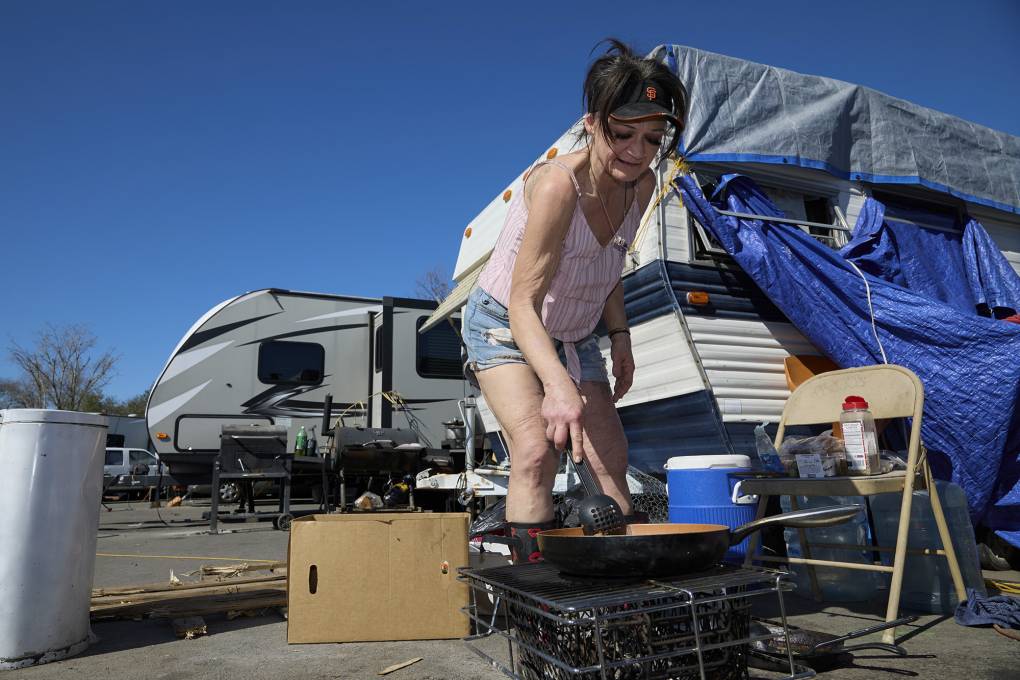
"caption": "Jeanne Gillis cooks ground turkey over a wood fire next to her trailer at Camp Resolution, a “self governed” homeless camp on city-owned land in Sacramento, Feb. 28, 2024. Residents have to rely on bottled water, generators and wood fires because no utilities are provided at the camp.",
"description": null,
"title": "022824_Self-Governed-City_FG_10",
"credit": "Fred Greaves/CalMatters",
"status": "inherit",
"altTag": "A woman wearing a visor, light sleeveless top and jean shorts holds a utensil to cook food on a grill outside.",
"isLoading": false,
"fetchFailed": false
},
"news_11978681": {
"type": "attachments",
"id": "news_11978681",
"meta": {
"index": "attachments_1716263798",
"site": "news",
"id": "11978681",
"found": true
},
"parent": 11978670,
"imgSizes": {
"twentyfourteen-full-width": {
"file": "https://cdn.kqed.org/wp-content/uploads/sites/10/2024/03/GettyImages-139404582-1038x576.jpg",
"width": 1038,
"mimeType": "image/jpeg",
"height": 576
},
"thumbnail": {
"file": "https://cdn.kqed.org/wp-content/uploads/sites/10/2024/03/GettyImages-139404582-160x120.jpg",
"width": 160,
"mimeType": "image/jpeg",
"height": 120
},
"post-thumbnail": {
"file": "https://cdn.kqed.org/wp-content/uploads/sites/10/2024/03/GettyImages-139404582-672x372.jpg",
"width": 672,
"mimeType": "image/jpeg",
"height": 372
},
"kqedFullSize": {
"file": "https://cdn.kqed.org/wp-content/uploads/sites/10/2024/03/GettyImages-139404582.jpg",
"width": 2272,
"height": 1704
},
"2048x2048": {
"file": "https://cdn.kqed.org/wp-content/uploads/sites/10/2024/03/GettyImages-139404582-2048x1536.jpg",
"width": 2048,
"mimeType": "image/jpeg",
"height": 1536
},
"large": {
"file": "https://cdn.kqed.org/wp-content/uploads/sites/10/2024/03/GettyImages-139404582-1020x765.jpg",
"width": 1020,
"mimeType": "image/jpeg",
"height": 765
},
"1536x1536": {
"file": "https://cdn.kqed.org/wp-content/uploads/sites/10/2024/03/GettyImages-139404582-1536x1152.jpg",
"width": 1536,
"mimeType": "image/jpeg",
"height": 1152
},
"full-width": {
"file": "https://cdn.kqed.org/wp-content/uploads/sites/10/2024/03/GettyImages-139404582-1920x1440.jpg",
"width": 1920,
"mimeType": "image/jpeg",
"height": 1440
},
"medium": {
"file": "https://cdn.kqed.org/wp-content/uploads/sites/10/2024/03/GettyImages-139404582-800x600.jpg",
"width": 800,
"mimeType": "image/jpeg",
"height": 600
}
},
"publishDate": 1709926237,
"modified": 1709942332,
"caption": "As part of the agreement with the state, a small number of vessels will be allowed to remain anchored if they are deemed 'seaworthy,' at least through October 2026. After that, all boats and vessels will be allowed only 72-hour anchorage, according to the San Francisco Bay Conservation and Development Commission. ",
"description": null,
"title": "Sausalito Marina",
"credit": "iStock/Getty Images",
"status": "inherit",
"altTag": "To the left, boats scattered in bay, while to the right, a pier is seen. In the foreground, a bench sits in a field of green grass.",
"isLoading": false,
"fetchFailed": false
}
},
"audioPlayerReducer": {
"postId": "stream_live",
"isPaused": true,
"isPlaying": false,
"pfsActive": false,
"pledgeModalIsOpen": true,
"playerDrawerIsOpen": false,
"liveAudioPlayStartedAt": 0,
"liveAudioPlayContext": ""
},
"authorsReducer": {
"byline_news_11980366": {
"type": "authors",
"id": "byline_news_11980366",
"meta": {
"override": true
},
"slug": "byline_news_11980366",
"name": "Lusen Mendel",
"isLoading": false
},
"byline_news_11980236": {
"type": "authors",
"id": "byline_news_11980236",
"meta": {
"override": true
},
"slug": "byline_news_11980236",
"name": "Trân Nguyẽn\u003cbr>Associated Press",
"isLoading": false
},
"byline_news_11979610": {
"type": "authors",
"id": "byline_news_11979610",
"meta": {
"override": true
},
"slug": "byline_news_11979610",
"name": "\u003ca href=\"https://www.npr.org/people/803934365/lauren-sommer\">Lauren Sommer\u003c/a>",
"isLoading": false
},
"byline_news_11979508": {
"type": "authors",
"id": "byline_news_11979508",
"meta": {
"override": true
},
"slug": "byline_news_11979508",
"name": "Janie Har\u003cbr>The Associated Press\u003c/br>",
"isLoading": false
},
"byline_news_11978863": {
"type": "authors",
"id": "byline_news_11978863",
"meta": {
"override": true
},
"slug": "byline_news_11978863",
"name": "Marisa Kendall",
"isLoading": false
},
"byline_news_11978670": {
"type": "authors",
"id": "byline_news_11978670",
"meta": {
"override": true
},
"slug": "byline_news_11978670",
"name": "\u003ca href=\"https://twitter.com/BouncerSF\">Katy St. Clair\u003c/a> \u003cbr> Bay City News",
"isLoading": false
},
"gmarzorati": {
"type": "authors",
"id": "227",
"meta": {
"index": "authors_1716337520",
"id": "227",
"found": true
},
"name": "Guy Marzorati",
"firstName": "Guy",
"lastName": "Marzorati",
"slug": "gmarzorati",
"email": "gmarzorati@KQED.org",
"display_author_email": true,
"staff_mastheads": [
"news"
],
"title": "Correspondent",
"bio": "Guy Marzorati is a correspondent on KQED's California Politics and Government Desk, based in San Jose. A graduate of Santa Clara University, Guy joined KQED in 2013. He reports on state and local politics and produces KQED's digital voter guide.",
"avatar": "https://secure.gravatar.com/avatar/e7038b8dbfd55b104369b76b1cd0b9de?s=600&d=blank&r=g",
"twitter": "guymarzorati",
"facebook": null,
"instagram": null,
"linkedin": null,
"sites": [
{
"site": "",
"roles": [
"editor"
]
},
{
"site": "news",
"roles": [
"editor"
]
},
{
"site": "science",
"roles": [
"editor"
]
},
{
"site": "forum",
"roles": [
"editor"
]
},
{
"site": "elections",
"roles": [
"editor"
]
},
{
"site": "liveblog",
"roles": [
"editor"
]
}
],
"headData": {
"title": "Guy Marzorati | KQED",
"description": "Correspondent",
"ogImgSrc": "https://secure.gravatar.com/avatar/e7038b8dbfd55b104369b76b1cd0b9de?s=600&d=blank&r=g",
"twImgSrc": "https://secure.gravatar.com/avatar/e7038b8dbfd55b104369b76b1cd0b9de?s=600&d=blank&r=g"
},
"isLoading": false,
"link": "/author/gmarzorati"
},
"vrancano": {
"type": "authors",
"id": "11276",
"meta": {
"index": "authors_1716337520",
"id": "11276",
"found": true
},
"name": "Vanessa Rancaño",
"firstName": "Vanessa",
"lastName": "Rancaño",
"slug": "vrancano",
"email": "vrancano@kqed.org",
"display_author_email": false,
"staff_mastheads": [
"news"
],
"title": "Reporter",
"bio": "Vanessa Rancaño is a features reporter for KQED. She’s also covered homelessness and education for the station and reported from the Central Valley. Her work has aired across public radio, from flagship national news shows to longform narrative podcasts. Before taking up a mic, she worked as a freelance print journalist. She’s been recognized with a number of national and regional awards. Vanessa grew up in California's Central Valley. She's a former NPR Kroc Fellow, and a graduate of the UC Berkeley Graduate School of Journalism.",
"avatar": "https://secure.gravatar.com/avatar/b3a383dfb0e7ee1c17568f2cf067904ab654d6e3de9743fc661f3c788ade1bed?s=600&d=blank&r=g",
"twitter": "vanessarancano",
"bluesky": null,
"facebook": null,
"instagram": null,
"linkedin": null,
"sites": [
{
"site": "arts",
"roles": [
"editor"
]
},
{
"site": "news",
"roles": [
"editor"
]
},
{
"site": "liveblog",
"roles": [
"contributor"
]
}
],
"headData": {
"title": "Vanessa Rancaño | KQED",
"description": "Reporter",
"ogImgSrc": "https://secure.gravatar.com/avatar/b3a383dfb0e7ee1c17568f2cf067904ab654d6e3de9743fc661f3c788ade1bed?s=600&d=blank&r=g",
"twImgSrc": "https://secure.gravatar.com/avatar/b3a383dfb0e7ee1c17568f2cf067904ab654d6e3de9743fc661f3c788ade1bed?s=600&d=blank&r=g"
},
"isLoading": false,
"link": "/author/vrancano"
},
"abandlamudi": {
"type": "authors",
"id": "11672",
"meta": {
"index": "authors_1716337520",
"id": "11672",
"found": true
},
"name": "Adhiti Bandlamudi",
"firstName": "Adhiti",
"lastName": "Bandlamudi",
"slug": "abandlamudi",
"email": "abandlamudi@kqed.org",
"display_author_email": false,
"staff_mastheads": [
"news"
],
"title": "KQED Housing Reporter",
"bio": "Adhiti Bandlamudi reports for KQED's Housing desk. She focuses on how housing gets built across the Bay Area. Before joining KQED in 2020, she reported for WUNC in Durham, North Carolina, WABE in Atlanta, Georgia and Capital Public Radio in Sacramento. In 2017, she was awarded a Kroc Fellowship at NPR where she reported on everything from sprinkles to the Golden State Killer's arrest. When she's not reporting, she's baking new recipes in her kitchen or watching movies with friends and family. She's originally from Georgia and has strong opinions about Great British Bake Off.",
"avatar": "https://secure.gravatar.com/avatar/868129c8b257bb99a3500e2c86a65400?s=600&d=mm&r=g",
"twitter": "oddity_adhiti",
"facebook": null,
"instagram": null,
"linkedin": null,
"sites": [
{
"site": "arts",
"roles": [
"author"
]
},
{
"site": "news",
"roles": [
"editor"
]
},
{
"site": "liveblog",
"roles": [
"author"
]
}
],
"headData": {
"title": "Adhiti Bandlamudi | KQED",
"description": "KQED Housing Reporter",
"ogImgSrc": "https://secure.gravatar.com/avatar/868129c8b257bb99a3500e2c86a65400?s=600&d=mm&r=g",
"twImgSrc": "https://secure.gravatar.com/avatar/868129c8b257bb99a3500e2c86a65400?s=600&d=mm&r=g"
},
"isLoading": false,
"link": "/author/abandlamudi"
},
"sjohnson": {
"type": "authors",
"id": "11840",
"meta": {
"index": "authors_1716337520",
"id": "11840",
"found": true
},
"name": "Sydney Johnson",
"firstName": "Sydney",
"lastName": "Johnson",
"slug": "sjohnson",
"email": "sjohnson@kqed.org",
"display_author_email": false,
"staff_mastheads": [
"news"
],
"title": "KQED Reporter",
"bio": "Sydney Johnson is a general assignment reporter at KQED. She previously reported on public health and city government at the San Francisco Examiner, and before that, she covered statewide education policy for EdSource. Her reporting has won multiple local, state and national awards. Sydney is a graduate of the University of California, Berkeley and lives in San Francisco.",
"avatar": "https://secure.gravatar.com/avatar/97855f2719b72ad6190b7c535fe642c8?s=600&d=blank&r=g",
"twitter": "sydneyfjohnson",
"facebook": null,
"instagram": null,
"linkedin": null,
"sites": [
{
"site": "news",
"roles": [
"editor"
]
}
],
"headData": {
"title": "Sydney Johnson | KQED",
"description": "KQED Reporter",
"ogImgSrc": "https://secure.gravatar.com/avatar/97855f2719b72ad6190b7c535fe642c8?s=600&d=blank&r=g",
"twImgSrc": "https://secure.gravatar.com/avatar/97855f2719b72ad6190b7c535fe642c8?s=600&d=blank&r=g"
},
"isLoading": false,
"link": "/author/sjohnson"
}
},
"pagesReducer": {
"news_category_housing": {
"type": "terms",
"id": "news_6266",
"meta": {
"index": "terms_1716263798",
"site": "news",
"id": "6266",
"score": 11.039913
},
"featImg": null,
"name": "Housing",
"description": null,
"taxonomy": "category",
"headData": {
"twImgId": null,
"twTitle": null,
"ogTitle": null,
"ogImgId": null,
"twDescription": null,
"description": null,
"title": "Housing Archives | KQED News",
"ogDescription": null
},
"ttid": 6290,
"slug": "housing",
"isLoading": false,
"title": "Housing",
"pageMeta": {
"site": "news",
"WpPageTemplate": "page-topic-editorial",
"currentPage": 43
},
"blocks": [
{
"blockName": "kqed/post-list",
"attrs": {
"layout": "cardArticle2",
"query": "posts/news?category=housing",
"seeMore": false,
"paginated": true,
"page": 43
}
},
{
"blockName": "kqed/ad"
}
]
}
},
"pfsSessionReducer": {},
"postsReducer": {
"stream_live": {
"type": "live",
"id": "stream_live",
"audioUrl": "https://streams.kqed.org/kqedradio",
"title": "Live Stream",
"excerpt": "Live Stream information currently unavailable.",
"link": "/radio",
"featImg": "",
"label": {
"name": "KQED Live",
"link": "/"
}
},
"stream_kqedNewscast": {
"type": "posts",
"id": "stream_kqedNewscast",
"audioUrl": "https://www.kqed.org/.stream/anon/radio/RDnews/newscast.mp3?_=1",
"title": "KQED Newscast",
"featImg": "",
"label": {
"name": "88.5 FM",
"link": "/"
}
},
"news_11980492": {
"type": "posts",
"id": "news_11980492",
"meta": {
"index": "posts_1716263798",
"site": "news",
"id": "11980492",
"score": null,
"sort": [
1711139574000
]
},
"guestAuthors": [],
"slug": "berkeley-voters-could-face-competing-tenant-protection-measures-in-november",
"title": "Berkeley Voters Could Face Competing Tenant Protection Measures in November",
"publishDate": 1711139574,
"format": "standard",
"headTitle": "Berkeley Voters Could Face Competing Tenant Protection Measures in November | KQED",
"labelTerm": {
"site": "news"
},
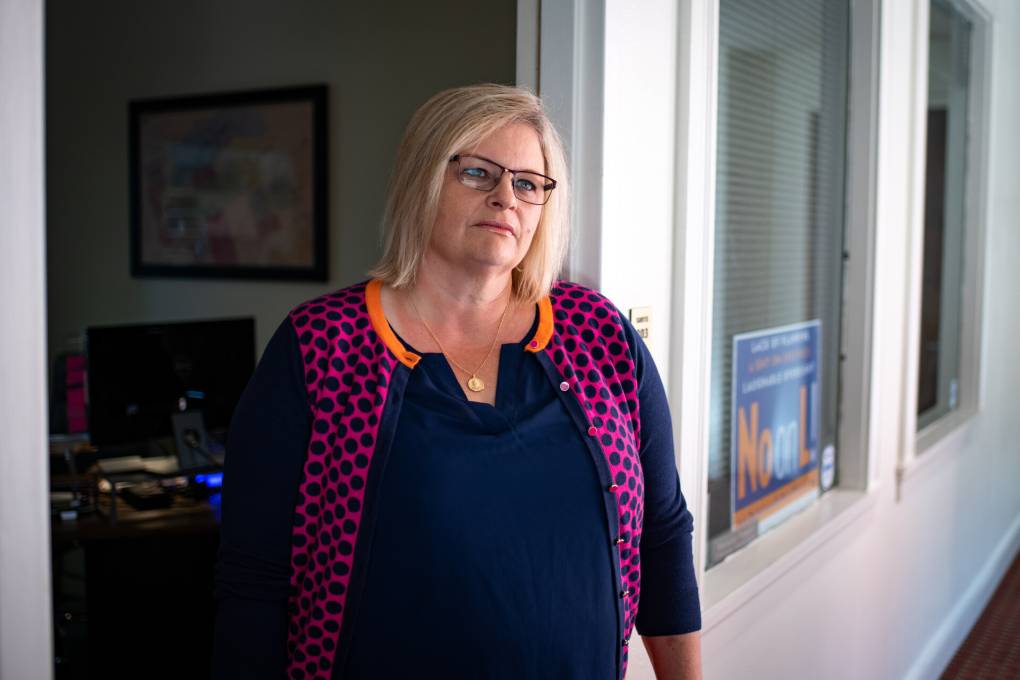
"content": "\u003cp>Berkeley landlords aim to get a measure on the November ballot that would de-fang the city’s rent board and dedicate more money for rent relief — an initiative that could potentially set the stage for dueling ballot measures between landlord and tenant groups.\u003c/p>\n\u003cp>It’s the latest effort by Bay Area property owners to fight tenant protections at the ballot box. In Concord, a referendum drive is underway to undo the city’s recently adopted rent control plan. A \u003ca href=\"https://www.kqed.org/news/11977071/larkspur-voters-to-decide-future-of-rent-control-in-their-city\">similar referendum\u003c/a> in Larkspur narrowly failed earlier this month.\u003c/p>\n\u003cp>[pullquote align=\"right\" size=\"medium\" citation=\"Krista Gulbransen, executive director, Berkeley Property Owners Association\"]‘I think the voters are ready for a citizens’ initiative like this one. I do believe very strongly that a lot of citizens of Berkeley are pretty fed up with some of the overregulation of the government on small businesses and small property owners.’[/pullquote]Property owners in Berkeley began gathering signatures on Thursday in hopes of putting their own initiative on the ballot that would make sweeping changes to the city’s rent board, modify grounds for evictions, and exempt more properties from the city’s rent stabilization and eviction ordinance. The plan also calls for a rent relief fund for certain tenants who can’t pay, among other changes.\u003c/p>\n\u003cp>“I think the voters are ready for a citizens’ initiative like this one,” said Krista Gulbransen, executive director of the Berkeley Property Owners Association, which is behind the effort. “I do believe very strongly that a lot of citizens of Berkeley are pretty fed up with some of the overregulation of the government on small businesses and small property owners.”\u003c/p>\n\u003cp>The effort follows one from renters’ advocates, who have been collecting signatures since early March for their own measure that would strengthen the city’s tenant protections. In a statement, rent board chair Leah Simon-Weisberg blasted the property owners’ proposal.\u003c/p>\n\u003cp>[ad fullwidth]\u003c/p>\n\u003cp>“I am confident that Berkeley voters will see through the corporate landlords’ strategy of chaos,” Simon-Weisberg said. “Time and again, corporate money flows into Berkeley elections, only to be defeated by community organizing and the grassroots.”\u003c/p>\n\u003cp>The property owners’ initiative would exempt more owner-occupied properties from the city’s rent stabilization and eviction ordinance, raise the rent cap slightly to 7.1%, and allow landlords to negotiate with tenants for even higher increases in exchange for more services or amenities.\u003c/p>\n\u003cp>[pullquote align=\"right\" size=\"medium\" citation=\"Leah Simon-Weisberg, chair, Berkeley Rent Board\"]‘I am confident that Berkeley voters will see through the corporate landlords’ strategy of chaos. Time and again, corporate money flows into Berkeley elections, only to be defeated by community organizing and the grassroots.’[/pullquote]But perhaps the most substantial of its proposed changes are to the city’s rent board. It would strip the rent board of certain powers, including eliminating its ability to reduce rents in the case of tenant relocation or repairs, determine whether property owners comply with health and safety laws, and intervene as an interested party in lawsuits. It would also eliminate commissioners’ salaries and require the board to be audited every three years.\u003c/p>\n\u003cp>Should the proposal be challenged in court, the city must defend the initiative and protect its proponents from damages.\u003c/p>\n\u003cp>For the rent relief fund proposed in the initiative, Gulbransen said property owners are still reeling from rents lost during the pandemic.\u003c/p>\n\u003cp>“This rent relief fund is critical,” she said. “I have property owners who are still struggling.”\u003c/p>\n\u003cp>The proposed program would rely on an existing tax on large landlords that voters approved in 2016, called Measure U1.\u003c/p>\n\u003cp>[aside label=\"Related Stories\" postID=\"news_11977071,news_11970062,news_11975969\"]Gulbransen has \u003ca href=\"https://www.berkeleyside.org/2017/03/31/opinion-berkeley-done-bait-switch-using-housing-funds-buy-new-council-chambers\">criticized city leaders\u003c/a> for misusing money from the measure. The Berkeley Property Owners Association sponsored a competing initiative at the time, Measure DD, that would have implemented a more modest tax increase. Voters rejected that measure \u003ca href=\"https://www.berkeleyside.org/2016/10/12/real-estate-interests-spend-big-in-berkeley-to-defeat-spike-in-rental-tax\">despite landlords spending over $780,000\u003c/a>.\u003c/p>\n\u003cp>The association’s initiative would ensure that a portion of the 2016 tax is dedicated to rent relief, raising an estimated $1.2 million annually and creating a new committee to oversee the program.\u003c/p>\n\u003cp>Berkeley’s current rent relief fund, the \u003ca href=\"https://berkeleyca.gov/community-recreation/affordable-housing-berkeley/housing-retention-program\">Housing Retention Program\u003c/a>, is administered by the Eviction Defense Center. Anne Tamiko Omura, Executive Director of the center, called the program one of the best in the Bay Area.\u003c/p>\n\u003cp>“It has put millions of dollars into landlord pockets and kept hundreds of low-income tenants housed,” she wrote in an email to KQED. “My gut reaction is, ‘If it ain’t broken, don’t fix it.'”\u003c/p>\n\u003cp>Berkeley Rent Board Vice Chair Soli Alpert said he wants to see more money dedicated to the city’s existing rent relief fund, but he’s critical of the association’s proposal, dismissing it as “a distraction.”\u003c/p>\n\u003cp>[pullquote align=\"right\" size=\"medium\" citation=\"Anne Tamiko Omura, executive director, Eviction Defense Center\"]‘My gut reaction is, ‘If it ain’t broken, don’t fix it.”[/pullquote]“I don’t think the landlords should be in charge of what happens with the landlord tax,” he said. “Pardon me if I don’t think that landlords have the best interests of tenants in mind when they’re talking about the use of these funds.”\u003c/p>\n\u003cp>Simon-Weisberg and Alpert are the proponents behind another ballot measure, developed and approved by the rent board. It would strengthen existing renter protections by removing an exception for two-unit rentals that were grandfathered into the Berkeley Rent Stabilization Ordinance, subjecting them to both rent control and just-cause protections.\u003c/p>\n\u003cp>The proposed Berkeley Tenant Protection and Right to Organize Act would also establish the right to form tenant associations. With support from 50% plus one occupied units in a complex, tenants could form a union and demand their landlord negotiate over grievances.\u003c/p>\n\u003cp>San Francisco became the first city in the country to pass such \u003ca href=\"https://www.sf.gov/news/new-legislation-tenant-organizing-and-tenant-associations#:~:text=The%20Right%2DTo%2DOrganize%20legislation,surveys)%20to%20ascertain%20interest%20in\">right-to-organize legislation\u003c/a> in 2022.\u003c/p>\n\u003cp>[pullquote align=\"right\" size=\"medium\" citation=\"Soli Alpert, vice chair, Berkeley Rent Board\"]‘I don’t think the landlords should be in charge of what happens with the landlord tax. Pardon me if I don’t think that landlords have the best interests of tenants in mind when they’re talking about the use of these funds.’[/pullquote]The initiative by the Berkeley Property Owners Association would establish a higher threshold for creating a tenants’ union, requiring two-thirds of occupied rental units to sign on. Owners would have to confer with associations in good faith, but unlike the tenant advocates’ proposal, the rent board wouldn’t have the authority to define the terms of a “good faith” negotiation.\u003c/p>\n\u003cp>The property owners’ proposal also seeks a less restrictive form of eviction protection than what the tenant advocates are seeking. Under the tenants’ plan, renters couldn’t be evicted if they owe less than the equivalent of one month’s fair market rent — an amount determined by the federal Department of Housing and Urban Development.\u003c/p>\n\u003cp>Under the property owners’ proposal, evictions would be prohibited if the tenant owes less than one month of the rent outlined in their lease agreement unless they haven’t paid for more than 90 days, among a few other modifications.\u003c/p>\n\u003cp>Gulbransen said the association added these changes in response to the tenants’ proposed ballot initiative in the hopes that it would entice more voters to support their competing proposal.\u003c/p>\n\u003cp>[ad floatright]\u003c/p>\n",
"blocks": [],
"excerpt": "Landlords and tenant advocates are gathering signatures to put competing rent control and tenant protection measures on the November ballot.",
"status": "publish",
"parent": 0,
"modified": 1738785049,
"stats": {
"hasAudio": false,
"hasVideo": false,
"hasChartOrMap": false,
"iframeSrcs": [],
"hasGoogleForm": false,
"hasGallery": false,
"hasHearkenModule": false,
"hasPolis": false,
"paragraphCount": 27,
"wordCount": 1302
},
"headData": {
"title": "Berkeley Voters Could Face Competing Tenant Protection Measures in November | KQED",
"description": "Landlords and tenant advocates are gathering signatures to put competing rent control and tenant protection measures on the November ballot.",
"ogTitle": "",
"ogDescription": "",
"ogImgId": "",
"twTitle": "",
"twDescription": "",
"twImgId": "",
"schema": {
"@context": "https://schema.org",
"@type": "NewsArticle",
"headline": "Berkeley Voters Could Face Competing Tenant Protection Measures in November",
"datePublished": "2024-03-22T13:32:54-07:00",
"dateModified": "2025-02-05T11:50:49-08:00",
"image": "https://cdn.kqed.org/wp-content/uploads/2020/02/KQED-OG-Image@1x.png",
"isAccessibleForFree": "True",
"publisher": {
"@type": "NewsMediaOrganization",
"@id": "https://www.kqed.org/#organization",
"name": "KQED",
"logo": "https://cdn.kqed.org/wp-content/uploads/2020/02/KQED-OG-Image@1x.png",
"url": "https://www.kqed.org",
"sameAs": [
"https://www.facebook.com/KQED",
"https://twitter.com/KQED",
"https://www.instagram.com/kqed/",
"https://www.tiktok.com/@kqedofficial",
"https://www.linkedin.com/company/kqed",
"https://www.youtube.com/channel/UCeC0IOo7i1P_61zVUWbJ4nw"
]
}
}
},
"sticky": false,
"excludeFromSiteSearch": "Include",
"articleAge": "0",
"path": "/news/11980492/berkeley-voters-could-face-competing-tenant-protection-measures-in-november",
"audioTrackLength": null,
"parsedContent": [
{
"type": "contentString",
"content": "\u003cdiv class=\"post-body\">\u003cp>\u003cp>Berkeley landlords aim to get a measure on the November ballot that would de-fang the city’s rent board and dedicate more money for rent relief — an initiative that could potentially set the stage for dueling ballot measures between landlord and tenant groups.\u003c/p>\n\u003cp>It’s the latest effort by Bay Area property owners to fight tenant protections at the ballot box. In Concord, a referendum drive is underway to undo the city’s recently adopted rent control plan. A \u003ca href=\"https://www.kqed.org/news/11977071/larkspur-voters-to-decide-future-of-rent-control-in-their-city\">similar referendum\u003c/a> in Larkspur narrowly failed earlier this month.\u003c/p>\n\u003cp>\u003c/p>\u003c/div>",
"attributes": {
"named": {},
"numeric": []
}
},
{
"type": "component",
"content": "‘I think the voters are ready for a citizens’ initiative like this one. I do believe very strongly that a lot of citizens of Berkeley are pretty fed up with some of the overregulation of the government on small businesses and small property owners.’",
"name": "pullquote",
"attributes": {
"named": {
"align": "right",
"size": "medium",
"citation": "Krista Gulbransen, executive director, Berkeley Property Owners Association",
"label": ""
},
"numeric": []
}
},
{
"type": "contentString",
"content": "\u003cdiv class=\"post-body\">\u003cp>Property owners in Berkeley began gathering signatures on Thursday in hopes of putting their own initiative on the ballot that would make sweeping changes to the city’s rent board, modify grounds for evictions, and exempt more properties from the city’s rent stabilization and eviction ordinance. The plan also calls for a rent relief fund for certain tenants who can’t pay, among other changes.\u003c/p>\n\u003cp>“I think the voters are ready for a citizens’ initiative like this one,” said Krista Gulbransen, executive director of the Berkeley Property Owners Association, which is behind the effort. “I do believe very strongly that a lot of citizens of Berkeley are pretty fed up with some of the overregulation of the government on small businesses and small property owners.”\u003c/p>\n\u003cp>The effort follows one from renters’ advocates, who have been collecting signatures since early March for their own measure that would strengthen the city’s tenant protections. In a statement, rent board chair Leah Simon-Weisberg blasted the property owners’ proposal.\u003c/p>\n\u003cp>\u003c/p>\u003c/div>",
"attributes": {
"named": {},
"numeric": []
}
},
{
"type": "component",
"content": "",
"name": "ad",
"attributes": {
"named": {
"label": "fullwidth"
},
"numeric": [
"fullwidth"
]
}
},
{
"type": "contentString",
"content": "\u003cdiv class=\"post-body\">\u003cp>\u003c/p>\n\u003cp>“I am confident that Berkeley voters will see through the corporate landlords’ strategy of chaos,” Simon-Weisberg said. “Time and again, corporate money flows into Berkeley elections, only to be defeated by community organizing and the grassroots.”\u003c/p>\n\u003cp>The property owners’ initiative would exempt more owner-occupied properties from the city’s rent stabilization and eviction ordinance, raise the rent cap slightly to 7.1%, and allow landlords to negotiate with tenants for even higher increases in exchange for more services or amenities.\u003c/p>\n\u003cp>\u003c/p>\u003c/div>",
"attributes": {
"named": {},
"numeric": []
}
},
{
"type": "component",
"content": "‘I am confident that Berkeley voters will see through the corporate landlords’ strategy of chaos. Time and again, corporate money flows into Berkeley elections, only to be defeated by community organizing and the grassroots.’",
"name": "pullquote",
"attributes": {
"named": {
"align": "right",
"size": "medium",
"citation": "Leah Simon-Weisberg, chair, Berkeley Rent Board",
"label": ""
},
"numeric": []
}
},
{
"type": "contentString",
"content": "\u003cdiv class=\"post-body\">\u003cp>But perhaps the most substantial of its proposed changes are to the city’s rent board. It would strip the rent board of certain powers, including eliminating its ability to reduce rents in the case of tenant relocation or repairs, determine whether property owners comply with health and safety laws, and intervene as an interested party in lawsuits. It would also eliminate commissioners’ salaries and require the board to be audited every three years.\u003c/p>\n\u003cp>Should the proposal be challenged in court, the city must defend the initiative and protect its proponents from damages.\u003c/p>\n\u003cp>For the rent relief fund proposed in the initiative, Gulbransen said property owners are still reeling from rents lost during the pandemic.\u003c/p>\n\u003cp>“This rent relief fund is critical,” she said. “I have property owners who are still struggling.”\u003c/p>\n\u003cp>The proposed program would rely on an existing tax on large landlords that voters approved in 2016, called Measure U1.\u003c/p>\n\u003cp>\u003c/p>\u003c/div>",
"attributes": {
"named": {},
"numeric": []
}
},
{
"type": "component",
"content": "",
"name": "aside",
"attributes": {
"named": {
"label": "Related Stories ",
"postid": "news_11977071,news_11970062,news_11975969"
},
"numeric": []
}
},
{
"type": "contentString",
"content": "\u003cdiv class=\"post-body\">\u003cp>Gulbransen has \u003ca href=\"https://www.berkeleyside.org/2017/03/31/opinion-berkeley-done-bait-switch-using-housing-funds-buy-new-council-chambers\">criticized city leaders\u003c/a> for misusing money from the measure. The Berkeley Property Owners Association sponsored a competing initiative at the time, Measure DD, that would have implemented a more modest tax increase. Voters rejected that measure \u003ca href=\"https://www.berkeleyside.org/2016/10/12/real-estate-interests-spend-big-in-berkeley-to-defeat-spike-in-rental-tax\">despite landlords spending over $780,000\u003c/a>.\u003c/p>\n\u003cp>The association’s initiative would ensure that a portion of the 2016 tax is dedicated to rent relief, raising an estimated $1.2 million annually and creating a new committee to oversee the program.\u003c/p>\n\u003cp>Berkeley’s current rent relief fund, the \u003ca href=\"https://berkeleyca.gov/community-recreation/affordable-housing-berkeley/housing-retention-program\">Housing Retention Program\u003c/a>, is administered by the Eviction Defense Center. Anne Tamiko Omura, Executive Director of the center, called the program one of the best in the Bay Area.\u003c/p>\n\u003cp>“It has put millions of dollars into landlord pockets and kept hundreds of low-income tenants housed,” she wrote in an email to KQED. “My gut reaction is, ‘If it ain’t broken, don’t fix it.'”\u003c/p>\n\u003cp>Berkeley Rent Board Vice Chair Soli Alpert said he wants to see more money dedicated to the city’s existing rent relief fund, but he’s critical of the association’s proposal, dismissing it as “a distraction.”\u003c/p>\n\u003cp>\u003c/p>\u003c/div>",
"attributes": {
"named": {},
"numeric": []
}
},
{
"type": "component",
"content": "‘My gut reaction is, ‘If it ain’t broken, don’t fix it.”",
"name": "pullquote",
"attributes": {
"named": {
"align": "right",
"size": "medium",
"citation": "Anne Tamiko Omura, executive director, Eviction Defense Center",
"label": ""
},
"numeric": []
}
},
{
"type": "contentString",
"content": "\u003cdiv class=\"post-body\">\u003cp>“I don’t think the landlords should be in charge of what happens with the landlord tax,” he said. “Pardon me if I don’t think that landlords have the best interests of tenants in mind when they’re talking about the use of these funds.”\u003c/p>\n\u003cp>Simon-Weisberg and Alpert are the proponents behind another ballot measure, developed and approved by the rent board. It would strengthen existing renter protections by removing an exception for two-unit rentals that were grandfathered into the Berkeley Rent Stabilization Ordinance, subjecting them to both rent control and just-cause protections.\u003c/p>\n\u003cp>The proposed Berkeley Tenant Protection and Right to Organize Act would also establish the right to form tenant associations. With support from 50% plus one occupied units in a complex, tenants could form a union and demand their landlord negotiate over grievances.\u003c/p>\n\u003cp>San Francisco became the first city in the country to pass such \u003ca href=\"https://www.sf.gov/news/new-legislation-tenant-organizing-and-tenant-associations#:~:text=The%20Right%2DTo%2DOrganize%20legislation,surveys)%20to%20ascertain%20interest%20in\">right-to-organize legislation\u003c/a> in 2022.\u003c/p>\n\u003cp>\u003c/p>\u003c/div>",
"attributes": {
"named": {},
"numeric": []
}
},
{
"type": "component",
"content": "‘I don’t think the landlords should be in charge of what happens with the landlord tax. Pardon me if I don’t think that landlords have the best interests of tenants in mind when they’re talking about the use of these funds.’",
"name": "pullquote",
"attributes": {
"named": {
"align": "right",
"size": "medium",
"citation": "Soli Alpert, vice chair, Berkeley Rent Board",
"label": ""
},
"numeric": []
}
},
{
"type": "contentString",
"content": "\u003cdiv class=\"post-body\">\u003cp>The initiative by the Berkeley Property Owners Association would establish a higher threshold for creating a tenants’ union, requiring two-thirds of occupied rental units to sign on. Owners would have to confer with associations in good faith, but unlike the tenant advocates’ proposal, the rent board wouldn’t have the authority to define the terms of a “good faith” negotiation.\u003c/p>\n\u003cp>The property owners’ proposal also seeks a less restrictive form of eviction protection than what the tenant advocates are seeking. Under the tenants’ plan, renters couldn’t be evicted if they owe less than the equivalent of one month’s fair market rent — an amount determined by the federal Department of Housing and Urban Development.\u003c/p>\n\u003cp>Under the property owners’ proposal, evictions would be prohibited if the tenant owes less than one month of the rent outlined in their lease agreement unless they haven’t paid for more than 90 days, among a few other modifications.\u003c/p>\n\u003cp>Gulbransen said the association added these changes in response to the tenants’ proposed ballot initiative in the hopes that it would entice more voters to support their competing proposal.\u003c/p>\n\u003cp>\u003c/p>\u003c/div>",
"attributes": {
"named": {},
"numeric": []
}
},
{
"type": "component",
"content": "",
"name": "ad",
"attributes": {
"named": {
"label": "floatright"
},
"numeric": [
"floatright"
]
}
},
{
"type": "contentString",
"content": "\u003cdiv class=\"post-body\">\u003cp>\u003c/p>\n\u003c/div>\u003c/p>",
"attributes": {
"named": {},
"numeric": []
}
}
],
"link": "/news/11980492/berkeley-voters-could-face-competing-tenant-protection-measures-in-november",
"authors": [
"11276"
],
"categories": [
"news_6266",
"news_8"
],
"tags": [
"news_3921",
"news_129",
"news_32839",
"news_21883",
"news_27626",
"news_1775",
"news_27208",
"news_3924",
"news_27707"
],
"featImg": "news_11980500",
"label": "news"
},
"news_11980366": {
"type": "posts",
"id": "news_11980366",
"meta": {
"index": "posts_1716263798",
"site": "news",
"id": "11980366",
"score": null,
"sort": [
1711123211000
]
},
"parent": 0,
"labelTerm": {
"site": "news",
"term": 26731
},
"blocks": [],
"publishDate": 1711123211,
"format": "standard",
"title": "'Racist Trees' Film Explores History of Housing Exclusion in Palm Springs",
"headTitle": "‘Racist Trees’ Film Explores History of Housing Exclusion in Palm Springs | KQED",
"content": "\u003cp>Palm Springs has a deep history as a celebrity getaway, a retirement spot, and a place that’s pretty LGBTQ-friendly. With stunning mountain views and numerous golf courses, it’s also a place where owning your home is pretty lucrative — unless your view of the neighboring golf course and those distant mountains is blocked by a wall of trees. Then, you might feel like the residents of a historically Black neighborhood called Crossley Tract. They’ve been fighting with the city for decades to remove these so-called “racist trees.”\u003c/p>\n\u003cp>The controversy around the trees has made international headlines. Now, there’s a full-length documentary called \u003ca href=\"https://www.thirteen.org/programs/independent-lens/racist-trees-lqrqbs/\">“Racist Trees,”\u003c/a> which explores the hidden history of excluding Black people from housing in Palm Springs. The documentary also reveals how the conflict over the Crossley Tract trees is resolved; however, this article and audio story are both spoiler-free.\u003c/p>\n\u003cp>The \u003cem>California Report Magazine\u003c/em>’s host, Sasha Khokha, sat down with filmmakers Sara Newens and Mina T. Son to talk about Racist Trees, which is available on PBS’s Independent Lens.\u003c/p>\n\u003cp>\u003cem>Below are excerpts of the conversation. For the full interview on The California Report Magazine, listen to the audio at the top of this story.\u003c/em>\u003ci> \u003c/i>\u003c/p>\n\u003ch2>On why they made this film\u003c/h2>\n\u003cp>SARA NEWENS: We were on the lookout for stories that were somewhat local. We have both spent a lot of time in Palm Springs as a respite to get away, to enjoy the sun. We were there, and we saw the cover of the Desert Sun: it was a picture of this wall of trees and a headline that basically said many residents believe they were planted with racist intent.\u003c/p>\n\u003cp>[ad fullwidth]\u003c/p>\n\u003cp>My first thought was, “There’s a Black community in Palm Springs that I don’t know about? Where is this neighborhood?!” We figured if it was a blind spot for us that this neighborhood even existed, then it might be for a lot of other people.\u003c/p>\n\u003cfigure id=\"attachment_11980368\" class=\"wp-caption aligncenter\" style=\"max-width: 2560px\">\u003ca href=\"https://cdn.kqed.org/wp-content/uploads/sites/10/2024/03/RACISTTREES_PubStills_02-1-scaled.jpg\">\u003cimg loading=\"lazy\" decoding=\"async\" class=\"size-full wp-image-11980368\" src=\"https://cdn.kqed.org/wp-content/uploads/sites/10/2024/03/RACISTTREES_PubStills_02-1-scaled.jpg\" alt='A folded newspaper from The Desert Sun that says \"Divided by Trees\" on a doormat.' width=\"2560\" height=\"1440\" srcset=\"https://cdn.kqed.org/wp-content/uploads/sites/10/2024/03/RACISTTREES_PubStills_02-1-scaled.jpg 2560w, https://cdn.kqed.org/wp-content/uploads/sites/10/2024/03/RACISTTREES_PubStills_02-1-800x450.jpg 800w, https://cdn.kqed.org/wp-content/uploads/sites/10/2024/03/RACISTTREES_PubStills_02-1-1020x574.jpg 1020w, https://cdn.kqed.org/wp-content/uploads/sites/10/2024/03/RACISTTREES_PubStills_02-1-160x90.jpg 160w, https://cdn.kqed.org/wp-content/uploads/sites/10/2024/03/RACISTTREES_PubStills_02-1-1536x864.jpg 1536w, https://cdn.kqed.org/wp-content/uploads/sites/10/2024/03/RACISTTREES_PubStills_02-1-2048x1152.jpg 2048w, https://cdn.kqed.org/wp-content/uploads/sites/10/2024/03/RACISTTREES_PubStills_02-1-1920x1080.jpg 1920w\" sizes=\"(max-width: 2560px) 100vw, 2560px\">\u003c/a>\u003cfigcaption class=\"wp-caption-text\">One of several articles featured on the cover of The Desert Sun that sparked international media attention and backlash against the so-called ‘racist trees’ that were planted in Palm Springs in the late 1950s. \u003ccite>(Jerry Henry)\u003c/cite>\u003c/figcaption>\u003c/figure>\n\u003ch2>On the history of Crossley Tract\u003c/h2>\n\u003cp>MINA T. SON: Crossley Tract is named after Lawrence Crossley, who founded the neighborhood. Crossley bought this tract of land for Black families to be able to live in the city. It wasn’t incorporated as part of Palm Springs at the time, so it was just on the outskirts, which is why he was able to buy the land and allow families to live there.\u003c/p>\n\u003cp>SARA NEWENS: But many of the Black families had to live in Crossley Tract because they were pushed out of an area that is now downtown Palm Springs, called Section 14. Section 14 is originally tribal land and part of the reservation of the Agua Caliente Band of Indians, who welcomed Black families onto their land. Actually, all communities of color were welcome to live there because they weren’t allowed to live in Palm Springs proper. At some point, city leaders realized that the commercial value of this land was very valuable, and they forcibly removed these families.\u003c/p>\n\u003ch2>On the trees themselves\u003c/h2>\n\u003cp>MINA T. SON: Imagine a wall 60 feet tall and five to maybe 10 feet deep. It was such a striking visual metaphor about exclusion and segregation. Not only is this community sort of excluded from the rest of the city of Palm Springs, but these trees — because they’re so big, and they’re so tall — they’re actually blocking that million-dollar view of the mountains that so many people in Palm Springs come for. Real estate has skyrocketed, but [Crossley Tract] has not seen that appreciation. Many speculate it’s because of these trees and the lack of that view.\u003c/p>\n\u003cp>When [Crossley Tract residents] started complaining and trying to raise their voices to the city about having the trees removed, and having that be unanswered for decades, I think it compounded the idea of being unseen and unheard.\u003c/p>\n\u003cfigure id=\"attachment_11980372\" class=\"wp-caption aligncenter\" style=\"max-width: 2560px\">\u003ca href=\"https://cdn.kqed.org/wp-content/uploads/sites/10/2024/03/RACISTTREES_SigImage-scaled.jpg\">\u003cimg loading=\"lazy\" decoding=\"async\" class=\"size-full wp-image-11980372\" src=\"https://cdn.kqed.org/wp-content/uploads/sites/10/2024/03/RACISTTREES_SigImage-scaled.jpg\" alt=\"A Black man sits in a chair outside with trees in the background.\" width=\"2560\" height=\"1350\" srcset=\"https://cdn.kqed.org/wp-content/uploads/sites/10/2024/03/RACISTTREES_SigImage-scaled.jpg 2560w, https://cdn.kqed.org/wp-content/uploads/sites/10/2024/03/RACISTTREES_SigImage-800x422.jpg 800w, https://cdn.kqed.org/wp-content/uploads/sites/10/2024/03/RACISTTREES_SigImage-1020x538.jpg 1020w, https://cdn.kqed.org/wp-content/uploads/sites/10/2024/03/RACISTTREES_SigImage-160x84.jpg 160w, https://cdn.kqed.org/wp-content/uploads/sites/10/2024/03/RACISTTREES_SigImage-1536x810.jpg 1536w, https://cdn.kqed.org/wp-content/uploads/sites/10/2024/03/RACISTTREES_SigImage-2048x1080.jpg 2048w, https://cdn.kqed.org/wp-content/uploads/sites/10/2024/03/RACISTTREES_SigImage-1920x1013.jpg 1920w\" sizes=\"(max-width: 2560px) 100vw, 2560px\">\u003c/a>\u003cfigcaption class=\"wp-caption-text\">Crossley Tract resident Charles Metcalf, Jr. finds himself surrounded by detritus from the imposing Tamarisk trees bordering his property. \u003ccite>(Jerry Henry)\u003c/cite>\u003c/figcaption>\u003c/figure>\n\u003ch2>On the tension between white gay leadership and Black residents\u003c/h2>\n\u003cp>SARA NEWENS: From the beginning, Mina and I really wanted to investigate this “turning a blind eye” to racism in a liberal town. I think it’s more common that people can talk about overt racial issues in other areas of the country. It was just very mystifying to us why [in Palm Springs] there wasn’t more acknowledgment of this being a potential issue, especially given the history with Section 14. So we really wanted to showcase the lengths to which it can be uncomfortable for white people to acknowledge [racism], especially if they have their own identity of their progressive politics.\u003c/p>\n\u003cp>In some ways — and we’ve heard this from many people of color who have watched the film — it’s more insidious that this is happening in liberal communities. There is no acknowledgment, despite a community literally sitting there saying, “This feels like an act of racism! Our property values are being depressed, and we deserve what everyone else in this city deserves.”\u003c/p>\n\u003cp>\u003ci>“There’s no tamarisk trees anywhere else along this golf course. Anywhere. Now, I’m not blaming the current city officials for planting these trees here, but I’m kind of borderline blaming them for being the reason why they’re still here.”\u003c/i> — Charles Metcalf, Jr.\u003c/p>\n\u003cp>SARA NEWENS: I think what Charles says [in our documentary] sums up nicely the fact that it doesn’t matter if there was racist intent when the trees were planted. It’s the fact that they remained there, and there were many efforts by the Black community to try to get the city’s attention. Unfortunately, it took this white guy named Trae Daniel to come in and really start using a megaphone to get the city’s attention.\u003c/p>\n\u003cfigure id=\"attachment_11980370\" class=\"wp-caption aligncenter\" style=\"max-width: 2560px\">\u003ca href=\"https://cdn.kqed.org/wp-content/uploads/sites/10/2024/03/RACISTTREES_PubStills_04-scaled.jpg\">\u003cimg loading=\"lazy\" decoding=\"async\" class=\"size-full wp-image-11980370\" src=\"https://cdn.kqed.org/wp-content/uploads/sites/10/2024/03/RACISTTREES_PubStills_04-scaled.jpg\" alt=\"A white man wearing a blue dress shirt sits in a chair outside in a backyard in front of a pool.\" width=\"2560\" height=\"1440\" srcset=\"https://cdn.kqed.org/wp-content/uploads/sites/10/2024/03/RACISTTREES_PubStills_04-scaled.jpg 2560w, https://cdn.kqed.org/wp-content/uploads/sites/10/2024/03/RACISTTREES_PubStills_04-800x450.jpg 800w, https://cdn.kqed.org/wp-content/uploads/sites/10/2024/03/RACISTTREES_PubStills_04-1020x574.jpg 1020w, https://cdn.kqed.org/wp-content/uploads/sites/10/2024/03/RACISTTREES_PubStills_04-160x90.jpg 160w, https://cdn.kqed.org/wp-content/uploads/sites/10/2024/03/RACISTTREES_PubStills_04-1536x864.jpg 1536w, https://cdn.kqed.org/wp-content/uploads/sites/10/2024/03/RACISTTREES_PubStills_04-2048x1152.jpg 2048w, https://cdn.kqed.org/wp-content/uploads/sites/10/2024/03/RACISTTREES_PubStills_04-1920x1080.jpg 1920w\" sizes=\"(max-width: 2560px) 100vw, 2560px\">\u003c/a>\u003cfigcaption class=\"wp-caption-text\">Trae Daniel, a newer resident of Crossley Tract, took up the mantle to advocate for the removal of the Tamarisk trees after the city of Palm Springs ignored Black residents for decades. \u003ccite>(Jerry Henry)\u003c/cite>\u003c/figcaption>\u003c/figure>\n\u003cp>MINA T. SON: One of the things that Sara and I found particularly interesting about the story was Trae’s role. Why was he so invested in these trees? Particularly because he’s not Black and didn’t have that investment in the neighborhood. People can speculate, but I think he sticks with saying that he believed something was wrong, and he thought if he could be a part of correcting that wrong, he wanted to be able to use his voice. And I think the residents [of Crossley Tract] understood that. They welcomed it, and they acknowledged the power that he had.\u003c/p>\n\u003ch2>On takeaways for viewers\u003c/h2>\n\u003cp>MINA T. SON: This story seems local, because obviously it’s in Palm Springs and it’s talking about this one row of trees. But it’s representative of so many other issues in the country. In this city, it happens to be trees. In Santa Monica, it’s highways. In other areas, it’s railroads. There’s so many other barriers and so many other stories like this across the country.\u003c/p>\n\u003cp>If we want real progress in this country, I think people need to have very open and probably uncomfortable conversations around race. And that includes what happened in the past. I think it’s hard for people when they think, well, I didn’t do that, so why do I have to talk about it? Or why do I have to feel bad about it? Or why do I have to do something about it? It’s not personal in that sense, but it’s very systemic. It’s people outside of the Black community and people outside of these marginalized communities that have to do the work and find ways to make amends in order to truly move forward.\u003c/p>\n\u003cp>[ad floatright]\u003c/p>\n\u003cp>That was really our hope. We hope that people outside of these communities, including ourselves, look at our blind spots and then see how we can make amends and progress.\u003c/p>\n\n",
"stats": {
"hasVideo": false,
"hasChartOrMap": false,
"hasAudio": false,
"hasPolis": false,
"wordCount": 1431,
"hasGoogleForm": false,
"hasGallery": false,
"hasHearkenModule": false,
"iframeSrcs": [],
"paragraphCount": 20
},
"modified": 1711129753,
"excerpt": "The film details the fight between a longstanding black neighborhood and Palm Springs to remove a row of trees that has effectively hidden the community from view.",
"headData": {
"twImgId": "",
"twTitle": "",
"ogTitle": "",
"ogImgId": "",
"twDescription": "",
"description": "The film details the fight between a longstanding black neighborhood and Palm Springs to remove a row of trees that has effectively hidden the community from view.",
"title": "'Racist Trees' Film Explores History of Housing Exclusion in Palm Springs | KQED",
"ogDescription": "",
"schema": {
"@context": "https://schema.org",
"@type": "NewsArticle",
"headline": "'Racist Trees' Film Explores History of Housing Exclusion in Palm Springs",
"datePublished": "2024-03-22T09:00:11-07:00",
"dateModified": "2024-03-22T10:49:13-07:00",
"image": "https://cdn.kqed.org/wp-content/uploads/2020/02/KQED-OG-Image@1x.png",
"isAccessibleForFree": "True",
"publisher": {
"@type": "NewsMediaOrganization",
"@id": "https://www.kqed.org/#organization",
"name": "KQED",
"logo": "https://cdn.kqed.org/wp-content/uploads/2020/02/KQED-OG-Image@1x.png",
"url": "https://www.kqed.org",
"sameAs": [
"https://www.facebook.com/KQED",
"https://twitter.com/KQED",
"https://www.instagram.com/kqed/",
"https://www.tiktok.com/@kqedofficial",
"https://www.linkedin.com/company/kqed",
"https://www.youtube.com/channel/UCeC0IOo7i1P_61zVUWbJ4nw"
]
}
}
},
"guestAuthors": [],
"slug": "racist-trees-film-explores-history-of-housing-exclusion-in-palm-springs",
"status": "publish",
"audioUrl": "https://traffic.omny.fm/d/clips/0af137ef-751e-4b19-a055-aaef00d2d578/ffca7e9f-6831-41c5-bcaf-aaef00f5a073/ebbc4256-d924-40ef-81da-b1370172fca2/audio.mp3",
"nprByline": "Lusen Mendel",
"excludeFromSiteSearch": "Include",
"sticky": false,
"showOnAuthorArchivePages": "No",
"articleAge": "0",
"path": "/news/11980366/racist-trees-film-explores-history-of-housing-exclusion-in-palm-springs",
"audioTrackLength": null,
"parsedContent": [
{
"type": "contentString",
"content": "\u003cdiv class=\"post-body\">\u003cp>\u003cp>Palm Springs has a deep history as a celebrity getaway, a retirement spot, and a place that’s pretty LGBTQ-friendly. With stunning mountain views and numerous golf courses, it’s also a place where owning your home is pretty lucrative — unless your view of the neighboring golf course and those distant mountains is blocked by a wall of trees. Then, you might feel like the residents of a historically Black neighborhood called Crossley Tract. They’ve been fighting with the city for decades to remove these so-called “racist trees.”\u003c/p>\n\u003cp>The controversy around the trees has made international headlines. Now, there’s a full-length documentary called \u003ca href=\"https://www.thirteen.org/programs/independent-lens/racist-trees-lqrqbs/\">“Racist Trees,”\u003c/a> which explores the hidden history of excluding Black people from housing in Palm Springs. The documentary also reveals how the conflict over the Crossley Tract trees is resolved; however, this article and audio story are both spoiler-free.\u003c/p>\n\u003cp>The \u003cem>California Report Magazine\u003c/em>’s host, Sasha Khokha, sat down with filmmakers Sara Newens and Mina T. Son to talk about Racist Trees, which is available on PBS’s Independent Lens.\u003c/p>\n\u003cp>\u003cem>Below are excerpts of the conversation. For the full interview on The California Report Magazine, listen to the audio at the top of this story.\u003c/em>\u003ci> \u003c/i>\u003c/p>\n\u003ch2>On why they made this film\u003c/h2>\n\u003cp>SARA NEWENS: We were on the lookout for stories that were somewhat local. We have both spent a lot of time in Palm Springs as a respite to get away, to enjoy the sun. We were there, and we saw the cover of the Desert Sun: it was a picture of this wall of trees and a headline that basically said many residents believe they were planted with racist intent.\u003c/p>\n\u003cp>\u003c/p>\u003c/div>",
"attributes": {
"named": {},
"numeric": []
}
},
{
"type": "component",
"content": "",
"name": "ad",
"attributes": {
"named": {
"label": "fullwidth"
},
"numeric": [
"fullwidth"
]
}
},
{
"type": "contentString",
"content": "\u003cdiv class=\"post-body\">\u003cp>\u003c/p>\n\u003cp>My first thought was, “There’s a Black community in Palm Springs that I don’t know about? Where is this neighborhood?!” We figured if it was a blind spot for us that this neighborhood even existed, then it might be for a lot of other people.\u003c/p>\n\u003cfigure id=\"attachment_11980368\" class=\"wp-caption aligncenter\" style=\"max-width: 2560px\">\u003ca href=\"https://cdn.kqed.org/wp-content/uploads/sites/10/2024/03/RACISTTREES_PubStills_02-1-scaled.jpg\">\u003cimg loading=\"lazy\" decoding=\"async\" class=\"size-full wp-image-11980368\" src=\"https://cdn.kqed.org/wp-content/uploads/sites/10/2024/03/RACISTTREES_PubStills_02-1-scaled.jpg\" alt='A folded newspaper from The Desert Sun that says \"Divided by Trees\" on a doormat.' width=\"2560\" height=\"1440\" srcset=\"https://cdn.kqed.org/wp-content/uploads/sites/10/2024/03/RACISTTREES_PubStills_02-1-scaled.jpg 2560w, https://cdn.kqed.org/wp-content/uploads/sites/10/2024/03/RACISTTREES_PubStills_02-1-800x450.jpg 800w, https://cdn.kqed.org/wp-content/uploads/sites/10/2024/03/RACISTTREES_PubStills_02-1-1020x574.jpg 1020w, https://cdn.kqed.org/wp-content/uploads/sites/10/2024/03/RACISTTREES_PubStills_02-1-160x90.jpg 160w, https://cdn.kqed.org/wp-content/uploads/sites/10/2024/03/RACISTTREES_PubStills_02-1-1536x864.jpg 1536w, https://cdn.kqed.org/wp-content/uploads/sites/10/2024/03/RACISTTREES_PubStills_02-1-2048x1152.jpg 2048w, https://cdn.kqed.org/wp-content/uploads/sites/10/2024/03/RACISTTREES_PubStills_02-1-1920x1080.jpg 1920w\" sizes=\"(max-width: 2560px) 100vw, 2560px\">\u003c/a>\u003cfigcaption class=\"wp-caption-text\">One of several articles featured on the cover of The Desert Sun that sparked international media attention and backlash against the so-called ‘racist trees’ that were planted in Palm Springs in the late 1950s. \u003ccite>(Jerry Henry)\u003c/cite>\u003c/figcaption>\u003c/figure>\n\u003ch2>On the history of Crossley Tract\u003c/h2>\n\u003cp>MINA T. SON: Crossley Tract is named after Lawrence Crossley, who founded the neighborhood. Crossley bought this tract of land for Black families to be able to live in the city. It wasn’t incorporated as part of Palm Springs at the time, so it was just on the outskirts, which is why he was able to buy the land and allow families to live there.\u003c/p>\n\u003cp>SARA NEWENS: But many of the Black families had to live in Crossley Tract because they were pushed out of an area that is now downtown Palm Springs, called Section 14. Section 14 is originally tribal land and part of the reservation of the Agua Caliente Band of Indians, who welcomed Black families onto their land. Actually, all communities of color were welcome to live there because they weren’t allowed to live in Palm Springs proper. At some point, city leaders realized that the commercial value of this land was very valuable, and they forcibly removed these families.\u003c/p>\n\u003ch2>On the trees themselves\u003c/h2>\n\u003cp>MINA T. SON: Imagine a wall 60 feet tall and five to maybe 10 feet deep. It was such a striking visual metaphor about exclusion and segregation. Not only is this community sort of excluded from the rest of the city of Palm Springs, but these trees — because they’re so big, and they’re so tall — they’re actually blocking that million-dollar view of the mountains that so many people in Palm Springs come for. Real estate has skyrocketed, but [Crossley Tract] has not seen that appreciation. Many speculate it’s because of these trees and the lack of that view.\u003c/p>\n\u003cp>When [Crossley Tract residents] started complaining and trying to raise their voices to the city about having the trees removed, and having that be unanswered for decades, I think it compounded the idea of being unseen and unheard.\u003c/p>\n\u003cfigure id=\"attachment_11980372\" class=\"wp-caption aligncenter\" style=\"max-width: 2560px\">\u003ca href=\"https://cdn.kqed.org/wp-content/uploads/sites/10/2024/03/RACISTTREES_SigImage-scaled.jpg\">\u003cimg loading=\"lazy\" decoding=\"async\" class=\"size-full wp-image-11980372\" src=\"https://cdn.kqed.org/wp-content/uploads/sites/10/2024/03/RACISTTREES_SigImage-scaled.jpg\" alt=\"A Black man sits in a chair outside with trees in the background.\" width=\"2560\" height=\"1350\" srcset=\"https://cdn.kqed.org/wp-content/uploads/sites/10/2024/03/RACISTTREES_SigImage-scaled.jpg 2560w, https://cdn.kqed.org/wp-content/uploads/sites/10/2024/03/RACISTTREES_SigImage-800x422.jpg 800w, https://cdn.kqed.org/wp-content/uploads/sites/10/2024/03/RACISTTREES_SigImage-1020x538.jpg 1020w, https://cdn.kqed.org/wp-content/uploads/sites/10/2024/03/RACISTTREES_SigImage-160x84.jpg 160w, https://cdn.kqed.org/wp-content/uploads/sites/10/2024/03/RACISTTREES_SigImage-1536x810.jpg 1536w, https://cdn.kqed.org/wp-content/uploads/sites/10/2024/03/RACISTTREES_SigImage-2048x1080.jpg 2048w, https://cdn.kqed.org/wp-content/uploads/sites/10/2024/03/RACISTTREES_SigImage-1920x1013.jpg 1920w\" sizes=\"(max-width: 2560px) 100vw, 2560px\">\u003c/a>\u003cfigcaption class=\"wp-caption-text\">Crossley Tract resident Charles Metcalf, Jr. finds himself surrounded by detritus from the imposing Tamarisk trees bordering his property. \u003ccite>(Jerry Henry)\u003c/cite>\u003c/figcaption>\u003c/figure>\n\u003ch2>On the tension between white gay leadership and Black residents\u003c/h2>\n\u003cp>SARA NEWENS: From the beginning, Mina and I really wanted to investigate this “turning a blind eye” to racism in a liberal town. I think it’s more common that people can talk about overt racial issues in other areas of the country. It was just very mystifying to us why [in Palm Springs] there wasn’t more acknowledgment of this being a potential issue, especially given the history with Section 14. So we really wanted to showcase the lengths to which it can be uncomfortable for white people to acknowledge [racism], especially if they have their own identity of their progressive politics.\u003c/p>\n\u003cp>In some ways — and we’ve heard this from many people of color who have watched the film — it’s more insidious that this is happening in liberal communities. There is no acknowledgment, despite a community literally sitting there saying, “This feels like an act of racism! Our property values are being depressed, and we deserve what everyone else in this city deserves.”\u003c/p>\n\u003cp>\u003ci>“There’s no tamarisk trees anywhere else along this golf course. Anywhere. Now, I’m not blaming the current city officials for planting these trees here, but I’m kind of borderline blaming them for being the reason why they’re still here.”\u003c/i> — Charles Metcalf, Jr.\u003c/p>\n\u003cp>SARA NEWENS: I think what Charles says [in our documentary] sums up nicely the fact that it doesn’t matter if there was racist intent when the trees were planted. It’s the fact that they remained there, and there were many efforts by the Black community to try to get the city’s attention. Unfortunately, it took this white guy named Trae Daniel to come in and really start using a megaphone to get the city’s attention.\u003c/p>\n\u003cfigure id=\"attachment_11980370\" class=\"wp-caption aligncenter\" style=\"max-width: 2560px\">\u003ca href=\"https://cdn.kqed.org/wp-content/uploads/sites/10/2024/03/RACISTTREES_PubStills_04-scaled.jpg\">\u003cimg loading=\"lazy\" decoding=\"async\" class=\"size-full wp-image-11980370\" src=\"https://cdn.kqed.org/wp-content/uploads/sites/10/2024/03/RACISTTREES_PubStills_04-scaled.jpg\" alt=\"A white man wearing a blue dress shirt sits in a chair outside in a backyard in front of a pool.\" width=\"2560\" height=\"1440\" srcset=\"https://cdn.kqed.org/wp-content/uploads/sites/10/2024/03/RACISTTREES_PubStills_04-scaled.jpg 2560w, https://cdn.kqed.org/wp-content/uploads/sites/10/2024/03/RACISTTREES_PubStills_04-800x450.jpg 800w, https://cdn.kqed.org/wp-content/uploads/sites/10/2024/03/RACISTTREES_PubStills_04-1020x574.jpg 1020w, https://cdn.kqed.org/wp-content/uploads/sites/10/2024/03/RACISTTREES_PubStills_04-160x90.jpg 160w, https://cdn.kqed.org/wp-content/uploads/sites/10/2024/03/RACISTTREES_PubStills_04-1536x864.jpg 1536w, https://cdn.kqed.org/wp-content/uploads/sites/10/2024/03/RACISTTREES_PubStills_04-2048x1152.jpg 2048w, https://cdn.kqed.org/wp-content/uploads/sites/10/2024/03/RACISTTREES_PubStills_04-1920x1080.jpg 1920w\" sizes=\"(max-width: 2560px) 100vw, 2560px\">\u003c/a>\u003cfigcaption class=\"wp-caption-text\">Trae Daniel, a newer resident of Crossley Tract, took up the mantle to advocate for the removal of the Tamarisk trees after the city of Palm Springs ignored Black residents for decades. \u003ccite>(Jerry Henry)\u003c/cite>\u003c/figcaption>\u003c/figure>\n\u003cp>MINA T. SON: One of the things that Sara and I found particularly interesting about the story was Trae’s role. Why was he so invested in these trees? Particularly because he’s not Black and didn’t have that investment in the neighborhood. People can speculate, but I think he sticks with saying that he believed something was wrong, and he thought if he could be a part of correcting that wrong, he wanted to be able to use his voice. And I think the residents [of Crossley Tract] understood that. They welcomed it, and they acknowledged the power that he had.\u003c/p>\n\u003ch2>On takeaways for viewers\u003c/h2>\n\u003cp>MINA T. SON: This story seems local, because obviously it’s in Palm Springs and it’s talking about this one row of trees. But it’s representative of so many other issues in the country. In this city, it happens to be trees. In Santa Monica, it’s highways. In other areas, it’s railroads. There’s so many other barriers and so many other stories like this across the country.\u003c/p>\n\u003cp>If we want real progress in this country, I think people need to have very open and probably uncomfortable conversations around race. And that includes what happened in the past. I think it’s hard for people when they think, well, I didn’t do that, so why do I have to talk about it? Or why do I have to feel bad about it? Or why do I have to do something about it? It’s not personal in that sense, but it’s very systemic. It’s people outside of the Black community and people outside of these marginalized communities that have to do the work and find ways to make amends in order to truly move forward.\u003c/p>\n\u003cp>\u003c/p>\u003c/div>",
"attributes": {
"named": {},
"numeric": []
}
},
{
"type": "component",
"content": "",
"name": "ad",
"attributes": {
"named": {
"label": "floatright"
},
"numeric": [
"floatright"
]
}
},
{
"type": "contentString",
"content": "\u003cdiv class=\"post-body\">\u003cp>\u003c/p>\n\u003cp>That was really our hope. We hope that people outside of these communities, including ourselves, look at our blind spots and then see how we can make amends and progress.\u003c/p>\n\n\u003c/div>\u003c/p>",
"attributes": {
"named": {},
"numeric": []
}
}
],
"link": "/news/11980366/racist-trees-film-explores-history-of-housing-exclusion-in-palm-springs",
"authors": [
"byline_news_11980366"
],
"programs": [
"news_72",
"news_26731"
],
"categories": [
"news_6266",
"news_8"
],
"tags": [
"news_33461",
"news_27626",
"news_20004",
"news_20086"
],
"featImg": "news_11980371",
"label": "news_26731"
},
"news_11980415": {
"type": "posts",
"id": "news_11980415",
"meta": {
"index": "posts_1716263798",
"site": "news",
"id": "11980415",
"score": null,
"sort": [
1711063855000
]
},
"guestAuthors": [],
"slug": "newsom-celebrates-proposition-1-victory-after-sleepless-weeks",
"title": "Newsom Celebrates Proposition 1 Victory After 'Sleepless Weeks'",
"publishDate": 1711063855,
"format": "standard",
"headTitle": "Newsom Celebrates Proposition 1 Victory After ‘Sleepless Weeks’ | KQED",
"labelTerm": {
"site": "news"
},
"content": "\u003cp>Gov. Gavin Newsom celebrated the passage of Proposition 1 on Thursday after his ambitious proposal to reshape care for Californians grappling with behavioral health issues and homelessness won narrow approval from voters following more than two weeks of vote counting.\u003c/p>\n\u003cp>“Change has its enemies, change is tough, change is hard,” Newsom said at a press conference in Los Angeles. “These have been a few long weeks, sleepless weeks.”\u003c/p>\n\u003cp>The measure authorizes the state to borrow nearly $6.4 billion to build residential treatment facilities and affordable apartments while also earmarking a greater share of future mental health dollars for housing.\u003c/p>\n\u003cp>[pullquote align=\"right\" size=\"medium\" citation=\"California Gov. Gavin Newsom\"]‘Change has its enemies, change is tough, change is hard. These have been a few long weeks, sleepless weeks.’[/pullquote]After breathing a sigh of relief that Proposition 1 was able to survive an unfriendly primary electorate, Newsom aimed much of his remarks at the county governments who will be tasked with implementing many of the measure’s provisions. The governor acknowledged his legacy would hinge in part on the rollout of the measure and related programs at the intersection of behavioral health and homelessness.\u003c/p>\n\u003cp>“I’ve got three more years here, roughly, to prove that we can make a dent in this,” Newsom said.\u003c/p>\n\u003cp>The \u003cem>Associated Press\u003c/em> called Proposition 1’s victory late Wednesday. The measure currently leads by just under 30,000 votes — out of more than 7 million ballots cast.\u003c/p>\n\u003cp>A broad bipartisan coalition backed Proposition 1, and supporters vastly outspent a mostly volunteer group of opponents. However, the low turnout in the primary resulted in an electorate that skewed conservative. These voters may have looked askance at the billions in borrowing that the measure proposed, political strategist Marva Diaz said.\u003c/p>\n\u003cp>[ad fullwidth]\u003c/p>\n\u003cp>“They had an uphill climb here with — there’s a budget deficit, prices are pretty high right now for families and we’re asking them to then say yes on a bond,” said Diaz, the owner and publisher of the California Target Book. “That perfect storm just made it very, very difficult but they ended up pulling it off and it passed.”\u003c/p>\n\u003cp>Diaz also pointed to the measure’s complexity: In addition to the bond, Proposition 1 will rework the Mental Health Services Act, in part by expanding services to Californians with substance use challenges and setting aside 30% of the act’s revenue for housing.\u003c/p>\n\u003cp>[aside label=\"Related Stories\" postID=\"news_11980236,news_11979822,news_11977998\"]“It’s always easier to run a ballot measure that is extremely simple and clear to voters,” she said. “The more they have to research, the more they have to unpack, the more they have to figure out themselves, the harder it is to get them to vote yes.”\u003c/p>\n\u003cp>On Thursday, Newsom said voters may have been skeptical that the housing promised by Proposition 1 would be built quickly, citing the slow rollout of previous state bonds. But the governor pointed to language in the measure that will allow projects to skip environmental review.\u003c/p>\n\u003cp>“We’re going to start putting out notices for funding availability in just a matter of months, the first ones come out in October,” Newsom said. “That’s unprecedented in California history.”\u003c/p>\n\u003cp>With funding secured, Newsom turned his attention to California’s county governments, who will largely be tasked with implementing the new behavioral health law.\u003c/p>\n\u003cp>“We’ve done our job, now the cities and counties need to step up,” Newsom said.\u003c/p>\n\u003cp>Many of those same counties opposed Proposition 1, fearing that the new focus on housing would reduce funding for the counseling, screening and preventative programs that counties currently bankroll.\u003c/p>\n\u003cp>Michelle Doty Cabrera, executive director of the County Behavioral Health Directors Association, applauded the new investments in housing but said, “Such a massive shift in our behavioral health care system will take time.”\u003c/p>\n\u003cp>[pullquote align=\"right\" size=\"medium\" citation=\"Paul Simmons, 'no' campaign leader and former executive director, Depression and Bipolar Support Alliance California\"]‘We’re going to try to hold [the Newsom administration’s] feet to the fire to make sure that things aren’t cut or that they have to own up to the cuts that are made.’[/pullquote]“Adding new focus and requirements to fund housing placements and substance use disorder services from a source of funding previously dedicated to mental health services will require counties to work in partnership with the state and local communities to identify solutions for the legacy mental health programs currently funded through the MHSA,” Cabrera said in a statement.\u003c/p>\n\u003cp>Leaders of the campaign against Proposition 1 said they were now bracing for cuts to existing mental health programs, particularly support networks led by Californians with lived experience with behavioral health challenges.\u003c/p>\n\u003cp>“Anything that says ‘peer’ next to it is endangered,” said Paul Simmons, a leader of the no campaign and former executive director of Depression and Bipolar Support Alliance California.\u003c/p>\n\u003cp>“We’re going to try to hold [the Newsom administration’s] feet to the fire to make sure that things aren’t cut or that they have to own up to the cuts that are made,” Simmons said.\u003c/p>\n\u003cp>\u003c/p>\n",
"blocks": [],
"excerpt": "Governor challenges California counties to implement historic bond and changes to mental health funding.",
"status": "publish",
"parent": 0,
"modified": 1725922107,
"stats": {
"hasAudio": false,
"hasVideo": false,
"hasChartOrMap": false,
"iframeSrcs": [],
"hasGoogleForm": false,
"hasGallery": false,
"hasHearkenModule": false,
"hasPolis": false,
"paragraphCount": 22,
"wordCount": 906
},
"headData": {
"title": "Newsom Celebrates Proposition 1 Victory After 'Sleepless Weeks' | KQED",
"description": "Governor challenges California counties to implement historic bond and changes to mental health funding.",
"ogTitle": "",
"ogDescription": "",
"ogImgId": "",
"twTitle": "",
"twDescription": "",
"twImgId": "",
"schema": {
"@context": "https://schema.org",
"@type": "NewsArticle",
"headline": "Newsom Celebrates Proposition 1 Victory After 'Sleepless Weeks'",
"datePublished": "2024-03-21T16:30:55-07:00",
"dateModified": "2024-09-09T15:48:27-07:00",
"image": "https://cdn.kqed.org/wp-content/uploads/2020/02/KQED-OG-Image@1x.png",
"isAccessibleForFree": "True",
"publisher": {
"@type": "NewsMediaOrganization",
"@id": "https://www.kqed.org/#organization",
"name": "KQED",
"logo": "https://cdn.kqed.org/wp-content/uploads/2020/02/KQED-OG-Image@1x.png",
"url": "https://www.kqed.org",
"sameAs": [
"https://www.facebook.com/KQED",
"https://twitter.com/KQED",
"https://www.instagram.com/kqed/",
"https://www.tiktok.com/@kqedofficial",
"https://www.linkedin.com/company/kqed",
"https://www.youtube.com/channel/UCeC0IOo7i1P_61zVUWbJ4nw"
]
}
}
},
"sticky": false,
"excludeFromSiteSearch": "Include",
"articleAge": "0",
"path": "/news/11980415/newsom-celebrates-proposition-1-victory-after-sleepless-weeks",
"audioTrackLength": null,
"parsedContent": [
{
"type": "contentString",
"content": "\u003cdiv class=\"post-body\">\u003cp>\u003cp>Gov. Gavin Newsom celebrated the passage of Proposition 1 on Thursday after his ambitious proposal to reshape care for Californians grappling with behavioral health issues and homelessness won narrow approval from voters following more than two weeks of vote counting.\u003c/p>\n\u003cp>“Change has its enemies, change is tough, change is hard,” Newsom said at a press conference in Los Angeles. “These have been a few long weeks, sleepless weeks.”\u003c/p>\n\u003cp>The measure authorizes the state to borrow nearly $6.4 billion to build residential treatment facilities and affordable apartments while also earmarking a greater share of future mental health dollars for housing.\u003c/p>\n\u003cp>\u003c/p>\u003c/div>",
"attributes": {
"named": {},
"numeric": []
}
},
{
"type": "component",
"content": "‘Change has its enemies, change is tough, change is hard. These have been a few long weeks, sleepless weeks.’",
"name": "pullquote",
"attributes": {
"named": {
"align": "right",
"size": "medium",
"citation": "California Gov. Gavin Newsom",
"label": ""
},
"numeric": []
}
},
{
"type": "contentString",
"content": "\u003cdiv class=\"post-body\">\u003cp>After breathing a sigh of relief that Proposition 1 was able to survive an unfriendly primary electorate, Newsom aimed much of his remarks at the county governments who will be tasked with implementing many of the measure’s provisions. The governor acknowledged his legacy would hinge in part on the rollout of the measure and related programs at the intersection of behavioral health and homelessness.\u003c/p>\n\u003cp>“I’ve got three more years here, roughly, to prove that we can make a dent in this,” Newsom said.\u003c/p>\n\u003cp>The \u003cem>Associated Press\u003c/em> called Proposition 1’s victory late Wednesday. The measure currently leads by just under 30,000 votes — out of more than 7 million ballots cast.\u003c/p>\n\u003cp>A broad bipartisan coalition backed Proposition 1, and supporters vastly outspent a mostly volunteer group of opponents. However, the low turnout in the primary resulted in an electorate that skewed conservative. These voters may have looked askance at the billions in borrowing that the measure proposed, political strategist Marva Diaz said.\u003c/p>\n\u003cp>\u003c/p>\u003c/div>",
"attributes": {
"named": {},
"numeric": []
}
},
{
"type": "component",
"content": "",
"name": "ad",
"attributes": {
"named": {
"label": "fullwidth"
},
"numeric": [
"fullwidth"
]
}
},
{
"type": "contentString",
"content": "\u003cdiv class=\"post-body\">\u003cp>\u003c/p>\n\u003cp>“They had an uphill climb here with — there’s a budget deficit, prices are pretty high right now for families and we’re asking them to then say yes on a bond,” said Diaz, the owner and publisher of the California Target Book. “That perfect storm just made it very, very difficult but they ended up pulling it off and it passed.”\u003c/p>\n\u003cp>Diaz also pointed to the measure’s complexity: In addition to the bond, Proposition 1 will rework the Mental Health Services Act, in part by expanding services to Californians with substance use challenges and setting aside 30% of the act’s revenue for housing.\u003c/p>\n\u003cp>\u003c/p>\u003c/div>",
"attributes": {
"named": {},
"numeric": []
}
},
{
"type": "component",
"content": "",
"name": "aside",
"attributes": {
"named": {
"label": "Related Stories ",
"postid": "news_11980236,news_11979822,news_11977998"
},
"numeric": []
}
},
{
"type": "contentString",
"content": "\u003cdiv class=\"post-body\">\u003cp>“It’s always easier to run a ballot measure that is extremely simple and clear to voters,” she said. “The more they have to research, the more they have to unpack, the more they have to figure out themselves, the harder it is to get them to vote yes.”\u003c/p>\n\u003cp>On Thursday, Newsom said voters may have been skeptical that the housing promised by Proposition 1 would be built quickly, citing the slow rollout of previous state bonds. But the governor pointed to language in the measure that will allow projects to skip environmental review.\u003c/p>\n\u003cp>“We’re going to start putting out notices for funding availability in just a matter of months, the first ones come out in October,” Newsom said. “That’s unprecedented in California history.”\u003c/p>\n\u003cp>With funding secured, Newsom turned his attention to California’s county governments, who will largely be tasked with implementing the new behavioral health law.\u003c/p>\n\u003cp>“We’ve done our job, now the cities and counties need to step up,” Newsom said.\u003c/p>\n\u003cp>Many of those same counties opposed Proposition 1, fearing that the new focus on housing would reduce funding for the counseling, screening and preventative programs that counties currently bankroll.\u003c/p>\n\u003cp>Michelle Doty Cabrera, executive director of the County Behavioral Health Directors Association, applauded the new investments in housing but said, “Such a massive shift in our behavioral health care system will take time.”\u003c/p>\n\u003cp>\u003c/p>\u003c/div>",
"attributes": {
"named": {},
"numeric": []
}
},
{
"type": "component",
"content": "‘We’re going to try to hold [the Newsom administration’s] feet to the fire to make sure that things aren’t cut or that they have to own up to the cuts that are made.’",
"name": "pullquote",
"attributes": {
"named": {
"align": "right",
"size": "medium",
"citation": "Paul Simmons, 'no' campaign leader and former executive director, Depression and Bipolar Support Alliance California",
"label": ""
},
"numeric": []
}
},
{
"type": "contentString",
"content": "\u003cdiv class=\"post-body\">\u003cp>“Adding new focus and requirements to fund housing placements and substance use disorder services from a source of funding previously dedicated to mental health services will require counties to work in partnership with the state and local communities to identify solutions for the legacy mental health programs currently funded through the MHSA,” Cabrera said in a statement.\u003c/p>\n\u003cp>Leaders of the campaign against Proposition 1 said they were now bracing for cuts to existing mental health programs, particularly support networks led by Californians with lived experience with behavioral health challenges.\u003c/p>\n\u003cp>“Anything that says ‘peer’ next to it is endangered,” said Paul Simmons, a leader of the no campaign and former executive director of Depression and Bipolar Support Alliance California.\u003c/p>\n\u003cp>“We’re going to try to hold [the Newsom administration’s] feet to the fire to make sure that things aren’t cut or that they have to own up to the cuts that are made,” Simmons said.\u003c/p>\n\u003cp>\u003c/p>\n\u003c/div>\u003c/p>",
"attributes": {
"named": {},
"numeric": []
}
}
],
"link": "/news/11980415/newsom-celebrates-proposition-1-victory-after-sleepless-weeks",
"authors": [
"227"
],
"categories": [
"news_6266",
"news_8"
],
"tags": [
"news_6317",
"news_32839",
"news_16",
"news_4020",
"news_1775",
"news_2109",
"news_17968",
"news_17101"
],
"featImg": "news_11980424",
"label": "news"
},
"news_11980236": {
"type": "posts",
"id": "news_11980236",
"meta": {
"index": "posts_1716263798",
"site": "news",
"id": "11980236",
"score": null,
"sort": [
1710985704000
]
},
"guestAuthors": [],
"slug": "california-voters-pass-proposition-1-requiring-counties-to-fund-programs-tackling-homelessness",
"title": "California Voters Narrowly Pass Proposition 1, Requiring Counties to Fund Programs Tackling Homelessness",
"publishDate": 1710985704,
"format": "standard",
"headTitle": "California Voters Narrowly Pass Proposition 1, Requiring Counties to Fund Programs Tackling Homelessness | KQED",
"labelTerm": {
"site": "news"
},
"content": "\u003cp>California voters have approved a measure that will impose strict requirements on counties to spend on housing and drug treatment programs to tackle the \u003ca href=\"https://apnews.com/article/homeless-california-study-poverty-high-rent-a2a4bfc9b386cb70fdd14d593f31b68c\">state’s homelessness crisis\u003c/a>, in a tissue-thin win for Gov. Gavin Newsom, who personally campaigned for the measure’s passage.\u003c/p>\n\u003cp>Democrats outnumber Republicans by a staggering 2–to–1 in California, and the borderline vote — coming more than two weeks after Election Day — signaled unease with the state’s homeless policies after Newsom’s administration invested billions of dollars in getting people off the street. However, no dramatic change has been seen in Los Angeles and other large cities.\u003c/p>\n\u003cp>The state accounts for nearly a third of the homeless population in the United States; roughly 181,000 Californians are in need of housing.\u003c/p>\n\u003cp>Newsom, who made the measure a signature proposal, spent significant time and money campaigning on its behalf. He raised more than $13 million to promote it with the support of law enforcement, first responders, hospitals and mayors of major cities. Opponents raised just $1,000.\u003c/p>\n\u003cp>Proposition 1 marks the first update to the state’s mental health system in 20 years.\u003c/p>\n\u003cp>[ad fullwidth]\u003c/p>\n\u003cp>“This is the biggest change in decades in how California tackles homelessness and a victory for doing things radically different,” Newsom said in a statement after the measure’s razor-thin victory was announced. “Now, counties and local officials must match the ambition of California voters. This historic reform will only succeed if we all kick into action immediately — state government and local leaders, together.”\u003c/p>\n\u003cp>Counties will now be required to spend about two-thirds of the money from a voter-approved tax on millionaires, enacted in 2004, for mental health services on housing and programs for homeless people with serious mental illnesses or substance-abuse problems.\u003c/p>\n\u003cp>Revenue from that tax, now between $2 billion and $3 billion a year, provides about one-third of the state’s total mental health budget.\u003c/p>\n\u003cp>[aside label=\"more on homelessness\" tag=\"homelessness\"]The state, with a current inventory of 5,500 beds, needs some 8,000 more units to treat mental health and addiction issues.\u003c/p>\n\u003cp>The initiative also allows the state to borrow $6.38 billion to build 4,350 housing units, half of which will be reserved for veterans, and add 6,800 mental health and addiction-treatment beds.\u003c/p>\n\u003cp>Opponents, including many social service providers and county officials, said the change would \u003ca href=\"https://apnews.com/article/california-homelessness-initiative-mental-health-3e6765a30343f7cc0147efd40f5a2f2f\">threaten programs\u003c/a> that are not solely focused on housing or drug treatment but keep people from losing their homes in the first place.\u003c/p>\n\u003cp>Critics said the single formula could mean rural counties such as Butte, with a homeless population of fewer than 1,300 people, would be required to divert the same percentage of funds to housing as urban counties such as San Francisco, which has a homeless population of six times bigger.\u003c/p>\n\u003cp>With makeshift tents lining streets and disrupting businesses in communities across the state, homelessness has become one of the most frustrating issues in California and one sure to dog Newsom should he ever mount a presidential campaign.\u003c/p>\n\u003cp>Newsom touted the proposition as the final piece in his plan to reform California’s mental health system. He has already pushed for laws that \u003ca href=\"https://apnews.com/article/california-newsom-mental-health-conservatorship-baef68d08e1f8fd57869f40db2f2adce\">make it easier to force people\u003c/a> with behavioral health issues into treatment.\u003c/p>\n\u003cp>William Elias, a television producer in Sacramento, said he “was on the fence” about Proposition 1 but decided to vote in favor of it because of the pervasive homelessness problem.\u003c/p>\n\u003cp>“That’s something that’s all around us right now,” he said. “We got all these tents out here in front of City Hall.”\u003c/p>\n\u003cp>Estrellita Vivirito, a Palm Springs resident, also voted for the measure.\u003c/p>\n\u003cp>“It’s only logical, you know, we have to do something,” she said.\u003c/p>\n\u003cp>Katherine Wolf, a doctoral student at the University of California, Berkeley, said she voted against the measure out of concern that it would result in more people being locked up against their will.\u003c/p>\n\u003cp>“I was appalled of the system of laws that he has been building to kind of erode the rights of people with mental disabilities,” Wolf said of Newsom.\u003c/p>\n\u003cp>Griffin Bovee, a Republican state worker in Sacramento, also voted against the proposition and said the state has been wasting taxpayer money.\u003c/p>\n\u003cp>“Sacramento really shouldn’t get another dime until they actually figure out why what they’re doing is not working,” he said of the state’s handling of the homelessness crisis. “They spent $20 billion over the past few years trying to fix that problem, and it got worse.”\u003c/p>\n\u003cp>Many opponents also said the ballot measure would cut funding from cultural centers, peer-support programs and vocational services and would pit those programs against services for unhoused people.\u003c/p>\n\u003cp>\u003c/p>\n\u003cp>Newsom’s administration has already spent at least $22 billion on various programs to address the crisis, including $3.5 billion to \u003ca href=\"https://apnews.com/article/lifestyle-business-health-california-coronavirus-pandemic-835c2091c63c199d397346a497e7ae49\">convert rundown motels into homeless housing\u003c/a>. California is also giving out $2 billion in grants to build more treatment facilities.\u003c/p>\n\n",
"blocks": [],
"excerpt": "The first update to the state’s mental health system in 20 years, the measure marks a big win for Gov. Gavin Newsom, who spent significant time and money campaigning on its behalf.",
"status": "publish",
"parent": 0,
"modified": 1725923714,
"stats": {
"hasAudio": false,
"hasVideo": false,
"hasChartOrMap": false,
"iframeSrcs": [],
"hasGoogleForm": false,
"hasGallery": false,
"hasHearkenModule": false,
"hasPolis": false,
"paragraphCount": 26,
"wordCount": 871
},
"headData": {
"title": "California Voters Narrowly Pass Proposition 1, Requiring Counties to Fund Programs Tackling Homelessness | KQED",
"description": "The first update to the state’s mental health system in 20 years, the measure marks a big win for Gov. Gavin Newsom, who spent significant time and money campaigning on its behalf.",
"ogTitle": "",
"ogDescription": "",
"ogImgId": "",
"twTitle": "",
"twDescription": "",
"twImgId": "",
"schema": {
"@context": "https://schema.org",
"@type": "NewsArticle",
"headline": "California Voters Narrowly Pass Proposition 1, Requiring Counties to Fund Programs Tackling Homelessness",
"datePublished": "2024-03-20T18:48:24-07:00",
"dateModified": "2024-09-09T16:15:14-07:00",
"image": "https://cdn.kqed.org/wp-content/uploads/2020/02/KQED-OG-Image@1x.png",
"isAccessibleForFree": "True",
"publisher": {
"@type": "NewsMediaOrganization",
"@id": "https://www.kqed.org/#organization",
"name": "KQED",
"logo": "https://cdn.kqed.org/wp-content/uploads/2020/02/KQED-OG-Image@1x.png",
"url": "https://www.kqed.org",
"sameAs": [
"https://www.facebook.com/KQED",
"https://twitter.com/KQED",
"https://www.instagram.com/kqed/",
"https://www.tiktok.com/@kqedofficial",
"https://www.linkedin.com/company/kqed",
"https://www.youtube.com/channel/UCeC0IOo7i1P_61zVUWbJ4nw"
]
}
}
},
"sticky": false,
"nprByline": "Trân Nguyẽn\u003cbr>Associated Press",
"excludeFromSiteSearch": "Include",
"showOnAuthorArchivePages": "No",
"articleAge": "0",
"path": "/news/11980236/california-voters-pass-proposition-1-requiring-counties-to-fund-programs-tackling-homelessness",
"audioTrackLength": null,
"parsedContent": [
{
"type": "contentString",
"content": "\u003cdiv class=\"post-body\">\u003cp>\u003cp>California voters have approved a measure that will impose strict requirements on counties to spend on housing and drug treatment programs to tackle the \u003ca href=\"https://apnews.com/article/homeless-california-study-poverty-high-rent-a2a4bfc9b386cb70fdd14d593f31b68c\">state’s homelessness crisis\u003c/a>, in a tissue-thin win for Gov. Gavin Newsom, who personally campaigned for the measure’s passage.\u003c/p>\n\u003cp>Democrats outnumber Republicans by a staggering 2–to–1 in California, and the borderline vote — coming more than two weeks after Election Day — signaled unease with the state’s homeless policies after Newsom’s administration invested billions of dollars in getting people off the street. However, no dramatic change has been seen in Los Angeles and other large cities.\u003c/p>\n\u003cp>The state accounts for nearly a third of the homeless population in the United States; roughly 181,000 Californians are in need of housing.\u003c/p>\n\u003cp>Newsom, who made the measure a signature proposal, spent significant time and money campaigning on its behalf. He raised more than $13 million to promote it with the support of law enforcement, first responders, hospitals and mayors of major cities. Opponents raised just $1,000.\u003c/p>\n\u003cp>Proposition 1 marks the first update to the state’s mental health system in 20 years.\u003c/p>\n\u003cp>\u003c/p>\u003c/div>",
"attributes": {
"named": {},
"numeric": []
}
},
{
"type": "component",
"content": "",
"name": "ad",
"attributes": {
"named": {
"label": "fullwidth"
},
"numeric": [
"fullwidth"
]
}
},
{
"type": "contentString",
"content": "\u003cdiv class=\"post-body\">\u003cp>\u003c/p>\n\u003cp>“This is the biggest change in decades in how California tackles homelessness and a victory for doing things radically different,” Newsom said in a statement after the measure’s razor-thin victory was announced. “Now, counties and local officials must match the ambition of California voters. This historic reform will only succeed if we all kick into action immediately — state government and local leaders, together.”\u003c/p>\n\u003cp>Counties will now be required to spend about two-thirds of the money from a voter-approved tax on millionaires, enacted in 2004, for mental health services on housing and programs for homeless people with serious mental illnesses or substance-abuse problems.\u003c/p>\n\u003cp>Revenue from that tax, now between $2 billion and $3 billion a year, provides about one-third of the state’s total mental health budget.\u003c/p>\n\u003cp>\u003c/p>\u003c/div>",
"attributes": {
"named": {},
"numeric": []
}
},
{
"type": "component",
"content": "",
"name": "aside",
"attributes": {
"named": {
"label": "more on homelessness ",
"tag": "homelessness"
},
"numeric": []
}
},
{
"type": "contentString",
"content": "\u003cdiv class=\"post-body\">\u003cp>The state, with a current inventory of 5,500 beds, needs some 8,000 more units to treat mental health and addiction issues.\u003c/p>\n\u003cp>The initiative also allows the state to borrow $6.38 billion to build 4,350 housing units, half of which will be reserved for veterans, and add 6,800 mental health and addiction-treatment beds.\u003c/p>\n\u003cp>Opponents, including many social service providers and county officials, said the change would \u003ca href=\"https://apnews.com/article/california-homelessness-initiative-mental-health-3e6765a30343f7cc0147efd40f5a2f2f\">threaten programs\u003c/a> that are not solely focused on housing or drug treatment but keep people from losing their homes in the first place.\u003c/p>\n\u003cp>Critics said the single formula could mean rural counties such as Butte, with a homeless population of fewer than 1,300 people, would be required to divert the same percentage of funds to housing as urban counties such as San Francisco, which has a homeless population of six times bigger.\u003c/p>\n\u003cp>With makeshift tents lining streets and disrupting businesses in communities across the state, homelessness has become one of the most frustrating issues in California and one sure to dog Newsom should he ever mount a presidential campaign.\u003c/p>\n\u003cp>Newsom touted the proposition as the final piece in his plan to reform California’s mental health system. He has already pushed for laws that \u003ca href=\"https://apnews.com/article/california-newsom-mental-health-conservatorship-baef68d08e1f8fd57869f40db2f2adce\">make it easier to force people\u003c/a> with behavioral health issues into treatment.\u003c/p>\n\u003cp>William Elias, a television producer in Sacramento, said he “was on the fence” about Proposition 1 but decided to vote in favor of it because of the pervasive homelessness problem.\u003c/p>\n\u003cp>“That’s something that’s all around us right now,” he said. “We got all these tents out here in front of City Hall.”\u003c/p>\n\u003cp>Estrellita Vivirito, a Palm Springs resident, also voted for the measure.\u003c/p>\n\u003cp>“It’s only logical, you know, we have to do something,” she said.\u003c/p>\n\u003cp>Katherine Wolf, a doctoral student at the University of California, Berkeley, said she voted against the measure out of concern that it would result in more people being locked up against their will.\u003c/p>\n\u003cp>“I was appalled of the system of laws that he has been building to kind of erode the rights of people with mental disabilities,” Wolf said of Newsom.\u003c/p>\n\u003cp>Griffin Bovee, a Republican state worker in Sacramento, also voted against the proposition and said the state has been wasting taxpayer money.\u003c/p>\n\u003cp>“Sacramento really shouldn’t get another dime until they actually figure out why what they’re doing is not working,” he said of the state’s handling of the homelessness crisis. “They spent $20 billion over the past few years trying to fix that problem, and it got worse.”\u003c/p>\n\u003cp>Many opponents also said the ballot measure would cut funding from cultural centers, peer-support programs and vocational services and would pit those programs against services for unhoused people.\u003c/p>\n\u003cp>\u003c/p>\n\u003cp>Newsom’s administration has already spent at least $22 billion on various programs to address the crisis, including $3.5 billion to \u003ca href=\"https://apnews.com/article/lifestyle-business-health-california-coronavirus-pandemic-835c2091c63c199d397346a497e7ae49\">convert rundown motels into homeless housing\u003c/a>. California is also giving out $2 billion in grants to build more treatment facilities.\u003c/p>\n\n\u003c/div>\u003c/p>",
"attributes": {
"named": {},
"numeric": []
}
}
],
"link": "/news/11980236/california-voters-pass-proposition-1-requiring-counties-to-fund-programs-tackling-homelessness",
"authors": [
"byline_news_11980236"
],
"categories": [
"news_6266",
"news_8"
],
"tags": [
"news_32839",
"news_27626",
"news_16",
"news_4020",
"news_17968",
"news_17101"
],
"featImg": "news_11979100",
"label": "news"
},
"news_11980019": {
"type": "posts",
"id": "news_11980019",
"meta": {
"index": "posts_1716263798",
"site": "news",
"id": "11980019",
"score": null,
"sort": [
1710932425000
]
},
"parent": 0,
"labelTerm": {
"site": "news"
},
"blocks": [],
"publishDate": 1710932425,
"format": "standard",
"title": "Buying and Selling a Home in California Is About to Change: Here's How",
"headTitle": "Buying and Selling a Home in California Is About to Change: Here’s How | KQED",
"content": "\u003cp>The National Association of Realtors, one of the most powerful real estate groups in the country, announced on Friday it would settle a major class-action lawsuit that had accused the group of artificially inflating the commissions its agents make in home sales.\u003c/p>\n\u003cp>In 2021, Americans collectively paid real estate agents around \u003ca href=\"https://www.bloomberg.com/news/articles/2021-07-09/real-estate-agents-eye-record-100-billion-as-home-sales-boom?embedded-checkout=true\">$100 billion in commissions\u003c/a>. But that’s expected to go down by an estimated 20%–50% if a court approves the settlement agreement, Steve Berman, a managing partner at Hagens Berman, which represented the plaintiffs, said in \u003ca href=\"https://www.hbsslaw.com/cases/real-estate-broker-commissions-antitrust\">a statement\u003c/a>.\u003c/p>\n\u003cp>“This is a seismic shift in the real estate market,” he said.\u003c/p>\n\u003cp>[pullquote align=\"right\" size=\"medium\" citation=\"Nykia Wright, interim CEO, NAR\"]‘It has always been our goal to preserve consumer choice and protect our members to the greatest extent possible. This settlement achieves both of those goals.’[/pullquote]Without admitting wrongdoing, the association said it would pay $418 million over approximately four years. It also gave up its right to appeal and agreed to change its practices around setting commissions.\u003c/p>\n\u003cp>“It has always been our goal to preserve consumer choice and protect our members to the greatest extent possible,” Nykia Wright, interim CEO of the NAR, said in \u003ca href=\"https://www.nar.realtor/newsroom/nar-reaches-agreement-to-resolve-nationwide-claims-brought-by-home-sellers\">a statement\u003c/a>. “This settlement achieves both of those goals.”\u003c/p>\n\u003cp>For people looking to buy or sell a home, here’s what this settlement means:\u003c/p>\n\u003ch2>\u003cstrong>How do real estate agents get their commissions today? \u003c/strong>\u003c/h2>\n\u003cp>Imagine you’re on Zillow or Redfin, looking to buy a home. You see the list price for a home, but what you might not realize is that the commission for both the buyer’s and seller’s agents is baked into that price.\u003c/p>\n\u003cp>In the 1990s, the National Association of Realtors made it mandatory to publish in the home listing how much agents stand to make from a sale. While there isn’t a set rule for how much the commission should be, it became industry practice to set it around 5%–6%.\u003c/p>\n\u003cp>[ad fullwidth]\u003c/p>\n\u003cp>The lawsuit, filed in April 2019 by a group of home sellers in Missouri, argued the rule encouraged realtors to steer their clients away from homes with a lower commission and toward more expensive ones — where they could make a larger profit. It also meant home buyers and sellers were sometimes unaware of how the commission rates were set, discouraging them from negotiating that rate.\u003c/p>\n\u003ch2>\u003cstrong>How does the proposed settlement change things? \u003c/strong>\u003c/h2>\n\u003cp>The settlement agreement, slated to go into effect in mid-July, would no longer allow agents to publish the commission in the listing. That rate would be set during negotiations.\u003c/p>\n\u003cp>[pullquote align=\"right\" size=\"medium\" citation=\"Ted Tozer, fellow, Urban Institute\"]‘What the lawsuit was all about was that the sellers felt like they should have more control. I should have the ability to have a say in what I’m paying.’[/pullquote]Previously, the buyer’s and seller’s agents would split the commission, but now, the buyer and seller will both be responsible for paying their respective agents.\u003c/p>\n\u003cp>“What the settlement does is [it] enables both the buyer and the seller to negotiate with the broker upfront of what level of service they want and what their fees are going to be,” said Ted Tozer, a fellow at the Urban Institute, who specializes in housing finance. “I think, in the long run, this is very positive.”\u003c/p>\n\u003ch2>\u003cstrong>How will the world of real estate change? \u003c/strong>\u003c/h2>\n\u003cp>Likely, quite a bit.\u003c/p>\n\u003cp>Because commission rates can’t be set up front, realtors will have to compete for business and may offer lower rates to their clients. But it could also mean bad news for part-time realtors, who have otherwise relied on that 5%–6% commission as an occasional income.\u003c/p>\n\u003cp>“If you’re a realtor and you only sell a couple houses a month, you’re going to have a tough time making it,” Tozer said. “You will probably have less realtors in numbers, but the ones that are doing business are probably going to be more effective at what they’re doing because they’ll have to make it a full-time job.”\u003c/p>\n\u003ch2>\u003cstrong>What does all this mean for me, a home buyer or seller? \u003c/strong>\u003c/h2>\n\u003cp>Firstly, because this is a class-action lawsuit, some home sellers might be entitled to compensation. But it doesn’t include California. It only pertains to metro areas in Arizona, Colorado, Florida, Nevada, North Carolina, Ohio, Texas, Utah, Minnesota, Pennsylvania, Virginia and Washington, D.C.\u003c/p>\n\u003cp>That said, the proposed settlement will likely empower home buyers and sellers to negotiate the commission rate with their agents.\u003c/p>\n\u003cp>“What the lawsuit was all about was that the sellers felt like they should have more control,” Tozer said. “I should have the ability to have a say in what I’m paying.”\u003c/p>\n\u003cp>\u003c/p>\n",
"stats": {
"hasVideo": false,
"hasChartOrMap": false,
"hasAudio": false,
"hasPolis": false,
"wordCount": 840,
"hasGoogleForm": false,
"hasGallery": false,
"hasHearkenModule": false,
"iframeSrcs": [],
"paragraphCount": 20
},
"modified": 1710952495,
"excerpt": "National Association of Realtors, one of the nation's largest real estate groups, has announced they’re settling a major antitrust lawsuit. What does that mean for homebuyers and sellers? ",
"headData": {
"twImgId": "",
"twTitle": "",
"ogTitle": "",
"ogImgId": "",
"twDescription": "",
"description": "National Association of Realtors, one of the nation's largest real estate groups, has announced they’re settling a major antitrust lawsuit. What does that mean for homebuyers and sellers? ",
"title": "Buying and Selling a Home in California Is About to Change: Here's How | KQED",
"ogDescription": "",
"schema": {
"@context": "https://schema.org",
"@type": "NewsArticle",
"headline": "Buying and Selling a Home in California Is About to Change: Here's How",
"datePublished": "2024-03-20T04:00:25-07:00",
"dateModified": "2024-03-20T09:34:55-07:00",
"image": "https://cdn.kqed.org/wp-content/uploads/2020/02/KQED-OG-Image@1x.png",
"isAccessibleForFree": "True",
"publisher": {
"@type": "NewsMediaOrganization",
"@id": "https://www.kqed.org/#organization",
"name": "KQED",
"logo": "https://cdn.kqed.org/wp-content/uploads/2020/02/KQED-OG-Image@1x.png",
"url": "https://www.kqed.org",
"sameAs": [
"https://www.facebook.com/KQED",
"https://twitter.com/KQED",
"https://www.instagram.com/kqed/",
"https://www.tiktok.com/@kqedofficial",
"https://www.linkedin.com/company/kqed",
"https://www.youtube.com/channel/UCeC0IOo7i1P_61zVUWbJ4nw"
]
}
}
},
"guestAuthors": [],
"slug": "national-association-realtors-class-action-lawsuit-buy-sell-house-california-is-about-to-change-heres-how",
"status": "publish",
"excludeFromSiteSearch": "Include",
"sticky": false,
"articleAge": "0",
"path": "/news/11980019/national-association-realtors-class-action-lawsuit-buy-sell-house-california-is-about-to-change-heres-how",
"audioTrackLength": null,
"parsedContent": [
{
"type": "contentString",
"content": "\u003cdiv class=\"post-body\">\u003cp>\u003cp>The National Association of Realtors, one of the most powerful real estate groups in the country, announced on Friday it would settle a major class-action lawsuit that had accused the group of artificially inflating the commissions its agents make in home sales.\u003c/p>\n\u003cp>In 2021, Americans collectively paid real estate agents around \u003ca href=\"https://www.bloomberg.com/news/articles/2021-07-09/real-estate-agents-eye-record-100-billion-as-home-sales-boom?embedded-checkout=true\">$100 billion in commissions\u003c/a>. But that’s expected to go down by an estimated 20%–50% if a court approves the settlement agreement, Steve Berman, a managing partner at Hagens Berman, which represented the plaintiffs, said in \u003ca href=\"https://www.hbsslaw.com/cases/real-estate-broker-commissions-antitrust\">a statement\u003c/a>.\u003c/p>\n\u003cp>“This is a seismic shift in the real estate market,” he said.\u003c/p>\n\u003cp>\u003c/p>\u003c/div>",
"attributes": {
"named": {},
"numeric": []
}
},
{
"type": "component",
"content": "‘It has always been our goal to preserve consumer choice and protect our members to the greatest extent possible. This settlement achieves both of those goals.’",
"name": "pullquote",
"attributes": {
"named": {
"align": "right",
"size": "medium",
"citation": "Nykia Wright, interim CEO, NAR",
"label": ""
},
"numeric": []
}
},
{
"type": "contentString",
"content": "\u003cdiv class=\"post-body\">\u003cp>Without admitting wrongdoing, the association said it would pay $418 million over approximately four years. It also gave up its right to appeal and agreed to change its practices around setting commissions.\u003c/p>\n\u003cp>“It has always been our goal to preserve consumer choice and protect our members to the greatest extent possible,” Nykia Wright, interim CEO of the NAR, said in \u003ca href=\"https://www.nar.realtor/newsroom/nar-reaches-agreement-to-resolve-nationwide-claims-brought-by-home-sellers\">a statement\u003c/a>. “This settlement achieves both of those goals.”\u003c/p>\n\u003cp>For people looking to buy or sell a home, here’s what this settlement means:\u003c/p>\n\u003ch2>\u003cstrong>How do real estate agents get their commissions today? \u003c/strong>\u003c/h2>\n\u003cp>Imagine you’re on Zillow or Redfin, looking to buy a home. You see the list price for a home, but what you might not realize is that the commission for both the buyer’s and seller’s agents is baked into that price.\u003c/p>\n\u003cp>In the 1990s, the National Association of Realtors made it mandatory to publish in the home listing how much agents stand to make from a sale. While there isn’t a set rule for how much the commission should be, it became industry practice to set it around 5%–6%.\u003c/p>\n\u003cp>\u003c/p>\u003c/div>",
"attributes": {
"named": {},
"numeric": []
}
},
{
"type": "component",
"content": "",
"name": "ad",
"attributes": {
"named": {
"label": "fullwidth"
},
"numeric": [
"fullwidth"
]
}
},
{
"type": "contentString",
"content": "\u003cdiv class=\"post-body\">\u003cp>\u003c/p>\n\u003cp>The lawsuit, filed in April 2019 by a group of home sellers in Missouri, argued the rule encouraged realtors to steer their clients away from homes with a lower commission and toward more expensive ones — where they could make a larger profit. It also meant home buyers and sellers were sometimes unaware of how the commission rates were set, discouraging them from negotiating that rate.\u003c/p>\n\u003ch2>\u003cstrong>How does the proposed settlement change things? \u003c/strong>\u003c/h2>\n\u003cp>The settlement agreement, slated to go into effect in mid-July, would no longer allow agents to publish the commission in the listing. That rate would be set during negotiations.\u003c/p>\n\u003cp>\u003c/p>\u003c/div>",
"attributes": {
"named": {},
"numeric": []
}
},
{
"type": "component",
"content": "‘What the lawsuit was all about was that the sellers felt like they should have more control. I should have the ability to have a say in what I’m paying.’",
"name": "pullquote",
"attributes": {
"named": {
"align": "right",
"size": "medium",
"citation": "Ted Tozer, fellow, Urban Institute",
"label": ""
},
"numeric": []
}
},
{
"type": "contentString",
"content": "\u003cdiv class=\"post-body\">\u003cp>Previously, the buyer’s and seller’s agents would split the commission, but now, the buyer and seller will both be responsible for paying their respective agents.\u003c/p>\n\u003cp>“What the settlement does is [it] enables both the buyer and the seller to negotiate with the broker upfront of what level of service they want and what their fees are going to be,” said Ted Tozer, a fellow at the Urban Institute, who specializes in housing finance. “I think, in the long run, this is very positive.”\u003c/p>\n\u003ch2>\u003cstrong>How will the world of real estate change? \u003c/strong>\u003c/h2>\n\u003cp>Likely, quite a bit.\u003c/p>\n\u003cp>Because commission rates can’t be set up front, realtors will have to compete for business and may offer lower rates to their clients. But it could also mean bad news for part-time realtors, who have otherwise relied on that 5%–6% commission as an occasional income.\u003c/p>\n\u003cp>“If you’re a realtor and you only sell a couple houses a month, you’re going to have a tough time making it,” Tozer said. “You will probably have less realtors in numbers, but the ones that are doing business are probably going to be more effective at what they’re doing because they’ll have to make it a full-time job.”\u003c/p>\n\u003ch2>\u003cstrong>What does all this mean for me, a home buyer or seller? \u003c/strong>\u003c/h2>\n\u003cp>Firstly, because this is a class-action lawsuit, some home sellers might be entitled to compensation. But it doesn’t include California. It only pertains to metro areas in Arizona, Colorado, Florida, Nevada, North Carolina, Ohio, Texas, Utah, Minnesota, Pennsylvania, Virginia and Washington, D.C.\u003c/p>\n\u003cp>That said, the proposed settlement will likely empower home buyers and sellers to negotiate the commission rate with their agents.\u003c/p>\n\u003cp>“What the lawsuit was all about was that the sellers felt like they should have more control,” Tozer said. “I should have the ability to have a say in what I’m paying.”\u003c/p>\n\u003cp>\u003c/p>\n\u003c/div>\u003c/p>",
"attributes": {
"named": {},
"numeric": []
}
}
],
"link": "/news/11980019/national-association-realtors-class-action-lawsuit-buy-sell-house-california-is-about-to-change-heres-how",
"authors": [
"11672"
],
"categories": [
"news_6266",
"news_6188",
"news_8"
],
"tags": [
"news_27626",
"news_1775",
"news_137"
],
"featImg": "news_11980080",
"label": "news"
},
"news_11979919": {
"type": "posts",
"id": "news_11979919",
"meta": {
"index": "posts_1716263798",
"site": "news",
"id": "11979919",
"score": null,
"sort": [
1710871796000
]
},
"parent": 0,
"labelTerm": {
"site": "news"
},
"blocks": [],
"publishDate": 1710871796,
"format": "standard",
"title": "San Francisco May Offload Its Pandemic Emergency Housing Trailers to Oakland",
"headTitle": "San Francisco May Offload Its Pandemic Emergency Housing Trailers to Oakland | KQED",
"content": "\u003cp>After winding down a trailer site at Pier 94 used for emergency housing during the pandemic, San Francisco is now looking to offload a portion of its RVs to Oakland.\u003c/p>\n\u003cp>On Tuesday, the Oakland City Council will consider accepting up to \u003ca href=\"https://oakland.legistar.com/LegislationDetail.aspx?ID=6565671&GUID=4B00A68B-8528-428A-AC7C-94BFD14FFD92\">60 of the 120 trailers\u003c/a>, which could be donated to nonprofits that provide shelter to people experiencing homelessness.\u003c/p>\n\u003cp>The potential handoff comes nearly four years after Gov. Gavin Newsom sent nearly 1,300 trailers across the state to help California counties house people experiencing homelessness during the COVID-19 pandemic.\u003c/p>\n\u003cp>That program \u003ca href=\"https://www.kqed.org/news/11947567/what-happened-to-the-1300-rvs-gov-newsom-sent-to-address-homelessness-back-in-2020\">saw mixed outcomes across the state\u003c/a> — with some cities embracing the solution and others letting the trailers gather dust. But in San Francisco, the trailer site at Pier 94 ultimately became the city’s longest-running COVID-response emergency housing program.\u003c/p>\n\u003cfigure id=\"attachment_11979690\" class=\"wp-caption alignnone\" style=\"max-width: 2000px\">\u003cimg loading=\"lazy\" decoding=\"async\" class=\"size-full wp-image-11979690\" src=\"https://cdn.kqed.org/wp-content/uploads/sites/10/2024/03/240315-PIER-94-RV-SITE-MD-03-KQED-2.jpg\" alt=\"A line of trailers sits inside a park with wire fencing in the foreground.\" width=\"2000\" height=\"1333\" srcset=\"https://cdn.kqed.org/wp-content/uploads/sites/10/2024/03/240315-PIER-94-RV-SITE-MD-03-KQED-2.jpg 2000w, https://cdn.kqed.org/wp-content/uploads/sites/10/2024/03/240315-PIER-94-RV-SITE-MD-03-KQED-2-800x533.jpg 800w, https://cdn.kqed.org/wp-content/uploads/sites/10/2024/03/240315-PIER-94-RV-SITE-MD-03-KQED-2-1020x680.jpg 1020w, https://cdn.kqed.org/wp-content/uploads/sites/10/2024/03/240315-PIER-94-RV-SITE-MD-03-KQED-2-160x107.jpg 160w, https://cdn.kqed.org/wp-content/uploads/sites/10/2024/03/240315-PIER-94-RV-SITE-MD-03-KQED-2-1536x1024.jpg 1536w, https://cdn.kqed.org/wp-content/uploads/sites/10/2024/03/240315-PIER-94-RV-SITE-MD-03-KQED-2-1920x1280.jpg 1920w\" sizes=\"(max-width: 2000px) 100vw, 2000px\">\u003cfigcaption class=\"wp-caption-text\">The Pier 94 RV site in San Francisco on March 15, 2024. \u003ccite>(Martin do Nascimento/KQED)\u003c/cite>\u003c/figcaption>\u003c/figure>\n\u003cp>Located at an industrial site in the city’s Bayview-Hunters Point neighborhood, the trailers were always intended to be a temporary measure. Advocates for people experiencing homelessness pushed to keep it open so residents could find housing placements before exiting. Altogether, the program ran from April 2020 until January 2024.\u003c/p>\n\u003cp>Deborah Bouck, a spokesperson for the Department of Homelessness and Supportive Housing (HSH), said city leaders had hoped to keep the program running at another location but, after months of searching, couldn’t find a suitable replacement site.\u003c/p>\n\u003cp>[pullquote align=\"right\" size=\"medium\" citation=\"Thomas Taylor, supervisor, Felton Institute\"]‘This program was great for the community and helped a lot of people get off the streets. It showed them that there are people actually there for them.’[/pullquote]The Port of San Francisco owns Pier 94 and has plans to eventually use the site for offshore wind production. In the near future, it will be available for lease, according to Eric Young, director of communications for the Port of San Francisco.\u003c/p>\n\u003cp>Now that all RV residents have moved out, the city must figure out what to do with the trailers Oakland doesn’t claim.\u003c/p>\n\u003cp>“This program was great for the community and helped a lot of people get off the streets,” said Thomas Taylor, who left his job as a banker early in the pandemic to become a supervisor at the Felton Institute, which oversaw the trailer program. “It showed them that there are people actually there for them.”\u003c/p>\n\u003ch2>Life at Pier 94\u003c/h2>\n\u003cp>San Francisco-born Christina Zeigler said the space gave her a chance to figuratively — and quite literally — get back on her feet. In 2018, her landlord sold the duplex in the city of Richmond, where she had lived for eight years. After losing the home she loved, Zeigler struggled to find a new spot she could afford.\u003c/p>\n\u003cp>She crashed with friends and family, but then another setback further entrenched her struggle to find housing. In October 2021, she tore her meniscus while working as a janitor in San Francisco’s Federal Building.\u003c/p>\n\u003cfigure id=\"attachment_11978510\" class=\"wp-caption alignnone\" style=\"max-width: 2000px\">\u003cimg loading=\"lazy\" decoding=\"async\" class=\"size-full wp-image-11978510\" src=\"https://cdn.kqed.org/wp-content/uploads/sites/10/2024/03/240306-HOMELESS-TRAILERS-MD-07-KQED.jpg\" alt=\"An African American woman is seen from the neck down holding a photo with four African Americans.\" width=\"2000\" height=\"1333\" srcset=\"https://cdn.kqed.org/wp-content/uploads/sites/10/2024/03/240306-HOMELESS-TRAILERS-MD-07-KQED.jpg 2000w, https://cdn.kqed.org/wp-content/uploads/sites/10/2024/03/240306-HOMELESS-TRAILERS-MD-07-KQED-800x533.jpg 800w, https://cdn.kqed.org/wp-content/uploads/sites/10/2024/03/240306-HOMELESS-TRAILERS-MD-07-KQED-1020x680.jpg 1020w, https://cdn.kqed.org/wp-content/uploads/sites/10/2024/03/240306-HOMELESS-TRAILERS-MD-07-KQED-160x107.jpg 160w, https://cdn.kqed.org/wp-content/uploads/sites/10/2024/03/240306-HOMELESS-TRAILERS-MD-07-KQED-1536x1024.jpg 1536w, https://cdn.kqed.org/wp-content/uploads/sites/10/2024/03/240306-HOMELESS-TRAILERS-MD-07-KQED-1920x1280.jpg 1920w\" sizes=\"(max-width: 2000px) 100vw, 2000px\">\u003cfigcaption class=\"wp-caption-text\">Christina Zeigler holds a photo of herself (top right) and her Felton Institute caseworker (top center) in her apartment in San Francisco on March 6, 2024. \u003ccite>(Martin do Nascimento/KQED)\u003c/cite>\u003c/figcaption>\u003c/figure>\n\u003cp>“That was just devastating to me, that was really tough,” Zeigler said.\u003c/p>\n\u003cp>She moved into a trailer at Pier 94 in December 2022 and said she used her time there to rest, collect herself and move forward.\u003c/p>\n\u003cp>“I needed to be somewhere to focus on my healing and nursing my injury,” she told KQED.\u003c/p>\n\u003cp>There, Zeigler had access to three meals a day, got help with financial planning and put in applications for permanent housing. Residents could also participate in communal activities, like talent shows and holiday parties. Zeigler regularly spent time in the program’s women’s group.\u003c/p>\n\u003cp>“I met some really great people there,” Zeigler said. “I interacted with the program so much that sometimes even other clients thought I was staff.”\u003c/p>\n\u003cp>[pullquote align=\"right\" size=\"medium\" citation=\"Christina Zeigler\"]‘I was putting in (applications) for housing left and right once I was there. This place came available, and I loved it. As soon as I signed my lease, I was packing up that little bitty trailer, and I took off running.’[/pullquote]Zeigler was one of 301 people who lived in the trailers throughout the life of the program. After stopping new intakes in April 2023, the last remaining resident moved out and into permanent housing in January 2024. Zeigler moved out in June 2023 and now lives in an apartment in the Tenderloin. She keeps the place meticulously organized — with shoes lined up at the entrance and pieces of art and 49ers memorabilia intentionally placed throughout the space.\u003c/p>\n\u003cp>“I was putting in (applications) for housing left and right once I was there,” Zeigler said. “This place came available, and I loved it. As soon as I signed my lease, I was packing up that little bitty trailer, and I took off running.”\u003c/p>\n\u003cp>The majority of the Pier 94 residents identify as Black or African American, including Zeigler, and the program prioritized spaces for people living within the Bayview-Hunters Point neighborhood. Most were between 45 and 64 years of age.\u003c/p>\n\u003cp>Nearly three-quarters — or 72% — of the 114 residents who were living at the site by the time it started winding down moved on to permanent housing, according to the Department of Homelessness and Supportive Housing. Of those, about half moved into San Francisco’s permanent supportive housing, and the other half received subsidies for private-market rentals.\u003c/p>\n\u003cfigure id=\"attachment_11979689\" class=\"wp-caption alignnone\" style=\"max-width: 2000px\">\u003cimg loading=\"lazy\" decoding=\"async\" class=\"size-full wp-image-11979689\" src=\"https://cdn.kqed.org/wp-content/uploads/sites/10/2024/03/240315-PIER-94-RV-SITE-MD-01-KQED-2.jpg\" alt=\"A row of trailers seen from the ground.\" width=\"2000\" height=\"1333\" srcset=\"https://cdn.kqed.org/wp-content/uploads/sites/10/2024/03/240315-PIER-94-RV-SITE-MD-01-KQED-2.jpg 2000w, https://cdn.kqed.org/wp-content/uploads/sites/10/2024/03/240315-PIER-94-RV-SITE-MD-01-KQED-2-800x533.jpg 800w, https://cdn.kqed.org/wp-content/uploads/sites/10/2024/03/240315-PIER-94-RV-SITE-MD-01-KQED-2-1020x680.jpg 1020w, https://cdn.kqed.org/wp-content/uploads/sites/10/2024/03/240315-PIER-94-RV-SITE-MD-01-KQED-2-160x107.jpg 160w, https://cdn.kqed.org/wp-content/uploads/sites/10/2024/03/240315-PIER-94-RV-SITE-MD-01-KQED-2-1536x1024.jpg 1536w, https://cdn.kqed.org/wp-content/uploads/sites/10/2024/03/240315-PIER-94-RV-SITE-MD-01-KQED-2-1920x1280.jpg 1920w\" sizes=\"(max-width: 2000px) 100vw, 2000px\">\u003cfigcaption class=\"wp-caption-text\">The Pier 94 RV site in San Francisco on March 15, 2024. \u003ccite>(Martin do Nascimento/KQED)\u003c/cite>\u003c/figcaption>\u003c/figure>\n\u003cp>Taylor said the remaining 28% moved on for various reasons. Some moved back in with family, others moved into homeless shelters, and the rest are completely unknown.\u003c/p>\n\u003ch2>An imperfect solution or missed opportunity?\u003c/h2>\n\u003cp>The city spent $6.4 million annually to run the shelter site at Pier 94. Of that, the bulk — $6.1 million — went to the Felton Institute and on-site services. About $300,000 was dedicated to trailer maintenance, according to HSH.\u003c/p>\n\u003cp>[aside label=\"Related Stories\" postID=\"news_11970299,news_11965352,news_11947567\"]But concerns over the 3-acre site’s location — \u003ca href=\"https://www.sfchronicle.com/sf/article/s-f-cement-plant-pier-94-18411201.php\">adjacent to a toxic debris-crushing site\u003c/a> — led even supporters to agree the site was not ideal for the long term.\u003c/p>\n\u003cp>“The site was always intended to be a temporary emergency COVID intervention measure,” Bouck said.\u003c/p>\n\u003cp>Along with issues at the site itself, Bouck said that the trailers were expensive to maintain.\u003c/p>\n\u003cp>“There are more cost-effective and space-efficient ways to build low-barrier non-congregate shelter programs — such as tiny cabins,” Bouck said.\u003c/p>\n\u003cp>Other cities had less success with the trailers. San José, for example, returned them after only a few months, citing costly repairs and a lack of necessary water and electricity hookups.\u003c/p>\n\u003cp>“We used the trailers for a couple months, but we found the expense and operational challenges of maintaining such a large fleet of trailers were not a good fit for our city,” Jeff Scott, a spokesperson for San José’s housing department, previously told KQED. “We transitioned our residents into other accommodations and returned the trailers to the state.”\u003c/p>\n\u003cfigure id=\"attachment_11978507\" class=\"wp-caption alignnone\" style=\"max-width: 2000px\">\u003cimg loading=\"lazy\" decoding=\"async\" class=\"size-full wp-image-11978507\" src=\"https://cdn.kqed.org/wp-content/uploads/sites/10/2024/03/240301-HOMELESS-TRAILERS-MD-03-KQED.jpg\" alt=\"An African American man with a gray blazer and white shirt and a blue beanie stands in front of a house looking away from camera.\" width=\"2000\" height=\"1333\" srcset=\"https://cdn.kqed.org/wp-content/uploads/sites/10/2024/03/240301-HOMELESS-TRAILERS-MD-03-KQED.jpg 2000w, https://cdn.kqed.org/wp-content/uploads/sites/10/2024/03/240301-HOMELESS-TRAILERS-MD-03-KQED-800x533.jpg 800w, https://cdn.kqed.org/wp-content/uploads/sites/10/2024/03/240301-HOMELESS-TRAILERS-MD-03-KQED-1020x680.jpg 1020w, https://cdn.kqed.org/wp-content/uploads/sites/10/2024/03/240301-HOMELESS-TRAILERS-MD-03-KQED-160x107.jpg 160w, https://cdn.kqed.org/wp-content/uploads/sites/10/2024/03/240301-HOMELESS-TRAILERS-MD-03-KQED-1536x1024.jpg 1536w, https://cdn.kqed.org/wp-content/uploads/sites/10/2024/03/240301-HOMELESS-TRAILERS-MD-03-KQED-1920x1280.jpg 1920w\" sizes=\"(max-width: 2000px) 100vw, 2000px\">\u003cfigcaption class=\"wp-caption-text\">Thomas Taylor at a Felton Institute office in San Francisco on March 1, 2024. \u003ccite>(Martin do Nascimento/KQED)\u003c/cite>\u003c/figcaption>\u003c/figure>\n\u003cp>However, the RVs provided a significant opportunity for San Francisco, which faces a dramatic shortage of housing and shelter beds for people who need them. The city estimated in 2022 that more than 7,000 people are experiencing homelessness, but it has just over 3,000 shelter beds. On March 14, there were 107 people on the city’s online shelter reservation waitlist.\u003c/p>\n\u003cp>Losing the 120 trailers at Pier 94 will further that crunch. Taylor hopes that the program can eventually come back.\u003c/p>\n\u003cp>“You see a difference in clients when you are actively there for them, having conversations and supporting their well-being,” he said. “We’ll hopefully rebuild this program.”\u003c/p>\n\u003cp>[ad fullwidth]\u003c/p>\n\u003cp>[ad floatright]\u003c/p>\n",
"stats": {
"hasVideo": false,
"hasChartOrMap": false,
"hasAudio": false,
"hasPolis": false,
"wordCount": 1381,
"hasGoogleForm": false,
"hasGallery": false,
"hasHearkenModule": false,
"iframeSrcs": [],
"paragraphCount": 33
},
"modified": 1710882228,
"excerpt": "Without a site to reuse its state-provided trailers, which were set up at Pier 94 during the pandemic, San Francisco may donate a portion to Oakland and other cities around the Bay Area.",
"headData": {
"twImgId": "",
"twTitle": "",
"ogTitle": "",
"ogImgId": "",
"twDescription": "",
"description": "Without a site to reuse its state-provided trailers, which were set up at Pier 94 during the pandemic, San Francisco may donate a portion to Oakland and other cities around the Bay Area.",
"title": "San Francisco May Offload Its Pandemic Emergency Housing Trailers to Oakland | KQED",
"ogDescription": "",
"schema": {
"@context": "https://schema.org",
"@type": "NewsArticle",
"headline": "San Francisco May Offload Its Pandemic Emergency Housing Trailers to Oakland",
"datePublished": "2024-03-19T11:09:56-07:00",
"dateModified": "2024-03-19T14:03:48-07:00",
"image": "https://cdn.kqed.org/wp-content/uploads/2020/02/KQED-OG-Image@1x.png",
"isAccessibleForFree": "True",
"publisher": {
"@type": "NewsMediaOrganization",
"@id": "https://www.kqed.org/#organization",
"name": "KQED",
"logo": "https://cdn.kqed.org/wp-content/uploads/2020/02/KQED-OG-Image@1x.png",
"url": "https://www.kqed.org",
"sameAs": [
"https://www.facebook.com/KQED",
"https://twitter.com/KQED",
"https://www.instagram.com/kqed/",
"https://www.tiktok.com/@kqedofficial",
"https://www.linkedin.com/company/kqed",
"https://www.youtube.com/channel/UCeC0IOo7i1P_61zVUWbJ4nw"
]
}
}
},
"guestAuthors": [],
"slug": "san-francisco-may-offload-trailers-to-oakland-used-for-pandemic-emergency-housing",
"status": "publish",
"audioUrl": "https://traffic.omny.fm/d/clips/0af137ef-751e-4b19-a055-aaef00d2d578/ffca7e9f-6831-4[…]/170bcf73-a866-465f-a8b1-b1380107b8ac/audio.mp3?download=true",
"excludeFromSiteSearch": "Include",
"sticky": false,
"articleAge": "0",
"path": "/news/11979919/san-francisco-may-offload-trailers-to-oakland-used-for-pandemic-emergency-housing",
"audioTrackLength": null,
"parsedContent": [
{
"type": "contentString",
"content": "\u003cdiv class=\"post-body\">\u003cp>\u003cp>After winding down a trailer site at Pier 94 used for emergency housing during the pandemic, San Francisco is now looking to offload a portion of its RVs to Oakland.\u003c/p>\n\u003cp>On Tuesday, the Oakland City Council will consider accepting up to \u003ca href=\"https://oakland.legistar.com/LegislationDetail.aspx?ID=6565671&GUID=4B00A68B-8528-428A-AC7C-94BFD14FFD92\">60 of the 120 trailers\u003c/a>, which could be donated to nonprofits that provide shelter to people experiencing homelessness.\u003c/p>\n\u003cp>The potential handoff comes nearly four years after Gov. Gavin Newsom sent nearly 1,300 trailers across the state to help California counties house people experiencing homelessness during the COVID-19 pandemic.\u003c/p>\n\u003cp>That program \u003ca href=\"https://www.kqed.org/news/11947567/what-happened-to-the-1300-rvs-gov-newsom-sent-to-address-homelessness-back-in-2020\">saw mixed outcomes across the state\u003c/a> — with some cities embracing the solution and others letting the trailers gather dust. But in San Francisco, the trailer site at Pier 94 ultimately became the city’s longest-running COVID-response emergency housing program.\u003c/p>\n\u003cfigure id=\"attachment_11979690\" class=\"wp-caption alignnone\" style=\"max-width: 2000px\">\u003cimg loading=\"lazy\" decoding=\"async\" class=\"size-full wp-image-11979690\" src=\"https://cdn.kqed.org/wp-content/uploads/sites/10/2024/03/240315-PIER-94-RV-SITE-MD-03-KQED-2.jpg\" alt=\"A line of trailers sits inside a park with wire fencing in the foreground.\" width=\"2000\" height=\"1333\" srcset=\"https://cdn.kqed.org/wp-content/uploads/sites/10/2024/03/240315-PIER-94-RV-SITE-MD-03-KQED-2.jpg 2000w, https://cdn.kqed.org/wp-content/uploads/sites/10/2024/03/240315-PIER-94-RV-SITE-MD-03-KQED-2-800x533.jpg 800w, https://cdn.kqed.org/wp-content/uploads/sites/10/2024/03/240315-PIER-94-RV-SITE-MD-03-KQED-2-1020x680.jpg 1020w, https://cdn.kqed.org/wp-content/uploads/sites/10/2024/03/240315-PIER-94-RV-SITE-MD-03-KQED-2-160x107.jpg 160w, https://cdn.kqed.org/wp-content/uploads/sites/10/2024/03/240315-PIER-94-RV-SITE-MD-03-KQED-2-1536x1024.jpg 1536w, https://cdn.kqed.org/wp-content/uploads/sites/10/2024/03/240315-PIER-94-RV-SITE-MD-03-KQED-2-1920x1280.jpg 1920w\" sizes=\"(max-width: 2000px) 100vw, 2000px\">\u003cfigcaption class=\"wp-caption-text\">The Pier 94 RV site in San Francisco on March 15, 2024. \u003ccite>(Martin do Nascimento/KQED)\u003c/cite>\u003c/figcaption>\u003c/figure>\n\u003cp>Located at an industrial site in the city’s Bayview-Hunters Point neighborhood, the trailers were always intended to be a temporary measure. Advocates for people experiencing homelessness pushed to keep it open so residents could find housing placements before exiting. Altogether, the program ran from April 2020 until January 2024.\u003c/p>\n\u003cp>Deborah Bouck, a spokesperson for the Department of Homelessness and Supportive Housing (HSH), said city leaders had hoped to keep the program running at another location but, after months of searching, couldn’t find a suitable replacement site.\u003c/p>\n\u003cp>\u003c/p>\u003c/div>",
"attributes": {
"named": {},
"numeric": []
}
},
{
"type": "component",
"content": "‘This program was great for the community and helped a lot of people get off the streets. It showed them that there are people actually there for them.’",
"name": "pullquote",
"attributes": {
"named": {
"align": "right",
"size": "medium",
"citation": "Thomas Taylor, supervisor, Felton Institute",
"label": ""
},
"numeric": []
}
},
{
"type": "contentString",
"content": "\u003cdiv class=\"post-body\">\u003cp>The Port of San Francisco owns Pier 94 and has plans to eventually use the site for offshore wind production. In the near future, it will be available for lease, according to Eric Young, director of communications for the Port of San Francisco.\u003c/p>\n\u003cp>Now that all RV residents have moved out, the city must figure out what to do with the trailers Oakland doesn’t claim.\u003c/p>\n\u003cp>“This program was great for the community and helped a lot of people get off the streets,” said Thomas Taylor, who left his job as a banker early in the pandemic to become a supervisor at the Felton Institute, which oversaw the trailer program. “It showed them that there are people actually there for them.”\u003c/p>\n\u003ch2>Life at Pier 94\u003c/h2>\n\u003cp>San Francisco-born Christina Zeigler said the space gave her a chance to figuratively — and quite literally — get back on her feet. In 2018, her landlord sold the duplex in the city of Richmond, where she had lived for eight years. After losing the home she loved, Zeigler struggled to find a new spot she could afford.\u003c/p>\n\u003cp>She crashed with friends and family, but then another setback further entrenched her struggle to find housing. In October 2021, she tore her meniscus while working as a janitor in San Francisco’s Federal Building.\u003c/p>\n\u003cfigure id=\"attachment_11978510\" class=\"wp-caption alignnone\" style=\"max-width: 2000px\">\u003cimg loading=\"lazy\" decoding=\"async\" class=\"size-full wp-image-11978510\" src=\"https://cdn.kqed.org/wp-content/uploads/sites/10/2024/03/240306-HOMELESS-TRAILERS-MD-07-KQED.jpg\" alt=\"An African American woman is seen from the neck down holding a photo with four African Americans.\" width=\"2000\" height=\"1333\" srcset=\"https://cdn.kqed.org/wp-content/uploads/sites/10/2024/03/240306-HOMELESS-TRAILERS-MD-07-KQED.jpg 2000w, https://cdn.kqed.org/wp-content/uploads/sites/10/2024/03/240306-HOMELESS-TRAILERS-MD-07-KQED-800x533.jpg 800w, https://cdn.kqed.org/wp-content/uploads/sites/10/2024/03/240306-HOMELESS-TRAILERS-MD-07-KQED-1020x680.jpg 1020w, https://cdn.kqed.org/wp-content/uploads/sites/10/2024/03/240306-HOMELESS-TRAILERS-MD-07-KQED-160x107.jpg 160w, https://cdn.kqed.org/wp-content/uploads/sites/10/2024/03/240306-HOMELESS-TRAILERS-MD-07-KQED-1536x1024.jpg 1536w, https://cdn.kqed.org/wp-content/uploads/sites/10/2024/03/240306-HOMELESS-TRAILERS-MD-07-KQED-1920x1280.jpg 1920w\" sizes=\"(max-width: 2000px) 100vw, 2000px\">\u003cfigcaption class=\"wp-caption-text\">Christina Zeigler holds a photo of herself (top right) and her Felton Institute caseworker (top center) in her apartment in San Francisco on March 6, 2024. \u003ccite>(Martin do Nascimento/KQED)\u003c/cite>\u003c/figcaption>\u003c/figure>\n\u003cp>“That was just devastating to me, that was really tough,” Zeigler said.\u003c/p>\n\u003cp>She moved into a trailer at Pier 94 in December 2022 and said she used her time there to rest, collect herself and move forward.\u003c/p>\n\u003cp>“I needed to be somewhere to focus on my healing and nursing my injury,” she told KQED.\u003c/p>\n\u003cp>There, Zeigler had access to three meals a day, got help with financial planning and put in applications for permanent housing. Residents could also participate in communal activities, like talent shows and holiday parties. Zeigler regularly spent time in the program’s women’s group.\u003c/p>\n\u003cp>“I met some really great people there,” Zeigler said. “I interacted with the program so much that sometimes even other clients thought I was staff.”\u003c/p>\n\u003cp>\u003c/p>\u003c/div>",
"attributes": {
"named": {},
"numeric": []
}
},
{
"type": "component",
"content": "‘I was putting in (applications) for housing left and right once I was there. This place came available, and I loved it. As soon as I signed my lease, I was packing up that little bitty trailer, and I took off running.’",
"name": "pullquote",
"attributes": {
"named": {
"align": "right",
"size": "medium",
"citation": "Christina Zeigler",
"label": ""
},
"numeric": []
}
},
{
"type": "contentString",
"content": "\u003cdiv class=\"post-body\">\u003cp>Zeigler was one of 301 people who lived in the trailers throughout the life of the program. After stopping new intakes in April 2023, the last remaining resident moved out and into permanent housing in January 2024. Zeigler moved out in June 2023 and now lives in an apartment in the Tenderloin. She keeps the place meticulously organized — with shoes lined up at the entrance and pieces of art and 49ers memorabilia intentionally placed throughout the space.\u003c/p>\n\u003cp>“I was putting in (applications) for housing left and right once I was there,” Zeigler said. “This place came available, and I loved it. As soon as I signed my lease, I was packing up that little bitty trailer, and I took off running.”\u003c/p>\n\u003cp>The majority of the Pier 94 residents identify as Black or African American, including Zeigler, and the program prioritized spaces for people living within the Bayview-Hunters Point neighborhood. Most were between 45 and 64 years of age.\u003c/p>\n\u003cp>Nearly three-quarters — or 72% — of the 114 residents who were living at the site by the time it started winding down moved on to permanent housing, according to the Department of Homelessness and Supportive Housing. Of those, about half moved into San Francisco’s permanent supportive housing, and the other half received subsidies for private-market rentals.\u003c/p>\n\u003cfigure id=\"attachment_11979689\" class=\"wp-caption alignnone\" style=\"max-width: 2000px\">\u003cimg loading=\"lazy\" decoding=\"async\" class=\"size-full wp-image-11979689\" src=\"https://cdn.kqed.org/wp-content/uploads/sites/10/2024/03/240315-PIER-94-RV-SITE-MD-01-KQED-2.jpg\" alt=\"A row of trailers seen from the ground.\" width=\"2000\" height=\"1333\" srcset=\"https://cdn.kqed.org/wp-content/uploads/sites/10/2024/03/240315-PIER-94-RV-SITE-MD-01-KQED-2.jpg 2000w, https://cdn.kqed.org/wp-content/uploads/sites/10/2024/03/240315-PIER-94-RV-SITE-MD-01-KQED-2-800x533.jpg 800w, https://cdn.kqed.org/wp-content/uploads/sites/10/2024/03/240315-PIER-94-RV-SITE-MD-01-KQED-2-1020x680.jpg 1020w, https://cdn.kqed.org/wp-content/uploads/sites/10/2024/03/240315-PIER-94-RV-SITE-MD-01-KQED-2-160x107.jpg 160w, https://cdn.kqed.org/wp-content/uploads/sites/10/2024/03/240315-PIER-94-RV-SITE-MD-01-KQED-2-1536x1024.jpg 1536w, https://cdn.kqed.org/wp-content/uploads/sites/10/2024/03/240315-PIER-94-RV-SITE-MD-01-KQED-2-1920x1280.jpg 1920w\" sizes=\"(max-width: 2000px) 100vw, 2000px\">\u003cfigcaption class=\"wp-caption-text\">The Pier 94 RV site in San Francisco on March 15, 2024. \u003ccite>(Martin do Nascimento/KQED)\u003c/cite>\u003c/figcaption>\u003c/figure>\n\u003cp>Taylor said the remaining 28% moved on for various reasons. Some moved back in with family, others moved into homeless shelters, and the rest are completely unknown.\u003c/p>\n\u003ch2>An imperfect solution or missed opportunity?\u003c/h2>\n\u003cp>The city spent $6.4 million annually to run the shelter site at Pier 94. Of that, the bulk — $6.1 million — went to the Felton Institute and on-site services. About $300,000 was dedicated to trailer maintenance, according to HSH.\u003c/p>\n\u003cp>\u003c/p>\u003c/div>",
"attributes": {
"named": {},
"numeric": []
}
},
{
"type": "component",
"content": "",
"name": "aside",
"attributes": {
"named": {
"label": "Related Stories ",
"postid": "news_11970299,news_11965352,news_11947567"
},
"numeric": []
}
},
{
"type": "contentString",
"content": "\u003cdiv class=\"post-body\">\u003cp>But concerns over the 3-acre site’s location — \u003ca href=\"https://www.sfchronicle.com/sf/article/s-f-cement-plant-pier-94-18411201.php\">adjacent to a toxic debris-crushing site\u003c/a> — led even supporters to agree the site was not ideal for the long term.\u003c/p>\n\u003cp>“The site was always intended to be a temporary emergency COVID intervention measure,” Bouck said.\u003c/p>\n\u003cp>Along with issues at the site itself, Bouck said that the trailers were expensive to maintain.\u003c/p>\n\u003cp>“There are more cost-effective and space-efficient ways to build low-barrier non-congregate shelter programs — such as tiny cabins,” Bouck said.\u003c/p>\n\u003cp>Other cities had less success with the trailers. San José, for example, returned them after only a few months, citing costly repairs and a lack of necessary water and electricity hookups.\u003c/p>\n\u003cp>“We used the trailers for a couple months, but we found the expense and operational challenges of maintaining such a large fleet of trailers were not a good fit for our city,” Jeff Scott, a spokesperson for San José’s housing department, previously told KQED. “We transitioned our residents into other accommodations and returned the trailers to the state.”\u003c/p>\n\u003cfigure id=\"attachment_11978507\" class=\"wp-caption alignnone\" style=\"max-width: 2000px\">\u003cimg loading=\"lazy\" decoding=\"async\" class=\"size-full wp-image-11978507\" src=\"https://cdn.kqed.org/wp-content/uploads/sites/10/2024/03/240301-HOMELESS-TRAILERS-MD-03-KQED.jpg\" alt=\"An African American man with a gray blazer and white shirt and a blue beanie stands in front of a house looking away from camera.\" width=\"2000\" height=\"1333\" srcset=\"https://cdn.kqed.org/wp-content/uploads/sites/10/2024/03/240301-HOMELESS-TRAILERS-MD-03-KQED.jpg 2000w, https://cdn.kqed.org/wp-content/uploads/sites/10/2024/03/240301-HOMELESS-TRAILERS-MD-03-KQED-800x533.jpg 800w, https://cdn.kqed.org/wp-content/uploads/sites/10/2024/03/240301-HOMELESS-TRAILERS-MD-03-KQED-1020x680.jpg 1020w, https://cdn.kqed.org/wp-content/uploads/sites/10/2024/03/240301-HOMELESS-TRAILERS-MD-03-KQED-160x107.jpg 160w, https://cdn.kqed.org/wp-content/uploads/sites/10/2024/03/240301-HOMELESS-TRAILERS-MD-03-KQED-1536x1024.jpg 1536w, https://cdn.kqed.org/wp-content/uploads/sites/10/2024/03/240301-HOMELESS-TRAILERS-MD-03-KQED-1920x1280.jpg 1920w\" sizes=\"(max-width: 2000px) 100vw, 2000px\">\u003cfigcaption class=\"wp-caption-text\">Thomas Taylor at a Felton Institute office in San Francisco on March 1, 2024. \u003ccite>(Martin do Nascimento/KQED)\u003c/cite>\u003c/figcaption>\u003c/figure>\n\u003cp>However, the RVs provided a significant opportunity for San Francisco, which faces a dramatic shortage of housing and shelter beds for people who need them. The city estimated in 2022 that more than 7,000 people are experiencing homelessness, but it has just over 3,000 shelter beds. On March 14, there were 107 people on the city’s online shelter reservation waitlist.\u003c/p>\n\u003cp>Losing the 120 trailers at Pier 94 will further that crunch. Taylor hopes that the program can eventually come back.\u003c/p>\n\u003cp>“You see a difference in clients when you are actively there for them, having conversations and supporting their well-being,” he said. “We’ll hopefully rebuild this program.”\u003c/p>\n\u003cp>\u003c/p>\u003c/div>",
"attributes": {
"named": {},
"numeric": []
}
},
{
"type": "component",
"content": "",
"name": "ad",
"attributes": {
"named": {
"label": "fullwidth"
},
"numeric": [
"fullwidth"
]
}
},
{
"type": "contentString",
"content": "\u003cdiv class=\"post-body\">\u003cp>\u003c/p>\n\u003cp>\u003c/p>\u003c/div>",
"attributes": {
"named": {},
"numeric": []
}
},
{
"type": "component",
"content": "",
"name": "ad",
"attributes": {
"named": {
"label": "floatright"
},
"numeric": [
"floatright"
]
}
},
{
"type": "contentString",
"content": "\u003cdiv class=\"post-body\">\u003cp>\u003c/p>\n\u003c/div>\u003c/p>",
"attributes": {
"named": {},
"numeric": []
}
}
],
"link": "/news/11979919/san-francisco-may-offload-trailers-to-oakland-used-for-pandemic-emergency-housing",
"authors": [
"11840"
],
"categories": [
"news_6266",
"news_8"
],
"tags": [
"news_27626",
"news_4020",
"news_18",
"news_24635",
"news_38",
"news_32671"
],
"featImg": "news_11978509",
"label": "news"
},
"news_11979610": {
"type": "posts",
"id": "news_11979610",
"meta": {
"index": "posts_1716263798",
"site": "news",
"id": "11979610",
"score": null,
"sort": [
1710594054000
]
},
"guestAuthors": [],
"slug": "after-the-fires-a-maui-community-creates-a-land-trust-to-keep-homes-in-local-hands",
"title": "After the Fires, a Maui Community Creates a Land Trust to Keep Homes in Local Hands",
"publishDate": 1710594054,
"format": "standard",
"headTitle": "After the Fires, a Maui Community Creates a Land Trust to Keep Homes in Local Hands | KQED",
"labelTerm": {
"term": 253,
"site": "news"
},
"content": "\u003cp>Several months after Mikey Burke’s house burned down in Lahaina, her husband got a text message out of the blue. It was an offer to buy their property with no inspections.\u003c/p>\n\u003cp>“He’s gotten a couple of those,” Burke says. “Fighting against speculators and large developers coming in is nothing new for us, but we’ve never had it where it’s been this important to our very being as this community.”\u003c/p>\n\u003cp>Burke and her family are among hundreds in Lahaina who are navigating the long and arduous process of rebuilding. More than seven months after the wildfire that took 101 lives, hundreds of properties are still covered in piles of debris.\u003c/p>\n\u003cp>Some fire survivors have \u003ca href=\"https://www.npr.org/2024/02/19/1231191740/maui-fire-survivors-struggle-to-find-long-term-housing-half-a-year-after-the-bla\">moved into rental properties outside Lahaina\u003c/a>. Others are finding new jobs or schools elsewhere on Maui or in the continental U.S. \u003ca href=\"https://www.npr.org/2023/08/23/1195387894/lahaina-residents-worry-developers-will-scoop-up-land-after-the-recent-wildfires#:~:text=Transcript-,NPR's%20Leila%20Fadel%20talks%20to%20Tiare%20Lawrence%2C%20who%20belongs%20to,land%20after%20the%20recent%20wildfires.\">Many Lahaina residents worry\u003c/a> that developers will buy up properties as they become available, changing the makeup of a community that was once the historic capital of the Hawaiian Kingdom.\u003c/p>\n\u003cp>“If we have enough of that happening, the village we grew up in is not going to be the village that we want to raise our kids in,” Burke says. “This community is so important to who we are.”\u003c/p>\n\u003cfigure id=\"attachment_11979614\" class=\"wp-caption alignnone\" style=\"max-width: 2560px\">\u003cimg loading=\"lazy\" decoding=\"async\" class=\"size-full wp-image-11979614\" src=\"https://cdn.kqed.org/wp-content/uploads/sites/10/2024/03/d9a0823-edit-copy_custom-1c8f8b1c2444cf6cb8a2caa95c83485ec1758b99-s2600-c85-copy-scaled.jpg\" alt=\"\" width=\"2560\" height=\"1704\" srcset=\"https://cdn.kqed.org/wp-content/uploads/sites/10/2024/03/d9a0823-edit-copy_custom-1c8f8b1c2444cf6cb8a2caa95c83485ec1758b99-s2600-c85-copy-scaled.jpg 2560w, https://cdn.kqed.org/wp-content/uploads/sites/10/2024/03/d9a0823-edit-copy_custom-1c8f8b1c2444cf6cb8a2caa95c83485ec1758b99-s2600-c85-copy-800x533.jpg 800w, https://cdn.kqed.org/wp-content/uploads/sites/10/2024/03/d9a0823-edit-copy_custom-1c8f8b1c2444cf6cb8a2caa95c83485ec1758b99-s2600-c85-copy-1020x679.jpg 1020w, https://cdn.kqed.org/wp-content/uploads/sites/10/2024/03/d9a0823-edit-copy_custom-1c8f8b1c2444cf6cb8a2caa95c83485ec1758b99-s2600-c85-copy-160x107.jpg 160w, https://cdn.kqed.org/wp-content/uploads/sites/10/2024/03/d9a0823-edit-copy_custom-1c8f8b1c2444cf6cb8a2caa95c83485ec1758b99-s2600-c85-copy-1536x1023.jpg 1536w, https://cdn.kqed.org/wp-content/uploads/sites/10/2024/03/d9a0823-edit-copy_custom-1c8f8b1c2444cf6cb8a2caa95c83485ec1758b99-s2600-c85-copy-2048x1363.jpg 2048w, https://cdn.kqed.org/wp-content/uploads/sites/10/2024/03/d9a0823-edit-copy_custom-1c8f8b1c2444cf6cb8a2caa95c83485ec1758b99-s2600-c85-copy-1920x1278.jpg 1920w\" sizes=\"(max-width: 2560px) 100vw, 2560px\">\u003cfigcaption class=\"wp-caption-text\">West Maui is a center of the tourism industry, raising concerns in the community that developers will buy properties destroyed in the fire as they come up for sale. \u003ccite>(Ryan Kellman/NPR)\u003c/cite>\u003c/figcaption>\u003c/figure>\n\u003cp>Now, some community members are \u003ca href=\"https://lahainacommunitylandtrust.org/\">working on a way to buy properties\u003c/a> so they can remain affordable and available to local residents. It’s a nonprofit community land trust modeled after ones \u003ca href=\"https://www.npr.org/2023/04/09/1168839399/community-land-trusts-are-providing-a-solution-to-gentrification\">used around the country for affordable housing.\u003c/a> Land trusts purchase properties and then sell or rent the houses. When the homes are for purchase, the trust keeps ownership of the land they’re built on, so the overall sale price is less than comparable homes.\u003c/p>\n\u003cp>Community land trusts have emerged in a handful of other places recovering from disasters, like \u003ca href=\"https://nextcity.org/urbanist-news/community-land-trusts-are-building-disaster-resilient-neighborhoods\">Houston\u003c/a> and the \u003ca href=\"https://www.wlrn.org/news/2018-08-16/in-post-irma-keys-one-tiny-new-home-is-cause-for-major-celebration\">Florida Keys\u003c/a> after both places were hit by hurricanes. The challenge is mobilizing financial resources in time to purchase properties in the crucial years post-disaster when properties go up for sale.\u003c/p>\n\u003cp>“The number of units destroyed that are housing people affordably always outnumbers the amount that you rebuild,” says Steve Kirk, president of Rural Communities, an affordable housing nonprofit affiliated with the \u003ca href=\"https://www.affordablekeys.org/\">Florida Keys Community Land Trust\u003c/a>. “There are individuals and corporations with strike capital that can step into that void and acquire that land.”\u003c/p>\n\u003cfigure id=\"attachment_11979616\" class=\"wp-caption alignnone\" style=\"max-width: 2560px\">\u003cimg loading=\"lazy\" decoding=\"async\" class=\"size-full wp-image-11979616\" src=\"https://cdn.kqed.org/wp-content/uploads/sites/10/2024/03/hawaiidip-copy_custom-ccd780a6287ce9de1f7f1dea4eabc316971db35a-s2600-c85-copy-scaled.jpg\" alt=\"\" width=\"2560\" height=\"845\" srcset=\"https://cdn.kqed.org/wp-content/uploads/sites/10/2024/03/hawaiidip-copy_custom-ccd780a6287ce9de1f7f1dea4eabc316971db35a-s2600-c85-copy-scaled.jpg 2560w, https://cdn.kqed.org/wp-content/uploads/sites/10/2024/03/hawaiidip-copy_custom-ccd780a6287ce9de1f7f1dea4eabc316971db35a-s2600-c85-copy-800x264.jpg 800w, https://cdn.kqed.org/wp-content/uploads/sites/10/2024/03/hawaiidip-copy_custom-ccd780a6287ce9de1f7f1dea4eabc316971db35a-s2600-c85-copy-1020x337.jpg 1020w, https://cdn.kqed.org/wp-content/uploads/sites/10/2024/03/hawaiidip-copy_custom-ccd780a6287ce9de1f7f1dea4eabc316971db35a-s2600-c85-copy-160x53.jpg 160w, https://cdn.kqed.org/wp-content/uploads/sites/10/2024/03/hawaiidip-copy_custom-ccd780a6287ce9de1f7f1dea4eabc316971db35a-s2600-c85-copy-1536x507.jpg 1536w, https://cdn.kqed.org/wp-content/uploads/sites/10/2024/03/hawaiidip-copy_custom-ccd780a6287ce9de1f7f1dea4eabc316971db35a-s2600-c85-copy-2048x676.jpg 2048w, https://cdn.kqed.org/wp-content/uploads/sites/10/2024/03/hawaiidip-copy_custom-ccd780a6287ce9de1f7f1dea4eabc316971db35a-s2600-c85-copy-1920x634.jpg 1920w\" sizes=\"(max-width: 2560px) 100vw, 2560px\">\u003cfigcaption class=\"wp-caption-text\">Maui’s striking volcano and scenic beaches are a major draw for tourists. Half of all condo sales on the island are to out-of-state buyers. \u003ccite>(Ryan Kellman/NPR)\u003c/cite>\u003c/figcaption>\u003c/figure>\n\u003ch2>Challenges to rebuilding\u003c/h2>\n\u003cp>Life is still in upheaval for Burke and her family. For months after the fire, her family of four kids and four dogs lived in two hotel rooms. Recently, they moved into a longer-term rental north of Lahaina. Her kids go to a Hawaiian language immersion school right next to the burn zone, so all four are doing distance learning by computer from home.\u003c/p>\n\u003cp>They’re still grappling with memories from the day of the fire. As the smoke approached their house, Burke loaded the kids into the car. But the traffic was at a standstill in the rush to evacuate Lahaina. They watched as the flames kept getting closer.\u003c/p>\n\u003cp>“I was telling the kids: if mommy opens the door, you run straight and you run to the ocean,” she says. “I will never forget that feeling because I didn’t know if it was OK.”\u003c/p>\n\u003cp>[ad fullwidth]\u003c/p>\n\u003cp>Their house was destroyed. The burned debris is still awaiting removal, like hundreds of other properties in Lahaina. But Burke’s family is already navigating the rebuilding process. Burke says they received a dollar estimate for what their insurance company will pay them, but they’re not sure if it will be enough to cover the cost of rebuilding with contractors in such high demand.\u003c/p>\n\u003cp>“Of course in August, everyone was like: yeah, we’re going to rebuild,” Burke says. “But now, we’re looking at the actual money we have to rebuild and have to make a decision. Do we rebuild? What can we even rebuild? Or do we sell?”\u003c/p>\n\u003cp>She’s heard from others from Lahaina going through the same struggle. Some who are older may not be up for the long rebuilding process. Some are underinsured and won’t have enough to rebuild what they had. Burke says she’s determined to stay, but concern is high that the community she grew up in will be forever altered.\u003c/p>\n\u003cfigure id=\"attachment_11979617\" class=\"wp-caption alignnone\" style=\"max-width: 2560px\">\u003cimg loading=\"lazy\" decoding=\"async\" class=\"size-full wp-image-11979617\" src=\"https://cdn.kqed.org/wp-content/uploads/sites/10/2024/03/d9a0816-edit_custom-f6b47bba705382ff21e8ba6a7918ca13555eff0c-s2600-c85-copy-scaled.jpg\" alt=\"\" width=\"2560\" height=\"1704\" srcset=\"https://cdn.kqed.org/wp-content/uploads/sites/10/2024/03/d9a0816-edit_custom-f6b47bba705382ff21e8ba6a7918ca13555eff0c-s2600-c85-copy-scaled.jpg 2560w, https://cdn.kqed.org/wp-content/uploads/sites/10/2024/03/d9a0816-edit_custom-f6b47bba705382ff21e8ba6a7918ca13555eff0c-s2600-c85-copy-800x533.jpg 800w, https://cdn.kqed.org/wp-content/uploads/sites/10/2024/03/d9a0816-edit_custom-f6b47bba705382ff21e8ba6a7918ca13555eff0c-s2600-c85-copy-1020x679.jpg 1020w, https://cdn.kqed.org/wp-content/uploads/sites/10/2024/03/d9a0816-edit_custom-f6b47bba705382ff21e8ba6a7918ca13555eff0c-s2600-c85-copy-160x107.jpg 160w, https://cdn.kqed.org/wp-content/uploads/sites/10/2024/03/d9a0816-edit_custom-f6b47bba705382ff21e8ba6a7918ca13555eff0c-s2600-c85-copy-1536x1023.jpg 1536w, https://cdn.kqed.org/wp-content/uploads/sites/10/2024/03/d9a0816-edit_custom-f6b47bba705382ff21e8ba6a7918ca13555eff0c-s2600-c85-copy-2048x1363.jpg 2048w, https://cdn.kqed.org/wp-content/uploads/sites/10/2024/03/d9a0816-edit_custom-f6b47bba705382ff21e8ba6a7918ca13555eff0c-s2600-c85-copy-1920x1278.jpg 1920w\" sizes=\"(max-width: 2560px) 100vw, 2560px\">\u003cfigcaption class=\"wp-caption-text\">Over 7 months after the fire, most properties that were burned in Lahaina are still covered with debris. \u003ccite>(Ryan Kellman/NPR)\u003c/cite>\u003c/figcaption>\u003c/figure>\n\u003ch2>‘Selling in, instead of selling out’\u003c/h2>\n\u003cp>Keeping the community together was on Burke’s mind when she ran into two people working on a potential way to help: Carolyn Auweloa and Autumn Ness. Having worked on housing policy, Ness and Auweloa were aware of the community land trust model and decided to start one for Lahaina. The goal of land trusts is to keep housing affordable in the long term since the buyer agrees to sell the home at a restricted price whenever they choose to sell.\u003c/p>\n\u003cfigure id=\"attachment_11979618\" class=\"wp-caption alignright\" style=\"max-width: 1000px\">\u003cimg loading=\"lazy\" decoding=\"async\" class=\"size-full wp-image-11979618\" src=\"https://cdn.kqed.org/wp-content/uploads/sites/10/2024/03/0b6a1287-copy_custom-7c5e76759d3a2dbfed0a6152c4ae0608e71982f0-s1000-c85-copy.jpg\" alt=\"\" width=\"1000\" height=\"1501\" srcset=\"https://cdn.kqed.org/wp-content/uploads/sites/10/2024/03/0b6a1287-copy_custom-7c5e76759d3a2dbfed0a6152c4ae0608e71982f0-s1000-c85-copy.jpg 1000w, https://cdn.kqed.org/wp-content/uploads/sites/10/2024/03/0b6a1287-copy_custom-7c5e76759d3a2dbfed0a6152c4ae0608e71982f0-s1000-c85-copy-800x1201.jpg 800w, https://cdn.kqed.org/wp-content/uploads/sites/10/2024/03/0b6a1287-copy_custom-7c5e76759d3a2dbfed0a6152c4ae0608e71982f0-s1000-c85-copy-160x240.jpg 160w\" sizes=\"(max-width: 1000px) 100vw, 1000px\">\u003cfigcaption class=\"wp-caption-text\">Autumn Ness, who has worked on housing and local food policy on Maui, says the land trust would be led by the Lahaina community as it re-envisions its future. \u003ccite>(Ryan Kellman/NPR)\u003c/cite>\u003c/figcaption>\u003c/figure>\n\u003cp>\u003ca href=\"https://cltweb.org/clt-directory/\">Dozens of community land trusts\u003c/a> have been established around the country to boost the affordable housing supply. As climate-driven disasters have taken a bigger and bigger toll, land trusts are getting new attention.\u003c/p>\n\u003cp>Ness says the wildfires only increased the already-existing pressure on Maui’s housing market. With its stunning ocean views and rich history, Lahaina was a tourism hotspot. Short-term rentals, driven by Airbnb and VRBO, \u003ca href=\"https://uhero.hawaii.edu/wp-content/uploads/2023/06/TheHawaiiHousingFactbook.pdf\">made up 40% of the total housing supply (PDF)\u003c/a> in Lahaina’s zip code. And in Maui County more broadly, half of all condominium sales \u003ca href=\"https://uhero.hawaii.edu/wp-content/uploads/2023/06/TheHawaiiHousingFactbook.pdf\">are to out-of-state buyers (PDF)\u003c/a>.\u003c/p>\n\u003cp>“We’ve seen Lahaina be sold to investors parcel by parcel over the last couple of generations, so it was just like: oh my god, we’re super vulnerable,” Ness says.\u003c/p>\n\u003cp>The \u003ca href=\"https://lahainacommunitylandtrust.org/\">Lahaina Community Land Trust\u003c/a>, as they’ve named it, is still in the early stages and is starting to raise money through donations. Ness says it could do more than just build housing. They could buy some properties that are of cultural value to Native Hawaiians and preserve them for the community. They could buy other properties at risk of being flooded by sea level rise and not build on them at all.\u003c/p>\n\u003cp>[pullquote align=\"right\" size=\"medium\" citation=\"Autumn Ness\"]‘We’ve seen Lahaina be sold to investors parcel by parcel over the last couple of generations, so it was just like: oh my god, we’re super vulnerable.’[/pullquote]“People talk about the land trust as a way to sell in, instead of selling out,” Ness says. “If you have to sell — not your fault, no judgment. How can we make sure you have what you need and the land stays in the highest and best interest of the community?”\u003c/p>\n\u003cp>Burke decided to join the effort to develop the land trust, which she says will hopefully lessen the pain for neighbors who choose to leave Lahaina.\u003c/p>\n\u003cp>“We know we can’t save every parcel that’s gonna come up to be sold,” Burke says. “But if we’re an option on somebody’s table so if they have to walk away, they can do it in good conscience, that’s all we’re there for.”\u003c/p>\n\u003ch2>Land trusts are growing after disasters\u003c/h2>\n\u003cp>When hurricanes, floods and wildfires destroy housing, the ensuing upheaval can permanently shift the makeup of a community. In the wake of Hurricane Katrina, which hit New Orleans in 2005, \u003ca href=\"https://www.riskproject.org/wp-content/uploads/2019/02/Graif_Popul_Environ_2016.pdf\">a third of displaced residents (PDF)\u003c/a> still had not returned after three years, and lower-income residents were the most vulnerable to being displaced. Neighborhoods damaged by flooding \u003ca href=\"https://journals.sagepub.com/doi/abs/10.1177/0042098018800445?journalCode=usja\">were also more likely to experience gentrification\u003c/a>.\u003c/p>\n\u003cp>After Hurricane Irma hit the Florida Keys in 2017, the Florida Keys Community Land Trust was established. Like in Lahaina, land values are high there, driven by tourism and restrictions on development.\u003c/p>\n\u003cp>“Vacation rentals command so much money that even in the absence of any storm, we are losing service worker housing on a month-to-month basis,” says Kirk, who works on the land trust as well as affordable housing around Florida.\u003c/p>\n\u003cfigure id=\"attachment_11979619\" class=\"wp-caption alignnone\" style=\"max-width: 2560px\">\u003cimg loading=\"lazy\" decoding=\"async\" class=\"size-full wp-image-11979619\" src=\"https://cdn.kqed.org/wp-content/uploads/sites/10/2024/03/hawaiidip2jpg_custom-d162482bb9927c489db86931714d28f8ea208ad5-s2600-c85-copy-scaled.jpg\" alt=\"\" width=\"2560\" height=\"845\" srcset=\"https://cdn.kqed.org/wp-content/uploads/sites/10/2024/03/hawaiidip2jpg_custom-d162482bb9927c489db86931714d28f8ea208ad5-s2600-c85-copy-scaled.jpg 2560w, https://cdn.kqed.org/wp-content/uploads/sites/10/2024/03/hawaiidip2jpg_custom-d162482bb9927c489db86931714d28f8ea208ad5-s2600-c85-copy-800x264.jpg 800w, https://cdn.kqed.org/wp-content/uploads/sites/10/2024/03/hawaiidip2jpg_custom-d162482bb9927c489db86931714d28f8ea208ad5-s2600-c85-copy-1020x337.jpg 1020w, https://cdn.kqed.org/wp-content/uploads/sites/10/2024/03/hawaiidip2jpg_custom-d162482bb9927c489db86931714d28f8ea208ad5-s2600-c85-copy-160x53.jpg 160w, https://cdn.kqed.org/wp-content/uploads/sites/10/2024/03/hawaiidip2jpg_custom-d162482bb9927c489db86931714d28f8ea208ad5-s2600-c85-copy-1536x507.jpg 1536w, https://cdn.kqed.org/wp-content/uploads/sites/10/2024/03/hawaiidip2jpg_custom-d162482bb9927c489db86931714d28f8ea208ad5-s2600-c85-copy-2048x676.jpg 2048w, https://cdn.kqed.org/wp-content/uploads/sites/10/2024/03/hawaiidip2jpg_custom-d162482bb9927c489db86931714d28f8ea208ad5-s2600-c85-copy-1920x634.jpg 1920w\" sizes=\"(max-width: 2560px) 100vw, 2560px\">\u003cfigcaption class=\"wp-caption-text\">Community land trusts are used widely around the US, but have only recently started in communities hit by disasters like wildfires and hurricanes. \u003ccite>(Ryan Kellman/NPR)\u003c/cite>\u003c/figcaption>\u003c/figure>\n\u003cp>The trust built 31 affordable units on property that went up for sale after the hurricane. It began with a private donation, but the trust eventually secured a \u003ca href=\"https://www.hud.gov/program_offices/comm_planning/cdbg-dr\">federal grant earmarked for disaster recovery\u003c/a>. Kirk says securing funding quickly is key since many properties are put up for sale within just a few years of a disaster.\u003c/p>\n\u003cp>“Public funding is really a necessity in order to preserve land in the aftermath of a disaster, particularly in an affluent location,” Kirk says. “Because in the absence of that, market conditions will cause speculators and others to step into that land and end up serving a completely different income level.”\u003c/p>\n\u003cp>In Lahaina, Burke says organizers aren’t sure how many properties the land trust might be able to buy, but they hope to start within the next six months.\u003c/p>\n\u003cp>“I don’t think we’re at a place where we can’t come back and still make this a beautiful, vibrant community,” Burke says. “We’re gonna need help and we’re going to continue to need help for years.”\u003c/p>\n\u003cp>[ad floatright]\u003c/p>\n",
"blocks": [],
"excerpt": "To ward off speculators and developers, the people of Lahaina have created a nonprofit land trust to keep their community together and rebuild after the devastating fires last year.",
"status": "publish",
"parent": 0,
"modified": 1726000578,
"stats": {
"hasAudio": false,
"hasVideo": false,
"hasChartOrMap": false,
"iframeSrcs": [],
"hasGoogleForm": false,
"hasGallery": false,
"hasHearkenModule": false,
"hasPolis": false,
"paragraphCount": 31,
"wordCount": 1737
},
"headData": {
"title": "After the Fires, a Maui Community Creates a Land Trust to Keep Homes in Local Hands | KQED",
"description": "To ward off speculators and developers, the people of Lahaina have created a nonprofit land trust to keep their community together and rebuild after the devastating fires last year.",
"ogTitle": "",
"ogDescription": "",
"ogImgId": "",
"twTitle": "",
"twDescription": "",
"twImgId": "",
"schema": {
"@context": "https://schema.org",
"@type": "NewsArticle",
"headline": "After the Fires, a Maui Community Creates a Land Trust to Keep Homes in Local Hands",
"datePublished": "2024-03-16T06:00:54-07:00",
"dateModified": "2024-09-10T13:36:18-07:00",
"image": "https://cdn.kqed.org/wp-content/uploads/2020/02/KQED-OG-Image@1x.png",
"isAccessibleForFree": "True",
"publisher": {
"@type": "NewsMediaOrganization",
"@id": "https://www.kqed.org/#organization",
"name": "KQED",
"logo": "https://cdn.kqed.org/wp-content/uploads/2020/02/KQED-OG-Image@1x.png",
"url": "https://www.kqed.org",
"sameAs": [
"https://www.facebook.com/KQED",
"https://twitter.com/KQED",
"https://www.instagram.com/kqed/",
"https://www.tiktok.com/@kqedofficial",
"https://www.linkedin.com/company/kqed",
"https://www.youtube.com/channel/UCeC0IOo7i1P_61zVUWbJ4nw"
]
}
}
},
"sticky": false,
"nprByline": "\u003ca href=\"https://www.npr.org/people/803934365/lauren-sommer\">Lauren Sommer\u003c/a>",
"excludeFromSiteSearch": "Include",
"showOnAuthorArchivePages": "No",
"articleAge": "0",
"path": "/news/11979610/after-the-fires-a-maui-community-creates-a-land-trust-to-keep-homes-in-local-hands",
"audioTrackLength": null,
"parsedContent": [
{
"type": "contentString",
"content": "\u003cdiv class=\"post-body\">\u003cp>\u003cp>Several months after Mikey Burke’s house burned down in Lahaina, her husband got a text message out of the blue. It was an offer to buy their property with no inspections.\u003c/p>\n\u003cp>“He’s gotten a couple of those,” Burke says. “Fighting against speculators and large developers coming in is nothing new for us, but we’ve never had it where it’s been this important to our very being as this community.”\u003c/p>\n\u003cp>Burke and her family are among hundreds in Lahaina who are navigating the long and arduous process of rebuilding. More than seven months after the wildfire that took 101 lives, hundreds of properties are still covered in piles of debris.\u003c/p>\n\u003cp>Some fire survivors have \u003ca href=\"https://www.npr.org/2024/02/19/1231191740/maui-fire-survivors-struggle-to-find-long-term-housing-half-a-year-after-the-bla\">moved into rental properties outside Lahaina\u003c/a>. Others are finding new jobs or schools elsewhere on Maui or in the continental U.S. \u003ca href=\"https://www.npr.org/2023/08/23/1195387894/lahaina-residents-worry-developers-will-scoop-up-land-after-the-recent-wildfires#:~:text=Transcript-,NPR's%20Leila%20Fadel%20talks%20to%20Tiare%20Lawrence%2C%20who%20belongs%20to,land%20after%20the%20recent%20wildfires.\">Many Lahaina residents worry\u003c/a> that developers will buy up properties as they become available, changing the makeup of a community that was once the historic capital of the Hawaiian Kingdom.\u003c/p>\n\u003cp>“If we have enough of that happening, the village we grew up in is not going to be the village that we want to raise our kids in,” Burke says. “This community is so important to who we are.”\u003c/p>\n\u003cfigure id=\"attachment_11979614\" class=\"wp-caption alignnone\" style=\"max-width: 2560px\">\u003cimg loading=\"lazy\" decoding=\"async\" class=\"size-full wp-image-11979614\" src=\"https://cdn.kqed.org/wp-content/uploads/sites/10/2024/03/d9a0823-edit-copy_custom-1c8f8b1c2444cf6cb8a2caa95c83485ec1758b99-s2600-c85-copy-scaled.jpg\" alt=\"\" width=\"2560\" height=\"1704\" srcset=\"https://cdn.kqed.org/wp-content/uploads/sites/10/2024/03/d9a0823-edit-copy_custom-1c8f8b1c2444cf6cb8a2caa95c83485ec1758b99-s2600-c85-copy-scaled.jpg 2560w, https://cdn.kqed.org/wp-content/uploads/sites/10/2024/03/d9a0823-edit-copy_custom-1c8f8b1c2444cf6cb8a2caa95c83485ec1758b99-s2600-c85-copy-800x533.jpg 800w, https://cdn.kqed.org/wp-content/uploads/sites/10/2024/03/d9a0823-edit-copy_custom-1c8f8b1c2444cf6cb8a2caa95c83485ec1758b99-s2600-c85-copy-1020x679.jpg 1020w, https://cdn.kqed.org/wp-content/uploads/sites/10/2024/03/d9a0823-edit-copy_custom-1c8f8b1c2444cf6cb8a2caa95c83485ec1758b99-s2600-c85-copy-160x107.jpg 160w, https://cdn.kqed.org/wp-content/uploads/sites/10/2024/03/d9a0823-edit-copy_custom-1c8f8b1c2444cf6cb8a2caa95c83485ec1758b99-s2600-c85-copy-1536x1023.jpg 1536w, https://cdn.kqed.org/wp-content/uploads/sites/10/2024/03/d9a0823-edit-copy_custom-1c8f8b1c2444cf6cb8a2caa95c83485ec1758b99-s2600-c85-copy-2048x1363.jpg 2048w, https://cdn.kqed.org/wp-content/uploads/sites/10/2024/03/d9a0823-edit-copy_custom-1c8f8b1c2444cf6cb8a2caa95c83485ec1758b99-s2600-c85-copy-1920x1278.jpg 1920w\" sizes=\"(max-width: 2560px) 100vw, 2560px\">\u003cfigcaption class=\"wp-caption-text\">West Maui is a center of the tourism industry, raising concerns in the community that developers will buy properties destroyed in the fire as they come up for sale. \u003ccite>(Ryan Kellman/NPR)\u003c/cite>\u003c/figcaption>\u003c/figure>\n\u003cp>Now, some community members are \u003ca href=\"https://lahainacommunitylandtrust.org/\">working on a way to buy properties\u003c/a> so they can remain affordable and available to local residents. It’s a nonprofit community land trust modeled after ones \u003ca href=\"https://www.npr.org/2023/04/09/1168839399/community-land-trusts-are-providing-a-solution-to-gentrification\">used around the country for affordable housing.\u003c/a> Land trusts purchase properties and then sell or rent the houses. When the homes are for purchase, the trust keeps ownership of the land they’re built on, so the overall sale price is less than comparable homes.\u003c/p>\n\u003cp>Community land trusts have emerged in a handful of other places recovering from disasters, like \u003ca href=\"https://nextcity.org/urbanist-news/community-land-trusts-are-building-disaster-resilient-neighborhoods\">Houston\u003c/a> and the \u003ca href=\"https://www.wlrn.org/news/2018-08-16/in-post-irma-keys-one-tiny-new-home-is-cause-for-major-celebration\">Florida Keys\u003c/a> after both places were hit by hurricanes. The challenge is mobilizing financial resources in time to purchase properties in the crucial years post-disaster when properties go up for sale.\u003c/p>\n\u003cp>“The number of units destroyed that are housing people affordably always outnumbers the amount that you rebuild,” says Steve Kirk, president of Rural Communities, an affordable housing nonprofit affiliated with the \u003ca href=\"https://www.affordablekeys.org/\">Florida Keys Community Land Trust\u003c/a>. “There are individuals and corporations with strike capital that can step into that void and acquire that land.”\u003c/p>\n\u003cfigure id=\"attachment_11979616\" class=\"wp-caption alignnone\" style=\"max-width: 2560px\">\u003cimg loading=\"lazy\" decoding=\"async\" class=\"size-full wp-image-11979616\" src=\"https://cdn.kqed.org/wp-content/uploads/sites/10/2024/03/hawaiidip-copy_custom-ccd780a6287ce9de1f7f1dea4eabc316971db35a-s2600-c85-copy-scaled.jpg\" alt=\"\" width=\"2560\" height=\"845\" srcset=\"https://cdn.kqed.org/wp-content/uploads/sites/10/2024/03/hawaiidip-copy_custom-ccd780a6287ce9de1f7f1dea4eabc316971db35a-s2600-c85-copy-scaled.jpg 2560w, https://cdn.kqed.org/wp-content/uploads/sites/10/2024/03/hawaiidip-copy_custom-ccd780a6287ce9de1f7f1dea4eabc316971db35a-s2600-c85-copy-800x264.jpg 800w, https://cdn.kqed.org/wp-content/uploads/sites/10/2024/03/hawaiidip-copy_custom-ccd780a6287ce9de1f7f1dea4eabc316971db35a-s2600-c85-copy-1020x337.jpg 1020w, https://cdn.kqed.org/wp-content/uploads/sites/10/2024/03/hawaiidip-copy_custom-ccd780a6287ce9de1f7f1dea4eabc316971db35a-s2600-c85-copy-160x53.jpg 160w, https://cdn.kqed.org/wp-content/uploads/sites/10/2024/03/hawaiidip-copy_custom-ccd780a6287ce9de1f7f1dea4eabc316971db35a-s2600-c85-copy-1536x507.jpg 1536w, https://cdn.kqed.org/wp-content/uploads/sites/10/2024/03/hawaiidip-copy_custom-ccd780a6287ce9de1f7f1dea4eabc316971db35a-s2600-c85-copy-2048x676.jpg 2048w, https://cdn.kqed.org/wp-content/uploads/sites/10/2024/03/hawaiidip-copy_custom-ccd780a6287ce9de1f7f1dea4eabc316971db35a-s2600-c85-copy-1920x634.jpg 1920w\" sizes=\"(max-width: 2560px) 100vw, 2560px\">\u003cfigcaption class=\"wp-caption-text\">Maui’s striking volcano and scenic beaches are a major draw for tourists. Half of all condo sales on the island are to out-of-state buyers. \u003ccite>(Ryan Kellman/NPR)\u003c/cite>\u003c/figcaption>\u003c/figure>\n\u003ch2>Challenges to rebuilding\u003c/h2>\n\u003cp>Life is still in upheaval for Burke and her family. For months after the fire, her family of four kids and four dogs lived in two hotel rooms. Recently, they moved into a longer-term rental north of Lahaina. Her kids go to a Hawaiian language immersion school right next to the burn zone, so all four are doing distance learning by computer from home.\u003c/p>\n\u003cp>They’re still grappling with memories from the day of the fire. As the smoke approached their house, Burke loaded the kids into the car. But the traffic was at a standstill in the rush to evacuate Lahaina. They watched as the flames kept getting closer.\u003c/p>\n\u003cp>“I was telling the kids: if mommy opens the door, you run straight and you run to the ocean,” she says. “I will never forget that feeling because I didn’t know if it was OK.”\u003c/p>\n\u003cp>\u003c/p>\u003c/div>",
"attributes": {
"named": {},
"numeric": []
}
},
{
"type": "component",
"content": "",
"name": "ad",
"attributes": {
"named": {
"label": "fullwidth"
},
"numeric": [
"fullwidth"
]
}
},
{
"type": "contentString",
"content": "\u003cdiv class=\"post-body\">\u003cp>\u003c/p>\n\u003cp>Their house was destroyed. The burned debris is still awaiting removal, like hundreds of other properties in Lahaina. But Burke’s family is already navigating the rebuilding process. Burke says they received a dollar estimate for what their insurance company will pay them, but they’re not sure if it will be enough to cover the cost of rebuilding with contractors in such high demand.\u003c/p>\n\u003cp>“Of course in August, everyone was like: yeah, we’re going to rebuild,” Burke says. “But now, we’re looking at the actual money we have to rebuild and have to make a decision. Do we rebuild? What can we even rebuild? Or do we sell?”\u003c/p>\n\u003cp>She’s heard from others from Lahaina going through the same struggle. Some who are older may not be up for the long rebuilding process. Some are underinsured and won’t have enough to rebuild what they had. Burke says she’s determined to stay, but concern is high that the community she grew up in will be forever altered.\u003c/p>\n\u003cfigure id=\"attachment_11979617\" class=\"wp-caption alignnone\" style=\"max-width: 2560px\">\u003cimg loading=\"lazy\" decoding=\"async\" class=\"size-full wp-image-11979617\" src=\"https://cdn.kqed.org/wp-content/uploads/sites/10/2024/03/d9a0816-edit_custom-f6b47bba705382ff21e8ba6a7918ca13555eff0c-s2600-c85-copy-scaled.jpg\" alt=\"\" width=\"2560\" height=\"1704\" srcset=\"https://cdn.kqed.org/wp-content/uploads/sites/10/2024/03/d9a0816-edit_custom-f6b47bba705382ff21e8ba6a7918ca13555eff0c-s2600-c85-copy-scaled.jpg 2560w, https://cdn.kqed.org/wp-content/uploads/sites/10/2024/03/d9a0816-edit_custom-f6b47bba705382ff21e8ba6a7918ca13555eff0c-s2600-c85-copy-800x533.jpg 800w, https://cdn.kqed.org/wp-content/uploads/sites/10/2024/03/d9a0816-edit_custom-f6b47bba705382ff21e8ba6a7918ca13555eff0c-s2600-c85-copy-1020x679.jpg 1020w, https://cdn.kqed.org/wp-content/uploads/sites/10/2024/03/d9a0816-edit_custom-f6b47bba705382ff21e8ba6a7918ca13555eff0c-s2600-c85-copy-160x107.jpg 160w, https://cdn.kqed.org/wp-content/uploads/sites/10/2024/03/d9a0816-edit_custom-f6b47bba705382ff21e8ba6a7918ca13555eff0c-s2600-c85-copy-1536x1023.jpg 1536w, https://cdn.kqed.org/wp-content/uploads/sites/10/2024/03/d9a0816-edit_custom-f6b47bba705382ff21e8ba6a7918ca13555eff0c-s2600-c85-copy-2048x1363.jpg 2048w, https://cdn.kqed.org/wp-content/uploads/sites/10/2024/03/d9a0816-edit_custom-f6b47bba705382ff21e8ba6a7918ca13555eff0c-s2600-c85-copy-1920x1278.jpg 1920w\" sizes=\"(max-width: 2560px) 100vw, 2560px\">\u003cfigcaption class=\"wp-caption-text\">Over 7 months after the fire, most properties that were burned in Lahaina are still covered with debris. \u003ccite>(Ryan Kellman/NPR)\u003c/cite>\u003c/figcaption>\u003c/figure>\n\u003ch2>‘Selling in, instead of selling out’\u003c/h2>\n\u003cp>Keeping the community together was on Burke’s mind when she ran into two people working on a potential way to help: Carolyn Auweloa and Autumn Ness. Having worked on housing policy, Ness and Auweloa were aware of the community land trust model and decided to start one for Lahaina. The goal of land trusts is to keep housing affordable in the long term since the buyer agrees to sell the home at a restricted price whenever they choose to sell.\u003c/p>\n\u003cfigure id=\"attachment_11979618\" class=\"wp-caption alignright\" style=\"max-width: 1000px\">\u003cimg loading=\"lazy\" decoding=\"async\" class=\"size-full wp-image-11979618\" src=\"https://cdn.kqed.org/wp-content/uploads/sites/10/2024/03/0b6a1287-copy_custom-7c5e76759d3a2dbfed0a6152c4ae0608e71982f0-s1000-c85-copy.jpg\" alt=\"\" width=\"1000\" height=\"1501\" srcset=\"https://cdn.kqed.org/wp-content/uploads/sites/10/2024/03/0b6a1287-copy_custom-7c5e76759d3a2dbfed0a6152c4ae0608e71982f0-s1000-c85-copy.jpg 1000w, https://cdn.kqed.org/wp-content/uploads/sites/10/2024/03/0b6a1287-copy_custom-7c5e76759d3a2dbfed0a6152c4ae0608e71982f0-s1000-c85-copy-800x1201.jpg 800w, https://cdn.kqed.org/wp-content/uploads/sites/10/2024/03/0b6a1287-copy_custom-7c5e76759d3a2dbfed0a6152c4ae0608e71982f0-s1000-c85-copy-160x240.jpg 160w\" sizes=\"(max-width: 1000px) 100vw, 1000px\">\u003cfigcaption class=\"wp-caption-text\">Autumn Ness, who has worked on housing and local food policy on Maui, says the land trust would be led by the Lahaina community as it re-envisions its future. \u003ccite>(Ryan Kellman/NPR)\u003c/cite>\u003c/figcaption>\u003c/figure>\n\u003cp>\u003ca href=\"https://cltweb.org/clt-directory/\">Dozens of community land trusts\u003c/a> have been established around the country to boost the affordable housing supply. As climate-driven disasters have taken a bigger and bigger toll, land trusts are getting new attention.\u003c/p>\n\u003cp>Ness says the wildfires only increased the already-existing pressure on Maui’s housing market. With its stunning ocean views and rich history, Lahaina was a tourism hotspot. Short-term rentals, driven by Airbnb and VRBO, \u003ca href=\"https://uhero.hawaii.edu/wp-content/uploads/2023/06/TheHawaiiHousingFactbook.pdf\">made up 40% of the total housing supply (PDF)\u003c/a> in Lahaina’s zip code. And in Maui County more broadly, half of all condominium sales \u003ca href=\"https://uhero.hawaii.edu/wp-content/uploads/2023/06/TheHawaiiHousingFactbook.pdf\">are to out-of-state buyers (PDF)\u003c/a>.\u003c/p>\n\u003cp>“We’ve seen Lahaina be sold to investors parcel by parcel over the last couple of generations, so it was just like: oh my god, we’re super vulnerable,” Ness says.\u003c/p>\n\u003cp>The \u003ca href=\"https://lahainacommunitylandtrust.org/\">Lahaina Community Land Trust\u003c/a>, as they’ve named it, is still in the early stages and is starting to raise money through donations. Ness says it could do more than just build housing. They could buy some properties that are of cultural value to Native Hawaiians and preserve them for the community. They could buy other properties at risk of being flooded by sea level rise and not build on them at all.\u003c/p>\n\u003cp>\u003c/p>\u003c/div>",
"attributes": {
"named": {},
"numeric": []
}
},
{
"type": "component",
"content": "‘We’ve seen Lahaina be sold to investors parcel by parcel over the last couple of generations, so it was just like: oh my god, we’re super vulnerable.’",
"name": "pullquote",
"attributes": {
"named": {
"align": "right",
"size": "medium",
"citation": "Autumn Ness",
"label": ""
},
"numeric": []
}
},
{
"type": "contentString",
"content": "\u003cdiv class=\"post-body\">\u003cp>“People talk about the land trust as a way to sell in, instead of selling out,” Ness says. “If you have to sell — not your fault, no judgment. How can we make sure you have what you need and the land stays in the highest and best interest of the community?”\u003c/p>\n\u003cp>Burke decided to join the effort to develop the land trust, which she says will hopefully lessen the pain for neighbors who choose to leave Lahaina.\u003c/p>\n\u003cp>“We know we can’t save every parcel that’s gonna come up to be sold,” Burke says. “But if we’re an option on somebody’s table so if they have to walk away, they can do it in good conscience, that’s all we’re there for.”\u003c/p>\n\u003ch2>Land trusts are growing after disasters\u003c/h2>\n\u003cp>When hurricanes, floods and wildfires destroy housing, the ensuing upheaval can permanently shift the makeup of a community. In the wake of Hurricane Katrina, which hit New Orleans in 2005, \u003ca href=\"https://www.riskproject.org/wp-content/uploads/2019/02/Graif_Popul_Environ_2016.pdf\">a third of displaced residents (PDF)\u003c/a> still had not returned after three years, and lower-income residents were the most vulnerable to being displaced. Neighborhoods damaged by flooding \u003ca href=\"https://journals.sagepub.com/doi/abs/10.1177/0042098018800445?journalCode=usja\">were also more likely to experience gentrification\u003c/a>.\u003c/p>\n\u003cp>After Hurricane Irma hit the Florida Keys in 2017, the Florida Keys Community Land Trust was established. Like in Lahaina, land values are high there, driven by tourism and restrictions on development.\u003c/p>\n\u003cp>“Vacation rentals command so much money that even in the absence of any storm, we are losing service worker housing on a month-to-month basis,” says Kirk, who works on the land trust as well as affordable housing around Florida.\u003c/p>\n\u003cfigure id=\"attachment_11979619\" class=\"wp-caption alignnone\" style=\"max-width: 2560px\">\u003cimg loading=\"lazy\" decoding=\"async\" class=\"size-full wp-image-11979619\" src=\"https://cdn.kqed.org/wp-content/uploads/sites/10/2024/03/hawaiidip2jpg_custom-d162482bb9927c489db86931714d28f8ea208ad5-s2600-c85-copy-scaled.jpg\" alt=\"\" width=\"2560\" height=\"845\" srcset=\"https://cdn.kqed.org/wp-content/uploads/sites/10/2024/03/hawaiidip2jpg_custom-d162482bb9927c489db86931714d28f8ea208ad5-s2600-c85-copy-scaled.jpg 2560w, https://cdn.kqed.org/wp-content/uploads/sites/10/2024/03/hawaiidip2jpg_custom-d162482bb9927c489db86931714d28f8ea208ad5-s2600-c85-copy-800x264.jpg 800w, https://cdn.kqed.org/wp-content/uploads/sites/10/2024/03/hawaiidip2jpg_custom-d162482bb9927c489db86931714d28f8ea208ad5-s2600-c85-copy-1020x337.jpg 1020w, https://cdn.kqed.org/wp-content/uploads/sites/10/2024/03/hawaiidip2jpg_custom-d162482bb9927c489db86931714d28f8ea208ad5-s2600-c85-copy-160x53.jpg 160w, https://cdn.kqed.org/wp-content/uploads/sites/10/2024/03/hawaiidip2jpg_custom-d162482bb9927c489db86931714d28f8ea208ad5-s2600-c85-copy-1536x507.jpg 1536w, https://cdn.kqed.org/wp-content/uploads/sites/10/2024/03/hawaiidip2jpg_custom-d162482bb9927c489db86931714d28f8ea208ad5-s2600-c85-copy-2048x676.jpg 2048w, https://cdn.kqed.org/wp-content/uploads/sites/10/2024/03/hawaiidip2jpg_custom-d162482bb9927c489db86931714d28f8ea208ad5-s2600-c85-copy-1920x634.jpg 1920w\" sizes=\"(max-width: 2560px) 100vw, 2560px\">\u003cfigcaption class=\"wp-caption-text\">Community land trusts are used widely around the US, but have only recently started in communities hit by disasters like wildfires and hurricanes. \u003ccite>(Ryan Kellman/NPR)\u003c/cite>\u003c/figcaption>\u003c/figure>\n\u003cp>The trust built 31 affordable units on property that went up for sale after the hurricane. It began with a private donation, but the trust eventually secured a \u003ca href=\"https://www.hud.gov/program_offices/comm_planning/cdbg-dr\">federal grant earmarked for disaster recovery\u003c/a>. Kirk says securing funding quickly is key since many properties are put up for sale within just a few years of a disaster.\u003c/p>\n\u003cp>“Public funding is really a necessity in order to preserve land in the aftermath of a disaster, particularly in an affluent location,” Kirk says. “Because in the absence of that, market conditions will cause speculators and others to step into that land and end up serving a completely different income level.”\u003c/p>\n\u003cp>In Lahaina, Burke says organizers aren’t sure how many properties the land trust might be able to buy, but they hope to start within the next six months.\u003c/p>\n\u003cp>“I don’t think we’re at a place where we can’t come back and still make this a beautiful, vibrant community,” Burke says. “We’re gonna need help and we’re going to continue to need help for years.”\u003c/p>\n\u003cp>\u003c/p>\u003c/div>",
"attributes": {
"named": {},
"numeric": []
}
},
{
"type": "component",
"content": "",
"name": "ad",
"attributes": {
"named": {
"label": "floatright"
},
"numeric": [
"floatright"
]
}
},
{
"type": "contentString",
"content": "\u003cdiv class=\"post-body\">\u003cp>\u003c/p>\n\u003c/div>\u003c/p>",
"attributes": {
"named": {},
"numeric": []
}
}
],
"link": "/news/11979610/after-the-fires-a-maui-community-creates-a-land-trust-to-keep-homes-in-local-hands",
"authors": [
"byline_news_11979610"
],
"categories": [
"news_34165",
"news_6266",
"news_8",
"news_356"
],
"tags": [
"news_255",
"news_27626",
"news_1775",
"news_17996",
"news_137",
"news_3187"
],
"affiliates": [
"news_253"
],
"featImg": "news_11979613",
"label": "news_253"
},
"news_11979508": {
"type": "posts",
"id": "news_11979508",
"meta": {
"index": "posts_1716263798",
"site": "news",
"id": "11979508",
"score": null,
"sort": [
1710457240000
]
},
"guestAuthors": [],
"slug": "san-francisco-residents-sue-for-drug-and-tent-free-streets-in-tenderloin-district",
"title": "San Francisco Residents Sue for Drug and Tent-Free Streets in Tenderloin District",
"publishDate": 1710457240,
"format": "standard",
"headTitle": "San Francisco Residents Sue for Drug and Tent-Free Streets in Tenderloin District | KQED",
"labelTerm": {
"site": "news"
},
"content": "\u003cp>Two hotels and several residents of San Francisco’s troubled Tenderloin district sued the city on Thursday, alleging it is using the neighborhood as a containment zone for rampant illegal drug use and other vices, making residents terrified to leave their homes and businesses unable to recruit staff.\u003c/p>\n\u003cp>[pullquote size=\"medium\" align=\"right\" citation=\"Mayor London Breed's office, San Francisco\"]‘We have made improvements in the neighborhood, but the mayor understands the frustrations of residents and businesses in the Tenderloin and will continue her efforts to make the neighborhood safer and cleaner.’[/pullquote]Plaintiffs do not seek monetary damages, according to the complaint filed in federal court. Instead, they want officials to clear sidewalks of illegal drug dealers and fentanyl users, violent behavior and tent encampments and to treat the Tenderloin as it would any other neighborhood where crime is not tolerated.\u003c/p>\n\u003cp>They say city officials have allowed such behavior to flourish in the area — and not spill into other neighborhoods — by refusing to keep sidewalks clear for people using walkers or wheelchairs and failing to ban sidewalk vending, among other acts of omission.\u003c/p>\n\u003cp>“They demand an end to the rampant illegal street vending and from the squalor and misery that exists throughout their neighborhood because the city has decided that people in the throes of addiction can live and die on the Tenderloin’s streets,” says Matt Davis, one of the attorneys, in a prepared statement.\u003c/p>\n\u003cp>The Tenderloin has long troubled city leaders, including Mayor London Breed, who \u003ca href=\"https://apnews.com/article/crime-san-francisco-violent-crime-opioids-homelessness-9eddffa63f3e85759b520f76a6656333\">declared an emergency\u003c/a> in the district and \u003ca href=\"https://apnews.com/article/crime-california-san-francisco-opioids-government-and-politics-54b7b35cdca54d4640c1d5dbf28f7b9a\">twice vowed crackdowns\u003c/a> on drugs. She is in a \u003ca href=\"https://apnews.com/article/san-francisco-mayor-election-cb54e5d3bb03bd02df94ce38bbd92c56\">tough reelection contest\u003c/a> in November when she faces three serious challengers who say her administration has failed to address homelessness, encampments or the open-air drug market.\u003c/p>\n\u003cp>[ad fullwidth]\u003c/p>\n\u003cp>Breed’s office says the recently \u003ca href=\"https://apnews.com/article/san-francisco-crime-drugs-police-election-485b6f3a143f4441266251783d778489\">approved Proposition E\u003c/a>, which she put on the ballot, will bring more officers and resources to the neighborhood, including surveillance cameras.\u003c/p>\n\u003cp>“We have made improvements in the neighborhood, but the mayor understands the frustrations of residents and businesses in the Tenderloin and will continue her efforts to make the neighborhood safer and cleaner,” the statement read.\u003c/p>\n\u003cp>Her office cited a court injunction from a \u003ca href=\"https://apnews.com/article/lawsuits-san-francisco-homelessness-government-and-politics-e68aead31fa74c5224885c0bb9d7afeb#:~:text=Defendants%20include%20the%20city%2C%20several,tents%20and%20vehicles%20as%20shelter.\">2022 lawsuit filed by unhoused people\u003c/a> and their advocates against the city that Breed and other officials say limits their ability to dismantle encampments.\u003c/p>\n\u003cp>[aside postID=\"news_11975156,news_11972898,news_11976518\" label=\"Related Stories\"]The judge, in that case, ordered city officials to \u003ca href=\"https://apnews.com/article/san-francisco-homeless-tent-encampments-9th-circuit-d618db8fdbd8cefcfe4a1ff50c122987\">stop forcing unhoused people\u003c/a> from public camping sites unless they have been offered appropriate shelter indoors. The issue is pending before the U.S. Supreme Court.\u003c/p>\n\u003cp>There are five anonymous plaintiffs in Thursday’s lawsuit, along with entities that operate the Phoenix Hotel and the Best Western Road Coach Inn.\u003c/p>\n\u003cp>They include Jane Roe, a married housekeeper with two young children who doesn’t make enough money to move. Drug dealers block the entrance to her building, and she often sees “users openly injecting or smoking narcotics” and people on the ground “who appear unconscious or dead,” the complaint states. Her children can never be outside without a parent, she alleges.\u003c/p>\n\u003cp>Susan Roe is elderly and uses a walker, but shopping carts and broken-down bicycles block the sidewalk, forcing her to step out into the busy street, according to the complaint. She also has to navigate around “excrement, used syringes, vomit and garbage.”\u003c/p>\n\u003cp>Operators of the Phoenix Hotel say a hotel employee was struck in the head when they asked a trespasser to leave the parking lot, and its restaurant has been unable to recruit a qualified chef because of street conditions.\u003c/p>\n\u003cp>\u003c/p>\n\u003cp>The same lawyers on Thursday also filed a new motion on behalf of the College of the Law, San Francisco, demanding that city officials reduce the number of tents in the Tenderloin, as they had pledged to do to settle a lawsuit over street conditions filed by the school in May 2020. The city initially showed “significant success,” the motion states, but has since lost ground.\u003c/p>\n\n",
"blocks": [],
"excerpt": "The complaint filed in federal court on Thursday says San Francisco uses the neighborhood as a containment zone for drugs, violence and illegal vending so other neighborhoods are spared.",
"status": "publish",
"parent": 0,
"modified": 1725923717,
"stats": {
"hasAudio": false,
"hasVideo": false,
"hasChartOrMap": false,
"iframeSrcs": [],
"hasGoogleForm": false,
"hasGallery": false,
"hasHearkenModule": false,
"hasPolis": false,
"paragraphCount": 16,
"wordCount": 686
},
"headData": {
"title": "San Francisco Residents Sue for Drug and Tent-Free Streets in Tenderloin District | KQED",
"description": "The complaint filed in federal court on Thursday says San Francisco uses the neighborhood as a containment zone for drugs, violence and illegal vending so other neighborhoods are spared.",
"ogTitle": "",
"ogDescription": "",
"ogImgId": "",
"twTitle": "",
"twDescription": "",
"twImgId": "",
"schema": {
"@context": "https://schema.org",
"@type": "NewsArticle",
"headline": "San Francisco Residents Sue for Drug and Tent-Free Streets in Tenderloin District",
"datePublished": "2024-03-14T16:00:40-07:00",
"dateModified": "2024-09-09T16:15:17-07:00",
"image": "https://cdn.kqed.org/wp-content/uploads/2020/02/KQED-OG-Image@1x.png",
"isAccessibleForFree": "True",
"publisher": {
"@type": "NewsMediaOrganization",
"@id": "https://www.kqed.org/#organization",
"name": "KQED",
"logo": "https://cdn.kqed.org/wp-content/uploads/2020/02/KQED-OG-Image@1x.png",
"url": "https://www.kqed.org",
"sameAs": [
"https://www.facebook.com/KQED",
"https://twitter.com/KQED",
"https://www.instagram.com/kqed/",
"https://www.tiktok.com/@kqedofficial",
"https://www.linkedin.com/company/kqed",
"https://www.youtube.com/channel/UCeC0IOo7i1P_61zVUWbJ4nw"
]
}
}
},
"sticky": false,
"nprByline": "Janie Har\u003cbr>The Associated Press\u003c/br>",
"excludeFromSiteSearch": "Include",
"showOnAuthorArchivePages": "No",
"articleAge": "0",
"path": "/news/11979508/san-francisco-residents-sue-for-drug-and-tent-free-streets-in-tenderloin-district",
"audioTrackLength": null,
"parsedContent": [
{
"type": "contentString",
"content": "\u003cdiv class=\"post-body\">\u003cp>\u003cp>Two hotels and several residents of San Francisco’s troubled Tenderloin district sued the city on Thursday, alleging it is using the neighborhood as a containment zone for rampant illegal drug use and other vices, making residents terrified to leave their homes and businesses unable to recruit staff.\u003c/p>\n\u003cp>\u003c/p>\u003c/div>",
"attributes": {
"named": {},
"numeric": []
}
},
{
"type": "component",
"content": "‘We have made improvements in the neighborhood, but the mayor understands the frustrations of residents and businesses in the Tenderloin and will continue her efforts to make the neighborhood safer and cleaner.’",
"name": "pullquote",
"attributes": {
"named": {
"size": "medium",
"align": "right",
"citation": "Mayor London Breed's office, San Francisco",
"label": ""
},
"numeric": []
}
},
{
"type": "contentString",
"content": "\u003cdiv class=\"post-body\">\u003cp>Plaintiffs do not seek monetary damages, according to the complaint filed in federal court. Instead, they want officials to clear sidewalks of illegal drug dealers and fentanyl users, violent behavior and tent encampments and to treat the Tenderloin as it would any other neighborhood where crime is not tolerated.\u003c/p>\n\u003cp>They say city officials have allowed such behavior to flourish in the area — and not spill into other neighborhoods — by refusing to keep sidewalks clear for people using walkers or wheelchairs and failing to ban sidewalk vending, among other acts of omission.\u003c/p>\n\u003cp>“They demand an end to the rampant illegal street vending and from the squalor and misery that exists throughout their neighborhood because the city has decided that people in the throes of addiction can live and die on the Tenderloin’s streets,” says Matt Davis, one of the attorneys, in a prepared statement.\u003c/p>\n\u003cp>The Tenderloin has long troubled city leaders, including Mayor London Breed, who \u003ca href=\"https://apnews.com/article/crime-san-francisco-violent-crime-opioids-homelessness-9eddffa63f3e85759b520f76a6656333\">declared an emergency\u003c/a> in the district and \u003ca href=\"https://apnews.com/article/crime-california-san-francisco-opioids-government-and-politics-54b7b35cdca54d4640c1d5dbf28f7b9a\">twice vowed crackdowns\u003c/a> on drugs. She is in a \u003ca href=\"https://apnews.com/article/san-francisco-mayor-election-cb54e5d3bb03bd02df94ce38bbd92c56\">tough reelection contest\u003c/a> in November when she faces three serious challengers who say her administration has failed to address homelessness, encampments or the open-air drug market.\u003c/p>\n\u003cp>\u003c/p>\u003c/div>",
"attributes": {
"named": {},
"numeric": []
}
},
{
"type": "component",
"content": "",
"name": "ad",
"attributes": {
"named": {
"label": "fullwidth"
},
"numeric": [
"fullwidth"
]
}
},
{
"type": "contentString",
"content": "\u003cdiv class=\"post-body\">\u003cp>\u003c/p>\n\u003cp>Breed’s office says the recently \u003ca href=\"https://apnews.com/article/san-francisco-crime-drugs-police-election-485b6f3a143f4441266251783d778489\">approved Proposition E\u003c/a>, which she put on the ballot, will bring more officers and resources to the neighborhood, including surveillance cameras.\u003c/p>\n\u003cp>“We have made improvements in the neighborhood, but the mayor understands the frustrations of residents and businesses in the Tenderloin and will continue her efforts to make the neighborhood safer and cleaner,” the statement read.\u003c/p>\n\u003cp>Her office cited a court injunction from a \u003ca href=\"https://apnews.com/article/lawsuits-san-francisco-homelessness-government-and-politics-e68aead31fa74c5224885c0bb9d7afeb#:~:text=Defendants%20include%20the%20city%2C%20several,tents%20and%20vehicles%20as%20shelter.\">2022 lawsuit filed by unhoused people\u003c/a> and their advocates against the city that Breed and other officials say limits their ability to dismantle encampments.\u003c/p>\n\u003cp>\u003c/p>\u003c/div>",
"attributes": {
"named": {},
"numeric": []
}
},
{
"type": "component",
"content": "",
"name": "aside",
"attributes": {
"named": {
"postid": "news_11975156,news_11972898,news_11976518",
"label": "Related Stories "
},
"numeric": []
}
},
{
"type": "contentString",
"content": "\u003cdiv class=\"post-body\">\u003cp>The judge, in that case, ordered city officials to \u003ca href=\"https://apnews.com/article/san-francisco-homeless-tent-encampments-9th-circuit-d618db8fdbd8cefcfe4a1ff50c122987\">stop forcing unhoused people\u003c/a> from public camping sites unless they have been offered appropriate shelter indoors. The issue is pending before the U.S. Supreme Court.\u003c/p>\n\u003cp>There are five anonymous plaintiffs in Thursday’s lawsuit, along with entities that operate the Phoenix Hotel and the Best Western Road Coach Inn.\u003c/p>\n\u003cp>They include Jane Roe, a married housekeeper with two young children who doesn’t make enough money to move. Drug dealers block the entrance to her building, and she often sees “users openly injecting or smoking narcotics” and people on the ground “who appear unconscious or dead,” the complaint states. Her children can never be outside without a parent, she alleges.\u003c/p>\n\u003cp>Susan Roe is elderly and uses a walker, but shopping carts and broken-down bicycles block the sidewalk, forcing her to step out into the busy street, according to the complaint. She also has to navigate around “excrement, used syringes, vomit and garbage.”\u003c/p>\n\u003cp>Operators of the Phoenix Hotel say a hotel employee was struck in the head when they asked a trespasser to leave the parking lot, and its restaurant has been unable to recruit a qualified chef because of street conditions.\u003c/p>\n\u003cp>\u003c/p>\n\u003cp>The same lawyers on Thursday also filed a new motion on behalf of the College of the Law, San Francisco, demanding that city officials reduce the number of tents in the Tenderloin, as they had pledged to do to settle a lawsuit over street conditions filed by the school in May 2020. The city initially showed “significant success,” the motion states, but has since lost ground.\u003c/p>\n\n\u003c/div>\u003c/p>",
"attributes": {
"named": {},
"numeric": []
}
}
],
"link": "/news/11979508/san-francisco-residents-sue-for-drug-and-tent-free-streets-in-tenderloin-district",
"authors": [
"byline_news_11979508"
],
"categories": [
"news_6266",
"news_8"
],
"tags": [
"news_2587",
"news_4020",
"news_3181"
],
"featImg": "news_11979514",
"label": "news"
},
"news_11979482": {
"type": "posts",
"id": "news_11979482",
"meta": {
"index": "posts_1716263798",
"site": "news",
"id": "11979482",
"score": null,
"sort": [
1710453652000
]
},
"parent": 0,
"labelTerm": {
"site": "news"
},
"blocks": [],
"publishDate": 1710453652,
"format": "standard",
"title": "San José Mayor Matt Mahan Calls For 'Urgent Action' on Homelessness in City Budget Plan",
"headTitle": "San José Mayor Matt Mahan Calls For ‘Urgent Action’ on Homelessness in City Budget Plan | KQED",
"content": "\u003cp>Days after \u003ca href=\"https://www.kqed.org/liveblog/election-2024#matt-mahan-sails-to-second-term-as-mayor-of-san-jose\">winning reelection to a four-year term beginning next year\u003c/a>, San José Mayor Matt Mahan doubled down on his push to spend more city dollars to move residents experiencing homelessness into temporary housing and shelter — potentially at the cost of funding permanent affordable housing.\u003c/p>\n\u003cp>The budget plan unveiled by Mahan on Wednesday is likely to breathe new life into the debate over the best approach to reducing homelessness in San José. That fight was central to budget discussions last year when the council \u003ca href=\"https://www.kqed.org/news/11952913/san-jose-council-approves-modest-shift-toward-temporary-homeless-housing\">agreed to shift some funds from building apartments to standing up\u003c/a> interim housing facilities.\u003c/p>\n\u003cp>Under San José’s governance structure, the mayor has one vote on ordinances before the council but has broader powers in the budget process to shape city spending. Mahan’s budget proposal, which lays out his spending vision, will go before the council for a vote next week.\u003c/p>\n\u003cp>Compared to other large cities around the Bay Area, San José is in good fiscal shape. City analysts projected a small $3.4 million deficit in the budget year beginning on July 1. But Mahan and the council could face some complications: the city manager said an urgent $25 million cleanup of homeless encampments is needed to avoid fines from water regulators, and many city programs that were funded on a one-time basis last year, to the tune of $23.5 million, are not included in this year’s base budget.\u003c/p>\n\u003cp>[ad fullwidth]\u003c/p>\n\u003cp>Mahan sat down with KQED’s Politics & Government Correspondent Guy Marzorati to discuss his spending plan.\u003c/p>\n\u003cp>\u003cem>This interview has been edited for length and clarity. \u003c/em>\u003c/p>\n\u003cp>\u003cstrong>Guy Marzorati: It seemed like the budget was more or less balanced, and then the city manager said there has to be immediate action taken at a cost of potentially up to $25 million to reduce pollutants coming from encampments into waterways. What has to be done now, and what’s at stake for the city in this? \u003c/strong>\u003c/p>\n\u003cp>\u003cstrong>Matt Mahan: \u003c/strong>Well, there’s a lot at stake, Guy. The regional board [San Francisco Bay Regional Water Quality Control Board] has told us that we are not on track to being compliant with the requirements of our stormwater permit. This is serious business. This is about whether or not we’re complying with the nation’s Clean Water Act. If we are found over time to be out of compliance, the board can actually fine us up to $60,000 per day per pollutant found in the waterway. And what they pointed to in this latest rejection of our plan was the encampments along the waterways.\u003c/p>\n\u003cp>Our own independent analysis shows that about 90% of the trash and biowaste going into the waterways is due to unmanaged encampments. And so essentially, the water board is going to force us to do what I think is the right thing. It will not be easy. It will not be cheap. But, I frankly welcome the accountability because we have got to do a better job of providing safe, managed alternatives to encampments for the homeless residents in our community. And this, I hope, is the push that we needed, that our county, water district and other partners needed to scale up basic, dignified shelter and require that people come indoors.\u003c/p>\n\u003cp>\u003cstrong>In this budget proposal, you are putting forward a potential shift within a pot of money dedicated to reducing homelessness — the Measure E transfer tax — from paying for permanent housing to interim housing and shelter. This \u003c/strong>\u003ca href=\"https://www.kqed.org/news/11953006/sf-san-jose-mayors-push-to-fund-shelters-as-pressure-builds-on-encampments\">\u003cstrong>was a huge debate in the budget process last year\u003c/strong>\u003c/a>\u003cstrong>. From a policy perspective, but then also maybe from a tactical or political perspective, how are you approaching this differently this year?\u003c/strong>\u003c/p>\n\u003cp>What I’m trying to do is give the council a genuine choice. There are different ways to fund the urgent action we need on homelessness. If the council prefers to reduce service levels in other departments and cut other city programs, depending on what those are, that may be something I can support and maybe the direction that we collectively go in.\u003c/p>\n\u003cp>[pullquote align=\"right\" size=\"medium\" citation=\"San José Mayor Matt Mahan\"]‘There are a lot of other things we need to put money into, but I think that we have to treat the homelessness crisis truly as a crisis and take emergency action.’[/pullquote]The alternative, as I pointed out last year, is to take the dollars we already have for addressing homelessness and use them in more efficient and scalable ways. And don’t get me wrong, these trade-offs aren’t easy. We need more affordable housing. We need more money for prevention. There are a lot of other things we need to put money into, but I think that we have to treat the homelessness crisis truly as a crisis and take emergency action. We have to scale up basic, dignified shelter and get people indoors.\u003c/p>\n\u003cp>I suppose the third option would be raising revenue, but frankly, for most forms of new revenue, you have to go to the voters, and the community already feels that they’re overtaxed and maybe not getting as much impact and the outcomes they want for the dollars that they’re already sending government.\u003c/p>\n\u003cp>\u003cstrong>You’re also proposing a safe sleeping site in this budget, known in some forms as a managed encampment. I wonder if that’s an implicit acknowledgment that interim housing, which you and other supporters have referred to as “quick-build,” is maybe not getting built quickly enough? \u003c/strong>\u003c/p>\n\u003cp>Well, it’s a lot quicker than what we were doing. So what we’ve been spending most of our money on is brand new apartment buildings, which unfortunately take $1 million a door of public subsidy and over five years to build. So that’s about as slow as it gets. Then we pivoted to these modular units, but they still take a year easily, sometimes longer. And when you’re all in with the site development, utility hookups, parking, common space, it can easily be $100,000 a door.\u003c/p>\n\u003cfigure id=\"attachment_11979494\" class=\"wp-caption alignright\" style=\"max-width: 1920px\">\u003cimg loading=\"lazy\" decoding=\"async\" class=\"size-full wp-image-11979494\" src=\"https://cdn.kqed.org/wp-content/uploads/sites/10/2024/03/231219-Homeless-Deaths-Data-MD-11_qut.jpg\" alt=\"A white middle-aged man stands in a moment of silence with mural behind him outdoors under a tent.\" width=\"1920\" height=\"1280\" srcset=\"https://cdn.kqed.org/wp-content/uploads/sites/10/2024/03/231219-Homeless-Deaths-Data-MD-11_qut.jpg 1920w, https://cdn.kqed.org/wp-content/uploads/sites/10/2024/03/231219-Homeless-Deaths-Data-MD-11_qut-800x533.jpg 800w, https://cdn.kqed.org/wp-content/uploads/sites/10/2024/03/231219-Homeless-Deaths-Data-MD-11_qut-1020x680.jpg 1020w, https://cdn.kqed.org/wp-content/uploads/sites/10/2024/03/231219-Homeless-Deaths-Data-MD-11_qut-160x107.jpg 160w, https://cdn.kqed.org/wp-content/uploads/sites/10/2024/03/231219-Homeless-Deaths-Data-MD-11_qut-1536x1024.jpg 1536w\" sizes=\"(max-width: 1920px) 100vw, 1920px\">\u003cfigcaption class=\"wp-caption-text\">San José Mayor Matt Mahan attends a memorial at the Home First offices in San José commemorating the 201 unhoused people who died in Santa Clara County in 2023 on Dec. 19, 2023. \u003ccite>(Martin do Nascimento/KQED)\u003c/cite>\u003c/figcaption>\u003c/figure>\n\u003cp>And when you look at the scale of the crisis, if we’re going to truly treat this as an emergency and say, ‘We need to triage the situation, get people stabilized, give people access to services, including basic sanitation, a safe place to sleep at night,’ [then] we need solutions that are on the scale of thousands of people.\u003c/p>\n\u003cp>The truth is, we need more scalable forms of shelter. And we have to look at things like safe sleeping and safe parking. We cannot let the perfect be the enemy of the good.\u003c/p>\n\u003cp>\u003cstrong>When it comes to safe sleeping sites or sanctioned encampments, won’t you face the same challenges in finding sites that you do for interim housing?\u003c/strong>\u003c/p>\n\u003cp>Well, we will. I think the reality is that we don’t have a choice if we’re going to come into compliance with the Clean Water Act and retain our stormwater permit and not face what would be crippling fines and liability; we are going to have to find places for people to go as we move folks away from the waterways.\u003c/p>\n\u003cp>We have two choices. As a community, we can either simply say, you can’t live along the waterways and good luck, and you’ll end up in neighborhoods and parks, commercial districts, industrial districts, wherever else. Or we can take responsibility for providing basic, dignified shelter, safe places to sleep with some very basic services like sanitation and security. And hopefully, over time, we can scale the case management and behavioral health services in partnership with the county.\u003c/p>\n\u003cp>\u003cstrong>There’s an interesting proposal in this budget around city parks. You want to potentially go to the ballot in November and ask voters to let the city lease park land for retail or commercial establishments in order to bring in new revenue. What’s an example of what this could potentially look like in San José? \u003c/strong>\u003c/p>\n\u003cp>Yes, well, I want to study it. I think it’s something for us to look at. Our parks, as I point out in the budget message, have a deferred maintenance backlog that runs into the hundreds of millions of dollars. We hear from people that they want parks to be cleaner, to have more amenities and that they feel they’ve been underinvested in.\u003c/p>\n\u003cp>[aside label=\"Related Stories\" postID=\"forum_2010101904386,news_11977258,forum_2010101904706\"]As we just pointed out, we’re in a budget crunch this year, particularly because of what we need to do around our stormwater permit. And so, we need to look at other ways of providing amenities, activating our parks and funding their long-term maintenance. When you go to New York, you visit Bryant Park, that has long-term commercial leases and commercial uses, but it also adds to the vibrancy of the park. It’s beloved; it’s heavily utilized.\u003c/p>\n\u003cp>I think, particularly for downtown urban parks near large venues in our entertainment district in the downtown — having private operators run a restaurant a cafe, adding amenities and being able to charge a reasonable rate to the public to be able to operate added amenities is a way to activate the space, make our parks more interesting for folks and then fund their operations and maintenance.\u003c/p>\n\u003cp>[ad floatright]\u003c/p>\n",
"stats": {
"hasVideo": false,
"hasChartOrMap": false,
"hasAudio": false,
"hasPolis": false,
"wordCount": 1640,
"hasGoogleForm": false,
"hasGallery": false,
"hasHearkenModule": false,
"iframeSrcs": [],
"paragraphCount": 26
},
"modified": 1710457337,
"excerpt": "Mahan discusses the budget proposal he unveiled on Wednesday, doubling down on shifting funding toward temporary housing and shelter.",
"headData": {
"twImgId": "",
"twTitle": "",
"ogTitle": "",
"ogImgId": "",
"twDescription": "",
"description": "Mahan discusses the budget proposal he unveiled on Wednesday, doubling down on shifting funding toward temporary housing and shelter.",
"title": "San José Mayor Matt Mahan Calls For 'Urgent Action' on Homelessness in City Budget Plan | KQED",
"ogDescription": "",
"schema": {
"@context": "https://schema.org",
"@type": "NewsArticle",
"headline": "San José Mayor Matt Mahan Calls For 'Urgent Action' on Homelessness in City Budget Plan",
"datePublished": "2024-03-14T15:00:52-07:00",
"dateModified": "2024-03-14T16:02:17-07:00",
"image": "https://cdn.kqed.org/wp-content/uploads/2020/02/KQED-OG-Image@1x.png",
"isAccessibleForFree": "True",
"publisher": {
"@type": "NewsMediaOrganization",
"@id": "https://www.kqed.org/#organization",
"name": "KQED",
"logo": "https://cdn.kqed.org/wp-content/uploads/2020/02/KQED-OG-Image@1x.png",
"url": "https://www.kqed.org",
"sameAs": [
"https://www.facebook.com/KQED",
"https://twitter.com/KQED",
"https://www.instagram.com/kqed/",
"https://www.tiktok.com/@kqedofficial",
"https://www.linkedin.com/company/kqed",
"https://www.youtube.com/channel/UCeC0IOo7i1P_61zVUWbJ4nw"
]
}
}
},
"guestAuthors": [],
"slug": "san-jose-mayor-matt-mahan-calls-for-urgent-action-on-homelessness-in-city-budget-plan",
"status": "publish",
"excludeFromSiteSearch": "Include",
"sticky": false,
"articleAge": "0",
"path": "/news/11979482/san-jose-mayor-matt-mahan-calls-for-urgent-action-on-homelessness-in-city-budget-plan",
"audioTrackLength": null,
"parsedContent": [
{
"type": "contentString",
"content": "\u003cdiv class=\"post-body\">\u003cp>\u003cp>Days after \u003ca href=\"https://www.kqed.org/liveblog/election-2024#matt-mahan-sails-to-second-term-as-mayor-of-san-jose\">winning reelection to a four-year term beginning next year\u003c/a>, San José Mayor Matt Mahan doubled down on his push to spend more city dollars to move residents experiencing homelessness into temporary housing and shelter — potentially at the cost of funding permanent affordable housing.\u003c/p>\n\u003cp>The budget plan unveiled by Mahan on Wednesday is likely to breathe new life into the debate over the best approach to reducing homelessness in San José. That fight was central to budget discussions last year when the council \u003ca href=\"https://www.kqed.org/news/11952913/san-jose-council-approves-modest-shift-toward-temporary-homeless-housing\">agreed to shift some funds from building apartments to standing up\u003c/a> interim housing facilities.\u003c/p>\n\u003cp>Under San José’s governance structure, the mayor has one vote on ordinances before the council but has broader powers in the budget process to shape city spending. Mahan’s budget proposal, which lays out his spending vision, will go before the council for a vote next week.\u003c/p>\n\u003cp>Compared to other large cities around the Bay Area, San José is in good fiscal shape. City analysts projected a small $3.4 million deficit in the budget year beginning on July 1. But Mahan and the council could face some complications: the city manager said an urgent $25 million cleanup of homeless encampments is needed to avoid fines from water regulators, and many city programs that were funded on a one-time basis last year, to the tune of $23.5 million, are not included in this year’s base budget.\u003c/p>\n\u003cp>\u003c/p>\u003c/div>",
"attributes": {
"named": {},
"numeric": []
}
},
{
"type": "component",
"content": "",
"name": "ad",
"attributes": {
"named": {
"label": "fullwidth"
},
"numeric": [
"fullwidth"
]
}
},
{
"type": "contentString",
"content": "\u003cdiv class=\"post-body\">\u003cp>\u003c/p>\n\u003cp>Mahan sat down with KQED’s Politics & Government Correspondent Guy Marzorati to discuss his spending plan.\u003c/p>\n\u003cp>\u003cem>This interview has been edited for length and clarity. \u003c/em>\u003c/p>\n\u003cp>\u003cstrong>Guy Marzorati: It seemed like the budget was more or less balanced, and then the city manager said there has to be immediate action taken at a cost of potentially up to $25 million to reduce pollutants coming from encampments into waterways. What has to be done now, and what’s at stake for the city in this? \u003c/strong>\u003c/p>\n\u003cp>\u003cstrong>Matt Mahan: \u003c/strong>Well, there’s a lot at stake, Guy. The regional board [San Francisco Bay Regional Water Quality Control Board] has told us that we are not on track to being compliant with the requirements of our stormwater permit. This is serious business. This is about whether or not we’re complying with the nation’s Clean Water Act. If we are found over time to be out of compliance, the board can actually fine us up to $60,000 per day per pollutant found in the waterway. And what they pointed to in this latest rejection of our plan was the encampments along the waterways.\u003c/p>\n\u003cp>Our own independent analysis shows that about 90% of the trash and biowaste going into the waterways is due to unmanaged encampments. And so essentially, the water board is going to force us to do what I think is the right thing. It will not be easy. It will not be cheap. But, I frankly welcome the accountability because we have got to do a better job of providing safe, managed alternatives to encampments for the homeless residents in our community. And this, I hope, is the push that we needed, that our county, water district and other partners needed to scale up basic, dignified shelter and require that people come indoors.\u003c/p>\n\u003cp>\u003cstrong>In this budget proposal, you are putting forward a potential shift within a pot of money dedicated to reducing homelessness — the Measure E transfer tax — from paying for permanent housing to interim housing and shelter. This \u003c/strong>\u003ca href=\"https://www.kqed.org/news/11953006/sf-san-jose-mayors-push-to-fund-shelters-as-pressure-builds-on-encampments\">\u003cstrong>was a huge debate in the budget process last year\u003c/strong>\u003c/a>\u003cstrong>. From a policy perspective, but then also maybe from a tactical or political perspective, how are you approaching this differently this year?\u003c/strong>\u003c/p>\n\u003cp>What I’m trying to do is give the council a genuine choice. There are different ways to fund the urgent action we need on homelessness. If the council prefers to reduce service levels in other departments and cut other city programs, depending on what those are, that may be something I can support and maybe the direction that we collectively go in.\u003c/p>\n\u003cp>\u003c/p>\u003c/div>",
"attributes": {
"named": {},
"numeric": []
}
},
{
"type": "component",
"content": "‘There are a lot of other things we need to put money into, but I think that we have to treat the homelessness crisis truly as a crisis and take emergency action.’",
"name": "pullquote",
"attributes": {
"named": {
"align": "right",
"size": "medium",
"citation": "San José Mayor Matt Mahan",
"label": ""
},
"numeric": []
}
},
{
"type": "contentString",
"content": "\u003cdiv class=\"post-body\">\u003cp>The alternative, as I pointed out last year, is to take the dollars we already have for addressing homelessness and use them in more efficient and scalable ways. And don’t get me wrong, these trade-offs aren’t easy. We need more affordable housing. We need more money for prevention. There are a lot of other things we need to put money into, but I think that we have to treat the homelessness crisis truly as a crisis and take emergency action. We have to scale up basic, dignified shelter and get people indoors.\u003c/p>\n\u003cp>I suppose the third option would be raising revenue, but frankly, for most forms of new revenue, you have to go to the voters, and the community already feels that they’re overtaxed and maybe not getting as much impact and the outcomes they want for the dollars that they’re already sending government.\u003c/p>\n\u003cp>\u003cstrong>You’re also proposing a safe sleeping site in this budget, known in some forms as a managed encampment. I wonder if that’s an implicit acknowledgment that interim housing, which you and other supporters have referred to as “quick-build,” is maybe not getting built quickly enough? \u003c/strong>\u003c/p>\n\u003cp>Well, it’s a lot quicker than what we were doing. So what we’ve been spending most of our money on is brand new apartment buildings, which unfortunately take $1 million a door of public subsidy and over five years to build. So that’s about as slow as it gets. Then we pivoted to these modular units, but they still take a year easily, sometimes longer. And when you’re all in with the site development, utility hookups, parking, common space, it can easily be $100,000 a door.\u003c/p>\n\u003cfigure id=\"attachment_11979494\" class=\"wp-caption alignright\" style=\"max-width: 1920px\">\u003cimg loading=\"lazy\" decoding=\"async\" class=\"size-full wp-image-11979494\" src=\"https://cdn.kqed.org/wp-content/uploads/sites/10/2024/03/231219-Homeless-Deaths-Data-MD-11_qut.jpg\" alt=\"A white middle-aged man stands in a moment of silence with mural behind him outdoors under a tent.\" width=\"1920\" height=\"1280\" srcset=\"https://cdn.kqed.org/wp-content/uploads/sites/10/2024/03/231219-Homeless-Deaths-Data-MD-11_qut.jpg 1920w, https://cdn.kqed.org/wp-content/uploads/sites/10/2024/03/231219-Homeless-Deaths-Data-MD-11_qut-800x533.jpg 800w, https://cdn.kqed.org/wp-content/uploads/sites/10/2024/03/231219-Homeless-Deaths-Data-MD-11_qut-1020x680.jpg 1020w, https://cdn.kqed.org/wp-content/uploads/sites/10/2024/03/231219-Homeless-Deaths-Data-MD-11_qut-160x107.jpg 160w, https://cdn.kqed.org/wp-content/uploads/sites/10/2024/03/231219-Homeless-Deaths-Data-MD-11_qut-1536x1024.jpg 1536w\" sizes=\"(max-width: 1920px) 100vw, 1920px\">\u003cfigcaption class=\"wp-caption-text\">San José Mayor Matt Mahan attends a memorial at the Home First offices in San José commemorating the 201 unhoused people who died in Santa Clara County in 2023 on Dec. 19, 2023. \u003ccite>(Martin do Nascimento/KQED)\u003c/cite>\u003c/figcaption>\u003c/figure>\n\u003cp>And when you look at the scale of the crisis, if we’re going to truly treat this as an emergency and say, ‘We need to triage the situation, get people stabilized, give people access to services, including basic sanitation, a safe place to sleep at night,’ [then] we need solutions that are on the scale of thousands of people.\u003c/p>\n\u003cp>The truth is, we need more scalable forms of shelter. And we have to look at things like safe sleeping and safe parking. We cannot let the perfect be the enemy of the good.\u003c/p>\n\u003cp>\u003cstrong>When it comes to safe sleeping sites or sanctioned encampments, won’t you face the same challenges in finding sites that you do for interim housing?\u003c/strong>\u003c/p>\n\u003cp>Well, we will. I think the reality is that we don’t have a choice if we’re going to come into compliance with the Clean Water Act and retain our stormwater permit and not face what would be crippling fines and liability; we are going to have to find places for people to go as we move folks away from the waterways.\u003c/p>\n\u003cp>We have two choices. As a community, we can either simply say, you can’t live along the waterways and good luck, and you’ll end up in neighborhoods and parks, commercial districts, industrial districts, wherever else. Or we can take responsibility for providing basic, dignified shelter, safe places to sleep with some very basic services like sanitation and security. And hopefully, over time, we can scale the case management and behavioral health services in partnership with the county.\u003c/p>\n\u003cp>\u003cstrong>There’s an interesting proposal in this budget around city parks. You want to potentially go to the ballot in November and ask voters to let the city lease park land for retail or commercial establishments in order to bring in new revenue. What’s an example of what this could potentially look like in San José? \u003c/strong>\u003c/p>\n\u003cp>Yes, well, I want to study it. I think it’s something for us to look at. Our parks, as I point out in the budget message, have a deferred maintenance backlog that runs into the hundreds of millions of dollars. We hear from people that they want parks to be cleaner, to have more amenities and that they feel they’ve been underinvested in.\u003c/p>\n\u003cp>\u003c/p>\u003c/div>",
"attributes": {
"named": {},
"numeric": []
}
},
{
"type": "component",
"content": "",
"name": "aside",
"attributes": {
"named": {
"label": "Related Stories ",
"postid": "forum_2010101904386,news_11977258,forum_2010101904706"
},
"numeric": []
}
},
{
"type": "contentString",
"content": "\u003cdiv class=\"post-body\">\u003cp>As we just pointed out, we’re in a budget crunch this year, particularly because of what we need to do around our stormwater permit. And so, we need to look at other ways of providing amenities, activating our parks and funding their long-term maintenance. When you go to New York, you visit Bryant Park, that has long-term commercial leases and commercial uses, but it also adds to the vibrancy of the park. It’s beloved; it’s heavily utilized.\u003c/p>\n\u003cp>I think, particularly for downtown urban parks near large venues in our entertainment district in the downtown — having private operators run a restaurant a cafe, adding amenities and being able to charge a reasonable rate to the public to be able to operate added amenities is a way to activate the space, make our parks more interesting for folks and then fund their operations and maintenance.\u003c/p>\n\u003cp>\u003c/p>\u003c/div>",
"attributes": {
"named": {},
"numeric": []
}
},
{
"type": "component",
"content": "",
"name": "ad",
"attributes": {
"named": {
"label": "floatright"
},
"numeric": [
"floatright"
]
}
},
{
"type": "contentString",
"content": "\u003cdiv class=\"post-body\">\u003cp>\u003c/p>\n\u003c/div>\u003c/p>",
"attributes": {
"named": {},
"numeric": []
}
}
],
"link": "/news/11979482/san-jose-mayor-matt-mahan-calls-for-urgent-action-on-homelessness-in-city-budget-plan",
"authors": [
"227"
],
"categories": [
"news_6266",
"news_8",
"news_13"
],
"tags": [
"news_4020",
"news_1775",
"news_31197",
"news_18541"
],
"featImg": "news_11979492",
"label": "news"
},
"news_11979095": {
"type": "posts",
"id": "news_11979095",
"meta": {
"index": "posts_1716263798",
"site": "news",
"id": "11979095",
"score": null,
"sort": [
1710273382000
]
},
"guestAuthors": [],
"slug": "proposition-1-opponents-concede-mental-health-ballot-measure-is-likely-to-pass",
"title": "Newsom's Proposition 1 Mental Health Measure Likely to Pass, Opponents Concede",
"publishDate": 1710273382,
"format": "standard",
"headTitle": "Newsom’s Proposition 1 Mental Health Measure Likely to Pass, Opponents Concede | KQED",
"labelTerm": {
"site": "news"
},
"content": "\u003cp>Opponents of Proposition 1 conceded Tuesday that the state ballot measure aimed at housing Californians with severe behavioral health challenges is likely to pass — \u003ca href=\"https://www.kqed.org/elections/results/california/proposition-1\">though the result remained too close to officially call\u003c/a> after a week of vote counting.\u003c/p>\n\u003cp>The latest returns from California’s Secretary of State’s office show that the measure is currently passing with 50.3% of the vote. A victory for Proposition 1 \u003ca href=\"https://www.kqed.org/news/11977998/prop-1-edges-toward-approval-but-too-close-to-call\">would mark a major political win for Gov. Gavin Newsom\u003c/a>, who authored the measure in an attempt to move more Californians suffering from mental illness and substance abuse off of the streets and into housing or treatment.\u003c/p>\n\u003cp>[pullquote align=\"right\" size=\"medium\" citation=\"Californians Against Proposition 1\"]‘We almost took down the bear, but it looks like we will fall short. … Prop. 1 could be a humanitarian disaster if it is not well managed. The incredibly narrow approval of Prop. 1 is the voters saying ‘do not let that happen.”[/pullquote]The measure’s opponents ranged from fiscal conservatives concerned with Proposition 1’s borrowing costs to mental health service providers worried about the proposal’s impact on existing programs.\u003c/p>\n\u003cp>“We almost took down the bear, but it looks like we will fall short,” said Californians Against Proposition 1 in a statement. “Today, as the principal opponents of Proposition 1, we concede that it is almost certain to pass.”\u003c/p>\n\u003cp>The \u003cem>Associated Press\u003c/em> has not called the result of the measure and estimates that a quarter of ballots are still left to be counted. Supporters of Proposition 1 have not declared victory but are encouraged that many of the uncounted ballots appeared to be in counties where the measure is fairing well.\u003c/p>\n\u003cp>If the result holds, California will issue $6.38 billion in bonds to construct new residential treatment facilities and housing with supportive services, with a portion of that revenue set aside for constructing units for veterans. The decades-old Mental Health Services Act would also be changed to redirect more of the tax (levied on income over $1 million) toward building housing.\u003c/p>\n\u003cp>[ad fullwidth]\u003c/p>\n\u003cp>Newsom \u003ca href=\"https://www.kqed.org/news/11977451/newsom-sees-prop-1-as-a-chance-to-finally-meet-the-needs-of-mentally-ill-californians\">described the measure as a key step in his efforts to combat the compounding crises\u003c/a> of homelessness, drug addiction and mental illness.\u003c/p>\n\u003cp>Citing the need for urgent action, Newsom pushed the Legislature to place the bond and reforms on the March ballot, where it was the only state measure considered by voters. But the move carried political risk: Votes in last week’s primary skewed more conservative than the likely November electorate, and the measure has teetered on the brink of failure for days.\u003c/p>\n\u003cp>[aside postID=news_11978919 hero='https://cdn.kqed.org/wp-content/uploads/sites/10/2024/03/030524-Election-Primary-MG-CM-10-1020x680.jpg']Though the proposals in Proposition 1 received support from many Republicans in the state Legislature, the measure was not supported by the state Republican Party, which took a neutral position. Fiscal conservatives likely balked at the size of the bond, which could cost over $9 billion for the state to repay over three decades, according to estimates from the Legislative Analyst’s Office.\u003c/p>\n\u003cp>Some civil libertarians opposed the bond because it can fund locked treatment facilities. And mental health service providers worried that programs such as peer support networks, anger management classes and drop-in counseling could face cuts as more money was redirected toward housing.\u003c/p>\n\u003cp>“Prop. 1 could be a humanitarian disaster if it is not well managed,” opponents added in their statement. “The incredibly narrow approval of Prop. 1 is the voters saying ‘do not let that happen.’”\u003c/p>\n\u003cp>Election returns from county election offices will continue to trickle this week. Ballots received by Tuesday can still be counted as long as they were postmarked by Election Day.\u003c/p>\n\u003cp>\u003c/p>\n",
"blocks": [],
"excerpt": "The latest returns show that the measure backed by Gov. Gavin Newsom is still too close to call. ",
"status": "publish",
"parent": 0,
"modified": 1722644108,
"stats": {
"hasAudio": false,
"hasVideo": false,
"hasChartOrMap": false,
"iframeSrcs": [],
"hasGoogleForm": false,
"hasGallery": false,
"hasHearkenModule": false,
"hasPolis": false,
"paragraphCount": 14,
"wordCount": 642
},
"headData": {
"title": "Newsom's Proposition 1 Mental Health Measure Likely to Pass, Opponents Concede | KQED",
"description": "The latest returns show that the measure backed by Gov. Gavin Newsom is still too close to call. ",
"ogTitle": "",
"ogDescription": "",
"ogImgId": "",
"twTitle": "",
"twDescription": "",
"twImgId": "",
"schema": {
"@context": "https://schema.org",
"@type": "NewsArticle",
"headline": "Newsom's Proposition 1 Mental Health Measure Likely to Pass, Opponents Concede",
"datePublished": "2024-03-12T12:56:22-07:00",
"dateModified": "2024-08-02T17:15:08-07:00",
"image": "https://cdn.kqed.org/wp-content/uploads/2020/02/KQED-OG-Image@1x.png",
"isAccessibleForFree": "True",
"publisher": {
"@type": "NewsMediaOrganization",
"@id": "https://www.kqed.org/#organization",
"name": "KQED",
"logo": "https://cdn.kqed.org/wp-content/uploads/2020/02/KQED-OG-Image@1x.png",
"url": "https://www.kqed.org",
"sameAs": [
"https://www.facebook.com/KQED",
"https://twitter.com/KQED",
"https://www.instagram.com/kqed/",
"https://www.tiktok.com/@kqedofficial",
"https://www.linkedin.com/company/kqed",
"https://www.youtube.com/channel/UCeC0IOo7i1P_61zVUWbJ4nw"
]
}
}
},
"audioUrl": "https://traffic.omny.fm/d/clips/0af137ef-751e-4b19-a055-aaef00d2d578/ffca7e9f-6831-4[…]f-aaef00f5a073/cdcf63a7-384a-4c7d-ba22-b13201010f97/audio.mp3",
"sticky": false,
"excludeFromSiteSearch": "Include",
"articleAge": "0",
"path": "/news/11979095/proposition-1-opponents-concede-mental-health-ballot-measure-is-likely-to-pass",
"audioTrackLength": null,
"parsedContent": [
{
"type": "contentString",
"content": "\u003cdiv class=\"post-body\">\u003cp>\u003cp>Opponents of Proposition 1 conceded Tuesday that the state ballot measure aimed at housing Californians with severe behavioral health challenges is likely to pass — \u003ca href=\"https://www.kqed.org/elections/results/california/proposition-1\">though the result remained too close to officially call\u003c/a> after a week of vote counting.\u003c/p>\n\u003cp>The latest returns from California’s Secretary of State’s office show that the measure is currently passing with 50.3% of the vote. A victory for Proposition 1 \u003ca href=\"https://www.kqed.org/news/11977998/prop-1-edges-toward-approval-but-too-close-to-call\">would mark a major political win for Gov. Gavin Newsom\u003c/a>, who authored the measure in an attempt to move more Californians suffering from mental illness and substance abuse off of the streets and into housing or treatment.\u003c/p>\n\u003cp>\u003c/p>\u003c/div>",
"attributes": {
"named": {},
"numeric": []
}
},
{
"type": "component",
"content": "‘We almost took down the bear, but it looks like we will fall short. … Prop. 1 could be a humanitarian disaster if it is not well managed. The incredibly narrow approval of Prop. 1 is the voters saying ‘do not let that happen.”",
"name": "pullquote",
"attributes": {
"named": {
"align": "right",
"size": "medium",
"citation": "Californians Against Proposition 1",
"label": ""
},
"numeric": []
}
},
{
"type": "contentString",
"content": "\u003cdiv class=\"post-body\">\u003cp>The measure’s opponents ranged from fiscal conservatives concerned with Proposition 1’s borrowing costs to mental health service providers worried about the proposal’s impact on existing programs.\u003c/p>\n\u003cp>“We almost took down the bear, but it looks like we will fall short,” said Californians Against Proposition 1 in a statement. “Today, as the principal opponents of Proposition 1, we concede that it is almost certain to pass.”\u003c/p>\n\u003cp>The \u003cem>Associated Press\u003c/em> has not called the result of the measure and estimates that a quarter of ballots are still left to be counted. Supporters of Proposition 1 have not declared victory but are encouraged that many of the uncounted ballots appeared to be in counties where the measure is fairing well.\u003c/p>\n\u003cp>If the result holds, California will issue $6.38 billion in bonds to construct new residential treatment facilities and housing with supportive services, with a portion of that revenue set aside for constructing units for veterans. The decades-old Mental Health Services Act would also be changed to redirect more of the tax (levied on income over $1 million) toward building housing.\u003c/p>\n\u003cp>\u003c/p>\u003c/div>",
"attributes": {
"named": {},
"numeric": []
}
},
{
"type": "component",
"content": "",
"name": "ad",
"attributes": {
"named": {
"label": "fullwidth"
},
"numeric": [
"fullwidth"
]
}
},
{
"type": "contentString",
"content": "\u003cdiv class=\"post-body\">\u003cp>\u003c/p>\n\u003cp>Newsom \u003ca href=\"https://www.kqed.org/news/11977451/newsom-sees-prop-1-as-a-chance-to-finally-meet-the-needs-of-mentally-ill-californians\">described the measure as a key step in his efforts to combat the compounding crises\u003c/a> of homelessness, drug addiction and mental illness.\u003c/p>\n\u003cp>Citing the need for urgent action, Newsom pushed the Legislature to place the bond and reforms on the March ballot, where it was the only state measure considered by voters. But the move carried political risk: Votes in last week’s primary skewed more conservative than the likely November electorate, and the measure has teetered on the brink of failure for days.\u003c/p>\n\u003cp>\u003c/p>\u003c/div>",
"attributes": {
"named": {},
"numeric": []
}
},
{
"type": "component",
"content": "",
"name": "aside",
"attributes": {
"named": {
"postid": "news_11978919",
"hero": "https://cdn.kqed.org/wp-content/uploads/sites/10/2024/03/030524-Election-Primary-MG-CM-10-1020x680.jpg",
"label": ""
},
"numeric": []
}
},
{
"type": "contentString",
"content": "\u003cdiv class=\"post-body\">\u003cp>Though the proposals in Proposition 1 received support from many Republicans in the state Legislature, the measure was not supported by the state Republican Party, which took a neutral position. Fiscal conservatives likely balked at the size of the bond, which could cost over $9 billion for the state to repay over three decades, according to estimates from the Legislative Analyst’s Office.\u003c/p>\n\u003cp>Some civil libertarians opposed the bond because it can fund locked treatment facilities. And mental health service providers worried that programs such as peer support networks, anger management classes and drop-in counseling could face cuts as more money was redirected toward housing.\u003c/p>\n\u003cp>“Prop. 1 could be a humanitarian disaster if it is not well managed,” opponents added in their statement. “The incredibly narrow approval of Prop. 1 is the voters saying ‘do not let that happen.’”\u003c/p>\n\u003cp>Election returns from county election offices will continue to trickle this week. Ballots received by Tuesday can still be counted as long as they were postmarked by Election Day.\u003c/p>\n\u003cp>\u003c/p>\n\u003c/div>\u003c/p>",
"attributes": {
"named": {},
"numeric": []
}
}
],
"link": "/news/11979095/proposition-1-opponents-concede-mental-health-ballot-measure-is-likely-to-pass",
"authors": [
"227"
],
"categories": [
"news_6266",
"news_8",
"news_13"
],
"tags": [
"news_33874",
"news_27626",
"news_16",
"news_17996",
"news_17101"
],
"featImg": "news_11979100",
"label": "news"
},
"news_11978863": {
"type": "posts",
"id": "news_11978863",
"meta": {
"index": "posts_1716263798",
"site": "news",
"id": "11978863",
"score": null,
"sort": [
1710183656000
]
},
"guestAuthors": [],
"slug": "sacramento-gave-a-homeless-camp-a-lease-as-an-experiment-heres-what-happened",
"title": "City-Sanctioned Homeless Camp in Sacramento Now Under Threat of Prosecution. What Went Wrong",
"publishDate": 1710183656,
"format": "standard",
"headTitle": "City-Sanctioned Homeless Camp in Sacramento Now Under Threat of Prosecution. What Went Wrong | KQED",
"labelTerm": {
"term": 18481,
"site": "news"
},
"content": "\u003cp>When Sacramento changed its plan to demolish a homeless encampment on a vacant lot on Colfax Street, instead offering the unhoused occupants a lease, activists and camp residents celebrated it as a win.\u003c/p>\n\u003cp>The first-of-its-kind deal, which allows the camp to remain in place and govern itself without city interference, was held up as a model Sacramento could replicate at future sites. Other cities, including San Jose, have said they’re considering similar models, putting the success or failure of this encampment under the microscope.\u003c/p>\n\u003cp>A year later, Sacramento has not managed to reproduce the concept and has no plans to. Residents of the camp, who lack electricity or running water, complain they feel forgotten. And the county district attorney, claiming the site threatens public safety, has demanded the city clear the camp or risk prosecution.[pullquote size=\"medium\" align=\"right\" citation=\"Eric Tars, senior policy director, National Homelessness Law Center\"]‘When individuals in these encampments have a sense of ownership, then it can really lead to the camp being a place that they take pride in and that they are trying to keep in as good condition as possible.’[/pullquote]\u003c/p>\n\u003cp>Those troubles highlight the logistical and ethical dilemmas that come with setting aside outdoor spaces for unhoused residents to go when there \u003ca href=\"https://calmatters.org/housing/homelessness/2023/09/california-homeless-camps/\">aren’t enough beds indoors\u003c/a>. And it comes at a time when officials across the state increasingly are turning to this last-ditch solution as they face \u003ca href=\"https://calmatters.org/housing/2023/04/california-homeless-city-laws/\">mounting pressure to clear encampments\u003c/a> away from sidewalks, parks, schools and other high-traffic public areas.\u003c/p>\n\u003cp>“The fact that people have a place where they can legally exist and not be threatened with arrest, not be run off and have to lose their belongings, where they can go to the bathroom with dignity, where there’s trash pickup so they don’t have to live in a place where there’s trash all over, where service providers can find them regularly and they aren’t going to lose contact with people as they work their way to housing — those are all good things,” said Eric Tars, senior policy director of the National Homelessness Law Center. “But it would be even better if they were doing them indoors.”\u003c/p>\n\u003ch2>They got a lease, and they make their own rules\u003c/h2>\n\u003cp>Camp Resolution, as the Sacramento camp is known, was started in 2022 by Sharon and Joyce Jones — a married couple in their 50s who found themselves unhoused for the first time late in life. More than four-dozen people now live there, some in new-looking Bullet trailers provided by the city, and others in cars, tents and more dilapidated trailers and RVs.\u003c/p>\n\u003cfigure id=\"attachment_11978871\" class=\"wp-caption aligncenter\" style=\"max-width: 2000px\">\u003ca href=\"https://cdn.kqed.org/wp-content/uploads/sites/10/2024/03/022824_Self-Governed-City_FG_01.jpg\">\u003cimg loading=\"lazy\" decoding=\"async\" class=\"size-full wp-image-11978871\" src=\"https://cdn.kqed.org/wp-content/uploads/sites/10/2024/03/022824_Self-Governed-City_FG_01.jpg\" alt=\"Two women wearing hats and jeans uses a water bottle to water plants in a garden outside.\" width=\"2000\" height=\"1333\" srcset=\"https://cdn.kqed.org/wp-content/uploads/sites/10/2024/03/022824_Self-Governed-City_FG_01.jpg 2000w, https://cdn.kqed.org/wp-content/uploads/sites/10/2024/03/022824_Self-Governed-City_FG_01-800x533.jpg 800w, https://cdn.kqed.org/wp-content/uploads/sites/10/2024/03/022824_Self-Governed-City_FG_01-1020x680.jpg 1020w, https://cdn.kqed.org/wp-content/uploads/sites/10/2024/03/022824_Self-Governed-City_FG_01-160x107.jpg 160w, https://cdn.kqed.org/wp-content/uploads/sites/10/2024/03/022824_Self-Governed-City_FG_01-1536x1024.jpg 1536w, https://cdn.kqed.org/wp-content/uploads/sites/10/2024/03/022824_Self-Governed-City_FG_01-1920x1280.jpg 1920w\" sizes=\"auto, (max-width: 2000px) 100vw, 2000px\">\u003c/a>\u003cfigcaption class=\"wp-caption-text\">Joyce (l) and Sharon Jones poke holes in a water bottle to water their garden next to their trailer at Camp Resolution, a “self-governed” homeless camp on city-owned land in Sacramento, February 28, 2024. The camp has no running water so residents have to rely on bottled water for all of their needs. \u003ccite>(Fred Greaves/CalMatters)\u003c/cite>\u003c/figcaption>\u003c/figure>\n\u003cp>Some residents have taken pains to make it more homey: Two potted plants hang from the hitch of one trailer, chickens roam the lot, and Sharon and Joyce are putting in a garden, using pallets to make raised planter beds.\u003c/p>\n\u003cp>[ad fullwidth]\u003c/p>\n\u003cp>“We try to make it as comfortable as possible, but sometimes it’s impossible,” Joyce said.\u003c/p>\n\u003cp>[aside postID=\"news_11972519,news_11977464,news_11947567\" label=\"Related Stories\"]Shortly after Joyce and her community occupied the city-owned, formerly vacant lot in 2022, city workers determined the camp was unsafe and needed to be demolished — as often happens in Sacramento and throughout California. But that’s where the story takes an unusual turn. Residents of the camp and their supporters showed up in force to a city council meeting and persuaded council members to delay the sweep. About six months later, the city signed a \u003ca href=\"https://calmatters.org/wp-content/uploads/2024/03/camp_resolution_lease.pdf\">lease allowing the camp to remain\u003c/a> in place.\u003c/p>\n\u003cp>The lease, which advocacy group Safe Ground Sacramento signed on behalf of the Camp Resolution residents, was an experiment. Generally, similar programs are run by nonprofits contracted by a city. They often impose curfews, no-guest policies, sobriety requirements and other rules on residents. In exchange, they offer social services such as counseling or help finding permanent housing, and amenities such as showers and bathrooms.\u003c/p>\n\u003cp>“They don’t think people experiencing homelessness are capable of governing themselves,” Tars said.\u003c/p>\n\u003cp>Camp Resolution is different. Safe Ground Sacramento, which leases the property from the city for free, takes a hands-off approach that lets residents run the camp and write their own rules. The city gave the residents a handful of residential trailers, set up portable toilets and a hand-washing station, and provided dumpsters and ongoing trash pickup. But that’s it.\u003c/p>\n\u003cp>Many activist groups laud that model as a best practice, saying it’s important to let the residents run or at least help run their own camp.\u003c/p>\n\u003cp>“When individuals in these encampments have a sense of ownership, then it can really lead to the camp being a place that they take pride in and that they are trying to keep in as good condition as possible,” Tars said. “It gives a sense of responsibility to others in that community.”\u003c/p>\n\u003cp>It also means minimal overhead for the city: The trailers provided to Camp Resolution residents came from the Federal Emergency Management Agency at no cost to the city of Sacramento, and adding the camp to the city’s existing contract for trash pickup didn’t add any additional expense.\u003c/p>\n\u003cp>But in the case of Camp Resolution, it also means residents are left to fend for themselves. The city doesn’t provide electricity or running water. Community members donate food, some residents have generators, and a nonprofit used to bring a trailer with showers every other Sunday — but they recently stopped.\u003c/p>\n\u003cp>“It’s not going very well,” Joyce said. “I think that (the city) should do a little bit more.”\u003c/p>\n\u003cfigure id=\"attachment_11978874\" class=\"wp-caption aligncenter\" style=\"max-width: 2000px\">\u003ca href=\"https://cdn.kqed.org/wp-content/uploads/sites/10/2024/03/022824_Self-Governed-City_FG_14.jpg\">\u003cimg loading=\"lazy\" decoding=\"async\" class=\"size-full wp-image-11978874\" src=\"https://cdn.kqed.org/wp-content/uploads/sites/10/2024/03/022824_Self-Governed-City_FG_14.jpg\" alt=\"A woman wearing a visor, a light sleeveless top, and jean shorts crouches down to wash dishes outside by a row of RVs and debris.\" width=\"2000\" height=\"1333\" srcset=\"https://cdn.kqed.org/wp-content/uploads/sites/10/2024/03/022824_Self-Governed-City_FG_14.jpg 2000w, https://cdn.kqed.org/wp-content/uploads/sites/10/2024/03/022824_Self-Governed-City_FG_14-800x533.jpg 800w, https://cdn.kqed.org/wp-content/uploads/sites/10/2024/03/022824_Self-Governed-City_FG_14-1020x680.jpg 1020w, https://cdn.kqed.org/wp-content/uploads/sites/10/2024/03/022824_Self-Governed-City_FG_14-160x107.jpg 160w, https://cdn.kqed.org/wp-content/uploads/sites/10/2024/03/022824_Self-Governed-City_FG_14-1536x1024.jpg 1536w, https://cdn.kqed.org/wp-content/uploads/sites/10/2024/03/022824_Self-Governed-City_FG_14-1920x1280.jpg 1920w\" sizes=\"auto, (max-width: 2000px) 100vw, 2000px\">\u003c/a>\u003cfigcaption class=\"wp-caption-text\">Jeanne Gillis uses tubs to wash dishes next to her trailer at Camp Resolution, a “self-governed” homeless camp on city-owned land in Sacramento, on Feb. 28, 2024. \u003ccite>(Fred Greaves/CalMatters)\u003c/cite>\u003c/figcaption>\u003c/figure>\n\u003cp>The Camp Resolution lease says the city would provide up to 33 trailers. Residents ended up receiving just 16. But 51 people live at the camp, meaning some people sleep in tents, in their cars, or in dilapidated trailers and RVs that leak in the rain and have sprouted mold.\u003c/p>\n\u003cp>The city wouldn’t comment on the trailers — or anything else — citing a pending threat of prosecution from the county District Attorney’s Office. City officials recently sent 40 trailers to a \u003ca href=\"https://sacramentocityexpress.com/2024/01/05/city-to-open-new-shelter-and-service-campus-for-people-experiencing-homelessness/\">new safe sleeping site they opened on Roseville Road\u003c/a>, which also has plumbed toilets and showers.\u003c/p>\n\u003cp>Several of the Camp Resolution residents are elderly, and some have serious medical issues that make living without reliable power and water difficult. One woman, who recently turned 60, is on dialysis and gets around on an electric mobility scooter that she leaves parked outside her trailer.\u003c/p>\n\u003cp>Most of the residents are women, some of whom wouldn’t feel safe on the streets by themselves. Jeanne Gillis, 53, was cooking ground turkey over an open flame outside her trailer on a recent Wednesday. Gillis, who used to work as a medical patients’ advocate, lost her housing two years ago when she got sick with lupus and could no longer work. She’d never been unhoused before and didn’t know what to do — so Sharon and Joyce took her under their wing. Now she’s part of their tight-knit community.\u003c/p>\n\u003cfigure id=\"attachment_11978873\" class=\"wp-caption aligncenter\" style=\"max-width: 2000px\">\u003ca href=\"https://cdn.kqed.org/wp-content/uploads/sites/10/2024/03/022824_Self-Governed-City_FG_11.jpg\">\u003cimg loading=\"lazy\" decoding=\"async\" class=\"size-full wp-image-11978873\" src=\"https://cdn.kqed.org/wp-content/uploads/sites/10/2024/03/022824_Self-Governed-City_FG_11.jpg\" alt=\"A woman wearing a visor, a light sleeveless top, and jean shorts holds a utensil to cook food on a grill outside with an RV and water bottles around.\" width=\"2000\" height=\"1333\" srcset=\"https://cdn.kqed.org/wp-content/uploads/sites/10/2024/03/022824_Self-Governed-City_FG_11.jpg 2000w, https://cdn.kqed.org/wp-content/uploads/sites/10/2024/03/022824_Self-Governed-City_FG_11-800x533.jpg 800w, https://cdn.kqed.org/wp-content/uploads/sites/10/2024/03/022824_Self-Governed-City_FG_11-1020x680.jpg 1020w, https://cdn.kqed.org/wp-content/uploads/sites/10/2024/03/022824_Self-Governed-City_FG_11-160x107.jpg 160w, https://cdn.kqed.org/wp-content/uploads/sites/10/2024/03/022824_Self-Governed-City_FG_11-1536x1024.jpg 1536w, https://cdn.kqed.org/wp-content/uploads/sites/10/2024/03/022824_Self-Governed-City_FG_11-1920x1280.jpg 1920w\" sizes=\"auto, (max-width: 2000px) 100vw, 2000px\">\u003c/a>\u003cfigcaption class=\"wp-caption-text\">Jeanne Gillis cooks ground turkey over a wood fire next to her trailer at Camp Resolution, a “self-governed” homeless camp on city-owned land in Sacramento, on Feb. 28, 2024. Residents have to rely on bottled water, generators and wood fires because no utilities are provided at the camp. \u003ccite>(Fred Greaves/CalMatters)\u003c/cite>\u003c/figcaption>\u003c/figure>\n\u003cp>“Thank God for everybody. Because it’s hard,” she said, tearing up. “I don’t think I’d be here if it wasn’t for everybody.”\u003c/p>\n\u003ch2>Camp Resolution faces legal threat\u003c/h2>\n\u003cp>Camp Resolution also faces an outside threat — \u003ca href=\"https://www.kcra.com/article/sacramento-county-da-letter-threatens-criminal-charges-over-camp-resolution-site/45853185\">Sacramento County District Attorney Thien Ho has demanded\u003c/a> that the city close the camp. His office \u003ca href=\"https://calmatters.org/wp-content/uploads/2024/03/sacramento_county_district_attorney_s_office_letter.pdf\">sent a letter\u003c/a> to the city and Safe Ground Sacramento in November, labeling the site a public health hazard. The site is contaminated by toxic chemicals left over from when it was used as a vehicle maintenance yard and held underground storage tanks for diesel and gasoline, he said. It’s not safe to camp on the contaminated soil, according to his letter. But only half of the site is paved, while the other half is bare dirt — and people live on both sides.\u003c/p>\n\u003cp>Ho’s office did not set a specific deadline for the city to clear the encampment, leaving it unclear exactly what, if anything, would come of his threat.\u003c/p>\n\u003cp>When asked about Ho’s next steps, Sonia Martinez Satchell, a spokesperson for the District Attorney’s Office, indicated prosecution is still on the table.\u003c/p>\n\u003cp>“To date, the City has failed to move the unhoused off this toxic waste site,” she said in an emailed statement. “We will not waiver from our commitment to protect public safety for all. As outlined in our letter, all available actions and recourse remain available.”\u003c/p>\n\u003cp>But camp residents and the advocates working with them say they’ve heard nothing but silence from the District Attorney’s Office since the November letter. That means the fate of those living at Camp Resolution is still up in the air.\u003c/p>\n\u003cp>Tim Swanson, spokesman for the City Manager’s Office, said the city can’t comment on any aspect of Camp Resolution because of the pending threat of prosecution.\u003c/p>\n\u003cp>Sharon and Joyce aren’t concerned — they claim the camp isn’t on the portion of the site that’s contaminated. Ho’s letter is just an excuse to try to kick them off the property, they said.\u003c/p>\n\u003ch2>Sanctioned homeless encampments in California\u003c/h2>\n\u003cp>Faced with a massive shortage of affordable homes, desperate city officials across California are considering opening places where unhoused people can legally set up tents. The move could give them more power to clear encampments from around parks, schools, downtown zones and other high-profile areas. That’s because unless cities have somewhere for displaced unhoused residents to go, the 2018 appellate case \u003ca href=\"https://law.justia.com/cases/federal/appellate-courts/ca9/15-35845/15-35845-2018-09-04.html\">Martin v. Boise\u003c/a> limits the extent to which they can clear encampments. That could change soon, as the \u003ca href=\"https://calmatters.org/housing/homelessness/2024/01/homeless-camp-scotus/\">Supreme Court has agreed\u003c/a> to take up the case and will hear arguments next month. But for now, cities’ hands remain largely tied if they lack enough shelter beds.\u003c/p>\n\u003cp>\u003ca href=\"https://www.kpbs.org/news/local/2023/07/31/san-diegos-unsafe-camping-ordinance-enforcement-begins\">San Diego recently passed an ordinance\u003c/a> banning encampments in much of the city. As the city ramped up enforcement, it \u003ca href=\"https://www.sandiego.gov/homelessness-strategies-and-solutions/services/safe-sleeping-program\">opened two sanctioned campsites\u003c/a> that together can hold more than 500 tents.\u003c/p>\n\u003cp>After the city \u003ca href=\"https://www.mercurynews.com/2021/05/19/why-san-jose-leaders-say-sanctioned-tent-sites-for-unhoused-residents-wont-work-here/\">rejected the idea\u003c/a> three years ago, \u003ca href=\"https://www.mercurynews.com/2023/12/12/san-jose-considering-sanctioned-encampments-as-interim-options-face-long-wait-lines-timelines/\">San Jose Mayor Matt Mahan recently said \u003c/a>he’s considering opening similar sites.\u003c/p>\n\u003cp>Safe sleeping sites take many different forms — and have a range of price tags. In August, after the city stalled in its attempts to open safe sleeping sites, Sacramento City Manager Howard Chan single-handedly tried to identify locations for the projects. He initially said Camp Resolution could be a model for future sites — because it cost the city so little to run, it would allow the city to open more sites than if they used more expensive models.\u003c/p>\n\u003cp>Instead, the city in January launched \u003ca href=\"https://sacramentocityexpress.com/2024/01/05/city-to-open-new-shelter-and-service-campus-for-people-experiencing-homelessness/\">its next safe sleeping site, on Roseville Road\u003c/a>, with more services, more oversight and a greater cost — $3.2 million per year. The site has 60 rudimentary tiny homes and 40 trailers and is governed by a nonprofit contracted through the city.\u003c/p>\n\u003cp>But, due to an anticipated budget shortfall for the coming fiscal year, the city has no plans to launch additional safe sleeping sites, Swanson said. At a committee meeting last month, city staff predicted that by next year, \u003ca href=\"https://sacramento.granicus.com/MetaViewer.php?view_id=38&clip_id=5832&meta_id=767774\">the city’s budget for homeless services would be short $11 million\u003c/a>. By the 2025-26 fiscal year, they expected to be short nearly $39 million.\u003c/p>\n\u003ch3 id=\"h-life-at-camp-resolution\" class=\"wp-block-heading\">Life at Camp Resolution\u003c/h3>\n\u003cp>There are about 800 people on the waitlist to get into Camp Resolution, according to Sharon and Joyce. Only six people from the camp have moved out and into permanent housing, they said. Just on the other side of the gate that separates Camp Resolution from the rest of the world, a group of people live in a cluster of cars parked haphazardly on the side of the road. Across the street, someone has erected a makeshift shack. RVs that serve as stand-in homes line the road.\u003c/p>\n\u003cp>Inside the gate, Sharon and Joyce tend to have the ultimate say in what goes, though there’s also a council that meets on Thursday evenings to discuss camp issues. Things don’t always go smoothly.\u003c/p>\n\u003cfigure id=\"attachment_11978875\" class=\"wp-caption aligncenter\" style=\"max-width: 2000px\">\u003ca href=\"https://cdn.kqed.org/wp-content/uploads/sites/10/2024/03/022824_Self-Governed-City_FG_27.jpg\">\u003cimg loading=\"lazy\" decoding=\"async\" class=\"size-full wp-image-11978875\" src=\"https://cdn.kqed.org/wp-content/uploads/sites/10/2024/03/022824_Self-Governed-City_FG_27.jpg\" alt=\"An aerial view of several RVs.\" width=\"2000\" height=\"1333\" srcset=\"https://cdn.kqed.org/wp-content/uploads/sites/10/2024/03/022824_Self-Governed-City_FG_27.jpg 2000w, https://cdn.kqed.org/wp-content/uploads/sites/10/2024/03/022824_Self-Governed-City_FG_27-800x533.jpg 800w, https://cdn.kqed.org/wp-content/uploads/sites/10/2024/03/022824_Self-Governed-City_FG_27-1020x680.jpg 1020w, https://cdn.kqed.org/wp-content/uploads/sites/10/2024/03/022824_Self-Governed-City_FG_27-160x107.jpg 160w, https://cdn.kqed.org/wp-content/uploads/sites/10/2024/03/022824_Self-Governed-City_FG_27-1536x1024.jpg 1536w, https://cdn.kqed.org/wp-content/uploads/sites/10/2024/03/022824_Self-Governed-City_FG_27-1920x1280.jpg 1920w\" sizes=\"auto, (max-width: 2000px) 100vw, 2000px\">\u003c/a>\u003cfigcaption class=\"wp-caption-text\">An aerial view looking west of Camp Resolution, a “self-governed” homeless camp on city-owned land in Sacramento, on Feb. 28, 2024. To the left of the camp is Arden Way and at the bottom of the frame is Colfax St. \u003ccite>(Fred Greaves/CalMatters)\u003c/cite>\u003c/figcaption>\u003c/figure>\n\u003cp>Last year a neighbor’s dogs attacked Sharon and sent her to the hospital with multiple bite injuries. That led to new rules at the camp about pets. But Sharon and Joyce say it’s hard to actually enforce the rules they impose.\u003c/p>\n\u003cp>“We need more structure,” Sharon said.\u003c/p>\n\u003cp>As they showed off the different parts of their community, Sharon and Joyce expressed disapproval of a trash pile in the middle of the camp.\u003c/p>\n\u003cp>“That can go in the trash can,” Joyce said. It didn’t take long. A few minutes later, residents could be seen picking up the garbage and carrying it to a nearby dumpster.\u003c/p>\n\u003cp>[ad floatright]\u003c/p>\n\u003cp>\u003cem>CalMatters Capitol reporter \u003ca href=\"https://calmatters.org/author/jeanne-kuang/\">Jeanne Kuang\u003c/a> contributed to this story.\u003c/em>\u003c/p>\n\n",
"blocks": [],
"excerpt": "Camp Resolution, a completely self-governed, city-sanctioned homeless encampment, was supposed to be a model Sacramento could copy for future sites. That didn’t happen, and now it’s under threat of prosecution.",
"status": "publish",
"parent": 0,
"modified": 1740516501,
"stats": {
"hasAudio": false,
"hasVideo": false,
"hasChartOrMap": false,
"iframeSrcs": [],
"hasGoogleForm": false,
"hasGallery": false,
"hasHearkenModule": false,
"hasPolis": false,
"paragraphCount": 44,
"wordCount": 2409
},
"headData": {
"title": "City-Sanctioned Homeless Camp in Sacramento Now Under Threat of Prosecution. What Went Wrong | KQED",
"description": "Camp Resolution, a completely self-governed, city-sanctioned homeless encampment, was supposed to be a model Sacramento could copy for future sites. That didn’t happen, and now it’s under threat of prosecution.",
"ogTitle": "",
"ogDescription": "",
"ogImgId": "",
"twTitle": "",
"twDescription": "",
"twImgId": "",
"schema": {
"@context": "https://schema.org",
"@type": "NewsArticle",
"headline": "City-Sanctioned Homeless Camp in Sacramento Now Under Threat of Prosecution. What Went Wrong",
"datePublished": "2024-03-11T12:00:56-07:00",
"dateModified": "2025-02-25T12:48:21-08:00",
"image": "https://cdn.kqed.org/wp-content/uploads/2020/02/KQED-OG-Image@1x.png",
"isAccessibleForFree": "True",
"publisher": {
"@type": "NewsMediaOrganization",
"@id": "https://www.kqed.org/#organization",
"name": "KQED",
"logo": "https://cdn.kqed.org/wp-content/uploads/2020/02/KQED-OG-Image@1x.png",
"url": "https://www.kqed.org",
"sameAs": [
"https://www.facebook.com/KQED",
"https://twitter.com/KQED",
"https://www.instagram.com/kqed/",
"https://www.tiktok.com/@kqedofficial",
"https://www.linkedin.com/company/kqed",
"https://www.youtube.com/channel/UCeC0IOo7i1P_61zVUWbJ4nw"
]
}
}
},
"sticky": false,
"nprByline": "Marisa Kendall",
"excludeFromSiteSearch": "Include",
"showOnAuthorArchivePages": "No",
"articleAge": "0",
"path": "/news/11978863/sacramento-gave-a-homeless-camp-a-lease-as-an-experiment-heres-what-happened",
"audioTrackLength": null,
"parsedContent": [
{
"type": "contentString",
"content": "\u003cdiv class=\"post-body\">\u003cp>\u003cp>When Sacramento changed its plan to demolish a homeless encampment on a vacant lot on Colfax Street, instead offering the unhoused occupants a lease, activists and camp residents celebrated it as a win.\u003c/p>\n\u003cp>The first-of-its-kind deal, which allows the camp to remain in place and govern itself without city interference, was held up as a model Sacramento could replicate at future sites. Other cities, including San Jose, have said they’re considering similar models, putting the success or failure of this encampment under the microscope.\u003c/p>\n\u003cp>A year later, Sacramento has not managed to reproduce the concept and has no plans to. Residents of the camp, who lack electricity or running water, complain they feel forgotten. And the county district attorney, claiming the site threatens public safety, has demanded the city clear the camp or risk prosecution.\u003c/p>\u003c/div>",
"attributes": {
"named": {},
"numeric": []
}
},
{
"type": "component",
"content": "‘When individuals in these encampments have a sense of ownership, then it can really lead to the camp being a place that they take pride in and that they are trying to keep in as good condition as possible.’",
"name": "pullquote",
"attributes": {
"named": {
"size": "medium",
"align": "right",
"citation": "Eric Tars, senior policy director, National Homelessness Law Center",
"label": ""
},
"numeric": []
}
},
{
"type": "contentString",
"content": "\u003cdiv class=\"post-body\">\u003cp>\u003c/p>\n\u003cp>Those troubles highlight the logistical and ethical dilemmas that come with setting aside outdoor spaces for unhoused residents to go when there \u003ca href=\"https://calmatters.org/housing/homelessness/2023/09/california-homeless-camps/\">aren’t enough beds indoors\u003c/a>. And it comes at a time when officials across the state increasingly are turning to this last-ditch solution as they face \u003ca href=\"https://calmatters.org/housing/2023/04/california-homeless-city-laws/\">mounting pressure to clear encampments\u003c/a> away from sidewalks, parks, schools and other high-traffic public areas.\u003c/p>\n\u003cp>“The fact that people have a place where they can legally exist and not be threatened with arrest, not be run off and have to lose their belongings, where they can go to the bathroom with dignity, where there’s trash pickup so they don’t have to live in a place where there’s trash all over, where service providers can find them regularly and they aren’t going to lose contact with people as they work their way to housing — those are all good things,” said Eric Tars, senior policy director of the National Homelessness Law Center. “But it would be even better if they were doing them indoors.”\u003c/p>\n\u003ch2>They got a lease, and they make their own rules\u003c/h2>\n\u003cp>Camp Resolution, as the Sacramento camp is known, was started in 2022 by Sharon and Joyce Jones — a married couple in their 50s who found themselves unhoused for the first time late in life. More than four-dozen people now live there, some in new-looking Bullet trailers provided by the city, and others in cars, tents and more dilapidated trailers and RVs.\u003c/p>\n\u003cfigure id=\"attachment_11978871\" class=\"wp-caption aligncenter\" style=\"max-width: 2000px\">\u003ca href=\"https://cdn.kqed.org/wp-content/uploads/sites/10/2024/03/022824_Self-Governed-City_FG_01.jpg\">\u003cimg loading=\"lazy\" decoding=\"async\" class=\"size-full wp-image-11978871\" src=\"https://cdn.kqed.org/wp-content/uploads/sites/10/2024/03/022824_Self-Governed-City_FG_01.jpg\" alt=\"Two women wearing hats and jeans uses a water bottle to water plants in a garden outside.\" width=\"2000\" height=\"1333\" srcset=\"https://cdn.kqed.org/wp-content/uploads/sites/10/2024/03/022824_Self-Governed-City_FG_01.jpg 2000w, https://cdn.kqed.org/wp-content/uploads/sites/10/2024/03/022824_Self-Governed-City_FG_01-800x533.jpg 800w, https://cdn.kqed.org/wp-content/uploads/sites/10/2024/03/022824_Self-Governed-City_FG_01-1020x680.jpg 1020w, https://cdn.kqed.org/wp-content/uploads/sites/10/2024/03/022824_Self-Governed-City_FG_01-160x107.jpg 160w, https://cdn.kqed.org/wp-content/uploads/sites/10/2024/03/022824_Self-Governed-City_FG_01-1536x1024.jpg 1536w, https://cdn.kqed.org/wp-content/uploads/sites/10/2024/03/022824_Self-Governed-City_FG_01-1920x1280.jpg 1920w\" sizes=\"auto, (max-width: 2000px) 100vw, 2000px\">\u003c/a>\u003cfigcaption class=\"wp-caption-text\">Joyce (l) and Sharon Jones poke holes in a water bottle to water their garden next to their trailer at Camp Resolution, a “self-governed” homeless camp on city-owned land in Sacramento, February 28, 2024. The camp has no running water so residents have to rely on bottled water for all of their needs. \u003ccite>(Fred Greaves/CalMatters)\u003c/cite>\u003c/figcaption>\u003c/figure>\n\u003cp>Some residents have taken pains to make it more homey: Two potted plants hang from the hitch of one trailer, chickens roam the lot, and Sharon and Joyce are putting in a garden, using pallets to make raised planter beds.\u003c/p>\n\u003cp>\u003c/p>\u003c/div>",
"attributes": {
"named": {},
"numeric": []
}
},
{
"type": "component",
"content": "",
"name": "ad",
"attributes": {
"named": {
"label": "fullwidth"
},
"numeric": [
"fullwidth"
]
}
},
{
"type": "contentString",
"content": "\u003cdiv class=\"post-body\">\u003cp>\u003c/p>\n\u003cp>“We try to make it as comfortable as possible, but sometimes it’s impossible,” Joyce said.\u003c/p>\n\u003cp>\u003c/p>\u003c/div>",
"attributes": {
"named": {},
"numeric": []
}
},
{
"type": "component",
"content": "",
"name": "aside",
"attributes": {
"named": {
"postid": "news_11972519,news_11977464,news_11947567",
"label": "Related Stories "
},
"numeric": []
}
},
{
"type": "contentString",
"content": "\u003cdiv class=\"post-body\">\u003cp>Shortly after Joyce and her community occupied the city-owned, formerly vacant lot in 2022, city workers determined the camp was unsafe and needed to be demolished — as often happens in Sacramento and throughout California. But that’s where the story takes an unusual turn. Residents of the camp and their supporters showed up in force to a city council meeting and persuaded council members to delay the sweep. About six months later, the city signed a \u003ca href=\"https://calmatters.org/wp-content/uploads/2024/03/camp_resolution_lease.pdf\">lease allowing the camp to remain\u003c/a> in place.\u003c/p>\n\u003cp>The lease, which advocacy group Safe Ground Sacramento signed on behalf of the Camp Resolution residents, was an experiment. Generally, similar programs are run by nonprofits contracted by a city. They often impose curfews, no-guest policies, sobriety requirements and other rules on residents. In exchange, they offer social services such as counseling or help finding permanent housing, and amenities such as showers and bathrooms.\u003c/p>\n\u003cp>“They don’t think people experiencing homelessness are capable of governing themselves,” Tars said.\u003c/p>\n\u003cp>Camp Resolution is different. Safe Ground Sacramento, which leases the property from the city for free, takes a hands-off approach that lets residents run the camp and write their own rules. The city gave the residents a handful of residential trailers, set up portable toilets and a hand-washing station, and provided dumpsters and ongoing trash pickup. But that’s it.\u003c/p>\n\u003cp>Many activist groups laud that model as a best practice, saying it’s important to let the residents run or at least help run their own camp.\u003c/p>\n\u003cp>“When individuals in these encampments have a sense of ownership, then it can really lead to the camp being a place that they take pride in and that they are trying to keep in as good condition as possible,” Tars said. “It gives a sense of responsibility to others in that community.”\u003c/p>\n\u003cp>It also means minimal overhead for the city: The trailers provided to Camp Resolution residents came from the Federal Emergency Management Agency at no cost to the city of Sacramento, and adding the camp to the city’s existing contract for trash pickup didn’t add any additional expense.\u003c/p>\n\u003cp>But in the case of Camp Resolution, it also means residents are left to fend for themselves. The city doesn’t provide electricity or running water. Community members donate food, some residents have generators, and a nonprofit used to bring a trailer with showers every other Sunday — but they recently stopped.\u003c/p>\n\u003cp>“It’s not going very well,” Joyce said. “I think that (the city) should do a little bit more.”\u003c/p>\n\u003cfigure id=\"attachment_11978874\" class=\"wp-caption aligncenter\" style=\"max-width: 2000px\">\u003ca href=\"https://cdn.kqed.org/wp-content/uploads/sites/10/2024/03/022824_Self-Governed-City_FG_14.jpg\">\u003cimg loading=\"lazy\" decoding=\"async\" class=\"size-full wp-image-11978874\" src=\"https://cdn.kqed.org/wp-content/uploads/sites/10/2024/03/022824_Self-Governed-City_FG_14.jpg\" alt=\"A woman wearing a visor, a light sleeveless top, and jean shorts crouches down to wash dishes outside by a row of RVs and debris.\" width=\"2000\" height=\"1333\" srcset=\"https://cdn.kqed.org/wp-content/uploads/sites/10/2024/03/022824_Self-Governed-City_FG_14.jpg 2000w, https://cdn.kqed.org/wp-content/uploads/sites/10/2024/03/022824_Self-Governed-City_FG_14-800x533.jpg 800w, https://cdn.kqed.org/wp-content/uploads/sites/10/2024/03/022824_Self-Governed-City_FG_14-1020x680.jpg 1020w, https://cdn.kqed.org/wp-content/uploads/sites/10/2024/03/022824_Self-Governed-City_FG_14-160x107.jpg 160w, https://cdn.kqed.org/wp-content/uploads/sites/10/2024/03/022824_Self-Governed-City_FG_14-1536x1024.jpg 1536w, https://cdn.kqed.org/wp-content/uploads/sites/10/2024/03/022824_Self-Governed-City_FG_14-1920x1280.jpg 1920w\" sizes=\"auto, (max-width: 2000px) 100vw, 2000px\">\u003c/a>\u003cfigcaption class=\"wp-caption-text\">Jeanne Gillis uses tubs to wash dishes next to her trailer at Camp Resolution, a “self-governed” homeless camp on city-owned land in Sacramento, on Feb. 28, 2024. \u003ccite>(Fred Greaves/CalMatters)\u003c/cite>\u003c/figcaption>\u003c/figure>\n\u003cp>The Camp Resolution lease says the city would provide up to 33 trailers. Residents ended up receiving just 16. But 51 people live at the camp, meaning some people sleep in tents, in their cars, or in dilapidated trailers and RVs that leak in the rain and have sprouted mold.\u003c/p>\n\u003cp>The city wouldn’t comment on the trailers — or anything else — citing a pending threat of prosecution from the county District Attorney’s Office. City officials recently sent 40 trailers to a \u003ca href=\"https://sacramentocityexpress.com/2024/01/05/city-to-open-new-shelter-and-service-campus-for-people-experiencing-homelessness/\">new safe sleeping site they opened on Roseville Road\u003c/a>, which also has plumbed toilets and showers.\u003c/p>\n\u003cp>Several of the Camp Resolution residents are elderly, and some have serious medical issues that make living without reliable power and water difficult. One woman, who recently turned 60, is on dialysis and gets around on an electric mobility scooter that she leaves parked outside her trailer.\u003c/p>\n\u003cp>Most of the residents are women, some of whom wouldn’t feel safe on the streets by themselves. Jeanne Gillis, 53, was cooking ground turkey over an open flame outside her trailer on a recent Wednesday. Gillis, who used to work as a medical patients’ advocate, lost her housing two years ago when she got sick with lupus and could no longer work. She’d never been unhoused before and didn’t know what to do — so Sharon and Joyce took her under their wing. Now she’s part of their tight-knit community.\u003c/p>\n\u003cfigure id=\"attachment_11978873\" class=\"wp-caption aligncenter\" style=\"max-width: 2000px\">\u003ca href=\"https://cdn.kqed.org/wp-content/uploads/sites/10/2024/03/022824_Self-Governed-City_FG_11.jpg\">\u003cimg loading=\"lazy\" decoding=\"async\" class=\"size-full wp-image-11978873\" src=\"https://cdn.kqed.org/wp-content/uploads/sites/10/2024/03/022824_Self-Governed-City_FG_11.jpg\" alt=\"A woman wearing a visor, a light sleeveless top, and jean shorts holds a utensil to cook food on a grill outside with an RV and water bottles around.\" width=\"2000\" height=\"1333\" srcset=\"https://cdn.kqed.org/wp-content/uploads/sites/10/2024/03/022824_Self-Governed-City_FG_11.jpg 2000w, https://cdn.kqed.org/wp-content/uploads/sites/10/2024/03/022824_Self-Governed-City_FG_11-800x533.jpg 800w, https://cdn.kqed.org/wp-content/uploads/sites/10/2024/03/022824_Self-Governed-City_FG_11-1020x680.jpg 1020w, https://cdn.kqed.org/wp-content/uploads/sites/10/2024/03/022824_Self-Governed-City_FG_11-160x107.jpg 160w, https://cdn.kqed.org/wp-content/uploads/sites/10/2024/03/022824_Self-Governed-City_FG_11-1536x1024.jpg 1536w, https://cdn.kqed.org/wp-content/uploads/sites/10/2024/03/022824_Self-Governed-City_FG_11-1920x1280.jpg 1920w\" sizes=\"auto, (max-width: 2000px) 100vw, 2000px\">\u003c/a>\u003cfigcaption class=\"wp-caption-text\">Jeanne Gillis cooks ground turkey over a wood fire next to her trailer at Camp Resolution, a “self-governed” homeless camp on city-owned land in Sacramento, on Feb. 28, 2024. Residents have to rely on bottled water, generators and wood fires because no utilities are provided at the camp. \u003ccite>(Fred Greaves/CalMatters)\u003c/cite>\u003c/figcaption>\u003c/figure>\n\u003cp>“Thank God for everybody. Because it’s hard,” she said, tearing up. “I don’t think I’d be here if it wasn’t for everybody.”\u003c/p>\n\u003ch2>Camp Resolution faces legal threat\u003c/h2>\n\u003cp>Camp Resolution also faces an outside threat — \u003ca href=\"https://www.kcra.com/article/sacramento-county-da-letter-threatens-criminal-charges-over-camp-resolution-site/45853185\">Sacramento County District Attorney Thien Ho has demanded\u003c/a> that the city close the camp. His office \u003ca href=\"https://calmatters.org/wp-content/uploads/2024/03/sacramento_county_district_attorney_s_office_letter.pdf\">sent a letter\u003c/a> to the city and Safe Ground Sacramento in November, labeling the site a public health hazard. The site is contaminated by toxic chemicals left over from when it was used as a vehicle maintenance yard and held underground storage tanks for diesel and gasoline, he said. It’s not safe to camp on the contaminated soil, according to his letter. But only half of the site is paved, while the other half is bare dirt — and people live on both sides.\u003c/p>\n\u003cp>Ho’s office did not set a specific deadline for the city to clear the encampment, leaving it unclear exactly what, if anything, would come of his threat.\u003c/p>\n\u003cp>When asked about Ho’s next steps, Sonia Martinez Satchell, a spokesperson for the District Attorney’s Office, indicated prosecution is still on the table.\u003c/p>\n\u003cp>“To date, the City has failed to move the unhoused off this toxic waste site,” she said in an emailed statement. “We will not waiver from our commitment to protect public safety for all. As outlined in our letter, all available actions and recourse remain available.”\u003c/p>\n\u003cp>But camp residents and the advocates working with them say they’ve heard nothing but silence from the District Attorney’s Office since the November letter. That means the fate of those living at Camp Resolution is still up in the air.\u003c/p>\n\u003cp>Tim Swanson, spokesman for the City Manager’s Office, said the city can’t comment on any aspect of Camp Resolution because of the pending threat of prosecution.\u003c/p>\n\u003cp>Sharon and Joyce aren’t concerned — they claim the camp isn’t on the portion of the site that’s contaminated. Ho’s letter is just an excuse to try to kick them off the property, they said.\u003c/p>\n\u003ch2>Sanctioned homeless encampments in California\u003c/h2>\n\u003cp>Faced with a massive shortage of affordable homes, desperate city officials across California are considering opening places where unhoused people can legally set up tents. The move could give them more power to clear encampments from around parks, schools, downtown zones and other high-profile areas. That’s because unless cities have somewhere for displaced unhoused residents to go, the 2018 appellate case \u003ca href=\"https://law.justia.com/cases/federal/appellate-courts/ca9/15-35845/15-35845-2018-09-04.html\">Martin v. Boise\u003c/a> limits the extent to which they can clear encampments. That could change soon, as the \u003ca href=\"https://calmatters.org/housing/homelessness/2024/01/homeless-camp-scotus/\">Supreme Court has agreed\u003c/a> to take up the case and will hear arguments next month. But for now, cities’ hands remain largely tied if they lack enough shelter beds.\u003c/p>\n\u003cp>\u003ca href=\"https://www.kpbs.org/news/local/2023/07/31/san-diegos-unsafe-camping-ordinance-enforcement-begins\">San Diego recently passed an ordinance\u003c/a> banning encampments in much of the city. As the city ramped up enforcement, it \u003ca href=\"https://www.sandiego.gov/homelessness-strategies-and-solutions/services/safe-sleeping-program\">opened two sanctioned campsites\u003c/a> that together can hold more than 500 tents.\u003c/p>\n\u003cp>After the city \u003ca href=\"https://www.mercurynews.com/2021/05/19/why-san-jose-leaders-say-sanctioned-tent-sites-for-unhoused-residents-wont-work-here/\">rejected the idea\u003c/a> three years ago, \u003ca href=\"https://www.mercurynews.com/2023/12/12/san-jose-considering-sanctioned-encampments-as-interim-options-face-long-wait-lines-timelines/\">San Jose Mayor Matt Mahan recently said \u003c/a>he’s considering opening similar sites.\u003c/p>\n\u003cp>Safe sleeping sites take many different forms — and have a range of price tags. In August, after the city stalled in its attempts to open safe sleeping sites, Sacramento City Manager Howard Chan single-handedly tried to identify locations for the projects. He initially said Camp Resolution could be a model for future sites — because it cost the city so little to run, it would allow the city to open more sites than if they used more expensive models.\u003c/p>\n\u003cp>Instead, the city in January launched \u003ca href=\"https://sacramentocityexpress.com/2024/01/05/city-to-open-new-shelter-and-service-campus-for-people-experiencing-homelessness/\">its next safe sleeping site, on Roseville Road\u003c/a>, with more services, more oversight and a greater cost — $3.2 million per year. The site has 60 rudimentary tiny homes and 40 trailers and is governed by a nonprofit contracted through the city.\u003c/p>\n\u003cp>But, due to an anticipated budget shortfall for the coming fiscal year, the city has no plans to launch additional safe sleeping sites, Swanson said. At a committee meeting last month, city staff predicted that by next year, \u003ca href=\"https://sacramento.granicus.com/MetaViewer.php?view_id=38&clip_id=5832&meta_id=767774\">the city’s budget for homeless services would be short $11 million\u003c/a>. By the 2025-26 fiscal year, they expected to be short nearly $39 million.\u003c/p>\n\u003ch3 id=\"h-life-at-camp-resolution\" class=\"wp-block-heading\">Life at Camp Resolution\u003c/h3>\n\u003cp>There are about 800 people on the waitlist to get into Camp Resolution, according to Sharon and Joyce. Only six people from the camp have moved out and into permanent housing, they said. Just on the other side of the gate that separates Camp Resolution from the rest of the world, a group of people live in a cluster of cars parked haphazardly on the side of the road. Across the street, someone has erected a makeshift shack. RVs that serve as stand-in homes line the road.\u003c/p>\n\u003cp>Inside the gate, Sharon and Joyce tend to have the ultimate say in what goes, though there’s also a council that meets on Thursday evenings to discuss camp issues. Things don’t always go smoothly.\u003c/p>\n\u003cfigure id=\"attachment_11978875\" class=\"wp-caption aligncenter\" style=\"max-width: 2000px\">\u003ca href=\"https://cdn.kqed.org/wp-content/uploads/sites/10/2024/03/022824_Self-Governed-City_FG_27.jpg\">\u003cimg loading=\"lazy\" decoding=\"async\" class=\"size-full wp-image-11978875\" src=\"https://cdn.kqed.org/wp-content/uploads/sites/10/2024/03/022824_Self-Governed-City_FG_27.jpg\" alt=\"An aerial view of several RVs.\" width=\"2000\" height=\"1333\" srcset=\"https://cdn.kqed.org/wp-content/uploads/sites/10/2024/03/022824_Self-Governed-City_FG_27.jpg 2000w, https://cdn.kqed.org/wp-content/uploads/sites/10/2024/03/022824_Self-Governed-City_FG_27-800x533.jpg 800w, https://cdn.kqed.org/wp-content/uploads/sites/10/2024/03/022824_Self-Governed-City_FG_27-1020x680.jpg 1020w, https://cdn.kqed.org/wp-content/uploads/sites/10/2024/03/022824_Self-Governed-City_FG_27-160x107.jpg 160w, https://cdn.kqed.org/wp-content/uploads/sites/10/2024/03/022824_Self-Governed-City_FG_27-1536x1024.jpg 1536w, https://cdn.kqed.org/wp-content/uploads/sites/10/2024/03/022824_Self-Governed-City_FG_27-1920x1280.jpg 1920w\" sizes=\"auto, (max-width: 2000px) 100vw, 2000px\">\u003c/a>\u003cfigcaption class=\"wp-caption-text\">An aerial view looking west of Camp Resolution, a “self-governed” homeless camp on city-owned land in Sacramento, on Feb. 28, 2024. To the left of the camp is Arden Way and at the bottom of the frame is Colfax St. \u003ccite>(Fred Greaves/CalMatters)\u003c/cite>\u003c/figcaption>\u003c/figure>\n\u003cp>Last year a neighbor’s dogs attacked Sharon and sent her to the hospital with multiple bite injuries. That led to new rules at the camp about pets. But Sharon and Joyce say it’s hard to actually enforce the rules they impose.\u003c/p>\n\u003cp>“We need more structure,” Sharon said.\u003c/p>\n\u003cp>As they showed off the different parts of their community, Sharon and Joyce expressed disapproval of a trash pile in the middle of the camp.\u003c/p>\n\u003cp>“That can go in the trash can,” Joyce said. It didn’t take long. A few minutes later, residents could be seen picking up the garbage and carrying it to a nearby dumpster.\u003c/p>\n\u003cp>\u003c/p>\u003c/div>",
"attributes": {
"named": {},
"numeric": []
}
},
{
"type": "component",
"content": "",
"name": "ad",
"attributes": {
"named": {
"label": "floatright"
},
"numeric": [
"floatright"
]
}
},
{
"type": "contentString",
"content": "\u003cdiv class=\"post-body\">\u003cp>\u003c/p>\n\u003cp>\u003cem>CalMatters Capitol reporter \u003ca href=\"https://calmatters.org/author/jeanne-kuang/\">Jeanne Kuang\u003c/a> contributed to this story.\u003c/em>\u003c/p>\n\n\u003c/div>\u003c/p>",
"attributes": {
"named": {},
"numeric": []
}
}
],
"link": "/news/11978863/sacramento-gave-a-homeless-camp-a-lease-as-an-experiment-heres-what-happened",
"authors": [
"byline_news_11978863"
],
"categories": [
"news_18540",
"news_6266",
"news_8"
],
"tags": [
"news_4020",
"news_24635",
"news_29607"
],
"affiliates": [
"news_18481"
],
"featImg": "news_11978872",
"label": "news_18481"
},
"news_11978670": {
"type": "posts",
"id": "news_11978670",
"meta": {
"index": "posts_1716263798",
"site": "news",
"id": "11978670",
"score": null,
"sort": [
1709935214000
]
},
"guestAuthors": [],
"slug": "sausalitos-last-anchor-out-floating-home-removed-from-richardson-bay",
"title": "Sausalito's Last Floating Anchored Homes Removed From Richardson Bay",
"publishDate": 1709935214,
"format": "standard",
"headTitle": "Sausalito’s Last Floating Anchored Homes Removed From Richardson Bay | KQED",
"labelTerm": {
"site": "news"
},
"content": "\u003cp>The last floating home in Marin County’s ecologically fragile Richardson Bay has been removed following a state mandate to protect area eelgrass that is a vital part of the water’s ecosystem, a spokesperson for the Richardson Bay Regional Agency said Thursday.\u003c/p>\n\u003cp>The removal is also a coda to what had been a controversial floating subculture of boaters living on the waters off Sausalito.\u003c/p>\n\u003cp>In 2021, the San Francisco Bay Conservation and Development Commission entered into an agreement with the Richardson Bay Regional Agency, ordering that all illegally anchored vessels and floating homes be removed from the Bay by Oct. 15, 2026. The arrangement was also largely driven by the need to protect the vulnerable eelgrass ecosystem in the area.[aside postID=news_11739421 hero='https://ww2.kqed.org/app/uploads/sites/10/2019/04/RS36515_DSC_2298-qut-1020x676.jpg']Brad Gross, the executive director of Richardson Bay Regional Agency, stressed to KQED that there are still boats out in the bay, but the last floating home, which he said is a different designation from a recreational or commercial boat, was identified as one of four vessels for removal.\u003c/p>\n\u003cp>“A boat is a boat that you can transport yourself on the water for recreation or commerce, whereas a floating home is like those houses that are strictly for living that you see off in Sausalito,” Gross said. “These floating homes were out anchored independently in Richardson Bay. That’s what has been removed.”\u003c/p>\n\u003cp>But the decision to remove the array of floating homes manned by people termed “anchor-outs,” who have lived rent-free on the water in a subculture that romantics might call aquatic-bohemian, but others describe as an eyesore, resulted in at least one lawsuit and accusations that the county and RBRA were throwing people off the Bay and onto the street.\u003c/p>\n\u003cp>[ad fullwidth]\u003c/p>\n\u003cp>Local agencies raised nearly $6 million to facilitate housing transitions and restore the Bay’s eelgrass. Last year, the county housing authority approved vouchers for those living on boats, who would otherwise face homelessness, to relocate to land-based residences. Many boat residents were moored illegally.\u003c/p>\n\u003cp>As of March, Gross estimated about 32 boats left in the anchorage.\u003c/p>\n\u003cp>One such anchor out was Daniel Knight, who won a preliminary injunction against the RBRA last year when it tried to remove his vessel first through offering a voucher — he said the amount would be far less than the boat’s worth — and then tried to remove his boat by calling it “marine debris.”\u003c/p>\n\u003cp>According to Knight’s attorneys, he eventually settled the case for an undisclosed amount.\u003c/p>\n\u003cp>The environmental impact the boats and vessels had on the eelgrass in the area, however, was indeed significant.[pullquote size=\"medium\" align=\"right\" citation=\"Richardson Bay Regional Agency\"]‘[Eelgrass] supports herring runs, reduces erosion, sequesters carbon and is a crucial ecological resource for harbor porpoises and sea lions.’[/pullquote]“Eelgrass is a critical component of a healthy and vibrant Richardson Bay,” said a statement released Thursday by the RBRA. “It supports herring runs, reduces erosion, sequesters carbon and is a crucial ecological resource for harbor porpoises and sea lions.”\u003c/p>\n\u003cp>Thousands of migratory birds also rely on the eelgrass for feeding and resting along the Pacific Flyway.\u003c/p>\n\u003cp>RBRA officials said that when anchors, chains and other ground tackle from vessels scrape the bottom of the Bay, they act as a “lawn mower” for any living plants and create areas where eelgrass cannot grow.\u003c/p>\n\u003cp>An area “four times the size of Alcatraz” now exists where the grass has been destroyed, the agency said.\u003c/p>\n\u003cp>In addition to the housing vouchers, 16 vessels were removed with the help of a buyback program funded by the RBRA.\u003c/p>\n\u003cp>As part of the agreement with the state, a small number of vessels will be allowed to remain anchored if they are deemed “seaworthy,” at least through October 2026. After that, all boats and vessels will be allowed only 72-hour anchorage, according to BCDC.\u003c/p>\n\u003cp>\u003cem>This story includes reporting from\u003ca href=\"https://www.kqed.org/author/opalma\"> KQED’s Oscar Palma\u003c/a>.\u003c/em>\u003c/p>\n\u003cp>\u003c/p>\n",
"blocks": [],
"excerpt": "State and regional environmental regulators agreed several years ago to clear all illegally anchored vessels and floating homes in the bay, primarily to protect the eelgrass that is vital to its ecologically fragile ecosystem.",
"status": "publish",
"parent": 0,
"modified": 1726000584,
"stats": {
"hasAudio": false,
"hasVideo": false,
"hasChartOrMap": false,
"iframeSrcs": [],
"hasGoogleForm": false,
"hasGallery": false,
"hasHearkenModule": false,
"hasPolis": false,
"paragraphCount": 18,
"wordCount": 697
},
"headData": {
"title": "Sausalito's Last Floating Anchored Homes Removed From Richardson Bay | KQED",
"description": "State and regional environmental regulators agreed several years ago to clear all illegally anchored vessels and floating homes in the bay, primarily to protect the eelgrass that is vital to its ecologically fragile ecosystem.",
"ogTitle": "",
"ogDescription": "",
"ogImgId": "",
"twTitle": "",
"twDescription": "",
"twImgId": "",
"schema": {
"@context": "https://schema.org",
"@type": "NewsArticle",
"headline": "Sausalito's Last Floating Anchored Homes Removed From Richardson Bay",
"datePublished": "2024-03-08T14:00:14-08:00",
"dateModified": "2024-09-10T13:36:24-07:00",
"image": "https://cdn.kqed.org/wp-content/uploads/2020/02/KQED-OG-Image@1x.png",
"isAccessibleForFree": "True",
"publisher": {
"@type": "NewsMediaOrganization",
"@id": "https://www.kqed.org/#organization",
"name": "KQED",
"logo": "https://cdn.kqed.org/wp-content/uploads/2020/02/KQED-OG-Image@1x.png",
"url": "https://www.kqed.org",
"sameAs": [
"https://www.facebook.com/KQED",
"https://twitter.com/KQED",
"https://www.instagram.com/kqed/",
"https://www.tiktok.com/@kqedofficial",
"https://www.linkedin.com/company/kqed",
"https://www.youtube.com/channel/UCeC0IOo7i1P_61zVUWbJ4nw"
]
}
}
},
"sticky": false,
"nprByline": "\u003ca href=\"https://twitter.com/BouncerSF\">Katy St. Clair\u003c/a> \u003cbr> Bay City News",
"excludeFromSiteSearch": "Include",
"showOnAuthorArchivePages": "No",
"articleAge": "0",
"path": "/news/11978670/sausalitos-last-anchor-out-floating-home-removed-from-richardson-bay",
"audioTrackLength": null,
"parsedContent": [
{
"type": "contentString",
"content": "\u003cdiv class=\"post-body\">\u003cp>\u003cp>The last floating home in Marin County’s ecologically fragile Richardson Bay has been removed following a state mandate to protect area eelgrass that is a vital part of the water’s ecosystem, a spokesperson for the Richardson Bay Regional Agency said Thursday.\u003c/p>\n\u003cp>The removal is also a coda to what had been a controversial floating subculture of boaters living on the waters off Sausalito.\u003c/p>\n\u003cp>In 2021, the San Francisco Bay Conservation and Development Commission entered into an agreement with the Richardson Bay Regional Agency, ordering that all illegally anchored vessels and floating homes be removed from the Bay by Oct. 15, 2026. The arrangement was also largely driven by the need to protect the vulnerable eelgrass ecosystem in the area.\u003c/p>\u003c/div>",
"attributes": {
"named": {},
"numeric": []
}
},
{
"type": "component",
"content": "",
"name": "aside",
"attributes": {
"named": {
"postid": "news_11739421",
"hero": "https://ww2.kqed.org/app/uploads/sites/10/2019/04/RS36515_DSC_2298-qut-1020x676.jpg",
"label": ""
},
"numeric": []
}
},
{
"type": "contentString",
"content": "\u003cdiv class=\"post-body\">\u003cp>Brad Gross, the executive director of Richardson Bay Regional Agency, stressed to KQED that there are still boats out in the bay, but the last floating home, which he said is a different designation from a recreational or commercial boat, was identified as one of four vessels for removal.\u003c/p>\n\u003cp>“A boat is a boat that you can transport yourself on the water for recreation or commerce, whereas a floating home is like those houses that are strictly for living that you see off in Sausalito,” Gross said. “These floating homes were out anchored independently in Richardson Bay. That’s what has been removed.”\u003c/p>\n\u003cp>But the decision to remove the array of floating homes manned by people termed “anchor-outs,” who have lived rent-free on the water in a subculture that romantics might call aquatic-bohemian, but others describe as an eyesore, resulted in at least one lawsuit and accusations that the county and RBRA were throwing people off the Bay and onto the street.\u003c/p>\n\u003cp>\u003c/p>\u003c/div>",
"attributes": {
"named": {},
"numeric": []
}
},
{
"type": "component",
"content": "",
"name": "ad",
"attributes": {
"named": {
"label": "fullwidth"
},
"numeric": [
"fullwidth"
]
}
},
{
"type": "contentString",
"content": "\u003cdiv class=\"post-body\">\u003cp>\u003c/p>\n\u003cp>Local agencies raised nearly $6 million to facilitate housing transitions and restore the Bay’s eelgrass. Last year, the county housing authority approved vouchers for those living on boats, who would otherwise face homelessness, to relocate to land-based residences. Many boat residents were moored illegally.\u003c/p>\n\u003cp>As of March, Gross estimated about 32 boats left in the anchorage.\u003c/p>\n\u003cp>One such anchor out was Daniel Knight, who won a preliminary injunction against the RBRA last year when it tried to remove his vessel first through offering a voucher — he said the amount would be far less than the boat’s worth — and then tried to remove his boat by calling it “marine debris.”\u003c/p>\n\u003cp>According to Knight’s attorneys, he eventually settled the case for an undisclosed amount.\u003c/p>\n\u003cp>The environmental impact the boats and vessels had on the eelgrass in the area, however, was indeed significant.\u003c/p>\u003c/div>",
"attributes": {
"named": {},
"numeric": []
}
},
{
"type": "component",
"content": "‘[Eelgrass] supports herring runs, reduces erosion, sequesters carbon and is a crucial ecological resource for harbor porpoises and sea lions.’",
"name": "pullquote",
"attributes": {
"named": {
"size": "medium",
"align": "right",
"citation": "Richardson Bay Regional Agency",
"label": ""
},
"numeric": []
}
},
{
"type": "contentString",
"content": "\u003cdiv class=\"post-body\">\u003cp>“Eelgrass is a critical component of a healthy and vibrant Richardson Bay,” said a statement released Thursday by the RBRA. “It supports herring runs, reduces erosion, sequesters carbon and is a crucial ecological resource for harbor porpoises and sea lions.”\u003c/p>\n\u003cp>Thousands of migratory birds also rely on the eelgrass for feeding and resting along the Pacific Flyway.\u003c/p>\n\u003cp>RBRA officials said that when anchors, chains and other ground tackle from vessels scrape the bottom of the Bay, they act as a “lawn mower” for any living plants and create areas where eelgrass cannot grow.\u003c/p>\n\u003cp>An area “four times the size of Alcatraz” now exists where the grass has been destroyed, the agency said.\u003c/p>\n\u003cp>In addition to the housing vouchers, 16 vessels were removed with the help of a buyback program funded by the RBRA.\u003c/p>\n\u003cp>As part of the agreement with the state, a small number of vessels will be allowed to remain anchored if they are deemed “seaworthy,” at least through October 2026. After that, all boats and vessels will be allowed only 72-hour anchorage, according to BCDC.\u003c/p>\n\u003cp>\u003cem>This story includes reporting from\u003ca href=\"https://www.kqed.org/author/opalma\"> KQED’s Oscar Palma\u003c/a>.\u003c/em>\u003c/p>\n\u003cp>\u003c/p>\n\u003c/div>\u003c/p>",
"attributes": {
"named": {},
"numeric": []
}
}
],
"link": "/news/11978670/sausalitos-last-anchor-out-floating-home-removed-from-richardson-bay",
"authors": [
"byline_news_11978670"
],
"categories": [
"news_34165",
"news_6266",
"news_8"
],
"tags": [
"news_18538",
"news_255",
"news_20023",
"news_1775",
"news_3729",
"news_30111",
"news_1861",
"news_655"
],
"featImg": "news_11978681",
"label": "news"
}
},
"podcastsReducer": {
"isFetching": false,
"fetchFailed": false,
"hasFetched": false,
"podcasts": {}
},
"radioProgramsReducer": {
"isFetching": false,
"fetchFailed": false,
"hasFetched": false,
"radioPrograms": {}
},
"radioSearchSegmentsReducer": {},
"programsReducer": {
"all-things-considered": {
"id": "all-things-considered",
"title": "All Things Considered",
"info": "Every weekday, \u003cem>All Things Considered\u003c/em> hosts Robert Siegel, Audie Cornish, Ari Shapiro, and Kelly McEvers present the program's trademark mix of news, interviews, commentaries, reviews, and offbeat features. Michel Martin hosts on the weekends.",
"airtime": "MON-FRI 1pm-2pm, 4:30pm-6:30pm\u003cbr />SAT-SUN 5pm-6pm",
"imageSrc": "https://cdn.kqed.org/wp-content/uploads/2024/04/All-Things-Considered-Podcast-Tile-360x360-1.jpg",
"officialWebsiteLink": "https://www.npr.org/programs/all-things-considered/",
"meta": {
"site": "news",
"source": "npr"
},
"link": "/radio/program/all-things-considered"
},
"american-suburb-podcast": {
"id": "american-suburb-podcast",
"title": "American Suburb: The Podcast",
"tagline": "The flip side of gentrification, told through one town",
"info": "Gentrification is changing cities across America, forcing people from neighborhoods they have long called home. Call them the displaced. Now those priced out of the Bay Area are looking for a better life in an unlikely place. American Suburb follows this migration to one California town along the Delta, 45 miles from San Francisco. But is this once sleepy suburb ready for them?",
"imageSrc": "https://cdn.kqed.org/wp-content/uploads/2024/04/American-Suburb-Podcast-Tile-703x703-1.jpg",
"officialWebsiteLink": "/news/series/american-suburb-podcast",
"meta": {
"site": "news",
"source": "kqed",
"order": 19
},
"link": "/news/series/american-suburb-podcast/",
"subscribe": {
"npr": "https://rpb3r.app.goo.gl/RBrW",
"apple": "https://itunes.apple.com/WebObjects/MZStore.woa/wa/viewPodcast?mt=2&id=1287748328",
"tuneIn": "https://tunein.com/radio/American-Suburb-p1086805/",
"rss": "https://ww2.kqed.org/news/series/american-suburb-podcast/feed/podcast",
"google": "https://podcasts.google.com/feed/aHR0cHM6Ly9mZWVkcy5tZWdhcGhvbmUuZm0vS1FJTkMzMDExODgxNjA5"
}
},
"baycurious": {
"id": "baycurious",
"title": "Bay Curious",
"tagline": "Exploring the Bay Area, one question at a time",
"info": "KQED’s new podcast, Bay Curious, gets to the bottom of the mysteries — both profound and peculiar — that give the Bay Area its unique identity. And we’ll do it with your help! You ask the questions. You decide what Bay Curious investigates. And you join us on the journey to find the answers.",
"imageSrc": "https://cdn.kqed.org/wp-content/uploads/2024/04/Bay-Curious-Podcast-Tile-703x703-1.jpg",
"imageAlt": "KQED Bay Curious",
"officialWebsiteLink": "/news/series/baycurious",
"meta": {
"site": "news",
"source": "kqed",
"order": 3
},
"link": "/podcasts/baycurious",
"subscribe": {
"apple": "https://podcasts.apple.com/us/podcast/bay-curious/id1172473406",
"npr": "https://www.npr.org/podcasts/500557090/bay-curious",
"rss": "https://ww2.kqed.org/news/category/bay-curious-podcast/feed/podcast",
"amazon": "https://music.amazon.com/podcasts/9a90d476-aa04-455d-9a4c-0871ed6216d4/bay-curious",
"stitcher": "https://www.stitcher.com/podcast/kqed/bay-curious",
"spotify": "https://open.spotify.com/show/6O76IdmhixfijmhTZLIJ8k"
}
},
"bbc-world-service": {
"id": "bbc-world-service",
"title": "BBC World Service",
"info": "The day's top stories from BBC News compiled twice daily in the week, once at weekends.",
"airtime": "MON-FRI 9pm-10pm, TUE-FRI 1am-2am",
"imageSrc": "https://cdn.kqed.org/wp-content/uploads/2024/04/BBC-World-Service-Podcast-Tile-360x360-1.jpg",
"officialWebsiteLink": "https://www.bbc.co.uk/sounds/play/live:bbc_world_service",
"meta": {
"site": "news",
"source": "BBC World Service"
},
"link": "/radio/program/bbc-world-service",
"subscribe": {
"apple": "https://itunes.apple.com/us/podcast/global-news-podcast/id135067274?mt=2",
"tuneIn": "https://tunein.com/radio/BBC-World-Service-p455581/",
"rss": "https://podcasts.files.bbci.co.uk/p02nq0gn.rss"
}
},
"californiareport": {
"id": "californiareport",
"title": "The California Report",
"tagline": "California, day by day",
"info": "KQED’s statewide radio news program providing daily coverage of issues, trends and public policy decisions.",
"imageSrc": "https://cdn.kqed.org/wp-content/uploads/2024/04/The-California-Report-Podcast-Tile-703x703-1.jpg",
"imageAlt": "KQED The California Report",
"officialWebsiteLink": "/californiareport",
"meta": {
"site": "news",
"source": "kqed",
"order": 8
},
"link": "/californiareport",
"subscribe": {
"apple": "https://podcasts.apple.com/us/podcast/kqeds-the-california-report/id79681292",
"amazon": "https://music.amazon.com/podcasts/26099305-72af-4542-9dde-ac1807fe36d5/kqed-s-the-california-report",
"npr": "https://www.npr.org/podcasts/432285393/the-california-report",
"stitcher": "https://www.stitcher.com/podcast/kqedfm-kqeds-the-california-report-podcast-8838",
"rss": "https://ww2.kqed.org/news/tag/tcram/feed/podcast"
}
},
"californiareportmagazine": {
"id": "californiareportmagazine",
"title": "The California Report Magazine",
"tagline": "Your state, your stories",
"info": "Every week, The California Report Magazine takes you on a road trip for the ears: to visit the places and meet the people who make California unique. The in-depth storytelling podcast from the California Report.",
"airtime": "FRI 4:30pm-5pm, 6:30pm-7pm, 11pm-11:30pm",
"imageSrc": "https://cdn.kqed.org/wp-content/uploads/2024/04/The-California-Report-Magazine-Podcast-Tile-703x703-1.jpg",
"imageAlt": "KQED The California Report Magazine",
"officialWebsiteLink": "/californiareportmagazine",
"meta": {
"site": "news",
"source": "kqed",
"order": 10
},
"link": "/californiareportmagazine",
"subscribe": {
"apple": "https://podcasts.apple.com/us/podcast/the-california-report-magazine/id1314750545",
"google": "https://podcasts.google.com/feed/aHR0cHM6Ly9mZWVkcy5tZWdhcGhvbmUuZm0vS1FJTkM3NjkwNjk1OTAz",
"npr": "https://www.npr.org/podcasts/564733126/the-california-report-magazine",
"stitcher": "https://www.stitcher.com/podcast/kqed/the-california-report-magazine",
"rss": "https://ww2.kqed.org/news/tag/tcrmag/feed/podcast"
}
},
"city-arts": {
"id": "city-arts",
"title": "City Arts & Lectures",
"info": "A one-hour radio program to hear celebrated writers, artists and thinkers address contemporary ideas and values, often discussing the creative process. Please note: tapes or transcripts are not available",
"imageSrc": "https://ww2.kqed.org/radio/wp-content/uploads/sites/50/2018/05/cityartsandlecture-300x300.jpg",
"officialWebsiteLink": "https://www.cityarts.net/",
"airtime": "SUN 1pm-2pm, TUE 10pm, WED 1am",
"meta": {
"site": "news",
"source": "City Arts & Lectures"
},
"link": "https://www.cityarts.net",
"subscribe": {
"tuneIn": "https://tunein.com/radio/City-Arts-and-Lectures-p692/",
"rss": "https://www.cityarts.net/feed/"
}
},
"closealltabs": {
"id": "closealltabs",
"title": "Close All Tabs",
"tagline": "Your irreverent guide to the trends redefining our world",
"info": "Close All Tabs breaks down how digital culture shapes our world through thoughtful insights and irreverent humor.",
"imageSrc": "https://cdn.kqed.org/wp-content/uploads/2025/02/CAT_2_Tile-scaled.jpg",
"imageAlt": "KQED Close All Tabs",
"officialWebsiteLink": "/podcasts/closealltabs",
"meta": {
"site": "news",
"source": "kqed",
"order": 1
},
"link": "/podcasts/closealltabs",
"subscribe": {
"apple": "https://podcasts.apple.com/us/podcast/close-all-tabs/id214663465",
"rss": "https://feeds.megaphone.fm/KQINC6993880386",
"amazon": "https://music.amazon.com/podcasts/92d9d4ac-67a3-4eed-b10a-fb45d45b1ef2/close-all-tabs",
"spotify": "https://open.spotify.com/show/6LAJFHnGK1pYXYzv6SIol6?si=deb0cae19813417c"
}
},
"code-switch-life-kit": {
"id": "code-switch-life-kit",
"title": "Code Switch / Life Kit",
"info": "\u003cem>Code Switch\u003c/em>, which listeners will hear in the first part of the hour, has fearless and much-needed conversations about race. Hosted by journalists of color, the show tackles the subject of race head-on, exploring how it impacts every part of society — from politics and pop culture to history, sports and more.\u003cbr />\u003cbr />\u003cem>Life Kit\u003c/em>, which will be in the second part of the hour, guides you through spaces and feelings no one prepares you for — from finances to mental health, from workplace microaggressions to imposter syndrome, from relationships to parenting. The show features experts with real world experience and shares their knowledge. Because everyone needs a little help being human.\u003cbr />\u003cbr />\u003ca href=\"https://www.npr.org/podcasts/510312/codeswitch\">\u003cem>Code Switch\u003c/em> offical site and podcast\u003c/a>\u003cbr />\u003ca href=\"https://www.npr.org/lifekit\">\u003cem>Life Kit\u003c/em> offical site and podcast\u003c/a>\u003cbr />",
"airtime": "SUN 9pm-10pm",
"imageSrc": "https://cdn.kqed.org/wp-content/uploads/2024/04/Code-Switch-Life-Kit-Podcast-Tile-360x360-1.jpg",
"meta": {
"site": "radio",
"source": "npr"
},
"link": "/radio/program/code-switch-life-kit",
"subscribe": {
"apple": "https://podcasts.apple.com/podcast/1112190608?mt=2&at=11l79Y&ct=nprdirectory",
"google": "https://podcasts.google.com/feed/aHR0cHM6Ly93d3cubnByLm9yZy9yc3MvcG9kY2FzdC5waHA_aWQ9NTEwMzEy",
"spotify": "https://open.spotify.com/show/3bExJ9JQpkwNhoHvaIIuyV",
"rss": "https://feeds.npr.org/510312/podcast.xml"
}
},
"commonwealth-club": {
"id": "commonwealth-club",
"title": "Commonwealth Club of California Podcast",
"info": "The Commonwealth Club of California is the nation's oldest and largest public affairs forum. As a non-partisan forum, The Club brings to the public airwaves diverse viewpoints on important topics. The Club's weekly radio broadcast - the oldest in the U.S., dating back to 1924 - is carried across the nation on public radio stations and is now podcasting. Our website archive features audio of our recent programs, as well as selected speeches from our long and distinguished history. This podcast feed is usually updated twice a week and is always un-edited.",
"airtime": "THU 10pm, FRI 1am",
"imageSrc": "https://cdn.kqed.org/wp-content/uploads/2024/04/Commonwealth-Club-Podcast-Tile-360x360-1.jpg",
"officialWebsiteLink": "https://www.commonwealthclub.org/podcasts",
"meta": {
"site": "news",
"source": "Commonwealth Club of California"
},
"link": "/radio/program/commonwealth-club",
"subscribe": {
"apple": "https://itunes.apple.com/us/podcast/commonwealth-club-of-california-podcast/id976334034?mt=2",
"google": "https://podcasts.google.com/feed/aHR0cDovL3d3dy5jb21tb253ZWFsdGhjbHViLm9yZy9hdWRpby9wb2RjYXN0L3dlZWtseS54bWw",
"tuneIn": "https://tunein.com/radio/Commonwealth-Club-of-California-p1060/"
}
},
"forum": {
"id": "forum",
"title": "Forum",
"tagline": "The conversation starts here",
"info": "KQED’s live call-in program discussing local, state, national and international issues, as well as in-depth interviews.",
"airtime": "MON-FRI 9am-11am, 10pm-11pm",
"imageSrc": "https://cdn.kqed.org/wp-content/uploads/2024/04/Forum-Podcast-Tile-703x703-1.jpg",
"imageAlt": "KQED Forum with Mina Kim and Alexis Madrigal",
"officialWebsiteLink": "/forum",
"meta": {
"site": "news",
"source": "kqed",
"order": 9
},
"link": "/forum",
"subscribe": {
"apple": "https://podcasts.apple.com/us/podcast/kqeds-forum/id73329719",
"google": "https://podcasts.google.com/feed/aHR0cHM6Ly9mZWVkcy5tZWdhcGhvbmUuZm0vS1FJTkM5NTU3MzgxNjMz",
"npr": "https://www.npr.org/podcasts/432307980/forum",
"stitcher": "https://www.stitcher.com/podcast/kqedfm-kqeds-forum-podcast",
"rss": "https://feeds.megaphone.fm/KQINC9557381633"
}
},
"freakonomics-radio": {
"id": "freakonomics-radio",
"title": "Freakonomics Radio",
"info": "Freakonomics Radio is a one-hour award-winning podcast and public-radio project hosted by Stephen Dubner, with co-author Steve Levitt as a regular guest. It is produced in partnership with WNYC.",
"imageSrc": "https://ww2.kqed.org/news/wp-content/uploads/sites/10/2018/05/freakonomicsRadio.png",
"officialWebsiteLink": "http://freakonomics.com/",
"airtime": "SUN 1am-2am, SAT 3pm-4pm",
"meta": {
"site": "radio",
"source": "WNYC"
},
"link": "/radio/program/freakonomics-radio",
"subscribe": {
"npr": "https://rpb3r.app.goo.gl/4s8b",
"apple": "https://itunes.apple.com/us/podcast/freakonomics-radio/id354668519",
"tuneIn": "https://tunein.com/podcasts/WNYC-Podcasts/Freakonomics-Radio-p272293/",
"rss": "https://feeds.feedburner.com/freakonomicsradio"
}
},
"fresh-air": {
"id": "fresh-air",
"title": "Fresh Air",
"info": "Hosted by Terry Gross, \u003cem>Fresh Air from WHYY\u003c/em> is the Peabody Award-winning weekday magazine of contemporary arts and issues. One of public radio's most popular programs, Fresh Air features intimate conversations with today's biggest luminaries.",
"airtime": "MON-FRI 7pm-8pm",
"imageSrc": "https://cdn.kqed.org/wp-content/uploads/2024/04/Fresh-Air-Podcast-Tile-360x360-1.jpg",
"officialWebsiteLink": "https://www.npr.org/programs/fresh-air/",
"meta": {
"site": "radio",
"source": "npr"
},
"link": "/radio/program/fresh-air",
"subscribe": {
"npr": "https://rpb3r.app.goo.gl/4s8b",
"apple": "https://itunes.apple.com/WebObjects/MZStore.woa/wa/viewPodcast?s=143441&mt=2&id=214089682&at=11l79Y&ct=nprdirectory",
"tuneIn": "https://tunein.com/radio/Fresh-Air-p17/",
"rss": "https://feeds.npr.org/381444908/podcast.xml"
}
},
"here-and-now": {
"id": "here-and-now",
"title": "Here & Now",
"info": "A live production of NPR and WBUR Boston, in collaboration with stations across the country, Here & Now reflects the fluid world of news as it's happening in the middle of the day, with timely, in-depth news, interviews and conversation. Hosted by Robin Young, Jeremy Hobson and Tonya Mosley.",
"airtime": "MON-THU 11am-12pm",
"imageSrc": "https://cdn.kqed.org/wp-content/uploads/2024/04/Here-And-Now-Podcast-Tile-360x360-1.jpg",
"officialWebsiteLink": "http://www.wbur.org/hereandnow",
"meta": {
"site": "news",
"source": "npr"
},
"link": "/radio/program/here-and-now",
"subsdcribe": {
"apple": "https://itunes.apple.com/WebObjects/MZStore.woa/wa/viewPodcast?mt=2&id=426698661",
"tuneIn": "https://tunein.com/radio/Here--Now-p211/",
"rss": "https://feeds.npr.org/510051/podcast.xml"
}
},
"hidden-brain": {
"id": "hidden-brain",
"title": "Hidden Brain",
"info": "Shankar Vedantam uses science and storytelling to reveal the unconscious patterns that drive human behavior, shape our choices and direct our relationships.",
"imageSrc": "https://ww2.kqed.org/radio/wp-content/uploads/sites/50/2018/05/hiddenbrain.jpg",
"officialWebsiteLink": "https://www.npr.org/series/423302056/hidden-brain",
"airtime": "SUN 7pm-8pm",
"meta": {
"site": "news",
"source": "NPR"
},
"link": "/radio/program/hidden-brain",
"subscribe": {
"apple": "https://itunes.apple.com/us/podcast/hidden-brain/id1028908750?mt=2",
"tuneIn": "https://tunein.com/podcasts/Science-Podcasts/Hidden-Brain-p787503/",
"rss": "https://feeds.npr.org/510308/podcast.xml"
}
},
"how-i-built-this": {
"id": "how-i-built-this",
"title": "How I Built This with Guy Raz",
"info": "Guy Raz dives into the stories behind some of the world's best known companies. How I Built This weaves a narrative journey about innovators, entrepreneurs and idealists—and the movements they built.",
"imageSrc": "https://ww2.kqed.org/news/wp-content/uploads/sites/10/2018/05/howIBuiltThis.png",
"officialWebsiteLink": "https://www.npr.org/podcasts/510313/how-i-built-this",
"airtime": "SUN 7:30pm-8pm",
"meta": {
"site": "news",
"source": "npr"
},
"link": "/radio/program/how-i-built-this",
"subscribe": {
"npr": "https://rpb3r.app.goo.gl/3zxy",
"apple": "https://itunes.apple.com/us/podcast/how-i-built-this-with-guy-raz/id1150510297?mt=2",
"tuneIn": "https://tunein.com/podcasts/Arts--Culture-Podcasts/How-I-Built-This-p910896/",
"rss": "https://feeds.npr.org/510313/podcast.xml"
}
},
"hyphenacion": {
"id": "hyphenacion",
"title": "Hyphenación",
"tagline": "Where conversation and cultura meet",
"info": "What kind of no sabo word is Hyphenación? For us, it’s about living within a hyphenation. Like being a third-gen Mexican-American from the Texas border now living that Bay Area Chicano life. Like Xorje! Each week we bring together a couple of hyphenated Latinos to talk all about personal life choices: family, careers, relationships, belonging … everything is on the table. ",
"imageSrc": "https://cdn.kqed.org/wp-content/uploads/2025/03/Hyphenacion_FinalAssets_PodcastTile.png",
"imageAlt": "KQED Hyphenación",
"officialWebsiteLink": "/podcasts/hyphenacion",
"meta": {
"site": "news",
"source": "kqed",
"order": 15
},
"link": "/podcasts/hyphenacion",
"subscribe": {
"apple": "https://podcasts.apple.com/us/podcast/hyphenaci%C3%B3n/id1191591838",
"spotify": "https://open.spotify.com/show/2p3Fifq96nw9BPcmFdIq0o?si=39209f7b25774f38",
"youtube": "https://www.youtube.com/c/kqedarts",
"amazon": "https://music.amazon.com/podcasts/6c3dd23c-93fb-4aab-97ba-1725fa6315f1/hyphenaci%C3%B3n",
"rss": "https://feeds.megaphone.fm/KQINC2275451163"
}
},
"jerrybrown": {
"id": "jerrybrown",
"title": "The Political Mind of Jerry Brown",
"tagline": "Lessons from a lifetime in politics",
"info": "The Political Mind of Jerry Brown brings listeners the wisdom of the former Governor, Mayor, and presidential candidate. Scott Shafer interviewed Brown for more than 40 hours, covering the former governor's life and half-century in the political game – and Brown has some lessons he'd like to share. ",
"imageSrc": "https://cdn.kqed.org/wp-content/uploads/2024/04/The-Political-Mind-of-Jerry-Brown-Podcast-Tile-703x703-1.jpg",
"imageAlt": "KQED The Political Mind of Jerry Brown",
"officialWebsiteLink": "/podcasts/jerrybrown",
"meta": {
"site": "news",
"source": "kqed",
"order": 18
},
"link": "/podcasts/jerrybrown",
"subscribe": {
"npr": "https://www.npr.org/podcasts/790253322/the-political-mind-of-jerry-brown",
"apple": "https://itunes.apple.com/us/podcast/id1492194549",
"rss": "https://ww2.kqed.org/news/series/jerrybrown/feed/podcast/",
"tuneIn": "http://tun.in/pjGcK",
"stitcher": "https://www.stitcher.com/podcast/kqed/the-political-mind-of-jerry-brown",
"spotify": "https://open.spotify.com/show/54C1dmuyFyKMFttY6X2j6r?si=K8SgRCoISNK6ZbjpXrX5-w",
"amazon": "https://music.amazon.com/podcasts/44420f75-3b0e-4301-ab3b-16da6b09e543/the-political-mind-of-jerry-brown"
}
},
"latino-usa": {
"id": "latino-usa",
"title": "Latino USA",
"airtime": "MON 1am-2am, SUN 6pm-7pm",
"info": "Latino USA, the radio journal of news and culture, is the only national, English-language radio program produced from a Latino perspective.",
"imageSrc": "https://ww2.kqed.org/radio/wp-content/uploads/sites/50/2018/04/latinoUsa.jpg",
"officialWebsiteLink": "http://latinousa.org/",
"meta": {
"site": "news",
"source": "npr"
},
"link": "/radio/program/latino-usa",
"subscribe": {
"npr": "https://rpb3r.app.goo.gl/xtTd",
"apple": "https://itunes.apple.com/WebObjects/MZStore.woa/wa/viewPodcast?s=143441&mt=2&id=79681317&at=11l79Y&ct=nprdirectory",
"tuneIn": "https://tunein.com/radio/Latino-USA-p621/",
"rss": "https://feeds.npr.org/510016/podcast.xml"
}
},
"marketplace": {
"id": "marketplace",
"title": "Marketplace",
"info": "Our flagship program, helmed by Kai Ryssdal, examines what the day in money delivered, through stories, conversations, newsworthy numbers and more. Updated Monday through Friday at about 3:30 p.m. PT.",
"airtime": "MON-FRI 4pm-4:30pm, MON-WED 6:30pm-7pm",
"imageSrc": "https://cdn.kqed.org/wp-content/uploads/2024/04/Marketplace-Podcast-Tile-360x360-1.jpg",
"officialWebsiteLink": "https://www.marketplace.org/",
"meta": {
"site": "news",
"source": "American Public Media"
},
"link": "/radio/program/marketplace",
"subscribe": {
"apple": "https://itunes.apple.com/WebObjects/MZStore.woa/wa/viewPodcast?s=143441&mt=2&id=201853034&at=11l79Y&ct=nprdirectory",
"tuneIn": "https://tunein.com/radio/APM-Marketplace-p88/",
"rss": "https://feeds.publicradio.org/public_feeds/marketplace-pm/rss/rss"
}
},
"masters-of-scale": {
"id": "masters-of-scale",
"title": "Masters of Scale",
"info": "Masters of Scale is an original podcast in which LinkedIn co-founder and Greylock Partner Reid Hoffman sets out to describe and prove theories that explain how great entrepreneurs take their companies from zero to a gazillion in ingenious fashion.",
"airtime": "Every other Wednesday June 12 through October 16 at 8pm (repeats Thursdays at 2am)",
"imageSrc": "https://cdn.kqed.org/wp-content/uploads/2024/04/Masters-of-Scale-Podcast-Tile-360x360-1.jpg",
"officialWebsiteLink": "https://mastersofscale.com/",
"meta": {
"site": "radio",
"source": "WaitWhat"
},
"link": "/radio/program/masters-of-scale",
"subscribe": {
"apple": "http://mastersofscale.app.link/",
"rss": "https://rss.art19.com/masters-of-scale"
}
},
"mindshift": {
"id": "mindshift",
"title": "MindShift",
"tagline": "A podcast about the future of learning and how we raise our kids",
"info": "The MindShift podcast explores the innovations in education that are shaping how kids learn. Hosts Ki Sung and Katrina Schwartz introduce listeners to educators, researchers, parents and students who are developing effective ways to improve how kids learn. We cover topics like how fed-up administrators are developing surprising tactics to deal with classroom disruptions; how listening to podcasts are helping kids develop reading skills; the consequences of overparenting; and why interdisciplinary learning can engage students on all ends of the traditional achievement spectrum. This podcast is part of the MindShift education site, a division of KQED News. KQED is an NPR/PBS member station based in San Francisco. You can also visit the MindShift website for episodes and supplemental blog posts or tweet us \u003ca href=\"https://twitter.com/MindShiftKQED\">@MindShiftKQED\u003c/a> or visit us at \u003ca href=\"/mindshift\">MindShift.KQED.org\u003c/a>",
"imageSrc": "https://cdn.kqed.org/wp-content/uploads/2024/04/Mindshift-Podcast-Tile-703x703-1.jpg",
"imageAlt": "KQED MindShift: How We Will Learn",
"officialWebsiteLink": "/mindshift/",
"meta": {
"site": "news",
"source": "kqed",
"order": 12
},
"link": "/podcasts/mindshift",
"subscribe": {
"apple": "https://podcasts.apple.com/us/podcast/mindshift-podcast/id1078765985",
"google": "https://podcasts.google.com/feed/aHR0cHM6Ly9mZWVkcy5tZWdhcGhvbmUuZm0vS1FJTkM1NzY0NjAwNDI5",
"npr": "https://www.npr.org/podcasts/464615685/mind-shift-podcast",
"stitcher": "https://www.stitcher.com/podcast/kqed/stories-teachers-share",
"spotify": "https://open.spotify.com/show/0MxSpNYZKNprFLCl7eEtyx"
}
},
"morning-edition": {
"id": "morning-edition",
"title": "Morning Edition",
"info": "\u003cem>Morning Edition\u003c/em> takes listeners around the country and the world with multi-faceted stories and commentaries every weekday. Hosts Steve Inskeep, David Greene and Rachel Martin bring you the latest breaking news and features to prepare you for the day.",
"airtime": "MON-FRI 3am-9am",
"imageSrc": "https://cdn.kqed.org/wp-content/uploads/2024/04/Morning-Edition-Podcast-Tile-360x360-1.jpg",
"officialWebsiteLink": "https://www.npr.org/programs/morning-edition/",
"meta": {
"site": "news",
"source": "npr"
},
"link": "/radio/program/morning-edition"
},
"onourwatch": {
"id": "onourwatch",
"title": "On Our Watch",
"tagline": "Deeply-reported investigative journalism",
"info": "For decades, the process for how police police themselves has been inconsistent – if not opaque. In some states, like California, these proceedings were completely hidden. After a new police transparency law unsealed scores of internal affairs files, our reporters set out to examine these cases and the shadow world of police discipline. On Our Watch brings listeners into the rooms where officers are questioned and witnesses are interrogated to find out who this system is really protecting. Is it the officers, or the public they've sworn to serve?",
"imageSrc": "https://cdn.kqed.org/wp-content/uploads/2024/04/On-Our-Watch-Podcast-Tile-703x703-1.jpg",
"imageAlt": "On Our Watch from NPR and KQED",
"officialWebsiteLink": "/podcasts/onourwatch",
"meta": {
"site": "news",
"source": "kqed",
"order": 11
},
"link": "/podcasts/onourwatch",
"subscribe": {
"apple": "https://podcasts.apple.com/podcast/id1567098962",
"google": "https://podcasts.google.com/feed/aHR0cHM6Ly9mZWVkcy5ucHIub3JnLzUxMDM2MC9wb2RjYXN0LnhtbD9zYz1nb29nbGVwb2RjYXN0cw",
"npr": "https://rpb3r.app.goo.gl/onourwatch",
"spotify": "https://open.spotify.com/show/0OLWoyizopu6tY1XiuX70x",
"tuneIn": "https://tunein.com/radio/On-Our-Watch-p1436229/",
"stitcher": "https://www.stitcher.com/show/on-our-watch",
"rss": "https://feeds.npr.org/510360/podcast.xml"
}
},
"on-the-media": {
"id": "on-the-media",
"title": "On The Media",
"info": "Our weekly podcast explores how the media 'sausage' is made, casts an incisive eye on fluctuations in the marketplace of ideas, and examines threats to the freedom of information and expression in America and abroad. For one hour a week, the show tries to lift the veil from the process of \"making media,\" especially news media, because it's through that lens that we see the world and the world sees us",
"airtime": "SUN 2pm-3pm, MON 12am-1am",
"imageSrc": "https://ww2.kqed.org/radio/wp-content/uploads/sites/50/2018/04/onTheMedia.png",
"officialWebsiteLink": "https://www.wnycstudios.org/shows/otm",
"meta": {
"site": "news",
"source": "wnyc"
},
"link": "/radio/program/on-the-media",
"subscribe": {
"apple": "https://itunes.apple.com/us/podcast/on-the-media/id73330715?mt=2",
"tuneIn": "https://tunein.com/radio/On-the-Media-p69/",
"rss": "http://feeds.wnyc.org/onthemedia"
}
},
"pbs-newshour": {
"id": "pbs-newshour",
"title": "PBS NewsHour",
"info": "Analysis, background reports and updates from the PBS NewsHour putting today's news in context.",
"airtime": "MON-FRI 3pm-4pm",
"imageSrc": "https://cdn.kqed.org/wp-content/uploads/2024/04/PBS-News-Hour-Podcast-Tile-360x360-1.jpg",
"officialWebsiteLink": "https://www.pbs.org/newshour/",
"meta": {
"site": "news",
"source": "pbs"
},
"link": "/radio/program/pbs-newshour",
"subscribe": {
"apple": "https://itunes.apple.com/us/podcast/pbs-newshour-full-show/id394432287?mt=2",
"tuneIn": "https://tunein.com/radio/PBS-NewsHour---Full-Show-p425698/",
"rss": "https://www.pbs.org/newshour/feeds/rss/podcasts/show"
}
},
"perspectives": {
"id": "perspectives",
"title": "Perspectives",
"tagline": "KQED's series of daily listener commentaries since 1991",
"info": "KQED's series of daily listener commentaries since 1991.",
"imageSrc": "https://cdn.kqed.org/wp-content/uploads/2025/01/Perspectives_Tile_Final.jpg",
"imageAlt": "KQED Perspectives",
"officialWebsiteLink": "/perspectives/",
"meta": {
"site": "radio",
"source": "kqed",
"order": 14
},
"link": "/perspectives",
"subscribe": {
"apple": "https://podcasts.apple.com/us/podcast/id73801135",
"npr": "https://www.npr.org/podcasts/432309616/perspectives",
"rss": "https://ww2.kqed.org/perspectives/category/perspectives/feed/",
"google": "https://podcasts.google.com/feed/aHR0cHM6Ly93dzIua3FlZC5vcmcvcGVyc3BlY3RpdmVzL2NhdGVnb3J5L3BlcnNwZWN0aXZlcy9mZWVkLw"
}
},
"planet-money": {
"id": "planet-money",
"title": "Planet Money",
"info": "The economy explained. Imagine you could call up a friend and say, Meet me at the bar and tell me what's going on with the economy. Now imagine that's actually a fun evening.",
"airtime": "SUN 3pm-4pm",
"imageSrc": "https://ww2.kqed.org/radio/wp-content/uploads/sites/50/2018/04/planetmoney.jpg",
"officialWebsiteLink": "https://www.npr.org/sections/money/",
"meta": {
"site": "news",
"source": "npr"
},
"link": "/radio/program/planet-money",
"subscribe": {
"npr": "https://rpb3r.app.goo.gl/M4f5",
"apple": "https://itunes.apple.com/us/podcast/planet-money/id290783428?mt=2",
"tuneIn": "https://tunein.com/podcasts/Business--Economics-Podcasts/Planet-Money-p164680/",
"rss": "https://feeds.npr.org/510289/podcast.xml"
}
},
"politicalbreakdown": {
"id": "politicalbreakdown",
"title": "Political Breakdown",
"tagline": "Politics from a personal perspective",
"info": "Political Breakdown is a new series that explores the political intersection of California and the nation. Each week hosts Scott Shafer and Marisa Lagos are joined with a new special guest to unpack politics -- with personality — and offer an insider’s glimpse at how politics happens.",
"airtime": "THU 6:30pm-7pm",
"imageSrc": "https://cdn.kqed.org/wp-content/uploads/2024/04/Political-Breakdown-2024-Podcast-Tile-703x703-1.jpg",
"imageAlt": "KQED Political Breakdown",
"officialWebsiteLink": "/podcasts/politicalbreakdown",
"meta": {
"site": "radio",
"source": "kqed",
"order": 5
},
"link": "/podcasts/politicalbreakdown",
"subscribe": {
"apple": "https://podcasts.apple.com/us/podcast/political-breakdown/id1327641087",
"amazon": "https://music.amazon.com/podcasts/e0c2d153-ad36-4c8d-901d-f1da6a724824/political-breakdown",
"npr": "https://www.npr.org/podcasts/572155894/political-breakdown",
"stitcher": "https://www.stitcher.com/podcast/kqed/political-breakdown",
"spotify": "https://open.spotify.com/show/07RVyIjIdk2WDuVehvBMoN",
"rss": "https://ww2.kqed.org/news/tag/political-breakdown/feed/podcast"
}
},
"possible": {
"id": "possible",
"title": "Possible",
"info": "Possible is hosted by entrepreneur Reid Hoffman and writer Aria Finger. Together in Possible, Hoffman and Finger lead enlightening discussions about building a brighter collective future. The show features interviews with visionary guests like Trevor Noah, Sam Altman and Janette Sadik-Khan. Possible paints an optimistic portrait of the world we can create through science, policy, business, art and our shared humanity. It asks: What if everything goes right for once? How can we get there? Each episode also includes a short fiction story generated by advanced AI GPT-4, serving as a thought-provoking springboard to speculate how humanity could leverage technology for good.",
"airtime": "SUN 2pm",
"imageSrc": "https://cdn.kqed.org/wp-content/uploads/2024/04/Possible-Podcast-Tile-360x360-1.jpg",
"officialWebsiteLink": "https://www.possible.fm/",
"meta": {
"site": "news",
"source": "Possible"
},
"link": "/radio/program/possible",
"subscribe": {
"apple": "https://podcasts.apple.com/us/podcast/possible/id1677184070",
"spotify": "https://open.spotify.com/show/730YpdUSNlMyPQwNnyjp4k"
}
},
"pri-the-world": {
"id": "pri-the-world",
"title": "PRI's The World: Latest Edition",
"info": "Each weekday, host Marco Werman and his team of producers bring you the world's most interesting stories in an hour of radio that reminds us just how small our planet really is.",
"airtime": "MON-FRI 2pm-3pm",
"imageSrc": "https://cdn.kqed.org/wp-content/uploads/2024/04/The-World-Podcast-Tile-360x360-1.jpg",
"officialWebsiteLink": "https://www.pri.org/programs/the-world",
"meta": {
"site": "news",
"source": "PRI"
},
"link": "/radio/program/pri-the-world",
"subscribe": {
"apple": "https://itunes.apple.com/us/podcast/pris-the-world-latest-edition/id278196007?mt=2",
"tuneIn": "https://tunein.com/podcasts/News--Politics-Podcasts/PRIs-The-World-p24/",
"rss": "http://feeds.feedburner.com/pri/theworld"
}
},
"radiolab": {
"id": "radiolab",
"title": "Radiolab",
"info": "A two-time Peabody Award-winner, Radiolab is an investigation told through sounds and stories, and centered around one big idea. In the Radiolab world, information sounds like music and science and culture collide. Hosted by Jad Abumrad and Robert Krulwich, the show is designed for listeners who demand skepticism, but appreciate wonder. WNYC Studios is the producer of other leading podcasts including Freakonomics Radio, Death, Sex & Money, On the Media and many more.",
"airtime": "SUN 12am-1am, SAT 2pm-3pm",
"imageSrc": "https://ww2.kqed.org/radio/wp-content/uploads/sites/50/2018/04/radiolab1400.png",
"officialWebsiteLink": "https://www.wnycstudios.org/shows/radiolab/",
"meta": {
"site": "science",
"source": "WNYC"
},
"link": "/radio/program/radiolab",
"subscribe": {
"apple": "https://itunes.apple.com/us/podcast/radiolab/id152249110?mt=2",
"tuneIn": "https://tunein.com/radio/RadioLab-p68032/",
"rss": "https://feeds.wnyc.org/radiolab"
}
},
"reveal": {
"id": "reveal",
"title": "Reveal",
"info": "Created by The Center for Investigative Reporting and PRX, Reveal is public radios first one-hour weekly radio show and podcast dedicated to investigative reporting. Credible, fact based and without a partisan agenda, Reveal combines the power and artistry of driveway moment storytelling with data-rich reporting on critically important issues. The result is stories that inform and inspire, arming our listeners with information to right injustices, hold the powerful accountable and improve lives.Reveal is hosted by Al Letson and showcases the award-winning work of CIR and newsrooms large and small across the nation. In a radio and podcast market crowded with choices, Reveal focuses on important and often surprising stories that illuminate the world for our listeners.",
"airtime": "SAT 4pm-5pm",
"imageSrc": "https://ww2.kqed.org/radio/wp-content/uploads/sites/50/2018/04/reveal300px.png",
"officialWebsiteLink": "https://www.revealnews.org/episodes/",
"meta": {
"site": "news",
"source": "npr"
},
"link": "/radio/program/reveal",
"subscribe": {
"apple": "https://itunes.apple.com/us/podcast/reveal/id886009669",
"tuneIn": "https://tunein.com/radio/Reveal-p679597/",
"rss": "http://feeds.revealradio.org/revealpodcast"
}
},
"rightnowish": {
"id": "rightnowish",
"title": "Rightnowish",
"tagline": "Art is where you find it",
"info": "Rightnowish digs into life in the Bay Area right now… ish. Journalist Pendarvis Harshaw takes us to galleries painted on the sides of liquor stores in West Oakland. We'll dance in warehouses in the Bayview, make smoothies with kids in South Berkeley, and listen to classical music in a 1984 Cutlass Supreme in Richmond. Every week, Pen talks to movers and shakers about how the Bay Area shapes what they create, and how they shape the place we call home.",
"imageSrc": "https://cdn.kqed.org/wp-content/uploads/2024/04/Rightnowish-Podcast-Tile-500x500-1.jpg",
"imageAlt": "KQED Rightnowish with Pendarvis Harshaw",
"officialWebsiteLink": "/podcasts/rightnowish",
"meta": {
"site": "arts",
"source": "kqed",
"order": 16
},
"link": "/podcasts/rightnowish",
"subscribe": {
"npr": "https://www.npr.org/podcasts/721590300/rightnowish",
"rss": "https://ww2.kqed.org/arts/programs/rightnowish/feed/podcast",
"apple": "https://podcasts.apple.com/us/podcast/rightnowish/id1482187648",
"stitcher": "https://www.stitcher.com/podcast/kqed/rightnowish",
"google": "https://podcasts.google.com/feed/aHR0cHM6Ly9mZWVkcy5tZWdhcGhvbmUuZm0vS1FJTkMxMjU5MTY3NDc4",
"spotify": "https://open.spotify.com/show/7kEJuafTzTVan7B78ttz1I"
}
},
"science-friday": {
"id": "science-friday",
"title": "Science Friday",
"info": "Science Friday is a weekly science talk show, broadcast live over public radio stations nationwide. Each week, the show focuses on science topics that are in the news and tries to bring an educated, balanced discussion to bear on the scientific issues at hand. Panels of expert guests join host Ira Flatow, a veteran science journalist, to discuss science and to take questions from listeners during the call-in portion of the program.",
"airtime": "FRI 11am-1pm",
"imageSrc": "https://cdn.kqed.org/wp-content/uploads/2024/04/Science-Friday-Podcast-Tile-360x360-1.jpg",
"officialWebsiteLink": "https://www.wnycstudios.org/shows/science-friday",
"meta": {
"site": "news",
"source": "npr"
},
"link": "/radio/program/science-friday",
"subscribe": {
"apple": "https://itunes.apple.com/WebObjects/MZStore.woa/wa/viewPodcast?s=143441&mt=2&id=73329284&at=11l79Y&ct=nprdirectory",
"tuneIn": "https://tunein.com/radio/Science-Friday-p394/",
"rss": "http://feeds.wnyc.org/science-friday"
}
},
"snap-judgment": {
"id": "snap-judgment",
"title": "Snap Judgment",
"tagline": "Real stories with killer beats",
"info": "The Snap Judgment radio show and podcast mixes real stories with killer beats to produce cinematic, dramatic radio. Snap's musical brand of storytelling dares listeners to see the world through the eyes of another. This is storytelling... with a BEAT!! Snap first aired on public radio stations nationwide in July 2010. Today, Snap Judgment airs on over 450 public radio stations and is brought to the airwaves by KQED & PRX.",
"airtime": "SAT 1pm-2pm, 9pm-10pm",
"imageSrc": "https://cdn.kqed.org/wp-content/uploads/2024/05/Snap-Judgment-Podcast-Tile-703x703-1.jpg",
"imageAlt": "KQED Snap Judgment",
"officialWebsiteLink": "https://snapjudgment.org",
"meta": {
"site": "arts",
"source": "kqed",
"order": 4
},
"link": "https://snapjudgment.org",
"subscribe": {
"apple": "https://podcasts.apple.com/us/podcast/snap-judgment/id283657561",
"npr": "https://www.npr.org/podcasts/449018144/snap-judgment",
"stitcher": "https://www.pandora.com/podcast/snap-judgment/PC:241?source=stitcher-sunset",
"spotify": "https://open.spotify.com/show/3Cct7ZWmxHNAtLgBTqjC5v",
"rss": "https://snap.feed.snapjudgment.org/"
}
},
"soldout": {
"id": "soldout",
"title": "SOLD OUT: Rethinking Housing in America",
"tagline": "A new future for housing",
"info": "Sold Out: Rethinking Housing in America",
"imageSrc": "https://cdn.kqed.org/wp-content/uploads/2024/04/Sold-Out-Podcast-Tile-703x703-1.jpg",
"imageAlt": "KQED Sold Out: Rethinking Housing in America",
"officialWebsiteLink": "/podcasts/soldout",
"meta": {
"site": "news",
"source": "kqed",
"order": 13
},
"link": "/podcasts/soldout",
"subscribe": {
"npr": "https://www.npr.org/podcasts/911586047/s-o-l-d-o-u-t-a-new-future-for-housing",
"apple": "https://podcasts.apple.com/us/podcast/introducing-sold-out-rethinking-housing-in-america/id1531354937",
"rss": "https://feeds.megaphone.fm/soldout",
"spotify": "https://open.spotify.com/show/38dTBSk2ISFoPiyYNoKn1X",
"stitcher": "https://www.stitcher.com/podcast/kqed/sold-out-rethinking-housing-in-america",
"tunein": "https://tunein.com/radio/SOLD-OUT-Rethinking-Housing-in-America-p1365871/"
}
},
"spooked": {
"id": "spooked",
"title": "Spooked",
"tagline": "True-life supernatural stories",
"info": "",
"imageSrc": "https://cdn.kqed.org/wp-content/uploads/2024/10/Spooked-Podcast-Tile-703x703-1.jpg",
"imageAlt": "KQED Spooked",
"officialWebsiteLink": "https://spookedpodcast.org/",
"meta": {
"site": "news",
"source": "kqed",
"order": 7
},
"link": "https://spookedpodcast.org/",
"subscribe": {
"apple": "https://podcasts.apple.com/us/podcast/spooked/id1279361017",
"npr": "https://www.npr.org/podcasts/549547848/snap-judgment-presents-spooked",
"spotify": "https://open.spotify.com/show/76571Rfl3m7PLJQZKQIGCT",
"rss": "https://feeds.simplecast.com/TBotaapn"
}
},
"tech-nation": {
"id": "tech-nation",
"title": "Tech Nation Radio Podcast",
"info": "Tech Nation is a weekly public radio program, hosted by Dr. Moira Gunn. Founded in 1993, it has grown from a simple interview show to a multi-faceted production, featuring conversations with noted technology and science leaders, and a weekly science and technology-related commentary.",
"airtime": "FRI 10pm",
"imageSrc": "https://cdn.kqed.org/wp-content/uploads/2024/04/Tech-Nation-Radio-Podcast-Tile-360x360-1.jpg",
"officialWebsiteLink": "http://technation.podomatic.com/",
"meta": {
"site": "science",
"source": "Tech Nation Media"
},
"link": "/radio/program/tech-nation",
"subscribe": {
"rss": "https://technation.podomatic.com/rss2.xml"
}
},
"ted-radio-hour": {
"id": "ted-radio-hour",
"title": "TED Radio Hour",
"info": "The TED Radio Hour is a journey through fascinating ideas, astonishing inventions, fresh approaches to old problems, and new ways to think and create.",
"airtime": "SUN 3pm-4pm, SAT 10pm-11pm",
"imageSrc": "https://ww2.kqed.org/radio/wp-content/uploads/sites/50/2018/04/tedRadioHour.jpg",
"officialWebsiteLink": "https://www.npr.org/programs/ted-radio-hour/?showDate=2018-06-22",
"meta": {
"site": "news",
"source": "npr"
},
"link": "/radio/program/ted-radio-hour",
"subscribe": {
"npr": "https://rpb3r.app.goo.gl/8vsS",
"apple": "https://itunes.apple.com/WebObjects/MZStore.woa/wa/viewPodcast?s=143441&mt=2&id=523121474&at=11l79Y&ct=nprdirectory",
"tuneIn": "https://tunein.com/radio/TED-Radio-Hour-p418021/",
"rss": "https://feeds.npr.org/510298/podcast.xml"
}
},
"thebay": {
"id": "thebay",
"title": "The Bay",
"tagline": "Local news to keep you rooted",
"info": "Host Devin Katayama walks you through the biggest story of the day with reporters and newsmakers.",
"imageSrc": "https://cdn.kqed.org/wp-content/uploads/2024/04/The-Bay-Podcast-Tile-703x703-1.jpg",
"imageAlt": "KQED The Bay",
"officialWebsiteLink": "/podcasts/thebay",
"meta": {
"site": "radio",
"source": "kqed",
"order": 2
},
"link": "/podcasts/thebay",
"subscribe": {
"apple": "https://podcasts.apple.com/us/podcast/the-bay/id1350043452",
"amazon": "https://music.amazon.com/podcasts/d800ea4c-7a2c-42f2-b861-edaf78a5db0b/the-bay",
"npr": "https://www.npr.org/podcasts/586725995/the-bay",
"stitcher": "https://www.stitcher.com/podcast/kqed/the-bay",
"spotify": "https://open.spotify.com/show/4BIKBKIujizLHlIlBNaAqQ",
"rss": "https://feeds.megaphone.fm/KQINC8259786327"
}
},
"thelatest": {
"id": "thelatest",
"title": "The Latest",
"tagline": "Trusted local news in real time",
"info": "",
"imageSrc": "https://cdn.kqed.org/wp-content/uploads/2025/05/The-Latest-2025-Podcast-Tile-703x703-1.jpg",
"imageAlt": "KQED The Latest",
"officialWebsiteLink": "/thelatest",
"meta": {
"site": "news",
"source": "kqed",
"order": 6
},
"link": "/thelatest",
"subscribe": {
"apple": "https://podcasts.apple.com/us/podcast/the-latest-from-kqed/id1197721799",
"npr": "https://www.npr.org/podcasts/1257949365/the-latest-from-k-q-e-d",
"spotify": "https://open.spotify.com/show/5KIIXMgM9GTi5AepwOYvIZ?si=bd3053fec7244dba",
"rss": "https://feeds.megaphone.fm/KQINC9137121918"
}
},
"theleap": {
"id": "theleap",
"title": "The Leap",
"tagline": "What if you closed your eyes, and jumped?",
"info": "Stories about people making dramatic, risky changes, told by award-winning public radio reporter Judy Campbell.",
"imageSrc": "https://cdn.kqed.org/wp-content/uploads/2024/04/The-Leap-Podcast-Tile-703x703-1.jpg",
"imageAlt": "KQED The Leap",
"officialWebsiteLink": "/podcasts/theleap",
"meta": {
"site": "news",
"source": "kqed",
"order": 17
},
"link": "/podcasts/theleap",
"subscribe": {
"apple": "https://podcasts.apple.com/us/podcast/the-leap/id1046668171",
"npr": "https://www.npr.org/podcasts/447248267/the-leap",
"stitcher": "https://www.stitcher.com/podcast/kqed/the-leap",
"spotify": "https://open.spotify.com/show/3sSlVHHzU0ytLwuGs1SD1U",
"rss": "https://ww2.kqed.org/news/programs/the-leap/feed/podcast"
}
},
"the-moth-radio-hour": {
"id": "the-moth-radio-hour",
"title": "The Moth Radio Hour",
"info": "Since its launch in 1997, The Moth has presented thousands of true stories, told live and without notes, to standing-room-only crowds worldwide. Moth storytellers stand alone, under a spotlight, with only a microphone and a roomful of strangers. The storyteller and the audience embark on a high-wire act of shared experience which is both terrifying and exhilarating. Since 2008, The Moth podcast has featured many of our favorite stories told live on Moth stages around the country. For information on all of our programs and live events, visit themoth.org.",
"airtime": "SAT 8pm-9pm and SUN 11am-12pm",
"imageSrc": "https://ww2.kqed.org/radio/wp-content/uploads/sites/50/2018/04/theMoth.jpg",
"officialWebsiteLink": "https://themoth.org/",
"meta": {
"site": "arts",
"source": "prx"
},
"link": "/radio/program/the-moth-radio-hour",
"subscribe": {
"apple": "https://itunes.apple.com/us/podcast/the-moth-podcast/id275699983?mt=2",
"tuneIn": "https://tunein.com/radio/The-Moth-p273888/",
"rss": "http://feeds.themoth.org/themothpodcast"
}
},
"the-new-yorker-radio-hour": {
"id": "the-new-yorker-radio-hour",
"title": "The New Yorker Radio Hour",
"info": "The New Yorker Radio Hour is a weekly program presented by the magazine's editor, David Remnick, and produced by WNYC Studios and The New Yorker. Each episode features a diverse mix of interviews, profiles, storytelling, and an occasional burst of humor inspired by the magazine, and shaped by its writers, artists, and editors. This isn't a radio version of a magazine, but something all its own, reflecting the rich possibilities of audio storytelling and conversation. Theme music for the show was composed and performed by Merrill Garbus of tUnE-YArDs.",
"airtime": "SAT 10am-11am",
"imageSrc": "https://cdn.kqed.org/wp-content/uploads/2024/04/The-New-Yorker-Podcast-Tile-360x360-1.jpg",
"officialWebsiteLink": "https://www.wnycstudios.org/shows/tnyradiohour",
"meta": {
"site": "arts",
"source": "WNYC"
},
"link": "/radio/program/the-new-yorker-radio-hour",
"subscribe": {
"apple": "https://itunes.apple.com/us/podcast/id1050430296",
"tuneIn": "https://tunein.com/podcasts/WNYC-Podcasts/New-Yorker-Radio-Hour-p803804/",
"rss": "https://feeds.feedburner.com/newyorkerradiohour"
}
},
"the-sam-sanders-show": {
"id": "the-sam-sanders-show",
"title": "The Sam Sanders Show",
"info": "One of public radio's most dynamic voices, Sam Sanders helped launch The NPR Politics Podcast and hosted NPR's hit show It's Been A Minute. Now, the award-winning host returns with something brand new, The Sam Sanders Show. Every week, Sam Sanders and friends dig into the culture that shapes our lives: what's driving the biggest trends, how artists really think, and even the memes you can't stop scrolling past. Sam is beloved for his way of unpacking the world and bringing you up close to fresh currents and engaging conversations. The Sam Sanders Show is smart, funny and always a good time.",
"airtime": "FRI 12-1pm AND SAT 11am-12pm",
"imageSrc": "https://cdn.kqed.org/wp-content/uploads/2025/11/The-Sam-Sanders-Show-Podcast-Tile-400x400-1.jpg",
"officialWebsiteLink": "https://www.kcrw.com/shows/the-sam-sanders-show/latest",
"meta": {
"site": "arts",
"source": "KCRW"
},
"link": "https://www.kcrw.com/shows/the-sam-sanders-show/latest",
"subscribe": {
"rss": "https://feed.cdnstream1.com/zjb/feed/download/ac/28/59/ac28594c-e1d0-4231-8728-61865cdc80e8.xml"
}
},
"the-splendid-table": {
"id": "the-splendid-table",
"title": "The Splendid Table",
"info": "\u003cem>The Splendid Table\u003c/em> hosts our nation's conversations about cooking, sustainability and food culture.",
"imageSrc": "https://cdn.kqed.org/wp-content/uploads/2024/04/The-Splendid-Table-Podcast-Tile-360x360-1.jpg",
"officialWebsiteLink": "https://www.splendidtable.org/",
"airtime": "SUN 10-11 pm",
"meta": {
"site": "radio",
"source": "npr"
},
"link": "/radio/program/the-splendid-table"
},
"this-american-life": {
"id": "this-american-life",
"title": "This American Life",
"info": "This American Life is a weekly public radio show, heard by 2.2 million people on more than 500 stations. Another 2.5 million people download the weekly podcast. It is hosted by Ira Glass, produced in collaboration with Chicago Public Media, delivered to stations by PRX The Public Radio Exchange, and has won all of the major broadcasting awards.",
"airtime": "SAT 12pm-1pm, 7pm-8pm",
"imageSrc": "https://ww2.kqed.org/radio/wp-content/uploads/sites/50/2018/04/thisAmericanLife.png",
"officialWebsiteLink": "https://www.thisamericanlife.org/",
"meta": {
"site": "news",
"source": "wbez"
},
"link": "/radio/program/this-american-life",
"subscribe": {
"apple": "https://itunes.apple.com/WebObjects/MZStore.woa/wa/viewPodcast?s=143441&mt=2&id=201671138&at=11l79Y&ct=nprdirectory",
"rss": "https://www.thisamericanlife.org/podcast/rss.xml"
}
},
"tinydeskradio": {
"id": "tinydeskradio",
"title": "Tiny Desk Radio",
"info": "We're bringing the best of Tiny Desk to the airwaves, only on public radio.",
"airtime": "SUN 8pm and SAT 9pm",
"imageSrc": "https://cdn.kqed.org/wp-content/uploads/2025/04/300x300-For-Member-Station-Logo-Tiny-Desk-Radio-@2x.png",
"officialWebsiteLink": "https://www.npr.org/series/g-s1-52030/tiny-desk-radio",
"meta": {
"site": "news",
"source": "npr"
},
"link": "/radio/program/tinydeskradio",
"subscribe": {
"rss": "https://feeds.npr.org/g-s1-52030/rss.xml"
}
},
"wait-wait-dont-tell-me": {
"id": "wait-wait-dont-tell-me",
"title": "Wait Wait... Don't Tell Me!",
"info": "Peter Sagal and Bill Kurtis host the weekly NPR News quiz show alongside some of the best and brightest news and entertainment personalities.",
"airtime": "SUN 10am-11am, SAT 11am-12pm, SAT 6pm-7pm",
"imageSrc": "https://cdn.kqed.org/wp-content/uploads/2024/04/Wait-Wait-Podcast-Tile-300x300-1.jpg",
"officialWebsiteLink": "https://www.npr.org/programs/wait-wait-dont-tell-me/",
"meta": {
"site": "news",
"source": "npr"
},
"link": "/radio/program/wait-wait-dont-tell-me",
"subscribe": {
"npr": "https://rpb3r.app.goo.gl/Xogv",
"apple": "https://itunes.apple.com/WebObjects/MZStore.woa/wa/viewPodcast?s=143441&mt=2&id=121493804&at=11l79Y&ct=nprdirectory",
"tuneIn": "https://tunein.com/radio/Wait-Wait-Dont-Tell-Me-p46/",
"rss": "https://feeds.npr.org/344098539/podcast.xml"
}
},
"weekend-edition-saturday": {
"id": "weekend-edition-saturday",
"title": "Weekend Edition Saturday",
"info": "Weekend Edition Saturday wraps up the week's news and offers a mix of analysis and features on a wide range of topics, including arts, sports, entertainment, and human interest stories. The two-hour program is hosted by NPR's Peabody Award-winning Scott Simon.",
"airtime": "SAT 5am-10am",
"imageSrc": "https://cdn.kqed.org/wp-content/uploads/2024/04/Weekend-Edition-Podcast-Tile-360x360-1.jpg",
"officialWebsiteLink": "https://www.npr.org/programs/weekend-edition-saturday/",
"meta": {
"site": "news",
"source": "npr"
},
"link": "/radio/program/weekend-edition-saturday"
},
"weekend-edition-sunday": {
"id": "weekend-edition-sunday",
"title": "Weekend Edition Sunday",
"info": "Weekend Edition Sunday features interviews with newsmakers, artists, scientists, politicians, musicians, writers, theologians and historians. The program has covered news events from Nelson Mandela's 1990 release from a South African prison to the capture of Saddam Hussein.",
"airtime": "SUN 5am-10am",
"imageSrc": "https://cdn.kqed.org/wp-content/uploads/2024/04/Weekend-Edition-Podcast-Tile-360x360-1.jpg",
"officialWebsiteLink": "https://www.npr.org/programs/weekend-edition-sunday/",
"meta": {
"site": "news",
"source": "npr"
},
"link": "/radio/program/weekend-edition-sunday"
}
},
"racesReducer": {},
"racesGenElectionReducer": {},
"racesGenElection2026Reducer": {},
"racesGenElection2026PresidentialReducer": {},
"radioSchedulesReducer": {},
"listsReducer": {
"posts/news?category=housing": {
"isFetching": false,
"latestQuery": {
"from": 504,
"size": 12
},
"vitalsOnly": false,
"totalRequested": 12,
"isLoading": false,
"isLoadingMore": true,
"total": {
"value": 2339,
"relation": "eq"
},
"items": [
"news_11980492",
"news_11980366",
"news_11980415",
"news_11980236",
"news_11980019",
"news_11979919",
"news_11979610",
"news_11979508",
"news_11979482",
"news_11979095",
"news_11978863",
"news_11978670"
],
"complete": true
}
},
"recallGuideReducer": {
"intros": {},
"policy": {},
"candidates": {}
},
"savedArticleReducer": {
"articles": [],
"status": {}
},
"newslettersReducer": {
"isFetching": false,
"fetchFailed": false,
"hasFetched": false,
"newsletters": {},
"isSubscribing": false,
"isUnsubscribing": false,
"subscribedNewsletters": {}
},
"termsReducer": {
"about": {
"name": "About",
"type": "terms",
"id": "about",
"slug": "about",
"link": "/about",
"taxonomy": "site"
},
"arts": {
"name": "Arts & Culture",
"grouping": [
"arts",
"pop",
"trulyca"
],
"description": "KQED Arts provides daily in-depth coverage of the Bay Area's music, art, film, performing arts, literature and arts news, as well as cultural commentary and criticism.",
"type": "terms",
"id": "arts",
"slug": "arts",
"link": "/arts",
"taxonomy": "site"
},
"artschool": {
"name": "Art School",
"parent": "arts",
"type": "terms",
"id": "artschool",
"slug": "artschool",
"link": "/artschool",
"taxonomy": "site"
},
"bayareabites": {
"name": "KQED food",
"grouping": [
"food",
"bayareabites",
"checkplease"
],
"parent": "food",
"type": "terms",
"id": "bayareabites",
"slug": "bayareabites",
"link": "/food",
"taxonomy": "site"
},
"bayareahiphop": {
"name": "Bay Area Hiphop",
"type": "terms",
"id": "bayareahiphop",
"slug": "bayareahiphop",
"link": "/bayareahiphop",
"taxonomy": "site"
},
"campaign21": {
"name": "Campaign 21",
"type": "terms",
"id": "campaign21",
"slug": "campaign21",
"link": "/campaign21",
"taxonomy": "site"
},
"careers": {
"name": "Careers",
"type": "terms",
"id": "careers",
"slug": "careers",
"link": "/careers",
"taxonomy": "site"
},
"checkplease": {
"name": "KQED food",
"grouping": [
"food",
"bayareabites",
"checkplease"
],
"parent": "food",
"type": "terms",
"id": "checkplease",
"slug": "checkplease",
"link": "/food",
"taxonomy": "site"
},
"education": {
"name": "Education",
"grouping": [
"education"
],
"type": "terms",
"id": "education",
"slug": "education",
"link": "/education",
"taxonomy": "site"
},
"elections": {
"name": "Elections",
"type": "terms",
"id": "elections",
"slug": "elections",
"link": "/elections",
"taxonomy": "site"
},
"events": {
"name": "Events",
"type": "terms",
"id": "events",
"slug": "events",
"link": "/events",
"taxonomy": "site"
},
"event": {
"name": "Event",
"alias": "events",
"type": "terms",
"id": "event",
"slug": "event",
"link": "/event",
"taxonomy": "site"
},
"filmschoolshorts": {
"name": "Film School Shorts",
"type": "terms",
"id": "filmschoolshorts",
"slug": "filmschoolshorts",
"link": "/filmschoolshorts",
"taxonomy": "site"
},
"food": {
"name": "KQED food",
"grouping": [
"food",
"bayareabites",
"checkplease"
],
"type": "terms",
"id": "food",
"slug": "food",
"link": "/food",
"taxonomy": "site"
},
"forum": {
"name": "Forum",
"relatedContentQuery": "posts/forum?",
"parent": "news",
"type": "terms",
"id": "forum",
"slug": "forum",
"link": "/forum",
"taxonomy": "site"
},
"futureofyou": {
"name": "Future of You",
"grouping": [
"science",
"futureofyou"
],
"parent": "science",
"type": "terms",
"id": "futureofyou",
"slug": "futureofyou",
"link": "/futureofyou",
"taxonomy": "site"
},
"jpepinheart": {
"name": "KQED food",
"relatedContentQuery": "posts/food,bayareabites,checkplease",
"parent": "food",
"type": "terms",
"id": "jpepinheart",
"slug": "jpepinheart",
"link": "/food",
"taxonomy": "site"
},
"liveblog": {
"name": "Live Blog",
"type": "terms",
"id": "liveblog",
"slug": "liveblog",
"link": "/liveblog",
"taxonomy": "site"
},
"livetv": {
"name": "Live TV",
"parent": "tv",
"type": "terms",
"id": "livetv",
"slug": "livetv",
"link": "/livetv",
"taxonomy": "site"
},
"lowdown": {
"name": "The Lowdown",
"relatedContentQuery": "posts/lowdown?",
"parent": "news",
"type": "terms",
"id": "lowdown",
"slug": "lowdown",
"link": "/lowdown",
"taxonomy": "site"
},
"mindshift": {
"name": "Mindshift",
"parent": "news",
"description": "MindShift explores the future of education by highlighting the innovative – and sometimes counterintuitive – ways educators and parents are helping all children succeed.",
"type": "terms",
"id": "mindshift",
"slug": "mindshift",
"link": "/mindshift",
"taxonomy": "site"
},
"news": {
"name": "News",
"grouping": [
"news",
"forum"
],
"type": "terms",
"id": "news",
"slug": "news",
"link": "/news",
"taxonomy": "site"
},
"newsletters": {
"name": "newsletters",
"type": "terms",
"id": "newsletters",
"slug": "newsletters",
"link": "/newsletters",
"taxonomy": "site"
},
"perspectives": {
"name": "Perspectives",
"parent": "radio",
"type": "terms",
"id": "perspectives",
"slug": "perspectives",
"link": "/perspectives",
"taxonomy": "site"
},
"podcasts": {
"name": "Podcasts",
"type": "terms",
"id": "podcasts",
"slug": "podcasts",
"link": "/podcasts",
"taxonomy": "site"
},
"pop": {
"name": "Pop",
"parent": "arts",
"type": "terms",
"id": "pop",
"slug": "pop",
"link": "/pop",
"taxonomy": "site"
},
"pressroom": {
"name": "Pressroom",
"type": "terms",
"id": "pressroom",
"slug": "pressroom",
"link": "/pressroom",
"taxonomy": "site"
},
"quest": {
"name": "Quest",
"parent": "science",
"type": "terms",
"id": "quest",
"slug": "quest",
"link": "/quest",
"taxonomy": "site"
},
"radio": {
"name": "Radio",
"grouping": [
"forum",
"perspectives"
],
"description": "Listen to KQED Public Radio – home of Forum and The California Report – on 88.5 FM in San Francisco, 89.3 FM in Sacramento, 88.3 FM in Santa Rosa and 88.1 FM in Martinez.",
"type": "terms",
"id": "radio",
"slug": "radio",
"link": "/radio",
"taxonomy": "site"
},
"root": {
"name": "KQED",
"image": "https://ww2.kqed.org/app/uploads/2020/02/KQED-OG-Image@1x.png",
"imageWidth": 1200,
"imageHeight": 630,
"headData": {
"title": "KQED | News, Radio, Podcasts, TV | Public Media for Northern California",
"description": "KQED provides public radio, television, and independent reporting on issues that matter to the Bay Area. We’re the NPR and PBS member station for Northern California."
},
"type": "terms",
"id": "root",
"slug": "root",
"link": "/root",
"taxonomy": "site"
},
"science": {
"name": "Science",
"grouping": [
"science",
"futureofyou"
],
"description": "KQED Science brings you award-winning science and environment coverage from the Bay Area and beyond.",
"type": "terms",
"id": "science",
"slug": "science",
"link": "/science",
"taxonomy": "site"
},
"stateofhealth": {
"name": "State of Health",
"parent": "science",
"type": "terms",
"id": "stateofhealth",
"slug": "stateofhealth",
"link": "/stateofhealth",
"taxonomy": "site"
},
"support": {
"name": "Support",
"type": "terms",
"id": "support",
"slug": "support",
"link": "/support",
"taxonomy": "site"
},
"thedolist": {
"name": "The Do List",
"parent": "arts",
"type": "terms",
"id": "thedolist",
"slug": "thedolist",
"link": "/thedolist",
"taxonomy": "site"
},
"trulyca": {
"name": "Truly CA",
"grouping": [
"arts",
"pop",
"trulyca"
],
"parent": "arts",
"type": "terms",
"id": "trulyca",
"slug": "trulyca",
"link": "/trulyca",
"taxonomy": "site"
},
"tv": {
"name": "TV",
"type": "terms",
"id": "tv",
"slug": "tv",
"link": "/tv",
"taxonomy": "site"
},
"voterguide": {
"name": "Voter Guide",
"parent": "elections",
"alias": "elections",
"type": "terms",
"id": "voterguide",
"slug": "voterguide",
"link": "/voterguide",
"taxonomy": "site"
},
"guiaelectoral": {
"name": "Guia Electoral",
"parent": "elections",
"alias": "elections",
"type": "terms",
"id": "guiaelectoral",
"slug": "guiaelectoral",
"link": "/guiaelectoral",
"taxonomy": "site"
},
"news_category_housing": {
"isLoading": true
},
"news_6266": {
"type": "terms",
"id": "news_6266",
"meta": {
"index": "terms_1716263798",
"site": "news",
"id": "6266",
"found": true
},
"relationships": {},
"featImg": null,
"name": "Housing",
"description": null,
"taxonomy": "category",
"headData": {
"twImgId": null,
"twTitle": null,
"ogTitle": null,
"ogImgId": null,
"twDescription": null,
"description": null,
"title": "Housing Archives | KQED News",
"ogDescription": null
},
"ttid": 6290,
"slug": "housing",
"isLoading": false,
"link": "/news/category/housing"
},
"news_8": {
"type": "terms",
"id": "news_8",
"meta": {
"index": "terms_1716263798",
"site": "news",
"id": "8",
"found": true
},
"relationships": {},
"featImg": null,
"name": "News",
"description": null,
"taxonomy": "category",
"headData": {
"twImgId": null,
"twTitle": null,
"ogTitle": null,
"ogImgId": null,
"twDescription": null,
"description": null,
"title": "News Archives | KQED News",
"ogDescription": null
},
"ttid": 8,
"slug": "news",
"isLoading": false,
"link": "/news/category/news"
},
"news_3921": {
"type": "terms",
"id": "news_3921",
"meta": {
"index": "terms_1716263798",
"site": "news",
"id": "3921",
"found": true
},
"relationships": {},
"featImg": null,
"name": "affordable housing",
"description": null,
"taxonomy": "tag",
"headData": {
"twImgId": null,
"twTitle": null,
"ogTitle": null,
"ogImgId": null,
"twDescription": null,
"description": null,
"title": "affordable housing Archives | KQED News",
"ogDescription": null
},
"ttid": 3940,
"slug": "affordable-housing",
"isLoading": false,
"link": "/news/tag/affordable-housing"
},
"news_129": {
"type": "terms",
"id": "news_129",
"meta": {
"index": "terms_1716263798",
"site": "news",
"id": "129",
"found": true
},
"relationships": {},
"featImg": null,
"name": "Berkeley",
"description": null,
"taxonomy": "tag",
"headData": {
"twImgId": null,
"twTitle": null,
"ogTitle": null,
"ogImgId": null,
"twDescription": null,
"description": null,
"title": "Berkeley Archives | KQED News",
"ogDescription": null
},
"ttid": 133,
"slug": "berkeley",
"isLoading": false,
"link": "/news/tag/berkeley"
},
"news_32839": {
"type": "terms",
"id": "news_32839",
"meta": {
"index": "terms_1716263798",
"site": "news",
"id": "32839",
"found": true
},
"relationships": {},
"featImg": null,
"name": "Election 2024",
"description": null,
"taxonomy": "tag",
"headData": {
"twImgId": null,
"twTitle": null,
"ogTitle": null,
"ogImgId": null,
"twDescription": null,
"description": null,
"title": "Election 2024 Archives | KQED News",
"ogDescription": null
},
"ttid": 32856,
"slug": "election-2024",
"isLoading": false,
"link": "/news/tag/election-2024"
},
"news_21883": {
"type": "terms",
"id": "news_21883",
"meta": {
"index": "terms_1716263798",
"site": "news",
"id": "21883",
"found": true
},
"relationships": {},
"featImg": null,
"name": "eviction",
"description": null,
"taxonomy": "tag",
"headData": {
"twImgId": null,
"twTitle": null,
"ogTitle": null,
"ogImgId": null,
"twDescription": null,
"description": null,
"title": "eviction Archives | KQED News",
"ogDescription": null
},
"ttid": 21900,
"slug": "eviction",
"isLoading": false,
"link": "/news/tag/eviction"
},
"news_27626": {
"type": "terms",
"id": "news_27626",
"meta": {
"index": "terms_1716263798",
"site": "news",
"id": "27626",
"found": true
},
"relationships": {},
"featImg": null,
"name": "featured-news",
"description": null,
"taxonomy": "tag",
"headData": {
"twImgId": null,
"twTitle": null,
"ogTitle": null,
"ogImgId": null,
"twDescription": null,
"description": null,
"title": "featured-news Archives | KQED News",
"ogDescription": null
},
"ttid": 27643,
"slug": "featured-news",
"isLoading": false,
"link": "/news/tag/featured-news"
},
"news_1775": {
"type": "terms",
"id": "news_1775",
"meta": {
"index": "terms_1716263798",
"site": "news",
"id": "1775",
"found": true
},
"relationships": {},
"featImg": null,
"name": "housing",
"description": null,
"taxonomy": "tag",
"headData": {
"twImgId": null,
"twTitle": null,
"ogTitle": null,
"ogImgId": null,
"twDescription": null,
"description": null,
"title": "housing Archives | KQED News",
"ogDescription": null
},
"ttid": 1790,
"slug": "housing",
"isLoading": false,
"link": "/news/tag/housing"
},
"news_27208": {
"type": "terms",
"id": "news_27208",
"meta": {
"index": "terms_1716263798",
"site": "news",
"id": "27208",
"found": true
},
"relationships": {},
"featImg": null,
"name": "housing affordability",
"description": null,
"taxonomy": "tag",
"headData": {
"twImgId": null,
"twTitle": null,
"ogTitle": null,
"ogImgId": null,
"twDescription": null,
"description": null,
"title": "housing affordability Archives | KQED News",
"ogDescription": null
},
"ttid": 27225,
"slug": "housing-affordability",
"isLoading": false,
"link": "/news/tag/housing-affordability"
},
"news_3924": {
"type": "terms",
"id": "news_3924",
"meta": {
"index": "terms_1716263798",
"site": "news",
"id": "3924",
"found": true
},
"relationships": {},
"name": "Rent Control",
"slug": "rent-control",
"taxonomy": "tag",
"description": null,
"featImg": null,
"headData": {
"title": "Rent Control | KQED News",
"description": null,
"ogTitle": null,
"ogDescription": null,
"ogImgId": null,
"twTitle": null,
"twDescription": null,
"twImgId": null
},
"ttid": 3943,
"isLoading": false,
"link": "/news/tag/rent-control"
},
"news_27707": {
"type": "terms",
"id": "news_27707",
"meta": {
"index": "terms_1716263798",
"site": "news",
"id": "27707",
"found": true
},
"relationships": {},
"featImg": null,
"name": "tenants",
"description": null,
"taxonomy": "tag",
"headData": {
"twImgId": null,
"twTitle": null,
"ogTitle": null,
"ogImgId": null,
"twDescription": null,
"description": null,
"title": "tenants Archives | KQED News",
"ogDescription": null
},
"ttid": 27724,
"slug": "tenants",
"isLoading": false,
"link": "/news/tag/tenants"
},
"news_33742": {
"type": "terms",
"id": "news_33742",
"meta": {
"index": "terms_1716263798",
"site": "news",
"id": "33742",
"found": true
},
"relationships": {},
"featImg": null,
"name": "Berkeley",
"description": null,
"taxonomy": "interest",
"headData": {
"twImgId": null,
"twTitle": null,
"ogTitle": null,
"ogImgId": null,
"twDescription": null,
"description": null,
"title": "Berkeley Archives | KQED News",
"ogDescription": null
},
"ttid": 33759,
"slug": "berkeley",
"isLoading": false,
"link": "/news/interest/berkeley"
},
"news_33739": {
"type": "terms",
"id": "news_33739",
"meta": {
"index": "terms_1716263798",
"site": "news",
"id": "33739",
"found": true
},
"relationships": {},
"featImg": null,
"name": "Housing",
"description": null,
"taxonomy": "interest",
"headData": {
"twImgId": null,
"twTitle": null,
"ogTitle": null,
"ogImgId": null,
"twDescription": null,
"description": null,
"title": "Housing Archives | KQED News",
"ogDescription": null
},
"ttid": 33756,
"slug": "housing",
"isLoading": false,
"link": "/news/interest/housing"
},
"news_33733": {
"type": "terms",
"id": "news_33733",
"meta": {
"index": "terms_1716263798",
"site": "news",
"id": "33733",
"found": true
},
"relationships": {},
"featImg": null,
"name": "News",
"description": null,
"taxonomy": "interest",
"headData": {
"twImgId": null,
"twTitle": null,
"ogTitle": null,
"ogImgId": null,
"twDescription": null,
"description": null,
"title": "News Archives | KQED News",
"ogDescription": null
},
"ttid": 33750,
"slug": "news",
"isLoading": false,
"link": "/news/interest/news"
},
"news_72": {
"type": "terms",
"id": "news_72",
"meta": {
"index": "terms_1716263798",
"site": "news",
"id": "72",
"found": true
},
"relationships": {},
"featImg": "https://ww2.kqed.org/app/uploads/sites/10/2014/10/TCR-2-Logo-Web-Banners-03.png",
"name": "The California Report",
"description": null,
"taxonomy": "program",
"headData": {
"twImgId": null,
"twTitle": null,
"ogTitle": null,
"ogImgId": null,
"twDescription": null,
"description": null,
"title": "The California Report Archives | KQED News",
"ogDescription": null
},
"ttid": 6969,
"slug": "the-california-report",
"isLoading": false,
"link": "/news/program/the-california-report"
},
"news_26731": {
"type": "terms",
"id": "news_26731",
"meta": {
"index": "terms_1716263798",
"site": "news",
"id": "26731",
"found": true
},
"relationships": {},
"featImg": null,
"name": "The California Report Magazine",
"description": null,
"taxonomy": "program",
"headData": {
"twImgId": null,
"twTitle": null,
"ogTitle": null,
"ogImgId": null,
"twDescription": null,
"description": null,
"title": "The California Report Magazine Archives | KQED News",
"ogDescription": null
},
"ttid": 26748,
"slug": "the-california-report-magazine",
"isLoading": false,
"link": "/news/program/the-california-report-magazine"
},
"news_33461": {
"type": "terms",
"id": "news_33461",
"meta": {
"index": "terms_1716263798",
"site": "news",
"id": "33461",
"found": true
},
"relationships": {},
"featImg": null,
"name": "anti-black racism",
"description": null,
"taxonomy": "tag",
"headData": {
"twImgId": null,
"twTitle": null,
"ogTitle": null,
"ogImgId": null,
"twDescription": null,
"description": null,
"title": "anti-black racism Archives | KQED News",
"ogDescription": null
},
"ttid": 33478,
"slug": "anti-black-racism",
"isLoading": false,
"link": "/news/tag/anti-black-racism"
},
"news_20004": {
"type": "terms",
"id": "news_20004",
"meta": {
"index": "terms_1716263798",
"site": "news",
"id": "20004",
"found": true
},
"relationships": {},
"featImg": null,
"name": "LGBTQ",
"description": null,
"taxonomy": "tag",
"headData": {
"twImgId": null,
"twTitle": null,
"ogTitle": null,
"ogImgId": null,
"twDescription": null,
"description": null,
"title": "LGBTQ Archives | KQED News",
"ogDescription": null
},
"ttid": 20021,
"slug": "lgbtq",
"isLoading": false,
"link": "/news/tag/lgbtq"
},
"news_20086": {
"type": "terms",
"id": "news_20086",
"meta": {
"index": "terms_1716263798",
"site": "news",
"id": "20086",
"found": true
},
"relationships": {},
"featImg": null,
"name": "Palm Springs",
"description": null,
"taxonomy": "tag",
"headData": {
"twImgId": null,
"twTitle": null,
"ogTitle": null,
"ogImgId": null,
"twDescription": null,
"description": null,
"title": "Palm Springs Archives | KQED News",
"ogDescription": null
},
"ttid": 20103,
"slug": "palm-springs",
"isLoading": false,
"link": "/news/tag/palm-springs"
},
"news_6317": {
"type": "terms",
"id": "news_6317",
"meta": {
"index": "terms_1716263798",
"site": "news",
"id": "6317",
"found": true
},
"relationships": {},
"featImg": null,
"name": "California primary",
"description": null,
"taxonomy": "tag",
"headData": {
"twImgId": null,
"twTitle": null,
"ogTitle": null,
"ogImgId": null,
"twDescription": null,
"description": null,
"title": "California primary Archives | KQED News",
"ogDescription": null
},
"ttid": 6341,
"slug": "california-primary",
"isLoading": false,
"link": "/news/tag/california-primary"
},
"news_16": {
"type": "terms",
"id": "news_16",
"meta": {
"index": "terms_1716263798",
"site": "news",
"id": "16",
"found": true
},
"relationships": {},
"featImg": null,
"name": "Gavin Newsom",
"description": null,
"taxonomy": "tag",
"headData": {
"twImgId": null,
"twTitle": null,
"ogTitle": null,
"ogImgId": null,
"twDescription": null,
"description": null,
"title": "Gavin Newsom Archives | KQED News",
"ogDescription": null
},
"ttid": 16,
"slug": "gavin-newsom",
"isLoading": false,
"link": "/news/tag/gavin-newsom"
},
"news_4020": {
"type": "terms",
"id": "news_4020",
"meta": {
"index": "terms_1716263798",
"site": "news",
"id": "4020",
"found": true
},
"relationships": {},
"name": "Homelessness",
"slug": "homelessness",
"taxonomy": "tag",
"description": null,
"featImg": null,
"headData": {
"title": "Homelessness | KQED News",
"description": null,
"ogTitle": null,
"ogDescription": null,
"ogImgId": null,
"twTitle": null,
"twDescription": null,
"twImgId": null,
"metaRobotsNoIndex": "index"
},
"ttid": 4039,
"isLoading": false,
"link": "/news/tag/homelessness"
},
"news_2109": {
"type": "terms",
"id": "news_2109",
"meta": {
"index": "terms_1716263798",
"site": "news",
"id": "2109",
"found": true
},
"relationships": {},
"featImg": null,
"name": "mental health",
"description": null,
"taxonomy": "tag",
"headData": {
"twImgId": null,
"twTitle": null,
"ogTitle": null,
"ogImgId": null,
"twDescription": null,
"description": null,
"title": "mental health Archives | KQED News",
"ogDescription": null
},
"ttid": 2124,
"slug": "mental-health",
"isLoading": false,
"link": "/news/tag/mental-health"
},
"news_17968": {
"type": "terms",
"id": "news_17968",
"meta": {
"index": "terms_1716263798",
"site": "news",
"id": "17968",
"found": true
},
"relationships": {},
"name": "Politics",
"slug": "politics",
"taxonomy": "tag",
"description": null,
"featImg": null,
"headData": {
"title": "Politics | KQED News",
"description": null,
"ogTitle": null,
"ogDescription": null,
"ogImgId": null,
"twTitle": null,
"twDescription": null,
"twImgId": null
},
"ttid": 18002,
"isLoading": false,
"link": "/news/tag/politics"
},
"news_17101": {
"type": "terms",
"id": "news_17101",
"meta": {
"index": "terms_1716263798",
"site": "news",
"id": "17101",
"found": true
},
"relationships": {},
"featImg": null,
"name": "Proposition 1",
"description": null,
"taxonomy": "tag",
"headData": {
"twImgId": null,
"twTitle": null,
"ogTitle": null,
"ogImgId": null,
"twDescription": null,
"description": null,
"title": "Proposition 1 Archives | KQED News",
"ogDescription": null
},
"ttid": 17130,
"slug": "proposition-1",
"isLoading": false,
"link": "/news/tag/proposition-1"
},
"news_33738": {
"type": "terms",
"id": "news_33738",
"meta": {
"index": "terms_1716263798",
"site": "news",
"id": "33738",
"found": true
},
"relationships": {},
"featImg": null,
"name": "California",
"description": null,
"taxonomy": "interest",
"headData": {
"twImgId": null,
"twTitle": null,
"ogTitle": null,
"ogImgId": null,
"twDescription": null,
"description": null,
"title": "California Archives | KQED News",
"ogDescription": null
},
"ttid": 33755,
"slug": "california",
"isLoading": false,
"link": "/news/interest/california"
},
"news_33747": {
"type": "terms",
"id": "news_33747",
"meta": {
"index": "terms_1716263798",
"site": "news",
"id": "33747",
"found": true
},
"relationships": {},
"featImg": null,
"name": "Health",
"description": null,
"taxonomy": "interest",
"headData": {
"twImgId": null,
"twTitle": null,
"ogTitle": null,
"ogImgId": null,
"twDescription": null,
"description": null,
"title": "Health Archives | KQED News",
"ogDescription": null
},
"ttid": 33764,
"slug": "health",
"isLoading": false,
"link": "/news/interest/health"
},
"news_6188": {
"type": "terms",
"id": "news_6188",
"meta": {
"index": "terms_1716263798",
"site": "news",
"id": "6188",
"found": true
},
"relationships": {},
"featImg": null,
"name": "Law and Justice",
"description": null,
"taxonomy": "category",
"headData": {
"twImgId": null,
"twTitle": null,
"ogTitle": null,
"ogImgId": null,
"twDescription": null,
"description": null,
"title": "Law and Justice Archives | KQED News",
"ogDescription": null
},
"ttid": 6212,
"slug": "law-and-justice",
"isLoading": false,
"link": "/news/category/law-and-justice"
},
"news_137": {
"type": "terms",
"id": "news_137",
"meta": {
"index": "terms_1716263798",
"site": "news",
"id": "137",
"found": true
},
"relationships": {},
"featImg": null,
"name": "real estate",
"description": null,
"taxonomy": "tag",
"headData": {
"twImgId": null,
"twTitle": null,
"ogTitle": null,
"ogImgId": null,
"twDescription": null,
"description": null,
"title": "real estate Archives | KQED News",
"ogDescription": null
},
"ttid": 141,
"slug": "real-estate",
"isLoading": false,
"link": "/news/tag/real-estate"
},
"news_24635": {
"type": "terms",
"id": "news_24635",
"meta": {
"index": "terms_1716263798",
"site": "news",
"id": "24635",
"found": true
},
"relationships": {},
"featImg": null,
"name": "RVs",
"description": null,
"taxonomy": "tag",
"headData": {
"twImgId": null,
"twTitle": null,
"ogTitle": null,
"ogImgId": null,
"twDescription": null,
"description": null,
"title": "RVs Archives | KQED News",
"ogDescription": null
},
"ttid": 24652,
"slug": "rvs",
"isLoading": false,
"link": "/news/tag/rvs"
},
"news_38": {
"type": "terms",
"id": "news_38",
"meta": {
"index": "terms_1716263798",
"site": "news",
"id": "38",
"found": true
},
"relationships": {},
"featImg": null,
"name": "San Francisco",
"description": null,
"taxonomy": "tag",
"headData": {
"twImgId": null,
"twTitle": null,
"ogTitle": null,
"ogImgId": null,
"twDescription": null,
"description": null,
"title": "San Francisco Archives | KQED News",
"ogDescription": null
},
"ttid": 58,
"slug": "san-francisco",
"isLoading": false,
"link": "/news/tag/san-francisco"
},
"news_32671": {
"type": "terms",
"id": "news_32671",
"meta": {
"index": "terms_1716263798",
"site": "news",
"id": "32671",
"found": true
},
"relationships": {},
"name": "trailers",
"slug": "trailers",
"taxonomy": "tag",
"description": null,
"featImg": null,
"headData": {
"title": "trailers | KQED News",
"description": null,
"ogTitle": null,
"ogDescription": null,
"ogImgId": null,
"twTitle": null,
"twDescription": null,
"twImgId": null,
"metaRobotsNoIndex": "noindex"
},
"ttid": 32688,
"isLoading": false,
"link": "/news/tag/trailers"
},
"news_33741": {
"type": "terms",
"id": "news_33741",
"meta": {
"index": "terms_1716263798",
"site": "news",
"id": "33741",
"found": true
},
"relationships": {},
"featImg": null,
"name": "East Bay",
"description": null,
"taxonomy": "interest",
"headData": {
"twImgId": null,
"twTitle": null,
"ogTitle": null,
"ogImgId": null,
"twDescription": null,
"description": null,
"title": "East Bay Archives | KQED News",
"ogDescription": null
},
"ttid": 33758,
"slug": "east-bay",
"isLoading": false,
"link": "/news/interest/east-bay"
},
"news_33730": {
"type": "terms",
"id": "news_33730",
"meta": {
"index": "terms_1716263798",
"site": "news",
"id": "33730",
"found": true
},
"relationships": {},
"featImg": null,
"name": "Oakland",
"description": null,
"taxonomy": "interest",
"headData": {
"twImgId": null,
"twTitle": null,
"ogTitle": null,
"ogImgId": null,
"twDescription": null,
"description": null,
"title": "Oakland Archives | KQED News",
"ogDescription": null
},
"ttid": 33747,
"slug": "oakland",
"isLoading": false,
"link": "/news/interest/oakland"
},
"news_33729": {
"type": "terms",
"id": "news_33729",
"meta": {
"index": "terms_1716263798",
"site": "news",
"id": "33729",
"found": true
},
"relationships": {},
"featImg": null,
"name": "San Francisco",
"description": null,
"taxonomy": "interest",
"headData": {
"twImgId": null,
"twTitle": null,
"ogTitle": null,
"ogImgId": null,
"twDescription": null,
"description": null,
"title": "San Francisco Archives | KQED News",
"ogDescription": null
},
"ttid": 33746,
"slug": "san-francisco",
"isLoading": false,
"link": "/news/interest/san-francisco"
},
"news_34165": {
"type": "terms",
"id": "news_34165",
"meta": {
"index": "terms_1716263798",
"site": "news",
"id": "34165",
"found": true
},
"relationships": {},
"name": "Climate",
"slug": "climate",
"taxonomy": "category",
"description": null,
"featImg": null,
"headData": {
"title": "Climate Archives | KQED News",
"description": null,
"ogTitle": null,
"ogDescription": null,
"ogImgId": null,
"twTitle": null,
"twDescription": null,
"twImgId": null
},
"ttid": 34182,
"isLoading": false,
"link": "/news/category/climate"
},
"news_356": {
"type": "terms",
"id": "news_356",
"meta": {
"index": "terms_1716263798",
"site": "news",
"id": "356",
"found": true
},
"relationships": {},
"featImg": null,
"name": "Science",
"description": null,
"taxonomy": "category",
"headData": {
"twImgId": null,
"twTitle": null,
"ogTitle": null,
"ogImgId": null,
"twDescription": null,
"description": null,
"title": "Science Archives | KQED News",
"ogDescription": null
},
"ttid": 364,
"slug": "science",
"isLoading": false,
"link": "/news/category/science"
},
"news_255": {
"type": "terms",
"id": "news_255",
"meta": {
"index": "terms_1716263798",
"site": "news",
"id": "255",
"found": true
},
"relationships": {},
"featImg": null,
"name": "climate change",
"description": null,
"taxonomy": "tag",
"headData": {
"twImgId": null,
"twTitle": null,
"ogTitle": null,
"ogImgId": null,
"twDescription": null,
"description": null,
"title": "climate change Archives | KQED News",
"ogDescription": null
},
"ttid": 263,
"slug": "climate-change",
"isLoading": false,
"link": "/news/tag/climate-change"
},
"news_17996": {
"type": "terms",
"id": "news_17996",
"meta": {
"index": "terms_1716263798",
"site": "news",
"id": "17996",
"found": true
},
"relationships": {},
"featImg": null,
"name": "News",
"description": null,
"taxonomy": "tag",
"headData": {
"twImgId": null,
"twTitle": null,
"ogTitle": null,
"ogImgId": null,
"twDescription": null,
"description": null,
"title": "News Archives | KQED News",
"ogDescription": null
},
"ttid": 18030,
"slug": "news",
"isLoading": false,
"link": "/news/tag/news"
},
"news_3187": {
"type": "terms",
"id": "news_3187",
"meta": {
"index": "terms_1716263798",
"site": "news",
"id": "3187",
"found": true
},
"relationships": {},
"featImg": null,
"name": "science",
"description": null,
"taxonomy": "tag",
"headData": {
"twImgId": null,
"twTitle": null,
"ogTitle": null,
"ogImgId": null,
"twDescription": null,
"description": null,
"title": "science Archives | KQED News",
"ogDescription": null
},
"ttid": 3205,
"slug": "science-2",
"isLoading": false,
"link": "/news/tag/science-2"
},
"news_253": {
"type": "terms",
"id": "news_253",
"meta": {
"index": "terms_1716263798",
"site": "news",
"id": "253",
"found": true
},
"relationships": {},
"featImg": null,
"name": "NPR",
"description": null,
"taxonomy": "affiliate",
"headData": {
"twImgId": null,
"twTitle": null,
"ogTitle": null,
"ogImgId": null,
"twDescription": null,
"description": "KQED is the NPR station for the Bay Area, providing award-winning news, programming, and community engagement.",
"title": "NPR Archives - Get the Latest News and Reports from California | KQED",
"ogDescription": null
},
"ttid": 7083,
"slug": "npr",
"isLoading": false,
"link": "/news/affiliate/npr"
},
"news_33750": {
"type": "terms",
"id": "news_33750",
"meta": {
"index": "terms_1716263798",
"site": "news",
"id": "33750",
"found": true
},
"relationships": {},
"featImg": null,
"name": "Climate",
"description": null,
"taxonomy": "interest",
"headData": {
"twImgId": null,
"twTitle": null,
"ogTitle": null,
"ogImgId": null,
"twDescription": null,
"description": null,
"title": "Climate Archives | KQED News",
"ogDescription": null
},
"ttid": 33767,
"slug": "climate",
"isLoading": false,
"link": "/news/interest/climate"
},
"news_33737": {
"type": "terms",
"id": "news_33737",
"meta": {
"index": "terms_1716263798",
"site": "news",
"id": "33737",
"found": true
},
"relationships": {},
"featImg": null,
"name": "Science",
"description": null,
"taxonomy": "interest",
"headData": {
"twImgId": null,
"twTitle": null,
"ogTitle": null,
"ogImgId": null,
"twDescription": null,
"description": null,
"title": "Science Archives | KQED News",
"ogDescription": null
},
"ttid": 33754,
"slug": "science",
"isLoading": false,
"link": "/news/interest/science"
},
"news_2587": {
"type": "terms",
"id": "news_2587",
"meta": {
"index": "terms_1716263798",
"site": "news",
"id": "2587",
"found": true
},
"relationships": {},
"featImg": null,
"name": "drugs",
"description": null,
"taxonomy": "tag",
"headData": {
"twImgId": null,
"twTitle": null,
"ogTitle": null,
"ogImgId": null,
"twDescription": null,
"description": null,
"title": "drugs Archives | KQED News",
"ogDescription": null
},
"ttid": 2603,
"slug": "drugs",
"isLoading": false,
"link": "/news/tag/drugs"
},
"news_3181": {
"type": "terms",
"id": "news_3181",
"meta": {
"index": "terms_1716263798",
"site": "news",
"id": "3181",
"found": true
},
"relationships": {},
"featImg": null,
"name": "Tenderloin",
"description": null,
"taxonomy": "tag",
"headData": {
"twImgId": null,
"twTitle": null,
"ogTitle": null,
"ogImgId": null,
"twDescription": null,
"description": null,
"title": "Tenderloin Archives | KQED News",
"ogDescription": null
},
"ttid": 3199,
"slug": "tenderloin",
"isLoading": false,
"link": "/news/tag/tenderloin"
},
"news_13": {
"type": "terms",
"id": "news_13",
"meta": {
"index": "terms_1716263798",
"site": "news",
"id": "13",
"found": true
},
"relationships": {},
"name": "Politics",
"slug": "politics",
"taxonomy": "category",
"description": null,
"featImg": null,
"headData": {
"title": "Politics | KQED News",
"description": null,
"ogTitle": null,
"ogDescription": null,
"ogImgId": null,
"twTitle": null,
"twDescription": null,
"twImgId": null
},
"ttid": 13,
"isLoading": false,
"link": "/news/category/politics"
},
"news_31197": {
"type": "terms",
"id": "news_31197",
"meta": {
"index": "terms_1716263798",
"site": "news",
"id": "31197",
"found": true
},
"relationships": {},
"name": "Matt Mahan",
"slug": "matt-mahan",
"taxonomy": "tag",
"description": null,
"featImg": null,
"headData": {
"title": "Matt Mahan | KQED News",
"description": null,
"ogTitle": null,
"ogDescription": null,
"ogImgId": null,
"twTitle": null,
"twDescription": null,
"twImgId": null
},
"ttid": 31214,
"isLoading": false,
"link": "/news/tag/matt-mahan"
},
"news_18541": {
"type": "terms",
"id": "news_18541",
"meta": {
"index": "terms_1716263798",
"site": "news",
"id": "18541",
"found": true
},
"relationships": {},
"featImg": null,
"name": "San Jose",
"description": null,
"taxonomy": "tag",
"headData": {
"twImgId": null,
"twTitle": null,
"ogTitle": null,
"ogImgId": null,
"twDescription": null,
"description": null,
"title": "San Jose Archives | KQED News",
"ogDescription": null
},
"ttid": 91,
"slug": "san-jose",
"isLoading": false,
"link": "/news/tag/san-jose"
},
"news_33734": {
"type": "terms",
"id": "news_33734",
"meta": {
"index": "terms_1716263798",
"site": "news",
"id": "33734",
"found": true
},
"relationships": {},
"featImg": null,
"name": "Local Politics",
"description": null,
"taxonomy": "interest",
"headData": {
"twImgId": null,
"twTitle": null,
"ogTitle": null,
"ogImgId": null,
"twDescription": null,
"description": null,
"title": "Local Politics Archives | KQED News",
"ogDescription": null
},
"ttid": 33751,
"slug": "local-politics",
"isLoading": false,
"link": "/news/interest/local-politics"
},
"news_33731": {
"type": "terms",
"id": "news_33731",
"meta": {
"index": "terms_1716263798",
"site": "news",
"id": "33731",
"found": true
},
"relationships": {},
"featImg": null,
"name": "South Bay",
"description": null,
"taxonomy": "interest",
"headData": {
"twImgId": null,
"twTitle": null,
"ogTitle": null,
"ogImgId": null,
"twDescription": null,
"description": null,
"title": "South Bay Archives | KQED News",
"ogDescription": null
},
"ttid": 33748,
"slug": "south-bay",
"isLoading": false,
"link": "/news/interest/south-bay"
},
"news_33874": {
"type": "terms",
"id": "news_33874",
"meta": {
"index": "terms_1716263798",
"site": "news",
"id": "33874",
"found": true
},
"relationships": {},
"name": "2024 primary",
"slug": "2024-primary",
"taxonomy": "tag",
"description": null,
"featImg": null,
"headData": {
"title": "2024 primary | KQED News",
"description": null,
"ogTitle": null,
"ogDescription": null,
"ogImgId": null,
"twTitle": null,
"twDescription": null,
"twImgId": null,
"metaRobotsNoIndex": "noindex"
},
"ttid": 33891,
"isLoading": false,
"link": "/news/tag/2024-primary"
},
"news_18540": {
"type": "terms",
"id": "news_18540",
"meta": {
"index": "terms_1716263798",
"site": "news",
"id": "18540",
"found": true
},
"relationships": {},
"featImg": null,
"name": "Education",
"description": null,
"taxonomy": "category",
"headData": {
"twImgId": null,
"twTitle": null,
"ogTitle": null,
"ogImgId": null,
"twDescription": null,
"description": null,
"title": "Education Archives | KQED News",
"ogDescription": null
},
"ttid": 2595,
"slug": "education",
"isLoading": false,
"link": "/news/category/education"
},
"news_29607": {
"type": "terms",
"id": "news_29607",
"meta": {
"index": "terms_1716263798",
"site": "news",
"id": "29607",
"found": true
},
"relationships": {},
"featImg": null,
"name": "unhoused",
"description": null,
"taxonomy": "tag",
"headData": {
"twImgId": null,
"twTitle": null,
"ogTitle": null,
"ogImgId": null,
"twDescription": null,
"description": null,
"title": "unhoused Archives | KQED News",
"ogDescription": null
},
"ttid": 29624,
"slug": "unhoused",
"isLoading": false,
"link": "/news/tag/unhoused"
},
"news_18481": {
"type": "terms",
"id": "news_18481",
"meta": {
"index": "terms_1716263798",
"site": "news",
"id": "18481",
"found": true
},
"relationships": {},
"featImg": null,
"name": "CALmatters",
"description": null,
"taxonomy": "affiliate",
"headData": {
"twImgId": null,
"twTitle": null,
"ogTitle": null,
"ogImgId": null,
"twDescription": null,
"description": null,
"title": "CALmatters Archives | KQED Arts",
"ogDescription": null
},
"ttid": 18515,
"slug": "calmatters",
"isLoading": false,
"link": "/news/affiliate/calmatters"
},
"news_33746": {
"type": "terms",
"id": "news_33746",
"meta": {
"index": "terms_1716263798",
"site": "news",
"id": "33746",
"found": true
},
"relationships": {},
"featImg": null,
"name": "Education",
"description": null,
"taxonomy": "interest",
"headData": {
"twImgId": null,
"twTitle": null,
"ogTitle": null,
"ogImgId": null,
"twDescription": null,
"description": null,
"title": "Education Archives | KQED News",
"ogDescription": null
},
"ttid": 33763,
"slug": "education",
"isLoading": false,
"link": "/news/interest/education"
},
"news_18538": {
"type": "terms",
"id": "news_18538",
"meta": {
"index": "terms_1716263798",
"site": "news",
"id": "18538",
"found": true
},
"relationships": {},
"featImg": null,
"name": "California",
"description": null,
"taxonomy": "tag",
"headData": {
"twImgId": null,
"twTitle": null,
"ogTitle": null,
"ogImgId": null,
"twDescription": null,
"description": null,
"title": "California Archives | KQED News",
"ogDescription": null
},
"ttid": 31,
"slug": "california",
"isLoading": false,
"link": "/news/tag/california"
},
"news_20023": {
"type": "terms",
"id": "news_20023",
"meta": {
"index": "terms_1716263798",
"site": "news",
"id": "20023",
"found": true
},
"relationships": {},
"featImg": null,
"name": "environment",
"description": null,
"taxonomy": "tag",
"headData": {
"twImgId": null,
"twTitle": null,
"ogTitle": null,
"ogImgId": null,
"twDescription": null,
"description": null,
"title": "environment Archives | KQED News",
"ogDescription": null
},
"ttid": 20040,
"slug": "environment",
"isLoading": false,
"link": "/news/tag/environment"
},
"news_3729": {
"type": "terms",
"id": "news_3729",
"meta": {
"index": "terms_1716263798",
"site": "news",
"id": "3729",
"found": true
},
"relationships": {},
"featImg": null,
"name": "Marin County",
"description": null,
"taxonomy": "tag",
"headData": {
"twImgId": null,
"twTitle": null,
"ogTitle": null,
"ogImgId": null,
"twDescription": null,
"description": null,
"title": "Marin County Archives | KQED News",
"ogDescription": null
},
"ttid": 3747,
"slug": "marin-county",
"isLoading": false,
"link": "/news/tag/marin-county"
},
"news_30111": {
"type": "terms",
"id": "news_30111",
"meta": {
"index": "terms_1716263798",
"site": "news",
"id": "30111",
"found": true
},
"relationships": {},
"name": "Richardson Bay",
"slug": "richardson-bay",
"taxonomy": "tag",
"description": null,
"featImg": null,
"headData": {
"title": "Richardson Bay | KQED News",
"description": null,
"ogTitle": null,
"ogDescription": null,
"ogImgId": null,
"twTitle": null,
"twDescription": null,
"twImgId": null,
"metaRobotsNoIndex": "noindex"
},
"ttid": 30128,
"isLoading": false,
"link": "/news/tag/richardson-bay"
},
"news_1861": {
"type": "terms",
"id": "news_1861",
"meta": {
"index": "terms_1716263798",
"site": "news",
"id": "1861",
"found": true
},
"relationships": {},
"featImg": null,
"name": "San Francisco Bay",
"description": null,
"taxonomy": "tag",
"headData": {
"twImgId": null,
"twTitle": null,
"ogTitle": null,
"ogImgId": null,
"twDescription": null,
"description": null,
"title": "San Francisco Bay Archives | KQED News",
"ogDescription": null
},
"ttid": 1876,
"slug": "san-francisco-bay",
"isLoading": false,
"link": "/news/tag/san-francisco-bay"
},
"news_655": {
"type": "terms",
"id": "news_655",
"meta": {
"index": "terms_1716263798",
"site": "news",
"id": "655",
"found": true
},
"relationships": {},
"featImg": null,
"name": "Sausalito",
"description": null,
"taxonomy": "tag",
"headData": {
"twImgId": null,
"twTitle": null,
"ogTitle": null,
"ogImgId": null,
"twDescription": null,
"description": null,
"title": "Sausalito Archives | KQED News",
"ogDescription": null
},
"ttid": 664,
"slug": "sausalito",
"isLoading": false,
"link": "/news/tag/sausalito"
}
},
"userPermissionsReducer": {
"wpLoggedIn": false
},
"eventsReducer": {},
"fssReducer": {},
"tvDailyScheduleReducer": {},
"tvWeeklyScheduleReducer": {},
"tvPrimetimeScheduleReducer": {},
"tvMonthlyScheduleReducer": {},
"userAccountReducer": {
"user": {
"email": null,
"emailStatus": "EMAIL_UNVALIDATED",
"loggedStatus": "LOGGED_OUT",
"loggingChecked": false,
"articles": [],
"firstName": null,
"lastName": null,
"phoneNumber": null,
"fetchingMembership": false,
"membershipError": false,
"memberships": [
{
"id": null,
"startDate": null,
"firstName": null,
"lastName": null,
"familyNumber": null,
"memberNumber": null,
"memberSince": null,
"expirationDate": null,
"pfsEligible": false,
"isSustaining": false,
"membershipLevel": "Prospect",
"membershipStatus": "Non Member",
"lastGiftDate": null,
"renewalDate": null,
"lastDonationAmount": null
}
]
},
"authModal": {
"isOpen": false,
"view": "LANDING_VIEW"
},
"error": null
},
"youthMediaReducer": {},
"checkPleaseReducer": {
"filterData": {
"region": {
"key": "Restaurant Region",
"filters": [
"Any Region"
]
},
"cuisine": {
"key": "Restaurant Cuisine",
"filters": [
"Any Cuisine"
]
}
},
"restaurantDataById": {},
"restaurantIdsSorted": [],
"error": null
},
"userAgentReducer": {
"userAgent": "Mozilla/5.0 AppleWebKit/537.36 (KHTML, like Gecko; compatible; ClaudeBot/1.0; +claudebot@anthropic.com)",
"isBot": true
},
"requestOutcomesReducer": {
"notFound": []
}
}