window.__IS_SSR__=true
window.__INITIAL_STATE__={
"attachmentsReducer": {
"audio_0": {
"type": "attachments",
"id": "audio_0",
"imgSizes": {
"kqedFullSize": {
"file": "https://ww2.kqed.org/news/wp-content/themes/KQED-unified/img/audio_bgs/background0.jpg"
}
}
},
"audio_1": {
"type": "attachments",
"id": "audio_1",
"imgSizes": {
"kqedFullSize": {
"file": "https://ww2.kqed.org/news/wp-content/themes/KQED-unified/img/audio_bgs/background1.jpg"
}
}
},
"audio_2": {
"type": "attachments",
"id": "audio_2",
"imgSizes": {
"kqedFullSize": {
"file": "https://ww2.kqed.org/news/wp-content/themes/KQED-unified/img/audio_bgs/background2.jpg"
}
}
},
"audio_3": {
"type": "attachments",
"id": "audio_3",
"imgSizes": {
"kqedFullSize": {
"file": "https://ww2.kqed.org/news/wp-content/themes/KQED-unified/img/audio_bgs/background3.jpg"
}
}
},
"audio_4": {
"type": "attachments",
"id": "audio_4",
"imgSizes": {
"kqedFullSize": {
"file": "https://ww2.kqed.org/news/wp-content/themes/KQED-unified/img/audio_bgs/background4.jpg"
}
}
},
"placeholder": {
"type": "attachments",
"id": "placeholder",
"imgSizes": {
"thumbnail": {
"file": "https://cdn.kqed.org/wp-content/uploads/2024/12/KQED-Default-Image-816638274-2000x1333-1-160x107.jpg",
"width": 160,
"height": 107,
"mimeType": "image/jpeg"
},
"medium": {
"file": "https://cdn.kqed.org/wp-content/uploads/2024/12/KQED-Default-Image-816638274-2000x1333-1-800x533.jpg",
"width": 800,
"height": 533,
"mimeType": "image/jpeg"
},
"medium_large": {
"file": "https://cdn.kqed.org/wp-content/uploads/2024/12/KQED-Default-Image-816638274-2000x1333-1-768x512.jpg",
"width": 768,
"height": 512,
"mimeType": "image/jpeg"
},
"large": {
"file": "https://cdn.kqed.org/wp-content/uploads/2024/12/KQED-Default-Image-816638274-2000x1333-1-1020x680.jpg",
"width": 1020,
"height": 680,
"mimeType": "image/jpeg"
},
"1536x1536": {
"file": "https://cdn.kqed.org/wp-content/uploads/2024/12/KQED-Default-Image-816638274-2000x1333-1-1536x1024.jpg",
"width": 1536,
"height": 1024,
"mimeType": "image/jpeg"
},
"fd-lrg": {
"file": "https://cdn.kqed.org/wp-content/uploads/2024/12/KQED-Default-Image-816638274-2000x1333-1-1536x1024.jpg",
"width": 1536,
"height": 1024,
"mimeType": "image/jpeg"
},
"fd-med": {
"file": "https://cdn.kqed.org/wp-content/uploads/2024/12/KQED-Default-Image-816638274-2000x1333-1-1020x680.jpg",
"width": 1020,
"height": 680,
"mimeType": "image/jpeg"
},
"fd-sm": {
"file": "https://cdn.kqed.org/wp-content/uploads/2024/12/KQED-Default-Image-816638274-2000x1333-1-800x533.jpg",
"width": 800,
"height": 533,
"mimeType": "image/jpeg"
},
"post-thumbnail": {
"file": "https://cdn.kqed.org/wp-content/uploads/2024/12/KQED-Default-Image-816638274-2000x1333-1-672x372.jpg",
"width": 672,
"height": 372,
"mimeType": "image/jpeg"
},
"twentyfourteen-full-width": {
"file": "https://cdn.kqed.org/wp-content/uploads/2024/12/KQED-Default-Image-816638274-2000x1333-1-1038x576.jpg",
"width": 1038,
"height": 576,
"mimeType": "image/jpeg"
},
"xxsmall": {
"file": "https://cdn.kqed.org/wp-content/uploads/2024/12/KQED-Default-Image-816638274-2000x1333-1-160x107.jpg",
"width": 160,
"height": 107,
"mimeType": "image/jpeg"
},
"xsmall": {
"file": "https://cdn.kqed.org/wp-content/uploads/2024/12/KQED-Default-Image-816638274-2000x1333-1-672x372.jpg",
"width": 672,
"height": 372,
"mimeType": "image/jpeg"
},
"small": {
"file": "https://cdn.kqed.org/wp-content/uploads/2024/12/KQED-Default-Image-816638274-2000x1333-1-672x372.jpg",
"width": 672,
"height": 372,
"mimeType": "image/jpeg"
},
"xlarge": {
"file": "https://cdn.kqed.org/wp-content/uploads/2024/12/KQED-Default-Image-816638274-2000x1333-1-1020x680.jpg",
"width": 1020,
"height": 680,
"mimeType": "image/jpeg"
},
"full-width": {
"file": "https://cdn.kqed.org/wp-content/uploads/2024/12/KQED-Default-Image-816638274-2000x1333-1-1920x1280.jpg",
"width": 1920,
"height": 1280,
"mimeType": "image/jpeg"
},
"guest-author-32": {
"file": "https://cdn.kqed.org/wp-content/uploads/2025/01/KQED-Default-Image-816638274-1333x1333-1-160x160.jpg",
"width": 32,
"height": 32,
"mimeType": "image/jpeg"
},
"guest-author-50": {
"file": "https://cdn.kqed.org/wp-content/uploads/2025/01/KQED-Default-Image-816638274-1333x1333-1-160x160.jpg",
"width": 50,
"height": 50,
"mimeType": "image/jpeg"
},
"guest-author-64": {
"file": "https://cdn.kqed.org/wp-content/uploads/2025/01/KQED-Default-Image-816638274-1333x1333-1-160x160.jpg",
"width": 64,
"height": 64,
"mimeType": "image/jpeg"
},
"guest-author-96": {
"file": "https://cdn.kqed.org/wp-content/uploads/2025/01/KQED-Default-Image-816638274-1333x1333-1-160x160.jpg",
"width": 96,
"height": 96,
"mimeType": "image/jpeg"
},
"guest-author-128": {
"file": "https://cdn.kqed.org/wp-content/uploads/2025/01/KQED-Default-Image-816638274-1333x1333-1-160x160.jpg",
"width": 128,
"height": 128,
"mimeType": "image/jpeg"
},
"detail": {
"file": "https://cdn.kqed.org/wp-content/uploads/2025/01/KQED-Default-Image-816638274-1333x1333-1-160x160.jpg",
"width": 160,
"height": 160,
"mimeType": "image/jpeg"
},
"kqedFullSize": {
"file": "https://cdn.kqed.org/wp-content/uploads/2024/12/KQED-Default-Image-816638274-2000x1333-1.jpg",
"width": 2000,
"height": 1333
}
}
},
"news_11978450": {
"type": "attachments",
"id": "news_11978450",
"meta": {
"index": "attachments_1716263798",
"site": "news",
"id": "11978450",
"found": true
},
"parent": 11978448,
"imgSizes": {
"twentyfourteen-full-width": {
"file": "https://cdn.kqed.org/wp-content/uploads/sites/10/2024/03/CMHousingAI01-1038x576.jpg",
"width": 1038,
"mimeType": "image/jpeg",
"height": 576
},
"thumbnail": {
"file": "https://cdn.kqed.org/wp-content/uploads/sites/10/2024/03/CMHousingAI01-160x107.jpg",
"width": 160,
"mimeType": "image/jpeg",
"height": 107
},
"post-thumbnail": {
"file": "https://cdn.kqed.org/wp-content/uploads/sites/10/2024/03/CMHousingAI01-672x372.jpg",
"width": 672,
"mimeType": "image/jpeg",
"height": 372
},
"kqedFullSize": {
"file": "https://cdn.kqed.org/wp-content/uploads/sites/10/2024/03/CMHousingAI01.jpg",
"width": 2000,
"height": 1333
},
"large": {
"file": "https://cdn.kqed.org/wp-content/uploads/sites/10/2024/03/CMHousingAI01-1020x680.jpg",
"width": 1020,
"mimeType": "image/jpeg",
"height": 680
},
"1536x1536": {
"file": "https://cdn.kqed.org/wp-content/uploads/sites/10/2024/03/CMHousingAI01-1536x1024.jpg",
"width": 1536,
"mimeType": "image/jpeg",
"height": 1024
},
"full-width": {
"file": "https://cdn.kqed.org/wp-content/uploads/sites/10/2024/03/CMHousingAI01-1920x1280.jpg",
"width": 1920,
"mimeType": "image/jpeg",
"height": 1280
},
"medium": {
"file": "https://cdn.kqed.org/wp-content/uploads/sites/10/2024/03/CMHousingAI01-800x533.jpg",
"width": 800,
"mimeType": "image/jpeg",
"height": 533
}
},
"publishDate": 1709759665,
"modified": 1709759802,
"caption": "Sandricka Henderson receives support through Los Angeles County's Housing for Health Division's Homeless Prevention program. Feb. 29, 2024.",
"description": null,
"title": "CMHousingAI01",
"credit": "Jules Hotz/CalMatters",
"status": "inherit",
"altTag": null,
"isLoading": false,
"fetchFailed": false
},
"news_11977619": {
"type": "attachments",
"id": "news_11977619",
"meta": {
"index": "attachments_1716263798",
"site": "news",
"id": "11977619",
"found": true
},
"parent": 11977614,
"imgSizes": {
"twentyfourteen-full-width": {
"file": "https://cdn.kqed.org/wp-content/uploads/sites/10/2024/03/021422-FRESNO-HOMELESS-LV-08-CM-1038x576.jpg",
"width": 1038,
"mimeType": "image/jpeg",
"height": 576
},
"thumbnail": {
"file": "https://cdn.kqed.org/wp-content/uploads/sites/10/2024/03/021422-FRESNO-HOMELESS-LV-08-CM-160x107.jpg",
"width": 160,
"mimeType": "image/jpeg",
"height": 107
},
"post-thumbnail": {
"file": "https://cdn.kqed.org/wp-content/uploads/sites/10/2024/03/021422-FRESNO-HOMELESS-LV-08-CM-672x372.jpg",
"width": 672,
"mimeType": "image/jpeg",
"height": 372
},
"kqedFullSize": {
"file": "https://cdn.kqed.org/wp-content/uploads/sites/10/2024/03/021422-FRESNO-HOMELESS-LV-08-CM.jpg",
"width": 2000,
"height": 1333
},
"large": {
"file": "https://cdn.kqed.org/wp-content/uploads/sites/10/2024/03/021422-FRESNO-HOMELESS-LV-08-CM-1020x680.jpg",
"width": 1020,
"mimeType": "image/jpeg",
"height": 680
},
"1536x1536": {
"file": "https://cdn.kqed.org/wp-content/uploads/sites/10/2024/03/021422-FRESNO-HOMELESS-LV-08-CM-1536x1024.jpg",
"width": 1536,
"mimeType": "image/jpeg",
"height": 1024
},
"full-width": {
"file": "https://cdn.kqed.org/wp-content/uploads/sites/10/2024/03/021422-FRESNO-HOMELESS-LV-08-CM-1920x1280.jpg",
"width": 1920,
"mimeType": "image/jpeg",
"height": 1280
},
"medium": {
"file": "https://cdn.kqed.org/wp-content/uploads/sites/10/2024/03/021422-FRESNO-HOMELESS-LV-08-CM-800x533.jpg",
"width": 800,
"mimeType": "image/jpeg",
"height": 533
}
},
"publishDate": 1709240880,
"modified": 1709244112,
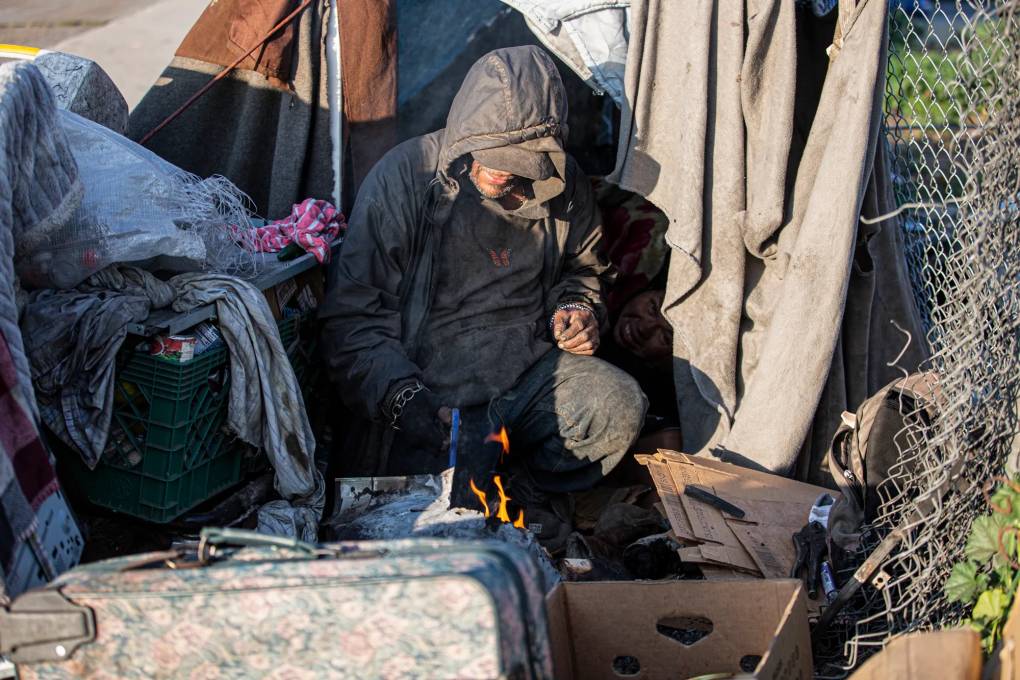
"caption": "A man starts a fire in his makeshift tent along a barbed wire fence near Highway 99 in southwest Fresno on Feb. 11, 2022.",
"description": null,
"title": "021422-FRESNO-HOMELESS-LV-08-CM",
"credit": "Larry Valenzuela/CalMatters",
"status": "inherit",
"altTag": "A seated man wearing a hooded jacket starts a fire in his makeshift tent.",
"isLoading": false,
"fetchFailed": false
},
"news_11977459": {
"type": "attachments",
"id": "news_11977459",
"meta": {
"index": "attachments_1716263798",
"site": "news",
"id": "11977459",
"found": true
},
"parent": 0,
"imgSizes": {
"twentyfourteen-full-width": {
"file": "https://cdn.kqed.org/wp-content/uploads/sites/10/2024/02/IMG_2976-1038x576.jpg",
"width": 1038,
"mimeType": "image/jpeg",
"height": 576
},
"thumbnail": {
"file": "https://cdn.kqed.org/wp-content/uploads/sites/10/2024/02/IMG_2976-160x120.jpg",
"width": 160,
"mimeType": "image/jpeg",
"height": 120
},
"post-thumbnail": {
"file": "https://cdn.kqed.org/wp-content/uploads/sites/10/2024/02/IMG_2976-672x372.jpg",
"width": 672,
"mimeType": "image/jpeg",
"height": 372
},
"kqedFullSize": {
"file": "https://cdn.kqed.org/wp-content/uploads/sites/10/2024/02/IMG_2976-scaled.jpg",
"width": 2560,
"height": 1920
},
"2048x2048": {
"file": "https://cdn.kqed.org/wp-content/uploads/sites/10/2024/02/IMG_2976-2048x1536.jpg",
"width": 2048,
"mimeType": "image/jpeg",
"height": 1536
},
"large": {
"file": "https://cdn.kqed.org/wp-content/uploads/sites/10/2024/02/IMG_2976-1020x765.jpg",
"width": 1020,
"mimeType": "image/jpeg",
"height": 765
},
"1536x1536": {
"file": "https://cdn.kqed.org/wp-content/uploads/sites/10/2024/02/IMG_2976-1536x1152.jpg",
"width": 1536,
"mimeType": "image/jpeg",
"height": 1152
},
"full-width": {
"file": "https://cdn.kqed.org/wp-content/uploads/sites/10/2024/02/IMG_2976-1920x1440.jpg",
"width": 1920,
"mimeType": "image/jpeg",
"height": 1440
},
"medium": {
"file": "https://cdn.kqed.org/wp-content/uploads/sites/10/2024/02/IMG_2976-800x600.jpg",
"width": 800,
"mimeType": "image/jpeg",
"height": 600
}
},
"publishDate": 1709155945,
"modified": 1709161095,
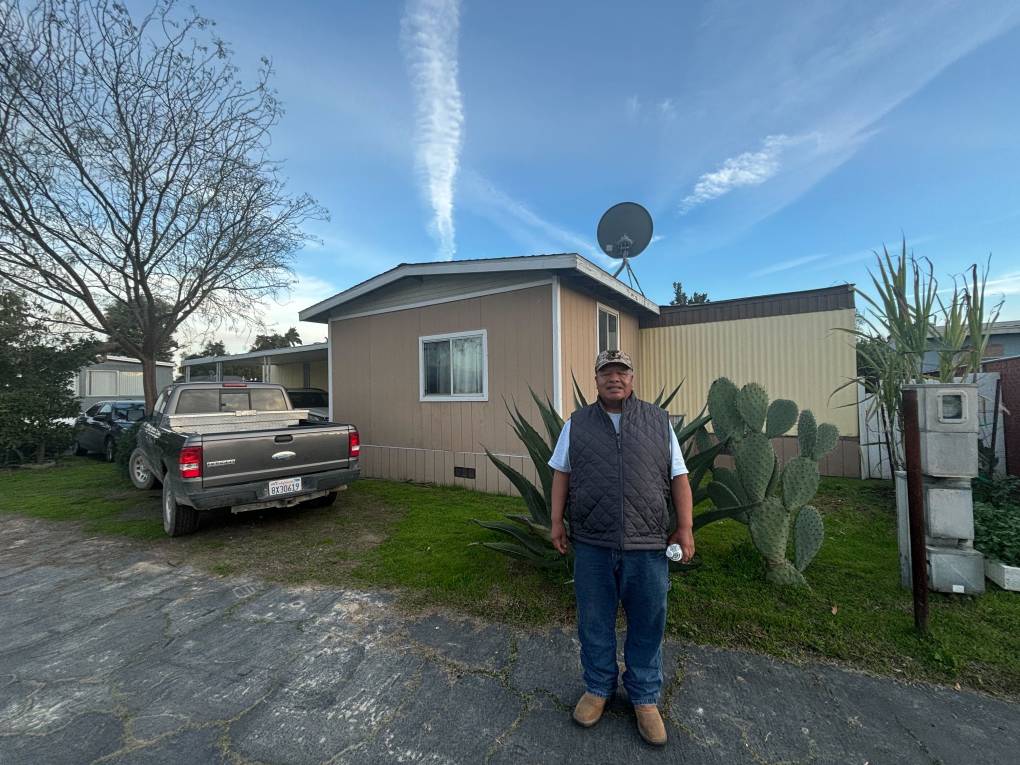
"caption": "Jesús Felipe Sierra López poses for a photo in front of his home at the Shady Lake Mobile Home Park in Fresno County, California, on Wednesday, Feb. 28, 2024. Sierra López is one of 52 homeowners at the park who have formed a co-op to purchase the park from their corporate landlord, Harmony Communities California. ",
"description": null,
"title": "IMG_2976",
"credit": "Madi Bolanos/KQED",
"status": "inherit",
"altTag": "A man wearing a vest, white shirt and jeans stands in front of a house with a car parked to the left.",
"isLoading": false,
"fetchFailed": false
},
"news_11977283": {
"type": "attachments",
"id": "news_11977283",
"meta": {
"index": "attachments_1716263798",
"site": "news",
"id": "11977283",
"found": true
},
"parent": 11977258,
"imgSizes": {
"twentyfourteen-full-width": {
"file": "https://cdn.kqed.org/wp-content/uploads/sites/10/2024/02/GettyImages-1238901343-1024x576.jpg",
"width": 1024,
"mimeType": "image/jpeg",
"height": 576
},
"thumbnail": {
"file": "https://cdn.kqed.org/wp-content/uploads/sites/10/2024/02/GettyImages-1238901343-160x107.jpg",
"width": 160,
"mimeType": "image/jpeg",
"height": 107
},
"post-thumbnail": {
"file": "https://cdn.kqed.org/wp-content/uploads/sites/10/2024/02/GettyImages-1238901343-672x372.jpg",
"width": 672,
"mimeType": "image/jpeg",
"height": 372
},
"kqedFullSize": {
"file": "https://cdn.kqed.org/wp-content/uploads/sites/10/2024/02/GettyImages-1238901343.jpg",
"width": 1024,
"height": 683
},
"large": {
"file": "https://cdn.kqed.org/wp-content/uploads/sites/10/2024/02/GettyImages-1238901343-1020x680.jpg",
"width": 1020,
"mimeType": "image/jpeg",
"height": 680
},
"medium": {
"file": "https://cdn.kqed.org/wp-content/uploads/sites/10/2024/02/GettyImages-1238901343-800x534.jpg",
"width": 800,
"mimeType": "image/jpeg",
"height": 534
}
},
"publishDate": 1709067682,
"modified": 1709067775,
"caption": "A homeless encampment is photographed on Wednesday, Feb. 23, 2022, in San Jose.",
"description": null,
"title": "Point in Time San Jose Count",
"credit": "Aric Crabb/MediaNews Group/East Bay Times via Getty Images",
"status": "inherit",
"altTag": "A collection of bikes, tarps and other materials forming an encampment.",
"isLoading": false,
"fetchFailed": false
},
"news_11976596": {
"type": "attachments",
"id": "news_11976596",
"meta": {
"index": "attachments_1716263798",
"site": "news",
"id": "11976596",
"found": true
},
"parent": 0,
"imgSizes": {
"twentyfourteen-full-width": {
"file": "https://cdn.kqed.org/wp-content/uploads/sites/10/2024/02/240217-LARKSPUR-RENT-CONTROL-KSM-10-KQED-2-1038x576.jpg",
"width": 1038,
"mimeType": "image/jpeg",
"height": 576
},
"thumbnail": {
"file": "https://cdn.kqed.org/wp-content/uploads/sites/10/2024/02/240217-LARKSPUR-RENT-CONTROL-KSM-10-KQED-2-160x107.jpg",
"width": 160,
"mimeType": "image/jpeg",
"height": 107
},
"post-thumbnail": {
"file": "https://cdn.kqed.org/wp-content/uploads/sites/10/2024/02/240217-LARKSPUR-RENT-CONTROL-KSM-10-KQED-2-672x372.jpg",
"width": 672,
"mimeType": "image/jpeg",
"height": 372
},
"kqedFullSize": {
"file": "https://cdn.kqed.org/wp-content/uploads/sites/10/2024/02/240217-LARKSPUR-RENT-CONTROL-KSM-10-KQED-2.jpg",
"width": 2000,
"height": 1333
},
"large": {
"file": "https://cdn.kqed.org/wp-content/uploads/sites/10/2024/02/240217-LARKSPUR-RENT-CONTROL-KSM-10-KQED-2-1020x680.jpg",
"width": 1020,
"mimeType": "image/jpeg",
"height": 680
},
"1536x1536": {
"file": "https://cdn.kqed.org/wp-content/uploads/sites/10/2024/02/240217-LARKSPUR-RENT-CONTROL-KSM-10-KQED-2-1536x1024.jpg",
"width": 1536,
"mimeType": "image/jpeg",
"height": 1024
},
"full-width": {
"file": "https://cdn.kqed.org/wp-content/uploads/sites/10/2024/02/240217-LARKSPUR-RENT-CONTROL-KSM-10-KQED-2-1920x1280.jpg",
"width": 1920,
"mimeType": "image/jpeg",
"height": 1280
},
"medium": {
"file": "https://cdn.kqed.org/wp-content/uploads/sites/10/2024/02/240217-LARKSPUR-RENT-CONTROL-KSM-10-KQED-2-800x533.jpg",
"width": 800,
"mimeType": "image/jpeg",
"height": 533
}
},
"publishDate": 1708551706,
"modified": 1708977548,
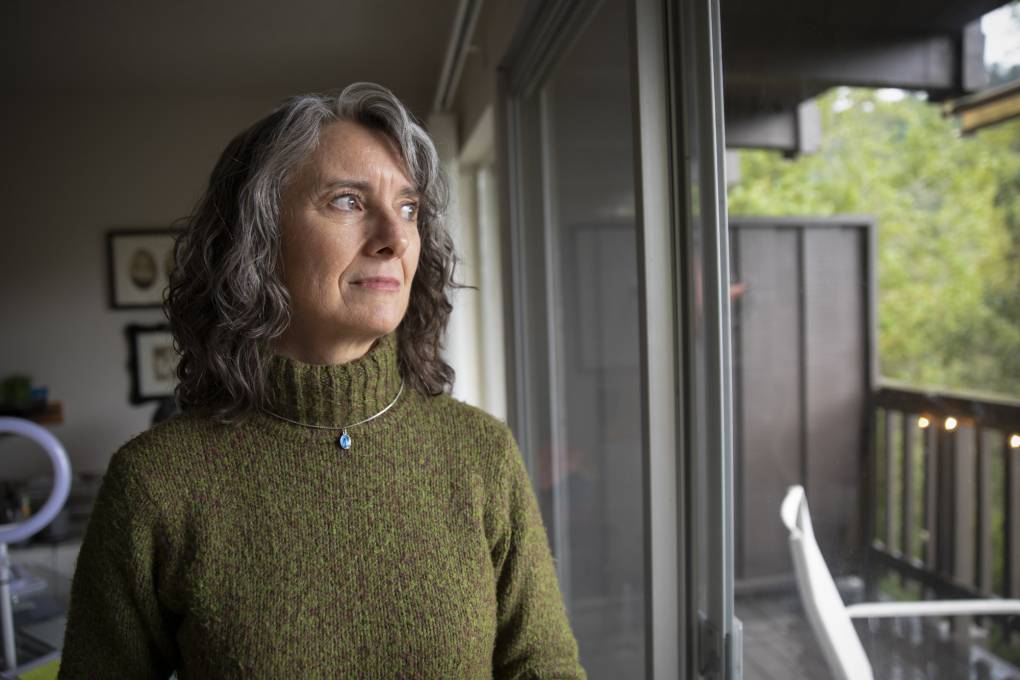
"caption": "Dorothy O'Leary looks through the sliding glass door of her apartment in Larkspur on Feb. 17 2024. O'Leary is an organizer with Keep Larkspur Fair and Affordable, the group working to bring rent control to Larkspur.",
"description": null,
"title": "240217-LARKSPUR-RENT-CONTROL-KSM-10-KQED",
"credit": "Kathryn Styer Martínez/KQED",
"status": "inherit",
"altTag": "A white woman wearing a dark green sweater and necklace looks out a window.",
"isLoading": false,
"fetchFailed": false
},
"news_11976962": {
"type": "attachments",
"id": "news_11976962",
"meta": {
"index": "attachments_1716263798",
"site": "news",
"id": "11976962",
"found": true
},
"parent": 11976959,
"imgSizes": {
"twentyfourteen-full-width": {
"file": "https://cdn.kqed.org/wp-content/uploads/sites/10/2024/02/003_KQED_HousingSanFrancisco_02102020_qut-1038x576.jpg",
"width": 1038,
"mimeType": "image/jpeg",
"height": 576
},
"thumbnail": {
"file": "https://cdn.kqed.org/wp-content/uploads/sites/10/2024/02/003_KQED_HousingSanFrancisco_02102020_qut-160x107.jpg",
"width": 160,
"mimeType": "image/jpeg",
"height": 107
},
"post-thumbnail": {
"file": "https://cdn.kqed.org/wp-content/uploads/sites/10/2024/02/003_KQED_HousingSanFrancisco_02102020_qut-672x372.jpg",
"width": 672,
"mimeType": "image/jpeg",
"height": 372
},
"kqedFullSize": {
"file": "https://cdn.kqed.org/wp-content/uploads/sites/10/2024/02/003_KQED_HousingSanFrancisco_02102020_qut.jpg",
"width": 1920,
"height": 1280
},
"large": {
"file": "https://cdn.kqed.org/wp-content/uploads/sites/10/2024/02/003_KQED_HousingSanFrancisco_02102020_qut-1020x680.jpg",
"width": 1020,
"mimeType": "image/jpeg",
"height": 680
},
"1536x1536": {
"file": "https://cdn.kqed.org/wp-content/uploads/sites/10/2024/02/003_KQED_HousingSanFrancisco_02102020_qut-1536x1024.jpg",
"width": 1536,
"mimeType": "image/jpeg",
"height": 1024
},
"medium": {
"file": "https://cdn.kqed.org/wp-content/uploads/sites/10/2024/02/003_KQED_HousingSanFrancisco_02102020_qut-800x533.jpg",
"width": 800,
"mimeType": "image/jpeg",
"height": 533
}
},
"publishDate": 1708726134,
"modified": 1708735847,
"caption": "Proposition A asks San Francisco voters to approve a bond to fund affordable housing.",
"description": null,
"title": "003_KQED_HousingSanFrancisco_02102020_qut",
"credit": "Beth LaBerge/KQED",
"status": "inherit",
"altTag": "Houses in San Francisco, surrounded by trees, are seen from above.",
"isLoading": false,
"fetchFailed": false
},
"news_11976443": {
"type": "attachments",
"id": "news_11976443",
"meta": {
"index": "attachments_1716263798",
"site": "news",
"id": "11976443",
"found": true
},
"parent": 11976382,
"imgSizes": {
"twentyfourteen-full-width": {
"file": "https://cdn.kqed.org/wp-content/uploads/sites/10/2024/02/Kou_Berman3-1038x576.jpg",
"width": 1038,
"mimeType": "image/jpeg",
"height": 576
},
"thumbnail": {
"file": "https://cdn.kqed.org/wp-content/uploads/sites/10/2024/02/Kou_Berman3-160x90.jpg",
"width": 160,
"mimeType": "image/jpeg",
"height": 90
},
"post-thumbnail": {
"file": "https://cdn.kqed.org/wp-content/uploads/sites/10/2024/02/Kou_Berman3-672x372.jpg",
"width": 672,
"mimeType": "image/jpeg",
"height": 372
},
"kqedFullSize": {
"file": "https://cdn.kqed.org/wp-content/uploads/sites/10/2024/02/Kou_Berman3.jpg",
"width": 1920,
"height": 1080
},
"large": {
"file": "https://cdn.kqed.org/wp-content/uploads/sites/10/2024/02/Kou_Berman3-1020x574.jpg",
"width": 1020,
"mimeType": "image/jpeg",
"height": 574
},
"1536x1536": {
"file": "https://cdn.kqed.org/wp-content/uploads/sites/10/2024/02/Kou_Berman3-1536x864.jpg",
"width": 1536,
"mimeType": "image/jpeg",
"height": 864
},
"medium": {
"file": "https://cdn.kqed.org/wp-content/uploads/sites/10/2024/02/Kou_Berman3-800x450.jpg",
"width": 800,
"mimeType": "image/jpeg",
"height": 450
}
},
"publishDate": 1708465871,
"modified": 1708466410,
"caption": "Marc Berman (right) faces a challenge from fellow Democrat Lydia Kou (right).",
"description": null,
"title": "Kou_Berman3",
"credit": "Images courtesy of Lydia Kou and Marc Berman/Photo collage by Lakshmi Sarah of KQED",
"status": "inherit",
"altTag": "A collage of a woman with black hair against a blue background and a man with dark hair against a lighter blue background.",
"isLoading": false,
"fetchFailed": false
},
"news_11975179": {
"type": "attachments",
"id": "news_11975179",
"meta": {
"index": "attachments_1716263798",
"site": "news",
"id": "11975179",
"found": true
},
"parent": 11975156,
"imgSizes": {
"twentyfourteen-full-width": {
"file": "https://cdn.kqed.org/wp-content/uploads/sites/10/2024/02/IMG_5659-1038x576.jpg",
"width": 1038,
"mimeType": "image/jpeg",
"height": 576
},
"thumbnail": {
"file": "https://cdn.kqed.org/wp-content/uploads/sites/10/2024/02/IMG_5659-160x120.jpg",
"width": 160,
"mimeType": "image/jpeg",
"height": 120
},
"post-thumbnail": {
"file": "https://cdn.kqed.org/wp-content/uploads/sites/10/2024/02/IMG_5659-672x372.jpg",
"width": 672,
"mimeType": "image/jpeg",
"height": 372
},
"kqedFullSize": {
"file": "https://cdn.kqed.org/wp-content/uploads/sites/10/2024/02/IMG_5659-scaled.jpg",
"width": 2560,
"height": 1920
},
"2048x2048": {
"file": "https://cdn.kqed.org/wp-content/uploads/sites/10/2024/02/IMG_5659-2048x1536.jpg",
"width": 2048,
"mimeType": "image/jpeg",
"height": 1536
},
"large": {
"file": "https://cdn.kqed.org/wp-content/uploads/sites/10/2024/02/IMG_5659-1020x765.jpg",
"width": 1020,
"mimeType": "image/jpeg",
"height": 765
},
"1536x1536": {
"file": "https://cdn.kqed.org/wp-content/uploads/sites/10/2024/02/IMG_5659-1536x1152.jpg",
"width": 1536,
"mimeType": "image/jpeg",
"height": 1152
},
"full-width": {
"file": "https://cdn.kqed.org/wp-content/uploads/sites/10/2024/02/IMG_5659-1920x1440.jpg",
"width": 1920,
"mimeType": "image/jpeg",
"height": 1440
},
"medium": {
"file": "https://cdn.kqed.org/wp-content/uploads/sites/10/2024/02/IMG_5659-800x600.jpg",
"width": 800,
"mimeType": "image/jpeg",
"height": 600
}
},
"publishDate": 1707436919,
"modified": 1708478350,
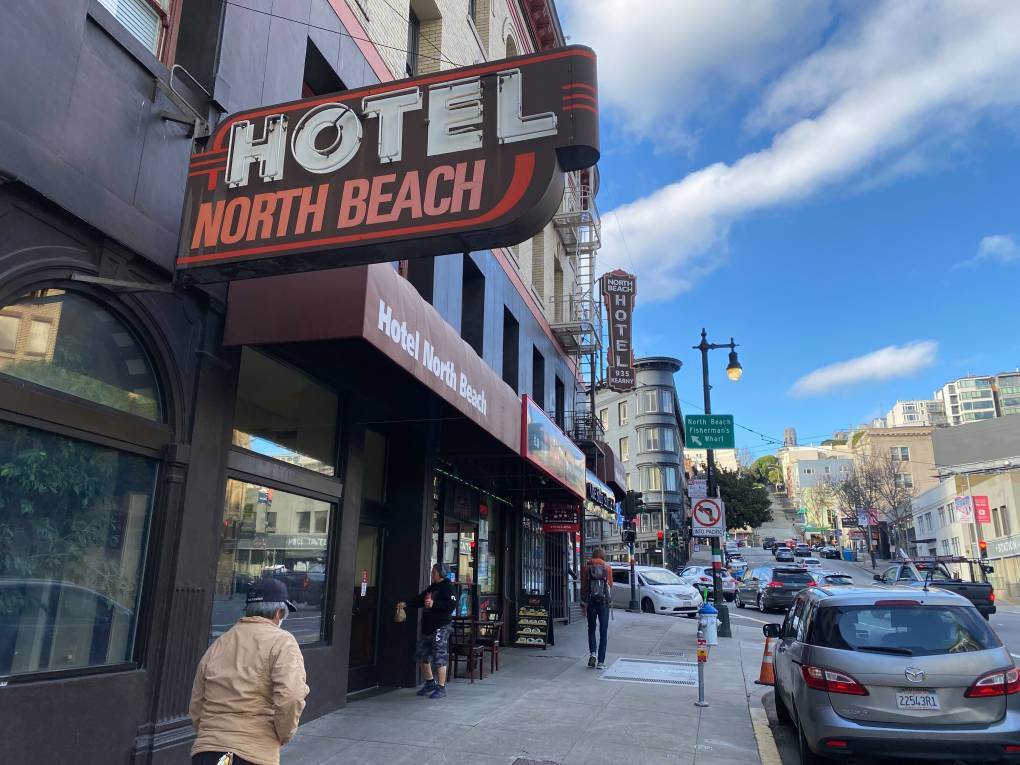
"caption": "Mayor London Breed walked back plans to open the permanent supportive housing site at Hotel North Beach, 935 Kearny St., just days after first announcing the idea.",
"description": null,
"title": "IMG_5659",
"credit": "Sydney Johnson/KQED",
"status": "inherit",
"altTag": "The exterior signage of the North Beach Hotel.",
"isLoading": false,
"fetchFailed": false
},
"news_11976206": {
"type": "attachments",
"id": "news_11976206",
"meta": {
"index": "attachments_1716263798",
"site": "news",
"id": "11976206",
"found": true
},
"parent": 0,
"imgSizes": {
"twentyfourteen-full-width": {
"file": "https://cdn.kqed.org/wp-content/uploads/sites/10/2024/02/240215-RENTER-PET-LEG-MD-01-KQED-3-1038x576.jpg",
"width": 1038,
"mimeType": "image/jpeg",
"height": 576
},
"thumbnail": {
"file": "https://cdn.kqed.org/wp-content/uploads/sites/10/2024/02/240215-RENTER-PET-LEG-MD-01-KQED-3-160x107.jpg",
"width": 160,
"mimeType": "image/jpeg",
"height": 107
},
"post-thumbnail": {
"file": "https://cdn.kqed.org/wp-content/uploads/sites/10/2024/02/240215-RENTER-PET-LEG-MD-01-KQED-3-672x372.jpg",
"width": 672,
"mimeType": "image/jpeg",
"height": 372
},
"kqedFullSize": {
"file": "https://cdn.kqed.org/wp-content/uploads/sites/10/2024/02/240215-RENTER-PET-LEG-MD-01-KQED-3.jpg",
"width": 2000,
"height": 1333
},
"large": {
"file": "https://cdn.kqed.org/wp-content/uploads/sites/10/2024/02/240215-RENTER-PET-LEG-MD-01-KQED-3-1020x680.jpg",
"width": 1020,
"mimeType": "image/jpeg",
"height": 680
},
"1536x1536": {
"file": "https://cdn.kqed.org/wp-content/uploads/sites/10/2024/02/240215-RENTER-PET-LEG-MD-01-KQED-3-1536x1024.jpg",
"width": 1536,
"mimeType": "image/jpeg",
"height": 1024
},
"full-width": {
"file": "https://cdn.kqed.org/wp-content/uploads/sites/10/2024/02/240215-RENTER-PET-LEG-MD-01-KQED-3-1920x1280.jpg",
"width": 1920,
"mimeType": "image/jpeg",
"height": 1280
},
"medium": {
"file": "https://cdn.kqed.org/wp-content/uploads/sites/10/2024/02/240215-RENTER-PET-LEG-MD-01-KQED-3-800x533.jpg",
"width": 800,
"mimeType": "image/jpeg",
"height": 533
}
},
"publishDate": 1708113455,
"modified": 1708113476,
"caption": "Merika Goolsby with her dogs Goldie (left) and Max in front of her home in Oakland on Feb. 15, 2024.",
"description": null,
"title": "240215-RENTER PET LEG-MD-01-KQED-3",
"credit": "Martin do Nascimento/KQED",
"status": "inherit",
"altTag": null,
"isLoading": false,
"fetchFailed": false
},
"news_11976056": {
"type": "attachments",
"id": "news_11976056",
"meta": {
"index": "attachments_1716263798",
"site": "news",
"id": "11976056",
"found": true
},
"title": "Vacant Office Space In San Francisco Reaches All Time High",
"publishDate": 1708026838,
"status": "inherit",
"parent": 11976049,
"modified": 1785879472,
"caption": "Cars drive by the San Francisco skyline along Interstate 80 on Oct. 27, 2022. According to a report by commercial real estate firm CBRE in 2022, the city of San Francisco had a record 27.1 million square feet of office space available as the city struggled to rebound from the COVID-19 pandemic.",
"credit": "Justin Sullivan/Getty Images",
"altTag": "A city skyline with high-rises and a blue sky, cars driving in the foreground on a bridge.",
"description": null,
"imgSizes": {
"medium": {
"file": "https://cdn.kqed.org/wp-content/uploads/sites/10/2024/02/GettyImages-1437097582-800x485.jpg",
"width": 800,
"height": 485,
"mimeType": "image/jpeg"
},
"large": {
"file": "https://cdn.kqed.org/wp-content/uploads/sites/10/2024/02/GettyImages-1437097582-1020x619.jpg",
"width": 1020,
"height": 619,
"mimeType": "image/jpeg"
},
"thumbnail": {
"file": "https://cdn.kqed.org/wp-content/uploads/sites/10/2024/02/GettyImages-1437097582-160x97.jpg",
"width": 160,
"height": 97,
"mimeType": "image/jpeg"
},
"post-thumbnail": {
"file": "https://cdn.kqed.org/wp-content/uploads/sites/10/2024/02/GettyImages-1437097582-672x372.jpg",
"width": 672,
"height": 372,
"mimeType": "image/jpeg"
},
"twentyfourteen-full-width": {
"file": "https://cdn.kqed.org/wp-content/uploads/sites/10/2024/02/GettyImages-1437097582-1024x576.jpg",
"width": 1024,
"height": 576,
"mimeType": "image/jpeg"
},
"kqedFullSize": {
"file": "https://cdn.kqed.org/wp-content/uploads/sites/10/2024/02/GettyImages-1437097582.jpg",
"width": 1024,
"height": 621
}
},
"isLoading": false,
"fetchFailed": false
},
"news_11976086": {
"type": "attachments",
"id": "news_11976086",
"meta": {
"index": "attachments_1716263798",
"site": "news",
"id": "11976086",
"found": true
},
"title": "03_Downtown plaza with transit_IMAGE CREDIT_Designed by SITELAB urban studio_CMG",
"publishDate": 1708037373,
"status": "inherit",
"parent": 12037142,
"modified": 1745426106,
"caption": "A rendering of the downtown center in the new city California Forever is proposing to build in Solano County. ",
"credit": "Courtesy California Forever",
"altTag": "An illustration of a downtown center with people sitting and walking around with various buildings, a food truck and structures on display.",
"description": null,
"imgSizes": {
"medium": {
"file": "https://cdn.kqed.org/wp-content/uploads/sites/10/2024/02/03_Downtown-plaza-with-transit_IMAGE-CREDIT_Designed-by-SITELAB-urban-studio_CMG-800x450.jpg",
"width": 800,
"height": 450,
"mimeType": "image/jpeg"
},
"large": {
"file": "https://cdn.kqed.org/wp-content/uploads/sites/10/2024/02/03_Downtown-plaza-with-transit_IMAGE-CREDIT_Designed-by-SITELAB-urban-studio_CMG-1020x574.jpg",
"width": 1020,
"height": 574,
"mimeType": "image/jpeg"
},
"thumbnail": {
"file": "https://cdn.kqed.org/wp-content/uploads/sites/10/2024/02/03_Downtown-plaza-with-transit_IMAGE-CREDIT_Designed-by-SITELAB-urban-studio_CMG-160x90.jpg",
"width": 160,
"height": 90,
"mimeType": "image/jpeg"
},
"1536x1536": {
"file": "https://cdn.kqed.org/wp-content/uploads/sites/10/2024/02/03_Downtown-plaza-with-transit_IMAGE-CREDIT_Designed-by-SITELAB-urban-studio_CMG-1536x864.jpg",
"width": 1536,
"height": 864,
"mimeType": "image/jpeg"
},
"2048x2048": {
"file": "https://cdn.kqed.org/wp-content/uploads/sites/10/2024/02/03_Downtown-plaza-with-transit_IMAGE-CREDIT_Designed-by-SITELAB-urban-studio_CMG-2048x1152.jpg",
"width": 2048,
"height": 1152,
"mimeType": "image/jpeg"
},
"post-thumbnail": {
"file": "https://cdn.kqed.org/wp-content/uploads/sites/10/2024/02/03_Downtown-plaza-with-transit_IMAGE-CREDIT_Designed-by-SITELAB-urban-studio_CMG-672x372.jpg",
"width": 672,
"height": 372,
"mimeType": "image/jpeg"
},
"twentyfourteen-full-width": {
"file": "https://cdn.kqed.org/wp-content/uploads/sites/10/2024/02/03_Downtown-plaza-with-transit_IMAGE-CREDIT_Designed-by-SITELAB-urban-studio_CMG-1038x576.jpg",
"width": 1038,
"height": 576,
"mimeType": "image/jpeg"
},
"full-width": {
"file": "https://cdn.kqed.org/wp-content/uploads/sites/10/2024/02/03_Downtown-plaza-with-transit_IMAGE-CREDIT_Designed-by-SITELAB-urban-studio_CMG-1920x1080.jpg",
"width": 1920,
"height": 1080,
"mimeType": "image/jpeg"
},
"kqedFullSize": {
"file": "https://cdn.kqed.org/wp-content/uploads/sites/10/2024/02/03_Downtown-plaza-with-transit_IMAGE-CREDIT_Designed-by-SITELAB-urban-studio_CMG.jpg",
"width": 2520,
"height": 1418
}
},
"isLoading": false,
"fetchFailed": false
},
"news_11975970": {
"type": "attachments",
"id": "news_11975970",
"meta": {
"index": "attachments_1716263798",
"site": "news",
"id": "11975970",
"found": true
},
"parent": 11975969,
"imgSizes": {
"twentyfourteen-full-width": {
"file": "https://cdn.kqed.org/wp-content/uploads/sites/10/2024/02/image-2-1038x576.png",
"width": 1038,
"mimeType": "image/png",
"height": 576
},
"thumbnail": {
"file": "https://cdn.kqed.org/wp-content/uploads/sites/10/2024/02/image-2-160x107.png",
"width": 160,
"mimeType": "image/png",
"height": 107
},
"post-thumbnail": {
"file": "https://cdn.kqed.org/wp-content/uploads/sites/10/2024/02/image-2-672x372.png",
"width": 672,
"mimeType": "image/png",
"height": 372
},
"kqedFullSize": {
"file": "https://cdn.kqed.org/wp-content/uploads/sites/10/2024/02/image-2.png",
"width": 1316,
"height": 878
},
"large": {
"file": "https://cdn.kqed.org/wp-content/uploads/sites/10/2024/02/image-2-1020x681.png",
"width": 1020,
"mimeType": "image/png",
"height": 681
},
"medium": {
"file": "https://cdn.kqed.org/wp-content/uploads/sites/10/2024/02/image-2-800x534.png",
"width": 800,
"mimeType": "image/png",
"height": 534
}
},
"publishDate": 1707955397,
"modified": 1707959654,
"caption": "Gabi Rivas, policy advocacy manager for Rising Juntos, addresses a crowd outside a Concord City Council meeting on Jan. 30.",
"description": null,
"title": "image (2)",
"credit": "Courtesy of Rising Juntos",
"status": "inherit",
"altTag": "A woman speaks with a microphone.",
"isLoading": false,
"fetchFailed": false
}
},
"audioPlayerReducer": {
"postId": "stream_live",
"isPaused": true,
"isPlaying": false,
"pfsActive": false,
"pledgeModalIsOpen": true,
"playerDrawerIsOpen": false,
"liveAudioPlayStartedAt": 0,
"liveAudioPlayContext": ""
},
"authorsReducer": {
"byline_news_11978448": {
"type": "authors",
"id": "byline_news_11978448",
"meta": {
"override": true
},
"slug": "byline_news_11978448",
"name": "\u003ca href=\"https://calmatters.org/author/marisa-kendall/\">Marisa Kendall\u003c/a>",
"isLoading": false
},
"byline_news_11977614": {
"type": "authors",
"id": "byline_news_11977614",
"meta": {
"override": true
},
"slug": "byline_news_11977614",
"name": "\u003ca href=\"https://calmatters.org/author/marisa-kendall/\">Marisa Kendall\u003c/a>",
"isLoading": false
},
"byline_news_11976049": {
"type": "authors",
"id": "byline_news_11976049",
"meta": {
"override": true
},
"slug": "byline_news_11976049",
"name": "\u003ca href=\"https://www.npr.org/people/1004889801/manuela-lopez-restrepo\">Manuela López Restrepo\u003c/a>",
"isLoading": false
},
"gmarzorati": {
"type": "authors",
"id": "227",
"meta": {
"index": "authors_1716337520",
"id": "227",
"found": true
},
"name": "Guy Marzorati",
"firstName": "Guy",
"lastName": "Marzorati",
"slug": "gmarzorati",
"email": "gmarzorati@KQED.org",
"display_author_email": true,
"staff_mastheads": [
"news"
],
"title": "Correspondent",
"bio": "Guy Marzorati is a correspondent on KQED's California Politics and Government Desk, based in San Jose. A graduate of Santa Clara University, Guy joined KQED in 2013. He reports on state and local politics and produces KQED's digital voter guide.",
"avatar": "https://secure.gravatar.com/avatar/e7038b8dbfd55b104369b76b1cd0b9de?s=600&d=blank&r=g",
"twitter": "guymarzorati",
"facebook": null,
"instagram": null,
"linkedin": null,
"sites": [
{
"site": "",
"roles": [
"editor"
]
},
{
"site": "news",
"roles": [
"editor"
]
},
{
"site": "science",
"roles": [
"editor"
]
},
{
"site": "forum",
"roles": [
"editor"
]
},
{
"site": "elections",
"roles": [
"editor"
]
},
{
"site": "liveblog",
"roles": [
"editor"
]
}
],
"headData": {
"title": "Guy Marzorati | KQED",
"description": "Correspondent",
"ogImgSrc": "https://secure.gravatar.com/avatar/e7038b8dbfd55b104369b76b1cd0b9de?s=600&d=blank&r=g",
"twImgSrc": "https://secure.gravatar.com/avatar/e7038b8dbfd55b104369b76b1cd0b9de?s=600&d=blank&r=g"
},
"isLoading": false,
"link": "/author/gmarzorati"
},
"vrancano": {
"type": "authors",
"id": "11276",
"meta": {
"index": "authors_1716337520",
"id": "11276",
"found": true
},
"name": "Vanessa Rancaño",
"firstName": "Vanessa",
"lastName": "Rancaño",
"slug": "vrancano",
"email": "vrancano@kqed.org",
"display_author_email": false,
"staff_mastheads": [
"news"
],
"title": "Reporter",
"bio": "Vanessa Rancaño is a features reporter for KQED. She’s also covered homelessness and education for the station and reported from the Central Valley. Her work has aired across public radio, from flagship national news shows to longform narrative podcasts. Before taking up a mic, she worked as a freelance print journalist. She’s been recognized with a number of national and regional awards. Vanessa grew up in California's Central Valley. She's a former NPR Kroc Fellow, and a graduate of the UC Berkeley Graduate School of Journalism.",
"avatar": "https://secure.gravatar.com/avatar/b3a383dfb0e7ee1c17568f2cf067904ab654d6e3de9743fc661f3c788ade1bed?s=600&d=blank&r=g",
"twitter": "vanessarancano",
"bluesky": null,
"facebook": null,
"instagram": null,
"linkedin": null,
"sites": [
{
"site": "arts",
"roles": [
"editor"
]
},
{
"site": "news",
"roles": [
"editor"
]
},
{
"site": "liveblog",
"roles": [
"contributor"
]
}
],
"headData": {
"title": "Vanessa Rancaño | KQED",
"description": "Reporter",
"ogImgSrc": "https://secure.gravatar.com/avatar/b3a383dfb0e7ee1c17568f2cf067904ab654d6e3de9743fc661f3c788ade1bed?s=600&d=blank&r=g",
"twImgSrc": "https://secure.gravatar.com/avatar/b3a383dfb0e7ee1c17568f2cf067904ab654d6e3de9743fc661f3c788ade1bed?s=600&d=blank&r=g"
},
"isLoading": false,
"link": "/author/vrancano"
},
"abandlamudi": {
"type": "authors",
"id": "11672",
"meta": {
"index": "authors_1716337520",
"id": "11672",
"found": true
},
"name": "Adhiti Bandlamudi",
"firstName": "Adhiti",
"lastName": "Bandlamudi",
"slug": "abandlamudi",
"email": "abandlamudi@kqed.org",
"display_author_email": false,
"staff_mastheads": [
"news"
],
"title": "KQED Housing Reporter",
"bio": "Adhiti Bandlamudi reports for KQED's Housing desk. She focuses on how housing gets built across the Bay Area. Before joining KQED in 2020, she reported for WUNC in Durham, North Carolina, WABE in Atlanta, Georgia and Capital Public Radio in Sacramento. In 2017, she was awarded a Kroc Fellowship at NPR where she reported on everything from sprinkles to the Golden State Killer's arrest. When she's not reporting, she's baking new recipes in her kitchen or watching movies with friends and family. She's originally from Georgia and has strong opinions about Great British Bake Off.",
"avatar": "https://secure.gravatar.com/avatar/868129c8b257bb99a3500e2c86a65400?s=600&d=mm&r=g",
"twitter": "oddity_adhiti",
"facebook": null,
"instagram": null,
"linkedin": null,
"sites": [
{
"site": "arts",
"roles": [
"author"
]
},
{
"site": "news",
"roles": [
"editor"
]
},
{
"site": "liveblog",
"roles": [
"author"
]
}
],
"headData": {
"title": "Adhiti Bandlamudi | KQED",
"description": "KQED Housing Reporter",
"ogImgSrc": "https://secure.gravatar.com/avatar/868129c8b257bb99a3500e2c86a65400?s=600&d=mm&r=g",
"twImgSrc": "https://secure.gravatar.com/avatar/868129c8b257bb99a3500e2c86a65400?s=600&d=mm&r=g"
},
"isLoading": false,
"link": "/author/abandlamudi"
},
"sjohnson": {
"type": "authors",
"id": "11840",
"meta": {
"index": "authors_1716337520",
"id": "11840",
"found": true
},
"name": "Sydney Johnson",
"firstName": "Sydney",
"lastName": "Johnson",
"slug": "sjohnson",
"email": "sjohnson@kqed.org",
"display_author_email": false,
"staff_mastheads": [
"news"
],
"title": "KQED Reporter",
"bio": "Sydney Johnson is a general assignment reporter at KQED. She previously reported on public health and city government at the San Francisco Examiner, and before that, she covered statewide education policy for EdSource. Her reporting has won multiple local, state and national awards. Sydney is a graduate of the University of California, Berkeley and lives in San Francisco.",
"avatar": "https://secure.gravatar.com/avatar/97855f2719b72ad6190b7c535fe642c8?s=600&d=blank&r=g",
"twitter": "sydneyfjohnson",
"facebook": null,
"instagram": null,
"linkedin": null,
"sites": [
{
"site": "news",
"roles": [
"editor"
]
}
],
"headData": {
"title": "Sydney Johnson | KQED",
"description": "KQED Reporter",
"ogImgSrc": "https://secure.gravatar.com/avatar/97855f2719b72ad6190b7c535fe642c8?s=600&d=blank&r=g",
"twImgSrc": "https://secure.gravatar.com/avatar/97855f2719b72ad6190b7c535fe642c8?s=600&d=blank&r=g"
},
"isLoading": false,
"link": "/author/sjohnson"
},
"mbolanos": {
"type": "authors",
"id": "11895",
"meta": {
"index": "authors_1716337520",
"id": "11895",
"found": true
},
"name": "Madi Bolaños",
"firstName": "Madi",
"lastName": "Bolaños",
"slug": "mbolanos",
"email": "mbolanos@kqed.org",
"display_author_email": false,
"staff_mastheads": [],
"title": "KQED Contributor",
"bio": null,
"avatar": "https://secure.gravatar.com/avatar/e6df5601c1f2d951e46a3fb42764330f?s=600&d=blank&r=g",
"twitter": null,
"bluesky": null,
"facebook": null,
"instagram": null,
"linkedin": null,
"sites": [
{
"site": "news",
"roles": [
"author"
]
}
],
"headData": {
"title": "Madi Bolaños | KQED",
"description": "KQED Contributor",
"ogImgSrc": "https://secure.gravatar.com/avatar/e6df5601c1f2d951e46a3fb42764330f?s=600&d=blank&r=g",
"twImgSrc": "https://secure.gravatar.com/avatar/e6df5601c1f2d951e46a3fb42764330f?s=600&d=blank&r=g"
},
"isLoading": false,
"link": "/author/mbolanos"
},
"naltenberg": {
"type": "authors",
"id": "11896",
"meta": {
"index": "authors_1716337520",
"id": "11896",
"found": true
},
"name": "Nik Altenberg",
"firstName": "Nik",
"lastName": "Altenberg",
"slug": "naltenberg",
"email": "naltenberg@kqed.org",
"display_author_email": false,
"staff_mastheads": [],
"title": "KQED Contributor",
"bio": "Nik Altenberg is an on-call reporter for KQED and a copy editor and fact checker for Santa Cruz Local. Nik’s reporting interests include policing, public health, environment, immigration, housing and the places where these issues intersect.",
"avatar": "https://secure.gravatar.com/avatar/e391b3a18ce4a53a7ca3f3065c74418b?s=600&d=blank&r=g",
"twitter": null,
"facebook": null,
"instagram": "https://www.instagram.com/nikaltenberg/",
"linkedin": null,
"sites": [
{
"site": "news",
"roles": []
}
],
"headData": {
"title": "Nik Altenberg | KQED",
"description": "KQED Contributor",
"ogImgSrc": "https://secure.gravatar.com/avatar/e391b3a18ce4a53a7ca3f3065c74418b?s=600&d=blank&r=g",
"twImgSrc": "https://secure.gravatar.com/avatar/e391b3a18ce4a53a7ca3f3065c74418b?s=600&d=blank&r=g"
},
"isLoading": false,
"link": "/author/naltenberg"
}
},
"pagesReducer": {
"news_category_housing": {
"type": "terms",
"id": "news_6266",
"meta": {
"index": "terms_1716263798",
"site": "news",
"id": "6266",
"score": 11.039913
},
"featImg": null,
"name": "Housing",
"description": null,
"taxonomy": "category",
"headData": {
"twImgId": null,
"twTitle": null,
"ogTitle": null,
"ogImgId": null,
"twDescription": null,
"description": null,
"title": "Housing Archives | KQED News",
"ogDescription": null
},
"ttid": 6290,
"slug": "housing",
"isLoading": false,
"title": "Housing",
"pageMeta": {
"site": "news",
"WpPageTemplate": "page-topic-editorial",
"currentPage": 44
},
"blocks": [
{
"blockName": "kqed/post-list",
"attrs": {
"layout": "cardArticle2",
"query": "posts/news?category=housing",
"seeMore": false,
"paginated": true,
"page": 44
}
},
{
"blockName": "kqed/ad"
}
]
}
},
"pfsSessionReducer": {},
"postsReducer": {
"stream_live": {
"type": "live",
"id": "stream_live",
"audioUrl": "https://streams.kqed.org/kqedradio",
"title": "Live Stream",
"excerpt": "Live Stream information currently unavailable.",
"link": "/radio",
"featImg": "",
"label": {
"name": "KQED Live",
"link": "/"
}
},
"stream_kqedNewscast": {
"type": "posts",
"id": "stream_kqedNewscast",
"audioUrl": "https://www.kqed.org/.stream/anon/radio/RDnews/newscast.mp3?_=1",
"title": "KQED Newscast",
"featImg": "",
"label": {
"name": "88.5 FM",
"link": "/"
}
},
"news_11978448": {
"type": "posts",
"id": "news_11978448",
"meta": {
"index": "posts_1716263798",
"site": "news",
"id": "11978448",
"score": null,
"sort": [
1709825423000
]
},
"guestAuthors": [],
"slug": "los-angeles-county-uses-ai-to-prevent-homelessness-and-offers-assistance",
"title": "Los Angeles County Uses AI to Prevent Homelessness and Offers Assistance",
"publishDate": 1709825423,
"format": "standard",
"headTitle": "Los Angeles County Uses AI to Prevent Homelessness and Offers Assistance | KQED",
"labelTerm": {},
"content": "\u003cp>You’ve likely heard about AI powering driverless cars, writing term papers and creating unsettling deep fakes.\u003c/p>\n\u003cp>Can that same technology also prevent people from becoming homeless?\u003c/p>\n\u003cp>That’s what Los Angeles County is trying to find out. Officials there are using \u003ca href=\"https://calmatters.org/politics/elections/2024/02/ai-elections-bill-package/\">AI technology\u003c/a> to predict who in the county is most likely to lose their housing — and then stepping in to help those people with their rent, utility bills, car payments and more.[pullquote size=\"medium\" align=\"right\" citation=\"Dana Vanderford, associate director of homelessness prevention, LA County’s Department of Health Services\"]‘If we know who people are who unfortunately are going to have that experience … it’s a real opportunity to do something early on in their lives to prevent that from happening.’[/pullquote]It’s still an experimental strategy. But the program has served more than 700 clients since 2021, and 86% have retained their housing. It comes at a time when \u003ca href=\"https://calmatters.org/housing/homelessness/2024/01/california-homeless-point-in-time-count-2024/\">more than 180,000 Californians have no place to call home\u003c/a>, and people are ending up on the streets faster than government agencies and nonprofits can get them into housing. Officials all over the state are turning to methods aimed at preventing homelessness before it happens.\u003c/p>\n\u003cp>LA County’s algorithm analyzes data from residents’ emergency room visits, jail stays, use of food assistance and more, and has sparked interest from Silicon Valley to San Diego. Final data on the program — which has roughly $26 million in federal COVID funds and is expected to end in 2026 — aren’t yet out. If it’s successful, it could have major implications for helping cities and counties spend their limited resources more efficiently.\u003c/p>\n\u003cp>“If we know who people are who unfortunately are going to have that experience, and they’re already county clients, it’s a real opportunity to do something early on in their lives to prevent that from happening,” said Dana Vanderford, associate director of homelessness prevention for LA County’s Department of Health Services.\u003c/p>\n\u003cfigure id=\"attachment_11978466\" class=\"wp-caption aligncenter\" style=\"max-width: 2000px\">\u003cimg loading=\"lazy\" decoding=\"async\" class=\"size-full wp-image-11978466\" src=\"https://cdn.kqed.org/wp-content/uploads/sites/10/2024/03/CMHousingAI02.jpg\" alt=\"\" width=\"2000\" height=\"1333\" srcset=\"https://cdn.kqed.org/wp-content/uploads/sites/10/2024/03/CMHousingAI02.jpg 2000w, https://cdn.kqed.org/wp-content/uploads/sites/10/2024/03/CMHousingAI02-800x533.jpg 800w, https://cdn.kqed.org/wp-content/uploads/sites/10/2024/03/CMHousingAI02-1020x680.jpg 1020w, https://cdn.kqed.org/wp-content/uploads/sites/10/2024/03/CMHousingAI02-160x107.jpg 160w, https://cdn.kqed.org/wp-content/uploads/sites/10/2024/03/CMHousingAI02-1536x1024.jpg 1536w, https://cdn.kqed.org/wp-content/uploads/sites/10/2024/03/CMHousingAI02-1920x1280.jpg 1920w\" sizes=\"(max-width: 2000px) 100vw, 2000px\">\u003cfigcaption class=\"wp-caption-text\">Dana Vanderford, Associate Director of Homelessness Prevention at Housing for Health at Los Angeles County Department of Health Services, in Los Angeles, on Feb. 29, 2024. \u003ccite>(Jules Hotz/CalMatters)\u003c/cite>\u003c/figcaption>\u003c/figure>\n\u003ch2>How does artificial intelligence predict homelessness?\u003c/h2>\n\u003cp>The idea started in 2019, when UCLA’s California Policy Lab began experimenting to see if it could use machine learning, combined with LA County data, to predict homelessness. Then, the county paired that with money to intervene before people ended up on the street — the program is predominantly funded with $26 million in COVID-era \u003ca href=\"https://www.whitehouse.gov/american-rescue-plan/\">funds from the federal American Rescue Plan\u003c/a>.\u003c/p>\n\u003cp>The UCLA researchers start with a list of 90,000 people who recently used services from the county’s Health Services or Mental Health departments. Using 580 factors, the computer ranks those people from 1 to 90,000 based on their risk of becoming homeless. The people deemed to be highest-risk tend to show up in emergency rooms and jails at high rates and have high usage of services such as CalFresh food benefits. However, the model considers many more data points.\u003c/p>\n\u003cp>[ad fullwidth]\u003c/p>\n\u003cp>For example, if people receive services in many different geographic areas, it could mean they’re couch surfing — bouncing from one precarious living situation to the next.\u003c/p>\n\u003cp>“You sort of let the computer learn what it finds to be predictive over time,” said Janey Rountree, executive director of the California Policy Lab at UCLA.\u003c/p>\n\u003cp>To train the algorithm, the researchers showed it a list of people who became homeless along with the services they used before losing their housing. Then, they had the algorithm practice “predicting” homelessness using old data and checked to see if it was accurate. When they were satisfied, they started using it for real predictions.\u003c/p>\n\u003cp>How well does it work? Among the 90,000 people the researchers started with, 7% became homeless in 18 months. Among the 10,000 people the algorithm deemed to be the highest risk, 24% became homeless.\u003c/p>\n\u003cp>If they were targeting fewer people (say 1,000 instead of 10,000), it would be even more accurate, Rountree said. But social workers aren’t able to get in touch with many of the people on the list, and others don’t agree to participate in the aid program, so they have to cast a broader net.[pullquote size=\"medium\" align=\"right\" citation=\"Janey Rountree, executive director, UCLA’s California Policy Lab\"]‘You sort of let the computer learn what it finds to be predictive over time.’[/pullquote]Is a computer really better at guessing who will become homeless than human social workers trained in this work? Rountree says yes — 3.5 times better, to be exact.\u003c/p>\n\u003cp>The problem with humans, she said, is that they’re biased toward the people they know.\u003c/p>\n\u003cp>“It’s just human nature to want to help the people that you’re in contact with,” she said. “They all seem housing-unstable and at high risk. You want to help those individuals or those families in front of you. But not all of them are going to become homeless and be on the street or use shelter if they don’t get assistance.”\u003c/p>\n\u003cp>Caseworkers also often prioritize people with lower needs, Rountree said. Someone who recently lost their job but otherwise is stable gets preference over someone facing ongoing struggles with their mental health or addiction because the stable person is easier to help. However, the stable person may not be the one who needs the help the most.\u003c/p>\n\u003cp>Rountree said there’s also a belief that people with higher needs will not spend the money they’re given wisely. But AI doesn’t have that bias, so it ensures the money goes to those who need it most.\u003c/p>\n\u003cp>The results are apparent. People the algorithm targets are much more likely to have been incarcerated, sought substance use treatment, had mental health issues or been hospitalized than the people who seek aid through LA County’s other homelessness prevention programs, Rountree said. In that way, this program fills a hole in LA County’s net of services, she said.\u003c/p>\n\u003cp>LA County’s other, more traditional programs geared to prevent homelessness rely on people reaching out to request help or on caseworkers referring clients.\u003c/p>\n\u003cp>Interestingly, they aren’t duplicating efforts. There’s almost no overlap between the people targeted by the AI algorithm and those served by traditional prevention programs, Vanderford said.\u003c/p>\n\u003cp>“We know there’s a significant population of folks, who if somebody doesn’t reach out to them to offer assistance, they might lose their housing right out from under them without reaching out for assistance themselves,” she said.\u003c/p>\n\u003ch2>Then, a human steps in\u003c/h2>\n\u003cp>Four times a year, the Policy Lab researchers send LA County a list of residents the AI program has deemed most likely to become homeless. The county then mails those people letters, telling them they’ve been selected to participate in the program. After that, a social worker cold-calls them to tell them the good news.\u003c/p>\n\u003cp>The person at the other end of the line is often convinced it’s a scam. After all, how often does someone legitimate call out of the blue to offer free money?\u003c/p>\n\u003cp>When that happens, case worker Genice Brown usually asks if she can email them—a move she hopes lends a bit more credence to her pitch. Once she convinces them the program is real, nine out of 10 people agree to sign up, she said.\u003c/p>\n\u003cfigure id=\"attachment_11978489\" class=\"wp-caption aligncenter\" style=\"max-width: 2000px\">\u003cimg loading=\"lazy\" decoding=\"async\" class=\"size-full wp-image-11978489\" src=\"https://cdn.kqed.org/wp-content/uploads/sites/10/2024/03/CMHousingAI03.jpg\" alt=\"\" width=\"2000\" height=\"1333\" srcset=\"https://cdn.kqed.org/wp-content/uploads/sites/10/2024/03/CMHousingAI03.jpg 2000w, https://cdn.kqed.org/wp-content/uploads/sites/10/2024/03/CMHousingAI03-800x533.jpg 800w, https://cdn.kqed.org/wp-content/uploads/sites/10/2024/03/CMHousingAI03-1020x680.jpg 1020w, https://cdn.kqed.org/wp-content/uploads/sites/10/2024/03/CMHousingAI03-160x107.jpg 160w, https://cdn.kqed.org/wp-content/uploads/sites/10/2024/03/CMHousingAI03-1536x1024.jpg 1536w, https://cdn.kqed.org/wp-content/uploads/sites/10/2024/03/CMHousingAI03-1920x1280.jpg 1920w\" sizes=\"(max-width: 2000px) 100vw, 2000px\">\u003cfigcaption class=\"wp-caption-text\">Genice Brown, a medical case worker with the Housing Stabilization and Homelessness Prevention Unit, in Los Angeles on Feb. 29, 2024. \u003ccite>(Jules Hotz/CalMatters)\u003c/cite>\u003c/figcaption>\u003c/figure>\n\u003cp>Individuals enrolled in the program receive a base sum of either $4,000 or $6,000 (the amount is randomly assigned so researchers can assess the impacts of different amounts of money). Families start at $6,000 or $8,000, with larger families receiving more.\u003c/p>\n\u003cp>Brown can use that money for whatever her clients need most. Usually, rent comes first, but it also can cover other bills. In addition, she helps connect her clients to doctors, dentists and mental health services. If they’re looking for work, Brown gets them gift cards for interview outfits, helps them with their resumes and role-plays interview questions.\u003c/p>\n\u003cp>She works with each client for three or four months.\u003c/p>\n\u003ch2>‘I just really needed the help’\u003c/h2>\n\u003cp>For 38-year-old Sandricka Henderson, help came just in time.\u003c/p>\n\u003cp>Diagnosed with lupus at the start of the COVID-19 pandemic, Henderson could no longer work her physically demanding warehouse job. Disability benefits gave her barely more than $1,000 a month — just a quarter of what she made while she was working. With an 8-year-old son to support, Henderson found she was at least $400 behind on her bills every month.\u003c/p>\n\u003cp>Just before Christmas last year, Henderson received a call from a woman offering free money. Henderson was sure it was a scam and braced for the woman to ask for her Social Security number.[aside label='More Stories on Artificial Intelligence' tag='artificial-intelligence']But the social worker (who turned out to be Genice Brown) didn’t, and Henderson eventually realized the program was real. The first thing Brown gave her was a $100 gift card to a local grocery store — a blessing, Henderson said because she had nothing in her refrigerator.\u003c/p>\n\u003cp>Shortly after, Henderson’s landlord sent her a letter warning she had 10 days to pay her rent or be evicted. About a week later, Brown sent the rent money and helped Henderson avoid catastrophe. She also helped Henderson catch up on her car payment.\u003c/p>\n\u003cp>Now, Henderson no longer feels like she’s teetering on the edge of homelessness. She has some money in her savings account, and her rent is prepaid for several months.\u003c/p>\n\u003cp>“I just really needed the help,” Henderson said. Because she’s used to working hard and taking care of herself, she added, she never would have reached out and asked for it.\u003c/p>\n\u003cp>“It really did change my whole circumstances,” she said. “My son had a Christmas that I didn’t think I was going to be able to give him.”\u003c/p>\n\u003ch2>The future of AI in homelessness services\u003c/h2>\n\u003cp>Throughout California, new people are becoming homeless faster than aid workers can find existing homeless residents housing. \u003ca href=\"https://destinationhomesv.org/community-plan/\">In Santa Clara County, for example, for every one homeless household that moved into housing last year, another 1.7 became newly homeless\u003c/a>, according to \u003ca href=\"https://destinationhomesv.org/who-we-are/\">Destination: Home, a Santa Clara County-based organization focused on ending homelessness\u003c/a>.[pullquote size=\"medium\" align=\"right\" citation=\"Consuelo Hernandez, director, LA County’s Office of Supportive Housing\"]‘Without having additional resources, what is the true benefit of knowing there are more people out there who are in need?’[/pullquote]The LA County team has met with government agencies from all over the country who are interested in its AI model, including Santa Clara and San Diego counties, Vanderford said.\u003c/p>\n\u003cp>San Diego County is working on a plan for homelessness prevention, Tim McClain, spokesman for the county’s Health and Human Services Agency, said in an email to CalMatters. He wouldn’t provide any additional updates.\u003c/p>\n\u003cp>Santa Clara County met with the California Policy Lab earlier this year and hopes to schedule another informational meeting soon, said Consuelo Hernandez, director of the county’s Office of Supportive Housing. The county’s homelessness prevention program relies on humans triaging clients. If artificial intelligence can do that work more efficiently, it’s worth exploring, Hernandez said.\u003c/p>\n\u003cp>But at the end of the day, what they want is more money to help the people who already fill their queues.\u003c/p>\n\u003cp>“Without having additional resources,” Hernandez said, “what is the true benefit of knowing there are more people out there who are in need?”\u003c/p>\n\u003cp>[ad floatright]\u003c/p>\n",
"blocks": [],
"excerpt": "It’s an experiment still in progress: machine learning predicts who will end up on the street — and then social workers step in to offer help. So far, nearly 90% of participants kept their housing. ",
"status": "publish",
"parent": 0,
"modified": 1726245156,
"stats": {
"hasAudio": false,
"hasVideo": false,
"hasChartOrMap": false,
"iframeSrcs": [],
"hasGoogleForm": false,
"hasGallery": false,
"hasHearkenModule": false,
"hasPolis": false,
"paragraphCount": 40,
"wordCount": 2049
},
"headData": {
"title": "Los Angeles County Uses AI to Prevent Homelessness and Offers Assistance | KQED",
"description": "It’s an experiment still in progress: machine learning predicts who will end up on the street — and then social workers step in to offer help. So far, nearly 90% of participants kept their housing. ",
"ogTitle": "",
"ogDescription": "",
"ogImgId": "",
"twTitle": "",
"twDescription": "",
"twImgId": "",
"schema": {
"@context": "https://schema.org",
"@type": "NewsArticle",
"headline": "Los Angeles County Uses AI to Prevent Homelessness and Offers Assistance",
"datePublished": "2024-03-07T07:30:23-08:00",
"dateModified": "2024-09-13T09:32:36-07:00",
"image": "https://cdn.kqed.org/wp-content/uploads/2020/02/KQED-OG-Image@1x.png",
"isAccessibleForFree": "True",
"publisher": {
"@type": "NewsMediaOrganization",
"@id": "https://www.kqed.org/#organization",
"name": "KQED",
"logo": "https://cdn.kqed.org/wp-content/uploads/2020/02/KQED-OG-Image@1x.png",
"url": "https://www.kqed.org",
"sameAs": [
"https://www.facebook.com/KQED",
"https://twitter.com/KQED",
"https://www.instagram.com/kqed/",
"https://www.tiktok.com/@kqedofficial",
"https://www.linkedin.com/company/kqed",
"https://www.youtube.com/channel/UCeC0IOo7i1P_61zVUWbJ4nw"
]
}
}
},
"source": "CalMatters",
"sourceUrl": "https://calmatters.org/",
"sticky": false,
"nprByline": "\u003ca href=\"https://calmatters.org/author/marisa-kendall/\">Marisa Kendall\u003c/a>",
"excludeFromSiteSearch": "Include",
"showOnAuthorArchivePages": "No",
"articleAge": "0",
"path": "/news/11978448/los-angeles-county-uses-ai-to-prevent-homelessness-and-offers-assistance",
"audioTrackLength": null,
"parsedContent": [
{
"type": "contentString",
"content": "\u003cdiv class=\"post-body\">\u003cp>\u003cp>You’ve likely heard about AI powering driverless cars, writing term papers and creating unsettling deep fakes.\u003c/p>\n\u003cp>Can that same technology also prevent people from becoming homeless?\u003c/p>\n\u003cp>That’s what Los Angeles County is trying to find out. Officials there are using \u003ca href=\"https://calmatters.org/politics/elections/2024/02/ai-elections-bill-package/\">AI technology\u003c/a> to predict who in the county is most likely to lose their housing — and then stepping in to help those people with their rent, utility bills, car payments and more.\u003c/p>\u003c/div>",
"attributes": {
"named": {},
"numeric": []
}
},
{
"type": "component",
"content": "‘If we know who people are who unfortunately are going to have that experience … it’s a real opportunity to do something early on in their lives to prevent that from happening.’",
"name": "pullquote",
"attributes": {
"named": {
"size": "medium",
"align": "right",
"citation": "Dana Vanderford, associate director of homelessness prevention, LA County’s Department of Health Services",
"label": ""
},
"numeric": []
}
},
{
"type": "contentString",
"content": "\u003cdiv class=\"post-body\">\u003cp>It’s still an experimental strategy. But the program has served more than 700 clients since 2021, and 86% have retained their housing. It comes at a time when \u003ca href=\"https://calmatters.org/housing/homelessness/2024/01/california-homeless-point-in-time-count-2024/\">more than 180,000 Californians have no place to call home\u003c/a>, and people are ending up on the streets faster than government agencies and nonprofits can get them into housing. Officials all over the state are turning to methods aimed at preventing homelessness before it happens.\u003c/p>\n\u003cp>LA County’s algorithm analyzes data from residents’ emergency room visits, jail stays, use of food assistance and more, and has sparked interest from Silicon Valley to San Diego. Final data on the program — which has roughly $26 million in federal COVID funds and is expected to end in 2026 — aren’t yet out. If it’s successful, it could have major implications for helping cities and counties spend their limited resources more efficiently.\u003c/p>\n\u003cp>“If we know who people are who unfortunately are going to have that experience, and they’re already county clients, it’s a real opportunity to do something early on in their lives to prevent that from happening,” said Dana Vanderford, associate director of homelessness prevention for LA County’s Department of Health Services.\u003c/p>\n\u003cfigure id=\"attachment_11978466\" class=\"wp-caption aligncenter\" style=\"max-width: 2000px\">\u003cimg loading=\"lazy\" decoding=\"async\" class=\"size-full wp-image-11978466\" src=\"https://cdn.kqed.org/wp-content/uploads/sites/10/2024/03/CMHousingAI02.jpg\" alt=\"\" width=\"2000\" height=\"1333\" srcset=\"https://cdn.kqed.org/wp-content/uploads/sites/10/2024/03/CMHousingAI02.jpg 2000w, https://cdn.kqed.org/wp-content/uploads/sites/10/2024/03/CMHousingAI02-800x533.jpg 800w, https://cdn.kqed.org/wp-content/uploads/sites/10/2024/03/CMHousingAI02-1020x680.jpg 1020w, https://cdn.kqed.org/wp-content/uploads/sites/10/2024/03/CMHousingAI02-160x107.jpg 160w, https://cdn.kqed.org/wp-content/uploads/sites/10/2024/03/CMHousingAI02-1536x1024.jpg 1536w, https://cdn.kqed.org/wp-content/uploads/sites/10/2024/03/CMHousingAI02-1920x1280.jpg 1920w\" sizes=\"(max-width: 2000px) 100vw, 2000px\">\u003cfigcaption class=\"wp-caption-text\">Dana Vanderford, Associate Director of Homelessness Prevention at Housing for Health at Los Angeles County Department of Health Services, in Los Angeles, on Feb. 29, 2024. \u003ccite>(Jules Hotz/CalMatters)\u003c/cite>\u003c/figcaption>\u003c/figure>\n\u003ch2>How does artificial intelligence predict homelessness?\u003c/h2>\n\u003cp>The idea started in 2019, when UCLA’s California Policy Lab began experimenting to see if it could use machine learning, combined with LA County data, to predict homelessness. Then, the county paired that with money to intervene before people ended up on the street — the program is predominantly funded with $26 million in COVID-era \u003ca href=\"https://www.whitehouse.gov/american-rescue-plan/\">funds from the federal American Rescue Plan\u003c/a>.\u003c/p>\n\u003cp>The UCLA researchers start with a list of 90,000 people who recently used services from the county’s Health Services or Mental Health departments. Using 580 factors, the computer ranks those people from 1 to 90,000 based on their risk of becoming homeless. The people deemed to be highest-risk tend to show up in emergency rooms and jails at high rates and have high usage of services such as CalFresh food benefits. However, the model considers many more data points.\u003c/p>\n\u003cp>\u003c/p>\u003c/div>",
"attributes": {
"named": {},
"numeric": []
}
},
{
"type": "component",
"content": "",
"name": "ad",
"attributes": {
"named": {
"label": "fullwidth"
},
"numeric": [
"fullwidth"
]
}
},
{
"type": "contentString",
"content": "\u003cdiv class=\"post-body\">\u003cp>\u003c/p>\n\u003cp>For example, if people receive services in many different geographic areas, it could mean they’re couch surfing — bouncing from one precarious living situation to the next.\u003c/p>\n\u003cp>“You sort of let the computer learn what it finds to be predictive over time,” said Janey Rountree, executive director of the California Policy Lab at UCLA.\u003c/p>\n\u003cp>To train the algorithm, the researchers showed it a list of people who became homeless along with the services they used before losing their housing. Then, they had the algorithm practice “predicting” homelessness using old data and checked to see if it was accurate. When they were satisfied, they started using it for real predictions.\u003c/p>\n\u003cp>How well does it work? Among the 90,000 people the researchers started with, 7% became homeless in 18 months. Among the 10,000 people the algorithm deemed to be the highest risk, 24% became homeless.\u003c/p>\n\u003cp>If they were targeting fewer people (say 1,000 instead of 10,000), it would be even more accurate, Rountree said. But social workers aren’t able to get in touch with many of the people on the list, and others don’t agree to participate in the aid program, so they have to cast a broader net.\u003c/p>\u003c/div>",
"attributes": {
"named": {},
"numeric": []
}
},
{
"type": "component",
"content": "‘You sort of let the computer learn what it finds to be predictive over time.’",
"name": "pullquote",
"attributes": {
"named": {
"size": "medium",
"align": "right",
"citation": "Janey Rountree, executive director, UCLA’s California Policy Lab",
"label": ""
},
"numeric": []
}
},
{
"type": "contentString",
"content": "\u003cdiv class=\"post-body\">\u003cp>Is a computer really better at guessing who will become homeless than human social workers trained in this work? Rountree says yes — 3.5 times better, to be exact.\u003c/p>\n\u003cp>The problem with humans, she said, is that they’re biased toward the people they know.\u003c/p>\n\u003cp>“It’s just human nature to want to help the people that you’re in contact with,” she said. “They all seem housing-unstable and at high risk. You want to help those individuals or those families in front of you. But not all of them are going to become homeless and be on the street or use shelter if they don’t get assistance.”\u003c/p>\n\u003cp>Caseworkers also often prioritize people with lower needs, Rountree said. Someone who recently lost their job but otherwise is stable gets preference over someone facing ongoing struggles with their mental health or addiction because the stable person is easier to help. However, the stable person may not be the one who needs the help the most.\u003c/p>\n\u003cp>Rountree said there’s also a belief that people with higher needs will not spend the money they’re given wisely. But AI doesn’t have that bias, so it ensures the money goes to those who need it most.\u003c/p>\n\u003cp>The results are apparent. People the algorithm targets are much more likely to have been incarcerated, sought substance use treatment, had mental health issues or been hospitalized than the people who seek aid through LA County’s other homelessness prevention programs, Rountree said. In that way, this program fills a hole in LA County’s net of services, she said.\u003c/p>\n\u003cp>LA County’s other, more traditional programs geared to prevent homelessness rely on people reaching out to request help or on caseworkers referring clients.\u003c/p>\n\u003cp>Interestingly, they aren’t duplicating efforts. There’s almost no overlap between the people targeted by the AI algorithm and those served by traditional prevention programs, Vanderford said.\u003c/p>\n\u003cp>“We know there’s a significant population of folks, who if somebody doesn’t reach out to them to offer assistance, they might lose their housing right out from under them without reaching out for assistance themselves,” she said.\u003c/p>\n\u003ch2>Then, a human steps in\u003c/h2>\n\u003cp>Four times a year, the Policy Lab researchers send LA County a list of residents the AI program has deemed most likely to become homeless. The county then mails those people letters, telling them they’ve been selected to participate in the program. After that, a social worker cold-calls them to tell them the good news.\u003c/p>\n\u003cp>The person at the other end of the line is often convinced it’s a scam. After all, how often does someone legitimate call out of the blue to offer free money?\u003c/p>\n\u003cp>When that happens, case worker Genice Brown usually asks if she can email them—a move she hopes lends a bit more credence to her pitch. Once she convinces them the program is real, nine out of 10 people agree to sign up, she said.\u003c/p>\n\u003cfigure id=\"attachment_11978489\" class=\"wp-caption aligncenter\" style=\"max-width: 2000px\">\u003cimg loading=\"lazy\" decoding=\"async\" class=\"size-full wp-image-11978489\" src=\"https://cdn.kqed.org/wp-content/uploads/sites/10/2024/03/CMHousingAI03.jpg\" alt=\"\" width=\"2000\" height=\"1333\" srcset=\"https://cdn.kqed.org/wp-content/uploads/sites/10/2024/03/CMHousingAI03.jpg 2000w, https://cdn.kqed.org/wp-content/uploads/sites/10/2024/03/CMHousingAI03-800x533.jpg 800w, https://cdn.kqed.org/wp-content/uploads/sites/10/2024/03/CMHousingAI03-1020x680.jpg 1020w, https://cdn.kqed.org/wp-content/uploads/sites/10/2024/03/CMHousingAI03-160x107.jpg 160w, https://cdn.kqed.org/wp-content/uploads/sites/10/2024/03/CMHousingAI03-1536x1024.jpg 1536w, https://cdn.kqed.org/wp-content/uploads/sites/10/2024/03/CMHousingAI03-1920x1280.jpg 1920w\" sizes=\"(max-width: 2000px) 100vw, 2000px\">\u003cfigcaption class=\"wp-caption-text\">Genice Brown, a medical case worker with the Housing Stabilization and Homelessness Prevention Unit, in Los Angeles on Feb. 29, 2024. \u003ccite>(Jules Hotz/CalMatters)\u003c/cite>\u003c/figcaption>\u003c/figure>\n\u003cp>Individuals enrolled in the program receive a base sum of either $4,000 or $6,000 (the amount is randomly assigned so researchers can assess the impacts of different amounts of money). Families start at $6,000 or $8,000, with larger families receiving more.\u003c/p>\n\u003cp>Brown can use that money for whatever her clients need most. Usually, rent comes first, but it also can cover other bills. In addition, she helps connect her clients to doctors, dentists and mental health services. If they’re looking for work, Brown gets them gift cards for interview outfits, helps them with their resumes and role-plays interview questions.\u003c/p>\n\u003cp>She works with each client for three or four months.\u003c/p>\n\u003ch2>‘I just really needed the help’\u003c/h2>\n\u003cp>For 38-year-old Sandricka Henderson, help came just in time.\u003c/p>\n\u003cp>Diagnosed with lupus at the start of the COVID-19 pandemic, Henderson could no longer work her physically demanding warehouse job. Disability benefits gave her barely more than $1,000 a month — just a quarter of what she made while she was working. With an 8-year-old son to support, Henderson found she was at least $400 behind on her bills every month.\u003c/p>\n\u003cp>Just before Christmas last year, Henderson received a call from a woman offering free money. Henderson was sure it was a scam and braced for the woman to ask for her Social Security number.\u003c/p>\u003c/div>",
"attributes": {
"named": {},
"numeric": []
}
},
{
"type": "component",
"content": "",
"name": "aside",
"attributes": {
"named": {
"label": "More Stories on Artificial Intelligence ",
"tag": "artificial-intelligence"
},
"numeric": []
}
},
{
"type": "contentString",
"content": "\u003cdiv class=\"post-body\">\u003cp>But the social worker (who turned out to be Genice Brown) didn’t, and Henderson eventually realized the program was real. The first thing Brown gave her was a $100 gift card to a local grocery store — a blessing, Henderson said because she had nothing in her refrigerator.\u003c/p>\n\u003cp>Shortly after, Henderson’s landlord sent her a letter warning she had 10 days to pay her rent or be evicted. About a week later, Brown sent the rent money and helped Henderson avoid catastrophe. She also helped Henderson catch up on her car payment.\u003c/p>\n\u003cp>Now, Henderson no longer feels like she’s teetering on the edge of homelessness. She has some money in her savings account, and her rent is prepaid for several months.\u003c/p>\n\u003cp>“I just really needed the help,” Henderson said. Because she’s used to working hard and taking care of herself, she added, she never would have reached out and asked for it.\u003c/p>\n\u003cp>“It really did change my whole circumstances,” she said. “My son had a Christmas that I didn’t think I was going to be able to give him.”\u003c/p>\n\u003ch2>The future of AI in homelessness services\u003c/h2>\n\u003cp>Throughout California, new people are becoming homeless faster than aid workers can find existing homeless residents housing. \u003ca href=\"https://destinationhomesv.org/community-plan/\">In Santa Clara County, for example, for every one homeless household that moved into housing last year, another 1.7 became newly homeless\u003c/a>, according to \u003ca href=\"https://destinationhomesv.org/who-we-are/\">Destination: Home, a Santa Clara County-based organization focused on ending homelessness\u003c/a>.\u003c/p>\u003c/div>",
"attributes": {
"named": {},
"numeric": []
}
},
{
"type": "component",
"content": "‘Without having additional resources, what is the true benefit of knowing there are more people out there who are in need?’",
"name": "pullquote",
"attributes": {
"named": {
"size": "medium",
"align": "right",
"citation": "Consuelo Hernandez, director, LA County’s Office of Supportive Housing",
"label": ""
},
"numeric": []
}
},
{
"type": "contentString",
"content": "\u003cdiv class=\"post-body\">\u003cp>The LA County team has met with government agencies from all over the country who are interested in its AI model, including Santa Clara and San Diego counties, Vanderford said.\u003c/p>\n\u003cp>San Diego County is working on a plan for homelessness prevention, Tim McClain, spokesman for the county’s Health and Human Services Agency, said in an email to CalMatters. He wouldn’t provide any additional updates.\u003c/p>\n\u003cp>Santa Clara County met with the California Policy Lab earlier this year and hopes to schedule another informational meeting soon, said Consuelo Hernandez, director of the county’s Office of Supportive Housing. The county’s homelessness prevention program relies on humans triaging clients. If artificial intelligence can do that work more efficiently, it’s worth exploring, Hernandez said.\u003c/p>\n\u003cp>But at the end of the day, what they want is more money to help the people who already fill their queues.\u003c/p>\n\u003cp>“Without having additional resources,” Hernandez said, “what is the true benefit of knowing there are more people out there who are in need?”\u003c/p>\n\u003cp>\u003c/p>\u003c/div>",
"attributes": {
"named": {},
"numeric": []
}
},
{
"type": "component",
"content": "",
"name": "ad",
"attributes": {
"named": {
"label": "floatright"
},
"numeric": [
"floatright"
]
}
},
{
"type": "contentString",
"content": "\u003cdiv class=\"post-body\">\u003cp>\u003c/p>\n\u003c/div>\u003c/p>",
"attributes": {
"named": {},
"numeric": []
}
}
],
"link": "/news/11978448/los-angeles-county-uses-ai-to-prevent-homelessness-and-offers-assistance",
"authors": [
"byline_news_11978448"
],
"categories": [
"news_6266",
"news_8"
],
"tags": [
"news_25184",
"news_18538",
"news_4020",
"news_1775",
"news_1631"
],
"affiliates": [
"news_18481"
],
"featImg": "news_11978450",
"label": "source_news_11978448"
},
"news_11977614": {
"type": "posts",
"id": "news_11977614",
"meta": {
"index": "posts_1716263798",
"site": "news",
"id": "11977614",
"score": null,
"sort": [
1709323228000
]
},
"guestAuthors": [],
"slug": "its-now-significantly-more-deadly-to-be-homeless-why-are-so-many-people-dying",
"title": "Death Rate Among America's Unhoused Population Akin to 'Natural Disaster or War,' New Study Finds",
"publishDate": 1709323228,
"format": "standard",
"headTitle": "Death Rate Among America’s Unhoused Population Akin to ‘Natural Disaster or War,’ New Study Finds | KQED",
"labelTerm": {
"term": 18481,
"site": "news"
},
"content": "\u003cp>For many people, living on the streets of California is a death sentence.\u003c/p>\n\u003cp>That’s according to a \u003ca href=\"https://www.healthaffairs.org/doi/full/10.1377/hlthaff.2023.01039\">recent study\u003c/a> that took the first deep look into mortality rates in unhoused communities throughout the country. It found the death rate more than tripled between 2011 and 2020. The findings make clear that as the number of unhoused Californians is soaring, it’s also becoming more dangerous to be unhoused. And it means the stakes are sky-high when it comes to state and local efforts to combat the crisis: People’s lives are on the line.\u003c/p>\n\u003cp>The study’s co-author, Matthew Fowle of the University of Pennsylvania, said the 238% increase was “astonishing.”\u003c/p>\n\u003cp>“It’s unlike any other mortality trend that we really see in demography,” he said. “It’s comparable to something like a natural disaster or war.”[pullquote align=\"right\" size=\"medium\" citation=\"Dr. Margot Kushel, director of UCSF Benioff Homelessness and Housing Initiative\"]‘There is increasing evidence that you can prevent a lot of these deaths just by getting people housed.’[/pullquote]Overdoses played a major role in the deaths studied. But people also are dying at increased rates of things that might be avoided if they had a home or regular access to preventative medical care, such as exposure to heat and cold, traffic injuries, cardiovascular disease and diabetes.\u003c/p>\n\u003cp>“It’s just so hard to do that when you’re living on the streets or living in a shelter,” said Fowle, a postdoctoral fellow at the university’s Housing Initiative at Penn program. “Your main concern is, ‘Can I stay warm and dry for the night? Can I get enough food to eat?’ You can’t think about these other longer-term things that might be affecting your health until, in many cases, it’s too late.”\u003c/p>\n\u003cp>Some of the increase in the mortality rate may be attributable to county death records keeping better track of who is unhoused, Fowle said. Other than that, he and his team aren’t sure what else is behind the rising death rates — more research is needed, he said.\u003c/p>\n\u003cp>“Clearly, something is occurring across the country,” Fowle said.\u003c/p>\n\u003cp>The study, published this month in the health policy research journal Health Affairs, appears to be the first to look at death rates and causes of death in homeless communities nationwide. Data on this subject is spotty, as the feds and most states (including California) don’t require medical examiners to list someone’s housing status in their death records.\u003c/p>\n\u003cp>Fowle’s study looked at 22,143 deaths of unhoused residents in 22 localities across 10 states and Washington, D.C. — including eight California counties. The death rate among unhoused residents across all 22 localities increased from 814 per 100,000 in 2011 to 2,752 per 100,000 in 2020.\u003c/p>\n\u003cp>Among the general population, the nationwide mortality rate was much lower: 1,027 deaths per 100,000 people in 2020, \u003ca href=\"https://wonder.cdc.gov/controller/datarequest/D158;jsessionid=1D9C4FFB8CB6C9272489654C4B6A\">according to the Centers for Disease Control and Prevention\u003c/a>.\u003c/p>\n\u003cp>In California, the study looked at Alameda, Los Angeles, Orange, Sacramento, San Diego, San Mateo, Santa Clara and Solano counties. In those counties, the mortality rate more than doubled between 2015 and 2020. Some of those counties didn’t start collecting data until 2015.\u003c/p>\n\u003cp>Like most information on unhoused populations, the data has limitations. For example, it uses mortality rates based on the \u003ca href=\"https://calmatters.org/housing/2024/01/california-homeless-point-in-time-count-2024/\">federally mandated point-in-time population counts\u003c/a>, which are inexact estimates of the country’s homeless communities.\u003c/p>\n\u003cp>[ad fullwidth]\u003c/p>\n\u003cp>Nationwide, drug and alcohol overdoses were the leading cause of fatalities among unhoused people, accounting for nearly a third of all deaths. Overdoses caused 986 deaths per 100,000 unhoused people in 2020, a 488% increase from 2011.\u003c/p>\n\u003cp>The \u003ca href=\"https://calmatters.org/explainers/california-opioid-crisis/\">opioid crisis and the increased prevalence of fentanyl\u003c/a> played a huge role in those numbers, Fowle said. But deaths also may be driven by \u003ca href=\"https://calmatters.org/housing/2023/04/california-homeless-city-laws/\">new efforts throughout California and beyond to crack down on people sleeping in public places\u003c/a>, he said. When people use drugs in a homeless encampment surrounded by people they know and trust, or even alone on a busy downtown street, there’s a greater chance someone will see them and intervene if they overdose. If law enforcement breaks up their camps and pushes them out of downtown, they often go to isolated areas such as creek beds, where they’re harder to help in an emergency.\u003c/p>\n\u003cp>When someone is displaced from their camp, they also become less able to access a safe supply of drugs — putting them at greater risk for consuming something laced with fentanyl, said Dr. Margot Kushel, director of the UCSF Benioff Homelessness and Housing Initiative.\u003c/p>\n\u003cp>Another reason being homeless has become more deadly? The homeless population is getting older, Kushel said.\u003c/p>\n\u003cp>\u003ca href=\"https://calmatters.org/health/2023/02/california-homeless-seniors/\">The number of Californians 55 and older who sought homelessness services soared 84% between 2017 and 2021\u003c/a>, according to the state’s Homeless Data Integration System. That’s compared to a 43% increase across all age groups. In other words, more people older than 50 are becoming unhoused for the first time.\u003c/p>\n\u003cp>“As the homeless population continues to age, you’re just going to see death rates keep going up and up and up,” Kushel said. “You expect that, and it’s horrendous.”[aside label=\"more homelessness coverage\" tag=\"homelessness\"]The average age of death in the University of Pennsylvania study was 51 — more than 27 years younger than the average U.S. life expectancy during that period.\u003c/p>\n\u003cp>Deaths attributed to cardiovascular disease, the second-leading cause of death, increased 172% between 2011 and 2020. Other causes that saw major increases include diabetes, infection, cancer, homicide and exposure.\u003c/p>\n\u003cp>Being homeless is incredibly bad for your health, Kushel said. As soon as someone loses their housing, everything else starts to fall apart. Drug use tends to get worse, people lose the medication that treats their chronic illnesses, and they don’t go to the doctor for preventative care because they’re too busy worrying about where they’ll sleep or what they’ll eat. That means something like a small infection can turn life-threatening quickly.\u003c/p>\n\u003cp>And once someone is diagnosed with a serious illness, treatment is much harder on the street. A \u003ca href=\"https://www.healthaffairs.org/doi/full/10.1377/hlthaff.2023.01003\">recent study of veterans with cancer, co-authored by Kushel\u003c/a>, found that those without housing were 10% to 20% more likely to die than those with housing. And among formerly unhoused veterans who had since found housing, the risk of dying plummeted, the study found.\u003c/p>\n\u003cp>“There is increasing evidence that you can prevent a lot of these deaths just by getting people housed,” Kushel said.\u003c/p>\n\u003cp>Clinicians who treat people on the street watch in real time as conditions for their patients become more deadly. Whenever outreach workers call Dr. Susan Partovi, medical director of Homeless Health Care Los Angeles and author of the memoir \u003cem>Renegade MD\u003c/em>, the first thing she asks is, “Who died?”\u003c/p>\n\u003cp>All too often, it’s someone she knew.\u003c/p>\n\u003cp>“It’s really heartbreaking when you know someone, and you know their humor, and you know their dreams, and you know their past history, and you know their ups and downs in life,” she said. “And you’re kind of in the trenches with them and their struggles. And then they die. It’s just so disheartening. It’s just so sad.”\u003c/p>\n\u003cp>[ad floatright]\u003c/p>\n",
"blocks": [],
"excerpt": "The death rate among unhoused people throughout the country more than tripled between 2011 and 2020, with overdoses playing a major role, according to the report.",
"status": "publish",
"parent": 0,
"modified": 1726004410,
"stats": {
"hasAudio": false,
"hasVideo": false,
"hasChartOrMap": false,
"iframeSrcs": [],
"hasGoogleForm": false,
"hasGallery": false,
"hasHearkenModule": false,
"hasPolis": false,
"paragraphCount": 27,
"wordCount": 1286
},
"headData": {
"title": "Death Rate Among America's Unhoused Population Akin to 'Natural Disaster or War,' New Study Finds | KQED",
"description": "The death rate among unhoused people throughout the country more than tripled between 2011 and 2020, with overdoses playing a major role, according to the report.",
"ogTitle": "",
"ogDescription": "",
"ogImgId": "",
"twTitle": "",
"twDescription": "",
"twImgId": "",
"schema": {
"@context": "https://schema.org",
"@type": "NewsArticle",
"headline": "Death Rate Among America's Unhoused Population Akin to 'Natural Disaster or War,' New Study Finds",
"datePublished": "2024-03-01T12:00:28-08:00",
"dateModified": "2024-09-10T14:40:10-07:00",
"image": "https://cdn.kqed.org/wp-content/uploads/2020/02/KQED-OG-Image@1x.png",
"isAccessibleForFree": "True",
"publisher": {
"@type": "NewsMediaOrganization",
"@id": "https://www.kqed.org/#organization",
"name": "KQED",
"logo": "https://cdn.kqed.org/wp-content/uploads/2020/02/KQED-OG-Image@1x.png",
"url": "https://www.kqed.org",
"sameAs": [
"https://www.facebook.com/KQED",
"https://twitter.com/KQED",
"https://www.instagram.com/kqed/",
"https://www.tiktok.com/@kqedofficial",
"https://www.linkedin.com/company/kqed",
"https://www.youtube.com/channel/UCeC0IOo7i1P_61zVUWbJ4nw"
]
}
}
},
"sticky": false,
"nprByline": "\u003ca href=\"https://calmatters.org/author/marisa-kendall/\">Marisa Kendall\u003c/a>",
"excludeFromSiteSearch": "Include",
"showOnAuthorArchivePages": "No",
"articleAge": "0",
"path": "/news/11977614/its-now-significantly-more-deadly-to-be-homeless-why-are-so-many-people-dying",
"audioTrackLength": null,
"parsedContent": [
{
"type": "contentString",
"content": "\u003cdiv class=\"post-body\">\u003cp>\u003cp>For many people, living on the streets of California is a death sentence.\u003c/p>\n\u003cp>That’s according to a \u003ca href=\"https://www.healthaffairs.org/doi/full/10.1377/hlthaff.2023.01039\">recent study\u003c/a> that took the first deep look into mortality rates in unhoused communities throughout the country. It found the death rate more than tripled between 2011 and 2020. The findings make clear that as the number of unhoused Californians is soaring, it’s also becoming more dangerous to be unhoused. And it means the stakes are sky-high when it comes to state and local efforts to combat the crisis: People’s lives are on the line.\u003c/p>\n\u003cp>The study’s co-author, Matthew Fowle of the University of Pennsylvania, said the 238% increase was “astonishing.”\u003c/p>\n\u003cp>“It’s unlike any other mortality trend that we really see in demography,” he said. “It’s comparable to something like a natural disaster or war.”\u003c/p>\u003c/div>",
"attributes": {
"named": {},
"numeric": []
}
},
{
"type": "component",
"content": "‘There is increasing evidence that you can prevent a lot of these deaths just by getting people housed.’",
"name": "pullquote",
"attributes": {
"named": {
"align": "right",
"size": "medium",
"citation": "Dr. Margot Kushel, director of UCSF Benioff Homelessness and Housing Initiative",
"label": ""
},
"numeric": []
}
},
{
"type": "contentString",
"content": "\u003cdiv class=\"post-body\">\u003cp>Overdoses played a major role in the deaths studied. But people also are dying at increased rates of things that might be avoided if they had a home or regular access to preventative medical care, such as exposure to heat and cold, traffic injuries, cardiovascular disease and diabetes.\u003c/p>\n\u003cp>“It’s just so hard to do that when you’re living on the streets or living in a shelter,” said Fowle, a postdoctoral fellow at the university’s Housing Initiative at Penn program. “Your main concern is, ‘Can I stay warm and dry for the night? Can I get enough food to eat?’ You can’t think about these other longer-term things that might be affecting your health until, in many cases, it’s too late.”\u003c/p>\n\u003cp>Some of the increase in the mortality rate may be attributable to county death records keeping better track of who is unhoused, Fowle said. Other than that, he and his team aren’t sure what else is behind the rising death rates — more research is needed, he said.\u003c/p>\n\u003cp>“Clearly, something is occurring across the country,” Fowle said.\u003c/p>\n\u003cp>The study, published this month in the health policy research journal Health Affairs, appears to be the first to look at death rates and causes of death in homeless communities nationwide. Data on this subject is spotty, as the feds and most states (including California) don’t require medical examiners to list someone’s housing status in their death records.\u003c/p>\n\u003cp>Fowle’s study looked at 22,143 deaths of unhoused residents in 22 localities across 10 states and Washington, D.C. — including eight California counties. The death rate among unhoused residents across all 22 localities increased from 814 per 100,000 in 2011 to 2,752 per 100,000 in 2020.\u003c/p>\n\u003cp>Among the general population, the nationwide mortality rate was much lower: 1,027 deaths per 100,000 people in 2020, \u003ca href=\"https://wonder.cdc.gov/controller/datarequest/D158;jsessionid=1D9C4FFB8CB6C9272489654C4B6A\">according to the Centers for Disease Control and Prevention\u003c/a>.\u003c/p>\n\u003cp>In California, the study looked at Alameda, Los Angeles, Orange, Sacramento, San Diego, San Mateo, Santa Clara and Solano counties. In those counties, the mortality rate more than doubled between 2015 and 2020. Some of those counties didn’t start collecting data until 2015.\u003c/p>\n\u003cp>Like most information on unhoused populations, the data has limitations. For example, it uses mortality rates based on the \u003ca href=\"https://calmatters.org/housing/2024/01/california-homeless-point-in-time-count-2024/\">federally mandated point-in-time population counts\u003c/a>, which are inexact estimates of the country’s homeless communities.\u003c/p>\n\u003cp>\u003c/p>\u003c/div>",
"attributes": {
"named": {},
"numeric": []
}
},
{
"type": "component",
"content": "",
"name": "ad",
"attributes": {
"named": {
"label": "fullwidth"
},
"numeric": [
"fullwidth"
]
}
},
{
"type": "contentString",
"content": "\u003cdiv class=\"post-body\">\u003cp>\u003c/p>\n\u003cp>Nationwide, drug and alcohol overdoses were the leading cause of fatalities among unhoused people, accounting for nearly a third of all deaths. Overdoses caused 986 deaths per 100,000 unhoused people in 2020, a 488% increase from 2011.\u003c/p>\n\u003cp>The \u003ca href=\"https://calmatters.org/explainers/california-opioid-crisis/\">opioid crisis and the increased prevalence of fentanyl\u003c/a> played a huge role in those numbers, Fowle said. But deaths also may be driven by \u003ca href=\"https://calmatters.org/housing/2023/04/california-homeless-city-laws/\">new efforts throughout California and beyond to crack down on people sleeping in public places\u003c/a>, he said. When people use drugs in a homeless encampment surrounded by people they know and trust, or even alone on a busy downtown street, there’s a greater chance someone will see them and intervene if they overdose. If law enforcement breaks up their camps and pushes them out of downtown, they often go to isolated areas such as creek beds, where they’re harder to help in an emergency.\u003c/p>\n\u003cp>When someone is displaced from their camp, they also become less able to access a safe supply of drugs — putting them at greater risk for consuming something laced with fentanyl, said Dr. Margot Kushel, director of the UCSF Benioff Homelessness and Housing Initiative.\u003c/p>\n\u003cp>Another reason being homeless has become more deadly? The homeless population is getting older, Kushel said.\u003c/p>\n\u003cp>\u003ca href=\"https://calmatters.org/health/2023/02/california-homeless-seniors/\">The number of Californians 55 and older who sought homelessness services soared 84% between 2017 and 2021\u003c/a>, according to the state’s Homeless Data Integration System. That’s compared to a 43% increase across all age groups. In other words, more people older than 50 are becoming unhoused for the first time.\u003c/p>\n\u003cp>“As the homeless population continues to age, you’re just going to see death rates keep going up and up and up,” Kushel said. “You expect that, and it’s horrendous.”\u003c/p>\u003c/div>",
"attributes": {
"named": {},
"numeric": []
}
},
{
"type": "component",
"content": "",
"name": "aside",
"attributes": {
"named": {
"label": "more homelessness coverage ",
"tag": "homelessness"
},
"numeric": []
}
},
{
"type": "contentString",
"content": "\u003cdiv class=\"post-body\">\u003cp>The average age of death in the University of Pennsylvania study was 51 — more than 27 years younger than the average U.S. life expectancy during that period.\u003c/p>\n\u003cp>Deaths attributed to cardiovascular disease, the second-leading cause of death, increased 172% between 2011 and 2020. Other causes that saw major increases include diabetes, infection, cancer, homicide and exposure.\u003c/p>\n\u003cp>Being homeless is incredibly bad for your health, Kushel said. As soon as someone loses their housing, everything else starts to fall apart. Drug use tends to get worse, people lose the medication that treats their chronic illnesses, and they don’t go to the doctor for preventative care because they’re too busy worrying about where they’ll sleep or what they’ll eat. That means something like a small infection can turn life-threatening quickly.\u003c/p>\n\u003cp>And once someone is diagnosed with a serious illness, treatment is much harder on the street. A \u003ca href=\"https://www.healthaffairs.org/doi/full/10.1377/hlthaff.2023.01003\">recent study of veterans with cancer, co-authored by Kushel\u003c/a>, found that those without housing were 10% to 20% more likely to die than those with housing. And among formerly unhoused veterans who had since found housing, the risk of dying plummeted, the study found.\u003c/p>\n\u003cp>“There is increasing evidence that you can prevent a lot of these deaths just by getting people housed,” Kushel said.\u003c/p>\n\u003cp>Clinicians who treat people on the street watch in real time as conditions for their patients become more deadly. Whenever outreach workers call Dr. Susan Partovi, medical director of Homeless Health Care Los Angeles and author of the memoir \u003cem>Renegade MD\u003c/em>, the first thing she asks is, “Who died?”\u003c/p>\n\u003cp>All too often, it’s someone she knew.\u003c/p>\n\u003cp>“It’s really heartbreaking when you know someone, and you know their humor, and you know their dreams, and you know their past history, and you know their ups and downs in life,” she said. “And you’re kind of in the trenches with them and their struggles. And then they die. It’s just so disheartening. It’s just so sad.”\u003c/p>\n\u003cp>\u003c/p>\u003c/div>",
"attributes": {
"named": {},
"numeric": []
}
},
{
"type": "component",
"content": "",
"name": "ad",
"attributes": {
"named": {
"label": "floatright"
},
"numeric": [
"floatright"
]
}
},
{
"type": "contentString",
"content": "\u003cdiv class=\"post-body\">\u003cp>\u003c/p>\n\u003c/div>\u003c/p>",
"attributes": {
"named": {},
"numeric": []
}
}
],
"link": "/news/11977614/its-now-significantly-more-deadly-to-be-homeless-why-are-so-many-people-dying",
"authors": [
"byline_news_11977614"
],
"categories": [
"news_457",
"news_6266",
"news_8"
],
"tags": [
"news_27626",
"news_18543",
"news_4020",
"news_1775"
],
"affiliates": [
"news_18481"
],
"featImg": "news_11977619",
"label": "news_18481"
},
"news_11977464": {
"type": "posts",
"id": "news_11977464",
"meta": {
"index": "posts_1716263798",
"site": "news",
"id": "11977464",
"score": null,
"sort": [
1709294412000
]
},
"guestAuthors": [],
"slug": "to-fight-rising-rents-these-fresno-county-residents-bought-their-mobile-home-park",
"title": "To Fight Rising Rents, These Fresno County Residents Bought Their Mobile Home Park",
"publishDate": 1709294412,
"format": "standard",
"headTitle": "To Fight Rising Rents, These Fresno County Residents Bought Their Mobile Home Park | KQED",
"labelTerm": {
"site": "news"
},
"content": "\u003cp>After years of fighting rising rents, a group of mostly Oaxacan farmworkers in Fresno County have done the seemingly impossible: purchased their mobile home park from its corporate landlord.\u003c/p>\n\u003cp>The group officially closed escrow on the park Thursday.\u003c/p>\n\u003cp>Previously called Shady Lakes Mobile Home Park, it will now be known as Nuevo Lago Mobile Home Park. The park will be run by a board of directors, made up of residents. Each household will have a small ownership interest in the park, which will be operated as a limited equity housing co-op. They’ll be able to make decisions about how much rent to charge, park finances and operating rules.\u003c/p>\n\u003cp>[pullquote size=\"medium\" align=\"right\" citation=\"Marcelino Santos, park resident\"]‘What we’ve accomplished, it’s stressful. But I hope we serve as an example that if we can do it, other communities can, too.’[/pullquote]“This is a dream,” said board member Juanita Pérez Sierra. “The people who live here are very humble and hardworking. So, to become the owners of the park where they live and to be able to take part in the decisions and the rules here, it’s something I haven’t fully wrapped my mind around yet.”\u003c/p>\n\u003cp>Amid California’s high priced housing market, mobile home parks \u003ca href=\"https://www.urban.org/sites/default/files/2022-07/The%20Role%20of%20Manufactured%20Housing%20in%20Increasing%20the%20Supply%20of%20Affordable%20Housing.pdf\">offer an affordable refuge for residents\u003c/a>, who are often low-income and at risk of homelessness. But that’s changed in recent years as \u003ca href=\"https://www.nytimes.com/2022/03/27/us/mobile-home-park-ownership-costs.html\">corporations have begun buying mobile home parks \u003c/a>across the country – and raising rents.\u003c/p>\n\u003cp>[ad fullwidth]\u003c/p>\n\u003cp>Taking control of their park wasn’t easy: It required five years of organizing on the part of residents, pro bono legal help and funding from both a national nonprofit and the state. But, residents at Nuevo Lago say it can be replicated.\u003c/p>\n\u003cp>[aside postID=\"news_11960237,news_11947567,news_11945257\" label=\"Related Stories\"]“What we’ve accomplished, it’s stressful,” said park resident Marcelino Santos. “But I hope we serve as an example that if we can do it, other communities can, too.”\u003c/p>\n\u003ch2>A Community Forms\u003c/h2>\n\u003cp>Pérez Sierra was seven years old when her parents moved her and her five siblings from San Miguel Cuevas, Oaxaca, to Fresno County. They lived out of a van their first few weeks. Eventually Pérez Sierra’s parents, who worked in the fields, were able to purchase a home at Shady Lakes Mobile Home Park.\u003c/p>\n\u003cp>“We were so happy to finally have a place to live,” she said in Spanish. “That’s why I still have so much love for this place.”\u003c/p>\n\u003cp>The Pérez Sierra family was one of the first from San Miguel Cuevas to move to the park 30 years ago. Now, most of the families who live there – about 52 out of the 60 who occupy the park – are from the same Oaxacan village. Many of them also share familiar ties, with grandparents, aunts and uncles, and cousins who have made the park home.\u003c/p>\n\u003cfigure id=\"attachment_11977457\" class=\"wp-caption aligncenter\" style=\"max-width: 2560px\">\u003ca href=\"https://cdn.kqed.org/wp-content/uploads/sites/10/2024/02/IMG_0206-scaled.jpg\">\u003cimg loading=\"lazy\" decoding=\"async\" class=\"size-full wp-image-11977457\" src=\"https://cdn.kqed.org/wp-content/uploads/sites/10/2024/02/IMG_0206-scaled.jpg\" alt='Three men and one woman stand in front of a sign that reads \"Shady Lakes\" next to some trees outside.' width=\"2560\" height=\"1920\" srcset=\"https://cdn.kqed.org/wp-content/uploads/sites/10/2024/02/IMG_0206-scaled.jpg 2560w, https://cdn.kqed.org/wp-content/uploads/sites/10/2024/02/IMG_0206-800x600.jpg 800w, https://cdn.kqed.org/wp-content/uploads/sites/10/2024/02/IMG_0206-1020x765.jpg 1020w, https://cdn.kqed.org/wp-content/uploads/sites/10/2024/02/IMG_0206-160x120.jpg 160w, https://cdn.kqed.org/wp-content/uploads/sites/10/2024/02/IMG_0206-1536x1152.jpg 1536w, https://cdn.kqed.org/wp-content/uploads/sites/10/2024/02/IMG_0206-2048x1536.jpg 2048w, https://cdn.kqed.org/wp-content/uploads/sites/10/2024/02/IMG_0206-1920x1440.jpg 1920w\" sizes=\"auto, (max-width: 2560px) 100vw, 2560px\">\u003c/a>\u003cfigcaption class=\"wp-caption-text\">From right to left, Juanita Pérez Sierra, Jesús Felipe Sierra López, Marcelino Santos and Margarito Solano Pérez pose for a photo in front of a sign for the Shady Lake Mobile Home Park in Fresno County, on Wednesday, Feb. 21, 2024. They are part of the board of directors for the park, which will be renamed the Nuevo Lago Mobile Home Park. Residents there formed a housing co-op to purchase the park from their corporate landlord, Harmony Communities California. \u003ccite>(Madi Bolanos/KQED)\u003c/cite>\u003c/figcaption>\u003c/figure>\n\u003cp>Situated outside of Fresno city limits, the park is surrounded by fallow fields and rows of grape vines. In the summertime, Pérez Sierra said the smell of grapes laying out to dry permeates the air.\u003c/p>\n\u003cp>When she was younger, Pérez Sierra said there used to be two lakes near the back of the park. Families would gather around them to fish and barbeque.\u003c/p>\n\u003cp>“It was beautiful,” she said. “We really felt like a community, not just neighbors living in the park.”\u003c/p>\n\u003cp>They were drawn to the park because of the low rent. In 2018, Pérez Sierra’s family paid $395. That same year, the average rent for a \u003ca href=\"https://www.deptofnumbers.com/rent/california/fresno/\">1-bedroom apartment in Fresno \u003c/a>was $1,034. Pérez Sierra, 37, lives with her parents.\u003c/p>\n\u003cp>“I can’t afford to live on my own,” Pérez Sierra said. “My parents would likely have to move in with one of my siblings, and I’d have to rent a room somewhere else.”\u003c/p>\n\u003cp>In 2019, the Stockton-based investment company, Harmony Communities California, purchased the park from its previous owners and the management style quickly changed, Pérez Sierra recalled. The previous owners were friendly and approachable, she said, and generally didn’t get ask much of residents.\u003c/p>\n\u003cp>“[Harmony] started enforcing these new rules, but all of the paperwork was in English,” she said. Many of the residents who live at the park speak Spanish or Mixteco, an indigenous Oaxacan language.\u003c/p>\n\u003cp>Harmony Communities’ Matt Davies did not respond to questions regarding these allegations.\u003c/p>\n\u003cfigure id=\"attachment_11977460\" class=\"wp-caption aligncenter\" style=\"max-width: 2560px\">\u003ca href=\"https://cdn.kqed.org/wp-content/uploads/sites/10/2024/02/IMG_2990-scaled.jpg\">\u003cimg loading=\"lazy\" decoding=\"async\" class=\"size-full wp-image-11977460\" src=\"https://cdn.kqed.org/wp-content/uploads/sites/10/2024/02/IMG_2990-scaled.jpg\" alt=\"A man wearing a hat and dark hoodie stands in front of a home.\" width=\"2560\" height=\"1920\" srcset=\"https://cdn.kqed.org/wp-content/uploads/sites/10/2024/02/IMG_2990-scaled.jpg 2560w, https://cdn.kqed.org/wp-content/uploads/sites/10/2024/02/IMG_2990-800x600.jpg 800w, https://cdn.kqed.org/wp-content/uploads/sites/10/2024/02/IMG_2990-1020x765.jpg 1020w, https://cdn.kqed.org/wp-content/uploads/sites/10/2024/02/IMG_2990-160x120.jpg 160w, https://cdn.kqed.org/wp-content/uploads/sites/10/2024/02/IMG_2990-1536x1152.jpg 1536w, https://cdn.kqed.org/wp-content/uploads/sites/10/2024/02/IMG_2990-2048x1536.jpg 2048w, https://cdn.kqed.org/wp-content/uploads/sites/10/2024/02/IMG_2990-1920x1440.jpg 1920w\" sizes=\"auto, (max-width: 2560px) 100vw, 2560px\">\u003c/a>\u003cfigcaption class=\"wp-caption-text\">Margarito Solano Pérez poses for a photo in front of his home at the Shady Lake Mobile Home Park in Fresno County, California, on Wednesday, February 28th, 2024. Solano Pérez is a member of the board of directors for the Nuevo Lago Mobile Home Park. \u003ccite>(Madi Bolanos/KQED)\u003c/cite>\u003c/figcaption>\u003c/figure>\n\u003cp>“We had no idea where we would go if we were evicted,” Santos said. “We lived in constant fear, thinking, ‘If they do kick us out, where will we go?’”\u003c/p>\n\u003ch2>Residents Unite\u003c/h2>\n\u003cp>Several cities and counties across California have enacted rent control for mobile home parks, but Fresno County, where Nuevo Lago is located, has not.\u003c/p>\n\u003cp>So, the residents banded together to fight back and formed the Grupo Comunitario de San Miguel Cuevas. They reached out to California Rural Legal Assistance (CRLA) with their complaints. The organization helped residents sue Harmony.\u003c/p>\n\u003cp>According to the \u003ca href=\"https://cdn.kqed.org/wp-content/uploads/sites/10/2024/02/19CECG04575-Complaint.pdf\">initial complaint filed in Fresno County Superior Court (PDF)\u003c/a>, residents alleged Harmony raised rents by 32%, maintained the park in “offensive, noxious, and unhealthy” conditions, retaliated against residents who voiced concerns, and failed to provide residents information in their languages.\u003c/p>\n\u003cp>Harmony, in \u003ca href=\"https://cdn.kqed.org/wp-content/uploads/sites/10/2024/02/19CECG04575-Notice-of-Motion-To-Strike.pdf\">court filings (PDF)\u003c/a>, described the eviction threats and illegal rent increases as “irrelevant” to the case. And ultimately, a judge \u003ca href=\"https://cdn.kqed.org/wp-content/uploads/sites/10/2024/02/19CECG04575-Proposed-Order-on-Motion-to-Strike.pdf\">agreed to strike them\u003c/a> from the complaint.\u003c/p>\n\u003cp>As the lawsuit progressed, the nonprofit California Center for Cooperative Development (CCCD) approached the group and offered a solution: They could help the residents buy the land and form a limited equity housing co-op.\u003c/p>\n\u003cp>Harmony ultimately agreed to sell the property as part of a settlement with residents, who agreed to drop their lawsuit.\u003c/p>\n\u003cp>Davies said he was happy with this outcome and felt that it vindicated the company’s denial of what he characterized as false accusations against it.\u003c/p>\n\u003cp>The California Center for Cooperative Development is a part of ROC USA’s network, a national nonprofit. ROC USA’s mission is to provide financing and management support to residents who are interested in forming housing cooperatives with the goal of taking mobile home parks off the private investment market.\u003c/p>\n\u003cp>Under this model, each resident would have a small ownership interest in the park and could only sell the park to another cooperative or non-profit. This ensures the mobile home park remains affordable and allows low-income households autonomy over decisions at the park, according to the \u003ca href=\"https://www.lincolninst.edu/sites/default/files/pubfiles/2485_1831_Ehlenz%20WP14ME1.pdf\">Lincoln Institute of Land Policy\u003c/a>.\u003c/p>\n\u003cp>“If you belong to a limited equity housing cooperative in California, you are agreeing when you come into the deal, you get a good price for the [park] and then you pass that on to the next person by limiting the appreciation on the [park] when you sell it.” said E. Kim Coontz, Executive Director of CCCD. “We’ve got this model that’s very, very successful and it preserves affordability. Why aren’t we doing more of this in California?”\u003c/p>\n\u003cp>Residents, however, were hesitant. They had never heard about this kind of co-op before, and there was a lot lost in translation between the Spanish- and Mixtec-speaking residents and English-speaking nonprofit workers.\u003c/p>\n\u003cp>“Our meetings resembled a United Nations meeting,” said Mariah Thompson, an attorney for CRLA representing the residents. “We had 52 households, members from CRLA, the lawyers representing residents in the purchase, and translators all in one Zoom meeting.”\u003c/p>\n\u003ch2>The Long Journey to Ownership\u003c/h2>\n\u003cp>Beyond the language barriers, there were other obstacles residents at Nuevo Lago faced. It required buy-in from all stakeholders. Harmony had to be willing to sell the property, and the residents had to take on the responsibility of owning and operating a park, which can be daunting for low-income households.\u003c/p>\n\u003cfigure id=\"attachment_11977461\" class=\"wp-caption aligncenter\" style=\"max-width: 2560px\">\u003ca href=\"https://cdn.kqed.org/wp-content/uploads/sites/10/2024/02/IMG_3017-scaled.jpg\">\u003cimg loading=\"lazy\" decoding=\"async\" class=\"size-full wp-image-11977461\" src=\"https://cdn.kqed.org/wp-content/uploads/sites/10/2024/02/IMG_3017-scaled.jpg\" alt=\"A man wearing a hat black and white striped shirt is seated at a table holding a microphone as four other people look at him.\" width=\"2560\" height=\"1920\" srcset=\"https://cdn.kqed.org/wp-content/uploads/sites/10/2024/02/IMG_3017-scaled.jpg 2560w, https://cdn.kqed.org/wp-content/uploads/sites/10/2024/02/IMG_3017-800x600.jpg 800w, https://cdn.kqed.org/wp-content/uploads/sites/10/2024/02/IMG_3017-1020x765.jpg 1020w, https://cdn.kqed.org/wp-content/uploads/sites/10/2024/02/IMG_3017-160x120.jpg 160w, https://cdn.kqed.org/wp-content/uploads/sites/10/2024/02/IMG_3017-1536x1152.jpg 1536w, https://cdn.kqed.org/wp-content/uploads/sites/10/2024/02/IMG_3017-2048x1536.jpg 2048w, https://cdn.kqed.org/wp-content/uploads/sites/10/2024/02/IMG_3017-1920x1440.jpg 1920w\" sizes=\"auto, (max-width: 2560px) 100vw, 2560px\">\u003c/a>\u003cfigcaption class=\"wp-caption-text\">Marcelino Santos, right, holds a microphone at a meeting for homeowners at the Shady Lake Mobile Home Park in Fresno County, California, on Wednesday, Feb. 21, 2024. The board members met to discuss final details for purchasing the park from their corporate landlord, Harmony Communities California. \u003ccite>(Madi Bolanos/KQED)\u003c/cite>\u003c/figcaption>\u003c/figure>\n\u003cp>“There are many meetings we had to attend, and paperwork that we had to familiarize ourselves with,” Santos said.\u003c/p>\n\u003cp>Then there was the matter of state funding. ROC USA could help the residents with a bridge loan, but only at a high interest rate, which could have raised the rents beyond what residents could pay.\u003c/p>\n\u003cp>So, yet another organization – the \u003ca href=\"https://www.law.uci.edu/academics/real-life-learning/clinics/ced.html\">UC Irvine Community & Economic Development Clinic\u003c/a> – helped park residents secure funding for the purchase through California’s \u003ca href=\"https://www.hcd.ca.gov/grants-and-funding/programs-active/manufactured-housing-opportunity-and-revitalization-program\">Manufactured Housing Opportunity & Revitalization Program\u003c/a> program and the \u003ca href=\"https://www.hcd.ca.gov/grants-and-funding/programs-active/joe-serna-jr-farmworker-housing-grant\">Farmworker Housing Grant Program\u003c/a>.\u003c/p>\n\u003cp>These programs, which provided $4.5 million and $3.25 million, respectively, along with a bridge loan from ROC USA, allowed the residents to purchase the park for a little more than $7.6 million, said Adam Cowing, a law professor at the clinic.\u003c/p>\n\u003cp>“This project would not be possible without the state funding,” Cowing said. “Part of the goal of the purchase of the park is to keep their rents affordable. In order to do that you need some form of subsidy. And that comes in the form of low interest loans from the state.”\u003c/p>\n\u003cp>These loans offer lower interest rates and allow the park to keep rents low, according to Cowing. He estimated the residents will pay closer to $500 in rent and other fees.\u003c/p>\n\u003cp>Cowing said that with the right amount of government funding, the limited housing co-op model is replicable, but it may not be right for every park. More legislation is needed, he said, to protect mobile home park residents and ensure they have decent housing conditions and affordable housing.\u003c/p>\n\u003cp>“We need to make sure that residents, where they don’t necessarily set up this type of ownership structure, are still protected,” he said.\u003c/p>\n\u003cp>In all, the entire process took five years, three organizations and countless hours from residents. But despite the hurdles, Santos said it was worth it.\u003c/p>\n\u003cp>[ad floatright]\u003c/p>\n\u003cp>“If we can do it,” he said, “anyone can.”\u003c/p>\n\n",
"blocks": [],
"excerpt": "As Californians deal with rising rents and a housing shortage, one group of mobile home park residents in Fresno County secured affordable housing for themselves by purchasing the land from the park’s corporate landlord. ",
"status": "publish",
"parent": 0,
"modified": 1738787254,
"stats": {
"hasAudio": false,
"hasVideo": false,
"hasChartOrMap": false,
"iframeSrcs": [],
"hasGoogleForm": false,
"hasGallery": false,
"hasHearkenModule": false,
"hasPolis": false,
"paragraphCount": 44,
"wordCount": 1911
},
"headData": {
"title": "To Fight Rising Rents, These Fresno County Residents Bought Their Mobile Home Park | KQED",
"description": "As Californians deal with rising rents and a housing shortage, one group of mobile home park residents in Fresno County secured affordable housing for themselves by purchasing the land from the park’s corporate landlord. ",
"ogTitle": "",
"ogDescription": "",
"ogImgId": "",
"twTitle": "",
"twDescription": "",
"twImgId": "",
"schema": {
"@context": "https://schema.org",
"@type": "NewsArticle",
"headline": "To Fight Rising Rents, These Fresno County Residents Bought Their Mobile Home Park",
"datePublished": "2024-03-01T04:00:12-08:00",
"dateModified": "2025-02-05T12:27:34-08:00",
"image": "https://cdn.kqed.org/wp-content/uploads/2020/02/KQED-OG-Image@1x.png",
"isAccessibleForFree": "True",
"publisher": {
"@type": "NewsMediaOrganization",
"@id": "https://www.kqed.org/#organization",
"name": "KQED",
"logo": "https://cdn.kqed.org/wp-content/uploads/2020/02/KQED-OG-Image@1x.png",
"url": "https://www.kqed.org",
"sameAs": [
"https://www.facebook.com/KQED",
"https://twitter.com/KQED",
"https://www.instagram.com/kqed/",
"https://www.tiktok.com/@kqedofficial",
"https://www.linkedin.com/company/kqed",
"https://www.youtube.com/channel/UCeC0IOo7i1P_61zVUWbJ4nw"
]
}
}
},
"audioUrl": "https://traffic.omny.fm/d/clips/0af137ef-751e-4b19-a055-aaef00d2d578/ffca7e9f-6831-41c5-bcaf-aaef00f5a073/20cabaad-7635-466a-8b99-b12600fe0e84/audio.mp3",
"sticky": false,
"excludeFromSiteSearch": "Include",
"showOnAuthorArchivePages": "No",
"articleAge": "0",
"path": "/news/11977464/to-fight-rising-rents-these-fresno-county-residents-bought-their-mobile-home-park",
"audioTrackLength": null,
"parsedContent": [
{
"type": "contentString",
"content": "\u003cdiv class=\"post-body\">\u003cp>\u003cp>After years of fighting rising rents, a group of mostly Oaxacan farmworkers in Fresno County have done the seemingly impossible: purchased their mobile home park from its corporate landlord.\u003c/p>\n\u003cp>The group officially closed escrow on the park Thursday.\u003c/p>\n\u003cp>Previously called Shady Lakes Mobile Home Park, it will now be known as Nuevo Lago Mobile Home Park. The park will be run by a board of directors, made up of residents. Each household will have a small ownership interest in the park, which will be operated as a limited equity housing co-op. They’ll be able to make decisions about how much rent to charge, park finances and operating rules.\u003c/p>\n\u003cp>\u003c/p>\u003c/div>",
"attributes": {
"named": {},
"numeric": []
}
},
{
"type": "component",
"content": "‘What we’ve accomplished, it’s stressful. But I hope we serve as an example that if we can do it, other communities can, too.’",
"name": "pullquote",
"attributes": {
"named": {
"size": "medium",
"align": "right",
"citation": "Marcelino Santos, park resident",
"label": ""
},
"numeric": []
}
},
{
"type": "contentString",
"content": "\u003cdiv class=\"post-body\">\u003cp>“This is a dream,” said board member Juanita Pérez Sierra. “The people who live here are very humble and hardworking. So, to become the owners of the park where they live and to be able to take part in the decisions and the rules here, it’s something I haven’t fully wrapped my mind around yet.”\u003c/p>\n\u003cp>Amid California’s high priced housing market, mobile home parks \u003ca href=\"https://www.urban.org/sites/default/files/2022-07/The%20Role%20of%20Manufactured%20Housing%20in%20Increasing%20the%20Supply%20of%20Affordable%20Housing.pdf\">offer an affordable refuge for residents\u003c/a>, who are often low-income and at risk of homelessness. But that’s changed in recent years as \u003ca href=\"https://www.nytimes.com/2022/03/27/us/mobile-home-park-ownership-costs.html\">corporations have begun buying mobile home parks \u003c/a>across the country – and raising rents.\u003c/p>\n\u003cp>\u003c/p>\u003c/div>",
"attributes": {
"named": {},
"numeric": []
}
},
{
"type": "component",
"content": "",
"name": "ad",
"attributes": {
"named": {
"label": "fullwidth"
},
"numeric": [
"fullwidth"
]
}
},
{
"type": "contentString",
"content": "\u003cdiv class=\"post-body\">\u003cp>\u003c/p>\n\u003cp>Taking control of their park wasn’t easy: It required five years of organizing on the part of residents, pro bono legal help and funding from both a national nonprofit and the state. But, residents at Nuevo Lago say it can be replicated.\u003c/p>\n\u003cp>\u003c/p>\u003c/div>",
"attributes": {
"named": {},
"numeric": []
}
},
{
"type": "component",
"content": "",
"name": "aside",
"attributes": {
"named": {
"postid": "news_11960237,news_11947567,news_11945257",
"label": "Related Stories "
},
"numeric": []
}
},
{
"type": "contentString",
"content": "\u003cdiv class=\"post-body\">\u003cp>“What we’ve accomplished, it’s stressful,” said park resident Marcelino Santos. “But I hope we serve as an example that if we can do it, other communities can, too.”\u003c/p>\n\u003ch2>A Community Forms\u003c/h2>\n\u003cp>Pérez Sierra was seven years old when her parents moved her and her five siblings from San Miguel Cuevas, Oaxaca, to Fresno County. They lived out of a van their first few weeks. Eventually Pérez Sierra’s parents, who worked in the fields, were able to purchase a home at Shady Lakes Mobile Home Park.\u003c/p>\n\u003cp>“We were so happy to finally have a place to live,” she said in Spanish. “That’s why I still have so much love for this place.”\u003c/p>\n\u003cp>The Pérez Sierra family was one of the first from San Miguel Cuevas to move to the park 30 years ago. Now, most of the families who live there – about 52 out of the 60 who occupy the park – are from the same Oaxacan village. Many of them also share familiar ties, with grandparents, aunts and uncles, and cousins who have made the park home.\u003c/p>\n\u003cfigure id=\"attachment_11977457\" class=\"wp-caption aligncenter\" style=\"max-width: 2560px\">\u003ca href=\"https://cdn.kqed.org/wp-content/uploads/sites/10/2024/02/IMG_0206-scaled.jpg\">\u003cimg loading=\"lazy\" decoding=\"async\" class=\"size-full wp-image-11977457\" src=\"https://cdn.kqed.org/wp-content/uploads/sites/10/2024/02/IMG_0206-scaled.jpg\" alt='Three men and one woman stand in front of a sign that reads \"Shady Lakes\" next to some trees outside.' width=\"2560\" height=\"1920\" srcset=\"https://cdn.kqed.org/wp-content/uploads/sites/10/2024/02/IMG_0206-scaled.jpg 2560w, https://cdn.kqed.org/wp-content/uploads/sites/10/2024/02/IMG_0206-800x600.jpg 800w, https://cdn.kqed.org/wp-content/uploads/sites/10/2024/02/IMG_0206-1020x765.jpg 1020w, https://cdn.kqed.org/wp-content/uploads/sites/10/2024/02/IMG_0206-160x120.jpg 160w, https://cdn.kqed.org/wp-content/uploads/sites/10/2024/02/IMG_0206-1536x1152.jpg 1536w, https://cdn.kqed.org/wp-content/uploads/sites/10/2024/02/IMG_0206-2048x1536.jpg 2048w, https://cdn.kqed.org/wp-content/uploads/sites/10/2024/02/IMG_0206-1920x1440.jpg 1920w\" sizes=\"auto, (max-width: 2560px) 100vw, 2560px\">\u003c/a>\u003cfigcaption class=\"wp-caption-text\">From right to left, Juanita Pérez Sierra, Jesús Felipe Sierra López, Marcelino Santos and Margarito Solano Pérez pose for a photo in front of a sign for the Shady Lake Mobile Home Park in Fresno County, on Wednesday, Feb. 21, 2024. They are part of the board of directors for the park, which will be renamed the Nuevo Lago Mobile Home Park. Residents there formed a housing co-op to purchase the park from their corporate landlord, Harmony Communities California. \u003ccite>(Madi Bolanos/KQED)\u003c/cite>\u003c/figcaption>\u003c/figure>\n\u003cp>Situated outside of Fresno city limits, the park is surrounded by fallow fields and rows of grape vines. In the summertime, Pérez Sierra said the smell of grapes laying out to dry permeates the air.\u003c/p>\n\u003cp>When she was younger, Pérez Sierra said there used to be two lakes near the back of the park. Families would gather around them to fish and barbeque.\u003c/p>\n\u003cp>“It was beautiful,” she said. “We really felt like a community, not just neighbors living in the park.”\u003c/p>\n\u003cp>They were drawn to the park because of the low rent. In 2018, Pérez Sierra’s family paid $395. That same year, the average rent for a \u003ca href=\"https://www.deptofnumbers.com/rent/california/fresno/\">1-bedroom apartment in Fresno \u003c/a>was $1,034. Pérez Sierra, 37, lives with her parents.\u003c/p>\n\u003cp>“I can’t afford to live on my own,” Pérez Sierra said. “My parents would likely have to move in with one of my siblings, and I’d have to rent a room somewhere else.”\u003c/p>\n\u003cp>In 2019, the Stockton-based investment company, Harmony Communities California, purchased the park from its previous owners and the management style quickly changed, Pérez Sierra recalled. The previous owners were friendly and approachable, she said, and generally didn’t get ask much of residents.\u003c/p>\n\u003cp>“[Harmony] started enforcing these new rules, but all of the paperwork was in English,” she said. Many of the residents who live at the park speak Spanish or Mixteco, an indigenous Oaxacan language.\u003c/p>\n\u003cp>Harmony Communities’ Matt Davies did not respond to questions regarding these allegations.\u003c/p>\n\u003cfigure id=\"attachment_11977460\" class=\"wp-caption aligncenter\" style=\"max-width: 2560px\">\u003ca href=\"https://cdn.kqed.org/wp-content/uploads/sites/10/2024/02/IMG_2990-scaled.jpg\">\u003cimg loading=\"lazy\" decoding=\"async\" class=\"size-full wp-image-11977460\" src=\"https://cdn.kqed.org/wp-content/uploads/sites/10/2024/02/IMG_2990-scaled.jpg\" alt=\"A man wearing a hat and dark hoodie stands in front of a home.\" width=\"2560\" height=\"1920\" srcset=\"https://cdn.kqed.org/wp-content/uploads/sites/10/2024/02/IMG_2990-scaled.jpg 2560w, https://cdn.kqed.org/wp-content/uploads/sites/10/2024/02/IMG_2990-800x600.jpg 800w, https://cdn.kqed.org/wp-content/uploads/sites/10/2024/02/IMG_2990-1020x765.jpg 1020w, https://cdn.kqed.org/wp-content/uploads/sites/10/2024/02/IMG_2990-160x120.jpg 160w, https://cdn.kqed.org/wp-content/uploads/sites/10/2024/02/IMG_2990-1536x1152.jpg 1536w, https://cdn.kqed.org/wp-content/uploads/sites/10/2024/02/IMG_2990-2048x1536.jpg 2048w, https://cdn.kqed.org/wp-content/uploads/sites/10/2024/02/IMG_2990-1920x1440.jpg 1920w\" sizes=\"auto, (max-width: 2560px) 100vw, 2560px\">\u003c/a>\u003cfigcaption class=\"wp-caption-text\">Margarito Solano Pérez poses for a photo in front of his home at the Shady Lake Mobile Home Park in Fresno County, California, on Wednesday, February 28th, 2024. Solano Pérez is a member of the board of directors for the Nuevo Lago Mobile Home Park. \u003ccite>(Madi Bolanos/KQED)\u003c/cite>\u003c/figcaption>\u003c/figure>\n\u003cp>“We had no idea where we would go if we were evicted,” Santos said. “We lived in constant fear, thinking, ‘If they do kick us out, where will we go?’”\u003c/p>\n\u003ch2>Residents Unite\u003c/h2>\n\u003cp>Several cities and counties across California have enacted rent control for mobile home parks, but Fresno County, where Nuevo Lago is located, has not.\u003c/p>\n\u003cp>So, the residents banded together to fight back and formed the Grupo Comunitario de San Miguel Cuevas. They reached out to California Rural Legal Assistance (CRLA) with their complaints. The organization helped residents sue Harmony.\u003c/p>\n\u003cp>According to the \u003ca href=\"https://cdn.kqed.org/wp-content/uploads/sites/10/2024/02/19CECG04575-Complaint.pdf\">initial complaint filed in Fresno County Superior Court (PDF)\u003c/a>, residents alleged Harmony raised rents by 32%, maintained the park in “offensive, noxious, and unhealthy” conditions, retaliated against residents who voiced concerns, and failed to provide residents information in their languages.\u003c/p>\n\u003cp>Harmony, in \u003ca href=\"https://cdn.kqed.org/wp-content/uploads/sites/10/2024/02/19CECG04575-Notice-of-Motion-To-Strike.pdf\">court filings (PDF)\u003c/a>, described the eviction threats and illegal rent increases as “irrelevant” to the case. And ultimately, a judge \u003ca href=\"https://cdn.kqed.org/wp-content/uploads/sites/10/2024/02/19CECG04575-Proposed-Order-on-Motion-to-Strike.pdf\">agreed to strike them\u003c/a> from the complaint.\u003c/p>\n\u003cp>As the lawsuit progressed, the nonprofit California Center for Cooperative Development (CCCD) approached the group and offered a solution: They could help the residents buy the land and form a limited equity housing co-op.\u003c/p>\n\u003cp>Harmony ultimately agreed to sell the property as part of a settlement with residents, who agreed to drop their lawsuit.\u003c/p>\n\u003cp>Davies said he was happy with this outcome and felt that it vindicated the company’s denial of what he characterized as false accusations against it.\u003c/p>\n\u003cp>The California Center for Cooperative Development is a part of ROC USA’s network, a national nonprofit. ROC USA’s mission is to provide financing and management support to residents who are interested in forming housing cooperatives with the goal of taking mobile home parks off the private investment market.\u003c/p>\n\u003cp>Under this model, each resident would have a small ownership interest in the park and could only sell the park to another cooperative or non-profit. This ensures the mobile home park remains affordable and allows low-income households autonomy over decisions at the park, according to the \u003ca href=\"https://www.lincolninst.edu/sites/default/files/pubfiles/2485_1831_Ehlenz%20WP14ME1.pdf\">Lincoln Institute of Land Policy\u003c/a>.\u003c/p>\n\u003cp>“If you belong to a limited equity housing cooperative in California, you are agreeing when you come into the deal, you get a good price for the [park] and then you pass that on to the next person by limiting the appreciation on the [park] when you sell it.” said E. Kim Coontz, Executive Director of CCCD. “We’ve got this model that’s very, very successful and it preserves affordability. Why aren’t we doing more of this in California?”\u003c/p>\n\u003cp>Residents, however, were hesitant. They had never heard about this kind of co-op before, and there was a lot lost in translation between the Spanish- and Mixtec-speaking residents and English-speaking nonprofit workers.\u003c/p>\n\u003cp>“Our meetings resembled a United Nations meeting,” said Mariah Thompson, an attorney for CRLA representing the residents. “We had 52 households, members from CRLA, the lawyers representing residents in the purchase, and translators all in one Zoom meeting.”\u003c/p>\n\u003ch2>The Long Journey to Ownership\u003c/h2>\n\u003cp>Beyond the language barriers, there were other obstacles residents at Nuevo Lago faced. It required buy-in from all stakeholders. Harmony had to be willing to sell the property, and the residents had to take on the responsibility of owning and operating a park, which can be daunting for low-income households.\u003c/p>\n\u003cfigure id=\"attachment_11977461\" class=\"wp-caption aligncenter\" style=\"max-width: 2560px\">\u003ca href=\"https://cdn.kqed.org/wp-content/uploads/sites/10/2024/02/IMG_3017-scaled.jpg\">\u003cimg loading=\"lazy\" decoding=\"async\" class=\"size-full wp-image-11977461\" src=\"https://cdn.kqed.org/wp-content/uploads/sites/10/2024/02/IMG_3017-scaled.jpg\" alt=\"A man wearing a hat black and white striped shirt is seated at a table holding a microphone as four other people look at him.\" width=\"2560\" height=\"1920\" srcset=\"https://cdn.kqed.org/wp-content/uploads/sites/10/2024/02/IMG_3017-scaled.jpg 2560w, https://cdn.kqed.org/wp-content/uploads/sites/10/2024/02/IMG_3017-800x600.jpg 800w, https://cdn.kqed.org/wp-content/uploads/sites/10/2024/02/IMG_3017-1020x765.jpg 1020w, https://cdn.kqed.org/wp-content/uploads/sites/10/2024/02/IMG_3017-160x120.jpg 160w, https://cdn.kqed.org/wp-content/uploads/sites/10/2024/02/IMG_3017-1536x1152.jpg 1536w, https://cdn.kqed.org/wp-content/uploads/sites/10/2024/02/IMG_3017-2048x1536.jpg 2048w, https://cdn.kqed.org/wp-content/uploads/sites/10/2024/02/IMG_3017-1920x1440.jpg 1920w\" sizes=\"auto, (max-width: 2560px) 100vw, 2560px\">\u003c/a>\u003cfigcaption class=\"wp-caption-text\">Marcelino Santos, right, holds a microphone at a meeting for homeowners at the Shady Lake Mobile Home Park in Fresno County, California, on Wednesday, Feb. 21, 2024. The board members met to discuss final details for purchasing the park from their corporate landlord, Harmony Communities California. \u003ccite>(Madi Bolanos/KQED)\u003c/cite>\u003c/figcaption>\u003c/figure>\n\u003cp>“There are many meetings we had to attend, and paperwork that we had to familiarize ourselves with,” Santos said.\u003c/p>\n\u003cp>Then there was the matter of state funding. ROC USA could help the residents with a bridge loan, but only at a high interest rate, which could have raised the rents beyond what residents could pay.\u003c/p>\n\u003cp>So, yet another organization – the \u003ca href=\"https://www.law.uci.edu/academics/real-life-learning/clinics/ced.html\">UC Irvine Community & Economic Development Clinic\u003c/a> – helped park residents secure funding for the purchase through California’s \u003ca href=\"https://www.hcd.ca.gov/grants-and-funding/programs-active/manufactured-housing-opportunity-and-revitalization-program\">Manufactured Housing Opportunity & Revitalization Program\u003c/a> program and the \u003ca href=\"https://www.hcd.ca.gov/grants-and-funding/programs-active/joe-serna-jr-farmworker-housing-grant\">Farmworker Housing Grant Program\u003c/a>.\u003c/p>\n\u003cp>These programs, which provided $4.5 million and $3.25 million, respectively, along with a bridge loan from ROC USA, allowed the residents to purchase the park for a little more than $7.6 million, said Adam Cowing, a law professor at the clinic.\u003c/p>\n\u003cp>“This project would not be possible without the state funding,” Cowing said. “Part of the goal of the purchase of the park is to keep their rents affordable. In order to do that you need some form of subsidy. And that comes in the form of low interest loans from the state.”\u003c/p>\n\u003cp>These loans offer lower interest rates and allow the park to keep rents low, according to Cowing. He estimated the residents will pay closer to $500 in rent and other fees.\u003c/p>\n\u003cp>Cowing said that with the right amount of government funding, the limited housing co-op model is replicable, but it may not be right for every park. More legislation is needed, he said, to protect mobile home park residents and ensure they have decent housing conditions and affordable housing.\u003c/p>\n\u003cp>“We need to make sure that residents, where they don’t necessarily set up this type of ownership structure, are still protected,” he said.\u003c/p>\n\u003cp>In all, the entire process took five years, three organizations and countless hours from residents. But despite the hurdles, Santos said it was worth it.\u003c/p>\n\u003cp>\u003c/p>\u003c/div>",
"attributes": {
"named": {},
"numeric": []
}
},
{
"type": "component",
"content": "",
"name": "ad",
"attributes": {
"named": {
"label": "floatright"
},
"numeric": [
"floatright"
]
}
},
{
"type": "contentString",
"content": "\u003cdiv class=\"post-body\">\u003cp>\u003c/p>\n\u003cp>“If we can do it,” he said, “anyone can.”\u003c/p>\n\n\u003c/div>\u003c/p>",
"attributes": {
"named": {},
"numeric": []
}
}
],
"link": "/news/11977464/to-fight-rising-rents-these-fresno-county-residents-bought-their-mobile-home-park",
"authors": [
"11895"
],
"categories": [
"news_6266",
"news_8"
],
"tags": [
"news_18269",
"news_27626",
"news_21216",
"news_1775",
"news_4652",
"news_20967"
],
"featImg": "news_11977459",
"label": "news"
},
"news_11977258": {
"type": "posts",
"id": "news_11977258",
"meta": {
"index": "posts_1716263798",
"site": "news",
"id": "11977258",
"score": null,
"sort": [
1709071234000
]
},
"parent": 0,
"labelTerm": {
"site": "news"
},
"blocks": [],
"publishDate": 1709071234,
"format": "standard",
"title": "Despite Progress, Santa Clara County Sees Sharp Rise in First-Time Homelessness",
"headTitle": "Despite Progress, Santa Clara County Sees Sharp Rise in First-Time Homelessness | KQED",
"content": "\u003cp>The rate of new people falling into homelessness in Santa Clara County spiked 24% last year, even as the county housed more people than ever before in a single year, according to a \u003ca href=\"https://destinationhomesv.org/documents/2024/02/2023-year-end-progress-report.pdf/\">report released Tuesday\u003c/a>.\u003c/p>\n\u003cp>The report from The Santa Clara County Continuum of Care and Destination Home details the county’s progress toward meeting the goals of its 2020–25 Community Plan to End Homelessness. It found that the county was able to place nearly 4,500 people into permanent homes in 2023, a 29% increase from 2022. But more people were falling into homelessness.\u003c/p>\n\u003cp>“What this data tells us is families are under a great deal of stress,” said Jennifer Loving, CEO of Destination Home, a research and advocacy organization that helps implement the county plan.\u003c/p>\n\u003cp>[pullquote size=\"medium\" align=\"right\" citation=\"Consuelo Hernandez, director, Santa Clara County Office of Supportive Housing\"]‘Our countywide efforts to create new housing and end experiences of homelessness are clearly working, but we need more investments in these scalable solutions to keep pace with the increase in people being pushed into homelessness.’[/pullquote]The number of households becoming unhoused for the first time in Santa Clara County rose by 824. Loving said the jump is the result of ongoing rent increases, stagnant wages, and the expiration of pandemic-era protections that aren’t just impacting Santa Clara County but the entire nation. A \u003ca href=\"https://www.jchs.harvard.edu/americas-rental-housing-2024\">recent report\u003c/a> from Harvard’s Joint Center for Housing Studies found half of Americans cannot pay their rent.\u003c/p>\n\u003cp>“It’s not a surprise because we as a nation have not ever in our nation’s history prioritized the building of deeply affordable housing at scale,” she said. “This is not about individual failings. This is not about crime. This is not about any of the myths that people like to throw in the way of simply addressing our affordable housing crisis.”\u003c/p>\n\u003cp>[ad fullwidth]\u003c/p>\n\u003cp>[aside postID=\"news_11974385,news_11975319,news_11973859\" label=\"Related Stories\"]Despite the recent spike in people becoming unhoused, Tuesday’s report shows the rate is still an improvement since 2019. For every household placed into housing in 2019, 2.5 became unhoused. In 2023, the ratio was 1 to 1.7. Officials credit those gains to a significant investment in housing production and subsidies over the past decade.\u003c/p>\n\u003cp>“We will never be able to catch up to the need if we don’t get more pragmatic with our approach,” San Jose Mayor Matt Mahan said in a statement. “We need to treat homelessness like the crisis it is — and that means challenging the status quo approach that says the only solution to the situation on our streets is standing up brand new apartments that cost $1 million per door and take five-plus years to build. We need to pivot fast and prioritize prevention and basic, safe shelter that takes a fraction of the time and cost.”\u003c/p>\n\u003cp>Since 2020, the county has moved 13,817 people into permanent housing, 19,575 people into temporary housing and shelter, and provided homelessness prevention assistance to 28,235 people. Shelter options have increased 44% since 2020.\u003c/p>\n\u003cp>“Our countywide efforts to create new housing and end experiences of homelessness are clearly working, but we need more investments in these scalable solutions to keep pace with the increase in people being pushed into homelessness,” Consuelo Hernandez, director of the Santa Clara County Office of Supportive Housing, said in a statement.\u003c/p>\n\u003cp>Loving is an advocate for cash aid and guaranteed income programs that prevent homelessness. A \u003ca href=\"https://destinationhomesv.org/news/2023/08/02/new-6-year-randomized-control-trial-prevention-is-a-proven-solution-to-keeping-families-from-becoming-homeless/\">six-year study\u003c/a> of the Santa Clara County Homelessness Prevention System, which Destination Home helps administer, found that giving $2,000 each month to people who were at imminent risk of getting evicted or becoming homeless reduced their chances of ending up unhoused by 81% within six months and 73% within a year.\u003c/p>\n\u003cp>“It’s far cheaper than what it costs to address the needs of a family once they become unhoused, and it is far more humane to keep a family home rather than having them enter homelessness,” Loving said, noting that Santa Clara County is investing in a number of guaranteed income pilot programs.\u003c/p>\n\u003cp>\u003c/p>\n\u003cp>The Community Plan to End Homelessness calls for reducing the annual inflow into homelessness by 30%, doubling temporary housing and shelter capacity, and housing 20,000 people by 2025.\u003c/p>\n\n",
"stats": {
"hasVideo": false,
"hasChartOrMap": false,
"hasAudio": false,
"hasPolis": false,
"wordCount": 744,
"hasGoogleForm": false,
"hasGallery": false,
"hasHearkenModule": false,
"iframeSrcs": [],
"paragraphCount": 14
},
"modified": 1709168747,
"excerpt": "The number of households becoming homeless for the first time spiked last year. Advocates say ongoing rent increases, stagnant wages and the expiration of pandemic-era protections are to blame.",
"headData": {
"twImgId": "",
"twTitle": "",
"ogTitle": "",
"ogImgId": "",
"twDescription": "",
"description": "The number of households becoming homeless for the first time spiked last year. Advocates say ongoing rent increases, stagnant wages and the expiration of pandemic-era protections are to blame.",
"title": "Despite Progress, Santa Clara County Sees Sharp Rise in First-Time Homelessness | KQED",
"ogDescription": "",
"schema": {
"@context": "https://schema.org",
"@type": "NewsArticle",
"headline": "Despite Progress, Santa Clara County Sees Sharp Rise in First-Time Homelessness",
"datePublished": "2024-02-27T14:00:34-08:00",
"dateModified": "2024-02-28T17:05:47-08:00",
"image": "https://cdn.kqed.org/wp-content/uploads/2020/02/KQED-OG-Image@1x.png",
"isAccessibleForFree": "True",
"publisher": {
"@type": "NewsMediaOrganization",
"@id": "https://www.kqed.org/#organization",
"name": "KQED",
"logo": "https://cdn.kqed.org/wp-content/uploads/2020/02/KQED-OG-Image@1x.png",
"url": "https://www.kqed.org",
"sameAs": [
"https://www.facebook.com/KQED",
"https://twitter.com/KQED",
"https://www.instagram.com/kqed/",
"https://www.tiktok.com/@kqedofficial",
"https://www.linkedin.com/company/kqed",
"https://www.youtube.com/channel/UCeC0IOo7i1P_61zVUWbJ4nw"
]
}
}
},
"guestAuthors": [],
"slug": "despite-progress-santa-clara-county-sees-sharp-rise-in-first-time-homelessness",
"status": "publish",
"excludeFromSiteSearch": "Include",
"sticky": false,
"articleAge": "0",
"path": "/news/11977258/despite-progress-santa-clara-county-sees-sharp-rise-in-first-time-homelessness",
"audioTrackLength": null,
"parsedContent": [
{
"type": "contentString",
"content": "\u003cdiv class=\"post-body\">\u003cp>\u003cp>The rate of new people falling into homelessness in Santa Clara County spiked 24% last year, even as the county housed more people than ever before in a single year, according to a \u003ca href=\"https://destinationhomesv.org/documents/2024/02/2023-year-end-progress-report.pdf/\">report released Tuesday\u003c/a>.\u003c/p>\n\u003cp>The report from The Santa Clara County Continuum of Care and Destination Home details the county’s progress toward meeting the goals of its 2020–25 Community Plan to End Homelessness. It found that the county was able to place nearly 4,500 people into permanent homes in 2023, a 29% increase from 2022. But more people were falling into homelessness.\u003c/p>\n\u003cp>“What this data tells us is families are under a great deal of stress,” said Jennifer Loving, CEO of Destination Home, a research and advocacy organization that helps implement the county plan.\u003c/p>\n\u003cp>\u003c/p>\u003c/div>",
"attributes": {
"named": {},
"numeric": []
}
},
{
"type": "component",
"content": "‘Our countywide efforts to create new housing and end experiences of homelessness are clearly working, but we need more investments in these scalable solutions to keep pace with the increase in people being pushed into homelessness.’",
"name": "pullquote",
"attributes": {
"named": {
"size": "medium",
"align": "right",
"citation": "Consuelo Hernandez, director, Santa Clara County Office of Supportive Housing",
"label": ""
},
"numeric": []
}
},
{
"type": "contentString",
"content": "\u003cdiv class=\"post-body\">\u003cp>The number of households becoming unhoused for the first time in Santa Clara County rose by 824. Loving said the jump is the result of ongoing rent increases, stagnant wages, and the expiration of pandemic-era protections that aren’t just impacting Santa Clara County but the entire nation. A \u003ca href=\"https://www.jchs.harvard.edu/americas-rental-housing-2024\">recent report\u003c/a> from Harvard’s Joint Center for Housing Studies found half of Americans cannot pay their rent.\u003c/p>\n\u003cp>“It’s not a surprise because we as a nation have not ever in our nation’s history prioritized the building of deeply affordable housing at scale,” she said. “This is not about individual failings. This is not about crime. This is not about any of the myths that people like to throw in the way of simply addressing our affordable housing crisis.”\u003c/p>\n\u003cp>\u003c/p>\u003c/div>",
"attributes": {
"named": {},
"numeric": []
}
},
{
"type": "component",
"content": "",
"name": "ad",
"attributes": {
"named": {
"label": "fullwidth"
},
"numeric": [
"fullwidth"
]
}
},
{
"type": "contentString",
"content": "\u003cdiv class=\"post-body\">\u003cp>\u003c/p>\n\u003cp>\u003c/p>\u003c/div>",
"attributes": {
"named": {},
"numeric": []
}
},
{
"type": "component",
"content": "",
"name": "aside",
"attributes": {
"named": {
"postid": "news_11974385,news_11975319,news_11973859",
"label": "Related Stories "
},
"numeric": []
}
},
{
"type": "contentString",
"content": "\u003cdiv class=\"post-body\">\u003cp>Despite the recent spike in people becoming unhoused, Tuesday’s report shows the rate is still an improvement since 2019. For every household placed into housing in 2019, 2.5 became unhoused. In 2023, the ratio was 1 to 1.7. Officials credit those gains to a significant investment in housing production and subsidies over the past decade.\u003c/p>\n\u003cp>“We will never be able to catch up to the need if we don’t get more pragmatic with our approach,” San Jose Mayor Matt Mahan said in a statement. “We need to treat homelessness like the crisis it is — and that means challenging the status quo approach that says the only solution to the situation on our streets is standing up brand new apartments that cost $1 million per door and take five-plus years to build. We need to pivot fast and prioritize prevention and basic, safe shelter that takes a fraction of the time and cost.”\u003c/p>\n\u003cp>Since 2020, the county has moved 13,817 people into permanent housing, 19,575 people into temporary housing and shelter, and provided homelessness prevention assistance to 28,235 people. Shelter options have increased 44% since 2020.\u003c/p>\n\u003cp>“Our countywide efforts to create new housing and end experiences of homelessness are clearly working, but we need more investments in these scalable solutions to keep pace with the increase in people being pushed into homelessness,” Consuelo Hernandez, director of the Santa Clara County Office of Supportive Housing, said in a statement.\u003c/p>\n\u003cp>Loving is an advocate for cash aid and guaranteed income programs that prevent homelessness. A \u003ca href=\"https://destinationhomesv.org/news/2023/08/02/new-6-year-randomized-control-trial-prevention-is-a-proven-solution-to-keeping-families-from-becoming-homeless/\">six-year study\u003c/a> of the Santa Clara County Homelessness Prevention System, which Destination Home helps administer, found that giving $2,000 each month to people who were at imminent risk of getting evicted or becoming homeless reduced their chances of ending up unhoused by 81% within six months and 73% within a year.\u003c/p>\n\u003cp>“It’s far cheaper than what it costs to address the needs of a family once they become unhoused, and it is far more humane to keep a family home rather than having them enter homelessness,” Loving said, noting that Santa Clara County is investing in a number of guaranteed income pilot programs.\u003c/p>\n\u003cp>\u003c/p>\n\u003cp>The Community Plan to End Homelessness calls for reducing the annual inflow into homelessness by 30%, doubling temporary housing and shelter capacity, and housing 20,000 people by 2025.\u003c/p>\n\n\u003c/div>\u003c/p>",
"attributes": {
"named": {},
"numeric": []
}
}
],
"link": "/news/11977258/despite-progress-santa-clara-county-sees-sharp-rise-in-first-time-homelessness",
"authors": [
"11276"
],
"categories": [
"news_6266",
"news_8"
],
"tags": [
"news_3921",
"news_27626",
"news_4020",
"news_1775",
"news_18188"
],
"featImg": "news_11977283",
"label": "news"
},
"news_11977071": {
"type": "posts",
"id": "news_11977071",
"meta": {
"index": "posts_1716263798",
"site": "news",
"id": "11977071",
"score": null,
"sort": [
1708989603000
]
},
"parent": 0,
"labelTerm": {
"site": "news"
},
"blocks": [],
"publishDate": 1708989603,
"format": "audio",
"title": "Larkspur Voters to Decide Future of Rent Control in Their City",
"headTitle": "Larkspur Voters to Decide Future of Rent Control in Their City | KQED",
"content": "\u003cp>\u003cem>Note: This story contains a clarification.\u003c/em>\u003c/p>\n\u003cp>After heated city council meetings and a months-long referendum campaign rife with accusations of fraud, voters in Larkspur next week will decide the fate of rent control in their city.\u003c/p>\n\u003cp>They’ll be asked to vote on Measure D, a 7% rent cap.\u003c/p>\n\u003cp>“Rent control is almost a loaded word,” said City Councilmember Gabe Paulson, who championed the rent stabilization plan in the picturesque Marin County community. “It just creates an emotional reaction.”\u003c/p>\n\u003cp>[pullquote size=\"medium\" align=\"right\" citation=\"Gabe Paulson, Larkspur City Council member\"]‘What really matters now is on March 5, will the 8,000 or so voters in Larkspur understand what’s really being voted on, and what it means to them?’[/pullquote]Led by Paulson, the City Council voted last September to cap annual residential rent increases at 5% plus inflation, or 7%, whichever is lower, bringing the ceiling down from the state cap of 10%. The city manager \u003ca href=\"https://www.cityoflarkspur.org/DocumentCenter/View/16407/41-Rent-Workshop\">estimates\u003c/a> it will cost up to $400,000 in its first year and roughly $200,000 per year thereafter. Landlords would pay an estimated $100 to $200 annual fee per unit to cover the bulk of those costs.\u003c/p>\n\u003cp>[ad fullwidth]\u003c/p>\n\u003cp>That plan would have gone into effect last October, but opponents launched a petition to \u003ca href=\"https://cityoflarkspur.org/DocumentCenter/View/18442/Item-81---Referendum-for-1067\">send a referendum on the plan to voters as Measure D\u003c/a>. Former Larkspur mayor Bill Howard supports the referendum and called the city’s proposed rent cap “deeply flawed.”\u003c/p>\n\u003cfigure id=\"attachment_11976593\" class=\"wp-caption aligncenter\" style=\"max-width: 2000px\">\u003ca href=\"https://cdn.kqed.org/wp-content/uploads/sites/10/2024/02/240217-LARKSPUR-RENT-CONTROL-KSM-03-KQED-2.jpg\">\u003cimg loading=\"lazy\" decoding=\"async\" class=\"wp-image-11976593 size-full\" src=\"https://cdn.kqed.org/wp-content/uploads/sites/10/2024/02/240217-LARKSPUR-RENT-CONTROL-KSM-03-KQED-2.jpg\" alt=\"A closeup of a white man wearing a white hat and glasses. \" width=\"2000\" height=\"1333\" srcset=\"https://cdn.kqed.org/wp-content/uploads/sites/10/2024/02/240217-LARKSPUR-RENT-CONTROL-KSM-03-KQED-2.jpg 2000w, https://cdn.kqed.org/wp-content/uploads/sites/10/2024/02/240217-LARKSPUR-RENT-CONTROL-KSM-03-KQED-2-800x533.jpg 800w, https://cdn.kqed.org/wp-content/uploads/sites/10/2024/02/240217-LARKSPUR-RENT-CONTROL-KSM-03-KQED-2-1020x680.jpg 1020w, https://cdn.kqed.org/wp-content/uploads/sites/10/2024/02/240217-LARKSPUR-RENT-CONTROL-KSM-03-KQED-2-160x107.jpg 160w, https://cdn.kqed.org/wp-content/uploads/sites/10/2024/02/240217-LARKSPUR-RENT-CONTROL-KSM-03-KQED-2-1536x1024.jpg 1536w, https://cdn.kqed.org/wp-content/uploads/sites/10/2024/02/240217-LARKSPUR-RENT-CONTROL-KSM-03-KQED-2-1920x1280.jpg 1920w\" sizes=\"(max-width: 2000px) 100vw, 2000px\">\u003c/a>\u003cfigcaption class=\"wp-caption-text\">Bill Howard stands outside of an 8-unit apartment complex he owns, 30 Locust Avenue Apartments, in Larkspur on Feb. 17, 2024. Howard is opposed to Measure D, which is scheduled to appear on the March 2024 ballot. \u003ccite>(Kathryn Styer Martínez/KQED)\u003c/cite>\u003c/figcaption>\u003c/figure>\n\u003cp>“It’s just a dangerous thing to regulate the market,” he said.\u003c/p>\n\u003cp>[aside postID=\"news_11970062,news_11976600\" label=\"Related Stories\"]The campaign to overturn the city’s ordinance has been loudly criticized by supporters of the city’s plan. Opponents \u003ca href=\"https://www.marinij.com/2024/02/12/marin-elections-larkspur-rent-control-opposition-leads-donation-list/\">spent over $90,000 to gather signatures\u003c/a> for the referendum, employing some tactics that raised alarm bells for tenant advocates.\u003c/p>\n\u003cp>Residents complained to the city that the signature-gatherers were misrepresenting the petition, and Paulson said one resident even filed a police report. Doorbell camera footage shared with KQED by tenant advocates appears to show a signature gatherer wrongly telling a resident that supporting the petition would establish rent control in the city. The company hired to manage signature gathering, On the Ground Inc., did not respond to a request for comment.\u003c/p>\n\u003cp>“What really matters now is on March 5, will the 8,000 or so voters in Larkspur understand what’s really being voted on and what it means to them?” Paulson said.\u003c/p>\n\u003cp>He sees rent control as a necessary tool for keeping seniors on a fixed income and essential workers from being displaced amid the city’s housing shortage. The apartment listing website, \u003ca href=\"https://www.zillow.com/rental-manager/market-trends/larkspur-ca/\">Zillow, estimates\u003c/a> “typical” rents in Marin County have gone up 33% since 2015, from $2,760 to $3,680.\u003c/p>\n\u003cp>“What everybody is waiting for is more housing,” Paulson said, adding that until that housing is built, “The question is how many people are we going to displace?”\u003c/p>\n\u003cp>The Tenant Protection Act, which the state legislature approved in 2019, covers most rental units that are more than 15 years old and caps rental increases at 10% annually. Local rent control ordinances are subject to the Costa-Hawkins Rental Housing Act, which excludes units built after 1995. In Larkspur, the \u003ca href=\"https://www.cityoflarkspur.org/DocumentCenter/View/16407/41-Rent-Workshop\">city manager estimates\u003c/a> that would leave 1,825 rental units subject to the city’s proposed cap.\u003c/p>\n\u003cfigure id=\"attachment_11976597\" class=\"wp-caption aligncenter\" style=\"max-width: 2000px\">\u003ca href=\"https://cdn.kqed.org/wp-content/uploads/sites/10/2024/02/240217-LARKSPUR-RENT-CONTROL-KSM-16-KQED-2.jpg\">\u003cimg loading=\"lazy\" decoding=\"async\" class=\"wp-image-11976597 size-full\" src=\"https://cdn.kqed.org/wp-content/uploads/sites/10/2024/02/240217-LARKSPUR-RENT-CONTROL-KSM-16-KQED-2.jpg\" alt=\"A white woman wearing a dark green sweater and necklace stands inside a home.\" width=\"2000\" height=\"1333\" srcset=\"https://cdn.kqed.org/wp-content/uploads/sites/10/2024/02/240217-LARKSPUR-RENT-CONTROL-KSM-16-KQED-2.jpg 2000w, https://cdn.kqed.org/wp-content/uploads/sites/10/2024/02/240217-LARKSPUR-RENT-CONTROL-KSM-16-KQED-2-800x533.jpg 800w, https://cdn.kqed.org/wp-content/uploads/sites/10/2024/02/240217-LARKSPUR-RENT-CONTROL-KSM-16-KQED-2-1020x680.jpg 1020w, https://cdn.kqed.org/wp-content/uploads/sites/10/2024/02/240217-LARKSPUR-RENT-CONTROL-KSM-16-KQED-2-160x107.jpg 160w, https://cdn.kqed.org/wp-content/uploads/sites/10/2024/02/240217-LARKSPUR-RENT-CONTROL-KSM-16-KQED-2-1536x1024.jpg 1536w, https://cdn.kqed.org/wp-content/uploads/sites/10/2024/02/240217-LARKSPUR-RENT-CONTROL-KSM-16-KQED-2-1920x1280.jpg 1920w\" sizes=\"(max-width: 2000px) 100vw, 2000px\">\u003c/a>\u003cfigcaption class=\"wp-caption-text\">Dorothy O’Leary stands in the 1-bedroom apartment she shares with her cat Mara in Larkspur on Feb. 17, 2024. O’Leary said she is organizing with residents from her apartment complex, Skylark Apartments, as well as renters from Bon Air Apartments, Woodlark Residences and Serenity Knolls. \u003ccite>(Kathryn Styer Martínez/KQED)\u003c/cite>\u003c/figcaption>\u003c/figure>\n\u003cp>Dorothy O’Leary is one of them and an avid supporter of Measure D.\u003c/p>\n\u003cp>A couple of years ago, a new owner, Prime Residential, took over the sprawling apartment complex where she lives. O’Leary said the company increased tenants’ rents every year since, and her most recent annual increase added $186 to her monthly bill.\u003c/p>\n\u003cp>“That might not sound like a lot to some people, but it’s significant to me,” she said. “They are maximizing rent increases at an exponential rate that people can’t tolerate, and all over the place, people started moving out.”\u003c/p>\n\u003cp>Daniel Goldstein, a spokesperson for Prime Residential, said that when the company took over the property, some longtime tenants were paying rents that were 30% to 50% below those at similar properties in the area. The spokesperson said Prime has undertaken significant renovations, including seismic retrofits, and average rents at the complex are less than 25% of median household income.\u003c/p>\n\u003cp>O’Leary and her neighbors began to organize and drew in residents from other apartment complexes to form what they’ve dubbed the Keep Larkspur Fair and Affordable movement. They put pressure on the City Council, O’Leary said, “begging for help.”\u003c/p>\n\u003cp>The 7% cap Paulson eventually put forward was a disappointment to the group because, she said, it was too weak. The tenants group is now gathering signatures to put \u003ca href=\"https://www.larkspur4rentcontrol.com/\">a stronger rent control measure on the November ballot\u003c/a>. It would limit annual increases to 3%.\u003c/p>\n\u003cp>But even the proposed 7% ceiling has met fervent opposition from property owners, with the No on Measure D campaign \u003ca href=\"https://www.cityoflarkspur.org/840/Campaign-Disclosures\">raising some $300,000\u003c/a>.\u003c/p>\n\u003cfigure id=\"attachment_11976594\" class=\"wp-caption aligncenter\" style=\"max-width: 2000px\">\u003ca href=\"https://cdn.kqed.org/wp-content/uploads/sites/10/2024/02/240217-LARKSPUR-RENT-CONTROL-KSM-08-KQED-2.jpg\">\u003cimg loading=\"lazy\" decoding=\"async\" class=\"wp-image-11976594 size-full\" src=\"https://cdn.kqed.org/wp-content/uploads/sites/10/2024/02/240217-LARKSPUR-RENT-CONTROL-KSM-08-KQED-2.jpg\" alt=\"A white man wearing glasses and a dark jacket stands outside a building in a parking lot.\" width=\"2000\" height=\"1333\" srcset=\"https://cdn.kqed.org/wp-content/uploads/sites/10/2024/02/240217-LARKSPUR-RENT-CONTROL-KSM-08-KQED-2.jpg 2000w, https://cdn.kqed.org/wp-content/uploads/sites/10/2024/02/240217-LARKSPUR-RENT-CONTROL-KSM-08-KQED-2-800x533.jpg 800w, https://cdn.kqed.org/wp-content/uploads/sites/10/2024/02/240217-LARKSPUR-RENT-CONTROL-KSM-08-KQED-2-1020x680.jpg 1020w, https://cdn.kqed.org/wp-content/uploads/sites/10/2024/02/240217-LARKSPUR-RENT-CONTROL-KSM-08-KQED-2-160x107.jpg 160w, https://cdn.kqed.org/wp-content/uploads/sites/10/2024/02/240217-LARKSPUR-RENT-CONTROL-KSM-08-KQED-2-1536x1024.jpg 1536w, https://cdn.kqed.org/wp-content/uploads/sites/10/2024/02/240217-LARKSPUR-RENT-CONTROL-KSM-08-KQED-2-1920x1280.jpg 1920w\" sizes=\"(max-width: 2000px) 100vw, 2000px\">\u003c/a>\u003cfigcaption class=\"wp-caption-text\">Bill Howard, 89, of Larkspur, stands outside of an 8-unit apartment complex he owns, 30 Locust Avenue Apartments, in Larkspur on Feb. 17, 2024. Howard is opposed to Measure D, which would establish rent control in Larkspur and is scheduled to appear on the March 2024 ballot. \u003ccite>(Kathryn Styer Martínez/KQED)\u003c/cite>\u003c/figcaption>\u003c/figure>\n\u003cp>Howard acknowledged that in the short term, the city’s proposed rent cap wouldn’t impact his rental business; he typically raises rents each year by 2% to 4%, which is already below the city’s proposed threshold. His opposition to the measure is rooted in what he sees as negative long-term impacts on the city’s housing market.\u003c/p>\n\u003cp>“The only way you’re going to beat the problems associated with the cost of housing and rentals is to build more housing,” he said, arguing that curbing owners’ ability to turn a profit ultimately discourages new construction and only exacerbates the housing affordability crisis.\u003c/p>\n\u003cp>“Why would somebody want to build something if they know that they’re going to get tagged for all kinds of controls?” he said. “Smart money doesn’t do that.”\u003c/p>\n\u003cp>\u003ca href=\"https://dornsife.usc.edu/eri/publications/rent-matters/\">Researchers have reached\u003c/a> mixed \u003ca href=\"https://www.urban.org/sites/default/files/publication/99646/rent_control._what_does_the_research_tell_us_about_the_effectiveness_of_local_action_1.pdf\">conclusions on the subject (PDF)\u003c/a>. \u003ca href=\"https://www.gsb.stanford.edu/faculty-research/publications/effects-rent-control-expansion-tenants-landlords-inequality-evidence\">Some studies\u003c/a> find rent control reduces tenant displacement in the short run but deters\u003ca href=\"https://www.sciencedirect.com/science/article/abs/pii/S0166046213000641\"> landlords from investing in maintenance\u003c/a> and drives up rents in the long term; others find \u003ca href=\"https://www.sciencedirect.com/science/article/abs/pii/S0264275115001122\">no impact on housing markets\u003c/a>; some \u003ca href=\"https://www.gsb.stanford.edu/faculty-research/publications/effects-rent-control-expansion-tenants-landlords-inequality-evidence\">find people of color are more likely to benefit\u003c/a>, while others conclude \u003ca href=\"https://ideas.repec.org/a/bpj/bejeap/v11y2011i1n27.html\">white, wealthier people are\u003c/a>.\u003c/p>\n\u003cp>Larkspur’s rent control push is part of a broader trend across California as cities struggle to rein in rising housing costs. In 2016, a wave of rent stabilization measures went before Bay Area voters, with about half approved.\u003c/p>\n\u003cp>More recently, \u003ca href=\"https://www.kqed.org/news/11971884/fairfax-tenants-rally-against-what-they-say-are-unlawful-rent-hikes\">Fairfax\u003c/a> became the first city in Marin County to enact a rent cap. In Contra Costa County, Antioch adopted, and \u003ca href=\"https://www.kqed.org/news/11975969/concord-tenants-claim-victory-with-passage-of-new-renter-protections\">Concord is poised to adopt\u003c/a> its own limits. In three other Bay Area cities this year — \u003ca href=\"https://www.kqed.org/news/11970062/these-4-bay-area-cities-could-see-rent-control-measures-on-2024-ballot\">Pittsburg, San Pablo and Redwood City\u003c/a> — proponents are collecting signatures to put rent control measures on the November ballot. Voters statewide will also weigh in on a November \u003ca href=\"https://justiceforrenters.org/\">measure\u003c/a> that would allow cities to expand local rent control measures by repealing the Costa-Hawkins Rental Housing Act.\u003c/p>\n\u003cp>Russell Lowery, executive director of the California Rental Housing Association, has watched with disillusionment as the momentum builds for rent control — something he views as a counterproductive strategy.\u003c/p>\n\u003cp>“As people look for answers to California’s housing crisis, they look at good ideas and bad ideas,” he said. “This is one of the bad ideas.”\u003c/p>\n\u003cfigure id=\"attachment_11976595\" class=\"wp-caption aligncenter\" style=\"max-width: 2000px\">\u003ca href=\"https://cdn.kqed.org/wp-content/uploads/sites/10/2024/02/240217-LARKSPUR-RENT-CONTROL-KSM-09-KQED-2.jpg\">\u003cimg loading=\"lazy\" decoding=\"async\" class=\"size-full wp-image-11976595\" src=\"https://cdn.kqed.org/wp-content/uploads/sites/10/2024/02/240217-LARKSPUR-RENT-CONTROL-KSM-09-KQED-2.jpg\" alt=\"An apartment building.\" width=\"2000\" height=\"1333\" srcset=\"https://cdn.kqed.org/wp-content/uploads/sites/10/2024/02/240217-LARKSPUR-RENT-CONTROL-KSM-09-KQED-2.jpg 2000w, https://cdn.kqed.org/wp-content/uploads/sites/10/2024/02/240217-LARKSPUR-RENT-CONTROL-KSM-09-KQED-2-800x533.jpg 800w, https://cdn.kqed.org/wp-content/uploads/sites/10/2024/02/240217-LARKSPUR-RENT-CONTROL-KSM-09-KQED-2-1020x680.jpg 1020w, https://cdn.kqed.org/wp-content/uploads/sites/10/2024/02/240217-LARKSPUR-RENT-CONTROL-KSM-09-KQED-2-160x107.jpg 160w, https://cdn.kqed.org/wp-content/uploads/sites/10/2024/02/240217-LARKSPUR-RENT-CONTROL-KSM-09-KQED-2-1536x1024.jpg 1536w, https://cdn.kqed.org/wp-content/uploads/sites/10/2024/02/240217-LARKSPUR-RENT-CONTROL-KSM-09-KQED-2-1920x1280.jpg 1920w\" sizes=\"(max-width: 2000px) 100vw, 2000px\">\u003c/a>\u003cfigcaption class=\"wp-caption-text\">30 Locust Avenue Apartments in Larkspur on Feb. 17, 2024. \u003ccite>(Kathryn Styer Martínez/KQED)\u003c/cite>\u003c/figcaption>\u003c/figure>\n\u003cp>His organization decried a \u003ca href=\"https://www.reuters.com/legal/us-supreme-court-wont-hear-challenge-rent-stabilization-laws-2024-02-20/\">February Supreme Court decision\u003c/a> that upheld New York’s rent control ordinance. He advocates for rental assistance programs, either public or private, as a better solution.\u003c/p>\n\u003cp>In response to the concerns of tenants and City Council members, the company that took over the management of O’Leary’s apartment complex tried this strategy. Prime Residential began offering 15% monthly discounts to tenants whose incomes fell below 50% of the area’s median income — or $65,250 for an individual — and limited their annual rent increases to inflation.\u003c/p>\n\u003cp>Goldstein said 100 households out of the 456 apartments are enrolled today.\u003c/p>\n\u003cp>In a \u003ca href=\"https://www.cityoflarkspur.org/DocumentCenter/View/16407/41-Rent-Workshop\">report last year\u003c/a>, some participants told city staff the subsidy offered a bit of relief, but they still wanted rent control.\u003c/p>\n\u003cp>[ad floatright]\u003c/p>\n\u003cp>\u003cem>Editor’s note: This story has been updated to clarify that the $100 to $200 estimated annual registration fees for landlords would be charged per unit.\u003c/em>\u003c/p>\n\n",
"stats": {
"hasVideo": false,
"hasChartOrMap": false,
"hasAudio": false,
"hasPolis": false,
"wordCount": 1590,
"hasGoogleForm": false,
"hasGallery": false,
"hasHearkenModule": false,
"iframeSrcs": [],
"paragraphCount": 35
},
"modified": 1709757200,
"excerpt": "Larkspur landlords are spending big to take down Measure D, which would impose rent control in the city, but tenant activists say it doesn’t go far enough.",
"headData": {
"twImgId": "",
"twTitle": "",
"ogTitle": "",
"ogImgId": "",
"twDescription": "",
"description": "Larkspur landlords are spending big to take down Measure D, which would impose rent control in the city, but tenant activists say it doesn’t go far enough.",
"title": "Larkspur Voters to Decide Future of Rent Control in Their City | KQED",
"ogDescription": "",
"schema": {
"@context": "https://schema.org",
"@type": "NewsArticle",
"headline": "Larkspur Voters to Decide Future of Rent Control in Their City",
"datePublished": "2024-02-26T15:20:03-08:00",
"dateModified": "2024-03-06T12:33:20-08:00",
"image": "https://cdn.kqed.org/wp-content/uploads/2020/02/KQED-OG-Image@1x.png",
"isAccessibleForFree": "True",
"publisher": {
"@type": "NewsMediaOrganization",
"@id": "https://www.kqed.org/#organization",
"name": "KQED",
"logo": "https://cdn.kqed.org/wp-content/uploads/2020/02/KQED-OG-Image@1x.png",
"url": "https://www.kqed.org",
"sameAs": [
"https://www.facebook.com/KQED",
"https://twitter.com/KQED",
"https://www.instagram.com/kqed/",
"https://www.tiktok.com/@kqedofficial",
"https://www.linkedin.com/company/kqed",
"https://www.youtube.com/channel/UCeC0IOo7i1P_61zVUWbJ4nw"
]
}
}
},
"guestAuthors": [],
"slug": "larkspur-voters-to-decide-future-of-rent-control-in-their-city",
"status": "publish",
"audioUrl": "https://traffic.omny.fm/d/clips/0af137ef-751e-4b19-a055-aaef00d2d578/ffca7e9f-6831-41c5-bcaf-aaef00f5a073/5928626f-ddc5-496d-a6a2-b12601193040/audio.mp3",
"excludeFromSiteSearch": "Include",
"sticky": false,
"articleAge": "0",
"path": "/news/11977071/larkspur-voters-to-decide-future-of-rent-control-in-their-city",
"audioTrackLength": null,
"parsedContent": [
{
"type": "contentString",
"content": "\u003cdiv class=\"post-body\">\u003cp>\u003cp>\u003cem>Note: This story contains a clarification.\u003c/em>\u003c/p>\n\u003cp>After heated city council meetings and a months-long referendum campaign rife with accusations of fraud, voters in Larkspur next week will decide the fate of rent control in their city.\u003c/p>\n\u003cp>They’ll be asked to vote on Measure D, a 7% rent cap.\u003c/p>\n\u003cp>“Rent control is almost a loaded word,” said City Councilmember Gabe Paulson, who championed the rent stabilization plan in the picturesque Marin County community. “It just creates an emotional reaction.”\u003c/p>\n\u003cp>\u003c/p>\u003c/div>",
"attributes": {
"named": {},
"numeric": []
}
},
{
"type": "component",
"content": "‘What really matters now is on March 5, will the 8,000 or so voters in Larkspur understand what’s really being voted on, and what it means to them?’",
"name": "pullquote",
"attributes": {
"named": {
"size": "medium",
"align": "right",
"citation": "Gabe Paulson, Larkspur City Council member",
"label": ""
},
"numeric": []
}
},
{
"type": "contentString",
"content": "\u003cdiv class=\"post-body\">\u003cp>Led by Paulson, the City Council voted last September to cap annual residential rent increases at 5% plus inflation, or 7%, whichever is lower, bringing the ceiling down from the state cap of 10%. The city manager \u003ca href=\"https://www.cityoflarkspur.org/DocumentCenter/View/16407/41-Rent-Workshop\">estimates\u003c/a> it will cost up to $400,000 in its first year and roughly $200,000 per year thereafter. Landlords would pay an estimated $100 to $200 annual fee per unit to cover the bulk of those costs.\u003c/p>\n\u003cp>\u003c/p>\u003c/div>",
"attributes": {
"named": {},
"numeric": []
}
},
{
"type": "component",
"content": "",
"name": "ad",
"attributes": {
"named": {
"label": "fullwidth"
},
"numeric": [
"fullwidth"
]
}
},
{
"type": "contentString",
"content": "\u003cdiv class=\"post-body\">\u003cp>\u003c/p>\n\u003cp>That plan would have gone into effect last October, but opponents launched a petition to \u003ca href=\"https://cityoflarkspur.org/DocumentCenter/View/18442/Item-81---Referendum-for-1067\">send a referendum on the plan to voters as Measure D\u003c/a>. Former Larkspur mayor Bill Howard supports the referendum and called the city’s proposed rent cap “deeply flawed.”\u003c/p>\n\u003cfigure id=\"attachment_11976593\" class=\"wp-caption aligncenter\" style=\"max-width: 2000px\">\u003ca href=\"https://cdn.kqed.org/wp-content/uploads/sites/10/2024/02/240217-LARKSPUR-RENT-CONTROL-KSM-03-KQED-2.jpg\">\u003cimg loading=\"lazy\" decoding=\"async\" class=\"wp-image-11976593 size-full\" src=\"https://cdn.kqed.org/wp-content/uploads/sites/10/2024/02/240217-LARKSPUR-RENT-CONTROL-KSM-03-KQED-2.jpg\" alt=\"A closeup of a white man wearing a white hat and glasses. \" width=\"2000\" height=\"1333\" srcset=\"https://cdn.kqed.org/wp-content/uploads/sites/10/2024/02/240217-LARKSPUR-RENT-CONTROL-KSM-03-KQED-2.jpg 2000w, https://cdn.kqed.org/wp-content/uploads/sites/10/2024/02/240217-LARKSPUR-RENT-CONTROL-KSM-03-KQED-2-800x533.jpg 800w, https://cdn.kqed.org/wp-content/uploads/sites/10/2024/02/240217-LARKSPUR-RENT-CONTROL-KSM-03-KQED-2-1020x680.jpg 1020w, https://cdn.kqed.org/wp-content/uploads/sites/10/2024/02/240217-LARKSPUR-RENT-CONTROL-KSM-03-KQED-2-160x107.jpg 160w, https://cdn.kqed.org/wp-content/uploads/sites/10/2024/02/240217-LARKSPUR-RENT-CONTROL-KSM-03-KQED-2-1536x1024.jpg 1536w, https://cdn.kqed.org/wp-content/uploads/sites/10/2024/02/240217-LARKSPUR-RENT-CONTROL-KSM-03-KQED-2-1920x1280.jpg 1920w\" sizes=\"(max-width: 2000px) 100vw, 2000px\">\u003c/a>\u003cfigcaption class=\"wp-caption-text\">Bill Howard stands outside of an 8-unit apartment complex he owns, 30 Locust Avenue Apartments, in Larkspur on Feb. 17, 2024. Howard is opposed to Measure D, which is scheduled to appear on the March 2024 ballot. \u003ccite>(Kathryn Styer Martínez/KQED)\u003c/cite>\u003c/figcaption>\u003c/figure>\n\u003cp>“It’s just a dangerous thing to regulate the market,” he said.\u003c/p>\n\u003cp>\u003c/p>\u003c/div>",
"attributes": {
"named": {},
"numeric": []
}
},
{
"type": "component",
"content": "",
"name": "aside",
"attributes": {
"named": {
"postid": "news_11970062,news_11976600",
"label": "Related Stories "
},
"numeric": []
}
},
{
"type": "contentString",
"content": "\u003cdiv class=\"post-body\">\u003cp>The campaign to overturn the city’s ordinance has been loudly criticized by supporters of the city’s plan. Opponents \u003ca href=\"https://www.marinij.com/2024/02/12/marin-elections-larkspur-rent-control-opposition-leads-donation-list/\">spent over $90,000 to gather signatures\u003c/a> for the referendum, employing some tactics that raised alarm bells for tenant advocates.\u003c/p>\n\u003cp>Residents complained to the city that the signature-gatherers were misrepresenting the petition, and Paulson said one resident even filed a police report. Doorbell camera footage shared with KQED by tenant advocates appears to show a signature gatherer wrongly telling a resident that supporting the petition would establish rent control in the city. The company hired to manage signature gathering, On the Ground Inc., did not respond to a request for comment.\u003c/p>\n\u003cp>“What really matters now is on March 5, will the 8,000 or so voters in Larkspur understand what’s really being voted on and what it means to them?” Paulson said.\u003c/p>\n\u003cp>He sees rent control as a necessary tool for keeping seniors on a fixed income and essential workers from being displaced amid the city’s housing shortage. The apartment listing website, \u003ca href=\"https://www.zillow.com/rental-manager/market-trends/larkspur-ca/\">Zillow, estimates\u003c/a> “typical” rents in Marin County have gone up 33% since 2015, from $2,760 to $3,680.\u003c/p>\n\u003cp>“What everybody is waiting for is more housing,” Paulson said, adding that until that housing is built, “The question is how many people are we going to displace?”\u003c/p>\n\u003cp>The Tenant Protection Act, which the state legislature approved in 2019, covers most rental units that are more than 15 years old and caps rental increases at 10% annually. Local rent control ordinances are subject to the Costa-Hawkins Rental Housing Act, which excludes units built after 1995. In Larkspur, the \u003ca href=\"https://www.cityoflarkspur.org/DocumentCenter/View/16407/41-Rent-Workshop\">city manager estimates\u003c/a> that would leave 1,825 rental units subject to the city’s proposed cap.\u003c/p>\n\u003cfigure id=\"attachment_11976597\" class=\"wp-caption aligncenter\" style=\"max-width: 2000px\">\u003ca href=\"https://cdn.kqed.org/wp-content/uploads/sites/10/2024/02/240217-LARKSPUR-RENT-CONTROL-KSM-16-KQED-2.jpg\">\u003cimg loading=\"lazy\" decoding=\"async\" class=\"wp-image-11976597 size-full\" src=\"https://cdn.kqed.org/wp-content/uploads/sites/10/2024/02/240217-LARKSPUR-RENT-CONTROL-KSM-16-KQED-2.jpg\" alt=\"A white woman wearing a dark green sweater and necklace stands inside a home.\" width=\"2000\" height=\"1333\" srcset=\"https://cdn.kqed.org/wp-content/uploads/sites/10/2024/02/240217-LARKSPUR-RENT-CONTROL-KSM-16-KQED-2.jpg 2000w, https://cdn.kqed.org/wp-content/uploads/sites/10/2024/02/240217-LARKSPUR-RENT-CONTROL-KSM-16-KQED-2-800x533.jpg 800w, https://cdn.kqed.org/wp-content/uploads/sites/10/2024/02/240217-LARKSPUR-RENT-CONTROL-KSM-16-KQED-2-1020x680.jpg 1020w, https://cdn.kqed.org/wp-content/uploads/sites/10/2024/02/240217-LARKSPUR-RENT-CONTROL-KSM-16-KQED-2-160x107.jpg 160w, https://cdn.kqed.org/wp-content/uploads/sites/10/2024/02/240217-LARKSPUR-RENT-CONTROL-KSM-16-KQED-2-1536x1024.jpg 1536w, https://cdn.kqed.org/wp-content/uploads/sites/10/2024/02/240217-LARKSPUR-RENT-CONTROL-KSM-16-KQED-2-1920x1280.jpg 1920w\" sizes=\"(max-width: 2000px) 100vw, 2000px\">\u003c/a>\u003cfigcaption class=\"wp-caption-text\">Dorothy O’Leary stands in the 1-bedroom apartment she shares with her cat Mara in Larkspur on Feb. 17, 2024. O’Leary said she is organizing with residents from her apartment complex, Skylark Apartments, as well as renters from Bon Air Apartments, Woodlark Residences and Serenity Knolls. \u003ccite>(Kathryn Styer Martínez/KQED)\u003c/cite>\u003c/figcaption>\u003c/figure>\n\u003cp>Dorothy O’Leary is one of them and an avid supporter of Measure D.\u003c/p>\n\u003cp>A couple of years ago, a new owner, Prime Residential, took over the sprawling apartment complex where she lives. O’Leary said the company increased tenants’ rents every year since, and her most recent annual increase added $186 to her monthly bill.\u003c/p>\n\u003cp>“That might not sound like a lot to some people, but it’s significant to me,” she said. “They are maximizing rent increases at an exponential rate that people can’t tolerate, and all over the place, people started moving out.”\u003c/p>\n\u003cp>Daniel Goldstein, a spokesperson for Prime Residential, said that when the company took over the property, some longtime tenants were paying rents that were 30% to 50% below those at similar properties in the area. The spokesperson said Prime has undertaken significant renovations, including seismic retrofits, and average rents at the complex are less than 25% of median household income.\u003c/p>\n\u003cp>O’Leary and her neighbors began to organize and drew in residents from other apartment complexes to form what they’ve dubbed the Keep Larkspur Fair and Affordable movement. They put pressure on the City Council, O’Leary said, “begging for help.”\u003c/p>\n\u003cp>The 7% cap Paulson eventually put forward was a disappointment to the group because, she said, it was too weak. The tenants group is now gathering signatures to put \u003ca href=\"https://www.larkspur4rentcontrol.com/\">a stronger rent control measure on the November ballot\u003c/a>. It would limit annual increases to 3%.\u003c/p>\n\u003cp>But even the proposed 7% ceiling has met fervent opposition from property owners, with the No on Measure D campaign \u003ca href=\"https://www.cityoflarkspur.org/840/Campaign-Disclosures\">raising some $300,000\u003c/a>.\u003c/p>\n\u003cfigure id=\"attachment_11976594\" class=\"wp-caption aligncenter\" style=\"max-width: 2000px\">\u003ca href=\"https://cdn.kqed.org/wp-content/uploads/sites/10/2024/02/240217-LARKSPUR-RENT-CONTROL-KSM-08-KQED-2.jpg\">\u003cimg loading=\"lazy\" decoding=\"async\" class=\"wp-image-11976594 size-full\" src=\"https://cdn.kqed.org/wp-content/uploads/sites/10/2024/02/240217-LARKSPUR-RENT-CONTROL-KSM-08-KQED-2.jpg\" alt=\"A white man wearing glasses and a dark jacket stands outside a building in a parking lot.\" width=\"2000\" height=\"1333\" srcset=\"https://cdn.kqed.org/wp-content/uploads/sites/10/2024/02/240217-LARKSPUR-RENT-CONTROL-KSM-08-KQED-2.jpg 2000w, https://cdn.kqed.org/wp-content/uploads/sites/10/2024/02/240217-LARKSPUR-RENT-CONTROL-KSM-08-KQED-2-800x533.jpg 800w, https://cdn.kqed.org/wp-content/uploads/sites/10/2024/02/240217-LARKSPUR-RENT-CONTROL-KSM-08-KQED-2-1020x680.jpg 1020w, https://cdn.kqed.org/wp-content/uploads/sites/10/2024/02/240217-LARKSPUR-RENT-CONTROL-KSM-08-KQED-2-160x107.jpg 160w, https://cdn.kqed.org/wp-content/uploads/sites/10/2024/02/240217-LARKSPUR-RENT-CONTROL-KSM-08-KQED-2-1536x1024.jpg 1536w, https://cdn.kqed.org/wp-content/uploads/sites/10/2024/02/240217-LARKSPUR-RENT-CONTROL-KSM-08-KQED-2-1920x1280.jpg 1920w\" sizes=\"(max-width: 2000px) 100vw, 2000px\">\u003c/a>\u003cfigcaption class=\"wp-caption-text\">Bill Howard, 89, of Larkspur, stands outside of an 8-unit apartment complex he owns, 30 Locust Avenue Apartments, in Larkspur on Feb. 17, 2024. Howard is opposed to Measure D, which would establish rent control in Larkspur and is scheduled to appear on the March 2024 ballot. \u003ccite>(Kathryn Styer Martínez/KQED)\u003c/cite>\u003c/figcaption>\u003c/figure>\n\u003cp>Howard acknowledged that in the short term, the city’s proposed rent cap wouldn’t impact his rental business; he typically raises rents each year by 2% to 4%, which is already below the city’s proposed threshold. His opposition to the measure is rooted in what he sees as negative long-term impacts on the city’s housing market.\u003c/p>\n\u003cp>“The only way you’re going to beat the problems associated with the cost of housing and rentals is to build more housing,” he said, arguing that curbing owners’ ability to turn a profit ultimately discourages new construction and only exacerbates the housing affordability crisis.\u003c/p>\n\u003cp>“Why would somebody want to build something if they know that they’re going to get tagged for all kinds of controls?” he said. “Smart money doesn’t do that.”\u003c/p>\n\u003cp>\u003ca href=\"https://dornsife.usc.edu/eri/publications/rent-matters/\">Researchers have reached\u003c/a> mixed \u003ca href=\"https://www.urban.org/sites/default/files/publication/99646/rent_control._what_does_the_research_tell_us_about_the_effectiveness_of_local_action_1.pdf\">conclusions on the subject (PDF)\u003c/a>. \u003ca href=\"https://www.gsb.stanford.edu/faculty-research/publications/effects-rent-control-expansion-tenants-landlords-inequality-evidence\">Some studies\u003c/a> find rent control reduces tenant displacement in the short run but deters\u003ca href=\"https://www.sciencedirect.com/science/article/abs/pii/S0166046213000641\"> landlords from investing in maintenance\u003c/a> and drives up rents in the long term; others find \u003ca href=\"https://www.sciencedirect.com/science/article/abs/pii/S0264275115001122\">no impact on housing markets\u003c/a>; some \u003ca href=\"https://www.gsb.stanford.edu/faculty-research/publications/effects-rent-control-expansion-tenants-landlords-inequality-evidence\">find people of color are more likely to benefit\u003c/a>, while others conclude \u003ca href=\"https://ideas.repec.org/a/bpj/bejeap/v11y2011i1n27.html\">white, wealthier people are\u003c/a>.\u003c/p>\n\u003cp>Larkspur’s rent control push is part of a broader trend across California as cities struggle to rein in rising housing costs. In 2016, a wave of rent stabilization measures went before Bay Area voters, with about half approved.\u003c/p>\n\u003cp>More recently, \u003ca href=\"https://www.kqed.org/news/11971884/fairfax-tenants-rally-against-what-they-say-are-unlawful-rent-hikes\">Fairfax\u003c/a> became the first city in Marin County to enact a rent cap. In Contra Costa County, Antioch adopted, and \u003ca href=\"https://www.kqed.org/news/11975969/concord-tenants-claim-victory-with-passage-of-new-renter-protections\">Concord is poised to adopt\u003c/a> its own limits. In three other Bay Area cities this year — \u003ca href=\"https://www.kqed.org/news/11970062/these-4-bay-area-cities-could-see-rent-control-measures-on-2024-ballot\">Pittsburg, San Pablo and Redwood City\u003c/a> — proponents are collecting signatures to put rent control measures on the November ballot. Voters statewide will also weigh in on a November \u003ca href=\"https://justiceforrenters.org/\">measure\u003c/a> that would allow cities to expand local rent control measures by repealing the Costa-Hawkins Rental Housing Act.\u003c/p>\n\u003cp>Russell Lowery, executive director of the California Rental Housing Association, has watched with disillusionment as the momentum builds for rent control — something he views as a counterproductive strategy.\u003c/p>\n\u003cp>“As people look for answers to California’s housing crisis, they look at good ideas and bad ideas,” he said. “This is one of the bad ideas.”\u003c/p>\n\u003cfigure id=\"attachment_11976595\" class=\"wp-caption aligncenter\" style=\"max-width: 2000px\">\u003ca href=\"https://cdn.kqed.org/wp-content/uploads/sites/10/2024/02/240217-LARKSPUR-RENT-CONTROL-KSM-09-KQED-2.jpg\">\u003cimg loading=\"lazy\" decoding=\"async\" class=\"size-full wp-image-11976595\" src=\"https://cdn.kqed.org/wp-content/uploads/sites/10/2024/02/240217-LARKSPUR-RENT-CONTROL-KSM-09-KQED-2.jpg\" alt=\"An apartment building.\" width=\"2000\" height=\"1333\" srcset=\"https://cdn.kqed.org/wp-content/uploads/sites/10/2024/02/240217-LARKSPUR-RENT-CONTROL-KSM-09-KQED-2.jpg 2000w, https://cdn.kqed.org/wp-content/uploads/sites/10/2024/02/240217-LARKSPUR-RENT-CONTROL-KSM-09-KQED-2-800x533.jpg 800w, https://cdn.kqed.org/wp-content/uploads/sites/10/2024/02/240217-LARKSPUR-RENT-CONTROL-KSM-09-KQED-2-1020x680.jpg 1020w, https://cdn.kqed.org/wp-content/uploads/sites/10/2024/02/240217-LARKSPUR-RENT-CONTROL-KSM-09-KQED-2-160x107.jpg 160w, https://cdn.kqed.org/wp-content/uploads/sites/10/2024/02/240217-LARKSPUR-RENT-CONTROL-KSM-09-KQED-2-1536x1024.jpg 1536w, https://cdn.kqed.org/wp-content/uploads/sites/10/2024/02/240217-LARKSPUR-RENT-CONTROL-KSM-09-KQED-2-1920x1280.jpg 1920w\" sizes=\"(max-width: 2000px) 100vw, 2000px\">\u003c/a>\u003cfigcaption class=\"wp-caption-text\">30 Locust Avenue Apartments in Larkspur on Feb. 17, 2024. \u003ccite>(Kathryn Styer Martínez/KQED)\u003c/cite>\u003c/figcaption>\u003c/figure>\n\u003cp>His organization decried a \u003ca href=\"https://www.reuters.com/legal/us-supreme-court-wont-hear-challenge-rent-stabilization-laws-2024-02-20/\">February Supreme Court decision\u003c/a> that upheld New York’s rent control ordinance. He advocates for rental assistance programs, either public or private, as a better solution.\u003c/p>\n\u003cp>In response to the concerns of tenants and City Council members, the company that took over the management of O’Leary’s apartment complex tried this strategy. Prime Residential began offering 15% monthly discounts to tenants whose incomes fell below 50% of the area’s median income — or $65,250 for an individual — and limited their annual rent increases to inflation.\u003c/p>\n\u003cp>Goldstein said 100 households out of the 456 apartments are enrolled today.\u003c/p>\n\u003cp>In a \u003ca href=\"https://www.cityoflarkspur.org/DocumentCenter/View/16407/41-Rent-Workshop\">report last year\u003c/a>, some participants told city staff the subsidy offered a bit of relief, but they still wanted rent control.\u003c/p>\n\u003cp>\u003c/p>\u003c/div>",
"attributes": {
"named": {},
"numeric": []
}
},
{
"type": "component",
"content": "",
"name": "ad",
"attributes": {
"named": {
"label": "floatright"
},
"numeric": [
"floatright"
]
}
},
{
"type": "contentString",
"content": "\u003cdiv class=\"post-body\">\u003cp>\u003c/p>\n\u003cp>\u003cem>Editor’s note: This story has been updated to clarify that the $100 to $200 estimated annual registration fees for landlords would be charged per unit.\u003c/em>\u003c/p>\n\n\u003c/div>\u003c/p>",
"attributes": {
"named": {},
"numeric": []
}
}
],
"link": "/news/11977071/larkspur-voters-to-decide-future-of-rent-control-in-their-city",
"authors": [
"11276"
],
"categories": [
"news_6266",
"news_8"
],
"tags": [
"news_3921",
"news_27626",
"news_1775",
"news_21358",
"news_3463",
"news_3924"
],
"featImg": "news_11976596",
"label": "news"
},
"news_11976959": {
"type": "posts",
"id": "news_11976959",
"meta": {
"index": "posts_1716263798",
"site": "news",
"id": "11976959",
"score": null,
"sort": [
1708948820000
]
},
"guestAuthors": [],
"slug": "proposition-a-why-sf-is-asking-voters-for-a-300-million-affordable-housing-bond",
"title": "Proposition A: Why SF Is Asking Voters For a $300 Million Affordable Housing Bond",
"publishDate": 1708948820,
"format": "standard",
"headTitle": "Proposition A: Why SF Is Asking Voters For a $300 Million Affordable Housing Bond | KQED",
"labelTerm": {
"site": "news"
},
"content": "\u003cp>In next week’s election, San Francisco voters are being asked to approve a $300 million affordable housing bond that supporters say is desperately needed, but critics worry won’t be efficiently used.\u003c/p>\n\u003cp>Proposition A promises to create more than 1,600 new homes and apartments for low-income residents of San Francisco, including housing specifically for seniors and survivors of domestic violence. The measure requires a citizen’s oversight committee to audit how the bond money is spent annually. It needs a two-thirds supermajority to pass.\u003c/p>\n\u003cp>Supporters — including Mayor London Breed, the San Francisco Labor Council and the Council of Community Housing Organizations — say the funding is critical to meet the state’s mandate of building 46,000 affordable houses and apartments by 2031. Critics, however, point to the almost $1 billion in affordable housing bonds voters approved over the past decade that they say has done little to solve the city’s housing crisis.\u003c/p>\n\u003cp>[aside label='What to Know About the March 5 Election' link1='https://www.kqed.org/voterguide,KQED 2024 Voter Guide' link2='https://www.kqed.org/news/11973915/california-primary-election-2024-find-your-early-voting-site-or-ballot-drop-off-location,Find Your Early Voting Sites and Ballot Dropoff Locations' link3='https://www.kqed.org/news/11974134/no-party-preference-how-to-vote-california-presidential-primary,How Do I Vote As No Party Prefernce?' hero='https://cdn.kqed.org/wp-content/uploads/sites/80/2024/01/KQED-Presidential-Primary-2024-Election-1200x675@2x-1020x574.png']General obligation bonds are a type of municipal bond that allow the city to borrow money at a fixed interest rate. Though cities sometimes increase property taxes through these kinds of bonds, San Francisco’s policy requires the city to issue new bonds only as prior bonds are paid off, and if property taxes were to rise, they could only rise to 2006 levels.\u003c/p>\n\u003cp>San Francisco Board of Supervisors President Aaron Peskin, who recently rallied in support of the measure, told KQED he’s fairly confident Proposition A will get voter approval.\u003c/p>\n\u003cp>San Franciscans have voted on — and approved — a bevy of measures to fund affordable housing over the past decade. In 2015 and 2019, voters approved $310 million and $600 million bonds, respectively. Then, in 2016, voters also passed a $260 seismic safety bond, which was partly dedicated to funding the preservation and rehabilitation of existing affordable apartments. And, although it wasn’t a bond measure, voters in 2018 also approved Proposition C, which imposed a tax on individuals and businesses that earn more than $50 million in annual income to fund services and housing for people experiencing homelessness.\u003c/p>\n\u003cp>But in the years since those measures passed, the housing crisis has worsened, and residents are expressing frustration over how long it has taken to build more affordable housing in the city. Peskin said he and other elected officials are working hard to ensure Proposition A passes.\u003c/p>\n\u003cp>“These are complicated times,” Peskin told KQED. “People see a $300 million bond, and even though it doesn’t cost them any additional money, doesn’t raise their taxes, people are in a cranky mood these days.”\u003c/p>\n\u003cp>[ad fullwidth]\u003c/p>\n\u003cp>Between 2018 and 2022, local revenue sources, such as general obligation bonds and special taxes, contributed \u003ca href=\"https://onesanfrancisco.org/sites/default/files/2023-08/Agenda%20Item%205%20-%202024%20Affordable%20Housing%20Bond%20Presentation.pdf\">about $200 million annually in funding for affordable housing (PDF)\u003c/a>. Of that, general obligation bonds made up 36% — making them the single largest source of local funding for housing.\u003c/p>\n\u003cp>Annie Fryman, director of special projects at the think tank and housing advocacy group, SPUR, said San Francisco, like many other big cities across the country, has a cyclical boom-and-bust style economy. Unlike many other revenue sources, which she said depend on that cycle’s whims, general obligation bonds offer a source of stability.\u003c/p>\n\u003cp>“If you fund affordable housing with a general obligation bond, that investment in affordable housing is not necessarily bound to that year’s budget deficit or budget surplus,” she said. “It allows nonprofit housing developers to have reliability about the amount of local money going into affordable housing.”\u003c/p>\n\u003cp>The rest of the city’s affordable housing funding comes from state and federal agencies, which provide a bevy of tax credits and competitive grant programs that can also vary in amount from year to year.\u003c/p>\n\u003cp>This year, as the state faced a nearly $40 billion budget shortfall, Gov. Gavin Newsom proposed \u003ca href=\"https://www.kqed.org/news/11937777/newsoms-proposed-budget-keeps-most-housing-homeless-funding-intact-advocates-want-more\">cuts to affordable housing programs\u003c/a>. Especially in times like these where state funding is uncertain, Fryman said it’s important to have access to steady, reliable funding.\u003c/p>\n\u003cp>But opponents like Larry Marso, a member of the San Francisco Republican County Central Committee, argue adding more dense housing for low-income people could fundamentally change the character of every San Francisco neighborhood. And, despite all the measures voters have approved over the past decade to fund affordable housing, he said the problem is as dire as ever.\u003c/p>\n\u003cp>“Our government has proven incompetent at managing the problems of homelessness, drug abuse and mental health on the streets, particularly in our highest-density neighborhoods,” Marso said. “Voting ‘No’ on Prop A is really the only opportunity San Francisco voters have to say, ‘We need to change the direction of housing policy.’”\u003c/p>\n\u003cp>Advocates for Proposition A say the housing built with funding from general obligations bonds takes years before tenants can move in. In 2015 — the first time in a decade that San Francisco residents voted on a general obligation bond for housing — officials promised it would create 1,568 homes and apartments. \u003ca href=\"https://www.sf.gov/sites/default/files/2023-10/CGOBOC%202015%20Housing%20Bond%20Report%20063023.pdf\">As of a 2023 city report (PDF)\u003c/a>, 1,015 of those homes have been built, while 553 remain under construction or are in the pre-development phase.\u003c/p>\n\u003cp>The 2019 general obligation bond proposed 2,770 new homes and apartments. According to \u003ca href=\"https://onesanfrancisco.org/sites/default/files/2023-08/Agenda%20Item%205%20-%202024%20Affordable%20Housing%20GO%20Bond%20Report.pdf\">an August report published by the city (PDF)\u003c/a>, most of those new units won’t be completed until 2028.\u003c/p>\n\u003cp>Fryman said to think of funding affordable housing like other kinds of infrastructure, which requires a constant stream of revenue to support it. In fact, over a decade ago, the city government started viewing deed-restricted affordable housing as a form of public infrastructure.\u003c/p>\n\u003cp>“Just think of the American freeway system or our public transit systems — there’s not one investment that’s made, and transportation is solved forever,” she said. “We need to constantly invest in affordable housing.”\u003c/p>\n\u003cp>\u003c/p>\n",
"blocks": [],
"excerpt": "It’s the third time in a decade that San Francisco voters will be asked to approve a general obligation bond for affordable housing. ",
"status": "publish",
"parent": 0,
"modified": 1725928101,
"stats": {
"hasAudio": false,
"hasVideo": false,
"hasChartOrMap": false,
"iframeSrcs": [],
"hasGoogleForm": false,
"hasGallery": false,
"hasHearkenModule": false,
"hasPolis": false,
"paragraphCount": 21,
"wordCount": 1102
},
"headData": {
"title": "Proposition A: Why SF Is Asking Voters For a $300 Million Affordable Housing Bond | KQED",
"description": "It’s the third time in a decade that San Francisco voters will be asked to approve a general obligation bond for affordable housing. ",
"ogTitle": "",
"ogDescription": "",
"ogImgId": "",
"twTitle": "",
"twDescription": "",
"twImgId": "",
"schema": {
"@context": "https://schema.org",
"@type": "NewsArticle",
"headline": "Proposition A: Why SF Is Asking Voters For a $300 Million Affordable Housing Bond",
"datePublished": "2024-02-26T04:00:20-08:00",
"dateModified": "2024-09-09T17:28:21-07:00",
"image": "https://cdn.kqed.org/wp-content/uploads/2020/02/KQED-OG-Image@1x.png",
"isAccessibleForFree": "True",
"publisher": {
"@type": "NewsMediaOrganization",
"@id": "https://www.kqed.org/#organization",
"name": "KQED",
"logo": "https://cdn.kqed.org/wp-content/uploads/2020/02/KQED-OG-Image@1x.png",
"url": "https://www.kqed.org",
"sameAs": [
"https://www.facebook.com/KQED",
"https://twitter.com/KQED",
"https://www.instagram.com/kqed/",
"https://www.tiktok.com/@kqedofficial",
"https://www.linkedin.com/company/kqed",
"https://www.youtube.com/channel/UCeC0IOo7i1P_61zVUWbJ4nw"
]
}
}
},
"sticky": false,
"excludeFromSiteSearch": "Include",
"articleAge": "0",
"path": "/news/11976959/proposition-a-why-sf-is-asking-voters-for-a-300-million-affordable-housing-bond",
"audioTrackLength": null,
"parsedContent": [
{
"type": "contentString",
"content": "\u003cdiv class=\"post-body\">\u003cp>\u003cp>In next week’s election, San Francisco voters are being asked to approve a $300 million affordable housing bond that supporters say is desperately needed, but critics worry won’t be efficiently used.\u003c/p>\n\u003cp>Proposition A promises to create more than 1,600 new homes and apartments for low-income residents of San Francisco, including housing specifically for seniors and survivors of domestic violence. The measure requires a citizen’s oversight committee to audit how the bond money is spent annually. It needs a two-thirds supermajority to pass.\u003c/p>\n\u003cp>Supporters — including Mayor London Breed, the San Francisco Labor Council and the Council of Community Housing Organizations — say the funding is critical to meet the state’s mandate of building 46,000 affordable houses and apartments by 2031. Critics, however, point to the almost $1 billion in affordable housing bonds voters approved over the past decade that they say has done little to solve the city’s housing crisis.\u003c/p>\n\u003cp>\u003c/p>\u003c/div>",
"attributes": {
"named": {},
"numeric": []
}
},
{
"type": "component",
"content": "",
"name": "aside",
"attributes": {
"named": {
"label": "What to Know About the March 5 Election ",
"link1": "https://www.kqed.org/voterguide,KQED 2024 Voter Guide",
"link2": "https://www.kqed.org/news/11973915/california-primary-election-2024-find-your-early-voting-site-or-ballot-drop-off-location,Find Your Early Voting Sites and Ballot Dropoff Locations",
"link3": "https://www.kqed.org/news/11974134/no-party-preference-how-to-vote-california-presidential-primary,How Do I Vote As No Party Prefernce?",
"hero": "https://cdn.kqed.org/wp-content/uploads/sites/80/2024/01/KQED-Presidential-Primary-2024-Election-1200x675@2x-1020x574.png"
},
"numeric": []
}
},
{
"type": "contentString",
"content": "\u003cdiv class=\"post-body\">\u003cp>General obligation bonds are a type of municipal bond that allow the city to borrow money at a fixed interest rate. Though cities sometimes increase property taxes through these kinds of bonds, San Francisco’s policy requires the city to issue new bonds only as prior bonds are paid off, and if property taxes were to rise, they could only rise to 2006 levels.\u003c/p>\n\u003cp>San Francisco Board of Supervisors President Aaron Peskin, who recently rallied in support of the measure, told KQED he’s fairly confident Proposition A will get voter approval.\u003c/p>\n\u003cp>San Franciscans have voted on — and approved — a bevy of measures to fund affordable housing over the past decade. In 2015 and 2019, voters approved $310 million and $600 million bonds, respectively. Then, in 2016, voters also passed a $260 seismic safety bond, which was partly dedicated to funding the preservation and rehabilitation of existing affordable apartments. And, although it wasn’t a bond measure, voters in 2018 also approved Proposition C, which imposed a tax on individuals and businesses that earn more than $50 million in annual income to fund services and housing for people experiencing homelessness.\u003c/p>\n\u003cp>But in the years since those measures passed, the housing crisis has worsened, and residents are expressing frustration over how long it has taken to build more affordable housing in the city. Peskin said he and other elected officials are working hard to ensure Proposition A passes.\u003c/p>\n\u003cp>“These are complicated times,” Peskin told KQED. “People see a $300 million bond, and even though it doesn’t cost them any additional money, doesn’t raise their taxes, people are in a cranky mood these days.”\u003c/p>\n\u003cp>\u003c/p>\u003c/div>",
"attributes": {
"named": {},
"numeric": []
}
},
{
"type": "component",
"content": "",
"name": "ad",
"attributes": {
"named": {
"label": "fullwidth"
},
"numeric": [
"fullwidth"
]
}
},
{
"type": "contentString",
"content": "\u003cdiv class=\"post-body\">\u003cp>\u003c/p>\n\u003cp>Between 2018 and 2022, local revenue sources, such as general obligation bonds and special taxes, contributed \u003ca href=\"https://onesanfrancisco.org/sites/default/files/2023-08/Agenda%20Item%205%20-%202024%20Affordable%20Housing%20Bond%20Presentation.pdf\">about $200 million annually in funding for affordable housing (PDF)\u003c/a>. Of that, general obligation bonds made up 36% — making them the single largest source of local funding for housing.\u003c/p>\n\u003cp>Annie Fryman, director of special projects at the think tank and housing advocacy group, SPUR, said San Francisco, like many other big cities across the country, has a cyclical boom-and-bust style economy. Unlike many other revenue sources, which she said depend on that cycle’s whims, general obligation bonds offer a source of stability.\u003c/p>\n\u003cp>“If you fund affordable housing with a general obligation bond, that investment in affordable housing is not necessarily bound to that year’s budget deficit or budget surplus,” she said. “It allows nonprofit housing developers to have reliability about the amount of local money going into affordable housing.”\u003c/p>\n\u003cp>The rest of the city’s affordable housing funding comes from state and federal agencies, which provide a bevy of tax credits and competitive grant programs that can also vary in amount from year to year.\u003c/p>\n\u003cp>This year, as the state faced a nearly $40 billion budget shortfall, Gov. Gavin Newsom proposed \u003ca href=\"https://www.kqed.org/news/11937777/newsoms-proposed-budget-keeps-most-housing-homeless-funding-intact-advocates-want-more\">cuts to affordable housing programs\u003c/a>. Especially in times like these where state funding is uncertain, Fryman said it’s important to have access to steady, reliable funding.\u003c/p>\n\u003cp>But opponents like Larry Marso, a member of the San Francisco Republican County Central Committee, argue adding more dense housing for low-income people could fundamentally change the character of every San Francisco neighborhood. And, despite all the measures voters have approved over the past decade to fund affordable housing, he said the problem is as dire as ever.\u003c/p>\n\u003cp>“Our government has proven incompetent at managing the problems of homelessness, drug abuse and mental health on the streets, particularly in our highest-density neighborhoods,” Marso said. “Voting ‘No’ on Prop A is really the only opportunity San Francisco voters have to say, ‘We need to change the direction of housing policy.’”\u003c/p>\n\u003cp>Advocates for Proposition A say the housing built with funding from general obligations bonds takes years before tenants can move in. In 2015 — the first time in a decade that San Francisco residents voted on a general obligation bond for housing — officials promised it would create 1,568 homes and apartments. \u003ca href=\"https://www.sf.gov/sites/default/files/2023-10/CGOBOC%202015%20Housing%20Bond%20Report%20063023.pdf\">As of a 2023 city report (PDF)\u003c/a>, 1,015 of those homes have been built, while 553 remain under construction or are in the pre-development phase.\u003c/p>\n\u003cp>The 2019 general obligation bond proposed 2,770 new homes and apartments. According to \u003ca href=\"https://onesanfrancisco.org/sites/default/files/2023-08/Agenda%20Item%205%20-%202024%20Affordable%20Housing%20GO%20Bond%20Report.pdf\">an August report published by the city (PDF)\u003c/a>, most of those new units won’t be completed until 2028.\u003c/p>\n\u003cp>Fryman said to think of funding affordable housing like other kinds of infrastructure, which requires a constant stream of revenue to support it. In fact, over a decade ago, the city government started viewing deed-restricted affordable housing as a form of public infrastructure.\u003c/p>\n\u003cp>“Just think of the American freeway system or our public transit systems — there’s not one investment that’s made, and transportation is solved forever,” she said. “We need to constantly invest in affordable housing.”\u003c/p>\n\u003cp>\u003c/p>\n\u003c/div>\u003c/p>",
"attributes": {
"named": {},
"numeric": []
}
}
],
"link": "/news/11976959/proposition-a-why-sf-is-asking-voters-for-a-300-million-affordable-housing-bond",
"authors": [
"11672"
],
"categories": [
"news_6266",
"news_8",
"news_13"
],
"tags": [
"news_3921",
"news_27626",
"news_1775",
"news_27208",
"news_17968",
"news_38"
],
"featImg": "news_11976962",
"label": "news"
},
"news_11976382": {
"type": "posts",
"id": "news_11976382",
"meta": {
"index": "posts_1716263798",
"site": "news",
"id": "11976382",
"score": null,
"sort": [
1708516814000
]
},
"parent": 0,
"labelTerm": {
"site": "news"
},
"blocks": [],
"publishDate": 1708516814,
"format": "audio",
"title": "Palo Alto's Lydia Kou Channels Anti-Sacramento Anger in Challenge to Assemblymember Marc Berman",
"headTitle": "Palo Alto’s Lydia Kou Channels Anti-Sacramento Anger in Challenge to Assemblymember Marc Berman | KQED",
"content": "\u003cp>On a recent Sunday evening, about a hundred people packed into a community center in Palo Alto for an event titled “Town Hall to Save Our Neighborhoods.”\u003c/p>\n\u003cp>What were the neighborhoods being saved from? The answers were displayed along the walls: enlarged renderings of tall apartment buildings proposed in suburban neighborhoods and along California’s coast — a rogue gallery of potential developments critics call the monstrous byproducts of \u003ca href=\"https://www.kqed.org/news/11970993/these-new-california-housing-laws-are-going-into-effect-in-2024\">state laws encouraging the construction of dense housing\u003c/a> over the objections of some local residents.\u003c/p>\n\u003cp>[pullquote size=\"medium\" align=\"right\" citation=\"Lydia Kou, Palo Alto City Council member\"]‘Through the years that I have been a council member, I find it harder and harder to represent my constituents, mostly because of the state laws and state mandates that come forward that have really almost eliminated or usurped our local land use and zoning laws.’[/pullquote]“It’s dangerous for us to not have local input,” said Maria Bautista, who came to the event from nearby Los Altos. “It is the case that most residents choose to live where they live.”\u003c/p>\n\u003cp>Lydia Kou, a Palo Alto City Council member, organized the town hall. For years, Kou has been one of the Bay Area’s most outspoken elected officials in opposition to state housing reforms to ease construction. Now, she is running for state Assembly, challenging incumbent Marc Berman, a fellow Democrat, on the March 5 primary ballot.\u003c/p>\n\u003cp>Kou is vowing to “shake up” the state capitol, where she said Democrats are “taking away local democracy” by limiting the ability of local governments to block developments. Berman, who has backed the Legislature’s pro-housing direction since taking office in 2016, is not softening his stances in the face of Kou’s attacks. That dynamic has turned the race into something of a referendum on state zoning reforms — a temperature check on housing for voters in the 23rd District, which includes Palo Alto, Mountain View and West San José.\u003c/p>\n\u003cfigure id=\"attachment_11976461\" class=\"wp-caption alignright\" style=\"max-width: 335px\">\u003cimg loading=\"lazy\" decoding=\"async\" class=\" wp-image-11976461\" src=\"https://cdn.kqed.org/wp-content/uploads/sites/10/2024/02/IMG_5566-800x600.jpg\" alt=\"Photos of development on a wall in display\" width=\"335\" height=\"251\" srcset=\"https://cdn.kqed.org/wp-content/uploads/sites/10/2024/02/IMG_5566-800x600.jpg 800w, https://cdn.kqed.org/wp-content/uploads/sites/10/2024/02/IMG_5566-1020x765.jpg 1020w, https://cdn.kqed.org/wp-content/uploads/sites/10/2024/02/IMG_5566-160x120.jpg 160w, https://cdn.kqed.org/wp-content/uploads/sites/10/2024/02/IMG_5566-1536x1152.jpg 1536w, https://cdn.kqed.org/wp-content/uploads/sites/10/2024/02/IMG_5566-2048x1536.jpg 2048w, https://cdn.kqed.org/wp-content/uploads/sites/10/2024/02/IMG_5566-1920x1440.jpg 1920w\" sizes=\"(max-width: 335px) 100vw, 335px\">\u003cfigcaption class=\"wp-caption-text\">Proposed housing developments on display at the ‘Save Our Neighborhoods’ town hall in Palo Alto, on January 21, 2024. \u003ccite>(Guy Marzorati/KQED)\u003c/cite>\u003c/figcaption>\u003c/figure>\n\u003cp>“We’re only weeks away now from knowing a great deal about what’s going on in our community,” said Liz Kniss, a former Santa Clara County supervisor and Palo Alto mayor, who supports Berman.\u003c/p>\n\u003cp>Two competing political currents underlie the Berman-Kou contest. Since 2017, the state legislature has passed dozens of laws aimed at boosting the supply of housing in California, in part by limiting the ability of local governments to block development. At the same time, Kniss said, an anti-housing coalition has grown in Palo Alto, home to the largest block of voters in the 23rd District.\u003c/p>\n\u003cp>An inflection point came in 2013, when Berman (then a council member), Kniss and the rest of the Palo Alto City Council voted to rezone a parcel on Maybell Avenue to allow for a 60-unit apartment building for low-income seniors.\u003c/p>\n\u003cp>A group of residents, including Kou, opposed the senior housing — calling it a giveaway to developers that was too large for the neighborhood. They gathered signatures to put the development plan up for a vote on the ballot, where it was defeated in November 2013.\u003c/p>\n\u003cp>“It was a shock to all of us; none of us knew that there was an underground that was really objecting to housing,” Kniss said. “I remember the night that Maybell was defeated, and we were all just like, this couldn’t be in Palo Alto. And since then, we’ve stayed on that new track.”\u003c/p>\n\u003cp>In 2016, Berman was elected to the state Assembly. In that same election, Kou won a seat on the Palo Alto city council, joining a wing of the council dedicated to limiting development that quickly chafed at the housing reforms gaining momentum in Sacramento.\u003c/p>\n\u003cp>“Through the years that I have been a council member, I find it harder and harder to represent my constituents, mostly because of the state laws and state mandates that come forward that have really almost eliminated or usurped our local land use and zoning laws,” Kou said. “More and more [resident’s] voices are being diminished or eliminated through these housing laws.”\u003c/p>\n\u003cp>Born in Hong Kong, Kou moved to Sudan as a child, where her mother raised her while running what Kou describes as the first Chinese restaurant in the country. In Palo Alto, Kou has worked as a realtor — and embraced the role of needling housing supporters, like with a 2017 tweet that read, “There’s plenty of housing, you just need a superb Realtor, like me.”\u003c/p>\n\u003cp>“I came here because I’m looking for the American dream, and I work very hard, but as time went on, I started to realize people are saying, ‘Oh, you can’t say that, you know, it’s not politically correct,” Kou said. “And then as time went on a little bit further, you’re trying to be so politically correct all the time with everything you’re saying, you’re not saying anything.”\u003c/p>\n\u003cp>Kou is approaching her current quest for Assembly, a rare challenge by a local lawmaker against a state legislator of the same party with similar brashness and novel ideas.\u003c/p>\n\u003cp>Asked how cities like Palo Alto and Mountain View can resist new housing after welcoming thriving tech companies and their workers for years, Kou turned the question on its head: Why can’t the state dampen demand by requiring remote work or encouraging companies to take their jobs elsewhere?\u003c/p>\n\u003cp>“Diversify, make some incentives for companies to have their headquarters other places versus just all gathered here,” Kou said. “Why is it only focused on Mountain View and Palo Alto?”\u003c/p>\n\u003cp>But Berman is just as unapologetic about his support for laws that limit the ability of local governments to block new housing. With few signs that thriving tech, health care and university workforces will abandon the region, Berman said the housing-jobs imbalance in cities like Palo Alto has left many workers in the area with limited housing options or crushing commutes.\u003c/p>\n\u003cp>“We’ve done a great job in Silicon Valley of creating jobs. We’ve done a terrible job in Silicon Valley of creating the housing we need to house all the people that are taking those jobs,” Berman said. “That pressure has been pushed down on the folks that can least afford it.”\u003c/p>\n\u003cp>Since taking office, Berman has voted for bills to \u003ca href=\"https://www.kqed.org/news/11617088/housing-bills-clear-toughest-hurdle-at-state-capitol\" target=\"_blank\" rel=\"noopener\">streamline housing approvals\u003c/a> and \u003ca href=\"https://www.kqed.org/forum/2010101885573/california-finally-passed-housing-laws-could-they-help-address-the-states-housing-crisis\" target=\"_blank\" rel=\"noopener\">legalize duplexes\u003c/a>, along with other legislation to stop local governments from blocking new housing or limiting ADUs.\u003c/p>\n\u003cp>“We want to find ways to provide our local municipalities with as much support as possible; we want to provide them with as many carrots as possible,” he added. “But for decades, there has been no stick.”\u003c/p>\n\u003cp>Alex Melendrez, a national chapter manager with YIMBY Action and local Democratic activist, said he has watched Berman take a pro-housing message into small gatherings across an Assembly district that includes some of the most exclusive zip codes in California.\u003c/p>\n\u003cp>“Places where we sometimes think that maybe, given the audience, it wouldn’t be a very palpable thing,” Melendrez said. “But he’s using his platform to also educate his constituents on why this is important to them and their family members and their neighbors as well.”\u003c/p>\n\u003cp>Melendrez said it’s much too soon for the state to consider any pivot away from encouraging housing development, given the decades-deep hole in supply. However, some residents of the district feel that they’ve given up the ability to shape their neighborhoods without the promised impact on housing supply and affordability in return.\u003c/p>\n\u003cp>“I’m a supporter of housing. I like more housing built,” said Badri Sridharan, a Saratoga resident who attended Kou’s town hall. “But when I see 150 laws being passed and nothing happening, I’m suspicious.”\u003c/p>\n\u003cp>A report \u003ca href=\"https://ternercenter.berkeley.edu/research-and-policy/california-housing-laws/\">published last year by the Terner Center for Housing Innovation\u003c/a> at UC Berkeley analyzed the dozens of housing laws passed in Sacramento over the last seven years and concluded, “It is too early to know whether the full set of new state laws is having a meaningful impact on spurring increased homebuilding.”\u003c/p>\n\u003cp>[pullquote size=\"medium\" align=\"left\" citation=\"Marc Berman, incumbent state Assembly member\"]‘We’ve done a great job in Silicon Valley of creating jobs. We’ve done a terrible job in Silicon Valley of creating the housing we need to house all the people that are taking those jobs.’[/pullquote]Berman said his conversations with residents lead him to believe that there’s support in the district for the state legislature to continue on a pro-housing path — even if that direction leads to a district that looks different in the future.\u003c/p>\n\u003cp>Amala Raj, a high school student from Menlo Park, will vote for the first time this year and supports Berman. She said the need for more affordable housing “outweighs the loss of the quiet and exclusive communities that we have going on right now.”\u003c/p>\n\u003cp>“This district is such an amazing place with so much culture and so much great food and so much wonderful stuff going on,” Raj said. “And so it sucks housing policies and just the way that we have built is pushing people out.”\u003c/p>\n\u003cp>[aside tag=\"politics\" label=\"More Related Stories\"]Berman should have no problem amplifying his message in the closing days of the race: his campaign has spent $325,873 compared to just $68,751 by Kou — and a super PAC funded by groups representing doctors, dentists and landlords has shelled out $174,950 to send pro-Berman mailers across the district.\u003c/p>\n\u003cp>But the presence of two Republicans on the primary ballot, Midcoast Community Council chair Gus Mattammal and attorney Allan K. Marson, makes it possible that the district’s small GOP vote will fracture, allowing both Berman and Kou to advance to the general election — potentially extending the housing debate to the fall.\u003c/p>\n\u003cp>Years after the surprise defeat of the Maybell housing development, Kniss, the former mayor and supervisor, can no longer take for granted that her neighbors are on board with a pro-housing agenda.\u003c/p>\n\u003cp>“Are we right or wrong?” she wondered. “Have we been whistling up the wrong tree, and we didn’t read our community correctly?”\u003c/p>\n\u003cp>[ad fullwidth]\u003c/p>\n\u003cp>[ad floatright]\u003c/p>\n",
"stats": {
"hasVideo": false,
"hasChartOrMap": false,
"hasAudio": false,
"hasPolis": false,
"wordCount": 1819,
"hasGoogleForm": false,
"hasGallery": false,
"hasHearkenModule": false,
"iframeSrcs": [],
"paragraphCount": 35
},
"modified": 1708545990,
"excerpt": "Incumbent Marc Berman faces a challenge from a fellow Democrat — Palo Alto Councilmember Lydia Kou in the 23rd district. ",
"headData": {
"twImgId": "",
"twTitle": "",
"ogTitle": "",
"ogImgId": "",
"twDescription": "",
"description": "Incumbent Marc Berman faces a challenge from a fellow Democrat — Palo Alto Councilmember Lydia Kou in the 23rd district. ",
"title": "Palo Alto's Lydia Kou Channels Anti-Sacramento Anger in Challenge to Assemblymember Marc Berman | KQED",
"ogDescription": "",
"schema": {
"@context": "https://schema.org",
"@type": "NewsArticle",
"headline": "Palo Alto's Lydia Kou Channels Anti-Sacramento Anger in Challenge to Assemblymember Marc Berman",
"datePublished": "2024-02-21T04:00:14-08:00",
"dateModified": "2024-02-21T12:06:30-08:00",
"image": "https://cdn.kqed.org/wp-content/uploads/2020/02/KQED-OG-Image@1x.png",
"isAccessibleForFree": "True",
"publisher": {
"@type": "NewsMediaOrganization",
"@id": "https://www.kqed.org/#organization",
"name": "KQED",
"logo": "https://cdn.kqed.org/wp-content/uploads/2020/02/KQED-OG-Image@1x.png",
"url": "https://www.kqed.org",
"sameAs": [
"https://www.facebook.com/KQED",
"https://twitter.com/KQED",
"https://www.instagram.com/kqed/",
"https://www.tiktok.com/@kqedofficial",
"https://www.linkedin.com/company/kqed",
"https://www.youtube.com/channel/UCeC0IOo7i1P_61zVUWbJ4nw"
]
}
}
},
"guestAuthors": [],
"slug": "california-assembly-race-offers-referendum-on-state-housing-reforms",
"status": "publish",
"audioUrl": "https://traffic.omny.fm/d/clips/0af137ef-751e-4b19-a055-aaef00d2d578/ffca7e9f-6831-41c5-bcaf-aaef00f5a073/0b1edf0d-a0c9-4bce-b49b-b1170111f3b4/audio.mp3",
"excludeFromSiteSearch": "Include",
"sticky": false,
"articleAge": "0",
"path": "/news/11976382/california-assembly-race-offers-referendum-on-state-housing-reforms",
"audioTrackLength": null,
"parsedContent": [
{
"type": "contentString",
"content": "\u003cdiv class=\"post-body\">\u003cp>\u003cp>On a recent Sunday evening, about a hundred people packed into a community center in Palo Alto for an event titled “Town Hall to Save Our Neighborhoods.”\u003c/p>\n\u003cp>What were the neighborhoods being saved from? The answers were displayed along the walls: enlarged renderings of tall apartment buildings proposed in suburban neighborhoods and along California’s coast — a rogue gallery of potential developments critics call the monstrous byproducts of \u003ca href=\"https://www.kqed.org/news/11970993/these-new-california-housing-laws-are-going-into-effect-in-2024\">state laws encouraging the construction of dense housing\u003c/a> over the objections of some local residents.\u003c/p>\n\u003cp>\u003c/p>\u003c/div>",
"attributes": {
"named": {},
"numeric": []
}
},
{
"type": "component",
"content": "‘Through the years that I have been a council member, I find it harder and harder to represent my constituents, mostly because of the state laws and state mandates that come forward that have really almost eliminated or usurped our local land use and zoning laws.’",
"name": "pullquote",
"attributes": {
"named": {
"size": "medium",
"align": "right",
"citation": "Lydia Kou, Palo Alto City Council member",
"label": ""
},
"numeric": []
}
},
{
"type": "contentString",
"content": "\u003cdiv class=\"post-body\">\u003cp>“It’s dangerous for us to not have local input,” said Maria Bautista, who came to the event from nearby Los Altos. “It is the case that most residents choose to live where they live.”\u003c/p>\n\u003cp>Lydia Kou, a Palo Alto City Council member, organized the town hall. For years, Kou has been one of the Bay Area’s most outspoken elected officials in opposition to state housing reforms to ease construction. Now, she is running for state Assembly, challenging incumbent Marc Berman, a fellow Democrat, on the March 5 primary ballot.\u003c/p>\n\u003cp>Kou is vowing to “shake up” the state capitol, where she said Democrats are “taking away local democracy” by limiting the ability of local governments to block developments. Berman, who has backed the Legislature’s pro-housing direction since taking office in 2016, is not softening his stances in the face of Kou’s attacks. That dynamic has turned the race into something of a referendum on state zoning reforms — a temperature check on housing for voters in the 23rd District, which includes Palo Alto, Mountain View and West San José.\u003c/p>\n\u003cfigure id=\"attachment_11976461\" class=\"wp-caption alignright\" style=\"max-width: 335px\">\u003cimg loading=\"lazy\" decoding=\"async\" class=\" wp-image-11976461\" src=\"https://cdn.kqed.org/wp-content/uploads/sites/10/2024/02/IMG_5566-800x600.jpg\" alt=\"Photos of development on a wall in display\" width=\"335\" height=\"251\" srcset=\"https://cdn.kqed.org/wp-content/uploads/sites/10/2024/02/IMG_5566-800x600.jpg 800w, https://cdn.kqed.org/wp-content/uploads/sites/10/2024/02/IMG_5566-1020x765.jpg 1020w, https://cdn.kqed.org/wp-content/uploads/sites/10/2024/02/IMG_5566-160x120.jpg 160w, https://cdn.kqed.org/wp-content/uploads/sites/10/2024/02/IMG_5566-1536x1152.jpg 1536w, https://cdn.kqed.org/wp-content/uploads/sites/10/2024/02/IMG_5566-2048x1536.jpg 2048w, https://cdn.kqed.org/wp-content/uploads/sites/10/2024/02/IMG_5566-1920x1440.jpg 1920w\" sizes=\"(max-width: 335px) 100vw, 335px\">\u003cfigcaption class=\"wp-caption-text\">Proposed housing developments on display at the ‘Save Our Neighborhoods’ town hall in Palo Alto, on January 21, 2024. \u003ccite>(Guy Marzorati/KQED)\u003c/cite>\u003c/figcaption>\u003c/figure>\n\u003cp>“We’re only weeks away now from knowing a great deal about what’s going on in our community,” said Liz Kniss, a former Santa Clara County supervisor and Palo Alto mayor, who supports Berman.\u003c/p>\n\u003cp>Two competing political currents underlie the Berman-Kou contest. Since 2017, the state legislature has passed dozens of laws aimed at boosting the supply of housing in California, in part by limiting the ability of local governments to block development. At the same time, Kniss said, an anti-housing coalition has grown in Palo Alto, home to the largest block of voters in the 23rd District.\u003c/p>\n\u003cp>An inflection point came in 2013, when Berman (then a council member), Kniss and the rest of the Palo Alto City Council voted to rezone a parcel on Maybell Avenue to allow for a 60-unit apartment building for low-income seniors.\u003c/p>\n\u003cp>A group of residents, including Kou, opposed the senior housing — calling it a giveaway to developers that was too large for the neighborhood. They gathered signatures to put the development plan up for a vote on the ballot, where it was defeated in November 2013.\u003c/p>\n\u003cp>“It was a shock to all of us; none of us knew that there was an underground that was really objecting to housing,” Kniss said. “I remember the night that Maybell was defeated, and we were all just like, this couldn’t be in Palo Alto. And since then, we’ve stayed on that new track.”\u003c/p>\n\u003cp>In 2016, Berman was elected to the state Assembly. In that same election, Kou won a seat on the Palo Alto city council, joining a wing of the council dedicated to limiting development that quickly chafed at the housing reforms gaining momentum in Sacramento.\u003c/p>\n\u003cp>“Through the years that I have been a council member, I find it harder and harder to represent my constituents, mostly because of the state laws and state mandates that come forward that have really almost eliminated or usurped our local land use and zoning laws,” Kou said. “More and more [resident’s] voices are being diminished or eliminated through these housing laws.”\u003c/p>\n\u003cp>Born in Hong Kong, Kou moved to Sudan as a child, where her mother raised her while running what Kou describes as the first Chinese restaurant in the country. In Palo Alto, Kou has worked as a realtor — and embraced the role of needling housing supporters, like with a 2017 tweet that read, “There’s plenty of housing, you just need a superb Realtor, like me.”\u003c/p>\n\u003cp>“I came here because I’m looking for the American dream, and I work very hard, but as time went on, I started to realize people are saying, ‘Oh, you can’t say that, you know, it’s not politically correct,” Kou said. “And then as time went on a little bit further, you’re trying to be so politically correct all the time with everything you’re saying, you’re not saying anything.”\u003c/p>\n\u003cp>Kou is approaching her current quest for Assembly, a rare challenge by a local lawmaker against a state legislator of the same party with similar brashness and novel ideas.\u003c/p>\n\u003cp>Asked how cities like Palo Alto and Mountain View can resist new housing after welcoming thriving tech companies and their workers for years, Kou turned the question on its head: Why can’t the state dampen demand by requiring remote work or encouraging companies to take their jobs elsewhere?\u003c/p>\n\u003cp>“Diversify, make some incentives for companies to have their headquarters other places versus just all gathered here,” Kou said. “Why is it only focused on Mountain View and Palo Alto?”\u003c/p>\n\u003cp>But Berman is just as unapologetic about his support for laws that limit the ability of local governments to block new housing. With few signs that thriving tech, health care and university workforces will abandon the region, Berman said the housing-jobs imbalance in cities like Palo Alto has left many workers in the area with limited housing options or crushing commutes.\u003c/p>\n\u003cp>“We’ve done a great job in Silicon Valley of creating jobs. We’ve done a terrible job in Silicon Valley of creating the housing we need to house all the people that are taking those jobs,” Berman said. “That pressure has been pushed down on the folks that can least afford it.”\u003c/p>\n\u003cp>Since taking office, Berman has voted for bills to \u003ca href=\"https://www.kqed.org/news/11617088/housing-bills-clear-toughest-hurdle-at-state-capitol\" target=\"_blank\" rel=\"noopener\">streamline housing approvals\u003c/a> and \u003ca href=\"https://www.kqed.org/forum/2010101885573/california-finally-passed-housing-laws-could-they-help-address-the-states-housing-crisis\" target=\"_blank\" rel=\"noopener\">legalize duplexes\u003c/a>, along with other legislation to stop local governments from blocking new housing or limiting ADUs.\u003c/p>\n\u003cp>“We want to find ways to provide our local municipalities with as much support as possible; we want to provide them with as many carrots as possible,” he added. “But for decades, there has been no stick.”\u003c/p>\n\u003cp>Alex Melendrez, a national chapter manager with YIMBY Action and local Democratic activist, said he has watched Berman take a pro-housing message into small gatherings across an Assembly district that includes some of the most exclusive zip codes in California.\u003c/p>\n\u003cp>“Places where we sometimes think that maybe, given the audience, it wouldn’t be a very palpable thing,” Melendrez said. “But he’s using his platform to also educate his constituents on why this is important to them and their family members and their neighbors as well.”\u003c/p>\n\u003cp>Melendrez said it’s much too soon for the state to consider any pivot away from encouraging housing development, given the decades-deep hole in supply. However, some residents of the district feel that they’ve given up the ability to shape their neighborhoods without the promised impact on housing supply and affordability in return.\u003c/p>\n\u003cp>“I’m a supporter of housing. I like more housing built,” said Badri Sridharan, a Saratoga resident who attended Kou’s town hall. “But when I see 150 laws being passed and nothing happening, I’m suspicious.”\u003c/p>\n\u003cp>A report \u003ca href=\"https://ternercenter.berkeley.edu/research-and-policy/california-housing-laws/\">published last year by the Terner Center for Housing Innovation\u003c/a> at UC Berkeley analyzed the dozens of housing laws passed in Sacramento over the last seven years and concluded, “It is too early to know whether the full set of new state laws is having a meaningful impact on spurring increased homebuilding.”\u003c/p>\n\u003cp>\u003c/p>\u003c/div>",
"attributes": {
"named": {},
"numeric": []
}
},
{
"type": "component",
"content": "‘We’ve done a great job in Silicon Valley of creating jobs. We’ve done a terrible job in Silicon Valley of creating the housing we need to house all the people that are taking those jobs.’",
"name": "pullquote",
"attributes": {
"named": {
"size": "medium",
"align": "left",
"citation": "Marc Berman, incumbent state Assembly member",
"label": ""
},
"numeric": []
}
},
{
"type": "contentString",
"content": "\u003cdiv class=\"post-body\">\u003cp>Berman said his conversations with residents lead him to believe that there’s support in the district for the state legislature to continue on a pro-housing path — even if that direction leads to a district that looks different in the future.\u003c/p>\n\u003cp>Amala Raj, a high school student from Menlo Park, will vote for the first time this year and supports Berman. She said the need for more affordable housing “outweighs the loss of the quiet and exclusive communities that we have going on right now.”\u003c/p>\n\u003cp>“This district is such an amazing place with so much culture and so much great food and so much wonderful stuff going on,” Raj said. “And so it sucks housing policies and just the way that we have built is pushing people out.”\u003c/p>\n\u003cp>\u003c/p>\u003c/div>",
"attributes": {
"named": {},
"numeric": []
}
},
{
"type": "component",
"content": "",
"name": "aside",
"attributes": {
"named": {
"tag": "politics",
"label": "More Related Stories "
},
"numeric": []
}
},
{
"type": "contentString",
"content": "\u003cdiv class=\"post-body\">\u003cp>Berman should have no problem amplifying his message in the closing days of the race: his campaign has spent $325,873 compared to just $68,751 by Kou — and a super PAC funded by groups representing doctors, dentists and landlords has shelled out $174,950 to send pro-Berman mailers across the district.\u003c/p>\n\u003cp>But the presence of two Republicans on the primary ballot, Midcoast Community Council chair Gus Mattammal and attorney Allan K. Marson, makes it possible that the district’s small GOP vote will fracture, allowing both Berman and Kou to advance to the general election — potentially extending the housing debate to the fall.\u003c/p>\n\u003cp>Years after the surprise defeat of the Maybell housing development, Kniss, the former mayor and supervisor, can no longer take for granted that her neighbors are on board with a pro-housing agenda.\u003c/p>\n\u003cp>“Are we right or wrong?” she wondered. “Have we been whistling up the wrong tree, and we didn’t read our community correctly?”\u003c/p>\n\u003cp>\u003c/p>\u003c/div>",
"attributes": {
"named": {},
"numeric": []
}
},
{
"type": "component",
"content": "",
"name": "ad",
"attributes": {
"named": {
"label": "fullwidth"
},
"numeric": [
"fullwidth"
]
}
},
{
"type": "contentString",
"content": "\u003cdiv class=\"post-body\">\u003cp>\u003c/p>\n\u003cp>\u003c/p>\u003c/div>",
"attributes": {
"named": {},
"numeric": []
}
},
{
"type": "component",
"content": "",
"name": "ad",
"attributes": {
"named": {
"label": "floatright"
},
"numeric": [
"floatright"
]
}
},
{
"type": "contentString",
"content": "\u003cdiv class=\"post-body\">\u003cp>\u003c/p>\n\u003c/div>\u003c/p>",
"attributes": {
"named": {},
"numeric": []
}
}
],
"link": "/news/11976382/california-assembly-race-offers-referendum-on-state-housing-reforms",
"authors": [
"227"
],
"categories": [
"news_31795",
"news_6266",
"news_28250",
"news_8",
"news_13"
],
"tags": [
"news_19113",
"news_27626",
"news_33836",
"news_28137"
],
"featImg": "news_11976443",
"label": "news"
},
"news_11976472": {
"type": "posts",
"id": "news_11976472",
"meta": {
"index": "posts_1716263798",
"site": "news",
"id": "11976472",
"score": null,
"sort": [
1708479242000
]
},
"parent": 0,
"labelTerm": {
"site": "news"
},
"blocks": [],
"publishDate": 1708479242,
"format": "standard",
"title": "SF Mayor London Breed Reverses Course on Proposed Sober Living Site After Community Pushback",
"headTitle": "SF Mayor London Breed Reverses Course on Proposed Sober Living Site After Community Pushback | KQED",
"content": "\u003cp>San Francisco Mayor London Breed walked back plans Tuesday to open a sober living permanent supportive housing site near Chinatown, less than two weeks after first announcing the idea.\u003c/p>\n\u003cp>“After meeting with many community members, we have decided to pursue an alternative location for the Sober Living project that had been proposed at the North Beach Hotel,” Breed said through a spokesperson, in an email to KQED. “It became clear from my conversations with many in the area that this support was not there.”\u003c/p>\n\u003cp>The mayor on Feb. 8 \u003ca href=\"https://www.kqed.org/news/11975156/san-francisco-to-open-first-permanent-supportive-housing-for-the-sober-community\">announced that the city intended to open\u003c/a> 149 units at the hotel, wedged between North Beach and Chinatown, to people recovering from addiction, a move advocates said would provide relief to those seeking a drug- and alcohol-free living environment.[pullquote size=\"medium\" align=\"right\" citation=\"Letter from Chinese Consolidated Benevolent Association\"]‘We have deep concerns regarding the proposed site and believe there are alternatives that may be more suitable.’[/pullquote]Although San Francisco offers multiple housing programs for people recovering from drug addiction, most of the residential sites are only for temporary, limited stays. The facility Breed proposed would have offered permanent residency, while also providing social services, with case managers on site to help prevent or respond to relapses.\u003c/p>\n\u003cp>But when Breed, who faces a challenging reelection bid this year, publicly announced the project earlier this month, she was interrupted by a handful of local business owners who criticized her for not including them in planning conversations about it. One \u003ca href=\"https://sfstandard.com/2024/02/17/san-francisco-sober-housing-chinatown-north-beach/?taid=65d30b7688998b0001e422ce&utm_campaign=trueanthem&utm_medium=social&utm_source=twitter\">nearby restaurant owner\u003c/a> said that the new facility could damage the neighborhood’s character.\u003c/p>\n\u003cp>On Feb. 15, the Chinese Consolidated Benevolent Association wrote a formal letter of opposition to the project.\u003c/p>\n\u003cp>“Many members of the Chinatown community felt that there was a glaring absence of proactive outreach and engagement prior to this proposal being brought forward,” the letter reads. “We understand that all neighbors must work on this issue, and we are willing to do our part. However, we have deep concerns regarding the proposed site and believe there are alternatives that may be more suitable.”\u003c/p>\n\u003cp>Meanwhile, opponents of the the project have also accused the city of circumventing fair housing laws that prevent local governments from only offering public housing to applicants who are sober, as such restrictions could discriminate against people in recovery and make it even harder for them to access shelter.\u003c/p>\n\u003cp>The city has yet to finalize its purchase of the building, and had previously planned to conduct community outreach meetings in the coming weeks.\u003c/p>\n\u003cp>City officials said they would continue to pursue sober housing options at a new site.\u003c/p>\n\u003cp>“We think it’s absolutely critical that we continue to expand and diversify the types of housing we offer, especially to people committed to their sobriety,” said Emily Cohen, deputy director for communications and legislative affairs at the city’s Department of Homelessness and Supportive Housing.\u003c/p>\n\u003cp>In announcing the change of plan, Breed said she is still “firmly committed to establishing this new sober housing program at another location” and that the city needs to “establish different paths for people who need support, and sober housing absolutely will be a part of our strategy here in San Francisco.”\u003c/p>\n\u003cp>[ad fullwidth]\u003c/p>\n\u003cp>\u003c/p>\n",
"stats": {
"hasVideo": false,
"hasChartOrMap": false,
"hasAudio": false,
"hasPolis": false,
"wordCount": 555,
"hasGoogleForm": false,
"hasGallery": false,
"hasHearkenModule": false,
"iframeSrcs": [],
"paragraphCount": 13
},
"modified": 1708541771,
"excerpt": "The decision comes less than two weeks after the mayor announced the opening of 149 units at a hotel wedged between North Beach and Chinatown.",
"headData": {
"twImgId": "",
"twTitle": "",
"ogTitle": "",
"ogImgId": "",
"twDescription": "",
"description": "The decision comes less than two weeks after the mayor announced the opening of 149 units at a hotel wedged between North Beach and Chinatown.",
"title": "SF Mayor London Breed Reverses Course on Proposed Sober Living Site After Community Pushback | KQED",
"ogDescription": "",
"schema": {
"@context": "https://schema.org",
"@type": "NewsArticle",
"headline": "SF Mayor London Breed Reverses Course on Proposed Sober Living Site After Community Pushback",
"datePublished": "2024-02-20T17:34:02-08:00",
"dateModified": "2024-02-21T10:56:11-08:00",
"image": "https://cdn.kqed.org/wp-content/uploads/2020/02/KQED-OG-Image@1x.png",
"isAccessibleForFree": "True",
"publisher": {
"@type": "NewsMediaOrganization",
"@id": "https://www.kqed.org/#organization",
"name": "KQED",
"logo": "https://cdn.kqed.org/wp-content/uploads/2020/02/KQED-OG-Image@1x.png",
"url": "https://www.kqed.org",
"sameAs": [
"https://www.facebook.com/KQED",
"https://twitter.com/KQED",
"https://www.instagram.com/kqed/",
"https://www.tiktok.com/@kqedofficial",
"https://www.linkedin.com/company/kqed",
"https://www.youtube.com/channel/UCeC0IOo7i1P_61zVUWbJ4nw"
]
}
}
},
"guestAuthors": [],
"slug": "san-francisco-mayor-breed-reverses-course-on-proposed-sober-living-site-after-community-pushback",
"status": "publish",
"excludeFromSiteSearch": "Include",
"sticky": false,
"articleAge": "0",
"path": "/news/11976472/san-francisco-mayor-breed-reverses-course-on-proposed-sober-living-site-after-community-pushback",
"audioTrackLength": null,
"parsedContent": [
{
"type": "contentString",
"content": "\u003cdiv class=\"post-body\">\u003cp>\u003cp>San Francisco Mayor London Breed walked back plans Tuesday to open a sober living permanent supportive housing site near Chinatown, less than two weeks after first announcing the idea.\u003c/p>\n\u003cp>“After meeting with many community members, we have decided to pursue an alternative location for the Sober Living project that had been proposed at the North Beach Hotel,” Breed said through a spokesperson, in an email to KQED. “It became clear from my conversations with many in the area that this support was not there.”\u003c/p>\n\u003cp>The mayor on Feb. 8 \u003ca href=\"https://www.kqed.org/news/11975156/san-francisco-to-open-first-permanent-supportive-housing-for-the-sober-community\">announced that the city intended to open\u003c/a> 149 units at the hotel, wedged between North Beach and Chinatown, to people recovering from addiction, a move advocates said would provide relief to those seeking a drug- and alcohol-free living environment.\u003c/p>\u003c/div>",
"attributes": {
"named": {},
"numeric": []
}
},
{
"type": "component",
"content": "‘We have deep concerns regarding the proposed site and believe there are alternatives that may be more suitable.’",
"name": "pullquote",
"attributes": {
"named": {
"size": "medium",
"align": "right",
"citation": "Letter from Chinese Consolidated Benevolent Association",
"label": ""
},
"numeric": []
}
},
{
"type": "contentString",
"content": "\u003cdiv class=\"post-body\">\u003cp>Although San Francisco offers multiple housing programs for people recovering from drug addiction, most of the residential sites are only for temporary, limited stays. The facility Breed proposed would have offered permanent residency, while also providing social services, with case managers on site to help prevent or respond to relapses.\u003c/p>\n\u003cp>But when Breed, who faces a challenging reelection bid this year, publicly announced the project earlier this month, she was interrupted by a handful of local business owners who criticized her for not including them in planning conversations about it. One \u003ca href=\"https://sfstandard.com/2024/02/17/san-francisco-sober-housing-chinatown-north-beach/?taid=65d30b7688998b0001e422ce&utm_campaign=trueanthem&utm_medium=social&utm_source=twitter\">nearby restaurant owner\u003c/a> said that the new facility could damage the neighborhood’s character.\u003c/p>\n\u003cp>On Feb. 15, the Chinese Consolidated Benevolent Association wrote a formal letter of opposition to the project.\u003c/p>\n\u003cp>“Many members of the Chinatown community felt that there was a glaring absence of proactive outreach and engagement prior to this proposal being brought forward,” the letter reads. “We understand that all neighbors must work on this issue, and we are willing to do our part. However, we have deep concerns regarding the proposed site and believe there are alternatives that may be more suitable.”\u003c/p>\n\u003cp>Meanwhile, opponents of the the project have also accused the city of circumventing fair housing laws that prevent local governments from only offering public housing to applicants who are sober, as such restrictions could discriminate against people in recovery and make it even harder for them to access shelter.\u003c/p>\n\u003cp>The city has yet to finalize its purchase of the building, and had previously planned to conduct community outreach meetings in the coming weeks.\u003c/p>\n\u003cp>City officials said they would continue to pursue sober housing options at a new site.\u003c/p>\n\u003cp>“We think it’s absolutely critical that we continue to expand and diversify the types of housing we offer, especially to people committed to their sobriety,” said Emily Cohen, deputy director for communications and legislative affairs at the city’s Department of Homelessness and Supportive Housing.\u003c/p>\n\u003cp>In announcing the change of plan, Breed said she is still “firmly committed to establishing this new sober housing program at another location” and that the city needs to “establish different paths for people who need support, and sober housing absolutely will be a part of our strategy here in San Francisco.”\u003c/p>\n\u003cp>\u003c/p>\u003c/div>",
"attributes": {
"named": {},
"numeric": []
}
},
{
"type": "component",
"content": "",
"name": "ad",
"attributes": {
"named": {
"label": "fullwidth"
},
"numeric": [
"fullwidth"
]
}
},
{
"type": "contentString",
"content": "\u003cdiv class=\"post-body\">\u003cp>\u003c/p>\n\u003cp>\u003c/p>\n\u003c/div>\u003c/p>",
"attributes": {
"named": {},
"numeric": []
}
}
],
"link": "/news/11976472/san-francisco-mayor-breed-reverses-course-on-proposed-sober-living-site-after-community-pushback",
"authors": [
"11840"
],
"categories": [
"news_31795",
"news_457",
"news_6266",
"news_28250",
"news_8",
"news_13"
],
"tags": [
"news_25968",
"news_25959",
"news_1775",
"news_6931",
"news_38",
"news_33837"
],
"featImg": "news_11975179",
"label": "news"
},
"news_11976208": {
"type": "posts",
"id": "news_11976208",
"meta": {
"index": "posts_1716263798",
"site": "news",
"id": "11976208",
"score": null,
"sort": [
1708430405000
]
},
"guestAuthors": [],
"slug": "california-bill-would-require-landlords-to-accept-pets",
"title": "California Bill Would Require Landlords to Accept Pets",
"publishDate": 1708430405,
"format": "standard",
"headTitle": "California Bill Would Require Landlords to Accept Pets | KQED",
"labelTerm": {
"site": "news"
},
"content": "\u003cp>A San Francisco lawmaker introduced what’s believed to be first-in-the-nation legislation this month that would require California landlords to accept pets.\u003c/p>\n\u003cp>The bill, \u003ca href=\"https://leginfo.legislature.ca.gov/faces/billNavClient.xhtml?bill_id=202320240AB2216\">AB 2216\u003c/a> by Democratic Assemblymember Matt Haney, is currently a spot bill with details to be fleshed out in the coming weeks and months. Haney said the intention is to bar property owners from asking about pets on applications, prohibit additional monthly fees for pet owners — or “pet rent” — and limit pet deposits.\u003c/p>\n\u003cp>The legislation, which is sponsored by the Humane Society of the United States, is aimed at solving a big problem Haney said he sees in the rental world: an overabundance of tenants with pets and a shortage of landlords willing to accept them.\u003c/p>\n\u003cp>[pullquote align=\"right\" size=\"medium\" citation=\"Asm. Matt Haney (D-San Francisco)\"]‘A two-tiered system that punishes people for having pets, or treats them differently, or has a greater burden on them just for that fact should not be allowed in the law.’[/pullquote]“A two-tiered system that punishes people for having pets, or treats them differently, or has a greater burden on them just for that fact should not be allowed in the law,” Haney said.\u003c/p>\n\u003cp>Haney’s staff analyzed Zillow apartment listings and found that 20% of San Francisco apartments allowed cats and dogs of all sizes, while 18% of those in Sacramento and 26% in Los Angeles did. Survey research finds that \u003ca href=\"https://www.americanpetproducts.org/news/press-release/latest-pet-ownership-and-spending-data-from-appa-reveals-continued-strength-of-national-pet-industry-in-the-face-of-economic-uncertainty#:~:text=Key%20findings%20from%20the%202023,Gen%20X%20and%20Baby%20Boomers).\">two in three households\u003c/a> own pets nationwide, and \u003ca href=\"https://www.petsandhousing.org/rental-housing-operators/\">72% of renters report\u003c/a> that pet-friendly housing is hard to find.\u003c/p>\n\u003cp>Property owners, however, are already expressing concerns about the proposal. Krista Gulbransen, executive director of the Berkeley Property Owners Association, said her opposition comes down to risk: Pets have the potential to damage property, she said, and limiting owners’ discretion to take on that added risk while stripping them of the pet deposit safeguard puts them in a terrible position.\u003c/p>\n\u003cp>“The biggest concern is just not being able to make that determination of risk and make a decision based on that,” Gulbransen said.\u003c/p>\n\u003cfigure id=\"attachment_11976101\" class=\"wp-caption alignnone\" style=\"max-width: 2000px\">\u003cimg loading=\"lazy\" decoding=\"async\" class=\"size-full wp-image-11976101\" src=\"https://cdn.kqed.org/wp-content/uploads/sites/10/2024/02/240215-RENTER-PET-LEG-MD-04-KQED.jpg\" alt=\"\" width=\"2000\" height=\"1333\" srcset=\"https://cdn.kqed.org/wp-content/uploads/sites/10/2024/02/240215-RENTER-PET-LEG-MD-04-KQED.jpg 2000w, https://cdn.kqed.org/wp-content/uploads/sites/10/2024/02/240215-RENTER-PET-LEG-MD-04-KQED-800x533.jpg 800w, https://cdn.kqed.org/wp-content/uploads/sites/10/2024/02/240215-RENTER-PET-LEG-MD-04-KQED-1020x680.jpg 1020w, https://cdn.kqed.org/wp-content/uploads/sites/10/2024/02/240215-RENTER-PET-LEG-MD-04-KQED-160x107.jpg 160w, https://cdn.kqed.org/wp-content/uploads/sites/10/2024/02/240215-RENTER-PET-LEG-MD-04-KQED-1536x1024.jpg 1536w, https://cdn.kqed.org/wp-content/uploads/sites/10/2024/02/240215-RENTER-PET-LEG-MD-04-KQED-1920x1280.jpg 1920w\" sizes=\"auto, (max-width: 2000px) 100vw, 2000px\">\u003cfigcaption class=\"wp-caption-text\">Merika Goolsby with her cat Josie in her home in Oakland on Feb. 15, 2024. \u003ccite>(Martin do Nascimento/KQED)\u003c/cite>\u003c/figcaption>\u003c/figure>\n\u003cp>Haney said exceptions would be made for landlords with a reasonable rationale for excluding pets from their properties, such as health and nuisance-related allowances, as long as owners can provide written documentation to a judge or rent board if a tenant contests the policy.\u003c/p>\n\u003cp>“[Landlords] can’t just say, ‘No pets allowed,’” he said.\u003c/p>\n\u003cp>It would be a welcome change for Oakland renter and tenant advocate Merika Goolsby, who struggled to find property owners who’d accept her with three small dogs. Goolsby is an alternate member of the Oakland Rent Board and sits on the state board of the tenant advocacy organization Alliance of Californians for Community Empowerment.\u003c/p>\n\u003cp>[pullquote align=\"right\" size=\"medium\" citation=\"Jenny Berg, California director, Humane Society of the United States\"]‘One of the reasons that people relinquish their pets is because they can’t find affordable housing or housing at all that can accommodate their pets.’[/pullquote]“There were very few places that were pet friendly, and those that were pet friendly wanted pet rent, plus a pet deposit, plus only one pet allowed,” she said. “At one point, I thought I was going to be living in my car with my pets.”\u003c/p>\n\u003cp>Goolsby went as far as creating resumes for her small dogs, listing their behavior classes and vaccinations in an effort to win over landlords. When she finally found one who’d accept her, she had to put down an additional $500 pet deposit and pay $120 a month in pet rent.\u003c/p>\n\u003cp>“The rent was already high,” she said, “and the pet rent definitely didn’t help.”\u003c/p>\n\u003cp>Goolsby now has four dogs, seven cats, a fish and a bird. But Haney said his legislation would likely limit the number of pets landlords must accept and allow landlords to require pet liability insurance. Details on how many pets would be covered under the bill are still being worked out.\u003c/p>\n\u003cp>“What we see too often is just these blanket prohibitions of pets with no good reason for it, with no required justification for it and no protection of pet owners, who represent the majority of California’s renters, to be able to access housing just like anyone else,” Haney said.\u003c/p>\n\u003cfigure id=\"attachment_11976102\" class=\"wp-caption alignnone\" style=\"max-width: 2000px\">\u003cimg loading=\"lazy\" decoding=\"async\" class=\"size-full wp-image-11976102\" src=\"https://cdn.kqed.org/wp-content/uploads/sites/10/2024/02/240215-RENTER-PET-LEG-MD-06-KQED.jpg\" alt=\"\" width=\"2000\" height=\"1333\" srcset=\"https://cdn.kqed.org/wp-content/uploads/sites/10/2024/02/240215-RENTER-PET-LEG-MD-06-KQED.jpg 2000w, https://cdn.kqed.org/wp-content/uploads/sites/10/2024/02/240215-RENTER-PET-LEG-MD-06-KQED-800x533.jpg 800w, https://cdn.kqed.org/wp-content/uploads/sites/10/2024/02/240215-RENTER-PET-LEG-MD-06-KQED-1020x680.jpg 1020w, https://cdn.kqed.org/wp-content/uploads/sites/10/2024/02/240215-RENTER-PET-LEG-MD-06-KQED-160x107.jpg 160w, https://cdn.kqed.org/wp-content/uploads/sites/10/2024/02/240215-RENTER-PET-LEG-MD-06-KQED-1536x1024.jpg 1536w, https://cdn.kqed.org/wp-content/uploads/sites/10/2024/02/240215-RENTER-PET-LEG-MD-06-KQED-1920x1280.jpg 1920w\" sizes=\"auto, (max-width: 2000px) 100vw, 2000px\">\u003cfigcaption class=\"wp-caption-text\">A sign hangs in Merika Goolsby’s home in Oakland on Feb. 15, 2024 \u003ccite>(Martin do Nascimento/KQED)\u003c/cite>\u003c/figcaption>\u003c/figure>\n\u003cp>Jenny Berg, California director for the Humane Society of the United States, said added fees and outright bans contribute to an overcrowding crisis at animal shelters in California and nationwide.\u003c/p>\n\u003cp>“One of the reasons that people relinquish their pets is because they can’t find affordable housing or housing at all that can accommodate their pets,” she said.\u003c/p>\n\u003cp>Gulbransen was relieved to hear the law only applies to common household pets — she heard an anecdote about a tenant who tried to pass off a tiger as a large cat — but is otherwise dismayed by the possibility of more regulations.\u003c/p>\n\u003cp>She said property owners are reeling from the stack of new local and state laws approved in recent years.\u003c/p>\n\u003cp>“When you put them all into a package, it’s so rife with possibilities for errors on the part of the landlord,” Gulbransen said. “That makes people think twice about renting out that empty unit.”\u003c/p>\n\u003cp>Plus, she said the state already has laws in place to protect renters with disabilities or mental health issues who rely on emotional support or service animals.\u003c/p>\n\u003cfigure id=\"attachment_11976104\" class=\"wp-caption alignnone\" style=\"max-width: 2000px\">\u003cimg loading=\"lazy\" decoding=\"async\" class=\"size-full wp-image-11976104\" src=\"https://cdn.kqed.org/wp-content/uploads/sites/10/2024/02/240215-RENTER-PET-LEG-MD-08-KQED.jpg\" alt=\"\" width=\"2000\" height=\"1333\" srcset=\"https://cdn.kqed.org/wp-content/uploads/sites/10/2024/02/240215-RENTER-PET-LEG-MD-08-KQED.jpg 2000w, https://cdn.kqed.org/wp-content/uploads/sites/10/2024/02/240215-RENTER-PET-LEG-MD-08-KQED-800x533.jpg 800w, https://cdn.kqed.org/wp-content/uploads/sites/10/2024/02/240215-RENTER-PET-LEG-MD-08-KQED-1020x680.jpg 1020w, https://cdn.kqed.org/wp-content/uploads/sites/10/2024/02/240215-RENTER-PET-LEG-MD-08-KQED-160x107.jpg 160w, https://cdn.kqed.org/wp-content/uploads/sites/10/2024/02/240215-RENTER-PET-LEG-MD-08-KQED-1536x1024.jpg 1536w, https://cdn.kqed.org/wp-content/uploads/sites/10/2024/02/240215-RENTER-PET-LEG-MD-08-KQED-1920x1280.jpg 1920w\" sizes=\"auto, (max-width: 2000px) 100vw, 2000px\">\u003cfigcaption class=\"wp-caption-text\">Three of Merika Goolsby’s cats (from right), Fred 2, Pantha and Trinity, in her home in Oakland on Feb. 15, 2024. \u003ccite>(Martin do Nascimento/KQED)\u003c/cite>\u003c/figcaption>\u003c/figure>\n\u003cp>But Julia Howard-Gibbon, supervising attorney at Fair Housing Advocates of Northern California, sees room for improvement. Many renters with assistance animals aren’t aware of their right to request exceptions to policies prohibiting pets.\u003c/p>\n\u003cp>“Or sometimes they do know, but the landlord really pushes back on that,” she said, noting that property owners sometimes request unreasonable documentation or otherwise make the process unnecessarily onerous.\u003c/p>\n\u003cp>Oftentimes, Howard-Gibbon said landlords simply reject assistance animals outright. \u003ca href=\"https://files.constantcontact.com/0bd62b1a001/4b7708f7-bcb2-43c4-9c67-fa8a35d05c96.pdf\">A 2021 investigation (PDF)\u003c/a> by Fair Housing Advocates of Northern California found that 55% of properties with “no pets” policies they surveyed were unwilling to grant reasonable accommodations for people who need assistance animals.\u003c/p>\n\u003cp>Haney’s proposal could fix that, Howard-Gibbon said. “It would remove all of these barriers that they face in getting these reasonable accommodations, even though they currently have a right under the current law to access them.”\u003c/p>\n\u003cp>[aside label=\"Related Stories\" postID=\"forum_2010101895171,forum_2010101894032,news_11970993\"]She said not having to disclose pet ownership up front, as Haney’s bill proposes, could prevent landlords from using other pretexts to deny pet owners, including those with disabilities.\u003c/p>\n\u003cp>“We want a renter to be considered first and a decision made about whether they meet the requirements for an apartment,” Haney said. “And then, after that fact, they disclose that they have a pet. And only if there’s a reasonable rationale to deny them, that would be allowed.”\u003c/p>\n\u003cp>Haney’s proposed legislation builds on other efforts in California to open apartments to pet owners and follows other states that have taken similar steps. In 2022, the Humane Society successfully \u003ca href=\"https://legiscan.com/CA/text/SB971/id/2595934\">passed a bill\u003c/a> in California requiring residents to be allowed to own pets if they live in certain types of affordable housing developments built after January 2023. And \u003ca href=\"https://leg.colorado.gov/bills/HB23-1068\">Colorado last year\u003c/a> capped pet deposits at $300 and pet rent at $35 or 1.5% of the tenant’s monthly rent, whichever is greater.\u003c/p>\n\u003cp>Haney chairs the Legislature’s Renters’ Caucus, and the proposal is the latest in a series of housing-focused measures he’s proposed. Last year, the governor signed legislation he authored that \u003ca href=\"https://leginfo.legislature.ca.gov/faces/billNavClient.xhtml?bill_id=202320240AB12\">caps security deposits\u003c/a> to one month’s rent. His proposed pet bill clarifies that pet deposits are included in that cap.\u003c/p>\n\u003cp>“We’re not going to solve our housing crisis if we continue to allow for no protections for pet owners who represent the majority of our tenants,” he said. “This is simply about access to housing.”\u003c/p>\n\u003cp>Haney said he wants to work with stakeholders to shape the legislation. “We’re open to having a dialog with landlords, of course, about everything in the bill.”\u003c/p>\n\u003cp>[ad fullwidth]\u003c/p>\n\u003cp>[ad floatright]\u003c/p>\n",
"blocks": [],
"excerpt": "Supporters say the law would remove barriers that contribute to the housing crisis, but property owners are balking at the plan.",
"status": "publish",
"parent": 0,
"modified": 1738783825,
"stats": {
"hasAudio": false,
"hasVideo": false,
"hasChartOrMap": false,
"iframeSrcs": [],
"hasGoogleForm": false,
"hasGallery": false,
"hasHearkenModule": false,
"hasPolis": false,
"paragraphCount": 33,
"wordCount": 1468
},
"headData": {
"title": "California Bill Would Require Landlords to Accept Pets | KQED",
"description": "Supporters say the law would remove barriers that contribute to the housing crisis, but property owners are balking at the plan.",
"ogTitle": "",
"ogDescription": "",
"ogImgId": "",
"twTitle": "",
"twDescription": "",
"twImgId": "",
"schema": {
"@context": "https://schema.org",
"@type": "NewsArticle",
"headline": "California Bill Would Require Landlords to Accept Pets",
"datePublished": "2024-02-20T04:00:05-08:00",
"dateModified": "2025-02-05T11:30:25-08:00",
"image": "https://cdn.kqed.org/wp-content/uploads/2020/02/KQED-OG-Image@1x.png",
"isAccessibleForFree": "True",
"publisher": {
"@type": "NewsMediaOrganization",
"@id": "https://www.kqed.org/#organization",
"name": "KQED",
"logo": "https://cdn.kqed.org/wp-content/uploads/2020/02/KQED-OG-Image@1x.png",
"url": "https://www.kqed.org",
"sameAs": [
"https://www.facebook.com/KQED",
"https://twitter.com/KQED",
"https://www.instagram.com/kqed/",
"https://www.tiktok.com/@kqedofficial",
"https://www.linkedin.com/company/kqed",
"https://www.youtube.com/channel/UCeC0IOo7i1P_61zVUWbJ4nw"
]
}
}
},
"sticky": false,
"excludeFromSiteSearch": "Include",
"articleAge": "0",
"path": "/news/11976208/california-bill-would-require-landlords-to-accept-pets",
"audioTrackLength": null,
"parsedContent": [
{
"type": "contentString",
"content": "\u003cdiv class=\"post-body\">\u003cp>\u003cp>A San Francisco lawmaker introduced what’s believed to be first-in-the-nation legislation this month that would require California landlords to accept pets.\u003c/p>\n\u003cp>The bill, \u003ca href=\"https://leginfo.legislature.ca.gov/faces/billNavClient.xhtml?bill_id=202320240AB2216\">AB 2216\u003c/a> by Democratic Assemblymember Matt Haney, is currently a spot bill with details to be fleshed out in the coming weeks and months. Haney said the intention is to bar property owners from asking about pets on applications, prohibit additional monthly fees for pet owners — or “pet rent” — and limit pet deposits.\u003c/p>\n\u003cp>The legislation, which is sponsored by the Humane Society of the United States, is aimed at solving a big problem Haney said he sees in the rental world: an overabundance of tenants with pets and a shortage of landlords willing to accept them.\u003c/p>\n\u003cp>\u003c/p>\u003c/div>",
"attributes": {
"named": {},
"numeric": []
}
},
{
"type": "component",
"content": "‘A two-tiered system that punishes people for having pets, or treats them differently, or has a greater burden on them just for that fact should not be allowed in the law.’",
"name": "pullquote",
"attributes": {
"named": {
"align": "right",
"size": "medium",
"citation": "Asm. Matt Haney (D-San Francisco)",
"label": ""
},
"numeric": []
}
},
{
"type": "contentString",
"content": "\u003cdiv class=\"post-body\">\u003cp>“A two-tiered system that punishes people for having pets, or treats them differently, or has a greater burden on them just for that fact should not be allowed in the law,” Haney said.\u003c/p>\n\u003cp>Haney’s staff analyzed Zillow apartment listings and found that 20% of San Francisco apartments allowed cats and dogs of all sizes, while 18% of those in Sacramento and 26% in Los Angeles did. Survey research finds that \u003ca href=\"https://www.americanpetproducts.org/news/press-release/latest-pet-ownership-and-spending-data-from-appa-reveals-continued-strength-of-national-pet-industry-in-the-face-of-economic-uncertainty#:~:text=Key%20findings%20from%20the%202023,Gen%20X%20and%20Baby%20Boomers).\">two in three households\u003c/a> own pets nationwide, and \u003ca href=\"https://www.petsandhousing.org/rental-housing-operators/\">72% of renters report\u003c/a> that pet-friendly housing is hard to find.\u003c/p>\n\u003cp>Property owners, however, are already expressing concerns about the proposal. Krista Gulbransen, executive director of the Berkeley Property Owners Association, said her opposition comes down to risk: Pets have the potential to damage property, she said, and limiting owners’ discretion to take on that added risk while stripping them of the pet deposit safeguard puts them in a terrible position.\u003c/p>\n\u003cp>“The biggest concern is just not being able to make that determination of risk and make a decision based on that,” Gulbransen said.\u003c/p>\n\u003cfigure id=\"attachment_11976101\" class=\"wp-caption alignnone\" style=\"max-width: 2000px\">\u003cimg loading=\"lazy\" decoding=\"async\" class=\"size-full wp-image-11976101\" src=\"https://cdn.kqed.org/wp-content/uploads/sites/10/2024/02/240215-RENTER-PET-LEG-MD-04-KQED.jpg\" alt=\"\" width=\"2000\" height=\"1333\" srcset=\"https://cdn.kqed.org/wp-content/uploads/sites/10/2024/02/240215-RENTER-PET-LEG-MD-04-KQED.jpg 2000w, https://cdn.kqed.org/wp-content/uploads/sites/10/2024/02/240215-RENTER-PET-LEG-MD-04-KQED-800x533.jpg 800w, https://cdn.kqed.org/wp-content/uploads/sites/10/2024/02/240215-RENTER-PET-LEG-MD-04-KQED-1020x680.jpg 1020w, https://cdn.kqed.org/wp-content/uploads/sites/10/2024/02/240215-RENTER-PET-LEG-MD-04-KQED-160x107.jpg 160w, https://cdn.kqed.org/wp-content/uploads/sites/10/2024/02/240215-RENTER-PET-LEG-MD-04-KQED-1536x1024.jpg 1536w, https://cdn.kqed.org/wp-content/uploads/sites/10/2024/02/240215-RENTER-PET-LEG-MD-04-KQED-1920x1280.jpg 1920w\" sizes=\"auto, (max-width: 2000px) 100vw, 2000px\">\u003cfigcaption class=\"wp-caption-text\">Merika Goolsby with her cat Josie in her home in Oakland on Feb. 15, 2024. \u003ccite>(Martin do Nascimento/KQED)\u003c/cite>\u003c/figcaption>\u003c/figure>\n\u003cp>Haney said exceptions would be made for landlords with a reasonable rationale for excluding pets from their properties, such as health and nuisance-related allowances, as long as owners can provide written documentation to a judge or rent board if a tenant contests the policy.\u003c/p>\n\u003cp>“[Landlords] can’t just say, ‘No pets allowed,’” he said.\u003c/p>\n\u003cp>It would be a welcome change for Oakland renter and tenant advocate Merika Goolsby, who struggled to find property owners who’d accept her with three small dogs. Goolsby is an alternate member of the Oakland Rent Board and sits on the state board of the tenant advocacy organization Alliance of Californians for Community Empowerment.\u003c/p>\n\u003cp>\u003c/p>\u003c/div>",
"attributes": {
"named": {},
"numeric": []
}
},
{
"type": "component",
"content": "‘One of the reasons that people relinquish their pets is because they can’t find affordable housing or housing at all that can accommodate their pets.’",
"name": "pullquote",
"attributes": {
"named": {
"align": "right",
"size": "medium",
"citation": "Jenny Berg, California director, Humane Society of the United States",
"label": ""
},
"numeric": []
}
},
{
"type": "contentString",
"content": "\u003cdiv class=\"post-body\">\u003cp>“There were very few places that were pet friendly, and those that were pet friendly wanted pet rent, plus a pet deposit, plus only one pet allowed,” she said. “At one point, I thought I was going to be living in my car with my pets.”\u003c/p>\n\u003cp>Goolsby went as far as creating resumes for her small dogs, listing their behavior classes and vaccinations in an effort to win over landlords. When she finally found one who’d accept her, she had to put down an additional $500 pet deposit and pay $120 a month in pet rent.\u003c/p>\n\u003cp>“The rent was already high,” she said, “and the pet rent definitely didn’t help.”\u003c/p>\n\u003cp>Goolsby now has four dogs, seven cats, a fish and a bird. But Haney said his legislation would likely limit the number of pets landlords must accept and allow landlords to require pet liability insurance. Details on how many pets would be covered under the bill are still being worked out.\u003c/p>\n\u003cp>“What we see too often is just these blanket prohibitions of pets with no good reason for it, with no required justification for it and no protection of pet owners, who represent the majority of California’s renters, to be able to access housing just like anyone else,” Haney said.\u003c/p>\n\u003cfigure id=\"attachment_11976102\" class=\"wp-caption alignnone\" style=\"max-width: 2000px\">\u003cimg loading=\"lazy\" decoding=\"async\" class=\"size-full wp-image-11976102\" src=\"https://cdn.kqed.org/wp-content/uploads/sites/10/2024/02/240215-RENTER-PET-LEG-MD-06-KQED.jpg\" alt=\"\" width=\"2000\" height=\"1333\" srcset=\"https://cdn.kqed.org/wp-content/uploads/sites/10/2024/02/240215-RENTER-PET-LEG-MD-06-KQED.jpg 2000w, https://cdn.kqed.org/wp-content/uploads/sites/10/2024/02/240215-RENTER-PET-LEG-MD-06-KQED-800x533.jpg 800w, https://cdn.kqed.org/wp-content/uploads/sites/10/2024/02/240215-RENTER-PET-LEG-MD-06-KQED-1020x680.jpg 1020w, https://cdn.kqed.org/wp-content/uploads/sites/10/2024/02/240215-RENTER-PET-LEG-MD-06-KQED-160x107.jpg 160w, https://cdn.kqed.org/wp-content/uploads/sites/10/2024/02/240215-RENTER-PET-LEG-MD-06-KQED-1536x1024.jpg 1536w, https://cdn.kqed.org/wp-content/uploads/sites/10/2024/02/240215-RENTER-PET-LEG-MD-06-KQED-1920x1280.jpg 1920w\" sizes=\"auto, (max-width: 2000px) 100vw, 2000px\">\u003cfigcaption class=\"wp-caption-text\">A sign hangs in Merika Goolsby’s home in Oakland on Feb. 15, 2024 \u003ccite>(Martin do Nascimento/KQED)\u003c/cite>\u003c/figcaption>\u003c/figure>\n\u003cp>Jenny Berg, California director for the Humane Society of the United States, said added fees and outright bans contribute to an overcrowding crisis at animal shelters in California and nationwide.\u003c/p>\n\u003cp>“One of the reasons that people relinquish their pets is because they can’t find affordable housing or housing at all that can accommodate their pets,” she said.\u003c/p>\n\u003cp>Gulbransen was relieved to hear the law only applies to common household pets — she heard an anecdote about a tenant who tried to pass off a tiger as a large cat — but is otherwise dismayed by the possibility of more regulations.\u003c/p>\n\u003cp>She said property owners are reeling from the stack of new local and state laws approved in recent years.\u003c/p>\n\u003cp>“When you put them all into a package, it’s so rife with possibilities for errors on the part of the landlord,” Gulbransen said. “That makes people think twice about renting out that empty unit.”\u003c/p>\n\u003cp>Plus, she said the state already has laws in place to protect renters with disabilities or mental health issues who rely on emotional support or service animals.\u003c/p>\n\u003cfigure id=\"attachment_11976104\" class=\"wp-caption alignnone\" style=\"max-width: 2000px\">\u003cimg loading=\"lazy\" decoding=\"async\" class=\"size-full wp-image-11976104\" src=\"https://cdn.kqed.org/wp-content/uploads/sites/10/2024/02/240215-RENTER-PET-LEG-MD-08-KQED.jpg\" alt=\"\" width=\"2000\" height=\"1333\" srcset=\"https://cdn.kqed.org/wp-content/uploads/sites/10/2024/02/240215-RENTER-PET-LEG-MD-08-KQED.jpg 2000w, https://cdn.kqed.org/wp-content/uploads/sites/10/2024/02/240215-RENTER-PET-LEG-MD-08-KQED-800x533.jpg 800w, https://cdn.kqed.org/wp-content/uploads/sites/10/2024/02/240215-RENTER-PET-LEG-MD-08-KQED-1020x680.jpg 1020w, https://cdn.kqed.org/wp-content/uploads/sites/10/2024/02/240215-RENTER-PET-LEG-MD-08-KQED-160x107.jpg 160w, https://cdn.kqed.org/wp-content/uploads/sites/10/2024/02/240215-RENTER-PET-LEG-MD-08-KQED-1536x1024.jpg 1536w, https://cdn.kqed.org/wp-content/uploads/sites/10/2024/02/240215-RENTER-PET-LEG-MD-08-KQED-1920x1280.jpg 1920w\" sizes=\"auto, (max-width: 2000px) 100vw, 2000px\">\u003cfigcaption class=\"wp-caption-text\">Three of Merika Goolsby’s cats (from right), Fred 2, Pantha and Trinity, in her home in Oakland on Feb. 15, 2024. \u003ccite>(Martin do Nascimento/KQED)\u003c/cite>\u003c/figcaption>\u003c/figure>\n\u003cp>But Julia Howard-Gibbon, supervising attorney at Fair Housing Advocates of Northern California, sees room for improvement. Many renters with assistance animals aren’t aware of their right to request exceptions to policies prohibiting pets.\u003c/p>\n\u003cp>“Or sometimes they do know, but the landlord really pushes back on that,” she said, noting that property owners sometimes request unreasonable documentation or otherwise make the process unnecessarily onerous.\u003c/p>\n\u003cp>Oftentimes, Howard-Gibbon said landlords simply reject assistance animals outright. \u003ca href=\"https://files.constantcontact.com/0bd62b1a001/4b7708f7-bcb2-43c4-9c67-fa8a35d05c96.pdf\">A 2021 investigation (PDF)\u003c/a> by Fair Housing Advocates of Northern California found that 55% of properties with “no pets” policies they surveyed were unwilling to grant reasonable accommodations for people who need assistance animals.\u003c/p>\n\u003cp>Haney’s proposal could fix that, Howard-Gibbon said. “It would remove all of these barriers that they face in getting these reasonable accommodations, even though they currently have a right under the current law to access them.”\u003c/p>\n\u003cp>\u003c/p>\u003c/div>",
"attributes": {
"named": {},
"numeric": []
}
},
{
"type": "component",
"content": "",
"name": "aside",
"attributes": {
"named": {
"label": "Related Stories ",
"postid": "forum_2010101895171,forum_2010101894032,news_11970993"
},
"numeric": []
}
},
{
"type": "contentString",
"content": "\u003cdiv class=\"post-body\">\u003cp>She said not having to disclose pet ownership up front, as Haney’s bill proposes, could prevent landlords from using other pretexts to deny pet owners, including those with disabilities.\u003c/p>\n\u003cp>“We want a renter to be considered first and a decision made about whether they meet the requirements for an apartment,” Haney said. “And then, after that fact, they disclose that they have a pet. And only if there’s a reasonable rationale to deny them, that would be allowed.”\u003c/p>\n\u003cp>Haney’s proposed legislation builds on other efforts in California to open apartments to pet owners and follows other states that have taken similar steps. In 2022, the Humane Society successfully \u003ca href=\"https://legiscan.com/CA/text/SB971/id/2595934\">passed a bill\u003c/a> in California requiring residents to be allowed to own pets if they live in certain types of affordable housing developments built after January 2023. And \u003ca href=\"https://leg.colorado.gov/bills/HB23-1068\">Colorado last year\u003c/a> capped pet deposits at $300 and pet rent at $35 or 1.5% of the tenant’s monthly rent, whichever is greater.\u003c/p>\n\u003cp>Haney chairs the Legislature’s Renters’ Caucus, and the proposal is the latest in a series of housing-focused measures he’s proposed. Last year, the governor signed legislation he authored that \u003ca href=\"https://leginfo.legislature.ca.gov/faces/billNavClient.xhtml?bill_id=202320240AB12\">caps security deposits\u003c/a> to one month’s rent. His proposed pet bill clarifies that pet deposits are included in that cap.\u003c/p>\n\u003cp>“We’re not going to solve our housing crisis if we continue to allow for no protections for pet owners who represent the majority of our tenants,” he said. “This is simply about access to housing.”\u003c/p>\n\u003cp>Haney said he wants to work with stakeholders to shape the legislation. “We’re open to having a dialog with landlords, of course, about everything in the bill.”\u003c/p>\n\u003cp>\u003c/p>\u003c/div>",
"attributes": {
"named": {},
"numeric": []
}
},
{
"type": "component",
"content": "",
"name": "ad",
"attributes": {
"named": {
"label": "fullwidth"
},
"numeric": [
"fullwidth"
]
}
},
{
"type": "contentString",
"content": "\u003cdiv class=\"post-body\">\u003cp>\u003c/p>\n\u003cp>\u003c/p>\u003c/div>",
"attributes": {
"named": {},
"numeric": []
}
},
{
"type": "component",
"content": "",
"name": "ad",
"attributes": {
"named": {
"label": "floatright"
},
"numeric": [
"floatright"
]
}
},
{
"type": "contentString",
"content": "\u003cdiv class=\"post-body\">\u003cp>\u003c/p>\n\u003c/div>\u003c/p>",
"attributes": {
"named": {},
"numeric": []
}
}
],
"link": "/news/11976208/california-bill-would-require-landlords-to-accept-pets",
"authors": [
"11276"
],
"categories": [
"news_31795",
"news_6266",
"news_8"
],
"tags": [
"news_27626",
"news_1775",
"news_28957",
"news_6244",
"news_27707"
],
"featImg": "news_11976206",
"label": "news"
},
"news_11976049": {
"type": "posts",
"id": "news_11976049",
"meta": {
"index": "posts_1716263798",
"site": "news",
"id": "11976049",
"score": null,
"sort": [
1708113651000
]
},
"parent": 0,
"labelTerm": {
"site": "news",
"term": 253
},
"blocks": [],
"publishDate": 1708113651,
"format": "standard",
"title": "Could Vacant Office Spaces Across the US Be the Solution to a National Housing Problem?",
"headTitle": "Could Vacant Office Spaces Across the US Be the Solution to a National Housing Problem? | KQED",
"content": "\u003cp>Across the United States, empty office buildings are leaving once-bustling downtown areas with less foot traffic and are forcing experts, residents and officials to figure out what exactly will happen with these vacant structures.\u003c/p>\n\u003cp>A \u003ca href=\"https://cw-gbl-gws-prod.azureedge.net/-/media/cw/marketbeat-pdfs/2023/q4/us-reports/office/us_office_marketbeat_q4-2023.pdf?rev=1c7acb477abe4e89b557c770f643bd10\">recent study from the real estate firm Cushman & Wakefield\u003c/a> found that about a fifth of U.S. office space was vacant as of the end of last year. The vacancy rate varies, with cities like Los Angeles, Houston and Cincinnati hovering around 25% and cities like Savannah, Georgia, and Naples, Florida coming in under 5%.\u003c/p>\n\u003cp>The high vacancy rate is about more than just the \u003ca href=\"https://www.npr.org/2024/02/08/1230211370/empty-office-buildings-litter-cities-but-real-estate-expert-says-expect-change-s\">shift to a work-from-home culture because of the COVID-19 pandemic\u003c/a>, according to David Smith, the head of Americas Insights at Cushman & Wakefield, who authored the study.\u003c/p>\n\u003cp>[ad fullwidth]\u003c/p>\n\u003cp>“It’s really four factors over the last few years that have impacted office occupancy,” he told NPR. “One is we’ve had a lot of economic uncertainty going back to 2020 and early 2021 and then, again, certainly over the last year as interest rates have risen.”\u003c/p>\n\u003cp>Smith also factors in remote and hybrid work, the surplus of new constructions more appealing to office seekers and a pivot to subleased space to help offset the costs of owning office real estate.\u003c/p>\n\u003cp>Despite these challenges, Smith is optimistic that vacancy is reaching a peak and that a return to office spaces is imminent for two main reasons.\u003c/p>\n\u003cp>“One is we expect to see job growth accelerate when we head into 2025 and beyond and that office-using industries, in particular, will take up a disproportionate share of new jobs that are created,” he said.\u003c/p>\n\u003cp>“And two, we’re tracking several hundred different companies and their policies around in-office work. And all of them, if they’ve changed their policies over the last couple of years, are actually moving towards having people in more.”\u003c/p>\n\u003ch2>An uncertain return to the office\u003c/h2>\n\u003cp>The debate around return-to-office policies has been playing out for well over a year now as bosses and workers navigate what a post-pandemic world should look like.\u003c/p>\n\u003cp>Across the private sector, in-office requirements were becoming stricter, \u003ca href=\"https://www.npr.org/2023/09/01/1196731284/return-to-office-rto-hybrid-remote-work-from-home-zoom\">NPR’s Andrea Hsu reported in September\u003c/a>, echoing what Smith’s policy tracking has found.\u003c/p>\n\u003cp>[aside postID=news_11955554 hero='https://ww2.kqed.org/app/uploads/sites/10/2023/06/230630100-Van-Ness-MB-KQED-1020x453.jpg']“What we’ve found is, people have enjoyed coming back to the office,” Zoom’s chief people officer, Matthew Saxon, said last year. “There is a buzz. There’s something about being able to go have lunch with your teammates.”\u003c/p>\n\u003cp>Zoom is just one company on a growing list that is veering away from remote work by bumping up weekly mandatory days in the office for employees. Some other companies have started requiring employees to move near office hubs and have begun eliminating fully remote positions.\u003c/p>\n\u003cp>This is despite some workers reporting higher levels of job satisfaction, work-life balance and productivity when given the choice between working remotely or in the office, and some researchers saying that an \u003ca href=\"https://www.npr.org/2024/01/30/1227828564/has-remote-work-really-been-tragic-for-big-companies-bottom-lines\">in-office presence has not helped big companies make more money\u003c/a>.\u003c/p>\n\u003ch2>A possible pivot away from office space altogether\u003c/h2>\n\u003cp>As the U.S. faces a \u003ca href=\"https://www.npr.org/2023/12/24/1221480443/most-homes-for-sale-in-2023-were-not-affordable-for-a-typical-u-s-household\">well-documented housing problem\u003c/a> and as \u003ca href=\"https://www.npr.org/2023/05/16/1174938708/commercial-real-estate-property-offices-work-from-home-remote-work\">office-building landlords face a vacancy crisis\u003c/a>, some people have begun exploring whether there could be a mutually beneficial resolution for the two groups — converting empty buildings into residential housing.\u003c/p>\n\u003cfigure id=\"attachment_11976145\" class=\"wp-caption alignright\" style=\"max-width: 2500px\">\u003cimg loading=\"lazy\" decoding=\"async\" class=\"size-full wp-image-11976145\" src=\"https://cdn.kqed.org/wp-content/uploads/sites/10/2024/02/240215-100-Van-Ness-DIPTYCH-MD-01.jpg\" alt=\"\" width=\"2500\" height=\"824\" srcset=\"https://cdn.kqed.org/wp-content/uploads/sites/10/2024/02/240215-100-Van-Ness-DIPTYCH-MD-01.jpg 2500w, https://cdn.kqed.org/wp-content/uploads/sites/10/2024/02/240215-100-Van-Ness-DIPTYCH-MD-01-800x264.jpg 800w, https://cdn.kqed.org/wp-content/uploads/sites/10/2024/02/240215-100-Van-Ness-DIPTYCH-MD-01-1020x336.jpg 1020w, https://cdn.kqed.org/wp-content/uploads/sites/10/2024/02/240215-100-Van-Ness-DIPTYCH-MD-01-160x53.jpg 160w, https://cdn.kqed.org/wp-content/uploads/sites/10/2024/02/240215-100-Van-Ness-DIPTYCH-MD-01-1536x506.jpg 1536w, https://cdn.kqed.org/wp-content/uploads/sites/10/2024/02/240215-100-Van-Ness-DIPTYCH-MD-01-2048x675.jpg 2048w, https://cdn.kqed.org/wp-content/uploads/sites/10/2024/02/240215-100-Van-Ness-DIPTYCH-MD-01-1920x633.jpg 1920w\" sizes=\"(max-width: 2500px) 100vw, 2500px\">\u003cfigcaption class=\"wp-caption-text\">Left: The 100 Van Ness building in San Francisco, which was built in 1974, was converted from office space to residential apartment units in 2012. Right: The kitchen and living space of a converted apartment unit at 100 Van Ness, on June 30, 2023. \u003ccite>(Martin do Nascimento/KQED)\u003c/cite>\u003c/figcaption>\u003c/figure>\n\u003cp>San Francisco officials, for example, \u003ca href=\"https://www.kqed.org/news/11955554/could-empty-offices-in-san-francisco-be-converted-to-homes\">relaxed rules for some office-to-residential conversions\u003c/a>. In Washington, D.C., the mayor \u003ca href=\"https://dcist.com/story/23/04/05/dc-bowser-budget-downtown-tax-breaks/\">proposed bigger tax breaks for office conversions\u003c/a>.\u003c/p>\n\u003cp>Yet converting spaces has proved \u003ca href=\"https://www.npr.org/2023/07/24/1189403058/downtown-real-estate-housing-offices\">expensive, complicated and time-consuming\u003c/a>, with the process often also steeped in bureaucracy. It’s also harder to do for buildings constructed after 1950, according to Robert Fuller of the architecture firm Gensler.\u003c/p>\n\u003cp>“A lot of the kind of older prewar office buildings have already been converted and tend to work fairly well,” Fuller told NPR last year. “What we’re seeing now is a flood of buildings built in the ’50s, ’60s, ’70s, ’80s that were much deeper. The advent of air conditioning and fluorescent lighting allowed these much larger floor-plate buildings, and those tend to be a little bit more challenging.”\u003c/p>\n\u003cp>[pullquote align=\"right\" size=\"medium\" citation=\"Robert Fuller, architect and Residential leader, Gensler\"]‘A lot of the kind of older prewar office buildings have already been converted and tend to work fairly well. What we’re seeing now is a flood of buildings built in the ’50s, ’60s, ’70s, ’80s that were much deeper … and those tend to be a little bit more challenging.’[/pullquote]That’s because the center is often darker and doesn’t get sunlight, which makes conversion into homes harder.\u003c/p>\n\u003cp>As for Cushman & Wakefield’s Smith, he said the office will continue to be part of the U.S. landscape for decades to come.\u003c/p>\n\u003cp>“I think the long-term trajectory is that the office is a central part of the economy,” he said.\u003c/p>\n\u003cp>“I think this is an opportunity for the office market as well to redevelop itself. And actually, in 10 or 15 years, we’ll look back and the office market will have revolutionized itself in a really exciting way.”\u003c/p>\n\u003cp>\u003cem>The interview with David Smith was conducted by Sacha Pfeiffer, produced by Alejandra Marquez Janse and edited by Sarah Handel.\u003c/em>\u003c/p>\n\u003cp>\u003c/p>\n",
"stats": {
"hasVideo": false,
"hasChartOrMap": false,
"hasAudio": false,
"hasPolis": false,
"wordCount": 1006,
"hasGoogleForm": false,
"hasGallery": false,
"hasHearkenModule": false,
"iframeSrcs": [],
"paragraphCount": 24
},
"modified": 1709166596,
"excerpt": "As the US faces a housing problem and as office-building landlords face a vacancy crisis, some people have begun exploring converting empty buildings into residential housing.",
"headData": {
"twImgId": "",
"twTitle": "",
"ogTitle": "",
"ogImgId": "",
"twDescription": "",
"description": "As the US faces a housing problem and as office-building landlords face a vacancy crisis, some people have begun exploring converting empty buildings into residential housing.",
"title": "Could Vacant Office Spaces Across the US Be the Solution to a National Housing Problem? | KQED",
"ogDescription": "",
"schema": {
"@context": "https://schema.org",
"@type": "NewsArticle",
"headline": "Could Vacant Office Spaces Across the US Be the Solution to a National Housing Problem?",
"datePublished": "2024-02-16T12:00:51-08:00",
"dateModified": "2024-02-28T16:29:56-08:00",
"image": "https://cdn.kqed.org/wp-content/uploads/2020/02/KQED-OG-Image@1x.png",
"isAccessibleForFree": "True",
"publisher": {
"@type": "NewsMediaOrganization",
"@id": "https://www.kqed.org/#organization",
"name": "KQED",
"logo": "https://cdn.kqed.org/wp-content/uploads/2020/02/KQED-OG-Image@1x.png",
"url": "https://www.kqed.org",
"sameAs": [
"https://www.facebook.com/KQED",
"https://twitter.com/KQED",
"https://www.instagram.com/kqed/",
"https://www.tiktok.com/@kqedofficial",
"https://www.linkedin.com/company/kqed",
"https://www.youtube.com/channel/UCeC0IOo7i1P_61zVUWbJ4nw"
]
}
}
},
"guestAuthors": [],
"slug": "could-vacant-office-spaces-across-the-us-be-the-solution-to-a-national-housing-problem",
"status": "publish",
"nprByline": "\u003ca href=\"https://www.npr.org/people/1004889801/manuela-lopez-restrepo\">Manuela López Restrepo\u003c/a>",
"excludeFromSiteSearch": "Include",
"sticky": false,
"showOnAuthorArchivePages": "No",
"articleAge": "0",
"path": "/news/11976049/could-vacant-office-spaces-across-the-us-be-the-solution-to-a-national-housing-problem",
"audioTrackLength": null,
"parsedContent": [
{
"type": "contentString",
"content": "\u003cdiv class=\"post-body\">\u003cp>\u003cp>Across the United States, empty office buildings are leaving once-bustling downtown areas with less foot traffic and are forcing experts, residents and officials to figure out what exactly will happen with these vacant structures.\u003c/p>\n\u003cp>A \u003ca href=\"https://cw-gbl-gws-prod.azureedge.net/-/media/cw/marketbeat-pdfs/2023/q4/us-reports/office/us_office_marketbeat_q4-2023.pdf?rev=1c7acb477abe4e89b557c770f643bd10\">recent study from the real estate firm Cushman & Wakefield\u003c/a> found that about a fifth of U.S. office space was vacant as of the end of last year. The vacancy rate varies, with cities like Los Angeles, Houston and Cincinnati hovering around 25% and cities like Savannah, Georgia, and Naples, Florida coming in under 5%.\u003c/p>\n\u003cp>The high vacancy rate is about more than just the \u003ca href=\"https://www.npr.org/2024/02/08/1230211370/empty-office-buildings-litter-cities-but-real-estate-expert-says-expect-change-s\">shift to a work-from-home culture because of the COVID-19 pandemic\u003c/a>, according to David Smith, the head of Americas Insights at Cushman & Wakefield, who authored the study.\u003c/p>\n\u003cp>\u003c/p>\u003c/div>",
"attributes": {
"named": {},
"numeric": []
}
},
{
"type": "component",
"content": "",
"name": "ad",
"attributes": {
"named": {
"label": "fullwidth"
},
"numeric": [
"fullwidth"
]
}
},
{
"type": "contentString",
"content": "\u003cdiv class=\"post-body\">\u003cp>\u003c/p>\n\u003cp>“It’s really four factors over the last few years that have impacted office occupancy,” he told NPR. “One is we’ve had a lot of economic uncertainty going back to 2020 and early 2021 and then, again, certainly over the last year as interest rates have risen.”\u003c/p>\n\u003cp>Smith also factors in remote and hybrid work, the surplus of new constructions more appealing to office seekers and a pivot to subleased space to help offset the costs of owning office real estate.\u003c/p>\n\u003cp>Despite these challenges, Smith is optimistic that vacancy is reaching a peak and that a return to office spaces is imminent for two main reasons.\u003c/p>\n\u003cp>“One is we expect to see job growth accelerate when we head into 2025 and beyond and that office-using industries, in particular, will take up a disproportionate share of new jobs that are created,” he said.\u003c/p>\n\u003cp>“And two, we’re tracking several hundred different companies and their policies around in-office work. And all of them, if they’ve changed their policies over the last couple of years, are actually moving towards having people in more.”\u003c/p>\n\u003ch2>An uncertain return to the office\u003c/h2>\n\u003cp>The debate around return-to-office policies has been playing out for well over a year now as bosses and workers navigate what a post-pandemic world should look like.\u003c/p>\n\u003cp>Across the private sector, in-office requirements were becoming stricter, \u003ca href=\"https://www.npr.org/2023/09/01/1196731284/return-to-office-rto-hybrid-remote-work-from-home-zoom\">NPR’s Andrea Hsu reported in September\u003c/a>, echoing what Smith’s policy tracking has found.\u003c/p>\n\u003cp>\u003c/p>\u003c/div>",
"attributes": {
"named": {},
"numeric": []
}
},
{
"type": "component",
"content": "",
"name": "aside",
"attributes": {
"named": {
"postid": "news_11955554",
"hero": "https://ww2.kqed.org/app/uploads/sites/10/2023/06/230630100-Van-Ness-MB-KQED-1020x453.jpg",
"label": ""
},
"numeric": []
}
},
{
"type": "contentString",
"content": "\u003cdiv class=\"post-body\">\u003cp>“What we’ve found is, people have enjoyed coming back to the office,” Zoom’s chief people officer, Matthew Saxon, said last year. “There is a buzz. There’s something about being able to go have lunch with your teammates.”\u003c/p>\n\u003cp>Zoom is just one company on a growing list that is veering away from remote work by bumping up weekly mandatory days in the office for employees. Some other companies have started requiring employees to move near office hubs and have begun eliminating fully remote positions.\u003c/p>\n\u003cp>This is despite some workers reporting higher levels of job satisfaction, work-life balance and productivity when given the choice between working remotely or in the office, and some researchers saying that an \u003ca href=\"https://www.npr.org/2024/01/30/1227828564/has-remote-work-really-been-tragic-for-big-companies-bottom-lines\">in-office presence has not helped big companies make more money\u003c/a>.\u003c/p>\n\u003ch2>A possible pivot away from office space altogether\u003c/h2>\n\u003cp>As the U.S. faces a \u003ca href=\"https://www.npr.org/2023/12/24/1221480443/most-homes-for-sale-in-2023-were-not-affordable-for-a-typical-u-s-household\">well-documented housing problem\u003c/a> and as \u003ca href=\"https://www.npr.org/2023/05/16/1174938708/commercial-real-estate-property-offices-work-from-home-remote-work\">office-building landlords face a vacancy crisis\u003c/a>, some people have begun exploring whether there could be a mutually beneficial resolution for the two groups — converting empty buildings into residential housing.\u003c/p>\n\u003cfigure id=\"attachment_11976145\" class=\"wp-caption alignright\" style=\"max-width: 2500px\">\u003cimg loading=\"lazy\" decoding=\"async\" class=\"size-full wp-image-11976145\" src=\"https://cdn.kqed.org/wp-content/uploads/sites/10/2024/02/240215-100-Van-Ness-DIPTYCH-MD-01.jpg\" alt=\"\" width=\"2500\" height=\"824\" srcset=\"https://cdn.kqed.org/wp-content/uploads/sites/10/2024/02/240215-100-Van-Ness-DIPTYCH-MD-01.jpg 2500w, https://cdn.kqed.org/wp-content/uploads/sites/10/2024/02/240215-100-Van-Ness-DIPTYCH-MD-01-800x264.jpg 800w, https://cdn.kqed.org/wp-content/uploads/sites/10/2024/02/240215-100-Van-Ness-DIPTYCH-MD-01-1020x336.jpg 1020w, https://cdn.kqed.org/wp-content/uploads/sites/10/2024/02/240215-100-Van-Ness-DIPTYCH-MD-01-160x53.jpg 160w, https://cdn.kqed.org/wp-content/uploads/sites/10/2024/02/240215-100-Van-Ness-DIPTYCH-MD-01-1536x506.jpg 1536w, https://cdn.kqed.org/wp-content/uploads/sites/10/2024/02/240215-100-Van-Ness-DIPTYCH-MD-01-2048x675.jpg 2048w, https://cdn.kqed.org/wp-content/uploads/sites/10/2024/02/240215-100-Van-Ness-DIPTYCH-MD-01-1920x633.jpg 1920w\" sizes=\"(max-width: 2500px) 100vw, 2500px\">\u003cfigcaption class=\"wp-caption-text\">Left: The 100 Van Ness building in San Francisco, which was built in 1974, was converted from office space to residential apartment units in 2012. Right: The kitchen and living space of a converted apartment unit at 100 Van Ness, on June 30, 2023. \u003ccite>(Martin do Nascimento/KQED)\u003c/cite>\u003c/figcaption>\u003c/figure>\n\u003cp>San Francisco officials, for example, \u003ca href=\"https://www.kqed.org/news/11955554/could-empty-offices-in-san-francisco-be-converted-to-homes\">relaxed rules for some office-to-residential conversions\u003c/a>. In Washington, D.C., the mayor \u003ca href=\"https://dcist.com/story/23/04/05/dc-bowser-budget-downtown-tax-breaks/\">proposed bigger tax breaks for office conversions\u003c/a>.\u003c/p>\n\u003cp>Yet converting spaces has proved \u003ca href=\"https://www.npr.org/2023/07/24/1189403058/downtown-real-estate-housing-offices\">expensive, complicated and time-consuming\u003c/a>, with the process often also steeped in bureaucracy. It’s also harder to do for buildings constructed after 1950, according to Robert Fuller of the architecture firm Gensler.\u003c/p>\n\u003cp>“A lot of the kind of older prewar office buildings have already been converted and tend to work fairly well,” Fuller told NPR last year. “What we’re seeing now is a flood of buildings built in the ’50s, ’60s, ’70s, ’80s that were much deeper. The advent of air conditioning and fluorescent lighting allowed these much larger floor-plate buildings, and those tend to be a little bit more challenging.”\u003c/p>\n\u003cp>\u003c/p>\u003c/div>",
"attributes": {
"named": {},
"numeric": []
}
},
{
"type": "component",
"content": "‘A lot of the kind of older prewar office buildings have already been converted and tend to work fairly well. What we’re seeing now is a flood of buildings built in the ’50s, ’60s, ’70s, ’80s that were much deeper … and those tend to be a little bit more challenging.’",
"name": "pullquote",
"attributes": {
"named": {
"align": "right",
"size": "medium",
"citation": "Robert Fuller, architect and Residential leader, Gensler",
"label": ""
},
"numeric": []
}
},
{
"type": "contentString",
"content": "\u003cdiv class=\"post-body\">\u003cp>That’s because the center is often darker and doesn’t get sunlight, which makes conversion into homes harder.\u003c/p>\n\u003cp>As for Cushman & Wakefield’s Smith, he said the office will continue to be part of the U.S. landscape for decades to come.\u003c/p>\n\u003cp>“I think the long-term trajectory is that the office is a central part of the economy,” he said.\u003c/p>\n\u003cp>“I think this is an opportunity for the office market as well to redevelop itself. And actually, in 10 or 15 years, we’ll look back and the office market will have revolutionized itself in a really exciting way.”\u003c/p>\n\u003cp>\u003cem>The interview with David Smith was conducted by Sacha Pfeiffer, produced by Alejandra Marquez Janse and edited by Sarah Handel.\u003c/em>\u003c/p>\n\u003cp>\u003c/p>\n\u003c/div>\u003c/p>",
"attributes": {
"named": {},
"numeric": []
}
}
],
"link": "/news/11976049/could-vacant-office-spaces-across-the-us-be-the-solution-to-a-national-housing-problem",
"authors": [
"byline_news_11976049"
],
"categories": [
"news_6266",
"news_8"
],
"tags": [
"news_17611",
"news_32847",
"news_27626",
"news_1775",
"news_38"
],
"affiliates": [
"news_253"
],
"featImg": "news_11976056",
"label": "news_253"
},
"news_11976108": {
"type": "posts",
"id": "news_11976108",
"meta": {
"index": "posts_1716263798",
"site": "news",
"id": "11976108",
"score": null,
"sort": [
1708088409000
]
},
"guestAuthors": [],
"slug": "california-forever-faces-resistance-from-federal-lawmakers-and-local-leaders-in-solano-county",
"title": "California Forever Faces Resistance From Federal Lawmakers and Local Leaders in Solano County",
"publishDate": 1708088409,
"format": "standard",
"headTitle": "California Forever Faces Resistance From Federal Lawmakers and Local Leaders in Solano County | KQED",
"labelTerm": {
"site": "news"
},
"content": "\u003cp>Two federal lawmakers on Thursday joined a growing chorus of local elected officials raising concerns about California Forever’s \u003ca href=\"https://www.kqed.org/news/11972769/not-just-a-crazy-idea-california-forever-releases-ballot-details-for-new-bay-area-city\">proposal to build a new city\u003c/a> in Solano County.\u003c/p>\n\u003cp>And it comes as California Forever, a company with funding from noted tech billionaires, is seeking approval from voters for its plan to add shops, office and industrial space and enough homes for up to 400,000 new residents on what is now around 17,500 acres of farmland.\u003c/p>\n\u003cp>Democratic California Reps. John Garamendi and Mike Thompson said the development could impede training exercises for Travis Air Force personnel, strain the local water supply, and raise public transit infrastructure costs.\u003c/p>\n\u003cp>[pullquote size=\"medium\" align=\"right\" citation=\"Rep. John Garamendi (D-Calif.)\"]‘Bottom line is this is no place for a 400,000 person city.’[/pullquote]“My concern has always been our national security and our food security and the fact that the people of Solano County have a role in what happens in their county,” Thompson said. “I think this company has put all those issues at risk and violated the trust of the public.”\u003c/p>\n\u003cp>The comments made to reporters came after several local elected officials have been critical of the project, including Suisun Mayor Pro Tem Princess Washington, Solano County Supervisor Mitch Mashburn, Will Brazelton of the Solano County Farm Bureau and Vallejo Councilmember Charles Palmares.\u003c/p>\n\u003cfigure id=\"attachment_11976084\" class=\"wp-caption aligncenter\" style=\"max-width: 2160px\">\u003ca href=\"https://cdn.kqed.org/wp-content/uploads/sites/10/2024/02/01_Building-complete-neighborhoods_IMAGE-CREDIT_-Designed-by-SITELAB-urban-studio_CMG.jpg\">\u003cimg loading=\"lazy\" decoding=\"async\" class=\"size-full wp-image-11976084\" src=\"https://cdn.kqed.org/wp-content/uploads/sites/10/2024/02/01_Building-complete-neighborhoods_IMAGE-CREDIT_-Designed-by-SITELAB-urban-studio_CMG.jpg\" alt=\"An illustration of an aerial view of a large residential area and city.\" width=\"2160\" height=\"1215\" srcset=\"https://cdn.kqed.org/wp-content/uploads/sites/10/2024/02/01_Building-complete-neighborhoods_IMAGE-CREDIT_-Designed-by-SITELAB-urban-studio_CMG.jpg 2160w, https://cdn.kqed.org/wp-content/uploads/sites/10/2024/02/01_Building-complete-neighborhoods_IMAGE-CREDIT_-Designed-by-SITELAB-urban-studio_CMG-800x450.jpg 800w, https://cdn.kqed.org/wp-content/uploads/sites/10/2024/02/01_Building-complete-neighborhoods_IMAGE-CREDIT_-Designed-by-SITELAB-urban-studio_CMG-1020x574.jpg 1020w, https://cdn.kqed.org/wp-content/uploads/sites/10/2024/02/01_Building-complete-neighborhoods_IMAGE-CREDIT_-Designed-by-SITELAB-urban-studio_CMG-160x90.jpg 160w, https://cdn.kqed.org/wp-content/uploads/sites/10/2024/02/01_Building-complete-neighborhoods_IMAGE-CREDIT_-Designed-by-SITELAB-urban-studio_CMG-1536x864.jpg 1536w, https://cdn.kqed.org/wp-content/uploads/sites/10/2024/02/01_Building-complete-neighborhoods_IMAGE-CREDIT_-Designed-by-SITELAB-urban-studio_CMG-2048x1152.jpg 2048w, https://cdn.kqed.org/wp-content/uploads/sites/10/2024/02/01_Building-complete-neighborhoods_IMAGE-CREDIT_-Designed-by-SITELAB-urban-studio_CMG-1920x1080.jpg 1920w\" sizes=\"(max-width: 2160px) 100vw, 2160px\">\u003c/a>\u003cfigcaption class=\"wp-caption-text\">A rendering of California Forever’s proposed new city in Solano County. The company said it would include a mix of apartments and townhomes, along with shops, offices and industrial uses. \u003ccite>(Courtesy California Forever)\u003c/cite>\u003c/figcaption>\u003c/figure>\n\u003cp>In a statement following the formation of a new group opposed to the project called Solano Together, Mashburn decried California Forever’s ballot initiative as “shockingly light on real details.\u003c/p>\n\u003cp>[ad fullwidth]\u003c/p>\n\u003cp>[aside postID=\"news_11972769,news_11970694\" label=\"Related Stories\"]“Should the initiative qualify for a November ballot, our community will be asked to provide an up or down on the project,” he said. “We’d be asked to make this decision without basic facts needed to make an informed decision. That should make everyone concerned.”\u003c/p>\n\u003cp>But the company remains steadfast in its race to November’s ballot. Brian Brokaw, a spokesperson for the company, has great respect for elected officials but said, “They don’t get to make up their own ‘facts.’”\u003c/p>\n\u003cp>“The initiative spells out very clearly what the proposal is — and what it is not — and includes ten voter guarantees to ensure accountability,” he told KQED. “We are delighted with the feedback we are receiving from Solano voters since publishing the full plan this January and we know that the voters will make their own decisions based on the facts this November.”\u003c/p>\n\u003cp>But many local elected leaders remain skeptical as to why California Forever’s subsidiary company, Flannery Associates, began in 2017 buying tens of thousands of acres in the Montezuma Hills without revealing their identity or intentions until just last year.\u003c/p>\n\u003cp>Thompson and Garamendi have been vocal opponents of the project even before details emerged. Last July, before California Forever officially announced its plans, Garamendi, who serves on the House Armed Services Committee’s readiness panel, asked the Treasury Department’s Committee on Foreign Investment to investigate the land purchase. That inquiry prompted California Forever to go public with their plans in August.\u003c/p>\n\u003cfigure id=\"attachment_11976085\" class=\"wp-caption aligncenter\" style=\"max-width: 2160px\">\u003ca href=\"https://cdn.kqed.org/wp-content/uploads/sites/10/2024/02/02_Safe-and-slow-streets_IMAGE-CREDIT_-Designed-by-SITELAB-urban-studio_CMG.jpg\">\u003cimg loading=\"lazy\" decoding=\"async\" class=\"size-full wp-image-11976085\" src=\"https://cdn.kqed.org/wp-content/uploads/sites/10/2024/02/02_Safe-and-slow-streets_IMAGE-CREDIT_-Designed-by-SITELAB-urban-studio_CMG.jpg\" alt=\"An illustration of a neighborhood with trees and people sitting on benches and stairs of buildings.\" width=\"2160\" height=\"1215\" srcset=\"https://cdn.kqed.org/wp-content/uploads/sites/10/2024/02/02_Safe-and-slow-streets_IMAGE-CREDIT_-Designed-by-SITELAB-urban-studio_CMG.jpg 2160w, https://cdn.kqed.org/wp-content/uploads/sites/10/2024/02/02_Safe-and-slow-streets_IMAGE-CREDIT_-Designed-by-SITELAB-urban-studio_CMG-800x450.jpg 800w, https://cdn.kqed.org/wp-content/uploads/sites/10/2024/02/02_Safe-and-slow-streets_IMAGE-CREDIT_-Designed-by-SITELAB-urban-studio_CMG-1020x574.jpg 1020w, https://cdn.kqed.org/wp-content/uploads/sites/10/2024/02/02_Safe-and-slow-streets_IMAGE-CREDIT_-Designed-by-SITELAB-urban-studio_CMG-160x90.jpg 160w, https://cdn.kqed.org/wp-content/uploads/sites/10/2024/02/02_Safe-and-slow-streets_IMAGE-CREDIT_-Designed-by-SITELAB-urban-studio_CMG-1536x864.jpg 1536w, https://cdn.kqed.org/wp-content/uploads/sites/10/2024/02/02_Safe-and-slow-streets_IMAGE-CREDIT_-Designed-by-SITELAB-urban-studio_CMG-2048x1152.jpg 2048w, https://cdn.kqed.org/wp-content/uploads/sites/10/2024/02/02_Safe-and-slow-streets_IMAGE-CREDIT_-Designed-by-SITELAB-urban-studio_CMG-1920x1080.jpg 1920w\" sizes=\"(max-width: 2160px) 100vw, 2160px\">\u003c/a>\u003cfigcaption class=\"wp-caption-text\">A rendering of a residential street in the city California Forever is proposing to build in Solano County. \u003ccite>(Courtesy California Forever)\u003c/cite>\u003c/figcaption>\u003c/figure>\n\u003cp>Garamendi is particularly concerned about the Travis Air Force Base and how the development could interfere with operations there. In January, California Forever amended its ballot measure text to locate the town back farther away from the Air Force base, but Garamendi said light pollution from the proposed city could impact training for nighttime raids and sorties. The base also generates loud noises that Garamendi said could impact residents in the new city.\u003c/p>\n\u003cp>“Bottom line is this is no place for a 400,000 person city,” Garamendi said. “There is no way that Travis Air Force Base will be positively affected [by this development]. It’s all negative.”\u003c/p>\n\u003cp>On Wednesday, just a day before Garamendi and Thompson officially conveyed their concerns about the plan, California Forever announced in a \u003ca href=\"https://californiaforever.com/news/we-revised-our-initiative-to-provide-additional-protections-for-travis-afb\">blog post\u003c/a> that it would move the town even farther away from the base than initially proposed and create a “Travis Security Zone” which would double the size of the current area around the base from 7,971 acres to 14,900 acres.\u003c/p>\n\u003cfigure id=\"attachment_11976131\" class=\"wp-caption aligncenter\" style=\"max-width: 1476px\">\u003ca href=\"https://cdn.kqed.org/wp-content/uploads/sites/10/2024/02/Screenshot-2024-02-15-at-3.58.52-PM.png\">\u003cimg loading=\"lazy\" decoding=\"async\" class=\"size-full wp-image-11976131\" src=\"https://cdn.kqed.org/wp-content/uploads/sites/10/2024/02/Screenshot-2024-02-15-at-3.58.52-PM.png\" alt=\"\" width=\"1476\" height=\"1680\" srcset=\"https://cdn.kqed.org/wp-content/uploads/sites/10/2024/02/Screenshot-2024-02-15-at-3.58.52-PM.png 1476w, https://cdn.kqed.org/wp-content/uploads/sites/10/2024/02/Screenshot-2024-02-15-at-3.58.52-PM-800x911.png 800w, https://cdn.kqed.org/wp-content/uploads/sites/10/2024/02/Screenshot-2024-02-15-at-3.58.52-PM-1020x1161.png 1020w, https://cdn.kqed.org/wp-content/uploads/sites/10/2024/02/Screenshot-2024-02-15-at-3.58.52-PM-160x182.png 160w, https://cdn.kqed.org/wp-content/uploads/sites/10/2024/02/Screenshot-2024-02-15-at-3.58.52-PM-1349x1536.png 1349w\" sizes=\"(max-width: 1476px) 100vw, 1476px\">\u003c/a>\u003cfigcaption class=\"wp-caption-text\">A map showing the proposed area for the new city within Solano County. \u003ccite>(Courtesy California Forever)\u003c/cite>\u003c/figcaption>\u003c/figure>\n\u003cp>The base abuts the northwestern part of the new development. California Forever’s amended ballot initiative, which was filed on Wednesday, includes an additional 4,200 acres zoned as “Travis Compatible Infrastructure,” where the only permitted uses are “infrastructure, agriculture, and habitat preservation.” The residential areas of the new city will also be moved farther away from the base, and the downtown area will be relocated one mile south to address light pollution.\u003c/p>\n\u003cp>“We’re committed to being a strong and productive partner to the base and its families for decades to come and to supporting the critical role it plays for both our national security and for Solano County,” the blog post reads. “Our swift action to modify our plans and the initiative is proof of that unwavering commitment.”\u003c/p>\n\u003cp>But the amended ballot initiative only spurred more questions from officials who worry California Forever’s vision isn’t as clear as it appears. Garamendi raised questions about what kind of infrastructure would be included in the 4,200-acre zone and said his concerns about who will pay for that infrastructure remain unaddressed.\u003c/p>\n\u003cp>\u003c/p>\n\u003cp>“There are enormous issues of who is going to pay the cost of infrastructure,” Garamendi said. “Flannery [Associates] says they’ll pay their fair share. Guaranteed, the rest of Solano County will be picking up a huge tax bill here. My opposition to this [development] is even stronger today.”\u003c/p>\n\n",
"blocks": [],
"excerpt": "Opposition is mounting against a controversial plan from Silicon Valley tech billionaires to build a city from scratch in eastern Solano County. On Thursday, Reps. John Garamendi and Mike Thompson joined the fray.",
"status": "publish",
"parent": 0,
"modified": 1729027278,
"stats": {
"hasAudio": false,
"hasVideo": false,
"hasChartOrMap": false,
"iframeSrcs": [],
"hasGoogleForm": false,
"hasGallery": false,
"hasHearkenModule": false,
"hasPolis": false,
"paragraphCount": 20,
"wordCount": 1042
},
"headData": {
"title": "California Forever Faces Resistance From Federal Lawmakers and Local Leaders in Solano County | KQED",
"description": "Opposition is mounting against a controversial plan from Silicon Valley tech billionaires to build a city from scratch in eastern Solano County. On Thursday, Reps. John Garamendi and Mike Thompson joined the fray.",
"ogTitle": "",
"ogDescription": "",
"ogImgId": "",
"twTitle": "",
"twDescription": "",
"twImgId": "",
"schema": {
"@context": "https://schema.org",
"@type": "NewsArticle",
"headline": "California Forever Faces Resistance From Federal Lawmakers and Local Leaders in Solano County",
"datePublished": "2024-02-16T05:00:09-08:00",
"dateModified": "2024-10-15T14:21:18-07:00",
"image": "https://cdn.kqed.org/wp-content/uploads/2020/02/KQED-OG-Image@1x.png",
"isAccessibleForFree": "True",
"publisher": {
"@type": "NewsMediaOrganization",
"@id": "https://www.kqed.org/#organization",
"name": "KQED",
"logo": "https://cdn.kqed.org/wp-content/uploads/2020/02/KQED-OG-Image@1x.png",
"url": "https://www.kqed.org",
"sameAs": [
"https://www.facebook.com/KQED",
"https://twitter.com/KQED",
"https://www.instagram.com/kqed/",
"https://www.tiktok.com/@kqedofficial",
"https://www.linkedin.com/company/kqed",
"https://www.youtube.com/channel/UCeC0IOo7i1P_61zVUWbJ4nw"
]
}
}
},
"sticky": false,
"excludeFromSiteSearch": "Include",
"articleAge": "0",
"path": "/news/11976108/california-forever-faces-resistance-from-federal-lawmakers-and-local-leaders-in-solano-county",
"audioTrackLength": null,
"parsedContent": [
{
"type": "contentString",
"content": "\u003cdiv class=\"post-body\">\u003cp>\u003cp>Two federal lawmakers on Thursday joined a growing chorus of local elected officials raising concerns about California Forever’s \u003ca href=\"https://www.kqed.org/news/11972769/not-just-a-crazy-idea-california-forever-releases-ballot-details-for-new-bay-area-city\">proposal to build a new city\u003c/a> in Solano County.\u003c/p>\n\u003cp>And it comes as California Forever, a company with funding from noted tech billionaires, is seeking approval from voters for its plan to add shops, office and industrial space and enough homes for up to 400,000 new residents on what is now around 17,500 acres of farmland.\u003c/p>\n\u003cp>Democratic California Reps. John Garamendi and Mike Thompson said the development could impede training exercises for Travis Air Force personnel, strain the local water supply, and raise public transit infrastructure costs.\u003c/p>\n\u003cp>\u003c/p>\u003c/div>",
"attributes": {
"named": {},
"numeric": []
}
},
{
"type": "component",
"content": "‘Bottom line is this is no place for a 400,000 person city.’",
"name": "pullquote",
"attributes": {
"named": {
"size": "medium",
"align": "right",
"citation": "Rep. John Garamendi (D-Calif.)",
"label": ""
},
"numeric": []
}
},
{
"type": "contentString",
"content": "\u003cdiv class=\"post-body\">\u003cp>“My concern has always been our national security and our food security and the fact that the people of Solano County have a role in what happens in their county,” Thompson said. “I think this company has put all those issues at risk and violated the trust of the public.”\u003c/p>\n\u003cp>The comments made to reporters came after several local elected officials have been critical of the project, including Suisun Mayor Pro Tem Princess Washington, Solano County Supervisor Mitch Mashburn, Will Brazelton of the Solano County Farm Bureau and Vallejo Councilmember Charles Palmares.\u003c/p>\n\u003cfigure id=\"attachment_11976084\" class=\"wp-caption aligncenter\" style=\"max-width: 2160px\">\u003ca href=\"https://cdn.kqed.org/wp-content/uploads/sites/10/2024/02/01_Building-complete-neighborhoods_IMAGE-CREDIT_-Designed-by-SITELAB-urban-studio_CMG.jpg\">\u003cimg loading=\"lazy\" decoding=\"async\" class=\"size-full wp-image-11976084\" src=\"https://cdn.kqed.org/wp-content/uploads/sites/10/2024/02/01_Building-complete-neighborhoods_IMAGE-CREDIT_-Designed-by-SITELAB-urban-studio_CMG.jpg\" alt=\"An illustration of an aerial view of a large residential area and city.\" width=\"2160\" height=\"1215\" srcset=\"https://cdn.kqed.org/wp-content/uploads/sites/10/2024/02/01_Building-complete-neighborhoods_IMAGE-CREDIT_-Designed-by-SITELAB-urban-studio_CMG.jpg 2160w, https://cdn.kqed.org/wp-content/uploads/sites/10/2024/02/01_Building-complete-neighborhoods_IMAGE-CREDIT_-Designed-by-SITELAB-urban-studio_CMG-800x450.jpg 800w, https://cdn.kqed.org/wp-content/uploads/sites/10/2024/02/01_Building-complete-neighborhoods_IMAGE-CREDIT_-Designed-by-SITELAB-urban-studio_CMG-1020x574.jpg 1020w, https://cdn.kqed.org/wp-content/uploads/sites/10/2024/02/01_Building-complete-neighborhoods_IMAGE-CREDIT_-Designed-by-SITELAB-urban-studio_CMG-160x90.jpg 160w, https://cdn.kqed.org/wp-content/uploads/sites/10/2024/02/01_Building-complete-neighborhoods_IMAGE-CREDIT_-Designed-by-SITELAB-urban-studio_CMG-1536x864.jpg 1536w, https://cdn.kqed.org/wp-content/uploads/sites/10/2024/02/01_Building-complete-neighborhoods_IMAGE-CREDIT_-Designed-by-SITELAB-urban-studio_CMG-2048x1152.jpg 2048w, https://cdn.kqed.org/wp-content/uploads/sites/10/2024/02/01_Building-complete-neighborhoods_IMAGE-CREDIT_-Designed-by-SITELAB-urban-studio_CMG-1920x1080.jpg 1920w\" sizes=\"(max-width: 2160px) 100vw, 2160px\">\u003c/a>\u003cfigcaption class=\"wp-caption-text\">A rendering of California Forever’s proposed new city in Solano County. The company said it would include a mix of apartments and townhomes, along with shops, offices and industrial uses. \u003ccite>(Courtesy California Forever)\u003c/cite>\u003c/figcaption>\u003c/figure>\n\u003cp>In a statement following the formation of a new group opposed to the project called Solano Together, Mashburn decried California Forever’s ballot initiative as “shockingly light on real details.\u003c/p>\n\u003cp>\u003c/p>\u003c/div>",
"attributes": {
"named": {},
"numeric": []
}
},
{
"type": "component",
"content": "",
"name": "ad",
"attributes": {
"named": {
"label": "fullwidth"
},
"numeric": [
"fullwidth"
]
}
},
{
"type": "contentString",
"content": "\u003cdiv class=\"post-body\">\u003cp>\u003c/p>\n\u003cp>\u003c/p>\u003c/div>",
"attributes": {
"named": {},
"numeric": []
}
},
{
"type": "component",
"content": "",
"name": "aside",
"attributes": {
"named": {
"postid": "news_11972769,news_11970694",
"label": "Related Stories "
},
"numeric": []
}
},
{
"type": "contentString",
"content": "\u003cdiv class=\"post-body\">\u003cp>“Should the initiative qualify for a November ballot, our community will be asked to provide an up or down on the project,” he said. “We’d be asked to make this decision without basic facts needed to make an informed decision. That should make everyone concerned.”\u003c/p>\n\u003cp>But the company remains steadfast in its race to November’s ballot. Brian Brokaw, a spokesperson for the company, has great respect for elected officials but said, “They don’t get to make up their own ‘facts.’”\u003c/p>\n\u003cp>“The initiative spells out very clearly what the proposal is — and what it is not — and includes ten voter guarantees to ensure accountability,” he told KQED. “We are delighted with the feedback we are receiving from Solano voters since publishing the full plan this January and we know that the voters will make their own decisions based on the facts this November.”\u003c/p>\n\u003cp>But many local elected leaders remain skeptical as to why California Forever’s subsidiary company, Flannery Associates, began in 2017 buying tens of thousands of acres in the Montezuma Hills without revealing their identity or intentions until just last year.\u003c/p>\n\u003cp>Thompson and Garamendi have been vocal opponents of the project even before details emerged. Last July, before California Forever officially announced its plans, Garamendi, who serves on the House Armed Services Committee’s readiness panel, asked the Treasury Department’s Committee on Foreign Investment to investigate the land purchase. That inquiry prompted California Forever to go public with their plans in August.\u003c/p>\n\u003cfigure id=\"attachment_11976085\" class=\"wp-caption aligncenter\" style=\"max-width: 2160px\">\u003ca href=\"https://cdn.kqed.org/wp-content/uploads/sites/10/2024/02/02_Safe-and-slow-streets_IMAGE-CREDIT_-Designed-by-SITELAB-urban-studio_CMG.jpg\">\u003cimg loading=\"lazy\" decoding=\"async\" class=\"size-full wp-image-11976085\" src=\"https://cdn.kqed.org/wp-content/uploads/sites/10/2024/02/02_Safe-and-slow-streets_IMAGE-CREDIT_-Designed-by-SITELAB-urban-studio_CMG.jpg\" alt=\"An illustration of a neighborhood with trees and people sitting on benches and stairs of buildings.\" width=\"2160\" height=\"1215\" srcset=\"https://cdn.kqed.org/wp-content/uploads/sites/10/2024/02/02_Safe-and-slow-streets_IMAGE-CREDIT_-Designed-by-SITELAB-urban-studio_CMG.jpg 2160w, https://cdn.kqed.org/wp-content/uploads/sites/10/2024/02/02_Safe-and-slow-streets_IMAGE-CREDIT_-Designed-by-SITELAB-urban-studio_CMG-800x450.jpg 800w, https://cdn.kqed.org/wp-content/uploads/sites/10/2024/02/02_Safe-and-slow-streets_IMAGE-CREDIT_-Designed-by-SITELAB-urban-studio_CMG-1020x574.jpg 1020w, https://cdn.kqed.org/wp-content/uploads/sites/10/2024/02/02_Safe-and-slow-streets_IMAGE-CREDIT_-Designed-by-SITELAB-urban-studio_CMG-160x90.jpg 160w, https://cdn.kqed.org/wp-content/uploads/sites/10/2024/02/02_Safe-and-slow-streets_IMAGE-CREDIT_-Designed-by-SITELAB-urban-studio_CMG-1536x864.jpg 1536w, https://cdn.kqed.org/wp-content/uploads/sites/10/2024/02/02_Safe-and-slow-streets_IMAGE-CREDIT_-Designed-by-SITELAB-urban-studio_CMG-2048x1152.jpg 2048w, https://cdn.kqed.org/wp-content/uploads/sites/10/2024/02/02_Safe-and-slow-streets_IMAGE-CREDIT_-Designed-by-SITELAB-urban-studio_CMG-1920x1080.jpg 1920w\" sizes=\"(max-width: 2160px) 100vw, 2160px\">\u003c/a>\u003cfigcaption class=\"wp-caption-text\">A rendering of a residential street in the city California Forever is proposing to build in Solano County. \u003ccite>(Courtesy California Forever)\u003c/cite>\u003c/figcaption>\u003c/figure>\n\u003cp>Garamendi is particularly concerned about the Travis Air Force Base and how the development could interfere with operations there. In January, California Forever amended its ballot measure text to locate the town back farther away from the Air Force base, but Garamendi said light pollution from the proposed city could impact training for nighttime raids and sorties. The base also generates loud noises that Garamendi said could impact residents in the new city.\u003c/p>\n\u003cp>“Bottom line is this is no place for a 400,000 person city,” Garamendi said. “There is no way that Travis Air Force Base will be positively affected [by this development]. It’s all negative.”\u003c/p>\n\u003cp>On Wednesday, just a day before Garamendi and Thompson officially conveyed their concerns about the plan, California Forever announced in a \u003ca href=\"https://californiaforever.com/news/we-revised-our-initiative-to-provide-additional-protections-for-travis-afb\">blog post\u003c/a> that it would move the town even farther away from the base than initially proposed and create a “Travis Security Zone” which would double the size of the current area around the base from 7,971 acres to 14,900 acres.\u003c/p>\n\u003cfigure id=\"attachment_11976131\" class=\"wp-caption aligncenter\" style=\"max-width: 1476px\">\u003ca href=\"https://cdn.kqed.org/wp-content/uploads/sites/10/2024/02/Screenshot-2024-02-15-at-3.58.52-PM.png\">\u003cimg loading=\"lazy\" decoding=\"async\" class=\"size-full wp-image-11976131\" src=\"https://cdn.kqed.org/wp-content/uploads/sites/10/2024/02/Screenshot-2024-02-15-at-3.58.52-PM.png\" alt=\"\" width=\"1476\" height=\"1680\" srcset=\"https://cdn.kqed.org/wp-content/uploads/sites/10/2024/02/Screenshot-2024-02-15-at-3.58.52-PM.png 1476w, https://cdn.kqed.org/wp-content/uploads/sites/10/2024/02/Screenshot-2024-02-15-at-3.58.52-PM-800x911.png 800w, https://cdn.kqed.org/wp-content/uploads/sites/10/2024/02/Screenshot-2024-02-15-at-3.58.52-PM-1020x1161.png 1020w, https://cdn.kqed.org/wp-content/uploads/sites/10/2024/02/Screenshot-2024-02-15-at-3.58.52-PM-160x182.png 160w, https://cdn.kqed.org/wp-content/uploads/sites/10/2024/02/Screenshot-2024-02-15-at-3.58.52-PM-1349x1536.png 1349w\" sizes=\"(max-width: 1476px) 100vw, 1476px\">\u003c/a>\u003cfigcaption class=\"wp-caption-text\">A map showing the proposed area for the new city within Solano County. \u003ccite>(Courtesy California Forever)\u003c/cite>\u003c/figcaption>\u003c/figure>\n\u003cp>The base abuts the northwestern part of the new development. California Forever’s amended ballot initiative, which was filed on Wednesday, includes an additional 4,200 acres zoned as “Travis Compatible Infrastructure,” where the only permitted uses are “infrastructure, agriculture, and habitat preservation.” The residential areas of the new city will also be moved farther away from the base, and the downtown area will be relocated one mile south to address light pollution.\u003c/p>\n\u003cp>“We’re committed to being a strong and productive partner to the base and its families for decades to come and to supporting the critical role it plays for both our national security and for Solano County,” the blog post reads. “Our swift action to modify our plans and the initiative is proof of that unwavering commitment.”\u003c/p>\n\u003cp>But the amended ballot initiative only spurred more questions from officials who worry California Forever’s vision isn’t as clear as it appears. Garamendi raised questions about what kind of infrastructure would be included in the 4,200-acre zone and said his concerns about who will pay for that infrastructure remain unaddressed.\u003c/p>\n\u003cp>\u003c/p>\n\u003cp>“There are enormous issues of who is going to pay the cost of infrastructure,” Garamendi said. “Flannery [Associates] says they’ll pay their fair share. Guaranteed, the rest of Solano County will be picking up a huge tax bill here. My opposition to this [development] is even stronger today.”\u003c/p>\n\n\u003c/div>\u003c/p>",
"attributes": {
"named": {},
"numeric": []
}
}
],
"link": "/news/11976108/california-forever-faces-resistance-from-federal-lawmakers-and-local-leaders-in-solano-county",
"authors": [
"11672"
],
"categories": [
"news_6266",
"news_8",
"news_248"
],
"tags": [
"news_33689",
"news_27626",
"news_1775",
"news_23938",
"news_1631"
],
"featImg": "news_11976086",
"label": "news"
},
"news_11975969": {
"type": "posts",
"id": "news_11975969",
"meta": {
"index": "posts_1716263798",
"site": "news",
"id": "11975969",
"score": null,
"sort": [
1707957338000
]
},
"parent": 0,
"labelTerm": {
"site": "news"
},
"blocks": [],
"publishDate": 1707957338,
"format": "standard",
"title": "Concord Tenants Claim Victory With Council Approval of New Renter Protections",
"headTitle": "Concord Tenants Claim Victory With Council Approval of New Renter Protections | KQED",
"content": "\u003cp>Concord is poised to enact a rent stabilization and tenant protection ordinance that advocates say is a victory seven years in the making.\u003c/p>\n\u003cp>The Concord City Council voted 4–1 Tuesday night in favor of the new rules after a more than five-hour meeting that at times got heated. The council plans to review Tuesday’s changes at a second meeting on March 5. If approved, the ordinance would go into effect on April 4.\u003c/p>\n\u003cp>The ordinance would strengthen eviction protections for most rentals and cap rent increases on about half of the rental units in the city at 3% annually or 60% of the Consumer Price Index, whichever is lower, according to a city staff report.\u003c/p>\n\u003cp>[ad fullwidth]\u003c/p>\n\u003cp>The potential new rules come as a push to enact greater protections for renters has been building in the city since 2017 — and as landlords lobbied hard in recent months to oppose them. During hourslong city council meetings in December and January, tenants and landlords butted heads as the council made amendments and adjustments to the proposed ordinance.\u003c/p>\n\u003cp>The discussion got so acrimonious that Concord Mayor Edi Birsan said council members received threats and personal attacks. [pullquote size=\"medium\" align=\"right\" citation=\"Concord Mayor Edi Birsan\"]‘We were post-pandemic trying to figure out how to do something that answers the crisis that we are recognizing in our community.’[/pullquote]“It has been like running blindfolded through a cactus patch,” he said.\u003c/p>\n\u003cp>Birsan said the ordinance is meant to address a “real crisis” that tenants in the city are experiencing, including “excessive” rent increases.\u003c/p>\n\u003cp>“We were post-pandemic trying to figure out how to do something that answers the crisis that we are recognizing in our community,” he said.\u003c/p>\n\u003cp>Landlord groups staunchly opposed the measure and said it would result in “unintended consequences” for the city, including discouraging developers from building more housing.\u003c/p>\n\u003cfigure id=\"attachment_11975979\" class=\"wp-caption aligncenter\" style=\"max-width: 1171px\">\u003cimg loading=\"lazy\" decoding=\"async\" class=\"size-full wp-image-11975979\" src=\"https://cdn.kqed.org/wp-content/uploads/sites/10/2024/02/image-3.png\" alt=\"A group of advocates hold signs and pose for a photo.\" width=\"1171\" height=\"878\" srcset=\"https://cdn.kqed.org/wp-content/uploads/sites/10/2024/02/image-3.png 1171w, https://cdn.kqed.org/wp-content/uploads/sites/10/2024/02/image-3-800x600.png 800w, https://cdn.kqed.org/wp-content/uploads/sites/10/2024/02/image-3-1020x765.png 1020w, https://cdn.kqed.org/wp-content/uploads/sites/10/2024/02/image-3-160x120.png 160w\" sizes=\"(max-width: 1171px) 100vw, 1171px\">\u003cfigcaption class=\"wp-caption-text\">Tenants and advocates in support of the ordinance rally in front of Concord City Hall before the meeting on Tuesday. \u003ccite>(Courtesy of Rising Juntos)\u003c/cite>\u003c/figcaption>\u003c/figure>\n\u003cp>“Places where rent control is, we see a serious deterioration in the rental housing market,” said Chris Tipton, a spokesperson for East Bay Rental Housing Association.\u003c/p>\n\u003cp>The rent control portion of the measure would apply to rentals with two or more units built before Feb.1, 1995. The cap would also apply retroactively to the amount of rent charged one year before the ordinance goes into effect. [pullquote size=\"medium\" align=\"right\" citation=\"Rhea Laughlin, executive director, Rising Juntos\"]‘Renters will no longer have to guess if their next rent increase will be what leaves them homeless.’[/pullquote]“Renters will no longer have to guess if their next rent increase will be what leaves them homeless,” said Rhea Laughlin, executive director of Rising Juntos, a tenant advocacy group.\u003c/p>\n\u003cp>The ordinance also extends eviction protections to single-family homes and condominiums, which state just-cause eviction rules do not cover. It doesn’t apply to in-law units or duplexes where the owner lives in one of the units.\u003c/p>\n\u003cp>In addition, the new rules would shore up what advocates have called a “loophole” in just-cause eviction protections: the “owner move-in” clause.\u003c/p>\n\u003cp>With the new protections, a tenant could only be evicted when an owner wants to move in if that individual has at least 25% ownership of the property and will live in the unit for at least 24 months. [aside label='More on Housing' tag='housing']Laughlin said these eviction protections could help “curb abuse from landlords that may be using evictions as a way to get families out so they can raise the rent for the next renter.”\u003c/p>\n\u003cp>If a no-fault eviction, such as an owner move-in, does occur, the new ordinance would require landlords to pay relocation assistance. Owners would have to pay up to three months’ rent plus up to $3,000.\u003c/p>\n\u003cp>Advocates for landlords have said the eviction protections and relocation assistance could especially hurt owners of single-family homes.\u003c/p>\n\u003cp>“That’s a lot of money to pay a renter just because you want to have a family member or someone move into a property that you own,” Tipton said.\u003c/p>\n\u003cp>If the second reading of the ordinance passes, Laughlin said the tenant advocacy work will continue.\u003c/p>\n\u003cp>“From there, we will be hitting the streets and the community to ensure that renters know about this policy, they’re informed of their rights, they know how to access the petition process if they face any abuses of the policy,” she said. “We’ll be working in partnership with our allies to be sure that the policy is enforced.”\u003c/p>\n\u003cp>\u003c/p>\n",
"stats": {
"hasVideo": false,
"hasChartOrMap": false,
"hasAudio": false,
"hasPolis": false,
"wordCount": 809,
"hasGoogleForm": false,
"hasGallery": false,
"hasHearkenModule": false,
"iframeSrcs": [],
"paragraphCount": 20
},
"modified": 1708019583,
"excerpt": "The protections include a 3% cap on annual rent increases, just cause for eviction protections and more stringent owner move-in requirements. ",
"headData": {
"twImgId": "",
"twTitle": "",
"ogTitle": "",
"ogImgId": "",
"twDescription": "",
"description": "The protections include a 3% cap on annual rent increases, just cause for eviction protections and more stringent owner move-in requirements. ",
"title": "Concord Tenants Claim Victory With Council Approval of New Renter Protections | KQED",
"ogDescription": "",
"schema": {
"@context": "https://schema.org",
"@type": "NewsArticle",
"headline": "Concord Tenants Claim Victory With Council Approval of New Renter Protections",
"datePublished": "2024-02-14T16:35:38-08:00",
"dateModified": "2024-02-15T09:53:03-08:00",
"image": "https://cdn.kqed.org/wp-content/uploads/2020/02/KQED-OG-Image@1x.png",
"isAccessibleForFree": "True",
"publisher": {
"@type": "NewsMediaOrganization",
"@id": "https://www.kqed.org/#organization",
"name": "KQED",
"logo": "https://cdn.kqed.org/wp-content/uploads/2020/02/KQED-OG-Image@1x.png",
"url": "https://www.kqed.org",
"sameAs": [
"https://www.facebook.com/KQED",
"https://twitter.com/KQED",
"https://www.instagram.com/kqed/",
"https://www.tiktok.com/@kqedofficial",
"https://www.linkedin.com/company/kqed",
"https://www.youtube.com/channel/UCeC0IOo7i1P_61zVUWbJ4nw"
]
}
}
},
"guestAuthors": [],
"slug": "concord-tenants-claim-victory-with-passage-of-new-renter-protections",
"status": "publish",
"excludeFromSiteSearch": "Include",
"sticky": false,
"articleAge": "0",
"path": "/news/11975969/concord-tenants-claim-victory-with-passage-of-new-renter-protections",
"audioTrackLength": null,
"parsedContent": [
{
"type": "contentString",
"content": "\u003cdiv class=\"post-body\">\u003cp>\u003cp>Concord is poised to enact a rent stabilization and tenant protection ordinance that advocates say is a victory seven years in the making.\u003c/p>\n\u003cp>The Concord City Council voted 4–1 Tuesday night in favor of the new rules after a more than five-hour meeting that at times got heated. The council plans to review Tuesday’s changes at a second meeting on March 5. If approved, the ordinance would go into effect on April 4.\u003c/p>\n\u003cp>The ordinance would strengthen eviction protections for most rentals and cap rent increases on about half of the rental units in the city at 3% annually or 60% of the Consumer Price Index, whichever is lower, according to a city staff report.\u003c/p>\n\u003cp>\u003c/p>\u003c/div>",
"attributes": {
"named": {},
"numeric": []
}
},
{
"type": "component",
"content": "",
"name": "ad",
"attributes": {
"named": {
"label": "fullwidth"
},
"numeric": [
"fullwidth"
]
}
},
{
"type": "contentString",
"content": "\u003cdiv class=\"post-body\">\u003cp>\u003c/p>\n\u003cp>The potential new rules come as a push to enact greater protections for renters has been building in the city since 2017 — and as landlords lobbied hard in recent months to oppose them. During hourslong city council meetings in December and January, tenants and landlords butted heads as the council made amendments and adjustments to the proposed ordinance.\u003c/p>\n\u003cp>The discussion got so acrimonious that Concord Mayor Edi Birsan said council members received threats and personal attacks. \u003c/p>\u003c/div>",
"attributes": {
"named": {},
"numeric": []
}
},
{
"type": "component",
"content": "‘We were post-pandemic trying to figure out how to do something that answers the crisis that we are recognizing in our community.’",
"name": "pullquote",
"attributes": {
"named": {
"size": "medium",
"align": "right",
"citation": "Concord Mayor Edi Birsan",
"label": ""
},
"numeric": []
}
},
{
"type": "contentString",
"content": "\u003cdiv class=\"post-body\">\u003cp>“It has been like running blindfolded through a cactus patch,” he said.\u003c/p>\n\u003cp>Birsan said the ordinance is meant to address a “real crisis” that tenants in the city are experiencing, including “excessive” rent increases.\u003c/p>\n\u003cp>“We were post-pandemic trying to figure out how to do something that answers the crisis that we are recognizing in our community,” he said.\u003c/p>\n\u003cp>Landlord groups staunchly opposed the measure and said it would result in “unintended consequences” for the city, including discouraging developers from building more housing.\u003c/p>\n\u003cfigure id=\"attachment_11975979\" class=\"wp-caption aligncenter\" style=\"max-width: 1171px\">\u003cimg loading=\"lazy\" decoding=\"async\" class=\"size-full wp-image-11975979\" src=\"https://cdn.kqed.org/wp-content/uploads/sites/10/2024/02/image-3.png\" alt=\"A group of advocates hold signs and pose for a photo.\" width=\"1171\" height=\"878\" srcset=\"https://cdn.kqed.org/wp-content/uploads/sites/10/2024/02/image-3.png 1171w, https://cdn.kqed.org/wp-content/uploads/sites/10/2024/02/image-3-800x600.png 800w, https://cdn.kqed.org/wp-content/uploads/sites/10/2024/02/image-3-1020x765.png 1020w, https://cdn.kqed.org/wp-content/uploads/sites/10/2024/02/image-3-160x120.png 160w\" sizes=\"(max-width: 1171px) 100vw, 1171px\">\u003cfigcaption class=\"wp-caption-text\">Tenants and advocates in support of the ordinance rally in front of Concord City Hall before the meeting on Tuesday. \u003ccite>(Courtesy of Rising Juntos)\u003c/cite>\u003c/figcaption>\u003c/figure>\n\u003cp>“Places where rent control is, we see a serious deterioration in the rental housing market,” said Chris Tipton, a spokesperson for East Bay Rental Housing Association.\u003c/p>\n\u003cp>The rent control portion of the measure would apply to rentals with two or more units built before Feb.1, 1995. The cap would also apply retroactively to the amount of rent charged one year before the ordinance goes into effect. \u003c/p>\u003c/div>",
"attributes": {
"named": {},
"numeric": []
}
},
{
"type": "component",
"content": "‘Renters will no longer have to guess if their next rent increase will be what leaves them homeless.’",
"name": "pullquote",
"attributes": {
"named": {
"size": "medium",
"align": "right",
"citation": "Rhea Laughlin, executive director, Rising Juntos",
"label": ""
},
"numeric": []
}
},
{
"type": "contentString",
"content": "\u003cdiv class=\"post-body\">\u003cp>“Renters will no longer have to guess if their next rent increase will be what leaves them homeless,” said Rhea Laughlin, executive director of Rising Juntos, a tenant advocacy group.\u003c/p>\n\u003cp>The ordinance also extends eviction protections to single-family homes and condominiums, which state just-cause eviction rules do not cover. It doesn’t apply to in-law units or duplexes where the owner lives in one of the units.\u003c/p>\n\u003cp>In addition, the new rules would shore up what advocates have called a “loophole” in just-cause eviction protections: the “owner move-in” clause.\u003c/p>\n\u003cp>With the new protections, a tenant could only be evicted when an owner wants to move in if that individual has at least 25% ownership of the property and will live in the unit for at least 24 months. \u003c/p>\u003c/div>",
"attributes": {
"named": {},
"numeric": []
}
},
{
"type": "component",
"content": "",
"name": "aside",
"attributes": {
"named": {
"label": "More on Housing ",
"tag": "housing"
},
"numeric": []
}
},
{
"type": "contentString",
"content": "\u003cdiv class=\"post-body\">\u003cp>Laughlin said these eviction protections could help “curb abuse from landlords that may be using evictions as a way to get families out so they can raise the rent for the next renter.”\u003c/p>\n\u003cp>If a no-fault eviction, such as an owner move-in, does occur, the new ordinance would require landlords to pay relocation assistance. Owners would have to pay up to three months’ rent plus up to $3,000.\u003c/p>\n\u003cp>Advocates for landlords have said the eviction protections and relocation assistance could especially hurt owners of single-family homes.\u003c/p>\n\u003cp>“That’s a lot of money to pay a renter just because you want to have a family member or someone move into a property that you own,” Tipton said.\u003c/p>\n\u003cp>If the second reading of the ordinance passes, Laughlin said the tenant advocacy work will continue.\u003c/p>\n\u003cp>“From there, we will be hitting the streets and the community to ensure that renters know about this policy, they’re informed of their rights, they know how to access the petition process if they face any abuses of the policy,” she said. “We’ll be working in partnership with our allies to be sure that the policy is enforced.”\u003c/p>\n\u003cp>\u003c/p>\n\u003c/div>\u003c/p>",
"attributes": {
"named": {},
"numeric": []
}
}
],
"link": "/news/11975969/concord-tenants-claim-victory-with-passage-of-new-renter-protections",
"authors": [
"11896"
],
"categories": [
"news_6266",
"news_8"
],
"tags": [
"news_3921",
"news_18053",
"news_27626",
"news_1775",
"news_3924"
],
"featImg": "news_11975970",
"label": "news"
}
},
"podcastsReducer": {
"isFetching": false,
"fetchFailed": false,
"hasFetched": false,
"podcasts": {}
},
"radioProgramsReducer": {
"isFetching": false,
"fetchFailed": false,
"hasFetched": false,
"radioPrograms": {}
},
"radioSearchSegmentsReducer": {},
"programsReducer": {
"all-things-considered": {
"id": "all-things-considered",
"title": "All Things Considered",
"info": "Every weekday, \u003cem>All Things Considered\u003c/em> hosts Robert Siegel, Audie Cornish, Ari Shapiro, and Kelly McEvers present the program's trademark mix of news, interviews, commentaries, reviews, and offbeat features. Michel Martin hosts on the weekends.",
"airtime": "MON-FRI 1pm-2pm, 4:30pm-6:30pm\u003cbr />SAT-SUN 5pm-6pm",
"imageSrc": "https://cdn.kqed.org/wp-content/uploads/2024/04/All-Things-Considered-Podcast-Tile-360x360-1.jpg",
"officialWebsiteLink": "https://www.npr.org/programs/all-things-considered/",
"meta": {
"site": "news",
"source": "npr"
},
"link": "/radio/program/all-things-considered"
},
"american-suburb-podcast": {
"id": "american-suburb-podcast",
"title": "American Suburb: The Podcast",
"tagline": "The flip side of gentrification, told through one town",
"info": "Gentrification is changing cities across America, forcing people from neighborhoods they have long called home. Call them the displaced. Now those priced out of the Bay Area are looking for a better life in an unlikely place. American Suburb follows this migration to one California town along the Delta, 45 miles from San Francisco. But is this once sleepy suburb ready for them?",
"imageSrc": "https://cdn.kqed.org/wp-content/uploads/2024/04/American-Suburb-Podcast-Tile-703x703-1.jpg",
"officialWebsiteLink": "/news/series/american-suburb-podcast",
"meta": {
"site": "news",
"source": "kqed",
"order": 19
},
"link": "/news/series/american-suburb-podcast/",
"subscribe": {
"npr": "https://rpb3r.app.goo.gl/RBrW",
"apple": "https://itunes.apple.com/WebObjects/MZStore.woa/wa/viewPodcast?mt=2&id=1287748328",
"tuneIn": "https://tunein.com/radio/American-Suburb-p1086805/",
"rss": "https://ww2.kqed.org/news/series/american-suburb-podcast/feed/podcast",
"google": "https://podcasts.google.com/feed/aHR0cHM6Ly9mZWVkcy5tZWdhcGhvbmUuZm0vS1FJTkMzMDExODgxNjA5"
}
},
"baycurious": {
"id": "baycurious",
"title": "Bay Curious",
"tagline": "Exploring the Bay Area, one question at a time",
"info": "KQED’s new podcast, Bay Curious, gets to the bottom of the mysteries — both profound and peculiar — that give the Bay Area its unique identity. And we’ll do it with your help! You ask the questions. You decide what Bay Curious investigates. And you join us on the journey to find the answers.",
"imageSrc": "https://cdn.kqed.org/wp-content/uploads/2024/04/Bay-Curious-Podcast-Tile-703x703-1.jpg",
"imageAlt": "KQED Bay Curious",
"officialWebsiteLink": "/news/series/baycurious",
"meta": {
"site": "news",
"source": "kqed",
"order": 3
},
"link": "/podcasts/baycurious",
"subscribe": {
"apple": "https://podcasts.apple.com/us/podcast/bay-curious/id1172473406",
"npr": "https://www.npr.org/podcasts/500557090/bay-curious",
"rss": "https://ww2.kqed.org/news/category/bay-curious-podcast/feed/podcast",
"amazon": "https://music.amazon.com/podcasts/9a90d476-aa04-455d-9a4c-0871ed6216d4/bay-curious",
"stitcher": "https://www.stitcher.com/podcast/kqed/bay-curious",
"spotify": "https://open.spotify.com/show/6O76IdmhixfijmhTZLIJ8k"
}
},
"bbc-world-service": {
"id": "bbc-world-service",
"title": "BBC World Service",
"info": "The day's top stories from BBC News compiled twice daily in the week, once at weekends.",
"airtime": "MON-FRI 9pm-10pm, TUE-FRI 1am-2am",
"imageSrc": "https://cdn.kqed.org/wp-content/uploads/2024/04/BBC-World-Service-Podcast-Tile-360x360-1.jpg",
"officialWebsiteLink": "https://www.bbc.co.uk/sounds/play/live:bbc_world_service",
"meta": {
"site": "news",
"source": "BBC World Service"
},
"link": "/radio/program/bbc-world-service",
"subscribe": {
"apple": "https://itunes.apple.com/us/podcast/global-news-podcast/id135067274?mt=2",
"tuneIn": "https://tunein.com/radio/BBC-World-Service-p455581/",
"rss": "https://podcasts.files.bbci.co.uk/p02nq0gn.rss"
}
},
"californiareport": {
"id": "californiareport",
"title": "The California Report",
"tagline": "California, day by day",
"info": "KQED’s statewide radio news program providing daily coverage of issues, trends and public policy decisions.",
"imageSrc": "https://cdn.kqed.org/wp-content/uploads/2024/04/The-California-Report-Podcast-Tile-703x703-1.jpg",
"imageAlt": "KQED The California Report",
"officialWebsiteLink": "/californiareport",
"meta": {
"site": "news",
"source": "kqed",
"order": 8
},
"link": "/californiareport",
"subscribe": {
"apple": "https://podcasts.apple.com/us/podcast/kqeds-the-california-report/id79681292",
"amazon": "https://music.amazon.com/podcasts/26099305-72af-4542-9dde-ac1807fe36d5/kqed-s-the-california-report",
"npr": "https://www.npr.org/podcasts/432285393/the-california-report",
"stitcher": "https://www.stitcher.com/podcast/kqedfm-kqeds-the-california-report-podcast-8838",
"rss": "https://ww2.kqed.org/news/tag/tcram/feed/podcast"
}
},
"californiareportmagazine": {
"id": "californiareportmagazine",
"title": "The California Report Magazine",
"tagline": "Your state, your stories",
"info": "Every week, The California Report Magazine takes you on a road trip for the ears: to visit the places and meet the people who make California unique. The in-depth storytelling podcast from the California Report.",
"airtime": "FRI 4:30pm-5pm, 6:30pm-7pm, 11pm-11:30pm",
"imageSrc": "https://cdn.kqed.org/wp-content/uploads/2024/04/The-California-Report-Magazine-Podcast-Tile-703x703-1.jpg",
"imageAlt": "KQED The California Report Magazine",
"officialWebsiteLink": "/californiareportmagazine",
"meta": {
"site": "news",
"source": "kqed",
"order": 10
},
"link": "/californiareportmagazine",
"subscribe": {
"apple": "https://podcasts.apple.com/us/podcast/the-california-report-magazine/id1314750545",
"google": "https://podcasts.google.com/feed/aHR0cHM6Ly9mZWVkcy5tZWdhcGhvbmUuZm0vS1FJTkM3NjkwNjk1OTAz",
"npr": "https://www.npr.org/podcasts/564733126/the-california-report-magazine",
"stitcher": "https://www.stitcher.com/podcast/kqed/the-california-report-magazine",
"rss": "https://ww2.kqed.org/news/tag/tcrmag/feed/podcast"
}
},
"city-arts": {
"id": "city-arts",
"title": "City Arts & Lectures",
"info": "A one-hour radio program to hear celebrated writers, artists and thinkers address contemporary ideas and values, often discussing the creative process. Please note: tapes or transcripts are not available",
"imageSrc": "https://ww2.kqed.org/radio/wp-content/uploads/sites/50/2018/05/cityartsandlecture-300x300.jpg",
"officialWebsiteLink": "https://www.cityarts.net/",
"airtime": "SUN 1pm-2pm, TUE 10pm, WED 1am",
"meta": {
"site": "news",
"source": "City Arts & Lectures"
},
"link": "https://www.cityarts.net",
"subscribe": {
"tuneIn": "https://tunein.com/radio/City-Arts-and-Lectures-p692/",
"rss": "https://www.cityarts.net/feed/"
}
},
"closealltabs": {
"id": "closealltabs",
"title": "Close All Tabs",
"tagline": "Your irreverent guide to the trends redefining our world",
"info": "Close All Tabs breaks down how digital culture shapes our world through thoughtful insights and irreverent humor.",
"imageSrc": "https://cdn.kqed.org/wp-content/uploads/2025/02/CAT_2_Tile-scaled.jpg",
"imageAlt": "KQED Close All Tabs",
"officialWebsiteLink": "/podcasts/closealltabs",
"meta": {
"site": "news",
"source": "kqed",
"order": 1
},
"link": "/podcasts/closealltabs",
"subscribe": {
"apple": "https://podcasts.apple.com/us/podcast/close-all-tabs/id214663465",
"rss": "https://feeds.megaphone.fm/KQINC6993880386",
"amazon": "https://music.amazon.com/podcasts/92d9d4ac-67a3-4eed-b10a-fb45d45b1ef2/close-all-tabs",
"spotify": "https://open.spotify.com/show/6LAJFHnGK1pYXYzv6SIol6?si=deb0cae19813417c"
}
},
"code-switch-life-kit": {
"id": "code-switch-life-kit",
"title": "Code Switch / Life Kit",
"info": "\u003cem>Code Switch\u003c/em>, which listeners will hear in the first part of the hour, has fearless and much-needed conversations about race. Hosted by journalists of color, the show tackles the subject of race head-on, exploring how it impacts every part of society — from politics and pop culture to history, sports and more.\u003cbr />\u003cbr />\u003cem>Life Kit\u003c/em>, which will be in the second part of the hour, guides you through spaces and feelings no one prepares you for — from finances to mental health, from workplace microaggressions to imposter syndrome, from relationships to parenting. The show features experts with real world experience and shares their knowledge. Because everyone needs a little help being human.\u003cbr />\u003cbr />\u003ca href=\"https://www.npr.org/podcasts/510312/codeswitch\">\u003cem>Code Switch\u003c/em> offical site and podcast\u003c/a>\u003cbr />\u003ca href=\"https://www.npr.org/lifekit\">\u003cem>Life Kit\u003c/em> offical site and podcast\u003c/a>\u003cbr />",
"airtime": "SUN 9pm-10pm",
"imageSrc": "https://cdn.kqed.org/wp-content/uploads/2024/04/Code-Switch-Life-Kit-Podcast-Tile-360x360-1.jpg",
"meta": {
"site": "radio",
"source": "npr"
},
"link": "/radio/program/code-switch-life-kit",
"subscribe": {
"apple": "https://podcasts.apple.com/podcast/1112190608?mt=2&at=11l79Y&ct=nprdirectory",
"google": "https://podcasts.google.com/feed/aHR0cHM6Ly93d3cubnByLm9yZy9yc3MvcG9kY2FzdC5waHA_aWQ9NTEwMzEy",
"spotify": "https://open.spotify.com/show/3bExJ9JQpkwNhoHvaIIuyV",
"rss": "https://feeds.npr.org/510312/podcast.xml"
}
},
"commonwealth-club": {
"id": "commonwealth-club",
"title": "Commonwealth Club of California Podcast",
"info": "The Commonwealth Club of California is the nation's oldest and largest public affairs forum. As a non-partisan forum, The Club brings to the public airwaves diverse viewpoints on important topics. The Club's weekly radio broadcast - the oldest in the U.S., dating back to 1924 - is carried across the nation on public radio stations and is now podcasting. Our website archive features audio of our recent programs, as well as selected speeches from our long and distinguished history. This podcast feed is usually updated twice a week and is always un-edited.",
"airtime": "THU 10pm, FRI 1am",
"imageSrc": "https://cdn.kqed.org/wp-content/uploads/2024/04/Commonwealth-Club-Podcast-Tile-360x360-1.jpg",
"officialWebsiteLink": "https://www.commonwealthclub.org/podcasts",
"meta": {
"site": "news",
"source": "Commonwealth Club of California"
},
"link": "/radio/program/commonwealth-club",
"subscribe": {
"apple": "https://itunes.apple.com/us/podcast/commonwealth-club-of-california-podcast/id976334034?mt=2",
"google": "https://podcasts.google.com/feed/aHR0cDovL3d3dy5jb21tb253ZWFsdGhjbHViLm9yZy9hdWRpby9wb2RjYXN0L3dlZWtseS54bWw",
"tuneIn": "https://tunein.com/radio/Commonwealth-Club-of-California-p1060/"
}
},
"forum": {
"id": "forum",
"title": "Forum",
"tagline": "The conversation starts here",
"info": "KQED’s live call-in program discussing local, state, national and international issues, as well as in-depth interviews.",
"airtime": "MON-FRI 9am-11am, 10pm-11pm",
"imageSrc": "https://cdn.kqed.org/wp-content/uploads/2024/04/Forum-Podcast-Tile-703x703-1.jpg",
"imageAlt": "KQED Forum with Mina Kim and Alexis Madrigal",
"officialWebsiteLink": "/forum",
"meta": {
"site": "news",
"source": "kqed",
"order": 9
},
"link": "/forum",
"subscribe": {
"apple": "https://podcasts.apple.com/us/podcast/kqeds-forum/id73329719",
"google": "https://podcasts.google.com/feed/aHR0cHM6Ly9mZWVkcy5tZWdhcGhvbmUuZm0vS1FJTkM5NTU3MzgxNjMz",
"npr": "https://www.npr.org/podcasts/432307980/forum",
"stitcher": "https://www.stitcher.com/podcast/kqedfm-kqeds-forum-podcast",
"rss": "https://feeds.megaphone.fm/KQINC9557381633"
}
},
"freakonomics-radio": {
"id": "freakonomics-radio",
"title": "Freakonomics Radio",
"info": "Freakonomics Radio is a one-hour award-winning podcast and public-radio project hosted by Stephen Dubner, with co-author Steve Levitt as a regular guest. It is produced in partnership with WNYC.",
"imageSrc": "https://ww2.kqed.org/news/wp-content/uploads/sites/10/2018/05/freakonomicsRadio.png",
"officialWebsiteLink": "http://freakonomics.com/",
"airtime": "SUN 1am-2am, SAT 3pm-4pm",
"meta": {
"site": "radio",
"source": "WNYC"
},
"link": "/radio/program/freakonomics-radio",
"subscribe": {
"npr": "https://rpb3r.app.goo.gl/4s8b",
"apple": "https://itunes.apple.com/us/podcast/freakonomics-radio/id354668519",
"tuneIn": "https://tunein.com/podcasts/WNYC-Podcasts/Freakonomics-Radio-p272293/",
"rss": "https://feeds.feedburner.com/freakonomicsradio"
}
},
"fresh-air": {
"id": "fresh-air",
"title": "Fresh Air",
"info": "Hosted by Terry Gross, \u003cem>Fresh Air from WHYY\u003c/em> is the Peabody Award-winning weekday magazine of contemporary arts and issues. One of public radio's most popular programs, Fresh Air features intimate conversations with today's biggest luminaries.",
"airtime": "MON-FRI 7pm-8pm",
"imageSrc": "https://cdn.kqed.org/wp-content/uploads/2024/04/Fresh-Air-Podcast-Tile-360x360-1.jpg",
"officialWebsiteLink": "https://www.npr.org/programs/fresh-air/",
"meta": {
"site": "radio",
"source": "npr"
},
"link": "/radio/program/fresh-air",
"subscribe": {
"npr": "https://rpb3r.app.goo.gl/4s8b",
"apple": "https://itunes.apple.com/WebObjects/MZStore.woa/wa/viewPodcast?s=143441&mt=2&id=214089682&at=11l79Y&ct=nprdirectory",
"tuneIn": "https://tunein.com/radio/Fresh-Air-p17/",
"rss": "https://feeds.npr.org/381444908/podcast.xml"
}
},
"here-and-now": {
"id": "here-and-now",
"title": "Here & Now",
"info": "A live production of NPR and WBUR Boston, in collaboration with stations across the country, Here & Now reflects the fluid world of news as it's happening in the middle of the day, with timely, in-depth news, interviews and conversation. Hosted by Robin Young, Jeremy Hobson and Tonya Mosley.",
"airtime": "MON-THU 11am-12pm",
"imageSrc": "https://cdn.kqed.org/wp-content/uploads/2024/04/Here-And-Now-Podcast-Tile-360x360-1.jpg",
"officialWebsiteLink": "http://www.wbur.org/hereandnow",
"meta": {
"site": "news",
"source": "npr"
},
"link": "/radio/program/here-and-now",
"subsdcribe": {
"apple": "https://itunes.apple.com/WebObjects/MZStore.woa/wa/viewPodcast?mt=2&id=426698661",
"tuneIn": "https://tunein.com/radio/Here--Now-p211/",
"rss": "https://feeds.npr.org/510051/podcast.xml"
}
},
"hidden-brain": {
"id": "hidden-brain",
"title": "Hidden Brain",
"info": "Shankar Vedantam uses science and storytelling to reveal the unconscious patterns that drive human behavior, shape our choices and direct our relationships.",
"imageSrc": "https://ww2.kqed.org/radio/wp-content/uploads/sites/50/2018/05/hiddenbrain.jpg",
"officialWebsiteLink": "https://www.npr.org/series/423302056/hidden-brain",
"airtime": "SUN 7pm-8pm",
"meta": {
"site": "news",
"source": "NPR"
},
"link": "/radio/program/hidden-brain",
"subscribe": {
"apple": "https://itunes.apple.com/us/podcast/hidden-brain/id1028908750?mt=2",
"tuneIn": "https://tunein.com/podcasts/Science-Podcasts/Hidden-Brain-p787503/",
"rss": "https://feeds.npr.org/510308/podcast.xml"
}
},
"how-i-built-this": {
"id": "how-i-built-this",
"title": "How I Built This with Guy Raz",
"info": "Guy Raz dives into the stories behind some of the world's best known companies. How I Built This weaves a narrative journey about innovators, entrepreneurs and idealists—and the movements they built.",
"imageSrc": "https://ww2.kqed.org/news/wp-content/uploads/sites/10/2018/05/howIBuiltThis.png",
"officialWebsiteLink": "https://www.npr.org/podcasts/510313/how-i-built-this",
"airtime": "SUN 7:30pm-8pm",
"meta": {
"site": "news",
"source": "npr"
},
"link": "/radio/program/how-i-built-this",
"subscribe": {
"npr": "https://rpb3r.app.goo.gl/3zxy",
"apple": "https://itunes.apple.com/us/podcast/how-i-built-this-with-guy-raz/id1150510297?mt=2",
"tuneIn": "https://tunein.com/podcasts/Arts--Culture-Podcasts/How-I-Built-This-p910896/",
"rss": "https://feeds.npr.org/510313/podcast.xml"
}
},
"hyphenacion": {
"id": "hyphenacion",
"title": "Hyphenación",
"tagline": "Where conversation and cultura meet",
"info": "What kind of no sabo word is Hyphenación? For us, it’s about living within a hyphenation. Like being a third-gen Mexican-American from the Texas border now living that Bay Area Chicano life. Like Xorje! Each week we bring together a couple of hyphenated Latinos to talk all about personal life choices: family, careers, relationships, belonging … everything is on the table. ",
"imageSrc": "https://cdn.kqed.org/wp-content/uploads/2025/03/Hyphenacion_FinalAssets_PodcastTile.png",
"imageAlt": "KQED Hyphenación",
"officialWebsiteLink": "/podcasts/hyphenacion",
"meta": {
"site": "news",
"source": "kqed",
"order": 15
},
"link": "/podcasts/hyphenacion",
"subscribe": {
"apple": "https://podcasts.apple.com/us/podcast/hyphenaci%C3%B3n/id1191591838",
"spotify": "https://open.spotify.com/show/2p3Fifq96nw9BPcmFdIq0o?si=39209f7b25774f38",
"youtube": "https://www.youtube.com/c/kqedarts",
"amazon": "https://music.amazon.com/podcasts/6c3dd23c-93fb-4aab-97ba-1725fa6315f1/hyphenaci%C3%B3n",
"rss": "https://feeds.megaphone.fm/KQINC2275451163"
}
},
"jerrybrown": {
"id": "jerrybrown",
"title": "The Political Mind of Jerry Brown",
"tagline": "Lessons from a lifetime in politics",
"info": "The Political Mind of Jerry Brown brings listeners the wisdom of the former Governor, Mayor, and presidential candidate. Scott Shafer interviewed Brown for more than 40 hours, covering the former governor's life and half-century in the political game – and Brown has some lessons he'd like to share. ",
"imageSrc": "https://cdn.kqed.org/wp-content/uploads/2024/04/The-Political-Mind-of-Jerry-Brown-Podcast-Tile-703x703-1.jpg",
"imageAlt": "KQED The Political Mind of Jerry Brown",
"officialWebsiteLink": "/podcasts/jerrybrown",
"meta": {
"site": "news",
"source": "kqed",
"order": 18
},
"link": "/podcasts/jerrybrown",
"subscribe": {
"npr": "https://www.npr.org/podcasts/790253322/the-political-mind-of-jerry-brown",
"apple": "https://itunes.apple.com/us/podcast/id1492194549",
"rss": "https://ww2.kqed.org/news/series/jerrybrown/feed/podcast/",
"tuneIn": "http://tun.in/pjGcK",
"stitcher": "https://www.stitcher.com/podcast/kqed/the-political-mind-of-jerry-brown",
"spotify": "https://open.spotify.com/show/54C1dmuyFyKMFttY6X2j6r?si=K8SgRCoISNK6ZbjpXrX5-w",
"amazon": "https://music.amazon.com/podcasts/44420f75-3b0e-4301-ab3b-16da6b09e543/the-political-mind-of-jerry-brown"
}
},
"latino-usa": {
"id": "latino-usa",
"title": "Latino USA",
"airtime": "MON 1am-2am, SUN 6pm-7pm",
"info": "Latino USA, the radio journal of news and culture, is the only national, English-language radio program produced from a Latino perspective.",
"imageSrc": "https://ww2.kqed.org/radio/wp-content/uploads/sites/50/2018/04/latinoUsa.jpg",
"officialWebsiteLink": "http://latinousa.org/",
"meta": {
"site": "news",
"source": "npr"
},
"link": "/radio/program/latino-usa",
"subscribe": {
"npr": "https://rpb3r.app.goo.gl/xtTd",
"apple": "https://itunes.apple.com/WebObjects/MZStore.woa/wa/viewPodcast?s=143441&mt=2&id=79681317&at=11l79Y&ct=nprdirectory",
"tuneIn": "https://tunein.com/radio/Latino-USA-p621/",
"rss": "https://feeds.npr.org/510016/podcast.xml"
}
},
"marketplace": {
"id": "marketplace",
"title": "Marketplace",
"info": "Our flagship program, helmed by Kai Ryssdal, examines what the day in money delivered, through stories, conversations, newsworthy numbers and more. Updated Monday through Friday at about 3:30 p.m. PT.",
"airtime": "MON-FRI 4pm-4:30pm, MON-WED 6:30pm-7pm",
"imageSrc": "https://cdn.kqed.org/wp-content/uploads/2024/04/Marketplace-Podcast-Tile-360x360-1.jpg",
"officialWebsiteLink": "https://www.marketplace.org/",
"meta": {
"site": "news",
"source": "American Public Media"
},
"link": "/radio/program/marketplace",
"subscribe": {
"apple": "https://itunes.apple.com/WebObjects/MZStore.woa/wa/viewPodcast?s=143441&mt=2&id=201853034&at=11l79Y&ct=nprdirectory",
"tuneIn": "https://tunein.com/radio/APM-Marketplace-p88/",
"rss": "https://feeds.publicradio.org/public_feeds/marketplace-pm/rss/rss"
}
},
"masters-of-scale": {
"id": "masters-of-scale",
"title": "Masters of Scale",
"info": "Masters of Scale is an original podcast in which LinkedIn co-founder and Greylock Partner Reid Hoffman sets out to describe and prove theories that explain how great entrepreneurs take their companies from zero to a gazillion in ingenious fashion.",
"airtime": "Every other Wednesday June 12 through October 16 at 8pm (repeats Thursdays at 2am)",
"imageSrc": "https://cdn.kqed.org/wp-content/uploads/2024/04/Masters-of-Scale-Podcast-Tile-360x360-1.jpg",
"officialWebsiteLink": "https://mastersofscale.com/",
"meta": {
"site": "radio",
"source": "WaitWhat"
},
"link": "/radio/program/masters-of-scale",
"subscribe": {
"apple": "http://mastersofscale.app.link/",
"rss": "https://rss.art19.com/masters-of-scale"
}
},
"mindshift": {
"id": "mindshift",
"title": "MindShift",
"tagline": "A podcast about the future of learning and how we raise our kids",
"info": "The MindShift podcast explores the innovations in education that are shaping how kids learn. Hosts Ki Sung and Katrina Schwartz introduce listeners to educators, researchers, parents and students who are developing effective ways to improve how kids learn. We cover topics like how fed-up administrators are developing surprising tactics to deal with classroom disruptions; how listening to podcasts are helping kids develop reading skills; the consequences of overparenting; and why interdisciplinary learning can engage students on all ends of the traditional achievement spectrum. This podcast is part of the MindShift education site, a division of KQED News. KQED is an NPR/PBS member station based in San Francisco. You can also visit the MindShift website for episodes and supplemental blog posts or tweet us \u003ca href=\"https://twitter.com/MindShiftKQED\">@MindShiftKQED\u003c/a> or visit us at \u003ca href=\"/mindshift\">MindShift.KQED.org\u003c/a>",
"imageSrc": "https://cdn.kqed.org/wp-content/uploads/2024/04/Mindshift-Podcast-Tile-703x703-1.jpg",
"imageAlt": "KQED MindShift: How We Will Learn",
"officialWebsiteLink": "/mindshift/",
"meta": {
"site": "news",
"source": "kqed",
"order": 12
},
"link": "/podcasts/mindshift",
"subscribe": {
"apple": "https://podcasts.apple.com/us/podcast/mindshift-podcast/id1078765985",
"google": "https://podcasts.google.com/feed/aHR0cHM6Ly9mZWVkcy5tZWdhcGhvbmUuZm0vS1FJTkM1NzY0NjAwNDI5",
"npr": "https://www.npr.org/podcasts/464615685/mind-shift-podcast",
"stitcher": "https://www.stitcher.com/podcast/kqed/stories-teachers-share",
"spotify": "https://open.spotify.com/show/0MxSpNYZKNprFLCl7eEtyx"
}
},
"morning-edition": {
"id": "morning-edition",
"title": "Morning Edition",
"info": "\u003cem>Morning Edition\u003c/em> takes listeners around the country and the world with multi-faceted stories and commentaries every weekday. Hosts Steve Inskeep, David Greene and Rachel Martin bring you the latest breaking news and features to prepare you for the day.",
"airtime": "MON-FRI 3am-9am",
"imageSrc": "https://cdn.kqed.org/wp-content/uploads/2024/04/Morning-Edition-Podcast-Tile-360x360-1.jpg",
"officialWebsiteLink": "https://www.npr.org/programs/morning-edition/",
"meta": {
"site": "news",
"source": "npr"
},
"link": "/radio/program/morning-edition"
},
"onourwatch": {
"id": "onourwatch",
"title": "On Our Watch",
"tagline": "Deeply-reported investigative journalism",
"info": "For decades, the process for how police police themselves has been inconsistent – if not opaque. In some states, like California, these proceedings were completely hidden. After a new police transparency law unsealed scores of internal affairs files, our reporters set out to examine these cases and the shadow world of police discipline. On Our Watch brings listeners into the rooms where officers are questioned and witnesses are interrogated to find out who this system is really protecting. Is it the officers, or the public they've sworn to serve?",
"imageSrc": "https://cdn.kqed.org/wp-content/uploads/2024/04/On-Our-Watch-Podcast-Tile-703x703-1.jpg",
"imageAlt": "On Our Watch from NPR and KQED",
"officialWebsiteLink": "/podcasts/onourwatch",
"meta": {
"site": "news",
"source": "kqed",
"order": 11
},
"link": "/podcasts/onourwatch",
"subscribe": {
"apple": "https://podcasts.apple.com/podcast/id1567098962",
"google": "https://podcasts.google.com/feed/aHR0cHM6Ly9mZWVkcy5ucHIub3JnLzUxMDM2MC9wb2RjYXN0LnhtbD9zYz1nb29nbGVwb2RjYXN0cw",
"npr": "https://rpb3r.app.goo.gl/onourwatch",
"spotify": "https://open.spotify.com/show/0OLWoyizopu6tY1XiuX70x",
"tuneIn": "https://tunein.com/radio/On-Our-Watch-p1436229/",
"stitcher": "https://www.stitcher.com/show/on-our-watch",
"rss": "https://feeds.npr.org/510360/podcast.xml"
}
},
"on-the-media": {
"id": "on-the-media",
"title": "On The Media",
"info": "Our weekly podcast explores how the media 'sausage' is made, casts an incisive eye on fluctuations in the marketplace of ideas, and examines threats to the freedom of information and expression in America and abroad. For one hour a week, the show tries to lift the veil from the process of \"making media,\" especially news media, because it's through that lens that we see the world and the world sees us",
"airtime": "SUN 2pm-3pm, MON 12am-1am",
"imageSrc": "https://ww2.kqed.org/radio/wp-content/uploads/sites/50/2018/04/onTheMedia.png",
"officialWebsiteLink": "https://www.wnycstudios.org/shows/otm",
"meta": {
"site": "news",
"source": "wnyc"
},
"link": "/radio/program/on-the-media",
"subscribe": {
"apple": "https://itunes.apple.com/us/podcast/on-the-media/id73330715?mt=2",
"tuneIn": "https://tunein.com/radio/On-the-Media-p69/",
"rss": "http://feeds.wnyc.org/onthemedia"
}
},
"pbs-newshour": {
"id": "pbs-newshour",
"title": "PBS NewsHour",
"info": "Analysis, background reports and updates from the PBS NewsHour putting today's news in context.",
"airtime": "MON-FRI 3pm-4pm",
"imageSrc": "https://cdn.kqed.org/wp-content/uploads/2024/04/PBS-News-Hour-Podcast-Tile-360x360-1.jpg",
"officialWebsiteLink": "https://www.pbs.org/newshour/",
"meta": {
"site": "news",
"source": "pbs"
},
"link": "/radio/program/pbs-newshour",
"subscribe": {
"apple": "https://itunes.apple.com/us/podcast/pbs-newshour-full-show/id394432287?mt=2",
"tuneIn": "https://tunein.com/radio/PBS-NewsHour---Full-Show-p425698/",
"rss": "https://www.pbs.org/newshour/feeds/rss/podcasts/show"
}
},
"perspectives": {
"id": "perspectives",
"title": "Perspectives",
"tagline": "KQED's series of daily listener commentaries since 1991",
"info": "KQED's series of daily listener commentaries since 1991.",
"imageSrc": "https://cdn.kqed.org/wp-content/uploads/2025/01/Perspectives_Tile_Final.jpg",
"imageAlt": "KQED Perspectives",
"officialWebsiteLink": "/perspectives/",
"meta": {
"site": "radio",
"source": "kqed",
"order": 14
},
"link": "/perspectives",
"subscribe": {
"apple": "https://podcasts.apple.com/us/podcast/id73801135",
"npr": "https://www.npr.org/podcasts/432309616/perspectives",
"rss": "https://ww2.kqed.org/perspectives/category/perspectives/feed/",
"google": "https://podcasts.google.com/feed/aHR0cHM6Ly93dzIua3FlZC5vcmcvcGVyc3BlY3RpdmVzL2NhdGVnb3J5L3BlcnNwZWN0aXZlcy9mZWVkLw"
}
},
"planet-money": {
"id": "planet-money",
"title": "Planet Money",
"info": "The economy explained. Imagine you could call up a friend and say, Meet me at the bar and tell me what's going on with the economy. Now imagine that's actually a fun evening.",
"airtime": "SUN 3pm-4pm",
"imageSrc": "https://ww2.kqed.org/radio/wp-content/uploads/sites/50/2018/04/planetmoney.jpg",
"officialWebsiteLink": "https://www.npr.org/sections/money/",
"meta": {
"site": "news",
"source": "npr"
},
"link": "/radio/program/planet-money",
"subscribe": {
"npr": "https://rpb3r.app.goo.gl/M4f5",
"apple": "https://itunes.apple.com/us/podcast/planet-money/id290783428?mt=2",
"tuneIn": "https://tunein.com/podcasts/Business--Economics-Podcasts/Planet-Money-p164680/",
"rss": "https://feeds.npr.org/510289/podcast.xml"
}
},
"politicalbreakdown": {
"id": "politicalbreakdown",
"title": "Political Breakdown",
"tagline": "Politics from a personal perspective",
"info": "Political Breakdown is a new series that explores the political intersection of California and the nation. Each week hosts Scott Shafer and Marisa Lagos are joined with a new special guest to unpack politics -- with personality — and offer an insider’s glimpse at how politics happens.",
"airtime": "THU 6:30pm-7pm",
"imageSrc": "https://cdn.kqed.org/wp-content/uploads/2024/04/Political-Breakdown-2024-Podcast-Tile-703x703-1.jpg",
"imageAlt": "KQED Political Breakdown",
"officialWebsiteLink": "/podcasts/politicalbreakdown",
"meta": {
"site": "radio",
"source": "kqed",
"order": 5
},
"link": "/podcasts/politicalbreakdown",
"subscribe": {
"apple": "https://podcasts.apple.com/us/podcast/political-breakdown/id1327641087",
"amazon": "https://music.amazon.com/podcasts/e0c2d153-ad36-4c8d-901d-f1da6a724824/political-breakdown",
"npr": "https://www.npr.org/podcasts/572155894/political-breakdown",
"stitcher": "https://www.stitcher.com/podcast/kqed/political-breakdown",
"spotify": "https://open.spotify.com/show/07RVyIjIdk2WDuVehvBMoN",
"rss": "https://ww2.kqed.org/news/tag/political-breakdown/feed/podcast"
}
},
"possible": {
"id": "possible",
"title": "Possible",
"info": "Possible is hosted by entrepreneur Reid Hoffman and writer Aria Finger. Together in Possible, Hoffman and Finger lead enlightening discussions about building a brighter collective future. The show features interviews with visionary guests like Trevor Noah, Sam Altman and Janette Sadik-Khan. Possible paints an optimistic portrait of the world we can create through science, policy, business, art and our shared humanity. It asks: What if everything goes right for once? How can we get there? Each episode also includes a short fiction story generated by advanced AI GPT-4, serving as a thought-provoking springboard to speculate how humanity could leverage technology for good.",
"airtime": "SUN 2pm",
"imageSrc": "https://cdn.kqed.org/wp-content/uploads/2024/04/Possible-Podcast-Tile-360x360-1.jpg",
"officialWebsiteLink": "https://www.possible.fm/",
"meta": {
"site": "news",
"source": "Possible"
},
"link": "/radio/program/possible",
"subscribe": {
"apple": "https://podcasts.apple.com/us/podcast/possible/id1677184070",
"spotify": "https://open.spotify.com/show/730YpdUSNlMyPQwNnyjp4k"
}
},
"pri-the-world": {
"id": "pri-the-world",
"title": "PRI's The World: Latest Edition",
"info": "Each weekday, host Marco Werman and his team of producers bring you the world's most interesting stories in an hour of radio that reminds us just how small our planet really is.",
"airtime": "MON-FRI 2pm-3pm",
"imageSrc": "https://cdn.kqed.org/wp-content/uploads/2024/04/The-World-Podcast-Tile-360x360-1.jpg",
"officialWebsiteLink": "https://www.pri.org/programs/the-world",
"meta": {
"site": "news",
"source": "PRI"
},
"link": "/radio/program/pri-the-world",
"subscribe": {
"apple": "https://itunes.apple.com/us/podcast/pris-the-world-latest-edition/id278196007?mt=2",
"tuneIn": "https://tunein.com/podcasts/News--Politics-Podcasts/PRIs-The-World-p24/",
"rss": "http://feeds.feedburner.com/pri/theworld"
}
},
"radiolab": {
"id": "radiolab",
"title": "Radiolab",
"info": "A two-time Peabody Award-winner, Radiolab is an investigation told through sounds and stories, and centered around one big idea. In the Radiolab world, information sounds like music and science and culture collide. Hosted by Jad Abumrad and Robert Krulwich, the show is designed for listeners who demand skepticism, but appreciate wonder. WNYC Studios is the producer of other leading podcasts including Freakonomics Radio, Death, Sex & Money, On the Media and many more.",
"airtime": "SUN 12am-1am, SAT 2pm-3pm",
"imageSrc": "https://ww2.kqed.org/radio/wp-content/uploads/sites/50/2018/04/radiolab1400.png",
"officialWebsiteLink": "https://www.wnycstudios.org/shows/radiolab/",
"meta": {
"site": "science",
"source": "WNYC"
},
"link": "/radio/program/radiolab",
"subscribe": {
"apple": "https://itunes.apple.com/us/podcast/radiolab/id152249110?mt=2",
"tuneIn": "https://tunein.com/radio/RadioLab-p68032/",
"rss": "https://feeds.wnyc.org/radiolab"
}
},
"reveal": {
"id": "reveal",
"title": "Reveal",
"info": "Created by The Center for Investigative Reporting and PRX, Reveal is public radios first one-hour weekly radio show and podcast dedicated to investigative reporting. Credible, fact based and without a partisan agenda, Reveal combines the power and artistry of driveway moment storytelling with data-rich reporting on critically important issues. The result is stories that inform and inspire, arming our listeners with information to right injustices, hold the powerful accountable and improve lives.Reveal is hosted by Al Letson and showcases the award-winning work of CIR and newsrooms large and small across the nation. In a radio and podcast market crowded with choices, Reveal focuses on important and often surprising stories that illuminate the world for our listeners.",
"airtime": "SAT 4pm-5pm",
"imageSrc": "https://ww2.kqed.org/radio/wp-content/uploads/sites/50/2018/04/reveal300px.png",
"officialWebsiteLink": "https://www.revealnews.org/episodes/",
"meta": {
"site": "news",
"source": "npr"
},
"link": "/radio/program/reveal",
"subscribe": {
"apple": "https://itunes.apple.com/us/podcast/reveal/id886009669",
"tuneIn": "https://tunein.com/radio/Reveal-p679597/",
"rss": "http://feeds.revealradio.org/revealpodcast"
}
},
"rightnowish": {
"id": "rightnowish",
"title": "Rightnowish",
"tagline": "Art is where you find it",
"info": "Rightnowish digs into life in the Bay Area right now… ish. Journalist Pendarvis Harshaw takes us to galleries painted on the sides of liquor stores in West Oakland. We'll dance in warehouses in the Bayview, make smoothies with kids in South Berkeley, and listen to classical music in a 1984 Cutlass Supreme in Richmond. Every week, Pen talks to movers and shakers about how the Bay Area shapes what they create, and how they shape the place we call home.",
"imageSrc": "https://cdn.kqed.org/wp-content/uploads/2024/04/Rightnowish-Podcast-Tile-500x500-1.jpg",
"imageAlt": "KQED Rightnowish with Pendarvis Harshaw",
"officialWebsiteLink": "/podcasts/rightnowish",
"meta": {
"site": "arts",
"source": "kqed",
"order": 16
},
"link": "/podcasts/rightnowish",
"subscribe": {
"npr": "https://www.npr.org/podcasts/721590300/rightnowish",
"rss": "https://ww2.kqed.org/arts/programs/rightnowish/feed/podcast",
"apple": "https://podcasts.apple.com/us/podcast/rightnowish/id1482187648",
"stitcher": "https://www.stitcher.com/podcast/kqed/rightnowish",
"google": "https://podcasts.google.com/feed/aHR0cHM6Ly9mZWVkcy5tZWdhcGhvbmUuZm0vS1FJTkMxMjU5MTY3NDc4",
"spotify": "https://open.spotify.com/show/7kEJuafTzTVan7B78ttz1I"
}
},
"science-friday": {
"id": "science-friday",
"title": "Science Friday",
"info": "Science Friday is a weekly science talk show, broadcast live over public radio stations nationwide. Each week, the show focuses on science topics that are in the news and tries to bring an educated, balanced discussion to bear on the scientific issues at hand. Panels of expert guests join host Ira Flatow, a veteran science journalist, to discuss science and to take questions from listeners during the call-in portion of the program.",
"airtime": "FRI 11am-1pm",
"imageSrc": "https://cdn.kqed.org/wp-content/uploads/2024/04/Science-Friday-Podcast-Tile-360x360-1.jpg",
"officialWebsiteLink": "https://www.wnycstudios.org/shows/science-friday",
"meta": {
"site": "news",
"source": "npr"
},
"link": "/radio/program/science-friday",
"subscribe": {
"apple": "https://itunes.apple.com/WebObjects/MZStore.woa/wa/viewPodcast?s=143441&mt=2&id=73329284&at=11l79Y&ct=nprdirectory",
"tuneIn": "https://tunein.com/radio/Science-Friday-p394/",
"rss": "http://feeds.wnyc.org/science-friday"
}
},
"snap-judgment": {
"id": "snap-judgment",
"title": "Snap Judgment",
"tagline": "Real stories with killer beats",
"info": "The Snap Judgment radio show and podcast mixes real stories with killer beats to produce cinematic, dramatic radio. Snap's musical brand of storytelling dares listeners to see the world through the eyes of another. This is storytelling... with a BEAT!! Snap first aired on public radio stations nationwide in July 2010. Today, Snap Judgment airs on over 450 public radio stations and is brought to the airwaves by KQED & PRX.",
"airtime": "SAT 1pm-2pm, 9pm-10pm",
"imageSrc": "https://cdn.kqed.org/wp-content/uploads/2024/05/Snap-Judgment-Podcast-Tile-703x703-1.jpg",
"imageAlt": "KQED Snap Judgment",
"officialWebsiteLink": "https://snapjudgment.org",
"meta": {
"site": "arts",
"source": "kqed",
"order": 4
},
"link": "https://snapjudgment.org",
"subscribe": {
"apple": "https://podcasts.apple.com/us/podcast/snap-judgment/id283657561",
"npr": "https://www.npr.org/podcasts/449018144/snap-judgment",
"stitcher": "https://www.pandora.com/podcast/snap-judgment/PC:241?source=stitcher-sunset",
"spotify": "https://open.spotify.com/show/3Cct7ZWmxHNAtLgBTqjC5v",
"rss": "https://snap.feed.snapjudgment.org/"
}
},
"soldout": {
"id": "soldout",
"title": "SOLD OUT: Rethinking Housing in America",
"tagline": "A new future for housing",
"info": "Sold Out: Rethinking Housing in America",
"imageSrc": "https://cdn.kqed.org/wp-content/uploads/2024/04/Sold-Out-Podcast-Tile-703x703-1.jpg",
"imageAlt": "KQED Sold Out: Rethinking Housing in America",
"officialWebsiteLink": "/podcasts/soldout",
"meta": {
"site": "news",
"source": "kqed",
"order": 13
},
"link": "/podcasts/soldout",
"subscribe": {
"npr": "https://www.npr.org/podcasts/911586047/s-o-l-d-o-u-t-a-new-future-for-housing",
"apple": "https://podcasts.apple.com/us/podcast/introducing-sold-out-rethinking-housing-in-america/id1531354937",
"rss": "https://feeds.megaphone.fm/soldout",
"spotify": "https://open.spotify.com/show/38dTBSk2ISFoPiyYNoKn1X",
"stitcher": "https://www.stitcher.com/podcast/kqed/sold-out-rethinking-housing-in-america",
"tunein": "https://tunein.com/radio/SOLD-OUT-Rethinking-Housing-in-America-p1365871/"
}
},
"spooked": {
"id": "spooked",
"title": "Spooked",
"tagline": "True-life supernatural stories",
"info": "",
"imageSrc": "https://cdn.kqed.org/wp-content/uploads/2024/10/Spooked-Podcast-Tile-703x703-1.jpg",
"imageAlt": "KQED Spooked",
"officialWebsiteLink": "https://spookedpodcast.org/",
"meta": {
"site": "news",
"source": "kqed",
"order": 7
},
"link": "https://spookedpodcast.org/",
"subscribe": {
"apple": "https://podcasts.apple.com/us/podcast/spooked/id1279361017",
"npr": "https://www.npr.org/podcasts/549547848/snap-judgment-presents-spooked",
"spotify": "https://open.spotify.com/show/76571Rfl3m7PLJQZKQIGCT",
"rss": "https://feeds.simplecast.com/TBotaapn"
}
},
"tech-nation": {
"id": "tech-nation",
"title": "Tech Nation Radio Podcast",
"info": "Tech Nation is a weekly public radio program, hosted by Dr. Moira Gunn. Founded in 1993, it has grown from a simple interview show to a multi-faceted production, featuring conversations with noted technology and science leaders, and a weekly science and technology-related commentary.",
"airtime": "FRI 10pm",
"imageSrc": "https://cdn.kqed.org/wp-content/uploads/2024/04/Tech-Nation-Radio-Podcast-Tile-360x360-1.jpg",
"officialWebsiteLink": "http://technation.podomatic.com/",
"meta": {
"site": "science",
"source": "Tech Nation Media"
},
"link": "/radio/program/tech-nation",
"subscribe": {
"rss": "https://technation.podomatic.com/rss2.xml"
}
},
"ted-radio-hour": {
"id": "ted-radio-hour",
"title": "TED Radio Hour",
"info": "The TED Radio Hour is a journey through fascinating ideas, astonishing inventions, fresh approaches to old problems, and new ways to think and create.",
"airtime": "SUN 3pm-4pm, SAT 10pm-11pm",
"imageSrc": "https://ww2.kqed.org/radio/wp-content/uploads/sites/50/2018/04/tedRadioHour.jpg",
"officialWebsiteLink": "https://www.npr.org/programs/ted-radio-hour/?showDate=2018-06-22",
"meta": {
"site": "news",
"source": "npr"
},
"link": "/radio/program/ted-radio-hour",
"subscribe": {
"npr": "https://rpb3r.app.goo.gl/8vsS",
"apple": "https://itunes.apple.com/WebObjects/MZStore.woa/wa/viewPodcast?s=143441&mt=2&id=523121474&at=11l79Y&ct=nprdirectory",
"tuneIn": "https://tunein.com/radio/TED-Radio-Hour-p418021/",
"rss": "https://feeds.npr.org/510298/podcast.xml"
}
},
"thebay": {
"id": "thebay",
"title": "The Bay",
"tagline": "Local news to keep you rooted",
"info": "Host Devin Katayama walks you through the biggest story of the day with reporters and newsmakers.",
"imageSrc": "https://cdn.kqed.org/wp-content/uploads/2024/04/The-Bay-Podcast-Tile-703x703-1.jpg",
"imageAlt": "KQED The Bay",
"officialWebsiteLink": "/podcasts/thebay",
"meta": {
"site": "radio",
"source": "kqed",
"order": 2
},
"link": "/podcasts/thebay",
"subscribe": {
"apple": "https://podcasts.apple.com/us/podcast/the-bay/id1350043452",
"amazon": "https://music.amazon.com/podcasts/d800ea4c-7a2c-42f2-b861-edaf78a5db0b/the-bay",
"npr": "https://www.npr.org/podcasts/586725995/the-bay",
"stitcher": "https://www.stitcher.com/podcast/kqed/the-bay",
"spotify": "https://open.spotify.com/show/4BIKBKIujizLHlIlBNaAqQ",
"rss": "https://feeds.megaphone.fm/KQINC8259786327"
}
},
"thelatest": {
"id": "thelatest",
"title": "The Latest",
"tagline": "Trusted local news in real time",
"info": "",
"imageSrc": "https://cdn.kqed.org/wp-content/uploads/2025/05/The-Latest-2025-Podcast-Tile-703x703-1.jpg",
"imageAlt": "KQED The Latest",
"officialWebsiteLink": "/thelatest",
"meta": {
"site": "news",
"source": "kqed",
"order": 6
},
"link": "/thelatest",
"subscribe": {
"apple": "https://podcasts.apple.com/us/podcast/the-latest-from-kqed/id1197721799",
"npr": "https://www.npr.org/podcasts/1257949365/the-latest-from-k-q-e-d",
"spotify": "https://open.spotify.com/show/5KIIXMgM9GTi5AepwOYvIZ?si=bd3053fec7244dba",
"rss": "https://feeds.megaphone.fm/KQINC9137121918"
}
},
"theleap": {
"id": "theleap",
"title": "The Leap",
"tagline": "What if you closed your eyes, and jumped?",
"info": "Stories about people making dramatic, risky changes, told by award-winning public radio reporter Judy Campbell.",
"imageSrc": "https://cdn.kqed.org/wp-content/uploads/2024/04/The-Leap-Podcast-Tile-703x703-1.jpg",
"imageAlt": "KQED The Leap",
"officialWebsiteLink": "/podcasts/theleap",
"meta": {
"site": "news",
"source": "kqed",
"order": 17
},
"link": "/podcasts/theleap",
"subscribe": {
"apple": "https://podcasts.apple.com/us/podcast/the-leap/id1046668171",
"npr": "https://www.npr.org/podcasts/447248267/the-leap",
"stitcher": "https://www.stitcher.com/podcast/kqed/the-leap",
"spotify": "https://open.spotify.com/show/3sSlVHHzU0ytLwuGs1SD1U",
"rss": "https://ww2.kqed.org/news/programs/the-leap/feed/podcast"
}
},
"the-moth-radio-hour": {
"id": "the-moth-radio-hour",
"title": "The Moth Radio Hour",
"info": "Since its launch in 1997, The Moth has presented thousands of true stories, told live and without notes, to standing-room-only crowds worldwide. Moth storytellers stand alone, under a spotlight, with only a microphone and a roomful of strangers. The storyteller and the audience embark on a high-wire act of shared experience which is both terrifying and exhilarating. Since 2008, The Moth podcast has featured many of our favorite stories told live on Moth stages around the country. For information on all of our programs and live events, visit themoth.org.",
"airtime": "SAT 8pm-9pm and SUN 11am-12pm",
"imageSrc": "https://ww2.kqed.org/radio/wp-content/uploads/sites/50/2018/04/theMoth.jpg",
"officialWebsiteLink": "https://themoth.org/",
"meta": {
"site": "arts",
"source": "prx"
},
"link": "/radio/program/the-moth-radio-hour",
"subscribe": {
"apple": "https://itunes.apple.com/us/podcast/the-moth-podcast/id275699983?mt=2",
"tuneIn": "https://tunein.com/radio/The-Moth-p273888/",
"rss": "http://feeds.themoth.org/themothpodcast"
}
},
"the-new-yorker-radio-hour": {
"id": "the-new-yorker-radio-hour",
"title": "The New Yorker Radio Hour",
"info": "The New Yorker Radio Hour is a weekly program presented by the magazine's editor, David Remnick, and produced by WNYC Studios and The New Yorker. Each episode features a diverse mix of interviews, profiles, storytelling, and an occasional burst of humor inspired by the magazine, and shaped by its writers, artists, and editors. This isn't a radio version of a magazine, but something all its own, reflecting the rich possibilities of audio storytelling and conversation. Theme music for the show was composed and performed by Merrill Garbus of tUnE-YArDs.",
"airtime": "SAT 10am-11am",
"imageSrc": "https://cdn.kqed.org/wp-content/uploads/2024/04/The-New-Yorker-Podcast-Tile-360x360-1.jpg",
"officialWebsiteLink": "https://www.wnycstudios.org/shows/tnyradiohour",
"meta": {
"site": "arts",
"source": "WNYC"
},
"link": "/radio/program/the-new-yorker-radio-hour",
"subscribe": {
"apple": "https://itunes.apple.com/us/podcast/id1050430296",
"tuneIn": "https://tunein.com/podcasts/WNYC-Podcasts/New-Yorker-Radio-Hour-p803804/",
"rss": "https://feeds.feedburner.com/newyorkerradiohour"
}
},
"the-sam-sanders-show": {
"id": "the-sam-sanders-show",
"title": "The Sam Sanders Show",
"info": "One of public radio's most dynamic voices, Sam Sanders helped launch The NPR Politics Podcast and hosted NPR's hit show It's Been A Minute. Now, the award-winning host returns with something brand new, The Sam Sanders Show. Every week, Sam Sanders and friends dig into the culture that shapes our lives: what's driving the biggest trends, how artists really think, and even the memes you can't stop scrolling past. Sam is beloved for his way of unpacking the world and bringing you up close to fresh currents and engaging conversations. The Sam Sanders Show is smart, funny and always a good time.",
"airtime": "FRI 12-1pm AND SAT 11am-12pm",
"imageSrc": "https://cdn.kqed.org/wp-content/uploads/2025/11/The-Sam-Sanders-Show-Podcast-Tile-400x400-1.jpg",
"officialWebsiteLink": "https://www.kcrw.com/shows/the-sam-sanders-show/latest",
"meta": {
"site": "arts",
"source": "KCRW"
},
"link": "https://www.kcrw.com/shows/the-sam-sanders-show/latest",
"subscribe": {
"rss": "https://feed.cdnstream1.com/zjb/feed/download/ac/28/59/ac28594c-e1d0-4231-8728-61865cdc80e8.xml"
}
},
"the-splendid-table": {
"id": "the-splendid-table",
"title": "The Splendid Table",
"info": "\u003cem>The Splendid Table\u003c/em> hosts our nation's conversations about cooking, sustainability and food culture.",
"imageSrc": "https://cdn.kqed.org/wp-content/uploads/2024/04/The-Splendid-Table-Podcast-Tile-360x360-1.jpg",
"officialWebsiteLink": "https://www.splendidtable.org/",
"airtime": "SUN 10-11 pm",
"meta": {
"site": "radio",
"source": "npr"
},
"link": "/radio/program/the-splendid-table"
},
"this-american-life": {
"id": "this-american-life",
"title": "This American Life",
"info": "This American Life is a weekly public radio show, heard by 2.2 million people on more than 500 stations. Another 2.5 million people download the weekly podcast. It is hosted by Ira Glass, produced in collaboration with Chicago Public Media, delivered to stations by PRX The Public Radio Exchange, and has won all of the major broadcasting awards.",
"airtime": "SAT 12pm-1pm, 7pm-8pm",
"imageSrc": "https://ww2.kqed.org/radio/wp-content/uploads/sites/50/2018/04/thisAmericanLife.png",
"officialWebsiteLink": "https://www.thisamericanlife.org/",
"meta": {
"site": "news",
"source": "wbez"
},
"link": "/radio/program/this-american-life",
"subscribe": {
"apple": "https://itunes.apple.com/WebObjects/MZStore.woa/wa/viewPodcast?s=143441&mt=2&id=201671138&at=11l79Y&ct=nprdirectory",
"rss": "https://www.thisamericanlife.org/podcast/rss.xml"
}
},
"tinydeskradio": {
"id": "tinydeskradio",
"title": "Tiny Desk Radio",
"info": "We're bringing the best of Tiny Desk to the airwaves, only on public radio.",
"airtime": "SUN 8pm and SAT 9pm",
"imageSrc": "https://cdn.kqed.org/wp-content/uploads/2025/04/300x300-For-Member-Station-Logo-Tiny-Desk-Radio-@2x.png",
"officialWebsiteLink": "https://www.npr.org/series/g-s1-52030/tiny-desk-radio",
"meta": {
"site": "news",
"source": "npr"
},
"link": "/radio/program/tinydeskradio",
"subscribe": {
"rss": "https://feeds.npr.org/g-s1-52030/rss.xml"
}
},
"wait-wait-dont-tell-me": {
"id": "wait-wait-dont-tell-me",
"title": "Wait Wait... Don't Tell Me!",
"info": "Peter Sagal and Bill Kurtis host the weekly NPR News quiz show alongside some of the best and brightest news and entertainment personalities.",
"airtime": "SUN 10am-11am, SAT 11am-12pm, SAT 6pm-7pm",
"imageSrc": "https://cdn.kqed.org/wp-content/uploads/2024/04/Wait-Wait-Podcast-Tile-300x300-1.jpg",
"officialWebsiteLink": "https://www.npr.org/programs/wait-wait-dont-tell-me/",
"meta": {
"site": "news",
"source": "npr"
},
"link": "/radio/program/wait-wait-dont-tell-me",
"subscribe": {
"npr": "https://rpb3r.app.goo.gl/Xogv",
"apple": "https://itunes.apple.com/WebObjects/MZStore.woa/wa/viewPodcast?s=143441&mt=2&id=121493804&at=11l79Y&ct=nprdirectory",
"tuneIn": "https://tunein.com/radio/Wait-Wait-Dont-Tell-Me-p46/",
"rss": "https://feeds.npr.org/344098539/podcast.xml"
}
},
"weekend-edition-saturday": {
"id": "weekend-edition-saturday",
"title": "Weekend Edition Saturday",
"info": "Weekend Edition Saturday wraps up the week's news and offers a mix of analysis and features on a wide range of topics, including arts, sports, entertainment, and human interest stories. The two-hour program is hosted by NPR's Peabody Award-winning Scott Simon.",
"airtime": "SAT 5am-10am",
"imageSrc": "https://cdn.kqed.org/wp-content/uploads/2024/04/Weekend-Edition-Podcast-Tile-360x360-1.jpg",
"officialWebsiteLink": "https://www.npr.org/programs/weekend-edition-saturday/",
"meta": {
"site": "news",
"source": "npr"
},
"link": "/radio/program/weekend-edition-saturday"
},
"weekend-edition-sunday": {
"id": "weekend-edition-sunday",
"title": "Weekend Edition Sunday",
"info": "Weekend Edition Sunday features interviews with newsmakers, artists, scientists, politicians, musicians, writers, theologians and historians. The program has covered news events from Nelson Mandela's 1990 release from a South African prison to the capture of Saddam Hussein.",
"airtime": "SUN 5am-10am",
"imageSrc": "https://cdn.kqed.org/wp-content/uploads/2024/04/Weekend-Edition-Podcast-Tile-360x360-1.jpg",
"officialWebsiteLink": "https://www.npr.org/programs/weekend-edition-sunday/",
"meta": {
"site": "news",
"source": "npr"
},
"link": "/radio/program/weekend-edition-sunday"
}
},
"racesReducer": {},
"racesGenElectionReducer": {},
"racesGenElection2026Reducer": {},
"racesGenElection2026PresidentialReducer": {},
"radioSchedulesReducer": {},
"listsReducer": {
"posts/news?category=housing": {
"isFetching": false,
"latestQuery": {
"from": 516,
"size": 12
},
"vitalsOnly": false,
"totalRequested": 12,
"isLoading": false,
"isLoadingMore": true,
"total": {
"value": 2339,
"relation": "eq"
},
"items": [
"news_11978448",
"news_11977614",
"news_11977464",
"news_11977258",
"news_11977071",
"news_11976959",
"news_11976382",
"news_11976472",
"news_11976208",
"news_11976049",
"news_11976108",
"news_11975969"
],
"complete": true
}
},
"recallGuideReducer": {
"intros": {},
"policy": {},
"candidates": {}
},
"savedArticleReducer": {
"articles": [],
"status": {}
},
"newslettersReducer": {
"isFetching": false,
"fetchFailed": false,
"hasFetched": false,
"newsletters": {},
"isSubscribing": false,
"isUnsubscribing": false,
"subscribedNewsletters": {}
},
"termsReducer": {
"about": {
"name": "About",
"type": "terms",
"id": "about",
"slug": "about",
"link": "/about",
"taxonomy": "site"
},
"arts": {
"name": "Arts & Culture",
"grouping": [
"arts",
"pop",
"trulyca"
],
"description": "KQED Arts provides daily in-depth coverage of the Bay Area's music, art, film, performing arts, literature and arts news, as well as cultural commentary and criticism.",
"type": "terms",
"id": "arts",
"slug": "arts",
"link": "/arts",
"taxonomy": "site"
},
"artschool": {
"name": "Art School",
"parent": "arts",
"type": "terms",
"id": "artschool",
"slug": "artschool",
"link": "/artschool",
"taxonomy": "site"
},
"bayareabites": {
"name": "KQED food",
"grouping": [
"food",
"bayareabites",
"checkplease"
],
"parent": "food",
"type": "terms",
"id": "bayareabites",
"slug": "bayareabites",
"link": "/food",
"taxonomy": "site"
},
"bayareahiphop": {
"name": "Bay Area Hiphop",
"type": "terms",
"id": "bayareahiphop",
"slug": "bayareahiphop",
"link": "/bayareahiphop",
"taxonomy": "site"
},
"campaign21": {
"name": "Campaign 21",
"type": "terms",
"id": "campaign21",
"slug": "campaign21",
"link": "/campaign21",
"taxonomy": "site"
},
"careers": {
"name": "Careers",
"type": "terms",
"id": "careers",
"slug": "careers",
"link": "/careers",
"taxonomy": "site"
},
"checkplease": {
"name": "KQED food",
"grouping": [
"food",
"bayareabites",
"checkplease"
],
"parent": "food",
"type": "terms",
"id": "checkplease",
"slug": "checkplease",
"link": "/food",
"taxonomy": "site"
},
"education": {
"name": "Education",
"grouping": [
"education"
],
"type": "terms",
"id": "education",
"slug": "education",
"link": "/education",
"taxonomy": "site"
},
"elections": {
"name": "Elections",
"type": "terms",
"id": "elections",
"slug": "elections",
"link": "/elections",
"taxonomy": "site"
},
"events": {
"name": "Events",
"type": "terms",
"id": "events",
"slug": "events",
"link": "/events",
"taxonomy": "site"
},
"event": {
"name": "Event",
"alias": "events",
"type": "terms",
"id": "event",
"slug": "event",
"link": "/event",
"taxonomy": "site"
},
"filmschoolshorts": {
"name": "Film School Shorts",
"type": "terms",
"id": "filmschoolshorts",
"slug": "filmschoolshorts",
"link": "/filmschoolshorts",
"taxonomy": "site"
},
"food": {
"name": "KQED food",
"grouping": [
"food",
"bayareabites",
"checkplease"
],
"type": "terms",
"id": "food",
"slug": "food",
"link": "/food",
"taxonomy": "site"
},
"forum": {
"name": "Forum",
"relatedContentQuery": "posts/forum?",
"parent": "news",
"type": "terms",
"id": "forum",
"slug": "forum",
"link": "/forum",
"taxonomy": "site"
},
"futureofyou": {
"name": "Future of You",
"grouping": [
"science",
"futureofyou"
],
"parent": "science",
"type": "terms",
"id": "futureofyou",
"slug": "futureofyou",
"link": "/futureofyou",
"taxonomy": "site"
},
"jpepinheart": {
"name": "KQED food",
"relatedContentQuery": "posts/food,bayareabites,checkplease",
"parent": "food",
"type": "terms",
"id": "jpepinheart",
"slug": "jpepinheart",
"link": "/food",
"taxonomy": "site"
},
"liveblog": {
"name": "Live Blog",
"type": "terms",
"id": "liveblog",
"slug": "liveblog",
"link": "/liveblog",
"taxonomy": "site"
},
"livetv": {
"name": "Live TV",
"parent": "tv",
"type": "terms",
"id": "livetv",
"slug": "livetv",
"link": "/livetv",
"taxonomy": "site"
},
"lowdown": {
"name": "The Lowdown",
"relatedContentQuery": "posts/lowdown?",
"parent": "news",
"type": "terms",
"id": "lowdown",
"slug": "lowdown",
"link": "/lowdown",
"taxonomy": "site"
},
"mindshift": {
"name": "Mindshift",
"parent": "news",
"description": "MindShift explores the future of education by highlighting the innovative – and sometimes counterintuitive – ways educators and parents are helping all children succeed.",
"type": "terms",
"id": "mindshift",
"slug": "mindshift",
"link": "/mindshift",
"taxonomy": "site"
},
"news": {
"name": "News",
"grouping": [
"news",
"forum"
],
"type": "terms",
"id": "news",
"slug": "news",
"link": "/news",
"taxonomy": "site"
},
"newsletters": {
"name": "newsletters",
"type": "terms",
"id": "newsletters",
"slug": "newsletters",
"link": "/newsletters",
"taxonomy": "site"
},
"perspectives": {
"name": "Perspectives",
"parent": "radio",
"type": "terms",
"id": "perspectives",
"slug": "perspectives",
"link": "/perspectives",
"taxonomy": "site"
},
"podcasts": {
"name": "Podcasts",
"type": "terms",
"id": "podcasts",
"slug": "podcasts",
"link": "/podcasts",
"taxonomy": "site"
},
"pop": {
"name": "Pop",
"parent": "arts",
"type": "terms",
"id": "pop",
"slug": "pop",
"link": "/pop",
"taxonomy": "site"
},
"pressroom": {
"name": "Pressroom",
"type": "terms",
"id": "pressroom",
"slug": "pressroom",
"link": "/pressroom",
"taxonomy": "site"
},
"quest": {
"name": "Quest",
"parent": "science",
"type": "terms",
"id": "quest",
"slug": "quest",
"link": "/quest",
"taxonomy": "site"
},
"radio": {
"name": "Radio",
"grouping": [
"forum",
"perspectives"
],
"description": "Listen to KQED Public Radio – home of Forum and The California Report – on 88.5 FM in San Francisco, 89.3 FM in Sacramento, 88.3 FM in Santa Rosa and 88.1 FM in Martinez.",
"type": "terms",
"id": "radio",
"slug": "radio",
"link": "/radio",
"taxonomy": "site"
},
"root": {
"name": "KQED",
"image": "https://ww2.kqed.org/app/uploads/2020/02/KQED-OG-Image@1x.png",
"imageWidth": 1200,
"imageHeight": 630,
"headData": {
"title": "KQED | News, Radio, Podcasts, TV | Public Media for Northern California",
"description": "KQED provides public radio, television, and independent reporting on issues that matter to the Bay Area. We’re the NPR and PBS member station for Northern California."
},
"type": "terms",
"id": "root",
"slug": "root",
"link": "/root",
"taxonomy": "site"
},
"science": {
"name": "Science",
"grouping": [
"science",
"futureofyou"
],
"description": "KQED Science brings you award-winning science and environment coverage from the Bay Area and beyond.",
"type": "terms",
"id": "science",
"slug": "science",
"link": "/science",
"taxonomy": "site"
},
"stateofhealth": {
"name": "State of Health",
"parent": "science",
"type": "terms",
"id": "stateofhealth",
"slug": "stateofhealth",
"link": "/stateofhealth",
"taxonomy": "site"
},
"support": {
"name": "Support",
"type": "terms",
"id": "support",
"slug": "support",
"link": "/support",
"taxonomy": "site"
},
"thedolist": {
"name": "The Do List",
"parent": "arts",
"type": "terms",
"id": "thedolist",
"slug": "thedolist",
"link": "/thedolist",
"taxonomy": "site"
},
"trulyca": {
"name": "Truly CA",
"grouping": [
"arts",
"pop",
"trulyca"
],
"parent": "arts",
"type": "terms",
"id": "trulyca",
"slug": "trulyca",
"link": "/trulyca",
"taxonomy": "site"
},
"tv": {
"name": "TV",
"type": "terms",
"id": "tv",
"slug": "tv",
"link": "/tv",
"taxonomy": "site"
},
"voterguide": {
"name": "Voter Guide",
"parent": "elections",
"alias": "elections",
"type": "terms",
"id": "voterguide",
"slug": "voterguide",
"link": "/voterguide",
"taxonomy": "site"
},
"guiaelectoral": {
"name": "Guia Electoral",
"parent": "elections",
"alias": "elections",
"type": "terms",
"id": "guiaelectoral",
"slug": "guiaelectoral",
"link": "/guiaelectoral",
"taxonomy": "site"
},
"news_category_housing": {
"isLoading": true
},
"news_6266": {
"type": "terms",
"id": "news_6266",
"meta": {
"index": "terms_1716263798",
"site": "news",
"id": "6266",
"found": true
},
"relationships": {},
"featImg": null,
"name": "Housing",
"description": null,
"taxonomy": "category",
"headData": {
"twImgId": null,
"twTitle": null,
"ogTitle": null,
"ogImgId": null,
"twDescription": null,
"description": null,
"title": "Housing Archives | KQED News",
"ogDescription": null
},
"ttid": 6290,
"slug": "housing",
"isLoading": false,
"link": "/news/category/housing"
},
"source_news_11978448": {
"type": "terms",
"id": "source_news_11978448",
"meta": {
"override": true
},
"name": "CalMatters",
"link": "https://calmatters.org/",
"isLoading": false
},
"news_8": {
"type": "terms",
"id": "news_8",
"meta": {
"index": "terms_1716263798",
"site": "news",
"id": "8",
"found": true
},
"relationships": {},
"featImg": null,
"name": "News",
"description": null,
"taxonomy": "category",
"headData": {
"twImgId": null,
"twTitle": null,
"ogTitle": null,
"ogImgId": null,
"twDescription": null,
"description": null,
"title": "News Archives | KQED News",
"ogDescription": null
},
"ttid": 8,
"slug": "news",
"isLoading": false,
"link": "/news/category/news"
},
"news_25184": {
"type": "terms",
"id": "news_25184",
"meta": {
"index": "terms_1716263798",
"site": "news",
"id": "25184",
"found": true
},
"relationships": {},
"featImg": null,
"name": "AI",
"description": null,
"taxonomy": "tag",
"headData": {
"twImgId": null,
"twTitle": null,
"ogTitle": null,
"ogImgId": null,
"twDescription": null,
"description": null,
"title": "AI Archives | KQED News",
"ogDescription": null
},
"ttid": 25201,
"slug": "ai",
"isLoading": false,
"link": "/news/tag/ai"
},
"news_18538": {
"type": "terms",
"id": "news_18538",
"meta": {
"index": "terms_1716263798",
"site": "news",
"id": "18538",
"found": true
},
"relationships": {},
"featImg": null,
"name": "California",
"description": null,
"taxonomy": "tag",
"headData": {
"twImgId": null,
"twTitle": null,
"ogTitle": null,
"ogImgId": null,
"twDescription": null,
"description": null,
"title": "California Archives | KQED News",
"ogDescription": null
},
"ttid": 31,
"slug": "california",
"isLoading": false,
"link": "/news/tag/california"
},
"news_4020": {
"type": "terms",
"id": "news_4020",
"meta": {
"index": "terms_1716263798",
"site": "news",
"id": "4020",
"found": true
},
"relationships": {},
"name": "Homelessness",
"slug": "homelessness",
"taxonomy": "tag",
"description": null,
"featImg": null,
"headData": {
"title": "Homelessness | KQED News",
"description": null,
"ogTitle": null,
"ogDescription": null,
"ogImgId": null,
"twTitle": null,
"twDescription": null,
"twImgId": null,
"metaRobotsNoIndex": "index"
},
"ttid": 4039,
"isLoading": false,
"link": "/news/tag/homelessness"
},
"news_1775": {
"type": "terms",
"id": "news_1775",
"meta": {
"index": "terms_1716263798",
"site": "news",
"id": "1775",
"found": true
},
"relationships": {},
"featImg": null,
"name": "housing",
"description": null,
"taxonomy": "tag",
"headData": {
"twImgId": null,
"twTitle": null,
"ogTitle": null,
"ogImgId": null,
"twDescription": null,
"description": null,
"title": "housing Archives | KQED News",
"ogDescription": null
},
"ttid": 1790,
"slug": "housing",
"isLoading": false,
"link": "/news/tag/housing"
},
"news_1631": {
"type": "terms",
"id": "news_1631",
"meta": {
"index": "terms_1716263798",
"site": "news",
"id": "1631",
"found": true
},
"relationships": {},
"name": "Technology",
"slug": "technology",
"taxonomy": "tag",
"description": null,
"featImg": null,
"headData": {
"title": "Technology | KQED News",
"description": null,
"ogTitle": null,
"ogDescription": null,
"ogImgId": null,
"twTitle": null,
"twDescription": null,
"twImgId": null
},
"ttid": 1643,
"isLoading": false,
"link": "/news/tag/technology"
},
"news_18481": {
"type": "terms",
"id": "news_18481",
"meta": {
"index": "terms_1716263798",
"site": "news",
"id": "18481",
"found": true
},
"relationships": {},
"featImg": null,
"name": "CALmatters",
"description": null,
"taxonomy": "affiliate",
"headData": {
"twImgId": null,
"twTitle": null,
"ogTitle": null,
"ogImgId": null,
"twDescription": null,
"description": null,
"title": "CALmatters Archives | KQED Arts",
"ogDescription": null
},
"ttid": 18515,
"slug": "calmatters",
"isLoading": false,
"link": "/news/affiliate/calmatters"
},
"news_33739": {
"type": "terms",
"id": "news_33739",
"meta": {
"index": "terms_1716263798",
"site": "news",
"id": "33739",
"found": true
},
"relationships": {},
"featImg": null,
"name": "Housing",
"description": null,
"taxonomy": "interest",
"headData": {
"twImgId": null,
"twTitle": null,
"ogTitle": null,
"ogImgId": null,
"twDescription": null,
"description": null,
"title": "Housing Archives | KQED News",
"ogDescription": null
},
"ttid": 33756,
"slug": "housing",
"isLoading": false,
"link": "/news/interest/housing"
},
"news_457": {
"type": "terms",
"id": "news_457",
"meta": {
"index": "terms_1716263798",
"site": "news",
"id": "457",
"found": true
},
"relationships": {},
"featImg": null,
"name": "Health",
"description": null,
"taxonomy": "category",
"headData": {
"twImgId": null,
"twTitle": null,
"ogTitle": null,
"ogImgId": null,
"twDescription": null,
"description": null,
"title": "Health Archives | KQED News",
"ogDescription": null
},
"ttid": 16998,
"slug": "health",
"isLoading": false,
"link": "/news/category/health"
},
"news_27626": {
"type": "terms",
"id": "news_27626",
"meta": {
"index": "terms_1716263798",
"site": "news",
"id": "27626",
"found": true
},
"relationships": {},
"featImg": null,
"name": "featured-news",
"description": null,
"taxonomy": "tag",
"headData": {
"twImgId": null,
"twTitle": null,
"ogTitle": null,
"ogImgId": null,
"twDescription": null,
"description": null,
"title": "featured-news Archives | KQED News",
"ogDescription": null
},
"ttid": 27643,
"slug": "featured-news",
"isLoading": false,
"link": "/news/tag/featured-news"
},
"news_18543": {
"type": "terms",
"id": "news_18543",
"meta": {
"index": "terms_1716263798",
"site": "news",
"id": "18543",
"found": true
},
"relationships": {},
"featImg": null,
"name": "Health",
"description": null,
"taxonomy": "tag",
"headData": {
"twImgId": null,
"twTitle": null,
"ogTitle": null,
"ogImgId": null,
"twDescription": null,
"description": null,
"title": "Health Archives | KQED News",
"ogDescription": null
},
"ttid": 466,
"slug": "health",
"isLoading": false,
"link": "/news/tag/health"
},
"news_18269": {
"type": "terms",
"id": "news_18269",
"meta": {
"index": "terms_1716263798",
"site": "news",
"id": "18269",
"found": true
},
"relationships": {},
"featImg": null,
"name": "farmworkers",
"description": null,
"taxonomy": "tag",
"headData": {
"twImgId": null,
"twTitle": null,
"ogTitle": null,
"ogImgId": null,
"twDescription": null,
"description": null,
"title": "farmworkers Archives | KQED News",
"ogDescription": null
},
"ttid": 18303,
"slug": "farmworkers",
"isLoading": false,
"link": "/news/tag/farmworkers"
},
"news_21216": {
"type": "terms",
"id": "news_21216",
"meta": {
"index": "terms_1716263798",
"site": "news",
"id": "21216",
"found": true
},
"relationships": {},
"featImg": null,
"name": "Fresno County",
"description": null,
"taxonomy": "tag",
"headData": {
"twImgId": null,
"twTitle": null,
"ogTitle": null,
"ogImgId": null,
"twDescription": null,
"description": null,
"title": "Fresno County Archives | KQED News",
"ogDescription": null
},
"ttid": 21233,
"slug": "fresno-county",
"isLoading": false,
"link": "/news/tag/fresno-county"
},
"news_4652": {
"type": "terms",
"id": "news_4652",
"meta": {
"index": "terms_1716263798",
"site": "news",
"id": "4652",
"found": true
},
"relationships": {},
"featImg": null,
"name": "mobile homes",
"description": null,
"taxonomy": "tag",
"headData": {
"twImgId": null,
"twTitle": null,
"ogTitle": null,
"ogImgId": null,
"twDescription": null,
"description": null,
"title": "mobile homes Archives | KQED News",
"ogDescription": null
},
"ttid": 4671,
"slug": "mobile-homes",
"isLoading": false,
"link": "/news/tag/mobile-homes"
},
"news_20967": {
"type": "terms",
"id": "news_20967",
"meta": {
"index": "terms_1716263798",
"site": "news",
"id": "20967",
"found": true
},
"relationships": {},
"featImg": null,
"name": "Rent",
"description": null,
"taxonomy": "tag",
"headData": {
"twImgId": null,
"twTitle": null,
"ogTitle": null,
"ogImgId": null,
"twDescription": null,
"description": null,
"title": "Rent Archives | KQED News",
"ogDescription": null
},
"ttid": 20984,
"slug": "rent",
"isLoading": false,
"link": "/news/tag/rent"
},
"news_33748": {
"type": "terms",
"id": "news_33748",
"meta": {
"index": "terms_1716263798",
"site": "news",
"id": "33748",
"found": true
},
"relationships": {},
"featImg": null,
"name": "Immigration",
"description": null,
"taxonomy": "interest",
"headData": {
"twImgId": null,
"twTitle": null,
"ogTitle": null,
"ogImgId": null,
"twDescription": null,
"description": null,
"title": "Immigration Archives | KQED News",
"ogDescription": null
},
"ttid": 33765,
"slug": "immigration",
"isLoading": false,
"link": "/news/interest/immigration"
},
"news_3921": {
"type": "terms",
"id": "news_3921",
"meta": {
"index": "terms_1716263798",
"site": "news",
"id": "3921",
"found": true
},
"relationships": {},
"featImg": null,
"name": "affordable housing",
"description": null,
"taxonomy": "tag",
"headData": {
"twImgId": null,
"twTitle": null,
"ogTitle": null,
"ogImgId": null,
"twDescription": null,
"description": null,
"title": "affordable housing Archives | KQED News",
"ogDescription": null
},
"ttid": 3940,
"slug": "affordable-housing",
"isLoading": false,
"link": "/news/tag/affordable-housing"
},
"news_18188": {
"type": "terms",
"id": "news_18188",
"meta": {
"index": "terms_1716263798",
"site": "news",
"id": "18188",
"found": true
},
"relationships": {},
"featImg": null,
"name": "Santa Clara County",
"description": null,
"taxonomy": "tag",
"headData": {
"twImgId": null,
"twTitle": null,
"ogTitle": null,
"ogImgId": null,
"twDescription": null,
"description": null,
"title": "Santa Clara County Archives | KQED News",
"ogDescription": null
},
"ttid": 18222,
"slug": "santa-clara-county",
"isLoading": false,
"link": "/news/tag/santa-clara-county"
},
"news_33731": {
"type": "terms",
"id": "news_33731",
"meta": {
"index": "terms_1716263798",
"site": "news",
"id": "33731",
"found": true
},
"relationships": {},
"featImg": null,
"name": "South Bay",
"description": null,
"taxonomy": "interest",
"headData": {
"twImgId": null,
"twTitle": null,
"ogTitle": null,
"ogImgId": null,
"twDescription": null,
"description": null,
"title": "South Bay Archives | KQED News",
"ogDescription": null
},
"ttid": 33748,
"slug": "south-bay",
"isLoading": false,
"link": "/news/interest/south-bay"
},
"news_21358": {
"type": "terms",
"id": "news_21358",
"meta": {
"index": "terms_1716263798",
"site": "news",
"id": "21358",
"found": true
},
"relationships": {},
"featImg": null,
"name": "housing crisis",
"description": null,
"taxonomy": "tag",
"headData": {
"twImgId": null,
"twTitle": null,
"ogTitle": null,
"ogImgId": null,
"twDescription": null,
"description": null,
"title": "housing crisis Archives | KQED News",
"ogDescription": null
},
"ttid": 21375,
"slug": "housing-crisis",
"isLoading": false,
"link": "/news/tag/housing-crisis"
},
"news_3463": {
"type": "terms",
"id": "news_3463",
"meta": {
"index": "terms_1716263798",
"site": "news",
"id": "3463",
"found": true
},
"relationships": {},
"name": "Larkspur",
"slug": "larkspur",
"taxonomy": "tag",
"description": null,
"featImg": null,
"headData": {
"title": "Larkspur | KQED News",
"description": null,
"ogTitle": null,
"ogDescription": null,
"ogImgId": null,
"twTitle": null,
"twDescription": null,
"twImgId": null,
"metaRobotsNoIndex": "noindex"
},
"ttid": 3481,
"isLoading": false,
"link": "/news/tag/larkspur"
},
"news_3924": {
"type": "terms",
"id": "news_3924",
"meta": {
"index": "terms_1716263798",
"site": "news",
"id": "3924",
"found": true
},
"relationships": {},
"name": "Rent Control",
"slug": "rent-control",
"taxonomy": "tag",
"description": null,
"featImg": null,
"headData": {
"title": "Rent Control | KQED News",
"description": null,
"ogTitle": null,
"ogDescription": null,
"ogImgId": null,
"twTitle": null,
"twDescription": null,
"twImgId": null
},
"ttid": 3943,
"isLoading": false,
"link": "/news/tag/rent-control"
},
"news_13": {
"type": "terms",
"id": "news_13",
"meta": {
"index": "terms_1716263798",
"site": "news",
"id": "13",
"found": true
},
"relationships": {},
"name": "Politics",
"slug": "politics",
"taxonomy": "category",
"description": null,
"featImg": null,
"headData": {
"title": "Politics | KQED News",
"description": null,
"ogTitle": null,
"ogDescription": null,
"ogImgId": null,
"twTitle": null,
"twDescription": null,
"twImgId": null
},
"ttid": 13,
"isLoading": false,
"link": "/news/category/politics"
},
"news_27208": {
"type": "terms",
"id": "news_27208",
"meta": {
"index": "terms_1716263798",
"site": "news",
"id": "27208",
"found": true
},
"relationships": {},
"featImg": null,
"name": "housing affordability",
"description": null,
"taxonomy": "tag",
"headData": {
"twImgId": null,
"twTitle": null,
"ogTitle": null,
"ogImgId": null,
"twDescription": null,
"description": null,
"title": "housing affordability Archives | KQED News",
"ogDescription": null
},
"ttid": 27225,
"slug": "housing-affordability",
"isLoading": false,
"link": "/news/tag/housing-affordability"
},
"news_17968": {
"type": "terms",
"id": "news_17968",
"meta": {
"index": "terms_1716263798",
"site": "news",
"id": "17968",
"found": true
},
"relationships": {},
"name": "Politics",
"slug": "politics",
"taxonomy": "tag",
"description": null,
"featImg": null,
"headData": {
"title": "Politics | KQED News",
"description": null,
"ogTitle": null,
"ogDescription": null,
"ogImgId": null,
"twTitle": null,
"twDescription": null,
"twImgId": null
},
"ttid": 18002,
"isLoading": false,
"link": "/news/tag/politics"
},
"news_38": {
"type": "terms",
"id": "news_38",
"meta": {
"index": "terms_1716263798",
"site": "news",
"id": "38",
"found": true
},
"relationships": {},
"featImg": null,
"name": "San Francisco",
"description": null,
"taxonomy": "tag",
"headData": {
"twImgId": null,
"twTitle": null,
"ogTitle": null,
"ogImgId": null,
"twDescription": null,
"description": null,
"title": "San Francisco Archives | KQED News",
"ogDescription": null
},
"ttid": 58,
"slug": "san-francisco",
"isLoading": false,
"link": "/news/tag/san-francisco"
},
"news_31795": {
"type": "terms",
"id": "news_31795",
"meta": {
"index": "terms_1716263798",
"site": "news",
"id": "31795",
"found": true
},
"relationships": {},
"featImg": null,
"name": "California",
"description": null,
"taxonomy": "category",
"headData": {
"twImgId": null,
"twTitle": null,
"ogTitle": null,
"ogImgId": null,
"twDescription": null,
"description": null,
"title": "California Archives | KQED News",
"ogDescription": null
},
"ttid": 31812,
"slug": "california",
"isLoading": false,
"link": "/news/category/california"
},
"news_28250": {
"type": "terms",
"id": "news_28250",
"meta": {
"index": "terms_1716263798",
"site": "news",
"id": "28250",
"found": true
},
"relationships": {},
"featImg": null,
"name": "Local",
"description": null,
"taxonomy": "category",
"headData": {
"twImgId": null,
"twTitle": null,
"ogTitle": null,
"ogImgId": null,
"twDescription": null,
"description": null,
"title": "Local Archives | KQED News",
"ogDescription": null
},
"ttid": 28267,
"slug": "local",
"isLoading": false,
"link": "/news/category/local"
},
"news_19113": {
"type": "terms",
"id": "news_19113",
"meta": {
"index": "terms_1716263798",
"site": "news",
"id": "19113",
"found": true
},
"relationships": {},
"featImg": null,
"name": "assembly",
"description": null,
"taxonomy": "tag",
"headData": {
"twImgId": null,
"twTitle": null,
"ogTitle": null,
"ogImgId": null,
"twDescription": null,
"description": null,
"title": "assembly Archives | KQED News",
"ogDescription": null
},
"ttid": 19130,
"slug": "assembly",
"isLoading": false,
"link": "/news/tag/assembly"
},
"news_28137": {
"type": "terms",
"id": "news_28137",
"meta": {
"index": "terms_1716263798",
"site": "news",
"id": "28137",
"found": true
},
"relationships": {},
"name": "Marc Berman",
"slug": "marc-berman",
"taxonomy": "tag",
"description": null,
"featImg": null,
"headData": {
"title": "Marc Berman | KQED News",
"description": null,
"ogTitle": null,
"ogDescription": null,
"ogImgId": null,
"twTitle": null,
"twDescription": null,
"twImgId": null,
"metaRobotsNoIndex": "noindex"
},
"ttid": 28154,
"isLoading": false,
"link": "/news/tag/marc-berman"
},
"news_33738": {
"type": "terms",
"id": "news_33738",
"meta": {
"index": "terms_1716263798",
"site": "news",
"id": "33738",
"found": true
},
"relationships": {},
"featImg": null,
"name": "California",
"description": null,
"taxonomy": "interest",
"headData": {
"twImgId": null,
"twTitle": null,
"ogTitle": null,
"ogImgId": null,
"twDescription": null,
"description": null,
"title": "California Archives | KQED News",
"ogDescription": null
},
"ttid": 33755,
"slug": "california",
"isLoading": false,
"link": "/news/interest/california"
},
"news_33734": {
"type": "terms",
"id": "news_33734",
"meta": {
"index": "terms_1716263798",
"site": "news",
"id": "33734",
"found": true
},
"relationships": {},
"featImg": null,
"name": "Local Politics",
"description": null,
"taxonomy": "interest",
"headData": {
"twImgId": null,
"twTitle": null,
"ogTitle": null,
"ogImgId": null,
"twDescription": null,
"description": null,
"title": "Local Politics Archives | KQED News",
"ogDescription": null
},
"ttid": 33751,
"slug": "local-politics",
"isLoading": false,
"link": "/news/interest/local-politics"
},
"news_33744": {
"type": "terms",
"id": "news_33744",
"meta": {
"index": "terms_1716263798",
"site": "news",
"id": "33744",
"found": true
},
"relationships": {},
"featImg": null,
"name": "Peninsula",
"description": null,
"taxonomy": "interest",
"headData": {
"twImgId": null,
"twTitle": null,
"ogTitle": null,
"ogImgId": null,
"twDescription": null,
"description": null,
"title": "Peninsula Archives | KQED News",
"ogDescription": null
},
"ttid": 33761,
"slug": "peninsula",
"isLoading": false,
"link": "/news/interest/peninsula"
},
"news_25968": {
"type": "terms",
"id": "news_25968",
"meta": {
"index": "terms_1716263798",
"site": "news",
"id": "25968",
"found": true
},
"relationships": {},
"featImg": null,
"name": "drug addiction",
"description": null,
"taxonomy": "tag",
"headData": {
"twImgId": null,
"twTitle": null,
"ogTitle": null,
"ogImgId": null,
"twDescription": null,
"description": null,
"title": "drug addiction Archives | KQED News",
"ogDescription": null
},
"ttid": 25985,
"slug": "drug-addiction",
"isLoading": false,
"link": "/news/tag/drug-addiction"
},
"news_25959": {
"type": "terms",
"id": "news_25959",
"meta": {
"index": "terms_1716263798",
"site": "news",
"id": "25959",
"found": true
},
"relationships": {},
"featImg": null,
"name": "drug treatment",
"description": null,
"taxonomy": "tag",
"headData": {
"twImgId": null,
"twTitle": null,
"ogTitle": null,
"ogImgId": null,
"twDescription": null,
"description": null,
"title": "drug treatment Archives | KQED News",
"ogDescription": null
},
"ttid": 25976,
"slug": "drug-treatment",
"isLoading": false,
"link": "/news/tag/drug-treatment"
},
"news_6931": {
"type": "terms",
"id": "news_6931",
"meta": {
"index": "terms_1716263798",
"site": "news",
"id": "6931",
"found": true
},
"relationships": {},
"featImg": null,
"name": "London Breed",
"description": null,
"taxonomy": "tag",
"headData": {
"twImgId": null,
"twTitle": null,
"ogTitle": null,
"ogImgId": null,
"twDescription": null,
"description": null,
"title": "London Breed Archives | KQED News",
"ogDescription": null
},
"ttid": 6955,
"slug": "london-breed",
"isLoading": false,
"link": "/news/tag/london-breed"
},
"news_33733": {
"type": "terms",
"id": "news_33733",
"meta": {
"index": "terms_1716263798",
"site": "news",
"id": "33733",
"found": true
},
"relationships": {},
"featImg": null,
"name": "News",
"description": null,
"taxonomy": "interest",
"headData": {
"twImgId": null,
"twTitle": null,
"ogTitle": null,
"ogImgId": null,
"twDescription": null,
"description": null,
"title": "News Archives | KQED News",
"ogDescription": null
},
"ttid": 33750,
"slug": "news",
"isLoading": false,
"link": "/news/interest/news"
},
"news_28957": {
"type": "terms",
"id": "news_28957",
"meta": {
"index": "terms_1716263798",
"site": "news",
"id": "28957",
"found": true
},
"relationships": {},
"featImg": null,
"name": "landlords",
"description": null,
"taxonomy": "tag",
"headData": {
"twImgId": null,
"twTitle": null,
"ogTitle": null,
"ogImgId": null,
"twDescription": null,
"description": null,
"title": "landlords Archives | KQED News",
"ogDescription": null
},
"ttid": 28974,
"slug": "landlords",
"isLoading": false,
"link": "/news/tag/landlords"
},
"news_6244": {
"type": "terms",
"id": "news_6244",
"meta": {
"index": "terms_1716263798",
"site": "news",
"id": "6244",
"found": true
},
"relationships": {},
"featImg": null,
"name": "pets",
"description": null,
"taxonomy": "tag",
"headData": {
"twImgId": null,
"twTitle": null,
"ogTitle": null,
"ogImgId": null,
"twDescription": null,
"description": null,
"title": "pets Archives | KQED News",
"ogDescription": null
},
"ttid": 6268,
"slug": "pets",
"isLoading": false,
"link": "/news/tag/pets"
},
"news_27707": {
"type": "terms",
"id": "news_27707",
"meta": {
"index": "terms_1716263798",
"site": "news",
"id": "27707",
"found": true
},
"relationships": {},
"featImg": null,
"name": "tenants",
"description": null,
"taxonomy": "tag",
"headData": {
"twImgId": null,
"twTitle": null,
"ogTitle": null,
"ogImgId": null,
"twDescription": null,
"description": null,
"title": "tenants Archives | KQED News",
"ogDescription": null
},
"ttid": 27724,
"slug": "tenants",
"isLoading": false,
"link": "/news/tag/tenants"
},
"news_17611": {
"type": "terms",
"id": "news_17611",
"meta": {
"index": "terms_1716263798",
"site": "news",
"id": "17611",
"found": true
},
"relationships": {},
"featImg": null,
"name": "business",
"description": null,
"taxonomy": "tag",
"headData": {
"twImgId": null,
"twTitle": null,
"ogTitle": null,
"ogImgId": null,
"twDescription": null,
"description": null,
"title": "business Archives | KQED News",
"ogDescription": null
},
"ttid": 17645,
"slug": "business",
"isLoading": false,
"link": "/news/tag/business"
},
"news_32847": {
"type": "terms",
"id": "news_32847",
"meta": {
"index": "terms_1716263798",
"site": "news",
"id": "32847",
"found": true
},
"relationships": {},
"featImg": null,
"name": "downtown",
"description": null,
"taxonomy": "tag",
"headData": {
"twImgId": null,
"twTitle": null,
"ogTitle": null,
"ogImgId": null,
"twDescription": null,
"description": null,
"title": "downtown Archives | KQED News",
"ogDescription": null
},
"ttid": 32864,
"slug": "downtown",
"isLoading": false,
"link": "/news/tag/downtown"
},
"news_253": {
"type": "terms",
"id": "news_253",
"meta": {
"index": "terms_1716263798",
"site": "news",
"id": "253",
"found": true
},
"relationships": {},
"featImg": null,
"name": "NPR",
"description": null,
"taxonomy": "affiliate",
"headData": {
"twImgId": null,
"twTitle": null,
"ogTitle": null,
"ogImgId": null,
"twDescription": null,
"description": "KQED is the NPR station for the Bay Area, providing award-winning news, programming, and community engagement.",
"title": "NPR Archives - Get the Latest News and Reports from California | KQED",
"ogDescription": null
},
"ttid": 7083,
"slug": "npr",
"isLoading": false,
"link": "/news/affiliate/npr"
},
"news_248": {
"type": "terms",
"id": "news_248",
"meta": {
"index": "terms_1716263798",
"site": "news",
"id": "248",
"found": true
},
"relationships": {},
"featImg": null,
"name": "Technology",
"description": null,
"taxonomy": "category",
"headData": {
"twImgId": null,
"twTitle": null,
"ogTitle": null,
"ogImgId": null,
"twDescription": null,
"description": null,
"title": "Technology Archives | KQED News",
"ogDescription": null
},
"ttid": 256,
"slug": "technology",
"isLoading": false,
"link": "/news/category/technology"
},
"news_33689": {
"type": "terms",
"id": "news_33689",
"meta": {
"index": "terms_1716263798",
"site": "news",
"id": "33689",
"found": true
},
"relationships": {},
"featImg": null,
"name": "california forever",
"description": null,
"taxonomy": "tag",
"headData": {
"twImgId": null,
"twTitle": null,
"ogTitle": null,
"ogImgId": null,
"twDescription": null,
"description": null,
"title": "california forever Archives | KQED News",
"ogDescription": null
},
"ttid": 33706,
"slug": "california-forever",
"isLoading": false,
"link": "/news/tag/california-forever"
},
"news_23938": {
"type": "terms",
"id": "news_23938",
"meta": {
"index": "terms_1716263798",
"site": "news",
"id": "23938",
"found": true
},
"relationships": {},
"featImg": null,
"name": "Solano County",
"description": null,
"taxonomy": "tag",
"headData": {
"twImgId": null,
"twTitle": null,
"ogTitle": null,
"ogImgId": null,
"twDescription": null,
"description": null,
"title": "Solano County Archives | KQED News",
"ogDescription": null
},
"ttid": 23955,
"slug": "solano-county",
"isLoading": false,
"link": "/news/tag/solano-county"
},
"news_18053": {
"type": "terms",
"id": "news_18053",
"meta": {
"index": "terms_1716263798",
"site": "news",
"id": "18053",
"found": true
},
"relationships": {},
"featImg": null,
"name": "Concord",
"description": null,
"taxonomy": "tag",
"headData": {
"twImgId": null,
"twTitle": null,
"ogTitle": null,
"ogImgId": null,
"twDescription": null,
"description": null,
"title": "Concord Archives | KQED News",
"ogDescription": null
},
"ttid": 18087,
"slug": "concord",
"isLoading": false,
"link": "/news/tag/concord"
}
},
"userPermissionsReducer": {
"wpLoggedIn": false
},
"eventsReducer": {},
"fssReducer": {},
"tvDailyScheduleReducer": {},
"tvWeeklyScheduleReducer": {},
"tvPrimetimeScheduleReducer": {},
"tvMonthlyScheduleReducer": {},
"userAccountReducer": {
"user": {
"email": null,
"emailStatus": "EMAIL_UNVALIDATED",
"loggedStatus": "LOGGED_OUT",
"loggingChecked": false,
"articles": [],
"firstName": null,
"lastName": null,
"phoneNumber": null,
"fetchingMembership": false,
"membershipError": false,
"memberships": [
{
"id": null,
"startDate": null,
"firstName": null,
"lastName": null,
"familyNumber": null,
"memberNumber": null,
"memberSince": null,
"expirationDate": null,
"pfsEligible": false,
"isSustaining": false,
"membershipLevel": "Prospect",
"membershipStatus": "Non Member",
"lastGiftDate": null,
"renewalDate": null,
"lastDonationAmount": null
}
]
},
"authModal": {
"isOpen": false,
"view": "LANDING_VIEW"
},
"error": null
},
"youthMediaReducer": {},
"checkPleaseReducer": {
"filterData": {
"region": {
"key": "Restaurant Region",
"filters": [
"Any Region"
]
},
"cuisine": {
"key": "Restaurant Cuisine",
"filters": [
"Any Cuisine"
]
}
},
"restaurantDataById": {},
"restaurantIdsSorted": [],
"error": null
},
"userAgentReducer": {
"userAgent": "Mozilla/5.0 AppleWebKit/537.36 (KHTML, like Gecko; compatible; ClaudeBot/1.0; +claudebot@anthropic.com)",
"isBot": true
},
"requestOutcomesReducer": {
"notFound": []
}
}