window.__IS_SSR__=true
window.__INITIAL_STATE__={
"attachmentsReducer": {
"audio_0": {
"type": "attachments",
"id": "audio_0",
"imgSizes": {
"kqedFullSize": {
"file": "https://ww2.kqed.org/news/wp-content/themes/KQED-unified/img/audio_bgs/background0.jpg"
}
}
},
"audio_1": {
"type": "attachments",
"id": "audio_1",
"imgSizes": {
"kqedFullSize": {
"file": "https://ww2.kqed.org/news/wp-content/themes/KQED-unified/img/audio_bgs/background1.jpg"
}
}
},
"audio_2": {
"type": "attachments",
"id": "audio_2",
"imgSizes": {
"kqedFullSize": {
"file": "https://ww2.kqed.org/news/wp-content/themes/KQED-unified/img/audio_bgs/background2.jpg"
}
}
},
"audio_3": {
"type": "attachments",
"id": "audio_3",
"imgSizes": {
"kqedFullSize": {
"file": "https://ww2.kqed.org/news/wp-content/themes/KQED-unified/img/audio_bgs/background3.jpg"
}
}
},
"audio_4": {
"type": "attachments",
"id": "audio_4",
"imgSizes": {
"kqedFullSize": {
"file": "https://ww2.kqed.org/news/wp-content/themes/KQED-unified/img/audio_bgs/background4.jpg"
}
}
},
"placeholder": {
"type": "attachments",
"id": "placeholder",
"imgSizes": {
"thumbnail": {
"file": "https://cdn.kqed.org/wp-content/uploads/2024/12/KQED-Default-Image-816638274-2000x1333-1-160x107.jpg",
"width": 160,
"height": 107,
"mimeType": "image/jpeg"
},
"medium": {
"file": "https://cdn.kqed.org/wp-content/uploads/2024/12/KQED-Default-Image-816638274-2000x1333-1-800x533.jpg",
"width": 800,
"height": 533,
"mimeType": "image/jpeg"
},
"medium_large": {
"file": "https://cdn.kqed.org/wp-content/uploads/2024/12/KQED-Default-Image-816638274-2000x1333-1-768x512.jpg",
"width": 768,
"height": 512,
"mimeType": "image/jpeg"
},
"large": {
"file": "https://cdn.kqed.org/wp-content/uploads/2024/12/KQED-Default-Image-816638274-2000x1333-1-1020x680.jpg",
"width": 1020,
"height": 680,
"mimeType": "image/jpeg"
},
"1536x1536": {
"file": "https://cdn.kqed.org/wp-content/uploads/2024/12/KQED-Default-Image-816638274-2000x1333-1-1536x1024.jpg",
"width": 1536,
"height": 1024,
"mimeType": "image/jpeg"
},
"fd-lrg": {
"file": "https://cdn.kqed.org/wp-content/uploads/2024/12/KQED-Default-Image-816638274-2000x1333-1-1536x1024.jpg",
"width": 1536,
"height": 1024,
"mimeType": "image/jpeg"
},
"fd-med": {
"file": "https://cdn.kqed.org/wp-content/uploads/2024/12/KQED-Default-Image-816638274-2000x1333-1-1020x680.jpg",
"width": 1020,
"height": 680,
"mimeType": "image/jpeg"
},
"fd-sm": {
"file": "https://cdn.kqed.org/wp-content/uploads/2024/12/KQED-Default-Image-816638274-2000x1333-1-800x533.jpg",
"width": 800,
"height": 533,
"mimeType": "image/jpeg"
},
"post-thumbnail": {
"file": "https://cdn.kqed.org/wp-content/uploads/2024/12/KQED-Default-Image-816638274-2000x1333-1-672x372.jpg",
"width": 672,
"height": 372,
"mimeType": "image/jpeg"
},
"twentyfourteen-full-width": {
"file": "https://cdn.kqed.org/wp-content/uploads/2024/12/KQED-Default-Image-816638274-2000x1333-1-1038x576.jpg",
"width": 1038,
"height": 576,
"mimeType": "image/jpeg"
},
"xxsmall": {
"file": "https://cdn.kqed.org/wp-content/uploads/2024/12/KQED-Default-Image-816638274-2000x1333-1-160x107.jpg",
"width": 160,
"height": 107,
"mimeType": "image/jpeg"
},
"xsmall": {
"file": "https://cdn.kqed.org/wp-content/uploads/2024/12/KQED-Default-Image-816638274-2000x1333-1-672x372.jpg",
"width": 672,
"height": 372,
"mimeType": "image/jpeg"
},
"small": {
"file": "https://cdn.kqed.org/wp-content/uploads/2024/12/KQED-Default-Image-816638274-2000x1333-1-672x372.jpg",
"width": 672,
"height": 372,
"mimeType": "image/jpeg"
},
"xlarge": {
"file": "https://cdn.kqed.org/wp-content/uploads/2024/12/KQED-Default-Image-816638274-2000x1333-1-1020x680.jpg",
"width": 1020,
"height": 680,
"mimeType": "image/jpeg"
},
"full-width": {
"file": "https://cdn.kqed.org/wp-content/uploads/2024/12/KQED-Default-Image-816638274-2000x1333-1-1920x1280.jpg",
"width": 1920,
"height": 1280,
"mimeType": "image/jpeg"
},
"guest-author-32": {
"file": "https://cdn.kqed.org/wp-content/uploads/2025/01/KQED-Default-Image-816638274-1333x1333-1-160x160.jpg",
"width": 32,
"height": 32,
"mimeType": "image/jpeg"
},
"guest-author-50": {
"file": "https://cdn.kqed.org/wp-content/uploads/2025/01/KQED-Default-Image-816638274-1333x1333-1-160x160.jpg",
"width": 50,
"height": 50,
"mimeType": "image/jpeg"
},
"guest-author-64": {
"file": "https://cdn.kqed.org/wp-content/uploads/2025/01/KQED-Default-Image-816638274-1333x1333-1-160x160.jpg",
"width": 64,
"height": 64,
"mimeType": "image/jpeg"
},
"guest-author-96": {
"file": "https://cdn.kqed.org/wp-content/uploads/2025/01/KQED-Default-Image-816638274-1333x1333-1-160x160.jpg",
"width": 96,
"height": 96,
"mimeType": "image/jpeg"
},
"guest-author-128": {
"file": "https://cdn.kqed.org/wp-content/uploads/2025/01/KQED-Default-Image-816638274-1333x1333-1-160x160.jpg",
"width": 128,
"height": 128,
"mimeType": "image/jpeg"
},
"detail": {
"file": "https://cdn.kqed.org/wp-content/uploads/2025/01/KQED-Default-Image-816638274-1333x1333-1-160x160.jpg",
"width": 160,
"height": 160,
"mimeType": "image/jpeg"
},
"kqedFullSize": {
"file": "https://cdn.kqed.org/wp-content/uploads/2024/12/KQED-Default-Image-816638274-2000x1333-1.jpg",
"width": 2000,
"height": 1333
}
}
},
"news_11975585": {
"type": "attachments",
"id": "news_11975585",
"meta": {
"index": "attachments_1716263798",
"site": "news",
"id": "11975585",
"found": true
},
"parent": 11975582,
"imgSizes": {
"twentyfourteen-full-width": {
"file": "https://cdn.kqed.org/wp-content/uploads/sites/10/2024/02/image_123650291-1038x576.jpg",
"width": 1038,
"mimeType": "image/jpeg",
"height": 576
},
"thumbnail": {
"file": "https://cdn.kqed.org/wp-content/uploads/sites/10/2024/02/image_123650291-160x120.jpg",
"width": 160,
"mimeType": "image/jpeg",
"height": 120
},
"post-thumbnail": {
"file": "https://cdn.kqed.org/wp-content/uploads/sites/10/2024/02/image_123650291-672x372.jpg",
"width": 672,
"mimeType": "image/jpeg",
"height": 372
},
"kqedFullSize": {
"file": "https://cdn.kqed.org/wp-content/uploads/sites/10/2024/02/image_123650291.jpg",
"width": 2560,
"height": 1920
},
"2048x2048": {
"file": "https://cdn.kqed.org/wp-content/uploads/sites/10/2024/02/image_123650291-2048x1536.jpg",
"width": 2048,
"mimeType": "image/jpeg",
"height": 1536
},
"large": {
"file": "https://cdn.kqed.org/wp-content/uploads/sites/10/2024/02/image_123650291-1020x765.jpg",
"width": 1020,
"mimeType": "image/jpeg",
"height": 765
},
"1536x1536": {
"file": "https://cdn.kqed.org/wp-content/uploads/sites/10/2024/02/image_123650291-1536x1152.jpg",
"width": 1536,
"mimeType": "image/jpeg",
"height": 1152
},
"full-width": {
"file": "https://cdn.kqed.org/wp-content/uploads/sites/10/2024/02/image_123650291-1920x1440.jpg",
"width": 1920,
"mimeType": "image/jpeg",
"height": 1440
},
"medium": {
"file": "https://cdn.kqed.org/wp-content/uploads/sites/10/2024/02/image_123650291-800x600.jpg",
"width": 800,
"mimeType": "image/jpeg",
"height": 600
}
},
"publishDate": 1707768514,
"modified": 1707768559,
"caption": "Proposition 19, which voters narrowly passed in 2020, aimed to give a tax break to older Californians looking to downsize. But the new law also changed the math for people inheriting a home, complicating an already emotional decision.",
"description": null,
"title": "image_123650291",
"credit": "Anna Vignet/KQED",
"status": "inherit",
"altTag": "A graphic of a house for sale.",
"isLoading": false,
"fetchFailed": false
},
"news_11975333": {
"type": "attachments",
"id": "news_11975333",
"meta": {
"index": "attachments_1716263798",
"site": "news",
"id": "11975333",
"found": true
},
"parent": 11975319,
"imgSizes": {
"twentyfourteen-full-width": {
"file": "https://cdn.kqed.org/wp-content/uploads/sites/10/2024/02/image-1-1038x576.png",
"width": 1038,
"mimeType": "image/png",
"height": 576
},
"thumbnail": {
"file": "https://cdn.kqed.org/wp-content/uploads/sites/10/2024/02/image-1-160x107.png",
"width": 160,
"mimeType": "image/png",
"height": 107
},
"post-thumbnail": {
"file": "https://cdn.kqed.org/wp-content/uploads/sites/10/2024/02/image-1-672x372.png",
"width": 672,
"mimeType": "image/png",
"height": 372
},
"kqedFullSize": {
"file": "https://cdn.kqed.org/wp-content/uploads/sites/10/2024/02/image-1.png",
"width": 1280,
"height": 853
},
"large": {
"file": "https://cdn.kqed.org/wp-content/uploads/sites/10/2024/02/image-1-1020x680.png",
"width": 1020,
"mimeType": "image/png",
"height": 680
},
"medium": {
"file": "https://cdn.kqed.org/wp-content/uploads/sites/10/2024/02/image-1-800x533.png",
"width": 800,
"mimeType": "image/png",
"height": 533
}
},
"publishDate": 1707528792,
"modified": 1707530102,
"caption": "San José Mayor Matt Mahan (left) joined Governor Gavin Newsom at Cal Expo in Sacramento on March 16, 2023, for the announcement of a program gifting small homes to California jurisdictions to house people experiencing homelessness.",
"description": null,
"title": "image (1)",
"credit": "Courtesy of the Governor's Office",
"status": "inherit",
"altTag": "Two men in suits, including Gov. Newsom, consult with a group of people in a tent.",
"isLoading": false,
"fetchFailed": false
},
"news_11975274": {
"type": "attachments",
"id": "news_11975274",
"meta": {
"index": "attachments_1716263798",
"site": "news",
"id": "11975274",
"found": true
},
"parent": 11975256,
"imgSizes": {
"twentyfourteen-full-width": {
"file": "https://cdn.kqed.org/wp-content/uploads/sites/10/2024/02/070523-Street-Medicine-Project-LV-CM_09-copy-1038x576.jpg",
"width": 1038,
"mimeType": "image/jpeg",
"height": 576
},
"thumbnail": {
"file": "https://cdn.kqed.org/wp-content/uploads/sites/10/2024/02/070523-Street-Medicine-Project-LV-CM_09-copy-160x107.jpg",
"width": 160,
"mimeType": "image/jpeg",
"height": 107
},
"post-thumbnail": {
"file": "https://cdn.kqed.org/wp-content/uploads/sites/10/2024/02/070523-Street-Medicine-Project-LV-CM_09-copy-672x372.jpg",
"width": 672,
"mimeType": "image/jpeg",
"height": 372
},
"kqedFullSize": {
"file": "https://cdn.kqed.org/wp-content/uploads/sites/10/2024/02/070523-Street-Medicine-Project-LV-CM_09-copy.jpg",
"width": 2000,
"height": 1333
},
"large": {
"file": "https://cdn.kqed.org/wp-content/uploads/sites/10/2024/02/070523-Street-Medicine-Project-LV-CM_09-copy-1020x680.jpg",
"width": 1020,
"mimeType": "image/jpeg",
"height": 680
},
"1536x1536": {
"file": "https://cdn.kqed.org/wp-content/uploads/sites/10/2024/02/070523-Street-Medicine-Project-LV-CM_09-copy-1536x1024.jpg",
"width": 1536,
"mimeType": "image/jpeg",
"height": 1024
},
"full-width": {
"file": "https://cdn.kqed.org/wp-content/uploads/sites/10/2024/02/070523-Street-Medicine-Project-LV-CM_09-copy-1920x1280.jpg",
"width": 1920,
"mimeType": "image/jpeg",
"height": 1280
},
"medium": {
"file": "https://cdn.kqed.org/wp-content/uploads/sites/10/2024/02/070523-Street-Medicine-Project-LV-CM_09-copy-800x533.jpg",
"width": 800,
"mimeType": "image/jpeg",
"height": 533
}
},
"publishDate": 1707510203,
"modified": 1707518158,
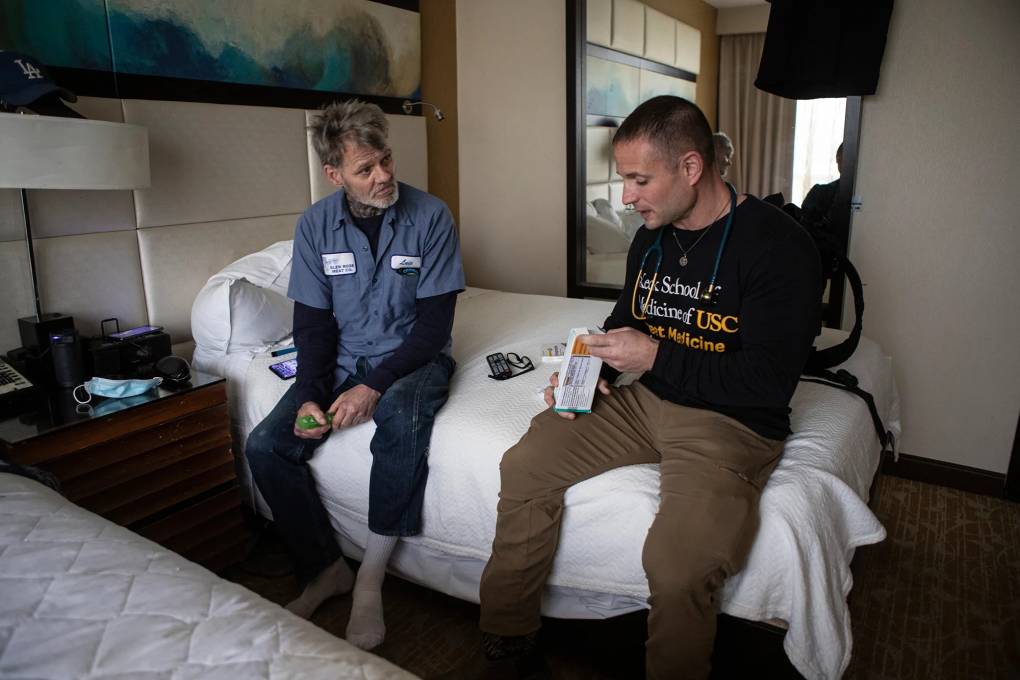
"caption": "Patient Steven Dombrowski, 'Cowboy,' speaking with physician assistant Brett Feldman in his hotel room at the LA Grand Hotel on Feb. 13, 2023. The hotel was turned into an emergency shelter for unhoused people through Project Roomkey.",
"description": null,
"title": "070523-Street-Medicine-Project-LV-CM_09 copy",
"credit": "Larry Valenzuela/CalMatters/CatchLight Local",
"status": "inherit",
"altTag": "Two men sit on a bed in a hotel room — one with a doctor's stethoscope.",
"isLoading": false,
"fetchFailed": false
},
"news_11975179": {
"type": "attachments",
"id": "news_11975179",
"meta": {
"index": "attachments_1716263798",
"site": "news",
"id": "11975179",
"found": true
},
"parent": 11975156,
"imgSizes": {
"twentyfourteen-full-width": {
"file": "https://cdn.kqed.org/wp-content/uploads/sites/10/2024/02/IMG_5659-1038x576.jpg",
"width": 1038,
"mimeType": "image/jpeg",
"height": 576
},
"thumbnail": {
"file": "https://cdn.kqed.org/wp-content/uploads/sites/10/2024/02/IMG_5659-160x120.jpg",
"width": 160,
"mimeType": "image/jpeg",
"height": 120
},
"post-thumbnail": {
"file": "https://cdn.kqed.org/wp-content/uploads/sites/10/2024/02/IMG_5659-672x372.jpg",
"width": 672,
"mimeType": "image/jpeg",
"height": 372
},
"kqedFullSize": {
"file": "https://cdn.kqed.org/wp-content/uploads/sites/10/2024/02/IMG_5659-scaled.jpg",
"width": 2560,
"height": 1920
},
"2048x2048": {
"file": "https://cdn.kqed.org/wp-content/uploads/sites/10/2024/02/IMG_5659-2048x1536.jpg",
"width": 2048,
"mimeType": "image/jpeg",
"height": 1536
},
"large": {
"file": "https://cdn.kqed.org/wp-content/uploads/sites/10/2024/02/IMG_5659-1020x765.jpg",
"width": 1020,
"mimeType": "image/jpeg",
"height": 765
},
"1536x1536": {
"file": "https://cdn.kqed.org/wp-content/uploads/sites/10/2024/02/IMG_5659-1536x1152.jpg",
"width": 1536,
"mimeType": "image/jpeg",
"height": 1152
},
"full-width": {
"file": "https://cdn.kqed.org/wp-content/uploads/sites/10/2024/02/IMG_5659-1920x1440.jpg",
"width": 1920,
"mimeType": "image/jpeg",
"height": 1440
},
"medium": {
"file": "https://cdn.kqed.org/wp-content/uploads/sites/10/2024/02/IMG_5659-800x600.jpg",
"width": 800,
"mimeType": "image/jpeg",
"height": 600
}
},
"publishDate": 1707436919,
"modified": 1708478350,
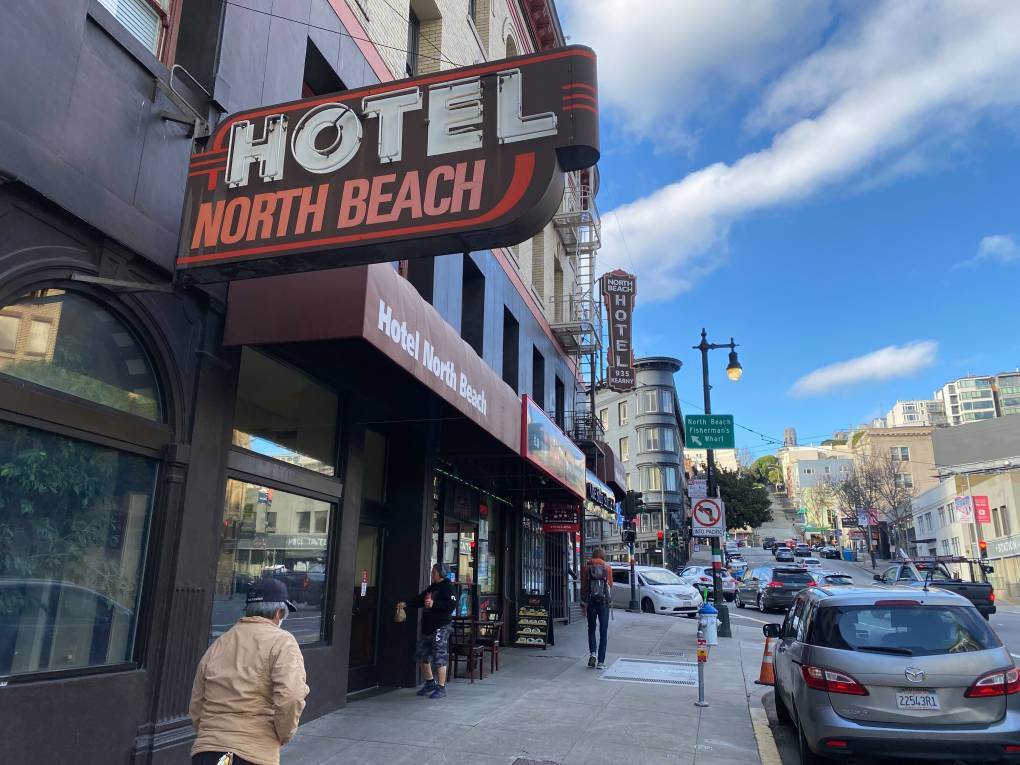
"caption": "Mayor London Breed walked back plans to open the permanent supportive housing site at Hotel North Beach, 935 Kearny St., just days after first announcing the idea.",
"description": null,
"title": "IMG_5659",
"credit": "Sydney Johnson/KQED",
"status": "inherit",
"altTag": "The exterior signage of the North Beach Hotel.",
"isLoading": false,
"fetchFailed": false
},
"news_11923436": {
"type": "attachments",
"id": "news_11923436",
"meta": {
"index": "attachments_1716263798",
"site": "news",
"id": "11923436",
"found": true
},
"parent": 11923467,
"imgSizes": {
"twentyfourteen-full-width": {
"file": "https://ww2.kqed.org/app/uploads/sites/10/2022/08/RS57863_019_KQED_RichmondHousing_08162022-qut-1038x576.jpg",
"width": 1038,
"mimeType": "image/jpeg",
"height": 576
},
"thumbnail": {
"file": "https://ww2.kqed.org/app/uploads/sites/10/2022/08/RS57863_019_KQED_RichmondHousing_08162022-qut-160x107.jpg",
"width": 160,
"mimeType": "image/jpeg",
"height": 107
},
"post-thumbnail": {
"file": "https://ww2.kqed.org/app/uploads/sites/10/2022/08/RS57863_019_KQED_RichmondHousing_08162022-qut-672x372.jpg",
"width": 672,
"mimeType": "image/jpeg",
"height": 372
},
"kqedFullSize": {
"file": "https://ww2.kqed.org/app/uploads/sites/10/2022/08/RS57863_019_KQED_RichmondHousing_08162022-qut.jpg",
"width": 1920,
"height": 1280
},
"large": {
"file": "https://ww2.kqed.org/app/uploads/sites/10/2022/08/RS57863_019_KQED_RichmondHousing_08162022-qut-1020x680.jpg",
"width": 1020,
"mimeType": "image/jpeg",
"height": 680
},
"1536x1536": {
"file": "https://ww2.kqed.org/app/uploads/sites/10/2022/08/RS57863_019_KQED_RichmondHousing_08162022-qut-1536x1024.jpg",
"width": 1536,
"mimeType": "image/jpeg",
"height": 1024
},
"medium": {
"file": "https://ww2.kqed.org/app/uploads/sites/10/2022/08/RS57863_019_KQED_RichmondHousing_08162022-qut-800x533.jpg",
"width": 800,
"mimeType": "image/jpeg",
"height": 533
}
},
"publishDate": 1661372450,
"modified": 1661380100,
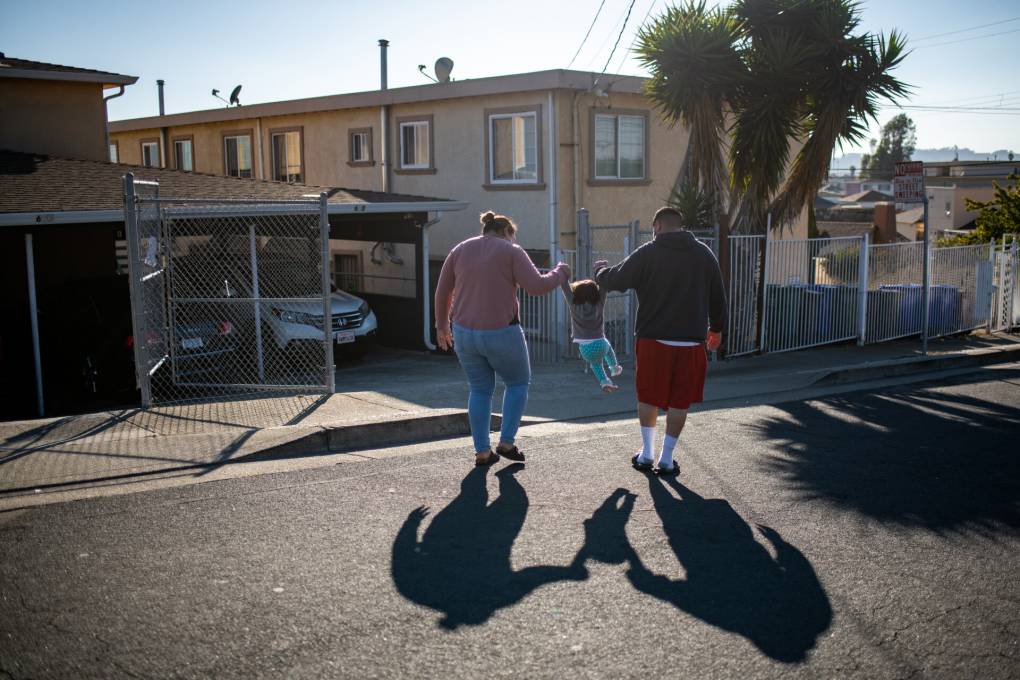
"caption": "Cynthia Osorio-Hernandez walks with her family on the street in front of her home in Richmond on Aug. 16, 2022.",
"description": null,
"title": "RS57863_019_KQED_RichmondHousing_08162022-qut",
"credit": "Beth LaBerge/KQED",
"status": "inherit",
"altTag": "Two people holding the hands of a child to lift them up in the air.",
"isLoading": false,
"fetchFailed": false
},
"news_11975014": {
"type": "attachments",
"id": "news_11975014",
"meta": {
"index": "attachments_1716263798",
"site": "news",
"id": "11975014",
"found": true
},
"parent": 11974991,
"imgSizes": {
"twentyfourteen-full-width": {
"file": "https://cdn.kqed.org/wp-content/uploads/sites/10/2024/02/Prop1-behavioral-health-spending-1038x576.jpg",
"width": 1038,
"mimeType": "image/jpeg",
"height": 576
},
"thumbnail": {
"file": "https://cdn.kqed.org/wp-content/uploads/sites/10/2024/02/Prop1-behavioral-health-spending-160x107.jpg",
"width": 160,
"mimeType": "image/jpeg",
"height": 107
},
"post-thumbnail": {
"file": "https://cdn.kqed.org/wp-content/uploads/sites/10/2024/02/Prop1-behavioral-health-spending-672x372.jpg",
"width": 672,
"mimeType": "image/jpeg",
"height": 372
},
"kqedFullSize": {
"file": "https://cdn.kqed.org/wp-content/uploads/sites/10/2024/02/Prop1-behavioral-health-spending.jpg",
"width": 1920,
"height": 1280
},
"large": {
"file": "https://cdn.kqed.org/wp-content/uploads/sites/10/2024/02/Prop1-behavioral-health-spending-1020x680.jpg",
"width": 1020,
"mimeType": "image/jpeg",
"height": 680
},
"1536x1536": {
"file": "https://cdn.kqed.org/wp-content/uploads/sites/10/2024/02/Prop1-behavioral-health-spending-1536x1024.jpg",
"width": 1536,
"mimeType": "image/jpeg",
"height": 1024
},
"medium": {
"file": "https://cdn.kqed.org/wp-content/uploads/sites/10/2024/02/Prop1-behavioral-health-spending-800x533.jpg",
"width": 800,
"mimeType": "image/jpeg",
"height": 533
}
},
"publishDate": 1707337731,
"modified": 1707337822,
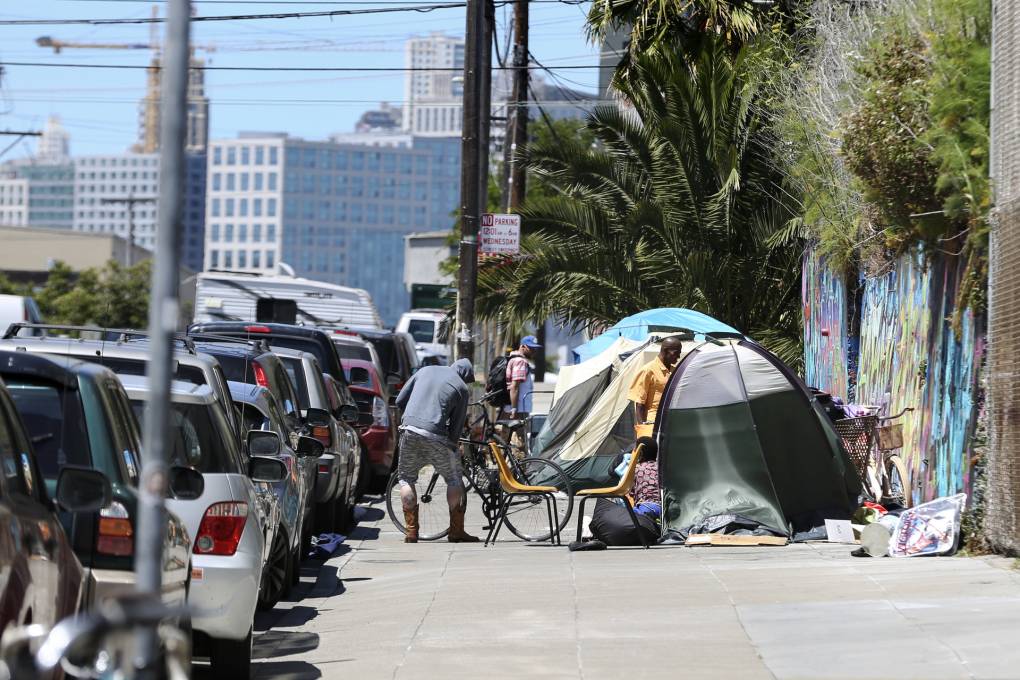
"caption": "A homeless encampment located on Florida St in the Mission District of San Francisco, Calif.",
"description": null,
"title": "Prop1-behavioral-health-spending",
"credit": "Brittany Hosea-Small/KQED",
"status": "inherit",
"altTag": "A wide San Francisco with a tent encampment.",
"isLoading": false,
"fetchFailed": false
},
"news_11943888": {
"type": "attachments",
"id": "news_11943888",
"meta": {
"index": "attachments_1716263798",
"site": "news",
"id": "11943888",
"found": true
},
"parent": 11943887,
"imgSizes": {
"twentyfourteen-full-width": {
"file": "https://ww2.kqed.org/app/uploads/sites/10/2023/03/picture-of-two-men-in-the-background-and-table-with-food-in-the-foreground-1038x450.png",
"width": 1038,
"mimeType": "image/png",
"height": 450
},
"thumbnail": {
"file": "https://ww2.kqed.org/app/uploads/sites/10/2023/03/picture-of-two-men-in-the-background-and-table-with-food-in-the-foreground-160x67.png",
"width": 160,
"mimeType": "image/png",
"height": 67
},
"post-thumbnail": {
"file": "https://ww2.kqed.org/app/uploads/sites/10/2023/03/picture-of-two-men-in-the-background-and-table-with-food-in-the-foreground-672x372.png",
"width": 672,
"mimeType": "image/png",
"height": 372
},
"kqedFullSize": {
"file": "https://ww2.kqed.org/app/uploads/sites/10/2023/03/picture-of-two-men-in-the-background-and-table-with-food-in-the-foreground.png",
"width": 1068,
"height": 450
},
"large": {
"file": "https://ww2.kqed.org/app/uploads/sites/10/2023/03/picture-of-two-men-in-the-background-and-table-with-food-in-the-foreground-1020x430.png",
"width": 1020,
"mimeType": "image/png",
"height": 430
},
"medium": {
"file": "https://ww2.kqed.org/app/uploads/sites/10/2023/03/picture-of-two-men-in-the-background-and-table-with-food-in-the-foreground-800x337.png",
"width": 800,
"mimeType": "image/png",
"height": 337
}
},
"publishDate": 1679029877,
"modified": 1679029925,
"caption": "Donnie Young (derecha) y Alex Muñoz (izquierda) inspeccionan su casa inundada el 11 de enero de 2023, en Planada. La ciudad del Valle Central fue devastada por inundaciones generalizadas después de que un río atmosférico severo se movió a través de la zona a principios de esa semana.",
"description": null,
"title": "picture of two men in the background, and table with food in the foreground",
"credit": "Justin Sullivan/Getty Images",
"status": "inherit",
"altTag": null,
"isLoading": false,
"fetchFailed": false
},
"news_11974433": {
"type": "attachments",
"id": "news_11974433",
"meta": {
"index": "attachments_1716263798",
"site": "news",
"id": "11974433",
"found": true
},
"parent": 0,
"imgSizes": {
"twentyfourteen-full-width": {
"file": "https://cdn.kqed.org/wp-content/uploads/sites/10/2024/01/240130-HomelessCount-51-BL-1038x576.jpg",
"width": 1038,
"mimeType": "image/jpeg",
"height": 576
},
"thumbnail": {
"file": "https://cdn.kqed.org/wp-content/uploads/sites/10/2024/01/240130-HomelessCount-51-BL-160x107.jpg",
"width": 160,
"mimeType": "image/jpeg",
"height": 107
},
"post-thumbnail": {
"file": "https://cdn.kqed.org/wp-content/uploads/sites/10/2024/01/240130-HomelessCount-51-BL-672x372.jpg",
"width": 672,
"mimeType": "image/jpeg",
"height": 372
},
"kqedFullSize": {
"file": "https://cdn.kqed.org/wp-content/uploads/sites/10/2024/01/240130-HomelessCount-51-BL.jpg",
"width": 2000,
"height": 1333
},
"large": {
"file": "https://cdn.kqed.org/wp-content/uploads/sites/10/2024/01/240130-HomelessCount-51-BL-1020x680.jpg",
"width": 1020,
"mimeType": "image/jpeg",
"height": 680
},
"1536x1536": {
"file": "https://cdn.kqed.org/wp-content/uploads/sites/10/2024/01/240130-HomelessCount-51-BL-1536x1024.jpg",
"width": 1536,
"mimeType": "image/jpeg",
"height": 1024
},
"full-width": {
"file": "https://cdn.kqed.org/wp-content/uploads/sites/10/2024/01/240130-HomelessCount-51-BL-1920x1280.jpg",
"width": 1920,
"mimeType": "image/jpeg",
"height": 1280
},
"medium": {
"file": "https://cdn.kqed.org/wp-content/uploads/sites/10/2024/01/240130-HomelessCount-51-BL-800x533.jpg",
"width": 800,
"mimeType": "image/jpeg",
"height": 533
}
},
"publishDate": 1706752591,
"modified": 1706752609,
"caption": "Outreach specialist Sean Bullock inputs data during a point-in-time homeless population count in the Bayview Hunters Point neighborhood in San Francisco on Jan. 30, 2024. Teams spread out through San Francisco to count sheltered and unsheltered people experiencing homelessness on a single night.",
"description": null,
"title": "240130-HomelessCount-51-BL",
"credit": "Beth LaBerge/KQED",
"status": "inherit",
"altTag": null,
"isLoading": false,
"fetchFailed": false
},
"news_11974434": {
"type": "attachments",
"id": "news_11974434",
"meta": {
"index": "attachments_1716263798",
"site": "news",
"id": "11974434",
"found": true
},
"parent": 0,
"imgSizes": {
"twentyfourteen-full-width": {
"file": "https://cdn.kqed.org/wp-content/uploads/sites/10/2024/01/240130-HomelessCount-02-BL-1038x576.jpg",
"width": 1038,
"mimeType": "image/jpeg",
"height": 576
},
"thumbnail": {
"file": "https://cdn.kqed.org/wp-content/uploads/sites/10/2024/01/240130-HomelessCount-02-BL-160x107.jpg",
"width": 160,
"mimeType": "image/jpeg",
"height": 107
},
"post-thumbnail": {
"file": "https://cdn.kqed.org/wp-content/uploads/sites/10/2024/01/240130-HomelessCount-02-BL-672x372.jpg",
"width": 672,
"mimeType": "image/jpeg",
"height": 372
},
"kqedFullSize": {
"file": "https://cdn.kqed.org/wp-content/uploads/sites/10/2024/01/240130-HomelessCount-02-BL.jpg",
"width": 2000,
"height": 1333
},
"large": {
"file": "https://cdn.kqed.org/wp-content/uploads/sites/10/2024/01/240130-HomelessCount-02-BL-1020x680.jpg",
"width": 1020,
"mimeType": "image/jpeg",
"height": 680
},
"1536x1536": {
"file": "https://cdn.kqed.org/wp-content/uploads/sites/10/2024/01/240130-HomelessCount-02-BL-1536x1024.jpg",
"width": 1536,
"mimeType": "image/jpeg",
"height": 1024
},
"full-width": {
"file": "https://cdn.kqed.org/wp-content/uploads/sites/10/2024/01/240130-HomelessCount-02-BL-1920x1280.jpg",
"width": 1920,
"mimeType": "image/jpeg",
"height": 1280
},
"medium": {
"file": "https://cdn.kqed.org/wp-content/uploads/sites/10/2024/01/240130-HomelessCount-02-BL-800x533.jpg",
"width": 800,
"mimeType": "image/jpeg",
"height": 533
}
},
"publishDate": 1706753004,
"modified": 1706770305,
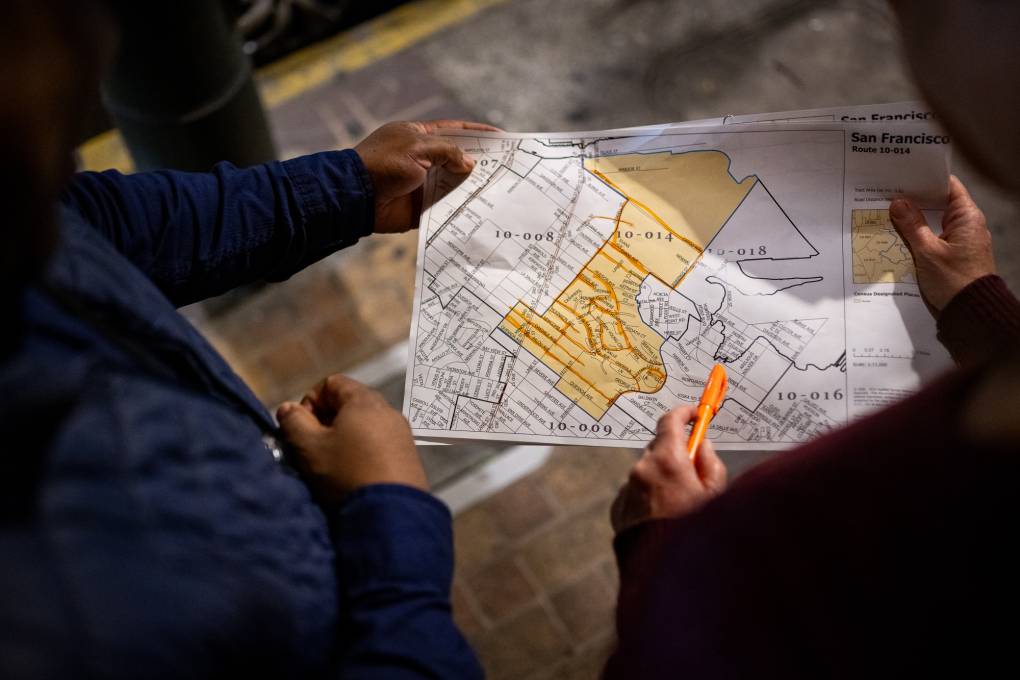
"caption": "Teams from the city look at a map designating the point-in-time count of people experiencing homelessnesses in San Francisco. ",
"description": null,
"title": "240130-HomelessCount-02-BL",
"credit": "Beth LaBerge/KQED",
"status": "inherit",
"altTag": "Two hans holding a map of a neighborhood",
"isLoading": false,
"fetchFailed": false
},
"news_11973862": {
"type": "attachments",
"id": "news_11973862",
"meta": {
"index": "attachments_1716263798",
"site": "news",
"id": "11973862",
"found": true
},
"parent": 11973859,
"imgSizes": {
"twentyfourteen-full-width": {
"file": "https://cdn.kqed.org/wp-content/uploads/sites/10/2024/01/012524_Alameda-PIT-Count_LE_CM_11-1038x576.jpg",
"width": 1038,
"mimeType": "image/jpeg",
"height": 576
},
"thumbnail": {
"file": "https://cdn.kqed.org/wp-content/uploads/sites/10/2024/01/012524_Alameda-PIT-Count_LE_CM_11-160x107.jpg",
"width": 160,
"mimeType": "image/jpeg",
"height": 107
},
"post-thumbnail": {
"file": "https://cdn.kqed.org/wp-content/uploads/sites/10/2024/01/012524_Alameda-PIT-Count_LE_CM_11-672x372.jpg",
"width": 672,
"mimeType": "image/jpeg",
"height": 372
},
"kqedFullSize": {
"file": "https://cdn.kqed.org/wp-content/uploads/sites/10/2024/01/012524_Alameda-PIT-Count_LE_CM_11.jpg",
"width": 2000,
"height": 1333
},
"large": {
"file": "https://cdn.kqed.org/wp-content/uploads/sites/10/2024/01/012524_Alameda-PIT-Count_LE_CM_11-1020x680.jpg",
"width": 1020,
"mimeType": "image/jpeg",
"height": 680
},
"1536x1536": {
"file": "https://cdn.kqed.org/wp-content/uploads/sites/10/2024/01/012524_Alameda-PIT-Count_LE_CM_11-1536x1024.jpg",
"width": 1536,
"mimeType": "image/jpeg",
"height": 1024
},
"full-width": {
"file": "https://cdn.kqed.org/wp-content/uploads/sites/10/2024/01/012524_Alameda-PIT-Count_LE_CM_11-1920x1280.jpg",
"width": 1920,
"mimeType": "image/jpeg",
"height": 1280
},
"medium": {
"file": "https://cdn.kqed.org/wp-content/uploads/sites/10/2024/01/012524_Alameda-PIT-Count_LE_CM_11-800x533.jpg",
"width": 800,
"mimeType": "image/jpeg",
"height": 533
}
},
"publishDate": 1706299338,
"modified": 1706318327,
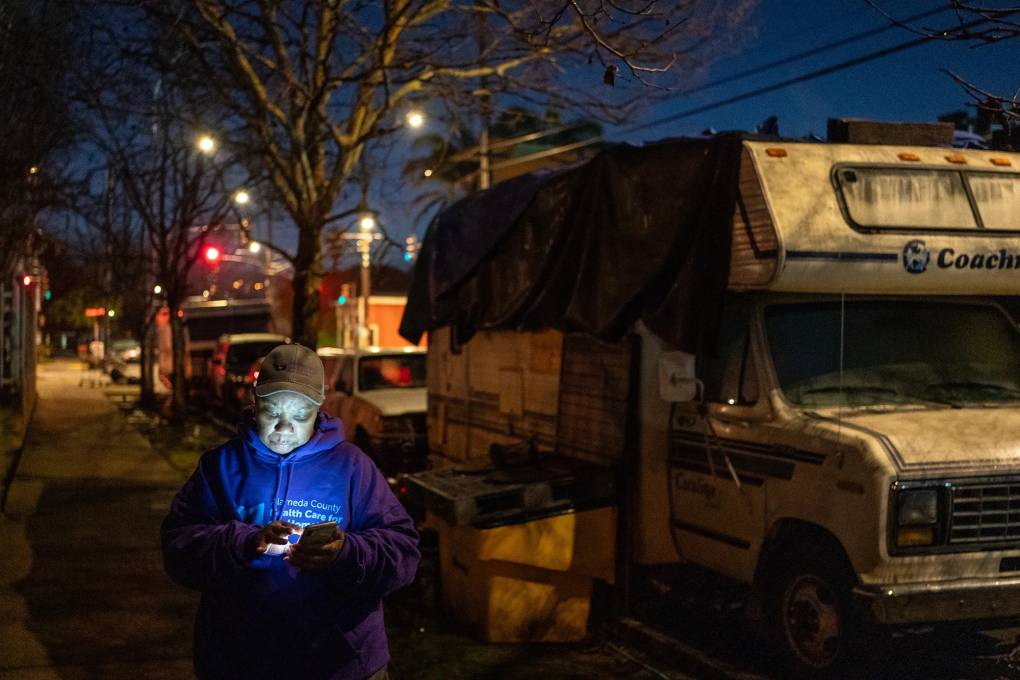
"caption": "Deidra Perry, program financial manager for Alameda County Healthcare for the Homeless, takes part in Alameda County’s 2024 point-in-time count in Berkeley on Jan. 25, 2024. The PIT count, which included a voluntary survey, gathers data on the county’s homeless population.",
"description": null,
"title": "012524_Alameda-PIT-Count_LE_CM_11",
"credit": "Loren Elliott for CalMatters",
"status": "inherit",
"altTag": "A Black woman in a sweatshirt stands outside an RV on a street, looking at her phone in the dark.",
"isLoading": false,
"fetchFailed": false
},
"news_11963684": {
"type": "attachments",
"id": "news_11963684",
"meta": {
"index": "attachments_1716263798",
"site": "news",
"id": "11963684",
"found": true
},
"parent": 0,
"imgSizes": {
"twentyfourteen-full-width": {
"file": "https://cdn.kqed.org/wp-content/uploads/sites/10/2023/10/20230930-Sea-Circus-021-JY-KQED-1038x576.jpg",
"width": 1038,
"mimeType": "image/jpeg",
"height": 576
},
"thumbnail": {
"file": "https://cdn.kqed.org/wp-content/uploads/sites/10/2023/10/20230930-Sea-Circus-021-JY-KQED-160x107.jpg",
"width": 160,
"mimeType": "image/jpeg",
"height": 107
},
"post-thumbnail": {
"file": "https://cdn.kqed.org/wp-content/uploads/sites/10/2023/10/20230930-Sea-Circus-021-JY-KQED-672x372.jpg",
"width": 672,
"mimeType": "image/jpeg",
"height": 372
},
"kqedFullSize": {
"file": "https://cdn.kqed.org/wp-content/uploads/sites/10/2023/10/20230930-Sea-Circus-021-JY-KQED.jpg",
"width": 2000,
"height": 1333
},
"large": {
"file": "https://cdn.kqed.org/wp-content/uploads/sites/10/2023/10/20230930-Sea-Circus-021-JY-KQED-1020x680.jpg",
"width": 1020,
"mimeType": "image/jpeg",
"height": 680
},
"1536x1536": {
"file": "https://cdn.kqed.org/wp-content/uploads/sites/10/2023/10/20230930-Sea-Circus-021-JY-KQED-1536x1024.jpg",
"width": 1536,
"mimeType": "image/jpeg",
"height": 1024
},
"full-width": {
"file": "https://cdn.kqed.org/wp-content/uploads/sites/10/2023/10/20230930-Sea-Circus-021-JY-KQED-1920x1280.jpg",
"width": 1920,
"mimeType": "image/jpeg",
"height": 1280
},
"medium": {
"file": "https://cdn.kqed.org/wp-content/uploads/sites/10/2023/10/20230930-Sea-Circus-021-JY-KQED-800x533.jpg",
"width": 800,
"mimeType": "image/jpeg",
"height": 533
}
},
"publishDate": 1696611364,
"modified": 1706209835,
"caption": "Marisa Gregory dances with lit torches as the Secrets of the Sea Circus Festival begins on Forbes Island in Brentwood, Contra Costa County, on Saturday, Sept. 30, 2023.",
"description": null,
"title": "Sea Circus",
"credit": "Juliana Yamada/KQED",
"status": "inherit",
"altTag": "A person smiles and twirls flaming batons.",
"isLoading": false,
"fetchFailed": false
},
"news_11973661": {
"type": "attachments",
"id": "news_11973661",
"meta": {
"index": "attachments_1716263798",
"site": "news",
"id": "11973661",
"found": true
},
"parent": 11973653,
"imgSizes": {
"twentyfourteen-full-width": {
"file": "https://cdn.kqed.org/wp-content/uploads/sites/10/2024/01/071223_San-Francisco_Housing_SN_CM_19-1038x576.jpg",
"width": 1038,
"mimeType": "image/jpeg",
"height": 576
},
"thumbnail": {
"file": "https://cdn.kqed.org/wp-content/uploads/sites/10/2024/01/071223_San-Francisco_Housing_SN_CM_19-160x107.jpg",
"width": 160,
"mimeType": "image/jpeg",
"height": 107
},
"post-thumbnail": {
"file": "https://cdn.kqed.org/wp-content/uploads/sites/10/2024/01/071223_San-Francisco_Housing_SN_CM_19-672x372.jpg",
"width": 672,
"mimeType": "image/jpeg",
"height": 372
},
"kqedFullSize": {
"file": "https://cdn.kqed.org/wp-content/uploads/sites/10/2024/01/071223_San-Francisco_Housing_SN_CM_19.jpg",
"width": 2000,
"height": 1333
},
"large": {
"file": "https://cdn.kqed.org/wp-content/uploads/sites/10/2024/01/071223_San-Francisco_Housing_SN_CM_19-1020x680.jpg",
"width": 1020,
"mimeType": "image/jpeg",
"height": 680
},
"1536x1536": {
"file": "https://cdn.kqed.org/wp-content/uploads/sites/10/2024/01/071223_San-Francisco_Housing_SN_CM_19-1536x1024.jpg",
"width": 1536,
"mimeType": "image/jpeg",
"height": 1024
},
"full-width": {
"file": "https://cdn.kqed.org/wp-content/uploads/sites/10/2024/01/071223_San-Francisco_Housing_SN_CM_19-1920x1280.jpg",
"width": 1920,
"mimeType": "image/jpeg",
"height": 1280
},
"medium": {
"file": "https://cdn.kqed.org/wp-content/uploads/sites/10/2024/01/071223_San-Francisco_Housing_SN_CM_19-800x533.jpg",
"width": 800,
"mimeType": "image/jpeg",
"height": 533
}
},
"publishDate": 1706208111,
"modified": 1706208201,
"caption": "Housing construction in San Francisco on July 12, 2023. ",
"description": null,
"title": "071223_San-Francisco_Housing_SN_CM_19",
"credit": "Semantha Norris/CalMatters",
"status": "inherit",
"altTag": "A construction crane over a building.",
"isLoading": false,
"fetchFailed": false
}
},
"audioPlayerReducer": {
"postId": "stream_live",
"isPaused": true,
"isPlaying": false,
"pfsActive": false,
"pledgeModalIsOpen": true,
"playerDrawerIsOpen": false,
"liveAudioPlayStartedAt": 0,
"liveAudioPlayContext": ""
},
"authorsReducer": {
"byline_news_11975256": {
"type": "authors",
"id": "byline_news_11975256",
"meta": {
"override": true
},
"slug": "byline_news_11975256",
"name": "\u003ca href=\"https://calmatters.org/author/marisa-kendall/\">Marisa Kendall\u003c/a>",
"isLoading": false
},
"byline_news_11973859": {
"type": "authors",
"id": "byline_news_11973859",
"meta": {
"override": true
},
"slug": "byline_news_11973859",
"name": "\u003ca href=\"https://calmatters.org/author/marisa-kendall/\">Marisa Kendall\u003c/a>",
"isLoading": false
},
"byline_news_11973656": {
"type": "authors",
"id": "byline_news_11973656",
"meta": {
"override": true
},
"slug": "byline_news_11973656",
"name": "Jon Kalish",
"isLoading": false
},
"byline_news_11973653": {
"type": "authors",
"id": "byline_news_11973653",
"meta": {
"override": true
},
"slug": "byline_news_11973653",
"name": "Ben Christopher",
"isLoading": false
},
"ohubertallen": {
"type": "authors",
"id": "102",
"meta": {
"index": "authors_1716337520",
"id": "102",
"found": true
},
"name": "Olivia Allen-Price",
"firstName": "Olivia",
"lastName": "Allen-Price",
"slug": "ohubertallen",
"email": "oallenprice@kqed.org",
"display_author_email": false,
"staff_mastheads": [
"news"
],
"title": "Senior Editor",
"bio": "Olivia Allen-Price is senior editor and host of the award-winning Bay Curious podcast. Prior to joining KQED in 2013, Olivia worked at The Baltimore Sun and The Virginian-Pilot in Norfolk, Va. She holds degrees in journalism and political science from Elon University. Her work has earned awards from the Society of Professional Journalists, the Hearst Foundation and Hearken. She loves to talk about running and curly hair.\r\n\r\nFollow: \u003ca href=\"https://twitter.com/oallenprice\">@oallenprice\u003c/a>\r\nEmail: \u003ca href=\"mailto:oallenprice@kqed.org\">oallenprice@kqed.org\u003c/a>",
"avatar": "https://secure.gravatar.com/avatar/07f7803c1f6be56f3be58ef276dfa64dce898502e0554408ef4858451a8294f7?s=600&d=blank&r=g",
"twitter": "oallenprice",
"bluesky": null,
"facebook": null,
"instagram": null,
"linkedin": null,
"sites": [
{
"site": "",
"roles": [
"editor"
]
},
{
"site": "arts",
"roles": [
"subscriber"
]
},
{
"site": "news",
"roles": [
"administrator"
]
},
{
"site": "pop",
"roles": [
"administrator"
]
},
{
"site": "bayareabites",
"roles": [
"contributor"
]
},
{
"site": "stateofhealth",
"roles": [
"administrator"
]
},
{
"site": "science",
"roles": [
"editor"
]
}
],
"headData": {
"title": "Olivia Allen-Price | KQED",
"description": "Senior Editor",
"ogImgSrc": "https://secure.gravatar.com/avatar/07f7803c1f6be56f3be58ef276dfa64dce898502e0554408ef4858451a8294f7?s=600&d=blank&r=g",
"twImgSrc": "https://secure.gravatar.com/avatar/07f7803c1f6be56f3be58ef276dfa64dce898502e0554408ef4858451a8294f7?s=600&d=blank&r=g"
},
"isLoading": false,
"link": "/author/ohubertallen"
},
"gmarzorati": {
"type": "authors",
"id": "227",
"meta": {
"index": "authors_1716337520",
"id": "227",
"found": true
},
"name": "Guy Marzorati",
"firstName": "Guy",
"lastName": "Marzorati",
"slug": "gmarzorati",
"email": "gmarzorati@KQED.org",
"display_author_email": true,
"staff_mastheads": [
"news"
],
"title": "Correspondent",
"bio": "Guy Marzorati is a correspondent on KQED's California Politics and Government Desk, based in San Jose. A graduate of Santa Clara University, Guy joined KQED in 2013. He reports on state and local politics and produces KQED's digital voter guide.",
"avatar": "https://secure.gravatar.com/avatar/e7038b8dbfd55b104369b76b1cd0b9de?s=600&d=blank&r=g",
"twitter": "guymarzorati",
"facebook": null,
"instagram": null,
"linkedin": null,
"sites": [
{
"site": "",
"roles": [
"editor"
]
},
{
"site": "news",
"roles": [
"editor"
]
},
{
"site": "science",
"roles": [
"editor"
]
},
{
"site": "forum",
"roles": [
"editor"
]
},
{
"site": "elections",
"roles": [
"editor"
]
},
{
"site": "liveblog",
"roles": [
"editor"
]
}
],
"headData": {
"title": "Guy Marzorati | KQED",
"description": "Correspondent",
"ogImgSrc": "https://secure.gravatar.com/avatar/e7038b8dbfd55b104369b76b1cd0b9de?s=600&d=blank&r=g",
"twImgSrc": "https://secure.gravatar.com/avatar/e7038b8dbfd55b104369b76b1cd0b9de?s=600&d=blank&r=g"
},
"isLoading": false,
"link": "/author/gmarzorati"
},
"ecruzguevarra": {
"type": "authors",
"id": "8654",
"meta": {
"index": "authors_1716337520",
"id": "8654",
"found": true
},
"name": "Ericka Cruz Guevarra",
"firstName": "Ericka",
"lastName": "Cruz Guevarra",
"slug": "ecruzguevarra",
"email": "ecruzguevarra@kqed.org",
"display_author_email": true,
"staff_mastheads": [
"news"
],
"title": "Producer, The Bay Podcast",
"bio": "Ericka Cruz Guevarra is host of \u003ca href=\"https://www.kqed.org/podcasts/thebay\">\u003cem>The Bay\u003c/em>\u003c/a> podcast at KQED. Before host, she was the show’s producer. Her work in that capacity includes a three-part reported series on policing in Vallejo, which won a 2020 excellence in journalism award from the Society of Professional Journalists. Ericka has worked as a breaking news reporter at Oregon Public Broadcasting, helped produce the Code Switch podcast, and was KQED’s inaugural Raul Ramirez Diversity Fund intern. She’s also an alumna of NPR’s Next Generation Radio program. Send her an email if you have strong feelings about whether Fairfield and Suisun City are the Bay. Ericka is represented by SAG-AFTRA.",
"avatar": "https://secure.gravatar.com/avatar/accefc1de4bafc7e234b69bcb9b6f6536c130fd84709bc3069ef11a78787e1bb?s=600&d=blank&r=g",
"twitter": "NotoriousECG",
"bluesky": null,
"facebook": null,
"instagram": null,
"linkedin": null,
"sites": [
{
"site": "arts",
"roles": [
"subscriber"
]
},
{
"site": "news",
"roles": [
"editor",
"manage_categories"
]
},
{
"site": "futureofyou",
"roles": [
"subscriber"
]
},
{
"site": "stateofhealth",
"roles": [
"subscriber"
]
},
{
"site": "science",
"roles": [
"editor"
]
},
{
"site": "forum",
"roles": [
"subscriber"
]
}
],
"headData": {
"title": "Ericka Cruz Guevarra | KQED",
"description": "Producer, The Bay Podcast",
"ogImgSrc": "https://secure.gravatar.com/avatar/accefc1de4bafc7e234b69bcb9b6f6536c130fd84709bc3069ef11a78787e1bb?s=600&d=blank&r=g",
"twImgSrc": "https://secure.gravatar.com/avatar/accefc1de4bafc7e234b69bcb9b6f6536c130fd84709bc3069ef11a78787e1bb?s=600&d=blank&r=g"
},
"isLoading": false,
"link": "/author/ecruzguevarra"
},
"amontecillo": {
"type": "authors",
"id": "11649",
"meta": {
"index": "authors_1716337520",
"id": "11649",
"found": true
},
"name": "Alan Montecillo",
"firstName": "Alan",
"lastName": "Montecillo",
"slug": "amontecillo",
"email": "amontecillo@kqed.org",
"display_author_email": false,
"staff_mastheads": [
"news"
],
"title": "KQED Contributor",
"bio": "Alan Montecillo is the senior editor of \u003cem>\u003ca href=\"http://kqed.org/thebay\">The Bay\u003c/a>, \u003c/em> KQED's local news podcast. Before moving to the Bay Area, he worked as a senior talk show producer for WILL in Champaign-Urbana, Illinois and at Oregon Public Broadcasting in Portland, Oregon. He has won journalism awards from the Society of Professional Journalists Northern California, the Public Media Journalists Association, The Signal Awards, and has also received a regional Edward R. Murrow award. Alan is a Filipino American from Hong Kong and a graduate of Reed College.",
"avatar": "https://secure.gravatar.com/avatar/268f53a2066899ea9efdd8a5900218b17c822d9862cbc9326cccec53ef41d349?s=600&d=blank&r=g",
"twitter": "alanmontecillo",
"bluesky": null,
"facebook": null,
"instagram": null,
"linkedin": null,
"sites": [
{
"site": "",
"roles": [
"editor"
]
},
{
"site": "news",
"roles": [
"editor",
"manage_categories"
]
}
],
"headData": {
"title": "Alan Montecillo | KQED",
"description": "KQED Contributor",
"ogImgSrc": "https://secure.gravatar.com/avatar/268f53a2066899ea9efdd8a5900218b17c822d9862cbc9326cccec53ef41d349?s=600&d=blank&r=g",
"twImgSrc": "https://secure.gravatar.com/avatar/268f53a2066899ea9efdd8a5900218b17c822d9862cbc9326cccec53ef41d349?s=600&d=blank&r=g"
},
"isLoading": false,
"link": "/author/amontecillo"
},
"ebaldassari": {
"type": "authors",
"id": "11652",
"meta": {
"index": "authors_1716337520",
"id": "11652",
"found": true
},
"name": "Erin Baldassari",
"firstName": "Erin",
"lastName": "Baldassari",
"slug": "ebaldassari",
"email": "ebaldassari@KQED.org",
"display_author_email": true,
"staff_mastheads": [
"news"
],
"title": "Staff Writer",
"bio": "Erin Baldassari covers housing for KQED. She's a former print journalist and most recently worked as the transportation reporter for the \u003cem>Mercury News\u003c/em> and \u003cem>East Bay Times. \u003c/em>There, she focused on how the Bay Area’s housing shortage has changed the way people move around the region. She also served on the \u003cem>East Bay Times\u003c/em>’ 2017 Pulitzer Prize-winning team for coverage of the Ghost Ship Fire in Oakland. Prior to that, Erin worked as a breaking news and general assignment reporter for a variety of outlets in the Bay Area and the greater Boston area. A Tufts University alumna, Erin grew up in the foothills of the Sierra Nevada mountains and in Sonoma County. She is a life-long KQED listener.",
"avatar": "https://secure.gravatar.com/avatar/5e95cad64a8ca08288082212e199d2b0cbeb4fd8e8ef5339395f361032bbe005?s=600&d=blank&r=g",
"twitter": "e_baldi",
"bluesky": null,
"facebook": null,
"instagram": null,
"linkedin": null,
"sites": [
{
"site": "news",
"roles": [
"edit_others_posts",
"editor"
]
},
{
"site": "science",
"roles": [
"editor"
]
},
{
"site": "liveblog",
"roles": [
"editor"
]
}
],
"headData": {
"title": "Erin Baldassari | KQED",
"description": "Staff Writer",
"ogImgSrc": "https://secure.gravatar.com/avatar/5e95cad64a8ca08288082212e199d2b0cbeb4fd8e8ef5339395f361032bbe005?s=600&d=blank&r=g",
"twImgSrc": "https://secure.gravatar.com/avatar/5e95cad64a8ca08288082212e199d2b0cbeb4fd8e8ef5339395f361032bbe005?s=600&d=blank&r=g"
},
"isLoading": false,
"link": "/author/ebaldassari"
},
"abandlamudi": {
"type": "authors",
"id": "11672",
"meta": {
"index": "authors_1716337520",
"id": "11672",
"found": true
},
"name": "Adhiti Bandlamudi",
"firstName": "Adhiti",
"lastName": "Bandlamudi",
"slug": "abandlamudi",
"email": "abandlamudi@kqed.org",
"display_author_email": false,
"staff_mastheads": [
"news"
],
"title": "KQED Housing Reporter",
"bio": "Adhiti Bandlamudi reports for KQED's Housing desk. She focuses on how housing gets built across the Bay Area. Before joining KQED in 2020, she reported for WUNC in Durham, North Carolina, WABE in Atlanta, Georgia and Capital Public Radio in Sacramento. In 2017, she was awarded a Kroc Fellowship at NPR where she reported on everything from sprinkles to the Golden State Killer's arrest. When she's not reporting, she's baking new recipes in her kitchen or watching movies with friends and family. She's originally from Georgia and has strong opinions about Great British Bake Off.",
"avatar": "https://secure.gravatar.com/avatar/868129c8b257bb99a3500e2c86a65400?s=600&d=mm&r=g",
"twitter": "oddity_adhiti",
"facebook": null,
"instagram": null,
"linkedin": null,
"sites": [
{
"site": "arts",
"roles": [
"author"
]
},
{
"site": "news",
"roles": [
"editor"
]
},
{
"site": "liveblog",
"roles": [
"author"
]
}
],
"headData": {
"title": "Adhiti Bandlamudi | KQED",
"description": "KQED Housing Reporter",
"ogImgSrc": "https://secure.gravatar.com/avatar/868129c8b257bb99a3500e2c86a65400?s=600&d=mm&r=g",
"twImgSrc": "https://secure.gravatar.com/avatar/868129c8b257bb99a3500e2c86a65400?s=600&d=mm&r=g"
},
"isLoading": false,
"link": "/author/abandlamudi"
},
"ccabreralomeli": {
"type": "authors",
"id": "11708",
"meta": {
"index": "authors_1716337520",
"id": "11708",
"found": true
},
"name": "Carlos Cabrera-Lomelí",
"firstName": "Carlos",
"lastName": "Cabrera-Lomelí",
"slug": "ccabreralomeli",
"email": "ccabreralomeli@KQED.org",
"display_author_email": true,
"staff_mastheads": [
"news"
],
"title": "Community Reporter",
"bio": "Carlos Cabrera-Lomelí is a community reporter with KQED's digital engagement team. He also reports and co-produces for KQED's bilingual news hub KQED en Español. He grew up in San Francisco's Mission District and has previously worked with Univision, 48 Hills and REFORMA in Mexico City.",
"avatar": "https://secure.gravatar.com/avatar/c309be9665e484f887b818c89e273ecc673004f426f36b24d00a4d813a2e0518?s=600&d=blank&r=g",
"twitter": "@LomeliCabrera",
"bluesky": null,
"facebook": null,
"instagram": null,
"linkedin": null,
"sites": [
{
"site": "arts",
"roles": [
"editor"
]
},
{
"site": "news",
"roles": [
"editor"
]
},
{
"site": "about",
"roles": [
"editor"
]
},
{
"site": "science",
"roles": [
"editor"
]
},
{
"site": "perspectives",
"roles": [
"editor"
]
},
{
"site": "elections",
"roles": [
"editor"
]
},
{
"site": "liveblog",
"roles": [
"contributor"
]
}
],
"headData": {
"title": "Carlos Cabrera-Lomelí | KQED",
"description": "Community Reporter",
"ogImgSrc": "https://secure.gravatar.com/avatar/c309be9665e484f887b818c89e273ecc673004f426f36b24d00a4d813a2e0518?s=600&d=blank&r=g",
"twImgSrc": "https://secure.gravatar.com/avatar/c309be9665e484f887b818c89e273ecc673004f426f36b24d00a4d813a2e0518?s=600&d=blank&r=g"
},
"isLoading": false,
"link": "/author/ccabreralomeli"
},
"mesquinca": {
"type": "authors",
"id": "11802",
"meta": {
"index": "authors_1716337520",
"id": "11802",
"found": true
},
"name": "Maria Esquinca",
"firstName": "Maria",
"lastName": "Esquinca",
"slug": "mesquinca",
"email": "mesquinca@kqed.org",
"display_author_email": false,
"staff_mastheads": [],
"title": "Producer, The Bay",
"bio": "María Esquinca is a producer of The Bay. Before that, she was a New York Women’s Foundation IGNITE Fellow at Latino USA. She worked at Radio Bilingue where she covered the San Joaquin Valley. Maria has interned at WLRN, News 21, The New York Times Student Journalism Institute and at Crain’s Detroit Business as a Dow Jones News Fund Business Reporting Intern. She is an MFA graduate from the University of Miami. In 2017, she graduated from the Walter Cronkite School of Journalism and Mass Communication with a Master of Mass Communication. A fronteriza, she was born in Ciudad Juárez, Chihuahua, Mexico and grew up in El Paso, Texas.",
"avatar": "https://secure.gravatar.com/avatar/77cedba18aae91da775038ba06dcd8d0?s=600&d=blank&r=g",
"twitter": "@m_esquinca",
"facebook": null,
"instagram": null,
"linkedin": null,
"sites": [
{
"site": "news",
"roles": []
}
],
"headData": {
"title": "Maria Esquinca | KQED",
"description": "Producer, The Bay",
"ogImgSrc": "https://secure.gravatar.com/avatar/77cedba18aae91da775038ba06dcd8d0?s=600&d=blank&r=g",
"twImgSrc": "https://secure.gravatar.com/avatar/77cedba18aae91da775038ba06dcd8d0?s=600&d=blank&r=g"
},
"isLoading": false,
"link": "/author/mesquinca"
},
"sjohnson": {
"type": "authors",
"id": "11840",
"meta": {
"index": "authors_1716337520",
"id": "11840",
"found": true
},
"name": "Sydney Johnson",
"firstName": "Sydney",
"lastName": "Johnson",
"slug": "sjohnson",
"email": "sjohnson@kqed.org",
"display_author_email": false,
"staff_mastheads": [
"news"
],
"title": "KQED Reporter",
"bio": "Sydney Johnson is a general assignment reporter at KQED. She previously reported on public health and city government at the San Francisco Examiner, and before that, she covered statewide education policy for EdSource. Her reporting has won multiple local, state and national awards. Sydney is a graduate of the University of California, Berkeley and lives in San Francisco.",
"avatar": "https://secure.gravatar.com/avatar/97855f2719b72ad6190b7c535fe642c8?s=600&d=blank&r=g",
"twitter": "sydneyfjohnson",
"facebook": null,
"instagram": null,
"linkedin": null,
"sites": [
{
"site": "news",
"roles": [
"editor"
]
}
],
"headData": {
"title": "Sydney Johnson | KQED",
"description": "KQED Reporter",
"ogImgSrc": "https://secure.gravatar.com/avatar/97855f2719b72ad6190b7c535fe642c8?s=600&d=blank&r=g",
"twImgSrc": "https://secure.gravatar.com/avatar/97855f2719b72ad6190b7c535fe642c8?s=600&d=blank&r=g"
},
"isLoading": false,
"link": "/author/sjohnson"
}
},
"pagesReducer": {
"news_category_housing": {
"type": "terms",
"id": "news_6266",
"meta": {
"index": "terms_1716263798",
"site": "news",
"id": "6266",
"score": 11.039913
},
"featImg": null,
"name": "Housing",
"description": null,
"taxonomy": "category",
"headData": {
"twImgId": null,
"twTitle": null,
"ogTitle": null,
"ogImgId": null,
"twDescription": null,
"description": null,
"title": "Housing Archives | KQED News",
"ogDescription": null
},
"ttid": 6290,
"slug": "housing",
"isLoading": false,
"title": "Housing",
"pageMeta": {
"site": "news",
"WpPageTemplate": "page-topic-editorial",
"currentPage": 45
},
"blocks": [
{
"blockName": "kqed/post-list",
"attrs": {
"layout": "cardArticle2",
"query": "posts/news?category=housing",
"seeMore": false,
"paginated": true,
"page": 45
}
},
{
"blockName": "kqed/ad"
}
]
}
},
"pfsSessionReducer": {},
"postsReducer": {
"stream_live": {
"type": "live",
"id": "stream_live",
"audioUrl": "https://streams.kqed.org/kqedradio",
"title": "Live Stream",
"excerpt": "Live Stream information currently unavailable.",
"link": "/radio",
"featImg": "",
"label": {
"name": "KQED Live",
"link": "/"
}
},
"stream_kqedNewscast": {
"type": "posts",
"id": "stream_kqedNewscast",
"audioUrl": "https://www.kqed.org/.stream/anon/radio/RDnews/newscast.mp3?_=1",
"title": "KQED Newscast",
"featImg": "",
"label": {
"name": "88.5 FM",
"link": "/"
}
},
"news_11975582": {
"type": "posts",
"id": "news_11975582",
"meta": {
"index": "posts_1716263798",
"site": "news",
"id": "11975582",
"score": null,
"sort": [
1707854404000
]
},
"parent": 0,
"labelTerm": {
"site": "news",
"term": 72
},
"blocks": [],
"publishDate": 1707854404,
"format": "standard",
"title": "Inheriting a Home in California? Here's What You Need to Know",
"headTitle": "Inheriting a Home in California? Here’s What You Need to Know | KQED",
"content": "\u003cp>If you’re expecting to inherit a home in California, you might need to find a “for sale” sign. \u003ca href=\"https://www.kqed.org/news/11841414/what-you-need-to-know-about-proposition-19-and-property-tax-transfers-transcript\">That’s because Proposition 19\u003c/a> has made it much harder to keep that house.\u003c/p>\n\u003cp>Before the proposition narrowly passed in 2020, parents could pass down their home and their very low property tax rate to their children. But Proposition 19 changed that. Now, the property’s value gets reassessed at the time of transfer, and the property taxes could rise along with it. It’s confusing for some who can’t decide whether they should sell or keep their newly inherited property.\u003c/p>\n\u003cp>For many people in California, inheriting a home their parents bought decades earlier — when the cost of housing was much more affordable concerning average salaries — is the only way they’ll be able to own a home. If you’re in this situation, keep reading for some factors to consider:\u003c/p>\n\u003cp>[ad fullwidth]\u003c/p>\n\u003ch2>Do you plan to live in the house you inherit?\u003c/h2>\n\u003cp>There are some benefits for people who choose to make an inherited property their primary residence. If you plan to live in the inherited home, you can apply to have up to $1 million excluded from the tax reassessment as long as you move into the home within a year of the transfer. [pullquote size=\"medium\" align=\"right\" citation=\"Alicia Gamez, attorney, specializing in California taxation law, estate planning, trust and probate law\"]‘I have seen circumstances where the property tax reassessment really threatens a family’s ability to stay in their neighborhood.’[/pullquote]Despite those benefits, there are some downsides, said Alicia Gamez, an attorney specializing in California taxation law, estate planning, trust and probate law. If a family’s home is a multi-unit building, where the parents live in one unit while their children live in other units, only the parents’ unit will qualify for a reassessment exemption. The other units, where the children live, would get reassessed.\u003c/p>\n\u003cp>“I have seen circumstances where the property tax reassessment really threatens a family’s ability to stay in their neighborhood,” Gamez said.\u003c/p>\n\u003cp>Gamez said situations can differ based on the circumstances of families. If the home requires repairs, those can add up, and deciding to live in the home is even more expensive and complicated. If siblings are involved, selling and splitting the money may be easier than having one sibling buy out the others.\u003c/p>\n\u003cp>If the children already own a home, they might not want to move. In that case, they can choose to sell the inherited property or rent it out.\u003c/p>\n\u003ch2>Do you plan to rent out the inherited house?\u003c/h2>\n\u003cp>Rather than selling the inherited property, many inheritors chose to rent out the home and collect a passive income. Before Proposition 19 passed, the inheritors could keep the low property tax rate. [aside label='More on Housing' tag='housing']Some people called this the “\u003ca href=\"https://calmatters.org/economy/2018/08/prop-13-jeff-bridges-property-taxes-inheritance-estate-california/\">Lebowski loophole\u003c/a>” because the law allowed people like actor Jeff Bridges and his siblings to \u003ca href=\"https://www.latimes.com/politics/la-pol-ca-california-property-taxes-elites-201808-htmlstory.html\">pay $5,700 in annual property taxes\u003c/a> on the Malibu beach house his parents bought in the 1950s while renting it out for $15,995 a month.\u003c/p>\n\u003cp>But now, if you plan to rent out the property you inherit, the property’s value will be reassessed and could result in a steep increase in property taxes.\u003c/p>\n\u003cp>Gamez said Proposition 19 also aimed to fix some of the “market anomalies” created by decades of unusually low tax rates.\u003c/p>\n\u003cp>“There were people in San Francisco who had real estate that was vacant, and it only cost them $600 a year in property taxes,” she said. “They chose not to sell it because it was an appreciating asset with very low overhead.”\u003c/p>\n\u003cp>With Proposition 19, she said, “It’s going to cost them tens of thousands of dollars to just hold it.”\u003c/p>\n\u003ch2>Why was Proposition 19 passed in the first place?\u003c/h2>\n\u003cp>Proposition 19, officially called the Home Protection for Seniors, Severely Disabled, Families and Victims of Wildfire or Natural Disasters Act, aimed to help people 55 years and older downsize from larger, single-family homes into smaller houses.\u003c/p>\n\u003cp>The \u003ca href=\"https://www.car.org/knowledge/brokers/Prop-19\">California Association of Realtors\u003c/a> lobbied in favor of the proposition and promised it would “open up tens of thousands of housing opportunities,” making the homes “more readily available for first-time homeowners, families and Californians throughout the state.”\u003c/p>\n\u003cp>Thanks to Proposition 19, people looking to downsize into a smaller home or condo can keep their low tax rate if they purchase a home of equal or lesser value.\u003c/p>\n\u003cp>Of the money generated through the increased property taxes this new law is expected to generate, 80% funds fire suppression efforts for local special districts and the rest goes to the State Department of Forestry and Fire Protection.\u003c/p>\n\u003ch2>Is there a chance Proposition 19 will be overturned?\u003c/h2>\n\u003cp>Some property owners across the state want to \u003ca href=\"https://reinstate58.hjta.org/\">repeal Proposition 19\u003c/a> and bring the issue in front of voters, but the movement is still small. [pullquote size=\"medium\" align=\"right\" citation=\"Kern Singh, attorney, specializing in estate law\"]‘I’m a real estate investor myself, and I haven’t taken any drastic measures. I’m waiting to see how this pans out in the long run.’[/pullquote]Kern Singh, an attorney who specializes in estate law, said some of his clients considered transferring their property to their children immediately, rather than waiting for the property to increase in value, as a way to maintain a lower tax rate. But he said he’s urging those clients to wait and see what happens with Proposition 19.\u003c/p>\n\u003cp>“I’m a real estate investor myself, and I haven’t taken any drastic measures,” he said. “I’m waiting to see how this pans out in the long run.”\u003c/p>\n\u003cp>Gamez is a bit more skeptical about any repeal effort, especially as more people purchase homes in California and pay steep property taxes, often for older properties.\u003c/p>\n\u003cp>“I think that for every person who has a super low property tax basis, they have several neighbors who do not,” she said. “Are those neighbors going to vote to let their neighbor keep their 1979 property tax basis? I think there are a lot of people who feel significant resentment towards having not been born here in the first place.”\u003c/p>\n\u003cp>[ad floatright]\u003c/p>\n",
"stats": {
"hasVideo": false,
"hasChartOrMap": false,
"hasAudio": false,
"hasPolis": false,
"wordCount": 1093,
"hasGoogleForm": false,
"hasGallery": false,
"hasHearkenModule": false,
"iframeSrcs": [],
"paragraphCount": 22
},
"modified": 1707858552,
"excerpt": "Proposition 19, which voters narrowly passed in 2020, aimed to give a tax break to older Californians looking to downsize. But the new law also changed the math for people inheriting a home, complicating an already emotional decision.",
"headData": {
"twImgId": "",
"twTitle": "",
"ogTitle": "",
"ogImgId": "",
"twDescription": "",
"description": "Proposition 19, which voters narrowly passed in 2020, aimed to give a tax break to older Californians looking to downsize. But the new law also changed the math for people inheriting a home, complicating an already emotional decision.",
"title": "Inheriting a Home in California? Here's What You Need to Know | KQED",
"ogDescription": "",
"schema": {
"@context": "https://schema.org",
"@type": "NewsArticle",
"headline": "Inheriting a Home in California? Here's What You Need to Know",
"datePublished": "2024-02-13T12:00:04-08:00",
"dateModified": "2024-02-13T13:09:12-08:00",
"image": "https://cdn.kqed.org/wp-content/uploads/2020/02/KQED-OG-Image@1x.png",
"isAccessibleForFree": "True",
"publisher": {
"@type": "NewsMediaOrganization",
"@id": "https://www.kqed.org/#organization",
"name": "KQED",
"logo": "https://cdn.kqed.org/wp-content/uploads/2020/02/KQED-OG-Image@1x.png",
"url": "https://www.kqed.org",
"sameAs": [
"https://www.facebook.com/KQED",
"https://twitter.com/KQED",
"https://www.instagram.com/kqed/",
"https://www.tiktok.com/@kqedofficial",
"https://www.linkedin.com/company/kqed",
"https://www.youtube.com/channel/UCeC0IOo7i1P_61zVUWbJ4nw"
]
}
}
},
"guestAuthors": [],
"slug": "inheriting-a-home-in-california-heres-what-you-need-to-know",
"status": "publish",
"excludeFromSiteSearch": "Include",
"sticky": false,
"articleAge": "0",
"path": "/news/11975582/inheriting-a-home-in-california-heres-what-you-need-to-know",
"audioTrackLength": null,
"parsedContent": [
{
"type": "contentString",
"content": "\u003cdiv class=\"post-body\">\u003cp>\u003cp>If you’re expecting to inherit a home in California, you might need to find a “for sale” sign. \u003ca href=\"https://www.kqed.org/news/11841414/what-you-need-to-know-about-proposition-19-and-property-tax-transfers-transcript\">That’s because Proposition 19\u003c/a> has made it much harder to keep that house.\u003c/p>\n\u003cp>Before the proposition narrowly passed in 2020, parents could pass down their home and their very low property tax rate to their children. But Proposition 19 changed that. Now, the property’s value gets reassessed at the time of transfer, and the property taxes could rise along with it. It’s confusing for some who can’t decide whether they should sell or keep their newly inherited property.\u003c/p>\n\u003cp>For many people in California, inheriting a home their parents bought decades earlier — when the cost of housing was much more affordable concerning average salaries — is the only way they’ll be able to own a home. If you’re in this situation, keep reading for some factors to consider:\u003c/p>\n\u003cp>\u003c/p>\u003c/div>",
"attributes": {
"named": {},
"numeric": []
}
},
{
"type": "component",
"content": "",
"name": "ad",
"attributes": {
"named": {
"label": "fullwidth"
},
"numeric": [
"fullwidth"
]
}
},
{
"type": "contentString",
"content": "\u003cdiv class=\"post-body\">\u003cp>\u003c/p>\n\u003ch2>Do you plan to live in the house you inherit?\u003c/h2>\n\u003cp>There are some benefits for people who choose to make an inherited property their primary residence. If you plan to live in the inherited home, you can apply to have up to $1 million excluded from the tax reassessment as long as you move into the home within a year of the transfer. \u003c/p>\u003c/div>",
"attributes": {
"named": {},
"numeric": []
}
},
{
"type": "component",
"content": "‘I have seen circumstances where the property tax reassessment really threatens a family’s ability to stay in their neighborhood.’",
"name": "pullquote",
"attributes": {
"named": {
"size": "medium",
"align": "right",
"citation": "Alicia Gamez, attorney, specializing in California taxation law, estate planning, trust and probate law",
"label": ""
},
"numeric": []
}
},
{
"type": "contentString",
"content": "\u003cdiv class=\"post-body\">\u003cp>Despite those benefits, there are some downsides, said Alicia Gamez, an attorney specializing in California taxation law, estate planning, trust and probate law. If a family’s home is a multi-unit building, where the parents live in one unit while their children live in other units, only the parents’ unit will qualify for a reassessment exemption. The other units, where the children live, would get reassessed.\u003c/p>\n\u003cp>“I have seen circumstances where the property tax reassessment really threatens a family’s ability to stay in their neighborhood,” Gamez said.\u003c/p>\n\u003cp>Gamez said situations can differ based on the circumstances of families. If the home requires repairs, those can add up, and deciding to live in the home is even more expensive and complicated. If siblings are involved, selling and splitting the money may be easier than having one sibling buy out the others.\u003c/p>\n\u003cp>If the children already own a home, they might not want to move. In that case, they can choose to sell the inherited property or rent it out.\u003c/p>\n\u003ch2>Do you plan to rent out the inherited house?\u003c/h2>\n\u003cp>Rather than selling the inherited property, many inheritors chose to rent out the home and collect a passive income. Before Proposition 19 passed, the inheritors could keep the low property tax rate. \u003c/p>\u003c/div>",
"attributes": {
"named": {},
"numeric": []
}
},
{
"type": "component",
"content": "",
"name": "aside",
"attributes": {
"named": {
"label": "More on Housing ",
"tag": "housing"
},
"numeric": []
}
},
{
"type": "contentString",
"content": "\u003cdiv class=\"post-body\">\u003cp>Some people called this the “\u003ca href=\"https://calmatters.org/economy/2018/08/prop-13-jeff-bridges-property-taxes-inheritance-estate-california/\">Lebowski loophole\u003c/a>” because the law allowed people like actor Jeff Bridges and his siblings to \u003ca href=\"https://www.latimes.com/politics/la-pol-ca-california-property-taxes-elites-201808-htmlstory.html\">pay $5,700 in annual property taxes\u003c/a> on the Malibu beach house his parents bought in the 1950s while renting it out for $15,995 a month.\u003c/p>\n\u003cp>But now, if you plan to rent out the property you inherit, the property’s value will be reassessed and could result in a steep increase in property taxes.\u003c/p>\n\u003cp>Gamez said Proposition 19 also aimed to fix some of the “market anomalies” created by decades of unusually low tax rates.\u003c/p>\n\u003cp>“There were people in San Francisco who had real estate that was vacant, and it only cost them $600 a year in property taxes,” she said. “They chose not to sell it because it was an appreciating asset with very low overhead.”\u003c/p>\n\u003cp>With Proposition 19, she said, “It’s going to cost them tens of thousands of dollars to just hold it.”\u003c/p>\n\u003ch2>Why was Proposition 19 passed in the first place?\u003c/h2>\n\u003cp>Proposition 19, officially called the Home Protection for Seniors, Severely Disabled, Families and Victims of Wildfire or Natural Disasters Act, aimed to help people 55 years and older downsize from larger, single-family homes into smaller houses.\u003c/p>\n\u003cp>The \u003ca href=\"https://www.car.org/knowledge/brokers/Prop-19\">California Association of Realtors\u003c/a> lobbied in favor of the proposition and promised it would “open up tens of thousands of housing opportunities,” making the homes “more readily available for first-time homeowners, families and Californians throughout the state.”\u003c/p>\n\u003cp>Thanks to Proposition 19, people looking to downsize into a smaller home or condo can keep their low tax rate if they purchase a home of equal or lesser value.\u003c/p>\n\u003cp>Of the money generated through the increased property taxes this new law is expected to generate, 80% funds fire suppression efforts for local special districts and the rest goes to the State Department of Forestry and Fire Protection.\u003c/p>\n\u003ch2>Is there a chance Proposition 19 will be overturned?\u003c/h2>\n\u003cp>Some property owners across the state want to \u003ca href=\"https://reinstate58.hjta.org/\">repeal Proposition 19\u003c/a> and bring the issue in front of voters, but the movement is still small. \u003c/p>\u003c/div>",
"attributes": {
"named": {},
"numeric": []
}
},
{
"type": "component",
"content": "‘I’m a real estate investor myself, and I haven’t taken any drastic measures. I’m waiting to see how this pans out in the long run.’",
"name": "pullquote",
"attributes": {
"named": {
"size": "medium",
"align": "right",
"citation": "Kern Singh, attorney, specializing in estate law",
"label": ""
},
"numeric": []
}
},
{
"type": "contentString",
"content": "\u003cdiv class=\"post-body\">\u003cp>Kern Singh, an attorney who specializes in estate law, said some of his clients considered transferring their property to their children immediately, rather than waiting for the property to increase in value, as a way to maintain a lower tax rate. But he said he’s urging those clients to wait and see what happens with Proposition 19.\u003c/p>\n\u003cp>“I’m a real estate investor myself, and I haven’t taken any drastic measures,” he said. “I’m waiting to see how this pans out in the long run.”\u003c/p>\n\u003cp>Gamez is a bit more skeptical about any repeal effort, especially as more people purchase homes in California and pay steep property taxes, often for older properties.\u003c/p>\n\u003cp>“I think that for every person who has a super low property tax basis, they have several neighbors who do not,” she said. “Are those neighbors going to vote to let their neighbor keep their 1979 property tax basis? I think there are a lot of people who feel significant resentment towards having not been born here in the first place.”\u003c/p>\n\u003cp>\u003c/p>\u003c/div>",
"attributes": {
"named": {},
"numeric": []
}
},
{
"type": "component",
"content": "",
"name": "ad",
"attributes": {
"named": {
"label": "floatright"
},
"numeric": [
"floatright"
]
}
},
{
"type": "contentString",
"content": "\u003cdiv class=\"post-body\">\u003cp>\u003c/p>\n\u003c/div>\u003c/p>",
"attributes": {
"named": {},
"numeric": []
}
}
],
"link": "/news/11975582/inheriting-a-home-in-california-heres-what-you-need-to-know",
"authors": [
"11672"
],
"programs": [
"news_72"
],
"categories": [
"news_6266",
"news_8"
],
"tags": [
"news_32707",
"news_18538",
"news_27626",
"news_1775"
],
"featImg": "news_11975585",
"label": "news_72"
},
"news_11975319": {
"type": "posts",
"id": "news_11975319",
"meta": {
"index": "posts_1716263798",
"site": "news",
"id": "11975319",
"score": null,
"sort": [
1707739204000
]
},
"parent": 0,
"labelTerm": {
"site": "news"
},
"blocks": [],
"publishDate": 1707739204,
"format": "standard",
"title": "Newsom Reneges on Sending San José Free Tiny Homes for the Unhoused",
"headTitle": "Newsom Reneges on Sending San José Free Tiny Homes for the Unhoused | KQED",
"content": "\u003cp>In March 2023, Gov. Gavin Newsom gathered with the mayors of San José and Sacramento at Cal Expo, home of the state fair, to announce a generous gift \u003ca href=\"https://www.kqed.org/news/11943746/newsom-will-mobilize-national-guard-to-deliver-1200-tiny-homes-to-address-homelessness-crisis\">to alleviate homelessness\u003c/a> in the state’s largest cities. The Newsom administration would send four jurisdictions a total of 1,200 tiny homes — pre-modular sheds that could serve as a stepping stone for unhoused individuals on the path from tents to permanent housing.\u003c/p>\n\u003cp>Perhaps the best part of the deal for cities like San José: the homes would arrive already built, free of charge.\u003c/p>\n\u003cp>“The California National Guard will assist in the preparation and delivery of 1,200 small homes to Los Angeles, San Diego County, San José and Sacramento, free of charge and ready for occupancy,” \u003ca href=\"https://www.gov.ca.gov/2023/03/16/governor-newsom-announces-1-billion-in-homelessness-funding-launches-states-largest-mobilization-of-small-homes/\">read a press release from Newsom’s office\u003c/a>.\u003c/p>\n\u003cp>But nearly a year later, the governor’s promise is coming with new costs for San José taxpayers.\u003c/p>\n\u003cp>A memo reviewed by the city council last week revealed that the governor’s office no longer plans to construct or deliver the 200 prefabricated homes to San José. Instead, the administration will send the city a fixed payment of $12.7 million that city officials estimate won’t cover the full cost of constructing the interim housing. The change in plans leaves the city on the hook for new costs and could further stretch the timeline of opening a long-delayed homeless housing site in north San José.\u003c/p>\n\u003cp>[aside postID=news_11964985 hero='https://cdn.kqed.org/wp-content/uploads/sites/10/2023/10/100323-DignityMoves-Tiny-Homes-LE-CM-08-1020x680.jpg']“We’re going to roll with the punches,” San José Mayor Matt Mahan said in an interview. “We need the interim units, and I’m grateful to the state for kicking in most of the cost, and we’re going to fill that gap.”\u003c/p>\n\u003cp>The city planned to put the units at the Santa Clara Valley Transportation Authority’s Cerone Yard, near Highway 237 and Zanker Road. Mahan has \u003ca href=\"https://www.kqed.org/news/11953155/california-mayors-increasingly-turn-to-temporary-housing-solutions\">championed the interim housing program as a way to provide shelter\u003c/a> for people experiencing unsheltered homelessness in the city — a population last tallied at 4,411, according to the city’s 2023 point-in-time count.\u003c/p>\n\u003cp>The governor’s office did not respond directly to questions of why the state was sending San José a payment instead of the 200 homes.\u003c/p>\n\u003cp>A spokesperson for the governor’s office said \u003ca href=\"https://www.kqed.org/news/11972474/newsom-administration-makes-progress-on-tiny-home-promise\">the Department of General Services reached agreements with several small home vendors\u003c/a>, which will allow cities like San José to purchase the homes at the state-negotiated rate.\u003c/p>\n\u003cp>“The state has supplied the framework, leverage, and financial support for our local partners to deliver their share of small homes for people experiencing homelessness,” the spokesperson said in a statement.\u003c/p>\n\u003cp>San José officials said they first learned in December that the state was changing its plan. Now, the city will need to source the units for the Cerone site as it works to build a handful of other short-term housing sites approved by the city council.\u003c/p>\n\u003cp>“The $12.7 million from the state will not be sufficient to construct units for 200 people at Cerone,” said the memo from city staff. “While staff continues to evaluate building and design options, additional financial contributions likely ranging from $5 to $10 million from the city or other funding sources will be necessary.”\u003c/p>\n\u003cp>The need for new funds to build short-term housing at the Cerone site comes as the city is confronting the rising costs of providing temporary housing and shelter to people experiencing homelessness. Recent city estimates put the cost of San Jose’s Emergency Interim Housing program at $38 million in the upcoming budget year, rising to $70 million by 2028–29.\u003c/p>\n\u003cp>In north San José, efforts to build interim housing have hit repeated speed bumps. After an earlier proposal was squashed due to neighborhood opposition, the city council signed off on the Cerone site in November 2022.\u003c/p>\n\u003cp>Months of negotiations with the VTA ensued as transit employee unions voiced concerns about hosting formerly unhoused individuals at their work site.\u003c/p>\n\u003cp>Finally, in October, \u003ca href=\"https://omny.fm/shows/kqed-segmented-audio/kqed-newscast-f0f0921e-c32d-4b74-a5a8-254f0339113e?t=47s\">the VTA board of directors signed off on the housing plan\u003c/a>, and on Tuesday, the San José council voted to move ahead with a lease agreement.\u003c/p>\n\u003cp>“The Cerone site is really important in our long-term plans to address street homelessness,” District 4 City Councilmember David Cohen said. “We need a site in north San José in order to offer places to people that are living in our part of the city to move away from creeks and neighborhoods and off of our roads and into something better.”\u003c/p>\n\u003cp>Cohen said it’s unclear whether the Newsom administration’s pivot away from direct delivery of the housing could lengthen the timeline to opening the Cerone site — or whether the city will save time by handling the design and construction of the site without state involvement.\u003c/p>\n\u003cp>“I was just slightly concerned that given that the city public works department is engineering three different [interim housing] sites all at the same time, that if the state wasn’t there to help with the engineering at the site, then there may be a slippage in timeline,” Cohen added. “But that remains to be seen.”\u003c/p>\n\u003cp>In Sacramento, the Newsom administration \u003ca href=\"https://apnews.com/article/california-governor-gavin-newsom-tiny-homes-4ff201e339631cfb6190c78a5014774e\">announced late last year that 175 tiny homes will be placed in an abandoned office park\u003c/a> — the first batch of units to be delivered through the Small Homes Initiative.\u003c/p>\n\u003cp>[ad fullwidth]\u003c/p>\n\u003cp>\u003c/p>\n",
"stats": {
"hasVideo": false,
"hasChartOrMap": false,
"hasAudio": false,
"hasPolis": false,
"wordCount": 966,
"hasGoogleForm": false,
"hasGallery": false,
"hasHearkenModule": false,
"iframeSrcs": [],
"paragraphCount": 22
},
"modified": 1709166737,
"excerpt": "After promising 200 units “already built, free of charge,” the administration is instead sending the city partial payment that won’t cover the project's full cost.",
"headData": {
"twImgId": "",
"twTitle": "",
"ogTitle": "",
"ogImgId": "",
"twDescription": "",
"description": "After promising 200 units “already built, free of charge,” the administration is instead sending the city partial payment that won’t cover the project's full cost.",
"title": "Newsom Reneges on Sending San José Free Tiny Homes for the Unhoused | KQED",
"ogDescription": "",
"schema": {
"@context": "https://schema.org",
"@type": "NewsArticle",
"headline": "Newsom Reneges on Sending San José Free Tiny Homes for the Unhoused",
"datePublished": "2024-02-12T04:00:04-08:00",
"dateModified": "2024-02-28T16:32:17-08:00",
"image": "https://cdn.kqed.org/wp-content/uploads/2020/02/KQED-OG-Image@1x.png",
"isAccessibleForFree": "True",
"publisher": {
"@type": "NewsMediaOrganization",
"@id": "https://www.kqed.org/#organization",
"name": "KQED",
"logo": "https://cdn.kqed.org/wp-content/uploads/2020/02/KQED-OG-Image@1x.png",
"url": "https://www.kqed.org",
"sameAs": [
"https://www.facebook.com/KQED",
"https://twitter.com/KQED",
"https://www.instagram.com/kqed/",
"https://www.tiktok.com/@kqedofficial",
"https://www.linkedin.com/company/kqed",
"https://www.youtube.com/channel/UCeC0IOo7i1P_61zVUWbJ4nw"
]
}
}
},
"guestAuthors": [],
"slug": "newsom-reneges-on-sending-san-jose-tiny-homes-for-the-unhoused",
"status": "publish",
"excludeFromSiteSearch": "Include",
"sticky": false,
"articleAge": "0",
"path": "/news/11975319/newsom-reneges-on-sending-san-jose-tiny-homes-for-the-unhoused",
"audioTrackLength": null,
"parsedContent": [
{
"type": "contentString",
"content": "\u003cdiv class=\"post-body\">\u003cp>\u003cp>In March 2023, Gov. Gavin Newsom gathered with the mayors of San José and Sacramento at Cal Expo, home of the state fair, to announce a generous gift \u003ca href=\"https://www.kqed.org/news/11943746/newsom-will-mobilize-national-guard-to-deliver-1200-tiny-homes-to-address-homelessness-crisis\">to alleviate homelessness\u003c/a> in the state’s largest cities. The Newsom administration would send four jurisdictions a total of 1,200 tiny homes — pre-modular sheds that could serve as a stepping stone for unhoused individuals on the path from tents to permanent housing.\u003c/p>\n\u003cp>Perhaps the best part of the deal for cities like San José: the homes would arrive already built, free of charge.\u003c/p>\n\u003cp>“The California National Guard will assist in the preparation and delivery of 1,200 small homes to Los Angeles, San Diego County, San José and Sacramento, free of charge and ready for occupancy,” \u003ca href=\"https://www.gov.ca.gov/2023/03/16/governor-newsom-announces-1-billion-in-homelessness-funding-launches-states-largest-mobilization-of-small-homes/\">read a press release from Newsom’s office\u003c/a>.\u003c/p>\n\u003cp>But nearly a year later, the governor’s promise is coming with new costs for San José taxpayers.\u003c/p>\n\u003cp>A memo reviewed by the city council last week revealed that the governor’s office no longer plans to construct or deliver the 200 prefabricated homes to San José. Instead, the administration will send the city a fixed payment of $12.7 million that city officials estimate won’t cover the full cost of constructing the interim housing. The change in plans leaves the city on the hook for new costs and could further stretch the timeline of opening a long-delayed homeless housing site in north San José.\u003c/p>\n\u003cp>\u003c/p>\u003c/div>",
"attributes": {
"named": {},
"numeric": []
}
},
{
"type": "component",
"content": "",
"name": "aside",
"attributes": {
"named": {
"postid": "news_11964985",
"hero": "https://cdn.kqed.org/wp-content/uploads/sites/10/2023/10/100323-DignityMoves-Tiny-Homes-LE-CM-08-1020x680.jpg",
"label": ""
},
"numeric": []
}
},
{
"type": "contentString",
"content": "\u003cdiv class=\"post-body\">\u003cp>“We’re going to roll with the punches,” San José Mayor Matt Mahan said in an interview. “We need the interim units, and I’m grateful to the state for kicking in most of the cost, and we’re going to fill that gap.”\u003c/p>\n\u003cp>The city planned to put the units at the Santa Clara Valley Transportation Authority’s Cerone Yard, near Highway 237 and Zanker Road. Mahan has \u003ca href=\"https://www.kqed.org/news/11953155/california-mayors-increasingly-turn-to-temporary-housing-solutions\">championed the interim housing program as a way to provide shelter\u003c/a> for people experiencing unsheltered homelessness in the city — a population last tallied at 4,411, according to the city’s 2023 point-in-time count.\u003c/p>\n\u003cp>The governor’s office did not respond directly to questions of why the state was sending San José a payment instead of the 200 homes.\u003c/p>\n\u003cp>A spokesperson for the governor’s office said \u003ca href=\"https://www.kqed.org/news/11972474/newsom-administration-makes-progress-on-tiny-home-promise\">the Department of General Services reached agreements with several small home vendors\u003c/a>, which will allow cities like San José to purchase the homes at the state-negotiated rate.\u003c/p>\n\u003cp>“The state has supplied the framework, leverage, and financial support for our local partners to deliver their share of small homes for people experiencing homelessness,” the spokesperson said in a statement.\u003c/p>\n\u003cp>San José officials said they first learned in December that the state was changing its plan. Now, the city will need to source the units for the Cerone site as it works to build a handful of other short-term housing sites approved by the city council.\u003c/p>\n\u003cp>“The $12.7 million from the state will not be sufficient to construct units for 200 people at Cerone,” said the memo from city staff. “While staff continues to evaluate building and design options, additional financial contributions likely ranging from $5 to $10 million from the city or other funding sources will be necessary.”\u003c/p>\n\u003cp>The need for new funds to build short-term housing at the Cerone site comes as the city is confronting the rising costs of providing temporary housing and shelter to people experiencing homelessness. Recent city estimates put the cost of San Jose’s Emergency Interim Housing program at $38 million in the upcoming budget year, rising to $70 million by 2028–29.\u003c/p>\n\u003cp>In north San José, efforts to build interim housing have hit repeated speed bumps. After an earlier proposal was squashed due to neighborhood opposition, the city council signed off on the Cerone site in November 2022.\u003c/p>\n\u003cp>Months of negotiations with the VTA ensued as transit employee unions voiced concerns about hosting formerly unhoused individuals at their work site.\u003c/p>\n\u003cp>Finally, in October, \u003ca href=\"https://omny.fm/shows/kqed-segmented-audio/kqed-newscast-f0f0921e-c32d-4b74-a5a8-254f0339113e?t=47s\">the VTA board of directors signed off on the housing plan\u003c/a>, and on Tuesday, the San José council voted to move ahead with a lease agreement.\u003c/p>\n\u003cp>“The Cerone site is really important in our long-term plans to address street homelessness,” District 4 City Councilmember David Cohen said. “We need a site in north San José in order to offer places to people that are living in our part of the city to move away from creeks and neighborhoods and off of our roads and into something better.”\u003c/p>\n\u003cp>Cohen said it’s unclear whether the Newsom administration’s pivot away from direct delivery of the housing could lengthen the timeline to opening the Cerone site — or whether the city will save time by handling the design and construction of the site without state involvement.\u003c/p>\n\u003cp>“I was just slightly concerned that given that the city public works department is engineering three different [interim housing] sites all at the same time, that if the state wasn’t there to help with the engineering at the site, then there may be a slippage in timeline,” Cohen added. “But that remains to be seen.”\u003c/p>\n\u003cp>In Sacramento, the Newsom administration \u003ca href=\"https://apnews.com/article/california-governor-gavin-newsom-tiny-homes-4ff201e339631cfb6190c78a5014774e\">announced late last year that 175 tiny homes will be placed in an abandoned office park\u003c/a> — the first batch of units to be delivered through the Small Homes Initiative.\u003c/p>\n\u003cp>\u003c/p>\u003c/div>",
"attributes": {
"named": {},
"numeric": []
}
},
{
"type": "component",
"content": "",
"name": "ad",
"attributes": {
"named": {
"label": "fullwidth"
},
"numeric": [
"fullwidth"
]
}
},
{
"type": "contentString",
"content": "\u003cdiv class=\"post-body\">\u003cp>\u003c/p>\n\u003cp>\u003c/p>\n\u003c/div>\u003c/p>",
"attributes": {
"named": {},
"numeric": []
}
}
],
"link": "/news/11975319/newsom-reneges-on-sending-san-jose-tiny-homes-for-the-unhoused",
"authors": [
"227"
],
"categories": [
"news_6266",
"news_8"
],
"tags": [
"news_27626",
"news_16",
"news_4020",
"news_1775",
"news_17968",
"news_18541",
"news_22864"
],
"featImg": "news_11975333",
"label": "news"
},
"news_11975256": {
"type": "posts",
"id": "news_11975256",
"meta": {
"index": "posts_1716263798",
"site": "news",
"id": "11975256",
"score": null,
"sort": [
1707516010000
]
},
"parent": 0,
"labelTerm": {},
"blocks": [],
"publishDate": 1707516010,
"format": "standard",
"title": "California Stuck With $300 Million Tab as FEMA Denies COVID Housing Program Expenses",
"headTitle": "California Stuck With $300 Million Tab as FEMA Denies COVID Housing Program Expenses | KQED",
"content": "\u003cp>When California took the unprecedented step in the spring of 2020 to move thousands of homeless residents into hotels to protect them from the ravages of COVID-19, it did so believing the federal government would foot a large chunk of the bill.\u003c/p>\n\u003cp>Now, following what California officials say is an abrupt about-face from the Federal Emergency Management Agency, cities and counties suddenly are on the hook for hundreds of millions of dollars they expected FEMA to cover. At a time when budgets already are tight, it’s left local governments scrambling.\u003c/p>\n\u003cp>“It’s going to be quite a problem in the next few years if something doesn’t change to fix it,” said Wendy Huff Ellard, a disaster recovery lawyer with Baker Donelson who represents several California counties seeking compensation from FEMA.\u003c/p>\n\u003cp>At issue is a \u003ca href=\"https://calmatters.org/wp-content/uploads/2024/02/FEMA-Oct.-16-2023-reimbursement-letter.pdf\">letter (PDF)\u003c/a> FEMA sent the state in October, saying it would not pay for hotel stays of longer than 20 days between June 11, 2021 and May 11, 2023.\u003c/p>\n\u003cp>That will cost California state and local governments more than $300 million collectively, according to an estimate from the Governor’s Office of Emergency Services.\u003c/p>\n\u003cp>That means individual cities and counties throughout the state could be out tens of millions (Sonoma County has $32 million at risk, while San Diego County has up to $28 million) or even more (San Francisco estimates the change will cost it $114 million).\u003c/p>\n\u003ch2>Limiting hotel stays\u003c/h2>\n\u003cp>Gov. Gavin Newsom \u003ca href=\"https://www.gov.ca.gov/2020/04/03/at-newly-converted-motel-governor-newsom-launches-project-roomkey-a-first-in-the-nation-initiative-to-secure-hotel-motel-rooms-to-protect-homeless-individuals-from-covid-19/\">launched the hotel shelter program\u003c/a> — dubbed Project Roomkey — in April 2020, just a month after the COVID-19 pandemic prompted him to \u003ca href=\"https://www.gov.ca.gov/wp-content/uploads/2020/03/3.4.20-Coronavirus-SOE-Proclamation.pdf\">declare a state of emergency (PDF)\u003c/a>. Health experts were terrified that California, with its massive homeless population, would see the virus wreak havoc in crowded shelters and unsanitary encampments. The state rolled out a plan to move unhoused people with COVID-19, as well as those particularly vulnerable to the virus — people who were over 65 or had pre-existing respiratory, immune or other chronic diseases — into empty hotel rooms.\u003c/p>\n\u003cp>[aside postID=news_11847782,news_11914346,news_11927968 label='Homelessness During COVID']Individual cities and counties leased and paid for those hotel rooms with the expectation that FEMA would reimburse them. At first, the federal agency agreed to cover 75% of the cost for eligible expenses, including the rooms and services such as meals, security and cleaning. By January 2021, FEMA agreed to reimburse 100% of those costs.\u003c/p>\n\u003cp>In all, \u003ca href=\"https://www.kqed.org/news/11825653/california-found-hotels-for-10000-homeless-residents-what-next\">Roomkey served about 62,000 people throughout the pandemic\u003c/a>.\u003c/p>\n\u003cp>When Roomkey launched, FEMA had no rules governing how long someone could stay in a hotel room, according to the Governor’s Office of Emergency Services. Officials there claim FEMA didn’t set the 20-day limit until October 2023, long after the unhoused residents had moved out.\u003c/p>\n\u003cp>In its letter, FEMA said it capped stays between June 2021 and May 2023 because by that time, transmission rates were down, and 20 days were the Centers for Disease Control and Prevention’s maximum recommended period of quarantine. Newsom \u003ca href=\"https://www.gov.ca.gov/2021/06/11/as-california-fully-reopens-governor-newsom-announces-plans-to-lift-pandemic-executive-orders/\">lifted the state’s stay-at-home order in June 2021\u003c/a>.\u003c/p>\n\u003cp>“Things had changed,” said Robert Fenton, regional administrator for FEMA Region 9, in a phone call with CalMatters. “The vaccine was readily available. Testing was readily available.”\u003c/p>\n\u003cp>Fenton, who wrote the October letter, insisted FEMA’s policy has not changed — despite the assertions of state officials and multiple cities and counties. Fenton said that from the beginning, the federal agency said it would pay for shelter stays that were based on “health guidance” and limited to what was needed to address immediate threats to health and safety. State and local officials should have known that referred to the CDC guideline of quarantining for up to 20 days — because that’s the policy Newsom and local health departments followed themselves, Fenton said. But there is no evidence FEMA made that 20-day rule explicit prior to October.\u003c/p>\n\u003cp>The CDC’s 20-day quarantine recommendation was for people who had or were exposed to COVID-19. But the state, and California cities and counties, interpreted FEMA’s rules to mean the federal agency would pay for hotel rooms for unhoused people who were unusually susceptible to the virus — but had not been infected or exposed.\u003c/p>\n\u003cp>[pullquote size=\"medium\" align=\"right\" citation=\"Randy Scott\"]‘[Project Roomkey] changed my life, really.’[/pullquote]Fenton said he sent the October letter spelling out the 20-day cap after seeing the reimbursement requests submitted by California cities and counties.\u003c/p>\n\u003cp>“It’s not new,” he said. “What I’m doing is clarifying the original guidance of the original policy and providing that back to them.”\u003c/p>\n\u003cp>California officials disagree.\u003c/p>\n\u003cp>The state sent FEMA a letter last month asking the federal agency to reconsider the 20-day cap.\u003c/p>\n\u003cp>“California is committed to maximizing federal aid to local communities and intends to aggressively advocate for FEMA to rescind the decision to deny public assistance to local governments,” Brian Ferguson, a spokesman for the Governor’s Office of Emergency Services, said in an email to CalMatters.\u003c/p>\n\u003cp>The governor’s office looks forward to the federal government “honoring its commitments,” spokesman Daniel Lopez added in an email.\u003c/p>\n\u003cp>But while the state, which serves as an intermediary between local officials and FEMA, can put pressure on FEMA, it has no authority to force the federal agency to change its mind, Ellard said.\u003c/p>\n\u003cp>“When everything was really bad, and it was top of mind for everyone, FEMA was advising a lot of the applicants that it would provide the necessary support, that the federal government would be there to support the need,” Ellard said. “And now that things have calmed down a bit, the story has changed. I think FEMA and the federal government generally has seen the size and scale of the recovery and the expenses and now is walking back some of the earlier approvals.”\u003c/p>\n\u003cp>The October letter also clarified that FEMA would not reimburse cities and counties for unoccupied rooms leased through Roomkey. That’s a tough pill to swallow for local officials, who sometimes had empty quarantine rooms as virus transmission rates fluctuated.\u003c/p>\n\u003cp>[ad fullwidth]\u003c/p>\n\u003ch2>‘Blindsided’ by FEMA’s letter\u003c/h2>\n\u003cp>Sacramento County didn’t limit how long people could stay in its Roomkey hotel rooms, said Kyle Hammon with the Sacramento County Department of Human Assistance. Until the program ended, people generally were allowed to stay until they got permanent housing or wanted to leave for other reasons.\u003c/p>\n\u003cp>“Our county, for sure, and other counties, I’m sure we all were pretty blindsided by this,” he said of FEMA’s letter.\u003c/p>\n\u003cp>The 20-day cap could force Sacramento County to forfeit nearly $9 million in FEMA reimbursements officials there had been counting on.\u003c/p>\n\u003cp>That’s about 1% of the county’s annual discretionary revenue.\u003c/p>\n\u003cp>“It is difficult to say where exactly the impacts would be felt, but there would be either cuts or, at the very least, missed opportunities,” Patrick Kennedy, chair of the county Board of Supervisors, said in an email.\u003c/p>\n\u003cp>In all, the county spent more than $50 million on Project Roomkey — $8.8 million of which FEMA already reimbursed.\u003c/p>\n\u003cp>FEMA’s choice to introduce a new rule years after counties spent the Roomkey money is “indefensible,” said Susan Ellenberg, president of the Santa Clara County Board of Supervisors. Her county could lose nearly $16 million thanks to the 20-day rule and FEMA’s refusal to reimburse for vacant rooms. To make matters worse, the county anticipates a $250 million budget deficit in the next fiscal year, \u003ca href=\"https://www.mercurynews.com/2024/02/06/labor-health-costs-lead-santa-clara-county-to-project-250-million-deficit-in-upcoming-fiscal-year\">according to The Mercury News\u003c/a>.\u003c/p>\n\u003cp>“Unfortunately, the message is that we can’t count on our federal government to be accountable for promises that have been made and money that was spent in reliance on those promises,” Ellenberg said.\u003c/p>\n\u003cp>Using hotel rooms as shelter is not cheap: \u003ca href=\"https://homelessness.acgov.org/homelessness-assets/img/reports/Final%20PRK%20Report%20Summary.pdf\">Alameda County estimated Project Roomkey costs about $260 per participant per night (PDF)\u003c/a>.\u003c/p>\n\u003cp>There were other options to help pay. The state kicked in over $260 million, and counties also used federal CARES Act and American Rescue Plan funding. Some counties, including San Benito, Sutter and Calaveras, ran hotel programs without applying for FEMA funds.\u003c/p>\n\u003cp>[pullquote size=\"medium\" align=\"right\" citation=\"Scott Murray, California Department of Social Services\"]‘The success of the program in keeping people safe outside of hospital settings is well documented.’[/pullquote]But for most local governments, especially those with the largest homeless populations, FEMA was intended to be a big part of their Roomkey strategy.\u003c/p>\n\u003cp>Now that the federal agency is poised to deny California governments hundreds of millions of dollars, local officials have limited options. If FEMA denies their claims, they can appeal and even go to arbitration at an administrative court in Washington, D.C.\u003c/p>\n\u003cp>The process could take a year or more, Ellard said.\u003c/p>\n\u003cp>She worries FEMA might even use the 20-day cap to claw back money already paid to counties. If a county can’t pay, it could mean they get less funding during the next disaster, she said.\u003c/p>\n\u003ch2>What would local governments have done differently?\u003c/h2>\n\u003cp>When Roomkey launched in 2020, it was meant as an emergency health measure to prevent homeless Californians from dying on the street or in crowded shelters — not as an ongoing housing program. Throughout all of 2020, state officials had to ask FEMA every month to extend the program another 30 days.\u003c/p>\n\u003cp>But as the pandemic dragged on, cities and counties saw the federally funded hotel rooms as a unique opportunity to stabilize their vulnerable homeless populations. They brought in social workers to help residents get their identification and other paperwork in order and tried to find them permanent housing.\u003c/p>\n\u003cp>“We were more successful at engaging individuals because we had a set location and because they had access to food and shelter,” said Wendy Osikafo, director of the Kings County Human Services Agency.\u003c/p>\n\u003cp>While the county’s “primary objective” was providing temporary shelter for 386 people at high risk of COVID-19 complications, Osikafo said the continuity provided by motel rooms helped 95 people move on to long-term housing.\u003c/p>\n\u003cp>Kings County is still waiting for more than $8 million from FEMA — the vast majority of the $9.9 million that the Central Valley county spent to shelter people. Changes to the federal agency’s funding rules could “drastically reduce” how much is reimbursed, Osikafo said.\u003c/p>\n\u003cp>Attempts to move people from Roomkey hotels into long-term housing were far from perfect. In Sacramento County, just 25% of people who left the hotels ended up in permanent homes, compared to 32% who went into other temporary shelters and 41% who landed back on the streets or weren’t tracked.\u003c/p>\n\u003cp>But the program made a major difference for some people. Randy Scott, 59, lived off and on inside a drainage culvert along a San Pablo creek for 10 years. When he wasn’t sleeping there, he was usually in jail — picked up for parole violations stemming from past offenses, including a 2017 assault case.\u003c/p>\n\u003cp>In 2020, he landed a motel room in the East Bay suburb of Pittsburg through Project Roomkey. Scott lived there for about a year. Having a stable place to live allowed him to hold down a job and buy a car.\u003c/p>\n\u003cp>“It changed my life, really,” Scott said.\u003c/p>\n\u003cp>Now, he works nights as a security guard at a storage facility in Richmond, where he lives in a trailer on the property. During the day, he works for a nonprofit doing outreach at homeless encampments. He has health insurance and paid vacation time, he’s filing taxes, and for the first time in about three decades, he’s no longer under any kind of court supervision.\u003c/p>\n\u003cp>There’s no way any of that would have happened if he’d been kicked out of his motel room after 20 days, Scott said.\u003c/p>\n\u003cp>[aside postID=news_11953216 hero='https://cdn.kqed.org/wp-content/uploads/sites/10/2023/06/061623-UNHOUSED-LOS-ANGELES-AP-DD-KQED-1020x680.jpg']“I needed that time to get a job and help me with my mental health and to get me in contact with services,” he said. “Nothing happens in 20 days in government. Nothing.”\u003c/p>\n\u003cp>Would state and local officials in California have acted differently if they knew FEMA wouldn’t reimburse lengthy Project Roomkey stays? That’s a tough question, say those involved.\u003c/p>\n\u003cp>“The success of the program in keeping people safe outside of hospital settings is well documented,” Scott Murray, deputy director of public affairs and outreach programs for the California Department of Social Services, said in an email.\u003c/p>\n\u003cp>California did not see widespread COVID-19 deaths among its unhoused communities, as experts initially feared. Roomkey also helped set a new standard of care in the state. After seeing how homeless occupants benefited from having a private space with a door that locked — instead of sleeping on a cot in a traditional, crowded shelter — many California homeless service providers are opting to use similar models. Newsom’s latest plan is to \u003ca href=\"https://www.kqed.org/news/11972474/newsom-administration-makes-progress-on-tiny-home-promise\">deploy 1,200 tiny homes\u003c/a> throughout the state as another way to give homeless occupants a private place to shelter.\u003c/p>\n\u003cp>Ellenberg said she’s sure Roomkey saved lives in Santa Clara County. If they had known from the beginning FEMA wouldn’t pay for longer stays, they might have imposed limits. But it’s hard to imagine a blanket 20-day cap, she said.\u003c/p>\n\u003cp>“When we think about what the impact would have been on people with health vulnerabilities, older adults, people with underlying conditions, if we had told them we can help and support you but only for three weeks,” Ellenberg said, “that would have been disastrous.”\u003c/p>\n\u003cp>\u003cem>Lauren Hepler contributed to this article.\u003c/em>\u003c/p>\n\u003cp>[ad floatright]\u003c/p>\n",
"stats": {
"hasVideo": false,
"hasChartOrMap": false,
"hasAudio": false,
"hasPolis": false,
"wordCount": 2379,
"hasGoogleForm": false,
"hasGallery": false,
"hasHearkenModule": false,
"iframeSrcs": [],
"paragraphCount": 57
},
"modified": 1709166764,
"excerpt": "When Gov. Newsom launched a plan in 2020 to move unhoused residents into empty hotel rooms to prevent the spread of COVID-19, cities and counties were counting on federal government reimbursements. Now, FEMA says it won't be paying for long-term stays from mid-2021 to 2023.",
"headData": {
"twImgId": "",
"twTitle": "",
"ogTitle": "",
"ogImgId": "",
"twDescription": "",
"description": "When Gov. Newsom launched a plan in 2020 to move unhoused residents into empty hotel rooms to prevent the spread of COVID-19, cities and counties were counting on federal government reimbursements. Now, FEMA says it won't be paying for long-term stays from mid-2021 to 2023.",
"title": "California Stuck With $300 Million Tab as FEMA Denies COVID Housing Program Expenses | KQED",
"ogDescription": "",
"schema": {
"@context": "https://schema.org",
"@type": "NewsArticle",
"headline": "California Stuck With $300 Million Tab as FEMA Denies COVID Housing Program Expenses",
"datePublished": "2024-02-09T14:00:10-08:00",
"dateModified": "2024-02-28T16:32:44-08:00",
"image": "https://cdn.kqed.org/wp-content/uploads/2020/02/KQED-OG-Image@1x.png",
"isAccessibleForFree": "True",
"publisher": {
"@type": "NewsMediaOrganization",
"@id": "https://www.kqed.org/#organization",
"name": "KQED",
"logo": "https://cdn.kqed.org/wp-content/uploads/2020/02/KQED-OG-Image@1x.png",
"url": "https://www.kqed.org",
"sameAs": [
"https://www.facebook.com/KQED",
"https://twitter.com/KQED",
"https://www.instagram.com/kqed/",
"https://www.tiktok.com/@kqedofficial",
"https://www.linkedin.com/company/kqed",
"https://www.youtube.com/channel/UCeC0IOo7i1P_61zVUWbJ4nw"
]
}
}
},
"guestAuthors": [],
"slug": "california-stuck-with-300-million-tab-as-fema-denies-covid-housing-program-expenses",
"status": "publish",
"sourceUrl": "https://calmatters.org/housing/homelessness/2024/02/fema-roomkey-october-letter/",
"nprByline": "\u003ca href=\"https://calmatters.org/author/marisa-kendall/\">Marisa Kendall\u003c/a>",
"excludeFromSiteSearch": "Include",
"sticky": false,
"source": "CalMatters",
"showOnAuthorArchivePages": "No",
"articleAge": "0",
"path": "/news/11975256/california-stuck-with-300-million-tab-as-fema-denies-covid-housing-program-expenses",
"audioTrackLength": null,
"parsedContent": [
{
"type": "contentString",
"content": "\u003cdiv class=\"post-body\">\u003cp>\u003cp>When California took the unprecedented step in the spring of 2020 to move thousands of homeless residents into hotels to protect them from the ravages of COVID-19, it did so believing the federal government would foot a large chunk of the bill.\u003c/p>\n\u003cp>Now, following what California officials say is an abrupt about-face from the Federal Emergency Management Agency, cities and counties suddenly are on the hook for hundreds of millions of dollars they expected FEMA to cover. At a time when budgets already are tight, it’s left local governments scrambling.\u003c/p>\n\u003cp>“It’s going to be quite a problem in the next few years if something doesn’t change to fix it,” said Wendy Huff Ellard, a disaster recovery lawyer with Baker Donelson who represents several California counties seeking compensation from FEMA.\u003c/p>\n\u003cp>At issue is a \u003ca href=\"https://calmatters.org/wp-content/uploads/2024/02/FEMA-Oct.-16-2023-reimbursement-letter.pdf\">letter (PDF)\u003c/a> FEMA sent the state in October, saying it would not pay for hotel stays of longer than 20 days between June 11, 2021 and May 11, 2023.\u003c/p>\n\u003cp>That will cost California state and local governments more than $300 million collectively, according to an estimate from the Governor’s Office of Emergency Services.\u003c/p>\n\u003cp>That means individual cities and counties throughout the state could be out tens of millions (Sonoma County has $32 million at risk, while San Diego County has up to $28 million) or even more (San Francisco estimates the change will cost it $114 million).\u003c/p>\n\u003ch2>Limiting hotel stays\u003c/h2>\n\u003cp>Gov. Gavin Newsom \u003ca href=\"https://www.gov.ca.gov/2020/04/03/at-newly-converted-motel-governor-newsom-launches-project-roomkey-a-first-in-the-nation-initiative-to-secure-hotel-motel-rooms-to-protect-homeless-individuals-from-covid-19/\">launched the hotel shelter program\u003c/a> — dubbed Project Roomkey — in April 2020, just a month after the COVID-19 pandemic prompted him to \u003ca href=\"https://www.gov.ca.gov/wp-content/uploads/2020/03/3.4.20-Coronavirus-SOE-Proclamation.pdf\">declare a state of emergency (PDF)\u003c/a>. Health experts were terrified that California, with its massive homeless population, would see the virus wreak havoc in crowded shelters and unsanitary encampments. The state rolled out a plan to move unhoused people with COVID-19, as well as those particularly vulnerable to the virus — people who were over 65 or had pre-existing respiratory, immune or other chronic diseases — into empty hotel rooms.\u003c/p>\n\u003cp>\u003c/p>\u003c/div>",
"attributes": {
"named": {},
"numeric": []
}
},
{
"type": "component",
"content": "",
"name": "aside",
"attributes": {
"named": {
"postid": "news_11847782,news_11914346,news_11927968",
"label": "Homelessness During COVID "
},
"numeric": []
}
},
{
"type": "contentString",
"content": "\u003cdiv class=\"post-body\">\u003cp>Individual cities and counties leased and paid for those hotel rooms with the expectation that FEMA would reimburse them. At first, the federal agency agreed to cover 75% of the cost for eligible expenses, including the rooms and services such as meals, security and cleaning. By January 2021, FEMA agreed to reimburse 100% of those costs.\u003c/p>\n\u003cp>In all, \u003ca href=\"https://www.kqed.org/news/11825653/california-found-hotels-for-10000-homeless-residents-what-next\">Roomkey served about 62,000 people throughout the pandemic\u003c/a>.\u003c/p>\n\u003cp>When Roomkey launched, FEMA had no rules governing how long someone could stay in a hotel room, according to the Governor’s Office of Emergency Services. Officials there claim FEMA didn’t set the 20-day limit until October 2023, long after the unhoused residents had moved out.\u003c/p>\n\u003cp>In its letter, FEMA said it capped stays between June 2021 and May 2023 because by that time, transmission rates were down, and 20 days were the Centers for Disease Control and Prevention’s maximum recommended period of quarantine. Newsom \u003ca href=\"https://www.gov.ca.gov/2021/06/11/as-california-fully-reopens-governor-newsom-announces-plans-to-lift-pandemic-executive-orders/\">lifted the state’s stay-at-home order in June 2021\u003c/a>.\u003c/p>\n\u003cp>“Things had changed,” said Robert Fenton, regional administrator for FEMA Region 9, in a phone call with CalMatters. “The vaccine was readily available. Testing was readily available.”\u003c/p>\n\u003cp>Fenton, who wrote the October letter, insisted FEMA’s policy has not changed — despite the assertions of state officials and multiple cities and counties. Fenton said that from the beginning, the federal agency said it would pay for shelter stays that were based on “health guidance” and limited to what was needed to address immediate threats to health and safety. State and local officials should have known that referred to the CDC guideline of quarantining for up to 20 days — because that’s the policy Newsom and local health departments followed themselves, Fenton said. But there is no evidence FEMA made that 20-day rule explicit prior to October.\u003c/p>\n\u003cp>The CDC’s 20-day quarantine recommendation was for people who had or were exposed to COVID-19. But the state, and California cities and counties, interpreted FEMA’s rules to mean the federal agency would pay for hotel rooms for unhoused people who were unusually susceptible to the virus — but had not been infected or exposed.\u003c/p>\n\u003cp>\u003c/p>\u003c/div>",
"attributes": {
"named": {},
"numeric": []
}
},
{
"type": "component",
"content": "‘[Project Roomkey] changed my life, really.’",
"name": "pullquote",
"attributes": {
"named": {
"size": "medium",
"align": "right",
"citation": "Randy Scott",
"label": ""
},
"numeric": []
}
},
{
"type": "contentString",
"content": "\u003cdiv class=\"post-body\">\u003cp>Fenton said he sent the October letter spelling out the 20-day cap after seeing the reimbursement requests submitted by California cities and counties.\u003c/p>\n\u003cp>“It’s not new,” he said. “What I’m doing is clarifying the original guidance of the original policy and providing that back to them.”\u003c/p>\n\u003cp>California officials disagree.\u003c/p>\n\u003cp>The state sent FEMA a letter last month asking the federal agency to reconsider the 20-day cap.\u003c/p>\n\u003cp>“California is committed to maximizing federal aid to local communities and intends to aggressively advocate for FEMA to rescind the decision to deny public assistance to local governments,” Brian Ferguson, a spokesman for the Governor’s Office of Emergency Services, said in an email to CalMatters.\u003c/p>\n\u003cp>The governor’s office looks forward to the federal government “honoring its commitments,” spokesman Daniel Lopez added in an email.\u003c/p>\n\u003cp>But while the state, which serves as an intermediary between local officials and FEMA, can put pressure on FEMA, it has no authority to force the federal agency to change its mind, Ellard said.\u003c/p>\n\u003cp>“When everything was really bad, and it was top of mind for everyone, FEMA was advising a lot of the applicants that it would provide the necessary support, that the federal government would be there to support the need,” Ellard said. “And now that things have calmed down a bit, the story has changed. I think FEMA and the federal government generally has seen the size and scale of the recovery and the expenses and now is walking back some of the earlier approvals.”\u003c/p>\n\u003cp>The October letter also clarified that FEMA would not reimburse cities and counties for unoccupied rooms leased through Roomkey. That’s a tough pill to swallow for local officials, who sometimes had empty quarantine rooms as virus transmission rates fluctuated.\u003c/p>\n\u003cp>\u003c/p>\u003c/div>",
"attributes": {
"named": {},
"numeric": []
}
},
{
"type": "component",
"content": "",
"name": "ad",
"attributes": {
"named": {
"label": "fullwidth"
},
"numeric": [
"fullwidth"
]
}
},
{
"type": "contentString",
"content": "\u003cdiv class=\"post-body\">\u003cp>\u003c/p>\n\u003ch2>‘Blindsided’ by FEMA’s letter\u003c/h2>\n\u003cp>Sacramento County didn’t limit how long people could stay in its Roomkey hotel rooms, said Kyle Hammon with the Sacramento County Department of Human Assistance. Until the program ended, people generally were allowed to stay until they got permanent housing or wanted to leave for other reasons.\u003c/p>\n\u003cp>“Our county, for sure, and other counties, I’m sure we all were pretty blindsided by this,” he said of FEMA’s letter.\u003c/p>\n\u003cp>The 20-day cap could force Sacramento County to forfeit nearly $9 million in FEMA reimbursements officials there had been counting on.\u003c/p>\n\u003cp>That’s about 1% of the county’s annual discretionary revenue.\u003c/p>\n\u003cp>“It is difficult to say where exactly the impacts would be felt, but there would be either cuts or, at the very least, missed opportunities,” Patrick Kennedy, chair of the county Board of Supervisors, said in an email.\u003c/p>\n\u003cp>In all, the county spent more than $50 million on Project Roomkey — $8.8 million of which FEMA already reimbursed.\u003c/p>\n\u003cp>FEMA’s choice to introduce a new rule years after counties spent the Roomkey money is “indefensible,” said Susan Ellenberg, president of the Santa Clara County Board of Supervisors. Her county could lose nearly $16 million thanks to the 20-day rule and FEMA’s refusal to reimburse for vacant rooms. To make matters worse, the county anticipates a $250 million budget deficit in the next fiscal year, \u003ca href=\"https://www.mercurynews.com/2024/02/06/labor-health-costs-lead-santa-clara-county-to-project-250-million-deficit-in-upcoming-fiscal-year\">according to The Mercury News\u003c/a>.\u003c/p>\n\u003cp>“Unfortunately, the message is that we can’t count on our federal government to be accountable for promises that have been made and money that was spent in reliance on those promises,” Ellenberg said.\u003c/p>\n\u003cp>Using hotel rooms as shelter is not cheap: \u003ca href=\"https://homelessness.acgov.org/homelessness-assets/img/reports/Final%20PRK%20Report%20Summary.pdf\">Alameda County estimated Project Roomkey costs about $260 per participant per night (PDF)\u003c/a>.\u003c/p>\n\u003cp>There were other options to help pay. The state kicked in over $260 million, and counties also used federal CARES Act and American Rescue Plan funding. Some counties, including San Benito, Sutter and Calaveras, ran hotel programs without applying for FEMA funds.\u003c/p>\n\u003cp>\u003c/p>\u003c/div>",
"attributes": {
"named": {},
"numeric": []
}
},
{
"type": "component",
"content": "‘The success of the program in keeping people safe outside of hospital settings is well documented.’",
"name": "pullquote",
"attributes": {
"named": {
"size": "medium",
"align": "right",
"citation": "Scott Murray, California Department of Social Services",
"label": ""
},
"numeric": []
}
},
{
"type": "contentString",
"content": "\u003cdiv class=\"post-body\">\u003cp>But for most local governments, especially those with the largest homeless populations, FEMA was intended to be a big part of their Roomkey strategy.\u003c/p>\n\u003cp>Now that the federal agency is poised to deny California governments hundreds of millions of dollars, local officials have limited options. If FEMA denies their claims, they can appeal and even go to arbitration at an administrative court in Washington, D.C.\u003c/p>\n\u003cp>The process could take a year or more, Ellard said.\u003c/p>\n\u003cp>She worries FEMA might even use the 20-day cap to claw back money already paid to counties. If a county can’t pay, it could mean they get less funding during the next disaster, she said.\u003c/p>\n\u003ch2>What would local governments have done differently?\u003c/h2>\n\u003cp>When Roomkey launched in 2020, it was meant as an emergency health measure to prevent homeless Californians from dying on the street or in crowded shelters — not as an ongoing housing program. Throughout all of 2020, state officials had to ask FEMA every month to extend the program another 30 days.\u003c/p>\n\u003cp>But as the pandemic dragged on, cities and counties saw the federally funded hotel rooms as a unique opportunity to stabilize their vulnerable homeless populations. They brought in social workers to help residents get their identification and other paperwork in order and tried to find them permanent housing.\u003c/p>\n\u003cp>“We were more successful at engaging individuals because we had a set location and because they had access to food and shelter,” said Wendy Osikafo, director of the Kings County Human Services Agency.\u003c/p>\n\u003cp>While the county’s “primary objective” was providing temporary shelter for 386 people at high risk of COVID-19 complications, Osikafo said the continuity provided by motel rooms helped 95 people move on to long-term housing.\u003c/p>\n\u003cp>Kings County is still waiting for more than $8 million from FEMA — the vast majority of the $9.9 million that the Central Valley county spent to shelter people. Changes to the federal agency’s funding rules could “drastically reduce” how much is reimbursed, Osikafo said.\u003c/p>\n\u003cp>Attempts to move people from Roomkey hotels into long-term housing were far from perfect. In Sacramento County, just 25% of people who left the hotels ended up in permanent homes, compared to 32% who went into other temporary shelters and 41% who landed back on the streets or weren’t tracked.\u003c/p>\n\u003cp>But the program made a major difference for some people. Randy Scott, 59, lived off and on inside a drainage culvert along a San Pablo creek for 10 years. When he wasn’t sleeping there, he was usually in jail — picked up for parole violations stemming from past offenses, including a 2017 assault case.\u003c/p>\n\u003cp>In 2020, he landed a motel room in the East Bay suburb of Pittsburg through Project Roomkey. Scott lived there for about a year. Having a stable place to live allowed him to hold down a job and buy a car.\u003c/p>\n\u003cp>“It changed my life, really,” Scott said.\u003c/p>\n\u003cp>Now, he works nights as a security guard at a storage facility in Richmond, where he lives in a trailer on the property. During the day, he works for a nonprofit doing outreach at homeless encampments. He has health insurance and paid vacation time, he’s filing taxes, and for the first time in about three decades, he’s no longer under any kind of court supervision.\u003c/p>\n\u003cp>There’s no way any of that would have happened if he’d been kicked out of his motel room after 20 days, Scott said.\u003c/p>\n\u003cp>\u003c/p>\u003c/div>",
"attributes": {
"named": {},
"numeric": []
}
},
{
"type": "component",
"content": "",
"name": "aside",
"attributes": {
"named": {
"postid": "news_11953216",
"hero": "https://cdn.kqed.org/wp-content/uploads/sites/10/2023/06/061623-UNHOUSED-LOS-ANGELES-AP-DD-KQED-1020x680.jpg",
"label": ""
},
"numeric": []
}
},
{
"type": "contentString",
"content": "\u003cdiv class=\"post-body\">\u003cp>“I needed that time to get a job and help me with my mental health and to get me in contact with services,” he said. “Nothing happens in 20 days in government. Nothing.”\u003c/p>\n\u003cp>Would state and local officials in California have acted differently if they knew FEMA wouldn’t reimburse lengthy Project Roomkey stays? That’s a tough question, say those involved.\u003c/p>\n\u003cp>“The success of the program in keeping people safe outside of hospital settings is well documented,” Scott Murray, deputy director of public affairs and outreach programs for the California Department of Social Services, said in an email.\u003c/p>\n\u003cp>California did not see widespread COVID-19 deaths among its unhoused communities, as experts initially feared. Roomkey also helped set a new standard of care in the state. After seeing how homeless occupants benefited from having a private space with a door that locked — instead of sleeping on a cot in a traditional, crowded shelter — many California homeless service providers are opting to use similar models. Newsom’s latest plan is to \u003ca href=\"https://www.kqed.org/news/11972474/newsom-administration-makes-progress-on-tiny-home-promise\">deploy 1,200 tiny homes\u003c/a> throughout the state as another way to give homeless occupants a private place to shelter.\u003c/p>\n\u003cp>Ellenberg said she’s sure Roomkey saved lives in Santa Clara County. If they had known from the beginning FEMA wouldn’t pay for longer stays, they might have imposed limits. But it’s hard to imagine a blanket 20-day cap, she said.\u003c/p>\n\u003cp>“When we think about what the impact would have been on people with health vulnerabilities, older adults, people with underlying conditions, if we had told them we can help and support you but only for three weeks,” Ellenberg said, “that would have been disastrous.”\u003c/p>\n\u003cp>\u003cem>Lauren Hepler contributed to this article.\u003c/em>\u003c/p>\n\u003cp>\u003c/p>\u003c/div>",
"attributes": {
"named": {},
"numeric": []
}
},
{
"type": "component",
"content": "",
"name": "ad",
"attributes": {
"named": {
"label": "floatright"
},
"numeric": [
"floatright"
]
}
},
{
"type": "contentString",
"content": "\u003cdiv class=\"post-body\">\u003cp>\u003c/p>\n\u003c/div>\u003c/p>",
"attributes": {
"named": {},
"numeric": []
}
}
],
"link": "/news/11975256/california-stuck-with-300-million-tab-as-fema-denies-covid-housing-program-expenses",
"authors": [
"byline_news_11975256"
],
"categories": [
"news_6266",
"news_8"
],
"tags": [
"news_27989",
"news_29546",
"news_27626",
"news_21917",
"news_16",
"news_4020",
"news_1775"
],
"affiliates": [
"news_18481"
],
"featImg": "news_11975274",
"label": "source_news_11975256"
},
"news_11975156": {
"type": "posts",
"id": "news_11975156",
"meta": {
"index": "posts_1716263798",
"site": "news",
"id": "11975156",
"score": null,
"sort": [
1707437904000
]
},
"guestAuthors": [],
"slug": "san-francisco-to-open-first-permanent-supportive-housing-for-the-sober-community",
"title": "San Francisco to Open First Permanent Supportive Housing for the Sober Community",
"publishDate": 1707437904,
"format": "standard",
"headTitle": "San Francisco to Open First Permanent Supportive Housing for the Sober Community | KQED",
"labelTerm": {
"site": "news"
},
"content": "\u003cp>San Francisco plans to open its first permanent supportive housing for residents who are sober and in recovery from drug or alcohol addiction, Mayor London Breed announced Thursday alongside recovery advocates.\u003c/p>\n\u003cp>The 149 units at 935 Kearny St. come as overdose deaths have continued to rise in San Francisco and across the West Coast. San Francisco recorded \u003ca href=\"https://www.kqed.org/news/11972898/2023-was-san-franciscos-deadliest-year-for-drug-overdoses-new-data-confirms\">806 drug overdose deaths\u003c/a> in 2023 — more than in any other year on record. [pullquote size=\"medium\" align=\"right\" citation=\"Shireen McSpadden, executive director, Department of Homelessness and Supportive Housing\"]‘… It’s very hard to be in recovery when you’re around people who are not like-minded. We hope this new model will better support people in achieving their goals.’[/pullquote]“We all know it’s very hard to be in recovery when you’re around people who are not like-minded,” said Shireen McSpadden, executive director of the Department of Homelessness and Supportive Housing, at a press conference Thursday at Hotel North Beach, where the city’s new units will be located. “We hope this new model will better support people in achieving their goals.”\u003c/p>\n\u003cp>Sober living units will be prioritized for people experiencing homelessness who have completed drug treatment programs, as well as people who already live in any of the city’s existing 10,000-plus units of permanent supportive housing and are seeking a sober environment.\u003c/p>\n\u003cp>Residents will be required to meet with social workers on-site to develop “recovery prevention plans,” according to Richard Beal, a recovery advocate and director at the Tenderloin Housing Clinic, which the city contracts with to provide low-income housing. At Hotel North Beach, there will also be recovery-focused group meetings on-site and case workers to support residents in their recovery journey and other health and social needs.\u003c/p>\n\u003cp>[ad fullwidth]\u003c/p>\n\u003cp>Tenderloin Housing Clinic and the city’s Department of Homelessness and Supportive Housing will oversee the new program.\u003c/p>\n\u003cp>“We have so much work to do. We know,” Mayor London Breed said on Thursday. “But I think a project like this could be a game-changer and very transformative and exciting for so many people who deserve a second chance.”\u003c/p>\n\u003cp>Recovery advocates in the city have pushed for Breed to open more housing units for people seeking sober environments. Many people who are sober live in the city’s existing permanent supportive housing, but some say having a community dedicated to supporting their recovery journey could be beneficial. [pullquote size=\"medium\" align=\"right\" citation=\"San Francisco Mayor London Breed\"]‘We have so much work to do … But I think a project like this could be a game-changer and very transformative and exciting for so many people who deserve a second chance.’[/pullquote]A recent survey of 450 Tenderloin Housing Clinic residents found that 71% said they would prefer to live in a sober hotel, according to Randy Shaw, director of the Tenderloin Housing Clinic, who shared the findings at Thursday’s press conference.\u003c/p>\n\u003cp>“We have had a lot of people tell us this is what they want,” McSpadden said.\u003c/p>\n\u003cp>But opening up an all-sober housing option within the city’s permanent supportive housing inventory hasn’t been easy.\u003c/p>\n\u003cp>Fair housing laws prevent local governments from mandating residents to be sober to access public housing — because that could discriminate against people who are in recovery and make it even harder to access shelter.\u003c/p>\n\u003cp>To get around state law barriers, the sober living program at Hotel North Beach will be paid through city dollars from the general fund, city officials said.\u003c/p>\n\u003cp>“I thank God that London Breed listened to the community, listened to the people, for having more transitional housing and helping people get to permanent housing,” said Cedric Akbar, a recovery advocate and executive director of Positive Directions Equals Changes. “One size does not fit all.”\u003c/p>\n\u003cp>San Francisco recently reopened 70 units of permanent supportive housing on \u003ca href=\"https://www.kqed.org/news/11970663/san-franciscos-hope-for-expanding-supportive-housing-treasure-island\">Treasure Island\u003c/a> for people in recovery who had just completed a residential drug treatment program. Residents, however, can’t stay there long term and must leave between six months to two years.\u003c/p>\n\u003cp>One resident at the Treasure Island site named Craig H. told KQED that having a like-minded community has supported his sobriety. But, he said it can be difficult to maintain sobriety after exiting transitional housing programs.\u003c/p>\n\u003cp>“San Francisco can help those of us that are getting ready to go back into the world. We need some housing,” Craig H. said. “We don’t need to be thrown back on 16th and Mission. We don’t need just SROs in the Tenderloin. We need a shot at it.”\u003c/p>\n\u003cp>At North Beach Hotel, the hope is to create more spaces for people who are at a stage of their recovery where a sober community could help.\u003c/p>\n\u003cp>Case managers and social workers at the hotel will also support residents if they relapse. [aside postID=news_11959733 hero='https://ww2.kqed.org/app/uploads/sites/10/2023/08/RS68436_230829-ODAwareness-26-BL-KQED-1020x680.jpg']If someone does relapse, Breed said, “Our goal is not to throw them out and put them on the streets, but to take them out of the environment and place them in another location that could provide more wraparound support services.”\u003c/p>\n\u003cp>Thursday’s press conference was interrupted by six residents and business owners who complained that they were not notified ahead of time of plans to open the sober living site in the neighborhood. The group chanted “no” as Breed walked up to speak and asked why they weren’t informed of the plans before the press conference.\u003c/p>\n\u003cp>McSpadden of HSH said that the city is following its normal process by identifying the site first and then inviting the community to provide feedback.\u003c/p>\n\u003cp>The purchase of the building has yet to be finalized, and the city has until March 7 to conduct outreach and community engagement about concerns and hopes for the site.\u003c/p>\n\u003cp>There will be a public meeting on Feb. 20 at the City College Chinatown campus to discuss the plans and gather local input.\u003c/p>\n\u003cp>“We know there have been some people who have not been directly outreached to, but we want to make that commitment today, that our goal is to sit down and have that conversation as we go through the process,” Breed said directly to critics at the press conference Thursday. “This is not about providing anything other than a safe living environment to be clean and sober and to contribute to the businesses and surrounding community.”\u003c/p>\n\u003cp>[ad floatright]\u003c/p>\n",
"blocks": [],
"excerpt": "San Francisco city officials hope to offer a supportive living environment for low-income residents in recovery from addiction at this North Beach hotel.",
"status": "publish",
"parent": 0,
"modified": 1721145736,
"stats": {
"hasAudio": false,
"hasVideo": false,
"hasChartOrMap": false,
"iframeSrcs": [],
"hasGoogleForm": false,
"hasGallery": false,
"hasHearkenModule": false,
"hasPolis": false,
"paragraphCount": 24,
"wordCount": 1135
},
"headData": {
"title": "San Francisco to Open First Permanent Supportive Housing for the Sober Community | KQED",
"description": "San Francisco city officials hope to offer a supportive living environment for low-income residents in recovery from addiction at this North Beach hotel.",
"ogTitle": "",
"ogDescription": "",
"ogImgId": "",
"twTitle": "",
"twDescription": "",
"twImgId": "",
"schema": {
"@context": "https://schema.org",
"@type": "NewsArticle",
"headline": "San Francisco to Open First Permanent Supportive Housing for the Sober Community",
"datePublished": "2024-02-08T16:18:24-08:00",
"dateModified": "2024-07-16T09:02:16-07:00",
"image": "https://cdn.kqed.org/wp-content/uploads/2020/02/KQED-OG-Image@1x.png",
"isAccessibleForFree": "True",
"publisher": {
"@type": "NewsMediaOrganization",
"@id": "https://www.kqed.org/#organization",
"name": "KQED",
"logo": "https://cdn.kqed.org/wp-content/uploads/2020/02/KQED-OG-Image@1x.png",
"url": "https://www.kqed.org",
"sameAs": [
"https://www.facebook.com/KQED",
"https://twitter.com/KQED",
"https://www.instagram.com/kqed/",
"https://www.tiktok.com/@kqedofficial",
"https://www.linkedin.com/company/kqed",
"https://www.youtube.com/channel/UCeC0IOo7i1P_61zVUWbJ4nw"
]
}
}
},
"sticky": false,
"excludeFromSiteSearch": "Include",
"articleAge": "0",
"path": "/news/11975156/san-francisco-to-open-first-permanent-supportive-housing-for-the-sober-community",
"audioTrackLength": null,
"parsedContent": [
{
"type": "contentString",
"content": "\u003cdiv class=\"post-body\">\u003cp>\u003cp>San Francisco plans to open its first permanent supportive housing for residents who are sober and in recovery from drug or alcohol addiction, Mayor London Breed announced Thursday alongside recovery advocates.\u003c/p>\n\u003cp>The 149 units at 935 Kearny St. come as overdose deaths have continued to rise in San Francisco and across the West Coast. San Francisco recorded \u003ca href=\"https://www.kqed.org/news/11972898/2023-was-san-franciscos-deadliest-year-for-drug-overdoses-new-data-confirms\">806 drug overdose deaths\u003c/a> in 2023 — more than in any other year on record. \u003c/p>\u003c/div>",
"attributes": {
"named": {},
"numeric": []
}
},
{
"type": "component",
"content": "‘… It’s very hard to be in recovery when you’re around people who are not like-minded. We hope this new model will better support people in achieving their goals.’",
"name": "pullquote",
"attributes": {
"named": {
"size": "medium",
"align": "right",
"citation": "Shireen McSpadden, executive director, Department of Homelessness and Supportive Housing",
"label": ""
},
"numeric": []
}
},
{
"type": "contentString",
"content": "\u003cdiv class=\"post-body\">\u003cp>“We all know it’s very hard to be in recovery when you’re around people who are not like-minded,” said Shireen McSpadden, executive director of the Department of Homelessness and Supportive Housing, at a press conference Thursday at Hotel North Beach, where the city’s new units will be located. “We hope this new model will better support people in achieving their goals.”\u003c/p>\n\u003cp>Sober living units will be prioritized for people experiencing homelessness who have completed drug treatment programs, as well as people who already live in any of the city’s existing 10,000-plus units of permanent supportive housing and are seeking a sober environment.\u003c/p>\n\u003cp>Residents will be required to meet with social workers on-site to develop “recovery prevention plans,” according to Richard Beal, a recovery advocate and director at the Tenderloin Housing Clinic, which the city contracts with to provide low-income housing. At Hotel North Beach, there will also be recovery-focused group meetings on-site and case workers to support residents in their recovery journey and other health and social needs.\u003c/p>\n\u003cp>\u003c/p>\u003c/div>",
"attributes": {
"named": {},
"numeric": []
}
},
{
"type": "component",
"content": "",
"name": "ad",
"attributes": {
"named": {
"label": "fullwidth"
},
"numeric": [
"fullwidth"
]
}
},
{
"type": "contentString",
"content": "\u003cdiv class=\"post-body\">\u003cp>\u003c/p>\n\u003cp>Tenderloin Housing Clinic and the city’s Department of Homelessness and Supportive Housing will oversee the new program.\u003c/p>\n\u003cp>“We have so much work to do. We know,” Mayor London Breed said on Thursday. “But I think a project like this could be a game-changer and very transformative and exciting for so many people who deserve a second chance.”\u003c/p>\n\u003cp>Recovery advocates in the city have pushed for Breed to open more housing units for people seeking sober environments. Many people who are sober live in the city’s existing permanent supportive housing, but some say having a community dedicated to supporting their recovery journey could be beneficial. \u003c/p>\u003c/div>",
"attributes": {
"named": {},
"numeric": []
}
},
{
"type": "component",
"content": "‘We have so much work to do … But I think a project like this could be a game-changer and very transformative and exciting for so many people who deserve a second chance.’",
"name": "pullquote",
"attributes": {
"named": {
"size": "medium",
"align": "right",
"citation": "San Francisco Mayor London Breed",
"label": ""
},
"numeric": []
}
},
{
"type": "contentString",
"content": "\u003cdiv class=\"post-body\">\u003cp>A recent survey of 450 Tenderloin Housing Clinic residents found that 71% said they would prefer to live in a sober hotel, according to Randy Shaw, director of the Tenderloin Housing Clinic, who shared the findings at Thursday’s press conference.\u003c/p>\n\u003cp>“We have had a lot of people tell us this is what they want,” McSpadden said.\u003c/p>\n\u003cp>But opening up an all-sober housing option within the city’s permanent supportive housing inventory hasn’t been easy.\u003c/p>\n\u003cp>Fair housing laws prevent local governments from mandating residents to be sober to access public housing — because that could discriminate against people who are in recovery and make it even harder to access shelter.\u003c/p>\n\u003cp>To get around state law barriers, the sober living program at Hotel North Beach will be paid through city dollars from the general fund, city officials said.\u003c/p>\n\u003cp>“I thank God that London Breed listened to the community, listened to the people, for having more transitional housing and helping people get to permanent housing,” said Cedric Akbar, a recovery advocate and executive director of Positive Directions Equals Changes. “One size does not fit all.”\u003c/p>\n\u003cp>San Francisco recently reopened 70 units of permanent supportive housing on \u003ca href=\"https://www.kqed.org/news/11970663/san-franciscos-hope-for-expanding-supportive-housing-treasure-island\">Treasure Island\u003c/a> for people in recovery who had just completed a residential drug treatment program. Residents, however, can’t stay there long term and must leave between six months to two years.\u003c/p>\n\u003cp>One resident at the Treasure Island site named Craig H. told KQED that having a like-minded community has supported his sobriety. But, he said it can be difficult to maintain sobriety after exiting transitional housing programs.\u003c/p>\n\u003cp>“San Francisco can help those of us that are getting ready to go back into the world. We need some housing,” Craig H. said. “We don’t need to be thrown back on 16th and Mission. We don’t need just SROs in the Tenderloin. We need a shot at it.”\u003c/p>\n\u003cp>At North Beach Hotel, the hope is to create more spaces for people who are at a stage of their recovery where a sober community could help.\u003c/p>\n\u003cp>Case managers and social workers at the hotel will also support residents if they relapse. \u003c/p>\u003c/div>",
"attributes": {
"named": {},
"numeric": []
}
},
{
"type": "component",
"content": "",
"name": "aside",
"attributes": {
"named": {
"postid": "news_11959733",
"hero": "https://ww2.kqed.org/app/uploads/sites/10/2023/08/RS68436_230829-ODAwareness-26-BL-KQED-1020x680.jpg",
"label": ""
},
"numeric": []
}
},
{
"type": "contentString",
"content": "\u003cdiv class=\"post-body\">\u003cp>If someone does relapse, Breed said, “Our goal is not to throw them out and put them on the streets, but to take them out of the environment and place them in another location that could provide more wraparound support services.”\u003c/p>\n\u003cp>Thursday’s press conference was interrupted by six residents and business owners who complained that they were not notified ahead of time of plans to open the sober living site in the neighborhood. The group chanted “no” as Breed walked up to speak and asked why they weren’t informed of the plans before the press conference.\u003c/p>\n\u003cp>McSpadden of HSH said that the city is following its normal process by identifying the site first and then inviting the community to provide feedback.\u003c/p>\n\u003cp>The purchase of the building has yet to be finalized, and the city has until March 7 to conduct outreach and community engagement about concerns and hopes for the site.\u003c/p>\n\u003cp>There will be a public meeting on Feb. 20 at the City College Chinatown campus to discuss the plans and gather local input.\u003c/p>\n\u003cp>“We know there have been some people who have not been directly outreached to, but we want to make that commitment today, that our goal is to sit down and have that conversation as we go through the process,” Breed said directly to critics at the press conference Thursday. “This is not about providing anything other than a safe living environment to be clean and sober and to contribute to the businesses and surrounding community.”\u003c/p>\n\u003cp>\u003c/p>\u003c/div>",
"attributes": {
"named": {},
"numeric": []
}
},
{
"type": "component",
"content": "",
"name": "ad",
"attributes": {
"named": {
"label": "floatright"
},
"numeric": [
"floatright"
]
}
},
{
"type": "contentString",
"content": "\u003cdiv class=\"post-body\">\u003cp>\u003c/p>\n\u003c/div>\u003c/p>",
"attributes": {
"named": {},
"numeric": []
}
}
],
"link": "/news/11975156/san-francisco-to-open-first-permanent-supportive-housing-for-the-sober-community",
"authors": [
"11840"
],
"categories": [
"news_6266",
"news_8"
],
"tags": [
"news_21434",
"news_25968",
"news_25959",
"news_27626",
"news_4020",
"news_1775",
"news_19960",
"news_29051",
"news_38"
],
"featImg": "news_11975179",
"label": "news"
},
"news_11975039": {
"type": "posts",
"id": "news_11975039",
"meta": {
"index": "posts_1716263798",
"site": "news",
"id": "11975039",
"score": null,
"sort": [
1707406214000
]
},
"guestAuthors": [],
"slug": "californias-middle-class-declines-as-low-and-high-incomes-surge-study-shows",
"title": "California's Middle Class Declines as Low and High Incomes Surge, Study Shows",
"publishDate": 1707406214,
"format": "standard",
"headTitle": "California’s Middle Class Declines as Low and High Incomes Surge, Study Shows | KQED",
"labelTerm": {
"site": "news"
},
"content": "\u003cp>California is losing its middle-income earners, often referred to as “middle class,” according to \u003ca href=\"https://www.ccbuilders.org/moderate-middle-income-california-racial-wealth-gap\">new research\u003c/a> released Thursday by California Community Builders, a nonprofit housing research and advocacy organization.[pullquote size=\"medium\" align=\"right\" citation=\"Adam Briones, CEO, California Community Builders\"]‘Just the fact that our state is becoming both a state for the very poor and for the very rich is something that we believe should be shocking to policymakers and really needs a lot more attention.’[/pullquote]\u003c/p>\n\u003cp>The researchers found that the state lost 7% of residents in this demographic between 2000 and 2019. They defined middle income as those making between 80% and 200% of the area median income, which varies depending on location. For a family of four, \u003ca href=\"https://www.hcd.ca.gov/sites/default/files/docs/grants-and-funding/income-limits-2023.pdf\">that can range\u003c/a> from $137,100 to $362,600 in high-priced Santa Clara County to between $65,950 to $167,600 in more rural and agricultural areas of the state, such as Humboldt and Fresno counties.\u003c/p>\n\u003cp>“That’s a huge amount of people when you consider the size of California,” said Adam Briones, CEO of California Community Builders. “Just the fact that our state is becoming both a state for the very poor and for the very rich is something that we believe should be shocking to policymakers and really needs a lot more attention.”\u003c/p>\n\u003cp>\u003ca href=\"https://cdn.kqed.org/wp-content/uploads/sites/10/2024/02/Screenshot-2024-02-07-at-2.37.40-PM.png\">\u003cimg loading=\"lazy\" decoding=\"async\" class=\"aligncenter size-full wp-image-11975044\" src=\"https://cdn.kqed.org/wp-content/uploads/sites/10/2024/02/Screenshot-2024-02-07-at-2.37.40-PM.png\" alt=\"\" width=\"1316\" height=\"420\" srcset=\"https://cdn.kqed.org/wp-content/uploads/sites/10/2024/02/Screenshot-2024-02-07-at-2.37.40-PM.png 1316w, https://cdn.kqed.org/wp-content/uploads/sites/10/2024/02/Screenshot-2024-02-07-at-2.37.40-PM-800x255.png 800w, https://cdn.kqed.org/wp-content/uploads/sites/10/2024/02/Screenshot-2024-02-07-at-2.37.40-PM-1020x326.png 1020w, https://cdn.kqed.org/wp-content/uploads/sites/10/2024/02/Screenshot-2024-02-07-at-2.37.40-PM-160x51.png 160w\" sizes=\"(max-width: 1316px) 100vw, 1316px\">\u003c/a>\u003c/p>\n\u003cp>It’s also an incredibly diverse group of residents, Briones said. Sixty percent of middle-income earners are people of color, according to the report.\u003c/p>\n\u003cp>[ad fullwidth]\u003c/p>\n\u003cp>“We really, really want to get away from the narrative that all people of color are low income,” Briones said. “That’s really just not the case.”\u003c/p>\n\u003cp>[aside postID=\"news_11969623,news_11973653,news_11970993\" label=\"Related Stories\"]The trend is even more pronounced among families that are considered lower middle income, with that population seeing a 35% drop in population. That includes families earning between 80% and 120% of area median income.\u003c/p>\n\u003cp>The report didn’t look at why people were leaving, but other studies have \u003ca href=\"https://siepr.stanford.edu/publications/policy-brief/californias-population-drain\">pointed to high housing costs\u003c/a> as one \u003ca href=\"https://www.ppic.org/publication/whats-behind-californias-recent-population-decline-and-why-it-matters/\">main driver\u003c/a> for middle-income residents, and especially lower-middle-income residents, to leave the state.\u003c/p>\n\u003cp>Eric McGhee, at the Public Policy Institute of California, said \u003ca href=\"https://www.ppic.org/blog/whos-leaving-california-and-whos-moving-in/\">his organization’s research\u003c/a> into the trend also found it was especially pronounced among lower- and middle-income residents. The researchers used a different definition of middle income, capping it at $137,500 for a family of four.\u003c/p>\n\u003cp>“We do see over time that as the cost of housing increases in California relative to the rest of the country, we do see people moving out at higher rates,” he said.\u003c/p>\n\u003cp>That’s been true since at least 2010, McGhee said, but he said the trend has become more pronounced in the past 10 years.\u003c/p>\n\u003cp>During the pandemic, higher-income residents were leaving the state at a higher rate than in the past, according to McGhee and other researchers at the Public Policy Institute of California. The rise in remote work precipitated that trend, he said, but it has recently slowed.\u003c/p>\n\u003cp>“We’re also seeing that particular part of it dial back,” he said.\u003c/p>\n\u003cp>When it comes to policy recommendations for retaining lower- and middle-income residents, Briones said more research is needed. His organization helped shape a down-payment assistance program, California Dream For All, that rolled out last year. It provided loans for up to 20% of the down payment on homes for residents who made up to 150% of the area median income that is repaid when the homeowner sells the house, along with 20% of the home’s appreciation.\u003c/p>\n\u003cp>That program had so much demand its \u003ca href=\"https://calmatters.org/housing/2023/04/california-first-time-homebuyer-assistance-demographics/\">funding was exhausted within 11 days\u003c/a> of its launch. A \u003ca href=\"https://www.calhfa.ca.gov/dream/\">second round\u003c/a> of funding is scheduled to roll out in April.\u003c/p>\n\u003cp>California Community Builders is also sponsoring a bill, \u003ca href=\"https://leginfo.legislature.ca.gov/faces/billTextClient.xhtml?bill_id=202320240AB2140\">Assembly Bill 2140\u003c/a>, that would direct the state to study the creation of a large-scale homeownership financing program for middle-income residents. Briones emphasized the intent of the legislation is not to propose any programs that would be funded at the expense of supporting low-income residents.\u003c/p>\n\u003cp>\u003c/p>\n\u003cp>“We truly don’t think that those two groups are at odds,” Briones said, adding the policy question the legislation hopes to consider is, “How do we create more resources for affordable homeownership that does not reduce resources for affordable rental housing?”\u003c/p>\n\n",
"blocks": [],
"excerpt": "Over the past two decades, the state lost 7% of its middle-income earners while its low- and high-income population grew, new research shows. ",
"status": "publish",
"parent": 0,
"modified": 1721113551,
"stats": {
"hasAudio": false,
"hasVideo": false,
"hasChartOrMap": false,
"iframeSrcs": [],
"hasGoogleForm": false,
"hasGallery": false,
"hasHearkenModule": false,
"hasPolis": false,
"paragraphCount": 19,
"wordCount": 750
},
"headData": {
"title": "California's Middle Class Declines as Low and High Incomes Surge, Study Shows | KQED",
"description": "Over the past two decades, the state lost 7% of its middle-income earners while its low- and high-income population grew, new research shows. ",
"ogTitle": "",
"ogDescription": "",
"ogImgId": "",
"twTitle": "",
"twDescription": "",
"twImgId": "",
"schema": {
"@context": "https://schema.org",
"@type": "NewsArticle",
"headline": "California's Middle Class Declines as Low and High Incomes Surge, Study Shows",
"datePublished": "2024-02-08T07:30:14-08:00",
"dateModified": "2024-07-16T00:05:51-07:00",
"image": "https://cdn.kqed.org/wp-content/uploads/2020/02/KQED-OG-Image@1x.png",
"isAccessibleForFree": "True",
"publisher": {
"@type": "NewsMediaOrganization",
"@id": "https://www.kqed.org/#organization",
"name": "KQED",
"logo": "https://cdn.kqed.org/wp-content/uploads/2020/02/KQED-OG-Image@1x.png",
"url": "https://www.kqed.org",
"sameAs": [
"https://www.facebook.com/KQED",
"https://twitter.com/KQED",
"https://www.instagram.com/kqed/",
"https://www.tiktok.com/@kqedofficial",
"https://www.linkedin.com/company/kqed",
"https://www.youtube.com/channel/UCeC0IOo7i1P_61zVUWbJ4nw"
]
}
}
},
"audioUrl": "https://omny.fm/shows/kqed-segmented-audio/why-middle-income-californians-are-leaving-the-sta",
"sticky": false,
"excludeFromSiteSearch": "Include",
"articleAge": "0",
"path": "/news/11975039/californias-middle-class-declines-as-low-and-high-incomes-surge-study-shows",
"audioTrackLength": null,
"parsedContent": [
{
"type": "contentString",
"content": "\u003cdiv class=\"post-body\">\u003cp>\u003cp>California is losing its middle-income earners, often referred to as “middle class,” according to \u003ca href=\"https://www.ccbuilders.org/moderate-middle-income-california-racial-wealth-gap\">new research\u003c/a> released Thursday by California Community Builders, a nonprofit housing research and advocacy organization.\u003c/p>\u003c/div>",
"attributes": {
"named": {},
"numeric": []
}
},
{
"type": "component",
"content": "‘Just the fact that our state is becoming both a state for the very poor and for the very rich is something that we believe should be shocking to policymakers and really needs a lot more attention.’",
"name": "pullquote",
"attributes": {
"named": {
"size": "medium",
"align": "right",
"citation": "Adam Briones, CEO, California Community Builders",
"label": ""
},
"numeric": []
}
},
{
"type": "contentString",
"content": "\u003cdiv class=\"post-body\">\u003cp>\u003c/p>\n\u003cp>The researchers found that the state lost 7% of residents in this demographic between 2000 and 2019. They defined middle income as those making between 80% and 200% of the area median income, which varies depending on location. For a family of four, \u003ca href=\"https://www.hcd.ca.gov/sites/default/files/docs/grants-and-funding/income-limits-2023.pdf\">that can range\u003c/a> from $137,100 to $362,600 in high-priced Santa Clara County to between $65,950 to $167,600 in more rural and agricultural areas of the state, such as Humboldt and Fresno counties.\u003c/p>\n\u003cp>“That’s a huge amount of people when you consider the size of California,” said Adam Briones, CEO of California Community Builders. “Just the fact that our state is becoming both a state for the very poor and for the very rich is something that we believe should be shocking to policymakers and really needs a lot more attention.”\u003c/p>\n\u003cp>\u003ca href=\"https://cdn.kqed.org/wp-content/uploads/sites/10/2024/02/Screenshot-2024-02-07-at-2.37.40-PM.png\">\u003cimg loading=\"lazy\" decoding=\"async\" class=\"aligncenter size-full wp-image-11975044\" src=\"https://cdn.kqed.org/wp-content/uploads/sites/10/2024/02/Screenshot-2024-02-07-at-2.37.40-PM.png\" alt=\"\" width=\"1316\" height=\"420\" srcset=\"https://cdn.kqed.org/wp-content/uploads/sites/10/2024/02/Screenshot-2024-02-07-at-2.37.40-PM.png 1316w, https://cdn.kqed.org/wp-content/uploads/sites/10/2024/02/Screenshot-2024-02-07-at-2.37.40-PM-800x255.png 800w, https://cdn.kqed.org/wp-content/uploads/sites/10/2024/02/Screenshot-2024-02-07-at-2.37.40-PM-1020x326.png 1020w, https://cdn.kqed.org/wp-content/uploads/sites/10/2024/02/Screenshot-2024-02-07-at-2.37.40-PM-160x51.png 160w\" sizes=\"(max-width: 1316px) 100vw, 1316px\">\u003c/a>\u003c/p>\n\u003cp>It’s also an incredibly diverse group of residents, Briones said. Sixty percent of middle-income earners are people of color, according to the report.\u003c/p>\n\u003cp>\u003c/p>\u003c/div>",
"attributes": {
"named": {},
"numeric": []
}
},
{
"type": "component",
"content": "",
"name": "ad",
"attributes": {
"named": {
"label": "fullwidth"
},
"numeric": [
"fullwidth"
]
}
},
{
"type": "contentString",
"content": "\u003cdiv class=\"post-body\">\u003cp>\u003c/p>\n\u003cp>“We really, really want to get away from the narrative that all people of color are low income,” Briones said. “That’s really just not the case.”\u003c/p>\n\u003cp>\u003c/p>\u003c/div>",
"attributes": {
"named": {},
"numeric": []
}
},
{
"type": "component",
"content": "",
"name": "aside",
"attributes": {
"named": {
"postid": "news_11969623,news_11973653,news_11970993",
"label": "Related Stories "
},
"numeric": []
}
},
{
"type": "contentString",
"content": "\u003cdiv class=\"post-body\">\u003cp>The trend is even more pronounced among families that are considered lower middle income, with that population seeing a 35% drop in population. That includes families earning between 80% and 120% of area median income.\u003c/p>\n\u003cp>The report didn’t look at why people were leaving, but other studies have \u003ca href=\"https://siepr.stanford.edu/publications/policy-brief/californias-population-drain\">pointed to high housing costs\u003c/a> as one \u003ca href=\"https://www.ppic.org/publication/whats-behind-californias-recent-population-decline-and-why-it-matters/\">main driver\u003c/a> for middle-income residents, and especially lower-middle-income residents, to leave the state.\u003c/p>\n\u003cp>Eric McGhee, at the Public Policy Institute of California, said \u003ca href=\"https://www.ppic.org/blog/whos-leaving-california-and-whos-moving-in/\">his organization’s research\u003c/a> into the trend also found it was especially pronounced among lower- and middle-income residents. The researchers used a different definition of middle income, capping it at $137,500 for a family of four.\u003c/p>\n\u003cp>“We do see over time that as the cost of housing increases in California relative to the rest of the country, we do see people moving out at higher rates,” he said.\u003c/p>\n\u003cp>That’s been true since at least 2010, McGhee said, but he said the trend has become more pronounced in the past 10 years.\u003c/p>\n\u003cp>During the pandemic, higher-income residents were leaving the state at a higher rate than in the past, according to McGhee and other researchers at the Public Policy Institute of California. The rise in remote work precipitated that trend, he said, but it has recently slowed.\u003c/p>\n\u003cp>“We’re also seeing that particular part of it dial back,” he said.\u003c/p>\n\u003cp>When it comes to policy recommendations for retaining lower- and middle-income residents, Briones said more research is needed. His organization helped shape a down-payment assistance program, California Dream For All, that rolled out last year. It provided loans for up to 20% of the down payment on homes for residents who made up to 150% of the area median income that is repaid when the homeowner sells the house, along with 20% of the home’s appreciation.\u003c/p>\n\u003cp>That program had so much demand its \u003ca href=\"https://calmatters.org/housing/2023/04/california-first-time-homebuyer-assistance-demographics/\">funding was exhausted within 11 days\u003c/a> of its launch. A \u003ca href=\"https://www.calhfa.ca.gov/dream/\">second round\u003c/a> of funding is scheduled to roll out in April.\u003c/p>\n\u003cp>California Community Builders is also sponsoring a bill, \u003ca href=\"https://leginfo.legislature.ca.gov/faces/billTextClient.xhtml?bill_id=202320240AB2140\">Assembly Bill 2140\u003c/a>, that would direct the state to study the creation of a large-scale homeownership financing program for middle-income residents. Briones emphasized the intent of the legislation is not to propose any programs that would be funded at the expense of supporting low-income residents.\u003c/p>\n\u003cp>\u003c/p>\n\u003cp>“We truly don’t think that those two groups are at odds,” Briones said, adding the policy question the legislation hopes to consider is, “How do we create more resources for affordable homeownership that does not reduce resources for affordable rental housing?”\u003c/p>\n\n\u003c/div>\u003c/p>",
"attributes": {
"named": {},
"numeric": []
}
}
],
"link": "/news/11975039/californias-middle-class-declines-as-low-and-high-incomes-surge-study-shows",
"authors": [
"11652"
],
"categories": [
"news_6266",
"news_8"
],
"tags": [
"news_3921",
"news_20472",
"news_27626",
"news_1775",
"news_17968"
],
"featImg": "news_11923436",
"label": "news"
},
"news_11974991": {
"type": "posts",
"id": "news_11974991",
"meta": {
"index": "posts_1716263798",
"site": "news",
"id": "11974991",
"score": null,
"sort": [
1707390011000
]
},
"guestAuthors": [],
"slug": "transcript-proposition-1-behavioral-health-funding",
"title": "Transcript: Proposition 1 — Behavioral Health Funding",
"publishDate": 1707390011,
"format": "standard",
"headTitle": "Transcript: Proposition 1 — Behavioral Health Funding | KQED",
"labelTerm": {},
"content": "\u003cp>\u003ca href=\"#episode-transcript\">View the full episode transcript.\u003c/a>\u003c/p>\n\u003cp>California’s primary is just around the corner, on March 5, 2024. This year, there’s a statewide Proposition on your primary ballot, but don’t worry we’ve got you covered. Prop. 1 asks voters two big questions: Should mental health funding be used for housing? And should the state borrow money to build more housing and treatment facilities? There’s tons of interesting stuff to dig into on this one.\u003c/p>\n\u003ch2 id=\"episode-transcript\">Episode Transcript\u003c/h2>\n\u003cp>\u003cem>This is a computer-generated transcript. While our team has reviewed it, there may be errors.\u003c/em>\u003c/p>\n\u003cp>\u003cstrong>Olivia Allen-Price:\u003c/strong> California. Primary day is just around the corner on March 5th, and this year Californians have a lot to consider. We’ve got the presidential primary. Of course, there’s a contentious Senate race and lots happening on the local level. And then we’ve got proposition one all about funding for mental health care and housing for the state’s most vulnerable residents. Here’s how prop one will read on your ballot.\u003c/p>\n\u003cp>\u003cstrong>Voice Over:\u003c/strong> Authorizes $6.38 billion in bonds to build mental health treatment facilities for those with mental health and substance use challenges. It provides housing for the homeless.\u003c/p>\n\u003cp>[ad fullwidth]\u003c/p>\n\u003cp>[baycuriouspodcastinfo]\u003c/p>\n\u003cp>\u003cstrong>Olivia Allen-Price:\u003c/strong> Now, there are two big questions being asked in this prop should mental health funding be used for housing? And should the state borrow money to build more housing and treatment facilities? There is lots of interesting stuff to discuss here. We’ll dig in just ahead on be curious. I’m Olivia Allen Price. It is always a pleasure when prop voting time rolls around, because it means I get to talk to KQED politics correspondent guy Maserati. Hey, Guy.\u003c/p>\n\u003cp>\u003cstrong>Guy Marzorati:\u003c/strong> Hey, Olivia.\u003c/p>\n\u003cp>\u003cstrong>Olivia Allen-Price:\u003c/strong> It’s been a minute, but here we are in a big election year. One of the first decisions that California voters are going to make is which way to go on prop one.\u003c/p>\n\u003cp>\u003cstrong>Guy Marzorati:\u003c/strong> That’s right. Proposition one is actually two pretty big ideas that are rolled up into one proposition. So it’s a bond measure. It’s also a reallocation of existing funds. So this was placed on the ballot by the state legislature because they need to go to the voters to get approval if they want to issue a bond. They also need to go to the voters to make a change to a ballot measure that voters previously approved back in 2004. So here we are.\u003c/p>\n\u003cp>\u003cstrong>Olivia Allen-Price:\u003c/strong> We’ll go step by step through all the moving parts of this one. But first, guy, can you walk us through the problems that proposition one is aiming to solve?\u003c/p>\n\u003cp>\u003cstrong>Guy Marzorati:\u003c/strong> Yeah. The big idea behind the proposition is focusing state dollars on people who are experiencing homelessness and who have severe behavioral health issues. So we know Californians who are experiencing homelessness. It’s not a monolith. You have people who maybe, you know, fell behind on rent, maybe people who are just looking for an affordable place to live. Prop one is not focused on those folks. But, there are a lot of people who are experiencing homelessness in California who have added challenges on top of that. UCSF did their massive study of the state’s homeless population. They found 27% of people living without shelter have been hospitalized for a mental health issue. They also found 65% of those people who are living without shelter have reported heavy substance abuse. These are the kinds of people who are prop one is aimed at helping.\u003c/p>\n\u003cp>So the idea is that of all the people in the state who are facing mental health challenges, these Californians, the ones who are living on the streets or at risk of living on the streets, are the ones who need to be prioritized. And so that’s where you get to kind of the political piece of all of this, which is that homelessness is a top priority for voters, especially kind of the visible suffering of people that you see on the streets. That’s become such a huge political issue, and it’s become a big issue for the man who is backing prop one. Governor Gavin Newsom, this is part of his kind of big swing to try to fix this issue.\u003c/p>\n\u003cp>\u003cstrong>Olivia Allen-Price:\u003c/strong> Okay. And broadly, what are we considering in proposition one?\u003c/p>\n\u003cp>\u003cstrong>Guy Marzorati:\u003c/strong> So voters are being asked if the state should borrow money to build treatment facilities, build supportive housing, and if it should also change how existing mental health money gets spent, mainly by using more of that mental health money to build housing.\u003c/p>\n\u003cp>\u003cstrong>Olivia Allen-Price:\u003c/strong> Let’s dig into the details a bit more now. Like we said a minute ago, this prop has sort of two arms. And I want to start with that first arm the bond. Now a quick bond refresher. A bond is essentially a loan the government takes out to fund certain projects. In this case, it’s a loan the state will pay back with interest over the next 30 years.\u003c/p>\n\u003cp>\u003cstrong>Guy Marzorati:\u003c/strong> Right. So prop one would allow the state to borrow money by issuing $6.38 billion in bonds. Most of that money, about $4.4 billion, is going to go towards building treatment facilities. Now, this is for, like we mentioned, the thousands of Californians who have mental health needs, who have substance abuse issues, who are at risk or are actually living on the street. So that could be kind of a short term crisis care facility or longer term, you know, residential facilities, rehab communities and even, you know, some outpatient services. So that’s about 4.4 billion.\u003c/p>\n\u003cp>Then the rest of the measure, roughly 2 billion, that’s going to go towards building affordable apartments that come with kind of onsite behavioral health services. Of that 2 billion. Now we’re breaking this down further. Of that 2 billion. About 1 billion would be specifically for veterans who have behavioral health challenges. So again, we’re talking about helping people who are most visibly suffering, people who are having, you know, psychotic episodes on the street, people who are living in tents.\u003c/p>\n\u003cp>\u003cstrong>Olivia Allen-Price:\u003c/strong> So what is all this investment actually going to do?\u003c/p>\n\u003cp>\u003cstrong>Guy Marzorati:\u003c/strong> Supporters of prop one say by spending this bond money, they’re going to be able to create 4350 housing units, another 6800 treatment slots. Obviously, this is all a drop in the bucket for the overall homeless population in California, which is estimated to be more than 180,000 people. But again, the idea of prop one is a focus less focus on a subgroup of people who are experiencing homelessness. Newsom says prop one is the solution to the decades of unintended consequences that kicked off when California closed its state mental hospitals, but didn’t create alternative places for people to live and get care. Here’s Newsom.\u003c/p>\n\u003cp>\u003cstrong>Gavin Newsom:\u003c/strong> The reforms that took place in the late 50s, in the 60s and the 70s, that bipartisan endeavor around deinstitutionalization. We had a peak 37,000, beds in the state of California in the 60s, 37,000 beds. Today, it’s about 5500.\u003c/p>\n\u003cp>\u003cstrong>Olivia Allen-Price:\u003c/strong> We actually do have a \u003ca href=\"https://www.kqed.org/news/11209729/did-the-emptying-of-mental-hospitals-contribute-to-homelessness-here\">Bay Curious episode about the closing of state mental hospitals and its impact on homelessness\u003c/a>. We’ll put a link in the show notes and transcript for this episode if you want to check that out. Guy, is there more detail on how this money will be allocated, like specific projects or even how much would go to, say, Alameda County versus Los Angeles County or anything like that? Right.\u003c/p>\n\u003cp>\u003cstrong>Guy Marzorati:\u003c/strong> That all hasn’t been laid out yet. I will say Newsom’s chief of staff, toxic KQED last summer about this prop. She said the administration, even though this had just started to move towards the ballot, they’re already looking at locations to build or refurbish, potential places with this bond money. I think really acknowledging that the process of building anything in California just takes a really long time.\u003c/p>\n\u003cp>\u003cstrong>Olivia Allen-Price:\u003c/strong> [00:06:50] Another discussion for another time. I think it’s always worth remembering that bond money isn’t free if voters approve it. How will this bond impact Californians over time?\u003c/p>\n\u003cp>\u003cstrong>Guy Marzorati:\u003c/strong> Right. So California would have to repay the bonds back over 30 years out of the state’s general fund. That’s where all our tax money ends up. And that works out to about $310 million a year, which because we’re talking about a really massive state budget, it’s actually only about one half of 1% of the general fund. Now, the state would have to pay interest on top of all of that. So over the course of three decades, we’d pay about $9 billion, not adjusted for inflation, to pay back what is a $6.38 billion bond on the ballot?\u003c/p>\n\u003cp>\u003cstrong>Olivia Allen-Price:\u003c/strong> Okay, now on to the second arm of proposition one. So this measure would change how money collected for mental health services under Prop 63, which passed in 2004, is distributed. Okay. Start by taking us back 20 years to when voters approved the Mental Health Services Act.\u003c/p>\n\u003cp>\u003cstrong>Guy Marzorati:\u003c/strong> Yeah, this was really wild for me. Going back and looking at the coverage of that campaign back in 2004, because the issues that the supporters of Prop 63 were trying to address are so similar to what supporters of prop one are talking about right now. It’s basically a feeling that since those state hospitals closed, California really stopped providing the necessary care for people who have these severe mental health challenges. And the result has been those same people end up on the streets, in tents in our county jails. So what the Mental Health Services Act did back in 2004 was create this 1% tax on income over $1 million. It’s since been kind of colloquially known as the millionaires tax. And that created this new bucket of money that the state could use for mental health services.\u003c/p>\n\u003cp>\u003cstrong>Olivia Allen-Price:\u003c/strong> So voters passed the Mental Health Services Act, which generates between two and a half and $3 billion per year. And that money now funds about a third of mental health services budgets for counties around the state. What counties especially like about this money is they have a lot of say in how it gets used. There aren’t a lot of strings attached.\u003c/p>\n\u003cp>\u003cstrong>Guy Marzorati:\u003c/strong> Darrell Steinberg, who is currently the mayor of Sacramento back then in 2004, he was in the legislature and actually helped write the original Mental Health Services Act. He says the measure has been successful. It’s paid for a lot of services all across the state, from counseling to drop in centers to early intervention, having people come in to schools and classrooms and help teachers identify kids who might have mental health challenges. But he says the reason that all these years later, he’s now one of the leading supporters of changing it is because there hasn’t been enough focus on housing.\u003c/p>\n\u003cp>\u003cstrong>Darrell Steinberg:\u003c/strong> I think the counties have actually spent the money well, but what they haven’t done is spent it in a way that was focused on the most critical issues affecting our state.\u003c/p>\n\u003cp>\u003cstrong>Guy Marzorati:\u003c/strong> So the trade off that supporters of prop one are pitching to voters is basically, let’s give up the flexibility in how this money is spent in exchange for adding greater focus, specifically focus on housing.\u003c/p>\n\u003cp>\u003cstrong>Olivia Allen-Price:\u003c/strong> Tell me more about how they would limit flexibility that the counties have.\u003c/p>\n\u003cp>\u003cstrong>Guy Marzorati:\u003c/strong> So under prop one, if it passes, counties would be required to spend 30% of that millionaire tax money they get from the state, specifically on housing. So that could mean providing rental subsidies, building new housing, converting things like motels into housing with supportive services. So this would leave counties then with less money to spend on some of the other programs and services they’ve been providing in the mental health space. So they need to find the money elsewhere. Or in the case a lot of opponents are concerned about, they would need to scale back or cut some of these programs. Paul Simmons is one of the leaders of the No on prop one campaign. He recently led Depression and Bipolar Support Alliance California, which provides peer support for people with depression bipolar disorder. He says service providers in similar positions are really worried.\u003c/p>\n\u003cp>\u003cstrong>Paul Simmons:\u003c/strong> Adult respite centers and wellness centers are very, very much at risk. All peer support programs are just scared to death right now that they’re going to lose any funding they got from from the MSA funding.\u003c/p>\n\u003cp>\u003cstrong>Guy Marzorati:\u003c/strong> And you also have county governments who are really concerned about prop one, because right now they’re the ones that are getting this millionaires tax money. They are concerned that more of this money would go to the state. The state wants more say on how the millionaires tax money is spent. So you have many county supervisors who have come out against prop one. They’re concerned that if it passes, they’re going to have to cancel contracts with community based organizations or even perhaps reduce county staff.\u003c/p>\n\u003cp>\u003cstrong>Olivia Allen-Price:\u003c/strong> Right now, 95% of that million in our tax money goes to counties. What would that look like under prop one?\u003c/p>\n\u003cp>\u003cstrong>Guy Marzorati:\u003c/strong> Under prop one, it would be more like 90% with the state using its cut for things like increasing just the number of mental health care workers. And one other change I should note here is that counties under prop one would be able to spend some of this money on housing for folks who just have drug and alcohol addiction challenges, you know, substance abuse issues. They may not have a dual diagnosis, mental health issue. And right now, all the Mental Health Services Act funding under Prop 63, the millionaires tax, all of that has to be used for people with mental health conditions. This would actually change the name of the entire thing to the Behavioral Health Services Act.\u003c/p>\n\u003cp>\u003cstrong>Olivia Allen-Price:\u003c/strong> I see, so by calling it the behavioral rather than the Mental Health Services Act, it really broadens out the group of people who could be served by the money guy. Would this increase taxes for anybody?\u003c/p>\n\u003cp>\u003cstrong>Guy Marzorati:\u003c/strong> No. And this is actually what makes this kind of controversial. It doesn’t increase the millionaires tax that funds the current Mental Health Services Act. So opponents of prop one say you have the same pot of money. You’re just stretching it in all these new directions by trying to focus on housing. Now, supporters like Newsom will say, that’s not the whole picture. There are all these other initiatives happening, you know, like Cal Aim, which try to get, for example, health plans to pay for some of these mental health services that prop 63, the Mental Health Services Act, has been doing for the last two. Years.\u003c/p>\n\u003cp>\u003cstrong>Olivia Allen-Price:\u003c/strong> What else do opponents have to say about this one?\u003c/p>\n\u003cp>\u003cstrong>Guy Marzorati:\u003c/strong> So I think just like we broke down the measure into a couple parts, it might be helpful to break down where opponents are coming from on this pretty, pretty complex measure. So let’s start with the bonds. You have the state borrowing a lot of money to build these treatment facilities, supportive apartments. So you have conservatives, anti-tax groups like the Howard Jarvis Taxpayers Association. They oppose taking on that debt. And then there’s other conservatives who kind of jump on and say, we also don’t agree with the Housing First policy here, which is when someone with, say, a substance abuse problem is given housing before going through treatment.\u003c/p>\n\u003cp>And then there’s another piece of this, which is about what kind of housing can be built with this bond money, because prop one actually allows the money to be spent on locked facilities. These are, you know, places where people might get placed as a result of a conservatorship, where treatment is not voluntary. And this is pretty controversial. You get opposition not from conservatives on this, but you get opposition from groups like Disability Rights California, for example, who say these kind of lock facilities violate civil liberties and don’t have proven outcomes. Now, supporters of prop one say this is not going to be a huge piece of all the new facilities that get built, but that’s really an open question going forward.\u003c/p>\n\u003cp>\u003cstrong>Olivia Allen-Price:\u003c/strong> And what about the changes to how the existing prop 63 millionaires tax money is spent? Who is opposed to that?\u003c/p>\n\u003cp>\u003cstrong>Guy Marzorati:\u003c/strong> Yeah, that piece of prop one is opposed by some service providers, folks like Paul Simmons, who say if you’re focusing on helping people who are the most visible have the most acute needs, that’s a poor investment. If you’re taking that money from programs that try to provide help with mental health, substance abuse, when people are in school or when they’re in counseling.\u003c/p>\n\u003cp>\u003cstrong>Paul Simmons:\u003c/strong> But really, what they’re doing, from my perspective, is to take the money from the early intervention, take it from the upstream part and throw it all into downstream. You know, where people are having more trouble and in fact, forcing more people downstream.\u003c/p>\n\u003cp>\u003cstrong>Guy Marzorati:\u003c/strong> And so folks like Simmons are worried that if California puts less funding toward preventative upstream programs that support people you know, before their problems are most severe, we’re actually going to worsen some of the state’s problems.\u003c/p>\n\u003cp>\u003cstrong>Olivia Allen-Price:\u003c/strong> And who is in support of proposition one?\u003c/p>\n\u003cp>\u003cstrong>Guy Marzorati:\u003c/strong> Yeah, the biggest name in support is Governor Gavin Newsom. You know, for all the attention he’s gotten on political stunts, campaigning across the country, debating Florida Governor Ron DeSantis, the biggest policy focus he’s had in Sacramento has been at this intersection of behavioral health and homelessness. So just in the last few years, the governor signed bills to create care courts. So this kind of compels treatment, housing for people with severe mental illness. He also signed bills making it easier to place people in a conservative ship. Prop one is the latest step in that direction.\u003c/p>\n\u003cp>\u003cstrong>Gavin Newsom:\u003c/strong> This is, I think, the last big piece. We’ve got we’ve just we’ve radically changed the way we’re doing business. We created more flexibility, more tools, more accountability, more resources. Now we just we need more beds.\u003c/p>\n\u003cp>\u003cstrong>Guy Marzorati:\u003c/strong> And I think what’s notable about prop one is just the size of the coalition supporting it. So both these ideas, the bond measure and then these changes to mental health spending. They both passed with huge majorities in the legislature last year. Support from Democrats, support from Republicans. Now, you might say like, oh, when the governor comes out and says, this is my top priority, everyone’s going to get in line. But I also think it’s a fact that the broken status quo, we see people just visibly suffering on the street. That touches a lot of different parts of society. So you have, you know, leaders of California hospitals supporting this. They see many of these residents end up in their emergency rooms. You have groups representing firefighters, law enforcement behind this. They often get called to respond when someone is having a mental health episode. And then you have what might be the biggest group of backers, which are mayors. You know, they feel directly, you know, accountable to voters for what residents see on the street. And it’s why you have mayors like London Breed in San Francisco so vocally in support of prop one.\u003c/p>\n\u003cp>\u003cstrong>London Breed:\u003c/strong> I was just out in the Tenderloin and San Francisco, and it is clear that we need people to get the support that they need, especially those suffering from mental health and substance use disorder. Let’s get into campaign spending. What does it look like on this?\u003c/p>\n\u003cp>\u003cstrong>Guy Marzorati:\u003c/strong> Prop spending is very lopsided for this prop. You have supporters having raised more than $11 million to help push this measure through. Opponents, on the other hand, just about $1,000.\u003c/p>\n\u003cp>\u003cstrong>Olivia Allen-Price:\u003c/strong> Wow. So really kind of David and Goliath on the on spending.\u003c/p>\n\u003cp>\u003cstrong>Guy Marzorati:\u003c/strong> On the spending front for sure. Yeah.\u003c/p>\n\u003cp>\u003cstrong>Olivia Allen-Price:\u003c/strong> All right. Well, KQED political correspondent Guy Maserati, always a pleasure. Thank you.\u003c/p>\n\u003cp>\u003cstrong>Guy Marzorati:\u003c/strong> Thanks, Olivia.\u003c/p>\n\u003cp>\u003cstrong>Olivia Allen-Price:\u003c/strong> In a nutshell, a vote yes on proposition one means you’d like to see funds from an existing tax on millionaires used not just for mental health care, but also people facing drug or alcohol challenges. You’d also like those funds to be used for housing people needing mental health or substance abuse care. Finally, you’d like California to borrow $6.4 billion to pay for more mental health and substance abuse treatment facilities and housing.\u003c/p>\n\u003cp>A vote no on proposition one means you’d like to keep the Mental Health Services Act in its current form, and or you do not want California to issue that $6.4 billion bond.\u003c/p>\n\u003cp>All right. We really hope that helped you make sense of what you’ll be voting on. Again, Election Day is March 5th, but ballots should be in your mailbox soon if they haven’t arrived yet. If you found this episode helpful, do us a favor and tell your friends all about it or share it out on your social media accounts. Thanks.\u003c/p>\n\u003cp>We’re already gearing up for our full sized Prop Fest series during the upcoming general election. If you’ve got questions about a prop, another race, or any other voting issue in California, head over to Bay curious.org and use the form at the top of the page to send that question our way.\u003c/p>\n\u003cp>Bay curious is made in San Francisco at member supported KQED. Our show is produced by Katrina Schwartz, Christopher Bill and me Olivia Allen Price. Additional support from Jen Chen, Katie Springer, Cesar Saldana, Maha Sanford, Hollie Kernan and the whole KQED family. I’m Olivia Ellen Price. Best of luck in your decision.\u003c/p>\n\u003cp>[ad floatright]\u003c/p>\n\u003cp>[baycuriousquestion]\u003c/p>\n\n",
"blocks": [],
"excerpt": "Prop 1 asks voters two big questions: Should mental health funding be used for housing? And should the state borrow money to build more housing and treatment facilities?",
"status": "publish",
"parent": 0,
"modified": 1726004419,
"stats": {
"hasAudio": false,
"hasVideo": false,
"hasChartOrMap": false,
"iframeSrcs": [],
"hasGoogleForm": false,
"hasGallery": false,
"hasHearkenModule": true,
"hasPolis": false,
"paragraphCount": 64,
"wordCount": 3885
},
"headData": {
"title": "Transcript: Proposition 1 — Behavioral Health Funding | KQED",
"description": "Prop 1 asks voters two big questions: Should mental health funding be used for housing? And should the state borrow money to build more housing and treatment facilities?",
"ogTitle": "",
"ogDescription": "",
"ogImgId": "",
"twTitle": "",
"twDescription": "",
"twImgId": "",
"schema": {
"@context": "https://schema.org",
"@type": "NewsArticle",
"headline": "Transcript: Proposition 1 — Behavioral Health Funding",
"datePublished": "2024-02-08T03:00:11-08:00",
"dateModified": "2024-09-10T14:40:19-07:00",
"image": "https://cdn.kqed.org/wp-content/uploads/2020/02/KQED-OG-Image@1x.png",
"isAccessibleForFree": "True",
"publisher": {
"@type": "NewsMediaOrganization",
"@id": "https://www.kqed.org/#organization",
"name": "KQED",
"logo": "https://cdn.kqed.org/wp-content/uploads/2020/02/KQED-OG-Image@1x.png",
"url": "https://www.kqed.org",
"sameAs": [
"https://www.facebook.com/KQED",
"https://twitter.com/KQED",
"https://www.instagram.com/kqed/",
"https://www.tiktok.com/@kqedofficial",
"https://www.linkedin.com/company/kqed",
"https://www.youtube.com/channel/UCeC0IOo7i1P_61zVUWbJ4nw"
]
}
}
},
"source": "Bay Curious",
"sourceUrl": "https://www.kqed.org/podcasts/baycurious/",
"audioUrl": "https://dcs.megaphone.fm/KQINC7312865958.mp3?key=005faa55b46035dd20a2f1605e1df508&request_event_id=6e7abe17-c80f-426c-acb3-d80be9b321fb",
"sticky": false,
"excludeFromSiteSearch": "Include",
"articleAge": "0",
"path": "/news/11974991/transcript-proposition-1-behavioral-health-funding",
"audioTrackLength": null,
"parsedContent": [
{
"type": "contentString",
"content": "\u003cdiv class=\"post-body\">\u003cp>\u003cp>\u003ca href=\"#episode-transcript\">View the full episode transcript.\u003c/a>\u003c/p>\n\u003cp>California’s primary is just around the corner, on March 5, 2024. This year, there’s a statewide Proposition on your primary ballot, but don’t worry we’ve got you covered. Prop. 1 asks voters two big questions: Should mental health funding be used for housing? And should the state borrow money to build more housing and treatment facilities? There’s tons of interesting stuff to dig into on this one.\u003c/div>",
"attributes": {
"named": {},
"numeric": []
}
},
{
"type": "contentString",
"content": "\u003cdiv class=\"post-content post-body\">\u003ch2 id=\"episode-transcript\">Episode Transcript\u003c/h2>\n\u003cp>\u003cem>This is a computer-generated transcript. While our team has reviewed it, there may be errors.\u003c/em>\u003c/p>\n\u003cp>\u003cstrong>Olivia Allen-Price:\u003c/strong> California. Primary day is just around the corner on March 5th, and this year Californians have a lot to consider. We’ve got the presidential primary. Of course, there’s a contentious Senate race and lots happening on the local level. And then we’ve got proposition one all about funding for mental health care and housing for the state’s most vulnerable residents. Here’s how prop one will read on your ballot.\u003c/p>\n\u003cp>\u003cstrong>Voice Over:\u003c/strong> Authorizes $6.38 billion in bonds to build mental health treatment facilities for those with mental health and substance use challenges. It provides housing for the homeless.\u003c/p>\n\u003cp>\u003c/p>\n\u003cp>\u003caside class=\"alignleft utils-parseShortcode-shortcodes-__bayCuriousPodcastShortcode__bayCurious\">\u003cimg src=https://cdn.kqed.org/wp-content/uploads/2023/02/bayCuriousLogo.png alt=\"Bay Curious Podcast\" loading=\"lazy\" />\n \u003ca href=\"/news/series/baycurious\">Bay Curious\u003c/a> is a podcast that answers your questions about the Bay Area.\n Subscribe on \u003ca href=\"https://itunes.apple.com/us/podcast/bay-curious/id1172473406\" target=\"_blank\" rel=\"noopener noreferrer\">Apple Podcasts\u003c/a>,\n \u003ca href=\"http://www.npr.org/podcasts/500557090/bay-curious\" target=\"_blank\" rel=\"noopener noreferrer\">NPR One\u003c/a> or your favorite podcast platform.\u003c/aside>\u003c/p>\n\u003cp>\u003cstrong>Olivia Allen-Price:\u003c/strong> Now, there are two big questions being asked in this prop should mental health funding be used for housing? And should the state borrow money to build more housing and treatment facilities? There is lots of interesting stuff to discuss here. We’ll dig in just ahead on be curious. I’m Olivia Allen Price. It is always a pleasure when prop voting time rolls around, because it means I get to talk to KQED politics correspondent guy Maserati. Hey, Guy.\u003c/p>\n\u003cp>\u003cstrong>Guy Marzorati:\u003c/strong> Hey, Olivia.\u003c/p>\n\u003cp>\u003cstrong>Olivia Allen-Price:\u003c/strong> It’s been a minute, but here we are in a big election year. One of the first decisions that California voters are going to make is which way to go on prop one.\u003c/p>\n\u003cp>\u003cstrong>Guy Marzorati:\u003c/strong> That’s right. Proposition one is actually two pretty big ideas that are rolled up into one proposition. So it’s a bond measure. It’s also a reallocation of existing funds. So this was placed on the ballot by the state legislature because they need to go to the voters to get approval if they want to issue a bond. They also need to go to the voters to make a change to a ballot measure that voters previously approved back in 2004. So here we are.\u003c/p>\n\u003cp>\u003cstrong>Olivia Allen-Price:\u003c/strong> We’ll go step by step through all the moving parts of this one. But first, guy, can you walk us through the problems that proposition one is aiming to solve?\u003c/p>\n\u003cp>\u003cstrong>Guy Marzorati:\u003c/strong> Yeah. The big idea behind the proposition is focusing state dollars on people who are experiencing homelessness and who have severe behavioral health issues. So we know Californians who are experiencing homelessness. It’s not a monolith. You have people who maybe, you know, fell behind on rent, maybe people who are just looking for an affordable place to live. Prop one is not focused on those folks. But, there are a lot of people who are experiencing homelessness in California who have added challenges on top of that. UCSF did their massive study of the state’s homeless population. They found 27% of people living without shelter have been hospitalized for a mental health issue. They also found 65% of those people who are living without shelter have reported heavy substance abuse. These are the kinds of people who are prop one is aimed at helping.\u003c/p>\n\u003cp>So the idea is that of all the people in the state who are facing mental health challenges, these Californians, the ones who are living on the streets or at risk of living on the streets, are the ones who need to be prioritized. And so that’s where you get to kind of the political piece of all of this, which is that homelessness is a top priority for voters, especially kind of the visible suffering of people that you see on the streets. That’s become such a huge political issue, and it’s become a big issue for the man who is backing prop one. Governor Gavin Newsom, this is part of his kind of big swing to try to fix this issue.\u003c/p>\n\u003cp>\u003cstrong>Olivia Allen-Price:\u003c/strong> Okay. And broadly, what are we considering in proposition one?\u003c/p>\n\u003cp>\u003cstrong>Guy Marzorati:\u003c/strong> So voters are being asked if the state should borrow money to build treatment facilities, build supportive housing, and if it should also change how existing mental health money gets spent, mainly by using more of that mental health money to build housing.\u003c/p>\n\u003cp>\u003cstrong>Olivia Allen-Price:\u003c/strong> Let’s dig into the details a bit more now. Like we said a minute ago, this prop has sort of two arms. And I want to start with that first arm the bond. Now a quick bond refresher. A bond is essentially a loan the government takes out to fund certain projects. In this case, it’s a loan the state will pay back with interest over the next 30 years.\u003c/p>\n\u003cp>\u003cstrong>Guy Marzorati:\u003c/strong> Right. So prop one would allow the state to borrow money by issuing $6.38 billion in bonds. Most of that money, about $4.4 billion, is going to go towards building treatment facilities. Now, this is for, like we mentioned, the thousands of Californians who have mental health needs, who have substance abuse issues, who are at risk or are actually living on the street. So that could be kind of a short term crisis care facility or longer term, you know, residential facilities, rehab communities and even, you know, some outpatient services. So that’s about 4.4 billion.\u003c/p>\n\u003cp>Then the rest of the measure, roughly 2 billion, that’s going to go towards building affordable apartments that come with kind of onsite behavioral health services. Of that 2 billion. Now we’re breaking this down further. Of that 2 billion. About 1 billion would be specifically for veterans who have behavioral health challenges. So again, we’re talking about helping people who are most visibly suffering, people who are having, you know, psychotic episodes on the street, people who are living in tents.\u003c/p>\n\u003cp>\u003cstrong>Olivia Allen-Price:\u003c/strong> So what is all this investment actually going to do?\u003c/p>\n\u003cp>\u003cstrong>Guy Marzorati:\u003c/strong> Supporters of prop one say by spending this bond money, they’re going to be able to create 4350 housing units, another 6800 treatment slots. Obviously, this is all a drop in the bucket for the overall homeless population in California, which is estimated to be more than 180,000 people. But again, the idea of prop one is a focus less focus on a subgroup of people who are experiencing homelessness. Newsom says prop one is the solution to the decades of unintended consequences that kicked off when California closed its state mental hospitals, but didn’t create alternative places for people to live and get care. Here’s Newsom.\u003c/p>\n\u003cp>\u003cstrong>Gavin Newsom:\u003c/strong> The reforms that took place in the late 50s, in the 60s and the 70s, that bipartisan endeavor around deinstitutionalization. We had a peak 37,000, beds in the state of California in the 60s, 37,000 beds. Today, it’s about 5500.\u003c/p>\n\u003cp>\u003cstrong>Olivia Allen-Price:\u003c/strong> We actually do have a \u003ca href=\"https://www.kqed.org/news/11209729/did-the-emptying-of-mental-hospitals-contribute-to-homelessness-here\">Bay Curious episode about the closing of state mental hospitals and its impact on homelessness\u003c/a>. We’ll put a link in the show notes and transcript for this episode if you want to check that out. Guy, is there more detail on how this money will be allocated, like specific projects or even how much would go to, say, Alameda County versus Los Angeles County or anything like that? Right.\u003c/p>\n\u003cp>\u003cstrong>Guy Marzorati:\u003c/strong> That all hasn’t been laid out yet. I will say Newsom’s chief of staff, toxic KQED last summer about this prop. She said the administration, even though this had just started to move towards the ballot, they’re already looking at locations to build or refurbish, potential places with this bond money. I think really acknowledging that the process of building anything in California just takes a really long time.\u003c/p>\n\u003cp>\u003cstrong>Olivia Allen-Price:\u003c/strong> [00:06:50] Another discussion for another time. I think it’s always worth remembering that bond money isn’t free if voters approve it. How will this bond impact Californians over time?\u003c/p>\n\u003cp>\u003cstrong>Guy Marzorati:\u003c/strong> Right. So California would have to repay the bonds back over 30 years out of the state’s general fund. That’s where all our tax money ends up. And that works out to about $310 million a year, which because we’re talking about a really massive state budget, it’s actually only about one half of 1% of the general fund. Now, the state would have to pay interest on top of all of that. So over the course of three decades, we’d pay about $9 billion, not adjusted for inflation, to pay back what is a $6.38 billion bond on the ballot?\u003c/p>\n\u003cp>\u003cstrong>Olivia Allen-Price:\u003c/strong> Okay, now on to the second arm of proposition one. So this measure would change how money collected for mental health services under Prop 63, which passed in 2004, is distributed. Okay. Start by taking us back 20 years to when voters approved the Mental Health Services Act.\u003c/p>\n\u003cp>\u003cstrong>Guy Marzorati:\u003c/strong> Yeah, this was really wild for me. Going back and looking at the coverage of that campaign back in 2004, because the issues that the supporters of Prop 63 were trying to address are so similar to what supporters of prop one are talking about right now. It’s basically a feeling that since those state hospitals closed, California really stopped providing the necessary care for people who have these severe mental health challenges. And the result has been those same people end up on the streets, in tents in our county jails. So what the Mental Health Services Act did back in 2004 was create this 1% tax on income over $1 million. It’s since been kind of colloquially known as the millionaires tax. And that created this new bucket of money that the state could use for mental health services.\u003c/p>\n\u003cp>\u003cstrong>Olivia Allen-Price:\u003c/strong> So voters passed the Mental Health Services Act, which generates between two and a half and $3 billion per year. And that money now funds about a third of mental health services budgets for counties around the state. What counties especially like about this money is they have a lot of say in how it gets used. There aren’t a lot of strings attached.\u003c/p>\n\u003cp>\u003cstrong>Guy Marzorati:\u003c/strong> Darrell Steinberg, who is currently the mayor of Sacramento back then in 2004, he was in the legislature and actually helped write the original Mental Health Services Act. He says the measure has been successful. It’s paid for a lot of services all across the state, from counseling to drop in centers to early intervention, having people come in to schools and classrooms and help teachers identify kids who might have mental health challenges. But he says the reason that all these years later, he’s now one of the leading supporters of changing it is because there hasn’t been enough focus on housing.\u003c/p>\n\u003cp>\u003cstrong>Darrell Steinberg:\u003c/strong> I think the counties have actually spent the money well, but what they haven’t done is spent it in a way that was focused on the most critical issues affecting our state.\u003c/p>\n\u003cp>\u003cstrong>Guy Marzorati:\u003c/strong> So the trade off that supporters of prop one are pitching to voters is basically, let’s give up the flexibility in how this money is spent in exchange for adding greater focus, specifically focus on housing.\u003c/p>\n\u003cp>\u003cstrong>Olivia Allen-Price:\u003c/strong> Tell me more about how they would limit flexibility that the counties have.\u003c/p>\n\u003cp>\u003cstrong>Guy Marzorati:\u003c/strong> So under prop one, if it passes, counties would be required to spend 30% of that millionaire tax money they get from the state, specifically on housing. So that could mean providing rental subsidies, building new housing, converting things like motels into housing with supportive services. So this would leave counties then with less money to spend on some of the other programs and services they’ve been providing in the mental health space. So they need to find the money elsewhere. Or in the case a lot of opponents are concerned about, they would need to scale back or cut some of these programs. Paul Simmons is one of the leaders of the No on prop one campaign. He recently led Depression and Bipolar Support Alliance California, which provides peer support for people with depression bipolar disorder. He says service providers in similar positions are really worried.\u003c/p>\n\u003cp>\u003cstrong>Paul Simmons:\u003c/strong> Adult respite centers and wellness centers are very, very much at risk. All peer support programs are just scared to death right now that they’re going to lose any funding they got from from the MSA funding.\u003c/p>\n\u003cp>\u003cstrong>Guy Marzorati:\u003c/strong> And you also have county governments who are really concerned about prop one, because right now they’re the ones that are getting this millionaires tax money. They are concerned that more of this money would go to the state. The state wants more say on how the millionaires tax money is spent. So you have many county supervisors who have come out against prop one. They’re concerned that if it passes, they’re going to have to cancel contracts with community based organizations or even perhaps reduce county staff.\u003c/p>\n\u003cp>\u003cstrong>Olivia Allen-Price:\u003c/strong> Right now, 95% of that million in our tax money goes to counties. What would that look like under prop one?\u003c/p>\n\u003cp>\u003cstrong>Guy Marzorati:\u003c/strong> Under prop one, it would be more like 90% with the state using its cut for things like increasing just the number of mental health care workers. And one other change I should note here is that counties under prop one would be able to spend some of this money on housing for folks who just have drug and alcohol addiction challenges, you know, substance abuse issues. They may not have a dual diagnosis, mental health issue. And right now, all the Mental Health Services Act funding under Prop 63, the millionaires tax, all of that has to be used for people with mental health conditions. This would actually change the name of the entire thing to the Behavioral Health Services Act.\u003c/p>\n\u003cp>\u003cstrong>Olivia Allen-Price:\u003c/strong> I see, so by calling it the behavioral rather than the Mental Health Services Act, it really broadens out the group of people who could be served by the money guy. Would this increase taxes for anybody?\u003c/p>\n\u003cp>\u003cstrong>Guy Marzorati:\u003c/strong> No. And this is actually what makes this kind of controversial. It doesn’t increase the millionaires tax that funds the current Mental Health Services Act. So opponents of prop one say you have the same pot of money. You’re just stretching it in all these new directions by trying to focus on housing. Now, supporters like Newsom will say, that’s not the whole picture. There are all these other initiatives happening, you know, like Cal Aim, which try to get, for example, health plans to pay for some of these mental health services that prop 63, the Mental Health Services Act, has been doing for the last two. Years.\u003c/p>\n\u003cp>\u003cstrong>Olivia Allen-Price:\u003c/strong> What else do opponents have to say about this one?\u003c/p>\n\u003cp>\u003cstrong>Guy Marzorati:\u003c/strong> So I think just like we broke down the measure into a couple parts, it might be helpful to break down where opponents are coming from on this pretty, pretty complex measure. So let’s start with the bonds. You have the state borrowing a lot of money to build these treatment facilities, supportive apartments. So you have conservatives, anti-tax groups like the Howard Jarvis Taxpayers Association. They oppose taking on that debt. And then there’s other conservatives who kind of jump on and say, we also don’t agree with the Housing First policy here, which is when someone with, say, a substance abuse problem is given housing before going through treatment.\u003c/p>\n\u003cp>And then there’s another piece of this, which is about what kind of housing can be built with this bond money, because prop one actually allows the money to be spent on locked facilities. These are, you know, places where people might get placed as a result of a conservatorship, where treatment is not voluntary. And this is pretty controversial. You get opposition not from conservatives on this, but you get opposition from groups like Disability Rights California, for example, who say these kind of lock facilities violate civil liberties and don’t have proven outcomes. Now, supporters of prop one say this is not going to be a huge piece of all the new facilities that get built, but that’s really an open question going forward.\u003c/p>\n\u003cp>\u003cstrong>Olivia Allen-Price:\u003c/strong> And what about the changes to how the existing prop 63 millionaires tax money is spent? Who is opposed to that?\u003c/p>\n\u003cp>\u003cstrong>Guy Marzorati:\u003c/strong> Yeah, that piece of prop one is opposed by some service providers, folks like Paul Simmons, who say if you’re focusing on helping people who are the most visible have the most acute needs, that’s a poor investment. If you’re taking that money from programs that try to provide help with mental health, substance abuse, when people are in school or when they’re in counseling.\u003c/p>\n\u003cp>\u003cstrong>Paul Simmons:\u003c/strong> But really, what they’re doing, from my perspective, is to take the money from the early intervention, take it from the upstream part and throw it all into downstream. You know, where people are having more trouble and in fact, forcing more people downstream.\u003c/p>\n\u003cp>\u003cstrong>Guy Marzorati:\u003c/strong> And so folks like Simmons are worried that if California puts less funding toward preventative upstream programs that support people you know, before their problems are most severe, we’re actually going to worsen some of the state’s problems.\u003c/p>\n\u003cp>\u003cstrong>Olivia Allen-Price:\u003c/strong> And who is in support of proposition one?\u003c/p>\n\u003cp>\u003cstrong>Guy Marzorati:\u003c/strong> Yeah, the biggest name in support is Governor Gavin Newsom. You know, for all the attention he’s gotten on political stunts, campaigning across the country, debating Florida Governor Ron DeSantis, the biggest policy focus he’s had in Sacramento has been at this intersection of behavioral health and homelessness. So just in the last few years, the governor signed bills to create care courts. So this kind of compels treatment, housing for people with severe mental illness. He also signed bills making it easier to place people in a conservative ship. Prop one is the latest step in that direction.\u003c/p>\n\u003cp>\u003cstrong>Gavin Newsom:\u003c/strong> This is, I think, the last big piece. We’ve got we’ve just we’ve radically changed the way we’re doing business. We created more flexibility, more tools, more accountability, more resources. Now we just we need more beds.\u003c/p>\n\u003cp>\u003cstrong>Guy Marzorati:\u003c/strong> And I think what’s notable about prop one is just the size of the coalition supporting it. So both these ideas, the bond measure and then these changes to mental health spending. They both passed with huge majorities in the legislature last year. Support from Democrats, support from Republicans. Now, you might say like, oh, when the governor comes out and says, this is my top priority, everyone’s going to get in line. But I also think it’s a fact that the broken status quo, we see people just visibly suffering on the street. That touches a lot of different parts of society. So you have, you know, leaders of California hospitals supporting this. They see many of these residents end up in their emergency rooms. You have groups representing firefighters, law enforcement behind this. They often get called to respond when someone is having a mental health episode. And then you have what might be the biggest group of backers, which are mayors. You know, they feel directly, you know, accountable to voters for what residents see on the street. And it’s why you have mayors like London Breed in San Francisco so vocally in support of prop one.\u003c/p>\n\u003cp>\u003cstrong>London Breed:\u003c/strong> I was just out in the Tenderloin and San Francisco, and it is clear that we need people to get the support that they need, especially those suffering from mental health and substance use disorder. Let’s get into campaign spending. What does it look like on this?\u003c/p>\n\u003cp>\u003cstrong>Guy Marzorati:\u003c/strong> Prop spending is very lopsided for this prop. You have supporters having raised more than $11 million to help push this measure through. Opponents, on the other hand, just about $1,000.\u003c/p>\n\u003cp>\u003cstrong>Olivia Allen-Price:\u003c/strong> Wow. So really kind of David and Goliath on the on spending.\u003c/p>\n\u003cp>\u003cstrong>Guy Marzorati:\u003c/strong> On the spending front for sure. Yeah.\u003c/p>\n\u003cp>\u003cstrong>Olivia Allen-Price:\u003c/strong> All right. Well, KQED political correspondent Guy Maserati, always a pleasure. Thank you.\u003c/p>\n\u003cp>\u003cstrong>Guy Marzorati:\u003c/strong> Thanks, Olivia.\u003c/p>\n\u003cp>\u003cstrong>Olivia Allen-Price:\u003c/strong> In a nutshell, a vote yes on proposition one means you’d like to see funds from an existing tax on millionaires used not just for mental health care, but also people facing drug or alcohol challenges. You’d also like those funds to be used for housing people needing mental health or substance abuse care. Finally, you’d like California to borrow $6.4 billion to pay for more mental health and substance abuse treatment facilities and housing.\u003c/p>\n\u003cp>A vote no on proposition one means you’d like to keep the Mental Health Services Act in its current form, and or you do not want California to issue that $6.4 billion bond.\u003c/p>\n\u003cp>All right. We really hope that helped you make sense of what you’ll be voting on. Again, Election Day is March 5th, but ballots should be in your mailbox soon if they haven’t arrived yet. If you found this episode helpful, do us a favor and tell your friends all about it or share it out on your social media accounts. Thanks.\u003c/p>\n\u003cp>We’re already gearing up for our full sized Prop Fest series during the upcoming general election. If you’ve got questions about a prop, another race, or any other voting issue in California, head over to Bay curious.org and use the form at the top of the page to send that question our way.\u003c/p>\n\u003cp>Bay curious is made in San Francisco at member supported KQED. Our show is produced by Katrina Schwartz, Christopher Bill and me Olivia Allen Price. Additional support from Jen Chen, Katie Springer, Cesar Saldana, Maha Sanford, Hollie Kernan and the whole KQED family. I’m Olivia Ellen Price. Best of luck in your decision.\u003c/p>\n\u003cp>\u003c/p>\n\u003cp>\u003c/p>\n\n\u003c/div>\u003c/div>"
},
{
"type": "component",
"content": "",
"name": "baycuriousquestion",
"attributes": {
"named": {
"label": ""
},
"numeric": []
}
}
],
"link": "/news/11974991/transcript-proposition-1-behavioral-health-funding",
"authors": [
"102",
"227"
],
"programs": [
"news_33523"
],
"series": [
"news_17986"
],
"categories": [
"news_457",
"news_6266",
"news_8"
],
"tags": [
"news_28606",
"news_32839",
"news_18543",
"news_4020",
"news_1775",
"news_17968",
"news_28645",
"news_17101"
],
"featImg": "news_11975014",
"label": "source_news_11974991"
},
"news_11943887": {
"type": "posts",
"id": "news_11943887",
"meta": {
"index": "posts_1716263798",
"site": "news",
"id": "11943887",
"score": null,
"sort": [
1707181217000
]
},
"guestAuthors": [],
"slug": "que-hacer-si-su-hogar-sufrio-danos-por-las-tormentas-de-california",
"title": "Qué hacer si tu hogar fue dañado por las tormentas en California",
"publishDate": 1707181217,
"format": "image",
"headTitle": "Qué hacer si tu hogar fue dañado por las tormentas en California | KQED",
"labelTerm": {},
"content": "\u003cp>\u003cem>\u003ca href=\"https://www.kqed.org/news/11938251/renters-was-your-home-damaged-by-rain-or-floods-heres-what-to-do\">\u003cspan style=\"font-weight: 400;\">Leer en inglés\u003c/span>\u003c/a>\u003c/em>\u003c/p>\n\u003cp>Apenas comenzó febrero y California ha sido azotada por \u003ca href=\"https://www.kqed.org/news/11974714/california-storm-brings-flooding-mudslides-and-power-outages\">lluvias torrenciales y fuertes vientos gracias a un río atmosférico\u003c/a> que trae miles de millones de galones de agua evaporada desde el Océano Pacífico hasta la Costa Oeste. Este sistema meteorológico ha dejado cientos de miles de californianos sin luz y muchos ahora tienen que hacer frente, una vez más, a las inundaciones en sus casas o a las pertenencias destruidas por las filtraciones de agua de lluvia.\u003c/p>\n\u003cp>La buena noticia: Si usted es inquilino y su vivienda ha sufrido daños, el arrendador tiene obligaciones estatales con usted, independientemente de si tiene un contrato de alquiler o no.\u003c/p>\n\u003cp>La mala noticia: Puede resultar que algunos arrendatarios tarden en reparar los daños en su casa y otros pueden hasta negar esta responsabilidad.\u003c/p>\n\u003cp>Por eso, KQED habló con Leah Simon-Weisberg, directora legal del grupo de inquilinos \u003ca href=\"https://www.acceaction.org/renterhelp\">Alliance of Californians for Community Empowerment (ACCE)\u003c/a>, para entender mejor qué derechos un inquilino tiene durante y después una tormenta y también cómo puede comunicarse con su arrendador.\u003c/p>\n\u003cp>\u003cstrong>Ir directo a:\u003c/strong>\u003c/p>\n\u003cul>\n\u003cli>\u003ca href=\"#arrendador\">\u003cstrong>¿Qué hago si mi arrendador no responde?\u003c/strong>\u003c/a>\u003c/li>\n\u003cli>\u003ca href=\"#puedo\">\u003cstrong>Los daños son muy graves y no creo que podamos seguir viviendo aquí (al menos por ahora). ¿Qué puedo hacer?\u003c/strong>\u003c/a>\u003c/li>\n\u003cli>\u003ca href=\"#hablar\">\u003cstrong>¿Cómo debo hablar con mi arrendatario sobre los daños por inundación?\u003c/strong>\u003c/a>\u003c/li>\n\u003cli>\u003ca href=\"#pertenencias\">\u003cstrong>¿Qué pasa con mis pertenencias? ¿Qué cubre el seguro de alquiler?\u003c/strong>\u003c/a>\u003c/li>\n\u003cli>\u003ca href=\"#FEMA\">\u003cstrong>¿Puedo solicitar la ayuda de la FEMA?\u003c/strong>\u003c/a>\u003c/li>\n\u003c/ul>\n\u003ch2>Daños causados por las tormentas: ¿Cuándo y cómo denunciarlos?\u003c/h2>\n\u003cp>Casi todo el estado se ha visto empapado por la lluvia en 2024, y muchos hogares siguen inundados o sin electricidad. Pero independientemente de dónde viva en California, los inquilinos están protegidos por \u003ca href=\"https://nchh.org/resource-library/HH_Codes_CA_9-9-07.pdf\">un código de salud y seguridad en la ley estatal de vivienda que establece cómo debe mantenerse una casa\u003c/a>.\u003c/p>\n\u003cp>Esta normativa exige a los propietarios que se aseguren de que sus viviendas cuentan con elementos como inodoros y lavabos que funcionen, pero también prohíbe que las paredes, techos y pisos de las casas estén deteriorados o dañados, junto con goteras, moho y falta de calefacción. “Todas estas cosas afectan a la salud de las personas y no se consideran legales en California”, dijo Simon-Weisberg.[pullquote align=\"right\" size=\"medium\" citation=\"Leah Simon-Weisberg, directora jurídica, Alliance of Californians for Community Empowerment\"]‘El propietario siempre será responsable del mantenimiento de la vivienda para que sea sana y segura para el inquilino.’[/pullquote]Si cree que las condiciones en su casa se han vuelto inseguras tras las tormentas y su vida podría estar en peligro, abandone la casa inmediatamente y llame al 911, dijo Simon-Weisberg.\u003c/p>\n\u003cp>Después, llame a su arrendatario y explíque la situación. Es importante recalcar que sólo se debe llamar al 911 en circunstancias extremas, por ejemplo, si su techo se ha caído. Pero si es algo menor, dijo Simon-Weisberg, “algo que puede contener con una olla o toallas, llame a su arrendatario”, no al 911.\u003cbr>\n[ad fullwidth]\u003c/p>\n\u003ch2>\u003ca id=\"hablar\">\u003c/a>¿Cómo debo hablar con mi arrendatario sobre los daños por inundación?\u003c/h2>\n\u003cp>“Realmente quiero animar a la gente a que tenga el valor de llamar a sus caseros”, dijo Simon-Weisberg, añadiendo que es comprensible que algunos inquilinos puedan sentirse nerviosos ante estas conversaciones, especialmente si no tienen un contrato de arrendamiento, o tienen miedo de algún tipo de castigo por hablar.\u003c/p>\n\u003cp>“En primer lugar, \u003ca href=\"https://leginfo.legislature.ca.gov/faces/codes_displaySection.xhtml?sectionNum=1942.5.&lawCode=CIV\">es ilegal tomar represalias contra un inquilino\u003c/a> por hablar del mantenimiento”, dijo. “Un propietario siempre será responsable de mantener una unidad para que sea saludable y segura para el inquilino”.\u003c/p>\n\u003cp>Estas protecciones para inquilinos se aplican incluso si actualmente no tiene un contrato de arrendamiento por escrito. \u003ca href=\"https://www.dre.ca.gov/files/pdf/refbook/ref09.pdf\">California reconoce los acuerdos verbales\u003c/a> y los propietarios no pueden utilizar los daños causados por la tormenta como pretexto para desalojar a los inquilinos. “Una vez que el propietario ha aceptado un dólar por el alquiler, entonces usted tiene una tenencia y [los inquilinos] no pueden ser desalojados sin utilizar el proceso legal”, dijo Simon-Weisberg.[aside label='Más en español' tag='kqed-en-espanol']Una vez que esté listo para ponerse en contacto con el arrendatario, tenga en cuenta que una llamada telefónica funciona, pero lo mejor es acompañar dicha llamada con una comunicación por escrito, como un correo electrónico o un mensaje de texto, para que usted tenga constancia de lo que hablaron. En esa correspondencia escrita, asegúrese de incluir fotos de los daños, la hora en que se produjeron y detalles sobre sus pertenencias personales que también hayan podido resultar dañados. \u003ca href=\"https://www.acceaction.org/flooding\">ACCE ha creado un ejemplo de correo electrónico\u003c/a> que muestra una forma de documentar cuándo contactó a su arrendatario.\u003c/p>\n\u003cp>Como nos han demostrado estas tormentas, el agua puede causar daños rápidamente, así que deje claro al propietario que las reparaciones son urgentes.\u003c/p>\n\u003cp>“Cuanto antes llegue alguien para hacer reparaciones”, dice Simon-Weisberg, “más seguro estará y menos daños sufrirán tanto el lugar donde vive como sus pertenencias”.\u003c/p>\n\u003cfigure id=\"attachment_11974779\" class=\"wp-caption aligncenter\" style=\"max-width: 1020px\">\u003cimg loading=\"lazy\" decoding=\"async\" class=\"wp-image-11974779 size-full\" src=\"https://cdn.kqed.org/wp-content/uploads/sites/10/2024/02/231218-RainFile-14-BL_qut-1020x680-1.jpg\" alt=\"Un hombre lleva puesto varios abrigos y usa un paraguas mientras cruza la calle en una ciudad con muchos carros.\" width=\"1020\" height=\"680\" srcset=\"https://cdn.kqed.org/wp-content/uploads/sites/10/2024/02/231218-RainFile-14-BL_qut-1020x680-1.jpg 1020w, https://cdn.kqed.org/wp-content/uploads/sites/10/2024/02/231218-RainFile-14-BL_qut-1020x680-1-800x533.jpg 800w, https://cdn.kqed.org/wp-content/uploads/sites/10/2024/02/231218-RainFile-14-BL_qut-1020x680-1-160x107.jpg 160w\" sizes=\"auto, (max-width: 1020px) 100vw, 1020px\">\u003cfigcaption class=\"wp-caption-text\">Una persona camina bajo la lluvia en la calle Mission en San Francisco el 18 de diciembre de 2023. \u003ccite>(Beth LaBerge/KQED)\u003c/cite>\u003c/figcaption>\u003c/figure>\n\u003ch2>\u003ca id=\"arrendador\">\u003c/a>Tengo problemas para que el arrendador haga las reparaciones\u003c/h2>\n\u003cp>¿Qué hacer si el propietario se niega a reparar los daños causados por una tormenta?\u003c/p>\n\u003cp>En algunos casos, según Simon-Weisberg, los propietarios se oponen y argumentan que no es responsabilidad suya hacer reparaciones, alegando una exención por catástrofe natural. Ella rechaza este argumento y afirma que “lo que estamos viviendo ahora no es un desastre natural”. La exención por catástrofe natural sólo puede utilizarse cuando un fenómeno natural, como un terremoto o un tsunami, afecta a todas las viviendas de una ciudad o región.\u003c/p>\n\u003cp>“Si las casas de la gente se inundan, es porque no reciben el mantenimiento adecuado”, dijo.[pullquote align=\"right\" size=\"medium\" citation=\"Leah Simon-Weisberg, directora jurídica, ACCE\"]‘Si las casas de la gente se inundan, es porque no reciben el mantenimiento adecuado.’[/pullquote]El propietario debe informarle sobre las reparaciones que se harán y darle un plazo. Si le siguen rechazando o no le contestan, ahí es cuando debe llamar al gobierno, dijo Simon-Weisberg.\u003c/p>\n\u003ch2>También puede reportar los daños a la ciudad\u003c/h2>\n\u003cp>Muchas ciudades de California cuentan con organismo que hace cumplir las normas de la ley estatal de vivienda. Puede informarle de su situación y de que su arrendatario no la ha resuelto.\u003c/p>\n\u003cp>Un equipo de aplicación del código debe visitar su casa y ponerse en contacto con el propietario si encuentra una infracción del código de seguridad. Simon-Weisberg añade que esto presionará al propietario para que haga las reparaciones lo antes posible.\u003c/p>\n\u003cp>A continuación encontrará la información de los organismos encargados de hacer cumplir las normas de varias ciudades del Área de la Bahía. Actualizaremos constantemente esta lista para añadir la información de contacto de más ciudades de la región. Si la situación en su casa ha empeorado y su vida corre peligro inmediato, llame al 911.\u003c/p>\n\u003cul>\n\u003cli>San Francisco: Llame al 311 o \u003ca href=\"https://dbiweb02.sfgov.org/dbi_complaints/default.aspx?page=AddressQuery\">presente una queja en línea sobre un alquiler en San Francisco\u003c/a> (enlace sólo en inglés).\u003c/li>\n\u003cli>San José: Llame al (408) 535-7770 o \u003ca href=\"https://www.sanjoseca.gov/your-government/departments-offices/planning-building-code-enforcement/code-enforcement/request-service-check-status/code-service-request-form\">presente una queja en línea sobre un alquiler en San José\u003c/a>.\u003c/li>\n\u003cli>Oakland: Llame al (510) 238-3444 o \u003ca href=\"https://aca-prod.accela.com/OAKLAND/Cap/CapApplyDisclaimer.aspx?module=Enforcement&TabName=Enforcement\">presente una queja en línea sobre un alquiler en Oakland\u003c/a> (enlace sólo en inglés).\u003c/li>\n\u003cli>Santa Rosa: Envíe un correo electrónico a code@srcity.org o \u003ca href=\"https://www.srcity.org/DocumentCenter/View/21358/Code-Enforcement-Complaint-Form-PDF?bidId=\">presente una queja en línea sobre un alquiler en Santa Rosa\u003c/a> (enlace sólo en inglés).\u003c/li>\n\u003cli>Richmond: Llame al 311 o al (804) 646-6398.\u003c/li>\n\u003cli>Vallejo: Llame a la División de Construcción de la ciudad al (707) 648-4374.\u003c/li>\n\u003cli>Redwood City: (650) 780-7577\u003c/li>\n\u003c/ul>\n\u003ch2>\u003cstrong>Otra opción: Emprender acciones legales\u003c/strong>\u003c/h2>\n\u003cp>Si las autoridades ya han acudido a su casa pero el propietario sigue sin ponerse en contacto con usted, Simon-Weisberg dice que el siguiente paso es emprender acciones legales. Si vive en el Área de la Bahía, hay varios grupos de defensa de los derechos de los inquilinos que pueden ayudarle en estas situaciones:\u003c/p>\n\u003cul>\n\u003cli>ACCE organiza \u003ca href=\"https://www.acceaction.org/dyh\">clínicas bilingües español/inglés para inquilinos\u003c/a> en todo el estado todos los jueves a las 6:30 p.m.\u003c/li>\n\u003cli>En Oakland, \u003ca href=\"https://cjjc.org/es/\">Causa Justa/Just Cause\u003c/a> ofrece un sitio web que \u003ca href=\"https://oaklandtenantrights.org/es/derechos-de-los-inquilinos/reparaciones-2/\">le guía paso a paso sobre cómo hablar con su arrendatario\u003c/a>, cómo presentar una queja con la aplicación del código de la ciudad y cómo emprender acciones legales si es necesario.\u003c/li>\n\u003cli>\u003ca href=\"https://legalaidsc.org/\">Legal Aid del Condado de Sonoma\u003c/a> tiene una línea directa de vivienda para los inquilinos que buscan asistencia legal. Llame directamente al (707) 843-4432.\u003c/li>\n\u003c/ul>\n\u003ch2>\u003ca id=\"puedo\">\u003c/a>Ya no puedo vivir en mi casa a causa de los daños. ¿Qué podemos hacer?\u003c/h2>\n\u003cp>Si su arrendatario ha programado reparaciones que requieren que usted viva en otro sitio durante ese periodo, está obligado a pagarle el alojamiento, ya sea un hotel u otra propiedad.\u003c/p>\n\u003cp>“Dicho esto”, añade Simon-Weisberg, “probablemente tendrá que estar pagando el alquiler mientras ellos pagan esas otras cosas. No puede retener el alquiler y que le paguen el hotel a la vez”.\u003c/p>\n\u003cp>Sin embargo, las ciudades y los condados pueden diferir en cuanto al tiempo que un propietario tiene que pagar por este alojamiento temporal. ACCE se ha asociado con el grupo TechEquity Collaborative para crear \u003ca href=\"https://tenantprotections.org/es/eligibility\">TenantProtections.org\u003c/a>, un sitio web en el que puede ingresar su código postal y saber de qué protecciones adicionales dispone a nivel local y de condado.\u003c/p>\n\u003cp>Simon-Weisberg señala que en muchas ciudades de California existe una escapatoria legal que permite a los propietarios desalojar a los inquilinos si tienen que hacer reparaciones importantes y el inquilino no puede vivir en la propiedad mientras se realizan dichas reparaciones. En estos casos, \u003ca href=\"https://www.kqed.org/news/11790591/new-sf-eviction-law-extends-protections-to-nearly-all-privately-owned-rental-units\">muchas ciudades del Área de la Bahía con protecciones contra los desalojos “sin culpa”, como San Francisco\u003c/a> y \u003ca href=\"http://www.oaklandtenantsunion.org/just-cause-for-eviction.html\">Oakland\u003c/a>, exigen a los propietarios ofrecer a los inquilinos indemnizaciones por reubicación.\u003c/p>\n\u003cp>Si teme que esto pueda ocurrirle a usted, póngase en contacto con un grupo de inquilinos para obtener asesoramiento jurídico.\u003c/p>\n\u003ch2>\u003ca id=\"pertenencias\">\u003c/a>¿Y si el agua también ha dañado mis pertenencias?\u003c/h2>\n\u003cp>¿Su arrendatario es responsable de los daños causados a sus pertenencias si usted es inquilino? La respuesta no siempre es sencilla.\u003c/p>\n\u003cp>Janet Ruiz, directora de comunicación estratégica del \u003ca href=\"https://www.iii.org/\">Insurance Information Institute\u003c/a>, un grupo que representa a la industria de seguros, dijo a KQED que “su arrendatario no es responsable de sus pertenencias” y que, en su lugar, “el seguro de inquilinos o el seguro de inundación para inquilinos … cubriría sus pertenencias”.\u003c/p>\n\u003cp>Pero Simon-Weisberg afirma que los propietarios pueden ser considerados responsables de los daños causados a las pertenencias de los inquilinos, y que el arrendatario podrá oponerse a ello dependiendo de la situación.\u003c/p>\n\u003cp>¿Qué debe hacer? En primer lugar, si los daños causados por el agua han destruido sus pertenencias, como una computadora o muebles, asegúrese de documentarlo y de incluir la información cuando se comunique con el propietario.\u003c/p>\n\u003ch2>Si tiene seguro de alquiler\u003c/h2>\n\u003cp>Consulte a su agente para saber qué cubre su póliza y qué gastos puede tener que cubrir usted (o su arrendatario).\u003c/p>\n\u003ch2>Si no tiene seguro de alquiler\u003c/h2>\n\u003cp>Si cree que sus pertenencias sufrieron daños porque su vivienda no recibió las reparaciones necesarias antes de las tormentas, si tiene o no seguro de alquiler, usted puede plantearlo cuando hable con un grupo de defensa de los derechos de los inquilinos o una clínica de asistencia jurídica.\u003c/p>\n\u003cp>(Si se ha dañado la calefacción, la electricidad o la plomería y su alquiler incluye alguno de estos servicios, mencione esto también a su arrendador. Es posible que pueda negociar un descuento temporal en el pago de los servicios).\u003c/p>\n\u003cp>Si usted no tiene seguro de alquiler y está pensando en contratarlo después de las tormentas, es importante mencionar que la mayoría de las pólizas vienen con un período de espera de 30 días para que comiencen los beneficios, por lo que una póliza no cubrirá los daños causados por tormentas pasadas. Además, \u003ca href=\"https://www.fema.gov/es/press-release/20210317/yes-renters-can-buy-flood-insurance\">algunos inquilinos pueden tener que pagar primas más altas\u003c/a> debido al lugar donde viven, la antigüedad de su vivienda e incluso el número de plantas de su edificio.\u003c/p>\n\u003ch2>¿Qué pasa si se daña la comida durante un apagón?\u003c/h2>\n\u003cp>Las familias que reciben prestaciones de CalFresh pueden \u003ca href=\"https://www.cdss.ca.gov/Portals/9/Additional-Resources/Letters-and-Notices/ACLs/2019/19-95_ES.pdf\">recibir fondos de reemplazo en su tarjeta EBT \u003c/a>si han perdido alimentos a causa de una inundación o un apagón.\u003c/p>\n\u003cp>Para ello, póngase en contacto con el administrador de casos o trabajador social que está administrando sus beneficios de CalFresh dentro de los 10 días de haberse dañado su comida para hacerles saber.\u003c/p>\n\u003cp>KQED ha confirmado con el Departamento de Servicios Sociales de California que esto incluye la pérdida o destrucción de alimentos debido a las tormentas invernales.\u003c/p>\n\u003chr>\n\u003cp>\u003cem>Este artículo incluye información de Kevin Stark, Brian Watt y Spencer Whitney de KQED. Además\u003c/em>\u003cem> ha sido actualizado con información de las tormentas que se vieron en California en febrero 2024. La versión original se publicó el 10 de marzo de 2023. \u003ca href=\"https://www.kqed.org/author/mpena/\">María Peña\u003c/a> tradujo al español y fue editada por \u003ca href=\"https://www.kqed.org/author/ccabreralomeli\">Carlos Cabrera-Lomelí\u003c/a>.\u003c/em>\u003cbr>\n[ad fullwidth]\u003c/p>\n\u003cp>[ad floatright]\u003c/p>\n",
"blocks": [],
"excerpt": "Inquilinos: ¿Ha sufrido daños su vivienda por la lluvia o las inundaciones en California? Usted cuenta con derechos y protecciones, sin importar su estatus migatorio.",
"status": "publish",
"parent": 0,
"modified": 1746524606,
"stats": {
"hasAudio": false,
"hasVideo": false,
"hasChartOrMap": false,
"iframeSrcs": [],
"hasGoogleForm": false,
"hasGallery": false,
"hasHearkenModule": false,
"hasPolis": false,
"paragraphCount": 39,
"wordCount": 2563
},
"headData": {
"title": "Qué hacer frente a daños por tormentas en California | KQED",
"description": "Conoce los pasos a seguir si tu vivienda arrendada sufrió daños por la lluvia o inundaciones en California. Averigua tus derechos y protecciones legales.",
"ogTitle": "",
"ogDescription": "",
"ogImgId": "",
"twTitle": "",
"twDescription": "",
"twImgId": "",
"socialTitle": "Qué hacer frente a daños por tormentas en California | KQED",
"socialDescription": "Conoce los pasos a seguir si tu vivienda arrendada sufrió daños por la lluvia o inundaciones en California. Averigua tus derechos y protecciones legales.",
"schema": {
"@context": "https://schema.org",
"@type": "NewsArticle",
"headline": "Qué hacer si tu hogar fue dañado por las tormentas en California",
"datePublished": "2024-02-05T17:00:17-08:00",
"dateModified": "2025-05-06T02:43:26-07:00",
"image": "https://cdn.kqed.org/wp-content/uploads/2020/02/KQED-OG-Image@1x.png",
"isAccessibleForFree": "True",
"publisher": {
"@type": "NewsMediaOrganization",
"@id": "https://www.kqed.org/#organization",
"name": "KQED",
"logo": "https://cdn.kqed.org/wp-content/uploads/2020/02/KQED-OG-Image@1x.png",
"url": "https://www.kqed.org",
"sameAs": [
"https://www.facebook.com/KQED",
"https://twitter.com/KQED",
"https://www.instagram.com/kqed/",
"https://www.tiktok.com/@kqedofficial",
"https://www.linkedin.com/company/kqed",
"https://www.youtube.com/channel/UCeC0IOo7i1P_61zVUWbJ4nw"
]
}
}
},
"source": "KQED en Español",
"sourceUrl": "https://www.kqed.org/kqedenespanol",
"sticky": false,
"templateType": "standard",
"featuredImageType": "standard",
"excludeFromSiteSearch": "Include",
"articleAge": "0",
"path": "/news/11943887/que-hacer-si-su-hogar-sufrio-danos-por-las-tormentas-de-california",
"audioTrackLength": null,
"parsedContent": [
{
"type": "contentString",
"content": "\u003cdiv class=\"post-body\">\u003cp>\u003cp>\u003cem>\u003ca href=\"https://www.kqed.org/news/11938251/renters-was-your-home-damaged-by-rain-or-floods-heres-what-to-do\">\u003cspan style=\"font-weight: 400;\">Leer en inglés\u003c/span>\u003c/a>\u003c/em>\u003c/p>\n\u003cp>Apenas comenzó febrero y California ha sido azotada por \u003ca href=\"https://www.kqed.org/news/11974714/california-storm-brings-flooding-mudslides-and-power-outages\">lluvias torrenciales y fuertes vientos gracias a un río atmosférico\u003c/a> que trae miles de millones de galones de agua evaporada desde el Océano Pacífico hasta la Costa Oeste. Este sistema meteorológico ha dejado cientos de miles de californianos sin luz y muchos ahora tienen que hacer frente, una vez más, a las inundaciones en sus casas o a las pertenencias destruidas por las filtraciones de agua de lluvia.\u003c/p>\n\u003cp>La buena noticia: Si usted es inquilino y su vivienda ha sufrido daños, el arrendador tiene obligaciones estatales con usted, independientemente de si tiene un contrato de alquiler o no.\u003c/p>\n\u003cp>La mala noticia: Puede resultar que algunos arrendatarios tarden en reparar los daños en su casa y otros pueden hasta negar esta responsabilidad.\u003c/p>\n\u003cp>Por eso, KQED habló con Leah Simon-Weisberg, directora legal del grupo de inquilinos \u003ca href=\"https://www.acceaction.org/renterhelp\">Alliance of Californians for Community Empowerment (ACCE)\u003c/a>, para entender mejor qué derechos un inquilino tiene durante y después una tormenta y también cómo puede comunicarse con su arrendador.\u003c/p>\n\u003cp>\u003cstrong>Ir directo a:\u003c/strong>\u003c/p>\n\u003cul>\n\u003cli>\u003ca href=\"#arrendador\">\u003cstrong>¿Qué hago si mi arrendador no responde?\u003c/strong>\u003c/a>\u003c/li>\n\u003cli>\u003ca href=\"#puedo\">\u003cstrong>Los daños son muy graves y no creo que podamos seguir viviendo aquí (al menos por ahora). ¿Qué puedo hacer?\u003c/strong>\u003c/a>\u003c/li>\n\u003cli>\u003ca href=\"#hablar\">\u003cstrong>¿Cómo debo hablar con mi arrendatario sobre los daños por inundación?\u003c/strong>\u003c/a>\u003c/li>\n\u003cli>\u003ca href=\"#pertenencias\">\u003cstrong>¿Qué pasa con mis pertenencias? ¿Qué cubre el seguro de alquiler?\u003c/strong>\u003c/a>\u003c/li>\n\u003cli>\u003ca href=\"#FEMA\">\u003cstrong>¿Puedo solicitar la ayuda de la FEMA?\u003c/strong>\u003c/a>\u003c/li>\n\u003c/ul>\n\u003ch2>Daños causados por las tormentas: ¿Cuándo y cómo denunciarlos?\u003c/h2>\n\u003cp>Casi todo el estado se ha visto empapado por la lluvia en 2024, y muchos hogares siguen inundados o sin electricidad. Pero independientemente de dónde viva en California, los inquilinos están protegidos por \u003ca href=\"https://nchh.org/resource-library/HH_Codes_CA_9-9-07.pdf\">un código de salud y seguridad en la ley estatal de vivienda que establece cómo debe mantenerse una casa\u003c/a>.\u003c/p>\n\u003cp>Esta normativa exige a los propietarios que se aseguren de que sus viviendas cuentan con elementos como inodoros y lavabos que funcionen, pero también prohíbe que las paredes, techos y pisos de las casas estén deteriorados o dañados, junto con goteras, moho y falta de calefacción. “Todas estas cosas afectan a la salud de las personas y no se consideran legales en California”, dijo Simon-Weisberg.\u003c/p>\u003c/div>",
"attributes": {
"named": {},
"numeric": []
}
},
{
"type": "component",
"content": "‘El propietario siempre será responsable del mantenimiento de la vivienda para que sea sana y segura para el inquilino.’",
"name": "pullquote",
"attributes": {
"named": {
"align": "right",
"size": "medium",
"citation": "Leah Simon-Weisberg, directora jurídica, Alliance of Californians for Community Empowerment",
"label": ""
},
"numeric": []
}
},
{
"type": "contentString",
"content": "\u003cdiv class=\"post-body\">\u003cp>Si cree que las condiciones en su casa se han vuelto inseguras tras las tormentas y su vida podría estar en peligro, abandone la casa inmediatamente y llame al 911, dijo Simon-Weisberg.\u003c/p>\n\u003cp>Después, llame a su arrendatario y explíque la situación. Es importante recalcar que sólo se debe llamar al 911 en circunstancias extremas, por ejemplo, si su techo se ha caído. Pero si es algo menor, dijo Simon-Weisberg, “algo que puede contener con una olla o toallas, llame a su arrendatario”, no al 911.\u003cbr>\n\u003c/p>\u003c/div>",
"attributes": {
"named": {},
"numeric": []
}
},
{
"type": "component",
"content": "",
"name": "ad",
"attributes": {
"named": {
"label": "fullwidth"
},
"numeric": [
"fullwidth"
]
}
},
{
"type": "contentString",
"content": "\u003cdiv class=\"post-body\">\u003cp>\u003c/p>\n\u003ch2>\u003ca id=\"hablar\">\u003c/a>¿Cómo debo hablar con mi arrendatario sobre los daños por inundación?\u003c/h2>\n\u003cp>“Realmente quiero animar a la gente a que tenga el valor de llamar a sus caseros”, dijo Simon-Weisberg, añadiendo que es comprensible que algunos inquilinos puedan sentirse nerviosos ante estas conversaciones, especialmente si no tienen un contrato de arrendamiento, o tienen miedo de algún tipo de castigo por hablar.\u003c/p>\n\u003cp>“En primer lugar, \u003ca href=\"https://leginfo.legislature.ca.gov/faces/codes_displaySection.xhtml?sectionNum=1942.5.&lawCode=CIV\">es ilegal tomar represalias contra un inquilino\u003c/a> por hablar del mantenimiento”, dijo. “Un propietario siempre será responsable de mantener una unidad para que sea saludable y segura para el inquilino”.\u003c/p>\n\u003cp>Estas protecciones para inquilinos se aplican incluso si actualmente no tiene un contrato de arrendamiento por escrito. \u003ca href=\"https://www.dre.ca.gov/files/pdf/refbook/ref09.pdf\">California reconoce los acuerdos verbales\u003c/a> y los propietarios no pueden utilizar los daños causados por la tormenta como pretexto para desalojar a los inquilinos. “Una vez que el propietario ha aceptado un dólar por el alquiler, entonces usted tiene una tenencia y [los inquilinos] no pueden ser desalojados sin utilizar el proceso legal”, dijo Simon-Weisberg.\u003c/p>\u003c/div>",
"attributes": {
"named": {},
"numeric": []
}
},
{
"type": "component",
"content": "",
"name": "aside",
"attributes": {
"named": {
"label": "Más en español ",
"tag": "kqed-en-espanol"
},
"numeric": []
}
},
{
"type": "contentString",
"content": "\u003cdiv class=\"post-body\">\u003cp>Una vez que esté listo para ponerse en contacto con el arrendatario, tenga en cuenta que una llamada telefónica funciona, pero lo mejor es acompañar dicha llamada con una comunicación por escrito, como un correo electrónico o un mensaje de texto, para que usted tenga constancia de lo que hablaron. En esa correspondencia escrita, asegúrese de incluir fotos de los daños, la hora en que se produjeron y detalles sobre sus pertenencias personales que también hayan podido resultar dañados. \u003ca href=\"https://www.acceaction.org/flooding\">ACCE ha creado un ejemplo de correo electrónico\u003c/a> que muestra una forma de documentar cuándo contactó a su arrendatario.\u003c/p>\n\u003cp>Como nos han demostrado estas tormentas, el agua puede causar daños rápidamente, así que deje claro al propietario que las reparaciones son urgentes.\u003c/p>\n\u003cp>“Cuanto antes llegue alguien para hacer reparaciones”, dice Simon-Weisberg, “más seguro estará y menos daños sufrirán tanto el lugar donde vive como sus pertenencias”.\u003c/p>\n\u003cfigure id=\"attachment_11974779\" class=\"wp-caption aligncenter\" style=\"max-width: 1020px\">\u003cimg loading=\"lazy\" decoding=\"async\" class=\"wp-image-11974779 size-full\" src=\"https://cdn.kqed.org/wp-content/uploads/sites/10/2024/02/231218-RainFile-14-BL_qut-1020x680-1.jpg\" alt=\"Un hombre lleva puesto varios abrigos y usa un paraguas mientras cruza la calle en una ciudad con muchos carros.\" width=\"1020\" height=\"680\" srcset=\"https://cdn.kqed.org/wp-content/uploads/sites/10/2024/02/231218-RainFile-14-BL_qut-1020x680-1.jpg 1020w, https://cdn.kqed.org/wp-content/uploads/sites/10/2024/02/231218-RainFile-14-BL_qut-1020x680-1-800x533.jpg 800w, https://cdn.kqed.org/wp-content/uploads/sites/10/2024/02/231218-RainFile-14-BL_qut-1020x680-1-160x107.jpg 160w\" sizes=\"auto, (max-width: 1020px) 100vw, 1020px\">\u003cfigcaption class=\"wp-caption-text\">Una persona camina bajo la lluvia en la calle Mission en San Francisco el 18 de diciembre de 2023. \u003ccite>(Beth LaBerge/KQED)\u003c/cite>\u003c/figcaption>\u003c/figure>\n\u003ch2>\u003ca id=\"arrendador\">\u003c/a>Tengo problemas para que el arrendador haga las reparaciones\u003c/h2>\n\u003cp>¿Qué hacer si el propietario se niega a reparar los daños causados por una tormenta?\u003c/p>\n\u003cp>En algunos casos, según Simon-Weisberg, los propietarios se oponen y argumentan que no es responsabilidad suya hacer reparaciones, alegando una exención por catástrofe natural. Ella rechaza este argumento y afirma que “lo que estamos viviendo ahora no es un desastre natural”. La exención por catástrofe natural sólo puede utilizarse cuando un fenómeno natural, como un terremoto o un tsunami, afecta a todas las viviendas de una ciudad o región.\u003c/p>\n\u003cp>“Si las casas de la gente se inundan, es porque no reciben el mantenimiento adecuado”, dijo.\u003c/p>\u003c/div>",
"attributes": {
"named": {},
"numeric": []
}
},
{
"type": "component",
"content": "‘Si las casas de la gente se inundan, es porque no reciben el mantenimiento adecuado.’",
"name": "pullquote",
"attributes": {
"named": {
"align": "right",
"size": "medium",
"citation": "Leah Simon-Weisberg, directora jurídica, ACCE",
"label": ""
},
"numeric": []
}
},
{
"type": "contentString",
"content": "\u003cdiv class=\"post-body\">\u003cp>El propietario debe informarle sobre las reparaciones que se harán y darle un plazo. Si le siguen rechazando o no le contestan, ahí es cuando debe llamar al gobierno, dijo Simon-Weisberg.\u003c/p>\n\u003ch2>También puede reportar los daños a la ciudad\u003c/h2>\n\u003cp>Muchas ciudades de California cuentan con organismo que hace cumplir las normas de la ley estatal de vivienda. Puede informarle de su situación y de que su arrendatario no la ha resuelto.\u003c/p>\n\u003cp>Un equipo de aplicación del código debe visitar su casa y ponerse en contacto con el propietario si encuentra una infracción del código de seguridad. Simon-Weisberg añade que esto presionará al propietario para que haga las reparaciones lo antes posible.\u003c/p>\n\u003cp>A continuación encontrará la información de los organismos encargados de hacer cumplir las normas de varias ciudades del Área de la Bahía. Actualizaremos constantemente esta lista para añadir la información de contacto de más ciudades de la región. Si la situación en su casa ha empeorado y su vida corre peligro inmediato, llame al 911.\u003c/p>\n\u003cul>\n\u003cli>San Francisco: Llame al 311 o \u003ca href=\"https://dbiweb02.sfgov.org/dbi_complaints/default.aspx?page=AddressQuery\">presente una queja en línea sobre un alquiler en San Francisco\u003c/a> (enlace sólo en inglés).\u003c/li>\n\u003cli>San José: Llame al (408) 535-7770 o \u003ca href=\"https://www.sanjoseca.gov/your-government/departments-offices/planning-building-code-enforcement/code-enforcement/request-service-check-status/code-service-request-form\">presente una queja en línea sobre un alquiler en San José\u003c/a>.\u003c/li>\n\u003cli>Oakland: Llame al (510) 238-3444 o \u003ca href=\"https://aca-prod.accela.com/OAKLAND/Cap/CapApplyDisclaimer.aspx?module=Enforcement&TabName=Enforcement\">presente una queja en línea sobre un alquiler en Oakland\u003c/a> (enlace sólo en inglés).\u003c/li>\n\u003cli>Santa Rosa: Envíe un correo electrónico a code@srcity.org o \u003ca href=\"https://www.srcity.org/DocumentCenter/View/21358/Code-Enforcement-Complaint-Form-PDF?bidId=\">presente una queja en línea sobre un alquiler en Santa Rosa\u003c/a> (enlace sólo en inglés).\u003c/li>\n\u003cli>Richmond: Llame al 311 o al (804) 646-6398.\u003c/li>\n\u003cli>Vallejo: Llame a la División de Construcción de la ciudad al (707) 648-4374.\u003c/li>\n\u003cli>Redwood City: (650) 780-7577\u003c/li>\n\u003c/ul>\n\u003ch2>\u003cstrong>Otra opción: Emprender acciones legales\u003c/strong>\u003c/h2>\n\u003cp>Si las autoridades ya han acudido a su casa pero el propietario sigue sin ponerse en contacto con usted, Simon-Weisberg dice que el siguiente paso es emprender acciones legales. Si vive en el Área de la Bahía, hay varios grupos de defensa de los derechos de los inquilinos que pueden ayudarle en estas situaciones:\u003c/p>\n\u003cul>\n\u003cli>ACCE organiza \u003ca href=\"https://www.acceaction.org/dyh\">clínicas bilingües español/inglés para inquilinos\u003c/a> en todo el estado todos los jueves a las 6:30 p.m.\u003c/li>\n\u003cli>En Oakland, \u003ca href=\"https://cjjc.org/es/\">Causa Justa/Just Cause\u003c/a> ofrece un sitio web que \u003ca href=\"https://oaklandtenantrights.org/es/derechos-de-los-inquilinos/reparaciones-2/\">le guía paso a paso sobre cómo hablar con su arrendatario\u003c/a>, cómo presentar una queja con la aplicación del código de la ciudad y cómo emprender acciones legales si es necesario.\u003c/li>\n\u003cli>\u003ca href=\"https://legalaidsc.org/\">Legal Aid del Condado de Sonoma\u003c/a> tiene una línea directa de vivienda para los inquilinos que buscan asistencia legal. Llame directamente al (707) 843-4432.\u003c/li>\n\u003c/ul>\n\u003ch2>\u003ca id=\"puedo\">\u003c/a>Ya no puedo vivir en mi casa a causa de los daños. ¿Qué podemos hacer?\u003c/h2>\n\u003cp>Si su arrendatario ha programado reparaciones que requieren que usted viva en otro sitio durante ese periodo, está obligado a pagarle el alojamiento, ya sea un hotel u otra propiedad.\u003c/p>\n\u003cp>“Dicho esto”, añade Simon-Weisberg, “probablemente tendrá que estar pagando el alquiler mientras ellos pagan esas otras cosas. No puede retener el alquiler y que le paguen el hotel a la vez”.\u003c/p>\n\u003cp>Sin embargo, las ciudades y los condados pueden diferir en cuanto al tiempo que un propietario tiene que pagar por este alojamiento temporal. ACCE se ha asociado con el grupo TechEquity Collaborative para crear \u003ca href=\"https://tenantprotections.org/es/eligibility\">TenantProtections.org\u003c/a>, un sitio web en el que puede ingresar su código postal y saber de qué protecciones adicionales dispone a nivel local y de condado.\u003c/p>\n\u003cp>Simon-Weisberg señala que en muchas ciudades de California existe una escapatoria legal que permite a los propietarios desalojar a los inquilinos si tienen que hacer reparaciones importantes y el inquilino no puede vivir en la propiedad mientras se realizan dichas reparaciones. En estos casos, \u003ca href=\"https://www.kqed.org/news/11790591/new-sf-eviction-law-extends-protections-to-nearly-all-privately-owned-rental-units\">muchas ciudades del Área de la Bahía con protecciones contra los desalojos “sin culpa”, como San Francisco\u003c/a> y \u003ca href=\"http://www.oaklandtenantsunion.org/just-cause-for-eviction.html\">Oakland\u003c/a>, exigen a los propietarios ofrecer a los inquilinos indemnizaciones por reubicación.\u003c/p>\n\u003cp>Si teme que esto pueda ocurrirle a usted, póngase en contacto con un grupo de inquilinos para obtener asesoramiento jurídico.\u003c/p>\n\u003ch2>\u003ca id=\"pertenencias\">\u003c/a>¿Y si el agua también ha dañado mis pertenencias?\u003c/h2>\n\u003cp>¿Su arrendatario es responsable de los daños causados a sus pertenencias si usted es inquilino? La respuesta no siempre es sencilla.\u003c/p>\n\u003cp>Janet Ruiz, directora de comunicación estratégica del \u003ca href=\"https://www.iii.org/\">Insurance Information Institute\u003c/a>, un grupo que representa a la industria de seguros, dijo a KQED que “su arrendatario no es responsable de sus pertenencias” y que, en su lugar, “el seguro de inquilinos o el seguro de inundación para inquilinos … cubriría sus pertenencias”.\u003c/p>\n\u003cp>Pero Simon-Weisberg afirma que los propietarios pueden ser considerados responsables de los daños causados a las pertenencias de los inquilinos, y que el arrendatario podrá oponerse a ello dependiendo de la situación.\u003c/p>\n\u003cp>¿Qué debe hacer? En primer lugar, si los daños causados por el agua han destruido sus pertenencias, como una computadora o muebles, asegúrese de documentarlo y de incluir la información cuando se comunique con el propietario.\u003c/p>\n\u003ch2>Si tiene seguro de alquiler\u003c/h2>\n\u003cp>Consulte a su agente para saber qué cubre su póliza y qué gastos puede tener que cubrir usted (o su arrendatario).\u003c/p>\n\u003ch2>Si no tiene seguro de alquiler\u003c/h2>\n\u003cp>Si cree que sus pertenencias sufrieron daños porque su vivienda no recibió las reparaciones necesarias antes de las tormentas, si tiene o no seguro de alquiler, usted puede plantearlo cuando hable con un grupo de defensa de los derechos de los inquilinos o una clínica de asistencia jurídica.\u003c/p>\n\u003cp>(Si se ha dañado la calefacción, la electricidad o la plomería y su alquiler incluye alguno de estos servicios, mencione esto también a su arrendador. Es posible que pueda negociar un descuento temporal en el pago de los servicios).\u003c/p>\n\u003cp>Si usted no tiene seguro de alquiler y está pensando en contratarlo después de las tormentas, es importante mencionar que la mayoría de las pólizas vienen con un período de espera de 30 días para que comiencen los beneficios, por lo que una póliza no cubrirá los daños causados por tormentas pasadas. Además, \u003ca href=\"https://www.fema.gov/es/press-release/20210317/yes-renters-can-buy-flood-insurance\">algunos inquilinos pueden tener que pagar primas más altas\u003c/a> debido al lugar donde viven, la antigüedad de su vivienda e incluso el número de plantas de su edificio.\u003c/p>\n\u003ch2>¿Qué pasa si se daña la comida durante un apagón?\u003c/h2>\n\u003cp>Las familias que reciben prestaciones de CalFresh pueden \u003ca href=\"https://www.cdss.ca.gov/Portals/9/Additional-Resources/Letters-and-Notices/ACLs/2019/19-95_ES.pdf\">recibir fondos de reemplazo en su tarjeta EBT \u003c/a>si han perdido alimentos a causa de una inundación o un apagón.\u003c/p>\n\u003cp>Para ello, póngase en contacto con el administrador de casos o trabajador social que está administrando sus beneficios de CalFresh dentro de los 10 días de haberse dañado su comida para hacerles saber.\u003c/p>\n\u003cp>KQED ha confirmado con el Departamento de Servicios Sociales de California que esto incluye la pérdida o destrucción de alimentos debido a las tormentas invernales.\u003c/p>\n\u003chr>\n\u003cp>\u003cem>Este artículo incluye información de Kevin Stark, Brian Watt y Spencer Whitney de KQED. Además\u003c/em>\u003cem> ha sido actualizado con información de las tormentas que se vieron en California en febrero 2024. La versión original se publicó el 10 de marzo de 2023. \u003ca href=\"https://www.kqed.org/author/mpena/\">María Peña\u003c/a> tradujo al español y fue editada por \u003ca href=\"https://www.kqed.org/author/ccabreralomeli\">Carlos Cabrera-Lomelí\u003c/a>.\u003c/em>\u003cbr>\n\u003c/p>\u003c/div>",
"attributes": {
"named": {},
"numeric": []
}
},
{
"type": "component",
"content": "",
"name": "ad",
"attributes": {
"named": {
"label": "fullwidth"
},
"numeric": [
"fullwidth"
]
}
},
{
"type": "contentString",
"content": "\u003cdiv class=\"post-body\">\u003cp>\u003c/p>\n\u003cp>\u003c/p>\u003c/div>",
"attributes": {
"named": {},
"numeric": []
}
},
{
"type": "component",
"content": "",
"name": "ad",
"attributes": {
"named": {
"label": "floatright"
},
"numeric": [
"floatright"
]
}
},
{
"type": "contentString",
"content": "\u003cdiv class=\"post-body\">\u003cp>\u003c/p>\n\u003c/div>\u003c/p>",
"attributes": {
"named": {},
"numeric": []
}
}
],
"link": "/news/11943887/que-hacer-si-su-hogar-sufrio-danos-por-las-tormentas-de-california",
"authors": [
"11708"
],
"categories": [
"news_6266",
"news_1169",
"news_28523",
"news_8"
],
"tags": [
"news_32707",
"news_28586",
"news_29423",
"news_29517",
"news_30152",
"news_27775",
"news_28444",
"news_17996"
],
"featImg": "news_11943888",
"label": "source_news_11943887"
},
"news_11974640": {
"type": "posts",
"id": "news_11974640",
"meta": {
"index": "posts_1716263798",
"site": "news",
"id": "11974640",
"score": null,
"sort": [
1707130843000
]
},
"guestAuthors": [],
"slug": "how-san-francisco-counts-unhoused-residents",
"title": "How San Francisco Counts Unhoused Residents",
"publishDate": 1707130843,
"format": "audio",
"headTitle": "How San Francisco Counts Unhoused Residents | KQED",
"labelTerm": {},
"content": "\u003cp class=\"p1\">\u003ca href=\"#episode-transcript\">\u003ci>View the full episode transcript.\u003c/i>\u003c/a>\u003c/p>\n\u003cp>The biannual “point in time” count of unhoused residents is imperfect but an important part of tracking the homelessness crisis in cities across the country. KQED’s Sydney Johnson joined city workers as they drove around one San Francisco neighborhood to count the number of people living on the streets.\u003c/p>\n\u003cp>\u003c!-- iframe plugin v.4.3 wordpress.org/plugins/iframe/ -->\u003cbr>\n\u003ciframe loading=\"lazy\" frameborder=\"0\" height=\"200\" scrolling=\"no\" src=\"https://playlist.megaphone.fm/?e=KQINC1679610696\" width=\"100%\" class=\"iframe-class\">\u003c/iframe>\u003c/p>\n\u003ch2 id=\"episode-transcript\">Episode Transcript\u003c/h2>\n\u003cp>\u003ci>This is a computer-generated transcript. While our team has reviewed it, there may be errors.\u003c/i>\u003c/p>\n\u003cp>\u003cstrong>Ericka Cruz Guevarra: \u003c/strong>I’m Ericka Cruz Guevarra, and welcome to the Bay. Local news to keep you rooted. Every two years, cities around the country are tasked with counting the number of people living on the streets on a single night. Everyone agrees it’s hard to be exact, but these numbers matter, and it’s this point in time count that helps the federal government decide how to dole out money for homeless services.\u003c/p>\n\u003cp>[ad fullwidth]\u003c/p>\n\u003cp>\u003cstrong>Sydney Johnson: \u003c/strong>So I think about it as a really important spot check of are we doing better or are we doing worse today?\u003c/p>\n\u003cp>\u003cstrong>Ericka Cruz Guevarra: \u003c/strong>KQED reporter Sydney Johnson takes us to Bayview Hunters Point to see how city workers count San Francisco’s unhoused population. I know you recently went out with the team doing a headcount in Bayview Hunters Point. Can you take us to the scene? Where did you go first?\u003c/p>\n\u003cp>\u003cstrong>Sydney Johnson: \u003c/strong>I and several other folks gathered in a conference room downtown in a public health clinic.\u003c/p>\n\u003cp>\u003cstrong>Jose Torres: \u003c/strong>Where are you going to be? Seeing as many vehicles. You know, anything that’s abandoned? You gonna count those anyways? Of course. Tents and definitely people. So you might see people.\u003c/p>\n\u003cp>\u003cstrong>Sydney Johnson: \u003c/strong>And that’s where we received our instructions from Jose Torres. He’s a program manager at the SF Homeless Outreach team, and he told us what to look out for.\u003c/p>\n\u003cp>\u003cstrong>Jose Torres: \u003c/strong>When we see a light in the baby right now is, RVs, vehicles, people sleeping in vehicles. So.\u003c/p>\n\u003cp>\u003cstrong>Sydney Johnson: \u003c/strong>It was a one night assignment, and folks were pretty ready to just go out and do their job. I think many folks who were there had done it before. For the most part, I think these are professionals who were eager to go out and kind of see their line of work from a different perspective for one night.\u003c/p>\n\u003cp>\u003cstrong>Ericka Cruz Guevarra: \u003c/strong>Okay, so after you get these instructions, you leave the clinic. Where do you go next?\u003c/p>\n\u003cp>\u003cstrong>Sydney Johnson: \u003c/strong>So after we received our instructions, some teams took off by foot to more dense neighborhoods like the tenderloin. So I piled into the back of a small corolla with three of those city workers.\u003c/p>\n\u003cp>\u003cstrong>Sydney Johnson: \u003c/strong>We drove to the Bayview. It’s a pretty residential neighborhood in the city’s southeast corner. I didn’t get both of your names up in the front. Well, I’m Sydney, by the way.\u003c/p>\n\u003cp>\u003cstrong>Elester Hubbard: \u003c/strong>My name is Elester.\u003c/p>\n\u003cp>\u003cstrong>Sydney Johnson: \u003c/strong>Elester, would you spell it for me?\u003c/p>\n\u003cp>\u003cstrong>Elester Hubbard: \u003c/strong>Sure. It’s.\u003c/p>\n\u003cp>\u003cstrong>Sydney Johnson: \u003c/strong>Elester Hubbard is a San Francisco native. He drove us around all night, and he works in the Bayview, often connecting folks to homelessness services and also overseeing other outreach workers who do that same work as well.\u003c/p>\n\u003cp>\u003cstrong>Sean Bullock: \u003c/strong>I’m Sean, S E A N, and.\u003c/p>\n\u003cp>\u003cstrong>Sydney Johnson: \u003c/strong>Riding passenger was Sean Bullock, who is also an outreach worker for the city. Here’s a little bit younger than I am.\u003c/p>\n\u003cp>\u003cstrong>Sean Bullock: \u003c/strong>Really new.\u003c/p>\n\u003cp>\u003cstrong>Sydney Johnson: \u003c/strong>When did you start?\u003c/p>\n\u003cp>\u003cstrong>Sean Bullock: \u003c/strong>January 8th.\u003c/p>\n\u003cp>\u003cstrong>Sydney Johnson: \u003c/strong>Oh, awesome. And then in the back seat with me was another city worker nam ed Elizabeth Hudson. You already told me. What is your title?\u003c/p>\n\u003cp>\u003cstrong>Elizabeth Hudson \u003c/strong>You just h manager of supportive housing programs. Great. Okay.\u003c/p>\n\u003cp>\u003cstrong>Sydney Johnson: \u003c/strong>And she was highlighting the parts of the map that we would complete as we drove around, block by block, alleyway by alleyway. Yes, we do need to go down, Miranda. Depends on if you want to.\u003c/p>\n\u003cp>\u003cstrong>Elester Hubbard: \u003c/strong>Just like however you would like.\u003c/p>\n\u003cp>\u003cstrong>Sydney Johnson: \u003c/strong>Sure. Go down.\u003c/p>\n\u003cp>\u003cstrong>Ericka Cruz Guevarra: \u003c/strong>Here. In what exactly were the workers looking for? I assume just these more visible signs of homelessness, like tents.\u003c/p>\n\u003cp>\u003cstrong>Sydney Johnson: \u003c/strong>Right? We were told to count every individual that we saw, but also every RV and vehicle that appeared to be lived in as well. Half of the area that we were covering were, you know, single family homes and apartment buildings. But a lot of the area that we were covering, too, was super industrial. You know, we were scanning between warehouses and factories. There were a lot of arv’s that we were looking for.\u003c/p>\n\u003cp>\u003cstrong>Sydney Johnson: \u003c/strong>Many of the RVs that we saw were believed to be lived in because they had personal belongings. You know, maybe there was someone visible. So in some areas, like when we pulled up kind of behind a Amazon warehouse, there was a line of more than a dozen RVs. And our task was to drive through and try and identify which ones might have people in them. And that was really tricky.\u003c/p>\n\u003cp>\u003cstrong>Sean Bullock: \u003c/strong>Well, because we we didn’t see anyone. So on the app here, we just have a suspected, Tanner vehicle you believe to be inhabited but cannot confirm because of privacy.\u003c/p>\n\u003cp>\u003cstrong>Elester Hubbard: \u003c/strong>Okay, so I’m going to go down here because I think that’s part of it, and then I’ll come back up.\u003c/p>\n\u003cp>\u003cstrong>Sydney Johnson: \u003c/strong>You know, some of them, it was obvious we saw someone outside. Maybe they were listening to music or there was a light on others. It was hard to tell, you know, they were boarded up, or maybe it looked like they hadn’t been touched in years. And so some of those trickier judgment calls, a Lester and Sean would kind of go back and forth on a little bit and have to decide, what they thought at the end of it.\u003c/p>\n\u003cp>\u003cstrong>Elester Hubbard: \u003c/strong>People around us.\u003c/p>\n\u003cp>\u003cstrong>Sean Bullock: \u003c/strong>You don’t think this is you think that’s storage? Yeah. Yeah, it’s one storage. So that one.\u003c/p>\n\u003cp>\u003cstrong>Sydney Johnson: \u003c/strong>One of them, Elester says, no, I think that’s just storage. And it was a small trailer that was boarded up, but there was a window in the back that you could see. There was just a lot of equipment, bike parts, things like that. So I asked a Lester, I said, how did you make that call? Like, how do you know someone’s not sleeping in there?\u003c/p>\n\u003cp>\u003cstrong>Elester Hubbard: \u003c/strong>I’ve been through here like so many times, just like, you see, like the cart there. And then it’s you see that the tarp that’s poking out. So it’s more equipment. They would have a really hard time if somebody was to sleep in there, but there’s not. But if there was it, they would have have a really hard time because they would be sleeping on like pointing bike parts or tools or things like.\u003c/p>\n\u003cp>\u003cstrong>Sydney Johnson: \u003c/strong>And then for cars, we were told to look out for things like foggy windows or having belongings next to the car or on top of the car that may look like someone is living there. And then of course, we also saw encampments. You know, we walked by a group of people who were huddled around a fire under a freeway overpass because it was a really cold night.\u003c/p>\n\u003cp>\u003cstrong>Sean Bullock: \u003c/strong>We’ve already got fairly kind of 20.\u003c/p>\n\u003cp>\u003cstrong>Elester Hubbard: \u003c/strong>And so much more to go. Yeah.\u003c/p>\n\u003cp>\u003cstrong>Ericka Cruz Guevarra: \u003c/strong>So once you actually spotted an RV or people, what happens? How do how do you actually count that?\u003c/p>\n\u003cp>\u003cstrong>Sydney Johnson: \u003c/strong>So a Elester was driving the vehicle while Sean was riding passenger and marking our findings in the app. So for an individual, it’s pretty straightforward. They’ll try to collect as much data as possible, so they’ll guess if it is a male or female and maybe what age they are. But you know, it’s not a direct science.\u003c/p>\n\u003cp>\u003cstrong>Sydney Johnson: \u003c/strong>They aren’t going up and asking these people these questions. For the RVs, though, and for cars, the counters would mark the license plate and that was only to duplicates. So when the data gets uploaded, they’ll include the license plate for vehicles that have one, and then try to non duplicate those vehicles if they happen to be counted more than once. And that’s really how it’s done.\u003c/p>\n\u003cp>\u003cstrong>Ericka Cruz Guevarra: \u003c/strong>Their experience in these neighborhoods and in this work seems like very important, very informative in how this county works.\u003c/p>\n\u003cp>\u003cstrong>Sydney Johnson: \u003c/strong>There’s no disagreement that this count is imperfect. Even the national experts that I spoke to who use this data understand that it is rife with human error, that these judgment calls are imperfect, that different people might assume different things. So having folks like Alastor who work in that community, who literally know some of the people that they’re talking to, you know, I think it does help with the accuracy, for sure, but I think it also helps with just the process of the count itself. You know, there were times where we were rolling past encampments, kind of slow.\u003c/p>\n\u003cp>\u003cstrong>Sydney Johnson: \u003c/strong>And frankly, if I were the other person, you know, seeing some car roll up to me, I would be wondering what the heck is going on and maybe a little bit on edge. And a Lester and Sean, to their credit, were really gentle and trying to just be mindful of these people’s spaces and that it was at night. And I think that comes from having experience in that community as well.\u003c/p>\n\u003cp>\u003cstrong>Ericka Cruz Guevarra: \u003c/strong>Well, Sydney, how long did you do this for how long were you in the car?\u003c/p>\n\u003cp>\u003cstrong>Sydney Johnson: \u003c/strong>Oh, boy. We were in the car for four hours. Wow. And we wrapped up just after midnight.\u003c/p>\n\u003cp>\u003cstrong>Ericka Cruz Guevarra: \u003c/strong>And how many people did the team count by the end of the night?\u003c/p>\n\u003cp>\u003cstrong>Sydney Johnson: \u003c/strong>So the team counted 257.\u003c/p>\n\u003cp>\u003cstrong>Ericka Cruz Guevarra: \u003c/strong>Coming up, what happens after the headcount is done across the entire city?\u003c/p>\n\u003cp>\u003cstrong>Ericka Cruz Guevarra: \u003c/strong>Sydney. This was, of course, just one neighborhood in San Francisco. What happens from here? Like once this count in this single neighborhood is done? Like, how do we go from that to then the final number.\u003c/p>\n\u003cp>\u003cstrong>Sydney Johnson: \u003c/strong>Next, there’s going to be this follow up report where researchers are going to go out and gather more qualitative data. They’re going to ask folks in the communities that we surveyed more about their age, their race, their gender, and try and get just a little bit more rich information to add to the count. And then there will be preliminary data released in the spring, and then the full report will be released in the summer.\u003c/p>\n\u003cp>\u003cstrong>Ericka Cruz Guevarra: \u003c/strong>And I do wonder, is it harder to get an accurate count in the Bay area versus maybe other places around the country?\u003c/p>\n\u003cp>\u003cstrong>Sydney Johnson: \u003c/strong>You know, in some ways it is. And that’s because here in San Francisco and really on the West Coast, the majority of people who are experiencing homelessness are unsheltered, meaning they don’t have access to any kind of roof over their heads. Whereas in New York, the majority of people who are experiencing homelessness have access to shelters.\u003c/p>\n\u003cp>\u003cstrong>Sydney Johnson: \u003c/strong>Now, that doesn’t necessarily mean that there’s less homelessness. I think it’s also, you know, really different wherever you look like in a much more rural state, it might be harder to find people there, too, because, you know, you don’t have such dense housing where you can spot people, but people might be more easily hidden.\u003c/p>\n\u003cp>\u003cstrong>Ericka Cruz Guevarra: \u003c/strong>Is there a better way to do this? Like what I guess is is missing?\u003c/p>\n\u003cp>\u003cstrong>Sydney Johnson: \u003c/strong>You know, I think it really depends who you ask on what the right way to do this is.\u003c/p>\n\u003cp>\u003cstrong>Dr. Margot Kushel \u003c/strong>It has been criticized for a few things. For one, it doesn’t do a good job counting young adults and homeless youth. It doesn’t do a good job of finding people, let’s say, who are couch surfing. Someone who is going from one.\u003c/p>\n\u003cp>\u003cstrong>Sydney Johnson: \u003c/strong>I spoke with Doctor Margot Kaushal at UCSF, who last year released the largest study of its kind looking at the unhoused population across California. And they took months to go out and talk to thousands of people who are experiencing homelessness in California and produced these really in-depth interviews. So they got somewhat of a count, but they also were looking at how people became homeless. They also asked about things like their health, you know, things like drug use, things like mental health and all sorts of attributes that may be a factor in their housing status.\u003c/p>\n\u003cp>\u003cstrong>Dr. Margot Kushel \u003c/strong>We learned a lot from our statewide study, but there’s more to be learned so that we can actually get to people before they become homeless and keep them in the housing.\u003c/p>\n\u003cp>\u003cstrong>Sydney Johnson: \u003c/strong>The experts that I spoke to said that this data really should be triangulated with other data sets that look at things like how people became homeless and what their experience with homelessness is like over a year, you know, are they going in and out of homelessness? Was there something that could have prevented their homelessness? So even though the head count from the point in time count may not be totally accurate, Doctor Kaushal said that it is still important as just one piece of the puzzle for trying to get a sense of what this population looks like, but also how we can better serve it.\u003c/p>\n\u003cp>\u003cstrong>Dr. Margot Kushel \u003c/strong>So I think about it as a really important, you know, spot check of are we doing better or are we doing worse?\u003c/p>\n\u003cp>\u003cstrong>Ericka Cruz Guevarra: \u003c/strong>Well, Sidney, it sounds like the numbers are imperfect and kind of always have been. But what is the value of this count? Aside from the fact that federal dollars are at stake? Like how else are these numbers used?\u003c/p>\n\u003cp>\u003cstrong>Sydney Johnson: \u003c/strong>Well, these numbers are used for, you know, a lot of different purposes. I use them as a journalist and reporting. Doctor Kaushal uses them as a university researcher who is looking at this issue as well. The city uses it to get a sense of how much, you know, resources it needs to allocate to different neighborhoods.\u003c/p>\n\u003cp>\u003cstrong>Sydney Johnson: \u003c/strong>This data is important for seeing how and whether San Francisco or any local municipality is doing in terms of improving on serving its homeless population as well. We can see if homelessness is going up and whether it’s sheltered versus unsheltered is going up or down, even if the exact number is not totally accurate. If we can compare it to the past, it can tell a really interesting story.\u003c/p>\n\u003cp>\u003cstrong>Ericka Cruz Guevarra: \u003c/strong>Sydney, thank you so much.\u003c/p>\n\u003cp>\u003cstrong>Sydney Johnson: \u003c/strong>Thank you.\u003c/p>\n\u003cp>\u003cstrong>Ericka Cruz Guevarra: \u003c/strong>That was Sydney Johnson, a reporter for KQED. This 28 minute conversation with Sydney was cut down and edited by producer Maria Esquinca. Alan Montecillo is our senior editor. He scored this episode and added all the tape music courtesy of First Come Music, Bluedot Sessions and Audio Network.\u003c/p>\n\u003cp>[ad floatright]\u003c/p>\n\u003cp>\u003cstrong>Ericka Cruz Guevarra: \u003c/strong>By the way, Alan is going to take over in the host chair while I’m out on vacation for the next few days. Don’t miss me too much. The Bay is a production of listener supported KQED. I’m Ericka Cruz Guevarra. Thanks for listening. Peace.\u003c/p>\n\n",
"blocks": [],
"excerpt": null,
"status": "publish",
"parent": 0,
"modified": 1725923723,
"stats": {
"hasAudio": true,
"hasVideo": false,
"hasChartOrMap": false,
"iframeSrcs": [],
"hasGoogleForm": false,
"hasGallery": false,
"hasHearkenModule": false,
"hasPolis": false,
"paragraphCount": 73,
"wordCount": 2722
},
"headData": {
"title": "How San Francisco Counts Unhoused Residents | KQED",
"description": "View the full episode transcript. The biannual “point in time” count of unhoused residents is imperfect but an important part of tracking the homelessness crisis in cities across the country. KQED’s Sydney Johnson joined city workers as they drove around one San Francisco neighborhood to count the number of people living on the streets. Episode Transcript This is a computer-generated transcript. While our team has reviewed it, there may be errors. Ericka Cruz Guevarra: I'm Ericka Cruz Guevarra, and welcome to the Bay. Local news to keep you rooted. Every two years, cities around the country are tasked with counting",
"ogTitle": "",
"ogDescription": "",
"ogImgId": "",
"twTitle": "",
"twDescription": "",
"twImgId": "",
"schema": {
"@context": "https://schema.org",
"@type": "NewsArticle",
"headline": "How San Francisco Counts Unhoused Residents",
"datePublished": "2024-02-05T03:00:43-08:00",
"dateModified": "2024-09-09T16:15:23-07:00",
"image": "https://cdn.kqed.org/wp-content/uploads/2020/02/KQED-OG-Image@1x.png",
"isAccessibleForFree": "True",
"publisher": {
"@type": "NewsMediaOrganization",
"@id": "https://www.kqed.org/#organization",
"name": "KQED",
"logo": "https://cdn.kqed.org/wp-content/uploads/2020/02/KQED-OG-Image@1x.png",
"url": "https://www.kqed.org",
"sameAs": [
"https://www.facebook.com/KQED",
"https://twitter.com/KQED",
"https://www.instagram.com/kqed/",
"https://www.tiktok.com/@kqedofficial",
"https://www.linkedin.com/company/kqed",
"https://www.youtube.com/channel/UCeC0IOo7i1P_61zVUWbJ4nw"
]
}
}
},
"source": "The Bay",
"sourceUrl": "https://www.kqed.org/podcasts/thebay",
"audioUrl": "https://www.podtrac.com/pts/redirect.mp3/chrt.fm/track/G6C7C3/traffic.megaphone.fm/KQINC1679610696.mp3?updated=1706914353",
"sticky": false,
"excludeFromSiteSearch": "Include",
"articleAge": "0",
"path": "/news/11974640/how-san-francisco-counts-unhoused-residents",
"audioTrackLength": null,
"parsedContent": [
{
"type": "contentString",
"content": "\u003cdiv class=\"post-body\">\u003cp>\u003cp class=\"p1\">\u003ca href=\"#episode-transcript\">\u003ci>View the full episode transcript.\u003c/i>\u003c/a>\u003c/p>\n\u003cp>The biannual “point in time” count of unhoused residents is imperfect but an important part of tracking the homelessness crisis in cities across the country. KQED’s Sydney Johnson joined city workers as they drove around one San Francisco neighborhood to count the number of people living on the streets.\u003c/p>\n\u003cp>\u003c!-- iframe plugin v.4.3 wordpress.org/plugins/iframe/ -->\u003cbr>\n\u003ciframe loading=\"lazy\" frameborder=\"0\" height=\"200\" scrolling=\"no\" src=\"https://playlist.megaphone.fm/?e=KQINC1679610696\" width=\"100%\" class=\"iframe-class\">\u003c/iframe>\u003c/div>",
"attributes": {
"named": {},
"numeric": []
}
},
{
"type": "contentString",
"content": "\u003cdiv class=\"post-content post-body\">\u003ch2 id=\"episode-transcript\">Episode Transcript\u003c/h2>\n\u003cp>\u003ci>This is a computer-generated transcript. While our team has reviewed it, there may be errors.\u003c/i>\u003c/p>\n\u003cp>\u003cstrong>Ericka Cruz Guevarra: \u003c/strong>I’m Ericka Cruz Guevarra, and welcome to the Bay. Local news to keep you rooted. Every two years, cities around the country are tasked with counting the number of people living on the streets on a single night. Everyone agrees it’s hard to be exact, but these numbers matter, and it’s this point in time count that helps the federal government decide how to dole out money for homeless services.\u003c/p>\n\u003cp>\u003c/p>\n\u003cp>\u003cstrong>Sydney Johnson: \u003c/strong>So I think about it as a really important spot check of are we doing better or are we doing worse today?\u003c/p>\n\u003cp>\u003cstrong>Ericka Cruz Guevarra: \u003c/strong>KQED reporter Sydney Johnson takes us to Bayview Hunters Point to see how city workers count San Francisco’s unhoused population. I know you recently went out with the team doing a headcount in Bayview Hunters Point. Can you take us to the scene? Where did you go first?\u003c/p>\n\u003cp>\u003cstrong>Sydney Johnson: \u003c/strong>I and several other folks gathered in a conference room downtown in a public health clinic.\u003c/p>\n\u003cp>\u003cstrong>Jose Torres: \u003c/strong>Where are you going to be? Seeing as many vehicles. You know, anything that’s abandoned? You gonna count those anyways? Of course. Tents and definitely people. So you might see people.\u003c/p>\n\u003cp>\u003cstrong>Sydney Johnson: \u003c/strong>And that’s where we received our instructions from Jose Torres. He’s a program manager at the SF Homeless Outreach team, and he told us what to look out for.\u003c/p>\n\u003cp>\u003cstrong>Jose Torres: \u003c/strong>When we see a light in the baby right now is, RVs, vehicles, people sleeping in vehicles. So.\u003c/p>\n\u003cp>\u003cstrong>Sydney Johnson: \u003c/strong>It was a one night assignment, and folks were pretty ready to just go out and do their job. I think many folks who were there had done it before. For the most part, I think these are professionals who were eager to go out and kind of see their line of work from a different perspective for one night.\u003c/p>\n\u003cp>\u003cstrong>Ericka Cruz Guevarra: \u003c/strong>Okay, so after you get these instructions, you leave the clinic. Where do you go next?\u003c/p>\n\u003cp>\u003cstrong>Sydney Johnson: \u003c/strong>So after we received our instructions, some teams took off by foot to more dense neighborhoods like the tenderloin. So I piled into the back of a small corolla with three of those city workers.\u003c/p>\n\u003cp>\u003cstrong>Sydney Johnson: \u003c/strong>We drove to the Bayview. It’s a pretty residential neighborhood in the city’s southeast corner. I didn’t get both of your names up in the front. Well, I’m Sydney, by the way.\u003c/p>\n\u003cp>\u003cstrong>Elester Hubbard: \u003c/strong>My name is Elester.\u003c/p>\n\u003cp>\u003cstrong>Sydney Johnson: \u003c/strong>Elester, would you spell it for me?\u003c/p>\n\u003cp>\u003cstrong>Elester Hubbard: \u003c/strong>Sure. It’s.\u003c/p>\n\u003cp>\u003cstrong>Sydney Johnson: \u003c/strong>Elester Hubbard is a San Francisco native. He drove us around all night, and he works in the Bayview, often connecting folks to homelessness services and also overseeing other outreach workers who do that same work as well.\u003c/p>\n\u003cp>\u003cstrong>Sean Bullock: \u003c/strong>I’m Sean, S E A N, and.\u003c/p>\n\u003cp>\u003cstrong>Sydney Johnson: \u003c/strong>Riding passenger was Sean Bullock, who is also an outreach worker for the city. Here’s a little bit younger than I am.\u003c/p>\n\u003cp>\u003cstrong>Sean Bullock: \u003c/strong>Really new.\u003c/p>\n\u003cp>\u003cstrong>Sydney Johnson: \u003c/strong>When did you start?\u003c/p>\n\u003cp>\u003cstrong>Sean Bullock: \u003c/strong>January 8th.\u003c/p>\n\u003cp>\u003cstrong>Sydney Johnson: \u003c/strong>Oh, awesome. And then in the back seat with me was another city worker nam ed Elizabeth Hudson. You already told me. What is your title?\u003c/p>\n\u003cp>\u003cstrong>Elizabeth Hudson \u003c/strong>You just h manager of supportive housing programs. Great. Okay.\u003c/p>\n\u003cp>\u003cstrong>Sydney Johnson: \u003c/strong>And she was highlighting the parts of the map that we would complete as we drove around, block by block, alleyway by alleyway. Yes, we do need to go down, Miranda. Depends on if you want to.\u003c/p>\n\u003cp>\u003cstrong>Elester Hubbard: \u003c/strong>Just like however you would like.\u003c/p>\n\u003cp>\u003cstrong>Sydney Johnson: \u003c/strong>Sure. Go down.\u003c/p>\n\u003cp>\u003cstrong>Ericka Cruz Guevarra: \u003c/strong>Here. In what exactly were the workers looking for? I assume just these more visible signs of homelessness, like tents.\u003c/p>\n\u003cp>\u003cstrong>Sydney Johnson: \u003c/strong>Right? We were told to count every individual that we saw, but also every RV and vehicle that appeared to be lived in as well. Half of the area that we were covering were, you know, single family homes and apartment buildings. But a lot of the area that we were covering, too, was super industrial. You know, we were scanning between warehouses and factories. There were a lot of arv’s that we were looking for.\u003c/p>\n\u003cp>\u003cstrong>Sydney Johnson: \u003c/strong>Many of the RVs that we saw were believed to be lived in because they had personal belongings. You know, maybe there was someone visible. So in some areas, like when we pulled up kind of behind a Amazon warehouse, there was a line of more than a dozen RVs. And our task was to drive through and try and identify which ones might have people in them. And that was really tricky.\u003c/p>\n\u003cp>\u003cstrong>Sean Bullock: \u003c/strong>Well, because we we didn’t see anyone. So on the app here, we just have a suspected, Tanner vehicle you believe to be inhabited but cannot confirm because of privacy.\u003c/p>\n\u003cp>\u003cstrong>Elester Hubbard: \u003c/strong>Okay, so I’m going to go down here because I think that’s part of it, and then I’ll come back up.\u003c/p>\n\u003cp>\u003cstrong>Sydney Johnson: \u003c/strong>You know, some of them, it was obvious we saw someone outside. Maybe they were listening to music or there was a light on others. It was hard to tell, you know, they were boarded up, or maybe it looked like they hadn’t been touched in years. And so some of those trickier judgment calls, a Lester and Sean would kind of go back and forth on a little bit and have to decide, what they thought at the end of it.\u003c/p>\n\u003cp>\u003cstrong>Elester Hubbard: \u003c/strong>People around us.\u003c/p>\n\u003cp>\u003cstrong>Sean Bullock: \u003c/strong>You don’t think this is you think that’s storage? Yeah. Yeah, it’s one storage. So that one.\u003c/p>\n\u003cp>\u003cstrong>Sydney Johnson: \u003c/strong>One of them, Elester says, no, I think that’s just storage. And it was a small trailer that was boarded up, but there was a window in the back that you could see. There was just a lot of equipment, bike parts, things like that. So I asked a Lester, I said, how did you make that call? Like, how do you know someone’s not sleeping in there?\u003c/p>\n\u003cp>\u003cstrong>Elester Hubbard: \u003c/strong>I’ve been through here like so many times, just like, you see, like the cart there. And then it’s you see that the tarp that’s poking out. So it’s more equipment. They would have a really hard time if somebody was to sleep in there, but there’s not. But if there was it, they would have have a really hard time because they would be sleeping on like pointing bike parts or tools or things like.\u003c/p>\n\u003cp>\u003cstrong>Sydney Johnson: \u003c/strong>And then for cars, we were told to look out for things like foggy windows or having belongings next to the car or on top of the car that may look like someone is living there. And then of course, we also saw encampments. You know, we walked by a group of people who were huddled around a fire under a freeway overpass because it was a really cold night.\u003c/p>\n\u003cp>\u003cstrong>Sean Bullock: \u003c/strong>We’ve already got fairly kind of 20.\u003c/p>\n\u003cp>\u003cstrong>Elester Hubbard: \u003c/strong>And so much more to go. Yeah.\u003c/p>\n\u003cp>\u003cstrong>Ericka Cruz Guevarra: \u003c/strong>So once you actually spotted an RV or people, what happens? How do how do you actually count that?\u003c/p>\n\u003cp>\u003cstrong>Sydney Johnson: \u003c/strong>So a Elester was driving the vehicle while Sean was riding passenger and marking our findings in the app. So for an individual, it’s pretty straightforward. They’ll try to collect as much data as possible, so they’ll guess if it is a male or female and maybe what age they are. But you know, it’s not a direct science.\u003c/p>\n\u003cp>\u003cstrong>Sydney Johnson: \u003c/strong>They aren’t going up and asking these people these questions. For the RVs, though, and for cars, the counters would mark the license plate and that was only to duplicates. So when the data gets uploaded, they’ll include the license plate for vehicles that have one, and then try to non duplicate those vehicles if they happen to be counted more than once. And that’s really how it’s done.\u003c/p>\n\u003cp>\u003cstrong>Ericka Cruz Guevarra: \u003c/strong>Their experience in these neighborhoods and in this work seems like very important, very informative in how this county works.\u003c/p>\n\u003cp>\u003cstrong>Sydney Johnson: \u003c/strong>There’s no disagreement that this count is imperfect. Even the national experts that I spoke to who use this data understand that it is rife with human error, that these judgment calls are imperfect, that different people might assume different things. So having folks like Alastor who work in that community, who literally know some of the people that they’re talking to, you know, I think it does help with the accuracy, for sure, but I think it also helps with just the process of the count itself. You know, there were times where we were rolling past encampments, kind of slow.\u003c/p>\n\u003cp>\u003cstrong>Sydney Johnson: \u003c/strong>And frankly, if I were the other person, you know, seeing some car roll up to me, I would be wondering what the heck is going on and maybe a little bit on edge. And a Lester and Sean, to their credit, were really gentle and trying to just be mindful of these people’s spaces and that it was at night. And I think that comes from having experience in that community as well.\u003c/p>\n\u003cp>\u003cstrong>Ericka Cruz Guevarra: \u003c/strong>Well, Sydney, how long did you do this for how long were you in the car?\u003c/p>\n\u003cp>\u003cstrong>Sydney Johnson: \u003c/strong>Oh, boy. We were in the car for four hours. Wow. And we wrapped up just after midnight.\u003c/p>\n\u003cp>\u003cstrong>Ericka Cruz Guevarra: \u003c/strong>And how many people did the team count by the end of the night?\u003c/p>\n\u003cp>\u003cstrong>Sydney Johnson: \u003c/strong>So the team counted 257.\u003c/p>\n\u003cp>\u003cstrong>Ericka Cruz Guevarra: \u003c/strong>Coming up, what happens after the headcount is done across the entire city?\u003c/p>\n\u003cp>\u003cstrong>Ericka Cruz Guevarra: \u003c/strong>Sydney. This was, of course, just one neighborhood in San Francisco. What happens from here? Like once this count in this single neighborhood is done? Like, how do we go from that to then the final number.\u003c/p>\n\u003cp>\u003cstrong>Sydney Johnson: \u003c/strong>Next, there’s going to be this follow up report where researchers are going to go out and gather more qualitative data. They’re going to ask folks in the communities that we surveyed more about their age, their race, their gender, and try and get just a little bit more rich information to add to the count. And then there will be preliminary data released in the spring, and then the full report will be released in the summer.\u003c/p>\n\u003cp>\u003cstrong>Ericka Cruz Guevarra: \u003c/strong>And I do wonder, is it harder to get an accurate count in the Bay area versus maybe other places around the country?\u003c/p>\n\u003cp>\u003cstrong>Sydney Johnson: \u003c/strong>You know, in some ways it is. And that’s because here in San Francisco and really on the West Coast, the majority of people who are experiencing homelessness are unsheltered, meaning they don’t have access to any kind of roof over their heads. Whereas in New York, the majority of people who are experiencing homelessness have access to shelters.\u003c/p>\n\u003cp>\u003cstrong>Sydney Johnson: \u003c/strong>Now, that doesn’t necessarily mean that there’s less homelessness. I think it’s also, you know, really different wherever you look like in a much more rural state, it might be harder to find people there, too, because, you know, you don’t have such dense housing where you can spot people, but people might be more easily hidden.\u003c/p>\n\u003cp>\u003cstrong>Ericka Cruz Guevarra: \u003c/strong>Is there a better way to do this? Like what I guess is is missing?\u003c/p>\n\u003cp>\u003cstrong>Sydney Johnson: \u003c/strong>You know, I think it really depends who you ask on what the right way to do this is.\u003c/p>\n\u003cp>\u003cstrong>Dr. Margot Kushel \u003c/strong>It has been criticized for a few things. For one, it doesn’t do a good job counting young adults and homeless youth. It doesn’t do a good job of finding people, let’s say, who are couch surfing. Someone who is going from one.\u003c/p>\n\u003cp>\u003cstrong>Sydney Johnson: \u003c/strong>I spoke with Doctor Margot Kaushal at UCSF, who last year released the largest study of its kind looking at the unhoused population across California. And they took months to go out and talk to thousands of people who are experiencing homelessness in California and produced these really in-depth interviews. So they got somewhat of a count, but they also were looking at how people became homeless. They also asked about things like their health, you know, things like drug use, things like mental health and all sorts of attributes that may be a factor in their housing status.\u003c/p>\n\u003cp>\u003cstrong>Dr. Margot Kushel \u003c/strong>We learned a lot from our statewide study, but there’s more to be learned so that we can actually get to people before they become homeless and keep them in the housing.\u003c/p>\n\u003cp>\u003cstrong>Sydney Johnson: \u003c/strong>The experts that I spoke to said that this data really should be triangulated with other data sets that look at things like how people became homeless and what their experience with homelessness is like over a year, you know, are they going in and out of homelessness? Was there something that could have prevented their homelessness? So even though the head count from the point in time count may not be totally accurate, Doctor Kaushal said that it is still important as just one piece of the puzzle for trying to get a sense of what this population looks like, but also how we can better serve it.\u003c/p>\n\u003cp>\u003cstrong>Dr. Margot Kushel \u003c/strong>So I think about it as a really important, you know, spot check of are we doing better or are we doing worse?\u003c/p>\n\u003cp>\u003cstrong>Ericka Cruz Guevarra: \u003c/strong>Well, Sidney, it sounds like the numbers are imperfect and kind of always have been. But what is the value of this count? Aside from the fact that federal dollars are at stake? Like how else are these numbers used?\u003c/p>\n\u003cp>\u003cstrong>Sydney Johnson: \u003c/strong>Well, these numbers are used for, you know, a lot of different purposes. I use them as a journalist and reporting. Doctor Kaushal uses them as a university researcher who is looking at this issue as well. The city uses it to get a sense of how much, you know, resources it needs to allocate to different neighborhoods.\u003c/p>\n\u003cp>\u003cstrong>Sydney Johnson: \u003c/strong>This data is important for seeing how and whether San Francisco or any local municipality is doing in terms of improving on serving its homeless population as well. We can see if homelessness is going up and whether it’s sheltered versus unsheltered is going up or down, even if the exact number is not totally accurate. If we can compare it to the past, it can tell a really interesting story.\u003c/p>\n\u003cp>\u003cstrong>Ericka Cruz Guevarra: \u003c/strong>Sydney, thank you so much.\u003c/p>\n\u003cp>\u003cstrong>Sydney Johnson: \u003c/strong>Thank you.\u003c/p>\n\u003cp>\u003cstrong>Ericka Cruz Guevarra: \u003c/strong>That was Sydney Johnson, a reporter for KQED. This 28 minute conversation with Sydney was cut down and edited by producer Maria Esquinca. Alan Montecillo is our senior editor. He scored this episode and added all the tape music courtesy of First Come Music, Bluedot Sessions and Audio Network.\u003c/p>\n\u003cp>\u003c/p>\n\u003cp>\u003cstrong>Ericka Cruz Guevarra: \u003c/strong>By the way, Alan is going to take over in the host chair while I’m out on vacation for the next few days. Don’t miss me too much. The Bay is a production of listener supported KQED. I’m Ericka Cruz Guevarra. Thanks for listening. Peace.\u003c/p>\n\n\u003c/div>"
}
],
"link": "/news/11974640/how-san-francisco-counts-unhoused-residents",
"authors": [
"8654",
"11840",
"11802",
"11649"
],
"categories": [
"news_6266",
"news_8"
],
"tags": [
"news_4020",
"news_22598"
],
"featImg": "news_11974433",
"label": "source_news_11974640"
},
"news_11974385": {
"type": "posts",
"id": "news_11974385",
"meta": {
"index": "posts_1716263798",
"site": "news",
"id": "11974385",
"score": null,
"sort": [
1706788803000
]
},
"guestAuthors": [],
"slug": "heres-how-san-francisco-counts-unhoused-residents",
"title": "Here's How San Francisco Counts Unhoused Residents",
"publishDate": 1706788803,
"format": "standard",
"headTitle": "Here’s How San Francisco Counts Unhoused Residents | KQED",
"labelTerm": {
"site": "news"
},
"content": "\u003cp>Elester Hubbard sees San Francisco’s housing crisis up close on a daily basis. As a supervisor for San Francisco’s homelessness outreach team, he works every day to connect unhoused people with social services.\u003c/p>\n\u003cp>But late in the night on Tuesday, while winding through residential and industrial areas of the Bayview neighborhood, Hubbard had a realization.\u003c/p>\n\u003cp>“We see homelessness all the time. But actually counting it, and just seeing those numbers go up and keep growing, you really see how there’s always work to do,” he said.\u003c/p>\n\u003cp>Hubbard, who grew up in San Francisco, was among dozens of workers who fanned out across the city to pursue an almost impossible task: estimate the number of unhoused people in the city.\u003c/p>\n\u003cfigure id=\"attachment_11974370\" class=\"wp-caption aligncenter\" style=\"max-width: 2000px\">\u003cimg loading=\"lazy\" decoding=\"async\" class=\"size-full wp-image-11974370\" src=\"https://cdn.kqed.org/wp-content/uploads/sites/10/2024/01/240130-HOMELESSCOUNT-51-BL-KQED.jpg\" alt=\"Two people stand beside an official-looking car, holding a map in the dark.\" width=\"2000\" height=\"1333\" srcset=\"https://cdn.kqed.org/wp-content/uploads/sites/10/2024/01/240130-HOMELESSCOUNT-51-BL-KQED.jpg 2000w, https://cdn.kqed.org/wp-content/uploads/sites/10/2024/01/240130-HOMELESSCOUNT-51-BL-KQED-800x533.jpg 800w, https://cdn.kqed.org/wp-content/uploads/sites/10/2024/01/240130-HOMELESSCOUNT-51-BL-KQED-1020x680.jpg 1020w, https://cdn.kqed.org/wp-content/uploads/sites/10/2024/01/240130-HOMELESSCOUNT-51-BL-KQED-160x107.jpg 160w, https://cdn.kqed.org/wp-content/uploads/sites/10/2024/01/240130-HOMELESSCOUNT-51-BL-KQED-1536x1024.jpg 1536w, https://cdn.kqed.org/wp-content/uploads/sites/10/2024/01/240130-HOMELESSCOUNT-51-BL-KQED-1920x1280.jpg 1920w\" sizes=\"(max-width: 2000px) 100vw, 2000px\">\u003cfigcaption class=\"wp-caption-text\">Elizabeth Hewson (left), manager at the Department of Homelessness and Supportive Housing, and Elester Hubbard, Outreach Supervisor with SFHOT, look at a map after their team completed their assigned area during a point-in-time homeless population count in San Francisco on Jan. 30, 2024. \u003ccite>(Beth LaBerge/KQED)\u003c/cite>\u003c/figcaption>\u003c/figure>\n\u003cp>Known as \u003ca href=\"https://hsh.sfgov.org/about/research-and-reports/pit/#:~:text=The%20PIT%20Count%20is%20a,course%20of%20a%20full%20year.\">the point-in-time count\u003c/a>, the survey measures the number of people staying in shelters, as well as those who are living in cars, tents, sleeping bags or other places not meant for human habitation. The U.S. government requires all local regions and counties to participate in the count every two years in order to receive federal dollars for homelessness services.\u003c/p>\n\u003cp>[aside postID=news_11973859,news_11812665,news_11799833 label='The Point-in-Time Count']Preliminary data from San Francisco’s survey will be released in Spring 2024, and the full report will be available this summer.\u003c/p>\n\u003cp>Last time around, in 2021, San Francisco and the many Bay Area counties canceled the count due to the COVID-19 pandemic. In 2022, another winter surge of COVID-19 delayed the count from its usual January date to February.\u003c/p>\n\u003cp>Ultimately, city workers tallied 7,754 people experiencing homelessness two years ago — a 3.5% decrease from 2019. Also, during that period, the number of people staying in San Francisco’s shelters, rather than sleeping outside, increased as the city simultaneously grew its inventory of shelter beds.\u003c/p>\n\u003cp>In any year, the survey is widely considered an undercount because counters have to make judgment calls and can also easily overlook people who are couch surfing or simply hidden from plain sight.\u003c/p>\n\u003cp>\u003c!-- iframe plugin v.4.3 wordpress.org/plugins/iframe/ -->\u003cbr>\n\u003ciframe loading=\"lazy\" title=\"San Francisco Point-in-Time Homeless Count Since 2005\" aria-label=\"Stacked Columns\" id=\"datawrapper-chart-Qx8jm\" src=\"https://datawrapper.dwcdn.net/Qx8jm/3/\" scrolling=\"no\" frameborder=\"0\" style=\"width: 0; min-width: 100% !important; border: none;\" height=\"600\" data-external=\"1\" width=\"100%\" class=\"iframe-class\">\u003c/iframe>\u003c/p>\n\u003cp>“There are several well-known limitations of the point-in-time count,” said Margot Kushel, director of the Benioff Homelessness and Housing Initiative at UCSF. “It doesn’t do a good job counting young adults and homeless youth, or people who are cycling in and out of homelessness.”\u003c/p>\n\u003cp>But the information from the count is still valuable, Kushel said, especially when compared to other data sets.\u003c/p>\n\u003cp>Last year, Kushel and a team of researchers at UCSF released the largest of its kind \u003ca href=\"https://www.kqed.org/news/11953216/lack-of-affordable-housing-is-driving-older-californians-into-homelessness\">study\u003c/a> on homelessness in California, which asked thousands of unhoused people in-depth questions about how they became homeless, their health, drug use, family history, work history and more.\u003c/p>\n\u003cp>“It’s easy to understand that there are way too many people experiencing homelessness, but it would help us to understand what is happening in people’s lives right before they’re homeless,” Kushel said. “What are the signals just before someone becomes homeless, and how can we get them legal services or funding to pay back rent? How do we end their homelessness quickly?”\u003c/p>\n\u003ch2>How San Francisco conducts its point-in-time count\u003c/h2>\n\u003cp>In San Francisco, teams of workers and volunteers — most of whom work within the city’s homeless services agencies — gathered downtown around 7:30 p.m. on Tuesday to hear instructions. Each crew was handed a detailed map of streets and alleyways to scan for signs of life, along with instructions to record findings in a mobile app.\u003c/p>\n\u003cp>Counters did not conduct interviews with people they identified but were given tips before the assignment on visual cues to look out for and others to be wary of.\u003c/p>\n\u003cfigure id=\"attachment_11974436\" class=\"wp-caption aligncenter\" style=\"max-width: 2000px\">\u003cimg loading=\"lazy\" decoding=\"async\" class=\"size-full wp-image-11974436\" src=\"https://cdn.kqed.org/wp-content/uploads/sites/10/2024/01/240130-HomelessCount-47-BL.jpg\" alt=\"A man inputs data into a phone, while sitting in the passenger seat of a car\" width=\"2000\" height=\"1333\" srcset=\"https://cdn.kqed.org/wp-content/uploads/sites/10/2024/01/240130-HomelessCount-47-BL.jpg 2000w, https://cdn.kqed.org/wp-content/uploads/sites/10/2024/01/240130-HomelessCount-47-BL-800x533.jpg 800w, https://cdn.kqed.org/wp-content/uploads/sites/10/2024/01/240130-HomelessCount-47-BL-1020x680.jpg 1020w, https://cdn.kqed.org/wp-content/uploads/sites/10/2024/01/240130-HomelessCount-47-BL-160x107.jpg 160w, https://cdn.kqed.org/wp-content/uploads/sites/10/2024/01/240130-HomelessCount-47-BL-1536x1024.jpg 1536w, https://cdn.kqed.org/wp-content/uploads/sites/10/2024/01/240130-HomelessCount-47-BL-1920x1280.jpg 1920w\" sizes=\"(max-width: 2000px) 100vw, 2000px\">\u003cfigcaption class=\"wp-caption-text\">Outreach specialist Sean Bullock inputs data into an app as teams spread out through San Francisco to count sheltered and unsheltered people experiencing homelessness on a single night. \u003ccite>(Beth LaBerge/KQED)\u003c/cite>\u003c/figcaption>\u003c/figure>\n\u003cp>“You might see people laying down, count them. People walking around, count them,” Jose Torres, program manager for the SF Homeless Outreach Team, said to surveyors before they took off for the night. “If they are carrying a lot of stuff and bags, that might tell you the person is unhoused. Shoes can tell you a lot about a person too, seeing if they have really old shoes or no shoes at all.”\u003c/p>\n\u003cp>Groups took off by foot in densely populated areas like the Tenderloin and Mission. But out in the sprawling Bayview neighborhood, where RVs are much more common, Hubbard and his team drove in a city vehicle to cover more ground.\u003c/p>\n\u003cp>Immediately upon getting to the group’s map area, the team spotted a line of RVs with tents and other makeshift shelters scattered between a FedEx distribution center and Amazon warehouses.\u003c/p>\n\u003cp>“I’m going to say that RV is confirmed because there’s music playing inside,” said Sean Bullock, an outreach specialist with SFHOT who was riding in the passenger seat while recording the data. At another row of RVs, the team stopped beside a smaller trailer packed with items but dark inside. “That looks like storage; let’s move on,” Hubbard said.\u003c/p>\n\u003cp>Block by block, the team scanned the streets, making these types of judgments over whether a person or multiple people may be living in a vehicle or tent. But some calls were easier than others. As the team drove slowly under a freeway overpass, four people stood beside their tents and huddled around a small fire to keep warm.\u003c/p>\n\u003cp>After nearly four hours, Hubbard’s crew called it a night. They recorded 257 encounters, including individuals confirmed and vehicles and RVs that appeared to be lived in.\u003c/p>\n\u003cfigure id=\"attachment_11974365\" class=\"wp-caption aligncenter\" style=\"max-width: 2000px\">\u003cimg loading=\"lazy\" decoding=\"async\" class=\"size-full wp-image-11974365\" src=\"https://cdn.kqed.org/wp-content/uploads/sites/10/2024/01/240130-HOMELESSCOUNT-12-BL-KQED.jpg\" alt=\"a line of RVs in a car mirror\" width=\"2000\" height=\"1333\" srcset=\"https://cdn.kqed.org/wp-content/uploads/sites/10/2024/01/240130-HOMELESSCOUNT-12-BL-KQED.jpg 2000w, https://cdn.kqed.org/wp-content/uploads/sites/10/2024/01/240130-HOMELESSCOUNT-12-BL-KQED-800x533.jpg 800w, https://cdn.kqed.org/wp-content/uploads/sites/10/2024/01/240130-HOMELESSCOUNT-12-BL-KQED-1020x680.jpg 1020w, https://cdn.kqed.org/wp-content/uploads/sites/10/2024/01/240130-HOMELESSCOUNT-12-BL-KQED-160x107.jpg 160w, https://cdn.kqed.org/wp-content/uploads/sites/10/2024/01/240130-HOMELESSCOUNT-12-BL-KQED-1536x1024.jpg 1536w, https://cdn.kqed.org/wp-content/uploads/sites/10/2024/01/240130-HOMELESSCOUNT-12-BL-KQED-1920x1280.jpg 1920w\" sizes=\"(max-width: 2000px) 100vw, 2000px\">\u003cfigcaption class=\"wp-caption-text\">San Francisco Homeless Outreach Team members look for vehicles and RVs serving as shelters, but many have to make judgment calls as they count. \u003ccite>(Beth LaBerge/KQED)\u003c/cite>\u003c/figcaption>\u003c/figure>\n\u003cp>Unlike counties that conduct their point-in-time count in the early morning hours, San Francisco does its count at night. It also relies on trained workers, as opposed to a volunteer crew, to perform the tallies. Other cities across the country, and even across California, do it differently — another challenge researchers have with the accuracy of the count.\u003c/p>\n\u003cp>In New York City, 95% of people experiencing homelessness are in shelters, according to Kushel, whereas the majority of unhoused people in San Francisco are unsheltered. And in more rural parts of the country, “it’s way easier to not be counted or found,” Kushel said.\u003c/p>\n\u003cp>Looking at highlighted maps and the final tally on his phone, Hubbard said the count itself made him appreciate the work that’s done beyond just number-gathering.\u003c/p>\n\u003cp>“We’ll come back 10 times to build rapport with a client to make progress,” Hubbard said. “Some people may think that’s wasted time, but we don’t think of it as that. That’s how we get results with clients we work with.”\u003c/p>\n\u003cp>[ad fullwidth]\u003c/p>\n\u003cp>[ad floatright]\u003c/p>\n",
"blocks": [],
"excerpt": "San Francisco is required by law to count the number of people who are homeless every 2 years — but it’s more complicated than it seems.",
"status": "publish",
"parent": 0,
"modified": 1721121200,
"stats": {
"hasAudio": false,
"hasVideo": false,
"hasChartOrMap": true,
"iframeSrcs": [
"https://datawrapper.dwcdn.net/Qx8jm/3/"
],
"hasGoogleForm": false,
"hasGallery": false,
"hasHearkenModule": false,
"hasPolis": false,
"paragraphCount": 28,
"wordCount": 1241
},
"headData": {
"title": "Here's How San Francisco Counts Unhoused Residents | KQED",
"description": "San Francisco is required by law to count the number of people who are homeless every 2 years — but it’s more complicated than it seems.",
"ogTitle": "",
"ogDescription": "",
"ogImgId": "",
"twTitle": "",
"twDescription": "",
"twImgId": "",
"schema": {
"@context": "https://schema.org",
"@type": "NewsArticle",
"headline": "Here's How San Francisco Counts Unhoused Residents",
"datePublished": "2024-02-01T04:00:03-08:00",
"dateModified": "2024-07-16T02:13:20-07:00",
"image": "https://cdn.kqed.org/wp-content/uploads/2020/02/KQED-OG-Image@1x.png",
"isAccessibleForFree": "True",
"publisher": {
"@type": "NewsMediaOrganization",
"@id": "https://www.kqed.org/#organization",
"name": "KQED",
"logo": "https://cdn.kqed.org/wp-content/uploads/2020/02/KQED-OG-Image@1x.png",
"url": "https://www.kqed.org",
"sameAs": [
"https://www.facebook.com/KQED",
"https://twitter.com/KQED",
"https://www.instagram.com/kqed/",
"https://www.tiktok.com/@kqedofficial",
"https://www.linkedin.com/company/kqed",
"https://www.youtube.com/channel/UCeC0IOo7i1P_61zVUWbJ4nw"
]
}
}
},
"audioUrl": "https://traffic.omny.fm/d/clips/0af137ef-751e-4b19-a055-aaef00d2d578/ffca7e9f-6831-41c5-bcaf-aaef00f5a073/6f3387e6-684b-4593-a2f5-b10f011af2ff/audio.mp3?download=true",
"sticky": false,
"excludeFromSiteSearch": "Include",
"articleAge": "0",
"path": "/news/11974385/heres-how-san-francisco-counts-unhoused-residents",
"audioTrackLength": null,
"parsedContent": [
{
"type": "contentString",
"content": "\u003cdiv class=\"post-body\">\u003cp>\u003cp>Elester Hubbard sees San Francisco’s housing crisis up close on a daily basis. As a supervisor for San Francisco’s homelessness outreach team, he works every day to connect unhoused people with social services.\u003c/p>\n\u003cp>But late in the night on Tuesday, while winding through residential and industrial areas of the Bayview neighborhood, Hubbard had a realization.\u003c/p>\n\u003cp>“We see homelessness all the time. But actually counting it, and just seeing those numbers go up and keep growing, you really see how there’s always work to do,” he said.\u003c/p>\n\u003cp>Hubbard, who grew up in San Francisco, was among dozens of workers who fanned out across the city to pursue an almost impossible task: estimate the number of unhoused people in the city.\u003c/p>\n\u003cfigure id=\"attachment_11974370\" class=\"wp-caption aligncenter\" style=\"max-width: 2000px\">\u003cimg loading=\"lazy\" decoding=\"async\" class=\"size-full wp-image-11974370\" src=\"https://cdn.kqed.org/wp-content/uploads/sites/10/2024/01/240130-HOMELESSCOUNT-51-BL-KQED.jpg\" alt=\"Two people stand beside an official-looking car, holding a map in the dark.\" width=\"2000\" height=\"1333\" srcset=\"https://cdn.kqed.org/wp-content/uploads/sites/10/2024/01/240130-HOMELESSCOUNT-51-BL-KQED.jpg 2000w, https://cdn.kqed.org/wp-content/uploads/sites/10/2024/01/240130-HOMELESSCOUNT-51-BL-KQED-800x533.jpg 800w, https://cdn.kqed.org/wp-content/uploads/sites/10/2024/01/240130-HOMELESSCOUNT-51-BL-KQED-1020x680.jpg 1020w, https://cdn.kqed.org/wp-content/uploads/sites/10/2024/01/240130-HOMELESSCOUNT-51-BL-KQED-160x107.jpg 160w, https://cdn.kqed.org/wp-content/uploads/sites/10/2024/01/240130-HOMELESSCOUNT-51-BL-KQED-1536x1024.jpg 1536w, https://cdn.kqed.org/wp-content/uploads/sites/10/2024/01/240130-HOMELESSCOUNT-51-BL-KQED-1920x1280.jpg 1920w\" sizes=\"(max-width: 2000px) 100vw, 2000px\">\u003cfigcaption class=\"wp-caption-text\">Elizabeth Hewson (left), manager at the Department of Homelessness and Supportive Housing, and Elester Hubbard, Outreach Supervisor with SFHOT, look at a map after their team completed their assigned area during a point-in-time homeless population count in San Francisco on Jan. 30, 2024. \u003ccite>(Beth LaBerge/KQED)\u003c/cite>\u003c/figcaption>\u003c/figure>\n\u003cp>Known as \u003ca href=\"https://hsh.sfgov.org/about/research-and-reports/pit/#:~:text=The%20PIT%20Count%20is%20a,course%20of%20a%20full%20year.\">the point-in-time count\u003c/a>, the survey measures the number of people staying in shelters, as well as those who are living in cars, tents, sleeping bags or other places not meant for human habitation. The U.S. government requires all local regions and counties to participate in the count every two years in order to receive federal dollars for homelessness services.\u003c/p>\n\u003cp>\u003c/p>\u003c/div>",
"attributes": {
"named": {},
"numeric": []
}
},
{
"type": "component",
"content": "",
"name": "aside",
"attributes": {
"named": {
"postid": "news_11973859,news_11812665,news_11799833",
"label": "The Point-in-Time Count "
},
"numeric": []
}
},
{
"type": "contentString",
"content": "\u003cdiv class=\"post-body\">\u003cp>Preliminary data from San Francisco’s survey will be released in Spring 2024, and the full report will be available this summer.\u003c/p>\n\u003cp>Last time around, in 2021, San Francisco and the many Bay Area counties canceled the count due to the COVID-19 pandemic. In 2022, another winter surge of COVID-19 delayed the count from its usual January date to February.\u003c/p>\n\u003cp>Ultimately, city workers tallied 7,754 people experiencing homelessness two years ago — a 3.5% decrease from 2019. Also, during that period, the number of people staying in San Francisco’s shelters, rather than sleeping outside, increased as the city simultaneously grew its inventory of shelter beds.\u003c/p>\n\u003cp>In any year, the survey is widely considered an undercount because counters have to make judgment calls and can also easily overlook people who are couch surfing or simply hidden from plain sight.\u003c/p>\n\u003cp>\u003c!-- iframe plugin v.4.3 wordpress.org/plugins/iframe/ -->\u003cbr>\n\u003ciframe loading=\"lazy\" title=\"San Francisco Point-in-Time Homeless Count Since 2005\" aria-label=\"Stacked Columns\" id=\"datawrapper-chart-Qx8jm\" src=\"https://datawrapper.dwcdn.net/Qx8jm/3/\" scrolling=\"no\" frameborder=\"0\" style=\"width: 0; min-width: 100% !important; border: none;\" height=\"600\" data-external=\"1\" width=\"100%\" class=\"iframe-class\">\u003c/iframe>\u003c/p>\n\u003cp>“There are several well-known limitations of the point-in-time count,” said Margot Kushel, director of the Benioff Homelessness and Housing Initiative at UCSF. “It doesn’t do a good job counting young adults and homeless youth, or people who are cycling in and out of homelessness.”\u003c/p>\n\u003cp>But the information from the count is still valuable, Kushel said, especially when compared to other data sets.\u003c/p>\n\u003cp>Last year, Kushel and a team of researchers at UCSF released the largest of its kind \u003ca href=\"https://www.kqed.org/news/11953216/lack-of-affordable-housing-is-driving-older-californians-into-homelessness\">study\u003c/a> on homelessness in California, which asked thousands of unhoused people in-depth questions about how they became homeless, their health, drug use, family history, work history and more.\u003c/p>\n\u003cp>“It’s easy to understand that there are way too many people experiencing homelessness, but it would help us to understand what is happening in people’s lives right before they’re homeless,” Kushel said. “What are the signals just before someone becomes homeless, and how can we get them legal services or funding to pay back rent? How do we end their homelessness quickly?”\u003c/p>\n\u003ch2>How San Francisco conducts its point-in-time count\u003c/h2>\n\u003cp>In San Francisco, teams of workers and volunteers — most of whom work within the city’s homeless services agencies — gathered downtown around 7:30 p.m. on Tuesday to hear instructions. Each crew was handed a detailed map of streets and alleyways to scan for signs of life, along with instructions to record findings in a mobile app.\u003c/p>\n\u003cp>Counters did not conduct interviews with people they identified but were given tips before the assignment on visual cues to look out for and others to be wary of.\u003c/p>\n\u003cfigure id=\"attachment_11974436\" class=\"wp-caption aligncenter\" style=\"max-width: 2000px\">\u003cimg loading=\"lazy\" decoding=\"async\" class=\"size-full wp-image-11974436\" src=\"https://cdn.kqed.org/wp-content/uploads/sites/10/2024/01/240130-HomelessCount-47-BL.jpg\" alt=\"A man inputs data into a phone, while sitting in the passenger seat of a car\" width=\"2000\" height=\"1333\" srcset=\"https://cdn.kqed.org/wp-content/uploads/sites/10/2024/01/240130-HomelessCount-47-BL.jpg 2000w, https://cdn.kqed.org/wp-content/uploads/sites/10/2024/01/240130-HomelessCount-47-BL-800x533.jpg 800w, https://cdn.kqed.org/wp-content/uploads/sites/10/2024/01/240130-HomelessCount-47-BL-1020x680.jpg 1020w, https://cdn.kqed.org/wp-content/uploads/sites/10/2024/01/240130-HomelessCount-47-BL-160x107.jpg 160w, https://cdn.kqed.org/wp-content/uploads/sites/10/2024/01/240130-HomelessCount-47-BL-1536x1024.jpg 1536w, https://cdn.kqed.org/wp-content/uploads/sites/10/2024/01/240130-HomelessCount-47-BL-1920x1280.jpg 1920w\" sizes=\"(max-width: 2000px) 100vw, 2000px\">\u003cfigcaption class=\"wp-caption-text\">Outreach specialist Sean Bullock inputs data into an app as teams spread out through San Francisco to count sheltered and unsheltered people experiencing homelessness on a single night. \u003ccite>(Beth LaBerge/KQED)\u003c/cite>\u003c/figcaption>\u003c/figure>\n\u003cp>“You might see people laying down, count them. People walking around, count them,” Jose Torres, program manager for the SF Homeless Outreach Team, said to surveyors before they took off for the night. “If they are carrying a lot of stuff and bags, that might tell you the person is unhoused. Shoes can tell you a lot about a person too, seeing if they have really old shoes or no shoes at all.”\u003c/p>\n\u003cp>Groups took off by foot in densely populated areas like the Tenderloin and Mission. But out in the sprawling Bayview neighborhood, where RVs are much more common, Hubbard and his team drove in a city vehicle to cover more ground.\u003c/p>\n\u003cp>Immediately upon getting to the group’s map area, the team spotted a line of RVs with tents and other makeshift shelters scattered between a FedEx distribution center and Amazon warehouses.\u003c/p>\n\u003cp>“I’m going to say that RV is confirmed because there’s music playing inside,” said Sean Bullock, an outreach specialist with SFHOT who was riding in the passenger seat while recording the data. At another row of RVs, the team stopped beside a smaller trailer packed with items but dark inside. “That looks like storage; let’s move on,” Hubbard said.\u003c/p>\n\u003cp>Block by block, the team scanned the streets, making these types of judgments over whether a person or multiple people may be living in a vehicle or tent. But some calls were easier than others. As the team drove slowly under a freeway overpass, four people stood beside their tents and huddled around a small fire to keep warm.\u003c/p>\n\u003cp>After nearly four hours, Hubbard’s crew called it a night. They recorded 257 encounters, including individuals confirmed and vehicles and RVs that appeared to be lived in.\u003c/p>\n\u003cfigure id=\"attachment_11974365\" class=\"wp-caption aligncenter\" style=\"max-width: 2000px\">\u003cimg loading=\"lazy\" decoding=\"async\" class=\"size-full wp-image-11974365\" src=\"https://cdn.kqed.org/wp-content/uploads/sites/10/2024/01/240130-HOMELESSCOUNT-12-BL-KQED.jpg\" alt=\"a line of RVs in a car mirror\" width=\"2000\" height=\"1333\" srcset=\"https://cdn.kqed.org/wp-content/uploads/sites/10/2024/01/240130-HOMELESSCOUNT-12-BL-KQED.jpg 2000w, https://cdn.kqed.org/wp-content/uploads/sites/10/2024/01/240130-HOMELESSCOUNT-12-BL-KQED-800x533.jpg 800w, https://cdn.kqed.org/wp-content/uploads/sites/10/2024/01/240130-HOMELESSCOUNT-12-BL-KQED-1020x680.jpg 1020w, https://cdn.kqed.org/wp-content/uploads/sites/10/2024/01/240130-HOMELESSCOUNT-12-BL-KQED-160x107.jpg 160w, https://cdn.kqed.org/wp-content/uploads/sites/10/2024/01/240130-HOMELESSCOUNT-12-BL-KQED-1536x1024.jpg 1536w, https://cdn.kqed.org/wp-content/uploads/sites/10/2024/01/240130-HOMELESSCOUNT-12-BL-KQED-1920x1280.jpg 1920w\" sizes=\"(max-width: 2000px) 100vw, 2000px\">\u003cfigcaption class=\"wp-caption-text\">San Francisco Homeless Outreach Team members look for vehicles and RVs serving as shelters, but many have to make judgment calls as they count. \u003ccite>(Beth LaBerge/KQED)\u003c/cite>\u003c/figcaption>\u003c/figure>\n\u003cp>Unlike counties that conduct their point-in-time count in the early morning hours, San Francisco does its count at night. It also relies on trained workers, as opposed to a volunteer crew, to perform the tallies. Other cities across the country, and even across California, do it differently — another challenge researchers have with the accuracy of the count.\u003c/p>\n\u003cp>In New York City, 95% of people experiencing homelessness are in shelters, according to Kushel, whereas the majority of unhoused people in San Francisco are unsheltered. And in more rural parts of the country, “it’s way easier to not be counted or found,” Kushel said.\u003c/p>\n\u003cp>Looking at highlighted maps and the final tally on his phone, Hubbard said the count itself made him appreciate the work that’s done beyond just number-gathering.\u003c/p>\n\u003cp>“We’ll come back 10 times to build rapport with a client to make progress,” Hubbard said. “Some people may think that’s wasted time, but we don’t think of it as that. That’s how we get results with clients we work with.”\u003c/p>\n\u003cp>\u003c/p>\u003c/div>",
"attributes": {
"named": {},
"numeric": []
}
},
{
"type": "component",
"content": "",
"name": "ad",
"attributes": {
"named": {
"label": "fullwidth"
},
"numeric": [
"fullwidth"
]
}
},
{
"type": "contentString",
"content": "\u003cdiv class=\"post-body\">\u003cp>\u003c/p>\n\u003cp>\u003c/p>\u003c/div>",
"attributes": {
"named": {},
"numeric": []
}
},
{
"type": "component",
"content": "",
"name": "ad",
"attributes": {
"named": {
"label": "floatright"
},
"numeric": [
"floatright"
]
}
},
{
"type": "contentString",
"content": "\u003cdiv class=\"post-body\">\u003cp>\u003c/p>\n\u003c/div>\u003c/p>",
"attributes": {
"named": {},
"numeric": []
}
}
],
"link": "/news/11974385/heres-how-san-francisco-counts-unhoused-residents",
"authors": [
"11840"
],
"categories": [
"news_6266",
"news_8"
],
"tags": [
"news_27626",
"news_4020",
"news_1775"
],
"featImg": "news_11974434",
"label": "news"
},
"news_11973859": {
"type": "posts",
"id": "news_11973859",
"meta": {
"index": "posts_1716263798",
"site": "news",
"id": "11973859",
"score": null,
"sort": [
1706369411000
]
},
"guestAuthors": [],
"slug": "inside-californias-massive-statewide-effort-to-count-the-unhoused-population",
"title": "Inside California's Massive Statewide Effort to Count the Unhoused Population",
"publishDate": 1706369411,
"format": "standard",
"headTitle": "Inside California’s Massive Statewide Effort to Count the Unhoused Population | KQED",
"labelTerm": {},
"content": "\u003cp>Thousands of volunteers fanned out across California this week, peering down alleyways, into parked cars and along creek beds in a mass effort to count the state’s homeless population.\u003c/p>\n\u003cp>The federally mandated census, done every two years and dubbed the point-in-time count, serves as the main framework Californians use to understand their state’s homelessness crisis. The data it produces influences everything from allocations of state funding, to local policy decisions, to the way politicians talk about homelessness in campaign speeches.\u003c/p>\n\u003cp>The U.S. Department of Housing and Urban Development, which requires \u003ca href=\"https://www.kqed.org/news/11927968/california-unhoused-population-grew-by-more-than-22000-since-start-of-pandemic\">the counts every other year\u003c/a>, compiles the data from across the country into \u003ca href=\"https://www.huduser.gov/portal/sites/default/files/pdf/2023-AHAR-Part-1.pdf\">an annual report submitted to Congress (PDF)\u003c/a>. Last year, the department tallied 181,399 unhoused Californians — 28% of the nation’s total homeless population. That’s up nearly 40% from five years ago.\u003c/p>\n\u003cp>[aside postID=news_11927968,news_11914346 label='Previous Homelessness Counts']But the counts, despite being mandated by federal law and serving as the basis for any number of decisions on California housing and homelessness policy, rely on unpaid volunteers and are far from an exact science. Different counties in California tally their numbers differently. Some attempt to talk to each person they count, while others use algorithms to estimate how many people live inside each tent and RV. Experts agree the real number is higher than the count.\u003c/p>\n\u003cp>“It is not a finite count,” said Tamera Kohler, CEO of the Regional Task Force on Homelessness in San Diego County. “It is at a minimum, you know you have this many people. …You’re going to miss some folks. You’re just not going to be able to get in every little area in that period of time.”\u003c/p>\n\u003cp>Several counties tested out new methods this year in an attempt to improve accuracy. In the last count, Alameda County volunteers were instructed to tally tents and RVs without bothering the people inside. This year, volunteers instead tried to talk to everyone inside those tents and RVs and get them to answer a 15-minute survey.\u003c/p>\n\u003ch2>Surveying the unhoused\u003c/h2>\n\u003cp>The sun hadn’t yet risen Thursday morning when Andrea Zeppa, homeless services regional coordinator at Alameda County Healthcare for the Homeless, led her team down a row of RVs parked along the side of a street in Berkeley. Each volunteer was equipped with a map speckled with red dots that signified known encampments. Bundled up against the early morning chill, they picked around piles of trash as a fluffy cat with a bell on its collar darted back and forth between the vehicles.\u003c/p>\n\u003cfigure id=\"attachment_11973863\" class=\"wp-caption aligncenter\" style=\"max-width: 1568px\">\u003ca href=\"https://ww2.kqed.org/news/2024/01/27/inside-californias-massive-statewide-effort-to-count-the-unhoused-population/012524_alameda-pit-count_le_cm_04/\" rel=\"attachment wp-att-11973863\">\u003cimg loading=\"lazy\" decoding=\"async\" class=\"size-full wp-image-11973863\" src=\"https://cdn.kqed.org/wp-content/uploads/sites/10/2024/01/012524_Alameda-PIT-Count_LE_CM_04.jpg\" alt=\"Two women in sweatshirts and jackets stand outside an RV on the street, talking to someone inside\" width=\"1568\" height=\"1045\" srcset=\"https://cdn.kqed.org/wp-content/uploads/sites/10/2024/01/012524_Alameda-PIT-Count_LE_CM_04.jpg 1568w, https://cdn.kqed.org/wp-content/uploads/sites/10/2024/01/012524_Alameda-PIT-Count_LE_CM_04-800x533.jpg 800w, https://cdn.kqed.org/wp-content/uploads/sites/10/2024/01/012524_Alameda-PIT-Count_LE_CM_04-1020x680.jpg 1020w, https://cdn.kqed.org/wp-content/uploads/sites/10/2024/01/012524_Alameda-PIT-Count_LE_CM_04-160x107.jpg 160w, https://cdn.kqed.org/wp-content/uploads/sites/10/2024/01/012524_Alameda-PIT-Count_LE_CM_04-1536x1024.jpg 1536w\" sizes=\"(max-width: 1568px) 100vw, 1568px\">\u003c/a>\u003cfigcaption class=\"wp-caption-text\">Andrea Zeppa, homeless services regional coordinator for Alameda County Healthcare for the Homeless, and Deidra Perry (far right) program financial manager for Alameda County Healthcare for the Homeless, team up during Alameda County’s 2024 point-in-time count in Berkeley on Jan. 25, 2024. The PIT count, which included a voluntary survey, gathers data on the county’s homeless population.\u003c/figcaption>\u003c/figure>\n\u003cp>“Hello, hello,” Zeppa called softly. “I’m here for the homeless count. Anybody awake?” A generator powering one of the RVs droned in the background.\u003c/p>\n\u003cp>Across the street, 61-year-old volunteer Deidra Perry met a young woman in a long peasant skirt. who was living in a SUV. As Perry asked her a series of increasingly personal questions about everything from her mental health to her HIV status, the woman revealed a glimpse into her life, and how she ended up on the street. She survived domestic violence, she said, and her post-traumatic stress disorder makes it impossible for her to sleep in a crowded homeless shelter. She sleeps on the streets when she isn’t working. At one point she’d had a tent, but it was stolen before she even had a chance to set it up.\u003c/p>\n\u003cp>As the sky began to lighten and birds started chirping, Perry typed the woman’s answers into an app on her phone. At the end of the interview, Perry handed her a $10 Safeway gift card. The woman thanked her, and Perry moved on.\u003c/p>\n\u003cp>“They’re tough questions to ask,” Perry said afterward. It was her first time participating in a point-in-time count. “It feels very intrusive.”\u003c/p>\n\u003cfigure id=\"attachment_11973864\" class=\"wp-caption aligncenter\" style=\"max-width: 1568px\">\u003ca href=\"https://ww2.kqed.org/news/2024/01/27/inside-californias-massive-statewide-effort-to-count-the-unhoused-population/012524_alameda-pit-count_le_cm_10/\" rel=\"attachment wp-att-11973864\">\u003cimg loading=\"lazy\" decoding=\"async\" class=\"size-full wp-image-11973864\" src=\"https://cdn.kqed.org/wp-content/uploads/sites/10/2024/01/012524_Alameda-PIT-Count_LE_CM_10.jpg\" alt=\"a younger woman with a clipboard talks to a man whose back is turned, standing in the middle of the street\" width=\"1568\" height=\"1045\" srcset=\"https://cdn.kqed.org/wp-content/uploads/sites/10/2024/01/012524_Alameda-PIT-Count_LE_CM_10.jpg 1568w, https://cdn.kqed.org/wp-content/uploads/sites/10/2024/01/012524_Alameda-PIT-Count_LE_CM_10-800x533.jpg 800w, https://cdn.kqed.org/wp-content/uploads/sites/10/2024/01/012524_Alameda-PIT-Count_LE_CM_10-1020x680.jpg 1020w, https://cdn.kqed.org/wp-content/uploads/sites/10/2024/01/012524_Alameda-PIT-Count_LE_CM_10-160x107.jpg 160w, https://cdn.kqed.org/wp-content/uploads/sites/10/2024/01/012524_Alameda-PIT-Count_LE_CM_10-1536x1024.jpg 1536w\" sizes=\"(max-width: 1568px) 100vw, 1568px\">\u003c/a>\u003cfigcaption class=\"wp-caption-text\">Aneeka Chaudhry, assistant director of Alameda County Health Care Services Agency, speaks with a homeless person during Alameda County’s 2024 point-in-time count in Berkeley on Jan. 25, 2024. The PIT count, which included a voluntary survey, gathers data on the county’s homeless population.\u003c/figcaption>\u003c/figure>\n\u003cp>Most of the vehicles they approached remained dark and silent. Starting the count before dawn helps ensure people aren’t moving around town and at risk of being counted twice, but it means many people are still sleeping.\u003c/p>\n\u003cp>Even so, by mid-morning, Zeppa said the surveys were going “really well.” The people who were awake were receptive to sharing their stories — which Zeppa hopes leads to more accurate information about the region’s homeless population and helps agencies like hers plan better programming and spend their money more effectively.\u003c/p>\n\u003ch2>Busting myths\u003c/h2>\n\u003cp>After the last census, there were concerns that Black and Indigenous unhoused people were undercounted in Alameda County, said Sharon Cornu, executive director of St. Mary’s Center, which provides housing and support services for homeless seniors in Oakland.\u003c/p>\n\u003cp>“We are hopeful this year that the count will provide us better data that helps us design and run a stronger system to bring people home,” Cornu said.\u003c/p>\n\u003cp>St. Mary’s Center uses the point-in-time count data in its funding applications, Cornu said. The data also helps them learn about the people falling through the cracks in the area’s net of social services.\u003c/p>\n\u003cp>“It really busts a lot of the myths,” Cornu said. For example, the 2022 count showed that 65% of people surveyed had lived in Alameda County for 10 or more years, compared to just 8% who had lived there a year or less — contrary to speculation that unhoused people are traveling there from out of the area to take advantage of social services.\u003c/p>\n\u003cp>But lingering impacts from the COVID-19 pandemic have complicated efforts to paint a statewide picture of the homelessness crisis. Counts that were supposed to happen in 2021 were delayed until the following year over fears that they could put unhoused people and volunteers at risk of catching the virus.\u003c/p>\n\u003cfigure id=\"attachment_11973865\" class=\"wp-caption aligncenter\" style=\"max-width: 1568px\">\u003ca href=\"https://ww2.kqed.org/news/2024/01/27/inside-californias-massive-statewide-effort-to-count-the-unhoused-population/012524_alameda-pit-count_le_cm_06/\" rel=\"attachment wp-att-11973865\">\u003cimg loading=\"lazy\" decoding=\"async\" class=\"size-full wp-image-11973865\" src=\"https://cdn.kqed.org/wp-content/uploads/sites/10/2024/01/012524_Alameda-PIT-Count_LE_CM_06.jpg\" alt=\"two women talk to a man sitting behind a shopping cart with belongings in it\" width=\"1568\" height=\"1045\" srcset=\"https://cdn.kqed.org/wp-content/uploads/sites/10/2024/01/012524_Alameda-PIT-Count_LE_CM_06.jpg 1568w, https://cdn.kqed.org/wp-content/uploads/sites/10/2024/01/012524_Alameda-PIT-Count_LE_CM_06-800x533.jpg 800w, https://cdn.kqed.org/wp-content/uploads/sites/10/2024/01/012524_Alameda-PIT-Count_LE_CM_06-1020x680.jpg 1020w, https://cdn.kqed.org/wp-content/uploads/sites/10/2024/01/012524_Alameda-PIT-Count_LE_CM_06-160x107.jpg 160w, https://cdn.kqed.org/wp-content/uploads/sites/10/2024/01/012524_Alameda-PIT-Count_LE_CM_06-1536x1024.jpg 1536w\" sizes=\"(max-width: 1568px) 100vw, 1568px\">\u003c/a>\u003cfigcaption class=\"wp-caption-text\">Zeppa speaks with an unhoused person during Alameda County’s 2024 point-in-time count in Berkeley on Jan. 25. \u003ccite>(Loren Elliott for CalMatters)\u003c/cite>\u003c/figcaption>\u003c/figure>\n\u003cp>The counts went ahead in 2022. But then things got messy. Some counties, such as Santa Clara, opted to count again in 2023 — reasoning counts in the past had happened in odd-numbered years. Others, including the rest of the Bay Area and Sacramento, chose to count this year instead.\u003c/p>\n\u003cp>As a result, parts of the state are out of sync. Even the federal government doesn’t know which counties are counting when.\u003c/p>\n\u003cp>[aside postID=news_11721460 hero='https://cdn.kqed.org/wp-content/uploads/sites/10/2019/01/RS19958_160623_Florida-St-Encampment_bhs01-qut.jpg']“It is not easy to predict which (continuums of care) will conduct a count every year,” Andra Higgs and Andrew Ten said in an emailed statement on behalf of the housing department. “COVID-19 complicated the regularity of counts. Most of Southern California has historically counted every single year. However, the Inland Empire upwards to Northern California follow less-clear patterns.”\u003c/p>\n\u003cp>In Los Angeles County, about 6,000 volunteers spent three nights counting.\u003c/p>\n\u003cp>The “coolest feature” of this year’s count was new geo-fencing technology on volunteers’ smartphones that alerted them if they strayed outside their assigned area, said Ahmad Chapman, communications director for the Los Angeles Homeless Services Authority. It also alerted count organizers if streets were skipped so they could go back and count them later.\u003c/p>\n\u003cp>Volunteers in Los Angeles County don’t try to survey every unhoused person they meet. Instead, they tally the number of people, tents and vehicles they see. That data then goes to researchers at USC, who use it to estimate how many people live in each tent and vehicle.\u003c/p>\n\u003cp>The result isn’t a precise count, said Ben Henwood, project lead for the homeless count at USC. However, the estimate can pinpoint trends, such as places where the population is going up or down.\u003c/p>\n\u003cp>And the count has other benefits, Henwood said.\u003c/p>\n\u003cp>“This is a mass civic engagement project that gets people out of their house and involved in thinking about homelessness,” he said, “which serves its own purposes.”\u003c/p>\n\u003cp>[ad fullwidth]\u003c/p>\n\u003cp>[ad floatright]\u003c/p>\n",
"blocks": [],
"excerpt": "California is counting its homeless population. Here’s a look at how the state gets the numbers that impact everything from program funding to stump speeches.",
"status": "publish",
"parent": 0,
"modified": 1721121205,
"stats": {
"hasAudio": false,
"hasVideo": false,
"hasChartOrMap": false,
"iframeSrcs": [],
"hasGoogleForm": false,
"hasGallery": false,
"hasHearkenModule": false,
"hasPolis": false,
"paragraphCount": 29,
"wordCount": 1486
},
"headData": {
"title": "Inside California's Massive Statewide Effort to Count the Unhoused Population | KQED",
"description": "California is counting its homeless population. Here’s a look at how the state gets the numbers that impact everything from program funding to stump speeches.",
"ogTitle": "",
"ogDescription": "",
"ogImgId": "",
"twTitle": "",
"twDescription": "",
"twImgId": "",
"schema": {
"@context": "https://schema.org",
"@type": "NewsArticle",
"headline": "Inside California's Massive Statewide Effort to Count the Unhoused Population",
"datePublished": "2024-01-27T07:30:11-08:00",
"dateModified": "2024-07-16T02:13:25-07:00",
"image": "https://cdn.kqed.org/wp-content/uploads/2020/02/KQED-OG-Image@1x.png",
"isAccessibleForFree": "True",
"publisher": {
"@type": "NewsMediaOrganization",
"@id": "https://www.kqed.org/#organization",
"name": "KQED",
"logo": "https://cdn.kqed.org/wp-content/uploads/2020/02/KQED-OG-Image@1x.png",
"url": "https://www.kqed.org",
"sameAs": [
"https://www.facebook.com/KQED",
"https://twitter.com/KQED",
"https://www.instagram.com/kqed/",
"https://www.tiktok.com/@kqedofficial",
"https://www.linkedin.com/company/kqed",
"https://www.youtube.com/channel/UCeC0IOo7i1P_61zVUWbJ4nw"
]
}
}
},
"source": "CalMatters",
"sourceUrl": "https://calmatters.org/housing/homelessness/2024/01/california-homeless-point-in-time-count-2024/",
"sticky": false,
"nprByline": "\u003ca href=\"https://calmatters.org/author/marisa-kendall/\">Marisa Kendall\u003c/a>",
"excludeFromSiteSearch": "Include",
"showOnAuthorArchivePages": "No",
"articleAge": "0",
"path": "/news/11973859/inside-californias-massive-statewide-effort-to-count-the-unhoused-population",
"audioTrackLength": null,
"parsedContent": [
{
"type": "contentString",
"content": "\u003cdiv class=\"post-body\">\u003cp>\u003cp>Thousands of volunteers fanned out across California this week, peering down alleyways, into parked cars and along creek beds in a mass effort to count the state’s homeless population.\u003c/p>\n\u003cp>The federally mandated census, done every two years and dubbed the point-in-time count, serves as the main framework Californians use to understand their state’s homelessness crisis. The data it produces influences everything from allocations of state funding, to local policy decisions, to the way politicians talk about homelessness in campaign speeches.\u003c/p>\n\u003cp>The U.S. Department of Housing and Urban Development, which requires \u003ca href=\"https://www.kqed.org/news/11927968/california-unhoused-population-grew-by-more-than-22000-since-start-of-pandemic\">the counts every other year\u003c/a>, compiles the data from across the country into \u003ca href=\"https://www.huduser.gov/portal/sites/default/files/pdf/2023-AHAR-Part-1.pdf\">an annual report submitted to Congress (PDF)\u003c/a>. Last year, the department tallied 181,399 unhoused Californians — 28% of the nation’s total homeless population. That’s up nearly 40% from five years ago.\u003c/p>\n\u003cp>\u003c/p>\u003c/div>",
"attributes": {
"named": {},
"numeric": []
}
},
{
"type": "component",
"content": "",
"name": "aside",
"attributes": {
"named": {
"postid": "news_11927968,news_11914346",
"label": "Previous Homelessness Counts "
},
"numeric": []
}
},
{
"type": "contentString",
"content": "\u003cdiv class=\"post-body\">\u003cp>But the counts, despite being mandated by federal law and serving as the basis for any number of decisions on California housing and homelessness policy, rely on unpaid volunteers and are far from an exact science. Different counties in California tally their numbers differently. Some attempt to talk to each person they count, while others use algorithms to estimate how many people live inside each tent and RV. Experts agree the real number is higher than the count.\u003c/p>\n\u003cp>“It is not a finite count,” said Tamera Kohler, CEO of the Regional Task Force on Homelessness in San Diego County. “It is at a minimum, you know you have this many people. …You’re going to miss some folks. You’re just not going to be able to get in every little area in that period of time.”\u003c/p>\n\u003cp>Several counties tested out new methods this year in an attempt to improve accuracy. In the last count, Alameda County volunteers were instructed to tally tents and RVs without bothering the people inside. This year, volunteers instead tried to talk to everyone inside those tents and RVs and get them to answer a 15-minute survey.\u003c/p>\n\u003ch2>Surveying the unhoused\u003c/h2>\n\u003cp>The sun hadn’t yet risen Thursday morning when Andrea Zeppa, homeless services regional coordinator at Alameda County Healthcare for the Homeless, led her team down a row of RVs parked along the side of a street in Berkeley. Each volunteer was equipped with a map speckled with red dots that signified known encampments. Bundled up against the early morning chill, they picked around piles of trash as a fluffy cat with a bell on its collar darted back and forth between the vehicles.\u003c/p>\n\u003cfigure id=\"attachment_11973863\" class=\"wp-caption aligncenter\" style=\"max-width: 1568px\">\u003ca href=\"https://ww2.kqed.org/news/2024/01/27/inside-californias-massive-statewide-effort-to-count-the-unhoused-population/012524_alameda-pit-count_le_cm_04/\" rel=\"attachment wp-att-11973863\">\u003cimg loading=\"lazy\" decoding=\"async\" class=\"size-full wp-image-11973863\" src=\"https://cdn.kqed.org/wp-content/uploads/sites/10/2024/01/012524_Alameda-PIT-Count_LE_CM_04.jpg\" alt=\"Two women in sweatshirts and jackets stand outside an RV on the street, talking to someone inside\" width=\"1568\" height=\"1045\" srcset=\"https://cdn.kqed.org/wp-content/uploads/sites/10/2024/01/012524_Alameda-PIT-Count_LE_CM_04.jpg 1568w, https://cdn.kqed.org/wp-content/uploads/sites/10/2024/01/012524_Alameda-PIT-Count_LE_CM_04-800x533.jpg 800w, https://cdn.kqed.org/wp-content/uploads/sites/10/2024/01/012524_Alameda-PIT-Count_LE_CM_04-1020x680.jpg 1020w, https://cdn.kqed.org/wp-content/uploads/sites/10/2024/01/012524_Alameda-PIT-Count_LE_CM_04-160x107.jpg 160w, https://cdn.kqed.org/wp-content/uploads/sites/10/2024/01/012524_Alameda-PIT-Count_LE_CM_04-1536x1024.jpg 1536w\" sizes=\"(max-width: 1568px) 100vw, 1568px\">\u003c/a>\u003cfigcaption class=\"wp-caption-text\">Andrea Zeppa, homeless services regional coordinator for Alameda County Healthcare for the Homeless, and Deidra Perry (far right) program financial manager for Alameda County Healthcare for the Homeless, team up during Alameda County’s 2024 point-in-time count in Berkeley on Jan. 25, 2024. The PIT count, which included a voluntary survey, gathers data on the county’s homeless population.\u003c/figcaption>\u003c/figure>\n\u003cp>“Hello, hello,” Zeppa called softly. “I’m here for the homeless count. Anybody awake?” A generator powering one of the RVs droned in the background.\u003c/p>\n\u003cp>Across the street, 61-year-old volunteer Deidra Perry met a young woman in a long peasant skirt. who was living in a SUV. As Perry asked her a series of increasingly personal questions about everything from her mental health to her HIV status, the woman revealed a glimpse into her life, and how she ended up on the street. She survived domestic violence, she said, and her post-traumatic stress disorder makes it impossible for her to sleep in a crowded homeless shelter. She sleeps on the streets when she isn’t working. At one point she’d had a tent, but it was stolen before she even had a chance to set it up.\u003c/p>\n\u003cp>As the sky began to lighten and birds started chirping, Perry typed the woman’s answers into an app on her phone. At the end of the interview, Perry handed her a $10 Safeway gift card. The woman thanked her, and Perry moved on.\u003c/p>\n\u003cp>“They’re tough questions to ask,” Perry said afterward. It was her first time participating in a point-in-time count. “It feels very intrusive.”\u003c/p>\n\u003cfigure id=\"attachment_11973864\" class=\"wp-caption aligncenter\" style=\"max-width: 1568px\">\u003ca href=\"https://ww2.kqed.org/news/2024/01/27/inside-californias-massive-statewide-effort-to-count-the-unhoused-population/012524_alameda-pit-count_le_cm_10/\" rel=\"attachment wp-att-11973864\">\u003cimg loading=\"lazy\" decoding=\"async\" class=\"size-full wp-image-11973864\" src=\"https://cdn.kqed.org/wp-content/uploads/sites/10/2024/01/012524_Alameda-PIT-Count_LE_CM_10.jpg\" alt=\"a younger woman with a clipboard talks to a man whose back is turned, standing in the middle of the street\" width=\"1568\" height=\"1045\" srcset=\"https://cdn.kqed.org/wp-content/uploads/sites/10/2024/01/012524_Alameda-PIT-Count_LE_CM_10.jpg 1568w, https://cdn.kqed.org/wp-content/uploads/sites/10/2024/01/012524_Alameda-PIT-Count_LE_CM_10-800x533.jpg 800w, https://cdn.kqed.org/wp-content/uploads/sites/10/2024/01/012524_Alameda-PIT-Count_LE_CM_10-1020x680.jpg 1020w, https://cdn.kqed.org/wp-content/uploads/sites/10/2024/01/012524_Alameda-PIT-Count_LE_CM_10-160x107.jpg 160w, https://cdn.kqed.org/wp-content/uploads/sites/10/2024/01/012524_Alameda-PIT-Count_LE_CM_10-1536x1024.jpg 1536w\" sizes=\"(max-width: 1568px) 100vw, 1568px\">\u003c/a>\u003cfigcaption class=\"wp-caption-text\">Aneeka Chaudhry, assistant director of Alameda County Health Care Services Agency, speaks with a homeless person during Alameda County’s 2024 point-in-time count in Berkeley on Jan. 25, 2024. The PIT count, which included a voluntary survey, gathers data on the county’s homeless population.\u003c/figcaption>\u003c/figure>\n\u003cp>Most of the vehicles they approached remained dark and silent. Starting the count before dawn helps ensure people aren’t moving around town and at risk of being counted twice, but it means many people are still sleeping.\u003c/p>\n\u003cp>Even so, by mid-morning, Zeppa said the surveys were going “really well.” The people who were awake were receptive to sharing their stories — which Zeppa hopes leads to more accurate information about the region’s homeless population and helps agencies like hers plan better programming and spend their money more effectively.\u003c/p>\n\u003ch2>Busting myths\u003c/h2>\n\u003cp>After the last census, there were concerns that Black and Indigenous unhoused people were undercounted in Alameda County, said Sharon Cornu, executive director of St. Mary’s Center, which provides housing and support services for homeless seniors in Oakland.\u003c/p>\n\u003cp>“We are hopeful this year that the count will provide us better data that helps us design and run a stronger system to bring people home,” Cornu said.\u003c/p>\n\u003cp>St. Mary’s Center uses the point-in-time count data in its funding applications, Cornu said. The data also helps them learn about the people falling through the cracks in the area’s net of social services.\u003c/p>\n\u003cp>“It really busts a lot of the myths,” Cornu said. For example, the 2022 count showed that 65% of people surveyed had lived in Alameda County for 10 or more years, compared to just 8% who had lived there a year or less — contrary to speculation that unhoused people are traveling there from out of the area to take advantage of social services.\u003c/p>\n\u003cp>But lingering impacts from the COVID-19 pandemic have complicated efforts to paint a statewide picture of the homelessness crisis. Counts that were supposed to happen in 2021 were delayed until the following year over fears that they could put unhoused people and volunteers at risk of catching the virus.\u003c/p>\n\u003cfigure id=\"attachment_11973865\" class=\"wp-caption aligncenter\" style=\"max-width: 1568px\">\u003ca href=\"https://ww2.kqed.org/news/2024/01/27/inside-californias-massive-statewide-effort-to-count-the-unhoused-population/012524_alameda-pit-count_le_cm_06/\" rel=\"attachment wp-att-11973865\">\u003cimg loading=\"lazy\" decoding=\"async\" class=\"size-full wp-image-11973865\" src=\"https://cdn.kqed.org/wp-content/uploads/sites/10/2024/01/012524_Alameda-PIT-Count_LE_CM_06.jpg\" alt=\"two women talk to a man sitting behind a shopping cart with belongings in it\" width=\"1568\" height=\"1045\" srcset=\"https://cdn.kqed.org/wp-content/uploads/sites/10/2024/01/012524_Alameda-PIT-Count_LE_CM_06.jpg 1568w, https://cdn.kqed.org/wp-content/uploads/sites/10/2024/01/012524_Alameda-PIT-Count_LE_CM_06-800x533.jpg 800w, https://cdn.kqed.org/wp-content/uploads/sites/10/2024/01/012524_Alameda-PIT-Count_LE_CM_06-1020x680.jpg 1020w, https://cdn.kqed.org/wp-content/uploads/sites/10/2024/01/012524_Alameda-PIT-Count_LE_CM_06-160x107.jpg 160w, https://cdn.kqed.org/wp-content/uploads/sites/10/2024/01/012524_Alameda-PIT-Count_LE_CM_06-1536x1024.jpg 1536w\" sizes=\"(max-width: 1568px) 100vw, 1568px\">\u003c/a>\u003cfigcaption class=\"wp-caption-text\">Zeppa speaks with an unhoused person during Alameda County’s 2024 point-in-time count in Berkeley on Jan. 25. \u003ccite>(Loren Elliott for CalMatters)\u003c/cite>\u003c/figcaption>\u003c/figure>\n\u003cp>The counts went ahead in 2022. But then things got messy. Some counties, such as Santa Clara, opted to count again in 2023 — reasoning counts in the past had happened in odd-numbered years. Others, including the rest of the Bay Area and Sacramento, chose to count this year instead.\u003c/p>\n\u003cp>As a result, parts of the state are out of sync. Even the federal government doesn’t know which counties are counting when.\u003c/p>\n\u003cp>\u003c/p>\u003c/div>",
"attributes": {
"named": {},
"numeric": []
}
},
{
"type": "component",
"content": "",
"name": "aside",
"attributes": {
"named": {
"postid": "news_11721460",
"hero": "https://cdn.kqed.org/wp-content/uploads/sites/10/2019/01/RS19958_160623_Florida-St-Encampment_bhs01-qut.jpg",
"label": ""
},
"numeric": []
}
},
{
"type": "contentString",
"content": "\u003cdiv class=\"post-body\">\u003cp>“It is not easy to predict which (continuums of care) will conduct a count every year,” Andra Higgs and Andrew Ten said in an emailed statement on behalf of the housing department. “COVID-19 complicated the regularity of counts. Most of Southern California has historically counted every single year. However, the Inland Empire upwards to Northern California follow less-clear patterns.”\u003c/p>\n\u003cp>In Los Angeles County, about 6,000 volunteers spent three nights counting.\u003c/p>\n\u003cp>The “coolest feature” of this year’s count was new geo-fencing technology on volunteers’ smartphones that alerted them if they strayed outside their assigned area, said Ahmad Chapman, communications director for the Los Angeles Homeless Services Authority. It also alerted count organizers if streets were skipped so they could go back and count them later.\u003c/p>\n\u003cp>Volunteers in Los Angeles County don’t try to survey every unhoused person they meet. Instead, they tally the number of people, tents and vehicles they see. That data then goes to researchers at USC, who use it to estimate how many people live in each tent and vehicle.\u003c/p>\n\u003cp>The result isn’t a precise count, said Ben Henwood, project lead for the homeless count at USC. However, the estimate can pinpoint trends, such as places where the population is going up or down.\u003c/p>\n\u003cp>And the count has other benefits, Henwood said.\u003c/p>\n\u003cp>“This is a mass civic engagement project that gets people out of their house and involved in thinking about homelessness,” he said, “which serves its own purposes.”\u003c/p>\n\u003cp>\u003c/p>\u003c/div>",
"attributes": {
"named": {},
"numeric": []
}
},
{
"type": "component",
"content": "",
"name": "ad",
"attributes": {
"named": {
"label": "fullwidth"
},
"numeric": [
"fullwidth"
]
}
},
{
"type": "contentString",
"content": "\u003cdiv class=\"post-body\">\u003cp>\u003c/p>\n\u003cp>\u003c/p>\u003c/div>",
"attributes": {
"named": {},
"numeric": []
}
},
{
"type": "component",
"content": "",
"name": "ad",
"attributes": {
"named": {
"label": "floatright"
},
"numeric": [
"floatright"
]
}
},
{
"type": "contentString",
"content": "\u003cdiv class=\"post-body\">\u003cp>\u003c/p>\n\u003c/div>\u003c/p>",
"attributes": {
"named": {},
"numeric": []
}
}
],
"link": "/news/11973859/inside-californias-massive-statewide-effort-to-count-the-unhoused-population",
"authors": [
"byline_news_11973859"
],
"categories": [
"news_6266",
"news_8"
],
"tags": [
"news_27626",
"news_4020",
"news_1775"
],
"affiliates": [
"news_18481"
],
"featImg": "news_11973862",
"label": "source_news_11973859"
},
"news_11973656": {
"type": "posts",
"id": "news_11973656",
"meta": {
"index": "posts_1716263798",
"site": "news",
"id": "11973656",
"score": null,
"sort": [
1706270443000
]
},
"guestAuthors": [],
"slug": "bay-area-creatives-find-unexpected-welcome-in-small-town-delta",
"title": "Bay Area Creatives Find Unexpected Welcome in Small-Town Delta",
"publishDate": 1706270443,
"format": "standard",
"headTitle": "Bay Area Creatives Find Unexpected Welcome in Small-Town Delta | KQED",
"labelTerm": {
"term": 26731,
"site": "news"
},
"content": "\u003cp>The small communities tucked into the San Joaquin River Delta are full of contradictions. Located northeast of the San Francisco Bay Area, much of the area is populated by farmers growing crops like wheat, alfalfa and rice. But, visitors might also stumble upon a circus performed on board a huge boat made to look like an island, a community of free spirits living out of tiny homes plopped down in an RV park, even a woman walking a goose on a leash down the street in town. Needless to say, it can be a quirky place.\u003c/p>\n\u003cp>Once primarily known for farming, Delta communities are changing as people priced out of the Bay Area discover this relatively close region that still offers land and freedom. It has become particularly attractive to artists and other creatives looking to live in a place where they’re free to create without the pressures of city regulators and rising rents.\u003c/p>\n\u003cfigure id=\"attachment_11963681\" class=\"wp-caption alignnone\" style=\"max-width: 2000px\">\u003cimg loading=\"lazy\" decoding=\"async\" class=\"size-full wp-image-11963681\" src=\"https://cdn.kqed.org/wp-content/uploads/sites/10/2023/10/20230930-Sea-Circus-001-JY-KQED.jpg\" alt=\"A lighthouse and a number of boats are seen across a stretch of water.\" width=\"2000\" height=\"1333\" srcset=\"https://cdn.kqed.org/wp-content/uploads/sites/10/2023/10/20230930-Sea-Circus-001-JY-KQED.jpg 2000w, https://cdn.kqed.org/wp-content/uploads/sites/10/2023/10/20230930-Sea-Circus-001-JY-KQED-800x533.jpg 800w, https://cdn.kqed.org/wp-content/uploads/sites/10/2023/10/20230930-Sea-Circus-001-JY-KQED-1020x680.jpg 1020w, https://cdn.kqed.org/wp-content/uploads/sites/10/2023/10/20230930-Sea-Circus-001-JY-KQED-160x107.jpg 160w, https://cdn.kqed.org/wp-content/uploads/sites/10/2023/10/20230930-Sea-Circus-001-JY-KQED-1536x1024.jpg 1536w, https://cdn.kqed.org/wp-content/uploads/sites/10/2023/10/20230930-Sea-Circus-001-JY-KQED-1920x1280.jpg 1920w\" sizes=\"(max-width: 2000px) 100vw, 2000px\">\u003cfigcaption class=\"wp-caption-text\">Forbes Island is seen during the Secrets of the Sea Circus Festival in Brentwood, Contra Costa County, on Saturday, Sept. 30, 2023. \u003ccite>(Juliana Yamada/KQED)\u003c/cite>\u003c/figcaption>\u003c/figure>\n\u003cp>“The big question was, ‘Do I stay in the Bay Area, which is getting unsustainably expensive?’” said Michelle Burke, who used to be involved in running American Steel, a sprawling West Oakland artist collective. “My friends are being displaced. They’re losing their workspaces, their art spaces, their homes. It was just unsustainable.”\u003c/p>\n\u003cp>[pullquote align=\"right\" size=\"medium\" citation=\"Michelle Burke, Isleton artist and resident\"]‘The big question was, ‘Do I stay in the Bay Area, which is getting unsustainably expensive? My friends are being displaced. They’re losing their workspaces, their art spaces, their homes. It was just unsustainable.’[/pullquote]In Isleton, where Burke relocated, she’s got enough room on her property for six shipping containers to store materials and DIY projects. She’s one of many who have found the Delta to be a refreshing change.\u003c/p>\n\u003cp>“I took a motorcycle ride out here, and I was just kind of blown away with the vibe,” said Iva Walton, another transplant from Oakland who now owns the \u003ca href=\"https://www.ediblesacramento.com/editorial/drinks-2019/mei-wah-beer-room/\">Mei Wah Beer Room in Isleton\u003c/a>. “When people ask where Isleton is, I say, ‘It’s 50 miles and 50 years away from Oakland.’ I like that it’s sort of a little bit stuck in time.”\u003c/p>\n\u003cp>Walton used to work as a stage designer and tile setter in Oakland and San Francisco before moving to Isleton and opening her bar. Now, she’s serving her second term on the city council.\u003c/p>\n\u003cp>“People were very welcoming and appreciative of me doing a cool business here in town,” Walton said. “They were hungry for it, supportive of it.”\u003c/p>\n\u003cfigure id=\"attachment_11973668\" class=\"wp-caption alignnone\" style=\"max-width: 1920px\">\u003cimg loading=\"lazy\" decoding=\"async\" class=\"size-full wp-image-11973668\" src=\"https://cdn.kqed.org/wp-content/uploads/sites/10/2024/01/20230930-Sea-Circus-039-JY_qut.jpg\" alt=\"Sillouette's of a handful of people in the dusk with glowing orange clouds behind them.\" width=\"1920\" height=\"1280\" srcset=\"https://cdn.kqed.org/wp-content/uploads/sites/10/2024/01/20230930-Sea-Circus-039-JY_qut.jpg 1920w, https://cdn.kqed.org/wp-content/uploads/sites/10/2024/01/20230930-Sea-Circus-039-JY_qut-800x533.jpg 800w, https://cdn.kqed.org/wp-content/uploads/sites/10/2024/01/20230930-Sea-Circus-039-JY_qut-1020x680.jpg 1020w, https://cdn.kqed.org/wp-content/uploads/sites/10/2024/01/20230930-Sea-Circus-039-JY_qut-160x107.jpg 160w, https://cdn.kqed.org/wp-content/uploads/sites/10/2024/01/20230930-Sea-Circus-039-JY_qut-1536x1024.jpg 1536w\" sizes=\"(max-width: 1920px) 100vw, 1920px\">\u003cfigcaption class=\"wp-caption-text\">Attendees gather to watch the Secrets of the Sea Circus Festival on Forbes Island. \u003ccite>(Juliana Yamada/KQED)\u003c/cite>\u003c/figcaption>\u003c/figure>\n\u003cp>She likes that in Isleton, she’s friends with people who have different life experiences and opinions from her.\u003c/p>\n\u003cp>“Moving out here popped my Bay Area bubble,” she explained. “I used to think that Christians and conservatives wanted to kill me for being a big old, queer whatever. Completely not true.”\u003c/p>\n\u003cp>Instead, she’s found that people in the Delta are like her; they want to live and let live.\u003c/p>\n\u003cp>“Some of the people I’m closest to, some of my customers, are Christians and conservatives. There’s been nothing but good treatment.”\u003c/p>\n\u003cfigure id=\"attachment_11963683\" class=\"wp-caption alignnone\" style=\"max-width: 2000px\">\u003cimg loading=\"lazy\" decoding=\"async\" class=\"size-full wp-image-11963683\" src=\"https://cdn.kqed.org/wp-content/uploads/sites/10/2023/10/20230930-Sea-Circus-017-JY-KQED.jpg\" alt=\"Two people hang on ropes from a light tower as people look on.\" width=\"2000\" height=\"1333\" srcset=\"https://cdn.kqed.org/wp-content/uploads/sites/10/2023/10/20230930-Sea-Circus-017-JY-KQED.jpg 2000w, https://cdn.kqed.org/wp-content/uploads/sites/10/2023/10/20230930-Sea-Circus-017-JY-KQED-800x533.jpg 800w, https://cdn.kqed.org/wp-content/uploads/sites/10/2023/10/20230930-Sea-Circus-017-JY-KQED-1020x680.jpg 1020w, https://cdn.kqed.org/wp-content/uploads/sites/10/2023/10/20230930-Sea-Circus-017-JY-KQED-160x107.jpg 160w, https://cdn.kqed.org/wp-content/uploads/sites/10/2023/10/20230930-Sea-Circus-017-JY-KQED-1536x1024.jpg 1536w, https://cdn.kqed.org/wp-content/uploads/sites/10/2023/10/20230930-Sea-Circus-017-JY-KQED-1920x1280.jpg 1920w\" sizes=\"(max-width: 2000px) 100vw, 2000px\">\u003cfigcaption class=\"wp-caption-text\">Audience members watch Roel Seeber (left) and Megan Lowe (right) dance off of the side of a lighthouse during the Secrets of the Sea Circus Festival. \u003ccite>(Juliana Yamada/KQED)\u003c/cite>\u003c/figcaption>\u003c/figure>\n\u003ch2>More space and opportunity\u003c/h2>\n\u003cp>Heidi Petty, a watershed manager for the Contra Costa Resource Conservation District, moved from Benicia to Oakley in 2015. Petty was able to use the proceeds from the sale of her home to buy a property with two tiny houses on it, an ownership stake in a marina and a 21-acre cattle ranch on Bradford Island.\u003c/p>\n\u003cp>“I think the Delta changed who I [am],” Petty said. It made me realize the things I could do. If you’re willing to try things, the Delta will let you try them. That’s why I like the Delta.”\u003c/p>\n\u003cfigure id=\"attachment_11963682\" class=\"wp-caption alignnone\" style=\"max-width: 2000px\">\u003cimg loading=\"lazy\" decoding=\"async\" class=\"size-full wp-image-11963682\" src=\"https://cdn.kqed.org/wp-content/uploads/sites/10/2023/10/20230930-Sea-Circus-006-JY-KQED.jpg\" alt=\"A person in an ornate hat smiles and looks at the camera.\" width=\"2000\" height=\"1333\" srcset=\"https://cdn.kqed.org/wp-content/uploads/sites/10/2023/10/20230930-Sea-Circus-006-JY-KQED.jpg 2000w, https://cdn.kqed.org/wp-content/uploads/sites/10/2023/10/20230930-Sea-Circus-006-JY-KQED-800x533.jpg 800w, https://cdn.kqed.org/wp-content/uploads/sites/10/2023/10/20230930-Sea-Circus-006-JY-KQED-1020x680.jpg 1020w, https://cdn.kqed.org/wp-content/uploads/sites/10/2023/10/20230930-Sea-Circus-006-JY-KQED-160x107.jpg 160w, https://cdn.kqed.org/wp-content/uploads/sites/10/2023/10/20230930-Sea-Circus-006-JY-KQED-1536x1024.jpg 1536w, https://cdn.kqed.org/wp-content/uploads/sites/10/2023/10/20230930-Sea-Circus-006-JY-KQED-1920x1280.jpg 1920w\" sizes=\"(max-width: 2000px) 100vw, 2000px\">\u003cfigcaption class=\"wp-caption-text\">Heidi Petty poses for a portrait at the Secrets of the Sea Circus Festival on Forbes Island in Brentwood, Contra Costa County, on Saturday, Sept. 30, 2023. Petty’s cattle ranch is off the shore of where the festival takes place, giving attendees a place to camp. \u003ccite>(Juliana Yamada/KQED)\u003c/cite>\u003c/figcaption>\u003c/figure>\n\u003cp>In addition to her work for the county, Petty is now part of several creative endeavors, like \u003ca href=\"https://www.eventbrite.com/e/secrets-of-the-sea-circus-festival-aboard-forbes-island-tickets-530909202717?utm_experiment=test_share_listing&aff=ebdsshios\">\u003cem>Secrets of the Sea\u003c/em>\u003c/a>, an “immersive water circus” performed on a 5,000-square-foot barge docked near Petty’s ranch. The show was \u003ca href=\"http://www.NikkiBorodi.com\">cofounded by Nikki Borodi\u003c/a>, an artist who plans to produce future shows. Petty and the other owners of the marina have been transforming the barge, known as \u003ca href=\"https://www.atlasobscura.com/places/forbes-island\">Forbes Island\u003c/a>, into a performance venue.\u003c/p>\n\u003cp>\u003ca href=\"https://www.sfgate.com/travel/article/forbes-island-sf-floating-island-returns-18180173.php\">Once a novelty restaurant docked in the San Francisco Bay\u003c/a>, the owners towed the barge up to the Delta. It has palm trees, a 40-foot lighthouse and a full restaurant below deck. \u003cem>Secrets of the Sea \u003c/em>was its inaugural event\u003cem>, \u003c/em>where dancers suspended from the lighthouse by cables twisted and turned, a fire-eater performed on a raft in the river and a burlesque performer strutted her stuff below deck. Petty and her partners expect to stage more shows on the river when they move the barge to their marina on Bethel Island.\u003c/p>\n\u003cfigure id=\"attachment_11973676\" class=\"wp-caption alignnone\" style=\"max-width: 1920px\">\u003cimg loading=\"lazy\" decoding=\"async\" class=\"size-full wp-image-11973676\" src=\"https://cdn.kqed.org/wp-content/uploads/sites/10/2024/01/20230930-Sea-Circus-005-JY_qut.jpg\" alt=\"Three people seated applying makeup surrounded by two small buildings.\" width=\"1920\" height=\"1280\" srcset=\"https://cdn.kqed.org/wp-content/uploads/sites/10/2024/01/20230930-Sea-Circus-005-JY_qut.jpg 1920w, https://cdn.kqed.org/wp-content/uploads/sites/10/2024/01/20230930-Sea-Circus-005-JY_qut-800x533.jpg 800w, https://cdn.kqed.org/wp-content/uploads/sites/10/2024/01/20230930-Sea-Circus-005-JY_qut-1020x680.jpg 1020w, https://cdn.kqed.org/wp-content/uploads/sites/10/2024/01/20230930-Sea-Circus-005-JY_qut-160x107.jpg 160w, https://cdn.kqed.org/wp-content/uploads/sites/10/2024/01/20230930-Sea-Circus-005-JY_qut-1536x1024.jpg 1536w\" sizes=\"(max-width: 1920px) 100vw, 1920px\">\u003cfigcaption class=\"wp-caption-text\">Performers Shannon Gray (left), Sam Malloy (center) and Myles Hochman (right) apply makeup before taking the stage at Secrets of the Sea Circus Festival. \u003ccite>(Juliana Yamada/KQED)\u003c/cite>\u003c/figcaption>\u003c/figure>\n\u003cp>An artist herself, Petty is glad that more creatives are moving to the area. She’s noticed that when her artist friends go to a local bar, they do get noticed by longtime Delta residents because “they dress funny; they’re artists.”\u003c/p>\n\u003cp>[pullquote align=\"right\" size=\"medium\" citation=\"Heidi Petty, watershed manager for Contra Costa Resource Conservation District.\"]‘But more than anything, the locals are happy to see people clean things up. They just appreciate people who make things better. Anybody who’s willing to work is pretty welcome in the Delta.’[/pullquote]“But more than anything, the locals are happy to see people clean things up,” Petty said. “They just appreciate people who make things better. Anybody who’s willing to work is pretty welcome in the Delta.”\u003c/p>\n\u003cp>One way to irritate folks here, though, is to refer to the Delta as the Bay Area.\u003c/p>\n\u003cp>“We don’t live in the Bay Area; we live in the Delta!” said John Bento, a local architect who grew up in Rio Vista.\u003c/p>\n\u003cp>Bento and other locals gathered at a farmers market in Rio Vista for a meeting organized by the California Delta Chambers & Visitors Bureau.\u003c/p>\n\u003cp>“The Delta is still funky,” said Bill Wells, the group’s executive director. “I think everybody has kind of the attitude of ‘mind your own business’ up here.”\u003c/p>\n\u003cfigure id=\"attachment_11973674\" class=\"wp-caption alignnone\" style=\"max-width: 1920px\">\u003cimg loading=\"lazy\" decoding=\"async\" class=\"size-full wp-image-11973674\" src=\"https://cdn.kqed.org/wp-content/uploads/sites/10/2024/01/20230930-Sea-Circus-046-JY_qut.jpg\" alt=\"A bar with people at night.\" width=\"1920\" height=\"1280\" srcset=\"https://cdn.kqed.org/wp-content/uploads/sites/10/2024/01/20230930-Sea-Circus-046-JY_qut.jpg 1920w, https://cdn.kqed.org/wp-content/uploads/sites/10/2024/01/20230930-Sea-Circus-046-JY_qut-800x533.jpg 800w, https://cdn.kqed.org/wp-content/uploads/sites/10/2024/01/20230930-Sea-Circus-046-JY_qut-1020x680.jpg 1020w, https://cdn.kqed.org/wp-content/uploads/sites/10/2024/01/20230930-Sea-Circus-046-JY_qut-160x107.jpg 160w, https://cdn.kqed.org/wp-content/uploads/sites/10/2024/01/20230930-Sea-Circus-046-JY_qut-1536x1024.jpg 1536w\" sizes=\"(max-width: 1920px) 100vw, 1920px\">\u003cfigcaption class=\"wp-caption-text\">Attendees gather and listen to music after performances conclude at the Secrets of the Sea Circus Festival. \u003ccite>(Juliana Yamada/KQED)\u003c/cite>\u003c/figcaption>\u003c/figure>\n\u003cp>While the newcomers are visible because of their aesthetic and creative projects, it’s not like people are flooding into these rural communities, he said. In fact, according to Wells, the population numbers have largely stayed the same for a hundred years. Still, some locals distrust the new people.\u003c/p>\n\u003cp>“The farmers that I talk to are more concerned about that than anybody else,” Wells said. “I think everybody else enjoys some controlled growth. The farmers are concerned because they have farm equipment, and they claim people are coming and stealing crap out of their farmyards.”\u003c/p>\n\u003cfigure id=\"attachment_11963686\" class=\"wp-caption alignnone\" style=\"max-width: 2000px\">\u003cimg loading=\"lazy\" decoding=\"async\" class=\"size-full wp-image-11963686\" src=\"https://cdn.kqed.org/wp-content/uploads/sites/10/2023/10/20230930-Sea-Circus-029-JY-KQED.jpg\" alt=\"A person kneels and breathes fire at the end of a short jetty.\" width=\"2000\" height=\"1333\" srcset=\"https://cdn.kqed.org/wp-content/uploads/sites/10/2023/10/20230930-Sea-Circus-029-JY-KQED.jpg 2000w, https://cdn.kqed.org/wp-content/uploads/sites/10/2023/10/20230930-Sea-Circus-029-JY-KQED-800x533.jpg 800w, https://cdn.kqed.org/wp-content/uploads/sites/10/2023/10/20230930-Sea-Circus-029-JY-KQED-1020x680.jpg 1020w, https://cdn.kqed.org/wp-content/uploads/sites/10/2023/10/20230930-Sea-Circus-029-JY-KQED-160x107.jpg 160w, https://cdn.kqed.org/wp-content/uploads/sites/10/2023/10/20230930-Sea-Circus-029-JY-KQED-1536x1024.jpg 1536w, https://cdn.kqed.org/wp-content/uploads/sites/10/2023/10/20230930-Sea-Circus-029-JY-KQED-1920x1280.jpg 1920w\" sizes=\"(max-width: 2000px) 100vw, 2000px\">\u003cfigcaption class=\"wp-caption-text\">Ellie (who declined to give last name) breathes fire alongside his partner Ro (who declined to give last name) on a rotating dock during the Secrets of the Sea Circus Festival. \u003ccite>(Juliana Yamada/KQED)\u003c/cite>\u003c/figcaption>\u003c/figure>\n\u003cp>It’s not clear who’s to blame if that’s true, Wells said, but it’s easy to be suspicious of the new people.\u003c/p>\n\u003ch2>Who’s ‘a good fit for the Delta’?\u003c/h2>\n\u003cp>“The people who are in the Delta are just amazing, wonderful people,” said Tim Anderson, \u003ca href=\"https://www.npr.org/2009/08/16/111851629/do-it-yourself-guru-makes-treasures-from-trash\">a well-known figure in the maker community\u003c/a>, who splits his time between Berkeley and a pig farm on Brannan Island along the San Joaquin River. Anderson’s crafty DIY sensibility is on display all over this farm, where he uses a battered sedan as a tractor and old apple crates to fence in his 100 pigs.\u003c/p>\n\u003cfigure id=\"attachment_11973679\" class=\"wp-caption alignnone\" style=\"max-width: 1920px\">\u003cimg loading=\"lazy\" decoding=\"async\" class=\"size-full wp-image-11973679\" src=\"https://cdn.kqed.org/wp-content/uploads/sites/10/2024/01/20230930-Sea-Circus-033-JY_qut.jpg\" alt=\"An acrobatic artist hanging by the arm during a performance.\" width=\"1920\" height=\"1280\" srcset=\"https://cdn.kqed.org/wp-content/uploads/sites/10/2024/01/20230930-Sea-Circus-033-JY_qut.jpg 1920w, https://cdn.kqed.org/wp-content/uploads/sites/10/2024/01/20230930-Sea-Circus-033-JY_qut-800x533.jpg 800w, https://cdn.kqed.org/wp-content/uploads/sites/10/2024/01/20230930-Sea-Circus-033-JY_qut-1020x680.jpg 1020w, https://cdn.kqed.org/wp-content/uploads/sites/10/2024/01/20230930-Sea-Circus-033-JY_qut-160x107.jpg 160w, https://cdn.kqed.org/wp-content/uploads/sites/10/2024/01/20230930-Sea-Circus-033-JY_qut-1536x1024.jpg 1536w\" sizes=\"(max-width: 1920px) 100vw, 1920px\">\u003cfigcaption class=\"wp-caption-text\">Trapeze artist Shannon Gray is lifted out of the water during the Secrets of the Sea Circus Festival. \u003ccite>(Juliana Yamada/KQED)\u003c/cite>\u003c/figcaption>\u003c/figure>\n\u003cp>He acknowledges that the Delta was thriving “without us newcomers.”\u003c/p>\n\u003cp>“There’s something about the obvious flood risk that repels uptight, control freak kind of people,” he said. “The people in the Delta are there to have a good time and not stop people from having hobbies.”\u003c/p>\n\u003cp>[pullquote align=\"right\" size=\"medium\" citation=\"Tim Anderson, resident and pig farmer\"]‘My goal is to have all the high-functioning misfits move out to the Delta because that’s who’s a good fit for the Delta culture.’[/pullquote]Anderson said many of his friends prefer to live in mobile tiny homes. In Oakland, they often ran up against permitting and regulation issues for tiny houses, but out in the Delta, there’s more space and fewer rules. There are 15 tiny houses at a marina down the road from Anderson’s pig farm and more are planned at another marina in Isleton for next year.\u003c/p>\n\u003cp>“My goal is to have all the high-functioning misfits move out to the Delta because that’s who’s a good fit for the Delta culture,” he said while unloading bales of hay from the roof and hood of his car. “We’re plugging into an existing society that is just miraculously compatible.”\u003c/p>\n\u003cfigure id=\"attachment_11973665\" class=\"wp-caption alignnone\" style=\"max-width: 2560px\">\u003cimg loading=\"lazy\" decoding=\"async\" class=\"size-full wp-image-11973665\" src=\"https://cdn.kqed.org/wp-content/uploads/sites/10/2024/01/tim-pigs-1-scaled.jpg\" alt=\"A man with a hat sitting on the trunk of a car surrounded by pigs.\" width=\"2560\" height=\"1920\" srcset=\"https://cdn.kqed.org/wp-content/uploads/sites/10/2024/01/tim-pigs-1-scaled.jpg 2560w, https://cdn.kqed.org/wp-content/uploads/sites/10/2024/01/tim-pigs-1-800x600.jpg 800w, https://cdn.kqed.org/wp-content/uploads/sites/10/2024/01/tim-pigs-1-1020x765.jpg 1020w, https://cdn.kqed.org/wp-content/uploads/sites/10/2024/01/tim-pigs-1-160x120.jpg 160w, https://cdn.kqed.org/wp-content/uploads/sites/10/2024/01/tim-pigs-1-1536x1152.jpg 1536w, https://cdn.kqed.org/wp-content/uploads/sites/10/2024/01/tim-pigs-1-2048x1536.jpg 2048w, https://cdn.kqed.org/wp-content/uploads/sites/10/2024/01/tim-pigs-1-1920x1440.jpg 1920w\" sizes=\"(max-width: 2560px) 100vw, 2560px\">\u003cfigcaption class=\"wp-caption-text\">Tim Anderson, a well-known figure in the maker community, with his pigs on his pig farm on Brannan Island in November 2023. \u003ccite>(John Kalish for KQED)\u003c/cite>\u003c/figcaption>\u003c/figure>\n\u003cp>In early November, a bunch of Anderson’s friends got together in Isleton to carve giant pumpkins grown at a community farm on his property. The largest of the pumpkins was 350 pounds. The carvers fed the pumpkin flesh to his pigs and saved the seeds for eating later. Then, the friends hopped into their hollowed-out pumpkin crafts and paddled around in the San Joaquin River. It might seem wacky, but this type of exuberant, interactive art is an increasingly common sight around here.\u003c/p>\n\u003cp>\u003cem>Editor’s note: This story was updated to include Nikki Borodi’s role in the Secrets of the Sea Circus Festival and the correct employer of Heidi Petty. \u003c/em>\u003c/p>\n\u003cp>[ad fullwidth]\u003c/p>\n\u003cp>[ad floatright]\u003c/p>\n",
"blocks": [],
"excerpt": "Artists are moving to San Joaquin Delta towns like Isleton to get away from high rents and regulation. They’re finding a surprisingly welcome culture.",
"status": "publish",
"parent": 0,
"modified": 1718391368,
"stats": {
"hasAudio": false,
"hasVideo": false,
"hasChartOrMap": false,
"iframeSrcs": [],
"hasGoogleForm": false,
"hasGallery": false,
"hasHearkenModule": false,
"hasPolis": false,
"paragraphCount": 33,
"wordCount": 1888
},
"headData": {
"title": "Bay Area Creatives Find Unexpected Welcome in Small-Town Delta | KQED",
"description": "Artists are moving to San Joaquin Delta towns like Isleton to get away from high rents and regulation. They’re finding a surprisingly welcome culture.",
"ogTitle": "",
"ogDescription": "",
"ogImgId": "",
"twTitle": "",
"twDescription": "",
"twImgId": "",
"schema": {
"@context": "https://schema.org",
"@type": "NewsArticle",
"headline": "Bay Area Creatives Find Unexpected Welcome in Small-Town Delta",
"datePublished": "2024-01-26T04:00:43-08:00",
"dateModified": "2024-06-14T11:56:08-07:00",
"image": "https://cdn.kqed.org/wp-content/uploads/2020/02/KQED-OG-Image@1x.png",
"isAccessibleForFree": "True",
"publisher": {
"@type": "NewsMediaOrganization",
"@id": "https://www.kqed.org/#organization",
"name": "KQED",
"logo": "https://cdn.kqed.org/wp-content/uploads/2020/02/KQED-OG-Image@1x.png",
"url": "https://www.kqed.org",
"sameAs": [
"https://www.facebook.com/KQED",
"https://twitter.com/KQED",
"https://www.instagram.com/kqed/",
"https://www.tiktok.com/@kqedofficial",
"https://www.linkedin.com/company/kqed",
"https://www.youtube.com/channel/UCeC0IOo7i1P_61zVUWbJ4nw"
]
}
}
},
"audioUrl": "https://traffic.omny.fm/d/clips/0af137ef-751e-4b19-a055-aaef00d2d578/ffca7e9f-6831-41c5-bcaf-aaef00f5a073/89366c5d-149a-47f9-9eb3-b10101815b21/audio.mp3",
"sticky": false,
"nprByline": "Jon Kalish",
"excludeFromSiteSearch": "Include",
"showOnAuthorArchivePages": "No",
"articleAge": "0",
"path": "/news/11973656/bay-area-creatives-find-unexpected-welcome-in-small-town-delta",
"audioTrackLength": null,
"parsedContent": [
{
"type": "contentString",
"content": "\u003cdiv class=\"post-body\">\u003cp>\u003cp>The small communities tucked into the San Joaquin River Delta are full of contradictions. Located northeast of the San Francisco Bay Area, much of the area is populated by farmers growing crops like wheat, alfalfa and rice. But, visitors might also stumble upon a circus performed on board a huge boat made to look like an island, a community of free spirits living out of tiny homes plopped down in an RV park, even a woman walking a goose on a leash down the street in town. Needless to say, it can be a quirky place.\u003c/p>\n\u003cp>Once primarily known for farming, Delta communities are changing as people priced out of the Bay Area discover this relatively close region that still offers land and freedom. It has become particularly attractive to artists and other creatives looking to live in a place where they’re free to create without the pressures of city regulators and rising rents.\u003c/p>\n\u003cfigure id=\"attachment_11963681\" class=\"wp-caption alignnone\" style=\"max-width: 2000px\">\u003cimg loading=\"lazy\" decoding=\"async\" class=\"size-full wp-image-11963681\" src=\"https://cdn.kqed.org/wp-content/uploads/sites/10/2023/10/20230930-Sea-Circus-001-JY-KQED.jpg\" alt=\"A lighthouse and a number of boats are seen across a stretch of water.\" width=\"2000\" height=\"1333\" srcset=\"https://cdn.kqed.org/wp-content/uploads/sites/10/2023/10/20230930-Sea-Circus-001-JY-KQED.jpg 2000w, https://cdn.kqed.org/wp-content/uploads/sites/10/2023/10/20230930-Sea-Circus-001-JY-KQED-800x533.jpg 800w, https://cdn.kqed.org/wp-content/uploads/sites/10/2023/10/20230930-Sea-Circus-001-JY-KQED-1020x680.jpg 1020w, https://cdn.kqed.org/wp-content/uploads/sites/10/2023/10/20230930-Sea-Circus-001-JY-KQED-160x107.jpg 160w, https://cdn.kqed.org/wp-content/uploads/sites/10/2023/10/20230930-Sea-Circus-001-JY-KQED-1536x1024.jpg 1536w, https://cdn.kqed.org/wp-content/uploads/sites/10/2023/10/20230930-Sea-Circus-001-JY-KQED-1920x1280.jpg 1920w\" sizes=\"(max-width: 2000px) 100vw, 2000px\">\u003cfigcaption class=\"wp-caption-text\">Forbes Island is seen during the Secrets of the Sea Circus Festival in Brentwood, Contra Costa County, on Saturday, Sept. 30, 2023. \u003ccite>(Juliana Yamada/KQED)\u003c/cite>\u003c/figcaption>\u003c/figure>\n\u003cp>“The big question was, ‘Do I stay in the Bay Area, which is getting unsustainably expensive?’” said Michelle Burke, who used to be involved in running American Steel, a sprawling West Oakland artist collective. “My friends are being displaced. They’re losing their workspaces, their art spaces, their homes. It was just unsustainable.”\u003c/p>\n\u003cp>\u003c/p>\u003c/div>",
"attributes": {
"named": {},
"numeric": []
}
},
{
"type": "component",
"content": "‘The big question was, ‘Do I stay in the Bay Area, which is getting unsustainably expensive? My friends are being displaced. They’re losing their workspaces, their art spaces, their homes. It was just unsustainable.’",
"name": "pullquote",
"attributes": {
"named": {
"align": "right",
"size": "medium",
"citation": "Michelle Burke, Isleton artist and resident",
"label": ""
},
"numeric": []
}
},
{
"type": "contentString",
"content": "\u003cdiv class=\"post-body\">\u003cp>In Isleton, where Burke relocated, she’s got enough room on her property for six shipping containers to store materials and DIY projects. She’s one of many who have found the Delta to be a refreshing change.\u003c/p>\n\u003cp>“I took a motorcycle ride out here, and I was just kind of blown away with the vibe,” said Iva Walton, another transplant from Oakland who now owns the \u003ca href=\"https://www.ediblesacramento.com/editorial/drinks-2019/mei-wah-beer-room/\">Mei Wah Beer Room in Isleton\u003c/a>. “When people ask where Isleton is, I say, ‘It’s 50 miles and 50 years away from Oakland.’ I like that it’s sort of a little bit stuck in time.”\u003c/p>\n\u003cp>Walton used to work as a stage designer and tile setter in Oakland and San Francisco before moving to Isleton and opening her bar. Now, she’s serving her second term on the city council.\u003c/p>\n\u003cp>“People were very welcoming and appreciative of me doing a cool business here in town,” Walton said. “They were hungry for it, supportive of it.”\u003c/p>\n\u003cfigure id=\"attachment_11973668\" class=\"wp-caption alignnone\" style=\"max-width: 1920px\">\u003cimg loading=\"lazy\" decoding=\"async\" class=\"size-full wp-image-11973668\" src=\"https://cdn.kqed.org/wp-content/uploads/sites/10/2024/01/20230930-Sea-Circus-039-JY_qut.jpg\" alt=\"Sillouette's of a handful of people in the dusk with glowing orange clouds behind them.\" width=\"1920\" height=\"1280\" srcset=\"https://cdn.kqed.org/wp-content/uploads/sites/10/2024/01/20230930-Sea-Circus-039-JY_qut.jpg 1920w, https://cdn.kqed.org/wp-content/uploads/sites/10/2024/01/20230930-Sea-Circus-039-JY_qut-800x533.jpg 800w, https://cdn.kqed.org/wp-content/uploads/sites/10/2024/01/20230930-Sea-Circus-039-JY_qut-1020x680.jpg 1020w, https://cdn.kqed.org/wp-content/uploads/sites/10/2024/01/20230930-Sea-Circus-039-JY_qut-160x107.jpg 160w, https://cdn.kqed.org/wp-content/uploads/sites/10/2024/01/20230930-Sea-Circus-039-JY_qut-1536x1024.jpg 1536w\" sizes=\"(max-width: 1920px) 100vw, 1920px\">\u003cfigcaption class=\"wp-caption-text\">Attendees gather to watch the Secrets of the Sea Circus Festival on Forbes Island. \u003ccite>(Juliana Yamada/KQED)\u003c/cite>\u003c/figcaption>\u003c/figure>\n\u003cp>She likes that in Isleton, she’s friends with people who have different life experiences and opinions from her.\u003c/p>\n\u003cp>“Moving out here popped my Bay Area bubble,” she explained. “I used to think that Christians and conservatives wanted to kill me for being a big old, queer whatever. Completely not true.”\u003c/p>\n\u003cp>Instead, she’s found that people in the Delta are like her; they want to live and let live.\u003c/p>\n\u003cp>“Some of the people I’m closest to, some of my customers, are Christians and conservatives. There’s been nothing but good treatment.”\u003c/p>\n\u003cfigure id=\"attachment_11963683\" class=\"wp-caption alignnone\" style=\"max-width: 2000px\">\u003cimg loading=\"lazy\" decoding=\"async\" class=\"size-full wp-image-11963683\" src=\"https://cdn.kqed.org/wp-content/uploads/sites/10/2023/10/20230930-Sea-Circus-017-JY-KQED.jpg\" alt=\"Two people hang on ropes from a light tower as people look on.\" width=\"2000\" height=\"1333\" srcset=\"https://cdn.kqed.org/wp-content/uploads/sites/10/2023/10/20230930-Sea-Circus-017-JY-KQED.jpg 2000w, https://cdn.kqed.org/wp-content/uploads/sites/10/2023/10/20230930-Sea-Circus-017-JY-KQED-800x533.jpg 800w, https://cdn.kqed.org/wp-content/uploads/sites/10/2023/10/20230930-Sea-Circus-017-JY-KQED-1020x680.jpg 1020w, https://cdn.kqed.org/wp-content/uploads/sites/10/2023/10/20230930-Sea-Circus-017-JY-KQED-160x107.jpg 160w, https://cdn.kqed.org/wp-content/uploads/sites/10/2023/10/20230930-Sea-Circus-017-JY-KQED-1536x1024.jpg 1536w, https://cdn.kqed.org/wp-content/uploads/sites/10/2023/10/20230930-Sea-Circus-017-JY-KQED-1920x1280.jpg 1920w\" sizes=\"(max-width: 2000px) 100vw, 2000px\">\u003cfigcaption class=\"wp-caption-text\">Audience members watch Roel Seeber (left) and Megan Lowe (right) dance off of the side of a lighthouse during the Secrets of the Sea Circus Festival. \u003ccite>(Juliana Yamada/KQED)\u003c/cite>\u003c/figcaption>\u003c/figure>\n\u003ch2>More space and opportunity\u003c/h2>\n\u003cp>Heidi Petty, a watershed manager for the Contra Costa Resource Conservation District, moved from Benicia to Oakley in 2015. Petty was able to use the proceeds from the sale of her home to buy a property with two tiny houses on it, an ownership stake in a marina and a 21-acre cattle ranch on Bradford Island.\u003c/p>\n\u003cp>“I think the Delta changed who I [am],” Petty said. It made me realize the things I could do. If you’re willing to try things, the Delta will let you try them. That’s why I like the Delta.”\u003c/p>\n\u003cfigure id=\"attachment_11963682\" class=\"wp-caption alignnone\" style=\"max-width: 2000px\">\u003cimg loading=\"lazy\" decoding=\"async\" class=\"size-full wp-image-11963682\" src=\"https://cdn.kqed.org/wp-content/uploads/sites/10/2023/10/20230930-Sea-Circus-006-JY-KQED.jpg\" alt=\"A person in an ornate hat smiles and looks at the camera.\" width=\"2000\" height=\"1333\" srcset=\"https://cdn.kqed.org/wp-content/uploads/sites/10/2023/10/20230930-Sea-Circus-006-JY-KQED.jpg 2000w, https://cdn.kqed.org/wp-content/uploads/sites/10/2023/10/20230930-Sea-Circus-006-JY-KQED-800x533.jpg 800w, https://cdn.kqed.org/wp-content/uploads/sites/10/2023/10/20230930-Sea-Circus-006-JY-KQED-1020x680.jpg 1020w, https://cdn.kqed.org/wp-content/uploads/sites/10/2023/10/20230930-Sea-Circus-006-JY-KQED-160x107.jpg 160w, https://cdn.kqed.org/wp-content/uploads/sites/10/2023/10/20230930-Sea-Circus-006-JY-KQED-1536x1024.jpg 1536w, https://cdn.kqed.org/wp-content/uploads/sites/10/2023/10/20230930-Sea-Circus-006-JY-KQED-1920x1280.jpg 1920w\" sizes=\"(max-width: 2000px) 100vw, 2000px\">\u003cfigcaption class=\"wp-caption-text\">Heidi Petty poses for a portrait at the Secrets of the Sea Circus Festival on Forbes Island in Brentwood, Contra Costa County, on Saturday, Sept. 30, 2023. Petty’s cattle ranch is off the shore of where the festival takes place, giving attendees a place to camp. \u003ccite>(Juliana Yamada/KQED)\u003c/cite>\u003c/figcaption>\u003c/figure>\n\u003cp>In addition to her work for the county, Petty is now part of several creative endeavors, like \u003ca href=\"https://www.eventbrite.com/e/secrets-of-the-sea-circus-festival-aboard-forbes-island-tickets-530909202717?utm_experiment=test_share_listing&aff=ebdsshios\">\u003cem>Secrets of the Sea\u003c/em>\u003c/a>, an “immersive water circus” performed on a 5,000-square-foot barge docked near Petty’s ranch. The show was \u003ca href=\"http://www.NikkiBorodi.com\">cofounded by Nikki Borodi\u003c/a>, an artist who plans to produce future shows. Petty and the other owners of the marina have been transforming the barge, known as \u003ca href=\"https://www.atlasobscura.com/places/forbes-island\">Forbes Island\u003c/a>, into a performance venue.\u003c/p>\n\u003cp>\u003ca href=\"https://www.sfgate.com/travel/article/forbes-island-sf-floating-island-returns-18180173.php\">Once a novelty restaurant docked in the San Francisco Bay\u003c/a>, the owners towed the barge up to the Delta. It has palm trees, a 40-foot lighthouse and a full restaurant below deck. \u003cem>Secrets of the Sea \u003c/em>was its inaugural event\u003cem>, \u003c/em>where dancers suspended from the lighthouse by cables twisted and turned, a fire-eater performed on a raft in the river and a burlesque performer strutted her stuff below deck. Petty and her partners expect to stage more shows on the river when they move the barge to their marina on Bethel Island.\u003c/p>\n\u003cfigure id=\"attachment_11973676\" class=\"wp-caption alignnone\" style=\"max-width: 1920px\">\u003cimg loading=\"lazy\" decoding=\"async\" class=\"size-full wp-image-11973676\" src=\"https://cdn.kqed.org/wp-content/uploads/sites/10/2024/01/20230930-Sea-Circus-005-JY_qut.jpg\" alt=\"Three people seated applying makeup surrounded by two small buildings.\" width=\"1920\" height=\"1280\" srcset=\"https://cdn.kqed.org/wp-content/uploads/sites/10/2024/01/20230930-Sea-Circus-005-JY_qut.jpg 1920w, https://cdn.kqed.org/wp-content/uploads/sites/10/2024/01/20230930-Sea-Circus-005-JY_qut-800x533.jpg 800w, https://cdn.kqed.org/wp-content/uploads/sites/10/2024/01/20230930-Sea-Circus-005-JY_qut-1020x680.jpg 1020w, https://cdn.kqed.org/wp-content/uploads/sites/10/2024/01/20230930-Sea-Circus-005-JY_qut-160x107.jpg 160w, https://cdn.kqed.org/wp-content/uploads/sites/10/2024/01/20230930-Sea-Circus-005-JY_qut-1536x1024.jpg 1536w\" sizes=\"(max-width: 1920px) 100vw, 1920px\">\u003cfigcaption class=\"wp-caption-text\">Performers Shannon Gray (left), Sam Malloy (center) and Myles Hochman (right) apply makeup before taking the stage at Secrets of the Sea Circus Festival. \u003ccite>(Juliana Yamada/KQED)\u003c/cite>\u003c/figcaption>\u003c/figure>\n\u003cp>An artist herself, Petty is glad that more creatives are moving to the area. She’s noticed that when her artist friends go to a local bar, they do get noticed by longtime Delta residents because “they dress funny; they’re artists.”\u003c/p>\n\u003cp>\u003c/p>\u003c/div>",
"attributes": {
"named": {},
"numeric": []
}
},
{
"type": "component",
"content": "‘But more than anything, the locals are happy to see people clean things up. They just appreciate people who make things better. Anybody who’s willing to work is pretty welcome in the Delta.’",
"name": "pullquote",
"attributes": {
"named": {
"align": "right",
"size": "medium",
"citation": "Heidi Petty, watershed manager for Contra Costa Resource Conservation District.",
"label": ""
},
"numeric": []
}
},
{
"type": "contentString",
"content": "\u003cdiv class=\"post-body\">\u003cp>“But more than anything, the locals are happy to see people clean things up,” Petty said. “They just appreciate people who make things better. Anybody who’s willing to work is pretty welcome in the Delta.”\u003c/p>\n\u003cp>One way to irritate folks here, though, is to refer to the Delta as the Bay Area.\u003c/p>\n\u003cp>“We don’t live in the Bay Area; we live in the Delta!” said John Bento, a local architect who grew up in Rio Vista.\u003c/p>\n\u003cp>Bento and other locals gathered at a farmers market in Rio Vista for a meeting organized by the California Delta Chambers & Visitors Bureau.\u003c/p>\n\u003cp>“The Delta is still funky,” said Bill Wells, the group’s executive director. “I think everybody has kind of the attitude of ‘mind your own business’ up here.”\u003c/p>\n\u003cfigure id=\"attachment_11973674\" class=\"wp-caption alignnone\" style=\"max-width: 1920px\">\u003cimg loading=\"lazy\" decoding=\"async\" class=\"size-full wp-image-11973674\" src=\"https://cdn.kqed.org/wp-content/uploads/sites/10/2024/01/20230930-Sea-Circus-046-JY_qut.jpg\" alt=\"A bar with people at night.\" width=\"1920\" height=\"1280\" srcset=\"https://cdn.kqed.org/wp-content/uploads/sites/10/2024/01/20230930-Sea-Circus-046-JY_qut.jpg 1920w, https://cdn.kqed.org/wp-content/uploads/sites/10/2024/01/20230930-Sea-Circus-046-JY_qut-800x533.jpg 800w, https://cdn.kqed.org/wp-content/uploads/sites/10/2024/01/20230930-Sea-Circus-046-JY_qut-1020x680.jpg 1020w, https://cdn.kqed.org/wp-content/uploads/sites/10/2024/01/20230930-Sea-Circus-046-JY_qut-160x107.jpg 160w, https://cdn.kqed.org/wp-content/uploads/sites/10/2024/01/20230930-Sea-Circus-046-JY_qut-1536x1024.jpg 1536w\" sizes=\"(max-width: 1920px) 100vw, 1920px\">\u003cfigcaption class=\"wp-caption-text\">Attendees gather and listen to music after performances conclude at the Secrets of the Sea Circus Festival. \u003ccite>(Juliana Yamada/KQED)\u003c/cite>\u003c/figcaption>\u003c/figure>\n\u003cp>While the newcomers are visible because of their aesthetic and creative projects, it’s not like people are flooding into these rural communities, he said. In fact, according to Wells, the population numbers have largely stayed the same for a hundred years. Still, some locals distrust the new people.\u003c/p>\n\u003cp>“The farmers that I talk to are more concerned about that than anybody else,” Wells said. “I think everybody else enjoys some controlled growth. The farmers are concerned because they have farm equipment, and they claim people are coming and stealing crap out of their farmyards.”\u003c/p>\n\u003cfigure id=\"attachment_11963686\" class=\"wp-caption alignnone\" style=\"max-width: 2000px\">\u003cimg loading=\"lazy\" decoding=\"async\" class=\"size-full wp-image-11963686\" src=\"https://cdn.kqed.org/wp-content/uploads/sites/10/2023/10/20230930-Sea-Circus-029-JY-KQED.jpg\" alt=\"A person kneels and breathes fire at the end of a short jetty.\" width=\"2000\" height=\"1333\" srcset=\"https://cdn.kqed.org/wp-content/uploads/sites/10/2023/10/20230930-Sea-Circus-029-JY-KQED.jpg 2000w, https://cdn.kqed.org/wp-content/uploads/sites/10/2023/10/20230930-Sea-Circus-029-JY-KQED-800x533.jpg 800w, https://cdn.kqed.org/wp-content/uploads/sites/10/2023/10/20230930-Sea-Circus-029-JY-KQED-1020x680.jpg 1020w, https://cdn.kqed.org/wp-content/uploads/sites/10/2023/10/20230930-Sea-Circus-029-JY-KQED-160x107.jpg 160w, https://cdn.kqed.org/wp-content/uploads/sites/10/2023/10/20230930-Sea-Circus-029-JY-KQED-1536x1024.jpg 1536w, https://cdn.kqed.org/wp-content/uploads/sites/10/2023/10/20230930-Sea-Circus-029-JY-KQED-1920x1280.jpg 1920w\" sizes=\"(max-width: 2000px) 100vw, 2000px\">\u003cfigcaption class=\"wp-caption-text\">Ellie (who declined to give last name) breathes fire alongside his partner Ro (who declined to give last name) on a rotating dock during the Secrets of the Sea Circus Festival. \u003ccite>(Juliana Yamada/KQED)\u003c/cite>\u003c/figcaption>\u003c/figure>\n\u003cp>It’s not clear who’s to blame if that’s true, Wells said, but it’s easy to be suspicious of the new people.\u003c/p>\n\u003ch2>Who’s ‘a good fit for the Delta’?\u003c/h2>\n\u003cp>“The people who are in the Delta are just amazing, wonderful people,” said Tim Anderson, \u003ca href=\"https://www.npr.org/2009/08/16/111851629/do-it-yourself-guru-makes-treasures-from-trash\">a well-known figure in the maker community\u003c/a>, who splits his time between Berkeley and a pig farm on Brannan Island along the San Joaquin River. Anderson’s crafty DIY sensibility is on display all over this farm, where he uses a battered sedan as a tractor and old apple crates to fence in his 100 pigs.\u003c/p>\n\u003cfigure id=\"attachment_11973679\" class=\"wp-caption alignnone\" style=\"max-width: 1920px\">\u003cimg loading=\"lazy\" decoding=\"async\" class=\"size-full wp-image-11973679\" src=\"https://cdn.kqed.org/wp-content/uploads/sites/10/2024/01/20230930-Sea-Circus-033-JY_qut.jpg\" alt=\"An acrobatic artist hanging by the arm during a performance.\" width=\"1920\" height=\"1280\" srcset=\"https://cdn.kqed.org/wp-content/uploads/sites/10/2024/01/20230930-Sea-Circus-033-JY_qut.jpg 1920w, https://cdn.kqed.org/wp-content/uploads/sites/10/2024/01/20230930-Sea-Circus-033-JY_qut-800x533.jpg 800w, https://cdn.kqed.org/wp-content/uploads/sites/10/2024/01/20230930-Sea-Circus-033-JY_qut-1020x680.jpg 1020w, https://cdn.kqed.org/wp-content/uploads/sites/10/2024/01/20230930-Sea-Circus-033-JY_qut-160x107.jpg 160w, https://cdn.kqed.org/wp-content/uploads/sites/10/2024/01/20230930-Sea-Circus-033-JY_qut-1536x1024.jpg 1536w\" sizes=\"(max-width: 1920px) 100vw, 1920px\">\u003cfigcaption class=\"wp-caption-text\">Trapeze artist Shannon Gray is lifted out of the water during the Secrets of the Sea Circus Festival. \u003ccite>(Juliana Yamada/KQED)\u003c/cite>\u003c/figcaption>\u003c/figure>\n\u003cp>He acknowledges that the Delta was thriving “without us newcomers.”\u003c/p>\n\u003cp>“There’s something about the obvious flood risk that repels uptight, control freak kind of people,” he said. “The people in the Delta are there to have a good time and not stop people from having hobbies.”\u003c/p>\n\u003cp>\u003c/p>\u003c/div>",
"attributes": {
"named": {},
"numeric": []
}
},
{
"type": "component",
"content": "‘My goal is to have all the high-functioning misfits move out to the Delta because that’s who’s a good fit for the Delta culture.’",
"name": "pullquote",
"attributes": {
"named": {
"align": "right",
"size": "medium",
"citation": "Tim Anderson, resident and pig farmer",
"label": ""
},
"numeric": []
}
},
{
"type": "contentString",
"content": "\u003cdiv class=\"post-body\">\u003cp>Anderson said many of his friends prefer to live in mobile tiny homes. In Oakland, they often ran up against permitting and regulation issues for tiny houses, but out in the Delta, there’s more space and fewer rules. There are 15 tiny houses at a marina down the road from Anderson’s pig farm and more are planned at another marina in Isleton for next year.\u003c/p>\n\u003cp>“My goal is to have all the high-functioning misfits move out to the Delta because that’s who’s a good fit for the Delta culture,” he said while unloading bales of hay from the roof and hood of his car. “We’re plugging into an existing society that is just miraculously compatible.”\u003c/p>\n\u003cfigure id=\"attachment_11973665\" class=\"wp-caption alignnone\" style=\"max-width: 2560px\">\u003cimg loading=\"lazy\" decoding=\"async\" class=\"size-full wp-image-11973665\" src=\"https://cdn.kqed.org/wp-content/uploads/sites/10/2024/01/tim-pigs-1-scaled.jpg\" alt=\"A man with a hat sitting on the trunk of a car surrounded by pigs.\" width=\"2560\" height=\"1920\" srcset=\"https://cdn.kqed.org/wp-content/uploads/sites/10/2024/01/tim-pigs-1-scaled.jpg 2560w, https://cdn.kqed.org/wp-content/uploads/sites/10/2024/01/tim-pigs-1-800x600.jpg 800w, https://cdn.kqed.org/wp-content/uploads/sites/10/2024/01/tim-pigs-1-1020x765.jpg 1020w, https://cdn.kqed.org/wp-content/uploads/sites/10/2024/01/tim-pigs-1-160x120.jpg 160w, https://cdn.kqed.org/wp-content/uploads/sites/10/2024/01/tim-pigs-1-1536x1152.jpg 1536w, https://cdn.kqed.org/wp-content/uploads/sites/10/2024/01/tim-pigs-1-2048x1536.jpg 2048w, https://cdn.kqed.org/wp-content/uploads/sites/10/2024/01/tim-pigs-1-1920x1440.jpg 1920w\" sizes=\"(max-width: 2560px) 100vw, 2560px\">\u003cfigcaption class=\"wp-caption-text\">Tim Anderson, a well-known figure in the maker community, with his pigs on his pig farm on Brannan Island in November 2023. \u003ccite>(John Kalish for KQED)\u003c/cite>\u003c/figcaption>\u003c/figure>\n\u003cp>In early November, a bunch of Anderson’s friends got together in Isleton to carve giant pumpkins grown at a community farm on his property. The largest of the pumpkins was 350 pounds. The carvers fed the pumpkin flesh to his pigs and saved the seeds for eating later. Then, the friends hopped into their hollowed-out pumpkin crafts and paddled around in the San Joaquin River. It might seem wacky, but this type of exuberant, interactive art is an increasingly common sight around here.\u003c/p>\n\u003cp>\u003cem>Editor’s note: This story was updated to include Nikki Borodi’s role in the Secrets of the Sea Circus Festival and the correct employer of Heidi Petty. \u003c/em>\u003c/p>\n\u003cp>\u003c/p>\u003c/div>",
"attributes": {
"named": {},
"numeric": []
}
},
{
"type": "component",
"content": "",
"name": "ad",
"attributes": {
"named": {
"label": "fullwidth"
},
"numeric": [
"fullwidth"
]
}
},
{
"type": "contentString",
"content": "\u003cdiv class=\"post-body\">\u003cp>\u003c/p>\n\u003cp>\u003c/p>\u003c/div>",
"attributes": {
"named": {},
"numeric": []
}
},
{
"type": "component",
"content": "",
"name": "ad",
"attributes": {
"named": {
"label": "floatright"
},
"numeric": [
"floatright"
]
}
},
{
"type": "contentString",
"content": "\u003cdiv class=\"post-body\">\u003cp>\u003c/p>\n\u003c/div>\u003c/p>",
"attributes": {
"named": {},
"numeric": []
}
}
],
"link": "/news/11973656/bay-area-creatives-find-unexpected-welcome-in-small-town-delta",
"authors": [
"byline_news_11973656"
],
"programs": [
"news_72",
"news_26731"
],
"categories": [
"news_29992",
"news_6266",
"news_8"
],
"tags": [
"news_21334",
"news_1775",
"news_2672",
"news_2513",
"news_22018"
],
"featImg": "news_11963684",
"label": "news_26731"
},
"news_11973653": {
"type": "posts",
"id": "news_11973653",
"meta": {
"index": "posts_1716263798",
"site": "news",
"id": "11973653",
"score": null,
"sort": [
1706212836000
]
},
"parent": 0,
"labelTerm": {
"site": "news",
"term": 18481
},
"blocks": [],
"publishDate": 1706212836,
"format": "standard",
"title": "Imminent Bay Area Rezoning Deadline a Crucial Test for California's Housing Crisis",
"headTitle": "Imminent Bay Area Rezoning Deadline a Crucial Test for California’s Housing Crisis | KQED",
"content": "\u003cp>It’s put up or shut up time for dozens of cities across the San Francisco Bay Area.\u003c/p>\n\u003cp>Last January, local governments across the region were required to submit “housing elements” to state regulators — future development blueprints that spell out how each jurisdiction intends to make room for its share of the \u003ca href=\"https://calmatters.org/housing/2023/05/california-exodus-housing-cost/#:~:text=And%20last%20year%2C%20in%20putting,(or%20315%2C000%20per%20year).\">more than 2.5 million new homes\u003c/a> the Newsom administration wants to see built across California by the end of the decade.\u003c/p>\n\u003cp>One year later, on Jan. 31, many of those same jurisdictions are now required to turn key components of those blueprints into law. That means re-inking their zoning maps, converting thousands of suburban-style tracts into apartment-ready parcels and proving to the state that they are, in fact, going to do what they said they would do to address California’s chronic housing shortage.\u003c/p>\n\u003cp>[pullquote size=\"medium\" align=\"right\" citation=\"Michael Brilliot, deputy planning director, San Jose\"]‘We’re going to have to have a conversation about revising the sacredness of single-family zoning…This is just the beginning. There’s a lot of work to do.’[/pullquote]The Bay Area zoning crunch is just the latest inflection point in a yearslong tussle between California’s housing agency and local governments over how many new homes California needs to plan for and where this anticipated influx of development ought to go. The Bay Area’s end-of-month due date is the first big one in a series of rolling regional deadlines. Next up: Santa Barbara County on Feb. 15.\u003c/p>\n\u003cp>Whether Bay Area local governments comply — and how the state responds to those that don’t — could indicate just how seriously the Newsom administration takes its ambitious housing goals.\u003c/p>\n\u003cp>“This is kind of the test case,” said Will Sterling, a land use attorney with the San Francisco firm Holland & Knight, which regularly represents real estate interests in cases against development-averse cities. “It’s going to be interesting to see what (the state) does, how firm they are.”\u003c/p>\n\u003cp>[ad fullwidth]\u003c/p>\n\u003cp>Developers, attorneys, elected officials and housing advocates are watching closely because this is uncharted territory. For more than 50 years, California’s Department of Housing and Community Development has been setting eight-year planning goals for cities and counties, but only recently have state bureaucrats had the legal and political backing to drop the hammer of serious litigation and funding cuts on municipalities that don’t play along.\u003c/p>\n\u003cp>[aside postID=\"news_11970993,news_11970242,news_11965492\" label=\"Related Stories\"]Suddenly, everyone is taking the \u003ca href=\"https://www.latimes.com/projects/la-pol-ca-housing-supply/\">once-obscure “Regional Housing Needs Allocation”\u003c/a> process seriously.\u003c/p>\n\u003cp>“It’s been a doozy this time,” said Michael Brilliot, deputy planning director for San Jose. On Tuesday, the city council raced through a final round of zoning changes to beat the end-of-the-month deadline. Compared to past cycles, Brilliot said the city had to triple the number of employees tasked with planning San Jose’s housing future from two to six.\u003c/p>\n\u003cp>How forcefully Newsom’s housing department plans to wield its new hammer is an open question, though its special treatment of San Francisco earlier this winter may offer a hint.\u003c/p>\n\u003cp>After conducting an \u003ca href=\"https://calmatters.org/newsletter/domestic-violence-children/#wm-story-3\">unprecedented audit\u003c/a> of the city last year, the department called upon San Francisco to overhaul its ponderous permitting process under threat of litigation, funding cuts and the \u003ca href=\"https://calmatters.org/housing/2023/06/california-builders-remedy/\">possible revocation of its local planning authority\u003c/a>. The city’s Board of Supervisors ultimately blinked, passing \u003ca href=\"https://www.sfchronicle.com/bayarea/article/s-f-housing-ordinance-state-approves-18550114.php\">Mayor London Breed’s proposed reform package\u003c/a>. The state’s housing department \u003ca href=\"https://calmatters.org/wp-content/uploads/2024/01/San-Francisco-successful-corrective-action-011624.pdf\">signed off on the changes last week (PDF)\u003c/a>.\u003c/p>\n\u003cp>Bay Area cities and counties “know that they’ll take on a lot of risk by blatantly not complying” come Jan. 31, said Jenny Silva, an advocate for denser development in Marin County and board chair for the Marin Environmental Housing Collaborative. “They see what happens in San Francisco. They hear what happens elsewhere.”\u003c/p>\n\u003ch2>Nuts and bolts\u003c/h2>\n\u003cp>Even with the state breathing down its neck, meeting the deadline has proven to be a “heavy lift” for pint-sized Fairfax in Marin County, Mayor Barbara Coler said.\u003c/p>\n\u003cp>At a recent town council meeting, where \u003ca href=\"https://www.townoffairfax.org/meetings/special-town-council-meeting-january-10-2024/#/tab-video\">discussion and debate lasted three hours\u003c/a>, public commenters agonized over what denser construction would do to the “heart and soul” of the town of less than 7,500, long-defined by its “village-like quality.” Some raised concerns about heightened fire risk, while others promised litigation and threatened the elected officials at the dais with recall campaigns.\u003c/p>\n\u003cp>Coler said she, too, would have preferred the state require Fairfax to plan for fewer homes (the town is setting aside space for 540) and that she and her colleagues had the power to require new developments to set aside more units for lower-income residents.\u003c/p>\n\u003cp>But when locals encourage the city to fight back, she said she points to the community’s sheer need for extra places to live. “What I tell folks is, ‘Who do you think is waiting on you in the restaurant? Don’t you want them to live here?’” Coler said.\u003c/p>\n\u003cp>Unsurprisingly, so many local officials across the region are facing a special kind of political pressure as the rezoning deadline approaches.\u003c/p>\n\u003cp>Housing elements are big-picture plans that identify development sites and commit to future policy changes. In their high-level abstraction, they can sometimes read like the urban planning equivalent of a vision board.\u003c/p>\n\u003cp>Zoning rules, in contrast, are “the nuts and bolts of how to take a site and get a certain number of units on it…rezoning is really where the rubber meets the road,” said Martha Battaglia, a planner with the nearby city of Corte Madera, which has already met the state’s upcoming deadline.\u003c/p>\n\u003cp>Changing a zoning code puts to paper a city’s decision to raise maximum building heights, reduce parking requirements or increase the allowable density of a specific parcel. These are changes that neighbors can readily identify, envision and, frequently enough, dread, bemoan and rally against.\u003c/p>\n\u003ch2>Nuclear options on the table\u003c/h2>\n\u003cp>Not every city and county is feeling the heat equally. State law gives jurisdictions that followed the rules earlier in the process a more leisurely schedule while tightening the screws on scofflaws.\u003c/p>\n\u003cp>That places cities around the state into three buckets:\u003c/p>\n\u003cul>\n\u003cli>\u003cb>On-time: \u003c/b>Cities that had their housing plans certified prior to a drop-dead deadline — which varies across the state — have another three years to make any necessary zoning changes. Of the Bay Area’s 109 cities and counties, which had until May 31, 2023, fewer than 30 fall into that category.\u003c/li>\n\u003cli>\u003cb>Forgivably late:\u003c/b> Those that got their elements approved but after that deadline have just one year to follow up with zoning changes, if required. In the Bay Area, that’s Jan. 31.\u003c/li>\n\u003cli>\u003cstrong>Unforgivably late\u003c/strong>: Cities and counties that still don’t have certified housing plans by the end of that one-year deadline will be deemed out of compliance and open to a slew of possible legal and financial penalties until they do their rezoning, too.\u003c/li>\n\u003c/ul>\n\u003cp>Most of Southern California faced an earlier compliance deadline, but all jurisdictions except those in the “unforgivably late” category received a legislative extension and now have until next year.\u003c/p>\n\u003cp>The state plans to review the work of the Bay Area cities and counties that are on the hook for rezoning, said housing department spokesperson Alicia Murillo in an email. If found lacking, those jurisdictions will be issued a warning and given 30 days to catch up. After that, the department “will revoke” its findings that those local governments comply with state housing law.\u003c/p>\n\u003cp>The consequences for that will depend in part on how tough the state decides to be. For local governments, they range from irksome to catastrophic.\u003c/p>\n\u003cp>Included among the possible penalties listed in state law are cuts in state funding for affordable housing and transportation. The state’s housing department could also refer a city to the state Attorney General, who has shown a past eagerness to take local governments, like \u003ca href=\"https://calmatters.org/newsletters/2023/03/california-housing-battles-huntington-beach/\">Huntington Beach\u003c/a>, \u003ca href=\"https://therealdeal.com/la/2023/08/30/san-bernardino-settles-with-state-on-housing-plan/\">San Bernardino\u003c/a> and \u003ca href=\"https://www.latimes.com/homeless-housing/story/2023-10-20/island-city-agrees-to-support-more-affordable-housing-after-state-pressure\">Coronado\u003c/a>, to court over failure to plan for enough new housing.\u003c/p>\n\u003cp>More extreme consequences — sitting, mostly dormant, in the \u003ca href=\"https://leginfo.legislature.ca.gov/faces/codes_displaySection.xhtml?sectionNum=65583&lawCode=GOV\">state’s government code\u003c/a> — include the automatic approval of certain proposed affordable housing developments. The state could also ask a court to either entirely suspend a city’s ability to issue new permits until it follows the rules or to put its entire planning apparatus into receivership.\u003c/p>\n\u003cp>Jurisdictions without certified housing plans also open themselves up to the \u003ca href=\"https://calmatters.org/housing/2023/06/california-builders-remedy/\">so-called builder’s remedy\u003c/a>, in which developers can completely ignore a city’s zoning map, building as much as they like wherever they like, so long as 20% of the units are designated affordable.\u003c/p>\n\u003cp>“There’s quite a bit of discretion built into whether HCD wants to go nuclear on a jurisdiction,” said Sterling with Holland & Knight. But if not for political reasons, the state’s housing department may be limited in how aggressive it can be state-wide.\u003c/p>\n\u003cp>“They certainly have cities that are more on their radar than other cities. They don’t have all the staff in the world,” Sterling said. “If only everyone got the San Francisco treatment.”\u003c/p>\n\u003ch2>Next stage, but not the final one\u003c/h2>\n\u003cp>Where the state declines to step in, other sheriffs are in town.\u003c/p>\n\u003cp>Matt Gelfand, an attorney with the legal nonprofit Californians for Homeownership, said he doesn’t expect the state to be “ultra-aggressive” in looking over each jurisdiction’s shoulder as it redraws its zoning maps. “Nor do I think that’s necessarily the role of the state,” he said.\u003c/p>\n\u003cp>That, in Gelfand’s view, is his job. “We are ultra, ultra-aggressive,” he said.\u003c/p>\n\u003cp>The nonprofit, sponsored by the California Association of Realtors, has sued roughly a dozen cities across the state for failing to plan or zone for enough housing. Last month, they secured a judgment from a Southern California judge against Beverly Hills for that city’s failure to pass a state-sanctioned housing plan on time. The penalty: The government of the tony enclave \u003ca href=\"https://www.latimes.com/homeless-housing/story/2024-01-18/beverly-hills-affordable-housing-permit-moratorium\">lost its ability to issue any new construction and remodeling permits\u003c/a>, save those that would bring it into compliance with state law.\u003c/p>\n\u003cp>The group also took La Cañada Flintridge and Hawaiian Gardens to court last year, forcing both to re-do their zoning maps. In December, Gelfand asked a court to subject the city of South Pasadena to the Beverly Hills permit moratorium treatment, but rescinded the request after city officials agreed to conduct more rezoning.\u003c/p>\n\u003cp>“That is ultimately the point: To provide the right carrots and sticks to get folks to come into compliance,” Gelfand said.\u003c/p>\n\u003cp>Last week, South Pasadena’s city council voted to \u003ca href=\"https://www.southpasadenaca.gov/home/showpublisheddocument/34183/638410089271570000\">nearly double the number of new units\u003c/a> that can be constructed in parcels in some of the city’s denser neighborhoods. Mayor Jon Primuth said it was the city’s “intent all along” to do so, lawsuit or not.\u003c/p>\n\u003cp>South Pasadena’s housing element still hasn’t been certified by state regulators, a fact the mayor attributed in part to the state’s approval process itself. “I think everyone would have to agree, given the number of revisions cities have had to make over and over, that there was a lack of clarity,” he said.\u003c/p>\n\u003cp>City officials in the Bay Area may ultimately have the plight of Beverly Hills and South Pasadena in mind as Jan. 31 approaches. That, anyway, is the hope of Leora Tanjuatco Ross, organizing director with YIMBY Law, another regular on the housing element lawsuit circuit.\u003c/p>\n\u003cp>“Historically these have just been paper exercises; they’ve been empty promises,” she said of the state’s planning process. “What we’re trying to do is make sure that these housing element policies are actually implemented this time.”\u003c/p>\n\u003cp>“If a city commits to doing a policy and they don’t pass it, that is grounds for a lawsuit,” she said.\u003c/p>\n\u003cp>In San Jose, the city is facing double deadline pressure. The Bay Area’s largest city has yet to have its housing element certified by the state, though a draft is under review by the housing department. With a final change to its zoning code, enacted with a unanimous early-evening vote by the council, city officials hope to convince state regulators to sign off on both plan and zoning maps before Jan. 31.\u003c/p>\n\u003cp>But even if the city can get everything squared away in time, there are more housing debates to come, said Brilliot, the planning director. Housing elements are more than just a list of sites ripe for development. They also include pledged policy changes for the coming years. San Jose has \u003ca href=\"https://www.sanjoseca.gov/home/showpublisheddocument/107420/638370204948130000\">more than 130 of them in its draft proposal\u003c/a> — and there are some biggies.\u003c/p>\n\u003cp>They include cutting local restrictions on infill development, allowing for taller and denser buildings if developers include affordable units and allowing small multifamily housing projects across most of the city’s traditionally suburban-style neighborhoods.\u003c/p>\n\u003cp>“When we come back down the road, it’s going to be messy,” Brilliot said. “We’re going to have to have a conversation about revising the sacredness of single-family zoning…This is just the beginning. There’s a lot of work to do.”\u003c/p>\n\u003cp>[ad floatright]\u003c/p>\n",
"stats": {
"hasVideo": false,
"hasChartOrMap": false,
"hasAudio": false,
"hasPolis": false,
"wordCount": 2319,
"hasGoogleForm": false,
"hasGallery": false,
"hasHearkenModule": false,
"iframeSrcs": [],
"paragraphCount": 47
},
"modified": 1706247590,
"excerpt": "On Jan. 31, dozens of cities and counties are expected to convert thousands of suburban-style tracts into apartment-ready parcels. Will the state hold them to it?",
"headData": {
"twImgId": "",
"twTitle": "",
"ogTitle": "",
"ogImgId": "",
"twDescription": "",
"description": "On Jan. 31, dozens of cities and counties are expected to convert thousands of suburban-style tracts into apartment-ready parcels. Will the state hold them to it?",
"title": "Imminent Bay Area Rezoning Deadline a Crucial Test for California's Housing Crisis | KQED",
"ogDescription": "",
"schema": {
"@context": "https://schema.org",
"@type": "NewsArticle",
"headline": "Imminent Bay Area Rezoning Deadline a Crucial Test for California's Housing Crisis",
"datePublished": "2024-01-25T12:00:36-08:00",
"dateModified": "2024-01-25T21:39:50-08:00",
"image": "https://cdn.kqed.org/wp-content/uploads/2020/02/KQED-OG-Image@1x.png",
"isAccessibleForFree": "True",
"publisher": {
"@type": "NewsMediaOrganization",
"@id": "https://www.kqed.org/#organization",
"name": "KQED",
"logo": "https://cdn.kqed.org/wp-content/uploads/2020/02/KQED-OG-Image@1x.png",
"url": "https://www.kqed.org",
"sameAs": [
"https://www.facebook.com/KQED",
"https://twitter.com/KQED",
"https://www.instagram.com/kqed/",
"https://www.tiktok.com/@kqedofficial",
"https://www.linkedin.com/company/kqed",
"https://www.youtube.com/channel/UCeC0IOo7i1P_61zVUWbJ4nw"
]
}
}
},
"guestAuthors": [],
"slug": "bay-area-deadline-a-crucial-test-for-californias-housing-crisis",
"status": "publish",
"nprByline": "Ben Christopher",
"excludeFromSiteSearch": "Include",
"sticky": false,
"showOnAuthorArchivePages": "No",
"articleAge": "0",
"path": "/news/11973653/bay-area-deadline-a-crucial-test-for-californias-housing-crisis",
"audioTrackLength": null,
"parsedContent": [
{
"type": "contentString",
"content": "\u003cdiv class=\"post-body\">\u003cp>\u003cp>It’s put up or shut up time for dozens of cities across the San Francisco Bay Area.\u003c/p>\n\u003cp>Last January, local governments across the region were required to submit “housing elements” to state regulators — future development blueprints that spell out how each jurisdiction intends to make room for its share of the \u003ca href=\"https://calmatters.org/housing/2023/05/california-exodus-housing-cost/#:~:text=And%20last%20year%2C%20in%20putting,(or%20315%2C000%20per%20year).\">more than 2.5 million new homes\u003c/a> the Newsom administration wants to see built across California by the end of the decade.\u003c/p>\n\u003cp>One year later, on Jan. 31, many of those same jurisdictions are now required to turn key components of those blueprints into law. That means re-inking their zoning maps, converting thousands of suburban-style tracts into apartment-ready parcels and proving to the state that they are, in fact, going to do what they said they would do to address California’s chronic housing shortage.\u003c/p>\n\u003cp>\u003c/p>\u003c/div>",
"attributes": {
"named": {},
"numeric": []
}
},
{
"type": "component",
"content": "‘We’re going to have to have a conversation about revising the sacredness of single-family zoning…This is just the beginning. There’s a lot of work to do.’",
"name": "pullquote",
"attributes": {
"named": {
"size": "medium",
"align": "right",
"citation": "Michael Brilliot, deputy planning director, San Jose",
"label": ""
},
"numeric": []
}
},
{
"type": "contentString",
"content": "\u003cdiv class=\"post-body\">\u003cp>The Bay Area zoning crunch is just the latest inflection point in a yearslong tussle between California’s housing agency and local governments over how many new homes California needs to plan for and where this anticipated influx of development ought to go. The Bay Area’s end-of-month due date is the first big one in a series of rolling regional deadlines. Next up: Santa Barbara County on Feb. 15.\u003c/p>\n\u003cp>Whether Bay Area local governments comply — and how the state responds to those that don’t — could indicate just how seriously the Newsom administration takes its ambitious housing goals.\u003c/p>\n\u003cp>“This is kind of the test case,” said Will Sterling, a land use attorney with the San Francisco firm Holland & Knight, which regularly represents real estate interests in cases against development-averse cities. “It’s going to be interesting to see what (the state) does, how firm they are.”\u003c/p>\n\u003cp>\u003c/p>\u003c/div>",
"attributes": {
"named": {},
"numeric": []
}
},
{
"type": "component",
"content": "",
"name": "ad",
"attributes": {
"named": {
"label": "fullwidth"
},
"numeric": [
"fullwidth"
]
}
},
{
"type": "contentString",
"content": "\u003cdiv class=\"post-body\">\u003cp>\u003c/p>\n\u003cp>Developers, attorneys, elected officials and housing advocates are watching closely because this is uncharted territory. For more than 50 years, California’s Department of Housing and Community Development has been setting eight-year planning goals for cities and counties, but only recently have state bureaucrats had the legal and political backing to drop the hammer of serious litigation and funding cuts on municipalities that don’t play along.\u003c/p>\n\u003cp>\u003c/p>\u003c/div>",
"attributes": {
"named": {},
"numeric": []
}
},
{
"type": "component",
"content": "",
"name": "aside",
"attributes": {
"named": {
"postid": "news_11970993,news_11970242,news_11965492",
"label": "Related Stories "
},
"numeric": []
}
},
{
"type": "contentString",
"content": "\u003cdiv class=\"post-body\">\u003cp>Suddenly, everyone is taking the \u003ca href=\"https://www.latimes.com/projects/la-pol-ca-housing-supply/\">once-obscure “Regional Housing Needs Allocation”\u003c/a> process seriously.\u003c/p>\n\u003cp>“It’s been a doozy this time,” said Michael Brilliot, deputy planning director for San Jose. On Tuesday, the city council raced through a final round of zoning changes to beat the end-of-the-month deadline. Compared to past cycles, Brilliot said the city had to triple the number of employees tasked with planning San Jose’s housing future from two to six.\u003c/p>\n\u003cp>How forcefully Newsom’s housing department plans to wield its new hammer is an open question, though its special treatment of San Francisco earlier this winter may offer a hint.\u003c/p>\n\u003cp>After conducting an \u003ca href=\"https://calmatters.org/newsletter/domestic-violence-children/#wm-story-3\">unprecedented audit\u003c/a> of the city last year, the department called upon San Francisco to overhaul its ponderous permitting process under threat of litigation, funding cuts and the \u003ca href=\"https://calmatters.org/housing/2023/06/california-builders-remedy/\">possible revocation of its local planning authority\u003c/a>. The city’s Board of Supervisors ultimately blinked, passing \u003ca href=\"https://www.sfchronicle.com/bayarea/article/s-f-housing-ordinance-state-approves-18550114.php\">Mayor London Breed’s proposed reform package\u003c/a>. The state’s housing department \u003ca href=\"https://calmatters.org/wp-content/uploads/2024/01/San-Francisco-successful-corrective-action-011624.pdf\">signed off on the changes last week (PDF)\u003c/a>.\u003c/p>\n\u003cp>Bay Area cities and counties “know that they’ll take on a lot of risk by blatantly not complying” come Jan. 31, said Jenny Silva, an advocate for denser development in Marin County and board chair for the Marin Environmental Housing Collaborative. “They see what happens in San Francisco. They hear what happens elsewhere.”\u003c/p>\n\u003ch2>Nuts and bolts\u003c/h2>\n\u003cp>Even with the state breathing down its neck, meeting the deadline has proven to be a “heavy lift” for pint-sized Fairfax in Marin County, Mayor Barbara Coler said.\u003c/p>\n\u003cp>At a recent town council meeting, where \u003ca href=\"https://www.townoffairfax.org/meetings/special-town-council-meeting-january-10-2024/#/tab-video\">discussion and debate lasted three hours\u003c/a>, public commenters agonized over what denser construction would do to the “heart and soul” of the town of less than 7,500, long-defined by its “village-like quality.” Some raised concerns about heightened fire risk, while others promised litigation and threatened the elected officials at the dais with recall campaigns.\u003c/p>\n\u003cp>Coler said she, too, would have preferred the state require Fairfax to plan for fewer homes (the town is setting aside space for 540) and that she and her colleagues had the power to require new developments to set aside more units for lower-income residents.\u003c/p>\n\u003cp>But when locals encourage the city to fight back, she said she points to the community’s sheer need for extra places to live. “What I tell folks is, ‘Who do you think is waiting on you in the restaurant? Don’t you want them to live here?’” Coler said.\u003c/p>\n\u003cp>Unsurprisingly, so many local officials across the region are facing a special kind of political pressure as the rezoning deadline approaches.\u003c/p>\n\u003cp>Housing elements are big-picture plans that identify development sites and commit to future policy changes. In their high-level abstraction, they can sometimes read like the urban planning equivalent of a vision board.\u003c/p>\n\u003cp>Zoning rules, in contrast, are “the nuts and bolts of how to take a site and get a certain number of units on it…rezoning is really where the rubber meets the road,” said Martha Battaglia, a planner with the nearby city of Corte Madera, which has already met the state’s upcoming deadline.\u003c/p>\n\u003cp>Changing a zoning code puts to paper a city’s decision to raise maximum building heights, reduce parking requirements or increase the allowable density of a specific parcel. These are changes that neighbors can readily identify, envision and, frequently enough, dread, bemoan and rally against.\u003c/p>\n\u003ch2>Nuclear options on the table\u003c/h2>\n\u003cp>Not every city and county is feeling the heat equally. State law gives jurisdictions that followed the rules earlier in the process a more leisurely schedule while tightening the screws on scofflaws.\u003c/p>\n\u003cp>That places cities around the state into three buckets:\u003c/p>\n\u003cul>\n\u003cli>\u003cb>On-time: \u003c/b>Cities that had their housing plans certified prior to a drop-dead deadline — which varies across the state — have another three years to make any necessary zoning changes. Of the Bay Area’s 109 cities and counties, which had until May 31, 2023, fewer than 30 fall into that category.\u003c/li>\n\u003cli>\u003cb>Forgivably late:\u003c/b> Those that got their elements approved but after that deadline have just one year to follow up with zoning changes, if required. In the Bay Area, that’s Jan. 31.\u003c/li>\n\u003cli>\u003cstrong>Unforgivably late\u003c/strong>: Cities and counties that still don’t have certified housing plans by the end of that one-year deadline will be deemed out of compliance and open to a slew of possible legal and financial penalties until they do their rezoning, too.\u003c/li>\n\u003c/ul>\n\u003cp>Most of Southern California faced an earlier compliance deadline, but all jurisdictions except those in the “unforgivably late” category received a legislative extension and now have until next year.\u003c/p>\n\u003cp>The state plans to review the work of the Bay Area cities and counties that are on the hook for rezoning, said housing department spokesperson Alicia Murillo in an email. If found lacking, those jurisdictions will be issued a warning and given 30 days to catch up. After that, the department “will revoke” its findings that those local governments comply with state housing law.\u003c/p>\n\u003cp>The consequences for that will depend in part on how tough the state decides to be. For local governments, they range from irksome to catastrophic.\u003c/p>\n\u003cp>Included among the possible penalties listed in state law are cuts in state funding for affordable housing and transportation. The state’s housing department could also refer a city to the state Attorney General, who has shown a past eagerness to take local governments, like \u003ca href=\"https://calmatters.org/newsletters/2023/03/california-housing-battles-huntington-beach/\">Huntington Beach\u003c/a>, \u003ca href=\"https://therealdeal.com/la/2023/08/30/san-bernardino-settles-with-state-on-housing-plan/\">San Bernardino\u003c/a> and \u003ca href=\"https://www.latimes.com/homeless-housing/story/2023-10-20/island-city-agrees-to-support-more-affordable-housing-after-state-pressure\">Coronado\u003c/a>, to court over failure to plan for enough new housing.\u003c/p>\n\u003cp>More extreme consequences — sitting, mostly dormant, in the \u003ca href=\"https://leginfo.legislature.ca.gov/faces/codes_displaySection.xhtml?sectionNum=65583&lawCode=GOV\">state’s government code\u003c/a> — include the automatic approval of certain proposed affordable housing developments. The state could also ask a court to either entirely suspend a city’s ability to issue new permits until it follows the rules or to put its entire planning apparatus into receivership.\u003c/p>\n\u003cp>Jurisdictions without certified housing plans also open themselves up to the \u003ca href=\"https://calmatters.org/housing/2023/06/california-builders-remedy/\">so-called builder’s remedy\u003c/a>, in which developers can completely ignore a city’s zoning map, building as much as they like wherever they like, so long as 20% of the units are designated affordable.\u003c/p>\n\u003cp>“There’s quite a bit of discretion built into whether HCD wants to go nuclear on a jurisdiction,” said Sterling with Holland & Knight. But if not for political reasons, the state’s housing department may be limited in how aggressive it can be state-wide.\u003c/p>\n\u003cp>“They certainly have cities that are more on their radar than other cities. They don’t have all the staff in the world,” Sterling said. “If only everyone got the San Francisco treatment.”\u003c/p>\n\u003ch2>Next stage, but not the final one\u003c/h2>\n\u003cp>Where the state declines to step in, other sheriffs are in town.\u003c/p>\n\u003cp>Matt Gelfand, an attorney with the legal nonprofit Californians for Homeownership, said he doesn’t expect the state to be “ultra-aggressive” in looking over each jurisdiction’s shoulder as it redraws its zoning maps. “Nor do I think that’s necessarily the role of the state,” he said.\u003c/p>\n\u003cp>That, in Gelfand’s view, is his job. “We are ultra, ultra-aggressive,” he said.\u003c/p>\n\u003cp>The nonprofit, sponsored by the California Association of Realtors, has sued roughly a dozen cities across the state for failing to plan or zone for enough housing. Last month, they secured a judgment from a Southern California judge against Beverly Hills for that city’s failure to pass a state-sanctioned housing plan on time. The penalty: The government of the tony enclave \u003ca href=\"https://www.latimes.com/homeless-housing/story/2024-01-18/beverly-hills-affordable-housing-permit-moratorium\">lost its ability to issue any new construction and remodeling permits\u003c/a>, save those that would bring it into compliance with state law.\u003c/p>\n\u003cp>The group also took La Cañada Flintridge and Hawaiian Gardens to court last year, forcing both to re-do their zoning maps. In December, Gelfand asked a court to subject the city of South Pasadena to the Beverly Hills permit moratorium treatment, but rescinded the request after city officials agreed to conduct more rezoning.\u003c/p>\n\u003cp>“That is ultimately the point: To provide the right carrots and sticks to get folks to come into compliance,” Gelfand said.\u003c/p>\n\u003cp>Last week, South Pasadena’s city council voted to \u003ca href=\"https://www.southpasadenaca.gov/home/showpublisheddocument/34183/638410089271570000\">nearly double the number of new units\u003c/a> that can be constructed in parcels in some of the city’s denser neighborhoods. Mayor Jon Primuth said it was the city’s “intent all along” to do so, lawsuit or not.\u003c/p>\n\u003cp>South Pasadena’s housing element still hasn’t been certified by state regulators, a fact the mayor attributed in part to the state’s approval process itself. “I think everyone would have to agree, given the number of revisions cities have had to make over and over, that there was a lack of clarity,” he said.\u003c/p>\n\u003cp>City officials in the Bay Area may ultimately have the plight of Beverly Hills and South Pasadena in mind as Jan. 31 approaches. That, anyway, is the hope of Leora Tanjuatco Ross, organizing director with YIMBY Law, another regular on the housing element lawsuit circuit.\u003c/p>\n\u003cp>“Historically these have just been paper exercises; they’ve been empty promises,” she said of the state’s planning process. “What we’re trying to do is make sure that these housing element policies are actually implemented this time.”\u003c/p>\n\u003cp>“If a city commits to doing a policy and they don’t pass it, that is grounds for a lawsuit,” she said.\u003c/p>\n\u003cp>In San Jose, the city is facing double deadline pressure. The Bay Area’s largest city has yet to have its housing element certified by the state, though a draft is under review by the housing department. With a final change to its zoning code, enacted with a unanimous early-evening vote by the council, city officials hope to convince state regulators to sign off on both plan and zoning maps before Jan. 31.\u003c/p>\n\u003cp>But even if the city can get everything squared away in time, there are more housing debates to come, said Brilliot, the planning director. Housing elements are more than just a list of sites ripe for development. They also include pledged policy changes for the coming years. San Jose has \u003ca href=\"https://www.sanjoseca.gov/home/showpublisheddocument/107420/638370204948130000\">more than 130 of them in its draft proposal\u003c/a> — and there are some biggies.\u003c/p>\n\u003cp>They include cutting local restrictions on infill development, allowing for taller and denser buildings if developers include affordable units and allowing small multifamily housing projects across most of the city’s traditionally suburban-style neighborhoods.\u003c/p>\n\u003cp>“When we come back down the road, it’s going to be messy,” Brilliot said. “We’re going to have to have a conversation about revising the sacredness of single-family zoning…This is just the beginning. There’s a lot of work to do.”\u003c/p>\n\u003cp>\u003c/p>\u003c/div>",
"attributes": {
"named": {},
"numeric": []
}
},
{
"type": "component",
"content": "",
"name": "ad",
"attributes": {
"named": {
"label": "floatright"
},
"numeric": [
"floatright"
]
}
},
{
"type": "contentString",
"content": "\u003cdiv class=\"post-body\">\u003cp>\u003c/p>\n\u003c/div>\u003c/p>",
"attributes": {
"named": {},
"numeric": []
}
}
],
"link": "/news/11973653/bay-area-deadline-a-crucial-test-for-californias-housing-crisis",
"authors": [
"byline_news_11973653"
],
"categories": [
"news_6266",
"news_8"
],
"tags": [
"news_3921",
"news_27626"
],
"affiliates": [
"news_18481"
],
"featImg": "news_11973661",
"label": "news_18481"
}
},
"podcastsReducer": {
"isFetching": false,
"fetchFailed": false,
"hasFetched": false,
"podcasts": {}
},
"radioProgramsReducer": {
"isFetching": false,
"fetchFailed": false,
"hasFetched": false,
"radioPrograms": {}
},
"radioSearchSegmentsReducer": {},
"programsReducer": {
"all-things-considered": {
"id": "all-things-considered",
"title": "All Things Considered",
"info": "Every weekday, \u003cem>All Things Considered\u003c/em> hosts Robert Siegel, Audie Cornish, Ari Shapiro, and Kelly McEvers present the program's trademark mix of news, interviews, commentaries, reviews, and offbeat features. Michel Martin hosts on the weekends.",
"airtime": "MON-FRI 1pm-2pm, 4:30pm-6:30pm\u003cbr />SAT-SUN 5pm-6pm",
"imageSrc": "https://cdn.kqed.org/wp-content/uploads/2024/04/All-Things-Considered-Podcast-Tile-360x360-1.jpg",
"officialWebsiteLink": "https://www.npr.org/programs/all-things-considered/",
"meta": {
"site": "news",
"source": "npr"
},
"link": "/radio/program/all-things-considered"
},
"american-suburb-podcast": {
"id": "american-suburb-podcast",
"title": "American Suburb: The Podcast",
"tagline": "The flip side of gentrification, told through one town",
"info": "Gentrification is changing cities across America, forcing people from neighborhoods they have long called home. Call them the displaced. Now those priced out of the Bay Area are looking for a better life in an unlikely place. American Suburb follows this migration to one California town along the Delta, 45 miles from San Francisco. But is this once sleepy suburb ready for them?",
"imageSrc": "https://cdn.kqed.org/wp-content/uploads/2024/04/American-Suburb-Podcast-Tile-703x703-1.jpg",
"officialWebsiteLink": "/news/series/american-suburb-podcast",
"meta": {
"site": "news",
"source": "kqed",
"order": 19
},
"link": "/news/series/american-suburb-podcast/",
"subscribe": {
"npr": "https://rpb3r.app.goo.gl/RBrW",
"apple": "https://itunes.apple.com/WebObjects/MZStore.woa/wa/viewPodcast?mt=2&id=1287748328",
"tuneIn": "https://tunein.com/radio/American-Suburb-p1086805/",
"rss": "https://ww2.kqed.org/news/series/american-suburb-podcast/feed/podcast",
"google": "https://podcasts.google.com/feed/aHR0cHM6Ly9mZWVkcy5tZWdhcGhvbmUuZm0vS1FJTkMzMDExODgxNjA5"
}
},
"baycurious": {
"id": "baycurious",
"title": "Bay Curious",
"tagline": "Exploring the Bay Area, one question at a time",
"info": "KQED’s new podcast, Bay Curious, gets to the bottom of the mysteries — both profound and peculiar — that give the Bay Area its unique identity. And we’ll do it with your help! You ask the questions. You decide what Bay Curious investigates. And you join us on the journey to find the answers.",
"imageSrc": "https://cdn.kqed.org/wp-content/uploads/2024/04/Bay-Curious-Podcast-Tile-703x703-1.jpg",
"imageAlt": "KQED Bay Curious",
"officialWebsiteLink": "/news/series/baycurious",
"meta": {
"site": "news",
"source": "kqed",
"order": 3
},
"link": "/podcasts/baycurious",
"subscribe": {
"apple": "https://podcasts.apple.com/us/podcast/bay-curious/id1172473406",
"npr": "https://www.npr.org/podcasts/500557090/bay-curious",
"rss": "https://ww2.kqed.org/news/category/bay-curious-podcast/feed/podcast",
"amazon": "https://music.amazon.com/podcasts/9a90d476-aa04-455d-9a4c-0871ed6216d4/bay-curious",
"stitcher": "https://www.stitcher.com/podcast/kqed/bay-curious",
"spotify": "https://open.spotify.com/show/6O76IdmhixfijmhTZLIJ8k"
}
},
"bbc-world-service": {
"id": "bbc-world-service",
"title": "BBC World Service",
"info": "The day's top stories from BBC News compiled twice daily in the week, once at weekends.",
"airtime": "MON-FRI 9pm-10pm, TUE-FRI 1am-2am",
"imageSrc": "https://cdn.kqed.org/wp-content/uploads/2024/04/BBC-World-Service-Podcast-Tile-360x360-1.jpg",
"officialWebsiteLink": "https://www.bbc.co.uk/sounds/play/live:bbc_world_service",
"meta": {
"site": "news",
"source": "BBC World Service"
},
"link": "/radio/program/bbc-world-service",
"subscribe": {
"apple": "https://itunes.apple.com/us/podcast/global-news-podcast/id135067274?mt=2",
"tuneIn": "https://tunein.com/radio/BBC-World-Service-p455581/",
"rss": "https://podcasts.files.bbci.co.uk/p02nq0gn.rss"
}
},
"californiareport": {
"id": "californiareport",
"title": "The California Report",
"tagline": "California, day by day",
"info": "KQED’s statewide radio news program providing daily coverage of issues, trends and public policy decisions.",
"imageSrc": "https://cdn.kqed.org/wp-content/uploads/2024/04/The-California-Report-Podcast-Tile-703x703-1.jpg",
"imageAlt": "KQED The California Report",
"officialWebsiteLink": "/californiareport",
"meta": {
"site": "news",
"source": "kqed",
"order": 8
},
"link": "/californiareport",
"subscribe": {
"apple": "https://podcasts.apple.com/us/podcast/kqeds-the-california-report/id79681292",
"amazon": "https://music.amazon.com/podcasts/26099305-72af-4542-9dde-ac1807fe36d5/kqed-s-the-california-report",
"npr": "https://www.npr.org/podcasts/432285393/the-california-report",
"stitcher": "https://www.stitcher.com/podcast/kqedfm-kqeds-the-california-report-podcast-8838",
"rss": "https://ww2.kqed.org/news/tag/tcram/feed/podcast"
}
},
"californiareportmagazine": {
"id": "californiareportmagazine",
"title": "The California Report Magazine",
"tagline": "Your state, your stories",
"info": "Every week, The California Report Magazine takes you on a road trip for the ears: to visit the places and meet the people who make California unique. The in-depth storytelling podcast from the California Report.",
"airtime": "FRI 4:30pm-5pm, 6:30pm-7pm, 11pm-11:30pm",
"imageSrc": "https://cdn.kqed.org/wp-content/uploads/2024/04/The-California-Report-Magazine-Podcast-Tile-703x703-1.jpg",
"imageAlt": "KQED The California Report Magazine",
"officialWebsiteLink": "/californiareportmagazine",
"meta": {
"site": "news",
"source": "kqed",
"order": 10
},
"link": "/californiareportmagazine",
"subscribe": {
"apple": "https://podcasts.apple.com/us/podcast/the-california-report-magazine/id1314750545",
"google": "https://podcasts.google.com/feed/aHR0cHM6Ly9mZWVkcy5tZWdhcGhvbmUuZm0vS1FJTkM3NjkwNjk1OTAz",
"npr": "https://www.npr.org/podcasts/564733126/the-california-report-magazine",
"stitcher": "https://www.stitcher.com/podcast/kqed/the-california-report-magazine",
"rss": "https://ww2.kqed.org/news/tag/tcrmag/feed/podcast"
}
},
"city-arts": {
"id": "city-arts",
"title": "City Arts & Lectures",
"info": "A one-hour radio program to hear celebrated writers, artists and thinkers address contemporary ideas and values, often discussing the creative process. Please note: tapes or transcripts are not available",
"imageSrc": "https://ww2.kqed.org/radio/wp-content/uploads/sites/50/2018/05/cityartsandlecture-300x300.jpg",
"officialWebsiteLink": "https://www.cityarts.net/",
"airtime": "SUN 1pm-2pm, TUE 10pm, WED 1am",
"meta": {
"site": "news",
"source": "City Arts & Lectures"
},
"link": "https://www.cityarts.net",
"subscribe": {
"tuneIn": "https://tunein.com/radio/City-Arts-and-Lectures-p692/",
"rss": "https://www.cityarts.net/feed/"
}
},
"closealltabs": {
"id": "closealltabs",
"title": "Close All Tabs",
"tagline": "Your irreverent guide to the trends redefining our world",
"info": "Close All Tabs breaks down how digital culture shapes our world through thoughtful insights and irreverent humor.",
"imageSrc": "https://cdn.kqed.org/wp-content/uploads/2025/02/CAT_2_Tile-scaled.jpg",
"imageAlt": "KQED Close All Tabs",
"officialWebsiteLink": "/podcasts/closealltabs",
"meta": {
"site": "news",
"source": "kqed",
"order": 1
},
"link": "/podcasts/closealltabs",
"subscribe": {
"apple": "https://podcasts.apple.com/us/podcast/close-all-tabs/id214663465",
"rss": "https://feeds.megaphone.fm/KQINC6993880386",
"amazon": "https://music.amazon.com/podcasts/92d9d4ac-67a3-4eed-b10a-fb45d45b1ef2/close-all-tabs",
"spotify": "https://open.spotify.com/show/6LAJFHnGK1pYXYzv6SIol6?si=deb0cae19813417c"
}
},
"code-switch-life-kit": {
"id": "code-switch-life-kit",
"title": "Code Switch / Life Kit",
"info": "\u003cem>Code Switch\u003c/em>, which listeners will hear in the first part of the hour, has fearless and much-needed conversations about race. Hosted by journalists of color, the show tackles the subject of race head-on, exploring how it impacts every part of society — from politics and pop culture to history, sports and more.\u003cbr />\u003cbr />\u003cem>Life Kit\u003c/em>, which will be in the second part of the hour, guides you through spaces and feelings no one prepares you for — from finances to mental health, from workplace microaggressions to imposter syndrome, from relationships to parenting. The show features experts with real world experience and shares their knowledge. Because everyone needs a little help being human.\u003cbr />\u003cbr />\u003ca href=\"https://www.npr.org/podcasts/510312/codeswitch\">\u003cem>Code Switch\u003c/em> offical site and podcast\u003c/a>\u003cbr />\u003ca href=\"https://www.npr.org/lifekit\">\u003cem>Life Kit\u003c/em> offical site and podcast\u003c/a>\u003cbr />",
"airtime": "SUN 9pm-10pm",
"imageSrc": "https://cdn.kqed.org/wp-content/uploads/2024/04/Code-Switch-Life-Kit-Podcast-Tile-360x360-1.jpg",
"meta": {
"site": "radio",
"source": "npr"
},
"link": "/radio/program/code-switch-life-kit",
"subscribe": {
"apple": "https://podcasts.apple.com/podcast/1112190608?mt=2&at=11l79Y&ct=nprdirectory",
"google": "https://podcasts.google.com/feed/aHR0cHM6Ly93d3cubnByLm9yZy9yc3MvcG9kY2FzdC5waHA_aWQ9NTEwMzEy",
"spotify": "https://open.spotify.com/show/3bExJ9JQpkwNhoHvaIIuyV",
"rss": "https://feeds.npr.org/510312/podcast.xml"
}
},
"commonwealth-club": {
"id": "commonwealth-club",
"title": "Commonwealth Club of California Podcast",
"info": "The Commonwealth Club of California is the nation's oldest and largest public affairs forum. As a non-partisan forum, The Club brings to the public airwaves diverse viewpoints on important topics. The Club's weekly radio broadcast - the oldest in the U.S., dating back to 1924 - is carried across the nation on public radio stations and is now podcasting. Our website archive features audio of our recent programs, as well as selected speeches from our long and distinguished history. This podcast feed is usually updated twice a week and is always un-edited.",
"airtime": "THU 10pm, FRI 1am",
"imageSrc": "https://cdn.kqed.org/wp-content/uploads/2024/04/Commonwealth-Club-Podcast-Tile-360x360-1.jpg",
"officialWebsiteLink": "https://www.commonwealthclub.org/podcasts",
"meta": {
"site": "news",
"source": "Commonwealth Club of California"
},
"link": "/radio/program/commonwealth-club",
"subscribe": {
"apple": "https://itunes.apple.com/us/podcast/commonwealth-club-of-california-podcast/id976334034?mt=2",
"google": "https://podcasts.google.com/feed/aHR0cDovL3d3dy5jb21tb253ZWFsdGhjbHViLm9yZy9hdWRpby9wb2RjYXN0L3dlZWtseS54bWw",
"tuneIn": "https://tunein.com/radio/Commonwealth-Club-of-California-p1060/"
}
},
"forum": {
"id": "forum",
"title": "Forum",
"tagline": "The conversation starts here",
"info": "KQED’s live call-in program discussing local, state, national and international issues, as well as in-depth interviews.",
"airtime": "MON-FRI 9am-11am, 10pm-11pm",
"imageSrc": "https://cdn.kqed.org/wp-content/uploads/2024/04/Forum-Podcast-Tile-703x703-1.jpg",
"imageAlt": "KQED Forum with Mina Kim and Alexis Madrigal",
"officialWebsiteLink": "/forum",
"meta": {
"site": "news",
"source": "kqed",
"order": 9
},
"link": "/forum",
"subscribe": {
"apple": "https://podcasts.apple.com/us/podcast/kqeds-forum/id73329719",
"google": "https://podcasts.google.com/feed/aHR0cHM6Ly9mZWVkcy5tZWdhcGhvbmUuZm0vS1FJTkM5NTU3MzgxNjMz",
"npr": "https://www.npr.org/podcasts/432307980/forum",
"stitcher": "https://www.stitcher.com/podcast/kqedfm-kqeds-forum-podcast",
"rss": "https://feeds.megaphone.fm/KQINC9557381633"
}
},
"freakonomics-radio": {
"id": "freakonomics-radio",
"title": "Freakonomics Radio",
"info": "Freakonomics Radio is a one-hour award-winning podcast and public-radio project hosted by Stephen Dubner, with co-author Steve Levitt as a regular guest. It is produced in partnership with WNYC.",
"imageSrc": "https://ww2.kqed.org/news/wp-content/uploads/sites/10/2018/05/freakonomicsRadio.png",
"officialWebsiteLink": "http://freakonomics.com/",
"airtime": "SUN 1am-2am, SAT 3pm-4pm",
"meta": {
"site": "radio",
"source": "WNYC"
},
"link": "/radio/program/freakonomics-radio",
"subscribe": {
"npr": "https://rpb3r.app.goo.gl/4s8b",
"apple": "https://itunes.apple.com/us/podcast/freakonomics-radio/id354668519",
"tuneIn": "https://tunein.com/podcasts/WNYC-Podcasts/Freakonomics-Radio-p272293/",
"rss": "https://feeds.feedburner.com/freakonomicsradio"
}
},
"fresh-air": {
"id": "fresh-air",
"title": "Fresh Air",
"info": "Hosted by Terry Gross, \u003cem>Fresh Air from WHYY\u003c/em> is the Peabody Award-winning weekday magazine of contemporary arts and issues. One of public radio's most popular programs, Fresh Air features intimate conversations with today's biggest luminaries.",
"airtime": "MON-FRI 7pm-8pm",
"imageSrc": "https://cdn.kqed.org/wp-content/uploads/2024/04/Fresh-Air-Podcast-Tile-360x360-1.jpg",
"officialWebsiteLink": "https://www.npr.org/programs/fresh-air/",
"meta": {
"site": "radio",
"source": "npr"
},
"link": "/radio/program/fresh-air",
"subscribe": {
"npr": "https://rpb3r.app.goo.gl/4s8b",
"apple": "https://itunes.apple.com/WebObjects/MZStore.woa/wa/viewPodcast?s=143441&mt=2&id=214089682&at=11l79Y&ct=nprdirectory",
"tuneIn": "https://tunein.com/radio/Fresh-Air-p17/",
"rss": "https://feeds.npr.org/381444908/podcast.xml"
}
},
"here-and-now": {
"id": "here-and-now",
"title": "Here & Now",
"info": "A live production of NPR and WBUR Boston, in collaboration with stations across the country, Here & Now reflects the fluid world of news as it's happening in the middle of the day, with timely, in-depth news, interviews and conversation. Hosted by Robin Young, Jeremy Hobson and Tonya Mosley.",
"airtime": "MON-THU 11am-12pm",
"imageSrc": "https://cdn.kqed.org/wp-content/uploads/2024/04/Here-And-Now-Podcast-Tile-360x360-1.jpg",
"officialWebsiteLink": "http://www.wbur.org/hereandnow",
"meta": {
"site": "news",
"source": "npr"
},
"link": "/radio/program/here-and-now",
"subsdcribe": {
"apple": "https://itunes.apple.com/WebObjects/MZStore.woa/wa/viewPodcast?mt=2&id=426698661",
"tuneIn": "https://tunein.com/radio/Here--Now-p211/",
"rss": "https://feeds.npr.org/510051/podcast.xml"
}
},
"hidden-brain": {
"id": "hidden-brain",
"title": "Hidden Brain",
"info": "Shankar Vedantam uses science and storytelling to reveal the unconscious patterns that drive human behavior, shape our choices and direct our relationships.",
"imageSrc": "https://ww2.kqed.org/radio/wp-content/uploads/sites/50/2018/05/hiddenbrain.jpg",
"officialWebsiteLink": "https://www.npr.org/series/423302056/hidden-brain",
"airtime": "SUN 7pm-8pm",
"meta": {
"site": "news",
"source": "NPR"
},
"link": "/radio/program/hidden-brain",
"subscribe": {
"apple": "https://itunes.apple.com/us/podcast/hidden-brain/id1028908750?mt=2",
"tuneIn": "https://tunein.com/podcasts/Science-Podcasts/Hidden-Brain-p787503/",
"rss": "https://feeds.npr.org/510308/podcast.xml"
}
},
"how-i-built-this": {
"id": "how-i-built-this",
"title": "How I Built This with Guy Raz",
"info": "Guy Raz dives into the stories behind some of the world's best known companies. How I Built This weaves a narrative journey about innovators, entrepreneurs and idealists—and the movements they built.",
"imageSrc": "https://ww2.kqed.org/news/wp-content/uploads/sites/10/2018/05/howIBuiltThis.png",
"officialWebsiteLink": "https://www.npr.org/podcasts/510313/how-i-built-this",
"airtime": "SUN 7:30pm-8pm",
"meta": {
"site": "news",
"source": "npr"
},
"link": "/radio/program/how-i-built-this",
"subscribe": {
"npr": "https://rpb3r.app.goo.gl/3zxy",
"apple": "https://itunes.apple.com/us/podcast/how-i-built-this-with-guy-raz/id1150510297?mt=2",
"tuneIn": "https://tunein.com/podcasts/Arts--Culture-Podcasts/How-I-Built-This-p910896/",
"rss": "https://feeds.npr.org/510313/podcast.xml"
}
},
"hyphenacion": {
"id": "hyphenacion",
"title": "Hyphenación",
"tagline": "Where conversation and cultura meet",
"info": "What kind of no sabo word is Hyphenación? For us, it’s about living within a hyphenation. Like being a third-gen Mexican-American from the Texas border now living that Bay Area Chicano life. Like Xorje! Each week we bring together a couple of hyphenated Latinos to talk all about personal life choices: family, careers, relationships, belonging … everything is on the table. ",
"imageSrc": "https://cdn.kqed.org/wp-content/uploads/2025/03/Hyphenacion_FinalAssets_PodcastTile.png",
"imageAlt": "KQED Hyphenación",
"officialWebsiteLink": "/podcasts/hyphenacion",
"meta": {
"site": "news",
"source": "kqed",
"order": 15
},
"link": "/podcasts/hyphenacion",
"subscribe": {
"apple": "https://podcasts.apple.com/us/podcast/hyphenaci%C3%B3n/id1191591838",
"spotify": "https://open.spotify.com/show/2p3Fifq96nw9BPcmFdIq0o?si=39209f7b25774f38",
"youtube": "https://www.youtube.com/c/kqedarts",
"amazon": "https://music.amazon.com/podcasts/6c3dd23c-93fb-4aab-97ba-1725fa6315f1/hyphenaci%C3%B3n",
"rss": "https://feeds.megaphone.fm/KQINC2275451163"
}
},
"jerrybrown": {
"id": "jerrybrown",
"title": "The Political Mind of Jerry Brown",
"tagline": "Lessons from a lifetime in politics",
"info": "The Political Mind of Jerry Brown brings listeners the wisdom of the former Governor, Mayor, and presidential candidate. Scott Shafer interviewed Brown for more than 40 hours, covering the former governor's life and half-century in the political game – and Brown has some lessons he'd like to share. ",
"imageSrc": "https://cdn.kqed.org/wp-content/uploads/2024/04/The-Political-Mind-of-Jerry-Brown-Podcast-Tile-703x703-1.jpg",
"imageAlt": "KQED The Political Mind of Jerry Brown",
"officialWebsiteLink": "/podcasts/jerrybrown",
"meta": {
"site": "news",
"source": "kqed",
"order": 18
},
"link": "/podcasts/jerrybrown",
"subscribe": {
"npr": "https://www.npr.org/podcasts/790253322/the-political-mind-of-jerry-brown",
"apple": "https://itunes.apple.com/us/podcast/id1492194549",
"rss": "https://ww2.kqed.org/news/series/jerrybrown/feed/podcast/",
"tuneIn": "http://tun.in/pjGcK",
"stitcher": "https://www.stitcher.com/podcast/kqed/the-political-mind-of-jerry-brown",
"spotify": "https://open.spotify.com/show/54C1dmuyFyKMFttY6X2j6r?si=K8SgRCoISNK6ZbjpXrX5-w",
"amazon": "https://music.amazon.com/podcasts/44420f75-3b0e-4301-ab3b-16da6b09e543/the-political-mind-of-jerry-brown"
}
},
"latino-usa": {
"id": "latino-usa",
"title": "Latino USA",
"airtime": "MON 1am-2am, SUN 6pm-7pm",
"info": "Latino USA, the radio journal of news and culture, is the only national, English-language radio program produced from a Latino perspective.",
"imageSrc": "https://ww2.kqed.org/radio/wp-content/uploads/sites/50/2018/04/latinoUsa.jpg",
"officialWebsiteLink": "http://latinousa.org/",
"meta": {
"site": "news",
"source": "npr"
},
"link": "/radio/program/latino-usa",
"subscribe": {
"npr": "https://rpb3r.app.goo.gl/xtTd",
"apple": "https://itunes.apple.com/WebObjects/MZStore.woa/wa/viewPodcast?s=143441&mt=2&id=79681317&at=11l79Y&ct=nprdirectory",
"tuneIn": "https://tunein.com/radio/Latino-USA-p621/",
"rss": "https://feeds.npr.org/510016/podcast.xml"
}
},
"marketplace": {
"id": "marketplace",
"title": "Marketplace",
"info": "Our flagship program, helmed by Kai Ryssdal, examines what the day in money delivered, through stories, conversations, newsworthy numbers and more. Updated Monday through Friday at about 3:30 p.m. PT.",
"airtime": "MON-FRI 4pm-4:30pm, MON-WED 6:30pm-7pm",
"imageSrc": "https://cdn.kqed.org/wp-content/uploads/2024/04/Marketplace-Podcast-Tile-360x360-1.jpg",
"officialWebsiteLink": "https://www.marketplace.org/",
"meta": {
"site": "news",
"source": "American Public Media"
},
"link": "/radio/program/marketplace",
"subscribe": {
"apple": "https://itunes.apple.com/WebObjects/MZStore.woa/wa/viewPodcast?s=143441&mt=2&id=201853034&at=11l79Y&ct=nprdirectory",
"tuneIn": "https://tunein.com/radio/APM-Marketplace-p88/",
"rss": "https://feeds.publicradio.org/public_feeds/marketplace-pm/rss/rss"
}
},
"masters-of-scale": {
"id": "masters-of-scale",
"title": "Masters of Scale",
"info": "Masters of Scale is an original podcast in which LinkedIn co-founder and Greylock Partner Reid Hoffman sets out to describe and prove theories that explain how great entrepreneurs take their companies from zero to a gazillion in ingenious fashion.",
"airtime": "Every other Wednesday June 12 through October 16 at 8pm (repeats Thursdays at 2am)",
"imageSrc": "https://cdn.kqed.org/wp-content/uploads/2024/04/Masters-of-Scale-Podcast-Tile-360x360-1.jpg",
"officialWebsiteLink": "https://mastersofscale.com/",
"meta": {
"site": "radio",
"source": "WaitWhat"
},
"link": "/radio/program/masters-of-scale",
"subscribe": {
"apple": "http://mastersofscale.app.link/",
"rss": "https://rss.art19.com/masters-of-scale"
}
},
"mindshift": {
"id": "mindshift",
"title": "MindShift",
"tagline": "A podcast about the future of learning and how we raise our kids",
"info": "The MindShift podcast explores the innovations in education that are shaping how kids learn. Hosts Ki Sung and Katrina Schwartz introduce listeners to educators, researchers, parents and students who are developing effective ways to improve how kids learn. We cover topics like how fed-up administrators are developing surprising tactics to deal with classroom disruptions; how listening to podcasts are helping kids develop reading skills; the consequences of overparenting; and why interdisciplinary learning can engage students on all ends of the traditional achievement spectrum. This podcast is part of the MindShift education site, a division of KQED News. KQED is an NPR/PBS member station based in San Francisco. You can also visit the MindShift website for episodes and supplemental blog posts or tweet us \u003ca href=\"https://twitter.com/MindShiftKQED\">@MindShiftKQED\u003c/a> or visit us at \u003ca href=\"/mindshift\">MindShift.KQED.org\u003c/a>",
"imageSrc": "https://cdn.kqed.org/wp-content/uploads/2024/04/Mindshift-Podcast-Tile-703x703-1.jpg",
"imageAlt": "KQED MindShift: How We Will Learn",
"officialWebsiteLink": "/mindshift/",
"meta": {
"site": "news",
"source": "kqed",
"order": 12
},
"link": "/podcasts/mindshift",
"subscribe": {
"apple": "https://podcasts.apple.com/us/podcast/mindshift-podcast/id1078765985",
"google": "https://podcasts.google.com/feed/aHR0cHM6Ly9mZWVkcy5tZWdhcGhvbmUuZm0vS1FJTkM1NzY0NjAwNDI5",
"npr": "https://www.npr.org/podcasts/464615685/mind-shift-podcast",
"stitcher": "https://www.stitcher.com/podcast/kqed/stories-teachers-share",
"spotify": "https://open.spotify.com/show/0MxSpNYZKNprFLCl7eEtyx"
}
},
"morning-edition": {
"id": "morning-edition",
"title": "Morning Edition",
"info": "\u003cem>Morning Edition\u003c/em> takes listeners around the country and the world with multi-faceted stories and commentaries every weekday. Hosts Steve Inskeep, David Greene and Rachel Martin bring you the latest breaking news and features to prepare you for the day.",
"airtime": "MON-FRI 3am-9am",
"imageSrc": "https://cdn.kqed.org/wp-content/uploads/2024/04/Morning-Edition-Podcast-Tile-360x360-1.jpg",
"officialWebsiteLink": "https://www.npr.org/programs/morning-edition/",
"meta": {
"site": "news",
"source": "npr"
},
"link": "/radio/program/morning-edition"
},
"onourwatch": {
"id": "onourwatch",
"title": "On Our Watch",
"tagline": "Deeply-reported investigative journalism",
"info": "For decades, the process for how police police themselves has been inconsistent – if not opaque. In some states, like California, these proceedings were completely hidden. After a new police transparency law unsealed scores of internal affairs files, our reporters set out to examine these cases and the shadow world of police discipline. On Our Watch brings listeners into the rooms where officers are questioned and witnesses are interrogated to find out who this system is really protecting. Is it the officers, or the public they've sworn to serve?",
"imageSrc": "https://cdn.kqed.org/wp-content/uploads/2024/04/On-Our-Watch-Podcast-Tile-703x703-1.jpg",
"imageAlt": "On Our Watch from NPR and KQED",
"officialWebsiteLink": "/podcasts/onourwatch",
"meta": {
"site": "news",
"source": "kqed",
"order": 11
},
"link": "/podcasts/onourwatch",
"subscribe": {
"apple": "https://podcasts.apple.com/podcast/id1567098962",
"google": "https://podcasts.google.com/feed/aHR0cHM6Ly9mZWVkcy5ucHIub3JnLzUxMDM2MC9wb2RjYXN0LnhtbD9zYz1nb29nbGVwb2RjYXN0cw",
"npr": "https://rpb3r.app.goo.gl/onourwatch",
"spotify": "https://open.spotify.com/show/0OLWoyizopu6tY1XiuX70x",
"tuneIn": "https://tunein.com/radio/On-Our-Watch-p1436229/",
"stitcher": "https://www.stitcher.com/show/on-our-watch",
"rss": "https://feeds.npr.org/510360/podcast.xml"
}
},
"on-the-media": {
"id": "on-the-media",
"title": "On The Media",
"info": "Our weekly podcast explores how the media 'sausage' is made, casts an incisive eye on fluctuations in the marketplace of ideas, and examines threats to the freedom of information and expression in America and abroad. For one hour a week, the show tries to lift the veil from the process of \"making media,\" especially news media, because it's through that lens that we see the world and the world sees us",
"airtime": "SUN 2pm-3pm, MON 12am-1am",
"imageSrc": "https://ww2.kqed.org/radio/wp-content/uploads/sites/50/2018/04/onTheMedia.png",
"officialWebsiteLink": "https://www.wnycstudios.org/shows/otm",
"meta": {
"site": "news",
"source": "wnyc"
},
"link": "/radio/program/on-the-media",
"subscribe": {
"apple": "https://itunes.apple.com/us/podcast/on-the-media/id73330715?mt=2",
"tuneIn": "https://tunein.com/radio/On-the-Media-p69/",
"rss": "http://feeds.wnyc.org/onthemedia"
}
},
"pbs-newshour": {
"id": "pbs-newshour",
"title": "PBS NewsHour",
"info": "Analysis, background reports and updates from the PBS NewsHour putting today's news in context.",
"airtime": "MON-FRI 3pm-4pm",
"imageSrc": "https://cdn.kqed.org/wp-content/uploads/2024/04/PBS-News-Hour-Podcast-Tile-360x360-1.jpg",
"officialWebsiteLink": "https://www.pbs.org/newshour/",
"meta": {
"site": "news",
"source": "pbs"
},
"link": "/radio/program/pbs-newshour",
"subscribe": {
"apple": "https://itunes.apple.com/us/podcast/pbs-newshour-full-show/id394432287?mt=2",
"tuneIn": "https://tunein.com/radio/PBS-NewsHour---Full-Show-p425698/",
"rss": "https://www.pbs.org/newshour/feeds/rss/podcasts/show"
}
},
"perspectives": {
"id": "perspectives",
"title": "Perspectives",
"tagline": "KQED's series of daily listener commentaries since 1991",
"info": "KQED's series of daily listener commentaries since 1991.",
"imageSrc": "https://cdn.kqed.org/wp-content/uploads/2025/01/Perspectives_Tile_Final.jpg",
"imageAlt": "KQED Perspectives",
"officialWebsiteLink": "/perspectives/",
"meta": {
"site": "radio",
"source": "kqed",
"order": 14
},
"link": "/perspectives",
"subscribe": {
"apple": "https://podcasts.apple.com/us/podcast/id73801135",
"npr": "https://www.npr.org/podcasts/432309616/perspectives",
"rss": "https://ww2.kqed.org/perspectives/category/perspectives/feed/",
"google": "https://podcasts.google.com/feed/aHR0cHM6Ly93dzIua3FlZC5vcmcvcGVyc3BlY3RpdmVzL2NhdGVnb3J5L3BlcnNwZWN0aXZlcy9mZWVkLw"
}
},
"planet-money": {
"id": "planet-money",
"title": "Planet Money",
"info": "The economy explained. Imagine you could call up a friend and say, Meet me at the bar and tell me what's going on with the economy. Now imagine that's actually a fun evening.",
"airtime": "SUN 3pm-4pm",
"imageSrc": "https://ww2.kqed.org/radio/wp-content/uploads/sites/50/2018/04/planetmoney.jpg",
"officialWebsiteLink": "https://www.npr.org/sections/money/",
"meta": {
"site": "news",
"source": "npr"
},
"link": "/radio/program/planet-money",
"subscribe": {
"npr": "https://rpb3r.app.goo.gl/M4f5",
"apple": "https://itunes.apple.com/us/podcast/planet-money/id290783428?mt=2",
"tuneIn": "https://tunein.com/podcasts/Business--Economics-Podcasts/Planet-Money-p164680/",
"rss": "https://feeds.npr.org/510289/podcast.xml"
}
},
"politicalbreakdown": {
"id": "politicalbreakdown",
"title": "Political Breakdown",
"tagline": "Politics from a personal perspective",
"info": "Political Breakdown is a new series that explores the political intersection of California and the nation. Each week hosts Scott Shafer and Marisa Lagos are joined with a new special guest to unpack politics -- with personality — and offer an insider’s glimpse at how politics happens.",
"airtime": "THU 6:30pm-7pm",
"imageSrc": "https://cdn.kqed.org/wp-content/uploads/2024/04/Political-Breakdown-2024-Podcast-Tile-703x703-1.jpg",
"imageAlt": "KQED Political Breakdown",
"officialWebsiteLink": "/podcasts/politicalbreakdown",
"meta": {
"site": "radio",
"source": "kqed",
"order": 5
},
"link": "/podcasts/politicalbreakdown",
"subscribe": {
"apple": "https://podcasts.apple.com/us/podcast/political-breakdown/id1327641087",
"amazon": "https://music.amazon.com/podcasts/e0c2d153-ad36-4c8d-901d-f1da6a724824/political-breakdown",
"npr": "https://www.npr.org/podcasts/572155894/political-breakdown",
"stitcher": "https://www.stitcher.com/podcast/kqed/political-breakdown",
"spotify": "https://open.spotify.com/show/07RVyIjIdk2WDuVehvBMoN",
"rss": "https://ww2.kqed.org/news/tag/political-breakdown/feed/podcast"
}
},
"possible": {
"id": "possible",
"title": "Possible",
"info": "Possible is hosted by entrepreneur Reid Hoffman and writer Aria Finger. Together in Possible, Hoffman and Finger lead enlightening discussions about building a brighter collective future. The show features interviews with visionary guests like Trevor Noah, Sam Altman and Janette Sadik-Khan. Possible paints an optimistic portrait of the world we can create through science, policy, business, art and our shared humanity. It asks: What if everything goes right for once? How can we get there? Each episode also includes a short fiction story generated by advanced AI GPT-4, serving as a thought-provoking springboard to speculate how humanity could leverage technology for good.",
"airtime": "SUN 2pm",
"imageSrc": "https://cdn.kqed.org/wp-content/uploads/2024/04/Possible-Podcast-Tile-360x360-1.jpg",
"officialWebsiteLink": "https://www.possible.fm/",
"meta": {
"site": "news",
"source": "Possible"
},
"link": "/radio/program/possible",
"subscribe": {
"apple": "https://podcasts.apple.com/us/podcast/possible/id1677184070",
"spotify": "https://open.spotify.com/show/730YpdUSNlMyPQwNnyjp4k"
}
},
"pri-the-world": {
"id": "pri-the-world",
"title": "PRI's The World: Latest Edition",
"info": "Each weekday, host Marco Werman and his team of producers bring you the world's most interesting stories in an hour of radio that reminds us just how small our planet really is.",
"airtime": "MON-FRI 2pm-3pm",
"imageSrc": "https://cdn.kqed.org/wp-content/uploads/2024/04/The-World-Podcast-Tile-360x360-1.jpg",
"officialWebsiteLink": "https://www.pri.org/programs/the-world",
"meta": {
"site": "news",
"source": "PRI"
},
"link": "/radio/program/pri-the-world",
"subscribe": {
"apple": "https://itunes.apple.com/us/podcast/pris-the-world-latest-edition/id278196007?mt=2",
"tuneIn": "https://tunein.com/podcasts/News--Politics-Podcasts/PRIs-The-World-p24/",
"rss": "http://feeds.feedburner.com/pri/theworld"
}
},
"radiolab": {
"id": "radiolab",
"title": "Radiolab",
"info": "A two-time Peabody Award-winner, Radiolab is an investigation told through sounds and stories, and centered around one big idea. In the Radiolab world, information sounds like music and science and culture collide. Hosted by Jad Abumrad and Robert Krulwich, the show is designed for listeners who demand skepticism, but appreciate wonder. WNYC Studios is the producer of other leading podcasts including Freakonomics Radio, Death, Sex & Money, On the Media and many more.",
"airtime": "SUN 12am-1am, SAT 2pm-3pm",
"imageSrc": "https://ww2.kqed.org/radio/wp-content/uploads/sites/50/2018/04/radiolab1400.png",
"officialWebsiteLink": "https://www.wnycstudios.org/shows/radiolab/",
"meta": {
"site": "science",
"source": "WNYC"
},
"link": "/radio/program/radiolab",
"subscribe": {
"apple": "https://itunes.apple.com/us/podcast/radiolab/id152249110?mt=2",
"tuneIn": "https://tunein.com/radio/RadioLab-p68032/",
"rss": "https://feeds.wnyc.org/radiolab"
}
},
"reveal": {
"id": "reveal",
"title": "Reveal",
"info": "Created by The Center for Investigative Reporting and PRX, Reveal is public radios first one-hour weekly radio show and podcast dedicated to investigative reporting. Credible, fact based and without a partisan agenda, Reveal combines the power and artistry of driveway moment storytelling with data-rich reporting on critically important issues. The result is stories that inform and inspire, arming our listeners with information to right injustices, hold the powerful accountable and improve lives.Reveal is hosted by Al Letson and showcases the award-winning work of CIR and newsrooms large and small across the nation. In a radio and podcast market crowded with choices, Reveal focuses on important and often surprising stories that illuminate the world for our listeners.",
"airtime": "SAT 4pm-5pm",
"imageSrc": "https://ww2.kqed.org/radio/wp-content/uploads/sites/50/2018/04/reveal300px.png",
"officialWebsiteLink": "https://www.revealnews.org/episodes/",
"meta": {
"site": "news",
"source": "npr"
},
"link": "/radio/program/reveal",
"subscribe": {
"apple": "https://itunes.apple.com/us/podcast/reveal/id886009669",
"tuneIn": "https://tunein.com/radio/Reveal-p679597/",
"rss": "http://feeds.revealradio.org/revealpodcast"
}
},
"rightnowish": {
"id": "rightnowish",
"title": "Rightnowish",
"tagline": "Art is where you find it",
"info": "Rightnowish digs into life in the Bay Area right now… ish. Journalist Pendarvis Harshaw takes us to galleries painted on the sides of liquor stores in West Oakland. We'll dance in warehouses in the Bayview, make smoothies with kids in South Berkeley, and listen to classical music in a 1984 Cutlass Supreme in Richmond. Every week, Pen talks to movers and shakers about how the Bay Area shapes what they create, and how they shape the place we call home.",
"imageSrc": "https://cdn.kqed.org/wp-content/uploads/2024/04/Rightnowish-Podcast-Tile-500x500-1.jpg",
"imageAlt": "KQED Rightnowish with Pendarvis Harshaw",
"officialWebsiteLink": "/podcasts/rightnowish",
"meta": {
"site": "arts",
"source": "kqed",
"order": 16
},
"link": "/podcasts/rightnowish",
"subscribe": {
"npr": "https://www.npr.org/podcasts/721590300/rightnowish",
"rss": "https://ww2.kqed.org/arts/programs/rightnowish/feed/podcast",
"apple": "https://podcasts.apple.com/us/podcast/rightnowish/id1482187648",
"stitcher": "https://www.stitcher.com/podcast/kqed/rightnowish",
"google": "https://podcasts.google.com/feed/aHR0cHM6Ly9mZWVkcy5tZWdhcGhvbmUuZm0vS1FJTkMxMjU5MTY3NDc4",
"spotify": "https://open.spotify.com/show/7kEJuafTzTVan7B78ttz1I"
}
},
"science-friday": {
"id": "science-friday",
"title": "Science Friday",
"info": "Science Friday is a weekly science talk show, broadcast live over public radio stations nationwide. Each week, the show focuses on science topics that are in the news and tries to bring an educated, balanced discussion to bear on the scientific issues at hand. Panels of expert guests join host Ira Flatow, a veteran science journalist, to discuss science and to take questions from listeners during the call-in portion of the program.",
"airtime": "FRI 11am-1pm",
"imageSrc": "https://cdn.kqed.org/wp-content/uploads/2024/04/Science-Friday-Podcast-Tile-360x360-1.jpg",
"officialWebsiteLink": "https://www.wnycstudios.org/shows/science-friday",
"meta": {
"site": "news",
"source": "npr"
},
"link": "/radio/program/science-friday",
"subscribe": {
"apple": "https://itunes.apple.com/WebObjects/MZStore.woa/wa/viewPodcast?s=143441&mt=2&id=73329284&at=11l79Y&ct=nprdirectory",
"tuneIn": "https://tunein.com/radio/Science-Friday-p394/",
"rss": "http://feeds.wnyc.org/science-friday"
}
},
"snap-judgment": {
"id": "snap-judgment",
"title": "Snap Judgment",
"tagline": "Real stories with killer beats",
"info": "The Snap Judgment radio show and podcast mixes real stories with killer beats to produce cinematic, dramatic radio. Snap's musical brand of storytelling dares listeners to see the world through the eyes of another. This is storytelling... with a BEAT!! Snap first aired on public radio stations nationwide in July 2010. Today, Snap Judgment airs on over 450 public radio stations and is brought to the airwaves by KQED & PRX.",
"airtime": "SAT 1pm-2pm, 9pm-10pm",
"imageSrc": "https://cdn.kqed.org/wp-content/uploads/2024/05/Snap-Judgment-Podcast-Tile-703x703-1.jpg",
"imageAlt": "KQED Snap Judgment",
"officialWebsiteLink": "https://snapjudgment.org",
"meta": {
"site": "arts",
"source": "kqed",
"order": 4
},
"link": "https://snapjudgment.org",
"subscribe": {
"apple": "https://podcasts.apple.com/us/podcast/snap-judgment/id283657561",
"npr": "https://www.npr.org/podcasts/449018144/snap-judgment",
"stitcher": "https://www.pandora.com/podcast/snap-judgment/PC:241?source=stitcher-sunset",
"spotify": "https://open.spotify.com/show/3Cct7ZWmxHNAtLgBTqjC5v",
"rss": "https://snap.feed.snapjudgment.org/"
}
},
"soldout": {
"id": "soldout",
"title": "SOLD OUT: Rethinking Housing in America",
"tagline": "A new future for housing",
"info": "Sold Out: Rethinking Housing in America",
"imageSrc": "https://cdn.kqed.org/wp-content/uploads/2024/04/Sold-Out-Podcast-Tile-703x703-1.jpg",
"imageAlt": "KQED Sold Out: Rethinking Housing in America",
"officialWebsiteLink": "/podcasts/soldout",
"meta": {
"site": "news",
"source": "kqed",
"order": 13
},
"link": "/podcasts/soldout",
"subscribe": {
"npr": "https://www.npr.org/podcasts/911586047/s-o-l-d-o-u-t-a-new-future-for-housing",
"apple": "https://podcasts.apple.com/us/podcast/introducing-sold-out-rethinking-housing-in-america/id1531354937",
"rss": "https://feeds.megaphone.fm/soldout",
"spotify": "https://open.spotify.com/show/38dTBSk2ISFoPiyYNoKn1X",
"stitcher": "https://www.stitcher.com/podcast/kqed/sold-out-rethinking-housing-in-america",
"tunein": "https://tunein.com/radio/SOLD-OUT-Rethinking-Housing-in-America-p1365871/"
}
},
"spooked": {
"id": "spooked",
"title": "Spooked",
"tagline": "True-life supernatural stories",
"info": "",
"imageSrc": "https://cdn.kqed.org/wp-content/uploads/2024/10/Spooked-Podcast-Tile-703x703-1.jpg",
"imageAlt": "KQED Spooked",
"officialWebsiteLink": "https://spookedpodcast.org/",
"meta": {
"site": "news",
"source": "kqed",
"order": 7
},
"link": "https://spookedpodcast.org/",
"subscribe": {
"apple": "https://podcasts.apple.com/us/podcast/spooked/id1279361017",
"npr": "https://www.npr.org/podcasts/549547848/snap-judgment-presents-spooked",
"spotify": "https://open.spotify.com/show/76571Rfl3m7PLJQZKQIGCT",
"rss": "https://feeds.simplecast.com/TBotaapn"
}
},
"tech-nation": {
"id": "tech-nation",
"title": "Tech Nation Radio Podcast",
"info": "Tech Nation is a weekly public radio program, hosted by Dr. Moira Gunn. Founded in 1993, it has grown from a simple interview show to a multi-faceted production, featuring conversations with noted technology and science leaders, and a weekly science and technology-related commentary.",
"airtime": "FRI 10pm",
"imageSrc": "https://cdn.kqed.org/wp-content/uploads/2024/04/Tech-Nation-Radio-Podcast-Tile-360x360-1.jpg",
"officialWebsiteLink": "http://technation.podomatic.com/",
"meta": {
"site": "science",
"source": "Tech Nation Media"
},
"link": "/radio/program/tech-nation",
"subscribe": {
"rss": "https://technation.podomatic.com/rss2.xml"
}
},
"ted-radio-hour": {
"id": "ted-radio-hour",
"title": "TED Radio Hour",
"info": "The TED Radio Hour is a journey through fascinating ideas, astonishing inventions, fresh approaches to old problems, and new ways to think and create.",
"airtime": "SUN 3pm-4pm, SAT 10pm-11pm",
"imageSrc": "https://ww2.kqed.org/radio/wp-content/uploads/sites/50/2018/04/tedRadioHour.jpg",
"officialWebsiteLink": "https://www.npr.org/programs/ted-radio-hour/?showDate=2018-06-22",
"meta": {
"site": "news",
"source": "npr"
},
"link": "/radio/program/ted-radio-hour",
"subscribe": {
"npr": "https://rpb3r.app.goo.gl/8vsS",
"apple": "https://itunes.apple.com/WebObjects/MZStore.woa/wa/viewPodcast?s=143441&mt=2&id=523121474&at=11l79Y&ct=nprdirectory",
"tuneIn": "https://tunein.com/radio/TED-Radio-Hour-p418021/",
"rss": "https://feeds.npr.org/510298/podcast.xml"
}
},
"thebay": {
"id": "thebay",
"title": "The Bay",
"tagline": "Local news to keep you rooted",
"info": "Host Devin Katayama walks you through the biggest story of the day with reporters and newsmakers.",
"imageSrc": "https://cdn.kqed.org/wp-content/uploads/2024/04/The-Bay-Podcast-Tile-703x703-1.jpg",
"imageAlt": "KQED The Bay",
"officialWebsiteLink": "/podcasts/thebay",
"meta": {
"site": "radio",
"source": "kqed",
"order": 2
},
"link": "/podcasts/thebay",
"subscribe": {
"apple": "https://podcasts.apple.com/us/podcast/the-bay/id1350043452",
"amazon": "https://music.amazon.com/podcasts/d800ea4c-7a2c-42f2-b861-edaf78a5db0b/the-bay",
"npr": "https://www.npr.org/podcasts/586725995/the-bay",
"stitcher": "https://www.stitcher.com/podcast/kqed/the-bay",
"spotify": "https://open.spotify.com/show/4BIKBKIujizLHlIlBNaAqQ",
"rss": "https://feeds.megaphone.fm/KQINC8259786327"
}
},
"thelatest": {
"id": "thelatest",
"title": "The Latest",
"tagline": "Trusted local news in real time",
"info": "",
"imageSrc": "https://cdn.kqed.org/wp-content/uploads/2025/05/The-Latest-2025-Podcast-Tile-703x703-1.jpg",
"imageAlt": "KQED The Latest",
"officialWebsiteLink": "/thelatest",
"meta": {
"site": "news",
"source": "kqed",
"order": 6
},
"link": "/thelatest",
"subscribe": {
"apple": "https://podcasts.apple.com/us/podcast/the-latest-from-kqed/id1197721799",
"npr": "https://www.npr.org/podcasts/1257949365/the-latest-from-k-q-e-d",
"spotify": "https://open.spotify.com/show/5KIIXMgM9GTi5AepwOYvIZ?si=bd3053fec7244dba",
"rss": "https://feeds.megaphone.fm/KQINC9137121918"
}
},
"theleap": {
"id": "theleap",
"title": "The Leap",
"tagline": "What if you closed your eyes, and jumped?",
"info": "Stories about people making dramatic, risky changes, told by award-winning public radio reporter Judy Campbell.",
"imageSrc": "https://cdn.kqed.org/wp-content/uploads/2024/04/The-Leap-Podcast-Tile-703x703-1.jpg",
"imageAlt": "KQED The Leap",
"officialWebsiteLink": "/podcasts/theleap",
"meta": {
"site": "news",
"source": "kqed",
"order": 17
},
"link": "/podcasts/theleap",
"subscribe": {
"apple": "https://podcasts.apple.com/us/podcast/the-leap/id1046668171",
"npr": "https://www.npr.org/podcasts/447248267/the-leap",
"stitcher": "https://www.stitcher.com/podcast/kqed/the-leap",
"spotify": "https://open.spotify.com/show/3sSlVHHzU0ytLwuGs1SD1U",
"rss": "https://ww2.kqed.org/news/programs/the-leap/feed/podcast"
}
},
"the-moth-radio-hour": {
"id": "the-moth-radio-hour",
"title": "The Moth Radio Hour",
"info": "Since its launch in 1997, The Moth has presented thousands of true stories, told live and without notes, to standing-room-only crowds worldwide. Moth storytellers stand alone, under a spotlight, with only a microphone and a roomful of strangers. The storyteller and the audience embark on a high-wire act of shared experience which is both terrifying and exhilarating. Since 2008, The Moth podcast has featured many of our favorite stories told live on Moth stages around the country. For information on all of our programs and live events, visit themoth.org.",
"airtime": "SAT 8pm-9pm and SUN 11am-12pm",
"imageSrc": "https://ww2.kqed.org/radio/wp-content/uploads/sites/50/2018/04/theMoth.jpg",
"officialWebsiteLink": "https://themoth.org/",
"meta": {
"site": "arts",
"source": "prx"
},
"link": "/radio/program/the-moth-radio-hour",
"subscribe": {
"apple": "https://itunes.apple.com/us/podcast/the-moth-podcast/id275699983?mt=2",
"tuneIn": "https://tunein.com/radio/The-Moth-p273888/",
"rss": "http://feeds.themoth.org/themothpodcast"
}
},
"the-new-yorker-radio-hour": {
"id": "the-new-yorker-radio-hour",
"title": "The New Yorker Radio Hour",
"info": "The New Yorker Radio Hour is a weekly program presented by the magazine's editor, David Remnick, and produced by WNYC Studios and The New Yorker. Each episode features a diverse mix of interviews, profiles, storytelling, and an occasional burst of humor inspired by the magazine, and shaped by its writers, artists, and editors. This isn't a radio version of a magazine, but something all its own, reflecting the rich possibilities of audio storytelling and conversation. Theme music for the show was composed and performed by Merrill Garbus of tUnE-YArDs.",
"airtime": "SAT 10am-11am",
"imageSrc": "https://cdn.kqed.org/wp-content/uploads/2024/04/The-New-Yorker-Podcast-Tile-360x360-1.jpg",
"officialWebsiteLink": "https://www.wnycstudios.org/shows/tnyradiohour",
"meta": {
"site": "arts",
"source": "WNYC"
},
"link": "/radio/program/the-new-yorker-radio-hour",
"subscribe": {
"apple": "https://itunes.apple.com/us/podcast/id1050430296",
"tuneIn": "https://tunein.com/podcasts/WNYC-Podcasts/New-Yorker-Radio-Hour-p803804/",
"rss": "https://feeds.feedburner.com/newyorkerradiohour"
}
},
"the-sam-sanders-show": {
"id": "the-sam-sanders-show",
"title": "The Sam Sanders Show",
"info": "One of public radio's most dynamic voices, Sam Sanders helped launch The NPR Politics Podcast and hosted NPR's hit show It's Been A Minute. Now, the award-winning host returns with something brand new, The Sam Sanders Show. Every week, Sam Sanders and friends dig into the culture that shapes our lives: what's driving the biggest trends, how artists really think, and even the memes you can't stop scrolling past. Sam is beloved for his way of unpacking the world and bringing you up close to fresh currents and engaging conversations. The Sam Sanders Show is smart, funny and always a good time.",
"airtime": "FRI 12-1pm AND SAT 11am-12pm",
"imageSrc": "https://cdn.kqed.org/wp-content/uploads/2025/11/The-Sam-Sanders-Show-Podcast-Tile-400x400-1.jpg",
"officialWebsiteLink": "https://www.kcrw.com/shows/the-sam-sanders-show/latest",
"meta": {
"site": "arts",
"source": "KCRW"
},
"link": "https://www.kcrw.com/shows/the-sam-sanders-show/latest",
"subscribe": {
"rss": "https://feed.cdnstream1.com/zjb/feed/download/ac/28/59/ac28594c-e1d0-4231-8728-61865cdc80e8.xml"
}
},
"the-splendid-table": {
"id": "the-splendid-table",
"title": "The Splendid Table",
"info": "\u003cem>The Splendid Table\u003c/em> hosts our nation's conversations about cooking, sustainability and food culture.",
"imageSrc": "https://cdn.kqed.org/wp-content/uploads/2024/04/The-Splendid-Table-Podcast-Tile-360x360-1.jpg",
"officialWebsiteLink": "https://www.splendidtable.org/",
"airtime": "SUN 10-11 pm",
"meta": {
"site": "radio",
"source": "npr"
},
"link": "/radio/program/the-splendid-table"
},
"this-american-life": {
"id": "this-american-life",
"title": "This American Life",
"info": "This American Life is a weekly public radio show, heard by 2.2 million people on more than 500 stations. Another 2.5 million people download the weekly podcast. It is hosted by Ira Glass, produced in collaboration with Chicago Public Media, delivered to stations by PRX The Public Radio Exchange, and has won all of the major broadcasting awards.",
"airtime": "SAT 12pm-1pm, 7pm-8pm",
"imageSrc": "https://ww2.kqed.org/radio/wp-content/uploads/sites/50/2018/04/thisAmericanLife.png",
"officialWebsiteLink": "https://www.thisamericanlife.org/",
"meta": {
"site": "news",
"source": "wbez"
},
"link": "/radio/program/this-american-life",
"subscribe": {
"apple": "https://itunes.apple.com/WebObjects/MZStore.woa/wa/viewPodcast?s=143441&mt=2&id=201671138&at=11l79Y&ct=nprdirectory",
"rss": "https://www.thisamericanlife.org/podcast/rss.xml"
}
},
"tinydeskradio": {
"id": "tinydeskradio",
"title": "Tiny Desk Radio",
"info": "We're bringing the best of Tiny Desk to the airwaves, only on public radio.",
"airtime": "SUN 8pm and SAT 9pm",
"imageSrc": "https://cdn.kqed.org/wp-content/uploads/2025/04/300x300-For-Member-Station-Logo-Tiny-Desk-Radio-@2x.png",
"officialWebsiteLink": "https://www.npr.org/series/g-s1-52030/tiny-desk-radio",
"meta": {
"site": "news",
"source": "npr"
},
"link": "/radio/program/tinydeskradio",
"subscribe": {
"rss": "https://feeds.npr.org/g-s1-52030/rss.xml"
}
},
"wait-wait-dont-tell-me": {
"id": "wait-wait-dont-tell-me",
"title": "Wait Wait... Don't Tell Me!",
"info": "Peter Sagal and Bill Kurtis host the weekly NPR News quiz show alongside some of the best and brightest news and entertainment personalities.",
"airtime": "SUN 10am-11am, SAT 11am-12pm, SAT 6pm-7pm",
"imageSrc": "https://cdn.kqed.org/wp-content/uploads/2024/04/Wait-Wait-Podcast-Tile-300x300-1.jpg",
"officialWebsiteLink": "https://www.npr.org/programs/wait-wait-dont-tell-me/",
"meta": {
"site": "news",
"source": "npr"
},
"link": "/radio/program/wait-wait-dont-tell-me",
"subscribe": {
"npr": "https://rpb3r.app.goo.gl/Xogv",
"apple": "https://itunes.apple.com/WebObjects/MZStore.woa/wa/viewPodcast?s=143441&mt=2&id=121493804&at=11l79Y&ct=nprdirectory",
"tuneIn": "https://tunein.com/radio/Wait-Wait-Dont-Tell-Me-p46/",
"rss": "https://feeds.npr.org/344098539/podcast.xml"
}
},
"weekend-edition-saturday": {
"id": "weekend-edition-saturday",
"title": "Weekend Edition Saturday",
"info": "Weekend Edition Saturday wraps up the week's news and offers a mix of analysis and features on a wide range of topics, including arts, sports, entertainment, and human interest stories. The two-hour program is hosted by NPR's Peabody Award-winning Scott Simon.",
"airtime": "SAT 5am-10am",
"imageSrc": "https://cdn.kqed.org/wp-content/uploads/2024/04/Weekend-Edition-Podcast-Tile-360x360-1.jpg",
"officialWebsiteLink": "https://www.npr.org/programs/weekend-edition-saturday/",
"meta": {
"site": "news",
"source": "npr"
},
"link": "/radio/program/weekend-edition-saturday"
},
"weekend-edition-sunday": {
"id": "weekend-edition-sunday",
"title": "Weekend Edition Sunday",
"info": "Weekend Edition Sunday features interviews with newsmakers, artists, scientists, politicians, musicians, writers, theologians and historians. The program has covered news events from Nelson Mandela's 1990 release from a South African prison to the capture of Saddam Hussein.",
"airtime": "SUN 5am-10am",
"imageSrc": "https://cdn.kqed.org/wp-content/uploads/2024/04/Weekend-Edition-Podcast-Tile-360x360-1.jpg",
"officialWebsiteLink": "https://www.npr.org/programs/weekend-edition-sunday/",
"meta": {
"site": "news",
"source": "npr"
},
"link": "/radio/program/weekend-edition-sunday"
}
},
"racesReducer": {},
"racesGenElectionReducer": {},
"racesGenElection2026Reducer": {},
"racesGenElection2026PresidentialReducer": {},
"radioSchedulesReducer": {},
"listsReducer": {
"posts/news?category=housing": {
"isFetching": false,
"latestQuery": {
"from": 528,
"size": 12
},
"vitalsOnly": false,
"totalRequested": 12,
"isLoading": false,
"isLoadingMore": true,
"total": {
"value": 2339,
"relation": "eq"
},
"items": [
"news_11975582",
"news_11975319",
"news_11975256",
"news_11975156",
"news_11975039",
"news_11974991",
"news_11943887",
"news_11974640",
"news_11974385",
"news_11973859",
"news_11973656",
"news_11973653"
],
"complete": true
}
},
"recallGuideReducer": {
"intros": {},
"policy": {},
"candidates": {}
},
"savedArticleReducer": {
"articles": [],
"status": {}
},
"newslettersReducer": {
"isFetching": false,
"fetchFailed": false,
"hasFetched": false,
"newsletters": {},
"isSubscribing": false,
"isUnsubscribing": false,
"subscribedNewsletters": {}
},
"termsReducer": {
"about": {
"name": "About",
"type": "terms",
"id": "about",
"slug": "about",
"link": "/about",
"taxonomy": "site"
},
"arts": {
"name": "Arts & Culture",
"grouping": [
"arts",
"pop",
"trulyca"
],
"description": "KQED Arts provides daily in-depth coverage of the Bay Area's music, art, film, performing arts, literature and arts news, as well as cultural commentary and criticism.",
"type": "terms",
"id": "arts",
"slug": "arts",
"link": "/arts",
"taxonomy": "site"
},
"artschool": {
"name": "Art School",
"parent": "arts",
"type": "terms",
"id": "artschool",
"slug": "artschool",
"link": "/artschool",
"taxonomy": "site"
},
"bayareabites": {
"name": "KQED food",
"grouping": [
"food",
"bayareabites",
"checkplease"
],
"parent": "food",
"type": "terms",
"id": "bayareabites",
"slug": "bayareabites",
"link": "/food",
"taxonomy": "site"
},
"bayareahiphop": {
"name": "Bay Area Hiphop",
"type": "terms",
"id": "bayareahiphop",
"slug": "bayareahiphop",
"link": "/bayareahiphop",
"taxonomy": "site"
},
"campaign21": {
"name": "Campaign 21",
"type": "terms",
"id": "campaign21",
"slug": "campaign21",
"link": "/campaign21",
"taxonomy": "site"
},
"careers": {
"name": "Careers",
"type": "terms",
"id": "careers",
"slug": "careers",
"link": "/careers",
"taxonomy": "site"
},
"checkplease": {
"name": "KQED food",
"grouping": [
"food",
"bayareabites",
"checkplease"
],
"parent": "food",
"type": "terms",
"id": "checkplease",
"slug": "checkplease",
"link": "/food",
"taxonomy": "site"
},
"education": {
"name": "Education",
"grouping": [
"education"
],
"type": "terms",
"id": "education",
"slug": "education",
"link": "/education",
"taxonomy": "site"
},
"elections": {
"name": "Elections",
"type": "terms",
"id": "elections",
"slug": "elections",
"link": "/elections",
"taxonomy": "site"
},
"events": {
"name": "Events",
"type": "terms",
"id": "events",
"slug": "events",
"link": "/events",
"taxonomy": "site"
},
"event": {
"name": "Event",
"alias": "events",
"type": "terms",
"id": "event",
"slug": "event",
"link": "/event",
"taxonomy": "site"
},
"filmschoolshorts": {
"name": "Film School Shorts",
"type": "terms",
"id": "filmschoolshorts",
"slug": "filmschoolshorts",
"link": "/filmschoolshorts",
"taxonomy": "site"
},
"food": {
"name": "KQED food",
"grouping": [
"food",
"bayareabites",
"checkplease"
],
"type": "terms",
"id": "food",
"slug": "food",
"link": "/food",
"taxonomy": "site"
},
"forum": {
"name": "Forum",
"relatedContentQuery": "posts/forum?",
"parent": "news",
"type": "terms",
"id": "forum",
"slug": "forum",
"link": "/forum",
"taxonomy": "site"
},
"futureofyou": {
"name": "Future of You",
"grouping": [
"science",
"futureofyou"
],
"parent": "science",
"type": "terms",
"id": "futureofyou",
"slug": "futureofyou",
"link": "/futureofyou",
"taxonomy": "site"
},
"jpepinheart": {
"name": "KQED food",
"relatedContentQuery": "posts/food,bayareabites,checkplease",
"parent": "food",
"type": "terms",
"id": "jpepinheart",
"slug": "jpepinheart",
"link": "/food",
"taxonomy": "site"
},
"liveblog": {
"name": "Live Blog",
"type": "terms",
"id": "liveblog",
"slug": "liveblog",
"link": "/liveblog",
"taxonomy": "site"
},
"livetv": {
"name": "Live TV",
"parent": "tv",
"type": "terms",
"id": "livetv",
"slug": "livetv",
"link": "/livetv",
"taxonomy": "site"
},
"lowdown": {
"name": "The Lowdown",
"relatedContentQuery": "posts/lowdown?",
"parent": "news",
"type": "terms",
"id": "lowdown",
"slug": "lowdown",
"link": "/lowdown",
"taxonomy": "site"
},
"mindshift": {
"name": "Mindshift",
"parent": "news",
"description": "MindShift explores the future of education by highlighting the innovative – and sometimes counterintuitive – ways educators and parents are helping all children succeed.",
"type": "terms",
"id": "mindshift",
"slug": "mindshift",
"link": "/mindshift",
"taxonomy": "site"
},
"news": {
"name": "News",
"grouping": [
"news",
"forum"
],
"type": "terms",
"id": "news",
"slug": "news",
"link": "/news",
"taxonomy": "site"
},
"newsletters": {
"name": "newsletters",
"type": "terms",
"id": "newsletters",
"slug": "newsletters",
"link": "/newsletters",
"taxonomy": "site"
},
"perspectives": {
"name": "Perspectives",
"parent": "radio",
"type": "terms",
"id": "perspectives",
"slug": "perspectives",
"link": "/perspectives",
"taxonomy": "site"
},
"podcasts": {
"name": "Podcasts",
"type": "terms",
"id": "podcasts",
"slug": "podcasts",
"link": "/podcasts",
"taxonomy": "site"
},
"pop": {
"name": "Pop",
"parent": "arts",
"type": "terms",
"id": "pop",
"slug": "pop",
"link": "/pop",
"taxonomy": "site"
},
"pressroom": {
"name": "Pressroom",
"type": "terms",
"id": "pressroom",
"slug": "pressroom",
"link": "/pressroom",
"taxonomy": "site"
},
"quest": {
"name": "Quest",
"parent": "science",
"type": "terms",
"id": "quest",
"slug": "quest",
"link": "/quest",
"taxonomy": "site"
},
"radio": {
"name": "Radio",
"grouping": [
"forum",
"perspectives"
],
"description": "Listen to KQED Public Radio – home of Forum and The California Report – on 88.5 FM in San Francisco, 89.3 FM in Sacramento, 88.3 FM in Santa Rosa and 88.1 FM in Martinez.",
"type": "terms",
"id": "radio",
"slug": "radio",
"link": "/radio",
"taxonomy": "site"
},
"root": {
"name": "KQED",
"image": "https://ww2.kqed.org/app/uploads/2020/02/KQED-OG-Image@1x.png",
"imageWidth": 1200,
"imageHeight": 630,
"headData": {
"title": "KQED | News, Radio, Podcasts, TV | Public Media for Northern California",
"description": "KQED provides public radio, television, and independent reporting on issues that matter to the Bay Area. We’re the NPR and PBS member station for Northern California."
},
"type": "terms",
"id": "root",
"slug": "root",
"link": "/root",
"taxonomy": "site"
},
"science": {
"name": "Science",
"grouping": [
"science",
"futureofyou"
],
"description": "KQED Science brings you award-winning science and environment coverage from the Bay Area and beyond.",
"type": "terms",
"id": "science",
"slug": "science",
"link": "/science",
"taxonomy": "site"
},
"stateofhealth": {
"name": "State of Health",
"parent": "science",
"type": "terms",
"id": "stateofhealth",
"slug": "stateofhealth",
"link": "/stateofhealth",
"taxonomy": "site"
},
"support": {
"name": "Support",
"type": "terms",
"id": "support",
"slug": "support",
"link": "/support",
"taxonomy": "site"
},
"thedolist": {
"name": "The Do List",
"parent": "arts",
"type": "terms",
"id": "thedolist",
"slug": "thedolist",
"link": "/thedolist",
"taxonomy": "site"
},
"trulyca": {
"name": "Truly CA",
"grouping": [
"arts",
"pop",
"trulyca"
],
"parent": "arts",
"type": "terms",
"id": "trulyca",
"slug": "trulyca",
"link": "/trulyca",
"taxonomy": "site"
},
"tv": {
"name": "TV",
"type": "terms",
"id": "tv",
"slug": "tv",
"link": "/tv",
"taxonomy": "site"
},
"voterguide": {
"name": "Voter Guide",
"parent": "elections",
"alias": "elections",
"type": "terms",
"id": "voterguide",
"slug": "voterguide",
"link": "/voterguide",
"taxonomy": "site"
},
"guiaelectoral": {
"name": "Guia Electoral",
"parent": "elections",
"alias": "elections",
"type": "terms",
"id": "guiaelectoral",
"slug": "guiaelectoral",
"link": "/guiaelectoral",
"taxonomy": "site"
},
"news_category_housing": {
"isLoading": true
},
"news_6266": {
"type": "terms",
"id": "news_6266",
"meta": {
"index": "terms_1716263798",
"site": "news",
"id": "6266",
"found": true
},
"relationships": {},
"featImg": null,
"name": "Housing",
"description": null,
"taxonomy": "category",
"headData": {
"twImgId": null,
"twTitle": null,
"ogTitle": null,
"ogImgId": null,
"twDescription": null,
"description": null,
"title": "Housing Archives | KQED News",
"ogDescription": null
},
"ttid": 6290,
"slug": "housing",
"isLoading": false,
"link": "/news/category/housing"
},
"source_news_11975256": {
"type": "terms",
"id": "source_news_11975256",
"meta": {
"override": true
},
"name": "CalMatters",
"link": "https://calmatters.org/housing/homelessness/2024/02/fema-roomkey-october-letter/",
"isLoading": false
},
"source_news_11974991": {
"type": "terms",
"id": "source_news_11974991",
"meta": {
"override": true
},
"name": "Bay Curious",
"link": "https://www.kqed.org/podcasts/baycurious/",
"isLoading": false
},
"source_news_11943887": {
"type": "terms",
"id": "source_news_11943887",
"meta": {
"override": true
},
"name": "KQED en Español",
"link": "https://www.kqed.org/kqedenespanol",
"isLoading": false
},
"source_news_11974640": {
"type": "terms",
"id": "source_news_11974640",
"meta": {
"override": true
},
"name": "The Bay",
"link": "https://www.kqed.org/podcasts/thebay",
"isLoading": false
},
"source_news_11973859": {
"type": "terms",
"id": "source_news_11973859",
"meta": {
"override": true
},
"name": "CalMatters",
"link": "https://calmatters.org/housing/homelessness/2024/01/california-homeless-point-in-time-count-2024/",
"isLoading": false
},
"news_72": {
"type": "terms",
"id": "news_72",
"meta": {
"index": "terms_1716263798",
"site": "news",
"id": "72",
"found": true
},
"relationships": {},
"featImg": "https://ww2.kqed.org/app/uploads/sites/10/2014/10/TCR-2-Logo-Web-Banners-03.png",
"name": "The California Report",
"description": null,
"taxonomy": "program",
"headData": {
"twImgId": null,
"twTitle": null,
"ogTitle": null,
"ogImgId": null,
"twDescription": null,
"description": null,
"title": "The California Report Archives | KQED News",
"ogDescription": null
},
"ttid": 6969,
"slug": "the-california-report",
"isLoading": false,
"link": "/news/program/the-california-report"
},
"news_8": {
"type": "terms",
"id": "news_8",
"meta": {
"index": "terms_1716263798",
"site": "news",
"id": "8",
"found": true
},
"relationships": {},
"featImg": null,
"name": "News",
"description": null,
"taxonomy": "category",
"headData": {
"twImgId": null,
"twTitle": null,
"ogTitle": null,
"ogImgId": null,
"twDescription": null,
"description": null,
"title": "News Archives | KQED News",
"ogDescription": null
},
"ttid": 8,
"slug": "news",
"isLoading": false,
"link": "/news/category/news"
},
"news_32707": {
"type": "terms",
"id": "news_32707",
"meta": {
"index": "terms_1716263798",
"site": "news",
"id": "32707",
"found": true
},
"relationships": {},
"featImg": null,
"name": "audience-news",
"description": null,
"taxonomy": "tag",
"headData": {
"twImgId": null,
"twTitle": null,
"ogTitle": null,
"ogImgId": null,
"twDescription": null,
"description": null,
"title": "audience-news Archives | KQED News",
"ogDescription": null
},
"ttid": 32724,
"slug": "audience-news",
"isLoading": false,
"link": "/news/tag/audience-news"
},
"news_18538": {
"type": "terms",
"id": "news_18538",
"meta": {
"index": "terms_1716263798",
"site": "news",
"id": "18538",
"found": true
},
"relationships": {},
"featImg": null,
"name": "California",
"description": null,
"taxonomy": "tag",
"headData": {
"twImgId": null,
"twTitle": null,
"ogTitle": null,
"ogImgId": null,
"twDescription": null,
"description": null,
"title": "California Archives | KQED News",
"ogDescription": null
},
"ttid": 31,
"slug": "california",
"isLoading": false,
"link": "/news/tag/california"
},
"news_27626": {
"type": "terms",
"id": "news_27626",
"meta": {
"index": "terms_1716263798",
"site": "news",
"id": "27626",
"found": true
},
"relationships": {},
"featImg": null,
"name": "featured-news",
"description": null,
"taxonomy": "tag",
"headData": {
"twImgId": null,
"twTitle": null,
"ogTitle": null,
"ogImgId": null,
"twDescription": null,
"description": null,
"title": "featured-news Archives | KQED News",
"ogDescription": null
},
"ttid": 27643,
"slug": "featured-news",
"isLoading": false,
"link": "/news/tag/featured-news"
},
"news_1775": {
"type": "terms",
"id": "news_1775",
"meta": {
"index": "terms_1716263798",
"site": "news",
"id": "1775",
"found": true
},
"relationships": {},
"featImg": null,
"name": "housing",
"description": null,
"taxonomy": "tag",
"headData": {
"twImgId": null,
"twTitle": null,
"ogTitle": null,
"ogImgId": null,
"twDescription": null,
"description": null,
"title": "housing Archives | KQED News",
"ogDescription": null
},
"ttid": 1790,
"slug": "housing",
"isLoading": false,
"link": "/news/tag/housing"
},
"news_33739": {
"type": "terms",
"id": "news_33739",
"meta": {
"index": "terms_1716263798",
"site": "news",
"id": "33739",
"found": true
},
"relationships": {},
"featImg": null,
"name": "Housing",
"description": null,
"taxonomy": "interest",
"headData": {
"twImgId": null,
"twTitle": null,
"ogTitle": null,
"ogImgId": null,
"twDescription": null,
"description": null,
"title": "Housing Archives | KQED News",
"ogDescription": null
},
"ttid": 33756,
"slug": "housing",
"isLoading": false,
"link": "/news/interest/housing"
},
"news_16": {
"type": "terms",
"id": "news_16",
"meta": {
"index": "terms_1716263798",
"site": "news",
"id": "16",
"found": true
},
"relationships": {},
"featImg": null,
"name": "Gavin Newsom",
"description": null,
"taxonomy": "tag",
"headData": {
"twImgId": null,
"twTitle": null,
"ogTitle": null,
"ogImgId": null,
"twDescription": null,
"description": null,
"title": "Gavin Newsom Archives | KQED News",
"ogDescription": null
},
"ttid": 16,
"slug": "gavin-newsom",
"isLoading": false,
"link": "/news/tag/gavin-newsom"
},
"news_4020": {
"type": "terms",
"id": "news_4020",
"meta": {
"index": "terms_1716263798",
"site": "news",
"id": "4020",
"found": true
},
"relationships": {},
"name": "Homelessness",
"slug": "homelessness",
"taxonomy": "tag",
"description": null,
"featImg": null,
"headData": {
"title": "Homelessness | KQED News",
"description": null,
"ogTitle": null,
"ogDescription": null,
"ogImgId": null,
"twTitle": null,
"twDescription": null,
"twImgId": null,
"metaRobotsNoIndex": "index"
},
"ttid": 4039,
"isLoading": false,
"link": "/news/tag/homelessness"
},
"news_17968": {
"type": "terms",
"id": "news_17968",
"meta": {
"index": "terms_1716263798",
"site": "news",
"id": "17968",
"found": true
},
"relationships": {},
"name": "Politics",
"slug": "politics",
"taxonomy": "tag",
"description": null,
"featImg": null,
"headData": {
"title": "Politics | KQED News",
"description": null,
"ogTitle": null,
"ogDescription": null,
"ogImgId": null,
"twTitle": null,
"twDescription": null,
"twImgId": null
},
"ttid": 18002,
"isLoading": false,
"link": "/news/tag/politics"
},
"news_18541": {
"type": "terms",
"id": "news_18541",
"meta": {
"index": "terms_1716263798",
"site": "news",
"id": "18541",
"found": true
},
"relationships": {},
"featImg": null,
"name": "San Jose",
"description": null,
"taxonomy": "tag",
"headData": {
"twImgId": null,
"twTitle": null,
"ogTitle": null,
"ogImgId": null,
"twDescription": null,
"description": null,
"title": "San Jose Archives | KQED News",
"ogDescription": null
},
"ttid": 91,
"slug": "san-jose",
"isLoading": false,
"link": "/news/tag/san-jose"
},
"news_22864": {
"type": "terms",
"id": "news_22864",
"meta": {
"index": "terms_1716263798",
"site": "news",
"id": "22864",
"found": true
},
"relationships": {},
"featImg": null,
"name": "Tiny Homes",
"description": null,
"taxonomy": "tag",
"headData": {
"twImgId": null,
"twTitle": null,
"ogTitle": null,
"ogImgId": null,
"twDescription": null,
"description": null,
"title": "Tiny Homes Archives | KQED News",
"ogDescription": null
},
"ttid": 22881,
"slug": "tiny-homes",
"isLoading": false,
"link": "/news/tag/tiny-homes"
},
"news_27989": {
"type": "terms",
"id": "news_27989",
"meta": {
"index": "terms_1716263798",
"site": "news",
"id": "27989",
"found": true
},
"relationships": {},
"featImg": null,
"name": "covid",
"description": null,
"taxonomy": "tag",
"headData": {
"twImgId": null,
"twTitle": null,
"ogTitle": null,
"ogImgId": null,
"twDescription": null,
"description": null,
"title": "covid Archives | KQED News",
"ogDescription": null
},
"ttid": 28006,
"slug": "covid",
"isLoading": false,
"link": "/news/tag/covid"
},
"news_29546": {
"type": "terms",
"id": "news_29546",
"meta": {
"index": "terms_1716263798",
"site": "news",
"id": "29546",
"found": true
},
"relationships": {},
"featImg": null,
"name": "Covid 19 Pandemic",
"description": null,
"taxonomy": "tag",
"headData": {
"twImgId": null,
"twTitle": null,
"ogTitle": null,
"ogImgId": null,
"twDescription": null,
"description": null,
"title": "Covid 19 Pandemic Archives | KQED News",
"ogDescription": null
},
"ttid": 29563,
"slug": "covid-19-pandemic",
"isLoading": false,
"link": "/news/tag/covid-19-pandemic"
},
"news_21917": {
"type": "terms",
"id": "news_21917",
"meta": {
"index": "terms_1716263798",
"site": "news",
"id": "21917",
"found": true
},
"relationships": {},
"featImg": null,
"name": "FEMA",
"description": null,
"taxonomy": "tag",
"headData": {
"twImgId": null,
"twTitle": null,
"ogTitle": null,
"ogImgId": null,
"twDescription": null,
"description": null,
"title": "FEMA Archives | KQED News",
"ogDescription": null
},
"ttid": 21934,
"slug": "fema",
"isLoading": false,
"link": "/news/tag/fema"
},
"news_18481": {
"type": "terms",
"id": "news_18481",
"meta": {
"index": "terms_1716263798",
"site": "news",
"id": "18481",
"found": true
},
"relationships": {},
"featImg": null,
"name": "CALmatters",
"description": null,
"taxonomy": "affiliate",
"headData": {
"twImgId": null,
"twTitle": null,
"ogTitle": null,
"ogImgId": null,
"twDescription": null,
"description": null,
"title": "CALmatters Archives | KQED Arts",
"ogDescription": null
},
"ttid": 18515,
"slug": "calmatters",
"isLoading": false,
"link": "/news/affiliate/calmatters"
},
"news_21434": {
"type": "terms",
"id": "news_21434",
"meta": {
"index": "terms_1716263798",
"site": "news",
"id": "21434",
"found": true
},
"relationships": {},
"featImg": null,
"name": "addiction",
"description": null,
"taxonomy": "tag",
"headData": {
"twImgId": null,
"twTitle": null,
"ogTitle": null,
"ogImgId": null,
"twDescription": null,
"description": null,
"title": "addiction Archives | KQED News",
"ogDescription": null
},
"ttid": 21451,
"slug": "addiction",
"isLoading": false,
"link": "/news/tag/addiction"
},
"news_25968": {
"type": "terms",
"id": "news_25968",
"meta": {
"index": "terms_1716263798",
"site": "news",
"id": "25968",
"found": true
},
"relationships": {},
"featImg": null,
"name": "drug addiction",
"description": null,
"taxonomy": "tag",
"headData": {
"twImgId": null,
"twTitle": null,
"ogTitle": null,
"ogImgId": null,
"twDescription": null,
"description": null,
"title": "drug addiction Archives | KQED News",
"ogDescription": null
},
"ttid": 25985,
"slug": "drug-addiction",
"isLoading": false,
"link": "/news/tag/drug-addiction"
},
"news_25959": {
"type": "terms",
"id": "news_25959",
"meta": {
"index": "terms_1716263798",
"site": "news",
"id": "25959",
"found": true
},
"relationships": {},
"featImg": null,
"name": "drug treatment",
"description": null,
"taxonomy": "tag",
"headData": {
"twImgId": null,
"twTitle": null,
"ogTitle": null,
"ogImgId": null,
"twDescription": null,
"description": null,
"title": "drug treatment Archives | KQED News",
"ogDescription": null
},
"ttid": 25976,
"slug": "drug-treatment",
"isLoading": false,
"link": "/news/tag/drug-treatment"
},
"news_19960": {
"type": "terms",
"id": "news_19960",
"meta": {
"index": "terms_1716263798",
"site": "news",
"id": "19960",
"found": true
},
"relationships": {},
"featImg": null,
"name": "public health",
"description": null,
"taxonomy": "tag",
"headData": {
"twImgId": null,
"twTitle": null,
"ogTitle": null,
"ogImgId": null,
"twDescription": null,
"description": null,
"title": "public health Archives | KQED News",
"ogDescription": null
},
"ttid": 19977,
"slug": "public-health",
"isLoading": false,
"link": "/news/tag/public-health"
},
"news_29051": {
"type": "terms",
"id": "news_29051",
"meta": {
"index": "terms_1716263798",
"site": "news",
"id": "29051",
"found": true
},
"relationships": {},
"featImg": null,
"name": "recovery",
"description": null,
"taxonomy": "tag",
"headData": {
"twImgId": null,
"twTitle": null,
"ogTitle": null,
"ogImgId": null,
"twDescription": null,
"description": null,
"title": "recovery Archives | KQED News",
"ogDescription": null
},
"ttid": 29068,
"slug": "recovery",
"isLoading": false,
"link": "/news/tag/recovery"
},
"news_38": {
"type": "terms",
"id": "news_38",
"meta": {
"index": "terms_1716263798",
"site": "news",
"id": "38",
"found": true
},
"relationships": {},
"featImg": null,
"name": "San Francisco",
"description": null,
"taxonomy": "tag",
"headData": {
"twImgId": null,
"twTitle": null,
"ogTitle": null,
"ogImgId": null,
"twDescription": null,
"description": null,
"title": "San Francisco Archives | KQED News",
"ogDescription": null
},
"ttid": 58,
"slug": "san-francisco",
"isLoading": false,
"link": "/news/tag/san-francisco"
},
"news_3921": {
"type": "terms",
"id": "news_3921",
"meta": {
"index": "terms_1716263798",
"site": "news",
"id": "3921",
"found": true
},
"relationships": {},
"featImg": null,
"name": "affordable housing",
"description": null,
"taxonomy": "tag",
"headData": {
"twImgId": null,
"twTitle": null,
"ogTitle": null,
"ogImgId": null,
"twDescription": null,
"description": null,
"title": "affordable housing Archives | KQED News",
"ogDescription": null
},
"ttid": 3940,
"slug": "affordable-housing",
"isLoading": false,
"link": "/news/tag/affordable-housing"
},
"news_20472": {
"type": "terms",
"id": "news_20472",
"meta": {
"index": "terms_1716263798",
"site": "news",
"id": "20472",
"found": true
},
"relationships": {},
"featImg": null,
"name": "california housing",
"description": null,
"taxonomy": "tag",
"headData": {
"twImgId": null,
"twTitle": null,
"ogTitle": null,
"ogImgId": null,
"twDescription": null,
"description": null,
"title": "california housing Archives | KQED News",
"ogDescription": null
},
"ttid": 20489,
"slug": "california-housing",
"isLoading": false,
"link": "/news/tag/california-housing"
},
"news_33523": {
"type": "terms",
"id": "news_33523",
"meta": {
"index": "terms_1716263798",
"site": "news",
"id": "33523",
"found": true
},
"relationships": {},
"featImg": null,
"name": "Bay Curious",
"description": null,
"taxonomy": "program",
"headData": {
"twImgId": null,
"twTitle": null,
"ogTitle": null,
"ogImgId": null,
"twDescription": null,
"description": null,
"title": "Bay Curious Archives | KQED News",
"ogDescription": null
},
"ttid": 33540,
"slug": "bay-curious",
"isLoading": false,
"link": "/news/program/bay-curious"
},
"news_17986": {
"type": "terms",
"id": "news_17986",
"meta": {
"index": "terms_1716263798",
"site": "news",
"id": "17986",
"found": true
},
"relationships": {},
"featImg": "https://ww2.kqed.org/app/uploads/sites/10/2016/11/BayCuriousLogoFinal01-e1493662037229.png",
"name": "Bay Curious",
"description": "\u003ch2>A podcast exploring the Bay Area one question at a time\u003c/h2>\r\n\r\n\u003caside>\r\n\u003cdiv style=\"width: 100%; padding-right: 20px;\">\r\n\r\nKQED’s \u003cstrong>Bay Curious\u003c/strong> gets to the bottom of the mysteries — both profound and peculiar — that give the Bay Area its unique identity. And we’ll do it with your help! You ask the questions. You decide what Bay Curious investigates. And you join us on the journey to find the answers.\r\n\u003cbr />\r\n\u003cspan class=\"alignleft\">\u003ca href=\"https://itunes.apple.com/us/podcast/id1172473406\">\u003cimg width=\"75px\" src=\"https://ww2.kqed.org/news/wp-content/uploads/sites/10/2016/11/DownloadOniTunes_100x100.png\">\u003c/a> \u003ca href=\"https://goo.gl/app/playmusic?ibi=com.google.PlayMusic&isi=691797987&ius=googleplaymusic&link=https://play.google.com/music/m/Ipi2mc5aqfen4nr2daayiziiyuy?t%3DBay_Curious\">\u003cimg width=\"75px\" src=\"https://ww2.kqed.org/news/wp-content/uploads/sites/10/2016/11/Google_Play_100x100.png\">\u003c/a>\u003c/span>\u003c/div>\r\n\u003c/aside> \r\n\u003ch2>What's your question?\u003c/h2>\r\n\u003cdiv id=\"huxq6\" class=\"curiosity-module\" data-pym-src=\"//modules.wearehearken.com/kqed/curiosity_modules/133\">\u003c/div>\r\n\u003cscript src=\"//assets.wearehearken.com/production/thirdparty/p.m.js\">\u003c/script>\r\n\u003ch2>Bay Curious monthly newsletter\u003c/h2>\r\nWe're launching it soon! \u003ca href=\"https://docs.google.com/forms/d/e/1FAIpQLSdEtzbyNbSQkRHCCAkKhoGiAl3Bd0zWxhk0ZseJ1KH_o_ZDjQ/viewform\" target=\"_blank\">Sign up\u003c/a> so you don't miss it when it drops.\r\n",
"taxonomy": "series",
"headData": {
"twImgId": null,
"twTitle": null,
"ogTitle": null,
"ogImgId": null,
"twDescription": null,
"description": "A podcast exploring the Bay Area one question at a time KQED’s Bay Curious gets to the bottom of the mysteries — both profound and peculiar — that give the Bay Area its unique identity. And we’ll do it with your help! You ask the questions. You decide what Bay Curious investigates. And you join us on the journey to find the answers. What's your question? Bay Curious monthly newsletter We're launching it soon! Sign up so you don't miss it when it drops.",
"title": "Bay Curious Archives | KQED News",
"ogDescription": null
},
"ttid": 18020,
"slug": "baycurious",
"isLoading": false,
"link": "/news/series/baycurious"
},
"news_457": {
"type": "terms",
"id": "news_457",
"meta": {
"index": "terms_1716263798",
"site": "news",
"id": "457",
"found": true
},
"relationships": {},
"featImg": null,
"name": "Health",
"description": null,
"taxonomy": "category",
"headData": {
"twImgId": null,
"twTitle": null,
"ogTitle": null,
"ogImgId": null,
"twDescription": null,
"description": null,
"title": "Health Archives | KQED News",
"ogDescription": null
},
"ttid": 16998,
"slug": "health",
"isLoading": false,
"link": "/news/category/health"
},
"news_28606": {
"type": "terms",
"id": "news_28606",
"meta": {
"index": "terms_1716263798",
"site": "news",
"id": "28606",
"found": true
},
"relationships": {},
"featImg": null,
"name": "Bay Curious Prop Fest",
"description": null,
"taxonomy": "tag",
"headData": {
"twImgId": null,
"twTitle": null,
"ogTitle": null,
"ogImgId": null,
"twDescription": null,
"description": null,
"title": "Bay Curious Prop Fest Archives | KQED News",
"ogDescription": null
},
"ttid": 28623,
"slug": "bay-curious-prop-fest",
"isLoading": false,
"link": "/news/tag/bay-curious-prop-fest"
},
"news_32839": {
"type": "terms",
"id": "news_32839",
"meta": {
"index": "terms_1716263798",
"site": "news",
"id": "32839",
"found": true
},
"relationships": {},
"featImg": null,
"name": "Election 2024",
"description": null,
"taxonomy": "tag",
"headData": {
"twImgId": null,
"twTitle": null,
"ogTitle": null,
"ogImgId": null,
"twDescription": null,
"description": null,
"title": "Election 2024 Archives | KQED News",
"ogDescription": null
},
"ttid": 32856,
"slug": "election-2024",
"isLoading": false,
"link": "/news/tag/election-2024"
},
"news_18543": {
"type": "terms",
"id": "news_18543",
"meta": {
"index": "terms_1716263798",
"site": "news",
"id": "18543",
"found": true
},
"relationships": {},
"featImg": null,
"name": "Health",
"description": null,
"taxonomy": "tag",
"headData": {
"twImgId": null,
"twTitle": null,
"ogTitle": null,
"ogImgId": null,
"twDescription": null,
"description": null,
"title": "Health Archives | KQED News",
"ogDescription": null
},
"ttid": 466,
"slug": "health",
"isLoading": false,
"link": "/news/tag/health"
},
"news_28645": {
"type": "terms",
"id": "news_28645",
"meta": {
"index": "terms_1716263798",
"site": "news",
"id": "28645",
"found": true
},
"relationships": {},
"featImg": null,
"name": "prop fest",
"description": null,
"taxonomy": "tag",
"headData": {
"twImgId": null,
"twTitle": null,
"ogTitle": null,
"ogImgId": null,
"twDescription": null,
"description": null,
"title": "prop fest Archives | KQED News",
"ogDescription": null
},
"ttid": 28662,
"slug": "prop-fest",
"isLoading": false,
"link": "/news/tag/prop-fest"
},
"news_17101": {
"type": "terms",
"id": "news_17101",
"meta": {
"index": "terms_1716263798",
"site": "news",
"id": "17101",
"found": true
},
"relationships": {},
"featImg": null,
"name": "Proposition 1",
"description": null,
"taxonomy": "tag",
"headData": {
"twImgId": null,
"twTitle": null,
"ogTitle": null,
"ogImgId": null,
"twDescription": null,
"description": null,
"title": "Proposition 1 Archives | KQED News",
"ogDescription": null
},
"ttid": 17130,
"slug": "proposition-1",
"isLoading": false,
"link": "/news/tag/proposition-1"
},
"news_1169": {
"type": "terms",
"id": "news_1169",
"meta": {
"index": "terms_1716263798",
"site": "news",
"id": "1169",
"found": true
},
"relationships": {},
"featImg": null,
"name": "Immigration",
"description": null,
"taxonomy": "category",
"headData": {
"twImgId": null,
"twTitle": null,
"ogTitle": null,
"ogImgId": null,
"twDescription": null,
"description": null,
"title": "Immigration Archives | KQED News",
"ogDescription": null
},
"ttid": 1180,
"slug": "immigration",
"isLoading": false,
"link": "/news/category/immigration"
},
"news_28523": {
"type": "terms",
"id": "news_28523",
"meta": {
"index": "terms_1716263798",
"site": "news",
"id": "28523",
"found": true
},
"relationships": {},
"featImg": null,
"name": "KQED en Español",
"description": null,
"taxonomy": "category",
"headData": {
"twImgId": null,
"twTitle": null,
"ogTitle": null,
"ogImgId": null,
"twDescription": null,
"description": null,
"title": "KQED en Español Archives | KQED News",
"ogDescription": null
},
"ttid": 28540,
"slug": "kqed-en-espanol",
"isLoading": false,
"link": "/news/category/kqed-en-espanol"
},
"news_28586": {
"type": "terms",
"id": "news_28586",
"meta": {
"index": "terms_1716263798",
"site": "news",
"id": "28586",
"found": true
},
"relationships": {},
"featImg": null,
"name": "en español",
"description": null,
"taxonomy": "tag",
"headData": {
"twImgId": null,
"twTitle": null,
"ogTitle": null,
"ogImgId": null,
"twDescription": null,
"description": null,
"title": "en español Archives | KQED News",
"ogDescription": null
},
"ttid": 28603,
"slug": "en-espanol",
"isLoading": false,
"link": "/news/tag/en-espanol"
},
"news_29423": {
"type": "terms",
"id": "news_29423",
"meta": {
"index": "terms_1716263798",
"site": "news",
"id": "29423",
"found": true
},
"relationships": {},
"featImg": null,
"name": "guia",
"description": null,
"taxonomy": "tag",
"headData": {
"twImgId": null,
"twTitle": null,
"ogTitle": null,
"ogImgId": null,
"twDescription": null,
"description": null,
"title": "guia Archives | KQED News",
"ogDescription": null
},
"ttid": 29440,
"slug": "guia",
"isLoading": false,
"link": "/news/tag/guia"
},
"news_29517": {
"type": "terms",
"id": "news_29517",
"meta": {
"index": "terms_1716263798",
"site": "news",
"id": "29517",
"found": true
},
"relationships": {},
"featImg": null,
"name": "guías",
"description": null,
"taxonomy": "tag",
"headData": {
"twImgId": null,
"twTitle": null,
"ogTitle": null,
"ogImgId": null,
"twDescription": null,
"description": null,
"title": "guías Archives | KQED News",
"ogDescription": null
},
"ttid": 29534,
"slug": "guias",
"isLoading": false,
"link": "/news/tag/guias"
},
"news_30152": {
"type": "terms",
"id": "news_30152",
"meta": {
"index": "terms_1716263798",
"site": "news",
"id": "30152",
"found": true
},
"relationships": {},
"featImg": null,
"name": "guías de KQED",
"description": null,
"taxonomy": "tag",
"headData": {
"twImgId": null,
"twTitle": null,
"ogTitle": null,
"ogImgId": null,
"twDescription": null,
"description": null,
"title": "guías de KQED Archives | KQED News",
"ogDescription": null
},
"ttid": 30169,
"slug": "guias-de-kqed",
"isLoading": false,
"link": "/news/tag/guias-de-kqed"
},
"news_27775": {
"type": "terms",
"id": "news_27775",
"meta": {
"index": "terms_1716263798",
"site": "news",
"id": "27775",
"found": true
},
"relationships": {},
"featImg": null,
"name": "kqed en español",
"description": null,
"taxonomy": "tag",
"headData": {
"twImgId": null,
"twTitle": null,
"ogTitle": null,
"ogImgId": null,
"twDescription": null,
"description": null,
"title": "kqed en español Archives | KQED News",
"ogDescription": null
},
"ttid": 27792,
"slug": "kqed-en-espanol",
"isLoading": false,
"link": "/news/tag/kqed-en-espanol"
},
"news_28444": {
"type": "terms",
"id": "news_28444",
"meta": {
"index": "terms_1716263798",
"site": "news",
"id": "28444",
"found": true
},
"relationships": {},
"featImg": null,
"name": "kqedenespanol",
"description": null,
"taxonomy": "tag",
"headData": {
"twImgId": null,
"twTitle": null,
"ogTitle": null,
"ogImgId": null,
"twDescription": null,
"description": null,
"title": "kqedenespanol Archives | KQED News",
"ogDescription": null
},
"ttid": 28461,
"slug": "kqedenespanol",
"isLoading": false,
"link": "/news/tag/kqedenespanol"
},
"news_17996": {
"type": "terms",
"id": "news_17996",
"meta": {
"index": "terms_1716263798",
"site": "news",
"id": "17996",
"found": true
},
"relationships": {},
"featImg": null,
"name": "News",
"description": null,
"taxonomy": "tag",
"headData": {
"twImgId": null,
"twTitle": null,
"ogTitle": null,
"ogImgId": null,
"twDescription": null,
"description": null,
"title": "News Archives | KQED News",
"ogDescription": null
},
"ttid": 18030,
"slug": "news",
"isLoading": false,
"link": "/news/tag/news"
},
"news_22598": {
"type": "terms",
"id": "news_22598",
"meta": {
"index": "terms_1716263798",
"site": "news",
"id": "22598",
"found": true
},
"relationships": {},
"featImg": null,
"name": "The Bay",
"description": "\u003cimg class=\"alignnone size-medium wp-image-11638190\" src=\"https://ww2.kqed.org/news/wp-content/uploads/sites/10/2018/02/TheBay_1200x6301.png\" alt=\"\" />\r\n\u003cbr/>\r\n\r\nEvery good story starts local. So that’s where we start. \u003ci>The Bay\u003c/i> is storytelling for daily news. KQED host Devin Katayama talks with reporters to help us make sense of what’s happening in the Bay Area. One story. One conversation. One idea.\r\n\r\n\u003cstrong>Subscribe to The Bay:\u003c/strong>\r\n\r\n\u003ca href=\"https://itunes.apple.com/us/podcast/the-bay/id1350043452?mt=2\">\u003cimg src=\"https://ww2.kqed.org/news/wp-content/uploads/sites/10/2018/01/Listen_on_Apple_Podcasts_sRGB_US-e1515635079510.png\" />\u003c/a>",
"taxonomy": "tag",
"headData": {
"twImgId": null,
"twTitle": null,
"ogTitle": null,
"ogImgId": null,
"twDescription": null,
"description": "Every good story starts local. So that’s where we start. The Bay is storytelling for daily news. KQED host Devin Katayama talks with reporters to help us make sense of what’s happening in the Bay Area. One story. One conversation. One idea. Subscribe to The Bay:",
"title": "The Bay Archives | KQED News",
"ogDescription": null
},
"ttid": 22615,
"slug": "the-bay",
"isLoading": false,
"link": "/news/tag/the-bay"
},
"news_26731": {
"type": "terms",
"id": "news_26731",
"meta": {
"index": "terms_1716263798",
"site": "news",
"id": "26731",
"found": true
},
"relationships": {},
"featImg": null,
"name": "The California Report Magazine",
"description": null,
"taxonomy": "program",
"headData": {
"twImgId": null,
"twTitle": null,
"ogTitle": null,
"ogImgId": null,
"twDescription": null,
"description": null,
"title": "The California Report Magazine Archives | KQED News",
"ogDescription": null
},
"ttid": 26748,
"slug": "the-california-report-magazine",
"isLoading": false,
"link": "/news/program/the-california-report-magazine"
},
"news_29992": {
"type": "terms",
"id": "news_29992",
"meta": {
"index": "terms_1716263798",
"site": "news",
"id": "29992",
"found": true
},
"relationships": {},
"featImg": null,
"name": "Arts",
"description": null,
"taxonomy": "category",
"headData": {
"twImgId": null,
"twTitle": null,
"ogTitle": null,
"ogImgId": null,
"twDescription": null,
"description": null,
"title": "Arts Archives | KQED News",
"ogDescription": null
},
"ttid": 30009,
"slug": "arts",
"isLoading": false,
"link": "/news/category/arts"
},
"news_21334": {
"type": "terms",
"id": "news_21334",
"meta": {
"index": "terms_1716263798",
"site": "news",
"id": "21334",
"found": true
},
"relationships": {},
"featImg": null,
"name": "artists",
"description": null,
"taxonomy": "tag",
"headData": {
"twImgId": null,
"twTitle": null,
"ogTitle": null,
"ogImgId": null,
"twDescription": null,
"description": null,
"title": "artists Archives | KQED News",
"ogDescription": null
},
"ttid": 21351,
"slug": "artists",
"isLoading": false,
"link": "/news/tag/artists"
},
"news_2672": {
"type": "terms",
"id": "news_2672",
"meta": {
"index": "terms_1716263798",
"site": "news",
"id": "2672",
"found": true
},
"relationships": {},
"featImg": null,
"name": "Photography",
"description": "Witness the Bay Area through captivating images and compelling narratives. Explore the latest visually-driven storytelling by KQED and immerse yourself in the heart of our community.",
"taxonomy": "tag",
"headData": {
"twImgId": null,
"twTitle": null,
"ogTitle": null,
"ogImgId": null,
"twDescription": null,
"description": "Witness the Bay Area through captivating images and compelling narratives. Explore the latest visually-driven storytelling by KQED and immerse yourself in the heart of our community.",
"title": "Photography Archives | KQED News",
"ogDescription": null
},
"ttid": 2689,
"slug": "photography",
"isLoading": false,
"link": "/news/tag/photography"
},
"news_2513": {
"type": "terms",
"id": "news_2513",
"meta": {
"index": "terms_1716263798",
"site": "news",
"id": "2513",
"found": true
},
"relationships": {},
"featImg": null,
"name": "Sacramento-San Joaquin Delta",
"description": null,
"taxonomy": "tag",
"headData": {
"twImgId": null,
"twTitle": null,
"ogTitle": null,
"ogImgId": null,
"twDescription": null,
"description": null,
"title": "Sacramento-San Joaquin Delta Archives | KQED News",
"ogDescription": null
},
"ttid": 2528,
"slug": "sacramento-san-joaquin-delta",
"isLoading": false,
"link": "/news/tag/sacramento-san-joaquin-delta"
},
"news_22018": {
"type": "terms",
"id": "news_22018",
"meta": {
"index": "terms_1716263798",
"site": "news",
"id": "22018",
"found": true
},
"relationships": {},
"featImg": null,
"name": "TCRMag",
"description": null,
"taxonomy": "tag",
"headData": {
"twImgId": null,
"twTitle": null,
"ogTitle": null,
"ogImgId": null,
"twDescription": null,
"description": null,
"title": "TCRMag Archives | KQED News",
"ogDescription": null
},
"ttid": 22035,
"slug": "tcrmag",
"isLoading": false,
"link": "/news/tag/tcrmag"
}
},
"userPermissionsReducer": {
"wpLoggedIn": false
},
"eventsReducer": {},
"fssReducer": {},
"tvDailyScheduleReducer": {},
"tvWeeklyScheduleReducer": {},
"tvPrimetimeScheduleReducer": {},
"tvMonthlyScheduleReducer": {},
"userAccountReducer": {
"user": {
"email": null,
"emailStatus": "EMAIL_UNVALIDATED",
"loggedStatus": "LOGGED_OUT",
"loggingChecked": false,
"articles": [],
"firstName": null,
"lastName": null,
"phoneNumber": null,
"fetchingMembership": false,
"membershipError": false,
"memberships": [
{
"id": null,
"startDate": null,
"firstName": null,
"lastName": null,
"familyNumber": null,
"memberNumber": null,
"memberSince": null,
"expirationDate": null,
"pfsEligible": false,
"isSustaining": false,
"membershipLevel": "Prospect",
"membershipStatus": "Non Member",
"lastGiftDate": null,
"renewalDate": null,
"lastDonationAmount": null
}
]
},
"authModal": {
"isOpen": false,
"view": "LANDING_VIEW"
},
"error": null
},
"youthMediaReducer": {},
"checkPleaseReducer": {
"filterData": {
"region": {
"key": "Restaurant Region",
"filters": [
"Any Region"
]
},
"cuisine": {
"key": "Restaurant Cuisine",
"filters": [
"Any Cuisine"
]
}
},
"restaurantDataById": {},
"restaurantIdsSorted": [],
"error": null
},
"userAgentReducer": {
"userAgent": "Mozilla/5.0 AppleWebKit/537.36 (KHTML, like Gecko; compatible; ClaudeBot/1.0; +claudebot@anthropic.com)",
"isBot": true
},
"requestOutcomesReducer": {
"notFound": []
}
}