window.__IS_SSR__=true
window.__INITIAL_STATE__={
"attachmentsReducer": {
"audio_0": {
"type": "attachments",
"id": "audio_0",
"imgSizes": {
"kqedFullSize": {
"file": "https://ww2.kqed.org/news/wp-content/themes/KQED-unified/img/audio_bgs/background0.jpg"
}
}
},
"audio_1": {
"type": "attachments",
"id": "audio_1",
"imgSizes": {
"kqedFullSize": {
"file": "https://ww2.kqed.org/news/wp-content/themes/KQED-unified/img/audio_bgs/background1.jpg"
}
}
},
"audio_2": {
"type": "attachments",
"id": "audio_2",
"imgSizes": {
"kqedFullSize": {
"file": "https://ww2.kqed.org/news/wp-content/themes/KQED-unified/img/audio_bgs/background2.jpg"
}
}
},
"audio_3": {
"type": "attachments",
"id": "audio_3",
"imgSizes": {
"kqedFullSize": {
"file": "https://ww2.kqed.org/news/wp-content/themes/KQED-unified/img/audio_bgs/background3.jpg"
}
}
},
"audio_4": {
"type": "attachments",
"id": "audio_4",
"imgSizes": {
"kqedFullSize": {
"file": "https://ww2.kqed.org/news/wp-content/themes/KQED-unified/img/audio_bgs/background4.jpg"
}
}
},
"placeholder": {
"type": "attachments",
"id": "placeholder",
"imgSizes": {
"thumbnail": {
"file": "https://cdn.kqed.org/wp-content/uploads/2024/12/KQED-Default-Image-816638274-2000x1333-1-160x107.jpg",
"width": 160,
"height": 107,
"mimeType": "image/jpeg"
},
"medium": {
"file": "https://cdn.kqed.org/wp-content/uploads/2024/12/KQED-Default-Image-816638274-2000x1333-1-800x533.jpg",
"width": 800,
"height": 533,
"mimeType": "image/jpeg"
},
"medium_large": {
"file": "https://cdn.kqed.org/wp-content/uploads/2024/12/KQED-Default-Image-816638274-2000x1333-1-768x512.jpg",
"width": 768,
"height": 512,
"mimeType": "image/jpeg"
},
"large": {
"file": "https://cdn.kqed.org/wp-content/uploads/2024/12/KQED-Default-Image-816638274-2000x1333-1-1020x680.jpg",
"width": 1020,
"height": 680,
"mimeType": "image/jpeg"
},
"1536x1536": {
"file": "https://cdn.kqed.org/wp-content/uploads/2024/12/KQED-Default-Image-816638274-2000x1333-1-1536x1024.jpg",
"width": 1536,
"height": 1024,
"mimeType": "image/jpeg"
},
"fd-lrg": {
"file": "https://cdn.kqed.org/wp-content/uploads/2024/12/KQED-Default-Image-816638274-2000x1333-1-1536x1024.jpg",
"width": 1536,
"height": 1024,
"mimeType": "image/jpeg"
},
"fd-med": {
"file": "https://cdn.kqed.org/wp-content/uploads/2024/12/KQED-Default-Image-816638274-2000x1333-1-1020x680.jpg",
"width": 1020,
"height": 680,
"mimeType": "image/jpeg"
},
"fd-sm": {
"file": "https://cdn.kqed.org/wp-content/uploads/2024/12/KQED-Default-Image-816638274-2000x1333-1-800x533.jpg",
"width": 800,
"height": 533,
"mimeType": "image/jpeg"
},
"post-thumbnail": {
"file": "https://cdn.kqed.org/wp-content/uploads/2024/12/KQED-Default-Image-816638274-2000x1333-1-672x372.jpg",
"width": 672,
"height": 372,
"mimeType": "image/jpeg"
},
"twentyfourteen-full-width": {
"file": "https://cdn.kqed.org/wp-content/uploads/2024/12/KQED-Default-Image-816638274-2000x1333-1-1038x576.jpg",
"width": 1038,
"height": 576,
"mimeType": "image/jpeg"
},
"xxsmall": {
"file": "https://cdn.kqed.org/wp-content/uploads/2024/12/KQED-Default-Image-816638274-2000x1333-1-160x107.jpg",
"width": 160,
"height": 107,
"mimeType": "image/jpeg"
},
"xsmall": {
"file": "https://cdn.kqed.org/wp-content/uploads/2024/12/KQED-Default-Image-816638274-2000x1333-1-672x372.jpg",
"width": 672,
"height": 372,
"mimeType": "image/jpeg"
},
"small": {
"file": "https://cdn.kqed.org/wp-content/uploads/2024/12/KQED-Default-Image-816638274-2000x1333-1-672x372.jpg",
"width": 672,
"height": 372,
"mimeType": "image/jpeg"
},
"xlarge": {
"file": "https://cdn.kqed.org/wp-content/uploads/2024/12/KQED-Default-Image-816638274-2000x1333-1-1020x680.jpg",
"width": 1020,
"height": 680,
"mimeType": "image/jpeg"
},
"full-width": {
"file": "https://cdn.kqed.org/wp-content/uploads/2024/12/KQED-Default-Image-816638274-2000x1333-1-1920x1280.jpg",
"width": 1920,
"height": 1280,
"mimeType": "image/jpeg"
},
"guest-author-32": {
"file": "https://cdn.kqed.org/wp-content/uploads/2025/01/KQED-Default-Image-816638274-1333x1333-1-160x160.jpg",
"width": 32,
"height": 32,
"mimeType": "image/jpeg"
},
"guest-author-50": {
"file": "https://cdn.kqed.org/wp-content/uploads/2025/01/KQED-Default-Image-816638274-1333x1333-1-160x160.jpg",
"width": 50,
"height": 50,
"mimeType": "image/jpeg"
},
"guest-author-64": {
"file": "https://cdn.kqed.org/wp-content/uploads/2025/01/KQED-Default-Image-816638274-1333x1333-1-160x160.jpg",
"width": 64,
"height": 64,
"mimeType": "image/jpeg"
},
"guest-author-96": {
"file": "https://cdn.kqed.org/wp-content/uploads/2025/01/KQED-Default-Image-816638274-1333x1333-1-160x160.jpg",
"width": 96,
"height": 96,
"mimeType": "image/jpeg"
},
"guest-author-128": {
"file": "https://cdn.kqed.org/wp-content/uploads/2025/01/KQED-Default-Image-816638274-1333x1333-1-160x160.jpg",
"width": 128,
"height": 128,
"mimeType": "image/jpeg"
},
"detail": {
"file": "https://cdn.kqed.org/wp-content/uploads/2025/01/KQED-Default-Image-816638274-1333x1333-1-160x160.jpg",
"width": 160,
"height": 160,
"mimeType": "image/jpeg"
},
"kqedFullSize": {
"file": "https://cdn.kqed.org/wp-content/uploads/2024/12/KQED-Default-Image-816638274-2000x1333-1.jpg",
"width": 2000,
"height": 1333
}
}
},
"news_11973305": {
"type": "attachments",
"id": "news_11973305",
"meta": {
"index": "attachments_1716263798",
"site": "news",
"id": "11973305",
"found": true
},
"parent": 0,
"imgSizes": {
"twentyfourteen-full-width": {
"file": "https://cdn.kqed.org/wp-content/uploads/sites/10/2024/01/240122-OAKLAND-TENT-BJ-KQED-1038x576.jpg",
"width": 1038,
"mimeType": "image/jpeg",
"height": 576
},
"thumbnail": {
"file": "https://cdn.kqed.org/wp-content/uploads/sites/10/2024/01/240122-OAKLAND-TENT-BJ-KQED-160x107.jpg",
"width": 160,
"mimeType": "image/jpeg",
"height": 107
},
"post-thumbnail": {
"file": "https://cdn.kqed.org/wp-content/uploads/sites/10/2024/01/240122-OAKLAND-TENT-BJ-KQED-672x372.jpg",
"width": 672,
"mimeType": "image/jpeg",
"height": 372
},
"kqedFullSize": {
"file": "https://cdn.kqed.org/wp-content/uploads/sites/10/2024/01/240122-OAKLAND-TENT-BJ-KQED.jpg",
"width": 2000,
"height": 1333
},
"large": {
"file": "https://cdn.kqed.org/wp-content/uploads/sites/10/2024/01/240122-OAKLAND-TENT-BJ-KQED-1020x680.jpg",
"width": 1020,
"mimeType": "image/jpeg",
"height": 680
},
"1536x1536": {
"file": "https://cdn.kqed.org/wp-content/uploads/sites/10/2024/01/240122-OAKLAND-TENT-BJ-KQED-1536x1024.jpg",
"width": 1536,
"mimeType": "image/jpeg",
"height": 1024
},
"full-width": {
"file": "https://cdn.kqed.org/wp-content/uploads/sites/10/2024/01/240122-OAKLAND-TENT-BJ-KQED-1920x1280.jpg",
"width": 1920,
"mimeType": "image/jpeg",
"height": 1280
},
"medium": {
"file": "https://cdn.kqed.org/wp-content/uploads/sites/10/2024/01/240122-OAKLAND-TENT-BJ-KQED-800x533.jpg",
"width": 800,
"mimeType": "image/jpeg",
"height": 533
}
},
"publishDate": 1705968246,
"modified": 1705973831,
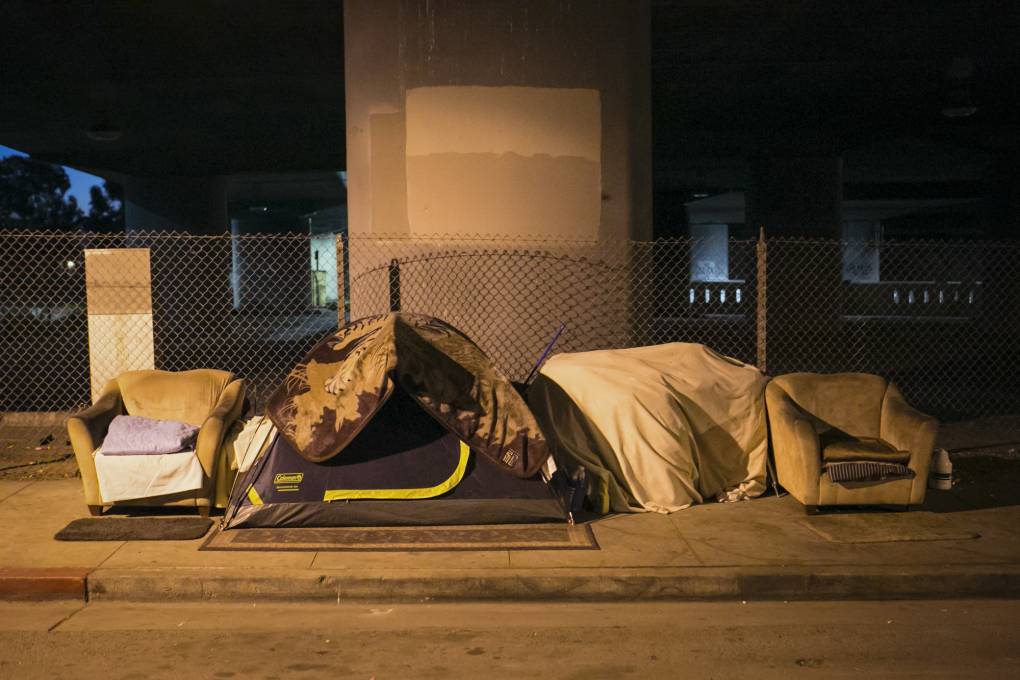
"caption": "A tent under a freeway overpass in Oakland on Tuesday, Jan. 31, 2017.",
"description": null,
"title": "A tent under a freeway overpass in Oakland on Tuesday, Jan. 31, 2017.",
"credit": "Bert Johnson/KQED",
"status": "inherit",
"altTag": "A tent and several armchairs under a freeway overpass at night.",
"isLoading": false,
"fetchFailed": false
},
"news_11972835": {
"type": "attachments",
"id": "news_11972835",
"meta": {
"index": "attachments_1716263798",
"site": "news",
"id": "11972835",
"found": true
},
"parent": 11972829,
"imgSizes": {
"twentyfourteen-full-width": {
"file": "https://cdn.kqed.org/wp-content/uploads/sites/10/2024/01/011224-Guadalupe-River-Park-LE-CM-12-copy-1038x576.jpg",
"width": 1038,
"mimeType": "image/jpeg",
"height": 576
},
"thumbnail": {
"file": "https://cdn.kqed.org/wp-content/uploads/sites/10/2024/01/011224-Guadalupe-River-Park-LE-CM-12-copy-160x107.jpg",
"width": 160,
"mimeType": "image/jpeg",
"height": 107
},
"post-thumbnail": {
"file": "https://cdn.kqed.org/wp-content/uploads/sites/10/2024/01/011224-Guadalupe-River-Park-LE-CM-12-copy-672x372.jpg",
"width": 672,
"mimeType": "image/jpeg",
"height": 372
},
"kqedFullSize": {
"file": "https://cdn.kqed.org/wp-content/uploads/sites/10/2024/01/011224-Guadalupe-River-Park-LE-CM-12-copy.jpg",
"width": 2000,
"height": 1333
},
"large": {
"file": "https://cdn.kqed.org/wp-content/uploads/sites/10/2024/01/011224-Guadalupe-River-Park-LE-CM-12-copy-1020x680.jpg",
"width": 1020,
"mimeType": "image/jpeg",
"height": 680
},
"1536x1536": {
"file": "https://cdn.kqed.org/wp-content/uploads/sites/10/2024/01/011224-Guadalupe-River-Park-LE-CM-12-copy-1536x1024.jpg",
"width": 1536,
"mimeType": "image/jpeg",
"height": 1024
},
"full-width": {
"file": "https://cdn.kqed.org/wp-content/uploads/sites/10/2024/01/011224-Guadalupe-River-Park-LE-CM-12-copy-1920x1280.jpg",
"width": 1920,
"mimeType": "image/jpeg",
"height": 1280
},
"medium": {
"file": "https://cdn.kqed.org/wp-content/uploads/sites/10/2024/01/011224-Guadalupe-River-Park-LE-CM-12-copy-800x533.jpg",
"width": 800,
"mimeType": "image/jpeg",
"height": 533
}
},
"publishDate": 1705515603,
"modified": 1705525031,
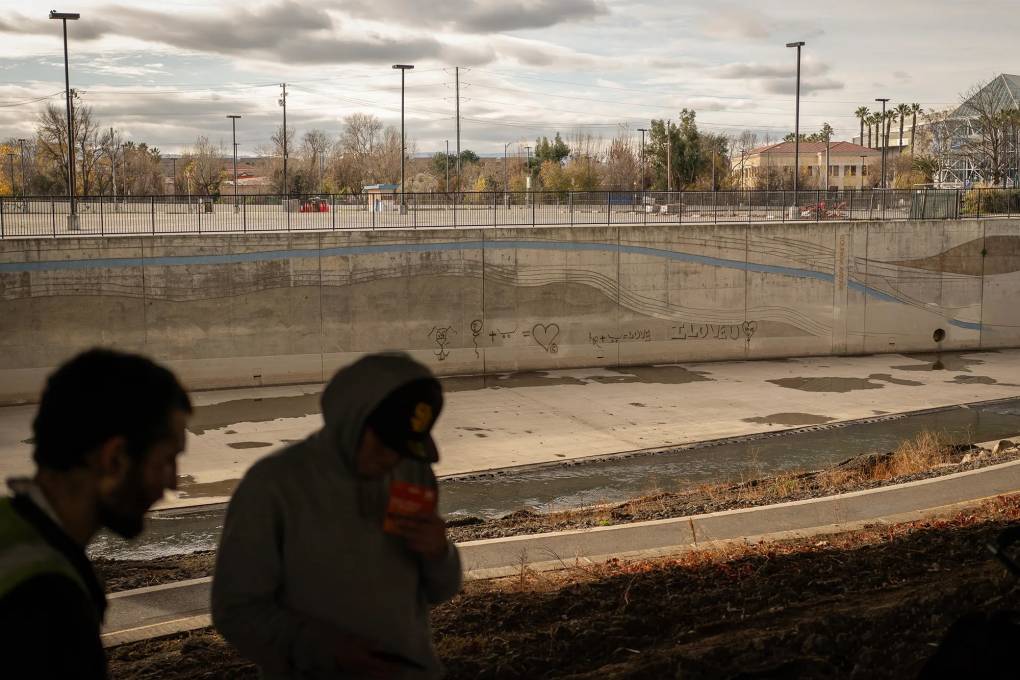
"caption": "People are under an overpass at Guadalupe River Park in San José on Jan. 12, 2024. A recent abatement effort cleared many encampments where unhoused people slept, but some remain in the park.",
"description": null,
"title": "011224-Guadalupe-River-Park-LE-CM-12 copy",
"credit": "Loren Elliott for CalMatters",
"status": "inherit",
"altTag": "Two people in the foreground with a park in the background.",
"isLoading": false,
"fetchFailed": false
},
"news_11972764": {
"type": "attachments",
"id": "news_11972764",
"meta": {
"index": "attachments_1716263798",
"site": "news",
"id": "11972764",
"found": true
},
"parent": 0,
"imgSizes": {
"twentyfourteen-full-width": {
"file": "https://cdn.kqed.org/wp-content/uploads/sites/10/2024/01/240116-CA-FOREVER-GETTY-JE-KQED-1038x576.jpg",
"width": 1038,
"mimeType": "image/jpeg",
"height": 576
},
"thumbnail": {
"file": "https://cdn.kqed.org/wp-content/uploads/sites/10/2024/01/240116-CA-FOREVER-GETTY-JE-KQED-160x107.jpg",
"width": 160,
"mimeType": "image/jpeg",
"height": 107
},
"post-thumbnail": {
"file": "https://cdn.kqed.org/wp-content/uploads/sites/10/2024/01/240116-CA-FOREVER-GETTY-JE-KQED-672x372.jpg",
"width": 672,
"mimeType": "image/jpeg",
"height": 372
},
"kqedFullSize": {
"file": "https://cdn.kqed.org/wp-content/uploads/sites/10/2024/01/240116-CA-FOREVER-GETTY-JE-KQED.jpg",
"width": 2000,
"height": 1333
},
"large": {
"file": "https://cdn.kqed.org/wp-content/uploads/sites/10/2024/01/240116-CA-FOREVER-GETTY-JE-KQED-1020x680.jpg",
"width": 1020,
"mimeType": "image/jpeg",
"height": 680
},
"1536x1536": {
"file": "https://cdn.kqed.org/wp-content/uploads/sites/10/2024/01/240116-CA-FOREVER-GETTY-JE-KQED-1536x1024.jpg",
"width": 1536,
"mimeType": "image/jpeg",
"height": 1024
},
"full-width": {
"file": "https://cdn.kqed.org/wp-content/uploads/sites/10/2024/01/240116-CA-FOREVER-GETTY-JE-KQED-1920x1280.jpg",
"width": 1920,
"mimeType": "image/jpeg",
"height": 1280
},
"medium": {
"file": "https://cdn.kqed.org/wp-content/uploads/sites/10/2024/01/240116-CA-FOREVER-GETTY-JE-KQED-800x533.jpg",
"width": 800,
"mimeType": "image/jpeg",
"height": 533
}
},
"publishDate": 1705448265,
"modified": 1705448403,
"caption": "A parcel of land recently purchased by Flannery Associates near Rio Vista on Sept. 15, 2023.",
"description": null,
"title": "US-TECH-LAND",
"credit": "Josh Edelson/AFP via Getty Images",
"status": "inherit",
"altTag": "Windmills atop golden hillsides with a large mountain in the distance.",
"isLoading": false,
"fetchFailed": false
},
"news_11958936": {
"type": "attachments",
"id": "news_11958936",
"meta": {
"index": "attachments_1716263798",
"site": "news",
"id": "11958936",
"found": true
},
"parent": 11958939,
"imgSizes": {
"twentyfourteen-full-width": {
"file": "https://cdn.kqed.org/wp-content/uploads/sites/10/2023/08/RS68264_20230822-HomelessLawsuit-24-JY-KQED-1038x576.jpg",
"width": 1038,
"mimeType": "image/jpeg",
"height": 576
},
"thumbnail": {
"file": "https://cdn.kqed.org/wp-content/uploads/sites/10/2023/08/RS68264_20230822-HomelessLawsuit-24-JY-KQED-160x107.jpg",
"width": 160,
"mimeType": "image/jpeg",
"height": 107
},
"post-thumbnail": {
"file": "https://cdn.kqed.org/wp-content/uploads/sites/10/2023/08/RS68264_20230822-HomelessLawsuit-24-JY-KQED-672x372.jpg",
"width": 672,
"mimeType": "image/jpeg",
"height": 372
},
"kqedFullSize": {
"file": "https://cdn.kqed.org/wp-content/uploads/sites/10/2023/08/RS68264_20230822-HomelessLawsuit-24-JY-KQED.jpg",
"width": 2000,
"height": 1333
},
"large": {
"file": "https://cdn.kqed.org/wp-content/uploads/sites/10/2023/08/RS68264_20230822-HomelessLawsuit-24-JY-KQED-1020x680.jpg",
"width": 1020,
"mimeType": "image/jpeg",
"height": 680
},
"1536x1536": {
"file": "https://cdn.kqed.org/wp-content/uploads/sites/10/2023/08/RS68264_20230822-HomelessLawsuit-24-JY-KQED-1536x1024.jpg",
"width": 1536,
"mimeType": "image/jpeg",
"height": 1024
},
"full-width": {
"file": "https://cdn.kqed.org/wp-content/uploads/sites/10/2023/08/RS68264_20230822-HomelessLawsuit-24-JY-KQED-1920x1280.jpg",
"width": 1920,
"mimeType": "image/jpeg",
"height": 1280
},
"medium": {
"file": "https://cdn.kqed.org/wp-content/uploads/sites/10/2023/08/RS68264_20230822-HomelessLawsuit-24-JY-KQED-800x533.jpg",
"width": 800,
"mimeType": "image/jpeg",
"height": 533
}
},
"publishDate": 1692825458,
"modified": 1705128728,
"caption": "Demonstrators gather at a rally in front of the 9th Circuit Court of Appeals in San Francisco on Wednesday, Aug. 23, 2023. The court heard the city's challenge to an injunction that has blocked it from removing many street encampments.",
"description": null,
"title": "RS68264_20230822-HomelessLawsuit-24-JY-KQED",
"credit": "Juliana Yamada/KQED",
"status": "inherit",
"altTag": "People holding signs stand in front of a grey building.",
"isLoading": false,
"fetchFailed": false
},
"news_11972475": {
"type": "attachments",
"id": "news_11972475",
"meta": {
"index": "attachments_1716263798",
"site": "news",
"id": "11972475",
"found": true
},
"parent": 11972474,
"imgSizes": {
"twentyfourteen-full-width": {
"file": "https://cdn.kqed.org/wp-content/uploads/sites/10/2024/01/010924-Pallet-Shelter-MG-01-1038x576.jpg",
"width": 1038,
"mimeType": "image/jpeg",
"height": 576
},
"thumbnail": {
"file": "https://cdn.kqed.org/wp-content/uploads/sites/10/2024/01/010924-Pallet-Shelter-MG-01-160x107.jpg",
"width": 160,
"mimeType": "image/jpeg",
"height": 107
},
"post-thumbnail": {
"file": "https://cdn.kqed.org/wp-content/uploads/sites/10/2024/01/010924-Pallet-Shelter-MG-01-672x372.jpg",
"width": 672,
"mimeType": "image/jpeg",
"height": 372
},
"kqedFullSize": {
"file": "https://cdn.kqed.org/wp-content/uploads/sites/10/2024/01/010924-Pallet-Shelter-MG-01.jpg",
"width": 2000,
"height": 1333
},
"large": {
"file": "https://cdn.kqed.org/wp-content/uploads/sites/10/2024/01/010924-Pallet-Shelter-MG-01-1020x680.jpg",
"width": 1020,
"mimeType": "image/jpeg",
"height": 680
},
"1536x1536": {
"file": "https://cdn.kqed.org/wp-content/uploads/sites/10/2024/01/010924-Pallet-Shelter-MG-01-1536x1024.jpg",
"width": 1536,
"mimeType": "image/jpeg",
"height": 1024
},
"full-width": {
"file": "https://cdn.kqed.org/wp-content/uploads/sites/10/2024/01/010924-Pallet-Shelter-MG-01-1920x1280.jpg",
"width": 1920,
"mimeType": "image/jpeg",
"height": 1280
},
"medium": {
"file": "https://cdn.kqed.org/wp-content/uploads/sites/10/2024/01/010924-Pallet-Shelter-MG-01-800x533.jpg",
"width": 800,
"mimeType": "image/jpeg",
"height": 533
}
},
"publishDate": 1705018145,
"modified": 1705018240,
"caption": "An \"emergency sleeping cabin\" by the company Pallet Shelter in front of the state Capitol on Jan. 9, 2024. The company recently won a contract by the state to address homelessness with temporary housing. ",
"description": null,
"title": "010924-Pallet-Shelter-MG-01",
"credit": "Miguel Gutierrez Jr./CalMatters",
"status": "inherit",
"altTag": "A small living structure.",
"isLoading": false,
"fetchFailed": false
},
"news_11972235": {
"type": "attachments",
"id": "news_11972235",
"meta": {
"index": "attachments_1716263798",
"site": "news",
"id": "11972235",
"found": true
},
"parent": 11972226,
"imgSizes": {
"twentyfourteen-full-width": {
"file": "https://cdn.kqed.org/wp-content/uploads/sites/10/2024/01/AP24010715773560-1038x576.jpg",
"width": 1038,
"mimeType": "image/jpeg",
"height": 576
},
"thumbnail": {
"file": "https://cdn.kqed.org/wp-content/uploads/sites/10/2024/01/AP24010715773560-160x107.jpg",
"width": 160,
"mimeType": "image/jpeg",
"height": 107
},
"post-thumbnail": {
"file": "https://cdn.kqed.org/wp-content/uploads/sites/10/2024/01/AP24010715773560-672x372.jpg",
"width": 672,
"mimeType": "image/jpeg",
"height": 372
},
"kqedFullSize": {
"file": "https://cdn.kqed.org/wp-content/uploads/sites/10/2024/01/AP24010715773560-scaled.jpg",
"width": 2560,
"height": 1707
},
"2048x2048": {
"file": "https://cdn.kqed.org/wp-content/uploads/sites/10/2024/01/AP24010715773560-2048x1365.jpg",
"width": 2048,
"mimeType": "image/jpeg",
"height": 1365
},
"large": {
"file": "https://cdn.kqed.org/wp-content/uploads/sites/10/2024/01/AP24010715773560-1020x680.jpg",
"width": 1020,
"mimeType": "image/jpeg",
"height": 680
},
"1536x1536": {
"file": "https://cdn.kqed.org/wp-content/uploads/sites/10/2024/01/AP24010715773560-1536x1024.jpg",
"width": 1536,
"mimeType": "image/jpeg",
"height": 1024
},
"full-width": {
"file": "https://cdn.kqed.org/wp-content/uploads/sites/10/2024/01/AP24010715773560-1920x1280.jpg",
"width": 1920,
"mimeType": "image/jpeg",
"height": 1280
},
"medium": {
"file": "https://cdn.kqed.org/wp-content/uploads/sites/10/2024/01/AP24010715773560-800x533.jpg",
"width": 800,
"mimeType": "image/jpeg",
"height": 533
}
},
"publishDate": 1704925987,
"modified": 1704930899,
"caption": "California Gov. Gavin Newsom discusses his proposed state budget for the 2024–25 fiscal year during a news conference in Sacramento on Wednesday, Jan. 10, 2024.",
"description": null,
"title": "Gavin Newsom",
"credit": "Rich Pedroncelli/AP Photo",
"status": "inherit",
"altTag": "Gov. Gavin Newsom at a podium.",
"isLoading": false,
"fetchFailed": false
},
"news_11971733": {
"type": "attachments",
"id": "news_11971733",
"meta": {
"index": "attachments_1716263798",
"site": "news",
"id": "11971733",
"found": true
},
"title": "240104-PEOPLE'S PARK-MD-05",
"publishDate": 1704419716,
"status": "inherit",
"parent": 11971577,
"modified": 1775002315,
"caption": "Construction crews work in People’s Park in Berkeley on Jan. 4, 2024.",
"credit": "Martin do Nascimento/KQED",
"altTag": "Two construction workers stand on-site at People's Park in Berkeley.",
"description": null,
"imgSizes": {
"medium": {
"file": "https://cdn.kqed.org/wp-content/uploads/sites/10/2024/01/240104-PEOPLES-PARK-MD-05-800x533.jpg",
"width": 800,
"height": 533,
"mimeType": "image/jpeg"
},
"large": {
"file": "https://cdn.kqed.org/wp-content/uploads/sites/10/2024/01/240104-PEOPLES-PARK-MD-05-1020x680.jpg",
"width": 1020,
"height": 680,
"mimeType": "image/jpeg"
},
"thumbnail": {
"file": "https://cdn.kqed.org/wp-content/uploads/sites/10/2024/01/240104-PEOPLES-PARK-MD-05-160x107.jpg",
"width": 160,
"height": 107,
"mimeType": "image/jpeg"
},
"1536x1536": {
"file": "https://cdn.kqed.org/wp-content/uploads/sites/10/2024/01/240104-PEOPLES-PARK-MD-05-1536x1024.jpg",
"width": 1536,
"height": 1024,
"mimeType": "image/jpeg"
},
"2048x2048": {
"file": "https://cdn.kqed.org/wp-content/uploads/sites/10/2024/01/240104-PEOPLES-PARK-MD-05-2048x1365.jpg",
"width": 2048,
"height": 1365,
"mimeType": "image/jpeg"
},
"post-thumbnail": {
"file": "https://cdn.kqed.org/wp-content/uploads/sites/10/2024/01/240104-PEOPLES-PARK-MD-05-672x372.jpg",
"width": 672,
"height": 372,
"mimeType": "image/jpeg"
},
"twentyfourteen-full-width": {
"file": "https://cdn.kqed.org/wp-content/uploads/sites/10/2024/01/240104-PEOPLES-PARK-MD-05-1038x576.jpg",
"width": 1038,
"height": 576,
"mimeType": "image/jpeg"
},
"full-width": {
"file": "https://cdn.kqed.org/wp-content/uploads/sites/10/2024/01/240104-PEOPLES-PARK-MD-05-1920x1280.jpg",
"width": 1920,
"height": 1280,
"mimeType": "image/jpeg"
},
"kqedFullSize": {
"file": "https://cdn.kqed.org/wp-content/uploads/sites/10/2024/01/240104-PEOPLES-PARK-MD-05-scaled-e1775001183210.jpg",
"width": 2000,
"height": 1334
}
},
"isLoading": false,
"fetchFailed": false
},
"news_11972056": {
"type": "attachments",
"id": "news_11972056",
"meta": {
"index": "attachments_1716263798",
"site": "news",
"id": "11972056",
"found": true
},
"parent": 11972044,
"imgSizes": {
"twentyfourteen-full-width": {
"file": "https://cdn.kqed.org/wp-content/uploads/sites/10/2024/01/GettyImages-1421187646-1038x576.jpg",
"width": 1038,
"mimeType": "image/jpeg",
"height": 576
},
"thumbnail": {
"file": "https://cdn.kqed.org/wp-content/uploads/sites/10/2024/01/GettyImages-1421187646-160x107.jpg",
"width": 160,
"mimeType": "image/jpeg",
"height": 107
},
"post-thumbnail": {
"file": "https://cdn.kqed.org/wp-content/uploads/sites/10/2024/01/GettyImages-1421187646-672x372.jpg",
"width": 672,
"mimeType": "image/jpeg",
"height": 372
},
"kqedFullSize": {
"file": "https://cdn.kqed.org/wp-content/uploads/sites/10/2024/01/GettyImages-1421187646.jpg",
"width": 2119,
"height": 1414
},
"2048x2048": {
"file": "https://cdn.kqed.org/wp-content/uploads/sites/10/2024/01/GettyImages-1421187646-2048x1367.jpg",
"width": 2048,
"mimeType": "image/jpeg",
"height": 1367
},
"large": {
"file": "https://cdn.kqed.org/wp-content/uploads/sites/10/2024/01/GettyImages-1421187646-1020x681.jpg",
"width": 1020,
"mimeType": "image/jpeg",
"height": 681
},
"1536x1536": {
"file": "https://cdn.kqed.org/wp-content/uploads/sites/10/2024/01/GettyImages-1421187646-1536x1025.jpg",
"width": 1536,
"mimeType": "image/jpeg",
"height": 1025
},
"full-width": {
"file": "https://cdn.kqed.org/wp-content/uploads/sites/10/2024/01/GettyImages-1421187646-1920x1281.jpg",
"width": 1920,
"mimeType": "image/jpeg",
"height": 1281
},
"medium": {
"file": "https://cdn.kqed.org/wp-content/uploads/sites/10/2024/01/GettyImages-1421187646-800x534.jpg",
"width": 800,
"mimeType": "image/jpeg",
"height": 534
}
},
"publishDate": 1704826062,
"modified": 1704826097,
"caption": null,
"description": null,
"title": "Close-Up of Woman Hand is Opening a Door in Apartment",
"credit": "KDP/Getty Images",
"status": "inherit",
"altTag": "A hand opens a white door.",
"isLoading": false,
"fetchFailed": false
},
"news_11971737": {
"type": "attachments",
"id": "news_11971737",
"meta": {
"index": "attachments_1716263798",
"site": "news",
"id": "11971737",
"found": true
},
"parent": 11971577,
"imgSizes": {
"twentyfourteen-full-width": {
"file": "https://cdn.kqed.org/wp-content/uploads/sites/10/2024/01/240104-PEOPLES-PARK-MD-02-KQED-1038x576.jpg",
"width": 1038,
"mimeType": "image/jpeg",
"height": 576
},
"thumbnail": {
"file": "https://cdn.kqed.org/wp-content/uploads/sites/10/2024/01/240104-PEOPLES-PARK-MD-02-KQED-160x107.jpg",
"width": 160,
"mimeType": "image/jpeg",
"height": 107
},
"post-thumbnail": {
"file": "https://cdn.kqed.org/wp-content/uploads/sites/10/2024/01/240104-PEOPLES-PARK-MD-02-KQED-672x372.jpg",
"width": 672,
"mimeType": "image/jpeg",
"height": 372
},
"kqedFullSize": {
"file": "https://cdn.kqed.org/wp-content/uploads/sites/10/2024/01/240104-PEOPLES-PARK-MD-02-KQED.jpg?ver=1704910052",
"width": 2000,
"height": 1333
},
"large": {
"file": "https://cdn.kqed.org/wp-content/uploads/sites/10/2024/01/240104-PEOPLES-PARK-MD-02-KQED-1020x680.jpg",
"width": 1020,
"mimeType": "image/jpeg",
"height": 680
},
"1536x1536": {
"file": "https://cdn.kqed.org/wp-content/uploads/sites/10/2024/01/240104-PEOPLES-PARK-MD-02-KQED-1536x1024.jpg",
"width": 1536,
"mimeType": "image/jpeg",
"height": 1024
},
"full-width": {
"file": "https://cdn.kqed.org/wp-content/uploads/sites/10/2024/01/240104-PEOPLES-PARK-MD-02-KQED-1920x1280.jpg",
"width": 1920,
"mimeType": "image/jpeg",
"height": 1280
},
"medium": {
"file": "https://cdn.kqed.org/wp-content/uploads/sites/10/2024/01/240104-PEOPLES-PARK-MD-02-KQED-800x533.jpg",
"width": 800,
"mimeType": "image/jpeg",
"height": 533
}
},
"publishDate": 1704424820,
"modified": 1704910068,
"caption": "Construction crews work in People’s Park in Berkeley on Jan. 4, 2024.",
"description": null,
"title": "Construction crews work at People’s Park in Berkeley on Jan. 4, 2024.",
"credit": "Martin do Nascimento/KQED",
"status": "inherit",
"altTag": null,
"isLoading": false,
"fetchFailed": false
},
"news_11971982": {
"type": "attachments",
"id": "news_11971982",
"meta": {
"index": "attachments_1716263798",
"site": "news",
"id": "11971982",
"found": true
},
"parent": 0,
"imgSizes": {
"twentyfourteen-full-width": {
"file": "https://cdn.kqed.org/wp-content/uploads/sites/10/2024/01/240108-LEV-MARCUS-MD-01-KQED-1038x576.jpg",
"width": 1038,
"mimeType": "image/jpeg",
"height": 576
},
"thumbnail": {
"file": "https://cdn.kqed.org/wp-content/uploads/sites/10/2024/01/240108-LEV-MARCUS-MD-01-KQED-160x107.jpg",
"width": 160,
"mimeType": "image/jpeg",
"height": 107
},
"post-thumbnail": {
"file": "https://cdn.kqed.org/wp-content/uploads/sites/10/2024/01/240108-LEV-MARCUS-MD-01-KQED-672x372.jpg",
"width": 672,
"mimeType": "image/jpeg",
"height": 372
},
"kqedFullSize": {
"file": "https://cdn.kqed.org/wp-content/uploads/sites/10/2024/01/240108-LEV-MARCUS-MD-01-KQED.jpg",
"width": 2000,
"height": 1333
},
"large": {
"file": "https://cdn.kqed.org/wp-content/uploads/sites/10/2024/01/240108-LEV-MARCUS-MD-01-KQED-1020x680.jpg",
"width": 1020,
"mimeType": "image/jpeg",
"height": 680
},
"1536x1536": {
"file": "https://cdn.kqed.org/wp-content/uploads/sites/10/2024/01/240108-LEV-MARCUS-MD-01-KQED-1536x1024.jpg",
"width": 1536,
"mimeType": "image/jpeg",
"height": 1024
},
"full-width": {
"file": "https://cdn.kqed.org/wp-content/uploads/sites/10/2024/01/240108-LEV-MARCUS-MD-01-KQED-1920x1280.jpg",
"width": 1920,
"mimeType": "image/jpeg",
"height": 1280
},
"medium": {
"file": "https://cdn.kqed.org/wp-content/uploads/sites/10/2024/01/240108-LEV-MARCUS-MD-01-KQED-800x533.jpg",
"width": 800,
"mimeType": "image/jpeg",
"height": 533
}
},
"publishDate": 1704759863,
"modified": 1704770420,
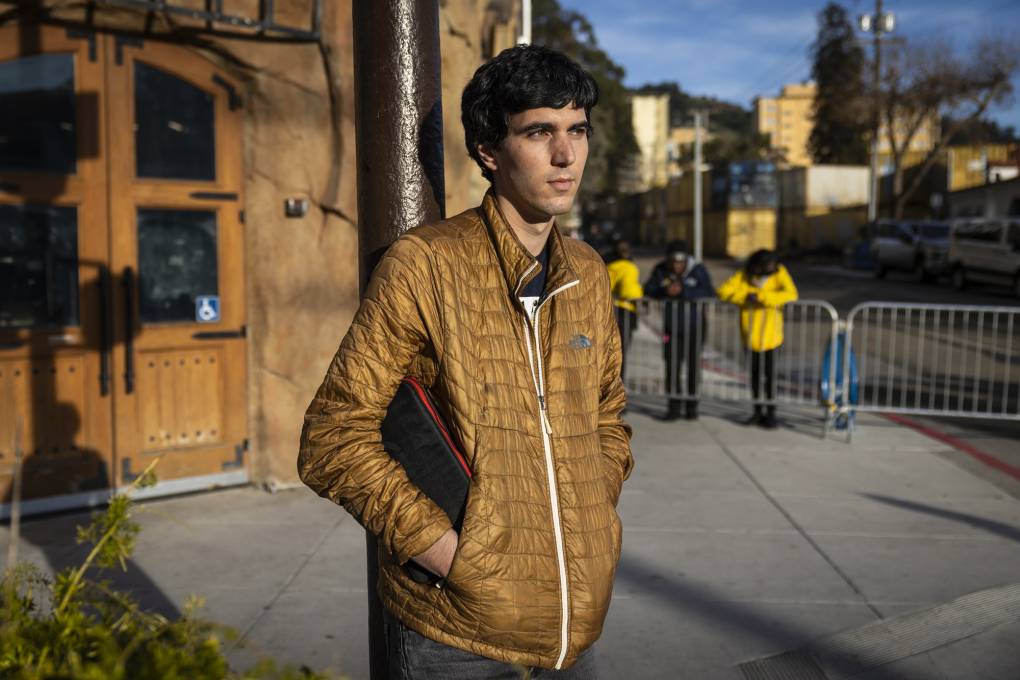
"caption": "Lev Marcus stands on the corner of Telegraph and Haste in Berkeley on Jan. 8, 2024.",
"description": null,
"title": "240108-LEV MARCUS-MD-01-KQED",
"credit": "Martin do Nascimento/KQED",
"status": "inherit",
"altTag": "A person in a light brown jacket stands on a street corner.",
"isLoading": false,
"fetchFailed": false
},
"news_11971923": {
"type": "attachments",
"id": "news_11971923",
"meta": {
"index": "attachments_1716263798",
"site": "news",
"id": "11971923",
"found": true
},
"parent": 11971908,
"imgSizes": {
"twentyfourteen-full-width": {
"file": "https://cdn.kqed.org/wp-content/uploads/sites/10/2024/01/112023_SF-Eviction-Court_MO_CM_04-1038x576.jpg",
"width": 1038,
"mimeType": "image/jpeg",
"height": 576
},
"thumbnail": {
"file": "https://cdn.kqed.org/wp-content/uploads/sites/10/2024/01/112023_SF-Eviction-Court_MO_CM_04-160x107.jpg",
"width": 160,
"mimeType": "image/jpeg",
"height": 107
},
"post-thumbnail": {
"file": "https://cdn.kqed.org/wp-content/uploads/sites/10/2024/01/112023_SF-Eviction-Court_MO_CM_04-672x372.jpg",
"width": 672,
"mimeType": "image/jpeg",
"height": 372
},
"kqedFullSize": {
"file": "https://cdn.kqed.org/wp-content/uploads/sites/10/2024/01/112023_SF-Eviction-Court_MO_CM_04.jpg",
"width": 2000,
"height": 1333
},
"large": {
"file": "https://cdn.kqed.org/wp-content/uploads/sites/10/2024/01/112023_SF-Eviction-Court_MO_CM_04-1020x680.jpg",
"width": 1020,
"mimeType": "image/jpeg",
"height": 680
},
"1536x1536": {
"file": "https://cdn.kqed.org/wp-content/uploads/sites/10/2024/01/112023_SF-Eviction-Court_MO_CM_04-1536x1024.jpg",
"width": 1536,
"mimeType": "image/jpeg",
"height": 1024
},
"full-width": {
"file": "https://cdn.kqed.org/wp-content/uploads/sites/10/2024/01/112023_SF-Eviction-Court_MO_CM_04-1920x1280.jpg",
"width": 1920,
"mimeType": "image/jpeg",
"height": 1280
},
"medium": {
"file": "https://cdn.kqed.org/wp-content/uploads/sites/10/2024/01/112023_SF-Eviction-Court_MO_CM_04-800x533.jpg",
"width": 800,
"mimeType": "image/jpeg",
"height": 533
}
},
"publishDate": 1704747305,
"modified": 1704747921,
"caption": "Corey Lafayette, 53, says he is touched by the amount of support he received during eviction. Nov. 20, 2023. ",
"description": null,
"title": "112023_SF-Eviction-Court_MO_CM_04",
"credit": "Manuel Orbegozo/CalMatters",
"status": "inherit",
"altTag": "A headshot of a Black man.",
"isLoading": false,
"fetchFailed": false
},
"news_11971820": {
"type": "attachments",
"id": "news_11971820",
"meta": {
"index": "attachments_1716263798",
"site": "news",
"id": "11971820",
"found": true
},
"parent": 0,
"imgSizes": {
"twentyfourteen-full-width": {
"file": "https://cdn.kqed.org/wp-content/uploads/sites/10/2024/01/240105-LANAIAPARTMENTS-12-BL-KQED-1038x576.jpg",
"width": 1038,
"mimeType": "image/jpeg",
"height": 576
},
"thumbnail": {
"file": "https://cdn.kqed.org/wp-content/uploads/sites/10/2024/01/240105-LANAIAPARTMENTS-12-BL-KQED-160x107.jpg",
"width": 160,
"mimeType": "image/jpeg",
"height": 107
},
"post-thumbnail": {
"file": "https://cdn.kqed.org/wp-content/uploads/sites/10/2024/01/240105-LANAIAPARTMENTS-12-BL-KQED-672x372.jpg",
"width": 672,
"mimeType": "image/jpeg",
"height": 372
},
"kqedFullSize": {
"file": "https://cdn.kqed.org/wp-content/uploads/sites/10/2024/01/240105-LANAIAPARTMENTS-12-BL-KQED.jpg",
"width": 2000,
"height": 1333
},
"large": {
"file": "https://cdn.kqed.org/wp-content/uploads/sites/10/2024/01/240105-LANAIAPARTMENTS-12-BL-KQED-1020x680.jpg",
"width": 1020,
"mimeType": "image/jpeg",
"height": 680
},
"1536x1536": {
"file": "https://cdn.kqed.org/wp-content/uploads/sites/10/2024/01/240105-LANAIAPARTMENTS-12-BL-KQED-1536x1024.jpg",
"width": 1536,
"mimeType": "image/jpeg",
"height": 1024
},
"full-width": {
"file": "https://cdn.kqed.org/wp-content/uploads/sites/10/2024/01/240105-LANAIAPARTMENTS-12-BL-KQED-1920x1280.jpg",
"width": 1920,
"mimeType": "image/jpeg",
"height": 1280
},
"medium": {
"file": "https://cdn.kqed.org/wp-content/uploads/sites/10/2024/01/240105-LANAIAPARTMENTS-12-BL-KQED-800x533.jpg",
"width": 800,
"mimeType": "image/jpeg",
"height": 533
}
},
"publishDate": 1704499750,
"modified": 1704743598,
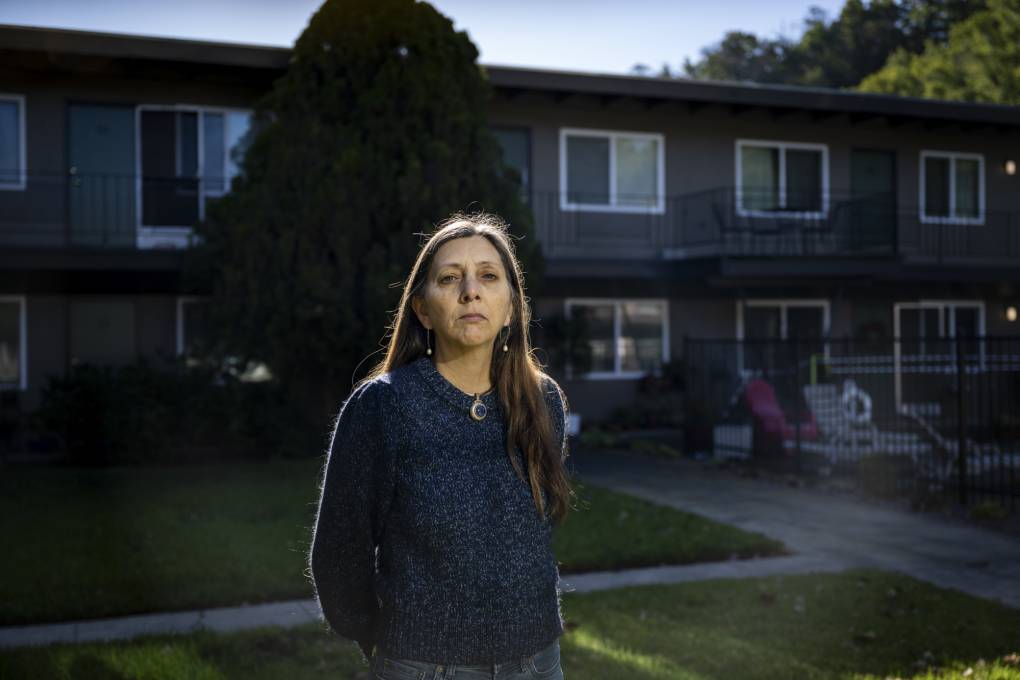
"caption": "Resident Liliana Lavezzo stands in the courtyard at Lanai Apartments in Fairfax on Jan. 5, 2024.",
"description": null,
"title": "240105-LANAIAPARTMENTS-12-BL-KQED",
"credit": "Beth LaBerge/KQED",
"status": "inherit",
"altTag": "A person with long hair stands in front of a two-story building.",
"isLoading": false,
"fetchFailed": false
}
},
"audioPlayerReducer": {
"postId": "stream_live",
"isPaused": true,
"isPlaying": false,
"pfsActive": false,
"pledgeModalIsOpen": true,
"playerDrawerIsOpen": false,
"liveAudioPlayStartedAt": 0,
"liveAudioPlayContext": ""
},
"authorsReducer": {
"byline_news_11972829": {
"type": "authors",
"id": "byline_news_11972829",
"meta": {
"override": true
},
"slug": "byline_news_11972829",
"name": "\u003ca href=\"https://calmatters.org/author/marisa-kendall/\">Marisa Kendall\u003c/a>",
"isLoading": false
},
"byline_news_11972474": {
"type": "authors",
"id": "byline_news_11972474",
"meta": {
"override": true
},
"slug": "byline_news_11972474",
"name": "Marisa Kendall",
"isLoading": false
},
"byline_news_11972044": {
"type": "authors",
"id": "byline_news_11972044",
"meta": {
"override": true
},
"slug": "byline_news_11972044",
"name": "\u003ca href=\"https://edsource.org/author/bmarquez\">Betty Márquez Rosales\u003c/a>",
"isLoading": false
},
"byline_news_11971908": {
"type": "authors",
"id": "byline_news_11971908",
"meta": {
"override": true
},
"slug": "byline_news_11971908",
"name": "\u003ca href=\"https://calmatters.org/author/feliciacalmatters-org/\">Felicia Mello\u003c/a>",
"isLoading": false
},
"gmarzorati": {
"type": "authors",
"id": "227",
"meta": {
"index": "authors_1716337520",
"id": "227",
"found": true
},
"name": "Guy Marzorati",
"firstName": "Guy",
"lastName": "Marzorati",
"slug": "gmarzorati",
"email": "gmarzorati@KQED.org",
"display_author_email": true,
"staff_mastheads": [
"news"
],
"title": "Correspondent",
"bio": "Guy Marzorati is a correspondent on KQED's California Politics and Government Desk, based in San Jose. A graduate of Santa Clara University, Guy joined KQED in 2013. He reports on state and local politics and produces KQED's digital voter guide.",
"avatar": "https://secure.gravatar.com/avatar/e7038b8dbfd55b104369b76b1cd0b9de?s=600&d=blank&r=g",
"twitter": "guymarzorati",
"facebook": null,
"instagram": null,
"linkedin": null,
"sites": [
{
"site": "",
"roles": [
"editor"
]
},
{
"site": "news",
"roles": [
"editor"
]
},
{
"site": "science",
"roles": [
"editor"
]
},
{
"site": "forum",
"roles": [
"editor"
]
},
{
"site": "elections",
"roles": [
"editor"
]
},
{
"site": "liveblog",
"roles": [
"editor"
]
}
],
"headData": {
"title": "Guy Marzorati | KQED",
"description": "Correspondent",
"ogImgSrc": "https://secure.gravatar.com/avatar/e7038b8dbfd55b104369b76b1cd0b9de?s=600&d=blank&r=g",
"twImgSrc": "https://secure.gravatar.com/avatar/e7038b8dbfd55b104369b76b1cd0b9de?s=600&d=blank&r=g"
},
"isLoading": false,
"link": "/author/gmarzorati"
},
"kqednewsstaffandwires": {
"type": "authors",
"id": "237",
"meta": {
"index": "authors_1716337520",
"id": "237",
"found": true
},
"name": "KQED News Staff and Wires",
"firstName": "KQED News Staff and Wires",
"lastName": null,
"slug": "kqednewsstaffandwires",
"email": "onlinenewsstaff@kqed.org",
"display_author_email": false,
"staff_mastheads": [],
"title": null,
"bio": null,
"avatar": "https://secure.gravatar.com/avatar/72295af8ebbfbd19a4948f5271285664?s=600&d=blank&r=g",
"twitter": null,
"facebook": null,
"instagram": null,
"linkedin": null,
"sites": [
{
"site": "arts",
"roles": [
"contributor"
]
},
{
"site": "news",
"roles": [
"contributor"
]
},
{
"site": "lowdown",
"roles": [
"author"
]
},
{
"site": "stateofhealth",
"roles": [
"contributor"
]
},
{
"site": "food",
"roles": [
"author"
]
}
],
"headData": {
"title": "KQED News Staff and Wires | KQED",
"description": null,
"ogImgSrc": "https://secure.gravatar.com/avatar/72295af8ebbfbd19a4948f5271285664?s=600&d=blank&r=g",
"twImgSrc": "https://secure.gravatar.com/avatar/72295af8ebbfbd19a4948f5271285664?s=600&d=blank&r=g"
},
"isLoading": false,
"link": "/author/kqednewsstaffandwires"
},
"ecruzguevarra": {
"type": "authors",
"id": "8654",
"meta": {
"index": "authors_1716337520",
"id": "8654",
"found": true
},
"name": "Ericka Cruz Guevarra",
"firstName": "Ericka",
"lastName": "Cruz Guevarra",
"slug": "ecruzguevarra",
"email": "ecruzguevarra@kqed.org",
"display_author_email": true,
"staff_mastheads": [
"news"
],
"title": "Producer, The Bay Podcast",
"bio": "Ericka Cruz Guevarra is host of \u003ca href=\"https://www.kqed.org/podcasts/thebay\">\u003cem>The Bay\u003c/em>\u003c/a> podcast at KQED. Before host, she was the show’s producer. Her work in that capacity includes a three-part reported series on policing in Vallejo, which won a 2020 excellence in journalism award from the Society of Professional Journalists. Ericka has worked as a breaking news reporter at Oregon Public Broadcasting, helped produce the Code Switch podcast, and was KQED’s inaugural Raul Ramirez Diversity Fund intern. She’s also an alumna of NPR’s Next Generation Radio program. Send her an email if you have strong feelings about whether Fairfield and Suisun City are the Bay. Ericka is represented by SAG-AFTRA.",
"avatar": "https://secure.gravatar.com/avatar/accefc1de4bafc7e234b69bcb9b6f6536c130fd84709bc3069ef11a78787e1bb?s=600&d=blank&r=g",
"twitter": "NotoriousECG",
"bluesky": null,
"facebook": null,
"instagram": null,
"linkedin": null,
"sites": [
{
"site": "arts",
"roles": [
"subscriber"
]
},
{
"site": "news",
"roles": [
"editor",
"manage_categories"
]
},
{
"site": "futureofyou",
"roles": [
"subscriber"
]
},
{
"site": "stateofhealth",
"roles": [
"subscriber"
]
},
{
"site": "science",
"roles": [
"editor"
]
},
{
"site": "forum",
"roles": [
"subscriber"
]
}
],
"headData": {
"title": "Ericka Cruz Guevarra | KQED",
"description": "Producer, The Bay Podcast",
"ogImgSrc": "https://secure.gravatar.com/avatar/accefc1de4bafc7e234b69bcb9b6f6536c130fd84709bc3069ef11a78787e1bb?s=600&d=blank&r=g",
"twImgSrc": "https://secure.gravatar.com/avatar/accefc1de4bafc7e234b69bcb9b6f6536c130fd84709bc3069ef11a78787e1bb?s=600&d=blank&r=g"
},
"isLoading": false,
"link": "/author/ecruzguevarra"
},
"vrancano": {
"type": "authors",
"id": "11276",
"meta": {
"index": "authors_1716337520",
"id": "11276",
"found": true
},
"name": "Vanessa Rancaño",
"firstName": "Vanessa",
"lastName": "Rancaño",
"slug": "vrancano",
"email": "vrancano@kqed.org",
"display_author_email": false,
"staff_mastheads": [
"news"
],
"title": "Reporter",
"bio": "Vanessa Rancaño is a features reporter for KQED. She’s also covered homelessness and education for the station and reported from the Central Valley. Her work has aired across public radio, from flagship national news shows to longform narrative podcasts. Before taking up a mic, she worked as a freelance print journalist. She’s been recognized with a number of national and regional awards. Vanessa grew up in California's Central Valley. She's a former NPR Kroc Fellow, and a graduate of the UC Berkeley Graduate School of Journalism.",
"avatar": "https://secure.gravatar.com/avatar/b3a383dfb0e7ee1c17568f2cf067904ab654d6e3de9743fc661f3c788ade1bed?s=600&d=blank&r=g",
"twitter": "vanessarancano",
"bluesky": null,
"facebook": null,
"instagram": null,
"linkedin": null,
"sites": [
{
"site": "arts",
"roles": [
"editor"
]
},
{
"site": "news",
"roles": [
"editor"
]
},
{
"site": "liveblog",
"roles": [
"contributor"
]
}
],
"headData": {
"title": "Vanessa Rancaño | KQED",
"description": "Reporter",
"ogImgSrc": "https://secure.gravatar.com/avatar/b3a383dfb0e7ee1c17568f2cf067904ab654d6e3de9743fc661f3c788ade1bed?s=600&d=blank&r=g",
"twImgSrc": "https://secure.gravatar.com/avatar/b3a383dfb0e7ee1c17568f2cf067904ab654d6e3de9743fc661f3c788ade1bed?s=600&d=blank&r=g"
},
"isLoading": false,
"link": "/author/vrancano"
},
"hmcdede": {
"type": "authors",
"id": "11635",
"meta": {
"index": "authors_1716337520",
"id": "11635",
"found": true
},
"name": "Holly McDede",
"firstName": "Holly",
"lastName": "McDede",
"slug": "hmcdede",
"email": "hmcdede@KQED.org",
"display_author_email": false,
"staff_mastheads": [],
"title": "KQED Contributor",
"bio": null,
"avatar": "https://secure.gravatar.com/avatar/35d1a1f5422c9d266f7ace9348d170f2136671a65fffc90a592e4d7fbf8dc3f6?s=600&d=blank&r=g",
"twitter": null,
"bluesky": null,
"facebook": null,
"instagram": null,
"linkedin": null,
"sites": [
{
"site": "arts",
"roles": [
"editor"
]
},
{
"site": "news",
"roles": [
"edit_others_posts",
"editor"
]
},
{
"site": "science",
"roles": [
"editor"
]
},
{
"site": "forum",
"roles": [
"editor"
]
},
{
"site": "perspectives",
"roles": [
"administrator"
]
}
],
"headData": {
"title": "Holly McDede | KQED",
"description": "KQED Contributor",
"ogImgSrc": "https://secure.gravatar.com/avatar/35d1a1f5422c9d266f7ace9348d170f2136671a65fffc90a592e4d7fbf8dc3f6?s=600&d=blank&r=g",
"twImgSrc": "https://secure.gravatar.com/avatar/35d1a1f5422c9d266f7ace9348d170f2136671a65fffc90a592e4d7fbf8dc3f6?s=600&d=blank&r=g"
},
"isLoading": false,
"link": "/author/hmcdede"
},
"amontecillo": {
"type": "authors",
"id": "11649",
"meta": {
"index": "authors_1716337520",
"id": "11649",
"found": true
},
"name": "Alan Montecillo",
"firstName": "Alan",
"lastName": "Montecillo",
"slug": "amontecillo",
"email": "amontecillo@kqed.org",
"display_author_email": false,
"staff_mastheads": [
"news"
],
"title": "KQED Contributor",
"bio": "Alan Montecillo is the senior editor of \u003cem>\u003ca href=\"http://kqed.org/thebay\">The Bay\u003c/a>, \u003c/em> KQED's local news podcast. Before moving to the Bay Area, he worked as a senior talk show producer for WILL in Champaign-Urbana, Illinois and at Oregon Public Broadcasting in Portland, Oregon. He has won journalism awards from the Society of Professional Journalists Northern California, the Public Media Journalists Association, The Signal Awards, and has also received a regional Edward R. Murrow award. Alan is a Filipino American from Hong Kong and a graduate of Reed College.",
"avatar": "https://secure.gravatar.com/avatar/268f53a2066899ea9efdd8a5900218b17c822d9862cbc9326cccec53ef41d349?s=600&d=blank&r=g",
"twitter": "alanmontecillo",
"bluesky": null,
"facebook": null,
"instagram": null,
"linkedin": null,
"sites": [
{
"site": "",
"roles": [
"editor"
]
},
{
"site": "news",
"roles": [
"editor",
"manage_categories"
]
}
],
"headData": {
"title": "Alan Montecillo | KQED",
"description": "KQED Contributor",
"ogImgSrc": "https://secure.gravatar.com/avatar/268f53a2066899ea9efdd8a5900218b17c822d9862cbc9326cccec53ef41d349?s=600&d=blank&r=g",
"twImgSrc": "https://secure.gravatar.com/avatar/268f53a2066899ea9efdd8a5900218b17c822d9862cbc9326cccec53ef41d349?s=600&d=blank&r=g"
},
"isLoading": false,
"link": "/author/amontecillo"
},
"ebaldassari": {
"type": "authors",
"id": "11652",
"meta": {
"index": "authors_1716337520",
"id": "11652",
"found": true
},
"name": "Erin Baldassari",
"firstName": "Erin",
"lastName": "Baldassari",
"slug": "ebaldassari",
"email": "ebaldassari@KQED.org",
"display_author_email": true,
"staff_mastheads": [
"news"
],
"title": "Staff Writer",
"bio": "Erin Baldassari covers housing for KQED. She's a former print journalist and most recently worked as the transportation reporter for the \u003cem>Mercury News\u003c/em> and \u003cem>East Bay Times. \u003c/em>There, she focused on how the Bay Area’s housing shortage has changed the way people move around the region. She also served on the \u003cem>East Bay Times\u003c/em>’ 2017 Pulitzer Prize-winning team for coverage of the Ghost Ship Fire in Oakland. Prior to that, Erin worked as a breaking news and general assignment reporter for a variety of outlets in the Bay Area and the greater Boston area. A Tufts University alumna, Erin grew up in the foothills of the Sierra Nevada mountains and in Sonoma County. She is a life-long KQED listener.",
"avatar": "https://secure.gravatar.com/avatar/5e95cad64a8ca08288082212e199d2b0cbeb4fd8e8ef5339395f361032bbe005?s=600&d=blank&r=g",
"twitter": "e_baldi",
"bluesky": null,
"facebook": null,
"instagram": null,
"linkedin": null,
"sites": [
{
"site": "news",
"roles": [
"edit_others_posts",
"editor"
]
},
{
"site": "science",
"roles": [
"editor"
]
},
{
"site": "liveblog",
"roles": [
"editor"
]
}
],
"headData": {
"title": "Erin Baldassari | KQED",
"description": "Staff Writer",
"ogImgSrc": "https://secure.gravatar.com/avatar/5e95cad64a8ca08288082212e199d2b0cbeb4fd8e8ef5339395f361032bbe005?s=600&d=blank&r=g",
"twImgSrc": "https://secure.gravatar.com/avatar/5e95cad64a8ca08288082212e199d2b0cbeb4fd8e8ef5339395f361032bbe005?s=600&d=blank&r=g"
},
"isLoading": false,
"link": "/author/ebaldassari"
},
"abandlamudi": {
"type": "authors",
"id": "11672",
"meta": {
"index": "authors_1716337520",
"id": "11672",
"found": true
},
"name": "Adhiti Bandlamudi",
"firstName": "Adhiti",
"lastName": "Bandlamudi",
"slug": "abandlamudi",
"email": "abandlamudi@kqed.org",
"display_author_email": false,
"staff_mastheads": [
"news"
],
"title": "KQED Housing Reporter",
"bio": "Adhiti Bandlamudi reports for KQED's Housing desk. She focuses on how housing gets built across the Bay Area. Before joining KQED in 2020, she reported for WUNC in Durham, North Carolina, WABE in Atlanta, Georgia and Capital Public Radio in Sacramento. In 2017, she was awarded a Kroc Fellowship at NPR where she reported on everything from sprinkles to the Golden State Killer's arrest. When she's not reporting, she's baking new recipes in her kitchen or watching movies with friends and family. She's originally from Georgia and has strong opinions about Great British Bake Off.",
"avatar": "https://secure.gravatar.com/avatar/868129c8b257bb99a3500e2c86a65400?s=600&d=mm&r=g",
"twitter": "oddity_adhiti",
"facebook": null,
"instagram": null,
"linkedin": null,
"sites": [
{
"site": "arts",
"roles": [
"author"
]
},
{
"site": "news",
"roles": [
"editor"
]
},
{
"site": "liveblog",
"roles": [
"author"
]
}
],
"headData": {
"title": "Adhiti Bandlamudi | KQED",
"description": "KQED Housing Reporter",
"ogImgSrc": "https://secure.gravatar.com/avatar/868129c8b257bb99a3500e2c86a65400?s=600&d=mm&r=g",
"twImgSrc": "https://secure.gravatar.com/avatar/868129c8b257bb99a3500e2c86a65400?s=600&d=mm&r=g"
},
"isLoading": false,
"link": "/author/abandlamudi"
},
"mesquinca": {
"type": "authors",
"id": "11802",
"meta": {
"index": "authors_1716337520",
"id": "11802",
"found": true
},
"name": "Maria Esquinca",
"firstName": "Maria",
"lastName": "Esquinca",
"slug": "mesquinca",
"email": "mesquinca@kqed.org",
"display_author_email": false,
"staff_mastheads": [],
"title": "Producer, The Bay",
"bio": "María Esquinca is a producer of The Bay. Before that, she was a New York Women’s Foundation IGNITE Fellow at Latino USA. She worked at Radio Bilingue where she covered the San Joaquin Valley. Maria has interned at WLRN, News 21, The New York Times Student Journalism Institute and at Crain’s Detroit Business as a Dow Jones News Fund Business Reporting Intern. She is an MFA graduate from the University of Miami. In 2017, she graduated from the Walter Cronkite School of Journalism and Mass Communication with a Master of Mass Communication. A fronteriza, she was born in Ciudad Juárez, Chihuahua, Mexico and grew up in El Paso, Texas.",
"avatar": "https://secure.gravatar.com/avatar/77cedba18aae91da775038ba06dcd8d0?s=600&d=blank&r=g",
"twitter": "@m_esquinca",
"facebook": null,
"instagram": null,
"linkedin": null,
"sites": [
{
"site": "news",
"roles": []
}
],
"headData": {
"title": "Maria Esquinca | KQED",
"description": "Producer, The Bay",
"ogImgSrc": "https://secure.gravatar.com/avatar/77cedba18aae91da775038ba06dcd8d0?s=600&d=blank&r=g",
"twImgSrc": "https://secure.gravatar.com/avatar/77cedba18aae91da775038ba06dcd8d0?s=600&d=blank&r=g"
},
"isLoading": false,
"link": "/author/mesquinca"
}
},
"pagesReducer": {
"news_category_housing": {
"type": "terms",
"id": "news_6266",
"meta": {
"index": "terms_1716263798",
"site": "news",
"id": "6266",
"score": 11.039913
},
"featImg": null,
"name": "Housing",
"description": null,
"taxonomy": "category",
"headData": {
"twImgId": null,
"twTitle": null,
"ogTitle": null,
"ogImgId": null,
"twDescription": null,
"description": null,
"title": "Housing Archives | KQED News",
"ogDescription": null
},
"ttid": 6290,
"slug": "housing",
"isLoading": false,
"title": "Housing",
"pageMeta": {
"site": "news",
"WpPageTemplate": "page-topic-editorial",
"currentPage": 46
},
"blocks": [
{
"blockName": "kqed/post-list",
"attrs": {
"layout": "cardArticle2",
"query": "posts/news?category=housing",
"seeMore": false,
"paginated": true,
"page": 46
}
},
{
"blockName": "kqed/ad"
}
]
}
},
"pfsSessionReducer": {},
"postsReducer": {
"stream_live": {
"type": "live",
"id": "stream_live",
"audioUrl": "https://streams.kqed.org/kqedradio",
"title": "Live Stream",
"excerpt": "Live Stream information currently unavailable.",
"link": "/radio",
"featImg": "",
"label": {
"name": "KQED Live",
"link": "/"
}
},
"stream_kqedNewscast": {
"type": "posts",
"id": "stream_kqedNewscast",
"audioUrl": "https://www.kqed.org/.stream/anon/radio/RDnews/newscast.mp3?_=1",
"title": "KQED Newscast",
"featImg": "",
"label": {
"name": "88.5 FM",
"link": "/"
}
},
"news_11973307": {
"type": "posts",
"id": "news_11973307",
"meta": {
"index": "posts_1716263798",
"site": "news",
"id": "11973307",
"score": null,
"sort": [
1706011223000
]
},
"guestAuthors": [],
"slug": "san-mateo-county-supes-vote-to-criminalize-camping-in-unincorporated-areas",
"title": "San Mateo County Supes Vote to Criminalize Camping in Unincorporated Areas",
"publishDate": 1706011223,
"format": "standard",
"headTitle": "San Mateo County Supes Vote to Criminalize Camping in Unincorporated Areas | KQED",
"labelTerm": {
"site": "news"
},
"content": "\u003cp>\u003cem>Updated 2:55 p.m. Tuesday\u003c/em>\u003c/p>\n\u003cp>San Mateo County Supervisors voted today to make it a crime to camp in public in unincorporated areas when shelter beds are available.\u003c/p>\n\u003cp>After two-and-a-half hours of discussion and public comment, the proposal got unanimous support from the board over the strong opposition of some advocates and community members.\u003c/p>\n\u003cp>“I think what we’re doing today with this legislation is we’re saving lives,” said Supervisor David Canepa. “I am confident that when the board gets a report back from staff that, we will see a drop in those who die on the streets of San Mateo County.”\u003c/p>\n\u003cp>Resident Paul Bocanegra was among those who expressed his opposition. “We’ve been down this road where we’ve criminalized addiction; we’ve been down this road where we’ve criminalized mental health,” he said. “We can’t go down that same road.”\u003c/p>\n\u003cp>The supervisors made additions to the ordinance to include the requirement that the county conduct a mental health screening before issuing a first warning and clarifying that unhoused individuals won’t be charged for storage of their belongings.\u003c/p>\n\u003cp>The ordinance will get a second vote in the coming weeks — generally a formality — and take effect 30 days after final approval.\u003c/p>\n\u003cp>San Mateo County Supervisors \u003ca href=\"https://sanmateocounty.legistar.com/View.ashx?M=F&ID=12591544&GUID=D550237B-612D-48B8-AF32-9B926C4A9D64\">took up a proposal \u003c/a>Tuesday that would make it a crime to camp in public spaces in unincorporated parts of the county when shelter space is available.\u003c/p>\n\u003cp>Under the plan, officials could charge a person staying in an encampment with a misdemeanor if they’ve been given two written warnings and twice refused offers of shelter.\u003c/p>\n\u003cp>[pullquote size=\"medium\" align=\"right\" citation=\"Bill Freeman, senior counsel, ACLU of Northern California\"]‘It’s inhumane to criminalize homelessness, and it increases trauma. If we’re trying to find solutions to the problem and to help people, this is the wrong approach.’[/pullquote]Board of Supervisors President Warren Slocum introduced the proposal with Supervisor Dave Pine, citing public health and safety hazards in camps and impacts on surrounding communities.\u003c/p>\n\u003cp>“This is a positive way to encourage homeless residents to get the mental health and drug counseling that they need,” he said. “Plus, get a roof over their heads.”\u003c/p>\n\u003cp>But, advocates warn the approach is cruel, ineffective and costly.\u003c/p>\n\u003cp>“It is an example of the failed punitive strategy that cities and counties have attempted to implement in response to the growing homelessness crisis across the country,” said Tristia Bauman, directing attorney of housing for the Law Foundation of Silicon Valley.\u003c/p>\n\u003cp>[ad fullwidth]\u003c/p>\n\u003cp>Nothing about the proposal makes it more likely to find success in reducing homelessness, said Bauman, whose previous job as an attorney with the National Homelessness Law Center \u003ca href=\"https://homelesslaw.org/wp-content/uploads/2019/12/HOUSING-NOT-HANDCUFFS-2019-FINAL.pdf\">involved tracking\u003c/a> the \u003ca href=\"https://homelesslaw.org/wp-content/uploads/2018/10/Housing-Not-Handcuffs.pdf\">effects of camping bans\u003c/a> around the county.\u003c/p>\n\u003cp>“These policies don’t address the underlying causes of homelessness. They punish people for displaying the symptoms of homelessness,” she said.\u003c/p>\n\u003cp>The proposal specifies that encampments can’t be cleared unless the county has shelter available for all residents. Once a camp is slated to be dismantled, officials say the county holds shelter beds for 72 hours for residents.\u003c/p>\n\u003cp>[aside postID=\"news_11972519,news_11972474,news_11961820\" label=\"Related Stories\"]As the county pursues its goal of ensuring that interim or permanent housing is available to every person experiencing homelessness, the ordinance takes aim at recalcitrant encampments made up of “a segment of the homeless population that just are treatment resistant and don’t want to be in shelters,” according to Slocum.\u003c/p>\n\u003cp>Advocates warn that’s a faulty premise and argue that simply providing enough beds to house camp residents fails to address the many reasons people experiencing homelessness might reject an offer of emergency shelter.\u003c/p>\n\u003cp>Some shun congregate shelters because of past trauma. Some find them unmanageable because of intellectual or physical disabilities or mental health issues, and others have pets or belongings they don’t want to leave behind.\u003c/p>\n\u003cp>And, crucially, shelter beds are often temporary offerings. Shelters frequently require residents to leave for hours a day and have rules that some unhoused people feel restrict their rights.\u003c/p>\n\u003cp>“So a person would essentially be put in the position of moving from a location where they can stably be 24 hours a day, despite its rudimentary nature, to a shelter where the setting is very temporary,” Bauman said. “Once that time comes to an end, what is that person’s alternative?”\u003c/p>\n\u003cp>Unless they have an offer of permanent housing, it’s likely the street — only without many of their belongings or the community they’d established.\u003c/p>\n\u003cp>“We know that that type of approach is destabilizing,” Bauman said. “It perpetuates homelessness, makes it harder to escape, and it’s expensive to implement.”\u003c/p>\n\u003cp>With limited shelter space available, she also said the proposed ordinance could end up forcing people who’ve determined shelters don’t work for them into beds that could otherwise be available to those who want to access them.\u003c/p>\n\u003cp>“It’s disappointing because I think San Mateo is doing a lot of things right,” said William Freeman, senior counsel at the ACLU of Northern California. “It’s inhumane to criminalize homelessness, and it increases trauma. If we’re trying to find solutions to the problem and to help people, this is the wrong approach.”\u003c/p>\n\u003cp>Freeman, who lives in San Mateo County, said the ACLU raised concerns with county officials about a draft of the ordinance last summer, but the current proposal reflects few meaningful changes. He worries about how the ordinance would be used in practice if it’s approved.\u003c/p>\n\u003cp>“It has a lot of vague terminology, and it opens up a lot of opportunities for abuse,” he said. “When you give law enforcement a tool, you open up the possibility of abuse if you don’t have really strong protections in place.”\u003c/p>\n\u003cp>In San Francisco, a federal magistrate granted\u003ca href=\"https://www.kqed.org/news/11960279/where-things-stand-in-san-franciscos-legal-battle-over-street-encampments#:~:text=When%20the%20Coalition%20on%20Homelessness,violation%20of%20its%20own%20policies.\"> a preliminary injunction\u003c/a> limiting encampment sweeps, in part because of evidence that the city wasn’t following its own policies in clearing camps.\u003c/p>\n\u003cp>\u003ca href=\"https://www.smcgov.org/hsa/2022-one-day-homeless-count\">At last count\u003c/a>, there were 1,808 people experiencing homelessness in the county, nearly a third of those on the streets or in tents. Slocum estimates the ordinance would impact about 44 people in eight encampments in the county’s unincorporated regions.\u003c/p>\n\u003cp>The move comes as cities around California are grappling with rising homelessness and widespread encampments and struggling to clean up their streets and move people indoors.\u003c/p>\n\u003cp>A 2022 court decision bars local governments from punishing unhoused people who sleep in public when no shelter is available. Earlier this month, \u003ca href=\"https://www.kqed.org/news/11972519/supreme-court-to-decide-if-local-laws-preventing-people-from-sleeping-on-streets-are-cruel-and-unusual\">the Supreme Court agreed to review that ruling\u003c/a>.\u003c/p>\n\u003cp>Under San Mateo’s proposal, anyone charged with a misdemeanor violation under the ordinance would qualify for diversion programs offered by the San Mateo County Superior Court, which could help them avoid jail time.\u003c/p>\n\u003cp>“The County has worked hard to implement the goal of functional zero homelessness, whereby individuals experiencing homelessness have access to appropriate shelter opportunities,” Pine, who introduced the proposal alongside Slocum, said in a statement. “This proposal helps incentivize individuals to take advantage of these opportunities in a compassionate way while also regulating critical operational details.”\u003c/p>\n\u003cp>The Board of Supervisors will \u003ca href=\"https://sanmateocounty.legistar.com/Calendar.aspx\">meet at 9 a.m. Tuesday\u003c/a>.\u003c/p>\n\u003cp>[ad floatright]\u003c/p>\n",
"blocks": [],
"excerpt": "San Mateo County Supervisors voted today to make it a crime to camp in public spaces in unincorporated parts of the county when shelter space is available.",
"status": "publish",
"parent": 0,
"modified": 1725923730,
"stats": {
"hasAudio": false,
"hasVideo": false,
"hasChartOrMap": false,
"iframeSrcs": [],
"hasGoogleForm": false,
"hasGallery": false,
"hasHearkenModule": false,
"hasPolis": false,
"paragraphCount": 36,
"wordCount": 1268
},
"headData": {
"title": "San Mateo County Supes Vote to Criminalize Camping in Unincorporated Areas | KQED",
"description": "San Mateo County Supervisors voted today to make it a crime to camp in public spaces in unincorporated parts of the county when shelter space is available.",
"ogTitle": "",
"ogDescription": "",
"ogImgId": "",
"twTitle": "",
"twDescription": "",
"twImgId": "",
"schema": {
"@context": "https://schema.org",
"@type": "NewsArticle",
"headline": "San Mateo County Supes Vote to Criminalize Camping in Unincorporated Areas",
"datePublished": "2024-01-23T04:00:23-08:00",
"dateModified": "2024-09-09T16:15:30-07:00",
"image": "https://cdn.kqed.org/wp-content/uploads/2020/02/KQED-OG-Image@1x.png",
"isAccessibleForFree": "True",
"publisher": {
"@type": "NewsMediaOrganization",
"@id": "https://www.kqed.org/#organization",
"name": "KQED",
"logo": "https://cdn.kqed.org/wp-content/uploads/2020/02/KQED-OG-Image@1x.png",
"url": "https://www.kqed.org",
"sameAs": [
"https://www.facebook.com/KQED",
"https://twitter.com/KQED",
"https://www.instagram.com/kqed/",
"https://www.tiktok.com/@kqedofficial",
"https://www.linkedin.com/company/kqed",
"https://www.youtube.com/channel/UCeC0IOo7i1P_61zVUWbJ4nw"
]
}
}
},
"sticky": false,
"WpOldSlug": "san-mateo-county-supes-to-debate-criminalizing-camping-in-unincorporated-areas",
"excludeFromSiteSearch": "Include",
"articleAge": "0",
"path": "/news/11973307/san-mateo-county-supes-vote-to-criminalize-camping-in-unincorporated-areas",
"audioTrackLength": null,
"parsedContent": [
{
"type": "contentString",
"content": "\u003cdiv class=\"post-body\">\u003cp>\u003cp>\u003cem>Updated 2:55 p.m. Tuesday\u003c/em>\u003c/p>\n\u003cp>San Mateo County Supervisors voted today to make it a crime to camp in public in unincorporated areas when shelter beds are available.\u003c/p>\n\u003cp>After two-and-a-half hours of discussion and public comment, the proposal got unanimous support from the board over the strong opposition of some advocates and community members.\u003c/p>\n\u003cp>“I think what we’re doing today with this legislation is we’re saving lives,” said Supervisor David Canepa. “I am confident that when the board gets a report back from staff that, we will see a drop in those who die on the streets of San Mateo County.”\u003c/p>\n\u003cp>Resident Paul Bocanegra was among those who expressed his opposition. “We’ve been down this road where we’ve criminalized addiction; we’ve been down this road where we’ve criminalized mental health,” he said. “We can’t go down that same road.”\u003c/p>\n\u003cp>The supervisors made additions to the ordinance to include the requirement that the county conduct a mental health screening before issuing a first warning and clarifying that unhoused individuals won’t be charged for storage of their belongings.\u003c/p>\n\u003cp>The ordinance will get a second vote in the coming weeks — generally a formality — and take effect 30 days after final approval.\u003c/p>\n\u003cp>San Mateo County Supervisors \u003ca href=\"https://sanmateocounty.legistar.com/View.ashx?M=F&ID=12591544&GUID=D550237B-612D-48B8-AF32-9B926C4A9D64\">took up a proposal \u003c/a>Tuesday that would make it a crime to camp in public spaces in unincorporated parts of the county when shelter space is available.\u003c/p>\n\u003cp>Under the plan, officials could charge a person staying in an encampment with a misdemeanor if they’ve been given two written warnings and twice refused offers of shelter.\u003c/p>\n\u003cp>\u003c/p>\u003c/div>",
"attributes": {
"named": {},
"numeric": []
}
},
{
"type": "component",
"content": "‘It’s inhumane to criminalize homelessness, and it increases trauma. If we’re trying to find solutions to the problem and to help people, this is the wrong approach.’",
"name": "pullquote",
"attributes": {
"named": {
"size": "medium",
"align": "right",
"citation": "Bill Freeman, senior counsel, ACLU of Northern California",
"label": ""
},
"numeric": []
}
},
{
"type": "contentString",
"content": "\u003cdiv class=\"post-body\">\u003cp>Board of Supervisors President Warren Slocum introduced the proposal with Supervisor Dave Pine, citing public health and safety hazards in camps and impacts on surrounding communities.\u003c/p>\n\u003cp>“This is a positive way to encourage homeless residents to get the mental health and drug counseling that they need,” he said. “Plus, get a roof over their heads.”\u003c/p>\n\u003cp>But, advocates warn the approach is cruel, ineffective and costly.\u003c/p>\n\u003cp>“It is an example of the failed punitive strategy that cities and counties have attempted to implement in response to the growing homelessness crisis across the country,” said Tristia Bauman, directing attorney of housing for the Law Foundation of Silicon Valley.\u003c/p>\n\u003cp>\u003c/p>\u003c/div>",
"attributes": {
"named": {},
"numeric": []
}
},
{
"type": "component",
"content": "",
"name": "ad",
"attributes": {
"named": {
"label": "fullwidth"
},
"numeric": [
"fullwidth"
]
}
},
{
"type": "contentString",
"content": "\u003cdiv class=\"post-body\">\u003cp>\u003c/p>\n\u003cp>Nothing about the proposal makes it more likely to find success in reducing homelessness, said Bauman, whose previous job as an attorney with the National Homelessness Law Center \u003ca href=\"https://homelesslaw.org/wp-content/uploads/2019/12/HOUSING-NOT-HANDCUFFS-2019-FINAL.pdf\">involved tracking\u003c/a> the \u003ca href=\"https://homelesslaw.org/wp-content/uploads/2018/10/Housing-Not-Handcuffs.pdf\">effects of camping bans\u003c/a> around the county.\u003c/p>\n\u003cp>“These policies don’t address the underlying causes of homelessness. They punish people for displaying the symptoms of homelessness,” she said.\u003c/p>\n\u003cp>The proposal specifies that encampments can’t be cleared unless the county has shelter available for all residents. Once a camp is slated to be dismantled, officials say the county holds shelter beds for 72 hours for residents.\u003c/p>\n\u003cp>\u003c/p>\u003c/div>",
"attributes": {
"named": {},
"numeric": []
}
},
{
"type": "component",
"content": "",
"name": "aside",
"attributes": {
"named": {
"postid": "news_11972519,news_11972474,news_11961820",
"label": "Related Stories "
},
"numeric": []
}
},
{
"type": "contentString",
"content": "\u003cdiv class=\"post-body\">\u003cp>As the county pursues its goal of ensuring that interim or permanent housing is available to every person experiencing homelessness, the ordinance takes aim at recalcitrant encampments made up of “a segment of the homeless population that just are treatment resistant and don’t want to be in shelters,” according to Slocum.\u003c/p>\n\u003cp>Advocates warn that’s a faulty premise and argue that simply providing enough beds to house camp residents fails to address the many reasons people experiencing homelessness might reject an offer of emergency shelter.\u003c/p>\n\u003cp>Some shun congregate shelters because of past trauma. Some find them unmanageable because of intellectual or physical disabilities or mental health issues, and others have pets or belongings they don’t want to leave behind.\u003c/p>\n\u003cp>And, crucially, shelter beds are often temporary offerings. Shelters frequently require residents to leave for hours a day and have rules that some unhoused people feel restrict their rights.\u003c/p>\n\u003cp>“So a person would essentially be put in the position of moving from a location where they can stably be 24 hours a day, despite its rudimentary nature, to a shelter where the setting is very temporary,” Bauman said. “Once that time comes to an end, what is that person’s alternative?”\u003c/p>\n\u003cp>Unless they have an offer of permanent housing, it’s likely the street — only without many of their belongings or the community they’d established.\u003c/p>\n\u003cp>“We know that that type of approach is destabilizing,” Bauman said. “It perpetuates homelessness, makes it harder to escape, and it’s expensive to implement.”\u003c/p>\n\u003cp>With limited shelter space available, she also said the proposed ordinance could end up forcing people who’ve determined shelters don’t work for them into beds that could otherwise be available to those who want to access them.\u003c/p>\n\u003cp>“It’s disappointing because I think San Mateo is doing a lot of things right,” said William Freeman, senior counsel at the ACLU of Northern California. “It’s inhumane to criminalize homelessness, and it increases trauma. If we’re trying to find solutions to the problem and to help people, this is the wrong approach.”\u003c/p>\n\u003cp>Freeman, who lives in San Mateo County, said the ACLU raised concerns with county officials about a draft of the ordinance last summer, but the current proposal reflects few meaningful changes. He worries about how the ordinance would be used in practice if it’s approved.\u003c/p>\n\u003cp>“It has a lot of vague terminology, and it opens up a lot of opportunities for abuse,” he said. “When you give law enforcement a tool, you open up the possibility of abuse if you don’t have really strong protections in place.”\u003c/p>\n\u003cp>In San Francisco, a federal magistrate granted\u003ca href=\"https://www.kqed.org/news/11960279/where-things-stand-in-san-franciscos-legal-battle-over-street-encampments#:~:text=When%20the%20Coalition%20on%20Homelessness,violation%20of%20its%20own%20policies.\"> a preliminary injunction\u003c/a> limiting encampment sweeps, in part because of evidence that the city wasn’t following its own policies in clearing camps.\u003c/p>\n\u003cp>\u003ca href=\"https://www.smcgov.org/hsa/2022-one-day-homeless-count\">At last count\u003c/a>, there were 1,808 people experiencing homelessness in the county, nearly a third of those on the streets or in tents. Slocum estimates the ordinance would impact about 44 people in eight encampments in the county’s unincorporated regions.\u003c/p>\n\u003cp>The move comes as cities around California are grappling with rising homelessness and widespread encampments and struggling to clean up their streets and move people indoors.\u003c/p>\n\u003cp>A 2022 court decision bars local governments from punishing unhoused people who sleep in public when no shelter is available. Earlier this month, \u003ca href=\"https://www.kqed.org/news/11972519/supreme-court-to-decide-if-local-laws-preventing-people-from-sleeping-on-streets-are-cruel-and-unusual\">the Supreme Court agreed to review that ruling\u003c/a>.\u003c/p>\n\u003cp>Under San Mateo’s proposal, anyone charged with a misdemeanor violation under the ordinance would qualify for diversion programs offered by the San Mateo County Superior Court, which could help them avoid jail time.\u003c/p>\n\u003cp>“The County has worked hard to implement the goal of functional zero homelessness, whereby individuals experiencing homelessness have access to appropriate shelter opportunities,” Pine, who introduced the proposal alongside Slocum, said in a statement. “This proposal helps incentivize individuals to take advantage of these opportunities in a compassionate way while also regulating critical operational details.”\u003c/p>\n\u003cp>The Board of Supervisors will \u003ca href=\"https://sanmateocounty.legistar.com/Calendar.aspx\">meet at 9 a.m. Tuesday\u003c/a>.\u003c/p>\n\u003cp>\u003c/p>\u003c/div>",
"attributes": {
"named": {},
"numeric": []
}
},
{
"type": "component",
"content": "",
"name": "ad",
"attributes": {
"named": {
"label": "floatright"
},
"numeric": [
"floatright"
]
}
},
{
"type": "contentString",
"content": "\u003cdiv class=\"post-body\">\u003cp>\u003c/p>\n\u003c/div>\u003c/p>",
"attributes": {
"named": {},
"numeric": []
}
}
],
"link": "/news/11973307/san-mateo-county-supes-vote-to-criminalize-camping-in-unincorporated-areas",
"authors": [
"11276"
],
"categories": [
"news_6266",
"news_8"
],
"tags": [
"news_27626",
"news_4020",
"news_551"
],
"featImg": "news_11973305",
"label": "news"
},
"news_11972829": {
"type": "posts",
"id": "news_11972829",
"meta": {
"index": "posts_1716263798",
"site": "news",
"id": "11972829",
"score": null,
"sort": [
1705528851000
]
},
"guestAuthors": [],
"slug": "state-program-to-clear-homeless-encampments-show-signs-of-success-but-housing-remains-elusive",
"title": "State Program to Clear Encampments Shows Mixed Results With Many Still Unhoused",
"publishDate": 1705528851,
"format": "standard",
"headTitle": "State Program to Clear Encampments Shows Mixed Results With Many Still Unhoused | KQED",
"labelTerm": {
"term": 18481,
"site": "news"
},
"content": "\u003cp>For years, the Guadalupe River Trail — a winding path that snakes through the heart of downtown San José — had been home to hundreds of people living in tents and makeshift shacks.\u003c/p>\n\u003cp>In recent months, many have vanished as part of a $750 million push by Gov. Gavin Newsom’s administration — dubbed the Encampment Resolution Fund — to clear homeless encampments from cities throughout California.\u003c/p>\n\u003cp>“The before and after photos are stark,” San José Mayor Matt Mahan said. “You have an area that was just full of trash and tents and RVs and belongings and graffiti. There were literally chickens running around. And now it’s coming back to public use. People are starting to walk the trail, bike the trail, look at the river.”\u003c/p>\n\u003cp>[ad fullwidth]\u003c/p>\n\u003cp>However, an analysis of preliminary progress reports submitted to the state, as well as interviews with early Encampment Resolution Fund grant recipients, shows the program has had mixed results up and down California. Even in San José, it hasn’t met its overarching goal of finding permanent housing for most of the people moved off the river trail.\u003c/p>\n\u003cp>More than a year after the checks went out, nearly two-thirds of the $48 million awarded in the first round of statewide grants has been spent. The money has paid for everything from shelter beds to case workers to security deposits so people living in encampments could rent apartments. But so far, only three of the 19 jurisdictions that got funding reported completely clearing their targeted encampments. Nearly 750 people still lived in those camps as of the end of September, according to the latest data available from the state.\u003c/p>\n\u003cp>The first-round grants must be spent by the end of June.\u003c/p>\n\u003cfigure id=\"attachment_11972836\" class=\"wp-caption alignnone\" style=\"max-width: 1568px\">\u003cimg loading=\"lazy\" decoding=\"async\" class=\"size-full wp-image-11972836\" src=\"https://cdn.kqed.org/wp-content/uploads/sites/10/2024/01/011224-Guadalupe-River-Park-LE-CM-11-copy.jpg\" alt=\"A homeless encampment under a bridge with discarded items strewn around.\" width=\"1568\" height=\"1046\" srcset=\"https://cdn.kqed.org/wp-content/uploads/sites/10/2024/01/011224-Guadalupe-River-Park-LE-CM-11-copy.jpg 1568w, https://cdn.kqed.org/wp-content/uploads/sites/10/2024/01/011224-Guadalupe-River-Park-LE-CM-11-copy-800x534.jpg 800w, https://cdn.kqed.org/wp-content/uploads/sites/10/2024/01/011224-Guadalupe-River-Park-LE-CM-11-copy-1020x680.jpg 1020w, https://cdn.kqed.org/wp-content/uploads/sites/10/2024/01/011224-Guadalupe-River-Park-LE-CM-11-copy-160x107.jpg 160w, https://cdn.kqed.org/wp-content/uploads/sites/10/2024/01/011224-Guadalupe-River-Park-LE-CM-11-copy-1536x1025.jpg 1536w\" sizes=\"auto, (max-width: 1568px) 100vw, 1568px\">\u003cfigcaption class=\"wp-caption-text\">A homeless camp at Guadalupe River Park in San José, on Jan. 12, 2024. \u003ccite>(Loren Elliott for CalMatters)\u003c/cite>\u003c/figcaption>\u003c/figure>\n\u003cp>Even in cities and counties that have successfully moved people off the street and into temporary shelters, it’s proven much harder to find permanent housing. San José used the state funding to move nearly 200 people off the river trail — a heavy lift the city previously had been unable to accomplish. But just 11% of those people made it into permanent housing. Another 37% moved into temporary shelters. The city doesn’t know what happened to the others: More than half the people relocated from the trail are unaccounted for.\u003c/p>\n\u003cp>Across the state, hundreds of people who were moved out of encampments last year and in 2022, using state money, are still in shelters, waiting for a home of their own.\u003c/p>\n\u003cp>“I think what we’re really seeing across the board and with this funding is it’s just taking so much longer to get people into housing because there’s a lack of affordable resources,” said Jennifer Hark Dietz, CEO of PATH, a homeless services nonprofit that worked with San José and several other cities to administer the grants.\u003c/p>\n\u003ch2>From encampment to housing\u003c/h2>\n\u003cp>Instead of merely shuffling unhoused people from one camp to another — as had been widespread practice for years — Newsom insisted this program would focus on getting people into housing. Cities and counties seeking funding must prove they will either move encampment residents directly into permanent housing or into temporary shelters with “clear pathways” to permanent housing. The state rejected an application from Chico because its plan for permanent housing fell short, said Chico Deputy City Manager Jennifer Macarthy.\u003c/p>\n\u003cp>But drawing a straight line from an encampment to a long-term home is easier said than done.\u003c/p>\n\u003cfigure id=\"attachment_11972839\" class=\"wp-caption alignnone\" style=\"max-width: 1568px\">\u003cimg loading=\"lazy\" decoding=\"async\" class=\"size-full wp-image-11972839\" src=\"https://cdn.kqed.org/wp-content/uploads/sites/10/2024/01/011224-Guadalupe-River-Park-LE-CM-13-copy.jpg\" alt=\"A notice sign on a wall.\" width=\"1568\" height=\"1045\" srcset=\"https://cdn.kqed.org/wp-content/uploads/sites/10/2024/01/011224-Guadalupe-River-Park-LE-CM-13-copy.jpg 1568w, https://cdn.kqed.org/wp-content/uploads/sites/10/2024/01/011224-Guadalupe-River-Park-LE-CM-13-copy-800x533.jpg 800w, https://cdn.kqed.org/wp-content/uploads/sites/10/2024/01/011224-Guadalupe-River-Park-LE-CM-13-copy-1020x680.jpg 1020w, https://cdn.kqed.org/wp-content/uploads/sites/10/2024/01/011224-Guadalupe-River-Park-LE-CM-13-copy-160x107.jpg 160w, https://cdn.kqed.org/wp-content/uploads/sites/10/2024/01/011224-Guadalupe-River-Park-LE-CM-13-copy-1536x1024.jpg 1536w\" sizes=\"auto, (max-width: 1568px) 100vw, 1568px\">\u003cfigcaption class=\"wp-caption-text\">An abatement notice is posted at Guadalupe River Park in San José on Jan. 12, 2024. \u003ccite>(Loren Elliott for CalMatters)\u003c/cite>\u003c/figcaption>\u003c/figure>\n\u003cp>Tulare, in the Central Valley, used its $1.6 million grant to clear five encampments where about 100 people lived. But it couldn’t come up with enough beds for everyone, and as people moved out of the camps, new people kept showing up.\u003c/p>\n\u003cp>Instead of finding everyone a home, the city ended up giving 150 people tents and moving them into a sanctioned encampment. As of December, only 44 people from the five camps had landed in permanent housing.\u003c/p>\n\u003cp>But that’s at least double the rate Tulare was housing people before it got the state money, said Housing and Grants Manager Alexis Costales, who describes the program as a success. Tulare won another $4.8 million in the state’s second round of encampment grants and hopes that money will get more people housed.\u003c/p>\n\u003cp>[pullquote align=\"right\" size=\"medium\" citation=\"Jennifer Hark Dietz, CEO, PATH\"]‘I think what we’re really seeing across the board and with this funding is it’s just taking so much longer to get people into housing because there’s a lack of affordable resources.’[/pullquote]Los Angeles won a $1.7 million grant, which put 45 unhoused people up in a motel for several months. But motel rooms are expensive, and by the time those funds ran out, only about half had found permanent housing, Hark Dietz said. Six people left the program, and the rest moved into shelters, where PATH continues to work with them to find housing.\u003c/p>\n\u003cp>Santa Barbara County is using part of its $2.5 million grant to open two new tiny homes sites, which, starting this spring, will provide temporary shelter to dozens of people living in encampments. So far, county workers have reached out to about 200 camp residents and brought 81 inside. Of those, 52 made it to permanent housing, said the county’s Encampment Response Coordinator Lucille Boss, whose salary is paid by the state grant.\u003c/p>\n\u003cp>“We couldn’t have done a lot of this without the state’s investment,” Boss said.\u003c/p>\n\u003cp>In San José, Mahan said many people declined the city’s shelter beds. One of them was Alicia Spangenberg. Outreach workers offered her a tiny home, but the 27-year-old, who has been homeless for nearly five years, isn’t ready to sacrifice her freedom and privacy to live in a tiny dwelling with shared bathrooms and follow the program’s rules.\u003c/p>\n\u003cp>“At the end of the day,” she said, “it’s whether somebody wants to be helped.”\u003c/p>\n\u003cfigure id=\"attachment_11972841\" class=\"wp-caption alignnone\" style=\"max-width: 1568px\">\u003cimg loading=\"lazy\" decoding=\"async\" class=\"size-full wp-image-11972841\" src=\"https://cdn.kqed.org/wp-content/uploads/sites/10/2024/01/011224-Guadalupe-River-Park-LE-CM-07-copy.jpg\" alt=\"A young white girl with baseball cap worn backward and neck-length blond hair and blue eyes wearing a grey hoodie looks straight in the camera underneath an overpass.\" width=\"1568\" height=\"1045\" srcset=\"https://cdn.kqed.org/wp-content/uploads/sites/10/2024/01/011224-Guadalupe-River-Park-LE-CM-07-copy.jpg 1568w, https://cdn.kqed.org/wp-content/uploads/sites/10/2024/01/011224-Guadalupe-River-Park-LE-CM-07-copy-800x533.jpg 800w, https://cdn.kqed.org/wp-content/uploads/sites/10/2024/01/011224-Guadalupe-River-Park-LE-CM-07-copy-1020x680.jpg 1020w, https://cdn.kqed.org/wp-content/uploads/sites/10/2024/01/011224-Guadalupe-River-Park-LE-CM-07-copy-160x107.jpg 160w, https://cdn.kqed.org/wp-content/uploads/sites/10/2024/01/011224-Guadalupe-River-Park-LE-CM-07-copy-1536x1024.jpg 1536w\" sizes=\"auto, (max-width: 1568px) 100vw, 1568px\">\u003cfigcaption class=\"wp-caption-text\">Alicia Spangenberg, who is unhoused and sleeps along the trail, at Guadalupe River Park in San José on Jan. 12, 2024. \u003ccite>(Loren Elliott for CalMatters)\u003c/cite>\u003c/figcaption>\u003c/figure>\n\u003cp>California cities soon may have more freedom to clear homeless encampments \u003ca href=\"https://calmatters.org/housing/homelessness/2024/01/homeless-camp-scotus/\">if the Supreme Court strikes down a 2018 ruling that had largely tied their hands\u003c/a>. In Martin v. Boise, the Ninth Circuit Court of Appeals found cities cannot punish unhoused people for camping on public land if they have no other option — which cities interpreted to mean they must have shelter beds available before clearing a camp.\u003c/p>\n\u003cp>Regardless of what happens in that case, Newsom’s administration has made clear that cities hoping to use state encampment resolution funds must do more than simply kick people out of an encampment. They must plan to “resolve the experience of unsheltered homelessness” for the camp residents.\u003c/p>\n\u003ch2>Limited funding\u003c/h2>\n\u003cp>As the grant money runs out, some local leaders and service providers worry the gains they made might be reversed without additional funding to keep up the work they started.\u003c/p>\n\u003cp>It’s unclear when more money might materialize. \u003ca href=\"https://calmatters.org/politics/2024/01/newsom-budget-california/\">Newsom’s proposed budget for the 2024–25 fiscal year\u003c/a>, released this month, doesn’t propose cuts to the program. But after the current round of nearly $300 million — which cities and counties are applying for now — is spent, there’s no new funding on the horizon. The state appropriated a total of $400 million for this round, but about $100 million of that automatically went to cities that applied last time but were rejected because of insufficient funds.\u003c/p>\n\u003cp>[aside label=\"Related Stories\" postID=\"forum_2010101894273,news_11972519,news_11968398,news_11972474\"]“If you are investing only in an intervention that’s temporary, then the solution is temporary,” said Sharon Rapport, director of California state policy for the Corporation for Supportive Housing, who has criticized Newsom for refusing to provide ongoing funding for homelessness. “It’s not going to result in reducing homelessness. It’s just going to result in a lot of people using our shelter beds.”\u003c/p>\n\u003cp>And as with any competitive grant program, many communities were left out of the initial rounds of funding.\u003c/p>\n\u003cp>When the grant program launched in 2021, Paramount — a city of five square miles in Los Angeles County — jumped at the opportunity. The small municipality made a small ask: $160,000 to clear a camp of about 30 people along the Los Angeles riverbed and expand the city’s shelter system.\u003c/p>\n\u003cp>The application was rejected without an explanation or any feedback, said Steven Coumparoules, Paramount’s community preservation manager. When he looked at the cities awarded funding, including Los Angeles, Oakland and San José, he concluded the state favored big cities. It soured him against applying again.\u003c/p>\n\u003cp>But money from the state could have made a big difference in Paramount, Coumparoules said. There are no shelter beds within the city limits, and the shelter up the road in Bell is full. The river remains a “hotbed” of homeless camps, he said.\u003c/p>\n\u003cp>“The cleanups aren’t solving the problem,” Coumparoules said. “You’re kind of just reshuffling people from one location to another.”\u003c/p>\n\u003cp>Chico, where many refugees from the 2018 Camp wildfire remain homeless, asked the state for $1.9 million in 2021 to relocate about 150 people from the banks of the Comanche Creek. Officials thought they had made a good case and were surprised when they were rejected, Deputy City Manager Macarthy said.\u003c/p>\n\u003cp>[pullquote align=\"right\" size=\"medium\" citation=\"Steven Coumparoules, community preservation manager, Paramount\"]‘The cleanups aren’t solving the problem. You’re kind of just reshuffling people from one location to another.’[/pullquote]The state eventually made more money available. But by that time, Chico had used city funds to clear the creek, and the state wouldn’t let the city tweak its application to secure funds for one of its many other encampments.\u003c/p>\n\u003cp>When the second round of grants opened, Chico applied again for a different encampment. Again, the city was rejected. This time, the state said Chico’s plan to move people from the camp into permanent housing fell short.\u003c/p>\n\u003cp>Without state help, the city spends about $4 million a year on clearing encampments and moving people into shelters.\u003c/p>\n\u003cp>“I would be lying if I said this is not a burden on our community from our financial perspective,” Macarthy said. City staff plan to try again for some of the $300 million available now in the third round of grants.\u003c/p>\n\u003cp>“So,” Macarthy said, “fingers crossed.”\u003c/p>\n\u003ch2>Money for beautification\u003c/h2>\n\u003cp>In the months since San José cleared the camps off the river trail, a handful of people already have moved back. To combat that, the Guadalupe River Park Conservancy is using $200,000 — 10% of the state grant — to rehabilitate the trail. The conservancy has hired two park ambassadors who patrol the area and report illegal dumping and tents. The organization is also experimenting with hosting lawn games and other activities to liven up the trail and has plans to commission a mural.\u003c/p>\n\u003cp>The state has since changed its rules, and using grant money for those types of ancillary expenses is no longer allowed. But without that money, it would have been impossible to prevent people from coming back to camp or to convince community members — long deterred by the tents — to return to the trail for recreation, said Jason Su, executive director of the conservancy. He worries about the trail reverting to its former state once the grant money runs out this summer.\u003c/p>\n\u003cfigure id=\"attachment_11972842\" class=\"wp-caption alignnone\" style=\"max-width: 1568px\">\u003cimg loading=\"lazy\" decoding=\"async\" class=\"size-full wp-image-11972842\" src=\"https://cdn.kqed.org/wp-content/uploads/sites/10/2024/01/011224-Guadalupe-River-Park-LE-CM-14-copy.jpg\" alt=\"Two men are seated with belongings around them and a small table with items.\" width=\"1568\" height=\"1046\" srcset=\"https://cdn.kqed.org/wp-content/uploads/sites/10/2024/01/011224-Guadalupe-River-Park-LE-CM-14-copy.jpg 1568w, https://cdn.kqed.org/wp-content/uploads/sites/10/2024/01/011224-Guadalupe-River-Park-LE-CM-14-copy-800x534.jpg 800w, https://cdn.kqed.org/wp-content/uploads/sites/10/2024/01/011224-Guadalupe-River-Park-LE-CM-14-copy-1020x680.jpg 1020w, https://cdn.kqed.org/wp-content/uploads/sites/10/2024/01/011224-Guadalupe-River-Park-LE-CM-14-copy-160x107.jpg 160w, https://cdn.kqed.org/wp-content/uploads/sites/10/2024/01/011224-Guadalupe-River-Park-LE-CM-14-copy-1536x1025.jpg 1536w\" sizes=\"auto, (max-width: 1568px) 100vw, 1568px\">\u003cfigcaption class=\"wp-caption-text\">Shaun Pyles (right) and Rodney Scott, who are both unhoused and sleeping along the trail, sit at the camp of Pyles at the Guadalupe River Park in San José on Jan. 12, 2024. \u003ccite>(Loren Elliott for CalMatters)\u003c/cite>\u003c/figcaption>\u003c/figure>\n\u003cp>Rodney Scott, one of the remaining unhoused people living along the Guadalupe River Trail, hopes for a second chance. In 2022, the 36-year-old moved into one of the tiny homes the city uses as temporary shelter. It was great, he said: He could shower whenever he wanted and play Xbox online with his son. But after nearly a year in the program, he never got off the waitlist for permanent housing. Then, Scott said he was kicked out of the tiny home after getting into one too many arguments with other residents.\u003c/p>\n\u003cp>Since then, he’s been living in a tent outside a Target, hoping a housing placement will come through.\u003c/p>\n\u003cp>“It’s too cold to be out here right now,” Scott said. “I got heart failure. So it’s like, am I going to die waiting for an apartment?”\u003c/p>\n\u003cp>\u003cem>Jeanne Kuang contributed to this story.\u003c/em>\u003c/p>\n\u003cp>[ad floatright]\u003c/p>\n",
"blocks": [],
"excerpt": "A multi-year, $750 million program aimed at doing away with homeless encampments has had mixed results throughout California. Local leaders say ongoing funding is needed.",
"status": "publish",
"parent": 0,
"modified": 1740516508,
"stats": {
"hasAudio": false,
"hasVideo": false,
"hasChartOrMap": false,
"iframeSrcs": [],
"hasGoogleForm": false,
"hasGallery": false,
"hasHearkenModule": false,
"hasPolis": false,
"paragraphCount": 43,
"wordCount": 2228
},
"headData": {
"title": "State Program to Clear Encampments Shows Mixed Results With Many Still Unhoused | KQED",
"description": "A multi-year, $750 million program aimed at doing away with homeless encampments has had mixed results throughout California. Local leaders say ongoing funding is needed.",
"ogTitle": "",
"ogDescription": "",
"ogImgId": "",
"twTitle": "",
"twDescription": "",
"twImgId": "",
"schema": {
"@context": "https://schema.org",
"@type": "NewsArticle",
"headline": "State Program to Clear Encampments Shows Mixed Results With Many Still Unhoused",
"datePublished": "2024-01-17T14:00:51-08:00",
"dateModified": "2025-02-25T12:48:28-08:00",
"image": "https://cdn.kqed.org/wp-content/uploads/2020/02/KQED-OG-Image@1x.png",
"isAccessibleForFree": "True",
"publisher": {
"@type": "NewsMediaOrganization",
"@id": "https://www.kqed.org/#organization",
"name": "KQED",
"logo": "https://cdn.kqed.org/wp-content/uploads/2020/02/KQED-OG-Image@1x.png",
"url": "https://www.kqed.org",
"sameAs": [
"https://www.facebook.com/KQED",
"https://twitter.com/KQED",
"https://www.instagram.com/kqed/",
"https://www.tiktok.com/@kqedofficial",
"https://www.linkedin.com/company/kqed",
"https://www.youtube.com/channel/UCeC0IOo7i1P_61zVUWbJ4nw"
]
}
}
},
"sticky": false,
"nprByline": "\u003ca href=\"https://calmatters.org/author/marisa-kendall/\">Marisa Kendall\u003c/a>",
"excludeFromSiteSearch": "Include",
"showOnAuthorArchivePages": "No",
"articleAge": "0",
"path": "/news/11972829/state-program-to-clear-homeless-encampments-show-signs-of-success-but-housing-remains-elusive",
"audioTrackLength": null,
"parsedContent": [
{
"type": "contentString",
"content": "\u003cdiv class=\"post-body\">\u003cp>\u003cp>For years, the Guadalupe River Trail — a winding path that snakes through the heart of downtown San José — had been home to hundreds of people living in tents and makeshift shacks.\u003c/p>\n\u003cp>In recent months, many have vanished as part of a $750 million push by Gov. Gavin Newsom’s administration — dubbed the Encampment Resolution Fund — to clear homeless encampments from cities throughout California.\u003c/p>\n\u003cp>“The before and after photos are stark,” San José Mayor Matt Mahan said. “You have an area that was just full of trash and tents and RVs and belongings and graffiti. There were literally chickens running around. And now it’s coming back to public use. People are starting to walk the trail, bike the trail, look at the river.”\u003c/p>\n\u003cp>\u003c/p>\u003c/div>",
"attributes": {
"named": {},
"numeric": []
}
},
{
"type": "component",
"content": "",
"name": "ad",
"attributes": {
"named": {
"label": "fullwidth"
},
"numeric": [
"fullwidth"
]
}
},
{
"type": "contentString",
"content": "\u003cdiv class=\"post-body\">\u003cp>\u003c/p>\n\u003cp>However, an analysis of preliminary progress reports submitted to the state, as well as interviews with early Encampment Resolution Fund grant recipients, shows the program has had mixed results up and down California. Even in San José, it hasn’t met its overarching goal of finding permanent housing for most of the people moved off the river trail.\u003c/p>\n\u003cp>More than a year after the checks went out, nearly two-thirds of the $48 million awarded in the first round of statewide grants has been spent. The money has paid for everything from shelter beds to case workers to security deposits so people living in encampments could rent apartments. But so far, only three of the 19 jurisdictions that got funding reported completely clearing their targeted encampments. Nearly 750 people still lived in those camps as of the end of September, according to the latest data available from the state.\u003c/p>\n\u003cp>The first-round grants must be spent by the end of June.\u003c/p>\n\u003cfigure id=\"attachment_11972836\" class=\"wp-caption alignnone\" style=\"max-width: 1568px\">\u003cimg loading=\"lazy\" decoding=\"async\" class=\"size-full wp-image-11972836\" src=\"https://cdn.kqed.org/wp-content/uploads/sites/10/2024/01/011224-Guadalupe-River-Park-LE-CM-11-copy.jpg\" alt=\"A homeless encampment under a bridge with discarded items strewn around.\" width=\"1568\" height=\"1046\" srcset=\"https://cdn.kqed.org/wp-content/uploads/sites/10/2024/01/011224-Guadalupe-River-Park-LE-CM-11-copy.jpg 1568w, https://cdn.kqed.org/wp-content/uploads/sites/10/2024/01/011224-Guadalupe-River-Park-LE-CM-11-copy-800x534.jpg 800w, https://cdn.kqed.org/wp-content/uploads/sites/10/2024/01/011224-Guadalupe-River-Park-LE-CM-11-copy-1020x680.jpg 1020w, https://cdn.kqed.org/wp-content/uploads/sites/10/2024/01/011224-Guadalupe-River-Park-LE-CM-11-copy-160x107.jpg 160w, https://cdn.kqed.org/wp-content/uploads/sites/10/2024/01/011224-Guadalupe-River-Park-LE-CM-11-copy-1536x1025.jpg 1536w\" sizes=\"auto, (max-width: 1568px) 100vw, 1568px\">\u003cfigcaption class=\"wp-caption-text\">A homeless camp at Guadalupe River Park in San José, on Jan. 12, 2024. \u003ccite>(Loren Elliott for CalMatters)\u003c/cite>\u003c/figcaption>\u003c/figure>\n\u003cp>Even in cities and counties that have successfully moved people off the street and into temporary shelters, it’s proven much harder to find permanent housing. San José used the state funding to move nearly 200 people off the river trail — a heavy lift the city previously had been unable to accomplish. But just 11% of those people made it into permanent housing. Another 37% moved into temporary shelters. The city doesn’t know what happened to the others: More than half the people relocated from the trail are unaccounted for.\u003c/p>\n\u003cp>Across the state, hundreds of people who were moved out of encampments last year and in 2022, using state money, are still in shelters, waiting for a home of their own.\u003c/p>\n\u003cp>“I think what we’re really seeing across the board and with this funding is it’s just taking so much longer to get people into housing because there’s a lack of affordable resources,” said Jennifer Hark Dietz, CEO of PATH, a homeless services nonprofit that worked with San José and several other cities to administer the grants.\u003c/p>\n\u003ch2>From encampment to housing\u003c/h2>\n\u003cp>Instead of merely shuffling unhoused people from one camp to another — as had been widespread practice for years — Newsom insisted this program would focus on getting people into housing. Cities and counties seeking funding must prove they will either move encampment residents directly into permanent housing or into temporary shelters with “clear pathways” to permanent housing. The state rejected an application from Chico because its plan for permanent housing fell short, said Chico Deputy City Manager Jennifer Macarthy.\u003c/p>\n\u003cp>But drawing a straight line from an encampment to a long-term home is easier said than done.\u003c/p>\n\u003cfigure id=\"attachment_11972839\" class=\"wp-caption alignnone\" style=\"max-width: 1568px\">\u003cimg loading=\"lazy\" decoding=\"async\" class=\"size-full wp-image-11972839\" src=\"https://cdn.kqed.org/wp-content/uploads/sites/10/2024/01/011224-Guadalupe-River-Park-LE-CM-13-copy.jpg\" alt=\"A notice sign on a wall.\" width=\"1568\" height=\"1045\" srcset=\"https://cdn.kqed.org/wp-content/uploads/sites/10/2024/01/011224-Guadalupe-River-Park-LE-CM-13-copy.jpg 1568w, https://cdn.kqed.org/wp-content/uploads/sites/10/2024/01/011224-Guadalupe-River-Park-LE-CM-13-copy-800x533.jpg 800w, https://cdn.kqed.org/wp-content/uploads/sites/10/2024/01/011224-Guadalupe-River-Park-LE-CM-13-copy-1020x680.jpg 1020w, https://cdn.kqed.org/wp-content/uploads/sites/10/2024/01/011224-Guadalupe-River-Park-LE-CM-13-copy-160x107.jpg 160w, https://cdn.kqed.org/wp-content/uploads/sites/10/2024/01/011224-Guadalupe-River-Park-LE-CM-13-copy-1536x1024.jpg 1536w\" sizes=\"auto, (max-width: 1568px) 100vw, 1568px\">\u003cfigcaption class=\"wp-caption-text\">An abatement notice is posted at Guadalupe River Park in San José on Jan. 12, 2024. \u003ccite>(Loren Elliott for CalMatters)\u003c/cite>\u003c/figcaption>\u003c/figure>\n\u003cp>Tulare, in the Central Valley, used its $1.6 million grant to clear five encampments where about 100 people lived. But it couldn’t come up with enough beds for everyone, and as people moved out of the camps, new people kept showing up.\u003c/p>\n\u003cp>Instead of finding everyone a home, the city ended up giving 150 people tents and moving them into a sanctioned encampment. As of December, only 44 people from the five camps had landed in permanent housing.\u003c/p>\n\u003cp>But that’s at least double the rate Tulare was housing people before it got the state money, said Housing and Grants Manager Alexis Costales, who describes the program as a success. Tulare won another $4.8 million in the state’s second round of encampment grants and hopes that money will get more people housed.\u003c/p>\n\u003cp>\u003c/p>\u003c/div>",
"attributes": {
"named": {},
"numeric": []
}
},
{
"type": "component",
"content": "‘I think what we’re really seeing across the board and with this funding is it’s just taking so much longer to get people into housing because there’s a lack of affordable resources.’",
"name": "pullquote",
"attributes": {
"named": {
"align": "right",
"size": "medium",
"citation": "Jennifer Hark Dietz, CEO, PATH",
"label": ""
},
"numeric": []
}
},
{
"type": "contentString",
"content": "\u003cdiv class=\"post-body\">\u003cp>Los Angeles won a $1.7 million grant, which put 45 unhoused people up in a motel for several months. But motel rooms are expensive, and by the time those funds ran out, only about half had found permanent housing, Hark Dietz said. Six people left the program, and the rest moved into shelters, where PATH continues to work with them to find housing.\u003c/p>\n\u003cp>Santa Barbara County is using part of its $2.5 million grant to open two new tiny homes sites, which, starting this spring, will provide temporary shelter to dozens of people living in encampments. So far, county workers have reached out to about 200 camp residents and brought 81 inside. Of those, 52 made it to permanent housing, said the county’s Encampment Response Coordinator Lucille Boss, whose salary is paid by the state grant.\u003c/p>\n\u003cp>“We couldn’t have done a lot of this without the state’s investment,” Boss said.\u003c/p>\n\u003cp>In San José, Mahan said many people declined the city’s shelter beds. One of them was Alicia Spangenberg. Outreach workers offered her a tiny home, but the 27-year-old, who has been homeless for nearly five years, isn’t ready to sacrifice her freedom and privacy to live in a tiny dwelling with shared bathrooms and follow the program’s rules.\u003c/p>\n\u003cp>“At the end of the day,” she said, “it’s whether somebody wants to be helped.”\u003c/p>\n\u003cfigure id=\"attachment_11972841\" class=\"wp-caption alignnone\" style=\"max-width: 1568px\">\u003cimg loading=\"lazy\" decoding=\"async\" class=\"size-full wp-image-11972841\" src=\"https://cdn.kqed.org/wp-content/uploads/sites/10/2024/01/011224-Guadalupe-River-Park-LE-CM-07-copy.jpg\" alt=\"A young white girl with baseball cap worn backward and neck-length blond hair and blue eyes wearing a grey hoodie looks straight in the camera underneath an overpass.\" width=\"1568\" height=\"1045\" srcset=\"https://cdn.kqed.org/wp-content/uploads/sites/10/2024/01/011224-Guadalupe-River-Park-LE-CM-07-copy.jpg 1568w, https://cdn.kqed.org/wp-content/uploads/sites/10/2024/01/011224-Guadalupe-River-Park-LE-CM-07-copy-800x533.jpg 800w, https://cdn.kqed.org/wp-content/uploads/sites/10/2024/01/011224-Guadalupe-River-Park-LE-CM-07-copy-1020x680.jpg 1020w, https://cdn.kqed.org/wp-content/uploads/sites/10/2024/01/011224-Guadalupe-River-Park-LE-CM-07-copy-160x107.jpg 160w, https://cdn.kqed.org/wp-content/uploads/sites/10/2024/01/011224-Guadalupe-River-Park-LE-CM-07-copy-1536x1024.jpg 1536w\" sizes=\"auto, (max-width: 1568px) 100vw, 1568px\">\u003cfigcaption class=\"wp-caption-text\">Alicia Spangenberg, who is unhoused and sleeps along the trail, at Guadalupe River Park in San José on Jan. 12, 2024. \u003ccite>(Loren Elliott for CalMatters)\u003c/cite>\u003c/figcaption>\u003c/figure>\n\u003cp>California cities soon may have more freedom to clear homeless encampments \u003ca href=\"https://calmatters.org/housing/homelessness/2024/01/homeless-camp-scotus/\">if the Supreme Court strikes down a 2018 ruling that had largely tied their hands\u003c/a>. In Martin v. Boise, the Ninth Circuit Court of Appeals found cities cannot punish unhoused people for camping on public land if they have no other option — which cities interpreted to mean they must have shelter beds available before clearing a camp.\u003c/p>\n\u003cp>Regardless of what happens in that case, Newsom’s administration has made clear that cities hoping to use state encampment resolution funds must do more than simply kick people out of an encampment. They must plan to “resolve the experience of unsheltered homelessness” for the camp residents.\u003c/p>\n\u003ch2>Limited funding\u003c/h2>\n\u003cp>As the grant money runs out, some local leaders and service providers worry the gains they made might be reversed without additional funding to keep up the work they started.\u003c/p>\n\u003cp>It’s unclear when more money might materialize. \u003ca href=\"https://calmatters.org/politics/2024/01/newsom-budget-california/\">Newsom’s proposed budget for the 2024–25 fiscal year\u003c/a>, released this month, doesn’t propose cuts to the program. But after the current round of nearly $300 million — which cities and counties are applying for now — is spent, there’s no new funding on the horizon. The state appropriated a total of $400 million for this round, but about $100 million of that automatically went to cities that applied last time but were rejected because of insufficient funds.\u003c/p>\n\u003cp>\u003c/p>\u003c/div>",
"attributes": {
"named": {},
"numeric": []
}
},
{
"type": "component",
"content": "",
"name": "aside",
"attributes": {
"named": {
"label": "Related Stories ",
"postid": "forum_2010101894273,news_11972519,news_11968398,news_11972474"
},
"numeric": []
}
},
{
"type": "contentString",
"content": "\u003cdiv class=\"post-body\">\u003cp>“If you are investing only in an intervention that’s temporary, then the solution is temporary,” said Sharon Rapport, director of California state policy for the Corporation for Supportive Housing, who has criticized Newsom for refusing to provide ongoing funding for homelessness. “It’s not going to result in reducing homelessness. It’s just going to result in a lot of people using our shelter beds.”\u003c/p>\n\u003cp>And as with any competitive grant program, many communities were left out of the initial rounds of funding.\u003c/p>\n\u003cp>When the grant program launched in 2021, Paramount — a city of five square miles in Los Angeles County — jumped at the opportunity. The small municipality made a small ask: $160,000 to clear a camp of about 30 people along the Los Angeles riverbed and expand the city’s shelter system.\u003c/p>\n\u003cp>The application was rejected without an explanation or any feedback, said Steven Coumparoules, Paramount’s community preservation manager. When he looked at the cities awarded funding, including Los Angeles, Oakland and San José, he concluded the state favored big cities. It soured him against applying again.\u003c/p>\n\u003cp>But money from the state could have made a big difference in Paramount, Coumparoules said. There are no shelter beds within the city limits, and the shelter up the road in Bell is full. The river remains a “hotbed” of homeless camps, he said.\u003c/p>\n\u003cp>“The cleanups aren’t solving the problem,” Coumparoules said. “You’re kind of just reshuffling people from one location to another.”\u003c/p>\n\u003cp>Chico, where many refugees from the 2018 Camp wildfire remain homeless, asked the state for $1.9 million in 2021 to relocate about 150 people from the banks of the Comanche Creek. Officials thought they had made a good case and were surprised when they were rejected, Deputy City Manager Macarthy said.\u003c/p>\n\u003cp>\u003c/p>\u003c/div>",
"attributes": {
"named": {},
"numeric": []
}
},
{
"type": "component",
"content": "‘The cleanups aren’t solving the problem. You’re kind of just reshuffling people from one location to another.’",
"name": "pullquote",
"attributes": {
"named": {
"align": "right",
"size": "medium",
"citation": "Steven Coumparoules, community preservation manager, Paramount",
"label": ""
},
"numeric": []
}
},
{
"type": "contentString",
"content": "\u003cdiv class=\"post-body\">\u003cp>The state eventually made more money available. But by that time, Chico had used city funds to clear the creek, and the state wouldn’t let the city tweak its application to secure funds for one of its many other encampments.\u003c/p>\n\u003cp>When the second round of grants opened, Chico applied again for a different encampment. Again, the city was rejected. This time, the state said Chico’s plan to move people from the camp into permanent housing fell short.\u003c/p>\n\u003cp>Without state help, the city spends about $4 million a year on clearing encampments and moving people into shelters.\u003c/p>\n\u003cp>“I would be lying if I said this is not a burden on our community from our financial perspective,” Macarthy said. City staff plan to try again for some of the $300 million available now in the third round of grants.\u003c/p>\n\u003cp>“So,” Macarthy said, “fingers crossed.”\u003c/p>\n\u003ch2>Money for beautification\u003c/h2>\n\u003cp>In the months since San José cleared the camps off the river trail, a handful of people already have moved back. To combat that, the Guadalupe River Park Conservancy is using $200,000 — 10% of the state grant — to rehabilitate the trail. The conservancy has hired two park ambassadors who patrol the area and report illegal dumping and tents. The organization is also experimenting with hosting lawn games and other activities to liven up the trail and has plans to commission a mural.\u003c/p>\n\u003cp>The state has since changed its rules, and using grant money for those types of ancillary expenses is no longer allowed. But without that money, it would have been impossible to prevent people from coming back to camp or to convince community members — long deterred by the tents — to return to the trail for recreation, said Jason Su, executive director of the conservancy. He worries about the trail reverting to its former state once the grant money runs out this summer.\u003c/p>\n\u003cfigure id=\"attachment_11972842\" class=\"wp-caption alignnone\" style=\"max-width: 1568px\">\u003cimg loading=\"lazy\" decoding=\"async\" class=\"size-full wp-image-11972842\" src=\"https://cdn.kqed.org/wp-content/uploads/sites/10/2024/01/011224-Guadalupe-River-Park-LE-CM-14-copy.jpg\" alt=\"Two men are seated with belongings around them and a small table with items.\" width=\"1568\" height=\"1046\" srcset=\"https://cdn.kqed.org/wp-content/uploads/sites/10/2024/01/011224-Guadalupe-River-Park-LE-CM-14-copy.jpg 1568w, https://cdn.kqed.org/wp-content/uploads/sites/10/2024/01/011224-Guadalupe-River-Park-LE-CM-14-copy-800x534.jpg 800w, https://cdn.kqed.org/wp-content/uploads/sites/10/2024/01/011224-Guadalupe-River-Park-LE-CM-14-copy-1020x680.jpg 1020w, https://cdn.kqed.org/wp-content/uploads/sites/10/2024/01/011224-Guadalupe-River-Park-LE-CM-14-copy-160x107.jpg 160w, https://cdn.kqed.org/wp-content/uploads/sites/10/2024/01/011224-Guadalupe-River-Park-LE-CM-14-copy-1536x1025.jpg 1536w\" sizes=\"auto, (max-width: 1568px) 100vw, 1568px\">\u003cfigcaption class=\"wp-caption-text\">Shaun Pyles (right) and Rodney Scott, who are both unhoused and sleeping along the trail, sit at the camp of Pyles at the Guadalupe River Park in San José on Jan. 12, 2024. \u003ccite>(Loren Elliott for CalMatters)\u003c/cite>\u003c/figcaption>\u003c/figure>\n\u003cp>Rodney Scott, one of the remaining unhoused people living along the Guadalupe River Trail, hopes for a second chance. In 2022, the 36-year-old moved into one of the tiny homes the city uses as temporary shelter. It was great, he said: He could shower whenever he wanted and play Xbox online with his son. But after nearly a year in the program, he never got off the waitlist for permanent housing. Then, Scott said he was kicked out of the tiny home after getting into one too many arguments with other residents.\u003c/p>\n\u003cp>Since then, he’s been living in a tent outside a Target, hoping a housing placement will come through.\u003c/p>\n\u003cp>“It’s too cold to be out here right now,” Scott said. “I got heart failure. So it’s like, am I going to die waiting for an apartment?”\u003c/p>\n\u003cp>\u003cem>Jeanne Kuang contributed to this story.\u003c/em>\u003c/p>\n\u003cp>\u003c/p>\u003c/div>",
"attributes": {
"named": {},
"numeric": []
}
},
{
"type": "component",
"content": "",
"name": "ad",
"attributes": {
"named": {
"label": "floatright"
},
"numeric": [
"floatright"
]
}
},
{
"type": "contentString",
"content": "\u003cdiv class=\"post-body\">\u003cp>\u003c/p>\n\u003c/div>\u003c/p>",
"attributes": {
"named": {},
"numeric": []
}
}
],
"link": "/news/11972829/state-program-to-clear-homeless-encampments-show-signs-of-success-but-housing-remains-elusive",
"authors": [
"byline_news_11972829"
],
"categories": [
"news_6266",
"news_8"
],
"tags": [
"news_21214",
"news_4020",
"news_29607"
],
"affiliates": [
"news_18481"
],
"featImg": "news_11972835",
"label": "news_18481"
},
"news_11972769": {
"type": "posts",
"id": "news_11972769",
"meta": {
"index": "posts_1716263798",
"site": "news",
"id": "11972769",
"score": null,
"sort": [
1705478514000
]
},
"parent": 0,
"labelTerm": {
"site": "news"
},
"blocks": [],
"publishDate": 1705478514,
"format": "standard",
"title": "'Not Just a Crazy Idea': California Forever Releases Ballot Details for New Bay Area City",
"headTitle": "‘Not Just a Crazy Idea’: California Forever Releases Ballot Details for New Bay Area City | KQED",
"content": "\u003cp>Inside the modestly decorated Veterans Memorial Building in Solano County’s Rio Vista on Wednesday, representatives for a company aiming to build a new Bay Area city described their bold aspirations and promises they hope will win voter support for the project.\u003c/p>\n\u003cp>The \u003ca href=\"https://downloads.ctfassets.net/ivxuf0dn6dhw/7HRDCpGCxsRHFXTv0ZxDVZ/ed92f55f60f182530fab988d382da028/East_Solano_Homes_Jobs_and_Clean_Energy_Initiative_-_Submitted_to_Solano_ROV.pdf\">83-page initiative\u003c/a>, which could be on the ballot in November, lays out a series of commitments to existing Solano County residents, as well as plans to construct row houses, apartments, shops, parks and industrial spaces.\u003c/p>\n\u003cp>[pullquote size=\"medium\" align=\"right\" citation=\"Anyé Spivey, director of development planning, California Forever\"]‘Everything we need has to be paid for by the residents and employers in the new community and not by anyone who resides outside it.’[/pullquote]California Forever CEO Jan Sramek said the grandeur of his company’s ambitions reflects the state of the region’s housing affordability crisis.\u003c/p>\n\u003cp>“We have a big problem to solve,” Sramek said. “In California, we have dug ourselves into such a deficit in terms of housing.”\u003c/p>\n\u003cp>The project – which aims to transform more than 60,000 acres of wheat, safflower, canola and other crop lands into a moderately-dense urban city, with as many as 400,000 new residents moving in over the next half century – would help solve that problem by taking advantage of economies of scale, Sramek said.\u003c/p>\n\u003cp>[ad fullwidth]\u003c/p>\n\u003cp>“We can deliver a big solution to the problem,” he said.\u003c/p>\n\u003cp>\u003ca href=\"https://cdn.kqed.org/wp-content/uploads/sites/10/2024/01/09_A-zoning-map-of-the-new-community-and-relationships-to-Travis-Air-Force-Base-and-Rio-Vista_IMAGE-CREDIT_-SITELAB-urban-studio_CMG.jpg\">\u003cimg loading=\"lazy\" decoding=\"async\" class=\"aligncenter size-full wp-image-11972894\" src=\"https://cdn.kqed.org/wp-content/uploads/sites/10/2024/01/09_A-zoning-map-of-the-new-community-and-relationships-to-Travis-Air-Force-Base-and-Rio-Vista_IMAGE-CREDIT_-SITELAB-urban-studio_CMG.jpg\" alt=\"\" width=\"1650\" height=\"1050\" srcset=\"https://cdn.kqed.org/wp-content/uploads/sites/10/2024/01/09_A-zoning-map-of-the-new-community-and-relationships-to-Travis-Air-Force-Base-and-Rio-Vista_IMAGE-CREDIT_-SITELAB-urban-studio_CMG.jpg 1650w, https://cdn.kqed.org/wp-content/uploads/sites/10/2024/01/09_A-zoning-map-of-the-new-community-and-relationships-to-Travis-Air-Force-Base-and-Rio-Vista_IMAGE-CREDIT_-SITELAB-urban-studio_CMG-800x509.jpg 800w, https://cdn.kqed.org/wp-content/uploads/sites/10/2024/01/09_A-zoning-map-of-the-new-community-and-relationships-to-Travis-Air-Force-Base-and-Rio-Vista_IMAGE-CREDIT_-SITELAB-urban-studio_CMG-1020x649.jpg 1020w, https://cdn.kqed.org/wp-content/uploads/sites/10/2024/01/09_A-zoning-map-of-the-new-community-and-relationships-to-Travis-Air-Force-Base-and-Rio-Vista_IMAGE-CREDIT_-SITELAB-urban-studio_CMG-160x102.jpg 160w, https://cdn.kqed.org/wp-content/uploads/sites/10/2024/01/09_A-zoning-map-of-the-new-community-and-relationships-to-Travis-Air-Force-Base-and-Rio-Vista_IMAGE-CREDIT_-SITELAB-urban-studio_CMG-1536x977.jpg 1536w\" sizes=\"(max-width: 1650px) 100vw, 1650px\">\u003c/a>The new community would include downtown centers, a rapid bus network, manufacturing and makerspaces that Sramek said would add jobs to the region, helping solve a twin problem of people commuting long distances into San Francisco, Oakland and other Bay Area cities for work.\u003c/p>\n\u003cp>Neighborhoods would be a mix of row houses, apartment buildings and retail. Stretching from west to east between Travis Air Force Base and Rio Vista, it would double the security zone, or open space, abutting the base, and include a park separating it from Rio Vista.\u003c/p>\n\u003cp>[aside postID=\"news_11970694\" label=\"Related Story\"]But before development can begin, the company must first secure voter approval. Solano County’s \u003ca href=\"https://www.solanocounty.com/civicax/filebank/blobdload.aspx?BlobID=6506\">Orderly Growth Initiative\u003c/a> requires urban development to be concentrated in cities where housing already exists. The proposed ballot measure California Forever released Wednesday is the first step to reclassifying its Solano County landholdings as eligible for this new development.\u003c/p>\n\u003cp> \u003c/p>\n\u003cp>At a press conference announcing the initiative, Srameck told reporters he was confident the measure would pass and committed to spending “as much [money] as we need to win.”\u003c/p>\n\u003cp>\u003ca href=\"https://cdn.kqed.org/wp-content/uploads/sites/10/2024/01/10_An-illustrative-example-of-a-neighborhood-map-emphasizing-walkable-complete-and-connected-neighborhoods_IMAGE-CREDIT_-SITELAB-urban-studio_CMG-scaled.jpg\">\u003cimg loading=\"lazy\" decoding=\"async\" class=\"aligncenter size-full wp-image-11972895\" src=\"https://cdn.kqed.org/wp-content/uploads/sites/10/2024/01/10_An-illustrative-example-of-a-neighborhood-map-emphasizing-walkable-complete-and-connected-neighborhoods_IMAGE-CREDIT_-SITELAB-urban-studio_CMG-scaled.jpg\" alt=\"\" width=\"1862\" height=\"2560\" srcset=\"https://cdn.kqed.org/wp-content/uploads/sites/10/2024/01/10_An-illustrative-example-of-a-neighborhood-map-emphasizing-walkable-complete-and-connected-neighborhoods_IMAGE-CREDIT_-SITELAB-urban-studio_CMG-scaled.jpg 1862w, https://cdn.kqed.org/wp-content/uploads/sites/10/2024/01/10_An-illustrative-example-of-a-neighborhood-map-emphasizing-walkable-complete-and-connected-neighborhoods_IMAGE-CREDIT_-SITELAB-urban-studio_CMG-800x1100.jpg 800w, https://cdn.kqed.org/wp-content/uploads/sites/10/2024/01/10_An-illustrative-example-of-a-neighborhood-map-emphasizing-walkable-complete-and-connected-neighborhoods_IMAGE-CREDIT_-SITELAB-urban-studio_CMG-1020x1402.jpg 1020w, https://cdn.kqed.org/wp-content/uploads/sites/10/2024/01/10_An-illustrative-example-of-a-neighborhood-map-emphasizing-walkable-complete-and-connected-neighborhoods_IMAGE-CREDIT_-SITELAB-urban-studio_CMG-160x220.jpg 160w, https://cdn.kqed.org/wp-content/uploads/sites/10/2024/01/10_An-illustrative-example-of-a-neighborhood-map-emphasizing-walkable-complete-and-connected-neighborhoods_IMAGE-CREDIT_-SITELAB-urban-studio_CMG-1117x1536.jpg 1117w, https://cdn.kqed.org/wp-content/uploads/sites/10/2024/01/10_An-illustrative-example-of-a-neighborhood-map-emphasizing-walkable-complete-and-connected-neighborhoods_IMAGE-CREDIT_-SITELAB-urban-studio_CMG-1490x2048.jpg 1490w, https://cdn.kqed.org/wp-content/uploads/sites/10/2024/01/10_An-illustrative-example-of-a-neighborhood-map-emphasizing-walkable-complete-and-connected-neighborhoods_IMAGE-CREDIT_-SITELAB-urban-studio_CMG-1920x2640.jpg 1920w\" sizes=\"(max-width: 1862px) 100vw, 1862px\">\u003c/a>But outside the Veterans Memorial Building, curious residents expressed anger that they hadn’t been allowed inside the meeting, which was closed to the public.\u003c/p>\n\u003cp>“They barred me from coming in,” said Rio Vista resident Bill Mortimore, adding he had hoped it would be an opportunity to learn more. “How can I make a decision? I can’t.”\u003c/p>\n\u003cp>The project had been \u003ca href=\"https://www.timesheraldonline.com/2019/07/05/large-rural-land-purchase-near-suisun-city-draws-questions/\">shrouded in secrecy for years\u003c/a> as Flannery Associates, a subsidiary of California Forever, discretely spent upward of \u003ca href=\"https://www.nytimes.com/2023/08/25/business/land-purchases-solano-county.html\">$800 million\u003c/a> to purchase some 140 properties between Rio Vista and the Travis Air Force Base, \u003ca href=\"https://www.sfchronicle.com/bayarea/article/mystery-company-buying-bay-area-land-new-city-18321807.php\">inviting\u003c/a> \u003ca href=\"https://www.wsj.com/articles/investors-bought-nearly-1-billion-in-land-near-a-cali%5B%E2%80%A6%5Dforce-base-officials-want-to-know-who-exactly-they-are-fd868e38\">speculation\u003c/a> about the investors’ intentions.\u003c/p>\n\u003cp>Brian Brokaw, a spokesperson for California Forever, acknowledged the air of secrecy was one obstacle the company would have to overcome.\u003c/p>\n\u003cp>\u003cspan style=\"font-weight: 400\">“People have a right to be skeptical,” Brokaw said. “Hopefully now, when people actually can see what we are putting forward, they just give it a fresh look, and see that this is not just a crazy idea on a website. This is something that’s real.”\u003c/span>\u003c/p>\n\u003cfigure id=\"attachment_11969280\" class=\"wp-caption aligncenter\" style=\"max-width: 2000px\">\u003ca href=\"https://cdn.kqed.org/wp-content/uploads/sites/10/2023/12/231205-SolanoCountyFarmers-61-BL-KQED.jpg\">\u003cimg loading=\"lazy\" decoding=\"async\" class=\"size-full wp-image-11969280\" src=\"https://cdn.kqed.org/wp-content/uploads/sites/10/2023/12/231205-SolanoCountyFarmers-61-BL-KQED.jpg\" alt=\"\" width=\"2000\" height=\"1333\" srcset=\"https://cdn.kqed.org/wp-content/uploads/sites/10/2023/12/231205-SolanoCountyFarmers-61-BL-KQED.jpg 2000w, https://cdn.kqed.org/wp-content/uploads/sites/10/2023/12/231205-SolanoCountyFarmers-61-BL-KQED-800x533.jpg 800w, https://cdn.kqed.org/wp-content/uploads/sites/10/2023/12/231205-SolanoCountyFarmers-61-BL-KQED-1020x680.jpg 1020w, https://cdn.kqed.org/wp-content/uploads/sites/10/2023/12/231205-SolanoCountyFarmers-61-BL-KQED-160x107.jpg 160w, https://cdn.kqed.org/wp-content/uploads/sites/10/2023/12/231205-SolanoCountyFarmers-61-BL-KQED-1536x1024.jpg 1536w, https://cdn.kqed.org/wp-content/uploads/sites/10/2023/12/231205-SolanoCountyFarmers-61-BL-KQED-1920x1280.jpg 1920w\" sizes=\"(max-width: 2000px) 100vw, 2000px\">\u003c/a>\u003cfigcaption class=\"wp-caption-text\">Jan Sramek, CEO of California Forever, speaks during a town hall meeting in Rio Vista on Dec. 5, 2023, for the proposed California city backed by Silicon Valley investors on farmland in eastern Solano County. \u003ccite>(Beth LaBerge/KQED)\u003c/cite>\u003c/figcaption>\u003c/figure>\n\u003cp>As part of the ballot measure, the company is making a number of commitments to the community, said Anyé Spivey, director of development planning for California Forever.\u003c/p>\n\u003cp>Chief among them, Spivey said, is a promise to limit growth to 50,000 residents if the new city does not produce at least 15,000 jobs that pay 125% of the county’s average weekly salary.\u003c/p>\n\u003cp>“This guarantee values the dignity of hard work and the concern that so many working families share: getting and keeping good paying jobs,” he said.\u003c/p>\n\u003cp>Spivey said California Forever would also pay the county $500 million for every 50,000 residents the new city adds – a community benefits package that includes $400 million in down payment assistance and affordable housing funds; $70 million in grants for college or vocational training, or to start new businesses; and $30 million for parks and ecological habitats.\u003c/p>\n\u003cp>A second fund, called Solano Downtowns, would contribute $200 million in for-profit investments for every 50,000 new residents to support infill development within the county’s existing cities, Spivey said.\u003c/p>\n\u003cp>Sarah Donnelly, a Rio Vista city councilmember, declined to voice support for or against the project but said she was skeptical of California Forever’s promised investments.\u003c/p>\n\u003cp>“I’m skeptical about them guaranteeing anything when they’re doing what you already heard of – \u003ca href=\"https://www.kqed.org/news/11970694/california-forever-lawsuit-looms-as-solano-county-farmers-fight-back\">suing our friends and neighbors\u003c/a> – so they can get their way,” Donnelly said after the meeting.\u003c/p>\n\u003cp>Rio Vista will bear the brunt of the new developments impact on traffic, home prices, and water, Donnelly said.\u003c/p>\n\u003cp>“This is where the most impact will happen, right up against us,” she said.\u003c/p>\n\u003cfigure id=\"attachment_11969281\" class=\"wp-caption aligncenter\" style=\"max-width: 2000px\">\u003ca href=\"https://cdn.kqed.org/wp-content/uploads/sites/10/2023/12/231205-SolanoCountyFarmers-75-BL-KQED.jpg\">\u003cimg loading=\"lazy\" decoding=\"async\" class=\"size-full wp-image-11969281\" src=\"https://cdn.kqed.org/wp-content/uploads/sites/10/2023/12/231205-SolanoCountyFarmers-75-BL-KQED.jpg\" alt=\"\" width=\"2000\" height=\"1333\" srcset=\"https://cdn.kqed.org/wp-content/uploads/sites/10/2023/12/231205-SolanoCountyFarmers-75-BL-KQED.jpg 2000w, https://cdn.kqed.org/wp-content/uploads/sites/10/2023/12/231205-SolanoCountyFarmers-75-BL-KQED-800x533.jpg 800w, https://cdn.kqed.org/wp-content/uploads/sites/10/2023/12/231205-SolanoCountyFarmers-75-BL-KQED-1020x680.jpg 1020w, https://cdn.kqed.org/wp-content/uploads/sites/10/2023/12/231205-SolanoCountyFarmers-75-BL-KQED-160x107.jpg 160w, https://cdn.kqed.org/wp-content/uploads/sites/10/2023/12/231205-SolanoCountyFarmers-75-BL-KQED-1536x1024.jpg 1536w, https://cdn.kqed.org/wp-content/uploads/sites/10/2023/12/231205-SolanoCountyFarmers-75-BL-KQED-1920x1280.jpg 1920w\" sizes=\"(max-width: 2000px) 100vw, 2000px\">\u003c/a>\u003cfigcaption class=\"wp-caption-text\">Roxanne Stiles-Donnelly speaks during a town hall meeting in Rio Vista on Dec. 5, 2023, for California Forever, a proposed California city backed by Silicon Valley investors on farmland in eastern Solano County. \u003ccite>(Beth LaBerge/KQED)\u003c/cite>\u003c/figcaption>\u003c/figure>\n\u003cp>To mitigate some of those impacts, Spivey said California Forever would be on the hook to supply the right-of-way and part of the financing to widen highways 12 and 113. The plan also includes a bypass along the portion of HWY 12 adjacent to the new city, as a means of redirecting local traffic.\u003c/p>\n\u003cp>Finally, Spivey said California Forever would also pay to construct its own schools, which would be incorporated into local school districts, as well as its own utility infrastructure and municipal services.\u003c/p>\n\u003cp>“Our taxpayer guarantee says that the new community has to pay its own way for both infrastructure and services,” he said. “Everything we need has to be paid for by the residents and employers in the new community and not by anyone who resides outside it.”\u003c/p>\n\u003cp>Envisioned as a moderately-dense urban area, the proposed city conflicts with anti-sprawl efforts the county first enacted more than four decades ago. Another attempt to override those restrictions failed.\u003c/p>\n\u003cfigure id=\"attachment_11972787\" class=\"wp-caption aligncenter\" style=\"max-width: 1920px\">\u003ca href=\"https://cdn.kqed.org/wp-content/uploads/sites/10/2024/01/231205-SolanoCountyFarmers-68-BL-qut-1.jpg\">\u003cimg loading=\"lazy\" decoding=\"async\" class=\"size-full wp-image-11972787\" src=\"https://cdn.kqed.org/wp-content/uploads/sites/10/2024/01/231205-SolanoCountyFarmers-68-BL-qut-1.jpg\" alt=\"\" width=\"1920\" height=\"1280\" srcset=\"https://cdn.kqed.org/wp-content/uploads/sites/10/2024/01/231205-SolanoCountyFarmers-68-BL-qut-1.jpg 1920w, https://cdn.kqed.org/wp-content/uploads/sites/10/2024/01/231205-SolanoCountyFarmers-68-BL-qut-1-800x533.jpg 800w, https://cdn.kqed.org/wp-content/uploads/sites/10/2024/01/231205-SolanoCountyFarmers-68-BL-qut-1-1020x680.jpg 1020w, https://cdn.kqed.org/wp-content/uploads/sites/10/2024/01/231205-SolanoCountyFarmers-68-BL-qut-1-160x107.jpg 160w, https://cdn.kqed.org/wp-content/uploads/sites/10/2024/01/231205-SolanoCountyFarmers-68-BL-qut-1-1536x1024.jpg 1536w\" sizes=\"(max-width: 1920px) 100vw, 1920px\">\u003c/a>\u003cfigcaption class=\"wp-caption-text\">Local residents fill a town hall meeting in Rio Vista on Dec. 5, 2023, for California Forever, a proposed California city backed by Silicon Valley investors on farmland in eastern Solano County. \u003ccite>(Beth LaBerge/KQED)\u003c/cite>\u003c/figcaption>\u003c/figure>\n\u003cp>\u003ca href=\"https://www.newspapers.com/article/the-san-francisco-examiner/131194680/\">In 1984, San Francisco developer Hiram Woo\u003c/a> proposed turning 886 acres of pasture land into a residential town called Manzanita, which promised to house almost 6,000 residents with 2,000 homes powered by solar energy with a matrix of bike paths and sidewalks connecting people’s homes with their jobs, restaurants and shops. The vision was not far off from what California Forever is proposing today.\u003c/p>\n\u003cp>The plan was struck down by voters, many who believed farmland should be protected from encroaching developers. But today, amidst California’s increasingly dire housing shortage, some Solano County residents are open to a new development that could provide them with affordable housing and nearby jobs.\u003c/p>\n\u003cp>Still, the company is trying to win the trust of residents who wonder whether this new town will have a place for them, much less be built. Late last year, the company announced it was \u003ca href=\"https://californiaforever.com/news/grants/\">distributing $500,000\u003c/a> to local nonprofits, including a homeless shelter in Vacaville and two groups supporting people affected by domestic violence.\u003c/p>\n\u003cp>The company also announced it opened offices in Fairfield, Vallejo and Vacaville, where people can ask questions and share concerns with staff members in person.\u003c/p>\n\u003cp>[ad floatright]\u003c/p>\n\u003cp>Sramek has promised to host another series of town hall meetings in February, similar to those held late last year, to answer questions from residents about the ballot text and next steps on the road to election day.\u003c/p>\n\n",
"stats": {
"hasVideo": false,
"hasChartOrMap": false,
"hasAudio": false,
"hasPolis": false,
"wordCount": 1410,
"hasGoogleForm": false,
"hasGallery": false,
"hasHearkenModule": false,
"iframeSrcs": [],
"paragraphCount": 35
},
"modified": 1705537889,
"excerpt": "The company behind the controversial plan to turn more than 60,000 acres of Solano County farmland into a dense urban city released the ballot language for its plan, which voters must approve. \r\n",
"headData": {
"twImgId": "",
"twTitle": "",
"ogTitle": "",
"ogImgId": "",
"twDescription": "",
"description": "The company behind the controversial plan to turn more than 60,000 acres of Solano County farmland into a dense urban city released the ballot language for its plan, which voters must approve. \r\n",
"title": "'Not Just a Crazy Idea': California Forever Releases Ballot Details for New Bay Area City | KQED",
"ogDescription": "",
"schema": {
"@context": "https://schema.org",
"@type": "NewsArticle",
"headline": "'Not Just a Crazy Idea': California Forever Releases Ballot Details for New Bay Area City",
"datePublished": "2024-01-17T00:01:54-08:00",
"dateModified": "2024-01-17T16:31:29-08:00",
"image": "https://cdn.kqed.org/wp-content/uploads/2020/02/KQED-OG-Image@1x.png",
"isAccessibleForFree": "True",
"publisher": {
"@type": "NewsMediaOrganization",
"@id": "https://www.kqed.org/#organization",
"name": "KQED",
"logo": "https://cdn.kqed.org/wp-content/uploads/2020/02/KQED-OG-Image@1x.png",
"url": "https://www.kqed.org",
"sameAs": [
"https://www.facebook.com/KQED",
"https://twitter.com/KQED",
"https://www.instagram.com/kqed/",
"https://www.tiktok.com/@kqedofficial",
"https://www.linkedin.com/company/kqed",
"https://www.youtube.com/channel/UCeC0IOo7i1P_61zVUWbJ4nw"
]
}
}
},
"guestAuthors": [],
"slug": "not-just-a-crazy-idea-california-forever-releases-ballot-details-for-new-bay-area-city",
"status": "publish",
"excludeFromSiteSearch": "Include",
"sticky": false,
"articleAge": "0",
"path": "/news/11972769/not-just-a-crazy-idea-california-forever-releases-ballot-details-for-new-bay-area-city",
"audioTrackLength": null,
"parsedContent": [
{
"type": "contentString",
"content": "\u003cdiv class=\"post-body\">\u003cp>\u003cp>Inside the modestly decorated Veterans Memorial Building in Solano County’s Rio Vista on Wednesday, representatives for a company aiming to build a new Bay Area city described their bold aspirations and promises they hope will win voter support for the project.\u003c/p>\n\u003cp>The \u003ca href=\"https://downloads.ctfassets.net/ivxuf0dn6dhw/7HRDCpGCxsRHFXTv0ZxDVZ/ed92f55f60f182530fab988d382da028/East_Solano_Homes_Jobs_and_Clean_Energy_Initiative_-_Submitted_to_Solano_ROV.pdf\">83-page initiative\u003c/a>, which could be on the ballot in November, lays out a series of commitments to existing Solano County residents, as well as plans to construct row houses, apartments, shops, parks and industrial spaces.\u003c/p>\n\u003cp>\u003c/p>\u003c/div>",
"attributes": {
"named": {},
"numeric": []
}
},
{
"type": "component",
"content": "‘Everything we need has to be paid for by the residents and employers in the new community and not by anyone who resides outside it.’",
"name": "pullquote",
"attributes": {
"named": {
"size": "medium",
"align": "right",
"citation": "Anyé Spivey, director of development planning, California Forever",
"label": ""
},
"numeric": []
}
},
{
"type": "contentString",
"content": "\u003cdiv class=\"post-body\">\u003cp>California Forever CEO Jan Sramek said the grandeur of his company’s ambitions reflects the state of the region’s housing affordability crisis.\u003c/p>\n\u003cp>“We have a big problem to solve,” Sramek said. “In California, we have dug ourselves into such a deficit in terms of housing.”\u003c/p>\n\u003cp>The project – which aims to transform more than 60,000 acres of wheat, safflower, canola and other crop lands into a moderately-dense urban city, with as many as 400,000 new residents moving in over the next half century – would help solve that problem by taking advantage of economies of scale, Sramek said.\u003c/p>\n\u003cp>\u003c/p>\u003c/div>",
"attributes": {
"named": {},
"numeric": []
}
},
{
"type": "component",
"content": "",
"name": "ad",
"attributes": {
"named": {
"label": "fullwidth"
},
"numeric": [
"fullwidth"
]
}
},
{
"type": "contentString",
"content": "\u003cdiv class=\"post-body\">\u003cp>\u003c/p>\n\u003cp>“We can deliver a big solution to the problem,” he said.\u003c/p>\n\u003cp>\u003ca href=\"https://cdn.kqed.org/wp-content/uploads/sites/10/2024/01/09_A-zoning-map-of-the-new-community-and-relationships-to-Travis-Air-Force-Base-and-Rio-Vista_IMAGE-CREDIT_-SITELAB-urban-studio_CMG.jpg\">\u003cimg loading=\"lazy\" decoding=\"async\" class=\"aligncenter size-full wp-image-11972894\" src=\"https://cdn.kqed.org/wp-content/uploads/sites/10/2024/01/09_A-zoning-map-of-the-new-community-and-relationships-to-Travis-Air-Force-Base-and-Rio-Vista_IMAGE-CREDIT_-SITELAB-urban-studio_CMG.jpg\" alt=\"\" width=\"1650\" height=\"1050\" srcset=\"https://cdn.kqed.org/wp-content/uploads/sites/10/2024/01/09_A-zoning-map-of-the-new-community-and-relationships-to-Travis-Air-Force-Base-and-Rio-Vista_IMAGE-CREDIT_-SITELAB-urban-studio_CMG.jpg 1650w, https://cdn.kqed.org/wp-content/uploads/sites/10/2024/01/09_A-zoning-map-of-the-new-community-and-relationships-to-Travis-Air-Force-Base-and-Rio-Vista_IMAGE-CREDIT_-SITELAB-urban-studio_CMG-800x509.jpg 800w, https://cdn.kqed.org/wp-content/uploads/sites/10/2024/01/09_A-zoning-map-of-the-new-community-and-relationships-to-Travis-Air-Force-Base-and-Rio-Vista_IMAGE-CREDIT_-SITELAB-urban-studio_CMG-1020x649.jpg 1020w, https://cdn.kqed.org/wp-content/uploads/sites/10/2024/01/09_A-zoning-map-of-the-new-community-and-relationships-to-Travis-Air-Force-Base-and-Rio-Vista_IMAGE-CREDIT_-SITELAB-urban-studio_CMG-160x102.jpg 160w, https://cdn.kqed.org/wp-content/uploads/sites/10/2024/01/09_A-zoning-map-of-the-new-community-and-relationships-to-Travis-Air-Force-Base-and-Rio-Vista_IMAGE-CREDIT_-SITELAB-urban-studio_CMG-1536x977.jpg 1536w\" sizes=\"(max-width: 1650px) 100vw, 1650px\">\u003c/a>The new community would include downtown centers, a rapid bus network, manufacturing and makerspaces that Sramek said would add jobs to the region, helping solve a twin problem of people commuting long distances into San Francisco, Oakland and other Bay Area cities for work.\u003c/p>\n\u003cp>Neighborhoods would be a mix of row houses, apartment buildings and retail. Stretching from west to east between Travis Air Force Base and Rio Vista, it would double the security zone, or open space, abutting the base, and include a park separating it from Rio Vista.\u003c/p>\n\u003cp>\u003c/p>\u003c/div>",
"attributes": {
"named": {},
"numeric": []
}
},
{
"type": "component",
"content": "",
"name": "aside",
"attributes": {
"named": {
"postid": "news_11970694",
"label": "Related Story "
},
"numeric": []
}
},
{
"type": "contentString",
"content": "\u003cdiv class=\"post-body\">\u003cp>But before development can begin, the company must first secure voter approval. Solano County’s \u003ca href=\"https://www.solanocounty.com/civicax/filebank/blobdload.aspx?BlobID=6506\">Orderly Growth Initiative\u003c/a> requires urban development to be concentrated in cities where housing already exists. The proposed ballot measure California Forever released Wednesday is the first step to reclassifying its Solano County landholdings as eligible for this new development.\u003c/p>\n\u003cp> \u003c/p>\n\u003cp>At a press conference announcing the initiative, Srameck told reporters he was confident the measure would pass and committed to spending “as much [money] as we need to win.”\u003c/p>\n\u003cp>\u003ca href=\"https://cdn.kqed.org/wp-content/uploads/sites/10/2024/01/10_An-illustrative-example-of-a-neighborhood-map-emphasizing-walkable-complete-and-connected-neighborhoods_IMAGE-CREDIT_-SITELAB-urban-studio_CMG-scaled.jpg\">\u003cimg loading=\"lazy\" decoding=\"async\" class=\"aligncenter size-full wp-image-11972895\" src=\"https://cdn.kqed.org/wp-content/uploads/sites/10/2024/01/10_An-illustrative-example-of-a-neighborhood-map-emphasizing-walkable-complete-and-connected-neighborhoods_IMAGE-CREDIT_-SITELAB-urban-studio_CMG-scaled.jpg\" alt=\"\" width=\"1862\" height=\"2560\" srcset=\"https://cdn.kqed.org/wp-content/uploads/sites/10/2024/01/10_An-illustrative-example-of-a-neighborhood-map-emphasizing-walkable-complete-and-connected-neighborhoods_IMAGE-CREDIT_-SITELAB-urban-studio_CMG-scaled.jpg 1862w, https://cdn.kqed.org/wp-content/uploads/sites/10/2024/01/10_An-illustrative-example-of-a-neighborhood-map-emphasizing-walkable-complete-and-connected-neighborhoods_IMAGE-CREDIT_-SITELAB-urban-studio_CMG-800x1100.jpg 800w, https://cdn.kqed.org/wp-content/uploads/sites/10/2024/01/10_An-illustrative-example-of-a-neighborhood-map-emphasizing-walkable-complete-and-connected-neighborhoods_IMAGE-CREDIT_-SITELAB-urban-studio_CMG-1020x1402.jpg 1020w, https://cdn.kqed.org/wp-content/uploads/sites/10/2024/01/10_An-illustrative-example-of-a-neighborhood-map-emphasizing-walkable-complete-and-connected-neighborhoods_IMAGE-CREDIT_-SITELAB-urban-studio_CMG-160x220.jpg 160w, https://cdn.kqed.org/wp-content/uploads/sites/10/2024/01/10_An-illustrative-example-of-a-neighborhood-map-emphasizing-walkable-complete-and-connected-neighborhoods_IMAGE-CREDIT_-SITELAB-urban-studio_CMG-1117x1536.jpg 1117w, https://cdn.kqed.org/wp-content/uploads/sites/10/2024/01/10_An-illustrative-example-of-a-neighborhood-map-emphasizing-walkable-complete-and-connected-neighborhoods_IMAGE-CREDIT_-SITELAB-urban-studio_CMG-1490x2048.jpg 1490w, https://cdn.kqed.org/wp-content/uploads/sites/10/2024/01/10_An-illustrative-example-of-a-neighborhood-map-emphasizing-walkable-complete-and-connected-neighborhoods_IMAGE-CREDIT_-SITELAB-urban-studio_CMG-1920x2640.jpg 1920w\" sizes=\"(max-width: 1862px) 100vw, 1862px\">\u003c/a>But outside the Veterans Memorial Building, curious residents expressed anger that they hadn’t been allowed inside the meeting, which was closed to the public.\u003c/p>\n\u003cp>“They barred me from coming in,” said Rio Vista resident Bill Mortimore, adding he had hoped it would be an opportunity to learn more. “How can I make a decision? I can’t.”\u003c/p>\n\u003cp>The project had been \u003ca href=\"https://www.timesheraldonline.com/2019/07/05/large-rural-land-purchase-near-suisun-city-draws-questions/\">shrouded in secrecy for years\u003c/a> as Flannery Associates, a subsidiary of California Forever, discretely spent upward of \u003ca href=\"https://www.nytimes.com/2023/08/25/business/land-purchases-solano-county.html\">$800 million\u003c/a> to purchase some 140 properties between Rio Vista and the Travis Air Force Base, \u003ca href=\"https://www.sfchronicle.com/bayarea/article/mystery-company-buying-bay-area-land-new-city-18321807.php\">inviting\u003c/a> \u003ca href=\"https://www.wsj.com/articles/investors-bought-nearly-1-billion-in-land-near-a-cali%5B%E2%80%A6%5Dforce-base-officials-want-to-know-who-exactly-they-are-fd868e38\">speculation\u003c/a> about the investors’ intentions.\u003c/p>\n\u003cp>Brian Brokaw, a spokesperson for California Forever, acknowledged the air of secrecy was one obstacle the company would have to overcome.\u003c/p>\n\u003cp>\u003cspan style=\"font-weight: 400\">“People have a right to be skeptical,” Brokaw said. “Hopefully now, when people actually can see what we are putting forward, they just give it a fresh look, and see that this is not just a crazy idea on a website. This is something that’s real.”\u003c/span>\u003c/p>\n\u003cfigure id=\"attachment_11969280\" class=\"wp-caption aligncenter\" style=\"max-width: 2000px\">\u003ca href=\"https://cdn.kqed.org/wp-content/uploads/sites/10/2023/12/231205-SolanoCountyFarmers-61-BL-KQED.jpg\">\u003cimg loading=\"lazy\" decoding=\"async\" class=\"size-full wp-image-11969280\" src=\"https://cdn.kqed.org/wp-content/uploads/sites/10/2023/12/231205-SolanoCountyFarmers-61-BL-KQED.jpg\" alt=\"\" width=\"2000\" height=\"1333\" srcset=\"https://cdn.kqed.org/wp-content/uploads/sites/10/2023/12/231205-SolanoCountyFarmers-61-BL-KQED.jpg 2000w, https://cdn.kqed.org/wp-content/uploads/sites/10/2023/12/231205-SolanoCountyFarmers-61-BL-KQED-800x533.jpg 800w, https://cdn.kqed.org/wp-content/uploads/sites/10/2023/12/231205-SolanoCountyFarmers-61-BL-KQED-1020x680.jpg 1020w, https://cdn.kqed.org/wp-content/uploads/sites/10/2023/12/231205-SolanoCountyFarmers-61-BL-KQED-160x107.jpg 160w, https://cdn.kqed.org/wp-content/uploads/sites/10/2023/12/231205-SolanoCountyFarmers-61-BL-KQED-1536x1024.jpg 1536w, https://cdn.kqed.org/wp-content/uploads/sites/10/2023/12/231205-SolanoCountyFarmers-61-BL-KQED-1920x1280.jpg 1920w\" sizes=\"(max-width: 2000px) 100vw, 2000px\">\u003c/a>\u003cfigcaption class=\"wp-caption-text\">Jan Sramek, CEO of California Forever, speaks during a town hall meeting in Rio Vista on Dec. 5, 2023, for the proposed California city backed by Silicon Valley investors on farmland in eastern Solano County. \u003ccite>(Beth LaBerge/KQED)\u003c/cite>\u003c/figcaption>\u003c/figure>\n\u003cp>As part of the ballot measure, the company is making a number of commitments to the community, said Anyé Spivey, director of development planning for California Forever.\u003c/p>\n\u003cp>Chief among them, Spivey said, is a promise to limit growth to 50,000 residents if the new city does not produce at least 15,000 jobs that pay 125% of the county’s average weekly salary.\u003c/p>\n\u003cp>“This guarantee values the dignity of hard work and the concern that so many working families share: getting and keeping good paying jobs,” he said.\u003c/p>\n\u003cp>Spivey said California Forever would also pay the county $500 million for every 50,000 residents the new city adds – a community benefits package that includes $400 million in down payment assistance and affordable housing funds; $70 million in grants for college or vocational training, or to start new businesses; and $30 million for parks and ecological habitats.\u003c/p>\n\u003cp>A second fund, called Solano Downtowns, would contribute $200 million in for-profit investments for every 50,000 new residents to support infill development within the county’s existing cities, Spivey said.\u003c/p>\n\u003cp>Sarah Donnelly, a Rio Vista city councilmember, declined to voice support for or against the project but said she was skeptical of California Forever’s promised investments.\u003c/p>\n\u003cp>“I’m skeptical about them guaranteeing anything when they’re doing what you already heard of – \u003ca href=\"https://www.kqed.org/news/11970694/california-forever-lawsuit-looms-as-solano-county-farmers-fight-back\">suing our friends and neighbors\u003c/a> – so they can get their way,” Donnelly said after the meeting.\u003c/p>\n\u003cp>Rio Vista will bear the brunt of the new developments impact on traffic, home prices, and water, Donnelly said.\u003c/p>\n\u003cp>“This is where the most impact will happen, right up against us,” she said.\u003c/p>\n\u003cfigure id=\"attachment_11969281\" class=\"wp-caption aligncenter\" style=\"max-width: 2000px\">\u003ca href=\"https://cdn.kqed.org/wp-content/uploads/sites/10/2023/12/231205-SolanoCountyFarmers-75-BL-KQED.jpg\">\u003cimg loading=\"lazy\" decoding=\"async\" class=\"size-full wp-image-11969281\" src=\"https://cdn.kqed.org/wp-content/uploads/sites/10/2023/12/231205-SolanoCountyFarmers-75-BL-KQED.jpg\" alt=\"\" width=\"2000\" height=\"1333\" srcset=\"https://cdn.kqed.org/wp-content/uploads/sites/10/2023/12/231205-SolanoCountyFarmers-75-BL-KQED.jpg 2000w, https://cdn.kqed.org/wp-content/uploads/sites/10/2023/12/231205-SolanoCountyFarmers-75-BL-KQED-800x533.jpg 800w, https://cdn.kqed.org/wp-content/uploads/sites/10/2023/12/231205-SolanoCountyFarmers-75-BL-KQED-1020x680.jpg 1020w, https://cdn.kqed.org/wp-content/uploads/sites/10/2023/12/231205-SolanoCountyFarmers-75-BL-KQED-160x107.jpg 160w, https://cdn.kqed.org/wp-content/uploads/sites/10/2023/12/231205-SolanoCountyFarmers-75-BL-KQED-1536x1024.jpg 1536w, https://cdn.kqed.org/wp-content/uploads/sites/10/2023/12/231205-SolanoCountyFarmers-75-BL-KQED-1920x1280.jpg 1920w\" sizes=\"(max-width: 2000px) 100vw, 2000px\">\u003c/a>\u003cfigcaption class=\"wp-caption-text\">Roxanne Stiles-Donnelly speaks during a town hall meeting in Rio Vista on Dec. 5, 2023, for California Forever, a proposed California city backed by Silicon Valley investors on farmland in eastern Solano County. \u003ccite>(Beth LaBerge/KQED)\u003c/cite>\u003c/figcaption>\u003c/figure>\n\u003cp>To mitigate some of those impacts, Spivey said California Forever would be on the hook to supply the right-of-way and part of the financing to widen highways 12 and 113. The plan also includes a bypass along the portion of HWY 12 adjacent to the new city, as a means of redirecting local traffic.\u003c/p>\n\u003cp>Finally, Spivey said California Forever would also pay to construct its own schools, which would be incorporated into local school districts, as well as its own utility infrastructure and municipal services.\u003c/p>\n\u003cp>“Our taxpayer guarantee says that the new community has to pay its own way for both infrastructure and services,” he said. “Everything we need has to be paid for by the residents and employers in the new community and not by anyone who resides outside it.”\u003c/p>\n\u003cp>Envisioned as a moderately-dense urban area, the proposed city conflicts with anti-sprawl efforts the county first enacted more than four decades ago. Another attempt to override those restrictions failed.\u003c/p>\n\u003cfigure id=\"attachment_11972787\" class=\"wp-caption aligncenter\" style=\"max-width: 1920px\">\u003ca href=\"https://cdn.kqed.org/wp-content/uploads/sites/10/2024/01/231205-SolanoCountyFarmers-68-BL-qut-1.jpg\">\u003cimg loading=\"lazy\" decoding=\"async\" class=\"size-full wp-image-11972787\" src=\"https://cdn.kqed.org/wp-content/uploads/sites/10/2024/01/231205-SolanoCountyFarmers-68-BL-qut-1.jpg\" alt=\"\" width=\"1920\" height=\"1280\" srcset=\"https://cdn.kqed.org/wp-content/uploads/sites/10/2024/01/231205-SolanoCountyFarmers-68-BL-qut-1.jpg 1920w, https://cdn.kqed.org/wp-content/uploads/sites/10/2024/01/231205-SolanoCountyFarmers-68-BL-qut-1-800x533.jpg 800w, https://cdn.kqed.org/wp-content/uploads/sites/10/2024/01/231205-SolanoCountyFarmers-68-BL-qut-1-1020x680.jpg 1020w, https://cdn.kqed.org/wp-content/uploads/sites/10/2024/01/231205-SolanoCountyFarmers-68-BL-qut-1-160x107.jpg 160w, https://cdn.kqed.org/wp-content/uploads/sites/10/2024/01/231205-SolanoCountyFarmers-68-BL-qut-1-1536x1024.jpg 1536w\" sizes=\"(max-width: 1920px) 100vw, 1920px\">\u003c/a>\u003cfigcaption class=\"wp-caption-text\">Local residents fill a town hall meeting in Rio Vista on Dec. 5, 2023, for California Forever, a proposed California city backed by Silicon Valley investors on farmland in eastern Solano County. \u003ccite>(Beth LaBerge/KQED)\u003c/cite>\u003c/figcaption>\u003c/figure>\n\u003cp>\u003ca href=\"https://www.newspapers.com/article/the-san-francisco-examiner/131194680/\">In 1984, San Francisco developer Hiram Woo\u003c/a> proposed turning 886 acres of pasture land into a residential town called Manzanita, which promised to house almost 6,000 residents with 2,000 homes powered by solar energy with a matrix of bike paths and sidewalks connecting people’s homes with their jobs, restaurants and shops. The vision was not far off from what California Forever is proposing today.\u003c/p>\n\u003cp>The plan was struck down by voters, many who believed farmland should be protected from encroaching developers. But today, amidst California’s increasingly dire housing shortage, some Solano County residents are open to a new development that could provide them with affordable housing and nearby jobs.\u003c/p>\n\u003cp>Still, the company is trying to win the trust of residents who wonder whether this new town will have a place for them, much less be built. Late last year, the company announced it was \u003ca href=\"https://californiaforever.com/news/grants/\">distributing $500,000\u003c/a> to local nonprofits, including a homeless shelter in Vacaville and two groups supporting people affected by domestic violence.\u003c/p>\n\u003cp>The company also announced it opened offices in Fairfield, Vallejo and Vacaville, where people can ask questions and share concerns with staff members in person.\u003c/p>\n\u003cp>\u003c/p>\u003c/div>",
"attributes": {
"named": {},
"numeric": []
}
},
{
"type": "component",
"content": "",
"name": "ad",
"attributes": {
"named": {
"label": "floatright"
},
"numeric": [
"floatright"
]
}
},
{
"type": "contentString",
"content": "\u003cdiv class=\"post-body\">\u003cp>\u003c/p>\n\u003cp>Sramek has promised to host another series of town hall meetings in February, similar to those held late last year, to answer questions from residents about the ballot text and next steps on the road to election day.\u003c/p>\n\n\u003c/div>\u003c/p>",
"attributes": {
"named": {},
"numeric": []
}
}
],
"link": "/news/11972769/not-just-a-crazy-idea-california-forever-releases-ballot-details-for-new-bay-area-city",
"authors": [
"11672",
"11652"
],
"categories": [
"news_31795",
"news_6266",
"news_28250",
"news_8"
],
"tags": [
"news_33689",
"news_27626",
"news_23938"
],
"featImg": "news_11972764",
"label": "news"
},
"news_11972519": {
"type": "posts",
"id": "news_11972519",
"meta": {
"index": "posts_1716263798",
"site": "news",
"id": "11972519",
"score": null,
"sort": [
1705090725000
]
},
"guestAuthors": [],
"slug": "supreme-court-to-decide-if-local-laws-preventing-people-from-sleeping-on-streets-are-cruel-and-unusual",
"title": "Supreme Court to Hear Case on When Cities Can Clear Homeless Encampments",
"publishDate": 1705090725,
"format": "standard",
"headTitle": "Supreme Court to Hear Case on When Cities Can Clear Homeless Encampments | KQED",
"labelTerm": {
"site": "news"
},
"content": "\u003cp>The \u003ca href=\"https://apnews.com/hub/us-supreme-court\">Supreme Court\u003c/a> agreed Friday to review lower-court rulings that make it harder for cities in California and other Western states to prevent people from sleeping on the streets when there aren’t enough shelter beds available.\u003c/p>\n\u003cp>The justices will hear an appeal from the city of Grants Pass, in southwest Oregon, which is seeking to enforce local street-clearing ordinances. The city has the backing of California Gov. Gavin Newsom, as well as other Democratic and Republican elected officials who have \u003ca href=\"https://apnews.com/article/homelessness-increase-rent-hud-covid-60bd88687e1aef1b02d25425798bd3b1\">struggled to deal with homelessness\u003c/a> brought on by rising housing costs and income inequality.\u003c/p>\n\u003cp>It’s unclear whether the case will be argued in the spring or the fall.\u003c/p>\n\u003cp>The High Court’s announcement comes a day after \u003ca href=\"https://www.sfchronicle.com/politics/article/ninth-circuit-homeless-sweeps-18602996.php\">a panel of the 9th U.S. Circuit Court of Appeals\u003c/a> affirmed a lower-court ruling blocking anti-camping ordinances in San Francisco, where Newsom was once the mayor.\u003c/p>\n\u003cp>“California has invested billions to address homelessness, but rulings from the bench have tied the hands of state and local governments to address this issue,” Newsom said in a statement Friday. “The Supreme Court can now correct course and end the costly delays from lawsuits that have plagued our efforts to clear encampments and deliver services to those in need.”\u003c/p>\n\u003cp>A separate \u003ca href=\"https://cdn.ca9.uscourts.gov/datastore/opinions/2022/09/28/20-35752.pdf\">9th Circuit panel ruled\u003c/a> in the Oregon case that Grants Pass could not enforce a local ordinance that prohibits unhoused people “from using a blanket, pillow, or cardboard box for protection from the elements.” The decision applies across nine Western states, including Alaska, Arizona, California, Hawaii, Idaho, Montana, Nevada, Oregon and Washington.[aside postID=news_11960279,news_11959120,news_11958939 label='More on SF Encampment Sweeps']The two rulings — along with \u003ca href=\"https://law.justia.com/cases/federal/appellate-courts/ca9/15-35845/15-35845-2018-09-04.html\">another 9th Circuit decision\u003c/a> from 2018 — found that punishing people for sleeping on the streets when no alternative shelter is available amounts to “cruel and unusual punishment,” in violation of the Constitution.\u003c/p>\n\u003cp>The 9th Circuit rulings “have contributed to the growing problem of encampments in cities across the West,” Theane Evangelis, a lawyer for Grants Pass, said in a statement. “These decisions are legally wrong and have tied the hands of local governments as they work to address the urgent homelessness crisis. The tragedy is that these decisions are actually harming the very people they purport to protect.”\u003c/p>\n\u003cp>But Eric Tars, legal director of the National Homelessness Law Center, which is supporting plaintiffs’ attorneys in the Grants Pass case, said that most people living on the street simply don’t have other options.\u003c/p>\n\u003cp>“The bottom line is, where else are people supposed to go? We do not have enough affordable housing in our community and in any community across the country,” he said. “This doesn’t say that we have to house everybody. Unfortunately — I wish it did. But at a minimum … you shouldn’t be punished for not having housing.”\u003c/p>\n\u003cp>Elected officials urged the justices to take up the case because they say the 9th Circuit rulings complicate their efforts to clear \u003ca href=\"https://apnews.com/article/homelessness-encampment-sweeps-cities-08ff74489ba00cfa927fe1cf54c0d401\">tent encampments\u003c/a>, which have long existed in some West Coast cities but have become more common across the U.S.\u003c/p>\n\u003cp>Cities from Los Angeles to New York have stepped up efforts to clear encampments, \u003ca href=\"https://apnews.com/article/homelessness-encampment-sweeps-cities-08ff74489ba00cfa927fe1cf54c0d401#:~:text=Photo%2FJeff%20Chiu)-,Records%20obtained%20by%20The%20Associated%20Press%20show%20attempts%20to%20clear,dangerous%20and%20unsanitary%20living%20conditions.\">records\u003c/a> reviewed by The Associated Press show, as public pressure has grown to address what some residents say are dangerous and unsanitary living conditions. But despite tens of millions of dollars spent in recent years, in many cities there appears to be no significant reduction in the number of tents propped up on sidewalks, in parks, and along freeway off-ramps.\u003c/p>\n\u003cp>The federal count of unhoused people across the country topped \u003ca href=\"https://www.huduser.gov/portal/sites/default/files/pdf/2023-AHAR-Part-1.pdf\">653,000 in 2023\u003c/a>, according to the most recent figures from the U.S. Department of Housing and Urban Development. That’s a 12% jump from the previous year, amid rising rents and the phasing out of pandemic-related assistance. More than 181,000 of them — nearly 30% of the total unhoused population — are based in California.\u003c/p>\n\u003cp>San Francisco City Attorney David Chiu said the Supreme Court review will directly impact his city’s ongoing litigation.\u003c/p>\n\u003cp>“San Francisco has struggled with the significant, unresolved legal questions created by [these] decisions,” he said in a statement. “Given the impossible situation our city finds itself in, it is appropriate for the Supreme Court to step in and resolve these questions.”\u003c/p>\n\u003cp>[ad fullwidth]\u003c/p>\n\u003cp>But unhoused people and their advocates say homeless encampment sweeps are cruel and ineffective, and argue that taking aim at the lower court’s ruling is a misguided approach.\u003c/p>\n\u003cp>“The 9th Circuit’s ruling did not create our street homelessness crisis, and so it is disingenuous for cities to try and blame a court ruling for a crisis that is decades in the making,” said Nisha Kashyap, an attorney with Lawyers’ Committee for Civil Rights, which represents unhoused San Francisco residents in the city’s ongoing suit over encampment sweeps.\u003c/p>\n\u003cp>Tars, of the National Homelessness Law Center, said allowing more encampment sweeps without offering suitable housing options would only acerbate an already dire problem.\u003c/p>\n\u003cp>“Homelessness won’t improve at all,” he said, “because we aren’t addressing the root causes.”\u003c/p>\n\u003cp>\u003cem>This story includes reporting from The Associated Press and KQED’s Vanessa Rancaño and Matthew Green.\u003c/em>\u003c/p>\n\u003cp>\u003c/p>\n",
"blocks": [],
"excerpt": "The High Court agreed Friday to review lower-court rulings that block San Francisco and many other cities in the West from enforcing local street-clearing laws if there are not enough shelter beds available.",
"status": "publish",
"parent": 0,
"modified": 1740516515,
"stats": {
"hasAudio": false,
"hasVideo": false,
"hasChartOrMap": false,
"iframeSrcs": [],
"hasGoogleForm": false,
"hasGallery": false,
"hasHearkenModule": false,
"hasPolis": false,
"paragraphCount": 21,
"wordCount": 918
},
"headData": {
"title": "Supreme Court to Hear Case on When Cities Can Clear Homeless Encampments | KQED",
"description": "The High Court agreed Friday to review lower-court rulings that block San Francisco and many other cities in the West from enforcing local street-clearing laws if there are not enough shelter beds available.",
"ogTitle": "",
"ogDescription": "",
"ogImgId": "",
"twTitle": "",
"twDescription": "",
"twImgId": "",
"schema": {
"@context": "https://schema.org",
"@type": "NewsArticle",
"headline": "Supreme Court to Hear Case on When Cities Can Clear Homeless Encampments",
"datePublished": "2024-01-12T12:18:45-08:00",
"dateModified": "2025-02-25T12:48:35-08:00",
"image": "https://cdn.kqed.org/wp-content/uploads/2020/02/KQED-OG-Image@1x.png",
"isAccessibleForFree": "True",
"publisher": {
"@type": "NewsMediaOrganization",
"@id": "https://www.kqed.org/#organization",
"name": "KQED",
"logo": "https://cdn.kqed.org/wp-content/uploads/2020/02/KQED-OG-Image@1x.png",
"url": "https://www.kqed.org",
"sameAs": [
"https://www.facebook.com/KQED",
"https://twitter.com/KQED",
"https://www.instagram.com/kqed/",
"https://www.tiktok.com/@kqedofficial",
"https://www.linkedin.com/company/kqed",
"https://www.youtube.com/channel/UCeC0IOo7i1P_61zVUWbJ4nw"
]
}
}
},
"sticky": false,
"excludeFromSiteSearch": "Include",
"showOnAuthorArchivePages": "No",
"articleAge": "0",
"path": "/news/11972519/supreme-court-to-decide-if-local-laws-preventing-people-from-sleeping-on-streets-are-cruel-and-unusual",
"audioTrackLength": null,
"parsedContent": [
{
"type": "contentString",
"content": "\u003cdiv class=\"post-body\">\u003cp>\u003cp>The \u003ca href=\"https://apnews.com/hub/us-supreme-court\">Supreme Court\u003c/a> agreed Friday to review lower-court rulings that make it harder for cities in California and other Western states to prevent people from sleeping on the streets when there aren’t enough shelter beds available.\u003c/p>\n\u003cp>The justices will hear an appeal from the city of Grants Pass, in southwest Oregon, which is seeking to enforce local street-clearing ordinances. The city has the backing of California Gov. Gavin Newsom, as well as other Democratic and Republican elected officials who have \u003ca href=\"https://apnews.com/article/homelessness-increase-rent-hud-covid-60bd88687e1aef1b02d25425798bd3b1\">struggled to deal with homelessness\u003c/a> brought on by rising housing costs and income inequality.\u003c/p>\n\u003cp>It’s unclear whether the case will be argued in the spring or the fall.\u003c/p>\n\u003cp>The High Court’s announcement comes a day after \u003ca href=\"https://www.sfchronicle.com/politics/article/ninth-circuit-homeless-sweeps-18602996.php\">a panel of the 9th U.S. Circuit Court of Appeals\u003c/a> affirmed a lower-court ruling blocking anti-camping ordinances in San Francisco, where Newsom was once the mayor.\u003c/p>\n\u003cp>“California has invested billions to address homelessness, but rulings from the bench have tied the hands of state and local governments to address this issue,” Newsom said in a statement Friday. “The Supreme Court can now correct course and end the costly delays from lawsuits that have plagued our efforts to clear encampments and deliver services to those in need.”\u003c/p>\n\u003cp>A separate \u003ca href=\"https://cdn.ca9.uscourts.gov/datastore/opinions/2022/09/28/20-35752.pdf\">9th Circuit panel ruled\u003c/a> in the Oregon case that Grants Pass could not enforce a local ordinance that prohibits unhoused people “from using a blanket, pillow, or cardboard box for protection from the elements.” The decision applies across nine Western states, including Alaska, Arizona, California, Hawaii, Idaho, Montana, Nevada, Oregon and Washington.\u003c/p>\u003c/div>",
"attributes": {
"named": {},
"numeric": []
}
},
{
"type": "component",
"content": "",
"name": "aside",
"attributes": {
"named": {
"postid": "news_11960279,news_11959120,news_11958939",
"label": "More on SF Encampment Sweeps "
},
"numeric": []
}
},
{
"type": "contentString",
"content": "\u003cdiv class=\"post-body\">\u003cp>The two rulings — along with \u003ca href=\"https://law.justia.com/cases/federal/appellate-courts/ca9/15-35845/15-35845-2018-09-04.html\">another 9th Circuit decision\u003c/a> from 2018 — found that punishing people for sleeping on the streets when no alternative shelter is available amounts to “cruel and unusual punishment,” in violation of the Constitution.\u003c/p>\n\u003cp>The 9th Circuit rulings “have contributed to the growing problem of encampments in cities across the West,” Theane Evangelis, a lawyer for Grants Pass, said in a statement. “These decisions are legally wrong and have tied the hands of local governments as they work to address the urgent homelessness crisis. The tragedy is that these decisions are actually harming the very people they purport to protect.”\u003c/p>\n\u003cp>But Eric Tars, legal director of the National Homelessness Law Center, which is supporting plaintiffs’ attorneys in the Grants Pass case, said that most people living on the street simply don’t have other options.\u003c/p>\n\u003cp>“The bottom line is, where else are people supposed to go? We do not have enough affordable housing in our community and in any community across the country,” he said. “This doesn’t say that we have to house everybody. Unfortunately — I wish it did. But at a minimum … you shouldn’t be punished for not having housing.”\u003c/p>\n\u003cp>Elected officials urged the justices to take up the case because they say the 9th Circuit rulings complicate their efforts to clear \u003ca href=\"https://apnews.com/article/homelessness-encampment-sweeps-cities-08ff74489ba00cfa927fe1cf54c0d401\">tent encampments\u003c/a>, which have long existed in some West Coast cities but have become more common across the U.S.\u003c/p>\n\u003cp>Cities from Los Angeles to New York have stepped up efforts to clear encampments, \u003ca href=\"https://apnews.com/article/homelessness-encampment-sweeps-cities-08ff74489ba00cfa927fe1cf54c0d401#:~:text=Photo%2FJeff%20Chiu)-,Records%20obtained%20by%20The%20Associated%20Press%20show%20attempts%20to%20clear,dangerous%20and%20unsanitary%20living%20conditions.\">records\u003c/a> reviewed by The Associated Press show, as public pressure has grown to address what some residents say are dangerous and unsanitary living conditions. But despite tens of millions of dollars spent in recent years, in many cities there appears to be no significant reduction in the number of tents propped up on sidewalks, in parks, and along freeway off-ramps.\u003c/p>\n\u003cp>The federal count of unhoused people across the country topped \u003ca href=\"https://www.huduser.gov/portal/sites/default/files/pdf/2023-AHAR-Part-1.pdf\">653,000 in 2023\u003c/a>, according to the most recent figures from the U.S. Department of Housing and Urban Development. That’s a 12% jump from the previous year, amid rising rents and the phasing out of pandemic-related assistance. More than 181,000 of them — nearly 30% of the total unhoused population — are based in California.\u003c/p>\n\u003cp>San Francisco City Attorney David Chiu said the Supreme Court review will directly impact his city’s ongoing litigation.\u003c/p>\n\u003cp>“San Francisco has struggled with the significant, unresolved legal questions created by [these] decisions,” he said in a statement. “Given the impossible situation our city finds itself in, it is appropriate for the Supreme Court to step in and resolve these questions.”\u003c/p>\n\u003cp>\u003c/p>\u003c/div>",
"attributes": {
"named": {},
"numeric": []
}
},
{
"type": "component",
"content": "",
"name": "ad",
"attributes": {
"named": {
"label": "fullwidth"
},
"numeric": [
"fullwidth"
]
}
},
{
"type": "contentString",
"content": "\u003cdiv class=\"post-body\">\u003cp>\u003c/p>\n\u003cp>But unhoused people and their advocates say homeless encampment sweeps are cruel and ineffective, and argue that taking aim at the lower court’s ruling is a misguided approach.\u003c/p>\n\u003cp>“The 9th Circuit’s ruling did not create our street homelessness crisis, and so it is disingenuous for cities to try and blame a court ruling for a crisis that is decades in the making,” said Nisha Kashyap, an attorney with Lawyers’ Committee for Civil Rights, which represents unhoused San Francisco residents in the city’s ongoing suit over encampment sweeps.\u003c/p>\n\u003cp>Tars, of the National Homelessness Law Center, said allowing more encampment sweeps without offering suitable housing options would only acerbate an already dire problem.\u003c/p>\n\u003cp>“Homelessness won’t improve at all,” he said, “because we aren’t addressing the root causes.”\u003c/p>\n\u003cp>\u003cem>This story includes reporting from The Associated Press and KQED’s Vanessa Rancaño and Matthew Green.\u003c/em>\u003c/p>\n\u003cp>\u003c/p>\n\u003c/div>\u003c/p>",
"attributes": {
"named": {},
"numeric": []
}
}
],
"link": "/news/11972519/supreme-court-to-decide-if-local-laws-preventing-people-from-sleeping-on-streets-are-cruel-and-unusual",
"authors": [
"237"
],
"categories": [
"news_6266",
"news_8"
],
"tags": [
"news_4020",
"news_1775",
"news_38",
"news_29607"
],
"featImg": "news_11958936",
"label": "news"
},
"news_11972474": {
"type": "posts",
"id": "news_11972474",
"meta": {
"index": "posts_1716263798",
"site": "news",
"id": "11972474",
"score": null,
"sort": [
1705060806000
]
},
"guestAuthors": [],
"slug": "newsom-administration-makes-progress-on-tiny-home-promise",
"title": "Newsom's Tiny Home Plan Moves Forward, Construction Timeline Uncertain",
"publishDate": 1705060806,
"format": "standard",
"headTitle": "Newsom’s Tiny Home Plan Moves Forward, Construction Timeline Uncertain | KQED",
"labelTerm": {
"term": 18481,
"site": "news"
},
"content": "\u003cp>Nearly a year ago, Gov. Gavin Newsom \u003ca href=\"https://www.gov.ca.gov/2023/03/16/governor-newsom-announces-1-billion-in-homelessness-funding-launches-states-largest-mobilization-of-small-homes/\">promised to deploy 1,200 tiny homes\u003c/a> to help shelter the state’s growing population of unhoused residents. Now, the state has chosen who will build those tiny homes and what they will look like — but there’s still no word on when people will be able to move in.\u003c/p>\n\u003cp>[pullquote size=\"medium\" align=\"right\" citation=\"Amy King, CEO, Pallet\"]‘I’m hopeful that now that we’re in 2024 and the contracts have been awarded that things will move a little faster.’[/pullquote]Newsom unveiled his plans in March to deliver the \u003ca href=\"https://calmatters.org/housing/homelessness/2023/10/california-tiny-homes/\">tiny homes\u003c/a> to Los Angeles, San Diego County, San José and Sacramento. The state has selected six companies to manufacture the dwellings:\u003c/p>\n\u003cul>\n\u003cli>Pallet: a Washington-based company that makes small, fiberglass cabins specifically designed as temporary shelters for unhoused residents. Their dwellings have been used in several California cities, including Oakland, San José and Fresno.\u003c/li>\n\u003cli>Factory OS: A Vallejo-based company that makes modular units that can be stacked and turned into apartment buildings or used alone as tiny homes.\u003c/li>\n\u003cli>Boss: A Montebello-based tiny home company.\u003c/li>\n\u003cli>Irontown Modular: A Utah-based modular construction company.\u003c/li>\n\u003cli>AMEG: An El Dorado Hills-based modular home builder.\u003c/li>\n\u003cli>Plugin House Company: An Austin, Texas-based modular home company.\u003c/li>\n\u003c/ul>\n\u003cp>[aside postID=\"news_11964985,news_11960819,news_11958939\" label=\"Related Stories\"]The contracts, awarded at the end of October, do not specify how many tiny homes or which tiny home models the state will buy from each vendor, nor how much the state will spend. Even the vendors themselves don’t know many specifics.\u003c/p>\n\u003cp>“It is not clear to us today which product is going to which city or when,” Pallet CEO Amy King said. “We are on standby and at the ready to serve if we get called upon.”\u003c/p>\n\u003cp>There are more than 181,000 unhoused residents living in California, according to the state’s most recent estimates. Of those, more than 123,000 people live in encampments, vehicles, abandoned buildings or other places not meant for habitation.\u003c/p>\n\u003cp>[ad fullwidth]\u003c/p>\n\u003cp>In recent years, leaders in cities throughout California have leaned heavily on tiny homes as a way to move people out of the state’s many homeless encampments. The small dwellings, which are less expensive and easier to build than traditional housing, are intended to be a temporary respite where unhoused people can live while waiting for a permanent home.\u003c/p>\n\u003cp>Pallet’s standard 70-square-foot tiny home — a basic cabin with no plumbing — costs $18,900. A 120-square-foot unit with an en suite bathroom is significantly more expensive — $48,500.\u003c/p>\n\u003cfigure id=\"attachment_11972476\" class=\"wp-caption aligncenter\" style=\"max-width: 2000px\">\u003ca href=\"https://cdn.kqed.org/wp-content/uploads/sites/10/2024/01/010924-Pallet-Shelter-MG-04.jpg\">\u003cimg loading=\"lazy\" decoding=\"async\" class=\"size-full wp-image-11972476\" src=\"https://cdn.kqed.org/wp-content/uploads/sites/10/2024/01/010924-Pallet-Shelter-MG-04.jpg\" alt=\"A bed, boxes and plant inside a small living structure.\" width=\"2000\" height=\"1333\" srcset=\"https://cdn.kqed.org/wp-content/uploads/sites/10/2024/01/010924-Pallet-Shelter-MG-04.jpg 2000w, https://cdn.kqed.org/wp-content/uploads/sites/10/2024/01/010924-Pallet-Shelter-MG-04-800x533.jpg 800w, https://cdn.kqed.org/wp-content/uploads/sites/10/2024/01/010924-Pallet-Shelter-MG-04-1020x680.jpg 1020w, https://cdn.kqed.org/wp-content/uploads/sites/10/2024/01/010924-Pallet-Shelter-MG-04-160x107.jpg 160w, https://cdn.kqed.org/wp-content/uploads/sites/10/2024/01/010924-Pallet-Shelter-MG-04-1536x1024.jpg 1536w, https://cdn.kqed.org/wp-content/uploads/sites/10/2024/01/010924-Pallet-Shelter-MG-04-1920x1280.jpg 1920w\" sizes=\"(max-width: 2000px) 100vw, 2000px\">\u003c/a>\u003cfigcaption class=\"wp-caption-text\">The inside of an “emergency sleeping cabin” by the company Pallet Shelter on Jan. 9, 2024. The company recently won a contract by the state to address homelessness by providing temporary housing with the cabins. \u003ccite>(Miguel Gutierrez Jr./CalMatters)\u003c/cite>\u003c/figcaption>\u003c/figure>\n\u003cp>The state requires each tiny home to be at least 70 square feet for a single person and 120 square feet for two people. They are not required to have en suite bathrooms.\u003c/p>\n\u003cp>Now that the contracts have been awarded, other cities not included in this state program can use their own funds to purchase the tiny homes without going through a lengthy process of seeking bids from multiple vendors.\u003c/p>\n\u003cp>Neither the governor’s office nor the state Department of General Services responded to questions about when the state-funded tiny homes will be installed or why the process has taken so long.\u003c/p>\n\u003cp>\u003c/p>\n\u003cp>“Certainly, it would be great if it could go faster, but we understand the complexity,” King said. “I’m hopeful that now that we’re in 2024 and the contracts have been awarded, that things will move a little faster.”\u003c/p>\n\n",
"blocks": [],
"excerpt": "The state has chosen who will build the 1,200 tiny homes Gov. Gavin Newsom promised the state’s unhoused residents. But it remains to be seen when they will be built.",
"status": "publish",
"parent": 0,
"modified": 1725922121,
"stats": {
"hasAudio": false,
"hasVideo": false,
"hasChartOrMap": false,
"iframeSrcs": [],
"hasGoogleForm": false,
"hasGallery": false,
"hasHearkenModule": false,
"hasPolis": false,
"paragraphCount": 13,
"wordCount": 646
},
"headData": {
"title": "Newsom's Tiny Home Plan Moves Forward, Construction Timeline Uncertain | KQED",
"description": "The state has chosen who will build the 1,200 tiny homes Gov. Gavin Newsom promised the state’s unhoused residents. But it remains to be seen when they will be built.",
"ogTitle": "",
"ogDescription": "",
"ogImgId": "",
"twTitle": "",
"twDescription": "",
"twImgId": "",
"schema": {
"@context": "https://schema.org",
"@type": "NewsArticle",
"headline": "Newsom's Tiny Home Plan Moves Forward, Construction Timeline Uncertain",
"datePublished": "2024-01-12T04:00:06-08:00",
"dateModified": "2024-09-09T15:48:41-07:00",
"image": "https://cdn.kqed.org/wp-content/uploads/2020/02/KQED-OG-Image@1x.png",
"isAccessibleForFree": "True",
"publisher": {
"@type": "NewsMediaOrganization",
"@id": "https://www.kqed.org/#organization",
"name": "KQED",
"logo": "https://cdn.kqed.org/wp-content/uploads/2020/02/KQED-OG-Image@1x.png",
"url": "https://www.kqed.org",
"sameAs": [
"https://www.facebook.com/KQED",
"https://twitter.com/KQED",
"https://www.instagram.com/kqed/",
"https://www.tiktok.com/@kqedofficial",
"https://www.linkedin.com/company/kqed",
"https://www.youtube.com/channel/UCeC0IOo7i1P_61zVUWbJ4nw"
]
}
}
},
"sticky": false,
"nprByline": "Marisa Kendall",
"excludeFromSiteSearch": "Include",
"showOnAuthorArchivePages": "No",
"articleAge": "0",
"path": "/news/11972474/newsom-administration-makes-progress-on-tiny-home-promise",
"audioTrackLength": null,
"parsedContent": [
{
"type": "contentString",
"content": "\u003cdiv class=\"post-body\">\u003cp>\u003cp>Nearly a year ago, Gov. Gavin Newsom \u003ca href=\"https://www.gov.ca.gov/2023/03/16/governor-newsom-announces-1-billion-in-homelessness-funding-launches-states-largest-mobilization-of-small-homes/\">promised to deploy 1,200 tiny homes\u003c/a> to help shelter the state’s growing population of unhoused residents. Now, the state has chosen who will build those tiny homes and what they will look like — but there’s still no word on when people will be able to move in.\u003c/p>\n\u003cp>\u003c/p>\u003c/div>",
"attributes": {
"named": {},
"numeric": []
}
},
{
"type": "component",
"content": "‘I’m hopeful that now that we’re in 2024 and the contracts have been awarded that things will move a little faster.’",
"name": "pullquote",
"attributes": {
"named": {
"size": "medium",
"align": "right",
"citation": "Amy King, CEO, Pallet",
"label": ""
},
"numeric": []
}
},
{
"type": "contentString",
"content": "\u003cdiv class=\"post-body\">\u003cp>Newsom unveiled his plans in March to deliver the \u003ca href=\"https://calmatters.org/housing/homelessness/2023/10/california-tiny-homes/\">tiny homes\u003c/a> to Los Angeles, San Diego County, San José and Sacramento. The state has selected six companies to manufacture the dwellings:\u003c/p>\n\u003cul>\n\u003cli>Pallet: a Washington-based company that makes small, fiberglass cabins specifically designed as temporary shelters for unhoused residents. Their dwellings have been used in several California cities, including Oakland, San José and Fresno.\u003c/li>\n\u003cli>Factory OS: A Vallejo-based company that makes modular units that can be stacked and turned into apartment buildings or used alone as tiny homes.\u003c/li>\n\u003cli>Boss: A Montebello-based tiny home company.\u003c/li>\n\u003cli>Irontown Modular: A Utah-based modular construction company.\u003c/li>\n\u003cli>AMEG: An El Dorado Hills-based modular home builder.\u003c/li>\n\u003cli>Plugin House Company: An Austin, Texas-based modular home company.\u003c/li>\n\u003c/ul>\n\u003cp>\u003c/p>\u003c/div>",
"attributes": {
"named": {},
"numeric": []
}
},
{
"type": "component",
"content": "",
"name": "aside",
"attributes": {
"named": {
"postid": "news_11964985,news_11960819,news_11958939",
"label": "Related Stories "
},
"numeric": []
}
},
{
"type": "contentString",
"content": "\u003cdiv class=\"post-body\">\u003cp>The contracts, awarded at the end of October, do not specify how many tiny homes or which tiny home models the state will buy from each vendor, nor how much the state will spend. Even the vendors themselves don’t know many specifics.\u003c/p>\n\u003cp>“It is not clear to us today which product is going to which city or when,” Pallet CEO Amy King said. “We are on standby and at the ready to serve if we get called upon.”\u003c/p>\n\u003cp>There are more than 181,000 unhoused residents living in California, according to the state’s most recent estimates. Of those, more than 123,000 people live in encampments, vehicles, abandoned buildings or other places not meant for habitation.\u003c/p>\n\u003cp>\u003c/p>\u003c/div>",
"attributes": {
"named": {},
"numeric": []
}
},
{
"type": "component",
"content": "",
"name": "ad",
"attributes": {
"named": {
"label": "fullwidth"
},
"numeric": [
"fullwidth"
]
}
},
{
"type": "contentString",
"content": "\u003cdiv class=\"post-body\">\u003cp>\u003c/p>\n\u003cp>In recent years, leaders in cities throughout California have leaned heavily on tiny homes as a way to move people out of the state’s many homeless encampments. The small dwellings, which are less expensive and easier to build than traditional housing, are intended to be a temporary respite where unhoused people can live while waiting for a permanent home.\u003c/p>\n\u003cp>Pallet’s standard 70-square-foot tiny home — a basic cabin with no plumbing — costs $18,900. A 120-square-foot unit with an en suite bathroom is significantly more expensive — $48,500.\u003c/p>\n\u003cfigure id=\"attachment_11972476\" class=\"wp-caption aligncenter\" style=\"max-width: 2000px\">\u003ca href=\"https://cdn.kqed.org/wp-content/uploads/sites/10/2024/01/010924-Pallet-Shelter-MG-04.jpg\">\u003cimg loading=\"lazy\" decoding=\"async\" class=\"size-full wp-image-11972476\" src=\"https://cdn.kqed.org/wp-content/uploads/sites/10/2024/01/010924-Pallet-Shelter-MG-04.jpg\" alt=\"A bed, boxes and plant inside a small living structure.\" width=\"2000\" height=\"1333\" srcset=\"https://cdn.kqed.org/wp-content/uploads/sites/10/2024/01/010924-Pallet-Shelter-MG-04.jpg 2000w, https://cdn.kqed.org/wp-content/uploads/sites/10/2024/01/010924-Pallet-Shelter-MG-04-800x533.jpg 800w, https://cdn.kqed.org/wp-content/uploads/sites/10/2024/01/010924-Pallet-Shelter-MG-04-1020x680.jpg 1020w, https://cdn.kqed.org/wp-content/uploads/sites/10/2024/01/010924-Pallet-Shelter-MG-04-160x107.jpg 160w, https://cdn.kqed.org/wp-content/uploads/sites/10/2024/01/010924-Pallet-Shelter-MG-04-1536x1024.jpg 1536w, https://cdn.kqed.org/wp-content/uploads/sites/10/2024/01/010924-Pallet-Shelter-MG-04-1920x1280.jpg 1920w\" sizes=\"(max-width: 2000px) 100vw, 2000px\">\u003c/a>\u003cfigcaption class=\"wp-caption-text\">The inside of an “emergency sleeping cabin” by the company Pallet Shelter on Jan. 9, 2024. The company recently won a contract by the state to address homelessness by providing temporary housing with the cabins. \u003ccite>(Miguel Gutierrez Jr./CalMatters)\u003c/cite>\u003c/figcaption>\u003c/figure>\n\u003cp>The state requires each tiny home to be at least 70 square feet for a single person and 120 square feet for two people. They are not required to have en suite bathrooms.\u003c/p>\n\u003cp>Now that the contracts have been awarded, other cities not included in this state program can use their own funds to purchase the tiny homes without going through a lengthy process of seeking bids from multiple vendors.\u003c/p>\n\u003cp>Neither the governor’s office nor the state Department of General Services responded to questions about when the state-funded tiny homes will be installed or why the process has taken so long.\u003c/p>\n\u003cp>\u003c/p>\n\u003cp>“Certainly, it would be great if it could go faster, but we understand the complexity,” King said. “I’m hopeful that now that we’re in 2024 and the contracts have been awarded, that things will move a little faster.”\u003c/p>\n\n\u003c/div>\u003c/p>",
"attributes": {
"named": {},
"numeric": []
}
}
],
"link": "/news/11972474/newsom-administration-makes-progress-on-tiny-home-promise",
"authors": [
"byline_news_11972474"
],
"categories": [
"news_6266",
"news_8"
],
"tags": [
"news_27626",
"news_1775",
"news_22864"
],
"affiliates": [
"news_18481"
],
"featImg": "news_11972475",
"label": "news_18481"
},
"news_11972226": {
"type": "posts",
"id": "news_11972226",
"meta": {
"index": "posts_1716263798",
"site": "news",
"id": "11972226",
"score": null,
"sort": [
1704929758000
]
},
"guestAuthors": [],
"slug": "how-newsoms-291-billion-spending-plan-aims-to-tackle-californias-formidable-budget-shortfall",
"title": "How Newsom's $291 Billion Spending Plan Aims to Tackle California's Formidable Budget Shortfall",
"publishDate": 1704929758,
"format": "standard",
"headTitle": "How Newsom’s $291 Billion Spending Plan Aims to Tackle California’s Formidable Budget Shortfall | KQED",
"labelTerm": {
"site": "news"
},
"content": "\u003cp>California Gov. Gavin Newsom \u003ca href=\"https://ebudget.ca.gov/FullBudgetSummary.pdf\">unveiled his plan\u003c/a> on Wednesday to close an estimated $37.9 billion budget shortfall by drawing down on state reserves and cutting some previous investments in climate and housing programs.\u003c/p>\n\u003cp>Newsom’s proposal — a $291.5 billion spending plan that kicks off the year’s budget process at the capitol — estimates a smaller deficit than earlier projections from state analysts. Nevertheless, the governor offered a sober assessment of the toll the inflation-battered economy has taken on state finances. [pullquote size=\"medium\" align=\"right\" citation=\"California Gov. Gavin Newsom\"]‘All of this uncertainty happened because we experienced something we’ve never experienced in the modern history in this state. We had a blindfold on.’[/pullquote]“For decades and decades, we’ve come to expect the unexpected as it relates to the volatility of our tax system,” Newsom said at a press conference in Sacramento, calling the fiscal problems “a story of correction, a story of normalization” after record surpluses during his first term.\u003c/p>\n\u003cp>Further complicating matters, much of the revenue shortfall is in the budget year that ended last June. Delayed tax collection made it difficult for lawmakers to grasp how much revenue would arrive in state coffers when they negotiated the budget last summer.\u003c/p>\n\u003cp>“All of this uncertainty happened because we experienced something we’ve never experienced in the modern history in this state,” Newsom said. “We had a blindfold on.”\u003c/p>\n\u003cp>[ad fullwidth]\u003c/p>\n\u003cp>In response, Newsom’s budget taps $13.1 billion from the state’s reserves, cuts $8.5 billion in spending and pulls in $5.7 billion through internal borrowing and a tax on health care providers.\u003c/p>\n\u003cp>In December, the nonpartisan \u003ca href=\"https://lao.ca.gov/Publications/Report/4819\">Legislative Analyst’s Office pegged the budget shortfall at $68 billion\u003c/a>, as income tax collections fell 25% in the 2022–23 fiscal year.\u003c/p>\n\u003cp>Newsom said his administration’s smaller deficit projection was largely due to differing estimates of tax revenue in the coming year.\u003c/p>\n\u003cp>“We are just a little less pessimistic than they are about the next year,” he said.\u003c/p>\n\u003cp>Going forward, Newsom said he wants to increase the amount of money the state can stash in reserves during surplus years, which is currently capped at 10% of the general fund.\u003c/p>\n\u003cp>“Ten percent is not adequate,” Newsom said. “We’ve got to reconcile the volatility of the capital gains [tax revenue] … and it’s really important to capture more going forward.”\u003c/p>\n\u003cp>Senate leader Toni Atkins said the rainy-day savings over the last decade have put the state in a stronger position to weather this deficit than in the years following the Great Recession. [aside label='More on California’s Budget' tag='california-budget']“Now, because of more than a decade of responsible budgeting, we’re better prepared to protect the path of progress we’ve made,” Atkins said in a statement.\u003c/p>\n\u003cp>Some Republicans called for Newsom to enact further cuts before tapping state reserves.\u003c/p>\n\u003cp>“Years of out-of-control spending by the governor and the legislative Democrats have added billions of dollars of new ongoing costs,” said Assemblymember Vince Fong (R-Bakersfield) the vice chair of the Assembly Budget Committee. “Until the governor takes control of the unsustainable spending, it is premature to tap the rainy day fund.”\u003c/p>\n\u003cp>Throughout his press conference, Newsom bristled at calls for new taxes, suggesting that even discussing ideas such as a “wealth tax” plan damage the state’s reputation.\u003c/p>\n\u003cp>That proposal, which would tax the net worth of high-income residents, is expected to receive an initial hearing in the Legislature on Wednesday afternoon.\u003c/p>\n\u003cp>“There’s no wealth tax, there’s no income tax,” Newsom said.\u003c/p>\n\u003cp>The cuts in Newsom’s budget are centered on reductions on climate programs, with investments dropping from $54 billion to $48.3 billion, by trimming investments in biking and walking projects, along with fire prevention programs such as home hardening and prescribed fires.\u003c/p>\n\u003cp>Water and energy are the largest climate reductions of more than a billion dollars. At the same time, there are nearly $160 million in new investments for flood protection, levee repair and the restoration of the Salton Sea.\u003c/p>\n\u003cp>Some environmental groups said they are glad the cuts aren’t deep into the climate sector.\u003c/p>\n\u003cp>“But, the climate crisis and the corporations who are causing it will not pause while we wait for another budget surplus — and neither can we,” said David Weiskopf, senior policy advisor with NextGen California.\u003c/p>\n\u003cp>Newsom said the Biden administration’s investments in transportation and climate projects through the Bipartisan Infrastructure Act and the Inflation Reduction Act “helped supplement some of the modest cuts we’re making in this space.”\u003c/p>\n\u003cp>But Laura Deehan, state director at Environment California, said she was disappointed in the cuts to clean car and rooftop solar incentives.\u003c/p>\n\u003cp>“Clean energy and climate programs are investments we make for our kids and grandkids,” Deehan said in a statement. “If we cut now, they pay more later in health and in their environment as well as money.”\u003c/p>\n\u003cp>Newsom’s budget proposal also pauses funding to implement all newly signed laws — including the Climate Accountability Package made up of two laws that would require large corporations to publicly disclose their greenhouse gas emissions, carbon embedded in supply chains and climate risks — until the state’s finances are clear in May.\u003c/p>\n\u003cp>“It’s critical that the May budget include funding to implement these laws so that businesses have the certainty they need to prepare to make these new disclosures,” Sen. Scott Wiener (D-San Francisco) said.\u003c/p>\n\u003cp>Elsewhere in the budget, Newsom proposed $1.2 billion in cuts to housing programs supporting rental housing development, infill development and homeownership, along with a modest drop in per-pupil spending and deferred some funding for higher education and capital transit projects. [pullquote size=\"medium\" align=\"right\" citation=\"Matt Schwartz, CEO, California Housing Partnership\"]‘They will result in some short-term savings, and they will have long-term costs that will exceed the savings.’[/pullquote]Matt Schwartz, CEO of the California Housing Partnership, expressed dismay with the cuts to housing programs. “They will result in some short-term savings,” he said, “and they will have long-term costs that will exceed the savings.\u003c/p>\n\u003cp>According to his analysis, the proposed cuts could lead to 6,400 fewer affordable homes built, including many reserved for people exiting homelessness. “The state has been only producing about 20,000 new affordable homes a year. So we’re talking about a reduction of about a third,” he said.\u003c/p>\n\u003cp>The governor’s budget aims to protect spending on homelessness, including $1 billion for local homelessness funding.\u003c/p>\n\u003cp>“We’re seeing more and more people fall into homelessness, and a reversal of those funding streams would be dangerous at a time when folks are really struggling,” said Christopher Martin, policy director for Housing California.\u003c/p>\n\u003cp>Newsom’s plan also seeks to maintain investments in high-profile health services commitments, including $3.4 billion to expand access to Medi-Cal coverage to all low-income immigrant adults, regardless of their legal status. The budget also includes $234 million to build the infrastructure for Newsom’s CARE Courts, which aim to help people with serious psychotic illnesses into treatment.\u003c/p>\n\u003cp>The budget “prioritizes what we learned during the pandemic, that our health is dependent on the health and wellness of our community members, from our neighbors to the essential workers we rely on,” said Anthony Wright, executive director of the consumer group, Health Access California.\u003c/p>\n\u003cp>The governor said he would honor the bill he signed into law last year to raise the minimum wage for health care workers to $25 an hour, but his budget plan did not include funding for it, raising some concerns that negotiations between labor and industry might need to resume.\u003c/p>\n\u003cp>The Legislature will hold hearings on Newsom’s proposal in the coming months, and the governor will propose a revised budget in May.\u003c/p>\n\u003cp>\u003cem>KQED’s \u003ca href=\"https://www.kqed.org/author/eromero\">Ezra David Romero\u003c/a>, \u003ca href=\"https://www.kqed.org/author/vrancano\">Vanessa Rancaño, \u003c/a> \u003ca href=\"https://www.kqed.org/author/adembosky\">April Dembosky\u003c/a> and \u003ca href=\"https://www.kqed.org/author/mlagos\">Marisa Lagos\u003c/a> contributed to this story.\u003c/em>\u003c/p>\n\u003cp>[ad floatright]\u003c/p>\n",
"blocks": [],
"excerpt": "The governor projected a significantly smaller deficit than legislative analysts had predicted, but one that still called for major spending cuts.",
"status": "publish",
"parent": 0,
"modified": 1727905231,
"stats": {
"hasAudio": false,
"hasVideo": false,
"hasChartOrMap": false,
"iframeSrcs": [],
"hasGoogleForm": false,
"hasGallery": false,
"hasHearkenModule": false,
"hasPolis": false,
"paragraphCount": 36,
"wordCount": 1415
},
"headData": {
"title": "How Newsom's $291 Billion Spending Plan Aims to Tackle California's Formidable Budget Shortfall | KQED",
"description": "The governor projected a significantly smaller deficit than legislative analysts had predicted, but one that still called for major spending cuts.",
"ogTitle": "",
"ogDescription": "",
"ogImgId": "",
"twTitle": "",
"twDescription": "",
"twImgId": "",
"schema": {
"@context": "https://schema.org",
"@type": "NewsArticle",
"headline": "How Newsom's $291 Billion Spending Plan Aims to Tackle California's Formidable Budget Shortfall",
"datePublished": "2024-01-10T15:35:58-08:00",
"dateModified": "2024-10-02T14:40:31-07:00",
"image": "https://cdn.kqed.org/wp-content/uploads/2020/02/KQED-OG-Image@1x.png",
"isAccessibleForFree": "True",
"publisher": {
"@type": "NewsMediaOrganization",
"@id": "https://www.kqed.org/#organization",
"name": "KQED",
"logo": "https://cdn.kqed.org/wp-content/uploads/2020/02/KQED-OG-Image@1x.png",
"url": "https://www.kqed.org",
"sameAs": [
"https://www.facebook.com/KQED",
"https://twitter.com/KQED",
"https://www.instagram.com/kqed/",
"https://www.tiktok.com/@kqedofficial",
"https://www.linkedin.com/company/kqed",
"https://www.youtube.com/channel/UCeC0IOo7i1P_61zVUWbJ4nw"
]
}
}
},
"sticky": false,
"WpOldSlug": "newsoms-291-billion-spending-plan-aims-to-address-californias-budget-crisis",
"excludeFromSiteSearch": "Include",
"articleAge": "0",
"path": "/news/11972226/how-newsoms-291-billion-spending-plan-aims-to-tackle-californias-formidable-budget-shortfall",
"audioTrackLength": null,
"parsedContent": [
{
"type": "contentString",
"content": "\u003cdiv class=\"post-body\">\u003cp>\u003cp>California Gov. Gavin Newsom \u003ca href=\"https://ebudget.ca.gov/FullBudgetSummary.pdf\">unveiled his plan\u003c/a> on Wednesday to close an estimated $37.9 billion budget shortfall by drawing down on state reserves and cutting some previous investments in climate and housing programs.\u003c/p>\n\u003cp>Newsom’s proposal — a $291.5 billion spending plan that kicks off the year’s budget process at the capitol — estimates a smaller deficit than earlier projections from state analysts. Nevertheless, the governor offered a sober assessment of the toll the inflation-battered economy has taken on state finances. \u003c/p>\u003c/div>",
"attributes": {
"named": {},
"numeric": []
}
},
{
"type": "component",
"content": "‘All of this uncertainty happened because we experienced something we’ve never experienced in the modern history in this state. We had a blindfold on.’",
"name": "pullquote",
"attributes": {
"named": {
"size": "medium",
"align": "right",
"citation": "California Gov. Gavin Newsom",
"label": ""
},
"numeric": []
}
},
{
"type": "contentString",
"content": "\u003cdiv class=\"post-body\">\u003cp>“For decades and decades, we’ve come to expect the unexpected as it relates to the volatility of our tax system,” Newsom said at a press conference in Sacramento, calling the fiscal problems “a story of correction, a story of normalization” after record surpluses during his first term.\u003c/p>\n\u003cp>Further complicating matters, much of the revenue shortfall is in the budget year that ended last June. Delayed tax collection made it difficult for lawmakers to grasp how much revenue would arrive in state coffers when they negotiated the budget last summer.\u003c/p>\n\u003cp>“All of this uncertainty happened because we experienced something we’ve never experienced in the modern history in this state,” Newsom said. “We had a blindfold on.”\u003c/p>\n\u003cp>\u003c/p>\u003c/div>",
"attributes": {
"named": {},
"numeric": []
}
},
{
"type": "component",
"content": "",
"name": "ad",
"attributes": {
"named": {
"label": "fullwidth"
},
"numeric": [
"fullwidth"
]
}
},
{
"type": "contentString",
"content": "\u003cdiv class=\"post-body\">\u003cp>\u003c/p>\n\u003cp>In response, Newsom’s budget taps $13.1 billion from the state’s reserves, cuts $8.5 billion in spending and pulls in $5.7 billion through internal borrowing and a tax on health care providers.\u003c/p>\n\u003cp>In December, the nonpartisan \u003ca href=\"https://lao.ca.gov/Publications/Report/4819\">Legislative Analyst’s Office pegged the budget shortfall at $68 billion\u003c/a>, as income tax collections fell 25% in the 2022–23 fiscal year.\u003c/p>\n\u003cp>Newsom said his administration’s smaller deficit projection was largely due to differing estimates of tax revenue in the coming year.\u003c/p>\n\u003cp>“We are just a little less pessimistic than they are about the next year,” he said.\u003c/p>\n\u003cp>Going forward, Newsom said he wants to increase the amount of money the state can stash in reserves during surplus years, which is currently capped at 10% of the general fund.\u003c/p>\n\u003cp>“Ten percent is not adequate,” Newsom said. “We’ve got to reconcile the volatility of the capital gains [tax revenue] … and it’s really important to capture more going forward.”\u003c/p>\n\u003cp>Senate leader Toni Atkins said the rainy-day savings over the last decade have put the state in a stronger position to weather this deficit than in the years following the Great Recession. \u003c/p>\u003c/div>",
"attributes": {
"named": {},
"numeric": []
}
},
{
"type": "component",
"content": "",
"name": "aside",
"attributes": {
"named": {
"label": "More on Californias Budget ",
"tag": "california-budget"
},
"numeric": []
}
},
{
"type": "contentString",
"content": "\u003cdiv class=\"post-body\">\u003cp>“Now, because of more than a decade of responsible budgeting, we’re better prepared to protect the path of progress we’ve made,” Atkins said in a statement.\u003c/p>\n\u003cp>Some Republicans called for Newsom to enact further cuts before tapping state reserves.\u003c/p>\n\u003cp>“Years of out-of-control spending by the governor and the legislative Democrats have added billions of dollars of new ongoing costs,” said Assemblymember Vince Fong (R-Bakersfield) the vice chair of the Assembly Budget Committee. “Until the governor takes control of the unsustainable spending, it is premature to tap the rainy day fund.”\u003c/p>\n\u003cp>Throughout his press conference, Newsom bristled at calls for new taxes, suggesting that even discussing ideas such as a “wealth tax” plan damage the state’s reputation.\u003c/p>\n\u003cp>That proposal, which would tax the net worth of high-income residents, is expected to receive an initial hearing in the Legislature on Wednesday afternoon.\u003c/p>\n\u003cp>“There’s no wealth tax, there’s no income tax,” Newsom said.\u003c/p>\n\u003cp>The cuts in Newsom’s budget are centered on reductions on climate programs, with investments dropping from $54 billion to $48.3 billion, by trimming investments in biking and walking projects, along with fire prevention programs such as home hardening and prescribed fires.\u003c/p>\n\u003cp>Water and energy are the largest climate reductions of more than a billion dollars. At the same time, there are nearly $160 million in new investments for flood protection, levee repair and the restoration of the Salton Sea.\u003c/p>\n\u003cp>Some environmental groups said they are glad the cuts aren’t deep into the climate sector.\u003c/p>\n\u003cp>“But, the climate crisis and the corporations who are causing it will not pause while we wait for another budget surplus — and neither can we,” said David Weiskopf, senior policy advisor with NextGen California.\u003c/p>\n\u003cp>Newsom said the Biden administration’s investments in transportation and climate projects through the Bipartisan Infrastructure Act and the Inflation Reduction Act “helped supplement some of the modest cuts we’re making in this space.”\u003c/p>\n\u003cp>But Laura Deehan, state director at Environment California, said she was disappointed in the cuts to clean car and rooftop solar incentives.\u003c/p>\n\u003cp>“Clean energy and climate programs are investments we make for our kids and grandkids,” Deehan said in a statement. “If we cut now, they pay more later in health and in their environment as well as money.”\u003c/p>\n\u003cp>Newsom’s budget proposal also pauses funding to implement all newly signed laws — including the Climate Accountability Package made up of two laws that would require large corporations to publicly disclose their greenhouse gas emissions, carbon embedded in supply chains and climate risks — until the state’s finances are clear in May.\u003c/p>\n\u003cp>“It’s critical that the May budget include funding to implement these laws so that businesses have the certainty they need to prepare to make these new disclosures,” Sen. Scott Wiener (D-San Francisco) said.\u003c/p>\n\u003cp>Elsewhere in the budget, Newsom proposed $1.2 billion in cuts to housing programs supporting rental housing development, infill development and homeownership, along with a modest drop in per-pupil spending and deferred some funding for higher education and capital transit projects. \u003c/p>\u003c/div>",
"attributes": {
"named": {},
"numeric": []
}
},
{
"type": "component",
"content": "‘They will result in some short-term savings, and they will have long-term costs that will exceed the savings.’",
"name": "pullquote",
"attributes": {
"named": {
"size": "medium",
"align": "right",
"citation": "Matt Schwartz, CEO, California Housing Partnership",
"label": ""
},
"numeric": []
}
},
{
"type": "contentString",
"content": "\u003cdiv class=\"post-body\">\u003cp>Matt Schwartz, CEO of the California Housing Partnership, expressed dismay with the cuts to housing programs. “They will result in some short-term savings,” he said, “and they will have long-term costs that will exceed the savings.\u003c/p>\n\u003cp>According to his analysis, the proposed cuts could lead to 6,400 fewer affordable homes built, including many reserved for people exiting homelessness. “The state has been only producing about 20,000 new affordable homes a year. So we’re talking about a reduction of about a third,” he said.\u003c/p>\n\u003cp>The governor’s budget aims to protect spending on homelessness, including $1 billion for local homelessness funding.\u003c/p>\n\u003cp>“We’re seeing more and more people fall into homelessness, and a reversal of those funding streams would be dangerous at a time when folks are really struggling,” said Christopher Martin, policy director for Housing California.\u003c/p>\n\u003cp>Newsom’s plan also seeks to maintain investments in high-profile health services commitments, including $3.4 billion to expand access to Medi-Cal coverage to all low-income immigrant adults, regardless of their legal status. The budget also includes $234 million to build the infrastructure for Newsom’s CARE Courts, which aim to help people with serious psychotic illnesses into treatment.\u003c/p>\n\u003cp>The budget “prioritizes what we learned during the pandemic, that our health is dependent on the health and wellness of our community members, from our neighbors to the essential workers we rely on,” said Anthony Wright, executive director of the consumer group, Health Access California.\u003c/p>\n\u003cp>The governor said he would honor the bill he signed into law last year to raise the minimum wage for health care workers to $25 an hour, but his budget plan did not include funding for it, raising some concerns that negotiations between labor and industry might need to resume.\u003c/p>\n\u003cp>The Legislature will hold hearings on Newsom’s proposal in the coming months, and the governor will propose a revised budget in May.\u003c/p>\n\u003cp>\u003cem>KQED’s \u003ca href=\"https://www.kqed.org/author/eromero\">Ezra David Romero\u003c/a>, \u003ca href=\"https://www.kqed.org/author/vrancano\">Vanessa Rancaño, \u003c/a> \u003ca href=\"https://www.kqed.org/author/adembosky\">April Dembosky\u003c/a> and \u003ca href=\"https://www.kqed.org/author/mlagos\">Marisa Lagos\u003c/a> contributed to this story.\u003c/em>\u003c/p>\n\u003cp>\u003c/p>\u003c/div>",
"attributes": {
"named": {},
"numeric": []
}
},
{
"type": "component",
"content": "",
"name": "ad",
"attributes": {
"named": {
"label": "floatright"
},
"numeric": [
"floatright"
]
}
},
{
"type": "contentString",
"content": "\u003cdiv class=\"post-body\">\u003cp>\u003c/p>\n\u003c/div>\u003c/p>",
"attributes": {
"named": {},
"numeric": []
}
}
],
"link": "/news/11972226/how-newsoms-291-billion-spending-plan-aims-to-tackle-californias-formidable-budget-shortfall",
"authors": [
"227"
],
"categories": [
"news_34165",
"news_6266",
"news_8",
"news_13"
],
"tags": [
"news_402",
"news_19204",
"news_27626",
"news_16",
"news_1775",
"news_17968"
],
"featImg": "news_11972235",
"label": "news"
},
"news_11972108": {
"type": "posts",
"id": "news_11972108",
"meta": {
"index": "posts_1716263798",
"site": "news",
"id": "11972108",
"score": null,
"sort": [
1704900655000
]
},
"parent": 0,
"labelTerm": {
"site": "news"
},
"blocks": [],
"publishDate": 1704900655,
"format": "standard",
"title": "UC Berkeley's Promised Supportive Housing in People's Park Still Doesn't Have a Developer",
"headTitle": "UC Berkeley’s Promised Supportive Housing in People’s Park Still Doesn’t Have a Developer | KQED",
"content": "\u003cp>As part of its plans to redevelop People’s Park, UC Berkeley has long vowed to build about 100 units of housing for low-income and unhoused people alongside a thousand units for students.\u003c/p>\n\u003cp>The developer for the low-income housing, however, exited the project last spring, and the university has not selected a new one to take its place.\u003c/p>\n\u003cp>Resources for Community Development (RCD) left the project just months after \u003ca href=\"https://www.kqed.org/news/11941907/appeals-court-sends-uc-berkeley-back-to-the-drawing-board-on-peoples-park-development\">an appellate court\u003c/a> ruled UC Berkeley couldn’t move forward with construction until it evaluated other possible development sites and assessed potential noise impacts to students and other neighbors as part of its environmental review. [pullquote size=\"medium\" align=\"right\" citation=\"Dan Mogulof, assistant vice chancellor, UC Berkeley\"]‘As soon as the legal issues are settled, we’ll work to find a developer.’[/pullquote]In a statement, RCD spokesperson Lauren Lyon said the company reallocated its “limited resources to other developments,” citing delays caused by the appellate court decision. She added that the ruling “sets a dangerous precedent for housing development, especially for the creation of new affordable housing which is so desperately needed.”\u003c/p>\n\u003cp>“It’s clear that the legal issues have to be addressed, then the developers don’t have to worry about delays,” said Dan Mogulof, the assistant vice chancellor of the university. “As soon as the legal issues are settled, we’ll work to find a developer.”\u003c/p>\n\u003cp>The appellate court decision stems from a 2021 lawsuit filed by neighbors and activists who were concerned the students and residents in the new housing developments would negatively impact the neighborhood. The university has appealed the case to the state supreme court and is still awaiting a hearing.\u003c/p>\n\u003cp>[ad fullwidth]\u003c/p>\n\u003cp>The decision could be affected by legislation signed by Gov. Gavin Newsom in September. AB 1307, written specifically to help UC Berkeley in its quest to build at People’s Park, states that noise generated by a building’s future residents doesn’t qualify as a significant environmental impact and eliminates the need for public universities to consider alternative sites for certain projects.\u003c/p>\n\u003cp>UC Berkeley is steadfast in its plan to build the 1,100-unit student housing and 125-unit supportive housing project. The university plans to develop the student housing itself. As for the supportive housing, it plans to offer the land, worth millions of dollars, to a third-party developer at no cost.\u003c/p>\n\u003cp>“The project is not just about student housing,” Mogulof said. “Supportive housing is an inseparable part of the project. We can find a developer to handle that part of the project.” [aside label='More on People’s Park' tag='peoples-park']UC Berkeley currently provides housing to only 22% of its more than 40,000 undergraduate and graduate students, the smallest percentage out of all schools in the UC system. In 2017, the university launched a Student Housing Initiative aiming to add 9,000 student beds. The project on People’s Park is part of that plan.\u003c/p>\n\u003cp>The plan to build housing at People’s Park has support from local city leaders. In December 2021, the City of Berkeley allocated $14 million for the project as part of a package of $67 million that included six other affordable housing developments across the city.\u003c/p>\n\u003cp>“The proposed student housing is urgently needed to alleviate our housing crisis and the permanent supportive housing at People’s Park will be the most significant homeless services and affordable housing project in the history of the neighborhood,” said former councilmember and mayoral candidate Rigel Robinson, who represents the district.\u003c/p>\n\u003cp>On Tuesday, Robinson resigned from his seat on the city council and quit the mayoral race after facing harassment, stalking and threats — often from those opposing his position on the park’s development.\u003c/p>\n\u003cfigure id=\"attachment_11971863\" class=\"wp-caption aligncenter\" style=\"max-width: 1920px\">\u003cimg loading=\"lazy\" decoding=\"async\" class=\"size-full wp-image-11971863\" src=\"https://cdn.kqed.org/wp-content/uploads/sites/10/2024/01/240104-PEOPLES-PARK-MD-17-qut.jpg\" alt=\"Several people hold signs outdoors.\" width=\"1920\" height=\"1280\" srcset=\"https://cdn.kqed.org/wp-content/uploads/sites/10/2024/01/240104-PEOPLES-PARK-MD-17-qut.jpg 1920w, https://cdn.kqed.org/wp-content/uploads/sites/10/2024/01/240104-PEOPLES-PARK-MD-17-qut-800x533.jpg 800w, https://cdn.kqed.org/wp-content/uploads/sites/10/2024/01/240104-PEOPLES-PARK-MD-17-qut-1020x680.jpg 1020w, https://cdn.kqed.org/wp-content/uploads/sites/10/2024/01/240104-PEOPLES-PARK-MD-17-qut-160x107.jpg 160w, https://cdn.kqed.org/wp-content/uploads/sites/10/2024/01/240104-PEOPLES-PARK-MD-17-qut-1536x1024.jpg 1536w\" sizes=\"(max-width: 1920px) 100vw, 1920px\">\u003cfigcaption class=\"wp-caption-text\">People demonstrate outside of People’s Park as law enforcement prevent them from entering the premises in Berkeley on Jan. 4, 2024. \u003ccite>(Martin do Nascimento/KQED)\u003c/cite>\u003c/figcaption>\u003c/figure>\n\u003cp>“Generally, I have accepted this as simply being part of the job,” he said in an \u003ca href=\"https://www.berkeleyside.org/2024/01/09/opinion-why-i-am-stepping-down-from-the-berkeley-city-council\">op-ed published in Berkeleyside\u003c/a>. “But when these behaviors affect my loved ones, I have to draw the line. It’s time for me to prioritize my well-being and my family.”\u003c/p>\n\u003cp>UC Berkeley offered housing, transportation and social services to unhoused residents of the park, according to Mogulof. Still, the decision to clear People’s Park before the court decided on the case seemed sinister to activists seeking to protect the park.\u003c/p>\n\u003cp>Lisa Teague, an organizer with the People’s Park Committee said they felt the university was trying to “fake it until they make it” by removing encampments and makeshift tree houses and hoping the state’s supreme court rules in their favor. [pullquote size=\"medium\" align=\"right\" citation=\"Lisa Teague, organizer, People’s Park Committee\"]‘[The university’s] desire to build on People’s Park is stronger than their desire to actually put up student housing. Any other site would have [been built] with relatively little controversy.’[/pullquote]“[The university’s] desire to build on People’s Park is stronger than their desire to actually put up student housing,” Teague said. “Any other site would have [been built] with relatively little controversy.”\u003c/p>\n\u003cp>Now part of the National Register of Historic Places, People’s Park was the site of anti-war and environmental justice demonstrations in the 1960s and 1970s and has long been a place for homeless residents to camp and find services. Some Berkeley residents worry that history will be erased, despite the university’s promise to create permanent commemorations onsite.\u003c/p>\n\u003cp>Harvey Smith, the president of the People’s Park Historic District Advocacy Group, said the site is an international destination.\u003c/p>\n\u003cp>“[Our group is] not privileged NIMBY neighbors, we’re people all over Berkeley and California that support People’s Park,” he said. “The issues that the park represents, whether it’s environmental, antiwar or free speech — so much of that is relevant right now to what we’re dealing with today.”\u003c/p>\n\u003cp>While the university and those hoping to protect the park wait for the court’s decision, the large shipping containers surrounding the site will remain in place.\u003c/p>\n\u003cp>“They will stay there until construction is finished,” said Mogulof, which could continue for the next several years.\u003c/p>\n\u003cp>[ad floatright]\u003c/p>\n",
"stats": {
"hasVideo": false,
"hasChartOrMap": false,
"hasAudio": false,
"hasPolis": false,
"wordCount": 1106,
"hasGoogleForm": false,
"hasGallery": false,
"hasHearkenModule": false,
"iframeSrcs": [],
"paragraphCount": 21
},
"modified": 1705469631,
"excerpt": "Despite throngs of protesters and activists who want to protect People’s Park, UC Berkeley is steadfast in its plan to build thousands of housing units for students and those exiting homelessness. One of those projects still needs a developer. ",
"headData": {
"twImgId": "",
"twTitle": "",
"ogTitle": "",
"ogImgId": "",
"twDescription": "",
"description": "Despite throngs of protesters and activists who want to protect People’s Park, UC Berkeley is steadfast in its plan to build thousands of housing units for students and those exiting homelessness. One of those projects still needs a developer. ",
"title": "UC Berkeley's Promised Supportive Housing in People's Park Still Doesn't Have a Developer | KQED",
"ogDescription": "",
"schema": {
"@context": "https://schema.org",
"@type": "NewsArticle",
"headline": "UC Berkeley's Promised Supportive Housing in People's Park Still Doesn't Have a Developer",
"datePublished": "2024-01-10T07:30:55-08:00",
"dateModified": "2024-01-16T21:33:51-08:00",
"image": "https://cdn.kqed.org/wp-content/uploads/2020/02/KQED-OG-Image@1x.png",
"isAccessibleForFree": "True",
"publisher": {
"@type": "NewsMediaOrganization",
"@id": "https://www.kqed.org/#organization",
"name": "KQED",
"logo": "https://cdn.kqed.org/wp-content/uploads/2020/02/KQED-OG-Image@1x.png",
"url": "https://www.kqed.org",
"sameAs": [
"https://www.facebook.com/KQED",
"https://twitter.com/KQED",
"https://www.instagram.com/kqed/",
"https://www.tiktok.com/@kqedofficial",
"https://www.linkedin.com/company/kqed",
"https://www.youtube.com/channel/UCeC0IOo7i1P_61zVUWbJ4nw"
]
}
}
},
"guestAuthors": [],
"slug": "uc-berkeleys-housing-project-in-peoples-park-still-needs-a-developer",
"status": "publish",
"excludeFromSiteSearch": "Include",
"sticky": false,
"articleAge": "0",
"path": "/news/11972108/uc-berkeleys-housing-project-in-peoples-park-still-needs-a-developer",
"audioTrackLength": null,
"parsedContent": [
{
"type": "contentString",
"content": "\u003cdiv class=\"post-body\">\u003cp>\u003cp>As part of its plans to redevelop People’s Park, UC Berkeley has long vowed to build about 100 units of housing for low-income and unhoused people alongside a thousand units for students.\u003c/p>\n\u003cp>The developer for the low-income housing, however, exited the project last spring, and the university has not selected a new one to take its place.\u003c/p>\n\u003cp>Resources for Community Development (RCD) left the project just months after \u003ca href=\"https://www.kqed.org/news/11941907/appeals-court-sends-uc-berkeley-back-to-the-drawing-board-on-peoples-park-development\">an appellate court\u003c/a> ruled UC Berkeley couldn’t move forward with construction until it evaluated other possible development sites and assessed potential noise impacts to students and other neighbors as part of its environmental review. \u003c/p>\u003c/div>",
"attributes": {
"named": {},
"numeric": []
}
},
{
"type": "component",
"content": "‘As soon as the legal issues are settled, we’ll work to find a developer.’",
"name": "pullquote",
"attributes": {
"named": {
"size": "medium",
"align": "right",
"citation": "Dan Mogulof, assistant vice chancellor, UC Berkeley",
"label": ""
},
"numeric": []
}
},
{
"type": "contentString",
"content": "\u003cdiv class=\"post-body\">\u003cp>In a statement, RCD spokesperson Lauren Lyon said the company reallocated its “limited resources to other developments,” citing delays caused by the appellate court decision. She added that the ruling “sets a dangerous precedent for housing development, especially for the creation of new affordable housing which is so desperately needed.”\u003c/p>\n\u003cp>“It’s clear that the legal issues have to be addressed, then the developers don’t have to worry about delays,” said Dan Mogulof, the assistant vice chancellor of the university. “As soon as the legal issues are settled, we’ll work to find a developer.”\u003c/p>\n\u003cp>The appellate court decision stems from a 2021 lawsuit filed by neighbors and activists who were concerned the students and residents in the new housing developments would negatively impact the neighborhood. The university has appealed the case to the state supreme court and is still awaiting a hearing.\u003c/p>\n\u003cp>\u003c/p>\u003c/div>",
"attributes": {
"named": {},
"numeric": []
}
},
{
"type": "component",
"content": "",
"name": "ad",
"attributes": {
"named": {
"label": "fullwidth"
},
"numeric": [
"fullwidth"
]
}
},
{
"type": "contentString",
"content": "\u003cdiv class=\"post-body\">\u003cp>\u003c/p>\n\u003cp>The decision could be affected by legislation signed by Gov. Gavin Newsom in September. AB 1307, written specifically to help UC Berkeley in its quest to build at People’s Park, states that noise generated by a building’s future residents doesn’t qualify as a significant environmental impact and eliminates the need for public universities to consider alternative sites for certain projects.\u003c/p>\n\u003cp>UC Berkeley is steadfast in its plan to build the 1,100-unit student housing and 125-unit supportive housing project. The university plans to develop the student housing itself. As for the supportive housing, it plans to offer the land, worth millions of dollars, to a third-party developer at no cost.\u003c/p>\n\u003cp>“The project is not just about student housing,” Mogulof said. “Supportive housing is an inseparable part of the project. We can find a developer to handle that part of the project.” \u003c/p>\u003c/div>",
"attributes": {
"named": {},
"numeric": []
}
},
{
"type": "component",
"content": "",
"name": "aside",
"attributes": {
"named": {
"label": "More on Peoples Park ",
"tag": "peoples-park"
},
"numeric": []
}
},
{
"type": "contentString",
"content": "\u003cdiv class=\"post-body\">\u003cp>UC Berkeley currently provides housing to only 22% of its more than 40,000 undergraduate and graduate students, the smallest percentage out of all schools in the UC system. In 2017, the university launched a Student Housing Initiative aiming to add 9,000 student beds. The project on People’s Park is part of that plan.\u003c/p>\n\u003cp>The plan to build housing at People’s Park has support from local city leaders. In December 2021, the City of Berkeley allocated $14 million for the project as part of a package of $67 million that included six other affordable housing developments across the city.\u003c/p>\n\u003cp>“The proposed student housing is urgently needed to alleviate our housing crisis and the permanent supportive housing at People’s Park will be the most significant homeless services and affordable housing project in the history of the neighborhood,” said former councilmember and mayoral candidate Rigel Robinson, who represents the district.\u003c/p>\n\u003cp>On Tuesday, Robinson resigned from his seat on the city council and quit the mayoral race after facing harassment, stalking and threats — often from those opposing his position on the park’s development.\u003c/p>\n\u003cfigure id=\"attachment_11971863\" class=\"wp-caption aligncenter\" style=\"max-width: 1920px\">\u003cimg loading=\"lazy\" decoding=\"async\" class=\"size-full wp-image-11971863\" src=\"https://cdn.kqed.org/wp-content/uploads/sites/10/2024/01/240104-PEOPLES-PARK-MD-17-qut.jpg\" alt=\"Several people hold signs outdoors.\" width=\"1920\" height=\"1280\" srcset=\"https://cdn.kqed.org/wp-content/uploads/sites/10/2024/01/240104-PEOPLES-PARK-MD-17-qut.jpg 1920w, https://cdn.kqed.org/wp-content/uploads/sites/10/2024/01/240104-PEOPLES-PARK-MD-17-qut-800x533.jpg 800w, https://cdn.kqed.org/wp-content/uploads/sites/10/2024/01/240104-PEOPLES-PARK-MD-17-qut-1020x680.jpg 1020w, https://cdn.kqed.org/wp-content/uploads/sites/10/2024/01/240104-PEOPLES-PARK-MD-17-qut-160x107.jpg 160w, https://cdn.kqed.org/wp-content/uploads/sites/10/2024/01/240104-PEOPLES-PARK-MD-17-qut-1536x1024.jpg 1536w\" sizes=\"(max-width: 1920px) 100vw, 1920px\">\u003cfigcaption class=\"wp-caption-text\">People demonstrate outside of People’s Park as law enforcement prevent them from entering the premises in Berkeley on Jan. 4, 2024. \u003ccite>(Martin do Nascimento/KQED)\u003c/cite>\u003c/figcaption>\u003c/figure>\n\u003cp>“Generally, I have accepted this as simply being part of the job,” he said in an \u003ca href=\"https://www.berkeleyside.org/2024/01/09/opinion-why-i-am-stepping-down-from-the-berkeley-city-council\">op-ed published in Berkeleyside\u003c/a>. “But when these behaviors affect my loved ones, I have to draw the line. It’s time for me to prioritize my well-being and my family.”\u003c/p>\n\u003cp>UC Berkeley offered housing, transportation and social services to unhoused residents of the park, according to Mogulof. Still, the decision to clear People’s Park before the court decided on the case seemed sinister to activists seeking to protect the park.\u003c/p>\n\u003cp>Lisa Teague, an organizer with the People’s Park Committee said they felt the university was trying to “fake it until they make it” by removing encampments and makeshift tree houses and hoping the state’s supreme court rules in their favor. \u003c/p>\u003c/div>",
"attributes": {
"named": {},
"numeric": []
}
},
{
"type": "component",
"content": "‘[The university’s] desire to build on People’s Park is stronger than their desire to actually put up student housing. Any other site would have [been built] with relatively little controversy.’",
"name": "pullquote",
"attributes": {
"named": {
"size": "medium",
"align": "right",
"citation": "Lisa Teague, organizer, People’s Park Committee",
"label": ""
},
"numeric": []
}
},
{
"type": "contentString",
"content": "\u003cdiv class=\"post-body\">\u003cp>“[The university’s] desire to build on People’s Park is stronger than their desire to actually put up student housing,” Teague said. “Any other site would have [been built] with relatively little controversy.”\u003c/p>\n\u003cp>Now part of the National Register of Historic Places, People’s Park was the site of anti-war and environmental justice demonstrations in the 1960s and 1970s and has long been a place for homeless residents to camp and find services. Some Berkeley residents worry that history will be erased, despite the university’s promise to create permanent commemorations onsite.\u003c/p>\n\u003cp>Harvey Smith, the president of the People’s Park Historic District Advocacy Group, said the site is an international destination.\u003c/p>\n\u003cp>“[Our group is] not privileged NIMBY neighbors, we’re people all over Berkeley and California that support People’s Park,” he said. “The issues that the park represents, whether it’s environmental, antiwar or free speech — so much of that is relevant right now to what we’re dealing with today.”\u003c/p>\n\u003cp>While the university and those hoping to protect the park wait for the court’s decision, the large shipping containers surrounding the site will remain in place.\u003c/p>\n\u003cp>“They will stay there until construction is finished,” said Mogulof, which could continue for the next several years.\u003c/p>\n\u003cp>\u003c/p>\u003c/div>",
"attributes": {
"named": {},
"numeric": []
}
},
{
"type": "component",
"content": "",
"name": "ad",
"attributes": {
"named": {
"label": "floatright"
},
"numeric": [
"floatright"
]
}
},
{
"type": "contentString",
"content": "\u003cdiv class=\"post-body\">\u003cp>\u003c/p>\n\u003c/div>\u003c/p>",
"attributes": {
"named": {},
"numeric": []
}
}
],
"link": "/news/11972108/uc-berkeleys-housing-project-in-peoples-park-still-needs-a-developer",
"authors": [
"11672"
],
"categories": [
"news_6266",
"news_8"
],
"tags": [
"news_3921",
"news_129",
"news_27626",
"news_1775",
"news_29198",
"news_17597"
],
"featImg": "news_11971733",
"label": "news"
},
"news_11972044": {
"type": "posts",
"id": "news_11972044",
"meta": {
"index": "posts_1716263798",
"site": "news",
"id": "11972044",
"score": null,
"sort": [
1704888001000
]
},
"guestAuthors": [],
"slug": "a-quick-guide-on-2-types-of-housing-vouchers-for-foster-youth",
"title": "Housing Vouchers for Foster Youth: Family Unification Program (FUP) and Foster Youth to Independence (FYI) Explained",
"publishDate": 1704888001,
"format": "standard",
"headTitle": "Housing Vouchers for Foster Youth: Family Unification Program (FUP) and Foster Youth to Independence (FYI) Explained | KQED",
"labelTerm": {},
"content": "\u003cp>In California, where affordable housing is increasingly difficult to find, youth exiting the foster care system disproportionately face higher rates of homelessness, according to \u003ca href=\"https://www.chapinhall.org/research/calyouth/\">CalYOUTH\u003c/a>, a study on foster youth conducted from 2012 to 2022.\u003c/p>\n\u003cp>Two federal programs, the Family Unification Program (FUP) and the Foster Youth to Independence Initiative (FYI), work to reduce these rates of homelessness by providing targeted housing vouchers commonly referred to as Section 8.\u003c/p>\n\u003cp>But FUP and FYI vouchers go largely underutilized in California, according to \u003ca href=\"https://jbay.org/resources/2023-fyi-report/\">a recent report\u003c/a> from \u003ca href=\"https://edsource.org/2023/quick-guide-federal-financial-aid-for-foster-youth/693575\">John Burton Advocates for Youth\u003c/a>, or JBAY, a nonprofit focused on supporting California foster and homeless youth.\u003c/p>\n\u003cp>[ad fullwidth]\u003c/p>\n\u003cp>According to the authors of the report, child welfare agency representatives from 37 of the state’s 58 counties responded to the survey, and the counties that responded are in charge of 93% of the state’s FUP and FYI vouchers for eligible young people.\u003c/p>\n\u003cp>The results from the survey provide critical insight into these two housing vouchers for former foster youth, such as how often they are being distributed and various challenges with more widespread issuance. Some of those challenges include a lack of awareness regarding recent policy changes that simplify the voucher distribution process and insufficient funding for the supportive services offered in coordination with the voucher.\u003c/p>\n\u003cp>This quick guide provides insight into what the FUP and FYI programs are, how the housing vouchers can be accessed, the challenge of California’s current housing climate, and where additional information can be found.\u003c/p>\n\u003ch2>What do the FUP and FYI housing vouchers provide?\u003c/h2>\n\u003cp>Both the Family Unification Program and the Foster Youth to Independence Initiative vouchers provide eligible youth with up to three years of housing assistance, plus additional support such as locating available housing and covering some move-in costs. The housing vouchers, known commonly as Section 8, pay for all or part of the youth’s rent.\u003c/p>\n\u003cp>A three-year voucher can be extended for an additional two years if the youth meets certain criteria. Those criteria include opting into a Family Self-Sufficiency program if one is offered by the local public housing authority issuing their voucher. In an FSS program, these youth can receive additional support services, including child care, job training and transportation. If a family self-sufficiency program is not offered, or if it’s impacted, youth can also meet the criteria by fulfilling education or employment conditions.\u003c/p>\n\u003cp>More detailed information regarding those education or employment conditions can be found on Page 9 of \u003ca href=\"https://jbay.org/resources/2023-fyi-report/\">this report\u003c/a>.\u003c/p>\n\u003ch2>Who is eligible for the FUP and FYI?\u003c/h2>\n\u003cp>The Family Unification Program, or FUP, was established in 1992 and provides housing vouchers for families involved in the child welfare system and for transition-age former foster youth.\u003c/p>\n\u003cp>[aside label=\"Related Stories\" postID=\"news_11969623,news_11970332,news_11971908\"]The Foster Youth to Independence Initiative, or FYI, launched nearly three decades later in 2019, is specific to transition-age youth leaving the foster care system.\u003c/p>\n\u003cp>In order to qualify for both programs, transition-age foster youth must be between the ages of 18 and 24 and cannot have reached their 25th birthday. Additional eligibility requirements include having exited the foster care system or being about to do so within 90 days and being homeless or at risk of homelessness at age 16 or above.\u003c/p>\n\u003cp>It should be noted that transition-age foster youth age ranges might differ for other services, depending on the specific resource and the person’s location. In \u003ca href=\"https://socialservices.sccgov.org/other-services/transitioned-age-youth-services\">Santa Clara County\u003c/a>, for example, some foster care transition services are available for 15-year-olds, while the \u003ca href=\"https://www.sf.gov/information/transitional-aged-youth-housing-tay#:~:text=TAY%20are%20young%20adults%2C%20ages,a%20successful%20transition%20to%20adulthood.\">city of San Francisco\u003c/a> offers support for some former foster youth up to age 27.\u003c/p>\n\u003ch2>How many youths have been administered housing vouchers?\u003c/h2>\n\u003cp>There has been a 54% increase in vouchers administered in the past two years, from 870 in 2021 to 1,341 as of Oct. 1, \u003ca href=\"https://jbay.org/resources/2023-fyi-report/\">according to the JBAY report\u003c/a>.\u003c/p>\n\u003ch2>Why don’t more eligible California youth have a housing voucher?\u003c/h2>\n\u003cp>There are multiple reasons for these housing vouchers being largely underutilized in California.\u003c/p>\n\u003cp>One key challenge is that not every county participates in the FUP and FYI voucher programs. While those youth may likely still be eligible for other state or county-funded housing support, such programs are hard to get because they are utilized at higher rates.\u003c/p>\n\u003cp>Additionally, the FUP and FYI vouchers are linked with offering supportive services, and despite new designated allocations to cover those supportive services, the costs remain prohibitive.\u003c/p>\n\u003cp>Some county representatives are also unaware of key details that would facilitate the issuing of more vouchers. For example, about 65% of county child welfare agencies remained unaware that vouchers can be extended from three to five years for all youth with a voucher. Plus, recent federal policy changes have simplified the process that county agencies must follow when requesting certain vouchers, but many of the county representatives interviewed in the JBAY survey were unaware of those changes.\u003c/p>\n\u003ch2>How long does it take for youth to find adequate housing if they are administered a FUP or FYI voucher?\u003c/h2>\n\u003cp>The length of time for identifying housing ranges from less than one month to over six months, with 45% of California counties that responded to the survey indicating that the average search was one to two months. The range includes the beginning of the housing search to the moment the housing is secured.\u003c/p>\n\u003cp>Finding adequate and affordable housing in California is increasingly one of the most significant barriers to using or even issuing the vouchers. Transition-age foster youth are particularly susceptible to this challenge, as they often have little to no income to rely on, no rental history and are less likely to have a co-signer to rely on.\u003c/p>\n\u003ch2>How can transition-age foster youth apply for FUP and FYI housing vouchers?\u003c/h2>\n\u003cp>If a transition-aged former foster youth thinks they might be eligible for a FUP or FYI voucher, they should connect with their child welfare or independent living worker. A direct point-of-contact for their county, if they offer vouchers, \u003ca href=\"https://docs.google.com/spreadsheets/d/1YOcsbSUwokL-t2PZRfheGPvp1F8hcMT5a_fmFDPn2NA/edit#gid=0\">can be found at this link (DOC)\u003c/a>.\u003c/p>\n\u003cp>Their local public child welfare agency makes the referral to the public housing authority and certifies whether the youth is eligible based on their history in the foster care system.\u003c/p>\n\u003cp>If the youth is eligible and the housing authority has FUP vouchers, that’s the type of voucher offered to the young person. Otherwise, an FYI voucher is requested from the federal Department of Housing and Urban Development. Once housing is secured, the FYI voucher is administered to the landlord.\u003c/p>\n\u003ch2>Where can additional resources and information regarding housing vouchers for transition-age foster youth be found?\u003c/h2>\n\u003cp>Those potentially eligible for a FUP or FYI housing voucher can find contact information for their county \u003ca href=\"https://docs.google.com/spreadsheets/d/1YOcsbSUwokL-t2PZRfheGPvp1F8hcMT5a_fmFDPn2NA/edit#gid=0\">on this spreadsheet compiled by JBAY (DOC)\u003c/a>.\u003c/p>\n\u003cp>\u003ca href=\"https://www.ylc.org/wp-content/uploads/2022/12/March-2023-Update_-YLC-Housing-Resources-2020-present.pdf\">This fact sheet by the Youth Law Center (PDF)\u003c/a> provides an overview of the housing resources available in California for current and former foster youth.\u003c/p>\n\u003cp>\u003ca href=\"https://edsource.org/2024/two-types-of-housing-vouchers-for-foster-youth-quick-guide/703347\">\u003cem>This story originally appeared in EdSource.\u003c/em>\u003c/a>\u003c/p>\n\u003cp>[ad floatright]\u003c/p>\n",
"blocks": [],
"excerpt": "A recent study found that both types of vouchers go largely underutilized in California, where affordable housing is increasingly difficult to find for youth exiting the foster care system.",
"status": "publish",
"parent": 0,
"modified": 1747762446,
"stats": {
"hasAudio": false,
"hasVideo": false,
"hasChartOrMap": false,
"iframeSrcs": [],
"hasGoogleForm": false,
"hasGallery": false,
"hasHearkenModule": false,
"hasPolis": false,
"paragraphCount": 28,
"wordCount": 1180
},
"headData": {
"title": "A Quick Guide to Housing Help for Foster Youth | KQED",
"description": "Learn about the Family Unification Program (FUP) and Foster Youth to Independence (FYI) vouchers, eligibility criteria, and how to apply for housing assistance.",
"ogTitle": "",
"ogDescription": "",
"ogImgId": "",
"twTitle": "",
"twDescription": "",
"twImgId": "",
"socialTitle": "A Quick Guide to Housing Help for Foster Youth | KQED",
"socialDescription": "Learn about the Family Unification Program (FUP) and Foster Youth to Independence (FYI) vouchers, eligibility criteria, and how to apply for housing assistance.",
"schema": {
"@context": "https://schema.org",
"@type": "NewsArticle",
"headline": "Housing Vouchers for Foster Youth: Family Unification Program (FUP) and Foster Youth to Independence (FYI) Explained",
"datePublished": "2024-01-10T04:00:01-08:00",
"dateModified": "2025-05-20T10:34:06-07:00",
"image": "https://cdn.kqed.org/wp-content/uploads/2020/02/KQED-OG-Image@1x.png",
"isAccessibleForFree": "True",
"publisher": {
"@type": "NewsMediaOrganization",
"@id": "https://www.kqed.org/#organization",
"name": "KQED",
"logo": "https://cdn.kqed.org/wp-content/uploads/2020/02/KQED-OG-Image@1x.png",
"url": "https://www.kqed.org",
"sameAs": [
"https://www.facebook.com/KQED",
"https://twitter.com/KQED",
"https://www.instagram.com/kqed/",
"https://www.tiktok.com/@kqedofficial",
"https://www.linkedin.com/company/kqed",
"https://www.youtube.com/channel/UCeC0IOo7i1P_61zVUWbJ4nw"
]
}
}
},
"source": "edsource",
"sourceUrl": "https://edsource.org/",
"sticky": false,
"nprByline": "\u003ca href=\"https://edsource.org/author/bmarquez\">Betty Márquez Rosales\u003c/a>",
"templateType": "standard",
"featuredImageType": "standard",
"excludeFromSiteSearch": "Include",
"showOnAuthorArchivePages": "No",
"articleAge": "0",
"path": "/news/11972044/a-quick-guide-on-2-types-of-housing-vouchers-for-foster-youth",
"audioTrackLength": null,
"parsedContent": [
{
"type": "contentString",
"content": "\u003cdiv class=\"post-body\">\u003cp>\u003cp>In California, where affordable housing is increasingly difficult to find, youth exiting the foster care system disproportionately face higher rates of homelessness, according to \u003ca href=\"https://www.chapinhall.org/research/calyouth/\">CalYOUTH\u003c/a>, a study on foster youth conducted from 2012 to 2022.\u003c/p>\n\u003cp>Two federal programs, the Family Unification Program (FUP) and the Foster Youth to Independence Initiative (FYI), work to reduce these rates of homelessness by providing targeted housing vouchers commonly referred to as Section 8.\u003c/p>\n\u003cp>But FUP and FYI vouchers go largely underutilized in California, according to \u003ca href=\"https://jbay.org/resources/2023-fyi-report/\">a recent report\u003c/a> from \u003ca href=\"https://edsource.org/2023/quick-guide-federal-financial-aid-for-foster-youth/693575\">John Burton Advocates for Youth\u003c/a>, or JBAY, a nonprofit focused on supporting California foster and homeless youth.\u003c/p>\n\u003cp>\u003c/p>\u003c/div>",
"attributes": {
"named": {},
"numeric": []
}
},
{
"type": "component",
"content": "",
"name": "ad",
"attributes": {
"named": {
"label": "fullwidth"
},
"numeric": [
"fullwidth"
]
}
},
{
"type": "contentString",
"content": "\u003cdiv class=\"post-body\">\u003cp>\u003c/p>\n\u003cp>According to the authors of the report, child welfare agency representatives from 37 of the state’s 58 counties responded to the survey, and the counties that responded are in charge of 93% of the state’s FUP and FYI vouchers for eligible young people.\u003c/p>\n\u003cp>The results from the survey provide critical insight into these two housing vouchers for former foster youth, such as how often they are being distributed and various challenges with more widespread issuance. Some of those challenges include a lack of awareness regarding recent policy changes that simplify the voucher distribution process and insufficient funding for the supportive services offered in coordination with the voucher.\u003c/p>\n\u003cp>This quick guide provides insight into what the FUP and FYI programs are, how the housing vouchers can be accessed, the challenge of California’s current housing climate, and where additional information can be found.\u003c/p>\n\u003ch2>What do the FUP and FYI housing vouchers provide?\u003c/h2>\n\u003cp>Both the Family Unification Program and the Foster Youth to Independence Initiative vouchers provide eligible youth with up to three years of housing assistance, plus additional support such as locating available housing and covering some move-in costs. The housing vouchers, known commonly as Section 8, pay for all or part of the youth’s rent.\u003c/p>\n\u003cp>A three-year voucher can be extended for an additional two years if the youth meets certain criteria. Those criteria include opting into a Family Self-Sufficiency program if one is offered by the local public housing authority issuing their voucher. In an FSS program, these youth can receive additional support services, including child care, job training and transportation. If a family self-sufficiency program is not offered, or if it’s impacted, youth can also meet the criteria by fulfilling education or employment conditions.\u003c/p>\n\u003cp>More detailed information regarding those education or employment conditions can be found on Page 9 of \u003ca href=\"https://jbay.org/resources/2023-fyi-report/\">this report\u003c/a>.\u003c/p>\n\u003ch2>Who is eligible for the FUP and FYI?\u003c/h2>\n\u003cp>The Family Unification Program, or FUP, was established in 1992 and provides housing vouchers for families involved in the child welfare system and for transition-age former foster youth.\u003c/p>\n\u003cp>\u003c/p>\u003c/div>",
"attributes": {
"named": {},
"numeric": []
}
},
{
"type": "component",
"content": "",
"name": "aside",
"attributes": {
"named": {
"label": "Related Stories ",
"postid": "news_11969623,news_11970332,news_11971908"
},
"numeric": []
}
},
{
"type": "contentString",
"content": "\u003cdiv class=\"post-body\">\u003cp>The Foster Youth to Independence Initiative, or FYI, launched nearly three decades later in 2019, is specific to transition-age youth leaving the foster care system.\u003c/p>\n\u003cp>In order to qualify for both programs, transition-age foster youth must be between the ages of 18 and 24 and cannot have reached their 25th birthday. Additional eligibility requirements include having exited the foster care system or being about to do so within 90 days and being homeless or at risk of homelessness at age 16 or above.\u003c/p>\n\u003cp>It should be noted that transition-age foster youth age ranges might differ for other services, depending on the specific resource and the person’s location. In \u003ca href=\"https://socialservices.sccgov.org/other-services/transitioned-age-youth-services\">Santa Clara County\u003c/a>, for example, some foster care transition services are available for 15-year-olds, while the \u003ca href=\"https://www.sf.gov/information/transitional-aged-youth-housing-tay#:~:text=TAY%20are%20young%20adults%2C%20ages,a%20successful%20transition%20to%20adulthood.\">city of San Francisco\u003c/a> offers support for some former foster youth up to age 27.\u003c/p>\n\u003ch2>How many youths have been administered housing vouchers?\u003c/h2>\n\u003cp>There has been a 54% increase in vouchers administered in the past two years, from 870 in 2021 to 1,341 as of Oct. 1, \u003ca href=\"https://jbay.org/resources/2023-fyi-report/\">according to the JBAY report\u003c/a>.\u003c/p>\n\u003ch2>Why don’t more eligible California youth have a housing voucher?\u003c/h2>\n\u003cp>There are multiple reasons for these housing vouchers being largely underutilized in California.\u003c/p>\n\u003cp>One key challenge is that not every county participates in the FUP and FYI voucher programs. While those youth may likely still be eligible for other state or county-funded housing support, such programs are hard to get because they are utilized at higher rates.\u003c/p>\n\u003cp>Additionally, the FUP and FYI vouchers are linked with offering supportive services, and despite new designated allocations to cover those supportive services, the costs remain prohibitive.\u003c/p>\n\u003cp>Some county representatives are also unaware of key details that would facilitate the issuing of more vouchers. For example, about 65% of county child welfare agencies remained unaware that vouchers can be extended from three to five years for all youth with a voucher. Plus, recent federal policy changes have simplified the process that county agencies must follow when requesting certain vouchers, but many of the county representatives interviewed in the JBAY survey were unaware of those changes.\u003c/p>\n\u003ch2>How long does it take for youth to find adequate housing if they are administered a FUP or FYI voucher?\u003c/h2>\n\u003cp>The length of time for identifying housing ranges from less than one month to over six months, with 45% of California counties that responded to the survey indicating that the average search was one to two months. The range includes the beginning of the housing search to the moment the housing is secured.\u003c/p>\n\u003cp>Finding adequate and affordable housing in California is increasingly one of the most significant barriers to using or even issuing the vouchers. Transition-age foster youth are particularly susceptible to this challenge, as they often have little to no income to rely on, no rental history and are less likely to have a co-signer to rely on.\u003c/p>\n\u003ch2>How can transition-age foster youth apply for FUP and FYI housing vouchers?\u003c/h2>\n\u003cp>If a transition-aged former foster youth thinks they might be eligible for a FUP or FYI voucher, they should connect with their child welfare or independent living worker. A direct point-of-contact for their county, if they offer vouchers, \u003ca href=\"https://docs.google.com/spreadsheets/d/1YOcsbSUwokL-t2PZRfheGPvp1F8hcMT5a_fmFDPn2NA/edit#gid=0\">can be found at this link (DOC)\u003c/a>.\u003c/p>\n\u003cp>Their local public child welfare agency makes the referral to the public housing authority and certifies whether the youth is eligible based on their history in the foster care system.\u003c/p>\n\u003cp>If the youth is eligible and the housing authority has FUP vouchers, that’s the type of voucher offered to the young person. Otherwise, an FYI voucher is requested from the federal Department of Housing and Urban Development. Once housing is secured, the FYI voucher is administered to the landlord.\u003c/p>\n\u003ch2>Where can additional resources and information regarding housing vouchers for transition-age foster youth be found?\u003c/h2>\n\u003cp>Those potentially eligible for a FUP or FYI housing voucher can find contact information for their county \u003ca href=\"https://docs.google.com/spreadsheets/d/1YOcsbSUwokL-t2PZRfheGPvp1F8hcMT5a_fmFDPn2NA/edit#gid=0\">on this spreadsheet compiled by JBAY (DOC)\u003c/a>.\u003c/p>\n\u003cp>\u003ca href=\"https://www.ylc.org/wp-content/uploads/2022/12/March-2023-Update_-YLC-Housing-Resources-2020-present.pdf\">This fact sheet by the Youth Law Center (PDF)\u003c/a> provides an overview of the housing resources available in California for current and former foster youth.\u003c/p>\n\u003cp>\u003ca href=\"https://edsource.org/2024/two-types-of-housing-vouchers-for-foster-youth-quick-guide/703347\">\u003cem>This story originally appeared in EdSource.\u003c/em>\u003c/a>\u003c/p>\n\u003cp>\u003c/p>\u003c/div>",
"attributes": {
"named": {},
"numeric": []
}
},
{
"type": "component",
"content": "",
"name": "ad",
"attributes": {
"named": {
"label": "floatright"
},
"numeric": [
"floatright"
]
}
},
{
"type": "contentString",
"content": "\u003cdiv class=\"post-body\">\u003cp>\u003c/p>\n\u003c/div>\u003c/p>",
"attributes": {
"named": {},
"numeric": []
}
}
],
"link": "/news/11972044/a-quick-guide-on-2-types-of-housing-vouchers-for-foster-youth",
"authors": [
"byline_news_11972044"
],
"categories": [
"news_6266",
"news_8"
],
"tags": [
"news_32707",
"news_33718",
"news_4020",
"news_1775",
"news_30777"
],
"featImg": "news_11972056",
"label": "source_news_11972044"
},
"news_11972091": {
"type": "posts",
"id": "news_11972091",
"meta": {
"index": "posts_1716263798",
"site": "news",
"id": "11972091",
"score": null,
"sort": [
1704884443000
]
},
"guestAuthors": [],
"slug": "will-uc-berkeley-finally-win-the-battle-over-peoples-park",
"title": "Will UC Berkeley Finally Win the Battle Over People’s Park?",
"publishDate": 1704884443,
"format": "audio",
"headTitle": "Will UC Berkeley Finally Win the Battle Over People’s Park? | KQED",
"labelTerm": {},
"content": "\u003cp>\u003ca href=\"#episode-transcript\">\u003ci>\u003cspan style=\"font-weight: 400\">View the full episode transcript.\u003c/span>\u003c/i>\u003c/a>\u003c/p>\n\u003cp>Since its founding in 1969, People’s Park has been a symbol of Berkeley’s radical history of protest, resistance and mutual aid. But after years of efforts by UC Berkeley to build on the land, the university is getting closer and closer to taking back control. KQED’s Vanessa Rancaño breaks it down.\u003c/p>\n\u003cp>\u003c!-- iframe plugin v.4.3 wordpress.org/plugins/iframe/ -->\u003cbr>\n\u003ciframe loading=\"lazy\" frameborder=\"0\" height=\"200\" scrolling=\"no\" src=\"https://playlist.megaphone.fm/?e=KQINC3961822451\" width=\"100%\" class=\"iframe-class\">\u003c/iframe>\u003c/p>\n\u003cp>\u003cstrong>Links:\u003c/strong>\u003c/p>\n\u003cul>\n\u003cli style=\"font-weight: 400\">\u003ca href=\"https://www.kqed.org/arts/13917145/a-brief-history-battle-peoples-park-berkeley-protests\">A Brief History of the Never-Ending Battle for People’s Park\u003c/a>\u003c/li>\n\u003cli style=\"font-weight: 400\">\u003ca href=\"https://www.kqed.org/news/11971858/berkeley-locals-lament-the-closure-of-peoples-park-as-shipping-container-barricades-go-up\">Berkeley Locals Lament the Closure of People’s Park as Shipping Container Barricades Go Up\u003c/a>\u003c/li>\n\u003c/ul>\n\u003ch2 id=\"episode-transcript\">Episode Transcript\u003c/h2>\n\u003cp>\u003ci>\u003cspan style=\"font-weight: 400\">This is a computer-generated transcript. While our team has reviewed it, there may be errors.\u003c/span>\u003c/i>\u003c/p>\n\u003cp>[ad fullwidth]\u003c/p>\n\u003cp>\u003cstrong>Ericka Cruz Guevarra: \u003c/strong>I’m Ericka Cruz Guevarra and welcome to the Bay. Local news to keep you rooted. People’s Park looks much different than how locals might remember it. This once public green space and symbol of Berkeley’s history of protest, resistance and mutual aid is now surrounded on all sides by shipping containers.\u003c/p>\n\u003cp>\u003cstrong>\u003cem> \u003c/em>\u003c/strong>\u003cem>[protest audio] \u003c/em>\u003c/p>\n\u003cp>\u003cstrong>Ericka Cruz Guevarra: \u003c/strong>But not before protests by defenders of the park who came face to face with police in riot gear in an attempt to stop UC Berkeley from closing off the area in order to build student housing.\u003c/p>\n\u003cp>\u003cstrong>Enrique Marisol: \u003c/strong>They’ve mutilated what it was, but, like, give me the park, how it was 4 or 5 years ago. Like that was beautiful. I don’t know why we can’t work toward restoring that.\u003c/p>\n\u003cp>\u003cstrong>Ericka Cruz Guevarra: \u003c/strong>Since its founding in 1969, People’s Park has always been a contested space. UC Berkeley has tried to take back control of the land for years, but this time around, the university is closer than it’s ever been to doing what it wants with the land.\u003c/p>\n\u003cp>\u003cstrong>Kyle Gibson: \u003c/strong>We’re looking at taking more than just 1100 students with this project alone out of the private Berkeley rental market. So that not only helps our students, but helps raise up over a thousand units of housing for the broader Berkeley community.\u003c/p>\n\u003cp>\u003cstrong>Ericka Cruz Guevarra: \u003c/strong>Today, the latest battle over People’s Park.\u003c/p>\n\u003cp>\u003cstrong>Vanessa Rancaño: \u003c/strong>This is the university’s latest attempt to prepare the land for development.\u003c/p>\n\u003cp>\u003cstrong>Ericka Cruz Guevarra: \u003c/strong>Vanessa Rancaño is a housing reporter for KQED.\u003c/p>\n\u003cp>\u003cstrong>Vanessa Rancaño: \u003c/strong>It was pretty wild to see what the park looked like after law enforcement had cleared it early that Thursday morning. There was a ton of law enforcement like at one point, this failing of officers was like 20 or 30 or in riot gear. They had helmets, face shields, these padded vests, pads strapped to their arms and legs. They were carrying batons.\u003c/p>\n\u003cp>\u003cstrong>Vanessa Rancaño: \u003c/strong>Meanwhile, these enormous shipping containers are getting stacked, uh, along the edge of the park and inside at the park itself had largely been raised. There were these huge piles of debris. Trees that had been cut down were piled up, heavy machinery in their tire tracks all over the place. And you could see some remnants of the people who’d spent time there, like I saw a crumpled Palestinian flag on the ground. And it was weirdly quiet, kind of eerily quiet.\u003c/p>\n\u003cp>\u003cem>[protest audio]\u003c/em>\u003c/p>\n\u003cp>\u003cstrong>Vanessa Rancaño: \u003c/strong>And then around 11 a.m., more protesters started showing up outside the barricade on Telegraph. You know, around 100 people chanting and passion speeches and the 100ft or so behind these barricades, there was just a line of officers in riot gear facing the protesters.\u003c/p>\n\u003cp>\u003cstrong>Ericka Cruz Guevarra: \u003c/strong>Who’d you talk to while you were at the park, Vanessa?\u003c/p>\n\u003cp>\u003cstrong>Vanessa Rancaño: \u003c/strong>One of the people I talked to was Enrique Marisol, they’re 23 years old and just graduated from Cal.\u003c/p>\n\u003cp>\u003cstrong>Enrique Marisol: \u003c/strong>I live two blocks down. I mean, I’ve slept in the park a lot. I’ve been homeless for sporadic periods myself, but, um, I currently have an apartment. Yeah.\u003c/p>\n\u003cp>\u003cstrong>Vanessa Rancaño: \u003c/strong>The night before I met Enrique, they were in the park, in the building that functioned as the kitchen with a few other people. When they got a call that law enforcement was on the way.\u003c/p>\n\u003cp>\u003cstrong>Enrique Marisol: \u003c/strong>And then I heard a bunch of screaming and yelling from outside. And before I could even, like, climb back up to get out of the kitchen, there was two more people climbing in and slamming the door behind them. And like we locked in.\u003c/p>\n\u003cp>\u003cstrong>Vanessa Rancaño: \u003c/strong>They said they were surrounded by law enforcement. Officials started using a chainsaw to try to get into this building.\u003c/p>\n\u003cp>\u003cstrong>Enrique Marisol: \u003c/strong>They they were hitting screws and stuff, so it was causing sparks and smoke and flames and like we had a fire extinguisher in there because obviously it’s a kitchen. We need to be prepared. Um, so I picked up the fire extinguisher and I was holding it like pointing it out where they were cutting, because that’s where the flames were coming from.\u003c/p>\n\u003cp>\u003cstrong>Vanessa Rancaño: \u003c/strong>One of the law enforcement officials and pointed a gun, a rifle. I think they said at them.\u003c/p>\n\u003cp>\u003cstrong>Enrique Marisol: \u003c/strong>They had cut a hole like a little window where they could look through. And when I was holding up the extinguisher, one of the police pointed his rifle like in my face and told me to drop the extinguisher and put my hands up. So we were just like standing there.\u003c/p>\n\u003cp>\u003cstrong>Vanessa Rancaño: \u003c/strong>It was very scary for them and they did end up getting arrested.\u003c/p>\n\u003cp>\u003cstrong>Ericka Cruz Guevarra: \u003c/strong>Especially if you’re in Berkeley, you’re probably very familiar with People’s Park and the role it’s played in Berkeley’s radical history. But just remind us, why is what’s happening to this plot of land in Berkeley so contentious in this city specifically?\u003c/p>\n\u003cp>\u003cstrong>Vanessa Rancaño: \u003c/strong>This space has been contested since its creation. The university bought this plot of land back in 1967. Initially, they intended to build some kind of playing field on it. They didn’t get very far before they ran out of money, and then this lot just sat empty and became sort of a dumping ground. And then a couple years later, in 1969, this group of locals, young people, hippies, artists, they planted trees and flowers and made it into a park.\u003c/p>\n\u003cp>I’m Chief Beale of the Berkeley Police Department. At five minutes of nine, we declared this to be an unlawful assembly. There is no permit for this meeting.\u003c/p>\n\u003cp>\u003cstrong>Vanessa Rancaño: \u003c/strong>The university tried to take it back. And there were these major protests that have gone down in history. There was a lot of tear gas. Someone ended up getting killed. Governor Ronald Reagan at the time called in the National Guard. And really, ever since then, the fight over the future of this park has existed in some form. The university has made other attempts to build, and the park, meanwhile, has acted as this site of protest and community organizing.\u003c/p>\n\u003cp>\u003cem>[protest audio]\u003c/em>\u003c/p>\n\u003cp>\u003cstrong>Vanessa Rancaño: \u003c/strong>The fight for the park has often been tied to bigger fights against what I think people see as abuses of state power, like anti-Vietnam protests, freedom in South Africa. And out there today you hear people talking about Gaza.\u003c/p>\n\u003cp>\u003cstrong>Ericka Cruz Guevarra: \u003c/strong>Okay, so it has that history. And that’s sort of roots in Berkeley’s radical history. But the university, as you were just saying, has always wanted to use this land for something else. What does the university plan to build on this land, exactly?\u003c/p>\n\u003cp>\u003cstrong>Vanessa Rancaño: \u003c/strong>UC Berkeley is planning to build a housing complex that would include apartments for about 1100 students, plus some permanent supportive housing for very low income and formerly unhoused people. This particular effort goes back to around 2018, and the plan does call for leaving about two thirds of the space as a park, but a much more developed park that includes, like cement walkways and some kind of tribute to the park’s history.\u003c/p>\n\u003cp>\u003cstrong>Ericka Cruz Guevarra: \u003c/strong>And what does the university say about why it wants to build on this land?\u003c/p>\n\u003cp>\u003cstrong>Vanessa Rancaño: \u003c/strong>Now, they say this is primarily about the fact that there’s a dire housing shortage in California and a student housing shortage. UC Berkeley has the lowest percentage of beds for students of any campus in the UC system.\u003c/p>\n\u003cp>\u003cstrong>Kyle Gibson: \u003c/strong>At this point, we’ve had a very successful morning. We are closing the park, and our goal is to close the park and not pause this operation.\u003c/p>\n\u003cp>\u003cstrong>Vanessa Rancaño: \u003c/strong>Kyle Gibson is the communications director for the university. And yeah, he talks about the need for student housing. He says they are building on other available sites, but that they really have to move on every piece of land that they have the potential to build on because the situation is so serious.\u003c/p>\n\u003cp>\u003cstrong>Kyle Gibson: \u003c/strong>The housing we looking at building here, including at People’s Park, is where the students who are already here. And I would emphasize part of the reason that we’re doing that is not for enrollment growth, but we’re looking at taking more than just 1100 students with this project alone out of the private Berkeley rental market.\u003c/p>\n\u003cp>\u003cstrong>Vanessa Rancaño: \u003c/strong>That’s the main thing. But they also argue that this is about safety. They point to this increase in criminal activity in People’s Park in the last few years or so.\u003c/p>\n\u003cp>\u003cstrong>Kyle Gibson: \u003c/strong>We need to close the site for public safety when construction begins. And the best time to do that is at a moment when there is as few people around as possible. So we can basically control the streets like we are currently doing. These are large vehicles, large pieces of equipment, and doing this a time when our students and a lot of the City of Berkeley population not around is a good thing.\u003c/p>\n\u003cp>\u003cstrong>Vanessa Rancaño: \u003c/strong>There have been unhoused folks on this land for a long time, but during the pandemic, there was a real change, um, an encampment of the kind that we had not seen previously on this park developed. And there were complaints. You know, the way that we see complaints about encampments all over the state, and this has become part of their argument for why the project is necessary.\u003c/p>\n\u003cp>\u003cstrong>Ericka Cruz Guevarra: \u003c/strong>Coming up, why UC Berkeley might be closer than it’s ever been to building housing on People’s Park.\u003c/p>\n\u003cp>\u003cstrong>Ericka Cruz Guevarra: \u003c/strong>Well, I mean, Vanessa, if you’re a student in the Bay area, I feel like you know very well the need for housing, how difficult it can be to find housing. And I know that the university tried to break ground on this development before, including back in August of 2022. Can you remind us briefly what happened then and how this moment compares?\u003c/p>\n\u003cp>\u003cstrong>Vanessa Rancaño: \u003c/strong>There were big protests back then. People tore down the fencing around the park that the university have had put up. They vandalized construction equipment in there. A handful of people were arrested, and ultimately a court order was issued that temporarily halted construction.\u003c/p>\n\u003cp>\u003cstrong>Ericka Cruz Guevarra: \u003c/strong>Why does it seem like the university is actually getting closer to actually starting development on this land this time around?\u003c/p>\n\u003cp>\u003cstrong>Vanessa Rancaño: \u003c/strong>This project has been mired in legal challenges for years, and it now looks like the university may have gotten a break. Um, there’s this case moving through the state Supreme Court that stems back to a 2021 lawsuit arguing that the university should have considered alternative sites for this project. An appeals court sided with them and said that student noise in this housing complex could violate the state’s environmental law. What’s happened since then is that Assembly member Buffy Wicks introduced a piece of legislation that Governor Newsom signed this past fall.\u003c/p>\n\u003cp>\u003cstrong>Vanessa Rancaño: \u003c/strong>That seems like it could clear the way for this housing to go forward. And a lot of people think that it undermines the appeals court’s ruling. So we still got to wait for a decision. Um, the university can’t start building until we have one, but it looks like they’re in a better position than they have been in years. I think you can see from the pretty major action that they’re taking here that they are really, uh, setting themselves up to be able to move as soon as they get a decision, which they, uh, seem to expect is going to go in their favor.\u003c/p>\n\u003cp>\u003cstrong>Ericka Cruz Guevarra: \u003c/strong>Well, Vanessa, I can’t imagine that the folks who have been defending People’s Park for decades are very happy. Who are the people protesting this project now? And who are the what are the objections that you’re hearing from from those protesters?\u003c/p>\n\u003cp>\u003cstrong>Vanessa Rancaño: \u003c/strong>It’s a mix of Berkeley ites who know and love the park from growing up with it. Folks who have come to Berkeley from all corners and found community in this park, and young people, students, former students, and Marisol was one of them.\u003c/p>\n\u003cp>\u003cstrong>Enrique Marisol: \u003c/strong>It’s horrible to see what they’ve done to the park in just the last three years with I mean, I don’t even know how many trees they cut down last night because we haven’t been able to go in and do it count. But they cut down 47 last year.\u003c/p>\n\u003cp>\u003cstrong>Vanessa Rancaño: \u003c/strong>They told me something that I heard from a lot of people out there, which is that they they feel like the university has really neglected the park, failed to manage it. They talked about all the trees that have been cut down over the years, a lack of maintenance. And they see this as like a deliberate effort to undermine the park, to make a stronger case, uh, for, for developing the land.\u003c/p>\n\u003cp>\u003cstrong>Enrique Marisol: \u003c/strong>Like the vast majority of the problems in the park are caused by either larger social problems that occur everywhere, or specific actions by the university to undermine the health of the community here.\u003c/p>\n\u003cp>\u003cstrong>Ericka Cruz Guevarra: \u003c/strong>Well, I know you also spoke with someone in student government who has concerns about the university’s plan for People’s Park. Can you tell me about Nick Grosh?\u003c/p>\n\u003cp>\u003cstrong>Vanessa Rancaño: \u003c/strong>Nick Grosh is a third year student at Cal, and he chairs the student government’s housing commission.\u003c/p>\n\u003cp>\u003cstrong>Nick Grosh \u003c/strong>I I’m, I like I was saying, in support of new housing, I’m not necessarily in support of the housing that’s going on in People’s Park.\u003c/p>\n\u003cp>\u003cstrong>Vanessa Rancaño: \u003c/strong>He says the university should have moved on every other possible site available to them first. Um, he talked about feeling like there wasn’t enough of an effort to get community input in and buy in.\u003c/p>\n\u003cp>\u003cstrong>Nick Grosh: \u003c/strong>Students aren’t the only group that’s invested in that area. He said, there’s a there’s a history to it. There are people living on it, and I don’t think they were taking their consideration, the opinions of those people.\u003c/p>\n\u003cp>\u003cstrong>Vanessa Rancaño: \u003c/strong>And he expressed doubts that the housing will actually end up being affordable for students. One of the other things that he and other folks have expressed concerns about is the fact that the nonprofit developer that was partnered with the university to build the permanent supportive housing for low income and unhoused folks has pulled out of the project, and the university has yet to select another developer.\u003c/p>\n\u003cp>\u003cstrong>Ericka Cruz Guevarra: \u003c/strong>I mean, Vanessa, this has been an ongoing fight on this land since the 1960s and since the creation of People’s Park. And in many ways, what we’re seeing now seems to be kind of the same fight. But do you think it’s safe to say that the university is closer than it’s ever been to finally building housing on People’s Park?\u003c/p>\n\u003cp>\u003cstrong>Vanessa Rancaño: \u003c/strong>It does feel that way, and we’ll see what the court decides. We’ll see what activists throw at this. But the university is making a stronger stand than we’ve seen. It looks like they are closer to taking back control of this land than they have been for many decades.\u003c/p>\n\u003cp>\u003cstrong>Ericka Cruz Guevarra: \u003c/strong>What do you think is, uh, at the heart of this conflict?\u003c/p>\n\u003cp>\u003cstrong>Vanessa Rancaño: \u003c/strong>I think the park is really meaningful for some people, both symbolically and practically. People talk about finding meaning there in the community that it draws. They see it as a place where outsiders belong. And one of the last remaining vestiges of a radical Berkeley that has largely faded away.\u003c/p>\n\u003cp>\u003cem>[protest audio]\u003c/em>\u003c/p>\n\u003cp>\u003cstrong>Vanessa Rancaño: \u003c/strong>So I went by Monday night to see where things stand.\u003c/p>\n\u003cp>\u003cem>[protest audio]\u003c/em>\u003c/p>\n\u003cp>\u003cstrong>Vanessa Rancaño: \u003c/strong>And there was a guy in front of one of the barricades performing music, and he was talking about what it had meant for him to be able to come to the park as a young person and get free meals and to be able to perform on the stage in the park. So I think for some people, that’s the crux of it.\u003c/p>\n\u003cp>\u003cem>[protest audio]\u003c/em>\u003c/p>\n\u003cp>\u003cstrong>Ericka Cruz Guevarra: \u003c/strong>Vanessa, thank you so much.\u003c/p>\n\u003cp>\u003cstrong>Vanessa Rancaño: \u003c/strong>Thank you.\u003c/p>\n\u003cp>\u003cstrong>Ericka Cruz Guevarra: \u003c/strong>That was Vanessa Rancaño, a housing reporter for KQED. This 40 minute conversation with Vanessa was cut down and edited by producer Maria Esquinca. Alan Montecillo is our senior editor. He scored this episode and added all the tape music courtesy of First Calm Music and Blue Dot sessions. If you’re new to the Bay, welcome.\u003c/p>\n\u003cp>[ad floatright]\u003c/p>\n\u003cp>\u003cstrong>Ericka Cruz Guevarra: \u003c/strong>Maybe it is a goal of yours in the New Year to be more informed about what’s happening in the Bay area on everything from local politics to schools to climate change. The biggest stories, really, of our region. I’m here to tell you, you have come to the right place, my friend. If you haven’t already, make sure you hit that subscribe button so you never miss a beat. The Bay is a production of member supported KQED Public Media in San Francisco. I’m Ericka Cruz Guevarra. Thank you for listening. Talk to you next time.\u003c/p>\n\n",
"blocks": [],
"excerpt": "UC Berkeley has gotten closer than it ever has in recent days to taking back control of People's Park",
"status": "publish",
"parent": 0,
"modified": 1725927159,
"stats": {
"hasAudio": true,
"hasVideo": false,
"hasChartOrMap": false,
"iframeSrcs": [],
"hasGoogleForm": false,
"hasGallery": false,
"hasHearkenModule": false,
"hasPolis": false,
"paragraphCount": 75,
"wordCount": 3212
},
"headData": {
"title": "Will UC Berkeley Finally Win the Battle Over People’s Park? | KQED",
"description": "UC Berkeley has gotten closer than it ever has in recent days to taking back control of People's Park",
"ogTitle": "",
"ogDescription": "",
"ogImgId": "",
"twTitle": "",
"twDescription": "",
"twImgId": "",
"schema": {
"@context": "https://schema.org",
"@type": "NewsArticle",
"headline": "Will UC Berkeley Finally Win the Battle Over People’s Park?",
"datePublished": "2024-01-10T03:00:43-08:00",
"dateModified": "2024-09-09T17:12:39-07:00",
"image": "https://cdn.kqed.org/wp-content/uploads/2020/02/KQED-OG-Image@1x.png",
"isAccessibleForFree": "True",
"publisher": {
"@type": "NewsMediaOrganization",
"@id": "https://www.kqed.org/#organization",
"name": "KQED",
"logo": "https://cdn.kqed.org/wp-content/uploads/2020/02/KQED-OG-Image@1x.png",
"url": "https://www.kqed.org",
"sameAs": [
"https://www.facebook.com/KQED",
"https://twitter.com/KQED",
"https://www.instagram.com/kqed/",
"https://www.tiktok.com/@kqedofficial",
"https://www.linkedin.com/company/kqed",
"https://www.youtube.com/channel/UCeC0IOo7i1P_61zVUWbJ4nw"
]
}
}
},
"source": "The Bay",
"sourceUrl": "https://www.kqed.org/podcasts/thebay",
"audioUrl": "https://www.podtrac.com/pts/redirect.mp3/chrt.fm/track/G6C7C3/traffic.megaphone.fm/KQINC3961822451.mp3?updated=1704835624",
"sticky": false,
"excludeFromSiteSearch": "Include",
"articleAge": "0",
"path": "/news/11972091/will-uc-berkeley-finally-win-the-battle-over-peoples-park",
"audioTrackLength": null,
"parsedContent": [
{
"type": "contentString",
"content": "\u003cdiv class=\"post-body\">\u003cp>\u003cp>\u003ca href=\"#episode-transcript\">\u003ci>\u003cspan style=\"font-weight: 400\">View the full episode transcript.\u003c/span>\u003c/i>\u003c/a>\u003c/p>\n\u003cp>Since its founding in 1969, People’s Park has been a symbol of Berkeley’s radical history of protest, resistance and mutual aid. But after years of efforts by UC Berkeley to build on the land, the university is getting closer and closer to taking back control. KQED’s Vanessa Rancaño breaks it down.\u003c/p>\n\u003cp>\u003c!-- iframe plugin v.4.3 wordpress.org/plugins/iframe/ -->\u003cbr>\n\u003ciframe loading=\"lazy\" frameborder=\"0\" height=\"200\" scrolling=\"no\" src=\"https://playlist.megaphone.fm/?e=KQINC3961822451\" width=\"100%\" class=\"iframe-class\">\u003c/iframe>\u003c/p>\n\u003cp>\u003cstrong>Links:\u003c/strong>\u003c/p>\n\u003cul>\n\u003cli style=\"font-weight: 400\">\u003ca href=\"https://www.kqed.org/arts/13917145/a-brief-history-battle-peoples-park-berkeley-protests\">A Brief History of the Never-Ending Battle for People’s Park\u003c/a>\u003c/li>\n\u003cli style=\"font-weight: 400\">\u003ca href=\"https://www.kqed.org/news/11971858/berkeley-locals-lament-the-closure-of-peoples-park-as-shipping-container-barricades-go-up\">Berkeley Locals Lament the Closure of People’s Park as Shipping Container Barricades Go Up\u003c/a>\u003c/li>\n\u003c/ul>\u003c/div>",
"attributes": {
"named": {},
"numeric": []
}
},
{
"type": "contentString",
"content": "\u003cdiv class=\"post-content post-body\">\u003ch2 id=\"episode-transcript\">Episode Transcript\u003c/h2>\n\u003cp>\u003ci>\u003cspan style=\"font-weight: 400\">This is a computer-generated transcript. While our team has reviewed it, there may be errors.\u003c/span>\u003c/i>\u003c/p>\n\u003cp>\u003c/p>\n\u003cp>\u003cstrong>Ericka Cruz Guevarra: \u003c/strong>I’m Ericka Cruz Guevarra and welcome to the Bay. Local news to keep you rooted. People’s Park looks much different than how locals might remember it. This once public green space and symbol of Berkeley’s history of protest, resistance and mutual aid is now surrounded on all sides by shipping containers.\u003c/p>\n\u003cp>\u003cstrong>\u003cem> \u003c/em>\u003c/strong>\u003cem>[protest audio] \u003c/em>\u003c/p>\n\u003cp>\u003cstrong>Ericka Cruz Guevarra: \u003c/strong>But not before protests by defenders of the park who came face to face with police in riot gear in an attempt to stop UC Berkeley from closing off the area in order to build student housing.\u003c/p>\n\u003cp>\u003cstrong>Enrique Marisol: \u003c/strong>They’ve mutilated what it was, but, like, give me the park, how it was 4 or 5 years ago. Like that was beautiful. I don’t know why we can’t work toward restoring that.\u003c/p>\n\u003cp>\u003cstrong>Ericka Cruz Guevarra: \u003c/strong>Since its founding in 1969, People’s Park has always been a contested space. UC Berkeley has tried to take back control of the land for years, but this time around, the university is closer than it’s ever been to doing what it wants with the land.\u003c/p>\n\u003cp>\u003cstrong>Kyle Gibson: \u003c/strong>We’re looking at taking more than just 1100 students with this project alone out of the private Berkeley rental market. So that not only helps our students, but helps raise up over a thousand units of housing for the broader Berkeley community.\u003c/p>\n\u003cp>\u003cstrong>Ericka Cruz Guevarra: \u003c/strong>Today, the latest battle over People’s Park.\u003c/p>\n\u003cp>\u003cstrong>Vanessa Rancaño: \u003c/strong>This is the university’s latest attempt to prepare the land for development.\u003c/p>\n\u003cp>\u003cstrong>Ericka Cruz Guevarra: \u003c/strong>Vanessa Rancaño is a housing reporter for KQED.\u003c/p>\n\u003cp>\u003cstrong>Vanessa Rancaño: \u003c/strong>It was pretty wild to see what the park looked like after law enforcement had cleared it early that Thursday morning. There was a ton of law enforcement like at one point, this failing of officers was like 20 or 30 or in riot gear. They had helmets, face shields, these padded vests, pads strapped to their arms and legs. They were carrying batons.\u003c/p>\n\u003cp>\u003cstrong>Vanessa Rancaño: \u003c/strong>Meanwhile, these enormous shipping containers are getting stacked, uh, along the edge of the park and inside at the park itself had largely been raised. There were these huge piles of debris. Trees that had been cut down were piled up, heavy machinery in their tire tracks all over the place. And you could see some remnants of the people who’d spent time there, like I saw a crumpled Palestinian flag on the ground. And it was weirdly quiet, kind of eerily quiet.\u003c/p>\n\u003cp>\u003cem>[protest audio]\u003c/em>\u003c/p>\n\u003cp>\u003cstrong>Vanessa Rancaño: \u003c/strong>And then around 11 a.m., more protesters started showing up outside the barricade on Telegraph. You know, around 100 people chanting and passion speeches and the 100ft or so behind these barricades, there was just a line of officers in riot gear facing the protesters.\u003c/p>\n\u003cp>\u003cstrong>Ericka Cruz Guevarra: \u003c/strong>Who’d you talk to while you were at the park, Vanessa?\u003c/p>\n\u003cp>\u003cstrong>Vanessa Rancaño: \u003c/strong>One of the people I talked to was Enrique Marisol, they’re 23 years old and just graduated from Cal.\u003c/p>\n\u003cp>\u003cstrong>Enrique Marisol: \u003c/strong>I live two blocks down. I mean, I’ve slept in the park a lot. I’ve been homeless for sporadic periods myself, but, um, I currently have an apartment. Yeah.\u003c/p>\n\u003cp>\u003cstrong>Vanessa Rancaño: \u003c/strong>The night before I met Enrique, they were in the park, in the building that functioned as the kitchen with a few other people. When they got a call that law enforcement was on the way.\u003c/p>\n\u003cp>\u003cstrong>Enrique Marisol: \u003c/strong>And then I heard a bunch of screaming and yelling from outside. And before I could even, like, climb back up to get out of the kitchen, there was two more people climbing in and slamming the door behind them. And like we locked in.\u003c/p>\n\u003cp>\u003cstrong>Vanessa Rancaño: \u003c/strong>They said they were surrounded by law enforcement. Officials started using a chainsaw to try to get into this building.\u003c/p>\n\u003cp>\u003cstrong>Enrique Marisol: \u003c/strong>They they were hitting screws and stuff, so it was causing sparks and smoke and flames and like we had a fire extinguisher in there because obviously it’s a kitchen. We need to be prepared. Um, so I picked up the fire extinguisher and I was holding it like pointing it out where they were cutting, because that’s where the flames were coming from.\u003c/p>\n\u003cp>\u003cstrong>Vanessa Rancaño: \u003c/strong>One of the law enforcement officials and pointed a gun, a rifle. I think they said at them.\u003c/p>\n\u003cp>\u003cstrong>Enrique Marisol: \u003c/strong>They had cut a hole like a little window where they could look through. And when I was holding up the extinguisher, one of the police pointed his rifle like in my face and told me to drop the extinguisher and put my hands up. So we were just like standing there.\u003c/p>\n\u003cp>\u003cstrong>Vanessa Rancaño: \u003c/strong>It was very scary for them and they did end up getting arrested.\u003c/p>\n\u003cp>\u003cstrong>Ericka Cruz Guevarra: \u003c/strong>Especially if you’re in Berkeley, you’re probably very familiar with People’s Park and the role it’s played in Berkeley’s radical history. But just remind us, why is what’s happening to this plot of land in Berkeley so contentious in this city specifically?\u003c/p>\n\u003cp>\u003cstrong>Vanessa Rancaño: \u003c/strong>This space has been contested since its creation. The university bought this plot of land back in 1967. Initially, they intended to build some kind of playing field on it. They didn’t get very far before they ran out of money, and then this lot just sat empty and became sort of a dumping ground. And then a couple years later, in 1969, this group of locals, young people, hippies, artists, they planted trees and flowers and made it into a park.\u003c/p>\n\u003cp>I’m Chief Beale of the Berkeley Police Department. At five minutes of nine, we declared this to be an unlawful assembly. There is no permit for this meeting.\u003c/p>\n\u003cp>\u003cstrong>Vanessa Rancaño: \u003c/strong>The university tried to take it back. And there were these major protests that have gone down in history. There was a lot of tear gas. Someone ended up getting killed. Governor Ronald Reagan at the time called in the National Guard. And really, ever since then, the fight over the future of this park has existed in some form. The university has made other attempts to build, and the park, meanwhile, has acted as this site of protest and community organizing.\u003c/p>\n\u003cp>\u003cem>[protest audio]\u003c/em>\u003c/p>\n\u003cp>\u003cstrong>Vanessa Rancaño: \u003c/strong>The fight for the park has often been tied to bigger fights against what I think people see as abuses of state power, like anti-Vietnam protests, freedom in South Africa. And out there today you hear people talking about Gaza.\u003c/p>\n\u003cp>\u003cstrong>Ericka Cruz Guevarra: \u003c/strong>Okay, so it has that history. And that’s sort of roots in Berkeley’s radical history. But the university, as you were just saying, has always wanted to use this land for something else. What does the university plan to build on this land, exactly?\u003c/p>\n\u003cp>\u003cstrong>Vanessa Rancaño: \u003c/strong>UC Berkeley is planning to build a housing complex that would include apartments for about 1100 students, plus some permanent supportive housing for very low income and formerly unhoused people. This particular effort goes back to around 2018, and the plan does call for leaving about two thirds of the space as a park, but a much more developed park that includes, like cement walkways and some kind of tribute to the park’s history.\u003c/p>\n\u003cp>\u003cstrong>Ericka Cruz Guevarra: \u003c/strong>And what does the university say about why it wants to build on this land?\u003c/p>\n\u003cp>\u003cstrong>Vanessa Rancaño: \u003c/strong>Now, they say this is primarily about the fact that there’s a dire housing shortage in California and a student housing shortage. UC Berkeley has the lowest percentage of beds for students of any campus in the UC system.\u003c/p>\n\u003cp>\u003cstrong>Kyle Gibson: \u003c/strong>At this point, we’ve had a very successful morning. We are closing the park, and our goal is to close the park and not pause this operation.\u003c/p>\n\u003cp>\u003cstrong>Vanessa Rancaño: \u003c/strong>Kyle Gibson is the communications director for the university. And yeah, he talks about the need for student housing. He says they are building on other available sites, but that they really have to move on every piece of land that they have the potential to build on because the situation is so serious.\u003c/p>\n\u003cp>\u003cstrong>Kyle Gibson: \u003c/strong>The housing we looking at building here, including at People’s Park, is where the students who are already here. And I would emphasize part of the reason that we’re doing that is not for enrollment growth, but we’re looking at taking more than just 1100 students with this project alone out of the private Berkeley rental market.\u003c/p>\n\u003cp>\u003cstrong>Vanessa Rancaño: \u003c/strong>That’s the main thing. But they also argue that this is about safety. They point to this increase in criminal activity in People’s Park in the last few years or so.\u003c/p>\n\u003cp>\u003cstrong>Kyle Gibson: \u003c/strong>We need to close the site for public safety when construction begins. And the best time to do that is at a moment when there is as few people around as possible. So we can basically control the streets like we are currently doing. These are large vehicles, large pieces of equipment, and doing this a time when our students and a lot of the City of Berkeley population not around is a good thing.\u003c/p>\n\u003cp>\u003cstrong>Vanessa Rancaño: \u003c/strong>There have been unhoused folks on this land for a long time, but during the pandemic, there was a real change, um, an encampment of the kind that we had not seen previously on this park developed. And there were complaints. You know, the way that we see complaints about encampments all over the state, and this has become part of their argument for why the project is necessary.\u003c/p>\n\u003cp>\u003cstrong>Ericka Cruz Guevarra: \u003c/strong>Coming up, why UC Berkeley might be closer than it’s ever been to building housing on People’s Park.\u003c/p>\n\u003cp>\u003cstrong>Ericka Cruz Guevarra: \u003c/strong>Well, I mean, Vanessa, if you’re a student in the Bay area, I feel like you know very well the need for housing, how difficult it can be to find housing. And I know that the university tried to break ground on this development before, including back in August of 2022. Can you remind us briefly what happened then and how this moment compares?\u003c/p>\n\u003cp>\u003cstrong>Vanessa Rancaño: \u003c/strong>There were big protests back then. People tore down the fencing around the park that the university have had put up. They vandalized construction equipment in there. A handful of people were arrested, and ultimately a court order was issued that temporarily halted construction.\u003c/p>\n\u003cp>\u003cstrong>Ericka Cruz Guevarra: \u003c/strong>Why does it seem like the university is actually getting closer to actually starting development on this land this time around?\u003c/p>\n\u003cp>\u003cstrong>Vanessa Rancaño: \u003c/strong>This project has been mired in legal challenges for years, and it now looks like the university may have gotten a break. Um, there’s this case moving through the state Supreme Court that stems back to a 2021 lawsuit arguing that the university should have considered alternative sites for this project. An appeals court sided with them and said that student noise in this housing complex could violate the state’s environmental law. What’s happened since then is that Assembly member Buffy Wicks introduced a piece of legislation that Governor Newsom signed this past fall.\u003c/p>\n\u003cp>\u003cstrong>Vanessa Rancaño: \u003c/strong>That seems like it could clear the way for this housing to go forward. And a lot of people think that it undermines the appeals court’s ruling. So we still got to wait for a decision. Um, the university can’t start building until we have one, but it looks like they’re in a better position than they have been in years. I think you can see from the pretty major action that they’re taking here that they are really, uh, setting themselves up to be able to move as soon as they get a decision, which they, uh, seem to expect is going to go in their favor.\u003c/p>\n\u003cp>\u003cstrong>Ericka Cruz Guevarra: \u003c/strong>Well, Vanessa, I can’t imagine that the folks who have been defending People’s Park for decades are very happy. Who are the people protesting this project now? And who are the what are the objections that you’re hearing from from those protesters?\u003c/p>\n\u003cp>\u003cstrong>Vanessa Rancaño: \u003c/strong>It’s a mix of Berkeley ites who know and love the park from growing up with it. Folks who have come to Berkeley from all corners and found community in this park, and young people, students, former students, and Marisol was one of them.\u003c/p>\n\u003cp>\u003cstrong>Enrique Marisol: \u003c/strong>It’s horrible to see what they’ve done to the park in just the last three years with I mean, I don’t even know how many trees they cut down last night because we haven’t been able to go in and do it count. But they cut down 47 last year.\u003c/p>\n\u003cp>\u003cstrong>Vanessa Rancaño: \u003c/strong>They told me something that I heard from a lot of people out there, which is that they they feel like the university has really neglected the park, failed to manage it. They talked about all the trees that have been cut down over the years, a lack of maintenance. And they see this as like a deliberate effort to undermine the park, to make a stronger case, uh, for, for developing the land.\u003c/p>\n\u003cp>\u003cstrong>Enrique Marisol: \u003c/strong>Like the vast majority of the problems in the park are caused by either larger social problems that occur everywhere, or specific actions by the university to undermine the health of the community here.\u003c/p>\n\u003cp>\u003cstrong>Ericka Cruz Guevarra: \u003c/strong>Well, I know you also spoke with someone in student government who has concerns about the university’s plan for People’s Park. Can you tell me about Nick Grosh?\u003c/p>\n\u003cp>\u003cstrong>Vanessa Rancaño: \u003c/strong>Nick Grosh is a third year student at Cal, and he chairs the student government’s housing commission.\u003c/p>\n\u003cp>\u003cstrong>Nick Grosh \u003c/strong>I I’m, I like I was saying, in support of new housing, I’m not necessarily in support of the housing that’s going on in People’s Park.\u003c/p>\n\u003cp>\u003cstrong>Vanessa Rancaño: \u003c/strong>He says the university should have moved on every other possible site available to them first. Um, he talked about feeling like there wasn’t enough of an effort to get community input in and buy in.\u003c/p>\n\u003cp>\u003cstrong>Nick Grosh: \u003c/strong>Students aren’t the only group that’s invested in that area. He said, there’s a there’s a history to it. There are people living on it, and I don’t think they were taking their consideration, the opinions of those people.\u003c/p>\n\u003cp>\u003cstrong>Vanessa Rancaño: \u003c/strong>And he expressed doubts that the housing will actually end up being affordable for students. One of the other things that he and other folks have expressed concerns about is the fact that the nonprofit developer that was partnered with the university to build the permanent supportive housing for low income and unhoused folks has pulled out of the project, and the university has yet to select another developer.\u003c/p>\n\u003cp>\u003cstrong>Ericka Cruz Guevarra: \u003c/strong>I mean, Vanessa, this has been an ongoing fight on this land since the 1960s and since the creation of People’s Park. And in many ways, what we’re seeing now seems to be kind of the same fight. But do you think it’s safe to say that the university is closer than it’s ever been to finally building housing on People’s Park?\u003c/p>\n\u003cp>\u003cstrong>Vanessa Rancaño: \u003c/strong>It does feel that way, and we’ll see what the court decides. We’ll see what activists throw at this. But the university is making a stronger stand than we’ve seen. It looks like they are closer to taking back control of this land than they have been for many decades.\u003c/p>\n\u003cp>\u003cstrong>Ericka Cruz Guevarra: \u003c/strong>What do you think is, uh, at the heart of this conflict?\u003c/p>\n\u003cp>\u003cstrong>Vanessa Rancaño: \u003c/strong>I think the park is really meaningful for some people, both symbolically and practically. People talk about finding meaning there in the community that it draws. They see it as a place where outsiders belong. And one of the last remaining vestiges of a radical Berkeley that has largely faded away.\u003c/p>\n\u003cp>\u003cem>[protest audio]\u003c/em>\u003c/p>\n\u003cp>\u003cstrong>Vanessa Rancaño: \u003c/strong>So I went by Monday night to see where things stand.\u003c/p>\n\u003cp>\u003cem>[protest audio]\u003c/em>\u003c/p>\n\u003cp>\u003cstrong>Vanessa Rancaño: \u003c/strong>And there was a guy in front of one of the barricades performing music, and he was talking about what it had meant for him to be able to come to the park as a young person and get free meals and to be able to perform on the stage in the park. So I think for some people, that’s the crux of it.\u003c/p>\n\u003cp>\u003cem>[protest audio]\u003c/em>\u003c/p>\n\u003cp>\u003cstrong>Ericka Cruz Guevarra: \u003c/strong>Vanessa, thank you so much.\u003c/p>\n\u003cp>\u003cstrong>Vanessa Rancaño: \u003c/strong>Thank you.\u003c/p>\n\u003cp>\u003cstrong>Ericka Cruz Guevarra: \u003c/strong>That was Vanessa Rancaño, a housing reporter for KQED. This 40 minute conversation with Vanessa was cut down and edited by producer Maria Esquinca. Alan Montecillo is our senior editor. He scored this episode and added all the tape music courtesy of First Calm Music and Blue Dot sessions. If you’re new to the Bay, welcome.\u003c/p>\n\u003cp>\u003c/p>\n\u003cp>\u003cstrong>Ericka Cruz Guevarra: \u003c/strong>Maybe it is a goal of yours in the New Year to be more informed about what’s happening in the Bay area on everything from local politics to schools to climate change. The biggest stories, really, of our region. I’m here to tell you, you have come to the right place, my friend. If you haven’t already, make sure you hit that subscribe button so you never miss a beat. The Bay is a production of member supported KQED Public Media in San Francisco. I’m Ericka Cruz Guevarra. Thank you for listening. Talk to you next time.\u003c/p>\n\n\u003c/div>"
}
],
"link": "/news/11972091/will-uc-berkeley-finally-win-the-battle-over-peoples-park",
"authors": [
"8654",
"11276",
"11802",
"11649"
],
"categories": [
"news_6266",
"news_8"
],
"tags": [
"news_3921",
"news_29198",
"news_22598",
"news_17597"
],
"featImg": "news_11971737",
"label": "source_news_11972091"
},
"news_11971915": {
"type": "posts",
"id": "news_11971915",
"meta": {
"index": "posts_1716263798",
"site": "news",
"id": "11971915",
"score": null,
"sort": [
1704801622000
]
},
"parent": 0,
"labelTerm": {
"site": "news"
},
"blocks": [],
"publishDate": 1704801622,
"format": "standard",
"title": "People's Park Fight Pits Housing Against History",
"headTitle": "People’s Park Fight Pits Housing Against History | KQED",
"content": "\u003cp>When protesters gathered last week at People’s Park, facing law enforcement officials in riot gear, Lev Marcus’s voice was one of the loudest in the crowd.\u003c/p>\n\u003cp>As a Berkeley kid, Marcus grew up with People’s Park as part of his cultural identity. “People’s Park is definitely a special place,” the 28-year-old said.\u003cbr>\n[pullquote size=\"medium\" align=\"right\" citation=\"Nick Grosh, UC Berkeley student and chair of the student government’s Housing Commission\"] ‘I think that there is a future where there could be housing on People’s Park if it’s done right. But the way the university is going about it is, I think it’s the wrong way to do it.’[/pullquote]\u003c/p>\n\u003cp>Nearly a dozen activists protesting a yearslong effort to build new student housing there were arrested last week as law enforcement cleared the site and crews walled it off with a barricade of shipping containers.\u003c/p>\n\u003cp>It’s only the latest flashpoint for a historic park that has been the \u003ca href=\"https://www.kqed.org/arts/13917145/a-brief-history-battle-peoples-park-berkeley-protests\">site of controversy for over 50 years\u003c/a>.\u003c/p>\n\u003cp>The University of California \u003ca href=\"https://guides.lib.berkeley.edu/peoplespark/home\">bought the lot\u003c/a> where the park now sits in the late ’60s, knocked down a few buildings, then ran out of money for development. The land became a dump, full of trash and abandoned cars.\u003c/p>\n\u003cfigure id=\"attachment_11972289\" class=\"wp-caption alignnone\" style=\"max-width: 2000px\">\u003cimg loading=\"lazy\" decoding=\"async\" class=\"wp-image-11972289 size-full\" src=\"https://cdn.kqed.org/wp-content/uploads/sites/10/2024/01/240110-PEOPLES-PARK-ARCHIVAL-01-KQED.jpg\" alt=\"People's Park in Berkeley on July 28, 1972.\" width=\"2000\" height=\"1303\" srcset=\"https://cdn.kqed.org/wp-content/uploads/sites/10/2024/01/240110-PEOPLES-PARK-ARCHIVAL-01-KQED.jpg 2000w, https://cdn.kqed.org/wp-content/uploads/sites/10/2024/01/240110-PEOPLES-PARK-ARCHIVAL-01-KQED-800x521.jpg 800w, https://cdn.kqed.org/wp-content/uploads/sites/10/2024/01/240110-PEOPLES-PARK-ARCHIVAL-01-KQED-1020x665.jpg 1020w, https://cdn.kqed.org/wp-content/uploads/sites/10/2024/01/240110-PEOPLES-PARK-ARCHIVAL-01-KQED-160x104.jpg 160w, https://cdn.kqed.org/wp-content/uploads/sites/10/2024/01/240110-PEOPLES-PARK-ARCHIVAL-01-KQED-1536x1001.jpg 1536w, https://cdn.kqed.org/wp-content/uploads/sites/10/2024/01/240110-PEOPLES-PARK-ARCHIVAL-01-KQED-1920x1251.jpg 1920w\" sizes=\"(max-width: 2000px) 100vw, 2000px\">\u003cfigcaption class=\"wp-caption-text\">People’s Park in Berkeley on July 28, 1972. \u003ccite>(Jim Edelen/Bay Area News Group/Bay Area News via Getty Images)\u003c/cite>\u003c/figcaption>\u003c/figure>\n\u003cp>In 1969, residents turned it into a park. They planted trees, made artwork and held anti-war protests. Marcus’s parents were among them.\u003c/p>\n\u003cp>“It was a place I heard about growing up. It was where my parents’ generation did a lot of their protesting,” he said.[aside postID=arts_13917145]When the University fought to reclaim the land, a confrontation between protestors and law enforcement broke out that came to be known as Bloody Thursday.\u003c/p>\n\u003cp>Sheriff’s deputies killed one man, another was blinded. Then-Gov. Ronald Reagan declared a state of emergency in Berkeley and sent in 2,000 National Guard troops, who stayed more than two weeks. A curfew was imposed and tear gas filled the streets.\u003c/p>\n\u003cfigure id=\"attachment_11971937\" class=\"wp-caption alignnone\" style=\"max-width: 800px\">\u003cimg loading=\"lazy\" decoding=\"async\" class=\"size-full wp-image-11971937\" src=\"https://cdn.kqed.org/wp-content/uploads/sites/10/2024/01/GettyImages-514677964-800x538-1.jpg\" alt=\"Black and white photo of several people running on a street with smoke behind them.\" width=\"800\" height=\"538\" srcset=\"https://cdn.kqed.org/wp-content/uploads/sites/10/2024/01/GettyImages-514677964-800x538-1.jpg 800w, https://cdn.kqed.org/wp-content/uploads/sites/10/2024/01/GettyImages-514677964-800x538-1-160x108.jpg 160w\" sizes=\"(max-width: 800px) 100vw, 800px\">\u003cfigcaption class=\"wp-caption-text\">1969: Demonstrators running from tear gas deployed by police during a protest over People’s Park. \u003ccite>(Bettmann/Getty Images Contributor)\u003c/cite>\u003c/figcaption>\u003c/figure>\n\u003cp>In the decades since tensions over control of the park have continued. The park has recently been home to a community garden and kitchen. Unhoused people have long camped in the park, and it’s been a hub for homeless services. University officials say there’s been an \u003ca href=\"https://peoplesparkhousing.berkeley.edu/safety#:~:text=Criminal%20activity%20at%20the%20park,been%20charged%20with%20attempted%20murder.\">increase in criminal activity\u003c/a>. Still, it’s remained an important gathering place for Berkeleyites like Lev Marcus.\u003c/p>\n\u003cp>“It’s a place where I’ve met a lot of really cool, interesting people that I wouldn’t have been able to otherwise,” he said. It’s where he started playing chess during the pandemic, a hobby he keeps up. “The park has always been a place for outsiders,” he said.\u003c/p>\n\u003cp>https://www.instagram.com/reel/C1vWqNPrRyl/\u003c/p>\n\u003cp>People’s Park is now \u003ca href=\"https://www.nps.gov/subjects/nationalregister/database-research.htm\">on the National Register of Historic Places\u003c/a>. But California has a dire housing shortage, and students aren’t immune.\u003c/p>\n\u003cp>A \u003ca href=\"https://www.csac.ca.gov/food-and-housing-survey\">recent survey\u003c/a> from the California Student Aid Commission found over half of college students who applied for financial aid don’t have secure housing.\u003c/p>\n\u003cp>UC Berkeley’s response to the crisis calls for adding more than 9,000 new beds for students, said Kyle Gibson, director of communications for the university.\u003c/p>\n\u003cp>As part of that effort, the university has been trying to build a student housing complex on People’s Park \u003ca href=\"https://guides.lib.berkeley.edu/peoplespark/history_aftermath\">since 2018\u003c/a>.\u003c/p>\n\u003cp>“We’re looking at taking more than just 1,100 students with this project alone out of the private Berkeley rental market,” Gibson said. “So that not only helps our students but helps free up over a thousand units of housing for the broader Berkeley community.”\u003c/p>\n\u003cp>There will also be permanent supportive housing for about \u003ca href=\"https://peoplesparkhousing.berkeley.edu/\">100 unhoused people\u003c/a>.\u003c/p>\n\u003cp>UC Berkeley third-year Nick Grosh thinks a lot about his classmates’ housing needs as chair of the student government’s \u003ca href=\"https://housingcomm.berkeley.edu/about/\">Housing Commission\u003c/a>. But he has reservations about this project.[aside tag=\"berkeley, housing\" label=\"More Related Stories\"]“Just because I’m in support of student housing…it doesn’t mean that all student housing, no matter the context, is good,” he said.\u003c/p>\n\u003cp>Grosh says he would have liked to see the university do more to include community input in the process. And he’s concerned that the new student housing might not wind up being affordable.\u003c/p>\n\u003cp>“I think that there is a future where there could be housing on People’s Park if it’s done right,” he said. “But the way the university is going about it is, I think it’s the wrong way to do it.”\u003c/p>\n\u003cp>The university’s Gibson counters that extensive community outreach informed the final shape of the housing project and said all school housing is below market rate.\u003c/p>\n\u003cp>They plan to keep two-thirds of the site as a public park. But objectors say it won’t be the same.\u003c/p>\n\u003cp>While the university prepares the lot for development, it’s blocked from beginning construction by an ongoing lawsuit in the state Supreme Court.\u003c/p>\n\u003cp>[ad fullwidth]\u003c/p>\n\u003cp>\u003c/p>\n",
"stats": {
"hasVideo": false,
"hasChartOrMap": false,
"hasAudio": false,
"hasPolis": false,
"wordCount": 927,
"hasGoogleForm": false,
"hasGallery": false,
"hasHearkenModule": false,
"iframeSrcs": [],
"paragraphCount": 24
},
"modified": 1705107831,
"excerpt": "While the university is preparing the lot for development, it’s blocked from beginning construction by an ongoing lawsuit in the state Supreme Court.",
"headData": {
"twImgId": "",
"twTitle": "",
"ogTitle": "",
"ogImgId": "",
"twDescription": "",
"description": "While the university is preparing the lot for development, it’s blocked from beginning construction by an ongoing lawsuit in the state Supreme Court.",
"title": "People's Park Fight Pits Housing Against History | KQED",
"ogDescription": "",
"schema": {
"@context": "https://schema.org",
"@type": "NewsArticle",
"headline": "People's Park Fight Pits Housing Against History",
"datePublished": "2024-01-09T04:00:22-08:00",
"dateModified": "2024-01-12T17:03:51-08:00",
"image": "https://cdn.kqed.org/wp-content/uploads/2020/02/KQED-OG-Image@1x.png",
"isAccessibleForFree": "True",
"publisher": {
"@type": "NewsMediaOrganization",
"@id": "https://www.kqed.org/#organization",
"name": "KQED",
"logo": "https://cdn.kqed.org/wp-content/uploads/2020/02/KQED-OG-Image@1x.png",
"url": "https://www.kqed.org",
"sameAs": [
"https://www.facebook.com/KQED",
"https://twitter.com/KQED",
"https://www.instagram.com/kqed/",
"https://www.tiktok.com/@kqedofficial",
"https://www.linkedin.com/company/kqed",
"https://www.youtube.com/channel/UCeC0IOo7i1P_61zVUWbJ4nw"
]
}
}
},
"guestAuthors": [],
"slug": "peoples-park-fight-pits-housing-against-history",
"status": "publish",
"audioUrl": "https://traffic.omny.fm/d/clips/0af137ef-751e-4b19-a055-aaef00d2d578/ffca7e9f-6831-4[…]f-aaef00f5a073/2708721c-cf1c-45ad-8fa9-b0f20150f893/audio.mp3",
"excludeFromSiteSearch": "Include",
"sticky": false,
"articleAge": "0",
"path": "/news/11971915/peoples-park-fight-pits-housing-against-history",
"audioTrackLength": null,
"parsedContent": [
{
"type": "contentString",
"content": "\u003cdiv class=\"post-body\">\u003cp>\u003cp>When protesters gathered last week at People’s Park, facing law enforcement officials in riot gear, Lev Marcus’s voice was one of the loudest in the crowd.\u003c/p>\n\u003cp>As a Berkeley kid, Marcus grew up with People’s Park as part of his cultural identity. “People’s Park is definitely a special place,” the 28-year-old said.\u003cbr>\n\u003c/p>\u003c/div>",
"attributes": {
"named": {},
"numeric": []
}
},
{
"type": "component",
"content": " ‘I think that there is a future where there could be housing on People’s Park if it’s done right. But the way the university is going about it is, I think it’s the wrong way to do it.’",
"name": "pullquote",
"attributes": {
"named": {
"size": "medium",
"align": "right",
"citation": "Nick Grosh, UC Berkeley student and chair of the student government’s Housing Commission",
"label": ""
},
"numeric": []
}
},
{
"type": "contentString",
"content": "\u003cdiv class=\"post-body\">\u003cp>\u003c/p>\n\u003cp>Nearly a dozen activists protesting a yearslong effort to build new student housing there were arrested last week as law enforcement cleared the site and crews walled it off with a barricade of shipping containers.\u003c/p>\n\u003cp>It’s only the latest flashpoint for a historic park that has been the \u003ca href=\"https://www.kqed.org/arts/13917145/a-brief-history-battle-peoples-park-berkeley-protests\">site of controversy for over 50 years\u003c/a>.\u003c/p>\n\u003cp>The University of California \u003ca href=\"https://guides.lib.berkeley.edu/peoplespark/home\">bought the lot\u003c/a> where the park now sits in the late ’60s, knocked down a few buildings, then ran out of money for development. The land became a dump, full of trash and abandoned cars.\u003c/p>\n\u003cfigure id=\"attachment_11972289\" class=\"wp-caption alignnone\" style=\"max-width: 2000px\">\u003cimg loading=\"lazy\" decoding=\"async\" class=\"wp-image-11972289 size-full\" src=\"https://cdn.kqed.org/wp-content/uploads/sites/10/2024/01/240110-PEOPLES-PARK-ARCHIVAL-01-KQED.jpg\" alt=\"People's Park in Berkeley on July 28, 1972.\" width=\"2000\" height=\"1303\" srcset=\"https://cdn.kqed.org/wp-content/uploads/sites/10/2024/01/240110-PEOPLES-PARK-ARCHIVAL-01-KQED.jpg 2000w, https://cdn.kqed.org/wp-content/uploads/sites/10/2024/01/240110-PEOPLES-PARK-ARCHIVAL-01-KQED-800x521.jpg 800w, https://cdn.kqed.org/wp-content/uploads/sites/10/2024/01/240110-PEOPLES-PARK-ARCHIVAL-01-KQED-1020x665.jpg 1020w, https://cdn.kqed.org/wp-content/uploads/sites/10/2024/01/240110-PEOPLES-PARK-ARCHIVAL-01-KQED-160x104.jpg 160w, https://cdn.kqed.org/wp-content/uploads/sites/10/2024/01/240110-PEOPLES-PARK-ARCHIVAL-01-KQED-1536x1001.jpg 1536w, https://cdn.kqed.org/wp-content/uploads/sites/10/2024/01/240110-PEOPLES-PARK-ARCHIVAL-01-KQED-1920x1251.jpg 1920w\" sizes=\"(max-width: 2000px) 100vw, 2000px\">\u003cfigcaption class=\"wp-caption-text\">People’s Park in Berkeley on July 28, 1972. \u003ccite>(Jim Edelen/Bay Area News Group/Bay Area News via Getty Images)\u003c/cite>\u003c/figcaption>\u003c/figure>\n\u003cp>In 1969, residents turned it into a park. They planted trees, made artwork and held anti-war protests. Marcus’s parents were among them.\u003c/p>\n\u003cp>“It was a place I heard about growing up. It was where my parents’ generation did a lot of their protesting,” he said.\u003c/p>\u003c/div>",
"attributes": {
"named": {},
"numeric": []
}
},
{
"type": "component",
"content": "",
"name": "aside",
"attributes": {
"named": {
"postid": "arts_13917145",
"label": ""
},
"numeric": []
}
},
{
"type": "contentString",
"content": "\u003cdiv class=\"post-body\">\u003cp>When the University fought to reclaim the land, a confrontation between protestors and law enforcement broke out that came to be known as Bloody Thursday.\u003c/p>\n\u003cp>Sheriff’s deputies killed one man, another was blinded. Then-Gov. Ronald Reagan declared a state of emergency in Berkeley and sent in 2,000 National Guard troops, who stayed more than two weeks. A curfew was imposed and tear gas filled the streets.\u003c/p>\n\u003cfigure id=\"attachment_11971937\" class=\"wp-caption alignnone\" style=\"max-width: 800px\">\u003cimg loading=\"lazy\" decoding=\"async\" class=\"size-full wp-image-11971937\" src=\"https://cdn.kqed.org/wp-content/uploads/sites/10/2024/01/GettyImages-514677964-800x538-1.jpg\" alt=\"Black and white photo of several people running on a street with smoke behind them.\" width=\"800\" height=\"538\" srcset=\"https://cdn.kqed.org/wp-content/uploads/sites/10/2024/01/GettyImages-514677964-800x538-1.jpg 800w, https://cdn.kqed.org/wp-content/uploads/sites/10/2024/01/GettyImages-514677964-800x538-1-160x108.jpg 160w\" sizes=\"(max-width: 800px) 100vw, 800px\">\u003cfigcaption class=\"wp-caption-text\">1969: Demonstrators running from tear gas deployed by police during a protest over People’s Park. \u003ccite>(Bettmann/Getty Images Contributor)\u003c/cite>\u003c/figcaption>\u003c/figure>\n\u003cp>In the decades since tensions over control of the park have continued. The park has recently been home to a community garden and kitchen. Unhoused people have long camped in the park, and it’s been a hub for homeless services. University officials say there’s been an \u003ca href=\"https://peoplesparkhousing.berkeley.edu/safety#:~:text=Criminal%20activity%20at%20the%20park,been%20charged%20with%20attempted%20murder.\">increase in criminal activity\u003c/a>. Still, it’s remained an important gathering place for Berkeleyites like Lev Marcus.\u003c/p>\n\u003cp>“It’s a place where I’ve met a lot of really cool, interesting people that I wouldn’t have been able to otherwise,” he said. It’s where he started playing chess during the pandemic, a hobby he keeps up. “The park has always been a place for outsiders,” he said.\u003c/p>\u003c/p>\u003c/div>",
"attributes": {
"named": {},
"numeric": []
}
},
{
"type": "component",
"content": "",
"name": "instagramLink",
"attributes": {
"named": {
"instagramUrl": "https://www.instagram.com/reel/C1vWqNPrRyl/"
},
"numeric": []
}
},
{
"type": "contentString",
"content": "\u003cdiv class=\"post-body\">\u003cp>\u003cp>People’s Park is now \u003ca href=\"https://www.nps.gov/subjects/nationalregister/database-research.htm\">on the National Register of Historic Places\u003c/a>. But California has a dire housing shortage, and students aren’t immune.\u003c/p>\n\u003cp>A \u003ca href=\"https://www.csac.ca.gov/food-and-housing-survey\">recent survey\u003c/a> from the California Student Aid Commission found over half of college students who applied for financial aid don’t have secure housing.\u003c/p>\n\u003cp>UC Berkeley’s response to the crisis calls for adding more than 9,000 new beds for students, said Kyle Gibson, director of communications for the university.\u003c/p>\n\u003cp>As part of that effort, the university has been trying to build a student housing complex on People’s Park \u003ca href=\"https://guides.lib.berkeley.edu/peoplespark/history_aftermath\">since 2018\u003c/a>.\u003c/p>\n\u003cp>“We’re looking at taking more than just 1,100 students with this project alone out of the private Berkeley rental market,” Gibson said. “So that not only helps our students but helps free up over a thousand units of housing for the broader Berkeley community.”\u003c/p>\n\u003cp>There will also be permanent supportive housing for about \u003ca href=\"https://peoplesparkhousing.berkeley.edu/\">100 unhoused people\u003c/a>.\u003c/p>\n\u003cp>UC Berkeley third-year Nick Grosh thinks a lot about his classmates’ housing needs as chair of the student government’s \u003ca href=\"https://housingcomm.berkeley.edu/about/\">Housing Commission\u003c/a>. But he has reservations about this project.\u003c/p>\u003c/div>",
"attributes": {
"named": {},
"numeric": []
}
},
{
"type": "component",
"content": "",
"name": "aside",
"attributes": {
"named": {
"tag": "berkeley, housing",
"label": "More Related Stories "
},
"numeric": []
}
},
{
"type": "contentString",
"content": "\u003cdiv class=\"post-body\">\u003cp>“Just because I’m in support of student housing…it doesn’t mean that all student housing, no matter the context, is good,” he said.\u003c/p>\n\u003cp>Grosh says he would have liked to see the university do more to include community input in the process. And he’s concerned that the new student housing might not wind up being affordable.\u003c/p>\n\u003cp>“I think that there is a future where there could be housing on People’s Park if it’s done right,” he said. “But the way the university is going about it is, I think it’s the wrong way to do it.”\u003c/p>\n\u003cp>The university’s Gibson counters that extensive community outreach informed the final shape of the housing project and said all school housing is below market rate.\u003c/p>\n\u003cp>They plan to keep two-thirds of the site as a public park. But objectors say it won’t be the same.\u003c/p>\n\u003cp>While the university prepares the lot for development, it’s blocked from beginning construction by an ongoing lawsuit in the state Supreme Court.\u003c/p>\n\u003cp>\u003c/p>\u003c/div>",
"attributes": {
"named": {},
"numeric": []
}
},
{
"type": "component",
"content": "",
"name": "ad",
"attributes": {
"named": {
"label": "fullwidth"
},
"numeric": [
"fullwidth"
]
}
},
{
"type": "contentString",
"content": "\u003cdiv class=\"post-body\">\u003cp>\u003c/p>\n\u003cp>\u003c/p>\n\u003c/div>\u003c/p>",
"attributes": {
"named": {},
"numeric": []
}
}
],
"link": "/news/11971915/peoples-park-fight-pits-housing-against-history",
"authors": [
"11276"
],
"categories": [
"news_6266",
"news_28250",
"news_8"
],
"tags": [
"news_3921",
"news_129",
"news_27626",
"news_1775",
"news_29198",
"news_17597"
],
"featImg": "news_11971982",
"label": "news"
},
"news_11971908": {
"type": "posts",
"id": "news_11971908",
"meta": {
"index": "posts_1716263798",
"site": "news",
"id": "11971908",
"score": null,
"sort": [
1704751234000
]
},
"guestAuthors": [],
"slug": "as-california-evictions-boom-whether-tenants-get-lawyers-depends-on-where-they-live",
"title": "Eviction Laws Vary in Bay Area, Leaving Tenants at a Disadvantage",
"publishDate": 1704751234,
"format": "standard",
"headTitle": "Eviction Laws Vary in Bay Area, Leaving Tenants at a Disadvantage | KQED",
"labelTerm": {
"term": 18481,
"site": "news"
},
"content": "\u003cp>After years of living on the streets and in single-room-occupancy hotels, the cozy studio apartment in San Francisco’s Japantown felt like a sanctuary to Corey Lafayette. He’d moved with no furniture, so friends found him a mattress on Craigslist and contributed a massive globe and a mirror framed in wrought-iron leaves. He bought pots and pans and dreamed of decorating.\u003c/p>\n\u003cp>As he cared for the plants on his sunny patio and walked through the building’s tree-lined courtyard, he could feel stress peeling away. No more stops by police. No more neighbors in his business or strict hotel rules. At the apartment, he was free.\u003c/p>\n\u003cp>But now, three years later, he had received an eviction notice. A building manager had raised concerns about the behavior of Lafayette’s guests. The notice said Lafayette had a right to legal counsel and gave a phone number. The streets were scary; he couldn’t go back there.\u003c/p>\n\u003cp>He picked up the phone.\u003c/p>\n\u003cp>Lafayette was lucky: San Francisco is the only city in California that guarantees tenants \u003ca href=\"https://evictiondefense.org/\">access to an attorney\u003c/a> in eviction proceedings. The city is one of 17 nationwide, plus four states, that have launched right-to-counsel programs since New York City pioneered the idea in 2017.\u003c/p>\n\u003cp>[ad fullwidth]\u003c/p>\n\u003cp>While the Constitution grants all criminal defendants the right to counsel, that doesn’t extend to civil cases — even those with unusually high stakes, such as when a person risks losing their home. Nationwide, fewer than 5% of tenants in eviction cases are represented by an attorney, compared to more than 80% of landlords, the \u003ca href=\"http://civilrighttocounsel.org/uploaded_files/280/Landlord_and_tenant_eviction_rep_stats__NCCRC_.pdf\">National Coalition for a Civil Right to \u003c/a>Counsel estimates.\u003c/p>\n\u003cp>[pullquote size=\"medium\" align=\"right\" citation=\"Ora Prochovnick, litigation director, San Francisco’s Eviction Defense Collaborative\"]‘We are correcting a power imbalance that has existed for way too long.’[/pullquote]As \u003ca href=\"https://calmatters.org/housing/homelessness/2023/11/california-evictions-post-pandemic/\">evictions soar across California\u003c/a> now that COVID-era moratoria have expired, tenant advocates are pushing for more cities and counties to follow San Francisco’s example. Los Angeles city and county \u003ca href=\"https://www.dailynews.com/2023/12/12/la-city-council-asks-city-attorney-to-draft-two-ordinances-to-protect-tenants/\">took the first steps\u003c/a> toward establishing a tenant right to counsel last year. Having a lawyer, tenant advocates say, can make the difference between a tenant keeping their home — or having the time and money to find a new one — and being put out on the street.\u003c/p>\n\u003cp>But access to this legal help varies widely depending on where you live, even among cities that are just a few miles apart.\u003c/p>\n\u003ch2>Floods, then an eviction notice\u003c/h2>\n\u003cp>Across the Bay in suburban Oakley, Nancy Wiles also was facing eviction. She’d lived in The Oaks Apartments, a sprawling low-income housing complex, since 2014. At first, she liked the ample grounds studded with oak trees and the fact that her nephew lived nearby.\u003c/p>\n\u003cp>But then the 63-year-old hairdresser said, her building suffered a series of floods, starting with a pipe bursting just outside her ground-floor apartment. Ankle-deep water filled the hallway, with tenants trying to block their doorways with trash bags. Another time, she said, water from a third-floor leak cascaded down the stairs like a river.\u003c/p>\n\u003cfigure id=\"attachment_11971926\" class=\"wp-caption aligncenter\" style=\"max-width: 2000px\">\u003ca href=\"https://cdn.kqed.org/wp-content/uploads/sites/10/2024/01/120423-Nancy-Wiles-Eviction-MO-CM-06.jpg\">\u003cimg loading=\"lazy\" decoding=\"async\" class=\"size-full wp-image-11971926\" src=\"https://cdn.kqed.org/wp-content/uploads/sites/10/2024/01/120423-Nancy-Wiles-Eviction-MO-CM-06.jpg\" alt=\"A Black woman wearing blue, white and black, stands outside.\" width=\"2000\" height=\"1333\" srcset=\"https://cdn.kqed.org/wp-content/uploads/sites/10/2024/01/120423-Nancy-Wiles-Eviction-MO-CM-06.jpg 2000w, https://cdn.kqed.org/wp-content/uploads/sites/10/2024/01/120423-Nancy-Wiles-Eviction-MO-CM-06-800x533.jpg 800w, https://cdn.kqed.org/wp-content/uploads/sites/10/2024/01/120423-Nancy-Wiles-Eviction-MO-CM-06-1020x680.jpg 1020w, https://cdn.kqed.org/wp-content/uploads/sites/10/2024/01/120423-Nancy-Wiles-Eviction-MO-CM-06-160x107.jpg 160w, https://cdn.kqed.org/wp-content/uploads/sites/10/2024/01/120423-Nancy-Wiles-Eviction-MO-CM-06-1536x1024.jpg 1536w, https://cdn.kqed.org/wp-content/uploads/sites/10/2024/01/120423-Nancy-Wiles-Eviction-MO-CM-06-1920x1280.jpg 1920w\" sizes=\"(max-width: 2000px) 100vw, 2000px\">\u003c/a>\u003cfigcaption class=\"wp-caption-text\">Nancy Wiles stands in front of her former apartment building in Oakley on Dec. 4, 2023. Wiles, who is originally from Liberia, moved in in 2014 and endured constant leaks and flooding in her building. When she fell behind on her rent, she received an eviction notice and moved out this September. \u003ccite>(Manuel Orbegozo/CalMatters)\u003c/cite>\u003c/figcaption>\u003c/figure>\n\u003cp>Apartment managers relocated Wiles to a hotel while they fixed the leaks, but she said the problem never seemed fully repaired. Mold sprouted on her bathroom ceiling, said Wiles, who suffers from asthma and began using her breathing machine three times a day.\u003c/p>\n\u003cp>[aside postID=\"news_11967896,news_11968966,news_11955733\" label=\"Related Stories\"]The costs also added up, she said. While she paid her normal rent during weeks-long hotel stays, she had to buy takeout food and, eventually, a slow cooker to make meals. When apartment management failed to make minor repairs, like fixing a sink that wouldn’t drain, Wiles would pay a family member to take care of it. Already working less due to the pandemic and a disability, Wiles started falling behind on rent.\u003c/p>\n\u003cp>By September Wiles had had enough. She and her 23-year-old son were packing their bags to move to a new apartment when there was a knock on the door: Wiles had been served with eviction papers. “My heart went boom,” she said.\u003c/p>\n\u003cp>Then she remembered she was moving out anyway. The paperwork, she figured, could wait. She stuffed it in her purse and kept packing — a decision that would cost her later.\u003c/p>\n\u003ch2>Navigating the system\u003c/h2>\n\u003cp>Evictions can happen fast and are often confusing for tenants. After receiving a first notice that their landlord has filed an eviction case against them, called an unlawful detainer, tenants have five days to respond in writing or they may automatically lose their case. Once a response is filed, a landlord can request a hearing and the court must schedule it within three weeks.\u003c/p>\n\u003cp>In Contra Costa County where Wiles lives, the vast majority of tenants are unrepresented and face numerous barriers in navigating eviction court, said a\u003ca href=\"https://workingeastbay.org/wp-content/uploads/2023/01/EBASE-Eviction-Court-Watch-Report.pdf\"> 2022 report by the East Bay Alliance for a Sustainable Economy\u003c/a>.\u003c/p>\n\u003cp>Without legal counsel, tenants often don’t realize they need to respond to an eviction notice and so they lose their cases by default.\u003c/p>\n\u003cp>Court staff encourage tenants to resolve their cases through mediation, the report found. But in these informal conferences overseen by volunteer mediators, they face off against landlord attorneys who are far more seasoned.\u003c/p>\n\u003cp>When tenants do make it to court hearings, they often don’t realize that the case will be decided then and there. They don’t bring evidence that could help their cause, such as proof that they paid rent, or that the landlord refused to accept funds from rental assistance programs.\u003c/p>\n\u003cp>Eviction “is a very opaque, technically complex and legalistic process,” said Alex Werth, a policy consultant who wrote the report. “And it is particularly difficult to navigate — whether you are a tenant or a landlord — without an attorney by your side.”\u003c/p>\n\u003cp>Studies show legal representation increases favorable outcomes for tenants. In Philadelphia, which launched a right-to-counsel program for low-income tenants in select zip codes in 2022, tenants facing eviction in those zip codes were less likely than others to receive default judgments in favor of the landlord or be locked out of their homes. And eviction cases were more likely to be withdrawn, according to \u003ca href=\"https://www.reinvestment.com/insights/implementing-right-to-counsel-in-philadelphia-an-evaluation-of-the-programs-2022-rollout/\">a report by the Reinvestment Fund\u003c/a>. (Cases also took longer to resolve, an outcome that might concern landlords.)\u003c/p>\n\u003ch2>Choosing to fight\u003c/h2>\n\u003cp>Back in San Francisco, the city’s taxpayer-supported \u003ca href=\"https://evictiondefense.org/\">Eviction Defense Collaborative\u003c/a> matched Corey Lafayette with Jacqueline Patton, a tenant attorney with six years of experience. A week later, they gathered in Lafayette’s apartment along with a social worker for the collaborative to talk strategy.\u003c/p>\n\u003cp>Unemployed and relying on disability checks, Lafayette had fallen behind on rent during the pandemic. But when he tried to cover the debt, he said, the apartment manager wouldn’t accept his money.\u003c/p>\n\u003cp>Lafayette, who is Black and gay, said he thought discrimination was at play. He recalled a conversation he’d had with the apartment manager two years ago.\u003c/p>\n\u003cp>“A week after he took over, he told me this is a family-orientated facility and I don’t fit in here and he’s going to get me kicked out however he can.”\u003c/p>\n\u003cp>The manager denied making that statement when questioned later by a reporter. “I would never say anything like that,” he said, declining to comment further.\u003c/p>\n\u003cp>Lafayette’s eviction notice contained a laundry list of complaints, from keeping the unit in an “unsanitary condition,” to allowing guests to visit at night, to causing a fire hazard by “putting aluminum foil under the burners of your stove.” Patton and the social worker, Brandon Williams, looked around at Lafayette’s neatly arranged sneaker collection and sparkly red dinette chairs. They’d seen hoarder apartments; this wasn’t one.\u003c/p>\n\u003cfigure id=\"attachment_11971921\" class=\"wp-caption aligncenter\" style=\"max-width: 2000px\">\u003ca href=\"https://cdn.kqed.org/wp-content/uploads/sites/10/2024/01/112023_SF-Eviction-Court_MO_CM_01.jpg\">\u003cimg loading=\"lazy\" decoding=\"async\" class=\"size-full wp-image-11971921\" src=\"https://cdn.kqed.org/wp-content/uploads/sites/10/2024/01/112023_SF-Eviction-Court_MO_CM_01.jpg\" alt=\"A white woman wearing a surgical mask stands next to a seated Black man wearing a surgical mask at a desk.\" width=\"2000\" height=\"1333\" srcset=\"https://cdn.kqed.org/wp-content/uploads/sites/10/2024/01/112023_SF-Eviction-Court_MO_CM_01.jpg 2000w, https://cdn.kqed.org/wp-content/uploads/sites/10/2024/01/112023_SF-Eviction-Court_MO_CM_01-800x533.jpg 800w, https://cdn.kqed.org/wp-content/uploads/sites/10/2024/01/112023_SF-Eviction-Court_MO_CM_01-1020x680.jpg 1020w, https://cdn.kqed.org/wp-content/uploads/sites/10/2024/01/112023_SF-Eviction-Court_MO_CM_01-160x107.jpg 160w, https://cdn.kqed.org/wp-content/uploads/sites/10/2024/01/112023_SF-Eviction-Court_MO_CM_01-1536x1024.jpg 1536w, https://cdn.kqed.org/wp-content/uploads/sites/10/2024/01/112023_SF-Eviction-Court_MO_CM_01-1920x1280.jpg 1920w\" sizes=\"(max-width: 2000px) 100vw, 2000px\">\u003c/a>\u003cfigcaption class=\"wp-caption-text\">Corey Lafayette and his attorney, Jacqueline Patton of the Eviction Defense Collaborative, prepare to appear in San Francisco Superior Court for a trial call on Nov. 20, 2023. \u003ccite>(Manuel Orbegozo/CalMatters.)\u003c/cite>\u003c/figcaption>\u003c/figure>\n\u003cp>Video evidence Patton requested from Lafayette’s landlord showed people loitering near the apartment building, Patton said, but no proof any of them were his guests. Lafayette, who walks with difficulty due to an old gunshot wound, said he sometimes relied on a friend to open the gate for him when a delivery arrived, or to help with chores like laundry. He admitted that one of his guests had taken packages belonging to another tenant, an incident mentioned in the complaint, but said he was “devastated” when he found out and told the person to return them.\u003c/p>\n\u003cfigure id=\"attachment_11971922\" class=\"wp-caption aligncenter\" style=\"max-width: 2000px\">\u003ca href=\"https://cdn.kqed.org/wp-content/uploads/sites/10/2024/01/112023_SF-Eviction-Court_MO_CM_02.jpg\">\u003cimg loading=\"lazy\" decoding=\"async\" class=\"size-full wp-image-11971922\" src=\"https://cdn.kqed.org/wp-content/uploads/sites/10/2024/01/112023_SF-Eviction-Court_MO_CM_02.jpg\" alt=\"A white woman and Black man sit next to each other on a bench indoors. The woman is holding an envelope.\" width=\"2000\" height=\"1333\" srcset=\"https://cdn.kqed.org/wp-content/uploads/sites/10/2024/01/112023_SF-Eviction-Court_MO_CM_02.jpg 2000w, https://cdn.kqed.org/wp-content/uploads/sites/10/2024/01/112023_SF-Eviction-Court_MO_CM_02-800x533.jpg 800w, https://cdn.kqed.org/wp-content/uploads/sites/10/2024/01/112023_SF-Eviction-Court_MO_CM_02-1020x680.jpg 1020w, https://cdn.kqed.org/wp-content/uploads/sites/10/2024/01/112023_SF-Eviction-Court_MO_CM_02-160x107.jpg 160w, https://cdn.kqed.org/wp-content/uploads/sites/10/2024/01/112023_SF-Eviction-Court_MO_CM_02-1536x1024.jpg 1536w, https://cdn.kqed.org/wp-content/uploads/sites/10/2024/01/112023_SF-Eviction-Court_MO_CM_02-1920x1280.jpg 1920w\" sizes=\"(max-width: 2000px) 100vw, 2000px\">\u003c/a>\u003cfigcaption class=\"wp-caption-text\">Jacqueline Patton, senior staff attorney at the Eviction Defense Collaborative, explains to Corey Lafayette the tentative settlement of his eviction case at the San Francisco Superior Court on Nov. 20, 2023. \u003ccite>(Manuel Orbegozo/CalMatters)\u003c/cite>\u003c/figcaption>\u003c/figure>\n\u003cp>Williams empathized with Lafayette’s complaint of discrimination. “You have to realize you’re in San Francisco in 2023 being told by a white man that you don’t belong. It’s a shame but it’s the reality of this city,” said Williams, who also is Black.\u003c/p>\n\u003cp>Eviction disproportionately affects Black people. In a large nationwide study, Princeton University’s Eviction Lab found fewer than one in five renters nationwide are Black, but \u003ca href=\"https://evictionlab.org/who-is-evicted-in-america/#methods\">more than half of eviction filings are against Black renters\u003c/a>.\u003c/p>\n\u003cp>Patton had considered proposing a compromise to Lafayette’s landlord, the non-profit Chinatown Community Development Center: They could transfer him to another of their buildings. But at the meeting, the three decide that they will push for Lafayette to stay in his home.\u003c/p>\n\u003cp>“I want to fight this,” Lafayette said.\u003c/p>\n\u003ch2 id=\"h-a-lawyer-shortage\" class=\"wp-block-heading\">A lawyer shortage\u003c/h2>\n\u003cp>They’d have to fight quickly. While San Francisco provides all tenants with representation, only about 75% get the so-called “gold standard” of legal defense — an attorney to carry the case from start to finish. The rest, like Lafayette, get a lawyer for just one mandatory settlement conference; if the case isn’t resolved then, the tenant has to go it alone.\u003c/p>\n\u003cfigure id=\"attachment_11971924\" class=\"wp-caption aligncenter\" style=\"max-width: 2000px\">\u003ca href=\"https://cdn.kqed.org/wp-content/uploads/sites/10/2024/01/112023_SF-Eviction-Court_MO_CM_20.jpg\">\u003cimg loading=\"lazy\" decoding=\"async\" class=\"size-full wp-image-11971924\" src=\"https://cdn.kqed.org/wp-content/uploads/sites/10/2024/01/112023_SF-Eviction-Court_MO_CM_20.jpg\" alt=\"A Black man wearing a yellow shirt with designs sits on a couch inside an apartment.\" width=\"2000\" height=\"1333\" srcset=\"https://cdn.kqed.org/wp-content/uploads/sites/10/2024/01/112023_SF-Eviction-Court_MO_CM_20.jpg 2000w, https://cdn.kqed.org/wp-content/uploads/sites/10/2024/01/112023_SF-Eviction-Court_MO_CM_20-800x533.jpg 800w, https://cdn.kqed.org/wp-content/uploads/sites/10/2024/01/112023_SF-Eviction-Court_MO_CM_20-1020x680.jpg 1020w, https://cdn.kqed.org/wp-content/uploads/sites/10/2024/01/112023_SF-Eviction-Court_MO_CM_20-160x107.jpg 160w, https://cdn.kqed.org/wp-content/uploads/sites/10/2024/01/112023_SF-Eviction-Court_MO_CM_20-1536x1024.jpg 1536w, https://cdn.kqed.org/wp-content/uploads/sites/10/2024/01/112023_SF-Eviction-Court_MO_CM_20-1920x1280.jpg 1920w\" sizes=\"(max-width: 2000px) 100vw, 2000px\">\u003c/a>\u003cfigcaption class=\"wp-caption-text\">Corey Lafayette, 53, in his studio apartment in Japantown after his eviction case reached a tentative settlement on Nov. 20, 2023. \u003ccite>(Manuel Orbegozo/CalMatters)\u003c/cite>\u003c/figcaption>\u003c/figure>\n\u003cp>It’s one of the most often-cited problems with right-to-counsel programs: There simply aren’t enough experienced tenant attorneys to go around. That mismatch has become more obvious this year as eviction moratoria have expired across California, leaving \u003ca href=\"https://calmatters.bluelena.io/index.php?action=social&chash=84f7e69969dea92a925508f7c1f9579a.403&s=b5222f21b7b32e5caa20d917d959ac5f\">courts clogged with cases\u003c/a> in some areas.\u003c/p>\n\u003cp>In counties like Alameda and Los Angeles, which don’t have right-to-counsel ordinances but have networks of tenant attorneys offering free legal help, it can be difficult to hire for a job that, while potentially rewarding, pays less than the private sector.\u003c/p>\n\u003cp>Ora Prochovnick, litigation director for San Francisco’s Eviction Defense Collaborative, said she needs 50 experienced attorneys to handle the roughly 2,500 eviction cases the city sees each year. She has 45 lawyers now, though some are brand new to the field. The city spends $17 million a year providing free lawyers for tenants and has set up a fellowship program to lure more law school graduates into the work.\u003c/p>\n\u003cp>The collaborative triage cases, handing them off to a network of attorneys at eight nonprofit groups and deciding who will get full-scope representation based on factors like whether tenants are elderly or have children, a disability or a language barrier.\u003c/p>\n\u003cp>The effort, which launched in 2019, is paying off, said the Mayor’s Office of Housing: About 70% of San Francisco tenants who receive full-scope legal representation end up staying in their homes.\u003c/p>\n\u003cp>“We are correcting a power imbalance that has existed for way too long,” Prochovnick said. “We are preventing displacement to the streets and outside the Bay Area.”\u003c/p>\n\u003ch2>An unwelcome surprise\u003c/h2>\n\u003cp>Weeks after getting her eviction notice in Oakley, Nancy Wiles still wasn’t sure what to do. She showed it to a friend who is a tenant advocate on the board of the nonprofit Monument Impact. They went to the Pittsburg courthouse to investigate.\u003c/p>\n\u003cp>At the courthouse, Wiles got discouraging news: Because she hadn’t responded to the notice in time, the court filed a judgment against her. She owed nearly $7,000 to her former landlord, the court said. The eviction also could go on her credit history, reducing her chances of landing an apartment in the future.\u003c/p>\n\u003cp>Wiles, who survives mostly on $1,000 a month in disability benefits, was crestfallen. “I can’t afford anything like that.”\u003c/p>\n\u003cfigure id=\"attachment_11971928\" class=\"wp-caption aligncenter\" style=\"max-width: 2000px\">\u003ca href=\"https://cdn.kqed.org/wp-content/uploads/sites/10/2024/01/120423-Nancy-Wiles-Eviction-MO-CM-13.jpg\">\u003cimg loading=\"lazy\" decoding=\"async\" class=\"size-full wp-image-11971928\" src=\"https://cdn.kqed.org/wp-content/uploads/sites/10/2024/01/120423-Nancy-Wiles-Eviction-MO-CM-13.jpg\" alt=\"A Black woman holds up a piece of paper.\" width=\"2000\" height=\"1333\" srcset=\"https://cdn.kqed.org/wp-content/uploads/sites/10/2024/01/120423-Nancy-Wiles-Eviction-MO-CM-13.jpg 2000w, https://cdn.kqed.org/wp-content/uploads/sites/10/2024/01/120423-Nancy-Wiles-Eviction-MO-CM-13-800x533.jpg 800w, https://cdn.kqed.org/wp-content/uploads/sites/10/2024/01/120423-Nancy-Wiles-Eviction-MO-CM-13-1020x680.jpg 1020w, https://cdn.kqed.org/wp-content/uploads/sites/10/2024/01/120423-Nancy-Wiles-Eviction-MO-CM-13-160x107.jpg 160w, https://cdn.kqed.org/wp-content/uploads/sites/10/2024/01/120423-Nancy-Wiles-Eviction-MO-CM-13-1536x1024.jpg 1536w, https://cdn.kqed.org/wp-content/uploads/sites/10/2024/01/120423-Nancy-Wiles-Eviction-MO-CM-13-1920x1280.jpg 1920w\" sizes=\"(max-width: 2000px) 100vw, 2000px\">\u003c/a>\u003cfigcaption class=\"wp-caption-text\">Nancy Wiles holds her eviction notice on Dec. 4, 2023. \u003ccite>(Manuel Orbegozo/CalMatters.)\u003c/cite>\u003c/figcaption>\u003c/figure>\n\u003cp>While she admitted she’d fallen behind on rent, sometimes making partial payments, she pointed to receipts showing she had paid more than The Oaks was alleging. The Oaks’ property management team and lawyers for the property owners did not respond to messages from CalMatters seeking comment.\u003c/p>\n\u003cfigure id=\"attachment_11971927\" class=\"wp-caption aligncenter\" style=\"max-width: 2000px\">\u003ca href=\"https://cdn.kqed.org/wp-content/uploads/sites/10/2024/01/120423-Nancy-Wiles-Eviction-MO-CM-10.jpg\">\u003cimg loading=\"lazy\" decoding=\"async\" class=\"size-full wp-image-11971927\" src=\"https://cdn.kqed.org/wp-content/uploads/sites/10/2024/01/120423-Nancy-Wiles-Eviction-MO-CM-10.jpg\" alt=\"Two images side by side of the ceiling in a bathroom and the floor of a building.\" width=\"2000\" height=\"1333\" srcset=\"https://cdn.kqed.org/wp-content/uploads/sites/10/2024/01/120423-Nancy-Wiles-Eviction-MO-CM-10.jpg 2000w, https://cdn.kqed.org/wp-content/uploads/sites/10/2024/01/120423-Nancy-Wiles-Eviction-MO-CM-10-800x533.jpg 800w, https://cdn.kqed.org/wp-content/uploads/sites/10/2024/01/120423-Nancy-Wiles-Eviction-MO-CM-10-1020x680.jpg 1020w, https://cdn.kqed.org/wp-content/uploads/sites/10/2024/01/120423-Nancy-Wiles-Eviction-MO-CM-10-160x107.jpg 160w, https://cdn.kqed.org/wp-content/uploads/sites/10/2024/01/120423-Nancy-Wiles-Eviction-MO-CM-10-1536x1024.jpg 1536w, https://cdn.kqed.org/wp-content/uploads/sites/10/2024/01/120423-Nancy-Wiles-Eviction-MO-CM-10-1920x1280.jpg 1920w\" sizes=\"(max-width: 2000px) 100vw, 2000px\">\u003c/a>\u003cfigcaption class=\"wp-caption-text\">Wiles’ apartment building flooded at least three times while she lived there. Leaks from the upper floor caused mold to grow in her bathroom on Dec. 4, 2023. \u003ccite>(Manuel Orbegozo/CalMatters)\u003c/cite>\u003c/figcaption>\u003c/figure>\n\u003cp>Wiles thought she should be compensated for the cost and stress of living in a poorly maintained apartment, but without understanding how eviction proceedings worked, she’d never appeared in court to make those arguments.\u003c/p>\n\u003cp>Contra Costa County last fall began paying nonprofits to run legal clinics at courthouses for tenants like Wiles. But attorneys said court staff barred them from advertising the clinics within the courthouse and many tenants are still falling through the cracks.\u003c/p>\n\u003cp>“It’s the savvy tenants that know how to Google and find resources” that come to the clinics, said Mihaela Gough, an attorney with Centro Legal de la Raza. “When we do go to court, there are always a lot of tenants who aren’t represented that we haven’t heard of.”\u003c/p>\n\u003ch2 id=\"h-right-to-counsel-campaigns-launch\" class=\"wp-block-heading\">Right-to-counsel campaigns launch\u003c/h2>\n\u003cp>Elected officials in some California cities and counties are hoping to set up right-to-counsel programs similar to San Francisco’s.\u003c/p>\n\u003cp>In December, the Los Angeles City Council asked its city attorney to draft an ordinance guaranteeing legal counsel to tenants who face eviction and earn 80% or less of the area’s median income. Funded by a tax on real estate sales of $5 million or more, the program would phase in as money becomes available. LA County supervisors passed a similar measure in July.\u003c/p>\n\u003cp>“We’re facing at this moment a city that is completely crippled by its housing costs and as a result, tenants are facing incredible challenges,” said Nithya Raman, the city council member who led the effort.\u003c/p>\n\u003cp>Community groups in Fresno and Bakersfield have unsuccessfully pushed to establish a tenant right to counsel. Both cities, however, have set up eviction protection programs to offer education, mediation, and in Fresno’s case, legal help to tenants when the city attorney said their landlords have acted illegally.\u003c/p>\n\u003cp>The right to counsel is “having a moment” partly because “the pandemic shone a light on tenant housing precarity and the widespread nature of evictions,” Werth said.\u003c/p>\n\u003cp>Landlord groups have opposed some right-to-counsel campaigns. “Providing a taxpayer-funded attorney to a tenant who did not pay their rent does not stop the eviction,” said Joshua Howard, an executive vice president of the California Apartment Association. “Those funds would be better used to provide rental assistance to prevent the eviction process from ever starting.”\u003c/p>\n\u003ch2 id=\"h-heading-to-court\" class=\"wp-block-heading\">Heading to court\u003c/h2>\n\u003cp>On a November Monday, Lafayette walked into the San Francisco Superior Court building, his hands trembling.\u003c/p>\n\u003cp>“I’m nervous. I just want this to be over,” he said.\u003c/p>\n\u003cp>In a courtroom packed with tenants, landlords and attorneys, Patton and the lawyer for Lafayette’s landlord told Judge Ronald Quidachay they were close to reaching a deal. He sent them into a hallway to negotiate.\u003c/p>\n\u003cp>Patton had drafted a settlement agreement in which Lafayette agreed to pay $2,700 in overdue rent, with help from a city program, and ensure his guests do not disturb other tenants. For him to be in violation, the landlord would have to prove that any “guests” were actually there to visit Lafayette. And Lafayette would get two things he’d been requesting for years: access to a parking space and for his name to be added to the apartment’s call box.\u003c/p>\n\u003cp>“One of my goals is to not just stabilize the housing but to make it better for someone,” Patton said. If tenants feel they are benefiting from an agreement, she said, they’ll be more likely to keep it, avoiding another eviction.\u003c/p>\n\u003cp>Down the hall, Dylan Tong, the landlord’s lawyer, said that as a low-income housing provider, his client was most concerned that Lafayette’s guests respect the rules of the complex.\u003c/p>\n\u003cp>“There has to be a balance between enforcing the rules of a lease and also keeping people housed, giving them a second chance,” he said. “So my client doesn’t want to evict him but really wants him to know that he has to behave moving forward.”\u003c/p>\n\u003cp>After a tense few minutes, Lafayette learned the landlord had accepted the settlement terms. His shoulders sank with relief. He glanced down the hall at the apartment manager who he’d said made him feel unwelcome.\u003c/p>\n\u003cp>“I just want him to see that I have people behind me,” he said. “I’m not here by myself.”\u003c/p>\n\u003cp>Nancy Wiles’ story also had a happy ending: At a legal clinic at Pittsburg Superior Court she met Gough, the Centro Legal de la Raza attorney. Gough wrote a letter to Wiles’ landlord, who agreed to dismiss the eviction case against her.\u003c/p>\n\u003cfigure id=\"attachment_11971925\" class=\"wp-caption aligncenter\" style=\"max-width: 2000px\">\u003ca href=\"https://cdn.kqed.org/wp-content/uploads/sites/10/2024/01/120423-Nancy-Wiles-Eviction-MO-CM-01.jpg\">\u003cimg loading=\"lazy\" decoding=\"async\" class=\"size-full wp-image-11971925\" src=\"https://cdn.kqed.org/wp-content/uploads/sites/10/2024/01/120423-Nancy-Wiles-Eviction-MO-CM-01.jpg\" alt=\"A Black man and woman sit next to each other outside.\" width=\"2000\" height=\"1333\" srcset=\"https://cdn.kqed.org/wp-content/uploads/sites/10/2024/01/120423-Nancy-Wiles-Eviction-MO-CM-01.jpg 2000w, https://cdn.kqed.org/wp-content/uploads/sites/10/2024/01/120423-Nancy-Wiles-Eviction-MO-CM-01-800x533.jpg 800w, https://cdn.kqed.org/wp-content/uploads/sites/10/2024/01/120423-Nancy-Wiles-Eviction-MO-CM-01-1020x680.jpg 1020w, https://cdn.kqed.org/wp-content/uploads/sites/10/2024/01/120423-Nancy-Wiles-Eviction-MO-CM-01-160x107.jpg 160w, https://cdn.kqed.org/wp-content/uploads/sites/10/2024/01/120423-Nancy-Wiles-Eviction-MO-CM-01-1536x1024.jpg 1536w, https://cdn.kqed.org/wp-content/uploads/sites/10/2024/01/120423-Nancy-Wiles-Eviction-MO-CM-01-1920x1280.jpg 1920w\" sizes=\"(max-width: 2000px) 100vw, 2000px\">\u003c/a>\u003cfigcaption class=\"wp-caption-text\">William Goodwin sits with Nancy Wiles near her former apartment building in Oakley on Dec. 4, 2023. A friend of Wiles’, Goodwin is a tenant advocate who helped her through her eviction process. \u003ccite>(Manuel Orbegozo/CalMatters)\u003c/cite>\u003c/figcaption>\u003c/figure>\n\u003cp>[ad floatright]\u003c/p>\n\u003cp>It’s still unclear if the short-lived eviction will show up on Wiles’ credit report, her attorney said. Added William Goodwin, the friend who helped her, “It burns me a little because Nancy was fortunate, but how many others are out there being victimized?”\u003c/p>\n\n",
"blocks": [],
"excerpt": "San Francisco provides all tenants facing eviction access to an attorney. Across the Bay, in Contra Costa County, it’s a different story. Two tenants’ stories show the difference a lawyer can make.",
"status": "publish",
"parent": 0,
"modified": 1725922127,
"stats": {
"hasAudio": false,
"hasVideo": false,
"hasChartOrMap": false,
"iframeSrcs": [],
"hasGoogleForm": false,
"hasGallery": false,
"hasHearkenModule": false,
"hasPolis": false,
"paragraphCount": 65,
"wordCount": 3192
},
"headData": {
"title": "Eviction Laws Vary in Bay Area, Leaving Tenants at a Disadvantage | KQED",
"description": "San Francisco provides all tenants facing eviction access to an attorney. Across the Bay, in Contra Costa County, it’s a different story. Two tenants’ stories show the difference a lawyer can make.",
"ogTitle": "",
"ogDescription": "",
"ogImgId": "",
"twTitle": "",
"twDescription": "",
"twImgId": "",
"schema": {
"@context": "https://schema.org",
"@type": "NewsArticle",
"headline": "Eviction Laws Vary in Bay Area, Leaving Tenants at a Disadvantage",
"datePublished": "2024-01-08T14:00:34-08:00",
"dateModified": "2024-09-09T15:48:47-07:00",
"image": "https://cdn.kqed.org/wp-content/uploads/2020/02/KQED-OG-Image@1x.png",
"isAccessibleForFree": "True",
"publisher": {
"@type": "NewsMediaOrganization",
"@id": "https://www.kqed.org/#organization",
"name": "KQED",
"logo": "https://cdn.kqed.org/wp-content/uploads/2020/02/KQED-OG-Image@1x.png",
"url": "https://www.kqed.org",
"sameAs": [
"https://www.facebook.com/KQED",
"https://twitter.com/KQED",
"https://www.instagram.com/kqed/",
"https://www.tiktok.com/@kqedofficial",
"https://www.linkedin.com/company/kqed",
"https://www.youtube.com/channel/UCeC0IOo7i1P_61zVUWbJ4nw"
]
}
}
},
"sticky": false,
"nprByline": "\u003ca href=\"https://calmatters.org/author/feliciacalmatters-org/\">Felicia Mello\u003c/a>",
"excludeFromSiteSearch": "Include",
"showOnAuthorArchivePages": "No",
"articleAge": "0",
"path": "/news/11971908/as-california-evictions-boom-whether-tenants-get-lawyers-depends-on-where-they-live",
"audioTrackLength": null,
"parsedContent": [
{
"type": "contentString",
"content": "\u003cdiv class=\"post-body\">\u003cp>\u003cp>After years of living on the streets and in single-room-occupancy hotels, the cozy studio apartment in San Francisco’s Japantown felt like a sanctuary to Corey Lafayette. He’d moved with no furniture, so friends found him a mattress on Craigslist and contributed a massive globe and a mirror framed in wrought-iron leaves. He bought pots and pans and dreamed of decorating.\u003c/p>\n\u003cp>As he cared for the plants on his sunny patio and walked through the building’s tree-lined courtyard, he could feel stress peeling away. No more stops by police. No more neighbors in his business or strict hotel rules. At the apartment, he was free.\u003c/p>\n\u003cp>But now, three years later, he had received an eviction notice. A building manager had raised concerns about the behavior of Lafayette’s guests. The notice said Lafayette had a right to legal counsel and gave a phone number. The streets were scary; he couldn’t go back there.\u003c/p>\n\u003cp>He picked up the phone.\u003c/p>\n\u003cp>Lafayette was lucky: San Francisco is the only city in California that guarantees tenants \u003ca href=\"https://evictiondefense.org/\">access to an attorney\u003c/a> in eviction proceedings. The city is one of 17 nationwide, plus four states, that have launched right-to-counsel programs since New York City pioneered the idea in 2017.\u003c/p>\n\u003cp>\u003c/p>\u003c/div>",
"attributes": {
"named": {},
"numeric": []
}
},
{
"type": "component",
"content": "",
"name": "ad",
"attributes": {
"named": {
"label": "fullwidth"
},
"numeric": [
"fullwidth"
]
}
},
{
"type": "contentString",
"content": "\u003cdiv class=\"post-body\">\u003cp>\u003c/p>\n\u003cp>While the Constitution grants all criminal defendants the right to counsel, that doesn’t extend to civil cases — even those with unusually high stakes, such as when a person risks losing their home. Nationwide, fewer than 5% of tenants in eviction cases are represented by an attorney, compared to more than 80% of landlords, the \u003ca href=\"http://civilrighttocounsel.org/uploaded_files/280/Landlord_and_tenant_eviction_rep_stats__NCCRC_.pdf\">National Coalition for a Civil Right to \u003c/a>Counsel estimates.\u003c/p>\n\u003cp>\u003c/p>\u003c/div>",
"attributes": {
"named": {},
"numeric": []
}
},
{
"type": "component",
"content": "‘We are correcting a power imbalance that has existed for way too long.’",
"name": "pullquote",
"attributes": {
"named": {
"size": "medium",
"align": "right",
"citation": "Ora Prochovnick, litigation director, San Francisco’s Eviction Defense Collaborative",
"label": ""
},
"numeric": []
}
},
{
"type": "contentString",
"content": "\u003cdiv class=\"post-body\">\u003cp>As \u003ca href=\"https://calmatters.org/housing/homelessness/2023/11/california-evictions-post-pandemic/\">evictions soar across California\u003c/a> now that COVID-era moratoria have expired, tenant advocates are pushing for more cities and counties to follow San Francisco’s example. Los Angeles city and county \u003ca href=\"https://www.dailynews.com/2023/12/12/la-city-council-asks-city-attorney-to-draft-two-ordinances-to-protect-tenants/\">took the first steps\u003c/a> toward establishing a tenant right to counsel last year. Having a lawyer, tenant advocates say, can make the difference between a tenant keeping their home — or having the time and money to find a new one — and being put out on the street.\u003c/p>\n\u003cp>But access to this legal help varies widely depending on where you live, even among cities that are just a few miles apart.\u003c/p>\n\u003ch2>Floods, then an eviction notice\u003c/h2>\n\u003cp>Across the Bay in suburban Oakley, Nancy Wiles also was facing eviction. She’d lived in The Oaks Apartments, a sprawling low-income housing complex, since 2014. At first, she liked the ample grounds studded with oak trees and the fact that her nephew lived nearby.\u003c/p>\n\u003cp>But then the 63-year-old hairdresser said, her building suffered a series of floods, starting with a pipe bursting just outside her ground-floor apartment. Ankle-deep water filled the hallway, with tenants trying to block their doorways with trash bags. Another time, she said, water from a third-floor leak cascaded down the stairs like a river.\u003c/p>\n\u003cfigure id=\"attachment_11971926\" class=\"wp-caption aligncenter\" style=\"max-width: 2000px\">\u003ca href=\"https://cdn.kqed.org/wp-content/uploads/sites/10/2024/01/120423-Nancy-Wiles-Eviction-MO-CM-06.jpg\">\u003cimg loading=\"lazy\" decoding=\"async\" class=\"size-full wp-image-11971926\" src=\"https://cdn.kqed.org/wp-content/uploads/sites/10/2024/01/120423-Nancy-Wiles-Eviction-MO-CM-06.jpg\" alt=\"A Black woman wearing blue, white and black, stands outside.\" width=\"2000\" height=\"1333\" srcset=\"https://cdn.kqed.org/wp-content/uploads/sites/10/2024/01/120423-Nancy-Wiles-Eviction-MO-CM-06.jpg 2000w, https://cdn.kqed.org/wp-content/uploads/sites/10/2024/01/120423-Nancy-Wiles-Eviction-MO-CM-06-800x533.jpg 800w, https://cdn.kqed.org/wp-content/uploads/sites/10/2024/01/120423-Nancy-Wiles-Eviction-MO-CM-06-1020x680.jpg 1020w, https://cdn.kqed.org/wp-content/uploads/sites/10/2024/01/120423-Nancy-Wiles-Eviction-MO-CM-06-160x107.jpg 160w, https://cdn.kqed.org/wp-content/uploads/sites/10/2024/01/120423-Nancy-Wiles-Eviction-MO-CM-06-1536x1024.jpg 1536w, https://cdn.kqed.org/wp-content/uploads/sites/10/2024/01/120423-Nancy-Wiles-Eviction-MO-CM-06-1920x1280.jpg 1920w\" sizes=\"(max-width: 2000px) 100vw, 2000px\">\u003c/a>\u003cfigcaption class=\"wp-caption-text\">Nancy Wiles stands in front of her former apartment building in Oakley on Dec. 4, 2023. Wiles, who is originally from Liberia, moved in in 2014 and endured constant leaks and flooding in her building. When she fell behind on her rent, she received an eviction notice and moved out this September. \u003ccite>(Manuel Orbegozo/CalMatters)\u003c/cite>\u003c/figcaption>\u003c/figure>\n\u003cp>Apartment managers relocated Wiles to a hotel while they fixed the leaks, but she said the problem never seemed fully repaired. Mold sprouted on her bathroom ceiling, said Wiles, who suffers from asthma and began using her breathing machine three times a day.\u003c/p>\n\u003cp>\u003c/p>\u003c/div>",
"attributes": {
"named": {},
"numeric": []
}
},
{
"type": "component",
"content": "",
"name": "aside",
"attributes": {
"named": {
"postid": "news_11967896,news_11968966,news_11955733",
"label": "Related Stories "
},
"numeric": []
}
},
{
"type": "contentString",
"content": "\u003cdiv class=\"post-body\">\u003cp>The costs also added up, she said. While she paid her normal rent during weeks-long hotel stays, she had to buy takeout food and, eventually, a slow cooker to make meals. When apartment management failed to make minor repairs, like fixing a sink that wouldn’t drain, Wiles would pay a family member to take care of it. Already working less due to the pandemic and a disability, Wiles started falling behind on rent.\u003c/p>\n\u003cp>By September Wiles had had enough. She and her 23-year-old son were packing their bags to move to a new apartment when there was a knock on the door: Wiles had been served with eviction papers. “My heart went boom,” she said.\u003c/p>\n\u003cp>Then she remembered she was moving out anyway. The paperwork, she figured, could wait. She stuffed it in her purse and kept packing — a decision that would cost her later.\u003c/p>\n\u003ch2>Navigating the system\u003c/h2>\n\u003cp>Evictions can happen fast and are often confusing for tenants. After receiving a first notice that their landlord has filed an eviction case against them, called an unlawful detainer, tenants have five days to respond in writing or they may automatically lose their case. Once a response is filed, a landlord can request a hearing and the court must schedule it within three weeks.\u003c/p>\n\u003cp>In Contra Costa County where Wiles lives, the vast majority of tenants are unrepresented and face numerous barriers in navigating eviction court, said a\u003ca href=\"https://workingeastbay.org/wp-content/uploads/2023/01/EBASE-Eviction-Court-Watch-Report.pdf\"> 2022 report by the East Bay Alliance for a Sustainable Economy\u003c/a>.\u003c/p>\n\u003cp>Without legal counsel, tenants often don’t realize they need to respond to an eviction notice and so they lose their cases by default.\u003c/p>\n\u003cp>Court staff encourage tenants to resolve their cases through mediation, the report found. But in these informal conferences overseen by volunteer mediators, they face off against landlord attorneys who are far more seasoned.\u003c/p>\n\u003cp>When tenants do make it to court hearings, they often don’t realize that the case will be decided then and there. They don’t bring evidence that could help their cause, such as proof that they paid rent, or that the landlord refused to accept funds from rental assistance programs.\u003c/p>\n\u003cp>Eviction “is a very opaque, technically complex and legalistic process,” said Alex Werth, a policy consultant who wrote the report. “And it is particularly difficult to navigate — whether you are a tenant or a landlord — without an attorney by your side.”\u003c/p>\n\u003cp>Studies show legal representation increases favorable outcomes for tenants. In Philadelphia, which launched a right-to-counsel program for low-income tenants in select zip codes in 2022, tenants facing eviction in those zip codes were less likely than others to receive default judgments in favor of the landlord or be locked out of their homes. And eviction cases were more likely to be withdrawn, according to \u003ca href=\"https://www.reinvestment.com/insights/implementing-right-to-counsel-in-philadelphia-an-evaluation-of-the-programs-2022-rollout/\">a report by the Reinvestment Fund\u003c/a>. (Cases also took longer to resolve, an outcome that might concern landlords.)\u003c/p>\n\u003ch2>Choosing to fight\u003c/h2>\n\u003cp>Back in San Francisco, the city’s taxpayer-supported \u003ca href=\"https://evictiondefense.org/\">Eviction Defense Collaborative\u003c/a> matched Corey Lafayette with Jacqueline Patton, a tenant attorney with six years of experience. A week later, they gathered in Lafayette’s apartment along with a social worker for the collaborative to talk strategy.\u003c/p>\n\u003cp>Unemployed and relying on disability checks, Lafayette had fallen behind on rent during the pandemic. But when he tried to cover the debt, he said, the apartment manager wouldn’t accept his money.\u003c/p>\n\u003cp>Lafayette, who is Black and gay, said he thought discrimination was at play. He recalled a conversation he’d had with the apartment manager two years ago.\u003c/p>\n\u003cp>“A week after he took over, he told me this is a family-orientated facility and I don’t fit in here and he’s going to get me kicked out however he can.”\u003c/p>\n\u003cp>The manager denied making that statement when questioned later by a reporter. “I would never say anything like that,” he said, declining to comment further.\u003c/p>\n\u003cp>Lafayette’s eviction notice contained a laundry list of complaints, from keeping the unit in an “unsanitary condition,” to allowing guests to visit at night, to causing a fire hazard by “putting aluminum foil under the burners of your stove.” Patton and the social worker, Brandon Williams, looked around at Lafayette’s neatly arranged sneaker collection and sparkly red dinette chairs. They’d seen hoarder apartments; this wasn’t one.\u003c/p>\n\u003cfigure id=\"attachment_11971921\" class=\"wp-caption aligncenter\" style=\"max-width: 2000px\">\u003ca href=\"https://cdn.kqed.org/wp-content/uploads/sites/10/2024/01/112023_SF-Eviction-Court_MO_CM_01.jpg\">\u003cimg loading=\"lazy\" decoding=\"async\" class=\"size-full wp-image-11971921\" src=\"https://cdn.kqed.org/wp-content/uploads/sites/10/2024/01/112023_SF-Eviction-Court_MO_CM_01.jpg\" alt=\"A white woman wearing a surgical mask stands next to a seated Black man wearing a surgical mask at a desk.\" width=\"2000\" height=\"1333\" srcset=\"https://cdn.kqed.org/wp-content/uploads/sites/10/2024/01/112023_SF-Eviction-Court_MO_CM_01.jpg 2000w, https://cdn.kqed.org/wp-content/uploads/sites/10/2024/01/112023_SF-Eviction-Court_MO_CM_01-800x533.jpg 800w, https://cdn.kqed.org/wp-content/uploads/sites/10/2024/01/112023_SF-Eviction-Court_MO_CM_01-1020x680.jpg 1020w, https://cdn.kqed.org/wp-content/uploads/sites/10/2024/01/112023_SF-Eviction-Court_MO_CM_01-160x107.jpg 160w, https://cdn.kqed.org/wp-content/uploads/sites/10/2024/01/112023_SF-Eviction-Court_MO_CM_01-1536x1024.jpg 1536w, https://cdn.kqed.org/wp-content/uploads/sites/10/2024/01/112023_SF-Eviction-Court_MO_CM_01-1920x1280.jpg 1920w\" sizes=\"(max-width: 2000px) 100vw, 2000px\">\u003c/a>\u003cfigcaption class=\"wp-caption-text\">Corey Lafayette and his attorney, Jacqueline Patton of the Eviction Defense Collaborative, prepare to appear in San Francisco Superior Court for a trial call on Nov. 20, 2023. \u003ccite>(Manuel Orbegozo/CalMatters.)\u003c/cite>\u003c/figcaption>\u003c/figure>\n\u003cp>Video evidence Patton requested from Lafayette’s landlord showed people loitering near the apartment building, Patton said, but no proof any of them were his guests. Lafayette, who walks with difficulty due to an old gunshot wound, said he sometimes relied on a friend to open the gate for him when a delivery arrived, or to help with chores like laundry. He admitted that one of his guests had taken packages belonging to another tenant, an incident mentioned in the complaint, but said he was “devastated” when he found out and told the person to return them.\u003c/p>\n\u003cfigure id=\"attachment_11971922\" class=\"wp-caption aligncenter\" style=\"max-width: 2000px\">\u003ca href=\"https://cdn.kqed.org/wp-content/uploads/sites/10/2024/01/112023_SF-Eviction-Court_MO_CM_02.jpg\">\u003cimg loading=\"lazy\" decoding=\"async\" class=\"size-full wp-image-11971922\" src=\"https://cdn.kqed.org/wp-content/uploads/sites/10/2024/01/112023_SF-Eviction-Court_MO_CM_02.jpg\" alt=\"A white woman and Black man sit next to each other on a bench indoors. The woman is holding an envelope.\" width=\"2000\" height=\"1333\" srcset=\"https://cdn.kqed.org/wp-content/uploads/sites/10/2024/01/112023_SF-Eviction-Court_MO_CM_02.jpg 2000w, https://cdn.kqed.org/wp-content/uploads/sites/10/2024/01/112023_SF-Eviction-Court_MO_CM_02-800x533.jpg 800w, https://cdn.kqed.org/wp-content/uploads/sites/10/2024/01/112023_SF-Eviction-Court_MO_CM_02-1020x680.jpg 1020w, https://cdn.kqed.org/wp-content/uploads/sites/10/2024/01/112023_SF-Eviction-Court_MO_CM_02-160x107.jpg 160w, https://cdn.kqed.org/wp-content/uploads/sites/10/2024/01/112023_SF-Eviction-Court_MO_CM_02-1536x1024.jpg 1536w, https://cdn.kqed.org/wp-content/uploads/sites/10/2024/01/112023_SF-Eviction-Court_MO_CM_02-1920x1280.jpg 1920w\" sizes=\"(max-width: 2000px) 100vw, 2000px\">\u003c/a>\u003cfigcaption class=\"wp-caption-text\">Jacqueline Patton, senior staff attorney at the Eviction Defense Collaborative, explains to Corey Lafayette the tentative settlement of his eviction case at the San Francisco Superior Court on Nov. 20, 2023. \u003ccite>(Manuel Orbegozo/CalMatters)\u003c/cite>\u003c/figcaption>\u003c/figure>\n\u003cp>Williams empathized with Lafayette’s complaint of discrimination. “You have to realize you’re in San Francisco in 2023 being told by a white man that you don’t belong. It’s a shame but it’s the reality of this city,” said Williams, who also is Black.\u003c/p>\n\u003cp>Eviction disproportionately affects Black people. In a large nationwide study, Princeton University’s Eviction Lab found fewer than one in five renters nationwide are Black, but \u003ca href=\"https://evictionlab.org/who-is-evicted-in-america/#methods\">more than half of eviction filings are against Black renters\u003c/a>.\u003c/p>\n\u003cp>Patton had considered proposing a compromise to Lafayette’s landlord, the non-profit Chinatown Community Development Center: They could transfer him to another of their buildings. But at the meeting, the three decide that they will push for Lafayette to stay in his home.\u003c/p>\n\u003cp>“I want to fight this,” Lafayette said.\u003c/p>\n\u003ch2 id=\"h-a-lawyer-shortage\" class=\"wp-block-heading\">A lawyer shortage\u003c/h2>\n\u003cp>They’d have to fight quickly. While San Francisco provides all tenants with representation, only about 75% get the so-called “gold standard” of legal defense — an attorney to carry the case from start to finish. The rest, like Lafayette, get a lawyer for just one mandatory settlement conference; if the case isn’t resolved then, the tenant has to go it alone.\u003c/p>\n\u003cfigure id=\"attachment_11971924\" class=\"wp-caption aligncenter\" style=\"max-width: 2000px\">\u003ca href=\"https://cdn.kqed.org/wp-content/uploads/sites/10/2024/01/112023_SF-Eviction-Court_MO_CM_20.jpg\">\u003cimg loading=\"lazy\" decoding=\"async\" class=\"size-full wp-image-11971924\" src=\"https://cdn.kqed.org/wp-content/uploads/sites/10/2024/01/112023_SF-Eviction-Court_MO_CM_20.jpg\" alt=\"A Black man wearing a yellow shirt with designs sits on a couch inside an apartment.\" width=\"2000\" height=\"1333\" srcset=\"https://cdn.kqed.org/wp-content/uploads/sites/10/2024/01/112023_SF-Eviction-Court_MO_CM_20.jpg 2000w, https://cdn.kqed.org/wp-content/uploads/sites/10/2024/01/112023_SF-Eviction-Court_MO_CM_20-800x533.jpg 800w, https://cdn.kqed.org/wp-content/uploads/sites/10/2024/01/112023_SF-Eviction-Court_MO_CM_20-1020x680.jpg 1020w, https://cdn.kqed.org/wp-content/uploads/sites/10/2024/01/112023_SF-Eviction-Court_MO_CM_20-160x107.jpg 160w, https://cdn.kqed.org/wp-content/uploads/sites/10/2024/01/112023_SF-Eviction-Court_MO_CM_20-1536x1024.jpg 1536w, https://cdn.kqed.org/wp-content/uploads/sites/10/2024/01/112023_SF-Eviction-Court_MO_CM_20-1920x1280.jpg 1920w\" sizes=\"(max-width: 2000px) 100vw, 2000px\">\u003c/a>\u003cfigcaption class=\"wp-caption-text\">Corey Lafayette, 53, in his studio apartment in Japantown after his eviction case reached a tentative settlement on Nov. 20, 2023. \u003ccite>(Manuel Orbegozo/CalMatters)\u003c/cite>\u003c/figcaption>\u003c/figure>\n\u003cp>It’s one of the most often-cited problems with right-to-counsel programs: There simply aren’t enough experienced tenant attorneys to go around. That mismatch has become more obvious this year as eviction moratoria have expired across California, leaving \u003ca href=\"https://calmatters.bluelena.io/index.php?action=social&chash=84f7e69969dea92a925508f7c1f9579a.403&s=b5222f21b7b32e5caa20d917d959ac5f\">courts clogged with cases\u003c/a> in some areas.\u003c/p>\n\u003cp>In counties like Alameda and Los Angeles, which don’t have right-to-counsel ordinances but have networks of tenant attorneys offering free legal help, it can be difficult to hire for a job that, while potentially rewarding, pays less than the private sector.\u003c/p>\n\u003cp>Ora Prochovnick, litigation director for San Francisco’s Eviction Defense Collaborative, said she needs 50 experienced attorneys to handle the roughly 2,500 eviction cases the city sees each year. She has 45 lawyers now, though some are brand new to the field. The city spends $17 million a year providing free lawyers for tenants and has set up a fellowship program to lure more law school graduates into the work.\u003c/p>\n\u003cp>The collaborative triage cases, handing them off to a network of attorneys at eight nonprofit groups and deciding who will get full-scope representation based on factors like whether tenants are elderly or have children, a disability or a language barrier.\u003c/p>\n\u003cp>The effort, which launched in 2019, is paying off, said the Mayor’s Office of Housing: About 70% of San Francisco tenants who receive full-scope legal representation end up staying in their homes.\u003c/p>\n\u003cp>“We are correcting a power imbalance that has existed for way too long,” Prochovnick said. “We are preventing displacement to the streets and outside the Bay Area.”\u003c/p>\n\u003ch2>An unwelcome surprise\u003c/h2>\n\u003cp>Weeks after getting her eviction notice in Oakley, Nancy Wiles still wasn’t sure what to do. She showed it to a friend who is a tenant advocate on the board of the nonprofit Monument Impact. They went to the Pittsburg courthouse to investigate.\u003c/p>\n\u003cp>At the courthouse, Wiles got discouraging news: Because she hadn’t responded to the notice in time, the court filed a judgment against her. She owed nearly $7,000 to her former landlord, the court said. The eviction also could go on her credit history, reducing her chances of landing an apartment in the future.\u003c/p>\n\u003cp>Wiles, who survives mostly on $1,000 a month in disability benefits, was crestfallen. “I can’t afford anything like that.”\u003c/p>\n\u003cfigure id=\"attachment_11971928\" class=\"wp-caption aligncenter\" style=\"max-width: 2000px\">\u003ca href=\"https://cdn.kqed.org/wp-content/uploads/sites/10/2024/01/120423-Nancy-Wiles-Eviction-MO-CM-13.jpg\">\u003cimg loading=\"lazy\" decoding=\"async\" class=\"size-full wp-image-11971928\" src=\"https://cdn.kqed.org/wp-content/uploads/sites/10/2024/01/120423-Nancy-Wiles-Eviction-MO-CM-13.jpg\" alt=\"A Black woman holds up a piece of paper.\" width=\"2000\" height=\"1333\" srcset=\"https://cdn.kqed.org/wp-content/uploads/sites/10/2024/01/120423-Nancy-Wiles-Eviction-MO-CM-13.jpg 2000w, https://cdn.kqed.org/wp-content/uploads/sites/10/2024/01/120423-Nancy-Wiles-Eviction-MO-CM-13-800x533.jpg 800w, https://cdn.kqed.org/wp-content/uploads/sites/10/2024/01/120423-Nancy-Wiles-Eviction-MO-CM-13-1020x680.jpg 1020w, https://cdn.kqed.org/wp-content/uploads/sites/10/2024/01/120423-Nancy-Wiles-Eviction-MO-CM-13-160x107.jpg 160w, https://cdn.kqed.org/wp-content/uploads/sites/10/2024/01/120423-Nancy-Wiles-Eviction-MO-CM-13-1536x1024.jpg 1536w, https://cdn.kqed.org/wp-content/uploads/sites/10/2024/01/120423-Nancy-Wiles-Eviction-MO-CM-13-1920x1280.jpg 1920w\" sizes=\"(max-width: 2000px) 100vw, 2000px\">\u003c/a>\u003cfigcaption class=\"wp-caption-text\">Nancy Wiles holds her eviction notice on Dec. 4, 2023. \u003ccite>(Manuel Orbegozo/CalMatters.)\u003c/cite>\u003c/figcaption>\u003c/figure>\n\u003cp>While she admitted she’d fallen behind on rent, sometimes making partial payments, she pointed to receipts showing she had paid more than The Oaks was alleging. The Oaks’ property management team and lawyers for the property owners did not respond to messages from CalMatters seeking comment.\u003c/p>\n\u003cfigure id=\"attachment_11971927\" class=\"wp-caption aligncenter\" style=\"max-width: 2000px\">\u003ca href=\"https://cdn.kqed.org/wp-content/uploads/sites/10/2024/01/120423-Nancy-Wiles-Eviction-MO-CM-10.jpg\">\u003cimg loading=\"lazy\" decoding=\"async\" class=\"size-full wp-image-11971927\" src=\"https://cdn.kqed.org/wp-content/uploads/sites/10/2024/01/120423-Nancy-Wiles-Eviction-MO-CM-10.jpg\" alt=\"Two images side by side of the ceiling in a bathroom and the floor of a building.\" width=\"2000\" height=\"1333\" srcset=\"https://cdn.kqed.org/wp-content/uploads/sites/10/2024/01/120423-Nancy-Wiles-Eviction-MO-CM-10.jpg 2000w, https://cdn.kqed.org/wp-content/uploads/sites/10/2024/01/120423-Nancy-Wiles-Eviction-MO-CM-10-800x533.jpg 800w, https://cdn.kqed.org/wp-content/uploads/sites/10/2024/01/120423-Nancy-Wiles-Eviction-MO-CM-10-1020x680.jpg 1020w, https://cdn.kqed.org/wp-content/uploads/sites/10/2024/01/120423-Nancy-Wiles-Eviction-MO-CM-10-160x107.jpg 160w, https://cdn.kqed.org/wp-content/uploads/sites/10/2024/01/120423-Nancy-Wiles-Eviction-MO-CM-10-1536x1024.jpg 1536w, https://cdn.kqed.org/wp-content/uploads/sites/10/2024/01/120423-Nancy-Wiles-Eviction-MO-CM-10-1920x1280.jpg 1920w\" sizes=\"(max-width: 2000px) 100vw, 2000px\">\u003c/a>\u003cfigcaption class=\"wp-caption-text\">Wiles’ apartment building flooded at least three times while she lived there. Leaks from the upper floor caused mold to grow in her bathroom on Dec. 4, 2023. \u003ccite>(Manuel Orbegozo/CalMatters)\u003c/cite>\u003c/figcaption>\u003c/figure>\n\u003cp>Wiles thought she should be compensated for the cost and stress of living in a poorly maintained apartment, but without understanding how eviction proceedings worked, she’d never appeared in court to make those arguments.\u003c/p>\n\u003cp>Contra Costa County last fall began paying nonprofits to run legal clinics at courthouses for tenants like Wiles. But attorneys said court staff barred them from advertising the clinics within the courthouse and many tenants are still falling through the cracks.\u003c/p>\n\u003cp>“It’s the savvy tenants that know how to Google and find resources” that come to the clinics, said Mihaela Gough, an attorney with Centro Legal de la Raza. “When we do go to court, there are always a lot of tenants who aren’t represented that we haven’t heard of.”\u003c/p>\n\u003ch2 id=\"h-right-to-counsel-campaigns-launch\" class=\"wp-block-heading\">Right-to-counsel campaigns launch\u003c/h2>\n\u003cp>Elected officials in some California cities and counties are hoping to set up right-to-counsel programs similar to San Francisco’s.\u003c/p>\n\u003cp>In December, the Los Angeles City Council asked its city attorney to draft an ordinance guaranteeing legal counsel to tenants who face eviction and earn 80% or less of the area’s median income. Funded by a tax on real estate sales of $5 million or more, the program would phase in as money becomes available. LA County supervisors passed a similar measure in July.\u003c/p>\n\u003cp>“We’re facing at this moment a city that is completely crippled by its housing costs and as a result, tenants are facing incredible challenges,” said Nithya Raman, the city council member who led the effort.\u003c/p>\n\u003cp>Community groups in Fresno and Bakersfield have unsuccessfully pushed to establish a tenant right to counsel. Both cities, however, have set up eviction protection programs to offer education, mediation, and in Fresno’s case, legal help to tenants when the city attorney said their landlords have acted illegally.\u003c/p>\n\u003cp>The right to counsel is “having a moment” partly because “the pandemic shone a light on tenant housing precarity and the widespread nature of evictions,” Werth said.\u003c/p>\n\u003cp>Landlord groups have opposed some right-to-counsel campaigns. “Providing a taxpayer-funded attorney to a tenant who did not pay their rent does not stop the eviction,” said Joshua Howard, an executive vice president of the California Apartment Association. “Those funds would be better used to provide rental assistance to prevent the eviction process from ever starting.”\u003c/p>\n\u003ch2 id=\"h-heading-to-court\" class=\"wp-block-heading\">Heading to court\u003c/h2>\n\u003cp>On a November Monday, Lafayette walked into the San Francisco Superior Court building, his hands trembling.\u003c/p>\n\u003cp>“I’m nervous. I just want this to be over,” he said.\u003c/p>\n\u003cp>In a courtroom packed with tenants, landlords and attorneys, Patton and the lawyer for Lafayette’s landlord told Judge Ronald Quidachay they were close to reaching a deal. He sent them into a hallway to negotiate.\u003c/p>\n\u003cp>Patton had drafted a settlement agreement in which Lafayette agreed to pay $2,700 in overdue rent, with help from a city program, and ensure his guests do not disturb other tenants. For him to be in violation, the landlord would have to prove that any “guests” were actually there to visit Lafayette. And Lafayette would get two things he’d been requesting for years: access to a parking space and for his name to be added to the apartment’s call box.\u003c/p>\n\u003cp>“One of my goals is to not just stabilize the housing but to make it better for someone,” Patton said. If tenants feel they are benefiting from an agreement, she said, they’ll be more likely to keep it, avoiding another eviction.\u003c/p>\n\u003cp>Down the hall, Dylan Tong, the landlord’s lawyer, said that as a low-income housing provider, his client was most concerned that Lafayette’s guests respect the rules of the complex.\u003c/p>\n\u003cp>“There has to be a balance between enforcing the rules of a lease and also keeping people housed, giving them a second chance,” he said. “So my client doesn’t want to evict him but really wants him to know that he has to behave moving forward.”\u003c/p>\n\u003cp>After a tense few minutes, Lafayette learned the landlord had accepted the settlement terms. His shoulders sank with relief. He glanced down the hall at the apartment manager who he’d said made him feel unwelcome.\u003c/p>\n\u003cp>“I just want him to see that I have people behind me,” he said. “I’m not here by myself.”\u003c/p>\n\u003cp>Nancy Wiles’ story also had a happy ending: At a legal clinic at Pittsburg Superior Court she met Gough, the Centro Legal de la Raza attorney. Gough wrote a letter to Wiles’ landlord, who agreed to dismiss the eviction case against her.\u003c/p>\n\u003cfigure id=\"attachment_11971925\" class=\"wp-caption aligncenter\" style=\"max-width: 2000px\">\u003ca href=\"https://cdn.kqed.org/wp-content/uploads/sites/10/2024/01/120423-Nancy-Wiles-Eviction-MO-CM-01.jpg\">\u003cimg loading=\"lazy\" decoding=\"async\" class=\"size-full wp-image-11971925\" src=\"https://cdn.kqed.org/wp-content/uploads/sites/10/2024/01/120423-Nancy-Wiles-Eviction-MO-CM-01.jpg\" alt=\"A Black man and woman sit next to each other outside.\" width=\"2000\" height=\"1333\" srcset=\"https://cdn.kqed.org/wp-content/uploads/sites/10/2024/01/120423-Nancy-Wiles-Eviction-MO-CM-01.jpg 2000w, https://cdn.kqed.org/wp-content/uploads/sites/10/2024/01/120423-Nancy-Wiles-Eviction-MO-CM-01-800x533.jpg 800w, https://cdn.kqed.org/wp-content/uploads/sites/10/2024/01/120423-Nancy-Wiles-Eviction-MO-CM-01-1020x680.jpg 1020w, https://cdn.kqed.org/wp-content/uploads/sites/10/2024/01/120423-Nancy-Wiles-Eviction-MO-CM-01-160x107.jpg 160w, https://cdn.kqed.org/wp-content/uploads/sites/10/2024/01/120423-Nancy-Wiles-Eviction-MO-CM-01-1536x1024.jpg 1536w, https://cdn.kqed.org/wp-content/uploads/sites/10/2024/01/120423-Nancy-Wiles-Eviction-MO-CM-01-1920x1280.jpg 1920w\" sizes=\"(max-width: 2000px) 100vw, 2000px\">\u003c/a>\u003cfigcaption class=\"wp-caption-text\">William Goodwin sits with Nancy Wiles near her former apartment building in Oakley on Dec. 4, 2023. A friend of Wiles’, Goodwin is a tenant advocate who helped her through her eviction process. \u003ccite>(Manuel Orbegozo/CalMatters)\u003c/cite>\u003c/figcaption>\u003c/figure>\n\u003cp>\u003c/p>\u003c/div>",
"attributes": {
"named": {},
"numeric": []
}
},
{
"type": "component",
"content": "",
"name": "ad",
"attributes": {
"named": {
"label": "floatright"
},
"numeric": [
"floatright"
]
}
},
{
"type": "contentString",
"content": "\u003cdiv class=\"post-body\">\u003cp>\u003c/p>\n\u003cp>It’s still unclear if the short-lived eviction will show up on Wiles’ credit report, her attorney said. Added William Goodwin, the friend who helped her, “It burns me a little because Nancy was fortunate, but how many others are out there being victimized?”\u003c/p>\n\n\u003c/div>\u003c/p>",
"attributes": {
"named": {},
"numeric": []
}
}
],
"link": "/news/11971908/as-california-evictions-boom-whether-tenants-get-lawyers-depends-on-where-they-live",
"authors": [
"byline_news_11971908"
],
"categories": [
"news_6266",
"news_8"
],
"tags": [
"news_21883",
"news_27626",
"news_1775"
],
"affiliates": [
"news_18481"
],
"featImg": "news_11971923",
"label": "news_18481"
},
"news_11971884": {
"type": "posts",
"id": "news_11971884",
"meta": {
"index": "posts_1716263798",
"site": "news",
"id": "11971884",
"score": null,
"sort": [
1704744008000
]
},
"guestAuthors": [],
"slug": "fairfax-tenants-rally-against-what-they-say-are-unlawful-rent-hikes",
"title": "Fairfax Tenants Accuse Landlord of Ignoring Rent Control Law",
"publishDate": 1704744008,
"format": "standard",
"headTitle": "Fairfax Tenants Accuse Landlord of Ignoring Rent Control Law | KQED",
"labelTerm": {
"site": "news"
},
"content": "\u003cp>A newly formed tenant’s association is accusing their landlord of raising rent at their Fairfax apartments in defiance of the town’s rent control law.\u003c/p>\n\u003cp>The town’s rent stabilization ordinance, passed by the town of Fairfax in November 2022, currently caps rent increases at about 2.5% through next summer, with some exceptions. [pullquote size=\"medium\" align=\"right\" citation=\"Liliana Lavezzo, president, Lanai Tenants Association\"]‘They’re scared of being kicked out, being evicted. To find a place here in Marin that’s affordable is complicated.’[/pullquote]But the Lanai Tenants Association says most tenants living at the 33-unit complex, the Lanai, for at least a year received notice their rent would increase by about 5% at the start of this year. \u003c/p>\n\u003cp>Liliana Lavezzo, president of the Lanai Tenants Association, said some residents refuse to pay more than they say is lawful, and many are scared.\u003c/p>\n\u003cp>“They’re scared of being kicked out, being evicted,” Lavezzo said. “To find a place here in Marin that’s affordable is complicated.” \u003c/p>\n\u003cp>Lavezzo lives at the Lanai with her sister while serving as her caregiver. She joined nearly 20 tenants and supporters in a New Year’s Eve rally outside the Lanai Apartments to protest the rent increase. She said rent went up $100 for a one-bedroom to about $2,050 per month.\u003c/p>\n\u003cp>[ad fullwidth]\u003c/p>\n\u003cp>“I felt like it’s our duty to fight,” Lavezzo said. \u003c/p>\n\u003cp>The Lanai Tenants Association has the backing of the California Center for Movement Legal Services, which, in a Dec. 24 letter, has called on the landlord to rescind all unlawful rent increases and issue appropriate refunds, writing that “failure to comply with the law will result in my office filing a legal action against you.”\u003c/p>\n\u003cp>The executive director of the California Center for Movement Legal Services, Leah Simon-Weisberg, said, as of Jan. 4, she has received no response from the landlord, who was given a five-day deadline to confirm in writing they would be “rescinding all unlawful rent increases.”\u003c/p>\n\u003cfigure id=\"attachment_11971818\" class=\"wp-caption aligncenter\" style=\"max-width: 2000px\">\u003cimg loading=\"lazy\" decoding=\"async\" class=\"size-full wp-image-11971818\" src=\"https://cdn.kqed.org/wp-content/uploads/sites/10/2024/01/240105-LANAIAPARTMENTS-01-BL-KQED.jpg\" alt=\"A group of seven people stand in front of a two story building holding signs and looking at the camera.\" width=\"2000\" height=\"1333\" srcset=\"https://cdn.kqed.org/wp-content/uploads/sites/10/2024/01/240105-LANAIAPARTMENTS-01-BL-KQED.jpg 2000w, https://cdn.kqed.org/wp-content/uploads/sites/10/2024/01/240105-LANAIAPARTMENTS-01-BL-KQED-800x533.jpg 800w, https://cdn.kqed.org/wp-content/uploads/sites/10/2024/01/240105-LANAIAPARTMENTS-01-BL-KQED-1020x680.jpg 1020w, https://cdn.kqed.org/wp-content/uploads/sites/10/2024/01/240105-LANAIAPARTMENTS-01-BL-KQED-160x107.jpg 160w, https://cdn.kqed.org/wp-content/uploads/sites/10/2024/01/240105-LANAIAPARTMENTS-01-BL-KQED-1536x1024.jpg 1536w, https://cdn.kqed.org/wp-content/uploads/sites/10/2024/01/240105-LANAIAPARTMENTS-01-BL-KQED-1920x1280.jpg 1920w\" sizes=\"auto, (max-width: 2000px) 100vw, 2000px\">\u003cfigcaption class=\"wp-caption-text\">(From left) Resident Anlor Davin, Marin DSA member Curt Ries, Fairfax Town Council member Stephanie Hellman, residents Liliana Lavezzo, Gregory Yates, and Kathryn Wong, and Fairfax Town Council member Chance Cutrano, a subset of the newly formed tenants association, stand in front of Lanai Apartments in Fairfax on Jan. 5, 2024. \u003ccite>(Beth LaBerge/KQED)\u003c/cite>\u003c/figcaption>\u003c/figure>\n\u003cp>Simon-Weisberg said the landlord’s behavior is troubling but not an isolated case. \u003c/p>\n\u003cp>“It appears that several landlords in town are just completely ignoring the new ordinance,” Simon-Weisberg said in an interview. “In the United States, people have to follow the law, and that includes landlords.” [pullquote size=\"medium\" align=\"right\" citation=\"Leah Simon-Weisberg, executive director, California Center for Movement Legal Services\"]‘In the United States, people have to follow the law, and that includes landlords.’[/pullquote]If a landlord is not making a reasonable return on their investment, Simon-Weisberg said, they can follow the appropriate process to determine whether they have the right to raise rent. \u003c/p>\n\u003cp>The Lanai landlord, Cathy Canine-Black, donated over $950 to the Keep Fairfax Fair Act, a November ballot initiative to repeal the town’s rent control and just-cause-for-eviction ordinances.\u003c/p>\n\u003cp>Canine-Black declined to comment. \u003c/p>\n\u003cp>A copy of a letter from the Lanai Apartments resident manager announcing the rent increase contends operating and maintenance costs for the property, such as water and heat, continue to rise, and property insurance has increased by 300% because of wildfire risks. \u003c/p>\n\u003cp>For 71-year-old Gregory Yates, the Lanai is like a slice of paradise. He said the space is well-maintained, the grounds filled with flowers and plants of all kinds. The location is beautiful, includes a pool, and is right by the hills where he and his partner, who is living on disability as an autistic person, love to walk.\u003c/p>\n\u003cp>But receiving the notice of rent increase filled him with dread. \u003c/p>\n\u003cp>“I’ve actually lived on the street for a short period of time years ago. I know what that’s like, and that’s what looms into view,” Yates said.\u003c/p>\n\u003cfigure id=\"attachment_11971819\" class=\"wp-caption aligncenter\" style=\"max-width: 2000px\">\u003cimg loading=\"lazy\" decoding=\"async\" class=\"size-full wp-image-11971819\" src=\"https://cdn.kqed.org/wp-content/uploads/sites/10/2024/01/240105-LANAIAPARTMENTS-11-BL-KQED.jpg\" alt=\"A person with short hair and a beard stands in front of a two story building.\" width=\"2000\" height=\"1333\" srcset=\"https://cdn.kqed.org/wp-content/uploads/sites/10/2024/01/240105-LANAIAPARTMENTS-11-BL-KQED.jpg 2000w, https://cdn.kqed.org/wp-content/uploads/sites/10/2024/01/240105-LANAIAPARTMENTS-11-BL-KQED-800x533.jpg 800w, https://cdn.kqed.org/wp-content/uploads/sites/10/2024/01/240105-LANAIAPARTMENTS-11-BL-KQED-1020x680.jpg 1020w, https://cdn.kqed.org/wp-content/uploads/sites/10/2024/01/240105-LANAIAPARTMENTS-11-BL-KQED-160x107.jpg 160w, https://cdn.kqed.org/wp-content/uploads/sites/10/2024/01/240105-LANAIAPARTMENTS-11-BL-KQED-1536x1024.jpg 1536w, https://cdn.kqed.org/wp-content/uploads/sites/10/2024/01/240105-LANAIAPARTMENTS-11-BL-KQED-1920x1280.jpg 1920w\" sizes=\"auto, (max-width: 2000px) 100vw, 2000px\">\u003cfigcaption class=\"wp-caption-text\">Resident Gregory Yates stands in front of Lanai Apartments in Fairfax on Jan. 5, 2024. \u003ccite>(Beth LaBerge/KQED)\u003c/cite>\u003c/figcaption>\u003c/figure>\n\u003cp>That transformed into relief when he learned about the rent control ordinance. \u003c/p>\n\u003cp>“I was shocked that there was hope on the horizon. Frankly, it was like the cavalry coming charging in,” Yates said. “It’s not like we have endless reserves and endless resources to go to if our rent goes beyond our ability to pay it.” [pullquote size=\"medium\" align=\"right\" citation=\"Gregory Yates, tenant, Lanai Apartments in Fairfax\"]‘It’s not like we have endless reserves and endless resources to go to if our rent goes beyond our ability to pay it.’[/pullquote]Come November, Fairfax residents will weigh whether to overturn the rent stabilization ordinance and its “just cause” eviction ordinance, which aims to protect tenants from arbitrary evictions. \u003c/p>\n\u003cp>Fairfax Councilmember Stephanie Hellman said the tenant protections came in response to community members who were being displaced and priced out.\u003c/p>\n\u003cp>The rent stabilization ordinance notes that approximately 36% of Fairfax rental households are extremely low-income, and 68% of Fairfax householders who identify as Hispanic or Latino are renters. \u003c/p>\n\u003cp>That initiative to overturn those efforts, called the Keep Fairfax Fair Act, aims to “bring the decision of additional rent controls and just cause back to the citizens of Fairfax.” [aside label='More Stories on Housing' tag='housing']Michael Sexton, who wrote the majority of the preamble for the initiative, is the director of MarinResidents.org, an organization that argues that local rent control measures are unnecessary and create barriers to rental affordability. The group also has a PAC associated with it. \u003c/p>\n\u003cp>Sexton said the local rent control measures hurt both landlords and renters. He argued that local rent control does not help housing affordability for anyone “except those that want to stay in their apartments for the next 20 years.” \u003c/p>\n\u003cp>He said the ordinances divided the small town of Fairfax, and the community deserves a say. \u003c/p>\n\u003cp>“It’s not Oakland, it’s not San Francisco, it’s not Berkeley. And so these extra rent control regulations worried a lot of mom-and-pop landlords who depend on rental income,” Sexton said. “Marin has been a very expensive place to live, there’s no doubt about that. But the one way that you have an economic effect to make it less expensive is to create more housing.” \u003c/p>\n\u003cp>The Lanai Tenants Association is now determining its next steps. Gregory Yates, the longtime tenant, said he’s still grateful to live at the Lanai. But he also strongly advocates rent control and feels compelled to speak out against unlawful rent increases. \u003c/p>\n\u003cp>“There’s too many vulnerable people out here, and they are very important to me in my heart,” Yates said. \u003c/p>\n\u003cp>[ad floatright]\u003c/p>\n",
"blocks": [],
"excerpt": "The Lanai Tenant's Association in Fairfax, a small city in Marin County, is accusing its landlord of violating the town's rent control law by imposing increases above 2.5%, prompting some to resist payment and causing anxiety among renters.",
"status": "publish",
"parent": 0,
"modified": 1738783832,
"stats": {
"hasAudio": false,
"hasVideo": false,
"hasChartOrMap": false,
"iframeSrcs": [],
"hasGoogleForm": false,
"hasGallery": false,
"hasHearkenModule": false,
"hasPolis": false,
"paragraphCount": 28,
"wordCount": 1223
},
"headData": {
"title": "Fairfax Tenants Accuse Landlord of Ignoring Rent Control Law | KQED",
"description": "The Lanai Tenant's Association in Fairfax, a small city in Marin County, is accusing its landlord of violating the town's rent control law by imposing increases above 2.5%, prompting some to resist payment and causing anxiety among renters.",
"ogTitle": "",
"ogDescription": "",
"ogImgId": "",
"twTitle": "",
"twDescription": "",
"twImgId": "",
"schema": {
"@context": "https://schema.org",
"@type": "NewsArticle",
"headline": "Fairfax Tenants Accuse Landlord of Ignoring Rent Control Law",
"datePublished": "2024-01-08T12:00:08-08:00",
"dateModified": "2025-02-05T11:30:32-08:00",
"image": "https://cdn.kqed.org/wp-content/uploads/2020/02/KQED-OG-Image@1x.png",
"isAccessibleForFree": "True",
"publisher": {
"@type": "NewsMediaOrganization",
"@id": "https://www.kqed.org/#organization",
"name": "KQED",
"logo": "https://cdn.kqed.org/wp-content/uploads/2020/02/KQED-OG-Image@1x.png",
"url": "https://www.kqed.org",
"sameAs": [
"https://www.facebook.com/KQED",
"https://twitter.com/KQED",
"https://www.instagram.com/kqed/",
"https://www.tiktok.com/@kqedofficial",
"https://www.linkedin.com/company/kqed",
"https://www.youtube.com/channel/UCeC0IOo7i1P_61zVUWbJ4nw"
]
}
}
},
"sticky": false,
"excludeFromSiteSearch": "Include",
"articleAge": "0",
"path": "/news/11971884/fairfax-tenants-rally-against-what-they-say-are-unlawful-rent-hikes",
"audioTrackLength": null,
"parsedContent": [
{
"type": "contentString",
"content": "\u003cdiv class=\"post-body\">\u003cp>\u003cp>A newly formed tenant’s association is accusing their landlord of raising rent at their Fairfax apartments in defiance of the town’s rent control law.\u003c/p>\n\u003cp>The town’s rent stabilization ordinance, passed by the town of Fairfax in November 2022, currently caps rent increases at about 2.5% through next summer, with some exceptions. \u003c/p>\u003c/div>",
"attributes": {
"named": {},
"numeric": []
}
},
{
"type": "component",
"content": "‘They’re scared of being kicked out, being evicted. To find a place here in Marin that’s affordable is complicated.’",
"name": "pullquote",
"attributes": {
"named": {
"size": "medium",
"align": "right",
"citation": "Liliana Lavezzo, president, Lanai Tenants Association",
"label": ""
},
"numeric": []
}
},
{
"type": "contentString",
"content": "\u003cdiv class=\"post-body\">\u003cp>But the Lanai Tenants Association says most tenants living at the 33-unit complex, the Lanai, for at least a year received notice their rent would increase by about 5% at the start of this year. \u003c/p>\n\u003cp>Liliana Lavezzo, president of the Lanai Tenants Association, said some residents refuse to pay more than they say is lawful, and many are scared.\u003c/p>\n\u003cp>“They’re scared of being kicked out, being evicted,” Lavezzo said. “To find a place here in Marin that’s affordable is complicated.” \u003c/p>\n\u003cp>Lavezzo lives at the Lanai with her sister while serving as her caregiver. She joined nearly 20 tenants and supporters in a New Year’s Eve rally outside the Lanai Apartments to protest the rent increase. She said rent went up $100 for a one-bedroom to about $2,050 per month.\u003c/p>\n\u003cp>\u003c/p>\u003c/div>",
"attributes": {
"named": {},
"numeric": []
}
},
{
"type": "component",
"content": "",
"name": "ad",
"attributes": {
"named": {
"label": "fullwidth"
},
"numeric": [
"fullwidth"
]
}
},
{
"type": "contentString",
"content": "\u003cdiv class=\"post-body\">\u003cp>\u003c/p>\n\u003cp>“I felt like it’s our duty to fight,” Lavezzo said. \u003c/p>\n\u003cp>The Lanai Tenants Association has the backing of the California Center for Movement Legal Services, which, in a Dec. 24 letter, has called on the landlord to rescind all unlawful rent increases and issue appropriate refunds, writing that “failure to comply with the law will result in my office filing a legal action against you.”\u003c/p>\n\u003cp>The executive director of the California Center for Movement Legal Services, Leah Simon-Weisberg, said, as of Jan. 4, she has received no response from the landlord, who was given a five-day deadline to confirm in writing they would be “rescinding all unlawful rent increases.”\u003c/p>\n\u003cfigure id=\"attachment_11971818\" class=\"wp-caption aligncenter\" style=\"max-width: 2000px\">\u003cimg loading=\"lazy\" decoding=\"async\" class=\"size-full wp-image-11971818\" src=\"https://cdn.kqed.org/wp-content/uploads/sites/10/2024/01/240105-LANAIAPARTMENTS-01-BL-KQED.jpg\" alt=\"A group of seven people stand in front of a two story building holding signs and looking at the camera.\" width=\"2000\" height=\"1333\" srcset=\"https://cdn.kqed.org/wp-content/uploads/sites/10/2024/01/240105-LANAIAPARTMENTS-01-BL-KQED.jpg 2000w, https://cdn.kqed.org/wp-content/uploads/sites/10/2024/01/240105-LANAIAPARTMENTS-01-BL-KQED-800x533.jpg 800w, https://cdn.kqed.org/wp-content/uploads/sites/10/2024/01/240105-LANAIAPARTMENTS-01-BL-KQED-1020x680.jpg 1020w, https://cdn.kqed.org/wp-content/uploads/sites/10/2024/01/240105-LANAIAPARTMENTS-01-BL-KQED-160x107.jpg 160w, https://cdn.kqed.org/wp-content/uploads/sites/10/2024/01/240105-LANAIAPARTMENTS-01-BL-KQED-1536x1024.jpg 1536w, https://cdn.kqed.org/wp-content/uploads/sites/10/2024/01/240105-LANAIAPARTMENTS-01-BL-KQED-1920x1280.jpg 1920w\" sizes=\"auto, (max-width: 2000px) 100vw, 2000px\">\u003cfigcaption class=\"wp-caption-text\">(From left) Resident Anlor Davin, Marin DSA member Curt Ries, Fairfax Town Council member Stephanie Hellman, residents Liliana Lavezzo, Gregory Yates, and Kathryn Wong, and Fairfax Town Council member Chance Cutrano, a subset of the newly formed tenants association, stand in front of Lanai Apartments in Fairfax on Jan. 5, 2024. \u003ccite>(Beth LaBerge/KQED)\u003c/cite>\u003c/figcaption>\u003c/figure>\n\u003cp>Simon-Weisberg said the landlord’s behavior is troubling but not an isolated case. \u003c/p>\n\u003cp>“It appears that several landlords in town are just completely ignoring the new ordinance,” Simon-Weisberg said in an interview. “In the United States, people have to follow the law, and that includes landlords.” \u003c/p>\u003c/div>",
"attributes": {
"named": {},
"numeric": []
}
},
{
"type": "component",
"content": "‘In the United States, people have to follow the law, and that includes landlords.’",
"name": "pullquote",
"attributes": {
"named": {
"size": "medium",
"align": "right",
"citation": "Leah Simon-Weisberg, executive director, California Center for Movement Legal Services",
"label": ""
},
"numeric": []
}
},
{
"type": "contentString",
"content": "\u003cdiv class=\"post-body\">\u003cp>If a landlord is not making a reasonable return on their investment, Simon-Weisberg said, they can follow the appropriate process to determine whether they have the right to raise rent. \u003c/p>\n\u003cp>The Lanai landlord, Cathy Canine-Black, donated over $950 to the Keep Fairfax Fair Act, a November ballot initiative to repeal the town’s rent control and just-cause-for-eviction ordinances.\u003c/p>\n\u003cp>Canine-Black declined to comment. \u003c/p>\n\u003cp>A copy of a letter from the Lanai Apartments resident manager announcing the rent increase contends operating and maintenance costs for the property, such as water and heat, continue to rise, and property insurance has increased by 300% because of wildfire risks. \u003c/p>\n\u003cp>For 71-year-old Gregory Yates, the Lanai is like a slice of paradise. He said the space is well-maintained, the grounds filled with flowers and plants of all kinds. The location is beautiful, includes a pool, and is right by the hills where he and his partner, who is living on disability as an autistic person, love to walk.\u003c/p>\n\u003cp>But receiving the notice of rent increase filled him with dread. \u003c/p>\n\u003cp>“I’ve actually lived on the street for a short period of time years ago. I know what that’s like, and that’s what looms into view,” Yates said.\u003c/p>\n\u003cfigure id=\"attachment_11971819\" class=\"wp-caption aligncenter\" style=\"max-width: 2000px\">\u003cimg loading=\"lazy\" decoding=\"async\" class=\"size-full wp-image-11971819\" src=\"https://cdn.kqed.org/wp-content/uploads/sites/10/2024/01/240105-LANAIAPARTMENTS-11-BL-KQED.jpg\" alt=\"A person with short hair and a beard stands in front of a two story building.\" width=\"2000\" height=\"1333\" srcset=\"https://cdn.kqed.org/wp-content/uploads/sites/10/2024/01/240105-LANAIAPARTMENTS-11-BL-KQED.jpg 2000w, https://cdn.kqed.org/wp-content/uploads/sites/10/2024/01/240105-LANAIAPARTMENTS-11-BL-KQED-800x533.jpg 800w, https://cdn.kqed.org/wp-content/uploads/sites/10/2024/01/240105-LANAIAPARTMENTS-11-BL-KQED-1020x680.jpg 1020w, https://cdn.kqed.org/wp-content/uploads/sites/10/2024/01/240105-LANAIAPARTMENTS-11-BL-KQED-160x107.jpg 160w, https://cdn.kqed.org/wp-content/uploads/sites/10/2024/01/240105-LANAIAPARTMENTS-11-BL-KQED-1536x1024.jpg 1536w, https://cdn.kqed.org/wp-content/uploads/sites/10/2024/01/240105-LANAIAPARTMENTS-11-BL-KQED-1920x1280.jpg 1920w\" sizes=\"auto, (max-width: 2000px) 100vw, 2000px\">\u003cfigcaption class=\"wp-caption-text\">Resident Gregory Yates stands in front of Lanai Apartments in Fairfax on Jan. 5, 2024. \u003ccite>(Beth LaBerge/KQED)\u003c/cite>\u003c/figcaption>\u003c/figure>\n\u003cp>That transformed into relief when he learned about the rent control ordinance. \u003c/p>\n\u003cp>“I was shocked that there was hope on the horizon. Frankly, it was like the cavalry coming charging in,” Yates said. “It’s not like we have endless reserves and endless resources to go to if our rent goes beyond our ability to pay it.” \u003c/p>\u003c/div>",
"attributes": {
"named": {},
"numeric": []
}
},
{
"type": "component",
"content": "‘It’s not like we have endless reserves and endless resources to go to if our rent goes beyond our ability to pay it.’",
"name": "pullquote",
"attributes": {
"named": {
"size": "medium",
"align": "right",
"citation": "Gregory Yates, tenant, Lanai Apartments in Fairfax",
"label": ""
},
"numeric": []
}
},
{
"type": "contentString",
"content": "\u003cdiv class=\"post-body\">\u003cp>Come November, Fairfax residents will weigh whether to overturn the rent stabilization ordinance and its “just cause” eviction ordinance, which aims to protect tenants from arbitrary evictions. \u003c/p>\n\u003cp>Fairfax Councilmember Stephanie Hellman said the tenant protections came in response to community members who were being displaced and priced out.\u003c/p>\n\u003cp>The rent stabilization ordinance notes that approximately 36% of Fairfax rental households are extremely low-income, and 68% of Fairfax householders who identify as Hispanic or Latino are renters. \u003c/p>\n\u003cp>That initiative to overturn those efforts, called the Keep Fairfax Fair Act, aims to “bring the decision of additional rent controls and just cause back to the citizens of Fairfax.” \u003c/p>\u003c/div>",
"attributes": {
"named": {},
"numeric": []
}
},
{
"type": "component",
"content": "",
"name": "aside",
"attributes": {
"named": {
"label": "More Stories on Housing ",
"tag": "housing"
},
"numeric": []
}
},
{
"type": "contentString",
"content": "\u003cdiv class=\"post-body\">\u003cp>Michael Sexton, who wrote the majority of the preamble for the initiative, is the director of MarinResidents.org, an organization that argues that local rent control measures are unnecessary and create barriers to rental affordability. The group also has a PAC associated with it. \u003c/p>\n\u003cp>Sexton said the local rent control measures hurt both landlords and renters. He argued that local rent control does not help housing affordability for anyone “except those that want to stay in their apartments for the next 20 years.” \u003c/p>\n\u003cp>He said the ordinances divided the small town of Fairfax, and the community deserves a say. \u003c/p>\n\u003cp>“It’s not Oakland, it’s not San Francisco, it’s not Berkeley. And so these extra rent control regulations worried a lot of mom-and-pop landlords who depend on rental income,” Sexton said. “Marin has been a very expensive place to live, there’s no doubt about that. But the one way that you have an economic effect to make it less expensive is to create more housing.” \u003c/p>\n\u003cp>The Lanai Tenants Association is now determining its next steps. Gregory Yates, the longtime tenant, said he’s still grateful to live at the Lanai. But he also strongly advocates rent control and feels compelled to speak out against unlawful rent increases. \u003c/p>\n\u003cp>“There’s too many vulnerable people out here, and they are very important to me in my heart,” Yates said. \u003c/p>\n\u003cp>\u003c/p>\u003c/div>",
"attributes": {
"named": {},
"numeric": []
}
},
{
"type": "component",
"content": "",
"name": "ad",
"attributes": {
"named": {
"label": "floatright"
},
"numeric": [
"floatright"
]
}
},
{
"type": "contentString",
"content": "\u003cdiv class=\"post-body\">\u003cp>\u003c/p>\n\u003c/div>\u003c/p>",
"attributes": {
"named": {},
"numeric": []
}
}
],
"link": "/news/11971884/fairfax-tenants-rally-against-what-they-say-are-unlawful-rent-hikes",
"authors": [
"11635"
],
"categories": [
"news_6266",
"news_8"
],
"tags": [
"news_3921",
"news_27626",
"news_1775",
"news_27707"
],
"featImg": "news_11971820",
"label": "news"
}
},
"podcastsReducer": {
"isFetching": false,
"fetchFailed": false,
"hasFetched": false,
"podcasts": {}
},
"radioProgramsReducer": {
"isFetching": false,
"fetchFailed": false,
"hasFetched": false,
"radioPrograms": {}
},
"radioSearchSegmentsReducer": {},
"programsReducer": {
"all-things-considered": {
"id": "all-things-considered",
"title": "All Things Considered",
"info": "Every weekday, \u003cem>All Things Considered\u003c/em> hosts Robert Siegel, Audie Cornish, Ari Shapiro, and Kelly McEvers present the program's trademark mix of news, interviews, commentaries, reviews, and offbeat features. Michel Martin hosts on the weekends.",
"airtime": "MON-FRI 1pm-2pm, 4:30pm-6:30pm\u003cbr />SAT-SUN 5pm-6pm",
"imageSrc": "https://cdn.kqed.org/wp-content/uploads/2024/04/All-Things-Considered-Podcast-Tile-360x360-1.jpg",
"officialWebsiteLink": "https://www.npr.org/programs/all-things-considered/",
"meta": {
"site": "news",
"source": "npr"
},
"link": "/radio/program/all-things-considered"
},
"american-suburb-podcast": {
"id": "american-suburb-podcast",
"title": "American Suburb: The Podcast",
"tagline": "The flip side of gentrification, told through one town",
"info": "Gentrification is changing cities across America, forcing people from neighborhoods they have long called home. Call them the displaced. Now those priced out of the Bay Area are looking for a better life in an unlikely place. American Suburb follows this migration to one California town along the Delta, 45 miles from San Francisco. But is this once sleepy suburb ready for them?",
"imageSrc": "https://cdn.kqed.org/wp-content/uploads/2024/04/American-Suburb-Podcast-Tile-703x703-1.jpg",
"officialWebsiteLink": "/news/series/american-suburb-podcast",
"meta": {
"site": "news",
"source": "kqed",
"order": 19
},
"link": "/news/series/american-suburb-podcast/",
"subscribe": {
"npr": "https://rpb3r.app.goo.gl/RBrW",
"apple": "https://itunes.apple.com/WebObjects/MZStore.woa/wa/viewPodcast?mt=2&id=1287748328",
"tuneIn": "https://tunein.com/radio/American-Suburb-p1086805/",
"rss": "https://ww2.kqed.org/news/series/american-suburb-podcast/feed/podcast",
"google": "https://podcasts.google.com/feed/aHR0cHM6Ly9mZWVkcy5tZWdhcGhvbmUuZm0vS1FJTkMzMDExODgxNjA5"
}
},
"baycurious": {
"id": "baycurious",
"title": "Bay Curious",
"tagline": "Exploring the Bay Area, one question at a time",
"info": "KQED’s new podcast, Bay Curious, gets to the bottom of the mysteries — both profound and peculiar — that give the Bay Area its unique identity. And we’ll do it with your help! You ask the questions. You decide what Bay Curious investigates. And you join us on the journey to find the answers.",
"imageSrc": "https://cdn.kqed.org/wp-content/uploads/2024/04/Bay-Curious-Podcast-Tile-703x703-1.jpg",
"imageAlt": "KQED Bay Curious",
"officialWebsiteLink": "/news/series/baycurious",
"meta": {
"site": "news",
"source": "kqed",
"order": 3
},
"link": "/podcasts/baycurious",
"subscribe": {
"apple": "https://podcasts.apple.com/us/podcast/bay-curious/id1172473406",
"npr": "https://www.npr.org/podcasts/500557090/bay-curious",
"rss": "https://ww2.kqed.org/news/category/bay-curious-podcast/feed/podcast",
"amazon": "https://music.amazon.com/podcasts/9a90d476-aa04-455d-9a4c-0871ed6216d4/bay-curious",
"stitcher": "https://www.stitcher.com/podcast/kqed/bay-curious",
"spotify": "https://open.spotify.com/show/6O76IdmhixfijmhTZLIJ8k"
}
},
"bbc-world-service": {
"id": "bbc-world-service",
"title": "BBC World Service",
"info": "The day's top stories from BBC News compiled twice daily in the week, once at weekends.",
"airtime": "MON-FRI 9pm-10pm, TUE-FRI 1am-2am",
"imageSrc": "https://cdn.kqed.org/wp-content/uploads/2024/04/BBC-World-Service-Podcast-Tile-360x360-1.jpg",
"officialWebsiteLink": "https://www.bbc.co.uk/sounds/play/live:bbc_world_service",
"meta": {
"site": "news",
"source": "BBC World Service"
},
"link": "/radio/program/bbc-world-service",
"subscribe": {
"apple": "https://itunes.apple.com/us/podcast/global-news-podcast/id135067274?mt=2",
"tuneIn": "https://tunein.com/radio/BBC-World-Service-p455581/",
"rss": "https://podcasts.files.bbci.co.uk/p02nq0gn.rss"
}
},
"californiareport": {
"id": "californiareport",
"title": "The California Report",
"tagline": "California, day by day",
"info": "KQED’s statewide radio news program providing daily coverage of issues, trends and public policy decisions.",
"imageSrc": "https://cdn.kqed.org/wp-content/uploads/2024/04/The-California-Report-Podcast-Tile-703x703-1.jpg",
"imageAlt": "KQED The California Report",
"officialWebsiteLink": "/californiareport",
"meta": {
"site": "news",
"source": "kqed",
"order": 8
},
"link": "/californiareport",
"subscribe": {
"apple": "https://podcasts.apple.com/us/podcast/kqeds-the-california-report/id79681292",
"amazon": "https://music.amazon.com/podcasts/26099305-72af-4542-9dde-ac1807fe36d5/kqed-s-the-california-report",
"npr": "https://www.npr.org/podcasts/432285393/the-california-report",
"stitcher": "https://www.stitcher.com/podcast/kqedfm-kqeds-the-california-report-podcast-8838",
"rss": "https://ww2.kqed.org/news/tag/tcram/feed/podcast"
}
},
"californiareportmagazine": {
"id": "californiareportmagazine",
"title": "The California Report Magazine",
"tagline": "Your state, your stories",
"info": "Every week, The California Report Magazine takes you on a road trip for the ears: to visit the places and meet the people who make California unique. The in-depth storytelling podcast from the California Report.",
"airtime": "FRI 4:30pm-5pm, 6:30pm-7pm, 11pm-11:30pm",
"imageSrc": "https://cdn.kqed.org/wp-content/uploads/2024/04/The-California-Report-Magazine-Podcast-Tile-703x703-1.jpg",
"imageAlt": "KQED The California Report Magazine",
"officialWebsiteLink": "/californiareportmagazine",
"meta": {
"site": "news",
"source": "kqed",
"order": 10
},
"link": "/californiareportmagazine",
"subscribe": {
"apple": "https://podcasts.apple.com/us/podcast/the-california-report-magazine/id1314750545",
"google": "https://podcasts.google.com/feed/aHR0cHM6Ly9mZWVkcy5tZWdhcGhvbmUuZm0vS1FJTkM3NjkwNjk1OTAz",
"npr": "https://www.npr.org/podcasts/564733126/the-california-report-magazine",
"stitcher": "https://www.stitcher.com/podcast/kqed/the-california-report-magazine",
"rss": "https://ww2.kqed.org/news/tag/tcrmag/feed/podcast"
}
},
"city-arts": {
"id": "city-arts",
"title": "City Arts & Lectures",
"info": "A one-hour radio program to hear celebrated writers, artists and thinkers address contemporary ideas and values, often discussing the creative process. Please note: tapes or transcripts are not available",
"imageSrc": "https://ww2.kqed.org/radio/wp-content/uploads/sites/50/2018/05/cityartsandlecture-300x300.jpg",
"officialWebsiteLink": "https://www.cityarts.net/",
"airtime": "SUN 1pm-2pm, TUE 10pm, WED 1am",
"meta": {
"site": "news",
"source": "City Arts & Lectures"
},
"link": "https://www.cityarts.net",
"subscribe": {
"tuneIn": "https://tunein.com/radio/City-Arts-and-Lectures-p692/",
"rss": "https://www.cityarts.net/feed/"
}
},
"closealltabs": {
"id": "closealltabs",
"title": "Close All Tabs",
"tagline": "Your irreverent guide to the trends redefining our world",
"info": "Close All Tabs breaks down how digital culture shapes our world through thoughtful insights and irreverent humor.",
"imageSrc": "https://cdn.kqed.org/wp-content/uploads/2025/02/CAT_2_Tile-scaled.jpg",
"imageAlt": "KQED Close All Tabs",
"officialWebsiteLink": "/podcasts/closealltabs",
"meta": {
"site": "news",
"source": "kqed",
"order": 1
},
"link": "/podcasts/closealltabs",
"subscribe": {
"apple": "https://podcasts.apple.com/us/podcast/close-all-tabs/id214663465",
"rss": "https://feeds.megaphone.fm/KQINC6993880386",
"amazon": "https://music.amazon.com/podcasts/92d9d4ac-67a3-4eed-b10a-fb45d45b1ef2/close-all-tabs",
"spotify": "https://open.spotify.com/show/6LAJFHnGK1pYXYzv6SIol6?si=deb0cae19813417c"
}
},
"code-switch-life-kit": {
"id": "code-switch-life-kit",
"title": "Code Switch / Life Kit",
"info": "\u003cem>Code Switch\u003c/em>, which listeners will hear in the first part of the hour, has fearless and much-needed conversations about race. Hosted by journalists of color, the show tackles the subject of race head-on, exploring how it impacts every part of society — from politics and pop culture to history, sports and more.\u003cbr />\u003cbr />\u003cem>Life Kit\u003c/em>, which will be in the second part of the hour, guides you through spaces and feelings no one prepares you for — from finances to mental health, from workplace microaggressions to imposter syndrome, from relationships to parenting. The show features experts with real world experience and shares their knowledge. Because everyone needs a little help being human.\u003cbr />\u003cbr />\u003ca href=\"https://www.npr.org/podcasts/510312/codeswitch\">\u003cem>Code Switch\u003c/em> offical site and podcast\u003c/a>\u003cbr />\u003ca href=\"https://www.npr.org/lifekit\">\u003cem>Life Kit\u003c/em> offical site and podcast\u003c/a>\u003cbr />",
"airtime": "SUN 9pm-10pm",
"imageSrc": "https://cdn.kqed.org/wp-content/uploads/2024/04/Code-Switch-Life-Kit-Podcast-Tile-360x360-1.jpg",
"meta": {
"site": "radio",
"source": "npr"
},
"link": "/radio/program/code-switch-life-kit",
"subscribe": {
"apple": "https://podcasts.apple.com/podcast/1112190608?mt=2&at=11l79Y&ct=nprdirectory",
"google": "https://podcasts.google.com/feed/aHR0cHM6Ly93d3cubnByLm9yZy9yc3MvcG9kY2FzdC5waHA_aWQ9NTEwMzEy",
"spotify": "https://open.spotify.com/show/3bExJ9JQpkwNhoHvaIIuyV",
"rss": "https://feeds.npr.org/510312/podcast.xml"
}
},
"commonwealth-club": {
"id": "commonwealth-club",
"title": "Commonwealth Club of California Podcast",
"info": "The Commonwealth Club of California is the nation's oldest and largest public affairs forum. As a non-partisan forum, The Club brings to the public airwaves diverse viewpoints on important topics. The Club's weekly radio broadcast - the oldest in the U.S., dating back to 1924 - is carried across the nation on public radio stations and is now podcasting. Our website archive features audio of our recent programs, as well as selected speeches from our long and distinguished history. This podcast feed is usually updated twice a week and is always un-edited.",
"airtime": "THU 10pm, FRI 1am",
"imageSrc": "https://cdn.kqed.org/wp-content/uploads/2024/04/Commonwealth-Club-Podcast-Tile-360x360-1.jpg",
"officialWebsiteLink": "https://www.commonwealthclub.org/podcasts",
"meta": {
"site": "news",
"source": "Commonwealth Club of California"
},
"link": "/radio/program/commonwealth-club",
"subscribe": {
"apple": "https://itunes.apple.com/us/podcast/commonwealth-club-of-california-podcast/id976334034?mt=2",
"google": "https://podcasts.google.com/feed/aHR0cDovL3d3dy5jb21tb253ZWFsdGhjbHViLm9yZy9hdWRpby9wb2RjYXN0L3dlZWtseS54bWw",
"tuneIn": "https://tunein.com/radio/Commonwealth-Club-of-California-p1060/"
}
},
"forum": {
"id": "forum",
"title": "Forum",
"tagline": "The conversation starts here",
"info": "KQED’s live call-in program discussing local, state, national and international issues, as well as in-depth interviews.",
"airtime": "MON-FRI 9am-11am, 10pm-11pm",
"imageSrc": "https://cdn.kqed.org/wp-content/uploads/2024/04/Forum-Podcast-Tile-703x703-1.jpg",
"imageAlt": "KQED Forum with Mina Kim and Alexis Madrigal",
"officialWebsiteLink": "/forum",
"meta": {
"site": "news",
"source": "kqed",
"order": 9
},
"link": "/forum",
"subscribe": {
"apple": "https://podcasts.apple.com/us/podcast/kqeds-forum/id73329719",
"google": "https://podcasts.google.com/feed/aHR0cHM6Ly9mZWVkcy5tZWdhcGhvbmUuZm0vS1FJTkM5NTU3MzgxNjMz",
"npr": "https://www.npr.org/podcasts/432307980/forum",
"stitcher": "https://www.stitcher.com/podcast/kqedfm-kqeds-forum-podcast",
"rss": "https://feeds.megaphone.fm/KQINC9557381633"
}
},
"freakonomics-radio": {
"id": "freakonomics-radio",
"title": "Freakonomics Radio",
"info": "Freakonomics Radio is a one-hour award-winning podcast and public-radio project hosted by Stephen Dubner, with co-author Steve Levitt as a regular guest. It is produced in partnership with WNYC.",
"imageSrc": "https://ww2.kqed.org/news/wp-content/uploads/sites/10/2018/05/freakonomicsRadio.png",
"officialWebsiteLink": "http://freakonomics.com/",
"airtime": "SUN 1am-2am, SAT 3pm-4pm",
"meta": {
"site": "radio",
"source": "WNYC"
},
"link": "/radio/program/freakonomics-radio",
"subscribe": {
"npr": "https://rpb3r.app.goo.gl/4s8b",
"apple": "https://itunes.apple.com/us/podcast/freakonomics-radio/id354668519",
"tuneIn": "https://tunein.com/podcasts/WNYC-Podcasts/Freakonomics-Radio-p272293/",
"rss": "https://feeds.feedburner.com/freakonomicsradio"
}
},
"fresh-air": {
"id": "fresh-air",
"title": "Fresh Air",
"info": "Hosted by Terry Gross, \u003cem>Fresh Air from WHYY\u003c/em> is the Peabody Award-winning weekday magazine of contemporary arts and issues. One of public radio's most popular programs, Fresh Air features intimate conversations with today's biggest luminaries.",
"airtime": "MON-FRI 7pm-8pm",
"imageSrc": "https://cdn.kqed.org/wp-content/uploads/2024/04/Fresh-Air-Podcast-Tile-360x360-1.jpg",
"officialWebsiteLink": "https://www.npr.org/programs/fresh-air/",
"meta": {
"site": "radio",
"source": "npr"
},
"link": "/radio/program/fresh-air",
"subscribe": {
"npr": "https://rpb3r.app.goo.gl/4s8b",
"apple": "https://itunes.apple.com/WebObjects/MZStore.woa/wa/viewPodcast?s=143441&mt=2&id=214089682&at=11l79Y&ct=nprdirectory",
"tuneIn": "https://tunein.com/radio/Fresh-Air-p17/",
"rss": "https://feeds.npr.org/381444908/podcast.xml"
}
},
"here-and-now": {
"id": "here-and-now",
"title": "Here & Now",
"info": "A live production of NPR and WBUR Boston, in collaboration with stations across the country, Here & Now reflects the fluid world of news as it's happening in the middle of the day, with timely, in-depth news, interviews and conversation. Hosted by Robin Young, Jeremy Hobson and Tonya Mosley.",
"airtime": "MON-THU 11am-12pm",
"imageSrc": "https://cdn.kqed.org/wp-content/uploads/2024/04/Here-And-Now-Podcast-Tile-360x360-1.jpg",
"officialWebsiteLink": "http://www.wbur.org/hereandnow",
"meta": {
"site": "news",
"source": "npr"
},
"link": "/radio/program/here-and-now",
"subsdcribe": {
"apple": "https://itunes.apple.com/WebObjects/MZStore.woa/wa/viewPodcast?mt=2&id=426698661",
"tuneIn": "https://tunein.com/radio/Here--Now-p211/",
"rss": "https://feeds.npr.org/510051/podcast.xml"
}
},
"hidden-brain": {
"id": "hidden-brain",
"title": "Hidden Brain",
"info": "Shankar Vedantam uses science and storytelling to reveal the unconscious patterns that drive human behavior, shape our choices and direct our relationships.",
"imageSrc": "https://ww2.kqed.org/radio/wp-content/uploads/sites/50/2018/05/hiddenbrain.jpg",
"officialWebsiteLink": "https://www.npr.org/series/423302056/hidden-brain",
"airtime": "SUN 7pm-8pm",
"meta": {
"site": "news",
"source": "NPR"
},
"link": "/radio/program/hidden-brain",
"subscribe": {
"apple": "https://itunes.apple.com/us/podcast/hidden-brain/id1028908750?mt=2",
"tuneIn": "https://tunein.com/podcasts/Science-Podcasts/Hidden-Brain-p787503/",
"rss": "https://feeds.npr.org/510308/podcast.xml"
}
},
"how-i-built-this": {
"id": "how-i-built-this",
"title": "How I Built This with Guy Raz",
"info": "Guy Raz dives into the stories behind some of the world's best known companies. How I Built This weaves a narrative journey about innovators, entrepreneurs and idealists—and the movements they built.",
"imageSrc": "https://ww2.kqed.org/news/wp-content/uploads/sites/10/2018/05/howIBuiltThis.png",
"officialWebsiteLink": "https://www.npr.org/podcasts/510313/how-i-built-this",
"airtime": "SUN 7:30pm-8pm",
"meta": {
"site": "news",
"source": "npr"
},
"link": "/radio/program/how-i-built-this",
"subscribe": {
"npr": "https://rpb3r.app.goo.gl/3zxy",
"apple": "https://itunes.apple.com/us/podcast/how-i-built-this-with-guy-raz/id1150510297?mt=2",
"tuneIn": "https://tunein.com/podcasts/Arts--Culture-Podcasts/How-I-Built-This-p910896/",
"rss": "https://feeds.npr.org/510313/podcast.xml"
}
},
"hyphenacion": {
"id": "hyphenacion",
"title": "Hyphenación",
"tagline": "Where conversation and cultura meet",
"info": "What kind of no sabo word is Hyphenación? For us, it’s about living within a hyphenation. Like being a third-gen Mexican-American from the Texas border now living that Bay Area Chicano life. Like Xorje! Each week we bring together a couple of hyphenated Latinos to talk all about personal life choices: family, careers, relationships, belonging … everything is on the table. ",
"imageSrc": "https://cdn.kqed.org/wp-content/uploads/2025/03/Hyphenacion_FinalAssets_PodcastTile.png",
"imageAlt": "KQED Hyphenación",
"officialWebsiteLink": "/podcasts/hyphenacion",
"meta": {
"site": "news",
"source": "kqed",
"order": 15
},
"link": "/podcasts/hyphenacion",
"subscribe": {
"apple": "https://podcasts.apple.com/us/podcast/hyphenaci%C3%B3n/id1191591838",
"spotify": "https://open.spotify.com/show/2p3Fifq96nw9BPcmFdIq0o?si=39209f7b25774f38",
"youtube": "https://www.youtube.com/c/kqedarts",
"amazon": "https://music.amazon.com/podcasts/6c3dd23c-93fb-4aab-97ba-1725fa6315f1/hyphenaci%C3%B3n",
"rss": "https://feeds.megaphone.fm/KQINC2275451163"
}
},
"jerrybrown": {
"id": "jerrybrown",
"title": "The Political Mind of Jerry Brown",
"tagline": "Lessons from a lifetime in politics",
"info": "The Political Mind of Jerry Brown brings listeners the wisdom of the former Governor, Mayor, and presidential candidate. Scott Shafer interviewed Brown for more than 40 hours, covering the former governor's life and half-century in the political game – and Brown has some lessons he'd like to share. ",
"imageSrc": "https://cdn.kqed.org/wp-content/uploads/2024/04/The-Political-Mind-of-Jerry-Brown-Podcast-Tile-703x703-1.jpg",
"imageAlt": "KQED The Political Mind of Jerry Brown",
"officialWebsiteLink": "/podcasts/jerrybrown",
"meta": {
"site": "news",
"source": "kqed",
"order": 18
},
"link": "/podcasts/jerrybrown",
"subscribe": {
"npr": "https://www.npr.org/podcasts/790253322/the-political-mind-of-jerry-brown",
"apple": "https://itunes.apple.com/us/podcast/id1492194549",
"rss": "https://ww2.kqed.org/news/series/jerrybrown/feed/podcast/",
"tuneIn": "http://tun.in/pjGcK",
"stitcher": "https://www.stitcher.com/podcast/kqed/the-political-mind-of-jerry-brown",
"spotify": "https://open.spotify.com/show/54C1dmuyFyKMFttY6X2j6r?si=K8SgRCoISNK6ZbjpXrX5-w",
"amazon": "https://music.amazon.com/podcasts/44420f75-3b0e-4301-ab3b-16da6b09e543/the-political-mind-of-jerry-brown"
}
},
"latino-usa": {
"id": "latino-usa",
"title": "Latino USA",
"airtime": "MON 1am-2am, SUN 6pm-7pm",
"info": "Latino USA, the radio journal of news and culture, is the only national, English-language radio program produced from a Latino perspective.",
"imageSrc": "https://ww2.kqed.org/radio/wp-content/uploads/sites/50/2018/04/latinoUsa.jpg",
"officialWebsiteLink": "http://latinousa.org/",
"meta": {
"site": "news",
"source": "npr"
},
"link": "/radio/program/latino-usa",
"subscribe": {
"npr": "https://rpb3r.app.goo.gl/xtTd",
"apple": "https://itunes.apple.com/WebObjects/MZStore.woa/wa/viewPodcast?s=143441&mt=2&id=79681317&at=11l79Y&ct=nprdirectory",
"tuneIn": "https://tunein.com/radio/Latino-USA-p621/",
"rss": "https://feeds.npr.org/510016/podcast.xml"
}
},
"marketplace": {
"id": "marketplace",
"title": "Marketplace",
"info": "Our flagship program, helmed by Kai Ryssdal, examines what the day in money delivered, through stories, conversations, newsworthy numbers and more. Updated Monday through Friday at about 3:30 p.m. PT.",
"airtime": "MON-FRI 4pm-4:30pm, MON-WED 6:30pm-7pm",
"imageSrc": "https://cdn.kqed.org/wp-content/uploads/2024/04/Marketplace-Podcast-Tile-360x360-1.jpg",
"officialWebsiteLink": "https://www.marketplace.org/",
"meta": {
"site": "news",
"source": "American Public Media"
},
"link": "/radio/program/marketplace",
"subscribe": {
"apple": "https://itunes.apple.com/WebObjects/MZStore.woa/wa/viewPodcast?s=143441&mt=2&id=201853034&at=11l79Y&ct=nprdirectory",
"tuneIn": "https://tunein.com/radio/APM-Marketplace-p88/",
"rss": "https://feeds.publicradio.org/public_feeds/marketplace-pm/rss/rss"
}
},
"masters-of-scale": {
"id": "masters-of-scale",
"title": "Masters of Scale",
"info": "Masters of Scale is an original podcast in which LinkedIn co-founder and Greylock Partner Reid Hoffman sets out to describe and prove theories that explain how great entrepreneurs take their companies from zero to a gazillion in ingenious fashion.",
"airtime": "Every other Wednesday June 12 through October 16 at 8pm (repeats Thursdays at 2am)",
"imageSrc": "https://cdn.kqed.org/wp-content/uploads/2024/04/Masters-of-Scale-Podcast-Tile-360x360-1.jpg",
"officialWebsiteLink": "https://mastersofscale.com/",
"meta": {
"site": "radio",
"source": "WaitWhat"
},
"link": "/radio/program/masters-of-scale",
"subscribe": {
"apple": "http://mastersofscale.app.link/",
"rss": "https://rss.art19.com/masters-of-scale"
}
},
"mindshift": {
"id": "mindshift",
"title": "MindShift",
"tagline": "A podcast about the future of learning and how we raise our kids",
"info": "The MindShift podcast explores the innovations in education that are shaping how kids learn. Hosts Ki Sung and Katrina Schwartz introduce listeners to educators, researchers, parents and students who are developing effective ways to improve how kids learn. We cover topics like how fed-up administrators are developing surprising tactics to deal with classroom disruptions; how listening to podcasts are helping kids develop reading skills; the consequences of overparenting; and why interdisciplinary learning can engage students on all ends of the traditional achievement spectrum. This podcast is part of the MindShift education site, a division of KQED News. KQED is an NPR/PBS member station based in San Francisco. You can also visit the MindShift website for episodes and supplemental blog posts or tweet us \u003ca href=\"https://twitter.com/MindShiftKQED\">@MindShiftKQED\u003c/a> or visit us at \u003ca href=\"/mindshift\">MindShift.KQED.org\u003c/a>",
"imageSrc": "https://cdn.kqed.org/wp-content/uploads/2024/04/Mindshift-Podcast-Tile-703x703-1.jpg",
"imageAlt": "KQED MindShift: How We Will Learn",
"officialWebsiteLink": "/mindshift/",
"meta": {
"site": "news",
"source": "kqed",
"order": 12
},
"link": "/podcasts/mindshift",
"subscribe": {
"apple": "https://podcasts.apple.com/us/podcast/mindshift-podcast/id1078765985",
"google": "https://podcasts.google.com/feed/aHR0cHM6Ly9mZWVkcy5tZWdhcGhvbmUuZm0vS1FJTkM1NzY0NjAwNDI5",
"npr": "https://www.npr.org/podcasts/464615685/mind-shift-podcast",
"stitcher": "https://www.stitcher.com/podcast/kqed/stories-teachers-share",
"spotify": "https://open.spotify.com/show/0MxSpNYZKNprFLCl7eEtyx"
}
},
"morning-edition": {
"id": "morning-edition",
"title": "Morning Edition",
"info": "\u003cem>Morning Edition\u003c/em> takes listeners around the country and the world with multi-faceted stories and commentaries every weekday. Hosts Steve Inskeep, David Greene and Rachel Martin bring you the latest breaking news and features to prepare you for the day.",
"airtime": "MON-FRI 3am-9am",
"imageSrc": "https://cdn.kqed.org/wp-content/uploads/2024/04/Morning-Edition-Podcast-Tile-360x360-1.jpg",
"officialWebsiteLink": "https://www.npr.org/programs/morning-edition/",
"meta": {
"site": "news",
"source": "npr"
},
"link": "/radio/program/morning-edition"
},
"onourwatch": {
"id": "onourwatch",
"title": "On Our Watch",
"tagline": "Deeply-reported investigative journalism",
"info": "For decades, the process for how police police themselves has been inconsistent – if not opaque. In some states, like California, these proceedings were completely hidden. After a new police transparency law unsealed scores of internal affairs files, our reporters set out to examine these cases and the shadow world of police discipline. On Our Watch brings listeners into the rooms where officers are questioned and witnesses are interrogated to find out who this system is really protecting. Is it the officers, or the public they've sworn to serve?",
"imageSrc": "https://cdn.kqed.org/wp-content/uploads/2024/04/On-Our-Watch-Podcast-Tile-703x703-1.jpg",
"imageAlt": "On Our Watch from NPR and KQED",
"officialWebsiteLink": "/podcasts/onourwatch",
"meta": {
"site": "news",
"source": "kqed",
"order": 11
},
"link": "/podcasts/onourwatch",
"subscribe": {
"apple": "https://podcasts.apple.com/podcast/id1567098962",
"google": "https://podcasts.google.com/feed/aHR0cHM6Ly9mZWVkcy5ucHIub3JnLzUxMDM2MC9wb2RjYXN0LnhtbD9zYz1nb29nbGVwb2RjYXN0cw",
"npr": "https://rpb3r.app.goo.gl/onourwatch",
"spotify": "https://open.spotify.com/show/0OLWoyizopu6tY1XiuX70x",
"tuneIn": "https://tunein.com/radio/On-Our-Watch-p1436229/",
"stitcher": "https://www.stitcher.com/show/on-our-watch",
"rss": "https://feeds.npr.org/510360/podcast.xml"
}
},
"on-the-media": {
"id": "on-the-media",
"title": "On The Media",
"info": "Our weekly podcast explores how the media 'sausage' is made, casts an incisive eye on fluctuations in the marketplace of ideas, and examines threats to the freedom of information and expression in America and abroad. For one hour a week, the show tries to lift the veil from the process of \"making media,\" especially news media, because it's through that lens that we see the world and the world sees us",
"airtime": "SUN 2pm-3pm, MON 12am-1am",
"imageSrc": "https://ww2.kqed.org/radio/wp-content/uploads/sites/50/2018/04/onTheMedia.png",
"officialWebsiteLink": "https://www.wnycstudios.org/shows/otm",
"meta": {
"site": "news",
"source": "wnyc"
},
"link": "/radio/program/on-the-media",
"subscribe": {
"apple": "https://itunes.apple.com/us/podcast/on-the-media/id73330715?mt=2",
"tuneIn": "https://tunein.com/radio/On-the-Media-p69/",
"rss": "http://feeds.wnyc.org/onthemedia"
}
},
"pbs-newshour": {
"id": "pbs-newshour",
"title": "PBS NewsHour",
"info": "Analysis, background reports and updates from the PBS NewsHour putting today's news in context.",
"airtime": "MON-FRI 3pm-4pm",
"imageSrc": "https://cdn.kqed.org/wp-content/uploads/2024/04/PBS-News-Hour-Podcast-Tile-360x360-1.jpg",
"officialWebsiteLink": "https://www.pbs.org/newshour/",
"meta": {
"site": "news",
"source": "pbs"
},
"link": "/radio/program/pbs-newshour",
"subscribe": {
"apple": "https://itunes.apple.com/us/podcast/pbs-newshour-full-show/id394432287?mt=2",
"tuneIn": "https://tunein.com/radio/PBS-NewsHour---Full-Show-p425698/",
"rss": "https://www.pbs.org/newshour/feeds/rss/podcasts/show"
}
},
"perspectives": {
"id": "perspectives",
"title": "Perspectives",
"tagline": "KQED's series of daily listener commentaries since 1991",
"info": "KQED's series of daily listener commentaries since 1991.",
"imageSrc": "https://cdn.kqed.org/wp-content/uploads/2025/01/Perspectives_Tile_Final.jpg",
"imageAlt": "KQED Perspectives",
"officialWebsiteLink": "/perspectives/",
"meta": {
"site": "radio",
"source": "kqed",
"order": 14
},
"link": "/perspectives",
"subscribe": {
"apple": "https://podcasts.apple.com/us/podcast/id73801135",
"npr": "https://www.npr.org/podcasts/432309616/perspectives",
"rss": "https://ww2.kqed.org/perspectives/category/perspectives/feed/",
"google": "https://podcasts.google.com/feed/aHR0cHM6Ly93dzIua3FlZC5vcmcvcGVyc3BlY3RpdmVzL2NhdGVnb3J5L3BlcnNwZWN0aXZlcy9mZWVkLw"
}
},
"planet-money": {
"id": "planet-money",
"title": "Planet Money",
"info": "The economy explained. Imagine you could call up a friend and say, Meet me at the bar and tell me what's going on with the economy. Now imagine that's actually a fun evening.",
"airtime": "SUN 3pm-4pm",
"imageSrc": "https://ww2.kqed.org/radio/wp-content/uploads/sites/50/2018/04/planetmoney.jpg",
"officialWebsiteLink": "https://www.npr.org/sections/money/",
"meta": {
"site": "news",
"source": "npr"
},
"link": "/radio/program/planet-money",
"subscribe": {
"npr": "https://rpb3r.app.goo.gl/M4f5",
"apple": "https://itunes.apple.com/us/podcast/planet-money/id290783428?mt=2",
"tuneIn": "https://tunein.com/podcasts/Business--Economics-Podcasts/Planet-Money-p164680/",
"rss": "https://feeds.npr.org/510289/podcast.xml"
}
},
"politicalbreakdown": {
"id": "politicalbreakdown",
"title": "Political Breakdown",
"tagline": "Politics from a personal perspective",
"info": "Political Breakdown is a new series that explores the political intersection of California and the nation. Each week hosts Scott Shafer and Marisa Lagos are joined with a new special guest to unpack politics -- with personality — and offer an insider’s glimpse at how politics happens.",
"airtime": "THU 6:30pm-7pm",
"imageSrc": "https://cdn.kqed.org/wp-content/uploads/2024/04/Political-Breakdown-2024-Podcast-Tile-703x703-1.jpg",
"imageAlt": "KQED Political Breakdown",
"officialWebsiteLink": "/podcasts/politicalbreakdown",
"meta": {
"site": "radio",
"source": "kqed",
"order": 5
},
"link": "/podcasts/politicalbreakdown",
"subscribe": {
"apple": "https://podcasts.apple.com/us/podcast/political-breakdown/id1327641087",
"amazon": "https://music.amazon.com/podcasts/e0c2d153-ad36-4c8d-901d-f1da6a724824/political-breakdown",
"npr": "https://www.npr.org/podcasts/572155894/political-breakdown",
"stitcher": "https://www.stitcher.com/podcast/kqed/political-breakdown",
"spotify": "https://open.spotify.com/show/07RVyIjIdk2WDuVehvBMoN",
"rss": "https://ww2.kqed.org/news/tag/political-breakdown/feed/podcast"
}
},
"possible": {
"id": "possible",
"title": "Possible",
"info": "Possible is hosted by entrepreneur Reid Hoffman and writer Aria Finger. Together in Possible, Hoffman and Finger lead enlightening discussions about building a brighter collective future. The show features interviews with visionary guests like Trevor Noah, Sam Altman and Janette Sadik-Khan. Possible paints an optimistic portrait of the world we can create through science, policy, business, art and our shared humanity. It asks: What if everything goes right for once? How can we get there? Each episode also includes a short fiction story generated by advanced AI GPT-4, serving as a thought-provoking springboard to speculate how humanity could leverage technology for good.",
"airtime": "SUN 2pm",
"imageSrc": "https://cdn.kqed.org/wp-content/uploads/2024/04/Possible-Podcast-Tile-360x360-1.jpg",
"officialWebsiteLink": "https://www.possible.fm/",
"meta": {
"site": "news",
"source": "Possible"
},
"link": "/radio/program/possible",
"subscribe": {
"apple": "https://podcasts.apple.com/us/podcast/possible/id1677184070",
"spotify": "https://open.spotify.com/show/730YpdUSNlMyPQwNnyjp4k"
}
},
"pri-the-world": {
"id": "pri-the-world",
"title": "PRI's The World: Latest Edition",
"info": "Each weekday, host Marco Werman and his team of producers bring you the world's most interesting stories in an hour of radio that reminds us just how small our planet really is.",
"airtime": "MON-FRI 2pm-3pm",
"imageSrc": "https://cdn.kqed.org/wp-content/uploads/2024/04/The-World-Podcast-Tile-360x360-1.jpg",
"officialWebsiteLink": "https://www.pri.org/programs/the-world",
"meta": {
"site": "news",
"source": "PRI"
},
"link": "/radio/program/pri-the-world",
"subscribe": {
"apple": "https://itunes.apple.com/us/podcast/pris-the-world-latest-edition/id278196007?mt=2",
"tuneIn": "https://tunein.com/podcasts/News--Politics-Podcasts/PRIs-The-World-p24/",
"rss": "http://feeds.feedburner.com/pri/theworld"
}
},
"radiolab": {
"id": "radiolab",
"title": "Radiolab",
"info": "A two-time Peabody Award-winner, Radiolab is an investigation told through sounds and stories, and centered around one big idea. In the Radiolab world, information sounds like music and science and culture collide. Hosted by Jad Abumrad and Robert Krulwich, the show is designed for listeners who demand skepticism, but appreciate wonder. WNYC Studios is the producer of other leading podcasts including Freakonomics Radio, Death, Sex & Money, On the Media and many more.",
"airtime": "SUN 12am-1am, SAT 2pm-3pm",
"imageSrc": "https://ww2.kqed.org/radio/wp-content/uploads/sites/50/2018/04/radiolab1400.png",
"officialWebsiteLink": "https://www.wnycstudios.org/shows/radiolab/",
"meta": {
"site": "science",
"source": "WNYC"
},
"link": "/radio/program/radiolab",
"subscribe": {
"apple": "https://itunes.apple.com/us/podcast/radiolab/id152249110?mt=2",
"tuneIn": "https://tunein.com/radio/RadioLab-p68032/",
"rss": "https://feeds.wnyc.org/radiolab"
}
},
"reveal": {
"id": "reveal",
"title": "Reveal",
"info": "Created by The Center for Investigative Reporting and PRX, Reveal is public radios first one-hour weekly radio show and podcast dedicated to investigative reporting. Credible, fact based and without a partisan agenda, Reveal combines the power and artistry of driveway moment storytelling with data-rich reporting on critically important issues. The result is stories that inform and inspire, arming our listeners with information to right injustices, hold the powerful accountable and improve lives.Reveal is hosted by Al Letson and showcases the award-winning work of CIR and newsrooms large and small across the nation. In a radio and podcast market crowded with choices, Reveal focuses on important and often surprising stories that illuminate the world for our listeners.",
"airtime": "SAT 4pm-5pm",
"imageSrc": "https://ww2.kqed.org/radio/wp-content/uploads/sites/50/2018/04/reveal300px.png",
"officialWebsiteLink": "https://www.revealnews.org/episodes/",
"meta": {
"site": "news",
"source": "npr"
},
"link": "/radio/program/reveal",
"subscribe": {
"apple": "https://itunes.apple.com/us/podcast/reveal/id886009669",
"tuneIn": "https://tunein.com/radio/Reveal-p679597/",
"rss": "http://feeds.revealradio.org/revealpodcast"
}
},
"rightnowish": {
"id": "rightnowish",
"title": "Rightnowish",
"tagline": "Art is where you find it",
"info": "Rightnowish digs into life in the Bay Area right now… ish. Journalist Pendarvis Harshaw takes us to galleries painted on the sides of liquor stores in West Oakland. We'll dance in warehouses in the Bayview, make smoothies with kids in South Berkeley, and listen to classical music in a 1984 Cutlass Supreme in Richmond. Every week, Pen talks to movers and shakers about how the Bay Area shapes what they create, and how they shape the place we call home.",
"imageSrc": "https://cdn.kqed.org/wp-content/uploads/2024/04/Rightnowish-Podcast-Tile-500x500-1.jpg",
"imageAlt": "KQED Rightnowish with Pendarvis Harshaw",
"officialWebsiteLink": "/podcasts/rightnowish",
"meta": {
"site": "arts",
"source": "kqed",
"order": 16
},
"link": "/podcasts/rightnowish",
"subscribe": {
"npr": "https://www.npr.org/podcasts/721590300/rightnowish",
"rss": "https://ww2.kqed.org/arts/programs/rightnowish/feed/podcast",
"apple": "https://podcasts.apple.com/us/podcast/rightnowish/id1482187648",
"stitcher": "https://www.stitcher.com/podcast/kqed/rightnowish",
"google": "https://podcasts.google.com/feed/aHR0cHM6Ly9mZWVkcy5tZWdhcGhvbmUuZm0vS1FJTkMxMjU5MTY3NDc4",
"spotify": "https://open.spotify.com/show/7kEJuafTzTVan7B78ttz1I"
}
},
"science-friday": {
"id": "science-friday",
"title": "Science Friday",
"info": "Science Friday is a weekly science talk show, broadcast live over public radio stations nationwide. Each week, the show focuses on science topics that are in the news and tries to bring an educated, balanced discussion to bear on the scientific issues at hand. Panels of expert guests join host Ira Flatow, a veteran science journalist, to discuss science and to take questions from listeners during the call-in portion of the program.",
"airtime": "FRI 11am-1pm",
"imageSrc": "https://cdn.kqed.org/wp-content/uploads/2024/04/Science-Friday-Podcast-Tile-360x360-1.jpg",
"officialWebsiteLink": "https://www.wnycstudios.org/shows/science-friday",
"meta": {
"site": "news",
"source": "npr"
},
"link": "/radio/program/science-friday",
"subscribe": {
"apple": "https://itunes.apple.com/WebObjects/MZStore.woa/wa/viewPodcast?s=143441&mt=2&id=73329284&at=11l79Y&ct=nprdirectory",
"tuneIn": "https://tunein.com/radio/Science-Friday-p394/",
"rss": "http://feeds.wnyc.org/science-friday"
}
},
"snap-judgment": {
"id": "snap-judgment",
"title": "Snap Judgment",
"tagline": "Real stories with killer beats",
"info": "The Snap Judgment radio show and podcast mixes real stories with killer beats to produce cinematic, dramatic radio. Snap's musical brand of storytelling dares listeners to see the world through the eyes of another. This is storytelling... with a BEAT!! Snap first aired on public radio stations nationwide in July 2010. Today, Snap Judgment airs on over 450 public radio stations and is brought to the airwaves by KQED & PRX.",
"airtime": "SAT 1pm-2pm, 9pm-10pm",
"imageSrc": "https://cdn.kqed.org/wp-content/uploads/2024/05/Snap-Judgment-Podcast-Tile-703x703-1.jpg",
"imageAlt": "KQED Snap Judgment",
"officialWebsiteLink": "https://snapjudgment.org",
"meta": {
"site": "arts",
"source": "kqed",
"order": 4
},
"link": "https://snapjudgment.org",
"subscribe": {
"apple": "https://podcasts.apple.com/us/podcast/snap-judgment/id283657561",
"npr": "https://www.npr.org/podcasts/449018144/snap-judgment",
"stitcher": "https://www.pandora.com/podcast/snap-judgment/PC:241?source=stitcher-sunset",
"spotify": "https://open.spotify.com/show/3Cct7ZWmxHNAtLgBTqjC5v",
"rss": "https://snap.feed.snapjudgment.org/"
}
},
"soldout": {
"id": "soldout",
"title": "SOLD OUT: Rethinking Housing in America",
"tagline": "A new future for housing",
"info": "Sold Out: Rethinking Housing in America",
"imageSrc": "https://cdn.kqed.org/wp-content/uploads/2024/04/Sold-Out-Podcast-Tile-703x703-1.jpg",
"imageAlt": "KQED Sold Out: Rethinking Housing in America",
"officialWebsiteLink": "/podcasts/soldout",
"meta": {
"site": "news",
"source": "kqed",
"order": 13
},
"link": "/podcasts/soldout",
"subscribe": {
"npr": "https://www.npr.org/podcasts/911586047/s-o-l-d-o-u-t-a-new-future-for-housing",
"apple": "https://podcasts.apple.com/us/podcast/introducing-sold-out-rethinking-housing-in-america/id1531354937",
"rss": "https://feeds.megaphone.fm/soldout",
"spotify": "https://open.spotify.com/show/38dTBSk2ISFoPiyYNoKn1X",
"stitcher": "https://www.stitcher.com/podcast/kqed/sold-out-rethinking-housing-in-america",
"tunein": "https://tunein.com/radio/SOLD-OUT-Rethinking-Housing-in-America-p1365871/"
}
},
"spooked": {
"id": "spooked",
"title": "Spooked",
"tagline": "True-life supernatural stories",
"info": "",
"imageSrc": "https://cdn.kqed.org/wp-content/uploads/2024/10/Spooked-Podcast-Tile-703x703-1.jpg",
"imageAlt": "KQED Spooked",
"officialWebsiteLink": "https://spookedpodcast.org/",
"meta": {
"site": "news",
"source": "kqed",
"order": 7
},
"link": "https://spookedpodcast.org/",
"subscribe": {
"apple": "https://podcasts.apple.com/us/podcast/spooked/id1279361017",
"npr": "https://www.npr.org/podcasts/549547848/snap-judgment-presents-spooked",
"spotify": "https://open.spotify.com/show/76571Rfl3m7PLJQZKQIGCT",
"rss": "https://feeds.simplecast.com/TBotaapn"
}
},
"tech-nation": {
"id": "tech-nation",
"title": "Tech Nation Radio Podcast",
"info": "Tech Nation is a weekly public radio program, hosted by Dr. Moira Gunn. Founded in 1993, it has grown from a simple interview show to a multi-faceted production, featuring conversations with noted technology and science leaders, and a weekly science and technology-related commentary.",
"airtime": "FRI 10pm",
"imageSrc": "https://cdn.kqed.org/wp-content/uploads/2024/04/Tech-Nation-Radio-Podcast-Tile-360x360-1.jpg",
"officialWebsiteLink": "http://technation.podomatic.com/",
"meta": {
"site": "science",
"source": "Tech Nation Media"
},
"link": "/radio/program/tech-nation",
"subscribe": {
"rss": "https://technation.podomatic.com/rss2.xml"
}
},
"ted-radio-hour": {
"id": "ted-radio-hour",
"title": "TED Radio Hour",
"info": "The TED Radio Hour is a journey through fascinating ideas, astonishing inventions, fresh approaches to old problems, and new ways to think and create.",
"airtime": "SUN 3pm-4pm, SAT 10pm-11pm",
"imageSrc": "https://ww2.kqed.org/radio/wp-content/uploads/sites/50/2018/04/tedRadioHour.jpg",
"officialWebsiteLink": "https://www.npr.org/programs/ted-radio-hour/?showDate=2018-06-22",
"meta": {
"site": "news",
"source": "npr"
},
"link": "/radio/program/ted-radio-hour",
"subscribe": {
"npr": "https://rpb3r.app.goo.gl/8vsS",
"apple": "https://itunes.apple.com/WebObjects/MZStore.woa/wa/viewPodcast?s=143441&mt=2&id=523121474&at=11l79Y&ct=nprdirectory",
"tuneIn": "https://tunein.com/radio/TED-Radio-Hour-p418021/",
"rss": "https://feeds.npr.org/510298/podcast.xml"
}
},
"thebay": {
"id": "thebay",
"title": "The Bay",
"tagline": "Local news to keep you rooted",
"info": "Host Devin Katayama walks you through the biggest story of the day with reporters and newsmakers.",
"imageSrc": "https://cdn.kqed.org/wp-content/uploads/2024/04/The-Bay-Podcast-Tile-703x703-1.jpg",
"imageAlt": "KQED The Bay",
"officialWebsiteLink": "/podcasts/thebay",
"meta": {
"site": "radio",
"source": "kqed",
"order": 2
},
"link": "/podcasts/thebay",
"subscribe": {
"apple": "https://podcasts.apple.com/us/podcast/the-bay/id1350043452",
"amazon": "https://music.amazon.com/podcasts/d800ea4c-7a2c-42f2-b861-edaf78a5db0b/the-bay",
"npr": "https://www.npr.org/podcasts/586725995/the-bay",
"stitcher": "https://www.stitcher.com/podcast/kqed/the-bay",
"spotify": "https://open.spotify.com/show/4BIKBKIujizLHlIlBNaAqQ",
"rss": "https://feeds.megaphone.fm/KQINC8259786327"
}
},
"thelatest": {
"id": "thelatest",
"title": "The Latest",
"tagline": "Trusted local news in real time",
"info": "",
"imageSrc": "https://cdn.kqed.org/wp-content/uploads/2025/05/The-Latest-2025-Podcast-Tile-703x703-1.jpg",
"imageAlt": "KQED The Latest",
"officialWebsiteLink": "/thelatest",
"meta": {
"site": "news",
"source": "kqed",
"order": 6
},
"link": "/thelatest",
"subscribe": {
"apple": "https://podcasts.apple.com/us/podcast/the-latest-from-kqed/id1197721799",
"npr": "https://www.npr.org/podcasts/1257949365/the-latest-from-k-q-e-d",
"spotify": "https://open.spotify.com/show/5KIIXMgM9GTi5AepwOYvIZ?si=bd3053fec7244dba",
"rss": "https://feeds.megaphone.fm/KQINC9137121918"
}
},
"theleap": {
"id": "theleap",
"title": "The Leap",
"tagline": "What if you closed your eyes, and jumped?",
"info": "Stories about people making dramatic, risky changes, told by award-winning public radio reporter Judy Campbell.",
"imageSrc": "https://cdn.kqed.org/wp-content/uploads/2024/04/The-Leap-Podcast-Tile-703x703-1.jpg",
"imageAlt": "KQED The Leap",
"officialWebsiteLink": "/podcasts/theleap",
"meta": {
"site": "news",
"source": "kqed",
"order": 17
},
"link": "/podcasts/theleap",
"subscribe": {
"apple": "https://podcasts.apple.com/us/podcast/the-leap/id1046668171",
"npr": "https://www.npr.org/podcasts/447248267/the-leap",
"stitcher": "https://www.stitcher.com/podcast/kqed/the-leap",
"spotify": "https://open.spotify.com/show/3sSlVHHzU0ytLwuGs1SD1U",
"rss": "https://ww2.kqed.org/news/programs/the-leap/feed/podcast"
}
},
"the-moth-radio-hour": {
"id": "the-moth-radio-hour",
"title": "The Moth Radio Hour",
"info": "Since its launch in 1997, The Moth has presented thousands of true stories, told live and without notes, to standing-room-only crowds worldwide. Moth storytellers stand alone, under a spotlight, with only a microphone and a roomful of strangers. The storyteller and the audience embark on a high-wire act of shared experience which is both terrifying and exhilarating. Since 2008, The Moth podcast has featured many of our favorite stories told live on Moth stages around the country. For information on all of our programs and live events, visit themoth.org.",
"airtime": "SAT 8pm-9pm and SUN 11am-12pm",
"imageSrc": "https://ww2.kqed.org/radio/wp-content/uploads/sites/50/2018/04/theMoth.jpg",
"officialWebsiteLink": "https://themoth.org/",
"meta": {
"site": "arts",
"source": "prx"
},
"link": "/radio/program/the-moth-radio-hour",
"subscribe": {
"apple": "https://itunes.apple.com/us/podcast/the-moth-podcast/id275699983?mt=2",
"tuneIn": "https://tunein.com/radio/The-Moth-p273888/",
"rss": "http://feeds.themoth.org/themothpodcast"
}
},
"the-new-yorker-radio-hour": {
"id": "the-new-yorker-radio-hour",
"title": "The New Yorker Radio Hour",
"info": "The New Yorker Radio Hour is a weekly program presented by the magazine's editor, David Remnick, and produced by WNYC Studios and The New Yorker. Each episode features a diverse mix of interviews, profiles, storytelling, and an occasional burst of humor inspired by the magazine, and shaped by its writers, artists, and editors. This isn't a radio version of a magazine, but something all its own, reflecting the rich possibilities of audio storytelling and conversation. Theme music for the show was composed and performed by Merrill Garbus of tUnE-YArDs.",
"airtime": "SAT 10am-11am",
"imageSrc": "https://cdn.kqed.org/wp-content/uploads/2024/04/The-New-Yorker-Podcast-Tile-360x360-1.jpg",
"officialWebsiteLink": "https://www.wnycstudios.org/shows/tnyradiohour",
"meta": {
"site": "arts",
"source": "WNYC"
},
"link": "/radio/program/the-new-yorker-radio-hour",
"subscribe": {
"apple": "https://itunes.apple.com/us/podcast/id1050430296",
"tuneIn": "https://tunein.com/podcasts/WNYC-Podcasts/New-Yorker-Radio-Hour-p803804/",
"rss": "https://feeds.feedburner.com/newyorkerradiohour"
}
},
"the-sam-sanders-show": {
"id": "the-sam-sanders-show",
"title": "The Sam Sanders Show",
"info": "One of public radio's most dynamic voices, Sam Sanders helped launch The NPR Politics Podcast and hosted NPR's hit show It's Been A Minute. Now, the award-winning host returns with something brand new, The Sam Sanders Show. Every week, Sam Sanders and friends dig into the culture that shapes our lives: what's driving the biggest trends, how artists really think, and even the memes you can't stop scrolling past. Sam is beloved for his way of unpacking the world and bringing you up close to fresh currents and engaging conversations. The Sam Sanders Show is smart, funny and always a good time.",
"airtime": "FRI 12-1pm AND SAT 11am-12pm",
"imageSrc": "https://cdn.kqed.org/wp-content/uploads/2025/11/The-Sam-Sanders-Show-Podcast-Tile-400x400-1.jpg",
"officialWebsiteLink": "https://www.kcrw.com/shows/the-sam-sanders-show/latest",
"meta": {
"site": "arts",
"source": "KCRW"
},
"link": "https://www.kcrw.com/shows/the-sam-sanders-show/latest",
"subscribe": {
"rss": "https://feed.cdnstream1.com/zjb/feed/download/ac/28/59/ac28594c-e1d0-4231-8728-61865cdc80e8.xml"
}
},
"the-splendid-table": {
"id": "the-splendid-table",
"title": "The Splendid Table",
"info": "\u003cem>The Splendid Table\u003c/em> hosts our nation's conversations about cooking, sustainability and food culture.",
"imageSrc": "https://cdn.kqed.org/wp-content/uploads/2024/04/The-Splendid-Table-Podcast-Tile-360x360-1.jpg",
"officialWebsiteLink": "https://www.splendidtable.org/",
"airtime": "SUN 10-11 pm",
"meta": {
"site": "radio",
"source": "npr"
},
"link": "/radio/program/the-splendid-table"
},
"this-american-life": {
"id": "this-american-life",
"title": "This American Life",
"info": "This American Life is a weekly public radio show, heard by 2.2 million people on more than 500 stations. Another 2.5 million people download the weekly podcast. It is hosted by Ira Glass, produced in collaboration with Chicago Public Media, delivered to stations by PRX The Public Radio Exchange, and has won all of the major broadcasting awards.",
"airtime": "SAT 12pm-1pm, 7pm-8pm",
"imageSrc": "https://ww2.kqed.org/radio/wp-content/uploads/sites/50/2018/04/thisAmericanLife.png",
"officialWebsiteLink": "https://www.thisamericanlife.org/",
"meta": {
"site": "news",
"source": "wbez"
},
"link": "/radio/program/this-american-life",
"subscribe": {
"apple": "https://itunes.apple.com/WebObjects/MZStore.woa/wa/viewPodcast?s=143441&mt=2&id=201671138&at=11l79Y&ct=nprdirectory",
"rss": "https://www.thisamericanlife.org/podcast/rss.xml"
}
},
"tinydeskradio": {
"id": "tinydeskradio",
"title": "Tiny Desk Radio",
"info": "We're bringing the best of Tiny Desk to the airwaves, only on public radio.",
"airtime": "SUN 8pm and SAT 9pm",
"imageSrc": "https://cdn.kqed.org/wp-content/uploads/2025/04/300x300-For-Member-Station-Logo-Tiny-Desk-Radio-@2x.png",
"officialWebsiteLink": "https://www.npr.org/series/g-s1-52030/tiny-desk-radio",
"meta": {
"site": "news",
"source": "npr"
},
"link": "/radio/program/tinydeskradio",
"subscribe": {
"rss": "https://feeds.npr.org/g-s1-52030/rss.xml"
}
},
"wait-wait-dont-tell-me": {
"id": "wait-wait-dont-tell-me",
"title": "Wait Wait... Don't Tell Me!",
"info": "Peter Sagal and Bill Kurtis host the weekly NPR News quiz show alongside some of the best and brightest news and entertainment personalities.",
"airtime": "SUN 10am-11am, SAT 11am-12pm, SAT 6pm-7pm",
"imageSrc": "https://cdn.kqed.org/wp-content/uploads/2024/04/Wait-Wait-Podcast-Tile-300x300-1.jpg",
"officialWebsiteLink": "https://www.npr.org/programs/wait-wait-dont-tell-me/",
"meta": {
"site": "news",
"source": "npr"
},
"link": "/radio/program/wait-wait-dont-tell-me",
"subscribe": {
"npr": "https://rpb3r.app.goo.gl/Xogv",
"apple": "https://itunes.apple.com/WebObjects/MZStore.woa/wa/viewPodcast?s=143441&mt=2&id=121493804&at=11l79Y&ct=nprdirectory",
"tuneIn": "https://tunein.com/radio/Wait-Wait-Dont-Tell-Me-p46/",
"rss": "https://feeds.npr.org/344098539/podcast.xml"
}
},
"weekend-edition-saturday": {
"id": "weekend-edition-saturday",
"title": "Weekend Edition Saturday",
"info": "Weekend Edition Saturday wraps up the week's news and offers a mix of analysis and features on a wide range of topics, including arts, sports, entertainment, and human interest stories. The two-hour program is hosted by NPR's Peabody Award-winning Scott Simon.",
"airtime": "SAT 5am-10am",
"imageSrc": "https://cdn.kqed.org/wp-content/uploads/2024/04/Weekend-Edition-Podcast-Tile-360x360-1.jpg",
"officialWebsiteLink": "https://www.npr.org/programs/weekend-edition-saturday/",
"meta": {
"site": "news",
"source": "npr"
},
"link": "/radio/program/weekend-edition-saturday"
},
"weekend-edition-sunday": {
"id": "weekend-edition-sunday",
"title": "Weekend Edition Sunday",
"info": "Weekend Edition Sunday features interviews with newsmakers, artists, scientists, politicians, musicians, writers, theologians and historians. The program has covered news events from Nelson Mandela's 1990 release from a South African prison to the capture of Saddam Hussein.",
"airtime": "SUN 5am-10am",
"imageSrc": "https://cdn.kqed.org/wp-content/uploads/2024/04/Weekend-Edition-Podcast-Tile-360x360-1.jpg",
"officialWebsiteLink": "https://www.npr.org/programs/weekend-edition-sunday/",
"meta": {
"site": "news",
"source": "npr"
},
"link": "/radio/program/weekend-edition-sunday"
}
},
"racesReducer": {},
"racesGenElectionReducer": {},
"racesGenElection2026Reducer": {},
"racesGenElection2026PresidentialReducer": {},
"radioSchedulesReducer": {},
"listsReducer": {
"posts/news?category=housing": {
"isFetching": false,
"latestQuery": {
"from": 540,
"size": 12
},
"vitalsOnly": false,
"totalRequested": 12,
"isLoading": false,
"isLoadingMore": true,
"total": {
"value": 2339,
"relation": "eq"
},
"items": [
"news_11973307",
"news_11972829",
"news_11972769",
"news_11972519",
"news_11972474",
"news_11972226",
"news_11972108",
"news_11972044",
"news_11972091",
"news_11971915",
"news_11971908",
"news_11971884"
],
"complete": true
}
},
"recallGuideReducer": {
"intros": {},
"policy": {},
"candidates": {}
},
"savedArticleReducer": {
"articles": [],
"status": {}
},
"newslettersReducer": {
"isFetching": false,
"fetchFailed": false,
"hasFetched": false,
"newsletters": {},
"isSubscribing": false,
"isUnsubscribing": false,
"subscribedNewsletters": {}
},
"termsReducer": {
"about": {
"name": "About",
"type": "terms",
"id": "about",
"slug": "about",
"link": "/about",
"taxonomy": "site"
},
"arts": {
"name": "Arts & Culture",
"grouping": [
"arts",
"pop",
"trulyca"
],
"description": "KQED Arts provides daily in-depth coverage of the Bay Area's music, art, film, performing arts, literature and arts news, as well as cultural commentary and criticism.",
"type": "terms",
"id": "arts",
"slug": "arts",
"link": "/arts",
"taxonomy": "site"
},
"artschool": {
"name": "Art School",
"parent": "arts",
"type": "terms",
"id": "artschool",
"slug": "artschool",
"link": "/artschool",
"taxonomy": "site"
},
"bayareabites": {
"name": "KQED food",
"grouping": [
"food",
"bayareabites",
"checkplease"
],
"parent": "food",
"type": "terms",
"id": "bayareabites",
"slug": "bayareabites",
"link": "/food",
"taxonomy": "site"
},
"bayareahiphop": {
"name": "Bay Area Hiphop",
"type": "terms",
"id": "bayareahiphop",
"slug": "bayareahiphop",
"link": "/bayareahiphop",
"taxonomy": "site"
},
"campaign21": {
"name": "Campaign 21",
"type": "terms",
"id": "campaign21",
"slug": "campaign21",
"link": "/campaign21",
"taxonomy": "site"
},
"careers": {
"name": "Careers",
"type": "terms",
"id": "careers",
"slug": "careers",
"link": "/careers",
"taxonomy": "site"
},
"checkplease": {
"name": "KQED food",
"grouping": [
"food",
"bayareabites",
"checkplease"
],
"parent": "food",
"type": "terms",
"id": "checkplease",
"slug": "checkplease",
"link": "/food",
"taxonomy": "site"
},
"education": {
"name": "Education",
"grouping": [
"education"
],
"type": "terms",
"id": "education",
"slug": "education",
"link": "/education",
"taxonomy": "site"
},
"elections": {
"name": "Elections",
"type": "terms",
"id": "elections",
"slug": "elections",
"link": "/elections",
"taxonomy": "site"
},
"events": {
"name": "Events",
"type": "terms",
"id": "events",
"slug": "events",
"link": "/events",
"taxonomy": "site"
},
"event": {
"name": "Event",
"alias": "events",
"type": "terms",
"id": "event",
"slug": "event",
"link": "/event",
"taxonomy": "site"
},
"filmschoolshorts": {
"name": "Film School Shorts",
"type": "terms",
"id": "filmschoolshorts",
"slug": "filmschoolshorts",
"link": "/filmschoolshorts",
"taxonomy": "site"
},
"food": {
"name": "KQED food",
"grouping": [
"food",
"bayareabites",
"checkplease"
],
"type": "terms",
"id": "food",
"slug": "food",
"link": "/food",
"taxonomy": "site"
},
"forum": {
"name": "Forum",
"relatedContentQuery": "posts/forum?",
"parent": "news",
"type": "terms",
"id": "forum",
"slug": "forum",
"link": "/forum",
"taxonomy": "site"
},
"futureofyou": {
"name": "Future of You",
"grouping": [
"science",
"futureofyou"
],
"parent": "science",
"type": "terms",
"id": "futureofyou",
"slug": "futureofyou",
"link": "/futureofyou",
"taxonomy": "site"
},
"jpepinheart": {
"name": "KQED food",
"relatedContentQuery": "posts/food,bayareabites,checkplease",
"parent": "food",
"type": "terms",
"id": "jpepinheart",
"slug": "jpepinheart",
"link": "/food",
"taxonomy": "site"
},
"liveblog": {
"name": "Live Blog",
"type": "terms",
"id": "liveblog",
"slug": "liveblog",
"link": "/liveblog",
"taxonomy": "site"
},
"livetv": {
"name": "Live TV",
"parent": "tv",
"type": "terms",
"id": "livetv",
"slug": "livetv",
"link": "/livetv",
"taxonomy": "site"
},
"lowdown": {
"name": "The Lowdown",
"relatedContentQuery": "posts/lowdown?",
"parent": "news",
"type": "terms",
"id": "lowdown",
"slug": "lowdown",
"link": "/lowdown",
"taxonomy": "site"
},
"mindshift": {
"name": "Mindshift",
"parent": "news",
"description": "MindShift explores the future of education by highlighting the innovative – and sometimes counterintuitive – ways educators and parents are helping all children succeed.",
"type": "terms",
"id": "mindshift",
"slug": "mindshift",
"link": "/mindshift",
"taxonomy": "site"
},
"news": {
"name": "News",
"grouping": [
"news",
"forum"
],
"type": "terms",
"id": "news",
"slug": "news",
"link": "/news",
"taxonomy": "site"
},
"newsletters": {
"name": "newsletters",
"type": "terms",
"id": "newsletters",
"slug": "newsletters",
"link": "/newsletters",
"taxonomy": "site"
},
"perspectives": {
"name": "Perspectives",
"parent": "radio",
"type": "terms",
"id": "perspectives",
"slug": "perspectives",
"link": "/perspectives",
"taxonomy": "site"
},
"podcasts": {
"name": "Podcasts",
"type": "terms",
"id": "podcasts",
"slug": "podcasts",
"link": "/podcasts",
"taxonomy": "site"
},
"pop": {
"name": "Pop",
"parent": "arts",
"type": "terms",
"id": "pop",
"slug": "pop",
"link": "/pop",
"taxonomy": "site"
},
"pressroom": {
"name": "Pressroom",
"type": "terms",
"id": "pressroom",
"slug": "pressroom",
"link": "/pressroom",
"taxonomy": "site"
},
"quest": {
"name": "Quest",
"parent": "science",
"type": "terms",
"id": "quest",
"slug": "quest",
"link": "/quest",
"taxonomy": "site"
},
"radio": {
"name": "Radio",
"grouping": [
"forum",
"perspectives"
],
"description": "Listen to KQED Public Radio – home of Forum and The California Report – on 88.5 FM in San Francisco, 89.3 FM in Sacramento, 88.3 FM in Santa Rosa and 88.1 FM in Martinez.",
"type": "terms",
"id": "radio",
"slug": "radio",
"link": "/radio",
"taxonomy": "site"
},
"root": {
"name": "KQED",
"image": "https://ww2.kqed.org/app/uploads/2020/02/KQED-OG-Image@1x.png",
"imageWidth": 1200,
"imageHeight": 630,
"headData": {
"title": "KQED | News, Radio, Podcasts, TV | Public Media for Northern California",
"description": "KQED provides public radio, television, and independent reporting on issues that matter to the Bay Area. We’re the NPR and PBS member station for Northern California."
},
"type": "terms",
"id": "root",
"slug": "root",
"link": "/root",
"taxonomy": "site"
},
"science": {
"name": "Science",
"grouping": [
"science",
"futureofyou"
],
"description": "KQED Science brings you award-winning science and environment coverage from the Bay Area and beyond.",
"type": "terms",
"id": "science",
"slug": "science",
"link": "/science",
"taxonomy": "site"
},
"stateofhealth": {
"name": "State of Health",
"parent": "science",
"type": "terms",
"id": "stateofhealth",
"slug": "stateofhealth",
"link": "/stateofhealth",
"taxonomy": "site"
},
"support": {
"name": "Support",
"type": "terms",
"id": "support",
"slug": "support",
"link": "/support",
"taxonomy": "site"
},
"thedolist": {
"name": "The Do List",
"parent": "arts",
"type": "terms",
"id": "thedolist",
"slug": "thedolist",
"link": "/thedolist",
"taxonomy": "site"
},
"trulyca": {
"name": "Truly CA",
"grouping": [
"arts",
"pop",
"trulyca"
],
"parent": "arts",
"type": "terms",
"id": "trulyca",
"slug": "trulyca",
"link": "/trulyca",
"taxonomy": "site"
},
"tv": {
"name": "TV",
"type": "terms",
"id": "tv",
"slug": "tv",
"link": "/tv",
"taxonomy": "site"
},
"voterguide": {
"name": "Voter Guide",
"parent": "elections",
"alias": "elections",
"type": "terms",
"id": "voterguide",
"slug": "voterguide",
"link": "/voterguide",
"taxonomy": "site"
},
"guiaelectoral": {
"name": "Guia Electoral",
"parent": "elections",
"alias": "elections",
"type": "terms",
"id": "guiaelectoral",
"slug": "guiaelectoral",
"link": "/guiaelectoral",
"taxonomy": "site"
},
"news_category_housing": {
"isLoading": true
},
"news_6266": {
"type": "terms",
"id": "news_6266",
"meta": {
"index": "terms_1716263798",
"site": "news",
"id": "6266",
"found": true
},
"relationships": {},
"featImg": null,
"name": "Housing",
"description": null,
"taxonomy": "category",
"headData": {
"twImgId": null,
"twTitle": null,
"ogTitle": null,
"ogImgId": null,
"twDescription": null,
"description": null,
"title": "Housing Archives | KQED News",
"ogDescription": null
},
"ttid": 6290,
"slug": "housing",
"isLoading": false,
"link": "/news/category/housing"
},
"source_news_11972044": {
"type": "terms",
"id": "source_news_11972044",
"meta": {
"override": true
},
"name": "edsource",
"link": "https://edsource.org/",
"isLoading": false
},
"source_news_11972091": {
"type": "terms",
"id": "source_news_11972091",
"meta": {
"override": true
},
"name": "The Bay",
"link": "https://www.kqed.org/podcasts/thebay",
"isLoading": false
},
"news_8": {
"type": "terms",
"id": "news_8",
"meta": {
"index": "terms_1716263798",
"site": "news",
"id": "8",
"found": true
},
"relationships": {},
"featImg": null,
"name": "News",
"description": null,
"taxonomy": "category",
"headData": {
"twImgId": null,
"twTitle": null,
"ogTitle": null,
"ogImgId": null,
"twDescription": null,
"description": null,
"title": "News Archives | KQED News",
"ogDescription": null
},
"ttid": 8,
"slug": "news",
"isLoading": false,
"link": "/news/category/news"
},
"news_27626": {
"type": "terms",
"id": "news_27626",
"meta": {
"index": "terms_1716263798",
"site": "news",
"id": "27626",
"found": true
},
"relationships": {},
"featImg": null,
"name": "featured-news",
"description": null,
"taxonomy": "tag",
"headData": {
"twImgId": null,
"twTitle": null,
"ogTitle": null,
"ogImgId": null,
"twDescription": null,
"description": null,
"title": "featured-news Archives | KQED News",
"ogDescription": null
},
"ttid": 27643,
"slug": "featured-news",
"isLoading": false,
"link": "/news/tag/featured-news"
},
"news_4020": {
"type": "terms",
"id": "news_4020",
"meta": {
"index": "terms_1716263798",
"site": "news",
"id": "4020",
"found": true
},
"relationships": {},
"name": "Homelessness",
"slug": "homelessness",
"taxonomy": "tag",
"description": null,
"featImg": null,
"headData": {
"title": "Homelessness | KQED News",
"description": null,
"ogTitle": null,
"ogDescription": null,
"ogImgId": null,
"twTitle": null,
"twDescription": null,
"twImgId": null,
"metaRobotsNoIndex": "index"
},
"ttid": 4039,
"isLoading": false,
"link": "/news/tag/homelessness"
},
"news_551": {
"type": "terms",
"id": "news_551",
"meta": {
"index": "terms_1716263798",
"site": "news",
"id": "551",
"found": true
},
"relationships": {},
"featImg": null,
"name": "San Mateo County",
"description": null,
"taxonomy": "tag",
"headData": {
"twImgId": null,
"twTitle": null,
"ogTitle": null,
"ogImgId": null,
"twDescription": null,
"description": null,
"title": "San Mateo County Archives | KQED News",
"ogDescription": null
},
"ttid": 560,
"slug": "san-mateo-county",
"isLoading": false,
"link": "/news/tag/san-mateo-county"
},
"news_21214": {
"type": "terms",
"id": "news_21214",
"meta": {
"index": "terms_1716263798",
"site": "news",
"id": "21214",
"found": true
},
"relationships": {},
"featImg": null,
"name": "homeless encampments",
"description": null,
"taxonomy": "tag",
"headData": {
"twImgId": null,
"twTitle": null,
"ogTitle": null,
"ogImgId": null,
"twDescription": null,
"description": null,
"title": "homeless encampments Archives | KQED News",
"ogDescription": null
},
"ttid": 21231,
"slug": "homeless-encampments",
"isLoading": false,
"link": "/news/tag/homeless-encampments"
},
"news_29607": {
"type": "terms",
"id": "news_29607",
"meta": {
"index": "terms_1716263798",
"site": "news",
"id": "29607",
"found": true
},
"relationships": {},
"featImg": null,
"name": "unhoused",
"description": null,
"taxonomy": "tag",
"headData": {
"twImgId": null,
"twTitle": null,
"ogTitle": null,
"ogImgId": null,
"twDescription": null,
"description": null,
"title": "unhoused Archives | KQED News",
"ogDescription": null
},
"ttid": 29624,
"slug": "unhoused",
"isLoading": false,
"link": "/news/tag/unhoused"
},
"news_18481": {
"type": "terms",
"id": "news_18481",
"meta": {
"index": "terms_1716263798",
"site": "news",
"id": "18481",
"found": true
},
"relationships": {},
"featImg": null,
"name": "CALmatters",
"description": null,
"taxonomy": "affiliate",
"headData": {
"twImgId": null,
"twTitle": null,
"ogTitle": null,
"ogImgId": null,
"twDescription": null,
"description": null,
"title": "CALmatters Archives | KQED Arts",
"ogDescription": null
},
"ttid": 18515,
"slug": "calmatters",
"isLoading": false,
"link": "/news/affiliate/calmatters"
},
"news_31795": {
"type": "terms",
"id": "news_31795",
"meta": {
"index": "terms_1716263798",
"site": "news",
"id": "31795",
"found": true
},
"relationships": {},
"featImg": null,
"name": "California",
"description": null,
"taxonomy": "category",
"headData": {
"twImgId": null,
"twTitle": null,
"ogTitle": null,
"ogImgId": null,
"twDescription": null,
"description": null,
"title": "California Archives | KQED News",
"ogDescription": null
},
"ttid": 31812,
"slug": "california",
"isLoading": false,
"link": "/news/category/california"
},
"news_28250": {
"type": "terms",
"id": "news_28250",
"meta": {
"index": "terms_1716263798",
"site": "news",
"id": "28250",
"found": true
},
"relationships": {},
"featImg": null,
"name": "Local",
"description": null,
"taxonomy": "category",
"headData": {
"twImgId": null,
"twTitle": null,
"ogTitle": null,
"ogImgId": null,
"twDescription": null,
"description": null,
"title": "Local Archives | KQED News",
"ogDescription": null
},
"ttid": 28267,
"slug": "local",
"isLoading": false,
"link": "/news/category/local"
},
"news_33689": {
"type": "terms",
"id": "news_33689",
"meta": {
"index": "terms_1716263798",
"site": "news",
"id": "33689",
"found": true
},
"relationships": {},
"featImg": null,
"name": "california forever",
"description": null,
"taxonomy": "tag",
"headData": {
"twImgId": null,
"twTitle": null,
"ogTitle": null,
"ogImgId": null,
"twDescription": null,
"description": null,
"title": "california forever Archives | KQED News",
"ogDescription": null
},
"ttid": 33706,
"slug": "california-forever",
"isLoading": false,
"link": "/news/tag/california-forever"
},
"news_23938": {
"type": "terms",
"id": "news_23938",
"meta": {
"index": "terms_1716263798",
"site": "news",
"id": "23938",
"found": true
},
"relationships": {},
"featImg": null,
"name": "Solano County",
"description": null,
"taxonomy": "tag",
"headData": {
"twImgId": null,
"twTitle": null,
"ogTitle": null,
"ogImgId": null,
"twDescription": null,
"description": null,
"title": "Solano County Archives | KQED News",
"ogDescription": null
},
"ttid": 23955,
"slug": "solano-county",
"isLoading": false,
"link": "/news/tag/solano-county"
},
"news_1775": {
"type": "terms",
"id": "news_1775",
"meta": {
"index": "terms_1716263798",
"site": "news",
"id": "1775",
"found": true
},
"relationships": {},
"featImg": null,
"name": "housing",
"description": null,
"taxonomy": "tag",
"headData": {
"twImgId": null,
"twTitle": null,
"ogTitle": null,
"ogImgId": null,
"twDescription": null,
"description": null,
"title": "housing Archives | KQED News",
"ogDescription": null
},
"ttid": 1790,
"slug": "housing",
"isLoading": false,
"link": "/news/tag/housing"
},
"news_38": {
"type": "terms",
"id": "news_38",
"meta": {
"index": "terms_1716263798",
"site": "news",
"id": "38",
"found": true
},
"relationships": {},
"featImg": null,
"name": "San Francisco",
"description": null,
"taxonomy": "tag",
"headData": {
"twImgId": null,
"twTitle": null,
"ogTitle": null,
"ogImgId": null,
"twDescription": null,
"description": null,
"title": "San Francisco Archives | KQED News",
"ogDescription": null
},
"ttid": 58,
"slug": "san-francisco",
"isLoading": false,
"link": "/news/tag/san-francisco"
},
"news_22864": {
"type": "terms",
"id": "news_22864",
"meta": {
"index": "terms_1716263798",
"site": "news",
"id": "22864",
"found": true
},
"relationships": {},
"featImg": null,
"name": "Tiny Homes",
"description": null,
"taxonomy": "tag",
"headData": {
"twImgId": null,
"twTitle": null,
"ogTitle": null,
"ogImgId": null,
"twDescription": null,
"description": null,
"title": "Tiny Homes Archives | KQED News",
"ogDescription": null
},
"ttid": 22881,
"slug": "tiny-homes",
"isLoading": false,
"link": "/news/tag/tiny-homes"
},
"news_34165": {
"type": "terms",
"id": "news_34165",
"meta": {
"index": "terms_1716263798",
"site": "news",
"id": "34165",
"found": true
},
"relationships": {},
"name": "Climate",
"slug": "climate",
"taxonomy": "category",
"description": null,
"featImg": null,
"headData": {
"title": "Climate Archives | KQED News",
"description": null,
"ogTitle": null,
"ogDescription": null,
"ogImgId": null,
"twTitle": null,
"twDescription": null,
"twImgId": null
},
"ttid": 34182,
"isLoading": false,
"link": "/news/category/climate"
},
"news_13": {
"type": "terms",
"id": "news_13",
"meta": {
"index": "terms_1716263798",
"site": "news",
"id": "13",
"found": true
},
"relationships": {},
"name": "Politics",
"slug": "politics",
"taxonomy": "category",
"description": null,
"featImg": null,
"headData": {
"title": "Politics | KQED News",
"description": null,
"ogTitle": null,
"ogDescription": null,
"ogImgId": null,
"twTitle": null,
"twDescription": null,
"twImgId": null
},
"ttid": 13,
"isLoading": false,
"link": "/news/category/politics"
},
"news_402": {
"type": "terms",
"id": "news_402",
"meta": {
"index": "terms_1716263798",
"site": "news",
"id": "402",
"found": true
},
"relationships": {},
"featImg": null,
"name": "California budget",
"description": null,
"taxonomy": "tag",
"headData": {
"twImgId": null,
"twTitle": null,
"ogTitle": null,
"ogImgId": null,
"twDescription": null,
"description": null,
"title": "California budget Archives | KQED News",
"ogDescription": null
},
"ttid": 410,
"slug": "california-budget",
"isLoading": false,
"link": "/news/tag/california-budget"
},
"news_19204": {
"type": "terms",
"id": "news_19204",
"meta": {
"index": "terms_1716263798",
"site": "news",
"id": "19204",
"found": true
},
"relationships": {},
"featImg": null,
"name": "climate",
"description": null,
"taxonomy": "tag",
"headData": {
"twImgId": null,
"twTitle": null,
"ogTitle": null,
"ogImgId": null,
"twDescription": null,
"description": null,
"title": "climate Archives | KQED News",
"ogDescription": null
},
"ttid": 19221,
"slug": "climate",
"isLoading": false,
"link": "/news/tag/climate"
},
"news_16": {
"type": "terms",
"id": "news_16",
"meta": {
"index": "terms_1716263798",
"site": "news",
"id": "16",
"found": true
},
"relationships": {},
"featImg": null,
"name": "Gavin Newsom",
"description": null,
"taxonomy": "tag",
"headData": {
"twImgId": null,
"twTitle": null,
"ogTitle": null,
"ogImgId": null,
"twDescription": null,
"description": null,
"title": "Gavin Newsom Archives | KQED News",
"ogDescription": null
},
"ttid": 16,
"slug": "gavin-newsom",
"isLoading": false,
"link": "/news/tag/gavin-newsom"
},
"news_17968": {
"type": "terms",
"id": "news_17968",
"meta": {
"index": "terms_1716263798",
"site": "news",
"id": "17968",
"found": true
},
"relationships": {},
"name": "Politics",
"slug": "politics",
"taxonomy": "tag",
"description": null,
"featImg": null,
"headData": {
"title": "Politics | KQED News",
"description": null,
"ogTitle": null,
"ogDescription": null,
"ogImgId": null,
"twTitle": null,
"twDescription": null,
"twImgId": null
},
"ttid": 18002,
"isLoading": false,
"link": "/news/tag/politics"
},
"news_3921": {
"type": "terms",
"id": "news_3921",
"meta": {
"index": "terms_1716263798",
"site": "news",
"id": "3921",
"found": true
},
"relationships": {},
"featImg": null,
"name": "affordable housing",
"description": null,
"taxonomy": "tag",
"headData": {
"twImgId": null,
"twTitle": null,
"ogTitle": null,
"ogImgId": null,
"twDescription": null,
"description": null,
"title": "affordable housing Archives | KQED News",
"ogDescription": null
},
"ttid": 3940,
"slug": "affordable-housing",
"isLoading": false,
"link": "/news/tag/affordable-housing"
},
"news_129": {
"type": "terms",
"id": "news_129",
"meta": {
"index": "terms_1716263798",
"site": "news",
"id": "129",
"found": true
},
"relationships": {},
"featImg": null,
"name": "Berkeley",
"description": null,
"taxonomy": "tag",
"headData": {
"twImgId": null,
"twTitle": null,
"ogTitle": null,
"ogImgId": null,
"twDescription": null,
"description": null,
"title": "Berkeley Archives | KQED News",
"ogDescription": null
},
"ttid": 133,
"slug": "berkeley",
"isLoading": false,
"link": "/news/tag/berkeley"
},
"news_29198": {
"type": "terms",
"id": "news_29198",
"meta": {
"index": "terms_1716263798",
"site": "news",
"id": "29198",
"found": true
},
"relationships": {},
"featImg": null,
"name": "people's park",
"description": null,
"taxonomy": "tag",
"headData": {
"twImgId": null,
"twTitle": null,
"ogTitle": null,
"ogImgId": null,
"twDescription": null,
"description": null,
"title": "people's park Archives | KQED News",
"ogDescription": null
},
"ttid": 29215,
"slug": "peoples-park",
"isLoading": false,
"link": "/news/tag/peoples-park"
},
"news_17597": {
"type": "terms",
"id": "news_17597",
"meta": {
"index": "terms_1716263798",
"site": "news",
"id": "17597",
"found": true
},
"relationships": {},
"featImg": null,
"name": "UC Berkeley",
"description": null,
"taxonomy": "tag",
"headData": {
"twImgId": null,
"twTitle": null,
"ogTitle": null,
"ogImgId": null,
"twDescription": null,
"description": null,
"title": "UC Berkeley Archives | KQED News",
"ogDescription": null
},
"ttid": 17631,
"slug": "uc-berkeley",
"isLoading": false,
"link": "/news/tag/uc-berkeley"
},
"news_32707": {
"type": "terms",
"id": "news_32707",
"meta": {
"index": "terms_1716263798",
"site": "news",
"id": "32707",
"found": true
},
"relationships": {},
"featImg": null,
"name": "audience-news",
"description": null,
"taxonomy": "tag",
"headData": {
"twImgId": null,
"twTitle": null,
"ogTitle": null,
"ogImgId": null,
"twDescription": null,
"description": null,
"title": "audience-news Archives | KQED News",
"ogDescription": null
},
"ttid": 32724,
"slug": "audience-news",
"isLoading": false,
"link": "/news/tag/audience-news"
},
"news_33718": {
"type": "terms",
"id": "news_33718",
"meta": {
"index": "terms_1716263798",
"site": "news",
"id": "33718",
"found": true
},
"relationships": {},
"name": "foster youth",
"slug": "foster-youth",
"taxonomy": "tag",
"description": null,
"featImg": null,
"headData": {
"title": "foster youth | KQED News",
"description": null,
"ogTitle": null,
"ogDescription": null,
"ogImgId": null,
"twTitle": null,
"twDescription": null,
"twImgId": null,
"metaRobotsNoIndex": "noindex"
},
"ttid": 33735,
"isLoading": false,
"link": "/news/tag/foster-youth"
},
"news_30777": {
"type": "terms",
"id": "news_30777",
"meta": {
"index": "terms_1716263798",
"site": "news",
"id": "30777",
"found": true
},
"relationships": {},
"featImg": null,
"name": "vouchers",
"description": null,
"taxonomy": "tag",
"headData": {
"twImgId": null,
"twTitle": null,
"ogTitle": null,
"ogImgId": null,
"twDescription": null,
"description": null,
"title": "vouchers Archives | KQED News",
"ogDescription": null
},
"ttid": 30794,
"slug": "vouchers",
"isLoading": false,
"link": "/news/tag/vouchers"
},
"news_22598": {
"type": "terms",
"id": "news_22598",
"meta": {
"index": "terms_1716263798",
"site": "news",
"id": "22598",
"found": true
},
"relationships": {},
"featImg": null,
"name": "The Bay",
"description": "\u003cimg class=\"alignnone size-medium wp-image-11638190\" src=\"https://ww2.kqed.org/news/wp-content/uploads/sites/10/2018/02/TheBay_1200x6301.png\" alt=\"\" />\r\n\u003cbr/>\r\n\r\nEvery good story starts local. So that’s where we start. \u003ci>The Bay\u003c/i> is storytelling for daily news. KQED host Devin Katayama talks with reporters to help us make sense of what’s happening in the Bay Area. One story. One conversation. One idea.\r\n\r\n\u003cstrong>Subscribe to The Bay:\u003c/strong>\r\n\r\n\u003ca href=\"https://itunes.apple.com/us/podcast/the-bay/id1350043452?mt=2\">\u003cimg src=\"https://ww2.kqed.org/news/wp-content/uploads/sites/10/2018/01/Listen_on_Apple_Podcasts_sRGB_US-e1515635079510.png\" />\u003c/a>",
"taxonomy": "tag",
"headData": {
"twImgId": null,
"twTitle": null,
"ogTitle": null,
"ogImgId": null,
"twDescription": null,
"description": "Every good story starts local. So that’s where we start. The Bay is storytelling for daily news. KQED host Devin Katayama talks with reporters to help us make sense of what’s happening in the Bay Area. One story. One conversation. One idea. Subscribe to The Bay:",
"title": "The Bay Archives | KQED News",
"ogDescription": null
},
"ttid": 22615,
"slug": "the-bay",
"isLoading": false,
"link": "/news/tag/the-bay"
},
"news_21883": {
"type": "terms",
"id": "news_21883",
"meta": {
"index": "terms_1716263798",
"site": "news",
"id": "21883",
"found": true
},
"relationships": {},
"featImg": null,
"name": "eviction",
"description": null,
"taxonomy": "tag",
"headData": {
"twImgId": null,
"twTitle": null,
"ogTitle": null,
"ogImgId": null,
"twDescription": null,
"description": null,
"title": "eviction Archives | KQED News",
"ogDescription": null
},
"ttid": 21900,
"slug": "eviction",
"isLoading": false,
"link": "/news/tag/eviction"
},
"news_27707": {
"type": "terms",
"id": "news_27707",
"meta": {
"index": "terms_1716263798",
"site": "news",
"id": "27707",
"found": true
},
"relationships": {},
"featImg": null,
"name": "tenants",
"description": null,
"taxonomy": "tag",
"headData": {
"twImgId": null,
"twTitle": null,
"ogTitle": null,
"ogImgId": null,
"twDescription": null,
"description": null,
"title": "tenants Archives | KQED News",
"ogDescription": null
},
"ttid": 27724,
"slug": "tenants",
"isLoading": false,
"link": "/news/tag/tenants"
}
},
"userPermissionsReducer": {
"wpLoggedIn": false
},
"eventsReducer": {},
"fssReducer": {},
"tvDailyScheduleReducer": {},
"tvWeeklyScheduleReducer": {},
"tvPrimetimeScheduleReducer": {},
"tvMonthlyScheduleReducer": {},
"userAccountReducer": {
"user": {
"email": null,
"emailStatus": "EMAIL_UNVALIDATED",
"loggedStatus": "LOGGED_OUT",
"loggingChecked": false,
"articles": [],
"firstName": null,
"lastName": null,
"phoneNumber": null,
"fetchingMembership": false,
"membershipError": false,
"memberships": [
{
"id": null,
"startDate": null,
"firstName": null,
"lastName": null,
"familyNumber": null,
"memberNumber": null,
"memberSince": null,
"expirationDate": null,
"pfsEligible": false,
"isSustaining": false,
"membershipLevel": "Prospect",
"membershipStatus": "Non Member",
"lastGiftDate": null,
"renewalDate": null,
"lastDonationAmount": null
}
]
},
"authModal": {
"isOpen": false,
"view": "LANDING_VIEW"
},
"error": null
},
"youthMediaReducer": {},
"checkPleaseReducer": {
"filterData": {
"region": {
"key": "Restaurant Region",
"filters": [
"Any Region"
]
},
"cuisine": {
"key": "Restaurant Cuisine",
"filters": [
"Any Cuisine"
]
}
},
"restaurantDataById": {},
"restaurantIdsSorted": [],
"error": null
},
"userAgentReducer": {
"userAgent": "Mozilla/5.0 AppleWebKit/537.36 (KHTML, like Gecko; compatible; ClaudeBot/1.0; +claudebot@anthropic.com)",
"isBot": true
},
"requestOutcomesReducer": {
"notFound": []
}
}