window.__IS_SSR__=true
window.__INITIAL_STATE__={
"attachmentsReducer": {
"audio_0": {
"type": "attachments",
"id": "audio_0",
"imgSizes": {
"kqedFullSize": {
"file": "https://ww2.kqed.org/news/wp-content/themes/KQED-unified/img/audio_bgs/background0.jpg"
}
}
},
"audio_1": {
"type": "attachments",
"id": "audio_1",
"imgSizes": {
"kqedFullSize": {
"file": "https://ww2.kqed.org/news/wp-content/themes/KQED-unified/img/audio_bgs/background1.jpg"
}
}
},
"audio_2": {
"type": "attachments",
"id": "audio_2",
"imgSizes": {
"kqedFullSize": {
"file": "https://ww2.kqed.org/news/wp-content/themes/KQED-unified/img/audio_bgs/background2.jpg"
}
}
},
"audio_3": {
"type": "attachments",
"id": "audio_3",
"imgSizes": {
"kqedFullSize": {
"file": "https://ww2.kqed.org/news/wp-content/themes/KQED-unified/img/audio_bgs/background3.jpg"
}
}
},
"audio_4": {
"type": "attachments",
"id": "audio_4",
"imgSizes": {
"kqedFullSize": {
"file": "https://ww2.kqed.org/news/wp-content/themes/KQED-unified/img/audio_bgs/background4.jpg"
}
}
},
"placeholder": {
"type": "attachments",
"id": "placeholder",
"imgSizes": {
"thumbnail": {
"file": "https://cdn.kqed.org/wp-content/uploads/2024/12/KQED-Default-Image-816638274-2000x1333-1-160x107.jpg",
"width": 160,
"height": 107,
"mimeType": "image/jpeg"
},
"medium": {
"file": "https://cdn.kqed.org/wp-content/uploads/2024/12/KQED-Default-Image-816638274-2000x1333-1-800x533.jpg",
"width": 800,
"height": 533,
"mimeType": "image/jpeg"
},
"medium_large": {
"file": "https://cdn.kqed.org/wp-content/uploads/2024/12/KQED-Default-Image-816638274-2000x1333-1-768x512.jpg",
"width": 768,
"height": 512,
"mimeType": "image/jpeg"
},
"large": {
"file": "https://cdn.kqed.org/wp-content/uploads/2024/12/KQED-Default-Image-816638274-2000x1333-1-1020x680.jpg",
"width": 1020,
"height": 680,
"mimeType": "image/jpeg"
},
"1536x1536": {
"file": "https://cdn.kqed.org/wp-content/uploads/2024/12/KQED-Default-Image-816638274-2000x1333-1-1536x1024.jpg",
"width": 1536,
"height": 1024,
"mimeType": "image/jpeg"
},
"fd-lrg": {
"file": "https://cdn.kqed.org/wp-content/uploads/2024/12/KQED-Default-Image-816638274-2000x1333-1-1536x1024.jpg",
"width": 1536,
"height": 1024,
"mimeType": "image/jpeg"
},
"fd-med": {
"file": "https://cdn.kqed.org/wp-content/uploads/2024/12/KQED-Default-Image-816638274-2000x1333-1-1020x680.jpg",
"width": 1020,
"height": 680,
"mimeType": "image/jpeg"
},
"fd-sm": {
"file": "https://cdn.kqed.org/wp-content/uploads/2024/12/KQED-Default-Image-816638274-2000x1333-1-800x533.jpg",
"width": 800,
"height": 533,
"mimeType": "image/jpeg"
},
"post-thumbnail": {
"file": "https://cdn.kqed.org/wp-content/uploads/2024/12/KQED-Default-Image-816638274-2000x1333-1-672x372.jpg",
"width": 672,
"height": 372,
"mimeType": "image/jpeg"
},
"twentyfourteen-full-width": {
"file": "https://cdn.kqed.org/wp-content/uploads/2024/12/KQED-Default-Image-816638274-2000x1333-1-1038x576.jpg",
"width": 1038,
"height": 576,
"mimeType": "image/jpeg"
},
"xxsmall": {
"file": "https://cdn.kqed.org/wp-content/uploads/2024/12/KQED-Default-Image-816638274-2000x1333-1-160x107.jpg",
"width": 160,
"height": 107,
"mimeType": "image/jpeg"
},
"xsmall": {
"file": "https://cdn.kqed.org/wp-content/uploads/2024/12/KQED-Default-Image-816638274-2000x1333-1-672x372.jpg",
"width": 672,
"height": 372,
"mimeType": "image/jpeg"
},
"small": {
"file": "https://cdn.kqed.org/wp-content/uploads/2024/12/KQED-Default-Image-816638274-2000x1333-1-672x372.jpg",
"width": 672,
"height": 372,
"mimeType": "image/jpeg"
},
"xlarge": {
"file": "https://cdn.kqed.org/wp-content/uploads/2024/12/KQED-Default-Image-816638274-2000x1333-1-1020x680.jpg",
"width": 1020,
"height": 680,
"mimeType": "image/jpeg"
},
"full-width": {
"file": "https://cdn.kqed.org/wp-content/uploads/2024/12/KQED-Default-Image-816638274-2000x1333-1-1920x1280.jpg",
"width": 1920,
"height": 1280,
"mimeType": "image/jpeg"
},
"guest-author-32": {
"file": "https://cdn.kqed.org/wp-content/uploads/2025/01/KQED-Default-Image-816638274-1333x1333-1-160x160.jpg",
"width": 32,
"height": 32,
"mimeType": "image/jpeg"
},
"guest-author-50": {
"file": "https://cdn.kqed.org/wp-content/uploads/2025/01/KQED-Default-Image-816638274-1333x1333-1-160x160.jpg",
"width": 50,
"height": 50,
"mimeType": "image/jpeg"
},
"guest-author-64": {
"file": "https://cdn.kqed.org/wp-content/uploads/2025/01/KQED-Default-Image-816638274-1333x1333-1-160x160.jpg",
"width": 64,
"height": 64,
"mimeType": "image/jpeg"
},
"guest-author-96": {
"file": "https://cdn.kqed.org/wp-content/uploads/2025/01/KQED-Default-Image-816638274-1333x1333-1-160x160.jpg",
"width": 96,
"height": 96,
"mimeType": "image/jpeg"
},
"guest-author-128": {
"file": "https://cdn.kqed.org/wp-content/uploads/2025/01/KQED-Default-Image-816638274-1333x1333-1-160x160.jpg",
"width": 128,
"height": 128,
"mimeType": "image/jpeg"
},
"detail": {
"file": "https://cdn.kqed.org/wp-content/uploads/2025/01/KQED-Default-Image-816638274-1333x1333-1-160x160.jpg",
"width": 160,
"height": 160,
"mimeType": "image/jpeg"
},
"kqedFullSize": {
"file": "https://cdn.kqed.org/wp-content/uploads/2024/12/KQED-Default-Image-816638274-2000x1333-1.jpg",
"width": 2000,
"height": 1333
}
}
},
"news_11971724": {
"type": "attachments",
"id": "news_11971724",
"meta": {
"index": "attachments_1716263798",
"site": "news",
"id": "11971724",
"found": true
},
"parent": 11971577,
"imgSizes": {
"twentyfourteen-full-width": {
"file": "https://cdn.kqed.org/wp-content/uploads/sites/10/2024/01/240104-PEOPLES-PARK-MD-13-KQED-1038x576.jpg",
"width": 1038,
"mimeType": "image/jpeg",
"height": 576
},
"thumbnail": {
"file": "https://cdn.kqed.org/wp-content/uploads/sites/10/2024/01/240104-PEOPLES-PARK-MD-13-KQED-160x107.jpg",
"width": 160,
"mimeType": "image/jpeg",
"height": 107
},
"post-thumbnail": {
"file": "https://cdn.kqed.org/wp-content/uploads/sites/10/2024/01/240104-PEOPLES-PARK-MD-13-KQED-672x372.jpg",
"width": 672,
"mimeType": "image/jpeg",
"height": 372
},
"kqedFullSize": {
"file": "https://cdn.kqed.org/wp-content/uploads/sites/10/2024/01/240104-PEOPLES-PARK-MD-13-KQED.jpg",
"width": 2000,
"height": 1333
},
"large": {
"file": "https://cdn.kqed.org/wp-content/uploads/sites/10/2024/01/240104-PEOPLES-PARK-MD-13-KQED-1020x680.jpg",
"width": 1020,
"mimeType": "image/jpeg",
"height": 680
},
"1536x1536": {
"file": "https://cdn.kqed.org/wp-content/uploads/sites/10/2024/01/240104-PEOPLES-PARK-MD-13-KQED-1536x1024.jpg",
"width": 1536,
"mimeType": "image/jpeg",
"height": 1024
},
"full-width": {
"file": "https://cdn.kqed.org/wp-content/uploads/sites/10/2024/01/240104-PEOPLES-PARK-MD-13-KQED-1920x1280.jpg",
"width": 1920,
"mimeType": "image/jpeg",
"height": 1280
},
"medium": {
"file": "https://cdn.kqed.org/wp-content/uploads/sites/10/2024/01/240104-PEOPLES-PARK-MD-13-KQED-800x533.jpg",
"width": 800,
"mimeType": "image/jpeg",
"height": 533
}
},
"publishDate": 1704417693,
"modified": 1704417717,
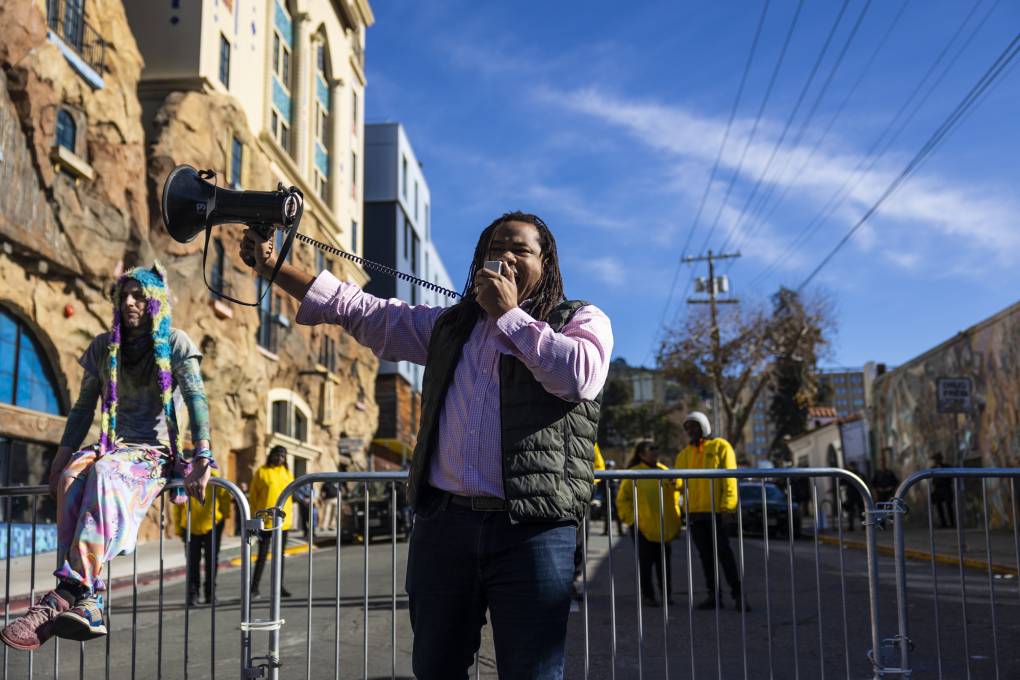
"caption": "Aidan Hill and others demonstrate outside of People's Park in Berkeley on Jan. 4, 2024.",
"description": null,
"title": "240104-PEOPLE'S PARK-MD-13-KQED",
"credit": "Martin do Nascimento/KQED",
"status": "inherit",
"altTag": null,
"isLoading": false,
"fetchFailed": false
},
"news_11965592": {
"type": "attachments",
"id": "news_11965592",
"meta": {
"index": "attachments_1716263798",
"site": "news",
"id": "11965592",
"found": true
},
"parent": 0,
"imgSizes": {
"twentyfourteen-full-width": {
"file": "https://cdn.kqed.org/wp-content/uploads/sites/10/2023/10/20231024-MACRO-022-JY-KQED-1038x576.jpg",
"width": 1038,
"mimeType": "image/jpeg",
"height": 576
},
"thumbnail": {
"file": "https://cdn.kqed.org/wp-content/uploads/sites/10/2023/10/20231024-MACRO-022-JY-KQED-160x107.jpg",
"width": 160,
"mimeType": "image/jpeg",
"height": 107
},
"post-thumbnail": {
"file": "https://cdn.kqed.org/wp-content/uploads/sites/10/2023/10/20231024-MACRO-022-JY-KQED-672x372.jpg",
"width": 672,
"mimeType": "image/jpeg",
"height": 372
},
"kqedFullSize": {
"file": "https://cdn.kqed.org/wp-content/uploads/sites/10/2023/10/20231024-MACRO-022-JY-KQED.jpg",
"width": 2000,
"height": 1333
},
"large": {
"file": "https://cdn.kqed.org/wp-content/uploads/sites/10/2023/10/20231024-MACRO-022-JY-KQED-1020x680.jpg",
"width": 1020,
"mimeType": "image/jpeg",
"height": 680
},
"1536x1536": {
"file": "https://cdn.kqed.org/wp-content/uploads/sites/10/2023/10/20231024-MACRO-022-JY-KQED-1536x1024.jpg",
"width": 1536,
"mimeType": "image/jpeg",
"height": 1024
},
"full-width": {
"file": "https://cdn.kqed.org/wp-content/uploads/sites/10/2023/10/20231024-MACRO-022-JY-KQED-1920x1280.jpg",
"width": 1920,
"mimeType": "image/jpeg",
"height": 1280
},
"medium": {
"file": "https://cdn.kqed.org/wp-content/uploads/sites/10/2023/10/20231024-MACRO-022-JY-KQED-800x533.jpg",
"width": 800,
"mimeType": "image/jpeg",
"height": 533
}
},
"publishDate": 1698258536,
"modified": 1704231400,
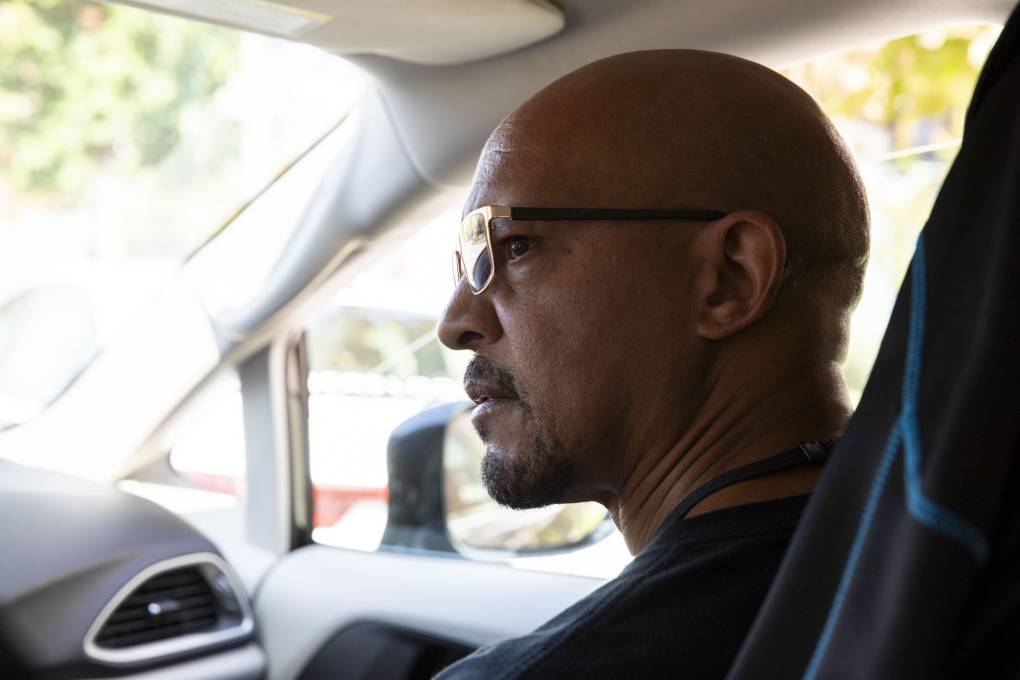
"caption": "Community Intervention Specialist Michael Thompson of the Mobile Assistance Community Responders of Oakland (MACRO) is seen inside the van after speaking with an unhoused person outside the Oakland Public Library in Oakland on Tuesday, Oct. 24, 2023. MACRO deploys their team members for non-emergent 911 calls in Oakland.",
"description": null,
"title": "MACRO",
"credit": "Juliana Yamada/KQED",
"status": "inherit",
"altTag": "A person with a bald head looks out the driver's side window of a car from the passenger seat.",
"isLoading": false,
"fetchFailed": false
},
"news_11971001": {
"type": "attachments",
"id": "news_11971001",
"meta": {
"index": "attachments_1716263798",
"site": "news",
"id": "11971001",
"found": true
},
"parent": 11970993,
"imgSizes": {
"twentyfourteen-full-width": {
"file": "https://cdn.kqed.org/wp-content/uploads/sites/10/2023/12/002_KQED_Housing_MountainView_02192020_3308-qut-1038x576.jpg",
"width": 1038,
"mimeType": "image/jpeg",
"height": 576
},
"thumbnail": {
"file": "https://cdn.kqed.org/wp-content/uploads/sites/10/2023/12/002_KQED_Housing_MountainView_02192020_3308-qut-160x107.jpg",
"width": 160,
"mimeType": "image/jpeg",
"height": 107
},
"post-thumbnail": {
"file": "https://cdn.kqed.org/wp-content/uploads/sites/10/2023/12/002_KQED_Housing_MountainView_02192020_3308-qut-672x372.jpg",
"width": 672,
"mimeType": "image/jpeg",
"height": 372
},
"kqedFullSize": {
"file": "https://cdn.kqed.org/wp-content/uploads/sites/10/2023/12/002_KQED_Housing_MountainView_02192020_3308-qut.jpg",
"width": 1920,
"height": 1280
},
"large": {
"file": "https://cdn.kqed.org/wp-content/uploads/sites/10/2023/12/002_KQED_Housing_MountainView_02192020_3308-qut-1020x680.jpg",
"width": 1020,
"mimeType": "image/jpeg",
"height": 680
},
"1536x1536": {
"file": "https://cdn.kqed.org/wp-content/uploads/sites/10/2023/12/002_KQED_Housing_MountainView_02192020_3308-qut-1536x1024.jpg",
"width": 1536,
"mimeType": "image/jpeg",
"height": 1024
},
"medium": {
"file": "https://cdn.kqed.org/wp-content/uploads/sites/10/2023/12/002_KQED_Housing_MountainView_02192020_3308-qut-800x533.jpg",
"width": 800,
"mimeType": "image/jpeg",
"height": 533
}
},
"publishDate": 1703706845,
"modified": 1703706994,
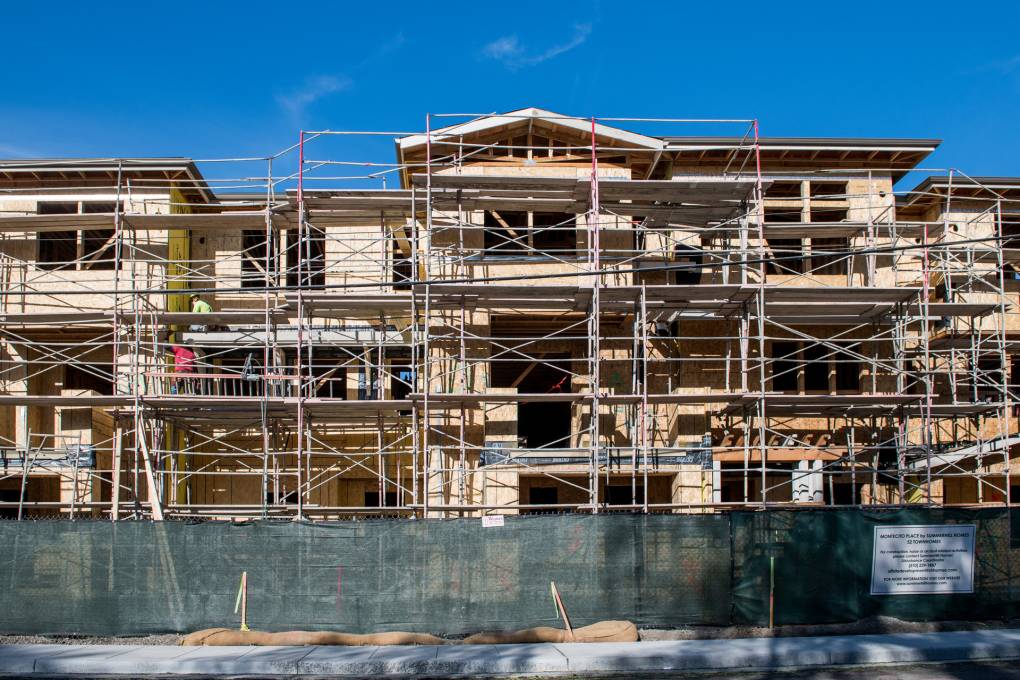
"caption": "Apartment construction in Mountain View on Feb. 19, 2020.",
"description": null,
"title": "002_KQED_Housing_MountainView_02192020_3308-qut",
"credit": "Beth LaBerge/KQED",
"status": "inherit",
"altTag": "A house under construction.",
"isLoading": false,
"fetchFailed": false
},
"news_11969276": {
"type": "attachments",
"id": "news_11969276",
"meta": {
"index": "attachments_1716263798",
"site": "news",
"id": "11969276",
"found": true
},
"parent": 0,
"imgSizes": {
"twentyfourteen-full-width": {
"file": "https://cdn.kqed.org/wp-content/uploads/sites/10/2023/12/231205-SolanoCountyFarmers-03-BL-KQED-1038x576.jpg",
"width": 1038,
"mimeType": "image/jpeg",
"height": 576
},
"thumbnail": {
"file": "https://cdn.kqed.org/wp-content/uploads/sites/10/2023/12/231205-SolanoCountyFarmers-03-BL-KQED-160x107.jpg",
"width": 160,
"mimeType": "image/jpeg",
"height": 107
},
"post-thumbnail": {
"file": "https://cdn.kqed.org/wp-content/uploads/sites/10/2023/12/231205-SolanoCountyFarmers-03-BL-KQED-672x372.jpg",
"width": 672,
"mimeType": "image/jpeg",
"height": 372
},
"kqedFullSize": {
"file": "https://cdn.kqed.org/wp-content/uploads/sites/10/2023/12/231205-SolanoCountyFarmers-03-BL-KQED.jpg",
"width": 2000,
"height": 1333
},
"large": {
"file": "https://cdn.kqed.org/wp-content/uploads/sites/10/2023/12/231205-SolanoCountyFarmers-03-BL-KQED-1020x680.jpg",
"width": 1020,
"mimeType": "image/jpeg",
"height": 680
},
"1536x1536": {
"file": "https://cdn.kqed.org/wp-content/uploads/sites/10/2023/12/231205-SolanoCountyFarmers-03-BL-KQED-1536x1024.jpg",
"width": 1536,
"mimeType": "image/jpeg",
"height": 1024
},
"full-width": {
"file": "https://cdn.kqed.org/wp-content/uploads/sites/10/2023/12/231205-SolanoCountyFarmers-03-BL-KQED-1920x1280.jpg",
"width": 1920,
"mimeType": "image/jpeg",
"height": 1280
},
"medium": {
"file": "https://cdn.kqed.org/wp-content/uploads/sites/10/2023/12/231205-SolanoCountyFarmers-03-BL-KQED-800x533.jpg",
"width": 800,
"mimeType": "image/jpeg",
"height": 533
}
},
"publishDate": 1701975660,
"modified": 1703209777,
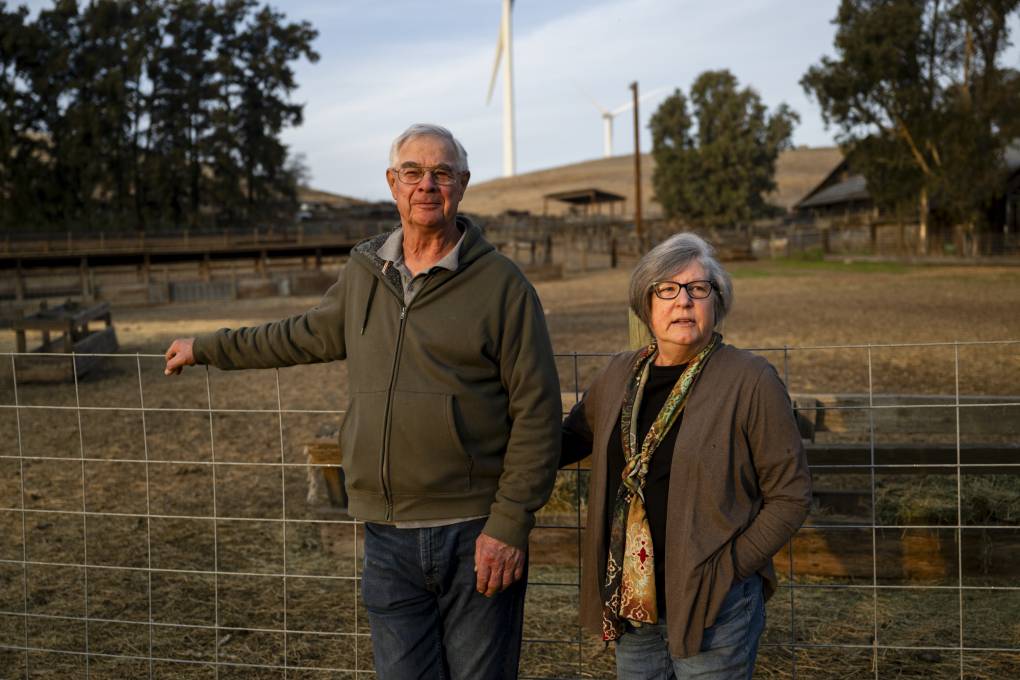
"caption": "Margaret and Ian Anderson stand on the farmland the Anderson family has owned for generations in Birds Landing, Solano County, on Dec. 5, 2023, before a town hall meeting for California Forever, a proposed new California city backed by Silicon Valley investors on farmland in eastern Solano County.",
"description": null,
"title": "231205-SolanoCountyFarmers-03-BL-KQED",
"credit": "Beth LaBerge/KQED",
"status": "inherit",
"altTag": "An older white man and an older white woman, stand on farmland looking at the camera.",
"isLoading": false,
"fetchFailed": false
},
"news_11970748": {
"type": "attachments",
"id": "news_11970748",
"meta": {
"index": "attachments_1716263798",
"site": "news",
"id": "11970748",
"found": true
},
"parent": 11970744,
"imgSizes": {
"twentyfourteen-full-width": {
"file": "https://cdn.kqed.org/wp-content/uploads/sites/10/2023/12/GettyImages-1502059460-1024x576.jpg",
"width": 1024,
"mimeType": "image/jpeg",
"height": 576
},
"thumbnail": {
"file": "https://cdn.kqed.org/wp-content/uploads/sites/10/2023/12/GettyImages-1502059460-160x109.jpg",
"width": 160,
"mimeType": "image/jpeg",
"height": 109
},
"post-thumbnail": {
"file": "https://cdn.kqed.org/wp-content/uploads/sites/10/2023/12/GettyImages-1502059460-672x372.jpg",
"width": 672,
"mimeType": "image/jpeg",
"height": 372
},
"kqedFullSize": {
"file": "https://cdn.kqed.org/wp-content/uploads/sites/10/2023/12/GettyImages-1502059460.jpg",
"width": 1024,
"height": 698
},
"large": {
"file": "https://cdn.kqed.org/wp-content/uploads/sites/10/2023/12/GettyImages-1502059460-1020x695.jpg",
"width": 1020,
"mimeType": "image/jpeg",
"height": 695
},
"medium": {
"file": "https://cdn.kqed.org/wp-content/uploads/sites/10/2023/12/GettyImages-1502059460-800x545.jpg",
"width": 800,
"mimeType": "image/jpeg",
"height": 545
}
},
"publishDate": 1703275146,
"modified": 1703275708,
"caption": "Tents on 8th Street at a homeless encampment near Harrison Street in Berkeley in June 2023.",
"description": null,
"title": "Berkeley Homeless",
"credit": "Jane Tyska/Digital First Media/East Bay Times via Getty Images",
"status": "inherit",
"altTag": "tents along a street",
"isLoading": false,
"fetchFailed": false
},
"news_11970625": {
"type": "attachments",
"id": "news_11970625",
"meta": {
"index": "attachments_1716263798",
"site": "news",
"id": "11970625",
"found": true
},
"parent": 0,
"imgSizes": {
"twentyfourteen-full-width": {
"file": "https://cdn.kqed.org/wp-content/uploads/sites/10/2023/12/231220-TIRECOVERY-10-BL-KQED-1038x576.jpg",
"width": 1038,
"mimeType": "image/jpeg",
"height": 576
},
"thumbnail": {
"file": "https://cdn.kqed.org/wp-content/uploads/sites/10/2023/12/231220-TIRECOVERY-10-BL-KQED-160x107.jpg",
"width": 160,
"mimeType": "image/jpeg",
"height": 107
},
"post-thumbnail": {
"file": "https://cdn.kqed.org/wp-content/uploads/sites/10/2023/12/231220-TIRECOVERY-10-BL-KQED-672x372.jpg",
"width": 672,
"mimeType": "image/jpeg",
"height": 372
},
"kqedFullSize": {
"file": "https://cdn.kqed.org/wp-content/uploads/sites/10/2023/12/231220-TIRECOVERY-10-BL-KQED.jpg",
"width": 2000,
"height": 1333
},
"large": {
"file": "https://cdn.kqed.org/wp-content/uploads/sites/10/2023/12/231220-TIRECOVERY-10-BL-KQED-1020x680.jpg",
"width": 1020,
"mimeType": "image/jpeg",
"height": 680
},
"1536x1536": {
"file": "https://cdn.kqed.org/wp-content/uploads/sites/10/2023/12/231220-TIRECOVERY-10-BL-KQED-1536x1024.jpg",
"width": 1536,
"mimeType": "image/jpeg",
"height": 1024
},
"full-width": {
"file": "https://cdn.kqed.org/wp-content/uploads/sites/10/2023/12/231220-TIRECOVERY-10-BL-KQED-1920x1280.jpg",
"width": 1920,
"mimeType": "image/jpeg",
"height": 1280
},
"medium": {
"file": "https://cdn.kqed.org/wp-content/uploads/sites/10/2023/12/231220-TIRECOVERY-10-BL-KQED-800x533.jpg",
"width": 800,
"mimeType": "image/jpeg",
"height": 533
}
},
"publishDate": 1703183222,
"modified": 1703205795,
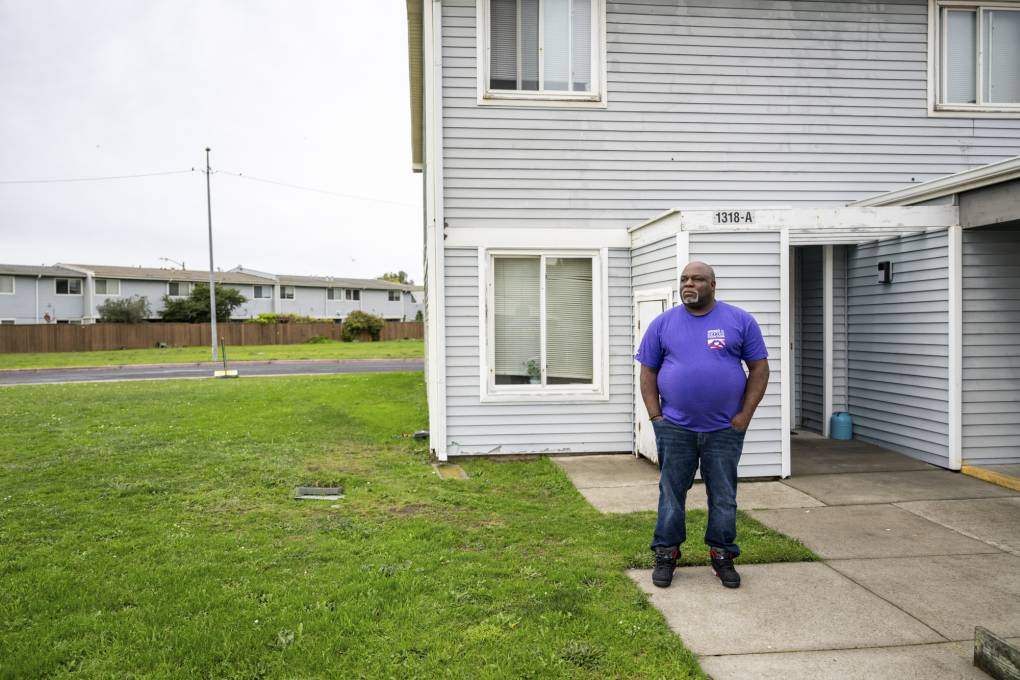
"caption": "De'Andre Devereaux stands outside a holiday party at HealthRight 360's Recovery Residence program on Treasure Island on Dec. 20, 2023.",
"description": null,
"title": "231220-TIRECOVERY-10-BL-KQED",
"credit": "Beth LaBerge/KQED",
"status": "inherit",
"altTag": "A person with a bald head stands in front of a building in a residential area.",
"isLoading": false,
"fetchFailed": false
},
"news_11954908": {
"type": "attachments",
"id": "news_11954908",
"meta": {
"index": "attachments_1716263798",
"site": "news",
"id": "11954908",
"found": true
},
"parent": 0,
"imgSizes": {
"twentyfourteen-full-width": {
"file": "https://cdn.kqed.org/wp-content/uploads/sites/10/2023/07/230701-FRESNO-UNHOUSED-HEAT-MHN-22-KQED-02-1038x576.jpg",
"width": 1038,
"mimeType": "image/jpeg",
"height": 576
},
"thumbnail": {
"file": "https://cdn.kqed.org/wp-content/uploads/sites/10/2023/07/230701-FRESNO-UNHOUSED-HEAT-MHN-22-KQED-02-160x107.jpg",
"width": 160,
"mimeType": "image/jpeg",
"height": 107
},
"post-thumbnail": {
"file": "https://cdn.kqed.org/wp-content/uploads/sites/10/2023/07/230701-FRESNO-UNHOUSED-HEAT-MHN-22-KQED-02-672x372.jpg",
"width": 672,
"mimeType": "image/jpeg",
"height": 372
},
"kqedFullSize": {
"file": "https://cdn.kqed.org/wp-content/uploads/sites/10/2023/07/230701-FRESNO-UNHOUSED-HEAT-MHN-22-KQED-02.jpg?ver=1703109609",
"width": 2000,
"height": 1333
},
"large": {
"file": "https://cdn.kqed.org/wp-content/uploads/sites/10/2023/07/230701-FRESNO-UNHOUSED-HEAT-MHN-22-KQED-02-1020x680.jpg",
"width": 1020,
"mimeType": "image/jpeg",
"height": 680
},
"1536x1536": {
"file": "https://cdn.kqed.org/wp-content/uploads/sites/10/2023/07/230701-FRESNO-UNHOUSED-HEAT-MHN-22-KQED-02-1536x1024.jpg",
"width": 1536,
"mimeType": "image/jpeg",
"height": 1024
},
"full-width": {
"file": "https://cdn.kqed.org/wp-content/uploads/sites/10/2023/07/230701-FRESNO-UNHOUSED-HEAT-MHN-22-KQED-02-1920x1280.jpg",
"width": 1920,
"mimeType": "image/jpeg",
"height": 1280
},
"medium": {
"file": "https://cdn.kqed.org/wp-content/uploads/sites/10/2023/07/230701-FRESNO-UNHOUSED-HEAT-MHN-22-KQED-02-800x533.jpg",
"width": 800,
"mimeType": "image/jpeg",
"height": 533
}
},
"publishDate": 1688399869,
"modified": 1703109617,
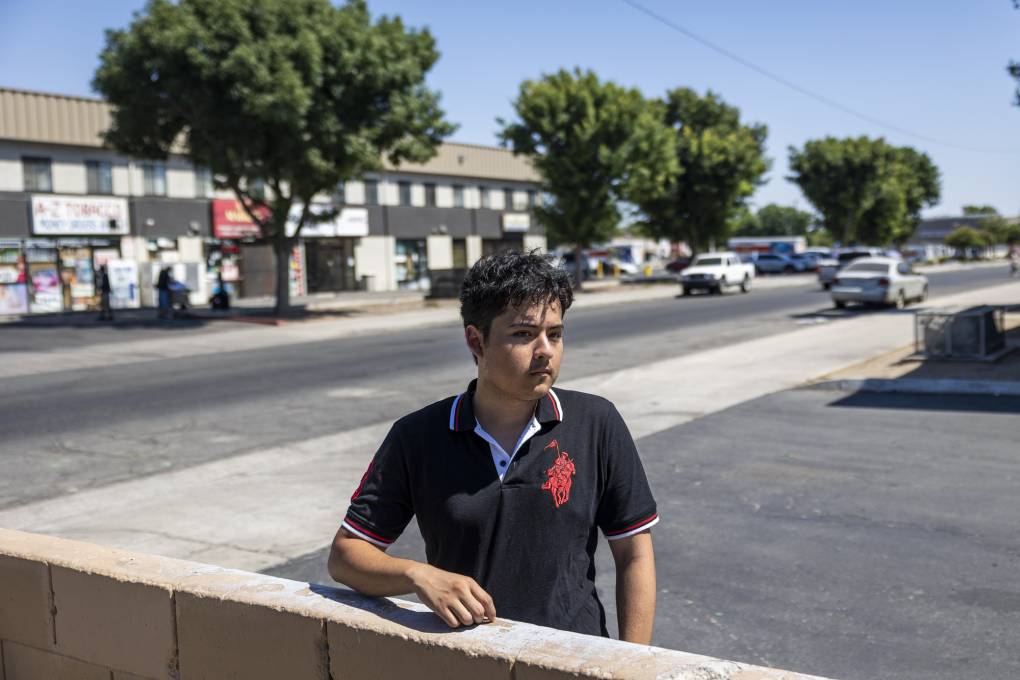
"caption": "Michael Yamamura outside his home in Fresno on July 1, 2023.",
"description": null,
"title": "Michael Yamamura outside his home in Fresno on July 1, 2023.",
"credit": "Martin do Nascimento/KQED",
"status": "inherit",
"altTag": "A person stands by a brick wall in front of a street.",
"isLoading": false,
"fetchFailed": false
},
"news_11970311": {
"type": "attachments",
"id": "news_11970311",
"meta": {
"index": "attachments_1716263798",
"site": "news",
"id": "11970311",
"found": true
},
"parent": 11970299,
"imgSizes": {
"twentyfourteen-full-width": {
"file": "https://cdn.kqed.org/wp-content/uploads/sites/10/2023/12/231017-LakeMercedRVs-020-BL-qut-1038x576.jpg",
"width": 1038,
"mimeType": "image/jpeg",
"height": 576
},
"thumbnail": {
"file": "https://cdn.kqed.org/wp-content/uploads/sites/10/2023/12/231017-LakeMercedRVs-020-BL-qut-160x107.jpg",
"width": 160,
"mimeType": "image/jpeg",
"height": 107
},
"post-thumbnail": {
"file": "https://cdn.kqed.org/wp-content/uploads/sites/10/2023/12/231017-LakeMercedRVs-020-BL-qut-672x372.jpg",
"width": 672,
"mimeType": "image/jpeg",
"height": 372
},
"kqedFullSize": {
"file": "https://cdn.kqed.org/wp-content/uploads/sites/10/2023/12/231017-LakeMercedRVs-020-BL-qut.jpg",
"width": 1920,
"height": 1280
},
"large": {
"file": "https://cdn.kqed.org/wp-content/uploads/sites/10/2023/12/231017-LakeMercedRVs-020-BL-qut-1020x680.jpg",
"width": 1020,
"mimeType": "image/jpeg",
"height": 680
},
"1536x1536": {
"file": "https://cdn.kqed.org/wp-content/uploads/sites/10/2023/12/231017-LakeMercedRVs-020-BL-qut-1536x1024.jpg",
"width": 1536,
"mimeType": "image/jpeg",
"height": 1024
},
"medium": {
"file": "https://cdn.kqed.org/wp-content/uploads/sites/10/2023/12/231017-LakeMercedRVs-020-BL-qut-800x533.jpg",
"width": 800,
"mimeType": "image/jpeg",
"height": 533
}
},
"publishDate": 1702929693,
"modified": 1702930220,
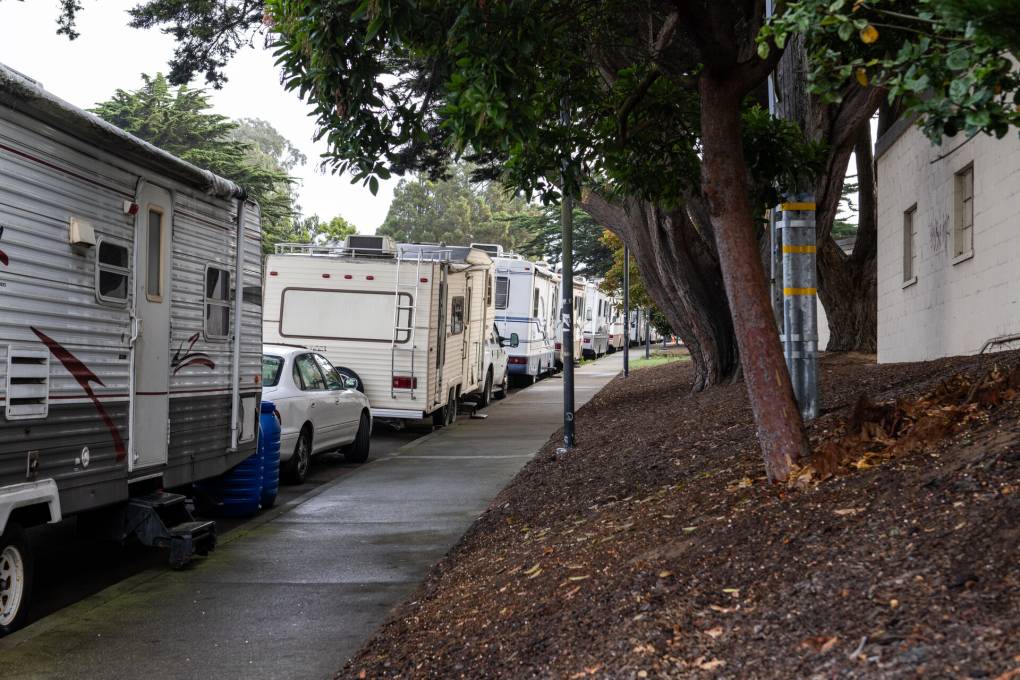
"caption": "RVs line Winston Drive in San Francisco on Oct. 17, 2023, near SF State University.",
"description": null,
"title": "231017-LakeMercedRVs-020-BL-qut",
"credit": "Beth LaBerge/KQED",
"status": "inherit",
"altTag": "A line of RVs and cars parked on a street.",
"isLoading": false,
"fetchFailed": false
},
"news_11970243": {
"type": "attachments",
"id": "news_11970243",
"meta": {
"index": "attachments_1716263798",
"site": "news",
"id": "11970243",
"found": true
},
"parent": 11970242,
"imgSizes": {
"twentyfourteen-full-width": {
"file": "https://cdn.kqed.org/wp-content/uploads/sites/10/2023/12/021723-LA-Street-Medicine-Project-LV_CM_09-copy-1038x576.jpg",
"width": 1038,
"mimeType": "image/jpeg",
"height": 576
},
"thumbnail": {
"file": "https://cdn.kqed.org/wp-content/uploads/sites/10/2023/12/021723-LA-Street-Medicine-Project-LV_CM_09-copy-160x107.jpg",
"width": 160,
"mimeType": "image/jpeg",
"height": 107
},
"post-thumbnail": {
"file": "https://cdn.kqed.org/wp-content/uploads/sites/10/2023/12/021723-LA-Street-Medicine-Project-LV_CM_09-copy-672x372.jpg",
"width": 672,
"mimeType": "image/jpeg",
"height": 372
},
"kqedFullSize": {
"file": "https://cdn.kqed.org/wp-content/uploads/sites/10/2023/12/021723-LA-Street-Medicine-Project-LV_CM_09-copy.jpg",
"width": 2000,
"height": 1333
},
"large": {
"file": "https://cdn.kqed.org/wp-content/uploads/sites/10/2023/12/021723-LA-Street-Medicine-Project-LV_CM_09-copy-1020x680.jpg",
"width": 1020,
"mimeType": "image/jpeg",
"height": 680
},
"1536x1536": {
"file": "https://cdn.kqed.org/wp-content/uploads/sites/10/2023/12/021723-LA-Street-Medicine-Project-LV_CM_09-copy-1536x1024.jpg",
"width": 1536,
"mimeType": "image/jpeg",
"height": 1024
},
"full-width": {
"file": "https://cdn.kqed.org/wp-content/uploads/sites/10/2023/12/021723-LA-Street-Medicine-Project-LV_CM_09-copy-1920x1280.jpg",
"width": 1920,
"mimeType": "image/jpeg",
"height": 1280
},
"medium": {
"file": "https://cdn.kqed.org/wp-content/uploads/sites/10/2023/12/021723-LA-Street-Medicine-Project-LV_CM_09-copy-800x533.jpg",
"width": 800,
"mimeType": "image/jpeg",
"height": 533
}
},
"publishDate": 1702753802,
"modified": 1702834276,
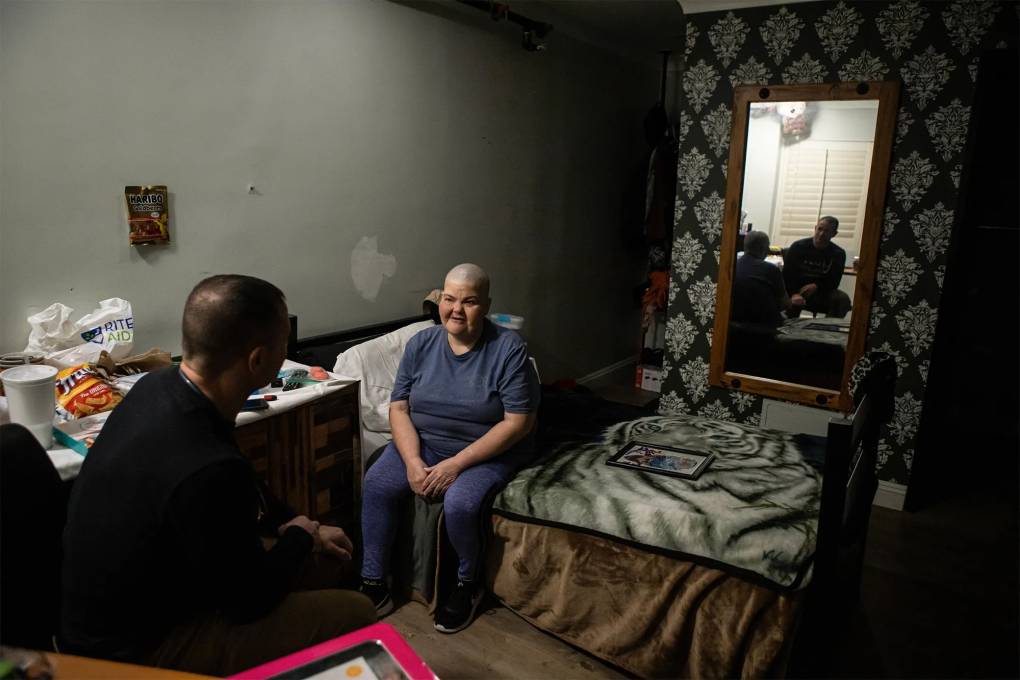
"caption": "Physician assistant Brett Feldman and Calra Bolen sit in her room at a motel turned into housing for unhoused residents as part of the state's Homekey program in downtown Los Angeles on Feb. 13, 2023. ",
"description": null,
"title": "021723-LA-Street-Medicine-Project-LV_CM_09 copy",
"credit": "Larry Valenzuela/CalMatters/CatchLight Local",
"status": "inherit",
"altTag": "A woman with little hair and a blue outfit sits on a bed talking to a man.",
"isLoading": false,
"fetchFailed": false
},
"news_11970120": {
"type": "attachments",
"id": "news_11970120",
"meta": {
"index": "attachments_1716263798",
"site": "news",
"id": "11970120",
"found": true
},
"title": "Aerial view of Redwood City, Silicon Valley, San Francisco bay, California",
"publishDate": 1702674463,
"status": "inherit",
"parent": 11970062,
"modified": 1783630584,
"caption": "An aerial view of Redwood City.",
"credit": "Sundry Photography via Getty Images",
"altTag": "An aerial view of a city, with a large body of water in the background.",
"description": null,
"imgSizes": {
"medium": {
"file": "https://cdn.kqed.org/wp-content/uploads/sites/10/2023/12/GettyImages-1092771432-800x533.jpg",
"width": 800,
"height": 533,
"mimeType": "image/jpeg"
},
"large": {
"file": "https://cdn.kqed.org/wp-content/uploads/sites/10/2023/12/GettyImages-1092771432-1020x680.jpg",
"width": 1020,
"height": 680,
"mimeType": "image/jpeg"
},
"thumbnail": {
"file": "https://cdn.kqed.org/wp-content/uploads/sites/10/2023/12/GettyImages-1092771432-160x107.jpg",
"width": 160,
"height": 107,
"mimeType": "image/jpeg"
},
"1536x1536": {
"file": "https://cdn.kqed.org/wp-content/uploads/sites/10/2023/12/GettyImages-1092771432-1536x1024.jpg",
"width": 1536,
"height": 1024,
"mimeType": "image/jpeg"
},
"2048x2048": {
"file": "https://cdn.kqed.org/wp-content/uploads/sites/10/2023/12/GettyImages-1092771432-2048x1365.jpg",
"width": 2048,
"height": 1365,
"mimeType": "image/jpeg"
},
"post-thumbnail": {
"file": "https://cdn.kqed.org/wp-content/uploads/sites/10/2023/12/GettyImages-1092771432-672x372.jpg",
"width": 672,
"height": 372,
"mimeType": "image/jpeg"
},
"twentyfourteen-full-width": {
"file": "https://cdn.kqed.org/wp-content/uploads/sites/10/2023/12/GettyImages-1092771432-1038x576.jpg",
"width": 1038,
"height": 576,
"mimeType": "image/jpeg"
},
"full-width": {
"file": "https://cdn.kqed.org/wp-content/uploads/sites/10/2023/12/GettyImages-1092771432-1920x1280.jpg",
"width": 1920,
"height": 1280,
"mimeType": "image/jpeg"
},
"kqedFullSize": {
"file": "https://cdn.kqed.org/wp-content/uploads/sites/10/2023/12/GettyImages-1092771432.jpg",
"width": 2121,
"height": 1414
}
},
"isLoading": false,
"fetchFailed": false
},
"news_11969628": {
"type": "attachments",
"id": "news_11969628",
"meta": {
"index": "attachments_1716263798",
"site": "news",
"id": "11969628",
"found": true
},
"parent": 11969623,
"imgSizes": {
"twentyfourteen-full-width": {
"file": "https://cdn.kqed.org/wp-content/uploads/sites/10/2023/12/102623_NB-Rent-Protest_JAH_CM_15-1038x576.jpg",
"width": 1038,
"mimeType": "image/jpeg",
"height": 576
},
"thumbnail": {
"file": "https://cdn.kqed.org/wp-content/uploads/sites/10/2023/12/102623_NB-Rent-Protest_JAH_CM_15-160x107.jpg",
"width": 160,
"mimeType": "image/jpeg",
"height": 107
},
"post-thumbnail": {
"file": "https://cdn.kqed.org/wp-content/uploads/sites/10/2023/12/102623_NB-Rent-Protest_JAH_CM_15-672x372.jpg",
"width": 672,
"mimeType": "image/jpeg",
"height": 372
},
"kqedFullSize": {
"file": "https://cdn.kqed.org/wp-content/uploads/sites/10/2023/12/102623_NB-Rent-Protest_JAH_CM_15.jpg",
"width": 2000,
"height": 1333
},
"large": {
"file": "https://cdn.kqed.org/wp-content/uploads/sites/10/2023/12/102623_NB-Rent-Protest_JAH_CM_15-1020x680.jpg",
"width": 1020,
"mimeType": "image/jpeg",
"height": 680
},
"1536x1536": {
"file": "https://cdn.kqed.org/wp-content/uploads/sites/10/2023/12/102623_NB-Rent-Protest_JAH_CM_15-1536x1024.jpg",
"width": 1536,
"mimeType": "image/jpeg",
"height": 1024
},
"full-width": {
"file": "https://cdn.kqed.org/wp-content/uploads/sites/10/2023/12/102623_NB-Rent-Protest_JAH_CM_15-1920x1280.jpg",
"width": 1920,
"mimeType": "image/jpeg",
"height": 1280
},
"medium": {
"file": "https://cdn.kqed.org/wp-content/uploads/sites/10/2023/12/102623_NB-Rent-Protest_JAH_CM_15-800x533.jpg",
"width": 800,
"mimeType": "image/jpeg",
"height": 533
}
},
"publishDate": 1702403808,
"modified": 1702421085,
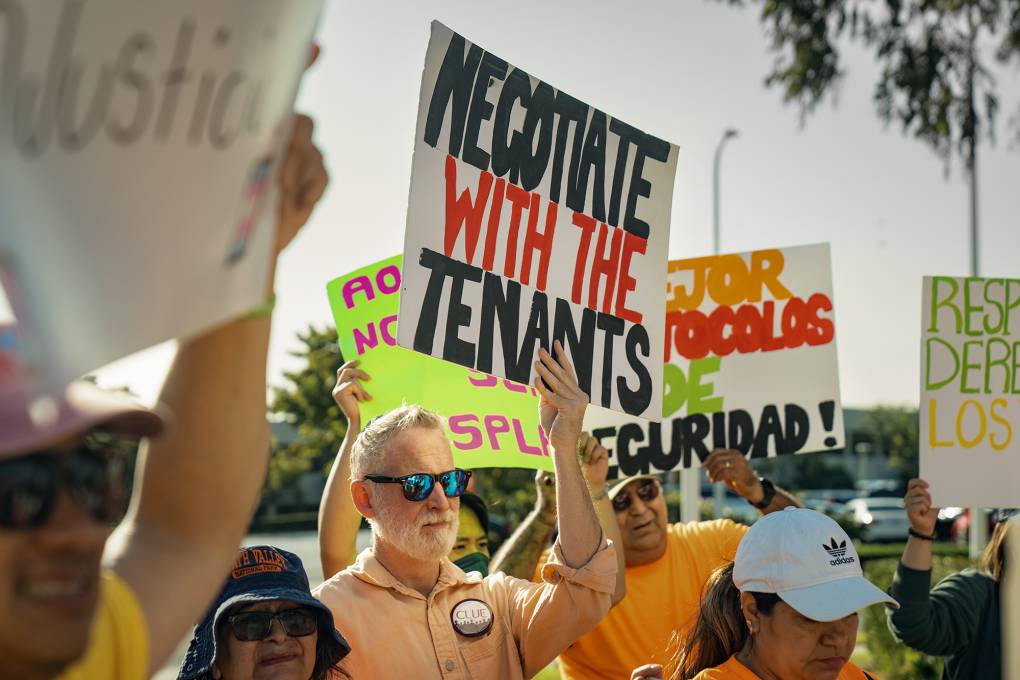
"caption": "Bay Area tenants from the KDF Tenants Association protest housing conditions and rent increases outside the office complex that houses KDF Communities LLC's office in Newport Beach on Oct. 26, 2023. ",
"description": null,
"title": "102623_NB-Rent-Protest_JAH_CM_15",
"credit": "Julie A. Hotz/CalMatters",
"status": "inherit",
"altTag": "A man wearing an orange shirt and sunglasses holds up a sign in a crowd that reads \"Negotiate with the Tenants.\"",
"isLoading": false,
"fetchFailed": false
},
"news_11953201": {
"type": "attachments",
"id": "news_11953201",
"meta": {
"index": "attachments_1716263798",
"site": "news",
"id": "11953201",
"found": true
},
"parent": 11962307,
"imgSizes": {
"twentyfourteen-full-width": {
"file": "https://ww2.kqed.org/app/uploads/sites/10/2023/06/RS66345_230615-brooklyn-basin-239-ks.NEF-04-ks-KQED-1038x576.jpg",
"width": 1038,
"mimeType": "image/jpeg",
"height": 576
},
"thumbnail": {
"file": "https://ww2.kqed.org/app/uploads/sites/10/2023/06/RS66345_230615-brooklyn-basin-239-ks.NEF-04-ks-KQED-160x106.jpg",
"width": 160,
"mimeType": "image/jpeg",
"height": 106
},
"post-thumbnail": {
"file": "https://ww2.kqed.org/app/uploads/sites/10/2023/06/RS66345_230615-brooklyn-basin-239-ks.NEF-04-ks-KQED-672x372.jpg",
"width": 672,
"mimeType": "image/jpeg",
"height": 372
},
"kqedFullSize": {
"file": "https://ww2.kqed.org/app/uploads/sites/10/2023/06/RS66345_230615-brooklyn-basin-239-ks.NEF-04-ks-KQED.jpg",
"width": 2000,
"height": 1331
},
"large": {
"file": "https://ww2.kqed.org/app/uploads/sites/10/2023/06/RS66345_230615-brooklyn-basin-239-ks.NEF-04-ks-KQED-1020x679.jpg",
"width": 1020,
"mimeType": "image/jpeg",
"height": 679
},
"1536x1536": {
"file": "https://ww2.kqed.org/app/uploads/sites/10/2023/06/RS66345_230615-brooklyn-basin-239-ks.NEF-04-ks-KQED-1536x1022.jpg",
"width": 1536,
"mimeType": "image/jpeg",
"height": 1022
},
"full-width": {
"file": "https://ww2.kqed.org/app/uploads/sites/10/2023/06/RS66345_230615-brooklyn-basin-239-ks.NEF-04-ks-KQED-1920x1278.jpg",
"width": 1920,
"mimeType": "image/jpeg",
"height": 1278
},
"medium": {
"file": "https://ww2.kqed.org/app/uploads/sites/10/2023/06/RS66345_230615-brooklyn-basin-239-ks.NEF-04-ks-KQED-800x532.jpg",
"width": 800,
"mimeType": "image/jpeg",
"height": 532
}
},
"publishDate": 1686941518,
"modified": 1695664465,
"caption": "The view from at an affordable housing complex in Brooklyn Basin in Oakland, California on June 15, 2023. MidPen Housing has added nearly 1,000 homes to the new neighborhood along the city’s waterfront and plans to put in 3,000 more.",
"description": null,
"title": "RS66345_230615-brooklyn basin-239-ks.NEF-04-ks-KQED",
"credit": "Kori Suzuki/KQED",
"status": "inherit",
"altTag": "A large sunny plaza with a smattering of people set beside a body of water with a sail boat floating in it and others docked on the opposite shore.",
"isLoading": false,
"fetchFailed": false
}
},
"audioPlayerReducer": {
"postId": "stream_live",
"isPaused": true,
"isPlaying": false,
"pfsActive": false,
"pledgeModalIsOpen": true,
"playerDrawerIsOpen": false,
"liveAudioPlayStartedAt": 0,
"liveAudioPlayContext": ""
},
"authorsReducer": {
"byline_news_11970242": {
"type": "authors",
"id": "byline_news_11970242",
"meta": {
"override": true
},
"slug": "byline_news_11970242",
"name": "\u003ca href=\"https://calmatters.org/author/jeanne-kuang/\">Jeanne Kuang\u003c/a>",
"isLoading": false
},
"byline_news_11969623": {
"type": "authors",
"id": "byline_news_11969623",
"meta": {
"override": true
},
"slug": "byline_news_11969623",
"name": "Jeanne Kuang",
"isLoading": false
},
"ecruzguevarra": {
"type": "authors",
"id": "8654",
"meta": {
"index": "authors_1716337520",
"id": "8654",
"found": true
},
"name": "Ericka Cruz Guevarra",
"firstName": "Ericka",
"lastName": "Cruz Guevarra",
"slug": "ecruzguevarra",
"email": "ecruzguevarra@kqed.org",
"display_author_email": true,
"staff_mastheads": [
"news"
],
"title": "Producer, The Bay Podcast",
"bio": "Ericka Cruz Guevarra is host of \u003ca href=\"https://www.kqed.org/podcasts/thebay\">\u003cem>The Bay\u003c/em>\u003c/a> podcast at KQED. Before host, she was the show’s producer. Her work in that capacity includes a three-part reported series on policing in Vallejo, which won a 2020 excellence in journalism award from the Society of Professional Journalists. Ericka has worked as a breaking news reporter at Oregon Public Broadcasting, helped produce the Code Switch podcast, and was KQED’s inaugural Raul Ramirez Diversity Fund intern. She’s also an alumna of NPR’s Next Generation Radio program. Send her an email if you have strong feelings about whether Fairfield and Suisun City are the Bay. Ericka is represented by SAG-AFTRA.",
"avatar": "https://secure.gravatar.com/avatar/accefc1de4bafc7e234b69bcb9b6f6536c130fd84709bc3069ef11a78787e1bb?s=600&d=blank&r=g",
"twitter": "NotoriousECG",
"bluesky": null,
"facebook": null,
"instagram": null,
"linkedin": null,
"sites": [
{
"site": "arts",
"roles": [
"subscriber"
]
},
{
"site": "news",
"roles": [
"editor",
"manage_categories"
]
},
{
"site": "futureofyou",
"roles": [
"subscriber"
]
},
{
"site": "stateofhealth",
"roles": [
"subscriber"
]
},
{
"site": "science",
"roles": [
"editor"
]
},
{
"site": "forum",
"roles": [
"subscriber"
]
}
],
"headData": {
"title": "Ericka Cruz Guevarra | KQED",
"description": "Producer, The Bay Podcast",
"ogImgSrc": "https://secure.gravatar.com/avatar/accefc1de4bafc7e234b69bcb9b6f6536c130fd84709bc3069ef11a78787e1bb?s=600&d=blank&r=g",
"twImgSrc": "https://secure.gravatar.com/avatar/accefc1de4bafc7e234b69bcb9b6f6536c130fd84709bc3069ef11a78787e1bb?s=600&d=blank&r=g"
},
"isLoading": false,
"link": "/author/ecruzguevarra"
},
"vrancano": {
"type": "authors",
"id": "11276",
"meta": {
"index": "authors_1716337520",
"id": "11276",
"found": true
},
"name": "Vanessa Rancaño",
"firstName": "Vanessa",
"lastName": "Rancaño",
"slug": "vrancano",
"email": "vrancano@kqed.org",
"display_author_email": false,
"staff_mastheads": [
"news"
],
"title": "Reporter",
"bio": "Vanessa Rancaño is a features reporter for KQED. She’s also covered homelessness and education for the station and reported from the Central Valley. Her work has aired across public radio, from flagship national news shows to longform narrative podcasts. Before taking up a mic, she worked as a freelance print journalist. She’s been recognized with a number of national and regional awards. Vanessa grew up in California's Central Valley. She's a former NPR Kroc Fellow, and a graduate of the UC Berkeley Graduate School of Journalism.",
"avatar": "https://secure.gravatar.com/avatar/b3a383dfb0e7ee1c17568f2cf067904ab654d6e3de9743fc661f3c788ade1bed?s=600&d=blank&r=g",
"twitter": "vanessarancano",
"bluesky": null,
"facebook": null,
"instagram": null,
"linkedin": null,
"sites": [
{
"site": "arts",
"roles": [
"editor"
]
},
{
"site": "news",
"roles": [
"editor"
]
},
{
"site": "liveblog",
"roles": [
"contributor"
]
}
],
"headData": {
"title": "Vanessa Rancaño | KQED",
"description": "Reporter",
"ogImgSrc": "https://secure.gravatar.com/avatar/b3a383dfb0e7ee1c17568f2cf067904ab654d6e3de9743fc661f3c788ade1bed?s=600&d=blank&r=g",
"twImgSrc": "https://secure.gravatar.com/avatar/b3a383dfb0e7ee1c17568f2cf067904ab654d6e3de9743fc661f3c788ade1bed?s=600&d=blank&r=g"
},
"isLoading": false,
"link": "/author/vrancano"
},
"amontecillo": {
"type": "authors",
"id": "11649",
"meta": {
"index": "authors_1716337520",
"id": "11649",
"found": true
},
"name": "Alan Montecillo",
"firstName": "Alan",
"lastName": "Montecillo",
"slug": "amontecillo",
"email": "amontecillo@kqed.org",
"display_author_email": false,
"staff_mastheads": [
"news"
],
"title": "KQED Contributor",
"bio": "Alan Montecillo is the senior editor of \u003cem>\u003ca href=\"http://kqed.org/thebay\">The Bay\u003c/a>, \u003c/em> KQED's local news podcast. Before moving to the Bay Area, he worked as a senior talk show producer for WILL in Champaign-Urbana, Illinois and at Oregon Public Broadcasting in Portland, Oregon. He has won journalism awards from the Society of Professional Journalists Northern California, the Public Media Journalists Association, The Signal Awards, and has also received a regional Edward R. Murrow award. Alan is a Filipino American from Hong Kong and a graduate of Reed College.",
"avatar": "https://secure.gravatar.com/avatar/268f53a2066899ea9efdd8a5900218b17c822d9862cbc9326cccec53ef41d349?s=600&d=blank&r=g",
"twitter": "alanmontecillo",
"bluesky": null,
"facebook": null,
"instagram": null,
"linkedin": null,
"sites": [
{
"site": "",
"roles": [
"editor"
]
},
{
"site": "news",
"roles": [
"editor",
"manage_categories"
]
}
],
"headData": {
"title": "Alan Montecillo | KQED",
"description": "KQED Contributor",
"ogImgSrc": "https://secure.gravatar.com/avatar/268f53a2066899ea9efdd8a5900218b17c822d9862cbc9326cccec53ef41d349?s=600&d=blank&r=g",
"twImgSrc": "https://secure.gravatar.com/avatar/268f53a2066899ea9efdd8a5900218b17c822d9862cbc9326cccec53ef41d349?s=600&d=blank&r=g"
},
"isLoading": false,
"link": "/author/amontecillo"
},
"ebaldassari": {
"type": "authors",
"id": "11652",
"meta": {
"index": "authors_1716337520",
"id": "11652",
"found": true
},
"name": "Erin Baldassari",
"firstName": "Erin",
"lastName": "Baldassari",
"slug": "ebaldassari",
"email": "ebaldassari@KQED.org",
"display_author_email": true,
"staff_mastheads": [
"news"
],
"title": "Staff Writer",
"bio": "Erin Baldassari covers housing for KQED. She's a former print journalist and most recently worked as the transportation reporter for the \u003cem>Mercury News\u003c/em> and \u003cem>East Bay Times. \u003c/em>There, she focused on how the Bay Area’s housing shortage has changed the way people move around the region. She also served on the \u003cem>East Bay Times\u003c/em>’ 2017 Pulitzer Prize-winning team for coverage of the Ghost Ship Fire in Oakland. Prior to that, Erin worked as a breaking news and general assignment reporter for a variety of outlets in the Bay Area and the greater Boston area. A Tufts University alumna, Erin grew up in the foothills of the Sierra Nevada mountains and in Sonoma County. She is a life-long KQED listener.",
"avatar": "https://secure.gravatar.com/avatar/5e95cad64a8ca08288082212e199d2b0cbeb4fd8e8ef5339395f361032bbe005?s=600&d=blank&r=g",
"twitter": "e_baldi",
"bluesky": null,
"facebook": null,
"instagram": null,
"linkedin": null,
"sites": [
{
"site": "news",
"roles": [
"edit_others_posts",
"editor"
]
},
{
"site": "science",
"roles": [
"editor"
]
},
{
"site": "liveblog",
"roles": [
"editor"
]
}
],
"headData": {
"title": "Erin Baldassari | KQED",
"description": "Staff Writer",
"ogImgSrc": "https://secure.gravatar.com/avatar/5e95cad64a8ca08288082212e199d2b0cbeb4fd8e8ef5339395f361032bbe005?s=600&d=blank&r=g",
"twImgSrc": "https://secure.gravatar.com/avatar/5e95cad64a8ca08288082212e199d2b0cbeb4fd8e8ef5339395f361032bbe005?s=600&d=blank&r=g"
},
"isLoading": false,
"link": "/author/ebaldassari"
},
"btorres": {
"type": "authors",
"id": "11666",
"meta": {
"index": "authors_1716337520",
"id": "11666",
"found": true
},
"name": "Blanca Torres",
"firstName": "Blanca",
"lastName": "Torres",
"slug": "btorres",
"email": "btorres@kqed.org",
"display_author_email": true,
"staff_mastheads": [
"news"
],
"title": "Producer, Forum",
"bio": "Blanca Torres brings sharp news judgement and keen sense of lively conversation to her work as producer for Forum. She loves producing shows that leave listeners feeling like they heard distinctive voices, learned something new and gained a fresh perspective.\r\n\r\nShe joined KQED in January of 2020 after 16 years of working as a newspaper reporter most recently at the \u003cem>San Francisco Business Times,\u003c/em> where she wrote about real estate and economic development. Before that, she covered a variety of beats including crime, education, retail, workplace, the economy, consumer issues, and small business for the \u003cem>Contra Costa Times, Baltimore Sun\u003c/em> and\u003cem> The Seattle Times\u003c/em>. In addition to reporting, she worked as an editorial writer and columnist for the \u003cem>Seattle Times\u003c/em>. From 2017 to 2020, Blanca won a total of ten awards from the National Association of Real Estate Editors and won first place for land use reporting from the California News Publishers Association two years in a row. She is also a member and former board member for the National Association of Hispanic Journalists.\r\n\r\nA native of the Pacific Northwest, Blanca earned her bachelor's degree from Vanderbilt University in Nashville and a master's in fine arts in creative writing at Mills College. She lives in the East Bay with her family.",
"avatar": "https://secure.gravatar.com/avatar/50b49d19b14a1eed34f26ebf4681152cdd81574ed21851100871ccd29e578cdc?s=600&d=blank&r=g",
"twitter": "@blancawrites",
"bluesky": null,
"facebook": null,
"instagram": null,
"linkedin": null,
"sites": [
{
"site": "arts",
"roles": [
"editor"
]
},
{
"site": "news",
"roles": [
"editor"
]
},
{
"site": "forum",
"roles": [
"editor"
]
}
],
"headData": {
"title": "Blanca Torres | KQED",
"description": "Producer, Forum",
"ogImgSrc": "https://secure.gravatar.com/avatar/50b49d19b14a1eed34f26ebf4681152cdd81574ed21851100871ccd29e578cdc?s=600&d=blank&r=g",
"twImgSrc": "https://secure.gravatar.com/avatar/50b49d19b14a1eed34f26ebf4681152cdd81574ed21851100871ccd29e578cdc?s=600&d=blank&r=g"
},
"isLoading": false,
"link": "/author/btorres"
},
"abandlamudi": {
"type": "authors",
"id": "11672",
"meta": {
"index": "authors_1716337520",
"id": "11672",
"found": true
},
"name": "Adhiti Bandlamudi",
"firstName": "Adhiti",
"lastName": "Bandlamudi",
"slug": "abandlamudi",
"email": "abandlamudi@kqed.org",
"display_author_email": false,
"staff_mastheads": [
"news"
],
"title": "KQED Housing Reporter",
"bio": "Adhiti Bandlamudi reports for KQED's Housing desk. She focuses on how housing gets built across the Bay Area. Before joining KQED in 2020, she reported for WUNC in Durham, North Carolina, WABE in Atlanta, Georgia and Capital Public Radio in Sacramento. In 2017, she was awarded a Kroc Fellowship at NPR where she reported on everything from sprinkles to the Golden State Killer's arrest. When she's not reporting, she's baking new recipes in her kitchen or watching movies with friends and family. She's originally from Georgia and has strong opinions about Great British Bake Off.",
"avatar": "https://secure.gravatar.com/avatar/868129c8b257bb99a3500e2c86a65400?s=600&d=mm&r=g",
"twitter": "oddity_adhiti",
"facebook": null,
"instagram": null,
"linkedin": null,
"sites": [
{
"site": "arts",
"roles": [
"author"
]
},
{
"site": "news",
"roles": [
"editor"
]
},
{
"site": "liveblog",
"roles": [
"author"
]
}
],
"headData": {
"title": "Adhiti Bandlamudi | KQED",
"description": "KQED Housing Reporter",
"ogImgSrc": "https://secure.gravatar.com/avatar/868129c8b257bb99a3500e2c86a65400?s=600&d=mm&r=g",
"twImgSrc": "https://secure.gravatar.com/avatar/868129c8b257bb99a3500e2c86a65400?s=600&d=mm&r=g"
},
"isLoading": false,
"link": "/author/abandlamudi"
},
"jlara": {
"type": "authors",
"id": "11761",
"meta": {
"index": "authors_1716337520",
"id": "11761",
"found": true
},
"name": "Juan Carlos Lara",
"firstName": "Juan Carlos",
"lastName": "Lara",
"slug": "jlara",
"email": "jlara@kqed.org",
"display_author_email": false,
"staff_mastheads": [],
"title": "KQED Contributor",
"bio": null,
"avatar": "https://secure.gravatar.com/avatar/19e2052b9b05657c5ff2af2121846e9c?s=600&d=blank&r=g",
"twitter": null,
"facebook": null,
"instagram": null,
"linkedin": null,
"sites": [
{
"site": "arts",
"roles": [
"editor"
]
},
{
"site": "news",
"roles": [
"editor"
]
},
{
"site": "forum",
"roles": [
"editor"
]
},
{
"site": "liveblog",
"roles": [
"contributor"
]
}
],
"headData": {
"title": "Juan Carlos Lara | KQED",
"description": "KQED Contributor",
"ogImgSrc": "https://secure.gravatar.com/avatar/19e2052b9b05657c5ff2af2121846e9c?s=600&d=blank&r=g",
"twImgSrc": "https://secure.gravatar.com/avatar/19e2052b9b05657c5ff2af2121846e9c?s=600&d=blank&r=g"
},
"isLoading": false,
"link": "/author/jlara"
},
"mesquinca": {
"type": "authors",
"id": "11802",
"meta": {
"index": "authors_1716337520",
"id": "11802",
"found": true
},
"name": "Maria Esquinca",
"firstName": "Maria",
"lastName": "Esquinca",
"slug": "mesquinca",
"email": "mesquinca@kqed.org",
"display_author_email": false,
"staff_mastheads": [],
"title": "Producer, The Bay",
"bio": "María Esquinca is a producer of The Bay. Before that, she was a New York Women’s Foundation IGNITE Fellow at Latino USA. She worked at Radio Bilingue where she covered the San Joaquin Valley. Maria has interned at WLRN, News 21, The New York Times Student Journalism Institute and at Crain’s Detroit Business as a Dow Jones News Fund Business Reporting Intern. She is an MFA graduate from the University of Miami. In 2017, she graduated from the Walter Cronkite School of Journalism and Mass Communication with a Master of Mass Communication. A fronteriza, she was born in Ciudad Juárez, Chihuahua, Mexico and grew up in El Paso, Texas.",
"avatar": "https://secure.gravatar.com/avatar/77cedba18aae91da775038ba06dcd8d0?s=600&d=blank&r=g",
"twitter": "@m_esquinca",
"facebook": null,
"instagram": null,
"linkedin": null,
"sites": [
{
"site": "news",
"roles": []
}
],
"headData": {
"title": "Maria Esquinca | KQED",
"description": "Producer, The Bay",
"ogImgSrc": "https://secure.gravatar.com/avatar/77cedba18aae91da775038ba06dcd8d0?s=600&d=blank&r=g",
"twImgSrc": "https://secure.gravatar.com/avatar/77cedba18aae91da775038ba06dcd8d0?s=600&d=blank&r=g"
},
"isLoading": false,
"link": "/author/mesquinca"
},
"sjohnson": {
"type": "authors",
"id": "11840",
"meta": {
"index": "authors_1716337520",
"id": "11840",
"found": true
},
"name": "Sydney Johnson",
"firstName": "Sydney",
"lastName": "Johnson",
"slug": "sjohnson",
"email": "sjohnson@kqed.org",
"display_author_email": false,
"staff_mastheads": [
"news"
],
"title": "KQED Reporter",
"bio": "Sydney Johnson is a general assignment reporter at KQED. She previously reported on public health and city government at the San Francisco Examiner, and before that, she covered statewide education policy for EdSource. Her reporting has won multiple local, state and national awards. Sydney is a graduate of the University of California, Berkeley and lives in San Francisco.",
"avatar": "https://secure.gravatar.com/avatar/97855f2719b72ad6190b7c535fe642c8?s=600&d=blank&r=g",
"twitter": "sydneyfjohnson",
"facebook": null,
"instagram": null,
"linkedin": null,
"sites": [
{
"site": "news",
"roles": [
"editor"
]
}
],
"headData": {
"title": "Sydney Johnson | KQED",
"description": "KQED Reporter",
"ogImgSrc": "https://secure.gravatar.com/avatar/97855f2719b72ad6190b7c535fe642c8?s=600&d=blank&r=g",
"twImgSrc": "https://secure.gravatar.com/avatar/97855f2719b72ad6190b7c535fe642c8?s=600&d=blank&r=g"
},
"isLoading": false,
"link": "/author/sjohnson"
},
"naltenberg": {
"type": "authors",
"id": "11896",
"meta": {
"index": "authors_1716337520",
"id": "11896",
"found": true
},
"name": "Nik Altenberg",
"firstName": "Nik",
"lastName": "Altenberg",
"slug": "naltenberg",
"email": "naltenberg@kqed.org",
"display_author_email": false,
"staff_mastheads": [],
"title": "KQED Contributor",
"bio": "Nik Altenberg is an on-call reporter for KQED and a copy editor and fact checker for Santa Cruz Local. Nik’s reporting interests include policing, public health, environment, immigration, housing and the places where these issues intersect.",
"avatar": "https://secure.gravatar.com/avatar/e391b3a18ce4a53a7ca3f3065c74418b?s=600&d=blank&r=g",
"twitter": null,
"facebook": null,
"instagram": "https://www.instagram.com/nikaltenberg/",
"linkedin": null,
"sites": [
{
"site": "news",
"roles": []
}
],
"headData": {
"title": "Nik Altenberg | KQED",
"description": "KQED Contributor",
"ogImgSrc": "https://secure.gravatar.com/avatar/e391b3a18ce4a53a7ca3f3065c74418b?s=600&d=blank&r=g",
"twImgSrc": "https://secure.gravatar.com/avatar/e391b3a18ce4a53a7ca3f3065c74418b?s=600&d=blank&r=g"
},
"isLoading": false,
"link": "/author/naltenberg"
}
},
"pagesReducer": {
"news_category_housing": {
"type": "terms",
"id": "news_6266",
"meta": {
"index": "terms_1716263798",
"site": "news",
"id": "6266",
"score": 11.039913
},
"featImg": null,
"name": "Housing",
"description": null,
"taxonomy": "category",
"headData": {
"twImgId": null,
"twTitle": null,
"ogTitle": null,
"ogImgId": null,
"twDescription": null,
"description": null,
"title": "Housing Archives | KQED News",
"ogDescription": null
},
"ttid": 6290,
"slug": "housing",
"isLoading": false,
"title": "Housing",
"pageMeta": {
"site": "news",
"WpPageTemplate": "page-topic-editorial",
"currentPage": 47
},
"blocks": [
{
"blockName": "kqed/post-list",
"attrs": {
"layout": "cardArticle2",
"query": "posts/news?category=housing",
"seeMore": false,
"paginated": true,
"page": 47
}
},
{
"blockName": "kqed/ad"
}
]
}
},
"pfsSessionReducer": {},
"postsReducer": {
"stream_live": {
"type": "live",
"id": "stream_live",
"audioUrl": "https://streams.kqed.org/kqedradio",
"title": "Live Stream",
"excerpt": "Live Stream information currently unavailable.",
"link": "/radio",
"featImg": "",
"label": {
"name": "KQED Live",
"link": "/"
}
},
"stream_kqedNewscast": {
"type": "posts",
"id": "stream_kqedNewscast",
"audioUrl": "https://www.kqed.org/.stream/anon/radio/RDnews/newscast.mp3?_=1",
"title": "KQED Newscast",
"featImg": "",
"label": {
"name": "88.5 FM",
"link": "/"
}
},
"news_11971577": {
"type": "posts",
"id": "news_11971577",
"meta": {
"index": "posts_1716263798",
"site": "news",
"id": "11971577",
"score": null,
"sort": [
1704389564000
]
},
"guestAuthors": [],
"slug": "berkeleys-peoples-park-cleared-by-police-7-arrested",
"title": "Berkeley Update: 3 More Arrested During People's Park Protest",
"publishDate": 1704389564,
"format": "standard",
"headTitle": "Berkeley Update: 3 More Arrested During People’s Park Protest | KQED",
"labelTerm": {
"site": "news"
},
"content": "\u003cp>\u003ci>\u003cspan style=\"font-weight: 400\">Updated 7:55 p.m. Thursday\u003c/span>\u003c/i>\u003c/p>\n\u003cp>\u003cspan style=\"font-weight: 400\">Three people were arrested late Thursday afternoon following a skirmish with police – the latest of nearly a dozen arrests made throughout the day as activists squared off with police at and around People’s Park in Berkeley. \u003c/span>\u003c/p>\n\u003cp>\u003cspan style=\"font-weight: 400\">Hundreds of officers arrived in the middle of the night to clear the site of its occupants in preparation for building student housing at the park. Officers at the time arrested seven people on charges of trespassing, with two cited on additional charges of failure to disperse, said Dan Mogulof, a spokesperson for UC Berkeley, which owns the property. \u003c/span>\u003c/p>\n\u003cp>\u003cspan style=\"font-weight: 400\">Throughout the day, construction crews began installing 160 double-stacked shipping containers around the park’s perimeters, as demonstrators gathered at the intersection of Telegraph and Haste avenues outside the park. \u003c/span>\u003c/p>\n\u003cfigure id=\"attachment_11971737\" class=\"wp-caption alignnone\" style=\"max-width: 2000px\">\u003cimg loading=\"lazy\" decoding=\"async\" class=\"wp-image-11971737 size-full\" src=\"https://ww2.kqed.org/app/uploads/sites/10/2024/01/240104-PEOPLES-PARK-MD-02-KQED.jpg\" alt=\"\" width=\"2000\" height=\"1333\" srcset=\"https://cdn.kqed.org/wp-content/uploads/sites/10/2024/01/240104-PEOPLES-PARK-MD-02-KQED.jpg 2000w, https://cdn.kqed.org/wp-content/uploads/sites/10/2024/01/240104-PEOPLES-PARK-MD-02-KQED-800x533.jpg 800w, https://cdn.kqed.org/wp-content/uploads/sites/10/2024/01/240104-PEOPLES-PARK-MD-02-KQED-1020x680.jpg 1020w, https://cdn.kqed.org/wp-content/uploads/sites/10/2024/01/240104-PEOPLES-PARK-MD-02-KQED-160x107.jpg 160w, https://cdn.kqed.org/wp-content/uploads/sites/10/2024/01/240104-PEOPLES-PARK-MD-02-KQED-1536x1024.jpg 1536w, https://cdn.kqed.org/wp-content/uploads/sites/10/2024/01/240104-PEOPLES-PARK-MD-02-KQED-1920x1280.jpg 1920w\" sizes=\"auto, (max-width: 2000px) 100vw, 2000px\">\u003cfigcaption class=\"wp-caption-text\">Recently installed shipping containers line Bowditch Street on the eastern side of People’s Park in Berkeley on Jan. 4, 2024. \u003ccite>(Martin do Nascimento/KQED)\u003c/cite>\u003c/figcaption>\u003c/figure>\n\u003cp>\u003cspan style=\"font-weight: 400\">While “very peaceful” throughout the day, Berkeley police Officer Jessica Perry said one other person was arrested around 1:10 p.m. on charges of theft and resisting arrest after they moved a barricade, bringing the total number of arrests for the day to 11, according to UC Berkeley and Berkeley police. \u003c/span>\u003c/p>\n\u003cp>\u003cspan style=\"font-weight: 400\">Up until the skirmish in the late afternoon, the demonstrators had been playing music and eating donated pizza and cookies. Some were making or holding signs reading, “The people are the park,” and “Our people, our park” as several dozen officers in riot gear faced them from behind a barricade.\u003c/span>\u003c/p>\n\u003cp>Berkeley police said protesters were attempting to remove barricades at the perimeter of the park, and an “altercation occurred” with officers at 4:40 p.m. Two women and one man were arrested on charges including resisting arrest and battery, according to police.\u003c/p>\n\u003cp>\u003cspan style=\"font-weight: 400\">“What else can I do besides bring food for people?” said Alejandro Garcia, 31, pizza boxes in tow. “So they can spend time here and at least try to put some pressure, at least congregate, at least show we aren’t happy about this.”\u003c/span>\u003c/p>\n\u003cp>\u003cspan style=\"font-weight: 400\">Hundreds of officers were still on scene as of late Thursday afternoon. Mogulof said the officers would remain there until construction of the barricade is complete, after which security guards would patrol the area. He couldn’t give an exact estimate for when that would happen.\u003c/span>\u003c/p>\n\u003cp>\u003cspan style=\"font-weight: 400\">“Work is proceeding faster than expected,” he said. “We have some reasonable optimism it will be sooner than our original projection [of three-to-four days].”\u003c/span>\u003c/p>\n\u003cp>https://twitter.com/vanessarancano/status/1742970222506828121\u003c/p>\n\u003cp>\u003cspan style=\"font-weight: 400\">The standoff is the latest in a half-century-long battle over the park’s fate. The university intends to build 1,100 units of student housing on the park, with at least 100 units of housing for people exiting homelessness. Roughly 60% of the 2.8-acre site will remain open to the public,\u003c/span>\u003ca href=\"https://peoplesparkhousing.berkeley.edu/\"> \u003cspan style=\"font-weight: 400\">according to UC Berkeley\u003c/span>\u003c/a>\u003cspan style=\"font-weight: 400\">.\u003c/span>\u003c/p>\n\u003cp>\u003cspan style=\"font-weight: 400\">Janette Reid, a Berkeley resident and former Cal student, came to UC Berkeley in 1967. She was there in 1969, when the park became a landmark for the antiwar and Free Speech movements and when thousands of protestors faced off with police in the deadly confrontation known as “Bloody Thursday.”\u003c/span>\u003c/p>\n\u003cp>\u003cspan style=\"font-weight: 400\">“All this was so unnecessary,” Reid said. “If you told me back then that more than a half century later, we would still be squabbling over this plot of ground, I would have said, ‘That’s insane.'”\u003c/span>\u003c/p>\n\u003cp>\u003cspan style=\"font-weight: 400\">For Coco Rosos, 21, who grew up in Berkeley with the park as a historical landmark for political activism and as a refuge for unhoused people who camp there, the park is a vital piece of the city’s identity. \u003c/span>\u003c/p>\n\u003cp>\u003cspan style=\"font-weight: 400\">“It’s important for people in Berkeley to understand that there is a location where people can come to where there are no prerequisites,” Rosos said. “You don’t need anything else other than being human.”\u003c/span>\u003c/p>\n\u003cfigure id=\"attachment_11971731\" class=\"wp-caption aligncenter\" style=\"max-width: 2000px\">\u003ca href=\"https://cdn.kqed.org/wp-content/uploads/sites/10/2024/01/240104-PEOPLES-PARK-MD-12-KQED.jpg\">\u003cimg loading=\"lazy\" decoding=\"async\" class=\"size-full wp-image-11971731\" src=\"https://cdn.kqed.org/wp-content/uploads/sites/10/2024/01/240104-PEOPLES-PARK-MD-12-KQED.jpg\" alt=\"\" width=\"2000\" height=\"1333\" srcset=\"https://cdn.kqed.org/wp-content/uploads/sites/10/2024/01/240104-PEOPLES-PARK-MD-12-KQED.jpg 2000w, https://cdn.kqed.org/wp-content/uploads/sites/10/2024/01/240104-PEOPLES-PARK-MD-12-KQED-800x533.jpg 800w, https://cdn.kqed.org/wp-content/uploads/sites/10/2024/01/240104-PEOPLES-PARK-MD-12-KQED-1020x680.jpg 1020w, https://cdn.kqed.org/wp-content/uploads/sites/10/2024/01/240104-PEOPLES-PARK-MD-12-KQED-160x107.jpg 160w, https://cdn.kqed.org/wp-content/uploads/sites/10/2024/01/240104-PEOPLES-PARK-MD-12-KQED-1536x1024.jpg 1536w, https://cdn.kqed.org/wp-content/uploads/sites/10/2024/01/240104-PEOPLES-PARK-MD-12-KQED-1920x1280.jpg 1920w\" sizes=\"auto, (max-width: 2000px) 100vw, 2000px\">\u003c/a>\u003cfigcaption class=\"wp-caption-text\">Andrea Pritchett leads a crowd of demonstrators in chanting ‘Whose park? Our park,’ outside of People’s Park in Berkeley on Jan. 4, 2024. \u003ccite>(Martin do Nascimento/KQED)\u003c/cite>\u003c/figcaption>\u003c/figure>\n\u003cp>\u003cspan style=\"font-weight: 400\">In an email to students, UC Berkeley Chancellor Carol Christ said the housing at this site is part of its broader Student Housing Initiative launched in 2017. The initiative aims to add 9,000 student beds, doubling the number available in university-owned and operated housing. \u003c/span>\u003c/p>\n\u003cp>\u003cspan style=\"font-weight: 400\">“That, in turn, means the university must build on every feasible university-owned site in close proximity to the campus,” she wrote. “The housing planned for the People’s Park site is an essential and inseparable part of our efforts to ensure there is equity of experience for every student.”\u003c/span>\u003c/p>\n\u003cp>\u003cspan style=\"font-weight: 400\">[pullquote size=\"medium\" align=\"right\" citation=\"Enrique Marisol, a UC Berkeley graduate\"]‘[The officers are] cutting into the kitchen from three different directions, yelling all three directions, yelling different things at us, telling us to back up in different spaces, and we’re like, ‘We can’t back up anymore.”[/pullquote]Enrique Marisol, 23, was inside a makeshift kitchen at the park Wednesday evening when officers arrived. They described a chaotic scene as officers used chainsaws to enter the kitchen.\u003c/span>\u003c/p>\n\u003cp>\u003cspan style=\"font-weight: 400\">“I heard a bunch of screaming and yelling from outside, and before I could even climb back up to get out of the kitchen, there were two more people climbing in and slamming the door behind them,” they said. “[The officers are] cutting into the kitchen from three different directions, yelling all three directions, yelling different things at us, telling us to back up in different spaces, and we’re like, ‘We can’t back up anymore.'”\u003c/span>\u003c/p>\n\u003cp>\u003cspan style=\"font-weight: 400\">Marisol said they were one of the seven arrested on trespassing charges. \u003c/span>\u003c/p>\n\u003cp>\u003cspan style=\"font-weight: 400\">UC Berkeley spokesperson Kyle Gibson said the university’s goal is to ensure the park’s closure is “as peaceful as possible.”\u003c/span>\u003c/p>\n\u003cp>\u003cspan style=\"font-weight: 400\">“We’ve had a very successful morning,” Gibson said, adding that the park would reopen after construction is complete. “Over two-thirds of this site will be a brand new public park that will be open to the community and will not be fenced.”\u003c/span>\u003c/p>\n\u003cp>\u003cspan style=\"font-weight: 400\">Work to construct the planned student housing at the park stalled in February 2023 after\u003c/span>\u003ca href=\"https://www.kqed.org/news/11941907/appeals-court-sends-uc-berkeley-back-to-the-drawing-board-on-peoples-park-development\"> \u003cspan style=\"font-weight: 400\">an appeals court ruled\u003c/span>\u003c/a>\u003cspan style=\"font-weight: 400\"> UC Berkeley could not move forward with construction until it evaluated other possible sites for the housing and addressed concerns that noise pollution from students would impact neighbors.\u003c/span>\u003c/p>\n\u003cp>\u003cspan style=\"font-weight: 400\">But in September, Gov. Gavin Newsom signed a bill by Berkeley Democratic Asm. Buffy Wicks that effectively makes that ruling moot. AB 1307 amends California’s sweeping Environmental Quality Act (CEQA) by no longer requiring housing developers to first study potential noise levels generated by future tenants. \u003c/span>\u003c/p>\n\u003cfigure id=\"attachment_11971733\" class=\"wp-caption aligncenter\" style=\"max-width: 2560px\">\u003ca href=\"https://cdn.kqed.org/wp-content/uploads/sites/10/2024/01/240104-PEOPLES-PARK-MD-05-scaled.jpg\">\u003cimg loading=\"lazy\" decoding=\"async\" class=\"wp-image-11971733 size-full\" src=\"https://cdn.kqed.org/wp-content/uploads/sites/10/2024/01/240104-PEOPLES-PARK-MD-05-scaled.jpg\" alt=\"\" width=\"2560\" height=\"1707\" srcset=\"https://cdn.kqed.org/wp-content/uploads/sites/10/2024/01/240104-PEOPLES-PARK-MD-05-scaled.jpg 2560w, https://cdn.kqed.org/wp-content/uploads/sites/10/2024/01/240104-PEOPLES-PARK-MD-05-800x533.jpg 800w, https://cdn.kqed.org/wp-content/uploads/sites/10/2024/01/240104-PEOPLES-PARK-MD-05-1020x680.jpg 1020w, https://cdn.kqed.org/wp-content/uploads/sites/10/2024/01/240104-PEOPLES-PARK-MD-05-160x107.jpg 160w, https://cdn.kqed.org/wp-content/uploads/sites/10/2024/01/240104-PEOPLES-PARK-MD-05-1536x1024.jpg 1536w, https://cdn.kqed.org/wp-content/uploads/sites/10/2024/01/240104-PEOPLES-PARK-MD-05-2048x1365.jpg 2048w, https://cdn.kqed.org/wp-content/uploads/sites/10/2024/01/240104-PEOPLES-PARK-MD-05-1920x1280.jpg 1920w\" sizes=\"auto, (max-width: 2560px) 100vw, 2560px\">\u003c/a>\u003cfigcaption class=\"wp-caption-text\">Construction crews work in People’s Park in Berkeley on Jan. 4, 2024. \u003ccite>(Martin do Nascimento/KQED)\u003c/cite>\u003c/figcaption>\u003c/figure>\n\u003cp>\u003cspan style=\"font-weight: 400\">Lev Marcus, a 28-year-old who said he grew up in Berkeley, understands the need for more housing in the area but also sees a need for more open space as the city adds new residents. \u003c/span>\u003c/p>\n\u003cp>\u003cspan style=\"font-weight: 400\">“I totally sympathize with wanting to build more student housing,” he said. “I just think that with the more people we have, the more parks we need. We shouldn’t be taking away parks, we should be adding more.”\u003c/span>\u003c/p>\n\u003cp>\u003cspan style=\"font-weight: 400\">Marc Allen Louis Don, 42, spent time living in the park, beginning in 2014 during a bout of homelessness and at various points since then. \u003c/span>\u003c/p>\n\u003cp>\u003cspan style=\"font-weight: 400\">“It was very helpful,” he said. “I got acquainted and familiar with a lot of the people who were communally permanent here, and they had no other place to go.”\u003c/span>\u003c/p>\n\u003cp>\u003cspan style=\"font-weight: 400\">Christ said that between the summer of 2022 and October 2023, 89 people living at the park had accepted offers of transitional housing. In November 2023, a census of the site found 25 people living at the park. The university then partnered with the city on a $1 million lease of the Quality Inn motel, which includes social and other supportive services provided by the Dorothy Day House. \u003c/span>\u003c/p>\n\u003cp>\u003cspan style=\"font-weight: 400\">“Twenty-one of the 25 unhoused people on the site accepted the offer and are now on the path to permanent housing,” she said. “[Wednesday] night, alternative transitional housing, and storage for belongings were offered to every unhoused person when the park was closed, an offer that remains available for all who need and want it.”\u003c/span>\u003c/p>\n\u003cp>\u003cspan style=\"font-weight: 400\">[pullquote size=\"medium\" align=\"right\" citation=\"UC Berkeley Chancellor Carol Christ\"]‘We decided to take this necessary step during winter break to minimize the possibility of disruption for the public and our students when we are eventually cleared to resume construction.’[/pullquote]\u003c/span>\u003cspan style=\"font-weight: 400\">Although construction cannot begin until the legal case is resolved, Christ said she believes the courts have “repeatedly affirmed the university’s ability to enforce the site’s legal status as a closed construction zone.” Construction crews planned Thursday to continue working to set up shipping containers around the park, she said. \u003c/span>\u003c/p>\n\u003cp>\u003cspan style=\"font-weight: 400\">“We decided to take this necessary step during winter break to minimize the possibility of disruption for the public and our students when we are eventually cleared to resume construction,” she wrote.\u003c/span>\u003c/p>\n\u003cp>\u003ci>\u003cspan style=\"font-weight: 400\">KQED’s Holly McDede, Adhiti Bandlamudi and Brian Krans contributed to this report. \u003c/span>\u003c/i>\u003c/p>\n\u003cp>\u003cspan style=\"font-weight: 400\">[ad fullwidth]\u003c/span>\u003c/p>\n\u003cp>[ad floatright]\u003c/p>\n",
"blocks": [],
"excerpt": "Seven people were arrested early Thursday morning after dozens of police officers surrounded People's Park in Berkeley and faced off with activists occupying the site. ",
"status": "publish",
"parent": 0,
"modified": 1740517044,
"stats": {
"hasAudio": false,
"hasVideo": false,
"hasChartOrMap": false,
"iframeSrcs": [],
"hasGoogleForm": false,
"hasGallery": false,
"hasHearkenModule": false,
"hasPolis": false,
"paragraphCount": 35,
"wordCount": 1619
},
"headData": {
"title": "Berkeley Update: 3 More Arrested During People's Park Protest | KQED",
"description": "Seven people were arrested early Thursday morning after dozens of police officers surrounded People's Park in Berkeley and faced off with activists occupying the site. ",
"ogTitle": "",
"ogDescription": "",
"ogImgId": "",
"twTitle": "",
"twDescription": "",
"twImgId": "",
"schema": {
"@context": "https://schema.org",
"@type": "NewsArticle",
"headline": "Berkeley Update: 3 More Arrested During People's Park Protest",
"datePublished": "2024-01-04T09:32:44-08:00",
"dateModified": "2025-02-25T12:57:24-08:00",
"image": "https://cdn.kqed.org/wp-content/uploads/2020/02/KQED-OG-Image@1x.png",
"isAccessibleForFree": "True",
"publisher": {
"@type": "NewsMediaOrganization",
"@id": "https://www.kqed.org/#organization",
"name": "KQED",
"logo": "https://cdn.kqed.org/wp-content/uploads/2020/02/KQED-OG-Image@1x.png",
"url": "https://www.kqed.org",
"sameAs": [
"https://www.facebook.com/KQED",
"https://twitter.com/KQED",
"https://www.instagram.com/kqed/",
"https://www.tiktok.com/@kqedofficial",
"https://www.linkedin.com/company/kqed",
"https://www.youtube.com/channel/UCeC0IOo7i1P_61zVUWbJ4nw"
]
}
}
},
"sticky": false,
"excludeFromSiteSearch": "Include",
"articleAge": "0",
"path": "/news/11971577/berkeleys-peoples-park-cleared-by-police-7-arrested",
"audioTrackLength": null,
"parsedContent": [
{
"type": "contentString",
"content": "\u003cdiv class=\"post-body\">\u003cp>\u003cp>\u003ci>\u003cspan style=\"font-weight: 400\">Updated 7:55 p.m. Thursday\u003c/span>\u003c/i>\u003c/p>\n\u003cp>\u003cspan style=\"font-weight: 400\">Three people were arrested late Thursday afternoon following a skirmish with police – the latest of nearly a dozen arrests made throughout the day as activists squared off with police at and around People’s Park in Berkeley. \u003c/span>\u003c/p>\n\u003cp>\u003cspan style=\"font-weight: 400\">Hundreds of officers arrived in the middle of the night to clear the site of its occupants in preparation for building student housing at the park. Officers at the time arrested seven people on charges of trespassing, with two cited on additional charges of failure to disperse, said Dan Mogulof, a spokesperson for UC Berkeley, which owns the property. \u003c/span>\u003c/p>\n\u003cp>\u003cspan style=\"font-weight: 400\">Throughout the day, construction crews began installing 160 double-stacked shipping containers around the park’s perimeters, as demonstrators gathered at the intersection of Telegraph and Haste avenues outside the park. \u003c/span>\u003c/p>\n\u003cfigure id=\"attachment_11971737\" class=\"wp-caption alignnone\" style=\"max-width: 2000px\">\u003cimg loading=\"lazy\" decoding=\"async\" class=\"wp-image-11971737 size-full\" src=\"https://ww2.kqed.org/app/uploads/sites/10/2024/01/240104-PEOPLES-PARK-MD-02-KQED.jpg\" alt=\"\" width=\"2000\" height=\"1333\" srcset=\"https://cdn.kqed.org/wp-content/uploads/sites/10/2024/01/240104-PEOPLES-PARK-MD-02-KQED.jpg 2000w, https://cdn.kqed.org/wp-content/uploads/sites/10/2024/01/240104-PEOPLES-PARK-MD-02-KQED-800x533.jpg 800w, https://cdn.kqed.org/wp-content/uploads/sites/10/2024/01/240104-PEOPLES-PARK-MD-02-KQED-1020x680.jpg 1020w, https://cdn.kqed.org/wp-content/uploads/sites/10/2024/01/240104-PEOPLES-PARK-MD-02-KQED-160x107.jpg 160w, https://cdn.kqed.org/wp-content/uploads/sites/10/2024/01/240104-PEOPLES-PARK-MD-02-KQED-1536x1024.jpg 1536w, https://cdn.kqed.org/wp-content/uploads/sites/10/2024/01/240104-PEOPLES-PARK-MD-02-KQED-1920x1280.jpg 1920w\" sizes=\"auto, (max-width: 2000px) 100vw, 2000px\">\u003cfigcaption class=\"wp-caption-text\">Recently installed shipping containers line Bowditch Street on the eastern side of People’s Park in Berkeley on Jan. 4, 2024. \u003ccite>(Martin do Nascimento/KQED)\u003c/cite>\u003c/figcaption>\u003c/figure>\n\u003cp>\u003cspan style=\"font-weight: 400\">While “very peaceful” throughout the day, Berkeley police Officer Jessica Perry said one other person was arrested around 1:10 p.m. on charges of theft and resisting arrest after they moved a barricade, bringing the total number of arrests for the day to 11, according to UC Berkeley and Berkeley police. \u003c/span>\u003c/p>\n\u003cp>\u003cspan style=\"font-weight: 400\">Up until the skirmish in the late afternoon, the demonstrators had been playing music and eating donated pizza and cookies. Some were making or holding signs reading, “The people are the park,” and “Our people, our park” as several dozen officers in riot gear faced them from behind a barricade.\u003c/span>\u003c/p>\n\u003cp>Berkeley police said protesters were attempting to remove barricades at the perimeter of the park, and an “altercation occurred” with officers at 4:40 p.m. Two women and one man were arrested on charges including resisting arrest and battery, according to police.\u003c/p>\n\u003cp>\u003cspan style=\"font-weight: 400\">“What else can I do besides bring food for people?” said Alejandro Garcia, 31, pizza boxes in tow. “So they can spend time here and at least try to put some pressure, at least congregate, at least show we aren’t happy about this.”\u003c/span>\u003c/p>\n\u003cp>\u003cspan style=\"font-weight: 400\">Hundreds of officers were still on scene as of late Thursday afternoon. Mogulof said the officers would remain there until construction of the barricade is complete, after which security guards would patrol the area. He couldn’t give an exact estimate for when that would happen.\u003c/span>\u003c/p>\n\u003cp>\u003cspan style=\"font-weight: 400\">“Work is proceeding faster than expected,” he said. “We have some reasonable optimism it will be sooner than our original projection [of three-to-four days].”\u003c/span>\u003c/p>\u003c/p>\u003c/div>",
"attributes": {
"named": {},
"numeric": []
}
},
{
"type": "component",
"content": "",
"name": "singleTwitterStatus",
"attributes": {
"named": {
"id": "1742970222506828121"
},
"numeric": []
}
},
{
"type": "contentString",
"content": "\u003cdiv class=\"post-body\">\u003cp>\n\u003cp>\u003cspan style=\"font-weight: 400\">The standoff is the latest in a half-century-long battle over the park’s fate. The university intends to build 1,100 units of student housing on the park, with at least 100 units of housing for people exiting homelessness. Roughly 60% of the 2.8-acre site will remain open to the public,\u003c/span>\u003ca href=\"https://peoplesparkhousing.berkeley.edu/\"> \u003cspan style=\"font-weight: 400\">according to UC Berkeley\u003c/span>\u003c/a>\u003cspan style=\"font-weight: 400\">.\u003c/span>\u003c/p>\n\u003cp>\u003cspan style=\"font-weight: 400\">Janette Reid, a Berkeley resident and former Cal student, came to UC Berkeley in 1967. She was there in 1969, when the park became a landmark for the antiwar and Free Speech movements and when thousands of protestors faced off with police in the deadly confrontation known as “Bloody Thursday.”\u003c/span>\u003c/p>\n\u003cp>\u003cspan style=\"font-weight: 400\">“All this was so unnecessary,” Reid said. “If you told me back then that more than a half century later, we would still be squabbling over this plot of ground, I would have said, ‘That’s insane.'”\u003c/span>\u003c/p>\n\u003cp>\u003cspan style=\"font-weight: 400\">For Coco Rosos, 21, who grew up in Berkeley with the park as a historical landmark for political activism and as a refuge for unhoused people who camp there, the park is a vital piece of the city’s identity. \u003c/span>\u003c/p>\n\u003cp>\u003cspan style=\"font-weight: 400\">“It’s important for people in Berkeley to understand that there is a location where people can come to where there are no prerequisites,” Rosos said. “You don’t need anything else other than being human.”\u003c/span>\u003c/p>\n\u003cfigure id=\"attachment_11971731\" class=\"wp-caption aligncenter\" style=\"max-width: 2000px\">\u003ca href=\"https://cdn.kqed.org/wp-content/uploads/sites/10/2024/01/240104-PEOPLES-PARK-MD-12-KQED.jpg\">\u003cimg loading=\"lazy\" decoding=\"async\" class=\"size-full wp-image-11971731\" src=\"https://cdn.kqed.org/wp-content/uploads/sites/10/2024/01/240104-PEOPLES-PARK-MD-12-KQED.jpg\" alt=\"\" width=\"2000\" height=\"1333\" srcset=\"https://cdn.kqed.org/wp-content/uploads/sites/10/2024/01/240104-PEOPLES-PARK-MD-12-KQED.jpg 2000w, https://cdn.kqed.org/wp-content/uploads/sites/10/2024/01/240104-PEOPLES-PARK-MD-12-KQED-800x533.jpg 800w, https://cdn.kqed.org/wp-content/uploads/sites/10/2024/01/240104-PEOPLES-PARK-MD-12-KQED-1020x680.jpg 1020w, https://cdn.kqed.org/wp-content/uploads/sites/10/2024/01/240104-PEOPLES-PARK-MD-12-KQED-160x107.jpg 160w, https://cdn.kqed.org/wp-content/uploads/sites/10/2024/01/240104-PEOPLES-PARK-MD-12-KQED-1536x1024.jpg 1536w, https://cdn.kqed.org/wp-content/uploads/sites/10/2024/01/240104-PEOPLES-PARK-MD-12-KQED-1920x1280.jpg 1920w\" sizes=\"auto, (max-width: 2000px) 100vw, 2000px\">\u003c/a>\u003cfigcaption class=\"wp-caption-text\">Andrea Pritchett leads a crowd of demonstrators in chanting ‘Whose park? Our park,’ outside of People’s Park in Berkeley on Jan. 4, 2024. \u003ccite>(Martin do Nascimento/KQED)\u003c/cite>\u003c/figcaption>\u003c/figure>\n\u003cp>\u003cspan style=\"font-weight: 400\">In an email to students, UC Berkeley Chancellor Carol Christ said the housing at this site is part of its broader Student Housing Initiative launched in 2017. The initiative aims to add 9,000 student beds, doubling the number available in university-owned and operated housing. \u003c/span>\u003c/p>\n\u003cp>\u003cspan style=\"font-weight: 400\">“That, in turn, means the university must build on every feasible university-owned site in close proximity to the campus,” she wrote. “The housing planned for the People’s Park site is an essential and inseparable part of our efforts to ensure there is equity of experience for every student.”\u003c/span>\u003c/p>\n\u003cp>\u003cspan style=\"font-weight: 400\">\u003c/p>\u003c/div>",
"attributes": {
"named": {},
"numeric": []
}
},
{
"type": "component",
"content": "‘[The officers are] cutting into the kitchen from three different directions, yelling all three directions, yelling different things at us, telling us to back up in different spaces, and we’re like, ‘We can’t back up anymore.”",
"name": "pullquote",
"attributes": {
"named": {
"size": "medium",
"align": "right",
"citation": "Enrique Marisol, a UC Berkeley graduate",
"label": ""
},
"numeric": []
}
},
{
"type": "contentString",
"content": "\u003cdiv class=\"post-body\">\u003cp>Enrique Marisol, 23, was inside a makeshift kitchen at the park Wednesday evening when officers arrived. They described a chaotic scene as officers used chainsaws to enter the kitchen.\u003c/span>\u003c/p>\n\u003cp>\u003cspan style=\"font-weight: 400\">“I heard a bunch of screaming and yelling from outside, and before I could even climb back up to get out of the kitchen, there were two more people climbing in and slamming the door behind them,” they said. “[The officers are] cutting into the kitchen from three different directions, yelling all three directions, yelling different things at us, telling us to back up in different spaces, and we’re like, ‘We can’t back up anymore.'”\u003c/span>\u003c/p>\n\u003cp>\u003cspan style=\"font-weight: 400\">Marisol said they were one of the seven arrested on trespassing charges. \u003c/span>\u003c/p>\n\u003cp>\u003cspan style=\"font-weight: 400\">UC Berkeley spokesperson Kyle Gibson said the university’s goal is to ensure the park’s closure is “as peaceful as possible.”\u003c/span>\u003c/p>\n\u003cp>\u003cspan style=\"font-weight: 400\">“We’ve had a very successful morning,” Gibson said, adding that the park would reopen after construction is complete. “Over two-thirds of this site will be a brand new public park that will be open to the community and will not be fenced.”\u003c/span>\u003c/p>\n\u003cp>\u003cspan style=\"font-weight: 400\">Work to construct the planned student housing at the park stalled in February 2023 after\u003c/span>\u003ca href=\"https://www.kqed.org/news/11941907/appeals-court-sends-uc-berkeley-back-to-the-drawing-board-on-peoples-park-development\"> \u003cspan style=\"font-weight: 400\">an appeals court ruled\u003c/span>\u003c/a>\u003cspan style=\"font-weight: 400\"> UC Berkeley could not move forward with construction until it evaluated other possible sites for the housing and addressed concerns that noise pollution from students would impact neighbors.\u003c/span>\u003c/p>\n\u003cp>\u003cspan style=\"font-weight: 400\">But in September, Gov. Gavin Newsom signed a bill by Berkeley Democratic Asm. Buffy Wicks that effectively makes that ruling moot. AB 1307 amends California’s sweeping Environmental Quality Act (CEQA) by no longer requiring housing developers to first study potential noise levels generated by future tenants. \u003c/span>\u003c/p>\n\u003cfigure id=\"attachment_11971733\" class=\"wp-caption aligncenter\" style=\"max-width: 2560px\">\u003ca href=\"https://cdn.kqed.org/wp-content/uploads/sites/10/2024/01/240104-PEOPLES-PARK-MD-05-scaled.jpg\">\u003cimg loading=\"lazy\" decoding=\"async\" class=\"wp-image-11971733 size-full\" src=\"https://cdn.kqed.org/wp-content/uploads/sites/10/2024/01/240104-PEOPLES-PARK-MD-05-scaled.jpg\" alt=\"\" width=\"2560\" height=\"1707\" srcset=\"https://cdn.kqed.org/wp-content/uploads/sites/10/2024/01/240104-PEOPLES-PARK-MD-05-scaled.jpg 2560w, https://cdn.kqed.org/wp-content/uploads/sites/10/2024/01/240104-PEOPLES-PARK-MD-05-800x533.jpg 800w, https://cdn.kqed.org/wp-content/uploads/sites/10/2024/01/240104-PEOPLES-PARK-MD-05-1020x680.jpg 1020w, https://cdn.kqed.org/wp-content/uploads/sites/10/2024/01/240104-PEOPLES-PARK-MD-05-160x107.jpg 160w, https://cdn.kqed.org/wp-content/uploads/sites/10/2024/01/240104-PEOPLES-PARK-MD-05-1536x1024.jpg 1536w, https://cdn.kqed.org/wp-content/uploads/sites/10/2024/01/240104-PEOPLES-PARK-MD-05-2048x1365.jpg 2048w, https://cdn.kqed.org/wp-content/uploads/sites/10/2024/01/240104-PEOPLES-PARK-MD-05-1920x1280.jpg 1920w\" sizes=\"auto, (max-width: 2560px) 100vw, 2560px\">\u003c/a>\u003cfigcaption class=\"wp-caption-text\">Construction crews work in People’s Park in Berkeley on Jan. 4, 2024. \u003ccite>(Martin do Nascimento/KQED)\u003c/cite>\u003c/figcaption>\u003c/figure>\n\u003cp>\u003cspan style=\"font-weight: 400\">Lev Marcus, a 28-year-old who said he grew up in Berkeley, understands the need for more housing in the area but also sees a need for more open space as the city adds new residents. \u003c/span>\u003c/p>\n\u003cp>\u003cspan style=\"font-weight: 400\">“I totally sympathize with wanting to build more student housing,” he said. “I just think that with the more people we have, the more parks we need. We shouldn’t be taking away parks, we should be adding more.”\u003c/span>\u003c/p>\n\u003cp>\u003cspan style=\"font-weight: 400\">Marc Allen Louis Don, 42, spent time living in the park, beginning in 2014 during a bout of homelessness and at various points since then. \u003c/span>\u003c/p>\n\u003cp>\u003cspan style=\"font-weight: 400\">“It was very helpful,” he said. “I got acquainted and familiar with a lot of the people who were communally permanent here, and they had no other place to go.”\u003c/span>\u003c/p>\n\u003cp>\u003cspan style=\"font-weight: 400\">Christ said that between the summer of 2022 and October 2023, 89 people living at the park had accepted offers of transitional housing. In November 2023, a census of the site found 25 people living at the park. The university then partnered with the city on a $1 million lease of the Quality Inn motel, which includes social and other supportive services provided by the Dorothy Day House. \u003c/span>\u003c/p>\n\u003cp>\u003cspan style=\"font-weight: 400\">“Twenty-one of the 25 unhoused people on the site accepted the offer and are now on the path to permanent housing,” she said. “[Wednesday] night, alternative transitional housing, and storage for belongings were offered to every unhoused person when the park was closed, an offer that remains available for all who need and want it.”\u003c/span>\u003c/p>\n\u003cp>\u003cspan style=\"font-weight: 400\">\u003c/p>\u003c/div>",
"attributes": {
"named": {},
"numeric": []
}
},
{
"type": "component",
"content": "‘We decided to take this necessary step during winter break to minimize the possibility of disruption for the public and our students when we are eventually cleared to resume construction.’",
"name": "pullquote",
"attributes": {
"named": {
"size": "medium",
"align": "right",
"citation": "UC Berkeley Chancellor Carol Christ",
"label": ""
},
"numeric": []
}
},
{
"type": "contentString",
"content": "\u003cdiv class=\"post-body\">\u003cp>\u003c/span>\u003cspan style=\"font-weight: 400\">Although construction cannot begin until the legal case is resolved, Christ said she believes the courts have “repeatedly affirmed the university’s ability to enforce the site’s legal status as a closed construction zone.” Construction crews planned Thursday to continue working to set up shipping containers around the park, she said. \u003c/span>\u003c/p>\n\u003cp>\u003cspan style=\"font-weight: 400\">“We decided to take this necessary step during winter break to minimize the possibility of disruption for the public and our students when we are eventually cleared to resume construction,” she wrote.\u003c/span>\u003c/p>\n\u003cp>\u003ci>\u003cspan style=\"font-weight: 400\">KQED’s Holly McDede, Adhiti Bandlamudi and Brian Krans contributed to this report. \u003c/span>\u003c/i>\u003c/p>\n\u003cp>\u003cspan style=\"font-weight: 400\">\u003c/p>\u003c/div>",
"attributes": {
"named": {},
"numeric": []
}
},
{
"type": "component",
"content": "",
"name": "ad",
"attributes": {
"named": {
"label": "fullwidth"
},
"numeric": [
"fullwidth"
]
}
},
{
"type": "contentString",
"content": "\u003cdiv class=\"post-body\">\u003cp>\u003c/span>\u003c/p>\n\u003cp>\u003c/p>\u003c/div>",
"attributes": {
"named": {},
"numeric": []
}
},
{
"type": "component",
"content": "",
"name": "ad",
"attributes": {
"named": {
"label": "floatright"
},
"numeric": [
"floatright"
]
}
},
{
"type": "contentString",
"content": "\u003cdiv class=\"post-body\">\u003cp>\u003c/p>\n\u003c/div>\u003c/p>",
"attributes": {
"named": {},
"numeric": []
}
}
],
"link": "/news/11971577/berkeleys-peoples-park-cleared-by-police-7-arrested",
"authors": [
"11652",
"11276",
"11761"
],
"categories": [
"news_6266",
"news_8"
],
"tags": [
"news_3921",
"news_31473",
"news_27626",
"news_4020",
"news_1775",
"news_29198"
],
"featImg": "news_11971724",
"label": "news"
},
"news_11971369": {
"type": "posts",
"id": "news_11971369",
"meta": {
"index": "posts_1716263798",
"site": "news",
"id": "11971369",
"score": null,
"sort": [
1704283214000
]
},
"guestAuthors": [],
"slug": "is-oaklands-community-response-team-a-successful-alternative-to-police",
"title": "Is Oakland's Community Response Team a Successful Alternative to Police?",
"publishDate": 1704283214,
"format": "standard",
"headTitle": "Is Oakland’s Community Response Team a Successful Alternative to Police? | KQED",
"labelTerm": {
"site": "news"
},
"content": "\u003cp>Jazz Armas and Michael Thompson discussed whether they would know the man yelling at people as they drove to Frank H. Ogawa Plaza in downtown Oakland in late October.\u003c/p>\n\u003cp>“I wonder if it’s Joshua,” Armas said as she pulled the van into the plaza just before noon.\u003c/p>\n\u003cp>Armas and Thompson saw Joshua lying on a bench in front of City Hall. After speaking with him, it became clear to them he wasn’t the person causing a disturbance. Armas handed Joshua a couple of bottles of water.\u003c/p>\n\u003cp>Then, a hollering came from across the plaza. “That’s our guy,” Armas said.\u003c/p>\n\u003cp>Armas and Thompson walked over to the man and asked if he was interested in resources to find housing. He wasn’t in the mood for assistance.\u003c/p>\n\u003cp>“He wanted to wrestle,” Thompson said, back in the van. “And I do not wanna wrestle.”\u003c/p>\n\u003cp>[ad fullwidth]\u003c/p>\n\u003cp>Armas and Thompson are part of Oakland’s fledgling civilian response team, the Mobile Assistance Community Responders of Oakland, or MACRO. They had responded to an email referral at Frank Ogawa Plaza.\u003c/p>\n\u003cp>For more than a decade, residents, activists, community groups and coalitions in Oakland have been asking for an alternative to law enforcement for situations where advocates say an armed response is neither necessary nor ideal. The killing of Joshua Pawlik, whom Oakland police officers fatally shot in March 2018, heightened demands. Pawlik, an unhoused person who was armed and apparently unconscious in a small space between two homes, was awakened by officers. As he stirred, police shot him 22 times.\u003c/p>\n\u003cp>MACRO was launched in April 2022 to divert some non-emergency 911 calls away from police. MACRO is part of the Oakland Fire Department, and teams usually have one responder trained in de-escalation and one EMT. MACRO can respond to non-violent and non-criminal situations, such as an unarmed person reportedly yelling but not threatening violence or someone sleeping in the doorway of a business.\u003c/p>\n\u003cfigure id=\"attachment_11971375\" class=\"wp-caption aligncenter\" style=\"max-width: 1920px\">\u003cimg loading=\"lazy\" decoding=\"async\" class=\"wp-image-11971375 size-full\" src=\"https://cdn.kqed.org/wp-content/uploads/sites/10/2024/01/MACRO01.jpg\" alt=\"A group of men speak outside of a vehicle. \" width=\"1920\" height=\"1280\" srcset=\"https://cdn.kqed.org/wp-content/uploads/sites/10/2024/01/MACRO01.jpg 1920w, https://cdn.kqed.org/wp-content/uploads/sites/10/2024/01/MACRO01-800x533.jpg 800w, https://cdn.kqed.org/wp-content/uploads/sites/10/2024/01/MACRO01-1020x680.jpg 1020w, https://cdn.kqed.org/wp-content/uploads/sites/10/2024/01/MACRO01-160x107.jpg 160w, https://cdn.kqed.org/wp-content/uploads/sites/10/2024/01/MACRO01-1536x1024.jpg 1536w\" sizes=\"(max-width: 1920px) 100vw, 1920px\">\u003cfigcaption class=\"wp-caption-text\">At MACRO’s headquarters, Elliott Jones, center, speaks with responders Tony Tran, left, and Raul Cedeno III as they end their shift on Sept. 19, 2023. \u003ccite>(Nik Altenberg/KQED)\u003c/cite>\u003c/figcaption>\u003c/figure>\n\u003cp>MACRO completed its 18-month pilot period in October and is expected to more than double its staff early this year, according to Elliott Jones, the program’s manager. Oakland’s 2023-25 budget includes funding for 42 positions for MACRO responders. KQED spent several weeks reporting on MACRO, including riding along with Armas and Thompson as they responded to calls in West Oakland, North Oakland and downtown.\u003c/p>\n\u003cp>There were only 11 responders on staff in early December. The low number means that some days, there is only one MACRO team covering the entire city. For six days in October, MACRO was “out of service for internal work,” Jones wrote in an email to a KQED reporter.\u003c/p>\n\u003cp>MACRO teams work seven days a week, starting at 6:30 a.m. and typically finishing at 1:45 p.m. Depending on staffing, MACRO will provide service until 10 p.m. up to three days a week.\u003c/p>\n\u003cp>According to a \u003ca href=\"https://cao-94612.s3.amazonaws.com/documents/USC_MACRO-Report-Edited_062120_2020-10-12-193923.pdf\">report commissioned by the Oakland City Council\u003c/a> in 2019 on the feasibility of implementing a mobile crisis intervention pilot modeled after a program in Eugene, Oregon, MACRO was envisioned as a 24-hour service. Jones said he has no timeline for when that may be possible. [pullquote size=\"medium\" align=\"right\" citation=\"Jazz Armas, community intervention specialist, Mobile Assistance Community Responders of Oakland (MACRO)\"]‘On our swing shifts when we work late ‘til like 9 or 10, it tends to be mostly dispatch calls. It can get a little messy.’[/pullquote]Critics say the program isn’t taking shape as expected and that it isn’t taking enough 911 calls. According to Armas, the number of calls transferred from 911 dispatch tend to “ramp up” after 6 p.m.\u003c/p>\n\u003cp>“On our swing shifts, when we work late ‘til like 9 or 10, it tends to be mostly dispatch calls,” she said. “It can get a little messy.”\u003c/p>\n\u003cp>Armas expressed some doubt about an overnight shift, saying that responders would be ineffective at outreach.\u003c/p>\n\u003cp>“We’re not going to walk through Snow Park to see if anybody needs help at 9 o’clock, right, but we can do it right now,” she said, referring to the grassy area on Lakeside Drive near Lake Merritt.\u003c/p>\n\u003cp>MACRO responders don’t respond to domestic violence-related calls, crimes in progress or enter homes. Responders are also not supposed to handle calls where an individual is reportedly threatening violence or is armed. But once on scene, it is largely up to the responders’ discretion when a situation crosses the line.\u003c/p>\n\u003cfigure id=\"attachment_11965588\" class=\"wp-caption aligncenter\" style=\"max-width: 2000px\">\u003cimg loading=\"lazy\" decoding=\"async\" class=\"size-full wp-image-11965588\" src=\"https://cdn.kqed.org/wp-content/uploads/sites/10/2023/10/20231024-MACRO-008-JY-KQED.jpg\" alt=\"A homeless encampment is seen through the windshield of a car.\" width=\"2000\" height=\"1333\" srcset=\"https://cdn.kqed.org/wp-content/uploads/sites/10/2023/10/20231024-MACRO-008-JY-KQED.jpg 2000w, https://cdn.kqed.org/wp-content/uploads/sites/10/2023/10/20231024-MACRO-008-JY-KQED-800x533.jpg 800w, https://cdn.kqed.org/wp-content/uploads/sites/10/2023/10/20231024-MACRO-008-JY-KQED-1020x680.jpg 1020w, https://cdn.kqed.org/wp-content/uploads/sites/10/2023/10/20231024-MACRO-008-JY-KQED-160x107.jpg 160w, https://cdn.kqed.org/wp-content/uploads/sites/10/2023/10/20231024-MACRO-008-JY-KQED-1536x1024.jpg 1536w, https://cdn.kqed.org/wp-content/uploads/sites/10/2023/10/20231024-MACRO-008-JY-KQED-1920x1280.jpg 1920w\" sizes=\"(max-width: 2000px) 100vw, 2000px\">\u003cfigcaption class=\"wp-caption-text\">Mobile Assistance Community Responders of Oakland (MACRO) EMT Jazziree Armas drives down Wood Street to canvas the area for people in need in Oakland on Tuesday, Oct. 24, 2023. When canvassing, MACRO team members look for unhoused individuals they’ve met previously to continue building relationships in the hopes that they will accept any offered help. \u003ccite>(Juliana Yamada/KQED)\u003c/cite>\u003c/figcaption>\u003c/figure>\n\u003cp>If someone has a knife, “we aren’t necessarily automatically threatened — unless they’re ready to use it,” said Armas, who grew up in East Oakland. “We have had knives pulled on us. One of my partners had a boxcutter on his neck.”\u003c/p>\n\u003cp>That’s when it’s time to call the police, Armas said. [pullquote size=\"medium\" align=\"right\" citation=\"Jazz Armas, community intervention specialist, MACRO\"]‘If the situation does, you know, go outside of our scope, it’s very important to know when something’s not your job.’[/pullquote]“If the situation does, you know, go outside of our scope, it’s very important to know when something’s not your job,” she said.\u003c/p>\n\u003cp>Responders sometimes call the police or a county mental health team for backup or to take over. Thompson described the man at Frank Ogawa Plaza as agitated and “not in a shared reality.”\u003c/p>\n\u003cp>It was “one of those in-between mental health concern calls where it doesn’t meet the high enough priority for us to call police,” Armas said.\u003c/p>\n\u003cp>For responders to be able to further address the situation, Armas said, people “have to be cooperative, they have to want and accept help.”\u003c/p>\n\u003ch2>Dispatching Calls to MACRO\u003c/h2>\n\u003cp>At the Oakland police 911 call center, dispatchers have been trained to forward a specific list of call types to MACRO, like disorderly juveniles or public indecency. When a call may be appropriate for MACRO but “does not quite fit the established criteria, the dispatcher will call MACRO to see if they are able to handle the call,” said Paul Chambers, a spokesman for the Oakland Police Department.\u003c/p>\n\u003cp>Dispatchers started transferring calls to MACRO in August 2022. Jones said he may have underestimated how much it would take to coordinate getting calls routed to MACRO.\u003c/p>\n\u003cfigure id=\"attachment_11965590\" class=\"wp-caption aligncenter\" style=\"max-width: 2000px\">\u003cimg loading=\"lazy\" decoding=\"async\" class=\"size-full wp-image-11965590\" src=\"https://cdn.kqed.org/wp-content/uploads/sites/10/2023/10/20231024-MACRO-015-JY-KQED.jpg\" alt=\"Two people en black shirts engage with a third unseen person sitting on a city sidewalk.\" width=\"2000\" height=\"1333\" srcset=\"https://cdn.kqed.org/wp-content/uploads/sites/10/2023/10/20231024-MACRO-015-JY-KQED.jpg 2000w, https://cdn.kqed.org/wp-content/uploads/sites/10/2023/10/20231024-MACRO-015-JY-KQED-800x533.jpg 800w, https://cdn.kqed.org/wp-content/uploads/sites/10/2023/10/20231024-MACRO-015-JY-KQED-1020x680.jpg 1020w, https://cdn.kqed.org/wp-content/uploads/sites/10/2023/10/20231024-MACRO-015-JY-KQED-160x107.jpg 160w, https://cdn.kqed.org/wp-content/uploads/sites/10/2023/10/20231024-MACRO-015-JY-KQED-1536x1024.jpg 1536w, https://cdn.kqed.org/wp-content/uploads/sites/10/2023/10/20231024-MACRO-015-JY-KQED-1920x1280.jpg 1920w\" sizes=\"(max-width: 2000px) 100vw, 2000px\">\u003cfigcaption class=\"wp-caption-text\">Community Intervention Specialist Michael Thompson (left) and EMT Jazziree Armas (right) of the Mobile Assistance Community Responders of Oakland (MACRO) speak with an unhoused person in Oakland on Tuesday, Oct. 24, 2023. \u003ccite>(Juliana Yamada/KQED)\u003c/cite>\u003c/figcaption>\u003c/figure>\n\u003cp>“If I could do one thing over again, I would have started with dispatch,” he said. “I would have really made it a point early on in the program to get dispatch totally bought in and onboard.”\u003c/p>\n\u003cp>Incorporating MACRO into the 911 dispatch center happened at a challenging time. Response times to 911 calls in Oakland have been the subject of multiple grand jury reports, and California could revoke the city’s right to field 911 calls if response times don’t improve by July. In September, Oakland leaders dedicated $2.5 million to hire more dispatchers and improve the center’s efficiency. On Dec. 5, KTVU \u003ca href=\"https://www.ktvu.com/news/oakland-called-out-for-overlooking-hundreds-of-police-dispatcher-apps\">reported\u003c/a> that hundreds of dispatcher applications had been ignored since 2022, leading to long hiring gaps.\u003c/p>\n\u003cp>Before 911 calls were routed to MACRO, the majority of responders’ work was outreach work, primarily by driving around looking for people who needed assistance or situations that could escalate to calling the police. Responders were also receiving email requests from residents. Data show that since starting to receive 911 referrals, outreach remains a central part of responders’ work.\u003c/p>\n\u003cp>\u003c!-- iframe plugin v.4.3 wordpress.org/plugins/iframe/ -->\u003cbr>\n\u003ciframe loading=\"lazy\" title=\"MACRO responses by call origin\" aria-label=\"Interactive area chart\" id=\"datawrapper-chart-NJdtu\" src=\"https://datawrapper.dwcdn.net/NJdtu/4/\" scrolling=\"no\" frameborder=\"0\" style=\"width: 0; min-width: 100% !important; border: none;\" height=\"400\" data-external=\"1\" width=\"100%\" class=\"iframe-class\">\u003c/iframe>\u003c/p>\n\u003cp>Armas said the outreach work is something she’s proud of, and it’s something Oakland needs. One day, while doing a wellness check, responders found an individual with an infected leg wound from being shot three days before.\u003c/p>\n\u003cp>“They weren’t looking for help, and nobody was looking for them,” Armas said.\u003c/p>\n\u003cp>Another time, Armas went to check on a person lying face down on a mattress near International Boulevard and Fifth Avenue.\u003c/p>\n\u003cp>“We go to try to wake him, and there was no response,” Armas said of the man who was dead. “We find a lot of stuff that nobody was even looking for.”\u003c/p>\n\u003cp>Critics say the outreach work is not what MACRO was designed to be doing.\u003c/p>\n\u003cp>Outreach to an unhoused person or receiving a request via email is “usually a situation that a police officer would never have been sent to begin with,” said Millie Cleveland, a member of MACRO’s advisory board who noted that residents requested a phone number for MACRO, not an email address. “The goal of MACRO is to take calls from the 911 system.”\u003c/p>\n\u003cfigure id=\"attachment_11965587\" class=\"wp-caption aligncenter\" style=\"max-width: 2000px\">\u003cimg loading=\"lazy\" decoding=\"async\" class=\"size-full wp-image-11965587\" src=\"https://cdn.kqed.org/wp-content/uploads/sites/10/2023/10/20231024-MACRO-005-JY-KQED.jpg\" alt=\"A person types into a laptop from the passenger seat of a car.\" width=\"2000\" height=\"1333\" srcset=\"https://cdn.kqed.org/wp-content/uploads/sites/10/2023/10/20231024-MACRO-005-JY-KQED.jpg 2000w, https://cdn.kqed.org/wp-content/uploads/sites/10/2023/10/20231024-MACRO-005-JY-KQED-800x533.jpg 800w, https://cdn.kqed.org/wp-content/uploads/sites/10/2023/10/20231024-MACRO-005-JY-KQED-1020x680.jpg 1020w, https://cdn.kqed.org/wp-content/uploads/sites/10/2023/10/20231024-MACRO-005-JY-KQED-160x107.jpg 160w, https://cdn.kqed.org/wp-content/uploads/sites/10/2023/10/20231024-MACRO-005-JY-KQED-1536x1024.jpg 1536w, https://cdn.kqed.org/wp-content/uploads/sites/10/2023/10/20231024-MACRO-005-JY-KQED-1920x1280.jpg 1920w\" sizes=\"(max-width: 2000px) 100vw, 2000px\">\u003cfigcaption class=\"wp-caption-text\">Community Intervention Specialist Michael Thompson of The Mobile Assistance Community Responders of Oakland (MACRO) fills out a report after responding to a call at Frank Ogawa Plaza in Oakland on Tuesday, Oct. 24, 2023. \u003ccite>(Juliana Yamada/KQED)\u003c/cite>\u003c/figcaption>\u003c/figure>\n\u003cp>Jones said getting the phone line set up isn’t a simple task, in part because it will require training fire department dispatchers on how to evaluate and assign incoming calls. All 911 calls go to the police dispatch center first. Calls appropriate for MACRO are routed to a fire dispatcher, who assigns it to a MACRO team.\u003c/p>\n\u003cp>Jones said he expects to have the number up and running early this year, which would take some pressure off the police dispatch center. A lot of people have stopped calling 911 for help with the types of calls MACRO would be able to take, according to Armas. She said she believes Oakland police often don’t have the capacity to respond to non-violent crimes.\u003c/p>\n\u003cp>“They’re not going to call because they know no one’s coming,” she said. “We also have to establish that now there is someone to call.”\u003c/p>\n\u003cp>After the 2019 feasibility report, the city council voted in 2020 to move forward with the program. After a failed shot at finding a contractor to run the program, in 2021 the city council moved to place the program in the fire department and expedite its launch.\u003cbr>\n[pullquote size=\"medium\" align=\"right\" citation=\"Elliott Jones, program manager, MACRO\"]‘Everything with MACRO happened so fast. I think that there was this desire from the community for everything to be here almost immediately.’[/pullquote]Jones, an Oakland native, felt the time crunch when he was hired.\u003c/p>\n\u003cp>“Everything with MACRO happened so fast. I think that there was this desire from the community for everything to be here almost immediately,” he said. “My second day on the job, I was asked to come to public safety committee, and one of the first questions was, ‘Well, when is the program launching?’”\u003c/p>\n\u003cp>Jones said Edward Reiskin, Oakland’s former city administrator, gave him a tight timeline.\u003c/p>\n\u003cp>“I remember being in a meeting and offering a couple of dates and him being like, ‘Nope, nope, we need this sooner,’” Jones said.\u003c/p>\n\u003cp>Almost immediately after launching, residents and city leaders were asking about expansion, according to Jones. MACRO launched as an 18-month pilot program in two high-needs areas, West Oakland and deep East Oakland. After three months, MACRO expanded to cover the whole city.\u003c/p>\n\u003cp>“Our team had the capability and the capacity to serve the city, the entire city,” Jones said. “So we quickly expanded to that, and council was supportive.”\u003c/p>\n\u003cp>From July to October 2023, MACRO teams recorded the most responses in downtown Oakland.\u003c/p>\n\u003cp>\u003c!-- iframe plugin v.4.3 wordpress.org/plugins/iframe/ -->\u003cbr>\n\u003ciframe loading=\"lazy\" title=\"MACRO responses by location and call origin\" aria-label=\"Table\" id=\"datawrapper-chart-qpImM\" src=\"https://datawrapper.dwcdn.net/qpImM/2/\" scrolling=\"no\" frameborder=\"0\" style=\"width: 0; min-width: 100% !important; border: none;\" height=\"315\" data-external=\"1\" width=\"100%\" class=\"iframe-class\">\u003c/iframe>\u003c/p>\n\u003cp>“If our businesses are calling, then we need to make sure that they’re being served because if we lose that tax revenue, that tax base, then the entire city would suffer,” said Oakland City Councilmember Carroll Fife, whose district includes downtown, West Oakland and Chinatown. “So that’s what I’m advocating for in terms of prioritization. But, you know, we have to figure out how to do that and how to do that equitably.”\u003c/p>\n\u003cp>The needs vary in different parts of the city, Armas said. [pullquote size=\"medium\" align=\"right\" citation=\"Oakland City Councilmember Carroll Fife\"]‘If our businesses are calling, then we need to make sure that they’re being served because if we lose that tax revenue, that tax base, then the entire city would suffer.’[/pullquote]“Further east, we don’t get calls of, you know, people kinda just existing,” she said. “We get more mental health crises, trespassing, indecent exposures, public intoxication, disorderly juveniles.”\u003c/p>\n\u003cp>Thompson said sometimes people may be using MACRO responders to essentially shoo homeless people away. “It can border on the line of you want us to come and make them go away,” he added.\u003c/p>\n\u003cp>Another email referral Armas and Thompson responded to in October was at the Golden Gate Branch of the Oakland Public Library on San Pablo Avenue. The request was a wellness check for a homeless woman who had bathed in the bathroom and then moved to the sidewalk in front of the library.\u003c/p>\n\u003cp>When they arrived, the woman brushed her wet hair with a comb. A few tote bags and suitcases were stacked beside her. She declined their help.\u003c/p>\n\u003cp>“She is not up to engaging,” Armas said. “But she’s OK.”\u003c/p>\n\u003cp>“But she’s OK,” Thompson repeated. “And it’s not illegal to be homeless.”\u003c/p>\n\u003cp>[ad floatright]\u003c/p>\n",
"blocks": [],
"excerpt": "Oakland's civilian response team, MACRO, launched in April 2022 to help field non-emergency 911 calls. MACRO addresses non-violent and non-criminal situations, such as disturbances or individuals in need, aiming to reduce police involvement.",
"status": "publish",
"parent": 0,
"modified": 1725922134,
"stats": {
"hasAudio": false,
"hasVideo": false,
"hasChartOrMap": true,
"iframeSrcs": [
"https://datawrapper.dwcdn.net/NJdtu/4/",
"https://datawrapper.dwcdn.net/qpImM/2/"
],
"hasGoogleForm": false,
"hasGallery": false,
"hasHearkenModule": false,
"hasPolis": false,
"paragraphCount": 54,
"wordCount": 2434
},
"headData": {
"title": "Is Oakland's Community Response Team a Successful Alternative to Police? | KQED",
"description": "Oakland's civilian response team, MACRO, launched in April 2022 to help field non-emergency 911 calls. MACRO addresses non-violent and non-criminal situations, such as disturbances or individuals in need, aiming to reduce police involvement.",
"ogTitle": "",
"ogDescription": "",
"ogImgId": "",
"twTitle": "",
"twDescription": "",
"twImgId": "",
"schema": {
"@context": "https://schema.org",
"@type": "NewsArticle",
"headline": "Is Oakland's Community Response Team a Successful Alternative to Police?",
"datePublished": "2024-01-03T04:00:14-08:00",
"dateModified": "2024-09-09T15:48:54-07:00",
"image": "https://cdn.kqed.org/wp-content/uploads/2020/02/KQED-OG-Image@1x.png",
"isAccessibleForFree": "True",
"publisher": {
"@type": "NewsMediaOrganization",
"@id": "https://www.kqed.org/#organization",
"name": "KQED",
"logo": "https://cdn.kqed.org/wp-content/uploads/2020/02/KQED-OG-Image@1x.png",
"url": "https://www.kqed.org",
"sameAs": [
"https://www.facebook.com/KQED",
"https://twitter.com/KQED",
"https://www.instagram.com/kqed/",
"https://www.tiktok.com/@kqedofficial",
"https://www.linkedin.com/company/kqed",
"https://www.youtube.com/channel/UCeC0IOo7i1P_61zVUWbJ4nw"
]
}
}
},
"sticky": false,
"excludeFromSiteSearch": "Include",
"showOnAuthorArchivePages": "No",
"articleAge": "0",
"path": "/news/11971369/is-oaklands-community-response-team-a-successful-alternative-to-police",
"audioTrackLength": null,
"parsedContent": [
{
"type": "contentString",
"content": "\u003cdiv class=\"post-body\">\u003cp>\u003cp>Jazz Armas and Michael Thompson discussed whether they would know the man yelling at people as they drove to Frank H. Ogawa Plaza in downtown Oakland in late October.\u003c/p>\n\u003cp>“I wonder if it’s Joshua,” Armas said as she pulled the van into the plaza just before noon.\u003c/p>\n\u003cp>Armas and Thompson saw Joshua lying on a bench in front of City Hall. After speaking with him, it became clear to them he wasn’t the person causing a disturbance. Armas handed Joshua a couple of bottles of water.\u003c/p>\n\u003cp>Then, a hollering came from across the plaza. “That’s our guy,” Armas said.\u003c/p>\n\u003cp>Armas and Thompson walked over to the man and asked if he was interested in resources to find housing. He wasn’t in the mood for assistance.\u003c/p>\n\u003cp>“He wanted to wrestle,” Thompson said, back in the van. “And I do not wanna wrestle.”\u003c/p>\n\u003cp>\u003c/p>\u003c/div>",
"attributes": {
"named": {},
"numeric": []
}
},
{
"type": "component",
"content": "",
"name": "ad",
"attributes": {
"named": {
"label": "fullwidth"
},
"numeric": [
"fullwidth"
]
}
},
{
"type": "contentString",
"content": "\u003cdiv class=\"post-body\">\u003cp>\u003c/p>\n\u003cp>Armas and Thompson are part of Oakland’s fledgling civilian response team, the Mobile Assistance Community Responders of Oakland, or MACRO. They had responded to an email referral at Frank Ogawa Plaza.\u003c/p>\n\u003cp>For more than a decade, residents, activists, community groups and coalitions in Oakland have been asking for an alternative to law enforcement for situations where advocates say an armed response is neither necessary nor ideal. The killing of Joshua Pawlik, whom Oakland police officers fatally shot in March 2018, heightened demands. Pawlik, an unhoused person who was armed and apparently unconscious in a small space between two homes, was awakened by officers. As he stirred, police shot him 22 times.\u003c/p>\n\u003cp>MACRO was launched in April 2022 to divert some non-emergency 911 calls away from police. MACRO is part of the Oakland Fire Department, and teams usually have one responder trained in de-escalation and one EMT. MACRO can respond to non-violent and non-criminal situations, such as an unarmed person reportedly yelling but not threatening violence or someone sleeping in the doorway of a business.\u003c/p>\n\u003cfigure id=\"attachment_11971375\" class=\"wp-caption aligncenter\" style=\"max-width: 1920px\">\u003cimg loading=\"lazy\" decoding=\"async\" class=\"wp-image-11971375 size-full\" src=\"https://cdn.kqed.org/wp-content/uploads/sites/10/2024/01/MACRO01.jpg\" alt=\"A group of men speak outside of a vehicle. \" width=\"1920\" height=\"1280\" srcset=\"https://cdn.kqed.org/wp-content/uploads/sites/10/2024/01/MACRO01.jpg 1920w, https://cdn.kqed.org/wp-content/uploads/sites/10/2024/01/MACRO01-800x533.jpg 800w, https://cdn.kqed.org/wp-content/uploads/sites/10/2024/01/MACRO01-1020x680.jpg 1020w, https://cdn.kqed.org/wp-content/uploads/sites/10/2024/01/MACRO01-160x107.jpg 160w, https://cdn.kqed.org/wp-content/uploads/sites/10/2024/01/MACRO01-1536x1024.jpg 1536w\" sizes=\"(max-width: 1920px) 100vw, 1920px\">\u003cfigcaption class=\"wp-caption-text\">At MACRO’s headquarters, Elliott Jones, center, speaks with responders Tony Tran, left, and Raul Cedeno III as they end their shift on Sept. 19, 2023. \u003ccite>(Nik Altenberg/KQED)\u003c/cite>\u003c/figcaption>\u003c/figure>\n\u003cp>MACRO completed its 18-month pilot period in October and is expected to more than double its staff early this year, according to Elliott Jones, the program’s manager. Oakland’s 2023-25 budget includes funding for 42 positions for MACRO responders. KQED spent several weeks reporting on MACRO, including riding along with Armas and Thompson as they responded to calls in West Oakland, North Oakland and downtown.\u003c/p>\n\u003cp>There were only 11 responders on staff in early December. The low number means that some days, there is only one MACRO team covering the entire city. For six days in October, MACRO was “out of service for internal work,” Jones wrote in an email to a KQED reporter.\u003c/p>\n\u003cp>MACRO teams work seven days a week, starting at 6:30 a.m. and typically finishing at 1:45 p.m. Depending on staffing, MACRO will provide service until 10 p.m. up to three days a week.\u003c/p>\n\u003cp>According to a \u003ca href=\"https://cao-94612.s3.amazonaws.com/documents/USC_MACRO-Report-Edited_062120_2020-10-12-193923.pdf\">report commissioned by the Oakland City Council\u003c/a> in 2019 on the feasibility of implementing a mobile crisis intervention pilot modeled after a program in Eugene, Oregon, MACRO was envisioned as a 24-hour service. Jones said he has no timeline for when that may be possible. \u003c/p>\u003c/div>",
"attributes": {
"named": {},
"numeric": []
}
},
{
"type": "component",
"content": "‘On our swing shifts when we work late ‘til like 9 or 10, it tends to be mostly dispatch calls. It can get a little messy.’",
"name": "pullquote",
"attributes": {
"named": {
"size": "medium",
"align": "right",
"citation": "Jazz Armas, community intervention specialist, Mobile Assistance Community Responders of Oakland (MACRO)",
"label": ""
},
"numeric": []
}
},
{
"type": "contentString",
"content": "\u003cdiv class=\"post-body\">\u003cp>Critics say the program isn’t taking shape as expected and that it isn’t taking enough 911 calls. According to Armas, the number of calls transferred from 911 dispatch tend to “ramp up” after 6 p.m.\u003c/p>\n\u003cp>“On our swing shifts, when we work late ‘til like 9 or 10, it tends to be mostly dispatch calls,” she said. “It can get a little messy.”\u003c/p>\n\u003cp>Armas expressed some doubt about an overnight shift, saying that responders would be ineffective at outreach.\u003c/p>\n\u003cp>“We’re not going to walk through Snow Park to see if anybody needs help at 9 o’clock, right, but we can do it right now,” she said, referring to the grassy area on Lakeside Drive near Lake Merritt.\u003c/p>\n\u003cp>MACRO responders don’t respond to domestic violence-related calls, crimes in progress or enter homes. Responders are also not supposed to handle calls where an individual is reportedly threatening violence or is armed. But once on scene, it is largely up to the responders’ discretion when a situation crosses the line.\u003c/p>\n\u003cfigure id=\"attachment_11965588\" class=\"wp-caption aligncenter\" style=\"max-width: 2000px\">\u003cimg loading=\"lazy\" decoding=\"async\" class=\"size-full wp-image-11965588\" src=\"https://cdn.kqed.org/wp-content/uploads/sites/10/2023/10/20231024-MACRO-008-JY-KQED.jpg\" alt=\"A homeless encampment is seen through the windshield of a car.\" width=\"2000\" height=\"1333\" srcset=\"https://cdn.kqed.org/wp-content/uploads/sites/10/2023/10/20231024-MACRO-008-JY-KQED.jpg 2000w, https://cdn.kqed.org/wp-content/uploads/sites/10/2023/10/20231024-MACRO-008-JY-KQED-800x533.jpg 800w, https://cdn.kqed.org/wp-content/uploads/sites/10/2023/10/20231024-MACRO-008-JY-KQED-1020x680.jpg 1020w, https://cdn.kqed.org/wp-content/uploads/sites/10/2023/10/20231024-MACRO-008-JY-KQED-160x107.jpg 160w, https://cdn.kqed.org/wp-content/uploads/sites/10/2023/10/20231024-MACRO-008-JY-KQED-1536x1024.jpg 1536w, https://cdn.kqed.org/wp-content/uploads/sites/10/2023/10/20231024-MACRO-008-JY-KQED-1920x1280.jpg 1920w\" sizes=\"(max-width: 2000px) 100vw, 2000px\">\u003cfigcaption class=\"wp-caption-text\">Mobile Assistance Community Responders of Oakland (MACRO) EMT Jazziree Armas drives down Wood Street to canvas the area for people in need in Oakland on Tuesday, Oct. 24, 2023. When canvassing, MACRO team members look for unhoused individuals they’ve met previously to continue building relationships in the hopes that they will accept any offered help. \u003ccite>(Juliana Yamada/KQED)\u003c/cite>\u003c/figcaption>\u003c/figure>\n\u003cp>If someone has a knife, “we aren’t necessarily automatically threatened — unless they’re ready to use it,” said Armas, who grew up in East Oakland. “We have had knives pulled on us. One of my partners had a boxcutter on his neck.”\u003c/p>\n\u003cp>That’s when it’s time to call the police, Armas said. \u003c/p>\u003c/div>",
"attributes": {
"named": {},
"numeric": []
}
},
{
"type": "component",
"content": "‘If the situation does, you know, go outside of our scope, it’s very important to know when something’s not your job.’",
"name": "pullquote",
"attributes": {
"named": {
"size": "medium",
"align": "right",
"citation": "Jazz Armas, community intervention specialist, MACRO",
"label": ""
},
"numeric": []
}
},
{
"type": "contentString",
"content": "\u003cdiv class=\"post-body\">\u003cp>“If the situation does, you know, go outside of our scope, it’s very important to know when something’s not your job,” she said.\u003c/p>\n\u003cp>Responders sometimes call the police or a county mental health team for backup or to take over. Thompson described the man at Frank Ogawa Plaza as agitated and “not in a shared reality.”\u003c/p>\n\u003cp>It was “one of those in-between mental health concern calls where it doesn’t meet the high enough priority for us to call police,” Armas said.\u003c/p>\n\u003cp>For responders to be able to further address the situation, Armas said, people “have to be cooperative, they have to want and accept help.”\u003c/p>\n\u003ch2>Dispatching Calls to MACRO\u003c/h2>\n\u003cp>At the Oakland police 911 call center, dispatchers have been trained to forward a specific list of call types to MACRO, like disorderly juveniles or public indecency. When a call may be appropriate for MACRO but “does not quite fit the established criteria, the dispatcher will call MACRO to see if they are able to handle the call,” said Paul Chambers, a spokesman for the Oakland Police Department.\u003c/p>\n\u003cp>Dispatchers started transferring calls to MACRO in August 2022. Jones said he may have underestimated how much it would take to coordinate getting calls routed to MACRO.\u003c/p>\n\u003cfigure id=\"attachment_11965590\" class=\"wp-caption aligncenter\" style=\"max-width: 2000px\">\u003cimg loading=\"lazy\" decoding=\"async\" class=\"size-full wp-image-11965590\" src=\"https://cdn.kqed.org/wp-content/uploads/sites/10/2023/10/20231024-MACRO-015-JY-KQED.jpg\" alt=\"Two people en black shirts engage with a third unseen person sitting on a city sidewalk.\" width=\"2000\" height=\"1333\" srcset=\"https://cdn.kqed.org/wp-content/uploads/sites/10/2023/10/20231024-MACRO-015-JY-KQED.jpg 2000w, https://cdn.kqed.org/wp-content/uploads/sites/10/2023/10/20231024-MACRO-015-JY-KQED-800x533.jpg 800w, https://cdn.kqed.org/wp-content/uploads/sites/10/2023/10/20231024-MACRO-015-JY-KQED-1020x680.jpg 1020w, https://cdn.kqed.org/wp-content/uploads/sites/10/2023/10/20231024-MACRO-015-JY-KQED-160x107.jpg 160w, https://cdn.kqed.org/wp-content/uploads/sites/10/2023/10/20231024-MACRO-015-JY-KQED-1536x1024.jpg 1536w, https://cdn.kqed.org/wp-content/uploads/sites/10/2023/10/20231024-MACRO-015-JY-KQED-1920x1280.jpg 1920w\" sizes=\"(max-width: 2000px) 100vw, 2000px\">\u003cfigcaption class=\"wp-caption-text\">Community Intervention Specialist Michael Thompson (left) and EMT Jazziree Armas (right) of the Mobile Assistance Community Responders of Oakland (MACRO) speak with an unhoused person in Oakland on Tuesday, Oct. 24, 2023. \u003ccite>(Juliana Yamada/KQED)\u003c/cite>\u003c/figcaption>\u003c/figure>\n\u003cp>“If I could do one thing over again, I would have started with dispatch,” he said. “I would have really made it a point early on in the program to get dispatch totally bought in and onboard.”\u003c/p>\n\u003cp>Incorporating MACRO into the 911 dispatch center happened at a challenging time. Response times to 911 calls in Oakland have been the subject of multiple grand jury reports, and California could revoke the city’s right to field 911 calls if response times don’t improve by July. In September, Oakland leaders dedicated $2.5 million to hire more dispatchers and improve the center’s efficiency. On Dec. 5, KTVU \u003ca href=\"https://www.ktvu.com/news/oakland-called-out-for-overlooking-hundreds-of-police-dispatcher-apps\">reported\u003c/a> that hundreds of dispatcher applications had been ignored since 2022, leading to long hiring gaps.\u003c/p>\n\u003cp>Before 911 calls were routed to MACRO, the majority of responders’ work was outreach work, primarily by driving around looking for people who needed assistance or situations that could escalate to calling the police. Responders were also receiving email requests from residents. Data show that since starting to receive 911 referrals, outreach remains a central part of responders’ work.\u003c/p>\n\u003cp>\u003c!-- iframe plugin v.4.3 wordpress.org/plugins/iframe/ -->\u003cbr>\n\u003ciframe loading=\"lazy\" title=\"MACRO responses by call origin\" aria-label=\"Interactive area chart\" id=\"datawrapper-chart-NJdtu\" src=\"https://datawrapper.dwcdn.net/NJdtu/4/\" scrolling=\"no\" frameborder=\"0\" style=\"width: 0; min-width: 100% !important; border: none;\" height=\"400\" data-external=\"1\" width=\"100%\" class=\"iframe-class\">\u003c/iframe>\u003c/p>\n\u003cp>Armas said the outreach work is something she’s proud of, and it’s something Oakland needs. One day, while doing a wellness check, responders found an individual with an infected leg wound from being shot three days before.\u003c/p>\n\u003cp>“They weren’t looking for help, and nobody was looking for them,” Armas said.\u003c/p>\n\u003cp>Another time, Armas went to check on a person lying face down on a mattress near International Boulevard and Fifth Avenue.\u003c/p>\n\u003cp>“We go to try to wake him, and there was no response,” Armas said of the man who was dead. “We find a lot of stuff that nobody was even looking for.”\u003c/p>\n\u003cp>Critics say the outreach work is not what MACRO was designed to be doing.\u003c/p>\n\u003cp>Outreach to an unhoused person or receiving a request via email is “usually a situation that a police officer would never have been sent to begin with,” said Millie Cleveland, a member of MACRO’s advisory board who noted that residents requested a phone number for MACRO, not an email address. “The goal of MACRO is to take calls from the 911 system.”\u003c/p>\n\u003cfigure id=\"attachment_11965587\" class=\"wp-caption aligncenter\" style=\"max-width: 2000px\">\u003cimg loading=\"lazy\" decoding=\"async\" class=\"size-full wp-image-11965587\" src=\"https://cdn.kqed.org/wp-content/uploads/sites/10/2023/10/20231024-MACRO-005-JY-KQED.jpg\" alt=\"A person types into a laptop from the passenger seat of a car.\" width=\"2000\" height=\"1333\" srcset=\"https://cdn.kqed.org/wp-content/uploads/sites/10/2023/10/20231024-MACRO-005-JY-KQED.jpg 2000w, https://cdn.kqed.org/wp-content/uploads/sites/10/2023/10/20231024-MACRO-005-JY-KQED-800x533.jpg 800w, https://cdn.kqed.org/wp-content/uploads/sites/10/2023/10/20231024-MACRO-005-JY-KQED-1020x680.jpg 1020w, https://cdn.kqed.org/wp-content/uploads/sites/10/2023/10/20231024-MACRO-005-JY-KQED-160x107.jpg 160w, https://cdn.kqed.org/wp-content/uploads/sites/10/2023/10/20231024-MACRO-005-JY-KQED-1536x1024.jpg 1536w, https://cdn.kqed.org/wp-content/uploads/sites/10/2023/10/20231024-MACRO-005-JY-KQED-1920x1280.jpg 1920w\" sizes=\"(max-width: 2000px) 100vw, 2000px\">\u003cfigcaption class=\"wp-caption-text\">Community Intervention Specialist Michael Thompson of The Mobile Assistance Community Responders of Oakland (MACRO) fills out a report after responding to a call at Frank Ogawa Plaza in Oakland on Tuesday, Oct. 24, 2023. \u003ccite>(Juliana Yamada/KQED)\u003c/cite>\u003c/figcaption>\u003c/figure>\n\u003cp>Jones said getting the phone line set up isn’t a simple task, in part because it will require training fire department dispatchers on how to evaluate and assign incoming calls. All 911 calls go to the police dispatch center first. Calls appropriate for MACRO are routed to a fire dispatcher, who assigns it to a MACRO team.\u003c/p>\n\u003cp>Jones said he expects to have the number up and running early this year, which would take some pressure off the police dispatch center. A lot of people have stopped calling 911 for help with the types of calls MACRO would be able to take, according to Armas. She said she believes Oakland police often don’t have the capacity to respond to non-violent crimes.\u003c/p>\n\u003cp>“They’re not going to call because they know no one’s coming,” she said. “We also have to establish that now there is someone to call.”\u003c/p>\n\u003cp>After the 2019 feasibility report, the city council voted in 2020 to move forward with the program. After a failed shot at finding a contractor to run the program, in 2021 the city council moved to place the program in the fire department and expedite its launch.\u003cbr>\n\u003c/p>\u003c/div>",
"attributes": {
"named": {},
"numeric": []
}
},
{
"type": "component",
"content": "‘Everything with MACRO happened so fast. I think that there was this desire from the community for everything to be here almost immediately.’",
"name": "pullquote",
"attributes": {
"named": {
"size": "medium",
"align": "right",
"citation": "Elliott Jones, program manager, MACRO",
"label": ""
},
"numeric": []
}
},
{
"type": "contentString",
"content": "\u003cdiv class=\"post-body\">\u003cp>Jones, an Oakland native, felt the time crunch when he was hired.\u003c/p>\n\u003cp>“Everything with MACRO happened so fast. I think that there was this desire from the community for everything to be here almost immediately,” he said. “My second day on the job, I was asked to come to public safety committee, and one of the first questions was, ‘Well, when is the program launching?’”\u003c/p>\n\u003cp>Jones said Edward Reiskin, Oakland’s former city administrator, gave him a tight timeline.\u003c/p>\n\u003cp>“I remember being in a meeting and offering a couple of dates and him being like, ‘Nope, nope, we need this sooner,’” Jones said.\u003c/p>\n\u003cp>Almost immediately after launching, residents and city leaders were asking about expansion, according to Jones. MACRO launched as an 18-month pilot program in two high-needs areas, West Oakland and deep East Oakland. After three months, MACRO expanded to cover the whole city.\u003c/p>\n\u003cp>“Our team had the capability and the capacity to serve the city, the entire city,” Jones said. “So we quickly expanded to that, and council was supportive.”\u003c/p>\n\u003cp>From July to October 2023, MACRO teams recorded the most responses in downtown Oakland.\u003c/p>\n\u003cp>\u003c!-- iframe plugin v.4.3 wordpress.org/plugins/iframe/ -->\u003cbr>\n\u003ciframe loading=\"lazy\" title=\"MACRO responses by location and call origin\" aria-label=\"Table\" id=\"datawrapper-chart-qpImM\" src=\"https://datawrapper.dwcdn.net/qpImM/2/\" scrolling=\"no\" frameborder=\"0\" style=\"width: 0; min-width: 100% !important; border: none;\" height=\"315\" data-external=\"1\" width=\"100%\" class=\"iframe-class\">\u003c/iframe>\u003c/p>\n\u003cp>“If our businesses are calling, then we need to make sure that they’re being served because if we lose that tax revenue, that tax base, then the entire city would suffer,” said Oakland City Councilmember Carroll Fife, whose district includes downtown, West Oakland and Chinatown. “So that’s what I’m advocating for in terms of prioritization. But, you know, we have to figure out how to do that and how to do that equitably.”\u003c/p>\n\u003cp>The needs vary in different parts of the city, Armas said. \u003c/p>\u003c/div>",
"attributes": {
"named": {},
"numeric": []
}
},
{
"type": "component",
"content": "‘If our businesses are calling, then we need to make sure that they’re being served because if we lose that tax revenue, that tax base, then the entire city would suffer.’",
"name": "pullquote",
"attributes": {
"named": {
"size": "medium",
"align": "right",
"citation": "Oakland City Councilmember Carroll Fife",
"label": ""
},
"numeric": []
}
},
{
"type": "contentString",
"content": "\u003cdiv class=\"post-body\">\u003cp>“Further east, we don’t get calls of, you know, people kinda just existing,” she said. “We get more mental health crises, trespassing, indecent exposures, public intoxication, disorderly juveniles.”\u003c/p>\n\u003cp>Thompson said sometimes people may be using MACRO responders to essentially shoo homeless people away. “It can border on the line of you want us to come and make them go away,” he added.\u003c/p>\n\u003cp>Another email referral Armas and Thompson responded to in October was at the Golden Gate Branch of the Oakland Public Library on San Pablo Avenue. The request was a wellness check for a homeless woman who had bathed in the bathroom and then moved to the sidewalk in front of the library.\u003c/p>\n\u003cp>When they arrived, the woman brushed her wet hair with a comb. A few tote bags and suitcases were stacked beside her. She declined their help.\u003c/p>\n\u003cp>“She is not up to engaging,” Armas said. “But she’s OK.”\u003c/p>\n\u003cp>“But she’s OK,” Thompson repeated. “And it’s not illegal to be homeless.”\u003c/p>\n\u003cp>\u003c/p>\u003c/div>",
"attributes": {
"named": {},
"numeric": []
}
},
{
"type": "component",
"content": "",
"name": "ad",
"attributes": {
"named": {
"label": "floatright"
},
"numeric": [
"floatright"
]
}
},
{
"type": "contentString",
"content": "\u003cdiv class=\"post-body\">\u003cp>\u003c/p>\n\u003c/div>\u003c/p>",
"attributes": {
"named": {},
"numeric": []
}
}
],
"link": "/news/11971369/is-oaklands-community-response-team-a-successful-alternative-to-police",
"authors": [
"11896"
],
"categories": [
"news_6266",
"news_8"
],
"tags": [
"news_20013",
"news_27626",
"news_1775",
"news_416"
],
"featImg": "news_11965592",
"label": "news"
},
"news_11970993": {
"type": "posts",
"id": "news_11970993",
"meta": {
"index": "posts_1716263798",
"site": "news",
"id": "11970993",
"score": null,
"sort": [
1704196809000
]
},
"guestAuthors": [],
"slug": "these-new-california-housing-laws-are-going-into-effect-in-2024",
"title": "These New California Housing Laws Are Going Into Effect in 2024",
"publishDate": 1704196809,
"format": "standard",
"headTitle": "These New California Housing Laws Are Going Into Effect in 2024 | KQED",
"labelTerm": {
"site": "news"
},
"content": "\u003cp>\u003cem>\u003ca href=\"#anchor\">This report contains a correction.\u003c/a>\u003c/em>\u003c/p>\n\u003cp>In 2017, California lawmakers broke through a longstanding logjam of anti-housing sentiment, unleashing 15 landmark bills that sought to boost new construction across the state. Six years later, the 2023 legislative session saw 56 housing bills signed into law, evidence the tide has yet to turn on efforts to increase home affordability in the state.\u003c/p>\n\u003cp>Unlike the controversial 2017 session — and the years of big housing battles that followed — 2023 was largely free of contentious fights over blockbuster bills, replaced with the steady shearing of restrictions on new housing and shoring up of protections designed to keep renters in their homes.\u003c/p>\n\u003cul>\n\u003cli>\u003cstrong>Jump to: \u003ca href=\"#housinghighlights\">Housing bill highlights from the 2023 Legislative session\u003c/a>\u003c/strong>\u003c/li>\n\u003c/ul>\n\u003cp>Matthew Lewis, spokesman for California YIMBY, which advocates for building more housing, said the lack of controversy has a simple explanation: There were more legislators from all the parts of the state carrying housing bills.[pullquote size=\"medium\" align=\"right\" citation=\"Amie Fishman, executive director, Non-Profit Housing Association of Northern California\"]‘We do not have to accept the status quo of the intensifying housing and homelessness crisis that our communities are experiencing across the state.’[/pullquote]\u003c/p>\n\u003cp>“The legislature is essentially now pro-housing,” he said. “Pretty unequivocally and objectively, you can say that the legislature wants to solve the housing crisis.”\u003c/p>\n\u003cp>The coming year appears poised to continue the trend of incremental legislative change, in part because of how many bills have already been approved. More than \u003ca href=\"https://ternercenter.berkeley.edu/wp-content/uploads/2023/04/New-Pathways-to-Encourage-Housing-Production-Evaluating-Californias-Recent-Housing-Legislation-April-2023-Final-1.pdf\">100 housing production\u003c/a> laws have gone into effect since 2017, and new construction has indeed increased, with nearly 114,000 homes and apartment units permitted, on average, since 2018, up roughly 17% compared to the five-year average between 2013–2017, according to the \u003ca href=\"https://cbia.org/wp-content/uploads/2022/08/Housing-Production-2005-to-2022.pdf\">Construction Industry Research Board (PDF)\u003c/a>.\u003c/p>\n\u003cp>Laws to increase granny flats and backyard cottages have been particularly successful, with accessory dwelling units now accounting for more than \u003ca href=\"https://www.hcd.ca.gov/planning-and-community-development/housing-open-data-tools/housing-element-implementation-and-apr-dashboard\">10% of all housing units built since 2018\u003c/a> and 18% of all completed units in 2022.\u003c/p>\n\u003cp>[aside postID=\"news_11965492,news_11969623,news_11970242\" label=\"Related Stories\"]But despite this success, it hasn’t been enough to move the needle on affordability, which remains at historic lows. According to the California Association of Realtors, just \u003ca href=\"https://www.car.org/en/marketdata/data/haitraditional\">15% of Californians\u003c/a> could afford the median-priced single-family home in 2023, down from \u003ca href=\"https://www.mercurynews.com/2018/11/16/auto-draft-2/\">27% in 2018\u003c/a>. And more than half of all tenants \u003ca href=\"https://chpc.net/housingneeds/\">spent over a third of their income on rent\u003c/a>, indicating housing insecurity.\u003c/p>\n\u003cp>Meanwhile, homelessness increased — up nearly 40% since 2018, compared to an 18% rise nationally, according to the federal \u003ca href=\"https://www.huduser.gov/portal/sites/default/files/pdf/2023-AHAR-Part-1.pdf\">Department of Housing and Urban Development (PDF)\u003c/a>. And while California \u003ca href=\"https://chpc.net/wp-content/uploads/2023/03/HNR_CA_CHPC-Master2023-FINAL.pdf\">more than tripled the number of homes built (PDF)\u003c/a> for low-income renters between 2019 and 2022, it is still building only around 20% of its goals, according to the California Housing Partnership.\u003c/p>\n\u003cp>As the state stares down a projected \u003ca href=\"https://www.counties.org/csac-bulletin-article/lao-releases-gloomy-2024-25-state-revenue-forecast#:~:text=Today%2C%20the%202024%2D25%20Budget,%2D23%20and%202023%2D24%20.\">$68 billion budget deficit\u003c/a>, securing additional funding will be especially critical in 2024, said Amie Fishman, executive director of the Non-Profit Housing Association of Northern California. Her organization is currently working to put a $10 billion regional housing bond for the Bay Area on the ballot, which might coincide with another proposed $10 billion statewide housing bond.\u003c/p>\n\u003cp>Already on the March 2024 ballot is \u003ca href=\"https://www.gov.ca.gov/2023/10/12/governor-newsom-puts-historic-mental-health-transformation-on-march-2024-ballot/\">Prop 1\u003c/a>, a $6.38 billion bond championed by Gov. Gavin Newsom to build new housing and treatment centers for people undergoing behavioral and mental health treatment.\u003c/p>\n\u003cp>[ad fullwidth]\u003c/p>\n\u003cp>“The forward motion [last] year was a reinforcement that we can make forward progress, that there are solutions, that we can make a difference,” she said. “We do not have to accept the status quo of the intensifying housing and homelessness crisis that our communities are experiencing across the state.”\u003c/p>\n\u003cp>The proposed funding comes amid a tough environment for builders, renters and home buyers alike as high interest rates and the \u003ca href=\"https://www.sfchronicle.com/california/article/california-loses-four-home-insurance-companies-18457381.php\">struggling insurance market\u003c/a> continue to drive up housing costs.\u003cbr>\nHome prices are expected to continue to grow at a roughly 6% pace in 2024, said Sanjay Wagle, head of government affairs for the California Association of Realtors. He said the supply of homes for sale will likely improve, but not enough to offset the corresponding increase in demand that is expected to be further boosted by decreasing mortgage rates.\u003c/p>\n\u003cp>Joshua Howard, with the California Apartment Association, said uncertainty in the job market could lead to uncertainty in the rental market. But, with mortgage rates still higher than they had been in the past, some would-be homebuyers will choose to continue renting.\u003c/p>\n\u003cp>“So, it’ll be an interesting 2024,” he said.\u003c/p>\n\u003cp>Here are some of the housing bills going into effect in 2024:\u003c/p>\n\u003ch2>\u003ca id=\"housinghighlights\">\u003c/a>Housing Production\u003c/h2>\n\u003cp>\u003ca href=\"https://leginfo.legislature.ca.gov/faces/billNavClient.xhtml?bill_id=202320240SB4\">\u003cstrong>SB 4 (Wiener):\u003c/strong>\u003c/a> The \u003ca href=\"https://www.kqed.org/news/11922784/california-churches-want-to-build-affordable-housing-on-their-land-so-why-is-it-so-hard\">third year was the charm\u003c/a> for the so-called “Yes in God’s Backyard” law. It allows 100% affordable housing developments to be built on land owned by religious institutions and nonprofit colleges or universities. It also exempts those projects from the California Environmental Quality Act and requires construction workers to be paid the prevailing wage. The Terner Center for Housing Innovation at UC Berkeley estimates \u003ca href=\"https://ternercenter.berkeley.edu/blog/faith-based-and-college-land-housing/\">171,000 acres of developable land\u003c/a> would be eligible to take advantage of the new law, which goes into effect on Jan. 1.\u003c/p>\n\u003cp>\u003ca href=\"https://leginfo.legislature.ca.gov/faces/billNavClient.xhtml?bill_id=202320240SB423\">\u003cstrong>SB 423 (Wiener)\u003c/strong>\u003c/a>\u003cstrong>:\u003c/strong> In 2017, lawmakers passed SB 35 as one of more than a dozen landmark housing bills. The law, which was set to sunset in 2026, requires cities to approve certain housing projects that meet minimum affordable housing requirements if the city has not met its state-mandated housing targets. Another \u003ca href=\"https://ternercenter.berkeley.edu/wp-content/uploads/2023/08/Terner-Center-SB-35-Paper-August-2023-Final.pdf\">Terner Center report (PDF)\u003c/a> credited the bill with adding some 18,000 housing units between 2018 and 2021. SB 423 extends the provisions of SB 35 through 2036.\u003c/p>\n\u003cp>\u003ca href=\"https://leginfo.legislature.ca.gov/faces/billNavClient.xhtml?bill_id=202320240SB684\">\u003cstrong>SB 684 (Caballero)\u003c/strong>\u003c/a>\u003cstrong>:\u003c/strong> The law streamlines the approval process for small, infill apartment buildings with up to 10 units on vacant lots in neighborhoods where apartments are already allowed. It also includes protections against demolishing existing rent-controlled or affordable housing. The bill initially included single-family neighborhoods, which tend to be \u003ca href=\"https://www.kqed.org/news/11840548/the-racist-history-of-single-family-home-zoning#:~:text=Single%2Dfamily%20zoning%20makes%20it,type%20of%20building%20as%20well.\">wealthier and whiter\u003c/a> than neighborhoods with existing apartment buildings, but that provision was later removed. Adam Briones, CEO of California Community Builders, said the move “reinforces an unfortunate message that many people of color still feel is true: Our neighborhoods matter less to those in power than wealthy, white neighborhoods. This echo of California’s discriminatory past will unfortunately make it harder to build support for housing production in communities of color.” Matthew Lewis from California YIMBY said his organization would be lobbying for a new bill in 2024 to allow small apartment buildings in single-family neighborhoods.\u003c/p>\n\u003ch2>Tenants’ Rights\u003c/h2>\n\u003cp>\u003ca href=\"https://leginfo.legislature.ca.gov/faces/billNavClient.xhtml?bill_id=202320240AB12\">\u003cstrong>AB 12 (Haney):\u003c/strong>\u003c/a> Landlords in California have been allowed to charge two months’ rent as a security deposit for unfurnished apartments or homes and up to three months’ rent for furnished ones. AB 12 limits security deposits to one month’s rent, regardless of whether the residential property is furnished or unfurnished. It goes into effect on July 1, 2024.\u003c/p>\n\u003cp>\u003ca href=\"https://leginfo.legislature.ca.gov/faces/billNavClient.xhtml?bill_id=202320240SB567\">\u003cstrong>SB 567 (Durazo):\u003c/strong>\u003c/a> In 2019, California lawmakers passed the \u003ca href=\"https://leginfo.legislature.ca.gov/faces/billTextClient.xhtml?bill_id=201920200AB1482\">Tenant Protection Act\u003c/a>, which was hailed at the time as one of the \u003ca href=\"https://www.latimes.com/california/story/2019-10-08/california-rent-cap-tenant-protections-signed\">strongest laws of its kind in the nation\u003c/a>. It capped rent increases at 10% in most rental properties that were built at least 15 years ago and imposed new eviction protections. Many tenant activists, however, felt it didn’t go far enough. SB 567 sought to strengthen the eviction protections in the 2019 law by limiting so-called “\u003ca href=\"https://www.kqed.org/news/11945257/california-landlords-can-evict-renters-for-repairs-a-new-bill-could-limit-that\">renovictions\u003c/a>,” where landlords evict tenants to complete major repairs on the property. It also heightens the penalties for landlords who claim they are taking the property off the rental market only to re-rent the units, among other provisions. It goes into effect on April 1, 2024.\u003c/p>\n\u003cp>\u003cb>AB 1418 (McKinnor): \u003c/b>The law aims for “crime-free housing” policies, which often require landlords to evict or otherwise penalize tenants if they have been arrested or had a criminal conviction or refuse to rent to them in the first place. The policies have been shown to impact people of color disproportionately. The new law does not stop landlords from performing background checks, only city policies that require them.\u003c/p>\n\u003ch2>Environmental Restrictions Removed\u003c/h2>\n\u003cp>\u003ca href=\"https://leginfo.legislature.ca.gov/faces/billNavClient.xhtml?bill_id=202320240AB1449\">\u003cstrong>AB 1449 (Alvarez):\u003c/strong>\u003c/a> This law exempts 100% affordable housing projects from the California Environmental Quality Act, which can delay projects for years. Christopher Martin, policy director for Housing California, described it as one of the most impactful bills of the year. “It’s going to open up a lot more affordable housing,” he said. The law is scheduled to sunset in Jan. 2033.\u003c/p>\n\u003cp>\u003ca href=\"https://leginfo.legislature.ca.gov/faces/billNavClient.xhtml?bill_id=202320240AB1307\">\u003cstrong>AB 1307 (Wicks):\u003c/strong>\u003c/a> The law makes clear that noise from students in university housing does not fall under the purview of the California Environmental Quality Act. It resulted from a California appeals court ruling in February that ruled it could. The case arose after a neighborhood group brought suit over UC Berkeley’s \u003ca href=\"https://www.sfchronicle.com/eastbay/article/court-halts-uc-berkeley-housing-people-s-park-17805643.php\">plan to construct housing\u003c/a> for 1,100 students and more than 100 homeless residents at People’s Park.\u003c/p>\n\u003cp>\u003ca href=\"https://cayimby.org/legislation/ab-1633/\">\u003cstrong>AB 1633 (Ting):\u003c/strong>\u003c/a> In 2021, the San Francisco Board of Supervisors failed to approve a \u003ca href=\"https://www.sfchronicle.com/sf/article/State-investigating-S-F-s-decision-to-reject-16573167.php\">500-unit housing project atop a parking lot\u003c/a>, claiming the project needed “further environmental study,” though it did not specify a clear direction for how to bring the project into compliance. AB 1633 clarifies that withholding clearance of a housing development that otherwise meets the requirements of the California Environmental Quality Act is a violation of state housing law.\u003c/p>\n\u003ch2>ADUs\u003c/h2>\n\u003cp>\u003ca href=\"https://leginfo.legislature.ca.gov/faces/billNavClient.xhtml?bill_id=202320240AB976\">\u003cstrong>AB 976 (Ting):\u003c/strong>\u003c/a> When accessory dwelling units, also known as casitas, granny flats or in-law units, were first legalized, many local governments required they only be built on properties where the owner also lived, a rule that stymied construction. A 2019 bill, \u003ca href=\"https://leginfo.legislature.ca.gov/faces/billTextClient.xhtml?bill_id=201920200AB881\">AB 881\u003c/a>, made it illegal to require owners to live on-site. That was set to sunset in 2025, but AB 976 makes it permanent.\u003c/p>\n\u003cp>\u003ca href=\"https://leginfo.legislature.ca.gov/faces/billNavClient.xhtml?bill_id=202320240AB1033\">\u003cstrong>AB 1033 (Ting)\u003c/strong>\u003c/a>: Under this new law, local governments can allow property owners to sell an accessory dwelling unit separately from the primary residence, essentially turning that casita into a condominium.\u003c/p>\n\u003ch2>Other\u003c/h2>\n\u003cp>\u003ca href=\"https://leginfo.legislature.ca.gov/faces/billNavClient.xhtml?bill_id=202320240ACA1\">\u003cstrong>ACA 1 (Aguiar-Curry)\u003c/strong>\u003c/a>: If voters approve this\u003ca href=\"https://www.sos.ca.gov/elections/ballot-measures/qualified-ballot-measures\"> constitutional amendment\u003c/a> in November, it would lower the threshold to approve bonds and special taxes for affordable housing and public infrastructure projects from a two-thirds supermajority to 55%. If it passes, any bonds on the same ballot would be approved under the new threshold.\u003c/p>\n\u003cp>\u003ca id=\"anchor\">\u003c/a>\u003ci data-stringify-type=\"italic\">The original version of this report contained inaccurate data. Assembly Bill 1532 (Haney) did not pass the Legislature. The story has been edited to correct the inaccuracy.\u003c/i>\u003c/p>\n\u003cp>[ad floatright]\u003c/p>\n",
"blocks": [],
"excerpt": "The past legislative session saw 56 housing bills signed into law, but whether the momentum can be sustained in 2024 is still an open question as the state faces a tough budget year and challenging home building environment. ",
"status": "publish",
"parent": 0,
"modified": 1721134354,
"stats": {
"hasAudio": false,
"hasVideo": false,
"hasChartOrMap": false,
"iframeSrcs": [],
"hasGoogleForm": false,
"hasGallery": false,
"hasHearkenModule": false,
"hasPolis": false,
"paragraphCount": 31,
"wordCount": 1788
},
"headData": {
"title": "These New California Housing Laws Are Going Into Effect in 2024 | KQED",
"description": "The past legislative session saw 56 housing bills signed into law, but whether the momentum can be sustained in 2024 is still an open question as the state faces a tough budget year and challenging home building environment. ",
"ogTitle": "",
"ogDescription": "",
"ogImgId": "",
"twTitle": "",
"twDescription": "",
"twImgId": "",
"schema": {
"@context": "https://schema.org",
"@type": "NewsArticle",
"headline": "These New California Housing Laws Are Going Into Effect in 2024",
"datePublished": "2024-01-02T04:00:09-08:00",
"dateModified": "2024-07-16T05:52:34-07:00",
"image": "https://cdn.kqed.org/wp-content/uploads/2020/02/KQED-OG-Image@1x.png",
"isAccessibleForFree": "True",
"publisher": {
"@type": "NewsMediaOrganization",
"@id": "https://www.kqed.org/#organization",
"name": "KQED",
"logo": "https://cdn.kqed.org/wp-content/uploads/2020/02/KQED-OG-Image@1x.png",
"url": "https://www.kqed.org",
"sameAs": [
"https://www.facebook.com/KQED",
"https://twitter.com/KQED",
"https://www.instagram.com/kqed/",
"https://www.tiktok.com/@kqedofficial",
"https://www.linkedin.com/company/kqed",
"https://www.youtube.com/channel/UCeC0IOo7i1P_61zVUWbJ4nw"
]
}
}
},
"sticky": false,
"excludeFromSiteSearch": "Include",
"articleAge": "0",
"path": "/news/11970993/these-new-california-housing-laws-are-going-into-effect-in-2024",
"audioTrackLength": null,
"parsedContent": [
{
"type": "contentString",
"content": "\u003cdiv class=\"post-body\">\u003cp>\u003cp>\u003cem>\u003ca href=\"#anchor\">This report contains a correction.\u003c/a>\u003c/em>\u003c/p>\n\u003cp>In 2017, California lawmakers broke through a longstanding logjam of anti-housing sentiment, unleashing 15 landmark bills that sought to boost new construction across the state. Six years later, the 2023 legislative session saw 56 housing bills signed into law, evidence the tide has yet to turn on efforts to increase home affordability in the state.\u003c/p>\n\u003cp>Unlike the controversial 2017 session — and the years of big housing battles that followed — 2023 was largely free of contentious fights over blockbuster bills, replaced with the steady shearing of restrictions on new housing and shoring up of protections designed to keep renters in their homes.\u003c/p>\n\u003cul>\n\u003cli>\u003cstrong>Jump to: \u003ca href=\"#housinghighlights\">Housing bill highlights from the 2023 Legislative session\u003c/a>\u003c/strong>\u003c/li>\n\u003c/ul>\n\u003cp>Matthew Lewis, spokesman for California YIMBY, which advocates for building more housing, said the lack of controversy has a simple explanation: There were more legislators from all the parts of the state carrying housing bills.\u003c/p>\u003c/div>",
"attributes": {
"named": {},
"numeric": []
}
},
{
"type": "component",
"content": "‘We do not have to accept the status quo of the intensifying housing and homelessness crisis that our communities are experiencing across the state.’",
"name": "pullquote",
"attributes": {
"named": {
"size": "medium",
"align": "right",
"citation": "Amie Fishman, executive director, Non-Profit Housing Association of Northern California",
"label": ""
},
"numeric": []
}
},
{
"type": "contentString",
"content": "\u003cdiv class=\"post-body\">\u003cp>\u003c/p>\n\u003cp>“The legislature is essentially now pro-housing,” he said. “Pretty unequivocally and objectively, you can say that the legislature wants to solve the housing crisis.”\u003c/p>\n\u003cp>The coming year appears poised to continue the trend of incremental legislative change, in part because of how many bills have already been approved. More than \u003ca href=\"https://ternercenter.berkeley.edu/wp-content/uploads/2023/04/New-Pathways-to-Encourage-Housing-Production-Evaluating-Californias-Recent-Housing-Legislation-April-2023-Final-1.pdf\">100 housing production\u003c/a> laws have gone into effect since 2017, and new construction has indeed increased, with nearly 114,000 homes and apartment units permitted, on average, since 2018, up roughly 17% compared to the five-year average between 2013–2017, according to the \u003ca href=\"https://cbia.org/wp-content/uploads/2022/08/Housing-Production-2005-to-2022.pdf\">Construction Industry Research Board (PDF)\u003c/a>.\u003c/p>\n\u003cp>Laws to increase granny flats and backyard cottages have been particularly successful, with accessory dwelling units now accounting for more than \u003ca href=\"https://www.hcd.ca.gov/planning-and-community-development/housing-open-data-tools/housing-element-implementation-and-apr-dashboard\">10% of all housing units built since 2018\u003c/a> and 18% of all completed units in 2022.\u003c/p>\n\u003cp>\u003c/p>\u003c/div>",
"attributes": {
"named": {},
"numeric": []
}
},
{
"type": "component",
"content": "",
"name": "aside",
"attributes": {
"named": {
"postid": "news_11965492,news_11969623,news_11970242",
"label": "Related Stories "
},
"numeric": []
}
},
{
"type": "contentString",
"content": "\u003cdiv class=\"post-body\">\u003cp>But despite this success, it hasn’t been enough to move the needle on affordability, which remains at historic lows. According to the California Association of Realtors, just \u003ca href=\"https://www.car.org/en/marketdata/data/haitraditional\">15% of Californians\u003c/a> could afford the median-priced single-family home in 2023, down from \u003ca href=\"https://www.mercurynews.com/2018/11/16/auto-draft-2/\">27% in 2018\u003c/a>. And more than half of all tenants \u003ca href=\"https://chpc.net/housingneeds/\">spent over a third of their income on rent\u003c/a>, indicating housing insecurity.\u003c/p>\n\u003cp>Meanwhile, homelessness increased — up nearly 40% since 2018, compared to an 18% rise nationally, according to the federal \u003ca href=\"https://www.huduser.gov/portal/sites/default/files/pdf/2023-AHAR-Part-1.pdf\">Department of Housing and Urban Development (PDF)\u003c/a>. And while California \u003ca href=\"https://chpc.net/wp-content/uploads/2023/03/HNR_CA_CHPC-Master2023-FINAL.pdf\">more than tripled the number of homes built (PDF)\u003c/a> for low-income renters between 2019 and 2022, it is still building only around 20% of its goals, according to the California Housing Partnership.\u003c/p>\n\u003cp>As the state stares down a projected \u003ca href=\"https://www.counties.org/csac-bulletin-article/lao-releases-gloomy-2024-25-state-revenue-forecast#:~:text=Today%2C%20the%202024%2D25%20Budget,%2D23%20and%202023%2D24%20.\">$68 billion budget deficit\u003c/a>, securing additional funding will be especially critical in 2024, said Amie Fishman, executive director of the Non-Profit Housing Association of Northern California. Her organization is currently working to put a $10 billion regional housing bond for the Bay Area on the ballot, which might coincide with another proposed $10 billion statewide housing bond.\u003c/p>\n\u003cp>Already on the March 2024 ballot is \u003ca href=\"https://www.gov.ca.gov/2023/10/12/governor-newsom-puts-historic-mental-health-transformation-on-march-2024-ballot/\">Prop 1\u003c/a>, a $6.38 billion bond championed by Gov. Gavin Newsom to build new housing and treatment centers for people undergoing behavioral and mental health treatment.\u003c/p>\n\u003cp>\u003c/p>\u003c/div>",
"attributes": {
"named": {},
"numeric": []
}
},
{
"type": "component",
"content": "",
"name": "ad",
"attributes": {
"named": {
"label": "fullwidth"
},
"numeric": [
"fullwidth"
]
}
},
{
"type": "contentString",
"content": "\u003cdiv class=\"post-body\">\u003cp>\u003c/p>\n\u003cp>“The forward motion [last] year was a reinforcement that we can make forward progress, that there are solutions, that we can make a difference,” she said. “We do not have to accept the status quo of the intensifying housing and homelessness crisis that our communities are experiencing across the state.”\u003c/p>\n\u003cp>The proposed funding comes amid a tough environment for builders, renters and home buyers alike as high interest rates and the \u003ca href=\"https://www.sfchronicle.com/california/article/california-loses-four-home-insurance-companies-18457381.php\">struggling insurance market\u003c/a> continue to drive up housing costs.\u003cbr>\nHome prices are expected to continue to grow at a roughly 6% pace in 2024, said Sanjay Wagle, head of government affairs for the California Association of Realtors. He said the supply of homes for sale will likely improve, but not enough to offset the corresponding increase in demand that is expected to be further boosted by decreasing mortgage rates.\u003c/p>\n\u003cp>Joshua Howard, with the California Apartment Association, said uncertainty in the job market could lead to uncertainty in the rental market. But, with mortgage rates still higher than they had been in the past, some would-be homebuyers will choose to continue renting.\u003c/p>\n\u003cp>“So, it’ll be an interesting 2024,” he said.\u003c/p>\n\u003cp>Here are some of the housing bills going into effect in 2024:\u003c/p>\n\u003ch2>\u003ca id=\"housinghighlights\">\u003c/a>Housing Production\u003c/h2>\n\u003cp>\u003ca href=\"https://leginfo.legislature.ca.gov/faces/billNavClient.xhtml?bill_id=202320240SB4\">\u003cstrong>SB 4 (Wiener):\u003c/strong>\u003c/a> The \u003ca href=\"https://www.kqed.org/news/11922784/california-churches-want-to-build-affordable-housing-on-their-land-so-why-is-it-so-hard\">third year was the charm\u003c/a> for the so-called “Yes in God’s Backyard” law. It allows 100% affordable housing developments to be built on land owned by religious institutions and nonprofit colleges or universities. It also exempts those projects from the California Environmental Quality Act and requires construction workers to be paid the prevailing wage. The Terner Center for Housing Innovation at UC Berkeley estimates \u003ca href=\"https://ternercenter.berkeley.edu/blog/faith-based-and-college-land-housing/\">171,000 acres of developable land\u003c/a> would be eligible to take advantage of the new law, which goes into effect on Jan. 1.\u003c/p>\n\u003cp>\u003ca href=\"https://leginfo.legislature.ca.gov/faces/billNavClient.xhtml?bill_id=202320240SB423\">\u003cstrong>SB 423 (Wiener)\u003c/strong>\u003c/a>\u003cstrong>:\u003c/strong> In 2017, lawmakers passed SB 35 as one of more than a dozen landmark housing bills. The law, which was set to sunset in 2026, requires cities to approve certain housing projects that meet minimum affordable housing requirements if the city has not met its state-mandated housing targets. Another \u003ca href=\"https://ternercenter.berkeley.edu/wp-content/uploads/2023/08/Terner-Center-SB-35-Paper-August-2023-Final.pdf\">Terner Center report (PDF)\u003c/a> credited the bill with adding some 18,000 housing units between 2018 and 2021. SB 423 extends the provisions of SB 35 through 2036.\u003c/p>\n\u003cp>\u003ca href=\"https://leginfo.legislature.ca.gov/faces/billNavClient.xhtml?bill_id=202320240SB684\">\u003cstrong>SB 684 (Caballero)\u003c/strong>\u003c/a>\u003cstrong>:\u003c/strong> The law streamlines the approval process for small, infill apartment buildings with up to 10 units on vacant lots in neighborhoods where apartments are already allowed. It also includes protections against demolishing existing rent-controlled or affordable housing. The bill initially included single-family neighborhoods, which tend to be \u003ca href=\"https://www.kqed.org/news/11840548/the-racist-history-of-single-family-home-zoning#:~:text=Single%2Dfamily%20zoning%20makes%20it,type%20of%20building%20as%20well.\">wealthier and whiter\u003c/a> than neighborhoods with existing apartment buildings, but that provision was later removed. Adam Briones, CEO of California Community Builders, said the move “reinforces an unfortunate message that many people of color still feel is true: Our neighborhoods matter less to those in power than wealthy, white neighborhoods. This echo of California’s discriminatory past will unfortunately make it harder to build support for housing production in communities of color.” Matthew Lewis from California YIMBY said his organization would be lobbying for a new bill in 2024 to allow small apartment buildings in single-family neighborhoods.\u003c/p>\n\u003ch2>Tenants’ Rights\u003c/h2>\n\u003cp>\u003ca href=\"https://leginfo.legislature.ca.gov/faces/billNavClient.xhtml?bill_id=202320240AB12\">\u003cstrong>AB 12 (Haney):\u003c/strong>\u003c/a> Landlords in California have been allowed to charge two months’ rent as a security deposit for unfurnished apartments or homes and up to three months’ rent for furnished ones. AB 12 limits security deposits to one month’s rent, regardless of whether the residential property is furnished or unfurnished. It goes into effect on July 1, 2024.\u003c/p>\n\u003cp>\u003ca href=\"https://leginfo.legislature.ca.gov/faces/billNavClient.xhtml?bill_id=202320240SB567\">\u003cstrong>SB 567 (Durazo):\u003c/strong>\u003c/a> In 2019, California lawmakers passed the \u003ca href=\"https://leginfo.legislature.ca.gov/faces/billTextClient.xhtml?bill_id=201920200AB1482\">Tenant Protection Act\u003c/a>, which was hailed at the time as one of the \u003ca href=\"https://www.latimes.com/california/story/2019-10-08/california-rent-cap-tenant-protections-signed\">strongest laws of its kind in the nation\u003c/a>. It capped rent increases at 10% in most rental properties that were built at least 15 years ago and imposed new eviction protections. Many tenant activists, however, felt it didn’t go far enough. SB 567 sought to strengthen the eviction protections in the 2019 law by limiting so-called “\u003ca href=\"https://www.kqed.org/news/11945257/california-landlords-can-evict-renters-for-repairs-a-new-bill-could-limit-that\">renovictions\u003c/a>,” where landlords evict tenants to complete major repairs on the property. It also heightens the penalties for landlords who claim they are taking the property off the rental market only to re-rent the units, among other provisions. It goes into effect on April 1, 2024.\u003c/p>\n\u003cp>\u003cb>AB 1418 (McKinnor): \u003c/b>The law aims for “crime-free housing” policies, which often require landlords to evict or otherwise penalize tenants if they have been arrested or had a criminal conviction or refuse to rent to them in the first place. The policies have been shown to impact people of color disproportionately. The new law does not stop landlords from performing background checks, only city policies that require them.\u003c/p>\n\u003ch2>Environmental Restrictions Removed\u003c/h2>\n\u003cp>\u003ca href=\"https://leginfo.legislature.ca.gov/faces/billNavClient.xhtml?bill_id=202320240AB1449\">\u003cstrong>AB 1449 (Alvarez):\u003c/strong>\u003c/a> This law exempts 100% affordable housing projects from the California Environmental Quality Act, which can delay projects for years. Christopher Martin, policy director for Housing California, described it as one of the most impactful bills of the year. “It’s going to open up a lot more affordable housing,” he said. The law is scheduled to sunset in Jan. 2033.\u003c/p>\n\u003cp>\u003ca href=\"https://leginfo.legislature.ca.gov/faces/billNavClient.xhtml?bill_id=202320240AB1307\">\u003cstrong>AB 1307 (Wicks):\u003c/strong>\u003c/a> The law makes clear that noise from students in university housing does not fall under the purview of the California Environmental Quality Act. It resulted from a California appeals court ruling in February that ruled it could. The case arose after a neighborhood group brought suit over UC Berkeley’s \u003ca href=\"https://www.sfchronicle.com/eastbay/article/court-halts-uc-berkeley-housing-people-s-park-17805643.php\">plan to construct housing\u003c/a> for 1,100 students and more than 100 homeless residents at People’s Park.\u003c/p>\n\u003cp>\u003ca href=\"https://cayimby.org/legislation/ab-1633/\">\u003cstrong>AB 1633 (Ting):\u003c/strong>\u003c/a> In 2021, the San Francisco Board of Supervisors failed to approve a \u003ca href=\"https://www.sfchronicle.com/sf/article/State-investigating-S-F-s-decision-to-reject-16573167.php\">500-unit housing project atop a parking lot\u003c/a>, claiming the project needed “further environmental study,” though it did not specify a clear direction for how to bring the project into compliance. AB 1633 clarifies that withholding clearance of a housing development that otherwise meets the requirements of the California Environmental Quality Act is a violation of state housing law.\u003c/p>\n\u003ch2>ADUs\u003c/h2>\n\u003cp>\u003ca href=\"https://leginfo.legislature.ca.gov/faces/billNavClient.xhtml?bill_id=202320240AB976\">\u003cstrong>AB 976 (Ting):\u003c/strong>\u003c/a> When accessory dwelling units, also known as casitas, granny flats or in-law units, were first legalized, many local governments required they only be built on properties where the owner also lived, a rule that stymied construction. A 2019 bill, \u003ca href=\"https://leginfo.legislature.ca.gov/faces/billTextClient.xhtml?bill_id=201920200AB881\">AB 881\u003c/a>, made it illegal to require owners to live on-site. That was set to sunset in 2025, but AB 976 makes it permanent.\u003c/p>\n\u003cp>\u003ca href=\"https://leginfo.legislature.ca.gov/faces/billNavClient.xhtml?bill_id=202320240AB1033\">\u003cstrong>AB 1033 (Ting)\u003c/strong>\u003c/a>: Under this new law, local governments can allow property owners to sell an accessory dwelling unit separately from the primary residence, essentially turning that casita into a condominium.\u003c/p>\n\u003ch2>Other\u003c/h2>\n\u003cp>\u003ca href=\"https://leginfo.legislature.ca.gov/faces/billNavClient.xhtml?bill_id=202320240ACA1\">\u003cstrong>ACA 1 (Aguiar-Curry)\u003c/strong>\u003c/a>: If voters approve this\u003ca href=\"https://www.sos.ca.gov/elections/ballot-measures/qualified-ballot-measures\"> constitutional amendment\u003c/a> in November, it would lower the threshold to approve bonds and special taxes for affordable housing and public infrastructure projects from a two-thirds supermajority to 55%. If it passes, any bonds on the same ballot would be approved under the new threshold.\u003c/p>\n\u003cp>\u003ca id=\"anchor\">\u003c/a>\u003ci data-stringify-type=\"italic\">The original version of this report contained inaccurate data. Assembly Bill 1532 (Haney) did not pass the Legislature. The story has been edited to correct the inaccuracy.\u003c/i>\u003c/p>\n\u003cp>\u003c/p>\u003c/div>",
"attributes": {
"named": {},
"numeric": []
}
},
{
"type": "component",
"content": "",
"name": "ad",
"attributes": {
"named": {
"label": "floatright"
},
"numeric": [
"floatright"
]
}
},
{
"type": "contentString",
"content": "\u003cdiv class=\"post-body\">\u003cp>\u003c/p>\n\u003c/div>\u003c/p>",
"attributes": {
"named": {},
"numeric": []
}
}
],
"link": "/news/11970993/these-new-california-housing-laws-are-going-into-effect-in-2024",
"authors": [
"11652"
],
"categories": [
"news_6266",
"news_8"
],
"tags": [
"news_3921",
"news_27626",
"news_1775"
],
"featImg": "news_11971001",
"label": "news"
},
"news_11970694": {
"type": "posts",
"id": "news_11970694",
"meta": {
"index": "posts_1716263798",
"site": "news",
"id": "11970694",
"score": null,
"sort": [
1703604650000
]
},
"guestAuthors": [],
"slug": "california-forever-lawsuit-looms-as-solano-county-farmers-fight-back",
"title": "California Forever Lawsuit Looms as Solano County Farmers Fight Back",
"publishDate": 1703604650,
"format": "standard",
"headTitle": "California Forever Lawsuit Looms as Solano County Farmers Fight Back | KQED",
"labelTerm": {
"term": 72,
"site": "news"
},
"content": "\u003cp>Ian and Margaret Anderson’s lives revolve around their over 100-year-old farm, E.A. Anderson and Son Ranch., in the Montezuma Hills of Solano County. They raise thousands of sheep and grow grains like wheat, safflower and canola. Recently, they started growing malting barley, which can be used to make beer.\u003c/p>\n\u003cp>“Grains are the most productive crops here,” said Ian Anderson. “We’ve had really good crops over the last few years.”\u003c/p>\n\u003cp>The Andersons own about 1,500 acres, but have always farmed on thousands of acres more that they rent from relatives, neighbors and utility agencies. Each year, a third of the land is reserved for sheep grazing, another third for crops and the final third lays fallow to let the soil rest.\u003c/p>\n\u003cfigure id=\"attachment_11969277\" class=\"wp-caption alignnone\" style=\"max-width: 2000px\">\u003cimg loading=\"lazy\" decoding=\"async\" class=\"size-full wp-image-11969277\" src=\"https://cdn.kqed.org/wp-content/uploads/sites/10/2023/12/231205-SolanoCountyFarmers-05-BL-KQED.jpg\" alt=\"An older white man seen from behind with sheep and a farmhouse in the background.\" width=\"2000\" height=\"1333\" srcset=\"https://cdn.kqed.org/wp-content/uploads/sites/10/2023/12/231205-SolanoCountyFarmers-05-BL-KQED.jpg 2000w, https://cdn.kqed.org/wp-content/uploads/sites/10/2023/12/231205-SolanoCountyFarmers-05-BL-KQED-800x533.jpg 800w, https://cdn.kqed.org/wp-content/uploads/sites/10/2023/12/231205-SolanoCountyFarmers-05-BL-KQED-1020x680.jpg 1020w, https://cdn.kqed.org/wp-content/uploads/sites/10/2023/12/231205-SolanoCountyFarmers-05-BL-KQED-160x107.jpg 160w, https://cdn.kqed.org/wp-content/uploads/sites/10/2023/12/231205-SolanoCountyFarmers-05-BL-KQED-1536x1024.jpg 1536w, https://cdn.kqed.org/wp-content/uploads/sites/10/2023/12/231205-SolanoCountyFarmers-05-BL-KQED-1920x1280.jpg 1920w\" sizes=\"(max-width: 2000px) 100vw, 2000px\">\u003cfigcaption class=\"wp-caption-text\">Ian Anderson walks through the farmland the Anderson family has owned for generations in Birds Landing, Solano County, on Dec. 5, 2023. \u003ccite>(Beth LaBerge/KQED)\u003c/cite>\u003c/figcaption>\u003c/figure>\n\u003cp>But a few years ago, their world started to turn upside down. In 2017, Flannery Associates, a company backed by Silicon Valley billionaires, started buying thousands of acres of farmland around them \u003ca href=\"https://californiaforever.com/\">to build a new city from scratch\u003c/a>. The Andersons weren’t interested in selling their land when the company first approached them in 2019.\u003c/p>\n\u003cp>“It’s not just about the money,” said Ian. “It’s about who we are and what we do. We have value in growing our crops and raising our livestock. That is more meaningful than cashing in on money and then trying to start a new life somewhere else.”\u003c/p>\n\u003cp>Now, the Andersons and other landowners are embroiled in a bitter lawsuit with the company. Even if the case gets dismissed, the Andersons are unsure whether they can continue operating their farm as the hills change around them.\u003c/p>\n\u003ch2>A new California dream\u003c/h2>\n\u003cp>California Forever, the parent company of Flannery Associates, wants to “bring back the California Dream” — a dream that includes offices close to homes, with restaurants and small businesses lining the streets in between. The details of how that city will be built are still hazy.\u003c/p>\n\u003cp>Jan Sramek, the company’s CEO, envisions a sustainable city with plenty of bike paths and public transportation to rival Berlin or Paris. They aim to solve some of the state’s biggest problems: housing affordability, long commutes and clean energy.\u003c/p>\n\u003cfigure id=\"attachment_11969283\" class=\"wp-caption alignnone\" style=\"max-width: 2000px\">\u003cimg loading=\"lazy\" decoding=\"async\" class=\"size-full wp-image-11969283\" src=\"https://cdn.kqed.org/wp-content/uploads/sites/10/2023/12/231205-SolanoCountyFarmers-92-BL-KQED.jpg\" alt=\"An older white woman and a younger white woman to her left during a town hall, the older woman is speaking into a microphone.\" width=\"2000\" height=\"1333\" srcset=\"https://cdn.kqed.org/wp-content/uploads/sites/10/2023/12/231205-SolanoCountyFarmers-92-BL-KQED.jpg 2000w, https://cdn.kqed.org/wp-content/uploads/sites/10/2023/12/231205-SolanoCountyFarmers-92-BL-KQED-800x533.jpg 800w, https://cdn.kqed.org/wp-content/uploads/sites/10/2023/12/231205-SolanoCountyFarmers-92-BL-KQED-1020x680.jpg 1020w, https://cdn.kqed.org/wp-content/uploads/sites/10/2023/12/231205-SolanoCountyFarmers-92-BL-KQED-160x107.jpg 160w, https://cdn.kqed.org/wp-content/uploads/sites/10/2023/12/231205-SolanoCountyFarmers-92-BL-KQED-1536x1024.jpg 1536w, https://cdn.kqed.org/wp-content/uploads/sites/10/2023/12/231205-SolanoCountyFarmers-92-BL-KQED-1920x1280.jpg 1920w\" sizes=\"(max-width: 2000px) 100vw, 2000px\">\u003cfigcaption class=\"wp-caption-text\">Margaret Anderson and her daughter Maryn Johnson speak during a town hall meeting in Rio Vista on Dec. 5, 2023. \u003ccite>(Beth LaBerge/KQED)\u003c/cite>\u003c/figcaption>\u003c/figure>\n\u003cp>“People have been trying to solve these issues for 30 years,” said Sramek. “Every time someone says ‘I don’t like your project for these reasons’ we say, okay, what’s your proposal for fixing these issues? Because it’s really easy to be a critic.”\u003c/p>\n\u003cp>Sramek and his team have been coming face to face with some of their critics, as they have spent the past month campaigning across Solano County to get more residents on board with the planned community. Before it can be built, voters will have to approve the project when it appears on their November ballot.\u003c/p>\n\u003cp>[pullquote align=\"right\" size=\"medium\" citation=\"Ian Anderson, E.A. Anderson and Son Ranch\"]‘It’s not just about the money. It’s about who we are and what we do. We have value in growing our crops and raising our livestock. That is more meaningful than cashing in on money and then trying to start a new life somewhere else.’[/pullquote]But the company has faced trouble earning trust among residents who have shown up to question Sramek at a series of town hall meetings. Some are unsure how it will make its proposed plans a reality, which show, among other things, a high-speed rail line running through this remote farmland. Others are still skeptical of Flannery’s motives after it started purchasing more than 60,000 acres in secrecy in 2017.\u003c/p>\n\u003cp>Though the Andersons say they were uninterested in selling their land to the company, the lawsuit Flannery Associates filed in May alleged they and about 35 farmers and landowners colluded with each other to price-fix their land and not sell to the company unless it met a specific price.\u003c/p>\n\u003cp>Though Ian and Margaret Anderson have held onto the land they own, many of the neighbors whose land they rented have sold to Flannery. Last season, the Andersons continued to farm on 1,200 acres of that land, renting it from Flannery on a monthly basis. In February, they received an eviction notice with a 30-day notice to vacate the land. They had been growing wheat and barley there.\u003c/p>\n\u003cp>“I was really excited to have this over 2-ton crop of barley and wheat,” said Ian. “It’s kinda how you value your life when you’re a farmer, when you grow great crops, it makes you feel good, when the ground is suitable for growing really great crops. We fought and fought and fought to avoid losing the entire crop.”\u003c/p>\n\u003cfigure id=\"attachment_11969282\" class=\"wp-caption alignnone\" style=\"max-width: 2000px\">\u003cimg loading=\"lazy\" decoding=\"async\" class=\"size-full wp-image-11969282\" src=\"https://cdn.kqed.org/wp-content/uploads/sites/10/2023/12/231205-SolanoCountyFarmers-88-BL-KQED.jpg\" alt=\"A white middle aged man gestures as he speaks to a woman.\" width=\"2000\" height=\"1333\" srcset=\"https://cdn.kqed.org/wp-content/uploads/sites/10/2023/12/231205-SolanoCountyFarmers-88-BL-KQED.jpg 2000w, https://cdn.kqed.org/wp-content/uploads/sites/10/2023/12/231205-SolanoCountyFarmers-88-BL-KQED-800x533.jpg 800w, https://cdn.kqed.org/wp-content/uploads/sites/10/2023/12/231205-SolanoCountyFarmers-88-BL-KQED-1020x680.jpg 1020w, https://cdn.kqed.org/wp-content/uploads/sites/10/2023/12/231205-SolanoCountyFarmers-88-BL-KQED-160x107.jpg 160w, https://cdn.kqed.org/wp-content/uploads/sites/10/2023/12/231205-SolanoCountyFarmers-88-BL-KQED-1536x1024.jpg 1536w, https://cdn.kqed.org/wp-content/uploads/sites/10/2023/12/231205-SolanoCountyFarmers-88-BL-KQED-1920x1280.jpg 1920w\" sizes=\"(max-width: 2000px) 100vw, 2000px\">\u003cfigcaption class=\"wp-caption-text\">Jan Sramek, CEO of California Forever, answers a question from Maryn Johnson, daughter of Ian and Margaret Anderson, during a town hall meeting in Rio Vista on Dec. 5, 2023. \u003ccite>(Beth LaBerge/KQED)\u003c/cite>\u003c/figcaption>\u003c/figure>\n\u003cp>Eventually, they were allowed to harvest the crops, but had to pay 30% of the revenue to the company. Now, the Andersons have gone from grazing and planting on about 10,000 acres to just about 3,500.\u003c/p>\n\u003cp>They’re hoping the case gets dismissed, but they say the lawsuit, now seven months old, has been a financial drain. While they still have savings for retirement, they’ve reduced their farmhand staff from 10 employees to five and have started selling some of their sheep to keep their farm financially afloat.\u003c/p>\n\u003cp>“We’re no longer looking to invest in new equipment,” said Ian Anderson. “We’re basically trying to figure out a downsized operation — if we can still keep doing it.”\u003c/p>\n\u003ch2>A farm that has adapted\u003c/h2>\n\u003cp>Ian Anderson’s great-grandfather moved from Denmark to the Montezuma Hills sometime after 1865. He secured farmland for himself and, ultimately, for each of his sons as they reached adulthood. One of those sons, Ian’s grandfather, started a farming operation that morphed into E.A. Anderson & Son.\u003c/p>\n\u003cp>[aside label=\"Related Stories\" postID=\"news_11959924,forum_2010101894493,news_11959390\"]The Andersons don’t rely on irrigation, instead practicing dryland or rain-fed farming, which requires large swaths of land to soak up the rain. As climate change has brought whiplash between heavy rainfall and intense drought, they have had to adapt their methods. Instead of plowing their fallow land, they now disk the fields, which just turns the soil over and conserves more moisture from one season to the next.\u003c/p>\n\u003cp>But now that most of the land is gone, the Andersons are unsure whether they can adapt enough to carry on. They had hoped their son Neil would eventually take over the family farm.\u003c/p>\n\u003cp>“Since he was a toddler, he wanted nothing more than to be out on the farm,” Margaret said. “When Ian came back from college and was working with his dad, he took the farm to the next level beyond what his dad did. And Neil is doing the same kind of thing. But all of a sudden, it’s very questionable.”\u003c/p>\n\u003ch2>The need for more housing\u003c/h2>\n\u003cp>Ian and Margaret Anderson understand the need for more housing and jobs in Solano County. They can respect where Jan Sramek’s desire for a truly dense city comes from. But to build all that in the middle of the Montezuma Hills, far away from highways, public transportation and most of the jobs people already have doesn’t make sense to them.\u003c/p>\n\u003cfigure id=\"attachment_11969279\" class=\"wp-caption alignnone\" style=\"max-width: 2000px\">\u003cimg loading=\"lazy\" decoding=\"async\" class=\"size-full wp-image-11969279\" src=\"https://cdn.kqed.org/wp-content/uploads/sites/10/2023/12/231205-SolanoCountyFarmers-28-BL-KQED.jpg\" alt=\"A farmhouse with trees behind it and windvanes on a hill in the background. \" width=\"2000\" height=\"1333\" srcset=\"https://cdn.kqed.org/wp-content/uploads/sites/10/2023/12/231205-SolanoCountyFarmers-28-BL-KQED.jpg 2000w, https://cdn.kqed.org/wp-content/uploads/sites/10/2023/12/231205-SolanoCountyFarmers-28-BL-KQED-800x533.jpg 800w, https://cdn.kqed.org/wp-content/uploads/sites/10/2023/12/231205-SolanoCountyFarmers-28-BL-KQED-1020x680.jpg 1020w, https://cdn.kqed.org/wp-content/uploads/sites/10/2023/12/231205-SolanoCountyFarmers-28-BL-KQED-160x107.jpg 160w, https://cdn.kqed.org/wp-content/uploads/sites/10/2023/12/231205-SolanoCountyFarmers-28-BL-KQED-1536x1024.jpg 1536w, https://cdn.kqed.org/wp-content/uploads/sites/10/2023/12/231205-SolanoCountyFarmers-28-BL-KQED-1920x1280.jpg 1920w\" sizes=\"(max-width: 2000px) 100vw, 2000px\">\u003cfigcaption class=\"wp-caption-text\">A barn stands on the EA Anderson Ranch, farmland the Anderson family has owned for generations, in Birds Landing, Solano County, on Dec. 5, 2023. \u003ccite>(Beth LaBerge/KQED)\u003c/cite>\u003c/figcaption>\u003c/figure>\n\u003cp>“When we see our cities in Solano County that really could use a boost to increase the quality of housing and volume of housing, versus going out into a brand new area and starting every bit of infrastructure from scratch, it can’t be anything other than what could be called sprawl.”\u003c/p>\n\u003cp>They are worried California Forever will turn the hills into another San José, a sprawling suburban city that used to be farmland too.\u003c/p>\n\u003cp>According to the \u003ca href=\"https://farmland.org/american-farmland-trusts-statement-about-solano-county-ca-model-city/\">American Farmland Trust\u003c/a>, the U.S. loses 2000 acres of farmland per day. California Forever justifies building their new city in the Montezuma Hills because the farmland is not considered “prime.” But the Andersons disagree.\u003c/p>\n\u003cp>“For generations, we have grown crops that don’t further drain from California’s limited water supply,” said Margaret. “We can’t continue [developing] at this pace and expect our country to remain food secure.”\u003c/p>\n\u003cp>[ad fullwidth]\u003c/p>\n\u003cp>[ad floatright]\u003c/p>\n",
"blocks": [],
"excerpt": "The company behind the utopian California Forever project is weighing heavy on a Solano County farm family and its way of life.",
"status": "publish",
"parent": 0,
"modified": 1729027293,
"stats": {
"hasAudio": false,
"hasVideo": false,
"hasChartOrMap": false,
"iframeSrcs": [],
"hasGoogleForm": false,
"hasGallery": false,
"hasHearkenModule": false,
"hasPolis": false,
"paragraphCount": 28,
"wordCount": 1524
},
"headData": {
"title": "California Forever Lawsuit Looms as Solano County Farmers Fight Back | KQED",
"description": "The company behind the utopian California Forever project is weighing heavy on a Solano County farm family and its way of life.",
"ogTitle": "",
"ogDescription": "",
"ogImgId": "",
"twTitle": "",
"twDescription": "",
"twImgId": "",
"schema": {
"@context": "https://schema.org",
"@type": "NewsArticle",
"headline": "California Forever Lawsuit Looms as Solano County Farmers Fight Back",
"datePublished": "2023-12-26T07:30:50-08:00",
"dateModified": "2024-10-15T14:21:33-07:00",
"image": "https://cdn.kqed.org/wp-content/uploads/2020/02/KQED-OG-Image@1x.png",
"isAccessibleForFree": "True",
"publisher": {
"@type": "NewsMediaOrganization",
"@id": "https://www.kqed.org/#organization",
"name": "KQED",
"logo": "https://cdn.kqed.org/wp-content/uploads/2020/02/KQED-OG-Image@1x.png",
"url": "https://www.kqed.org",
"sameAs": [
"https://www.facebook.com/KQED",
"https://twitter.com/KQED",
"https://www.instagram.com/kqed/",
"https://www.tiktok.com/@kqedofficial",
"https://www.linkedin.com/company/kqed",
"https://www.youtube.com/channel/UCeC0IOo7i1P_61zVUWbJ4nw"
]
}
}
},
"audioUrl": "https://traffic.omny.fm/d/clips/0af137ef-751e-4b19-a055-aaef00d2d578/ffca7e9f-6831-41c5-bcaf-aaef00f5a073/9289b198-e7f2-4c8e-be8c-b0df01101d8a/audio.mp3",
"sticky": false,
"excludeFromSiteSearch": "Include",
"articleAge": "0",
"path": "/news/11970694/california-forever-lawsuit-looms-as-solano-county-farmers-fight-back",
"audioTrackLength": null,
"parsedContent": [
{
"type": "contentString",
"content": "\u003cdiv class=\"post-body\">\u003cp>\u003cp>Ian and Margaret Anderson’s lives revolve around their over 100-year-old farm, E.A. Anderson and Son Ranch., in the Montezuma Hills of Solano County. They raise thousands of sheep and grow grains like wheat, safflower and canola. Recently, they started growing malting barley, which can be used to make beer.\u003c/p>\n\u003cp>“Grains are the most productive crops here,” said Ian Anderson. “We’ve had really good crops over the last few years.”\u003c/p>\n\u003cp>The Andersons own about 1,500 acres, but have always farmed on thousands of acres more that they rent from relatives, neighbors and utility agencies. Each year, a third of the land is reserved for sheep grazing, another third for crops and the final third lays fallow to let the soil rest.\u003c/p>\n\u003cfigure id=\"attachment_11969277\" class=\"wp-caption alignnone\" style=\"max-width: 2000px\">\u003cimg loading=\"lazy\" decoding=\"async\" class=\"size-full wp-image-11969277\" src=\"https://cdn.kqed.org/wp-content/uploads/sites/10/2023/12/231205-SolanoCountyFarmers-05-BL-KQED.jpg\" alt=\"An older white man seen from behind with sheep and a farmhouse in the background.\" width=\"2000\" height=\"1333\" srcset=\"https://cdn.kqed.org/wp-content/uploads/sites/10/2023/12/231205-SolanoCountyFarmers-05-BL-KQED.jpg 2000w, https://cdn.kqed.org/wp-content/uploads/sites/10/2023/12/231205-SolanoCountyFarmers-05-BL-KQED-800x533.jpg 800w, https://cdn.kqed.org/wp-content/uploads/sites/10/2023/12/231205-SolanoCountyFarmers-05-BL-KQED-1020x680.jpg 1020w, https://cdn.kqed.org/wp-content/uploads/sites/10/2023/12/231205-SolanoCountyFarmers-05-BL-KQED-160x107.jpg 160w, https://cdn.kqed.org/wp-content/uploads/sites/10/2023/12/231205-SolanoCountyFarmers-05-BL-KQED-1536x1024.jpg 1536w, https://cdn.kqed.org/wp-content/uploads/sites/10/2023/12/231205-SolanoCountyFarmers-05-BL-KQED-1920x1280.jpg 1920w\" sizes=\"(max-width: 2000px) 100vw, 2000px\">\u003cfigcaption class=\"wp-caption-text\">Ian Anderson walks through the farmland the Anderson family has owned for generations in Birds Landing, Solano County, on Dec. 5, 2023. \u003ccite>(Beth LaBerge/KQED)\u003c/cite>\u003c/figcaption>\u003c/figure>\n\u003cp>But a few years ago, their world started to turn upside down. In 2017, Flannery Associates, a company backed by Silicon Valley billionaires, started buying thousands of acres of farmland around them \u003ca href=\"https://californiaforever.com/\">to build a new city from scratch\u003c/a>. The Andersons weren’t interested in selling their land when the company first approached them in 2019.\u003c/p>\n\u003cp>“It’s not just about the money,” said Ian. “It’s about who we are and what we do. We have value in growing our crops and raising our livestock. That is more meaningful than cashing in on money and then trying to start a new life somewhere else.”\u003c/p>\n\u003cp>Now, the Andersons and other landowners are embroiled in a bitter lawsuit with the company. Even if the case gets dismissed, the Andersons are unsure whether they can continue operating their farm as the hills change around them.\u003c/p>\n\u003ch2>A new California dream\u003c/h2>\n\u003cp>California Forever, the parent company of Flannery Associates, wants to “bring back the California Dream” — a dream that includes offices close to homes, with restaurants and small businesses lining the streets in between. The details of how that city will be built are still hazy.\u003c/p>\n\u003cp>Jan Sramek, the company’s CEO, envisions a sustainable city with plenty of bike paths and public transportation to rival Berlin or Paris. They aim to solve some of the state’s biggest problems: housing affordability, long commutes and clean energy.\u003c/p>\n\u003cfigure id=\"attachment_11969283\" class=\"wp-caption alignnone\" style=\"max-width: 2000px\">\u003cimg loading=\"lazy\" decoding=\"async\" class=\"size-full wp-image-11969283\" src=\"https://cdn.kqed.org/wp-content/uploads/sites/10/2023/12/231205-SolanoCountyFarmers-92-BL-KQED.jpg\" alt=\"An older white woman and a younger white woman to her left during a town hall, the older woman is speaking into a microphone.\" width=\"2000\" height=\"1333\" srcset=\"https://cdn.kqed.org/wp-content/uploads/sites/10/2023/12/231205-SolanoCountyFarmers-92-BL-KQED.jpg 2000w, https://cdn.kqed.org/wp-content/uploads/sites/10/2023/12/231205-SolanoCountyFarmers-92-BL-KQED-800x533.jpg 800w, https://cdn.kqed.org/wp-content/uploads/sites/10/2023/12/231205-SolanoCountyFarmers-92-BL-KQED-1020x680.jpg 1020w, https://cdn.kqed.org/wp-content/uploads/sites/10/2023/12/231205-SolanoCountyFarmers-92-BL-KQED-160x107.jpg 160w, https://cdn.kqed.org/wp-content/uploads/sites/10/2023/12/231205-SolanoCountyFarmers-92-BL-KQED-1536x1024.jpg 1536w, https://cdn.kqed.org/wp-content/uploads/sites/10/2023/12/231205-SolanoCountyFarmers-92-BL-KQED-1920x1280.jpg 1920w\" sizes=\"(max-width: 2000px) 100vw, 2000px\">\u003cfigcaption class=\"wp-caption-text\">Margaret Anderson and her daughter Maryn Johnson speak during a town hall meeting in Rio Vista on Dec. 5, 2023. \u003ccite>(Beth LaBerge/KQED)\u003c/cite>\u003c/figcaption>\u003c/figure>\n\u003cp>“People have been trying to solve these issues for 30 years,” said Sramek. “Every time someone says ‘I don’t like your project for these reasons’ we say, okay, what’s your proposal for fixing these issues? Because it’s really easy to be a critic.”\u003c/p>\n\u003cp>Sramek and his team have been coming face to face with some of their critics, as they have spent the past month campaigning across Solano County to get more residents on board with the planned community. Before it can be built, voters will have to approve the project when it appears on their November ballot.\u003c/p>\n\u003cp>\u003c/p>\u003c/div>",
"attributes": {
"named": {},
"numeric": []
}
},
{
"type": "component",
"content": "‘It’s not just about the money. It’s about who we are and what we do. We have value in growing our crops and raising our livestock. That is more meaningful than cashing in on money and then trying to start a new life somewhere else.’",
"name": "pullquote",
"attributes": {
"named": {
"align": "right",
"size": "medium",
"citation": "Ian Anderson, E.A. Anderson and Son Ranch",
"label": ""
},
"numeric": []
}
},
{
"type": "contentString",
"content": "\u003cdiv class=\"post-body\">\u003cp>But the company has faced trouble earning trust among residents who have shown up to question Sramek at a series of town hall meetings. Some are unsure how it will make its proposed plans a reality, which show, among other things, a high-speed rail line running through this remote farmland. Others are still skeptical of Flannery’s motives after it started purchasing more than 60,000 acres in secrecy in 2017.\u003c/p>\n\u003cp>Though the Andersons say they were uninterested in selling their land to the company, the lawsuit Flannery Associates filed in May alleged they and about 35 farmers and landowners colluded with each other to price-fix their land and not sell to the company unless it met a specific price.\u003c/p>\n\u003cp>Though Ian and Margaret Anderson have held onto the land they own, many of the neighbors whose land they rented have sold to Flannery. Last season, the Andersons continued to farm on 1,200 acres of that land, renting it from Flannery on a monthly basis. In February, they received an eviction notice with a 30-day notice to vacate the land. They had been growing wheat and barley there.\u003c/p>\n\u003cp>“I was really excited to have this over 2-ton crop of barley and wheat,” said Ian. “It’s kinda how you value your life when you’re a farmer, when you grow great crops, it makes you feel good, when the ground is suitable for growing really great crops. We fought and fought and fought to avoid losing the entire crop.”\u003c/p>\n\u003cfigure id=\"attachment_11969282\" class=\"wp-caption alignnone\" style=\"max-width: 2000px\">\u003cimg loading=\"lazy\" decoding=\"async\" class=\"size-full wp-image-11969282\" src=\"https://cdn.kqed.org/wp-content/uploads/sites/10/2023/12/231205-SolanoCountyFarmers-88-BL-KQED.jpg\" alt=\"A white middle aged man gestures as he speaks to a woman.\" width=\"2000\" height=\"1333\" srcset=\"https://cdn.kqed.org/wp-content/uploads/sites/10/2023/12/231205-SolanoCountyFarmers-88-BL-KQED.jpg 2000w, https://cdn.kqed.org/wp-content/uploads/sites/10/2023/12/231205-SolanoCountyFarmers-88-BL-KQED-800x533.jpg 800w, https://cdn.kqed.org/wp-content/uploads/sites/10/2023/12/231205-SolanoCountyFarmers-88-BL-KQED-1020x680.jpg 1020w, https://cdn.kqed.org/wp-content/uploads/sites/10/2023/12/231205-SolanoCountyFarmers-88-BL-KQED-160x107.jpg 160w, https://cdn.kqed.org/wp-content/uploads/sites/10/2023/12/231205-SolanoCountyFarmers-88-BL-KQED-1536x1024.jpg 1536w, https://cdn.kqed.org/wp-content/uploads/sites/10/2023/12/231205-SolanoCountyFarmers-88-BL-KQED-1920x1280.jpg 1920w\" sizes=\"(max-width: 2000px) 100vw, 2000px\">\u003cfigcaption class=\"wp-caption-text\">Jan Sramek, CEO of California Forever, answers a question from Maryn Johnson, daughter of Ian and Margaret Anderson, during a town hall meeting in Rio Vista on Dec. 5, 2023. \u003ccite>(Beth LaBerge/KQED)\u003c/cite>\u003c/figcaption>\u003c/figure>\n\u003cp>Eventually, they were allowed to harvest the crops, but had to pay 30% of the revenue to the company. Now, the Andersons have gone from grazing and planting on about 10,000 acres to just about 3,500.\u003c/p>\n\u003cp>They’re hoping the case gets dismissed, but they say the lawsuit, now seven months old, has been a financial drain. While they still have savings for retirement, they’ve reduced their farmhand staff from 10 employees to five and have started selling some of their sheep to keep their farm financially afloat.\u003c/p>\n\u003cp>“We’re no longer looking to invest in new equipment,” said Ian Anderson. “We’re basically trying to figure out a downsized operation — if we can still keep doing it.”\u003c/p>\n\u003ch2>A farm that has adapted\u003c/h2>\n\u003cp>Ian Anderson’s great-grandfather moved from Denmark to the Montezuma Hills sometime after 1865. He secured farmland for himself and, ultimately, for each of his sons as they reached adulthood. One of those sons, Ian’s grandfather, started a farming operation that morphed into E.A. Anderson & Son.\u003c/p>\n\u003cp>\u003c/p>\u003c/div>",
"attributes": {
"named": {},
"numeric": []
}
},
{
"type": "component",
"content": "",
"name": "aside",
"attributes": {
"named": {
"label": "Related Stories ",
"postid": "news_11959924,forum_2010101894493,news_11959390"
},
"numeric": []
}
},
{
"type": "contentString",
"content": "\u003cdiv class=\"post-body\">\u003cp>The Andersons don’t rely on irrigation, instead practicing dryland or rain-fed farming, which requires large swaths of land to soak up the rain. As climate change has brought whiplash between heavy rainfall and intense drought, they have had to adapt their methods. Instead of plowing their fallow land, they now disk the fields, which just turns the soil over and conserves more moisture from one season to the next.\u003c/p>\n\u003cp>But now that most of the land is gone, the Andersons are unsure whether they can adapt enough to carry on. They had hoped their son Neil would eventually take over the family farm.\u003c/p>\n\u003cp>“Since he was a toddler, he wanted nothing more than to be out on the farm,” Margaret said. “When Ian came back from college and was working with his dad, he took the farm to the next level beyond what his dad did. And Neil is doing the same kind of thing. But all of a sudden, it’s very questionable.”\u003c/p>\n\u003ch2>The need for more housing\u003c/h2>\n\u003cp>Ian and Margaret Anderson understand the need for more housing and jobs in Solano County. They can respect where Jan Sramek’s desire for a truly dense city comes from. But to build all that in the middle of the Montezuma Hills, far away from highways, public transportation and most of the jobs people already have doesn’t make sense to them.\u003c/p>\n\u003cfigure id=\"attachment_11969279\" class=\"wp-caption alignnone\" style=\"max-width: 2000px\">\u003cimg loading=\"lazy\" decoding=\"async\" class=\"size-full wp-image-11969279\" src=\"https://cdn.kqed.org/wp-content/uploads/sites/10/2023/12/231205-SolanoCountyFarmers-28-BL-KQED.jpg\" alt=\"A farmhouse with trees behind it and windvanes on a hill in the background. \" width=\"2000\" height=\"1333\" srcset=\"https://cdn.kqed.org/wp-content/uploads/sites/10/2023/12/231205-SolanoCountyFarmers-28-BL-KQED.jpg 2000w, https://cdn.kqed.org/wp-content/uploads/sites/10/2023/12/231205-SolanoCountyFarmers-28-BL-KQED-800x533.jpg 800w, https://cdn.kqed.org/wp-content/uploads/sites/10/2023/12/231205-SolanoCountyFarmers-28-BL-KQED-1020x680.jpg 1020w, https://cdn.kqed.org/wp-content/uploads/sites/10/2023/12/231205-SolanoCountyFarmers-28-BL-KQED-160x107.jpg 160w, https://cdn.kqed.org/wp-content/uploads/sites/10/2023/12/231205-SolanoCountyFarmers-28-BL-KQED-1536x1024.jpg 1536w, https://cdn.kqed.org/wp-content/uploads/sites/10/2023/12/231205-SolanoCountyFarmers-28-BL-KQED-1920x1280.jpg 1920w\" sizes=\"(max-width: 2000px) 100vw, 2000px\">\u003cfigcaption class=\"wp-caption-text\">A barn stands on the EA Anderson Ranch, farmland the Anderson family has owned for generations, in Birds Landing, Solano County, on Dec. 5, 2023. \u003ccite>(Beth LaBerge/KQED)\u003c/cite>\u003c/figcaption>\u003c/figure>\n\u003cp>“When we see our cities in Solano County that really could use a boost to increase the quality of housing and volume of housing, versus going out into a brand new area and starting every bit of infrastructure from scratch, it can’t be anything other than what could be called sprawl.”\u003c/p>\n\u003cp>They are worried California Forever will turn the hills into another San José, a sprawling suburban city that used to be farmland too.\u003c/p>\n\u003cp>According to the \u003ca href=\"https://farmland.org/american-farmland-trusts-statement-about-solano-county-ca-model-city/\">American Farmland Trust\u003c/a>, the U.S. loses 2000 acres of farmland per day. California Forever justifies building their new city in the Montezuma Hills because the farmland is not considered “prime.” But the Andersons disagree.\u003c/p>\n\u003cp>“For generations, we have grown crops that don’t further drain from California’s limited water supply,” said Margaret. “We can’t continue [developing] at this pace and expect our country to remain food secure.”\u003c/p>\n\u003cp>\u003c/p>\u003c/div>",
"attributes": {
"named": {},
"numeric": []
}
},
{
"type": "component",
"content": "",
"name": "ad",
"attributes": {
"named": {
"label": "fullwidth"
},
"numeric": [
"fullwidth"
]
}
},
{
"type": "contentString",
"content": "\u003cdiv class=\"post-body\">\u003cp>\u003c/p>\n\u003cp>\u003c/p>\u003c/div>",
"attributes": {
"named": {},
"numeric": []
}
},
{
"type": "component",
"content": "",
"name": "ad",
"attributes": {
"named": {
"label": "floatright"
},
"numeric": [
"floatright"
]
}
},
{
"type": "contentString",
"content": "\u003cdiv class=\"post-body\">\u003cp>\u003c/p>\n\u003c/div>\u003c/p>",
"attributes": {
"named": {},
"numeric": []
}
}
],
"link": "/news/11970694/california-forever-lawsuit-looms-as-solano-county-farmers-fight-back",
"authors": [
"11672"
],
"programs": [
"news_72"
],
"categories": [
"news_6266",
"news_8",
"news_248"
],
"tags": [
"news_33689",
"news_27626",
"news_32978",
"news_1775",
"news_23938",
"news_1631"
],
"featImg": "news_11969276",
"label": "news_72"
},
"news_11970744": {
"type": "posts",
"id": "news_11970744",
"meta": {
"index": "posts_1716263798",
"site": "news",
"id": "11970744",
"score": null,
"sort": [
1703277043000
]
},
"guestAuthors": [],
"slug": "berkeley-can-remove-two-unhoused-seniors-with-disabilities-judge-rules",
"title": "Berkeley Can Remove 2 Unhoused Seniors With Disabilities, Judge Rules",
"publishDate": 1703277043,
"format": "standard",
"headTitle": "Berkeley Can Remove 2 Unhoused Seniors With Disabilities, Judge Rules | KQED",
"labelTerm": {
"site": "news"
},
"content": "\u003cp>Berkeley’s plan to remove two unhoused people living in tents on Eighth Street can move forward, after the city agreed to place them in shelter that is accessible to them.\u003c/p>\n\u003cp>LeWanda Parnell, 69, and Mike Douglas, 62, filed suit against the city earlier this month, after the city posted notices that it planned to remove the people living at Eighth and Harrison.\u003c/p>\n\u003cp>Judge Edward Chen ruled Thursday that Parnell could not be removed from her spot until grab bars were installed in the bathroom in the motel room where the city offered her shelter. In the complaint filed Dec. 11, Parnell stated she has a physical disability and experiences frequent falls.\u003c/p>\n\u003cp>Chen also gave Douglas until Dec. 25 to move, after ruling that the city’s offer of a motel room was adequately accessible. Chen instructed the city attorney to ensure that a list of rules was provided to Douglas within 24 hours. Previously, Douglas had been kicked out of a city-run shelter for breaking rules he said he was unaware of.\u003c/p>\n\u003cp>Thursday’s decision came after a hearing earlier in the week, where Chen ordered both sides to attempt to resolve the issue out of court and then reconvene.\u003c/p>\n\u003cp>At the heart of both plaintiffs’ arguments was the nature of accessibility.\u003c/p>\n\u003cp>[aside postID=news_11941975,news_11958939,news_11960819]“This program is not accessible if somebody’s mental health disorder results in them, you know, not being able to abide by the rules and then get kicked out immediately,” said EmilyRose Johns, an attorney who appeared on behalf of Parnell and Douglas at the hearing. “An unaccessible room is not an available shelter room, unless and until it is accessible.”\u003c/p>\n\u003cp>After the judge’s ruling, both Parnell and Douglas weren’t sure if they would accept the rooms.\u003c/p>\n\u003cp>“They’re basically telling us we’re doing the best we can, and if we fall into the cracks it’s OK,” Douglas said. At issue for Douglas was also a deep distrust of the city. He said he was hesitant to take the room because he was worried about being kicked out.\u003c/p>\n\u003cp>For Parnell, not being able to cook her own food and not being able to have her grandkids or other visitors were possible deal-breakers.\u003c/p>\n\u003cp>“God willing — I never plan — I’m gonna take one day at a time,” Parnell said.\u003c/p>\n\u003cp>Both Parnell and Douglas are also part of \u003ca href=\"https://www.courthousenews.com/wp-content/uploads/2023/12/parnell-et-al-v-city-of-berkeley.pdf\">a related class action lawsuit (PDF)\u003c/a> that was filed against Berkeley in September, blocking the city’s planned removal of 42 people in a larger encampment at Eighth and Harrison streets and along surrounding streets.\u003c/p>\n\u003cp>That case broadly addresses the city’s practices of how it conducts sweeps of homeless encampments, with a focus on the needs of unhoused people with mental and physical disabilities. The suit seeks to challenge how and when residents are given notice of a planned camp closure, the dumping or destruction of peoples’ belongings, the accessibility of available shelter and the presence of mental health liaisons during these actions.\u003c/p>\n\u003cp>That case and an update on the status of the room offered to Parnell will be addressed at a hearing set for Jan. 11.\u003c/p>\n\u003cp>[ad fullwidth]\u003c/p>\n\u003cp>\u003c/p>\n",
"blocks": [],
"excerpt": "Berkeley’s plan to remove 2 unhoused people living in tents on 8th Street can move forward, but the city must provide accessible alternative shelter.",
"status": "publish",
"parent": 0,
"modified": 1740517052,
"stats": {
"hasAudio": false,
"hasVideo": false,
"hasChartOrMap": false,
"iframeSrcs": [],
"hasGoogleForm": false,
"hasGallery": false,
"hasHearkenModule": false,
"hasPolis": false,
"paragraphCount": 16,
"wordCount": 554
},
"headData": {
"title": "Berkeley Can Remove 2 Unhoused Seniors With Disabilities, Judge Rules | KQED",
"description": "Berkeley’s plan to remove 2 unhoused people living in tents on 8th Street can move forward, but the city must provide accessible alternative shelter.",
"ogTitle": "",
"ogDescription": "",
"ogImgId": "",
"twTitle": "",
"twDescription": "",
"twImgId": "",
"schema": {
"@context": "https://schema.org",
"@type": "NewsArticle",
"headline": "Berkeley Can Remove 2 Unhoused Seniors With Disabilities, Judge Rules",
"datePublished": "2023-12-22T12:30:43-08:00",
"dateModified": "2025-02-25T12:57:32-08:00",
"image": "https://cdn.kqed.org/wp-content/uploads/2020/02/KQED-OG-Image@1x.png",
"isAccessibleForFree": "True",
"publisher": {
"@type": "NewsMediaOrganization",
"@id": "https://www.kqed.org/#organization",
"name": "KQED",
"logo": "https://cdn.kqed.org/wp-content/uploads/2020/02/KQED-OG-Image@1x.png",
"url": "https://www.kqed.org",
"sameAs": [
"https://www.facebook.com/KQED",
"https://twitter.com/KQED",
"https://www.instagram.com/kqed/",
"https://www.tiktok.com/@kqedofficial",
"https://www.linkedin.com/company/kqed",
"https://www.youtube.com/channel/UCeC0IOo7i1P_61zVUWbJ4nw"
]
}
}
},
"sticky": false,
"excludeFromSiteSearch": "Include",
"showOnAuthorArchivePages": "No",
"articleAge": "0",
"path": "/news/11970744/berkeley-can-remove-two-unhoused-seniors-with-disabilities-judge-rules",
"audioTrackLength": null,
"parsedContent": [
{
"type": "contentString",
"content": "\u003cdiv class=\"post-body\">\u003cp>\u003cp>Berkeley’s plan to remove two unhoused people living in tents on Eighth Street can move forward, after the city agreed to place them in shelter that is accessible to them.\u003c/p>\n\u003cp>LeWanda Parnell, 69, and Mike Douglas, 62, filed suit against the city earlier this month, after the city posted notices that it planned to remove the people living at Eighth and Harrison.\u003c/p>\n\u003cp>Judge Edward Chen ruled Thursday that Parnell could not be removed from her spot until grab bars were installed in the bathroom in the motel room where the city offered her shelter. In the complaint filed Dec. 11, Parnell stated she has a physical disability and experiences frequent falls.\u003c/p>\n\u003cp>Chen also gave Douglas until Dec. 25 to move, after ruling that the city’s offer of a motel room was adequately accessible. Chen instructed the city attorney to ensure that a list of rules was provided to Douglas within 24 hours. Previously, Douglas had been kicked out of a city-run shelter for breaking rules he said he was unaware of.\u003c/p>\n\u003cp>Thursday’s decision came after a hearing earlier in the week, where Chen ordered both sides to attempt to resolve the issue out of court and then reconvene.\u003c/p>\n\u003cp>At the heart of both plaintiffs’ arguments was the nature of accessibility.\u003c/p>\n\u003cp>\u003c/p>\u003c/div>",
"attributes": {
"named": {},
"numeric": []
}
},
{
"type": "component",
"content": "",
"name": "aside",
"attributes": {
"named": {
"postid": "news_11941975,news_11958939,news_11960819",
"label": ""
},
"numeric": []
}
},
{
"type": "contentString",
"content": "\u003cdiv class=\"post-body\">\u003cp>“This program is not accessible if somebody’s mental health disorder results in them, you know, not being able to abide by the rules and then get kicked out immediately,” said EmilyRose Johns, an attorney who appeared on behalf of Parnell and Douglas at the hearing. “An unaccessible room is not an available shelter room, unless and until it is accessible.”\u003c/p>\n\u003cp>After the judge’s ruling, both Parnell and Douglas weren’t sure if they would accept the rooms.\u003c/p>\n\u003cp>“They’re basically telling us we’re doing the best we can, and if we fall into the cracks it’s OK,” Douglas said. At issue for Douglas was also a deep distrust of the city. He said he was hesitant to take the room because he was worried about being kicked out.\u003c/p>\n\u003cp>For Parnell, not being able to cook her own food and not being able to have her grandkids or other visitors were possible deal-breakers.\u003c/p>\n\u003cp>“God willing — I never plan — I’m gonna take one day at a time,” Parnell said.\u003c/p>\n\u003cp>Both Parnell and Douglas are also part of \u003ca href=\"https://www.courthousenews.com/wp-content/uploads/2023/12/parnell-et-al-v-city-of-berkeley.pdf\">a related class action lawsuit (PDF)\u003c/a> that was filed against Berkeley in September, blocking the city’s planned removal of 42 people in a larger encampment at Eighth and Harrison streets and along surrounding streets.\u003c/p>\n\u003cp>That case broadly addresses the city’s practices of how it conducts sweeps of homeless encampments, with a focus on the needs of unhoused people with mental and physical disabilities. The suit seeks to challenge how and when residents are given notice of a planned camp closure, the dumping or destruction of peoples’ belongings, the accessibility of available shelter and the presence of mental health liaisons during these actions.\u003c/p>\n\u003cp>That case and an update on the status of the room offered to Parnell will be addressed at a hearing set for Jan. 11.\u003c/p>\n\u003cp>\u003c/p>\u003c/div>",
"attributes": {
"named": {},
"numeric": []
}
},
{
"type": "component",
"content": "",
"name": "ad",
"attributes": {
"named": {
"label": "fullwidth"
},
"numeric": [
"fullwidth"
]
}
},
{
"type": "contentString",
"content": "\u003cdiv class=\"post-body\">\u003cp>\u003c/p>\n\u003cp>\u003c/p>\n\u003c/div>\u003c/p>",
"attributes": {
"named": {},
"numeric": []
}
}
],
"link": "/news/11970744/berkeley-can-remove-two-unhoused-seniors-with-disabilities-judge-rules",
"authors": [
"11896"
],
"categories": [
"news_6266",
"news_8"
],
"tags": [
"news_129",
"news_27626",
"news_21214",
"news_4020"
],
"featImg": "news_11970748",
"label": "news"
},
"news_11970663": {
"type": "posts",
"id": "news_11970663",
"meta": {
"index": "posts_1716263798",
"site": "news",
"id": "11970663",
"score": null,
"sort": [
1703246454000
]
},
"guestAuthors": [],
"slug": "san-franciscos-hope-for-expanding-supportive-housing-treasure-island",
"title": "San Francisco's Hope for Expanding Supportive Housing? Treasure Island",
"publishDate": 1703246454,
"format": "standard",
"headTitle": "San Francisco’s Hope for Expanding Supportive Housing? Treasure Island | KQED",
"labelTerm": {
"site": "news"
},
"content": "\u003cp>Oakland native De’andre Devereaux is no stranger to Treasure Island, a former military base along the Bay Bridge, halfway between Oakland and San Francisco. Up until about a year ago, he was unhoused, and the 55-year-old would spend afternoons on the quiet island panhandling for food and cash.\u003c/p>\n\u003cp>Devereaux now lives on the island, but his life couldn’t look more different. After choosing to enter treatment for a substance-use disorder last winter, he’s now living at a 70-bed sober, supportive living community that opened on Treasure Island in April. [pullquote size=\"medium\" align=\"right\" citation=\"De’andre Devereaux, resident of a HealthRight 360 program on Treasure Island\"]‘I’ve been in and out of rehabs since I was like 24 because I wasn’t ready to get my life together. I finally got tired, and I haven’t looked back … this changed my life.’[/pullquote]“I’ve been in and out of rehabs since I was like 24 because I wasn’t ready to get my life together,” Devereaux told KQED at a holiday party for residents in the program in December. “I finally got tired and I haven’t looked back, and I’m happy for that because this changed my life.”\u003c/p>\n\u003cp>Residents can enter the step-down program after completing a separate rehabilitation program and live there between nine months and two years. They are also connected with recovery coaches who assist with job readiness and navigating public benefits and medications. Everyone in the program simultaneously participates in outpatient recovery services.\u003c/p>\n\u003cp>The program helped Devereaux line up a job as an in-home service provider for older people and those with disabilities — a job he said he loves.\u003c/p>\n\u003cp>“It feels good doing that, giving back,” he said as holiday music played and neighbors mingled at the facility on Gateview Avenue. The Department of Public Health and HealthRight 360 operates the community, a statewide health care nonprofit that provides substance-use treatment.\u003c/p>\n\u003cp>[ad fullwidth]\u003c/p>\n\u003cp>For most residents who spoke to KQED, having a safe place to call home and a supportive environment to help navigate the ups and downs of recovery has made the biggest difference in their journey with sobriety.\u003c/p>\n\u003cp>“The real thing is getting people off the streets and into a place where the fog can lift, you know? Because when you’re in a sober mind, and you finally do kick that drug, that’s a major thing,” said William Pecknold Jr., another resident. “I don’t know if everybody wants help, you know, but for those who do, this is where you can get it.”\u003c/p>\n\u003cfigure id=\"attachment_11970626\" class=\"wp-caption aligncenter\" style=\"max-width: 2000px\">\u003cimg loading=\"lazy\" decoding=\"async\" class=\"size-full wp-image-11970626\" src=\"https://cdn.kqed.org/wp-content/uploads/sites/10/2023/12/231220-TIRECOVERY-11-BL-KQED.jpg\" alt=\"A person wearing a hood stands beside a fence in a residential area.\" width=\"2000\" height=\"1333\" srcset=\"https://cdn.kqed.org/wp-content/uploads/sites/10/2023/12/231220-TIRECOVERY-11-BL-KQED.jpg 2000w, https://cdn.kqed.org/wp-content/uploads/sites/10/2023/12/231220-TIRECOVERY-11-BL-KQED-800x533.jpg 800w, https://cdn.kqed.org/wp-content/uploads/sites/10/2023/12/231220-TIRECOVERY-11-BL-KQED-1020x680.jpg 1020w, https://cdn.kqed.org/wp-content/uploads/sites/10/2023/12/231220-TIRECOVERY-11-BL-KQED-160x107.jpg 160w, https://cdn.kqed.org/wp-content/uploads/sites/10/2023/12/231220-TIRECOVERY-11-BL-KQED-1536x1024.jpg 1536w, https://cdn.kqed.org/wp-content/uploads/sites/10/2023/12/231220-TIRECOVERY-11-BL-KQED-1920x1280.jpg 1920w\" sizes=\"auto, (max-width: 2000px) 100vw, 2000px\">\u003cfigcaption class=\"wp-caption-text\">William Pecknold Jr. stands in the backyard of HealthRight 360’s Recovery Residence program. \u003ccite>(Beth LaBerge/KQED)\u003c/cite>\u003c/figcaption>\u003c/figure>\n\u003cp>As an ironworker, Pecknold has helped build the literal framework for prominent Bay Area structures like 131 Fremont Street in San Francisco. However, he struggled with alcohol addiction and later turned to methamphetamine when he was unhoused.\u003c/p>\n\u003cp>He got sober during a stay in prison, then quickly entered drug treatment programs after his release last December. The experience sent him down a new path, but, he said, everyone’s journey looks different. [pullquote size=\"medium\" align=\"right\" citation=\"William Pecknold Jr., resident of a HealthRight 360 program on Treasure Island\"]‘I don’t think it’s anyone else’s decision but the individual. I just know one thing for a fact. This place saved my life. It really did.’[/pullquote]“I don’t think it’s anyone else’s decision but the individual,” Pecknold said. “I just know one thing for a fact. This place saved my life. It really did.”\u003c/p>\n\u003cp>The residential step-down program is part of the city’s ongoing effort to increase the number of behavioral health care beds by 400, or 20% — a goal determined by the City’s \u003ca href=\"https://www.sfdph.org/dph/files/MHR/SFDPH_Behavioral_Health_Bed_Optimization_Report_FINAL.pdf\">Behavioral Health Bed Optimization Report\u003c/a> released in 2020.\u003c/p>\n\u003cp>The site is part of a broader behavioral health program that collectively currently offers 128 beds across the island. The step-down facility is scheduled to be rebuilt by 2028 as part of a multistory building with health services and housing overseen by the Department of Public Health.\u003c/p>\n\u003cp>Still, the program is not running at full capacity yet due to a lack of trained staff. As of Thursday, 87 people were using the broader program’s 128 beds. At the Gateview site, in particular, it has just over half of the staff it needs and only 39 residents for its 70 beds so far, according to officials at HealthRight 360. [aside label='More Stories on Housing' tag='housing']San Francisco is set to open three more projects across the city next year as part of the \u003ca href=\"https://www.sf.gov/sites/default/files/2022-06/SFDPH%20Bed%20Expansion%20Dashboard%206.22.22%20Final.pdf.pdf\">bed expansion\u003c/a>. That includes a 30-bed care facility for people with mental health and substance-use issues, a 10-person mental health program for transitional-age youth, and a 16-bed urgent care facility.\u003c/p>\n\u003cp>But the city’s goal to add more beds is an ever-moving target. While more beds have been added, \u003ca href=\"https://missionlocal.org/2022/08/despite-rosy-press-board-and-cares-continue-to-go-quietly/\">other behavioral health facilities and beds across the city’s network have shuttered\u003c/a> as the overdose epidemic and housing crisis collide.\u003c/p>\n\u003cp>Residents in the step-down program are encouraged and supported to move out after a period of time. However, some housing and healthcare advocates argue that temporary programs can destabilize residents who have to move frequently from place to place. Many point to permanent supportive housing as the ultimate north star for making a dent in the housing and addiction crisis. [pullquote size=\"medium\" align=\"right\" citation=\"Vitka Eisen, CEO, HealthRight 360\"]‘Our hope is that they can build their support in the earliest part of their recovery journey and their journey post-treatment.’[/pullquote]Eisen has been through residential treatment and said she views the issue as a “both-and,” arguing that there is a need for housing where people exiting drug detoxification or inpatient programs can build community, find work and secure longer-term housing.\u003c/p>\n\u003cp>“If we can develop permanent housing and affordable housing for people, that is the most important thing to do. But these services are unique. When people are just leaving intensive residential treatment, they’re less likely to be isolated here,” said Vitka Eisen, CEO of HealthRight 360. “Our hope is that they can build their support in the earliest part of their recovery journey and their journey post-treatment.”\u003c/p>\n\u003cp>\u003ci>Information on publicly available substance-use treatment in San Francisco and how to get care for yourself or a loved one can be found at \u003ca href=\"https://findtreatment-sf.org/\">findtreatment-sf.org\u003c/a>.\u003c/i>\u003c/p>\n\u003cp>[ad floatright]\u003c/p>\n",
"blocks": [],
"excerpt": "Residents at San Francisco’s residential step-down treatment say housing makes all the difference in recovery. \r\n",
"status": "publish",
"parent": 0,
"modified": 1738095662,
"stats": {
"hasAudio": false,
"hasVideo": false,
"hasChartOrMap": false,
"iframeSrcs": [],
"hasGoogleForm": false,
"hasGallery": false,
"hasHearkenModule": false,
"hasPolis": false,
"paragraphCount": 18,
"wordCount": 1151
},
"headData": {
"title": "San Francisco's Hope for Expanding Supportive Housing? Treasure Island | KQED",
"description": "Residents at San Francisco’s residential step-down treatment say housing makes all the difference in recovery. \r\n",
"ogTitle": "",
"ogDescription": "",
"ogImgId": "",
"twTitle": "",
"twDescription": "",
"twImgId": "",
"schema": {
"@context": "https://schema.org",
"@type": "NewsArticle",
"headline": "San Francisco's Hope for Expanding Supportive Housing? Treasure Island",
"datePublished": "2023-12-22T04:00:54-08:00",
"dateModified": "2025-01-28T12:21:02-08:00",
"image": "https://cdn.kqed.org/wp-content/uploads/2020/02/KQED-OG-Image@1x.png",
"isAccessibleForFree": "True",
"publisher": {
"@type": "NewsMediaOrganization",
"@id": "https://www.kqed.org/#organization",
"name": "KQED",
"logo": "https://cdn.kqed.org/wp-content/uploads/2020/02/KQED-OG-Image@1x.png",
"url": "https://www.kqed.org",
"sameAs": [
"https://www.facebook.com/KQED",
"https://twitter.com/KQED",
"https://www.instagram.com/kqed/",
"https://www.tiktok.com/@kqedofficial",
"https://www.linkedin.com/company/kqed",
"https://www.youtube.com/channel/UCeC0IOo7i1P_61zVUWbJ4nw"
]
}
}
},
"sticky": false,
"excludeFromSiteSearch": "Include",
"articleAge": "0",
"path": "/news/11970663/san-franciscos-hope-for-expanding-supportive-housing-treasure-island",
"audioTrackLength": null,
"parsedContent": [
{
"type": "contentString",
"content": "\u003cdiv class=\"post-body\">\u003cp>\u003cp>Oakland native De’andre Devereaux is no stranger to Treasure Island, a former military base along the Bay Bridge, halfway between Oakland and San Francisco. Up until about a year ago, he was unhoused, and the 55-year-old would spend afternoons on the quiet island panhandling for food and cash.\u003c/p>\n\u003cp>Devereaux now lives on the island, but his life couldn’t look more different. After choosing to enter treatment for a substance-use disorder last winter, he’s now living at a 70-bed sober, supportive living community that opened on Treasure Island in April. \u003c/p>\u003c/div>",
"attributes": {
"named": {},
"numeric": []
}
},
{
"type": "component",
"content": "‘I’ve been in and out of rehabs since I was like 24 because I wasn’t ready to get my life together. I finally got tired, and I haven’t looked back … this changed my life.’",
"name": "pullquote",
"attributes": {
"named": {
"size": "medium",
"align": "right",
"citation": "De’andre Devereaux, resident of a HealthRight 360 program on Treasure Island",
"label": ""
},
"numeric": []
}
},
{
"type": "contentString",
"content": "\u003cdiv class=\"post-body\">\u003cp>“I’ve been in and out of rehabs since I was like 24 because I wasn’t ready to get my life together,” Devereaux told KQED at a holiday party for residents in the program in December. “I finally got tired and I haven’t looked back, and I’m happy for that because this changed my life.”\u003c/p>\n\u003cp>Residents can enter the step-down program after completing a separate rehabilitation program and live there between nine months and two years. They are also connected with recovery coaches who assist with job readiness and navigating public benefits and medications. Everyone in the program simultaneously participates in outpatient recovery services.\u003c/p>\n\u003cp>The program helped Devereaux line up a job as an in-home service provider for older people and those with disabilities — a job he said he loves.\u003c/p>\n\u003cp>“It feels good doing that, giving back,” he said as holiday music played and neighbors mingled at the facility on Gateview Avenue. The Department of Public Health and HealthRight 360 operates the community, a statewide health care nonprofit that provides substance-use treatment.\u003c/p>\n\u003cp>\u003c/p>\u003c/div>",
"attributes": {
"named": {},
"numeric": []
}
},
{
"type": "component",
"content": "",
"name": "ad",
"attributes": {
"named": {
"label": "fullwidth"
},
"numeric": [
"fullwidth"
]
}
},
{
"type": "contentString",
"content": "\u003cdiv class=\"post-body\">\u003cp>\u003c/p>\n\u003cp>For most residents who spoke to KQED, having a safe place to call home and a supportive environment to help navigate the ups and downs of recovery has made the biggest difference in their journey with sobriety.\u003c/p>\n\u003cp>“The real thing is getting people off the streets and into a place where the fog can lift, you know? Because when you’re in a sober mind, and you finally do kick that drug, that’s a major thing,” said William Pecknold Jr., another resident. “I don’t know if everybody wants help, you know, but for those who do, this is where you can get it.”\u003c/p>\n\u003cfigure id=\"attachment_11970626\" class=\"wp-caption aligncenter\" style=\"max-width: 2000px\">\u003cimg loading=\"lazy\" decoding=\"async\" class=\"size-full wp-image-11970626\" src=\"https://cdn.kqed.org/wp-content/uploads/sites/10/2023/12/231220-TIRECOVERY-11-BL-KQED.jpg\" alt=\"A person wearing a hood stands beside a fence in a residential area.\" width=\"2000\" height=\"1333\" srcset=\"https://cdn.kqed.org/wp-content/uploads/sites/10/2023/12/231220-TIRECOVERY-11-BL-KQED.jpg 2000w, https://cdn.kqed.org/wp-content/uploads/sites/10/2023/12/231220-TIRECOVERY-11-BL-KQED-800x533.jpg 800w, https://cdn.kqed.org/wp-content/uploads/sites/10/2023/12/231220-TIRECOVERY-11-BL-KQED-1020x680.jpg 1020w, https://cdn.kqed.org/wp-content/uploads/sites/10/2023/12/231220-TIRECOVERY-11-BL-KQED-160x107.jpg 160w, https://cdn.kqed.org/wp-content/uploads/sites/10/2023/12/231220-TIRECOVERY-11-BL-KQED-1536x1024.jpg 1536w, https://cdn.kqed.org/wp-content/uploads/sites/10/2023/12/231220-TIRECOVERY-11-BL-KQED-1920x1280.jpg 1920w\" sizes=\"auto, (max-width: 2000px) 100vw, 2000px\">\u003cfigcaption class=\"wp-caption-text\">William Pecknold Jr. stands in the backyard of HealthRight 360’s Recovery Residence program. \u003ccite>(Beth LaBerge/KQED)\u003c/cite>\u003c/figcaption>\u003c/figure>\n\u003cp>As an ironworker, Pecknold has helped build the literal framework for prominent Bay Area structures like 131 Fremont Street in San Francisco. However, he struggled with alcohol addiction and later turned to methamphetamine when he was unhoused.\u003c/p>\n\u003cp>He got sober during a stay in prison, then quickly entered drug treatment programs after his release last December. The experience sent him down a new path, but, he said, everyone’s journey looks different. \u003c/p>\u003c/div>",
"attributes": {
"named": {},
"numeric": []
}
},
{
"type": "component",
"content": "‘I don’t think it’s anyone else’s decision but the individual. I just know one thing for a fact. This place saved my life. It really did.’",
"name": "pullquote",
"attributes": {
"named": {
"size": "medium",
"align": "right",
"citation": "William Pecknold Jr., resident of a HealthRight 360 program on Treasure Island",
"label": ""
},
"numeric": []
}
},
{
"type": "contentString",
"content": "\u003cdiv class=\"post-body\">\u003cp>“I don’t think it’s anyone else’s decision but the individual,” Pecknold said. “I just know one thing for a fact. This place saved my life. It really did.”\u003c/p>\n\u003cp>The residential step-down program is part of the city’s ongoing effort to increase the number of behavioral health care beds by 400, or 20% — a goal determined by the City’s \u003ca href=\"https://www.sfdph.org/dph/files/MHR/SFDPH_Behavioral_Health_Bed_Optimization_Report_FINAL.pdf\">Behavioral Health Bed Optimization Report\u003c/a> released in 2020.\u003c/p>\n\u003cp>The site is part of a broader behavioral health program that collectively currently offers 128 beds across the island. The step-down facility is scheduled to be rebuilt by 2028 as part of a multistory building with health services and housing overseen by the Department of Public Health.\u003c/p>\n\u003cp>Still, the program is not running at full capacity yet due to a lack of trained staff. As of Thursday, 87 people were using the broader program’s 128 beds. At the Gateview site, in particular, it has just over half of the staff it needs and only 39 residents for its 70 beds so far, according to officials at HealthRight 360. \u003c/p>\u003c/div>",
"attributes": {
"named": {},
"numeric": []
}
},
{
"type": "component",
"content": "",
"name": "aside",
"attributes": {
"named": {
"label": "More Stories on Housing ",
"tag": "housing"
},
"numeric": []
}
},
{
"type": "contentString",
"content": "\u003cdiv class=\"post-body\">\u003cp>San Francisco is set to open three more projects across the city next year as part of the \u003ca href=\"https://www.sf.gov/sites/default/files/2022-06/SFDPH%20Bed%20Expansion%20Dashboard%206.22.22%20Final.pdf.pdf\">bed expansion\u003c/a>. That includes a 30-bed care facility for people with mental health and substance-use issues, a 10-person mental health program for transitional-age youth, and a 16-bed urgent care facility.\u003c/p>\n\u003cp>But the city’s goal to add more beds is an ever-moving target. While more beds have been added, \u003ca href=\"https://missionlocal.org/2022/08/despite-rosy-press-board-and-cares-continue-to-go-quietly/\">other behavioral health facilities and beds across the city’s network have shuttered\u003c/a> as the overdose epidemic and housing crisis collide.\u003c/p>\n\u003cp>Residents in the step-down program are encouraged and supported to move out after a period of time. However, some housing and healthcare advocates argue that temporary programs can destabilize residents who have to move frequently from place to place. Many point to permanent supportive housing as the ultimate north star for making a dent in the housing and addiction crisis. \u003c/p>\u003c/div>",
"attributes": {
"named": {},
"numeric": []
}
},
{
"type": "component",
"content": "‘Our hope is that they can build their support in the earliest part of their recovery journey and their journey post-treatment.’",
"name": "pullquote",
"attributes": {
"named": {
"size": "medium",
"align": "right",
"citation": "Vitka Eisen, CEO, HealthRight 360",
"label": ""
},
"numeric": []
}
},
{
"type": "contentString",
"content": "\u003cdiv class=\"post-body\">\u003cp>Eisen has been through residential treatment and said she views the issue as a “both-and,” arguing that there is a need for housing where people exiting drug detoxification or inpatient programs can build community, find work and secure longer-term housing.\u003c/p>\n\u003cp>“If we can develop permanent housing and affordable housing for people, that is the most important thing to do. But these services are unique. When people are just leaving intensive residential treatment, they’re less likely to be isolated here,” said Vitka Eisen, CEO of HealthRight 360. “Our hope is that they can build their support in the earliest part of their recovery journey and their journey post-treatment.”\u003c/p>\n\u003cp>\u003ci>Information on publicly available substance-use treatment in San Francisco and how to get care for yourself or a loved one can be found at \u003ca href=\"https://findtreatment-sf.org/\">findtreatment-sf.org\u003c/a>.\u003c/i>\u003c/p>\n\u003cp>\u003c/p>\u003c/div>",
"attributes": {
"named": {},
"numeric": []
}
},
{
"type": "component",
"content": "",
"name": "ad",
"attributes": {
"named": {
"label": "floatright"
},
"numeric": [
"floatright"
]
}
},
{
"type": "contentString",
"content": "\u003cdiv class=\"post-body\">\u003cp>\u003c/p>\n\u003c/div>\u003c/p>",
"attributes": {
"named": {},
"numeric": []
}
}
],
"link": "/news/11970663/san-franciscos-hope-for-expanding-supportive-housing-treasure-island",
"authors": [
"11840"
],
"categories": [
"news_457",
"news_6266",
"news_8"
],
"tags": [
"news_21434",
"news_28991",
"news_25968",
"news_25959",
"news_27626",
"news_18543",
"news_1775",
"news_22774",
"news_1279"
],
"featImg": "news_11970625",
"label": "news"
},
"news_11970332": {
"type": "posts",
"id": "news_11970332",
"meta": {
"index": "posts_1716263798",
"site": "news",
"id": "11970332",
"score": null,
"sort": [
1702987254000
]
},
"guestAuthors": [],
"slug": "rising-utility-costs-compound-californias-housing-crisis",
"title": "Rising Utility Costs Compound California's Housing Crisis",
"publishDate": 1702987254,
"format": "standard",
"headTitle": "Rising Utility Costs Compound California’s Housing Crisis | KQED",
"labelTerm": {
"site": "news"
},
"content": "\u003cp>Michael Yamamura shares an apartment in Fresno with his brother and their ailing mother. This summer, as they ran the air conditioning to keep the scorching heat at bay, their monthly utility bills topped $500, which made it hard to keep up on rent.\u003c/p>\n\u003cp>“Sometimes, I don’t pay it until they give me the three-day [eviction] notice,” said the 20-year-old, whose family was homeless a few years ago when he was in junior high. “I’ve been pretty behind and pretty terrified of ending up out on the street again.” [pullquote size=\"medium\" align=\"right\" citation=\"Michael Yamamura, Fresno resident\"]‘Sometimes, I don’t pay it until they give me the three-day [eviction] notice. I’ve been pretty behind and pretty terrified of ending up out on the street again.’[/pullquote]Utility costs will swallow an even bigger portion of the family’s budget when PG&E’s latest rate hikes go into effect next month, raising average gas and electricity bills by an estimated $28-$42 per month.\u003c/p>\n\u003cp>The increases come after the state’s three major suppliers, PG&E, Southern California Edison and San Diego Gas & Electric, have \u003ca href=\"https://www.publicadvocates.cpuc.ca.gov/press-room/reports-and-analyses/q3-2023-electric-rates-report\">nearly doubled\u003c/a> electricity rates over the last decade.\u003c/p>\n\u003cp>Wildfire-related expenses, inflation, solar subsidies and the growing energy demands that come with extreme weather are driving the higher costs. As they go up, they’re colliding with California’s housing crisis, pushing families already at the margins to the brink of homelessness.\u003c/p>\n\u003cp>[ad fullwidth]\u003c/p>\n\u003cp>A quarter of California households reported being unable to pay their utility bills in October, according to a \u003ca href=\"https://www.census.gov/data-tools/demo/hhp/#/?measures=ENERGYBILL&s_state=00006&periodSelector=63\">Census survey\u003c/a>, resulting in what Columbia University public health professor Diana Hernández and others call energy insecurity, or the “heat or eat dilemma.”\u003c/p>\n\u003cp>“It’s almost like a game of Russian roulette,” she said, describing the monthly juggle low-income families face. “Today’s unpaid energy bill is tomorrow’s eviction notice. And that cycle is a very real one.”\u003c/p>\n\u003cfigure id=\"attachment_11954906\" class=\"wp-caption aligncenter\" style=\"max-width: 2000px\">\u003cimg loading=\"lazy\" decoding=\"async\" class=\"size-full wp-image-11954906\" src=\"https://cdn.kqed.org/wp-content/uploads/sites/10/2023/07/230701-FRESNO-UNHOUSED-HEAT-MHN-01-KQED.jpg\" alt=\"A man in a baseball cap pulls a shopping cart up a sidewalk.\" width=\"2000\" height=\"1333\" srcset=\"https://cdn.kqed.org/wp-content/uploads/sites/10/2023/07/230701-FRESNO-UNHOUSED-HEAT-MHN-01-KQED.jpg 2000w, https://cdn.kqed.org/wp-content/uploads/sites/10/2023/07/230701-FRESNO-UNHOUSED-HEAT-MHN-01-KQED-800x533.jpg 800w, https://cdn.kqed.org/wp-content/uploads/sites/10/2023/07/230701-FRESNO-UNHOUSED-HEAT-MHN-01-KQED-1020x680.jpg 1020w, https://cdn.kqed.org/wp-content/uploads/sites/10/2023/07/230701-FRESNO-UNHOUSED-HEAT-MHN-01-KQED-160x107.jpg 160w, https://cdn.kqed.org/wp-content/uploads/sites/10/2023/07/230701-FRESNO-UNHOUSED-HEAT-MHN-01-KQED-1536x1024.jpg 1536w, https://cdn.kqed.org/wp-content/uploads/sites/10/2023/07/230701-FRESNO-UNHOUSED-HEAT-MHN-01-KQED-1920x1280.jpg 1920w\" sizes=\"auto, (max-width: 2000px) 100vw, 2000px\">\u003cfigcaption class=\"wp-caption-text\">A man pushes a cart near downtown Fresno on a 108-degree day. Officials estimate about 1,700 people are currently living on Fresno’s streets. \u003ccite>(Martin do Nascimento/KQED)\u003c/cite>\u003c/figcaption>\u003c/figure>\n\u003cp>Yamamura finished high school last year and takes whatever work he can get — typically a few hours a week at a fast food restaurant and odd jobs on Craigslist.\u003c/p>\n\u003cp>The money he and his 23-year-old brother can patch together isn’t enough to cover all the family’s expenses, even with Section 8 paying the bulk of their rent. [pullquote size=\"medium\" align=\"right\" citation=\"Michael Yamamura, Fresno resident\"]‘The AC there doesn’t work the best, and it’s not the most insulated apartment, so it’s harder for us to actually keep the temperature inside.’[/pullquote]More and more, it’s utilities that are straining their budget. The family’s June PG&E bill was $100 more than the previous year. But rising utility rates aren’t the only reason their bill is so high.\u003c/p>\n\u003cp>“The AC there doesn’t work the best, and it’s not the most insulated apartment, so it’s harder for us to actually keep the temperature inside,” Yamamura said.\u003c/p>\n\u003cp>Energy-insecure families like his are more likely to report their homes are drafty or poorly insulated, making them less energy efficient. That’s a key reason they \u003ca href=\"https://www.eia.gov/todayinenergy/detail.php?id=56640&src=%E2%80%B9%20Consumption%20%20%20%20%20%20Residential%20Energy%20Consumption%20Survey%20(RECS)-b3\">spend about 25 cents more per square foot on electricity and gas\u003c/a> than households that can afford energy-saving appliances and upgrades.\u003c/p>\n\u003cp>In the winter, Yamamura’s family can keep their bills down. “Worst comes to worst, we’re cold. It’s not that bad,” he said.\u003c/p>\n\u003cp>But his family can’t forgo the AC in the summer. Keeping the house cool is essential because of his mom’s chronic health problems and her many medications, Yamamura said. It was a health crisis that left her unable to work and plunged the family into homelessness a few years ago.\u003c/p>\n\u003cp>“We have so many people who [are] making this impossible choice,” said Dr. Margot Kushel, a UCSF professor who runs the Benioff Homelessness and Housing Initiative. “Do I keep my air conditioning on, run up my energy bills so I can’t pay my rent, and then be evicted and have neither? Or do I sit here in this stifling heat and risk death?”\u003c/p>\n\u003cp>Not being able to heat or cool your home can worsen existing physical and mental health problems or cause new ones, she said. “Energy insecurity is a threat to health, and it’s a threat, therefore, to housing.”\u003c/p>\n\u003cp>Kushel led an expansive\u003ca href=\"https://homelessness.ucsf.edu/our-impact/our-studies/california-statewide-study-people-experiencing-homelessness\"> survey\u003c/a> of unhoused Californians this year that found a complex interplay of factors precipitated homelessness, including medical expenses and lost work.\u003c/p>\n\u003cp>“I think recognizing energy insecurity as a contributor to this crisis, this is the next frontier that we need to really worry about,” she said.\u003c/p>\n\u003cfigure id=\"attachment_11970355\" class=\"wp-caption aligncenter\" style=\"max-width: 1920px\">\u003cimg loading=\"lazy\" decoding=\"async\" class=\"size-full wp-image-11970355\" src=\"https://cdn.kqed.org/wp-content/uploads/sites/10/2023/12/FG_Belden_PCT_2023_09_14_FG25873-qut.jpg\" alt=\"Powerlines are seen through thick trees.\" width=\"1920\" height=\"1300\" srcset=\"https://cdn.kqed.org/wp-content/uploads/sites/10/2023/12/FG_Belden_PCT_2023_09_14_FG25873-qut.jpg 1920w, https://cdn.kqed.org/wp-content/uploads/sites/10/2023/12/FG_Belden_PCT_2023_09_14_FG25873-qut-800x542.jpg 800w, https://cdn.kqed.org/wp-content/uploads/sites/10/2023/12/FG_Belden_PCT_2023_09_14_FG25873-qut-1020x691.jpg 1020w, https://cdn.kqed.org/wp-content/uploads/sites/10/2023/12/FG_Belden_PCT_2023_09_14_FG25873-qut-160x108.jpg 160w, https://cdn.kqed.org/wp-content/uploads/sites/10/2023/12/FG_Belden_PCT_2023_09_14_FG25873-qut-1536x1040.jpg 1536w\" sizes=\"auto, (max-width: 1920px) 100vw, 1920px\">\u003cfigcaption class=\"wp-caption-text\">A PG&E tower is framed by burned trees along the Pacific Crest Trail in Belden, California, Sept. 13, 2023. \u003ccite>(Fred Greaves/KQED)\u003c/cite>\u003c/figcaption>\u003c/figure>\n\u003cp>A statement from PG&E said higher rates reflect investments in system upgrades needed to make systems safer and more resilient to climate change.\u003c/p>\n\u003cp>“PG&E recognizes our responsibility to serve our customers safely and reliably, and we are aggressively focused on how to deliver work safely at a lower cost. We are working to keep customer costs at or below assumed inflation for the long-term, between an average of 2 and 4% a year.” [pullquote size=\"medium\" align=\"right\" citation=\"A statement from PG&E\"]‘PG&E recognizes our responsibility to serve our customers safely and reliably, and we are aggressively focused on how to deliver work safely at a lower cost.’[/pullquote]The upcoming \u003ca href=\"https://www.cpuc.ca.gov/news-and-updates/all-news/cpuc-prioritizes-safety-reliability-and-affordability-in-pge-rate-case-2023\">rate increase\u003c/a>, approved by the California Public Utilities Commission, will pay for PG&E to bury over 1,200 miles of power lines for wildfire prevention. \u003ca href=\"https://grist.org/wildfires/utilities-lawsuits-wildfire-pg-e-pacificorp/\">Like other utilities across the West\u003c/a>, the company has been sued for starting fires with its equipment, including the Camp Fire, the deadliest and most destructive in state history.\u003c/p>\n\u003cp>The company has paid out billions in settlements (which shareholders ponied up, according to PG&E) and spent billions more on upgrades, costs that get passed along to customers.\u003c/p>\n\u003cp>During the pandemic, the state \u003ca href=\"https://www.cpuc.ca.gov/news-and-updates/newsroom/covid-19/utility-consumer-protections-during-california-covid-19-outbreak#:~:text=Disconnections%3A%20All%20electric%20and%20natural,our%20decision%20for%20more%20information.\">mandated a moratorium\u003c/a> on utility shutoffs, but that has expired. \u003ca href=\"https://docs.cpuc.ca.gov/PublishedDocs/Efile/G000/M520/K913/520913952.PDF\">PG&E’s latest report\u003c/a> to the CPUC shows more than 162,600 customers had their service disconnected between January and October of this year.\u003c/p>\n\u003cp>Many people who lose access to utilities end up moving in with others, restarting their utilities under someone else’s name, or leaving the state, said Mark Toney, executive director of the consumer advocacy group The Utility Reform Network. “But some of those people absolutely do end up homeless,” he said. [aside label='More Stories on Housing' tag='housing']By this fall, Yamamura’s family was $1,300 in debt to PG&E.\u003c/p>\n\u003cp>Californians currently owe the state’s biggest utility companies upwards of $2 billion, \u003ca href=\"https://apps.cpuc.ca.gov/apex/f?p=401:57::::::\">according to records\u003c/a> submitted to the CPUC in November. Much of this accrued during the pandemic. About half of indebted customers owe more than $2,000.\u003c/p>\n\u003cp>This staggering debt has piled up despite the more than $1.6 billion federal and state government provided\u003ca href=\"https://www.latimes.com/california/story/2023-01-19/california-utilities-wiping-out-past-due-bills-as-new-charges-rise\"> Californians to pay past-due residential utility bills\u003c/a> as part of pandemic relief efforts.\u003c/p>\n\u003cp>All of the investor-owned utilities run a state-mandated debt forgiveness program. As long as customers stay current on their monthly bills, their debt is gradually forgiven.\u003c/p>\n\u003cp>Yamamura and his mother said they were enrolled but flunked out because they couldn’t keep up with payments. They regularly get disconnection notices, he said, and have had their service cut in the past despite getting a 30% monthly discount for low-income customers.\u003c/p>\n\u003cp>In addition to the debt relief program, a patchwork of federal, state and nonprofit \u003ca href=\"https://www.cpuc.ca.gov/industries-and-topics/electrical-energy/income-qualified-assistance-programs\">programs are available to help customers\u003c/a> manage bills and debt. They range from subsidies to payment plans to help installing insulation and energy-efficient appliances.\u003c/p>\n\u003cp>Some of these programs are well-used, but others are \u003ca href=\"https://liob.cpuc.ca.gov/wp-content/uploads/sites/14/2023/06/PGE-PY2022-Low-Income-Annual-Report.pdf\">underutilized\u003c/a>.\u003c/p>\n\u003cp>Even for many customers who take advantage of them, like Yamamura and his family, they’re simply not enough.\u003c/p>\n\u003cp>About 85,000 PG&E customers were \u003ca href=\"https://docs.cpuc.ca.gov/SearchRes.aspx?DocFormat=ALL&DocID=520913952\">kicked out of the debt forgiveness program\u003c/a> during six months earlier this year for failing to stay current on their payments or maintain other eligibility requirements.\u003c/p>\n\u003cp>Still, 362,000 PG&E customers were enrolled as of October.\u003c/p>\n\u003cp>With rates due to rise again, some are calling for reforms that would ease the burden on low-income consumers.\u003c/p>\n\u003cp>“The subsidy programs that we have in place are becoming more and more obsolete every day as the cost of utilities, as well as just the overall cost of living, continues to rise,” said Benito Delgado-Olson, chair of the CPUC’s Low Income Oversight Board. “These rate hikes are going to be very difficult for a lot of hardworking people.”\u003c/p>\n\u003cp>This summer, Yamamura picked up another part-time job with a nonprofit, Power California, canvassing for rent control in Fresno. The cause felt personal, and he loved talking to people like Melody Erdmann, a 57-year-old who opened her apartment door to him one Saturday. [pullquote size=\"medium\" align=\"right\" citation=\"Michael Yamamura, Fresno resident\"]‘I consistently worry about ending up homeless again. I’d like to pay rent on time and have bills paid and not be hours away from getting an eviction notice …’[/pullquote]Clipboard in hand, Yamamura launched into his pitch, but Erdmann cut him off.\u003c/p>\n\u003cp>“I was homeless, so yeah, I know,” she said.\u003c/p>\n\u003cp>“Oh, yeah, me too,” Yamamura said.\u003c/p>\n\u003cp>“I barely make my rent,” she said.\u003c/p>\n\u003cp>Standing in her doorway, Erdmann told Yamamura her subsidized rent and PG&E bill consume half of her Social Security income. And it was an unpaid utility bill that almost prevented her from getting housed when she was homeless.\u003c/p>\n\u003cp>“They turned us away because of a PG&E bill,” she said. “I had a bill in collections.”\u003c/p>\n\u003cp>She eventually got help taking care of the debt and was able to move into the apartment where she lives now.\u003c/p>\n\u003cp>But stability feels tenuous for her and Yamamura.\u003c/p>\n\u003cp>“I consistently worry about ending up homeless again,” he said. “I’d like to pay rent on time and have bills paid and not be hours away from getting an eviction notice, but that’s where I’ve been the past few years.”\u003c/p>\n\u003cp>He doesn’t see that changing anytime soon.\u003c/p>\n\u003cp>[ad floatright]\u003c/p>\n",
"blocks": [],
"excerpt": "PG&E is set to raise gas and electricity rates by $28–$42 per month due to wildfire costs, inflation and energy demand. This only worsens the housing crisis for vulnerable California families.",
"status": "publish",
"parent": 0,
"modified": 1767830580,
"stats": {
"hasAudio": false,
"hasVideo": false,
"hasChartOrMap": false,
"iframeSrcs": [],
"hasGoogleForm": false,
"hasGallery": false,
"hasHearkenModule": false,
"hasPolis": false,
"paragraphCount": 44,
"wordCount": 1858
},
"headData": {
"title": "Rising Utility Costs Compound California's Housing Crisis | KQED",
"description": "PG&E is set to raise gas and electricity rates by $28–$42 per month due to wildfire costs, inflation and energy demand. This only worsens the housing crisis for vulnerable California families.",
"ogTitle": "",
"ogDescription": "",
"ogImgId": "",
"twTitle": "",
"twDescription": "",
"twImgId": "",
"schema": {
"@context": "https://schema.org",
"@type": "NewsArticle",
"headline": "Rising Utility Costs Compound California's Housing Crisis",
"datePublished": "2023-12-19T04:00:54-08:00",
"dateModified": "2026-01-07T16:03:00-08:00",
"image": "https://cdn.kqed.org/wp-content/uploads/2020/02/KQED-OG-Image@1x.png",
"isAccessibleForFree": "True",
"publisher": {
"@type": "NewsMediaOrganization",
"@id": "https://www.kqed.org/#organization",
"name": "KQED",
"logo": "https://cdn.kqed.org/wp-content/uploads/2020/02/KQED-OG-Image@1x.png",
"url": "https://www.kqed.org",
"sameAs": [
"https://www.facebook.com/KQED",
"https://twitter.com/KQED",
"https://www.instagram.com/kqed/",
"https://www.tiktok.com/@kqedofficial",
"https://www.linkedin.com/company/kqed",
"https://www.youtube.com/channel/UCeC0IOo7i1P_61zVUWbJ4nw"
]
}
}
},
"primaryCategory": {
"termId": 8,
"slug": "news",
"name": "News"
},
"sticky": false,
"templateType": "standard",
"featuredImageType": "standard",
"excludeFromSiteSearch": "Include",
"articleAge": "0",
"path": "/news/11970332/rising-utility-costs-compound-californias-housing-crisis",
"audioTrackLength": null,
"parsedContent": [
{
"type": "contentString",
"content": "\u003cdiv class=\"post-body\">\u003cp>\u003cp>Michael Yamamura shares an apartment in Fresno with his brother and their ailing mother. This summer, as they ran the air conditioning to keep the scorching heat at bay, their monthly utility bills topped $500, which made it hard to keep up on rent.\u003c/p>\n\u003cp>“Sometimes, I don’t pay it until they give me the three-day [eviction] notice,” said the 20-year-old, whose family was homeless a few years ago when he was in junior high. “I’ve been pretty behind and pretty terrified of ending up out on the street again.” \u003c/p>\u003c/div>",
"attributes": {
"named": {},
"numeric": []
}
},
{
"type": "component",
"content": "‘Sometimes, I don’t pay it until they give me the three-day [eviction] notice. I’ve been pretty behind and pretty terrified of ending up out on the street again.’",
"name": "pullquote",
"attributes": {
"named": {
"size": "medium",
"align": "right",
"citation": "Michael Yamamura, Fresno resident",
"label": ""
},
"numeric": []
}
},
{
"type": "contentString",
"content": "\u003cdiv class=\"post-body\">\u003cp>Utility costs will swallow an even bigger portion of the family’s budget when PG&E’s latest rate hikes go into effect next month, raising average gas and electricity bills by an estimated $28-$42 per month.\u003c/p>\n\u003cp>The increases come after the state’s three major suppliers, PG&E, Southern California Edison and San Diego Gas & Electric, have \u003ca href=\"https://www.publicadvocates.cpuc.ca.gov/press-room/reports-and-analyses/q3-2023-electric-rates-report\">nearly doubled\u003c/a> electricity rates over the last decade.\u003c/p>\n\u003cp>Wildfire-related expenses, inflation, solar subsidies and the growing energy demands that come with extreme weather are driving the higher costs. As they go up, they’re colliding with California’s housing crisis, pushing families already at the margins to the brink of homelessness.\u003c/p>\n\u003cp>\u003c/p>\u003c/div>",
"attributes": {
"named": {},
"numeric": []
}
},
{
"type": "component",
"content": "",
"name": "ad",
"attributes": {
"named": {
"label": "fullwidth"
},
"numeric": [
"fullwidth"
]
}
},
{
"type": "contentString",
"content": "\u003cdiv class=\"post-body\">\u003cp>\u003c/p>\n\u003cp>A quarter of California households reported being unable to pay their utility bills in October, according to a \u003ca href=\"https://www.census.gov/data-tools/demo/hhp/#/?measures=ENERGYBILL&s_state=00006&periodSelector=63\">Census survey\u003c/a>, resulting in what Columbia University public health professor Diana Hernández and others call energy insecurity, or the “heat or eat dilemma.”\u003c/p>\n\u003cp>“It’s almost like a game of Russian roulette,” she said, describing the monthly juggle low-income families face. “Today’s unpaid energy bill is tomorrow’s eviction notice. And that cycle is a very real one.”\u003c/p>\n\u003cfigure id=\"attachment_11954906\" class=\"wp-caption aligncenter\" style=\"max-width: 2000px\">\u003cimg loading=\"lazy\" decoding=\"async\" class=\"size-full wp-image-11954906\" src=\"https://cdn.kqed.org/wp-content/uploads/sites/10/2023/07/230701-FRESNO-UNHOUSED-HEAT-MHN-01-KQED.jpg\" alt=\"A man in a baseball cap pulls a shopping cart up a sidewalk.\" width=\"2000\" height=\"1333\" srcset=\"https://cdn.kqed.org/wp-content/uploads/sites/10/2023/07/230701-FRESNO-UNHOUSED-HEAT-MHN-01-KQED.jpg 2000w, https://cdn.kqed.org/wp-content/uploads/sites/10/2023/07/230701-FRESNO-UNHOUSED-HEAT-MHN-01-KQED-800x533.jpg 800w, https://cdn.kqed.org/wp-content/uploads/sites/10/2023/07/230701-FRESNO-UNHOUSED-HEAT-MHN-01-KQED-1020x680.jpg 1020w, https://cdn.kqed.org/wp-content/uploads/sites/10/2023/07/230701-FRESNO-UNHOUSED-HEAT-MHN-01-KQED-160x107.jpg 160w, https://cdn.kqed.org/wp-content/uploads/sites/10/2023/07/230701-FRESNO-UNHOUSED-HEAT-MHN-01-KQED-1536x1024.jpg 1536w, https://cdn.kqed.org/wp-content/uploads/sites/10/2023/07/230701-FRESNO-UNHOUSED-HEAT-MHN-01-KQED-1920x1280.jpg 1920w\" sizes=\"auto, (max-width: 2000px) 100vw, 2000px\">\u003cfigcaption class=\"wp-caption-text\">A man pushes a cart near downtown Fresno on a 108-degree day. Officials estimate about 1,700 people are currently living on Fresno’s streets. \u003ccite>(Martin do Nascimento/KQED)\u003c/cite>\u003c/figcaption>\u003c/figure>\n\u003cp>Yamamura finished high school last year and takes whatever work he can get — typically a few hours a week at a fast food restaurant and odd jobs on Craigslist.\u003c/p>\n\u003cp>The money he and his 23-year-old brother can patch together isn’t enough to cover all the family’s expenses, even with Section 8 paying the bulk of their rent. \u003c/p>\u003c/div>",
"attributes": {
"named": {},
"numeric": []
}
},
{
"type": "component",
"content": "‘The AC there doesn’t work the best, and it’s not the most insulated apartment, so it’s harder for us to actually keep the temperature inside.’",
"name": "pullquote",
"attributes": {
"named": {
"size": "medium",
"align": "right",
"citation": "Michael Yamamura, Fresno resident",
"label": ""
},
"numeric": []
}
},
{
"type": "contentString",
"content": "\u003cdiv class=\"post-body\">\u003cp>More and more, it’s utilities that are straining their budget. The family’s June PG&E bill was $100 more than the previous year. But rising utility rates aren’t the only reason their bill is so high.\u003c/p>\n\u003cp>“The AC there doesn’t work the best, and it’s not the most insulated apartment, so it’s harder for us to actually keep the temperature inside,” Yamamura said.\u003c/p>\n\u003cp>Energy-insecure families like his are more likely to report their homes are drafty or poorly insulated, making them less energy efficient. That’s a key reason they \u003ca href=\"https://www.eia.gov/todayinenergy/detail.php?id=56640&src=%E2%80%B9%20Consumption%20%20%20%20%20%20Residential%20Energy%20Consumption%20Survey%20(RECS)-b3\">spend about 25 cents more per square foot on electricity and gas\u003c/a> than households that can afford energy-saving appliances and upgrades.\u003c/p>\n\u003cp>In the winter, Yamamura’s family can keep their bills down. “Worst comes to worst, we’re cold. It’s not that bad,” he said.\u003c/p>\n\u003cp>But his family can’t forgo the AC in the summer. Keeping the house cool is essential because of his mom’s chronic health problems and her many medications, Yamamura said. It was a health crisis that left her unable to work and plunged the family into homelessness a few years ago.\u003c/p>\n\u003cp>“We have so many people who [are] making this impossible choice,” said Dr. Margot Kushel, a UCSF professor who runs the Benioff Homelessness and Housing Initiative. “Do I keep my air conditioning on, run up my energy bills so I can’t pay my rent, and then be evicted and have neither? Or do I sit here in this stifling heat and risk death?”\u003c/p>\n\u003cp>Not being able to heat or cool your home can worsen existing physical and mental health problems or cause new ones, she said. “Energy insecurity is a threat to health, and it’s a threat, therefore, to housing.”\u003c/p>\n\u003cp>Kushel led an expansive\u003ca href=\"https://homelessness.ucsf.edu/our-impact/our-studies/california-statewide-study-people-experiencing-homelessness\"> survey\u003c/a> of unhoused Californians this year that found a complex interplay of factors precipitated homelessness, including medical expenses and lost work.\u003c/p>\n\u003cp>“I think recognizing energy insecurity as a contributor to this crisis, this is the next frontier that we need to really worry about,” she said.\u003c/p>\n\u003cfigure id=\"attachment_11970355\" class=\"wp-caption aligncenter\" style=\"max-width: 1920px\">\u003cimg loading=\"lazy\" decoding=\"async\" class=\"size-full wp-image-11970355\" src=\"https://cdn.kqed.org/wp-content/uploads/sites/10/2023/12/FG_Belden_PCT_2023_09_14_FG25873-qut.jpg\" alt=\"Powerlines are seen through thick trees.\" width=\"1920\" height=\"1300\" srcset=\"https://cdn.kqed.org/wp-content/uploads/sites/10/2023/12/FG_Belden_PCT_2023_09_14_FG25873-qut.jpg 1920w, https://cdn.kqed.org/wp-content/uploads/sites/10/2023/12/FG_Belden_PCT_2023_09_14_FG25873-qut-800x542.jpg 800w, https://cdn.kqed.org/wp-content/uploads/sites/10/2023/12/FG_Belden_PCT_2023_09_14_FG25873-qut-1020x691.jpg 1020w, https://cdn.kqed.org/wp-content/uploads/sites/10/2023/12/FG_Belden_PCT_2023_09_14_FG25873-qut-160x108.jpg 160w, https://cdn.kqed.org/wp-content/uploads/sites/10/2023/12/FG_Belden_PCT_2023_09_14_FG25873-qut-1536x1040.jpg 1536w\" sizes=\"auto, (max-width: 1920px) 100vw, 1920px\">\u003cfigcaption class=\"wp-caption-text\">A PG&E tower is framed by burned trees along the Pacific Crest Trail in Belden, California, Sept. 13, 2023. \u003ccite>(Fred Greaves/KQED)\u003c/cite>\u003c/figcaption>\u003c/figure>\n\u003cp>A statement from PG&E said higher rates reflect investments in system upgrades needed to make systems safer and more resilient to climate change.\u003c/p>\n\u003cp>“PG&E recognizes our responsibility to serve our customers safely and reliably, and we are aggressively focused on how to deliver work safely at a lower cost. We are working to keep customer costs at or below assumed inflation for the long-term, between an average of 2 and 4% a year.” \u003c/p>\u003c/div>",
"attributes": {
"named": {},
"numeric": []
}
},
{
"type": "component",
"content": "‘PG&E recognizes our responsibility to serve our customers safely and reliably, and we are aggressively focused on how to deliver work safely at a lower cost.’",
"name": "pullquote",
"attributes": {
"named": {
"size": "medium",
"align": "right",
"citation": "A statement from PG&E",
"label": ""
},
"numeric": []
}
},
{
"type": "contentString",
"content": "\u003cdiv class=\"post-body\">\u003cp>The upcoming \u003ca href=\"https://www.cpuc.ca.gov/news-and-updates/all-news/cpuc-prioritizes-safety-reliability-and-affordability-in-pge-rate-case-2023\">rate increase\u003c/a>, approved by the California Public Utilities Commission, will pay for PG&E to bury over 1,200 miles of power lines for wildfire prevention. \u003ca href=\"https://grist.org/wildfires/utilities-lawsuits-wildfire-pg-e-pacificorp/\">Like other utilities across the West\u003c/a>, the company has been sued for starting fires with its equipment, including the Camp Fire, the deadliest and most destructive in state history.\u003c/p>\n\u003cp>The company has paid out billions in settlements (which shareholders ponied up, according to PG&E) and spent billions more on upgrades, costs that get passed along to customers.\u003c/p>\n\u003cp>During the pandemic, the state \u003ca href=\"https://www.cpuc.ca.gov/news-and-updates/newsroom/covid-19/utility-consumer-protections-during-california-covid-19-outbreak#:~:text=Disconnections%3A%20All%20electric%20and%20natural,our%20decision%20for%20more%20information.\">mandated a moratorium\u003c/a> on utility shutoffs, but that has expired. \u003ca href=\"https://docs.cpuc.ca.gov/PublishedDocs/Efile/G000/M520/K913/520913952.PDF\">PG&E’s latest report\u003c/a> to the CPUC shows more than 162,600 customers had their service disconnected between January and October of this year.\u003c/p>\n\u003cp>Many people who lose access to utilities end up moving in with others, restarting their utilities under someone else’s name, or leaving the state, said Mark Toney, executive director of the consumer advocacy group The Utility Reform Network. “But some of those people absolutely do end up homeless,” he said. \u003c/p>\u003c/div>",
"attributes": {
"named": {},
"numeric": []
}
},
{
"type": "component",
"content": "",
"name": "aside",
"attributes": {
"named": {
"label": "More Stories on Housing ",
"tag": "housing"
},
"numeric": []
}
},
{
"type": "contentString",
"content": "\u003cdiv class=\"post-body\">\u003cp>By this fall, Yamamura’s family was $1,300 in debt to PG&E.\u003c/p>\n\u003cp>Californians currently owe the state’s biggest utility companies upwards of $2 billion, \u003ca href=\"https://apps.cpuc.ca.gov/apex/f?p=401:57::::::\">according to records\u003c/a> submitted to the CPUC in November. Much of this accrued during the pandemic. About half of indebted customers owe more than $2,000.\u003c/p>\n\u003cp>This staggering debt has piled up despite the more than $1.6 billion federal and state government provided\u003ca href=\"https://www.latimes.com/california/story/2023-01-19/california-utilities-wiping-out-past-due-bills-as-new-charges-rise\"> Californians to pay past-due residential utility bills\u003c/a> as part of pandemic relief efforts.\u003c/p>\n\u003cp>All of the investor-owned utilities run a state-mandated debt forgiveness program. As long as customers stay current on their monthly bills, their debt is gradually forgiven.\u003c/p>\n\u003cp>Yamamura and his mother said they were enrolled but flunked out because they couldn’t keep up with payments. They regularly get disconnection notices, he said, and have had their service cut in the past despite getting a 30% monthly discount for low-income customers.\u003c/p>\n\u003cp>In addition to the debt relief program, a patchwork of federal, state and nonprofit \u003ca href=\"https://www.cpuc.ca.gov/industries-and-topics/electrical-energy/income-qualified-assistance-programs\">programs are available to help customers\u003c/a> manage bills and debt. They range from subsidies to payment plans to help installing insulation and energy-efficient appliances.\u003c/p>\n\u003cp>Some of these programs are well-used, but others are \u003ca href=\"https://liob.cpuc.ca.gov/wp-content/uploads/sites/14/2023/06/PGE-PY2022-Low-Income-Annual-Report.pdf\">underutilized\u003c/a>.\u003c/p>\n\u003cp>Even for many customers who take advantage of them, like Yamamura and his family, they’re simply not enough.\u003c/p>\n\u003cp>About 85,000 PG&E customers were \u003ca href=\"https://docs.cpuc.ca.gov/SearchRes.aspx?DocFormat=ALL&DocID=520913952\">kicked out of the debt forgiveness program\u003c/a> during six months earlier this year for failing to stay current on their payments or maintain other eligibility requirements.\u003c/p>\n\u003cp>Still, 362,000 PG&E customers were enrolled as of October.\u003c/p>\n\u003cp>With rates due to rise again, some are calling for reforms that would ease the burden on low-income consumers.\u003c/p>\n\u003cp>“The subsidy programs that we have in place are becoming more and more obsolete every day as the cost of utilities, as well as just the overall cost of living, continues to rise,” said Benito Delgado-Olson, chair of the CPUC’s Low Income Oversight Board. “These rate hikes are going to be very difficult for a lot of hardworking people.”\u003c/p>\n\u003cp>This summer, Yamamura picked up another part-time job with a nonprofit, Power California, canvassing for rent control in Fresno. The cause felt personal, and he loved talking to people like Melody Erdmann, a 57-year-old who opened her apartment door to him one Saturday. \u003c/p>\u003c/div>",
"attributes": {
"named": {},
"numeric": []
}
},
{
"type": "component",
"content": "‘I consistently worry about ending up homeless again. I’d like to pay rent on time and have bills paid and not be hours away from getting an eviction notice …’",
"name": "pullquote",
"attributes": {
"named": {
"size": "medium",
"align": "right",
"citation": "Michael Yamamura, Fresno resident",
"label": ""
},
"numeric": []
}
},
{
"type": "contentString",
"content": "\u003cdiv class=\"post-body\">\u003cp>Clipboard in hand, Yamamura launched into his pitch, but Erdmann cut him off.\u003c/p>\n\u003cp>“I was homeless, so yeah, I know,” she said.\u003c/p>\n\u003cp>“Oh, yeah, me too,” Yamamura said.\u003c/p>\n\u003cp>“I barely make my rent,” she said.\u003c/p>\n\u003cp>Standing in her doorway, Erdmann told Yamamura her subsidized rent and PG&E bill consume half of her Social Security income. And it was an unpaid utility bill that almost prevented her from getting housed when she was homeless.\u003c/p>\n\u003cp>“They turned us away because of a PG&E bill,” she said. “I had a bill in collections.”\u003c/p>\n\u003cp>She eventually got help taking care of the debt and was able to move into the apartment where she lives now.\u003c/p>\n\u003cp>But stability feels tenuous for her and Yamamura.\u003c/p>\n\u003cp>“I consistently worry about ending up homeless again,” he said. “I’d like to pay rent on time and have bills paid and not be hours away from getting an eviction notice, but that’s where I’ve been the past few years.”\u003c/p>\n\u003cp>He doesn’t see that changing anytime soon.\u003c/p>\n\u003cp>\u003c/p>\u003c/div>",
"attributes": {
"named": {},
"numeric": []
}
},
{
"type": "component",
"content": "",
"name": "ad",
"attributes": {
"named": {
"label": "floatright"
},
"numeric": [
"floatright"
]
}
},
{
"type": "contentString",
"content": "\u003cdiv class=\"post-body\">\u003cp>\u003c/p>\n\u003c/div>\u003c/p>",
"attributes": {
"named": {},
"numeric": []
}
}
],
"link": "/news/11970332/rising-utility-costs-compound-californias-housing-crisis",
"authors": [
"11276"
],
"categories": [
"news_6266",
"news_8"
],
"tags": [
"news_26598",
"news_21973",
"news_27626",
"news_37",
"news_1775",
"news_140"
],
"featImg": "news_11954908",
"label": "news"
},
"news_11970299": {
"type": "posts",
"id": "news_11970299",
"meta": {
"index": "posts_1716263798",
"site": "news",
"id": "11970299",
"score": null,
"sort": [
1702933214000
]
},
"guestAuthors": [],
"slug": "city-delays-parking-restrictions-near-sf-state-offering-brief-reprieve-to-rv-community",
"title": "City Delays Parking Restrictions Near SF State, Offering Brief Reprieve to RV Community",
"publishDate": 1702933214,
"format": "standard",
"headTitle": "City Delays Parking Restrictions Near SF State, Offering Brief Reprieve to RV Community | KQED",
"labelTerm": {
"site": "news"
},
"content": "\u003cp>Dozens of families living in RVs and cars in a quiet westside San Francisco neighborhood got a momentary reprieve this week after the city delayed its plans to implement parking restrictions in the area until some point in 2024.\u003c/p>\n\u003cp>The San Francisco Municipal Transportation Agency had initially intended to implement the new four-hour parking rules on Tuesday, which will eventually drive out many of the more than 100 people currently living in their vehicles on Winston Drive and Buckingham Way, behind Stonestown Galleria. The agency has not yet determined when the new restrictions will go into effect.[pullquote align =\"right\" size=\"medium\" citation=\"Joshua Hernandez, RV resident\"]‘We aren’t asking for a fancy place, just a place where we can park our trucks, stay safe and go to work.’[/pullquote]“We are concerned that the ticketing and towing would destabilize the families, push them further into homelessness and into street homelessness and just disrupt their lives and ability to work and create a life for themselves and their families,” said Eleana Binder, policy manager for GLIDEsf, a local nonprofit that has been advocating for housing alternatives and other resources for families living in RVs in the vicinity.\u003c/p>\n\u003cp>When the new rules go into effect, parking between Lake Merced Boulevard and Buckingham Way will be limited to four hours on weekdays between 8 a.m. and 6 p.m.\u003c/p>\n\u003cp>The changes were approved in \u003ca href=\"https://www.sfmta.com/calendar/board-directors-meeting-september-19-2023\">September by the SFMTA board \u003c/a>to open up more parking for staff and students at nearby San Francisco State University and make way for a \u003ca href=\"https://www.sfmta.com/projects/lake-merced-quick-build-project\">traffic improvement project\u003c/a>.\u003c/p>\n\u003cp>When the new rules go into effect, any vehicles in violation will receive a $92 ticket, according to the agency, which noted that it offers payment plans for tickets, community service alternatives, and \u003ca href=\"https://www.sfmta.com/discounts-people-experiencing-homelessness\">discounts for people experiencing homelessness\u003c/a>.\u003c/p>\n\u003cp>[ad fullwidth]\u003c/p>\n\u003cp>“I hope that the timeline will continue to be pushed back until there can be solutions for everyone, whether it’s housing or safe parking, then housing,” Binder said. “I really hope that we can get there.”\u003c/p>\n\u003cp>Joshua Hernandez, 21, who has lived with his girlfriend in their RV in the area since they were priced out of nearby Daly City earlier this year, said it would be almost impossible to move his vehicle every four hours because he works full-time as a plumber and she is in school[aside postID=\"news_11965352\" hero='https://ww2.kqed.org/app/uploads/sites/10/2023/10/231017-LakeMercedRVs-006-BL-KQED-1020x680.jpg']“Being a plumber is a good career, but it’s a hard one. With an RV, we are investing this money on something you know will be better for your future, like college,” Hernandez said. “We aren’t asking for a fancy place, just a place where we can park our trucks, stay safe and go to work.”\u003c/p>\n\u003cp>The city’s Department of Homelessness and Supportive Housing has been trying for multiple years to secure housing placements and vouchers for people living in their vehicles in the area. Still, demand has continued to far outstrip the city’s limited supply of subsidized housing options. And many people here said they’d prefer to continue living in their own RVs than moving temporarily to overcrowded shelters.\u003c/p>\n\u003cp>From spring to early November of this year, 24 households living in their vehicles in this area had been moved into housing, according to HSH data, and 30 were in the housing placement process. At least 18 are still in the process of securing a subsidy and housing provider, according to Emily Cohen, a spokesperson for the agency.\u003c/p>\n\u003cp>Until recently, the city was also looking for two nearby lots to convert into safe parking sites for RVs, similar to several other sites it opened during the pandemic — including one in the Bayview neighborhood.\u003c/p>\n\u003cp>But neither of the sites has yet been secured, said Supervisor Myrna Melgar, whose district includes the nearby Lake Merced and SF State communities.\u003c/p>\n\u003cp>“We are still desperately looking but are not near any kind of lease arrangement,” Jennifer Fieber, Melgar’s legislative aide, said in an email to KQED.\u003c/p>\n\u003cfigure id=\"attachment_11970318\" class=\"wp-caption alignnone\" style=\"max-width: 1920px\">\u003ca href=\"https://cdn.kqed.org/wp-content/uploads/sites/10/2023/12/231017-LakeMercedRVs-012-BL-qut.jpg\">\u003cimg loading=\"lazy\" decoding=\"async\" class=\"size-full wp-image-11970318\" src=\"https://cdn.kqed.org/wp-content/uploads/sites/10/2023/12/231017-LakeMercedRVs-012-BL-qut.jpg\" alt=\"A woman and a man stand outside of their RVs. Both are laughing.\" width=\"1920\" height=\"1280\" srcset=\"https://cdn.kqed.org/wp-content/uploads/sites/10/2023/12/231017-LakeMercedRVs-012-BL-qut.jpg 1920w, https://cdn.kqed.org/wp-content/uploads/sites/10/2023/12/231017-LakeMercedRVs-012-BL-qut-800x533.jpg 800w, https://cdn.kqed.org/wp-content/uploads/sites/10/2023/12/231017-LakeMercedRVs-012-BL-qut-1020x680.jpg 1020w, https://cdn.kqed.org/wp-content/uploads/sites/10/2023/12/231017-LakeMercedRVs-012-BL-qut-160x107.jpg 160w, https://cdn.kqed.org/wp-content/uploads/sites/10/2023/12/231017-LakeMercedRVs-012-BL-qut-1536x1024.jpg 1536w\" sizes=\"auto, (max-width: 1920px) 100vw, 1920px\">\u003c/a>\u003cfigcaption class=\"wp-caption-text\">Jessica Coello laughs with neighbor Juan Carlos outside their RVs on Winston Drive in San Francisco on Oct. 17, 2023. \u003ccite>(Beth LaBerge/KQED)\u003c/cite>\u003c/figcaption>\u003c/figure>\n\u003cp>“Since I took office, my goal has been to find a solution for the sad situation of the many families living in their vehicles near Lake Merced,” Melgar said in a separate email. “Every family deserves a safe, stable housing solution.”\u003c/p>\n\u003cp>Nearby Lot 25, on the SF State campus, had been considered a potential site but is no longer an option because the campus plans to use it for its own housing project, a spokesperson for the university said.\u003c/p>\n\u003cp>“Despite assessing dozens of sites over the past two years, we have been unable to identify a suitable property for this service,” added Cohen from HSH. But she said the city is still actively looking for potential sites nearby.\u003c/p>\n\u003cp>\u003c/p>\n\u003cp>“We are not giving up on the goal of opening a westside safe parking program and are actively assessing two possible sites for suitability,” she said.\u003c/p>\n\n",
"blocks": [],
"excerpt": "The city has not determined when it will begin enforcing the new four-hour parking rules that it had initially planned to implement this week, a move that will eventually force out many people currently living in their vehicles behind Stonestown Galleria. ",
"status": "publish",
"parent": 0,
"modified": 1740520883,
"stats": {
"hasAudio": false,
"hasVideo": false,
"hasChartOrMap": false,
"iframeSrcs": [],
"hasGoogleForm": false,
"hasGallery": false,
"hasHearkenModule": false,
"hasPolis": false,
"paragraphCount": 18,
"wordCount": 880
},
"headData": {
"title": "City Delays Parking Restrictions Near SF State, Offering Brief Reprieve to RV Community | KQED",
"description": "The city has not determined when it will begin enforcing the new four-hour parking rules that it had initially planned to implement this week, a move that will eventually force out many people currently living in their vehicles behind Stonestown Galleria. ",
"ogTitle": "",
"ogDescription": "",
"ogImgId": "",
"twTitle": "",
"twDescription": "",
"twImgId": "",
"schema": {
"@context": "https://schema.org",
"@type": "NewsArticle",
"headline": "City Delays Parking Restrictions Near SF State, Offering Brief Reprieve to RV Community",
"datePublished": "2023-12-18T13:00:14-08:00",
"dateModified": "2025-02-25T14:01:23-08:00",
"image": "https://cdn.kqed.org/wp-content/uploads/2020/02/KQED-OG-Image@1x.png",
"isAccessibleForFree": "True",
"publisher": {
"@type": "NewsMediaOrganization",
"@id": "https://www.kqed.org/#organization",
"name": "KQED",
"logo": "https://cdn.kqed.org/wp-content/uploads/2020/02/KQED-OG-Image@1x.png",
"url": "https://www.kqed.org",
"sameAs": [
"https://www.facebook.com/KQED",
"https://twitter.com/KQED",
"https://www.instagram.com/kqed/",
"https://www.tiktok.com/@kqedofficial",
"https://www.linkedin.com/company/kqed",
"https://www.youtube.com/channel/UCeC0IOo7i1P_61zVUWbJ4nw"
]
}
}
},
"sticky": false,
"excludeFromSiteSearch": "Include",
"articleAge": "0",
"path": "/news/11970299/city-delays-parking-restrictions-near-sf-state-offering-brief-reprieve-to-rv-community",
"audioTrackLength": null,
"parsedContent": [
{
"type": "contentString",
"content": "\u003cdiv class=\"post-body\">\u003cp>\u003cp>Dozens of families living in RVs and cars in a quiet westside San Francisco neighborhood got a momentary reprieve this week after the city delayed its plans to implement parking restrictions in the area until some point in 2024.\u003c/p>\n\u003cp>The San Francisco Municipal Transportation Agency had initially intended to implement the new four-hour parking rules on Tuesday, which will eventually drive out many of the more than 100 people currently living in their vehicles on Winston Drive and Buckingham Way, behind Stonestown Galleria. The agency has not yet determined when the new restrictions will go into effect.\u003c/p>\u003c/div>",
"attributes": {
"named": {},
"numeric": []
}
},
{
"type": "component",
"content": "‘We aren’t asking for a fancy place, just a place where we can park our trucks, stay safe and go to work.’",
"name": "pullquote",
"attributes": {
"named": {
"align": "right",
"size": "medium",
"citation": "Joshua Hernandez, RV resident",
"label": ""
},
"numeric": []
}
},
{
"type": "contentString",
"content": "\u003cdiv class=\"post-body\">\u003cp>“We are concerned that the ticketing and towing would destabilize the families, push them further into homelessness and into street homelessness and just disrupt their lives and ability to work and create a life for themselves and their families,” said Eleana Binder, policy manager for GLIDEsf, a local nonprofit that has been advocating for housing alternatives and other resources for families living in RVs in the vicinity.\u003c/p>\n\u003cp>When the new rules go into effect, parking between Lake Merced Boulevard and Buckingham Way will be limited to four hours on weekdays between 8 a.m. and 6 p.m.\u003c/p>\n\u003cp>The changes were approved in \u003ca href=\"https://www.sfmta.com/calendar/board-directors-meeting-september-19-2023\">September by the SFMTA board \u003c/a>to open up more parking for staff and students at nearby San Francisco State University and make way for a \u003ca href=\"https://www.sfmta.com/projects/lake-merced-quick-build-project\">traffic improvement project\u003c/a>.\u003c/p>\n\u003cp>When the new rules go into effect, any vehicles in violation will receive a $92 ticket, according to the agency, which noted that it offers payment plans for tickets, community service alternatives, and \u003ca href=\"https://www.sfmta.com/discounts-people-experiencing-homelessness\">discounts for people experiencing homelessness\u003c/a>.\u003c/p>\n\u003cp>\u003c/p>\u003c/div>",
"attributes": {
"named": {},
"numeric": []
}
},
{
"type": "component",
"content": "",
"name": "ad",
"attributes": {
"named": {
"label": "fullwidth"
},
"numeric": [
"fullwidth"
]
}
},
{
"type": "contentString",
"content": "\u003cdiv class=\"post-body\">\u003cp>\u003c/p>\n\u003cp>“I hope that the timeline will continue to be pushed back until there can be solutions for everyone, whether it’s housing or safe parking, then housing,” Binder said. “I really hope that we can get there.”\u003c/p>\n\u003cp>Joshua Hernandez, 21, who has lived with his girlfriend in their RV in the area since they were priced out of nearby Daly City earlier this year, said it would be almost impossible to move his vehicle every four hours because he works full-time as a plumber and she is in school\u003c/p>\u003c/div>",
"attributes": {
"named": {},
"numeric": []
}
},
{
"type": "component",
"content": "",
"name": "aside",
"attributes": {
"named": {
"postid": "news_11965352",
"hero": "https://ww2.kqed.org/app/uploads/sites/10/2023/10/231017-LakeMercedRVs-006-BL-KQED-1020x680.jpg",
"label": ""
},
"numeric": []
}
},
{
"type": "contentString",
"content": "\u003cdiv class=\"post-body\">\u003cp>“Being a plumber is a good career, but it’s a hard one. With an RV, we are investing this money on something you know will be better for your future, like college,” Hernandez said. “We aren’t asking for a fancy place, just a place where we can park our trucks, stay safe and go to work.”\u003c/p>\n\u003cp>The city’s Department of Homelessness and Supportive Housing has been trying for multiple years to secure housing placements and vouchers for people living in their vehicles in the area. Still, demand has continued to far outstrip the city’s limited supply of subsidized housing options. And many people here said they’d prefer to continue living in their own RVs than moving temporarily to overcrowded shelters.\u003c/p>\n\u003cp>From spring to early November of this year, 24 households living in their vehicles in this area had been moved into housing, according to HSH data, and 30 were in the housing placement process. At least 18 are still in the process of securing a subsidy and housing provider, according to Emily Cohen, a spokesperson for the agency.\u003c/p>\n\u003cp>Until recently, the city was also looking for two nearby lots to convert into safe parking sites for RVs, similar to several other sites it opened during the pandemic — including one in the Bayview neighborhood.\u003c/p>\n\u003cp>But neither of the sites has yet been secured, said Supervisor Myrna Melgar, whose district includes the nearby Lake Merced and SF State communities.\u003c/p>\n\u003cp>“We are still desperately looking but are not near any kind of lease arrangement,” Jennifer Fieber, Melgar’s legislative aide, said in an email to KQED.\u003c/p>\n\u003cfigure id=\"attachment_11970318\" class=\"wp-caption alignnone\" style=\"max-width: 1920px\">\u003ca href=\"https://cdn.kqed.org/wp-content/uploads/sites/10/2023/12/231017-LakeMercedRVs-012-BL-qut.jpg\">\u003cimg loading=\"lazy\" decoding=\"async\" class=\"size-full wp-image-11970318\" src=\"https://cdn.kqed.org/wp-content/uploads/sites/10/2023/12/231017-LakeMercedRVs-012-BL-qut.jpg\" alt=\"A woman and a man stand outside of their RVs. Both are laughing.\" width=\"1920\" height=\"1280\" srcset=\"https://cdn.kqed.org/wp-content/uploads/sites/10/2023/12/231017-LakeMercedRVs-012-BL-qut.jpg 1920w, https://cdn.kqed.org/wp-content/uploads/sites/10/2023/12/231017-LakeMercedRVs-012-BL-qut-800x533.jpg 800w, https://cdn.kqed.org/wp-content/uploads/sites/10/2023/12/231017-LakeMercedRVs-012-BL-qut-1020x680.jpg 1020w, https://cdn.kqed.org/wp-content/uploads/sites/10/2023/12/231017-LakeMercedRVs-012-BL-qut-160x107.jpg 160w, https://cdn.kqed.org/wp-content/uploads/sites/10/2023/12/231017-LakeMercedRVs-012-BL-qut-1536x1024.jpg 1536w\" sizes=\"auto, (max-width: 1920px) 100vw, 1920px\">\u003c/a>\u003cfigcaption class=\"wp-caption-text\">Jessica Coello laughs with neighbor Juan Carlos outside their RVs on Winston Drive in San Francisco on Oct. 17, 2023. \u003ccite>(Beth LaBerge/KQED)\u003c/cite>\u003c/figcaption>\u003c/figure>\n\u003cp>“Since I took office, my goal has been to find a solution for the sad situation of the many families living in their vehicles near Lake Merced,” Melgar said in a separate email. “Every family deserves a safe, stable housing solution.”\u003c/p>\n\u003cp>Nearby Lot 25, on the SF State campus, had been considered a potential site but is no longer an option because the campus plans to use it for its own housing project, a spokesperson for the university said.\u003c/p>\n\u003cp>“Despite assessing dozens of sites over the past two years, we have been unable to identify a suitable property for this service,” added Cohen from HSH. But she said the city is still actively looking for potential sites nearby.\u003c/p>\n\u003cp>\u003c/p>\n\u003cp>“We are not giving up on the goal of opening a westside safe parking program and are actively assessing two possible sites for suitability,” she said.\u003c/p>\n\n\u003c/div>\u003c/p>",
"attributes": {
"named": {},
"numeric": []
}
}
],
"link": "/news/11970299/city-delays-parking-restrictions-near-sf-state-offering-brief-reprieve-to-rv-community",
"authors": [
"11840"
],
"categories": [
"news_6266",
"news_8"
],
"tags": [
"news_27626",
"news_4020",
"news_1775",
"news_28313",
"news_24635",
"news_29607"
],
"featImg": "news_11970311",
"label": "news"
},
"news_11970242": {
"type": "posts",
"id": "news_11970242",
"meta": {
"index": "posts_1716263798",
"site": "news",
"id": "11970242",
"score": null,
"sort": [
1702825248000
]
},
"parent": 0,
"labelTerm": {
"site": "news",
"term": 18481
},
"blocks": [],
"publishDate": 1702825248,
"format": "standard",
"title": "California Housing Projects for Unhoused on Hold as Developer Defaults",
"headTitle": "California Housing Projects for Unhoused on Hold as Developer Defaults | KQED",
"content": "\u003cp>King City, population 14,000, wanted to show that even small towns can try to solve homelessness.\u003c/p>\n\u003cp>The Monterey County community last year partnered with Los Angeles-based developer Shangri-La Industries to land a grant from Homekey, California’s $3.1 billion program to help cities build affordable housing for their unhoused residents.\u003c/p>\n\u003cp>King City and Shangri-La got $12.4 million to convert a motel into 44 units of permanent housing complete with social services — enough room for the city’s entire unhoused population, said Mayor Mike LeBarre. The city expected the units to open by the end of 2022. But starting late last year, LeBarre said the renovations kept getting delayed.\u003c/p>\n\u003cp>[ad fullwidth]\u003c/p>\n\u003cp>Now, the whole project may be in jeopardy. And the California Department of Housing and Community Development said this week it is investigating Shangri-La for program violations.\u003c/p>\n\u003cp>Shangri-La took out a loan for the conversion, which is now in default, according to filings in the Monterey County Recorder’s Office, putting the project at risk of foreclosure. The developer also failed to record an affordability use restriction — the legal language attached to a deed that guarantees the property remains affordable housing, LeBarre said.\u003c/p>\n\u003cp>This year, Shangri-La defaulted on private loans in seven Homekey-funded motel conversion projects across the state, three of which are already housing unhoused residents. On several of the projects, contractors have filed liens, alleging they weren’t paid.\u003c/p>\n\u003cp>[pullquote align=\"right\" size=\"medium\" citation=\"Pablo Espinoza, spokesperson, Department of Housing and Community Development\"]‘We are aware of violations by Shangri-La Industries with respect to six of the seven Homekey properties for which it is the developer. The state takes seriously any violations and is actively investigating this matter.’[/pullquote]And Shangri-La failed to record affordability restrictions in six of the projects, according to the California Department of Housing and Community Development, which said it is coordinating with the state Attorney General’s office in its investigation.\u003c/p>\n\u003cp>“We are aware of violations by Shangri-La Industries with respect to six of the seven Homekey properties for which it is the developer,” spokesperson Pablo Espinoza wrote in an email to CalMatters on Wednesday. “The state takes seriously any violations and is actively investigating this matter.”\u003c/p>\n\u003cp>In letters the department \u003ca href=\"https://calmatters.org/wp-content/uploads/2023/12/Notice-of-Violations-Final.12.4.23.pdf\">issued to the developer\u003c/a> this month, officials alleged the lack of affordability restrictions and the loans themselves (which made the projects collateral for lenders) violated program agreements with the state.\u003c/p>\n\u003cp>In an interview Thursday, \u003ca href=\"https://www.shangrilaindustries.com/\">Shangri-La\u003c/a> CEO Andy Meyers said the state is partly to blame. He accused the housing department of taking months to approve the affordability agreements, a required step before the documents are recorded.\u003c/p>\n\u003cp>“The state has just taken forever to get these agreements out,” he told CalMatters.\u003c/p>\n\u003cp>Other problems with the projects have stemmed from that, he said. Projects are over budget, in part because Shangri-La has had to pay property taxes when they would be eligible for abatements if the properties were recorded as affordable housing. Lenders also expected the affordability agreements to be recorded, causing some loan defaults on technicalities, he said. Meanwhile, he said, \u003ca href=\"https://www.marketplace.org/2023/10/18/america-needs-more-houses-but-homebuilders-are-hobbled-by-high-interest-rates/\">high-interest rates\u003c/a> over the past two years have made refinancing difficult. The loan defaults were \u003ca href=\"https://therealdeal.com/la/2023/12/01/shangri-la-industries-defaults-on-project-homekey-loans/\">first reported this month\u003c/a> by the real estate news outlet The Real Deal.\u003c/p>\n\u003cp>“There’s been no sense of urgency until there were these recent articles written about the loan defaults,” Meyers said of the housing department’s approving the agreements. “Then all of a sudden, HCD got really engaged and said, ‘We reached out to the Attorney General.’ I don’t give a s–t … I would love to go meet and work things out with HCD.”\u003c/p>\n\u003cp>[aside label=\"Related Stories\" postID=\"news_11961820,news_11954909,news_11953216\"]Espinoza denied Meyers’ allegations, though one city appeared to back up the developer’s claim. In Thousand Oaks, a Los Angeles suburb, Assistant City Manager Ingrid Hardy told CalMatters in an email that the city and developer submitted an affordability agreement for a Homekey project to the state department in February and only received approval to record it within the last week.\u003c/p>\n\u003cp>But Espinoza said the department couldn’t have approved the agreements after Shangri-La had already taken out the loans, and “absent their violation, the recording would have been done in a timely manner.”\u003c/p>\n\u003cp>The department’s probe appears to be its first significant investigation into a private developer for the much-praised \u003ca href=\"https://www.hcd.ca.gov/grants-and-funding/homekey\">Homekey program\u003c/a>.\u003c/p>\n\u003cp>The program — which gives cities, counties and local housing authorities money to build permanent housing for unhoused residents — \u003ca href=\"https://calmatters.org/housing/homelessness/2021/05/newsom-end-homelessness-pandemic-lessons/\">began in 2020 and has mostly funded\u003c/a> hotel and motel conversions. Over the past three years, the housing department has granted $3.1 billion for 226 projects that, when all are completed, promise more than 14,000 units of affordable housing.\u003c/p>\n\u003cp>Shangri-La’s loan defaults throw the future of some of those projects into question. The housing department stressed in an emailed statement that the developer’s grants amount to just 3% of the total public dollars distributed through the program.\u003c/p>\n\u003cp>Meyers, meanwhile, said his company is committed to refinancing its loans and completing construction, which is halted on the four projects that haven’t yet opened.\u003c/p>\n\u003cp>“I’m going to find a way to get these projects done one way or another,” he said.\u003c/p>\n\u003cp>The delays have vexed local officials like LeBarre, who depended on the Homekey program to provide many affordable housing units, especially in small cities with otherwise limited services for the unhoused.\u003c/p>\n\u003cp>Like other local governments Shangri-La worked with, King City didn’t purchase the motel itself and has no ownership stake in it. Instead, the city acted only as a required co-applicant when the developer sought state funds to acquire and renovate the property.\u003c/p>\n\u003cfigure id=\"attachment_11970245\" class=\"wp-caption alignnone\" style=\"max-width: 1568px\">\u003cimg loading=\"lazy\" decoding=\"async\" class=\"size-full wp-image-11970245\" src=\"https://cdn.kqed.org/wp-content/uploads/sites/10/2023/12/111320_ProjectHomekeySites_AW_sized_04-copy.jpg\" alt=\"A view of a motel from the street.\" width=\"1568\" height=\"1045\" srcset=\"https://cdn.kqed.org/wp-content/uploads/sites/10/2023/12/111320_ProjectHomekeySites_AW_sized_04-copy.jpg 1568w, https://cdn.kqed.org/wp-content/uploads/sites/10/2023/12/111320_ProjectHomekeySites_AW_sized_04-copy-800x533.jpg 800w, https://cdn.kqed.org/wp-content/uploads/sites/10/2023/12/111320_ProjectHomekeySites_AW_sized_04-copy-1020x680.jpg 1020w, https://cdn.kqed.org/wp-content/uploads/sites/10/2023/12/111320_ProjectHomekeySites_AW_sized_04-copy-160x107.jpg 160w, https://cdn.kqed.org/wp-content/uploads/sites/10/2023/12/111320_ProjectHomekeySites_AW_sized_04-copy-1536x1024.jpg 1536w\" sizes=\"(max-width: 1568px) 100vw, 1568px\">\u003cfigcaption class=\"wp-caption-text\">Americas Best Value Inn Corte Madera, a Homekey program site, is located next door to an apartment complex at the base of a residential neighborhood in Marin County. \u003ccite>(Anne Wernikoff for CalMatters)\u003c/cite>\u003c/figcaption>\u003c/figure>\n\u003cp>Now, the city is asking for state help to save the property from a possible foreclosure. And it has scrambled to keep dozens of unhoused residents in motel rooms temporarily for months longer than planned. King City moved the residents from a creekbed encampment earlier this year, intending to soon move them into permanent units at the Shangri-La project, LeBarre said.\u003c/p>\n\u003cp>“We’re trying to find solutions of how to keep the project alive,” he said.\u003c/p>\n\u003cp>More than 200 miles south, the city of Thousand Oaks and Shangri-La won a $26.7 million Homekey grant in 2022 to convert a Quality Inn to 77 units of permanent housing. Shangri-La beat out three competing bids, according to a memo city officials prepared in the fall of 2021.\u003c/p>\n\u003cp>Thousand Oaks selected the developer for its “significant motel conversion experience” and because the company had already picked out the property on its own. City officials also noted that Shangri-La’s prior Homekey-funded projects — in Salinas and San Bernardino — were “among the top 10 percent most cost-effective Homekey projects in California” and that the company would not need “any financial capital assistance from the city” to buy or renovate the hotel.\u003c/p>\n\u003cp>[pullquote align=\"right\" size=\"medium\" citation=\"King City Mayor Mike LeBarre\"]‘We’re trying to find solutions of how to keep the project alive.’[/pullquote]Still, Hardy, the assistant city manager, said the city also gave Shangri-La $1.8 million to help with construction. The project was supposed to open before the end of this year. But the developer has defaulted on a $10 million loan and contractors have also filed liens, according to Ventura County property records.\u003c/p>\n\u003cp>Construction is only 20% complete, Hardy said.\u003c/p>\n\u003cp>“The city is obviously extremely concerned and anxious to get this project back on track and resume construction so that we can house our most vulnerable residents,” she wrote. “Our community is relying on this project to serve people experiencing homelessness, especially considering this project was going to be the first of its size in East Ventura County.”\u003c/p>\n\u003cp>Shangri-La’s other projects were motel conversions in San Bernardino and Redlands that have both opened and three in Salinas, where only one project has opened. In all its projects, the developer partnered with the nonprofit Step Up on Second to provide services to residents.\u003c/p>\n\u003cp>Salinas and San Bernardino County officials did not respond to inquiries from CalMatters on Thursday. Step Up officials could not be reached for comment.\u003c/p>\n\u003cp>In Redlands, city spokesperson Carl Baker said an affordability agreement has been recorded. The property opened in January and is “basically fully occupied with approximately 120 residents,” he said.\u003c/p>\n\u003cp>But the project’s troubles aren’t over. This week, Luxlion Industries, a company that provides fire safety services, filed a lien on the property.\u003c/p>\n\u003cp>\u003cem>CalMatters’ investigative reporter \u003c/em>\u003ca href=\"https://calmatters.org/author/laurenhepler/\">\u003cem>Lauren Hepler\u003c/em>\u003c/a>\u003cem> contributed to this story.\u003c/em>\u003c/p>\n\u003cp>[ad floatright]\u003c/p>\n",
"stats": {
"hasVideo": false,
"hasChartOrMap": false,
"hasAudio": false,
"hasPolis": false,
"wordCount": 1552,
"hasGoogleForm": false,
"hasGallery": false,
"hasHearkenModule": false,
"iframeSrcs": [],
"paragraphCount": 36
},
"modified": 1702931800,
"excerpt": "Local officials counted on the state’s Homekey program to convert hotel rooms. But now a major developer has defaulted on loans and the state housing department is investigating.",
"headData": {
"twImgId": "",
"twTitle": "",
"ogTitle": "",
"ogImgId": "",
"twDescription": "",
"description": "Local officials counted on the state’s Homekey program to convert hotel rooms. But now a major developer has defaulted on loans and the state housing department is investigating.",
"title": "California Housing Projects for Unhoused on Hold as Developer Defaults | KQED",
"ogDescription": "",
"schema": {
"@context": "https://schema.org",
"@type": "NewsArticle",
"headline": "California Housing Projects for Unhoused on Hold as Developer Defaults",
"datePublished": "2023-12-17T07:00:48-08:00",
"dateModified": "2023-12-18T12:36:40-08:00",
"image": "https://cdn.kqed.org/wp-content/uploads/2020/02/KQED-OG-Image@1x.png",
"isAccessibleForFree": "True",
"publisher": {
"@type": "NewsMediaOrganization",
"@id": "https://www.kqed.org/#organization",
"name": "KQED",
"logo": "https://cdn.kqed.org/wp-content/uploads/2020/02/KQED-OG-Image@1x.png",
"url": "https://www.kqed.org",
"sameAs": [
"https://www.facebook.com/KQED",
"https://twitter.com/KQED",
"https://www.instagram.com/kqed/",
"https://www.tiktok.com/@kqedofficial",
"https://www.linkedin.com/company/kqed",
"https://www.youtube.com/channel/UCeC0IOo7i1P_61zVUWbJ4nw"
]
}
}
},
"guestAuthors": [],
"slug": "california-housing-projects-for-unhoused-on-hold-as-developer-defaults",
"status": "publish",
"nprByline": "\u003ca href=\"https://calmatters.org/author/jeanne-kuang/\">Jeanne Kuang\u003c/a>",
"excludeFromSiteSearch": "Include",
"sticky": false,
"showOnAuthorArchivePages": "No",
"WpOldSlug": "california-housing-projects-for-homeless-on-hold-as-developer-defaults",
"articleAge": "0",
"path": "/news/11970242/california-housing-projects-for-unhoused-on-hold-as-developer-defaults",
"audioTrackLength": null,
"parsedContent": [
{
"type": "contentString",
"content": "\u003cdiv class=\"post-body\">\u003cp>\u003cp>King City, population 14,000, wanted to show that even small towns can try to solve homelessness.\u003c/p>\n\u003cp>The Monterey County community last year partnered with Los Angeles-based developer Shangri-La Industries to land a grant from Homekey, California’s $3.1 billion program to help cities build affordable housing for their unhoused residents.\u003c/p>\n\u003cp>King City and Shangri-La got $12.4 million to convert a motel into 44 units of permanent housing complete with social services — enough room for the city’s entire unhoused population, said Mayor Mike LeBarre. The city expected the units to open by the end of 2022. But starting late last year, LeBarre said the renovations kept getting delayed.\u003c/p>\n\u003cp>\u003c/p>\u003c/div>",
"attributes": {
"named": {},
"numeric": []
}
},
{
"type": "component",
"content": "",
"name": "ad",
"attributes": {
"named": {
"label": "fullwidth"
},
"numeric": [
"fullwidth"
]
}
},
{
"type": "contentString",
"content": "\u003cdiv class=\"post-body\">\u003cp>\u003c/p>\n\u003cp>Now, the whole project may be in jeopardy. And the California Department of Housing and Community Development said this week it is investigating Shangri-La for program violations.\u003c/p>\n\u003cp>Shangri-La took out a loan for the conversion, which is now in default, according to filings in the Monterey County Recorder’s Office, putting the project at risk of foreclosure. The developer also failed to record an affordability use restriction — the legal language attached to a deed that guarantees the property remains affordable housing, LeBarre said.\u003c/p>\n\u003cp>This year, Shangri-La defaulted on private loans in seven Homekey-funded motel conversion projects across the state, three of which are already housing unhoused residents. On several of the projects, contractors have filed liens, alleging they weren’t paid.\u003c/p>\n\u003cp>\u003c/p>\u003c/div>",
"attributes": {
"named": {},
"numeric": []
}
},
{
"type": "component",
"content": "‘We are aware of violations by Shangri-La Industries with respect to six of the seven Homekey properties for which it is the developer. The state takes seriously any violations and is actively investigating this matter.’",
"name": "pullquote",
"attributes": {
"named": {
"align": "right",
"size": "medium",
"citation": "Pablo Espinoza, spokesperson, Department of Housing and Community Development",
"label": ""
},
"numeric": []
}
},
{
"type": "contentString",
"content": "\u003cdiv class=\"post-body\">\u003cp>And Shangri-La failed to record affordability restrictions in six of the projects, according to the California Department of Housing and Community Development, which said it is coordinating with the state Attorney General’s office in its investigation.\u003c/p>\n\u003cp>“We are aware of violations by Shangri-La Industries with respect to six of the seven Homekey properties for which it is the developer,” spokesperson Pablo Espinoza wrote in an email to CalMatters on Wednesday. “The state takes seriously any violations and is actively investigating this matter.”\u003c/p>\n\u003cp>In letters the department \u003ca href=\"https://calmatters.org/wp-content/uploads/2023/12/Notice-of-Violations-Final.12.4.23.pdf\">issued to the developer\u003c/a> this month, officials alleged the lack of affordability restrictions and the loans themselves (which made the projects collateral for lenders) violated program agreements with the state.\u003c/p>\n\u003cp>In an interview Thursday, \u003ca href=\"https://www.shangrilaindustries.com/\">Shangri-La\u003c/a> CEO Andy Meyers said the state is partly to blame. He accused the housing department of taking months to approve the affordability agreements, a required step before the documents are recorded.\u003c/p>\n\u003cp>“The state has just taken forever to get these agreements out,” he told CalMatters.\u003c/p>\n\u003cp>Other problems with the projects have stemmed from that, he said. Projects are over budget, in part because Shangri-La has had to pay property taxes when they would be eligible for abatements if the properties were recorded as affordable housing. Lenders also expected the affordability agreements to be recorded, causing some loan defaults on technicalities, he said. Meanwhile, he said, \u003ca href=\"https://www.marketplace.org/2023/10/18/america-needs-more-houses-but-homebuilders-are-hobbled-by-high-interest-rates/\">high-interest rates\u003c/a> over the past two years have made refinancing difficult. The loan defaults were \u003ca href=\"https://therealdeal.com/la/2023/12/01/shangri-la-industries-defaults-on-project-homekey-loans/\">first reported this month\u003c/a> by the real estate news outlet The Real Deal.\u003c/p>\n\u003cp>“There’s been no sense of urgency until there were these recent articles written about the loan defaults,” Meyers said of the housing department’s approving the agreements. “Then all of a sudden, HCD got really engaged and said, ‘We reached out to the Attorney General.’ I don’t give a s–t … I would love to go meet and work things out with HCD.”\u003c/p>\n\u003cp>\u003c/p>\u003c/div>",
"attributes": {
"named": {},
"numeric": []
}
},
{
"type": "component",
"content": "",
"name": "aside",
"attributes": {
"named": {
"label": "Related Stories ",
"postid": "news_11961820,news_11954909,news_11953216"
},
"numeric": []
}
},
{
"type": "contentString",
"content": "\u003cdiv class=\"post-body\">\u003cp>Espinoza denied Meyers’ allegations, though one city appeared to back up the developer’s claim. In Thousand Oaks, a Los Angeles suburb, Assistant City Manager Ingrid Hardy told CalMatters in an email that the city and developer submitted an affordability agreement for a Homekey project to the state department in February and only received approval to record it within the last week.\u003c/p>\n\u003cp>But Espinoza said the department couldn’t have approved the agreements after Shangri-La had already taken out the loans, and “absent their violation, the recording would have been done in a timely manner.”\u003c/p>\n\u003cp>The department’s probe appears to be its first significant investigation into a private developer for the much-praised \u003ca href=\"https://www.hcd.ca.gov/grants-and-funding/homekey\">Homekey program\u003c/a>.\u003c/p>\n\u003cp>The program — which gives cities, counties and local housing authorities money to build permanent housing for unhoused residents — \u003ca href=\"https://calmatters.org/housing/homelessness/2021/05/newsom-end-homelessness-pandemic-lessons/\">began in 2020 and has mostly funded\u003c/a> hotel and motel conversions. Over the past three years, the housing department has granted $3.1 billion for 226 projects that, when all are completed, promise more than 14,000 units of affordable housing.\u003c/p>\n\u003cp>Shangri-La’s loan defaults throw the future of some of those projects into question. The housing department stressed in an emailed statement that the developer’s grants amount to just 3% of the total public dollars distributed through the program.\u003c/p>\n\u003cp>Meyers, meanwhile, said his company is committed to refinancing its loans and completing construction, which is halted on the four projects that haven’t yet opened.\u003c/p>\n\u003cp>“I’m going to find a way to get these projects done one way or another,” he said.\u003c/p>\n\u003cp>The delays have vexed local officials like LeBarre, who depended on the Homekey program to provide many affordable housing units, especially in small cities with otherwise limited services for the unhoused.\u003c/p>\n\u003cp>Like other local governments Shangri-La worked with, King City didn’t purchase the motel itself and has no ownership stake in it. Instead, the city acted only as a required co-applicant when the developer sought state funds to acquire and renovate the property.\u003c/p>\n\u003cfigure id=\"attachment_11970245\" class=\"wp-caption alignnone\" style=\"max-width: 1568px\">\u003cimg loading=\"lazy\" decoding=\"async\" class=\"size-full wp-image-11970245\" src=\"https://cdn.kqed.org/wp-content/uploads/sites/10/2023/12/111320_ProjectHomekeySites_AW_sized_04-copy.jpg\" alt=\"A view of a motel from the street.\" width=\"1568\" height=\"1045\" srcset=\"https://cdn.kqed.org/wp-content/uploads/sites/10/2023/12/111320_ProjectHomekeySites_AW_sized_04-copy.jpg 1568w, https://cdn.kqed.org/wp-content/uploads/sites/10/2023/12/111320_ProjectHomekeySites_AW_sized_04-copy-800x533.jpg 800w, https://cdn.kqed.org/wp-content/uploads/sites/10/2023/12/111320_ProjectHomekeySites_AW_sized_04-copy-1020x680.jpg 1020w, https://cdn.kqed.org/wp-content/uploads/sites/10/2023/12/111320_ProjectHomekeySites_AW_sized_04-copy-160x107.jpg 160w, https://cdn.kqed.org/wp-content/uploads/sites/10/2023/12/111320_ProjectHomekeySites_AW_sized_04-copy-1536x1024.jpg 1536w\" sizes=\"(max-width: 1568px) 100vw, 1568px\">\u003cfigcaption class=\"wp-caption-text\">Americas Best Value Inn Corte Madera, a Homekey program site, is located next door to an apartment complex at the base of a residential neighborhood in Marin County. \u003ccite>(Anne Wernikoff for CalMatters)\u003c/cite>\u003c/figcaption>\u003c/figure>\n\u003cp>Now, the city is asking for state help to save the property from a possible foreclosure. And it has scrambled to keep dozens of unhoused residents in motel rooms temporarily for months longer than planned. King City moved the residents from a creekbed encampment earlier this year, intending to soon move them into permanent units at the Shangri-La project, LeBarre said.\u003c/p>\n\u003cp>“We’re trying to find solutions of how to keep the project alive,” he said.\u003c/p>\n\u003cp>More than 200 miles south, the city of Thousand Oaks and Shangri-La won a $26.7 million Homekey grant in 2022 to convert a Quality Inn to 77 units of permanent housing. Shangri-La beat out three competing bids, according to a memo city officials prepared in the fall of 2021.\u003c/p>\n\u003cp>Thousand Oaks selected the developer for its “significant motel conversion experience” and because the company had already picked out the property on its own. City officials also noted that Shangri-La’s prior Homekey-funded projects — in Salinas and San Bernardino — were “among the top 10 percent most cost-effective Homekey projects in California” and that the company would not need “any financial capital assistance from the city” to buy or renovate the hotel.\u003c/p>\n\u003cp>\u003c/p>\u003c/div>",
"attributes": {
"named": {},
"numeric": []
}
},
{
"type": "component",
"content": "‘We’re trying to find solutions of how to keep the project alive.’",
"name": "pullquote",
"attributes": {
"named": {
"align": "right",
"size": "medium",
"citation": "King City Mayor Mike LeBarre",
"label": ""
},
"numeric": []
}
},
{
"type": "contentString",
"content": "\u003cdiv class=\"post-body\">\u003cp>Still, Hardy, the assistant city manager, said the city also gave Shangri-La $1.8 million to help with construction. The project was supposed to open before the end of this year. But the developer has defaulted on a $10 million loan and contractors have also filed liens, according to Ventura County property records.\u003c/p>\n\u003cp>Construction is only 20% complete, Hardy said.\u003c/p>\n\u003cp>“The city is obviously extremely concerned and anxious to get this project back on track and resume construction so that we can house our most vulnerable residents,” she wrote. “Our community is relying on this project to serve people experiencing homelessness, especially considering this project was going to be the first of its size in East Ventura County.”\u003c/p>\n\u003cp>Shangri-La’s other projects were motel conversions in San Bernardino and Redlands that have both opened and three in Salinas, where only one project has opened. In all its projects, the developer partnered with the nonprofit Step Up on Second to provide services to residents.\u003c/p>\n\u003cp>Salinas and San Bernardino County officials did not respond to inquiries from CalMatters on Thursday. Step Up officials could not be reached for comment.\u003c/p>\n\u003cp>In Redlands, city spokesperson Carl Baker said an affordability agreement has been recorded. The property opened in January and is “basically fully occupied with approximately 120 residents,” he said.\u003c/p>\n\u003cp>But the project’s troubles aren’t over. This week, Luxlion Industries, a company that provides fire safety services, filed a lien on the property.\u003c/p>\n\u003cp>\u003cem>CalMatters’ investigative reporter \u003c/em>\u003ca href=\"https://calmatters.org/author/laurenhepler/\">\u003cem>Lauren Hepler\u003c/em>\u003c/a>\u003cem> contributed to this story.\u003c/em>\u003c/p>\n\u003cp>\u003c/p>\u003c/div>",
"attributes": {
"named": {},
"numeric": []
}
},
{
"type": "component",
"content": "",
"name": "ad",
"attributes": {
"named": {
"label": "floatright"
},
"numeric": [
"floatright"
]
}
},
{
"type": "contentString",
"content": "\u003cdiv class=\"post-body\">\u003cp>\u003c/p>\n\u003c/div>\u003c/p>",
"attributes": {
"named": {},
"numeric": []
}
}
],
"link": "/news/11970242/california-housing-projects-for-unhoused-on-hold-as-developer-defaults",
"authors": [
"byline_news_11970242"
],
"categories": [
"news_6266",
"news_8"
],
"tags": [
"news_27626",
"news_33668",
"news_4020",
"news_1775"
],
"affiliates": [
"news_18481"
],
"featImg": "news_11970243",
"label": "news_18481"
},
"news_11970062": {
"type": "posts",
"id": "news_11970062",
"meta": {
"index": "posts_1716263798",
"site": "news",
"id": "11970062",
"score": null,
"sort": [
1702674568000
]
},
"guestAuthors": [],
"slug": "these-4-bay-area-cities-could-see-rent-control-measures-on-2024-ballot",
"title": "These 4 Bay Area Cities Could See Rent Control Measures on the 2024 Ballot",
"publishDate": 1702674568,
"format": "standard",
"headTitle": "These 4 Bay Area Cities Could See Rent Control Measures on the 2024 Ballot | KQED",
"labelTerm": {
"site": "news"
},
"content": "\u003cp>In a coordinated effort, tenants in four Bay Area cities have submitted the initial filings to place local rent control and tenant protection measures on the November 2024 ballot.\u003c/p>\n\u003cp>The measures that could come before voters in Larkspur, Pittsburg, San Pablo and Redwood City would limit annual rent increases (5% or 3%, depending on the city), prohibit “\u003ca href=\"https://www.kqed.org/news/11945257/california-landlords-can-evict-renters-for-repairs-a-new-bill-could-limit-that\">renovictions\u003c/a>,” and limit owner move-in evictions, among other protections. Advocates have also proposed a similar ballot initiative in the Kern County city of Delano.\u003c/p>\n\u003cp>Trinidad Villagomez, a 22-year resident of Redwood City, said the proposed city ordinances would help stabilize renters amid continually rising housing prices. The average rent for a 1-bedroom apartment in Redwood City is \u003ca href=\"https://www.zillow.com/rental-manager/market-trends/redwood-city-ca/?bedrooms=1\">$2,500\u003c/a>, according to Zillow, and ranges from more than \u003ca href=\"https://www.zillow.com/rental-manager/market-trends/larkspur-ca/\">$2,800\u003c/a> per month in Larkspur to nearly \u003ca href=\"https://www.zillow.com/rental-manager/market-trends/san-pablo-ca/?bedrooms=1\">$1,700\u003c/a> in San Pablo.\u003c/p>\n\u003cp>“This law will help stabilize families, particularly low-income families,” Villagomez said.\u003c/p>\n\u003cp>But Joshua Howard, the executive vice president of local public affairs for the California Apartment Association, blasted the efforts as “the same failed policies from overzealous actors seeking to undermine our state’s housing laws.”\u003c/p>\n\u003cp>[aside label=\"more on rent control\" tag=\"rent-control\"]He pointed to California’s \u003ca href=\"https://leginfo.legislature.ca.gov/faces/billTextClient.xhtml?bill_id=201920200AB1482\">2019 Tenant Protection Act\u003c/a>, which capped rent increases at 10% for most properties built at least 15 years ago. It also imposes “just cause” eviction protections, limiting the reasons landlords can evict tenants to “at fault” evictions, such as failing to pay rent or breaking the lease.\u003c/p>\n\u003cp>“If passed, the measures will only worsen our housing crisis, prompting housing providers to take units off the market,” Howard said in an email. “Additionally, they could cost cities millions each year to administer new bureaucracies that lack oversight and accountability.”\u003c/p>\n\u003cp>Villagomez, of Redwood City, said she got involved in efforts to organize tenants roughly seven years ago after she received a notice from her landlord that her rent would increase by $400. She took on an extra job and now works during the day cleaning houses and office buildings at night. She also takes on occasional child care jobs.\u003c/p>\n\u003cp>“I was worried I was going to be homeless,” Villagomez said.\u003c/p>\n\u003cp>But she’s also worried about future rent increases and what will happen if the Tenant Protection Act is allowed to expire in 2030.\u003c/p>\n\u003cp>“Even a 10% increase annually is a lot,” she said. “And we know the state law is not permanent. I would feel more secure knowing we have something to protect us that is permanent.”\u003c/p>\n\u003cp>In the Bay Area, at least 11 other cities have some form of rent control or tenant protections in place that exceed the safeguards of the Tenant Protection Act. \u003ca href=\"https://www.sfchronicle.com/business/networth/article/Rent-control-spreading-to-Bay-Area-suburbs-to-9215216.php\">The last major push\u003c/a> to implement rent control in Bay Area cities was in 2016 when tenants in five cities — San Mateo, Burlingame, Mountain View, Alameda and Richmond — put new rent control and tenant protection measures on the ballot. Oakland also had a measure on the ballot that same year to strengthen existing tenant protections.\u003c/p>\n\u003cp>[ad fullwidth]\u003c/p>\n\u003cp>The 2016 election results \u003ca href=\"https://www.eastbaytimes.com/2016/11/03/bay-area-rent-control-measures/\">were a mixed bag\u003c/a>, with rent control and tenant protections passing in Richmond, Oakland and Mountain View but failing or resulting in only more moderate protections in Alameda, San Mateo and Burlingame.\u003c/p>\n\u003cp>Since then, voters across the state have twice had the opportunity to weigh in on whether to repeal the Costa Hawkins Rental Housing Act, a 1995 law that restricts local rent control laws to buildings constructed before 1995. Both measures failed, but \u003ca href=\"https://calmatters.org/newsletters/whatmatters/2023/07/rent-control-ballot/\">a third attempt\u003c/a> will come before California voters in 2024.\u003c/p>\n\u003cp>In order to qualify for the new tenant protections for local ballots in 2024, the petitioners must first collect and submit the requisite signatures.\u003c/p>\n\u003cp>\u003c/p>\n",
"blocks": [],
"excerpt": "Tenants in Larkspur, Redwood City, Pittsburg and San Pablo are pushing to get rent control measures on the November 2024 ballot. ",
"status": "publish",
"parent": 0,
"modified": 1738785051,
"stats": {
"hasAudio": false,
"hasVideo": false,
"hasChartOrMap": false,
"iframeSrcs": [],
"hasGoogleForm": false,
"hasGallery": false,
"hasHearkenModule": false,
"hasPolis": false,
"paragraphCount": 17,
"wordCount": 640
},
"headData": {
"title": "These 4 Bay Area Cities Could See Rent Control Measures on the 2024 Ballot | KQED",
"description": "Tenants in Larkspur, Redwood City, Pittsburg and San Pablo are pushing to get rent control measures on the November 2024 ballot. ",
"ogTitle": "",
"ogDescription": "",
"ogImgId": "",
"twTitle": "",
"twDescription": "",
"twImgId": "",
"schema": {
"@context": "https://schema.org",
"@type": "NewsArticle",
"headline": "These 4 Bay Area Cities Could See Rent Control Measures on the 2024 Ballot",
"datePublished": "2023-12-15T13:09:28-08:00",
"dateModified": "2025-02-05T11:50:51-08:00",
"image": "https://cdn.kqed.org/wp-content/uploads/2020/02/KQED-OG-Image@1x.png",
"isAccessibleForFree": "True",
"publisher": {
"@type": "NewsMediaOrganization",
"@id": "https://www.kqed.org/#organization",
"name": "KQED",
"logo": "https://cdn.kqed.org/wp-content/uploads/2020/02/KQED-OG-Image@1x.png",
"url": "https://www.kqed.org",
"sameAs": [
"https://www.facebook.com/KQED",
"https://twitter.com/KQED",
"https://www.instagram.com/kqed/",
"https://www.tiktok.com/@kqedofficial",
"https://www.linkedin.com/company/kqed",
"https://www.youtube.com/channel/UCeC0IOo7i1P_61zVUWbJ4nw"
]
}
}
},
"sticky": false,
"excludeFromSiteSearch": "Include",
"articleAge": "0",
"path": "/news/11970062/these-4-bay-area-cities-could-see-rent-control-measures-on-2024-ballot",
"audioTrackLength": null,
"parsedContent": [
{
"type": "contentString",
"content": "\u003cdiv class=\"post-body\">\u003cp>\u003cp>In a coordinated effort, tenants in four Bay Area cities have submitted the initial filings to place local rent control and tenant protection measures on the November 2024 ballot.\u003c/p>\n\u003cp>The measures that could come before voters in Larkspur, Pittsburg, San Pablo and Redwood City would limit annual rent increases (5% or 3%, depending on the city), prohibit “\u003ca href=\"https://www.kqed.org/news/11945257/california-landlords-can-evict-renters-for-repairs-a-new-bill-could-limit-that\">renovictions\u003c/a>,” and limit owner move-in evictions, among other protections. Advocates have also proposed a similar ballot initiative in the Kern County city of Delano.\u003c/p>\n\u003cp>Trinidad Villagomez, a 22-year resident of Redwood City, said the proposed city ordinances would help stabilize renters amid continually rising housing prices. The average rent for a 1-bedroom apartment in Redwood City is \u003ca href=\"https://www.zillow.com/rental-manager/market-trends/redwood-city-ca/?bedrooms=1\">$2,500\u003c/a>, according to Zillow, and ranges from more than \u003ca href=\"https://www.zillow.com/rental-manager/market-trends/larkspur-ca/\">$2,800\u003c/a> per month in Larkspur to nearly \u003ca href=\"https://www.zillow.com/rental-manager/market-trends/san-pablo-ca/?bedrooms=1\">$1,700\u003c/a> in San Pablo.\u003c/p>\n\u003cp>“This law will help stabilize families, particularly low-income families,” Villagomez said.\u003c/p>\n\u003cp>But Joshua Howard, the executive vice president of local public affairs for the California Apartment Association, blasted the efforts as “the same failed policies from overzealous actors seeking to undermine our state’s housing laws.”\u003c/p>\n\u003cp>\u003c/p>\u003c/div>",
"attributes": {
"named": {},
"numeric": []
}
},
{
"type": "component",
"content": "",
"name": "aside",
"attributes": {
"named": {
"label": "more on rent control ",
"tag": "rent-control"
},
"numeric": []
}
},
{
"type": "contentString",
"content": "\u003cdiv class=\"post-body\">\u003cp>He pointed to California’s \u003ca href=\"https://leginfo.legislature.ca.gov/faces/billTextClient.xhtml?bill_id=201920200AB1482\">2019 Tenant Protection Act\u003c/a>, which capped rent increases at 10% for most properties built at least 15 years ago. It also imposes “just cause” eviction protections, limiting the reasons landlords can evict tenants to “at fault” evictions, such as failing to pay rent or breaking the lease.\u003c/p>\n\u003cp>“If passed, the measures will only worsen our housing crisis, prompting housing providers to take units off the market,” Howard said in an email. “Additionally, they could cost cities millions each year to administer new bureaucracies that lack oversight and accountability.”\u003c/p>\n\u003cp>Villagomez, of Redwood City, said she got involved in efforts to organize tenants roughly seven years ago after she received a notice from her landlord that her rent would increase by $400. She took on an extra job and now works during the day cleaning houses and office buildings at night. She also takes on occasional child care jobs.\u003c/p>\n\u003cp>“I was worried I was going to be homeless,” Villagomez said.\u003c/p>\n\u003cp>But she’s also worried about future rent increases and what will happen if the Tenant Protection Act is allowed to expire in 2030.\u003c/p>\n\u003cp>“Even a 10% increase annually is a lot,” she said. “And we know the state law is not permanent. I would feel more secure knowing we have something to protect us that is permanent.”\u003c/p>\n\u003cp>In the Bay Area, at least 11 other cities have some form of rent control or tenant protections in place that exceed the safeguards of the Tenant Protection Act. \u003ca href=\"https://www.sfchronicle.com/business/networth/article/Rent-control-spreading-to-Bay-Area-suburbs-to-9215216.php\">The last major push\u003c/a> to implement rent control in Bay Area cities was in 2016 when tenants in five cities — San Mateo, Burlingame, Mountain View, Alameda and Richmond — put new rent control and tenant protection measures on the ballot. Oakland also had a measure on the ballot that same year to strengthen existing tenant protections.\u003c/p>\n\u003cp>\u003c/p>\u003c/div>",
"attributes": {
"named": {},
"numeric": []
}
},
{
"type": "component",
"content": "",
"name": "ad",
"attributes": {
"named": {
"label": "fullwidth"
},
"numeric": [
"fullwidth"
]
}
},
{
"type": "contentString",
"content": "\u003cdiv class=\"post-body\">\u003cp>\u003c/p>\n\u003cp>The 2016 election results \u003ca href=\"https://www.eastbaytimes.com/2016/11/03/bay-area-rent-control-measures/\">were a mixed bag\u003c/a>, with rent control and tenant protections passing in Richmond, Oakland and Mountain View but failing or resulting in only more moderate protections in Alameda, San Mateo and Burlingame.\u003c/p>\n\u003cp>Since then, voters across the state have twice had the opportunity to weigh in on whether to repeal the Costa Hawkins Rental Housing Act, a 1995 law that restricts local rent control laws to buildings constructed before 1995. Both measures failed, but \u003ca href=\"https://calmatters.org/newsletters/whatmatters/2023/07/rent-control-ballot/\">a third attempt\u003c/a> will come before California voters in 2024.\u003c/p>\n\u003cp>In order to qualify for the new tenant protections for local ballots in 2024, the petitioners must first collect and submit the requisite signatures.\u003c/p>\n\u003cp>\u003c/p>\n\u003c/div>\u003c/p>",
"attributes": {
"named": {},
"numeric": []
}
}
],
"link": "/news/11970062/these-4-bay-area-cities-could-see-rent-control-measures-on-2024-ballot",
"authors": [
"11652"
],
"categories": [
"news_6266",
"news_8"
],
"tags": [
"news_32839",
"news_27626",
"news_1775",
"news_3463",
"news_23449",
"news_17867",
"news_3924",
"news_23011",
"news_27707"
],
"featImg": "news_11970120",
"label": "news"
},
"news_11969623": {
"type": "posts",
"id": "news_11969623",
"meta": {
"index": "posts_1716263798",
"site": "news",
"id": "11969623",
"score": null,
"sort": [
1702481459000
]
},
"guestAuthors": [],
"slug": "these-californians-live-in-affordable-housing-why-did-their-rent-skyrocket",
"title": "California’s Rent Hikes Hit Low-Income Housing",
"publishDate": 1702481459,
"format": "standard",
"headTitle": "California’s Rent Hikes Hit Low-Income Housing | KQED",
"labelTerm": {
"term": 18481,
"site": "news"
},
"content": "\u003cp>When California lawmakers \u003ca href=\"https://calmatters.org/housing/2019/09/big-rent-hikes-illegal-in-california-heres-what-to-know/\">passed a rent cap\u003c/a> four years ago to protect tenants from large and frequent rent hikes, they exempted hundreds of thousands of units reserved for some of the state’s poorest renters.\u003c/p>\n\u003cp>Low-income housing, after all, is usually built with public subsidies that already impose rent ceilings on developers and property owners. Some are already managed or overseen by local public housing agencies.\u003c/p>\n\u003cp>But California also has more than 350,000 \u003cem>privately\u003c/em> owned low-income housing units — built with the help of federal tax credits — exempted from the state’s rent cap. Residents of some of those units have seen their rents soar despite being the exact demographic the law sought to protect.\u003c/p>\n\u003cp>[pullquote size=\"medium\" align=\"right\" citation=\"Anya Lawler, policy advocate, The California Rural Legal Assistance Foundation\"]‘We don’t have an interest in affordable housing developers not being able to maintain the financial viability of their properties.’[/pullquote]The 2019 law, known as the Tenant Protection Act, prohibits landlords from increasing rents more than a certain amount — \u003ca href=\"https://calmatters.org/housing/2023/06/california-rent-control-settlement/\">10% this year\u003c/a>, though usually it’s less — and more than once a year.\u003c/p>\n\u003cp>It’s meant to guarantee some level of stability for tenants, proponents say. Without it, low-income renters like Miguel Contreras are seeing higher increases.\u003c/p>\n\u003cp>[ad fullwidth]\u003c/p>\n\u003cp>The 53-year-old mechanic was shocked when he opened a letter from his landlord this spring that said rent would go up from $1,828 to $2,138 — an increase of 17%. The two-bedroom apartment in San Jose where he lives was financed in 2006 with low-income housing tax credits and reserved for renters who must make less than the local average. There’s a \u003ca href=\"https://www.treasurer.ca.gov/ctcac/2023/supplemental.asp\">rent ceiling\u003c/a>, but the apartment isn’t otherwise subject to state or local caps on how fast the rent can grow.\u003c/p>\n\u003cp>Contreras said he’s lived in that apartment for more than two decades and, most of the time, got modest rent increases of about $50 a year. But the past two years, the hikes have been higher.\u003c/p>\n\u003cp>When the latest increase kicked in this past July, Contreras paid 25% more than he was just 13 months earlier, according to documents he shared with CalMatters. He said the rent eats up more than half of what Contreras earns each month. He picks up extra work on Sundays, missing church with his family.\u003c/p>\n\u003cfigure id=\"attachment_11969627\" class=\"wp-caption aligncenter\" style=\"max-width: 1600px\">\u003ca href=\"https://cdn.kqed.org/wp-content/uploads/sites/10/2023/12/102623_NB-Rent-Protest_JAH_CM_11.jpg\">\u003cimg loading=\"lazy\" decoding=\"async\" class=\"size-full wp-image-11969627\" src=\"https://cdn.kqed.org/wp-content/uploads/sites/10/2023/12/102623_NB-Rent-Protest_JAH_CM_11.jpg\" alt=\"A person wearing a orange hat and shirt holds up a sign among others dressed in orange and holding signs on the street.\" width=\"1600\" height=\"2000\" srcset=\"https://cdn.kqed.org/wp-content/uploads/sites/10/2023/12/102623_NB-Rent-Protest_JAH_CM_11.jpg 1600w, https://cdn.kqed.org/wp-content/uploads/sites/10/2023/12/102623_NB-Rent-Protest_JAH_CM_11-800x1000.jpg 800w, https://cdn.kqed.org/wp-content/uploads/sites/10/2023/12/102623_NB-Rent-Protest_JAH_CM_11-1020x1275.jpg 1020w, https://cdn.kqed.org/wp-content/uploads/sites/10/2023/12/102623_NB-Rent-Protest_JAH_CM_11-160x200.jpg 160w, https://cdn.kqed.org/wp-content/uploads/sites/10/2023/12/102623_NB-Rent-Protest_JAH_CM_11-1229x1536.jpg 1229w\" sizes=\"(max-width: 1600px) 100vw, 1600px\">\u003c/a>\u003cfigcaption class=\"wp-caption-text\">Bay Area tenants from the KDF Tenants Association protest housing conditions and rent increases outside the office complex that houses KDF Communities LLC’s office in Newport Beach on Oct. 26, 2023. \u003ccite>(Julie A. Hotz/CalMatters)\u003c/cite>\u003c/figcaption>\u003c/figure>\n\u003cp>“It’s hard to live in this apartment, it’s supposed to be affordable,” Contreras said through a Spanish interpreter. “But it’s hard to move out because when you look for another apartment in the San Jose area, it’s very expensive, and it seems the owner is trying to raise the rent to be the same like other apartments that are not affordable.”\u003c/p>\n\u003cp>With the help of the Regional Tenant Organizing Network, an activist group, Contreras and residents of several other low-income housing buildings owned by the same company drove to their landlord’s office in Newport Beach to protest the rent increases, among other complaints.\u003c/p>\n\u003cp>The company, KDF Communities, has seven apartment buildings in the San Jose area and 40 across California. They closed their offices and declined in an email to meet with the tenants, said James Huynh, an organizing network spokesperson. Mayra Peterson, a KDF executive, declined to comment when reached by phone by CalMatters.\u003c/p>\n\u003ch2>Rent cap concerns\u003c/h2>\n\u003cp>Not all private-market tenants are subject to the state’s rent cap.\u003c/p>\n\u003cp>To ease concerns that the regulations would burden small or mom-and-pop landlords, lawmakers carved out exemptions for single-family homes and apartment buildings with only two units if the landlord lives in the other. Situations in which someone rents a room in a landlord’s home are also exempt.\u003c/p>\n\u003cp>Also exempted are deed-restricted affordable housing or housing that receives any kind of government funding to house low-income tenants.\u003c/p>\n\u003cp>“The thinking was, if they’re already rent-restricted, it might not make sense to add another layer of complexity to it,” said David Chiu, the former Assemblymember who authored the 2019 law and current San Francisco city attorney. “This was a heavily negotiated bill.”\u003c/p>\n\u003cp>The exemption for tax credit-funded properties, in particular, has fueled a quiet but complex policy debate over whether to regulate rents further.\u003c/p>\n\u003cp>Factors including inflation, rising insurance costs, and the fact that many tenants were unable to pay rent during the COVID-19 pandemic have led to particularly high rent increases in low-income housing the past two years, said advocates for tenants as well as for nonprofit and for-profit low-income housing developers.\u003c/p>\n\u003cp>In many cases, affordable housing is already subject to federal restrictions on rent by preventing tenants from being charged more than 30% of their income. But in tax credit-funded units, restrictions on rent are tied not to the tenant’s individual income but to the local median income, a figure calculated by the U.S. Department of Housing and Urban Development each year.\u003c/p>\n\u003cp>In wealthy areas or times of high inflation, such as the past two years when median incomes have risen, that can create especially \u003ca href=\"https://www.novoco.com/notes-from-novogradac/record-rental-income-operating-expenses-properties-novogradac-survey-inflation-hud-caps-play\">high rent ceilings\u003c/a>, said Marcos Segura, a staff attorney at the California-based National Housing Law Project.\u003c/p>\n\u003cp>And where state or local rent caps don’t apply, there are few other limits on rents in these affordable housing units, Segura said. As long as the rent stays below the federal ceiling, it can be hiked at whatever percentage and however many times a year a property owner chooses.\u003c/p>\n\u003cp>But advocates who tried to regulate low-income housing further this year say the solution won’t be as simple as adding a rent cap.\u003c/p>\n\u003cp>Anti-poverty groups sponsored \u003ca href=\"https://leginfo.legislature.ca.gov/faces/billTextClient.xhtml?bill_id=202320240AB846\">Assembly Bill 846\u003c/a> this year, which would have imposed such a restriction. It ran aground early in the legislative session over concerns, raised mostly by nonprofit affordable housing developers, that a blanket cap would make it hard for them to keep their properties afloat.\u003c/p>\n\u003cp>[aside postID=\"news_11961732,news_11961026,news_11956396\" label=\"Related Stories\"]Marina Wiant, vice president of government affairs for the California Housing Consortium, which represents both nonprofit and for-profit affordable housing developers, said property owners need to raise rents sometimes to cover operating costs and repairs. The recent growth in median incomes, Wiant said, came after years of stagnation during which affordable housing landlords could raise rents little or not at all.\u003c/p>\n\u003cp>Many low-income housing tenants could not pay rent during the pandemic, putting nonprofit developers in difficult financial positions, she said. Last year, the accounting firm Novogradac published \u003ca href=\"https://calmatters.org/wp-content/uploads/2023/12/2022_novogradacopexreport_ebook.pdf\">a report\u003c/a> that found operating costs for tax credit-funded units in California rose 26% between 2018 and 2021 while rental income only rose 11%.\u003c/p>\n\u003cp>Many affordable housing landlords work with tenants to try to keep rents low, raising rents on those who can afford a hike instead. She said owners are worried a blanket cap will remove that flexibility.\u003c/p>\n\u003cfigure id=\"attachment_11969626\" class=\"wp-caption aligncenter\" style=\"max-width: 2000px\">\u003ca href=\"https://cdn.kqed.org/wp-content/uploads/sites/10/2023/12/102623_NB-Rent-Protest_JAH_CM_01.jpg\">\u003cimg loading=\"lazy\" decoding=\"async\" class=\"size-full wp-image-11969626\" src=\"https://cdn.kqed.org/wp-content/uploads/sites/10/2023/12/102623_NB-Rent-Protest_JAH_CM_01.jpg\" alt=\"A person holds a cell hone horizontally to record a group of people wearing orange shirts.\" width=\"2000\" height=\"1333\" srcset=\"https://cdn.kqed.org/wp-content/uploads/sites/10/2023/12/102623_NB-Rent-Protest_JAH_CM_01.jpg 2000w, https://cdn.kqed.org/wp-content/uploads/sites/10/2023/12/102623_NB-Rent-Protest_JAH_CM_01-800x533.jpg 800w, https://cdn.kqed.org/wp-content/uploads/sites/10/2023/12/102623_NB-Rent-Protest_JAH_CM_01-1020x680.jpg 1020w, https://cdn.kqed.org/wp-content/uploads/sites/10/2023/12/102623_NB-Rent-Protest_JAH_CM_01-160x107.jpg 160w, https://cdn.kqed.org/wp-content/uploads/sites/10/2023/12/102623_NB-Rent-Protest_JAH_CM_01-1536x1024.jpg 1536w, https://cdn.kqed.org/wp-content/uploads/sites/10/2023/12/102623_NB-Rent-Protest_JAH_CM_01-1920x1280.jpg 1920w\" sizes=\"(max-width: 2000px) 100vw, 2000px\">\u003c/a>\u003cfigcaption class=\"wp-caption-text\">Bay Area tenants from the KDF Tenants Association stand in the hallway outside the KDF Communities LLC office, which was unexpectedly closed during business hours, in Newport Beach to read statements and protest housing conditions and rent increases on Oct. 26, 2023. \u003ccite>(Julie A. Hotz/CalMatters)\u003c/cite>\u003c/figcaption>\u003c/figure>\n\u003cp>“We are really trying to navigate, what could be something that helps residents not get hit with large rent increases at one time?” she said. “But that (also) doesn’t fully challenge a property owner from being able to raise rents consistent with the regulations that already exist. And it’s really hard to legislate a solution like that.”\u003c/p>\n\u003cp>Tenant advocates want to bring the bill back next year but said they’re sympathetic to the concerns.\u003c/p>\n\u003cp>“We don’t have an interest in affordable housing developers not being able to maintain the financial viability of their properties,” said Anya Lawler, a policy advocate for one of the bill’s sponsors, the California Rural Legal Assistance Foundation.\u003c/p>\n\u003cp>Nine other states— including New Jersey, Wisconsin, Montana and Oregon — do cap rents on low-income housing tax credit-funded properties. Some limit increases to once per year; others cap annual increases at 5%.\u003c/p>\n\u003ch2>Local efforts\u003c/h2>\n\u003cp>Some activists are pushing for local restrictions instead.\u003c/p>\n\u003cp>In Antioch, the tenant advocacy group Alliance of Californians for Community Empowerment last fall successfully pushed for the city council to pass an ordinance that caps rental growth and includes low-income housing.\u003c/p>\n\u003cp>Tax credit units are now included in local rent caps in Richmond, Fairfax and Oakland.\u003c/p>\n\u003cp>This month, the alliance is filing ballot measures for the November 2024 election in four other Bay Area cities — Redwood City, Larkspur, Pittsburg and San Pablo — and Delano in the Central Valley that would impose local rent camps on tax credit units, legal and policy director Leah Simon-Weisberg told CalMatters.\u003c/p>\n\u003cp>Drafts of the measures show the organization aims to curb rent increases at 3% (like the Antioch cap) and 5%. Simon-Weisberg said she’s particularly concerned about \u003ca href=\"https://www.ft.com/content/3a60c15a-da53-45be-b246-a3f1288d5034\">corporate landlords\u003c/a> buying up affordable housing units and said those owners are more likely than nonprofits to raise rents to the maximum allowed by federal restrictions each year.\u003c/p>\n\u003cp>The proposals are sure to be fought by landlord groups such as the California Apartment Association, who say the properties are already heavily regulated. Low-income housing landlords in California, said spokesperson Debra Carlton, have affordability restrictions for 55 years, so unlike others who are subject to the state’s rent cap, landlords can’t just raise rents to market rates when tenants move out of a unit.\u003c/p>\n\u003cp>“You are getting in the way of owners who have entered into a contract,” Carlton said. “You can’t change the rules on them now … You would really create some problems for those owners who would even want to go into the business.”\u003c/p>\n\u003cp>But to Tachina Garrett, a former post office mail handler who moved into a tax credit property in Antioch after being priced out of San Francisco, the exemption for low-income housing is a “loophole” that should be closed. Garrett, 49, fought for the local rent cap last year after her portion of the rent increased by 40%.\u003c/p>\n\u003cp>[ad floatright]\u003c/p>\n\u003cp>“How are you supposed to live in affordable housing, but it’s not affordable?” she said.\u003c/p>\n\n",
"blocks": [],
"excerpt": "California’s rent cap doesn’t apply to low-income housing, which has its own rules. But with inflation, some tenants have gotten much higher rent increases.",
"status": "publish",
"parent": 0,
"modified": 1721119344,
"stats": {
"hasAudio": false,
"hasVideo": false,
"hasChartOrMap": false,
"iframeSrcs": [],
"hasGoogleForm": false,
"hasGallery": false,
"hasHearkenModule": false,
"hasPolis": false,
"paragraphCount": 40,
"wordCount": 1802
},
"headData": {
"title": "California’s Rent Hikes Hit Low-Income Housing | KQED",
"description": "California’s rent cap doesn’t apply to low-income housing, which has its own rules. But with inflation, some tenants have gotten much higher rent increases.",
"ogTitle": "",
"ogDescription": "",
"ogImgId": "",
"twTitle": "",
"twDescription": "",
"twImgId": "",
"schema": {
"@context": "https://schema.org",
"@type": "NewsArticle",
"headline": "California’s Rent Hikes Hit Low-Income Housing",
"datePublished": "2023-12-13T07:30:59-08:00",
"dateModified": "2024-07-16T01:42:24-07:00",
"image": "https://cdn.kqed.org/wp-content/uploads/2020/02/KQED-OG-Image@1x.png",
"isAccessibleForFree": "True",
"publisher": {
"@type": "NewsMediaOrganization",
"@id": "https://www.kqed.org/#organization",
"name": "KQED",
"logo": "https://cdn.kqed.org/wp-content/uploads/2020/02/KQED-OG-Image@1x.png",
"url": "https://www.kqed.org",
"sameAs": [
"https://www.facebook.com/KQED",
"https://twitter.com/KQED",
"https://www.instagram.com/kqed/",
"https://www.tiktok.com/@kqedofficial",
"https://www.linkedin.com/company/kqed",
"https://www.youtube.com/channel/UCeC0IOo7i1P_61zVUWbJ4nw"
]
}
}
},
"sticky": false,
"nprByline": "Jeanne Kuang",
"excludeFromSiteSearch": "Include",
"showOnAuthorArchivePages": "No",
"articleAge": "0",
"path": "/news/11969623/these-californians-live-in-affordable-housing-why-did-their-rent-skyrocket",
"audioTrackLength": null,
"parsedContent": [
{
"type": "contentString",
"content": "\u003cdiv class=\"post-body\">\u003cp>\u003cp>When California lawmakers \u003ca href=\"https://calmatters.org/housing/2019/09/big-rent-hikes-illegal-in-california-heres-what-to-know/\">passed a rent cap\u003c/a> four years ago to protect tenants from large and frequent rent hikes, they exempted hundreds of thousands of units reserved for some of the state’s poorest renters.\u003c/p>\n\u003cp>Low-income housing, after all, is usually built with public subsidies that already impose rent ceilings on developers and property owners. Some are already managed or overseen by local public housing agencies.\u003c/p>\n\u003cp>But California also has more than 350,000 \u003cem>privately\u003c/em> owned low-income housing units — built with the help of federal tax credits — exempted from the state’s rent cap. Residents of some of those units have seen their rents soar despite being the exact demographic the law sought to protect.\u003c/p>\n\u003cp>\u003c/p>\u003c/div>",
"attributes": {
"named": {},
"numeric": []
}
},
{
"type": "component",
"content": "‘We don’t have an interest in affordable housing developers not being able to maintain the financial viability of their properties.’",
"name": "pullquote",
"attributes": {
"named": {
"size": "medium",
"align": "right",
"citation": "Anya Lawler, policy advocate, The California Rural Legal Assistance Foundation",
"label": ""
},
"numeric": []
}
},
{
"type": "contentString",
"content": "\u003cdiv class=\"post-body\">\u003cp>The 2019 law, known as the Tenant Protection Act, prohibits landlords from increasing rents more than a certain amount — \u003ca href=\"https://calmatters.org/housing/2023/06/california-rent-control-settlement/\">10% this year\u003c/a>, though usually it’s less — and more than once a year.\u003c/p>\n\u003cp>It’s meant to guarantee some level of stability for tenants, proponents say. Without it, low-income renters like Miguel Contreras are seeing higher increases.\u003c/p>\n\u003cp>\u003c/p>\u003c/div>",
"attributes": {
"named": {},
"numeric": []
}
},
{
"type": "component",
"content": "",
"name": "ad",
"attributes": {
"named": {
"label": "fullwidth"
},
"numeric": [
"fullwidth"
]
}
},
{
"type": "contentString",
"content": "\u003cdiv class=\"post-body\">\u003cp>\u003c/p>\n\u003cp>The 53-year-old mechanic was shocked when he opened a letter from his landlord this spring that said rent would go up from $1,828 to $2,138 — an increase of 17%. The two-bedroom apartment in San Jose where he lives was financed in 2006 with low-income housing tax credits and reserved for renters who must make less than the local average. There’s a \u003ca href=\"https://www.treasurer.ca.gov/ctcac/2023/supplemental.asp\">rent ceiling\u003c/a>, but the apartment isn’t otherwise subject to state or local caps on how fast the rent can grow.\u003c/p>\n\u003cp>Contreras said he’s lived in that apartment for more than two decades and, most of the time, got modest rent increases of about $50 a year. But the past two years, the hikes have been higher.\u003c/p>\n\u003cp>When the latest increase kicked in this past July, Contreras paid 25% more than he was just 13 months earlier, according to documents he shared with CalMatters. He said the rent eats up more than half of what Contreras earns each month. He picks up extra work on Sundays, missing church with his family.\u003c/p>\n\u003cfigure id=\"attachment_11969627\" class=\"wp-caption aligncenter\" style=\"max-width: 1600px\">\u003ca href=\"https://cdn.kqed.org/wp-content/uploads/sites/10/2023/12/102623_NB-Rent-Protest_JAH_CM_11.jpg\">\u003cimg loading=\"lazy\" decoding=\"async\" class=\"size-full wp-image-11969627\" src=\"https://cdn.kqed.org/wp-content/uploads/sites/10/2023/12/102623_NB-Rent-Protest_JAH_CM_11.jpg\" alt=\"A person wearing a orange hat and shirt holds up a sign among others dressed in orange and holding signs on the street.\" width=\"1600\" height=\"2000\" srcset=\"https://cdn.kqed.org/wp-content/uploads/sites/10/2023/12/102623_NB-Rent-Protest_JAH_CM_11.jpg 1600w, https://cdn.kqed.org/wp-content/uploads/sites/10/2023/12/102623_NB-Rent-Protest_JAH_CM_11-800x1000.jpg 800w, https://cdn.kqed.org/wp-content/uploads/sites/10/2023/12/102623_NB-Rent-Protest_JAH_CM_11-1020x1275.jpg 1020w, https://cdn.kqed.org/wp-content/uploads/sites/10/2023/12/102623_NB-Rent-Protest_JAH_CM_11-160x200.jpg 160w, https://cdn.kqed.org/wp-content/uploads/sites/10/2023/12/102623_NB-Rent-Protest_JAH_CM_11-1229x1536.jpg 1229w\" sizes=\"(max-width: 1600px) 100vw, 1600px\">\u003c/a>\u003cfigcaption class=\"wp-caption-text\">Bay Area tenants from the KDF Tenants Association protest housing conditions and rent increases outside the office complex that houses KDF Communities LLC’s office in Newport Beach on Oct. 26, 2023. \u003ccite>(Julie A. Hotz/CalMatters)\u003c/cite>\u003c/figcaption>\u003c/figure>\n\u003cp>“It’s hard to live in this apartment, it’s supposed to be affordable,” Contreras said through a Spanish interpreter. “But it’s hard to move out because when you look for another apartment in the San Jose area, it’s very expensive, and it seems the owner is trying to raise the rent to be the same like other apartments that are not affordable.”\u003c/p>\n\u003cp>With the help of the Regional Tenant Organizing Network, an activist group, Contreras and residents of several other low-income housing buildings owned by the same company drove to their landlord’s office in Newport Beach to protest the rent increases, among other complaints.\u003c/p>\n\u003cp>The company, KDF Communities, has seven apartment buildings in the San Jose area and 40 across California. They closed their offices and declined in an email to meet with the tenants, said James Huynh, an organizing network spokesperson. Mayra Peterson, a KDF executive, declined to comment when reached by phone by CalMatters.\u003c/p>\n\u003ch2>Rent cap concerns\u003c/h2>\n\u003cp>Not all private-market tenants are subject to the state’s rent cap.\u003c/p>\n\u003cp>To ease concerns that the regulations would burden small or mom-and-pop landlords, lawmakers carved out exemptions for single-family homes and apartment buildings with only two units if the landlord lives in the other. Situations in which someone rents a room in a landlord’s home are also exempt.\u003c/p>\n\u003cp>Also exempted are deed-restricted affordable housing or housing that receives any kind of government funding to house low-income tenants.\u003c/p>\n\u003cp>“The thinking was, if they’re already rent-restricted, it might not make sense to add another layer of complexity to it,” said David Chiu, the former Assemblymember who authored the 2019 law and current San Francisco city attorney. “This was a heavily negotiated bill.”\u003c/p>\n\u003cp>The exemption for tax credit-funded properties, in particular, has fueled a quiet but complex policy debate over whether to regulate rents further.\u003c/p>\n\u003cp>Factors including inflation, rising insurance costs, and the fact that many tenants were unable to pay rent during the COVID-19 pandemic have led to particularly high rent increases in low-income housing the past two years, said advocates for tenants as well as for nonprofit and for-profit low-income housing developers.\u003c/p>\n\u003cp>In many cases, affordable housing is already subject to federal restrictions on rent by preventing tenants from being charged more than 30% of their income. But in tax credit-funded units, restrictions on rent are tied not to the tenant’s individual income but to the local median income, a figure calculated by the U.S. Department of Housing and Urban Development each year.\u003c/p>\n\u003cp>In wealthy areas or times of high inflation, such as the past two years when median incomes have risen, that can create especially \u003ca href=\"https://www.novoco.com/notes-from-novogradac/record-rental-income-operating-expenses-properties-novogradac-survey-inflation-hud-caps-play\">high rent ceilings\u003c/a>, said Marcos Segura, a staff attorney at the California-based National Housing Law Project.\u003c/p>\n\u003cp>And where state or local rent caps don’t apply, there are few other limits on rents in these affordable housing units, Segura said. As long as the rent stays below the federal ceiling, it can be hiked at whatever percentage and however many times a year a property owner chooses.\u003c/p>\n\u003cp>But advocates who tried to regulate low-income housing further this year say the solution won’t be as simple as adding a rent cap.\u003c/p>\n\u003cp>Anti-poverty groups sponsored \u003ca href=\"https://leginfo.legislature.ca.gov/faces/billTextClient.xhtml?bill_id=202320240AB846\">Assembly Bill 846\u003c/a> this year, which would have imposed such a restriction. It ran aground early in the legislative session over concerns, raised mostly by nonprofit affordable housing developers, that a blanket cap would make it hard for them to keep their properties afloat.\u003c/p>\n\u003cp>\u003c/p>\u003c/div>",
"attributes": {
"named": {},
"numeric": []
}
},
{
"type": "component",
"content": "",
"name": "aside",
"attributes": {
"named": {
"postid": "news_11961732,news_11961026,news_11956396",
"label": "Related Stories "
},
"numeric": []
}
},
{
"type": "contentString",
"content": "\u003cdiv class=\"post-body\">\u003cp>Marina Wiant, vice president of government affairs for the California Housing Consortium, which represents both nonprofit and for-profit affordable housing developers, said property owners need to raise rents sometimes to cover operating costs and repairs. The recent growth in median incomes, Wiant said, came after years of stagnation during which affordable housing landlords could raise rents little or not at all.\u003c/p>\n\u003cp>Many low-income housing tenants could not pay rent during the pandemic, putting nonprofit developers in difficult financial positions, she said. Last year, the accounting firm Novogradac published \u003ca href=\"https://calmatters.org/wp-content/uploads/2023/12/2022_novogradacopexreport_ebook.pdf\">a report\u003c/a> that found operating costs for tax credit-funded units in California rose 26% between 2018 and 2021 while rental income only rose 11%.\u003c/p>\n\u003cp>Many affordable housing landlords work with tenants to try to keep rents low, raising rents on those who can afford a hike instead. She said owners are worried a blanket cap will remove that flexibility.\u003c/p>\n\u003cfigure id=\"attachment_11969626\" class=\"wp-caption aligncenter\" style=\"max-width: 2000px\">\u003ca href=\"https://cdn.kqed.org/wp-content/uploads/sites/10/2023/12/102623_NB-Rent-Protest_JAH_CM_01.jpg\">\u003cimg loading=\"lazy\" decoding=\"async\" class=\"size-full wp-image-11969626\" src=\"https://cdn.kqed.org/wp-content/uploads/sites/10/2023/12/102623_NB-Rent-Protest_JAH_CM_01.jpg\" alt=\"A person holds a cell hone horizontally to record a group of people wearing orange shirts.\" width=\"2000\" height=\"1333\" srcset=\"https://cdn.kqed.org/wp-content/uploads/sites/10/2023/12/102623_NB-Rent-Protest_JAH_CM_01.jpg 2000w, https://cdn.kqed.org/wp-content/uploads/sites/10/2023/12/102623_NB-Rent-Protest_JAH_CM_01-800x533.jpg 800w, https://cdn.kqed.org/wp-content/uploads/sites/10/2023/12/102623_NB-Rent-Protest_JAH_CM_01-1020x680.jpg 1020w, https://cdn.kqed.org/wp-content/uploads/sites/10/2023/12/102623_NB-Rent-Protest_JAH_CM_01-160x107.jpg 160w, https://cdn.kqed.org/wp-content/uploads/sites/10/2023/12/102623_NB-Rent-Protest_JAH_CM_01-1536x1024.jpg 1536w, https://cdn.kqed.org/wp-content/uploads/sites/10/2023/12/102623_NB-Rent-Protest_JAH_CM_01-1920x1280.jpg 1920w\" sizes=\"(max-width: 2000px) 100vw, 2000px\">\u003c/a>\u003cfigcaption class=\"wp-caption-text\">Bay Area tenants from the KDF Tenants Association stand in the hallway outside the KDF Communities LLC office, which was unexpectedly closed during business hours, in Newport Beach to read statements and protest housing conditions and rent increases on Oct. 26, 2023. \u003ccite>(Julie A. Hotz/CalMatters)\u003c/cite>\u003c/figcaption>\u003c/figure>\n\u003cp>“We are really trying to navigate, what could be something that helps residents not get hit with large rent increases at one time?” she said. “But that (also) doesn’t fully challenge a property owner from being able to raise rents consistent with the regulations that already exist. And it’s really hard to legislate a solution like that.”\u003c/p>\n\u003cp>Tenant advocates want to bring the bill back next year but said they’re sympathetic to the concerns.\u003c/p>\n\u003cp>“We don’t have an interest in affordable housing developers not being able to maintain the financial viability of their properties,” said Anya Lawler, a policy advocate for one of the bill’s sponsors, the California Rural Legal Assistance Foundation.\u003c/p>\n\u003cp>Nine other states— including New Jersey, Wisconsin, Montana and Oregon — do cap rents on low-income housing tax credit-funded properties. Some limit increases to once per year; others cap annual increases at 5%.\u003c/p>\n\u003ch2>Local efforts\u003c/h2>\n\u003cp>Some activists are pushing for local restrictions instead.\u003c/p>\n\u003cp>In Antioch, the tenant advocacy group Alliance of Californians for Community Empowerment last fall successfully pushed for the city council to pass an ordinance that caps rental growth and includes low-income housing.\u003c/p>\n\u003cp>Tax credit units are now included in local rent caps in Richmond, Fairfax and Oakland.\u003c/p>\n\u003cp>This month, the alliance is filing ballot measures for the November 2024 election in four other Bay Area cities — Redwood City, Larkspur, Pittsburg and San Pablo — and Delano in the Central Valley that would impose local rent camps on tax credit units, legal and policy director Leah Simon-Weisberg told CalMatters.\u003c/p>\n\u003cp>Drafts of the measures show the organization aims to curb rent increases at 3% (like the Antioch cap) and 5%. Simon-Weisberg said she’s particularly concerned about \u003ca href=\"https://www.ft.com/content/3a60c15a-da53-45be-b246-a3f1288d5034\">corporate landlords\u003c/a> buying up affordable housing units and said those owners are more likely than nonprofits to raise rents to the maximum allowed by federal restrictions each year.\u003c/p>\n\u003cp>The proposals are sure to be fought by landlord groups such as the California Apartment Association, who say the properties are already heavily regulated. Low-income housing landlords in California, said spokesperson Debra Carlton, have affordability restrictions for 55 years, so unlike others who are subject to the state’s rent cap, landlords can’t just raise rents to market rates when tenants move out of a unit.\u003c/p>\n\u003cp>“You are getting in the way of owners who have entered into a contract,” Carlton said. “You can’t change the rules on them now … You would really create some problems for those owners who would even want to go into the business.”\u003c/p>\n\u003cp>But to Tachina Garrett, a former post office mail handler who moved into a tax credit property in Antioch after being priced out of San Francisco, the exemption for low-income housing is a “loophole” that should be closed. Garrett, 49, fought for the local rent cap last year after her portion of the rent increased by 40%.\u003c/p>\n\u003cp>\u003c/p>\u003c/div>",
"attributes": {
"named": {},
"numeric": []
}
},
{
"type": "component",
"content": "",
"name": "ad",
"attributes": {
"named": {
"label": "floatright"
},
"numeric": [
"floatright"
]
}
},
{
"type": "contentString",
"content": "\u003cdiv class=\"post-body\">\u003cp>\u003c/p>\n\u003cp>“How are you supposed to live in affordable housing, but it’s not affordable?” she said.\u003c/p>\n\n\u003c/div>\u003c/p>",
"attributes": {
"named": {},
"numeric": []
}
}
],
"link": "/news/11969623/these-californians-live-in-affordable-housing-why-did-their-rent-skyrocket",
"authors": [
"byline_news_11969623"
],
"categories": [
"news_6266",
"news_8"
],
"tags": [
"news_3921",
"news_27626",
"news_1775"
],
"affiliates": [
"news_18481"
],
"featImg": "news_11969628",
"label": "news_18481"
},
"news_11969053": {
"type": "posts",
"id": "news_11969053",
"meta": {
"index": "posts_1716263798",
"site": "news",
"id": "11969053",
"score": null,
"sort": [
1701860457000
]
},
"guestAuthors": [],
"slug": "oakland-brooklyn-basin",
"title": "Inside Oakland's Largest Housing Megaproject",
"publishDate": 1701860457,
"format": "audio",
"headTitle": "Inside Oakland’s Largest Housing Megaproject | KQED",
"labelTerm": {},
"content": "\u003cp>\u003ca href=\"#episode-transcript\">\u003ci>\u003cspan style=\"font-weight: 400\">View the full episode transcript.\u003c/span>\u003c/i>\u003c/a>\u003c/p>\n\u003cp dir=\"ltr\">Brooklyn Basin is poised to become Oakland’s largest housing project, promising 3,700 new homes on the site of a former shipping dock. In a state where building just about anything can be a challenge, how did this one finally get off the ground?\u003c/p>\n\u003cp dir=\"ltr\">\u003cstrong>Links:\u003c/strong>\u003c/p>\n\u003cul>\n\u003cli dir=\"ltr\">\n\u003cp dir=\"ltr\" role=\"presentation\">\u003ca href=\"https://www.kqed.org/news/11962307/oaklands-largest-housing-project-aims-to-build-3700-homes-on-site\">Oakland’s Largest Housing Project Aims to Build 3,700 Homes On-Site\u003c/a>\u003c/p>\n\u003c/li>\n\u003c/ul>\n\u003cp>\u003c!-- iframe plugin v.4.3 wordpress.org/plugins/iframe/ -->\u003cbr>\n\u003ciframe loading=\"lazy\" frameborder=\"0\" height=\"200\" scrolling=\"no\" src=\"https://playlist.megaphone.fm/?e=KQINC5459839512\" width=\"100%\" class=\"iframe-class\">\u003c/iframe>\u003c/p>\n\u003ch2 id=\"episode-transcript\">Episode Transcript\u003c/h2>\n\u003cp>\u003ci>\u003cspan style=\"font-weight: 400\">This is a computer-generated transcript. While our team has reviewed it, there may be errors.\u003c/span>\u003c/i>\u003c/p>\n\u003cp>[ad fullwidth]\u003c/p>\n\u003cp>\u003cstrong>Ericka Cruz Guevarra: \u003c/strong>I’m Ericka Cruz Guevarra and welcome to the bay. Local news to keep you rooted. An area once filled with industrial buildings, warehouses and a ship terminal is getting a second chance at life in Oakland. Brooklyn Basin is going to be the largest housing project in the city, promising 3700 homes on a single site.\u003c/p>\n\u003cp>\u003cstrong>Blanca Torres: \u003c/strong>I guess personally, I like to see when we reimagine spaces in the Bay Area and bring some new life. And now there’s a new way to make use of that land.\u003c/p>\n\u003cp>\u003cstrong>Ericka Cruz Guevarra: \u003c/strong>Some argue that so-called megaprojects, these massive developments that promise a lot of housing and retail are going to have to be part of the solution to our region’s housing crisis. But in a state where building just about anything is hard. How feasible are projects like this? And can we really build them fast enough? Today we talk with KQED reporter and producer Blanca Torres, who literally watched Brooklyn Basin’s development from the ground up.\u003c/p>\n\u003cp>\u003cstrong>Blanca Torres: \u003c/strong>Brooklyn Basin is located on a peninsula that juts out into the Oakland estuary. It’s kind of near downtown Oakland, maybe like a mile from downtown Oakland. It’s south of Jack London Square. So it used to be a dock where passengers coming from New York on a boat called the Brooklyn would disembark. And that was, you know, in the 1930s. And then it became kind of an industrial area. Like also a lot of shipping and port activities for decades. But it was pretty much had been largely abandoned.\u003c/p>\n\u003cp>\u003cstrong>Blanca Torres: \u003c/strong>And the Port of Oakland actually owned the land and didn’t really need it, and that’s why they made it available for development. It’s the biggest master planned project that is under construction. There’s 13 buildings that will make up the neighborhood. Roughly half of those have either started construction or have been built. It’s a combination of affordable and market rate housing. As far as like one bigger, ambitious project, this is the biggest.\u003c/p>\n\u003cp>\u003cstrong>Ericka Cruz Guevarra: \u003c/strong>And I know some folks have actually already started to move in. And I know you met one of those people, Dayona Johnson. Tell me a little bit about who she is and where did you go to meet her?\u003c/p>\n\u003cp>\u003cstrong>Blanca Torres: \u003c/strong>So Dayona Johnson is a resident of Brooklyn Basin. She’s a mom of a seven year old. And she moved in about a year ago.\u003c/p>\n\u003cp>\u003cstrong>Dayona Johnson: \u003c/strong>Before that, I have been displaced for a little while from my previous home.\u003c/p>\n\u003cp>\u003cstrong>Blanca Torres: \u003c/strong>She’s an Oakland native. She grew up in East Oakland. She had an apartment for a few years, but it was not in a great neighborhood. She was really worried about violence.\u003c/p>\n\u003cp>\u003cstrong>Dayona Johnson: \u003c/strong>It was in a questionable neighborhood and it wasn’t like very comfortable for my son and I.\u003c/p>\n\u003cp>\u003cstrong>Blanca Torres: \u003c/strong>Finally there was a shooting in her building that really prompted her to say, I have to leave. And so she was kind of bouncing around hotels and she had put her name on the list for low income subsidized housing several months before and, you know, hadn’t heard anything. And while she’s, you know, trying to find a new stable place to live, she gets a call that she’s been selected to move into Brooklyn Basin.\u003c/p>\n\u003cp>\u003cstrong>Dayona Johnson: \u003c/strong>It was like impeccable timing when they called because I had been about, I guess, about 40 something days out of my last place.\u003c/p>\n\u003cp>\u003cstrong>Blanca Torres: \u003c/strong>She never heard of Brooklyn Basin when she found out about this apartment. And she didn’t really know the location because a lot of people had never been to the site. You know, it was kind of closed off to the community. But when she saw it, you know, she really loved the quiet, the calm. You know, she’s still close to obviously everything going on in Oakland, but it’s kind of secluded.\u003c/p>\n\u003cp>\u003cstrong>Dayona Johnson: \u003c/strong>It’s just, you know, I’m a strong believer of your environment and where you live really sets the tone for like how your day is going to go. So it’s really nice to be able to just leaving in and out of the parking garage, like seeing people, like walking, exercising, walking their dogs, seeing people across the street kayaking. It’s just it’s it’s nice because you feel safe and comfortable.\u003c/p>\n\u003cp>\u003cstrong>Blanca Torres: \u003c/strong>So I met her in her home that, you know, she loves because of the waterfront location, because there’s so much for her and her son to do.\u003c/p>\n\u003cp>\u003cstrong>Dayona Johnson: \u003c/strong>I pride myself on instilling things in my son. I want my son to be very well-rounded. I want him to be a grounded young man. I want him to be a kind person, a mindful person. And it’s difficult to do that in neighborhoods where it’s so much going on. You see so many things, just people not living their best lives. And this environment has like truly helped us be able to enhance our mental health and wellness, just the access to the things that we do have.\u003c/p>\n\u003cp>\u003cstrong>Ericka Cruz Guevarra: \u003c/strong>Well, I want to step back a little bit, Blanca. I mean, people like Dayona are starting to move in, but how long has this housing project been in the works?\u003c/p>\n\u003cp>\u003cstrong>Blanca Torres: \u003c/strong>The project goes back almost 20 years. So the Port of oakland had this land. They basically put it up for development and developers bid on it. They selected a group called Signature Development who had some of their partners and they, you know, were given the rights to develop the land and and buy the land eventually from the port. But over the course of proposing the project, coming up with the concept and then getting some initial approvals, then a lot of opposition started to show up.\u003c/p>\n\u003cp>\u003cstrong>Blanca Torres: \u003c/strong>There was a lot of lawsuits and there was a group that wanted to turn the whole site, you know, 64 acres into a park. It is very easy to halt projects or kind of delay them because of our environmental laws that are meant to give the community and people living around projects, you know, some leverage. This project. You know, by the time it broke ground in 2014, I mean, had been in the works like almost a decade. And the first people to move into Brooklyn Basin moved in around 2019.\u003c/p>\n\u003cp>\u003cstrong>Ericka Cruz Guevarra: \u003c/strong>I know you talked with one of the developers of Brooklyn Basin. Can you introduce me to Mike and tell me who he is and and what he says about, I guess, the long journey that it’s been to get this project done.\u003c/p>\n\u003cp>\u003cstrong>Blanca Torres: \u003c/strong>So Mike Ghielmetti is the head of Signature Development, which is an Oakland based real estate development company. They’ve done some three dozen projects in the Bay Area.\u003c/p>\n\u003cp>\u003cstrong>Mike Ghielmetti: \u003c/strong>I think we always thought it would be a big project.\u003c/p>\n\u003cp>\u003cstrong>Blanca Torres: \u003c/strong>So he had this vision of this waterfront development and was able to find partners to help out. You know, by the time the project had the approvals to move forward. You know, it was after the 2008 recession and it was really hard to get financing for, you know, major real estate developments.\u003c/p>\n\u003cp>\u003cstrong>Mike Ghielmetti: \u003c/strong>But it’s not for the faint of heart. It’s a left brain, right brain activity. Right. You know, you need to be creative and listen, but you have to create a template that is business friendly, that’s financeable.\u003c/p>\n\u003cp>\u003cstrong>Blanca Torres: \u003c/strong>So eventually, too, in order to break ground in 2014, Signature Development partnered with Z on, which is a Chinese development company who came in and committed roughly $1.5 billion to getting the project going.\u003c/p>\n\u003cp>\u003cstrong>Ericka Cruz Guevarra: \u003c/strong>Coming up. The question on everyone’s minds, how affordable is this new housing? And we’ll also talk about whether building something this big was worth it in the end. We’ll be right back.\u003c/p>\n\u003cp>\u003cstrong>Ericka Cruz Guevarra: \u003c/strong>One big question is always how much of that is being set aside for affordable housing? So can you tell me a little bit about that?\u003c/p>\n\u003cp>\u003cstrong>Blanca Torres: \u003c/strong>Roughly 14% of of the housing is set aside as subsidized for low income people. And so the total is 465 units, and that’s in four different buildings, all built by a nonprofit developer called Mid Penn Housing that builds a lot of affordable housing throughout Northern California.\u003c/p>\n\u003cp>\u003cstrong>Matt Franklin: \u003c/strong>There’s a park right down here that’s just really cool.\u003c/p>\n\u003cp>\u003cstrong>Blanca Torres: \u003c/strong>And when I talked with the head of MidPen, Matt Franklin, you know, he was talking about how the affordable buildings and the market rate buildings, you know, all have a very high quality design. Like if you’re walking around, you wouldn’t say like, Oh, that’s the low income housing and that’s like the housing for everybody else.\u003c/p>\n\u003cp>\u003cstrong>Matt Franklin: \u003c/strong>We’ve done a really nice job collectively for this to really feel like a neighborhood. All of the buildings are distinct, one from the other. All are of a similar high quality. So it feels like a real neighborhood.\u003c/p>\n\u003cp>\u003cstrong>Blanca Torres: \u003c/strong>So yeah, I mean 14% because this project was proposed in and kind of went through the process, you know, 15 or so years ago, 14% might seem a little low. You know, cities now are looking at like 20, 25% in some cases. Some projects come in at much higher rates if they can somehow have the funding to do that. But Matt Franklin’s perspective was, you know, these units are getting built like people are moving in. And sometimes that’s, you know, better than having a project on paper that looks great but isn’t going to get built because there’s not enough money.\u003c/p>\n\u003cp>\u003cstrong>Matt Franklin: \u003c/strong>I would love for that percentage to be higher on average. Absolutely. I consider myself an advocate for affordable housing. And I think that the what exactly the right percentages is very, you know, contextual. It’s about the right it is about the time. It’s about the broader development. The best thing about this percentage is that it all got built.\u003c/p>\n\u003cp>\u003cstrong>Ericka Cruz Guevarra: \u003c/strong>I got to imagine that the demand is really high for those affordable units.\u003c/p>\n\u003cp>\u003cstrong>Blanca Torres: \u003c/strong>Right. Well, for the first three buildings, that was, you know, a little over 300 units, they received 13,000 applications. And that’s actually not unheard of for affordable housing developments in the Bay Area. And that’s just reflective of the number of people that qualify. Right. And that need housing. It’s basically almost like a lottery system because you have to qualify and then you kind of get thrown into a pool. And if you’re selected, then you you can get an apartment like Diana Johnson did. But it is kind of a luck of the draw situation.\u003c/p>\n\u003cp>\u003cstrong>Ericka Cruz Guevarra: \u003c/strong>I mean, we know that we aren’t building enough housing fast enough. So why is this project, you think, going forward when so many others never even see the light of day in California?\u003c/p>\n\u003cp>\u003cstrong>Blanca Torres: \u003c/strong>Well, I do think it’s a combination of, you know, the developer kind of sticking with it. And in a way, I would I would say developers are have to be patient because these projects take so long. But, you know, sometimes developers, you know, move on to other projects. Sometimes, you know, they can’t get financing, so they have to walk away. So in this situation, like those key factors, like getting the financing, getting the approvals, you know, really made a difference here.\u003c/p>\n\u003cp>\u003cstrong>Blanca Torres: \u003c/strong>And when I’ve talked with other developers who also have worked on some of these bigger projects, what they say is that, you know, you have to sort of plan for different types of economies, right? Sometimes the market’s really strong, sometimes, you know, it’s not right. And, you know, if you’re talking about a project that’s going to take 20 years or so to build out, I mean, you could go through 2 or 3 recessions in that time.\u003c/p>\n\u003cp>\u003cstrong>Blanca Torres: \u003c/strong>So you sort of have to somehow have a plan for the long game, which is hard because we don’t know when there’s a next recession or what, you know, financing markets are going to be like in 5 or 10 years. So it is a bit of a planning ahead and just hoping that the conditions are right when you’re ready to build.\u003c/p>\n\u003cp>\u003cstrong>Ericka Cruz Guevarra: \u003c/strong>Is this project Brooklyn Basin a success story then, would you say?\u003c/p>\n\u003cp>\u003cstrong>Blanca Torres: \u003c/strong>Whenever a project actually gets built and delivers kind of on the vision that people set out with, then yeah, that’s a successful project, right? When I talked with Mike Ghielmetti about, you know, how did he sort of characterize, you know, the project? I mean, he sees it as a successful project because the buildings are getting built. People are moving in. There’s shops and restaurants right now. There’s coffee shops, chocolate, coffee, if all goes loopy. A company has committed to taking over a space that had been a grocery store that closed. So things are happening, right? It’s it’s slow but steady. But Mike Ghielmetti’s perspective on it was just that, you know, it took so long.\u003c/p>\n\u003cp>\u003cstrong>Mike Ghielmetti: \u003c/strong>There are bigger targets and everyone wants them to be everything to everyone. You need to have so much affordable housing, so much open space, maximum heights and we just you can’t navigate the ship in too many directions.\u003c/p>\n\u003cp>\u003cstrong>Blanca Torres: \u003c/strong>He was questioning, you know, whether it was worth, you know, 15 years of development to get to groundbreaking versus having done maybe multiple smaller projects like 200 or 300 units and then multiple projects like that, which also can take several years. But at least, you know, you’re kind of ticking them away versus doing lots and lots of planning before anything actually happens.\u003c/p>\n\u003cp>\u003cstrong>Mike Ghielmetti: \u003c/strong>From start to finish, this project could end up taking 30 years. So that’s a thousand units a decade. That’s not going to solve the housing crisis.\u003c/p>\n\u003cp>\u003cstrong>Blanca Torres: \u003c/strong>I think he was sort of questioning like, what’s the more effective use of time and resources? You know, should you be going all in on these big projects or trying to do things that are perhaps a little bit more feasible in the short term?\u003c/p>\n\u003cp>\u003cstrong>Mike Ghielmetti: \u003c/strong>It shouldn’t be this hard to produce housing for our children and grandchildren. And it shouldn’t be this hard to create places that people want to stay and call home.\u003c/p>\n\u003cp>\u003cstrong>Ericka Cruz Guevarra: \u003c/strong>You’ve covered the Brooklyn Basin for years, and this is again, the biggest housing project under construction in Oakland. What lessons do you think are there to learn from this project?\u003c/p>\n\u003cp>\u003cstrong>Blanca Torres: \u003c/strong>You know, what I think is really interesting about Brooklyn Basin is, you know, you see it when you’re driving down the freeway in Oakland and when you would look across the freeway before there was nothing there. And now you look and you see all these buildings that have just sprouted up out of the ground. And now there’s waterfront parks and there’s people hanging out on the waterfront that did not have access to that space before. You know, there’s like a salsa club, rollerblading clubs. There’s just people that go out there and hang out on the water. And it’s kind of brought that community an amenity that they didn’t have before.\u003c/p>\n\u003cp>\u003cstrong>Blanca Torres: \u003c/strong>I guess personally, I like to see when we reimagine spaces in the Bay Area and bring some new life into places that were either, you know, abandoned or just, you know, kind of the industrial past of Brooklyn Basin was was basically over. Right. Wasn’t needed for that. And now there’s a new way to make use of that land. What are we doing with the land that we have? What are we doing with our existing cities? How can we do more with land that’s already developed and so that we don’t necessarily have to go out, have people moving out to the Central Valley and commuting into the Bay Area?\u003c/p>\n\u003cp>\u003cstrong>Ericka Cruz Guevarra: \u003c/strong>Blanca, thank you so much.\u003c/p>\n\u003cp>\u003cstrong>Blanca Torres: \u003c/strong>Thank you. Ericka, It’s been a pleasure to talk with you and talk about this story.\u003c/p>\n\u003cp>[ad floatright]\u003c/p>\n\u003cp>\u003cstrong>Ericka Cruz Guevarra: \u003c/strong>That was Blanca Torres, a reporter and producer for KQED. This conversation with Blanca was cut down and edited by senior editor Alan Montecillo. Maria Esquinca is our producer, she scored this episode and added all the tape. The Bay’s a production of members supported KQED in San Francisco. I’m Ericka Cruz Guevarra. Talk to you next time.\u003c/p>\n\n",
"blocks": [],
"excerpt": null,
"status": "publish",
"parent": 0,
"modified": 1725922150,
"stats": {
"hasAudio": true,
"hasVideo": false,
"hasChartOrMap": false,
"iframeSrcs": [],
"hasGoogleForm": false,
"hasGallery": false,
"hasHearkenModule": false,
"hasPolis": false,
"paragraphCount": 57,
"wordCount": 3073
},
"headData": {
"title": "Inside Oakland's Largest Housing Megaproject | KQED",
"description": "View the full episode transcript. Brooklyn Basin is poised to become Oakland’s largest housing project, promising 3,700 new homes on the site of a former shipping dock. In a state where building just about anything can be a challenge, how did this one finally get off the ground? Links: Oakland's Largest Housing Project Aims to Build 3,700 Homes On-Site Episode Transcript This is a computer-generated transcript. While our team has reviewed it, there may be errors. Ericka Cruz Guevarra: I'm Ericka Cruz Guevarra and welcome to the bay. Local news to keep you rooted. An area once filled with industrial",
"ogTitle": "",
"ogDescription": "",
"ogImgId": "",
"twTitle": "",
"twDescription": "",
"twImgId": "",
"schema": {
"@context": "https://schema.org",
"@type": "NewsArticle",
"headline": "Inside Oakland's Largest Housing Megaproject",
"datePublished": "2023-12-06T03:00:57-08:00",
"dateModified": "2024-09-09T15:49:10-07:00",
"image": "https://cdn.kqed.org/wp-content/uploads/2020/02/KQED-OG-Image@1x.png",
"isAccessibleForFree": "True",
"publisher": {
"@type": "NewsMediaOrganization",
"@id": "https://www.kqed.org/#organization",
"name": "KQED",
"logo": "https://cdn.kqed.org/wp-content/uploads/2020/02/KQED-OG-Image@1x.png",
"url": "https://www.kqed.org",
"sameAs": [
"https://www.facebook.com/KQED",
"https://twitter.com/KQED",
"https://www.instagram.com/kqed/",
"https://www.tiktok.com/@kqedofficial",
"https://www.linkedin.com/company/kqed",
"https://www.youtube.com/channel/UCeC0IOo7i1P_61zVUWbJ4nw"
]
}
}
},
"source": "The Bay",
"sourceUrl": "https://www.kqed.org/podcasts/thebay",
"audioUrl": "https://www.podtrac.com/pts/redirect.mp3/chrt.fm/track/G6C7C3/traffic.megaphone.fm/KQINC5459839512.mp3?updated=1701803525",
"sticky": false,
"excludeFromSiteSearch": "Include",
"articleAge": "0",
"path": "/news/11969053/oakland-brooklyn-basin",
"audioTrackLength": null,
"parsedContent": [
{
"type": "contentString",
"content": "\u003cdiv class=\"post-body\">\u003cp>\u003cp>\u003ca href=\"#episode-transcript\">\u003ci>\u003cspan style=\"font-weight: 400\">View the full episode transcript.\u003c/span>\u003c/i>\u003c/a>\u003c/p>\n\u003cp dir=\"ltr\">Brooklyn Basin is poised to become Oakland’s largest housing project, promising 3,700 new homes on the site of a former shipping dock. In a state where building just about anything can be a challenge, how did this one finally get off the ground?\u003c/p>\n\u003cp dir=\"ltr\">\u003cstrong>Links:\u003c/strong>\u003c/p>\n\u003cul>\n\u003cli dir=\"ltr\">\n\u003cp dir=\"ltr\" role=\"presentation\">\u003ca href=\"https://www.kqed.org/news/11962307/oaklands-largest-housing-project-aims-to-build-3700-homes-on-site\">Oakland’s Largest Housing Project Aims to Build 3,700 Homes On-Site\u003c/a>\u003c/p>\n\u003c/li>\n\u003c/ul>\n\u003cp>\u003c!-- iframe plugin v.4.3 wordpress.org/plugins/iframe/ -->\u003cbr>\n\u003ciframe loading=\"lazy\" frameborder=\"0\" height=\"200\" scrolling=\"no\" src=\"https://playlist.megaphone.fm/?e=KQINC5459839512\" width=\"100%\" class=\"iframe-class\">\u003c/iframe>\u003c/div>",
"attributes": {
"named": {},
"numeric": []
}
},
{
"type": "contentString",
"content": "\u003cdiv class=\"post-content post-body\">\u003ch2 id=\"episode-transcript\">Episode Transcript\u003c/h2>\n\u003cp>\u003ci>\u003cspan style=\"font-weight: 400\">This is a computer-generated transcript. While our team has reviewed it, there may be errors.\u003c/span>\u003c/i>\u003c/p>\n\u003cp>\u003c/p>\n\u003cp>\u003cstrong>Ericka Cruz Guevarra: \u003c/strong>I’m Ericka Cruz Guevarra and welcome to the bay. Local news to keep you rooted. An area once filled with industrial buildings, warehouses and a ship terminal is getting a second chance at life in Oakland. Brooklyn Basin is going to be the largest housing project in the city, promising 3700 homes on a single site.\u003c/p>\n\u003cp>\u003cstrong>Blanca Torres: \u003c/strong>I guess personally, I like to see when we reimagine spaces in the Bay Area and bring some new life. And now there’s a new way to make use of that land.\u003c/p>\n\u003cp>\u003cstrong>Ericka Cruz Guevarra: \u003c/strong>Some argue that so-called megaprojects, these massive developments that promise a lot of housing and retail are going to have to be part of the solution to our region’s housing crisis. But in a state where building just about anything is hard. How feasible are projects like this? And can we really build them fast enough? Today we talk with KQED reporter and producer Blanca Torres, who literally watched Brooklyn Basin’s development from the ground up.\u003c/p>\n\u003cp>\u003cstrong>Blanca Torres: \u003c/strong>Brooklyn Basin is located on a peninsula that juts out into the Oakland estuary. It’s kind of near downtown Oakland, maybe like a mile from downtown Oakland. It’s south of Jack London Square. So it used to be a dock where passengers coming from New York on a boat called the Brooklyn would disembark. And that was, you know, in the 1930s. And then it became kind of an industrial area. Like also a lot of shipping and port activities for decades. But it was pretty much had been largely abandoned.\u003c/p>\n\u003cp>\u003cstrong>Blanca Torres: \u003c/strong>And the Port of Oakland actually owned the land and didn’t really need it, and that’s why they made it available for development. It’s the biggest master planned project that is under construction. There’s 13 buildings that will make up the neighborhood. Roughly half of those have either started construction or have been built. It’s a combination of affordable and market rate housing. As far as like one bigger, ambitious project, this is the biggest.\u003c/p>\n\u003cp>\u003cstrong>Ericka Cruz Guevarra: \u003c/strong>And I know some folks have actually already started to move in. And I know you met one of those people, Dayona Johnson. Tell me a little bit about who she is and where did you go to meet her?\u003c/p>\n\u003cp>\u003cstrong>Blanca Torres: \u003c/strong>So Dayona Johnson is a resident of Brooklyn Basin. She’s a mom of a seven year old. And she moved in about a year ago.\u003c/p>\n\u003cp>\u003cstrong>Dayona Johnson: \u003c/strong>Before that, I have been displaced for a little while from my previous home.\u003c/p>\n\u003cp>\u003cstrong>Blanca Torres: \u003c/strong>She’s an Oakland native. She grew up in East Oakland. She had an apartment for a few years, but it was not in a great neighborhood. She was really worried about violence.\u003c/p>\n\u003cp>\u003cstrong>Dayona Johnson: \u003c/strong>It was in a questionable neighborhood and it wasn’t like very comfortable for my son and I.\u003c/p>\n\u003cp>\u003cstrong>Blanca Torres: \u003c/strong>Finally there was a shooting in her building that really prompted her to say, I have to leave. And so she was kind of bouncing around hotels and she had put her name on the list for low income subsidized housing several months before and, you know, hadn’t heard anything. And while she’s, you know, trying to find a new stable place to live, she gets a call that she’s been selected to move into Brooklyn Basin.\u003c/p>\n\u003cp>\u003cstrong>Dayona Johnson: \u003c/strong>It was like impeccable timing when they called because I had been about, I guess, about 40 something days out of my last place.\u003c/p>\n\u003cp>\u003cstrong>Blanca Torres: \u003c/strong>She never heard of Brooklyn Basin when she found out about this apartment. And she didn’t really know the location because a lot of people had never been to the site. You know, it was kind of closed off to the community. But when she saw it, you know, she really loved the quiet, the calm. You know, she’s still close to obviously everything going on in Oakland, but it’s kind of secluded.\u003c/p>\n\u003cp>\u003cstrong>Dayona Johnson: \u003c/strong>It’s just, you know, I’m a strong believer of your environment and where you live really sets the tone for like how your day is going to go. So it’s really nice to be able to just leaving in and out of the parking garage, like seeing people, like walking, exercising, walking their dogs, seeing people across the street kayaking. It’s just it’s it’s nice because you feel safe and comfortable.\u003c/p>\n\u003cp>\u003cstrong>Blanca Torres: \u003c/strong>So I met her in her home that, you know, she loves because of the waterfront location, because there’s so much for her and her son to do.\u003c/p>\n\u003cp>\u003cstrong>Dayona Johnson: \u003c/strong>I pride myself on instilling things in my son. I want my son to be very well-rounded. I want him to be a grounded young man. I want him to be a kind person, a mindful person. And it’s difficult to do that in neighborhoods where it’s so much going on. You see so many things, just people not living their best lives. And this environment has like truly helped us be able to enhance our mental health and wellness, just the access to the things that we do have.\u003c/p>\n\u003cp>\u003cstrong>Ericka Cruz Guevarra: \u003c/strong>Well, I want to step back a little bit, Blanca. I mean, people like Dayona are starting to move in, but how long has this housing project been in the works?\u003c/p>\n\u003cp>\u003cstrong>Blanca Torres: \u003c/strong>The project goes back almost 20 years. So the Port of oakland had this land. They basically put it up for development and developers bid on it. They selected a group called Signature Development who had some of their partners and they, you know, were given the rights to develop the land and and buy the land eventually from the port. But over the course of proposing the project, coming up with the concept and then getting some initial approvals, then a lot of opposition started to show up.\u003c/p>\n\u003cp>\u003cstrong>Blanca Torres: \u003c/strong>There was a lot of lawsuits and there was a group that wanted to turn the whole site, you know, 64 acres into a park. It is very easy to halt projects or kind of delay them because of our environmental laws that are meant to give the community and people living around projects, you know, some leverage. This project. You know, by the time it broke ground in 2014, I mean, had been in the works like almost a decade. And the first people to move into Brooklyn Basin moved in around 2019.\u003c/p>\n\u003cp>\u003cstrong>Ericka Cruz Guevarra: \u003c/strong>I know you talked with one of the developers of Brooklyn Basin. Can you introduce me to Mike and tell me who he is and and what he says about, I guess, the long journey that it’s been to get this project done.\u003c/p>\n\u003cp>\u003cstrong>Blanca Torres: \u003c/strong>So Mike Ghielmetti is the head of Signature Development, which is an Oakland based real estate development company. They’ve done some three dozen projects in the Bay Area.\u003c/p>\n\u003cp>\u003cstrong>Mike Ghielmetti: \u003c/strong>I think we always thought it would be a big project.\u003c/p>\n\u003cp>\u003cstrong>Blanca Torres: \u003c/strong>So he had this vision of this waterfront development and was able to find partners to help out. You know, by the time the project had the approvals to move forward. You know, it was after the 2008 recession and it was really hard to get financing for, you know, major real estate developments.\u003c/p>\n\u003cp>\u003cstrong>Mike Ghielmetti: \u003c/strong>But it’s not for the faint of heart. It’s a left brain, right brain activity. Right. You know, you need to be creative and listen, but you have to create a template that is business friendly, that’s financeable.\u003c/p>\n\u003cp>\u003cstrong>Blanca Torres: \u003c/strong>So eventually, too, in order to break ground in 2014, Signature Development partnered with Z on, which is a Chinese development company who came in and committed roughly $1.5 billion to getting the project going.\u003c/p>\n\u003cp>\u003cstrong>Ericka Cruz Guevarra: \u003c/strong>Coming up. The question on everyone’s minds, how affordable is this new housing? And we’ll also talk about whether building something this big was worth it in the end. We’ll be right back.\u003c/p>\n\u003cp>\u003cstrong>Ericka Cruz Guevarra: \u003c/strong>One big question is always how much of that is being set aside for affordable housing? So can you tell me a little bit about that?\u003c/p>\n\u003cp>\u003cstrong>Blanca Torres: \u003c/strong>Roughly 14% of of the housing is set aside as subsidized for low income people. And so the total is 465 units, and that’s in four different buildings, all built by a nonprofit developer called Mid Penn Housing that builds a lot of affordable housing throughout Northern California.\u003c/p>\n\u003cp>\u003cstrong>Matt Franklin: \u003c/strong>There’s a park right down here that’s just really cool.\u003c/p>\n\u003cp>\u003cstrong>Blanca Torres: \u003c/strong>And when I talked with the head of MidPen, Matt Franklin, you know, he was talking about how the affordable buildings and the market rate buildings, you know, all have a very high quality design. Like if you’re walking around, you wouldn’t say like, Oh, that’s the low income housing and that’s like the housing for everybody else.\u003c/p>\n\u003cp>\u003cstrong>Matt Franklin: \u003c/strong>We’ve done a really nice job collectively for this to really feel like a neighborhood. All of the buildings are distinct, one from the other. All are of a similar high quality. So it feels like a real neighborhood.\u003c/p>\n\u003cp>\u003cstrong>Blanca Torres: \u003c/strong>So yeah, I mean 14% because this project was proposed in and kind of went through the process, you know, 15 or so years ago, 14% might seem a little low. You know, cities now are looking at like 20, 25% in some cases. Some projects come in at much higher rates if they can somehow have the funding to do that. But Matt Franklin’s perspective was, you know, these units are getting built like people are moving in. And sometimes that’s, you know, better than having a project on paper that looks great but isn’t going to get built because there’s not enough money.\u003c/p>\n\u003cp>\u003cstrong>Matt Franklin: \u003c/strong>I would love for that percentage to be higher on average. Absolutely. I consider myself an advocate for affordable housing. And I think that the what exactly the right percentages is very, you know, contextual. It’s about the right it is about the time. It’s about the broader development. The best thing about this percentage is that it all got built.\u003c/p>\n\u003cp>\u003cstrong>Ericka Cruz Guevarra: \u003c/strong>I got to imagine that the demand is really high for those affordable units.\u003c/p>\n\u003cp>\u003cstrong>Blanca Torres: \u003c/strong>Right. Well, for the first three buildings, that was, you know, a little over 300 units, they received 13,000 applications. And that’s actually not unheard of for affordable housing developments in the Bay Area. And that’s just reflective of the number of people that qualify. Right. And that need housing. It’s basically almost like a lottery system because you have to qualify and then you kind of get thrown into a pool. And if you’re selected, then you you can get an apartment like Diana Johnson did. But it is kind of a luck of the draw situation.\u003c/p>\n\u003cp>\u003cstrong>Ericka Cruz Guevarra: \u003c/strong>I mean, we know that we aren’t building enough housing fast enough. So why is this project, you think, going forward when so many others never even see the light of day in California?\u003c/p>\n\u003cp>\u003cstrong>Blanca Torres: \u003c/strong>Well, I do think it’s a combination of, you know, the developer kind of sticking with it. And in a way, I would I would say developers are have to be patient because these projects take so long. But, you know, sometimes developers, you know, move on to other projects. Sometimes, you know, they can’t get financing, so they have to walk away. So in this situation, like those key factors, like getting the financing, getting the approvals, you know, really made a difference here.\u003c/p>\n\u003cp>\u003cstrong>Blanca Torres: \u003c/strong>And when I’ve talked with other developers who also have worked on some of these bigger projects, what they say is that, you know, you have to sort of plan for different types of economies, right? Sometimes the market’s really strong, sometimes, you know, it’s not right. And, you know, if you’re talking about a project that’s going to take 20 years or so to build out, I mean, you could go through 2 or 3 recessions in that time.\u003c/p>\n\u003cp>\u003cstrong>Blanca Torres: \u003c/strong>So you sort of have to somehow have a plan for the long game, which is hard because we don’t know when there’s a next recession or what, you know, financing markets are going to be like in 5 or 10 years. So it is a bit of a planning ahead and just hoping that the conditions are right when you’re ready to build.\u003c/p>\n\u003cp>\u003cstrong>Ericka Cruz Guevarra: \u003c/strong>Is this project Brooklyn Basin a success story then, would you say?\u003c/p>\n\u003cp>\u003cstrong>Blanca Torres: \u003c/strong>Whenever a project actually gets built and delivers kind of on the vision that people set out with, then yeah, that’s a successful project, right? When I talked with Mike Ghielmetti about, you know, how did he sort of characterize, you know, the project? I mean, he sees it as a successful project because the buildings are getting built. People are moving in. There’s shops and restaurants right now. There’s coffee shops, chocolate, coffee, if all goes loopy. A company has committed to taking over a space that had been a grocery store that closed. So things are happening, right? It’s it’s slow but steady. But Mike Ghielmetti’s perspective on it was just that, you know, it took so long.\u003c/p>\n\u003cp>\u003cstrong>Mike Ghielmetti: \u003c/strong>There are bigger targets and everyone wants them to be everything to everyone. You need to have so much affordable housing, so much open space, maximum heights and we just you can’t navigate the ship in too many directions.\u003c/p>\n\u003cp>\u003cstrong>Blanca Torres: \u003c/strong>He was questioning, you know, whether it was worth, you know, 15 years of development to get to groundbreaking versus having done maybe multiple smaller projects like 200 or 300 units and then multiple projects like that, which also can take several years. But at least, you know, you’re kind of ticking them away versus doing lots and lots of planning before anything actually happens.\u003c/p>\n\u003cp>\u003cstrong>Mike Ghielmetti: \u003c/strong>From start to finish, this project could end up taking 30 years. So that’s a thousand units a decade. That’s not going to solve the housing crisis.\u003c/p>\n\u003cp>\u003cstrong>Blanca Torres: \u003c/strong>I think he was sort of questioning like, what’s the more effective use of time and resources? You know, should you be going all in on these big projects or trying to do things that are perhaps a little bit more feasible in the short term?\u003c/p>\n\u003cp>\u003cstrong>Mike Ghielmetti: \u003c/strong>It shouldn’t be this hard to produce housing for our children and grandchildren. And it shouldn’t be this hard to create places that people want to stay and call home.\u003c/p>\n\u003cp>\u003cstrong>Ericka Cruz Guevarra: \u003c/strong>You’ve covered the Brooklyn Basin for years, and this is again, the biggest housing project under construction in Oakland. What lessons do you think are there to learn from this project?\u003c/p>\n\u003cp>\u003cstrong>Blanca Torres: \u003c/strong>You know, what I think is really interesting about Brooklyn Basin is, you know, you see it when you’re driving down the freeway in Oakland and when you would look across the freeway before there was nothing there. And now you look and you see all these buildings that have just sprouted up out of the ground. And now there’s waterfront parks and there’s people hanging out on the waterfront that did not have access to that space before. You know, there’s like a salsa club, rollerblading clubs. There’s just people that go out there and hang out on the water. And it’s kind of brought that community an amenity that they didn’t have before.\u003c/p>\n\u003cp>\u003cstrong>Blanca Torres: \u003c/strong>I guess personally, I like to see when we reimagine spaces in the Bay Area and bring some new life into places that were either, you know, abandoned or just, you know, kind of the industrial past of Brooklyn Basin was was basically over. Right. Wasn’t needed for that. And now there’s a new way to make use of that land. What are we doing with the land that we have? What are we doing with our existing cities? How can we do more with land that’s already developed and so that we don’t necessarily have to go out, have people moving out to the Central Valley and commuting into the Bay Area?\u003c/p>\n\u003cp>\u003cstrong>Ericka Cruz Guevarra: \u003c/strong>Blanca, thank you so much.\u003c/p>\n\u003cp>\u003cstrong>Blanca Torres: \u003c/strong>Thank you. Ericka, It’s been a pleasure to talk with you and talk about this story.\u003c/p>\n\u003cp>\u003c/p>\n\u003cp>\u003cstrong>Ericka Cruz Guevarra: \u003c/strong>That was Blanca Torres, a reporter and producer for KQED. This conversation with Blanca was cut down and edited by senior editor Alan Montecillo. Maria Esquinca is our producer, she scored this episode and added all the tape. The Bay’s a production of members supported KQED in San Francisco. I’m Ericka Cruz Guevarra. Talk to you next time.\u003c/p>\n\n\u003c/div>"
}
],
"link": "/news/11969053/oakland-brooklyn-basin",
"authors": [
"8654",
"11666",
"11649",
"11802"
],
"categories": [
"news_6266",
"news_8"
],
"tags": [
"news_24805",
"news_33239",
"news_1775",
"news_22598"
],
"featImg": "news_11953201",
"label": "source_news_11969053"
}
},
"podcastsReducer": {
"isFetching": false,
"fetchFailed": false,
"hasFetched": false,
"podcasts": {}
},
"radioProgramsReducer": {
"isFetching": false,
"fetchFailed": false,
"hasFetched": false,
"radioPrograms": {}
},
"radioSearchSegmentsReducer": {},
"programsReducer": {
"all-things-considered": {
"id": "all-things-considered",
"title": "All Things Considered",
"info": "Every weekday, \u003cem>All Things Considered\u003c/em> hosts Robert Siegel, Audie Cornish, Ari Shapiro, and Kelly McEvers present the program's trademark mix of news, interviews, commentaries, reviews, and offbeat features. Michel Martin hosts on the weekends.",
"airtime": "MON-FRI 1pm-2pm, 4:30pm-6:30pm\u003cbr />SAT-SUN 5pm-6pm",
"imageSrc": "https://cdn.kqed.org/wp-content/uploads/2024/04/All-Things-Considered-Podcast-Tile-360x360-1.jpg",
"officialWebsiteLink": "https://www.npr.org/programs/all-things-considered/",
"meta": {
"site": "news",
"source": "npr"
},
"link": "/radio/program/all-things-considered"
},
"american-suburb-podcast": {
"id": "american-suburb-podcast",
"title": "American Suburb: The Podcast",
"tagline": "The flip side of gentrification, told through one town",
"info": "Gentrification is changing cities across America, forcing people from neighborhoods they have long called home. Call them the displaced. Now those priced out of the Bay Area are looking for a better life in an unlikely place. American Suburb follows this migration to one California town along the Delta, 45 miles from San Francisco. But is this once sleepy suburb ready for them?",
"imageSrc": "https://cdn.kqed.org/wp-content/uploads/2024/04/American-Suburb-Podcast-Tile-703x703-1.jpg",
"officialWebsiteLink": "/news/series/american-suburb-podcast",
"meta": {
"site": "news",
"source": "kqed",
"order": 19
},
"link": "/news/series/american-suburb-podcast/",
"subscribe": {
"npr": "https://rpb3r.app.goo.gl/RBrW",
"apple": "https://itunes.apple.com/WebObjects/MZStore.woa/wa/viewPodcast?mt=2&id=1287748328",
"tuneIn": "https://tunein.com/radio/American-Suburb-p1086805/",
"rss": "https://ww2.kqed.org/news/series/american-suburb-podcast/feed/podcast",
"google": "https://podcasts.google.com/feed/aHR0cHM6Ly9mZWVkcy5tZWdhcGhvbmUuZm0vS1FJTkMzMDExODgxNjA5"
}
},
"baycurious": {
"id": "baycurious",
"title": "Bay Curious",
"tagline": "Exploring the Bay Area, one question at a time",
"info": "KQED’s new podcast, Bay Curious, gets to the bottom of the mysteries — both profound and peculiar — that give the Bay Area its unique identity. And we’ll do it with your help! You ask the questions. You decide what Bay Curious investigates. And you join us on the journey to find the answers.",
"imageSrc": "https://cdn.kqed.org/wp-content/uploads/2024/04/Bay-Curious-Podcast-Tile-703x703-1.jpg",
"imageAlt": "KQED Bay Curious",
"officialWebsiteLink": "/news/series/baycurious",
"meta": {
"site": "news",
"source": "kqed",
"order": 3
},
"link": "/podcasts/baycurious",
"subscribe": {
"apple": "https://podcasts.apple.com/us/podcast/bay-curious/id1172473406",
"npr": "https://www.npr.org/podcasts/500557090/bay-curious",
"rss": "https://ww2.kqed.org/news/category/bay-curious-podcast/feed/podcast",
"amazon": "https://music.amazon.com/podcasts/9a90d476-aa04-455d-9a4c-0871ed6216d4/bay-curious",
"stitcher": "https://www.stitcher.com/podcast/kqed/bay-curious",
"spotify": "https://open.spotify.com/show/6O76IdmhixfijmhTZLIJ8k"
}
},
"bbc-world-service": {
"id": "bbc-world-service",
"title": "BBC World Service",
"info": "The day's top stories from BBC News compiled twice daily in the week, once at weekends.",
"airtime": "MON-FRI 9pm-10pm, TUE-FRI 1am-2am",
"imageSrc": "https://cdn.kqed.org/wp-content/uploads/2024/04/BBC-World-Service-Podcast-Tile-360x360-1.jpg",
"officialWebsiteLink": "https://www.bbc.co.uk/sounds/play/live:bbc_world_service",
"meta": {
"site": "news",
"source": "BBC World Service"
},
"link": "/radio/program/bbc-world-service",
"subscribe": {
"apple": "https://itunes.apple.com/us/podcast/global-news-podcast/id135067274?mt=2",
"tuneIn": "https://tunein.com/radio/BBC-World-Service-p455581/",
"rss": "https://podcasts.files.bbci.co.uk/p02nq0gn.rss"
}
},
"californiareport": {
"id": "californiareport",
"title": "The California Report",
"tagline": "California, day by day",
"info": "KQED’s statewide radio news program providing daily coverage of issues, trends and public policy decisions.",
"imageSrc": "https://cdn.kqed.org/wp-content/uploads/2024/04/The-California-Report-Podcast-Tile-703x703-1.jpg",
"imageAlt": "KQED The California Report",
"officialWebsiteLink": "/californiareport",
"meta": {
"site": "news",
"source": "kqed",
"order": 8
},
"link": "/californiareport",
"subscribe": {
"apple": "https://podcasts.apple.com/us/podcast/kqeds-the-california-report/id79681292",
"amazon": "https://music.amazon.com/podcasts/26099305-72af-4542-9dde-ac1807fe36d5/kqed-s-the-california-report",
"npr": "https://www.npr.org/podcasts/432285393/the-california-report",
"stitcher": "https://www.stitcher.com/podcast/kqedfm-kqeds-the-california-report-podcast-8838",
"rss": "https://ww2.kqed.org/news/tag/tcram/feed/podcast"
}
},
"californiareportmagazine": {
"id": "californiareportmagazine",
"title": "The California Report Magazine",
"tagline": "Your state, your stories",
"info": "Every week, The California Report Magazine takes you on a road trip for the ears: to visit the places and meet the people who make California unique. The in-depth storytelling podcast from the California Report.",
"airtime": "FRI 4:30pm-5pm, 6:30pm-7pm, 11pm-11:30pm",
"imageSrc": "https://cdn.kqed.org/wp-content/uploads/2024/04/The-California-Report-Magazine-Podcast-Tile-703x703-1.jpg",
"imageAlt": "KQED The California Report Magazine",
"officialWebsiteLink": "/californiareportmagazine",
"meta": {
"site": "news",
"source": "kqed",
"order": 10
},
"link": "/californiareportmagazine",
"subscribe": {
"apple": "https://podcasts.apple.com/us/podcast/the-california-report-magazine/id1314750545",
"google": "https://podcasts.google.com/feed/aHR0cHM6Ly9mZWVkcy5tZWdhcGhvbmUuZm0vS1FJTkM3NjkwNjk1OTAz",
"npr": "https://www.npr.org/podcasts/564733126/the-california-report-magazine",
"stitcher": "https://www.stitcher.com/podcast/kqed/the-california-report-magazine",
"rss": "https://ww2.kqed.org/news/tag/tcrmag/feed/podcast"
}
},
"city-arts": {
"id": "city-arts",
"title": "City Arts & Lectures",
"info": "A one-hour radio program to hear celebrated writers, artists and thinkers address contemporary ideas and values, often discussing the creative process. Please note: tapes or transcripts are not available",
"imageSrc": "https://ww2.kqed.org/radio/wp-content/uploads/sites/50/2018/05/cityartsandlecture-300x300.jpg",
"officialWebsiteLink": "https://www.cityarts.net/",
"airtime": "SUN 1pm-2pm, TUE 10pm, WED 1am",
"meta": {
"site": "news",
"source": "City Arts & Lectures"
},
"link": "https://www.cityarts.net",
"subscribe": {
"tuneIn": "https://tunein.com/radio/City-Arts-and-Lectures-p692/",
"rss": "https://www.cityarts.net/feed/"
}
},
"closealltabs": {
"id": "closealltabs",
"title": "Close All Tabs",
"tagline": "Your irreverent guide to the trends redefining our world",
"info": "Close All Tabs breaks down how digital culture shapes our world through thoughtful insights and irreverent humor.",
"imageSrc": "https://cdn.kqed.org/wp-content/uploads/2025/02/CAT_2_Tile-scaled.jpg",
"imageAlt": "KQED Close All Tabs",
"officialWebsiteLink": "/podcasts/closealltabs",
"meta": {
"site": "news",
"source": "kqed",
"order": 1
},
"link": "/podcasts/closealltabs",
"subscribe": {
"apple": "https://podcasts.apple.com/us/podcast/close-all-tabs/id214663465",
"rss": "https://feeds.megaphone.fm/KQINC6993880386",
"amazon": "https://music.amazon.com/podcasts/92d9d4ac-67a3-4eed-b10a-fb45d45b1ef2/close-all-tabs",
"spotify": "https://open.spotify.com/show/6LAJFHnGK1pYXYzv6SIol6?si=deb0cae19813417c"
}
},
"code-switch-life-kit": {
"id": "code-switch-life-kit",
"title": "Code Switch / Life Kit",
"info": "\u003cem>Code Switch\u003c/em>, which listeners will hear in the first part of the hour, has fearless and much-needed conversations about race. Hosted by journalists of color, the show tackles the subject of race head-on, exploring how it impacts every part of society — from politics and pop culture to history, sports and more.\u003cbr />\u003cbr />\u003cem>Life Kit\u003c/em>, which will be in the second part of the hour, guides you through spaces and feelings no one prepares you for — from finances to mental health, from workplace microaggressions to imposter syndrome, from relationships to parenting. The show features experts with real world experience and shares their knowledge. Because everyone needs a little help being human.\u003cbr />\u003cbr />\u003ca href=\"https://www.npr.org/podcasts/510312/codeswitch\">\u003cem>Code Switch\u003c/em> offical site and podcast\u003c/a>\u003cbr />\u003ca href=\"https://www.npr.org/lifekit\">\u003cem>Life Kit\u003c/em> offical site and podcast\u003c/a>\u003cbr />",
"airtime": "SUN 9pm-10pm",
"imageSrc": "https://cdn.kqed.org/wp-content/uploads/2024/04/Code-Switch-Life-Kit-Podcast-Tile-360x360-1.jpg",
"meta": {
"site": "radio",
"source": "npr"
},
"link": "/radio/program/code-switch-life-kit",
"subscribe": {
"apple": "https://podcasts.apple.com/podcast/1112190608?mt=2&at=11l79Y&ct=nprdirectory",
"google": "https://podcasts.google.com/feed/aHR0cHM6Ly93d3cubnByLm9yZy9yc3MvcG9kY2FzdC5waHA_aWQ9NTEwMzEy",
"spotify": "https://open.spotify.com/show/3bExJ9JQpkwNhoHvaIIuyV",
"rss": "https://feeds.npr.org/510312/podcast.xml"
}
},
"commonwealth-club": {
"id": "commonwealth-club",
"title": "Commonwealth Club of California Podcast",
"info": "The Commonwealth Club of California is the nation's oldest and largest public affairs forum. As a non-partisan forum, The Club brings to the public airwaves diverse viewpoints on important topics. The Club's weekly radio broadcast - the oldest in the U.S., dating back to 1924 - is carried across the nation on public radio stations and is now podcasting. Our website archive features audio of our recent programs, as well as selected speeches from our long and distinguished history. This podcast feed is usually updated twice a week and is always un-edited.",
"airtime": "THU 10pm, FRI 1am",
"imageSrc": "https://cdn.kqed.org/wp-content/uploads/2024/04/Commonwealth-Club-Podcast-Tile-360x360-1.jpg",
"officialWebsiteLink": "https://www.commonwealthclub.org/podcasts",
"meta": {
"site": "news",
"source": "Commonwealth Club of California"
},
"link": "/radio/program/commonwealth-club",
"subscribe": {
"apple": "https://itunes.apple.com/us/podcast/commonwealth-club-of-california-podcast/id976334034?mt=2",
"google": "https://podcasts.google.com/feed/aHR0cDovL3d3dy5jb21tb253ZWFsdGhjbHViLm9yZy9hdWRpby9wb2RjYXN0L3dlZWtseS54bWw",
"tuneIn": "https://tunein.com/radio/Commonwealth-Club-of-California-p1060/"
}
},
"forum": {
"id": "forum",
"title": "Forum",
"tagline": "The conversation starts here",
"info": "KQED’s live call-in program discussing local, state, national and international issues, as well as in-depth interviews.",
"airtime": "MON-FRI 9am-11am, 10pm-11pm",
"imageSrc": "https://cdn.kqed.org/wp-content/uploads/2024/04/Forum-Podcast-Tile-703x703-1.jpg",
"imageAlt": "KQED Forum with Mina Kim and Alexis Madrigal",
"officialWebsiteLink": "/forum",
"meta": {
"site": "news",
"source": "kqed",
"order": 9
},
"link": "/forum",
"subscribe": {
"apple": "https://podcasts.apple.com/us/podcast/kqeds-forum/id73329719",
"google": "https://podcasts.google.com/feed/aHR0cHM6Ly9mZWVkcy5tZWdhcGhvbmUuZm0vS1FJTkM5NTU3MzgxNjMz",
"npr": "https://www.npr.org/podcasts/432307980/forum",
"stitcher": "https://www.stitcher.com/podcast/kqedfm-kqeds-forum-podcast",
"rss": "https://feeds.megaphone.fm/KQINC9557381633"
}
},
"freakonomics-radio": {
"id": "freakonomics-radio",
"title": "Freakonomics Radio",
"info": "Freakonomics Radio is a one-hour award-winning podcast and public-radio project hosted by Stephen Dubner, with co-author Steve Levitt as a regular guest. It is produced in partnership with WNYC.",
"imageSrc": "https://ww2.kqed.org/news/wp-content/uploads/sites/10/2018/05/freakonomicsRadio.png",
"officialWebsiteLink": "http://freakonomics.com/",
"airtime": "SUN 1am-2am, SAT 3pm-4pm",
"meta": {
"site": "radio",
"source": "WNYC"
},
"link": "/radio/program/freakonomics-radio",
"subscribe": {
"npr": "https://rpb3r.app.goo.gl/4s8b",
"apple": "https://itunes.apple.com/us/podcast/freakonomics-radio/id354668519",
"tuneIn": "https://tunein.com/podcasts/WNYC-Podcasts/Freakonomics-Radio-p272293/",
"rss": "https://feeds.feedburner.com/freakonomicsradio"
}
},
"fresh-air": {
"id": "fresh-air",
"title": "Fresh Air",
"info": "Hosted by Terry Gross, \u003cem>Fresh Air from WHYY\u003c/em> is the Peabody Award-winning weekday magazine of contemporary arts and issues. One of public radio's most popular programs, Fresh Air features intimate conversations with today's biggest luminaries.",
"airtime": "MON-FRI 7pm-8pm",
"imageSrc": "https://cdn.kqed.org/wp-content/uploads/2024/04/Fresh-Air-Podcast-Tile-360x360-1.jpg",
"officialWebsiteLink": "https://www.npr.org/programs/fresh-air/",
"meta": {
"site": "radio",
"source": "npr"
},
"link": "/radio/program/fresh-air",
"subscribe": {
"npr": "https://rpb3r.app.goo.gl/4s8b",
"apple": "https://itunes.apple.com/WebObjects/MZStore.woa/wa/viewPodcast?s=143441&mt=2&id=214089682&at=11l79Y&ct=nprdirectory",
"tuneIn": "https://tunein.com/radio/Fresh-Air-p17/",
"rss": "https://feeds.npr.org/381444908/podcast.xml"
}
},
"here-and-now": {
"id": "here-and-now",
"title": "Here & Now",
"info": "A live production of NPR and WBUR Boston, in collaboration with stations across the country, Here & Now reflects the fluid world of news as it's happening in the middle of the day, with timely, in-depth news, interviews and conversation. Hosted by Robin Young, Jeremy Hobson and Tonya Mosley.",
"airtime": "MON-THU 11am-12pm",
"imageSrc": "https://cdn.kqed.org/wp-content/uploads/2024/04/Here-And-Now-Podcast-Tile-360x360-1.jpg",
"officialWebsiteLink": "http://www.wbur.org/hereandnow",
"meta": {
"site": "news",
"source": "npr"
},
"link": "/radio/program/here-and-now",
"subsdcribe": {
"apple": "https://itunes.apple.com/WebObjects/MZStore.woa/wa/viewPodcast?mt=2&id=426698661",
"tuneIn": "https://tunein.com/radio/Here--Now-p211/",
"rss": "https://feeds.npr.org/510051/podcast.xml"
}
},
"hidden-brain": {
"id": "hidden-brain",
"title": "Hidden Brain",
"info": "Shankar Vedantam uses science and storytelling to reveal the unconscious patterns that drive human behavior, shape our choices and direct our relationships.",
"imageSrc": "https://ww2.kqed.org/radio/wp-content/uploads/sites/50/2018/05/hiddenbrain.jpg",
"officialWebsiteLink": "https://www.npr.org/series/423302056/hidden-brain",
"airtime": "SUN 7pm-8pm",
"meta": {
"site": "news",
"source": "NPR"
},
"link": "/radio/program/hidden-brain",
"subscribe": {
"apple": "https://itunes.apple.com/us/podcast/hidden-brain/id1028908750?mt=2",
"tuneIn": "https://tunein.com/podcasts/Science-Podcasts/Hidden-Brain-p787503/",
"rss": "https://feeds.npr.org/510308/podcast.xml"
}
},
"how-i-built-this": {
"id": "how-i-built-this",
"title": "How I Built This with Guy Raz",
"info": "Guy Raz dives into the stories behind some of the world's best known companies. How I Built This weaves a narrative journey about innovators, entrepreneurs and idealists—and the movements they built.",
"imageSrc": "https://ww2.kqed.org/news/wp-content/uploads/sites/10/2018/05/howIBuiltThis.png",
"officialWebsiteLink": "https://www.npr.org/podcasts/510313/how-i-built-this",
"airtime": "SUN 7:30pm-8pm",
"meta": {
"site": "news",
"source": "npr"
},
"link": "/radio/program/how-i-built-this",
"subscribe": {
"npr": "https://rpb3r.app.goo.gl/3zxy",
"apple": "https://itunes.apple.com/us/podcast/how-i-built-this-with-guy-raz/id1150510297?mt=2",
"tuneIn": "https://tunein.com/podcasts/Arts--Culture-Podcasts/How-I-Built-This-p910896/",
"rss": "https://feeds.npr.org/510313/podcast.xml"
}
},
"hyphenacion": {
"id": "hyphenacion",
"title": "Hyphenación",
"tagline": "Where conversation and cultura meet",
"info": "What kind of no sabo word is Hyphenación? For us, it’s about living within a hyphenation. Like being a third-gen Mexican-American from the Texas border now living that Bay Area Chicano life. Like Xorje! Each week we bring together a couple of hyphenated Latinos to talk all about personal life choices: family, careers, relationships, belonging … everything is on the table. ",
"imageSrc": "https://cdn.kqed.org/wp-content/uploads/2025/03/Hyphenacion_FinalAssets_PodcastTile.png",
"imageAlt": "KQED Hyphenación",
"officialWebsiteLink": "/podcasts/hyphenacion",
"meta": {
"site": "news",
"source": "kqed",
"order": 15
},
"link": "/podcasts/hyphenacion",
"subscribe": {
"apple": "https://podcasts.apple.com/us/podcast/hyphenaci%C3%B3n/id1191591838",
"spotify": "https://open.spotify.com/show/2p3Fifq96nw9BPcmFdIq0o?si=39209f7b25774f38",
"youtube": "https://www.youtube.com/c/kqedarts",
"amazon": "https://music.amazon.com/podcasts/6c3dd23c-93fb-4aab-97ba-1725fa6315f1/hyphenaci%C3%B3n",
"rss": "https://feeds.megaphone.fm/KQINC2275451163"
}
},
"jerrybrown": {
"id": "jerrybrown",
"title": "The Political Mind of Jerry Brown",
"tagline": "Lessons from a lifetime in politics",
"info": "The Political Mind of Jerry Brown brings listeners the wisdom of the former Governor, Mayor, and presidential candidate. Scott Shafer interviewed Brown for more than 40 hours, covering the former governor's life and half-century in the political game – and Brown has some lessons he'd like to share. ",
"imageSrc": "https://cdn.kqed.org/wp-content/uploads/2024/04/The-Political-Mind-of-Jerry-Brown-Podcast-Tile-703x703-1.jpg",
"imageAlt": "KQED The Political Mind of Jerry Brown",
"officialWebsiteLink": "/podcasts/jerrybrown",
"meta": {
"site": "news",
"source": "kqed",
"order": 18
},
"link": "/podcasts/jerrybrown",
"subscribe": {
"npr": "https://www.npr.org/podcasts/790253322/the-political-mind-of-jerry-brown",
"apple": "https://itunes.apple.com/us/podcast/id1492194549",
"rss": "https://ww2.kqed.org/news/series/jerrybrown/feed/podcast/",
"tuneIn": "http://tun.in/pjGcK",
"stitcher": "https://www.stitcher.com/podcast/kqed/the-political-mind-of-jerry-brown",
"spotify": "https://open.spotify.com/show/54C1dmuyFyKMFttY6X2j6r?si=K8SgRCoISNK6ZbjpXrX5-w",
"amazon": "https://music.amazon.com/podcasts/44420f75-3b0e-4301-ab3b-16da6b09e543/the-political-mind-of-jerry-brown"
}
},
"latino-usa": {
"id": "latino-usa",
"title": "Latino USA",
"airtime": "MON 1am-2am, SUN 6pm-7pm",
"info": "Latino USA, the radio journal of news and culture, is the only national, English-language radio program produced from a Latino perspective.",
"imageSrc": "https://ww2.kqed.org/radio/wp-content/uploads/sites/50/2018/04/latinoUsa.jpg",
"officialWebsiteLink": "http://latinousa.org/",
"meta": {
"site": "news",
"source": "npr"
},
"link": "/radio/program/latino-usa",
"subscribe": {
"npr": "https://rpb3r.app.goo.gl/xtTd",
"apple": "https://itunes.apple.com/WebObjects/MZStore.woa/wa/viewPodcast?s=143441&mt=2&id=79681317&at=11l79Y&ct=nprdirectory",
"tuneIn": "https://tunein.com/radio/Latino-USA-p621/",
"rss": "https://feeds.npr.org/510016/podcast.xml"
}
},
"marketplace": {
"id": "marketplace",
"title": "Marketplace",
"info": "Our flagship program, helmed by Kai Ryssdal, examines what the day in money delivered, through stories, conversations, newsworthy numbers and more. Updated Monday through Friday at about 3:30 p.m. PT.",
"airtime": "MON-FRI 4pm-4:30pm, MON-WED 6:30pm-7pm",
"imageSrc": "https://cdn.kqed.org/wp-content/uploads/2024/04/Marketplace-Podcast-Tile-360x360-1.jpg",
"officialWebsiteLink": "https://www.marketplace.org/",
"meta": {
"site": "news",
"source": "American Public Media"
},
"link": "/radio/program/marketplace",
"subscribe": {
"apple": "https://itunes.apple.com/WebObjects/MZStore.woa/wa/viewPodcast?s=143441&mt=2&id=201853034&at=11l79Y&ct=nprdirectory",
"tuneIn": "https://tunein.com/radio/APM-Marketplace-p88/",
"rss": "https://feeds.publicradio.org/public_feeds/marketplace-pm/rss/rss"
}
},
"masters-of-scale": {
"id": "masters-of-scale",
"title": "Masters of Scale",
"info": "Masters of Scale is an original podcast in which LinkedIn co-founder and Greylock Partner Reid Hoffman sets out to describe and prove theories that explain how great entrepreneurs take their companies from zero to a gazillion in ingenious fashion.",
"airtime": "Every other Wednesday June 12 through October 16 at 8pm (repeats Thursdays at 2am)",
"imageSrc": "https://cdn.kqed.org/wp-content/uploads/2024/04/Masters-of-Scale-Podcast-Tile-360x360-1.jpg",
"officialWebsiteLink": "https://mastersofscale.com/",
"meta": {
"site": "radio",
"source": "WaitWhat"
},
"link": "/radio/program/masters-of-scale",
"subscribe": {
"apple": "http://mastersofscale.app.link/",
"rss": "https://rss.art19.com/masters-of-scale"
}
},
"mindshift": {
"id": "mindshift",
"title": "MindShift",
"tagline": "A podcast about the future of learning and how we raise our kids",
"info": "The MindShift podcast explores the innovations in education that are shaping how kids learn. Hosts Ki Sung and Katrina Schwartz introduce listeners to educators, researchers, parents and students who are developing effective ways to improve how kids learn. We cover topics like how fed-up administrators are developing surprising tactics to deal with classroom disruptions; how listening to podcasts are helping kids develop reading skills; the consequences of overparenting; and why interdisciplinary learning can engage students on all ends of the traditional achievement spectrum. This podcast is part of the MindShift education site, a division of KQED News. KQED is an NPR/PBS member station based in San Francisco. You can also visit the MindShift website for episodes and supplemental blog posts or tweet us \u003ca href=\"https://twitter.com/MindShiftKQED\">@MindShiftKQED\u003c/a> or visit us at \u003ca href=\"/mindshift\">MindShift.KQED.org\u003c/a>",
"imageSrc": "https://cdn.kqed.org/wp-content/uploads/2024/04/Mindshift-Podcast-Tile-703x703-1.jpg",
"imageAlt": "KQED MindShift: How We Will Learn",
"officialWebsiteLink": "/mindshift/",
"meta": {
"site": "news",
"source": "kqed",
"order": 12
},
"link": "/podcasts/mindshift",
"subscribe": {
"apple": "https://podcasts.apple.com/us/podcast/mindshift-podcast/id1078765985",
"google": "https://podcasts.google.com/feed/aHR0cHM6Ly9mZWVkcy5tZWdhcGhvbmUuZm0vS1FJTkM1NzY0NjAwNDI5",
"npr": "https://www.npr.org/podcasts/464615685/mind-shift-podcast",
"stitcher": "https://www.stitcher.com/podcast/kqed/stories-teachers-share",
"spotify": "https://open.spotify.com/show/0MxSpNYZKNprFLCl7eEtyx"
}
},
"morning-edition": {
"id": "morning-edition",
"title": "Morning Edition",
"info": "\u003cem>Morning Edition\u003c/em> takes listeners around the country and the world with multi-faceted stories and commentaries every weekday. Hosts Steve Inskeep, David Greene and Rachel Martin bring you the latest breaking news and features to prepare you for the day.",
"airtime": "MON-FRI 3am-9am",
"imageSrc": "https://cdn.kqed.org/wp-content/uploads/2024/04/Morning-Edition-Podcast-Tile-360x360-1.jpg",
"officialWebsiteLink": "https://www.npr.org/programs/morning-edition/",
"meta": {
"site": "news",
"source": "npr"
},
"link": "/radio/program/morning-edition"
},
"onourwatch": {
"id": "onourwatch",
"title": "On Our Watch",
"tagline": "Deeply-reported investigative journalism",
"info": "For decades, the process for how police police themselves has been inconsistent – if not opaque. In some states, like California, these proceedings were completely hidden. After a new police transparency law unsealed scores of internal affairs files, our reporters set out to examine these cases and the shadow world of police discipline. On Our Watch brings listeners into the rooms where officers are questioned and witnesses are interrogated to find out who this system is really protecting. Is it the officers, or the public they've sworn to serve?",
"imageSrc": "https://cdn.kqed.org/wp-content/uploads/2024/04/On-Our-Watch-Podcast-Tile-703x703-1.jpg",
"imageAlt": "On Our Watch from NPR and KQED",
"officialWebsiteLink": "/podcasts/onourwatch",
"meta": {
"site": "news",
"source": "kqed",
"order": 11
},
"link": "/podcasts/onourwatch",
"subscribe": {
"apple": "https://podcasts.apple.com/podcast/id1567098962",
"google": "https://podcasts.google.com/feed/aHR0cHM6Ly9mZWVkcy5ucHIub3JnLzUxMDM2MC9wb2RjYXN0LnhtbD9zYz1nb29nbGVwb2RjYXN0cw",
"npr": "https://rpb3r.app.goo.gl/onourwatch",
"spotify": "https://open.spotify.com/show/0OLWoyizopu6tY1XiuX70x",
"tuneIn": "https://tunein.com/radio/On-Our-Watch-p1436229/",
"stitcher": "https://www.stitcher.com/show/on-our-watch",
"rss": "https://feeds.npr.org/510360/podcast.xml"
}
},
"on-the-media": {
"id": "on-the-media",
"title": "On The Media",
"info": "Our weekly podcast explores how the media 'sausage' is made, casts an incisive eye on fluctuations in the marketplace of ideas, and examines threats to the freedom of information and expression in America and abroad. For one hour a week, the show tries to lift the veil from the process of \"making media,\" especially news media, because it's through that lens that we see the world and the world sees us",
"airtime": "SUN 2pm-3pm, MON 12am-1am",
"imageSrc": "https://ww2.kqed.org/radio/wp-content/uploads/sites/50/2018/04/onTheMedia.png",
"officialWebsiteLink": "https://www.wnycstudios.org/shows/otm",
"meta": {
"site": "news",
"source": "wnyc"
},
"link": "/radio/program/on-the-media",
"subscribe": {
"apple": "https://itunes.apple.com/us/podcast/on-the-media/id73330715?mt=2",
"tuneIn": "https://tunein.com/radio/On-the-Media-p69/",
"rss": "http://feeds.wnyc.org/onthemedia"
}
},
"pbs-newshour": {
"id": "pbs-newshour",
"title": "PBS NewsHour",
"info": "Analysis, background reports and updates from the PBS NewsHour putting today's news in context.",
"airtime": "MON-FRI 3pm-4pm",
"imageSrc": "https://cdn.kqed.org/wp-content/uploads/2024/04/PBS-News-Hour-Podcast-Tile-360x360-1.jpg",
"officialWebsiteLink": "https://www.pbs.org/newshour/",
"meta": {
"site": "news",
"source": "pbs"
},
"link": "/radio/program/pbs-newshour",
"subscribe": {
"apple": "https://itunes.apple.com/us/podcast/pbs-newshour-full-show/id394432287?mt=2",
"tuneIn": "https://tunein.com/radio/PBS-NewsHour---Full-Show-p425698/",
"rss": "https://www.pbs.org/newshour/feeds/rss/podcasts/show"
}
},
"perspectives": {
"id": "perspectives",
"title": "Perspectives",
"tagline": "KQED's series of daily listener commentaries since 1991",
"info": "KQED's series of daily listener commentaries since 1991.",
"imageSrc": "https://cdn.kqed.org/wp-content/uploads/2025/01/Perspectives_Tile_Final.jpg",
"imageAlt": "KQED Perspectives",
"officialWebsiteLink": "/perspectives/",
"meta": {
"site": "radio",
"source": "kqed",
"order": 14
},
"link": "/perspectives",
"subscribe": {
"apple": "https://podcasts.apple.com/us/podcast/id73801135",
"npr": "https://www.npr.org/podcasts/432309616/perspectives",
"rss": "https://ww2.kqed.org/perspectives/category/perspectives/feed/",
"google": "https://podcasts.google.com/feed/aHR0cHM6Ly93dzIua3FlZC5vcmcvcGVyc3BlY3RpdmVzL2NhdGVnb3J5L3BlcnNwZWN0aXZlcy9mZWVkLw"
}
},
"planet-money": {
"id": "planet-money",
"title": "Planet Money",
"info": "The economy explained. Imagine you could call up a friend and say, Meet me at the bar and tell me what's going on with the economy. Now imagine that's actually a fun evening.",
"airtime": "SUN 3pm-4pm",
"imageSrc": "https://ww2.kqed.org/radio/wp-content/uploads/sites/50/2018/04/planetmoney.jpg",
"officialWebsiteLink": "https://www.npr.org/sections/money/",
"meta": {
"site": "news",
"source": "npr"
},
"link": "/radio/program/planet-money",
"subscribe": {
"npr": "https://rpb3r.app.goo.gl/M4f5",
"apple": "https://itunes.apple.com/us/podcast/planet-money/id290783428?mt=2",
"tuneIn": "https://tunein.com/podcasts/Business--Economics-Podcasts/Planet-Money-p164680/",
"rss": "https://feeds.npr.org/510289/podcast.xml"
}
},
"politicalbreakdown": {
"id": "politicalbreakdown",
"title": "Political Breakdown",
"tagline": "Politics from a personal perspective",
"info": "Political Breakdown is a new series that explores the political intersection of California and the nation. Each week hosts Scott Shafer and Marisa Lagos are joined with a new special guest to unpack politics -- with personality — and offer an insider’s glimpse at how politics happens.",
"airtime": "THU 6:30pm-7pm",
"imageSrc": "https://cdn.kqed.org/wp-content/uploads/2024/04/Political-Breakdown-2024-Podcast-Tile-703x703-1.jpg",
"imageAlt": "KQED Political Breakdown",
"officialWebsiteLink": "/podcasts/politicalbreakdown",
"meta": {
"site": "radio",
"source": "kqed",
"order": 5
},
"link": "/podcasts/politicalbreakdown",
"subscribe": {
"apple": "https://podcasts.apple.com/us/podcast/political-breakdown/id1327641087",
"amazon": "https://music.amazon.com/podcasts/e0c2d153-ad36-4c8d-901d-f1da6a724824/political-breakdown",
"npr": "https://www.npr.org/podcasts/572155894/political-breakdown",
"stitcher": "https://www.stitcher.com/podcast/kqed/political-breakdown",
"spotify": "https://open.spotify.com/show/07RVyIjIdk2WDuVehvBMoN",
"rss": "https://ww2.kqed.org/news/tag/political-breakdown/feed/podcast"
}
},
"possible": {
"id": "possible",
"title": "Possible",
"info": "Possible is hosted by entrepreneur Reid Hoffman and writer Aria Finger. Together in Possible, Hoffman and Finger lead enlightening discussions about building a brighter collective future. The show features interviews with visionary guests like Trevor Noah, Sam Altman and Janette Sadik-Khan. Possible paints an optimistic portrait of the world we can create through science, policy, business, art and our shared humanity. It asks: What if everything goes right for once? How can we get there? Each episode also includes a short fiction story generated by advanced AI GPT-4, serving as a thought-provoking springboard to speculate how humanity could leverage technology for good.",
"airtime": "SUN 2pm",
"imageSrc": "https://cdn.kqed.org/wp-content/uploads/2024/04/Possible-Podcast-Tile-360x360-1.jpg",
"officialWebsiteLink": "https://www.possible.fm/",
"meta": {
"site": "news",
"source": "Possible"
},
"link": "/radio/program/possible",
"subscribe": {
"apple": "https://podcasts.apple.com/us/podcast/possible/id1677184070",
"spotify": "https://open.spotify.com/show/730YpdUSNlMyPQwNnyjp4k"
}
},
"pri-the-world": {
"id": "pri-the-world",
"title": "PRI's The World: Latest Edition",
"info": "Each weekday, host Marco Werman and his team of producers bring you the world's most interesting stories in an hour of radio that reminds us just how small our planet really is.",
"airtime": "MON-FRI 2pm-3pm",
"imageSrc": "https://cdn.kqed.org/wp-content/uploads/2024/04/The-World-Podcast-Tile-360x360-1.jpg",
"officialWebsiteLink": "https://www.pri.org/programs/the-world",
"meta": {
"site": "news",
"source": "PRI"
},
"link": "/radio/program/pri-the-world",
"subscribe": {
"apple": "https://itunes.apple.com/us/podcast/pris-the-world-latest-edition/id278196007?mt=2",
"tuneIn": "https://tunein.com/podcasts/News--Politics-Podcasts/PRIs-The-World-p24/",
"rss": "http://feeds.feedburner.com/pri/theworld"
}
},
"radiolab": {
"id": "radiolab",
"title": "Radiolab",
"info": "A two-time Peabody Award-winner, Radiolab is an investigation told through sounds and stories, and centered around one big idea. In the Radiolab world, information sounds like music and science and culture collide. Hosted by Jad Abumrad and Robert Krulwich, the show is designed for listeners who demand skepticism, but appreciate wonder. WNYC Studios is the producer of other leading podcasts including Freakonomics Radio, Death, Sex & Money, On the Media and many more.",
"airtime": "SUN 12am-1am, SAT 2pm-3pm",
"imageSrc": "https://ww2.kqed.org/radio/wp-content/uploads/sites/50/2018/04/radiolab1400.png",
"officialWebsiteLink": "https://www.wnycstudios.org/shows/radiolab/",
"meta": {
"site": "science",
"source": "WNYC"
},
"link": "/radio/program/radiolab",
"subscribe": {
"apple": "https://itunes.apple.com/us/podcast/radiolab/id152249110?mt=2",
"tuneIn": "https://tunein.com/radio/RadioLab-p68032/",
"rss": "https://feeds.wnyc.org/radiolab"
}
},
"reveal": {
"id": "reveal",
"title": "Reveal",
"info": "Created by The Center for Investigative Reporting and PRX, Reveal is public radios first one-hour weekly radio show and podcast dedicated to investigative reporting. Credible, fact based and without a partisan agenda, Reveal combines the power and artistry of driveway moment storytelling with data-rich reporting on critically important issues. The result is stories that inform and inspire, arming our listeners with information to right injustices, hold the powerful accountable and improve lives.Reveal is hosted by Al Letson and showcases the award-winning work of CIR and newsrooms large and small across the nation. In a radio and podcast market crowded with choices, Reveal focuses on important and often surprising stories that illuminate the world for our listeners.",
"airtime": "SAT 4pm-5pm",
"imageSrc": "https://ww2.kqed.org/radio/wp-content/uploads/sites/50/2018/04/reveal300px.png",
"officialWebsiteLink": "https://www.revealnews.org/episodes/",
"meta": {
"site": "news",
"source": "npr"
},
"link": "/radio/program/reveal",
"subscribe": {
"apple": "https://itunes.apple.com/us/podcast/reveal/id886009669",
"tuneIn": "https://tunein.com/radio/Reveal-p679597/",
"rss": "http://feeds.revealradio.org/revealpodcast"
}
},
"rightnowish": {
"id": "rightnowish",
"title": "Rightnowish",
"tagline": "Art is where you find it",
"info": "Rightnowish digs into life in the Bay Area right now… ish. Journalist Pendarvis Harshaw takes us to galleries painted on the sides of liquor stores in West Oakland. We'll dance in warehouses in the Bayview, make smoothies with kids in South Berkeley, and listen to classical music in a 1984 Cutlass Supreme in Richmond. Every week, Pen talks to movers and shakers about how the Bay Area shapes what they create, and how they shape the place we call home.",
"imageSrc": "https://cdn.kqed.org/wp-content/uploads/2024/04/Rightnowish-Podcast-Tile-500x500-1.jpg",
"imageAlt": "KQED Rightnowish with Pendarvis Harshaw",
"officialWebsiteLink": "/podcasts/rightnowish",
"meta": {
"site": "arts",
"source": "kqed",
"order": 16
},
"link": "/podcasts/rightnowish",
"subscribe": {
"npr": "https://www.npr.org/podcasts/721590300/rightnowish",
"rss": "https://ww2.kqed.org/arts/programs/rightnowish/feed/podcast",
"apple": "https://podcasts.apple.com/us/podcast/rightnowish/id1482187648",
"stitcher": "https://www.stitcher.com/podcast/kqed/rightnowish",
"google": "https://podcasts.google.com/feed/aHR0cHM6Ly9mZWVkcy5tZWdhcGhvbmUuZm0vS1FJTkMxMjU5MTY3NDc4",
"spotify": "https://open.spotify.com/show/7kEJuafTzTVan7B78ttz1I"
}
},
"science-friday": {
"id": "science-friday",
"title": "Science Friday",
"info": "Science Friday is a weekly science talk show, broadcast live over public radio stations nationwide. Each week, the show focuses on science topics that are in the news and tries to bring an educated, balanced discussion to bear on the scientific issues at hand. Panels of expert guests join host Ira Flatow, a veteran science journalist, to discuss science and to take questions from listeners during the call-in portion of the program.",
"airtime": "FRI 11am-1pm",
"imageSrc": "https://cdn.kqed.org/wp-content/uploads/2024/04/Science-Friday-Podcast-Tile-360x360-1.jpg",
"officialWebsiteLink": "https://www.wnycstudios.org/shows/science-friday",
"meta": {
"site": "news",
"source": "npr"
},
"link": "/radio/program/science-friday",
"subscribe": {
"apple": "https://itunes.apple.com/WebObjects/MZStore.woa/wa/viewPodcast?s=143441&mt=2&id=73329284&at=11l79Y&ct=nprdirectory",
"tuneIn": "https://tunein.com/radio/Science-Friday-p394/",
"rss": "http://feeds.wnyc.org/science-friday"
}
},
"snap-judgment": {
"id": "snap-judgment",
"title": "Snap Judgment",
"tagline": "Real stories with killer beats",
"info": "The Snap Judgment radio show and podcast mixes real stories with killer beats to produce cinematic, dramatic radio. Snap's musical brand of storytelling dares listeners to see the world through the eyes of another. This is storytelling... with a BEAT!! Snap first aired on public radio stations nationwide in July 2010. Today, Snap Judgment airs on over 450 public radio stations and is brought to the airwaves by KQED & PRX.",
"airtime": "SAT 1pm-2pm, 9pm-10pm",
"imageSrc": "https://cdn.kqed.org/wp-content/uploads/2024/05/Snap-Judgment-Podcast-Tile-703x703-1.jpg",
"imageAlt": "KQED Snap Judgment",
"officialWebsiteLink": "https://snapjudgment.org",
"meta": {
"site": "arts",
"source": "kqed",
"order": 4
},
"link": "https://snapjudgment.org",
"subscribe": {
"apple": "https://podcasts.apple.com/us/podcast/snap-judgment/id283657561",
"npr": "https://www.npr.org/podcasts/449018144/snap-judgment",
"stitcher": "https://www.pandora.com/podcast/snap-judgment/PC:241?source=stitcher-sunset",
"spotify": "https://open.spotify.com/show/3Cct7ZWmxHNAtLgBTqjC5v",
"rss": "https://snap.feed.snapjudgment.org/"
}
},
"soldout": {
"id": "soldout",
"title": "SOLD OUT: Rethinking Housing in America",
"tagline": "A new future for housing",
"info": "Sold Out: Rethinking Housing in America",
"imageSrc": "https://cdn.kqed.org/wp-content/uploads/2024/04/Sold-Out-Podcast-Tile-703x703-1.jpg",
"imageAlt": "KQED Sold Out: Rethinking Housing in America",
"officialWebsiteLink": "/podcasts/soldout",
"meta": {
"site": "news",
"source": "kqed",
"order": 13
},
"link": "/podcasts/soldout",
"subscribe": {
"npr": "https://www.npr.org/podcasts/911586047/s-o-l-d-o-u-t-a-new-future-for-housing",
"apple": "https://podcasts.apple.com/us/podcast/introducing-sold-out-rethinking-housing-in-america/id1531354937",
"rss": "https://feeds.megaphone.fm/soldout",
"spotify": "https://open.spotify.com/show/38dTBSk2ISFoPiyYNoKn1X",
"stitcher": "https://www.stitcher.com/podcast/kqed/sold-out-rethinking-housing-in-america",
"tunein": "https://tunein.com/radio/SOLD-OUT-Rethinking-Housing-in-America-p1365871/"
}
},
"spooked": {
"id": "spooked",
"title": "Spooked",
"tagline": "True-life supernatural stories",
"info": "",
"imageSrc": "https://cdn.kqed.org/wp-content/uploads/2024/10/Spooked-Podcast-Tile-703x703-1.jpg",
"imageAlt": "KQED Spooked",
"officialWebsiteLink": "https://spookedpodcast.org/",
"meta": {
"site": "news",
"source": "kqed",
"order": 7
},
"link": "https://spookedpodcast.org/",
"subscribe": {
"apple": "https://podcasts.apple.com/us/podcast/spooked/id1279361017",
"npr": "https://www.npr.org/podcasts/549547848/snap-judgment-presents-spooked",
"spotify": "https://open.spotify.com/show/76571Rfl3m7PLJQZKQIGCT",
"rss": "https://feeds.simplecast.com/TBotaapn"
}
},
"tech-nation": {
"id": "tech-nation",
"title": "Tech Nation Radio Podcast",
"info": "Tech Nation is a weekly public radio program, hosted by Dr. Moira Gunn. Founded in 1993, it has grown from a simple interview show to a multi-faceted production, featuring conversations with noted technology and science leaders, and a weekly science and technology-related commentary.",
"airtime": "FRI 10pm",
"imageSrc": "https://cdn.kqed.org/wp-content/uploads/2024/04/Tech-Nation-Radio-Podcast-Tile-360x360-1.jpg",
"officialWebsiteLink": "http://technation.podomatic.com/",
"meta": {
"site": "science",
"source": "Tech Nation Media"
},
"link": "/radio/program/tech-nation",
"subscribe": {
"rss": "https://technation.podomatic.com/rss2.xml"
}
},
"ted-radio-hour": {
"id": "ted-radio-hour",
"title": "TED Radio Hour",
"info": "The TED Radio Hour is a journey through fascinating ideas, astonishing inventions, fresh approaches to old problems, and new ways to think and create.",
"airtime": "SUN 3pm-4pm, SAT 10pm-11pm",
"imageSrc": "https://ww2.kqed.org/radio/wp-content/uploads/sites/50/2018/04/tedRadioHour.jpg",
"officialWebsiteLink": "https://www.npr.org/programs/ted-radio-hour/?showDate=2018-06-22",
"meta": {
"site": "news",
"source": "npr"
},
"link": "/radio/program/ted-radio-hour",
"subscribe": {
"npr": "https://rpb3r.app.goo.gl/8vsS",
"apple": "https://itunes.apple.com/WebObjects/MZStore.woa/wa/viewPodcast?s=143441&mt=2&id=523121474&at=11l79Y&ct=nprdirectory",
"tuneIn": "https://tunein.com/radio/TED-Radio-Hour-p418021/",
"rss": "https://feeds.npr.org/510298/podcast.xml"
}
},
"thebay": {
"id": "thebay",
"title": "The Bay",
"tagline": "Local news to keep you rooted",
"info": "Host Devin Katayama walks you through the biggest story of the day with reporters and newsmakers.",
"imageSrc": "https://cdn.kqed.org/wp-content/uploads/2024/04/The-Bay-Podcast-Tile-703x703-1.jpg",
"imageAlt": "KQED The Bay",
"officialWebsiteLink": "/podcasts/thebay",
"meta": {
"site": "radio",
"source": "kqed",
"order": 2
},
"link": "/podcasts/thebay",
"subscribe": {
"apple": "https://podcasts.apple.com/us/podcast/the-bay/id1350043452",
"amazon": "https://music.amazon.com/podcasts/d800ea4c-7a2c-42f2-b861-edaf78a5db0b/the-bay",
"npr": "https://www.npr.org/podcasts/586725995/the-bay",
"stitcher": "https://www.stitcher.com/podcast/kqed/the-bay",
"spotify": "https://open.spotify.com/show/4BIKBKIujizLHlIlBNaAqQ",
"rss": "https://feeds.megaphone.fm/KQINC8259786327"
}
},
"thelatest": {
"id": "thelatest",
"title": "The Latest",
"tagline": "Trusted local news in real time",
"info": "",
"imageSrc": "https://cdn.kqed.org/wp-content/uploads/2025/05/The-Latest-2025-Podcast-Tile-703x703-1.jpg",
"imageAlt": "KQED The Latest",
"officialWebsiteLink": "/thelatest",
"meta": {
"site": "news",
"source": "kqed",
"order": 6
},
"link": "/thelatest",
"subscribe": {
"apple": "https://podcasts.apple.com/us/podcast/the-latest-from-kqed/id1197721799",
"npr": "https://www.npr.org/podcasts/1257949365/the-latest-from-k-q-e-d",
"spotify": "https://open.spotify.com/show/5KIIXMgM9GTi5AepwOYvIZ?si=bd3053fec7244dba",
"rss": "https://feeds.megaphone.fm/KQINC9137121918"
}
},
"theleap": {
"id": "theleap",
"title": "The Leap",
"tagline": "What if you closed your eyes, and jumped?",
"info": "Stories about people making dramatic, risky changes, told by award-winning public radio reporter Judy Campbell.",
"imageSrc": "https://cdn.kqed.org/wp-content/uploads/2024/04/The-Leap-Podcast-Tile-703x703-1.jpg",
"imageAlt": "KQED The Leap",
"officialWebsiteLink": "/podcasts/theleap",
"meta": {
"site": "news",
"source": "kqed",
"order": 17
},
"link": "/podcasts/theleap",
"subscribe": {
"apple": "https://podcasts.apple.com/us/podcast/the-leap/id1046668171",
"npr": "https://www.npr.org/podcasts/447248267/the-leap",
"stitcher": "https://www.stitcher.com/podcast/kqed/the-leap",
"spotify": "https://open.spotify.com/show/3sSlVHHzU0ytLwuGs1SD1U",
"rss": "https://ww2.kqed.org/news/programs/the-leap/feed/podcast"
}
},
"the-moth-radio-hour": {
"id": "the-moth-radio-hour",
"title": "The Moth Radio Hour",
"info": "Since its launch in 1997, The Moth has presented thousands of true stories, told live and without notes, to standing-room-only crowds worldwide. Moth storytellers stand alone, under a spotlight, with only a microphone and a roomful of strangers. The storyteller and the audience embark on a high-wire act of shared experience which is both terrifying and exhilarating. Since 2008, The Moth podcast has featured many of our favorite stories told live on Moth stages around the country. For information on all of our programs and live events, visit themoth.org.",
"airtime": "SAT 8pm-9pm and SUN 11am-12pm",
"imageSrc": "https://ww2.kqed.org/radio/wp-content/uploads/sites/50/2018/04/theMoth.jpg",
"officialWebsiteLink": "https://themoth.org/",
"meta": {
"site": "arts",
"source": "prx"
},
"link": "/radio/program/the-moth-radio-hour",
"subscribe": {
"apple": "https://itunes.apple.com/us/podcast/the-moth-podcast/id275699983?mt=2",
"tuneIn": "https://tunein.com/radio/The-Moth-p273888/",
"rss": "http://feeds.themoth.org/themothpodcast"
}
},
"the-new-yorker-radio-hour": {
"id": "the-new-yorker-radio-hour",
"title": "The New Yorker Radio Hour",
"info": "The New Yorker Radio Hour is a weekly program presented by the magazine's editor, David Remnick, and produced by WNYC Studios and The New Yorker. Each episode features a diverse mix of interviews, profiles, storytelling, and an occasional burst of humor inspired by the magazine, and shaped by its writers, artists, and editors. This isn't a radio version of a magazine, but something all its own, reflecting the rich possibilities of audio storytelling and conversation. Theme music for the show was composed and performed by Merrill Garbus of tUnE-YArDs.",
"airtime": "SAT 10am-11am",
"imageSrc": "https://cdn.kqed.org/wp-content/uploads/2024/04/The-New-Yorker-Podcast-Tile-360x360-1.jpg",
"officialWebsiteLink": "https://www.wnycstudios.org/shows/tnyradiohour",
"meta": {
"site": "arts",
"source": "WNYC"
},
"link": "/radio/program/the-new-yorker-radio-hour",
"subscribe": {
"apple": "https://itunes.apple.com/us/podcast/id1050430296",
"tuneIn": "https://tunein.com/podcasts/WNYC-Podcasts/New-Yorker-Radio-Hour-p803804/",
"rss": "https://feeds.feedburner.com/newyorkerradiohour"
}
},
"the-sam-sanders-show": {
"id": "the-sam-sanders-show",
"title": "The Sam Sanders Show",
"info": "One of public radio's most dynamic voices, Sam Sanders helped launch The NPR Politics Podcast and hosted NPR's hit show It's Been A Minute. Now, the award-winning host returns with something brand new, The Sam Sanders Show. Every week, Sam Sanders and friends dig into the culture that shapes our lives: what's driving the biggest trends, how artists really think, and even the memes you can't stop scrolling past. Sam is beloved for his way of unpacking the world and bringing you up close to fresh currents and engaging conversations. The Sam Sanders Show is smart, funny and always a good time.",
"airtime": "FRI 12-1pm AND SAT 11am-12pm",
"imageSrc": "https://cdn.kqed.org/wp-content/uploads/2025/11/The-Sam-Sanders-Show-Podcast-Tile-400x400-1.jpg",
"officialWebsiteLink": "https://www.kcrw.com/shows/the-sam-sanders-show/latest",
"meta": {
"site": "arts",
"source": "KCRW"
},
"link": "https://www.kcrw.com/shows/the-sam-sanders-show/latest",
"subscribe": {
"rss": "https://feed.cdnstream1.com/zjb/feed/download/ac/28/59/ac28594c-e1d0-4231-8728-61865cdc80e8.xml"
}
},
"the-splendid-table": {
"id": "the-splendid-table",
"title": "The Splendid Table",
"info": "\u003cem>The Splendid Table\u003c/em> hosts our nation's conversations about cooking, sustainability and food culture.",
"imageSrc": "https://cdn.kqed.org/wp-content/uploads/2024/04/The-Splendid-Table-Podcast-Tile-360x360-1.jpg",
"officialWebsiteLink": "https://www.splendidtable.org/",
"airtime": "SUN 10-11 pm",
"meta": {
"site": "radio",
"source": "npr"
},
"link": "/radio/program/the-splendid-table"
},
"this-american-life": {
"id": "this-american-life",
"title": "This American Life",
"info": "This American Life is a weekly public radio show, heard by 2.2 million people on more than 500 stations. Another 2.5 million people download the weekly podcast. It is hosted by Ira Glass, produced in collaboration with Chicago Public Media, delivered to stations by PRX The Public Radio Exchange, and has won all of the major broadcasting awards.",
"airtime": "SAT 12pm-1pm, 7pm-8pm",
"imageSrc": "https://ww2.kqed.org/radio/wp-content/uploads/sites/50/2018/04/thisAmericanLife.png",
"officialWebsiteLink": "https://www.thisamericanlife.org/",
"meta": {
"site": "news",
"source": "wbez"
},
"link": "/radio/program/this-american-life",
"subscribe": {
"apple": "https://itunes.apple.com/WebObjects/MZStore.woa/wa/viewPodcast?s=143441&mt=2&id=201671138&at=11l79Y&ct=nprdirectory",
"rss": "https://www.thisamericanlife.org/podcast/rss.xml"
}
},
"tinydeskradio": {
"id": "tinydeskradio",
"title": "Tiny Desk Radio",
"info": "We're bringing the best of Tiny Desk to the airwaves, only on public radio.",
"airtime": "SUN 8pm and SAT 9pm",
"imageSrc": "https://cdn.kqed.org/wp-content/uploads/2025/04/300x300-For-Member-Station-Logo-Tiny-Desk-Radio-@2x.png",
"officialWebsiteLink": "https://www.npr.org/series/g-s1-52030/tiny-desk-radio",
"meta": {
"site": "news",
"source": "npr"
},
"link": "/radio/program/tinydeskradio",
"subscribe": {
"rss": "https://feeds.npr.org/g-s1-52030/rss.xml"
}
},
"wait-wait-dont-tell-me": {
"id": "wait-wait-dont-tell-me",
"title": "Wait Wait... Don't Tell Me!",
"info": "Peter Sagal and Bill Kurtis host the weekly NPR News quiz show alongside some of the best and brightest news and entertainment personalities.",
"airtime": "SUN 10am-11am, SAT 11am-12pm, SAT 6pm-7pm",
"imageSrc": "https://cdn.kqed.org/wp-content/uploads/2024/04/Wait-Wait-Podcast-Tile-300x300-1.jpg",
"officialWebsiteLink": "https://www.npr.org/programs/wait-wait-dont-tell-me/",
"meta": {
"site": "news",
"source": "npr"
},
"link": "/radio/program/wait-wait-dont-tell-me",
"subscribe": {
"npr": "https://rpb3r.app.goo.gl/Xogv",
"apple": "https://itunes.apple.com/WebObjects/MZStore.woa/wa/viewPodcast?s=143441&mt=2&id=121493804&at=11l79Y&ct=nprdirectory",
"tuneIn": "https://tunein.com/radio/Wait-Wait-Dont-Tell-Me-p46/",
"rss": "https://feeds.npr.org/344098539/podcast.xml"
}
},
"weekend-edition-saturday": {
"id": "weekend-edition-saturday",
"title": "Weekend Edition Saturday",
"info": "Weekend Edition Saturday wraps up the week's news and offers a mix of analysis and features on a wide range of topics, including arts, sports, entertainment, and human interest stories. The two-hour program is hosted by NPR's Peabody Award-winning Scott Simon.",
"airtime": "SAT 5am-10am",
"imageSrc": "https://cdn.kqed.org/wp-content/uploads/2024/04/Weekend-Edition-Podcast-Tile-360x360-1.jpg",
"officialWebsiteLink": "https://www.npr.org/programs/weekend-edition-saturday/",
"meta": {
"site": "news",
"source": "npr"
},
"link": "/radio/program/weekend-edition-saturday"
},
"weekend-edition-sunday": {
"id": "weekend-edition-sunday",
"title": "Weekend Edition Sunday",
"info": "Weekend Edition Sunday features interviews with newsmakers, artists, scientists, politicians, musicians, writers, theologians and historians. The program has covered news events from Nelson Mandela's 1990 release from a South African prison to the capture of Saddam Hussein.",
"airtime": "SUN 5am-10am",
"imageSrc": "https://cdn.kqed.org/wp-content/uploads/2024/04/Weekend-Edition-Podcast-Tile-360x360-1.jpg",
"officialWebsiteLink": "https://www.npr.org/programs/weekend-edition-sunday/",
"meta": {
"site": "news",
"source": "npr"
},
"link": "/radio/program/weekend-edition-sunday"
}
},
"racesReducer": {},
"racesGenElectionReducer": {},
"racesGenElection2026Reducer": {},
"racesGenElection2026PresidentialReducer": {},
"radioSchedulesReducer": {},
"listsReducer": {
"posts/news?category=housing": {
"isFetching": false,
"latestQuery": {
"from": 552,
"size": 12
},
"vitalsOnly": false,
"totalRequested": 12,
"isLoading": false,
"isLoadingMore": true,
"total": {
"value": 2339,
"relation": "eq"
},
"items": [
"news_11971577",
"news_11971369",
"news_11970993",
"news_11970694",
"news_11970744",
"news_11970663",
"news_11970332",
"news_11970299",
"news_11970242",
"news_11970062",
"news_11969623",
"news_11969053"
],
"complete": true
}
},
"recallGuideReducer": {
"intros": {},
"policy": {},
"candidates": {}
},
"savedArticleReducer": {
"articles": [],
"status": {}
},
"newslettersReducer": {
"isFetching": false,
"fetchFailed": false,
"hasFetched": false,
"newsletters": {},
"isSubscribing": false,
"isUnsubscribing": false,
"subscribedNewsletters": {}
},
"termsReducer": {
"about": {
"name": "About",
"type": "terms",
"id": "about",
"slug": "about",
"link": "/about",
"taxonomy": "site"
},
"arts": {
"name": "Arts & Culture",
"grouping": [
"arts",
"pop",
"trulyca"
],
"description": "KQED Arts provides daily in-depth coverage of the Bay Area's music, art, film, performing arts, literature and arts news, as well as cultural commentary and criticism.",
"type": "terms",
"id": "arts",
"slug": "arts",
"link": "/arts",
"taxonomy": "site"
},
"artschool": {
"name": "Art School",
"parent": "arts",
"type": "terms",
"id": "artschool",
"slug": "artschool",
"link": "/artschool",
"taxonomy": "site"
},
"bayareabites": {
"name": "KQED food",
"grouping": [
"food",
"bayareabites",
"checkplease"
],
"parent": "food",
"type": "terms",
"id": "bayareabites",
"slug": "bayareabites",
"link": "/food",
"taxonomy": "site"
},
"bayareahiphop": {
"name": "Bay Area Hiphop",
"type": "terms",
"id": "bayareahiphop",
"slug": "bayareahiphop",
"link": "/bayareahiphop",
"taxonomy": "site"
},
"campaign21": {
"name": "Campaign 21",
"type": "terms",
"id": "campaign21",
"slug": "campaign21",
"link": "/campaign21",
"taxonomy": "site"
},
"careers": {
"name": "Careers",
"type": "terms",
"id": "careers",
"slug": "careers",
"link": "/careers",
"taxonomy": "site"
},
"checkplease": {
"name": "KQED food",
"grouping": [
"food",
"bayareabites",
"checkplease"
],
"parent": "food",
"type": "terms",
"id": "checkplease",
"slug": "checkplease",
"link": "/food",
"taxonomy": "site"
},
"education": {
"name": "Education",
"grouping": [
"education"
],
"type": "terms",
"id": "education",
"slug": "education",
"link": "/education",
"taxonomy": "site"
},
"elections": {
"name": "Elections",
"type": "terms",
"id": "elections",
"slug": "elections",
"link": "/elections",
"taxonomy": "site"
},
"events": {
"name": "Events",
"type": "terms",
"id": "events",
"slug": "events",
"link": "/events",
"taxonomy": "site"
},
"event": {
"name": "Event",
"alias": "events",
"type": "terms",
"id": "event",
"slug": "event",
"link": "/event",
"taxonomy": "site"
},
"filmschoolshorts": {
"name": "Film School Shorts",
"type": "terms",
"id": "filmschoolshorts",
"slug": "filmschoolshorts",
"link": "/filmschoolshorts",
"taxonomy": "site"
},
"food": {
"name": "KQED food",
"grouping": [
"food",
"bayareabites",
"checkplease"
],
"type": "terms",
"id": "food",
"slug": "food",
"link": "/food",
"taxonomy": "site"
},
"forum": {
"name": "Forum",
"relatedContentQuery": "posts/forum?",
"parent": "news",
"type": "terms",
"id": "forum",
"slug": "forum",
"link": "/forum",
"taxonomy": "site"
},
"futureofyou": {
"name": "Future of You",
"grouping": [
"science",
"futureofyou"
],
"parent": "science",
"type": "terms",
"id": "futureofyou",
"slug": "futureofyou",
"link": "/futureofyou",
"taxonomy": "site"
},
"jpepinheart": {
"name": "KQED food",
"relatedContentQuery": "posts/food,bayareabites,checkplease",
"parent": "food",
"type": "terms",
"id": "jpepinheart",
"slug": "jpepinheart",
"link": "/food",
"taxonomy": "site"
},
"liveblog": {
"name": "Live Blog",
"type": "terms",
"id": "liveblog",
"slug": "liveblog",
"link": "/liveblog",
"taxonomy": "site"
},
"livetv": {
"name": "Live TV",
"parent": "tv",
"type": "terms",
"id": "livetv",
"slug": "livetv",
"link": "/livetv",
"taxonomy": "site"
},
"lowdown": {
"name": "The Lowdown",
"relatedContentQuery": "posts/lowdown?",
"parent": "news",
"type": "terms",
"id": "lowdown",
"slug": "lowdown",
"link": "/lowdown",
"taxonomy": "site"
},
"mindshift": {
"name": "Mindshift",
"parent": "news",
"description": "MindShift explores the future of education by highlighting the innovative – and sometimes counterintuitive – ways educators and parents are helping all children succeed.",
"type": "terms",
"id": "mindshift",
"slug": "mindshift",
"link": "/mindshift",
"taxonomy": "site"
},
"news": {
"name": "News",
"grouping": [
"news",
"forum"
],
"type": "terms",
"id": "news",
"slug": "news",
"link": "/news",
"taxonomy": "site"
},
"newsletters": {
"name": "newsletters",
"type": "terms",
"id": "newsletters",
"slug": "newsletters",
"link": "/newsletters",
"taxonomy": "site"
},
"perspectives": {
"name": "Perspectives",
"parent": "radio",
"type": "terms",
"id": "perspectives",
"slug": "perspectives",
"link": "/perspectives",
"taxonomy": "site"
},
"podcasts": {
"name": "Podcasts",
"type": "terms",
"id": "podcasts",
"slug": "podcasts",
"link": "/podcasts",
"taxonomy": "site"
},
"pop": {
"name": "Pop",
"parent": "arts",
"type": "terms",
"id": "pop",
"slug": "pop",
"link": "/pop",
"taxonomy": "site"
},
"pressroom": {
"name": "Pressroom",
"type": "terms",
"id": "pressroom",
"slug": "pressroom",
"link": "/pressroom",
"taxonomy": "site"
},
"quest": {
"name": "Quest",
"parent": "science",
"type": "terms",
"id": "quest",
"slug": "quest",
"link": "/quest",
"taxonomy": "site"
},
"radio": {
"name": "Radio",
"grouping": [
"forum",
"perspectives"
],
"description": "Listen to KQED Public Radio – home of Forum and The California Report – on 88.5 FM in San Francisco, 89.3 FM in Sacramento, 88.3 FM in Santa Rosa and 88.1 FM in Martinez.",
"type": "terms",
"id": "radio",
"slug": "radio",
"link": "/radio",
"taxonomy": "site"
},
"root": {
"name": "KQED",
"image": "https://ww2.kqed.org/app/uploads/2020/02/KQED-OG-Image@1x.png",
"imageWidth": 1200,
"imageHeight": 630,
"headData": {
"title": "KQED | News, Radio, Podcasts, TV | Public Media for Northern California",
"description": "KQED provides public radio, television, and independent reporting on issues that matter to the Bay Area. We’re the NPR and PBS member station for Northern California."
},
"type": "terms",
"id": "root",
"slug": "root",
"link": "/root",
"taxonomy": "site"
},
"science": {
"name": "Science",
"grouping": [
"science",
"futureofyou"
],
"description": "KQED Science brings you award-winning science and environment coverage from the Bay Area and beyond.",
"type": "terms",
"id": "science",
"slug": "science",
"link": "/science",
"taxonomy": "site"
},
"stateofhealth": {
"name": "State of Health",
"parent": "science",
"type": "terms",
"id": "stateofhealth",
"slug": "stateofhealth",
"link": "/stateofhealth",
"taxonomy": "site"
},
"support": {
"name": "Support",
"type": "terms",
"id": "support",
"slug": "support",
"link": "/support",
"taxonomy": "site"
},
"thedolist": {
"name": "The Do List",
"parent": "arts",
"type": "terms",
"id": "thedolist",
"slug": "thedolist",
"link": "/thedolist",
"taxonomy": "site"
},
"trulyca": {
"name": "Truly CA",
"grouping": [
"arts",
"pop",
"trulyca"
],
"parent": "arts",
"type": "terms",
"id": "trulyca",
"slug": "trulyca",
"link": "/trulyca",
"taxonomy": "site"
},
"tv": {
"name": "TV",
"type": "terms",
"id": "tv",
"slug": "tv",
"link": "/tv",
"taxonomy": "site"
},
"voterguide": {
"name": "Voter Guide",
"parent": "elections",
"alias": "elections",
"type": "terms",
"id": "voterguide",
"slug": "voterguide",
"link": "/voterguide",
"taxonomy": "site"
},
"guiaelectoral": {
"name": "Guia Electoral",
"parent": "elections",
"alias": "elections",
"type": "terms",
"id": "guiaelectoral",
"slug": "guiaelectoral",
"link": "/guiaelectoral",
"taxonomy": "site"
},
"news_category_housing": {
"isLoading": true
},
"news_6266": {
"type": "terms",
"id": "news_6266",
"meta": {
"index": "terms_1716263798",
"site": "news",
"id": "6266",
"found": true
},
"relationships": {},
"featImg": null,
"name": "Housing",
"description": null,
"taxonomy": "category",
"headData": {
"twImgId": null,
"twTitle": null,
"ogTitle": null,
"ogImgId": null,
"twDescription": null,
"description": null,
"title": "Housing Archives | KQED News",
"ogDescription": null
},
"ttid": 6290,
"slug": "housing",
"isLoading": false,
"link": "/news/category/housing"
},
"source_news_11969053": {
"type": "terms",
"id": "source_news_11969053",
"meta": {
"override": true
},
"name": "The Bay",
"link": "https://www.kqed.org/podcasts/thebay",
"isLoading": false
},
"news_8": {
"type": "terms",
"id": "news_8",
"meta": {
"index": "terms_1716263798",
"site": "news",
"id": "8",
"found": true
},
"relationships": {},
"featImg": null,
"name": "News",
"description": null,
"taxonomy": "category",
"headData": {
"twImgId": null,
"twTitle": null,
"ogTitle": null,
"ogImgId": null,
"twDescription": null,
"description": null,
"title": "News Archives | KQED News",
"ogDescription": null
},
"ttid": 8,
"slug": "news",
"isLoading": false,
"link": "/news/category/news"
},
"news_3921": {
"type": "terms",
"id": "news_3921",
"meta": {
"index": "terms_1716263798",
"site": "news",
"id": "3921",
"found": true
},
"relationships": {},
"featImg": null,
"name": "affordable housing",
"description": null,
"taxonomy": "tag",
"headData": {
"twImgId": null,
"twTitle": null,
"ogTitle": null,
"ogImgId": null,
"twDescription": null,
"description": null,
"title": "affordable housing Archives | KQED News",
"ogDescription": null
},
"ttid": 3940,
"slug": "affordable-housing",
"isLoading": false,
"link": "/news/tag/affordable-housing"
},
"news_31473": {
"type": "terms",
"id": "news_31473",
"meta": {
"index": "terms_1716263798",
"site": "news",
"id": "31473",
"found": true
},
"relationships": {},
"name": "defend people's park",
"slug": "defend-peoples-park",
"taxonomy": "tag",
"description": null,
"featImg": null,
"headData": {
"title": "defend people's park | KQED News",
"description": null,
"ogTitle": null,
"ogDescription": null,
"ogImgId": null,
"twTitle": null,
"twDescription": null,
"twImgId": null,
"metaRobotsNoIndex": "noindex"
},
"ttid": 31490,
"isLoading": false,
"link": "/news/tag/defend-peoples-park"
},
"news_27626": {
"type": "terms",
"id": "news_27626",
"meta": {
"index": "terms_1716263798",
"site": "news",
"id": "27626",
"found": true
},
"relationships": {},
"featImg": null,
"name": "featured-news",
"description": null,
"taxonomy": "tag",
"headData": {
"twImgId": null,
"twTitle": null,
"ogTitle": null,
"ogImgId": null,
"twDescription": null,
"description": null,
"title": "featured-news Archives | KQED News",
"ogDescription": null
},
"ttid": 27643,
"slug": "featured-news",
"isLoading": false,
"link": "/news/tag/featured-news"
},
"news_4020": {
"type": "terms",
"id": "news_4020",
"meta": {
"index": "terms_1716263798",
"site": "news",
"id": "4020",
"found": true
},
"relationships": {},
"name": "Homelessness",
"slug": "homelessness",
"taxonomy": "tag",
"description": null,
"featImg": null,
"headData": {
"title": "Homelessness | KQED News",
"description": null,
"ogTitle": null,
"ogDescription": null,
"ogImgId": null,
"twTitle": null,
"twDescription": null,
"twImgId": null,
"metaRobotsNoIndex": "index"
},
"ttid": 4039,
"isLoading": false,
"link": "/news/tag/homelessness"
},
"news_1775": {
"type": "terms",
"id": "news_1775",
"meta": {
"index": "terms_1716263798",
"site": "news",
"id": "1775",
"found": true
},
"relationships": {},
"featImg": null,
"name": "housing",
"description": null,
"taxonomy": "tag",
"headData": {
"twImgId": null,
"twTitle": null,
"ogTitle": null,
"ogImgId": null,
"twDescription": null,
"description": null,
"title": "housing Archives | KQED News",
"ogDescription": null
},
"ttid": 1790,
"slug": "housing",
"isLoading": false,
"link": "/news/tag/housing"
},
"news_29198": {
"type": "terms",
"id": "news_29198",
"meta": {
"index": "terms_1716263798",
"site": "news",
"id": "29198",
"found": true
},
"relationships": {},
"featImg": null,
"name": "people's park",
"description": null,
"taxonomy": "tag",
"headData": {
"twImgId": null,
"twTitle": null,
"ogTitle": null,
"ogImgId": null,
"twDescription": null,
"description": null,
"title": "people's park Archives | KQED News",
"ogDescription": null
},
"ttid": 29215,
"slug": "peoples-park",
"isLoading": false,
"link": "/news/tag/peoples-park"
},
"news_20013": {
"type": "terms",
"id": "news_20013",
"meta": {
"index": "terms_1716263798",
"site": "news",
"id": "20013",
"found": true
},
"relationships": {},
"featImg": null,
"name": "education",
"description": null,
"taxonomy": "tag",
"headData": {
"twImgId": null,
"twTitle": null,
"ogTitle": null,
"ogImgId": null,
"twDescription": null,
"description": null,
"title": "education Archives | KQED News",
"ogDescription": null
},
"ttid": 20030,
"slug": "education",
"isLoading": false,
"link": "/news/tag/education"
},
"news_416": {
"type": "terms",
"id": "news_416",
"meta": {
"index": "terms_1716263798",
"site": "news",
"id": "416",
"found": true
},
"relationships": {},
"featImg": null,
"name": "Oakland Police Department",
"description": null,
"taxonomy": "tag",
"headData": {
"twImgId": null,
"twTitle": null,
"ogTitle": null,
"ogImgId": null,
"twDescription": null,
"description": null,
"title": "Oakland Police Department Archives | KQED News",
"ogDescription": null
},
"ttid": 425,
"slug": "oakland-police-department",
"isLoading": false,
"link": "/news/tag/oakland-police-department"
},
"news_72": {
"type": "terms",
"id": "news_72",
"meta": {
"index": "terms_1716263798",
"site": "news",
"id": "72",
"found": true
},
"relationships": {},
"featImg": "https://ww2.kqed.org/app/uploads/sites/10/2014/10/TCR-2-Logo-Web-Banners-03.png",
"name": "The California Report",
"description": null,
"taxonomy": "program",
"headData": {
"twImgId": null,
"twTitle": null,
"ogTitle": null,
"ogImgId": null,
"twDescription": null,
"description": null,
"title": "The California Report Archives | KQED News",
"ogDescription": null
},
"ttid": 6969,
"slug": "the-california-report",
"isLoading": false,
"link": "/news/program/the-california-report"
},
"news_248": {
"type": "terms",
"id": "news_248",
"meta": {
"index": "terms_1716263798",
"site": "news",
"id": "248",
"found": true
},
"relationships": {},
"featImg": null,
"name": "Technology",
"description": null,
"taxonomy": "category",
"headData": {
"twImgId": null,
"twTitle": null,
"ogTitle": null,
"ogImgId": null,
"twDescription": null,
"description": null,
"title": "Technology Archives | KQED News",
"ogDescription": null
},
"ttid": 256,
"slug": "technology",
"isLoading": false,
"link": "/news/category/technology"
},
"news_33689": {
"type": "terms",
"id": "news_33689",
"meta": {
"index": "terms_1716263798",
"site": "news",
"id": "33689",
"found": true
},
"relationships": {},
"featImg": null,
"name": "california forever",
"description": null,
"taxonomy": "tag",
"headData": {
"twImgId": null,
"twTitle": null,
"ogTitle": null,
"ogImgId": null,
"twDescription": null,
"description": null,
"title": "california forever Archives | KQED News",
"ogDescription": null
},
"ttid": 33706,
"slug": "california-forever",
"isLoading": false,
"link": "/news/tag/california-forever"
},
"news_32978": {
"type": "terms",
"id": "news_32978",
"meta": {
"index": "terms_1716263798",
"site": "news",
"id": "32978",
"found": true
},
"relationships": {},
"name": "Flannery Associates",
"slug": "flannery-associates",
"taxonomy": "tag",
"description": null,
"featImg": null,
"headData": {
"title": "Flannery Associates | KQED News",
"description": null,
"ogTitle": null,
"ogDescription": null,
"ogImgId": null,
"twTitle": null,
"twDescription": null,
"twImgId": null,
"metaRobotsNoIndex": "noindex"
},
"ttid": 32995,
"isLoading": false,
"link": "/news/tag/flannery-associates"
},
"news_23938": {
"type": "terms",
"id": "news_23938",
"meta": {
"index": "terms_1716263798",
"site": "news",
"id": "23938",
"found": true
},
"relationships": {},
"featImg": null,
"name": "Solano County",
"description": null,
"taxonomy": "tag",
"headData": {
"twImgId": null,
"twTitle": null,
"ogTitle": null,
"ogImgId": null,
"twDescription": null,
"description": null,
"title": "Solano County Archives | KQED News",
"ogDescription": null
},
"ttid": 23955,
"slug": "solano-county",
"isLoading": false,
"link": "/news/tag/solano-county"
},
"news_1631": {
"type": "terms",
"id": "news_1631",
"meta": {
"index": "terms_1716263798",
"site": "news",
"id": "1631",
"found": true
},
"relationships": {},
"name": "Technology",
"slug": "technology",
"taxonomy": "tag",
"description": null,
"featImg": null,
"headData": {
"title": "Technology | KQED News",
"description": null,
"ogTitle": null,
"ogDescription": null,
"ogImgId": null,
"twTitle": null,
"twDescription": null,
"twImgId": null
},
"ttid": 1643,
"isLoading": false,
"link": "/news/tag/technology"
},
"news_33738": {
"type": "terms",
"id": "news_33738",
"meta": {
"index": "terms_1716263798",
"site": "news",
"id": "33738",
"found": true
},
"relationships": {},
"featImg": null,
"name": "California",
"description": null,
"taxonomy": "interest",
"headData": {
"twImgId": null,
"twTitle": null,
"ogTitle": null,
"ogImgId": null,
"twDescription": null,
"description": null,
"title": "California Archives | KQED News",
"ogDescription": null
},
"ttid": 33755,
"slug": "california",
"isLoading": false,
"link": "/news/interest/california"
},
"news_33741": {
"type": "terms",
"id": "news_33741",
"meta": {
"index": "terms_1716263798",
"site": "news",
"id": "33741",
"found": true
},
"relationships": {},
"featImg": null,
"name": "East Bay",
"description": null,
"taxonomy": "interest",
"headData": {
"twImgId": null,
"twTitle": null,
"ogTitle": null,
"ogImgId": null,
"twDescription": null,
"description": null,
"title": "East Bay Archives | KQED News",
"ogDescription": null
},
"ttid": 33758,
"slug": "east-bay",
"isLoading": false,
"link": "/news/interest/east-bay"
},
"news_33739": {
"type": "terms",
"id": "news_33739",
"meta": {
"index": "terms_1716263798",
"site": "news",
"id": "33739",
"found": true
},
"relationships": {},
"featImg": null,
"name": "Housing",
"description": null,
"taxonomy": "interest",
"headData": {
"twImgId": null,
"twTitle": null,
"ogTitle": null,
"ogImgId": null,
"twDescription": null,
"description": null,
"title": "Housing Archives | KQED News",
"ogDescription": null
},
"ttid": 33756,
"slug": "housing",
"isLoading": false,
"link": "/news/interest/housing"
},
"news_129": {
"type": "terms",
"id": "news_129",
"meta": {
"index": "terms_1716263798",
"site": "news",
"id": "129",
"found": true
},
"relationships": {},
"featImg": null,
"name": "Berkeley",
"description": null,
"taxonomy": "tag",
"headData": {
"twImgId": null,
"twTitle": null,
"ogTitle": null,
"ogImgId": null,
"twDescription": null,
"description": null,
"title": "Berkeley Archives | KQED News",
"ogDescription": null
},
"ttid": 133,
"slug": "berkeley",
"isLoading": false,
"link": "/news/tag/berkeley"
},
"news_21214": {
"type": "terms",
"id": "news_21214",
"meta": {
"index": "terms_1716263798",
"site": "news",
"id": "21214",
"found": true
},
"relationships": {},
"featImg": null,
"name": "homeless encampments",
"description": null,
"taxonomy": "tag",
"headData": {
"twImgId": null,
"twTitle": null,
"ogTitle": null,
"ogImgId": null,
"twDescription": null,
"description": null,
"title": "homeless encampments Archives | KQED News",
"ogDescription": null
},
"ttid": 21231,
"slug": "homeless-encampments",
"isLoading": false,
"link": "/news/tag/homeless-encampments"
},
"news_457": {
"type": "terms",
"id": "news_457",
"meta": {
"index": "terms_1716263798",
"site": "news",
"id": "457",
"found": true
},
"relationships": {},
"featImg": null,
"name": "Health",
"description": null,
"taxonomy": "category",
"headData": {
"twImgId": null,
"twTitle": null,
"ogTitle": null,
"ogImgId": null,
"twDescription": null,
"description": null,
"title": "Health Archives | KQED News",
"ogDescription": null
},
"ttid": 16998,
"slug": "health",
"isLoading": false,
"link": "/news/category/health"
},
"news_21434": {
"type": "terms",
"id": "news_21434",
"meta": {
"index": "terms_1716263798",
"site": "news",
"id": "21434",
"found": true
},
"relationships": {},
"featImg": null,
"name": "addiction",
"description": null,
"taxonomy": "tag",
"headData": {
"twImgId": null,
"twTitle": null,
"ogTitle": null,
"ogImgId": null,
"twDescription": null,
"description": null,
"title": "addiction Archives | KQED News",
"ogDescription": null
},
"ttid": 21451,
"slug": "addiction",
"isLoading": false,
"link": "/news/tag/addiction"
},
"news_28991": {
"type": "terms",
"id": "news_28991",
"meta": {
"index": "terms_1716263798",
"site": "news",
"id": "28991",
"found": true
},
"relationships": {},
"featImg": null,
"name": "addiction treatment",
"description": null,
"taxonomy": "tag",
"headData": {
"twImgId": null,
"twTitle": null,
"ogTitle": null,
"ogImgId": null,
"twDescription": null,
"description": null,
"title": "addiction treatment Archives | KQED News",
"ogDescription": null
},
"ttid": 29008,
"slug": "addiction-treatment",
"isLoading": false,
"link": "/news/tag/addiction-treatment"
},
"news_25968": {
"type": "terms",
"id": "news_25968",
"meta": {
"index": "terms_1716263798",
"site": "news",
"id": "25968",
"found": true
},
"relationships": {},
"featImg": null,
"name": "drug addiction",
"description": null,
"taxonomy": "tag",
"headData": {
"twImgId": null,
"twTitle": null,
"ogTitle": null,
"ogImgId": null,
"twDescription": null,
"description": null,
"title": "drug addiction Archives | KQED News",
"ogDescription": null
},
"ttid": 25985,
"slug": "drug-addiction",
"isLoading": false,
"link": "/news/tag/drug-addiction"
},
"news_25959": {
"type": "terms",
"id": "news_25959",
"meta": {
"index": "terms_1716263798",
"site": "news",
"id": "25959",
"found": true
},
"relationships": {},
"featImg": null,
"name": "drug treatment",
"description": null,
"taxonomy": "tag",
"headData": {
"twImgId": null,
"twTitle": null,
"ogTitle": null,
"ogImgId": null,
"twDescription": null,
"description": null,
"title": "drug treatment Archives | KQED News",
"ogDescription": null
},
"ttid": 25976,
"slug": "drug-treatment",
"isLoading": false,
"link": "/news/tag/drug-treatment"
},
"news_18543": {
"type": "terms",
"id": "news_18543",
"meta": {
"index": "terms_1716263798",
"site": "news",
"id": "18543",
"found": true
},
"relationships": {},
"featImg": null,
"name": "Health",
"description": null,
"taxonomy": "tag",
"headData": {
"twImgId": null,
"twTitle": null,
"ogTitle": null,
"ogImgId": null,
"twDescription": null,
"description": null,
"title": "Health Archives | KQED News",
"ogDescription": null
},
"ttid": 466,
"slug": "health",
"isLoading": false,
"link": "/news/tag/health"
},
"news_22774": {
"type": "terms",
"id": "news_22774",
"meta": {
"index": "terms_1716263798",
"site": "news",
"id": "22774",
"found": true
},
"relationships": {},
"featImg": null,
"name": "opioids",
"description": null,
"taxonomy": "tag",
"headData": {
"twImgId": null,
"twTitle": null,
"ogTitle": null,
"ogImgId": null,
"twDescription": null,
"description": null,
"title": "opioids Archives | KQED News",
"ogDescription": null
},
"ttid": 22791,
"slug": "opioids",
"isLoading": false,
"link": "/news/tag/opioids"
},
"news_1279": {
"type": "terms",
"id": "news_1279",
"meta": {
"index": "terms_1716263798",
"site": "news",
"id": "1279",
"found": true
},
"relationships": {},
"featImg": null,
"name": "Treasure Island",
"description": null,
"taxonomy": "tag",
"headData": {
"twImgId": null,
"twTitle": null,
"ogTitle": null,
"ogImgId": null,
"twDescription": null,
"description": null,
"title": "Treasure Island Archives | KQED News",
"ogDescription": null
},
"ttid": 1291,
"slug": "treasure-island",
"isLoading": false,
"link": "/news/tag/treasure-island"
},
"news_26598": {
"type": "terms",
"id": "news_26598",
"meta": {
"index": "terms_1716263798",
"site": "news",
"id": "26598",
"found": true
},
"relationships": {},
"name": "affordability",
"slug": "affordability",
"taxonomy": "tag",
"description": null,
"featImg": null,
"headData": {
"title": "affordability | KQED News",
"description": null,
"ogTitle": null,
"ogDescription": null,
"ogImgId": null,
"twTitle": null,
"twDescription": null,
"twImgId": null,
"metaRobotsNoIndex": "noindex"
},
"ttid": 26615,
"isLoading": false,
"link": "/news/tag/affordability"
},
"news_21973": {
"type": "terms",
"id": "news_21973",
"meta": {
"index": "terms_1716263798",
"site": "news",
"id": "21973",
"found": true
},
"relationships": {},
"featImg": null,
"name": "energy",
"description": null,
"taxonomy": "tag",
"headData": {
"twImgId": null,
"twTitle": null,
"ogTitle": null,
"ogImgId": null,
"twDescription": null,
"description": null,
"title": "energy Archives | KQED News",
"ogDescription": null
},
"ttid": 21990,
"slug": "energy",
"isLoading": false,
"link": "/news/tag/energy"
},
"news_37": {
"type": "terms",
"id": "news_37",
"meta": {
"index": "terms_1716263798",
"site": "news",
"id": "37",
"found": true
},
"relationships": {},
"featImg": null,
"name": "Fresno",
"description": null,
"taxonomy": "tag",
"headData": {
"twImgId": null,
"twTitle": null,
"ogTitle": null,
"ogImgId": null,
"twDescription": null,
"description": null,
"title": "Fresno Archives | KQED News",
"ogDescription": null
},
"ttid": 37,
"slug": "fresno",
"isLoading": false,
"link": "/news/tag/fresno"
},
"news_140": {
"type": "terms",
"id": "news_140",
"meta": {
"index": "terms_1716263798",
"site": "news",
"id": "140",
"found": true
},
"relationships": {},
"featImg": null,
"name": "PG&E",
"description": null,
"taxonomy": "tag",
"headData": {
"twImgId": null,
"twTitle": null,
"ogTitle": null,
"ogImgId": null,
"twDescription": null,
"description": null,
"title": "PG&E Archives | KQED News",
"ogDescription": null
},
"ttid": 144,
"slug": "pge",
"isLoading": false,
"link": "/news/tag/pge"
},
"news_28313": {
"type": "terms",
"id": "news_28313",
"meta": {
"index": "terms_1716263798",
"site": "news",
"id": "28313",
"found": true
},
"relationships": {},
"name": "Lake Merced",
"slug": "lake-merced",
"taxonomy": "tag",
"description": null,
"featImg": null,
"headData": {
"title": "Lake Merced | KQED News",
"description": null,
"ogTitle": null,
"ogDescription": null,
"ogImgId": null,
"twTitle": null,
"twDescription": null,
"twImgId": null,
"metaRobotsNoIndex": "noindex"
},
"ttid": 28330,
"isLoading": false,
"link": "/news/tag/lake-merced"
},
"news_24635": {
"type": "terms",
"id": "news_24635",
"meta": {
"index": "terms_1716263798",
"site": "news",
"id": "24635",
"found": true
},
"relationships": {},
"featImg": null,
"name": "RVs",
"description": null,
"taxonomy": "tag",
"headData": {
"twImgId": null,
"twTitle": null,
"ogTitle": null,
"ogImgId": null,
"twDescription": null,
"description": null,
"title": "RVs Archives | KQED News",
"ogDescription": null
},
"ttid": 24652,
"slug": "rvs",
"isLoading": false,
"link": "/news/tag/rvs"
},
"news_29607": {
"type": "terms",
"id": "news_29607",
"meta": {
"index": "terms_1716263798",
"site": "news",
"id": "29607",
"found": true
},
"relationships": {},
"featImg": null,
"name": "unhoused",
"description": null,
"taxonomy": "tag",
"headData": {
"twImgId": null,
"twTitle": null,
"ogTitle": null,
"ogImgId": null,
"twDescription": null,
"description": null,
"title": "unhoused Archives | KQED News",
"ogDescription": null
},
"ttid": 29624,
"slug": "unhoused",
"isLoading": false,
"link": "/news/tag/unhoused"
},
"news_18481": {
"type": "terms",
"id": "news_18481",
"meta": {
"index": "terms_1716263798",
"site": "news",
"id": "18481",
"found": true
},
"relationships": {},
"featImg": null,
"name": "CALmatters",
"description": null,
"taxonomy": "affiliate",
"headData": {
"twImgId": null,
"twTitle": null,
"ogTitle": null,
"ogImgId": null,
"twDescription": null,
"description": null,
"title": "CALmatters Archives | KQED Arts",
"ogDescription": null
},
"ttid": 18515,
"slug": "calmatters",
"isLoading": false,
"link": "/news/affiliate/calmatters"
},
"news_32839": {
"type": "terms",
"id": "news_32839",
"meta": {
"index": "terms_1716263798",
"site": "news",
"id": "32839",
"found": true
},
"relationships": {},
"featImg": null,
"name": "Election 2024",
"description": null,
"taxonomy": "tag",
"headData": {
"twImgId": null,
"twTitle": null,
"ogTitle": null,
"ogImgId": null,
"twDescription": null,
"description": null,
"title": "Election 2024 Archives | KQED News",
"ogDescription": null
},
"ttid": 32856,
"slug": "election-2024",
"isLoading": false,
"link": "/news/tag/election-2024"
},
"news_3463": {
"type": "terms",
"id": "news_3463",
"meta": {
"index": "terms_1716263798",
"site": "news",
"id": "3463",
"found": true
},
"relationships": {},
"name": "Larkspur",
"slug": "larkspur",
"taxonomy": "tag",
"description": null,
"featImg": null,
"headData": {
"title": "Larkspur | KQED News",
"description": null,
"ogTitle": null,
"ogDescription": null,
"ogImgId": null,
"twTitle": null,
"twDescription": null,
"twImgId": null,
"metaRobotsNoIndex": "noindex"
},
"ttid": 3481,
"isLoading": false,
"link": "/news/tag/larkspur"
},
"news_23449": {
"type": "terms",
"id": "news_23449",
"meta": {
"index": "terms_1716263798",
"site": "news",
"id": "23449",
"found": true
},
"relationships": {},
"featImg": null,
"name": "Pittsburg",
"description": null,
"taxonomy": "tag",
"headData": {
"twImgId": null,
"twTitle": null,
"ogTitle": null,
"ogImgId": null,
"twDescription": null,
"description": null,
"title": "Pittsburg Archives | KQED News",
"ogDescription": null
},
"ttid": 23466,
"slug": "pittsburg",
"isLoading": false,
"link": "/news/tag/pittsburg"
},
"news_17867": {
"type": "terms",
"id": "news_17867",
"meta": {
"index": "terms_1716263798",
"site": "news",
"id": "17867",
"found": true
},
"relationships": {},
"featImg": null,
"name": "Redwood City",
"description": null,
"taxonomy": "tag",
"headData": {
"twImgId": null,
"twTitle": null,
"ogTitle": null,
"ogImgId": null,
"twDescription": null,
"description": null,
"title": "Redwood City Archives | KQED News",
"ogDescription": null
},
"ttid": 17901,
"slug": "redwood-city",
"isLoading": false,
"link": "/news/tag/redwood-city"
},
"news_3924": {
"type": "terms",
"id": "news_3924",
"meta": {
"index": "terms_1716263798",
"site": "news",
"id": "3924",
"found": true
},
"relationships": {},
"name": "Rent Control",
"slug": "rent-control",
"taxonomy": "tag",
"description": null,
"featImg": null,
"headData": {
"title": "Rent Control | KQED News",
"description": null,
"ogTitle": null,
"ogDescription": null,
"ogImgId": null,
"twTitle": null,
"twDescription": null,
"twImgId": null
},
"ttid": 3943,
"isLoading": false,
"link": "/news/tag/rent-control"
},
"news_23011": {
"type": "terms",
"id": "news_23011",
"meta": {
"index": "terms_1716263798",
"site": "news",
"id": "23011",
"found": true
},
"relationships": {},
"featImg": null,
"name": "San Pablo",
"description": null,
"taxonomy": "tag",
"headData": {
"twImgId": null,
"twTitle": null,
"ogTitle": null,
"ogImgId": null,
"twDescription": null,
"description": null,
"title": "San Pablo Archives | KQED News",
"ogDescription": null
},
"ttid": 23028,
"slug": "san-pablo",
"isLoading": false,
"link": "/news/tag/san-pablo"
},
"news_27707": {
"type": "terms",
"id": "news_27707",
"meta": {
"index": "terms_1716263798",
"site": "news",
"id": "27707",
"found": true
},
"relationships": {},
"featImg": null,
"name": "tenants",
"description": null,
"taxonomy": "tag",
"headData": {
"twImgId": null,
"twTitle": null,
"ogTitle": null,
"ogImgId": null,
"twDescription": null,
"description": null,
"title": "tenants Archives | KQED News",
"ogDescription": null
},
"ttid": 27724,
"slug": "tenants",
"isLoading": false,
"link": "/news/tag/tenants"
},
"news_24805": {
"type": "terms",
"id": "news_24805",
"meta": {
"index": "terms_1716263798",
"site": "news",
"id": "24805",
"found": true
},
"relationships": {},
"featImg": null,
"name": "affordable housing crisis",
"description": null,
"taxonomy": "tag",
"headData": {
"twImgId": null,
"twTitle": null,
"ogTitle": null,
"ogImgId": null,
"twDescription": null,
"description": null,
"title": "affordable housing crisis Archives | KQED News",
"ogDescription": null
},
"ttid": 24822,
"slug": "affordable-housing-crisis",
"isLoading": false,
"link": "/news/tag/affordable-housing-crisis"
},
"news_33239": {
"type": "terms",
"id": "news_33239",
"meta": {
"index": "terms_1716263798",
"site": "news",
"id": "33239",
"found": true
},
"relationships": {},
"name": "Brooklyn Basin",
"slug": "brooklyn-basin",
"taxonomy": "tag",
"description": null,
"featImg": null,
"headData": {
"title": "Brooklyn Basin | KQED News",
"description": null,
"ogTitle": null,
"ogDescription": null,
"ogImgId": null,
"twTitle": null,
"twDescription": null,
"twImgId": null,
"metaRobotsNoIndex": "noindex"
},
"ttid": 33256,
"isLoading": false,
"link": "/news/tag/brooklyn-basin"
},
"news_22598": {
"type": "terms",
"id": "news_22598",
"meta": {
"index": "terms_1716263798",
"site": "news",
"id": "22598",
"found": true
},
"relationships": {},
"featImg": null,
"name": "The Bay",
"description": "\u003cimg class=\"alignnone size-medium wp-image-11638190\" src=\"https://ww2.kqed.org/news/wp-content/uploads/sites/10/2018/02/TheBay_1200x6301.png\" alt=\"\" />\r\n\u003cbr/>\r\n\r\nEvery good story starts local. So that’s where we start. \u003ci>The Bay\u003c/i> is storytelling for daily news. KQED host Devin Katayama talks with reporters to help us make sense of what’s happening in the Bay Area. One story. One conversation. One idea.\r\n\r\n\u003cstrong>Subscribe to The Bay:\u003c/strong>\r\n\r\n\u003ca href=\"https://itunes.apple.com/us/podcast/the-bay/id1350043452?mt=2\">\u003cimg src=\"https://ww2.kqed.org/news/wp-content/uploads/sites/10/2018/01/Listen_on_Apple_Podcasts_sRGB_US-e1515635079510.png\" />\u003c/a>",
"taxonomy": "tag",
"headData": {
"twImgId": null,
"twTitle": null,
"ogTitle": null,
"ogImgId": null,
"twDescription": null,
"description": "Every good story starts local. So that’s where we start. The Bay is storytelling for daily news. KQED host Devin Katayama talks with reporters to help us make sense of what’s happening in the Bay Area. One story. One conversation. One idea. Subscribe to The Bay:",
"title": "The Bay Archives | KQED News",
"ogDescription": null
},
"ttid": 22615,
"slug": "the-bay",
"isLoading": false,
"link": "/news/tag/the-bay"
}
},
"userPermissionsReducer": {
"wpLoggedIn": false
},
"eventsReducer": {},
"fssReducer": {},
"tvDailyScheduleReducer": {},
"tvWeeklyScheduleReducer": {},
"tvPrimetimeScheduleReducer": {},
"tvMonthlyScheduleReducer": {},
"userAccountReducer": {
"user": {
"email": null,
"emailStatus": "EMAIL_UNVALIDATED",
"loggedStatus": "LOGGED_OUT",
"loggingChecked": false,
"articles": [],
"firstName": null,
"lastName": null,
"phoneNumber": null,
"fetchingMembership": false,
"membershipError": false,
"memberships": [
{
"id": null,
"startDate": null,
"firstName": null,
"lastName": null,
"familyNumber": null,
"memberNumber": null,
"memberSince": null,
"expirationDate": null,
"pfsEligible": false,
"isSustaining": false,
"membershipLevel": "Prospect",
"membershipStatus": "Non Member",
"lastGiftDate": null,
"renewalDate": null,
"lastDonationAmount": null
}
]
},
"authModal": {
"isOpen": false,
"view": "LANDING_VIEW"
},
"error": null
},
"youthMediaReducer": {},
"checkPleaseReducer": {
"filterData": {
"region": {
"key": "Restaurant Region",
"filters": [
"Any Region"
]
},
"cuisine": {
"key": "Restaurant Cuisine",
"filters": [
"Any Cuisine"
]
}
},
"restaurantDataById": {},
"restaurantIdsSorted": [],
"error": null
},
"userAgentReducer": {
"userAgent": "Mozilla/5.0 AppleWebKit/537.36 (KHTML, like Gecko; compatible; ClaudeBot/1.0; +claudebot@anthropic.com)",
"isBot": true
},
"requestOutcomesReducer": {
"notFound": []
}
}