window.__IS_SSR__=true
window.__INITIAL_STATE__={
"attachmentsReducer": {
"audio_0": {
"type": "attachments",
"id": "audio_0",
"imgSizes": {
"kqedFullSize": {
"file": "https://ww2.kqed.org/news/wp-content/themes/KQED-unified/img/audio_bgs/background0.jpg"
}
}
},
"audio_1": {
"type": "attachments",
"id": "audio_1",
"imgSizes": {
"kqedFullSize": {
"file": "https://ww2.kqed.org/news/wp-content/themes/KQED-unified/img/audio_bgs/background1.jpg"
}
}
},
"audio_2": {
"type": "attachments",
"id": "audio_2",
"imgSizes": {
"kqedFullSize": {
"file": "https://ww2.kqed.org/news/wp-content/themes/KQED-unified/img/audio_bgs/background2.jpg"
}
}
},
"audio_3": {
"type": "attachments",
"id": "audio_3",
"imgSizes": {
"kqedFullSize": {
"file": "https://ww2.kqed.org/news/wp-content/themes/KQED-unified/img/audio_bgs/background3.jpg"
}
}
},
"audio_4": {
"type": "attachments",
"id": "audio_4",
"imgSizes": {
"kqedFullSize": {
"file": "https://ww2.kqed.org/news/wp-content/themes/KQED-unified/img/audio_bgs/background4.jpg"
}
}
},
"placeholder": {
"type": "attachments",
"id": "placeholder",
"imgSizes": {
"thumbnail": {
"file": "https://cdn.kqed.org/wp-content/uploads/2024/12/KQED-Default-Image-816638274-2000x1333-1-160x107.jpg",
"width": 160,
"height": 107,
"mimeType": "image/jpeg"
},
"medium": {
"file": "https://cdn.kqed.org/wp-content/uploads/2024/12/KQED-Default-Image-816638274-2000x1333-1-800x533.jpg",
"width": 800,
"height": 533,
"mimeType": "image/jpeg"
},
"medium_large": {
"file": "https://cdn.kqed.org/wp-content/uploads/2024/12/KQED-Default-Image-816638274-2000x1333-1-768x512.jpg",
"width": 768,
"height": 512,
"mimeType": "image/jpeg"
},
"large": {
"file": "https://cdn.kqed.org/wp-content/uploads/2024/12/KQED-Default-Image-816638274-2000x1333-1-1020x680.jpg",
"width": 1020,
"height": 680,
"mimeType": "image/jpeg"
},
"1536x1536": {
"file": "https://cdn.kqed.org/wp-content/uploads/2024/12/KQED-Default-Image-816638274-2000x1333-1-1536x1024.jpg",
"width": 1536,
"height": 1024,
"mimeType": "image/jpeg"
},
"fd-lrg": {
"file": "https://cdn.kqed.org/wp-content/uploads/2024/12/KQED-Default-Image-816638274-2000x1333-1-1536x1024.jpg",
"width": 1536,
"height": 1024,
"mimeType": "image/jpeg"
},
"fd-med": {
"file": "https://cdn.kqed.org/wp-content/uploads/2024/12/KQED-Default-Image-816638274-2000x1333-1-1020x680.jpg",
"width": 1020,
"height": 680,
"mimeType": "image/jpeg"
},
"fd-sm": {
"file": "https://cdn.kqed.org/wp-content/uploads/2024/12/KQED-Default-Image-816638274-2000x1333-1-800x533.jpg",
"width": 800,
"height": 533,
"mimeType": "image/jpeg"
},
"post-thumbnail": {
"file": "https://cdn.kqed.org/wp-content/uploads/2024/12/KQED-Default-Image-816638274-2000x1333-1-672x372.jpg",
"width": 672,
"height": 372,
"mimeType": "image/jpeg"
},
"twentyfourteen-full-width": {
"file": "https://cdn.kqed.org/wp-content/uploads/2024/12/KQED-Default-Image-816638274-2000x1333-1-1038x576.jpg",
"width": 1038,
"height": 576,
"mimeType": "image/jpeg"
},
"xxsmall": {
"file": "https://cdn.kqed.org/wp-content/uploads/2024/12/KQED-Default-Image-816638274-2000x1333-1-160x107.jpg",
"width": 160,
"height": 107,
"mimeType": "image/jpeg"
},
"xsmall": {
"file": "https://cdn.kqed.org/wp-content/uploads/2024/12/KQED-Default-Image-816638274-2000x1333-1-672x372.jpg",
"width": 672,
"height": 372,
"mimeType": "image/jpeg"
},
"small": {
"file": "https://cdn.kqed.org/wp-content/uploads/2024/12/KQED-Default-Image-816638274-2000x1333-1-672x372.jpg",
"width": 672,
"height": 372,
"mimeType": "image/jpeg"
},
"xlarge": {
"file": "https://cdn.kqed.org/wp-content/uploads/2024/12/KQED-Default-Image-816638274-2000x1333-1-1020x680.jpg",
"width": 1020,
"height": 680,
"mimeType": "image/jpeg"
},
"full-width": {
"file": "https://cdn.kqed.org/wp-content/uploads/2024/12/KQED-Default-Image-816638274-2000x1333-1-1920x1280.jpg",
"width": 1920,
"height": 1280,
"mimeType": "image/jpeg"
},
"guest-author-32": {
"file": "https://cdn.kqed.org/wp-content/uploads/2025/01/KQED-Default-Image-816638274-1333x1333-1-160x160.jpg",
"width": 32,
"height": 32,
"mimeType": "image/jpeg"
},
"guest-author-50": {
"file": "https://cdn.kqed.org/wp-content/uploads/2025/01/KQED-Default-Image-816638274-1333x1333-1-160x160.jpg",
"width": 50,
"height": 50,
"mimeType": "image/jpeg"
},
"guest-author-64": {
"file": "https://cdn.kqed.org/wp-content/uploads/2025/01/KQED-Default-Image-816638274-1333x1333-1-160x160.jpg",
"width": 64,
"height": 64,
"mimeType": "image/jpeg"
},
"guest-author-96": {
"file": "https://cdn.kqed.org/wp-content/uploads/2025/01/KQED-Default-Image-816638274-1333x1333-1-160x160.jpg",
"width": 96,
"height": 96,
"mimeType": "image/jpeg"
},
"guest-author-128": {
"file": "https://cdn.kqed.org/wp-content/uploads/2025/01/KQED-Default-Image-816638274-1333x1333-1-160x160.jpg",
"width": 128,
"height": 128,
"mimeType": "image/jpeg"
},
"detail": {
"file": "https://cdn.kqed.org/wp-content/uploads/2025/01/KQED-Default-Image-816638274-1333x1333-1-160x160.jpg",
"width": 160,
"height": 160,
"mimeType": "image/jpeg"
},
"kqedFullSize": {
"file": "https://cdn.kqed.org/wp-content/uploads/2024/12/KQED-Default-Image-816638274-2000x1333-1.jpg",
"width": 2000,
"height": 1333
}
}
},
"news_11984452": {
"type": "attachments",
"id": "news_11984452",
"meta": {
"index": "attachments_1716263798",
"site": "news",
"id": "11984452",
"found": true
},
"parent": 0,
"imgSizes": {
"twentyfourteen-full-width": {
"file": "https://cdn.kqed.org/wp-content/uploads/sites/10/2024/04/240429-SOLAR-MOSAIC-MD-02-KQED-1038x576.jpg",
"width": 1038,
"mimeType": "image/jpeg",
"height": 576
},
"thumbnail": {
"file": "https://cdn.kqed.org/wp-content/uploads/sites/10/2024/04/240429-SOLAR-MOSAIC-MD-02-KQED-160x107.jpg",
"width": 160,
"mimeType": "image/jpeg",
"height": 107
},
"post-thumbnail": {
"file": "https://cdn.kqed.org/wp-content/uploads/sites/10/2024/04/240429-SOLAR-MOSAIC-MD-02-KQED-672x372.jpg",
"width": 672,
"mimeType": "image/jpeg",
"height": 372
},
"kqedFullSize": {
"file": "https://cdn.kqed.org/wp-content/uploads/sites/10/2024/04/240429-SOLAR-MOSAIC-MD-02-KQED.jpg",
"width": 2000,
"height": 1333
},
"large": {
"file": "https://cdn.kqed.org/wp-content/uploads/sites/10/2024/04/240429-SOLAR-MOSAIC-MD-02-KQED-1020x680.jpg",
"width": 1020,
"mimeType": "image/jpeg",
"height": 680
},
"1536x1536": {
"file": "https://cdn.kqed.org/wp-content/uploads/sites/10/2024/04/240429-SOLAR-MOSAIC-MD-02-KQED-1536x1024.jpg",
"width": 1536,
"mimeType": "image/jpeg",
"height": 1024
},
"full-width": {
"file": "https://cdn.kqed.org/wp-content/uploads/sites/10/2024/04/240429-SOLAR-MOSAIC-MD-02-KQED-1920x1280.jpg",
"width": 1920,
"mimeType": "image/jpeg",
"height": 1280
},
"medium": {
"file": "https://cdn.kqed.org/wp-content/uploads/sites/10/2024/04/240429-SOLAR-MOSAIC-MD-02-KQED-800x533.jpg",
"width": 800,
"mimeType": "image/jpeg",
"height": 533
}
},
"publishDate": 1714490256,
"modified": 1714500603,
"caption": "Nancy Villanueva and others with the Alliance of Californians for Community Empowerment took over the lobby of 601 12th St. in Oakland, where Solar Mosaic is headquartered. They accused the company of having issued millions in fraudulent loans to California homeowners and demanded that they be canceled on April 29, 2024.",
"description": null,
"title": "240429-SOLAR MOSAIC-MD-02-KQED",
"credit": "Martin do Nascimento/KQED",
"status": "inherit",
"altTag": "A woman wearing sunglasses and a yellow shirt holds up an object in one hand and a water bottle in the other with people in the background.",
"isLoading": false,
"fetchFailed": false
},
"news_11984434": {
"type": "attachments",
"id": "news_11984434",
"meta": {
"index": "attachments_1716263798",
"site": "news",
"id": "11984434",
"found": true
},
"parent": 11984408,
"imgSizes": {
"twentyfourteen-full-width": {
"file": "https://cdn.kqed.org/wp-content/uploads/sites/10/2024/04/231205-SolanoCountyFarmers-68-BL_qut-1038x576.jpg",
"width": 1038,
"mimeType": "image/jpeg",
"height": 576
},
"thumbnail": {
"file": "https://cdn.kqed.org/wp-content/uploads/sites/10/2024/04/231205-SolanoCountyFarmers-68-BL_qut-160x107.jpg",
"width": 160,
"mimeType": "image/jpeg",
"height": 107
},
"post-thumbnail": {
"file": "https://cdn.kqed.org/wp-content/uploads/sites/10/2024/04/231205-SolanoCountyFarmers-68-BL_qut-672x372.jpg",
"width": 672,
"mimeType": "image/jpeg",
"height": 372
},
"kqedFullSize": {
"file": "https://cdn.kqed.org/wp-content/uploads/sites/10/2024/04/231205-SolanoCountyFarmers-68-BL_qut.jpg",
"width": 1920,
"height": 1280
},
"large": {
"file": "https://cdn.kqed.org/wp-content/uploads/sites/10/2024/04/231205-SolanoCountyFarmers-68-BL_qut-1020x680.jpg",
"width": 1020,
"mimeType": "image/jpeg",
"height": 680
},
"1536x1536": {
"file": "https://cdn.kqed.org/wp-content/uploads/sites/10/2024/04/231205-SolanoCountyFarmers-68-BL_qut-1536x1024.jpg",
"width": 1536,
"mimeType": "image/jpeg",
"height": 1024
},
"medium": {
"file": "https://cdn.kqed.org/wp-content/uploads/sites/10/2024/04/231205-SolanoCountyFarmers-68-BL_qut-800x533.jpg",
"width": 800,
"mimeType": "image/jpeg",
"height": 533
}
},
"publishDate": 1714434593,
"modified": 1714499595,
"caption": "Residents fill a town hall meeting in Rio Vista on Dec. 5, 2023, for California Forever, a proposed California city backed by Silicon Valley investors on farmland in eastern Solano County.",
"description": null,
"title": "231205-SolanoCountyFarmers-68-BL_qut",
"credit": "Beth LaBerge/KQED",
"status": "inherit",
"altTag": null,
"isLoading": false,
"fetchFailed": false
},
"news_11954996": {
"type": "attachments",
"id": "news_11954996",
"meta": {
"index": "attachments_1716263798",
"site": "news",
"id": "11954996",
"found": true
},
"title": "Supreme Court Term Ends",
"publishDate": 1688577578,
"status": "inherit",
"parent": 12078161,
"modified": 1774999858,
"caption": "The Supreme Court in Washington on April 19, 2023.",
"credit": "Jacquelyn Martin/AP Photo",
"altTag": "The ornate columned facade of the US Supreme Court.",
"description": null,
"imgSizes": {
"medium": {
"file": "https://cdn.kqed.org/wp-content/uploads/sites/10/2023/07/230705-SUPREME-COURT-SCOTUS-AP-JM-KQED-800x533.jpg",
"width": 800,
"height": 533,
"mimeType": "image/jpeg"
},
"large": {
"file": "https://cdn.kqed.org/wp-content/uploads/sites/10/2023/07/230705-SUPREME-COURT-SCOTUS-AP-JM-KQED-1020x680.jpg",
"width": 1020,
"height": 680,
"mimeType": "image/jpeg"
},
"thumbnail": {
"file": "https://cdn.kqed.org/wp-content/uploads/sites/10/2023/07/230705-SUPREME-COURT-SCOTUS-AP-JM-KQED-160x107.jpg",
"width": 160,
"height": 107,
"mimeType": "image/jpeg"
},
"1536x1536": {
"file": "https://cdn.kqed.org/wp-content/uploads/sites/10/2023/07/230705-SUPREME-COURT-SCOTUS-AP-JM-KQED-1536x1024.jpg",
"width": 1536,
"height": 1024,
"mimeType": "image/jpeg"
},
"post-thumbnail": {
"file": "https://cdn.kqed.org/wp-content/uploads/sites/10/2023/07/230705-SUPREME-COURT-SCOTUS-AP-JM-KQED-672x372.jpg",
"width": 672,
"height": 372,
"mimeType": "image/jpeg"
},
"twentyfourteen-full-width": {
"file": "https://cdn.kqed.org/wp-content/uploads/sites/10/2023/07/230705-SUPREME-COURT-SCOTUS-AP-JM-KQED-1038x576.jpg",
"width": 1038,
"height": 576,
"mimeType": "image/jpeg"
},
"full-width": {
"file": "https://cdn.kqed.org/wp-content/uploads/sites/10/2023/07/230705-SUPREME-COURT-SCOTUS-AP-JM-KQED-1920x1280.jpg",
"width": 1920,
"height": 1280,
"mimeType": "image/jpeg"
},
"kqedFullSize": {
"file": "https://cdn.kqed.org/wp-content/uploads/sites/10/2023/07/230705-SUPREME-COURT-SCOTUS-AP-JM-KQED.jpg",
"width": 2000,
"height": 1333
}
},
"isLoading": false,
"fetchFailed": false
},
"news_11984069": {
"type": "attachments",
"id": "news_11984069",
"meta": {
"index": "attachments_1716263798",
"site": "news",
"id": "11984069",
"found": true
},
"parent": 11984016,
"imgSizes": {
"twentyfourteen-full-width": {
"file": "https://cdn.kqed.org/wp-content/uploads/sites/10/2024/04/016_KQED_AlamedaAffordableHousing_01122023_qut-1038x576.jpg",
"width": 1038,
"mimeType": "image/jpeg",
"height": 576
},
"thumbnail": {
"file": "https://cdn.kqed.org/wp-content/uploads/sites/10/2024/04/016_KQED_AlamedaAffordableHousing_01122023_qut-160x107.jpg",
"width": 160,
"mimeType": "image/jpeg",
"height": 107
},
"post-thumbnail": {
"file": "https://cdn.kqed.org/wp-content/uploads/sites/10/2024/04/016_KQED_AlamedaAffordableHousing_01122023_qut-672x372.jpg",
"width": 672,
"mimeType": "image/jpeg",
"height": 372
},
"kqedFullSize": {
"file": "https://cdn.kqed.org/wp-content/uploads/sites/10/2024/04/016_KQED_AlamedaAffordableHousing_01122023_qut.jpg",
"width": 1920,
"height": 1280
},
"large": {
"file": "https://cdn.kqed.org/wp-content/uploads/sites/10/2024/04/016_KQED_AlamedaAffordableHousing_01122023_qut-1020x680.jpg",
"width": 1020,
"mimeType": "image/jpeg",
"height": 680
},
"1536x1536": {
"file": "https://cdn.kqed.org/wp-content/uploads/sites/10/2024/04/016_KQED_AlamedaAffordableHousing_01122023_qut-1536x1024.jpg",
"width": 1536,
"mimeType": "image/jpeg",
"height": 1024
},
"medium": {
"file": "https://cdn.kqed.org/wp-content/uploads/sites/10/2024/04/016_KQED_AlamedaAffordableHousing_01122023_qut-800x533.jpg",
"width": 800,
"mimeType": "image/jpeg",
"height": 533
}
},
"publishDate": 1714077079,
"modified": 1714077110,
"caption": "Single family homes in Alameda on Jan. 12, 2023.",
"description": null,
"title": "Single family homes in Alameda on Jan. 12, 2023.",
"credit": "Beth LaBerge/KQED",
"status": "inherit",
"altTag": "Single family houses in a suburban neighborhood.",
"isLoading": false,
"fetchFailed": false
},
"news_11976223": {
"type": "attachments",
"id": "news_11976223",
"meta": {
"index": "attachments_1716263798",
"site": "news",
"id": "11976223",
"found": true
},
"parent": 11976218,
"imgSizes": {
"twentyfourteen-full-width": {
"file": "https://cdn.kqed.org/wp-content/uploads/sites/10/2024/02/GettyImages-1823257059-1038x576.jpg",
"width": 1038,
"mimeType": "image/jpeg",
"height": 576
},
"thumbnail": {
"file": "https://cdn.kqed.org/wp-content/uploads/sites/10/2024/02/GettyImages-1823257059-160x113.jpg",
"width": 160,
"mimeType": "image/jpeg",
"height": 113
},
"post-thumbnail": {
"file": "https://cdn.kqed.org/wp-content/uploads/sites/10/2024/02/GettyImages-1823257059-672x372.jpg",
"width": 672,
"mimeType": "image/jpeg",
"height": 372
},
"kqedFullSize": {
"file": "https://cdn.kqed.org/wp-content/uploads/sites/10/2024/02/GettyImages-1823257059-scaled.jpg",
"width": 2560,
"height": 1812
},
"2048x2048": {
"file": "https://cdn.kqed.org/wp-content/uploads/sites/10/2024/02/GettyImages-1823257059-2048x1449.jpg",
"width": 2048,
"mimeType": "image/jpeg",
"height": 1449
},
"large": {
"file": "https://cdn.kqed.org/wp-content/uploads/sites/10/2024/02/GettyImages-1823257059-1020x722.jpg",
"width": 1020,
"mimeType": "image/jpeg",
"height": 722
},
"1536x1536": {
"file": "https://cdn.kqed.org/wp-content/uploads/sites/10/2024/02/GettyImages-1823257059-1536x1087.jpg",
"width": 1536,
"mimeType": "image/jpeg",
"height": 1087
},
"full-width": {
"file": "https://cdn.kqed.org/wp-content/uploads/sites/10/2024/02/GettyImages-1823257059-1920x1359.jpg",
"width": 1920,
"mimeType": "image/jpeg",
"height": 1359
},
"medium": {
"file": "https://cdn.kqed.org/wp-content/uploads/sites/10/2024/02/GettyImages-1823257059-800x566.jpg",
"width": 800,
"mimeType": "image/jpeg",
"height": 566
}
},
"publishDate": 1708116716,
"modified": 1708127585,
"caption": "A 'sale pending' sign is posted in front of a home in San Anselmo, Marin County. ",
"description": null,
"title": "Pending Home Sales Fall To Record Low",
"credit": "Justin Sullivan/Getty Images",
"status": "inherit",
"altTag": "A 'sale pending' sign in front of a house.",
"isLoading": false,
"fetchFailed": false
},
"news_11983945": {
"type": "attachments",
"id": "news_11983945",
"meta": {
"index": "attachments_1716263798",
"site": "news",
"id": "11983945",
"found": true
},
"parent": 0,
"imgSizes": {
"twentyfourteen-full-width": {
"file": "https://cdn.kqed.org/wp-content/uploads/sites/10/2024/04/2024_01-Fresno-White-1038x576.jpg",
"width": 1038,
"mimeType": "image/jpeg",
"height": 576
},
"thumbnail": {
"file": "https://cdn.kqed.org/wp-content/uploads/sites/10/2024/04/2024_01-Fresno-White-160x73.jpg",
"width": 160,
"mimeType": "image/jpeg",
"height": 73
},
"post-thumbnail": {
"file": "https://cdn.kqed.org/wp-content/uploads/sites/10/2024/04/2024_01-Fresno-White-672x372.jpg",
"width": 672,
"mimeType": "image/jpeg",
"height": 372
},
"kqedFullSize": {
"file": "https://cdn.kqed.org/wp-content/uploads/sites/10/2024/04/2024_01-Fresno-White-scaled.jpg",
"width": 2560,
"height": 1174
},
"2048x2048": {
"file": "https://cdn.kqed.org/wp-content/uploads/sites/10/2024/04/2024_01-Fresno-White-2048x939.jpg",
"width": 2048,
"mimeType": "image/jpeg",
"height": 939
},
"large": {
"file": "https://cdn.kqed.org/wp-content/uploads/sites/10/2024/04/2024_01-Fresno-White-1020x468.jpg",
"width": 1020,
"mimeType": "image/jpeg",
"height": 468
},
"1536x1536": {
"file": "https://cdn.kqed.org/wp-content/uploads/sites/10/2024/04/2024_01-Fresno-White-1536x704.jpg",
"width": 1536,
"mimeType": "image/jpeg",
"height": 704
},
"full-width": {
"file": "https://cdn.kqed.org/wp-content/uploads/sites/10/2024/04/2024_01-Fresno-White-1920x880.jpg",
"width": 1920,
"mimeType": "image/jpeg",
"height": 880
},
"medium": {
"file": "https://cdn.kqed.org/wp-content/uploads/sites/10/2024/04/2024_01-Fresno-White-800x367.jpg",
"width": 800,
"mimeType": "image/jpeg",
"height": 367
}
},
"publishDate": 1713989284,
"modified": 1713989441,
"caption": "A 2024 rendering of the high-speed rail station in Fresno. Four stations in the Central Valley will be the first to be constructed. Trains are slated to start running in 2030.",
"description": null,
"title": "2024_01-Fresno White",
"credit": "Courtesy California High-Speed Rail Authority",
"status": "inherit",
"altTag": null,
"isLoading": false,
"fetchFailed": false
},
"news_11983691": {
"type": "attachments",
"id": "news_11983691",
"meta": {
"index": "attachments_1716263798",
"site": "news",
"id": "11983691",
"found": true
},
"parent": 0,
"imgSizes": {
"twentyfourteen-full-width": {
"file": "https://cdn.kqed.org/wp-content/uploads/sites/10/2024/04/IMG_7874-1038x576.jpeg",
"width": 1038,
"mimeType": "image/jpeg",
"height": 576
},
"thumbnail": {
"file": "https://cdn.kqed.org/wp-content/uploads/sites/10/2024/04/IMG_7874-160x107.jpeg",
"width": 160,
"mimeType": "image/jpeg",
"height": 107
},
"post-thumbnail": {
"file": "https://cdn.kqed.org/wp-content/uploads/sites/10/2024/04/IMG_7874-672x372.jpeg",
"width": 672,
"mimeType": "image/jpeg",
"height": 372
},
"kqedFullSize": {
"file": "https://cdn.kqed.org/wp-content/uploads/sites/10/2024/04/IMG_7874.jpeg",
"width": 1824,
"height": 1216
},
"large": {
"file": "https://cdn.kqed.org/wp-content/uploads/sites/10/2024/04/IMG_7874-1020x680.jpeg",
"width": 1020,
"mimeType": "image/jpeg",
"height": 680
},
"1536x1536": {
"file": "https://cdn.kqed.org/wp-content/uploads/sites/10/2024/04/IMG_7874-1536x1024.jpeg",
"width": 1536,
"mimeType": "image/jpeg",
"height": 1024
},
"medium": {
"file": "https://cdn.kqed.org/wp-content/uploads/sites/10/2024/04/IMG_7874-800x533.jpeg",
"width": 800,
"mimeType": "image/jpeg",
"height": 533
}
},
"publishDate": 1713814190,
"modified": 1713823055,
"caption": "Monique Harris (center left) and Patrice Strahan (center right) gather at the San Francisco Federal Building on April 22, 2024, to urge the U.S. Supreme Court to uphold rules prohibiting cities from fining or jailing unhoused people when viable shelter alternatives are not available. ",
"description": null,
"title": "IMG_7874",
"credit": "Kathryn Styer Martínez/KQED",
"status": "inherit",
"altTag": "A Black woman in a wheelchair is among a group of protesters holding signs like 'Fight Poverty' and 'Homes not Sweeps.'",
"isLoading": false,
"fetchFailed": false
},
"news_11983678": {
"type": "attachments",
"id": "news_11983678",
"meta": {
"index": "attachments_1716263798",
"site": "news",
"id": "11983678",
"found": true
},
"parent": 11983671,
"imgSizes": {
"twentyfourteen-full-width": {
"file": "https://cdn.kqed.org/wp-content/uploads/sites/10/2024/04/DCCC01-1038x576.jpg",
"width": 1038,
"mimeType": "image/jpeg",
"height": 576
},
"thumbnail": {
"file": "https://cdn.kqed.org/wp-content/uploads/sites/10/2024/04/DCCC01-160x107.jpg",
"width": 160,
"mimeType": "image/jpeg",
"height": 107
},
"post-thumbnail": {
"file": "https://cdn.kqed.org/wp-content/uploads/sites/10/2024/04/DCCC01-672x372.jpg",
"width": 672,
"mimeType": "image/jpeg",
"height": 372
},
"kqedFullSize": {
"file": "https://cdn.kqed.org/wp-content/uploads/sites/10/2024/04/DCCC01.jpg",
"width": 1920,
"height": 1280
},
"large": {
"file": "https://cdn.kqed.org/wp-content/uploads/sites/10/2024/04/DCCC01-1020x680.jpg",
"width": 1020,
"mimeType": "image/jpeg",
"height": 680
},
"1536x1536": {
"file": "https://cdn.kqed.org/wp-content/uploads/sites/10/2024/04/DCCC01-1536x1024.jpg",
"width": 1536,
"mimeType": "image/jpeg",
"height": 1024
},
"medium": {
"file": "https://cdn.kqed.org/wp-content/uploads/sites/10/2024/04/DCCC01-800x533.jpg",
"width": 800,
"mimeType": "image/jpeg",
"height": 533
}
},
"publishDate": 1713812025,
"modified": 1713816139,
"caption": "State Sen. Scott Wiener swears in the new DCCC members at the April meeting of the Democratic County Central Committee.",
"description": null,
"title": "DCCC01",
"credit": "Joe Fitzgerald Rodriguez/KQED",
"status": "inherit",
"altTag": null,
"isLoading": false,
"fetchFailed": false
},
"news_11983495": {
"type": "attachments",
"id": "news_11983495",
"meta": {
"index": "attachments_1716263798",
"site": "news",
"id": "11983495",
"found": true
},
"parent": 11983492,
"imgSizes": {
"twentyfourteen-full-width": {
"file": "https://cdn.kqed.org/wp-content/uploads/sites/10/2024/04/001_KQED_WoodStreetOaklandCalTrans_09082022_qut-1038x576.jpg",
"width": 1038,
"mimeType": "image/jpeg",
"height": 576
},
"thumbnail": {
"file": "https://cdn.kqed.org/wp-content/uploads/sites/10/2024/04/001_KQED_WoodStreetOaklandCalTrans_09082022_qut-160x107.jpg",
"width": 160,
"mimeType": "image/jpeg",
"height": 107
},
"post-thumbnail": {
"file": "https://cdn.kqed.org/wp-content/uploads/sites/10/2024/04/001_KQED_WoodStreetOaklandCalTrans_09082022_qut-672x372.jpg",
"width": 672,
"mimeType": "image/jpeg",
"height": 372
},
"kqedFullSize": {
"file": "https://cdn.kqed.org/wp-content/uploads/sites/10/2024/04/001_KQED_WoodStreetOaklandCalTrans_09082022_qut.jpg",
"width": 1920,
"height": 1280
},
"large": {
"file": "https://cdn.kqed.org/wp-content/uploads/sites/10/2024/04/001_KQED_WoodStreetOaklandCalTrans_09082022_qut-1020x680.jpg",
"width": 1020,
"mimeType": "image/jpeg",
"height": 680
},
"1536x1536": {
"file": "https://cdn.kqed.org/wp-content/uploads/sites/10/2024/04/001_KQED_WoodStreetOaklandCalTrans_09082022_qut-1536x1024.jpg",
"width": 1536,
"mimeType": "image/jpeg",
"height": 1024
},
"medium": {
"file": "https://cdn.kqed.org/wp-content/uploads/sites/10/2024/04/001_KQED_WoodStreetOaklandCalTrans_09082022_qut-800x533.jpg",
"width": 800,
"mimeType": "image/jpeg",
"height": 533
}
},
"publishDate": 1713556286,
"modified": 1713556320,
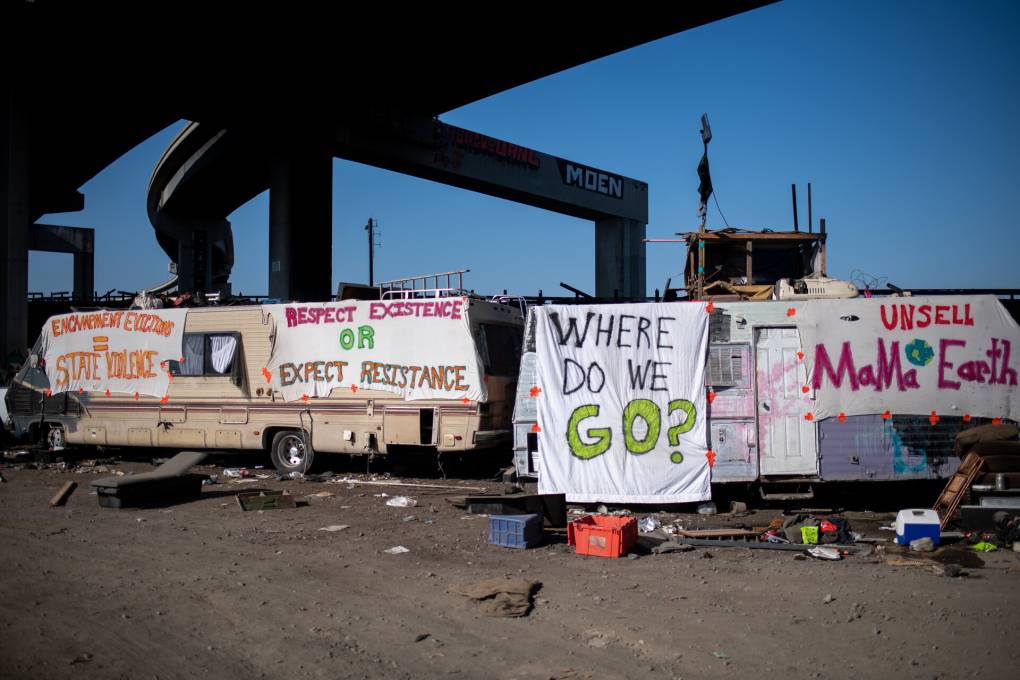
"caption": "Signs cover two RVs at the Wood Street encampment in Oakland on Sept. 8, 2022, before CalTrans was set to clean up the area.",
"description": null,
"title": "001_KQED_WoodStreetOaklandCalTrans_09082022_qut",
"credit": "Beth LaBerge/KQED",
"status": "inherit",
"altTag": null,
"isLoading": false,
"fetchFailed": false
},
"news_11983504": {
"type": "attachments",
"id": "news_11983504",
"meta": {
"index": "attachments_1716263798",
"site": "news",
"id": "11983504",
"found": true
},
"title": "California Tenants Pets",
"publishDate": 1713557264,
"status": "inherit",
"parent": 11983497,
"modified": 1713557332,
"caption": "A newly adopted dog is held at Oakland Animal Services on Thursday, April 4, 2024, in Oakland. The city animal shelter has seen a surge in pets surrendered by tenants who can't find rentals that allow pets. A bill in California wants to make more rental housing available to tenants with pets.",
"credit": "Terry Chea/AP Photo",
"altTag": "A dog sits between two people holding and petting it.",
"description": null,
"imgSizes": {
"medium": {
"file": "https://cdn.kqed.org/wp-content/uploads/sites/10/2024/04/AP24108725783459-800x522.jpg",
"width": 800,
"height": 522,
"mimeType": "image/jpeg"
},
"large": {
"file": "https://cdn.kqed.org/wp-content/uploads/sites/10/2024/04/AP24108725783459-1020x665.jpg",
"width": 1020,
"height": 665,
"mimeType": "image/jpeg"
},
"thumbnail": {
"file": "https://cdn.kqed.org/wp-content/uploads/sites/10/2024/04/AP24108725783459-160x104.jpg",
"width": 160,
"height": 104,
"mimeType": "image/jpeg"
},
"1536x1536": {
"file": "https://cdn.kqed.org/wp-content/uploads/sites/10/2024/04/AP24108725783459-1536x1002.jpg",
"width": 1536,
"height": 1002,
"mimeType": "image/jpeg"
},
"2048x2048": {
"file": "https://cdn.kqed.org/wp-content/uploads/sites/10/2024/04/AP24108725783459-2048x1336.jpg",
"width": 2048,
"height": 1336,
"mimeType": "image/jpeg"
},
"post-thumbnail": {
"file": "https://cdn.kqed.org/wp-content/uploads/sites/10/2024/04/AP24108725783459-672x372.jpg",
"width": 672,
"height": 372,
"mimeType": "image/jpeg"
},
"twentyfourteen-full-width": {
"file": "https://cdn.kqed.org/wp-content/uploads/sites/10/2024/04/AP24108725783459-1038x576.jpg",
"width": 1038,
"height": 576,
"mimeType": "image/jpeg"
},
"full-width": {
"file": "https://cdn.kqed.org/wp-content/uploads/sites/10/2024/04/AP24108725783459-1920x1252.jpg",
"width": 1920,
"height": 1252,
"mimeType": "image/jpeg"
},
"kqedFullSize": {
"file": "https://cdn.kqed.org/wp-content/uploads/sites/10/2024/04/AP24108725783459-scaled-e1779402491682.jpg",
"width": 2000,
"height": 1305
}
},
"isLoading": false,
"fetchFailed": false
},
"news_11982572": {
"type": "attachments",
"id": "news_11982572",
"meta": {
"index": "attachments_1716263798",
"site": "news",
"id": "11982572",
"found": true
},
"parent": 11982817,
"imgSizes": {
"twentyfourteen-full-width": {
"file": "https://cdn.kqed.org/wp-content/uploads/sites/10/2024/04/240410-HMB-Farmworkers-TH-03-KQED-1038x576.jpg",
"width": 1038,
"mimeType": "image/jpeg",
"height": 576
},
"thumbnail": {
"file": "https://cdn.kqed.org/wp-content/uploads/sites/10/2024/04/240410-HMB-Farmworkers-TH-03-KQED-160x107.jpg",
"width": 160,
"mimeType": "image/jpeg",
"height": 107
},
"post-thumbnail": {
"file": "https://cdn.kqed.org/wp-content/uploads/sites/10/2024/04/240410-HMB-Farmworkers-TH-03-KQED-672x372.jpg",
"width": 672,
"mimeType": "image/jpeg",
"height": 372
},
"kqedFullSize": {
"file": "https://cdn.kqed.org/wp-content/uploads/sites/10/2024/04/240410-HMB-Farmworkers-TH-03-KQED.jpg",
"width": 2000,
"height": 1333
},
"large": {
"file": "https://cdn.kqed.org/wp-content/uploads/sites/10/2024/04/240410-HMB-Farmworkers-TH-03-KQED-1020x680.jpg",
"width": 1020,
"mimeType": "image/jpeg",
"height": 680
},
"1536x1536": {
"file": "https://cdn.kqed.org/wp-content/uploads/sites/10/2024/04/240410-HMB-Farmworkers-TH-03-KQED-1536x1024.jpg",
"width": 1536,
"mimeType": "image/jpeg",
"height": 1024
},
"full-width": {
"file": "https://cdn.kqed.org/wp-content/uploads/sites/10/2024/04/240410-HMB-Farmworkers-TH-03-KQED-1920x1280.jpg",
"width": 1920,
"mimeType": "image/jpeg",
"height": 1280
},
"medium": {
"file": "https://cdn.kqed.org/wp-content/uploads/sites/10/2024/04/240410-HMB-Farmworkers-TH-03-KQED-800x533.jpg",
"width": 800,
"mimeType": "image/jpeg",
"height": 533
}
},
"publishDate": 1712777329,
"modified": 1712953391,
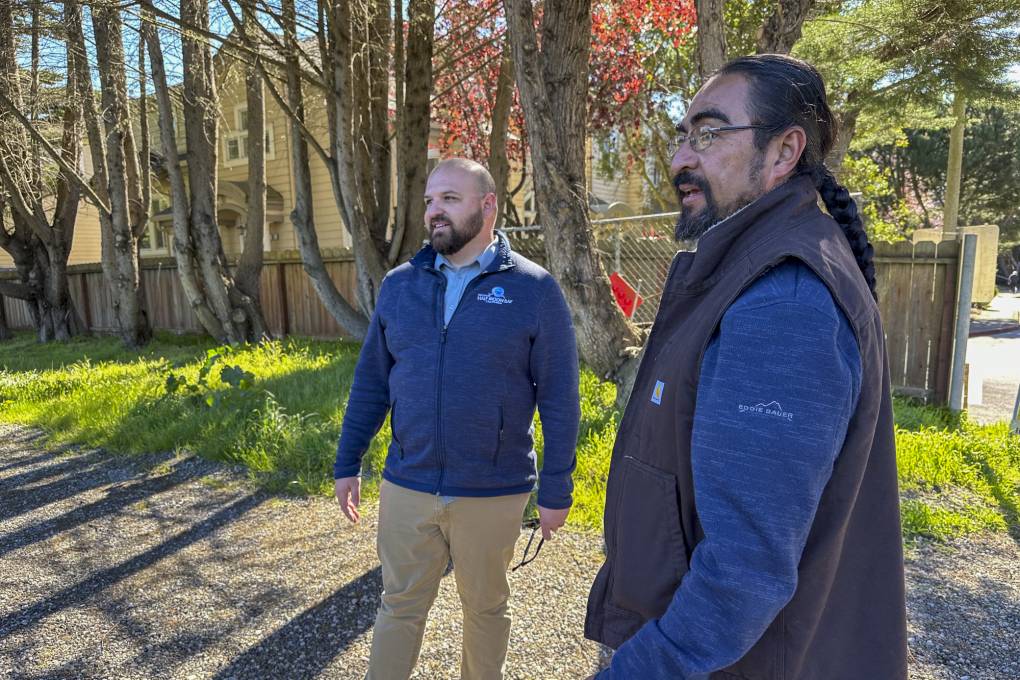
"caption": "Half Moon Bay Mayor Joaquin Jimenez (in vest) and housing coordinator Mike Noce visit a site on March 14, 2023, where the city plans to build 47 affordable homes for farmworkers with very low income. The project is due to break ground next month and will include units for rent and for purchase, Noce says.",
"description": null,
"title": "240410-HMB Farmworkers-TH-03-KQED",
"credit": "Tyche Hendricks/KQED",
"status": "inherit",
"altTag": null,
"isLoading": false,
"fetchFailed": false
},
"news_11983184": {
"type": "attachments",
"id": "news_11983184",
"meta": {
"index": "attachments_1716263798",
"site": "news",
"id": "11983184",
"found": true
},
"parent": 11983180,
"imgSizes": {
"twentyfourteen-full-width": {
"file": "https://cdn.kqed.org/wp-content/uploads/sites/10/2024/04/CMEncampmentBan01-1038x576.jpg",
"width": 1038,
"mimeType": "image/jpeg",
"height": 576
},
"thumbnail": {
"file": "https://cdn.kqed.org/wp-content/uploads/sites/10/2024/04/CMEncampmentBan01-160x107.jpg",
"width": 160,
"mimeType": "image/jpeg",
"height": 107
},
"post-thumbnail": {
"file": "https://cdn.kqed.org/wp-content/uploads/sites/10/2024/04/CMEncampmentBan01-672x372.jpg",
"width": 672,
"mimeType": "image/jpeg",
"height": 372
},
"kqedFullSize": {
"file": "https://cdn.kqed.org/wp-content/uploads/sites/10/2024/04/CMEncampmentBan01.jpg",
"width": 2000,
"height": 1333
},
"large": {
"file": "https://cdn.kqed.org/wp-content/uploads/sites/10/2024/04/CMEncampmentBan01-1020x680.jpg",
"width": 1020,
"mimeType": "image/jpeg",
"height": 680
},
"1536x1536": {
"file": "https://cdn.kqed.org/wp-content/uploads/sites/10/2024/04/CMEncampmentBan01-1536x1024.jpg",
"width": 1536,
"mimeType": "image/jpeg",
"height": 1024
},
"full-width": {
"file": "https://cdn.kqed.org/wp-content/uploads/sites/10/2024/04/CMEncampmentBan01-1920x1280.jpg",
"width": 1920,
"mimeType": "image/jpeg",
"height": 1280
},
"medium": {
"file": "https://cdn.kqed.org/wp-content/uploads/sites/10/2024/04/CMEncampmentBan01-800x533.jpg",
"width": 800,
"mimeType": "image/jpeg",
"height": 533
}
},
"publishDate": 1713311401,
"modified": 1713311436,
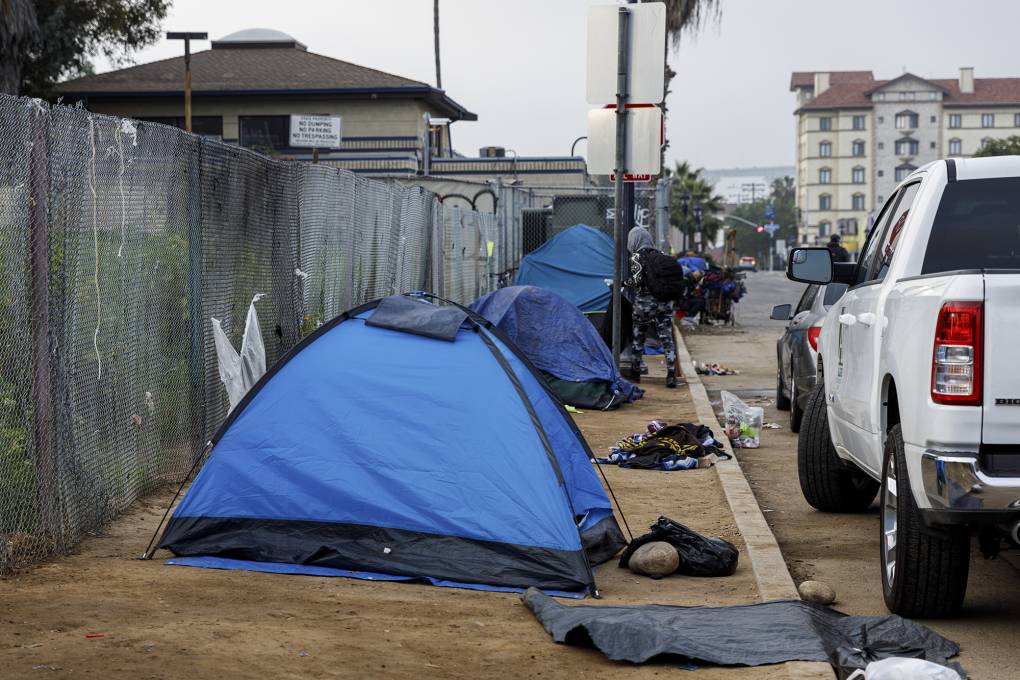
"caption": "An encampment is seen on the sidewalk near a freeway entrance in downtown San Diego on March 22, 2024. Unhoused individuals moved their belongings across the street and later came back after cleaning finished.",
"description": null,
"title": "CMEncampmentBan01",
"credit": "Kristian Carreon/CalMatters",
"status": "inherit",
"altTag": null,
"isLoading": false,
"fetchFailed": false
}
},
"audioPlayerReducer": {
"postId": "stream_live",
"isPaused": true,
"isPlaying": false,
"pfsActive": false,
"pledgeModalIsOpen": true,
"playerDrawerIsOpen": false,
"liveAudioPlayStartedAt": 0,
"liveAudioPlayContext": ""
},
"authorsReducer": {
"byline_news_11983497": {
"type": "authors",
"id": "byline_news_11983497",
"meta": {
"override": true
},
"slug": "byline_news_11983497",
"name": "Terry Chea, Janie Har\u003cbr>Associated Press",
"isLoading": false
},
"byline_news_11983180": {
"type": "authors",
"id": "byline_news_11983180",
"meta": {
"override": true
},
"slug": "byline_news_11983180",
"name": "Marisa Kendall, CalMatters",
"isLoading": false
},
"tychehendricks": {
"type": "authors",
"id": "259",
"meta": {
"index": "authors_1716337520",
"id": "259",
"found": true
},
"name": "Tyche Hendricks",
"firstName": "Tyche",
"lastName": "Hendricks",
"slug": "tychehendricks",
"email": "thendricks@kqed.org",
"display_author_email": true,
"staff_mastheads": [
"news"
],
"title": "KQED Senior Editor, Immigration",
"bio": "\u003cspan style=\"font-weight: 400;\">Tyche Hendricks is KQED’s senior editor for immigration, leading coverage of the policy and politics that affect California’s immigrant communities. Her work for KQED’s radio and online audiences is also carried on NPR and other national outlets. She has been recognized with awards from the Radio and Television News Directors Association, the Society for Professional Journalists; the Education Writers Association; the Best of the West and the National Federation of Community Broadcasters. Before joining KQED in 2010, Tyche spent more than a dozen years as a newspaper reporter, notably at the \u003c/span>\u003ci>\u003cspan style=\"font-weight: 400;\">San Francisco Chronicle\u003c/span>\u003c/i>\u003cspan style=\"font-weight: 400;\">. At different times she has covered criminal justice, government and politics and urban planning. Tyche has taught in the MFA Creative Writing program at the University of San Francisco and at UC Berkeley’s Graduate School of Journalism, where she was co-director of a national immigration symposium for professional journalists. She is the author of \u003c/span>\u003ci>\u003cspan style=\"font-weight: 400;\">The Wind Doesn't Need a Passport: Stories from the U.S.-Mexico Borderlands\u003c/span>\u003c/i>\u003cspan style=\"font-weight: 400;\"> (University of California Press). \u003c/span>",
"avatar": "https://secure.gravatar.com/avatar/b8ee458e2731c2d43df86882ce17267e?s=600&d=blank&r=g",
"twitter": "tychehendricks",
"facebook": null,
"instagram": null,
"linkedin": null,
"sites": [
{
"site": "news",
"roles": [
"editor"
]
},
{
"site": "stateofhealth",
"roles": [
"editor"
]
}
],
"headData": {
"title": "Tyche Hendricks | KQED",
"description": "KQED Senior Editor, Immigration",
"ogImgSrc": "https://secure.gravatar.com/avatar/b8ee458e2731c2d43df86882ce17267e?s=600&d=blank&r=g",
"twImgSrc": "https://secure.gravatar.com/avatar/b8ee458e2731c2d43df86882ce17267e?s=600&d=blank&r=g"
},
"isLoading": false,
"link": "/author/tychehendricks"
},
"ecruzguevarra": {
"type": "authors",
"id": "8654",
"meta": {
"index": "authors_1716337520",
"id": "8654",
"found": true
},
"name": "Ericka Cruz Guevarra",
"firstName": "Ericka",
"lastName": "Cruz Guevarra",
"slug": "ecruzguevarra",
"email": "ecruzguevarra@kqed.org",
"display_author_email": true,
"staff_mastheads": [
"news"
],
"title": "Producer, The Bay Podcast",
"bio": "Ericka Cruz Guevarra is host of \u003ca href=\"https://www.kqed.org/podcasts/thebay\">\u003cem>The Bay\u003c/em>\u003c/a> podcast at KQED. Before host, she was the show’s producer. Her work in that capacity includes a three-part reported series on policing in Vallejo, which won a 2020 excellence in journalism award from the Society of Professional Journalists. Ericka has worked as a breaking news reporter at Oregon Public Broadcasting, helped produce the Code Switch podcast, and was KQED’s inaugural Raul Ramirez Diversity Fund intern. She’s also an alumna of NPR’s Next Generation Radio program. Send her an email if you have strong feelings about whether Fairfield and Suisun City are the Bay. Ericka is represented by SAG-AFTRA.",
"avatar": "https://secure.gravatar.com/avatar/accefc1de4bafc7e234b69bcb9b6f6536c130fd84709bc3069ef11a78787e1bb?s=600&d=blank&r=g",
"twitter": "NotoriousECG",
"bluesky": null,
"facebook": null,
"instagram": null,
"linkedin": null,
"sites": [
{
"site": "arts",
"roles": [
"subscriber"
]
},
{
"site": "news",
"roles": [
"editor",
"manage_categories"
]
},
{
"site": "futureofyou",
"roles": [
"subscriber"
]
},
{
"site": "stateofhealth",
"roles": [
"subscriber"
]
},
{
"site": "science",
"roles": [
"editor"
]
},
{
"site": "forum",
"roles": [
"subscriber"
]
}
],
"headData": {
"title": "Ericka Cruz Guevarra | KQED",
"description": "Producer, The Bay Podcast",
"ogImgSrc": "https://secure.gravatar.com/avatar/accefc1de4bafc7e234b69bcb9b6f6536c130fd84709bc3069ef11a78787e1bb?s=600&d=blank&r=g",
"twImgSrc": "https://secure.gravatar.com/avatar/accefc1de4bafc7e234b69bcb9b6f6536c130fd84709bc3069ef11a78787e1bb?s=600&d=blank&r=g"
},
"isLoading": false,
"link": "/author/ecruzguevarra"
},
"vrancano": {
"type": "authors",
"id": "11276",
"meta": {
"index": "authors_1716337520",
"id": "11276",
"found": true
},
"name": "Vanessa Rancaño",
"firstName": "Vanessa",
"lastName": "Rancaño",
"slug": "vrancano",
"email": "vrancano@kqed.org",
"display_author_email": false,
"staff_mastheads": [
"news"
],
"title": "Reporter",
"bio": "Vanessa Rancaño is a features reporter for KQED. She’s also covered homelessness and education for the station and reported from the Central Valley. Her work has aired across public radio, from flagship national news shows to longform narrative podcasts. Before taking up a mic, she worked as a freelance print journalist. She’s been recognized with a number of national and regional awards. Vanessa grew up in California's Central Valley. She's a former NPR Kroc Fellow, and a graduate of the UC Berkeley Graduate School of Journalism.",
"avatar": "https://secure.gravatar.com/avatar/b3a383dfb0e7ee1c17568f2cf067904ab654d6e3de9743fc661f3c788ade1bed?s=600&d=blank&r=g",
"twitter": "vanessarancano",
"bluesky": null,
"facebook": null,
"instagram": null,
"linkedin": null,
"sites": [
{
"site": "arts",
"roles": [
"editor"
]
},
{
"site": "news",
"roles": [
"editor"
]
},
{
"site": "liveblog",
"roles": [
"contributor"
]
}
],
"headData": {
"title": "Vanessa Rancaño | KQED",
"description": "Reporter",
"ogImgSrc": "https://secure.gravatar.com/avatar/b3a383dfb0e7ee1c17568f2cf067904ab654d6e3de9743fc661f3c788ade1bed?s=600&d=blank&r=g",
"twImgSrc": "https://secure.gravatar.com/avatar/b3a383dfb0e7ee1c17568f2cf067904ab654d6e3de9743fc661f3c788ade1bed?s=600&d=blank&r=g"
},
"isLoading": false,
"link": "/author/vrancano"
},
"amontecillo": {
"type": "authors",
"id": "11649",
"meta": {
"index": "authors_1716337520",
"id": "11649",
"found": true
},
"name": "Alan Montecillo",
"firstName": "Alan",
"lastName": "Montecillo",
"slug": "amontecillo",
"email": "amontecillo@kqed.org",
"display_author_email": false,
"staff_mastheads": [
"news"
],
"title": "KQED Contributor",
"bio": "Alan Montecillo is the senior editor of \u003cem>\u003ca href=\"http://kqed.org/thebay\">The Bay\u003c/a>, \u003c/em> KQED's local news podcast. Before moving to the Bay Area, he worked as a senior talk show producer for WILL in Champaign-Urbana, Illinois and at Oregon Public Broadcasting in Portland, Oregon. He has won journalism awards from the Society of Professional Journalists Northern California, the Public Media Journalists Association, The Signal Awards, and has also received a regional Edward R. Murrow award. Alan is a Filipino American from Hong Kong and a graduate of Reed College.",
"avatar": "https://secure.gravatar.com/avatar/268f53a2066899ea9efdd8a5900218b17c822d9862cbc9326cccec53ef41d349?s=600&d=blank&r=g",
"twitter": "alanmontecillo",
"bluesky": null,
"facebook": null,
"instagram": null,
"linkedin": null,
"sites": [
{
"site": "",
"roles": [
"editor"
]
},
{
"site": "news",
"roles": [
"editor",
"manage_categories"
]
}
],
"headData": {
"title": "Alan Montecillo | KQED",
"description": "KQED Contributor",
"ogImgSrc": "https://secure.gravatar.com/avatar/268f53a2066899ea9efdd8a5900218b17c822d9862cbc9326cccec53ef41d349?s=600&d=blank&r=g",
"twImgSrc": "https://secure.gravatar.com/avatar/268f53a2066899ea9efdd8a5900218b17c822d9862cbc9326cccec53ef41d349?s=600&d=blank&r=g"
},
"isLoading": false,
"link": "/author/amontecillo"
},
"ebaldassari": {
"type": "authors",
"id": "11652",
"meta": {
"index": "authors_1716337520",
"id": "11652",
"found": true
},
"name": "Erin Baldassari",
"firstName": "Erin",
"lastName": "Baldassari",
"slug": "ebaldassari",
"email": "ebaldassari@KQED.org",
"display_author_email": true,
"staff_mastheads": [
"news"
],
"title": "Staff Writer",
"bio": "Erin Baldassari covers housing for KQED. She's a former print journalist and most recently worked as the transportation reporter for the \u003cem>Mercury News\u003c/em> and \u003cem>East Bay Times. \u003c/em>There, she focused on how the Bay Area’s housing shortage has changed the way people move around the region. She also served on the \u003cem>East Bay Times\u003c/em>’ 2017 Pulitzer Prize-winning team for coverage of the Ghost Ship Fire in Oakland. Prior to that, Erin worked as a breaking news and general assignment reporter for a variety of outlets in the Bay Area and the greater Boston area. A Tufts University alumna, Erin grew up in the foothills of the Sierra Nevada mountains and in Sonoma County. She is a life-long KQED listener.",
"avatar": "https://secure.gravatar.com/avatar/5e95cad64a8ca08288082212e199d2b0cbeb4fd8e8ef5339395f361032bbe005?s=600&d=blank&r=g",
"twitter": "e_baldi",
"bluesky": null,
"facebook": null,
"instagram": null,
"linkedin": null,
"sites": [
{
"site": "news",
"roles": [
"edit_others_posts",
"editor"
]
},
{
"site": "science",
"roles": [
"editor"
]
},
{
"site": "liveblog",
"roles": [
"editor"
]
}
],
"headData": {
"title": "Erin Baldassari | KQED",
"description": "Staff Writer",
"ogImgSrc": "https://secure.gravatar.com/avatar/5e95cad64a8ca08288082212e199d2b0cbeb4fd8e8ef5339395f361032bbe005?s=600&d=blank&r=g",
"twImgSrc": "https://secure.gravatar.com/avatar/5e95cad64a8ca08288082212e199d2b0cbeb4fd8e8ef5339395f361032bbe005?s=600&d=blank&r=g"
},
"isLoading": false,
"link": "/author/ebaldassari"
},
"abandlamudi": {
"type": "authors",
"id": "11672",
"meta": {
"index": "authors_1716337520",
"id": "11672",
"found": true
},
"name": "Adhiti Bandlamudi",
"firstName": "Adhiti",
"lastName": "Bandlamudi",
"slug": "abandlamudi",
"email": "abandlamudi@kqed.org",
"display_author_email": false,
"staff_mastheads": [
"news"
],
"title": "KQED Housing Reporter",
"bio": "Adhiti Bandlamudi reports for KQED's Housing desk. She focuses on how housing gets built across the Bay Area. Before joining KQED in 2020, she reported for WUNC in Durham, North Carolina, WABE in Atlanta, Georgia and Capital Public Radio in Sacramento. In 2017, she was awarded a Kroc Fellowship at NPR where she reported on everything from sprinkles to the Golden State Killer's arrest. When she's not reporting, she's baking new recipes in her kitchen or watching movies with friends and family. She's originally from Georgia and has strong opinions about Great British Bake Off.",
"avatar": "https://secure.gravatar.com/avatar/868129c8b257bb99a3500e2c86a65400?s=600&d=mm&r=g",
"twitter": "oddity_adhiti",
"facebook": null,
"instagram": null,
"linkedin": null,
"sites": [
{
"site": "arts",
"roles": [
"author"
]
},
{
"site": "news",
"roles": [
"editor"
]
},
{
"site": "liveblog",
"roles": [
"author"
]
}
],
"headData": {
"title": "Adhiti Bandlamudi | KQED",
"description": "KQED Housing Reporter",
"ogImgSrc": "https://secure.gravatar.com/avatar/868129c8b257bb99a3500e2c86a65400?s=600&d=mm&r=g",
"twImgSrc": "https://secure.gravatar.com/avatar/868129c8b257bb99a3500e2c86a65400?s=600&d=mm&r=g"
},
"isLoading": false,
"link": "/author/abandlamudi"
},
"jrodriguez": {
"type": "authors",
"id": "11690",
"meta": {
"index": "authors_1716337520",
"id": "11690",
"found": true
},
"name": "Joe Fitzgerald Rodriguez",
"firstName": "Joe",
"lastName": "Fitzgerald Rodriguez",
"slug": "jrodriguez",
"email": "jrodriguez@kqed.org",
"display_author_email": true,
"staff_mastheads": [
"news"
],
"title": "Reporter and Producer",
"bio": "Joe Fitzgerald Rodriguez is a reporter and digital producer for KQED covering politics. Joe most recently wrote for the \u003cem>San Francisco Examiner\u003c/em> as a political columnist covering The City. He was raised in San Francisco and has spent his reporting career in his beloved, foggy, city by the bay. Joe was 12-years-old when he conducted his first interview in journalism, grilling former San Francisco Mayor Willie Brown for the Marina Middle School newspaper, \u003cem>The Penguin Press, \u003c/em>and he continues to report on the San Francisco Bay Area to this day.",
"avatar": "https://secure.gravatar.com/avatar/2247beb0564c1e9c62228d5649d2edac?s=600&d=blank&r=g",
"twitter": "FitztheReporter",
"facebook": null,
"instagram": "https://www.instagram.com/fitzthereporter/",
"linkedin": null,
"sites": [
{
"site": "",
"roles": [
"editor"
]
},
{
"site": "arts",
"roles": [
"editor"
]
},
{
"site": "news",
"roles": [
"editor"
]
},
{
"site": "science",
"roles": [
"editor"
]
},
{
"site": "elections",
"roles": [
"editor"
]
},
{
"site": "liveblog",
"roles": [
"editor"
]
}
],
"headData": {
"title": "Joe Fitzgerald Rodriguez | KQED",
"description": "Reporter and Producer",
"ogImgSrc": "https://secure.gravatar.com/avatar/2247beb0564c1e9c62228d5649d2edac?s=600&d=blank&r=g",
"twImgSrc": "https://secure.gravatar.com/avatar/2247beb0564c1e9c62228d5649d2edac?s=600&d=blank&r=g"
},
"isLoading": false,
"link": "/author/jrodriguez"
},
"mesquinca": {
"type": "authors",
"id": "11802",
"meta": {
"index": "authors_1716337520",
"id": "11802",
"found": true
},
"name": "Maria Esquinca",
"firstName": "Maria",
"lastName": "Esquinca",
"slug": "mesquinca",
"email": "mesquinca@kqed.org",
"display_author_email": false,
"staff_mastheads": [],
"title": "Producer, The Bay",
"bio": "María Esquinca is a producer of The Bay. Before that, she was a New York Women’s Foundation IGNITE Fellow at Latino USA. She worked at Radio Bilingue where she covered the San Joaquin Valley. Maria has interned at WLRN, News 21, The New York Times Student Journalism Institute and at Crain’s Detroit Business as a Dow Jones News Fund Business Reporting Intern. She is an MFA graduate from the University of Miami. In 2017, she graduated from the Walter Cronkite School of Journalism and Mass Communication with a Master of Mass Communication. A fronteriza, she was born in Ciudad Juárez, Chihuahua, Mexico and grew up in El Paso, Texas.",
"avatar": "https://secure.gravatar.com/avatar/77cedba18aae91da775038ba06dcd8d0?s=600&d=blank&r=g",
"twitter": "@m_esquinca",
"facebook": null,
"instagram": null,
"linkedin": null,
"sites": [
{
"site": "news",
"roles": []
}
],
"headData": {
"title": "Maria Esquinca | KQED",
"description": "Producer, The Bay",
"ogImgSrc": "https://secure.gravatar.com/avatar/77cedba18aae91da775038ba06dcd8d0?s=600&d=blank&r=g",
"twImgSrc": "https://secure.gravatar.com/avatar/77cedba18aae91da775038ba06dcd8d0?s=600&d=blank&r=g"
},
"isLoading": false,
"link": "/author/mesquinca"
},
"sjohnson": {
"type": "authors",
"id": "11840",
"meta": {
"index": "authors_1716337520",
"id": "11840",
"found": true
},
"name": "Sydney Johnson",
"firstName": "Sydney",
"lastName": "Johnson",
"slug": "sjohnson",
"email": "sjohnson@kqed.org",
"display_author_email": false,
"staff_mastheads": [
"news"
],
"title": "KQED Reporter",
"bio": "Sydney Johnson is a general assignment reporter at KQED. She previously reported on public health and city government at the San Francisco Examiner, and before that, she covered statewide education policy for EdSource. Her reporting has won multiple local, state and national awards. Sydney is a graduate of the University of California, Berkeley and lives in San Francisco.",
"avatar": "https://secure.gravatar.com/avatar/97855f2719b72ad6190b7c535fe642c8?s=600&d=blank&r=g",
"twitter": "sydneyfjohnson",
"facebook": null,
"instagram": null,
"linkedin": null,
"sites": [
{
"site": "news",
"roles": [
"editor"
]
}
],
"headData": {
"title": "Sydney Johnson | KQED",
"description": "KQED Reporter",
"ogImgSrc": "https://secure.gravatar.com/avatar/97855f2719b72ad6190b7c535fe642c8?s=600&d=blank&r=g",
"twImgSrc": "https://secure.gravatar.com/avatar/97855f2719b72ad6190b7c535fe642c8?s=600&d=blank&r=g"
},
"isLoading": false,
"link": "/author/sjohnson"
},
"mbolanos": {
"type": "authors",
"id": "11895",
"meta": {
"index": "authors_1716337520",
"id": "11895",
"found": true
},
"name": "Madi Bolaños",
"firstName": "Madi",
"lastName": "Bolaños",
"slug": "mbolanos",
"email": "mbolanos@kqed.org",
"display_author_email": false,
"staff_mastheads": [],
"title": "KQED Contributor",
"bio": null,
"avatar": "https://secure.gravatar.com/avatar/e6df5601c1f2d951e46a3fb42764330f?s=600&d=blank&r=g",
"twitter": null,
"bluesky": null,
"facebook": null,
"instagram": null,
"linkedin": null,
"sites": [
{
"site": "news",
"roles": [
"author"
]
}
],
"headData": {
"title": "Madi Bolaños | KQED",
"description": "KQED Contributor",
"ogImgSrc": "https://secure.gravatar.com/avatar/e6df5601c1f2d951e46a3fb42764330f?s=600&d=blank&r=g",
"twImgSrc": "https://secure.gravatar.com/avatar/e6df5601c1f2d951e46a3fb42764330f?s=600&d=blank&r=g"
},
"isLoading": false,
"link": "/author/mbolanos"
}
},
"pagesReducer": {
"news_category_housing": {
"type": "terms",
"id": "news_6266",
"meta": {
"index": "terms_1716263798",
"site": "news",
"id": "6266",
"score": 11.039913
},
"featImg": null,
"name": "Housing",
"description": null,
"taxonomy": "category",
"headData": {
"twImgId": null,
"twTitle": null,
"ogTitle": null,
"ogImgId": null,
"twDescription": null,
"description": null,
"title": "Housing Archives | KQED News",
"ogDescription": null
},
"ttid": 6290,
"slug": "housing",
"isLoading": false,
"title": "Housing",
"pageMeta": {
"site": "news",
"WpPageTemplate": "page-topic-editorial",
"currentPage": 40
},
"blocks": [
{
"blockName": "kqed/post-list",
"attrs": {
"layout": "cardArticle2",
"query": "posts/news?category=housing",
"seeMore": false,
"paginated": true,
"page": 40
}
},
{
"blockName": "kqed/ad"
}
]
}
},
"pfsSessionReducer": {},
"postsReducer": {
"stream_live": {
"type": "live",
"id": "stream_live",
"audioUrl": "https://streams.kqed.org/kqedradio",
"title": "Live Stream",
"excerpt": "Live Stream information currently unavailable.",
"link": "/radio",
"featImg": "",
"label": {
"name": "KQED Live",
"link": "/"
}
},
"stream_kqedNewscast": {
"type": "posts",
"id": "stream_kqedNewscast",
"audioUrl": "https://www.kqed.org/.stream/anon/radio/RDnews/newscast.mp3?_=1",
"title": "KQED Newscast",
"featImg": "",
"label": {
"name": "88.5 FM",
"link": "/"
}
},
"news_11984466": {
"type": "posts",
"id": "news_11984466",
"meta": {
"index": "posts_1716263798",
"site": "news",
"id": "11984466",
"score": null,
"sort": [
1714500039000
]
},
"guestAuthors": [],
"slug": "california-homeowners-say-oakland-lender-scammed-them-out-of-3m-in-home-improvements",
"title": "California Homeowners Say Oakland Lender Scammed Them Out of $3M in Home Improvements",
"publishDate": 1714500039,
"format": "standard",
"headTitle": "California Homeowners Say Oakland Lender Scammed Them Out of $3M in Home Improvements | KQED",
"labelTerm": {
"site": "news"
},
"content": "\u003cp>Dozens of California homeowners allege an Oakland-based lending company conspired with contractors to issue fraudulent loans for home improvement projects that were never completed.\u003c/p>\n\u003cp>Nearly 160 complaints have been filed against the financial lending platform, Solar Mosaic, since 2019, according to data from the \u003ca href=\"https://www.consumerfinance.gov/data-research/consumer-complaints/search/?date_received_max=2024-04-28&date_received_min=2011-12-01&has_narrative=true&page=1&searchField=all&searchText=solar%20mosaic&size=100&sort=created_date_desc&tab=List\">Consumer Financial Protection Bureau\u003c/a>. And on Monday, a group of nearly 100 people drove from Los Angeles to protest outside Solar Mosaic’s headquarters in downtown Oakland, demanding to meet with the company and seek loan forgiveness and repayments.\u003c/p>\n\u003cp>An executive assistant for Solar Mosaic met the protestors on Monday, agreeing to set up a meeting or another resolution in the next week. \u003c/p>\n\u003cp>“Mosaic takes homeowner safeguards seriously. We strive to create a positive customer experience for every homeowner who chooses Mosaic to finance their sustainable home improvements,” a spokesperson for Mosaic told KQED in an email. “In the event a homeowner complains, we work with the homeowner to understand their concerns and seek to resolve such concerns.”\u003c/p>\n\u003cp>Julie Robles was among Monday’s demonstrators. The Los Angeles homeowner said Viridi Construction, a construction company working to build an accessory dwelling unit, or in-law apartment, on her property requested $75,000 from Solar Mosaic, which the lender allegedly granted without any prior authorization from her. \u003c/p>\n\u003cp>[ad fullwidth]\u003c/p>\n\u003cp>“I’m already retired, so if something happened, I wouldn’t be able to recover the money,” said Robles, who is trying to get out of a $75,000 loan, plus nearly $3,000 in interest and fees. “I trusted them.”\u003c/p>\n\u003cp>Mosaic is currently in litigation with Viridi Construction — which several of the homeowners at Monday’s protest said they had worked with — for breach of contract and “unjust enrichment,” a legal term referring to when one party receives a benefit at the expense of the other.\u003c/p>\n\u003cp>“Mosaic disbursed significant loan funds to Viridi Construction, yet Viridi Construction failed to complete the work it agreed to perform on all projects,” reads the complaint filed on April 22.\u003c/p>\n\u003cp>The homeowners are demanding that Solar Mosaic cancel more than $3 million in alleged fraudulent loans and reimburse families who have made payments. Mosaic has canceled some, but very few of the loans, homeowners alleged at Monday’s protest.\u003c/p>\n\u003cfigure id=\"attachment_11984457\" class=\"wp-caption aligncenter\" style=\"max-width: 2000px\">\u003ca href=\"https://cdn.kqed.org/wp-content/uploads/sites/10/2024/04/240429-SOLAR-MOSAIC-MD-07-KQED.jpg\">\u003cimg loading=\"lazy\" decoding=\"async\" class=\"size-full wp-image-11984457\" src=\"https://cdn.kqed.org/wp-content/uploads/sites/10/2024/04/240429-SOLAR-MOSAIC-MD-07-KQED.jpg\" alt=\"A man wearing a denim jean jacket is seen yelling among a group of people wearing yellow shirts leaving a building.\" width=\"2000\" height=\"1333\" srcset=\"https://cdn.kqed.org/wp-content/uploads/sites/10/2024/04/240429-SOLAR-MOSAIC-MD-07-KQED.jpg 2000w, https://cdn.kqed.org/wp-content/uploads/sites/10/2024/04/240429-SOLAR-MOSAIC-MD-07-KQED-800x533.jpg 800w, https://cdn.kqed.org/wp-content/uploads/sites/10/2024/04/240429-SOLAR-MOSAIC-MD-07-KQED-1020x680.jpg 1020w, https://cdn.kqed.org/wp-content/uploads/sites/10/2024/04/240429-SOLAR-MOSAIC-MD-07-KQED-160x107.jpg 160w, https://cdn.kqed.org/wp-content/uploads/sites/10/2024/04/240429-SOLAR-MOSAIC-MD-07-KQED-1536x1024.jpg 1536w, https://cdn.kqed.org/wp-content/uploads/sites/10/2024/04/240429-SOLAR-MOSAIC-MD-07-KQED-1920x1280.jpg 1920w\" sizes=\"(max-width: 2000px) 100vw, 2000px\">\u003c/a>\u003cfigcaption class=\"wp-caption-text\">Sergio Vargas (center) and others leave 601 12th St. in Oakland after taking over the building’s lobby, accusing Solar Mosaic of having issued millions in fraudulent loans to California homeowners and demanding they be canceled on April 29, 2024. \u003ccite>(Martin do Nascimento/KQED)\u003c/cite>\u003c/figcaption>\u003c/figure>\n\u003cp>“These homeowners are grappling with the immense stress of fraudulent loans taken out in their names and being unwittingly involved in home improvement scams,” reads the groups’ demand letter, which they sent to Solar Mosaic executives. “With homes demolished and families facing the specter of foreclosure, the threat of losing their homes looms large, casting a shadow of uncertainty and anxiety over their lives.”\u003c/p>\n\u003cp>Robles and nearly 20 other families said they have filed multiple police and FBI reports against the lender. Many homeowners who have issued complaints against Solar Mosaic with the Consumer Financial Protection Bureau are based in California, as well as Florida, Texas and nearly 30 other states.[aside postID=\"news_11982884,science_1991404\" label=\"Related Stories\"]\u003c/p>\n\u003cp>“I have requested a stop payment and refund from all three companies until the solar panels are working. They agreed to reimburse me. However, I have not heard from them in three months. They have, however, continued to deduct money from my bank account each month,” reads one complaint to the Consumer Financial Protection Bureau from a homeowner based on the Peninsula.\u003c/p>\n\u003cp>In March, Minnesota Attorney General Keith Ellison \u003ca href=\"https://www.ag.state.mn.us/Office/Communications/2024/docs/SolarLending_Complaint.pdf\">sued four solar lending companies\u003c/a>, including Solar Mosaic, for allegedly misleading customers into taking out loans, hiding fees and other deceptive trade practices.\u003c/p>\n\u003cp>“The lenders I sued today seriously misled consumers by promising cheap credit for solar installation, only to charge huge upfront fees that consumers didn’t know about,” Ellison said in a press release announcing the lawsuit. “Let this lawsuit serve as a warning that I will not tolerate deceptive practices, particularly in an industry that is so important to our collective future.”\u003c/p>\n\u003cfigure id=\"attachment_11984454\" class=\"wp-caption aligncenter\" style=\"max-width: 2000px\">\u003ca href=\"https://cdn.kqed.org/wp-content/uploads/sites/10/2024/04/240429-SOLAR-MOSAIC-MD-04-KQED.jpg\">\u003cimg loading=\"lazy\" decoding=\"async\" class=\"size-full wp-image-11984454\" src=\"https://cdn.kqed.org/wp-content/uploads/sites/10/2024/04/240429-SOLAR-MOSAIC-MD-04-KQED.jpg\" alt=\"Several people wearing yellow shirts holds up pieces of paper and signs.\" width=\"2000\" height=\"1333\" srcset=\"https://cdn.kqed.org/wp-content/uploads/sites/10/2024/04/240429-SOLAR-MOSAIC-MD-04-KQED.jpg 2000w, https://cdn.kqed.org/wp-content/uploads/sites/10/2024/04/240429-SOLAR-MOSAIC-MD-04-KQED-800x533.jpg 800w, https://cdn.kqed.org/wp-content/uploads/sites/10/2024/04/240429-SOLAR-MOSAIC-MD-04-KQED-1020x680.jpg 1020w, https://cdn.kqed.org/wp-content/uploads/sites/10/2024/04/240429-SOLAR-MOSAIC-MD-04-KQED-160x107.jpg 160w, https://cdn.kqed.org/wp-content/uploads/sites/10/2024/04/240429-SOLAR-MOSAIC-MD-04-KQED-1536x1024.jpg 1536w, https://cdn.kqed.org/wp-content/uploads/sites/10/2024/04/240429-SOLAR-MOSAIC-MD-04-KQED-1920x1280.jpg 1920w\" sizes=\"(max-width: 2000px) 100vw, 2000px\">\u003c/a>\u003cfigcaption class=\"wp-caption-text\">Maria Amaya (center) and others from the Alliance of Californians for Community Empowerment occupy the lobby of 601 12th St. in Oakland, where Solar Mosaic is headquartered. They accuse the company of having issued millions in fraudulent loans to California homeowners and demand that they be canceled on April 29, 2024. \u003ccite>(Martin do Nascimento/KQED)\u003c/cite>\u003c/figcaption>\u003c/figure>\n\u003cp>Maria Amaya drove from her home in Hollywood to Oakland to join Monday’s protest. She paid thousands of dollars for her loan in cash and now wonders if she’ll be able to recoup the money.\u003c/p>\n\u003cp>“They sent an email showing me blueprints of the plans they had finished, but when I went to the city, they had not received any plans or approved a permit or anything,” Amaya said through a Spanish translator on Monday. “That was my life savings, my retirement.”\u003c/p>\n\u003cp>Amaya found others were in her position after her daughter discovered a \u003ca href=\"https://www.tiktok.com/@tonirobinhoooood?is_from_webapp=1&sender_device=pc\">TikTok\u003c/a> with other Solar Mosaic victims.\u003c/p>\n\u003cp>Members of the statewide community advocacy organization, the Alliance of Californians for Community Empowerment Action, organized Monday’s protest. Members said Solar Mosaic allegedly approved loans without proper inspections and paid money to contractors but not homeowners, whose names were on the loans.\u003c/p>\n\u003cp>\u003c/p>\n\u003cp>“We will continue until they cancel the loans,” Robles said. She told KQED as the protest ended, “I hope we don’t have to come back. If not, you’ll see us more.”\u003c/p>\n\n",
"blocks": [],
"excerpt": "Nearly 100 homeowners and families from Los Angeles drove up to protest outside Solar Mosaic’s Oakland headquarters on Monday.",
"status": "publish",
"parent": 0,
"modified": 1725928032,
"stats": {
"hasAudio": false,
"hasVideo": false,
"hasChartOrMap": false,
"iframeSrcs": [],
"hasGoogleForm": false,
"hasGallery": false,
"hasHearkenModule": false,
"hasPolis": false,
"paragraphCount": 21,
"wordCount": 964
},
"headData": {
"title": "California Homeowners Say Oakland Lender Scammed Them Out of $3M in Home Improvements | KQED",
"description": "Nearly 100 homeowners and families from Los Angeles drove up to protest outside Solar Mosaic’s Oakland headquarters on Monday.",
"ogTitle": "",
"ogDescription": "",
"ogImgId": "",
"twTitle": "",
"twDescription": "",
"twImgId": "",
"schema": {
"@context": "https://schema.org",
"@type": "NewsArticle",
"headline": "California Homeowners Say Oakland Lender Scammed Them Out of $3M in Home Improvements",
"datePublished": "2024-04-30T11:00:39-07:00",
"dateModified": "2024-09-09T17:27:12-07:00",
"image": "https://cdn.kqed.org/wp-content/uploads/2020/02/KQED-OG-Image@1x.png",
"isAccessibleForFree": "True",
"publisher": {
"@type": "NewsMediaOrganization",
"@id": "https://www.kqed.org/#organization",
"name": "KQED",
"logo": "https://cdn.kqed.org/wp-content/uploads/2020/02/KQED-OG-Image@1x.png",
"url": "https://www.kqed.org",
"sameAs": [
"https://www.facebook.com/KQED",
"https://twitter.com/KQED",
"https://www.instagram.com/kqed/",
"https://www.tiktok.com/@kqedofficial",
"https://www.linkedin.com/company/kqed",
"https://www.youtube.com/channel/UCeC0IOo7i1P_61zVUWbJ4nw"
]
}
}
},
"audioUrl": "https://omny.fm/shows/kqed-segmented-audio/kqed-newscast-5c76bded-df66-4948-9854-680e2ea5c006",
"sticky": false,
"nprStoryId": "kqed-11984466",
"excludeFromSiteSearch": "Include",
"articleAge": "0",
"path": "/news/11984466/california-homeowners-say-oakland-lender-scammed-them-out-of-3m-in-home-improvements",
"audioTrackLength": null,
"parsedContent": [
{
"type": "contentString",
"content": "\u003cdiv class=\"post-body\">\u003cp>\u003cp>Dozens of California homeowners allege an Oakland-based lending company conspired with contractors to issue fraudulent loans for home improvement projects that were never completed.\u003c/p>\n\u003cp>Nearly 160 complaints have been filed against the financial lending platform, Solar Mosaic, since 2019, according to data from the \u003ca href=\"https://www.consumerfinance.gov/data-research/consumer-complaints/search/?date_received_max=2024-04-28&date_received_min=2011-12-01&has_narrative=true&page=1&searchField=all&searchText=solar%20mosaic&size=100&sort=created_date_desc&tab=List\">Consumer Financial Protection Bureau\u003c/a>. And on Monday, a group of nearly 100 people drove from Los Angeles to protest outside Solar Mosaic’s headquarters in downtown Oakland, demanding to meet with the company and seek loan forgiveness and repayments.\u003c/p>\n\u003cp>An executive assistant for Solar Mosaic met the protestors on Monday, agreeing to set up a meeting or another resolution in the next week. \u003c/p>\n\u003cp>“Mosaic takes homeowner safeguards seriously. We strive to create a positive customer experience for every homeowner who chooses Mosaic to finance their sustainable home improvements,” a spokesperson for Mosaic told KQED in an email. “In the event a homeowner complains, we work with the homeowner to understand their concerns and seek to resolve such concerns.”\u003c/p>\n\u003cp>Julie Robles was among Monday’s demonstrators. The Los Angeles homeowner said Viridi Construction, a construction company working to build an accessory dwelling unit, or in-law apartment, on her property requested $75,000 from Solar Mosaic, which the lender allegedly granted without any prior authorization from her. \u003c/p>\n\u003cp>\u003c/p>\u003c/div>",
"attributes": {
"named": {},
"numeric": []
}
},
{
"type": "component",
"content": "",
"name": "ad",
"attributes": {
"named": {
"label": "fullwidth"
},
"numeric": [
"fullwidth"
]
}
},
{
"type": "contentString",
"content": "\u003cdiv class=\"post-body\">\u003cp>\u003c/p>\n\u003cp>“I’m already retired, so if something happened, I wouldn’t be able to recover the money,” said Robles, who is trying to get out of a $75,000 loan, plus nearly $3,000 in interest and fees. “I trusted them.”\u003c/p>\n\u003cp>Mosaic is currently in litigation with Viridi Construction — which several of the homeowners at Monday’s protest said they had worked with — for breach of contract and “unjust enrichment,” a legal term referring to when one party receives a benefit at the expense of the other.\u003c/p>\n\u003cp>“Mosaic disbursed significant loan funds to Viridi Construction, yet Viridi Construction failed to complete the work it agreed to perform on all projects,” reads the complaint filed on April 22.\u003c/p>\n\u003cp>The homeowners are demanding that Solar Mosaic cancel more than $3 million in alleged fraudulent loans and reimburse families who have made payments. Mosaic has canceled some, but very few of the loans, homeowners alleged at Monday’s protest.\u003c/p>\n\u003cfigure id=\"attachment_11984457\" class=\"wp-caption aligncenter\" style=\"max-width: 2000px\">\u003ca href=\"https://cdn.kqed.org/wp-content/uploads/sites/10/2024/04/240429-SOLAR-MOSAIC-MD-07-KQED.jpg\">\u003cimg loading=\"lazy\" decoding=\"async\" class=\"size-full wp-image-11984457\" src=\"https://cdn.kqed.org/wp-content/uploads/sites/10/2024/04/240429-SOLAR-MOSAIC-MD-07-KQED.jpg\" alt=\"A man wearing a denim jean jacket is seen yelling among a group of people wearing yellow shirts leaving a building.\" width=\"2000\" height=\"1333\" srcset=\"https://cdn.kqed.org/wp-content/uploads/sites/10/2024/04/240429-SOLAR-MOSAIC-MD-07-KQED.jpg 2000w, https://cdn.kqed.org/wp-content/uploads/sites/10/2024/04/240429-SOLAR-MOSAIC-MD-07-KQED-800x533.jpg 800w, https://cdn.kqed.org/wp-content/uploads/sites/10/2024/04/240429-SOLAR-MOSAIC-MD-07-KQED-1020x680.jpg 1020w, https://cdn.kqed.org/wp-content/uploads/sites/10/2024/04/240429-SOLAR-MOSAIC-MD-07-KQED-160x107.jpg 160w, https://cdn.kqed.org/wp-content/uploads/sites/10/2024/04/240429-SOLAR-MOSAIC-MD-07-KQED-1536x1024.jpg 1536w, https://cdn.kqed.org/wp-content/uploads/sites/10/2024/04/240429-SOLAR-MOSAIC-MD-07-KQED-1920x1280.jpg 1920w\" sizes=\"(max-width: 2000px) 100vw, 2000px\">\u003c/a>\u003cfigcaption class=\"wp-caption-text\">Sergio Vargas (center) and others leave 601 12th St. in Oakland after taking over the building’s lobby, accusing Solar Mosaic of having issued millions in fraudulent loans to California homeowners and demanding they be canceled on April 29, 2024. \u003ccite>(Martin do Nascimento/KQED)\u003c/cite>\u003c/figcaption>\u003c/figure>\n\u003cp>“These homeowners are grappling with the immense stress of fraudulent loans taken out in their names and being unwittingly involved in home improvement scams,” reads the groups’ demand letter, which they sent to Solar Mosaic executives. “With homes demolished and families facing the specter of foreclosure, the threat of losing their homes looms large, casting a shadow of uncertainty and anxiety over their lives.”\u003c/p>\n\u003cp>Robles and nearly 20 other families said they have filed multiple police and FBI reports against the lender. Many homeowners who have issued complaints against Solar Mosaic with the Consumer Financial Protection Bureau are based in California, as well as Florida, Texas and nearly 30 other states.\u003c/p>\u003c/div>",
"attributes": {
"named": {},
"numeric": []
}
},
{
"type": "component",
"content": "",
"name": "aside",
"attributes": {
"named": {
"postid": "news_11982884,science_1991404",
"label": "Related Stories "
},
"numeric": []
}
},
{
"type": "contentString",
"content": "\u003cdiv class=\"post-body\">\u003cp>\u003c/p>\n\u003cp>“I have requested a stop payment and refund from all three companies until the solar panels are working. They agreed to reimburse me. However, I have not heard from them in three months. They have, however, continued to deduct money from my bank account each month,” reads one complaint to the Consumer Financial Protection Bureau from a homeowner based on the Peninsula.\u003c/p>\n\u003cp>In March, Minnesota Attorney General Keith Ellison \u003ca href=\"https://www.ag.state.mn.us/Office/Communications/2024/docs/SolarLending_Complaint.pdf\">sued four solar lending companies\u003c/a>, including Solar Mosaic, for allegedly misleading customers into taking out loans, hiding fees and other deceptive trade practices.\u003c/p>\n\u003cp>“The lenders I sued today seriously misled consumers by promising cheap credit for solar installation, only to charge huge upfront fees that consumers didn’t know about,” Ellison said in a press release announcing the lawsuit. “Let this lawsuit serve as a warning that I will not tolerate deceptive practices, particularly in an industry that is so important to our collective future.”\u003c/p>\n\u003cfigure id=\"attachment_11984454\" class=\"wp-caption aligncenter\" style=\"max-width: 2000px\">\u003ca href=\"https://cdn.kqed.org/wp-content/uploads/sites/10/2024/04/240429-SOLAR-MOSAIC-MD-04-KQED.jpg\">\u003cimg loading=\"lazy\" decoding=\"async\" class=\"size-full wp-image-11984454\" src=\"https://cdn.kqed.org/wp-content/uploads/sites/10/2024/04/240429-SOLAR-MOSAIC-MD-04-KQED.jpg\" alt=\"Several people wearing yellow shirts holds up pieces of paper and signs.\" width=\"2000\" height=\"1333\" srcset=\"https://cdn.kqed.org/wp-content/uploads/sites/10/2024/04/240429-SOLAR-MOSAIC-MD-04-KQED.jpg 2000w, https://cdn.kqed.org/wp-content/uploads/sites/10/2024/04/240429-SOLAR-MOSAIC-MD-04-KQED-800x533.jpg 800w, https://cdn.kqed.org/wp-content/uploads/sites/10/2024/04/240429-SOLAR-MOSAIC-MD-04-KQED-1020x680.jpg 1020w, https://cdn.kqed.org/wp-content/uploads/sites/10/2024/04/240429-SOLAR-MOSAIC-MD-04-KQED-160x107.jpg 160w, https://cdn.kqed.org/wp-content/uploads/sites/10/2024/04/240429-SOLAR-MOSAIC-MD-04-KQED-1536x1024.jpg 1536w, https://cdn.kqed.org/wp-content/uploads/sites/10/2024/04/240429-SOLAR-MOSAIC-MD-04-KQED-1920x1280.jpg 1920w\" sizes=\"(max-width: 2000px) 100vw, 2000px\">\u003c/a>\u003cfigcaption class=\"wp-caption-text\">Maria Amaya (center) and others from the Alliance of Californians for Community Empowerment occupy the lobby of 601 12th St. in Oakland, where Solar Mosaic is headquartered. They accuse the company of having issued millions in fraudulent loans to California homeowners and demand that they be canceled on April 29, 2024. \u003ccite>(Martin do Nascimento/KQED)\u003c/cite>\u003c/figcaption>\u003c/figure>\n\u003cp>Maria Amaya drove from her home in Hollywood to Oakland to join Monday’s protest. She paid thousands of dollars for her loan in cash and now wonders if she’ll be able to recoup the money.\u003c/p>\n\u003cp>“They sent an email showing me blueprints of the plans they had finished, but when I went to the city, they had not received any plans or approved a permit or anything,” Amaya said through a Spanish translator on Monday. “That was my life savings, my retirement.”\u003c/p>\n\u003cp>Amaya found others were in her position after her daughter discovered a \u003ca href=\"https://www.tiktok.com/@tonirobinhoooood?is_from_webapp=1&sender_device=pc\">TikTok\u003c/a> with other Solar Mosaic victims.\u003c/p>\n\u003cp>Members of the statewide community advocacy organization, the Alliance of Californians for Community Empowerment Action, organized Monday’s protest. Members said Solar Mosaic allegedly approved loans without proper inspections and paid money to contractors but not homeowners, whose names were on the loans.\u003c/p>\n\u003cp>\u003c/p>\n\u003cp>“We will continue until they cancel the loans,” Robles said. She told KQED as the protest ended, “I hope we don’t have to come back. If not, you’ll see us more.”\u003c/p>\n\n\u003c/div>\u003c/p>",
"attributes": {
"named": {},
"numeric": []
}
}
],
"link": "/news/11984466/california-homeowners-say-oakland-lender-scammed-them-out-of-3m-in-home-improvements",
"authors": [
"11840"
],
"categories": [
"news_6266",
"news_8"
],
"tags": [
"news_3921",
"news_27626",
"news_1775",
"news_27208",
"news_20704",
"news_32169"
],
"featImg": "news_11984452",
"label": "news"
},
"news_11984408": {
"type": "posts",
"id": "news_11984408",
"meta": {
"index": "posts_1716263798",
"site": "news",
"id": "11984408",
"score": null,
"sort": [
1714496457000
]
},
"guestAuthors": [],
"slug": "billionaire-backed-bid-for-new-solano-county-city-is-closer-to-november-ballot",
"title": "Billionaire-Backed Bid for New Solano County City Is Closer to November Ballot",
"publishDate": 1714496457,
"format": "standard",
"headTitle": "Billionaire-Backed Bid for New Solano County City Is Closer to November Ballot | KQED",
"labelTerm": {
"site": "news"
},
"content": "\u003cp>\u003cem>\u003cstrong>This story was updated on April 30, 2024, at 11:15 a.m.\u003c/strong>\u003c/em>\u003c/p>\n\u003cp>\u003ca href=\"https://www.kqed.org/news/11970694/california-forever-lawsuit-looms-as-solano-county-farmers-fight-back\">California Forever\u003c/a> has gathered enough signatures to qualify its measure for the November ballot, representatives for the billionaire-backed company said Tuesday.\u003c/p>\n\u003cp>The company, which hopes to transform farmland in Eastern Solano County into a dense, walkable city, must first get its plan approved by voters. However, California Forever had to submit just over 13,000 signatures to get on the ballot.\u003c/p>\n\u003cp>The Solano County Registrar’s Office confirmed with KQED that they had received the signatures early Tuesday morning. The company claims it collected over 20,000 signatures, but the registrar’s office will spend the next five days counting each signature individually to make sure they have enough to qualify.\u003c/p>\n\u003cp>Tuesday’s announcement marked a turning point in a campaign that’s been controversial from the start. Despite \u003ca href=\"https://www.kqed.org/news/11972769/not-just-a-crazy-idea-california-forever-releases-ballot-details-for-new-bay-area-city\">revealing the ballot initiative\u003c/a> in mid-January, California Forever didn’t begin collecting signatures until late March due to back-and-forth with the registrar’s office over the ballot language. The company also faced accusations that the firm it hired to gather signatures, PCI Consultants, was misrepresenting the initiative and manipulating voters into signing it.\u003c/p>\n\u003cp>[ad fullwidth]\u003c/p>\n\u003cp>California Forever has denied those allegations.\u003c/p>\n\u003cp>On Tuesday, Jan Sramek, CEO of California Forever, characterized the speedy signature-gathering effort as an endorsement for the plan itself, noting workers gathered 7,000 more signatures than required.\u003c/p>\n\u003cp>“That number reflects the breadth and depth of support for the East Solano plan across Solano County, from all walks of life, all parts of the county who are saying the same thing: Yes,” he said.\u003c/p>\n\u003cp>But Paul Mitchell, who heads the political polling organization Redistricting Partners, said signature gathering can be done quickly — if you’re willing to pay for it.\u003c/p>\n\u003cp>“These signature firms, when they have the resources to hire staff, don’t fail in collecting signatures,” he said. “The signature-gathering process is very mechanical. So if you have the resources to pay for all those mechanics, you’ll be fine.”\u003c/p>\n\u003cp>While the Secretary of State’s Office did not confirm or deny whether it was investigating any formal complaints against California Forever, a spokesperson at the Solano County Registrar’s Office said at least nine people had emailed the office, complaining about misconduct.\u003c/p>\n\u003cp>Vacaville resident Tina Collins said she saw that conduct first-hand in early April from a signature gatherer standing outside a Walmart Supercenter in Dixon. She said the worker handed her several pieces of paper to sign, but she was confused about what she was approving. When she refused to sign the documents, she said the signature gatherer followed her to her car.\u003c/p>\n\u003cp>“I felt extremely uncomfortable,” she said. “I haven’t heard much about [California Forever], but from what I’ve heard, I don’t think it’s promising.”[aside label='Related Coverage' tag='housing']California Forever may have an uphill battle ahead of them as they seek approval from voters, who have been deeply skeptical of the plan since it was unveiled last August. It, along with its parent company, Flannery Associates, were forced to reveal their identities after spending the past six years \u003ca href=\"https://www.kqed.org/news/11970694/california-forever-lawsuit-looms-as-solano-county-farmers-fight-back\">discreetly buying about 60,000 acres of land\u003c/a> in the Montezuma Hills. Since going public, California Forever has been met with harsh criticism from \u003ca href=\"https://www.kqed.org/news/11976108/california-forever-faces-resistance-from-federal-lawmakers-and-local-leaders-in-solano-county\">several lawmakers\u003c/a>, affordable housing advocates and residents.\u003c/p>\n\u003cp>A poll conducted in early March by FM3 Research on behalf of the Greenbelt Alliance, an organization staunchly opposed to the project, found that 60% of people aware of the company’s plan opposed it.\u003c/p>\n\u003cp>But despite vocal naysayers, some Solano County voters are supportive. Tyree Carrie lives in Suisun City, a few miles from the proposed new town. He said if it makes it to the November ballot, he’ll vote “Yes.”\u003c/p>\n\u003cp>“I feel it’s something that’s very necessary,” he said. “There’s a lot of people who are struggling with housing in general, so I think it’s awesome when there are more options available and being able to generate income in an area, as far as giving people work.”\u003c/p>\n\u003cp>Among the myriad of promises California Forever has tied to its proposal, the company said it would bring 15,000 new jobs with higher-than-average pay. A recent \u003ca href=\"https://assets.ctfassets.net/ivxuf0dn6dhw/7d88UkQMImn6Q01yvy1RWM/76e2a1e38c16fc52ab3b758f6caf71b0/CMC_Solano_Analysis.pdf\">study\u003c/a> conducted by Michael Genest, the former California Director of Finance, found a “significant economic gap between Solano County and its neighbors in the Bay Area,” with a 30% gap in average household income between Solano County residents and other Bay Area residents, based on 2022 numbers.\u003c/p>\n\u003cp>“In cities like Fairfield and [others], there’s not a lot of good-paying jobs and not a lot of affordable housing either,” said Niyah Proctor, a Fairfield resident. “The state of California is really expensive, so I feel like we should add more places for people to be able to afford.”\u003c/p>\n\u003cp>To woo more voters like Carrie and Proctor and get its initiative approved, California Forever promised to spend big bucks on its campaign. Just how much won’t be publicly available until the company files its campaign finance statements.\u003c/p>\n\u003cp>Bob Stern, who served on the first council of the Fair Political Practices Commission, said deep pockets don’t necessarily guarantee a “Yes” vote.\u003c/p>\n\u003cp>“Just because you spend a lot of money doesn’t mean you’re going to win an election,” he said. “It does mean you’re going to get on the ballot.”\u003c/p>\n\u003cp>\u003c/p>\n",
"blocks": [],
"excerpt": "On Tuesday, California Forever, a company with a controversial vision to transform Eastern Solano County farmland into a dense, walkable city, moved one step closer to appearing on the November ballot.",
"status": "publish",
"parent": 0,
"modified": 1729027234,
"stats": {
"hasAudio": false,
"hasVideo": false,
"hasChartOrMap": false,
"iframeSrcs": [],
"hasGoogleForm": false,
"hasGallery": false,
"hasHearkenModule": false,
"hasPolis": false,
"paragraphCount": 23,
"wordCount": 963
},
"headData": {
"title": "Billionaire-Backed Bid for New Solano County City Is Closer to November Ballot | KQED",
"description": "On Tuesday, California Forever, a company with a controversial vision to transform Eastern Solano County farmland into a dense, walkable city, moved one step closer to appearing on the November ballot.",
"ogTitle": "",
"ogDescription": "",
"ogImgId": "",
"twTitle": "",
"twDescription": "",
"twImgId": "",
"schema": {
"@context": "https://schema.org",
"@type": "NewsArticle",
"headline": "Billionaire-Backed Bid for New Solano County City Is Closer to November Ballot",
"datePublished": "2024-04-30T10:00:57-07:00",
"dateModified": "2024-10-15T14:20:34-07:00",
"image": "https://cdn.kqed.org/wp-content/uploads/2020/02/KQED-OG-Image@1x.png",
"isAccessibleForFree": "True",
"publisher": {
"@type": "NewsMediaOrganization",
"@id": "https://www.kqed.org/#organization",
"name": "KQED",
"logo": "https://cdn.kqed.org/wp-content/uploads/2020/02/KQED-OG-Image@1x.png",
"url": "https://www.kqed.org",
"sameAs": [
"https://www.facebook.com/KQED",
"https://twitter.com/KQED",
"https://www.instagram.com/kqed/",
"https://www.tiktok.com/@kqedofficial",
"https://www.linkedin.com/company/kqed",
"https://www.youtube.com/channel/UCeC0IOo7i1P_61zVUWbJ4nw"
]
}
}
},
"audioUrl": "https://traffic.omny.fm/d/clips/0af137ef-751e-4b19-a055-aaef00d2d578/ffca7e9f-6831-41c5-bcaf-aaef00f5a073/d76cead7-2a90-48c4-b65b-b1640101d218/audio.mp3",
"sticky": false,
"nprStoryId": "kqed-11984408",
"excludeFromSiteSearch": "Include",
"articleAge": "0",
"path": "/news/11984408/billionaire-backed-bid-for-new-solano-county-city-is-closer-to-november-ballot",
"audioTrackLength": null,
"parsedContent": [
{
"type": "contentString",
"content": "\u003cdiv class=\"post-body\">\u003cp>\u003cp>\u003cem>\u003cstrong>This story was updated on April 30, 2024, at 11:15 a.m.\u003c/strong>\u003c/em>\u003c/p>\n\u003cp>\u003ca href=\"https://www.kqed.org/news/11970694/california-forever-lawsuit-looms-as-solano-county-farmers-fight-back\">California Forever\u003c/a> has gathered enough signatures to qualify its measure for the November ballot, representatives for the billionaire-backed company said Tuesday.\u003c/p>\n\u003cp>The company, which hopes to transform farmland in Eastern Solano County into a dense, walkable city, must first get its plan approved by voters. However, California Forever had to submit just over 13,000 signatures to get on the ballot.\u003c/p>\n\u003cp>The Solano County Registrar’s Office confirmed with KQED that they had received the signatures early Tuesday morning. The company claims it collected over 20,000 signatures, but the registrar’s office will spend the next five days counting each signature individually to make sure they have enough to qualify.\u003c/p>\n\u003cp>Tuesday’s announcement marked a turning point in a campaign that’s been controversial from the start. Despite \u003ca href=\"https://www.kqed.org/news/11972769/not-just-a-crazy-idea-california-forever-releases-ballot-details-for-new-bay-area-city\">revealing the ballot initiative\u003c/a> in mid-January, California Forever didn’t begin collecting signatures until late March due to back-and-forth with the registrar’s office over the ballot language. The company also faced accusations that the firm it hired to gather signatures, PCI Consultants, was misrepresenting the initiative and manipulating voters into signing it.\u003c/p>\n\u003cp>\u003c/p>\u003c/div>",
"attributes": {
"named": {},
"numeric": []
}
},
{
"type": "component",
"content": "",
"name": "ad",
"attributes": {
"named": {
"label": "fullwidth"
},
"numeric": [
"fullwidth"
]
}
},
{
"type": "contentString",
"content": "\u003cdiv class=\"post-body\">\u003cp>\u003c/p>\n\u003cp>California Forever has denied those allegations.\u003c/p>\n\u003cp>On Tuesday, Jan Sramek, CEO of California Forever, characterized the speedy signature-gathering effort as an endorsement for the plan itself, noting workers gathered 7,000 more signatures than required.\u003c/p>\n\u003cp>“That number reflects the breadth and depth of support for the East Solano plan across Solano County, from all walks of life, all parts of the county who are saying the same thing: Yes,” he said.\u003c/p>\n\u003cp>But Paul Mitchell, who heads the political polling organization Redistricting Partners, said signature gathering can be done quickly — if you’re willing to pay for it.\u003c/p>\n\u003cp>“These signature firms, when they have the resources to hire staff, don’t fail in collecting signatures,” he said. “The signature-gathering process is very mechanical. So if you have the resources to pay for all those mechanics, you’ll be fine.”\u003c/p>\n\u003cp>While the Secretary of State’s Office did not confirm or deny whether it was investigating any formal complaints against California Forever, a spokesperson at the Solano County Registrar’s Office said at least nine people had emailed the office, complaining about misconduct.\u003c/p>\n\u003cp>Vacaville resident Tina Collins said she saw that conduct first-hand in early April from a signature gatherer standing outside a Walmart Supercenter in Dixon. She said the worker handed her several pieces of paper to sign, but she was confused about what she was approving. When she refused to sign the documents, she said the signature gatherer followed her to her car.\u003c/p>\n\u003cp>“I felt extremely uncomfortable,” she said. “I haven’t heard much about [California Forever], but from what I’ve heard, I don’t think it’s promising.”\u003c/p>\u003c/div>",
"attributes": {
"named": {},
"numeric": []
}
},
{
"type": "component",
"content": "",
"name": "aside",
"attributes": {
"named": {
"label": "Related Coverage ",
"tag": "housing"
},
"numeric": []
}
},
{
"type": "contentString",
"content": "\u003cdiv class=\"post-body\">\u003cp>California Forever may have an uphill battle ahead of them as they seek approval from voters, who have been deeply skeptical of the plan since it was unveiled last August. It, along with its parent company, Flannery Associates, were forced to reveal their identities after spending the past six years \u003ca href=\"https://www.kqed.org/news/11970694/california-forever-lawsuit-looms-as-solano-county-farmers-fight-back\">discreetly buying about 60,000 acres of land\u003c/a> in the Montezuma Hills. Since going public, California Forever has been met with harsh criticism from \u003ca href=\"https://www.kqed.org/news/11976108/california-forever-faces-resistance-from-federal-lawmakers-and-local-leaders-in-solano-county\">several lawmakers\u003c/a>, affordable housing advocates and residents.\u003c/p>\n\u003cp>A poll conducted in early March by FM3 Research on behalf of the Greenbelt Alliance, an organization staunchly opposed to the project, found that 60% of people aware of the company’s plan opposed it.\u003c/p>\n\u003cp>But despite vocal naysayers, some Solano County voters are supportive. Tyree Carrie lives in Suisun City, a few miles from the proposed new town. He said if it makes it to the November ballot, he’ll vote “Yes.”\u003c/p>\n\u003cp>“I feel it’s something that’s very necessary,” he said. “There’s a lot of people who are struggling with housing in general, so I think it’s awesome when there are more options available and being able to generate income in an area, as far as giving people work.”\u003c/p>\n\u003cp>Among the myriad of promises California Forever has tied to its proposal, the company said it would bring 15,000 new jobs with higher-than-average pay. A recent \u003ca href=\"https://assets.ctfassets.net/ivxuf0dn6dhw/7d88UkQMImn6Q01yvy1RWM/76e2a1e38c16fc52ab3b758f6caf71b0/CMC_Solano_Analysis.pdf\">study\u003c/a> conducted by Michael Genest, the former California Director of Finance, found a “significant economic gap between Solano County and its neighbors in the Bay Area,” with a 30% gap in average household income between Solano County residents and other Bay Area residents, based on 2022 numbers.\u003c/p>\n\u003cp>“In cities like Fairfield and [others], there’s not a lot of good-paying jobs and not a lot of affordable housing either,” said Niyah Proctor, a Fairfield resident. “The state of California is really expensive, so I feel like we should add more places for people to be able to afford.”\u003c/p>\n\u003cp>To woo more voters like Carrie and Proctor and get its initiative approved, California Forever promised to spend big bucks on its campaign. Just how much won’t be publicly available until the company files its campaign finance statements.\u003c/p>\n\u003cp>Bob Stern, who served on the first council of the Fair Political Practices Commission, said deep pockets don’t necessarily guarantee a “Yes” vote.\u003c/p>\n\u003cp>“Just because you spend a lot of money doesn’t mean you’re going to win an election,” he said. “It does mean you’re going to get on the ballot.”\u003c/p>\n\u003cp>\u003c/p>\n\u003c/div>\u003c/p>",
"attributes": {
"named": {},
"numeric": []
}
}
],
"link": "/news/11984408/billionaire-backed-bid-for-new-solano-county-city-is-closer-to-november-ballot",
"authors": [
"11672"
],
"categories": [
"news_6266",
"news_8",
"news_248"
],
"tags": [
"news_18538",
"news_33689",
"news_27626",
"news_1775",
"news_21358",
"news_23938",
"news_1631",
"news_27264",
"news_273"
],
"featImg": "news_11984434",
"label": "news"
},
"news_11984071": {
"type": "posts",
"id": "news_11984071",
"meta": {
"index": "posts_1716263798",
"site": "news",
"id": "11984071",
"score": null,
"sort": [
1714125604000
]
},
"guestAuthors": [],
"slug": "how-supreme-court-case-on-homelessness-could-affect-the-bay",
"title": "How the Supreme Court Case on Homelessness Could Affect the Bay",
"publishDate": 1714125604,
"format": "audio",
"headTitle": "How the Supreme Court Case on Homelessness Could Affect the Bay | KQED",
"labelTerm": {},
"content": "\u003cp>\u003cspan style=\"font-weight: 400\">On Monday, the U.S. Supreme Court heard oral arguments in City of Grants Pass, Oregon v. Johnson, in what’s been described as the most significant case on homelessness in decades. \u003c/span>\u003c/p>\n\u003cp>\u003cspan style=\"font-weight: 400\">Many Californians are watching this case closely — from politicians, to advocates, to unhoused residents. KQED housing reporter Vanessa Rancaño breaks down the basics of this case, and why people in the Bay are closing following it.\u003c/span>\u003c/p>\n\u003cp>\u003c!-- iframe plugin v.4.3 wordpress.org/plugins/iframe/ -->\u003cbr>\n\u003ciframe loading=\"lazy\" frameborder=\"0\" height=\"200\" scrolling=\"no\" src=\"https://playlist.megaphone.fm/?e=KQINC6505235877\" width=\"100%\" class=\"iframe-class\">\u003c/iframe>\u003c/p>\n\u003cp>[ad fullwidth]\u003c/p>\u003cp>\u003c/p>\n",
"blocks": [],
"excerpt": "Many Californians are watching this case closely — from politicians, to advocates, to unhoused residents.",
"status": "publish",
"parent": 0,
"modified": 1740520204,
"stats": {
"hasAudio": true,
"hasVideo": false,
"hasChartOrMap": false,
"iframeSrcs": [],
"hasGoogleForm": false,
"hasGallery": false,
"hasHearkenModule": false,
"hasPolis": false,
"paragraphCount": 5,
"wordCount": 76
},
"headData": {
"title": "How the Supreme Court Case on Homelessness Could Affect the Bay | KQED",
"description": "Many Californians are watching this case closely — from politicians, to advocates, to unhoused residents.",
"ogTitle": "",
"ogDescription": "",
"ogImgId": "",
"twTitle": "",
"twDescription": "",
"twImgId": "",
"schema": {
"@context": "https://schema.org",
"@type": "NewsArticle",
"headline": "How the Supreme Court Case on Homelessness Could Affect the Bay",
"datePublished": "2024-04-26T03:00:04-07:00",
"dateModified": "2025-02-25T13:50:04-08:00",
"image": "https://cdn.kqed.org/wp-content/uploads/2020/02/KQED-OG-Image@1x.png",
"isAccessibleForFree": "True",
"publisher": {
"@type": "NewsMediaOrganization",
"@id": "https://www.kqed.org/#organization",
"name": "KQED",
"logo": "https://cdn.kqed.org/wp-content/uploads/2020/02/KQED-OG-Image@1x.png",
"url": "https://www.kqed.org",
"sameAs": [
"https://www.facebook.com/KQED",
"https://twitter.com/KQED",
"https://www.instagram.com/kqed/",
"https://www.tiktok.com/@kqedofficial",
"https://www.linkedin.com/company/kqed",
"https://www.youtube.com/channel/UCeC0IOo7i1P_61zVUWbJ4nw"
]
}
}
},
"source": "The Bay",
"sourceUrl": "https://www.kqed.org/podcasts/thebay",
"audioUrl": "https://www.podtrac.com/pts/redirect.mp3/chrt.fm/track/G6C7C3/traffic.megaphone.fm/KQINC6505235877.mp3?updated=1714090249",
"sticky": false,
"excludeFromSiteSearch": "Include",
"articleAge": "0",
"path": "/news/11984071/how-supreme-court-case-on-homelessness-could-affect-the-bay",
"audioTrackLength": null,
"parsedContent": [
{
"type": "contentString",
"content": "\u003cdiv class=\"post-body\">\u003cp>\u003cp>\u003cspan style=\"font-weight: 400\">On Monday, the U.S. Supreme Court heard oral arguments in City of Grants Pass, Oregon v. Johnson, in what’s been described as the most significant case on homelessness in decades. \u003c/span>\u003c/p>\n\u003cp>\u003cspan style=\"font-weight: 400\">Many Californians are watching this case closely — from politicians, to advocates, to unhoused residents. KQED housing reporter Vanessa Rancaño breaks down the basics of this case, and why people in the Bay are closing following it.\u003c/span>\u003c/p>\n\u003cp>\u003c!-- iframe plugin v.4.3 wordpress.org/plugins/iframe/ -->\u003cbr>\n\u003ciframe loading=\"lazy\" frameborder=\"0\" height=\"200\" scrolling=\"no\" src=\"https://playlist.megaphone.fm/?e=KQINC6505235877\" width=\"100%\" class=\"iframe-class\">\u003c/iframe>\u003c/p>\n\u003cp>\u003c/p>\u003c/div>",
"attributes": {
"named": {},
"numeric": []
}
},
{
"type": "component",
"content": "",
"name": "ad",
"attributes": {
"named": {
"label": "fullwidth"
},
"numeric": [
"fullwidth"
]
}
},
{
"type": "contentString",
"content": "\u003cdiv class=\"post-body\">\u003cp>\u003c/p>\u003cp>\u003c/p>\n\u003c/div>\u003c/p>",
"attributes": {
"named": {},
"numeric": []
}
}
],
"link": "/news/11984071/how-supreme-court-case-on-homelessness-could-affect-the-bay",
"authors": [
"8654",
"11276",
"11649",
"11802"
],
"programs": [
"news_28779"
],
"categories": [
"news_6266",
"news_8",
"news_33520"
],
"tags": [
"news_20472",
"news_4020",
"news_33812",
"news_22598"
],
"featImg": "news_11954996",
"label": "source_news_11984071"
},
"news_11984016": {
"type": "posts",
"id": "news_11984016",
"meta": {
"index": "posts_1716263798",
"site": "news",
"id": "11984016",
"score": null,
"sort": [
1714079477000
]
},
"guestAuthors": [],
"slug": "judge-rules-california-split-lot-housing-law-unconstitutional",
"title": "California Law Letting Property Owners Split Lots to Build New Homes Is 'Unconstitutional,' Judge Rules",
"publishDate": 1714079477,
"format": "standard",
"headTitle": "California Law Letting Property Owners Split Lots to Build New Homes Is ‘Unconstitutional,’ Judge Rules | KQED",
"labelTerm": {
"site": "news"
},
"content": "\u003cp>A \u003ca href=\"https://www.kqed.org/news/11860308/why-just-allowing-fourplexes-wont-solve-californias-housing-affordability-crisis\">controversial 2021 law\u003c/a> that allows property owners in California to split their lots and build up to two new homes is unconstitutional, a Los Angeles Superior Court judge ruled this week.\u003c/p>\n\u003cp>\u003ca href=\"https://cdn.kqed.org/wp-content/uploads/sites/10/2024/04/20240422-Los-Angeles-Superior-Court-Judge-ruling-on-SB-9.pdf\" target=\"_blank\" rel=\"noopener\">The ruling\u003c/a> striking down \u003ca href=\"https://focus.senate.ca.gov/sb9\">Senate Bill 9\u003c/a> only applies to the five Southern California charter cities that were parties to the case: Redondo Beach, Whittier, Carson, Del Mar and Torrance. However, if the case is appealed, the appellate court’s ruling will apply to \u003ca href=\"https://www.cacities.org/UploadedFiles/LeagueInternet/6b/6bbb4ee3-88f9-4d8f-93ad-0075a7b486c4.pdf\">charter cities\u003c/a> statewide, including San Francisco, Oakland and San José.\u003c/p>\n\u003cp>The decision, issued on Monday, is a blow to key state leaders, who \u003ca href=\"https://www.gov.ca.gov/2021/09/16/governor-newsom-signs-historic-legislation-to-boost-californias-housing-supply-and-fight-the-housing-crisis/\">hailed the law\u003c/a> as a way to \u003ca href=\"https://www.kqed.org/news/11840548/the-racist-history-of-single-family-home-zoning\">open single-family neighborhoods\u003c/a> to desperately needed housing.\u003c/p>\n\u003cp>And it’s an endorsement of an opposing idea: that suburban neighborhoods should be reserved for single-family homes, said Chris Elmendorf, a law professor at UC Davis.\u003c/p>\n\u003cp>“It’s an indication of unease or discomfort with housing laws that are trying to transform single-family-home neighborhoods,” he said.\u003c/p>\n\u003cp>[ad fullwidth]\u003c/p>\n\u003cp>A spokesperson for state Attorney General Rob Bonta, the named defendant in the case, said his office is reviewing the case and would “consider all options in defense of SB 9.” The office of Gov. Gavin Newsom, a supporter of the law, did not respond to a request for comment.\u003c/p>\n\u003cp>Pam Lee, an attorney with Aleshire & Wynder, who represented the plaintiffs in the case, said the ruling came as a surprise.\u003c/p>\n\u003cp>“We knew that the stakes were high, but we also knew that it was an uphill battle,” Lee said. “So many of the [housing] laws that have been challenged — in particular, cases against charter cities — have just not been met with a favorable fate.”[aside label=\"more housing coverage\" tag=\"affordable-housing\"]Charter cities have special privileges under the state Constitution, Lee said, including the right to enact their own laws. When the state Legislature wants its laws to apply to those charter cities, Lee said lawmakers have to demonstrate the law addresses a statewide concern.\u003c/p>\n\u003cp>In his decision, Judge Curtis Kin said the Legislature didn’t do that in this case. Specifically, SB 9 says its purpose is to “ensure access to affordable housing.” Lee and her colleagues argued that “affordable housing” means something very specific: below-market-rate, deed-restricted housing.\u003c/p>\n\u003cp>Since the law doesn’t specifically require property owners to develop that kind of housing, the law is unconstitutional, Kin ruled.\u003c/p>\n\u003cp>Elmendorf called that interpretation “kind of silly.”\u003c/p>\n\u003cp>By allowing property owners to split their lots and build up to two homes on each new one, the law promotes the construction of homes that are smaller and therefore relatively more affordable, he said.\u003c/p>\n\u003cp>“The Legislature is not a house full of idiots,” Elmendorf said, adding the law itself clearly states the Legislature’s intent.\u003c/p>\n\u003cp>In a statement, state Sen. Toni Atkins (D-San Diego), who authored SB 9, called the judge’s ruling “sadly misguided” and vowed to “remedy any loopholes biased city governments might utilize” to block new housing.\u003c/p>\n\u003cp>“The assertion by NIMBY city governments that SB 9 is only about subsidized housing is a stretch at best,” said Atkins, who recently stepped down as Senate President Pro Tempore. “The goal of SB 9 has always been to increase equity and accessibility in our neighborhoods while growing our housing supply and production across the state.”\u003c/p>\n\u003cp>Since it went into effect in 2022, however, the law has produced little in the way of new lots or housing. A \u003ca href=\"https://www.kqed.org/news/11980785/these-california-companies-want-to-buy-your-backyard-and-build-a-house\">KQED survey\u003c/a> of 16 cities of varying sizes found that between 2022 and 2023, the cities collectively approved 75 lot-split applications and 112 applications for new units under the law. That’s compared to more than 8,800 accessory dwelling units, or in-law apartments, the cities permitted during the same time frame.\u003c/p>\n\u003cp>Developers have generally supported the bill but have criticized anti-speculation provisions in the law that require a property owner requesting a lot split to agree to live in the house for at least three years. They have also argued that fees and other barriers cities have imposed have prevented the law from working as intended.\u003c/p>\n\u003cp>Atkins authored a second bill, SB 450, to address some of those issues, but it is currently on hold.\u003c/p>\n\u003cp>Elmendorf said the Legislature’s unwillingness to address those issues demonstrates a certain unease with the law’s intent to open single-family neighborhoods to more housing — even among lawmakers who voted to approve it.\u003c/p>\n\u003cp>“That unease is reflected in SB 9 itself,” he said. “SB 9 is written with loopholes.”\u003c/p>\n\u003cp>The state could easily fix those loopholes, Elmendorf said, just as it can easily remedy the error Kin identified in his ruling. How swiftly it does so will demonstrate how serious lawmakers are about dismantling barriers to housing in single-family neighborhoods.\u003c/p>\n\u003cp>“I think it’s worth watching the legislative response to this case,” he said.\u003c/p>\n\u003cp>\u003c/p>\n\u003cp>Doing so will better answer the question underlying SB 9, Elmendorf added. “Do we really want these traditional single-family home neighborhoods to be transformed into something that’s a little bit different?”\u003c/p>\n\n",
"blocks": [],
"excerpt": "A Los Angeles Superior Court judge this week struck down SB 9, a 2021 California law allowing property owners to split their lots and build up to two new homes.",
"status": "publish",
"parent": 0,
"modified": 1725922064,
"stats": {
"hasAudio": false,
"hasVideo": false,
"hasChartOrMap": false,
"iframeSrcs": [],
"hasGoogleForm": false,
"hasGallery": false,
"hasHearkenModule": false,
"hasPolis": false,
"paragraphCount": 25,
"wordCount": 896
},
"headData": {
"title": "California Law Letting Property Owners Split Lots to Build New Homes Is 'Unconstitutional,' Judge Rules | KQED",
"description": "A Los Angeles Superior Court judge this week struck down SB 9, a 2021 California law allowing property owners to split their lots and build up to two new homes.",
"ogTitle": "",
"ogDescription": "",
"ogImgId": "",
"twTitle": "",
"twDescription": "",
"twImgId": "",
"schema": {
"@context": "https://schema.org",
"@type": "NewsArticle",
"headline": "California Law Letting Property Owners Split Lots to Build New Homes Is 'Unconstitutional,' Judge Rules",
"datePublished": "2024-04-25T14:11:17-07:00",
"dateModified": "2024-09-09T15:47:44-07:00",
"image": "https://cdn.kqed.org/wp-content/uploads/2020/02/KQED-OG-Image@1x.png",
"isAccessibleForFree": "True",
"publisher": {
"@type": "NewsMediaOrganization",
"@id": "https://www.kqed.org/#organization",
"name": "KQED",
"logo": "https://cdn.kqed.org/wp-content/uploads/2020/02/KQED-OG-Image@1x.png",
"url": "https://www.kqed.org",
"sameAs": [
"https://www.facebook.com/KQED",
"https://twitter.com/KQED",
"https://www.instagram.com/kqed/",
"https://www.tiktok.com/@kqedofficial",
"https://www.linkedin.com/company/kqed",
"https://www.youtube.com/channel/UCeC0IOo7i1P_61zVUWbJ4nw"
]
}
}
},
"sticky": false,
"excludeFromSiteSearch": "Include",
"articleAge": "0",
"path": "/news/11984016/judge-rules-california-split-lot-housing-law-unconstitutional",
"audioTrackLength": null,
"parsedContent": [
{
"type": "contentString",
"content": "\u003cdiv class=\"post-body\">\u003cp>\u003cp>A \u003ca href=\"https://www.kqed.org/news/11860308/why-just-allowing-fourplexes-wont-solve-californias-housing-affordability-crisis\">controversial 2021 law\u003c/a> that allows property owners in California to split their lots and build up to two new homes is unconstitutional, a Los Angeles Superior Court judge ruled this week.\u003c/p>\n\u003cp>\u003ca href=\"https://cdn.kqed.org/wp-content/uploads/sites/10/2024/04/20240422-Los-Angeles-Superior-Court-Judge-ruling-on-SB-9.pdf\" target=\"_blank\" rel=\"noopener\">The ruling\u003c/a> striking down \u003ca href=\"https://focus.senate.ca.gov/sb9\">Senate Bill 9\u003c/a> only applies to the five Southern California charter cities that were parties to the case: Redondo Beach, Whittier, Carson, Del Mar and Torrance. However, if the case is appealed, the appellate court’s ruling will apply to \u003ca href=\"https://www.cacities.org/UploadedFiles/LeagueInternet/6b/6bbb4ee3-88f9-4d8f-93ad-0075a7b486c4.pdf\">charter cities\u003c/a> statewide, including San Francisco, Oakland and San José.\u003c/p>\n\u003cp>The decision, issued on Monday, is a blow to key state leaders, who \u003ca href=\"https://www.gov.ca.gov/2021/09/16/governor-newsom-signs-historic-legislation-to-boost-californias-housing-supply-and-fight-the-housing-crisis/\">hailed the law\u003c/a> as a way to \u003ca href=\"https://www.kqed.org/news/11840548/the-racist-history-of-single-family-home-zoning\">open single-family neighborhoods\u003c/a> to desperately needed housing.\u003c/p>\n\u003cp>And it’s an endorsement of an opposing idea: that suburban neighborhoods should be reserved for single-family homes, said Chris Elmendorf, a law professor at UC Davis.\u003c/p>\n\u003cp>“It’s an indication of unease or discomfort with housing laws that are trying to transform single-family-home neighborhoods,” he said.\u003c/p>\n\u003cp>\u003c/p>\u003c/div>",
"attributes": {
"named": {},
"numeric": []
}
},
{
"type": "component",
"content": "",
"name": "ad",
"attributes": {
"named": {
"label": "fullwidth"
},
"numeric": [
"fullwidth"
]
}
},
{
"type": "contentString",
"content": "\u003cdiv class=\"post-body\">\u003cp>\u003c/p>\n\u003cp>A spokesperson for state Attorney General Rob Bonta, the named defendant in the case, said his office is reviewing the case and would “consider all options in defense of SB 9.” The office of Gov. Gavin Newsom, a supporter of the law, did not respond to a request for comment.\u003c/p>\n\u003cp>Pam Lee, an attorney with Aleshire & Wynder, who represented the plaintiffs in the case, said the ruling came as a surprise.\u003c/p>\n\u003cp>“We knew that the stakes were high, but we also knew that it was an uphill battle,” Lee said. “So many of the [housing] laws that have been challenged — in particular, cases against charter cities — have just not been met with a favorable fate.”\u003c/p>\u003c/div>",
"attributes": {
"named": {},
"numeric": []
}
},
{
"type": "component",
"content": "",
"name": "aside",
"attributes": {
"named": {
"label": "more housing coverage ",
"tag": "affordable-housing"
},
"numeric": []
}
},
{
"type": "contentString",
"content": "\u003cdiv class=\"post-body\">\u003cp>Charter cities have special privileges under the state Constitution, Lee said, including the right to enact their own laws. When the state Legislature wants its laws to apply to those charter cities, Lee said lawmakers have to demonstrate the law addresses a statewide concern.\u003c/p>\n\u003cp>In his decision, Judge Curtis Kin said the Legislature didn’t do that in this case. Specifically, SB 9 says its purpose is to “ensure access to affordable housing.” Lee and her colleagues argued that “affordable housing” means something very specific: below-market-rate, deed-restricted housing.\u003c/p>\n\u003cp>Since the law doesn’t specifically require property owners to develop that kind of housing, the law is unconstitutional, Kin ruled.\u003c/p>\n\u003cp>Elmendorf called that interpretation “kind of silly.”\u003c/p>\n\u003cp>By allowing property owners to split their lots and build up to two homes on each new one, the law promotes the construction of homes that are smaller and therefore relatively more affordable, he said.\u003c/p>\n\u003cp>“The Legislature is not a house full of idiots,” Elmendorf said, adding the law itself clearly states the Legislature’s intent.\u003c/p>\n\u003cp>In a statement, state Sen. Toni Atkins (D-San Diego), who authored SB 9, called the judge’s ruling “sadly misguided” and vowed to “remedy any loopholes biased city governments might utilize” to block new housing.\u003c/p>\n\u003cp>“The assertion by NIMBY city governments that SB 9 is only about subsidized housing is a stretch at best,” said Atkins, who recently stepped down as Senate President Pro Tempore. “The goal of SB 9 has always been to increase equity and accessibility in our neighborhoods while growing our housing supply and production across the state.”\u003c/p>\n\u003cp>Since it went into effect in 2022, however, the law has produced little in the way of new lots or housing. A \u003ca href=\"https://www.kqed.org/news/11980785/these-california-companies-want-to-buy-your-backyard-and-build-a-house\">KQED survey\u003c/a> of 16 cities of varying sizes found that between 2022 and 2023, the cities collectively approved 75 lot-split applications and 112 applications for new units under the law. That’s compared to more than 8,800 accessory dwelling units, or in-law apartments, the cities permitted during the same time frame.\u003c/p>\n\u003cp>Developers have generally supported the bill but have criticized anti-speculation provisions in the law that require a property owner requesting a lot split to agree to live in the house for at least three years. They have also argued that fees and other barriers cities have imposed have prevented the law from working as intended.\u003c/p>\n\u003cp>Atkins authored a second bill, SB 450, to address some of those issues, but it is currently on hold.\u003c/p>\n\u003cp>Elmendorf said the Legislature’s unwillingness to address those issues demonstrates a certain unease with the law’s intent to open single-family neighborhoods to more housing — even among lawmakers who voted to approve it.\u003c/p>\n\u003cp>“That unease is reflected in SB 9 itself,” he said. “SB 9 is written with loopholes.”\u003c/p>\n\u003cp>The state could easily fix those loopholes, Elmendorf said, just as it can easily remedy the error Kin identified in his ruling. How swiftly it does so will demonstrate how serious lawmakers are about dismantling barriers to housing in single-family neighborhoods.\u003c/p>\n\u003cp>“I think it’s worth watching the legislative response to this case,” he said.\u003c/p>\n\u003cp>\u003c/p>\n\u003cp>Doing so will better answer the question underlying SB 9, Elmendorf added. “Do we really want these traditional single-family home neighborhoods to be transformed into something that’s a little bit different?”\u003c/p>\n\n\u003c/div>\u003c/p>",
"attributes": {
"named": {},
"numeric": []
}
}
],
"link": "/news/11984016/judge-rules-california-split-lot-housing-law-unconstitutional",
"authors": [
"11652"
],
"categories": [
"news_6266",
"news_8"
],
"tags": [
"news_3921",
"news_24805",
"news_1775",
"news_17968"
],
"featImg": "news_11984069",
"label": "news"
},
"news_11976218": {
"type": "posts",
"id": "news_11976218",
"meta": {
"index": "posts_1716263798",
"site": "news",
"id": "11976218",
"score": null,
"sort": [
1714071347000
]
},
"guestAuthors": [],
"slug": "california-will-help-fund-the-down-payment-for-your-first-house-heres-how-to-apply",
"title": "Just Days Left to Apply for California Program That Helps Pay for Your First House",
"publishDate": 1714071347,
"format": "standard",
"headTitle": "Just Days Left to Apply for California Program That Helps Pay for Your First House | KQED",
"labelTerm": {
"site": "news"
},
"content": "\u003cp>\u003ca href=\"https://www.kqed.org/news/11981458/ayuda-a-comprar-su-primera-casa-california-2023\">\u003cem>Leer en español\u003c/em>\u003c/a>\u003c/p>\n\u003cp>When it rolled out last year, the California Dream for All program — a loan application for first-time home buyers — exhausted its approximately $300 million of funding within 11 days.\u003c/p>\n\u003cp>That prompted some changes this year for when the down payment assistance program opened again to California residents on April 3. The state has about $250 million on the table, which is expected to assist between 1,600–2,000 new applicants, said Eric Johnson, a spokesperson for the California Housing Finance Agency (CalHFA).\u003c/p>\n\u003cp>\u003ca href=\"https://www.calhfa.ca.gov/dream/\">The program — officially called the California Dream for All Shared Appreciation Loan\u003c/a> — is designed to have the state step into the role of a parent or grandparent in assisting their offspring buy a home.\u003c/p>\n\u003cp>“The program is designed to help those who may not have had the benefit of generational wealth in buying their first home,” Johnson said.\u003c/p>\n\u003cp>If you’re hoping to \u003ca href=\"https://www.calhfa.ca.gov/dream/\">apply for the California Dream for All program\u003c/a> in 2024, keep reading to see who is eligible, how the program has changed this year, and what you need to do. But hurry: \u003ca href=\"https://www.calhfa.ca.gov/dream/\">Applications for the program\u003c/a> officially close at 5 p.m. Pacific Time on Monday, April 29.\u003c/p>\n\u003cp>\u003cstrong>Jump straight to:\u003c/strong>\u003c/p>\n\u003cul>\n\u003cli>\u003cstrong>\u003ca href=\"#californiadream\">How does the California Dream for All program work?\u003c/a>\u003c/strong>\u003c/li>\n\u003cli>\u003cstrong>\u003ca href=\"#eligible\">Who is eligible to apply in 2024?\u003c/a>\u003c/strong>\u003c/li>\n\u003c/ul>\n\u003ch2>Who got the money in 2023?\u003c/h2>\n\u003cp>While wildly popular, the California Dream for All program didn’t have the geographic reach its designers had hoped for — nor did it reach its intended demographic target, said Adam Briones, the CEO of California Community Builders, a nonprofit housing research and advocacy organization.\u003c/p>\n\u003cp>Briones and his team did the research that helped design the program to close the racial homeownership gap in the state. In California, nearly 37% of Black households own their homes compared to 63% of white households, \u003ca href=\"https://www.ppic.org/blog/californias-housing-divide/\">according to the Public Policy Institute of California\u003c/a>.\u003c/p>\n\u003cp>“The original hope of the program had been that \u003ca href=\"https://www.kqed.org/news/11952984/reparations-commentary\">formerly redlined communities\u003c/a>, low-wealth communities … [would] be disproportionately supported by this program,” Briones said, “because they’ve been disproportionately held back by inequalities, both in terms of public policy and the way that our economic system works.”\u003c/p>\n\u003cp>[pullquote size=\"medium\" align=\"right\" citation=\"Eric Johnson, California Housing Finance Agency\"]‘The program is designed to help those who may not have had the benefit of generational wealth in buying their first home.’[/pullquote]“And we didn’t see that.”\u003c/p>\n\u003cp>The first round of California Dream For All funding helped nearly 2,200 new homeowners purchase homes. But of those, only 3% of the grantees were Black, \u003ca href=\"https://www.calhfa.ca.gov/dream/images/dfa-phase-I-outcomes.png\">according to CalHFA\u003c/a>. That’s compared to 35% of white recipients, 33% Latino and 19% Asian American and Pacific Islander.\u003c/p>\n\u003cp>Nor were the California Dream for All funds distributed equally on a geographic basis, Briones said. A disproportionate share went to Sacramento residents, he said.\u003c/p>\n\u003cp>“A lot of that had to do with informal knowledge access and understanding of a large program that was going to be rolled out,” Briones said. But he cautioned, “If Californians throughout the state don’t benefit from the program, it’s going to be really hard to \u003ca href=\"https://www.kqed.org/news/11917267/california-legislators-propose-helping-people-buy-homes-in-exchange-for-partial-ownership\">make the argument to voters that they should continue investing in these types of things\u003c/a>.”\u003c/p>\n\u003cp>This time around, changes to the 2024 California Dream for All program are meant to address those disparities, Johnson said. Here’s what you need to know to apply.\u003c/p>\n\u003ch2>\u003ca id=\"californiadream\">\u003c/a>What is the California Dream For All program, and how does it work?\u003c/h2>\n\u003cp>Under the California Dream For All program, the state will put down up to 20% of the cost of the home, or up to $150,000.\u003c/p>\n\u003cp>That money does have to be repaid, just not right away. It gets repaid — without interest — when you sell the home.\u003c/p>\n\u003cp>However, there’s a catch. You also have to pay back 20% of any appreciation on the home’s value (which is why the program is called a Shared Appreciation Loan). So, if you buy a $600,000 home and then sell it 10 years later for $700,000, you would have to pay back the initial $120,000 down payment, along with an additional $20,000.\u003c/p>\n\u003cp>[aside postID=news_11917267,news_11946353 label='California Dream for All']In December, the median price of homes in California was nearly $820,000, \u003ca href=\"https://www.car.org/en/marketdata/data/countysalesactivity\">according to the California Association of Realtors\u003c/a>.\u003c/p>\n\u003cp>“Basically, in return for an investment from the state into your down payment, when you sell the home, you should share that appreciation with the state,” Briones said, adding that the money homebuyers repay will go toward funding future California Dream for All loans.\u003c/p>\n\u003cp>“As an organization working to close the racial wealth gap we thought that trade-off is fair, to ensure that we can support families now and in the future.”\u003c/p>\n\u003cp>Applicants can \u003ca href=\"https://www.calhfa.ca.gov/dream/\">apply for the California Dream for All program before it closes at 5 p.m. on Monday, April 29 at calhfa.ca.gov/dream\u003c/a>.\u003c/p>\n\u003cp>[ad fullwidth]\u003c/p>\n\u003ch2>\u003c/h2>\n\u003ch2>\u003ca id=\"eligible\">\u003c/a>Who is eligible to apply for California Dream for All?\u003c/h2>\n\u003cp>“Who’s eligible” is where some of the program’s changes this year come into play.\u003c/p>\n\u003cp>Like last year, California Dream for All applicants must be California residents — who are either citizens, permanent residents or \u003ca href=\"https://uscode.house.gov/view.xhtml?req=(title:8%20section:1641%20edition:prelim)\">otherwise defined as a “Qualified Alien”\u003c/a> — and first-time home buyers.\u003c/p>\n\u003cp>But unlike last year, at least one person on the application must also be a first-generation home buyer — meaning their parents do not currently own a home in the United States. Applicants who have ever been in foster care also qualify.\u003c/p>\n\u003cp>Briones said he was skeptical at first about this requirement that applicants be first-generation home buyers. But, given how quickly the money flew out the door last year, he’s now in favor of the idea.\u003c/p>\n\u003cp>“I do think that this is probably a needed additional step to make sure that this program truly is targeted to people that really do need the funds,” he said.\u003c/p>\n\u003cp>Last year, residents making up to 150% of the area’s median income could apply. But this year, that threshold has been reduced to 120% of the area median income. Those income limits now range from $287,000 in Santa Clara County to $132,000 in some of the more rural or agricultural parts of the state, such as Humboldt and Fresno counties. \u003ca href=\"https://www.calhfa.ca.gov/homeownership/limits/income/income-cadfa.pdf\">Check out the full list of county income limits here (PDF)\u003c/a>.\u003c/p>\n\u003cp>Johnson said that CalHFA (California Housing Finance Agency) relies on \u003ca href=\"https://ami-lookup-tool.fanniemae.com/\">the income the lender uses to qualify the homebuyers\u003c/a>. So, if, for example, a married couple applies, then the lender uses their combined income. If a single person applies to the program, the lender only uses one income.\u003c/p>\n\u003cp>Applicants must also have a credit score of 680 and a debt-to-income ratio of no more than 45%. \u003ca href=\"https://www.calhfa.ca.gov/homeownership/programs/loans-cadfa.pdf\">Read the full list of eligibility requirements for California Dream for All (PDF)\u003c/a>.\u003c/p>\n\u003ch2>I think I qualify for the California Dream for All program. What’s next?\u003c/h2>\n\u003cp>Don’t start picking out your dream home just yet. Johnson said the first thing to do is to find \u003ca href=\"https://www.calhfa.ca.gov/homebuyer/lenders.htm\">a CalHFA-approved lender\u003c/a> who is offering the California Dream for All program and can get you pre-approved. This is because you’ll need that \u003ca href=\"https://www.calhfa.ca.gov/homeownership/forms/pre-approval-letter-cadfa.pdf\">pre-approval letter (PDF)\u003c/a> from them to register for the program in April.\u003c/p>\n\u003cp>“Figure out how much home you can qualify for,” Johnson said. “Then work with a loan officer to make sure your application is ready.”\u003c/p>\n\u003cp>The \u003ca href=\"https://www.calhfa.ca.gov/dream/\" target=\"_blank\" rel=\"noopener\">online California Dream for All application \u003c/a>portal will open at 8 a.m. on April 3 and will remain open until 5 p.m. on April 29.\u003c/p>\n\u003cp>After that, you’ll need to take a five- to six-hour home-buyer education course and a second one-hour course about how a shared appreciation mortgage works. You can register at \u003ca href=\"https://www.calhfadreamforall.com/\">calhfadreamforall.com\u003c/a>, and the classes are online and free.\u003c/p>\n\u003cp>If you do end up getting selected for a loan under the program, then you have 90 days to find that dream house, enter into a contract to purchase a home and have the lender reserve the loan through CalHFA’s Mortgage Access System.\u003c/p>\n\u003cp>If you aren’t quite ready to talk to a loan officer yet, Johnson said you can also \u003ca href=\"https://www.hud.gov/states/california/homeownership/hsgcounseling\">talk to a free HUD-approved housing counselor\u003c/a>, who can dig into your finances and figure out what you need to do to get ready to buy a home.\u003c/p>\n\u003ch2>What happens after I apply for California Dream for All?\u003c/h2>\n\u003cp>This is another way the 2024 application differs from last year’s: Unlike 2023’s first round of funding, when loans were given on a first-come, first-served basis, this year, there will be a lottery.\u003c/p>\n\u003cp>This means you don’t need to worry about getting your application in right when the program opens up. Johnson confirmed that you will have until the end of April to submit.\u003c/p>\n\u003cp>[pullquote size=\"medium\" align=\"right\"]How to apply\u003c/p>\n\u003cul>\n\u003cli>Find \u003ca href=\"https://www.calhfa.ca.gov/homebuyer/lenders.htm\">an approved loan officer\u003c/a> or talk with \u003ca href=\"https://www.hud.gov/states/california/homeownership/hsgcounseling\">a HUD-approved housing counselor\u003c/a>\u003c/li>\n\u003cli>Get a pre-approval letter\u003c/li>\n\u003cli>Register before \u003ca href=\"https://www.calhfa.ca.gov/dream/\">the program lottery deadline on April 29\u003c/a>\u003c/li>\n\u003c/ul>\n\u003cp>[/pullquote]After that, Johnson said CalHFA has separated the state into nine geographic zones. The number of applicants selected for the California Dream for All loans will be based on the number of households in each zone. “We really wanted to make sure these funds were distributed equitably,” he said.\u003c/p>\n\u003cp>“Some people didn’t have time to get their paperwork together [last year],” Johnson said. “We wanted to make sure we had done everything we possibly could and for people to get their finances in order, to make sure they could be successful this year.”\u003c/p>\n\u003cp>Johnson said it’s OK if the applicant makes an honest mistake or there’s an error on the application: They won’t be rejected outright. CalHFA will work with the applicant to correct any mistakes.\u003c/p>\n\u003cp>“We have a very robust customer service platform in place,” he said. “We help people get through the process.”\u003c/p>\n\u003cp>But he also said starting early to prepare for the application process is important. So, if you haven’t already, \u003ca href=\"https://www.calhfa.ca.gov/homebuyer/lenders.htm\">find a loan officer\u003c/a> who can help assist you.\u003c/p>\n\u003cp>And, if it doesn’t happen this year, Johnson said you might also qualify for some of the state’s other home-buyer-assistance programs.\u003c/p>\n\u003chr>\n\u003ch2>\u003ca id=\"tellus\">\u003c/a>Tell us: What else do you need information about?\u003c/h2>\n\u003cp>At KQED News, we know that it can sometimes be hard to track down the answers to navigate life in the Bay Area in 2024. We’ve published \u003ca href=\"https://www.kqed.org/news/tag/coronavirus-resources-and-explainers\">clear, helpful explainers and guides about issues like COVID-19\u003c/a>, \u003ca href=\"https://www.kqed.org/news/11936674/how-to-prepare-for-this-weeks-atmospheric-river-storm-sandbags-emergency-kits-and-more\">how to cope with intense winter weather\u003c/a>, and \u003ca href=\"https://www.kqed.org/news/11821950/how-to-safely-attend-a-protest-in-the-bay-area\">how to exercise your right to protest safely\u003c/a>.\u003c/p>\n\u003cp>So tell us: What do you need to know more about? Tell us, and you could see your question answered online or on social media. What you submit will make our reporting stronger and help us decide what to cover here on our site and on KQED Public Radio, too.\u003c/p>\n\u003cp>[hearken id=\"10483\" src=\"https://modules.wearehearken.com/kqed/embed/10483.js\"]\u003c/p>\n\u003cp>\u003cem>The original version of this story published on Feb. 19, 2024.\u003c/em>\u003c/p>\n\u003cp>[ad floatright]\u003c/p>\n",
"blocks": [],
"excerpt": "Applications for the state’s high-demand loan program for first-time home buyers will close on Monday, April 29 at 5 p.m.",
"status": "publish",
"parent": 0,
"modified": 1726011941,
"stats": {
"hasAudio": false,
"hasVideo": false,
"hasChartOrMap": false,
"iframeSrcs": [],
"hasGoogleForm": false,
"hasGallery": false,
"hasHearkenModule": true,
"hasPolis": false,
"paragraphCount": 51,
"wordCount": 1939
},
"headData": {
"title": "Just Days Left to Apply for California Program That Helps Pay for Your First House | KQED",
"description": "Applications for the state’s high-demand loan program for first-time home buyers will close on Monday, April 29 at 5 p.m.",
"ogTitle": "",
"ogDescription": "",
"ogImgId": "",
"twTitle": "",
"twDescription": "",
"twImgId": "",
"schema": {
"@context": "https://schema.org",
"@type": "NewsArticle",
"headline": "Just Days Left to Apply for California Program That Helps Pay for Your First House",
"datePublished": "2024-04-25T11:55:47-07:00",
"dateModified": "2024-09-10T16:45:41-07:00",
"image": "https://cdn.kqed.org/wp-content/uploads/2020/02/KQED-OG-Image@1x.png",
"isAccessibleForFree": "True",
"publisher": {
"@type": "NewsMediaOrganization",
"@id": "https://www.kqed.org/#organization",
"name": "KQED",
"logo": "https://cdn.kqed.org/wp-content/uploads/2020/02/KQED-OG-Image@1x.png",
"url": "https://www.kqed.org",
"sameAs": [
"https://www.facebook.com/KQED",
"https://twitter.com/KQED",
"https://www.instagram.com/kqed/",
"https://www.tiktok.com/@kqedofficial",
"https://www.linkedin.com/company/kqed",
"https://www.youtube.com/channel/UCeC0IOo7i1P_61zVUWbJ4nw"
]
}
}
},
"sticky": false,
"excludeFromSiteSearch": "Include",
"articleAge": "0",
"path": "/news/11976218/california-will-help-fund-the-down-payment-for-your-first-house-heres-how-to-apply",
"audioTrackLength": null,
"parsedContent": [
{
"type": "contentString",
"content": "\u003cdiv class=\"post-body\">\u003cp>\u003cp>\u003ca href=\"https://www.kqed.org/news/11981458/ayuda-a-comprar-su-primera-casa-california-2023\">\u003cem>Leer en español\u003c/em>\u003c/a>\u003c/p>\n\u003cp>When it rolled out last year, the California Dream for All program — a loan application for first-time home buyers — exhausted its approximately $300 million of funding within 11 days.\u003c/p>\n\u003cp>That prompted some changes this year for when the down payment assistance program opened again to California residents on April 3. The state has about $250 million on the table, which is expected to assist between 1,600–2,000 new applicants, said Eric Johnson, a spokesperson for the California Housing Finance Agency (CalHFA).\u003c/p>\n\u003cp>\u003ca href=\"https://www.calhfa.ca.gov/dream/\">The program — officially called the California Dream for All Shared Appreciation Loan\u003c/a> — is designed to have the state step into the role of a parent or grandparent in assisting their offspring buy a home.\u003c/p>\n\u003cp>“The program is designed to help those who may not have had the benefit of generational wealth in buying their first home,” Johnson said.\u003c/p>\n\u003cp>If you’re hoping to \u003ca href=\"https://www.calhfa.ca.gov/dream/\">apply for the California Dream for All program\u003c/a> in 2024, keep reading to see who is eligible, how the program has changed this year, and what you need to do. But hurry: \u003ca href=\"https://www.calhfa.ca.gov/dream/\">Applications for the program\u003c/a> officially close at 5 p.m. Pacific Time on Monday, April 29.\u003c/p>\n\u003cp>\u003cstrong>Jump straight to:\u003c/strong>\u003c/p>\n\u003cul>\n\u003cli>\u003cstrong>\u003ca href=\"#californiadream\">How does the California Dream for All program work?\u003c/a>\u003c/strong>\u003c/li>\n\u003cli>\u003cstrong>\u003ca href=\"#eligible\">Who is eligible to apply in 2024?\u003c/a>\u003c/strong>\u003c/li>\n\u003c/ul>\n\u003ch2>Who got the money in 2023?\u003c/h2>\n\u003cp>While wildly popular, the California Dream for All program didn’t have the geographic reach its designers had hoped for — nor did it reach its intended demographic target, said Adam Briones, the CEO of California Community Builders, a nonprofit housing research and advocacy organization.\u003c/p>\n\u003cp>Briones and his team did the research that helped design the program to close the racial homeownership gap in the state. In California, nearly 37% of Black households own their homes compared to 63% of white households, \u003ca href=\"https://www.ppic.org/blog/californias-housing-divide/\">according to the Public Policy Institute of California\u003c/a>.\u003c/p>\n\u003cp>“The original hope of the program had been that \u003ca href=\"https://www.kqed.org/news/11952984/reparations-commentary\">formerly redlined communities\u003c/a>, low-wealth communities … [would] be disproportionately supported by this program,” Briones said, “because they’ve been disproportionately held back by inequalities, both in terms of public policy and the way that our economic system works.”\u003c/p>\n\u003cp>\u003c/p>\u003c/div>",
"attributes": {
"named": {},
"numeric": []
}
},
{
"type": "component",
"content": "‘The program is designed to help those who may not have had the benefit of generational wealth in buying their first home.’",
"name": "pullquote",
"attributes": {
"named": {
"size": "medium",
"align": "right",
"citation": "Eric Johnson, California Housing Finance Agency",
"label": ""
},
"numeric": []
}
},
{
"type": "contentString",
"content": "\u003cdiv class=\"post-body\">\u003cp>“And we didn’t see that.”\u003c/p>\n\u003cp>The first round of California Dream For All funding helped nearly 2,200 new homeowners purchase homes. But of those, only 3% of the grantees were Black, \u003ca href=\"https://www.calhfa.ca.gov/dream/images/dfa-phase-I-outcomes.png\">according to CalHFA\u003c/a>. That’s compared to 35% of white recipients, 33% Latino and 19% Asian American and Pacific Islander.\u003c/p>\n\u003cp>Nor were the California Dream for All funds distributed equally on a geographic basis, Briones said. A disproportionate share went to Sacramento residents, he said.\u003c/p>\n\u003cp>“A lot of that had to do with informal knowledge access and understanding of a large program that was going to be rolled out,” Briones said. But he cautioned, “If Californians throughout the state don’t benefit from the program, it’s going to be really hard to \u003ca href=\"https://www.kqed.org/news/11917267/california-legislators-propose-helping-people-buy-homes-in-exchange-for-partial-ownership\">make the argument to voters that they should continue investing in these types of things\u003c/a>.”\u003c/p>\n\u003cp>This time around, changes to the 2024 California Dream for All program are meant to address those disparities, Johnson said. Here’s what you need to know to apply.\u003c/p>\n\u003ch2>\u003ca id=\"californiadream\">\u003c/a>What is the California Dream For All program, and how does it work?\u003c/h2>\n\u003cp>Under the California Dream For All program, the state will put down up to 20% of the cost of the home, or up to $150,000.\u003c/p>\n\u003cp>That money does have to be repaid, just not right away. It gets repaid — without interest — when you sell the home.\u003c/p>\n\u003cp>However, there’s a catch. You also have to pay back 20% of any appreciation on the home’s value (which is why the program is called a Shared Appreciation Loan). So, if you buy a $600,000 home and then sell it 10 years later for $700,000, you would have to pay back the initial $120,000 down payment, along with an additional $20,000.\u003c/p>\n\u003cp>\u003c/p>\u003c/div>",
"attributes": {
"named": {},
"numeric": []
}
},
{
"type": "component",
"content": "",
"name": "aside",
"attributes": {
"named": {
"postid": "news_11917267,news_11946353",
"label": "California Dream for All "
},
"numeric": []
}
},
{
"type": "contentString",
"content": "\u003cdiv class=\"post-body\">\u003cp>In December, the median price of homes in California was nearly $820,000, \u003ca href=\"https://www.car.org/en/marketdata/data/countysalesactivity\">according to the California Association of Realtors\u003c/a>.\u003c/p>\n\u003cp>“Basically, in return for an investment from the state into your down payment, when you sell the home, you should share that appreciation with the state,” Briones said, adding that the money homebuyers repay will go toward funding future California Dream for All loans.\u003c/p>\n\u003cp>“As an organization working to close the racial wealth gap we thought that trade-off is fair, to ensure that we can support families now and in the future.”\u003c/p>\n\u003cp>Applicants can \u003ca href=\"https://www.calhfa.ca.gov/dream/\">apply for the California Dream for All program before it closes at 5 p.m. on Monday, April 29 at calhfa.ca.gov/dream\u003c/a>.\u003c/p>\n\u003cp>\u003c/p>\u003c/div>",
"attributes": {
"named": {},
"numeric": []
}
},
{
"type": "component",
"content": "",
"name": "ad",
"attributes": {
"named": {
"label": "fullwidth"
},
"numeric": [
"fullwidth"
]
}
},
{
"type": "contentString",
"content": "\u003cdiv class=\"post-body\">\u003cp>\u003c/p>\n\u003ch2>\u003c/h2>\n\u003ch2>\u003ca id=\"eligible\">\u003c/a>Who is eligible to apply for California Dream for All?\u003c/h2>\n\u003cp>“Who’s eligible” is where some of the program’s changes this year come into play.\u003c/p>\n\u003cp>Like last year, California Dream for All applicants must be California residents — who are either citizens, permanent residents or \u003ca href=\"https://uscode.house.gov/view.xhtml?req=(title:8%20section:1641%20edition:prelim)\">otherwise defined as a “Qualified Alien”\u003c/a> — and first-time home buyers.\u003c/p>\n\u003cp>But unlike last year, at least one person on the application must also be a first-generation home buyer — meaning their parents do not currently own a home in the United States. Applicants who have ever been in foster care also qualify.\u003c/p>\n\u003cp>Briones said he was skeptical at first about this requirement that applicants be first-generation home buyers. But, given how quickly the money flew out the door last year, he’s now in favor of the idea.\u003c/p>\n\u003cp>“I do think that this is probably a needed additional step to make sure that this program truly is targeted to people that really do need the funds,” he said.\u003c/p>\n\u003cp>Last year, residents making up to 150% of the area’s median income could apply. But this year, that threshold has been reduced to 120% of the area median income. Those income limits now range from $287,000 in Santa Clara County to $132,000 in some of the more rural or agricultural parts of the state, such as Humboldt and Fresno counties. \u003ca href=\"https://www.calhfa.ca.gov/homeownership/limits/income/income-cadfa.pdf\">Check out the full list of county income limits here (PDF)\u003c/a>.\u003c/p>\n\u003cp>Johnson said that CalHFA (California Housing Finance Agency) relies on \u003ca href=\"https://ami-lookup-tool.fanniemae.com/\">the income the lender uses to qualify the homebuyers\u003c/a>. So, if, for example, a married couple applies, then the lender uses their combined income. If a single person applies to the program, the lender only uses one income.\u003c/p>\n\u003cp>Applicants must also have a credit score of 680 and a debt-to-income ratio of no more than 45%. \u003ca href=\"https://www.calhfa.ca.gov/homeownership/programs/loans-cadfa.pdf\">Read the full list of eligibility requirements for California Dream for All (PDF)\u003c/a>.\u003c/p>\n\u003ch2>I think I qualify for the California Dream for All program. What’s next?\u003c/h2>\n\u003cp>Don’t start picking out your dream home just yet. Johnson said the first thing to do is to find \u003ca href=\"https://www.calhfa.ca.gov/homebuyer/lenders.htm\">a CalHFA-approved lender\u003c/a> who is offering the California Dream for All program and can get you pre-approved. This is because you’ll need that \u003ca href=\"https://www.calhfa.ca.gov/homeownership/forms/pre-approval-letter-cadfa.pdf\">pre-approval letter (PDF)\u003c/a> from them to register for the program in April.\u003c/p>\n\u003cp>“Figure out how much home you can qualify for,” Johnson said. “Then work with a loan officer to make sure your application is ready.”\u003c/p>\n\u003cp>The \u003ca href=\"https://www.calhfa.ca.gov/dream/\" target=\"_blank\" rel=\"noopener\">online California Dream for All application \u003c/a>portal will open at 8 a.m. on April 3 and will remain open until 5 p.m. on April 29.\u003c/p>\n\u003cp>After that, you’ll need to take a five- to six-hour home-buyer education course and a second one-hour course about how a shared appreciation mortgage works. You can register at \u003ca href=\"https://www.calhfadreamforall.com/\">calhfadreamforall.com\u003c/a>, and the classes are online and free.\u003c/p>\n\u003cp>If you do end up getting selected for a loan under the program, then you have 90 days to find that dream house, enter into a contract to purchase a home and have the lender reserve the loan through CalHFA’s Mortgage Access System.\u003c/p>\n\u003cp>If you aren’t quite ready to talk to a loan officer yet, Johnson said you can also \u003ca href=\"https://www.hud.gov/states/california/homeownership/hsgcounseling\">talk to a free HUD-approved housing counselor\u003c/a>, who can dig into your finances and figure out what you need to do to get ready to buy a home.\u003c/p>\n\u003ch2>What happens after I apply for California Dream for All?\u003c/h2>\n\u003cp>This is another way the 2024 application differs from last year’s: Unlike 2023’s first round of funding, when loans were given on a first-come, first-served basis, this year, there will be a lottery.\u003c/p>\n\u003cp>This means you don’t need to worry about getting your application in right when the program opens up. Johnson confirmed that you will have until the end of April to submit.\u003c/p>\n\u003cp>\u003c/p>\u003c/div>",
"attributes": {
"named": {},
"numeric": []
}
},
{
"type": "component",
"content": "How to apply\u003c/p>\n\u003cul>\n\u003cli>Find \u003ca href=\"https://www.calhfa.ca.gov/homebuyer/lenders.htm\">an approved loan officer\u003c/a> or talk with \u003ca href=\"https://www.hud.gov/states/california/homeownership/hsgcounseling\">a HUD-approved housing counselor\u003c/a>\u003c/li>\n\u003cli>Get a pre-approval letter\u003c/li>\n\u003cli>Register before \u003ca href=\"https://www.calhfa.ca.gov/dream/\">the program lottery deadline on April 29\u003c/a>\u003c/li>\n\u003c/ul>\n\u003cp>",
"name": "pullquote",
"attributes": {
"named": {
"size": "medium",
"align": "right",
"label": ""
},
"numeric": []
}
},
{
"type": "contentString",
"content": "\u003cdiv class=\"post-body\">\u003cp>After that, Johnson said CalHFA has separated the state into nine geographic zones. The number of applicants selected for the California Dream for All loans will be based on the number of households in each zone. “We really wanted to make sure these funds were distributed equitably,” he said.\u003c/p>\n\u003cp>“Some people didn’t have time to get their paperwork together [last year],” Johnson said. “We wanted to make sure we had done everything we possibly could and for people to get their finances in order, to make sure they could be successful this year.”\u003c/p>\n\u003cp>Johnson said it’s OK if the applicant makes an honest mistake or there’s an error on the application: They won’t be rejected outright. CalHFA will work with the applicant to correct any mistakes.\u003c/p>\n\u003cp>“We have a very robust customer service platform in place,” he said. “We help people get through the process.”\u003c/p>\n\u003cp>But he also said starting early to prepare for the application process is important. So, if you haven’t already, \u003ca href=\"https://www.calhfa.ca.gov/homebuyer/lenders.htm\">find a loan officer\u003c/a> who can help assist you.\u003c/p>\n\u003cp>And, if it doesn’t happen this year, Johnson said you might also qualify for some of the state’s other home-buyer-assistance programs.\u003c/p>\n\u003chr>\n\u003ch2>\u003ca id=\"tellus\">\u003c/a>Tell us: What else do you need information about?\u003c/h2>\n\u003cp>At KQED News, we know that it can sometimes be hard to track down the answers to navigate life in the Bay Area in 2024. We’ve published \u003ca href=\"https://www.kqed.org/news/tag/coronavirus-resources-and-explainers\">clear, helpful explainers and guides about issues like COVID-19\u003c/a>, \u003ca href=\"https://www.kqed.org/news/11936674/how-to-prepare-for-this-weeks-atmospheric-river-storm-sandbags-emergency-kits-and-more\">how to cope with intense winter weather\u003c/a>, and \u003ca href=\"https://www.kqed.org/news/11821950/how-to-safely-attend-a-protest-in-the-bay-area\">how to exercise your right to protest safely\u003c/a>.\u003c/p>\n\u003cp>So tell us: What do you need to know more about? Tell us, and you could see your question answered online or on social media. What you submit will make our reporting stronger and help us decide what to cover here on our site and on KQED Public Radio, too.\u003c/p>\n\u003cp>\u003c/p>\u003c/div>",
"attributes": {
"named": {},
"numeric": []
}
},
{
"type": "component",
"content": "",
"name": "hearken",
"attributes": {
"named": {
"id": "10483",
"src": "https://modules.wearehearken.com/kqed/embed/10483.js",
"label": ""
},
"numeric": []
}
},
{
"type": "contentString",
"content": "\u003cdiv class=\"post-body\">\u003cp>\u003c/p>\n\u003cp>\u003cem>The original version of this story published on Feb. 19, 2024.\u003c/em>\u003c/p>\n\u003cp>\u003c/p>\u003c/div>",
"attributes": {
"named": {},
"numeric": []
}
},
{
"type": "component",
"content": "",
"name": "ad",
"attributes": {
"named": {
"label": "floatright"
},
"numeric": [
"floatright"
]
}
},
{
"type": "contentString",
"content": "\u003cdiv class=\"post-body\">\u003cp>\u003c/p>\n\u003c/div>\u003c/p>",
"attributes": {
"named": {},
"numeric": []
}
}
],
"link": "/news/11976218/california-will-help-fund-the-down-payment-for-your-first-house-heres-how-to-apply",
"authors": [
"11652"
],
"categories": [
"news_34168",
"news_6266",
"news_8"
],
"tags": [
"news_32707",
"news_27626",
"news_1775"
],
"featImg": "news_11976223",
"label": "news"
},
"news_11983907": {
"type": "posts",
"id": "news_11983907",
"meta": {
"index": "posts_1716263798",
"site": "news",
"id": "11983907",
"score": null,
"sort": [
1714042842000
]
},
"guestAuthors": [],
"slug": "in-fresnos-chinatown-high-speed-rail-sparks-hope-and-debate-within-residents",
"title": "In Fresno’s Chinatown, High-Speed Rail Sparks Hope and Debate Within Residents",
"publishDate": 1714042842,
"format": "image",
"headTitle": "In Fresno’s Chinatown, High-Speed Rail Sparks Hope and Debate Within Residents | KQED",
"labelTerm": {
"term": 72,
"site": "news"
},
"content": "\u003cp>On a recent weekday in Fresno’s Chinatown, a steady stream of customers flow into the Central Fish Company. The Japanese grocery store doubles as a modest restaurant, where owner Morgan Doizaki serves up catfish nuggets and fish and chips.\u003c/p>\n\u003cp>This business is bustling, but around the shop, there’s not a lot of activity.\u003c/p>\n\u003cp>“When my great uncle opened the store, this was the downtown for communities of color,” Doizaki said. “Then, it became a ghost town.”\u003c/p>\n\u003cp>That’s because, in the 1960s, Fresno’s Chinatown was hit hard by \u003ca href=\"https://www.urbandisplacement.org/wp-content/uploads/2022/03/Fresno.pdf\">urban renewal\u003c/a>. A major highway cut through the once-vibrant neighborhood, resulting in demolished buildings and shuttered stores.\u003c/p>\n\u003cp>Now, the California High-Speed Rail Authority promises to bring economic prosperity back to this area by constructing a new station — one of the first to be built along the line.\u003c/p>\n\u003cp>[ad fullwidth]\u003c/p>\n\u003cp>But while some Chinatown residents said this station will be a boon to the local economy, others worry it will be a catalyst for gentrification, ultimately pushing out the very people and businesses the new station aims to benefit.\u003c/p>\n\u003cp>Margaret Cederoth, the director of planning and sustainability at the California High-Speed Rail Authority, said that after decades of segregation, she hopes the new station — with entrances on both the Chinatown and downtown sides of the tracks — will be a bridge to reknit the two neighborhoods.\u003c/p>\n\u003cp>“It’s actually a fantastic opportunity for reconnecting downtown and Chinatown,” Cederoth said.\u003c/p>\n\u003cfigure id=\"attachment_11983935\" class=\"wp-caption aligncenter\" style=\"max-width: 800px\">\u003cimg loading=\"lazy\" decoding=\"async\" class=\"size-medium wp-image-11983935\" src=\"https://cdn.kqed.org/wp-content/uploads/sites/10/2024/04/2024_01-Fresno-Crossing-Path-800x533.jpg\" alt=\"\" width=\"800\" height=\"533\" srcset=\"https://cdn.kqed.org/wp-content/uploads/sites/10/2024/04/2024_01-Fresno-Crossing-Path-800x533.jpg 800w, https://cdn.kqed.org/wp-content/uploads/sites/10/2024/04/2024_01-Fresno-Crossing-Path-1020x680.jpg 1020w, https://cdn.kqed.org/wp-content/uploads/sites/10/2024/04/2024_01-Fresno-Crossing-Path-160x107.jpg 160w, https://cdn.kqed.org/wp-content/uploads/sites/10/2024/04/2024_01-Fresno-Crossing-Path-1536x1024.jpg 1536w, https://cdn.kqed.org/wp-content/uploads/sites/10/2024/04/2024_01-Fresno-Crossing-Path.jpg 1920w\" sizes=\"(max-width: 800px) 100vw, 800px\">\u003cfigcaption class=\"wp-caption-text\">A 2024 rendering of the high-speed rail station in Fresno. \u003ccite>(Courtesy California High-Speed Rail Authority)\u003c/cite>\u003c/figcaption>\u003c/figure>\n\u003cp>To jumpstart economic activity, the authority secured a \u003ca href=\"https://hsr.ca.gov/wp-content/uploads/2023/08/RAISE-2023-Factsheet-Revised-A11Y.pdf\">$20 million grant\u003c/a> from the federal government to build a plaza in front of the new station that will host food trucks and street vendors.\u003c/p>\n\u003cp>The plaza, which will sit on the downtown side of the tracks, is slated to open in 2026, a full four years before trains are expected to start running. On the Chinatown side, the authority plans to build an electric vehicle charging station for residents. The funding will also help restore the historic train depot, which will be incorporated into the new station’s design and is believed to be one of Fresno’s oldest buildings, according to the High-Speed Rail Authority.\u003c/p>\n\u003cp>“[Fresno] was a city that was really born out of the railway, and having that historic station next to the future high-speed rail station creates this real chemistry between old and new,” Cederoth said. “We want these to be places that are enjoyed by the public, even in advance of high-speed rail service.”\u003c/p>\n\u003ch2>The history of Fresno’s Chinatown\u003c/h2>\n\u003cp>Chinese immigrants were among the first to settle in Fresno after they helped build the transcontinental railroad in the 1860s. When white landlords in the city agreed not to sell or lease homes east of the railroad to Chinese residents, they were forced to relocate to the west side of the tracks, where Chinatown is now, separating downtown Fresno from Chinese residents.\u003c/p>\n\u003cp>These residents created a bustling neighborhood filled with shops, restaurants and civic organizations. But, Jan Minami, director of the Chinatown Fresno Foundation Project, said it was also a locus of illicit activity, which took place inside a warren of underground tunnels.\u003c/p>\n\u003cp>“At one point, Chinatown was a red light district,” Minami said. “Many of the underground tunnels and basements were created to escape the heat, but they were also used to essentially hide gambling and prostitution.”\u003c/p>\n\u003cp>Chinese immigrants continued to move to the neighborhood and began working at nearby farms, picking figs, grapes, cotton and wheat.\u003c/p>\n\u003cp>Then, in the 1880s, the Chinese Exclusion Act diminished the Chinese workforce. Japanese immigrants, including Doizaki’s family, moved in with many replacing Chinese workers in the region.\u003c/p>\n\u003cfigure id=\"attachment_11983937\" class=\"wp-caption aligncenter\" style=\"max-width: 1024px\">\u003cimg loading=\"lazy\" decoding=\"async\" class=\"size-full wp-image-11983937\" src=\"https://cdn.kqed.org/wp-content/uploads/sites/10/2024/04/8A450199-F2F2-4509-AAE8-C6ED1F7A34D1_1_105_c_qut.jpg\" alt=\"\" width=\"1024\" height=\"769\" srcset=\"https://cdn.kqed.org/wp-content/uploads/sites/10/2024/04/8A450199-F2F2-4509-AAE8-C6ED1F7A34D1_1_105_c_qut.jpg 1024w, https://cdn.kqed.org/wp-content/uploads/sites/10/2024/04/8A450199-F2F2-4509-AAE8-C6ED1F7A34D1_1_105_c_qut-800x601.jpg 800w, https://cdn.kqed.org/wp-content/uploads/sites/10/2024/04/8A450199-F2F2-4509-AAE8-C6ED1F7A34D1_1_105_c_qut-1020x766.jpg 1020w, https://cdn.kqed.org/wp-content/uploads/sites/10/2024/04/8A450199-F2F2-4509-AAE8-C6ED1F7A34D1_1_105_c_qut-160x120.jpg 160w\" sizes=\"(max-width: 1024px) 100vw, 1024px\">\u003cfigcaption class=\"wp-caption-text\">Morgan Doizaki stands outside his family business, Central Fish Company, in Fresno’s Chinatown on March 26, 2024. Doizaki’s family has run the shop since 1950. \u003ccite>(Madi Bolanos/KQED)\u003c/cite>\u003c/figcaption>\u003c/figure>\n\u003cp>Doizaki’s great-grandpa first moved from Japan to Fowler, a small rural town south of Fresno, in 1898. He and his family relocated to Fresno’s Chinatown years later and began creating a life there — until World War II when Japanese immigrants were forced into internment camps.\u003c/p>\n\u003cp>Doizaki’s family was one of the few that was able to rebuild and maintain a business in the area. Over time, Fresno’s Chinatown would become home to 11 different cultures.\u003c/p>\n\u003cp>“We’ve had our ups and downs, but we’re starting to see improvements,” Doizaki said of his neighborhood. ” High-speed rail definitely has helped put a lot of focus into Chinatown.”\u003c/p>\n\u003ch2>Chinatown revitalization\u003c/h2>\n\u003cp>The High-Speed Rail Authority estimates it will spend more than \u003ca href=\"https://hsr.ca.gov/2023/06/28/news-release-high-speed-rail-authority-receives-20-million-from-federal-government-to-revitalize-historic-fresno-train-depot/#:~:text=NEWS%20RELEASE%3A%E2%80%8B%20High%2DSpeed,Revitalize%20Historic%20Fresno%20Train%20Depot&text=FRESNO%2C%20Calif.\">$33 million\u003c/a> on the plaza and other early work near the new station — an investment that’s also prompting city officials to get in on the revitalization effort.\u003c/p>\n\u003cp>Fresno City Council members recently approved a $10 million contract, with funding from the \u003ca href=\"https://sgc.ca.gov/grant-programs/tcc/\">Transforming Climate Communities Program\u003c/a>, to construct median islands with greenery and new sidewalks, as well as install street lights with Chinese lanterns to honor the neighborhood’s culture.\u003c/p>\n\u003cfigure id=\"attachment_11983940\" class=\"wp-caption aligncenter\" style=\"max-width: 800px\">\u003cimg loading=\"lazy\" decoding=\"async\" class=\"size-medium wp-image-11983940\" src=\"https://cdn.kqed.org/wp-content/uploads/sites/10/2024/04/2024_01-Fresno-800x533.jpg\" alt=\"\" width=\"800\" height=\"533\" srcset=\"https://cdn.kqed.org/wp-content/uploads/sites/10/2024/04/2024_01-Fresno-800x533.jpg 800w, https://cdn.kqed.org/wp-content/uploads/sites/10/2024/04/2024_01-Fresno-1020x680.jpg 1020w, https://cdn.kqed.org/wp-content/uploads/sites/10/2024/04/2024_01-Fresno-160x107.jpg 160w, https://cdn.kqed.org/wp-content/uploads/sites/10/2024/04/2024_01-Fresno-1536x1024.jpg 1536w, https://cdn.kqed.org/wp-content/uploads/sites/10/2024/04/2024_01-Fresno.jpg 1920w\" sizes=\"(max-width: 800px) 100vw, 800px\">\u003cfigcaption class=\"wp-caption-text\">A 2024 rendering of the high-speed rail station in Fresno. \u003ccite>(Courtesy California High-Speed Rail Authority)\u003c/cite>\u003c/figcaption>\u003c/figure>\n\u003cp>In the last year, the city has opened an apartment building with \u003ca href=\"https://fresnohousing.org/properties/the-monarch-chinatown/\">57 affordable units\u003c/a> just three blocks from the Chinatown station. Councilmember Miguel Arias, who represents the district, said the city has also acquired old motels and historic buildings that will eventually be converted into market-rate and affordable housing.\u003c/p>\n\u003cp>“We have a responsibility to these communities to not allow the next modern transit system to continue that historical redlining because the freeway system, the train system fundamentally killed Chinatown,” Arias said. “Our goal is to have about half a dozen housing projects be opened or in the final stages of construction by 2026.” [aside label='Related Coverage' tag='central-valley']But housing advocates said building more is just one piece of a much larger puzzle. Marisa Moraza, a campaign director with Power California, said the city needs to ensure that all this new development does not price out tenants and business owners.\u003c/p>\n\u003cp>For that, she’s advocating for the city to impose a rent cap, increase tenant protections and institute a new oversight board to oversee these efforts.\u003c/p>\n\u003cp>The state’s Department of Housing and Community Development has mandated that Fresno build nearly \u003ca href=\"https://fresnocog.wpenginepowered.com/wp-content/uploads/2022/11/FCOG_RHNP_Public_Review_Final_November_2022_Compiled.pdf\">37,000 new homes and apartments\u003c/a> by 2031 as part of California’s broader goal to construct \u003ca href=\"https://statewide-housing-plan-cahcd.hub.arcgis.com/\">2.5 million homes\u003c/a> in that time. And in a \u003ca href=\"https://drive.google.com/file/d/1eZOB6B6RPRgSnWfKu27p8iYwbPij2vaU/view?usp=sharing\">letter to the city\u003c/a> (PDF), the department recommended it listen and incorporate comments from community groups, such as Power California, as it plans for its share of that new housing.\u003c/p>\n\u003cp>“We want to continue to see the city of Fresno grow,” Moraza said. “However, we want to ensure that we are not increasing displacement in downtown and in southwest Fresno as well.”\u003c/p>\n\u003cp>For Doizaki, whose family business has been in Chinatown since 1950, he hopes the city and businesses can work together to provide enough housing for residents with a healthy range of incomes and backgrounds.\u003c/p>\n\u003cp>“Some of the plans that I’m seeing right now is to fill Chinatown with affordable housing. That’s not how you build a thriving community,” he said. “It’s 2024; we should be able to foresee that this is not how you treat a cultural minority district that was born through racism.”\u003c/p>\n\u003cp>[ad floatright]\u003c/p>\n",
"blocks": [],
"excerpt": "California High-Speed Rail Authorities are promising to revitalize Fresno’s Chinatown years before the first trains leave the station, intending to spur economic growth for the struggling neighborhood.",
"status": "publish",
"parent": 0,
"modified": 1725922067,
"stats": {
"hasAudio": false,
"hasVideo": false,
"hasChartOrMap": false,
"iframeSrcs": [],
"hasGoogleForm": false,
"hasGallery": false,
"hasHearkenModule": false,
"hasPolis": false,
"paragraphCount": 30,
"wordCount": 1296
},
"headData": {
"title": "In Fresno’s Chinatown, High-Speed Rail Sparks Hope and Debate Within Residents | KQED",
"description": "California High-Speed Rail Authorities are promising to revitalize Fresno’s Chinatown years before the first trains leave the station, intending to spur economic growth for the struggling neighborhood.",
"ogTitle": "",
"ogDescription": "",
"ogImgId": "",
"twTitle": "",
"twDescription": "",
"twImgId": "",
"schema": {
"@context": "https://schema.org",
"@type": "NewsArticle",
"headline": "In Fresno’s Chinatown, High-Speed Rail Sparks Hope and Debate Within Residents",
"datePublished": "2024-04-25T04:00:42-07:00",
"dateModified": "2024-09-09T15:47:47-07:00",
"image": "https://cdn.kqed.org/wp-content/uploads/2020/02/KQED-OG-Image@1x.png",
"isAccessibleForFree": "True",
"publisher": {
"@type": "NewsMediaOrganization",
"@id": "https://www.kqed.org/#organization",
"name": "KQED",
"logo": "https://cdn.kqed.org/wp-content/uploads/2020/02/KQED-OG-Image@1x.png",
"url": "https://www.kqed.org",
"sameAs": [
"https://www.facebook.com/KQED",
"https://twitter.com/KQED",
"https://www.instagram.com/kqed/",
"https://www.tiktok.com/@kqedofficial",
"https://www.linkedin.com/company/kqed",
"https://www.youtube.com/channel/UCeC0IOo7i1P_61zVUWbJ4nw"
]
}
}
},
"audioUrl": "https://traffic.omny.fm/d/clips/0af137ef-751e-4b19-a055-aaef00d2d578/ffca7e9f-6831-41c5-bcaf-aaef00f5a073/5fe27eaf-26a1-4ef5-bdf2-b15c00f545df/audio.mp3",
"sticky": false,
"excludeFromSiteSearch": "Include",
"articleAge": "0",
"path": "/news/11983907/in-fresnos-chinatown-high-speed-rail-sparks-hope-and-debate-within-residents",
"audioTrackLength": null,
"parsedContent": [
{
"type": "contentString",
"content": "\u003cdiv class=\"post-body\">\u003cp>\u003cp>On a recent weekday in Fresno’s Chinatown, a steady stream of customers flow into the Central Fish Company. The Japanese grocery store doubles as a modest restaurant, where owner Morgan Doizaki serves up catfish nuggets and fish and chips.\u003c/p>\n\u003cp>This business is bustling, but around the shop, there’s not a lot of activity.\u003c/p>\n\u003cp>“When my great uncle opened the store, this was the downtown for communities of color,” Doizaki said. “Then, it became a ghost town.”\u003c/p>\n\u003cp>That’s because, in the 1960s, Fresno’s Chinatown was hit hard by \u003ca href=\"https://www.urbandisplacement.org/wp-content/uploads/2022/03/Fresno.pdf\">urban renewal\u003c/a>. A major highway cut through the once-vibrant neighborhood, resulting in demolished buildings and shuttered stores.\u003c/p>\n\u003cp>Now, the California High-Speed Rail Authority promises to bring economic prosperity back to this area by constructing a new station — one of the first to be built along the line.\u003c/p>\n\u003cp>\u003c/p>\u003c/div>",
"attributes": {
"named": {},
"numeric": []
}
},
{
"type": "component",
"content": "",
"name": "ad",
"attributes": {
"named": {
"label": "fullwidth"
},
"numeric": [
"fullwidth"
]
}
},
{
"type": "contentString",
"content": "\u003cdiv class=\"post-body\">\u003cp>\u003c/p>\n\u003cp>But while some Chinatown residents said this station will be a boon to the local economy, others worry it will be a catalyst for gentrification, ultimately pushing out the very people and businesses the new station aims to benefit.\u003c/p>\n\u003cp>Margaret Cederoth, the director of planning and sustainability at the California High-Speed Rail Authority, said that after decades of segregation, she hopes the new station — with entrances on both the Chinatown and downtown sides of the tracks — will be a bridge to reknit the two neighborhoods.\u003c/p>\n\u003cp>“It’s actually a fantastic opportunity for reconnecting downtown and Chinatown,” Cederoth said.\u003c/p>\n\u003cfigure id=\"attachment_11983935\" class=\"wp-caption aligncenter\" style=\"max-width: 800px\">\u003cimg loading=\"lazy\" decoding=\"async\" class=\"size-medium wp-image-11983935\" src=\"https://cdn.kqed.org/wp-content/uploads/sites/10/2024/04/2024_01-Fresno-Crossing-Path-800x533.jpg\" alt=\"\" width=\"800\" height=\"533\" srcset=\"https://cdn.kqed.org/wp-content/uploads/sites/10/2024/04/2024_01-Fresno-Crossing-Path-800x533.jpg 800w, https://cdn.kqed.org/wp-content/uploads/sites/10/2024/04/2024_01-Fresno-Crossing-Path-1020x680.jpg 1020w, https://cdn.kqed.org/wp-content/uploads/sites/10/2024/04/2024_01-Fresno-Crossing-Path-160x107.jpg 160w, https://cdn.kqed.org/wp-content/uploads/sites/10/2024/04/2024_01-Fresno-Crossing-Path-1536x1024.jpg 1536w, https://cdn.kqed.org/wp-content/uploads/sites/10/2024/04/2024_01-Fresno-Crossing-Path.jpg 1920w\" sizes=\"(max-width: 800px) 100vw, 800px\">\u003cfigcaption class=\"wp-caption-text\">A 2024 rendering of the high-speed rail station in Fresno. \u003ccite>(Courtesy California High-Speed Rail Authority)\u003c/cite>\u003c/figcaption>\u003c/figure>\n\u003cp>To jumpstart economic activity, the authority secured a \u003ca href=\"https://hsr.ca.gov/wp-content/uploads/2023/08/RAISE-2023-Factsheet-Revised-A11Y.pdf\">$20 million grant\u003c/a> from the federal government to build a plaza in front of the new station that will host food trucks and street vendors.\u003c/p>\n\u003cp>The plaza, which will sit on the downtown side of the tracks, is slated to open in 2026, a full four years before trains are expected to start running. On the Chinatown side, the authority plans to build an electric vehicle charging station for residents. The funding will also help restore the historic train depot, which will be incorporated into the new station’s design and is believed to be one of Fresno’s oldest buildings, according to the High-Speed Rail Authority.\u003c/p>\n\u003cp>“[Fresno] was a city that was really born out of the railway, and having that historic station next to the future high-speed rail station creates this real chemistry between old and new,” Cederoth said. “We want these to be places that are enjoyed by the public, even in advance of high-speed rail service.”\u003c/p>\n\u003ch2>The history of Fresno’s Chinatown\u003c/h2>\n\u003cp>Chinese immigrants were among the first to settle in Fresno after they helped build the transcontinental railroad in the 1860s. When white landlords in the city agreed not to sell or lease homes east of the railroad to Chinese residents, they were forced to relocate to the west side of the tracks, where Chinatown is now, separating downtown Fresno from Chinese residents.\u003c/p>\n\u003cp>These residents created a bustling neighborhood filled with shops, restaurants and civic organizations. But, Jan Minami, director of the Chinatown Fresno Foundation Project, said it was also a locus of illicit activity, which took place inside a warren of underground tunnels.\u003c/p>\n\u003cp>“At one point, Chinatown was a red light district,” Minami said. “Many of the underground tunnels and basements were created to escape the heat, but they were also used to essentially hide gambling and prostitution.”\u003c/p>\n\u003cp>Chinese immigrants continued to move to the neighborhood and began working at nearby farms, picking figs, grapes, cotton and wheat.\u003c/p>\n\u003cp>Then, in the 1880s, the Chinese Exclusion Act diminished the Chinese workforce. Japanese immigrants, including Doizaki’s family, moved in with many replacing Chinese workers in the region.\u003c/p>\n\u003cfigure id=\"attachment_11983937\" class=\"wp-caption aligncenter\" style=\"max-width: 1024px\">\u003cimg loading=\"lazy\" decoding=\"async\" class=\"size-full wp-image-11983937\" src=\"https://cdn.kqed.org/wp-content/uploads/sites/10/2024/04/8A450199-F2F2-4509-AAE8-C6ED1F7A34D1_1_105_c_qut.jpg\" alt=\"\" width=\"1024\" height=\"769\" srcset=\"https://cdn.kqed.org/wp-content/uploads/sites/10/2024/04/8A450199-F2F2-4509-AAE8-C6ED1F7A34D1_1_105_c_qut.jpg 1024w, https://cdn.kqed.org/wp-content/uploads/sites/10/2024/04/8A450199-F2F2-4509-AAE8-C6ED1F7A34D1_1_105_c_qut-800x601.jpg 800w, https://cdn.kqed.org/wp-content/uploads/sites/10/2024/04/8A450199-F2F2-4509-AAE8-C6ED1F7A34D1_1_105_c_qut-1020x766.jpg 1020w, https://cdn.kqed.org/wp-content/uploads/sites/10/2024/04/8A450199-F2F2-4509-AAE8-C6ED1F7A34D1_1_105_c_qut-160x120.jpg 160w\" sizes=\"(max-width: 1024px) 100vw, 1024px\">\u003cfigcaption class=\"wp-caption-text\">Morgan Doizaki stands outside his family business, Central Fish Company, in Fresno’s Chinatown on March 26, 2024. Doizaki’s family has run the shop since 1950. \u003ccite>(Madi Bolanos/KQED)\u003c/cite>\u003c/figcaption>\u003c/figure>\n\u003cp>Doizaki’s great-grandpa first moved from Japan to Fowler, a small rural town south of Fresno, in 1898. He and his family relocated to Fresno’s Chinatown years later and began creating a life there — until World War II when Japanese immigrants were forced into internment camps.\u003c/p>\n\u003cp>Doizaki’s family was one of the few that was able to rebuild and maintain a business in the area. Over time, Fresno’s Chinatown would become home to 11 different cultures.\u003c/p>\n\u003cp>“We’ve had our ups and downs, but we’re starting to see improvements,” Doizaki said of his neighborhood. ” High-speed rail definitely has helped put a lot of focus into Chinatown.”\u003c/p>\n\u003ch2>Chinatown revitalization\u003c/h2>\n\u003cp>The High-Speed Rail Authority estimates it will spend more than \u003ca href=\"https://hsr.ca.gov/2023/06/28/news-release-high-speed-rail-authority-receives-20-million-from-federal-government-to-revitalize-historic-fresno-train-depot/#:~:text=NEWS%20RELEASE%3A%E2%80%8B%20High%2DSpeed,Revitalize%20Historic%20Fresno%20Train%20Depot&text=FRESNO%2C%20Calif.\">$33 million\u003c/a> on the plaza and other early work near the new station — an investment that’s also prompting city officials to get in on the revitalization effort.\u003c/p>\n\u003cp>Fresno City Council members recently approved a $10 million contract, with funding from the \u003ca href=\"https://sgc.ca.gov/grant-programs/tcc/\">Transforming Climate Communities Program\u003c/a>, to construct median islands with greenery and new sidewalks, as well as install street lights with Chinese lanterns to honor the neighborhood’s culture.\u003c/p>\n\u003cfigure id=\"attachment_11983940\" class=\"wp-caption aligncenter\" style=\"max-width: 800px\">\u003cimg loading=\"lazy\" decoding=\"async\" class=\"size-medium wp-image-11983940\" src=\"https://cdn.kqed.org/wp-content/uploads/sites/10/2024/04/2024_01-Fresno-800x533.jpg\" alt=\"\" width=\"800\" height=\"533\" srcset=\"https://cdn.kqed.org/wp-content/uploads/sites/10/2024/04/2024_01-Fresno-800x533.jpg 800w, https://cdn.kqed.org/wp-content/uploads/sites/10/2024/04/2024_01-Fresno-1020x680.jpg 1020w, https://cdn.kqed.org/wp-content/uploads/sites/10/2024/04/2024_01-Fresno-160x107.jpg 160w, https://cdn.kqed.org/wp-content/uploads/sites/10/2024/04/2024_01-Fresno-1536x1024.jpg 1536w, https://cdn.kqed.org/wp-content/uploads/sites/10/2024/04/2024_01-Fresno.jpg 1920w\" sizes=\"(max-width: 800px) 100vw, 800px\">\u003cfigcaption class=\"wp-caption-text\">A 2024 rendering of the high-speed rail station in Fresno. \u003ccite>(Courtesy California High-Speed Rail Authority)\u003c/cite>\u003c/figcaption>\u003c/figure>\n\u003cp>In the last year, the city has opened an apartment building with \u003ca href=\"https://fresnohousing.org/properties/the-monarch-chinatown/\">57 affordable units\u003c/a> just three blocks from the Chinatown station. Councilmember Miguel Arias, who represents the district, said the city has also acquired old motels and historic buildings that will eventually be converted into market-rate and affordable housing.\u003c/p>\n\u003cp>“We have a responsibility to these communities to not allow the next modern transit system to continue that historical redlining because the freeway system, the train system fundamentally killed Chinatown,” Arias said. “Our goal is to have about half a dozen housing projects be opened or in the final stages of construction by 2026.” \u003c/p>\u003c/div>",
"attributes": {
"named": {},
"numeric": []
}
},
{
"type": "component",
"content": "",
"name": "aside",
"attributes": {
"named": {
"label": "Related Coverage ",
"tag": "central-valley"
},
"numeric": []
}
},
{
"type": "contentString",
"content": "\u003cdiv class=\"post-body\">\u003cp>But housing advocates said building more is just one piece of a much larger puzzle. Marisa Moraza, a campaign director with Power California, said the city needs to ensure that all this new development does not price out tenants and business owners.\u003c/p>\n\u003cp>For that, she’s advocating for the city to impose a rent cap, increase tenant protections and institute a new oversight board to oversee these efforts.\u003c/p>\n\u003cp>The state’s Department of Housing and Community Development has mandated that Fresno build nearly \u003ca href=\"https://fresnocog.wpenginepowered.com/wp-content/uploads/2022/11/FCOG_RHNP_Public_Review_Final_November_2022_Compiled.pdf\">37,000 new homes and apartments\u003c/a> by 2031 as part of California’s broader goal to construct \u003ca href=\"https://statewide-housing-plan-cahcd.hub.arcgis.com/\">2.5 million homes\u003c/a> in that time. And in a \u003ca href=\"https://drive.google.com/file/d/1eZOB6B6RPRgSnWfKu27p8iYwbPij2vaU/view?usp=sharing\">letter to the city\u003c/a> (PDF), the department recommended it listen and incorporate comments from community groups, such as Power California, as it plans for its share of that new housing.\u003c/p>\n\u003cp>“We want to continue to see the city of Fresno grow,” Moraza said. “However, we want to ensure that we are not increasing displacement in downtown and in southwest Fresno as well.”\u003c/p>\n\u003cp>For Doizaki, whose family business has been in Chinatown since 1950, he hopes the city and businesses can work together to provide enough housing for residents with a healthy range of incomes and backgrounds.\u003c/p>\n\u003cp>“Some of the plans that I’m seeing right now is to fill Chinatown with affordable housing. That’s not how you build a thriving community,” he said. “It’s 2024; we should be able to foresee that this is not how you treat a cultural minority district that was born through racism.”\u003c/p>\n\u003cp>\u003c/p>\u003c/div>",
"attributes": {
"named": {},
"numeric": []
}
},
{
"type": "component",
"content": "",
"name": "ad",
"attributes": {
"named": {
"label": "floatright"
},
"numeric": [
"floatright"
]
}
},
{
"type": "contentString",
"content": "\u003cdiv class=\"post-body\">\u003cp>\u003c/p>\n\u003c/div>\u003c/p>",
"attributes": {
"named": {},
"numeric": []
}
}
],
"link": "/news/11983907/in-fresnos-chinatown-high-speed-rail-sparks-hope-and-debate-within-residents",
"authors": [
"11895"
],
"programs": [
"news_72"
],
"categories": [
"news_6266",
"news_1169",
"news_8"
],
"tags": [
"news_307",
"news_20290",
"news_311",
"news_23152",
"news_27626",
"news_37",
"news_309",
"news_1775",
"news_20202",
"news_20517"
],
"featImg": "news_11983945",
"label": "news_72"
},
"news_11983701": {
"type": "posts",
"id": "news_11983701",
"meta": {
"index": "posts_1716263798",
"site": "news",
"id": "11983701",
"score": null,
"sort": [
1713820578000
]
},
"guestAuthors": [],
"slug": "sweeps-kill-bay-area-homeless-advocates-weigh-in-on-pivotal-u-s-supreme-court-case",
"title": "‘Sweeps Kill’: Bay Area Homeless Advocates Weigh in on Pivotal US Supreme Court Case",
"publishDate": 1713820578,
"format": "standard",
"headTitle": "‘Sweeps Kill’: Bay Area Homeless Advocates Weigh in on Pivotal US Supreme Court Case | KQED",
"labelTerm": {
"site": "news"
},
"content": "\u003cp>Around 100 people marched from San Francisco’s federal building to City Hall on Monday, urging the U.S. Supreme Court to uphold lower court rulings on how cities can respond to homelessness.\u003c/p>\n\u003cp>The action came as SCOTUS heard oral arguments in the \u003ca href=\"https://www.kqed.org/news/11983492/how-a-pivotal-case-on-homelessness-could-redefine-policies-in-california-and-the-nation\">City of Grants Pass, Oregon v. Gloria Johnson\u003c/a>. The decision — which is expected by the end of June — is likely to impact whether cities around the country can issue fines and jail people for camping on public property if there isn’t a viable shelter alternative available.\u003c/p>\n\u003cp>“We’re here to stop the illegal pushing and shoving of the homeless,” said LaMonte Ford, who is currently unhoused. “It really hurts to think that your existence is now against the law, so we are all here to assemble against that.”\u003c/p>\n\u003cp>[pullquote align=\"right\" size=\"medium\" citation=\"LaMonte Ford, an unhoused resident]‘We’re here to stop the illegal pushing and shoving of the homeless. It really hurts to think that your existence is now against the law, so we are all here to assemble against that.’[/pullquote]Ford previously lived at the Wood Street Commons, \u003ca href=\"https://www.kqed.org/news/11949327/the-end-of-wood-street-inside-the-struggle-for-stability-housing-on-the-margins-of-the-bay-area\">a large encampment in West Oakland\u003c/a> that the city cleared in 2023. He said the community sustained him for years while he could not afford rent.\u003c/p>\n\u003cp>“It felt like somebody was ripping my mother away from me,” Ford said of the encampment sweep.\u003c/p>\n\u003cp>“It’s all we have. We have to exist in some kind of way,” he added. “Sweeps kill.”\u003c/p>\n\u003cp>The High Court is specifically reviewing a lower court’s decision, upheld by the Ninth Circuit Court of Appeals, that bars cities across the Western United States from criminalizing people for sleeping outside if no viable shelter options are available. Doing so, the lower court ruled, would be considered cruel and unusual punishment, violating the Constitution’s Eighth Amendment.\u003c/p>\n\u003cp>Officials from across the political map, from Gov. Gavin Newsom to conservative state political leaders, joined in asking the Supreme Court to take up the case and clarify how much authority local leaders have to clear encampments.\u003c/p>\n\u003cfigure id=\"attachment_11983692\" class=\"wp-caption alignnone\" style=\"max-width: 1920px\">\u003ca href=\"https://cdn.kqed.org/wp-content/uploads/sites/10/2024/04/IMG_7875.jpeg\">\u003cimg loading=\"lazy\" decoding=\"async\" class=\"size-full wp-image-11983692\" src=\"https://cdn.kqed.org/wp-content/uploads/sites/10/2024/04/IMG_7875.jpeg\" alt=\"A woman wrapped in a head scarf and face mask speaks into a microphone.\" width=\"1920\" height=\"1280\" srcset=\"https://cdn.kqed.org/wp-content/uploads/sites/10/2024/04/IMG_7875.jpeg 1920w, https://cdn.kqed.org/wp-content/uploads/sites/10/2024/04/IMG_7875-800x533.jpeg 800w, https://cdn.kqed.org/wp-content/uploads/sites/10/2024/04/IMG_7875-1020x680.jpeg 1020w, https://cdn.kqed.org/wp-content/uploads/sites/10/2024/04/IMG_7875-160x107.jpeg 160w, https://cdn.kqed.org/wp-content/uploads/sites/10/2024/04/IMG_7875-1536x1024.jpeg 1536w\" sizes=\"auto, (max-width: 1920px) 100vw, 1920px\">\u003c/a>\u003cfigcaption class=\"wp-caption-text\">Lisa Gray-Garcia speaks to a crowd outside the Federal Building in San Francisco on April 22, 2024, in support of the rights of unhoused people. \u003ccite>(Kathryn Styer Martínez/KQED)\u003c/cite>\u003c/figcaption>\u003c/figure>\n\u003cp>After over two and a half hours of argument, the court appeared divided along ideological lines, but the majority of justices indicated they consider local officials to be better equipped than the courts to take on these matters — a sign they may be leaning toward giving Grants Pass and other cities broader authority to regulate homelessness.\u003c/p>\n\u003cp>Still, the liberal justices were deeply skeptical of the constitutionality of the city’s policies, suggesting that it criminalized people for simply being unhoused.\u003c/p>\n\u003cp>“Where do we put them? If every city, every village, every town lacks compassion and passes a law identical to this — where are they supposed to sleep? Are they supposed to kill themselves not sleeping?” Justice Sonia Sotomayor asked the attorney representing the city of Grants Pass.\u003c/p>\n\u003cp>Advocates for the unhoused found reason to be optimistic, pointing out that conservative Justice Brett Kavanaugh’s questions indicated that he believes jailing people can’t solve homelessness.\u003c/p>\n\u003cp>“Every single time a court has heard this question, they’ve agreed that punishing people for sleeping outside when they have nowhere else to go is cruel and unusual,” said Jesse Rabinowitz, a spokesperson for the National Homelessness Law Center. “So, we remain hopeful that the Supreme Court will do the right thing and agree with all of the lower courts’ decisions and affirm that everybody, regardless of housing status, is protected by the Constitution.”\u003c/p>\n\u003cp>Groups like the American Psychiatric Association support that position. In a brief submitted to the court, the medical group wrote, “People with mental illness experiencing homelessness already face various barriers to accessing mental health treatment; incarceration exacerbates these barriers.”\u003c/p>\n\u003cp>However, opponents of the previous courts’ rulings argue that fines and short jail stints are a reasonable response when someone violates city laws by camping in public spaces.[aside label=\"related coverage\" tag=\"homelessness\"]“Those punishments are neither ‘cruel’ nor ‘unusual’ in any ordinary sense of those words,” attorneys for the city of Grants Pass wrote in a brief. “For centuries, fines and imprisonment have been the default methods of punishing criminal offenses.”\u003c/p>\n\u003cp>In California, Newsom and San Francisco Mayor London Breed have taken a more neutral position. They say that local governments shouldn’t criminalize people for being unhoused but also argue that the Ninth Circuit’s ruling goes too far, stymying cities’ ability to clear sidewalks, parks and other public spaces of tents and serious public health hazards.\u003c/p>\n\u003cp>“The courts have tied the hands of state & local government to confront homelessness,” Newsom \u003ca href=\"https://twitter.com/CAgovernor/status/1782403865322901922\">said on X, formerly Twitter, on Monday\u003c/a>. “The Supreme Court has an opportunity to strike a balance that allows officials to enforce reasonable limits on public camping while treating folks with compassion.”\u003c/p>\n\u003cp>In San Francisco, city workers must first offer shelter to unhoused people before clearing encampments. If someone is not at an encampment during a sweep, the city must “bag-and-tag” that person’s items to give them a chance to pick them up later.\u003c/p>\n\u003cp>The Coalition on Homelessness \u003ca href=\"https://www.kqed.org/news/11960279/where-things-stand-in-san-franciscos-legal-battle-over-street-encampments\">sued San Francisco in 2023\u003c/a> for failing to adhere to those rules. That case is still pending, but any further legal action is paused until the Supreme Court rules on the Grant Pass case.\u003c/p>\n\u003cp>“We gathered a mountain of evidence,” Jennifer Friedenbach, director of the Coalition on Homelessness, said at Monday’s march. “People are still having their property destroyed and forced to move when they don’t have a place to go.”\u003c/p>\n\u003cp>Attorney Nisha Kashyap of the Lawyers’ Committee of Civil Rights of the San Francisco Bay Area, who’s working on the case against San Francisco, said the litigation will go forward regardless of how the Supreme Court rules on Grants Pass.\u003c/p>\n\u003cp>“The case against the city of San Francisco is much broader than just the question before the U.S. Supreme Court today,” she said, noting that only one of the 13 claims in the suit involves the Eighth Amendment question.\u003c/p>\n\u003cp>In a statement, San Francisco City Attorney David Chiu took pains to differentiate the city’s approach to homelessness from that of Grants Pass.\u003c/p>\n\u003cfigure id=\"attachment_11983690\" class=\"wp-caption alignnone\" style=\"max-width: 1920px\">\u003ca href=\"https://cdn.kqed.org/wp-content/uploads/sites/10/2024/04/IMG_7873.jpeg\">\u003cimg loading=\"lazy\" decoding=\"async\" class=\"size-full wp-image-11983690\" src=\"https://cdn.kqed.org/wp-content/uploads/sites/10/2024/04/IMG_7873.jpeg\" alt=\"A crowd of people stand in front of a large federal building.\" width=\"1920\" height=\"1280\" srcset=\"https://cdn.kqed.org/wp-content/uploads/sites/10/2024/04/IMG_7873.jpeg 1920w, https://cdn.kqed.org/wp-content/uploads/sites/10/2024/04/IMG_7873-800x533.jpeg 800w, https://cdn.kqed.org/wp-content/uploads/sites/10/2024/04/IMG_7873-1020x680.jpeg 1020w, https://cdn.kqed.org/wp-content/uploads/sites/10/2024/04/IMG_7873-160x107.jpeg 160w, https://cdn.kqed.org/wp-content/uploads/sites/10/2024/04/IMG_7873-1536x1024.jpeg 1536w\" sizes=\"auto, (max-width: 1920px) 100vw, 1920px\">\u003c/a>\u003cfigcaption class=\"wp-caption-text\">Demonstrators gather at the Federal Building in San Francisco on Monday in support of unhoused people. \u003ccite>(Kathryn Styer Martínez/KQED)\u003c/cite>\u003c/figcaption>\u003c/figure>\n\u003cp>“Unlike Grants Pass, San Francisco has invested billions of dollars in our compassionate approach to addressing homelessness, and our laws have reasonable time, place, and manner restrictions,” he said. “The justices asked a number of thoughtful questions today. The complexity of their questions underscore the difficult and numerous decisions our city workers have to make on the ground every day.”\u003c/p>\n\u003cp>Talya Husbands-Hankin, founder of the homeless advocacy organization, Love and Justice in the Streets, called Grants Pass “the most significant case on homelessness in over 40 years.”\u003c/p>\n\u003cp>“It’s very frightening, and it’s another level of taking away rights,” she said.\u003c/p>\n\u003cp>[ad fullwidth]\u003c/p>\n\u003cp>Advocates with her organization are working with about 25 unhoused people living in an encampment at Mosswood Park in Oakland, which the city plans to clear this week. She said that while the city offers shelter options, the offerings are inadequate and not a long-term solution to homelessness.\u003c/p>\n\u003cp>“The shelter that the city is currently offering is not something people can always accept. You can’t take your pets, and it’s short-term,” Husbands-Hankin said.\u003c/p>\n\u003cp>Meanwhile, in San Francisco — and across California — the number of unhoused people continues to outpace affordable housing inventory and shelter resources.\u003c/p>\n\u003cp>In 2022, the most recent citywide data available, San Francisco, \u003ca href=\"https://hsh.sfgov.org/wp-content/uploads/2022/08/PIT-Key-Findings-Briefing-Deck-web.pdf\">tallied nearly 4,400 people\u003c/a> without shelter. However, the city lacks enough affordable housing or temporary shelter options to accommodate those who need it. On Monday, 173 people were on the city’s \u003ca href=\"https://hsh.sfgov.org/services/how-to-get-services/accessing-temporary-shelter/adult-temporary-shelter/shelter-reservation-waitlist/\">online shelter reservation waitlist\u003c/a>.\u003c/p>\n\u003cp>“Many of us feel strongly that mere shelter referrals were inadequate, but it is what the courts ruled, and now even this Eighth Amendment protection is threatened,” said Paul Boden, executive director of the Western Regional Advocacy Project. “We should be talking about housing — not shelter — when it comes to addressing mass contemporary homelessness.”\u003c/p>\n\u003cp>[ad floatright]\u003c/p>\n",
"blocks": [],
"excerpt": "The protest came as the High Court on Monday heard oral arguments in the City of Grants Pass, Oregon v. Gloria Johnson, a decision that could impact whether cities around the country can remove and punish people for camping on public property if viable shelter options are unavailable.",
"status": "publish",
"parent": 0,
"modified": 1740520211,
"stats": {
"hasAudio": false,
"hasVideo": false,
"hasChartOrMap": false,
"iframeSrcs": [],
"hasGoogleForm": false,
"hasGallery": false,
"hasHearkenModule": false,
"hasPolis": false,
"paragraphCount": 33,
"wordCount": 1467
},
"headData": {
"title": "‘Sweeps Kill’: Bay Area Homeless Advocates Weigh in on Pivotal US Supreme Court Case | KQED",
"description": "The protest came as the High Court on Monday heard oral arguments in the City of Grants Pass, Oregon v. Gloria Johnson, a decision that could impact whether cities around the country can remove and punish people for camping on public property if viable shelter options are unavailable.",
"ogTitle": "",
"ogDescription": "",
"ogImgId": "",
"twTitle": "",
"twDescription": "",
"twImgId": "",
"schema": {
"@context": "https://schema.org",
"@type": "NewsArticle",
"headline": "‘Sweeps Kill’: Bay Area Homeless Advocates Weigh in on Pivotal US Supreme Court Case",
"datePublished": "2024-04-22T14:16:18-07:00",
"dateModified": "2025-02-25T13:50:11-08:00",
"image": "https://cdn.kqed.org/wp-content/uploads/2020/02/KQED-OG-Image@1x.png",
"isAccessibleForFree": "True",
"publisher": {
"@type": "NewsMediaOrganization",
"@id": "https://www.kqed.org/#organization",
"name": "KQED",
"logo": "https://cdn.kqed.org/wp-content/uploads/2020/02/KQED-OG-Image@1x.png",
"url": "https://www.kqed.org",
"sameAs": [
"https://www.facebook.com/KQED",
"https://twitter.com/KQED",
"https://www.instagram.com/kqed/",
"https://www.tiktok.com/@kqedofficial",
"https://www.linkedin.com/company/kqed",
"https://www.youtube.com/channel/UCeC0IOo7i1P_61zVUWbJ4nw"
]
}
}
},
"sticky": false,
"excludeFromSiteSearch": "Include",
"articleAge": "0",
"path": "/news/11983701/sweeps-kill-bay-area-homeless-advocates-weigh-in-on-pivotal-u-s-supreme-court-case",
"audioTrackLength": null,
"parsedContent": [
{
"type": "contentString",
"content": "\u003cdiv class=\"post-body\">\u003cp>\u003cp>Around 100 people marched from San Francisco’s federal building to City Hall on Monday, urging the U.S. Supreme Court to uphold lower court rulings on how cities can respond to homelessness.\u003c/p>\n\u003cp>The action came as SCOTUS heard oral arguments in the \u003ca href=\"https://www.kqed.org/news/11983492/how-a-pivotal-case-on-homelessness-could-redefine-policies-in-california-and-the-nation\">City of Grants Pass, Oregon v. Gloria Johnson\u003c/a>. The decision — which is expected by the end of June — is likely to impact whether cities around the country can issue fines and jail people for camping on public property if there isn’t a viable shelter alternative available.\u003c/p>\n\u003cp>“We’re here to stop the illegal pushing and shoving of the homeless,” said LaMonte Ford, who is currently unhoused. “It really hurts to think that your existence is now against the law, so we are all here to assemble against that.”\u003c/p>\n\u003cp>\u003c/p>\u003c/div>",
"attributes": {
"named": {},
"numeric": []
}
},
{
"type": "component",
"content": "‘We’re here to stop the illegal pushing and shoving of the homeless. It really hurts to think that your existence is now against the law, so we are all here to assemble against that.’",
"name": "pullquote",
"attributes": {
"named": {
"align": "right",
"size": "medium",
"label": "citation=\"LaMonte Ford, an unhoused resident"
},
"numeric": [
"citation=\"LaMonte",
"Ford,",
"an",
"unhoused",
"resident"
]
}
},
{
"type": "contentString",
"content": "\u003cdiv class=\"post-body\">\u003cp>Ford previously lived at the Wood Street Commons, \u003ca href=\"https://www.kqed.org/news/11949327/the-end-of-wood-street-inside-the-struggle-for-stability-housing-on-the-margins-of-the-bay-area\">a large encampment in West Oakland\u003c/a> that the city cleared in 2023. He said the community sustained him for years while he could not afford rent.\u003c/p>\n\u003cp>“It felt like somebody was ripping my mother away from me,” Ford said of the encampment sweep.\u003c/p>\n\u003cp>“It’s all we have. We have to exist in some kind of way,” he added. “Sweeps kill.”\u003c/p>\n\u003cp>The High Court is specifically reviewing a lower court’s decision, upheld by the Ninth Circuit Court of Appeals, that bars cities across the Western United States from criminalizing people for sleeping outside if no viable shelter options are available. Doing so, the lower court ruled, would be considered cruel and unusual punishment, violating the Constitution’s Eighth Amendment.\u003c/p>\n\u003cp>Officials from across the political map, from Gov. Gavin Newsom to conservative state political leaders, joined in asking the Supreme Court to take up the case and clarify how much authority local leaders have to clear encampments.\u003c/p>\n\u003cfigure id=\"attachment_11983692\" class=\"wp-caption alignnone\" style=\"max-width: 1920px\">\u003ca href=\"https://cdn.kqed.org/wp-content/uploads/sites/10/2024/04/IMG_7875.jpeg\">\u003cimg loading=\"lazy\" decoding=\"async\" class=\"size-full wp-image-11983692\" src=\"https://cdn.kqed.org/wp-content/uploads/sites/10/2024/04/IMG_7875.jpeg\" alt=\"A woman wrapped in a head scarf and face mask speaks into a microphone.\" width=\"1920\" height=\"1280\" srcset=\"https://cdn.kqed.org/wp-content/uploads/sites/10/2024/04/IMG_7875.jpeg 1920w, https://cdn.kqed.org/wp-content/uploads/sites/10/2024/04/IMG_7875-800x533.jpeg 800w, https://cdn.kqed.org/wp-content/uploads/sites/10/2024/04/IMG_7875-1020x680.jpeg 1020w, https://cdn.kqed.org/wp-content/uploads/sites/10/2024/04/IMG_7875-160x107.jpeg 160w, https://cdn.kqed.org/wp-content/uploads/sites/10/2024/04/IMG_7875-1536x1024.jpeg 1536w\" sizes=\"auto, (max-width: 1920px) 100vw, 1920px\">\u003c/a>\u003cfigcaption class=\"wp-caption-text\">Lisa Gray-Garcia speaks to a crowd outside the Federal Building in San Francisco on April 22, 2024, in support of the rights of unhoused people. \u003ccite>(Kathryn Styer Martínez/KQED)\u003c/cite>\u003c/figcaption>\u003c/figure>\n\u003cp>After over two and a half hours of argument, the court appeared divided along ideological lines, but the majority of justices indicated they consider local officials to be better equipped than the courts to take on these matters — a sign they may be leaning toward giving Grants Pass and other cities broader authority to regulate homelessness.\u003c/p>\n\u003cp>Still, the liberal justices were deeply skeptical of the constitutionality of the city’s policies, suggesting that it criminalized people for simply being unhoused.\u003c/p>\n\u003cp>“Where do we put them? If every city, every village, every town lacks compassion and passes a law identical to this — where are they supposed to sleep? Are they supposed to kill themselves not sleeping?” Justice Sonia Sotomayor asked the attorney representing the city of Grants Pass.\u003c/p>\n\u003cp>Advocates for the unhoused found reason to be optimistic, pointing out that conservative Justice Brett Kavanaugh’s questions indicated that he believes jailing people can’t solve homelessness.\u003c/p>\n\u003cp>“Every single time a court has heard this question, they’ve agreed that punishing people for sleeping outside when they have nowhere else to go is cruel and unusual,” said Jesse Rabinowitz, a spokesperson for the National Homelessness Law Center. “So, we remain hopeful that the Supreme Court will do the right thing and agree with all of the lower courts’ decisions and affirm that everybody, regardless of housing status, is protected by the Constitution.”\u003c/p>\n\u003cp>Groups like the American Psychiatric Association support that position. In a brief submitted to the court, the medical group wrote, “People with mental illness experiencing homelessness already face various barriers to accessing mental health treatment; incarceration exacerbates these barriers.”\u003c/p>\n\u003cp>However, opponents of the previous courts’ rulings argue that fines and short jail stints are a reasonable response when someone violates city laws by camping in public spaces.\u003c/p>\u003c/div>",
"attributes": {
"named": {},
"numeric": []
}
},
{
"type": "component",
"content": "",
"name": "aside",
"attributes": {
"named": {
"label": "related coverage ",
"tag": "homelessness"
},
"numeric": []
}
},
{
"type": "contentString",
"content": "\u003cdiv class=\"post-body\">\u003cp>“Those punishments are neither ‘cruel’ nor ‘unusual’ in any ordinary sense of those words,” attorneys for the city of Grants Pass wrote in a brief. “For centuries, fines and imprisonment have been the default methods of punishing criminal offenses.”\u003c/p>\n\u003cp>In California, Newsom and San Francisco Mayor London Breed have taken a more neutral position. They say that local governments shouldn’t criminalize people for being unhoused but also argue that the Ninth Circuit’s ruling goes too far, stymying cities’ ability to clear sidewalks, parks and other public spaces of tents and serious public health hazards.\u003c/p>\n\u003cp>“The courts have tied the hands of state & local government to confront homelessness,” Newsom \u003ca href=\"https://twitter.com/CAgovernor/status/1782403865322901922\">said on X, formerly Twitter, on Monday\u003c/a>. “The Supreme Court has an opportunity to strike a balance that allows officials to enforce reasonable limits on public camping while treating folks with compassion.”\u003c/p>\n\u003cp>In San Francisco, city workers must first offer shelter to unhoused people before clearing encampments. If someone is not at an encampment during a sweep, the city must “bag-and-tag” that person’s items to give them a chance to pick them up later.\u003c/p>\n\u003cp>The Coalition on Homelessness \u003ca href=\"https://www.kqed.org/news/11960279/where-things-stand-in-san-franciscos-legal-battle-over-street-encampments\">sued San Francisco in 2023\u003c/a> for failing to adhere to those rules. That case is still pending, but any further legal action is paused until the Supreme Court rules on the Grant Pass case.\u003c/p>\n\u003cp>“We gathered a mountain of evidence,” Jennifer Friedenbach, director of the Coalition on Homelessness, said at Monday’s march. “People are still having their property destroyed and forced to move when they don’t have a place to go.”\u003c/p>\n\u003cp>Attorney Nisha Kashyap of the Lawyers’ Committee of Civil Rights of the San Francisco Bay Area, who’s working on the case against San Francisco, said the litigation will go forward regardless of how the Supreme Court rules on Grants Pass.\u003c/p>\n\u003cp>“The case against the city of San Francisco is much broader than just the question before the U.S. Supreme Court today,” she said, noting that only one of the 13 claims in the suit involves the Eighth Amendment question.\u003c/p>\n\u003cp>In a statement, San Francisco City Attorney David Chiu took pains to differentiate the city’s approach to homelessness from that of Grants Pass.\u003c/p>\n\u003cfigure id=\"attachment_11983690\" class=\"wp-caption alignnone\" style=\"max-width: 1920px\">\u003ca href=\"https://cdn.kqed.org/wp-content/uploads/sites/10/2024/04/IMG_7873.jpeg\">\u003cimg loading=\"lazy\" decoding=\"async\" class=\"size-full wp-image-11983690\" src=\"https://cdn.kqed.org/wp-content/uploads/sites/10/2024/04/IMG_7873.jpeg\" alt=\"A crowd of people stand in front of a large federal building.\" width=\"1920\" height=\"1280\" srcset=\"https://cdn.kqed.org/wp-content/uploads/sites/10/2024/04/IMG_7873.jpeg 1920w, https://cdn.kqed.org/wp-content/uploads/sites/10/2024/04/IMG_7873-800x533.jpeg 800w, https://cdn.kqed.org/wp-content/uploads/sites/10/2024/04/IMG_7873-1020x680.jpeg 1020w, https://cdn.kqed.org/wp-content/uploads/sites/10/2024/04/IMG_7873-160x107.jpeg 160w, https://cdn.kqed.org/wp-content/uploads/sites/10/2024/04/IMG_7873-1536x1024.jpeg 1536w\" sizes=\"auto, (max-width: 1920px) 100vw, 1920px\">\u003c/a>\u003cfigcaption class=\"wp-caption-text\">Demonstrators gather at the Federal Building in San Francisco on Monday in support of unhoused people. \u003ccite>(Kathryn Styer Martínez/KQED)\u003c/cite>\u003c/figcaption>\u003c/figure>\n\u003cp>“Unlike Grants Pass, San Francisco has invested billions of dollars in our compassionate approach to addressing homelessness, and our laws have reasonable time, place, and manner restrictions,” he said. “The justices asked a number of thoughtful questions today. The complexity of their questions underscore the difficult and numerous decisions our city workers have to make on the ground every day.”\u003c/p>\n\u003cp>Talya Husbands-Hankin, founder of the homeless advocacy organization, Love and Justice in the Streets, called Grants Pass “the most significant case on homelessness in over 40 years.”\u003c/p>\n\u003cp>“It’s very frightening, and it’s another level of taking away rights,” she said.\u003c/p>\n\u003cp>\u003c/p>\u003c/div>",
"attributes": {
"named": {},
"numeric": []
}
},
{
"type": "component",
"content": "",
"name": "ad",
"attributes": {
"named": {
"label": "fullwidth"
},
"numeric": [
"fullwidth"
]
}
},
{
"type": "contentString",
"content": "\u003cdiv class=\"post-body\">\u003cp>\u003c/p>\n\u003cp>Advocates with her organization are working with about 25 unhoused people living in an encampment at Mosswood Park in Oakland, which the city plans to clear this week. She said that while the city offers shelter options, the offerings are inadequate and not a long-term solution to homelessness.\u003c/p>\n\u003cp>“The shelter that the city is currently offering is not something people can always accept. You can’t take your pets, and it’s short-term,” Husbands-Hankin said.\u003c/p>\n\u003cp>Meanwhile, in San Francisco — and across California — the number of unhoused people continues to outpace affordable housing inventory and shelter resources.\u003c/p>\n\u003cp>In 2022, the most recent citywide data available, San Francisco, \u003ca href=\"https://hsh.sfgov.org/wp-content/uploads/2022/08/PIT-Key-Findings-Briefing-Deck-web.pdf\">tallied nearly 4,400 people\u003c/a> without shelter. However, the city lacks enough affordable housing or temporary shelter options to accommodate those who need it. On Monday, 173 people were on the city’s \u003ca href=\"https://hsh.sfgov.org/services/how-to-get-services/accessing-temporary-shelter/adult-temporary-shelter/shelter-reservation-waitlist/\">online shelter reservation waitlist\u003c/a>.\u003c/p>\n\u003cp>“Many of us feel strongly that mere shelter referrals were inadequate, but it is what the courts ruled, and now even this Eighth Amendment protection is threatened,” said Paul Boden, executive director of the Western Regional Advocacy Project. “We should be talking about housing — not shelter — when it comes to addressing mass contemporary homelessness.”\u003c/p>\n\u003cp>\u003c/p>\u003c/div>",
"attributes": {
"named": {},
"numeric": []
}
},
{
"type": "component",
"content": "",
"name": "ad",
"attributes": {
"named": {
"label": "floatright"
},
"numeric": [
"floatright"
]
}
},
{
"type": "contentString",
"content": "\u003cdiv class=\"post-body\">\u003cp>\u003c/p>\n\u003c/div>\u003c/p>",
"attributes": {
"named": {},
"numeric": []
}
}
],
"link": "/news/11983701/sweeps-kill-bay-area-homeless-advocates-weigh-in-on-pivotal-u-s-supreme-court-case",
"authors": [
"11840",
"11276"
],
"categories": [
"news_6266",
"news_8"
],
"tags": [
"news_4020",
"news_1775",
"news_201"
],
"featImg": "news_11983691",
"label": "news"
},
"news_11983671": {
"type": "posts",
"id": "news_11983671",
"meta": {
"index": "posts_1716263798",
"site": "news",
"id": "11983671",
"score": null,
"sort": [
1713816005000
]
},
"guestAuthors": [],
"slug": "sf-democratic-partys-support-of-unlimited-housing-could-pressure-mayoral-candidates",
"title": "SF Democratic Party’s Support of Unlimited Housing Could Pressure Mayoral Candidates",
"publishDate": 1713816005,
"format": "standard",
"headTitle": "SF Democratic Party’s Support of Unlimited Housing Could Pressure Mayoral Candidates | KQED",
"labelTerm": {
"site": "news"
},
"content": "\u003cp>The San Francisco Democratic Party put itself on record backing the building of unrestricted market-rate housing after a Friday night vote.\u003c/p>\n\u003cp>The new policy may push candidates running for mayor and the Board of Supervisors to modify their positions on housing if they want the backing of the Democratic County Central Committee or DCCC.\u003c/p>\n\u003cp>In most elections, the DCCC sends mailers to voters with its official stamp of approval for candidates, which can sway a segment of voters. The candidates appearing on party mailers this November will likely have pro-market rate housing views.\u003c/p>\n\u003cp>Mike Chen, a member of the DCCC and co-author of its housing policy, told KQED he hopes candidates heed the party’s new direction.\u003c/p>\n\u003cp>“There are many candidates who are still movable, who have issue priorities that are not necessarily housing,” Chen said. “This is a chance for candidates to take feedback from the party.”\u003c/p>\n\u003cp>[ad fullwidth]\u003c/p>\n\u003cp>\u003cstrong>Catch up fast: \u003c/strong>Most of the two dozen moderate Democrats who ran for the DCCC won in the March primary, flipping the board from its previous progressive majority.\u003c/p>\n\u003cp>The new housing policy embraces the platform of San Francisco YIMBY, an advocacy group that said building market-rate developments as quickly as possible will help bring down rental prices. Progressive Democrats said market-rate construction is akin to luxury housing that most people can’t afford.\u003c/p>\n\u003cp>Mayor London Breed is a vocal supporter of YIMBY policies. The DCCC’s new approach to housing may benefit her when she seeks the party’s endorsement.\u003c/p>\n\u003cfigure id=\"attachment_11983682\" class=\"wp-caption aligncenter\" style=\"max-width: 800px\">\u003cimg loading=\"lazy\" decoding=\"async\" class=\"size-medium wp-image-11983682\" src=\"https://cdn.kqed.org/wp-content/uploads/sites/10/2024/04/1000019369-800x602.jpg\" alt=\"\" width=\"800\" height=\"602\" srcset=\"https://cdn.kqed.org/wp-content/uploads/sites/10/2024/04/1000019369-800x602.jpg 800w, https://cdn.kqed.org/wp-content/uploads/sites/10/2024/04/1000019369-1020x768.jpg 1020w, https://cdn.kqed.org/wp-content/uploads/sites/10/2024/04/1000019369-160x120.jpg 160w, https://cdn.kqed.org/wp-content/uploads/sites/10/2024/04/1000019369-1536x1157.jpg 1536w, https://cdn.kqed.org/wp-content/uploads/sites/10/2024/04/1000019369-2048x1542.jpg 2048w, https://cdn.kqed.org/wp-content/uploads/sites/10/2024/04/1000019369-1920x1446.jpg 1920w\" sizes=\"(max-width: 800px) 100vw, 800px\">\u003cfigcaption class=\"wp-caption-text\">Democrats on the Democratic County Central Committee at their first meeting since the March primary on April 19. From left to right, Michael Lai, Cedric Akbar, Mike Chen, Lily Ho, Trevor Chandler, Matt Dorsey, Nancy Tung and Marjan Philhour. \u003ccite>(Joe Fitzgerald Rodriguez/KQED)\u003c/cite>\u003c/figcaption>\u003c/figure>\n\u003cp>\u003cstrong>Who loses out: \u003c/strong>Some DCCC members may now think twice before backing the mayoral candidacy of Mark Farrell, a former mayor and supervisor. Farrell rankled pro-housing Democrats last month when he said he doesn’t believe San Francisco “needs to upzone every neighborhood” in an \u003ca href=\"https://missionlocal.org/2024/03/mark-farrells-common-sense/?utm_campaign=SF+Standard+Power+Play&utm_content=p-text&utm_medium=email&utm_source=SF+Standard\">interview with Joe Eskenazi\u003c/a>, Mission Local’s managing editor and columnist, on stage at Manny’s. Upzoning is the process cities use to grant taller housing to be built in an area.\u003c/p>\n\u003cp>Other mayoral candidates, like Board of Supervisors President Aaron Peskin, who talks about protecting the character of neighborhoods from the construction of tall housing, and Supervisor Ahsha Safai, are unlikely to gain the party’s backing. Safaí lacks the allies on the board to gain an endorsement. It’s unclear if Daniel Lurie, a mayoral candidate and philanthropist, has enough DCCC allies for an endorsement.\u003c/p>\n\u003cp>\u003cstrong>The opposing view: \u003c/strong>A few progressives remain on the party board, including Peter Gallotta, who successfully got the moderate Democrats to write clauses supporting renters into the new housing policy. “I think it’s important that we reiterate and underscore that our party is also pro-tenant,” Gallotta said. “I do think we need to make sure we’re calling out our support for the protection of rent control in San Francisco, that we support preservation of our existing rent-controlled housing stock.”\u003c/p>\n\u003cp>\u003cstrong>What we’re watching: \u003c/strong>The meeting was the party’s first since moderates flipped the board. The moderates flexed their newfound power by pushing for several new policies. Besides the housing platform, board members voted to approve a resolution backing more police officers for public safety and new bylaws that limit the amount of public comment they’ll listen to in a meeting.\u003c/p>\n\u003cp>The public safety and housing policies have no actual teeth in changing San Francisco’s operations.[aside postID=news_11983000 hero='https://cdn.kqed.org/wp-content/uploads/sites/10/2024/04/GettyImages-623874284_qut-1020x705.jpg']The moderate Democrats also voted in Nancy Tung as the new party chair. Tung is a career prosecutor in the San Francisco District Attorney’s office who ran for DA in 2019 but lost to Chesa Boudin.\u003c/p>\n\u003cp>The party also passed a resolution backing the labor community. The policy statement angered Kim Tavaglione, the executive director of the San Francisco Labor Council, a powerful group that unites labor unions across the city.\u003c/p>\n\u003cp>Tavaglione said the policy lacks basic elements in the state Democratic Party platform, like endorsing specific training language for the building trades, a living wage recommendation and anti-charter school statements that public school teachers back.\u003c/p>\n\u003cp>“If they don’t appreciate labor’s voice, we don’t have to play with them,” Tavaglione said. “We’re happy to walk away.”\u003c/p>\n\u003cp>Tavaglione said she would recommend labor unions withhold resources from the DCCC, which would help progressive Democrats in the November election.\u003c/p>\n\u003cp>\u003c/p>\n",
"blocks": [],
"excerpt": "The move could prompt mayoral and Board of Supervisors candidates to adjust their housing policies to align with the Democratic County Central Committee's stance for endorsement.",
"status": "publish",
"parent": 0,
"modified": 1722895955,
"stats": {
"hasAudio": false,
"hasVideo": false,
"hasChartOrMap": false,
"iframeSrcs": [],
"hasGoogleForm": false,
"hasGallery": false,
"hasHearkenModule": false,
"hasPolis": false,
"paragraphCount": 19,
"wordCount": 810
},
"headData": {
"title": "SF Democratic Party’s Support of Unlimited Housing Could Pressure Mayoral Candidates | KQED",
"description": "The move could prompt mayoral and Board of Supervisors candidates to adjust their housing policies to align with the Democratic County Central Committee's stance for endorsement.",
"ogTitle": "",
"ogDescription": "",
"ogImgId": "",
"twTitle": "",
"twDescription": "",
"twImgId": "",
"schema": {
"@context": "https://schema.org",
"@type": "NewsArticle",
"headline": "SF Democratic Party’s Support of Unlimited Housing Could Pressure Mayoral Candidates",
"datePublished": "2024-04-22T13:00:05-07:00",
"dateModified": "2024-08-05T15:12:35-07:00",
"image": "https://cdn.kqed.org/wp-content/uploads/2020/02/KQED-OG-Image@1x.png",
"isAccessibleForFree": "True",
"publisher": {
"@type": "NewsMediaOrganization",
"@id": "https://www.kqed.org/#organization",
"name": "KQED",
"logo": "https://cdn.kqed.org/wp-content/uploads/2020/02/KQED-OG-Image@1x.png",
"url": "https://www.kqed.org",
"sameAs": [
"https://www.facebook.com/KQED",
"https://twitter.com/KQED",
"https://www.instagram.com/kqed/",
"https://www.tiktok.com/@kqedofficial",
"https://www.linkedin.com/company/kqed",
"https://www.youtube.com/channel/UCeC0IOo7i1P_61zVUWbJ4nw"
]
}
}
},
"sticky": false,
"excludeFromSiteSearch": "Include",
"articleAge": "0",
"path": "/news/11983671/sf-democratic-partys-support-of-unlimited-housing-could-pressure-mayoral-candidates",
"audioTrackLength": null,
"parsedContent": [
{
"type": "contentString",
"content": "\u003cdiv class=\"post-body\">\u003cp>\u003cp>The San Francisco Democratic Party put itself on record backing the building of unrestricted market-rate housing after a Friday night vote.\u003c/p>\n\u003cp>The new policy may push candidates running for mayor and the Board of Supervisors to modify their positions on housing if they want the backing of the Democratic County Central Committee or DCCC.\u003c/p>\n\u003cp>In most elections, the DCCC sends mailers to voters with its official stamp of approval for candidates, which can sway a segment of voters. The candidates appearing on party mailers this November will likely have pro-market rate housing views.\u003c/p>\n\u003cp>Mike Chen, a member of the DCCC and co-author of its housing policy, told KQED he hopes candidates heed the party’s new direction.\u003c/p>\n\u003cp>“There are many candidates who are still movable, who have issue priorities that are not necessarily housing,” Chen said. “This is a chance for candidates to take feedback from the party.”\u003c/p>\n\u003cp>\u003c/p>\u003c/div>",
"attributes": {
"named": {},
"numeric": []
}
},
{
"type": "component",
"content": "",
"name": "ad",
"attributes": {
"named": {
"label": "fullwidth"
},
"numeric": [
"fullwidth"
]
}
},
{
"type": "contentString",
"content": "\u003cdiv class=\"post-body\">\u003cp>\u003c/p>\n\u003cp>\u003cstrong>Catch up fast: \u003c/strong>Most of the two dozen moderate Democrats who ran for the DCCC won in the March primary, flipping the board from its previous progressive majority.\u003c/p>\n\u003cp>The new housing policy embraces the platform of San Francisco YIMBY, an advocacy group that said building market-rate developments as quickly as possible will help bring down rental prices. Progressive Democrats said market-rate construction is akin to luxury housing that most people can’t afford.\u003c/p>\n\u003cp>Mayor London Breed is a vocal supporter of YIMBY policies. The DCCC’s new approach to housing may benefit her when she seeks the party’s endorsement.\u003c/p>\n\u003cfigure id=\"attachment_11983682\" class=\"wp-caption aligncenter\" style=\"max-width: 800px\">\u003cimg loading=\"lazy\" decoding=\"async\" class=\"size-medium wp-image-11983682\" src=\"https://cdn.kqed.org/wp-content/uploads/sites/10/2024/04/1000019369-800x602.jpg\" alt=\"\" width=\"800\" height=\"602\" srcset=\"https://cdn.kqed.org/wp-content/uploads/sites/10/2024/04/1000019369-800x602.jpg 800w, https://cdn.kqed.org/wp-content/uploads/sites/10/2024/04/1000019369-1020x768.jpg 1020w, https://cdn.kqed.org/wp-content/uploads/sites/10/2024/04/1000019369-160x120.jpg 160w, https://cdn.kqed.org/wp-content/uploads/sites/10/2024/04/1000019369-1536x1157.jpg 1536w, https://cdn.kqed.org/wp-content/uploads/sites/10/2024/04/1000019369-2048x1542.jpg 2048w, https://cdn.kqed.org/wp-content/uploads/sites/10/2024/04/1000019369-1920x1446.jpg 1920w\" sizes=\"(max-width: 800px) 100vw, 800px\">\u003cfigcaption class=\"wp-caption-text\">Democrats on the Democratic County Central Committee at their first meeting since the March primary on April 19. From left to right, Michael Lai, Cedric Akbar, Mike Chen, Lily Ho, Trevor Chandler, Matt Dorsey, Nancy Tung and Marjan Philhour. \u003ccite>(Joe Fitzgerald Rodriguez/KQED)\u003c/cite>\u003c/figcaption>\u003c/figure>\n\u003cp>\u003cstrong>Who loses out: \u003c/strong>Some DCCC members may now think twice before backing the mayoral candidacy of Mark Farrell, a former mayor and supervisor. Farrell rankled pro-housing Democrats last month when he said he doesn’t believe San Francisco “needs to upzone every neighborhood” in an \u003ca href=\"https://missionlocal.org/2024/03/mark-farrells-common-sense/?utm_campaign=SF+Standard+Power+Play&utm_content=p-text&utm_medium=email&utm_source=SF+Standard\">interview with Joe Eskenazi\u003c/a>, Mission Local’s managing editor and columnist, on stage at Manny’s. Upzoning is the process cities use to grant taller housing to be built in an area.\u003c/p>\n\u003cp>Other mayoral candidates, like Board of Supervisors President Aaron Peskin, who talks about protecting the character of neighborhoods from the construction of tall housing, and Supervisor Ahsha Safai, are unlikely to gain the party’s backing. Safaí lacks the allies on the board to gain an endorsement. It’s unclear if Daniel Lurie, a mayoral candidate and philanthropist, has enough DCCC allies for an endorsement.\u003c/p>\n\u003cp>\u003cstrong>The opposing view: \u003c/strong>A few progressives remain on the party board, including Peter Gallotta, who successfully got the moderate Democrats to write clauses supporting renters into the new housing policy. “I think it’s important that we reiterate and underscore that our party is also pro-tenant,” Gallotta said. “I do think we need to make sure we’re calling out our support for the protection of rent control in San Francisco, that we support preservation of our existing rent-controlled housing stock.”\u003c/p>\n\u003cp>\u003cstrong>What we’re watching: \u003c/strong>The meeting was the party’s first since moderates flipped the board. The moderates flexed their newfound power by pushing for several new policies. Besides the housing platform, board members voted to approve a resolution backing more police officers for public safety and new bylaws that limit the amount of public comment they’ll listen to in a meeting.\u003c/p>\n\u003cp>The public safety and housing policies have no actual teeth in changing San Francisco’s operations.\u003c/p>\u003c/div>",
"attributes": {
"named": {},
"numeric": []
}
},
{
"type": "component",
"content": "",
"name": "aside",
"attributes": {
"named": {
"postid": "news_11983000",
"hero": "https://cdn.kqed.org/wp-content/uploads/sites/10/2024/04/GettyImages-623874284_qut-1020x705.jpg",
"label": ""
},
"numeric": []
}
},
{
"type": "contentString",
"content": "\u003cdiv class=\"post-body\">\u003cp>The moderate Democrats also voted in Nancy Tung as the new party chair. Tung is a career prosecutor in the San Francisco District Attorney’s office who ran for DA in 2019 but lost to Chesa Boudin.\u003c/p>\n\u003cp>The party also passed a resolution backing the labor community. The policy statement angered Kim Tavaglione, the executive director of the San Francisco Labor Council, a powerful group that unites labor unions across the city.\u003c/p>\n\u003cp>Tavaglione said the policy lacks basic elements in the state Democratic Party platform, like endorsing specific training language for the building trades, a living wage recommendation and anti-charter school statements that public school teachers back.\u003c/p>\n\u003cp>“If they don’t appreciate labor’s voice, we don’t have to play with them,” Tavaglione said. “We’re happy to walk away.”\u003c/p>\n\u003cp>Tavaglione said she would recommend labor unions withhold resources from the DCCC, which would help progressive Democrats in the November election.\u003c/p>\n\u003cp>\u003c/p>\n\u003c/div>\u003c/p>",
"attributes": {
"named": {},
"numeric": []
}
}
],
"link": "/news/11983671/sf-democratic-partys-support-of-unlimited-housing-could-pressure-mayoral-candidates",
"authors": [
"11690"
],
"categories": [
"news_6266",
"news_8",
"news_13"
],
"tags": [
"news_195",
"news_18538",
"news_20251",
"news_176",
"news_1775",
"news_6931",
"news_22439",
"news_17968",
"news_38",
"news_34371"
],
"featImg": "news_11983678",
"label": "news"
},
"news_11983492": {
"type": "posts",
"id": "news_11983492",
"meta": {
"index": "posts_1716263798",
"site": "news",
"id": "11983492",
"score": null,
"sort": [
1713564963000
]
},
"parent": 0,
"labelTerm": {
"site": "news",
"term": 72
},
"blocks": [],
"publishDate": 1713564963,
"format": "standard",
"title": "How a Pivotal Case on Homelessness Could Redefine Policies in California and the Nation",
"headTitle": "How a Pivotal Case on Homelessness Could Redefine Policies in California and the Nation | KQED",
"content": "\u003cp>The Supreme Court is scheduled to hear oral arguments on Monday in a case that could have major implications for how cities across the country address homelessness.\u003c/p>\n\u003cp>The case, \u003ca href=\"https://www.supremecourt.gov/docket/docketfiles/html/public/23-175.html\">City of Grants Pass, Oregon v. Gloria Johnson\u003c/a>, hinges on whether a local government can issue fines and jail people for camping on public property when there isn’t enough shelter available. The Ninth U.S. Circuit Court of Appeals ruled this was cruel and unusual punishment. Opponents appealed that ruling to the Supreme Court.\u003c/p>\n\u003cp>“This is the most important case about homelessness in at least 40 years,” said Jesse Rabinowitz of the Homelessness Law Center. “This will either make it easier for cities to punish people for sleeping outside … or it will push cities to fund actual solutions to homelessness.”\u003c/p>\n\u003cp>As homelessness spikes, cities and states seek tools to help them clean up their streets. In California and around the country, officials are turning to camping bans, encampment sweeps and other policies that target unhoused people to reduce visible homelessness.\u003c/p>\n\u003cp>[ad fullwidth]\u003c/p>\n\u003cp>And in San Francisco, where there’s an ongoing lawsuit over the city’s encampment sweeps, a district court magistrate relied on the Ninth Circuit’s ruling in this case for an injunction restricting camp clearings.\u003c/p>\n\u003cp>“This judicial intervention has harmed both San Francisco’s housed and unhoused populations by causing obstructed and inaccessible sidewalks, unsafe encampments, and fewer unhoused people to accept services,” San Francisco City Attorney David Chiu told the Supreme Court in a brief encouraging the justices to take up the case.\u003c/p>\n\u003cp>Here’s what you need to know about the Grants Pass case:\u003c/p>\n\u003ch2>Background\u003c/h2>\n\u003cp>In 2018, lawyers filed suit against the small city of Grants Pass, Oregon, on behalf of unhoused residents, arguing it was unconstitutional to cite and arrest people for sleeping outside in the absence of any viable alternative for shelter.\u003c/p>\n\u003cp>“They were \u003ca href=\"https://www.oregonlive.com/politics/2024/04/with-oregon-homelessness-case-headed-to-supreme-court-spotlight-falls-on-portland-lawyer-unhoused-people-in-grants-pass.html\">ticketed, fined\u003c/a>, arrested and jailed for living outside in Grants Pass with as little as a blanket or a tarp to survive,” said Ed Johnson, litigation director at The Oregon Law Center, who filed the suit, noting that the city has a shortage of affordable housing and shelter space.\u003c/p>\n\u003cfigure id=\"attachment_11816673\" class=\"wp-caption aligncenter\" style=\"max-width: 800px\">\u003cimg loading=\"lazy\" decoding=\"async\" class=\"size-medium wp-image-11816673\" src=\"https://cdn.kqed.org/wp-content/uploads/sites/10/2020/05/RS43046_018_KQED_SanFrancisco_TentEncampments_05052020-qut-800x533.jpg\" alt=\"Tents line a gravel sidewalk off Fulton Street near City Hall on May 5, 2020. On Wednesday, city staffers started drawing out socially distant spaces with chalk on the street for the tents to stay.\" width=\"800\" height=\"533\" srcset=\"https://cdn.kqed.org/wp-content/uploads/sites/10/2020/05/RS43046_018_KQED_SanFrancisco_TentEncampments_05052020-qut-800x533.jpg 800w, https://cdn.kqed.org/wp-content/uploads/sites/10/2020/05/RS43046_018_KQED_SanFrancisco_TentEncampments_05052020-qut-160x107.jpg 160w, https://cdn.kqed.org/wp-content/uploads/sites/10/2020/05/RS43046_018_KQED_SanFrancisco_TentEncampments_05052020-qut-1020x680.jpg 1020w, https://cdn.kqed.org/wp-content/uploads/sites/10/2020/05/RS43046_018_KQED_SanFrancisco_TentEncampments_05052020-qut.jpg 1920w\" sizes=\"(max-width: 800px) 100vw, 800px\">\u003cfigcaption class=\"wp-caption-text\">Tents line a gravel sidewalk off Fulton Street near City Hall on May 5, 2020. \u003ccite>(Beth LaBerge/KQED)\u003c/cite>\u003c/figcaption>\u003c/figure>\n\u003cp>The federal district court in Medford, Oregon, sided with them. The Ninth Circuit Court of Appeals, whose jurisdiction covers nine western states, later upheld that decision.\u003c/p>\n\u003cp>The city of Grants Pass then asked the Supreme Court to review the appellate court’s decision. Officials across the political map, including \u003ca href=\"https://www.supremecourt.gov/DocketPDF/23/23-175/280288/20230922163648635_Amicus%20Brief%20for%20Governor%20Newsom%20-%20Grants%20Pass_Final.pdf\">Gov. Gavin Newsom\u003c/a>, the cities of Los Angeles and San Francisco and a group of \u003ca href=\"https://www.supremecourt.gov/DocketPDF/23/23-175/280428/20230925170042238_No%2023-175_AmicusBrief.pdf\">20 conservative-led states,\u003c/a> also asked SCOTUS to take up the case, saying lower court rulings have tied their hands when it comes to addressing homelessness.\u003c/p>\n\u003cp>This case is closely related to another major homelessness case, Martin v. Boise, in which the Ninth Circuit ruled in 2018 that unhoused people can’t be punished for sleeping outside on public property in the absence of adequate alternatives.\u003c/p>\n\u003cp>The Grants Pass case relies on that precedent, and some see it as going even further because it applies to civil penalties, not just criminal ones. The city has asked the justices to take on the central issue at play in both cases.\u003c/p>\n\u003cp>Ultimately, the impacts of this ruling could depend on which particular issues the court chooses to take up and how narrowly it rules. However, many observers believe the court’s decision will encompass both the Boise and Grants Pass rulings.\u003c/p>\n\u003ch2>Arguments in opposition: Cities should be able to clear encampments, issue citations\u003c/h2>\n\u003cp>The city of Grants Pass argues the previous rulings in this case are a roadblock to addressing the homelessness crisis and that fines and short jail stints for camping on public property don’t violate the Eighth Amendment’s prohibition on cruel and unusual punishments.\u003c/p>\n\u003cp>In their brief, lawyers for the city defend the city’s policies, explaining that base fines for violating the camping ordinance are $295 and repeat offenders can face criminal trespass charges, punishable by 30 days in jail and $1,250 in fines.\u003c/p>\n\u003cfigure id=\"attachment_11949350\" class=\"wp-caption aligncenter\" style=\"max-width: 800px\">\u003cimg loading=\"lazy\" decoding=\"async\" class=\"size-medium wp-image-11949350\" src=\"https://cdn.kqed.org/wp-content/uploads/sites/10/2023/05/RS58500_037_KQED_WoodStreetOaklandCalTrans_09082022-qut-800x533.jpg\" alt=\"An aerial view of a homeless encampment with trailers, tents and people's belongings scattered about underneath a freeway overpass.\" width=\"800\" height=\"533\" srcset=\"https://cdn.kqed.org/wp-content/uploads/sites/10/2023/05/RS58500_037_KQED_WoodStreetOaklandCalTrans_09082022-qut-800x533.jpg 800w, https://cdn.kqed.org/wp-content/uploads/sites/10/2023/05/RS58500_037_KQED_WoodStreetOaklandCalTrans_09082022-qut-1020x680.jpg 1020w, https://cdn.kqed.org/wp-content/uploads/sites/10/2023/05/RS58500_037_KQED_WoodStreetOaklandCalTrans_09082022-qut-160x107.jpg 160w, https://cdn.kqed.org/wp-content/uploads/sites/10/2023/05/RS58500_037_KQED_WoodStreetOaklandCalTrans_09082022-qut-1536x1024.jpg 1536w, https://cdn.kqed.org/wp-content/uploads/sites/10/2023/05/RS58500_037_KQED_WoodStreetOaklandCalTrans_09082022-qut.jpg 1920w\" sizes=\"(max-width: 800px) 100vw, 800px\">\u003cfigcaption class=\"wp-caption-text\">A compound seen from above after damage from a nearby fire at the Wood Street encampment in Oakland on Sept. 8, 2022. \u003ccite>(Beth LaBerge/KQED)\u003c/cite>\u003c/figcaption>\u003c/figure>\n\u003cp>“Those punishments are neither ‘cruel’ nor ‘unusual’ in any ordinary sense of those words,” they write. “For centuries, fines and imprisonment have been the default methods of punishing criminal offenses.”\u003c/p>\n\u003cp>They argue the courts have overstepped, stripping local governments of “traditional police powers.” Grants Pass, along with other cities and opponents of the Ninth Circuit’s ruling, agrees, arguing the ruling and related cases are unclear and have been interpreted too broadly — for instance, to essentially require cities to build enough shelter for every unhoused person — making them impractical.\u003c/p>\n\u003cp>The upshot, they say, is rising homelessness.\u003c/p>\n\u003cp>“Encampments have multiplied unchecked throughout the West because generally applicable restrictions on public camping no longer play their critical deterrent role,” they write.\u003c/p>\n\u003cp>In their briefings, Chiu and lawyers representing Newsom made similar arguments.\u003c/p>\n\u003ch2>Arguments in support: Encampment bans are ‘cruel and unusual punishment’\u003c/h2>\n\u003cp>Attorneys and advocates for the unhoused Grants Pass residents say the lower court rulings are far narrower than cities claim. They argue the rulings do give cities leeway to regulate encampments and even clear them — but not to ban camps outright.\u003c/p>\n\u003cp>The plaintiffs’ attorneys argue punishing people living on the streets will not solve homelessness — only make it worse.\u003c/p>\n\u003cfigure id=\"attachment_11983521\" class=\"wp-caption aligncenter\" style=\"max-width: 800px\">\u003cimg loading=\"lazy\" decoding=\"async\" class=\"size-medium wp-image-11983521\" src=\"https://cdn.kqed.org/wp-content/uploads/sites/10/2024/04/015_KQED_SanFrancisco_TentEncampments_05052020_qut-800x533.jpg\" alt=\"\" width=\"800\" height=\"533\" srcset=\"https://cdn.kqed.org/wp-content/uploads/sites/10/2024/04/015_KQED_SanFrancisco_TentEncampments_05052020_qut-800x533.jpg 800w, https://cdn.kqed.org/wp-content/uploads/sites/10/2024/04/015_KQED_SanFrancisco_TentEncampments_05052020_qut-1020x680.jpg 1020w, https://cdn.kqed.org/wp-content/uploads/sites/10/2024/04/015_KQED_SanFrancisco_TentEncampments_05052020_qut-160x107.jpg 160w, https://cdn.kqed.org/wp-content/uploads/sites/10/2024/04/015_KQED_SanFrancisco_TentEncampments_05052020_qut-1536x1024.jpg 1536w, https://cdn.kqed.org/wp-content/uploads/sites/10/2024/04/015_KQED_SanFrancisco_TentEncampments_05052020_qut.jpg 1920w\" sizes=\"(max-width: 800px) 100vw, 800px\">\u003cfigcaption class=\"wp-caption-text\">A man sits at a tent encampment where he currently lives on Fulton Street near City Hall on April 5, 2020. \u003ccite>(Beth LaBerge/KQED)\u003c/cite>\u003c/figcaption>\u003c/figure>\n\u003cp>“If our Bill of Rights is to mean anything, it must mean that governments cannot fine, arrest and incarcerate those who have nowhere else to go,” Johnson said. “We should and we must expect better.”\u003c/p>\n\u003cp>Advocates for people experiencing homelessness also argue camping bans and similar policies are expensive and ineffective.\u003c/p>\n\u003cp>“Relying on jails and tickets to respond to homelessness pushes our neighbors deeper into poverty and makes it harder for them to secure jobs and housing,” Rabinowitz said.\u003c/p>\n\u003cp>Advocates further argue that camping bans and similar policies are bad for people’s health because they disrupt connections to health care and supportive services, erode trust in law enforcement and create additional obstacles to finding housing and employment.\u003c/p>\n\u003cp>“They have criminal records created by these practices,” said Donald Whitehead, executive director of the National Coalition for the Homeless. “They do not end homelessness; the person after they are arrested, fined and jailed still are living outside.”\u003c/p>\n\u003ch2>Who’s weighing in?\u003c/h2>\n\u003cp>More than 80 amicus briefs have been filed in the case, about evenly split in their support for the two parties.\u003c/p>\n\u003cp>Siding with the city of Grants Pass, the attorneys general of 24 conservative states \u003ca href=\"https://docs.google.com/viewer?url=http%3A%2F%2Fwww.supremecourt.gov%2FDocketPDF%2F23%2F23-175%2F302093%2F20240301172330264_44869%2520pdf%2520Considine.pdf\">argue the decision\u003c/a> “infringes their sovereign authority over homelessness policy and criminal law.”\u003c/p>\n\u003cfigure id=\"attachment_11133746\" class=\"wp-caption aligncenter\" style=\"max-width: 800px\">\u003cimg loading=\"lazy\" decoding=\"async\" class=\"size-medium wp-image-11133746\" src=\"https://cdn.kqed.org/wp-content/uploads/sites/10/2016/10/RS13835_mission_camp_for_web-800x546.jpg\" alt=\"A homeless encampment in San Francisco.\" width=\"800\" height=\"546\">\u003cfigcaption class=\"wp-caption-text\">A homeless encampment in San Francisco. \u003ccite>(Eric Lawson/San Francisco Public Press)\u003c/cite>\u003c/figcaption>\u003c/figure>\n\u003cp>They write, “The Ninth Circuit cannot solve homelessness, and it should not try. It is states and localities that have the local knowledge needed to address the problem, and it is states and localities that ultimately bear the costs of homelessness and of homeless policy. It should be states and localities that make the decisions.”\u003c/p>\n\u003cp>California sheriffs and police associations, along with the California State Association of Counties and the League of California Cities, and national conservative legal groups like the Cicero Institute are among those weighing in on behalf of Grants Pass.\u003c/p>\n\u003cp>The groups backing the city’s unhoused residents include the ACLU and other national human rights groups, along with “57 Social Scientists with Published Research on Homelessness” and several California-based nonprofits, including the Western Regional Advocacy Project and Advocates for Empowerment CA.\u003c/p>\n\u003cp>In \u003ca href=\"https://docs.google.com/viewer?url=http%3A%2F%2Fwww.supremecourt.gov%2FDocketPDF%2F23%2F23-175%2F306693%2F20240403164735760_APA%2520et%2520al.%2520amicus%2520brief%2520-%2520Grants%2520Pass%2520v.%2520Johnson%2520-%2520No.%252023-175.pdf\">their brief\u003c/a>, the American Psychiatric Association and several other mental health groups argue criminalizing homelessness can worsen physical and mental health.\u003c/p>\n\u003cp>“People with mental illness experiencing homelessness already face various barriers to accessing mental health treatment; incarceration exacerbates these barriers,” the brief reads.\u003c/p>\n\u003cp>Some parties, including the \u003ca href=\"https://www.supremecourt.gov/DocketPDF/23/23-175/302264/20240304183726571_23-175npUnitedStates.pdf\">Biden administration\u003c/a>, Newsom and Chiu, don’t back either party. \u003ca href=\"https://www.sfcityattorney.org/2024/03/01/san-francisco-files-amicus-brief-with-u-s-supreme-court-in-grants-pass/\">In a statement,\u003c/a> Chiu said it doesn’t make sense to “punish status or criminally prosecute homeless individuals for being homeless.”\u003c/p>\n\u003cp>“But, the Ninth Circuit in Grants Pass went well beyond that central idea and misapplied the law,” Chiu continued. “It has left cities like San Francisco without the necessary tools to compassionately address homelessness and ensure our streets and public spaces are safe and accessible to all.”\u003c/p>\n\u003ch2>Possible outcomes\u003c/h2>\n\u003cp>One option is for the justices to uphold the lower courts’ rulings that criminalizing behaviors like sleeping, lying down and sitting in public, when no alternative shelter is provided, violates the Eighth Amendment’s prohibition on cruel and unusual punishment.\u003c/p>\n\u003cp>Alternatively, the court could overturn that precedent, giving cities the green light to cite, arrest and jail people for sleeping in public, regardless of whether or not there’s shelter available.\u003c/p>\n\u003cfigure id=\"attachment_11983526\" class=\"wp-caption aligncenter\" style=\"max-width: 800px\">\u003cimg loading=\"lazy\" decoding=\"async\" class=\"size-medium wp-image-11983526\" src=\"https://cdn.kqed.org/wp-content/uploads/sites/10/2024/04/003_KQED_WoodStreetEncampment_08182022_qut-800x533.jpg\" alt=\"\" width=\"800\" height=\"533\" srcset=\"https://cdn.kqed.org/wp-content/uploads/sites/10/2024/04/003_KQED_WoodStreetEncampment_08182022_qut-800x533.jpg 800w, https://cdn.kqed.org/wp-content/uploads/sites/10/2024/04/003_KQED_WoodStreetEncampment_08182022_qut-1020x680.jpg 1020w, https://cdn.kqed.org/wp-content/uploads/sites/10/2024/04/003_KQED_WoodStreetEncampment_08182022_qut-160x107.jpg 160w, https://cdn.kqed.org/wp-content/uploads/sites/10/2024/04/003_KQED_WoodStreetEncampment_08182022_qut-1536x1024.jpg 1536w, https://cdn.kqed.org/wp-content/uploads/sites/10/2024/04/003_KQED_WoodStreetEncampment_08182022_qut.jpg 1920w\" sizes=\"(max-width: 800px) 100vw, 800px\">\u003cfigcaption class=\"wp-caption-text\">An unhoused individual sorts through his belongings to decide what he would take to a storage space and what would be disposed of by CalTrans at the Wood Street encampment in Oakland on Aug. 18, 2022. \u003ccite>(Beth LaBerge/KQED)\u003c/cite>\u003c/figcaption>\u003c/figure>\n\u003cp>In a 1962 case, Robinson v. California, the Supreme Court ruled it was unconstitutional to punish someone for being a drug addict — a “status” rather than an “act.” Sunita Patel, faculty director of the UCLA Veterans Legal Clinic, said the court could decide to upend even this precedent. Patel represented the National Coalition on Homeless Veterans and other veterans service providers in their amicus brief before the court.\u003c/p>\n\u003cp>“The worst case scenario for the plaintiffs and for unhoused folks is that the court takes this as broadly as they can, and they try to get rid of older precedent,” Patel said.\u003c/p>\n\u003cp>She and other observers are wary the court will take on such “status offenses,” which would allow cities to criminalize people just for being homeless, she said, and have sweeping implications for civil liberties in general.\u003c/p>\n\u003cp>A third option is for the court to take a middle road that limits the scope of the lower court rulings, said Ron Hochbaum, head of the University of the Pacific McGeorge Law School’s Homeless Advocacy Clinic and filed a brief in the case.\u003c/p>\n\u003cp>For instance, the justices could require law enforcement or the courts to determine whether the unhoused person cited had access to shelter whenever a camping ban was enforced. Or, they could allow cities to ban public camping so long as those restrictions are limited to certain places. The U.S. Justice Department endorsed that approach in its amicus brief.\u003c/p>\n\u003cp>But there’s very little telling how the court will ultimately rule, Patel said.\u003c/p>\n\u003cp>“This Supreme Court, in particular, is unpredictable,” she said. “We don’t know what they’re going to do.”\u003c/p>\n\u003ch2>What could it mean for California?\u003c/h2>\n\u003cp>If the court sides with the city of Grants Pass, lawmakers could more aggressively enforce anti-camping laws already on the books or pass new ones.\u003c/p>\n\u003cp>While advocates point out that cities have continued to clear encampments despite the rulings, Devon Kurtz of the Cicero Institute argues that the Ninth Circuit’s rulings in both Grants Pass and Martin v. Boise have had a chilling effect.\u003c/p>\n\u003cfigure id=\"attachment_11983527\" class=\"wp-caption aligncenter\" style=\"max-width: 800px\">\u003cimg loading=\"lazy\" decoding=\"async\" class=\"size-medium wp-image-11983527\" src=\"https://cdn.kqed.org/wp-content/uploads/sites/10/2024/04/092_KQED_WoodStreetOaklandCalTrans_09082022_qut-800x533.jpg\" alt=\"\" width=\"800\" height=\"533\" srcset=\"https://cdn.kqed.org/wp-content/uploads/sites/10/2024/04/092_KQED_WoodStreetOaklandCalTrans_09082022_qut-800x533.jpg 800w, https://cdn.kqed.org/wp-content/uploads/sites/10/2024/04/092_KQED_WoodStreetOaklandCalTrans_09082022_qut-1020x680.jpg 1020w, https://cdn.kqed.org/wp-content/uploads/sites/10/2024/04/092_KQED_WoodStreetOaklandCalTrans_09082022_qut-160x107.jpg 160w, https://cdn.kqed.org/wp-content/uploads/sites/10/2024/04/092_KQED_WoodStreetOaklandCalTrans_09082022_qut-1536x1024.jpg 1536w, https://cdn.kqed.org/wp-content/uploads/sites/10/2024/04/092_KQED_WoodStreetOaklandCalTrans_09082022_qut.jpg 1920w\" sizes=\"(max-width: 800px) 100vw, 800px\">\u003cfigcaption class=\"wp-caption-text\">CalTrans workers move in to clear garbage from the Wood Street encampment in Oakland on Sept. 8, 2022. \u003ccite>(Beth LaBerge/KQED)\u003c/cite>\u003c/figcaption>\u003c/figure>\n\u003cp>“There’s concern that if they were to enforce their camping ordinances, then they could be subject to litigation, and that’s true,” he said.\u003c/p>\n\u003cp>He thinks the most dramatic change could happen in small cities “that have been really, really reticent to enforce their camping ordinances of any variety out of fear that their insurance premiums are going to go through the roof if they start getting sued,” he said. “They might feel a little bit more confident in taking these steps.”\u003c/p>\n\u003cp>In California, a \u003ca href=\"https://leginfo.legislature.ca.gov/faces/billTextClient.xhtml?bill_id=202320240SB1011\">bipartisan bill\u003c/a> that would have made it easier to clear encampments and issue civil citations for sleeping on the streets died in the Legislature this year but is emblematic of the larger debate around how to respond to encampments.\u003c/p>\n\u003cp>Cities like San Francisco and Los Angeles have said they’re not interested in aggressively jailing people, but they’re looking for clarity from the court about what constitutes “involuntary” homelessness and adequate shelter.\u003c/p>\n\u003cp>On Thursday, Newsom said he was looking forward to arguments in the case, expressing hope that its resolution will allow for greater progress toward reducing homelessness.\u003c/p>\n\u003cp>“This is, to me, just about common sense — not about ideology,” he said.\u003c/p>\n\u003cp>\u003c!-- iframe plugin v.4.3 wordpress.org/plugins/iframe/ -->\u003cbr>\n\u003ciframe loading=\"lazy\" src=\"https://cdn.knightlab.com/libs/timeline3/latest/embed/index.html?source=1bHIqjIDhaGQPCtqalJxOPzYP-LHwzeCo9sFCIJl8RcE&font=Default&lang=en&initial_zoom=2&height=650\" width=\"100%\" frameborder=\"0\" height=\"500\" scrolling=\"yes\" class=\"iframe-class\">\u003c/iframe>\u003c/p>\n\u003cp>[ad floatright]\u003c/p>\n",
"stats": {
"hasVideo": false,
"hasChartOrMap": true,
"hasAudio": false,
"hasPolis": false,
"wordCount": 2205,
"hasGoogleForm": false,
"hasGallery": false,
"hasHearkenModule": false,
"iframeSrcs": [
"https://cdn.knightlab.com/libs/timeline3/latest/embed/index.html"
],
"paragraphCount": 57
},
"modified": 1713640975,
"excerpt": "The US Supreme Court will hear arguments on Monday on if it's lawful for local governments to criminalize sleeping outside when shelter space is insufficient, potentially impacting urban policies on homeless encampments.",
"headData": {
"twImgId": "",
"twTitle": "",
"ogTitle": "",
"ogImgId": "",
"twDescription": "",
"description": "The US Supreme Court will hear arguments on Monday on if it's lawful for local governments to criminalize sleeping outside when shelter space is insufficient, potentially impacting urban policies on homeless encampments.",
"title": "How a Pivotal Case on Homelessness Could Redefine Policies in California and the Nation | KQED",
"ogDescription": "",
"schema": {
"@context": "https://schema.org",
"@type": "NewsArticle",
"headline": "How a Pivotal Case on Homelessness Could Redefine Policies in California and the Nation",
"datePublished": "2024-04-19T15:16:03-07:00",
"dateModified": "2024-04-20T12:22:55-07:00",
"image": "https://cdn.kqed.org/wp-content/uploads/2020/02/KQED-OG-Image@1x.png",
"isAccessibleForFree": "True",
"publisher": {
"@type": "NewsMediaOrganization",
"@id": "https://www.kqed.org/#organization",
"name": "KQED",
"logo": "https://cdn.kqed.org/wp-content/uploads/2020/02/KQED-OG-Image@1x.png",
"url": "https://www.kqed.org",
"sameAs": [
"https://www.facebook.com/KQED",
"https://twitter.com/KQED",
"https://www.instagram.com/kqed/",
"https://www.tiktok.com/@kqedofficial",
"https://www.linkedin.com/company/kqed",
"https://www.youtube.com/channel/UCeC0IOo7i1P_61zVUWbJ4nw"
]
}
}
},
"guestAuthors": [],
"slug": "how-a-pivotal-case-on-homelessness-could-redefine-policies-in-california-and-the-nation",
"status": "publish",
"excludeFromSiteSearch": "Include",
"sticky": false,
"articleAge": "0",
"path": "/news/11983492/how-a-pivotal-case-on-homelessness-could-redefine-policies-in-california-and-the-nation",
"audioTrackLength": null,
"parsedContent": [
{
"type": "contentString",
"content": "\u003cdiv class=\"post-body\">\u003cp>\u003cp>The Supreme Court is scheduled to hear oral arguments on Monday in a case that could have major implications for how cities across the country address homelessness.\u003c/p>\n\u003cp>The case, \u003ca href=\"https://www.supremecourt.gov/docket/docketfiles/html/public/23-175.html\">City of Grants Pass, Oregon v. Gloria Johnson\u003c/a>, hinges on whether a local government can issue fines and jail people for camping on public property when there isn’t enough shelter available. The Ninth U.S. Circuit Court of Appeals ruled this was cruel and unusual punishment. Opponents appealed that ruling to the Supreme Court.\u003c/p>\n\u003cp>“This is the most important case about homelessness in at least 40 years,” said Jesse Rabinowitz of the Homelessness Law Center. “This will either make it easier for cities to punish people for sleeping outside … or it will push cities to fund actual solutions to homelessness.”\u003c/p>\n\u003cp>As homelessness spikes, cities and states seek tools to help them clean up their streets. In California and around the country, officials are turning to camping bans, encampment sweeps and other policies that target unhoused people to reduce visible homelessness.\u003c/p>\n\u003cp>\u003c/p>\u003c/div>",
"attributes": {
"named": {},
"numeric": []
}
},
{
"type": "component",
"content": "",
"name": "ad",
"attributes": {
"named": {
"label": "fullwidth"
},
"numeric": [
"fullwidth"
]
}
},
{
"type": "contentString",
"content": "\u003cdiv class=\"post-body\">\u003cp>\u003c/p>\n\u003cp>And in San Francisco, where there’s an ongoing lawsuit over the city’s encampment sweeps, a district court magistrate relied on the Ninth Circuit’s ruling in this case for an injunction restricting camp clearings.\u003c/p>\n\u003cp>“This judicial intervention has harmed both San Francisco’s housed and unhoused populations by causing obstructed and inaccessible sidewalks, unsafe encampments, and fewer unhoused people to accept services,” San Francisco City Attorney David Chiu told the Supreme Court in a brief encouraging the justices to take up the case.\u003c/p>\n\u003cp>Here’s what you need to know about the Grants Pass case:\u003c/p>\n\u003ch2>Background\u003c/h2>\n\u003cp>In 2018, lawyers filed suit against the small city of Grants Pass, Oregon, on behalf of unhoused residents, arguing it was unconstitutional to cite and arrest people for sleeping outside in the absence of any viable alternative for shelter.\u003c/p>\n\u003cp>“They were \u003ca href=\"https://www.oregonlive.com/politics/2024/04/with-oregon-homelessness-case-headed-to-supreme-court-spotlight-falls-on-portland-lawyer-unhoused-people-in-grants-pass.html\">ticketed, fined\u003c/a>, arrested and jailed for living outside in Grants Pass with as little as a blanket or a tarp to survive,” said Ed Johnson, litigation director at The Oregon Law Center, who filed the suit, noting that the city has a shortage of affordable housing and shelter space.\u003c/p>\n\u003cfigure id=\"attachment_11816673\" class=\"wp-caption aligncenter\" style=\"max-width: 800px\">\u003cimg loading=\"lazy\" decoding=\"async\" class=\"size-medium wp-image-11816673\" src=\"https://cdn.kqed.org/wp-content/uploads/sites/10/2020/05/RS43046_018_KQED_SanFrancisco_TentEncampments_05052020-qut-800x533.jpg\" alt=\"Tents line a gravel sidewalk off Fulton Street near City Hall on May 5, 2020. On Wednesday, city staffers started drawing out socially distant spaces with chalk on the street for the tents to stay.\" width=\"800\" height=\"533\" srcset=\"https://cdn.kqed.org/wp-content/uploads/sites/10/2020/05/RS43046_018_KQED_SanFrancisco_TentEncampments_05052020-qut-800x533.jpg 800w, https://cdn.kqed.org/wp-content/uploads/sites/10/2020/05/RS43046_018_KQED_SanFrancisco_TentEncampments_05052020-qut-160x107.jpg 160w, https://cdn.kqed.org/wp-content/uploads/sites/10/2020/05/RS43046_018_KQED_SanFrancisco_TentEncampments_05052020-qut-1020x680.jpg 1020w, https://cdn.kqed.org/wp-content/uploads/sites/10/2020/05/RS43046_018_KQED_SanFrancisco_TentEncampments_05052020-qut.jpg 1920w\" sizes=\"(max-width: 800px) 100vw, 800px\">\u003cfigcaption class=\"wp-caption-text\">Tents line a gravel sidewalk off Fulton Street near City Hall on May 5, 2020. \u003ccite>(Beth LaBerge/KQED)\u003c/cite>\u003c/figcaption>\u003c/figure>\n\u003cp>The federal district court in Medford, Oregon, sided with them. The Ninth Circuit Court of Appeals, whose jurisdiction covers nine western states, later upheld that decision.\u003c/p>\n\u003cp>The city of Grants Pass then asked the Supreme Court to review the appellate court’s decision. Officials across the political map, including \u003ca href=\"https://www.supremecourt.gov/DocketPDF/23/23-175/280288/20230922163648635_Amicus%20Brief%20for%20Governor%20Newsom%20-%20Grants%20Pass_Final.pdf\">Gov. Gavin Newsom\u003c/a>, the cities of Los Angeles and San Francisco and a group of \u003ca href=\"https://www.supremecourt.gov/DocketPDF/23/23-175/280428/20230925170042238_No%2023-175_AmicusBrief.pdf\">20 conservative-led states,\u003c/a> also asked SCOTUS to take up the case, saying lower court rulings have tied their hands when it comes to addressing homelessness.\u003c/p>\n\u003cp>This case is closely related to another major homelessness case, Martin v. Boise, in which the Ninth Circuit ruled in 2018 that unhoused people can’t be punished for sleeping outside on public property in the absence of adequate alternatives.\u003c/p>\n\u003cp>The Grants Pass case relies on that precedent, and some see it as going even further because it applies to civil penalties, not just criminal ones. The city has asked the justices to take on the central issue at play in both cases.\u003c/p>\n\u003cp>Ultimately, the impacts of this ruling could depend on which particular issues the court chooses to take up and how narrowly it rules. However, many observers believe the court’s decision will encompass both the Boise and Grants Pass rulings.\u003c/p>\n\u003ch2>Arguments in opposition: Cities should be able to clear encampments, issue citations\u003c/h2>\n\u003cp>The city of Grants Pass argues the previous rulings in this case are a roadblock to addressing the homelessness crisis and that fines and short jail stints for camping on public property don’t violate the Eighth Amendment’s prohibition on cruel and unusual punishments.\u003c/p>\n\u003cp>In their brief, lawyers for the city defend the city’s policies, explaining that base fines for violating the camping ordinance are $295 and repeat offenders can face criminal trespass charges, punishable by 30 days in jail and $1,250 in fines.\u003c/p>\n\u003cfigure id=\"attachment_11949350\" class=\"wp-caption aligncenter\" style=\"max-width: 800px\">\u003cimg loading=\"lazy\" decoding=\"async\" class=\"size-medium wp-image-11949350\" src=\"https://cdn.kqed.org/wp-content/uploads/sites/10/2023/05/RS58500_037_KQED_WoodStreetOaklandCalTrans_09082022-qut-800x533.jpg\" alt=\"An aerial view of a homeless encampment with trailers, tents and people's belongings scattered about underneath a freeway overpass.\" width=\"800\" height=\"533\" srcset=\"https://cdn.kqed.org/wp-content/uploads/sites/10/2023/05/RS58500_037_KQED_WoodStreetOaklandCalTrans_09082022-qut-800x533.jpg 800w, https://cdn.kqed.org/wp-content/uploads/sites/10/2023/05/RS58500_037_KQED_WoodStreetOaklandCalTrans_09082022-qut-1020x680.jpg 1020w, https://cdn.kqed.org/wp-content/uploads/sites/10/2023/05/RS58500_037_KQED_WoodStreetOaklandCalTrans_09082022-qut-160x107.jpg 160w, https://cdn.kqed.org/wp-content/uploads/sites/10/2023/05/RS58500_037_KQED_WoodStreetOaklandCalTrans_09082022-qut-1536x1024.jpg 1536w, https://cdn.kqed.org/wp-content/uploads/sites/10/2023/05/RS58500_037_KQED_WoodStreetOaklandCalTrans_09082022-qut.jpg 1920w\" sizes=\"(max-width: 800px) 100vw, 800px\">\u003cfigcaption class=\"wp-caption-text\">A compound seen from above after damage from a nearby fire at the Wood Street encampment in Oakland on Sept. 8, 2022. \u003ccite>(Beth LaBerge/KQED)\u003c/cite>\u003c/figcaption>\u003c/figure>\n\u003cp>“Those punishments are neither ‘cruel’ nor ‘unusual’ in any ordinary sense of those words,” they write. “For centuries, fines and imprisonment have been the default methods of punishing criminal offenses.”\u003c/p>\n\u003cp>They argue the courts have overstepped, stripping local governments of “traditional police powers.” Grants Pass, along with other cities and opponents of the Ninth Circuit’s ruling, agrees, arguing the ruling and related cases are unclear and have been interpreted too broadly — for instance, to essentially require cities to build enough shelter for every unhoused person — making them impractical.\u003c/p>\n\u003cp>The upshot, they say, is rising homelessness.\u003c/p>\n\u003cp>“Encampments have multiplied unchecked throughout the West because generally applicable restrictions on public camping no longer play their critical deterrent role,” they write.\u003c/p>\n\u003cp>In their briefings, Chiu and lawyers representing Newsom made similar arguments.\u003c/p>\n\u003ch2>Arguments in support: Encampment bans are ‘cruel and unusual punishment’\u003c/h2>\n\u003cp>Attorneys and advocates for the unhoused Grants Pass residents say the lower court rulings are far narrower than cities claim. They argue the rulings do give cities leeway to regulate encampments and even clear them — but not to ban camps outright.\u003c/p>\n\u003cp>The plaintiffs’ attorneys argue punishing people living on the streets will not solve homelessness — only make it worse.\u003c/p>\n\u003cfigure id=\"attachment_11983521\" class=\"wp-caption aligncenter\" style=\"max-width: 800px\">\u003cimg loading=\"lazy\" decoding=\"async\" class=\"size-medium wp-image-11983521\" src=\"https://cdn.kqed.org/wp-content/uploads/sites/10/2024/04/015_KQED_SanFrancisco_TentEncampments_05052020_qut-800x533.jpg\" alt=\"\" width=\"800\" height=\"533\" srcset=\"https://cdn.kqed.org/wp-content/uploads/sites/10/2024/04/015_KQED_SanFrancisco_TentEncampments_05052020_qut-800x533.jpg 800w, https://cdn.kqed.org/wp-content/uploads/sites/10/2024/04/015_KQED_SanFrancisco_TentEncampments_05052020_qut-1020x680.jpg 1020w, https://cdn.kqed.org/wp-content/uploads/sites/10/2024/04/015_KQED_SanFrancisco_TentEncampments_05052020_qut-160x107.jpg 160w, https://cdn.kqed.org/wp-content/uploads/sites/10/2024/04/015_KQED_SanFrancisco_TentEncampments_05052020_qut-1536x1024.jpg 1536w, https://cdn.kqed.org/wp-content/uploads/sites/10/2024/04/015_KQED_SanFrancisco_TentEncampments_05052020_qut.jpg 1920w\" sizes=\"(max-width: 800px) 100vw, 800px\">\u003cfigcaption class=\"wp-caption-text\">A man sits at a tent encampment where he currently lives on Fulton Street near City Hall on April 5, 2020. \u003ccite>(Beth LaBerge/KQED)\u003c/cite>\u003c/figcaption>\u003c/figure>\n\u003cp>“If our Bill of Rights is to mean anything, it must mean that governments cannot fine, arrest and incarcerate those who have nowhere else to go,” Johnson said. “We should and we must expect better.”\u003c/p>\n\u003cp>Advocates for people experiencing homelessness also argue camping bans and similar policies are expensive and ineffective.\u003c/p>\n\u003cp>“Relying on jails and tickets to respond to homelessness pushes our neighbors deeper into poverty and makes it harder for them to secure jobs and housing,” Rabinowitz said.\u003c/p>\n\u003cp>Advocates further argue that camping bans and similar policies are bad for people’s health because they disrupt connections to health care and supportive services, erode trust in law enforcement and create additional obstacles to finding housing and employment.\u003c/p>\n\u003cp>“They have criminal records created by these practices,” said Donald Whitehead, executive director of the National Coalition for the Homeless. “They do not end homelessness; the person after they are arrested, fined and jailed still are living outside.”\u003c/p>\n\u003ch2>Who’s weighing in?\u003c/h2>\n\u003cp>More than 80 amicus briefs have been filed in the case, about evenly split in their support for the two parties.\u003c/p>\n\u003cp>Siding with the city of Grants Pass, the attorneys general of 24 conservative states \u003ca href=\"https://docs.google.com/viewer?url=http%3A%2F%2Fwww.supremecourt.gov%2FDocketPDF%2F23%2F23-175%2F302093%2F20240301172330264_44869%2520pdf%2520Considine.pdf\">argue the decision\u003c/a> “infringes their sovereign authority over homelessness policy and criminal law.”\u003c/p>\n\u003cfigure id=\"attachment_11133746\" class=\"wp-caption aligncenter\" style=\"max-width: 800px\">\u003cimg loading=\"lazy\" decoding=\"async\" class=\"size-medium wp-image-11133746\" src=\"https://cdn.kqed.org/wp-content/uploads/sites/10/2016/10/RS13835_mission_camp_for_web-800x546.jpg\" alt=\"A homeless encampment in San Francisco.\" width=\"800\" height=\"546\">\u003cfigcaption class=\"wp-caption-text\">A homeless encampment in San Francisco. \u003ccite>(Eric Lawson/San Francisco Public Press)\u003c/cite>\u003c/figcaption>\u003c/figure>\n\u003cp>They write, “The Ninth Circuit cannot solve homelessness, and it should not try. It is states and localities that have the local knowledge needed to address the problem, and it is states and localities that ultimately bear the costs of homelessness and of homeless policy. It should be states and localities that make the decisions.”\u003c/p>\n\u003cp>California sheriffs and police associations, along with the California State Association of Counties and the League of California Cities, and national conservative legal groups like the Cicero Institute are among those weighing in on behalf of Grants Pass.\u003c/p>\n\u003cp>The groups backing the city’s unhoused residents include the ACLU and other national human rights groups, along with “57 Social Scientists with Published Research on Homelessness” and several California-based nonprofits, including the Western Regional Advocacy Project and Advocates for Empowerment CA.\u003c/p>\n\u003cp>In \u003ca href=\"https://docs.google.com/viewer?url=http%3A%2F%2Fwww.supremecourt.gov%2FDocketPDF%2F23%2F23-175%2F306693%2F20240403164735760_APA%2520et%2520al.%2520amicus%2520brief%2520-%2520Grants%2520Pass%2520v.%2520Johnson%2520-%2520No.%252023-175.pdf\">their brief\u003c/a>, the American Psychiatric Association and several other mental health groups argue criminalizing homelessness can worsen physical and mental health.\u003c/p>\n\u003cp>“People with mental illness experiencing homelessness already face various barriers to accessing mental health treatment; incarceration exacerbates these barriers,” the brief reads.\u003c/p>\n\u003cp>Some parties, including the \u003ca href=\"https://www.supremecourt.gov/DocketPDF/23/23-175/302264/20240304183726571_23-175npUnitedStates.pdf\">Biden administration\u003c/a>, Newsom and Chiu, don’t back either party. \u003ca href=\"https://www.sfcityattorney.org/2024/03/01/san-francisco-files-amicus-brief-with-u-s-supreme-court-in-grants-pass/\">In a statement,\u003c/a> Chiu said it doesn’t make sense to “punish status or criminally prosecute homeless individuals for being homeless.”\u003c/p>\n\u003cp>“But, the Ninth Circuit in Grants Pass went well beyond that central idea and misapplied the law,” Chiu continued. “It has left cities like San Francisco without the necessary tools to compassionately address homelessness and ensure our streets and public spaces are safe and accessible to all.”\u003c/p>\n\u003ch2>Possible outcomes\u003c/h2>\n\u003cp>One option is for the justices to uphold the lower courts’ rulings that criminalizing behaviors like sleeping, lying down and sitting in public, when no alternative shelter is provided, violates the Eighth Amendment’s prohibition on cruel and unusual punishment.\u003c/p>\n\u003cp>Alternatively, the court could overturn that precedent, giving cities the green light to cite, arrest and jail people for sleeping in public, regardless of whether or not there’s shelter available.\u003c/p>\n\u003cfigure id=\"attachment_11983526\" class=\"wp-caption aligncenter\" style=\"max-width: 800px\">\u003cimg loading=\"lazy\" decoding=\"async\" class=\"size-medium wp-image-11983526\" src=\"https://cdn.kqed.org/wp-content/uploads/sites/10/2024/04/003_KQED_WoodStreetEncampment_08182022_qut-800x533.jpg\" alt=\"\" width=\"800\" height=\"533\" srcset=\"https://cdn.kqed.org/wp-content/uploads/sites/10/2024/04/003_KQED_WoodStreetEncampment_08182022_qut-800x533.jpg 800w, https://cdn.kqed.org/wp-content/uploads/sites/10/2024/04/003_KQED_WoodStreetEncampment_08182022_qut-1020x680.jpg 1020w, https://cdn.kqed.org/wp-content/uploads/sites/10/2024/04/003_KQED_WoodStreetEncampment_08182022_qut-160x107.jpg 160w, https://cdn.kqed.org/wp-content/uploads/sites/10/2024/04/003_KQED_WoodStreetEncampment_08182022_qut-1536x1024.jpg 1536w, https://cdn.kqed.org/wp-content/uploads/sites/10/2024/04/003_KQED_WoodStreetEncampment_08182022_qut.jpg 1920w\" sizes=\"(max-width: 800px) 100vw, 800px\">\u003cfigcaption class=\"wp-caption-text\">An unhoused individual sorts through his belongings to decide what he would take to a storage space and what would be disposed of by CalTrans at the Wood Street encampment in Oakland on Aug. 18, 2022. \u003ccite>(Beth LaBerge/KQED)\u003c/cite>\u003c/figcaption>\u003c/figure>\n\u003cp>In a 1962 case, Robinson v. California, the Supreme Court ruled it was unconstitutional to punish someone for being a drug addict — a “status” rather than an “act.” Sunita Patel, faculty director of the UCLA Veterans Legal Clinic, said the court could decide to upend even this precedent. Patel represented the National Coalition on Homeless Veterans and other veterans service providers in their amicus brief before the court.\u003c/p>\n\u003cp>“The worst case scenario for the plaintiffs and for unhoused folks is that the court takes this as broadly as they can, and they try to get rid of older precedent,” Patel said.\u003c/p>\n\u003cp>She and other observers are wary the court will take on such “status offenses,” which would allow cities to criminalize people just for being homeless, she said, and have sweeping implications for civil liberties in general.\u003c/p>\n\u003cp>A third option is for the court to take a middle road that limits the scope of the lower court rulings, said Ron Hochbaum, head of the University of the Pacific McGeorge Law School’s Homeless Advocacy Clinic and filed a brief in the case.\u003c/p>\n\u003cp>For instance, the justices could require law enforcement or the courts to determine whether the unhoused person cited had access to shelter whenever a camping ban was enforced. Or, they could allow cities to ban public camping so long as those restrictions are limited to certain places. The U.S. Justice Department endorsed that approach in its amicus brief.\u003c/p>\n\u003cp>But there’s very little telling how the court will ultimately rule, Patel said.\u003c/p>\n\u003cp>“This Supreme Court, in particular, is unpredictable,” she said. “We don’t know what they’re going to do.”\u003c/p>\n\u003ch2>What could it mean for California?\u003c/h2>\n\u003cp>If the court sides with the city of Grants Pass, lawmakers could more aggressively enforce anti-camping laws already on the books or pass new ones.\u003c/p>\n\u003cp>While advocates point out that cities have continued to clear encampments despite the rulings, Devon Kurtz of the Cicero Institute argues that the Ninth Circuit’s rulings in both Grants Pass and Martin v. Boise have had a chilling effect.\u003c/p>\n\u003cfigure id=\"attachment_11983527\" class=\"wp-caption aligncenter\" style=\"max-width: 800px\">\u003cimg loading=\"lazy\" decoding=\"async\" class=\"size-medium wp-image-11983527\" src=\"https://cdn.kqed.org/wp-content/uploads/sites/10/2024/04/092_KQED_WoodStreetOaklandCalTrans_09082022_qut-800x533.jpg\" alt=\"\" width=\"800\" height=\"533\" srcset=\"https://cdn.kqed.org/wp-content/uploads/sites/10/2024/04/092_KQED_WoodStreetOaklandCalTrans_09082022_qut-800x533.jpg 800w, https://cdn.kqed.org/wp-content/uploads/sites/10/2024/04/092_KQED_WoodStreetOaklandCalTrans_09082022_qut-1020x680.jpg 1020w, https://cdn.kqed.org/wp-content/uploads/sites/10/2024/04/092_KQED_WoodStreetOaklandCalTrans_09082022_qut-160x107.jpg 160w, https://cdn.kqed.org/wp-content/uploads/sites/10/2024/04/092_KQED_WoodStreetOaklandCalTrans_09082022_qut-1536x1024.jpg 1536w, https://cdn.kqed.org/wp-content/uploads/sites/10/2024/04/092_KQED_WoodStreetOaklandCalTrans_09082022_qut.jpg 1920w\" sizes=\"(max-width: 800px) 100vw, 800px\">\u003cfigcaption class=\"wp-caption-text\">CalTrans workers move in to clear garbage from the Wood Street encampment in Oakland on Sept. 8, 2022. \u003ccite>(Beth LaBerge/KQED)\u003c/cite>\u003c/figcaption>\u003c/figure>\n\u003cp>“There’s concern that if they were to enforce their camping ordinances, then they could be subject to litigation, and that’s true,” he said.\u003c/p>\n\u003cp>He thinks the most dramatic change could happen in small cities “that have been really, really reticent to enforce their camping ordinances of any variety out of fear that their insurance premiums are going to go through the roof if they start getting sued,” he said. “They might feel a little bit more confident in taking these steps.”\u003c/p>\n\u003cp>In California, a \u003ca href=\"https://leginfo.legislature.ca.gov/faces/billTextClient.xhtml?bill_id=202320240SB1011\">bipartisan bill\u003c/a> that would have made it easier to clear encampments and issue civil citations for sleeping on the streets died in the Legislature this year but is emblematic of the larger debate around how to respond to encampments.\u003c/p>\n\u003cp>Cities like San Francisco and Los Angeles have said they’re not interested in aggressively jailing people, but they’re looking for clarity from the court about what constitutes “involuntary” homelessness and adequate shelter.\u003c/p>\n\u003cp>On Thursday, Newsom said he was looking forward to arguments in the case, expressing hope that its resolution will allow for greater progress toward reducing homelessness.\u003c/p>\n\u003cp>“This is, to me, just about common sense — not about ideology,” he said.\u003c/p>\n\u003cp>\u003c!-- iframe plugin v.4.3 wordpress.org/plugins/iframe/ -->\u003cbr>\n\u003ciframe loading=\"lazy\" src=\"https://cdn.knightlab.com/libs/timeline3/latest/embed/index.html?source=1bHIqjIDhaGQPCtqalJxOPzYP-LHwzeCo9sFCIJl8RcE&font=Default&lang=en&initial_zoom=2&height=650\" width=\"100%\" frameborder=\"0\" height=\"500\" scrolling=\"yes\" class=\"iframe-class\">\u003c/iframe>\u003c/p>\n\u003cp>\u003c/p>\u003c/div>",
"attributes": {
"named": {},
"numeric": []
}
},
{
"type": "component",
"content": "",
"name": "ad",
"attributes": {
"named": {
"label": "floatright"
},
"numeric": [
"floatright"
]
}
},
{
"type": "contentString",
"content": "\u003cdiv class=\"post-body\">\u003cp>\u003c/p>\n\u003c/div>\u003c/p>",
"attributes": {
"named": {},
"numeric": []
}
}
],
"link": "/news/11983492/how-a-pivotal-case-on-homelessness-could-redefine-policies-in-california-and-the-nation",
"authors": [
"11276"
],
"programs": [
"news_72"
],
"categories": [
"news_6266",
"news_8"
],
"tags": [
"news_27626",
"news_4020",
"news_1775",
"news_1172"
],
"featImg": "news_11983495",
"label": "news_72"
},
"news_11983497": {
"type": "posts",
"id": "news_11983497",
"meta": {
"index": "posts_1716263798",
"site": "news",
"id": "11983497",
"score": null,
"sort": [
1713560452000
]
},
"guestAuthors": [],
"slug": "new-legislation-could-make-it-easier-for-california-pet-owners-to-rent-an-apartment",
"title": "California Pet Owners Could Rent Apartments More Easily Under New Bill",
"publishDate": 1713560452,
"format": "standard",
"headTitle": "California Pet Owners Could Rent Apartments More Easily Under New Bill | KQED",
"labelTerm": {
"site": "news"
},
"content": "\u003cp>California pet owners struggling to find a rental that accepts their furry, four-legged family members could have an easier time leasing new housing under proposed state legislation that would ban blanket no-pets policies and prohibit landlords from charging additional fees for common companions like cats and dogs.\u003c/p>\n\u003cp>Backers of the bill, which recently cleared a key committee, say the lack of pet-friendly units is pushing renters to forgo housing or relinquish beloved pets to \u003ca href=\"https://apnews.com/article/animal-shelter-pets-dogs-cats-housing-cf03d25dbda4ccccb402c4d4804d6bc2\">overcrowded shelters\u003c/a>. They say the legislation also would allow more tenants with unapproved pets to come out of the shadows.\u003c/p>\n\u003cp>Sacramento renter Andrea Amavisca said she and her partner searched for more than a month for a place that would accept their 2-year-old cattle dog mix. Options were few and prospective landlords would not return her calls after learning the couple had a dog.\u003c/p>\n\u003cp>They finally found a two-bedroom apartment after meeting with the landlord and putting down an extra $500 for the security deposit.\u003c/p>\n\u003cp>“It’s really awful that there are these restrictions you have to take into consideration when making a personal life choice,” she said.\u003c/p>\n\u003cp>[ad fullwidth]\u003c/p>\n\u003cp>But landlords are pushing back, saying they’re worried over the cost of repairs, liability over potential dog bites and nuisance issues that might drive away other tenants. They also want state lawmakers to allow higher security deposits — which legislators limited to one month’s rent last year — to scrub out possible urine and feces stains in carpets or repair damage to wood floors.\u003c/p>\n\u003cp>“There are bad people, and there are bad dogs, and our job is to screen that and make sure that we’re providing a safe environment for everyone,” said Russell Lowery, executive director of the California Rental Housing Association.\u003c/p>\n\u003cp>The proposal authored by Assemblymember Matt Haney, a San Francisco Democrat and chair of the renters’ caucus, would not require all landlords to accept common household pets, such as cats and dogs.\u003c/p>\n\u003cp>However, landlords would have to provide reasonable justifications, such as public health, for denying a pet. A landlord could not inquire about pets until after approving an applicant, and applicants would have to notify the landlord that they have a pet or plan to get one at least three days prior to signing a lease. Should the landlord deny the pet, the applicant would then decide whether to seek housing elsewhere.\u003c/p>\n\u003cp>The landlord could also not require additional rent or security deposit for a pet. If approved, the bill would apply to new leases starting on or after Jan. 1.\u003c/p>\n\u003cp>Ivan Blackshear already rents to tenants with cats at his triplex in Chico, a small city north of Sacramento. But he said the question of pets and deposits should be left to the property owner and any agreement they reach with their tenants. It should not, he said, be mandated by politicians trying to curry favor with voters.\u003c/p>\n\u003cp>“Chasing mom-and-pop landlords like myself — small investors like myself — out of California is not going to solve the high price of rent; it actually is going to make it worse,” said Blackshear, who once had to replace the wood flooring in a rental due to a tenant with a cat.\u003c/p>\n\u003cp>Assemblymember Isaac Bryan, a Democrat representing parts of Los Angeles, said he and his fiancée, an attorney, were shut out of renting several places just because of Darius, their well-behaved Great Dane.\u003c/p>\n\u003cp>[aside label=\"Related Stories\" postID=\"news_11976208,forum_2010101895171,forum_2010101894032\"]“Darius is the sweetest dog,” said Bryan, who is vice chair of the legislative renters’ caucus. “And so it was shocking, and it showed that this simple barrier of having a companion animal could lead directly to housing insecurity and homelessness, if not addressed.”\u003c/p>\n\u003cp>Animal welfare groups are among those supporting the bill.\u003c/p>\n\u003cp>Ann Dunn, director of Oakland Animal Services, said the number of people giving up their pets has soared since the city of Oakland’s eviction moratorium ended last summer. In 2022, the shelter averaged nearly 240 dogs relinquished each month; now, it is 350 a month.\u003c/p>\n\u003cp>“We’re seeing a huge spike in people who are saying they are newly homeless,” she said. “Or they’re choosing between being housed or being able to keep their pets.”\u003c/p>\n\u003cp>The bill is headed to the Assembly for a floor vote. If it passes, it would then go to the Senate for consideration.\u003c/p>\n\u003cp>\u003c/p>\n",
"blocks": [],
"excerpt": "AB 2216 would ban blanket no-pets policies and prohibit landlords from charging extra for security deposit and rent for tenants with cats, dogs or other common household animals. ",
"status": "publish",
"parent": 0,
"modified": 1738783817,
"stats": {
"hasAudio": false,
"hasVideo": false,
"hasChartOrMap": false,
"iframeSrcs": [],
"hasGoogleForm": false,
"hasGallery": false,
"hasHearkenModule": false,
"hasPolis": false,
"paragraphCount": 20,
"wordCount": 759
},
"headData": {
"title": "California Pet Owners Could Rent Apartments More Easily Under New Bill | KQED",
"description": "AB 2216 would ban blanket no-pets policies and prohibit landlords from charging extra for security deposit and rent for tenants with cats, dogs or other common household animals. ",
"ogTitle": "",
"ogDescription": "",
"ogImgId": "",
"twTitle": "",
"twDescription": "",
"twImgId": "",
"schema": {
"@context": "https://schema.org",
"@type": "NewsArticle",
"headline": "California Pet Owners Could Rent Apartments More Easily Under New Bill",
"datePublished": "2024-04-19T14:00:52-07:00",
"dateModified": "2025-02-05T11:30:17-08:00",
"image": "https://cdn.kqed.org/wp-content/uploads/2020/02/KQED-OG-Image@1x.png",
"isAccessibleForFree": "True",
"publisher": {
"@type": "NewsMediaOrganization",
"@id": "https://www.kqed.org/#organization",
"name": "KQED",
"logo": "https://cdn.kqed.org/wp-content/uploads/2020/02/KQED-OG-Image@1x.png",
"url": "https://www.kqed.org",
"sameAs": [
"https://www.facebook.com/KQED",
"https://twitter.com/KQED",
"https://www.instagram.com/kqed/",
"https://www.tiktok.com/@kqedofficial",
"https://www.linkedin.com/company/kqed",
"https://www.youtube.com/channel/UCeC0IOo7i1P_61zVUWbJ4nw"
]
}
}
},
"sticky": false,
"nprByline": "Terry Chea, Janie Har\u003cbr>Associated Press",
"excludeFromSiteSearch": "Include",
"showOnAuthorArchivePages": "No",
"articleAge": "0",
"path": "/news/11983497/new-legislation-could-make-it-easier-for-california-pet-owners-to-rent-an-apartment",
"audioTrackLength": null,
"parsedContent": [
{
"type": "contentString",
"content": "\u003cdiv class=\"post-body\">\u003cp>\u003cp>California pet owners struggling to find a rental that accepts their furry, four-legged family members could have an easier time leasing new housing under proposed state legislation that would ban blanket no-pets policies and prohibit landlords from charging additional fees for common companions like cats and dogs.\u003c/p>\n\u003cp>Backers of the bill, which recently cleared a key committee, say the lack of pet-friendly units is pushing renters to forgo housing or relinquish beloved pets to \u003ca href=\"https://apnews.com/article/animal-shelter-pets-dogs-cats-housing-cf03d25dbda4ccccb402c4d4804d6bc2\">overcrowded shelters\u003c/a>. They say the legislation also would allow more tenants with unapproved pets to come out of the shadows.\u003c/p>\n\u003cp>Sacramento renter Andrea Amavisca said she and her partner searched for more than a month for a place that would accept their 2-year-old cattle dog mix. Options were few and prospective landlords would not return her calls after learning the couple had a dog.\u003c/p>\n\u003cp>They finally found a two-bedroom apartment after meeting with the landlord and putting down an extra $500 for the security deposit.\u003c/p>\n\u003cp>“It’s really awful that there are these restrictions you have to take into consideration when making a personal life choice,” she said.\u003c/p>\n\u003cp>\u003c/p>\u003c/div>",
"attributes": {
"named": {},
"numeric": []
}
},
{
"type": "component",
"content": "",
"name": "ad",
"attributes": {
"named": {
"label": "fullwidth"
},
"numeric": [
"fullwidth"
]
}
},
{
"type": "contentString",
"content": "\u003cdiv class=\"post-body\">\u003cp>\u003c/p>\n\u003cp>But landlords are pushing back, saying they’re worried over the cost of repairs, liability over potential dog bites and nuisance issues that might drive away other tenants. They also want state lawmakers to allow higher security deposits — which legislators limited to one month’s rent last year — to scrub out possible urine and feces stains in carpets or repair damage to wood floors.\u003c/p>\n\u003cp>“There are bad people, and there are bad dogs, and our job is to screen that and make sure that we’re providing a safe environment for everyone,” said Russell Lowery, executive director of the California Rental Housing Association.\u003c/p>\n\u003cp>The proposal authored by Assemblymember Matt Haney, a San Francisco Democrat and chair of the renters’ caucus, would not require all landlords to accept common household pets, such as cats and dogs.\u003c/p>\n\u003cp>However, landlords would have to provide reasonable justifications, such as public health, for denying a pet. A landlord could not inquire about pets until after approving an applicant, and applicants would have to notify the landlord that they have a pet or plan to get one at least three days prior to signing a lease. Should the landlord deny the pet, the applicant would then decide whether to seek housing elsewhere.\u003c/p>\n\u003cp>The landlord could also not require additional rent or security deposit for a pet. If approved, the bill would apply to new leases starting on or after Jan. 1.\u003c/p>\n\u003cp>Ivan Blackshear already rents to tenants with cats at his triplex in Chico, a small city north of Sacramento. But he said the question of pets and deposits should be left to the property owner and any agreement they reach with their tenants. It should not, he said, be mandated by politicians trying to curry favor with voters.\u003c/p>\n\u003cp>“Chasing mom-and-pop landlords like myself — small investors like myself — out of California is not going to solve the high price of rent; it actually is going to make it worse,” said Blackshear, who once had to replace the wood flooring in a rental due to a tenant with a cat.\u003c/p>\n\u003cp>Assemblymember Isaac Bryan, a Democrat representing parts of Los Angeles, said he and his fiancée, an attorney, were shut out of renting several places just because of Darius, their well-behaved Great Dane.\u003c/p>\n\u003cp>\u003c/p>\u003c/div>",
"attributes": {
"named": {},
"numeric": []
}
},
{
"type": "component",
"content": "",
"name": "aside",
"attributes": {
"named": {
"label": "Related Stories ",
"postid": "news_11976208,forum_2010101895171,forum_2010101894032"
},
"numeric": []
}
},
{
"type": "contentString",
"content": "\u003cdiv class=\"post-body\">\u003cp>“Darius is the sweetest dog,” said Bryan, who is vice chair of the legislative renters’ caucus. “And so it was shocking, and it showed that this simple barrier of having a companion animal could lead directly to housing insecurity and homelessness, if not addressed.”\u003c/p>\n\u003cp>Animal welfare groups are among those supporting the bill.\u003c/p>\n\u003cp>Ann Dunn, director of Oakland Animal Services, said the number of people giving up their pets has soared since the city of Oakland’s eviction moratorium ended last summer. In 2022, the shelter averaged nearly 240 dogs relinquished each month; now, it is 350 a month.\u003c/p>\n\u003cp>“We’re seeing a huge spike in people who are saying they are newly homeless,” she said. “Or they’re choosing between being housed or being able to keep their pets.”\u003c/p>\n\u003cp>The bill is headed to the Assembly for a floor vote. If it passes, it would then go to the Senate for consideration.\u003c/p>\n\u003cp>\u003c/p>\n\u003c/div>\u003c/p>",
"attributes": {
"named": {},
"numeric": []
}
}
],
"link": "/news/11983497/new-legislation-could-make-it-easier-for-california-pet-owners-to-rent-an-apartment",
"authors": [
"byline_news_11983497"
],
"categories": [
"news_6266",
"news_8"
],
"tags": [
"news_1775",
"news_6244",
"news_27707"
],
"featImg": "news_11983504",
"label": "news"
},
"news_11983338": {
"type": "posts",
"id": "news_11983338",
"meta": {
"index": "posts_1716263798",
"site": "news",
"id": "11983338",
"score": null,
"sort": [
1713520840000
]
},
"guestAuthors": [],
"slug": "more-than-a-year-after-shooting-half-moon-bay-is-making-progress-on-farmworker-housing",
"title": "More Than a Year After Shooting, Half Moon Bay is Making Progress on Farmworker Housing",
"publishDate": 1713520840,
"format": "audio",
"headTitle": "More Than a Year After Shooting, Half Moon Bay is Making Progress on Farmworker Housing | KQED",
"labelTerm": {},
"content": "\u003cp class=\"p1\">\u003ca href=\"#episode-transcript\">\u003ci>View the full episode transcript.\u003c/i>\u003c/a>\u003c/p>\n\u003cp>\u003cspan style=\"font-weight: 400\">After last year’s mass shooting at two mushroom farms in Half Moon Bay, officials learned that some farmworkers had been living in shipping containers. State and local leaders promised to do something about it.\u003c/span>\u003c/p>\n\u003cp>\u003cspan style=\"font-weight: 400\">Now, the city is close to breaking ground on housing for the survivors and other low-wage farmworkers in the area.\u003c/span>\u003c/p>\n\u003cdiv class=\"card card--enclosed grey\">\n\u003cp id=\"embed-code\" class=\"inconsolata\">\n\u003c!-- iframe plugin v.4.3 wordpress.org/plugins/iframe/ -->\u003cbr>\n\u003ciframe loading=\"lazy\" frameborder=\"0\" height=\"200\" scrolling=\"no\" src=\"https://playlist.megaphone.fm/?e=KQINC6040012084&light=true\" width=\"100%\" class=\"iframe-class\">\u003c/iframe>\n\u003c/p>\n\u003ch2 id=\"episode-transcript\">Episode Transcript\u003c/h2>\n\u003cp>\u003ci>This is a computer-generated transcript. While our team has reviewed it, there may be errors.\u003c/i>\u003c/p>\n\u003cp>\u003cstrong>Ericka Cruz Guevarra: \u003c/strong>I’m Erica Cruz Guevara, and welcome to the Bay. Local news to keep you rooted. Half Moon Bay is preparing to break ground on a really important housing project, one that took a mass shooting to start because after a shooting at two local farms about a year ago, officials learned that workers had been living in shipping containers, and now they’re doing something about it.\u003c/p>\n\u003cp>\u003cstrong>Joaquin Jimenez: \u003c/strong>With, the tragedy of a shooting that expedited, you know, for emergency housing, because we have the, the farm workers and everybody, everybody got to see how they live. So that expedited, you know, finding of, faster way to not double housing.\u003c/p>\n\u003cp>\u003cstrong>Ericka Cruz Guevarra: \u003c/strong>Today, how Half moon Bay is building new housing for farm workers.\u003c/p>\n\u003cp>\u003cstrong>Tyche Hendricks: \u003c/strong>I mean, you know, there’s an affordability crisis in the state and farmworkers are low wage workers. Suffice it to say, it’s an affordability crisis that hits farmworkers hard.\u003c/p>\n\u003cp>\u003cstrong>Ericka Cruz Guevarra: \u003c/strong>Tyche Hendricks is senior immigration editor for KQED.\u003c/p>\n\u003cp>\u003cstrong>Tyche Hendricks: \u003c/strong>San Mateo County, I think, is really an extreme situation. The median home price in San Mateo County is $1.9 million. It makes it the most expensive county in the state. Farming is a $100 million industry here. And of course, farming depends on farm workers.\u003c/p>\n\u003cp>\u003cstrong>Tyche Hendricks: \u003c/strong>There mostly minimum wage workers and mostly immigrants. They’re doing, you know, core essential work. But how to find a place to live that’s decent and affordable is tough. There was a study back in 2016 that estimated over a thousand units of farmworker housing are needed in San Mateo County.\u003c/p>\n\u003cp>\u003cstrong>Ericka Cruz Guevarra: \u003c/strong>I know this problem was really highlighted by the mass shooting in Half Moon Bay more than a year ago. Now at two mushroom farms, and the living conditions of farmworkers there really came to light. You met one of the farmworkers affected by this shooting. Can you tell me about Vincente? Who is he and what was life like for him before the shooting?\u003c/p>\n\u003cp>\u003cstrong>Tyche Hendricks: \u003c/strong>Vicente still works on the Mushroom Farm, California Terra Garden, where he was the day of the shooting. He’s been there for three years.\u003c/p>\n\u003cp>\u003cstrong>Vicente: \u003c/strong>\u003cem>[speaking spanish]\u003c/em>\u003c/p>\n\u003cp>\u003cstrong>Tyche Hendricks: \u003c/strong>He’s a 52 year old man originally from Guatemala. He asked not to use his last name because his immigration status isn’t secure.\u003c/p>\n\u003cp>\u003cstrong>Vicente: \u003c/strong>\u003cem>[speaking spanish]\u003c/em>\u003c/p>\n\u003cp>\u003cstrong>Tyche Hendricks: \u003c/strong>He says he lived in a small trailer on the mushroom farm with four people. There was no heat, no hot water, no place to cook. He says it was really crummy situation, but they suffered through it because they really didn’t have other housing options.\u003c/p>\n\u003cp>\u003cstrong>Vicente: \u003c/strong>\u003cem>[speaking spanish]\u003c/em>\u003c/p>\n\u003cp>\u003cstrong>Tyche Hendricks: \u003c/strong>But the trauma was still really close to the surface for him. And that’s even though a local nonprofit did set up group therapy sessions for the people who survived the shootings on the two farms. But Vicente: said he still feels really deeply insecure. And it’s just this sort of this sense of anxiety that that’s very close to the surface.\u003c/p>\n\u003cp>\u003cstrong>Vicente: \u003c/strong>\u003cem>[speaking spanish]\u003c/em>\u003c/p>\n\u003cp>\u003cstrong>Tyche Hendricks: \u003c/strong>He also said that just the instability of his housing situation really just adds to that.\u003c/p>\n\u003cp>\u003cstrong>Ericka Cruz Guevarra: \u003c/strong>Did Vicente have to move after the shooting happened? And the living conditions of the farmworkers at this particular farm sort of came to light?\u003c/p>\n\u003cp>\u003cstrong>Tyche Hendricks: \u003c/strong>Yeah, everybody had to move out of that farm. Public officials came through, including Governor Gavin Newsom, and, you know, drew attention, tweeted the photos out. Newsom did a big press conference and called out people living in shipping containers that drew scrutiny from county officials, and the two farms were red tagged. There were 38 people displaced from the two farms, and Vicente: is one of eight men who are living in a kind of a funky hotel room situation downtown in a guest house.\u003c/p>\n\u003cp>\u003cstrong>Vicente: \u003c/strong>[speaking spanish]\u003c/p>\n\u003cp>\u003cstrong>Tyche Hendricks: \u003c/strong>But there’s not room here for his wife and his little boy, his seven year old son. And so they moved to another town, a couple towns north on the coast. And we sent a ruling. Is that I mean, real priority for him is finding a stable home where the three of them can all live together.\u003c/p>\n\u003cp>\u003cstrong>Ericka Cruz Guevarra: \u003c/strong>What have the city of Half Moon Bay and San Mateo County been doing in order to address this urgent need for more housing for farm workers?\u003c/p>\n\u003cp>\u003cstrong>Tyche Hendricks: \u003c/strong>There was a robust response, I would say, from local officials. The county Board of supervisors voted unanimously to spend $1 million to cover a year’s worth of rent for all of the displaced mushroom farm workers. That runs out this month, but the city of Half Moon Bay is stepping up, and they’ve also gotten commitments from a handful of community foundations.\u003c/p>\n\u003cp>\u003cstrong>Tyche Hendricks: \u003c/strong>And together, they’ve cobbled together another million dollars to cover a year or two of rent in temporary housing for the displaced farm workers. And they’re hoping that that’s going to carry them through until permanent housing is completed.\u003c/p>\n\u003cp>\u003cstrong>Ericka Cruz Guevarra: \u003c/strong>Right. Let’s talk about that permanent housing, because of course, these rooms that these folks are in have got to be a temporary situation. Folks like Vincent want to be with their families. What have these more permanent solutions looked like so far?\u003c/p>\n\u003cp>\u003cstrong>Tyche Hendricks: \u003c/strong>Well, Half Moon Bay officials are really excited and proud. I would say when I went down there that they’re going to be breaking ground next month on a project with 47 new homes that are geared specifically for low income farm workers, and with priority to the 19 families that were displaced from the mushroom farms, including Vincent De and his family.\u003c/p>\n\u003cp>\u003cstrong>Tyche Hendricks: \u003c/strong>And this stone pine cove is right on the edge of town. It’s just a 5 or 10 minute walk into downtown, and the land was donated by the city, and they have pulled together the $16 million budget they need, including money from the federal government, from the state government, from the county, and from some foundation money.\u003c/p>\n\u003cp>\u003cstrong>Ericka Cruz Guevarra: \u003c/strong>Coming up, we take you to the site of a new housing project for farmworkers. Stay with us.\u003c/p>\n\u003cp>\u003cstrong>Ericka Cruz Guevarra: \u003c/strong>I know you actually went there and met Half Moon Bay Mayor Joaquin Jimenez. Tell me a little bit about him and where you went.\u003c/p>\n\u003cp>\u003cstrong>Tyche Hendricks: \u003c/strong>I met Mayor Jimenez at the city council meeting, actually, where affordable housing was a topic. It’s a big priority for the mayor, who grew up in a farmworker family himself, and he knows about crowded housing.\u003c/p>\n\u003cp>\u003cstrong>Joaquin Jimenez: \u003c/strong>I don’t think we can walk. I can show her what the some of them are. You know, like a house with that.\u003c/p>\n\u003cp>\u003cstrong>Tyche Hendricks: \u003c/strong>So he walked me across town over to the site. There’s a little creek running past it. Ironically, the California Tara Garden mushroom Farm, one of the farms where the shooting took place, is just across a creek from from this site, which is 4 or 5 acres here. They’re purchasing manufactured homes that will be built in a factory and brought here on trucks.\u003c/p>\n\u003cp>\u003cstrong>Joaquin Jimenez: \u003c/strong>The fastest way to provide it housing right now is to use, you know, the, modular homes that prefabricated homes.\u003c/p>\n\u003cp>\u003cstrong>Tyche Hendricks: \u003c/strong>They’ll be little houses. They’re going to be, you know, sort of what we used to call mobile homes, but they’re not on wheels, you know, they’re they’re permanent homes, but they’re built in a factory not built at the construction site. So they’re going to be, I think, two and three bedroom houses that are meant for families. And the city will put in the water lines and sewer lines, electrical lines, and I guess, you know, foundations. And the mayor and his housing director were showing me there’s going to be a wildlife buffer along the creek. Trails are planned and a playground.\u003c/p>\n\u003cp>\u003cstrong>Joaquin Jimenez: \u003c/strong>So, you know, so that’s what that’s one of the things that we want to do, thinking about developing a site where, a community can walk everywhere, go shopping, go to the clinic. Go to school.\u003c/p>\n\u003cp>\u003cstrong>Tyche Hendricks: \u003c/strong>The city also got emergency building permits approved. And so this is a project that is going to move a lot more quickly than other things that they have in the pipeline. So they expect that the doors could open in less than a year like early 2025. They’re hoping that farmworkers can move in.\u003c/p>\n\u003cp>\u003cstrong>Ericka Cruz Guevarra: \u003c/strong>Wow. That’s pretty fast. It sounds like. And I mean, I have to imagine one project won’t be enough to fill the needs that you laid out earlier. Are there longer term projects in the works?\u003c/p>\n\u003cp>\u003cstrong>Tyche Hendricks: \u003c/strong>Absolutely. Yeah. The city is also donating land for an apartment building right in Half Moon Bay. That will be, they predict, a plan of 40 units geared towards older farm workers. There’s funding streams that will be for folks who are, I think like 50 plus. These were probably more smaller apartments, studios, one and two bedrooms. But this could take a good four years or maybe even more to get to completion.\u003c/p>\n\u003cp>\u003cstrong>Ericka Cruz Guevarra: \u003c/strong>And I know that even beyond housing, there are efforts to help farmworkers build wealth. And I know you spoke with Mayor Jimenez: about this.\u003c/p>\n\u003cp>\u003cstrong>Tyche Hendricks: \u003c/strong>You said building wealth, and it really is about building stability and a kind of a basis for upward mobility.\u003c/p>\n\u003cp>\u003cstrong>Joaquin Jimenez: \u003c/strong>Farmworkers are going to get to own, their mojo home.\u003c/p>\n\u003cp>\u003cstrong>Tyche Hendricks: \u003c/strong>So one piece of that is that some of the homes at this new development in Half Moon Bay called Stone Pine Cove, some of these houses will be available for home ownership for for farm workers to purchase with very affordable mortgages over 20 years or so.\u003c/p>\n\u003cp>\u003cstrong>Joaquin Jimenez: \u003c/strong>I think that would have been one of the my, my actually my parents, you know, dreams, you know, to be able to own.\u003c/p>\n\u003cp>\u003cstrong>Tyche Hendricks: \u003c/strong>And merge Jimenez himself with farmworker parents. They all immigrated from Mexico, and he and his siblings were able to get education and to build a future for themselves and their children. And he is very committed to making a path for other people, other farmworker families to do that.\u003c/p>\n\u003cp>\u003cstrong>Joaquin Jimenez: \u003c/strong>And I, my father, you know, who’s a very proud person, he talks about it and I in, he, he’s been asked questions throughout the years, you know, by friends or the families. How come he never invested, you know, in a house? And he said at the time it was difficult.\u003c/p>\n\u003cp>\u003cstrong>Ericka Cruz Guevarra: \u003c/strong>How is it possible that they’re making these homes affordable to buy for farmworkers, considering San Mateo County is so expensive, as you mentioned earlier?\u003c/p>\n\u003cp>\u003cstrong>Tyche Hendricks: \u003c/strong>Well, I mean, I think it comes down to public investment, public subsidy. And I think there’s a recognition that on the open market, you know, housing is just totally out of reach for for somebody who earns a farmworker wage, and especially in a place like San Mateo, and that the the government is leaning into that and stepping up.\u003c/p>\n\u003cp>\u003cstrong>Tyche Hendricks: \u003c/strong>And there is actually a state grant program, the Joe Serna Farmworker Housing Grant program, that is really geared towards making rental housing and homeownership affordable for farmworkers. So, you know, there is state money going into this, and there’s federal money and there’s local money and private philanthropy from foundations.\u003c/p>\n\u003cp>\u003cstrong>Ericka Cruz Guevarra: \u003c/strong>Coming back to Vincent Tanguy, the farm worker who is still living in a guest house, separated from his family. How does he feel about everything that’s happening? Is he excited?\u003c/p>\n\u003cp>\u003cstrong>Tyche Hendricks: \u003c/strong>Yeah, I think it feels more like a knot, like a bird in the hand, but still more like a bird in the bush. For him, I think he has this hope and this yearning and desire. And he’s heard that the county, the city are working on building some permanent housing for farm workers and that he might be eligible for that.\u003c/p>\n\u003cp>\u003cstrong>Vicente: \u003c/strong>\u003cem>[speaking spanish]\u003c/em>\u003c/p>\n\u003cp>\u003cstrong>Tyche Hendricks: \u003c/strong>But there’s been so much insecurity and so much disruption and upheaval in his life over the last, you know, year and a half that, you know, I’ll sort of believe it when he sees it. He is, you know, just really hoping to have a place that he and his wife and his son can call home, and that it can be a safe home and a permanent place that can feel stable and where his child can grow up.\u003c/p>\n\u003cp>\u003cstrong>Vicente: \u003c/strong>\u003cem>[speaking spanish]\u003c/em>\u003c/p>\n\u003cp>\u003cstrong>Tyche Hendricks: \u003c/strong>Feeling safe and secure and, you know, decent living conditions. And he said, you know, we don’t need a fancy house. We don’t need a castelo for a luxurious home. We just need the basics. Just a simple, humble home. And one thing I would love, he said, is a playground, a park where my little boy could play.\u003c/p>\n\u003cp>\u003cstrong>Vicente: \u003c/strong>\u003cem>[speaking spanish]\u003c/em>\u003c/p>\n\u003cp>\u003cstrong>Ericka Cruz Guevarra: \u003c/strong>Well Tyche, thank you so much as always.\u003c/p>\n\u003cp>\u003cstrong>Tyche Hendricks: \u003c/strong>It’s my pleasure, Ericka.\u003c/p>\n\u003cp>\u003cstrong>Ericka Cruz Guevarra: \u003c/strong>That was Tyche Hendricks, senior immigration editor for KQED. This 26 minute conversation with Tyche was cut down and edited by senior editor Alan Montecillo. Maria Esquinca is our producer. She scored this episode and added all the tape music courtesy of the Audio Network and Audio Socket. The rest of our podcast team here at KQED includes Jen Chien, our director of podcasts, Katie Sprenger, our podcast operations manager, Cesar Saldana, our podcast engagement producer, Maha Sanad, our podcast engagement intern, and Ellie Prickett-Morgan, our production intern.\u003c/p>\n\u003cp>\u003cstrong>Ericka Cruz Guevarra: \u003c/strong>The Bay is a production of listener supported KQED in San Francisco. You can be part of the engine that runs shows like the Bay by becoming a KQED member. Just go to kqed.org/donate. I’m Ericka Cruz Guevarra. Thanks so much for listening. Peace.\u003c/p>\n\u003c/div>\n\u003cp>[ad fullwidth]\u003c/p>\u003cp>[ad floatright]\u003c/p>\n",
"blocks": [],
"excerpt": "In this episode of The Bay, we learn about Half Moon Bay's efforts to build farmworker housing after last year's mass shooting revealed substandard living conditions.",
"status": "publish",
"parent": 0,
"modified": 1725922078,
"stats": {
"hasAudio": true,
"hasVideo": false,
"hasChartOrMap": false,
"iframeSrcs": [],
"hasGoogleForm": false,
"hasGallery": false,
"hasHearkenModule": false,
"hasPolis": false,
"paragraphCount": 64,
"wordCount": 2529
},
"headData": {
"title": "More Than a Year After Shooting, Half Moon Bay is Making Progress on Farmworker Housing | KQED",
"description": "In this episode of The Bay, we learn about Half Moon Bay's efforts to build farmworker housing after last year's mass shooting revealed substandard living conditions.",
"ogTitle": "",
"ogDescription": "",
"ogImgId": "",
"twTitle": "",
"twDescription": "",
"twImgId": "",
"schema": {
"@context": "https://schema.org",
"@type": "NewsArticle",
"headline": "More Than a Year After Shooting, Half Moon Bay is Making Progress on Farmworker Housing",
"datePublished": "2024-04-19T03:00:40-07:00",
"dateModified": "2024-09-09T15:47:58-07:00",
"image": "https://cdn.kqed.org/wp-content/uploads/2020/02/KQED-OG-Image@1x.png",
"isAccessibleForFree": "True",
"publisher": {
"@type": "NewsMediaOrganization",
"@id": "https://www.kqed.org/#organization",
"name": "KQED",
"logo": "https://cdn.kqed.org/wp-content/uploads/2020/02/KQED-OG-Image@1x.png",
"url": "https://www.kqed.org",
"sameAs": [
"https://www.facebook.com/KQED",
"https://twitter.com/KQED",
"https://www.instagram.com/kqed/",
"https://www.tiktok.com/@kqedofficial",
"https://www.linkedin.com/company/kqed",
"https://www.youtube.com/channel/UCeC0IOo7i1P_61zVUWbJ4nw"
]
}
}
},
"source": "The Bay",
"sourceUrl": "https://www.kqed.org/podcasts/thebay",
"audioUrl": "https://www.podtrac.com/pts/redirect.mp3/chrt.fm/track/G6C7C3/traffic.megaphone.fm/KQINC6040012084.mp3?updated=1713463980",
"sticky": false,
"excludeFromSiteSearch": "Include",
"articleAge": "0",
"path": "/news/11983338/more-than-a-year-after-shooting-half-moon-bay-is-making-progress-on-farmworker-housing",
"audioTrackLength": null,
"parsedContent": [
{
"type": "contentString",
"content": "\u003cdiv class=\"post-body\">\u003cp>\u003cp class=\"p1\">\u003ca href=\"#episode-transcript\">\u003ci>View the full episode transcript.\u003c/i>\u003c/a>\u003c/p>\n\u003cp>\u003cspan style=\"font-weight: 400\">After last year’s mass shooting at two mushroom farms in Half Moon Bay, officials learned that some farmworkers had been living in shipping containers. State and local leaders promised to do something about it.\u003c/span>\u003c/p>\n\u003cp>\u003cspan style=\"font-weight: 400\">Now, the city is close to breaking ground on housing for the survivors and other low-wage farmworkers in the area.\u003c/span>\u003c/p>\n\u003cdiv class=\"card card--enclosed grey\">\n\u003cp id=\"embed-code\" class=\"inconsolata\">\n\u003c!-- iframe plugin v.4.3 wordpress.org/plugins/iframe/ -->\u003cbr>\n\u003ciframe loading=\"lazy\" frameborder=\"0\" height=\"200\" scrolling=\"no\" src=\"https://playlist.megaphone.fm/?e=KQINC6040012084&light=true\" width=\"100%\" class=\"iframe-class\">\u003c/iframe>\u003c/div>",
"attributes": {
"named": {},
"numeric": []
}
},
{
"type": "contentString",
"content": "\u003cdiv class=\"post-content post-body\">\u003ch2 id=\"episode-transcript\">Episode Transcript\u003c/h2>\n\u003cp>\u003ci>This is a computer-generated transcript. While our team has reviewed it, there may be errors.\u003c/i>\u003c/p>\n\u003cp>\u003cstrong>Ericka Cruz Guevarra: \u003c/strong>I’m Erica Cruz Guevara, and welcome to the Bay. Local news to keep you rooted. Half Moon Bay is preparing to break ground on a really important housing project, one that took a mass shooting to start because after a shooting at two local farms about a year ago, officials learned that workers had been living in shipping containers, and now they’re doing something about it.\u003c/p>\n\u003cp>\u003cstrong>Joaquin Jimenez: \u003c/strong>With, the tragedy of a shooting that expedited, you know, for emergency housing, because we have the, the farm workers and everybody, everybody got to see how they live. So that expedited, you know, finding of, faster way to not double housing.\u003c/p>\n\u003cp>\u003cstrong>Ericka Cruz Guevarra: \u003c/strong>Today, how Half moon Bay is building new housing for farm workers.\u003c/p>\n\u003cp>\u003cstrong>Tyche Hendricks: \u003c/strong>I mean, you know, there’s an affordability crisis in the state and farmworkers are low wage workers. Suffice it to say, it’s an affordability crisis that hits farmworkers hard.\u003c/p>\n\u003cp>\u003cstrong>Ericka Cruz Guevarra: \u003c/strong>Tyche Hendricks is senior immigration editor for KQED.\u003c/p>\n\u003cp>\u003cstrong>Tyche Hendricks: \u003c/strong>San Mateo County, I think, is really an extreme situation. The median home price in San Mateo County is $1.9 million. It makes it the most expensive county in the state. Farming is a $100 million industry here. And of course, farming depends on farm workers.\u003c/p>\n\u003cp>\u003cstrong>Tyche Hendricks: \u003c/strong>There mostly minimum wage workers and mostly immigrants. They’re doing, you know, core essential work. But how to find a place to live that’s decent and affordable is tough. There was a study back in 2016 that estimated over a thousand units of farmworker housing are needed in San Mateo County.\u003c/p>\n\u003cp>\u003cstrong>Ericka Cruz Guevarra: \u003c/strong>I know this problem was really highlighted by the mass shooting in Half Moon Bay more than a year ago. Now at two mushroom farms, and the living conditions of farmworkers there really came to light. You met one of the farmworkers affected by this shooting. Can you tell me about Vincente? Who is he and what was life like for him before the shooting?\u003c/p>\n\u003cp>\u003cstrong>Tyche Hendricks: \u003c/strong>Vicente still works on the Mushroom Farm, California Terra Garden, where he was the day of the shooting. He’s been there for three years.\u003c/p>\n\u003cp>\u003cstrong>Vicente: \u003c/strong>\u003cem>[speaking spanish]\u003c/em>\u003c/p>\n\u003cp>\u003cstrong>Tyche Hendricks: \u003c/strong>He’s a 52 year old man originally from Guatemala. He asked not to use his last name because his immigration status isn’t secure.\u003c/p>\n\u003cp>\u003cstrong>Vicente: \u003c/strong>\u003cem>[speaking spanish]\u003c/em>\u003c/p>\n\u003cp>\u003cstrong>Tyche Hendricks: \u003c/strong>He says he lived in a small trailer on the mushroom farm with four people. There was no heat, no hot water, no place to cook. He says it was really crummy situation, but they suffered through it because they really didn’t have other housing options.\u003c/p>\n\u003cp>\u003cstrong>Vicente: \u003c/strong>\u003cem>[speaking spanish]\u003c/em>\u003c/p>\n\u003cp>\u003cstrong>Tyche Hendricks: \u003c/strong>But the trauma was still really close to the surface for him. And that’s even though a local nonprofit did set up group therapy sessions for the people who survived the shootings on the two farms. But Vicente: said he still feels really deeply insecure. And it’s just this sort of this sense of anxiety that that’s very close to the surface.\u003c/p>\n\u003cp>\u003cstrong>Vicente: \u003c/strong>\u003cem>[speaking spanish]\u003c/em>\u003c/p>\n\u003cp>\u003cstrong>Tyche Hendricks: \u003c/strong>He also said that just the instability of his housing situation really just adds to that.\u003c/p>\n\u003cp>\u003cstrong>Ericka Cruz Guevarra: \u003c/strong>Did Vicente have to move after the shooting happened? And the living conditions of the farmworkers at this particular farm sort of came to light?\u003c/p>\n\u003cp>\u003cstrong>Tyche Hendricks: \u003c/strong>Yeah, everybody had to move out of that farm. Public officials came through, including Governor Gavin Newsom, and, you know, drew attention, tweeted the photos out. Newsom did a big press conference and called out people living in shipping containers that drew scrutiny from county officials, and the two farms were red tagged. There were 38 people displaced from the two farms, and Vicente: is one of eight men who are living in a kind of a funky hotel room situation downtown in a guest house.\u003c/p>\n\u003cp>\u003cstrong>Vicente: \u003c/strong>[speaking spanish]\u003c/p>\n\u003cp>\u003cstrong>Tyche Hendricks: \u003c/strong>But there’s not room here for his wife and his little boy, his seven year old son. And so they moved to another town, a couple towns north on the coast. And we sent a ruling. Is that I mean, real priority for him is finding a stable home where the three of them can all live together.\u003c/p>\n\u003cp>\u003cstrong>Ericka Cruz Guevarra: \u003c/strong>What have the city of Half Moon Bay and San Mateo County been doing in order to address this urgent need for more housing for farm workers?\u003c/p>\n\u003cp>\u003cstrong>Tyche Hendricks: \u003c/strong>There was a robust response, I would say, from local officials. The county Board of supervisors voted unanimously to spend $1 million to cover a year’s worth of rent for all of the displaced mushroom farm workers. That runs out this month, but the city of Half Moon Bay is stepping up, and they’ve also gotten commitments from a handful of community foundations.\u003c/p>\n\u003cp>\u003cstrong>Tyche Hendricks: \u003c/strong>And together, they’ve cobbled together another million dollars to cover a year or two of rent in temporary housing for the displaced farm workers. And they’re hoping that that’s going to carry them through until permanent housing is completed.\u003c/p>\n\u003cp>\u003cstrong>Ericka Cruz Guevarra: \u003c/strong>Right. Let’s talk about that permanent housing, because of course, these rooms that these folks are in have got to be a temporary situation. Folks like Vincent want to be with their families. What have these more permanent solutions looked like so far?\u003c/p>\n\u003cp>\u003cstrong>Tyche Hendricks: \u003c/strong>Well, Half Moon Bay officials are really excited and proud. I would say when I went down there that they’re going to be breaking ground next month on a project with 47 new homes that are geared specifically for low income farm workers, and with priority to the 19 families that were displaced from the mushroom farms, including Vincent De and his family.\u003c/p>\n\u003cp>\u003cstrong>Tyche Hendricks: \u003c/strong>And this stone pine cove is right on the edge of town. It’s just a 5 or 10 minute walk into downtown, and the land was donated by the city, and they have pulled together the $16 million budget they need, including money from the federal government, from the state government, from the county, and from some foundation money.\u003c/p>\n\u003cp>\u003cstrong>Ericka Cruz Guevarra: \u003c/strong>Coming up, we take you to the site of a new housing project for farmworkers. Stay with us.\u003c/p>\n\u003cp>\u003cstrong>Ericka Cruz Guevarra: \u003c/strong>I know you actually went there and met Half Moon Bay Mayor Joaquin Jimenez. Tell me a little bit about him and where you went.\u003c/p>\n\u003cp>\u003cstrong>Tyche Hendricks: \u003c/strong>I met Mayor Jimenez at the city council meeting, actually, where affordable housing was a topic. It’s a big priority for the mayor, who grew up in a farmworker family himself, and he knows about crowded housing.\u003c/p>\n\u003cp>\u003cstrong>Joaquin Jimenez: \u003c/strong>I don’t think we can walk. I can show her what the some of them are. You know, like a house with that.\u003c/p>\n\u003cp>\u003cstrong>Tyche Hendricks: \u003c/strong>So he walked me across town over to the site. There’s a little creek running past it. Ironically, the California Tara Garden mushroom Farm, one of the farms where the shooting took place, is just across a creek from from this site, which is 4 or 5 acres here. They’re purchasing manufactured homes that will be built in a factory and brought here on trucks.\u003c/p>\n\u003cp>\u003cstrong>Joaquin Jimenez: \u003c/strong>The fastest way to provide it housing right now is to use, you know, the, modular homes that prefabricated homes.\u003c/p>\n\u003cp>\u003cstrong>Tyche Hendricks: \u003c/strong>They’ll be little houses. They’re going to be, you know, sort of what we used to call mobile homes, but they’re not on wheels, you know, they’re they’re permanent homes, but they’re built in a factory not built at the construction site. So they’re going to be, I think, two and three bedroom houses that are meant for families. And the city will put in the water lines and sewer lines, electrical lines, and I guess, you know, foundations. And the mayor and his housing director were showing me there’s going to be a wildlife buffer along the creek. Trails are planned and a playground.\u003c/p>\n\u003cp>\u003cstrong>Joaquin Jimenez: \u003c/strong>So, you know, so that’s what that’s one of the things that we want to do, thinking about developing a site where, a community can walk everywhere, go shopping, go to the clinic. Go to school.\u003c/p>\n\u003cp>\u003cstrong>Tyche Hendricks: \u003c/strong>The city also got emergency building permits approved. And so this is a project that is going to move a lot more quickly than other things that they have in the pipeline. So they expect that the doors could open in less than a year like early 2025. They’re hoping that farmworkers can move in.\u003c/p>\n\u003cp>\u003cstrong>Ericka Cruz Guevarra: \u003c/strong>Wow. That’s pretty fast. It sounds like. And I mean, I have to imagine one project won’t be enough to fill the needs that you laid out earlier. Are there longer term projects in the works?\u003c/p>\n\u003cp>\u003cstrong>Tyche Hendricks: \u003c/strong>Absolutely. Yeah. The city is also donating land for an apartment building right in Half Moon Bay. That will be, they predict, a plan of 40 units geared towards older farm workers. There’s funding streams that will be for folks who are, I think like 50 plus. These were probably more smaller apartments, studios, one and two bedrooms. But this could take a good four years or maybe even more to get to completion.\u003c/p>\n\u003cp>\u003cstrong>Ericka Cruz Guevarra: \u003c/strong>And I know that even beyond housing, there are efforts to help farmworkers build wealth. And I know you spoke with Mayor Jimenez: about this.\u003c/p>\n\u003cp>\u003cstrong>Tyche Hendricks: \u003c/strong>You said building wealth, and it really is about building stability and a kind of a basis for upward mobility.\u003c/p>\n\u003cp>\u003cstrong>Joaquin Jimenez: \u003c/strong>Farmworkers are going to get to own, their mojo home.\u003c/p>\n\u003cp>\u003cstrong>Tyche Hendricks: \u003c/strong>So one piece of that is that some of the homes at this new development in Half Moon Bay called Stone Pine Cove, some of these houses will be available for home ownership for for farm workers to purchase with very affordable mortgages over 20 years or so.\u003c/p>\n\u003cp>\u003cstrong>Joaquin Jimenez: \u003c/strong>I think that would have been one of the my, my actually my parents, you know, dreams, you know, to be able to own.\u003c/p>\n\u003cp>\u003cstrong>Tyche Hendricks: \u003c/strong>And merge Jimenez himself with farmworker parents. They all immigrated from Mexico, and he and his siblings were able to get education and to build a future for themselves and their children. And he is very committed to making a path for other people, other farmworker families to do that.\u003c/p>\n\u003cp>\u003cstrong>Joaquin Jimenez: \u003c/strong>And I, my father, you know, who’s a very proud person, he talks about it and I in, he, he’s been asked questions throughout the years, you know, by friends or the families. How come he never invested, you know, in a house? And he said at the time it was difficult.\u003c/p>\n\u003cp>\u003cstrong>Ericka Cruz Guevarra: \u003c/strong>How is it possible that they’re making these homes affordable to buy for farmworkers, considering San Mateo County is so expensive, as you mentioned earlier?\u003c/p>\n\u003cp>\u003cstrong>Tyche Hendricks: \u003c/strong>Well, I mean, I think it comes down to public investment, public subsidy. And I think there’s a recognition that on the open market, you know, housing is just totally out of reach for for somebody who earns a farmworker wage, and especially in a place like San Mateo, and that the the government is leaning into that and stepping up.\u003c/p>\n\u003cp>\u003cstrong>Tyche Hendricks: \u003c/strong>And there is actually a state grant program, the Joe Serna Farmworker Housing Grant program, that is really geared towards making rental housing and homeownership affordable for farmworkers. So, you know, there is state money going into this, and there’s federal money and there’s local money and private philanthropy from foundations.\u003c/p>\n\u003cp>\u003cstrong>Ericka Cruz Guevarra: \u003c/strong>Coming back to Vincent Tanguy, the farm worker who is still living in a guest house, separated from his family. How does he feel about everything that’s happening? Is he excited?\u003c/p>\n\u003cp>\u003cstrong>Tyche Hendricks: \u003c/strong>Yeah, I think it feels more like a knot, like a bird in the hand, but still more like a bird in the bush. For him, I think he has this hope and this yearning and desire. And he’s heard that the county, the city are working on building some permanent housing for farm workers and that he might be eligible for that.\u003c/p>\n\u003cp>\u003cstrong>Vicente: \u003c/strong>\u003cem>[speaking spanish]\u003c/em>\u003c/p>\n\u003cp>\u003cstrong>Tyche Hendricks: \u003c/strong>But there’s been so much insecurity and so much disruption and upheaval in his life over the last, you know, year and a half that, you know, I’ll sort of believe it when he sees it. He is, you know, just really hoping to have a place that he and his wife and his son can call home, and that it can be a safe home and a permanent place that can feel stable and where his child can grow up.\u003c/p>\n\u003cp>\u003cstrong>Vicente: \u003c/strong>\u003cem>[speaking spanish]\u003c/em>\u003c/p>\n\u003cp>\u003cstrong>Tyche Hendricks: \u003c/strong>Feeling safe and secure and, you know, decent living conditions. And he said, you know, we don’t need a fancy house. We don’t need a castelo for a luxurious home. We just need the basics. Just a simple, humble home. And one thing I would love, he said, is a playground, a park where my little boy could play.\u003c/p>\n\u003cp>\u003cstrong>Vicente: \u003c/strong>\u003cem>[speaking spanish]\u003c/em>\u003c/p>\n\u003cp>\u003cstrong>Ericka Cruz Guevarra: \u003c/strong>Well Tyche, thank you so much as always.\u003c/p>\n\u003cp>\u003cstrong>Tyche Hendricks: \u003c/strong>It’s my pleasure, Ericka.\u003c/p>\n\u003cp>\u003cstrong>Ericka Cruz Guevarra: \u003c/strong>That was Tyche Hendricks, senior immigration editor for KQED. This 26 minute conversation with Tyche was cut down and edited by senior editor Alan Montecillo. Maria Esquinca is our producer. She scored this episode and added all the tape music courtesy of the Audio Network and Audio Socket. The rest of our podcast team here at KQED includes Jen Chien, our director of podcasts, Katie Sprenger, our podcast operations manager, Cesar Saldana, our podcast engagement producer, Maha Sanad, our podcast engagement intern, and Ellie Prickett-Morgan, our production intern.\u003c/p>\n\u003cp>\u003cstrong>Ericka Cruz Guevarra: \u003c/strong>The Bay is a production of listener supported KQED in San Francisco. You can be part of the engine that runs shows like the Bay by becoming a KQED member. Just go to kqed.org/donate. I’m Ericka Cruz Guevarra. Thanks so much for listening. Peace.\u003c/p>\n\u003c/div>\n\u003cp>\u003c/p>\u003cp>\u003c/p>\n\u003c/div>"
}
],
"link": "/news/11983338/more-than-a-year-after-shooting-half-moon-bay-is-making-progress-on-farmworker-housing",
"authors": [
"8654",
"259",
"11649",
"11802"
],
"categories": [
"news_6266",
"news_8"
],
"tags": [
"news_4092",
"news_18269",
"news_1164",
"news_1775",
"news_33812",
"news_22598"
],
"featImg": "news_11982572",
"label": "source_news_11983338"
},
"news_11983180": {
"type": "posts",
"id": "news_11983180",
"meta": {
"index": "posts_1716263798",
"site": "news",
"id": "11983180",
"score": null,
"sort": [
1713351657000
]
},
"guestAuthors": [],
"slug": "democrats-kill-california-homeless-camp-ban-again",
"title": "Democrats Again Vote Down California Ban on Unhoused Encampments",
"publishDate": 1713351657,
"format": "standard",
"headTitle": "Democrats Again Vote Down California Ban on Unhoused Encampments | KQED",
"labelTerm": {
"term": 18481,
"site": "news"
},
"content": "\u003cp>For the second year in a row, Democrats voted down a bill on Tuesday that sought to ban homeless encampments near schools, transit stops and other areas throughout California.\u003c/p>\n\u003cp>Even though cities up and down the state are grappling with a proliferation of homeless camps, legislators said they oppose penalizing down-and-out residents who sleep on public property.[aside postID=news_11983000 hero='https://cdn.kqed.org/wp-content/uploads/sites/10/2024/04/GettyImages-623874284_qut-1020x705.jpg']“Just because individuals that are unhoused make people uncomfortable does not mean that it should be criminalized. And this bill does that,” said Sen. \u003ca href=\"https://digitaldemocracy.calmatters.org/legislators/aisha-wahab-165437\">Aisha Wahab\u003c/a>, a Democrat from Fremont and chairperson of the Senate Public Safety Committee. “The penalties will just be added to their already difficult situation of paying for things.”\u003c/p>\n\u003cp>\u003ca href=\"https://digitaldemocracy.calmatters.org/bills/ca_202320240sb1011?slug=CA_202320240SB1011&_gl=1*12wezuh*_ga*Nzc5MjE5NDU2LjE2ODQ1MTA1NDg.*_ga_5TKXNLE5NK*MTcxMzI5MTE2MC4zNTAuMS4xNzEzMjk2OTk3LjYwLjAuMA..*_ga_GNY4L81DZE*MTcxMzI5MTE2MC4yOTYuMS4xNzEzMjk1NjgwLjAuMC4w\">Senate Bill 1011\u003c/a> stumbled in its first committee hearing, stalling in the Public Safety Committee on a 1–3 vote. The measure by Senate GOP leader \u003ca href=\"https://calmatters.org/legislator-tracker/brian-jones-1968/?utm_source=CalMatters%20Newsletters&utm_campaign=5df65efca8-WHATMATTERS&utm_medium=email&utm_term=0_faa7be558d-5df65efca8-151973523&mc_cid=5df65efca8&mc_eid=df84c5373c\">Brian Jones\u003c/a> and Democratic Sen. \u003ca href=\"https://digitaldemocracy.calmatters.org/legislators/catherine-blakespear-21275\">Catherine Blakespear\u003c/a>, both of the San Diego area, would have made camping within 500 feet of a school, open space or major transit stop a misdemeanor or infraction. It also would have banned camping on public sidewalks if beds were available in local homeless shelters.\u003c/p>\n\u003cp>“I’m disappointed in the closed-minded opposition from the majority party members of the Senate Public Safety Committee to new approaches and their knee-jerk support of just throwing more money at the problem with no real plan,” Jones said in a statement. “Today’s continued rejection of real solutions during this health and safety crisis is immoral and irresponsible.”\u003c/p>\n\u003cp>[ad fullwidth]\u003c/p>\n\u003cp>After today’s defeat, Jones will continue speaking with committee members to see if there is any way to negotiate a path forward for his bill, spokesperson Nina Krishel said in an email.\u003c/p>\n\u003cp>Sen. \u003ca href=\"https://digitaldemocracy.calmatters.org/legislators/nancy-skinner-34364\">Nancy Skinner\u003c/a>, a Democrat from Oakland, said while she appreciates that Californians don’t want to see encampments, she couldn’t support the bill.\u003c/p>\n\u003cp>“It’s kind of like trying to make a problem invisible versus addressing the core of the problem,” said Skinner, who joined Wahab and Sen. \u003ca href=\"https://digitaldemocracy.calmatters.org/legislators/scott-wiener-100936\">Scott Wiener\u003c/a>, a Democrat from San Francisco, in voting “no.”\u003c/p>\n\u003cp>More than three dozen people voiced their opposition to the bill during today’s hearing, speaking on behalf of organizations such as the Ella Baker Center for Human Rights and the American Civil Liberties Union California Action.[aside postID=news_11982817 hero='https://cdn.kqed.org/wp-content/uploads/sites/10/2024/04/240410-HMB-Farmworkers-TH-01-KQED-1020x680.jpg']The bill’s supporters, who numbered far fewer, included the mayor of Vista and a representative from the city of Carlsbad.\u003c/p>\n\u003cp>The lone “yes” vote came from the committee’s only Republican, Sen. \u003ca href=\"https://digitaldemocracy.calmatters.org/legislators/kelly-seyarto-165446\">Kelly Seyarto\u003c/a> of Murrieta.\u003c/p>\n\u003cp>“We had a slew of people that came forward to tell us about what we shouldn’t be doing,” he said. “But what the hell should we be doing? Because right now, we’re not doing anything.”\u003c/p>\n\u003cp>Sen. \u003ca href=\"https://digitaldemocracy.calmatters.org/legislators/steven-bradford-100945\">Steven Bradford\u003c/a>, a Democrat from Inglewood, abstained.\u003c/p>\n\u003cp>Wahab granted reconsideration, which means the committee could hear the bill again later this session. But last year, a nearly identical bill \u003ca href=\"https://calmatters.org/newsletters/whatmatters/2023/03/california-homeless-encampments/\">met the same fate\u003c/a>. SB 31, also introduced by Jones, died in the Senate Public Safety Committee with one “yes” vote, one “no” vote and three abstentions. It also received reconsideration but was never revived.\u003c/p>\n\u003cp>This year’s version of the encampment ban had more going for it. Jones found a Democratic co-author and narrowed the bill’s scope. Instead of banning people from camping within 1,000 feet of schools and other locations, the new bill would have banned people from camping within 500 feet.\u003c/p>\n\u003cp>Jones also was leaning heavily on a new camping ban in San Diego, upon which he said he modeled his bill. The San Diego ordinance, which took effect at the end of July 2023, bans camps near schools, shelters and transit hubs, in parks, and — if shelter beds are available — on public sidewalks. Jones called the ordinance a “success,” a sentiment echoed by San Diego Mayor Todd Gloria.\u003c/p>\n\u003cp>But a \u003ca href=\"https://calmatters.org/housing/homelessness/2024/04/homeless-encampment-ban/\">CalMatters investigation\u003c/a> paints a more complicated picture. While encampments have drastically decreased in some areas, such as downtown and around certain schools, they are still just as prevalent — in some cases much more so — along the city’s freeways and the banks of its river. Opponents of the ordinance say it displaces people instead of housing them.\u003c/p>\n\u003cp>And Jones’ bill failed to copy a key piece of San Diego’s approach. When the city started enforcing its encampment ban, it also opened two massive “safe sleeping” sites where about 500 people camp on vacant lots in tents purchased by the city.\u003c/p>\n\u003cp>Jones’ bill would not have forced cities to set up accommodations for people displaced from encampments because, he said, there’s no state funding for that.\u003c/p>\n\u003cp>\u003c/p>\n",
"blocks": [],
"excerpt": "A bill to ban unhoused encampments statewide near parks, schools and transit hubs failed to get out of the same legislative committee as last year.",
"status": "publish",
"parent": 0,
"modified": 1740528503,
"stats": {
"hasAudio": false,
"hasVideo": false,
"hasChartOrMap": false,
"iframeSrcs": [],
"hasGoogleForm": false,
"hasGallery": false,
"hasHearkenModule": false,
"hasPolis": false,
"paragraphCount": 19,
"wordCount": 871
},
"headData": {
"title": "Democrats Again Vote Down California Ban on Unhoused Encampments | KQED",
"description": "A bill to ban unhoused encampments statewide near parks, schools and transit hubs failed to get out of the same legislative committee as last year.",
"ogTitle": "",
"ogDescription": "",
"ogImgId": "",
"twTitle": "",
"twDescription": "",
"twImgId": "",
"schema": {
"@context": "https://schema.org",
"@type": "NewsArticle",
"headline": "Democrats Again Vote Down California Ban on Unhoused Encampments",
"datePublished": "2024-04-17T04:00:57-07:00",
"dateModified": "2025-02-25T16:08:23-08:00",
"image": "https://cdn.kqed.org/wp-content/uploads/2020/02/KQED-OG-Image@1x.png",
"isAccessibleForFree": "True",
"publisher": {
"@type": "NewsMediaOrganization",
"@id": "https://www.kqed.org/#organization",
"name": "KQED",
"logo": "https://cdn.kqed.org/wp-content/uploads/2020/02/KQED-OG-Image@1x.png",
"url": "https://www.kqed.org",
"sameAs": [
"https://www.facebook.com/KQED",
"https://twitter.com/KQED",
"https://www.instagram.com/kqed/",
"https://www.tiktok.com/@kqedofficial",
"https://www.linkedin.com/company/kqed",
"https://www.youtube.com/channel/UCeC0IOo7i1P_61zVUWbJ4nw"
]
}
}
},
"sticky": false,
"nprByline": "Marisa Kendall, CalMatters",
"excludeFromSiteSearch": "Include",
"showOnAuthorArchivePages": "No",
"articleAge": "0",
"path": "/news/11983180/democrats-kill-california-homeless-camp-ban-again",
"audioTrackLength": null,
"parsedContent": [
{
"type": "contentString",
"content": "\u003cdiv class=\"post-body\">\u003cp>\u003cp>For the second year in a row, Democrats voted down a bill on Tuesday that sought to ban homeless encampments near schools, transit stops and other areas throughout California.\u003c/p>\n\u003cp>Even though cities up and down the state are grappling with a proliferation of homeless camps, legislators said they oppose penalizing down-and-out residents who sleep on public property.\u003c/p>\u003c/div>",
"attributes": {
"named": {},
"numeric": []
}
},
{
"type": "component",
"content": "",
"name": "aside",
"attributes": {
"named": {
"postid": "news_11983000",
"hero": "https://cdn.kqed.org/wp-content/uploads/sites/10/2024/04/GettyImages-623874284_qut-1020x705.jpg",
"label": ""
},
"numeric": []
}
},
{
"type": "contentString",
"content": "\u003cdiv class=\"post-body\">\u003cp>“Just because individuals that are unhoused make people uncomfortable does not mean that it should be criminalized. And this bill does that,” said Sen. \u003ca href=\"https://digitaldemocracy.calmatters.org/legislators/aisha-wahab-165437\">Aisha Wahab\u003c/a>, a Democrat from Fremont and chairperson of the Senate Public Safety Committee. “The penalties will just be added to their already difficult situation of paying for things.”\u003c/p>\n\u003cp>\u003ca href=\"https://digitaldemocracy.calmatters.org/bills/ca_202320240sb1011?slug=CA_202320240SB1011&_gl=1*12wezuh*_ga*Nzc5MjE5NDU2LjE2ODQ1MTA1NDg.*_ga_5TKXNLE5NK*MTcxMzI5MTE2MC4zNTAuMS4xNzEzMjk2OTk3LjYwLjAuMA..*_ga_GNY4L81DZE*MTcxMzI5MTE2MC4yOTYuMS4xNzEzMjk1NjgwLjAuMC4w\">Senate Bill 1011\u003c/a> stumbled in its first committee hearing, stalling in the Public Safety Committee on a 1–3 vote. The measure by Senate GOP leader \u003ca href=\"https://calmatters.org/legislator-tracker/brian-jones-1968/?utm_source=CalMatters%20Newsletters&utm_campaign=5df65efca8-WHATMATTERS&utm_medium=email&utm_term=0_faa7be558d-5df65efca8-151973523&mc_cid=5df65efca8&mc_eid=df84c5373c\">Brian Jones\u003c/a> and Democratic Sen. \u003ca href=\"https://digitaldemocracy.calmatters.org/legislators/catherine-blakespear-21275\">Catherine Blakespear\u003c/a>, both of the San Diego area, would have made camping within 500 feet of a school, open space or major transit stop a misdemeanor or infraction. It also would have banned camping on public sidewalks if beds were available in local homeless shelters.\u003c/p>\n\u003cp>“I’m disappointed in the closed-minded opposition from the majority party members of the Senate Public Safety Committee to new approaches and their knee-jerk support of just throwing more money at the problem with no real plan,” Jones said in a statement. “Today’s continued rejection of real solutions during this health and safety crisis is immoral and irresponsible.”\u003c/p>\n\u003cp>\u003c/p>\u003c/div>",
"attributes": {
"named": {},
"numeric": []
}
},
{
"type": "component",
"content": "",
"name": "ad",
"attributes": {
"named": {
"label": "fullwidth"
},
"numeric": [
"fullwidth"
]
}
},
{
"type": "contentString",
"content": "\u003cdiv class=\"post-body\">\u003cp>\u003c/p>\n\u003cp>After today’s defeat, Jones will continue speaking with committee members to see if there is any way to negotiate a path forward for his bill, spokesperson Nina Krishel said in an email.\u003c/p>\n\u003cp>Sen. \u003ca href=\"https://digitaldemocracy.calmatters.org/legislators/nancy-skinner-34364\">Nancy Skinner\u003c/a>, a Democrat from Oakland, said while she appreciates that Californians don’t want to see encampments, she couldn’t support the bill.\u003c/p>\n\u003cp>“It’s kind of like trying to make a problem invisible versus addressing the core of the problem,” said Skinner, who joined Wahab and Sen. \u003ca href=\"https://digitaldemocracy.calmatters.org/legislators/scott-wiener-100936\">Scott Wiener\u003c/a>, a Democrat from San Francisco, in voting “no.”\u003c/p>\n\u003cp>More than three dozen people voiced their opposition to the bill during today’s hearing, speaking on behalf of organizations such as the Ella Baker Center for Human Rights and the American Civil Liberties Union California Action.\u003c/p>\u003c/div>",
"attributes": {
"named": {},
"numeric": []
}
},
{
"type": "component",
"content": "",
"name": "aside",
"attributes": {
"named": {
"postid": "news_11982817",
"hero": "https://cdn.kqed.org/wp-content/uploads/sites/10/2024/04/240410-HMB-Farmworkers-TH-01-KQED-1020x680.jpg",
"label": ""
},
"numeric": []
}
},
{
"type": "contentString",
"content": "\u003cdiv class=\"post-body\">\u003cp>The bill’s supporters, who numbered far fewer, included the mayor of Vista and a representative from the city of Carlsbad.\u003c/p>\n\u003cp>The lone “yes” vote came from the committee’s only Republican, Sen. \u003ca href=\"https://digitaldemocracy.calmatters.org/legislators/kelly-seyarto-165446\">Kelly Seyarto\u003c/a> of Murrieta.\u003c/p>\n\u003cp>“We had a slew of people that came forward to tell us about what we shouldn’t be doing,” he said. “But what the hell should we be doing? Because right now, we’re not doing anything.”\u003c/p>\n\u003cp>Sen. \u003ca href=\"https://digitaldemocracy.calmatters.org/legislators/steven-bradford-100945\">Steven Bradford\u003c/a>, a Democrat from Inglewood, abstained.\u003c/p>\n\u003cp>Wahab granted reconsideration, which means the committee could hear the bill again later this session. But last year, a nearly identical bill \u003ca href=\"https://calmatters.org/newsletters/whatmatters/2023/03/california-homeless-encampments/\">met the same fate\u003c/a>. SB 31, also introduced by Jones, died in the Senate Public Safety Committee with one “yes” vote, one “no” vote and three abstentions. It also received reconsideration but was never revived.\u003c/p>\n\u003cp>This year’s version of the encampment ban had more going for it. Jones found a Democratic co-author and narrowed the bill’s scope. Instead of banning people from camping within 1,000 feet of schools and other locations, the new bill would have banned people from camping within 500 feet.\u003c/p>\n\u003cp>Jones also was leaning heavily on a new camping ban in San Diego, upon which he said he modeled his bill. The San Diego ordinance, which took effect at the end of July 2023, bans camps near schools, shelters and transit hubs, in parks, and — if shelter beds are available — on public sidewalks. Jones called the ordinance a “success,” a sentiment echoed by San Diego Mayor Todd Gloria.\u003c/p>\n\u003cp>But a \u003ca href=\"https://calmatters.org/housing/homelessness/2024/04/homeless-encampment-ban/\">CalMatters investigation\u003c/a> paints a more complicated picture. While encampments have drastically decreased in some areas, such as downtown and around certain schools, they are still just as prevalent — in some cases much more so — along the city’s freeways and the banks of its river. Opponents of the ordinance say it displaces people instead of housing them.\u003c/p>\n\u003cp>And Jones’ bill failed to copy a key piece of San Diego’s approach. When the city started enforcing its encampment ban, it also opened two massive “safe sleeping” sites where about 500 people camp on vacant lots in tents purchased by the city.\u003c/p>\n\u003cp>Jones’ bill would not have forced cities to set up accommodations for people displaced from encampments because, he said, there’s no state funding for that.\u003c/p>\n\u003cp>\u003c/p>\n\u003c/div>\u003c/p>",
"attributes": {
"named": {},
"numeric": []
}
}
],
"link": "/news/11983180/democrats-kill-california-homeless-camp-ban-again",
"authors": [
"byline_news_11983180"
],
"categories": [
"news_6266",
"news_8"
],
"tags": [
"news_18538",
"news_22307",
"news_27626",
"news_21214",
"news_4020",
"news_1775"
],
"affiliates": [
"news_18481"
],
"featImg": "news_11983184",
"label": "news_18481"
}
},
"podcastsReducer": {
"isFetching": false,
"fetchFailed": false,
"hasFetched": false,
"podcasts": {}
},
"radioProgramsReducer": {
"isFetching": false,
"fetchFailed": false,
"hasFetched": false,
"radioPrograms": {}
},
"radioSearchSegmentsReducer": {},
"programsReducer": {
"all-things-considered": {
"id": "all-things-considered",
"title": "All Things Considered",
"info": "Every weekday, \u003cem>All Things Considered\u003c/em> hosts Robert Siegel, Audie Cornish, Ari Shapiro, and Kelly McEvers present the program's trademark mix of news, interviews, commentaries, reviews, and offbeat features. Michel Martin hosts on the weekends.",
"airtime": "MON-FRI 1pm-2pm, 4:30pm-6:30pm\u003cbr />SAT-SUN 5pm-6pm",
"imageSrc": "https://cdn.kqed.org/wp-content/uploads/2024/04/All-Things-Considered-Podcast-Tile-360x360-1.jpg",
"officialWebsiteLink": "https://www.npr.org/programs/all-things-considered/",
"meta": {
"site": "news",
"source": "npr"
},
"link": "/radio/program/all-things-considered"
},
"american-suburb-podcast": {
"id": "american-suburb-podcast",
"title": "American Suburb: The Podcast",
"tagline": "The flip side of gentrification, told through one town",
"info": "Gentrification is changing cities across America, forcing people from neighborhoods they have long called home. Call them the displaced. Now those priced out of the Bay Area are looking for a better life in an unlikely place. American Suburb follows this migration to one California town along the Delta, 45 miles from San Francisco. But is this once sleepy suburb ready for them?",
"imageSrc": "https://cdn.kqed.org/wp-content/uploads/2024/04/American-Suburb-Podcast-Tile-703x703-1.jpg",
"officialWebsiteLink": "/news/series/american-suburb-podcast",
"meta": {
"site": "news",
"source": "kqed",
"order": 19
},
"link": "/news/series/american-suburb-podcast/",
"subscribe": {
"npr": "https://rpb3r.app.goo.gl/RBrW",
"apple": "https://itunes.apple.com/WebObjects/MZStore.woa/wa/viewPodcast?mt=2&id=1287748328",
"tuneIn": "https://tunein.com/radio/American-Suburb-p1086805/",
"rss": "https://ww2.kqed.org/news/series/american-suburb-podcast/feed/podcast",
"google": "https://podcasts.google.com/feed/aHR0cHM6Ly9mZWVkcy5tZWdhcGhvbmUuZm0vS1FJTkMzMDExODgxNjA5"
}
},
"baycurious": {
"id": "baycurious",
"title": "Bay Curious",
"tagline": "Exploring the Bay Area, one question at a time",
"info": "KQED’s new podcast, Bay Curious, gets to the bottom of the mysteries — both profound and peculiar — that give the Bay Area its unique identity. And we’ll do it with your help! You ask the questions. You decide what Bay Curious investigates. And you join us on the journey to find the answers.",
"imageSrc": "https://cdn.kqed.org/wp-content/uploads/2024/04/Bay-Curious-Podcast-Tile-703x703-1.jpg",
"imageAlt": "KQED Bay Curious",
"officialWebsiteLink": "/news/series/baycurious",
"meta": {
"site": "news",
"source": "kqed",
"order": 3
},
"link": "/podcasts/baycurious",
"subscribe": {
"apple": "https://podcasts.apple.com/us/podcast/bay-curious/id1172473406",
"npr": "https://www.npr.org/podcasts/500557090/bay-curious",
"rss": "https://ww2.kqed.org/news/category/bay-curious-podcast/feed/podcast",
"amazon": "https://music.amazon.com/podcasts/9a90d476-aa04-455d-9a4c-0871ed6216d4/bay-curious",
"stitcher": "https://www.stitcher.com/podcast/kqed/bay-curious",
"spotify": "https://open.spotify.com/show/6O76IdmhixfijmhTZLIJ8k"
}
},
"bbc-world-service": {
"id": "bbc-world-service",
"title": "BBC World Service",
"info": "The day's top stories from BBC News compiled twice daily in the week, once at weekends.",
"airtime": "MON-FRI 9pm-10pm, TUE-FRI 1am-2am",
"imageSrc": "https://cdn.kqed.org/wp-content/uploads/2024/04/BBC-World-Service-Podcast-Tile-360x360-1.jpg",
"officialWebsiteLink": "https://www.bbc.co.uk/sounds/play/live:bbc_world_service",
"meta": {
"site": "news",
"source": "BBC World Service"
},
"link": "/radio/program/bbc-world-service",
"subscribe": {
"apple": "https://itunes.apple.com/us/podcast/global-news-podcast/id135067274?mt=2",
"tuneIn": "https://tunein.com/radio/BBC-World-Service-p455581/",
"rss": "https://podcasts.files.bbci.co.uk/p02nq0gn.rss"
}
},
"californiareport": {
"id": "californiareport",
"title": "The California Report",
"tagline": "California, day by day",
"info": "KQED’s statewide radio news program providing daily coverage of issues, trends and public policy decisions.",
"imageSrc": "https://cdn.kqed.org/wp-content/uploads/2024/04/The-California-Report-Podcast-Tile-703x703-1.jpg",
"imageAlt": "KQED The California Report",
"officialWebsiteLink": "/californiareport",
"meta": {
"site": "news",
"source": "kqed",
"order": 8
},
"link": "/californiareport",
"subscribe": {
"apple": "https://podcasts.apple.com/us/podcast/kqeds-the-california-report/id79681292",
"amazon": "https://music.amazon.com/podcasts/26099305-72af-4542-9dde-ac1807fe36d5/kqed-s-the-california-report",
"npr": "https://www.npr.org/podcasts/432285393/the-california-report",
"stitcher": "https://www.stitcher.com/podcast/kqedfm-kqeds-the-california-report-podcast-8838",
"rss": "https://ww2.kqed.org/news/tag/tcram/feed/podcast"
}
},
"californiareportmagazine": {
"id": "californiareportmagazine",
"title": "The California Report Magazine",
"tagline": "Your state, your stories",
"info": "Every week, The California Report Magazine takes you on a road trip for the ears: to visit the places and meet the people who make California unique. The in-depth storytelling podcast from the California Report.",
"airtime": "FRI 4:30pm-5pm, 6:30pm-7pm, 11pm-11:30pm",
"imageSrc": "https://cdn.kqed.org/wp-content/uploads/2024/04/The-California-Report-Magazine-Podcast-Tile-703x703-1.jpg",
"imageAlt": "KQED The California Report Magazine",
"officialWebsiteLink": "/californiareportmagazine",
"meta": {
"site": "news",
"source": "kqed",
"order": 10
},
"link": "/californiareportmagazine",
"subscribe": {
"apple": "https://podcasts.apple.com/us/podcast/the-california-report-magazine/id1314750545",
"google": "https://podcasts.google.com/feed/aHR0cHM6Ly9mZWVkcy5tZWdhcGhvbmUuZm0vS1FJTkM3NjkwNjk1OTAz",
"npr": "https://www.npr.org/podcasts/564733126/the-california-report-magazine",
"stitcher": "https://www.stitcher.com/podcast/kqed/the-california-report-magazine",
"rss": "https://ww2.kqed.org/news/tag/tcrmag/feed/podcast"
}
},
"city-arts": {
"id": "city-arts",
"title": "City Arts & Lectures",
"info": "A one-hour radio program to hear celebrated writers, artists and thinkers address contemporary ideas and values, often discussing the creative process. Please note: tapes or transcripts are not available",
"imageSrc": "https://ww2.kqed.org/radio/wp-content/uploads/sites/50/2018/05/cityartsandlecture-300x300.jpg",
"officialWebsiteLink": "https://www.cityarts.net/",
"airtime": "SUN 1pm-2pm, TUE 10pm, WED 1am",
"meta": {
"site": "news",
"source": "City Arts & Lectures"
},
"link": "https://www.cityarts.net",
"subscribe": {
"tuneIn": "https://tunein.com/radio/City-Arts-and-Lectures-p692/",
"rss": "https://www.cityarts.net/feed/"
}
},
"closealltabs": {
"id": "closealltabs",
"title": "Close All Tabs",
"tagline": "Your irreverent guide to the trends redefining our world",
"info": "Close All Tabs breaks down how digital culture shapes our world through thoughtful insights and irreverent humor.",
"imageSrc": "https://cdn.kqed.org/wp-content/uploads/2025/02/CAT_2_Tile-scaled.jpg",
"imageAlt": "KQED Close All Tabs",
"officialWebsiteLink": "/podcasts/closealltabs",
"meta": {
"site": "news",
"source": "kqed",
"order": 1
},
"link": "/podcasts/closealltabs",
"subscribe": {
"apple": "https://podcasts.apple.com/us/podcast/close-all-tabs/id214663465",
"rss": "https://feeds.megaphone.fm/KQINC6993880386",
"amazon": "https://music.amazon.com/podcasts/92d9d4ac-67a3-4eed-b10a-fb45d45b1ef2/close-all-tabs",
"spotify": "https://open.spotify.com/show/6LAJFHnGK1pYXYzv6SIol6?si=deb0cae19813417c"
}
},
"code-switch-life-kit": {
"id": "code-switch-life-kit",
"title": "Code Switch / Life Kit",
"info": "\u003cem>Code Switch\u003c/em>, which listeners will hear in the first part of the hour, has fearless and much-needed conversations about race. Hosted by journalists of color, the show tackles the subject of race head-on, exploring how it impacts every part of society — from politics and pop culture to history, sports and more.\u003cbr />\u003cbr />\u003cem>Life Kit\u003c/em>, which will be in the second part of the hour, guides you through spaces and feelings no one prepares you for — from finances to mental health, from workplace microaggressions to imposter syndrome, from relationships to parenting. The show features experts with real world experience and shares their knowledge. Because everyone needs a little help being human.\u003cbr />\u003cbr />\u003ca href=\"https://www.npr.org/podcasts/510312/codeswitch\">\u003cem>Code Switch\u003c/em> offical site and podcast\u003c/a>\u003cbr />\u003ca href=\"https://www.npr.org/lifekit\">\u003cem>Life Kit\u003c/em> offical site and podcast\u003c/a>\u003cbr />",
"airtime": "SUN 9pm-10pm",
"imageSrc": "https://cdn.kqed.org/wp-content/uploads/2024/04/Code-Switch-Life-Kit-Podcast-Tile-360x360-1.jpg",
"meta": {
"site": "radio",
"source": "npr"
},
"link": "/radio/program/code-switch-life-kit",
"subscribe": {
"apple": "https://podcasts.apple.com/podcast/1112190608?mt=2&at=11l79Y&ct=nprdirectory",
"google": "https://podcasts.google.com/feed/aHR0cHM6Ly93d3cubnByLm9yZy9yc3MvcG9kY2FzdC5waHA_aWQ9NTEwMzEy",
"spotify": "https://open.spotify.com/show/3bExJ9JQpkwNhoHvaIIuyV",
"rss": "https://feeds.npr.org/510312/podcast.xml"
}
},
"commonwealth-club": {
"id": "commonwealth-club",
"title": "Commonwealth Club of California Podcast",
"info": "The Commonwealth Club of California is the nation's oldest and largest public affairs forum. As a non-partisan forum, The Club brings to the public airwaves diverse viewpoints on important topics. The Club's weekly radio broadcast - the oldest in the U.S., dating back to 1924 - is carried across the nation on public radio stations and is now podcasting. Our website archive features audio of our recent programs, as well as selected speeches from our long and distinguished history. This podcast feed is usually updated twice a week and is always un-edited.",
"airtime": "THU 10pm, FRI 1am",
"imageSrc": "https://cdn.kqed.org/wp-content/uploads/2024/04/Commonwealth-Club-Podcast-Tile-360x360-1.jpg",
"officialWebsiteLink": "https://www.commonwealthclub.org/podcasts",
"meta": {
"site": "news",
"source": "Commonwealth Club of California"
},
"link": "/radio/program/commonwealth-club",
"subscribe": {
"apple": "https://itunes.apple.com/us/podcast/commonwealth-club-of-california-podcast/id976334034?mt=2",
"google": "https://podcasts.google.com/feed/aHR0cDovL3d3dy5jb21tb253ZWFsdGhjbHViLm9yZy9hdWRpby9wb2RjYXN0L3dlZWtseS54bWw",
"tuneIn": "https://tunein.com/radio/Commonwealth-Club-of-California-p1060/"
}
},
"forum": {
"id": "forum",
"title": "Forum",
"tagline": "The conversation starts here",
"info": "KQED’s live call-in program discussing local, state, national and international issues, as well as in-depth interviews.",
"airtime": "MON-FRI 9am-11am, 10pm-11pm",
"imageSrc": "https://cdn.kqed.org/wp-content/uploads/2024/04/Forum-Podcast-Tile-703x703-1.jpg",
"imageAlt": "KQED Forum with Mina Kim and Alexis Madrigal",
"officialWebsiteLink": "/forum",
"meta": {
"site": "news",
"source": "kqed",
"order": 9
},
"link": "/forum",
"subscribe": {
"apple": "https://podcasts.apple.com/us/podcast/kqeds-forum/id73329719",
"google": "https://podcasts.google.com/feed/aHR0cHM6Ly9mZWVkcy5tZWdhcGhvbmUuZm0vS1FJTkM5NTU3MzgxNjMz",
"npr": "https://www.npr.org/podcasts/432307980/forum",
"stitcher": "https://www.stitcher.com/podcast/kqedfm-kqeds-forum-podcast",
"rss": "https://feeds.megaphone.fm/KQINC9557381633"
}
},
"freakonomics-radio": {
"id": "freakonomics-radio",
"title": "Freakonomics Radio",
"info": "Freakonomics Radio is a one-hour award-winning podcast and public-radio project hosted by Stephen Dubner, with co-author Steve Levitt as a regular guest. It is produced in partnership with WNYC.",
"imageSrc": "https://ww2.kqed.org/news/wp-content/uploads/sites/10/2018/05/freakonomicsRadio.png",
"officialWebsiteLink": "http://freakonomics.com/",
"airtime": "SUN 1am-2am, SAT 3pm-4pm",
"meta": {
"site": "radio",
"source": "WNYC"
},
"link": "/radio/program/freakonomics-radio",
"subscribe": {
"npr": "https://rpb3r.app.goo.gl/4s8b",
"apple": "https://itunes.apple.com/us/podcast/freakonomics-radio/id354668519",
"tuneIn": "https://tunein.com/podcasts/WNYC-Podcasts/Freakonomics-Radio-p272293/",
"rss": "https://feeds.feedburner.com/freakonomicsradio"
}
},
"fresh-air": {
"id": "fresh-air",
"title": "Fresh Air",
"info": "Hosted by Terry Gross, \u003cem>Fresh Air from WHYY\u003c/em> is the Peabody Award-winning weekday magazine of contemporary arts and issues. One of public radio's most popular programs, Fresh Air features intimate conversations with today's biggest luminaries.",
"airtime": "MON-FRI 7pm-8pm",
"imageSrc": "https://cdn.kqed.org/wp-content/uploads/2024/04/Fresh-Air-Podcast-Tile-360x360-1.jpg",
"officialWebsiteLink": "https://www.npr.org/programs/fresh-air/",
"meta": {
"site": "radio",
"source": "npr"
},
"link": "/radio/program/fresh-air",
"subscribe": {
"npr": "https://rpb3r.app.goo.gl/4s8b",
"apple": "https://itunes.apple.com/WebObjects/MZStore.woa/wa/viewPodcast?s=143441&mt=2&id=214089682&at=11l79Y&ct=nprdirectory",
"tuneIn": "https://tunein.com/radio/Fresh-Air-p17/",
"rss": "https://feeds.npr.org/381444908/podcast.xml"
}
},
"here-and-now": {
"id": "here-and-now",
"title": "Here & Now",
"info": "A live production of NPR and WBUR Boston, in collaboration with stations across the country, Here & Now reflects the fluid world of news as it's happening in the middle of the day, with timely, in-depth news, interviews and conversation. Hosted by Robin Young, Jeremy Hobson and Tonya Mosley.",
"airtime": "MON-THU 11am-12pm",
"imageSrc": "https://cdn.kqed.org/wp-content/uploads/2024/04/Here-And-Now-Podcast-Tile-360x360-1.jpg",
"officialWebsiteLink": "http://www.wbur.org/hereandnow",
"meta": {
"site": "news",
"source": "npr"
},
"link": "/radio/program/here-and-now",
"subsdcribe": {
"apple": "https://itunes.apple.com/WebObjects/MZStore.woa/wa/viewPodcast?mt=2&id=426698661",
"tuneIn": "https://tunein.com/radio/Here--Now-p211/",
"rss": "https://feeds.npr.org/510051/podcast.xml"
}
},
"hidden-brain": {
"id": "hidden-brain",
"title": "Hidden Brain",
"info": "Shankar Vedantam uses science and storytelling to reveal the unconscious patterns that drive human behavior, shape our choices and direct our relationships.",
"imageSrc": "https://ww2.kqed.org/radio/wp-content/uploads/sites/50/2018/05/hiddenbrain.jpg",
"officialWebsiteLink": "https://www.npr.org/series/423302056/hidden-brain",
"airtime": "SUN 7pm-8pm",
"meta": {
"site": "news",
"source": "NPR"
},
"link": "/radio/program/hidden-brain",
"subscribe": {
"apple": "https://itunes.apple.com/us/podcast/hidden-brain/id1028908750?mt=2",
"tuneIn": "https://tunein.com/podcasts/Science-Podcasts/Hidden-Brain-p787503/",
"rss": "https://feeds.npr.org/510308/podcast.xml"
}
},
"how-i-built-this": {
"id": "how-i-built-this",
"title": "How I Built This with Guy Raz",
"info": "Guy Raz dives into the stories behind some of the world's best known companies. How I Built This weaves a narrative journey about innovators, entrepreneurs and idealists—and the movements they built.",
"imageSrc": "https://ww2.kqed.org/news/wp-content/uploads/sites/10/2018/05/howIBuiltThis.png",
"officialWebsiteLink": "https://www.npr.org/podcasts/510313/how-i-built-this",
"airtime": "SUN 7:30pm-8pm",
"meta": {
"site": "news",
"source": "npr"
},
"link": "/radio/program/how-i-built-this",
"subscribe": {
"npr": "https://rpb3r.app.goo.gl/3zxy",
"apple": "https://itunes.apple.com/us/podcast/how-i-built-this-with-guy-raz/id1150510297?mt=2",
"tuneIn": "https://tunein.com/podcasts/Arts--Culture-Podcasts/How-I-Built-This-p910896/",
"rss": "https://feeds.npr.org/510313/podcast.xml"
}
},
"hyphenacion": {
"id": "hyphenacion",
"title": "Hyphenación",
"tagline": "Where conversation and cultura meet",
"info": "What kind of no sabo word is Hyphenación? For us, it’s about living within a hyphenation. Like being a third-gen Mexican-American from the Texas border now living that Bay Area Chicano life. Like Xorje! Each week we bring together a couple of hyphenated Latinos to talk all about personal life choices: family, careers, relationships, belonging … everything is on the table. ",
"imageSrc": "https://cdn.kqed.org/wp-content/uploads/2025/03/Hyphenacion_FinalAssets_PodcastTile.png",
"imageAlt": "KQED Hyphenación",
"officialWebsiteLink": "/podcasts/hyphenacion",
"meta": {
"site": "news",
"source": "kqed",
"order": 15
},
"link": "/podcasts/hyphenacion",
"subscribe": {
"apple": "https://podcasts.apple.com/us/podcast/hyphenaci%C3%B3n/id1191591838",
"spotify": "https://open.spotify.com/show/2p3Fifq96nw9BPcmFdIq0o?si=39209f7b25774f38",
"youtube": "https://www.youtube.com/c/kqedarts",
"amazon": "https://music.amazon.com/podcasts/6c3dd23c-93fb-4aab-97ba-1725fa6315f1/hyphenaci%C3%B3n",
"rss": "https://feeds.megaphone.fm/KQINC2275451163"
}
},
"jerrybrown": {
"id": "jerrybrown",
"title": "The Political Mind of Jerry Brown",
"tagline": "Lessons from a lifetime in politics",
"info": "The Political Mind of Jerry Brown brings listeners the wisdom of the former Governor, Mayor, and presidential candidate. Scott Shafer interviewed Brown for more than 40 hours, covering the former governor's life and half-century in the political game – and Brown has some lessons he'd like to share. ",
"imageSrc": "https://cdn.kqed.org/wp-content/uploads/2024/04/The-Political-Mind-of-Jerry-Brown-Podcast-Tile-703x703-1.jpg",
"imageAlt": "KQED The Political Mind of Jerry Brown",
"officialWebsiteLink": "/podcasts/jerrybrown",
"meta": {
"site": "news",
"source": "kqed",
"order": 18
},
"link": "/podcasts/jerrybrown",
"subscribe": {
"npr": "https://www.npr.org/podcasts/790253322/the-political-mind-of-jerry-brown",
"apple": "https://itunes.apple.com/us/podcast/id1492194549",
"rss": "https://ww2.kqed.org/news/series/jerrybrown/feed/podcast/",
"tuneIn": "http://tun.in/pjGcK",
"stitcher": "https://www.stitcher.com/podcast/kqed/the-political-mind-of-jerry-brown",
"spotify": "https://open.spotify.com/show/54C1dmuyFyKMFttY6X2j6r?si=K8SgRCoISNK6ZbjpXrX5-w",
"amazon": "https://music.amazon.com/podcasts/44420f75-3b0e-4301-ab3b-16da6b09e543/the-political-mind-of-jerry-brown"
}
},
"latino-usa": {
"id": "latino-usa",
"title": "Latino USA",
"airtime": "MON 1am-2am, SUN 6pm-7pm",
"info": "Latino USA, the radio journal of news and culture, is the only national, English-language radio program produced from a Latino perspective.",
"imageSrc": "https://ww2.kqed.org/radio/wp-content/uploads/sites/50/2018/04/latinoUsa.jpg",
"officialWebsiteLink": "http://latinousa.org/",
"meta": {
"site": "news",
"source": "npr"
},
"link": "/radio/program/latino-usa",
"subscribe": {
"npr": "https://rpb3r.app.goo.gl/xtTd",
"apple": "https://itunes.apple.com/WebObjects/MZStore.woa/wa/viewPodcast?s=143441&mt=2&id=79681317&at=11l79Y&ct=nprdirectory",
"tuneIn": "https://tunein.com/radio/Latino-USA-p621/",
"rss": "https://feeds.npr.org/510016/podcast.xml"
}
},
"marketplace": {
"id": "marketplace",
"title": "Marketplace",
"info": "Our flagship program, helmed by Kai Ryssdal, examines what the day in money delivered, through stories, conversations, newsworthy numbers and more. Updated Monday through Friday at about 3:30 p.m. PT.",
"airtime": "MON-FRI 4pm-4:30pm, MON-WED 6:30pm-7pm",
"imageSrc": "https://cdn.kqed.org/wp-content/uploads/2024/04/Marketplace-Podcast-Tile-360x360-1.jpg",
"officialWebsiteLink": "https://www.marketplace.org/",
"meta": {
"site": "news",
"source": "American Public Media"
},
"link": "/radio/program/marketplace",
"subscribe": {
"apple": "https://itunes.apple.com/WebObjects/MZStore.woa/wa/viewPodcast?s=143441&mt=2&id=201853034&at=11l79Y&ct=nprdirectory",
"tuneIn": "https://tunein.com/radio/APM-Marketplace-p88/",
"rss": "https://feeds.publicradio.org/public_feeds/marketplace-pm/rss/rss"
}
},
"masters-of-scale": {
"id": "masters-of-scale",
"title": "Masters of Scale",
"info": "Masters of Scale is an original podcast in which LinkedIn co-founder and Greylock Partner Reid Hoffman sets out to describe and prove theories that explain how great entrepreneurs take their companies from zero to a gazillion in ingenious fashion.",
"airtime": "Every other Wednesday June 12 through October 16 at 8pm (repeats Thursdays at 2am)",
"imageSrc": "https://cdn.kqed.org/wp-content/uploads/2024/04/Masters-of-Scale-Podcast-Tile-360x360-1.jpg",
"officialWebsiteLink": "https://mastersofscale.com/",
"meta": {
"site": "radio",
"source": "WaitWhat"
},
"link": "/radio/program/masters-of-scale",
"subscribe": {
"apple": "http://mastersofscale.app.link/",
"rss": "https://rss.art19.com/masters-of-scale"
}
},
"mindshift": {
"id": "mindshift",
"title": "MindShift",
"tagline": "A podcast about the future of learning and how we raise our kids",
"info": "The MindShift podcast explores the innovations in education that are shaping how kids learn. Hosts Ki Sung and Katrina Schwartz introduce listeners to educators, researchers, parents and students who are developing effective ways to improve how kids learn. We cover topics like how fed-up administrators are developing surprising tactics to deal with classroom disruptions; how listening to podcasts are helping kids develop reading skills; the consequences of overparenting; and why interdisciplinary learning can engage students on all ends of the traditional achievement spectrum. This podcast is part of the MindShift education site, a division of KQED News. KQED is an NPR/PBS member station based in San Francisco. You can also visit the MindShift website for episodes and supplemental blog posts or tweet us \u003ca href=\"https://twitter.com/MindShiftKQED\">@MindShiftKQED\u003c/a> or visit us at \u003ca href=\"/mindshift\">MindShift.KQED.org\u003c/a>",
"imageSrc": "https://cdn.kqed.org/wp-content/uploads/2024/04/Mindshift-Podcast-Tile-703x703-1.jpg",
"imageAlt": "KQED MindShift: How We Will Learn",
"officialWebsiteLink": "/mindshift/",
"meta": {
"site": "news",
"source": "kqed",
"order": 12
},
"link": "/podcasts/mindshift",
"subscribe": {
"apple": "https://podcasts.apple.com/us/podcast/mindshift-podcast/id1078765985",
"google": "https://podcasts.google.com/feed/aHR0cHM6Ly9mZWVkcy5tZWdhcGhvbmUuZm0vS1FJTkM1NzY0NjAwNDI5",
"npr": "https://www.npr.org/podcasts/464615685/mind-shift-podcast",
"stitcher": "https://www.stitcher.com/podcast/kqed/stories-teachers-share",
"spotify": "https://open.spotify.com/show/0MxSpNYZKNprFLCl7eEtyx"
}
},
"morning-edition": {
"id": "morning-edition",
"title": "Morning Edition",
"info": "\u003cem>Morning Edition\u003c/em> takes listeners around the country and the world with multi-faceted stories and commentaries every weekday. Hosts Steve Inskeep, David Greene and Rachel Martin bring you the latest breaking news and features to prepare you for the day.",
"airtime": "MON-FRI 3am-9am",
"imageSrc": "https://cdn.kqed.org/wp-content/uploads/2024/04/Morning-Edition-Podcast-Tile-360x360-1.jpg",
"officialWebsiteLink": "https://www.npr.org/programs/morning-edition/",
"meta": {
"site": "news",
"source": "npr"
},
"link": "/radio/program/morning-edition"
},
"onourwatch": {
"id": "onourwatch",
"title": "On Our Watch",
"tagline": "Deeply-reported investigative journalism",
"info": "For decades, the process for how police police themselves has been inconsistent – if not opaque. In some states, like California, these proceedings were completely hidden. After a new police transparency law unsealed scores of internal affairs files, our reporters set out to examine these cases and the shadow world of police discipline. On Our Watch brings listeners into the rooms where officers are questioned and witnesses are interrogated to find out who this system is really protecting. Is it the officers, or the public they've sworn to serve?",
"imageSrc": "https://cdn.kqed.org/wp-content/uploads/2024/04/On-Our-Watch-Podcast-Tile-703x703-1.jpg",
"imageAlt": "On Our Watch from NPR and KQED",
"officialWebsiteLink": "/podcasts/onourwatch",
"meta": {
"site": "news",
"source": "kqed",
"order": 11
},
"link": "/podcasts/onourwatch",
"subscribe": {
"apple": "https://podcasts.apple.com/podcast/id1567098962",
"google": "https://podcasts.google.com/feed/aHR0cHM6Ly9mZWVkcy5ucHIub3JnLzUxMDM2MC9wb2RjYXN0LnhtbD9zYz1nb29nbGVwb2RjYXN0cw",
"npr": "https://rpb3r.app.goo.gl/onourwatch",
"spotify": "https://open.spotify.com/show/0OLWoyizopu6tY1XiuX70x",
"tuneIn": "https://tunein.com/radio/On-Our-Watch-p1436229/",
"stitcher": "https://www.stitcher.com/show/on-our-watch",
"rss": "https://feeds.npr.org/510360/podcast.xml"
}
},
"on-the-media": {
"id": "on-the-media",
"title": "On The Media",
"info": "Our weekly podcast explores how the media 'sausage' is made, casts an incisive eye on fluctuations in the marketplace of ideas, and examines threats to the freedom of information and expression in America and abroad. For one hour a week, the show tries to lift the veil from the process of \"making media,\" especially news media, because it's through that lens that we see the world and the world sees us",
"airtime": "SUN 2pm-3pm, MON 12am-1am",
"imageSrc": "https://ww2.kqed.org/radio/wp-content/uploads/sites/50/2018/04/onTheMedia.png",
"officialWebsiteLink": "https://www.wnycstudios.org/shows/otm",
"meta": {
"site": "news",
"source": "wnyc"
},
"link": "/radio/program/on-the-media",
"subscribe": {
"apple": "https://itunes.apple.com/us/podcast/on-the-media/id73330715?mt=2",
"tuneIn": "https://tunein.com/radio/On-the-Media-p69/",
"rss": "http://feeds.wnyc.org/onthemedia"
}
},
"pbs-newshour": {
"id": "pbs-newshour",
"title": "PBS NewsHour",
"info": "Analysis, background reports and updates from the PBS NewsHour putting today's news in context.",
"airtime": "MON-FRI 3pm-4pm",
"imageSrc": "https://cdn.kqed.org/wp-content/uploads/2024/04/PBS-News-Hour-Podcast-Tile-360x360-1.jpg",
"officialWebsiteLink": "https://www.pbs.org/newshour/",
"meta": {
"site": "news",
"source": "pbs"
},
"link": "/radio/program/pbs-newshour",
"subscribe": {
"apple": "https://itunes.apple.com/us/podcast/pbs-newshour-full-show/id394432287?mt=2",
"tuneIn": "https://tunein.com/radio/PBS-NewsHour---Full-Show-p425698/",
"rss": "https://www.pbs.org/newshour/feeds/rss/podcasts/show"
}
},
"perspectives": {
"id": "perspectives",
"title": "Perspectives",
"tagline": "KQED's series of daily listener commentaries since 1991",
"info": "KQED's series of daily listener commentaries since 1991.",
"imageSrc": "https://cdn.kqed.org/wp-content/uploads/2025/01/Perspectives_Tile_Final.jpg",
"imageAlt": "KQED Perspectives",
"officialWebsiteLink": "/perspectives/",
"meta": {
"site": "radio",
"source": "kqed",
"order": 14
},
"link": "/perspectives",
"subscribe": {
"apple": "https://podcasts.apple.com/us/podcast/id73801135",
"npr": "https://www.npr.org/podcasts/432309616/perspectives",
"rss": "https://ww2.kqed.org/perspectives/category/perspectives/feed/",
"google": "https://podcasts.google.com/feed/aHR0cHM6Ly93dzIua3FlZC5vcmcvcGVyc3BlY3RpdmVzL2NhdGVnb3J5L3BlcnNwZWN0aXZlcy9mZWVkLw"
}
},
"planet-money": {
"id": "planet-money",
"title": "Planet Money",
"info": "The economy explained. Imagine you could call up a friend and say, Meet me at the bar and tell me what's going on with the economy. Now imagine that's actually a fun evening.",
"airtime": "SUN 3pm-4pm",
"imageSrc": "https://ww2.kqed.org/radio/wp-content/uploads/sites/50/2018/04/planetmoney.jpg",
"officialWebsiteLink": "https://www.npr.org/sections/money/",
"meta": {
"site": "news",
"source": "npr"
},
"link": "/radio/program/planet-money",
"subscribe": {
"npr": "https://rpb3r.app.goo.gl/M4f5",
"apple": "https://itunes.apple.com/us/podcast/planet-money/id290783428?mt=2",
"tuneIn": "https://tunein.com/podcasts/Business--Economics-Podcasts/Planet-Money-p164680/",
"rss": "https://feeds.npr.org/510289/podcast.xml"
}
},
"politicalbreakdown": {
"id": "politicalbreakdown",
"title": "Political Breakdown",
"tagline": "Politics from a personal perspective",
"info": "Political Breakdown is a new series that explores the political intersection of California and the nation. Each week hosts Scott Shafer and Marisa Lagos are joined with a new special guest to unpack politics -- with personality — and offer an insider’s glimpse at how politics happens.",
"airtime": "THU 6:30pm-7pm",
"imageSrc": "https://cdn.kqed.org/wp-content/uploads/2024/04/Political-Breakdown-2024-Podcast-Tile-703x703-1.jpg",
"imageAlt": "KQED Political Breakdown",
"officialWebsiteLink": "/podcasts/politicalbreakdown",
"meta": {
"site": "radio",
"source": "kqed",
"order": 5
},
"link": "/podcasts/politicalbreakdown",
"subscribe": {
"apple": "https://podcasts.apple.com/us/podcast/political-breakdown/id1327641087",
"amazon": "https://music.amazon.com/podcasts/e0c2d153-ad36-4c8d-901d-f1da6a724824/political-breakdown",
"npr": "https://www.npr.org/podcasts/572155894/political-breakdown",
"stitcher": "https://www.stitcher.com/podcast/kqed/political-breakdown",
"spotify": "https://open.spotify.com/show/07RVyIjIdk2WDuVehvBMoN",
"rss": "https://ww2.kqed.org/news/tag/political-breakdown/feed/podcast"
}
},
"possible": {
"id": "possible",
"title": "Possible",
"info": "Possible is hosted by entrepreneur Reid Hoffman and writer Aria Finger. Together in Possible, Hoffman and Finger lead enlightening discussions about building a brighter collective future. The show features interviews with visionary guests like Trevor Noah, Sam Altman and Janette Sadik-Khan. Possible paints an optimistic portrait of the world we can create through science, policy, business, art and our shared humanity. It asks: What if everything goes right for once? How can we get there? Each episode also includes a short fiction story generated by advanced AI GPT-4, serving as a thought-provoking springboard to speculate how humanity could leverage technology for good.",
"airtime": "SUN 2pm",
"imageSrc": "https://cdn.kqed.org/wp-content/uploads/2024/04/Possible-Podcast-Tile-360x360-1.jpg",
"officialWebsiteLink": "https://www.possible.fm/",
"meta": {
"site": "news",
"source": "Possible"
},
"link": "/radio/program/possible",
"subscribe": {
"apple": "https://podcasts.apple.com/us/podcast/possible/id1677184070",
"spotify": "https://open.spotify.com/show/730YpdUSNlMyPQwNnyjp4k"
}
},
"pri-the-world": {
"id": "pri-the-world",
"title": "PRI's The World: Latest Edition",
"info": "Each weekday, host Marco Werman and his team of producers bring you the world's most interesting stories in an hour of radio that reminds us just how small our planet really is.",
"airtime": "MON-FRI 2pm-3pm",
"imageSrc": "https://cdn.kqed.org/wp-content/uploads/2024/04/The-World-Podcast-Tile-360x360-1.jpg",
"officialWebsiteLink": "https://www.pri.org/programs/the-world",
"meta": {
"site": "news",
"source": "PRI"
},
"link": "/radio/program/pri-the-world",
"subscribe": {
"apple": "https://itunes.apple.com/us/podcast/pris-the-world-latest-edition/id278196007?mt=2",
"tuneIn": "https://tunein.com/podcasts/News--Politics-Podcasts/PRIs-The-World-p24/",
"rss": "http://feeds.feedburner.com/pri/theworld"
}
},
"radiolab": {
"id": "radiolab",
"title": "Radiolab",
"info": "A two-time Peabody Award-winner, Radiolab is an investigation told through sounds and stories, and centered around one big idea. In the Radiolab world, information sounds like music and science and culture collide. Hosted by Jad Abumrad and Robert Krulwich, the show is designed for listeners who demand skepticism, but appreciate wonder. WNYC Studios is the producer of other leading podcasts including Freakonomics Radio, Death, Sex & Money, On the Media and many more.",
"airtime": "SUN 12am-1am, SAT 2pm-3pm",
"imageSrc": "https://ww2.kqed.org/radio/wp-content/uploads/sites/50/2018/04/radiolab1400.png",
"officialWebsiteLink": "https://www.wnycstudios.org/shows/radiolab/",
"meta": {
"site": "science",
"source": "WNYC"
},
"link": "/radio/program/radiolab",
"subscribe": {
"apple": "https://itunes.apple.com/us/podcast/radiolab/id152249110?mt=2",
"tuneIn": "https://tunein.com/radio/RadioLab-p68032/",
"rss": "https://feeds.wnyc.org/radiolab"
}
},
"reveal": {
"id": "reveal",
"title": "Reveal",
"info": "Created by The Center for Investigative Reporting and PRX, Reveal is public radios first one-hour weekly radio show and podcast dedicated to investigative reporting. Credible, fact based and without a partisan agenda, Reveal combines the power and artistry of driveway moment storytelling with data-rich reporting on critically important issues. The result is stories that inform and inspire, arming our listeners with information to right injustices, hold the powerful accountable and improve lives.Reveal is hosted by Al Letson and showcases the award-winning work of CIR and newsrooms large and small across the nation. In a radio and podcast market crowded with choices, Reveal focuses on important and often surprising stories that illuminate the world for our listeners.",
"airtime": "SAT 4pm-5pm",
"imageSrc": "https://ww2.kqed.org/radio/wp-content/uploads/sites/50/2018/04/reveal300px.png",
"officialWebsiteLink": "https://www.revealnews.org/episodes/",
"meta": {
"site": "news",
"source": "npr"
},
"link": "/radio/program/reveal",
"subscribe": {
"apple": "https://itunes.apple.com/us/podcast/reveal/id886009669",
"tuneIn": "https://tunein.com/radio/Reveal-p679597/",
"rss": "http://feeds.revealradio.org/revealpodcast"
}
},
"rightnowish": {
"id": "rightnowish",
"title": "Rightnowish",
"tagline": "Art is where you find it",
"info": "Rightnowish digs into life in the Bay Area right now… ish. Journalist Pendarvis Harshaw takes us to galleries painted on the sides of liquor stores in West Oakland. We'll dance in warehouses in the Bayview, make smoothies with kids in South Berkeley, and listen to classical music in a 1984 Cutlass Supreme in Richmond. Every week, Pen talks to movers and shakers about how the Bay Area shapes what they create, and how they shape the place we call home.",
"imageSrc": "https://cdn.kqed.org/wp-content/uploads/2024/04/Rightnowish-Podcast-Tile-500x500-1.jpg",
"imageAlt": "KQED Rightnowish with Pendarvis Harshaw",
"officialWebsiteLink": "/podcasts/rightnowish",
"meta": {
"site": "arts",
"source": "kqed",
"order": 16
},
"link": "/podcasts/rightnowish",
"subscribe": {
"npr": "https://www.npr.org/podcasts/721590300/rightnowish",
"rss": "https://ww2.kqed.org/arts/programs/rightnowish/feed/podcast",
"apple": "https://podcasts.apple.com/us/podcast/rightnowish/id1482187648",
"stitcher": "https://www.stitcher.com/podcast/kqed/rightnowish",
"google": "https://podcasts.google.com/feed/aHR0cHM6Ly9mZWVkcy5tZWdhcGhvbmUuZm0vS1FJTkMxMjU5MTY3NDc4",
"spotify": "https://open.spotify.com/show/7kEJuafTzTVan7B78ttz1I"
}
},
"science-friday": {
"id": "science-friday",
"title": "Science Friday",
"info": "Science Friday is a weekly science talk show, broadcast live over public radio stations nationwide. Each week, the show focuses on science topics that are in the news and tries to bring an educated, balanced discussion to bear on the scientific issues at hand. Panels of expert guests join host Ira Flatow, a veteran science journalist, to discuss science and to take questions from listeners during the call-in portion of the program.",
"airtime": "FRI 11am-1pm",
"imageSrc": "https://cdn.kqed.org/wp-content/uploads/2024/04/Science-Friday-Podcast-Tile-360x360-1.jpg",
"officialWebsiteLink": "https://www.wnycstudios.org/shows/science-friday",
"meta": {
"site": "news",
"source": "npr"
},
"link": "/radio/program/science-friday",
"subscribe": {
"apple": "https://itunes.apple.com/WebObjects/MZStore.woa/wa/viewPodcast?s=143441&mt=2&id=73329284&at=11l79Y&ct=nprdirectory",
"tuneIn": "https://tunein.com/radio/Science-Friday-p394/",
"rss": "http://feeds.wnyc.org/science-friday"
}
},
"snap-judgment": {
"id": "snap-judgment",
"title": "Snap Judgment",
"tagline": "Real stories with killer beats",
"info": "The Snap Judgment radio show and podcast mixes real stories with killer beats to produce cinematic, dramatic radio. Snap's musical brand of storytelling dares listeners to see the world through the eyes of another. This is storytelling... with a BEAT!! Snap first aired on public radio stations nationwide in July 2010. Today, Snap Judgment airs on over 450 public radio stations and is brought to the airwaves by KQED & PRX.",
"airtime": "SAT 1pm-2pm, 9pm-10pm",
"imageSrc": "https://cdn.kqed.org/wp-content/uploads/2024/05/Snap-Judgment-Podcast-Tile-703x703-1.jpg",
"imageAlt": "KQED Snap Judgment",
"officialWebsiteLink": "https://snapjudgment.org",
"meta": {
"site": "arts",
"source": "kqed",
"order": 4
},
"link": "https://snapjudgment.org",
"subscribe": {
"apple": "https://podcasts.apple.com/us/podcast/snap-judgment/id283657561",
"npr": "https://www.npr.org/podcasts/449018144/snap-judgment",
"stitcher": "https://www.pandora.com/podcast/snap-judgment/PC:241?source=stitcher-sunset",
"spotify": "https://open.spotify.com/show/3Cct7ZWmxHNAtLgBTqjC5v",
"rss": "https://snap.feed.snapjudgment.org/"
}
},
"soldout": {
"id": "soldout",
"title": "SOLD OUT: Rethinking Housing in America",
"tagline": "A new future for housing",
"info": "Sold Out: Rethinking Housing in America",
"imageSrc": "https://cdn.kqed.org/wp-content/uploads/2024/04/Sold-Out-Podcast-Tile-703x703-1.jpg",
"imageAlt": "KQED Sold Out: Rethinking Housing in America",
"officialWebsiteLink": "/podcasts/soldout",
"meta": {
"site": "news",
"source": "kqed",
"order": 13
},
"link": "/podcasts/soldout",
"subscribe": {
"npr": "https://www.npr.org/podcasts/911586047/s-o-l-d-o-u-t-a-new-future-for-housing",
"apple": "https://podcasts.apple.com/us/podcast/introducing-sold-out-rethinking-housing-in-america/id1531354937",
"rss": "https://feeds.megaphone.fm/soldout",
"spotify": "https://open.spotify.com/show/38dTBSk2ISFoPiyYNoKn1X",
"stitcher": "https://www.stitcher.com/podcast/kqed/sold-out-rethinking-housing-in-america",
"tunein": "https://tunein.com/radio/SOLD-OUT-Rethinking-Housing-in-America-p1365871/"
}
},
"spooked": {
"id": "spooked",
"title": "Spooked",
"tagline": "True-life supernatural stories",
"info": "",
"imageSrc": "https://cdn.kqed.org/wp-content/uploads/2024/10/Spooked-Podcast-Tile-703x703-1.jpg",
"imageAlt": "KQED Spooked",
"officialWebsiteLink": "https://spookedpodcast.org/",
"meta": {
"site": "news",
"source": "kqed",
"order": 7
},
"link": "https://spookedpodcast.org/",
"subscribe": {
"apple": "https://podcasts.apple.com/us/podcast/spooked/id1279361017",
"npr": "https://www.npr.org/podcasts/549547848/snap-judgment-presents-spooked",
"spotify": "https://open.spotify.com/show/76571Rfl3m7PLJQZKQIGCT",
"rss": "https://feeds.simplecast.com/TBotaapn"
}
},
"tech-nation": {
"id": "tech-nation",
"title": "Tech Nation Radio Podcast",
"info": "Tech Nation is a weekly public radio program, hosted by Dr. Moira Gunn. Founded in 1993, it has grown from a simple interview show to a multi-faceted production, featuring conversations with noted technology and science leaders, and a weekly science and technology-related commentary.",
"airtime": "FRI 10pm",
"imageSrc": "https://cdn.kqed.org/wp-content/uploads/2024/04/Tech-Nation-Radio-Podcast-Tile-360x360-1.jpg",
"officialWebsiteLink": "http://technation.podomatic.com/",
"meta": {
"site": "science",
"source": "Tech Nation Media"
},
"link": "/radio/program/tech-nation",
"subscribe": {
"rss": "https://technation.podomatic.com/rss2.xml"
}
},
"ted-radio-hour": {
"id": "ted-radio-hour",
"title": "TED Radio Hour",
"info": "The TED Radio Hour is a journey through fascinating ideas, astonishing inventions, fresh approaches to old problems, and new ways to think and create.",
"airtime": "SUN 3pm-4pm, SAT 10pm-11pm",
"imageSrc": "https://ww2.kqed.org/radio/wp-content/uploads/sites/50/2018/04/tedRadioHour.jpg",
"officialWebsiteLink": "https://www.npr.org/programs/ted-radio-hour/?showDate=2018-06-22",
"meta": {
"site": "news",
"source": "npr"
},
"link": "/radio/program/ted-radio-hour",
"subscribe": {
"npr": "https://rpb3r.app.goo.gl/8vsS",
"apple": "https://itunes.apple.com/WebObjects/MZStore.woa/wa/viewPodcast?s=143441&mt=2&id=523121474&at=11l79Y&ct=nprdirectory",
"tuneIn": "https://tunein.com/radio/TED-Radio-Hour-p418021/",
"rss": "https://feeds.npr.org/510298/podcast.xml"
}
},
"thebay": {
"id": "thebay",
"title": "The Bay",
"tagline": "Local news to keep you rooted",
"info": "Host Devin Katayama walks you through the biggest story of the day with reporters and newsmakers.",
"imageSrc": "https://cdn.kqed.org/wp-content/uploads/2024/04/The-Bay-Podcast-Tile-703x703-1.jpg",
"imageAlt": "KQED The Bay",
"officialWebsiteLink": "/podcasts/thebay",
"meta": {
"site": "radio",
"source": "kqed",
"order": 2
},
"link": "/podcasts/thebay",
"subscribe": {
"apple": "https://podcasts.apple.com/us/podcast/the-bay/id1350043452",
"amazon": "https://music.amazon.com/podcasts/d800ea4c-7a2c-42f2-b861-edaf78a5db0b/the-bay",
"npr": "https://www.npr.org/podcasts/586725995/the-bay",
"stitcher": "https://www.stitcher.com/podcast/kqed/the-bay",
"spotify": "https://open.spotify.com/show/4BIKBKIujizLHlIlBNaAqQ",
"rss": "https://feeds.megaphone.fm/KQINC8259786327"
}
},
"thelatest": {
"id": "thelatest",
"title": "The Latest",
"tagline": "Trusted local news in real time",
"info": "",
"imageSrc": "https://cdn.kqed.org/wp-content/uploads/2025/05/The-Latest-2025-Podcast-Tile-703x703-1.jpg",
"imageAlt": "KQED The Latest",
"officialWebsiteLink": "/thelatest",
"meta": {
"site": "news",
"source": "kqed",
"order": 6
},
"link": "/thelatest",
"subscribe": {
"apple": "https://podcasts.apple.com/us/podcast/the-latest-from-kqed/id1197721799",
"npr": "https://www.npr.org/podcasts/1257949365/the-latest-from-k-q-e-d",
"spotify": "https://open.spotify.com/show/5KIIXMgM9GTi5AepwOYvIZ?si=bd3053fec7244dba",
"rss": "https://feeds.megaphone.fm/KQINC9137121918"
}
},
"theleap": {
"id": "theleap",
"title": "The Leap",
"tagline": "What if you closed your eyes, and jumped?",
"info": "Stories about people making dramatic, risky changes, told by award-winning public radio reporter Judy Campbell.",
"imageSrc": "https://cdn.kqed.org/wp-content/uploads/2024/04/The-Leap-Podcast-Tile-703x703-1.jpg",
"imageAlt": "KQED The Leap",
"officialWebsiteLink": "/podcasts/theleap",
"meta": {
"site": "news",
"source": "kqed",
"order": 17
},
"link": "/podcasts/theleap",
"subscribe": {
"apple": "https://podcasts.apple.com/us/podcast/the-leap/id1046668171",
"npr": "https://www.npr.org/podcasts/447248267/the-leap",
"stitcher": "https://www.stitcher.com/podcast/kqed/the-leap",
"spotify": "https://open.spotify.com/show/3sSlVHHzU0ytLwuGs1SD1U",
"rss": "https://ww2.kqed.org/news/programs/the-leap/feed/podcast"
}
},
"the-moth-radio-hour": {
"id": "the-moth-radio-hour",
"title": "The Moth Radio Hour",
"info": "Since its launch in 1997, The Moth has presented thousands of true stories, told live and without notes, to standing-room-only crowds worldwide. Moth storytellers stand alone, under a spotlight, with only a microphone and a roomful of strangers. The storyteller and the audience embark on a high-wire act of shared experience which is both terrifying and exhilarating. Since 2008, The Moth podcast has featured many of our favorite stories told live on Moth stages around the country. For information on all of our programs and live events, visit themoth.org.",
"airtime": "SAT 8pm-9pm and SUN 11am-12pm",
"imageSrc": "https://ww2.kqed.org/radio/wp-content/uploads/sites/50/2018/04/theMoth.jpg",
"officialWebsiteLink": "https://themoth.org/",
"meta": {
"site": "arts",
"source": "prx"
},
"link": "/radio/program/the-moth-radio-hour",
"subscribe": {
"apple": "https://itunes.apple.com/us/podcast/the-moth-podcast/id275699983?mt=2",
"tuneIn": "https://tunein.com/radio/The-Moth-p273888/",
"rss": "http://feeds.themoth.org/themothpodcast"
}
},
"the-new-yorker-radio-hour": {
"id": "the-new-yorker-radio-hour",
"title": "The New Yorker Radio Hour",
"info": "The New Yorker Radio Hour is a weekly program presented by the magazine's editor, David Remnick, and produced by WNYC Studios and The New Yorker. Each episode features a diverse mix of interviews, profiles, storytelling, and an occasional burst of humor inspired by the magazine, and shaped by its writers, artists, and editors. This isn't a radio version of a magazine, but something all its own, reflecting the rich possibilities of audio storytelling and conversation. Theme music for the show was composed and performed by Merrill Garbus of tUnE-YArDs.",
"airtime": "SAT 10am-11am",
"imageSrc": "https://cdn.kqed.org/wp-content/uploads/2024/04/The-New-Yorker-Podcast-Tile-360x360-1.jpg",
"officialWebsiteLink": "https://www.wnycstudios.org/shows/tnyradiohour",
"meta": {
"site": "arts",
"source": "WNYC"
},
"link": "/radio/program/the-new-yorker-radio-hour",
"subscribe": {
"apple": "https://itunes.apple.com/us/podcast/id1050430296",
"tuneIn": "https://tunein.com/podcasts/WNYC-Podcasts/New-Yorker-Radio-Hour-p803804/",
"rss": "https://feeds.feedburner.com/newyorkerradiohour"
}
},
"the-sam-sanders-show": {
"id": "the-sam-sanders-show",
"title": "The Sam Sanders Show",
"info": "One of public radio's most dynamic voices, Sam Sanders helped launch The NPR Politics Podcast and hosted NPR's hit show It's Been A Minute. Now, the award-winning host returns with something brand new, The Sam Sanders Show. Every week, Sam Sanders and friends dig into the culture that shapes our lives: what's driving the biggest trends, how artists really think, and even the memes you can't stop scrolling past. Sam is beloved for his way of unpacking the world and bringing you up close to fresh currents and engaging conversations. The Sam Sanders Show is smart, funny and always a good time.",
"airtime": "FRI 12-1pm AND SAT 11am-12pm",
"imageSrc": "https://cdn.kqed.org/wp-content/uploads/2025/11/The-Sam-Sanders-Show-Podcast-Tile-400x400-1.jpg",
"officialWebsiteLink": "https://www.kcrw.com/shows/the-sam-sanders-show/latest",
"meta": {
"site": "arts",
"source": "KCRW"
},
"link": "https://www.kcrw.com/shows/the-sam-sanders-show/latest",
"subscribe": {
"rss": "https://feed.cdnstream1.com/zjb/feed/download/ac/28/59/ac28594c-e1d0-4231-8728-61865cdc80e8.xml"
}
},
"the-splendid-table": {
"id": "the-splendid-table",
"title": "The Splendid Table",
"info": "\u003cem>The Splendid Table\u003c/em> hosts our nation's conversations about cooking, sustainability and food culture.",
"imageSrc": "https://cdn.kqed.org/wp-content/uploads/2024/04/The-Splendid-Table-Podcast-Tile-360x360-1.jpg",
"officialWebsiteLink": "https://www.splendidtable.org/",
"airtime": "SUN 10-11 pm",
"meta": {
"site": "radio",
"source": "npr"
},
"link": "/radio/program/the-splendid-table"
},
"this-american-life": {
"id": "this-american-life",
"title": "This American Life",
"info": "This American Life is a weekly public radio show, heard by 2.2 million people on more than 500 stations. Another 2.5 million people download the weekly podcast. It is hosted by Ira Glass, produced in collaboration with Chicago Public Media, delivered to stations by PRX The Public Radio Exchange, and has won all of the major broadcasting awards.",
"airtime": "SAT 12pm-1pm, 7pm-8pm",
"imageSrc": "https://ww2.kqed.org/radio/wp-content/uploads/sites/50/2018/04/thisAmericanLife.png",
"officialWebsiteLink": "https://www.thisamericanlife.org/",
"meta": {
"site": "news",
"source": "wbez"
},
"link": "/radio/program/this-american-life",
"subscribe": {
"apple": "https://itunes.apple.com/WebObjects/MZStore.woa/wa/viewPodcast?s=143441&mt=2&id=201671138&at=11l79Y&ct=nprdirectory",
"rss": "https://www.thisamericanlife.org/podcast/rss.xml"
}
},
"tinydeskradio": {
"id": "tinydeskradio",
"title": "Tiny Desk Radio",
"info": "We're bringing the best of Tiny Desk to the airwaves, only on public radio.",
"airtime": "SUN 8pm and SAT 9pm",
"imageSrc": "https://cdn.kqed.org/wp-content/uploads/2025/04/300x300-For-Member-Station-Logo-Tiny-Desk-Radio-@2x.png",
"officialWebsiteLink": "https://www.npr.org/series/g-s1-52030/tiny-desk-radio",
"meta": {
"site": "news",
"source": "npr"
},
"link": "/radio/program/tinydeskradio",
"subscribe": {
"rss": "https://feeds.npr.org/g-s1-52030/rss.xml"
}
},
"wait-wait-dont-tell-me": {
"id": "wait-wait-dont-tell-me",
"title": "Wait Wait... Don't Tell Me!",
"info": "Peter Sagal and Bill Kurtis host the weekly NPR News quiz show alongside some of the best and brightest news and entertainment personalities.",
"airtime": "SUN 10am-11am, SAT 11am-12pm, SAT 6pm-7pm",
"imageSrc": "https://cdn.kqed.org/wp-content/uploads/2024/04/Wait-Wait-Podcast-Tile-300x300-1.jpg",
"officialWebsiteLink": "https://www.npr.org/programs/wait-wait-dont-tell-me/",
"meta": {
"site": "news",
"source": "npr"
},
"link": "/radio/program/wait-wait-dont-tell-me",
"subscribe": {
"npr": "https://rpb3r.app.goo.gl/Xogv",
"apple": "https://itunes.apple.com/WebObjects/MZStore.woa/wa/viewPodcast?s=143441&mt=2&id=121493804&at=11l79Y&ct=nprdirectory",
"tuneIn": "https://tunein.com/radio/Wait-Wait-Dont-Tell-Me-p46/",
"rss": "https://feeds.npr.org/344098539/podcast.xml"
}
},
"weekend-edition-saturday": {
"id": "weekend-edition-saturday",
"title": "Weekend Edition Saturday",
"info": "Weekend Edition Saturday wraps up the week's news and offers a mix of analysis and features on a wide range of topics, including arts, sports, entertainment, and human interest stories. The two-hour program is hosted by NPR's Peabody Award-winning Scott Simon.",
"airtime": "SAT 5am-10am",
"imageSrc": "https://cdn.kqed.org/wp-content/uploads/2024/04/Weekend-Edition-Podcast-Tile-360x360-1.jpg",
"officialWebsiteLink": "https://www.npr.org/programs/weekend-edition-saturday/",
"meta": {
"site": "news",
"source": "npr"
},
"link": "/radio/program/weekend-edition-saturday"
},
"weekend-edition-sunday": {
"id": "weekend-edition-sunday",
"title": "Weekend Edition Sunday",
"info": "Weekend Edition Sunday features interviews with newsmakers, artists, scientists, politicians, musicians, writers, theologians and historians. The program has covered news events from Nelson Mandela's 1990 release from a South African prison to the capture of Saddam Hussein.",
"airtime": "SUN 5am-10am",
"imageSrc": "https://cdn.kqed.org/wp-content/uploads/2024/04/Weekend-Edition-Podcast-Tile-360x360-1.jpg",
"officialWebsiteLink": "https://www.npr.org/programs/weekend-edition-sunday/",
"meta": {
"site": "news",
"source": "npr"
},
"link": "/radio/program/weekend-edition-sunday"
}
},
"racesReducer": {},
"racesGenElectionReducer": {},
"racesGenElection2026Reducer": {},
"racesGenElection2026PresidentialReducer": {},
"radioSchedulesReducer": {},
"listsReducer": {
"posts/news?category=housing": {
"isFetching": false,
"latestQuery": {
"from": 468,
"size": 12
},
"vitalsOnly": false,
"totalRequested": 12,
"isLoading": false,
"isLoadingMore": true,
"total": {
"value": 2339,
"relation": "eq"
},
"items": [
"news_11984466",
"news_11984408",
"news_11984071",
"news_11984016",
"news_11976218",
"news_11983907",
"news_11983701",
"news_11983671",
"news_11983492",
"news_11983497",
"news_11983338",
"news_11983180"
],
"complete": true
}
},
"recallGuideReducer": {
"intros": {},
"policy": {},
"candidates": {}
},
"savedArticleReducer": {
"articles": [],
"status": {}
},
"newslettersReducer": {
"isFetching": false,
"fetchFailed": false,
"hasFetched": false,
"newsletters": {},
"isSubscribing": false,
"isUnsubscribing": false,
"subscribedNewsletters": {}
},
"termsReducer": {
"about": {
"name": "About",
"type": "terms",
"id": "about",
"slug": "about",
"link": "/about",
"taxonomy": "site"
},
"arts": {
"name": "Arts & Culture",
"grouping": [
"arts",
"pop",
"trulyca"
],
"description": "KQED Arts provides daily in-depth coverage of the Bay Area's music, art, film, performing arts, literature and arts news, as well as cultural commentary and criticism.",
"type": "terms",
"id": "arts",
"slug": "arts",
"link": "/arts",
"taxonomy": "site"
},
"artschool": {
"name": "Art School",
"parent": "arts",
"type": "terms",
"id": "artschool",
"slug": "artschool",
"link": "/artschool",
"taxonomy": "site"
},
"bayareabites": {
"name": "KQED food",
"grouping": [
"food",
"bayareabites",
"checkplease"
],
"parent": "food",
"type": "terms",
"id": "bayareabites",
"slug": "bayareabites",
"link": "/food",
"taxonomy": "site"
},
"bayareahiphop": {
"name": "Bay Area Hiphop",
"type": "terms",
"id": "bayareahiphop",
"slug": "bayareahiphop",
"link": "/bayareahiphop",
"taxonomy": "site"
},
"campaign21": {
"name": "Campaign 21",
"type": "terms",
"id": "campaign21",
"slug": "campaign21",
"link": "/campaign21",
"taxonomy": "site"
},
"careers": {
"name": "Careers",
"type": "terms",
"id": "careers",
"slug": "careers",
"link": "/careers",
"taxonomy": "site"
},
"checkplease": {
"name": "KQED food",
"grouping": [
"food",
"bayareabites",
"checkplease"
],
"parent": "food",
"type": "terms",
"id": "checkplease",
"slug": "checkplease",
"link": "/food",
"taxonomy": "site"
},
"education": {
"name": "Education",
"grouping": [
"education"
],
"type": "terms",
"id": "education",
"slug": "education",
"link": "/education",
"taxonomy": "site"
},
"elections": {
"name": "Elections",
"type": "terms",
"id": "elections",
"slug": "elections",
"link": "/elections",
"taxonomy": "site"
},
"events": {
"name": "Events",
"type": "terms",
"id": "events",
"slug": "events",
"link": "/events",
"taxonomy": "site"
},
"event": {
"name": "Event",
"alias": "events",
"type": "terms",
"id": "event",
"slug": "event",
"link": "/event",
"taxonomy": "site"
},
"filmschoolshorts": {
"name": "Film School Shorts",
"type": "terms",
"id": "filmschoolshorts",
"slug": "filmschoolshorts",
"link": "/filmschoolshorts",
"taxonomy": "site"
},
"food": {
"name": "KQED food",
"grouping": [
"food",
"bayareabites",
"checkplease"
],
"type": "terms",
"id": "food",
"slug": "food",
"link": "/food",
"taxonomy": "site"
},
"forum": {
"name": "Forum",
"relatedContentQuery": "posts/forum?",
"parent": "news",
"type": "terms",
"id": "forum",
"slug": "forum",
"link": "/forum",
"taxonomy": "site"
},
"futureofyou": {
"name": "Future of You",
"grouping": [
"science",
"futureofyou"
],
"parent": "science",
"type": "terms",
"id": "futureofyou",
"slug": "futureofyou",
"link": "/futureofyou",
"taxonomy": "site"
},
"jpepinheart": {
"name": "KQED food",
"relatedContentQuery": "posts/food,bayareabites,checkplease",
"parent": "food",
"type": "terms",
"id": "jpepinheart",
"slug": "jpepinheart",
"link": "/food",
"taxonomy": "site"
},
"liveblog": {
"name": "Live Blog",
"type": "terms",
"id": "liveblog",
"slug": "liveblog",
"link": "/liveblog",
"taxonomy": "site"
},
"livetv": {
"name": "Live TV",
"parent": "tv",
"type": "terms",
"id": "livetv",
"slug": "livetv",
"link": "/livetv",
"taxonomy": "site"
},
"lowdown": {
"name": "The Lowdown",
"relatedContentQuery": "posts/lowdown?",
"parent": "news",
"type": "terms",
"id": "lowdown",
"slug": "lowdown",
"link": "/lowdown",
"taxonomy": "site"
},
"mindshift": {
"name": "Mindshift",
"parent": "news",
"description": "MindShift explores the future of education by highlighting the innovative – and sometimes counterintuitive – ways educators and parents are helping all children succeed.",
"type": "terms",
"id": "mindshift",
"slug": "mindshift",
"link": "/mindshift",
"taxonomy": "site"
},
"news": {
"name": "News",
"grouping": [
"news",
"forum"
],
"type": "terms",
"id": "news",
"slug": "news",
"link": "/news",
"taxonomy": "site"
},
"newsletters": {
"name": "newsletters",
"type": "terms",
"id": "newsletters",
"slug": "newsletters",
"link": "/newsletters",
"taxonomy": "site"
},
"perspectives": {
"name": "Perspectives",
"parent": "radio",
"type": "terms",
"id": "perspectives",
"slug": "perspectives",
"link": "/perspectives",
"taxonomy": "site"
},
"podcasts": {
"name": "Podcasts",
"type": "terms",
"id": "podcasts",
"slug": "podcasts",
"link": "/podcasts",
"taxonomy": "site"
},
"pop": {
"name": "Pop",
"parent": "arts",
"type": "terms",
"id": "pop",
"slug": "pop",
"link": "/pop",
"taxonomy": "site"
},
"pressroom": {
"name": "Pressroom",
"type": "terms",
"id": "pressroom",
"slug": "pressroom",
"link": "/pressroom",
"taxonomy": "site"
},
"quest": {
"name": "Quest",
"parent": "science",
"type": "terms",
"id": "quest",
"slug": "quest",
"link": "/quest",
"taxonomy": "site"
},
"radio": {
"name": "Radio",
"grouping": [
"forum",
"perspectives"
],
"description": "Listen to KQED Public Radio – home of Forum and The California Report – on 88.5 FM in San Francisco, 89.3 FM in Sacramento, 88.3 FM in Santa Rosa and 88.1 FM in Martinez.",
"type": "terms",
"id": "radio",
"slug": "radio",
"link": "/radio",
"taxonomy": "site"
},
"root": {
"name": "KQED",
"image": "https://ww2.kqed.org/app/uploads/2020/02/KQED-OG-Image@1x.png",
"imageWidth": 1200,
"imageHeight": 630,
"headData": {
"title": "KQED | News, Radio, Podcasts, TV | Public Media for Northern California",
"description": "KQED provides public radio, television, and independent reporting on issues that matter to the Bay Area. We’re the NPR and PBS member station for Northern California."
},
"type": "terms",
"id": "root",
"slug": "root",
"link": "/root",
"taxonomy": "site"
},
"science": {
"name": "Science",
"grouping": [
"science",
"futureofyou"
],
"description": "KQED Science brings you award-winning science and environment coverage from the Bay Area and beyond.",
"type": "terms",
"id": "science",
"slug": "science",
"link": "/science",
"taxonomy": "site"
},
"stateofhealth": {
"name": "State of Health",
"parent": "science",
"type": "terms",
"id": "stateofhealth",
"slug": "stateofhealth",
"link": "/stateofhealth",
"taxonomy": "site"
},
"support": {
"name": "Support",
"type": "terms",
"id": "support",
"slug": "support",
"link": "/support",
"taxonomy": "site"
},
"thedolist": {
"name": "The Do List",
"parent": "arts",
"type": "terms",
"id": "thedolist",
"slug": "thedolist",
"link": "/thedolist",
"taxonomy": "site"
},
"trulyca": {
"name": "Truly CA",
"grouping": [
"arts",
"pop",
"trulyca"
],
"parent": "arts",
"type": "terms",
"id": "trulyca",
"slug": "trulyca",
"link": "/trulyca",
"taxonomy": "site"
},
"tv": {
"name": "TV",
"type": "terms",
"id": "tv",
"slug": "tv",
"link": "/tv",
"taxonomy": "site"
},
"voterguide": {
"name": "Voter Guide",
"parent": "elections",
"alias": "elections",
"type": "terms",
"id": "voterguide",
"slug": "voterguide",
"link": "/voterguide",
"taxonomy": "site"
},
"guiaelectoral": {
"name": "Guia Electoral",
"parent": "elections",
"alias": "elections",
"type": "terms",
"id": "guiaelectoral",
"slug": "guiaelectoral",
"link": "/guiaelectoral",
"taxonomy": "site"
},
"news_category_housing": {
"isLoading": true
},
"news_6266": {
"type": "terms",
"id": "news_6266",
"meta": {
"index": "terms_1716263798",
"site": "news",
"id": "6266",
"found": true
},
"relationships": {},
"featImg": null,
"name": "Housing",
"description": null,
"taxonomy": "category",
"headData": {
"twImgId": null,
"twTitle": null,
"ogTitle": null,
"ogImgId": null,
"twDescription": null,
"description": null,
"title": "Housing Archives | KQED News",
"ogDescription": null
},
"ttid": 6290,
"slug": "housing",
"isLoading": false,
"link": "/news/category/housing"
},
"source_news_11984071": {
"type": "terms",
"id": "source_news_11984071",
"meta": {
"override": true
},
"name": "The Bay",
"link": "https://www.kqed.org/podcasts/thebay",
"isLoading": false
},
"source_news_11983338": {
"type": "terms",
"id": "source_news_11983338",
"meta": {
"override": true
},
"name": "The Bay",
"link": "https://www.kqed.org/podcasts/thebay",
"isLoading": false
},
"news_8": {
"type": "terms",
"id": "news_8",
"meta": {
"index": "terms_1716263798",
"site": "news",
"id": "8",
"found": true
},
"relationships": {},
"featImg": null,
"name": "News",
"description": null,
"taxonomy": "category",
"headData": {
"twImgId": null,
"twTitle": null,
"ogTitle": null,
"ogImgId": null,
"twDescription": null,
"description": null,
"title": "News Archives | KQED News",
"ogDescription": null
},
"ttid": 8,
"slug": "news",
"isLoading": false,
"link": "/news/category/news"
},
"news_3921": {
"type": "terms",
"id": "news_3921",
"meta": {
"index": "terms_1716263798",
"site": "news",
"id": "3921",
"found": true
},
"relationships": {},
"featImg": null,
"name": "affordable housing",
"description": null,
"taxonomy": "tag",
"headData": {
"twImgId": null,
"twTitle": null,
"ogTitle": null,
"ogImgId": null,
"twDescription": null,
"description": null,
"title": "affordable housing Archives | KQED News",
"ogDescription": null
},
"ttid": 3940,
"slug": "affordable-housing",
"isLoading": false,
"link": "/news/tag/affordable-housing"
},
"news_27626": {
"type": "terms",
"id": "news_27626",
"meta": {
"index": "terms_1716263798",
"site": "news",
"id": "27626",
"found": true
},
"relationships": {},
"featImg": null,
"name": "featured-news",
"description": null,
"taxonomy": "tag",
"headData": {
"twImgId": null,
"twTitle": null,
"ogTitle": null,
"ogImgId": null,
"twDescription": null,
"description": null,
"title": "featured-news Archives | KQED News",
"ogDescription": null
},
"ttid": 27643,
"slug": "featured-news",
"isLoading": false,
"link": "/news/tag/featured-news"
},
"news_1775": {
"type": "terms",
"id": "news_1775",
"meta": {
"index": "terms_1716263798",
"site": "news",
"id": "1775",
"found": true
},
"relationships": {},
"featImg": null,
"name": "housing",
"description": null,
"taxonomy": "tag",
"headData": {
"twImgId": null,
"twTitle": null,
"ogTitle": null,
"ogImgId": null,
"twDescription": null,
"description": null,
"title": "housing Archives | KQED News",
"ogDescription": null
},
"ttid": 1790,
"slug": "housing",
"isLoading": false,
"link": "/news/tag/housing"
},
"news_27208": {
"type": "terms",
"id": "news_27208",
"meta": {
"index": "terms_1716263798",
"site": "news",
"id": "27208",
"found": true
},
"relationships": {},
"featImg": null,
"name": "housing affordability",
"description": null,
"taxonomy": "tag",
"headData": {
"twImgId": null,
"twTitle": null,
"ogTitle": null,
"ogImgId": null,
"twDescription": null,
"description": null,
"title": "housing affordability Archives | KQED News",
"ogDescription": null
},
"ttid": 27225,
"slug": "housing-affordability",
"isLoading": false,
"link": "/news/tag/housing-affordability"
},
"news_20704": {
"type": "terms",
"id": "news_20704",
"meta": {
"index": "terms_1716263798",
"site": "news",
"id": "20704",
"found": true
},
"relationships": {},
"featImg": null,
"name": "predatory lending",
"description": null,
"taxonomy": "tag",
"headData": {
"twImgId": null,
"twTitle": null,
"ogTitle": null,
"ogImgId": null,
"twDescription": null,
"description": null,
"title": "predatory lending Archives | KQED News",
"ogDescription": null
},
"ttid": 20721,
"slug": "predatory-lending",
"isLoading": false,
"link": "/news/tag/predatory-lending"
},
"news_32169": {
"type": "terms",
"id": "news_32169",
"meta": {
"index": "terms_1716263798",
"site": "news",
"id": "32169",
"found": true
},
"relationships": {},
"name": "rooftop solar panels",
"slug": "rooftop-solar-panels",
"taxonomy": "tag",
"description": null,
"featImg": null,
"headData": {
"title": "rooftop solar panels | KQED News",
"description": null,
"ogTitle": null,
"ogDescription": null,
"ogImgId": null,
"twTitle": null,
"twDescription": null,
"twImgId": null,
"metaRobotsNoIndex": "noindex"
},
"ttid": 32186,
"isLoading": false,
"link": "/news/tag/rooftop-solar-panels"
},
"news_33745": {
"type": "terms",
"id": "news_33745",
"meta": {
"index": "terms_1716263798",
"site": "news",
"id": "33745",
"found": true
},
"relationships": {},
"featImg": null,
"name": "Criminal Justice",
"description": null,
"taxonomy": "interest",
"headData": {
"twImgId": null,
"twTitle": null,
"ogTitle": null,
"ogImgId": null,
"twDescription": null,
"description": null,
"title": "Criminal Justice Archives | KQED News",
"ogDescription": null
},
"ttid": 33762,
"slug": "criminal-justice",
"isLoading": false,
"link": "/news/interest/criminal-justice"
},
"news_33739": {
"type": "terms",
"id": "news_33739",
"meta": {
"index": "terms_1716263798",
"site": "news",
"id": "33739",
"found": true
},
"relationships": {},
"featImg": null,
"name": "Housing",
"description": null,
"taxonomy": "interest",
"headData": {
"twImgId": null,
"twTitle": null,
"ogTitle": null,
"ogImgId": null,
"twDescription": null,
"description": null,
"title": "Housing Archives | KQED News",
"ogDescription": null
},
"ttid": 33756,
"slug": "housing",
"isLoading": false,
"link": "/news/interest/housing"
},
"news_248": {
"type": "terms",
"id": "news_248",
"meta": {
"index": "terms_1716263798",
"site": "news",
"id": "248",
"found": true
},
"relationships": {},
"featImg": null,
"name": "Technology",
"description": null,
"taxonomy": "category",
"headData": {
"twImgId": null,
"twTitle": null,
"ogTitle": null,
"ogImgId": null,
"twDescription": null,
"description": null,
"title": "Technology Archives | KQED News",
"ogDescription": null
},
"ttid": 256,
"slug": "technology",
"isLoading": false,
"link": "/news/category/technology"
},
"news_18538": {
"type": "terms",
"id": "news_18538",
"meta": {
"index": "terms_1716263798",
"site": "news",
"id": "18538",
"found": true
},
"relationships": {},
"featImg": null,
"name": "California",
"description": null,
"taxonomy": "tag",
"headData": {
"twImgId": null,
"twTitle": null,
"ogTitle": null,
"ogImgId": null,
"twDescription": null,
"description": null,
"title": "California Archives | KQED News",
"ogDescription": null
},
"ttid": 31,
"slug": "california",
"isLoading": false,
"link": "/news/tag/california"
},
"news_33689": {
"type": "terms",
"id": "news_33689",
"meta": {
"index": "terms_1716263798",
"site": "news",
"id": "33689",
"found": true
},
"relationships": {},
"featImg": null,
"name": "california forever",
"description": null,
"taxonomy": "tag",
"headData": {
"twImgId": null,
"twTitle": null,
"ogTitle": null,
"ogImgId": null,
"twDescription": null,
"description": null,
"title": "california forever Archives | KQED News",
"ogDescription": null
},
"ttid": 33706,
"slug": "california-forever",
"isLoading": false,
"link": "/news/tag/california-forever"
},
"news_21358": {
"type": "terms",
"id": "news_21358",
"meta": {
"index": "terms_1716263798",
"site": "news",
"id": "21358",
"found": true
},
"relationships": {},
"featImg": null,
"name": "housing crisis",
"description": null,
"taxonomy": "tag",
"headData": {
"twImgId": null,
"twTitle": null,
"ogTitle": null,
"ogImgId": null,
"twDescription": null,
"description": null,
"title": "housing crisis Archives | KQED News",
"ogDescription": null
},
"ttid": 21375,
"slug": "housing-crisis",
"isLoading": false,
"link": "/news/tag/housing-crisis"
},
"news_23938": {
"type": "terms",
"id": "news_23938",
"meta": {
"index": "terms_1716263798",
"site": "news",
"id": "23938",
"found": true
},
"relationships": {},
"featImg": null,
"name": "Solano County",
"description": null,
"taxonomy": "tag",
"headData": {
"twImgId": null,
"twTitle": null,
"ogTitle": null,
"ogImgId": null,
"twDescription": null,
"description": null,
"title": "Solano County Archives | KQED News",
"ogDescription": null
},
"ttid": 23955,
"slug": "solano-county",
"isLoading": false,
"link": "/news/tag/solano-county"
},
"news_1631": {
"type": "terms",
"id": "news_1631",
"meta": {
"index": "terms_1716263798",
"site": "news",
"id": "1631",
"found": true
},
"relationships": {},
"name": "Technology",
"slug": "technology",
"taxonomy": "tag",
"description": null,
"featImg": null,
"headData": {
"title": "Technology | KQED News",
"description": null,
"ogTitle": null,
"ogDescription": null,
"ogImgId": null,
"twTitle": null,
"twDescription": null,
"twImgId": null
},
"ttid": 1643,
"isLoading": false,
"link": "/news/tag/technology"
},
"news_27264": {
"type": "terms",
"id": "news_27264",
"meta": {
"index": "terms_1716263798",
"site": "news",
"id": "27264",
"found": true
},
"relationships": {},
"featImg": null,
"name": "Vacaville",
"description": null,
"taxonomy": "tag",
"headData": {
"twImgId": null,
"twTitle": null,
"ogTitle": null,
"ogImgId": null,
"twDescription": null,
"description": null,
"title": "Vacaville Archives | KQED News",
"ogDescription": null
},
"ttid": 27281,
"slug": "vacaville",
"isLoading": false,
"link": "/news/tag/vacaville"
},
"news_273": {
"type": "terms",
"id": "news_273",
"meta": {
"index": "terms_1716263798",
"site": "news",
"id": "273",
"found": true
},
"relationships": {},
"featImg": null,
"name": "Vallejo",
"description": null,
"taxonomy": "tag",
"headData": {
"twImgId": null,
"twTitle": null,
"ogTitle": null,
"ogImgId": null,
"twDescription": null,
"description": null,
"title": "Vallejo Archives | KQED News",
"ogDescription": null
},
"ttid": 281,
"slug": "vallejo",
"isLoading": false,
"link": "/news/tag/vallejo"
},
"news_33733": {
"type": "terms",
"id": "news_33733",
"meta": {
"index": "terms_1716263798",
"site": "news",
"id": "33733",
"found": true
},
"relationships": {},
"featImg": null,
"name": "News",
"description": null,
"taxonomy": "interest",
"headData": {
"twImgId": null,
"twTitle": null,
"ogTitle": null,
"ogImgId": null,
"twDescription": null,
"description": null,
"title": "News Archives | KQED News",
"ogDescription": null
},
"ttid": 33750,
"slug": "news",
"isLoading": false,
"link": "/news/interest/news"
},
"news_28779": {
"type": "terms",
"id": "news_28779",
"meta": {
"index": "terms_1716263798",
"site": "news",
"id": "28779",
"found": true
},
"relationships": {},
"featImg": null,
"name": "The Bay",
"description": null,
"taxonomy": "program",
"headData": {
"twImgId": null,
"twTitle": null,
"ogTitle": null,
"ogImgId": null,
"twDescription": null,
"description": "The Bay is a daily news and culture program from KQED that covers the latest headlines, trends, and stories that matter to the Bay Area.",
"title": "The Bay Area Archives | KQED",
"ogDescription": null
},
"ttid": 28796,
"slug": "the-bay",
"isLoading": false,
"link": "/news/program/the-bay"
},
"news_33520": {
"type": "terms",
"id": "news_33520",
"meta": {
"index": "terms_1716263798",
"site": "news",
"id": "33520",
"found": true
},
"relationships": {},
"featImg": null,
"name": "Podcast",
"description": null,
"taxonomy": "category",
"headData": {
"twImgId": null,
"twTitle": null,
"ogTitle": null,
"ogImgId": null,
"twDescription": null,
"description": null,
"title": "Podcast Archives | KQED News",
"ogDescription": null
},
"ttid": 33537,
"slug": "podcast",
"isLoading": false,
"link": "/news/category/podcast"
},
"news_20472": {
"type": "terms",
"id": "news_20472",
"meta": {
"index": "terms_1716263798",
"site": "news",
"id": "20472",
"found": true
},
"relationships": {},
"featImg": null,
"name": "california housing",
"description": null,
"taxonomy": "tag",
"headData": {
"twImgId": null,
"twTitle": null,
"ogTitle": null,
"ogImgId": null,
"twDescription": null,
"description": null,
"title": "california housing Archives | KQED News",
"ogDescription": null
},
"ttid": 20489,
"slug": "california-housing",
"isLoading": false,
"link": "/news/tag/california-housing"
},
"news_4020": {
"type": "terms",
"id": "news_4020",
"meta": {
"index": "terms_1716263798",
"site": "news",
"id": "4020",
"found": true
},
"relationships": {},
"name": "Homelessness",
"slug": "homelessness",
"taxonomy": "tag",
"description": null,
"featImg": null,
"headData": {
"title": "Homelessness | KQED News",
"description": null,
"ogTitle": null,
"ogDescription": null,
"ogImgId": null,
"twTitle": null,
"twDescription": null,
"twImgId": null,
"metaRobotsNoIndex": "index"
},
"ttid": 4039,
"isLoading": false,
"link": "/news/tag/homelessness"
},
"news_33812": {
"type": "terms",
"id": "news_33812",
"meta": {
"index": "terms_1716263798",
"site": "news",
"id": "33812",
"found": true
},
"relationships": {},
"featImg": null,
"name": "Interests",
"description": null,
"taxonomy": "tag",
"headData": {
"twImgId": null,
"twTitle": null,
"ogTitle": null,
"ogImgId": null,
"twDescription": null,
"description": null,
"title": "Interests Archives | KQED News",
"ogDescription": null
},
"ttid": 33829,
"slug": "interests",
"isLoading": false,
"link": "/news/tag/interests"
},
"news_22598": {
"type": "terms",
"id": "news_22598",
"meta": {
"index": "terms_1716263798",
"site": "news",
"id": "22598",
"found": true
},
"relationships": {},
"featImg": null,
"name": "The Bay",
"description": "\u003cimg class=\"alignnone size-medium wp-image-11638190\" src=\"https://ww2.kqed.org/news/wp-content/uploads/sites/10/2018/02/TheBay_1200x6301.png\" alt=\"\" />\r\n\u003cbr/>\r\n\r\nEvery good story starts local. So that’s where we start. \u003ci>The Bay\u003c/i> is storytelling for daily news. KQED host Devin Katayama talks with reporters to help us make sense of what’s happening in the Bay Area. One story. One conversation. One idea.\r\n\r\n\u003cstrong>Subscribe to The Bay:\u003c/strong>\r\n\r\n\u003ca href=\"https://itunes.apple.com/us/podcast/the-bay/id1350043452?mt=2\">\u003cimg src=\"https://ww2.kqed.org/news/wp-content/uploads/sites/10/2018/01/Listen_on_Apple_Podcasts_sRGB_US-e1515635079510.png\" />\u003c/a>",
"taxonomy": "tag",
"headData": {
"twImgId": null,
"twTitle": null,
"ogTitle": null,
"ogImgId": null,
"twDescription": null,
"description": "Every good story starts local. So that’s where we start. The Bay is storytelling for daily news. KQED host Devin Katayama talks with reporters to help us make sense of what’s happening in the Bay Area. One story. One conversation. One idea. Subscribe to The Bay:",
"title": "The Bay Archives | KQED News",
"ogDescription": null
},
"ttid": 22615,
"slug": "the-bay",
"isLoading": false,
"link": "/news/tag/the-bay"
},
"news_24805": {
"type": "terms",
"id": "news_24805",
"meta": {
"index": "terms_1716263798",
"site": "news",
"id": "24805",
"found": true
},
"relationships": {},
"featImg": null,
"name": "affordable housing crisis",
"description": null,
"taxonomy": "tag",
"headData": {
"twImgId": null,
"twTitle": null,
"ogTitle": null,
"ogImgId": null,
"twDescription": null,
"description": null,
"title": "affordable housing crisis Archives | KQED News",
"ogDescription": null
},
"ttid": 24822,
"slug": "affordable-housing-crisis",
"isLoading": false,
"link": "/news/tag/affordable-housing-crisis"
},
"news_17968": {
"type": "terms",
"id": "news_17968",
"meta": {
"index": "terms_1716263798",
"site": "news",
"id": "17968",
"found": true
},
"relationships": {},
"name": "Politics",
"slug": "politics",
"taxonomy": "tag",
"description": null,
"featImg": null,
"headData": {
"title": "Politics | KQED News",
"description": null,
"ogTitle": null,
"ogDescription": null,
"ogImgId": null,
"twTitle": null,
"twDescription": null,
"twImgId": null
},
"ttid": 18002,
"isLoading": false,
"link": "/news/tag/politics"
},
"news_33738": {
"type": "terms",
"id": "news_33738",
"meta": {
"index": "terms_1716263798",
"site": "news",
"id": "33738",
"found": true
},
"relationships": {},
"featImg": null,
"name": "California",
"description": null,
"taxonomy": "interest",
"headData": {
"twImgId": null,
"twTitle": null,
"ogTitle": null,
"ogImgId": null,
"twDescription": null,
"description": null,
"title": "California Archives | KQED News",
"ogDescription": null
},
"ttid": 33755,
"slug": "california",
"isLoading": false,
"link": "/news/interest/california"
},
"news_34168": {
"type": "terms",
"id": "news_34168",
"meta": {
"index": "terms_1716263798",
"site": "news",
"id": "34168",
"found": true
},
"relationships": {},
"name": "Guides and Explainers",
"slug": "guides-and-explainers",
"taxonomy": "category",
"description": null,
"featImg": null,
"headData": {
"title": "Guides and Explainers Archives | KQED News",
"description": null,
"ogTitle": null,
"ogDescription": null,
"ogImgId": null,
"twTitle": null,
"twDescription": null,
"twImgId": null
},
"ttid": 34185,
"isLoading": false,
"link": "/news/category/guides-and-explainers"
},
"news_32707": {
"type": "terms",
"id": "news_32707",
"meta": {
"index": "terms_1716263798",
"site": "news",
"id": "32707",
"found": true
},
"relationships": {},
"featImg": null,
"name": "audience-news",
"description": null,
"taxonomy": "tag",
"headData": {
"twImgId": null,
"twTitle": null,
"ogTitle": null,
"ogImgId": null,
"twDescription": null,
"description": null,
"title": "audience-news Archives | KQED News",
"ogDescription": null
},
"ttid": 32724,
"slug": "audience-news",
"isLoading": false,
"link": "/news/tag/audience-news"
},
"news_72": {
"type": "terms",
"id": "news_72",
"meta": {
"index": "terms_1716263798",
"site": "news",
"id": "72",
"found": true
},
"relationships": {},
"featImg": "https://ww2.kqed.org/app/uploads/sites/10/2014/10/TCR-2-Logo-Web-Banners-03.png",
"name": "The California Report",
"description": null,
"taxonomy": "program",
"headData": {
"twImgId": null,
"twTitle": null,
"ogTitle": null,
"ogImgId": null,
"twDescription": null,
"description": null,
"title": "The California Report Archives | KQED News",
"ogDescription": null
},
"ttid": 6969,
"slug": "the-california-report",
"isLoading": false,
"link": "/news/program/the-california-report"
},
"news_1169": {
"type": "terms",
"id": "news_1169",
"meta": {
"index": "terms_1716263798",
"site": "news",
"id": "1169",
"found": true
},
"relationships": {},
"featImg": null,
"name": "Immigration",
"description": null,
"taxonomy": "category",
"headData": {
"twImgId": null,
"twTitle": null,
"ogTitle": null,
"ogImgId": null,
"twDescription": null,
"description": null,
"title": "Immigration Archives | KQED News",
"ogDescription": null
},
"ttid": 1180,
"slug": "immigration",
"isLoading": false,
"link": "/news/category/immigration"
},
"news_307": {
"type": "terms",
"id": "news_307",
"meta": {
"index": "terms_1716263798",
"site": "news",
"id": "307",
"found": true
},
"relationships": {},
"featImg": null,
"name": "California High Speed Rail Authority",
"description": null,
"taxonomy": "tag",
"headData": {
"twImgId": null,
"twTitle": null,
"ogTitle": null,
"ogImgId": null,
"twDescription": null,
"description": null,
"title": "California High Speed Rail Authority Archives | KQED News",
"ogDescription": null
},
"ttid": 315,
"slug": "california-high-speed-rail-authority",
"isLoading": false,
"link": "/news/tag/california-high-speed-rail-authority"
},
"news_20290": {
"type": "terms",
"id": "news_20290",
"meta": {
"index": "terms_1716263798",
"site": "news",
"id": "20290",
"found": true
},
"relationships": {},
"featImg": null,
"name": "California High-Speed Rail",
"description": null,
"taxonomy": "tag",
"headData": {
"twImgId": null,
"twTitle": null,
"ogTitle": null,
"ogImgId": null,
"twDescription": null,
"description": null,
"title": "California High-Speed Rail Archives | KQED News",
"ogDescription": null
},
"ttid": 20307,
"slug": "california-high-speed-rail",
"isLoading": false,
"link": "/news/tag/california-high-speed-rail"
},
"news_311": {
"type": "terms",
"id": "news_311",
"meta": {
"index": "terms_1716263798",
"site": "news",
"id": "311",
"found": true
},
"relationships": {},
"featImg": null,
"name": "Central Valley",
"description": null,
"taxonomy": "tag",
"headData": {
"twImgId": null,
"twTitle": null,
"ogTitle": null,
"ogImgId": null,
"twDescription": null,
"description": null,
"title": "Central Valley Archives | KQED News",
"ogDescription": null
},
"ttid": 319,
"slug": "central-valley",
"isLoading": false,
"link": "/news/tag/central-valley"
},
"news_23152": {
"type": "terms",
"id": "news_23152",
"meta": {
"index": "terms_1716263798",
"site": "news",
"id": "23152",
"found": true
},
"relationships": {},
"featImg": null,
"name": "Chinese immigrants",
"description": null,
"taxonomy": "tag",
"headData": {
"twImgId": null,
"twTitle": null,
"ogTitle": null,
"ogImgId": null,
"twDescription": null,
"description": null,
"title": "Chinese immigrants Archives | KQED News",
"ogDescription": null
},
"ttid": 23169,
"slug": "chinese-immigrants",
"isLoading": false,
"link": "/news/tag/chinese-immigrants"
},
"news_37": {
"type": "terms",
"id": "news_37",
"meta": {
"index": "terms_1716263798",
"site": "news",
"id": "37",
"found": true
},
"relationships": {},
"featImg": null,
"name": "Fresno",
"description": null,
"taxonomy": "tag",
"headData": {
"twImgId": null,
"twTitle": null,
"ogTitle": null,
"ogImgId": null,
"twDescription": null,
"description": null,
"title": "Fresno Archives | KQED News",
"ogDescription": null
},
"ttid": 37,
"slug": "fresno",
"isLoading": false,
"link": "/news/tag/fresno"
},
"news_309": {
"type": "terms",
"id": "news_309",
"meta": {
"index": "terms_1716263798",
"site": "news",
"id": "309",
"found": true
},
"relationships": {},
"featImg": null,
"name": "high-speed rail",
"description": null,
"taxonomy": "tag",
"headData": {
"twImgId": null,
"twTitle": null,
"ogTitle": null,
"ogImgId": null,
"twDescription": null,
"description": null,
"title": "high-speed rail Archives | KQED News",
"ogDescription": null
},
"ttid": 317,
"slug": "high-speed-rail",
"isLoading": false,
"link": "/news/tag/high-speed-rail"
},
"news_20202": {
"type": "terms",
"id": "news_20202",
"meta": {
"index": "terms_1716263798",
"site": "news",
"id": "20202",
"found": true
},
"relationships": {},
"featImg": null,
"name": "immigration",
"description": null,
"taxonomy": "tag",
"headData": {
"twImgId": null,
"twTitle": null,
"ogTitle": null,
"ogImgId": null,
"twDescription": null,
"description": null,
"title": "immigration Archives | KQED News",
"ogDescription": null
},
"ttid": 20219,
"slug": "immigration",
"isLoading": false,
"link": "/news/tag/immigration"
},
"news_20517": {
"type": "terms",
"id": "news_20517",
"meta": {
"index": "terms_1716263798",
"site": "news",
"id": "20517",
"found": true
},
"relationships": {},
"featImg": null,
"name": "transportation",
"description": null,
"taxonomy": "tag",
"headData": {
"twImgId": null,
"twTitle": null,
"ogTitle": null,
"ogImgId": null,
"twDescription": null,
"description": null,
"title": "transportation Archives | KQED News",
"ogDescription": null
},
"ttid": 20534,
"slug": "transportation",
"isLoading": false,
"link": "/news/tag/transportation"
},
"news_201": {
"type": "terms",
"id": "news_201",
"meta": {
"index": "terms_1716263798",
"site": "news",
"id": "201",
"found": true
},
"relationships": {},
"featImg": null,
"name": "SCOTUS",
"description": null,
"taxonomy": "tag",
"headData": {
"twImgId": null,
"twTitle": null,
"ogTitle": null,
"ogImgId": null,
"twDescription": null,
"description": null,
"title": "SCOTUS Archives | KQED News",
"ogDescription": null
},
"ttid": 209,
"slug": "scotus",
"isLoading": false,
"link": "/news/tag/scotus"
},
"news_13": {
"type": "terms",
"id": "news_13",
"meta": {
"index": "terms_1716263798",
"site": "news",
"id": "13",
"found": true
},
"relationships": {},
"name": "Politics",
"slug": "politics",
"taxonomy": "category",
"description": null,
"featImg": null,
"headData": {
"title": "Politics | KQED News",
"description": null,
"ogTitle": null,
"ogDescription": null,
"ogImgId": null,
"twTitle": null,
"twDescription": null,
"twImgId": null
},
"ttid": 13,
"isLoading": false,
"link": "/news/category/politics"
},
"news_195": {
"type": "terms",
"id": "news_195",
"meta": {
"index": "terms_1716263798",
"site": "news",
"id": "195",
"found": true
},
"relationships": {},
"featImg": null,
"name": "Aaron Peskin",
"description": null,
"taxonomy": "tag",
"headData": {
"twImgId": null,
"twTitle": null,
"ogTitle": null,
"ogImgId": null,
"twDescription": null,
"description": null,
"title": "Aaron Peskin Archives | KQED News",
"ogDescription": null
},
"ttid": 203,
"slug": "aaron-peskin",
"isLoading": false,
"link": "/news/tag/aaron-peskin"
},
"news_20251": {
"type": "terms",
"id": "news_20251",
"meta": {
"index": "terms_1716263798",
"site": "news",
"id": "20251",
"found": true
},
"relationships": {},
"featImg": null,
"name": "California Democrats",
"description": null,
"taxonomy": "tag",
"headData": {
"twImgId": null,
"twTitle": null,
"ogTitle": null,
"ogImgId": null,
"twDescription": null,
"description": null,
"title": "California Democrats Archives | KQED News",
"ogDescription": null
},
"ttid": 20268,
"slug": "california-democrats",
"isLoading": false,
"link": "/news/tag/california-democrats"
},
"news_176": {
"type": "terms",
"id": "news_176",
"meta": {
"index": "terms_1716263798",
"site": "news",
"id": "176",
"found": true
},
"relationships": {},
"featImg": null,
"name": "Democrats",
"description": null,
"taxonomy": "tag",
"headData": {
"twImgId": null,
"twTitle": null,
"ogTitle": null,
"ogImgId": null,
"twDescription": null,
"description": null,
"title": "Democrats Archives | KQED News",
"ogDescription": null
},
"ttid": 183,
"slug": "democrats",
"isLoading": false,
"link": "/news/tag/democrats"
},
"news_6931": {
"type": "terms",
"id": "news_6931",
"meta": {
"index": "terms_1716263798",
"site": "news",
"id": "6931",
"found": true
},
"relationships": {},
"featImg": null,
"name": "London Breed",
"description": null,
"taxonomy": "tag",
"headData": {
"twImgId": null,
"twTitle": null,
"ogTitle": null,
"ogImgId": null,
"twDescription": null,
"description": null,
"title": "London Breed Archives | KQED News",
"ogDescription": null
},
"ttid": 6955,
"slug": "london-breed",
"isLoading": false,
"link": "/news/tag/london-breed"
},
"news_22439": {
"type": "terms",
"id": "news_22439",
"meta": {
"index": "terms_1716263798",
"site": "news",
"id": "22439",
"found": true
},
"relationships": {},
"featImg": null,
"name": "Mark Farrell",
"description": null,
"taxonomy": "tag",
"headData": {
"twImgId": null,
"twTitle": null,
"ogTitle": null,
"ogImgId": null,
"twDescription": null,
"description": null,
"title": "Mark Farrell Archives | KQED News",
"ogDescription": null
},
"ttid": 22456,
"slug": "mark-farrell",
"isLoading": false,
"link": "/news/tag/mark-farrell"
},
"news_38": {
"type": "terms",
"id": "news_38",
"meta": {
"index": "terms_1716263798",
"site": "news",
"id": "38",
"found": true
},
"relationships": {},
"featImg": null,
"name": "San Francisco",
"description": null,
"taxonomy": "tag",
"headData": {
"twImgId": null,
"twTitle": null,
"ogTitle": null,
"ogImgId": null,
"twDescription": null,
"description": null,
"title": "San Francisco Archives | KQED News",
"ogDescription": null
},
"ttid": 58,
"slug": "san-francisco",
"isLoading": false,
"link": "/news/tag/san-francisco"
},
"news_34371": {
"type": "terms",
"id": "news_34371",
"meta": {
"index": "terms_1716263798",
"site": "news",
"id": "34371",
"found": true
},
"relationships": {},
"name": "San Francisco Mayor Election",
"slug": "san-francisco-mayor-election",
"taxonomy": "tag",
"description": null,
"featImg": null,
"headData": {
"title": "San Francisco Mayor Election Archives | KQED News",
"description": null,
"ogTitle": null,
"ogDescription": null,
"ogImgId": null,
"twTitle": null,
"twDescription": null,
"twImgId": null
},
"ttid": 34388,
"isLoading": false,
"link": "/news/tag/san-francisco-mayor-election"
},
"news_33734": {
"type": "terms",
"id": "news_33734",
"meta": {
"index": "terms_1716263798",
"site": "news",
"id": "33734",
"found": true
},
"relationships": {},
"featImg": null,
"name": "Local Politics",
"description": null,
"taxonomy": "interest",
"headData": {
"twImgId": null,
"twTitle": null,
"ogTitle": null,
"ogImgId": null,
"twDescription": null,
"description": null,
"title": "Local Politics Archives | KQED News",
"ogDescription": null
},
"ttid": 33751,
"slug": "local-politics",
"isLoading": false,
"link": "/news/interest/local-politics"
},
"news_33729": {
"type": "terms",
"id": "news_33729",
"meta": {
"index": "terms_1716263798",
"site": "news",
"id": "33729",
"found": true
},
"relationships": {},
"featImg": null,
"name": "San Francisco",
"description": null,
"taxonomy": "interest",
"headData": {
"twImgId": null,
"twTitle": null,
"ogTitle": null,
"ogImgId": null,
"twDescription": null,
"description": null,
"title": "San Francisco Archives | KQED News",
"ogDescription": null
},
"ttid": 33746,
"slug": "san-francisco",
"isLoading": false,
"link": "/news/interest/san-francisco"
},
"news_1172": {
"type": "terms",
"id": "news_1172",
"meta": {
"index": "terms_1716263798",
"site": "news",
"id": "1172",
"found": true
},
"relationships": {},
"featImg": null,
"name": "U.S. Supreme Court",
"description": null,
"taxonomy": "tag",
"headData": {
"twImgId": null,
"twTitle": null,
"ogTitle": null,
"ogImgId": null,
"twDescription": null,
"description": null,
"title": "U.S. Supreme Court Archives | KQED News",
"ogDescription": null
},
"ttid": 1183,
"slug": "u-s-supreme-court",
"isLoading": false,
"link": "/news/tag/u-s-supreme-court"
},
"news_6244": {
"type": "terms",
"id": "news_6244",
"meta": {
"index": "terms_1716263798",
"site": "news",
"id": "6244",
"found": true
},
"relationships": {},
"featImg": null,
"name": "pets",
"description": null,
"taxonomy": "tag",
"headData": {
"twImgId": null,
"twTitle": null,
"ogTitle": null,
"ogImgId": null,
"twDescription": null,
"description": null,
"title": "pets Archives | KQED News",
"ogDescription": null
},
"ttid": 6268,
"slug": "pets",
"isLoading": false,
"link": "/news/tag/pets"
},
"news_27707": {
"type": "terms",
"id": "news_27707",
"meta": {
"index": "terms_1716263798",
"site": "news",
"id": "27707",
"found": true
},
"relationships": {},
"featImg": null,
"name": "tenants",
"description": null,
"taxonomy": "tag",
"headData": {
"twImgId": null,
"twTitle": null,
"ogTitle": null,
"ogImgId": null,
"twDescription": null,
"description": null,
"title": "tenants Archives | KQED News",
"ogDescription": null
},
"ttid": 27724,
"slug": "tenants",
"isLoading": false,
"link": "/news/tag/tenants"
},
"news_4092": {
"type": "terms",
"id": "news_4092",
"meta": {
"index": "terms_1716263798",
"site": "news",
"id": "4092",
"found": true
},
"relationships": {},
"featImg": null,
"name": "agriculture",
"description": null,
"taxonomy": "tag",
"headData": {
"twImgId": null,
"twTitle": null,
"ogTitle": null,
"ogImgId": null,
"twDescription": null,
"description": null,
"title": "agriculture Archives | KQED News",
"ogDescription": null
},
"ttid": 4111,
"slug": "agriculture-2",
"isLoading": false,
"link": "/news/tag/agriculture-2"
},
"news_18269": {
"type": "terms",
"id": "news_18269",
"meta": {
"index": "terms_1716263798",
"site": "news",
"id": "18269",
"found": true
},
"relationships": {},
"featImg": null,
"name": "farmworkers",
"description": null,
"taxonomy": "tag",
"headData": {
"twImgId": null,
"twTitle": null,
"ogTitle": null,
"ogImgId": null,
"twDescription": null,
"description": null,
"title": "farmworkers Archives | KQED News",
"ogDescription": null
},
"ttid": 18303,
"slug": "farmworkers",
"isLoading": false,
"link": "/news/tag/farmworkers"
},
"news_1164": {
"type": "terms",
"id": "news_1164",
"meta": {
"index": "terms_1716263798",
"site": "news",
"id": "1164",
"found": true
},
"relationships": {},
"featImg": null,
"name": "Half Moon Bay",
"description": null,
"taxonomy": "tag",
"headData": {
"twImgId": null,
"twTitle": null,
"ogTitle": null,
"ogImgId": null,
"twDescription": null,
"description": null,
"title": "Half Moon Bay Archives | KQED News",
"ogDescription": null
},
"ttid": 1175,
"slug": "half-moon-bay",
"isLoading": false,
"link": "/news/tag/half-moon-bay"
},
"news_22307": {
"type": "terms",
"id": "news_22307",
"meta": {
"index": "terms_1716263798",
"site": "news",
"id": "22307",
"found": true
},
"relationships": {},
"featImg": null,
"name": "california laws",
"description": null,
"taxonomy": "tag",
"headData": {
"twImgId": null,
"twTitle": null,
"ogTitle": null,
"ogImgId": null,
"twDescription": null,
"description": null,
"title": "california laws Archives | KQED News",
"ogDescription": null
},
"ttid": 22324,
"slug": "california-laws",
"isLoading": false,
"link": "/news/tag/california-laws"
},
"news_21214": {
"type": "terms",
"id": "news_21214",
"meta": {
"index": "terms_1716263798",
"site": "news",
"id": "21214",
"found": true
},
"relationships": {},
"featImg": null,
"name": "homeless encampments",
"description": null,
"taxonomy": "tag",
"headData": {
"twImgId": null,
"twTitle": null,
"ogTitle": null,
"ogImgId": null,
"twDescription": null,
"description": null,
"title": "homeless encampments Archives | KQED News",
"ogDescription": null
},
"ttid": 21231,
"slug": "homeless-encampments",
"isLoading": false,
"link": "/news/tag/homeless-encampments"
},
"news_18481": {
"type": "terms",
"id": "news_18481",
"meta": {
"index": "terms_1716263798",
"site": "news",
"id": "18481",
"found": true
},
"relationships": {},
"featImg": null,
"name": "CALmatters",
"description": null,
"taxonomy": "affiliate",
"headData": {
"twImgId": null,
"twTitle": null,
"ogTitle": null,
"ogImgId": null,
"twDescription": null,
"description": null,
"title": "CALmatters Archives | KQED Arts",
"ogDescription": null
},
"ttid": 18515,
"slug": "calmatters",
"isLoading": false,
"link": "/news/affiliate/calmatters"
}
},
"userPermissionsReducer": {
"wpLoggedIn": false
},
"eventsReducer": {},
"fssReducer": {},
"tvDailyScheduleReducer": {},
"tvWeeklyScheduleReducer": {},
"tvPrimetimeScheduleReducer": {},
"tvMonthlyScheduleReducer": {},
"userAccountReducer": {
"user": {
"email": null,
"emailStatus": "EMAIL_UNVALIDATED",
"loggedStatus": "LOGGED_OUT",
"loggingChecked": false,
"articles": [],
"firstName": null,
"lastName": null,
"phoneNumber": null,
"fetchingMembership": false,
"membershipError": false,
"memberships": [
{
"id": null,
"startDate": null,
"firstName": null,
"lastName": null,
"familyNumber": null,
"memberNumber": null,
"memberSince": null,
"expirationDate": null,
"pfsEligible": false,
"isSustaining": false,
"membershipLevel": "Prospect",
"membershipStatus": "Non Member",
"lastGiftDate": null,
"renewalDate": null,
"lastDonationAmount": null
}
]
},
"authModal": {
"isOpen": false,
"view": "LANDING_VIEW"
},
"error": null
},
"youthMediaReducer": {},
"checkPleaseReducer": {
"filterData": {
"region": {
"key": "Restaurant Region",
"filters": [
"Any Region"
]
},
"cuisine": {
"key": "Restaurant Cuisine",
"filters": [
"Any Cuisine"
]
}
},
"restaurantDataById": {},
"restaurantIdsSorted": [],
"error": null
},
"userAgentReducer": {
"userAgent": "Mozilla/5.0 AppleWebKit/537.36 (KHTML, like Gecko; compatible; ClaudeBot/1.0; +claudebot@anthropic.com)",
"isBot": true
},
"requestOutcomesReducer": {
"notFound": []
}
}