window.__IS_SSR__=true
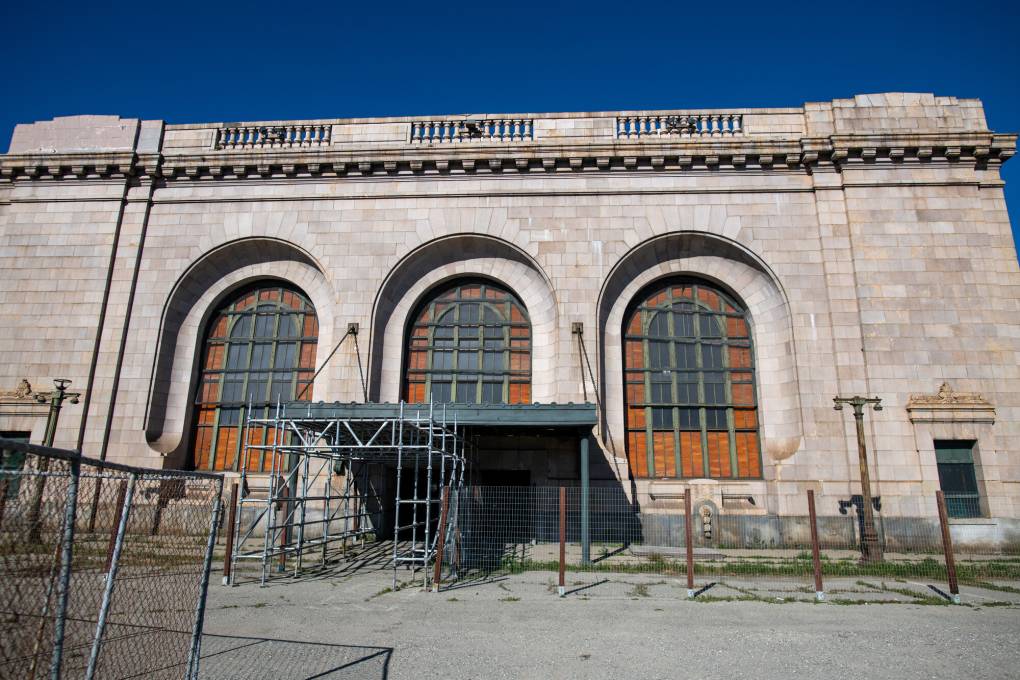
window.__INITIAL_STATE__={
"attachmentsReducer": {
"audio_0": {
"type": "attachments",
"id": "audio_0",
"imgSizes": {
"kqedFullSize": {
"file": "https://ww2.kqed.org/news/wp-content/themes/KQED-unified/img/audio_bgs/background0.jpg"
}
}
},
"audio_1": {
"type": "attachments",
"id": "audio_1",
"imgSizes": {
"kqedFullSize": {
"file": "https://ww2.kqed.org/news/wp-content/themes/KQED-unified/img/audio_bgs/background1.jpg"
}
}
},
"audio_2": {
"type": "attachments",
"id": "audio_2",
"imgSizes": {
"kqedFullSize": {
"file": "https://ww2.kqed.org/news/wp-content/themes/KQED-unified/img/audio_bgs/background2.jpg"
}
}
},
"audio_3": {
"type": "attachments",
"id": "audio_3",
"imgSizes": {
"kqedFullSize": {
"file": "https://ww2.kqed.org/news/wp-content/themes/KQED-unified/img/audio_bgs/background3.jpg"
}
}
},
"audio_4": {
"type": "attachments",
"id": "audio_4",
"imgSizes": {
"kqedFullSize": {
"file": "https://ww2.kqed.org/news/wp-content/themes/KQED-unified/img/audio_bgs/background4.jpg"
}
}
},
"placeholder": {
"type": "attachments",
"id": "placeholder",
"imgSizes": {
"thumbnail": {
"file": "https://cdn.kqed.org/wp-content/uploads/2024/12/KQED-Default-Image-816638274-2000x1333-1-160x107.jpg",
"width": 160,
"height": 107,
"mimeType": "image/jpeg"
},
"medium": {
"file": "https://cdn.kqed.org/wp-content/uploads/2024/12/KQED-Default-Image-816638274-2000x1333-1-800x533.jpg",
"width": 800,
"height": 533,
"mimeType": "image/jpeg"
},
"medium_large": {
"file": "https://cdn.kqed.org/wp-content/uploads/2024/12/KQED-Default-Image-816638274-2000x1333-1-768x512.jpg",
"width": 768,
"height": 512,
"mimeType": "image/jpeg"
},
"large": {
"file": "https://cdn.kqed.org/wp-content/uploads/2024/12/KQED-Default-Image-816638274-2000x1333-1-1020x680.jpg",
"width": 1020,
"height": 680,
"mimeType": "image/jpeg"
},
"1536x1536": {
"file": "https://cdn.kqed.org/wp-content/uploads/2024/12/KQED-Default-Image-816638274-2000x1333-1-1536x1024.jpg",
"width": 1536,
"height": 1024,
"mimeType": "image/jpeg"
},
"fd-lrg": {
"file": "https://cdn.kqed.org/wp-content/uploads/2024/12/KQED-Default-Image-816638274-2000x1333-1-1536x1024.jpg",
"width": 1536,
"height": 1024,
"mimeType": "image/jpeg"
},
"fd-med": {
"file": "https://cdn.kqed.org/wp-content/uploads/2024/12/KQED-Default-Image-816638274-2000x1333-1-1020x680.jpg",
"width": 1020,
"height": 680,
"mimeType": "image/jpeg"
},
"fd-sm": {
"file": "https://cdn.kqed.org/wp-content/uploads/2024/12/KQED-Default-Image-816638274-2000x1333-1-800x533.jpg",
"width": 800,
"height": 533,
"mimeType": "image/jpeg"
},
"post-thumbnail": {
"file": "https://cdn.kqed.org/wp-content/uploads/2024/12/KQED-Default-Image-816638274-2000x1333-1-672x372.jpg",
"width": 672,
"height": 372,
"mimeType": "image/jpeg"
},
"twentyfourteen-full-width": {
"file": "https://cdn.kqed.org/wp-content/uploads/2024/12/KQED-Default-Image-816638274-2000x1333-1-1038x576.jpg",
"width": 1038,
"height": 576,
"mimeType": "image/jpeg"
},
"xxsmall": {
"file": "https://cdn.kqed.org/wp-content/uploads/2024/12/KQED-Default-Image-816638274-2000x1333-1-160x107.jpg",
"width": 160,
"height": 107,
"mimeType": "image/jpeg"
},
"xsmall": {
"file": "https://cdn.kqed.org/wp-content/uploads/2024/12/KQED-Default-Image-816638274-2000x1333-1-672x372.jpg",
"width": 672,
"height": 372,
"mimeType": "image/jpeg"
},
"small": {
"file": "https://cdn.kqed.org/wp-content/uploads/2024/12/KQED-Default-Image-816638274-2000x1333-1-672x372.jpg",
"width": 672,
"height": 372,
"mimeType": "image/jpeg"
},
"xlarge": {
"file": "https://cdn.kqed.org/wp-content/uploads/2024/12/KQED-Default-Image-816638274-2000x1333-1-1020x680.jpg",
"width": 1020,
"height": 680,
"mimeType": "image/jpeg"
},
"full-width": {
"file": "https://cdn.kqed.org/wp-content/uploads/2024/12/KQED-Default-Image-816638274-2000x1333-1-1920x1280.jpg",
"width": 1920,
"height": 1280,
"mimeType": "image/jpeg"
},
"guest-author-32": {
"file": "https://cdn.kqed.org/wp-content/uploads/2025/01/KQED-Default-Image-816638274-1333x1333-1-160x160.jpg",
"width": 32,
"height": 32,
"mimeType": "image/jpeg"
},
"guest-author-50": {
"file": "https://cdn.kqed.org/wp-content/uploads/2025/01/KQED-Default-Image-816638274-1333x1333-1-160x160.jpg",
"width": 50,
"height": 50,
"mimeType": "image/jpeg"
},
"guest-author-64": {
"file": "https://cdn.kqed.org/wp-content/uploads/2025/01/KQED-Default-Image-816638274-1333x1333-1-160x160.jpg",
"width": 64,
"height": 64,
"mimeType": "image/jpeg"
},
"guest-author-96": {
"file": "https://cdn.kqed.org/wp-content/uploads/2025/01/KQED-Default-Image-816638274-1333x1333-1-160x160.jpg",
"width": 96,
"height": 96,
"mimeType": "image/jpeg"
},
"guest-author-128": {
"file": "https://cdn.kqed.org/wp-content/uploads/2025/01/KQED-Default-Image-816638274-1333x1333-1-160x160.jpg",
"width": 128,
"height": 128,
"mimeType": "image/jpeg"
},
"detail": {
"file": "https://cdn.kqed.org/wp-content/uploads/2025/01/KQED-Default-Image-816638274-1333x1333-1-160x160.jpg",
"width": 160,
"height": 160,
"mimeType": "image/jpeg"
},
"kqedFullSize": {
"file": "https://cdn.kqed.org/wp-content/uploads/2024/12/KQED-Default-Image-816638274-2000x1333-1.jpg",
"width": 2000,
"height": 1333
}
}
},
"news_12011199": {
"type": "attachments",
"id": "news_12011199",
"meta": {
"index": "attachments_1716263798",
"site": "news",
"id": "12011199",
"found": true
},
"title": "231205-SolanoCountyFarmers-68-BL_qed",
"publishDate": 1729886009,
"status": "inherit",
"parent": 12011148,
"modified": 1729886035,
"caption": "Local residents fill a town hall meeting in Rio Vista on Dec. 5, 2023, for California Forever, a proposed California city backed by Silicon Valley investors on farmland in eastern Solano County.",
"credit": "Beth LaBerge/KQED",
"altTag": null,
"description": null,
"imgSizes": {
"medium": {
"file": "https://cdn.kqed.org/wp-content/uploads/sites/10/2024/10/231205-SolanoCountyFarmers-68-BL_qed-800x533.jpg",
"width": 800,
"height": 533,
"mimeType": "image/jpeg"
},
"large": {
"file": "https://cdn.kqed.org/wp-content/uploads/sites/10/2024/10/231205-SolanoCountyFarmers-68-BL_qed-1020x680.jpg",
"width": 1020,
"height": 680,
"mimeType": "image/jpeg"
},
"thumbnail": {
"file": "https://cdn.kqed.org/wp-content/uploads/sites/10/2024/10/231205-SolanoCountyFarmers-68-BL_qed-160x107.jpg",
"width": 160,
"height": 107,
"mimeType": "image/jpeg"
},
"1536x1536": {
"file": "https://cdn.kqed.org/wp-content/uploads/sites/10/2024/10/231205-SolanoCountyFarmers-68-BL_qed-1536x1024.jpg",
"width": 1536,
"height": 1024,
"mimeType": "image/jpeg"
},
"post-thumbnail": {
"file": "https://cdn.kqed.org/wp-content/uploads/sites/10/2024/10/231205-SolanoCountyFarmers-68-BL_qed-672x372.jpg",
"width": 672,
"height": 372,
"mimeType": "image/jpeg"
},
"twentyfourteen-full-width": {
"file": "https://cdn.kqed.org/wp-content/uploads/sites/10/2024/10/231205-SolanoCountyFarmers-68-BL_qed-1038x576.jpg",
"width": 1038,
"height": 576,
"mimeType": "image/jpeg"
},
"full-width": {
"file": "https://cdn.kqed.org/wp-content/uploads/sites/10/2024/10/231205-SolanoCountyFarmers-68-BL_qed-1920x1280.jpg",
"width": 1920,
"height": 1280,
"mimeType": "image/jpeg"
},
"kqedFullSize": {
"file": "https://cdn.kqed.org/wp-content/uploads/sites/10/2024/10/231205-SolanoCountyFarmers-68-BL_qed.jpg",
"width": 2000,
"height": 1333
}
},
"isLoading": false,
"fetchFailed": false
},
"news_12010511": {
"type": "attachments",
"id": "news_12010511",
"meta": {
"index": "attachments_1716263798",
"site": "news",
"id": "12010511",
"found": true
},
"title": "Tower Bridge in Fog West Sacramento",
"publishDate": 1729614576,
"status": "inherit",
"parent": 12010451,
"modified": 1729614680,
"caption": "The Tower Bridge that connects Sacramento and West Sacramento on Jan. 12, 2021.",
"credit": "Getty Images",
"altTag": null,
"description": null,
"imgSizes": {
"medium": {
"file": "https://cdn.kqed.org/wp-content/uploads/sites/10/2024/10/WestSacGetty-800x532.jpg",
"width": 800,
"height": 532,
"mimeType": "image/jpeg"
},
"large": {
"file": "https://cdn.kqed.org/wp-content/uploads/sites/10/2024/10/WestSacGetty-1020x678.jpg",
"width": 1020,
"height": 678,
"mimeType": "image/jpeg"
},
"thumbnail": {
"file": "https://cdn.kqed.org/wp-content/uploads/sites/10/2024/10/WestSacGetty-160x106.jpg",
"width": 160,
"height": 106,
"mimeType": "image/jpeg"
},
"1536x1536": {
"file": "https://cdn.kqed.org/wp-content/uploads/sites/10/2024/10/WestSacGetty-1536x1021.jpg",
"width": 1536,
"height": 1021,
"mimeType": "image/jpeg"
},
"post-thumbnail": {
"file": "https://cdn.kqed.org/wp-content/uploads/sites/10/2024/10/WestSacGetty-672x372.jpg",
"width": 672,
"height": 372,
"mimeType": "image/jpeg"
},
"twentyfourteen-full-width": {
"file": "https://cdn.kqed.org/wp-content/uploads/sites/10/2024/10/WestSacGetty-1038x576.jpg",
"width": 1038,
"height": 576,
"mimeType": "image/jpeg"
},
"full-width": {
"file": "https://cdn.kqed.org/wp-content/uploads/sites/10/2024/10/WestSacGetty-1920x1277.jpg",
"width": 1920,
"height": 1277,
"mimeType": "image/jpeg"
},
"kqedFullSize": {
"file": "https://cdn.kqed.org/wp-content/uploads/sites/10/2024/10/WestSacGetty.jpg",
"width": 2000,
"height": 1330
}
},
"isLoading": false,
"fetchFailed": false
},
"news_11984250": {
"type": "attachments",
"id": "news_11984250",
"meta": {
"index": "attachments_1716263798",
"site": "news",
"id": "11984250",
"found": true
},
"parent": 11984246,
"imgSizes": {
"twentyfourteen-full-width": {
"file": "https://cdn.kqed.org/wp-content/uploads/sites/10/2024/04/San-Jose-overview-1038x576.jpg",
"width": 1038,
"mimeType": "image/jpeg",
"height": 576
},
"thumbnail": {
"file": "https://cdn.kqed.org/wp-content/uploads/sites/10/2024/04/San-Jose-overview-160x120.jpg",
"width": 160,
"mimeType": "image/jpeg",
"height": 120
},
"post-thumbnail": {
"file": "https://cdn.kqed.org/wp-content/uploads/sites/10/2024/04/San-Jose-overview-672x372.jpg",
"width": 672,
"mimeType": "image/jpeg",
"height": 372
},
"kqedFullSize": {
"file": "https://cdn.kqed.org/wp-content/uploads/sites/10/2024/04/San-Jose-overview.jpg",
"width": 2000,
"height": 1506
},
"large": {
"file": "https://cdn.kqed.org/wp-content/uploads/sites/10/2024/04/San-Jose-overview-1020x768.jpg",
"width": 1020,
"mimeType": "image/jpeg",
"height": 768
},
"1536x1536": {
"file": "https://cdn.kqed.org/wp-content/uploads/sites/10/2024/04/San-Jose-overview-1536x1157.jpg",
"width": 1536,
"mimeType": "image/jpeg",
"height": 1157
},
"full-width": {
"file": "https://cdn.kqed.org/wp-content/uploads/sites/10/2024/04/San-Jose-overview-1920x1446.jpg",
"width": 1920,
"mimeType": "image/jpeg",
"height": 1446
},
"medium": {
"file": "https://cdn.kqed.org/wp-content/uploads/sites/10/2024/04/San-Jose-overview-800x602.jpg",
"width": 800,
"mimeType": "image/jpeg",
"height": 602
}
},
"publishDate": 1714172424,
"modified": 1714173015,
"caption": "An aerial photo of San José from City Hall on April 16, 2024. ",
"description": null,
"title": "San Jose overview",
"credit": "Joseph Geha/KQED",
"status": "inherit",
"altTag": null,
"isLoading": false,
"fetchFailed": false
},
"news_12009985": {
"type": "attachments",
"id": "news_12009985",
"meta": {
"index": "attachments_1716263798",
"site": "news",
"id": "12009985",
"found": true
},
"title": "241017-GLIDE COMMUNITY AMBASSADORS-MD-09-KQED",
"publishDate": 1729211778,
"status": "inherit",
"parent": 0,
"modified": 1729294985,
"caption": "GLIDE Community Ambassador Russel Roberts speaks with an unhoused person in the Tenderloin neighborhood of San Francisco on Oct. 17, 2024.",
"credit": "Martin do Nascimento/KQED",
"altTag": null,
"description": null,
"imgSizes": {
"medium": {
"file": "https://cdn.kqed.org/wp-content/uploads/sites/10/2024/10/241017-GLIDE-COMMUNITY-AMBASSADORS-MD-09-KQED-800x533.jpg",
"width": 800,
"height": 533,
"mimeType": "image/jpeg"
},
"large": {
"file": "https://cdn.kqed.org/wp-content/uploads/sites/10/2024/10/241017-GLIDE-COMMUNITY-AMBASSADORS-MD-09-KQED-1020x680.jpg",
"width": 1020,
"height": 680,
"mimeType": "image/jpeg"
},
"thumbnail": {
"file": "https://cdn.kqed.org/wp-content/uploads/sites/10/2024/10/241017-GLIDE-COMMUNITY-AMBASSADORS-MD-09-KQED-160x107.jpg",
"width": 160,
"height": 107,
"mimeType": "image/jpeg"
},
"1536x1536": {
"file": "https://cdn.kqed.org/wp-content/uploads/sites/10/2024/10/241017-GLIDE-COMMUNITY-AMBASSADORS-MD-09-KQED-1536x1024.jpg",
"width": 1536,
"height": 1024,
"mimeType": "image/jpeg"
},
"post-thumbnail": {
"file": "https://cdn.kqed.org/wp-content/uploads/sites/10/2024/10/241017-GLIDE-COMMUNITY-AMBASSADORS-MD-09-KQED-672x372.jpg",
"width": 672,
"height": 372,
"mimeType": "image/jpeg"
},
"twentyfourteen-full-width": {
"file": "https://cdn.kqed.org/wp-content/uploads/sites/10/2024/10/241017-GLIDE-COMMUNITY-AMBASSADORS-MD-09-KQED-1038x576.jpg",
"width": 1038,
"height": 576,
"mimeType": "image/jpeg"
},
"full-width": {
"file": "https://cdn.kqed.org/wp-content/uploads/sites/10/2024/10/241017-GLIDE-COMMUNITY-AMBASSADORS-MD-09-KQED-1920x1280.jpg",
"width": 1920,
"height": 1280,
"mimeType": "image/jpeg"
},
"kqedFullSize": {
"file": "https://cdn.kqed.org/wp-content/uploads/sites/10/2024/10/241017-GLIDE-COMMUNITY-AMBASSADORS-MD-09-KQED.jpg",
"width": 2000,
"height": 1333
}
},
"isLoading": false,
"fetchFailed": false
},
"news_12009495": {
"type": "attachments",
"id": "news_12009495",
"meta": {
"index": "attachments_1716263798",
"site": "news",
"id": "12009495",
"found": true
},
"title": "California Cuts Back On Rooftop Solar Incentives As State Struggles To Offload Excess Power",
"publishDate": 1729020813,
"status": "inherit",
"parent": 12009493,
"modified": 1729020958,
"caption": "A neighborhood in San Rafael on April 25, 2024. ",
"credit": "Justin Sullivan/Getty Images",
"altTag": null,
"description": null,
"imgSizes": {
"medium": {
"file": "https://cdn.kqed.org/wp-content/uploads/sites/10/2024/10/SanRafaelMarinCountGetty-800x561.jpg",
"width": 800,
"height": 561,
"mimeType": "image/jpeg"
},
"large": {
"file": "https://cdn.kqed.org/wp-content/uploads/sites/10/2024/10/SanRafaelMarinCountGetty-1020x715.jpg",
"width": 1020,
"height": 715,
"mimeType": "image/jpeg"
},
"thumbnail": {
"file": "https://cdn.kqed.org/wp-content/uploads/sites/10/2024/10/SanRafaelMarinCountGetty-160x112.jpg",
"width": 160,
"height": 112,
"mimeType": "image/jpeg"
},
"1536x1536": {
"file": "https://cdn.kqed.org/wp-content/uploads/sites/10/2024/10/SanRafaelMarinCountGetty-1536x1077.jpg",
"width": 1536,
"height": 1077,
"mimeType": "image/jpeg"
},
"post-thumbnail": {
"file": "https://cdn.kqed.org/wp-content/uploads/sites/10/2024/10/SanRafaelMarinCountGetty-672x372.jpg",
"width": 672,
"height": 372,
"mimeType": "image/jpeg"
},
"twentyfourteen-full-width": {
"file": "https://cdn.kqed.org/wp-content/uploads/sites/10/2024/10/SanRafaelMarinCountGetty-1038x576.jpg",
"width": 1038,
"height": 576,
"mimeType": "image/jpeg"
},
"full-width": {
"file": "https://cdn.kqed.org/wp-content/uploads/sites/10/2024/10/SanRafaelMarinCountGetty-1920x1346.jpg",
"width": 1920,
"height": 1346,
"mimeType": "image/jpeg"
},
"kqedFullSize": {
"file": "https://cdn.kqed.org/wp-content/uploads/sites/10/2024/10/SanRafaelMarinCountGetty.jpg",
"width": 2000,
"height": 1402
}
},
"isLoading": false,
"fetchFailed": false
},
"news_12006970": {
"type": "attachments",
"id": "news_12006970",
"meta": {
"index": "attachments_1716263798",
"site": "news",
"id": "12006970",
"found": true
},
"title": "The Parcel K lot at 432 Octavia Blvd. in San Francisco on Sept. 27, 2024.",
"publishDate": 1727479928,
"status": "inherit",
"parent": 0,
"modified": 1727480113,
"caption": "The Parcel K lot at 432 Octavia Blvd. in San Francisco on Sept. 27, 2024.",
"credit": "Martin do Nascimento/KQED",
"altTag": null,
"description": null,
"imgSizes": {
"medium": {
"file": "https://cdn.kqed.org/wp-content/uploads/sites/10/2024/09/240927-PARCEL-K-MD-03-KQED-800x533.jpg",
"width": 800,
"height": 533,
"mimeType": "image/jpeg"
},
"large": {
"file": "https://cdn.kqed.org/wp-content/uploads/sites/10/2024/09/240927-PARCEL-K-MD-03-KQED-1020x680.jpg",
"width": 1020,
"height": 680,
"mimeType": "image/jpeg"
},
"thumbnail": {
"file": "https://cdn.kqed.org/wp-content/uploads/sites/10/2024/09/240927-PARCEL-K-MD-03-KQED-160x107.jpg",
"width": 160,
"height": 107,
"mimeType": "image/jpeg"
},
"1536x1536": {
"file": "https://cdn.kqed.org/wp-content/uploads/sites/10/2024/09/240927-PARCEL-K-MD-03-KQED-1536x1024.jpg",
"width": 1536,
"height": 1024,
"mimeType": "image/jpeg"
},
"post-thumbnail": {
"file": "https://cdn.kqed.org/wp-content/uploads/sites/10/2024/09/240927-PARCEL-K-MD-03-KQED-672x372.jpg",
"width": 672,
"height": 372,
"mimeType": "image/jpeg"
},
"twentyfourteen-full-width": {
"file": "https://cdn.kqed.org/wp-content/uploads/sites/10/2024/09/240927-PARCEL-K-MD-03-KQED-1038x576.jpg",
"width": 1038,
"height": 576,
"mimeType": "image/jpeg"
},
"full-width": {
"file": "https://cdn.kqed.org/wp-content/uploads/sites/10/2024/09/240927-PARCEL-K-MD-03-KQED-1920x1280.jpg",
"width": 1920,
"height": 1280,
"mimeType": "image/jpeg"
},
"kqedFullSize": {
"file": "https://cdn.kqed.org/wp-content/uploads/sites/10/2024/09/240927-PARCEL-K-MD-03-KQED.jpg",
"width": 2000,
"height": 1333
}
},
"isLoading": false,
"fetchFailed": false
},
"news_12009247": {
"type": "attachments",
"id": "news_12009247",
"meta": {
"index": "attachments_1716263798",
"site": "news",
"id": "12009247",
"found": true
},
"title": "Tents sit along Coyote Creek in Roosevelt Park in San José on April 9, 2024.",
"publishDate": 1728691276,
"status": "inherit",
"parent": 12009230,
"modified": 1728691300,
"caption": "Tents sit along Coyote Creek in Roosevelt Park in San José on April 9, 2024.",
"credit": "Beth LaBerge/KQED",
"altTag": null,
"description": null,
"imgSizes": {
"medium": {
"file": "https://cdn.kqed.org/wp-content/uploads/sites/10/2024/10/240409-SJEncampmentBan-064-BL_qed-800x533.jpg",
"width": 800,
"height": 533,
"mimeType": "image/jpeg"
},
"large": {
"file": "https://cdn.kqed.org/wp-content/uploads/sites/10/2024/10/240409-SJEncampmentBan-064-BL_qed-1020x680.jpg",
"width": 1020,
"height": 680,
"mimeType": "image/jpeg"
},
"thumbnail": {
"file": "https://cdn.kqed.org/wp-content/uploads/sites/10/2024/10/240409-SJEncampmentBan-064-BL_qed-160x107.jpg",
"width": 160,
"height": 107,
"mimeType": "image/jpeg"
},
"1536x1536": {
"file": "https://cdn.kqed.org/wp-content/uploads/sites/10/2024/10/240409-SJEncampmentBan-064-BL_qed-1536x1024.jpg",
"width": 1536,
"height": 1024,
"mimeType": "image/jpeg"
},
"post-thumbnail": {
"file": "https://cdn.kqed.org/wp-content/uploads/sites/10/2024/10/240409-SJEncampmentBan-064-BL_qed-672x372.jpg",
"width": 672,
"height": 372,
"mimeType": "image/jpeg"
},
"twentyfourteen-full-width": {
"file": "https://cdn.kqed.org/wp-content/uploads/sites/10/2024/10/240409-SJEncampmentBan-064-BL_qed-1038x576.jpg",
"width": 1038,
"height": 576,
"mimeType": "image/jpeg"
},
"full-width": {
"file": "https://cdn.kqed.org/wp-content/uploads/sites/10/2024/10/240409-SJEncampmentBan-064-BL_qed-1920x1280.jpg",
"width": 1920,
"height": 1280,
"mimeType": "image/jpeg"
},
"kqedFullSize": {
"file": "https://cdn.kqed.org/wp-content/uploads/sites/10/2024/10/240409-SJEncampmentBan-064-BL_qed.jpg",
"width": 2000,
"height": 1333
}
},
"isLoading": false,
"fetchFailed": false
},
"news_12000350": {
"type": "attachments",
"id": "news_12000350",
"meta": {
"index": "attachments_1716263798",
"site": "news",
"id": "12000350",
"found": true
},
"title": "20240809_ENCAMPMENTSWEEP_GC-38-KQED",
"publishDate": 1723742926,
"status": "inherit",
"parent": 12000606,
"modified": 1723853884,
"caption": "James Harris packs his things to relocate his encampment.",
"credit": "Gina Castro/KQED",
"altTag": null,
"description": null,
"imgSizes": {
"medium": {
"file": "https://cdn.kqed.org/wp-content/uploads/sites/10/2024/08/20240809_ENCAMPMENTSWEEP_GC-38-KQED-800x543.jpg",
"width": 800,
"height": 543,
"mimeType": "image/jpeg"
},
"large": {
"file": "https://cdn.kqed.org/wp-content/uploads/sites/10/2024/08/20240809_ENCAMPMENTSWEEP_GC-38-KQED-1020x693.jpg",
"width": 1020,
"height": 693,
"mimeType": "image/jpeg"
},
"thumbnail": {
"file": "https://cdn.kqed.org/wp-content/uploads/sites/10/2024/08/20240809_ENCAMPMENTSWEEP_GC-38-KQED-160x109.jpg",
"width": 160,
"height": 109,
"mimeType": "image/jpeg"
},
"1536x1536": {
"file": "https://cdn.kqed.org/wp-content/uploads/sites/10/2024/08/20240809_ENCAMPMENTSWEEP_GC-38-KQED-1536x1043.jpg",
"width": 1536,
"height": 1043,
"mimeType": "image/jpeg"
},
"post-thumbnail": {
"file": "https://cdn.kqed.org/wp-content/uploads/sites/10/2024/08/20240809_ENCAMPMENTSWEEP_GC-38-KQED-672x372.jpg",
"width": 672,
"height": 372,
"mimeType": "image/jpeg"
},
"twentyfourteen-full-width": {
"file": "https://cdn.kqed.org/wp-content/uploads/sites/10/2024/08/20240809_ENCAMPMENTSWEEP_GC-38-KQED-1038x576.jpg",
"width": 1038,
"height": 576,
"mimeType": "image/jpeg"
},
"full-width": {
"file": "https://cdn.kqed.org/wp-content/uploads/sites/10/2024/08/20240809_ENCAMPMENTSWEEP_GC-38-KQED-1920x1304.jpg",
"width": 1920,
"height": 1304,
"mimeType": "image/jpeg"
},
"kqedFullSize": {
"file": "https://cdn.kqed.org/wp-content/uploads/sites/10/2024/08/20240809_ENCAMPMENTSWEEP_GC-38-KQED.jpg",
"width": 2000,
"height": 1358
}
},
"isLoading": false,
"fetchFailed": false
},
"news_12008451": {
"type": "attachments",
"id": "news_12008451",
"meta": {
"index": "attachments_1716263798",
"site": "news",
"id": "12008451",
"found": true
},
"title": "018_SanJose_AntiEvictionProtest_01272021_qed",
"publishDate": 1728408942,
"status": "inherit",
"parent": 12008424,
"modified": 1728431123,
"caption": "A protester stands in front of the Santa Clara Superior Court in San Jose on Jan. 27, 2021, to call for stronger state and local eviction protections.",
"credit": "Beth LaBerge/KQED",
"altTag": "A woman wearing a yellow coat with a sign around her neck that reads \"Evictions Are Violent. We Won't Be Silenced.\"",
"description": null,
"imgSizes": {
"medium": {
"file": "https://cdn.kqed.org/wp-content/uploads/sites/10/2024/10/018_SanJose_AntiEvictionProtest_01272021_qed-800x533.jpg",
"width": 800,
"height": 533,
"mimeType": "image/jpeg"
},
"large": {
"file": "https://cdn.kqed.org/wp-content/uploads/sites/10/2024/10/018_SanJose_AntiEvictionProtest_01272021_qed-1020x680.jpg",
"width": 1020,
"height": 680,
"mimeType": "image/jpeg"
},
"thumbnail": {
"file": "https://cdn.kqed.org/wp-content/uploads/sites/10/2024/10/018_SanJose_AntiEvictionProtest_01272021_qed-160x107.jpg",
"width": 160,
"height": 107,
"mimeType": "image/jpeg"
},
"1536x1536": {
"file": "https://cdn.kqed.org/wp-content/uploads/sites/10/2024/10/018_SanJose_AntiEvictionProtest_01272021_qed-1536x1024.jpg",
"width": 1536,
"height": 1024,
"mimeType": "image/jpeg"
},
"post-thumbnail": {
"file": "https://cdn.kqed.org/wp-content/uploads/sites/10/2024/10/018_SanJose_AntiEvictionProtest_01272021_qed-672x372.jpg",
"width": 672,
"height": 372,
"mimeType": "image/jpeg"
},
"twentyfourteen-full-width": {
"file": "https://cdn.kqed.org/wp-content/uploads/sites/10/2024/10/018_SanJose_AntiEvictionProtest_01272021_qed-1038x576.jpg",
"width": 1038,
"height": 576,
"mimeType": "image/jpeg"
},
"full-width": {
"file": "https://cdn.kqed.org/wp-content/uploads/sites/10/2024/10/018_SanJose_AntiEvictionProtest_01272021_qed-1920x1280.jpg",
"width": 1920,
"height": 1280,
"mimeType": "image/jpeg"
},
"kqedFullSize": {
"file": "https://cdn.kqed.org/wp-content/uploads/sites/10/2024/10/018_SanJose_AntiEvictionProtest_01272021_qed.jpg",
"width": 2000,
"height": 1333
}
},
"isLoading": false,
"fetchFailed": false
},
"news_12008449": {
"type": "attachments",
"id": "news_12008449",
"meta": {
"index": "attachments_1716263798",
"site": "news",
"id": "12008449",
"found": true
},
"title": "Newsom",
"publishDate": 1728408466,
"status": "inherit",
"parent": 12007818,
"modified": 1728416870,
"caption": "Gov. Gavin Newsom speaks during a press conference in Los Angeles on Wednesday, Sept. 25, 2024.",
"credit": "Eric Thayer/AP Photo",
"altTag": null,
"description": null,
"imgSizes": {
"medium": {
"file": "https://cdn.kqed.org/wp-content/uploads/sites/10/2024/10/GavinNewsomAP3-800x533.jpg",
"width": 800,
"height": 533,
"mimeType": "image/jpeg"
},
"large": {
"file": "https://cdn.kqed.org/wp-content/uploads/sites/10/2024/10/GavinNewsomAP3-1020x680.jpg",
"width": 1020,
"height": 680,
"mimeType": "image/jpeg"
},
"thumbnail": {
"file": "https://cdn.kqed.org/wp-content/uploads/sites/10/2024/10/GavinNewsomAP3-160x107.jpg",
"width": 160,
"height": 107,
"mimeType": "image/jpeg"
},
"1536x1536": {
"file": "https://cdn.kqed.org/wp-content/uploads/sites/10/2024/10/GavinNewsomAP3-1536x1024.jpg",
"width": 1536,
"height": 1024,
"mimeType": "image/jpeg"
},
"post-thumbnail": {
"file": "https://cdn.kqed.org/wp-content/uploads/sites/10/2024/10/GavinNewsomAP3-672x372.jpg",
"width": 672,
"height": 372,
"mimeType": "image/jpeg"
},
"twentyfourteen-full-width": {
"file": "https://cdn.kqed.org/wp-content/uploads/sites/10/2024/10/GavinNewsomAP3-1038x576.jpg",
"width": 1038,
"height": 576,
"mimeType": "image/jpeg"
},
"full-width": {
"file": "https://cdn.kqed.org/wp-content/uploads/sites/10/2024/10/GavinNewsomAP3-1920x1280.jpg",
"width": 1920,
"height": 1280,
"mimeType": "image/jpeg"
},
"kqedFullSize": {
"file": "https://cdn.kqed.org/wp-content/uploads/sites/10/2024/10/GavinNewsomAP3.jpg",
"width": 2000,
"height": 1333
}
},
"isLoading": false,
"fetchFailed": false
},
"news_12007815": {
"type": "attachments",
"id": "news_12007815",
"meta": {
"index": "attachments_1716263798",
"site": "news",
"id": "12007815",
"found": true
},
"title": "007_KQED_16thStreetStationOakland_02162022_qed",
"publishDate": 1727988668,
"status": "inherit",
"parent": 12007789,
"modified": 1727988743,
"caption": "The front exterior of the now abandoned 16th Street Station in West Oakland on Feb. 16, 2022.",
"credit": "Beth LaBerge/KQED",
"altTag": "The front exterior of an abandoned building with fencing around it.",
"description": null,
"imgSizes": {
"medium": {
"file": "https://cdn.kqed.org/wp-content/uploads/sites/10/2024/10/007_KQED_16thStreetStationOakland_02162022_qed-800x533.jpg",
"width": 800,
"height": 533,
"mimeType": "image/jpeg"
},
"large": {
"file": "https://cdn.kqed.org/wp-content/uploads/sites/10/2024/10/007_KQED_16thStreetStationOakland_02162022_qed-1020x680.jpg",
"width": 1020,
"height": 680,
"mimeType": "image/jpeg"
},
"thumbnail": {
"file": "https://cdn.kqed.org/wp-content/uploads/sites/10/2024/10/007_KQED_16thStreetStationOakland_02162022_qed-160x107.jpg",
"width": 160,
"height": 107,
"mimeType": "image/jpeg"
},
"1536x1536": {
"file": "https://cdn.kqed.org/wp-content/uploads/sites/10/2024/10/007_KQED_16thStreetStationOakland_02162022_qed-1536x1024.jpg",
"width": 1536,
"height": 1024,
"mimeType": "image/jpeg"
},
"post-thumbnail": {
"file": "https://cdn.kqed.org/wp-content/uploads/sites/10/2024/10/007_KQED_16thStreetStationOakland_02162022_qed-672x372.jpg",
"width": 672,
"height": 372,
"mimeType": "image/jpeg"
},
"twentyfourteen-full-width": {
"file": "https://cdn.kqed.org/wp-content/uploads/sites/10/2024/10/007_KQED_16thStreetStationOakland_02162022_qed-1038x576.jpg",
"width": 1038,
"height": 576,
"mimeType": "image/jpeg"
},
"full-width": {
"file": "https://cdn.kqed.org/wp-content/uploads/sites/10/2024/10/007_KQED_16thStreetStationOakland_02162022_qed-1920x1280.jpg",
"width": 1920,
"height": 1280,
"mimeType": "image/jpeg"
},
"kqedFullSize": {
"file": "https://cdn.kqed.org/wp-content/uploads/sites/10/2024/10/007_KQED_16thStreetStationOakland_02162022_qed.jpg",
"width": 2000,
"height": 1333
}
},
"isLoading": false,
"fetchFailed": false
},
"news_12000524": {
"type": "attachments",
"id": "news_12000524",
"meta": {
"index": "attachments_1716263798",
"site": "news",
"id": "12000524",
"found": true
},
"title": "California-Homeless",
"publishDate": 1723830664,
"status": "inherit",
"parent": 12000513,
"modified": 1723833367,
"caption": "California Gov. Gavin Newsom greets people on July 8, 2024, near the Common Man Roadside Market and Deli in Hooksett, New Hampshire. Newsom issued an executive order Thursday, July 25, to remove homeless encampments in his state.",
"credit": "Steven Senne/AP Photo",
"altTag": null,
"description": null,
"imgSizes": {
"medium": {
"file": "https://cdn.kqed.org/wp-content/uploads/sites/10/2024/08/AP24207558088069-800x533.jpg",
"width": 800,
"height": 533,
"mimeType": "image/jpeg"
},
"large": {
"file": "https://cdn.kqed.org/wp-content/uploads/sites/10/2024/08/AP24207558088069-1020x680.jpg",
"width": 1020,
"height": 680,
"mimeType": "image/jpeg"
},
"thumbnail": {
"file": "https://cdn.kqed.org/wp-content/uploads/sites/10/2024/08/AP24207558088069-160x107.jpg",
"width": 160,
"height": 107,
"mimeType": "image/jpeg"
},
"1536x1536": {
"file": "https://cdn.kqed.org/wp-content/uploads/sites/10/2024/08/AP24207558088069-1536x1024.jpg",
"width": 1536,
"height": 1024,
"mimeType": "image/jpeg"
},
"post-thumbnail": {
"file": "https://cdn.kqed.org/wp-content/uploads/sites/10/2024/08/AP24207558088069-672x372.jpg",
"width": 672,
"height": 372,
"mimeType": "image/jpeg"
},
"twentyfourteen-full-width": {
"file": "https://cdn.kqed.org/wp-content/uploads/sites/10/2024/08/AP24207558088069-1038x576.jpg",
"width": 1038,
"height": 576,
"mimeType": "image/jpeg"
},
"full-width": {
"file": "https://cdn.kqed.org/wp-content/uploads/sites/10/2024/08/AP24207558088069-1920x1280.jpg",
"width": 1920,
"height": 1280,
"mimeType": "image/jpeg"
},
"kqedFullSize": {
"file": "https://cdn.kqed.org/wp-content/uploads/sites/10/2024/08/AP24207558088069.jpg",
"width": 2000,
"height": 1333
}
},
"isLoading": false,
"fetchFailed": false
}
},
"audioPlayerReducer": {
"postId": "stream_live",
"isPaused": true,
"isPlaying": false,
"pfsActive": false,
"pledgeModalIsOpen": true,
"playerDrawerIsOpen": false,
"liveAudioPlayStartedAt": 0,
"liveAudioPlayContext": ""
},
"authorsReducer": {
"byline_news_12009493": {
"type": "authors",
"id": "byline_news_12009493",
"meta": {
"override": true
},
"slug": "byline_news_12009493",
"name": "Samantha Kennedy",
"isLoading": false
},
"vrancano": {
"type": "authors",
"id": "11276",
"meta": {
"index": "authors_1716337520",
"id": "11276",
"found": true
},
"name": "Vanessa Rancaño",
"firstName": "Vanessa",
"lastName": "Rancaño",
"slug": "vrancano",
"email": "vrancano@kqed.org",
"display_author_email": false,
"staff_mastheads": [
"news"
],
"title": "Reporter",
"bio": "Vanessa Rancaño is a features reporter for KQED. She’s also covered homelessness and education for the station and reported from the Central Valley. Her work has aired across public radio, from flagship national news shows to longform narrative podcasts. Before taking up a mic, she worked as a freelance print journalist. She’s been recognized with a number of national and regional awards. Vanessa grew up in California's Central Valley. She's a former NPR Kroc Fellow, and a graduate of the UC Berkeley Graduate School of Journalism.",
"avatar": "https://secure.gravatar.com/avatar/b3a383dfb0e7ee1c17568f2cf067904ab654d6e3de9743fc661f3c788ade1bed?s=600&d=blank&r=g",
"twitter": "vanessarancano",
"bluesky": null,
"facebook": null,
"instagram": null,
"linkedin": null,
"sites": [
{
"site": "arts",
"roles": [
"editor"
]
},
{
"site": "news",
"roles": [
"editor"
]
},
{
"site": "liveblog",
"roles": [
"contributor"
]
}
],
"headData": {
"title": "Vanessa Rancaño | KQED",
"description": "Reporter",
"ogImgSrc": "https://secure.gravatar.com/avatar/b3a383dfb0e7ee1c17568f2cf067904ab654d6e3de9743fc661f3c788ade1bed?s=600&d=blank&r=g",
"twImgSrc": "https://secure.gravatar.com/avatar/b3a383dfb0e7ee1c17568f2cf067904ab654d6e3de9743fc661f3c788ade1bed?s=600&d=blank&r=g"
},
"isLoading": false,
"link": "/author/vrancano"
},
"abandlamudi": {
"type": "authors",
"id": "11672",
"meta": {
"index": "authors_1716337520",
"id": "11672",
"found": true
},
"name": "Adhiti Bandlamudi",
"firstName": "Adhiti",
"lastName": "Bandlamudi",
"slug": "abandlamudi",
"email": "abandlamudi@kqed.org",
"display_author_email": false,
"staff_mastheads": [
"news"
],
"title": "KQED Housing Reporter",
"bio": "Adhiti Bandlamudi reports for KQED's Housing desk. She focuses on how housing gets built across the Bay Area. Before joining KQED in 2020, she reported for WUNC in Durham, North Carolina, WABE in Atlanta, Georgia and Capital Public Radio in Sacramento. In 2017, she was awarded a Kroc Fellowship at NPR where she reported on everything from sprinkles to the Golden State Killer's arrest. When she's not reporting, she's baking new recipes in her kitchen or watching movies with friends and family. She's originally from Georgia and has strong opinions about Great British Bake Off.",
"avatar": "https://secure.gravatar.com/avatar/868129c8b257bb99a3500e2c86a65400?s=600&d=mm&r=g",
"twitter": "oddity_adhiti",
"facebook": null,
"instagram": null,
"linkedin": null,
"sites": [
{
"site": "arts",
"roles": [
"author"
]
},
{
"site": "news",
"roles": [
"editor"
]
},
{
"site": "liveblog",
"roles": [
"author"
]
}
],
"headData": {
"title": "Adhiti Bandlamudi | KQED",
"description": "KQED Housing Reporter",
"ogImgSrc": "https://secure.gravatar.com/avatar/868129c8b257bb99a3500e2c86a65400?s=600&d=mm&r=g",
"twImgSrc": "https://secure.gravatar.com/avatar/868129c8b257bb99a3500e2c86a65400?s=600&d=mm&r=g"
},
"isLoading": false,
"link": "/author/abandlamudi"
},
"adahlstromeckman": {
"type": "authors",
"id": "11785",
"meta": {
"index": "authors_1716337520",
"id": "11785",
"found": true
},
"name": "Azul Dahlstrom-Eckman",
"firstName": "Azul",
"lastName": "Dahlstrom-Eckman",
"slug": "adahlstromeckman",
"email": "adahlstrom-eckman@kqed.org",
"display_author_email": true,
"staff_mastheads": [],
"title": "Reporter",
"bio": "Azul is a reporter for KQED focusing on transportation and features. He joined KQED in 2021 as an alumna of KALW's Audio Academy radio journalism training program.",
"avatar": "https://secure.gravatar.com/avatar/9cb750298435add7815a777f55bf1f46845c1386bb8452555c60a7b820b5aba3?s=600&d=blank&r=g",
"twitter": "@zuliemann",
"bluesky": "@azul415.bsky.social",
"facebook": null,
"instagram": null,
"linkedin": null,
"sites": [
{
"site": "arts",
"roles": [
"editor"
]
},
{
"site": "news",
"roles": [
"editor"
]
},
{
"site": "science",
"roles": [
"editor"
]
},
{
"site": "liveblog",
"roles": [
"author"
]
}
],
"headData": {
"title": "Azul Dahlstrom-Eckman | KQED",
"description": "Reporter",
"ogImgSrc": "https://secure.gravatar.com/avatar/9cb750298435add7815a777f55bf1f46845c1386bb8452555c60a7b820b5aba3?s=600&d=blank&r=g",
"twImgSrc": "https://secure.gravatar.com/avatar/9cb750298435add7815a777f55bf1f46845c1386bb8452555c60a7b820b5aba3?s=600&d=blank&r=g"
},
"isLoading": false,
"link": "/author/adahlstromeckman"
},
"jgeha": {
"type": "authors",
"id": "11906",
"meta": {
"index": "authors_1716337520",
"id": "11906",
"found": true
},
"name": "Joseph Geha",
"firstName": "Joseph",
"lastName": "Geha",
"slug": "jgeha",
"email": "jgeha@kqed.org",
"display_author_email": false,
"staff_mastheads": [
"news",
"science"
],
"title": "KQED Contributor",
"bio": null,
"avatar": "https://secure.gravatar.com/avatar/ea84d2b6dd93d6369d453edf19dd583f117cd1759d2d9c9c92f9de77017354fe?s=600&d=blank&r=g",
"twitter": null,
"bluesky": null,
"facebook": null,
"instagram": null,
"linkedin": null,
"sites": [
{
"site": "news",
"roles": [
"editor"
]
},
{
"site": "liveblog",
"roles": [
"author"
]
}
],
"headData": {
"title": "Joseph Geha | KQED",
"description": "KQED Contributor",
"ogImgSrc": "https://secure.gravatar.com/avatar/ea84d2b6dd93d6369d453edf19dd583f117cd1759d2d9c9c92f9de77017354fe?s=600&d=blank&r=g",
"twImgSrc": "https://secure.gravatar.com/avatar/ea84d2b6dd93d6369d453edf19dd583f117cd1759d2d9c9c92f9de77017354fe?s=600&d=blank&r=g"
},
"isLoading": false,
"link": "/author/jgeha"
},
"kdebenedetti": {
"type": "authors",
"id": "11913",
"meta": {
"index": "authors_1716337520",
"id": "11913",
"found": true
},
"name": "Katie DeBenedetti",
"firstName": "Katie",
"lastName": "DeBenedetti",
"slug": "kdebenedetti",
"email": "kdebenedetti@kqed.org",
"display_author_email": false,
"staff_mastheads": [
"news",
"science"
],
"title": "KQED Contributor",
"bio": "Katie DeBenedetti is a digital reporter covering daily news for the Express Desk. Prior to joining KQED as a culture reporting intern in January 2024, she covered education and city government for the Napa Valley Register.",
"avatar": "https://secure.gravatar.com/avatar/6e31073cb8f7e4214ab03f42771d0f45?s=600&d=blank&r=g",
"twitter": null,
"facebook": null,
"instagram": null,
"linkedin": null,
"sites": [
{
"site": "news",
"roles": [
"author"
]
},
{
"site": "science",
"roles": [
"author"
]
},
{
"site": "liveblog",
"roles": [
"author"
]
}
],
"headData": {
"title": "Katie DeBenedetti | KQED",
"description": "KQED Contributor",
"ogImgSrc": "https://secure.gravatar.com/avatar/6e31073cb8f7e4214ab03f42771d0f45?s=600&d=blank&r=g",
"twImgSrc": "https://secure.gravatar.com/avatar/6e31073cb8f7e4214ab03f42771d0f45?s=600&d=blank&r=g"
},
"isLoading": false,
"link": "/author/kdebenedetti"
},
"emanoukian": {
"type": "authors",
"id": "11925",
"meta": {
"index": "authors_1716337520",
"id": "11925",
"found": true
},
"name": "Elize Manoukian",
"firstName": "Elize",
"lastName": "Manoukian",
"slug": "emanoukian",
"email": "emanoukian@KQED.org",
"display_author_email": false,
"staff_mastheads": [
"news"
],
"title": "Digital News Editor",
"bio": "Elize Manoukian is an award-winning audio producer and Senior Editor on the Express Desk, KQED's digital news platform. Her work has appeared on KPFA, Interlochen Public Radio, Oregon Public Broadcast, the New York Daily News, LA Times and the San Diego Union-Tribune.",
"avatar": "https://secure.gravatar.com/avatar/4525f1a8e46ccb30933b32653d9772064cfefe3fa655eb45b3b3a80341f6bdad?s=600&d=blank&r=g",
"twitter": null,
"bluesky": null,
"facebook": null,
"instagram": null,
"linkedin": null,
"sites": [
{
"site": "arts",
"roles": [
"editor"
]
},
{
"site": "news",
"roles": [
"editor"
]
},
{
"site": "science",
"roles": [
"editor"
]
}
],
"headData": {
"title": "Elize Manoukian | KQED",
"description": "Digital News Editor",
"ogImgSrc": "https://secure.gravatar.com/avatar/4525f1a8e46ccb30933b32653d9772064cfefe3fa655eb45b3b3a80341f6bdad?s=600&d=blank&r=g",
"twImgSrc": "https://secure.gravatar.com/avatar/4525f1a8e46ccb30933b32653d9772064cfefe3fa655eb45b3b3a80341f6bdad?s=600&d=blank&r=g"
},
"isLoading": false,
"link": "/author/emanoukian"
}
},
"pagesReducer": {
"news_category_housing": {
"type": "terms",
"id": "news_6266",
"meta": {
"index": "terms_1716263798",
"site": "news",
"id": "6266",
"score": 11.03987
},
"featImg": null,
"name": "Housing",
"description": null,
"taxonomy": "category",
"headData": {
"twImgId": null,
"twTitle": null,
"ogTitle": null,
"ogImgId": null,
"twDescription": null,
"description": null,
"title": "Housing Archives | KQED News",
"ogDescription": null
},
"ttid": 6290,
"slug": "housing",
"isLoading": false,
"title": "Housing",
"pageMeta": {
"site": "news",
"WpPageTemplate": "page-topic-editorial",
"currentPage": 27
},
"blocks": [
{
"blockName": "kqed/post-list",
"attrs": {
"layout": "cardArticle2",
"query": "posts/news?category=housing",
"seeMore": false,
"paginated": true,
"page": 27
}
},
{
"blockName": "kqed/ad"
}
]
}
},
"pfsSessionReducer": {},
"postsReducer": {
"stream_live": {
"type": "live",
"id": "stream_live",
"audioUrl": "https://streams.kqed.org/kqedradio",
"title": "Live Stream",
"excerpt": "Live Stream information currently unavailable.",
"link": "/radio",
"featImg": "",
"label": {
"name": "KQED Live",
"link": "/"
}
},
"stream_kqedNewscast": {
"type": "posts",
"id": "stream_kqedNewscast",
"audioUrl": "https://www.kqed.org/.stream/anon/radio/RDnews/newscast.mp3?_=1",
"title": "KQED Newscast",
"featImg": "",
"label": {
"name": "88.5 FM",
"link": "/"
}
},
"news_12011148": {
"type": "posts",
"id": "news_12011148",
"meta": {
"index": "posts_1716263798",
"site": "news",
"id": "12011148",
"score": null,
"sort": [
1730113205000
]
},
"guestAuthors": [],
"slug": "sold-out-california-forevers-uphill-battle-to-build-a-walkable-city",
"title": "Sold Out: California Forever's Uphill Battle to Build a Walkable City",
"publishDate": 1730113205,
"format": "standard",
"headTitle": "Sold Out: California Forever’s Uphill Battle to Build a Walkable City | KQED",
"labelTerm": {
"term": 33522,
"site": "news"
},
"content": "\u003cp>In a rural corner of Solano County, a tech investor has a vision to build a walkable city atop the area’s golden rolling hills.\u003c/p>\n\u003cp>The proposal could help solve twin crises confronting the Bay Area: a shortage of housing and the growing threat of climate change.\u003c/p>\n\u003cp>As the climate crisis grows more dire, more cities are trying to build housing close to the train stations and along bus lines, add bike lanes and make their streets more walkable. The state’s department of housing is offering \u003ca href=\"https://www.hcd.ca.gov/grants-and-funding/programs-archived/transit-oriented-development-housing\">millions of dollars\u003c/a> to developments that are “transit-oriented” and emphasize affordability. Even \u003ca href=\"https://nhc.org/the-harris-walz-housing-plan-detailed-serious-and-impactful/\">Vice President Kamala Harris \u003c/a>has campaigned on a promise to streamline permitting to encourage more construction of transit-oriented housing.\u003c/p>\n\u003cp>\u003c!-- iframe plugin v.4.3 wordpress.org/plugins/iframe/ -->\u003cbr>\n\u003ciframe loading=\"lazy\" frameborder=\"0\" height=\"200\" scrolling=\"no\" src=\"https://playlist.megaphone.fm?e=KQINC4413275234&light=true\" width=\"100%\" class=\"iframe-class\">\u003c/iframe>\u003c/p>\n\u003cp>In Season 3 of KQED’s podcast Sold Out: Rethinking Housing in America, we looked at how difficult it can be for \u003ca href=\"https://www.kqed.org/news/11966342/how-the-bay-areas-biggest-city-wants-to-overcome-its-sprawl\">sprawling cities like San José\u003c/a>, which were largely built around cars, to be retrofitted for pedestrians. But what if we started from scratch? A year later, we follow California Forever’s East Solano Plan, an ambitious proposal to build a dense, walkable, transit-rich city in Solano County.[aside label=\"Related Stories\" postID=\"news_12000185,news_11996536,news_11991234,news_11984830\"]The company’s subsidiary, Flannery Associates, began in 2017 by \u003ca href=\"https://www.kqed.org/news/12005460/farmers-who-refused-to-sell-land-to-california-forever-settle-suits-against-them\">purchasing thousands of acres of farmland\u003c/a> in the Montezuma Hills. For years, no one knew who was behind the company or why it was purchasing land there.\u003c/p>\n\u003cp>But on August 25, 2023, a \u003ca href=\"https://www.nytimes.com/2023/08/25/business/land-purchases-solano-county.html\">\u003cem>New York Times\u003c/em> story\u003c/a> revealed a cadre of \u003ca href=\"https://www.kqed.org/news/11959845/the-silicon-valley-giants-who-want-to-build-a-new-city-in-solano-county\">Silicon Valley billionaires \u003c/a>were behind the project. The company quickly created a website, which named Jan Sramek, a former Goldman Sachs trader and education tech founder, as its CEO.\u003c/p>\n\u003cp>“California Forever is an attempt to make sure that the Bay Area remains the center of innovation and prosperity that it’s been for the last 50 years,” Sramek said during a \u003ca href=\"https://a16z.com/rebuilding-the-california-dream/\">summit hosted by venture capitalist Marc Andreessen of Andreessen Horowitz\u003c/a>. “We’re doing that by building a new city, the first new city in the Bay Area that has been proposed or built in the last 50 years.”\u003c/p>\n\u003cblockquote class=\"tiktok-embed\" cite=\"https://www.tiktok.com/@kqedofficial/video/7366399471896349994\" data-video-id=\"7366399471896349994\" data-embed-from=\"oembed\" style=\"max-width:605px; min-width:325px;\">\n\u003csection> \u003ca target=\"_blank\" title=\"@kqedofficial\" href=\"https://www.tiktok.com/@kqedofficial?refer=embed\">@kqedofficial\u003c/a> \n\u003cp>A group called California Forever, backed by some of Silicon Valley’s biggest names, made national headlines last year after it came forward as the mysterious buyer of large chunks of land surrounding Travis Air Force Base. It spent some $2 million in the first three months of 2024 on a campaign to convince voters it should be allowed to build a city from scratch with as many as 400,000 residents in Eastern Solano County. But since going public, California Forever has been met with harsh criticism from several lawmakers, affordable housing advocates and residents. Even so, they've gathered enough signatures to qualify its measure for the November ballot.\u003c/p>\n\u003cp> \u003ca target=\"_blank\" title=\"♬ original sound - kqed\" href=\"https://www.tiktok.com/music/original-sound-7366399535939308334?refer=embed\">♬ original sound - kqed\u003c/a> \u003c/p>\u003c/section>\n\u003c/blockquote>\n\u003cp> \u003cscript async src=\"https://www.tiktok.com/embed.js\">\u003c/script>\u003c/p>\n\u003cp>But because of a policy passed in the 1990s in Solano County, California Forever has to get voter approval before it can build on farmland.\u003c/p>\n\u003cp>The path to the ballot box is \u003ca href=\"https://www.kqed.org/news/12001435/california-forever-pulls-ballot-measure-to-build-new-city-in-solano-county-for-now\">anything but easy\u003c/a> as the mostly rural and suburban county comes under the national spotlight because of this controversial project. We follow along to see what it takes to build something of this scale in California.\u003c/p>\n\u003cp>https://docs.google.com/forms/d/e/1FAIpQLSfZ-ZKtuSHdeWqxooQwfEcr-oiOpdpJcf2RLZInU7aqjjQlRQ/viewform?embedded=true\u003c/p>\n\u003cp>[ad fullwidth]\u003c/p>\n\u003cp>\u003c/p>\n",
"blocks": [],
"excerpt": "Many cities across California, caught between a dire housing crisis and climate crisis, are looking for ways to add more housing and make their cities more walkable, but it hasn’t been easy. So, what does it take to build a walkable city from scratch? ",
"status": "publish",
"parent": 0,
"modified": 1739919807,
"stats": {
"hasAudio": true,
"hasVideo": false,
"hasChartOrMap": false,
"iframeSrcs": [],
"hasGoogleForm": true,
"hasGallery": false,
"hasHearkenModule": false,
"hasPolis": false,
"paragraphCount": 14,
"wordCount": 564
},
"headData": {
"title": "Sold Out: California Forever's Uphill Battle to Build a Walkable City | KQED",
"description": "Many cities across California, caught between a dire housing crisis and climate crisis, are looking for ways to add more housing and make their cities more walkable, but it hasn’t been easy. So, what does it take to build a walkable city from scratch? ",
"ogTitle": "",
"ogDescription": "",
"ogImgId": "",
"twTitle": "",
"twDescription": "",
"twImgId": "",
"schema": {
"@context": "https://schema.org",
"@type": "NewsArticle",
"headline": "Sold Out: California Forever's Uphill Battle to Build a Walkable City",
"datePublished": "2024-10-28T04:00:05-07:00",
"dateModified": "2025-02-18T15:03:27-08:00",
"image": "https://cdn.kqed.org/wp-content/uploads/2020/02/KQED-OG-Image@1x.png",
"isAccessibleForFree": "True",
"publisher": {
"@type": "NewsMediaOrganization",
"@id": "https://www.kqed.org/#organization",
"name": "KQED",
"logo": "https://cdn.kqed.org/wp-content/uploads/2020/02/KQED-OG-Image@1x.png",
"url": "https://www.kqed.org",
"sameAs": [
"https://www.facebook.com/KQED",
"https://twitter.com/KQED",
"https://www.instagram.com/kqed/",
"https://www.tiktok.com/@kqedofficial",
"https://www.linkedin.com/company/kqed",
"https://www.youtube.com/channel/UCeC0IOo7i1P_61zVUWbJ4nw"
]
}
}
},
"sticky": false,
"excludeFromSiteSearch": "Include",
"articleAge": "0",
"path": "/news/12011148/sold-out-california-forevers-uphill-battle-to-build-a-walkable-city",
"audioTrackLength": null,
"parsedContent": [
{
"type": "contentString",
"content": "\u003cdiv class=\"post-body\">\u003cp>\u003cp>In a rural corner of Solano County, a tech investor has a vision to build a walkable city atop the area’s golden rolling hills.\u003c/p>\n\u003cp>The proposal could help solve twin crises confronting the Bay Area: a shortage of housing and the growing threat of climate change.\u003c/p>\n\u003cp>As the climate crisis grows more dire, more cities are trying to build housing close to the train stations and along bus lines, add bike lanes and make their streets more walkable. The state’s department of housing is offering \u003ca href=\"https://www.hcd.ca.gov/grants-and-funding/programs-archived/transit-oriented-development-housing\">millions of dollars\u003c/a> to developments that are “transit-oriented” and emphasize affordability. Even \u003ca href=\"https://nhc.org/the-harris-walz-housing-plan-detailed-serious-and-impactful/\">Vice President Kamala Harris \u003c/a>has campaigned on a promise to streamline permitting to encourage more construction of transit-oriented housing.\u003c/p>\n\u003cp>\u003c!-- iframe plugin v.4.3 wordpress.org/plugins/iframe/ -->\u003cbr>\n\u003ciframe loading=\"lazy\" frameborder=\"0\" height=\"200\" scrolling=\"no\" src=\"https://playlist.megaphone.fm?e=KQINC4413275234&light=true\" width=\"100%\" class=\"iframe-class\">\u003c/iframe>\u003c/p>\n\u003cp>In Season 3 of KQED’s podcast Sold Out: Rethinking Housing in America, we looked at how difficult it can be for \u003ca href=\"https://www.kqed.org/news/11966342/how-the-bay-areas-biggest-city-wants-to-overcome-its-sprawl\">sprawling cities like San José\u003c/a>, which were largely built around cars, to be retrofitted for pedestrians. But what if we started from scratch? A year later, we follow California Forever’s East Solano Plan, an ambitious proposal to build a dense, walkable, transit-rich city in Solano County.\u003c/p>\u003c/div>",
"attributes": {
"named": {},
"numeric": []
}
},
{
"type": "component",
"content": "",
"name": "aside",
"attributes": {
"named": {
"label": "Related Stories ",
"postid": "news_12000185,news_11996536,news_11991234,news_11984830"
},
"numeric": []
}
},
{
"type": "contentString",
"content": "\u003cdiv class=\"post-body\">\u003cp>The company’s subsidiary, Flannery Associates, began in 2017 by \u003ca href=\"https://www.kqed.org/news/12005460/farmers-who-refused-to-sell-land-to-california-forever-settle-suits-against-them\">purchasing thousands of acres of farmland\u003c/a> in the Montezuma Hills. For years, no one knew who was behind the company or why it was purchasing land there.\u003c/p>\n\u003cp>But on August 25, 2023, a \u003ca href=\"https://www.nytimes.com/2023/08/25/business/land-purchases-solano-county.html\">\u003cem>New York Times\u003c/em> story\u003c/a> revealed a cadre of \u003ca href=\"https://www.kqed.org/news/11959845/the-silicon-valley-giants-who-want-to-build-a-new-city-in-solano-county\">Silicon Valley billionaires \u003c/a>were behind the project. The company quickly created a website, which named Jan Sramek, a former Goldman Sachs trader and education tech founder, as its CEO.\u003c/p>\n\u003cp>“California Forever is an attempt to make sure that the Bay Area remains the center of innovation and prosperity that it’s been for the last 50 years,” Sramek said during a \u003ca href=\"https://a16z.com/rebuilding-the-california-dream/\">summit hosted by venture capitalist Marc Andreessen of Andreessen Horowitz\u003c/a>. “We’re doing that by building a new city, the first new city in the Bay Area that has been proposed or built in the last 50 years.”\u003c/p>\n\u003cblockquote class=\"tiktok-embed\" cite=\"https://www.tiktok.com/@kqedofficial/video/7366399471896349994\" data-video-id=\"7366399471896349994\" data-embed-from=\"oembed\" style=\"max-width:605px; min-width:325px;\">\n\u003csection> \u003ca target=\"_blank\" title=\"@kqedofficial\" href=\"https://www.tiktok.com/@kqedofficial?refer=embed\">@kqedofficial\u003c/a> \n\u003cp>A group called California Forever, backed by some of Silicon Valley’s biggest names, made national headlines last year after it came forward as the mysterious buyer of large chunks of land surrounding Travis Air Force Base. It spent some $2 million in the first three months of 2024 on a campaign to convince voters it should be allowed to build a city from scratch with as many as 400,000 residents in Eastern Solano County. But since going public, California Forever has been met with harsh criticism from several lawmakers, affordable housing advocates and residents. Even so, they've gathered enough signatures to qualify its measure for the November ballot.\u003c/p>\n\u003cp> \u003ca target=\"_blank\" title=\"♬ original sound - kqed\" href=\"https://www.tiktok.com/music/original-sound-7366399535939308334?refer=embed\">♬ original sound - kqed\u003c/a> \u003c/p>\u003c/section>\n\u003c/blockquote>\n\u003cp> \u003cscript async src=\"https://www.tiktok.com/embed.js\">\u003c/script>\u003c/p>\n\u003cp>But because of a policy passed in the 1990s in Solano County, California Forever has to get voter approval before it can build on farmland.\u003c/p>\n\u003cp>The path to the ballot box is \u003ca href=\"https://www.kqed.org/news/12001435/california-forever-pulls-ballot-measure-to-build-new-city-in-solano-county-for-now\">anything but easy\u003c/a> as the mostly rural and suburban county comes under the national spotlight because of this controversial project. We follow along to see what it takes to build something of this scale in California.\u003c/p>\u003c/p>\u003cp>\u003cdiv class='utils-parseShortcode-shortcodes-__shortcodes__shortcodeWrapper'>\n \u003ciframe\n src='https://docs.google.com/forms/d/e/1FAIpQLSfZ-ZKtuSHdeWqxooQwfEcr-oiOpdpJcf2RLZInU7aqjjQlRQ/viewform?embedded=true?embedded=true'\n title='https://docs.google.com/forms/d/e/1FAIpQLSfZ-ZKtuSHdeWqxooQwfEcr-oiOpdpJcf2RLZInU7aqjjQlRQ/viewform?embedded=true'\n width='760' height='500'\n frameborder='0'\n marginheight='0' marginwidth='0'>\u003c/iframe>\u003c/div>\u003c/p>\u003cp>\u003cp>\u003c/p>\u003c/div>",
"attributes": {
"named": {},
"numeric": []
}
},
{
"type": "component",
"content": "",
"name": "ad",
"attributes": {
"named": {
"label": "fullwidth"
},
"numeric": [
"fullwidth"
]
}
},
{
"type": "contentString",
"content": "\u003cdiv class=\"post-body\">\u003cp>\u003c/p>\n\u003cp>\u003c/p>\n\u003c/div>\u003c/p>",
"attributes": {
"named": {},
"numeric": []
}
}
],
"link": "/news/12011148/sold-out-california-forevers-uphill-battle-to-build-a-walkable-city",
"authors": [
"11672"
],
"programs": [
"news_33522"
],
"categories": [
"news_6266",
"news_8",
"news_13"
],
"tags": [
"news_27626",
"news_1775",
"news_28541"
],
"featImg": "news_12011199",
"label": "news_33522"
},
"news_12010451": {
"type": "posts",
"id": "news_12010451",
"meta": {
"index": "posts_1716263798",
"site": "news",
"id": "12010451",
"score": null,
"sort": [
1729615222000
]
},
"guestAuthors": [],
"slug": "west-sacramento-unhoused-man-killed-fire-engine-runs-over-2-people",
"title": "West Sacramento Unhoused Man Killed After Fire Engine Runs Over 2 People",
"publishDate": 1729615222,
"format": "standard",
"headTitle": "West Sacramento Unhoused Man Killed After Fire Engine Runs Over 2 People | KQED",
"labelTerm": {
"site": "news"
},
"content": "\u003cp>Advocates for \u003ca href=\"https://www.kqed.org/news/tag/unhoused-people\">unhoused people\u003c/a> in Yolo County have raised alarms about a housing crisis that has forced residents to seek shelter in dangerous places after a West Sacramento fire truck ran over two people sleeping outside on Friday morning, killing one.\u003c/p>\n\u003cp>The fire truck was responding to reports of a brush fire in an open area. The engine was on a dirt trail when it drove over a carpet with Glenn Stark and Katie Delgado inside.\u003c/p>\n\u003cp>The Yolo County Sheriff’s Office Coroner Section pronounced Stark dead at the scene, according to West Sacramento police spokesperson Taylor Nelson. Delgado is being treated at UC Davis Medical Center and is in stable condition. Both Stark and Delgado were unhoused.\u003c/p>\n\u003cp>[ad fullwidth]\u003c/p>\n\u003cp>This tragedy follows a string of high-profile accidents involving unhoused people. In April, an SUV crashed into a tent after jumping a \u003ca href=\"https://www.cbsnews.com/sacramento/news/video-suv-hits-pedestrians-sacramento/\">curb in Sacramento\u003c/a>, sending three people to the hospital. And last summer, a \u003ca href=\"https://kmph.com/news/local/family-wants-justice-for-woman-killed-in-lawn-mower-accident-in-modesto\">woman in Modesto\u003c/a> died after getting run over by a lawnmower while sleeping in tall grass.\u003c/p>\n\u003cp>“We’re seeing these tragedies happen because people are living on our streets and not in housing and in safe places,” said Crystal Sanchez, founder and president of the Sacramento Homeless Union.\u003c/p>\n\u003cp>Gov. Gavin Newsom has \u003ca href=\"https://www.kqed.org/news/12007934/california-homelessness-funds-come-with-a-catch-cities-must-follow-housing-laws\">increased pressure on cities\u003c/a> to clear encampments following a \u003ca href=\"https://www.kqed.org/news/11991340/supreme-court-says-laws-criminalizing-homeless-camping-do-not-violate-constitution\">Supreme Court decision\u003c/a> in June that gave them the green light to enforce camping bans by citing and arresting people, whether or not there are shelter beds available. In July, he issued an executive order directing state officials to dismantle homeless encampments from public areas, urging cities to take similar action. One month later, he \u003ca href=\"https://www.kqed.org/news/11999607/newsom-vows-to-take-away-funding-from-cities-and-counties-for-not-clearing-encampments\">vowed to take away funding\u003c/a> from cities and counties for not clearing encampments.\u003c/p>\n\u003cp>[aside postID=news_12009858 hero='https://cdn.kqed.org/wp-content/uploads/sites/10/2024/10/241017-GLIDE-COMMUNITY-AMBASSADORS-MD-09-KQED-1020x680.jpg']\u003c/p>\n\u003cp>Sanchez and other advocates said policies pushing unhoused people “out of sight” and into less conspicuous spaces have created new dangers, especially during fire and flood season.\u003c/p>\n\u003cp>“If they’re not on the sidewalks, they’re being pushed out into rivers and these secluded areas,” Sanchez said.\u003c/p>\n\u003cp>According to the 2024 Point-in-Time Count, there are roughly 1,000 homeless people experiencing homelessness in the county, a roughly 26% increase over two years.\u003c/p>\n\u003cp>Londell V. Earls Sr. is the executive director of Yolo County’s Homeless and Poverty Action Coalition, which conducted the homelessness survey. Earls attributed the increase to the rising cost of living in Yolo and Sacramento counties, as well as the end of eviction moratoriums, rent relief and other emergency benefit services that helped people straddling the poverty line cover expenses during the pandemic.\u003c/p>\n\u003cp>Earls and Sanchez also cited Newsom’s executive order directing state agencies to remove encampments. Earls said the order had created confusion for service providers in small communities with fewer resources, like Yolo County.\u003c/p>\n\u003cp>“It just gave us the steps to clear encampments versus saying, ‘Look at your own independent community and see how this is needed,’” he added.\u003c/p>\n\u003cp>According to Earls, the order accelerated a growing trend of unhoused people “camouflaging in places they feel are safe, where they won’t be interrupted or aggressively removed.” He doesn’t blame the fire department for Stark’s death.\u003c/p>\n\u003cp>“As long as people are being treated differently for being homeless, incidents like the one over the past weekend will continue to happen,” Earls said.\u003c/p>\n\u003cp>The California Highway Patrol is investigating the incident, and the personnel involved have been placed on leave, according to a West Sacramento Police Department statement.\u003c/p>\n\u003cp>“We are grieved any time that an emergency response results in a death or injury of someone we are sworn to assist,” West Sacramento Fire Chief Steve Binns said. “We will fully cooperate with the CHP to help determine exactly what happened. We provide exceptional training and resources to our firefighters and will assist each firefighter who responded through this tragic situation, including with grief counseling.”\u003c/p>\n\u003cp>\u003c/p>\n",
"blocks": [],
"excerpt": "Yolo County homeless advocates warn that the accident in West Sacramento highlights critical flaws in California’s homelessness policies.",
"status": "publish",
"parent": 0,
"modified": 1740521501,
"stats": {
"hasAudio": false,
"hasVideo": false,
"hasChartOrMap": false,
"iframeSrcs": [],
"hasGoogleForm": false,
"hasGallery": false,
"hasHearkenModule": false,
"hasPolis": false,
"paragraphCount": 19,
"wordCount": 688
},
"headData": {
"title": "West Sacramento Unhoused Man Killed After Fire Engine Runs Over 2 People | KQED",
"description": "Yolo County homeless advocates warn that the accident in West Sacramento highlights critical flaws in California’s homelessness policies.",
"ogTitle": "",
"ogDescription": "",
"ogImgId": "",
"twTitle": "",
"twDescription": "",
"twImgId": "",
"schema": {
"@context": "https://schema.org",
"@type": "NewsArticle",
"headline": "West Sacramento Unhoused Man Killed After Fire Engine Runs Over 2 People",
"datePublished": "2024-10-22T09:40:22-07:00",
"dateModified": "2025-02-25T14:11:41-08:00",
"image": "https://cdn.kqed.org/wp-content/uploads/2020/02/KQED-OG-Image@1x.png",
"isAccessibleForFree": "True",
"publisher": {
"@type": "NewsMediaOrganization",
"@id": "https://www.kqed.org/#organization",
"name": "KQED",
"logo": "https://cdn.kqed.org/wp-content/uploads/2020/02/KQED-OG-Image@1x.png",
"url": "https://www.kqed.org",
"sameAs": [
"https://www.facebook.com/KQED",
"https://twitter.com/KQED",
"https://www.instagram.com/kqed/",
"https://www.tiktok.com/@kqedofficial",
"https://www.linkedin.com/company/kqed",
"https://www.youtube.com/channel/UCeC0IOo7i1P_61zVUWbJ4nw"
]
}
}
},
"sticky": false,
"nprStoryId": "kqed-12010451",
"excludeFromSiteSearch": "Include",
"articleAge": "0",
"path": "/news/12010451/west-sacramento-unhoused-man-killed-fire-engine-runs-over-2-people",
"audioTrackLength": null,
"parsedContent": [
{
"type": "contentString",
"content": "\u003cdiv class=\"post-body\">\u003cp>\u003cp>Advocates for \u003ca href=\"https://www.kqed.org/news/tag/unhoused-people\">unhoused people\u003c/a> in Yolo County have raised alarms about a housing crisis that has forced residents to seek shelter in dangerous places after a West Sacramento fire truck ran over two people sleeping outside on Friday morning, killing one.\u003c/p>\n\u003cp>The fire truck was responding to reports of a brush fire in an open area. The engine was on a dirt trail when it drove over a carpet with Glenn Stark and Katie Delgado inside.\u003c/p>\n\u003cp>The Yolo County Sheriff’s Office Coroner Section pronounced Stark dead at the scene, according to West Sacramento police spokesperson Taylor Nelson. Delgado is being treated at UC Davis Medical Center and is in stable condition. Both Stark and Delgado were unhoused.\u003c/p>\n\u003cp>\u003c/p>\u003c/div>",
"attributes": {
"named": {},
"numeric": []
}
},
{
"type": "component",
"content": "",
"name": "ad",
"attributes": {
"named": {
"label": "fullwidth"
},
"numeric": [
"fullwidth"
]
}
},
{
"type": "contentString",
"content": "\u003cdiv class=\"post-body\">\u003cp>\u003c/p>\n\u003cp>This tragedy follows a string of high-profile accidents involving unhoused people. In April, an SUV crashed into a tent after jumping a \u003ca href=\"https://www.cbsnews.com/sacramento/news/video-suv-hits-pedestrians-sacramento/\">curb in Sacramento\u003c/a>, sending three people to the hospital. And last summer, a \u003ca href=\"https://kmph.com/news/local/family-wants-justice-for-woman-killed-in-lawn-mower-accident-in-modesto\">woman in Modesto\u003c/a> died after getting run over by a lawnmower while sleeping in tall grass.\u003c/p>\n\u003cp>“We’re seeing these tragedies happen because people are living on our streets and not in housing and in safe places,” said Crystal Sanchez, founder and president of the Sacramento Homeless Union.\u003c/p>\n\u003cp>Gov. Gavin Newsom has \u003ca href=\"https://www.kqed.org/news/12007934/california-homelessness-funds-come-with-a-catch-cities-must-follow-housing-laws\">increased pressure on cities\u003c/a> to clear encampments following a \u003ca href=\"https://www.kqed.org/news/11991340/supreme-court-says-laws-criminalizing-homeless-camping-do-not-violate-constitution\">Supreme Court decision\u003c/a> in June that gave them the green light to enforce camping bans by citing and arresting people, whether or not there are shelter beds available. In July, he issued an executive order directing state officials to dismantle homeless encampments from public areas, urging cities to take similar action. One month later, he \u003ca href=\"https://www.kqed.org/news/11999607/newsom-vows-to-take-away-funding-from-cities-and-counties-for-not-clearing-encampments\">vowed to take away funding\u003c/a> from cities and counties for not clearing encampments.\u003c/p>\n\u003cp>\u003c/p>\u003c/div>",
"attributes": {
"named": {},
"numeric": []
}
},
{
"type": "component",
"content": "",
"name": "aside",
"attributes": {
"named": {
"postid": "news_12009858",
"hero": "https://cdn.kqed.org/wp-content/uploads/sites/10/2024/10/241017-GLIDE-COMMUNITY-AMBASSADORS-MD-09-KQED-1020x680.jpg",
"label": ""
},
"numeric": []
}
},
{
"type": "contentString",
"content": "\u003cdiv class=\"post-body\">\u003cp>\u003c/p>\n\u003cp>Sanchez and other advocates said policies pushing unhoused people “out of sight” and into less conspicuous spaces have created new dangers, especially during fire and flood season.\u003c/p>\n\u003cp>“If they’re not on the sidewalks, they’re being pushed out into rivers and these secluded areas,” Sanchez said.\u003c/p>\n\u003cp>According to the 2024 Point-in-Time Count, there are roughly 1,000 homeless people experiencing homelessness in the county, a roughly 26% increase over two years.\u003c/p>\n\u003cp>Londell V. Earls Sr. is the executive director of Yolo County’s Homeless and Poverty Action Coalition, which conducted the homelessness survey. Earls attributed the increase to the rising cost of living in Yolo and Sacramento counties, as well as the end of eviction moratoriums, rent relief and other emergency benefit services that helped people straddling the poverty line cover expenses during the pandemic.\u003c/p>\n\u003cp>Earls and Sanchez also cited Newsom’s executive order directing state agencies to remove encampments. Earls said the order had created confusion for service providers in small communities with fewer resources, like Yolo County.\u003c/p>\n\u003cp>“It just gave us the steps to clear encampments versus saying, ‘Look at your own independent community and see how this is needed,’” he added.\u003c/p>\n\u003cp>According to Earls, the order accelerated a growing trend of unhoused people “camouflaging in places they feel are safe, where they won’t be interrupted or aggressively removed.” He doesn’t blame the fire department for Stark’s death.\u003c/p>\n\u003cp>“As long as people are being treated differently for being homeless, incidents like the one over the past weekend will continue to happen,” Earls said.\u003c/p>\n\u003cp>The California Highway Patrol is investigating the incident, and the personnel involved have been placed on leave, according to a West Sacramento Police Department statement.\u003c/p>\n\u003cp>“We are grieved any time that an emergency response results in a death or injury of someone we are sworn to assist,” West Sacramento Fire Chief Steve Binns said. “We will fully cooperate with the CHP to help determine exactly what happened. We provide exceptional training and resources to our firefighters and will assist each firefighter who responded through this tragic situation, including with grief counseling.”\u003c/p>\n\u003cp>\u003c/p>\n\u003c/div>\u003c/p>",
"attributes": {
"named": {},
"numeric": []
}
}
],
"link": "/news/12010451/west-sacramento-unhoused-man-killed-fire-engine-runs-over-2-people",
"authors": [
"11925"
],
"categories": [
"news_31795",
"news_6266",
"news_8"
],
"tags": [
"news_18538",
"news_17626",
"news_21214",
"news_1775",
"news_21358",
"news_95",
"news_29607",
"news_23623"
],
"featImg": "news_12010511",
"label": "news"
},
"news_12009822": {
"type": "posts",
"id": "news_12009822",
"meta": {
"index": "posts_1716263798",
"site": "news",
"id": "12009822",
"score": null,
"sort": [
1729526400000
]
},
"guestAuthors": [],
"slug": "stanford-ai-model-helps-locate-racist-deeds-in-santa-clara-county",
"title": "Stanford AI Model Helps Locate Racist Deeds in Santa Clara County",
"publishDate": 1729526400,
"format": "standard",
"headTitle": "Stanford AI Model Helps Locate Racist Deeds in Santa Clara County | KQED",
"labelTerm": {
"site": "news"
},
"content": "\u003cp>Even in \u003ca href=\"https://www.kqed.org/news/tag/santa-clara\">Santa Clara\u003c/a> County, home to many of the companies and centers of innovation that have earned Silicon Valley its name, governments often do things in an old-fashioned manner.\u003c/p>\n\u003cp>So when California lawmakers handed down a mandate in 2021 that all counties in the state needed to cull their property deed records to find and redact racially restrictive covenants, Santa Clara County put two employees on the daunting task.\u003c/p>\n\u003cp>They began in 2022 what they expected might be an up to five-year project to manually sift through tens of millions of pages of paper and digitized property deed records. They were looking for racist language that barred people of specific races or ethnicities from owning properties in the county.\u003c/p>\n\u003cp>“I mean, it was literally eyes on paper turning pages, then it was eyes on the computer going through those same type of pages on the reels. And they did an excellent job,” said Louis Chiaramonte, the county’s assistant clerk-recorder.\u003c/p>\n\u003cp>The county’s team only made its way through around 100,000 records, finding about 400 of the thousands of defunct racist clauses that are tucked into documents related to ownership of homes and control of blocks and neighborhoods of the South Bay.\u003c/p>\n\u003cp>That’s when the county and \u003ca href=\"https://reglab.stanford.edu/\">Stanford University’s RegLab\u003c/a>, a hub for research and development into how government agencies can perform core services more efficiently, partnered to bring the power of AI language models onto the job, significantly speeding up the process.\u003c/p>\n\u003cp>[ad fullwidth]\u003c/p>\n\u003cp>After curating racist covenant documents from seven counties across the nation, the RegLab researchers trained an open-source language model on those examples. They then put it to work, scanning 5.2 million Santa Clara County deed records from 1902 through 1980.\u003c/p>\n\u003cp>It took about a week.\u003c/p>\n\u003cp>“What our project really shows is there’s a very different and compelling path forward to achieving these kinds of tasks that don’t suffer the kinds of cost overruns that have historically really plagued government technology contracting,” said Daniel Ho, a professor and the director of the RegLab.\u003c/p>\n\u003cp>Los Angeles County, for example, \u003ca href=\"https://www.latimes.com/california/story/2024-02-06/l-a-county-will-remove-racist-restrictive-covenant-language-from-millions-of-documents\">outsourced the work\u003c/a> to a contractor for about $8 million in a process expected to take about seven years to finish, Ho said.\u003c/p>\n\u003cp>Chiaramonte said the RegLab model helped Santa Clara County accelerate the process of flagging and mapping about 7,500 restrictive covenants. From there, the covenants are reviewed and sent to the county’s lawyers for final approval before a new, modified version of the deed is recorded. About 4,500 have been completed, and the original deeds remain unchanged for historical reference.\u003c/p>\n\u003cp>“It’s just amazing. I’m very thankful that this opportunity presented itself, and we’re able to work with them, Chiaramonte said. “And it appears that this language model tool that they have is extremely effective and has produced meaningful changes to how we could approach things in the future.”\u003c/p>\n\u003cp>The county employees who started the work will shift their focus to manually culling through the remaining records from 1850 to 1901 — most of which were handwritten — and digitizing newer records from after 1981.\u003c/p>\n\u003cp>\u003c!-- iframe plugin v.4.3 wordpress.org/plugins/iframe/ -->\u003cbr>\n\u003ciframe loading=\"lazy\" src=\"https://reglab.github.io/racialcovenants/static/maps/dotmap_embedded.html\" width=\"1000\" height=\"700\" scrolling=\"yes\" class=\"iframe-class\" frameborder=\"0\">\u003c/iframe>\u003c/p>\n\u003cp>\u003ci>Map by \u003ca href=\"https://reglab.github.io/racialcovenants/\">Stanford University’s RegLab\u003c/a>\u003c/i>\u003c/p>\n\u003cp>Faiz Surani, one of the co-authors of the \u003ca href=\"https://reglab.github.io/racialcovenants/\">research paper on the project\u003c/a>, noted that the curation of examples and the training of the open-source model was the bulk of the front-end work, and it needed to be precise. The team trained the model to recognize not just simple keywords but also to identify a covenant even when a document scan is degraded, common strings of words and where in the document covenants are often located.\u003c/p>\n\u003cp>“If you ask ChatGPT to detect racial covenants, it’ll do a decent job out of the box,” Surani said. “The challenge is when you are going over 5 million, 10 million, 20 million records, you need to be virtually perfect, or else you’re going to be missing something or you’re going to be buried under a pile of false positives.”\u003c/p>\n\u003cp>Surani and Ho said the model has so far shown itself to be nearly 100% accurate in finding covenants in the records it searched. In all, the AI-based technology was able to save about 86,000 person-hours for the county.\u003c/p>\n\u003cp>The racist covenants and restrictions often included racial epithets. The covenants were less often seen in the very early 20th century because it was still legal to zone by race. After the nation outlawed that practice as unconstitutional in 1917, deed restrictions became more commonplace as a way to use private transactions to maintain segregation.\u003c/p>\n\u003cp>“The language in these covenants became more targeted and explicit. Deed records reveal widespread exclusion of specific ethnic groups, including African Americans, Chinese, Japanese, and other non-Caucasian communities. Terms such as ‘Negro,’ ‘Mongolian,’ and ‘colored’ were commonly employed to delineate the racial boundaries of acceptable property owners and tenants,” the RegLab’s research paper said.\u003c/p>\n\u003cfigure id=\"attachment_12010146\" class=\"wp-caption aligncenter\" style=\"max-width: 1953px\">\u003cimg loading=\"lazy\" decoding=\"async\" class=\"size-full wp-image-12010146\" src=\"https://cdn.kqed.org/wp-content/uploads/sites/10/2024/10/241018-Covenant-Example-2-KQED.png\" alt=\"\" width=\"1953\" height=\"612\" srcset=\"https://cdn.kqed.org/wp-content/uploads/sites/10/2024/10/241018-Covenant-Example-2-KQED.png 1953w, https://cdn.kqed.org/wp-content/uploads/sites/10/2024/10/241018-Covenant-Example-2-KQED-800x251.png 800w, https://cdn.kqed.org/wp-content/uploads/sites/10/2024/10/241018-Covenant-Example-2-KQED-1020x320.png 1020w, https://cdn.kqed.org/wp-content/uploads/sites/10/2024/10/241018-Covenant-Example-2-KQED-160x50.png 160w, https://cdn.kqed.org/wp-content/uploads/sites/10/2024/10/241018-Covenant-Example-2-KQED-1536x481.png 1536w, https://cdn.kqed.org/wp-content/uploads/sites/10/2024/10/241018-Covenant-Example-2-KQED-1920x602.png 1920w\" sizes=\"auto, (max-width: 1953px) 100vw, 1953px\">\u003cfigcaption class=\"wp-caption-text\">An example of racist covenant clauses found in thousands of Santa Clara County deed records that were flagged by an AI-powered tool from Stanford University’s RegLab. \u003ccite>(Courtesy Stanford RegLab)\u003c/cite>\u003c/figcaption>\u003c/figure>\n\u003cp>Ho said he is optimistic the technology could be used to help governments look for other violations of California’s fair housing laws, including protections based on veteran status, family status, income and religion.\u003c/p>\n\u003cp>Surani said that as someone who identifies as Asian American, he was struck by the bluntness and banality of how the covenants were included in contracts.\u003c/p>\n\u003cp>“There will be one provision which says, you know, you have to install a sewage tank. The next provision, only Caucasians may live here. The next provision, you can’t construct an outhouse here,” he said.\u003c/p>\n\u003cp>Surani said another “gut punch” was how the research helped crystallize the widespread nature of the covenants.\u003c/p>\n\u003cp>“We find entire towns — not just neighborhoods — towns that were racially restricted from their founding,” Surani said, such as Redwood Estates, an unincorporated town along Highway 17 in the county.\u003c/p>\n\u003cp>There were heavy concentrations around Stanford and even a city-owned cemetery in San José with dozens of covenants allowing only white people to be interred.\u003c/p>\n\u003cp>Overall, Ho said the research showed that in 1950, about a decade after the peak use of covenants, about one in every four housing units in the county was under some sort of racially restrictive covenant.\u003c/p>\n\u003cp>[aside label='Related Coverage' tag='santa-clara']\u003c/p>\n\u003cp>He estimates that about 10 developers were responsible for roughly a third of all the covenants in the county, suggesting that a small group had a major influence on how Santa Clara County was plotted and built.\u003c/p>\n\u003cp>Some successful developers, like Joseph Eichler, chose not to include such covenants in their home tracts, “contrary to some historical scholarship, which notes that at that time, you would have lost business and would have gone out of business by not including that,” Ho said.\u003c/p>\n\u003cp>Walter Wilson, a co-founder of the Minority Business Consortium and \u003ca href=\"https://www.kqed.org/news/11988184/african-american-cultural-center-planned-for-south-bay-gets-federal-grant\">an advocate for African Americans and Black people in the South Bay\u003c/a>, said these long-unenforceable covenants were one of the biggest ways long-term wealth was concentrated in the hands of a few and laid the foundation for \u003ca href=\"https://www.kqed.org/news/11984246/less-than-1-of-santa-clara-county-contracts-go-to-black-and-latino-businesses-study-shows\">ongoing systemic discrimination\u003c/a>.\u003c/p>\n\u003cp>“That still continues to this day by design,” Wilson said. “Among those people in those communities and the folks who control the politics, there’s almost an unwritten word, where they won’t even say it.\u003c/p>\n\u003cp>“But you don’t see very many Black people in Cupertino. You don’t see very many Latinos in Cupertino.”\u003c/p>\n\u003cp>He added: “California racism is the most dangerous in the world because it is just under the surface. It lies just under the law.”\u003c/p>\n\u003cp>Wilson said it’s exciting to see technology being used to address written discrimination but suggests the technology should also be targeted at current racist systems and practices.\u003c/p>\n\u003cp>“How is it addressing real discrimination that’s impacting people’s lives?” he said.\u003c/p>\n\u003cp>[ad floatright]\u003c/p>\n",
"blocks": [],
"excerpt": "Santa Clara County’s effort to find racially restrictive covenants in the county’s property deed records has been accelerated by AI technology developed at Stanford University's RegLab.\r\n",
"status": "publish",
"parent": 0,
"modified": 1740181215,
"stats": {
"hasAudio": false,
"hasVideo": false,
"hasChartOrMap": true,
"iframeSrcs": [
"https://reglab.github.io/racialcovenants/static/maps/dotmap_embedded.html"
],
"hasGoogleForm": false,
"hasGallery": false,
"hasHearkenModule": false,
"hasPolis": false,
"paragraphCount": 38,
"wordCount": 1393
},
"headData": {
"title": "Stanford AI Model Helps Locate Racist Deeds in Santa Clara County | KQED",
"description": "Santa Clara County’s effort to find racially restrictive covenants in the county’s property deed records has been accelerated by AI technology developed at Stanford University's RegLab.\r\n",
"ogTitle": "",
"ogDescription": "",
"ogImgId": "",
"twTitle": "",
"twDescription": "",
"twImgId": "",
"schema": {
"@context": "https://schema.org",
"@type": "NewsArticle",
"headline": "Stanford AI Model Helps Locate Racist Deeds in Santa Clara County",
"datePublished": "2024-10-21T09:00:00-07:00",
"dateModified": "2025-02-21T15:40:15-08:00",
"image": "https://cdn.kqed.org/wp-content/uploads/2020/02/KQED-OG-Image@1x.png",
"isAccessibleForFree": "True",
"publisher": {
"@type": "NewsMediaOrganization",
"@id": "https://www.kqed.org/#organization",
"name": "KQED",
"logo": "https://cdn.kqed.org/wp-content/uploads/2020/02/KQED-OG-Image@1x.png",
"url": "https://www.kqed.org",
"sameAs": [
"https://www.facebook.com/KQED",
"https://twitter.com/KQED",
"https://www.instagram.com/kqed/",
"https://www.tiktok.com/@kqedofficial",
"https://www.linkedin.com/company/kqed",
"https://www.youtube.com/channel/UCeC0IOo7i1P_61zVUWbJ4nw"
]
}
}
},
"sticky": false,
"nprStoryId": "kqed-12009822",
"excludeFromSiteSearch": "Include",
"articleAge": "0",
"path": "/news/12009822/stanford-ai-model-helps-locate-racist-deeds-in-santa-clara-county",
"audioTrackLength": null,
"parsedContent": [
{
"type": "contentString",
"content": "\u003cdiv class=\"post-body\">\u003cp>\u003cp>Even in \u003ca href=\"https://www.kqed.org/news/tag/santa-clara\">Santa Clara\u003c/a> County, home to many of the companies and centers of innovation that have earned Silicon Valley its name, governments often do things in an old-fashioned manner.\u003c/p>\n\u003cp>So when California lawmakers handed down a mandate in 2021 that all counties in the state needed to cull their property deed records to find and redact racially restrictive covenants, Santa Clara County put two employees on the daunting task.\u003c/p>\n\u003cp>They began in 2022 what they expected might be an up to five-year project to manually sift through tens of millions of pages of paper and digitized property deed records. They were looking for racist language that barred people of specific races or ethnicities from owning properties in the county.\u003c/p>\n\u003cp>“I mean, it was literally eyes on paper turning pages, then it was eyes on the computer going through those same type of pages on the reels. And they did an excellent job,” said Louis Chiaramonte, the county’s assistant clerk-recorder.\u003c/p>\n\u003cp>The county’s team only made its way through around 100,000 records, finding about 400 of the thousands of defunct racist clauses that are tucked into documents related to ownership of homes and control of blocks and neighborhoods of the South Bay.\u003c/p>\n\u003cp>That’s when the county and \u003ca href=\"https://reglab.stanford.edu/\">Stanford University’s RegLab\u003c/a>, a hub for research and development into how government agencies can perform core services more efficiently, partnered to bring the power of AI language models onto the job, significantly speeding up the process.\u003c/p>\n\u003cp>\u003c/p>\u003c/div>",
"attributes": {
"named": {},
"numeric": []
}
},
{
"type": "component",
"content": "",
"name": "ad",
"attributes": {
"named": {
"label": "fullwidth"
},
"numeric": [
"fullwidth"
]
}
},
{
"type": "contentString",
"content": "\u003cdiv class=\"post-body\">\u003cp>\u003c/p>\n\u003cp>After curating racist covenant documents from seven counties across the nation, the RegLab researchers trained an open-source language model on those examples. They then put it to work, scanning 5.2 million Santa Clara County deed records from 1902 through 1980.\u003c/p>\n\u003cp>It took about a week.\u003c/p>\n\u003cp>“What our project really shows is there’s a very different and compelling path forward to achieving these kinds of tasks that don’t suffer the kinds of cost overruns that have historically really plagued government technology contracting,” said Daniel Ho, a professor and the director of the RegLab.\u003c/p>\n\u003cp>Los Angeles County, for example, \u003ca href=\"https://www.latimes.com/california/story/2024-02-06/l-a-county-will-remove-racist-restrictive-covenant-language-from-millions-of-documents\">outsourced the work\u003c/a> to a contractor for about $8 million in a process expected to take about seven years to finish, Ho said.\u003c/p>\n\u003cp>Chiaramonte said the RegLab model helped Santa Clara County accelerate the process of flagging and mapping about 7,500 restrictive covenants. From there, the covenants are reviewed and sent to the county’s lawyers for final approval before a new, modified version of the deed is recorded. About 4,500 have been completed, and the original deeds remain unchanged for historical reference.\u003c/p>\n\u003cp>“It’s just amazing. I’m very thankful that this opportunity presented itself, and we’re able to work with them, Chiaramonte said. “And it appears that this language model tool that they have is extremely effective and has produced meaningful changes to how we could approach things in the future.”\u003c/p>\n\u003cp>The county employees who started the work will shift their focus to manually culling through the remaining records from 1850 to 1901 — most of which were handwritten — and digitizing newer records from after 1981.\u003c/p>\n\u003cp>\u003c!-- iframe plugin v.4.3 wordpress.org/plugins/iframe/ -->\u003cbr>\n\u003ciframe loading=\"lazy\" src=\"https://reglab.github.io/racialcovenants/static/maps/dotmap_embedded.html\" width=\"1000\" height=\"700\" scrolling=\"yes\" class=\"iframe-class\" frameborder=\"0\">\u003c/iframe>\u003c/p>\n\u003cp>\u003ci>Map by \u003ca href=\"https://reglab.github.io/racialcovenants/\">Stanford University’s RegLab\u003c/a>\u003c/i>\u003c/p>\n\u003cp>Faiz Surani, one of the co-authors of the \u003ca href=\"https://reglab.github.io/racialcovenants/\">research paper on the project\u003c/a>, noted that the curation of examples and the training of the open-source model was the bulk of the front-end work, and it needed to be precise. The team trained the model to recognize not just simple keywords but also to identify a covenant even when a document scan is degraded, common strings of words and where in the document covenants are often located.\u003c/p>\n\u003cp>“If you ask ChatGPT to detect racial covenants, it’ll do a decent job out of the box,” Surani said. “The challenge is when you are going over 5 million, 10 million, 20 million records, you need to be virtually perfect, or else you’re going to be missing something or you’re going to be buried under a pile of false positives.”\u003c/p>\n\u003cp>Surani and Ho said the model has so far shown itself to be nearly 100% accurate in finding covenants in the records it searched. In all, the AI-based technology was able to save about 86,000 person-hours for the county.\u003c/p>\n\u003cp>The racist covenants and restrictions often included racial epithets. The covenants were less often seen in the very early 20th century because it was still legal to zone by race. After the nation outlawed that practice as unconstitutional in 1917, deed restrictions became more commonplace as a way to use private transactions to maintain segregation.\u003c/p>\n\u003cp>“The language in these covenants became more targeted and explicit. Deed records reveal widespread exclusion of specific ethnic groups, including African Americans, Chinese, Japanese, and other non-Caucasian communities. Terms such as ‘Negro,’ ‘Mongolian,’ and ‘colored’ were commonly employed to delineate the racial boundaries of acceptable property owners and tenants,” the RegLab’s research paper said.\u003c/p>\n\u003cfigure id=\"attachment_12010146\" class=\"wp-caption aligncenter\" style=\"max-width: 1953px\">\u003cimg loading=\"lazy\" decoding=\"async\" class=\"size-full wp-image-12010146\" src=\"https://cdn.kqed.org/wp-content/uploads/sites/10/2024/10/241018-Covenant-Example-2-KQED.png\" alt=\"\" width=\"1953\" height=\"612\" srcset=\"https://cdn.kqed.org/wp-content/uploads/sites/10/2024/10/241018-Covenant-Example-2-KQED.png 1953w, https://cdn.kqed.org/wp-content/uploads/sites/10/2024/10/241018-Covenant-Example-2-KQED-800x251.png 800w, https://cdn.kqed.org/wp-content/uploads/sites/10/2024/10/241018-Covenant-Example-2-KQED-1020x320.png 1020w, https://cdn.kqed.org/wp-content/uploads/sites/10/2024/10/241018-Covenant-Example-2-KQED-160x50.png 160w, https://cdn.kqed.org/wp-content/uploads/sites/10/2024/10/241018-Covenant-Example-2-KQED-1536x481.png 1536w, https://cdn.kqed.org/wp-content/uploads/sites/10/2024/10/241018-Covenant-Example-2-KQED-1920x602.png 1920w\" sizes=\"auto, (max-width: 1953px) 100vw, 1953px\">\u003cfigcaption class=\"wp-caption-text\">An example of racist covenant clauses found in thousands of Santa Clara County deed records that were flagged by an AI-powered tool from Stanford University’s RegLab. \u003ccite>(Courtesy Stanford RegLab)\u003c/cite>\u003c/figcaption>\u003c/figure>\n\u003cp>Ho said he is optimistic the technology could be used to help governments look for other violations of California’s fair housing laws, including protections based on veteran status, family status, income and religion.\u003c/p>\n\u003cp>Surani said that as someone who identifies as Asian American, he was struck by the bluntness and banality of how the covenants were included in contracts.\u003c/p>\n\u003cp>“There will be one provision which says, you know, you have to install a sewage tank. The next provision, only Caucasians may live here. The next provision, you can’t construct an outhouse here,” he said.\u003c/p>\n\u003cp>Surani said another “gut punch” was how the research helped crystallize the widespread nature of the covenants.\u003c/p>\n\u003cp>“We find entire towns — not just neighborhoods — towns that were racially restricted from their founding,” Surani said, such as Redwood Estates, an unincorporated town along Highway 17 in the county.\u003c/p>\n\u003cp>There were heavy concentrations around Stanford and even a city-owned cemetery in San José with dozens of covenants allowing only white people to be interred.\u003c/p>\n\u003cp>Overall, Ho said the research showed that in 1950, about a decade after the peak use of covenants, about one in every four housing units in the county was under some sort of racially restrictive covenant.\u003c/p>\n\u003cp>\u003c/p>\u003c/div>",
"attributes": {
"named": {},
"numeric": []
}
},
{
"type": "component",
"content": "",
"name": "aside",
"attributes": {
"named": {
"label": "Related Coverage ",
"tag": "santa-clara"
},
"numeric": []
}
},
{
"type": "contentString",
"content": "\u003cdiv class=\"post-body\">\u003cp>\u003c/p>\n\u003cp>He estimates that about 10 developers were responsible for roughly a third of all the covenants in the county, suggesting that a small group had a major influence on how Santa Clara County was plotted and built.\u003c/p>\n\u003cp>Some successful developers, like Joseph Eichler, chose not to include such covenants in their home tracts, “contrary to some historical scholarship, which notes that at that time, you would have lost business and would have gone out of business by not including that,” Ho said.\u003c/p>\n\u003cp>Walter Wilson, a co-founder of the Minority Business Consortium and \u003ca href=\"https://www.kqed.org/news/11988184/african-american-cultural-center-planned-for-south-bay-gets-federal-grant\">an advocate for African Americans and Black people in the South Bay\u003c/a>, said these long-unenforceable covenants were one of the biggest ways long-term wealth was concentrated in the hands of a few and laid the foundation for \u003ca href=\"https://www.kqed.org/news/11984246/less-than-1-of-santa-clara-county-contracts-go-to-black-and-latino-businesses-study-shows\">ongoing systemic discrimination\u003c/a>.\u003c/p>\n\u003cp>“That still continues to this day by design,” Wilson said. “Among those people in those communities and the folks who control the politics, there’s almost an unwritten word, where they won’t even say it.\u003c/p>\n\u003cp>“But you don’t see very many Black people in Cupertino. You don’t see very many Latinos in Cupertino.”\u003c/p>\n\u003cp>He added: “California racism is the most dangerous in the world because it is just under the surface. It lies just under the law.”\u003c/p>\n\u003cp>Wilson said it’s exciting to see technology being used to address written discrimination but suggests the technology should also be targeted at current racist systems and practices.\u003c/p>\n\u003cp>“How is it addressing real discrimination that’s impacting people’s lives?” he said.\u003c/p>\n\u003cp>\u003c/p>\u003c/div>",
"attributes": {
"named": {},
"numeric": []
}
},
{
"type": "component",
"content": "",
"name": "ad",
"attributes": {
"named": {
"label": "floatright"
},
"numeric": [
"floatright"
]
}
},
{
"type": "contentString",
"content": "\u003cdiv class=\"post-body\">\u003cp>\u003c/p>\n\u003c/div>\u003c/p>",
"attributes": {
"named": {},
"numeric": []
}
}
],
"link": "/news/12009822/stanford-ai-model-helps-locate-racist-deeds-in-santa-clara-county",
"authors": [
"11906"
],
"categories": [
"news_31795",
"news_6266",
"news_8",
"news_248"
],
"tags": [
"news_25184",
"news_32664",
"news_28095",
"news_30069",
"news_20228",
"news_27626",
"news_1775",
"news_25329",
"news_28180",
"news_18188",
"news_34586",
"news_178",
"news_1928"
],
"featImg": "news_11984250",
"label": "news"
},
"news_12009858": {
"type": "posts",
"id": "news_12009858",
"meta": {
"index": "posts_1716263798",
"site": "news",
"id": "12009858",
"score": null,
"sort": [
1729348263000
]
},
"guestAuthors": [],
"slug": "sf-has-ramped-up-homeless-sweeps-this-nonprofit-sees-another-way",
"title": "SF Has Ramped Up Homeless Sweeps. This Nonprofit Sees Another Way",
"publishDate": 1729348263,
"format": "standard",
"headTitle": "SF Has Ramped Up Homeless Sweeps. This Nonprofit Sees Another Way | KQED",
"labelTerm": {
"site": "news"
},
"content": "\u003cp>As he walks down Jones Street in the \u003ca href=\"https://www.kqed.org/news/tag/tenderloin\">Tenderloin\u003c/a>, Russell Roberts pauses to strike up conversation with a couple leaning against a corner apartment building and hands them some fruit snacks.\u003c/p>\n\u003cp>“Do you all have housing?” he asks after a few minutes.\u003c/p>\n\u003cp>Trisha and Jay tell Roberts, who is making his rounds as a community ambassador with the San Francisco anti-poverty nonprofit GLIDE, that they signed up a couple of weeks ago and were waiting for an update. They had been on a city program that provides cash assistance to low-income residents, they say, but Jay missed his most recent check-in, so he lost his eligibility.\u003c/p>\n\u003cp>Roberts invites the couple to walk with him the two blocks back to GLIDE, where there’s hot fried chicken being served — and options to sign up for a place to stay.\u003c/p>\n\u003cp>“We can help get you guys assessed, get you a number to give you an idea of how long it’s going to be [to get housed]. In the meantime, I can get you guys into shelters,” Roberts tells Trisha and Jay, who are already packing the blanket they’re sitting on into a rolling cart carrying the rest of their belongings.\u003c/p>\n\u003cp>“If you want, even today, I can get you guys a place to stay. It’s up to you guys, if you come with us,” he says.\u003c/p>\n\u003cp>They quickly agree, and Roberts is back on the move to tell them about their possible next steps.\u003c/p>\n\u003cp>[ad fullwidth]\u003c/p>\n\u003cp>The community ambassador program that has Roberts and others walking the streets of the Tenderloin was launched in July in honor of \u003ca href=\"https://www.kqed.org/news/11983768/cecil-williams-legendary-pastor-of-glide-church-dies-at-94\">the late Cecil Williams\u003c/a> — GLIDE’s longtime pastor and a civil rights leader — and funded by Mayor London Breed’s \u003ca href=\"https://www.kqed.org/news/11978610/breed-unveils-san-franciscos-downtown-revival-plan-in-annual-city-address\">30X30 downtown revitalization plan\u003c/a>. Its goals are to make the Tenderloin safer and cleaner, build community in the neighborhood and ease peoples’ transition from the streets to housing and other services.\u003c/p>\n\u003cp>The launch came at a tough time for the Tenderloin, as Breed promised aggressive encampment sweeps after a Supreme Court decision made it easier for cities to \u003ca href=\"https://www.kqed.org/news/11991340/supreme-court-says-laws-criminalizing-homeless-camping-do-not-violate-constitution\">cite or arrest people for sleeping on the streets\u003c/a>. In a \u003ca href=\"https://www.kqed.org/news/11998871/the-rhetoric-is-amplified-sf-homeless-sweeps-a-focal-point-of-mayors-race\">tight re-election year\u003c/a> for Breed, all eyes have been on how the mayor handles the neighborhood’s notorious problems, and how her challengers say they would if elected next month.\u003c/p>\n\u003cfigure id=\"attachment_12009983\" class=\"wp-caption aligncenter\" style=\"max-width: 2000px\">\u003cimg loading=\"lazy\" decoding=\"async\" class=\"size-full wp-image-12009983\" src=\"https://cdn.kqed.org/wp-content/uploads/sites/10/2024/10/241017-GLIDE-COMMUNITY-AMBASSADORS-MD-07-KQED.jpg\" alt=\"\" width=\"2000\" height=\"1333\" srcset=\"https://cdn.kqed.org/wp-content/uploads/sites/10/2024/10/241017-GLIDE-COMMUNITY-AMBASSADORS-MD-07-KQED.jpg 2000w, https://cdn.kqed.org/wp-content/uploads/sites/10/2024/10/241017-GLIDE-COMMUNITY-AMBASSADORS-MD-07-KQED-800x533.jpg 800w, https://cdn.kqed.org/wp-content/uploads/sites/10/2024/10/241017-GLIDE-COMMUNITY-AMBASSADORS-MD-07-KQED-1020x680.jpg 1020w, https://cdn.kqed.org/wp-content/uploads/sites/10/2024/10/241017-GLIDE-COMMUNITY-AMBASSADORS-MD-07-KQED-160x107.jpg 160w, https://cdn.kqed.org/wp-content/uploads/sites/10/2024/10/241017-GLIDE-COMMUNITY-AMBASSADORS-MD-07-KQED-1536x1024.jpg 1536w, https://cdn.kqed.org/wp-content/uploads/sites/10/2024/10/241017-GLIDE-COMMUNITY-AMBASSADORS-MD-07-KQED-1920x1280.jpg 1920w\" sizes=\"auto, (max-width: 2000px) 100vw, 2000px\">\u003cfigcaption class=\"wp-caption-text\">GLIDE Community Ambassador Kenneth Holloway checks to see if an unhoused person is in need of medical care in the Tenderloin on Oct. 17, 2024. \u003ccite>(Martin do Nascimento/KQED)\u003c/cite>\u003c/figcaption>\u003c/figure>\n\u003cp>Crackdowns and sweeps have certainly had an effect on \u003ca href=\"https://www.kqed.org/news/12006541/sfs-homeless-sweeps-have-cleared-over-1200-tents-where-are-people-going\">the number of tents and visible encampments\u003c/a> on the area’s sidewalks since August, but GLIDE’s strategy is emblematic of another approach to people experiencing homelessness. The nonprofit’s chief operating and information officer Donna LaSala said its work has a “special sauce” that helps people not just move around more but get off the streets for good, and also serves to revitalize the neighborhood, which has become increasingly fraught in recent years.\u003c/p>\n\u003cp>“Cecil said all the time, ‘We got to be for the people, feet in the street,’” LaSala told KQED. “And so what we did was we launched an ambassador program to bring those feet in the street and bring our walk-in center out into the community.\u003c/p>\n\u003cp>“Yes, we’re out there cleaning the neighborhood — almost as an excuse to be there and to build the trust and to engage with folks,” she continued. “Our ultimate goal is to create a relationship so we can get them to trust us so that we can bring them into services.”\u003c/p>\n\u003cp>GLIDE’s seven community ambassadors have lived experiences that make it easier for them to connect with potential clients, and understand which resources to offer and how.\u003c/p>\n\u003cp>“We are these people,” said Roberts, who grew up in Reno, Nevada, where he said he experienced a lot of problems similar to \u003ca href=\"https://www.kqed.org/news/11997174/sfs-top-district-5-candidates-outline-bold-plans-to-tackle-drug-crisis-in-tenderloin\">those the Tenderloin is facing\u003c/a>. He moved to San Francisco after being released from incarceration, looking for a fresh start.\u003c/p>\n\u003cp>“The only difference between them and me is that I have a roof over my head at the moment. But, you know, that’s subject to change. If I miss a paycheck or two, guess what? I’m in the same position that they are.”\u003c/p>\n\u003cfigure id=\"attachment_12009986\" class=\"wp-caption aligncenter\" style=\"max-width: 2000px\">\u003cimg loading=\"lazy\" decoding=\"async\" class=\"size-full wp-image-12009986\" src=\"https://cdn.kqed.org/wp-content/uploads/sites/10/2024/10/241017-GLIDE-COMMUNITY-AMBASSADORS-MD-10-KQED.jpg\" alt=\"\" width=\"2000\" height=\"1333\" srcset=\"https://cdn.kqed.org/wp-content/uploads/sites/10/2024/10/241017-GLIDE-COMMUNITY-AMBASSADORS-MD-10-KQED.jpg 2000w, https://cdn.kqed.org/wp-content/uploads/sites/10/2024/10/241017-GLIDE-COMMUNITY-AMBASSADORS-MD-10-KQED-800x533.jpg 800w, https://cdn.kqed.org/wp-content/uploads/sites/10/2024/10/241017-GLIDE-COMMUNITY-AMBASSADORS-MD-10-KQED-1020x680.jpg 1020w, https://cdn.kqed.org/wp-content/uploads/sites/10/2024/10/241017-GLIDE-COMMUNITY-AMBASSADORS-MD-10-KQED-160x107.jpg 160w, https://cdn.kqed.org/wp-content/uploads/sites/10/2024/10/241017-GLIDE-COMMUNITY-AMBASSADORS-MD-10-KQED-1536x1024.jpg 1536w, https://cdn.kqed.org/wp-content/uploads/sites/10/2024/10/241017-GLIDE-COMMUNITY-AMBASSADORS-MD-10-KQED-1920x1280.jpg 1920w\" sizes=\"auto, (max-width: 2000px) 100vw, 2000px\">\u003cfigcaption class=\"wp-caption-text\">GLIDE Community Ambassadors Jamika Love and Ezellia Johnson speak with unhoused people in the Tenderloin on Oct. 17, 2024. \u003ccite>(Martin do Nascimento/KQED)\u003c/cite>\u003c/figcaption>\u003c/figure>\n\u003cp>Roberts leads one of the four ambassador teams at GLIDE. They all start with a 7:30 a.m. meeting before heading out to their designated zones in pairs for morning rounds.\u003c/p>\n\u003cp>“We clean up everything from last night’s parties or encampments that were started,” Roberts says as he picks up littered receipts and dumps them into the quickly filling trash can he’s pushing. “We want to get the streets as clean for the community as possible.”\u003c/p>\n\u003cp>The ambassadors are acutely aware that the Tenderloin is also home to a community of small businesses — and one of the largest child populations in the city.\u003c/p>\n\u003cp>“They need to be able to walk and access services too,” Gina Fromer, GLIDE’s president and CEO, said at a morning meeting full of song, prayer and friendly greetings Thursday.\u003c/p>\n\u003cp>Rene Colorado, the executive director of the Tenderloin Merchants and Property Owners Association, said he’s seen the ambassadors out and about, doing a lot of cleaning that helps the neighborhood.\u003c/p>\n\u003cp>“There’s no one above picking up some garbage; there’s no one below engaging with ‘Good morning,’ ‘How are you doing today?’” said Sam Dodge, the director of street response coordination for the San Francisco Department of Emergency Management.\u003c/p>\n\u003cp>He has worked closely with GLIDE to get the ambassador program up and running, and said it has made real gains in the community, despite a long road ahead.\u003c/p>\n\u003cp>“It’s not easy. It’s a marathon. It’s coming back and back,” he says to the ambassadors. “Our friend here said it’s giving people three or four chances — no, we’re in the double digits at least. That’s unconditional love.”\u003c/p>\n\u003cfigure id=\"attachment_12009981\" class=\"wp-caption aligncenter\" style=\"max-width: 2000px\">\u003cimg loading=\"lazy\" decoding=\"async\" class=\"size-full wp-image-12009981\" src=\"https://cdn.kqed.org/wp-content/uploads/sites/10/2024/10/241017-GLIDE-COMMUNITY-AMBASSADORS-MD-05-KQED.jpg\" alt=\"\" width=\"2000\" height=\"1333\" srcset=\"https://cdn.kqed.org/wp-content/uploads/sites/10/2024/10/241017-GLIDE-COMMUNITY-AMBASSADORS-MD-05-KQED.jpg 2000w, https://cdn.kqed.org/wp-content/uploads/sites/10/2024/10/241017-GLIDE-COMMUNITY-AMBASSADORS-MD-05-KQED-800x533.jpg 800w, https://cdn.kqed.org/wp-content/uploads/sites/10/2024/10/241017-GLIDE-COMMUNITY-AMBASSADORS-MD-05-KQED-1020x680.jpg 1020w, https://cdn.kqed.org/wp-content/uploads/sites/10/2024/10/241017-GLIDE-COMMUNITY-AMBASSADORS-MD-05-KQED-160x107.jpg 160w, https://cdn.kqed.org/wp-content/uploads/sites/10/2024/10/241017-GLIDE-COMMUNITY-AMBASSADORS-MD-05-KQED-1536x1024.jpg 1536w, https://cdn.kqed.org/wp-content/uploads/sites/10/2024/10/241017-GLIDE-COMMUNITY-AMBASSADORS-MD-05-KQED-1920x1280.jpg 1920w\" sizes=\"auto, (max-width: 2000px) 100vw, 2000px\">\u003cfigcaption class=\"wp-caption-text\">GLIDE Community Ambassadors Kenneth Holloway (left) and Chaz Cobb pick up trash on the sidewalk in the Tenderloin on Oct. 17, 2024. \u003ccite>(Martin do Nascimento/KQED)\u003c/cite>\u003c/figcaption>\u003c/figure>\n\u003cp>As they walk along picking up trash, the ambassadors also check in with anyone sitting or lying on the sidewalks.\u003c/p>\n\u003cp>“People are idle,” says Kenneth Holloway, another ambassador. “By going up and engaging, saying ‘Hi,’ letting them know GLIDE has lunch, it kind of re-enlivens them. Telling them to just go around the corner and get something to eat, something to drink. And now look — do you see anybody still sitting there?”\u003c/p>\n\u003cp>After heading out of GLIDE’s headquarters on Ellis Street and up Taylor, Holloway engages with familiar faces like a man known as Smooth, whom the ambassadors see just about every day.\u003c/p>\n\u003cp>“Sometimes, he’s having a good day; sometimes he comes down to GLIDE and gets food. Sometimes, it’s like, he’s not,” Holloway says. “But either way, we’re here; we say, ‘I still got you,’ every day.”\u003c/p>\n\u003cp>Holloway has been in San Francisco for a long time, though he was in prison for about 30 years of his life.\u003c/p>\n\u003cp>“I was on the front page of the \u003cem>San Francisco Chronicle\u003c/em> one time. I robbed a bank and I shot some people many years ago,” he says as he walks back to GLIDE for lunch alongside clients and regulars in need of a warm meal. “I’m almost 60 now, but I didn’t want to be acting like I’m some Puritan person.”\u003c/p>\n\u003cp>The ambassadors, who travel in pairs, are all considered low-threshold case managers, meaning they’re trained in “starting the process of bringing people out of marginalization back into community,” LaSala said.\u003c/p>\n\u003cp>That’s their focus in the afternoon, though they all have a different area of expertise. Some work on street beautification, while others, like Holloway, offer people on the streets snacks and socks, grab water from corner stores, and encourage them to come to GLIDE for meals, harm reduction tools and other resources.\u003c/p>\n\u003cp>Roberts looks for ways to connect his clients with housing. Sometimes it can take many tries to get people into a housing option that works for them. But when it happens, he says, “it’s a success story for me.”\u003c/p>\n\u003cp>“There’s a couple with a dog that I’ve been working with since we started in July,” he tells KQED. “I finally got them housing on Monday for both of them in the same spot with their animals. You know, it’s very gratifying because we went through like three different shelters to get to where we are.”\u003c/p>\n\u003cp>While it’s often said that people on the streets \u003ca href=\"https://www.kqed.org/news/11962388/san-francisco-will-enforce-sit-lie-laws-when-people-refuse-shelter\">refuse shelter\u003c/a>, LaSala said that the truth is more complicated than that.\u003c/p>\n\u003cp>“People don’t accept housing that feels dangerous to them,” she told KQED. “So, yes, we have folks who are afraid to go into the shelter system here.\u003c/p>\n\u003cp>“I’ve never experienced any one of our clients refusing long-term housing, but what I have experienced is people afraid to go into the shelters.”\u003c/p>\n\u003cp>[aside postID=news_12006541 hero='https://cdn.kqed.org/wp-content/uploads/sites/10/2024/09/240405-District5BOSRedistricting-001-BL_qed.jpg']\u003c/p>\n\u003cp>This week, Roberts has gotten eight people into shelters and 13 into the Journey Home program, a relocation assistance service that Breed required to be the \u003ca href=\"https://www.kqed.org/news/11998474/breed-orders-sf-homeless-outreach-workers-to-offer-relocation-out-of-city-before-shelter\">first offer\u003c/a> for unhoused residents starting in August.\u003c/p>\n\u003cp>Roberts also regularly checks in on his many clients who are still on the streets.\u003c/p>\n\u003cp>“I know these people, I know them by face,” he says.\u003c/p>\n\u003cp>There have been times when he’s out on a shift and comes across one of his clients in a tense situation with police.\u003c/p>\n\u003cp>“Instead of talking to them like … somebody that’s committing crime, I come up and I talk to them like a person, and I make them remember who they are,” Roberts says. “I ask, ‘Hey, it’s me, man. What can I do for you?’”\u003c/p>\n\u003cp>One ambassador says he’s helped reverse seven overdoses in his first two and a half months on the job. More than two dozen people have been referred to recovery support groups, and four have been placed in sober living environments, according to GLIDE’s early data.\u003c/p>\n\u003cp>GLIDE “allowed my lived experience to be a viable, marketable, usable tool to help them,” Holloway said.\u003c/p>\n\u003cp>“They gave me the opportunity to really help me too — I’m employed. When I stand up and get to see you on the street, I get to stand up with a straight face and almost be on equal footing with everybody.”\u003c/p>\n\u003cp>[ad floatright]\u003c/p>\n",
"blocks": [],
"excerpt": "Community ambassadors with San Francisco’s GLIDE make their rounds in the Tenderloin, connecting with people on the streets to build trust and help them toward services.",
"status": "publish",
"parent": 0,
"modified": 1740527415,
"stats": {
"hasAudio": false,
"hasVideo": false,
"hasChartOrMap": false,
"iframeSrcs": [],
"hasGoogleForm": false,
"hasGallery": false,
"hasHearkenModule": false,
"hasPolis": false,
"paragraphCount": 47,
"wordCount": 1931
},
"headData": {
"title": "SF Has Ramped Up Homeless Sweeps. This Nonprofit Sees Another Way | KQED",
"description": "Community ambassadors with San Francisco’s GLIDE make their rounds in the Tenderloin, connecting with people on the streets to build trust and help them toward services.",
"ogTitle": "",
"ogDescription": "",
"ogImgId": "",
"twTitle": "",
"twDescription": "",
"twImgId": "",
"schema": {
"@context": "https://schema.org",
"@type": "NewsArticle",
"headline": "SF Has Ramped Up Homeless Sweeps. This Nonprofit Sees Another Way",
"datePublished": "2024-10-19T07:31:03-07:00",
"dateModified": "2025-02-25T15:50:15-08:00",
"image": "https://cdn.kqed.org/wp-content/uploads/2020/02/KQED-OG-Image@1x.png",
"isAccessibleForFree": "True",
"publisher": {
"@type": "NewsMediaOrganization",
"@id": "https://www.kqed.org/#organization",
"name": "KQED",
"logo": "https://cdn.kqed.org/wp-content/uploads/2020/02/KQED-OG-Image@1x.png",
"url": "https://www.kqed.org",
"sameAs": [
"https://www.facebook.com/KQED",
"https://twitter.com/KQED",
"https://www.instagram.com/kqed/",
"https://www.tiktok.com/@kqedofficial",
"https://www.linkedin.com/company/kqed",
"https://www.youtube.com/channel/UCeC0IOo7i1P_61zVUWbJ4nw"
]
}
}
},
"audioUrl": "https://traffic.omny.fm/d/clips/0af137ef-751e-4b19-a055-aaef00d2d578/ffca7e9f-6831-41c5-bcaf-aaef00f5a073/8c1f2046-85d1-48fa-87c8-b21701001737/audio.mp3",
"sticky": false,
"nprStoryId": "kqed-12009858",
"excludeFromSiteSearch": "Include",
"articleAge": "0",
"path": "/news/12009858/sf-has-ramped-up-homeless-sweeps-this-nonprofit-sees-another-way",
"audioTrackLength": null,
"parsedContent": [
{
"type": "contentString",
"content": "\u003cdiv class=\"post-body\">\u003cp>\u003cp>As he walks down Jones Street in the \u003ca href=\"https://www.kqed.org/news/tag/tenderloin\">Tenderloin\u003c/a>, Russell Roberts pauses to strike up conversation with a couple leaning against a corner apartment building and hands them some fruit snacks.\u003c/p>\n\u003cp>“Do you all have housing?” he asks after a few minutes.\u003c/p>\n\u003cp>Trisha and Jay tell Roberts, who is making his rounds as a community ambassador with the San Francisco anti-poverty nonprofit GLIDE, that they signed up a couple of weeks ago and were waiting for an update. They had been on a city program that provides cash assistance to low-income residents, they say, but Jay missed his most recent check-in, so he lost his eligibility.\u003c/p>\n\u003cp>Roberts invites the couple to walk with him the two blocks back to GLIDE, where there’s hot fried chicken being served — and options to sign up for a place to stay.\u003c/p>\n\u003cp>“We can help get you guys assessed, get you a number to give you an idea of how long it’s going to be [to get housed]. In the meantime, I can get you guys into shelters,” Roberts tells Trisha and Jay, who are already packing the blanket they’re sitting on into a rolling cart carrying the rest of their belongings.\u003c/p>\n\u003cp>“If you want, even today, I can get you guys a place to stay. It’s up to you guys, if you come with us,” he says.\u003c/p>\n\u003cp>They quickly agree, and Roberts is back on the move to tell them about their possible next steps.\u003c/p>\n\u003cp>\u003c/p>\u003c/div>",
"attributes": {
"named": {},
"numeric": []
}
},
{
"type": "component",
"content": "",
"name": "ad",
"attributes": {
"named": {
"label": "fullwidth"
},
"numeric": [
"fullwidth"
]
}
},
{
"type": "contentString",
"content": "\u003cdiv class=\"post-body\">\u003cp>\u003c/p>\n\u003cp>The community ambassador program that has Roberts and others walking the streets of the Tenderloin was launched in July in honor of \u003ca href=\"https://www.kqed.org/news/11983768/cecil-williams-legendary-pastor-of-glide-church-dies-at-94\">the late Cecil Williams\u003c/a> — GLIDE’s longtime pastor and a civil rights leader — and funded by Mayor London Breed’s \u003ca href=\"https://www.kqed.org/news/11978610/breed-unveils-san-franciscos-downtown-revival-plan-in-annual-city-address\">30X30 downtown revitalization plan\u003c/a>. Its goals are to make the Tenderloin safer and cleaner, build community in the neighborhood and ease peoples’ transition from the streets to housing and other services.\u003c/p>\n\u003cp>The launch came at a tough time for the Tenderloin, as Breed promised aggressive encampment sweeps after a Supreme Court decision made it easier for cities to \u003ca href=\"https://www.kqed.org/news/11991340/supreme-court-says-laws-criminalizing-homeless-camping-do-not-violate-constitution\">cite or arrest people for sleeping on the streets\u003c/a>. In a \u003ca href=\"https://www.kqed.org/news/11998871/the-rhetoric-is-amplified-sf-homeless-sweeps-a-focal-point-of-mayors-race\">tight re-election year\u003c/a> for Breed, all eyes have been on how the mayor handles the neighborhood’s notorious problems, and how her challengers say they would if elected next month.\u003c/p>\n\u003cfigure id=\"attachment_12009983\" class=\"wp-caption aligncenter\" style=\"max-width: 2000px\">\u003cimg loading=\"lazy\" decoding=\"async\" class=\"size-full wp-image-12009983\" src=\"https://cdn.kqed.org/wp-content/uploads/sites/10/2024/10/241017-GLIDE-COMMUNITY-AMBASSADORS-MD-07-KQED.jpg\" alt=\"\" width=\"2000\" height=\"1333\" srcset=\"https://cdn.kqed.org/wp-content/uploads/sites/10/2024/10/241017-GLIDE-COMMUNITY-AMBASSADORS-MD-07-KQED.jpg 2000w, https://cdn.kqed.org/wp-content/uploads/sites/10/2024/10/241017-GLIDE-COMMUNITY-AMBASSADORS-MD-07-KQED-800x533.jpg 800w, https://cdn.kqed.org/wp-content/uploads/sites/10/2024/10/241017-GLIDE-COMMUNITY-AMBASSADORS-MD-07-KQED-1020x680.jpg 1020w, https://cdn.kqed.org/wp-content/uploads/sites/10/2024/10/241017-GLIDE-COMMUNITY-AMBASSADORS-MD-07-KQED-160x107.jpg 160w, https://cdn.kqed.org/wp-content/uploads/sites/10/2024/10/241017-GLIDE-COMMUNITY-AMBASSADORS-MD-07-KQED-1536x1024.jpg 1536w, https://cdn.kqed.org/wp-content/uploads/sites/10/2024/10/241017-GLIDE-COMMUNITY-AMBASSADORS-MD-07-KQED-1920x1280.jpg 1920w\" sizes=\"auto, (max-width: 2000px) 100vw, 2000px\">\u003cfigcaption class=\"wp-caption-text\">GLIDE Community Ambassador Kenneth Holloway checks to see if an unhoused person is in need of medical care in the Tenderloin on Oct. 17, 2024. \u003ccite>(Martin do Nascimento/KQED)\u003c/cite>\u003c/figcaption>\u003c/figure>\n\u003cp>Crackdowns and sweeps have certainly had an effect on \u003ca href=\"https://www.kqed.org/news/12006541/sfs-homeless-sweeps-have-cleared-over-1200-tents-where-are-people-going\">the number of tents and visible encampments\u003c/a> on the area’s sidewalks since August, but GLIDE’s strategy is emblematic of another approach to people experiencing homelessness. The nonprofit’s chief operating and information officer Donna LaSala said its work has a “special sauce” that helps people not just move around more but get off the streets for good, and also serves to revitalize the neighborhood, which has become increasingly fraught in recent years.\u003c/p>\n\u003cp>“Cecil said all the time, ‘We got to be for the people, feet in the street,’” LaSala told KQED. “And so what we did was we launched an ambassador program to bring those feet in the street and bring our walk-in center out into the community.\u003c/p>\n\u003cp>“Yes, we’re out there cleaning the neighborhood — almost as an excuse to be there and to build the trust and to engage with folks,” she continued. “Our ultimate goal is to create a relationship so we can get them to trust us so that we can bring them into services.”\u003c/p>\n\u003cp>GLIDE’s seven community ambassadors have lived experiences that make it easier for them to connect with potential clients, and understand which resources to offer and how.\u003c/p>\n\u003cp>“We are these people,” said Roberts, who grew up in Reno, Nevada, where he said he experienced a lot of problems similar to \u003ca href=\"https://www.kqed.org/news/11997174/sfs-top-district-5-candidates-outline-bold-plans-to-tackle-drug-crisis-in-tenderloin\">those the Tenderloin is facing\u003c/a>. He moved to San Francisco after being released from incarceration, looking for a fresh start.\u003c/p>\n\u003cp>“The only difference between them and me is that I have a roof over my head at the moment. But, you know, that’s subject to change. If I miss a paycheck or two, guess what? I’m in the same position that they are.”\u003c/p>\n\u003cfigure id=\"attachment_12009986\" class=\"wp-caption aligncenter\" style=\"max-width: 2000px\">\u003cimg loading=\"lazy\" decoding=\"async\" class=\"size-full wp-image-12009986\" src=\"https://cdn.kqed.org/wp-content/uploads/sites/10/2024/10/241017-GLIDE-COMMUNITY-AMBASSADORS-MD-10-KQED.jpg\" alt=\"\" width=\"2000\" height=\"1333\" srcset=\"https://cdn.kqed.org/wp-content/uploads/sites/10/2024/10/241017-GLIDE-COMMUNITY-AMBASSADORS-MD-10-KQED.jpg 2000w, https://cdn.kqed.org/wp-content/uploads/sites/10/2024/10/241017-GLIDE-COMMUNITY-AMBASSADORS-MD-10-KQED-800x533.jpg 800w, https://cdn.kqed.org/wp-content/uploads/sites/10/2024/10/241017-GLIDE-COMMUNITY-AMBASSADORS-MD-10-KQED-1020x680.jpg 1020w, https://cdn.kqed.org/wp-content/uploads/sites/10/2024/10/241017-GLIDE-COMMUNITY-AMBASSADORS-MD-10-KQED-160x107.jpg 160w, https://cdn.kqed.org/wp-content/uploads/sites/10/2024/10/241017-GLIDE-COMMUNITY-AMBASSADORS-MD-10-KQED-1536x1024.jpg 1536w, https://cdn.kqed.org/wp-content/uploads/sites/10/2024/10/241017-GLIDE-COMMUNITY-AMBASSADORS-MD-10-KQED-1920x1280.jpg 1920w\" sizes=\"auto, (max-width: 2000px) 100vw, 2000px\">\u003cfigcaption class=\"wp-caption-text\">GLIDE Community Ambassadors Jamika Love and Ezellia Johnson speak with unhoused people in the Tenderloin on Oct. 17, 2024. \u003ccite>(Martin do Nascimento/KQED)\u003c/cite>\u003c/figcaption>\u003c/figure>\n\u003cp>Roberts leads one of the four ambassador teams at GLIDE. They all start with a 7:30 a.m. meeting before heading out to their designated zones in pairs for morning rounds.\u003c/p>\n\u003cp>“We clean up everything from last night’s parties or encampments that were started,” Roberts says as he picks up littered receipts and dumps them into the quickly filling trash can he’s pushing. “We want to get the streets as clean for the community as possible.”\u003c/p>\n\u003cp>The ambassadors are acutely aware that the Tenderloin is also home to a community of small businesses — and one of the largest child populations in the city.\u003c/p>\n\u003cp>“They need to be able to walk and access services too,” Gina Fromer, GLIDE’s president and CEO, said at a morning meeting full of song, prayer and friendly greetings Thursday.\u003c/p>\n\u003cp>Rene Colorado, the executive director of the Tenderloin Merchants and Property Owners Association, said he’s seen the ambassadors out and about, doing a lot of cleaning that helps the neighborhood.\u003c/p>\n\u003cp>“There’s no one above picking up some garbage; there’s no one below engaging with ‘Good morning,’ ‘How are you doing today?’” said Sam Dodge, the director of street response coordination for the San Francisco Department of Emergency Management.\u003c/p>\n\u003cp>He has worked closely with GLIDE to get the ambassador program up and running, and said it has made real gains in the community, despite a long road ahead.\u003c/p>\n\u003cp>“It’s not easy. It’s a marathon. It’s coming back and back,” he says to the ambassadors. “Our friend here said it’s giving people three or four chances — no, we’re in the double digits at least. That’s unconditional love.”\u003c/p>\n\u003cfigure id=\"attachment_12009981\" class=\"wp-caption aligncenter\" style=\"max-width: 2000px\">\u003cimg loading=\"lazy\" decoding=\"async\" class=\"size-full wp-image-12009981\" src=\"https://cdn.kqed.org/wp-content/uploads/sites/10/2024/10/241017-GLIDE-COMMUNITY-AMBASSADORS-MD-05-KQED.jpg\" alt=\"\" width=\"2000\" height=\"1333\" srcset=\"https://cdn.kqed.org/wp-content/uploads/sites/10/2024/10/241017-GLIDE-COMMUNITY-AMBASSADORS-MD-05-KQED.jpg 2000w, https://cdn.kqed.org/wp-content/uploads/sites/10/2024/10/241017-GLIDE-COMMUNITY-AMBASSADORS-MD-05-KQED-800x533.jpg 800w, https://cdn.kqed.org/wp-content/uploads/sites/10/2024/10/241017-GLIDE-COMMUNITY-AMBASSADORS-MD-05-KQED-1020x680.jpg 1020w, https://cdn.kqed.org/wp-content/uploads/sites/10/2024/10/241017-GLIDE-COMMUNITY-AMBASSADORS-MD-05-KQED-160x107.jpg 160w, https://cdn.kqed.org/wp-content/uploads/sites/10/2024/10/241017-GLIDE-COMMUNITY-AMBASSADORS-MD-05-KQED-1536x1024.jpg 1536w, https://cdn.kqed.org/wp-content/uploads/sites/10/2024/10/241017-GLIDE-COMMUNITY-AMBASSADORS-MD-05-KQED-1920x1280.jpg 1920w\" sizes=\"auto, (max-width: 2000px) 100vw, 2000px\">\u003cfigcaption class=\"wp-caption-text\">GLIDE Community Ambassadors Kenneth Holloway (left) and Chaz Cobb pick up trash on the sidewalk in the Tenderloin on Oct. 17, 2024. \u003ccite>(Martin do Nascimento/KQED)\u003c/cite>\u003c/figcaption>\u003c/figure>\n\u003cp>As they walk along picking up trash, the ambassadors also check in with anyone sitting or lying on the sidewalks.\u003c/p>\n\u003cp>“People are idle,” says Kenneth Holloway, another ambassador. “By going up and engaging, saying ‘Hi,’ letting them know GLIDE has lunch, it kind of re-enlivens them. Telling them to just go around the corner and get something to eat, something to drink. And now look — do you see anybody still sitting there?”\u003c/p>\n\u003cp>After heading out of GLIDE’s headquarters on Ellis Street and up Taylor, Holloway engages with familiar faces like a man known as Smooth, whom the ambassadors see just about every day.\u003c/p>\n\u003cp>“Sometimes, he’s having a good day; sometimes he comes down to GLIDE and gets food. Sometimes, it’s like, he’s not,” Holloway says. “But either way, we’re here; we say, ‘I still got you,’ every day.”\u003c/p>\n\u003cp>Holloway has been in San Francisco for a long time, though he was in prison for about 30 years of his life.\u003c/p>\n\u003cp>“I was on the front page of the \u003cem>San Francisco Chronicle\u003c/em> one time. I robbed a bank and I shot some people many years ago,” he says as he walks back to GLIDE for lunch alongside clients and regulars in need of a warm meal. “I’m almost 60 now, but I didn’t want to be acting like I’m some Puritan person.”\u003c/p>\n\u003cp>The ambassadors, who travel in pairs, are all considered low-threshold case managers, meaning they’re trained in “starting the process of bringing people out of marginalization back into community,” LaSala said.\u003c/p>\n\u003cp>That’s their focus in the afternoon, though they all have a different area of expertise. Some work on street beautification, while others, like Holloway, offer people on the streets snacks and socks, grab water from corner stores, and encourage them to come to GLIDE for meals, harm reduction tools and other resources.\u003c/p>\n\u003cp>Roberts looks for ways to connect his clients with housing. Sometimes it can take many tries to get people into a housing option that works for them. But when it happens, he says, “it’s a success story for me.”\u003c/p>\n\u003cp>“There’s a couple with a dog that I’ve been working with since we started in July,” he tells KQED. “I finally got them housing on Monday for both of them in the same spot with their animals. You know, it’s very gratifying because we went through like three different shelters to get to where we are.”\u003c/p>\n\u003cp>While it’s often said that people on the streets \u003ca href=\"https://www.kqed.org/news/11962388/san-francisco-will-enforce-sit-lie-laws-when-people-refuse-shelter\">refuse shelter\u003c/a>, LaSala said that the truth is more complicated than that.\u003c/p>\n\u003cp>“People don’t accept housing that feels dangerous to them,” she told KQED. “So, yes, we have folks who are afraid to go into the shelter system here.\u003c/p>\n\u003cp>“I’ve never experienced any one of our clients refusing long-term housing, but what I have experienced is people afraid to go into the shelters.”\u003c/p>\n\u003cp>\u003c/p>\u003c/div>",
"attributes": {
"named": {},
"numeric": []
}
},
{
"type": "component",
"content": "",
"name": "aside",
"attributes": {
"named": {
"postid": "news_12006541",
"hero": "https://cdn.kqed.org/wp-content/uploads/sites/10/2024/09/240405-District5BOSRedistricting-001-BL_qed.jpg",
"label": ""
},
"numeric": []
}
},
{
"type": "contentString",
"content": "\u003cdiv class=\"post-body\">\u003cp>\u003c/p>\n\u003cp>This week, Roberts has gotten eight people into shelters and 13 into the Journey Home program, a relocation assistance service that Breed required to be the \u003ca href=\"https://www.kqed.org/news/11998474/breed-orders-sf-homeless-outreach-workers-to-offer-relocation-out-of-city-before-shelter\">first offer\u003c/a> for unhoused residents starting in August.\u003c/p>\n\u003cp>Roberts also regularly checks in on his many clients who are still on the streets.\u003c/p>\n\u003cp>“I know these people, I know them by face,” he says.\u003c/p>\n\u003cp>There have been times when he’s out on a shift and comes across one of his clients in a tense situation with police.\u003c/p>\n\u003cp>“Instead of talking to them like … somebody that’s committing crime, I come up and I talk to them like a person, and I make them remember who they are,” Roberts says. “I ask, ‘Hey, it’s me, man. What can I do for you?’”\u003c/p>\n\u003cp>One ambassador says he’s helped reverse seven overdoses in his first two and a half months on the job. More than two dozen people have been referred to recovery support groups, and four have been placed in sober living environments, according to GLIDE’s early data.\u003c/p>\n\u003cp>GLIDE “allowed my lived experience to be a viable, marketable, usable tool to help them,” Holloway said.\u003c/p>\n\u003cp>“They gave me the opportunity to really help me too — I’m employed. When I stand up and get to see you on the street, I get to stand up with a straight face and almost be on equal footing with everybody.”\u003c/p>\n\u003cp>\u003c/p>\u003c/div>",
"attributes": {
"named": {},
"numeric": []
}
},
{
"type": "component",
"content": "",
"name": "ad",
"attributes": {
"named": {
"label": "floatright"
},
"numeric": [
"floatright"
]
}
},
{
"type": "contentString",
"content": "\u003cdiv class=\"post-body\">\u003cp>\u003c/p>\n\u003c/div>\u003c/p>",
"attributes": {
"named": {},
"numeric": []
}
}
],
"link": "/news/12009858/sf-has-ramped-up-homeless-sweeps-this-nonprofit-sees-another-way",
"authors": [
"11913"
],
"categories": [
"news_6266",
"news_28250",
"news_8"
],
"tags": [
"news_27045",
"news_25968",
"news_27626",
"news_3121",
"news_33981",
"news_21214",
"news_1775",
"news_29051",
"news_38",
"news_29607"
],
"featImg": "news_12009985",
"label": "news"
},
"news_12009493": {
"type": "posts",
"id": "news_12009493",
"meta": {
"index": "posts_1716263798",
"site": "news",
"id": "12009493",
"score": null,
"sort": [
1729096149000
]
},
"guestAuthors": [],
"slug": "marin-county-eyes-future-all-electric-buildings-cut-greenhouse-gas-emissions",
"title": "Marin County Eyes a Future of All-Electric Buildings to Cut Greenhouse Gas Emissions",
"publishDate": 1729096149,
"format": "standard",
"headTitle": "Marin County Eyes a Future of All-Electric Buildings to Cut Greenhouse Gas Emissions | KQED",
"labelTerm": {
"site": "news"
},
"content": "\u003cp>\u003ca href=\"https://www.kqed.org/news/tag/marin-county\">Marin County\u003c/a> supervisors approved a countywide road map on Tuesday to reach its goal of an \u003ca href=\"https://www.kqed.org/science/1992348/is-it-time-for-an-essential-california-energy-code-to-get-a-climate-edit\">all-electric future\u003c/a>.\u003c/p>\n\u003cp>The plan, which comes after a 2022 Marin County Civil Grand Jury \u003ca href=\"https://www.marincounty.gov/sites/g/files/fdkgoe241/files/2024-01/electrifying-marins-buildingsa-countywide-approach.pdf\">report \u003c/a>noting the need for coordinated implementation to meet goals for reducing greenhouse gas emissions, makes 10 recommendations that include a neighborhood-scale electrification project, streamlining the permit process and offering permit discounts to reduce the cost of appliance upgrades.\u003c/p>\n\u003cp>The building electrification road map aligns with regional and \u003ca href=\"https://www.kqed.org/news/12003847/california-eyes-a-push-toward-electric-heat-pumps-instead-of-gas-powered-heaters\">state efforts to reduce carbon emissions\u003c/a>. In 2023, the Bay Area Air Quality Management District banned the sale of new gas-powered furnaces and water heaters starting in 2027 — a move that, \u003ca href=\"https://www.baaqmd.gov/news-and-events/page-resources/2023-news/031523-ba-rules\">according to the district\u003c/a>, would reduce health impacts by nearly $900 million annually in the region.\u003c/p>\n\u003cp>[ad fullwidth]\u003c/p>\n\u003cp>Last month, \u003ca href=\"https://www.kqed.org/news/12006711/newsom-signs-bill-to-help-california-neighborhoods-ditch-gas-and-go-all-electric\">Gov. Gavin Newsom signed Senate Bill 1221\u003c/a>, which seeks to help with the state’s goal of reaching carbon neutrality by 2045 by launching up to 30 neighborhood-scale electrification pilot projects as an alternative for certain communities needing new gas lines.\u003c/p>\n\u003cp>If implemented, the Marin County road map expects recommendations to be rolled out by local governments over the next six to seven years.\u003c/p>\n\u003cp>Dana Armanino, Marin’s sustainability planner, said at Tuesday’s Board of Supervisors meeting that the county has “not been resting and waiting” since the 2022 Grand Jury report, pointing to a recent allocation to the \u003ca href=\"https://www.marincounty.gov/departments/cda/sustainability/electrify-marin/electrify-marin-rebate-program\">Electrify Marin program\u003c/a>, which provides rebates to eligible households when they replace a gas or propane appliance, and an online resource hub for building electrification.\u003c/p>\n\u003cp>[aside postID=science_1984963 hero='https://ww2.kqed.org/app/uploads/sites/35/2023/10/102321-ELECTRIC-AVE-LEDE-2-KQED-1020x680.jpg']\u003c/p>\n\u003cp>The road map has the backing of the Marin Conservation League, which analyzes county environmental policy, board member Ken Strong said.\u003c/p>\n\u003cp>“We think it’s a great step, and we will be advocating in the local jurisdictions for this to be adopted,” Strong said.\u003c/p>\n\u003cp>The plan is “solely advisory,” according to staff, and requires the collaboration of not just local officials in each jurisdiction but also community members, including developers, community-based organizations, residents and real estate agents.\u003c/p>\n\u003cp>It’s “intended to be a shared endeavor,” Armanino told the board. “Much like all climate action strategies, a collective action will be required to successfully implement the actions identified in the road map.”\u003c/p>\n\u003cp>Supervisor Katie Rice said the county’s aging residential buildings — over 90% of them were built before 2000 — are a challenge to electrifying buildings across the county.\u003c/p>\n\u003cp>However, about 17,000 of those buildings, according to the plan, are in the “sweet spot for electrification opportunities” because of their likely aging appliances and systems that will need replacement.\u003c/p>\n\u003cp>Rice, who called the plan “excellent work,” suggested that an annual electrification fair be held to boost awareness and participation.\u003c/p>\n\u003cp>“We need folks to be planning ahead and anticipating replacing appliances,” Rice said. “I do think those hands-on fairs really make a difference for folks.”\u003c/p>\n\u003cp>\u003c/p>\n",
"blocks": [],
"excerpt": "Amid regional and state efforts to reduce emissions in the face of climate change, the Marin County Board of Supervisors approved a yearslong building electrification road map.",
"status": "publish",
"parent": 0,
"modified": 1731691148,
"stats": {
"hasAudio": false,
"hasVideo": false,
"hasChartOrMap": false,
"iframeSrcs": [],
"hasGoogleForm": false,
"hasGallery": false,
"hasHearkenModule": false,
"hasPolis": false,
"paragraphCount": 17,
"wordCount": 523
},
"headData": {
"title": "Marin County Eyes a Future of All-Electric Buildings to Cut Greenhouse Gas Emissions | KQED",
"description": "Amid regional and state efforts to reduce emissions in the face of climate change, the Marin County Board of Supervisors approved a yearslong building electrification road map.",
"ogTitle": "",
"ogDescription": "",
"ogImgId": "",
"twTitle": "",
"twDescription": "",
"twImgId": "",
"schema": {
"@context": "https://schema.org",
"@type": "NewsArticle",
"headline": "Marin County Eyes a Future of All-Electric Buildings to Cut Greenhouse Gas Emissions",
"datePublished": "2024-10-16T09:29:09-07:00",
"dateModified": "2024-11-15T09:19:08-08:00",
"image": "https://cdn.kqed.org/wp-content/uploads/2020/02/KQED-OG-Image@1x.png",
"isAccessibleForFree": "True",
"publisher": {
"@type": "NewsMediaOrganization",
"@id": "https://www.kqed.org/#organization",
"name": "KQED",
"logo": "https://cdn.kqed.org/wp-content/uploads/2020/02/KQED-OG-Image@1x.png",
"url": "https://www.kqed.org",
"sameAs": [
"https://www.facebook.com/KQED",
"https://twitter.com/KQED",
"https://www.instagram.com/kqed/",
"https://www.tiktok.com/@kqedofficial",
"https://www.linkedin.com/company/kqed",
"https://www.youtube.com/channel/UCeC0IOo7i1P_61zVUWbJ4nw"
]
}
}
},
"sticky": false,
"nprByline": "Samantha Kennedy",
"nprStoryId": "kqed-12009493",
"excludeFromSiteSearch": "Include",
"showOnAuthorArchivePages": "No",
"articleAge": "0",
"path": "/news/12009493/marin-county-eyes-future-all-electric-buildings-cut-greenhouse-gas-emissions",
"audioTrackLength": null,
"parsedContent": [
{
"type": "contentString",
"content": "\u003cdiv class=\"post-body\">\u003cp>\u003cp>\u003ca href=\"https://www.kqed.org/news/tag/marin-county\">Marin County\u003c/a> supervisors approved a countywide road map on Tuesday to reach its goal of an \u003ca href=\"https://www.kqed.org/science/1992348/is-it-time-for-an-essential-california-energy-code-to-get-a-climate-edit\">all-electric future\u003c/a>.\u003c/p>\n\u003cp>The plan, which comes after a 2022 Marin County Civil Grand Jury \u003ca href=\"https://www.marincounty.gov/sites/g/files/fdkgoe241/files/2024-01/electrifying-marins-buildingsa-countywide-approach.pdf\">report \u003c/a>noting the need for coordinated implementation to meet goals for reducing greenhouse gas emissions, makes 10 recommendations that include a neighborhood-scale electrification project, streamlining the permit process and offering permit discounts to reduce the cost of appliance upgrades.\u003c/p>\n\u003cp>The building electrification road map aligns with regional and \u003ca href=\"https://www.kqed.org/news/12003847/california-eyes-a-push-toward-electric-heat-pumps-instead-of-gas-powered-heaters\">state efforts to reduce carbon emissions\u003c/a>. In 2023, the Bay Area Air Quality Management District banned the sale of new gas-powered furnaces and water heaters starting in 2027 — a move that, \u003ca href=\"https://www.baaqmd.gov/news-and-events/page-resources/2023-news/031523-ba-rules\">according to the district\u003c/a>, would reduce health impacts by nearly $900 million annually in the region.\u003c/p>\n\u003cp>\u003c/p>\u003c/div>",
"attributes": {
"named": {},
"numeric": []
}
},
{
"type": "component",
"content": "",
"name": "ad",
"attributes": {
"named": {
"label": "fullwidth"
},
"numeric": [
"fullwidth"
]
}
},
{
"type": "contentString",
"content": "\u003cdiv class=\"post-body\">\u003cp>\u003c/p>\n\u003cp>Last month, \u003ca href=\"https://www.kqed.org/news/12006711/newsom-signs-bill-to-help-california-neighborhoods-ditch-gas-and-go-all-electric\">Gov. Gavin Newsom signed Senate Bill 1221\u003c/a>, which seeks to help with the state’s goal of reaching carbon neutrality by 2045 by launching up to 30 neighborhood-scale electrification pilot projects as an alternative for certain communities needing new gas lines.\u003c/p>\n\u003cp>If implemented, the Marin County road map expects recommendations to be rolled out by local governments over the next six to seven years.\u003c/p>\n\u003cp>Dana Armanino, Marin’s sustainability planner, said at Tuesday’s Board of Supervisors meeting that the county has “not been resting and waiting” since the 2022 Grand Jury report, pointing to a recent allocation to the \u003ca href=\"https://www.marincounty.gov/departments/cda/sustainability/electrify-marin/electrify-marin-rebate-program\">Electrify Marin program\u003c/a>, which provides rebates to eligible households when they replace a gas or propane appliance, and an online resource hub for building electrification.\u003c/p>\n\u003cp>\u003c/p>\u003c/div>",
"attributes": {
"named": {},
"numeric": []
}
},
{
"type": "component",
"content": "",
"name": "aside",
"attributes": {
"named": {
"postid": "science_1984963",
"hero": "https://ww2.kqed.org/app/uploads/sites/35/2023/10/102321-ELECTRIC-AVE-LEDE-2-KQED-1020x680.jpg",
"label": ""
},
"numeric": []
}
},
{
"type": "contentString",
"content": "\u003cdiv class=\"post-body\">\u003cp>\u003c/p>\n\u003cp>The road map has the backing of the Marin Conservation League, which analyzes county environmental policy, board member Ken Strong said.\u003c/p>\n\u003cp>“We think it’s a great step, and we will be advocating in the local jurisdictions for this to be adopted,” Strong said.\u003c/p>\n\u003cp>The plan is “solely advisory,” according to staff, and requires the collaboration of not just local officials in each jurisdiction but also community members, including developers, community-based organizations, residents and real estate agents.\u003c/p>\n\u003cp>It’s “intended to be a shared endeavor,” Armanino told the board. “Much like all climate action strategies, a collective action will be required to successfully implement the actions identified in the road map.”\u003c/p>\n\u003cp>Supervisor Katie Rice said the county’s aging residential buildings — over 90% of them were built before 2000 — are a challenge to electrifying buildings across the county.\u003c/p>\n\u003cp>However, about 17,000 of those buildings, according to the plan, are in the “sweet spot for electrification opportunities” because of their likely aging appliances and systems that will need replacement.\u003c/p>\n\u003cp>Rice, who called the plan “excellent work,” suggested that an annual electrification fair be held to boost awareness and participation.\u003c/p>\n\u003cp>“We need folks to be planning ahead and anticipating replacing appliances,” Rice said. “I do think those hands-on fairs really make a difference for folks.”\u003c/p>\n\u003cp>\u003c/p>\n\u003c/div>\u003c/p>",
"attributes": {
"named": {},
"numeric": []
}
}
],
"link": "/news/12009493/marin-county-eyes-future-all-electric-buildings-cut-greenhouse-gas-emissions",
"authors": [
"byline_news_12009493"
],
"categories": [
"news_31795",
"news_6266",
"news_8",
"news_248"
],
"tags": [
"news_18538",
"news_21349",
"news_255",
"news_30472",
"news_27626",
"news_1775",
"news_3729",
"news_31571",
"news_1631"
],
"featImg": "news_12009495",
"label": "news"
},
"news_12009066": {
"type": "posts",
"id": "news_12009066",
"meta": {
"index": "posts_1716263798",
"site": "news",
"id": "12009066",
"score": null,
"sort": [
1728903635000
]
},
"guestAuthors": [],
"slug": "sfs-dean-preston-faces-criticism-affordable-housing-hayes-valley",
"title": "SF’s Dean Preston Faces Criticism Over Affordable Housing in Hayes Valley",
"publishDate": 1728903635,
"format": "standard",
"headTitle": "SF’s Dean Preston Faces Criticism Over Affordable Housing in Hayes Valley | KQED",
"labelTerm": {
"site": "news"
},
"content": "\u003cp>Tommy Netzband and his Shih Tzu, Asha, sat in a circle with friends, sharing drinks and food packed in Tupperware on the grass at Patricia’s Green, an urban park in Hayes Valley, on Sept. 28.\u003c/p>\n\u003cp>They laughed as Asha and her best friend, Birdie, zoomed around them, barking at passing dogs and their owners, who carried picnic baskets and blankets.\u003c/p>\n\u003cp>“I know most people in the neighborhood. Asha knows everybody,” Netzband said.\u003c/p>\n\u003cp>“We all hang out at the park every day, like three times a day,” Zach Nelson added.\u003c/p>\n\u003cp>[ad fullwidth]\u003c/p>\n\u003cp>Netzband and Nelson, along with dozens of others, were in the park to watch \u003cem>Songs of Earth\u003c/em>, a 2023 documentary set in Norway, on the big outdoor screen. It was the first of five Friday movie nights scheduled for the 9th annual Fall Film Festival at PROXY, an outdoor space at Octavia Boulevard and Hayes Street that features local businesses, Sunday concerts and free events like the film festival.\u003c/p>\n\u003cp>The space opened about 15 years ago as a placeholder for an affordable housing project.\u003c/p>\n\u003cp>Housing is a top concern for many San Francisco voters, and the candidates for mayor and the board of supervisors have \u003ca href=\"https://www.kqed.org/news/11997174/sfs-top-district-5-candidates-outline-bold-plans-to-tackle-drug-crisis-in-tenderloin\">rolled out plans\u003c/a> to tackle the housing crisis. San Francisco, the \u003ca href=\"https://www.kqed.org/news/11965492/san-francisco-takes-forever-to-approve-new-housing-california-officials-are-forcing-change\">slowest city in California to approve new housing\u003c/a>, is under pressure to build 82,000 housing units by 2031.\u003c/p>\n\u003cfigure id=\"attachment_12006973\" class=\"wp-caption aligncenter\" style=\"max-width: 2000px\">\u003cimg loading=\"lazy\" decoding=\"async\" class=\"size-full wp-image-12006973\" src=\"https://cdn.kqed.org/wp-content/uploads/sites/10/2024/09/240927-PARCEL-K-MD-06-KQED.jpg\" alt=\"\" width=\"2000\" height=\"1333\" srcset=\"https://cdn.kqed.org/wp-content/uploads/sites/10/2024/09/240927-PARCEL-K-MD-06-KQED.jpg 2000w, https://cdn.kqed.org/wp-content/uploads/sites/10/2024/09/240927-PARCEL-K-MD-06-KQED-800x533.jpg 800w, https://cdn.kqed.org/wp-content/uploads/sites/10/2024/09/240927-PARCEL-K-MD-06-KQED-1020x680.jpg 1020w, https://cdn.kqed.org/wp-content/uploads/sites/10/2024/09/240927-PARCEL-K-MD-06-KQED-160x107.jpg 160w, https://cdn.kqed.org/wp-content/uploads/sites/10/2024/09/240927-PARCEL-K-MD-06-KQED-1536x1024.jpg 1536w, https://cdn.kqed.org/wp-content/uploads/sites/10/2024/09/240927-PARCEL-K-MD-06-KQED-1920x1280.jpg 1920w\" sizes=\"auto, (max-width: 2000px) 100vw, 2000px\">\u003cfigcaption class=\"wp-caption-text\">Rashad Bagnerise (right) helps customers try on shoes at the Wildling Shoes store located in a shipping container on the Parcel K lot at 432 Octavia Blvd. in San Francisco on Sept. 27, 2024. \u003ccite>(Martin do Nascimento/KQED)\u003c/cite>\u003c/figcaption>\u003c/figure>\n\u003cp>In July, Gov. Gavin Newsom issued an executive order \u003ca href=\"https://www.kqed.org/news/11997352/newsom-orders-state-agencies-to-dismantle-homeless-encampments-across-california\">directing state officials to dismantle tent encampments\u003c/a>. On Thursday, San Francisco Mayor London Breed announced that the number of tents on the city’s streets is at the \u003ca href=\"https://www.kqed.org/news/12006541/sfs-homeless-sweeps-have-cleared-over-1200-tents-where-are-people-going\">lowest point since before counting began in 2018\u003c/a>.\u003c/p>\n\u003cp>In District 5, which includes the Tenderloin, Japantown, Western Addition, Haight Ashbury and Hayes Valley, incumbent Supervisor Dean Preston’s housing record has been criticized by pro-development groups and his challengers. PROXY, officially known as Parcel K, has been a part of Hayes Valley for as long as many residents like Netzband have lived in the neighborhood.\u003c/p>\n\u003cp>Preston has made developing Parcel K a priority since he took office in 2019, dividing residents who have fallen in love with the space.\u003c/p>\n\u003cp>“When you promise affordable housing on a site as part of land-use planning, you damn well better deliver it,” Preston said at a rally in support of Parcel K development last month.\u003c/p>\n\u003cfigure id=\"attachment_11990536\" class=\"wp-caption aligncenter\" style=\"max-width: 1920px\">\u003cimg loading=\"lazy\" decoding=\"async\" class=\"size-full wp-image-11990536\" src=\"https://cdn.kqed.org/wp-content/uploads/sites/10/2024/06/240613-DeanPreston-29-BL_qut.jpg\" alt=\"\" width=\"1920\" height=\"1280\" srcset=\"https://cdn.kqed.org/wp-content/uploads/sites/10/2024/06/240613-DeanPreston-29-BL_qut.jpg 1920w, https://cdn.kqed.org/wp-content/uploads/sites/10/2024/06/240613-DeanPreston-29-BL_qut-800x533.jpg 800w, https://cdn.kqed.org/wp-content/uploads/sites/10/2024/06/240613-DeanPreston-29-BL_qut-1020x680.jpg 1020w, https://cdn.kqed.org/wp-content/uploads/sites/10/2024/06/240613-DeanPreston-29-BL_qut-160x107.jpg 160w, https://cdn.kqed.org/wp-content/uploads/sites/10/2024/06/240613-DeanPreston-29-BL_qut-1536x1024.jpg 1536w\" sizes=\"auto, (max-width: 1920px) 100vw, 1920px\">\u003cfigcaption class=\"wp-caption-text\">Supervisor Dean Preston speaks to a local resident at a bus stop at McAllister and Divisadero in San Francisco on June 13 while campaigning for reelection to the Board of Supervisors District 5. \u003ccite>(Beth LaBerge/KQED)\u003c/cite>\u003c/figcaption>\u003c/figure>\n\u003cp>After voters approved a proposition to replace the central freeway west of Market Street with Octavia Boulevard in 1999, the surrounding land was parceled off for different uses. The city planted about 400 feet of grass and trees and put in concrete tables to create Patricia’s Green, named for Patrica Walkup, one of the activists who inspired the roadway teardown. Parcel K was earmarked for low-income housing.\u003c/p>\n\u003cp>Preston and Board President Aaron Peskin said that an affordable housing proposal for the space would gain the approval of the supervisors. If a developer did get the rights to build, they wouldn’t have to pay for the land. Thanks to a nearby market-rate development deal, Preston said a builder would get $1 million for the project. Still, 21 years since being designated for housing, there isn’t one rendering of what the apartment complex might look like.\u003c/p>\n\u003cp>Preston blames Mayor London Breed, who was \u003ca href=\"https://www.kqed.org/news/11992943/sf-mayor-london-breed-wins-key-yimby-endorsement-after-string-of-misses\">endorsed by SF YIMBY\u003c/a>, the city’s pro-development movement, in July. Before anything can happen, Breed has to issue a request for qualifications to invite bids from developers, which Preston said the Mayor’s Office of Housing and Community Development \u003ca href=\"https://sfplanning.org/sites/default/files/documents/cac/MOCAC_presentation03-032023.pdf\">agreed\u003c/a> to do last year but hasn’t.\u003c/p>\n\u003cp>“It was determined that we would not prioritize Parcel K for development in the immediate term and instead focus on advancing projects that are more competitive for State funding and located in priority equity neighborhoods,” a spokesperson for the Mayor’s Office of Housing and Community Development said in an email.\u003c/p>\n\u003cfigure id=\"attachment_11993640\" class=\"wp-caption aligncenter\" style=\"max-width: 2000px\">\u003cimg loading=\"lazy\" decoding=\"async\" class=\"size-full wp-image-11993640\" src=\"https://cdn.kqed.org/wp-content/uploads/sites/10/2024/07/240406-PeskinCampaignKickoff-033-BL_qed.jpg\" alt=\"\" width=\"2000\" height=\"1333\" srcset=\"https://cdn.kqed.org/wp-content/uploads/sites/10/2024/07/240406-PeskinCampaignKickoff-033-BL_qed.jpg 2000w, https://cdn.kqed.org/wp-content/uploads/sites/10/2024/07/240406-PeskinCampaignKickoff-033-BL_qed-800x533.jpg 800w, https://cdn.kqed.org/wp-content/uploads/sites/10/2024/07/240406-PeskinCampaignKickoff-033-BL_qed-1020x680.jpg 1020w, https://cdn.kqed.org/wp-content/uploads/sites/10/2024/07/240406-PeskinCampaignKickoff-033-BL_qed-160x107.jpg 160w, https://cdn.kqed.org/wp-content/uploads/sites/10/2024/07/240406-PeskinCampaignKickoff-033-BL_qed-1536x1024.jpg 1536w, https://cdn.kqed.org/wp-content/uploads/sites/10/2024/07/240406-PeskinCampaignKickoff-033-BL_qed-1920x1280.jpg 1920w\" sizes=\"auto, (max-width: 2000px) 100vw, 2000px\">\u003cfigcaption class=\"wp-caption-text\">Board of Supervisors president Aaron Peskin speaks during a rally to announce his campaign for mayor of San Francisco in Chinatown’s Portsmouth Square in San Francisco on April 6, 2024. \u003ccite>(Beth LaBerge/KQED)\u003c/cite>\u003c/figcaption>\u003c/figure>\n\u003cp>The spokesperson said that PROXY saves the city roughly half a million dollars a year in holding costs and contributes to the neighborhood. The debate over what to do with Parcel K is just one of many policy tug-of-war between YIMBY groups and progressives in the fight to solve the housing crisis. Preston and \u003ca href=\"https://www.kqed.org/news/11993629/san-francisco-developers-slam-peskins-middle-income-housing-plan-as-redundant\">Peskin\u003c/a> have been quick to point out the hypocrisy of those who label them NIMBYs.\u003c/p>\n\u003cp>“You would think the YIMBYs would be here,” said Peskin, who is running to replace Breed, after last month’s rally at Patricia’s Green in support of Parcel K.\u003c/p>\n\u003cp>About 30 people attended the rally, including members of the advocacy group Hayes Valley for All and affordable housing advocates, to celebrate the delivery of a petition signed by 1,600 people asking Breed to issue the RFQ immediately.\u003c/p>\n\u003cp>In 2021, SF YIMBY volunteers published \u003ca href=\"https://nimby.report/preston\">Dean Preston’s Housing Graveyard\u003c/a>, a website chronicling more than 30,000 homes the group claims he’s opposed. GrowSF, a moderate advocacy group trying to oust Preston in November, put up a billboard near a shuttered Touchless Car Wash in the Haight that it said should be affordable homes. In June, a housing advocate \u003ca href=\"https://www.kqed.org/news/11992055/san-francisco-supervisor-defends-housing-record-calling-lawsuit-a-publicity-stunt\">filed a lawsuit\u003c/a> over Preston’s depiction of his housing record on his reelection paperwork.\u003c/p>\n\u003cp>The \u003ca href=\"https://www.kqed.org/news/11997837/yimby-lawsuit-over-sf-supervisor-dean-prestons-housing-record-is-thrown-out\">suit was thrown out in July\u003c/a>, after a judge ruled Preston’s statement was not false and misleading.\u003c/p>\n\u003cp>Preston’s main rival, Bilal Mahmood, who GrowSF and SF YIMBY endorse, has campaigned on meeting the 2031 requirement.\u003c/p>\n\u003cfigure id=\"attachment_11982580\" class=\"wp-caption aligncenter\" style=\"max-width: 2000px\">\u003cimg loading=\"lazy\" decoding=\"async\" class=\"size-full wp-image-11982580\" src=\"https://cdn.kqed.org/wp-content/uploads/sites/10/2024/04/240410-BilalMahmood-020-BL-KQED.jpg\" alt=\"\" width=\"2000\" height=\"1333\" srcset=\"https://cdn.kqed.org/wp-content/uploads/sites/10/2024/04/240410-BilalMahmood-020-BL-KQED.jpg 2000w, https://cdn.kqed.org/wp-content/uploads/sites/10/2024/04/240410-BilalMahmood-020-BL-KQED-800x533.jpg 800w, https://cdn.kqed.org/wp-content/uploads/sites/10/2024/04/240410-BilalMahmood-020-BL-KQED-1020x680.jpg 1020w, https://cdn.kqed.org/wp-content/uploads/sites/10/2024/04/240410-BilalMahmood-020-BL-KQED-160x107.jpg 160w, https://cdn.kqed.org/wp-content/uploads/sites/10/2024/04/240410-BilalMahmood-020-BL-KQED-1536x1024.jpg 1536w, https://cdn.kqed.org/wp-content/uploads/sites/10/2024/04/240410-BilalMahmood-020-BL-KQED-1920x1280.jpg 1920w\" sizes=\"auto, (max-width: 2000px) 100vw, 2000px\">\u003cfigcaption class=\"wp-caption-text\">Board of Supervisors District 5 candidate Bilal Mahmood speaks during a press conference about his strategy to end open-air drug markets in San Francisco on April 10, 2024. \u003ccite>(Beth LaBerge/KQED)\u003c/cite>\u003c/figcaption>\u003c/figure>\n\u003cp>“We are not going to meet those housing goals if we follow the pattern that [Preston] does, which is pick fights in the community against single parcels and not be developing simultaneously and trying to get things done in as many spaces as possible,” said Mahmood, who has secured endorsements from Breed and San Francisco’s Democratic Party.\u003c/p>\n\u003cp>Besides Preston, he is the only other candidate in the race who signed Hayes Valley for All’s petition — reluctantly, according to organizers. He said District 5’s supervisor should be focused on building on other sites, like the car wash at 400 Divisadero St.\u003c/p>\n\u003cp>“Dean wants to continue to make this a specific personal campaign issue because he’s failed to build housing,” he told KQED. “He’s also failed to build housing in other empty lots and other parcels and we need to be building housing in as many places as possible.\u003c/p>\n\u003cp>Some of the units Preston is accused of opposing by SF YIMBY are projects requiring developers to increase the percentage of affordable units to gain his vote, including at 400 Divisadero St. and another potential development at 650 Divisadero St.\u003c/p>\n\u003cfigure id=\"attachment_12006972\" class=\"wp-caption aligncenter\" style=\"max-width: 2000px\">\u003cimg loading=\"lazy\" decoding=\"async\" class=\"size-full wp-image-12006972\" src=\"https://cdn.kqed.org/wp-content/uploads/sites/10/2024/09/240927-PARCEL-K-MD-05-KQED.jpg\" alt=\"\" width=\"2000\" height=\"1333\" srcset=\"https://cdn.kqed.org/wp-content/uploads/sites/10/2024/09/240927-PARCEL-K-MD-05-KQED.jpg 2000w, https://cdn.kqed.org/wp-content/uploads/sites/10/2024/09/240927-PARCEL-K-MD-05-KQED-800x533.jpg 800w, https://cdn.kqed.org/wp-content/uploads/sites/10/2024/09/240927-PARCEL-K-MD-05-KQED-1020x680.jpg 1020w, https://cdn.kqed.org/wp-content/uploads/sites/10/2024/09/240927-PARCEL-K-MD-05-KQED-160x107.jpg 160w, https://cdn.kqed.org/wp-content/uploads/sites/10/2024/09/240927-PARCEL-K-MD-05-KQED-1536x1024.jpg 1536w, https://cdn.kqed.org/wp-content/uploads/sites/10/2024/09/240927-PARCEL-K-MD-05-KQED-1920x1280.jpg 1920w\" sizes=\"auto, (max-width: 2000px) 100vw, 2000px\">\u003cfigcaption class=\"wp-caption-text\">Saadi Halil, co-owner of Hometown Creamery, at the Hometown Creamery location on the Parcel K lot at 432 Octavia Blvd., in San Francisco on Sept. 27, 2024. \u003ccite>(Martin do Nascimento/KQED)\u003c/cite>\u003c/figcaption>\u003c/figure>\n\u003cp>Preston said that in 2022, there was a developer in contract to acquire the graffitied, fenced-off car wash lot for a \u003ca href=\"https://www.sfchronicle.com/sf/article/S-F-Supervisor-accuses-Mayor-Breed-of-17724203.php\">fully affordable project\u003c/a>. He blames Breed for failing to acquire the land. Now, a market-rate project with 200 units is proposed for the site. Only 23 are expected to be affordable.\u003c/p>\n\u003cp>“We’ve been supporting housing at all levels, but when we say that, we mean that includes housing the market won’t build, which is housing that low-income and working-class people can live in,” Preston, who \u003ca href=\"https://www.kqed.org/news/11997233/nancy-pelosi-endorses-democratic-socialist-dean-preston-for-san-francisco-d5-supervisor\">Speaker Emerita Nancy Pelosi\u003c/a> endorsed in July, said.\u003c/p>\n\u003cp>But he’s also opposed projects before because of the way they could impact \u003ca href=\"https://perma.cc/WXE6-QWHK\">neighborhood character\u003c/a>. Before he was supervisor, Preston was a leader of Affordable Divis, which advocated for affordable development on the street that would “contribute to the architectural character of the neighborhood.”\u003c/p>\n\u003cp>“This is the hub of this neighborhood,” Netzband said of PROXY, adding that the neighborhood wouldn’t utilize Patricia’s Green the same way if a tall apartment building was built on Parcel K.\u003c/p>\n\u003cp>He’s lived in San Francisco for 30 years and said Hayes Valley’s sense of community has kept him in the neighborhood for half of that time. Netzband said he’d vote for Preston but feels that his push to develop Parcel K is out of touch with the community.\u003c/p>\n\u003cfigure id=\"attachment_12006969\" class=\"wp-caption aligncenter\" style=\"max-width: 2000px\">\u003cimg loading=\"lazy\" decoding=\"async\" class=\"size-full wp-image-12006969\" src=\"https://cdn.kqed.org/wp-content/uploads/sites/10/2024/09/240927-PARCEL-K-MD-02-KQED.jpg\" alt=\"\" width=\"2000\" height=\"1333\" srcset=\"https://cdn.kqed.org/wp-content/uploads/sites/10/2024/09/240927-PARCEL-K-MD-02-KQED.jpg 2000w, https://cdn.kqed.org/wp-content/uploads/sites/10/2024/09/240927-PARCEL-K-MD-02-KQED-800x533.jpg 800w, https://cdn.kqed.org/wp-content/uploads/sites/10/2024/09/240927-PARCEL-K-MD-02-KQED-1020x680.jpg 1020w, https://cdn.kqed.org/wp-content/uploads/sites/10/2024/09/240927-PARCEL-K-MD-02-KQED-160x107.jpg 160w, https://cdn.kqed.org/wp-content/uploads/sites/10/2024/09/240927-PARCEL-K-MD-02-KQED-1536x1024.jpg 1536w, https://cdn.kqed.org/wp-content/uploads/sites/10/2024/09/240927-PARCEL-K-MD-02-KQED-1920x1280.jpg 1920w\" sizes=\"auto, (max-width: 2000px) 100vw, 2000px\">\u003cfigcaption class=\"wp-caption-text\">Tae-woo Kim trains a client at LuxFit on the Parcel K lot at 432 Octavia Blvd. in San Francisco on Sept. 27, 2024. \u003ccite>(Martin do Nascimento/KQED)\u003c/cite>\u003c/figcaption>\u003c/figure>\n\u003cp>“Over the past 15 years, [Hayes Valley] has grown tremendously,” Netzband told KQED. “New housing has brought thousands of people into this neighborhood, and this park is way too small for a neighborhood that’s as dense as this.\u003c/p>\n\u003cp>“I’m all for public housing, but this needs to stay the hub of the community because this community will suffer if we don’t keep it.”\u003c/p>\n\u003cp>Preston told KQED that Parcel K development would include ground-floor retail, like most of the buildings in the Hayes Street commercial corridor. It could accommodate about 100 units and be around eight stories, compared to surrounding three- and four-story buildings.\u003c/p>\n\u003cp>Jen Laska, the former president of the Hayes Valley Neighborhood Association, said a tall building would swallow Patricia’s Green.\u003c/p>\n\u003cp>“I think that would affect the draw to Hayes Valley, generally,” Laska, who was GrowSF’s head of operations in 2022, said. During her tenure, GrowSF coalesced with SF YIMBY to sponsor \u003ca href=\"https://growsf.org/voter-guide/san-francisco-voter-guide-november-2022-election/\">Proposition D\u003c/a>, a 2022 ballot measure to streamline the city approvals needed to build housing. The organization said proposals are often denied by an “anti-housing Board of Supervisors.”\u003c/p>\n\u003cp>[aside postID=news_12008424 hero='https://cdn.kqed.org/wp-content/uploads/sites/10/2024/10/018_SanJose_AntiEvictionProtest_01272021_qed-1020x680.jpg']\u003c/p>\n\u003cp>“I think it would greatly change the character of Hayes Valley if that went away,” Laska said.\u003c/p>\n\u003cp>Mahmood’s idea for Parcel K is to build the affordable housing units on top of a two- to three-story, open-air atrium, which could continue to host the small businesses and community events PROXY does now.\u003c/p>\n\u003cp>“The purpose of a supervisor is to find consensus and compromise within your community to build the housing that we need there but also preserve the open space,” he said. “The proposal we came up with that we’ve been talking about since the beginning of this campaign is mixed-use development.”\u003c/p>\n\u003cp>Mahmood’s mixed-use space would require building higher and designing a more complicated structure, which “would be way more expensive to do in a seismically sound way,” Daniel Chatman, an associate professor in UC Berkeley’s Department of City and Regional Planning, said.\u003c/p>\n\u003cp>“The engineering costs would be extremely high. The materials and the construction costs will be extremely high,” Chatman, who recommends focusing on other sites fit for larger projects that are easier financially and would have a greater impact on the city’s housing shortage, continued. “If you look at what’s happening in space right now, the revenue generation aspect of it is pretty minimal.\u003c/p>\n\u003cp>“It would never justify building an additional two stories supported by pillars. That would be an additional million dollars or so.”\u003c/p>\n\u003cp>Preston said he’s more focused on affordable housing than large-scale projects, declaring his policy is pro-housing.\u003c/p>\n\u003cp>“I understand there are some critics who want me to focus more on the market-rate side of things,” he told KQED. “But I’ve been an affordable housing champion for decades. And it’s disinformation to paint me like I’m getting in the way of housing.”\u003c/p>\n\u003cp>[ad floatright]\u003c/p>\n",
"blocks": [],
"excerpt": "Housing is a top concern for San Francisco voters as the city faces pressure to build tens of thousands of units by 2031. A years-long delay in developing a Hayes Valley site, intended for affordable housing, highlights the challenges of meeting California’s housing goals. ",
"status": "publish",
"parent": 0,
"modified": 1744297887,
"stats": {
"hasAudio": false,
"hasVideo": false,
"hasChartOrMap": false,
"iframeSrcs": [],
"hasGoogleForm": false,
"hasGallery": false,
"hasHearkenModule": false,
"hasPolis": false,
"paragraphCount": 46,
"wordCount": 2126
},
"headData": {
"title": "SF’s Dean Preston Faces Criticism Over Affordable Housing in Hayes Valley | KQED",
"description": "Housing is a top concern for San Francisco voters as the city faces pressure to build tens of thousands of units by 2031. A years-long delay in developing a Hayes Valley site, intended for affordable housing, highlights the challenges of meeting California’s housing goals. ",
"ogTitle": "",
"ogDescription": "",
"ogImgId": "",
"twTitle": "",
"twDescription": "",
"twImgId": "",
"schema": {
"@context": "https://schema.org",
"@type": "NewsArticle",
"headline": "SF’s Dean Preston Faces Criticism Over Affordable Housing in Hayes Valley",
"datePublished": "2024-10-14T04:00:35-07:00",
"dateModified": "2025-04-10T08:11:27-07:00",
"image": "https://cdn.kqed.org/wp-content/uploads/2020/02/KQED-OG-Image@1x.png",
"isAccessibleForFree": "True",
"publisher": {
"@type": "NewsMediaOrganization",
"@id": "https://www.kqed.org/#organization",
"name": "KQED",
"logo": "https://cdn.kqed.org/wp-content/uploads/2020/02/KQED-OG-Image@1x.png",
"url": "https://www.kqed.org",
"sameAs": [
"https://www.facebook.com/KQED",
"https://twitter.com/KQED",
"https://www.instagram.com/kqed/",
"https://www.tiktok.com/@kqedofficial",
"https://www.linkedin.com/company/kqed",
"https://www.youtube.com/channel/UCeC0IOo7i1P_61zVUWbJ4nw"
]
}
}
},
"sticky": false,
"nprStoryId": "kqed-12009066",
"templateType": "standard",
"featuredImageType": "standard",
"excludeFromSiteSearch": "Include",
"articleAge": "0",
"path": "/news/12009066/sfs-dean-preston-faces-criticism-affordable-housing-hayes-valley",
"audioTrackLength": null,
"parsedContent": [
{
"type": "contentString",
"content": "\u003cdiv class=\"post-body\">\u003cp>\u003cp>Tommy Netzband and his Shih Tzu, Asha, sat in a circle with friends, sharing drinks and food packed in Tupperware on the grass at Patricia’s Green, an urban park in Hayes Valley, on Sept. 28.\u003c/p>\n\u003cp>They laughed as Asha and her best friend, Birdie, zoomed around them, barking at passing dogs and their owners, who carried picnic baskets and blankets.\u003c/p>\n\u003cp>“I know most people in the neighborhood. Asha knows everybody,” Netzband said.\u003c/p>\n\u003cp>“We all hang out at the park every day, like three times a day,” Zach Nelson added.\u003c/p>\n\u003cp>\u003c/p>\u003c/div>",
"attributes": {
"named": {},
"numeric": []
}
},
{
"type": "component",
"content": "",
"name": "ad",
"attributes": {
"named": {
"label": "fullwidth"
},
"numeric": [
"fullwidth"
]
}
},
{
"type": "contentString",
"content": "\u003cdiv class=\"post-body\">\u003cp>\u003c/p>\n\u003cp>Netzband and Nelson, along with dozens of others, were in the park to watch \u003cem>Songs of Earth\u003c/em>, a 2023 documentary set in Norway, on the big outdoor screen. It was the first of five Friday movie nights scheduled for the 9th annual Fall Film Festival at PROXY, an outdoor space at Octavia Boulevard and Hayes Street that features local businesses, Sunday concerts and free events like the film festival.\u003c/p>\n\u003cp>The space opened about 15 years ago as a placeholder for an affordable housing project.\u003c/p>\n\u003cp>Housing is a top concern for many San Francisco voters, and the candidates for mayor and the board of supervisors have \u003ca href=\"https://www.kqed.org/news/11997174/sfs-top-district-5-candidates-outline-bold-plans-to-tackle-drug-crisis-in-tenderloin\">rolled out plans\u003c/a> to tackle the housing crisis. San Francisco, the \u003ca href=\"https://www.kqed.org/news/11965492/san-francisco-takes-forever-to-approve-new-housing-california-officials-are-forcing-change\">slowest city in California to approve new housing\u003c/a>, is under pressure to build 82,000 housing units by 2031.\u003c/p>\n\u003cfigure id=\"attachment_12006973\" class=\"wp-caption aligncenter\" style=\"max-width: 2000px\">\u003cimg loading=\"lazy\" decoding=\"async\" class=\"size-full wp-image-12006973\" src=\"https://cdn.kqed.org/wp-content/uploads/sites/10/2024/09/240927-PARCEL-K-MD-06-KQED.jpg\" alt=\"\" width=\"2000\" height=\"1333\" srcset=\"https://cdn.kqed.org/wp-content/uploads/sites/10/2024/09/240927-PARCEL-K-MD-06-KQED.jpg 2000w, https://cdn.kqed.org/wp-content/uploads/sites/10/2024/09/240927-PARCEL-K-MD-06-KQED-800x533.jpg 800w, https://cdn.kqed.org/wp-content/uploads/sites/10/2024/09/240927-PARCEL-K-MD-06-KQED-1020x680.jpg 1020w, https://cdn.kqed.org/wp-content/uploads/sites/10/2024/09/240927-PARCEL-K-MD-06-KQED-160x107.jpg 160w, https://cdn.kqed.org/wp-content/uploads/sites/10/2024/09/240927-PARCEL-K-MD-06-KQED-1536x1024.jpg 1536w, https://cdn.kqed.org/wp-content/uploads/sites/10/2024/09/240927-PARCEL-K-MD-06-KQED-1920x1280.jpg 1920w\" sizes=\"auto, (max-width: 2000px) 100vw, 2000px\">\u003cfigcaption class=\"wp-caption-text\">Rashad Bagnerise (right) helps customers try on shoes at the Wildling Shoes store located in a shipping container on the Parcel K lot at 432 Octavia Blvd. in San Francisco on Sept. 27, 2024. \u003ccite>(Martin do Nascimento/KQED)\u003c/cite>\u003c/figcaption>\u003c/figure>\n\u003cp>In July, Gov. Gavin Newsom issued an executive order \u003ca href=\"https://www.kqed.org/news/11997352/newsom-orders-state-agencies-to-dismantle-homeless-encampments-across-california\">directing state officials to dismantle tent encampments\u003c/a>. On Thursday, San Francisco Mayor London Breed announced that the number of tents on the city’s streets is at the \u003ca href=\"https://www.kqed.org/news/12006541/sfs-homeless-sweeps-have-cleared-over-1200-tents-where-are-people-going\">lowest point since before counting began in 2018\u003c/a>.\u003c/p>\n\u003cp>In District 5, which includes the Tenderloin, Japantown, Western Addition, Haight Ashbury and Hayes Valley, incumbent Supervisor Dean Preston’s housing record has been criticized by pro-development groups and his challengers. PROXY, officially known as Parcel K, has been a part of Hayes Valley for as long as many residents like Netzband have lived in the neighborhood.\u003c/p>\n\u003cp>Preston has made developing Parcel K a priority since he took office in 2019, dividing residents who have fallen in love with the space.\u003c/p>\n\u003cp>“When you promise affordable housing on a site as part of land-use planning, you damn well better deliver it,” Preston said at a rally in support of Parcel K development last month.\u003c/p>\n\u003cfigure id=\"attachment_11990536\" class=\"wp-caption aligncenter\" style=\"max-width: 1920px\">\u003cimg loading=\"lazy\" decoding=\"async\" class=\"size-full wp-image-11990536\" src=\"https://cdn.kqed.org/wp-content/uploads/sites/10/2024/06/240613-DeanPreston-29-BL_qut.jpg\" alt=\"\" width=\"1920\" height=\"1280\" srcset=\"https://cdn.kqed.org/wp-content/uploads/sites/10/2024/06/240613-DeanPreston-29-BL_qut.jpg 1920w, https://cdn.kqed.org/wp-content/uploads/sites/10/2024/06/240613-DeanPreston-29-BL_qut-800x533.jpg 800w, https://cdn.kqed.org/wp-content/uploads/sites/10/2024/06/240613-DeanPreston-29-BL_qut-1020x680.jpg 1020w, https://cdn.kqed.org/wp-content/uploads/sites/10/2024/06/240613-DeanPreston-29-BL_qut-160x107.jpg 160w, https://cdn.kqed.org/wp-content/uploads/sites/10/2024/06/240613-DeanPreston-29-BL_qut-1536x1024.jpg 1536w\" sizes=\"auto, (max-width: 1920px) 100vw, 1920px\">\u003cfigcaption class=\"wp-caption-text\">Supervisor Dean Preston speaks to a local resident at a bus stop at McAllister and Divisadero in San Francisco on June 13 while campaigning for reelection to the Board of Supervisors District 5. \u003ccite>(Beth LaBerge/KQED)\u003c/cite>\u003c/figcaption>\u003c/figure>\n\u003cp>After voters approved a proposition to replace the central freeway west of Market Street with Octavia Boulevard in 1999, the surrounding land was parceled off for different uses. The city planted about 400 feet of grass and trees and put in concrete tables to create Patricia’s Green, named for Patrica Walkup, one of the activists who inspired the roadway teardown. Parcel K was earmarked for low-income housing.\u003c/p>\n\u003cp>Preston and Board President Aaron Peskin said that an affordable housing proposal for the space would gain the approval of the supervisors. If a developer did get the rights to build, they wouldn’t have to pay for the land. Thanks to a nearby market-rate development deal, Preston said a builder would get $1 million for the project. Still, 21 years since being designated for housing, there isn’t one rendering of what the apartment complex might look like.\u003c/p>\n\u003cp>Preston blames Mayor London Breed, who was \u003ca href=\"https://www.kqed.org/news/11992943/sf-mayor-london-breed-wins-key-yimby-endorsement-after-string-of-misses\">endorsed by SF YIMBY\u003c/a>, the city’s pro-development movement, in July. Before anything can happen, Breed has to issue a request for qualifications to invite bids from developers, which Preston said the Mayor’s Office of Housing and Community Development \u003ca href=\"https://sfplanning.org/sites/default/files/documents/cac/MOCAC_presentation03-032023.pdf\">agreed\u003c/a> to do last year but hasn’t.\u003c/p>\n\u003cp>“It was determined that we would not prioritize Parcel K for development in the immediate term and instead focus on advancing projects that are more competitive for State funding and located in priority equity neighborhoods,” a spokesperson for the Mayor’s Office of Housing and Community Development said in an email.\u003c/p>\n\u003cfigure id=\"attachment_11993640\" class=\"wp-caption aligncenter\" style=\"max-width: 2000px\">\u003cimg loading=\"lazy\" decoding=\"async\" class=\"size-full wp-image-11993640\" src=\"https://cdn.kqed.org/wp-content/uploads/sites/10/2024/07/240406-PeskinCampaignKickoff-033-BL_qed.jpg\" alt=\"\" width=\"2000\" height=\"1333\" srcset=\"https://cdn.kqed.org/wp-content/uploads/sites/10/2024/07/240406-PeskinCampaignKickoff-033-BL_qed.jpg 2000w, https://cdn.kqed.org/wp-content/uploads/sites/10/2024/07/240406-PeskinCampaignKickoff-033-BL_qed-800x533.jpg 800w, https://cdn.kqed.org/wp-content/uploads/sites/10/2024/07/240406-PeskinCampaignKickoff-033-BL_qed-1020x680.jpg 1020w, https://cdn.kqed.org/wp-content/uploads/sites/10/2024/07/240406-PeskinCampaignKickoff-033-BL_qed-160x107.jpg 160w, https://cdn.kqed.org/wp-content/uploads/sites/10/2024/07/240406-PeskinCampaignKickoff-033-BL_qed-1536x1024.jpg 1536w, https://cdn.kqed.org/wp-content/uploads/sites/10/2024/07/240406-PeskinCampaignKickoff-033-BL_qed-1920x1280.jpg 1920w\" sizes=\"auto, (max-width: 2000px) 100vw, 2000px\">\u003cfigcaption class=\"wp-caption-text\">Board of Supervisors president Aaron Peskin speaks during a rally to announce his campaign for mayor of San Francisco in Chinatown’s Portsmouth Square in San Francisco on April 6, 2024. \u003ccite>(Beth LaBerge/KQED)\u003c/cite>\u003c/figcaption>\u003c/figure>\n\u003cp>The spokesperson said that PROXY saves the city roughly half a million dollars a year in holding costs and contributes to the neighborhood. The debate over what to do with Parcel K is just one of many policy tug-of-war between YIMBY groups and progressives in the fight to solve the housing crisis. Preston and \u003ca href=\"https://www.kqed.org/news/11993629/san-francisco-developers-slam-peskins-middle-income-housing-plan-as-redundant\">Peskin\u003c/a> have been quick to point out the hypocrisy of those who label them NIMBYs.\u003c/p>\n\u003cp>“You would think the YIMBYs would be here,” said Peskin, who is running to replace Breed, after last month’s rally at Patricia’s Green in support of Parcel K.\u003c/p>\n\u003cp>About 30 people attended the rally, including members of the advocacy group Hayes Valley for All and affordable housing advocates, to celebrate the delivery of a petition signed by 1,600 people asking Breed to issue the RFQ immediately.\u003c/p>\n\u003cp>In 2021, SF YIMBY volunteers published \u003ca href=\"https://nimby.report/preston\">Dean Preston’s Housing Graveyard\u003c/a>, a website chronicling more than 30,000 homes the group claims he’s opposed. GrowSF, a moderate advocacy group trying to oust Preston in November, put up a billboard near a shuttered Touchless Car Wash in the Haight that it said should be affordable homes. In June, a housing advocate \u003ca href=\"https://www.kqed.org/news/11992055/san-francisco-supervisor-defends-housing-record-calling-lawsuit-a-publicity-stunt\">filed a lawsuit\u003c/a> over Preston’s depiction of his housing record on his reelection paperwork.\u003c/p>\n\u003cp>The \u003ca href=\"https://www.kqed.org/news/11997837/yimby-lawsuit-over-sf-supervisor-dean-prestons-housing-record-is-thrown-out\">suit was thrown out in July\u003c/a>, after a judge ruled Preston’s statement was not false and misleading.\u003c/p>\n\u003cp>Preston’s main rival, Bilal Mahmood, who GrowSF and SF YIMBY endorse, has campaigned on meeting the 2031 requirement.\u003c/p>\n\u003cfigure id=\"attachment_11982580\" class=\"wp-caption aligncenter\" style=\"max-width: 2000px\">\u003cimg loading=\"lazy\" decoding=\"async\" class=\"size-full wp-image-11982580\" src=\"https://cdn.kqed.org/wp-content/uploads/sites/10/2024/04/240410-BilalMahmood-020-BL-KQED.jpg\" alt=\"\" width=\"2000\" height=\"1333\" srcset=\"https://cdn.kqed.org/wp-content/uploads/sites/10/2024/04/240410-BilalMahmood-020-BL-KQED.jpg 2000w, https://cdn.kqed.org/wp-content/uploads/sites/10/2024/04/240410-BilalMahmood-020-BL-KQED-800x533.jpg 800w, https://cdn.kqed.org/wp-content/uploads/sites/10/2024/04/240410-BilalMahmood-020-BL-KQED-1020x680.jpg 1020w, https://cdn.kqed.org/wp-content/uploads/sites/10/2024/04/240410-BilalMahmood-020-BL-KQED-160x107.jpg 160w, https://cdn.kqed.org/wp-content/uploads/sites/10/2024/04/240410-BilalMahmood-020-BL-KQED-1536x1024.jpg 1536w, https://cdn.kqed.org/wp-content/uploads/sites/10/2024/04/240410-BilalMahmood-020-BL-KQED-1920x1280.jpg 1920w\" sizes=\"auto, (max-width: 2000px) 100vw, 2000px\">\u003cfigcaption class=\"wp-caption-text\">Board of Supervisors District 5 candidate Bilal Mahmood speaks during a press conference about his strategy to end open-air drug markets in San Francisco on April 10, 2024. \u003ccite>(Beth LaBerge/KQED)\u003c/cite>\u003c/figcaption>\u003c/figure>\n\u003cp>“We are not going to meet those housing goals if we follow the pattern that [Preston] does, which is pick fights in the community against single parcels and not be developing simultaneously and trying to get things done in as many spaces as possible,” said Mahmood, who has secured endorsements from Breed and San Francisco’s Democratic Party.\u003c/p>\n\u003cp>Besides Preston, he is the only other candidate in the race who signed Hayes Valley for All’s petition — reluctantly, according to organizers. He said District 5’s supervisor should be focused on building on other sites, like the car wash at 400 Divisadero St.\u003c/p>\n\u003cp>“Dean wants to continue to make this a specific personal campaign issue because he’s failed to build housing,” he told KQED. “He’s also failed to build housing in other empty lots and other parcels and we need to be building housing in as many places as possible.\u003c/p>\n\u003cp>Some of the units Preston is accused of opposing by SF YIMBY are projects requiring developers to increase the percentage of affordable units to gain his vote, including at 400 Divisadero St. and another potential development at 650 Divisadero St.\u003c/p>\n\u003cfigure id=\"attachment_12006972\" class=\"wp-caption aligncenter\" style=\"max-width: 2000px\">\u003cimg loading=\"lazy\" decoding=\"async\" class=\"size-full wp-image-12006972\" src=\"https://cdn.kqed.org/wp-content/uploads/sites/10/2024/09/240927-PARCEL-K-MD-05-KQED.jpg\" alt=\"\" width=\"2000\" height=\"1333\" srcset=\"https://cdn.kqed.org/wp-content/uploads/sites/10/2024/09/240927-PARCEL-K-MD-05-KQED.jpg 2000w, https://cdn.kqed.org/wp-content/uploads/sites/10/2024/09/240927-PARCEL-K-MD-05-KQED-800x533.jpg 800w, https://cdn.kqed.org/wp-content/uploads/sites/10/2024/09/240927-PARCEL-K-MD-05-KQED-1020x680.jpg 1020w, https://cdn.kqed.org/wp-content/uploads/sites/10/2024/09/240927-PARCEL-K-MD-05-KQED-160x107.jpg 160w, https://cdn.kqed.org/wp-content/uploads/sites/10/2024/09/240927-PARCEL-K-MD-05-KQED-1536x1024.jpg 1536w, https://cdn.kqed.org/wp-content/uploads/sites/10/2024/09/240927-PARCEL-K-MD-05-KQED-1920x1280.jpg 1920w\" sizes=\"auto, (max-width: 2000px) 100vw, 2000px\">\u003cfigcaption class=\"wp-caption-text\">Saadi Halil, co-owner of Hometown Creamery, at the Hometown Creamery location on the Parcel K lot at 432 Octavia Blvd., in San Francisco on Sept. 27, 2024. \u003ccite>(Martin do Nascimento/KQED)\u003c/cite>\u003c/figcaption>\u003c/figure>\n\u003cp>Preston said that in 2022, there was a developer in contract to acquire the graffitied, fenced-off car wash lot for a \u003ca href=\"https://www.sfchronicle.com/sf/article/S-F-Supervisor-accuses-Mayor-Breed-of-17724203.php\">fully affordable project\u003c/a>. He blames Breed for failing to acquire the land. Now, a market-rate project with 200 units is proposed for the site. Only 23 are expected to be affordable.\u003c/p>\n\u003cp>“We’ve been supporting housing at all levels, but when we say that, we mean that includes housing the market won’t build, which is housing that low-income and working-class people can live in,” Preston, who \u003ca href=\"https://www.kqed.org/news/11997233/nancy-pelosi-endorses-democratic-socialist-dean-preston-for-san-francisco-d5-supervisor\">Speaker Emerita Nancy Pelosi\u003c/a> endorsed in July, said.\u003c/p>\n\u003cp>But he’s also opposed projects before because of the way they could impact \u003ca href=\"https://perma.cc/WXE6-QWHK\">neighborhood character\u003c/a>. Before he was supervisor, Preston was a leader of Affordable Divis, which advocated for affordable development on the street that would “contribute to the architectural character of the neighborhood.”\u003c/p>\n\u003cp>“This is the hub of this neighborhood,” Netzband said of PROXY, adding that the neighborhood wouldn’t utilize Patricia’s Green the same way if a tall apartment building was built on Parcel K.\u003c/p>\n\u003cp>He’s lived in San Francisco for 30 years and said Hayes Valley’s sense of community has kept him in the neighborhood for half of that time. Netzband said he’d vote for Preston but feels that his push to develop Parcel K is out of touch with the community.\u003c/p>\n\u003cfigure id=\"attachment_12006969\" class=\"wp-caption aligncenter\" style=\"max-width: 2000px\">\u003cimg loading=\"lazy\" decoding=\"async\" class=\"size-full wp-image-12006969\" src=\"https://cdn.kqed.org/wp-content/uploads/sites/10/2024/09/240927-PARCEL-K-MD-02-KQED.jpg\" alt=\"\" width=\"2000\" height=\"1333\" srcset=\"https://cdn.kqed.org/wp-content/uploads/sites/10/2024/09/240927-PARCEL-K-MD-02-KQED.jpg 2000w, https://cdn.kqed.org/wp-content/uploads/sites/10/2024/09/240927-PARCEL-K-MD-02-KQED-800x533.jpg 800w, https://cdn.kqed.org/wp-content/uploads/sites/10/2024/09/240927-PARCEL-K-MD-02-KQED-1020x680.jpg 1020w, https://cdn.kqed.org/wp-content/uploads/sites/10/2024/09/240927-PARCEL-K-MD-02-KQED-160x107.jpg 160w, https://cdn.kqed.org/wp-content/uploads/sites/10/2024/09/240927-PARCEL-K-MD-02-KQED-1536x1024.jpg 1536w, https://cdn.kqed.org/wp-content/uploads/sites/10/2024/09/240927-PARCEL-K-MD-02-KQED-1920x1280.jpg 1920w\" sizes=\"auto, (max-width: 2000px) 100vw, 2000px\">\u003cfigcaption class=\"wp-caption-text\">Tae-woo Kim trains a client at LuxFit on the Parcel K lot at 432 Octavia Blvd. in San Francisco on Sept. 27, 2024. \u003ccite>(Martin do Nascimento/KQED)\u003c/cite>\u003c/figcaption>\u003c/figure>\n\u003cp>“Over the past 15 years, [Hayes Valley] has grown tremendously,” Netzband told KQED. “New housing has brought thousands of people into this neighborhood, and this park is way too small for a neighborhood that’s as dense as this.\u003c/p>\n\u003cp>“I’m all for public housing, but this needs to stay the hub of the community because this community will suffer if we don’t keep it.”\u003c/p>\n\u003cp>Preston told KQED that Parcel K development would include ground-floor retail, like most of the buildings in the Hayes Street commercial corridor. It could accommodate about 100 units and be around eight stories, compared to surrounding three- and four-story buildings.\u003c/p>\n\u003cp>Jen Laska, the former president of the Hayes Valley Neighborhood Association, said a tall building would swallow Patricia’s Green.\u003c/p>\n\u003cp>“I think that would affect the draw to Hayes Valley, generally,” Laska, who was GrowSF’s head of operations in 2022, said. During her tenure, GrowSF coalesced with SF YIMBY to sponsor \u003ca href=\"https://growsf.org/voter-guide/san-francisco-voter-guide-november-2022-election/\">Proposition D\u003c/a>, a 2022 ballot measure to streamline the city approvals needed to build housing. The organization said proposals are often denied by an “anti-housing Board of Supervisors.”\u003c/p>\n\u003cp>\u003c/p>\u003c/div>",
"attributes": {
"named": {},
"numeric": []
}
},
{
"type": "component",
"content": "",
"name": "aside",
"attributes": {
"named": {
"postid": "news_12008424",
"hero": "https://cdn.kqed.org/wp-content/uploads/sites/10/2024/10/018_SanJose_AntiEvictionProtest_01272021_qed-1020x680.jpg",
"label": ""
},
"numeric": []
}
},
{
"type": "contentString",
"content": "\u003cdiv class=\"post-body\">\u003cp>\u003c/p>\n\u003cp>“I think it would greatly change the character of Hayes Valley if that went away,” Laska said.\u003c/p>\n\u003cp>Mahmood’s idea for Parcel K is to build the affordable housing units on top of a two- to three-story, open-air atrium, which could continue to host the small businesses and community events PROXY does now.\u003c/p>\n\u003cp>“The purpose of a supervisor is to find consensus and compromise within your community to build the housing that we need there but also preserve the open space,” he said. “The proposal we came up with that we’ve been talking about since the beginning of this campaign is mixed-use development.”\u003c/p>\n\u003cp>Mahmood’s mixed-use space would require building higher and designing a more complicated structure, which “would be way more expensive to do in a seismically sound way,” Daniel Chatman, an associate professor in UC Berkeley’s Department of City and Regional Planning, said.\u003c/p>\n\u003cp>“The engineering costs would be extremely high. The materials and the construction costs will be extremely high,” Chatman, who recommends focusing on other sites fit for larger projects that are easier financially and would have a greater impact on the city’s housing shortage, continued. “If you look at what’s happening in space right now, the revenue generation aspect of it is pretty minimal.\u003c/p>\n\u003cp>“It would never justify building an additional two stories supported by pillars. That would be an additional million dollars or so.”\u003c/p>\n\u003cp>Preston said he’s more focused on affordable housing than large-scale projects, declaring his policy is pro-housing.\u003c/p>\n\u003cp>“I understand there are some critics who want me to focus more on the market-rate side of things,” he told KQED. “But I’ve been an affordable housing champion for decades. And it’s disinformation to paint me like I’m getting in the way of housing.”\u003c/p>\n\u003cp>\u003c/p>\u003c/div>",
"attributes": {
"named": {},
"numeric": []
}
},
{
"type": "component",
"content": "",
"name": "ad",
"attributes": {
"named": {
"label": "floatright"
},
"numeric": [
"floatright"
]
}
},
{
"type": "contentString",
"content": "\u003cdiv class=\"post-body\">\u003cp>\u003c/p>\n\u003c/div>\u003c/p>",
"attributes": {
"named": {},
"numeric": []
}
}
],
"link": "/news/12009066/sfs-dean-preston-faces-criticism-affordable-housing-hayes-valley",
"authors": [
"11913"
],
"categories": [
"news_6266",
"news_8",
"news_13"
],
"tags": [
"news_27626",
"news_34377",
"news_1775",
"news_17968"
],
"featImg": "news_12006970",
"label": "news"
},
"news_12009230": {
"type": "posts",
"id": "news_12009230",
"meta": {
"index": "posts_1716263798",
"site": "news",
"id": "12009230",
"score": null,
"sort": [
1728745229000
]
},
"guestAuthors": [],
"slug": "santa-clara-valley-water-district-hosts-summit-on-homelessness-ahead-of-encampment-ban-decision",
"title": "Santa Clara Valley Water District Hosts Summit on Homelessness Ahead of Encampment Ban Decision",
"publishDate": 1728745229,
"format": "standard",
"headTitle": "Santa Clara Valley Water District Hosts Summit on Homelessness Ahead of Encampment Ban Decision | KQED",
"labelTerm": {
"site": "news"
},
"content": "\u003cp>Leaders from South Bay cities, nonprofits and Santa Clara County gathered Friday for a meeting hosted by the region’s main water provider, aiming to better coordinate efforts to address the homelessness crisis and its impact on local waterways.\u003c/p>\n\u003cp>The \u003cem>\u003ca href=\"https://scvwd.legistar.com/LegislationDetail.aspx?ID=6876090&GUID=903B64E2-1319-4201-8459-A9884D10A517&Options=&Search=&FullText=1\">Unhoused People and Environment Summit\u003c/a>\u003c/em>, hosted by the Santa Clara Valley Water District, comes a little more than a month ahead of a district meeting where the board will consider approving new restrictions banning homeless people from living near most rivers, creeks and streams in the region.\u003c/p>\n\u003cp>The district board previously weighed approving such a ban in July but ultimately \u003ca href=\"https://www.ktvu.com/news/valley-water-refuses-vote-homeless-encampment-ordinance\">postponed a decision\u003c/a> until more outreach could be done and until the summit took place. The board will take it up at its Nov. 26 meeting.\u003c/p>\n\u003cp>[ad fullwidth]\u003c/p>\n\u003cp>Several people, including advocates for unhoused people, said Friday’s summit — held at the Santa Clara Convention Center — didn’t focus enough on concrete policy ideas or actions that agencies could take and was flawed overall because unhoused people were not invited to be panelists or guest speakers.\u003c/p>\n\u003cp>“They were excluded from the start. So it’s just a summit about unhoused people, not for or with unhoused people,” said Shaunn Cartwright, an advocate for unhoused people.\u003c/p>\n\u003cp>“So you just feel that there was all this planning and had nothing to do with homeless people. It was more, ‘How can we take care of that problem,’ but not ‘How can we help unhoused people?’”\u003c/p>\n\u003cp>The vice chair of the water board, Richard Santos, said unhoused people and advocates have had their thoughts and opinions folded into plenty of previous gatherings, including at district committee meetings focused on the issue of people living along waterways.\u003c/p>\n\u003cfigure id=\"attachment_12009248\" class=\"wp-caption alignright\" style=\"max-width: 800px\">\u003cimg loading=\"lazy\" decoding=\"async\" class=\"size-medium wp-image-12009248\" src=\"https://cdn.kqed.org/wp-content/uploads/sites/10/2024/10/241011-VALLEYWATER-JG-1-800x602.jpg\" alt=\"\" width=\"800\" height=\"602\" srcset=\"https://cdn.kqed.org/wp-content/uploads/sites/10/2024/10/241011-VALLEYWATER-JG-1-800x602.jpg 800w, https://cdn.kqed.org/wp-content/uploads/sites/10/2024/10/241011-VALLEYWATER-JG-1-1020x768.jpg 1020w, https://cdn.kqed.org/wp-content/uploads/sites/10/2024/10/241011-VALLEYWATER-JG-1-160x120.jpg 160w, https://cdn.kqed.org/wp-content/uploads/sites/10/2024/10/241011-VALLEYWATER-JG-1-1536x1157.jpg 1536w, https://cdn.kqed.org/wp-content/uploads/sites/10/2024/10/241011-VALLEYWATER-JG-1-2048x1542.jpg 2048w, https://cdn.kqed.org/wp-content/uploads/sites/10/2024/10/241011-VALLEYWATER-JG-1-1920x1446.jpg 1920w\" sizes=\"(max-width: 800px) 100vw, 800px\">\u003cfigcaption class=\"wp-caption-text\">Attendees at the Santa Clara Water District’s ‘Unhoused People and Environment Summit’ at the Santa Clara Convention Center in Santa Clara on Friday, Oct. 11, 2024. \u003ccite>(Joseph Geha/KQED)\u003c/cite>\u003c/figcaption>\u003c/figure>\n\u003cp>“So they’ve been given all kinds of opportunities. And our meetings went on for hours. It didn’t solve one thing. We’re trying to get action steps to help people get out of the creeks, get shelter, get their mental health, get their medical help, and save their lives,” Santos said. He said he understood the challenges for unhoused people and wanted the summit to focus on solutions and funding.\u003c/p>\n\u003cp>While the water district has long worked to clean up trash, debris and other waste along portions of its roughly 330 miles of waterways where unhoused people set up encampments, over the last year and a half, it has taken a more coordinated and aggressive tack to address the crisis under its Good Neighbor program.\u003c/p>\n\u003cp>Water district officials say encampments cause environmental harm when trash, food and other items flow into rivers, creeks and streams, and can cause blockages or pinch points in channels meant to help control flood waters.\u003c/p>\n\u003cp>The district has also raised safety concerns for its workers, who claim to have at times been threatened or accosted by people living near waterways.\u003c/p>\n\u003cp>“Our board is really engaged in these issues, and we’re a lead environmental agency in our area. So it makes sense for us to kind of take the lead, especially as it regards the impacts of unsheltered homelessness in the waterways,” said Mark Bilski, an assistant officer in charge of the Good Neighbor program.\u003c/p>\n\u003cp>“So to just have this opportunity to come to a public forum and to bring all these different agencies together to talk out loud in the open about our needs, our limitations and the resources that we have that we can bring to bear on the topic, I think it’s really a good step in the right direction,” Bilski said of the summit.\u003c/p>\n\u003cp>The list of local leaders who spoke at the summit included San José Mayor Matt Mahan, Santa Clara Mayor Lisa Gillmor, Santa Clara County Supervisor Cindy Chavez, Deputy Santa Clara County Executive Consuelo Hernández, and executive officer of the California Interagency Council on Homelessness, Meghan Marshall.[aside label=\"Related Stories\" postID=\"news_11977258,news_12000987,news_11982379\"]While board leaders said earlier this year they envisioned also having state and federal elected officials present who could help steer funding toward clean-up efforts, housing and support services, no members of Congress or state legislators were present.\u003c/p>\n\u003cp>Many of the panelists, board members and speakers mentioned a need for greater regional and state coordination, and the issue of funding was a central theme.\u003c/p>\n\u003cp>Santos said he personally invited state and federal representatives but that none of them showed up to the meeting.\u003c/p>\n\u003cp>Summit attendee James Campbell, 32, has been unhoused for about 10 years. He said he currently sleeps in his car about once a week and stays with friends at their homes on other nights. His mother is currently unhoused and living along Valley Water property.\u003c/p>\n\u003cp>He said he wants to see local agencies do more community engagement with unhoused people to learn about their needs, especially because it’s sometimes hard for unhoused people to attend meetings or summits.\u003c/p>\n\u003cp>“They’re saying that they’re providing services, but they’re not working, and they’re being duplicated. It’s just wasting money, is what I think,” Campell said. “[I]f we continue to engage in more discussions with the unhoused, I think that that’s going to be a lot more beneficial rather than just talking about what’s working or what’s not working on the executive level.”\u003c/p>\n\u003cp>\u003c/p>\n",
"blocks": [],
"excerpt": "The Santa Clara Valley Water District's summit on unhoused people and the impacts of encampments on its many miles of waterways was criticized by some advocates for lacking unhoused panelists and speakers.",
"status": "publish",
"parent": 0,
"modified": 1728941032,
"stats": {
"hasAudio": false,
"hasVideo": false,
"hasChartOrMap": false,
"iframeSrcs": [],
"hasGoogleForm": false,
"hasGallery": false,
"hasHearkenModule": false,
"hasPolis": false,
"paragraphCount": 21,
"wordCount": 949
},
"headData": {
"title": "Santa Clara Valley Water District Hosts Summit on Homelessness Ahead of Encampment Ban Decision | KQED",
"description": "The Santa Clara Valley Water District's summit on unhoused people and the impacts of encampments on its many miles of waterways was criticized by some advocates for lacking unhoused panelists and speakers.",
"ogTitle": "",
"ogDescription": "",
"ogImgId": "",
"twTitle": "",
"twDescription": "",
"twImgId": "",
"schema": {
"@context": "https://schema.org",
"@type": "NewsArticle",
"headline": "Santa Clara Valley Water District Hosts Summit on Homelessness Ahead of Encampment Ban Decision",
"datePublished": "2024-10-12T08:00:29-07:00",
"dateModified": "2024-10-14T14:23:52-07:00",
"image": "https://cdn.kqed.org/wp-content/uploads/2020/02/KQED-OG-Image@1x.png",
"isAccessibleForFree": "True",
"publisher": {
"@type": "NewsMediaOrganization",
"@id": "https://www.kqed.org/#organization",
"name": "KQED",
"logo": "https://cdn.kqed.org/wp-content/uploads/2020/02/KQED-OG-Image@1x.png",
"url": "https://www.kqed.org",
"sameAs": [
"https://www.facebook.com/KQED",
"https://twitter.com/KQED",
"https://www.instagram.com/kqed/",
"https://www.tiktok.com/@kqedofficial",
"https://www.linkedin.com/company/kqed",
"https://www.youtube.com/channel/UCeC0IOo7i1P_61zVUWbJ4nw"
]
}
}
},
"sticky": false,
"nprStoryId": "kqed-12009230",
"excludeFromSiteSearch": "Include",
"articleAge": "0",
"path": "/news/12009230/santa-clara-valley-water-district-hosts-summit-on-homelessness-ahead-of-encampment-ban-decision",
"audioTrackLength": null,
"parsedContent": [
{
"type": "contentString",
"content": "\u003cdiv class=\"post-body\">\u003cp>\u003cp>Leaders from South Bay cities, nonprofits and Santa Clara County gathered Friday for a meeting hosted by the region’s main water provider, aiming to better coordinate efforts to address the homelessness crisis and its impact on local waterways.\u003c/p>\n\u003cp>The \u003cem>\u003ca href=\"https://scvwd.legistar.com/LegislationDetail.aspx?ID=6876090&GUID=903B64E2-1319-4201-8459-A9884D10A517&Options=&Search=&FullText=1\">Unhoused People and Environment Summit\u003c/a>\u003c/em>, hosted by the Santa Clara Valley Water District, comes a little more than a month ahead of a district meeting where the board will consider approving new restrictions banning homeless people from living near most rivers, creeks and streams in the region.\u003c/p>\n\u003cp>The district board previously weighed approving such a ban in July but ultimately \u003ca href=\"https://www.ktvu.com/news/valley-water-refuses-vote-homeless-encampment-ordinance\">postponed a decision\u003c/a> until more outreach could be done and until the summit took place. The board will take it up at its Nov. 26 meeting.\u003c/p>\n\u003cp>\u003c/p>\u003c/div>",
"attributes": {
"named": {},
"numeric": []
}
},
{
"type": "component",
"content": "",
"name": "ad",
"attributes": {
"named": {
"label": "fullwidth"
},
"numeric": [
"fullwidth"
]
}
},
{
"type": "contentString",
"content": "\u003cdiv class=\"post-body\">\u003cp>\u003c/p>\n\u003cp>Several people, including advocates for unhoused people, said Friday’s summit — held at the Santa Clara Convention Center — didn’t focus enough on concrete policy ideas or actions that agencies could take and was flawed overall because unhoused people were not invited to be panelists or guest speakers.\u003c/p>\n\u003cp>“They were excluded from the start. So it’s just a summit about unhoused people, not for or with unhoused people,” said Shaunn Cartwright, an advocate for unhoused people.\u003c/p>\n\u003cp>“So you just feel that there was all this planning and had nothing to do with homeless people. It was more, ‘How can we take care of that problem,’ but not ‘How can we help unhoused people?’”\u003c/p>\n\u003cp>The vice chair of the water board, Richard Santos, said unhoused people and advocates have had their thoughts and opinions folded into plenty of previous gatherings, including at district committee meetings focused on the issue of people living along waterways.\u003c/p>\n\u003cfigure id=\"attachment_12009248\" class=\"wp-caption alignright\" style=\"max-width: 800px\">\u003cimg loading=\"lazy\" decoding=\"async\" class=\"size-medium wp-image-12009248\" src=\"https://cdn.kqed.org/wp-content/uploads/sites/10/2024/10/241011-VALLEYWATER-JG-1-800x602.jpg\" alt=\"\" width=\"800\" height=\"602\" srcset=\"https://cdn.kqed.org/wp-content/uploads/sites/10/2024/10/241011-VALLEYWATER-JG-1-800x602.jpg 800w, https://cdn.kqed.org/wp-content/uploads/sites/10/2024/10/241011-VALLEYWATER-JG-1-1020x768.jpg 1020w, https://cdn.kqed.org/wp-content/uploads/sites/10/2024/10/241011-VALLEYWATER-JG-1-160x120.jpg 160w, https://cdn.kqed.org/wp-content/uploads/sites/10/2024/10/241011-VALLEYWATER-JG-1-1536x1157.jpg 1536w, https://cdn.kqed.org/wp-content/uploads/sites/10/2024/10/241011-VALLEYWATER-JG-1-2048x1542.jpg 2048w, https://cdn.kqed.org/wp-content/uploads/sites/10/2024/10/241011-VALLEYWATER-JG-1-1920x1446.jpg 1920w\" sizes=\"(max-width: 800px) 100vw, 800px\">\u003cfigcaption class=\"wp-caption-text\">Attendees at the Santa Clara Water District’s ‘Unhoused People and Environment Summit’ at the Santa Clara Convention Center in Santa Clara on Friday, Oct. 11, 2024. \u003ccite>(Joseph Geha/KQED)\u003c/cite>\u003c/figcaption>\u003c/figure>\n\u003cp>“So they’ve been given all kinds of opportunities. And our meetings went on for hours. It didn’t solve one thing. We’re trying to get action steps to help people get out of the creeks, get shelter, get their mental health, get their medical help, and save their lives,” Santos said. He said he understood the challenges for unhoused people and wanted the summit to focus on solutions and funding.\u003c/p>\n\u003cp>While the water district has long worked to clean up trash, debris and other waste along portions of its roughly 330 miles of waterways where unhoused people set up encampments, over the last year and a half, it has taken a more coordinated and aggressive tack to address the crisis under its Good Neighbor program.\u003c/p>\n\u003cp>Water district officials say encampments cause environmental harm when trash, food and other items flow into rivers, creeks and streams, and can cause blockages or pinch points in channels meant to help control flood waters.\u003c/p>\n\u003cp>The district has also raised safety concerns for its workers, who claim to have at times been threatened or accosted by people living near waterways.\u003c/p>\n\u003cp>“Our board is really engaged in these issues, and we’re a lead environmental agency in our area. So it makes sense for us to kind of take the lead, especially as it regards the impacts of unsheltered homelessness in the waterways,” said Mark Bilski, an assistant officer in charge of the Good Neighbor program.\u003c/p>\n\u003cp>“So to just have this opportunity to come to a public forum and to bring all these different agencies together to talk out loud in the open about our needs, our limitations and the resources that we have that we can bring to bear on the topic, I think it’s really a good step in the right direction,” Bilski said of the summit.\u003c/p>\n\u003cp>The list of local leaders who spoke at the summit included San José Mayor Matt Mahan, Santa Clara Mayor Lisa Gillmor, Santa Clara County Supervisor Cindy Chavez, Deputy Santa Clara County Executive Consuelo Hernández, and executive officer of the California Interagency Council on Homelessness, Meghan Marshall.\u003c/p>\u003c/div>",
"attributes": {
"named": {},
"numeric": []
}
},
{
"type": "component",
"content": "",
"name": "aside",
"attributes": {
"named": {
"label": "Related Stories ",
"postid": "news_11977258,news_12000987,news_11982379"
},
"numeric": []
}
},
{
"type": "contentString",
"content": "\u003cdiv class=\"post-body\">\u003cp>While board leaders said earlier this year they envisioned also having state and federal elected officials present who could help steer funding toward clean-up efforts, housing and support services, no members of Congress or state legislators were present.\u003c/p>\n\u003cp>Many of the panelists, board members and speakers mentioned a need for greater regional and state coordination, and the issue of funding was a central theme.\u003c/p>\n\u003cp>Santos said he personally invited state and federal representatives but that none of them showed up to the meeting.\u003c/p>\n\u003cp>Summit attendee James Campbell, 32, has been unhoused for about 10 years. He said he currently sleeps in his car about once a week and stays with friends at their homes on other nights. His mother is currently unhoused and living along Valley Water property.\u003c/p>\n\u003cp>He said he wants to see local agencies do more community engagement with unhoused people to learn about their needs, especially because it’s sometimes hard for unhoused people to attend meetings or summits.\u003c/p>\n\u003cp>“They’re saying that they’re providing services, but they’re not working, and they’re being duplicated. It’s just wasting money, is what I think,” Campell said. “[I]f we continue to engage in more discussions with the unhoused, I think that that’s going to be a lot more beneficial rather than just talking about what’s working or what’s not working on the executive level.”\u003c/p>\n\u003cp>\u003c/p>\n\u003c/div>\u003c/p>",
"attributes": {
"named": {},
"numeric": []
}
}
],
"link": "/news/12009230/santa-clara-valley-water-district-hosts-summit-on-homelessness-ahead-of-encampment-ban-decision",
"authors": [
"11906"
],
"categories": [
"news_6266",
"news_8",
"news_13"
],
"tags": [
"news_4020"
],
"featImg": "news_12009247",
"label": "news"
},
"news_12008860": {
"type": "posts",
"id": "news_12008860",
"meta": {
"index": "posts_1716263798",
"site": "news",
"id": "12008860",
"score": null,
"sort": [
1728586147000
]
},
"guestAuthors": [],
"slug": "san-franciscos-homeless-tent-count-drops-record-low",
"title": "San Francisco’s Homeless Tent Count Drops to Record Low, Mayor Says",
"publishDate": 1728586147,
"format": "standard",
"headTitle": "San Francisco’s Homeless Tent Count Drops to Record Low, Mayor Says | KQED",
"labelTerm": {
"site": "news"
},
"content": "\u003cp>\u003cem>Updated 12:35 p.m. Thursday\u003c/em>\u003c/p>\n\u003cp>The number of \u003ca href=\"https://www.kqed.org/news/12000781/sf-encampment-crackdown-gets-tents-but-not-people-off-the-streets-neighbors-say\">tents on San Francisco streets\u003c/a> is at its lowest point since before the city started counting in 2018, according to new quarterly figures announced on Thursday by Mayor \u003ca href=\"https://www.kqed.org/news/tag/london-breed\">London Breed\u003c/a>.\u003c/p>\n\u003cp>The latest tally, conducted this month, found 242 tents and other structures around the city, down 60% from the 609 counted in July 2023, when a steady month-over-month decline began. The recent count found only five encampments of five or more tents, down from 14 last July. Declines were seen in every supervisorial district, ranging from a 9% drop in District 3 to 96% in District 8.\u003c/p>\n\u003cp>“We have seen more progress than we’ve seen in a long time because we’re making it harder for people to live on the streets,” Breed said at a Thursday press conference. “The goal is to not let people be comfortable living on the streets of San Francisco when we have an alternative.”\u003c/p>\n\u003cp>[ad fullwidth]\u003c/p>\n\u003cp>According to the mayor’s office, city outreach teams have connected over 950 people to shelters since the beginning of the year.\u003c/p>\n\u003cp>The city ramped up efforts to clear encampments in the wake of a June \u003ca href=\"https://www.kqed.org/news/11993312/court-lifts-restrictions-on-sf-encampment-sweeps\">Supreme Court decision\u003c/a> that opened the door for more aggressive enforcement, including the use of fines and arrests, whether or not shelter beds are available.\u003c/p>\n\u003cfigure id=\"attachment_12000640\" class=\"wp-caption aligncenter\" style=\"max-width: 2500px\">\u003cimg loading=\"lazy\" decoding=\"async\" class=\"size-full wp-image-12000640\" src=\"https://cdn.kqed.org/wp-content/uploads/sites/10/2024/08/ENCAMPMENT-SWEEPS-TRIPTYCH-01.jpg\" alt=\"\" width=\"2500\" height=\"2547\" srcset=\"https://cdn.kqed.org/wp-content/uploads/sites/10/2024/08/ENCAMPMENT-SWEEPS-TRIPTYCH-01.jpg 2500w, https://cdn.kqed.org/wp-content/uploads/sites/10/2024/08/ENCAMPMENT-SWEEPS-TRIPTYCH-01-800x815.jpg 800w, https://cdn.kqed.org/wp-content/uploads/sites/10/2024/08/ENCAMPMENT-SWEEPS-TRIPTYCH-01-1020x1039.jpg 1020w, https://cdn.kqed.org/wp-content/uploads/sites/10/2024/08/ENCAMPMENT-SWEEPS-TRIPTYCH-01-160x163.jpg 160w, https://cdn.kqed.org/wp-content/uploads/sites/10/2024/08/ENCAMPMENT-SWEEPS-TRIPTYCH-01-1508x1536.jpg 1508w, https://cdn.kqed.org/wp-content/uploads/sites/10/2024/08/ENCAMPMENT-SWEEPS-TRIPTYCH-01-2010x2048.jpg 2010w, https://cdn.kqed.org/wp-content/uploads/sites/10/2024/08/ENCAMPMENT-SWEEPS-TRIPTYCH-01-1920x1956.jpg 1920w\" sizes=\"auto, (max-width: 2500px) 100vw, 2500px\">\u003cfigcaption class=\"wp-caption-text\">Workers with the Department of Public Works examine and break down the contents of an unoccupied tent and load it into trucks headed for the dump. \u003ccite>(Martin do Nascimento/KQED)\u003c/cite>\u003c/figcaption>\u003c/figure>\n\u003cp>Since Breed launched the crackdown in August, amid a \u003ca href=\"https://www.kqed.org/news/11998871/the-rhetoric-is-amplified-sf-homeless-sweeps-a-focal-point-of-mayors-race\">tough reelection campaign\u003c/a>, business owners and residents have said they see \u003ca href=\"https://www.kqed.org/news/12000781/sf-encampment-crackdown-gets-tents-but-not-people-off-the-streets-neighbors-say\">fewer tents but just as many people\u003c/a> as they disperse throughout neighborhoods and \u003ca href=\"https://www.kqed.org/news/12006541/sfs-homeless-sweeps-have-cleared-over-1200-tents-where-are-people-going\">find more discreet spots\u003c/a> to shelter.\u003c/p>\n\u003cp>“The tent count is meaningless. We need to consider human beings,” said Jennifer Friedenbach, executive director of the Coalition on Homelessness, which has an ongoing lawsuit against the city over its homelessness policies. She said people often end up sleeping rough after their camps are cleared until they can buy another tent or get one donated.\u003c/p>\n\u003cp>“We have seen progress from Prop C,” she added, referring to a business tax passed in 2018 that funds services and housing, “but high rents are driving more people into homelessness. We need more efforts focused on prevention, rather than punishing them for being poor.”\u003c/p>\n\u003cp>[aside postID=news_12006541 hero='https://cdn.kqed.org/wp-content/uploads/sites/10/2024/09/240405-District5BOSRedistricting-001-BL_qed-1020x680.jpg']\u003c/p>\n\u003cp>Out of 3,000 interactions with people in encampments — a number that includes multiple interactions with the same individuals — 365 people accepted shelter, 296 people were arrested and 46 already had housing or shelter, per the mayor’s office. Of those who were arrested, 80% were cited for illegal lodging and released at the scene.\u003c/p>\n\u003cp>Mary Ellen Carroll, executive director of the Department of Emergency Management, credited better coordination for the latest numbers. “Why we have seen improvement is because of the collaborative work of all the city departments,” she said.\u003c/p>\n\u003cp>The city has also seen a drop in the number of people living in vehicles, with the vehicle count down from 1,058 in July 2023 to 458 this month. An increase in family homelessness over the last couple of years fueled rising RV camping. The city recently \u003ca href=\"https://www.kqed.org/news/12000285/unhoused-rv-families-return-to-winston-drive-after-eviction-from-s-f-zoo-road\">evicted an RV community\u003c/a> near the zoo and \u003ca href=\"https://www.kqed.org/news/12007425/san-francisco-bans-overnight-parking-for-rvs-on-most-city-streets\">banned overnight RV parking\u003c/a> on most streets.\u003c/p>\n\u003cp>Supervisor Rafael Mandelman, whose District 8 saw the steepest decline in tents, celebrated the latest numbers. Just one tent remained in his district at last count, down from 24 last summer.\u003c/p>\n\u003cp>“If you look at the progress the city has made over the last six years, it is remarkable,” he said. “This is not to say the work is done.”\u003c/p>\n\u003cp>\u003c/p>\n",
"blocks": [],
"excerpt": "Encampment sweeps have accelerated since August, when Mayor London Breed’s promised crackdown began, adding to a steady decline in the number of tents on city streets since last summer. ",
"status": "publish",
"parent": 0,
"modified": 1740527419,
"stats": {
"hasAudio": false,
"hasVideo": false,
"hasChartOrMap": false,
"iframeSrcs": [],
"hasGoogleForm": false,
"hasGallery": false,
"hasHearkenModule": false,
"hasPolis": false,
"paragraphCount": 17,
"wordCount": 652
},
"headData": {
"title": "San Francisco’s Homeless Tent Count Drops to Record Low, Mayor Says | KQED",
"description": "Encampment sweeps have accelerated since August, when Mayor London Breed’s promised crackdown began, adding to a steady decline in the number of tents on city streets since last summer. ",
"ogTitle": "",
"ogDescription": "",
"ogImgId": "",
"twTitle": "",
"twDescription": "",
"twImgId": "",
"schema": {
"@context": "https://schema.org",
"@type": "NewsArticle",
"headline": "San Francisco’s Homeless Tent Count Drops to Record Low, Mayor Says",
"datePublished": "2024-10-10T11:49:07-07:00",
"dateModified": "2025-02-25T15:50:19-08:00",
"image": "https://cdn.kqed.org/wp-content/uploads/2020/02/KQED-OG-Image@1x.png",
"isAccessibleForFree": "True",
"publisher": {
"@type": "NewsMediaOrganization",
"@id": "https://www.kqed.org/#organization",
"name": "KQED",
"logo": "https://cdn.kqed.org/wp-content/uploads/2020/02/KQED-OG-Image@1x.png",
"url": "https://www.kqed.org",
"sameAs": [
"https://www.facebook.com/KQED",
"https://twitter.com/KQED",
"https://www.instagram.com/kqed/",
"https://www.tiktok.com/@kqedofficial",
"https://www.linkedin.com/company/kqed",
"https://www.youtube.com/channel/UCeC0IOo7i1P_61zVUWbJ4nw"
]
}
}
},
"sticky": false,
"nprStoryId": "kqed-12008860",
"excludeFromSiteSearch": "Include",
"articleAge": "0",
"path": "/news/12008860/san-franciscos-homeless-tent-count-drops-record-low",
"audioTrackLength": null,
"parsedContent": [
{
"type": "contentString",
"content": "\u003cdiv class=\"post-body\">\u003cp>\u003cp>\u003cem>Updated 12:35 p.m. Thursday\u003c/em>\u003c/p>\n\u003cp>The number of \u003ca href=\"https://www.kqed.org/news/12000781/sf-encampment-crackdown-gets-tents-but-not-people-off-the-streets-neighbors-say\">tents on San Francisco streets\u003c/a> is at its lowest point since before the city started counting in 2018, according to new quarterly figures announced on Thursday by Mayor \u003ca href=\"https://www.kqed.org/news/tag/london-breed\">London Breed\u003c/a>.\u003c/p>\n\u003cp>The latest tally, conducted this month, found 242 tents and other structures around the city, down 60% from the 609 counted in July 2023, when a steady month-over-month decline began. The recent count found only five encampments of five or more tents, down from 14 last July. Declines were seen in every supervisorial district, ranging from a 9% drop in District 3 to 96% in District 8.\u003c/p>\n\u003cp>“We have seen more progress than we’ve seen in a long time because we’re making it harder for people to live on the streets,” Breed said at a Thursday press conference. “The goal is to not let people be comfortable living on the streets of San Francisco when we have an alternative.”\u003c/p>\n\u003cp>\u003c/p>\u003c/div>",
"attributes": {
"named": {},
"numeric": []
}
},
{
"type": "component",
"content": "",
"name": "ad",
"attributes": {
"named": {
"label": "fullwidth"
},
"numeric": [
"fullwidth"
]
}
},
{
"type": "contentString",
"content": "\u003cdiv class=\"post-body\">\u003cp>\u003c/p>\n\u003cp>According to the mayor’s office, city outreach teams have connected over 950 people to shelters since the beginning of the year.\u003c/p>\n\u003cp>The city ramped up efforts to clear encampments in the wake of a June \u003ca href=\"https://www.kqed.org/news/11993312/court-lifts-restrictions-on-sf-encampment-sweeps\">Supreme Court decision\u003c/a> that opened the door for more aggressive enforcement, including the use of fines and arrests, whether or not shelter beds are available.\u003c/p>\n\u003cfigure id=\"attachment_12000640\" class=\"wp-caption aligncenter\" style=\"max-width: 2500px\">\u003cimg loading=\"lazy\" decoding=\"async\" class=\"size-full wp-image-12000640\" src=\"https://cdn.kqed.org/wp-content/uploads/sites/10/2024/08/ENCAMPMENT-SWEEPS-TRIPTYCH-01.jpg\" alt=\"\" width=\"2500\" height=\"2547\" srcset=\"https://cdn.kqed.org/wp-content/uploads/sites/10/2024/08/ENCAMPMENT-SWEEPS-TRIPTYCH-01.jpg 2500w, https://cdn.kqed.org/wp-content/uploads/sites/10/2024/08/ENCAMPMENT-SWEEPS-TRIPTYCH-01-800x815.jpg 800w, https://cdn.kqed.org/wp-content/uploads/sites/10/2024/08/ENCAMPMENT-SWEEPS-TRIPTYCH-01-1020x1039.jpg 1020w, https://cdn.kqed.org/wp-content/uploads/sites/10/2024/08/ENCAMPMENT-SWEEPS-TRIPTYCH-01-160x163.jpg 160w, https://cdn.kqed.org/wp-content/uploads/sites/10/2024/08/ENCAMPMENT-SWEEPS-TRIPTYCH-01-1508x1536.jpg 1508w, https://cdn.kqed.org/wp-content/uploads/sites/10/2024/08/ENCAMPMENT-SWEEPS-TRIPTYCH-01-2010x2048.jpg 2010w, https://cdn.kqed.org/wp-content/uploads/sites/10/2024/08/ENCAMPMENT-SWEEPS-TRIPTYCH-01-1920x1956.jpg 1920w\" sizes=\"auto, (max-width: 2500px) 100vw, 2500px\">\u003cfigcaption class=\"wp-caption-text\">Workers with the Department of Public Works examine and break down the contents of an unoccupied tent and load it into trucks headed for the dump. \u003ccite>(Martin do Nascimento/KQED)\u003c/cite>\u003c/figcaption>\u003c/figure>\n\u003cp>Since Breed launched the crackdown in August, amid a \u003ca href=\"https://www.kqed.org/news/11998871/the-rhetoric-is-amplified-sf-homeless-sweeps-a-focal-point-of-mayors-race\">tough reelection campaign\u003c/a>, business owners and residents have said they see \u003ca href=\"https://www.kqed.org/news/12000781/sf-encampment-crackdown-gets-tents-but-not-people-off-the-streets-neighbors-say\">fewer tents but just as many people\u003c/a> as they disperse throughout neighborhoods and \u003ca href=\"https://www.kqed.org/news/12006541/sfs-homeless-sweeps-have-cleared-over-1200-tents-where-are-people-going\">find more discreet spots\u003c/a> to shelter.\u003c/p>\n\u003cp>“The tent count is meaningless. We need to consider human beings,” said Jennifer Friedenbach, executive director of the Coalition on Homelessness, which has an ongoing lawsuit against the city over its homelessness policies. She said people often end up sleeping rough after their camps are cleared until they can buy another tent or get one donated.\u003c/p>\n\u003cp>“We have seen progress from Prop C,” she added, referring to a business tax passed in 2018 that funds services and housing, “but high rents are driving more people into homelessness. We need more efforts focused on prevention, rather than punishing them for being poor.”\u003c/p>\n\u003cp>\u003c/p>\u003c/div>",
"attributes": {
"named": {},
"numeric": []
}
},
{
"type": "component",
"content": "",
"name": "aside",
"attributes": {
"named": {
"postid": "news_12006541",
"hero": "https://cdn.kqed.org/wp-content/uploads/sites/10/2024/09/240405-District5BOSRedistricting-001-BL_qed-1020x680.jpg",
"label": ""
},
"numeric": []
}
},
{
"type": "contentString",
"content": "\u003cdiv class=\"post-body\">\u003cp>\u003c/p>\n\u003cp>Out of 3,000 interactions with people in encampments — a number that includes multiple interactions with the same individuals — 365 people accepted shelter, 296 people were arrested and 46 already had housing or shelter, per the mayor’s office. Of those who were arrested, 80% were cited for illegal lodging and released at the scene.\u003c/p>\n\u003cp>Mary Ellen Carroll, executive director of the Department of Emergency Management, credited better coordination for the latest numbers. “Why we have seen improvement is because of the collaborative work of all the city departments,” she said.\u003c/p>\n\u003cp>The city has also seen a drop in the number of people living in vehicles, with the vehicle count down from 1,058 in July 2023 to 458 this month. An increase in family homelessness over the last couple of years fueled rising RV camping. The city recently \u003ca href=\"https://www.kqed.org/news/12000285/unhoused-rv-families-return-to-winston-drive-after-eviction-from-s-f-zoo-road\">evicted an RV community\u003c/a> near the zoo and \u003ca href=\"https://www.kqed.org/news/12007425/san-francisco-bans-overnight-parking-for-rvs-on-most-city-streets\">banned overnight RV parking\u003c/a> on most streets.\u003c/p>\n\u003cp>Supervisor Rafael Mandelman, whose District 8 saw the steepest decline in tents, celebrated the latest numbers. Just one tent remained in his district at last count, down from 24 last summer.\u003c/p>\n\u003cp>“If you look at the progress the city has made over the last six years, it is remarkable,” he said. “This is not to say the work is done.”\u003c/p>\n\u003cp>\u003c/p>\n\u003c/div>\u003c/p>",
"attributes": {
"named": {},
"numeric": []
}
}
],
"link": "/news/12008860/san-franciscos-homeless-tent-count-drops-record-low",
"authors": [
"11276"
],
"categories": [
"news_31795",
"news_6266",
"news_8"
],
"tags": [
"news_27626",
"news_21214",
"news_4020",
"news_1775",
"news_6931",
"news_38"
],
"featImg": "news_12000350",
"label": "news"
},
"news_12008424": {
"type": "posts",
"id": "news_12008424",
"meta": {
"index": "posts_1716263798",
"site": "news",
"id": "12008424",
"score": null,
"sort": [
1728471632000
]
},
"guestAuthors": [],
"slug": "prop-33-rent-control-is-on-the-ballot-again-election-2024-california",
"title": "Rent Control Is on the Ballot Again. Here’s What to Know",
"publishDate": 1728471632,
"format": "standard",
"headTitle": "Rent Control Is on the Ballot Again. Here’s What to Know | KQED",
"labelTerm": {
"site": "news"
},
"content": "\u003cp>For the third time in six years, \u003ca href=\"https://www.kqed.org/voterguide\">California voters will decide\u003c/a> in November whether to grant cities and counties more power to regulate rents.\u003c/p>\n\u003cp>\u003ca href=\"https://www.kqed.org/voterguide/california/proposition-33\">Proposition 33 would repeal a 1995 law that curbs locals’ ability to cap rents\u003c/a>, known as the \u003ca href=\"https://leginfo.legislature.ca.gov/faces/codes_displayText.xhtml?lawCode=CIV&division=3.&title=5.&part=4.&chapter=2.7.&article\">Costa-Hawkins Rental Housing Act\u003c/a>. The law prohibits cities and counties from imposing rent control on all single-family homes, condos and apartments built after 1995 and ensures landlords can bring rents up to market rate when a new tenant moves in.\u003c/p>\n\u003cp>Proposition 33 would do away with those provisions, allowing cities and counties to adopt local rules that control rents on all types of properties and for new tenants. It would also bar the state from passing any new laws limiting local rent control.\u003c/p>\n\u003cp>\u003ca href=\"https://www.kqed.org/news/11844438/californians-reject-rent-control-again-in-defeat-of-proposition-21\">Voters twice rejected similar initiatives\u003c/a> that would have gutted Costa-Hawkins, but rent control has become increasingly popular with advocates and political leaders as they struggle to rein in housing costs. The policy is also gaining traction nationally, with \u003ca href=\"https://www.vox.com/housing/365063/kamala-harris-housing-rent-control-landlords\">President Joe Biden and Vice President Kamala Harris embracing the cause\u003c/a>.\u003c/p>\n\u003cp>Polling in California tracks this shift in attitudes. A 2018 poll by the Public Policy Institute of California (PPIC) found \u003ca href=\"https://www.ppic.org/blog/many-support-rent-control-but-prop-10-lags/\">52% of likely voters surveyed considered rent control a “good thing.”\u003c/a> However, when it came to actually voting that year on a proposition that would have given cities more power to expand rent control, only \u003ca href=\"https://ballotpedia.org/California_Proposition_10,_Local_Rent_Control_Initiative_(2018)\">about 40% supported it\u003c/a>.\u003c/p>\n\u003cp>More recently, in a \u003ca href=\"https://www.ppic.org/publication/ppic-statewide-survey-californians-and-their-government-september-2024/\">September PPIC poll\u003c/a>, 51% of likely voters said they’d vote yes on Proposition 33, while another September survey, the \u003ca href=\"https://today.usc.edu/wp-content/uploads/2024/09/California-Elections-and-Policy-Poll-Statewide-Poll-Toplines-and-Crosstabs-FINAL.pdf?ref=torched.la\">California Elections & Policy Poll\u003c/a>, found it was nearly tied. In that poll, 37% of respondents said they would vote in favor, 33% against and the rest undecided. Younger voters were more likely to support the initiative, older voters less so.\u003c/p>\n\u003cp>But does rent control work? The short answer is: It’s complicated, and it depends on who you ask. Among economists, rent control is a hugely controversial topic, and the research is mixed.\u003c/p>\n\u003cp>Here’s what to know about rent control in California:\u003c/p>\n\u003ch2>What is rent control?\u003c/h2>\n\u003cp>Rent control is a form of price control that sets ceilings on rent increases.\u003c/p>\n\u003cp>\u003ca href=\"https://www.urban.org/sites/default/files/publication/99646/rent_control._what_does_the_research_tell_us_about_the_effectiveness_of_local_action_1.pdf\">In the U.S., rent control dates back to WWI \u003c/a>in some cities and was expanded during WWII. Early laws put a total freeze on rent hikes. By the ‘50s, most cities abandoned this strict form of rent control, and by the ‘70s, more moderate second-generation rent control policies gained popularity. These laws, sometimes referred to as “rent stabilization,” allow some increases in rents and exempt certain properties.\u003c/p>\n\u003cp>That’s the kind of rent control most common in the U.S. today. It’s mostly limited to coastal cities. In much of the country, state laws prohibit cities from passing rent caps.\u003c/p>\n\u003ch2>Which California cities already have rent control?\u003c/h2>\n\u003cp>At least 30 out of California’s 482 cities have some form of rent control, including San Francisco, Oakland, San Jose, Richmond and others in the Bay Area, according to the tenant advocacy organization \u003ca href=\"https://www.tenantstogether.org/resources/list-rent-control-ordinances-city\">Tenants Together\u003c/a>.\u003c/p>\n\u003cp>California also has a statewide rent control law, which was passed in 2019. The \u003ca href=\"https://leginfo.legislature.ca.gov/faces/billTextClient.xhtml?bill_id=201920200AB1482\">Tenant Protection Act\u003c/a> caps annual rent increases at 5% plus inflation, or 10%, whichever is lower. Units built within the last 15 years are exempt, as are most single-family homes and condos, plus duplexes with their owner living in one unit.\u003c/p>\n\u003cp>The Tenant Protection Act doesn’t impact local governments’ ability to pass or enforce more restrictive rent caps, but Costa-Hawkins still binds those local laws. Renters’ advocates argue that state law doesn’t go far enough and that cities should be able to decide what type of rent control would best protect tenants locally. That’s one of the big reasons they support repealing Costa-Hawkins.\u003c/p>\n\u003ch2>The traditional view on rent control\u003c/h2>\n\u003cp>Traditionally, economists have seen rent control as a really bad idea. \u003ca href=\"https://www.researchgate.net/publication/4901152_Is_There_a_Consensus_Among_Economists_in_the_1990s\">A 1992 survey\u003c/a> found over 90% of economists agreed the policies are\u003ca href=\"https://www.brookings.edu/articles/what-does-economic-evidence-tell-us-about-the-effects-of-rent-control/\"> inefficient, creating scarcity and driving up rents in non-regulated buildings\u003c/a>. A \u003ca href=\"https://www.kentclarkcenter.org/surveys/rent-control/\">2012 poll found 81% of economists at prominent American universities opposed it.\u003c/a>\u003c/p>\n\u003cp>\u003ca href=\"https://www.sciencedirect.com/science/article/abs/pii/S0094119006000635\">Studies have also shown\u003c/a> rent controls can lead to \u003ca href=\"https://www.journals.uchicago.edu/doi/abs/10.1086/261917\">declines in housing quality\u003c/a> because landlords have less incentive to maintain their properties. And \u003ca href=\"https://www.sciencedirect.com/science/article/abs/pii/S0094119084710096\">studies have shown the policy reduces mobility\u003c/a> — that is, \u003ca href=\"https://www.sciencedirect.com/science/article/abs/pii/S1051137705000495\">people in rent-controlled apartments tend to stay put longer\u003c/a>. While some argue that’s a good thing because it reduces displacement and contributes to neighborhood stability, others argue it’s a trap that keeps people from moving to take advantage of jobs or educational opportunities. They say that’s bad for individuals and the broader economy.\u003c/p>\n\u003cp>Lastly, economists have long argued rent control could, in theory, discourage developers from building new rental housing.\u003c/p>\n\u003cfigure id=\"attachment_12008458\" class=\"wp-caption aligncenter\" style=\"max-width: 1999px\">\u003ca href=\"https://cdn.kqed.org/wp-content/uploads/sites/10/2024/10/035_SanJose_AntiEvictionProtest_01272021_qed.jpg\">\u003cimg loading=\"lazy\" decoding=\"async\" class=\"size-full wp-image-12008458\" src=\"https://cdn.kqed.org/wp-content/uploads/sites/10/2024/10/035_SanJose_AntiEvictionProtest_01272021_qed.jpg\" alt='A person wearing a white rain coat stand in front of several people dressed in green uniforms and holds a sign that says \"Housing Is A Human Right.\"' width=\"1999\" height=\"1333\" srcset=\"https://cdn.kqed.org/wp-content/uploads/sites/10/2024/10/035_SanJose_AntiEvictionProtest_01272021_qed.jpg 1999w, https://cdn.kqed.org/wp-content/uploads/sites/10/2024/10/035_SanJose_AntiEvictionProtest_01272021_qed-800x533.jpg 800w, https://cdn.kqed.org/wp-content/uploads/sites/10/2024/10/035_SanJose_AntiEvictionProtest_01272021_qed-1020x680.jpg 1020w, https://cdn.kqed.org/wp-content/uploads/sites/10/2024/10/035_SanJose_AntiEvictionProtest_01272021_qed-160x107.jpg 160w, https://cdn.kqed.org/wp-content/uploads/sites/10/2024/10/035_SanJose_AntiEvictionProtest_01272021_qed-1536x1024.jpg 1536w, https://cdn.kqed.org/wp-content/uploads/sites/10/2024/10/035_SanJose_AntiEvictionProtest_01272021_qed-1920x1280.jpg 1920w\" sizes=\"(max-width: 1999px) 100vw, 1999px\">\u003c/a>\u003cfigcaption class=\"wp-caption-text\">Janet Werkman holds a sign that says, “Housing Is A Human Right” in front of the Santa Clara Superior Court in San Jose on Jan. 27, 2021, during a protest calling for stronger eviction protections in California. \u003ccite>(Beth LaBerge/KQED)\u003c/cite>\u003c/figcaption>\u003c/figure>\n\u003cp>As support for rent stabilization has grown among renters and lawmakers, \u003ca href=\"https://www.aeaweb.org/articles?id=10.1257/jep.9.1.99\">some economists have argued that research and real-world examples are refuting the traditional narrative\u003c/a>, which they say is largely based on economic theory.\u003c/p>\n\u003cp>Last year, \u003ca href=\"https://peoplesaction.org/wp-content/uploads/Economist-Sign-on-Letter_-FHFA-RFI-Response-1.pdf\">32 economists penned a letter to the Federal Housing Finance Agency\u003c/a> lobbying for the use of rent control across the country as part of a broader campaign advocating for federal renter protections. They argued the naysaying over rent control mirrors economists’ historical opposition to minimum wage laws, which predicted widespread job losses that never actually materialized.\u003c/p>\n\u003cp>As in that debate, they write, “The economics 101 model that predicts rent regulations will have negative effects on the housing sector is being proven wrong by empirical studies that better analyze real-world dynamics.”\u003c/p>\n\u003cp>They point to \u003ca href=\"https://dornsife.usc.edu/eri/publications/rent-matters/\">research that finds moderate rent regulations don’t dampen new construction\u003c/a> and highlight the \u003ca href=\"https://matthew-gross.github.io/gross_matthew_JMP.pdf\">societal and\u003c/a> \u003ca href=\"https://www.anderson.ucla.edu/sites/default/files/document/2024-03/HACAMO_Priced_out__Housing_Affordability_and_Labor_Markets_v2_2%20%281%29.pdf\">economic benefits that come from bolstering neighborhood stability\u003c/a>.\u003c/p>\n\u003ch2>Rent control in the wild\u003c/h2>\n\u003cp>More recent research into the real-world impacts of rent control describes a nuanced picture as it relates to rental prices, the stock of rental housing, and its impacts on tenants.\u003c/p>\n\u003cp>In \u003ca href=\"https://pubs.aeaweb.org/doi/pdfplus/10.1257/aer.20181289\">one study from 2019\u003c/a>, researchers took advantage of a natural experiment by examining the effects of a 1994 ballot measure that expanded rent control to small, multi-family properties in San Francisco that the city’s rent control laws hadn’t previously covered.\u003c/p>\n\u003cp>It found tenants in controlled units were 20% more likely to stay in those apartments compared to people who didn’t have access to rent control, and “the vast majority of those incentivized to remain in their rent-controlled apartment would have been displaced from San Francisco had they not been covered.” That was especially true for renters of color.\u003c/p>\n\u003cp>That finding seemed to bolster advocates’ claims that rent control is effective at stemming displacement. But, the research also pointed to evidence that bolstered opponents’ claims.\u003c/p>\n\u003cp>It found that landlords responded to the policy by converting their properties to condos, selling them or redeveloping. Over time, that led to a 15% drop in rental housing in the city and a shift toward buildings that cater to higher-income residents. As the traditional economists had predicted, it drove up costs for people who weren’t already in rent-controlled apartments.\u003c/p>\n\u003cp>However, \u003ca href=\"https://prospect.org/infrastructure/housing/2023-05-16-economists-hate-rent-control/\">Rutgers economist Mark Paul, who supports rent control\u003c/a>, argues \u003ca href=\"https://www.urban.org/research/publication/rent-control-and-supply-affordable-housing\">policymakers could prevent this reduction in rental housing stock\u003c/a> by pairing rent caps with other regulations that mitigate such unintended consequences.\u003c/p>\n\u003cp>“For me, the evidence is quite clear that rent control can be tremendously beneficial,” he said.\u003c/p>\n\u003ch2>Extreme vs. moderate\u003c/h2>\n\u003cp>Paul and some other modern economists argue that the trick to rent control is balancing landlords’ needs with those of tenants while taking other steps to address the housing shortage, like building a lot more affordable apartments.\u003c/p>\n\u003cp>“Any policy, you can design a helpful version of it, or you can design a potentially harmful version of it,” he said. “We can design smart rent control policies to deliver both affordability and stability for renters while also maintaining a healthy market for people to continue building.”\u003c/p>\n\u003cfigure id=\"attachment_12008459\" class=\"wp-caption aligncenter\" style=\"max-width: 2000px\">\u003ca href=\"https://cdn.kqed.org/wp-content/uploads/sites/10/2024/10/048_KQED_DenhiDonisFlowerLadyEvictionProtest_05162022_qed.jpg\">\u003cimg loading=\"lazy\" decoding=\"async\" class=\"size-full wp-image-12008459\" src=\"https://cdn.kqed.org/wp-content/uploads/sites/10/2024/10/048_KQED_DenhiDonisFlowerLadyEvictionProtest_05162022_qed.jpg\" alt=\"Several people march on the street with two women holding a yellow banner that says "Tenants' Lives Are Under Attack. Repeal the Ellis Act." \" width=\"2000\" height=\"1333\" srcset=\"https://cdn.kqed.org/wp-content/uploads/sites/10/2024/10/048_KQED_DenhiDonisFlowerLadyEvictionProtest_05162022_qed.jpg 2000w, https://cdn.kqed.org/wp-content/uploads/sites/10/2024/10/048_KQED_DenhiDonisFlowerLadyEvictionProtest_05162022_qed-800x533.jpg 800w, https://cdn.kqed.org/wp-content/uploads/sites/10/2024/10/048_KQED_DenhiDonisFlowerLadyEvictionProtest_05162022_qed-1020x680.jpg 1020w, https://cdn.kqed.org/wp-content/uploads/sites/10/2024/10/048_KQED_DenhiDonisFlowerLadyEvictionProtest_05162022_qed-160x107.jpg 160w, https://cdn.kqed.org/wp-content/uploads/sites/10/2024/10/048_KQED_DenhiDonisFlowerLadyEvictionProtest_05162022_qed-1536x1024.jpg 1536w, https://cdn.kqed.org/wp-content/uploads/sites/10/2024/10/048_KQED_DenhiDonisFlowerLadyEvictionProtest_05162022_qed-1920x1280.jpg 1920w\" sizes=\"(max-width: 2000px) 100vw, 2000px\">\u003c/a>\u003cfigcaption class=\"wp-caption-text\">Friends and supporters of Denhi Donis, known as the ‘Flower Lady,’ gather outside of her Bernal Heights home in San Francisco on May 16, 2022, to protest an Ellis Act eviction notice she received. \u003ccite>(Beth LaBerge/KQED)\u003c/cite>\u003c/figcaption>\u003c/figure>\n\u003cp>To stop landlords from shirking maintenance, for instance, Paul said they should be allowed to pass on the costs of improvements to renters. Policymakers can do that by allowing rent increases above the rent control threshold in some cases so property owners can recover their investments.\u003c/p>\n\u003cp>To prevent landlords from converting their apartments to condos, Paul said lawmakers can put rules in place limiting those conversions. He also argues for policies that hold rents down not just for existing tenants but also for new tenants, a controversial provision referred to as vacancy control.\u003c/p>\n\u003ch2>Much ado about vacancy control\u003c/h2>\n\u003cp>The Costa-Hawkins Rental Housing Act allows landlords to reset rents when a new tenant moves in. One of the more controversial aspects of Proposition 33 is a provision in the measure that would do away with that and allow cities to cap rents even for new tenants moving in, aka vacancy control.\u003c/p>\n\u003cp>Vacancy control makes rent caps far more effective for tenants, but landlords loathe it, said Michael Manville, chair of Urban Planning at the UCLA Luskin School of Public Affairs.\u003c/p>\n\u003cp>“Places that have long-standing regimes of vacancy control, they do tend to see market declines in the quality of their rental housing,” said Manville, who’s working on a study of rent stabilization in Los Angeles. “It gives the landlords a strong incentive to try and leave the market.”\u003c/p>\n\u003cp>And that’s exactly what Gustavo Gonzalez, who owns two small apartment buildings in San Jose, said he would do if Proposition 33 passes and San Jose adopts vacancy controls.\u003c/p>\n\u003cp>“That’s going to make it real difficult for me to make up the funds to maintain and take care of my building,” he said.\u003c/p>\n\u003cp>Manville sees this as the conundrum of rent control: “Strong rent control holds down the rents but creates a real mess. Softer rent control, like California has right now, avoids a lot of those messes but really doesn’t hold the rents down very much.”\u003c/p>\n\u003cp>But advocates argue that without vacancy control, tenants are often locked in place since they don’t want to give up their low rent, and that, in turn, encourages property owners to go to great lengths to push them out and raise rents — \u003ca href=\"https://www.kqed.org/news/11945257/california-landlords-can-evict-renters-for-repairs-a-new-bill-could-limit-that\">a problem advocates say is widespread\u003c/a> in California, \u003ca href=\"https://www.kqed.org/news/11970993/these-new-california-housing-laws-are-going-into-effect-in-2024\">despite laws meant to protect tenants\u003c/a>.[aside label=\"2024 California Voter Guide\" link1='https://www.kqed.org/voterguide,Learn everything you need to cast an informed ballot for the 2024 general election' hero=https://cdn.kqed.org/wp-content/uploads/sites/80/2024/09/Aside-California-Voter-Guide-2024-General-Election-1200x1200-1.png]\u003c/p>\n\u003cp>“They want people to move in, get discouraged and move out,” said Oakland renter Annmarie Bustamante, who contends that’s what her former landlord did. “We need to switch the incentivization models. We need to create stronger laws and give cities the opportunity to create their own rent control laws so that people will have a stronger voice.”\u003c/p>\n\u003cp>Still, there are experts, like Manville, who argue that even with vacancy control, regulating rents just isn’t the best way to address the housing affordability crisis.\u003c/p>\n\u003cp>“Even if you have the most elaborate, strong rent control law,” he said, “you really have no control over who’s going to be in that building.”\u003c/p>\n\u003ch2>Who benefits the most from rent control?\u003c/h2>\n\u003cp>As is the case with almost everything to do with rent control, the research is mixed. As one author put it in \u003ca href=\"https://www.sciencedirect.com/science/article/pii/S1051137724000020?via%3Dihub\"> a recent survey of rent regulation studies from around the world\u003c/a>, “…the overall impact of rent control policy on the welfare of society is not clear.”\u003c/p>\n\u003cp>\u003ca href=\"https://econpapers.repec.org/article/eeejuecon/v_3a61_3ay_3a2007_3ai_3a1_3ap_3a129-151.htm\">One study found that in Cambridge, Massachusetts, there were more high-income tenants living in rent-controlled apartments\u003c/a> than low-income tenants . \u003ca href=\"https://www.regeringen.se/contentassets/55b8feda4c5f447aad3eb1346ffaae52/edward-l.-glaeser-does-rent-control-reduce-segregation\">Another study looking at rent-controlled properties in New Jersey and California\u003c/a> found tenants tended to be older and single.\u003c/p>\n\u003cp>\u003ca href=\"https://www.sciencedirect.com/science/article/pii/0094119089900272?via%3Dihub\">A third study of first-generation rent-controlled properties in New York City\u003c/a> found the policy benefited low, middle, and high-income tenants equally.\u003c/p>\n\u003cp>In general, Manville said those who benefit aren’t always the people who most need the help.\u003c/p>\n\u003cp>“If we’re serious about helping our most vulnerable tenants, that’s really going to involve some combination of making housing in general just much more plentiful and spending money in targeted subsidies for low-income people,” he said.\u003c/p>\n\u003cp>[ad fullwidth]\u003c/p>\n\u003cp>Even Paul, a proponent of rent control, said the policy “is not a silver bullet.”\u003c/p>\n\u003cp>Instead, he argues for \u003ca href=\"https://belonging.berkeley.edu/opening-door-rent-control\">rent control as one useful tool among the many\u003c/a> we must piece together to tackle a housing crisis as dire as California’s.\u003c/p>\n\u003cp>“The truth is that no single solution is going to be enough to fix the huge hole that we find ourselves in here today,” he said.\u003c/p>\n\u003ch2>What other housing questions do you have for KQED?\u003c/h2>\n\u003cp>https://docs.google.com/forms/d/e/1FAIpQLSfZ-ZKtuSHdeWqxooQwfEcr-oiOpdpJcf2RLZInU7aqjjQlRQ/viewform?embedded=true\u003c/p>\n\u003cp>[ad floatright]\u003c/p>\n",
"blocks": [],
"excerpt": "Rent control has long been anathema to economists. Now, some are rethinking it. But the topic remains hugely controversial as Californians prepare to vote on Proposition 33.",
"status": "publish",
"parent": 0,
"modified": 1728600017,
"stats": {
"hasAudio": false,
"hasVideo": false,
"hasChartOrMap": false,
"iframeSrcs": [],
"hasGoogleForm": true,
"hasGallery": false,
"hasHearkenModule": false,
"hasPolis": false,
"paragraphCount": 52,
"wordCount": 2287
},
"headData": {
"title": "Rent Control Is on the Ballot Again. Here’s What to Know | KQED",
"description": "Rent control has long been anathema to economists. Now, some are rethinking it. But the topic remains hugely controversial as Californians prepare to vote on Proposition 33.",
"ogTitle": "",
"ogDescription": "",
"ogImgId": "",
"twTitle": "",
"twDescription": "",
"twImgId": "",
"schema": {
"@context": "https://schema.org",
"@type": "NewsArticle",
"headline": "Rent Control Is on the Ballot Again. Here’s What to Know",
"datePublished": "2024-10-09T04:00:32-07:00",
"dateModified": "2024-10-10T15:40:17-07:00",
"image": "https://cdn.kqed.org/wp-content/uploads/2020/02/KQED-OG-Image@1x.png",
"isAccessibleForFree": "True",
"publisher": {
"@type": "NewsMediaOrganization",
"@id": "https://www.kqed.org/#organization",
"name": "KQED",
"logo": "https://cdn.kqed.org/wp-content/uploads/2020/02/KQED-OG-Image@1x.png",
"url": "https://www.kqed.org",
"sameAs": [
"https://www.facebook.com/KQED",
"https://twitter.com/KQED",
"https://www.instagram.com/kqed/",
"https://www.tiktok.com/@kqedofficial",
"https://www.linkedin.com/company/kqed",
"https://www.youtube.com/channel/UCeC0IOo7i1P_61zVUWbJ4nw"
]
}
}
},
"audioUrl": "https://www.podtrac.com/pts/redirect.mp3/pdst.fm/e/chrt.fm/track/G6C7C3/traffic.megaphone.fm/KQINC3223859608.mp3?updated=1727730711",
"sticky": false,
"nprStoryId": "kqed-12008424",
"excludeFromSiteSearch": "Include",
"articleAge": "0",
"path": "/news/12008424/prop-33-rent-control-is-on-the-ballot-again-election-2024-california",
"audioTrackLength": null,
"parsedContent": [
{
"type": "contentString",
"content": "\u003cdiv class=\"post-body\">\u003cp>\u003cp>For the third time in six years, \u003ca href=\"https://www.kqed.org/voterguide\">California voters will decide\u003c/a> in November whether to grant cities and counties more power to regulate rents.\u003c/p>\n\u003cp>\u003ca href=\"https://www.kqed.org/voterguide/california/proposition-33\">Proposition 33 would repeal a 1995 law that curbs locals’ ability to cap rents\u003c/a>, known as the \u003ca href=\"https://leginfo.legislature.ca.gov/faces/codes_displayText.xhtml?lawCode=CIV&division=3.&title=5.&part=4.&chapter=2.7.&article\">Costa-Hawkins Rental Housing Act\u003c/a>. The law prohibits cities and counties from imposing rent control on all single-family homes, condos and apartments built after 1995 and ensures landlords can bring rents up to market rate when a new tenant moves in.\u003c/p>\n\u003cp>Proposition 33 would do away with those provisions, allowing cities and counties to adopt local rules that control rents on all types of properties and for new tenants. It would also bar the state from passing any new laws limiting local rent control.\u003c/p>\n\u003cp>\u003ca href=\"https://www.kqed.org/news/11844438/californians-reject-rent-control-again-in-defeat-of-proposition-21\">Voters twice rejected similar initiatives\u003c/a> that would have gutted Costa-Hawkins, but rent control has become increasingly popular with advocates and political leaders as they struggle to rein in housing costs. The policy is also gaining traction nationally, with \u003ca href=\"https://www.vox.com/housing/365063/kamala-harris-housing-rent-control-landlords\">President Joe Biden and Vice President Kamala Harris embracing the cause\u003c/a>.\u003c/p>\n\u003cp>Polling in California tracks this shift in attitudes. A 2018 poll by the Public Policy Institute of California (PPIC) found \u003ca href=\"https://www.ppic.org/blog/many-support-rent-control-but-prop-10-lags/\">52% of likely voters surveyed considered rent control a “good thing.”\u003c/a> However, when it came to actually voting that year on a proposition that would have given cities more power to expand rent control, only \u003ca href=\"https://ballotpedia.org/California_Proposition_10,_Local_Rent_Control_Initiative_(2018)\">about 40% supported it\u003c/a>.\u003c/p>\n\u003cp>More recently, in a \u003ca href=\"https://www.ppic.org/publication/ppic-statewide-survey-californians-and-their-government-september-2024/\">September PPIC poll\u003c/a>, 51% of likely voters said they’d vote yes on Proposition 33, while another September survey, the \u003ca href=\"https://today.usc.edu/wp-content/uploads/2024/09/California-Elections-and-Policy-Poll-Statewide-Poll-Toplines-and-Crosstabs-FINAL.pdf?ref=torched.la\">California Elections & Policy Poll\u003c/a>, found it was nearly tied. In that poll, 37% of respondents said they would vote in favor, 33% against and the rest undecided. Younger voters were more likely to support the initiative, older voters less so.\u003c/p>\n\u003cp>But does rent control work? The short answer is: It’s complicated, and it depends on who you ask. Among economists, rent control is a hugely controversial topic, and the research is mixed.\u003c/p>\n\u003cp>Here’s what to know about rent control in California:\u003c/p>\n\u003ch2>What is rent control?\u003c/h2>\n\u003cp>Rent control is a form of price control that sets ceilings on rent increases.\u003c/p>\n\u003cp>\u003ca href=\"https://www.urban.org/sites/default/files/publication/99646/rent_control._what_does_the_research_tell_us_about_the_effectiveness_of_local_action_1.pdf\">In the U.S., rent control dates back to WWI \u003c/a>in some cities and was expanded during WWII. Early laws put a total freeze on rent hikes. By the ‘50s, most cities abandoned this strict form of rent control, and by the ‘70s, more moderate second-generation rent control policies gained popularity. These laws, sometimes referred to as “rent stabilization,” allow some increases in rents and exempt certain properties.\u003c/p>\n\u003cp>That’s the kind of rent control most common in the U.S. today. It’s mostly limited to coastal cities. In much of the country, state laws prohibit cities from passing rent caps.\u003c/p>\n\u003ch2>Which California cities already have rent control?\u003c/h2>\n\u003cp>At least 30 out of California’s 482 cities have some form of rent control, including San Francisco, Oakland, San Jose, Richmond and others in the Bay Area, according to the tenant advocacy organization \u003ca href=\"https://www.tenantstogether.org/resources/list-rent-control-ordinances-city\">Tenants Together\u003c/a>.\u003c/p>\n\u003cp>California also has a statewide rent control law, which was passed in 2019. The \u003ca href=\"https://leginfo.legislature.ca.gov/faces/billTextClient.xhtml?bill_id=201920200AB1482\">Tenant Protection Act\u003c/a> caps annual rent increases at 5% plus inflation, or 10%, whichever is lower. Units built within the last 15 years are exempt, as are most single-family homes and condos, plus duplexes with their owner living in one unit.\u003c/p>\n\u003cp>The Tenant Protection Act doesn’t impact local governments’ ability to pass or enforce more restrictive rent caps, but Costa-Hawkins still binds those local laws. Renters’ advocates argue that state law doesn’t go far enough and that cities should be able to decide what type of rent control would best protect tenants locally. That’s one of the big reasons they support repealing Costa-Hawkins.\u003c/p>\n\u003ch2>The traditional view on rent control\u003c/h2>\n\u003cp>Traditionally, economists have seen rent control as a really bad idea. \u003ca href=\"https://www.researchgate.net/publication/4901152_Is_There_a_Consensus_Among_Economists_in_the_1990s\">A 1992 survey\u003c/a> found over 90% of economists agreed the policies are\u003ca href=\"https://www.brookings.edu/articles/what-does-economic-evidence-tell-us-about-the-effects-of-rent-control/\"> inefficient, creating scarcity and driving up rents in non-regulated buildings\u003c/a>. A \u003ca href=\"https://www.kentclarkcenter.org/surveys/rent-control/\">2012 poll found 81% of economists at prominent American universities opposed it.\u003c/a>\u003c/p>\n\u003cp>\u003ca href=\"https://www.sciencedirect.com/science/article/abs/pii/S0094119006000635\">Studies have also shown\u003c/a> rent controls can lead to \u003ca href=\"https://www.journals.uchicago.edu/doi/abs/10.1086/261917\">declines in housing quality\u003c/a> because landlords have less incentive to maintain their properties. And \u003ca href=\"https://www.sciencedirect.com/science/article/abs/pii/S0094119084710096\">studies have shown the policy reduces mobility\u003c/a> — that is, \u003ca href=\"https://www.sciencedirect.com/science/article/abs/pii/S1051137705000495\">people in rent-controlled apartments tend to stay put longer\u003c/a>. While some argue that’s a good thing because it reduces displacement and contributes to neighborhood stability, others argue it’s a trap that keeps people from moving to take advantage of jobs or educational opportunities. They say that’s bad for individuals and the broader economy.\u003c/p>\n\u003cp>Lastly, economists have long argued rent control could, in theory, discourage developers from building new rental housing.\u003c/p>\n\u003cfigure id=\"attachment_12008458\" class=\"wp-caption aligncenter\" style=\"max-width: 1999px\">\u003ca href=\"https://cdn.kqed.org/wp-content/uploads/sites/10/2024/10/035_SanJose_AntiEvictionProtest_01272021_qed.jpg\">\u003cimg loading=\"lazy\" decoding=\"async\" class=\"size-full wp-image-12008458\" src=\"https://cdn.kqed.org/wp-content/uploads/sites/10/2024/10/035_SanJose_AntiEvictionProtest_01272021_qed.jpg\" alt='A person wearing a white rain coat stand in front of several people dressed in green uniforms and holds a sign that says \"Housing Is A Human Right.\"' width=\"1999\" height=\"1333\" srcset=\"https://cdn.kqed.org/wp-content/uploads/sites/10/2024/10/035_SanJose_AntiEvictionProtest_01272021_qed.jpg 1999w, https://cdn.kqed.org/wp-content/uploads/sites/10/2024/10/035_SanJose_AntiEvictionProtest_01272021_qed-800x533.jpg 800w, https://cdn.kqed.org/wp-content/uploads/sites/10/2024/10/035_SanJose_AntiEvictionProtest_01272021_qed-1020x680.jpg 1020w, https://cdn.kqed.org/wp-content/uploads/sites/10/2024/10/035_SanJose_AntiEvictionProtest_01272021_qed-160x107.jpg 160w, https://cdn.kqed.org/wp-content/uploads/sites/10/2024/10/035_SanJose_AntiEvictionProtest_01272021_qed-1536x1024.jpg 1536w, https://cdn.kqed.org/wp-content/uploads/sites/10/2024/10/035_SanJose_AntiEvictionProtest_01272021_qed-1920x1280.jpg 1920w\" sizes=\"(max-width: 1999px) 100vw, 1999px\">\u003c/a>\u003cfigcaption class=\"wp-caption-text\">Janet Werkman holds a sign that says, “Housing Is A Human Right” in front of the Santa Clara Superior Court in San Jose on Jan. 27, 2021, during a protest calling for stronger eviction protections in California. \u003ccite>(Beth LaBerge/KQED)\u003c/cite>\u003c/figcaption>\u003c/figure>\n\u003cp>As support for rent stabilization has grown among renters and lawmakers, \u003ca href=\"https://www.aeaweb.org/articles?id=10.1257/jep.9.1.99\">some economists have argued that research and real-world examples are refuting the traditional narrative\u003c/a>, which they say is largely based on economic theory.\u003c/p>\n\u003cp>Last year, \u003ca href=\"https://peoplesaction.org/wp-content/uploads/Economist-Sign-on-Letter_-FHFA-RFI-Response-1.pdf\">32 economists penned a letter to the Federal Housing Finance Agency\u003c/a> lobbying for the use of rent control across the country as part of a broader campaign advocating for federal renter protections. They argued the naysaying over rent control mirrors economists’ historical opposition to minimum wage laws, which predicted widespread job losses that never actually materialized.\u003c/p>\n\u003cp>As in that debate, they write, “The economics 101 model that predicts rent regulations will have negative effects on the housing sector is being proven wrong by empirical studies that better analyze real-world dynamics.”\u003c/p>\n\u003cp>They point to \u003ca href=\"https://dornsife.usc.edu/eri/publications/rent-matters/\">research that finds moderate rent regulations don’t dampen new construction\u003c/a> and highlight the \u003ca href=\"https://matthew-gross.github.io/gross_matthew_JMP.pdf\">societal and\u003c/a> \u003ca href=\"https://www.anderson.ucla.edu/sites/default/files/document/2024-03/HACAMO_Priced_out__Housing_Affordability_and_Labor_Markets_v2_2%20%281%29.pdf\">economic benefits that come from bolstering neighborhood stability\u003c/a>.\u003c/p>\n\u003ch2>Rent control in the wild\u003c/h2>\n\u003cp>More recent research into the real-world impacts of rent control describes a nuanced picture as it relates to rental prices, the stock of rental housing, and its impacts on tenants.\u003c/p>\n\u003cp>In \u003ca href=\"https://pubs.aeaweb.org/doi/pdfplus/10.1257/aer.20181289\">one study from 2019\u003c/a>, researchers took advantage of a natural experiment by examining the effects of a 1994 ballot measure that expanded rent control to small, multi-family properties in San Francisco that the city’s rent control laws hadn’t previously covered.\u003c/p>\n\u003cp>It found tenants in controlled units were 20% more likely to stay in those apartments compared to people who didn’t have access to rent control, and “the vast majority of those incentivized to remain in their rent-controlled apartment would have been displaced from San Francisco had they not been covered.” That was especially true for renters of color.\u003c/p>\n\u003cp>That finding seemed to bolster advocates’ claims that rent control is effective at stemming displacement. But, the research also pointed to evidence that bolstered opponents’ claims.\u003c/p>\n\u003cp>It found that landlords responded to the policy by converting their properties to condos, selling them or redeveloping. Over time, that led to a 15% drop in rental housing in the city and a shift toward buildings that cater to higher-income residents. As the traditional economists had predicted, it drove up costs for people who weren’t already in rent-controlled apartments.\u003c/p>\n\u003cp>However, \u003ca href=\"https://prospect.org/infrastructure/housing/2023-05-16-economists-hate-rent-control/\">Rutgers economist Mark Paul, who supports rent control\u003c/a>, argues \u003ca href=\"https://www.urban.org/research/publication/rent-control-and-supply-affordable-housing\">policymakers could prevent this reduction in rental housing stock\u003c/a> by pairing rent caps with other regulations that mitigate such unintended consequences.\u003c/p>\n\u003cp>“For me, the evidence is quite clear that rent control can be tremendously beneficial,” he said.\u003c/p>\n\u003ch2>Extreme vs. moderate\u003c/h2>\n\u003cp>Paul and some other modern economists argue that the trick to rent control is balancing landlords’ needs with those of tenants while taking other steps to address the housing shortage, like building a lot more affordable apartments.\u003c/p>\n\u003cp>“Any policy, you can design a helpful version of it, or you can design a potentially harmful version of it,” he said. “We can design smart rent control policies to deliver both affordability and stability for renters while also maintaining a healthy market for people to continue building.”\u003c/p>\n\u003cfigure id=\"attachment_12008459\" class=\"wp-caption aligncenter\" style=\"max-width: 2000px\">\u003ca href=\"https://cdn.kqed.org/wp-content/uploads/sites/10/2024/10/048_KQED_DenhiDonisFlowerLadyEvictionProtest_05162022_qed.jpg\">\u003cimg loading=\"lazy\" decoding=\"async\" class=\"size-full wp-image-12008459\" src=\"https://cdn.kqed.org/wp-content/uploads/sites/10/2024/10/048_KQED_DenhiDonisFlowerLadyEvictionProtest_05162022_qed.jpg\" alt=\"Several people march on the street with two women holding a yellow banner that says "Tenants' Lives Are Under Attack. Repeal the Ellis Act." \" width=\"2000\" height=\"1333\" srcset=\"https://cdn.kqed.org/wp-content/uploads/sites/10/2024/10/048_KQED_DenhiDonisFlowerLadyEvictionProtest_05162022_qed.jpg 2000w, https://cdn.kqed.org/wp-content/uploads/sites/10/2024/10/048_KQED_DenhiDonisFlowerLadyEvictionProtest_05162022_qed-800x533.jpg 800w, https://cdn.kqed.org/wp-content/uploads/sites/10/2024/10/048_KQED_DenhiDonisFlowerLadyEvictionProtest_05162022_qed-1020x680.jpg 1020w, https://cdn.kqed.org/wp-content/uploads/sites/10/2024/10/048_KQED_DenhiDonisFlowerLadyEvictionProtest_05162022_qed-160x107.jpg 160w, https://cdn.kqed.org/wp-content/uploads/sites/10/2024/10/048_KQED_DenhiDonisFlowerLadyEvictionProtest_05162022_qed-1536x1024.jpg 1536w, https://cdn.kqed.org/wp-content/uploads/sites/10/2024/10/048_KQED_DenhiDonisFlowerLadyEvictionProtest_05162022_qed-1920x1280.jpg 1920w\" sizes=\"(max-width: 2000px) 100vw, 2000px\">\u003c/a>\u003cfigcaption class=\"wp-caption-text\">Friends and supporters of Denhi Donis, known as the ‘Flower Lady,’ gather outside of her Bernal Heights home in San Francisco on May 16, 2022, to protest an Ellis Act eviction notice she received. \u003ccite>(Beth LaBerge/KQED)\u003c/cite>\u003c/figcaption>\u003c/figure>\n\u003cp>To stop landlords from shirking maintenance, for instance, Paul said they should be allowed to pass on the costs of improvements to renters. Policymakers can do that by allowing rent increases above the rent control threshold in some cases so property owners can recover their investments.\u003c/p>\n\u003cp>To prevent landlords from converting their apartments to condos, Paul said lawmakers can put rules in place limiting those conversions. He also argues for policies that hold rents down not just for existing tenants but also for new tenants, a controversial provision referred to as vacancy control.\u003c/p>\n\u003ch2>Much ado about vacancy control\u003c/h2>\n\u003cp>The Costa-Hawkins Rental Housing Act allows landlords to reset rents when a new tenant moves in. One of the more controversial aspects of Proposition 33 is a provision in the measure that would do away with that and allow cities to cap rents even for new tenants moving in, aka vacancy control.\u003c/p>\n\u003cp>Vacancy control makes rent caps far more effective for tenants, but landlords loathe it, said Michael Manville, chair of Urban Planning at the UCLA Luskin School of Public Affairs.\u003c/p>\n\u003cp>“Places that have long-standing regimes of vacancy control, they do tend to see market declines in the quality of their rental housing,” said Manville, who’s working on a study of rent stabilization in Los Angeles. “It gives the landlords a strong incentive to try and leave the market.”\u003c/p>\n\u003cp>And that’s exactly what Gustavo Gonzalez, who owns two small apartment buildings in San Jose, said he would do if Proposition 33 passes and San Jose adopts vacancy controls.\u003c/p>\n\u003cp>“That’s going to make it real difficult for me to make up the funds to maintain and take care of my building,” he said.\u003c/p>\n\u003cp>Manville sees this as the conundrum of rent control: “Strong rent control holds down the rents but creates a real mess. Softer rent control, like California has right now, avoids a lot of those messes but really doesn’t hold the rents down very much.”\u003c/p>\n\u003cp>But advocates argue that without vacancy control, tenants are often locked in place since they don’t want to give up their low rent, and that, in turn, encourages property owners to go to great lengths to push them out and raise rents — \u003ca href=\"https://www.kqed.org/news/11945257/california-landlords-can-evict-renters-for-repairs-a-new-bill-could-limit-that\">a problem advocates say is widespread\u003c/a> in California, \u003ca href=\"https://www.kqed.org/news/11970993/these-new-california-housing-laws-are-going-into-effect-in-2024\">despite laws meant to protect tenants\u003c/a>.\u003c/p>\u003c/div>",
"attributes": {
"named": {},
"numeric": []
}
},
{
"type": "component",
"content": "",
"name": "aside",
"attributes": {
"named": {
"label": "2024 California Voter Guide ",
"link1": "https://www.kqed.org/voterguide,Learn everything you need to cast an informed ballot for the 2024 general election",
"hero": "https://cdn.kqed.org/wp-content/uploads/sites/80/2024/09/Aside-California-Voter-Guide-2024-General-Election-1200x1200-1.png"
},
"numeric": []
}
},
{
"type": "contentString",
"content": "\u003cdiv class=\"post-body\">\u003cp>\u003c/p>\n\u003cp>“They want people to move in, get discouraged and move out,” said Oakland renter Annmarie Bustamante, who contends that’s what her former landlord did. “We need to switch the incentivization models. We need to create stronger laws and give cities the opportunity to create their own rent control laws so that people will have a stronger voice.”\u003c/p>\n\u003cp>Still, there are experts, like Manville, who argue that even with vacancy control, regulating rents just isn’t the best way to address the housing affordability crisis.\u003c/p>\n\u003cp>“Even if you have the most elaborate, strong rent control law,” he said, “you really have no control over who’s going to be in that building.”\u003c/p>\n\u003ch2>Who benefits the most from rent control?\u003c/h2>\n\u003cp>As is the case with almost everything to do with rent control, the research is mixed. As one author put it in \u003ca href=\"https://www.sciencedirect.com/science/article/pii/S1051137724000020?via%3Dihub\"> a recent survey of rent regulation studies from around the world\u003c/a>, “…the overall impact of rent control policy on the welfare of society is not clear.”\u003c/p>\n\u003cp>\u003ca href=\"https://econpapers.repec.org/article/eeejuecon/v_3a61_3ay_3a2007_3ai_3a1_3ap_3a129-151.htm\">One study found that in Cambridge, Massachusetts, there were more high-income tenants living in rent-controlled apartments\u003c/a> than low-income tenants . \u003ca href=\"https://www.regeringen.se/contentassets/55b8feda4c5f447aad3eb1346ffaae52/edward-l.-glaeser-does-rent-control-reduce-segregation\">Another study looking at rent-controlled properties in New Jersey and California\u003c/a> found tenants tended to be older and single.\u003c/p>\n\u003cp>\u003ca href=\"https://www.sciencedirect.com/science/article/pii/0094119089900272?via%3Dihub\">A third study of first-generation rent-controlled properties in New York City\u003c/a> found the policy benefited low, middle, and high-income tenants equally.\u003c/p>\n\u003cp>In general, Manville said those who benefit aren’t always the people who most need the help.\u003c/p>\n\u003cp>“If we’re serious about helping our most vulnerable tenants, that’s really going to involve some combination of making housing in general just much more plentiful and spending money in targeted subsidies for low-income people,” he said.\u003c/p>\n\u003cp>\u003c/p>\u003c/div>",
"attributes": {
"named": {},
"numeric": []
}
},
{
"type": "component",
"content": "",
"name": "ad",
"attributes": {
"named": {
"label": "fullwidth"
},
"numeric": [
"fullwidth"
]
}
},
{
"type": "contentString",
"content": "\u003cdiv class=\"post-body\">\u003cp>\u003c/p>\n\u003cp>Even Paul, a proponent of rent control, said the policy “is not a silver bullet.”\u003c/p>\n\u003cp>Instead, he argues for \u003ca href=\"https://belonging.berkeley.edu/opening-door-rent-control\">rent control as one useful tool among the many\u003c/a> we must piece together to tackle a housing crisis as dire as California’s.\u003c/p>\n\u003cp>“The truth is that no single solution is going to be enough to fix the huge hole that we find ourselves in here today,” he said.\u003c/p>\n\u003ch2>What other housing questions do you have for KQED?\u003c/h2>\u003c/p>\u003cp>\u003cdiv class='utils-parseShortcode-shortcodes-__shortcodes__shortcodeWrapper'>\n \u003ciframe\n src='https://docs.google.com/forms/d/e/1FAIpQLSfZ-ZKtuSHdeWqxooQwfEcr-oiOpdpJcf2RLZInU7aqjjQlRQ/viewform?embedded=true?embedded=true'\n title='https://docs.google.com/forms/d/e/1FAIpQLSfZ-ZKtuSHdeWqxooQwfEcr-oiOpdpJcf2RLZInU7aqjjQlRQ/viewform?embedded=true'\n width='760' height='500'\n frameborder='0'\n marginheight='0' marginwidth='0'>\u003c/iframe>\u003c/div>\u003c/p>\u003cp>\u003cp>\u003c/p>\u003c/div>",
"attributes": {
"named": {},
"numeric": []
}
},
{
"type": "component",
"content": "",
"name": "ad",
"attributes": {
"named": {
"label": "floatright"
},
"numeric": [
"floatright"
]
}
},
{
"type": "contentString",
"content": "\u003cdiv class=\"post-body\">\u003cp>\u003c/p>\n\u003c/div>\u003c/p>",
"attributes": {
"named": {},
"numeric": []
}
}
],
"link": "/news/12008424/prop-33-rent-control-is-on-the-ballot-again-election-2024-california",
"authors": [
"11276"
],
"categories": [
"news_34168",
"news_6266",
"news_8",
"news_13"
],
"tags": [
"news_32707",
"news_32839",
"news_1775",
"news_27208",
"news_17968",
"news_3924"
],
"featImg": "news_12008451",
"label": "news"
},
"news_12007818": {
"type": "posts",
"id": "news_12007818",
"meta": {
"index": "posts_1716263798",
"site": "news",
"id": "12007818",
"score": null,
"sort": [
1728415421000
]
},
"guestAuthors": [],
"slug": "newsom-vowed-to-build-housing-on-surplus-state-property-99-of-the-land-will-stay-vacant",
"title": "Newsom Vowed to Build Housing on Excess State Property. Here's How It's Going.",
"publishDate": 1728415421,
"format": "standard",
"headTitle": "Newsom Vowed to Build Housing on Excess State Property. Here’s How It’s Going. | KQED",
"labelTerm": {
"site": "news"
},
"content": "\u003cp>\u003cem>Oct. 10: An earlier version of the headline for this story incorrectly identified the percentage of state-owned excess land that would stay vacant. The actual percentage is unknown. The headline has been edited. The story was also edited to clarify that the Department of General Services analyzed 44,000 parcels, which includes all state-owned land.\u003c/em>\u003c/p>\n\u003cp>Before \u003ca href=\"https://www.kqed.org/news/tag/gavin-newsom\">Gavin Newsom\u003c/a> became governor of California, \u003ca href=\"https://www.hklaw.com/en/insights/publications/2019/09/new-california-surplus-lands-maps-and-legislation\">he campaigned\u003c/a> on a promise to make excess state-owned land available for affordable housing.\u003c/p>\n\u003cp>Shortly after he entered office, he made good on that promise, \u003ca href=\"https://www.gov.ca.gov/wp-content/uploads/2019/01/EO-N-06-19.pdf\">issuing an executive order\u003c/a> that directed state agencies to assess more than \u003ca href=\"https://www.dgs.ca.gov/RESD/Projects/Page-Content/Projects-List-Folder/Executive-Order-N-06-19-Affordable-Housing-Development#@ViewBag.JumpTo\">44,000 parcels to determine their suitability for development\u003c/a>.\u003c/p>\n\u003cp>The order reads, in part, that “state agencies own thousands of parcels of land throughout the state, some of which exceed those agencies’ foreseeable needs,” and that “state land is often located in or near urban areas where the need for new housing is acute.”\u003c/p>\n\u003cp>But as it turned out, only 46 of those 44,000 parcels, which represent all of the state’s land, were found to be both in excess of the state’s needs and suitable for housing.\u003c/p>\n\u003cp>[ad fullwidth]\u003c/p>\n\u003cp>Of those, 19\u003ca href=\"https://www.dgs.ca.gov/RESD/Projects/Page-Content/Projects-List-Folder/Executive-Order-N-06-19-Affordable-Housing-Development#@ViewBag.JumpTo\"> have concrete plans\u003c/a> for development, and one has finished construction. Last week, Newsom announced the most recent project under his executive order: a 372-unit apartment building that will be built on top of an \u003ca href=\"https://www.hcd.ca.gov/about-hcd/newsroom/outdated-san-francisco-dmv-will-soon-become-site-over-370-new-homes\">outdated San Francisco DMV office\u003c/a>. Once construction is complete, the DMV office will be renovated and will continue to operate as it did before, but with tenants living above.\u003c/p>\n\u003cp>Together, the properties propose adding an estimated 4,200 units of new housing — a not insignificant amount that is nonetheless dwarfed by the state’s goal of planning for some \u003ca href=\"https://statewide-housing-plan-cahcd.hub.arcgis.com/\">2.5 million new homes\u003c/a> by 2031.\u003c/p>\n\u003cp>\u003c!-- iframe plugin v.4.3 wordpress.org/plugins/iframe/ -->\u003cbr>\n\u003ciframe loading=\"lazy\" title=\"Affordable Housing\" aria-label=\"Interactive area chart\" id=\"datawrapper-chart-NJdtu\" src=\"https://experience.arcgis.com/experience/f9b1ccf48e864ac8af8014cbb89371b8/\" scrolling=\"no\" frameborder=\"0\" style=\"width: 2000; min-width: 100% !important; border: none;\" height=\"1000\" data-external=\"1\" width=\"100%\" class=\"iframe-class\">\u003c/iframe>\u003cbr>\n \u003cem>A map of \u003ca href=\"https://experience.arcgis.com/experience/f9b1ccf48e864ac8af8014cbb89371b8/\">California’s excess sites\u003c/a>. (California Department of General Services)\u003c/em>\u003c/p>\n\u003cp>The vast majority of the state’s excess land was disqualified for housing because it’s located in forests, on beaches or far from cities and existing infrastructure required for people to live there.\u003c/p>\n\u003cp>“Where you have ‘vacant land’ that folks refer to, that land is not [actually] available,” said Ana Lasso, director of California’s Department of General Services. “It doesn’t have the utilities or the infrastructure to accept housing.”\u003c/p>\n\u003cp>For affordable housing developers, the dearth of buildable excess land underscores a point they’ve long argued with state leaders: Quick-fix solutions to the housing crisis are usually neither quick nor a real fix.\u003c/p>\n\u003cp>JT Harechmak, policy director of the Non-Profit Housing Association of Northern California, said finding available land is only one part of the problem. The bigger issue is getting the funding to construct housing on it. While the state has invested an estimated \u003ca href=\"https://www.gov.ca.gov/2024/08/23/governor-newsom-awards-more-than-789-million-to-build-thousands-of-sustainable-homes-for-californians/#:~:text=Since%20taking%20office%2C%20Governor%20Newsom,%2427%20billion%20to%20address%20homelessness.\">$40 billion\u003c/a> in affordable housing, most of that funding represents one-time allocations as opposed to ongoing support.\u003c/p>\n\u003cp>“Many of our developers have a backlog of projects — many of them are shovel-ready and ready to go,” he said. “They just lack the final amount of funding that they need to cross the finish line.”\u003c/p>\n\u003cfigure id=\"attachment_12008493\" class=\"wp-caption aligncenter\" style=\"max-width: 1200px\">\u003cimg loading=\"lazy\" decoding=\"async\" class=\"size-full wp-image-12008493\" src=\"https://cdn.kqed.org/wp-content/uploads/sites/10/2024/10/StateSurplusLand1.jpg\" alt=\"\" width=\"1200\" height=\"800\" srcset=\"https://cdn.kqed.org/wp-content/uploads/sites/10/2024/10/StateSurplusLand1.jpg 1200w, https://cdn.kqed.org/wp-content/uploads/sites/10/2024/10/StateSurplusLand1-800x533.jpg 800w, https://cdn.kqed.org/wp-content/uploads/sites/10/2024/10/StateSurplusLand1-1020x680.jpg 1020w, https://cdn.kqed.org/wp-content/uploads/sites/10/2024/10/StateSurplusLand1-160x107.jpg 160w\" sizes=\"(max-width: 1200px) 100vw, 1200px\">\u003cfigcaption class=\"wp-caption-text\">The Sonrisa, a 58-unit building in downtown Sacramento that provides affordable housing for individuals earning up to $56,000 annually. Completed under Gov. Gavin Newsom’s 2019 executive order, the project broke ground in June 2021, with tenants moving in last year. \u003ccite>(Courtesy Sonrisa Studio Apartments)\u003c/cite>\u003c/figcaption>\u003c/figure>\n\u003cp>\u003ca href=\"https://www.sonrisadowntown.com/\">Sonrisa\u003c/a>, a 58-unit apartment building in downtown Sacramento, is the first project to be completed under Newsom’s 2019 executive order and offers housing to people earning up to $56,000 annually. The project broke ground in June 2021, and tenants moved in last year.\u003c/p>\n\u003cp>Danielle Foster, executive director of the Capitol Area Development Authority (CADA), said Newsom’s executive order helped speed construction. By allowing CADA to lease the land for practically pennies, the state helped her organization reduce construction costs.\u003c/p>\n\u003cp>“It’s a great help to have parcels that are primed for affordable housing development,” she said.\u003c/p>\n\u003cp>The property, located on just a quarter of an acre of land, also forced her organization to think more creatively about building infill housing — new homes and apartments built within an existing city — so CADA sought to maximize the number of units it could build.\u003c/p>\n\u003cfigure id=\"attachment_12008492\" class=\"wp-caption aligncenter\" style=\"max-width: 1000px\">\u003cimg loading=\"lazy\" decoding=\"async\" class=\"size-full wp-image-12008492\" src=\"https://cdn.kqed.org/wp-content/uploads/sites/10/2024/10/SonrisaInterior1.jpg\" alt=\"\" width=\"1000\" height=\"667\" srcset=\"https://cdn.kqed.org/wp-content/uploads/sites/10/2024/10/SonrisaInterior1.jpg 1000w, https://cdn.kqed.org/wp-content/uploads/sites/10/2024/10/SonrisaInterior1-800x534.jpg 800w, https://cdn.kqed.org/wp-content/uploads/sites/10/2024/10/SonrisaInterior1-160x107.jpg 160w\" sizes=\"(max-width: 1000px) 100vw, 1000px\">\u003cfigcaption class=\"wp-caption-text\">The interior of an apartment at Sonrisa, a 58-unit building in downtown Sacramento. \u003ccite>(Courtesy Sonrisa Studio Apartments)\u003c/cite>\u003c/figcaption>\u003c/figure>\n\u003cp>Sonrisa’s 58 apartments are micro-units: small studio apartments that fit within 267 square feet. Each unit has a small kitchenette with a stove and fridge and an area that doubles as both a living room and bedroom. A Murphy bed folds into the wall so tenants can prop a couch against the wall during the day. Tenants receive a free local transit pass and access to onsite bike storage.\u003c/p>\n\u003cp>“We showed how we could create livability in small spaces,” Foster said. “We have private developers also building like this now. It’s fun to see how this work contributes to the affordable housing stock.”\u003c/p>\n\u003cp>State Sen. Scott Wiener said projects like these are not a silver bullet for the housing crisis but rather one piece of the puzzle.\u003c/p>\n\u003cp>[aside postID=news_12007934 hero='https://cdn.kqed.org/wp-content/uploads/sites/10/2024/08/AP24207558088069-1020x680.jpg']\u003c/p>\n\u003cp>“Historically, we’ve not had nearly enough money, and many cities have made it impossible to zone for and approve this kind of housing, so we’ve been methodically resolving permitting and zoning issues,” he said.\u003c/p>\n\u003cp>But he reiterated affordable housing developers’ concerns that freeing up excess state land isn’t the biggest piece of that puzzle: “The funding issue remains.”\u003c/p>\n\u003cp>Some housing experts have likened the budget for an affordable housing project to a lasagna, with many layers often overlapping to hold up the project. Developers have long complained that without a permanent statewide source of funding, financing affordable housing will continue to be convoluted and inefficient.\u003c/p>\n\u003cp>Many affordable housing developers relied on two multibillion-dollar bond measures to fund their projects — a \u003ca href=\"https://www.kqed.org/news/12000157/bay-areas-20-billion-housing-bond-pulled-from-ballots-leaving-advocates-heartbroken\">$20 billion Bay Area-wide bond\u003c/a> and a \u003ca href=\"https://www.kqed.org/news/11993185/why-a-10-billion-california-housing-bond-wont-be-on-novembers-ballot\">$10 billion statewide bond\u003c/a>. Both failed to make it to the voters this November. \u003ca href=\"https://www.kqed.org/news/12007340/how-prop-5-would-impact-affordable-housing-and-property-taxes\">Proposition 5\u003c/a>, which would make it easier for local governments to pass bond measures for affordable housing and public infrastructure, is seen by some developers as the best bet to secure future funding.\u003c/p>\n\u003cp>Welton Jordan, chief real estate development officer for affordable housing developer EAH Housing, said his company has submitted a proposal for one project on an excess state-owned site. Though EAH’s proposal was not ultimately chosen, the nonprofit is interested in submitting proposals for other sites in the future.\u003c/p>\n\u003cp>But as construction costs soar and demand grows, it only becomes more expensive to build, Jordan said. He hopes the state can dedicate more subsidies to actually build affordable housing.\u003c/p>\n\u003cp>“It’s never enough,” Jordan said. “While every little bit helps, and you don’t want to sound ungrateful, you really need a permanent source at the state level for affordable housing, and that hasn’t happened quite yet.”\u003c/p>\n\u003cp>There are 26 excess sites the state identified as suitable for housing that have not yet been offered to developers. Some are in high-fire risk zones, regulatory floodways, or on steep slopes. Others are within a quarter-mile of hazardous waste sites.\u003c/p>\n\u003cp>Tara Gallegos, a spokesperson for the governor’s office, said all of those parcels are “gearing up for development.”\u003c/p>\n\u003cp>https://docs.google.com/forms/d/e/1FAIpQLSfZ-ZKtuSHdeWqxooQwfEcr-oiOpdpJcf2RLZInU7aqjjQlRQ/viewform?embedded=true\u003c/p>\n\u003cp>[ad floatright]\u003c/p>\n",
"blocks": [],
"excerpt": "A push to put affordable housing on excess land owned by California, like a project at an outdated San Francisco DMV office, faces obstacles, including infrastructure and funding issues.",
"status": "publish",
"parent": 0,
"modified": 1728605732,
"stats": {
"hasAudio": false,
"hasVideo": false,
"hasChartOrMap": true,
"iframeSrcs": [
"https://experience.arcgis.com/experience/f9b1ccf48e864ac8af8014cbb89371b8/"
],
"hasGoogleForm": true,
"hasGallery": false,
"hasHearkenModule": false,
"hasPolis": false,
"paragraphCount": 32,
"wordCount": 1309
},
"headData": {
"title": "Newsom Vowed to Build Housing on Excess State Property. Here's How It's Going. | KQED",
"description": "A push to put affordable housing on excess land owned by California, like a project at an outdated San Francisco DMV office, faces obstacles, including infrastructure and funding issues.",
"ogTitle": "",
"ogDescription": "",
"ogImgId": "",
"twTitle": "",
"twDescription": "",
"twImgId": "",
"schema": {
"@context": "https://schema.org",
"@type": "NewsArticle",
"headline": "Newsom Vowed to Build Housing on Excess State Property. Here's How It's Going.",
"datePublished": "2024-10-08T12:23:41-07:00",
"dateModified": "2024-10-10T17:15:32-07:00",
"image": "https://cdn.kqed.org/wp-content/uploads/2020/02/KQED-OG-Image@1x.png",
"isAccessibleForFree": "True",
"publisher": {
"@type": "NewsMediaOrganization",
"@id": "https://www.kqed.org/#organization",
"name": "KQED",
"logo": "https://cdn.kqed.org/wp-content/uploads/2020/02/KQED-OG-Image@1x.png",
"url": "https://www.kqed.org",
"sameAs": [
"https://www.facebook.com/KQED",
"https://twitter.com/KQED",
"https://www.instagram.com/kqed/",
"https://www.tiktok.com/@kqedofficial",
"https://www.linkedin.com/company/kqed",
"https://www.youtube.com/channel/UCeC0IOo7i1P_61zVUWbJ4nw"
]
}
}
},
"sticky": false,
"WpOldSlug": "newsom-vowed-to-build-housing-on-state-property-99-of-the-land-will-stay-vacant",
"nprStoryId": "kqed-12007818",
"excludeFromSiteSearch": "Include",
"articleAge": "0",
"path": "/news/12007818/newsom-vowed-to-build-housing-on-surplus-state-property-99-of-the-land-will-stay-vacant",
"audioTrackLength": null,
"parsedContent": [
{
"type": "contentString",
"content": "\u003cdiv class=\"post-body\">\u003cp>\u003cp>\u003cem>Oct. 10: An earlier version of the headline for this story incorrectly identified the percentage of state-owned excess land that would stay vacant. The actual percentage is unknown. The headline has been edited. The story was also edited to clarify that the Department of General Services analyzed 44,000 parcels, which includes all state-owned land.\u003c/em>\u003c/p>\n\u003cp>Before \u003ca href=\"https://www.kqed.org/news/tag/gavin-newsom\">Gavin Newsom\u003c/a> became governor of California, \u003ca href=\"https://www.hklaw.com/en/insights/publications/2019/09/new-california-surplus-lands-maps-and-legislation\">he campaigned\u003c/a> on a promise to make excess state-owned land available for affordable housing.\u003c/p>\n\u003cp>Shortly after he entered office, he made good on that promise, \u003ca href=\"https://www.gov.ca.gov/wp-content/uploads/2019/01/EO-N-06-19.pdf\">issuing an executive order\u003c/a> that directed state agencies to assess more than \u003ca href=\"https://www.dgs.ca.gov/RESD/Projects/Page-Content/Projects-List-Folder/Executive-Order-N-06-19-Affordable-Housing-Development#@ViewBag.JumpTo\">44,000 parcels to determine their suitability for development\u003c/a>.\u003c/p>\n\u003cp>The order reads, in part, that “state agencies own thousands of parcels of land throughout the state, some of which exceed those agencies’ foreseeable needs,” and that “state land is often located in or near urban areas where the need for new housing is acute.”\u003c/p>\n\u003cp>But as it turned out, only 46 of those 44,000 parcels, which represent all of the state’s land, were found to be both in excess of the state’s needs and suitable for housing.\u003c/p>\n\u003cp>\u003c/p>\u003c/div>",
"attributes": {
"named": {},
"numeric": []
}
},
{
"type": "component",
"content": "",
"name": "ad",
"attributes": {
"named": {
"label": "fullwidth"
},
"numeric": [
"fullwidth"
]
}
},
{
"type": "contentString",
"content": "\u003cdiv class=\"post-body\">\u003cp>\u003c/p>\n\u003cp>Of those, 19\u003ca href=\"https://www.dgs.ca.gov/RESD/Projects/Page-Content/Projects-List-Folder/Executive-Order-N-06-19-Affordable-Housing-Development#@ViewBag.JumpTo\"> have concrete plans\u003c/a> for development, and one has finished construction. Last week, Newsom announced the most recent project under his executive order: a 372-unit apartment building that will be built on top of an \u003ca href=\"https://www.hcd.ca.gov/about-hcd/newsroom/outdated-san-francisco-dmv-will-soon-become-site-over-370-new-homes\">outdated San Francisco DMV office\u003c/a>. Once construction is complete, the DMV office will be renovated and will continue to operate as it did before, but with tenants living above.\u003c/p>\n\u003cp>Together, the properties propose adding an estimated 4,200 units of new housing — a not insignificant amount that is nonetheless dwarfed by the state’s goal of planning for some \u003ca href=\"https://statewide-housing-plan-cahcd.hub.arcgis.com/\">2.5 million new homes\u003c/a> by 2031.\u003c/p>\n\u003cp>\u003c!-- iframe plugin v.4.3 wordpress.org/plugins/iframe/ -->\u003cbr>\n\u003ciframe loading=\"lazy\" title=\"Affordable Housing\" aria-label=\"Interactive area chart\" id=\"datawrapper-chart-NJdtu\" src=\"https://experience.arcgis.com/experience/f9b1ccf48e864ac8af8014cbb89371b8/\" scrolling=\"no\" frameborder=\"0\" style=\"width: 2000; min-width: 100% !important; border: none;\" height=\"1000\" data-external=\"1\" width=\"100%\" class=\"iframe-class\">\u003c/iframe>\u003cbr>\n \u003cem>A map of \u003ca href=\"https://experience.arcgis.com/experience/f9b1ccf48e864ac8af8014cbb89371b8/\">California’s excess sites\u003c/a>. (California Department of General Services)\u003c/em>\u003c/p>\n\u003cp>The vast majority of the state’s excess land was disqualified for housing because it’s located in forests, on beaches or far from cities and existing infrastructure required for people to live there.\u003c/p>\n\u003cp>“Where you have ‘vacant land’ that folks refer to, that land is not [actually] available,” said Ana Lasso, director of California’s Department of General Services. “It doesn’t have the utilities or the infrastructure to accept housing.”\u003c/p>\n\u003cp>For affordable housing developers, the dearth of buildable excess land underscores a point they’ve long argued with state leaders: Quick-fix solutions to the housing crisis are usually neither quick nor a real fix.\u003c/p>\n\u003cp>JT Harechmak, policy director of the Non-Profit Housing Association of Northern California, said finding available land is only one part of the problem. The bigger issue is getting the funding to construct housing on it. While the state has invested an estimated \u003ca href=\"https://www.gov.ca.gov/2024/08/23/governor-newsom-awards-more-than-789-million-to-build-thousands-of-sustainable-homes-for-californians/#:~:text=Since%20taking%20office%2C%20Governor%20Newsom,%2427%20billion%20to%20address%20homelessness.\">$40 billion\u003c/a> in affordable housing, most of that funding represents one-time allocations as opposed to ongoing support.\u003c/p>\n\u003cp>“Many of our developers have a backlog of projects — many of them are shovel-ready and ready to go,” he said. “They just lack the final amount of funding that they need to cross the finish line.”\u003c/p>\n\u003cfigure id=\"attachment_12008493\" class=\"wp-caption aligncenter\" style=\"max-width: 1200px\">\u003cimg loading=\"lazy\" decoding=\"async\" class=\"size-full wp-image-12008493\" src=\"https://cdn.kqed.org/wp-content/uploads/sites/10/2024/10/StateSurplusLand1.jpg\" alt=\"\" width=\"1200\" height=\"800\" srcset=\"https://cdn.kqed.org/wp-content/uploads/sites/10/2024/10/StateSurplusLand1.jpg 1200w, https://cdn.kqed.org/wp-content/uploads/sites/10/2024/10/StateSurplusLand1-800x533.jpg 800w, https://cdn.kqed.org/wp-content/uploads/sites/10/2024/10/StateSurplusLand1-1020x680.jpg 1020w, https://cdn.kqed.org/wp-content/uploads/sites/10/2024/10/StateSurplusLand1-160x107.jpg 160w\" sizes=\"(max-width: 1200px) 100vw, 1200px\">\u003cfigcaption class=\"wp-caption-text\">The Sonrisa, a 58-unit building in downtown Sacramento that provides affordable housing for individuals earning up to $56,000 annually. Completed under Gov. Gavin Newsom’s 2019 executive order, the project broke ground in June 2021, with tenants moving in last year. \u003ccite>(Courtesy Sonrisa Studio Apartments)\u003c/cite>\u003c/figcaption>\u003c/figure>\n\u003cp>\u003ca href=\"https://www.sonrisadowntown.com/\">Sonrisa\u003c/a>, a 58-unit apartment building in downtown Sacramento, is the first project to be completed under Newsom’s 2019 executive order and offers housing to people earning up to $56,000 annually. The project broke ground in June 2021, and tenants moved in last year.\u003c/p>\n\u003cp>Danielle Foster, executive director of the Capitol Area Development Authority (CADA), said Newsom’s executive order helped speed construction. By allowing CADA to lease the land for practically pennies, the state helped her organization reduce construction costs.\u003c/p>\n\u003cp>“It’s a great help to have parcels that are primed for affordable housing development,” she said.\u003c/p>\n\u003cp>The property, located on just a quarter of an acre of land, also forced her organization to think more creatively about building infill housing — new homes and apartments built within an existing city — so CADA sought to maximize the number of units it could build.\u003c/p>\n\u003cfigure id=\"attachment_12008492\" class=\"wp-caption aligncenter\" style=\"max-width: 1000px\">\u003cimg loading=\"lazy\" decoding=\"async\" class=\"size-full wp-image-12008492\" src=\"https://cdn.kqed.org/wp-content/uploads/sites/10/2024/10/SonrisaInterior1.jpg\" alt=\"\" width=\"1000\" height=\"667\" srcset=\"https://cdn.kqed.org/wp-content/uploads/sites/10/2024/10/SonrisaInterior1.jpg 1000w, https://cdn.kqed.org/wp-content/uploads/sites/10/2024/10/SonrisaInterior1-800x534.jpg 800w, https://cdn.kqed.org/wp-content/uploads/sites/10/2024/10/SonrisaInterior1-160x107.jpg 160w\" sizes=\"(max-width: 1000px) 100vw, 1000px\">\u003cfigcaption class=\"wp-caption-text\">The interior of an apartment at Sonrisa, a 58-unit building in downtown Sacramento. \u003ccite>(Courtesy Sonrisa Studio Apartments)\u003c/cite>\u003c/figcaption>\u003c/figure>\n\u003cp>Sonrisa’s 58 apartments are micro-units: small studio apartments that fit within 267 square feet. Each unit has a small kitchenette with a stove and fridge and an area that doubles as both a living room and bedroom. A Murphy bed folds into the wall so tenants can prop a couch against the wall during the day. Tenants receive a free local transit pass and access to onsite bike storage.\u003c/p>\n\u003cp>“We showed how we could create livability in small spaces,” Foster said. “We have private developers also building like this now. It’s fun to see how this work contributes to the affordable housing stock.”\u003c/p>\n\u003cp>State Sen. Scott Wiener said projects like these are not a silver bullet for the housing crisis but rather one piece of the puzzle.\u003c/p>\n\u003cp>\u003c/p>\u003c/div>",
"attributes": {
"named": {},
"numeric": []
}
},
{
"type": "component",
"content": "",
"name": "aside",
"attributes": {
"named": {
"postid": "news_12007934",
"hero": "https://cdn.kqed.org/wp-content/uploads/sites/10/2024/08/AP24207558088069-1020x680.jpg",
"label": ""
},
"numeric": []
}
},
{
"type": "contentString",
"content": "\u003cdiv class=\"post-body\">\u003cp>\u003c/p>\n\u003cp>“Historically, we’ve not had nearly enough money, and many cities have made it impossible to zone for and approve this kind of housing, so we’ve been methodically resolving permitting and zoning issues,” he said.\u003c/p>\n\u003cp>But he reiterated affordable housing developers’ concerns that freeing up excess state land isn’t the biggest piece of that puzzle: “The funding issue remains.”\u003c/p>\n\u003cp>Some housing experts have likened the budget for an affordable housing project to a lasagna, with many layers often overlapping to hold up the project. Developers have long complained that without a permanent statewide source of funding, financing affordable housing will continue to be convoluted and inefficient.\u003c/p>\n\u003cp>Many affordable housing developers relied on two multibillion-dollar bond measures to fund their projects — a \u003ca href=\"https://www.kqed.org/news/12000157/bay-areas-20-billion-housing-bond-pulled-from-ballots-leaving-advocates-heartbroken\">$20 billion Bay Area-wide bond\u003c/a> and a \u003ca href=\"https://www.kqed.org/news/11993185/why-a-10-billion-california-housing-bond-wont-be-on-novembers-ballot\">$10 billion statewide bond\u003c/a>. Both failed to make it to the voters this November. \u003ca href=\"https://www.kqed.org/news/12007340/how-prop-5-would-impact-affordable-housing-and-property-taxes\">Proposition 5\u003c/a>, which would make it easier for local governments to pass bond measures for affordable housing and public infrastructure, is seen by some developers as the best bet to secure future funding.\u003c/p>\n\u003cp>Welton Jordan, chief real estate development officer for affordable housing developer EAH Housing, said his company has submitted a proposal for one project on an excess state-owned site. Though EAH’s proposal was not ultimately chosen, the nonprofit is interested in submitting proposals for other sites in the future.\u003c/p>\n\u003cp>But as construction costs soar and demand grows, it only becomes more expensive to build, Jordan said. He hopes the state can dedicate more subsidies to actually build affordable housing.\u003c/p>\n\u003cp>“It’s never enough,” Jordan said. “While every little bit helps, and you don’t want to sound ungrateful, you really need a permanent source at the state level for affordable housing, and that hasn’t happened quite yet.”\u003c/p>\n\u003cp>There are 26 excess sites the state identified as suitable for housing that have not yet been offered to developers. Some are in high-fire risk zones, regulatory floodways, or on steep slopes. Others are within a quarter-mile of hazardous waste sites.\u003c/p>\n\u003cp>Tara Gallegos, a spokesperson for the governor’s office, said all of those parcels are “gearing up for development.”\u003c/p>\u003c/p>\u003cp>\u003cdiv class='utils-parseShortcode-shortcodes-__shortcodes__shortcodeWrapper'>\n \u003ciframe\n src='https://docs.google.com/forms/d/e/1FAIpQLSfZ-ZKtuSHdeWqxooQwfEcr-oiOpdpJcf2RLZInU7aqjjQlRQ/viewform?embedded=true?embedded=true'\n title='https://docs.google.com/forms/d/e/1FAIpQLSfZ-ZKtuSHdeWqxooQwfEcr-oiOpdpJcf2RLZInU7aqjjQlRQ/viewform?embedded=true'\n width='760' height='500'\n frameborder='0'\n marginheight='0' marginwidth='0'>\u003c/iframe>\u003c/div>\u003c/p>\u003cp>\u003cp>\u003c/p>\u003c/div>",
"attributes": {
"named": {},
"numeric": []
}
},
{
"type": "component",
"content": "",
"name": "ad",
"attributes": {
"named": {
"label": "floatright"
},
"numeric": [
"floatright"
]
}
},
{
"type": "contentString",
"content": "\u003cdiv class=\"post-body\">\u003cp>\u003c/p>\n\u003c/div>\u003c/p>",
"attributes": {
"named": {},
"numeric": []
}
}
],
"link": "/news/12007818/newsom-vowed-to-build-housing-on-surplus-state-property-99-of-the-land-will-stay-vacant",
"authors": [
"11672"
],
"categories": [
"news_31795",
"news_6266",
"news_8"
],
"tags": [
"news_3921",
"news_24805",
"news_18538",
"news_20472",
"news_27626",
"news_16",
"news_1775",
"news_95"
],
"featImg": "news_12008449",
"label": "news"
},
"news_12007789": {
"type": "posts",
"id": "news_12007789",
"meta": {
"index": "posts_1716263798",
"site": "news",
"id": "12007789",
"score": null,
"sort": [
1728138636000
]
},
"guestAuthors": [],
"slug": "search-continues-for-funding-and-purpose-for-oaklands-historic-16th-street-train-station",
"title": "Search Continues for Funding and Purpose for Oakland’s Historic 16th Street Train Station",
"publishDate": 1728138636,
"format": "standard",
"headTitle": "Search Continues for Funding and Purpose for Oakland’s Historic 16th Street Train Station | KQED",
"labelTerm": {
"site": "news"
},
"content": "\u003cp>Badly needed repairs to West Oakland’s historic 16th Street Station are still far from a done deal — following decades of neglect and multiple owners.\u003c/p>\n\u003cp>The main sticking point has been finding the money to pay for the repairs. City Ventures, the train station’s latest owners, hired Arthur Combs, the principal of OE Consulting, to explore fundraising.\u003c/p>\n\u003cp>“Most of the [previous] restoration efforts have focused on the physical plant of the building, restoring this glorious architectural edifice, and that’s crucial,” he said. “But our focus is really on the benefit to the community. And we hope that that slight shift in focus will inspire a donor or seven.”\u003c/p>\n\u003cp>City Ventures, a housing developer based in San Francisco and Irvine, bought the historic station in 2022 — and, earlier this year, hired OE Consulting, which focuses in part on coming up with organizational strategies for nonprofits, public agencies and businesses.\u003c/p>\n\u003cp>City Ventures applied with the city of Oakland to build a 77-unit townhome-style development — dubbed “Signal House” — on the areas around the station. The proposal has been under review since May 2023 and does not include rehabilitation of the station. Repairs to the station, which include seismic retrofitting, are estimated to cost around $50 million, according to Combs.\u003c/p>\n\u003cfigure id=\"attachment_12007805\" class=\"wp-caption aligncenter\" style=\"max-width: 1426px\">\u003ca href=\"https://cdn.kqed.org/wp-content/uploads/sites/10/2024/10/Screenshot-2024-10-03-at-1.36.18%E2%80%AFPM.png\">\u003cimg loading=\"lazy\" decoding=\"async\" class=\"size-full wp-image-12007805\" src=\"https://cdn.kqed.org/wp-content/uploads/sites/10/2024/10/Screenshot-2024-10-03-at-1.36.18%E2%80%AFPM.png\" alt='An illustration of a map that says\"Signal House Site Plan\" with blue, red and yellow areas highlighted.' width=\"1426\" height=\"1110\" srcset=\"https://cdn.kqed.org/wp-content/uploads/sites/10/2024/10/Screenshot-2024-10-03-at-1.36.18 PM.png 1426w, https://cdn.kqed.org/wp-content/uploads/sites/10/2024/10/Screenshot-2024-10-03-at-1.36.18 PM-800x623.png 800w, https://cdn.kqed.org/wp-content/uploads/sites/10/2024/10/Screenshot-2024-10-03-at-1.36.18 PM-1020x794.png 1020w, https://cdn.kqed.org/wp-content/uploads/sites/10/2024/10/Screenshot-2024-10-03-at-1.36.18 PM-160x125.png 160w\" sizes=\"(max-width: 1426px) 100vw, 1426px\">\u003c/a>\u003cfigcaption class=\"wp-caption-text\">A map showing the boundaries of the proposed ‘Signal House’ housing development on the 16th Street Station site in West Oakland. \u003ccite>(Courtesy of City Ventures)\u003c/cite>\u003c/figcaption>\u003c/figure>\n\u003cp>Combs said among the initial steps is a search for an “anchor funder” — someone who can donate $3 million to $5 million to kickstart the restoration project for the station.\u003c/p>\n\u003cp>[ad fullwidth]\u003c/p>\n\u003cp>OE Consulting is soliciting community input, too.\u003c/p>\n\u003cp>“We’re looking for an anchor funder who believes that the community needs to make the final call,” Combs said. “[The funder] may have preferences for public health, early childhood, a history of activism in West Oakland, a social justice nonprofit hub or an entrepreneurship hub, but they will trust the community to make the final call and be willing to underwrite a startup amount of money.”\u003c/p>\n\u003cp>Combs said OE Consulting has been in conversations with a few community leaders and influencers, asking them what they feel the community needs.\u003c/p>\n\u003cp>Daniel Levy, president of the Oakland Heritage Alliance (OHA), and other longtime advocates of the station are demanding that City Ventures include rehabilitation of the station along with their proposal for housing on the site. Nearly 2,000 people have signed on to the alliance’s \u003ca href=\"https://actionnetwork.org/petitions/bring-the-16th-street-station-back-to-life\">petition\u003c/a> in agreement.[aside postID=\"news_11910890\" label=\"Related Story\"]“Our fear is sort of a divide and conquer mentality where the housing moves forward, the community is placated with renderings and hopes and dreams of a restored station, the housing gets approved, built, and then the momentum for doing something with the station falls apart,” Levy said.\u003c/p>\n\u003cp>OHA has also submitted an application to add the station to the National Register of Historic Places. Levy said, if approved, this would unlock tax credits for restoration work.\u003c/p>\n\u003cfigure id=\"attachment_12007816\" class=\"wp-caption aligncenter\" style=\"max-width: 1999px\">\u003ca href=\"https://cdn.kqed.org/wp-content/uploads/sites/10/2024/10/016_KQED_16thStreetStationOakland_02162022_qed.jpg\">\u003cimg loading=\"lazy\" decoding=\"async\" class=\"size-full wp-image-12007816\" src=\"https://cdn.kqed.org/wp-content/uploads/sites/10/2024/10/016_KQED_16thStreetStationOakland_02162022_qed.jpg\" alt=\"The interior hall of an abandoned building.\" width=\"1999\" height=\"1333\" srcset=\"https://cdn.kqed.org/wp-content/uploads/sites/10/2024/10/016_KQED_16thStreetStationOakland_02162022_qed.jpg 1999w, https://cdn.kqed.org/wp-content/uploads/sites/10/2024/10/016_KQED_16thStreetStationOakland_02162022_qed-800x533.jpg 800w, https://cdn.kqed.org/wp-content/uploads/sites/10/2024/10/016_KQED_16thStreetStationOakland_02162022_qed-1020x680.jpg 1020w, https://cdn.kqed.org/wp-content/uploads/sites/10/2024/10/016_KQED_16thStreetStationOakland_02162022_qed-160x107.jpg 160w, https://cdn.kqed.org/wp-content/uploads/sites/10/2024/10/016_KQED_16thStreetStationOakland_02162022_qed-1536x1024.jpg 1536w, https://cdn.kqed.org/wp-content/uploads/sites/10/2024/10/016_KQED_16thStreetStationOakland_02162022_qed-1920x1280.jpg 1920w\" sizes=\"(max-width: 1999px) 100vw, 1999px\">\u003c/a>\u003cfigcaption class=\"wp-caption-text\">Light shines through windows in the Main Hall of the now abandoned 16th Street Station in West Oakland on Feb. 16, 2022. \u003ccite>(Beth LaBerge/KQED)\u003c/cite>\u003c/figcaption>\u003c/figure>\n\u003cp>The \u003ca href=\"https://www.kqed.org/news/11910890/how-oaklands-16th-street-train-station-helped-build-west-oakland-and-the-modern-civil-rights-movement\">once beautiful, bustling station\u003c/a>, built in 1912, was a major transportation hub that saw hundreds of trains every day and fueled the booming economy of West Oakland in the early to mid-1900s. It was badly damaged after the Loma Prieta earthquake in 1989, and service ended in 1994.\u003c/p>\n\u003cp>OHA has also asked City Ventures to reconsider the design of the development, which they say encroaches on the station and obscures the historic baggage wing. West Oakland served as the West Coast headquarters for the Brotherhood of Sleeping Car Porters — the first Black union in the United States — and those porters worked out of the baggage wing.\u003c/p>\n\u003cp>Combs said OE consulting has been in talks with several potential anchor funders, but there is no commitment from any of them yet.\u003c/p>\n\u003cp>\u003c/p>\n\u003cp>“City Ventures is incredibly sensitive to making an implicit promise or an explicit promise to the community of West Oakland and then inadvertently breaking it,” he said. “There have been so many starts and stops with this station. There’s just no guarantee that this is going to work.”\u003c/p>\n\n",
"blocks": [],
"excerpt": "A consulting firm is looking for an 'anchor funder' but isn’t making any promises.",
"status": "publish",
"parent": 0,
"modified": 1728429423,
"stats": {
"hasAudio": false,
"hasVideo": false,
"hasChartOrMap": false,
"iframeSrcs": [],
"hasGoogleForm": false,
"hasGallery": false,
"hasHearkenModule": false,
"hasPolis": false,
"paragraphCount": 17,
"wordCount": 734
},
"headData": {
"title": "Search Continues for Funding and Purpose for Oakland’s Historic 16th Street Train Station | KQED",
"description": "A consulting firm is looking for an 'anchor funder' but isn’t making any promises.",
"ogTitle": "",
"ogDescription": "",
"ogImgId": "",
"twTitle": "",
"twDescription": "",
"twImgId": "",
"schema": {
"@context": "https://schema.org",
"@type": "NewsArticle",
"headline": "Search Continues for Funding and Purpose for Oakland’s Historic 16th Street Train Station",
"datePublished": "2024-10-05T07:30:36-07:00",
"dateModified": "2024-10-08T16:17:03-07:00",
"image": "https://cdn.kqed.org/wp-content/uploads/2020/02/KQED-OG-Image@1x.png",
"isAccessibleForFree": "True",
"publisher": {
"@type": "NewsMediaOrganization",
"@id": "https://www.kqed.org/#organization",
"name": "KQED",
"logo": "https://cdn.kqed.org/wp-content/uploads/2020/02/KQED-OG-Image@1x.png",
"url": "https://www.kqed.org",
"sameAs": [
"https://www.facebook.com/KQED",
"https://twitter.com/KQED",
"https://www.instagram.com/kqed/",
"https://www.tiktok.com/@kqedofficial",
"https://www.linkedin.com/company/kqed",
"https://www.youtube.com/channel/UCeC0IOo7i1P_61zVUWbJ4nw"
]
}
}
},
"audioUrl": "https://traffic.omny.fm/d/clips/0af137ef-751e-4b19-a055-aaef00d2d578/ffca7e9f-6831-41c5-bcaf-aaef00f5a073/410a5c33-3ddc-400b-86ef-b20301041861/audio.mp3",
"sticky": false,
"nprStoryId": "kqed-12007789",
"excludeFromSiteSearch": "Include",
"articleAge": "0",
"path": "/news/12007789/search-continues-for-funding-and-purpose-for-oaklands-historic-16th-street-train-station",
"audioTrackLength": null,
"parsedContent": [
{
"type": "contentString",
"content": "\u003cdiv class=\"post-body\">\u003cp>\u003cp>Badly needed repairs to West Oakland’s historic 16th Street Station are still far from a done deal — following decades of neglect and multiple owners.\u003c/p>\n\u003cp>The main sticking point has been finding the money to pay for the repairs. City Ventures, the train station’s latest owners, hired Arthur Combs, the principal of OE Consulting, to explore fundraising.\u003c/p>\n\u003cp>“Most of the [previous] restoration efforts have focused on the physical plant of the building, restoring this glorious architectural edifice, and that’s crucial,” he said. “But our focus is really on the benefit to the community. And we hope that that slight shift in focus will inspire a donor or seven.”\u003c/p>\n\u003cp>City Ventures, a housing developer based in San Francisco and Irvine, bought the historic station in 2022 — and, earlier this year, hired OE Consulting, which focuses in part on coming up with organizational strategies for nonprofits, public agencies and businesses.\u003c/p>\n\u003cp>City Ventures applied with the city of Oakland to build a 77-unit townhome-style development — dubbed “Signal House” — on the areas around the station. The proposal has been under review since May 2023 and does not include rehabilitation of the station. Repairs to the station, which include seismic retrofitting, are estimated to cost around $50 million, according to Combs.\u003c/p>\n\u003cfigure id=\"attachment_12007805\" class=\"wp-caption aligncenter\" style=\"max-width: 1426px\">\u003ca href=\"https://cdn.kqed.org/wp-content/uploads/sites/10/2024/10/Screenshot-2024-10-03-at-1.36.18%E2%80%AFPM.png\">\u003cimg loading=\"lazy\" decoding=\"async\" class=\"size-full wp-image-12007805\" src=\"https://cdn.kqed.org/wp-content/uploads/sites/10/2024/10/Screenshot-2024-10-03-at-1.36.18%E2%80%AFPM.png\" alt='An illustration of a map that says\"Signal House Site Plan\" with blue, red and yellow areas highlighted.' width=\"1426\" height=\"1110\" srcset=\"https://cdn.kqed.org/wp-content/uploads/sites/10/2024/10/Screenshot-2024-10-03-at-1.36.18 PM.png 1426w, https://cdn.kqed.org/wp-content/uploads/sites/10/2024/10/Screenshot-2024-10-03-at-1.36.18 PM-800x623.png 800w, https://cdn.kqed.org/wp-content/uploads/sites/10/2024/10/Screenshot-2024-10-03-at-1.36.18 PM-1020x794.png 1020w, https://cdn.kqed.org/wp-content/uploads/sites/10/2024/10/Screenshot-2024-10-03-at-1.36.18 PM-160x125.png 160w\" sizes=\"(max-width: 1426px) 100vw, 1426px\">\u003c/a>\u003cfigcaption class=\"wp-caption-text\">A map showing the boundaries of the proposed ‘Signal House’ housing development on the 16th Street Station site in West Oakland. \u003ccite>(Courtesy of City Ventures)\u003c/cite>\u003c/figcaption>\u003c/figure>\n\u003cp>Combs said among the initial steps is a search for an “anchor funder” — someone who can donate $3 million to $5 million to kickstart the restoration project for the station.\u003c/p>\n\u003cp>\u003c/p>\u003c/div>",
"attributes": {
"named": {},
"numeric": []
}
},
{
"type": "component",
"content": "",
"name": "ad",
"attributes": {
"named": {
"label": "fullwidth"
},
"numeric": [
"fullwidth"
]
}
},
{
"type": "contentString",
"content": "\u003cdiv class=\"post-body\">\u003cp>\u003c/p>\n\u003cp>OE Consulting is soliciting community input, too.\u003c/p>\n\u003cp>“We’re looking for an anchor funder who believes that the community needs to make the final call,” Combs said. “[The funder] may have preferences for public health, early childhood, a history of activism in West Oakland, a social justice nonprofit hub or an entrepreneurship hub, but they will trust the community to make the final call and be willing to underwrite a startup amount of money.”\u003c/p>\n\u003cp>Combs said OE Consulting has been in conversations with a few community leaders and influencers, asking them what they feel the community needs.\u003c/p>\n\u003cp>Daniel Levy, president of the Oakland Heritage Alliance (OHA), and other longtime advocates of the station are demanding that City Ventures include rehabilitation of the station along with their proposal for housing on the site. Nearly 2,000 people have signed on to the alliance’s \u003ca href=\"https://actionnetwork.org/petitions/bring-the-16th-street-station-back-to-life\">petition\u003c/a> in agreement.\u003c/p>\u003c/div>",
"attributes": {
"named": {},
"numeric": []
}
},
{
"type": "component",
"content": "",
"name": "aside",
"attributes": {
"named": {
"postid": "news_11910890",
"label": "Related Story "
},
"numeric": []
}
},
{
"type": "contentString",
"content": "\u003cdiv class=\"post-body\">\u003cp>“Our fear is sort of a divide and conquer mentality where the housing moves forward, the community is placated with renderings and hopes and dreams of a restored station, the housing gets approved, built, and then the momentum for doing something with the station falls apart,” Levy said.\u003c/p>\n\u003cp>OHA has also submitted an application to add the station to the National Register of Historic Places. Levy said, if approved, this would unlock tax credits for restoration work.\u003c/p>\n\u003cfigure id=\"attachment_12007816\" class=\"wp-caption aligncenter\" style=\"max-width: 1999px\">\u003ca href=\"https://cdn.kqed.org/wp-content/uploads/sites/10/2024/10/016_KQED_16thStreetStationOakland_02162022_qed.jpg\">\u003cimg loading=\"lazy\" decoding=\"async\" class=\"size-full wp-image-12007816\" src=\"https://cdn.kqed.org/wp-content/uploads/sites/10/2024/10/016_KQED_16thStreetStationOakland_02162022_qed.jpg\" alt=\"The interior hall of an abandoned building.\" width=\"1999\" height=\"1333\" srcset=\"https://cdn.kqed.org/wp-content/uploads/sites/10/2024/10/016_KQED_16thStreetStationOakland_02162022_qed.jpg 1999w, https://cdn.kqed.org/wp-content/uploads/sites/10/2024/10/016_KQED_16thStreetStationOakland_02162022_qed-800x533.jpg 800w, https://cdn.kqed.org/wp-content/uploads/sites/10/2024/10/016_KQED_16thStreetStationOakland_02162022_qed-1020x680.jpg 1020w, https://cdn.kqed.org/wp-content/uploads/sites/10/2024/10/016_KQED_16thStreetStationOakland_02162022_qed-160x107.jpg 160w, https://cdn.kqed.org/wp-content/uploads/sites/10/2024/10/016_KQED_16thStreetStationOakland_02162022_qed-1536x1024.jpg 1536w, https://cdn.kqed.org/wp-content/uploads/sites/10/2024/10/016_KQED_16thStreetStationOakland_02162022_qed-1920x1280.jpg 1920w\" sizes=\"(max-width: 1999px) 100vw, 1999px\">\u003c/a>\u003cfigcaption class=\"wp-caption-text\">Light shines through windows in the Main Hall of the now abandoned 16th Street Station in West Oakland on Feb. 16, 2022. \u003ccite>(Beth LaBerge/KQED)\u003c/cite>\u003c/figcaption>\u003c/figure>\n\u003cp>The \u003ca href=\"https://www.kqed.org/news/11910890/how-oaklands-16th-street-train-station-helped-build-west-oakland-and-the-modern-civil-rights-movement\">once beautiful, bustling station\u003c/a>, built in 1912, was a major transportation hub that saw hundreds of trains every day and fueled the booming economy of West Oakland in the early to mid-1900s. It was badly damaged after the Loma Prieta earthquake in 1989, and service ended in 1994.\u003c/p>\n\u003cp>OHA has also asked City Ventures to reconsider the design of the development, which they say encroaches on the station and obscures the historic baggage wing. West Oakland served as the West Coast headquarters for the Brotherhood of Sleeping Car Porters — the first Black union in the United States — and those porters worked out of the baggage wing.\u003c/p>\n\u003cp>Combs said OE consulting has been in talks with several potential anchor funders, but there is no commitment from any of them yet.\u003c/p>\n\u003cp>\u003c/p>\n\u003cp>“City Ventures is incredibly sensitive to making an implicit promise or an explicit promise to the community of West Oakland and then inadvertently breaking it,” he said. “There have been so many starts and stops with this station. There’s just no guarantee that this is going to work.”\u003c/p>\n\n\u003c/div>\u003c/p>",
"attributes": {
"named": {},
"numeric": []
}
}
],
"link": "/news/12007789/search-continues-for-funding-and-purpose-for-oaklands-historic-16th-street-train-station",
"authors": [
"11785"
],
"categories": [
"news_6266",
"news_8"
],
"tags": [
"news_21863",
"news_27626",
"news_160",
"news_1775"
],
"featImg": "news_12007815",
"label": "news"
},
"news_12007934": {
"type": "posts",
"id": "news_12007934",
"meta": {
"index": "posts_1716263798",
"site": "news",
"id": "12007934",
"score": null,
"sort": [
1728077210000
]
},
"guestAuthors": [],
"slug": "california-homelessness-funds-come-with-a-catch-cities-must-follow-housing-laws",
"title": "California Homelessness Funds Come With a Catch: Cities Must Follow Housing Laws",
"publishDate": 1728077210,
"format": "standard",
"headTitle": "California Homelessness Funds Come With a Catch: Cities Must Follow Housing Laws | KQED",
"labelTerm": {
"site": "news"
},
"content": "\u003cp>Gov. Gavin Newsom on Friday dangled a new carrot in front of cities looking to \u003ca href=\"https://www.kqed.org/news/tag/encampment-sweeps\">clean up homeless encampments\u003c/a>: money in exchange for compliance with state housing laws.\u003c/p>\n\u003cp>Newsom said the $131 million in new \u003ca href=\"https://www.hcd.ca.gov/grants-and-funding/programs-active/encampment-resolution-funding-program\">Encampment Resolution Funding Program\u003c/a> dollars would be available to 18 cities and counties across the state, including seven in the Bay Area, representing a nearly $50 million investment in the region.\u003c/p>\n\u003cp>But the money comes with new conditions, including that local governments maintain a compliant housing element — a state-mandated document detailing where cities propose to permit new housing — and follow all state housing laws. If they fail to do so, the state could revoke the grants.\u003c/p>\n\u003cp>“We want to provide carrots, not just sticks,” Newsom said. But, he warned, “We will claw back funds. … If you’re out of compliance, we’re no longer interested in funding failure.”\u003c/p>\n\u003cp>[ad fullwidth]\u003c/p>\n\u003cp>The announcement comes after Newsom on Thursday said the city of Norwalk, southeast of Los Angeles, was far behind on its housing element and violated state law by imposing a shelter moratorium, making it ineligible for state housing and homelessness funds.\u003c/p>\n\u003cp>The governor has increased pressure on cities to clear encampments following a \u003ca href=\"https://www.kqed.org/news/11991340/supreme-court-says-laws-criminalizing-homeless-camping-do-not-violate-constitution\">Supreme Court decision\u003c/a> in June that gave them the green light to enforce camping bans by citing and arresting people, whether or not there are shelter beds available. In a \u003ca href=\"https://www.kqed.org/news/11997352/newsom-orders-state-agencies-to-dismantle-homeless-encampments-across-california\">July executive order\u003c/a>, he directed state agencies to dismantle camps on their land and urged cities to follow suit.\u003c/p>\n\u003cfigure id=\"attachment_11959131\" class=\"wp-caption aligncenter\" style=\"max-width: 1920px\">\u003cimg loading=\"lazy\" decoding=\"async\" class=\"size-full wp-image-11959131\" src=\"https://cdn.kqed.org/wp-content/uploads/sites/10/2023/08/RS43040_011_KQED_SanFrancisco_TentEncampments_05052020-qut.jpg\" alt=\"a row of tents in a plaza in front of city hall\" width=\"1920\" height=\"1280\" srcset=\"https://cdn.kqed.org/wp-content/uploads/sites/10/2023/08/RS43040_011_KQED_SanFrancisco_TentEncampments_05052020-qut.jpg 1920w, https://cdn.kqed.org/wp-content/uploads/sites/10/2023/08/RS43040_011_KQED_SanFrancisco_TentEncampments_05052020-qut-800x533.jpg 800w, https://cdn.kqed.org/wp-content/uploads/sites/10/2023/08/RS43040_011_KQED_SanFrancisco_TentEncampments_05052020-qut-1020x680.jpg 1020w, https://cdn.kqed.org/wp-content/uploads/sites/10/2023/08/RS43040_011_KQED_SanFrancisco_TentEncampments_05052020-qut-160x107.jpg 160w, https://cdn.kqed.org/wp-content/uploads/sites/10/2023/08/RS43040_011_KQED_SanFrancisco_TentEncampments_05052020-qut-1536x1024.jpg 1536w\" sizes=\"auto, (max-width: 1920px) 100vw, 1920px\">\u003cfigcaption class=\"wp-caption-text\">Tents line Fulton Street near San Francisco City Hall in 2020. \u003ccite>(Beth LaBerge/KQED)\u003c/cite>\u003c/figcaption>\u003c/figure>\n\u003cp>Since then, at least 18 jurisdictions around the state have enacted anti-camping laws, according to a tally maintained by the National Homelessness Law Center.\u003c/p>\n\u003cp>Meanwhile, Newsom said that since the beginning of July, California has cleared 991 encampments and 18,771 cubic yards of debris on state-owned land, while 12,200 camps have been removed since 2021.\u003c/p>\n\u003cp>President and CEO Jim Wunderman of Bay Area Council, a business-backed advocacy organization, said he was encouraged to see the governor maintain a focus on clearing encampments and provide “real money to cities to make that possible.”\u003c/p>\n\u003cp>He said there’s been tremendous frustration in the business community in recent years over the lack of progress on homelessness. “Now,” he said, “we’re seeing that happen,” thanks to the opening provided by the Supreme Court. “It really enables cities now to take control of their destiny.”\u003c/p>\n\u003cfigure id=\"attachment_12000360\" class=\"wp-caption aligncenter\" style=\"max-width: 2000px\">\u003cimg loading=\"lazy\" decoding=\"async\" class=\"size-full wp-image-12000360\" src=\"https://cdn.kqed.org/wp-content/uploads/sites/10/2024/08/240814-ENCAMPMENTSWEEP-45-BL-KQED.jpg\" alt=\"\" width=\"2000\" height=\"1333\" srcset=\"https://cdn.kqed.org/wp-content/uploads/sites/10/2024/08/240814-ENCAMPMENTSWEEP-45-BL-KQED.jpg 2000w, https://cdn.kqed.org/wp-content/uploads/sites/10/2024/08/240814-ENCAMPMENTSWEEP-45-BL-KQED-800x533.jpg 800w, https://cdn.kqed.org/wp-content/uploads/sites/10/2024/08/240814-ENCAMPMENTSWEEP-45-BL-KQED-1020x680.jpg 1020w, https://cdn.kqed.org/wp-content/uploads/sites/10/2024/08/240814-ENCAMPMENTSWEEP-45-BL-KQED-160x107.jpg 160w, https://cdn.kqed.org/wp-content/uploads/sites/10/2024/08/240814-ENCAMPMENTSWEEP-45-BL-KQED-1536x1024.jpg 1536w, https://cdn.kqed.org/wp-content/uploads/sites/10/2024/08/240814-ENCAMPMENTSWEEP-45-BL-KQED-1920x1280.jpg 1920w\" sizes=\"auto, (max-width: 2000px) 100vw, 2000px\">\u003cfigcaption class=\"wp-caption-text\">Public Works employees clear debris left under Highway 101 near Cesar Chavez Street. \u003ccite>(Beth LaBerge/KQED)\u003c/cite>\u003c/figcaption>\u003c/figure>\n\u003cp>The governor also announced a new effort to streamline encampment sweeps by allowing local communities to get reimbursed by the state for clearing encampments on state-owned land in their jurisdictions.\u003c/p>\n\u003cp>Alex Visotzky, senior California policy fellow for the National Alliance to End Homelessness, welcomed that emphasis on shared responsibility.\u003c/p>\n\u003cp>“Communities can only address homelessness when all levels of government are working together and leveraging each other’s resources,” he said.\u003c/p>\n\u003cp>[aside postID=news_12007425 hero='https://cdn.kqed.org/wp-content/uploads/sites/10/2023/10/231017-LakeMercedRVs-023-BL-KQED-1020x680.jpg']\u003c/p>\n\u003cp>This marked a change in tone for the governor, who’s struck a more combative note in the recent past, blaming cities for making excuses and not doing enough to address the crisis. “He talked about sharing responsibility with cities, which felt important,” Visotzky said. “He was stepping away from some of the finger-pointing.”\u003c/p>\n\u003cp>Since Newsom took office in 2019, the state has funneled more than $27 billion toward the homelessness crisis. Despite that, the number of homeless Californians has risen nearly 20% in that time, \u003ca href=\"https://www.huduser.gov/portal/sites/default/files/pdf/2023-ahar-part-1.Pdf\">surpassing 180,000 at last count\u003c/a> — with nearly 70% of those unsheltered.\u003c/p>\n\u003cp>While the state’s investment is unprecedented, researchers at the policy nonprofit All Home said it doesn’t come close to what’s needed. The organization \u003ca href=\"https://www.kqed.org/news/11991834/slashing-bay-area-homelessness-would-cost-9-5-billion-report-says\">estimates\u003c/a> that slashing homelessness in the Bay Area alone would require an additional $9.5 billion on top of current spending.\u003c/p>\n\u003cp>The state has disbursed $737 million through the Encampment Resolution Funding Program since 2021, according to Newsom’s office.\u003c/p>\n\u003cp>\u003cstrong>Here’s a list of the latest Encampment Resolution Fund recipients:\u003c/strong>\u003c/p>\n\u003cul>\n\u003cli>City of Antioch: $6,812,686\u003c/li>\n\u003cli>City of Berkeley: $5,395,637\u003c/li>\n\u003cli>City of Carlsbad: $2,994,225\u003c/li>\n\u003cli>City of Los Angeles: $11,351,281\u003c/li>\n\u003cli>City of Palm Springs: $5,106,731\u003c/li>\n\u003cli>City of Petaluma: $8,098,978\u003c/li>\n\u003cli>City of Redlands: $5,341,800\u003c/li>\n\u003cli>City of Richmond: $9,336,746\u003c/li>\n\u003cli>City of Sacramento: $18,199,661\u003c/li>\n\u003cli>City of San José: $4,821,083\u003c/li>\n\u003cli>City of Victorville: $6,365,070\u003c/li>\n\u003cli>City of Visalia: $3,000,000\u003c/li>\n\u003cli>County of Contra Costa: $5,708,516\u003c/li>\n\u003cli>County of Riverside: $12,612,779\u003c/li>\n\u003cli>County of San Bernardino: $11,000,000\u003c/li>\n\u003cli>City and County of San Francisco: $7,975,486\u003c/li>\n\u003cli>Humboldt County — Continuum of Care: $3,784,294\u003c/li>\n\u003cli>Pasadena — Continuum of Care: $2,772,801\u003c/li>\n\u003c/ul>\n\u003cp>\u003c/p>\n",
"blocks": [],
"excerpt": "Gov. Gavin Newsom said the $131 million to clean up homeless encampments can be clawed back if cities fail to comply with state law, including standards on planning for new housing.",
"status": "publish",
"parent": 0,
"modified": 1740527422,
"stats": {
"hasAudio": false,
"hasVideo": false,
"hasChartOrMap": false,
"iframeSrcs": [],
"hasGoogleForm": false,
"hasGallery": false,
"hasHearkenModule": false,
"hasPolis": false,
"paragraphCount": 21,
"wordCount": 848
},
"headData": {
"title": "California Homelessness Funds Come With a Catch: Cities Must Follow Housing Laws | KQED",
"description": "Gov. Gavin Newsom said the $131 million to clean up homeless encampments can be clawed back if cities fail to comply with state law, including standards on planning for new housing.",
"ogTitle": "",
"ogDescription": "",
"ogImgId": "",
"twTitle": "",
"twDescription": "",
"twImgId": "",
"schema": {
"@context": "https://schema.org",
"@type": "NewsArticle",
"headline": "California Homelessness Funds Come With a Catch: Cities Must Follow Housing Laws",
"datePublished": "2024-10-04T14:26:50-07:00",
"dateModified": "2025-02-25T15:50:22-08:00",
"image": "https://cdn.kqed.org/wp-content/uploads/2020/02/KQED-OG-Image@1x.png",
"isAccessibleForFree": "True",
"publisher": {
"@type": "NewsMediaOrganization",
"@id": "https://www.kqed.org/#organization",
"name": "KQED",
"logo": "https://cdn.kqed.org/wp-content/uploads/2020/02/KQED-OG-Image@1x.png",
"url": "https://www.kqed.org",
"sameAs": [
"https://www.facebook.com/KQED",
"https://twitter.com/KQED",
"https://www.instagram.com/kqed/",
"https://www.tiktok.com/@kqedofficial",
"https://www.linkedin.com/company/kqed",
"https://www.youtube.com/channel/UCeC0IOo7i1P_61zVUWbJ4nw"
]
}
}
},
"sticky": false,
"nprStoryId": "kqed-12007934",
"excludeFromSiteSearch": "Include",
"articleAge": "0",
"path": "/news/12007934/california-homelessness-funds-come-with-a-catch-cities-must-follow-housing-laws",
"audioTrackLength": null,
"parsedContent": [
{
"type": "contentString",
"content": "\u003cdiv class=\"post-body\">\u003cp>\u003cp>Gov. Gavin Newsom on Friday dangled a new carrot in front of cities looking to \u003ca href=\"https://www.kqed.org/news/tag/encampment-sweeps\">clean up homeless encampments\u003c/a>: money in exchange for compliance with state housing laws.\u003c/p>\n\u003cp>Newsom said the $131 million in new \u003ca href=\"https://www.hcd.ca.gov/grants-and-funding/programs-active/encampment-resolution-funding-program\">Encampment Resolution Funding Program\u003c/a> dollars would be available to 18 cities and counties across the state, including seven in the Bay Area, representing a nearly $50 million investment in the region.\u003c/p>\n\u003cp>But the money comes with new conditions, including that local governments maintain a compliant housing element — a state-mandated document detailing where cities propose to permit new housing — and follow all state housing laws. If they fail to do so, the state could revoke the grants.\u003c/p>\n\u003cp>“We want to provide carrots, not just sticks,” Newsom said. But, he warned, “We will claw back funds. … If you’re out of compliance, we’re no longer interested in funding failure.”\u003c/p>\n\u003cp>\u003c/p>\u003c/div>",
"attributes": {
"named": {},
"numeric": []
}
},
{
"type": "component",
"content": "",
"name": "ad",
"attributes": {
"named": {
"label": "fullwidth"
},
"numeric": [
"fullwidth"
]
}
},
{
"type": "contentString",
"content": "\u003cdiv class=\"post-body\">\u003cp>\u003c/p>\n\u003cp>The announcement comes after Newsom on Thursday said the city of Norwalk, southeast of Los Angeles, was far behind on its housing element and violated state law by imposing a shelter moratorium, making it ineligible for state housing and homelessness funds.\u003c/p>\n\u003cp>The governor has increased pressure on cities to clear encampments following a \u003ca href=\"https://www.kqed.org/news/11991340/supreme-court-says-laws-criminalizing-homeless-camping-do-not-violate-constitution\">Supreme Court decision\u003c/a> in June that gave them the green light to enforce camping bans by citing and arresting people, whether or not there are shelter beds available. In a \u003ca href=\"https://www.kqed.org/news/11997352/newsom-orders-state-agencies-to-dismantle-homeless-encampments-across-california\">July executive order\u003c/a>, he directed state agencies to dismantle camps on their land and urged cities to follow suit.\u003c/p>\n\u003cfigure id=\"attachment_11959131\" class=\"wp-caption aligncenter\" style=\"max-width: 1920px\">\u003cimg loading=\"lazy\" decoding=\"async\" class=\"size-full wp-image-11959131\" src=\"https://cdn.kqed.org/wp-content/uploads/sites/10/2023/08/RS43040_011_KQED_SanFrancisco_TentEncampments_05052020-qut.jpg\" alt=\"a row of tents in a plaza in front of city hall\" width=\"1920\" height=\"1280\" srcset=\"https://cdn.kqed.org/wp-content/uploads/sites/10/2023/08/RS43040_011_KQED_SanFrancisco_TentEncampments_05052020-qut.jpg 1920w, https://cdn.kqed.org/wp-content/uploads/sites/10/2023/08/RS43040_011_KQED_SanFrancisco_TentEncampments_05052020-qut-800x533.jpg 800w, https://cdn.kqed.org/wp-content/uploads/sites/10/2023/08/RS43040_011_KQED_SanFrancisco_TentEncampments_05052020-qut-1020x680.jpg 1020w, https://cdn.kqed.org/wp-content/uploads/sites/10/2023/08/RS43040_011_KQED_SanFrancisco_TentEncampments_05052020-qut-160x107.jpg 160w, https://cdn.kqed.org/wp-content/uploads/sites/10/2023/08/RS43040_011_KQED_SanFrancisco_TentEncampments_05052020-qut-1536x1024.jpg 1536w\" sizes=\"auto, (max-width: 1920px) 100vw, 1920px\">\u003cfigcaption class=\"wp-caption-text\">Tents line Fulton Street near San Francisco City Hall in 2020. \u003ccite>(Beth LaBerge/KQED)\u003c/cite>\u003c/figcaption>\u003c/figure>\n\u003cp>Since then, at least 18 jurisdictions around the state have enacted anti-camping laws, according to a tally maintained by the National Homelessness Law Center.\u003c/p>\n\u003cp>Meanwhile, Newsom said that since the beginning of July, California has cleared 991 encampments and 18,771 cubic yards of debris on state-owned land, while 12,200 camps have been removed since 2021.\u003c/p>\n\u003cp>President and CEO Jim Wunderman of Bay Area Council, a business-backed advocacy organization, said he was encouraged to see the governor maintain a focus on clearing encampments and provide “real money to cities to make that possible.”\u003c/p>\n\u003cp>He said there’s been tremendous frustration in the business community in recent years over the lack of progress on homelessness. “Now,” he said, “we’re seeing that happen,” thanks to the opening provided by the Supreme Court. “It really enables cities now to take control of their destiny.”\u003c/p>\n\u003cfigure id=\"attachment_12000360\" class=\"wp-caption aligncenter\" style=\"max-width: 2000px\">\u003cimg loading=\"lazy\" decoding=\"async\" class=\"size-full wp-image-12000360\" src=\"https://cdn.kqed.org/wp-content/uploads/sites/10/2024/08/240814-ENCAMPMENTSWEEP-45-BL-KQED.jpg\" alt=\"\" width=\"2000\" height=\"1333\" srcset=\"https://cdn.kqed.org/wp-content/uploads/sites/10/2024/08/240814-ENCAMPMENTSWEEP-45-BL-KQED.jpg 2000w, https://cdn.kqed.org/wp-content/uploads/sites/10/2024/08/240814-ENCAMPMENTSWEEP-45-BL-KQED-800x533.jpg 800w, https://cdn.kqed.org/wp-content/uploads/sites/10/2024/08/240814-ENCAMPMENTSWEEP-45-BL-KQED-1020x680.jpg 1020w, https://cdn.kqed.org/wp-content/uploads/sites/10/2024/08/240814-ENCAMPMENTSWEEP-45-BL-KQED-160x107.jpg 160w, https://cdn.kqed.org/wp-content/uploads/sites/10/2024/08/240814-ENCAMPMENTSWEEP-45-BL-KQED-1536x1024.jpg 1536w, https://cdn.kqed.org/wp-content/uploads/sites/10/2024/08/240814-ENCAMPMENTSWEEP-45-BL-KQED-1920x1280.jpg 1920w\" sizes=\"auto, (max-width: 2000px) 100vw, 2000px\">\u003cfigcaption class=\"wp-caption-text\">Public Works employees clear debris left under Highway 101 near Cesar Chavez Street. \u003ccite>(Beth LaBerge/KQED)\u003c/cite>\u003c/figcaption>\u003c/figure>\n\u003cp>The governor also announced a new effort to streamline encampment sweeps by allowing local communities to get reimbursed by the state for clearing encampments on state-owned land in their jurisdictions.\u003c/p>\n\u003cp>Alex Visotzky, senior California policy fellow for the National Alliance to End Homelessness, welcomed that emphasis on shared responsibility.\u003c/p>\n\u003cp>“Communities can only address homelessness when all levels of government are working together and leveraging each other’s resources,” he said.\u003c/p>\n\u003cp>\u003c/p>\u003c/div>",
"attributes": {
"named": {},
"numeric": []
}
},
{
"type": "component",
"content": "",
"name": "aside",
"attributes": {
"named": {
"postid": "news_12007425",
"hero": "https://cdn.kqed.org/wp-content/uploads/sites/10/2023/10/231017-LakeMercedRVs-023-BL-KQED-1020x680.jpg",
"label": ""
},
"numeric": []
}
},
{
"type": "contentString",
"content": "\u003cdiv class=\"post-body\">\u003cp>\u003c/p>\n\u003cp>This marked a change in tone for the governor, who’s struck a more combative note in the recent past, blaming cities for making excuses and not doing enough to address the crisis. “He talked about sharing responsibility with cities, which felt important,” Visotzky said. “He was stepping away from some of the finger-pointing.”\u003c/p>\n\u003cp>Since Newsom took office in 2019, the state has funneled more than $27 billion toward the homelessness crisis. Despite that, the number of homeless Californians has risen nearly 20% in that time, \u003ca href=\"https://www.huduser.gov/portal/sites/default/files/pdf/2023-ahar-part-1.Pdf\">surpassing 180,000 at last count\u003c/a> — with nearly 70% of those unsheltered.\u003c/p>\n\u003cp>While the state’s investment is unprecedented, researchers at the policy nonprofit All Home said it doesn’t come close to what’s needed. The organization \u003ca href=\"https://www.kqed.org/news/11991834/slashing-bay-area-homelessness-would-cost-9-5-billion-report-says\">estimates\u003c/a> that slashing homelessness in the Bay Area alone would require an additional $9.5 billion on top of current spending.\u003c/p>\n\u003cp>The state has disbursed $737 million through the Encampment Resolution Funding Program since 2021, according to Newsom’s office.\u003c/p>\n\u003cp>\u003cstrong>Here’s a list of the latest Encampment Resolution Fund recipients:\u003c/strong>\u003c/p>\n\u003cul>\n\u003cli>City of Antioch: $6,812,686\u003c/li>\n\u003cli>City of Berkeley: $5,395,637\u003c/li>\n\u003cli>City of Carlsbad: $2,994,225\u003c/li>\n\u003cli>City of Los Angeles: $11,351,281\u003c/li>\n\u003cli>City of Palm Springs: $5,106,731\u003c/li>\n\u003cli>City of Petaluma: $8,098,978\u003c/li>\n\u003cli>City of Redlands: $5,341,800\u003c/li>\n\u003cli>City of Richmond: $9,336,746\u003c/li>\n\u003cli>City of Sacramento: $18,199,661\u003c/li>\n\u003cli>City of San José: $4,821,083\u003c/li>\n\u003cli>City of Victorville: $6,365,070\u003c/li>\n\u003cli>City of Visalia: $3,000,000\u003c/li>\n\u003cli>County of Contra Costa: $5,708,516\u003c/li>\n\u003cli>County of Riverside: $12,612,779\u003c/li>\n\u003cli>County of San Bernardino: $11,000,000\u003c/li>\n\u003cli>City and County of San Francisco: $7,975,486\u003c/li>\n\u003cli>Humboldt County — Continuum of Care: $3,784,294\u003c/li>\n\u003cli>Pasadena — Continuum of Care: $2,772,801\u003c/li>\n\u003c/ul>\n\u003cp>\u003c/p>\n\u003c/div>\u003c/p>",
"attributes": {
"named": {},
"numeric": []
}
}
],
"link": "/news/12007934/california-homelessness-funds-come-with-a-catch-cities-must-follow-housing-laws",
"authors": [
"11276"
],
"categories": [
"news_31795",
"news_6266",
"news_8"
],
"tags": [
"news_3921",
"news_18538",
"news_16",
"news_21214",
"news_4020",
"news_1775"
],
"featImg": "news_12000524",
"label": "news"
}
},
"podcastsReducer": {
"isFetching": false,
"fetchFailed": false,
"hasFetched": false,
"podcasts": {}
},
"radioProgramsReducer": {
"isFetching": false,
"fetchFailed": false,
"hasFetched": false,
"radioPrograms": {}
},
"radioSearchSegmentsReducer": {},
"programsReducer": {
"all-things-considered": {
"id": "all-things-considered",
"title": "All Things Considered",
"info": "Every weekday, \u003cem>All Things Considered\u003c/em> hosts Robert Siegel, Audie Cornish, Ari Shapiro, and Kelly McEvers present the program's trademark mix of news, interviews, commentaries, reviews, and offbeat features. Michel Martin hosts on the weekends.",
"airtime": "MON-FRI 1pm-2pm, 4:30pm-6:30pm\u003cbr />SAT-SUN 5pm-6pm",
"imageSrc": "https://cdn.kqed.org/wp-content/uploads/2024/04/All-Things-Considered-Podcast-Tile-360x360-1.jpg",
"officialWebsiteLink": "https://www.npr.org/programs/all-things-considered/",
"meta": {
"site": "news",
"source": "npr"
},
"link": "/radio/program/all-things-considered"
},
"american-suburb-podcast": {
"id": "american-suburb-podcast",
"title": "American Suburb: The Podcast",
"tagline": "The flip side of gentrification, told through one town",
"info": "Gentrification is changing cities across America, forcing people from neighborhoods they have long called home. Call them the displaced. Now those priced out of the Bay Area are looking for a better life in an unlikely place. American Suburb follows this migration to one California town along the Delta, 45 miles from San Francisco. But is this once sleepy suburb ready for them?",
"imageSrc": "https://cdn.kqed.org/wp-content/uploads/2024/04/American-Suburb-Podcast-Tile-703x703-1.jpg",
"officialWebsiteLink": "/news/series/american-suburb-podcast",
"meta": {
"site": "news",
"source": "kqed",
"order": 19
},
"link": "/news/series/american-suburb-podcast/",
"subscribe": {
"npr": "https://rpb3r.app.goo.gl/RBrW",
"apple": "https://itunes.apple.com/WebObjects/MZStore.woa/wa/viewPodcast?mt=2&id=1287748328",
"tuneIn": "https://tunein.com/radio/American-Suburb-p1086805/",
"rss": "https://ww2.kqed.org/news/series/american-suburb-podcast/feed/podcast",
"google": "https://podcasts.google.com/feed/aHR0cHM6Ly9mZWVkcy5tZWdhcGhvbmUuZm0vS1FJTkMzMDExODgxNjA5"
}
},
"baycurious": {
"id": "baycurious",
"title": "Bay Curious",
"tagline": "Exploring the Bay Area, one question at a time",
"info": "KQED’s new podcast, Bay Curious, gets to the bottom of the mysteries — both profound and peculiar — that give the Bay Area its unique identity. And we’ll do it with your help! You ask the questions. You decide what Bay Curious investigates. And you join us on the journey to find the answers.",
"imageSrc": "https://cdn.kqed.org/wp-content/uploads/2024/04/Bay-Curious-Podcast-Tile-703x703-1.jpg",
"imageAlt": "KQED Bay Curious",
"officialWebsiteLink": "/news/series/baycurious",
"meta": {
"site": "news",
"source": "kqed",
"order": 3
},
"link": "/podcasts/baycurious",
"subscribe": {
"apple": "https://podcasts.apple.com/us/podcast/bay-curious/id1172473406",
"npr": "https://www.npr.org/podcasts/500557090/bay-curious",
"rss": "https://ww2.kqed.org/news/category/bay-curious-podcast/feed/podcast",
"amazon": "https://music.amazon.com/podcasts/9a90d476-aa04-455d-9a4c-0871ed6216d4/bay-curious",
"stitcher": "https://www.stitcher.com/podcast/kqed/bay-curious",
"spotify": "https://open.spotify.com/show/6O76IdmhixfijmhTZLIJ8k"
}
},
"bbc-world-service": {
"id": "bbc-world-service",
"title": "BBC World Service",
"info": "The day's top stories from BBC News compiled twice daily in the week, once at weekends.",
"airtime": "MON-FRI 9pm-10pm, TUE-FRI 1am-2am",
"imageSrc": "https://cdn.kqed.org/wp-content/uploads/2024/04/BBC-World-Service-Podcast-Tile-360x360-1.jpg",
"officialWebsiteLink": "https://www.bbc.co.uk/sounds/play/live:bbc_world_service",
"meta": {
"site": "news",
"source": "BBC World Service"
},
"link": "/radio/program/bbc-world-service",
"subscribe": {
"apple": "https://itunes.apple.com/us/podcast/global-news-podcast/id135067274?mt=2",
"tuneIn": "https://tunein.com/radio/BBC-World-Service-p455581/",
"rss": "https://podcasts.files.bbci.co.uk/p02nq0gn.rss"
}
},
"californiareport": {
"id": "californiareport",
"title": "The California Report",
"tagline": "California, day by day",
"info": "KQED’s statewide radio news program providing daily coverage of issues, trends and public policy decisions.",
"imageSrc": "https://cdn.kqed.org/wp-content/uploads/2024/04/The-California-Report-Podcast-Tile-703x703-1.jpg",
"imageAlt": "KQED The California Report",
"officialWebsiteLink": "/californiareport",
"meta": {
"site": "news",
"source": "kqed",
"order": 8
},
"link": "/californiareport",
"subscribe": {
"apple": "https://podcasts.apple.com/us/podcast/kqeds-the-california-report/id79681292",
"amazon": "https://music.amazon.com/podcasts/26099305-72af-4542-9dde-ac1807fe36d5/kqed-s-the-california-report",
"npr": "https://www.npr.org/podcasts/432285393/the-california-report",
"stitcher": "https://www.stitcher.com/podcast/kqedfm-kqeds-the-california-report-podcast-8838",
"rss": "https://ww2.kqed.org/news/tag/tcram/feed/podcast"
}
},
"californiareportmagazine": {
"id": "californiareportmagazine",
"title": "The California Report Magazine",
"tagline": "Your state, your stories",
"info": "Every week, The California Report Magazine takes you on a road trip for the ears: to visit the places and meet the people who make California unique. The in-depth storytelling podcast from the California Report.",
"airtime": "FRI 4:30pm-5pm, 6:30pm-7pm, 11pm-11:30pm",
"imageSrc": "https://cdn.kqed.org/wp-content/uploads/2024/04/The-California-Report-Magazine-Podcast-Tile-703x703-1.jpg",
"imageAlt": "KQED The California Report Magazine",
"officialWebsiteLink": "/californiareportmagazine",
"meta": {
"site": "news",
"source": "kqed",
"order": 10
},
"link": "/californiareportmagazine",
"subscribe": {
"apple": "https://podcasts.apple.com/us/podcast/the-california-report-magazine/id1314750545",
"google": "https://podcasts.google.com/feed/aHR0cHM6Ly9mZWVkcy5tZWdhcGhvbmUuZm0vS1FJTkM3NjkwNjk1OTAz",
"npr": "https://www.npr.org/podcasts/564733126/the-california-report-magazine",
"stitcher": "https://www.stitcher.com/podcast/kqed/the-california-report-magazine",
"rss": "https://ww2.kqed.org/news/tag/tcrmag/feed/podcast"
}
},
"city-arts": {
"id": "city-arts",
"title": "City Arts & Lectures",
"info": "A one-hour radio program to hear celebrated writers, artists and thinkers address contemporary ideas and values, often discussing the creative process. Please note: tapes or transcripts are not available",
"imageSrc": "https://ww2.kqed.org/radio/wp-content/uploads/sites/50/2018/05/cityartsandlecture-300x300.jpg",
"officialWebsiteLink": "https://www.cityarts.net/",
"airtime": "SUN 1pm-2pm, TUE 10pm, WED 1am",
"meta": {
"site": "news",
"source": "City Arts & Lectures"
},
"link": "https://www.cityarts.net",
"subscribe": {
"tuneIn": "https://tunein.com/radio/City-Arts-and-Lectures-p692/",
"rss": "https://www.cityarts.net/feed/"
}
},
"closealltabs": {
"id": "closealltabs",
"title": "Close All Tabs",
"tagline": "Your irreverent guide to the trends redefining our world",
"info": "Close All Tabs breaks down how digital culture shapes our world through thoughtful insights and irreverent humor.",
"imageSrc": "https://cdn.kqed.org/wp-content/uploads/2025/02/CAT_2_Tile-scaled.jpg",
"imageAlt": "KQED Close All Tabs",
"officialWebsiteLink": "/podcasts/closealltabs",
"meta": {
"site": "news",
"source": "kqed",
"order": 1
},
"link": "/podcasts/closealltabs",
"subscribe": {
"apple": "https://podcasts.apple.com/us/podcast/close-all-tabs/id214663465",
"rss": "https://feeds.megaphone.fm/KQINC6993880386",
"amazon": "https://music.amazon.com/podcasts/92d9d4ac-67a3-4eed-b10a-fb45d45b1ef2/close-all-tabs",
"spotify": "https://open.spotify.com/show/6LAJFHnGK1pYXYzv6SIol6?si=deb0cae19813417c"
}
},
"code-switch-life-kit": {
"id": "code-switch-life-kit",
"title": "Code Switch / Life Kit",
"info": "\u003cem>Code Switch\u003c/em>, which listeners will hear in the first part of the hour, has fearless and much-needed conversations about race. Hosted by journalists of color, the show tackles the subject of race head-on, exploring how it impacts every part of society — from politics and pop culture to history, sports and more.\u003cbr />\u003cbr />\u003cem>Life Kit\u003c/em>, which will be in the second part of the hour, guides you through spaces and feelings no one prepares you for — from finances to mental health, from workplace microaggressions to imposter syndrome, from relationships to parenting. The show features experts with real world experience and shares their knowledge. Because everyone needs a little help being human.\u003cbr />\u003cbr />\u003ca href=\"https://www.npr.org/podcasts/510312/codeswitch\">\u003cem>Code Switch\u003c/em> offical site and podcast\u003c/a>\u003cbr />\u003ca href=\"https://www.npr.org/lifekit\">\u003cem>Life Kit\u003c/em> offical site and podcast\u003c/a>\u003cbr />",
"airtime": "SUN 9pm-10pm",
"imageSrc": "https://cdn.kqed.org/wp-content/uploads/2024/04/Code-Switch-Life-Kit-Podcast-Tile-360x360-1.jpg",
"meta": {
"site": "radio",
"source": "npr"
},
"link": "/radio/program/code-switch-life-kit",
"subscribe": {
"apple": "https://podcasts.apple.com/podcast/1112190608?mt=2&at=11l79Y&ct=nprdirectory",
"google": "https://podcasts.google.com/feed/aHR0cHM6Ly93d3cubnByLm9yZy9yc3MvcG9kY2FzdC5waHA_aWQ9NTEwMzEy",
"spotify": "https://open.spotify.com/show/3bExJ9JQpkwNhoHvaIIuyV",
"rss": "https://feeds.npr.org/510312/podcast.xml"
}
},
"commonwealth-club": {
"id": "commonwealth-club",
"title": "Commonwealth Club of California Podcast",
"info": "The Commonwealth Club of California is the nation's oldest and largest public affairs forum. As a non-partisan forum, The Club brings to the public airwaves diverse viewpoints on important topics. The Club's weekly radio broadcast - the oldest in the U.S., dating back to 1924 - is carried across the nation on public radio stations and is now podcasting. Our website archive features audio of our recent programs, as well as selected speeches from our long and distinguished history. This podcast feed is usually updated twice a week and is always un-edited.",
"airtime": "THU 10pm, FRI 1am",
"imageSrc": "https://cdn.kqed.org/wp-content/uploads/2024/04/Commonwealth-Club-Podcast-Tile-360x360-1.jpg",
"officialWebsiteLink": "https://www.commonwealthclub.org/podcasts",
"meta": {
"site": "news",
"source": "Commonwealth Club of California"
},
"link": "/radio/program/commonwealth-club",
"subscribe": {
"apple": "https://itunes.apple.com/us/podcast/commonwealth-club-of-california-podcast/id976334034?mt=2",
"google": "https://podcasts.google.com/feed/aHR0cDovL3d3dy5jb21tb253ZWFsdGhjbHViLm9yZy9hdWRpby9wb2RjYXN0L3dlZWtseS54bWw",
"tuneIn": "https://tunein.com/radio/Commonwealth-Club-of-California-p1060/"
}
},
"forum": {
"id": "forum",
"title": "Forum",
"tagline": "The conversation starts here",
"info": "KQED’s live call-in program discussing local, state, national and international issues, as well as in-depth interviews.",
"airtime": "MON-FRI 9am-11am, 10pm-11pm",
"imageSrc": "https://cdn.kqed.org/wp-content/uploads/2024/04/Forum-Podcast-Tile-703x703-1.jpg",
"imageAlt": "KQED Forum with Mina Kim and Alexis Madrigal",
"officialWebsiteLink": "/forum",
"meta": {
"site": "news",
"source": "kqed",
"order": 9
},
"link": "/forum",
"subscribe": {
"apple": "https://podcasts.apple.com/us/podcast/kqeds-forum/id73329719",
"google": "https://podcasts.google.com/feed/aHR0cHM6Ly9mZWVkcy5tZWdhcGhvbmUuZm0vS1FJTkM5NTU3MzgxNjMz",
"npr": "https://www.npr.org/podcasts/432307980/forum",
"stitcher": "https://www.stitcher.com/podcast/kqedfm-kqeds-forum-podcast",
"rss": "https://feeds.megaphone.fm/KQINC9557381633"
}
},
"freakonomics-radio": {
"id": "freakonomics-radio",
"title": "Freakonomics Radio",
"info": "Freakonomics Radio is a one-hour award-winning podcast and public-radio project hosted by Stephen Dubner, with co-author Steve Levitt as a regular guest. It is produced in partnership with WNYC.",
"imageSrc": "https://ww2.kqed.org/news/wp-content/uploads/sites/10/2018/05/freakonomicsRadio.png",
"officialWebsiteLink": "http://freakonomics.com/",
"airtime": "SUN 1am-2am, SAT 3pm-4pm",
"meta": {
"site": "radio",
"source": "WNYC"
},
"link": "/radio/program/freakonomics-radio",
"subscribe": {
"npr": "https://rpb3r.app.goo.gl/4s8b",
"apple": "https://itunes.apple.com/us/podcast/freakonomics-radio/id354668519",
"tuneIn": "https://tunein.com/podcasts/WNYC-Podcasts/Freakonomics-Radio-p272293/",
"rss": "https://feeds.feedburner.com/freakonomicsradio"
}
},
"fresh-air": {
"id": "fresh-air",
"title": "Fresh Air",
"info": "Hosted by Terry Gross, \u003cem>Fresh Air from WHYY\u003c/em> is the Peabody Award-winning weekday magazine of contemporary arts and issues. One of public radio's most popular programs, Fresh Air features intimate conversations with today's biggest luminaries.",
"airtime": "MON-FRI 7pm-8pm",
"imageSrc": "https://cdn.kqed.org/wp-content/uploads/2024/04/Fresh-Air-Podcast-Tile-360x360-1.jpg",
"officialWebsiteLink": "https://www.npr.org/programs/fresh-air/",
"meta": {
"site": "radio",
"source": "npr"
},
"link": "/radio/program/fresh-air",
"subscribe": {
"npr": "https://rpb3r.app.goo.gl/4s8b",
"apple": "https://itunes.apple.com/WebObjects/MZStore.woa/wa/viewPodcast?s=143441&mt=2&id=214089682&at=11l79Y&ct=nprdirectory",
"tuneIn": "https://tunein.com/radio/Fresh-Air-p17/",
"rss": "https://feeds.npr.org/381444908/podcast.xml"
}
},
"here-and-now": {
"id": "here-and-now",
"title": "Here & Now",
"info": "A live production of NPR and WBUR Boston, in collaboration with stations across the country, Here & Now reflects the fluid world of news as it's happening in the middle of the day, with timely, in-depth news, interviews and conversation. Hosted by Robin Young, Jeremy Hobson and Tonya Mosley.",
"airtime": "MON-THU 11am-12pm",
"imageSrc": "https://cdn.kqed.org/wp-content/uploads/2024/04/Here-And-Now-Podcast-Tile-360x360-1.jpg",
"officialWebsiteLink": "http://www.wbur.org/hereandnow",
"meta": {
"site": "news",
"source": "npr"
},
"link": "/radio/program/here-and-now",
"subsdcribe": {
"apple": "https://itunes.apple.com/WebObjects/MZStore.woa/wa/viewPodcast?mt=2&id=426698661",
"tuneIn": "https://tunein.com/radio/Here--Now-p211/",
"rss": "https://feeds.npr.org/510051/podcast.xml"
}
},
"hidden-brain": {
"id": "hidden-brain",
"title": "Hidden Brain",
"info": "Shankar Vedantam uses science and storytelling to reveal the unconscious patterns that drive human behavior, shape our choices and direct our relationships.",
"imageSrc": "https://ww2.kqed.org/radio/wp-content/uploads/sites/50/2018/05/hiddenbrain.jpg",
"officialWebsiteLink": "https://www.npr.org/series/423302056/hidden-brain",
"airtime": "SUN 7pm-8pm",
"meta": {
"site": "news",
"source": "NPR"
},
"link": "/radio/program/hidden-brain",
"subscribe": {
"apple": "https://itunes.apple.com/us/podcast/hidden-brain/id1028908750?mt=2",
"tuneIn": "https://tunein.com/podcasts/Science-Podcasts/Hidden-Brain-p787503/",
"rss": "https://feeds.npr.org/510308/podcast.xml"
}
},
"how-i-built-this": {
"id": "how-i-built-this",
"title": "How I Built This with Guy Raz",
"info": "Guy Raz dives into the stories behind some of the world's best known companies. How I Built This weaves a narrative journey about innovators, entrepreneurs and idealists—and the movements they built.",
"imageSrc": "https://ww2.kqed.org/news/wp-content/uploads/sites/10/2018/05/howIBuiltThis.png",
"officialWebsiteLink": "https://www.npr.org/podcasts/510313/how-i-built-this",
"airtime": "SUN 7:30pm-8pm",
"meta": {
"site": "news",
"source": "npr"
},
"link": "/radio/program/how-i-built-this",
"subscribe": {
"npr": "https://rpb3r.app.goo.gl/3zxy",
"apple": "https://itunes.apple.com/us/podcast/how-i-built-this-with-guy-raz/id1150510297?mt=2",
"tuneIn": "https://tunein.com/podcasts/Arts--Culture-Podcasts/How-I-Built-This-p910896/",
"rss": "https://feeds.npr.org/510313/podcast.xml"
}
},
"hyphenacion": {
"id": "hyphenacion",
"title": "Hyphenación",
"tagline": "Where conversation and cultura meet",
"info": "What kind of no sabo word is Hyphenación? For us, it’s about living within a hyphenation. Like being a third-gen Mexican-American from the Texas border now living that Bay Area Chicano life. Like Xorje! Each week we bring together a couple of hyphenated Latinos to talk all about personal life choices: family, careers, relationships, belonging … everything is on the table. ",
"imageSrc": "https://cdn.kqed.org/wp-content/uploads/2025/03/Hyphenacion_FinalAssets_PodcastTile.png",
"imageAlt": "KQED Hyphenación",
"officialWebsiteLink": "/podcasts/hyphenacion",
"meta": {
"site": "news",
"source": "kqed",
"order": 15
},
"link": "/podcasts/hyphenacion",
"subscribe": {
"apple": "https://podcasts.apple.com/us/podcast/hyphenaci%C3%B3n/id1191591838",
"spotify": "https://open.spotify.com/show/2p3Fifq96nw9BPcmFdIq0o?si=39209f7b25774f38",
"youtube": "https://www.youtube.com/c/kqedarts",
"amazon": "https://music.amazon.com/podcasts/6c3dd23c-93fb-4aab-97ba-1725fa6315f1/hyphenaci%C3%B3n",
"rss": "https://feeds.megaphone.fm/KQINC2275451163"
}
},
"jerrybrown": {
"id": "jerrybrown",
"title": "The Political Mind of Jerry Brown",
"tagline": "Lessons from a lifetime in politics",
"info": "The Political Mind of Jerry Brown brings listeners the wisdom of the former Governor, Mayor, and presidential candidate. Scott Shafer interviewed Brown for more than 40 hours, covering the former governor's life and half-century in the political game – and Brown has some lessons he'd like to share. ",
"imageSrc": "https://cdn.kqed.org/wp-content/uploads/2024/04/The-Political-Mind-of-Jerry-Brown-Podcast-Tile-703x703-1.jpg",
"imageAlt": "KQED The Political Mind of Jerry Brown",
"officialWebsiteLink": "/podcasts/jerrybrown",
"meta": {
"site": "news",
"source": "kqed",
"order": 18
},
"link": "/podcasts/jerrybrown",
"subscribe": {
"npr": "https://www.npr.org/podcasts/790253322/the-political-mind-of-jerry-brown",
"apple": "https://itunes.apple.com/us/podcast/id1492194549",
"rss": "https://ww2.kqed.org/news/series/jerrybrown/feed/podcast/",
"tuneIn": "http://tun.in/pjGcK",
"stitcher": "https://www.stitcher.com/podcast/kqed/the-political-mind-of-jerry-brown",
"spotify": "https://open.spotify.com/show/54C1dmuyFyKMFttY6X2j6r?si=K8SgRCoISNK6ZbjpXrX5-w",
"amazon": "https://music.amazon.com/podcasts/44420f75-3b0e-4301-ab3b-16da6b09e543/the-political-mind-of-jerry-brown"
}
},
"latino-usa": {
"id": "latino-usa",
"title": "Latino USA",
"airtime": "MON 1am-2am, SUN 6pm-7pm",
"info": "Latino USA, the radio journal of news and culture, is the only national, English-language radio program produced from a Latino perspective.",
"imageSrc": "https://ww2.kqed.org/radio/wp-content/uploads/sites/50/2018/04/latinoUsa.jpg",
"officialWebsiteLink": "http://latinousa.org/",
"meta": {
"site": "news",
"source": "npr"
},
"link": "/radio/program/latino-usa",
"subscribe": {
"npr": "https://rpb3r.app.goo.gl/xtTd",
"apple": "https://itunes.apple.com/WebObjects/MZStore.woa/wa/viewPodcast?s=143441&mt=2&id=79681317&at=11l79Y&ct=nprdirectory",
"tuneIn": "https://tunein.com/radio/Latino-USA-p621/",
"rss": "https://feeds.npr.org/510016/podcast.xml"
}
},
"marketplace": {
"id": "marketplace",
"title": "Marketplace",
"info": "Our flagship program, helmed by Kai Ryssdal, examines what the day in money delivered, through stories, conversations, newsworthy numbers and more. Updated Monday through Friday at about 3:30 p.m. PT.",
"airtime": "MON-FRI 4pm-4:30pm, MON-WED 6:30pm-7pm",
"imageSrc": "https://cdn.kqed.org/wp-content/uploads/2024/04/Marketplace-Podcast-Tile-360x360-1.jpg",
"officialWebsiteLink": "https://www.marketplace.org/",
"meta": {
"site": "news",
"source": "American Public Media"
},
"link": "/radio/program/marketplace",
"subscribe": {
"apple": "https://itunes.apple.com/WebObjects/MZStore.woa/wa/viewPodcast?s=143441&mt=2&id=201853034&at=11l79Y&ct=nprdirectory",
"tuneIn": "https://tunein.com/radio/APM-Marketplace-p88/",
"rss": "https://feeds.publicradio.org/public_feeds/marketplace-pm/rss/rss"
}
},
"masters-of-scale": {
"id": "masters-of-scale",
"title": "Masters of Scale",
"info": "Masters of Scale is an original podcast in which LinkedIn co-founder and Greylock Partner Reid Hoffman sets out to describe and prove theories that explain how great entrepreneurs take their companies from zero to a gazillion in ingenious fashion.",
"airtime": "Every other Wednesday June 12 through October 16 at 8pm (repeats Thursdays at 2am)",
"imageSrc": "https://cdn.kqed.org/wp-content/uploads/2024/04/Masters-of-Scale-Podcast-Tile-360x360-1.jpg",
"officialWebsiteLink": "https://mastersofscale.com/",
"meta": {
"site": "radio",
"source": "WaitWhat"
},
"link": "/radio/program/masters-of-scale",
"subscribe": {
"apple": "http://mastersofscale.app.link/",
"rss": "https://rss.art19.com/masters-of-scale"
}
},
"mindshift": {
"id": "mindshift",
"title": "MindShift",
"tagline": "A podcast about the future of learning and how we raise our kids",
"info": "The MindShift podcast explores the innovations in education that are shaping how kids learn. Hosts Ki Sung and Katrina Schwartz introduce listeners to educators, researchers, parents and students who are developing effective ways to improve how kids learn. We cover topics like how fed-up administrators are developing surprising tactics to deal with classroom disruptions; how listening to podcasts are helping kids develop reading skills; the consequences of overparenting; and why interdisciplinary learning can engage students on all ends of the traditional achievement spectrum. This podcast is part of the MindShift education site, a division of KQED News. KQED is an NPR/PBS member station based in San Francisco. You can also visit the MindShift website for episodes and supplemental blog posts or tweet us \u003ca href=\"https://twitter.com/MindShiftKQED\">@MindShiftKQED\u003c/a> or visit us at \u003ca href=\"/mindshift\">MindShift.KQED.org\u003c/a>",
"imageSrc": "https://cdn.kqed.org/wp-content/uploads/2024/04/Mindshift-Podcast-Tile-703x703-1.jpg",
"imageAlt": "KQED MindShift: How We Will Learn",
"officialWebsiteLink": "/mindshift/",
"meta": {
"site": "news",
"source": "kqed",
"order": 12
},
"link": "/podcasts/mindshift",
"subscribe": {
"apple": "https://podcasts.apple.com/us/podcast/mindshift-podcast/id1078765985",
"google": "https://podcasts.google.com/feed/aHR0cHM6Ly9mZWVkcy5tZWdhcGhvbmUuZm0vS1FJTkM1NzY0NjAwNDI5",
"npr": "https://www.npr.org/podcasts/464615685/mind-shift-podcast",
"stitcher": "https://www.stitcher.com/podcast/kqed/stories-teachers-share",
"spotify": "https://open.spotify.com/show/0MxSpNYZKNprFLCl7eEtyx"
}
},
"morning-edition": {
"id": "morning-edition",
"title": "Morning Edition",
"info": "\u003cem>Morning Edition\u003c/em> takes listeners around the country and the world with multi-faceted stories and commentaries every weekday. Hosts Steve Inskeep, David Greene and Rachel Martin bring you the latest breaking news and features to prepare you for the day.",
"airtime": "MON-FRI 3am-9am",
"imageSrc": "https://cdn.kqed.org/wp-content/uploads/2024/04/Morning-Edition-Podcast-Tile-360x360-1.jpg",
"officialWebsiteLink": "https://www.npr.org/programs/morning-edition/",
"meta": {
"site": "news",
"source": "npr"
},
"link": "/radio/program/morning-edition"
},
"onourwatch": {
"id": "onourwatch",
"title": "On Our Watch",
"tagline": "Deeply-reported investigative journalism",
"info": "For decades, the process for how police police themselves has been inconsistent – if not opaque. In some states, like California, these proceedings were completely hidden. After a new police transparency law unsealed scores of internal affairs files, our reporters set out to examine these cases and the shadow world of police discipline. On Our Watch brings listeners into the rooms where officers are questioned and witnesses are interrogated to find out who this system is really protecting. Is it the officers, or the public they've sworn to serve?",
"imageSrc": "https://cdn.kqed.org/wp-content/uploads/2024/04/On-Our-Watch-Podcast-Tile-703x703-1.jpg",
"imageAlt": "On Our Watch from NPR and KQED",
"officialWebsiteLink": "/podcasts/onourwatch",
"meta": {
"site": "news",
"source": "kqed",
"order": 11
},
"link": "/podcasts/onourwatch",
"subscribe": {
"apple": "https://podcasts.apple.com/podcast/id1567098962",
"google": "https://podcasts.google.com/feed/aHR0cHM6Ly9mZWVkcy5ucHIub3JnLzUxMDM2MC9wb2RjYXN0LnhtbD9zYz1nb29nbGVwb2RjYXN0cw",
"npr": "https://rpb3r.app.goo.gl/onourwatch",
"spotify": "https://open.spotify.com/show/0OLWoyizopu6tY1XiuX70x",
"tuneIn": "https://tunein.com/radio/On-Our-Watch-p1436229/",
"stitcher": "https://www.stitcher.com/show/on-our-watch",
"rss": "https://feeds.npr.org/510360/podcast.xml"
}
},
"on-the-media": {
"id": "on-the-media",
"title": "On The Media",
"info": "Our weekly podcast explores how the media 'sausage' is made, casts an incisive eye on fluctuations in the marketplace of ideas, and examines threats to the freedom of information and expression in America and abroad. For one hour a week, the show tries to lift the veil from the process of \"making media,\" especially news media, because it's through that lens that we see the world and the world sees us",
"airtime": "SUN 2pm-3pm, MON 12am-1am",
"imageSrc": "https://ww2.kqed.org/radio/wp-content/uploads/sites/50/2018/04/onTheMedia.png",
"officialWebsiteLink": "https://www.wnycstudios.org/shows/otm",
"meta": {
"site": "news",
"source": "wnyc"
},
"link": "/radio/program/on-the-media",
"subscribe": {
"apple": "https://itunes.apple.com/us/podcast/on-the-media/id73330715?mt=2",
"tuneIn": "https://tunein.com/radio/On-the-Media-p69/",
"rss": "http://feeds.wnyc.org/onthemedia"
}
},
"pbs-newshour": {
"id": "pbs-newshour",
"title": "PBS NewsHour",
"info": "Analysis, background reports and updates from the PBS NewsHour putting today's news in context.",
"airtime": "MON-FRI 3pm-4pm",
"imageSrc": "https://cdn.kqed.org/wp-content/uploads/2024/04/PBS-News-Hour-Podcast-Tile-360x360-1.jpg",
"officialWebsiteLink": "https://www.pbs.org/newshour/",
"meta": {
"site": "news",
"source": "pbs"
},
"link": "/radio/program/pbs-newshour",
"subscribe": {
"apple": "https://itunes.apple.com/us/podcast/pbs-newshour-full-show/id394432287?mt=2",
"tuneIn": "https://tunein.com/radio/PBS-NewsHour---Full-Show-p425698/",
"rss": "https://www.pbs.org/newshour/feeds/rss/podcasts/show"
}
},
"perspectives": {
"id": "perspectives",
"title": "Perspectives",
"tagline": "KQED's series of daily listener commentaries since 1991",
"info": "KQED's series of daily listener commentaries since 1991.",
"imageSrc": "https://cdn.kqed.org/wp-content/uploads/2025/01/Perspectives_Tile_Final.jpg",
"imageAlt": "KQED Perspectives",
"officialWebsiteLink": "/perspectives/",
"meta": {
"site": "radio",
"source": "kqed",
"order": 14
},
"link": "/perspectives",
"subscribe": {
"apple": "https://podcasts.apple.com/us/podcast/id73801135",
"npr": "https://www.npr.org/podcasts/432309616/perspectives",
"rss": "https://ww2.kqed.org/perspectives/category/perspectives/feed/",
"google": "https://podcasts.google.com/feed/aHR0cHM6Ly93dzIua3FlZC5vcmcvcGVyc3BlY3RpdmVzL2NhdGVnb3J5L3BlcnNwZWN0aXZlcy9mZWVkLw"
}
},
"planet-money": {
"id": "planet-money",
"title": "Planet Money",
"info": "The economy explained. Imagine you could call up a friend and say, Meet me at the bar and tell me what's going on with the economy. Now imagine that's actually a fun evening.",
"airtime": "SUN 3pm-4pm",
"imageSrc": "https://ww2.kqed.org/radio/wp-content/uploads/sites/50/2018/04/planetmoney.jpg",
"officialWebsiteLink": "https://www.npr.org/sections/money/",
"meta": {
"site": "news",
"source": "npr"
},
"link": "/radio/program/planet-money",
"subscribe": {
"npr": "https://rpb3r.app.goo.gl/M4f5",
"apple": "https://itunes.apple.com/us/podcast/planet-money/id290783428?mt=2",
"tuneIn": "https://tunein.com/podcasts/Business--Economics-Podcasts/Planet-Money-p164680/",
"rss": "https://feeds.npr.org/510289/podcast.xml"
}
},
"politicalbreakdown": {
"id": "politicalbreakdown",
"title": "Political Breakdown",
"tagline": "Politics from a personal perspective",
"info": "Political Breakdown is a new series that explores the political intersection of California and the nation. Each week hosts Scott Shafer and Marisa Lagos are joined with a new special guest to unpack politics -- with personality — and offer an insider’s glimpse at how politics happens.",
"airtime": "THU 6:30pm-7pm",
"imageSrc": "https://cdn.kqed.org/wp-content/uploads/2024/04/Political-Breakdown-2024-Podcast-Tile-703x703-1.jpg",
"imageAlt": "KQED Political Breakdown",
"officialWebsiteLink": "/podcasts/politicalbreakdown",
"meta": {
"site": "radio",
"source": "kqed",
"order": 5
},
"link": "/podcasts/politicalbreakdown",
"subscribe": {
"apple": "https://podcasts.apple.com/us/podcast/political-breakdown/id1327641087",
"amazon": "https://music.amazon.com/podcasts/e0c2d153-ad36-4c8d-901d-f1da6a724824/political-breakdown",
"npr": "https://www.npr.org/podcasts/572155894/political-breakdown",
"stitcher": "https://www.stitcher.com/podcast/kqed/political-breakdown",
"spotify": "https://open.spotify.com/show/07RVyIjIdk2WDuVehvBMoN",
"rss": "https://ww2.kqed.org/news/tag/political-breakdown/feed/podcast"
}
},
"possible": {
"id": "possible",
"title": "Possible",
"info": "Possible is hosted by entrepreneur Reid Hoffman and writer Aria Finger. Together in Possible, Hoffman and Finger lead enlightening discussions about building a brighter collective future. The show features interviews with visionary guests like Trevor Noah, Sam Altman and Janette Sadik-Khan. Possible paints an optimistic portrait of the world we can create through science, policy, business, art and our shared humanity. It asks: What if everything goes right for once? How can we get there? Each episode also includes a short fiction story generated by advanced AI GPT-4, serving as a thought-provoking springboard to speculate how humanity could leverage technology for good.",
"airtime": "SUN 2pm",
"imageSrc": "https://cdn.kqed.org/wp-content/uploads/2024/04/Possible-Podcast-Tile-360x360-1.jpg",
"officialWebsiteLink": "https://www.possible.fm/",
"meta": {
"site": "news",
"source": "Possible"
},
"link": "/radio/program/possible",
"subscribe": {
"apple": "https://podcasts.apple.com/us/podcast/possible/id1677184070",
"spotify": "https://open.spotify.com/show/730YpdUSNlMyPQwNnyjp4k"
}
},
"pri-the-world": {
"id": "pri-the-world",
"title": "PRI's The World: Latest Edition",
"info": "Each weekday, host Marco Werman and his team of producers bring you the world's most interesting stories in an hour of radio that reminds us just how small our planet really is.",
"airtime": "MON-FRI 2pm-3pm",
"imageSrc": "https://cdn.kqed.org/wp-content/uploads/2024/04/The-World-Podcast-Tile-360x360-1.jpg",
"officialWebsiteLink": "https://www.pri.org/programs/the-world",
"meta": {
"site": "news",
"source": "PRI"
},
"link": "/radio/program/pri-the-world",
"subscribe": {
"apple": "https://itunes.apple.com/us/podcast/pris-the-world-latest-edition/id278196007?mt=2",
"tuneIn": "https://tunein.com/podcasts/News--Politics-Podcasts/PRIs-The-World-p24/",
"rss": "http://feeds.feedburner.com/pri/theworld"
}
},
"radiolab": {
"id": "radiolab",
"title": "Radiolab",
"info": "A two-time Peabody Award-winner, Radiolab is an investigation told through sounds and stories, and centered around one big idea. In the Radiolab world, information sounds like music and science and culture collide. Hosted by Jad Abumrad and Robert Krulwich, the show is designed for listeners who demand skepticism, but appreciate wonder. WNYC Studios is the producer of other leading podcasts including Freakonomics Radio, Death, Sex & Money, On the Media and many more.",
"airtime": "SUN 12am-1am, SAT 2pm-3pm",
"imageSrc": "https://ww2.kqed.org/radio/wp-content/uploads/sites/50/2018/04/radiolab1400.png",
"officialWebsiteLink": "https://www.wnycstudios.org/shows/radiolab/",
"meta": {
"site": "science",
"source": "WNYC"
},
"link": "/radio/program/radiolab",
"subscribe": {
"apple": "https://itunes.apple.com/us/podcast/radiolab/id152249110?mt=2",
"tuneIn": "https://tunein.com/radio/RadioLab-p68032/",
"rss": "https://feeds.wnyc.org/radiolab"
}
},
"reveal": {
"id": "reveal",
"title": "Reveal",
"info": "Created by The Center for Investigative Reporting and PRX, Reveal is public radios first one-hour weekly radio show and podcast dedicated to investigative reporting. Credible, fact based and without a partisan agenda, Reveal combines the power and artistry of driveway moment storytelling with data-rich reporting on critically important issues. The result is stories that inform and inspire, arming our listeners with information to right injustices, hold the powerful accountable and improve lives.Reveal is hosted by Al Letson and showcases the award-winning work of CIR and newsrooms large and small across the nation. In a radio and podcast market crowded with choices, Reveal focuses on important and often surprising stories that illuminate the world for our listeners.",
"airtime": "SAT 4pm-5pm",
"imageSrc": "https://ww2.kqed.org/radio/wp-content/uploads/sites/50/2018/04/reveal300px.png",
"officialWebsiteLink": "https://www.revealnews.org/episodes/",
"meta": {
"site": "news",
"source": "npr"
},
"link": "/radio/program/reveal",
"subscribe": {
"apple": "https://itunes.apple.com/us/podcast/reveal/id886009669",
"tuneIn": "https://tunein.com/radio/Reveal-p679597/",
"rss": "http://feeds.revealradio.org/revealpodcast"
}
},
"rightnowish": {
"id": "rightnowish",
"title": "Rightnowish",
"tagline": "Art is where you find it",
"info": "Rightnowish digs into life in the Bay Area right now… ish. Journalist Pendarvis Harshaw takes us to galleries painted on the sides of liquor stores in West Oakland. We'll dance in warehouses in the Bayview, make smoothies with kids in South Berkeley, and listen to classical music in a 1984 Cutlass Supreme in Richmond. Every week, Pen talks to movers and shakers about how the Bay Area shapes what they create, and how they shape the place we call home.",
"imageSrc": "https://cdn.kqed.org/wp-content/uploads/2024/04/Rightnowish-Podcast-Tile-500x500-1.jpg",
"imageAlt": "KQED Rightnowish with Pendarvis Harshaw",
"officialWebsiteLink": "/podcasts/rightnowish",
"meta": {
"site": "arts",
"source": "kqed",
"order": 16
},
"link": "/podcasts/rightnowish",
"subscribe": {
"npr": "https://www.npr.org/podcasts/721590300/rightnowish",
"rss": "https://ww2.kqed.org/arts/programs/rightnowish/feed/podcast",
"apple": "https://podcasts.apple.com/us/podcast/rightnowish/id1482187648",
"stitcher": "https://www.stitcher.com/podcast/kqed/rightnowish",
"google": "https://podcasts.google.com/feed/aHR0cHM6Ly9mZWVkcy5tZWdhcGhvbmUuZm0vS1FJTkMxMjU5MTY3NDc4",
"spotify": "https://open.spotify.com/show/7kEJuafTzTVan7B78ttz1I"
}
},
"science-friday": {
"id": "science-friday",
"title": "Science Friday",
"info": "Science Friday is a weekly science talk show, broadcast live over public radio stations nationwide. Each week, the show focuses on science topics that are in the news and tries to bring an educated, balanced discussion to bear on the scientific issues at hand. Panels of expert guests join host Ira Flatow, a veteran science journalist, to discuss science and to take questions from listeners during the call-in portion of the program.",
"airtime": "FRI 11am-1pm",
"imageSrc": "https://cdn.kqed.org/wp-content/uploads/2024/04/Science-Friday-Podcast-Tile-360x360-1.jpg",
"officialWebsiteLink": "https://www.wnycstudios.org/shows/science-friday",
"meta": {
"site": "news",
"source": "npr"
},
"link": "/radio/program/science-friday",
"subscribe": {
"apple": "https://itunes.apple.com/WebObjects/MZStore.woa/wa/viewPodcast?s=143441&mt=2&id=73329284&at=11l79Y&ct=nprdirectory",
"tuneIn": "https://tunein.com/radio/Science-Friday-p394/",
"rss": "http://feeds.wnyc.org/science-friday"
}
},
"snap-judgment": {
"id": "snap-judgment",
"title": "Snap Judgment",
"tagline": "Real stories with killer beats",
"info": "The Snap Judgment radio show and podcast mixes real stories with killer beats to produce cinematic, dramatic radio. Snap's musical brand of storytelling dares listeners to see the world through the eyes of another. This is storytelling... with a BEAT!! Snap first aired on public radio stations nationwide in July 2010. Today, Snap Judgment airs on over 450 public radio stations and is brought to the airwaves by KQED & PRX.",
"airtime": "SAT 1pm-2pm, 9pm-10pm",
"imageSrc": "https://cdn.kqed.org/wp-content/uploads/2024/05/Snap-Judgment-Podcast-Tile-703x703-1.jpg",
"imageAlt": "KQED Snap Judgment",
"officialWebsiteLink": "https://snapjudgment.org",
"meta": {
"site": "arts",
"source": "kqed",
"order": 4
},
"link": "https://snapjudgment.org",
"subscribe": {
"apple": "https://podcasts.apple.com/us/podcast/snap-judgment/id283657561",
"npr": "https://www.npr.org/podcasts/449018144/snap-judgment",
"stitcher": "https://www.pandora.com/podcast/snap-judgment/PC:241?source=stitcher-sunset",
"spotify": "https://open.spotify.com/show/3Cct7ZWmxHNAtLgBTqjC5v",
"rss": "https://snap.feed.snapjudgment.org/"
}
},
"soldout": {
"id": "soldout",
"title": "SOLD OUT: Rethinking Housing in America",
"tagline": "A new future for housing",
"info": "Sold Out: Rethinking Housing in America",
"imageSrc": "https://cdn.kqed.org/wp-content/uploads/2024/04/Sold-Out-Podcast-Tile-703x703-1.jpg",
"imageAlt": "KQED Sold Out: Rethinking Housing in America",
"officialWebsiteLink": "/podcasts/soldout",
"meta": {
"site": "news",
"source": "kqed",
"order": 13
},
"link": "/podcasts/soldout",
"subscribe": {
"npr": "https://www.npr.org/podcasts/911586047/s-o-l-d-o-u-t-a-new-future-for-housing",
"apple": "https://podcasts.apple.com/us/podcast/introducing-sold-out-rethinking-housing-in-america/id1531354937",
"rss": "https://feeds.megaphone.fm/soldout",
"spotify": "https://open.spotify.com/show/38dTBSk2ISFoPiyYNoKn1X",
"stitcher": "https://www.stitcher.com/podcast/kqed/sold-out-rethinking-housing-in-america",
"tunein": "https://tunein.com/radio/SOLD-OUT-Rethinking-Housing-in-America-p1365871/"
}
},
"spooked": {
"id": "spooked",
"title": "Spooked",
"tagline": "True-life supernatural stories",
"info": "",
"imageSrc": "https://cdn.kqed.org/wp-content/uploads/2024/10/Spooked-Podcast-Tile-703x703-1.jpg",
"imageAlt": "KQED Spooked",
"officialWebsiteLink": "https://spookedpodcast.org/",
"meta": {
"site": "news",
"source": "kqed",
"order": 7
},
"link": "https://spookedpodcast.org/",
"subscribe": {
"apple": "https://podcasts.apple.com/us/podcast/spooked/id1279361017",
"npr": "https://www.npr.org/podcasts/549547848/snap-judgment-presents-spooked",
"spotify": "https://open.spotify.com/show/76571Rfl3m7PLJQZKQIGCT",
"rss": "https://feeds.simplecast.com/TBotaapn"
}
},
"tech-nation": {
"id": "tech-nation",
"title": "Tech Nation Radio Podcast",
"info": "Tech Nation is a weekly public radio program, hosted by Dr. Moira Gunn. Founded in 1993, it has grown from a simple interview show to a multi-faceted production, featuring conversations with noted technology and science leaders, and a weekly science and technology-related commentary.",
"airtime": "FRI 10pm",
"imageSrc": "https://cdn.kqed.org/wp-content/uploads/2024/04/Tech-Nation-Radio-Podcast-Tile-360x360-1.jpg",
"officialWebsiteLink": "http://technation.podomatic.com/",
"meta": {
"site": "science",
"source": "Tech Nation Media"
},
"link": "/radio/program/tech-nation",
"subscribe": {
"rss": "https://technation.podomatic.com/rss2.xml"
}
},
"ted-radio-hour": {
"id": "ted-radio-hour",
"title": "TED Radio Hour",
"info": "The TED Radio Hour is a journey through fascinating ideas, astonishing inventions, fresh approaches to old problems, and new ways to think and create.",
"airtime": "SUN 3pm-4pm, SAT 10pm-11pm",
"imageSrc": "https://ww2.kqed.org/radio/wp-content/uploads/sites/50/2018/04/tedRadioHour.jpg",
"officialWebsiteLink": "https://www.npr.org/programs/ted-radio-hour/?showDate=2018-06-22",
"meta": {
"site": "news",
"source": "npr"
},
"link": "/radio/program/ted-radio-hour",
"subscribe": {
"npr": "https://rpb3r.app.goo.gl/8vsS",
"apple": "https://itunes.apple.com/WebObjects/MZStore.woa/wa/viewPodcast?s=143441&mt=2&id=523121474&at=11l79Y&ct=nprdirectory",
"tuneIn": "https://tunein.com/radio/TED-Radio-Hour-p418021/",
"rss": "https://feeds.npr.org/510298/podcast.xml"
}
},
"thebay": {
"id": "thebay",
"title": "The Bay",
"tagline": "Local news to keep you rooted",
"info": "Host Devin Katayama walks you through the biggest story of the day with reporters and newsmakers.",
"imageSrc": "https://cdn.kqed.org/wp-content/uploads/2024/04/The-Bay-Podcast-Tile-703x703-1.jpg",
"imageAlt": "KQED The Bay",
"officialWebsiteLink": "/podcasts/thebay",
"meta": {
"site": "radio",
"source": "kqed",
"order": 2
},
"link": "/podcasts/thebay",
"subscribe": {
"apple": "https://podcasts.apple.com/us/podcast/the-bay/id1350043452",
"amazon": "https://music.amazon.com/podcasts/d800ea4c-7a2c-42f2-b861-edaf78a5db0b/the-bay",
"npr": "https://www.npr.org/podcasts/586725995/the-bay",
"stitcher": "https://www.stitcher.com/podcast/kqed/the-bay",
"spotify": "https://open.spotify.com/show/4BIKBKIujizLHlIlBNaAqQ",
"rss": "https://feeds.megaphone.fm/KQINC8259786327"
}
},
"thelatest": {
"id": "thelatest",
"title": "The Latest",
"tagline": "Trusted local news in real time",
"info": "",
"imageSrc": "https://cdn.kqed.org/wp-content/uploads/2025/05/The-Latest-2025-Podcast-Tile-703x703-1.jpg",
"imageAlt": "KQED The Latest",
"officialWebsiteLink": "/thelatest",
"meta": {
"site": "news",
"source": "kqed",
"order": 6
},
"link": "/thelatest",
"subscribe": {
"apple": "https://podcasts.apple.com/us/podcast/the-latest-from-kqed/id1197721799",
"npr": "https://www.npr.org/podcasts/1257949365/the-latest-from-k-q-e-d",
"spotify": "https://open.spotify.com/show/5KIIXMgM9GTi5AepwOYvIZ?si=bd3053fec7244dba",
"rss": "https://feeds.megaphone.fm/KQINC9137121918"
}
},
"theleap": {
"id": "theleap",
"title": "The Leap",
"tagline": "What if you closed your eyes, and jumped?",
"info": "Stories about people making dramatic, risky changes, told by award-winning public radio reporter Judy Campbell.",
"imageSrc": "https://cdn.kqed.org/wp-content/uploads/2024/04/The-Leap-Podcast-Tile-703x703-1.jpg",
"imageAlt": "KQED The Leap",
"officialWebsiteLink": "/podcasts/theleap",
"meta": {
"site": "news",
"source": "kqed",
"order": 17
},
"link": "/podcasts/theleap",
"subscribe": {
"apple": "https://podcasts.apple.com/us/podcast/the-leap/id1046668171",
"npr": "https://www.npr.org/podcasts/447248267/the-leap",
"stitcher": "https://www.stitcher.com/podcast/kqed/the-leap",
"spotify": "https://open.spotify.com/show/3sSlVHHzU0ytLwuGs1SD1U",
"rss": "https://ww2.kqed.org/news/programs/the-leap/feed/podcast"
}
},
"the-moth-radio-hour": {
"id": "the-moth-radio-hour",
"title": "The Moth Radio Hour",
"info": "Since its launch in 1997, The Moth has presented thousands of true stories, told live and without notes, to standing-room-only crowds worldwide. Moth storytellers stand alone, under a spotlight, with only a microphone and a roomful of strangers. The storyteller and the audience embark on a high-wire act of shared experience which is both terrifying and exhilarating. Since 2008, The Moth podcast has featured many of our favorite stories told live on Moth stages around the country. For information on all of our programs and live events, visit themoth.org.",
"airtime": "SAT 8pm-9pm and SUN 11am-12pm",
"imageSrc": "https://ww2.kqed.org/radio/wp-content/uploads/sites/50/2018/04/theMoth.jpg",
"officialWebsiteLink": "https://themoth.org/",
"meta": {
"site": "arts",
"source": "prx"
},
"link": "/radio/program/the-moth-radio-hour",
"subscribe": {
"apple": "https://itunes.apple.com/us/podcast/the-moth-podcast/id275699983?mt=2",
"tuneIn": "https://tunein.com/radio/The-Moth-p273888/",
"rss": "http://feeds.themoth.org/themothpodcast"
}
},
"the-new-yorker-radio-hour": {
"id": "the-new-yorker-radio-hour",
"title": "The New Yorker Radio Hour",
"info": "The New Yorker Radio Hour is a weekly program presented by the magazine's editor, David Remnick, and produced by WNYC Studios and The New Yorker. Each episode features a diverse mix of interviews, profiles, storytelling, and an occasional burst of humor inspired by the magazine, and shaped by its writers, artists, and editors. This isn't a radio version of a magazine, but something all its own, reflecting the rich possibilities of audio storytelling and conversation. Theme music for the show was composed and performed by Merrill Garbus of tUnE-YArDs.",
"airtime": "SAT 10am-11am",
"imageSrc": "https://cdn.kqed.org/wp-content/uploads/2024/04/The-New-Yorker-Podcast-Tile-360x360-1.jpg",
"officialWebsiteLink": "https://www.wnycstudios.org/shows/tnyradiohour",
"meta": {
"site": "arts",
"source": "WNYC"
},
"link": "/radio/program/the-new-yorker-radio-hour",
"subscribe": {
"apple": "https://itunes.apple.com/us/podcast/id1050430296",
"tuneIn": "https://tunein.com/podcasts/WNYC-Podcasts/New-Yorker-Radio-Hour-p803804/",
"rss": "https://feeds.feedburner.com/newyorkerradiohour"
}
},
"the-sam-sanders-show": {
"id": "the-sam-sanders-show",
"title": "The Sam Sanders Show",
"info": "One of public radio's most dynamic voices, Sam Sanders helped launch The NPR Politics Podcast and hosted NPR's hit show It's Been A Minute. Now, the award-winning host returns with something brand new, The Sam Sanders Show. Every week, Sam Sanders and friends dig into the culture that shapes our lives: what's driving the biggest trends, how artists really think, and even the memes you can't stop scrolling past. Sam is beloved for his way of unpacking the world and bringing you up close to fresh currents and engaging conversations. The Sam Sanders Show is smart, funny and always a good time.",
"airtime": "FRI 12-1pm AND SAT 11am-12pm",
"imageSrc": "https://cdn.kqed.org/wp-content/uploads/2025/11/The-Sam-Sanders-Show-Podcast-Tile-400x400-1.jpg",
"officialWebsiteLink": "https://www.kcrw.com/shows/the-sam-sanders-show/latest",
"meta": {
"site": "arts",
"source": "KCRW"
},
"link": "https://www.kcrw.com/shows/the-sam-sanders-show/latest",
"subscribe": {
"rss": "https://feed.cdnstream1.com/zjb/feed/download/ac/28/59/ac28594c-e1d0-4231-8728-61865cdc80e8.xml"
}
},
"the-splendid-table": {
"id": "the-splendid-table",
"title": "The Splendid Table",
"info": "\u003cem>The Splendid Table\u003c/em> hosts our nation's conversations about cooking, sustainability and food culture.",
"imageSrc": "https://cdn.kqed.org/wp-content/uploads/2024/04/The-Splendid-Table-Podcast-Tile-360x360-1.jpg",
"officialWebsiteLink": "https://www.splendidtable.org/",
"airtime": "SUN 10-11 pm",
"meta": {
"site": "radio",
"source": "npr"
},
"link": "/radio/program/the-splendid-table"
},
"this-american-life": {
"id": "this-american-life",
"title": "This American Life",
"info": "This American Life is a weekly public radio show, heard by 2.2 million people on more than 500 stations. Another 2.5 million people download the weekly podcast. It is hosted by Ira Glass, produced in collaboration with Chicago Public Media, delivered to stations by PRX The Public Radio Exchange, and has won all of the major broadcasting awards.",
"airtime": "SAT 12pm-1pm, 7pm-8pm",
"imageSrc": "https://ww2.kqed.org/radio/wp-content/uploads/sites/50/2018/04/thisAmericanLife.png",
"officialWebsiteLink": "https://www.thisamericanlife.org/",
"meta": {
"site": "news",
"source": "wbez"
},
"link": "/radio/program/this-american-life",
"subscribe": {
"apple": "https://itunes.apple.com/WebObjects/MZStore.woa/wa/viewPodcast?s=143441&mt=2&id=201671138&at=11l79Y&ct=nprdirectory",
"rss": "https://www.thisamericanlife.org/podcast/rss.xml"
}
},
"tinydeskradio": {
"id": "tinydeskradio",
"title": "Tiny Desk Radio",
"info": "We're bringing the best of Tiny Desk to the airwaves, only on public radio.",
"airtime": "SUN 8pm and SAT 9pm",
"imageSrc": "https://cdn.kqed.org/wp-content/uploads/2025/04/300x300-For-Member-Station-Logo-Tiny-Desk-Radio-@2x.png",
"officialWebsiteLink": "https://www.npr.org/series/g-s1-52030/tiny-desk-radio",
"meta": {
"site": "news",
"source": "npr"
},
"link": "/radio/program/tinydeskradio",
"subscribe": {
"rss": "https://feeds.npr.org/g-s1-52030/rss.xml"
}
},
"wait-wait-dont-tell-me": {
"id": "wait-wait-dont-tell-me",
"title": "Wait Wait... Don't Tell Me!",
"info": "Peter Sagal and Bill Kurtis host the weekly NPR News quiz show alongside some of the best and brightest news and entertainment personalities.",
"airtime": "SUN 10am-11am, SAT 11am-12pm, SAT 6pm-7pm",
"imageSrc": "https://cdn.kqed.org/wp-content/uploads/2024/04/Wait-Wait-Podcast-Tile-300x300-1.jpg",
"officialWebsiteLink": "https://www.npr.org/programs/wait-wait-dont-tell-me/",
"meta": {
"site": "news",
"source": "npr"
},
"link": "/radio/program/wait-wait-dont-tell-me",
"subscribe": {
"npr": "https://rpb3r.app.goo.gl/Xogv",
"apple": "https://itunes.apple.com/WebObjects/MZStore.woa/wa/viewPodcast?s=143441&mt=2&id=121493804&at=11l79Y&ct=nprdirectory",
"tuneIn": "https://tunein.com/radio/Wait-Wait-Dont-Tell-Me-p46/",
"rss": "https://feeds.npr.org/344098539/podcast.xml"
}
},
"weekend-edition-saturday": {
"id": "weekend-edition-saturday",
"title": "Weekend Edition Saturday",
"info": "Weekend Edition Saturday wraps up the week's news and offers a mix of analysis and features on a wide range of topics, including arts, sports, entertainment, and human interest stories. The two-hour program is hosted by NPR's Peabody Award-winning Scott Simon.",
"airtime": "SAT 5am-10am",
"imageSrc": "https://cdn.kqed.org/wp-content/uploads/2024/04/Weekend-Edition-Podcast-Tile-360x360-1.jpg",
"officialWebsiteLink": "https://www.npr.org/programs/weekend-edition-saturday/",
"meta": {
"site": "news",
"source": "npr"
},
"link": "/radio/program/weekend-edition-saturday"
},
"weekend-edition-sunday": {
"id": "weekend-edition-sunday",
"title": "Weekend Edition Sunday",
"info": "Weekend Edition Sunday features interviews with newsmakers, artists, scientists, politicians, musicians, writers, theologians and historians. The program has covered news events from Nelson Mandela's 1990 release from a South African prison to the capture of Saddam Hussein.",
"airtime": "SUN 5am-10am",
"imageSrc": "https://cdn.kqed.org/wp-content/uploads/2024/04/Weekend-Edition-Podcast-Tile-360x360-1.jpg",
"officialWebsiteLink": "https://www.npr.org/programs/weekend-edition-sunday/",
"meta": {
"site": "news",
"source": "npr"
},
"link": "/radio/program/weekend-edition-sunday"
}
},
"racesReducer": {},
"racesGenElectionReducer": {},
"racesGenElection2026Reducer": {},
"racesGenElection2026PresidentialReducer": {},
"radioSchedulesReducer": {},
"listsReducer": {
"posts/news?category=housing": {
"isFetching": false,
"latestQuery": {
"from": 312,
"size": 12
},
"vitalsOnly": false,
"totalRequested": 12,
"isLoading": false,
"isLoadingMore": true,
"total": {
"value": 2339,
"relation": "eq"
},
"items": [
"news_12011148",
"news_12010451",
"news_12009822",
"news_12009858",
"news_12009493",
"news_12009066",
"news_12009230",
"news_12008860",
"news_12008424",
"news_12007818",
"news_12007789",
"news_12007934"
],
"complete": true
}
},
"recallGuideReducer": {
"intros": {},
"policy": {},
"candidates": {}
},
"savedArticleReducer": {
"articles": [],
"status": {}
},
"newslettersReducer": {
"isFetching": false,
"fetchFailed": false,
"hasFetched": false,
"newsletters": {},
"isSubscribing": false,
"isUnsubscribing": false,
"subscribedNewsletters": {}
},
"termsReducer": {
"about": {
"name": "About",
"type": "terms",
"id": "about",
"slug": "about",
"link": "/about",
"taxonomy": "site"
},
"arts": {
"name": "Arts & Culture",
"grouping": [
"arts",
"pop",
"trulyca"
],
"description": "KQED Arts provides daily in-depth coverage of the Bay Area's music, art, film, performing arts, literature and arts news, as well as cultural commentary and criticism.",
"type": "terms",
"id": "arts",
"slug": "arts",
"link": "/arts",
"taxonomy": "site"
},
"artschool": {
"name": "Art School",
"parent": "arts",
"type": "terms",
"id": "artschool",
"slug": "artschool",
"link": "/artschool",
"taxonomy": "site"
},
"bayareabites": {
"name": "KQED food",
"grouping": [
"food",
"bayareabites",
"checkplease"
],
"parent": "food",
"type": "terms",
"id": "bayareabites",
"slug": "bayareabites",
"link": "/food",
"taxonomy": "site"
},
"bayareahiphop": {
"name": "Bay Area Hiphop",
"type": "terms",
"id": "bayareahiphop",
"slug": "bayareahiphop",
"link": "/bayareahiphop",
"taxonomy": "site"
},
"campaign21": {
"name": "Campaign 21",
"type": "terms",
"id": "campaign21",
"slug": "campaign21",
"link": "/campaign21",
"taxonomy": "site"
},
"careers": {
"name": "Careers",
"type": "terms",
"id": "careers",
"slug": "careers",
"link": "/careers",
"taxonomy": "site"
},
"checkplease": {
"name": "KQED food",
"grouping": [
"food",
"bayareabites",
"checkplease"
],
"parent": "food",
"type": "terms",
"id": "checkplease",
"slug": "checkplease",
"link": "/food",
"taxonomy": "site"
},
"education": {
"name": "Education",
"grouping": [
"education"
],
"type": "terms",
"id": "education",
"slug": "education",
"link": "/education",
"taxonomy": "site"
},
"elections": {
"name": "Elections",
"type": "terms",
"id": "elections",
"slug": "elections",
"link": "/elections",
"taxonomy": "site"
},
"events": {
"name": "Events",
"type": "terms",
"id": "events",
"slug": "events",
"link": "/events",
"taxonomy": "site"
},
"event": {
"name": "Event",
"alias": "events",
"type": "terms",
"id": "event",
"slug": "event",
"link": "/event",
"taxonomy": "site"
},
"filmschoolshorts": {
"name": "Film School Shorts",
"type": "terms",
"id": "filmschoolshorts",
"slug": "filmschoolshorts",
"link": "/filmschoolshorts",
"taxonomy": "site"
},
"food": {
"name": "KQED food",
"grouping": [
"food",
"bayareabites",
"checkplease"
],
"type": "terms",
"id": "food",
"slug": "food",
"link": "/food",
"taxonomy": "site"
},
"forum": {
"name": "Forum",
"relatedContentQuery": "posts/forum?",
"parent": "news",
"type": "terms",
"id": "forum",
"slug": "forum",
"link": "/forum",
"taxonomy": "site"
},
"futureofyou": {
"name": "Future of You",
"grouping": [
"science",
"futureofyou"
],
"parent": "science",
"type": "terms",
"id": "futureofyou",
"slug": "futureofyou",
"link": "/futureofyou",
"taxonomy": "site"
},
"jpepinheart": {
"name": "KQED food",
"relatedContentQuery": "posts/food,bayareabites,checkplease",
"parent": "food",
"type": "terms",
"id": "jpepinheart",
"slug": "jpepinheart",
"link": "/food",
"taxonomy": "site"
},
"liveblog": {
"name": "Live Blog",
"type": "terms",
"id": "liveblog",
"slug": "liveblog",
"link": "/liveblog",
"taxonomy": "site"
},
"livetv": {
"name": "Live TV",
"parent": "tv",
"type": "terms",
"id": "livetv",
"slug": "livetv",
"link": "/livetv",
"taxonomy": "site"
},
"lowdown": {
"name": "The Lowdown",
"relatedContentQuery": "posts/lowdown?",
"parent": "news",
"type": "terms",
"id": "lowdown",
"slug": "lowdown",
"link": "/lowdown",
"taxonomy": "site"
},
"mindshift": {
"name": "Mindshift",
"parent": "news",
"description": "MindShift explores the future of education by highlighting the innovative – and sometimes counterintuitive – ways educators and parents are helping all children succeed.",
"type": "terms",
"id": "mindshift",
"slug": "mindshift",
"link": "/mindshift",
"taxonomy": "site"
},
"news": {
"name": "News",
"grouping": [
"news",
"forum"
],
"type": "terms",
"id": "news",
"slug": "news",
"link": "/news",
"taxonomy": "site"
},
"newsletters": {
"name": "newsletters",
"type": "terms",
"id": "newsletters",
"slug": "newsletters",
"link": "/newsletters",
"taxonomy": "site"
},
"perspectives": {
"name": "Perspectives",
"parent": "radio",
"type": "terms",
"id": "perspectives",
"slug": "perspectives",
"link": "/perspectives",
"taxonomy": "site"
},
"podcasts": {
"name": "Podcasts",
"type": "terms",
"id": "podcasts",
"slug": "podcasts",
"link": "/podcasts",
"taxonomy": "site"
},
"pop": {
"name": "Pop",
"parent": "arts",
"type": "terms",
"id": "pop",
"slug": "pop",
"link": "/pop",
"taxonomy": "site"
},
"pressroom": {
"name": "Pressroom",
"type": "terms",
"id": "pressroom",
"slug": "pressroom",
"link": "/pressroom",
"taxonomy": "site"
},
"quest": {
"name": "Quest",
"parent": "science",
"type": "terms",
"id": "quest",
"slug": "quest",
"link": "/quest",
"taxonomy": "site"
},
"radio": {
"name": "Radio",
"grouping": [
"forum",
"perspectives"
],
"description": "Listen to KQED Public Radio – home of Forum and The California Report – on 88.5 FM in San Francisco, 89.3 FM in Sacramento, 88.3 FM in Santa Rosa and 88.1 FM in Martinez.",
"type": "terms",
"id": "radio",
"slug": "radio",
"link": "/radio",
"taxonomy": "site"
},
"root": {
"name": "KQED",
"image": "https://ww2.kqed.org/app/uploads/2020/02/KQED-OG-Image@1x.png",
"imageWidth": 1200,
"imageHeight": 630,
"headData": {
"title": "KQED | News, Radio, Podcasts, TV | Public Media for Northern California",
"description": "KQED provides public radio, television, and independent reporting on issues that matter to the Bay Area. We’re the NPR and PBS member station for Northern California."
},
"type": "terms",
"id": "root",
"slug": "root",
"link": "/root",
"taxonomy": "site"
},
"science": {
"name": "Science",
"grouping": [
"science",
"futureofyou"
],
"description": "KQED Science brings you award-winning science and environment coverage from the Bay Area and beyond.",
"type": "terms",
"id": "science",
"slug": "science",
"link": "/science",
"taxonomy": "site"
},
"stateofhealth": {
"name": "State of Health",
"parent": "science",
"type": "terms",
"id": "stateofhealth",
"slug": "stateofhealth",
"link": "/stateofhealth",
"taxonomy": "site"
},
"support": {
"name": "Support",
"type": "terms",
"id": "support",
"slug": "support",
"link": "/support",
"taxonomy": "site"
},
"thedolist": {
"name": "The Do List",
"parent": "arts",
"type": "terms",
"id": "thedolist",
"slug": "thedolist",
"link": "/thedolist",
"taxonomy": "site"
},
"trulyca": {
"name": "Truly CA",
"grouping": [
"arts",
"pop",
"trulyca"
],
"parent": "arts",
"type": "terms",
"id": "trulyca",
"slug": "trulyca",
"link": "/trulyca",
"taxonomy": "site"
},
"tv": {
"name": "TV",
"type": "terms",
"id": "tv",
"slug": "tv",
"link": "/tv",
"taxonomy": "site"
},
"voterguide": {
"name": "Voter Guide",
"parent": "elections",
"alias": "elections",
"type": "terms",
"id": "voterguide",
"slug": "voterguide",
"link": "/voterguide",
"taxonomy": "site"
},
"guiaelectoral": {
"name": "Guia Electoral",
"parent": "elections",
"alias": "elections",
"type": "terms",
"id": "guiaelectoral",
"slug": "guiaelectoral",
"link": "/guiaelectoral",
"taxonomy": "site"
},
"news_category_housing": {
"isLoading": true
},
"news_6266": {
"type": "terms",
"id": "news_6266",
"meta": {
"index": "terms_1716263798",
"site": "news",
"id": "6266",
"found": true
},
"relationships": {},
"featImg": null,
"name": "Housing",
"description": null,
"taxonomy": "category",
"headData": {
"twImgId": null,
"twTitle": null,
"ogTitle": null,
"ogImgId": null,
"twDescription": null,
"description": null,
"title": "Housing Archives | KQED News",
"ogDescription": null
},
"ttid": 6290,
"slug": "housing",
"isLoading": false,
"link": "/news/category/housing"
},
"news_33522": {
"type": "terms",
"id": "news_33522",
"meta": {
"index": "terms_1716263798",
"site": "news",
"id": "33522",
"found": true
},
"relationships": {},
"featImg": null,
"name": "SOLD OUT",
"description": null,
"taxonomy": "program",
"headData": {
"twImgId": null,
"twTitle": null,
"ogTitle": null,
"ogImgId": null,
"twDescription": null,
"description": null,
"title": "SOLD OUT Archives | KQED News",
"ogDescription": null
},
"ttid": 33539,
"slug": "sold-out",
"isLoading": false,
"link": "/news/program/sold-out"
},
"news_8": {
"type": "terms",
"id": "news_8",
"meta": {
"index": "terms_1716263798",
"site": "news",
"id": "8",
"found": true
},
"relationships": {},
"featImg": null,
"name": "News",
"description": null,
"taxonomy": "category",
"headData": {
"twImgId": null,
"twTitle": null,
"ogTitle": null,
"ogImgId": null,
"twDescription": null,
"description": null,
"title": "News Archives | KQED News",
"ogDescription": null
},
"ttid": 8,
"slug": "news",
"isLoading": false,
"link": "/news/category/news"
},
"news_13": {
"type": "terms",
"id": "news_13",
"meta": {
"index": "terms_1716263798",
"site": "news",
"id": "13",
"found": true
},
"relationships": {},
"name": "Politics",
"slug": "politics",
"taxonomy": "category",
"description": null,
"featImg": null,
"headData": {
"title": "Politics | KQED News",
"description": null,
"ogTitle": null,
"ogDescription": null,
"ogImgId": null,
"twTitle": null,
"twDescription": null,
"twImgId": null
},
"ttid": 13,
"isLoading": false,
"link": "/news/category/politics"
},
"news_27626": {
"type": "terms",
"id": "news_27626",
"meta": {
"index": "terms_1716263798",
"site": "news",
"id": "27626",
"found": true
},
"relationships": {},
"featImg": null,
"name": "featured-news",
"description": null,
"taxonomy": "tag",
"headData": {
"twImgId": null,
"twTitle": null,
"ogTitle": null,
"ogImgId": null,
"twDescription": null,
"description": null,
"title": "featured-news Archives | KQED News",
"ogDescription": null
},
"ttid": 27643,
"slug": "featured-news",
"isLoading": false,
"link": "/news/tag/featured-news"
},
"news_1775": {
"type": "terms",
"id": "news_1775",
"meta": {
"index": "terms_1716263798",
"site": "news",
"id": "1775",
"found": true
},
"relationships": {},
"featImg": null,
"name": "housing",
"description": null,
"taxonomy": "tag",
"headData": {
"twImgId": null,
"twTitle": null,
"ogTitle": null,
"ogImgId": null,
"twDescription": null,
"description": null,
"title": "housing Archives | KQED News",
"ogDescription": null
},
"ttid": 1790,
"slug": "housing",
"isLoading": false,
"link": "/news/tag/housing"
},
"news_28541": {
"type": "terms",
"id": "news_28541",
"meta": {
"index": "terms_1716263798",
"site": "news",
"id": "28541",
"found": true
},
"relationships": {},
"featImg": null,
"name": "sold out",
"description": null,
"taxonomy": "tag",
"headData": {
"twImgId": null,
"twTitle": null,
"ogTitle": null,
"ogImgId": null,
"twDescription": null,
"description": null,
"title": "sold out Archives | KQED News",
"ogDescription": null
},
"ttid": 28558,
"slug": "sold-out",
"isLoading": false,
"link": "/news/tag/sold-out"
},
"news_33739": {
"type": "terms",
"id": "news_33739",
"meta": {
"index": "terms_1716263798",
"site": "news",
"id": "33739",
"found": true
},
"relationships": {},
"featImg": null,
"name": "Housing",
"description": null,
"taxonomy": "interest",
"headData": {
"twImgId": null,
"twTitle": null,
"ogTitle": null,
"ogImgId": null,
"twDescription": null,
"description": null,
"title": "Housing Archives | KQED News",
"ogDescription": null
},
"ttid": 33756,
"slug": "housing",
"isLoading": false,
"link": "/news/interest/housing"
},
"news_33734": {
"type": "terms",
"id": "news_33734",
"meta": {
"index": "terms_1716263798",
"site": "news",
"id": "33734",
"found": true
},
"relationships": {},
"featImg": null,
"name": "Local Politics",
"description": null,
"taxonomy": "interest",
"headData": {
"twImgId": null,
"twTitle": null,
"ogTitle": null,
"ogImgId": null,
"twDescription": null,
"description": null,
"title": "Local Politics Archives | KQED News",
"ogDescription": null
},
"ttid": 33751,
"slug": "local-politics",
"isLoading": false,
"link": "/news/interest/local-politics"
},
"news_33733": {
"type": "terms",
"id": "news_33733",
"meta": {
"index": "terms_1716263798",
"site": "news",
"id": "33733",
"found": true
},
"relationships": {},
"featImg": null,
"name": "News",
"description": null,
"taxonomy": "interest",
"headData": {
"twImgId": null,
"twTitle": null,
"ogTitle": null,
"ogImgId": null,
"twDescription": null,
"description": null,
"title": "News Archives | KQED News",
"ogDescription": null
},
"ttid": 33750,
"slug": "news",
"isLoading": false,
"link": "/news/interest/news"
},
"news_33743": {
"type": "terms",
"id": "news_33743",
"meta": {
"index": "terms_1716263798",
"site": "news",
"id": "33743",
"found": true
},
"relationships": {},
"featImg": null,
"name": "North Bay",
"description": null,
"taxonomy": "interest",
"headData": {
"twImgId": null,
"twTitle": null,
"ogTitle": null,
"ogImgId": null,
"twDescription": null,
"description": null,
"title": "North Bay Archives | KQED News",
"ogDescription": null
},
"ttid": 33760,
"slug": "north-bay",
"isLoading": false,
"link": "/news/interest/north-bay"
},
"news_31795": {
"type": "terms",
"id": "news_31795",
"meta": {
"index": "terms_1716263798",
"site": "news",
"id": "31795",
"found": true
},
"relationships": {},
"featImg": null,
"name": "California",
"description": null,
"taxonomy": "category",
"headData": {
"twImgId": null,
"twTitle": null,
"ogTitle": null,
"ogImgId": null,
"twDescription": null,
"description": null,
"title": "California Archives | KQED News",
"ogDescription": null
},
"ttid": 31812,
"slug": "california",
"isLoading": false,
"link": "/news/category/california"
},
"news_18538": {
"type": "terms",
"id": "news_18538",
"meta": {
"index": "terms_1716263798",
"site": "news",
"id": "18538",
"found": true
},
"relationships": {},
"featImg": null,
"name": "California",
"description": null,
"taxonomy": "tag",
"headData": {
"twImgId": null,
"twTitle": null,
"ogTitle": null,
"ogImgId": null,
"twDescription": null,
"description": null,
"title": "California Archives | KQED News",
"ogDescription": null
},
"ttid": 31,
"slug": "california",
"isLoading": false,
"link": "/news/tag/california"
},
"news_17626": {
"type": "terms",
"id": "news_17626",
"meta": {
"index": "terms_1716263798",
"site": "news",
"id": "17626",
"found": true
},
"relationships": {},
"featImg": null,
"name": "crime",
"description": null,
"taxonomy": "tag",
"headData": {
"twImgId": null,
"twTitle": null,
"ogTitle": null,
"ogImgId": null,
"twDescription": null,
"description": null,
"title": "crime Archives | KQED News",
"ogDescription": null
},
"ttid": 17660,
"slug": "crime",
"isLoading": false,
"link": "/news/tag/crime"
},
"news_21214": {
"type": "terms",
"id": "news_21214",
"meta": {
"index": "terms_1716263798",
"site": "news",
"id": "21214",
"found": true
},
"relationships": {},
"featImg": null,
"name": "homeless encampments",
"description": null,
"taxonomy": "tag",
"headData": {
"twImgId": null,
"twTitle": null,
"ogTitle": null,
"ogImgId": null,
"twDescription": null,
"description": null,
"title": "homeless encampments Archives | KQED News",
"ogDescription": null
},
"ttid": 21231,
"slug": "homeless-encampments",
"isLoading": false,
"link": "/news/tag/homeless-encampments"
},
"news_21358": {
"type": "terms",
"id": "news_21358",
"meta": {
"index": "terms_1716263798",
"site": "news",
"id": "21358",
"found": true
},
"relationships": {},
"featImg": null,
"name": "housing crisis",
"description": null,
"taxonomy": "tag",
"headData": {
"twImgId": null,
"twTitle": null,
"ogTitle": null,
"ogImgId": null,
"twDescription": null,
"description": null,
"title": "housing crisis Archives | KQED News",
"ogDescription": null
},
"ttid": 21375,
"slug": "housing-crisis",
"isLoading": false,
"link": "/news/tag/housing-crisis"
},
"news_95": {
"type": "terms",
"id": "news_95",
"meta": {
"index": "terms_1716263798",
"site": "news",
"id": "95",
"found": true
},
"relationships": {},
"featImg": null,
"name": "Sacramento",
"description": null,
"taxonomy": "tag",
"headData": {
"twImgId": null,
"twTitle": null,
"ogTitle": null,
"ogImgId": null,
"twDescription": null,
"description": null,
"title": "Sacramento Archives | KQED News",
"ogDescription": null
},
"ttid": 411,
"slug": "sacramento",
"isLoading": false,
"link": "/news/tag/sacramento"
},
"news_29607": {
"type": "terms",
"id": "news_29607",
"meta": {
"index": "terms_1716263798",
"site": "news",
"id": "29607",
"found": true
},
"relationships": {},
"featImg": null,
"name": "unhoused",
"description": null,
"taxonomy": "tag",
"headData": {
"twImgId": null,
"twTitle": null,
"ogTitle": null,
"ogImgId": null,
"twDescription": null,
"description": null,
"title": "unhoused Archives | KQED News",
"ogDescription": null
},
"ttid": 29624,
"slug": "unhoused",
"isLoading": false,
"link": "/news/tag/unhoused"
},
"news_23623": {
"type": "terms",
"id": "news_23623",
"meta": {
"index": "terms_1716263798",
"site": "news",
"id": "23623",
"found": true
},
"relationships": {},
"featImg": null,
"name": "yolo county",
"description": null,
"taxonomy": "tag",
"headData": {
"twImgId": null,
"twTitle": null,
"ogTitle": null,
"ogImgId": null,
"twDescription": null,
"description": null,
"title": "yolo county Archives | KQED News",
"ogDescription": null
},
"ttid": 23640,
"slug": "yolo-county",
"isLoading": false,
"link": "/news/tag/yolo-county"
},
"news_33738": {
"type": "terms",
"id": "news_33738",
"meta": {
"index": "terms_1716263798",
"site": "news",
"id": "33738",
"found": true
},
"relationships": {},
"featImg": null,
"name": "California",
"description": null,
"taxonomy": "interest",
"headData": {
"twImgId": null,
"twTitle": null,
"ogTitle": null,
"ogImgId": null,
"twDescription": null,
"description": null,
"title": "California Archives | KQED News",
"ogDescription": null
},
"ttid": 33755,
"slug": "california",
"isLoading": false,
"link": "/news/interest/california"
},
"news_248": {
"type": "terms",
"id": "news_248",
"meta": {
"index": "terms_1716263798",
"site": "news",
"id": "248",
"found": true
},
"relationships": {},
"featImg": null,
"name": "Technology",
"description": null,
"taxonomy": "category",
"headData": {
"twImgId": null,
"twTitle": null,
"ogTitle": null,
"ogImgId": null,
"twDescription": null,
"description": null,
"title": "Technology Archives | KQED News",
"ogDescription": null
},
"ttid": 256,
"slug": "technology",
"isLoading": false,
"link": "/news/category/technology"
},
"news_25184": {
"type": "terms",
"id": "news_25184",
"meta": {
"index": "terms_1716263798",
"site": "news",
"id": "25184",
"found": true
},
"relationships": {},
"featImg": null,
"name": "AI",
"description": null,
"taxonomy": "tag",
"headData": {
"twImgId": null,
"twTitle": null,
"ogTitle": null,
"ogImgId": null,
"twDescription": null,
"description": null,
"title": "AI Archives | KQED News",
"ogDescription": null
},
"ttid": 25201,
"slug": "ai",
"isLoading": false,
"link": "/news/tag/ai"
},
"news_32664": {
"type": "terms",
"id": "news_32664",
"meta": {
"index": "terms_1716263798",
"site": "news",
"id": "32664",
"found": true
},
"relationships": {},
"name": "AI software",
"slug": "ai-software",
"taxonomy": "tag",
"description": null,
"featImg": null,
"headData": {
"title": "AI software | KQED News",
"description": null,
"ogTitle": null,
"ogDescription": null,
"ogImgId": null,
"twTitle": null,
"twDescription": null,
"twImgId": null
},
"ttid": 32681,
"isLoading": false,
"link": "/news/tag/ai-software"
},
"news_28095": {
"type": "terms",
"id": "news_28095",
"meta": {
"index": "terms_1716263798",
"site": "news",
"id": "28095",
"found": true
},
"relationships": {},
"featImg": null,
"name": "anti-racism",
"description": null,
"taxonomy": "tag",
"headData": {
"twImgId": null,
"twTitle": null,
"ogTitle": null,
"ogImgId": null,
"twDescription": null,
"description": null,
"title": "anti-racism Archives | KQED News",
"ogDescription": null
},
"ttid": 28112,
"slug": "anti-racism",
"isLoading": false,
"link": "/news/tag/anti-racism"
},
"news_30069": {
"type": "terms",
"id": "news_30069",
"meta": {
"index": "terms_1716263798",
"site": "news",
"id": "30069",
"found": true
},
"relationships": {},
"featImg": null,
"name": "california law",
"description": null,
"taxonomy": "tag",
"headData": {
"twImgId": null,
"twTitle": null,
"ogTitle": null,
"ogImgId": null,
"twDescription": null,
"description": null,
"title": "california law Archives | KQED News",
"ogDescription": null
},
"ttid": 30086,
"slug": "california-law",
"isLoading": false,
"link": "/news/tag/california-law"
},
"news_20228": {
"type": "terms",
"id": "news_20228",
"meta": {
"index": "terms_1716263798",
"site": "news",
"id": "20228",
"found": true
},
"relationships": {},
"featImg": null,
"name": "discrimination",
"description": null,
"taxonomy": "tag",
"headData": {
"twImgId": null,
"twTitle": null,
"ogTitle": null,
"ogImgId": null,
"twDescription": null,
"description": null,
"title": "discrimination Archives | KQED News",
"ogDescription": null
},
"ttid": 20245,
"slug": "discrimination",
"isLoading": false,
"link": "/news/tag/discrimination"
},
"news_25329": {
"type": "terms",
"id": "news_25329",
"meta": {
"index": "terms_1716263798",
"site": "news",
"id": "25329",
"found": true
},
"relationships": {},
"featImg": null,
"name": "housing discrimination",
"description": null,
"taxonomy": "tag",
"headData": {
"twImgId": null,
"twTitle": null,
"ogTitle": null,
"ogImgId": null,
"twDescription": null,
"description": null,
"title": "housing discrimination Archives | KQED News",
"ogDescription": null
},
"ttid": 25346,
"slug": "housing-discrimination",
"isLoading": false,
"link": "/news/tag/housing-discrimination"
},
"news_28180": {
"type": "terms",
"id": "news_28180",
"meta": {
"index": "terms_1716263798",
"site": "news",
"id": "28180",
"found": true
},
"relationships": {},
"featImg": null,
"name": "racial discrimination",
"description": null,
"taxonomy": "tag",
"headData": {
"twImgId": null,
"twTitle": null,
"ogTitle": null,
"ogImgId": null,
"twDescription": null,
"description": null,
"title": "racial discrimination Archives | KQED News",
"ogDescription": null
},
"ttid": 28197,
"slug": "racial-discrimination",
"isLoading": false,
"link": "/news/tag/racial-discrimination"
},
"news_18188": {
"type": "terms",
"id": "news_18188",
"meta": {
"index": "terms_1716263798",
"site": "news",
"id": "18188",
"found": true
},
"relationships": {},
"featImg": null,
"name": "Santa Clara County",
"description": null,
"taxonomy": "tag",
"headData": {
"twImgId": null,
"twTitle": null,
"ogTitle": null,
"ogImgId": null,
"twDescription": null,
"description": null,
"title": "Santa Clara County Archives | KQED News",
"ogDescription": null
},
"ttid": 18222,
"slug": "santa-clara-county",
"isLoading": false,
"link": "/news/tag/santa-clara-county"
},
"news_34586": {
"type": "terms",
"id": "news_34586",
"meta": {
"index": "terms_1716263798",
"site": "news",
"id": "34586",
"found": true
},
"relationships": {},
"name": "Silicon Valley",
"slug": "silicon-valley",
"taxonomy": "tag",
"description": null,
"featImg": null,
"headData": {
"title": "Silicon Valley | KQED News",
"description": null,
"ogTitle": null,
"ogDescription": null,
"ogImgId": null,
"twTitle": null,
"twDescription": null,
"twImgId": null
},
"ttid": 34603,
"isLoading": false,
"link": "/news/tag/silicon-valley"
},
"news_178": {
"type": "terms",
"id": "news_178",
"meta": {
"index": "terms_1716263798",
"site": "news",
"id": "178",
"found": true
},
"relationships": {},
"featImg": null,
"name": "Stanford",
"description": null,
"taxonomy": "tag",
"headData": {
"twImgId": null,
"twTitle": null,
"ogTitle": null,
"ogImgId": null,
"twDescription": null,
"description": null,
"title": "Stanford Archives | KQED News",
"ogDescription": null
},
"ttid": 185,
"slug": "stanford",
"isLoading": false,
"link": "/news/tag/stanford"
},
"news_1928": {
"type": "terms",
"id": "news_1928",
"meta": {
"index": "terms_1716263798",
"site": "news",
"id": "1928",
"found": true
},
"relationships": {},
"featImg": null,
"name": "Stanford University",
"description": null,
"taxonomy": "tag",
"headData": {
"twImgId": null,
"twTitle": null,
"ogTitle": null,
"ogImgId": null,
"twDescription": null,
"description": null,
"title": "Stanford University Archives | KQED News",
"ogDescription": null
},
"ttid": 1943,
"slug": "stanford-university",
"isLoading": false,
"link": "/news/tag/stanford-university"
},
"news_33732": {
"type": "terms",
"id": "news_33732",
"meta": {
"index": "terms_1716263798",
"site": "news",
"id": "33732",
"found": true
},
"relationships": {},
"featImg": null,
"name": "Technology",
"description": null,
"taxonomy": "interest",
"headData": {
"twImgId": null,
"twTitle": null,
"ogTitle": null,
"ogImgId": null,
"twDescription": null,
"description": null,
"title": "Technology Archives | KQED News",
"ogDescription": null
},
"ttid": 33749,
"slug": "technology",
"isLoading": false,
"link": "/news/interest/technology"
},
"news_28250": {
"type": "terms",
"id": "news_28250",
"meta": {
"index": "terms_1716263798",
"site": "news",
"id": "28250",
"found": true
},
"relationships": {},
"featImg": null,
"name": "Local",
"description": null,
"taxonomy": "category",
"headData": {
"twImgId": null,
"twTitle": null,
"ogTitle": null,
"ogImgId": null,
"twDescription": null,
"description": null,
"title": "Local Archives | KQED News",
"ogDescription": null
},
"ttid": 28267,
"slug": "local",
"isLoading": false,
"link": "/news/category/local"
},
"news_27045": {
"type": "terms",
"id": "news_27045",
"meta": {
"index": "terms_1716263798",
"site": "news",
"id": "27045",
"found": true
},
"relationships": {},
"featImg": null,
"name": "Dean Preston",
"description": null,
"taxonomy": "tag",
"headData": {
"twImgId": null,
"twTitle": null,
"ogTitle": null,
"ogImgId": null,
"twDescription": null,
"description": null,
"title": "Dean Preston Archives | KQED News",
"ogDescription": null
},
"ttid": 27062,
"slug": "dean-preston",
"isLoading": false,
"link": "/news/tag/dean-preston"
},
"news_25968": {
"type": "terms",
"id": "news_25968",
"meta": {
"index": "terms_1716263798",
"site": "news",
"id": "25968",
"found": true
},
"relationships": {},
"featImg": null,
"name": "drug addiction",
"description": null,
"taxonomy": "tag",
"headData": {
"twImgId": null,
"twTitle": null,
"ogTitle": null,
"ogImgId": null,
"twDescription": null,
"description": null,
"title": "drug addiction Archives | KQED News",
"ogDescription": null
},
"ttid": 25985,
"slug": "drug-addiction",
"isLoading": false,
"link": "/news/tag/drug-addiction"
},
"news_3121": {
"type": "terms",
"id": "news_3121",
"meta": {
"index": "terms_1716263798",
"site": "news",
"id": "3121",
"found": true
},
"relationships": {},
"name": "Glide Memorial",
"slug": "glide-memorial",
"taxonomy": "tag",
"description": null,
"featImg": null,
"headData": {
"title": "Glide Memorial | KQED News",
"description": null,
"ogTitle": null,
"ogDescription": null,
"ogImgId": null,
"twTitle": null,
"twDescription": null,
"twImgId": null,
"metaRobotsNoIndex": "noindex"
},
"ttid": 3139,
"isLoading": false,
"link": "/news/tag/glide-memorial"
},
"news_33981": {
"type": "terms",
"id": "news_33981",
"meta": {
"index": "terms_1716263798",
"site": "news",
"id": "33981",
"found": true
},
"relationships": {},
"name": "glide memorial church",
"slug": "glide-memorial-church",
"taxonomy": "tag",
"description": null,
"featImg": null,
"headData": {
"title": "glide memorial church | KQED News",
"description": null,
"ogTitle": null,
"ogDescription": null,
"ogImgId": null,
"twTitle": null,
"twDescription": null,
"twImgId": null,
"metaRobotsNoIndex": "noindex"
},
"ttid": 33998,
"isLoading": false,
"link": "/news/tag/glide-memorial-church"
},
"news_29051": {
"type": "terms",
"id": "news_29051",
"meta": {
"index": "terms_1716263798",
"site": "news",
"id": "29051",
"found": true
},
"relationships": {},
"featImg": null,
"name": "recovery",
"description": null,
"taxonomy": "tag",
"headData": {
"twImgId": null,
"twTitle": null,
"ogTitle": null,
"ogImgId": null,
"twDescription": null,
"description": null,
"title": "recovery Archives | KQED News",
"ogDescription": null
},
"ttid": 29068,
"slug": "recovery",
"isLoading": false,
"link": "/news/tag/recovery"
},
"news_38": {
"type": "terms",
"id": "news_38",
"meta": {
"index": "terms_1716263798",
"site": "news",
"id": "38",
"found": true
},
"relationships": {},
"featImg": null,
"name": "San Francisco",
"description": null,
"taxonomy": "tag",
"headData": {
"twImgId": null,
"twTitle": null,
"ogTitle": null,
"ogImgId": null,
"twDescription": null,
"description": null,
"title": "San Francisco Archives | KQED News",
"ogDescription": null
},
"ttid": 58,
"slug": "san-francisco",
"isLoading": false,
"link": "/news/tag/san-francisco"
},
"news_33729": {
"type": "terms",
"id": "news_33729",
"meta": {
"index": "terms_1716263798",
"site": "news",
"id": "33729",
"found": true
},
"relationships": {},
"featImg": null,
"name": "San Francisco",
"description": null,
"taxonomy": "interest",
"headData": {
"twImgId": null,
"twTitle": null,
"ogTitle": null,
"ogImgId": null,
"twDescription": null,
"description": null,
"title": "San Francisco Archives | KQED News",
"ogDescription": null
},
"ttid": 33746,
"slug": "san-francisco",
"isLoading": false,
"link": "/news/interest/san-francisco"
},
"news_21349": {
"type": "terms",
"id": "news_21349",
"meta": {
"index": "terms_1716263798",
"site": "news",
"id": "21349",
"found": true
},
"relationships": {},
"featImg": null,
"name": "clean energy",
"description": null,
"taxonomy": "tag",
"headData": {
"twImgId": null,
"twTitle": null,
"ogTitle": null,
"ogImgId": null,
"twDescription": null,
"description": null,
"title": "clean energy Archives | KQED News",
"ogDescription": null
},
"ttid": 21366,
"slug": "clean-energy",
"isLoading": false,
"link": "/news/tag/clean-energy"
},
"news_255": {
"type": "terms",
"id": "news_255",
"meta": {
"index": "terms_1716263798",
"site": "news",
"id": "255",
"found": true
},
"relationships": {},
"featImg": null,
"name": "climate change",
"description": null,
"taxonomy": "tag",
"headData": {
"twImgId": null,
"twTitle": null,
"ogTitle": null,
"ogImgId": null,
"twDescription": null,
"description": null,
"title": "climate change Archives | KQED News",
"ogDescription": null
},
"ttid": 263,
"slug": "climate-change",
"isLoading": false,
"link": "/news/tag/climate-change"
},
"news_30472": {
"type": "terms",
"id": "news_30472",
"meta": {
"index": "terms_1716263798",
"site": "news",
"id": "30472",
"found": true
},
"relationships": {},
"featImg": null,
"name": "electrical grid",
"description": null,
"taxonomy": "tag",
"headData": {
"twImgId": null,
"twTitle": null,
"ogTitle": null,
"ogImgId": null,
"twDescription": null,
"description": null,
"title": "electrical grid Archives | KQED News",
"ogDescription": null
},
"ttid": 30489,
"slug": "electrical-grid",
"isLoading": false,
"link": "/news/tag/electrical-grid"
},
"news_3729": {
"type": "terms",
"id": "news_3729",
"meta": {
"index": "terms_1716263798",
"site": "news",
"id": "3729",
"found": true
},
"relationships": {},
"featImg": null,
"name": "Marin County",
"description": null,
"taxonomy": "tag",
"headData": {
"twImgId": null,
"twTitle": null,
"ogTitle": null,
"ogImgId": null,
"twDescription": null,
"description": null,
"title": "Marin County Archives | KQED News",
"ogDescription": null
},
"ttid": 3747,
"slug": "marin-county",
"isLoading": false,
"link": "/news/tag/marin-county"
},
"news_31571": {
"type": "terms",
"id": "news_31571",
"meta": {
"index": "terms_1716263798",
"site": "news",
"id": "31571",
"found": true
},
"relationships": {},
"featImg": null,
"name": "power electricity",
"description": null,
"taxonomy": "tag",
"headData": {
"twImgId": null,
"twTitle": null,
"ogTitle": null,
"ogImgId": null,
"twDescription": null,
"description": null,
"title": "power electricity Archives | KQED News",
"ogDescription": null
},
"ttid": 31588,
"slug": "power-electricity",
"isLoading": false,
"link": "/news/tag/power-electricity"
},
"news_1631": {
"type": "terms",
"id": "news_1631",
"meta": {
"index": "terms_1716263798",
"site": "news",
"id": "1631",
"found": true
},
"relationships": {},
"name": "Technology",
"slug": "technology",
"taxonomy": "tag",
"description": null,
"featImg": null,
"headData": {
"title": "Technology | KQED News",
"description": null,
"ogTitle": null,
"ogDescription": null,
"ogImgId": null,
"twTitle": null,
"twDescription": null,
"twImgId": null
},
"ttid": 1643,
"isLoading": false,
"link": "/news/tag/technology"
},
"news_34377": {
"type": "terms",
"id": "news_34377",
"meta": {
"index": "terms_1716263798",
"site": "news",
"id": "34377",
"found": true
},
"relationships": {},
"name": "featured-politics",
"slug": "featured-politics",
"taxonomy": "tag",
"description": null,
"featImg": null,
"headData": {
"title": "featured-politics Archives | KQED News",
"description": null,
"ogTitle": null,
"ogDescription": null,
"ogImgId": null,
"twTitle": null,
"twDescription": null,
"twImgId": null
},
"ttid": 34394,
"isLoading": false,
"link": "/news/tag/featured-politics"
},
"news_17968": {
"type": "terms",
"id": "news_17968",
"meta": {
"index": "terms_1716263798",
"site": "news",
"id": "17968",
"found": true
},
"relationships": {},
"name": "Politics",
"slug": "politics",
"taxonomy": "tag",
"description": null,
"featImg": null,
"headData": {
"title": "Politics | KQED News",
"description": null,
"ogTitle": null,
"ogDescription": null,
"ogImgId": null,
"twTitle": null,
"twDescription": null,
"twImgId": null
},
"ttid": 18002,
"isLoading": false,
"link": "/news/tag/politics"
},
"news_4020": {
"type": "terms",
"id": "news_4020",
"meta": {
"index": "terms_1716263798",
"site": "news",
"id": "4020",
"found": true
},
"relationships": {},
"name": "Homelessness",
"slug": "homelessness",
"taxonomy": "tag",
"description": null,
"featImg": null,
"headData": {
"title": "Homelessness | KQED News",
"description": null,
"ogTitle": null,
"ogDescription": null,
"ogImgId": null,
"twTitle": null,
"twDescription": null,
"twImgId": null,
"metaRobotsNoIndex": "index"
},
"ttid": 4039,
"isLoading": false,
"link": "/news/tag/homelessness"
},
"news_33747": {
"type": "terms",
"id": "news_33747",
"meta": {
"index": "terms_1716263798",
"site": "news",
"id": "33747",
"found": true
},
"relationships": {},
"featImg": null,
"name": "Health",
"description": null,
"taxonomy": "interest",
"headData": {
"twImgId": null,
"twTitle": null,
"ogTitle": null,
"ogImgId": null,
"twDescription": null,
"description": null,
"title": "Health Archives | KQED News",
"ogDescription": null
},
"ttid": 33764,
"slug": "health",
"isLoading": false,
"link": "/news/interest/health"
},
"news_33731": {
"type": "terms",
"id": "news_33731",
"meta": {
"index": "terms_1716263798",
"site": "news",
"id": "33731",
"found": true
},
"relationships": {},
"featImg": null,
"name": "South Bay",
"description": null,
"taxonomy": "interest",
"headData": {
"twImgId": null,
"twTitle": null,
"ogTitle": null,
"ogImgId": null,
"twDescription": null,
"description": null,
"title": "South Bay Archives | KQED News",
"ogDescription": null
},
"ttid": 33748,
"slug": "south-bay",
"isLoading": false,
"link": "/news/interest/south-bay"
},
"news_6931": {
"type": "terms",
"id": "news_6931",
"meta": {
"index": "terms_1716263798",
"site": "news",
"id": "6931",
"found": true
},
"relationships": {},
"featImg": null,
"name": "London Breed",
"description": null,
"taxonomy": "tag",
"headData": {
"twImgId": null,
"twTitle": null,
"ogTitle": null,
"ogImgId": null,
"twDescription": null,
"description": null,
"title": "London Breed Archives | KQED News",
"ogDescription": null
},
"ttid": 6955,
"slug": "london-breed",
"isLoading": false,
"link": "/news/tag/london-breed"
},
"news_34168": {
"type": "terms",
"id": "news_34168",
"meta": {
"index": "terms_1716263798",
"site": "news",
"id": "34168",
"found": true
},
"relationships": {},
"name": "Guides and Explainers",
"slug": "guides-and-explainers",
"taxonomy": "category",
"description": null,
"featImg": null,
"headData": {
"title": "Guides and Explainers Archives | KQED News",
"description": null,
"ogTitle": null,
"ogDescription": null,
"ogImgId": null,
"twTitle": null,
"twDescription": null,
"twImgId": null
},
"ttid": 34185,
"isLoading": false,
"link": "/news/category/guides-and-explainers"
},
"news_32707": {
"type": "terms",
"id": "news_32707",
"meta": {
"index": "terms_1716263798",
"site": "news",
"id": "32707",
"found": true
},
"relationships": {},
"featImg": null,
"name": "audience-news",
"description": null,
"taxonomy": "tag",
"headData": {
"twImgId": null,
"twTitle": null,
"ogTitle": null,
"ogImgId": null,
"twDescription": null,
"description": null,
"title": "audience-news Archives | KQED News",
"ogDescription": null
},
"ttid": 32724,
"slug": "audience-news",
"isLoading": false,
"link": "/news/tag/audience-news"
},
"news_32839": {
"type": "terms",
"id": "news_32839",
"meta": {
"index": "terms_1716263798",
"site": "news",
"id": "32839",
"found": true
},
"relationships": {},
"featImg": null,
"name": "Election 2024",
"description": null,
"taxonomy": "tag",
"headData": {
"twImgId": null,
"twTitle": null,
"ogTitle": null,
"ogImgId": null,
"twDescription": null,
"description": null,
"title": "Election 2024 Archives | KQED News",
"ogDescription": null
},
"ttid": 32856,
"slug": "election-2024",
"isLoading": false,
"link": "/news/tag/election-2024"
},
"news_27208": {
"type": "terms",
"id": "news_27208",
"meta": {
"index": "terms_1716263798",
"site": "news",
"id": "27208",
"found": true
},
"relationships": {},
"featImg": null,
"name": "housing affordability",
"description": null,
"taxonomy": "tag",
"headData": {
"twImgId": null,
"twTitle": null,
"ogTitle": null,
"ogImgId": null,
"twDescription": null,
"description": null,
"title": "housing affordability Archives | KQED News",
"ogDescription": null
},
"ttid": 27225,
"slug": "housing-affordability",
"isLoading": false,
"link": "/news/tag/housing-affordability"
},
"news_3924": {
"type": "terms",
"id": "news_3924",
"meta": {
"index": "terms_1716263798",
"site": "news",
"id": "3924",
"found": true
},
"relationships": {},
"name": "Rent Control",
"slug": "rent-control",
"taxonomy": "tag",
"description": null,
"featImg": null,
"headData": {
"title": "Rent Control | KQED News",
"description": null,
"ogTitle": null,
"ogDescription": null,
"ogImgId": null,
"twTitle": null,
"twDescription": null,
"twImgId": null
},
"ttid": 3943,
"isLoading": false,
"link": "/news/tag/rent-control"
},
"news_3921": {
"type": "terms",
"id": "news_3921",
"meta": {
"index": "terms_1716263798",
"site": "news",
"id": "3921",
"found": true
},
"relationships": {},
"featImg": null,
"name": "affordable housing",
"description": null,
"taxonomy": "tag",
"headData": {
"twImgId": null,
"twTitle": null,
"ogTitle": null,
"ogImgId": null,
"twDescription": null,
"description": null,
"title": "affordable housing Archives | KQED News",
"ogDescription": null
},
"ttid": 3940,
"slug": "affordable-housing",
"isLoading": false,
"link": "/news/tag/affordable-housing"
},
"news_24805": {
"type": "terms",
"id": "news_24805",
"meta": {
"index": "terms_1716263798",
"site": "news",
"id": "24805",
"found": true
},
"relationships": {},
"featImg": null,
"name": "affordable housing crisis",
"description": null,
"taxonomy": "tag",
"headData": {
"twImgId": null,
"twTitle": null,
"ogTitle": null,
"ogImgId": null,
"twDescription": null,
"description": null,
"title": "affordable housing crisis Archives | KQED News",
"ogDescription": null
},
"ttid": 24822,
"slug": "affordable-housing-crisis",
"isLoading": false,
"link": "/news/tag/affordable-housing-crisis"
},
"news_20472": {
"type": "terms",
"id": "news_20472",
"meta": {
"index": "terms_1716263798",
"site": "news",
"id": "20472",
"found": true
},
"relationships": {},
"featImg": null,
"name": "california housing",
"description": null,
"taxonomy": "tag",
"headData": {
"twImgId": null,
"twTitle": null,
"ogTitle": null,
"ogImgId": null,
"twDescription": null,
"description": null,
"title": "california housing Archives | KQED News",
"ogDescription": null
},
"ttid": 20489,
"slug": "california-housing",
"isLoading": false,
"link": "/news/tag/california-housing"
},
"news_16": {
"type": "terms",
"id": "news_16",
"meta": {
"index": "terms_1716263798",
"site": "news",
"id": "16",
"found": true
},
"relationships": {},
"featImg": null,
"name": "Gavin Newsom",
"description": null,
"taxonomy": "tag",
"headData": {
"twImgId": null,
"twTitle": null,
"ogTitle": null,
"ogImgId": null,
"twDescription": null,
"description": null,
"title": "Gavin Newsom Archives | KQED News",
"ogDescription": null
},
"ttid": 16,
"slug": "gavin-newsom",
"isLoading": false,
"link": "/news/tag/gavin-newsom"
},
"news_21863": {
"type": "terms",
"id": "news_21863",
"meta": {
"index": "terms_1716263798",
"site": "news",
"id": "21863",
"found": true
},
"relationships": {},
"featImg": null,
"name": "development",
"description": null,
"taxonomy": "tag",
"headData": {
"twImgId": null,
"twTitle": null,
"ogTitle": null,
"ogImgId": null,
"twDescription": null,
"description": null,
"title": "development Archives | KQED News",
"ogDescription": null
},
"ttid": 21880,
"slug": "development",
"isLoading": false,
"link": "/news/tag/development"
},
"news_160": {
"type": "terms",
"id": "news_160",
"meta": {
"index": "terms_1716263798",
"site": "news",
"id": "160",
"found": true
},
"relationships": {},
"featImg": null,
"name": "history",
"description": null,
"taxonomy": "tag",
"headData": {
"twImgId": null,
"twTitle": null,
"ogTitle": null,
"ogImgId": null,
"twDescription": null,
"description": null,
"title": "history Archives | KQED News",
"ogDescription": null
},
"ttid": 167,
"slug": "history",
"isLoading": false,
"link": "/news/tag/history"
},
"news_33730": {
"type": "terms",
"id": "news_33730",
"meta": {
"index": "terms_1716263798",
"site": "news",
"id": "33730",
"found": true
},
"relationships": {},
"featImg": null,
"name": "Oakland",
"description": null,
"taxonomy": "interest",
"headData": {
"twImgId": null,
"twTitle": null,
"ogTitle": null,
"ogImgId": null,
"twDescription": null,
"description": null,
"title": "Oakland Archives | KQED News",
"ogDescription": null
},
"ttid": 33747,
"slug": "oakland",
"isLoading": false,
"link": "/news/interest/oakland"
}
},
"userPermissionsReducer": {
"wpLoggedIn": false
},
"eventsReducer": {},
"fssReducer": {},
"tvDailyScheduleReducer": {},
"tvWeeklyScheduleReducer": {},
"tvPrimetimeScheduleReducer": {},
"tvMonthlyScheduleReducer": {},
"userAccountReducer": {
"user": {
"email": null,
"emailStatus": "EMAIL_UNVALIDATED",
"loggedStatus": "LOGGED_OUT",
"loggingChecked": false,
"articles": [],
"firstName": null,
"lastName": null,
"phoneNumber": null,
"fetchingMembership": false,
"membershipError": false,
"memberships": [
{
"id": null,
"startDate": null,
"firstName": null,
"lastName": null,
"familyNumber": null,
"memberNumber": null,
"memberSince": null,
"expirationDate": null,
"pfsEligible": false,
"isSustaining": false,
"membershipLevel": "Prospect",
"membershipStatus": "Non Member",
"lastGiftDate": null,
"renewalDate": null,
"lastDonationAmount": null
}
]
},
"authModal": {
"isOpen": false,
"view": "LANDING_VIEW"
},
"error": null
},
"youthMediaReducer": {},
"checkPleaseReducer": {
"filterData": {
"region": {
"key": "Restaurant Region",
"filters": [
"Any Region"
]
},
"cuisine": {
"key": "Restaurant Cuisine",
"filters": [
"Any Cuisine"
]
}
},
"restaurantDataById": {},
"restaurantIdsSorted": [],
"error": null
},
"userAgentReducer": {
"userAgent": "Mozilla/5.0 AppleWebKit/537.36 (KHTML, like Gecko; compatible; ClaudeBot/1.0; +claudebot@anthropic.com)",
"isBot": true
},
"requestOutcomesReducer": {
"notFound": []
}
}