window.__IS_SSR__=true
window.__INITIAL_STATE__={
"attachmentsReducer": {
"audio_0": {
"type": "attachments",
"id": "audio_0",
"imgSizes": {
"kqedFullSize": {
"file": "https://ww2.kqed.org/news/wp-content/themes/KQED-unified/img/audio_bgs/background0.jpg"
}
}
},
"audio_1": {
"type": "attachments",
"id": "audio_1",
"imgSizes": {
"kqedFullSize": {
"file": "https://ww2.kqed.org/news/wp-content/themes/KQED-unified/img/audio_bgs/background1.jpg"
}
}
},
"audio_2": {
"type": "attachments",
"id": "audio_2",
"imgSizes": {
"kqedFullSize": {
"file": "https://ww2.kqed.org/news/wp-content/themes/KQED-unified/img/audio_bgs/background2.jpg"
}
}
},
"audio_3": {
"type": "attachments",
"id": "audio_3",
"imgSizes": {
"kqedFullSize": {
"file": "https://ww2.kqed.org/news/wp-content/themes/KQED-unified/img/audio_bgs/background3.jpg"
}
}
},
"audio_4": {
"type": "attachments",
"id": "audio_4",
"imgSizes": {
"kqedFullSize": {
"file": "https://ww2.kqed.org/news/wp-content/themes/KQED-unified/img/audio_bgs/background4.jpg"
}
}
},
"placeholder": {
"type": "attachments",
"id": "placeholder",
"imgSizes": {
"thumbnail": {
"file": "https://cdn.kqed.org/wp-content/uploads/2024/12/KQED-Default-Image-816638274-2000x1333-1-160x107.jpg",
"width": 160,
"height": 107,
"mimeType": "image/jpeg"
},
"medium": {
"file": "https://cdn.kqed.org/wp-content/uploads/2024/12/KQED-Default-Image-816638274-2000x1333-1-800x533.jpg",
"width": 800,
"height": 533,
"mimeType": "image/jpeg"
},
"medium_large": {
"file": "https://cdn.kqed.org/wp-content/uploads/2024/12/KQED-Default-Image-816638274-2000x1333-1-768x512.jpg",
"width": 768,
"height": 512,
"mimeType": "image/jpeg"
},
"large": {
"file": "https://cdn.kqed.org/wp-content/uploads/2024/12/KQED-Default-Image-816638274-2000x1333-1-1020x680.jpg",
"width": 1020,
"height": 680,
"mimeType": "image/jpeg"
},
"1536x1536": {
"file": "https://cdn.kqed.org/wp-content/uploads/2024/12/KQED-Default-Image-816638274-2000x1333-1-1536x1024.jpg",
"width": 1536,
"height": 1024,
"mimeType": "image/jpeg"
},
"fd-lrg": {
"file": "https://cdn.kqed.org/wp-content/uploads/2024/12/KQED-Default-Image-816638274-2000x1333-1-1536x1024.jpg",
"width": 1536,
"height": 1024,
"mimeType": "image/jpeg"
},
"fd-med": {
"file": "https://cdn.kqed.org/wp-content/uploads/2024/12/KQED-Default-Image-816638274-2000x1333-1-1020x680.jpg",
"width": 1020,
"height": 680,
"mimeType": "image/jpeg"
},
"fd-sm": {
"file": "https://cdn.kqed.org/wp-content/uploads/2024/12/KQED-Default-Image-816638274-2000x1333-1-800x533.jpg",
"width": 800,
"height": 533,
"mimeType": "image/jpeg"
},
"post-thumbnail": {
"file": "https://cdn.kqed.org/wp-content/uploads/2024/12/KQED-Default-Image-816638274-2000x1333-1-672x372.jpg",
"width": 672,
"height": 372,
"mimeType": "image/jpeg"
},
"twentyfourteen-full-width": {
"file": "https://cdn.kqed.org/wp-content/uploads/2024/12/KQED-Default-Image-816638274-2000x1333-1-1038x576.jpg",
"width": 1038,
"height": 576,
"mimeType": "image/jpeg"
},
"xxsmall": {
"file": "https://cdn.kqed.org/wp-content/uploads/2024/12/KQED-Default-Image-816638274-2000x1333-1-160x107.jpg",
"width": 160,
"height": 107,
"mimeType": "image/jpeg"
},
"xsmall": {
"file": "https://cdn.kqed.org/wp-content/uploads/2024/12/KQED-Default-Image-816638274-2000x1333-1-672x372.jpg",
"width": 672,
"height": 372,
"mimeType": "image/jpeg"
},
"small": {
"file": "https://cdn.kqed.org/wp-content/uploads/2024/12/KQED-Default-Image-816638274-2000x1333-1-672x372.jpg",
"width": 672,
"height": 372,
"mimeType": "image/jpeg"
},
"xlarge": {
"file": "https://cdn.kqed.org/wp-content/uploads/2024/12/KQED-Default-Image-816638274-2000x1333-1-1020x680.jpg",
"width": 1020,
"height": 680,
"mimeType": "image/jpeg"
},
"full-width": {
"file": "https://cdn.kqed.org/wp-content/uploads/2024/12/KQED-Default-Image-816638274-2000x1333-1-1920x1280.jpg",
"width": 1920,
"height": 1280,
"mimeType": "image/jpeg"
},
"guest-author-32": {
"file": "https://cdn.kqed.org/wp-content/uploads/2025/01/KQED-Default-Image-816638274-1333x1333-1-160x160.jpg",
"width": 32,
"height": 32,
"mimeType": "image/jpeg"
},
"guest-author-50": {
"file": "https://cdn.kqed.org/wp-content/uploads/2025/01/KQED-Default-Image-816638274-1333x1333-1-160x160.jpg",
"width": 50,
"height": 50,
"mimeType": "image/jpeg"
},
"guest-author-64": {
"file": "https://cdn.kqed.org/wp-content/uploads/2025/01/KQED-Default-Image-816638274-1333x1333-1-160x160.jpg",
"width": 64,
"height": 64,
"mimeType": "image/jpeg"
},
"guest-author-96": {
"file": "https://cdn.kqed.org/wp-content/uploads/2025/01/KQED-Default-Image-816638274-1333x1333-1-160x160.jpg",
"width": 96,
"height": 96,
"mimeType": "image/jpeg"
},
"guest-author-128": {
"file": "https://cdn.kqed.org/wp-content/uploads/2025/01/KQED-Default-Image-816638274-1333x1333-1-160x160.jpg",
"width": 128,
"height": 128,
"mimeType": "image/jpeg"
},
"detail": {
"file": "https://cdn.kqed.org/wp-content/uploads/2025/01/KQED-Default-Image-816638274-1333x1333-1-160x160.jpg",
"width": 160,
"height": 160,
"mimeType": "image/jpeg"
},
"kqedFullSize": {
"file": "https://cdn.kqed.org/wp-content/uploads/2024/12/KQED-Default-Image-816638274-2000x1333-1.jpg",
"width": 2000,
"height": 1333
}
}
},
"news_12065897": {
"type": "attachments",
"id": "news_12065897",
"meta": {
"index": "attachments_1716263798",
"site": "news",
"id": "12065897",
"found": true
},
"title": "080924_SF-Sweep_MO_CM_15",
"publishDate": 1764786767,
"status": "inherit",
"parent": 12065893,
"modified": 1764786785,
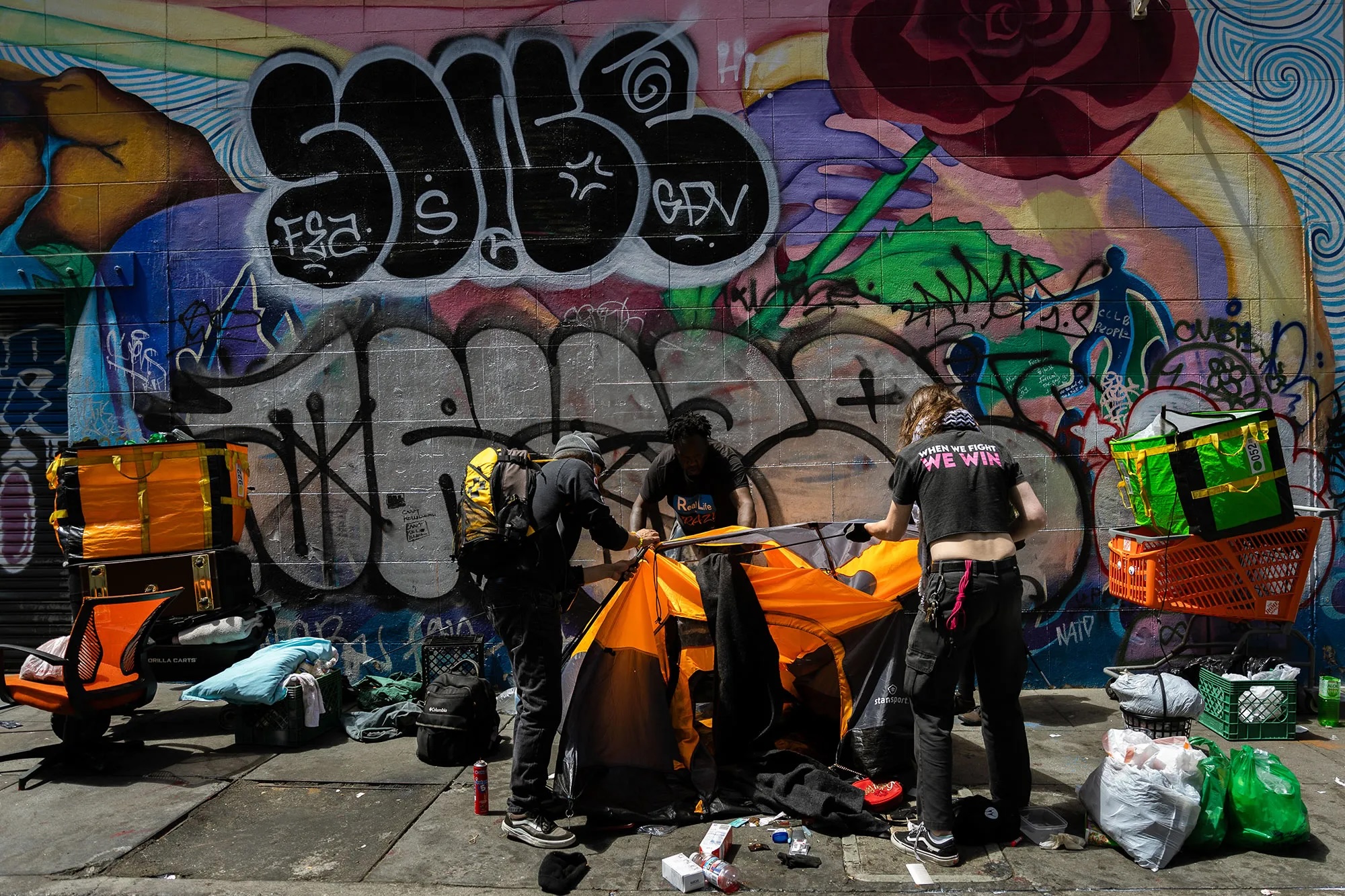
"caption": "Michael Johnson takes down his tent in downtown San Francisco with the help of activists on Aug. 9, 2024. Gov. Gavin Newsom, Santa Clara County and San Francisco are suing the Trump administration over a huge shift in homelessness policy.\r\n\r\n",
"credit": "Photo by Manuel Orbegozo for CalMatters",
"altTag": null,
"description": null,
"imgSizes": {
"thumbnail": {
"file": "https://cdn.kqed.org/wp-content/uploads/sites/10/2025/12/080924_SF-Sweep_MO_CM_15-160x107.jpeg",
"width": 160,
"height": 107,
"mimeType": "image/jpeg"
},
"1536x1536": {
"file": "https://cdn.kqed.org/wp-content/uploads/sites/10/2025/12/080924_SF-Sweep_MO_CM_15-1536x1024.jpeg",
"width": 1536,
"height": 1024,
"mimeType": "image/jpeg"
},
"post-thumbnail": {
"file": "https://cdn.kqed.org/wp-content/uploads/sites/10/2025/12/080924_SF-Sweep_MO_CM_15-672x372.jpeg",
"width": 672,
"height": 372,
"mimeType": "image/jpeg"
},
"twentyfourteen-full-width": {
"file": "https://cdn.kqed.org/wp-content/uploads/sites/10/2025/12/080924_SF-Sweep_MO_CM_15-1038x576.jpeg",
"width": 1038,
"height": 576,
"mimeType": "image/jpeg"
},
"npr-cds-wide": {
"file": "https://cdn.kqed.org/wp-content/uploads/sites/10/2025/12/080924_SF-Sweep_MO_CM_15-1200x675.jpeg",
"width": 1200,
"height": 675,
"mimeType": "image/jpeg"
},
"kqedFullSize": {
"file": "https://cdn.kqed.org/wp-content/uploads/sites/10/2025/12/080924_SF-Sweep_MO_CM_15.jpeg",
"width": 2000,
"height": 1333
}
},
"isLoading": false,
"fetchFailed": false
},
"news_12034409": {
"type": "attachments",
"id": "news_12034409",
"meta": {
"index": "attachments_1716263798",
"site": "news",
"id": "12034409",
"found": true
},
"title": "Houses line a street in San Francisco’s Sunset District on March 25, 2025.",
"publishDate": 1743702595,
"status": "inherit",
"parent": 12033966,
"modified": 1743705463,
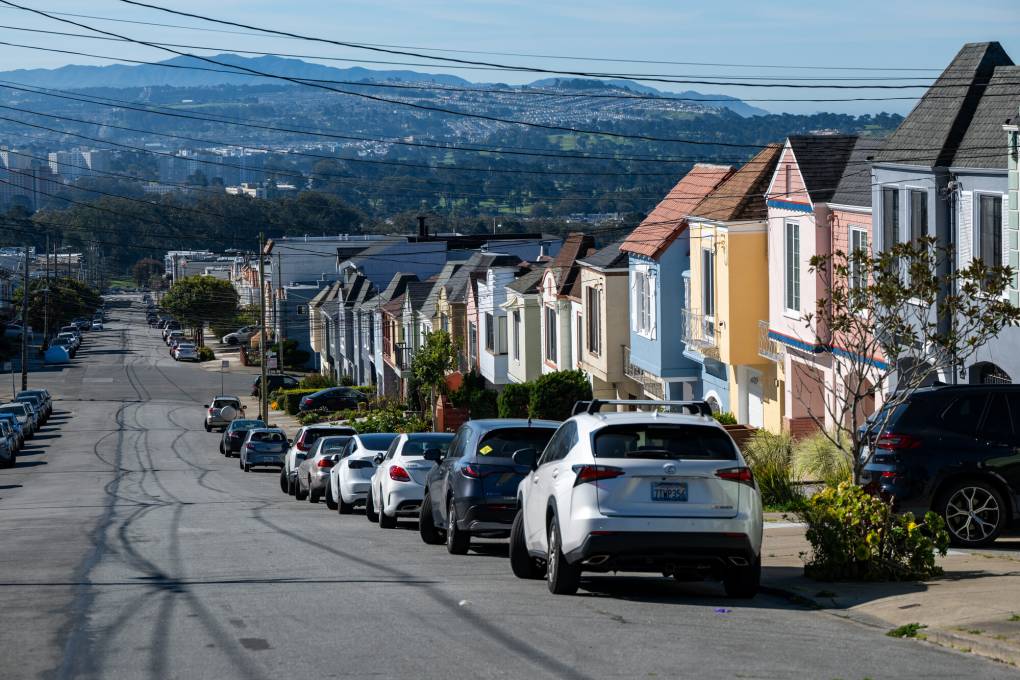
"caption": "Houses line a street in San Francisco’s Sunset District on March 25, 2025.",
"credit": "Beth LaBerge/KQED",
"altTag": null,
"description": null,
"imgSizes": {
"medium": {
"file": "https://cdn.kqed.org/wp-content/uploads/sites/10/2025/04/250325-ApartmentsonWestside-06-BL_qed-800x533.jpg",
"width": 800,
"height": 533,
"mimeType": "image/jpeg"
},
"large": {
"file": "https://cdn.kqed.org/wp-content/uploads/sites/10/2025/04/250325-ApartmentsonWestside-06-BL_qed-1020x680.jpg",
"width": 1020,
"height": 680,
"mimeType": "image/jpeg"
},
"thumbnail": {
"file": "https://cdn.kqed.org/wp-content/uploads/sites/10/2025/04/250325-ApartmentsonWestside-06-BL_qed-160x107.jpg",
"width": 160,
"height": 107,
"mimeType": "image/jpeg"
},
"1536x1536": {
"file": "https://cdn.kqed.org/wp-content/uploads/sites/10/2025/04/250325-ApartmentsonWestside-06-BL_qed-1536x1024.jpg",
"width": 1536,
"height": 1024,
"mimeType": "image/jpeg"
},
"post-thumbnail": {
"file": "https://cdn.kqed.org/wp-content/uploads/sites/10/2025/04/250325-ApartmentsonWestside-06-BL_qed-672x372.jpg",
"width": 672,
"height": 372,
"mimeType": "image/jpeg"
},
"twentyfourteen-full-width": {
"file": "https://cdn.kqed.org/wp-content/uploads/sites/10/2025/04/250325-ApartmentsonWestside-06-BL_qed-1038x576.jpg",
"width": 1038,
"height": 576,
"mimeType": "image/jpeg"
},
"full-width": {
"file": "https://cdn.kqed.org/wp-content/uploads/sites/10/2025/04/250325-ApartmentsonWestside-06-BL_qed-1920x1280.jpg",
"width": 1920,
"height": 1280,
"mimeType": "image/jpeg"
},
"kqedFullSize": {
"file": "https://cdn.kqed.org/wp-content/uploads/sites/10/2025/04/250325-ApartmentsonWestside-06-BL_qed.jpg",
"width": 1999,
"height": 1333
}
},
"isLoading": false,
"fetchFailed": false
},
"news_12065635": {
"type": "attachments",
"id": "news_12065635",
"meta": {
"index": "attachments_1716263798",
"site": "news",
"id": "12065635",
"found": true
},
"title": "251201-SF Rezoning Vibe Check-MD-01",
"publishDate": 1764623126,
"status": "inherit",
"parent": 0,
"modified": 1764625992,
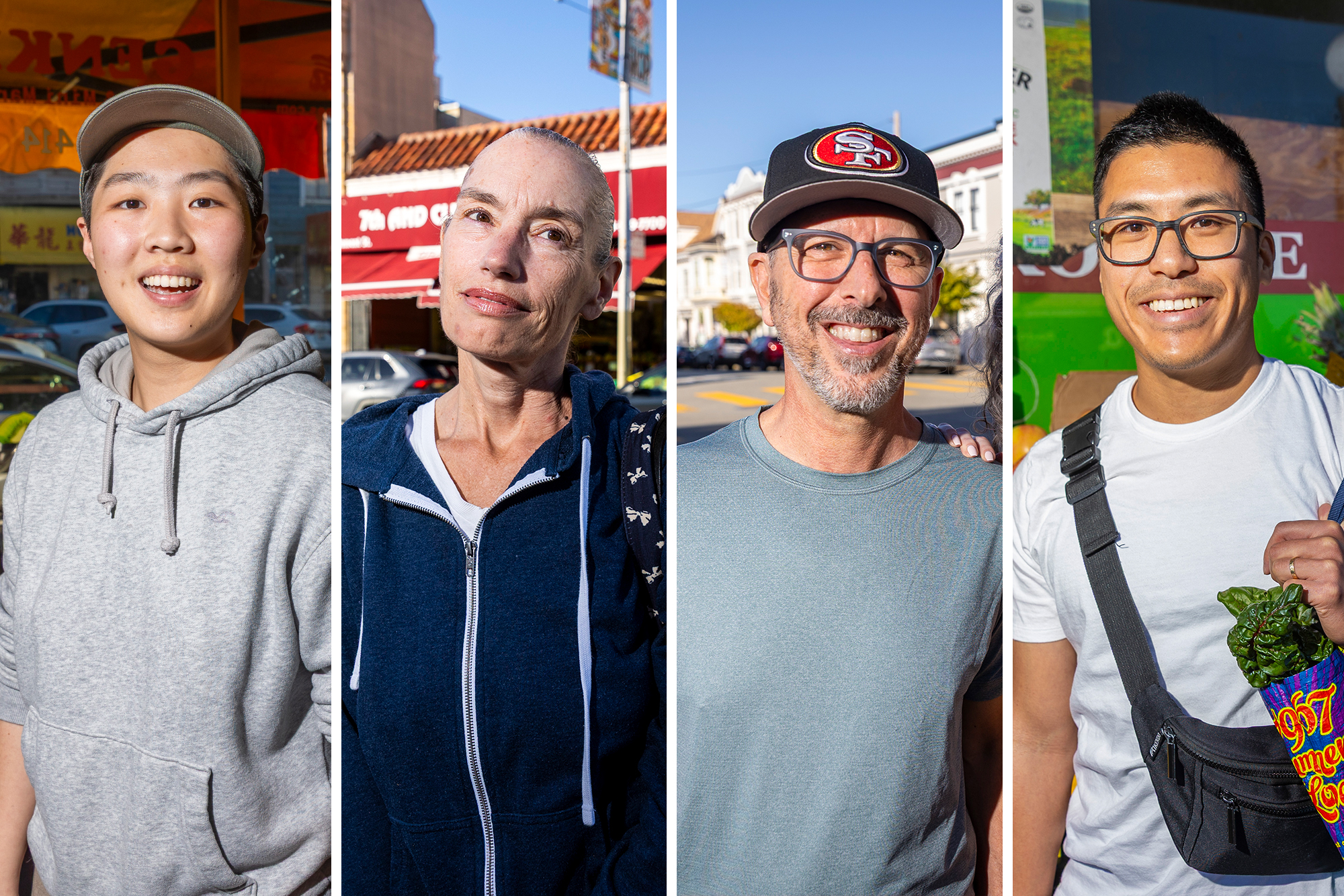
"caption": "(From left) Triston Lei, Joan Vallarino, Todd Wanerman, Allen Chiu and many more were interviewed as part of KQED's reporting on Mayor Daniel Lurie's Family Zoning Plan.",
"credit": "Tâm Vũ/KQED",
"altTag": null,
"description": null,
"imgSizes": {
"thumbnail": {
"file": "https://cdn.kqed.org/wp-content/uploads/sites/10/2025/12/251201-SF-Rezoning-Vibe-Check-MD-01-160x107.jpg",
"width": 160,
"height": 107,
"mimeType": "image/jpeg"
},
"1536x1536": {
"file": "https://cdn.kqed.org/wp-content/uploads/sites/10/2025/12/251201-SF-Rezoning-Vibe-Check-MD-01-1536x1025.jpg",
"width": 1536,
"height": 1025,
"mimeType": "image/jpeg"
},
"post-thumbnail": {
"file": "https://cdn.kqed.org/wp-content/uploads/sites/10/2025/12/251201-SF-Rezoning-Vibe-Check-MD-01-672x372.jpg",
"width": 672,
"height": 372,
"mimeType": "image/jpeg"
},
"twentyfourteen-full-width": {
"file": "https://cdn.kqed.org/wp-content/uploads/sites/10/2025/12/251201-SF-Rezoning-Vibe-Check-MD-01-1038x576.jpg",
"width": 1038,
"height": 576,
"mimeType": "image/jpeg"
},
"npr-cds-wide": {
"file": "https://cdn.kqed.org/wp-content/uploads/sites/10/2025/12/251201-SF-Rezoning-Vibe-Check-MD-01-1200x675.jpg",
"width": 1200,
"height": 675,
"mimeType": "image/jpeg"
},
"kqedFullSize": {
"file": "https://cdn.kqed.org/wp-content/uploads/sites/10/2025/12/251201-SF-Rezoning-Vibe-Check-MD-01.jpg",
"width": 2000,
"height": 1334
}
},
"isLoading": false,
"fetchFailed": false
},
"news_12042431": {
"type": "attachments",
"id": "news_12042431",
"meta": {
"index": "attachments_1716263798",
"site": "news",
"id": "12042431",
"found": true
},
"title": "Housing in San Francisco’s Sunset District on May 19, 2025.",
"publishDate": 1748902894,
"status": "inherit",
"parent": 12042376,
"modified": 1761779984,
"caption": "Housing in San Francisco’s Sunset District on May 19, 2025.",
"credit": "Beth LaBerge/KQED",
"altTag": null,
"description": null,
"imgSizes": {
"medium": {
"file": "https://cdn.kqed.org/wp-content/uploads/sites/10/2025/06/250519-AffordableHousingFile-10-BL_qed-800x533.jpg",
"width": 800,
"height": 533,
"mimeType": "image/jpeg"
},
"large": {
"file": "https://cdn.kqed.org/wp-content/uploads/sites/10/2025/06/250519-AffordableHousingFile-10-BL_qed-1020x680.jpg",
"width": 1020,
"height": 680,
"mimeType": "image/jpeg"
},
"thumbnail": {
"file": "https://cdn.kqed.org/wp-content/uploads/sites/10/2025/06/250519-AffordableHousingFile-10-BL_qed-160x107.jpg",
"width": 160,
"height": 107,
"mimeType": "image/jpeg"
},
"1536x1536": {
"file": "https://cdn.kqed.org/wp-content/uploads/sites/10/2025/06/250519-AffordableHousingFile-10-BL_qed-1536x1024.jpg",
"width": 1536,
"height": 1024,
"mimeType": "image/jpeg"
},
"post-thumbnail": {
"file": "https://cdn.kqed.org/wp-content/uploads/sites/10/2025/06/250519-AffordableHousingFile-10-BL_qed-672x372.jpg",
"width": 672,
"height": 372,
"mimeType": "image/jpeg"
},
"twentyfourteen-full-width": {
"file": "https://cdn.kqed.org/wp-content/uploads/sites/10/2025/06/250519-AffordableHousingFile-10-BL_qed-1038x576.jpg",
"width": 1038,
"height": 576,
"mimeType": "image/jpeg"
},
"full-width": {
"file": "https://cdn.kqed.org/wp-content/uploads/sites/10/2025/06/250519-AffordableHousingFile-10-BL_qed-1920x1280.jpg",
"width": 1920,
"height": 1280,
"mimeType": "image/jpeg"
},
"kqedFullSize": {
"file": "https://cdn.kqed.org/wp-content/uploads/sites/10/2025/06/250519-AffordableHousingFile-10-BL_qed.jpg",
"width": 2000,
"height": 1333
}
},
"isLoading": false,
"fetchFailed": false
},
"news_12065387": {
"type": "attachments",
"id": "news_12065387",
"meta": {
"index": "attachments_1716263798",
"site": "news",
"id": "12065387",
"found": true
},
"title": "251124-SJHUDCUTS-JG-05-KQED",
"publishDate": 1764111364,
"status": "inherit",
"parent": 0,
"modified": 1764111398,
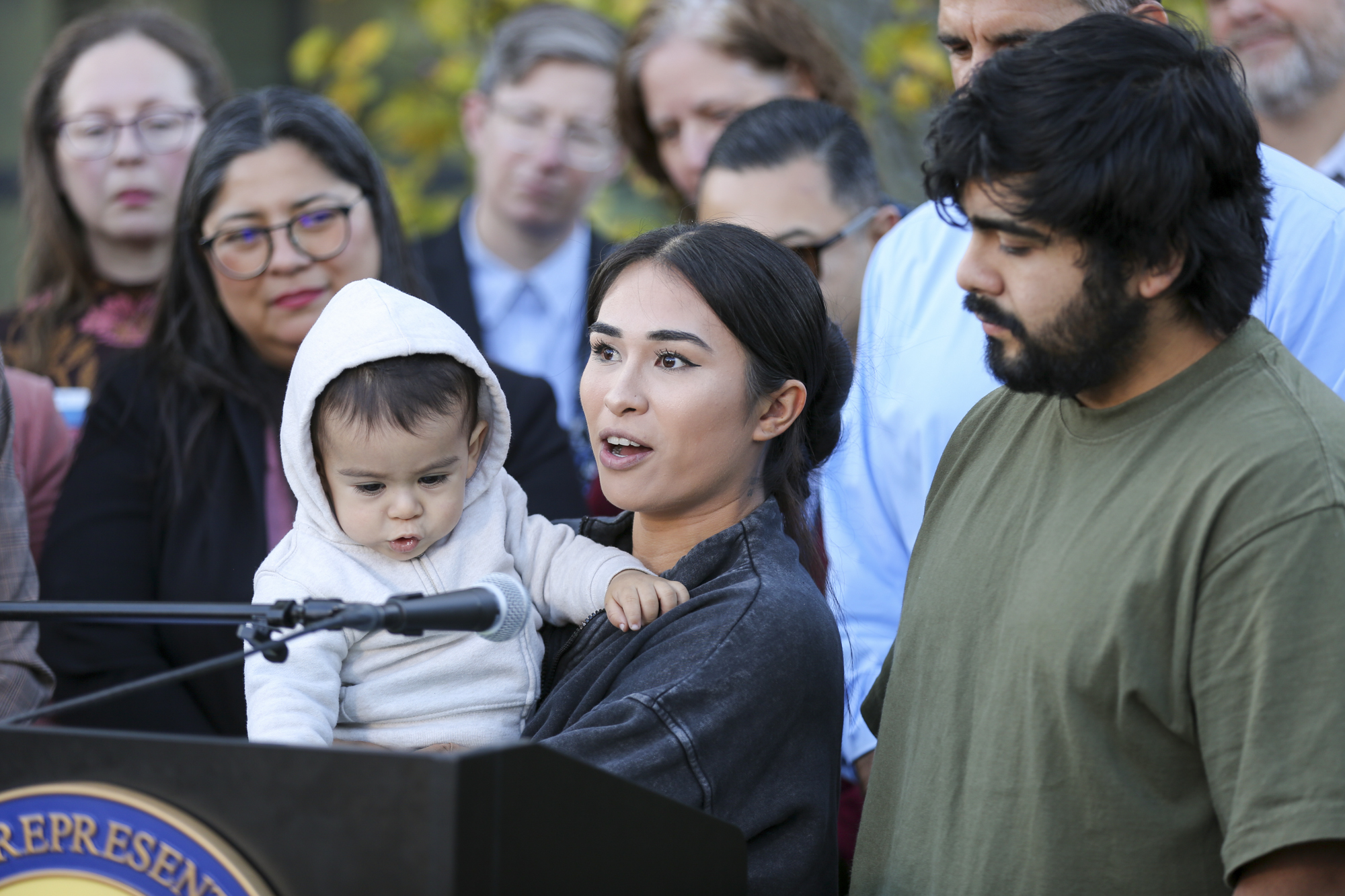
"caption": "Kaytana Alvarido, center, with her son Lucius and her husband Alberto Barragan, speaks during a press conference in San José about changes to a federal housing program’s funding by the Trump administration on Nov. 24, 2025, shortly before moving into a new, affordable apartment complex.",
"credit": "Joseph Geha/KQED",
"altTag": null,
"description": null,
"imgSizes": {
"thumbnail": {
"file": "https://cdn.kqed.org/wp-content/uploads/sites/10/2025/11/251124-SJHUDCUTS-JG-05-KQED-160x107.jpg",
"width": 160,
"height": 107,
"mimeType": "image/jpeg"
},
"1536x1536": {
"file": "https://cdn.kqed.org/wp-content/uploads/sites/10/2025/11/251124-SJHUDCUTS-JG-05-KQED-1536x1024.jpg",
"width": 1536,
"height": 1024,
"mimeType": "image/jpeg"
},
"post-thumbnail": {
"file": "https://cdn.kqed.org/wp-content/uploads/sites/10/2025/11/251124-SJHUDCUTS-JG-05-KQED-672x372.jpg",
"width": 672,
"height": 372,
"mimeType": "image/jpeg"
},
"twentyfourteen-full-width": {
"file": "https://cdn.kqed.org/wp-content/uploads/sites/10/2025/11/251124-SJHUDCUTS-JG-05-KQED-1038x576.jpg",
"width": 1038,
"height": 576,
"mimeType": "image/jpeg"
},
"npr-cds-wide": {
"file": "https://cdn.kqed.org/wp-content/uploads/sites/10/2025/11/251124-SJHUDCUTS-JG-05-KQED-1200x675.jpg",
"width": 1200,
"height": 675,
"mimeType": "image/jpeg"
},
"kqedFullSize": {
"file": "https://cdn.kqed.org/wp-content/uploads/sites/10/2025/11/251124-SJHUDCUTS-JG-05-KQED.jpg",
"width": 2000,
"height": 1333
}
},
"isLoading": false,
"fetchFailed": false
},
"news_12064775": {
"type": "attachments",
"id": "news_12064775",
"meta": {
"index": "attachments_1716263798",
"site": "news",
"id": "12064775",
"found": true
},
"title": "20251113_RainFolo_GH-7_qed",
"publishDate": 1763589581,
"status": "inherit",
"parent": 12064764,
"modified": 1763589600,
"caption": "The dome of San Francisco City Hall is reflected in a puddle during afternoon rain on Nov. 13, 2025.",
"credit": "Gustavo Hernandez/KQED",
"altTag": null,
"description": null,
"imgSizes": {
"thumbnail": {
"file": "https://cdn.kqed.org/wp-content/uploads/sites/10/2025/11/20251113_RainFolo_GH-7_qed-160x107.jpg",
"width": 160,
"height": 107,
"mimeType": "image/jpeg"
},
"1536x1536": {
"file": "https://cdn.kqed.org/wp-content/uploads/sites/10/2025/11/20251113_RainFolo_GH-7_qed-1536x1024.jpg",
"width": 1536,
"height": 1024,
"mimeType": "image/jpeg"
},
"post-thumbnail": {
"file": "https://cdn.kqed.org/wp-content/uploads/sites/10/2025/11/20251113_RainFolo_GH-7_qed-672x372.jpg",
"width": 672,
"height": 372,
"mimeType": "image/jpeg"
},
"twentyfourteen-full-width": {
"file": "https://cdn.kqed.org/wp-content/uploads/sites/10/2025/11/20251113_RainFolo_GH-7_qed-1038x576.jpg",
"width": 1038,
"height": 576,
"mimeType": "image/jpeg"
},
"npr-cds-wide": {
"file": "https://cdn.kqed.org/wp-content/uploads/sites/10/2025/11/20251113_RainFolo_GH-7_qed-1200x675.jpg",
"width": 1200,
"height": 675,
"mimeType": "image/jpeg"
},
"kqedFullSize": {
"file": "https://cdn.kqed.org/wp-content/uploads/sites/10/2025/11/20251113_RainFolo_GH-7_qed.jpg",
"width": 2000,
"height": 1333
}
},
"isLoading": false,
"fetchFailed": false
},
"news_12064410": {
"type": "attachments",
"id": "news_12064410",
"meta": {
"index": "attachments_1716263798",
"site": "news",
"id": "12064410",
"found": true
},
"title": "240522-ERPressure-09-BL_qed",
"publishDate": 1763413983,
"status": "inherit",
"parent": 12064324,
"modified": 1763414011,
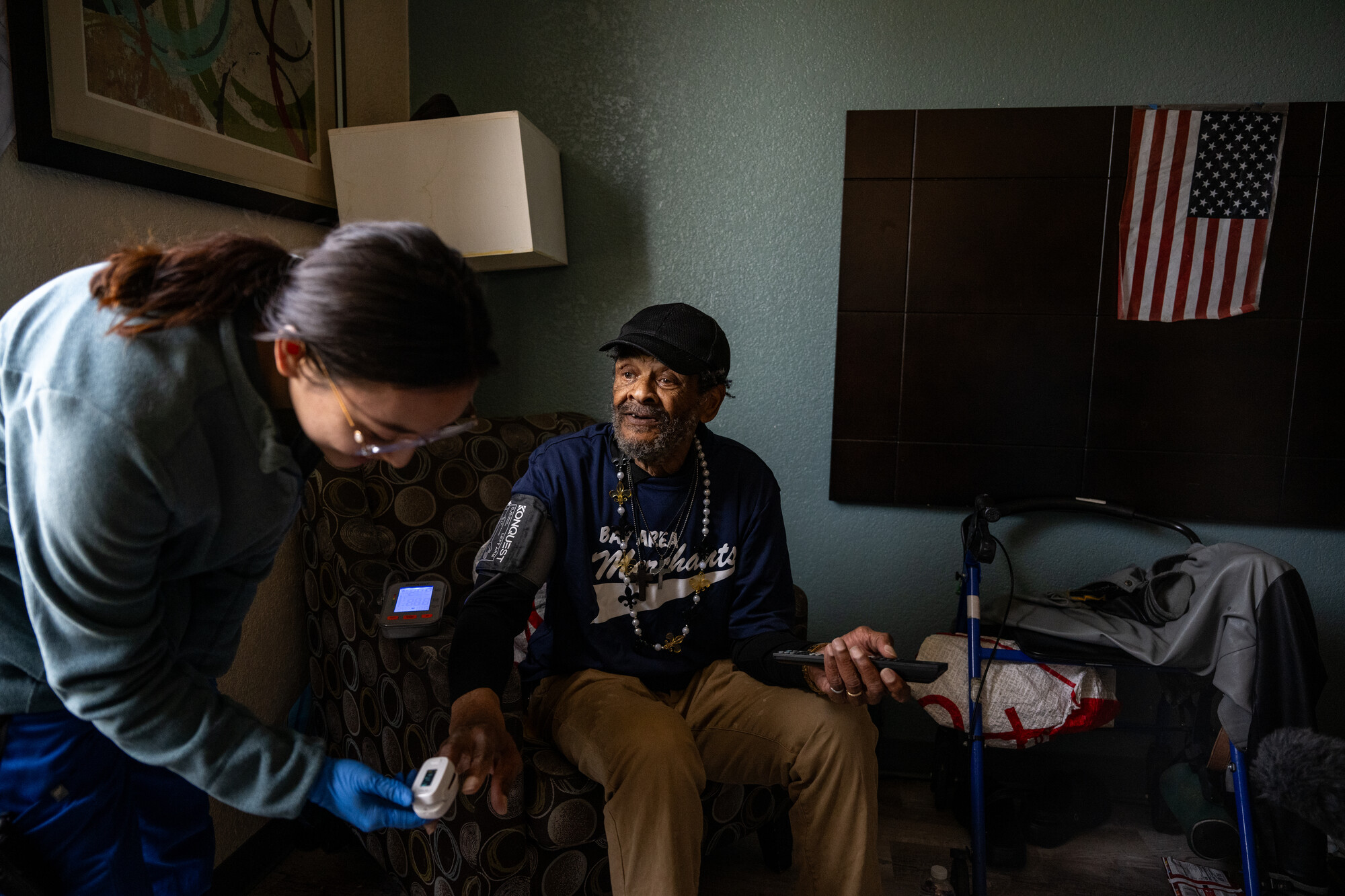
"caption": "Nurse Julianne Vidal takes vitals for Brandon Radford, 80, in his room at Oak Days, a permanent supportive housing program in a former hotel in Oakland, on May 22, 2024. Advocates for people experiencing homelessness fear this kind of housing could lose funding under federal guidelines released this month.",
"credit": "Beth LaBerge/KQED",
"altTag": null,
"description": null,
"imgSizes": {
"thumbnail": {
"file": "https://cdn.kqed.org/wp-content/uploads/sites/10/2025/11/240522-ERPressure-09-BL_qed-160x107.jpg",
"width": 160,
"height": 107,
"mimeType": "image/jpeg"
},
"1536x1536": {
"file": "https://cdn.kqed.org/wp-content/uploads/sites/10/2025/11/240522-ERPressure-09-BL_qed-1536x1024.jpg",
"width": 1536,
"height": 1024,
"mimeType": "image/jpeg"
},
"post-thumbnail": {
"file": "https://cdn.kqed.org/wp-content/uploads/sites/10/2025/11/240522-ERPressure-09-BL_qed-672x372.jpg",
"width": 672,
"height": 372,
"mimeType": "image/jpeg"
},
"twentyfourteen-full-width": {
"file": "https://cdn.kqed.org/wp-content/uploads/sites/10/2025/11/240522-ERPressure-09-BL_qed-1038x576.jpg",
"width": 1038,
"height": 576,
"mimeType": "image/jpeg"
},
"npr-cds-wide": {
"file": "https://cdn.kqed.org/wp-content/uploads/sites/10/2025/11/240522-ERPressure-09-BL_qed-1200x675.jpg",
"width": 1200,
"height": 675,
"mimeType": "image/jpeg"
},
"kqedFullSize": {
"file": "https://cdn.kqed.org/wp-content/uploads/sites/10/2025/11/240522-ERPressure-09-BL_qed.jpg",
"width": 2000,
"height": 1333
}
},
"isLoading": false,
"fetchFailed": false
},
"news_12026470": {
"type": "attachments",
"id": "news_12026470",
"meta": {
"index": "attachments_1716263798",
"site": "news",
"id": "12026470",
"found": true
},
"title": "240620-AffordableHousingPresser-16-BL_qed",
"publishDate": 1739218616,
"status": "inherit",
"parent": 12026437,
"modified": 1739218629,
"caption": "San José Mayor Matt Mahan speaks during a press conference in support of a regional affordable housing measure at Five88, a mixed-use residential and retail property, in the Mission Bay neighborhood in San Francisco on June 20, 2024.",
"credit": "Beth LaBerge/KQED",
"altTag": null,
"description": null,
"imgSizes": {
"medium": {
"file": "https://cdn.kqed.org/wp-content/uploads/sites/10/2025/02/240620-AffordableHousingPresser-16-BL_qed-800x533.jpg",
"width": 800,
"height": 533,
"mimeType": "image/jpeg"
},
"large": {
"file": "https://cdn.kqed.org/wp-content/uploads/sites/10/2025/02/240620-AffordableHousingPresser-16-BL_qed-1020x680.jpg",
"width": 1020,
"height": 680,
"mimeType": "image/jpeg"
},
"thumbnail": {
"file": "https://cdn.kqed.org/wp-content/uploads/sites/10/2025/02/240620-AffordableHousingPresser-16-BL_qed-160x107.jpg",
"width": 160,
"height": 107,
"mimeType": "image/jpeg"
},
"1536x1536": {
"file": "https://cdn.kqed.org/wp-content/uploads/sites/10/2025/02/240620-AffordableHousingPresser-16-BL_qed-1536x1024.jpg",
"width": 1536,
"height": 1024,
"mimeType": "image/jpeg"
},
"post-thumbnail": {
"file": "https://cdn.kqed.org/wp-content/uploads/sites/10/2025/02/240620-AffordableHousingPresser-16-BL_qed-672x372.jpg",
"width": 672,
"height": 372,
"mimeType": "image/jpeg"
},
"twentyfourteen-full-width": {
"file": "https://cdn.kqed.org/wp-content/uploads/sites/10/2025/02/240620-AffordableHousingPresser-16-BL_qed-1038x576.jpg",
"width": 1038,
"height": 576,
"mimeType": "image/jpeg"
},
"full-width": {
"file": "https://cdn.kqed.org/wp-content/uploads/sites/10/2025/02/240620-AffordableHousingPresser-16-BL_qed-1920x1280.jpg",
"width": 1920,
"height": 1280,
"mimeType": "image/jpeg"
},
"kqedFullSize": {
"file": "https://cdn.kqed.org/wp-content/uploads/sites/10/2025/02/240620-AffordableHousingPresser-16-BL_qed.jpg",
"width": 2000,
"height": 1333
}
},
"isLoading": false,
"fetchFailed": false
},
"news_12063879": {
"type": "attachments",
"id": "news_12063879",
"meta": {
"index": "attachments_1716263798",
"site": "news",
"id": "12063879",
"found": true
},
"title": "251112-OAKLANDLANDLORD00011_TV-KQED",
"publishDate": 1762986413,
"status": "inherit",
"parent": 0,
"modified": 1762994914,
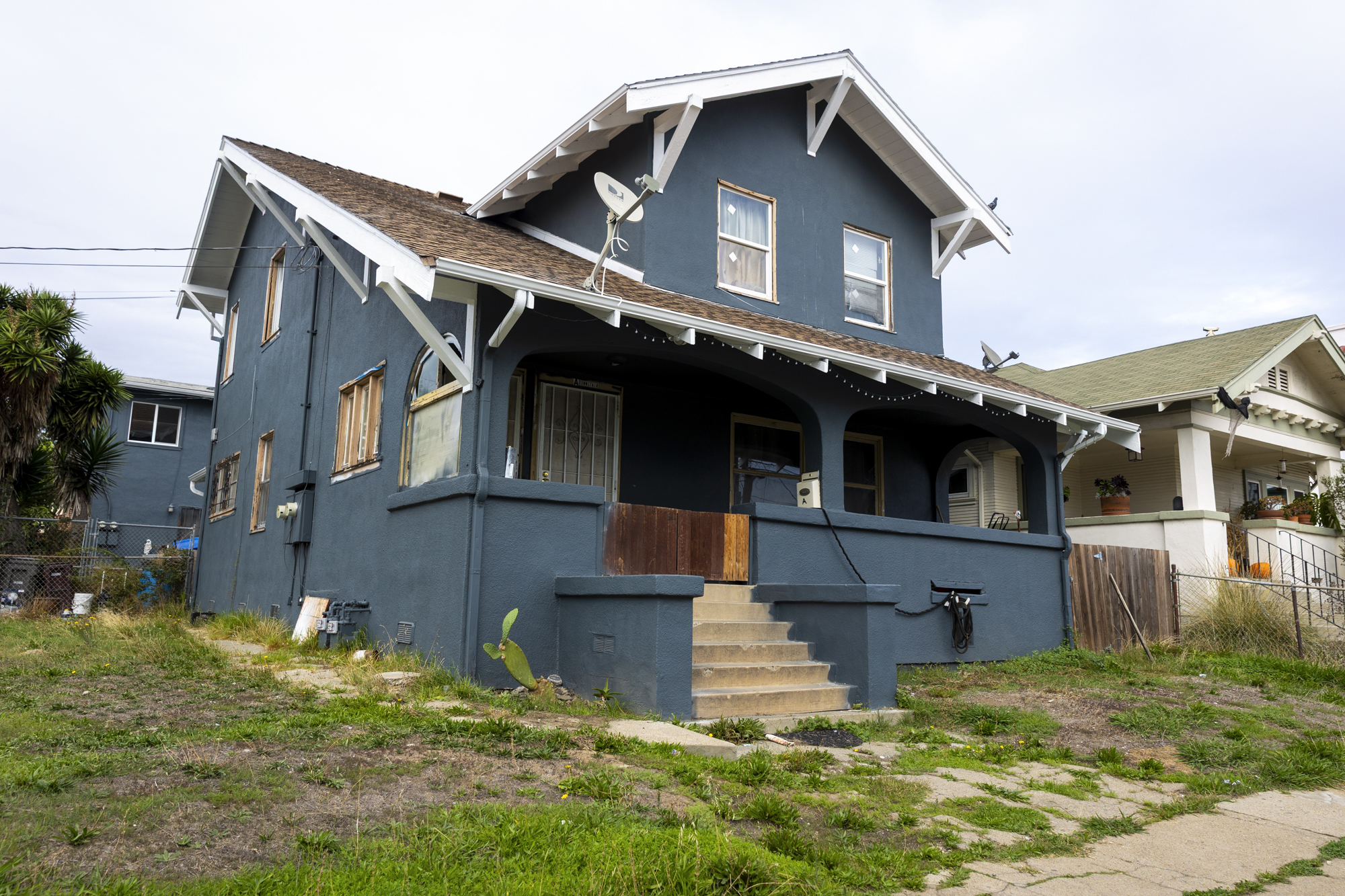
"caption": "A home in Oakland where tenants are allegedly being threatened with immigration enforcement by their landlords on Nov. 12, 2025.",
"credit": "Tâm Vũ/KQED",
"altTag": null,
"description": null,
"imgSizes": {
"thumbnail": {
"file": "https://cdn.kqed.org/wp-content/uploads/sites/10/2025/11/251112-OAKLANDLANDLORD00011_TV-KQED-160x107.jpg",
"width": 160,
"height": 107,
"mimeType": "image/jpeg"
},
"1536x1536": {
"file": "https://cdn.kqed.org/wp-content/uploads/sites/10/2025/11/251112-OAKLANDLANDLORD00011_TV-KQED-1536x1024.jpg",
"width": 1536,
"height": 1024,
"mimeType": "image/jpeg"
},
"post-thumbnail": {
"file": "https://cdn.kqed.org/wp-content/uploads/sites/10/2025/11/251112-OAKLANDLANDLORD00011_TV-KQED-672x372.jpg",
"width": 672,
"height": 372,
"mimeType": "image/jpeg"
},
"twentyfourteen-full-width": {
"file": "https://cdn.kqed.org/wp-content/uploads/sites/10/2025/11/251112-OAKLANDLANDLORD00011_TV-KQED-1038x576.jpg",
"width": 1038,
"height": 576,
"mimeType": "image/jpeg"
},
"npr-cds-wide": {
"file": "https://cdn.kqed.org/wp-content/uploads/sites/10/2025/11/251112-OAKLANDLANDLORD00011_TV-KQED-1200x675.jpg",
"width": 1200,
"height": 675,
"mimeType": "image/jpeg"
},
"kqedFullSize": {
"file": "https://cdn.kqed.org/wp-content/uploads/sites/10/2025/11/251112-OAKLANDLANDLORD00011_TV-KQED.jpg",
"width": 2000,
"height": 1333
}
},
"isLoading": false,
"fetchFailed": false
},
"news_12058500": {
"type": "attachments",
"id": "news_12058500",
"meta": {
"index": "attachments_1716263798",
"site": "news",
"id": "12058500",
"found": true
},
"title": "251001_BAYAREASHELTER_-17-KQED",
"publishDate": 1759447814,
"status": "inherit",
"parent": 0,
"modified": 1759447933,
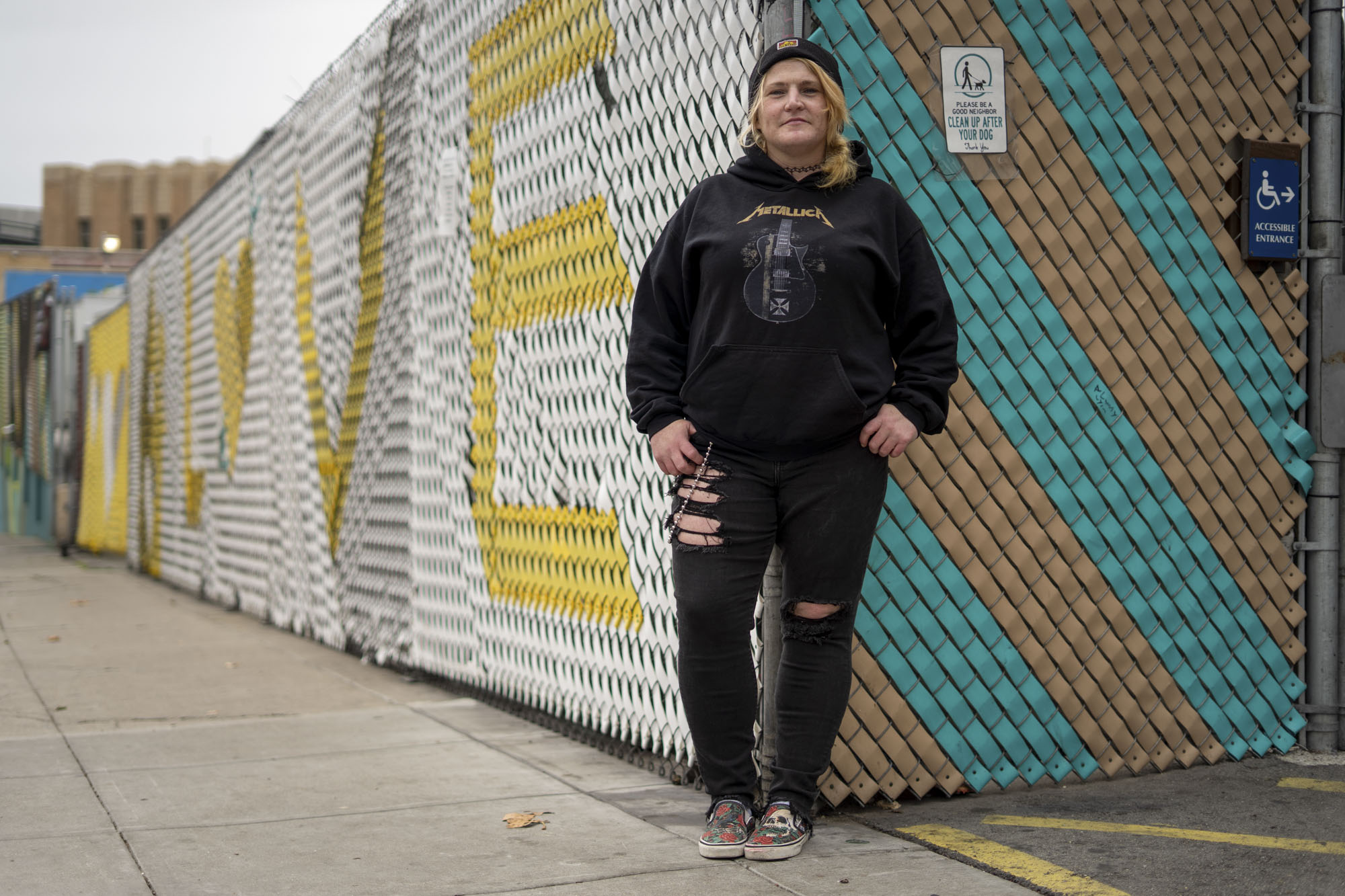
"caption": "Sarah Spillane, a resident of the DignityMoves tiny home cabins, outside the entrance in SoMa in San Francisco on Oct. 1, 2025.",
"credit": "Gustavo Hernandez/KQED",
"altTag": null,
"description": null,
"imgSizes": {
"thumbnail": {
"file": "https://cdn.kqed.org/wp-content/uploads/sites/10/2025/10/251001_BAYAREASHELTER_-17-KQED-160x107.jpg",
"width": 160,
"height": 107,
"mimeType": "image/jpeg"
},
"1536x1536": {
"file": "https://cdn.kqed.org/wp-content/uploads/sites/10/2025/10/251001_BAYAREASHELTER_-17-KQED-1536x1024.jpg",
"width": 1536,
"height": 1024,
"mimeType": "image/jpeg"
},
"post-thumbnail": {
"file": "https://cdn.kqed.org/wp-content/uploads/sites/10/2025/10/251001_BAYAREASHELTER_-17-KQED-672x372.jpg",
"width": 672,
"height": 372,
"mimeType": "image/jpeg"
},
"twentyfourteen-full-width": {
"file": "https://cdn.kqed.org/wp-content/uploads/sites/10/2025/10/251001_BAYAREASHELTER_-17-KQED-1038x576.jpg",
"width": 1038,
"height": 576,
"mimeType": "image/jpeg"
},
"kqedFullSize": {
"file": "https://cdn.kqed.org/wp-content/uploads/sites/10/2025/10/251001_BAYAREASHELTER_-17-KQED.jpg",
"width": 2000,
"height": 1333
}
},
"isLoading": false,
"fetchFailed": false
},
"news_12063437": {
"type": "attachments",
"id": "news_12063437",
"meta": {
"index": "attachments_1716263798",
"site": "news",
"id": "12063437",
"found": true
},
"title": "250724_Visit to Esmeralda,_ 0009_GH_qed",
"publishDate": 1762544620,
"status": "inherit",
"parent": 12059557,
"modified": 1762544628,
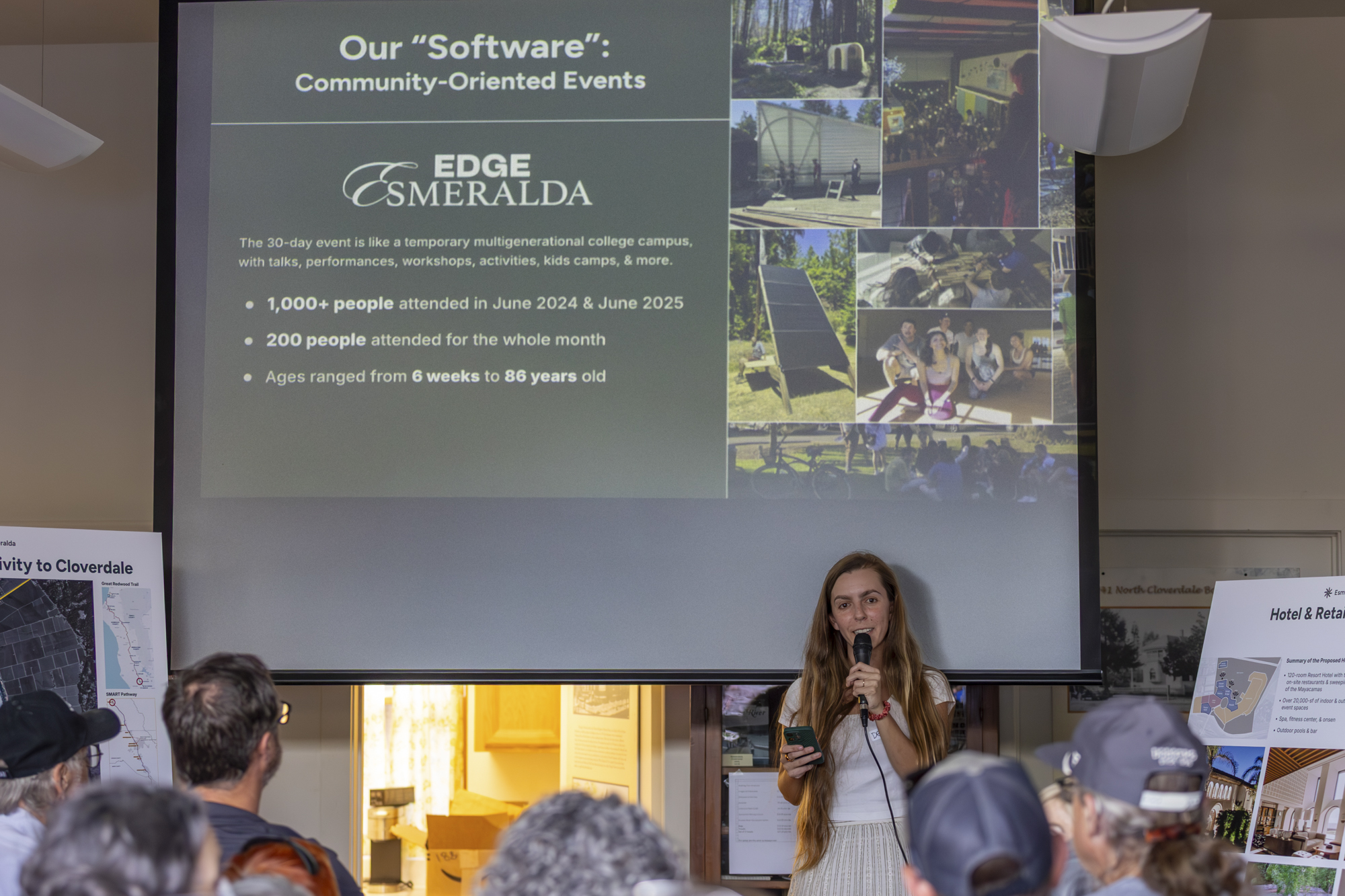
"caption": "A slide titled “Our ‘Software’: Community‑Oriented Events” displays attendance figures for Edge Esmeralda as Devon Zuegel speaks at the Cloverdale Museum of History on July 24, 2025.",
"credit": "Gustavo Hernandez/KQED",
"altTag": null,
"description": null,
"imgSizes": {
"thumbnail": {
"file": "https://cdn.kqed.org/wp-content/uploads/sites/10/2025/11/250724_Visit-to-Esmeralda_-0009_GH_qed-160x107.jpg",
"width": 160,
"height": 107,
"mimeType": "image/jpeg"
},
"1536x1536": {
"file": "https://cdn.kqed.org/wp-content/uploads/sites/10/2025/11/250724_Visit-to-Esmeralda_-0009_GH_qed-1536x1024.jpg",
"width": 1536,
"height": 1024,
"mimeType": "image/jpeg"
},
"post-thumbnail": {
"file": "https://cdn.kqed.org/wp-content/uploads/sites/10/2025/11/250724_Visit-to-Esmeralda_-0009_GH_qed-672x372.jpg",
"width": 672,
"height": 372,
"mimeType": "image/jpeg"
},
"twentyfourteen-full-width": {
"file": "https://cdn.kqed.org/wp-content/uploads/sites/10/2025/11/250724_Visit-to-Esmeralda_-0009_GH_qed-1038x576.jpg",
"width": 1038,
"height": 576,
"mimeType": "image/jpeg"
},
"npr-cds-wide": {
"file": "https://cdn.kqed.org/wp-content/uploads/sites/10/2025/11/250724_Visit-to-Esmeralda_-0009_GH_qed-1200x675.jpg",
"width": 1200,
"height": 675,
"mimeType": "image/jpeg"
},
"kqedFullSize": {
"file": "https://cdn.kqed.org/wp-content/uploads/sites/10/2025/11/250724_Visit-to-Esmeralda_-0009_GH_qed.jpg",
"width": 2000,
"height": 1333
}
},
"isLoading": false,
"fetchFailed": false
},
"news_12063494": {
"type": "attachments",
"id": "news_12063494",
"meta": {
"index": "attachments_1716263798",
"site": "news",
"id": "12063494",
"found": true
},
"title": "250724_VISIT TO ESMERALDA,_ 0008_GH-KQED",
"publishDate": 1762553268,
"status": "inherit",
"parent": 12059557,
"modified": 1762556804,
"caption": "Devon Zuegel, Esmeralda development leader, addresses residents at the Cloverdale Museum of History open house on July 24, 2025.",
"credit": "Gustavo Hernandez/KQED",
"altTag": null,
"description": null,
"imgSizes": {
"thumbnail": {
"file": "https://cdn.kqed.org/wp-content/uploads/sites/10/2025/11/250724_VISIT-TO-ESMERALDA_-0008_GH-KQED-160x107.jpg",
"width": 160,
"height": 107,
"mimeType": "image/jpeg"
},
"1536x1536": {
"file": "https://cdn.kqed.org/wp-content/uploads/sites/10/2025/11/250724_VISIT-TO-ESMERALDA_-0008_GH-KQED-1536x1024.jpg",
"width": 1536,
"height": 1024,
"mimeType": "image/jpeg"
},
"post-thumbnail": {
"file": "https://cdn.kqed.org/wp-content/uploads/sites/10/2025/11/250724_VISIT-TO-ESMERALDA_-0008_GH-KQED-672x372.jpg",
"width": 672,
"height": 372,
"mimeType": "image/jpeg"
},
"twentyfourteen-full-width": {
"file": "https://cdn.kqed.org/wp-content/uploads/sites/10/2025/11/250724_VISIT-TO-ESMERALDA_-0008_GH-KQED-1038x576.jpg",
"width": 1038,
"height": 576,
"mimeType": "image/jpeg"
},
"npr-cds-wide": {
"file": "https://cdn.kqed.org/wp-content/uploads/sites/10/2025/11/250724_VISIT-TO-ESMERALDA_-0008_GH-KQED-1200x675.jpg",
"width": 1200,
"height": 675,
"mimeType": "image/jpeg"
},
"kqedFullSize": {
"file": "https://cdn.kqed.org/wp-content/uploads/sites/10/2025/11/250724_VISIT-TO-ESMERALDA_-0008_GH-KQED.jpg",
"width": 2000,
"height": 1333
}
},
"isLoading": false,
"fetchFailed": false
}
},
"audioPlayerReducer": {
"postId": "stream_live",
"isPaused": true,
"isPlaying": false,
"pfsActive": false,
"pledgeModalIsOpen": true,
"playerDrawerIsOpen": false,
"liveAudioPlayStartedAt": 0,
"liveAudioPlayContext": ""
},
"authorsReducer": {
"byline_news_12065893": {
"type": "authors",
"id": "byline_news_12065893",
"meta": {
"override": true
},
"slug": "byline_news_12065893",
"name": "Marissa Kendall, CalMatters",
"isLoading": false
},
"gmarzorati": {
"type": "authors",
"id": "227",
"meta": {
"index": "authors_1716337520",
"id": "227",
"found": true
},
"name": "Guy Marzorati",
"firstName": "Guy",
"lastName": "Marzorati",
"slug": "gmarzorati",
"email": "gmarzorati@KQED.org",
"display_author_email": true,
"staff_mastheads": [
"news"
],
"title": "Correspondent",
"bio": "Guy Marzorati is a correspondent on KQED's California Politics and Government Desk, based in San Jose. A graduate of Santa Clara University, Guy joined KQED in 2013. He reports on state and local politics and produces KQED's digital voter guide.",
"avatar": "https://secure.gravatar.com/avatar/e7038b8dbfd55b104369b76b1cd0b9de?s=600&d=blank&r=g",
"twitter": "guymarzorati",
"facebook": null,
"instagram": null,
"linkedin": null,
"sites": [
{
"site": "",
"roles": [
"editor"
]
},
{
"site": "news",
"roles": [
"editor"
]
},
{
"site": "science",
"roles": [
"editor"
]
},
{
"site": "forum",
"roles": [
"editor"
]
},
{
"site": "elections",
"roles": [
"editor"
]
},
{
"site": "liveblog",
"roles": [
"editor"
]
}
],
"headData": {
"title": "Guy Marzorati | KQED",
"description": "Correspondent",
"ogImgSrc": "https://secure.gravatar.com/avatar/e7038b8dbfd55b104369b76b1cd0b9de?s=600&d=blank&r=g",
"twImgSrc": "https://secure.gravatar.com/avatar/e7038b8dbfd55b104369b76b1cd0b9de?s=600&d=blank&r=g"
},
"isLoading": false,
"link": "/author/gmarzorati"
},
"ecruzguevarra": {
"type": "authors",
"id": "8654",
"meta": {
"index": "authors_1716337520",
"id": "8654",
"found": true
},
"name": "Ericka Cruz Guevarra",
"firstName": "Ericka",
"lastName": "Cruz Guevarra",
"slug": "ecruzguevarra",
"email": "ecruzguevarra@kqed.org",
"display_author_email": true,
"staff_mastheads": [
"news"
],
"title": "Producer, The Bay Podcast",
"bio": "Ericka Cruz Guevarra is host of \u003ca href=\"https://www.kqed.org/podcasts/thebay\">\u003cem>The Bay\u003c/em>\u003c/a> podcast at KQED. Before host, she was the show’s producer. Her work in that capacity includes a three-part reported series on policing in Vallejo, which won a 2020 excellence in journalism award from the Society of Professional Journalists. Ericka has worked as a breaking news reporter at Oregon Public Broadcasting, helped produce the Code Switch podcast, and was KQED’s inaugural Raul Ramirez Diversity Fund intern. She’s also an alumna of NPR’s Next Generation Radio program. Send her an email if you have strong feelings about whether Fairfield and Suisun City are the Bay. Ericka is represented by SAG-AFTRA.",
"avatar": "https://secure.gravatar.com/avatar/accefc1de4bafc7e234b69bcb9b6f6536c130fd84709bc3069ef11a78787e1bb?s=600&d=blank&r=g",
"twitter": "NotoriousECG",
"bluesky": null,
"facebook": null,
"instagram": null,
"linkedin": null,
"sites": [
{
"site": "arts",
"roles": [
"subscriber"
]
},
{
"site": "news",
"roles": [
"editor",
"manage_categories"
]
},
{
"site": "futureofyou",
"roles": [
"subscriber"
]
},
{
"site": "stateofhealth",
"roles": [
"subscriber"
]
},
{
"site": "science",
"roles": [
"editor"
]
},
{
"site": "forum",
"roles": [
"subscriber"
]
}
],
"headData": {
"title": "Ericka Cruz Guevarra | KQED",
"description": "Producer, The Bay Podcast",
"ogImgSrc": "https://secure.gravatar.com/avatar/accefc1de4bafc7e234b69bcb9b6f6536c130fd84709bc3069ef11a78787e1bb?s=600&d=blank&r=g",
"twImgSrc": "https://secure.gravatar.com/avatar/accefc1de4bafc7e234b69bcb9b6f6536c130fd84709bc3069ef11a78787e1bb?s=600&d=blank&r=g"
},
"isLoading": false,
"link": "/author/ecruzguevarra"
},
"amontecillo": {
"type": "authors",
"id": "11649",
"meta": {
"index": "authors_1716337520",
"id": "11649",
"found": true
},
"name": "Alan Montecillo",
"firstName": "Alan",
"lastName": "Montecillo",
"slug": "amontecillo",
"email": "amontecillo@kqed.org",
"display_author_email": false,
"staff_mastheads": [
"news"
],
"title": "KQED Contributor",
"bio": "Alan Montecillo is the senior editor of \u003cem>\u003ca href=\"http://kqed.org/thebay\">The Bay\u003c/a>, \u003c/em> KQED's local news podcast. Before moving to the Bay Area, he worked as a senior talk show producer for WILL in Champaign-Urbana, Illinois and at Oregon Public Broadcasting in Portland, Oregon. He has won journalism awards from the Society of Professional Journalists Northern California, the Public Media Journalists Association, The Signal Awards, and has also received a regional Edward R. Murrow award. Alan is a Filipino American from Hong Kong and a graduate of Reed College.",
"avatar": "https://secure.gravatar.com/avatar/268f53a2066899ea9efdd8a5900218b17c822d9862cbc9326cccec53ef41d349?s=600&d=blank&r=g",
"twitter": "alanmontecillo",
"bluesky": null,
"facebook": null,
"instagram": null,
"linkedin": null,
"sites": [
{
"site": "",
"roles": [
"editor"
]
},
{
"site": "news",
"roles": [
"editor",
"manage_categories"
]
}
],
"headData": {
"title": "Alan Montecillo | KQED",
"description": "KQED Contributor",
"ogImgSrc": "https://secure.gravatar.com/avatar/268f53a2066899ea9efdd8a5900218b17c822d9862cbc9326cccec53ef41d349?s=600&d=blank&r=g",
"twImgSrc": "https://secure.gravatar.com/avatar/268f53a2066899ea9efdd8a5900218b17c822d9862cbc9326cccec53ef41d349?s=600&d=blank&r=g"
},
"isLoading": false,
"link": "/author/amontecillo"
},
"ebaldassari": {
"type": "authors",
"id": "11652",
"meta": {
"index": "authors_1716337520",
"id": "11652",
"found": true
},
"name": "Erin Baldassari",
"firstName": "Erin",
"lastName": "Baldassari",
"slug": "ebaldassari",
"email": "ebaldassari@KQED.org",
"display_author_email": true,
"staff_mastheads": [
"news"
],
"title": "Staff Writer",
"bio": "Erin Baldassari covers housing for KQED. She's a former print journalist and most recently worked as the transportation reporter for the \u003cem>Mercury News\u003c/em> and \u003cem>East Bay Times. \u003c/em>There, she focused on how the Bay Area’s housing shortage has changed the way people move around the region. She also served on the \u003cem>East Bay Times\u003c/em>’ 2017 Pulitzer Prize-winning team for coverage of the Ghost Ship Fire in Oakland. Prior to that, Erin worked as a breaking news and general assignment reporter for a variety of outlets in the Bay Area and the greater Boston area. A Tufts University alumna, Erin grew up in the foothills of the Sierra Nevada mountains and in Sonoma County. She is a life-long KQED listener.",
"avatar": "https://secure.gravatar.com/avatar/5e95cad64a8ca08288082212e199d2b0cbeb4fd8e8ef5339395f361032bbe005?s=600&d=blank&r=g",
"twitter": "e_baldi",
"bluesky": null,
"facebook": null,
"instagram": null,
"linkedin": null,
"sites": [
{
"site": "news",
"roles": [
"edit_others_posts",
"editor"
]
},
{
"site": "science",
"roles": [
"editor"
]
},
{
"site": "liveblog",
"roles": [
"editor"
]
}
],
"headData": {
"title": "Erin Baldassari | KQED",
"description": "Staff Writer",
"ogImgSrc": "https://secure.gravatar.com/avatar/5e95cad64a8ca08288082212e199d2b0cbeb4fd8e8ef5339395f361032bbe005?s=600&d=blank&r=g",
"twImgSrc": "https://secure.gravatar.com/avatar/5e95cad64a8ca08288082212e199d2b0cbeb4fd8e8ef5339395f361032bbe005?s=600&d=blank&r=g"
},
"isLoading": false,
"link": "/author/ebaldassari"
},
"abandlamudi": {
"type": "authors",
"id": "11672",
"meta": {
"index": "authors_1716337520",
"id": "11672",
"found": true
},
"name": "Adhiti Bandlamudi",
"firstName": "Adhiti",
"lastName": "Bandlamudi",
"slug": "abandlamudi",
"email": "abandlamudi@kqed.org",
"display_author_email": false,
"staff_mastheads": [
"news"
],
"title": "KQED Housing Reporter",
"bio": "Adhiti Bandlamudi reports for KQED's Housing desk. She focuses on how housing gets built across the Bay Area. Before joining KQED in 2020, she reported for WUNC in Durham, North Carolina, WABE in Atlanta, Georgia and Capital Public Radio in Sacramento. In 2017, she was awarded a Kroc Fellowship at NPR where she reported on everything from sprinkles to the Golden State Killer's arrest. When she's not reporting, she's baking new recipes in her kitchen or watching movies with friends and family. She's originally from Georgia and has strong opinions about Great British Bake Off.",
"avatar": "https://secure.gravatar.com/avatar/868129c8b257bb99a3500e2c86a65400?s=600&d=mm&r=g",
"twitter": "oddity_adhiti",
"facebook": null,
"instagram": null,
"linkedin": null,
"sites": [
{
"site": "arts",
"roles": [
"author"
]
},
{
"site": "news",
"roles": [
"editor"
]
},
{
"site": "liveblog",
"roles": [
"author"
]
}
],
"headData": {
"title": "Adhiti Bandlamudi | KQED",
"description": "KQED Housing Reporter",
"ogImgSrc": "https://secure.gravatar.com/avatar/868129c8b257bb99a3500e2c86a65400?s=600&d=mm&r=g",
"twImgSrc": "https://secure.gravatar.com/avatar/868129c8b257bb99a3500e2c86a65400?s=600&d=mm&r=g"
},
"isLoading": false,
"link": "/author/abandlamudi"
},
"ccabreralomeli": {
"type": "authors",
"id": "11708",
"meta": {
"index": "authors_1716337520",
"id": "11708",
"found": true
},
"name": "Carlos Cabrera-Lomelí",
"firstName": "Carlos",
"lastName": "Cabrera-Lomelí",
"slug": "ccabreralomeli",
"email": "ccabreralomeli@KQED.org",
"display_author_email": true,
"staff_mastheads": [
"news"
],
"title": "Community Reporter",
"bio": "Carlos Cabrera-Lomelí is a community reporter with KQED's digital engagement team. He also reports and co-produces for KQED's bilingual news hub KQED en Español. He grew up in San Francisco's Mission District and has previously worked with Univision, 48 Hills and REFORMA in Mexico City.",
"avatar": "https://secure.gravatar.com/avatar/c309be9665e484f887b818c89e273ecc673004f426f36b24d00a4d813a2e0518?s=600&d=blank&r=g",
"twitter": "@LomeliCabrera",
"bluesky": null,
"facebook": null,
"instagram": null,
"linkedin": null,
"sites": [
{
"site": "arts",
"roles": [
"editor"
]
},
{
"site": "news",
"roles": [
"editor"
]
},
{
"site": "about",
"roles": [
"editor"
]
},
{
"site": "science",
"roles": [
"editor"
]
},
{
"site": "perspectives",
"roles": [
"editor"
]
},
{
"site": "elections",
"roles": [
"editor"
]
},
{
"site": "liveblog",
"roles": [
"contributor"
]
}
],
"headData": {
"title": "Carlos Cabrera-Lomelí | KQED",
"description": "Community Reporter",
"ogImgSrc": "https://secure.gravatar.com/avatar/c309be9665e484f887b818c89e273ecc673004f426f36b24d00a4d813a2e0518?s=600&d=blank&r=g",
"twImgSrc": "https://secure.gravatar.com/avatar/c309be9665e484f887b818c89e273ecc673004f426f36b24d00a4d813a2e0518?s=600&d=blank&r=g"
},
"isLoading": false,
"link": "/author/ccabreralomeli"
},
"jessicakariisa": {
"type": "authors",
"id": "11831",
"meta": {
"index": "authors_1716337520",
"id": "11831",
"found": true
},
"name": "Jessica Kariisa",
"firstName": "Jessica",
"lastName": "Kariisa",
"slug": "jessicakariisa",
"email": "jkariisa@kqed.org",
"display_author_email": false,
"staff_mastheads": [],
"title": "Producer, The Bay",
"bio": "Jessica Kariisa is the producer of The Bay. She first joined KQED as an intern for The California Report Magazine, after which she became an on-call producer. She reported a Bay Curious episode on the use of rap lyrics in criminal trials which won a Society of Professional Journalists award in 2023 for Excellence in Features Journalism and the 2023 Signal Award for Best Conversation Starter. She’s worked on podcasts for Snap Judgment and American Public Media. Before embarking on her audio career, she was a music journalist.\r\n\r\nJessica Kariisa is represented by SAG-AFTRA.",
"avatar": "https://secure.gravatar.com/avatar/522e97b28ac0b3d411621c0fde8f3419c7b71ea2c5c262c57c4bb600963f328c?s=600&d=blank&r=g",
"twitter": null,
"bluesky": null,
"facebook": null,
"instagram": null,
"linkedin": null,
"sites": [
{
"site": "arts",
"roles": [
"author"
]
},
{
"site": "news",
"roles": [
"editor",
"manage_categories"
]
}
],
"headData": {
"title": "Jessica Kariisa | KQED",
"description": "Producer, The Bay",
"ogImgSrc": "https://secure.gravatar.com/avatar/522e97b28ac0b3d411621c0fde8f3419c7b71ea2c5c262c57c4bb600963f328c?s=600&d=blank&r=g",
"twImgSrc": "https://secure.gravatar.com/avatar/522e97b28ac0b3d411621c0fde8f3419c7b71ea2c5c262c57c4bb600963f328c?s=600&d=blank&r=g"
},
"isLoading": false,
"link": "/author/jessicakariisa"
},
"sjohnson": {
"type": "authors",
"id": "11840",
"meta": {
"index": "authors_1716337520",
"id": "11840",
"found": true
},
"name": "Sydney Johnson",
"firstName": "Sydney",
"lastName": "Johnson",
"slug": "sjohnson",
"email": "sjohnson@kqed.org",
"display_author_email": false,
"staff_mastheads": [
"news"
],
"title": "KQED Reporter",
"bio": "Sydney Johnson is a general assignment reporter at KQED. She previously reported on public health and city government at the San Francisco Examiner, and before that, she covered statewide education policy for EdSource. Her reporting has won multiple local, state and national awards. Sydney is a graduate of the University of California, Berkeley and lives in San Francisco.",
"avatar": "https://secure.gravatar.com/avatar/97855f2719b72ad6190b7c535fe642c8?s=600&d=blank&r=g",
"twitter": "sydneyfjohnson",
"facebook": null,
"instagram": null,
"linkedin": null,
"sites": [
{
"site": "news",
"roles": [
"editor"
]
}
],
"headData": {
"title": "Sydney Johnson | KQED",
"description": "KQED Reporter",
"ogImgSrc": "https://secure.gravatar.com/avatar/97855f2719b72ad6190b7c535fe642c8?s=600&d=blank&r=g",
"twImgSrc": "https://secure.gravatar.com/avatar/97855f2719b72ad6190b7c535fe642c8?s=600&d=blank&r=g"
},
"isLoading": false,
"link": "/author/sjohnson"
},
"jgeha": {
"type": "authors",
"id": "11906",
"meta": {
"index": "authors_1716337520",
"id": "11906",
"found": true
},
"name": "Joseph Geha",
"firstName": "Joseph",
"lastName": "Geha",
"slug": "jgeha",
"email": "jgeha@kqed.org",
"display_author_email": false,
"staff_mastheads": [
"news",
"science"
],
"title": "KQED Contributor",
"bio": null,
"avatar": "https://secure.gravatar.com/avatar/ea84d2b6dd93d6369d453edf19dd583f117cd1759d2d9c9c92f9de77017354fe?s=600&d=blank&r=g",
"twitter": null,
"bluesky": null,
"facebook": null,
"instagram": null,
"linkedin": null,
"sites": [
{
"site": "news",
"roles": [
"editor"
]
},
{
"site": "liveblog",
"roles": [
"author"
]
}
],
"headData": {
"title": "Joseph Geha | KQED",
"description": "KQED Contributor",
"ogImgSrc": "https://secure.gravatar.com/avatar/ea84d2b6dd93d6369d453edf19dd583f117cd1759d2d9c9c92f9de77017354fe?s=600&d=blank&r=g",
"twImgSrc": "https://secure.gravatar.com/avatar/ea84d2b6dd93d6369d453edf19dd583f117cd1759d2d9c9c92f9de77017354fe?s=600&d=blank&r=g"
},
"isLoading": false,
"link": "/author/jgeha"
},
"nsuliman": {
"type": "authors",
"id": "11985",
"meta": {
"index": "authors_1716337520",
"id": "11985",
"found": true
},
"name": "Nibras Suliman",
"firstName": "Nibras",
"lastName": "Suliman",
"slug": "nsuliman",
"email": "nsuliman@kqed.org",
"display_author_email": false,
"staff_mastheads": [],
"title": "KQED Contributor",
"bio": null,
"avatar": "https://secure.gravatar.com/avatar/581946774e0249b1fcdfb01d4f143d12?s=600&d=blank&r=g",
"twitter": null,
"facebook": null,
"instagram": null,
"linkedin": null,
"sites": [
{
"site": "news",
"roles": []
}
],
"headData": {
"title": "Nibras Suliman | KQED",
"description": "KQED Contributor",
"ogImgSrc": "https://secure.gravatar.com/avatar/581946774e0249b1fcdfb01d4f143d12?s=600&d=blank&r=g",
"twImgSrc": "https://secure.gravatar.com/avatar/581946774e0249b1fcdfb01d4f143d12?s=600&d=blank&r=g"
},
"isLoading": false,
"link": "/author/nsuliman"
},
"aaliahmad": {
"type": "authors",
"id": "11986",
"meta": {
"index": "authors_1716337520",
"id": "11986",
"found": true
},
"name": "Ayah Ali-Ahmad",
"firstName": "Ayah",
"lastName": "Ali-Ahmad",
"slug": "aaliahmad",
"email": "aaliahmad@KQED.org",
"display_author_email": false,
"staff_mastheads": [],
"title": "KQED Contributor",
"bio": null,
"avatar": "https://secure.gravatar.com/avatar/1cf54f187a5e1064b2cfef3f3d2f1e4f93e453395d56912aca6382a6071ec3ed?s=600&d=blank&r=g",
"twitter": "ayahaliahmad",
"bluesky": null,
"facebook": null,
"instagram": null,
"linkedin": null,
"sites": [
{
"site": "news",
"roles": [
"subscriber"
]
}
],
"headData": {
"title": "Ayah Ali-Ahmad | KQED",
"description": "KQED Contributor",
"ogImgSrc": "https://secure.gravatar.com/avatar/1cf54f187a5e1064b2cfef3f3d2f1e4f93e453395d56912aca6382a6071ec3ed?s=600&d=blank&r=g",
"twImgSrc": "https://secure.gravatar.com/avatar/1cf54f187a5e1064b2cfef3f3d2f1e4f93e453395d56912aca6382a6071ec3ed?s=600&d=blank&r=g"
},
"isLoading": false,
"link": "/author/aaliahmad"
}
},
"pagesReducer": {
"news_category_housing": {
"type": "terms",
"id": "news_6266",
"meta": {
"index": "terms_1716263798",
"site": "news",
"id": "6266",
"score": 11.03987
},
"featImg": null,
"name": "Housing",
"description": null,
"taxonomy": "category",
"headData": {
"twImgId": null,
"twTitle": null,
"ogTitle": null,
"ogImgId": null,
"twDescription": null,
"description": null,
"title": "Housing Archives | KQED News",
"ogDescription": null
},
"ttid": 6290,
"slug": "housing",
"isLoading": false,
"title": "Housing",
"pageMeta": {
"site": "news",
"WpPageTemplate": "page-topic-editorial",
"currentPage": 10
},
"blocks": [
{
"blockName": "kqed/post-list",
"attrs": {
"layout": "cardArticle2",
"query": "posts/news?category=housing",
"seeMore": false,
"paginated": true,
"page": 10
}
},
{
"blockName": "kqed/ad"
}
]
}
},
"pfsSessionReducer": {},
"postsReducer": {
"stream_live": {
"type": "live",
"id": "stream_live",
"audioUrl": "https://streams.kqed.org/kqedradio",
"title": "Live Stream",
"excerpt": "Live Stream information currently unavailable.",
"link": "/radio",
"featImg": "",
"label": {
"name": "KQED Live",
"link": "/"
}
},
"stream_kqedNewscast": {
"type": "posts",
"id": "stream_kqedNewscast",
"audioUrl": "https://www.kqed.org/.stream/anon/radio/RDnews/newscast.mp3?_=1",
"title": "KQED Newscast",
"featImg": "",
"label": {
"name": "88.5 FM",
"link": "/"
}
},
"news_12065893": {
"type": "posts",
"id": "news_12065893",
"meta": {
"index": "posts_1716263798",
"site": "news",
"id": "12065893",
"score": null,
"sort": [
1764787175000
]
},
"guestAuthors": [],
"slug": "lawsuits-challenge-trump-administrations-radical-homeless-policy-changes",
"title": "Lawsuits Challenge Trump Administration’s Radical Homeless Policy Changes",
"publishDate": 1764787175,
"format": "standard",
"headTitle": "Lawsuits Challenge Trump Administration’s Radical Homeless Policy Changes | KQED",
"labelTerm": {},
"content": "\u003cp>\u003cem>This story was originally published by \u003ca href=\"https://calmatters.org/\">CalMatters\u003c/a>. \u003ca href=\"https://calmatters.org/subscribe-to-calmatters/\">Sign up\u003c/a> for their newsletters.\u003c/em>\u003c/p>\n\u003cp>Two recently filed lawsuits accuse the U.S. Department of Housing and Urban Development of illegally going over Congress’ head to make massive changes to the way \u003ca href=\"https://www.kqed.org/housing\">federal homelessness funds\u003c/a> are distributed.\u003c/p>\n\u003cp>“HUD’s new grant rules would effectively defund permanent supportive housing and rapid rehousing programs across the nation, eliminating proven tools that help residents exit homelessness sustainably,” Santa Clara County Counsel Tony LoPresti said in a statement. “This is another instance of the Trump administration prioritizing its political agenda above the needs of our most vulnerable community members.”\u003c/p>\n\u003cp>[ad fullwidth]\u003c/p>\n\u003cp>Santa Clara County and San Francisco \u003ca href=\"https://democracyforward.org/wp-content/uploads/2025/12/NAEH-v-HUD-25-cv-636-Complaint-with-civil-cover-sheet-and-summons.pdf\">sued the Trump administration\u003c/a> this week, in conjunction with the National Alliance to End Homelessness and the National Low Income Housing Coalition. A \u003ca href=\"https://oag.ca.gov/system/files/attachments/press-docs/001_Cmplt.pdf\">separate lawsuit\u003c/a> was filed last week by Gov. Gavin Newsom’s administration and a handful of other states. It marked the 47th time California sued the Trump administration in 44 weeks.\u003c/p>\n\u003cp>Now, homeless service providers are waiting anxiously to see how the litigation plays out and wondering if the impending legal battle will further delay the money they desperately need.\u003c/p>\n\u003cfigure id=\"attachment_11954915\" class=\"wp-caption aligncenter\" style=\"max-width: 1200px\">\u003ca href=\"https://cdn.kqed.org/wp-content/uploads/sites/10/2023/07/CalMattersUnhousedLA02.jpg\">\u003cimg loading=\"lazy\" decoding=\"async\" class=\"size-full wp-image-11954915\" src=\"https://cdn.kqed.org/wp-content/uploads/sites/10/2023/07/CalMattersUnhousedLA02.jpg\" alt=\"A unhoused encampment is seen in Los Angeles. There are tents, belongings scattered and stacked, RVs in the background, a random shopping cart, and more. Many blue tarps cover the tops of the encampment area.\" width=\"1200\" height=\"800\" srcset=\"https://cdn.kqed.org/wp-content/uploads/sites/10/2023/07/CalMattersUnhousedLA02.jpg 1200w, https://cdn.kqed.org/wp-content/uploads/sites/10/2023/07/CalMattersUnhousedLA02-800x533.jpg 800w, https://cdn.kqed.org/wp-content/uploads/sites/10/2023/07/CalMattersUnhousedLA02-1020x680.jpg 1020w, https://cdn.kqed.org/wp-content/uploads/sites/10/2023/07/CalMattersUnhousedLA02-160x107.jpg 160w\" sizes=\"auto, (max-width: 1200px) 100vw, 1200px\">\u003c/a>\u003cfigcaption class=\"wp-caption-text\">An encampment, in Los Angeles on June 20, 2023. \u003ccite>(Julie A Hotz/CalMatters)\u003c/cite>\u003c/figcaption>\u003c/figure>\n\u003cp>“It’s just the matter of how long it’s going to take that concerns me,” said Robert Ratner, director of Santa Cruz County’s Housing for Health, which coordinates the county’s homelessness response. “Because while we’re waiting for these issues to get resolved, we have programs that are going to run out of money to support people.”\u003c/p>\n\u003cp>The Department of Housing and Urban Development did not respond to a request for comment.\u003c/p>\n\u003cp>In a statement last month, HUD Secretary Scott Turner said the changes are aimed at “stopping the Biden-era slush fund that fueled the homelessness crisis, shut out faith-based providers simply because of their values, and incentivized never-ending government dependency.”\u003c/p>\n\u003cp>At issue are \u003ca href=\"https://calmatters.org/newsletter/trump-homeless-funds-cuts/\">changes\u003c/a> the Trump administration made to its funding policy last month. Jurisdictions applying for a piece of about $4 billion in federal homelessness funds now can’t spend more than 30% of that money on permanent housing — a significant decrease. Los Angeles County, for example, currently spends more than 80% on permanent housing. Instead, the federal government wants localities to prioritize emergency shelter and temporary housing programs that require participants to be sober or participate in treatment.\u003c/p>\n\u003cp>While shelters offer a temporary respite from the streets, permanent housing can end someone’s homelessness. For years, the federal government has prioritized funding permanent housing using the “housing first” method — a strategy that moves people into housing as quickly as possible, without requiring them to first get sober or agree to addiction treatment. Veering away from both of those principles marks a major policy shift.[aside postID=news_12065708 hero='https://cdn.kqed.org/wp-content/uploads/sites/10/2025/04/250325-ApartmentsonWestside-06-BL_qed-1020x680.jpg']Last year, California communities won more than $683 million in federal homelessness funds through what is called the Continuum of Care program. About 90% of that went to permanent housing projects, which currently house tens of thousands of Californians, according to Newsom. The new rule threatens to put those people back out onto the street, he said in a \u003ca href=\"https://www.gov.ca.gov/2025/11/25/governor-newsom-sues-trump-administration-for-cruel-cuts-to-homeless-housing-funding-that-will-hurt-families/\">news release\u003c/a>.\u003c/p>\n\u003cp>The new policy also prohibits the use of federal funds for diversity and inclusion efforts, support of transgender clients, and use of “harm reduction” strategies that seek to reduce overdose deaths by helping people in active addiction use drugs more safely. And it gives preference for projects in cities, counties and states that ban homeless encampments.\u003c/p>\n\u003cp>Both lawsuits allege that the Trump administration’s funding changes violate the Administrative Procedure Act and the Constitution by defying the rules Congress set out for distributing the funds. Congress authorized a two-year grant cycle in 2024, meaning local jurisdictions wouldn’t have to reapply for funds in 2025. The Trump administration flouted that decision when it suddenly forced jurisdictions to reapply, the lawsuits allege.\u003c/p>\n\u003cp>The lawsuits also claim the administration didn’t go through proper protocol before enacting the changes to its funding strategy, which would have included giving cities and counties more time to comply with the new rules, and allowing stakeholders to comment on the changes.\u003c/p>\n\u003cp>In Santa Cruz County, Ratner is of two minds about the lawsuits. On one hand, he believes the abrupt way the Trump administration rolled out the funding changes was “very inappropriate.” But he worries a lengthy court battle could tie up funds his county needs to pay people’s rents.\u003c/p>\n\u003cp>The National Alliance to End Homelessness \u003ca href=\"https://calmatters.org/housing/homelessness/2025/09/ca-homelessness-funding-population/\">sued the Trump administration\u003c/a> over similar allegations tied to a smaller, $75 million pot of homelessness funding in September. A judge \u003ca href=\"https://endhomelessness.org/media/court-blocks-trump-vance-administrations-unlawful-housing-grant-restrictions/\">sided with the Alliance\u003c/a>, and temporarily barred the federal government from distributing those funds. But now that money is frozen, unable to help unhoused residents as the case moves forward.\u003c/p>\n\u003cfigure>\n\u003cblockquote>\u003cp>“While we’re waiting for these issues to get resolved, we have programs that are going to run out of money to support people.”\u003c/p>\n\u003cp>\u003ccite>Robert Ratner, director, Housing for Health\u003c/cite>\u003c/p>\u003c/blockquote>\n\u003c/figure>\n\u003cp>Ratner worries that could happen again in this case. Santa Cruz County is set to start hitting serious financial problems as soon as February, Ratner said. That’s when a $1.2 million supportive housing grant, which currently houses about 50 people in different apartments around the county, is set to expire.\u003c/p>\n\u003cp>The Trump administration doesn’t expect to start awarding Continuum of Care money until May. It’s unclear how the lawsuits will affect that timeline.\u003c/p>\n\u003cp>In the meantime, Ratner and other homeless service providers are trying to remain optimistic.\u003c/p>\n\u003cp>“At this point, we don’t know how long the litigation process will take, but we’re hopeful it leads to a more workable path forward,” Sacramento Steps Forward CEO Lisa Bates said in a statement. “Of course, any delay in federal funding would have real impacts on communities across the country, including ours, to operate shelters, rapid rehousing, permanent supportive housing, and essential system coordination.”\u003c/p>\n\u003cp>\u003cem>This article was \u003ca href=\"https://calmatters.org/housing/homelessness/2025/12/homelessness-funding-lawsuits/\">originally published on CalMatters\u003c/a> and was republished under the \u003ca href=\"https://creativecommons.org/licenses/by-nc-nd/4.0/\">Creative Commons Attribution-NonCommercial-NoDerivatives\u003c/a> license.\u003c/em>\u003c/p>\n\u003cp>[ad floatright]\u003c/p>\n",
"blocks": [],
"excerpt": "Gov. Gavin Newsom, Santa Clara County and San Francisco are suing the Trump administration over a huge shift in homelessness policy.\r\n\r\n",
"status": "publish",
"parent": 0,
"modified": 1764787175,
"stats": {
"hasAudio": false,
"hasVideo": false,
"hasChartOrMap": false,
"iframeSrcs": [],
"hasGoogleForm": false,
"hasGallery": false,
"hasHearkenModule": false,
"hasPolis": false,
"paragraphCount": 24,
"wordCount": 1075
},
"headData": {
"title": "Lawsuits Challenge Trump Administration’s Radical Homeless Policy Changes | KQED",
"description": "Gov. Gavin Newsom, Santa Clara County and San Francisco are suing the Trump administration over a huge shift in homelessness policy.\r\n\r\n",
"ogTitle": "",
"ogDescription": "",
"ogImgId": "",
"twTitle": "",
"twDescription": "",
"twImgId": "",
"schema": {
"@context": "https://schema.org",
"@type": "NewsArticle",
"headline": "Lawsuits Challenge Trump Administration’s Radical Homeless Policy Changes",
"datePublished": "2025-12-03T10:39:35-08:00",
"dateModified": "2025-12-03T10:39:35-08:00",
"image": "https://cdn.kqed.org/wp-content/uploads/2020/02/KQED-OG-Image@1x.png",
"isAccessibleForFree": "True",
"publisher": {
"@type": "NewsMediaOrganization",
"@id": "https://www.kqed.org/#organization",
"name": "KQED",
"logo": "https://cdn.kqed.org/wp-content/uploads/2020/02/KQED-OG-Image@1x.png",
"url": "https://www.kqed.org",
"sameAs": [
"https://www.facebook.com/KQED",
"https://twitter.com/KQED",
"https://www.instagram.com/kqed/",
"https://www.tiktok.com/@kqedofficial",
"https://www.linkedin.com/company/kqed",
"https://www.youtube.com/channel/UCeC0IOo7i1P_61zVUWbJ4nw"
]
}
}
},
"primaryCategory": {
"termId": 6266,
"slug": "housing",
"name": "Housing"
},
"source": "CalMatters",
"sourceUrl": "https://calmatters.org/",
"sticky": false,
"nprByline": "Marissa Kendall, CalMatters",
"nprStoryId": "kqed-12065893",
"templateType": "standard",
"featuredImageType": "standard",
"excludeFromSiteSearch": "Include",
"showOnAuthorArchivePages": "No",
"articleAge": "0",
"path": "/news/12065893/lawsuits-challenge-trump-administrations-radical-homeless-policy-changes",
"audioTrackLength": null,
"parsedContent": [
{
"type": "contentString",
"content": "\u003cdiv class=\"post-body\">\u003cp>\u003cp>\u003cem>This story was originally published by \u003ca href=\"https://calmatters.org/\">CalMatters\u003c/a>. \u003ca href=\"https://calmatters.org/subscribe-to-calmatters/\">Sign up\u003c/a> for their newsletters.\u003c/em>\u003c/p>\n\u003cp>Two recently filed lawsuits accuse the U.S. Department of Housing and Urban Development of illegally going over Congress’ head to make massive changes to the way \u003ca href=\"https://www.kqed.org/housing\">federal homelessness funds\u003c/a> are distributed.\u003c/p>\n\u003cp>“HUD’s new grant rules would effectively defund permanent supportive housing and rapid rehousing programs across the nation, eliminating proven tools that help residents exit homelessness sustainably,” Santa Clara County Counsel Tony LoPresti said in a statement. “This is another instance of the Trump administration prioritizing its political agenda above the needs of our most vulnerable community members.”\u003c/p>\n\u003cp>\u003c/p>\u003c/div>",
"attributes": {
"named": {},
"numeric": []
}
},
{
"type": "component",
"content": "",
"name": "ad",
"attributes": {
"named": {
"label": "fullwidth"
},
"numeric": [
"fullwidth"
]
}
},
{
"type": "contentString",
"content": "\u003cdiv class=\"post-body\">\u003cp>\u003c/p>\n\u003cp>Santa Clara County and San Francisco \u003ca href=\"https://democracyforward.org/wp-content/uploads/2025/12/NAEH-v-HUD-25-cv-636-Complaint-with-civil-cover-sheet-and-summons.pdf\">sued the Trump administration\u003c/a> this week, in conjunction with the National Alliance to End Homelessness and the National Low Income Housing Coalition. A \u003ca href=\"https://oag.ca.gov/system/files/attachments/press-docs/001_Cmplt.pdf\">separate lawsuit\u003c/a> was filed last week by Gov. Gavin Newsom’s administration and a handful of other states. It marked the 47th time California sued the Trump administration in 44 weeks.\u003c/p>\n\u003cp>Now, homeless service providers are waiting anxiously to see how the litigation plays out and wondering if the impending legal battle will further delay the money they desperately need.\u003c/p>\n\u003cfigure id=\"attachment_11954915\" class=\"wp-caption aligncenter\" style=\"max-width: 1200px\">\u003ca href=\"https://cdn.kqed.org/wp-content/uploads/sites/10/2023/07/CalMattersUnhousedLA02.jpg\">\u003cimg loading=\"lazy\" decoding=\"async\" class=\"size-full wp-image-11954915\" src=\"https://cdn.kqed.org/wp-content/uploads/sites/10/2023/07/CalMattersUnhousedLA02.jpg\" alt=\"A unhoused encampment is seen in Los Angeles. There are tents, belongings scattered and stacked, RVs in the background, a random shopping cart, and more. Many blue tarps cover the tops of the encampment area.\" width=\"1200\" height=\"800\" srcset=\"https://cdn.kqed.org/wp-content/uploads/sites/10/2023/07/CalMattersUnhousedLA02.jpg 1200w, https://cdn.kqed.org/wp-content/uploads/sites/10/2023/07/CalMattersUnhousedLA02-800x533.jpg 800w, https://cdn.kqed.org/wp-content/uploads/sites/10/2023/07/CalMattersUnhousedLA02-1020x680.jpg 1020w, https://cdn.kqed.org/wp-content/uploads/sites/10/2023/07/CalMattersUnhousedLA02-160x107.jpg 160w\" sizes=\"auto, (max-width: 1200px) 100vw, 1200px\">\u003c/a>\u003cfigcaption class=\"wp-caption-text\">An encampment, in Los Angeles on June 20, 2023. \u003ccite>(Julie A Hotz/CalMatters)\u003c/cite>\u003c/figcaption>\u003c/figure>\n\u003cp>“It’s just the matter of how long it’s going to take that concerns me,” said Robert Ratner, director of Santa Cruz County’s Housing for Health, which coordinates the county’s homelessness response. “Because while we’re waiting for these issues to get resolved, we have programs that are going to run out of money to support people.”\u003c/p>\n\u003cp>The Department of Housing and Urban Development did not respond to a request for comment.\u003c/p>\n\u003cp>In a statement last month, HUD Secretary Scott Turner said the changes are aimed at “stopping the Biden-era slush fund that fueled the homelessness crisis, shut out faith-based providers simply because of their values, and incentivized never-ending government dependency.”\u003c/p>\n\u003cp>At issue are \u003ca href=\"https://calmatters.org/newsletter/trump-homeless-funds-cuts/\">changes\u003c/a> the Trump administration made to its funding policy last month. Jurisdictions applying for a piece of about $4 billion in federal homelessness funds now can’t spend more than 30% of that money on permanent housing — a significant decrease. Los Angeles County, for example, currently spends more than 80% on permanent housing. Instead, the federal government wants localities to prioritize emergency shelter and temporary housing programs that require participants to be sober or participate in treatment.\u003c/p>\n\u003cp>While shelters offer a temporary respite from the streets, permanent housing can end someone’s homelessness. For years, the federal government has prioritized funding permanent housing using the “housing first” method — a strategy that moves people into housing as quickly as possible, without requiring them to first get sober or agree to addiction treatment. Veering away from both of those principles marks a major policy shift.\u003c/p>\u003c/div>",
"attributes": {
"named": {},
"numeric": []
}
},
{
"type": "component",
"content": "",
"name": "aside",
"attributes": {
"named": {
"postid": "news_12065708",
"hero": "https://cdn.kqed.org/wp-content/uploads/sites/10/2025/04/250325-ApartmentsonWestside-06-BL_qed-1020x680.jpg",
"label": ""
},
"numeric": []
}
},
{
"type": "contentString",
"content": "\u003cdiv class=\"post-body\">\u003cp>Last year, California communities won more than $683 million in federal homelessness funds through what is called the Continuum of Care program. About 90% of that went to permanent housing projects, which currently house tens of thousands of Californians, according to Newsom. The new rule threatens to put those people back out onto the street, he said in a \u003ca href=\"https://www.gov.ca.gov/2025/11/25/governor-newsom-sues-trump-administration-for-cruel-cuts-to-homeless-housing-funding-that-will-hurt-families/\">news release\u003c/a>.\u003c/p>\n\u003cp>The new policy also prohibits the use of federal funds for diversity and inclusion efforts, support of transgender clients, and use of “harm reduction” strategies that seek to reduce overdose deaths by helping people in active addiction use drugs more safely. And it gives preference for projects in cities, counties and states that ban homeless encampments.\u003c/p>\n\u003cp>Both lawsuits allege that the Trump administration’s funding changes violate the Administrative Procedure Act and the Constitution by defying the rules Congress set out for distributing the funds. Congress authorized a two-year grant cycle in 2024, meaning local jurisdictions wouldn’t have to reapply for funds in 2025. The Trump administration flouted that decision when it suddenly forced jurisdictions to reapply, the lawsuits allege.\u003c/p>\n\u003cp>The lawsuits also claim the administration didn’t go through proper protocol before enacting the changes to its funding strategy, which would have included giving cities and counties more time to comply with the new rules, and allowing stakeholders to comment on the changes.\u003c/p>\n\u003cp>In Santa Cruz County, Ratner is of two minds about the lawsuits. On one hand, he believes the abrupt way the Trump administration rolled out the funding changes was “very inappropriate.” But he worries a lengthy court battle could tie up funds his county needs to pay people’s rents.\u003c/p>\n\u003cp>The National Alliance to End Homelessness \u003ca href=\"https://calmatters.org/housing/homelessness/2025/09/ca-homelessness-funding-population/\">sued the Trump administration\u003c/a> over similar allegations tied to a smaller, $75 million pot of homelessness funding in September. A judge \u003ca href=\"https://endhomelessness.org/media/court-blocks-trump-vance-administrations-unlawful-housing-grant-restrictions/\">sided with the Alliance\u003c/a>, and temporarily barred the federal government from distributing those funds. But now that money is frozen, unable to help unhoused residents as the case moves forward.\u003c/p>\n\u003cfigure>\n\u003cblockquote>\u003cp>“While we’re waiting for these issues to get resolved, we have programs that are going to run out of money to support people.”\u003c/p>\n\u003cp>\u003ccite>Robert Ratner, director, Housing for Health\u003c/cite>\u003c/p>\u003c/blockquote>\n\u003c/figure>\n\u003cp>Ratner worries that could happen again in this case. Santa Cruz County is set to start hitting serious financial problems as soon as February, Ratner said. That’s when a $1.2 million supportive housing grant, which currently houses about 50 people in different apartments around the county, is set to expire.\u003c/p>\n\u003cp>The Trump administration doesn’t expect to start awarding Continuum of Care money until May. It’s unclear how the lawsuits will affect that timeline.\u003c/p>\n\u003cp>In the meantime, Ratner and other homeless service providers are trying to remain optimistic.\u003c/p>\n\u003cp>“At this point, we don’t know how long the litigation process will take, but we’re hopeful it leads to a more workable path forward,” Sacramento Steps Forward CEO Lisa Bates said in a statement. “Of course, any delay in federal funding would have real impacts on communities across the country, including ours, to operate shelters, rapid rehousing, permanent supportive housing, and essential system coordination.”\u003c/p>\n\u003cp>\u003cem>This article was \u003ca href=\"https://calmatters.org/housing/homelessness/2025/12/homelessness-funding-lawsuits/\">originally published on CalMatters\u003c/a> and was republished under the \u003ca href=\"https://creativecommons.org/licenses/by-nc-nd/4.0/\">Creative Commons Attribution-NonCommercial-NoDerivatives\u003c/a> license.\u003c/em>\u003c/p>\n\u003cp>\u003c/p>\u003c/div>",
"attributes": {
"named": {},
"numeric": []
}
},
{
"type": "component",
"content": "",
"name": "ad",
"attributes": {
"named": {
"label": "floatright"
},
"numeric": [
"floatright"
]
}
},
{
"type": "contentString",
"content": "\u003cdiv class=\"post-body\">\u003cp>\u003c/p>\n\u003c/div>\u003c/p>",
"attributes": {
"named": {},
"numeric": []
}
}
],
"link": "/news/12065893/lawsuits-challenge-trump-administrations-radical-homeless-policy-changes",
"authors": [
"byline_news_12065893"
],
"categories": [
"news_31795",
"news_6266",
"news_8"
],
"tags": [
"news_18538",
"news_22772",
"news_1323",
"news_16",
"news_18543",
"news_1775",
"news_38",
"news_18188"
],
"featImg": "news_12065897",
"label": "source_news_12065893"
},
"news_12065708": {
"type": "posts",
"id": "news_12065708",
"meta": {
"index": "posts_1716263798",
"site": "news",
"id": "12065708",
"score": null,
"sort": [
1764726099000
]
},
"guestAuthors": [],
"slug": "san-francisco-supervisors-pass-rezoning-plan-making-way-for-taller-denser-housing",
"title": "San Francisco Supervisors Pass Rezoning Plan, Making Way for Taller, Denser Housing",
"publishDate": 1764726099,
"format": "standard",
"headTitle": "San Francisco Supervisors Pass Rezoning Plan, Making Way for Taller, Denser Housing | KQED",
"labelTerm": {
"site": "news"
},
"content": "\u003cp>\u003ca href=\"https://www.kqed.org/news/tag/san-francisco\">San Francisco\u003c/a> will allow taller and more dense buildings in some residential and commercial corridors after the Board of Supervisors approved the mayor’s \u003ca href=\"https://www.kqed.org/news/12065204/everything-you-need-to-know-about-san-franciscos-family-zoning-plan\">Family Zoning Plan\u003c/a> on Tuesday.\u003c/p>\n\u003cp>The controversial plan aims to create capacity for 36,000 new units, particularly in the quiet and residential neighborhoods on the \u003ca href=\"https://www.kqed.org/news/12033966/sfs-single-family-home-neighborhoods-apartments-65-story-towers-downtown\">west and north sides of the city\u003c/a>, which have \u003ca href=\"https://www.kqed.org/news/12065615/san-franciscos-north-and-westside-residents-sound-off-on-housing-plan\">resisted major housing changes\u003c/a> for decades. It comes as the state is mandating that the city make way for new homes to keep up with population changes and affordability challenges.\u003c/p>\n\u003cp>“Too many families and young people are wondering if they’ll be able to stay in the city they call home,” Mayor Daniel Lurie said in a statement. “Our Family Zoning plan will help us add housing, protect small businesses, and maintain the character of the neighborhoods that make San Francisco so special.”\u003c/p>\n\u003cp>[ad fullwidth]\u003c/p>\n\u003cp>The Family Zoning Plan passed 7–4, with supervisors Rafael Mandelman, Bilal Mahmood, Myrna Melgar, Danny Sauter, Matt Dorsey, Stephen Sherrill and Alan Wong voting yes; Supervisors Jackie Fielder, Chyanne Chen, Connie Chan and Shamann Walton voted no.\u003c/p>\n\u003cp>The rezoning initiative is one of the first-term mayor’s key legislative tests as a political newcomer. It had widespread support from Yes In My Backyard (YIMBY) advocates, the San Francisco Chamber of Commerce, San Francisco Apartment Association, the urban policy nonprofit SPUR and the Bay Area Council, who stress the need for more housing to boost affordability for future generations.\u003c/p>\n\u003cp>A one-bedroom in the city now rents for more than $3,200 a month, according to \u003ca href=\"https://www.zillow.com/rental-manager/market-trends/san-francisco-ca/?bedrooms=1\">Zillow\u003c/a>, more than twice the \u003ca href=\"https://www.zillow.com/rental-manager/market-trends/united-states/?bedrooms=1\">national average\u003c/a>.\u003c/p>\n\u003cfigure id=\"attachment_12062182\" class=\"wp-caption aligncenter\" style=\"max-width: 2000px\">\u003cimg loading=\"lazy\" decoding=\"async\" class=\"size-full wp-image-12062182\" src=\"https://cdn.kqed.org/wp-content/uploads/sites/10/2025/10/250519-AffordableHousingFile-13-BL_qed-1.jpg\" alt=\"\" width=\"2000\" height=\"1333\" srcset=\"https://cdn.kqed.org/wp-content/uploads/sites/10/2025/10/250519-AffordableHousingFile-13-BL_qed-1.jpg 2000w, https://cdn.kqed.org/wp-content/uploads/sites/10/2025/10/250519-AffordableHousingFile-13-BL_qed-1-160x107.jpg 160w, https://cdn.kqed.org/wp-content/uploads/sites/10/2025/10/250519-AffordableHousingFile-13-BL_qed-1-1536x1024.jpg 1536w\" sizes=\"auto, (max-width: 2000px) 100vw, 2000px\">\u003cfigcaption class=\"wp-caption-text\">Construction is underway on an affordable housing apartment building at 2550 Irving St. in San Francisco’s Sunset District on May 19, 2025. \u003ccite>(Beth LaBerge/KQED)\u003c/cite>\u003c/figcaption>\u003c/figure>\n\u003cp>“The Family Zoning Plan reflects a city that welcomes families, builds for the future, and supports neighborhoods where everyone can afford to stay and put down roots,” said Graeme Joeck, director of advocacy for Abundant San Francisco, in a statement. The pro-housing group has been cultivating support for the plan for months, including at house parties, picnics and flyering on sidewalks.\u003c/p>\n\u003cp>But critics of the plan, including neighborhood groups and tenants’ rights activists, point out that it does little to actually produce affordable housing, and contend it invites real estate speculation that risks pushing out low-income families and small businesses while disrupting neighborhood charm.\u003c/p>\n\u003cp>“This does not solve the affordability crisis that we have in San Francisco,” said Chen, who represents the Excelsior neighborhood. “We shouldn’t have to be reminded of the harm that redevelopment did to communities in the past.”[aside postID=news_12065204 hero='https://cdn.kqed.org/wp-content/uploads/sites/10/2025/06/250519-AffordableHousingFile-10-BL_qed-1020x680.jpg']Richard Toshiyuki Drury, an environmental attorney, submitted a letter to the Board on behalf of the local group Neighborhoods United ahead of Tuesday’s vote.\u003c/p>\n\u003cp>“The rezone opens up thousands of rent-controlled units for high-density, market-rate development, virtually ensuring that thousands of low-income residents will be displaced to make way for luxury housing,” it read.\u003c/p>\n\u003cp>Other groups said the city isn’t offering enough resources for businesses that could be forced to relocate or close because of new development.\u003c/p>\n\u003cp>“If a small business were to call the Office of Small Business today with a request for assistance from a non-renewal of their lease, there are no immediate grants or loans available through the envisioned construction mitigation fund,” said Nick Parker, owner of Mercury Cafe and a board member of the progressive business coalition Small Business Forward, in a statement.\u003c/p>\n\u003cp>Analyses of the plan suggest mixed results for the \u003ca href=\"https://www.kqed.org/news/12062042/report-projects-weak-housing-production-under-san-francisco-zoning-plan-over-next-20-years\">actual amount of housing\u003c/a> the plan might lead to, due to economic constraints and costs. Supervisors at Tuesday’s meeting acknowledged that rezoning alone won’t fix the city’s housing problems and said that funding and enhanced financing mechanisms are equally essential to opening new units.\u003c/p>\n\u003cp>Over the last few months, supervisors have put forward amendments to the plan in an effort to limit displacement, protect small businesses and \u003ca href=\"https://www.kqed.org/news/12057448/on-sfs-west-side-a-push-to-protect-historic-landmarks-amid-plans-for-more-housing\">local landmarks\u003c/a>, and alleviate other concerns residents have raised in community forums.\u003c/p>\n\u003cfigure id=\"attachment_12059031\" class=\"wp-caption aligncenter\" style=\"max-width: 2000px\">\u003cimg loading=\"lazy\" decoding=\"async\" class=\"size-full wp-image-12059031\" src=\"https://cdn.kqed.org/wp-content/uploads/sites/10/2025/10/251007_Urban-Alchemy-Rally_-2_qed.jpg\" alt=\"\" width=\"2000\" height=\"1333\" srcset=\"https://cdn.kqed.org/wp-content/uploads/sites/10/2025/10/251007_Urban-Alchemy-Rally_-2_qed.jpg 2000w, https://cdn.kqed.org/wp-content/uploads/sites/10/2025/10/251007_Urban-Alchemy-Rally_-2_qed-160x107.jpg 160w, https://cdn.kqed.org/wp-content/uploads/sites/10/2025/10/251007_Urban-Alchemy-Rally_-2_qed-1536x1024.jpg 1536w\" sizes=\"auto, (max-width: 2000px) 100vw, 2000px\">\u003cfigcaption class=\"wp-caption-text\">Mayor Daniel Lurie speaks at a rally on the steps of City Hall in San Francisco on Oct. 7, 2025. \u003ccite>(Gustavo Hernandez/KQED)\u003c/cite>\u003c/figcaption>\u003c/figure>\n\u003cp>“For months, my team and I have worked with the supervisors and communities across the city to make sure this plan meets our state obligations in a way that works for our neighborhoods,” Lurie said. “I am grateful to all the residents and leaders who came to those events, shared their feedback, and helped us strengthen this plan.”\u003c/p>\n\u003cp>Supervisor Melgar’s proposal to exempt buildings with three or more rent-controlled units from demolition was included in the plan passed on Tuesday. The exemption will shield about 80,000 rent control units from demolition. Some rent-controlled units could still potentially be bulldozed to make way for denser development, but that would first require approval from the Planning Commission.\u003c/p>\n\u003cp>“The southeast side of the city, including the Mission District, has seen vastly more market-rate development than well-resourced parts of San Francisco,” said Fielder, whose district includes the Mission. “In the Mission District, this has meant the displacement of around 12,000 Latinos.”\u003c/p>\n\u003cp>Chan, who represents the Richmond District, made a last-minute push on Tuesday for an amendment to protect all rent-controlled units from demolition, but it failed to pass by a 7–4 margin. Supervisors opposing the change said it risked putting the plan out of compliance with the state by removing units from the plan.\u003c/p>\n\u003cfigure id=\"attachment_11960805\" class=\"wp-caption aligncenter\" style=\"max-width: 2000px\">\u003cimg loading=\"lazy\" decoding=\"async\" class=\"size-full wp-image-11960805\" src=\"https://cdn.kqed.org/wp-content/uploads/sites/10/2023/09/230907-RightToReturn-25-BL-KQED.jpg\" alt=\"\" width=\"2000\" height=\"1333\" srcset=\"https://cdn.kqed.org/wp-content/uploads/sites/10/2023/09/230907-RightToReturn-25-BL-KQED.jpg 2000w, https://cdn.kqed.org/wp-content/uploads/sites/10/2023/09/230907-RightToReturn-25-BL-KQED-800x533.jpg 800w, https://cdn.kqed.org/wp-content/uploads/sites/10/2023/09/230907-RightToReturn-25-BL-KQED-1020x680.jpg 1020w, https://cdn.kqed.org/wp-content/uploads/sites/10/2023/09/230907-RightToReturn-25-BL-KQED-160x107.jpg 160w, https://cdn.kqed.org/wp-content/uploads/sites/10/2023/09/230907-RightToReturn-25-BL-KQED-1536x1024.jpg 1536w, https://cdn.kqed.org/wp-content/uploads/sites/10/2023/09/230907-RightToReturn-25-BL-KQED-1920x1280.jpg 1920w\" sizes=\"auto, (max-width: 2000px) 100vw, 2000px\">\u003cfigcaption class=\"wp-caption-text\">People and vehicles cross the intersection of Geary Boulevard and Webster Street in San Francisco on Sept. 7, 2023. \u003ccite>(Beth LaBerge/KQED)\u003c/cite>\u003c/figcaption>\u003c/figure>\n\u003cp>“I’m disappointed where we are at,” Chan said at Tuesday’s meeting. “I’m disappointed that we are not choosing the path to negotiate or frankly even fight some of these [state] mandates.”\u003c/p>\n\u003cp>In 1978, San Francisco downzoned swaths of the city to limit housing construction on the west side while concentrating most new development to east-side neighborhoods like South of Market and the Mission.\u003c/p>\n\u003cp>The new plan changes zoning rules for about 96,000 parcels, but does not upzone universally across the city. It enables moderate height increases of two to four additional stories, primarily near transit lines or other commercial corridors on the west side. It also allows for high rises between 12 and 65 stories on select major thoroughfares, such as Van Ness Avenue, Market Street and Geary Boulevard.\u003c/p>\n\u003cp>“I have always been supportive of bringing more housing options to my district,” Melgar said. “The west and north side of the city built very little housing … In this rezoning, we are building a more equitable and accessible tomorrow.”[aside postID=news_12065615 hero='https://cdn.kqed.org/wp-content/uploads/sites/10/2025/12/251201-SF-Rezoning-Vibe-Check-MD-01.jpg']City officials were facing a state mandate to pass the rezoning plan by Jan. 31, 2026. Overall, the city must add 82,062 additional housing units for different income levels by 2031. That total can include the roughly 43,000 units that are approved and at various stages of development.\u003c/p>\n\u003cp>State law also requires at least 15% of new homes to be affordable, which is a family of four earning less than $156,650 in San Francisco, according to income limits set by the state.\u003c/p>\n\u003cp>But if the city fails to pass a rezoning plan, the state could withhold funding for housing and other public services, and could also remove local decision-making around development projects.\u003c/p>\n\u003cp>Throughout the meeting, supervisors across the political spectrum acknowledged the importance of remaining in compliance with the state and supported incentivizing housing development that keeps families in the city and makes room for more.\u003c/p>\n\u003cp>“Do we choose to pull up the ladder behind us because we already have our slice of San Francisco?” said Sauter, who represents North Beach.\u003c/p>\n\u003cp>Wong, the 38-year-old Sunset District resident who was appointed by Lurie as the District 4 representative to the Board of Supervisors on Monday following the ousting of former Supervisor Joel Engardio, said he will consider introducing legislation that could address some residents’ concerns, but that he supports the plan because it allows the city to maintain local control over the housing-production process.\u003c/p>\n\u003cp>“If we don’t offer our own solution, Sacramento will dictate zoning for us, and we will lose local control, which is unacceptable,” Wong said. “At the same time, it is my commitment to follow through with trailing legislation and potential amendments as I gather feedback as I begin my term as supervisor for this district.”\u003c/p>\n\u003cp>[ad floatright]\u003c/p>\n",
"blocks": [],
"excerpt": "The Family Zoning Plan aims to create capacity for 36,000 new units, particularly in the quiet and residential neighborhoods on the west and north sides of the city.",
"status": "publish",
"parent": 0,
"modified": 1764781955,
"stats": {
"hasAudio": false,
"hasVideo": false,
"hasChartOrMap": false,
"iframeSrcs": [],
"hasGoogleForm": false,
"hasGallery": false,
"hasHearkenModule": false,
"hasPolis": false,
"paragraphCount": 30,
"wordCount": 1509
},
"headData": {
"title": "San Francisco Supervisors Pass Rezoning Plan, Making Way for Taller, Denser Housing | KQED",
"description": "The Family Zoning Plan aims to create capacity for 36,000 new units, particularly in the quiet and residential neighborhoods on the west and north sides of the city.",
"ogTitle": "",
"ogDescription": "",
"ogImgId": "",
"twTitle": "",
"twDescription": "",
"twImgId": "",
"schema": {
"@context": "https://schema.org",
"@type": "NewsArticle",
"headline": "San Francisco Supervisors Pass Rezoning Plan, Making Way for Taller, Denser Housing",
"datePublished": "2025-12-02T17:41:39-08:00",
"dateModified": "2025-12-03T09:12:35-08:00",
"image": "https://cdn.kqed.org/wp-content/uploads/2020/02/KQED-OG-Image@1x.png",
"isAccessibleForFree": "True",
"publisher": {
"@type": "NewsMediaOrganization",
"@id": "https://www.kqed.org/#organization",
"name": "KQED",
"logo": "https://cdn.kqed.org/wp-content/uploads/2020/02/KQED-OG-Image@1x.png",
"url": "https://www.kqed.org",
"sameAs": [
"https://www.facebook.com/KQED",
"https://twitter.com/KQED",
"https://www.instagram.com/kqed/",
"https://www.tiktok.com/@kqedofficial",
"https://www.linkedin.com/company/kqed",
"https://www.youtube.com/channel/UCeC0IOo7i1P_61zVUWbJ4nw"
]
}
}
},
"primaryCategory": {
"termId": 6266,
"slug": "housing",
"name": "Housing"
},
"sticky": false,
"nprStoryId": "kqed-12065708",
"templateType": "standard",
"featuredImageType": "standard",
"excludeFromSiteSearch": "Include",
"articleAge": "0",
"path": "/news/12065708/san-francisco-supervisors-pass-rezoning-plan-making-way-for-taller-denser-housing",
"audioTrackLength": null,
"parsedContent": [
{
"type": "contentString",
"content": "\u003cdiv class=\"post-body\">\u003cp>\u003cp>\u003ca href=\"https://www.kqed.org/news/tag/san-francisco\">San Francisco\u003c/a> will allow taller and more dense buildings in some residential and commercial corridors after the Board of Supervisors approved the mayor’s \u003ca href=\"https://www.kqed.org/news/12065204/everything-you-need-to-know-about-san-franciscos-family-zoning-plan\">Family Zoning Plan\u003c/a> on Tuesday.\u003c/p>\n\u003cp>The controversial plan aims to create capacity for 36,000 new units, particularly in the quiet and residential neighborhoods on the \u003ca href=\"https://www.kqed.org/news/12033966/sfs-single-family-home-neighborhoods-apartments-65-story-towers-downtown\">west and north sides of the city\u003c/a>, which have \u003ca href=\"https://www.kqed.org/news/12065615/san-franciscos-north-and-westside-residents-sound-off-on-housing-plan\">resisted major housing changes\u003c/a> for decades. It comes as the state is mandating that the city make way for new homes to keep up with population changes and affordability challenges.\u003c/p>\n\u003cp>“Too many families and young people are wondering if they’ll be able to stay in the city they call home,” Mayor Daniel Lurie said in a statement. “Our Family Zoning plan will help us add housing, protect small businesses, and maintain the character of the neighborhoods that make San Francisco so special.”\u003c/p>\n\u003cp>\u003c/p>\u003c/div>",
"attributes": {
"named": {},
"numeric": []
}
},
{
"type": "component",
"content": "",
"name": "ad",
"attributes": {
"named": {
"label": "fullwidth"
},
"numeric": [
"fullwidth"
]
}
},
{
"type": "contentString",
"content": "\u003cdiv class=\"post-body\">\u003cp>\u003c/p>\n\u003cp>The Family Zoning Plan passed 7–4, with supervisors Rafael Mandelman, Bilal Mahmood, Myrna Melgar, Danny Sauter, Matt Dorsey, Stephen Sherrill and Alan Wong voting yes; Supervisors Jackie Fielder, Chyanne Chen, Connie Chan and Shamann Walton voted no.\u003c/p>\n\u003cp>The rezoning initiative is one of the first-term mayor’s key legislative tests as a political newcomer. It had widespread support from Yes In My Backyard (YIMBY) advocates, the San Francisco Chamber of Commerce, San Francisco Apartment Association, the urban policy nonprofit SPUR and the Bay Area Council, who stress the need for more housing to boost affordability for future generations.\u003c/p>\n\u003cp>A one-bedroom in the city now rents for more than $3,200 a month, according to \u003ca href=\"https://www.zillow.com/rental-manager/market-trends/san-francisco-ca/?bedrooms=1\">Zillow\u003c/a>, more than twice the \u003ca href=\"https://www.zillow.com/rental-manager/market-trends/united-states/?bedrooms=1\">national average\u003c/a>.\u003c/p>\n\u003cfigure id=\"attachment_12062182\" class=\"wp-caption aligncenter\" style=\"max-width: 2000px\">\u003cimg loading=\"lazy\" decoding=\"async\" class=\"size-full wp-image-12062182\" src=\"https://cdn.kqed.org/wp-content/uploads/sites/10/2025/10/250519-AffordableHousingFile-13-BL_qed-1.jpg\" alt=\"\" width=\"2000\" height=\"1333\" srcset=\"https://cdn.kqed.org/wp-content/uploads/sites/10/2025/10/250519-AffordableHousingFile-13-BL_qed-1.jpg 2000w, https://cdn.kqed.org/wp-content/uploads/sites/10/2025/10/250519-AffordableHousingFile-13-BL_qed-1-160x107.jpg 160w, https://cdn.kqed.org/wp-content/uploads/sites/10/2025/10/250519-AffordableHousingFile-13-BL_qed-1-1536x1024.jpg 1536w\" sizes=\"auto, (max-width: 2000px) 100vw, 2000px\">\u003cfigcaption class=\"wp-caption-text\">Construction is underway on an affordable housing apartment building at 2550 Irving St. in San Francisco’s Sunset District on May 19, 2025. \u003ccite>(Beth LaBerge/KQED)\u003c/cite>\u003c/figcaption>\u003c/figure>\n\u003cp>“The Family Zoning Plan reflects a city that welcomes families, builds for the future, and supports neighborhoods where everyone can afford to stay and put down roots,” said Graeme Joeck, director of advocacy for Abundant San Francisco, in a statement. The pro-housing group has been cultivating support for the plan for months, including at house parties, picnics and flyering on sidewalks.\u003c/p>\n\u003cp>But critics of the plan, including neighborhood groups and tenants’ rights activists, point out that it does little to actually produce affordable housing, and contend it invites real estate speculation that risks pushing out low-income families and small businesses while disrupting neighborhood charm.\u003c/p>\n\u003cp>“This does not solve the affordability crisis that we have in San Francisco,” said Chen, who represents the Excelsior neighborhood. “We shouldn’t have to be reminded of the harm that redevelopment did to communities in the past.”\u003c/p>\u003c/div>",
"attributes": {
"named": {},
"numeric": []
}
},
{
"type": "component",
"content": "",
"name": "aside",
"attributes": {
"named": {
"postid": "news_12065204",
"hero": "https://cdn.kqed.org/wp-content/uploads/sites/10/2025/06/250519-AffordableHousingFile-10-BL_qed-1020x680.jpg",
"label": ""
},
"numeric": []
}
},
{
"type": "contentString",
"content": "\u003cdiv class=\"post-body\">\u003cp>Richard Toshiyuki Drury, an environmental attorney, submitted a letter to the Board on behalf of the local group Neighborhoods United ahead of Tuesday’s vote.\u003c/p>\n\u003cp>“The rezone opens up thousands of rent-controlled units for high-density, market-rate development, virtually ensuring that thousands of low-income residents will be displaced to make way for luxury housing,” it read.\u003c/p>\n\u003cp>Other groups said the city isn’t offering enough resources for businesses that could be forced to relocate or close because of new development.\u003c/p>\n\u003cp>“If a small business were to call the Office of Small Business today with a request for assistance from a non-renewal of their lease, there are no immediate grants or loans available through the envisioned construction mitigation fund,” said Nick Parker, owner of Mercury Cafe and a board member of the progressive business coalition Small Business Forward, in a statement.\u003c/p>\n\u003cp>Analyses of the plan suggest mixed results for the \u003ca href=\"https://www.kqed.org/news/12062042/report-projects-weak-housing-production-under-san-francisco-zoning-plan-over-next-20-years\">actual amount of housing\u003c/a> the plan might lead to, due to economic constraints and costs. Supervisors at Tuesday’s meeting acknowledged that rezoning alone won’t fix the city’s housing problems and said that funding and enhanced financing mechanisms are equally essential to opening new units.\u003c/p>\n\u003cp>Over the last few months, supervisors have put forward amendments to the plan in an effort to limit displacement, protect small businesses and \u003ca href=\"https://www.kqed.org/news/12057448/on-sfs-west-side-a-push-to-protect-historic-landmarks-amid-plans-for-more-housing\">local landmarks\u003c/a>, and alleviate other concerns residents have raised in community forums.\u003c/p>\n\u003cfigure id=\"attachment_12059031\" class=\"wp-caption aligncenter\" style=\"max-width: 2000px\">\u003cimg loading=\"lazy\" decoding=\"async\" class=\"size-full wp-image-12059031\" src=\"https://cdn.kqed.org/wp-content/uploads/sites/10/2025/10/251007_Urban-Alchemy-Rally_-2_qed.jpg\" alt=\"\" width=\"2000\" height=\"1333\" srcset=\"https://cdn.kqed.org/wp-content/uploads/sites/10/2025/10/251007_Urban-Alchemy-Rally_-2_qed.jpg 2000w, https://cdn.kqed.org/wp-content/uploads/sites/10/2025/10/251007_Urban-Alchemy-Rally_-2_qed-160x107.jpg 160w, https://cdn.kqed.org/wp-content/uploads/sites/10/2025/10/251007_Urban-Alchemy-Rally_-2_qed-1536x1024.jpg 1536w\" sizes=\"auto, (max-width: 2000px) 100vw, 2000px\">\u003cfigcaption class=\"wp-caption-text\">Mayor Daniel Lurie speaks at a rally on the steps of City Hall in San Francisco on Oct. 7, 2025. \u003ccite>(Gustavo Hernandez/KQED)\u003c/cite>\u003c/figcaption>\u003c/figure>\n\u003cp>“For months, my team and I have worked with the supervisors and communities across the city to make sure this plan meets our state obligations in a way that works for our neighborhoods,” Lurie said. “I am grateful to all the residents and leaders who came to those events, shared their feedback, and helped us strengthen this plan.”\u003c/p>\n\u003cp>Supervisor Melgar’s proposal to exempt buildings with three or more rent-controlled units from demolition was included in the plan passed on Tuesday. The exemption will shield about 80,000 rent control units from demolition. Some rent-controlled units could still potentially be bulldozed to make way for denser development, but that would first require approval from the Planning Commission.\u003c/p>\n\u003cp>“The southeast side of the city, including the Mission District, has seen vastly more market-rate development than well-resourced parts of San Francisco,” said Fielder, whose district includes the Mission. “In the Mission District, this has meant the displacement of around 12,000 Latinos.”\u003c/p>\n\u003cp>Chan, who represents the Richmond District, made a last-minute push on Tuesday for an amendment to protect all rent-controlled units from demolition, but it failed to pass by a 7–4 margin. Supervisors opposing the change said it risked putting the plan out of compliance with the state by removing units from the plan.\u003c/p>\n\u003cfigure id=\"attachment_11960805\" class=\"wp-caption aligncenter\" style=\"max-width: 2000px\">\u003cimg loading=\"lazy\" decoding=\"async\" class=\"size-full wp-image-11960805\" src=\"https://cdn.kqed.org/wp-content/uploads/sites/10/2023/09/230907-RightToReturn-25-BL-KQED.jpg\" alt=\"\" width=\"2000\" height=\"1333\" srcset=\"https://cdn.kqed.org/wp-content/uploads/sites/10/2023/09/230907-RightToReturn-25-BL-KQED.jpg 2000w, https://cdn.kqed.org/wp-content/uploads/sites/10/2023/09/230907-RightToReturn-25-BL-KQED-800x533.jpg 800w, https://cdn.kqed.org/wp-content/uploads/sites/10/2023/09/230907-RightToReturn-25-BL-KQED-1020x680.jpg 1020w, https://cdn.kqed.org/wp-content/uploads/sites/10/2023/09/230907-RightToReturn-25-BL-KQED-160x107.jpg 160w, https://cdn.kqed.org/wp-content/uploads/sites/10/2023/09/230907-RightToReturn-25-BL-KQED-1536x1024.jpg 1536w, https://cdn.kqed.org/wp-content/uploads/sites/10/2023/09/230907-RightToReturn-25-BL-KQED-1920x1280.jpg 1920w\" sizes=\"auto, (max-width: 2000px) 100vw, 2000px\">\u003cfigcaption class=\"wp-caption-text\">People and vehicles cross the intersection of Geary Boulevard and Webster Street in San Francisco on Sept. 7, 2023. \u003ccite>(Beth LaBerge/KQED)\u003c/cite>\u003c/figcaption>\u003c/figure>\n\u003cp>“I’m disappointed where we are at,” Chan said at Tuesday’s meeting. “I’m disappointed that we are not choosing the path to negotiate or frankly even fight some of these [state] mandates.”\u003c/p>\n\u003cp>In 1978, San Francisco downzoned swaths of the city to limit housing construction on the west side while concentrating most new development to east-side neighborhoods like South of Market and the Mission.\u003c/p>\n\u003cp>The new plan changes zoning rules for about 96,000 parcels, but does not upzone universally across the city. It enables moderate height increases of two to four additional stories, primarily near transit lines or other commercial corridors on the west side. It also allows for high rises between 12 and 65 stories on select major thoroughfares, such as Van Ness Avenue, Market Street and Geary Boulevard.\u003c/p>\n\u003cp>“I have always been supportive of bringing more housing options to my district,” Melgar said. “The west and north side of the city built very little housing … In this rezoning, we are building a more equitable and accessible tomorrow.”\u003c/p>\u003c/div>",
"attributes": {
"named": {},
"numeric": []
}
},
{
"type": "component",
"content": "",
"name": "aside",
"attributes": {
"named": {
"postid": "news_12065615",
"hero": "https://cdn.kqed.org/wp-content/uploads/sites/10/2025/12/251201-SF-Rezoning-Vibe-Check-MD-01.jpg",
"label": ""
},
"numeric": []
}
},
{
"type": "contentString",
"content": "\u003cdiv class=\"post-body\">\u003cp>City officials were facing a state mandate to pass the rezoning plan by Jan. 31, 2026. Overall, the city must add 82,062 additional housing units for different income levels by 2031. That total can include the roughly 43,000 units that are approved and at various stages of development.\u003c/p>\n\u003cp>State law also requires at least 15% of new homes to be affordable, which is a family of four earning less than $156,650 in San Francisco, according to income limits set by the state.\u003c/p>\n\u003cp>But if the city fails to pass a rezoning plan, the state could withhold funding for housing and other public services, and could also remove local decision-making around development projects.\u003c/p>\n\u003cp>Throughout the meeting, supervisors across the political spectrum acknowledged the importance of remaining in compliance with the state and supported incentivizing housing development that keeps families in the city and makes room for more.\u003c/p>\n\u003cp>“Do we choose to pull up the ladder behind us because we already have our slice of San Francisco?” said Sauter, who represents North Beach.\u003c/p>\n\u003cp>Wong, the 38-year-old Sunset District resident who was appointed by Lurie as the District 4 representative to the Board of Supervisors on Monday following the ousting of former Supervisor Joel Engardio, said he will consider introducing legislation that could address some residents’ concerns, but that he supports the plan because it allows the city to maintain local control over the housing-production process.\u003c/p>\n\u003cp>“If we don’t offer our own solution, Sacramento will dictate zoning for us, and we will lose local control, which is unacceptable,” Wong said. “At the same time, it is my commitment to follow through with trailing legislation and potential amendments as I gather feedback as I begin my term as supervisor for this district.”\u003c/p>\n\u003cp>\u003c/p>\u003c/div>",
"attributes": {
"named": {},
"numeric": []
}
},
{
"type": "component",
"content": "",
"name": "ad",
"attributes": {
"named": {
"label": "floatright"
},
"numeric": [
"floatright"
]
}
},
{
"type": "contentString",
"content": "\u003cdiv class=\"post-body\">\u003cp>\u003c/p>\n\u003c/div>\u003c/p>",
"attributes": {
"named": {},
"numeric": []
}
}
],
"link": "/news/12065708/san-francisco-supervisors-pass-rezoning-plan-making-way-for-taller-denser-housing",
"authors": [
"11840"
],
"categories": [
"news_6266",
"news_28250",
"news_8",
"news_13"
],
"tags": [
"news_3921",
"news_34055",
"news_21863",
"news_27626",
"news_34377",
"news_1775",
"news_17968",
"news_38"
],
"featImg": "news_12034409",
"label": "news"
},
"news_12065615": {
"type": "posts",
"id": "news_12065615",
"meta": {
"index": "posts_1716263798",
"site": "news",
"id": "12065615",
"score": null,
"sort": [
1764684019000
]
},
"guestAuthors": [],
"slug": "san-franciscos-north-and-westside-residents-sound-off-on-housing-plan",
"title": "San Francisco’s North and Westside Residents Sound Off on Housing Plan",
"publishDate": 1764684019,
"format": "standard",
"headTitle": "San Francisco’s North and Westside Residents Sound Off on Housing Plan | KQED",
"labelTerm": {
"site": "news"
},
"content": "\u003cp>San Francisco supervisors are \u003ca href=\"https://sfbos.org/sites/default/files/bag120225_agenda.pdf\">expected to vote\u003c/a> Tuesday on whether to allow \u003ca href=\"https://www.kqed.org/news/12033966/sfs-single-family-home-neighborhoods-apartments-65-story-towers-downtown\">more and taller buildings citywide\u003c/a>, especially in the city’s residential western and northern neighborhoods.\u003c/p>\n\u003cp>Called the Family Zoning Plan, Mayor Daniel Lurie’s upzoning proposal aims to make way for \u003ca href=\"https://www.kqed.org/news/12062042/report-projects-weak-housing-production-under-san-francisco-zoning-plan-over-next-20-years\">some 36,000 new homes\u003c/a>. California cities are facing a mandate from state officials to make way for more housing and have until Jan. 31, 2026, to approve a plan or face lawsuits and a loss in state funding, among other consequences.\u003c/p>\n\u003cp>In San Francisco, development would be concentrated along transit corridors and busy thoroughfares. It would also allow more housing construction in neighborhoods like the Sunset, Marina and Richmond districts, which have \u003ca href=\"https://www.kqed.org/news/12033966/sfs-single-family-home-neighborhoods-apartments-65-story-towers-downtown%20https:/www.kqed.org/news/12033966/sfs-single-family-home-neighborhoods-apartments-65-story-towers-downtown\">maintained a somewhat suburban character\u003c/a> for decades.\u003c/p>\n\u003cp>[ad fullwidth]\u003c/p>\n\u003cp>As the Board of Supervisors races to approve the plan before the January deadline, residents in the Fillmore, Inner Sunset and Outer Sunset neighborhoods spoke to KQED about what \u003ca href=\"https://www.kqed.org/news/12057448/on-sfs-west-side-a-push-to-protect-historic-landmarks-amid-plans-for-more-housing\">the change\u003c/a> could mean for them.\u003c/p>\n\u003cp>Since he was a boy, Todd Wanerman dreamt of living in San Francisco’s Richmond neighborhood. Clement Street, to be precise.\u003c/p>\n\u003cfigure id=\"attachment_12063291\" class=\"wp-caption aligncenter\" style=\"max-width: 2000px\">\u003cimg loading=\"lazy\" decoding=\"async\" class=\"size-full wp-image-12063291\" src=\"https://cdn.kqed.org/wp-content/uploads/sites/10/2025/11/251102-SFREZONINGPLAN_00922_TV-KQED.jpg\" alt=\"\" width=\"2000\" height=\"1333\" srcset=\"https://cdn.kqed.org/wp-content/uploads/sites/10/2025/11/251102-SFREZONINGPLAN_00922_TV-KQED.jpg 2000w, https://cdn.kqed.org/wp-content/uploads/sites/10/2025/11/251102-SFREZONINGPLAN_00922_TV-KQED-160x107.jpg 160w, https://cdn.kqed.org/wp-content/uploads/sites/10/2025/11/251102-SFREZONINGPLAN_00922_TV-KQED-1536x1024.jpg 1536w\" sizes=\"auto, (max-width: 2000px) 100vw, 2000px\">\u003cfigcaption class=\"wp-caption-text\">Erica DeSouza (left) and Todd Wanerman (right) pose for a portrait on Clement Street in the Richmond district in San Francisco on Nov. 2, 2025. SF’s proposed rezoning would add more housing to SF’s Northern and Western neighborhoods and some residents are for it while others fear displacement. \u003ccite>(Tâm Vũ/KQED)\u003c/cite>\u003c/figcaption>\u003c/figure>\n\u003cp>Born and raised in Marin County, Wanerman would occasionally come to the city with his father when he was a kid. Before heading back home, his father would take him to Norman’s Kingdom of Toys, a since-shuttered toy store in the Inner Richmond district.\u003c/p>\n\u003cp>“I swear I can remember standing right there on 8th and Clement thinking, ‘This is where I’m going to live when I grow up,’” Wanerman said.\u003c/p>\n\u003cp>He made that dream a reality in 2021, when he moved into a house on Clement Street with his partner, Erica DeSouza. They love being close to Golden Gate Park and the beach. Wanerman is not opposed to taller buildings on his block but hopes his neighborhood maintains its lively charm.\u003c/p>\n\u003cp>“There’s so much going on culturally — in terms of food and the farmers market,” he said. “I’m excited about the change. I just hope that we can think about preserving what makes this neighborhood so special.”\u003c/p>\n\u003cfigure id=\"attachment_12063297\" class=\"wp-caption aligncenter\" style=\"max-width: 2000px\">\u003cimg loading=\"lazy\" decoding=\"async\" class=\"size-full wp-image-12063297\" src=\"https://cdn.kqed.org/wp-content/uploads/sites/10/2025/11/251102-SFREZONINGPLAN00040_TV-KQED.jpg\" alt=\"\" width=\"2000\" height=\"1333\" srcset=\"https://cdn.kqed.org/wp-content/uploads/sites/10/2025/11/251102-SFREZONINGPLAN00040_TV-KQED.jpg 2000w, https://cdn.kqed.org/wp-content/uploads/sites/10/2025/11/251102-SFREZONINGPLAN00040_TV-KQED-160x107.jpg 160w, https://cdn.kqed.org/wp-content/uploads/sites/10/2025/11/251102-SFREZONINGPLAN00040_TV-KQED-1536x1024.jpg 1536w\" sizes=\"auto, (max-width: 2000px) 100vw, 2000px\">\u003cfigcaption class=\"wp-caption-text\">Leslie Williams, a resident of Pacific Heights for 40 years, poses for a portrait on Fillmore Street in Pacific Heights in San Francisco on Nov. 5, 2025. \u003ccite>(Tâm Vũ/KQED)\u003c/cite>\u003c/figcaption>\u003c/figure>\n\u003cp>Leslie Williams has enjoyed living in San Francisco’s Fillmore District for the past 40 years. She lives in a rent-controlled unit inside a house with a garden.\u003c/p>\n\u003cp>“We’re part of the city, but we’re also a neighborhood,” she said. “It’s not like being in the Financial District.”\u003c/p>\n\u003cp>She particularly likes the low-slung character of her street; most of the buildings on her side of town are only a couple of stories tall, and she can see plenty of trees and the night sky when she goes for evening walks. She’s worried about what will happen if developers tear down existing buildings to construct newer, taller ones.\u003c/p>\n\u003cp>“If they tear down stuff to build something higher — I just totally disagree with that,” Williams said.\u003c/p>\n\u003cfigure id=\"attachment_12063286\" class=\"wp-caption aligncenter\" style=\"max-width: 2000px\">\u003cimg loading=\"lazy\" decoding=\"async\" class=\"size-full wp-image-12063286\" src=\"https://cdn.kqed.org/wp-content/uploads/sites/10/2025/11/251102-SFREZONINGPLAN_00838_TV-KQED.jpg\" alt=\"\" width=\"2000\" height=\"1333\" srcset=\"https://cdn.kqed.org/wp-content/uploads/sites/10/2025/11/251102-SFREZONINGPLAN_00838_TV-KQED.jpg 2000w, https://cdn.kqed.org/wp-content/uploads/sites/10/2025/11/251102-SFREZONINGPLAN_00838_TV-KQED-160x107.jpg 160w, https://cdn.kqed.org/wp-content/uploads/sites/10/2025/11/251102-SFREZONINGPLAN_00838_TV-KQED-1536x1024.jpg 1536w\" sizes=\"auto, (max-width: 2000px) 100vw, 2000px\">\u003cfigcaption class=\"wp-caption-text\">From left, Melanie Picardo, her daughter Lily, and her mother Melva Aguirre pose for a portrait at a farmers market on 37th Avenue in the Sunset District in San Francisco on Nov. 2, 2025. \u003ccite>(Tâm Vũ/KQED)\u003c/cite>\u003c/figcaption>\u003c/figure>\n\u003cp>When Melanie Picardo was growing up in the Outer Sunset District, everyone thought the area was uncool, she said.\u003c/p>\n\u003cp>“There were not any cool restaurants, people didn’t really come out here,” Picardo said. “It almost felt suburban, very detached from San Francisco.”\u003c/p>\n\u003cp>Now she lives in Noe Valley with her children and husband, but she visits the farmers market on Sundays with her mom, Melva Aguirre, who still lives in the Outer Sunset. Picardo is supportive of the Family Zoning Plan and wants more families to have the opportunity to live where she grew up. But her mom doesn’t agree. Aguirre worries that more people mean more traffic and more disruptions.\u003c/p>\n\u003cp>“It’s going to be crowded, and it’s gonna be more susceptible to crime,” Aguirre said.\u003c/p>\n\u003cfigure id=\"attachment_12063285\" class=\"wp-caption aligncenter\" style=\"max-width: 2000px\">\u003cimg loading=\"lazy\" decoding=\"async\" class=\"size-full wp-image-12063285\" src=\"https://cdn.kqed.org/wp-content/uploads/sites/10/2025/11/251102-SFREZONINGPLAN_00807_TV-KQED.jpg\" alt=\"\" width=\"2000\" height=\"1333\" srcset=\"https://cdn.kqed.org/wp-content/uploads/sites/10/2025/11/251102-SFREZONINGPLAN_00807_TV-KQED.jpg 2000w, https://cdn.kqed.org/wp-content/uploads/sites/10/2025/11/251102-SFREZONINGPLAN_00807_TV-KQED-160x107.jpg 160w, https://cdn.kqed.org/wp-content/uploads/sites/10/2025/11/251102-SFREZONINGPLAN_00807_TV-KQED-1536x1024.jpg 1536w\" sizes=\"auto, (max-width: 2000px) 100vw, 2000px\">\u003cfigcaption class=\"wp-caption-text\">Hardeep Singh (left) and Darya Bolgova (right) pose for a portrait at a farmers market on 37th Avenue in the Sunset District in San Francisco on Nov. 2, 2025. \u003ccite>(Tâm Vũ/KQED)\u003c/cite>\u003c/figcaption>\u003c/figure>\n\u003cp>Darya Bolgova always wanted to live in the Inner Sunset District. Four years ago, she and her husband, Hardeep Singh, snagged a pandemic deal for an apartment near Golden Gate Park. Now they bike and walk around the neighborhood as much as they can.\u003c/p>\n\u003cp>“I like that everything is super accessible. We both have cars, and we use them very rarely because we could walk somewhere or take public transit,” she said. “It’s just very alive.”\u003c/p>\n\u003cp>Bolgova grew up in Moscow and enjoys the hustle and bustle of cities. She hopes that, if more housing is built, it is largely subsidized and affordable, rather than a bunch of luxury apartments. But she is supportive of the upzoning plan.\u003c/p>\n\u003cp>“The houses are nice and cute, but we can keep some and build up for the rest of the people to enjoy it, too,” Bolgova said. “It’s a city. We should look like a city.”\u003c/p>\n\u003cp>\u003c/p>\n",
"blocks": [],
"excerpt": "The San Francisco Board of Supervisors is expected to vote Tuesday on a proposal to allow some 36,000 new homes to be built citywide. ",
"status": "publish",
"parent": 0,
"modified": 1764626515,
"stats": {
"hasAudio": false,
"hasVideo": false,
"hasChartOrMap": false,
"iframeSrcs": [],
"hasGoogleForm": false,
"hasGallery": false,
"hasHearkenModule": false,
"hasPolis": false,
"paragraphCount": 23,
"wordCount": 972
},
"headData": {
"title": "San Francisco’s North and Westside Residents Sound Off on Housing Plan | KQED",
"description": "The San Francisco Board of Supervisors is expected to vote Tuesday on a proposal to allow some 36,000 new homes to be built citywide. ",
"ogTitle": "",
"ogDescription": "",
"ogImgId": "",
"twTitle": "",
"twDescription": "",
"twImgId": "",
"schema": {
"@context": "https://schema.org",
"@type": "NewsArticle",
"headline": "San Francisco’s North and Westside Residents Sound Off on Housing Plan",
"datePublished": "2025-12-02T06:00:19-08:00",
"dateModified": "2025-12-01T14:01:55-08:00",
"image": "https://cdn.kqed.org/wp-content/uploads/2020/02/KQED-OG-Image@1x.png",
"isAccessibleForFree": "True",
"publisher": {
"@type": "NewsMediaOrganization",
"@id": "https://www.kqed.org/#organization",
"name": "KQED",
"logo": "https://cdn.kqed.org/wp-content/uploads/2020/02/KQED-OG-Image@1x.png",
"url": "https://www.kqed.org",
"sameAs": [
"https://www.facebook.com/KQED",
"https://twitter.com/KQED",
"https://www.instagram.com/kqed/",
"https://www.tiktok.com/@kqedofficial",
"https://www.linkedin.com/company/kqed",
"https://www.youtube.com/channel/UCeC0IOo7i1P_61zVUWbJ4nw"
]
}
}
},
"primaryCategory": {
"termId": 6266,
"slug": "housing",
"name": "Housing"
},
"sticky": false,
"templateType": "standard",
"featuredImageType": "standard",
"excludeFromSiteSearch": "Include",
"articleAge": "0",
"path": "/news/12065615/san-franciscos-north-and-westside-residents-sound-off-on-housing-plan",
"audioTrackLength": null,
"parsedContent": [
{
"type": "contentString",
"content": "\u003cdiv class=\"post-body\">\u003cp>\u003cp>San Francisco supervisors are \u003ca href=\"https://sfbos.org/sites/default/files/bag120225_agenda.pdf\">expected to vote\u003c/a> Tuesday on whether to allow \u003ca href=\"https://www.kqed.org/news/12033966/sfs-single-family-home-neighborhoods-apartments-65-story-towers-downtown\">more and taller buildings citywide\u003c/a>, especially in the city’s residential western and northern neighborhoods.\u003c/p>\n\u003cp>Called the Family Zoning Plan, Mayor Daniel Lurie’s upzoning proposal aims to make way for \u003ca href=\"https://www.kqed.org/news/12062042/report-projects-weak-housing-production-under-san-francisco-zoning-plan-over-next-20-years\">some 36,000 new homes\u003c/a>. California cities are facing a mandate from state officials to make way for more housing and have until Jan. 31, 2026, to approve a plan or face lawsuits and a loss in state funding, among other consequences.\u003c/p>\n\u003cp>In San Francisco, development would be concentrated along transit corridors and busy thoroughfares. It would also allow more housing construction in neighborhoods like the Sunset, Marina and Richmond districts, which have \u003ca href=\"https://www.kqed.org/news/12033966/sfs-single-family-home-neighborhoods-apartments-65-story-towers-downtown%20https:/www.kqed.org/news/12033966/sfs-single-family-home-neighborhoods-apartments-65-story-towers-downtown\">maintained a somewhat suburban character\u003c/a> for decades.\u003c/p>\n\u003cp>\u003c/p>\u003c/div>",
"attributes": {
"named": {},
"numeric": []
}
},
{
"type": "component",
"content": "",
"name": "ad",
"attributes": {
"named": {
"label": "fullwidth"
},
"numeric": [
"fullwidth"
]
}
},
{
"type": "contentString",
"content": "\u003cdiv class=\"post-body\">\u003cp>\u003c/p>\n\u003cp>As the Board of Supervisors races to approve the plan before the January deadline, residents in the Fillmore, Inner Sunset and Outer Sunset neighborhoods spoke to KQED about what \u003ca href=\"https://www.kqed.org/news/12057448/on-sfs-west-side-a-push-to-protect-historic-landmarks-amid-plans-for-more-housing\">the change\u003c/a> could mean for them.\u003c/p>\n\u003cp>Since he was a boy, Todd Wanerman dreamt of living in San Francisco’s Richmond neighborhood. Clement Street, to be precise.\u003c/p>\n\u003cfigure id=\"attachment_12063291\" class=\"wp-caption aligncenter\" style=\"max-width: 2000px\">\u003cimg loading=\"lazy\" decoding=\"async\" class=\"size-full wp-image-12063291\" src=\"https://cdn.kqed.org/wp-content/uploads/sites/10/2025/11/251102-SFREZONINGPLAN_00922_TV-KQED.jpg\" alt=\"\" width=\"2000\" height=\"1333\" srcset=\"https://cdn.kqed.org/wp-content/uploads/sites/10/2025/11/251102-SFREZONINGPLAN_00922_TV-KQED.jpg 2000w, https://cdn.kqed.org/wp-content/uploads/sites/10/2025/11/251102-SFREZONINGPLAN_00922_TV-KQED-160x107.jpg 160w, https://cdn.kqed.org/wp-content/uploads/sites/10/2025/11/251102-SFREZONINGPLAN_00922_TV-KQED-1536x1024.jpg 1536w\" sizes=\"auto, (max-width: 2000px) 100vw, 2000px\">\u003cfigcaption class=\"wp-caption-text\">Erica DeSouza (left) and Todd Wanerman (right) pose for a portrait on Clement Street in the Richmond district in San Francisco on Nov. 2, 2025. SF’s proposed rezoning would add more housing to SF’s Northern and Western neighborhoods and some residents are for it while others fear displacement. \u003ccite>(Tâm Vũ/KQED)\u003c/cite>\u003c/figcaption>\u003c/figure>\n\u003cp>Born and raised in Marin County, Wanerman would occasionally come to the city with his father when he was a kid. Before heading back home, his father would take him to Norman’s Kingdom of Toys, a since-shuttered toy store in the Inner Richmond district.\u003c/p>\n\u003cp>“I swear I can remember standing right there on 8th and Clement thinking, ‘This is where I’m going to live when I grow up,’” Wanerman said.\u003c/p>\n\u003cp>He made that dream a reality in 2021, when he moved into a house on Clement Street with his partner, Erica DeSouza. They love being close to Golden Gate Park and the beach. Wanerman is not opposed to taller buildings on his block but hopes his neighborhood maintains its lively charm.\u003c/p>\n\u003cp>“There’s so much going on culturally — in terms of food and the farmers market,” he said. “I’m excited about the change. I just hope that we can think about preserving what makes this neighborhood so special.”\u003c/p>\n\u003cfigure id=\"attachment_12063297\" class=\"wp-caption aligncenter\" style=\"max-width: 2000px\">\u003cimg loading=\"lazy\" decoding=\"async\" class=\"size-full wp-image-12063297\" src=\"https://cdn.kqed.org/wp-content/uploads/sites/10/2025/11/251102-SFREZONINGPLAN00040_TV-KQED.jpg\" alt=\"\" width=\"2000\" height=\"1333\" srcset=\"https://cdn.kqed.org/wp-content/uploads/sites/10/2025/11/251102-SFREZONINGPLAN00040_TV-KQED.jpg 2000w, https://cdn.kqed.org/wp-content/uploads/sites/10/2025/11/251102-SFREZONINGPLAN00040_TV-KQED-160x107.jpg 160w, https://cdn.kqed.org/wp-content/uploads/sites/10/2025/11/251102-SFREZONINGPLAN00040_TV-KQED-1536x1024.jpg 1536w\" sizes=\"auto, (max-width: 2000px) 100vw, 2000px\">\u003cfigcaption class=\"wp-caption-text\">Leslie Williams, a resident of Pacific Heights for 40 years, poses for a portrait on Fillmore Street in Pacific Heights in San Francisco on Nov. 5, 2025. \u003ccite>(Tâm Vũ/KQED)\u003c/cite>\u003c/figcaption>\u003c/figure>\n\u003cp>Leslie Williams has enjoyed living in San Francisco’s Fillmore District for the past 40 years. She lives in a rent-controlled unit inside a house with a garden.\u003c/p>\n\u003cp>“We’re part of the city, but we’re also a neighborhood,” she said. “It’s not like being in the Financial District.”\u003c/p>\n\u003cp>She particularly likes the low-slung character of her street; most of the buildings on her side of town are only a couple of stories tall, and she can see plenty of trees and the night sky when she goes for evening walks. She’s worried about what will happen if developers tear down existing buildings to construct newer, taller ones.\u003c/p>\n\u003cp>“If they tear down stuff to build something higher — I just totally disagree with that,” Williams said.\u003c/p>\n\u003cfigure id=\"attachment_12063286\" class=\"wp-caption aligncenter\" style=\"max-width: 2000px\">\u003cimg loading=\"lazy\" decoding=\"async\" class=\"size-full wp-image-12063286\" src=\"https://cdn.kqed.org/wp-content/uploads/sites/10/2025/11/251102-SFREZONINGPLAN_00838_TV-KQED.jpg\" alt=\"\" width=\"2000\" height=\"1333\" srcset=\"https://cdn.kqed.org/wp-content/uploads/sites/10/2025/11/251102-SFREZONINGPLAN_00838_TV-KQED.jpg 2000w, https://cdn.kqed.org/wp-content/uploads/sites/10/2025/11/251102-SFREZONINGPLAN_00838_TV-KQED-160x107.jpg 160w, https://cdn.kqed.org/wp-content/uploads/sites/10/2025/11/251102-SFREZONINGPLAN_00838_TV-KQED-1536x1024.jpg 1536w\" sizes=\"auto, (max-width: 2000px) 100vw, 2000px\">\u003cfigcaption class=\"wp-caption-text\">From left, Melanie Picardo, her daughter Lily, and her mother Melva Aguirre pose for a portrait at a farmers market on 37th Avenue in the Sunset District in San Francisco on Nov. 2, 2025. \u003ccite>(Tâm Vũ/KQED)\u003c/cite>\u003c/figcaption>\u003c/figure>\n\u003cp>When Melanie Picardo was growing up in the Outer Sunset District, everyone thought the area was uncool, she said.\u003c/p>\n\u003cp>“There were not any cool restaurants, people didn’t really come out here,” Picardo said. “It almost felt suburban, very detached from San Francisco.”\u003c/p>\n\u003cp>Now she lives in Noe Valley with her children and husband, but she visits the farmers market on Sundays with her mom, Melva Aguirre, who still lives in the Outer Sunset. Picardo is supportive of the Family Zoning Plan and wants more families to have the opportunity to live where she grew up. But her mom doesn’t agree. Aguirre worries that more people mean more traffic and more disruptions.\u003c/p>\n\u003cp>“It’s going to be crowded, and it’s gonna be more susceptible to crime,” Aguirre said.\u003c/p>\n\u003cfigure id=\"attachment_12063285\" class=\"wp-caption aligncenter\" style=\"max-width: 2000px\">\u003cimg loading=\"lazy\" decoding=\"async\" class=\"size-full wp-image-12063285\" src=\"https://cdn.kqed.org/wp-content/uploads/sites/10/2025/11/251102-SFREZONINGPLAN_00807_TV-KQED.jpg\" alt=\"\" width=\"2000\" height=\"1333\" srcset=\"https://cdn.kqed.org/wp-content/uploads/sites/10/2025/11/251102-SFREZONINGPLAN_00807_TV-KQED.jpg 2000w, https://cdn.kqed.org/wp-content/uploads/sites/10/2025/11/251102-SFREZONINGPLAN_00807_TV-KQED-160x107.jpg 160w, https://cdn.kqed.org/wp-content/uploads/sites/10/2025/11/251102-SFREZONINGPLAN_00807_TV-KQED-1536x1024.jpg 1536w\" sizes=\"auto, (max-width: 2000px) 100vw, 2000px\">\u003cfigcaption class=\"wp-caption-text\">Hardeep Singh (left) and Darya Bolgova (right) pose for a portrait at a farmers market on 37th Avenue in the Sunset District in San Francisco on Nov. 2, 2025. \u003ccite>(Tâm Vũ/KQED)\u003c/cite>\u003c/figcaption>\u003c/figure>\n\u003cp>Darya Bolgova always wanted to live in the Inner Sunset District. Four years ago, she and her husband, Hardeep Singh, snagged a pandemic deal for an apartment near Golden Gate Park. Now they bike and walk around the neighborhood as much as they can.\u003c/p>\n\u003cp>“I like that everything is super accessible. We both have cars, and we use them very rarely because we could walk somewhere or take public transit,” she said. “It’s just very alive.”\u003c/p>\n\u003cp>Bolgova grew up in Moscow and enjoys the hustle and bustle of cities. She hopes that, if more housing is built, it is largely subsidized and affordable, rather than a bunch of luxury apartments. But she is supportive of the upzoning plan.\u003c/p>\n\u003cp>“The houses are nice and cute, but we can keep some and build up for the rest of the people to enjoy it, too,” Bolgova said. “It’s a city. We should look like a city.”\u003c/p>\n\u003cp>\u003c/p>\n\u003c/div>\u003c/p>",
"attributes": {
"named": {},
"numeric": []
}
}
],
"link": "/news/12065615/san-franciscos-north-and-westside-residents-sound-off-on-housing-plan",
"authors": [
"11672"
],
"categories": [
"news_6266",
"news_28250",
"news_8"
],
"tags": [
"news_3921",
"news_21863",
"news_27626",
"news_1775",
"news_38"
],
"featImg": "news_12065635",
"label": "news"
},
"news_12065204": {
"type": "posts",
"id": "news_12065204",
"meta": {
"index": "posts_1716263798",
"site": "news",
"id": "12065204",
"score": null,
"sort": [
1764169211000
]
},
"guestAuthors": [],
"slug": "everything-you-need-to-know-about-san-franciscos-family-zoning-plan",
"title": "Everything You Need to Know About San Francisco’s Family Zoning Plan",
"publishDate": 1764169211,
"format": "standard",
"headTitle": "Everything You Need to Know About San Francisco’s Family Zoning Plan | KQED",
"labelTerm": {
"site": "news"
},
"content": "\u003ch2>What is the Family Zoning Plan?\u003c/h2>\n\u003cp>The rezoning plan is a proposed set of changes to the city’s rules for building new housing in \u003ca href=\"https://www.kqed.org/news/tag/san-francisco\">San Francisco\u003c/a>. The plan aims to increase housing by legalizing the development of more and taller buildings, with a focus on the city’s western and northern neighborhoods that currently have restrictive development policies.\u003c/p>\n\u003cp>The new zoning rules would give housing developers more flexibility to build, but the plan itself does not include any housing developments or mandate new housing production.\u003c/p>\n\u003ch2>Why is the city changing its zoning plan now?\u003c/h2>\n\u003cp>California state law requires that San Francisco adopt an updated zoning plan by Jan. 31, 2026, in order to keep up with increasing population and demographic changes. The rezoning plan is also required under the city’s \u003ca href=\"https://sfplanning.org/project/housing-element-update-2022\">Housing Element\u003c/a>, a set of policies aimed at guiding where and how the city’s future housing should be built.\u003c/p>\n\u003cp>[ad fullwidth]\u003c/p>\n\u003ch2>How many new units does the city need to add, and by when, to meet state requirements?\u003c/h2>\n\u003cp>San Francisco needs to allow for 82,062 additional housing units for different income levels by 2031. Some 43,000 units that the city has already approved, but that have yet to be developed, are included in the tally of total units. The city’s plan aims to create capacity for at least 36,000 units for various income levels.\u003c/p>\n\u003ch2>When is the deadline to pass the new plan?\u003c/h2>\n\u003cp>Under state law, San Francisco must adopt its new zoning plan by Jan. 31, 2026.\u003c/p>\n\u003cp>Further \u003ca href=\"https://sfplanning.org/sites/default/files/documents/citywide/fzp-land-use-committee-amendments.pdf\">amendments\u003c/a> to the plan could be adopted at its final review at the Land Use and Transportation Committee on Dec. 1, or when the plan goes before the full Board of Supervisors for a vote on Dec. 2.\u003c/p>\n\u003cfigure id=\"attachment_12065323\" class=\"wp-caption aligncenter\" style=\"max-width: 2000px\">\u003cimg loading=\"lazy\" decoding=\"async\" class=\"size-full wp-image-12065323\" src=\"https://cdn.kqed.org/wp-content/uploads/sites/10/2025/11/251125-PROPOSED-ZONING-MAP-KQED.jpg\" alt=\"\" width=\"2000\" height=\"1294\" srcset=\"https://cdn.kqed.org/wp-content/uploads/sites/10/2025/11/251125-PROPOSED-ZONING-MAP-KQED.jpg 2000w, https://cdn.kqed.org/wp-content/uploads/sites/10/2025/11/251125-PROPOSED-ZONING-MAP-KQED-160x104.jpg 160w, https://cdn.kqed.org/wp-content/uploads/sites/10/2025/11/251125-PROPOSED-ZONING-MAP-KQED-1536x994.jpg 1536w\" sizes=\"auto, (max-width: 2000px) 100vw, 2000px\">\u003cfigcaption class=\"wp-caption-text\">San Francisco’s proposed rezoning plan aims to add thousands of new homes, primarily on transit and commercial corridors on the westside and northern neighborhoods. \u003ccite>(Courtesy of the San Francisco Planning Department)\u003c/cite>\u003c/figcaption>\u003c/figure>\n\u003ch2>What happens if the city doesn’t adopt a new zoning plan?\u003c/h2>\n\u003cp>If San Francisco fails to adopt a new zoning plan by January 2026, the state could withhold millions of dollars in grant funding that the city relies on to build affordable housing projects, public transit and other city services.\u003c/p>\n\u003cp>The city also \u003ca href=\"https://sfplanning.org/sites/default/files/documents/citywide/housing-choice/what-happens-if-we-dont-rezone.pdf\">risks losing local control\u003c/a> over development plans, meaning the state could force approval of so-called “builder’s remedy” projects, a legal mechanism that allows developers to bypass local zoning limits around building height and density.\u003c/p>\n\u003ch2>How many of these new units must be affordable?\u003c/h2>\n\u003cp>The Family Zoning Plan is consistent with state law requiring at least 15% of new homes to be affordable. The city’s Planning Department estimates that of the 82,062 units needed, 32,881 should be affordable for low-income households, which is a family of four earning less than $156,650 in San Francisco, according to \u003ca href=\"https://www.hcd.ca.gov/sites/default/files/docs/grants-and-funding/income-limits-2025.pdf\">income limits set by the state\u003c/a>.\u003c/p>\n\u003cp>It requires 13,717 units for moderate-income households, meaning a family of four earning around $223,900 and 35,471 for above-moderate income households.\u003c/p>\n\u003ch2>Which parts of the city are slated to be upzoned and by how much?\u003c/h2>\n\u003cp>The state housing mandate requires that the city emphasize development of new housing in neighborhoods that have historically rejected or lacked new and affordable housing.[aside postID=news_12064764 hero='https://cdn.kqed.org/wp-content/uploads/sites/10/2025/11/20251113_RainFolo_GH-7_qed.jpg']The Family Zoning Plan applies to nearly 96,000 parcels primarily along transit corridors in the city’s western and northern neighborhoods.\u003c/p>\n\u003cp>It does not upzone universally across the city, and avoids parts of the city’s eastern and southern neighborhoods that have been rezoned in the past.\u003c/p>\n\u003cp>The plan allows for increases of two to four additional stories in specific areas, primarily near transit lines or other commercial corridors.\u003c/p>\n\u003cp>It also allows for high rises between 12 and 65 stories on select major thoroughfares, such as on Van Ness Avenue, Market Street and Geary Boulevard.\u003c/p>\n\u003cp>\u003ca href=\"https://experience.arcgis.com/experience/6e0e399f9c82456dbda233eacebc433d/\">An interactive map of the city’s proposed zoning changes can be viewed here\u003c/a>.\u003c/p>\n\u003ch2>Can rent-controlled units be demolished under this plan?\u003c/h2>\n\u003cp>Yes. However, buildings with three or more rent-controlled units are exempt from upzoning in the current version of the plan after a recently adopted amendment. But supervisors have tabled other \u003ca href=\"https://sfplanning.org/sites/default/files/documents/citywide/fzp-land-use-committee-amendments.pdf\">proposed amendments\u003c/a> that could exempt additional rent-controlled buildings from the plan.\u003c/p>\n\u003cp>Under current city policy, the Planning Commission must approve the demolition of rent-controlled units. About 18 housing units were demolished per year from 2012–24.\u003c/p>\n\u003ch2>How will small businesses be affected or protected?\u003c/h2>\n\u003cp>The plan aims to give displaced small businesses priority for available commercial space and guidance for relocation. It also states small business owners will receive early notifications about projects, as well as financial resources such as grants, waived permit fees and relocation incentives for new developments.\u003c/p>\n\u003cfigure id=\"attachment_12022236\" class=\"wp-caption aligncenter\" style=\"max-width: 2000px\">\u003cimg loading=\"lazy\" decoding=\"async\" class=\"wp-image-12022236 size-full\" src=\"https://cdn.kqed.org/wp-content/uploads/sites/10/2025/01/20250113_North-Beach_DMB_02319.jpg\" alt=\"\" width=\"2000\" height=\"1333\" srcset=\"https://cdn.kqed.org/wp-content/uploads/sites/10/2025/01/20250113_North-Beach_DMB_02319.jpg 2000w, https://cdn.kqed.org/wp-content/uploads/sites/10/2025/01/20250113_North-Beach_DMB_02319-800x533.jpg 800w, https://cdn.kqed.org/wp-content/uploads/sites/10/2025/01/20250113_North-Beach_DMB_02319-1020x680.jpg 1020w, https://cdn.kqed.org/wp-content/uploads/sites/10/2025/01/20250113_North-Beach_DMB_02319-160x107.jpg 160w, https://cdn.kqed.org/wp-content/uploads/sites/10/2025/01/20250113_North-Beach_DMB_02319-1536x1024.jpg 1536w, https://cdn.kqed.org/wp-content/uploads/sites/10/2025/01/20250113_North-Beach_DMB_02319-1920x1280.jpg 1920w\" sizes=\"auto, (max-width: 2000px) 100vw, 2000px\">\u003cfigcaption class=\"wp-caption-text\">An apartment window looks out above Columbus Cafe on Green Street in North Beach on Jan. 13, 2025. \u003ccite>(David M. Barreda/KQED)\u003c/cite>\u003c/figcaption>\u003c/figure>\n\u003ch2>How does the plan protect historic buildings or resources?\u003c/h2>\n\u003cp>State and federal landmarks are prohibited from being demolished under the plan. Local landmarks are also exempt from the upzoning plan, after an amendment was adopted into the plan in November. The plan also offers developers incentives, such as additional square footage and code flexibility, for projects that reuse and preserve historic structures that cannot be demolished.\u003c/p>\n\u003ch2>How long has this been in the works? How did the city collect feedback?\u003c/h2>\n\u003cp>The target of 80,000+ units originated from the city’s housing element process, which started around 2019. The Association of Bay Area Governments, the regional planning agency for the nine-county San Francisco Bay Area, determined the final allocation in 2021.\u003c/p>\n\u003cp>Since 2023, the city has \u003ca href=\"https://sfplanning.org/sites/default/files/documents/citywide/housing-choice/housingchoice_community_engagement_summary.pdf\">gathered community feedback\u003c/a> on the plan through public meetings, one-on-one interviews, online forums and surveys, focus groups and other in-person and remote workshops.\u003c/p>\n\u003ch2>Will this plan ACTUALLY lead to more housing?\u003c/h2>\n\u003cp>The ultimate aim of the rezoning plan is to make way for thousands of additional housing units. The plan, however, does not include any specific development plans or blueprints. By loosening height and density regulations, the plan’s authors assume that developers will have more flexibility to build in areas that currently restrict development.\u003c/p>\n\u003cp>Due to financial and economic uncertainty, estimates for how much housing might actually result from the zoning changes vary. The Planning Department estimates that the plan could realistically open up to 19,000 units; however, modeling from the city’s Chief Economist suggests that it could produce only around 14,600 units.\u003c/p>\n\u003cfigure id=\"attachment_12044983\" class=\"wp-caption aligncenter\" style=\"max-width: 2000px\">\u003cimg loading=\"lazy\" decoding=\"async\" class=\"size-full wp-image-12044983\" src=\"https://cdn.kqed.org/wp-content/uploads/sites/10/2025/06/250618-NEWTEACHERHOUSING-14-BL-KQED.jpg\" alt=\"\" width=\"2000\" height=\"1333\" srcset=\"https://cdn.kqed.org/wp-content/uploads/sites/10/2025/06/250618-NEWTEACHERHOUSING-14-BL-KQED.jpg 2000w, https://cdn.kqed.org/wp-content/uploads/sites/10/2025/06/250618-NEWTEACHERHOUSING-14-BL-KQED-160x107.jpg 160w, https://cdn.kqed.org/wp-content/uploads/sites/10/2025/06/250618-NEWTEACHERHOUSING-14-BL-KQED-1536x1024.jpg 1536w\" sizes=\"auto, (max-width: 2000px) 100vw, 2000px\">\u003cfigcaption class=\"wp-caption-text\">Mayor Daniel Lurie alongside members of the team behind a new housing project during a groundbreaking ceremony in San Francisco on June 18, 2025. The event marked the start of two affordable housing developments — one with 75 units prioritized for SFUSD and City College educators, and another that will add 92 family apartments. \u003ccite>(Beth LaBerge/KQED)\u003c/cite>\u003c/figcaption>\u003c/figure>\n\u003ch2>Who is backing the plan and who is opposing it?\u003c/h2>\n\u003cp>The Family Zoning Plan is a key agenda item for Mayor Daniel Lurie, who has received support from several supervisors as well as Yes In My Backyard (YIMBY) advocates, the San Francisco Chamber of Commerce, San Francisco Apartment Association, the urban policy nonprofit SPUR, and the Bay Area Council, which argue the plan will be necessary to meet state requirements and build enough housing for future generations.\u003c/p>\n\u003cp>But some supervisors have said the plan doesn’t include enough protections for renters and small businesses who may have to relocate if future development plans are successful. Groups like Neighborhoods United SF have said the plan risks displacing lower-income residents and small businesses while lacking plans for financing affordable housing projects.\u003c/p>\n\u003cp>Tension over the plan has echoed in community meetings and public hearings where residents have shared their support and concerns. It’s also been a major factor in the recent recall of former District 4 supervisor Joel Engardio, who supported the rezoning plan, and Lurie’s appointment of his replacement.\u003c/p>\n\u003ch2>Has the city ever done this before?\u003c/h2>\n\u003cp>Redevelopment is continuously shaping the cityscape. One major example is the urban renewal push beginning in the 1950s after President Harry Truman signed the 1949 Housing Act, which authorized reconstruction and demolition of primarily low-income neighborhoods and communities of color, such as the Fillmore in San Francisco.\u003c/p>\n\u003cp>But the Family Zoning Plan is one of the largest efforts to focus specifically on height and density rules in San Francisco since the 1978 Residential Rezoning, which put strict limits on development in nearly half of the city to preserve low-rise residential neighborhoods and single-family homes.\u003c/p>\n\u003cp>[ad floatright]\u003c/p>\n",
"blocks": [],
"excerpt": "San Francisco is poised to adopt a citywide rezoning plan that will increase density limits to meet state housing standards. ",
"status": "publish",
"parent": 0,
"modified": 1764100129,
"stats": {
"hasAudio": false,
"hasVideo": false,
"hasChartOrMap": false,
"iframeSrcs": [],
"hasGoogleForm": false,
"hasGallery": false,
"hasHearkenModule": false,
"hasPolis": false,
"paragraphCount": 30,
"wordCount": 1466
},
"headData": {
"title": "Everything You Need to Know About San Francisco’s Family Zoning Plan | KQED",
"description": "San Francisco is poised to adopt a citywide rezoning plan that will increase density limits to meet state housing standards. ",
"ogTitle": "",
"ogDescription": "",
"ogImgId": "",
"twTitle": "",
"twDescription": "",
"twImgId": "",
"schema": {
"@context": "https://schema.org",
"@type": "NewsArticle",
"headline": "Everything You Need to Know About San Francisco’s Family Zoning Plan",
"datePublished": "2025-11-26T07:00:11-08:00",
"dateModified": "2025-11-25T11:48:49-08:00",
"image": "https://cdn.kqed.org/wp-content/uploads/2020/02/KQED-OG-Image@1x.png",
"isAccessibleForFree": "True",
"publisher": {
"@type": "NewsMediaOrganization",
"@id": "https://www.kqed.org/#organization",
"name": "KQED",
"logo": "https://cdn.kqed.org/wp-content/uploads/2020/02/KQED-OG-Image@1x.png",
"url": "https://www.kqed.org",
"sameAs": [
"https://www.facebook.com/KQED",
"https://twitter.com/KQED",
"https://www.instagram.com/kqed/",
"https://www.tiktok.com/@kqedofficial",
"https://www.linkedin.com/company/kqed",
"https://www.youtube.com/channel/UCeC0IOo7i1P_61zVUWbJ4nw"
]
}
}
},
"primaryCategory": {
"termId": 6266,
"slug": "housing",
"name": "Housing"
},
"sticky": false,
"templateType": "standard",
"featuredImageType": "standard",
"excludeFromSiteSearch": "Include",
"articleAge": "0",
"path": "/news/12065204/everything-you-need-to-know-about-san-franciscos-family-zoning-plan",
"audioTrackLength": null,
"parsedContent": [
{
"type": "contentString",
"content": "\u003cdiv class=\"post-body\">\u003cp>\u003ch2>What is the Family Zoning Plan?\u003c/h2>\n\u003cp>The rezoning plan is a proposed set of changes to the city’s rules for building new housing in \u003ca href=\"https://www.kqed.org/news/tag/san-francisco\">San Francisco\u003c/a>. The plan aims to increase housing by legalizing the development of more and taller buildings, with a focus on the city’s western and northern neighborhoods that currently have restrictive development policies.\u003c/p>\n\u003cp>The new zoning rules would give housing developers more flexibility to build, but the plan itself does not include any housing developments or mandate new housing production.\u003c/p>\n\u003ch2>Why is the city changing its zoning plan now?\u003c/h2>\n\u003cp>California state law requires that San Francisco adopt an updated zoning plan by Jan. 31, 2026, in order to keep up with increasing population and demographic changes. The rezoning plan is also required under the city’s \u003ca href=\"https://sfplanning.org/project/housing-element-update-2022\">Housing Element\u003c/a>, a set of policies aimed at guiding where and how the city’s future housing should be built.\u003c/p>\n\u003cp>\u003c/p>\u003c/div>",
"attributes": {
"named": {},
"numeric": []
}
},
{
"type": "component",
"content": "",
"name": "ad",
"attributes": {
"named": {
"label": "fullwidth"
},
"numeric": [
"fullwidth"
]
}
},
{
"type": "contentString",
"content": "\u003cdiv class=\"post-body\">\u003cp>\u003c/p>\n\u003ch2>How many new units does the city need to add, and by when, to meet state requirements?\u003c/h2>\n\u003cp>San Francisco needs to allow for 82,062 additional housing units for different income levels by 2031. Some 43,000 units that the city has already approved, but that have yet to be developed, are included in the tally of total units. The city’s plan aims to create capacity for at least 36,000 units for various income levels.\u003c/p>\n\u003ch2>When is the deadline to pass the new plan?\u003c/h2>\n\u003cp>Under state law, San Francisco must adopt its new zoning plan by Jan. 31, 2026.\u003c/p>\n\u003cp>Further \u003ca href=\"https://sfplanning.org/sites/default/files/documents/citywide/fzp-land-use-committee-amendments.pdf\">amendments\u003c/a> to the plan could be adopted at its final review at the Land Use and Transportation Committee on Dec. 1, or when the plan goes before the full Board of Supervisors for a vote on Dec. 2.\u003c/p>\n\u003cfigure id=\"attachment_12065323\" class=\"wp-caption aligncenter\" style=\"max-width: 2000px\">\u003cimg loading=\"lazy\" decoding=\"async\" class=\"size-full wp-image-12065323\" src=\"https://cdn.kqed.org/wp-content/uploads/sites/10/2025/11/251125-PROPOSED-ZONING-MAP-KQED.jpg\" alt=\"\" width=\"2000\" height=\"1294\" srcset=\"https://cdn.kqed.org/wp-content/uploads/sites/10/2025/11/251125-PROPOSED-ZONING-MAP-KQED.jpg 2000w, https://cdn.kqed.org/wp-content/uploads/sites/10/2025/11/251125-PROPOSED-ZONING-MAP-KQED-160x104.jpg 160w, https://cdn.kqed.org/wp-content/uploads/sites/10/2025/11/251125-PROPOSED-ZONING-MAP-KQED-1536x994.jpg 1536w\" sizes=\"auto, (max-width: 2000px) 100vw, 2000px\">\u003cfigcaption class=\"wp-caption-text\">San Francisco’s proposed rezoning plan aims to add thousands of new homes, primarily on transit and commercial corridors on the westside and northern neighborhoods. \u003ccite>(Courtesy of the San Francisco Planning Department)\u003c/cite>\u003c/figcaption>\u003c/figure>\n\u003ch2>What happens if the city doesn’t adopt a new zoning plan?\u003c/h2>\n\u003cp>If San Francisco fails to adopt a new zoning plan by January 2026, the state could withhold millions of dollars in grant funding that the city relies on to build affordable housing projects, public transit and other city services.\u003c/p>\n\u003cp>The city also \u003ca href=\"https://sfplanning.org/sites/default/files/documents/citywide/housing-choice/what-happens-if-we-dont-rezone.pdf\">risks losing local control\u003c/a> over development plans, meaning the state could force approval of so-called “builder’s remedy” projects, a legal mechanism that allows developers to bypass local zoning limits around building height and density.\u003c/p>\n\u003ch2>How many of these new units must be affordable?\u003c/h2>\n\u003cp>The Family Zoning Plan is consistent with state law requiring at least 15% of new homes to be affordable. The city’s Planning Department estimates that of the 82,062 units needed, 32,881 should be affordable for low-income households, which is a family of four earning less than $156,650 in San Francisco, according to \u003ca href=\"https://www.hcd.ca.gov/sites/default/files/docs/grants-and-funding/income-limits-2025.pdf\">income limits set by the state\u003c/a>.\u003c/p>\n\u003cp>It requires 13,717 units for moderate-income households, meaning a family of four earning around $223,900 and 35,471 for above-moderate income households.\u003c/p>\n\u003ch2>Which parts of the city are slated to be upzoned and by how much?\u003c/h2>\n\u003cp>The state housing mandate requires that the city emphasize development of new housing in neighborhoods that have historically rejected or lacked new and affordable housing.\u003c/p>\u003c/div>",
"attributes": {
"named": {},
"numeric": []
}
},
{
"type": "component",
"content": "",
"name": "aside",
"attributes": {
"named": {
"postid": "news_12064764",
"hero": "https://cdn.kqed.org/wp-content/uploads/sites/10/2025/11/20251113_RainFolo_GH-7_qed.jpg",
"label": ""
},
"numeric": []
}
},
{
"type": "contentString",
"content": "\u003cdiv class=\"post-body\">\u003cp>The Family Zoning Plan applies to nearly 96,000 parcels primarily along transit corridors in the city’s western and northern neighborhoods.\u003c/p>\n\u003cp>It does not upzone universally across the city, and avoids parts of the city’s eastern and southern neighborhoods that have been rezoned in the past.\u003c/p>\n\u003cp>The plan allows for increases of two to four additional stories in specific areas, primarily near transit lines or other commercial corridors.\u003c/p>\n\u003cp>It also allows for high rises between 12 and 65 stories on select major thoroughfares, such as on Van Ness Avenue, Market Street and Geary Boulevard.\u003c/p>\n\u003cp>\u003ca href=\"https://experience.arcgis.com/experience/6e0e399f9c82456dbda233eacebc433d/\">An interactive map of the city’s proposed zoning changes can be viewed here\u003c/a>.\u003c/p>\n\u003ch2>Can rent-controlled units be demolished under this plan?\u003c/h2>\n\u003cp>Yes. However, buildings with three or more rent-controlled units are exempt from upzoning in the current version of the plan after a recently adopted amendment. But supervisors have tabled other \u003ca href=\"https://sfplanning.org/sites/default/files/documents/citywide/fzp-land-use-committee-amendments.pdf\">proposed amendments\u003c/a> that could exempt additional rent-controlled buildings from the plan.\u003c/p>\n\u003cp>Under current city policy, the Planning Commission must approve the demolition of rent-controlled units. About 18 housing units were demolished per year from 2012–24.\u003c/p>\n\u003ch2>How will small businesses be affected or protected?\u003c/h2>\n\u003cp>The plan aims to give displaced small businesses priority for available commercial space and guidance for relocation. It also states small business owners will receive early notifications about projects, as well as financial resources such as grants, waived permit fees and relocation incentives for new developments.\u003c/p>\n\u003cfigure id=\"attachment_12022236\" class=\"wp-caption aligncenter\" style=\"max-width: 2000px\">\u003cimg loading=\"lazy\" decoding=\"async\" class=\"wp-image-12022236 size-full\" src=\"https://cdn.kqed.org/wp-content/uploads/sites/10/2025/01/20250113_North-Beach_DMB_02319.jpg\" alt=\"\" width=\"2000\" height=\"1333\" srcset=\"https://cdn.kqed.org/wp-content/uploads/sites/10/2025/01/20250113_North-Beach_DMB_02319.jpg 2000w, https://cdn.kqed.org/wp-content/uploads/sites/10/2025/01/20250113_North-Beach_DMB_02319-800x533.jpg 800w, https://cdn.kqed.org/wp-content/uploads/sites/10/2025/01/20250113_North-Beach_DMB_02319-1020x680.jpg 1020w, https://cdn.kqed.org/wp-content/uploads/sites/10/2025/01/20250113_North-Beach_DMB_02319-160x107.jpg 160w, https://cdn.kqed.org/wp-content/uploads/sites/10/2025/01/20250113_North-Beach_DMB_02319-1536x1024.jpg 1536w, https://cdn.kqed.org/wp-content/uploads/sites/10/2025/01/20250113_North-Beach_DMB_02319-1920x1280.jpg 1920w\" sizes=\"auto, (max-width: 2000px) 100vw, 2000px\">\u003cfigcaption class=\"wp-caption-text\">An apartment window looks out above Columbus Cafe on Green Street in North Beach on Jan. 13, 2025. \u003ccite>(David M. Barreda/KQED)\u003c/cite>\u003c/figcaption>\u003c/figure>\n\u003ch2>How does the plan protect historic buildings or resources?\u003c/h2>\n\u003cp>State and federal landmarks are prohibited from being demolished under the plan. Local landmarks are also exempt from the upzoning plan, after an amendment was adopted into the plan in November. The plan also offers developers incentives, such as additional square footage and code flexibility, for projects that reuse and preserve historic structures that cannot be demolished.\u003c/p>\n\u003ch2>How long has this been in the works? How did the city collect feedback?\u003c/h2>\n\u003cp>The target of 80,000+ units originated from the city’s housing element process, which started around 2019. The Association of Bay Area Governments, the regional planning agency for the nine-county San Francisco Bay Area, determined the final allocation in 2021.\u003c/p>\n\u003cp>Since 2023, the city has \u003ca href=\"https://sfplanning.org/sites/default/files/documents/citywide/housing-choice/housingchoice_community_engagement_summary.pdf\">gathered community feedback\u003c/a> on the plan through public meetings, one-on-one interviews, online forums and surveys, focus groups and other in-person and remote workshops.\u003c/p>\n\u003ch2>Will this plan ACTUALLY lead to more housing?\u003c/h2>\n\u003cp>The ultimate aim of the rezoning plan is to make way for thousands of additional housing units. The plan, however, does not include any specific development plans or blueprints. By loosening height and density regulations, the plan’s authors assume that developers will have more flexibility to build in areas that currently restrict development.\u003c/p>\n\u003cp>Due to financial and economic uncertainty, estimates for how much housing might actually result from the zoning changes vary. The Planning Department estimates that the plan could realistically open up to 19,000 units; however, modeling from the city’s Chief Economist suggests that it could produce only around 14,600 units.\u003c/p>\n\u003cfigure id=\"attachment_12044983\" class=\"wp-caption aligncenter\" style=\"max-width: 2000px\">\u003cimg loading=\"lazy\" decoding=\"async\" class=\"size-full wp-image-12044983\" src=\"https://cdn.kqed.org/wp-content/uploads/sites/10/2025/06/250618-NEWTEACHERHOUSING-14-BL-KQED.jpg\" alt=\"\" width=\"2000\" height=\"1333\" srcset=\"https://cdn.kqed.org/wp-content/uploads/sites/10/2025/06/250618-NEWTEACHERHOUSING-14-BL-KQED.jpg 2000w, https://cdn.kqed.org/wp-content/uploads/sites/10/2025/06/250618-NEWTEACHERHOUSING-14-BL-KQED-160x107.jpg 160w, https://cdn.kqed.org/wp-content/uploads/sites/10/2025/06/250618-NEWTEACHERHOUSING-14-BL-KQED-1536x1024.jpg 1536w\" sizes=\"auto, (max-width: 2000px) 100vw, 2000px\">\u003cfigcaption class=\"wp-caption-text\">Mayor Daniel Lurie alongside members of the team behind a new housing project during a groundbreaking ceremony in San Francisco on June 18, 2025. The event marked the start of two affordable housing developments — one with 75 units prioritized for SFUSD and City College educators, and another that will add 92 family apartments. \u003ccite>(Beth LaBerge/KQED)\u003c/cite>\u003c/figcaption>\u003c/figure>\n\u003ch2>Who is backing the plan and who is opposing it?\u003c/h2>\n\u003cp>The Family Zoning Plan is a key agenda item for Mayor Daniel Lurie, who has received support from several supervisors as well as Yes In My Backyard (YIMBY) advocates, the San Francisco Chamber of Commerce, San Francisco Apartment Association, the urban policy nonprofit SPUR, and the Bay Area Council, which argue the plan will be necessary to meet state requirements and build enough housing for future generations.\u003c/p>\n\u003cp>But some supervisors have said the plan doesn’t include enough protections for renters and small businesses who may have to relocate if future development plans are successful. Groups like Neighborhoods United SF have said the plan risks displacing lower-income residents and small businesses while lacking plans for financing affordable housing projects.\u003c/p>\n\u003cp>Tension over the plan has echoed in community meetings and public hearings where residents have shared their support and concerns. It’s also been a major factor in the recent recall of former District 4 supervisor Joel Engardio, who supported the rezoning plan, and Lurie’s appointment of his replacement.\u003c/p>\n\u003ch2>Has the city ever done this before?\u003c/h2>\n\u003cp>Redevelopment is continuously shaping the cityscape. One major example is the urban renewal push beginning in the 1950s after President Harry Truman signed the 1949 Housing Act, which authorized reconstruction and demolition of primarily low-income neighborhoods and communities of color, such as the Fillmore in San Francisco.\u003c/p>\n\u003cp>But the Family Zoning Plan is one of the largest efforts to focus specifically on height and density rules in San Francisco since the 1978 Residential Rezoning, which put strict limits on development in nearly half of the city to preserve low-rise residential neighborhoods and single-family homes.\u003c/p>\n\u003cp>\u003c/p>\u003c/div>",
"attributes": {
"named": {},
"numeric": []
}
},
{
"type": "component",
"content": "",
"name": "ad",
"attributes": {
"named": {
"label": "floatright"
},
"numeric": [
"floatright"
]
}
},
{
"type": "contentString",
"content": "\u003cdiv class=\"post-body\">\u003cp>\u003c/p>\n\u003c/div>\u003c/p>",
"attributes": {
"named": {},
"numeric": []
}
}
],
"link": "/news/12065204/everything-you-need-to-know-about-san-franciscos-family-zoning-plan",
"authors": [
"11840"
],
"categories": [
"news_34168",
"news_6266",
"news_28250",
"news_8"
],
"tags": [
"news_3921",
"news_32707",
"news_1386",
"news_32945",
"news_34055",
"news_21863",
"news_23333",
"news_27626",
"news_1775",
"news_38"
],
"featImg": "news_12042431",
"label": "news"
},
"news_12065271": {
"type": "posts",
"id": "news_12065271",
"meta": {
"index": "posts_1716263798",
"site": "news",
"id": "12065271",
"score": null,
"sort": [
1764112304000
]
},
"guestAuthors": [],
"slug": "trump-hud-cuts-dampen-new-affordable-apartment-openings-in-south-bay",
"title": "Trump HUD Cuts Dampen New Affordable Apartment Openings in South Bay",
"publishDate": 1764112304,
"format": "standard",
"headTitle": "Trump HUD Cuts Dampen New Affordable Apartment Openings in South Bay | KQED",
"labelTerm": {
"site": "news"
},
"content": "\u003cp>\u003ca href=\"https://www.kqed.org/news/tag/south-bay\">South Bay\u003c/a> housing officials are cheering the opening of a new affordable apartment complex adjacent to a once massive homeless encampment in \u003ca href=\"https://www.kqed.org/news/tag/san-jose\">San José\u003c/a>, but the celebration has been dampened by looming cuts to federal housing funding by the \u003ca href=\"https://www.kqed.org/news/tag/donald-trump\">Trump administration\u003c/a>.\u003c/p>\n\u003cp>Elected leaders and advocates for the unhoused in the region say changes to a longstanding federal homelessness support program will make it harder to get and keep people housed, and threaten the stability of thousands of families in pricey Silicon Valley.\u003c/p>\n\u003cp>“We are not going to get more people off the street by pushing others onto it,” Rep. Sam Liccardo said Monday while standing in front of a new building for formerly homeless and lower-income families in the Little Saigon district. “This strategy by the Trump administration amounts to cutting one end of the fabric and stapling it onto the other and calling it one big, beautiful blanket. It is not going to cover us.”\u003c/p>\n\u003cp>[ad fullwidth]\u003c/p>\n\u003cp>Liccardo, a Democrat whose district runs from Los Gatos up through parts of the Peninsula, made the comments this week outside The Charles, a new building opening for occupancy this month, just minutes before 23-year-old Kaytana Alvarido and her family were shown their brand-new, two-bedroom apartment for the first time.\u003c/p>\n\u003cp>Alvarido teared up with joy as she and her husband, Alberto Barragan, 28, and their 1-year-old son Lucius walked through the door into the living room.\u003c/p>\n\u003cp>“Wow, it’s beautiful. This is your new home, baby,” Alvarido said to the toddler.\u003c/p>\n\u003cfigure id=\"attachment_12065390\" class=\"wp-caption aligncenter\" style=\"max-width: 2000px\">\u003cimg loading=\"lazy\" decoding=\"async\" class=\"size-full wp-image-12065390\" src=\"https://cdn.kqed.org/wp-content/uploads/sites/10/2025/11/251124-SJHUDCUTS-JG-13-KQED.jpg\" alt=\"\" width=\"2000\" height=\"1333\" srcset=\"https://cdn.kqed.org/wp-content/uploads/sites/10/2025/11/251124-SJHUDCUTS-JG-13-KQED.jpg 2000w, https://cdn.kqed.org/wp-content/uploads/sites/10/2025/11/251124-SJHUDCUTS-JG-13-KQED-160x107.jpg 160w, https://cdn.kqed.org/wp-content/uploads/sites/10/2025/11/251124-SJHUDCUTS-JG-13-KQED-1536x1024.jpg 1536w\" sizes=\"auto, (max-width: 2000px) 100vw, 2000px\">\u003cfigcaption class=\"wp-caption-text\">A view of The Charles, a 99-unit affordable apartment complex in San José, on Nov. 24, 2025. \u003ccite>(Joseph Geha/KQED)\u003c/cite>\u003c/figcaption>\u003c/figure>\n\u003cp>The family’s apartment is one of 99 at the complex, which is named in honor of the late Dr. Charles Preston, the former Director of Psychology Services for the Valley Homeless Healthcare Program in Santa Clara County.\u003c/p>\n\u003cp>“I think the most important thing I’m looking forward to is setting up our son’s room because we never thought that we would even have the space for that,” Alvarido said. “Just having his own space to play and be free is so important and so exciting.”\u003c/p>\n\u003cp>She and Barragan lived in a shelter for the past year with Lucius, and before that, the couple spent time living on the streets, in their car, and in motels while Alvarido was pregnant.\u003c/p>\n\u003cp>“There were a lot of times where my husband would go even without eating to make sure that I would eat and that we could pay for a room to not have to sleep outside,” Alvarido said.[aside postID=news_12064324 hero='https://cdn.kqed.org/wp-content/uploads/sites/10/2025/11/240522-ERPressure-09-BL_qed.jpg']The building is located less than a block away from the site of a formerly sprawling homeless encampment infamously dubbed The Jungle, where hundreds of people lived in rough conditions, exemplifying the region’s harsh wealth gaps and intense unaffordability.\u003c/p>\n\u003cp>While The Charles was built using a substantial mix of funding from a local homelessness tax measure, state and city grants and credits, officials say the money to support rental subsidies for tenants and building operations is largely paid for by the federal funding that is being redirected.\u003c/p>\n\u003cp>The move hangs a cloud of uncertainty around the future of existing housing projects like The Charles, and could prevent other similar projects in the region from opening.\u003c/p>\n\u003cp>The U.S. Department of Housing and Urban Development, headed by Secretary Scott Turner, issued new guidelines earlier this month that will shift the majority of the $3.9 billion program\u003c/p>\n\u003cp>funding away from permanent housing and rapid rehousing efforts, toward more temporary or transitional housing and supportive services for substance abuse and mental health.\u003c/p>\n\u003cp>In Santa Clara and San Mateo counties, that could amount to as much as a cumulative $35 million loss annually, amid a potential $100 million hit across the entire Bay Area.\u003c/p>\n\u003cp>Turner, in a statement, called the program a “Biden-era slush fund that fueled the homelessness crisis,” and said the change “restores accountability to homelessness programs and promotes self-sufficiency among vulnerable Americans.”\u003c/p>\n\u003cfigure id=\"attachment_12065392\" class=\"wp-caption aligncenter\" style=\"max-width: 1999px\">\u003cimg loading=\"lazy\" decoding=\"async\" class=\"size-full wp-image-12065392\" src=\"https://cdn.kqed.org/wp-content/uploads/sites/10/2025/11/251124-SJHUDCUTS-JG-06_qed.jpg\" alt=\"\" width=\"1999\" height=\"1333\" srcset=\"https://cdn.kqed.org/wp-content/uploads/sites/10/2025/11/251124-SJHUDCUTS-JG-06_qed.jpg 1999w, https://cdn.kqed.org/wp-content/uploads/sites/10/2025/11/251124-SJHUDCUTS-JG-06_qed-160x107.jpg 160w, https://cdn.kqed.org/wp-content/uploads/sites/10/2025/11/251124-SJHUDCUTS-JG-06_qed-1536x1024.jpg 1536w\" sizes=\"auto, (max-width: 1999px) 100vw, 1999px\">\u003cfigcaption class=\"wp-caption-text\">Vivian Wan, CEO of the nonprofit housing provider Abode Services, speaks about the impacts of changes to a federal housing program’s funding by the Trump administration on Nov. 24, 2025, during a press conference in San José. \u003ccite>(Joseph Geha/KQED)\u003c/cite>\u003c/figcaption>\u003c/figure>\n\u003cp>Vivian Wan, the CEO of Abode Services, a Fremont-based nonprofit housing provider in the Bay Area, said the federal government’s move away from “housing first” approaches to helping people get off the street isn’t just a policy change, it’s a moral shift.\u003c/p>\n\u003cp>“Everyone in our community deserves a stable place to call home, regardless of how much money they make,” Wan said during a press conference on Monday. “We must continue to invest in permanent housing solutions or people will just get stuck in shelters, transitional housing, interim housing, and many people will stay outside and be pushed outside.”\u003c/p>\n\u003cp>Liccardo sent a letter to federal housing officials on Monday. More than 30 other members of Congress, including Zoe Lofgren and Speaker Emerita Nancy Pelosi, signed onto the letter, which challenges the administration’s decision and asks for more information.\u003c/p>\n\u003cp>“It does not move the ball forward a single inch to be pushing hundreds of thousands of people out of their existing homes and claiming that we’re going to come up with better solutions for homelessness,” Liccardo said. “We need to keep people housed while we are working on these more intractable challenges.”\u003c/p>\n\u003cfigure id=\"attachment_12065389\" class=\"wp-caption aligncenter\" style=\"max-width: 2000px\">\u003cimg loading=\"lazy\" decoding=\"async\" class=\"size-full wp-image-12065389\" src=\"https://cdn.kqed.org/wp-content/uploads/sites/10/2025/11/251124-SJHUDCUTS-JG-07-KQED.jpg\" alt=\"\" width=\"2000\" height=\"1333\" srcset=\"https://cdn.kqed.org/wp-content/uploads/sites/10/2025/11/251124-SJHUDCUTS-JG-07-KQED.jpg 2000w, https://cdn.kqed.org/wp-content/uploads/sites/10/2025/11/251124-SJHUDCUTS-JG-07-KQED-160x107.jpg 160w, https://cdn.kqed.org/wp-content/uploads/sites/10/2025/11/251124-SJHUDCUTS-JG-07-KQED-1536x1024.jpg 1536w\" sizes=\"auto, (max-width: 2000px) 100vw, 2000px\">\u003cfigcaption class=\"wp-caption-text\">Rep. Sam Liccardo speaks during a press conference in San José about changes to a federal housing program’s funding by the Trump administration on Nov. 24, 2025. \u003ccite>(Joseph Geha/KQED)\u003c/cite>\u003c/figcaption>\u003c/figure>\n\u003cp>He also said he plans to talk to his Republican counterparts whose districts are also affected by the changes to “see if we could put together legislation to reverse the administration’s decision.”\u003c/p>\n\u003cp>Gov. Gavin Newsom on Tuesday announced that California, as part of a 20-state coalition, filed a lawsuit over the changes.\u003c/p>\n\u003cp>“The Trump administration’s callous and unlawful decision threatens to upend generational progress and strategies that are making a difference in turning the nationwide homelessness crisis around and jeopardize housing access for American families,” Newsom’s office said in a statement.\u003c/p>\n\u003cp>Alvarido said she hopes the funding for programs like the one supporting her family can continue.\u003c/p>\n\u003cp>“Because all families, especially families with children, they deserve to have a chance to have this security and the feeling of safety that we get to feel now,” she said.\u003c/p>\n\u003cp>The first day in their new home was one filled with excitement and possibilities. She and Barragan talked about how important it is to have a space they can properly baby-proof, how she is looking forward to making a big batch of brownies in their new kitchen, and taking a shower in a private bathroom.\u003c/p>\n\u003cp>“My husband was saying that we should host Christmas, so I guess that might be on the table,” Alvarido said. “And definitely having our friends and family over to enjoy the new space with us and start creating memories.”\u003c/p>\n\u003cp>[ad floatright]\u003c/p>\n",
"blocks": [],
"excerpt": "Regional leaders say housing for thousands of people in Silicon Valley is threatened by the Trump administration’s new homeless funding changes. ",
"status": "publish",
"parent": 0,
"modified": 1764114341,
"stats": {
"hasAudio": false,
"hasVideo": false,
"hasChartOrMap": false,
"iframeSrcs": [],
"hasGoogleForm": false,
"hasGallery": false,
"hasHearkenModule": false,
"hasPolis": false,
"paragraphCount": 29,
"wordCount": 1252
},
"headData": {
"title": "Trump HUD Cuts Dampen New Affordable Apartment Openings in South Bay | KQED",
"description": "Regional leaders say housing for thousands of people in Silicon Valley is threatened by the Trump administration’s new homeless funding changes. ",
"ogTitle": "",
"ogDescription": "",
"ogImgId": "",
"twTitle": "",
"twDescription": "",
"twImgId": "",
"schema": {
"@context": "https://schema.org",
"@type": "NewsArticle",
"headline": "Trump HUD Cuts Dampen New Affordable Apartment Openings in South Bay",
"datePublished": "2025-11-25T15:11:44-08:00",
"dateModified": "2025-11-25T15:45:41-08:00",
"image": "https://cdn.kqed.org/wp-content/uploads/2020/02/KQED-OG-Image@1x.png",
"isAccessibleForFree": "True",
"publisher": {
"@type": "NewsMediaOrganization",
"@id": "https://www.kqed.org/#organization",
"name": "KQED",
"logo": "https://cdn.kqed.org/wp-content/uploads/2020/02/KQED-OG-Image@1x.png",
"url": "https://www.kqed.org",
"sameAs": [
"https://www.facebook.com/KQED",
"https://twitter.com/KQED",
"https://www.instagram.com/kqed/",
"https://www.tiktok.com/@kqedofficial",
"https://www.linkedin.com/company/kqed",
"https://www.youtube.com/channel/UCeC0IOo7i1P_61zVUWbJ4nw"
]
}
}
},
"primaryCategory": {
"termId": 6266,
"slug": "housing",
"name": "Housing"
},
"sticky": false,
"nprStoryId": "kqed-12065271",
"templateType": "standard",
"featuredImageType": "standard",
"excludeFromSiteSearch": "Include",
"articleAge": "0",
"path": "/news/12065271/trump-hud-cuts-dampen-new-affordable-apartment-openings-in-south-bay",
"audioTrackLength": null,
"parsedContent": [
{
"type": "contentString",
"content": "\u003cdiv class=\"post-body\">\u003cp>\u003cp>\u003ca href=\"https://www.kqed.org/news/tag/south-bay\">South Bay\u003c/a> housing officials are cheering the opening of a new affordable apartment complex adjacent to a once massive homeless encampment in \u003ca href=\"https://www.kqed.org/news/tag/san-jose\">San José\u003c/a>, but the celebration has been dampened by looming cuts to federal housing funding by the \u003ca href=\"https://www.kqed.org/news/tag/donald-trump\">Trump administration\u003c/a>.\u003c/p>\n\u003cp>Elected leaders and advocates for the unhoused in the region say changes to a longstanding federal homelessness support program will make it harder to get and keep people housed, and threaten the stability of thousands of families in pricey Silicon Valley.\u003c/p>\n\u003cp>“We are not going to get more people off the street by pushing others onto it,” Rep. Sam Liccardo said Monday while standing in front of a new building for formerly homeless and lower-income families in the Little Saigon district. “This strategy by the Trump administration amounts to cutting one end of the fabric and stapling it onto the other and calling it one big, beautiful blanket. It is not going to cover us.”\u003c/p>\n\u003cp>\u003c/p>\u003c/div>",
"attributes": {
"named": {},
"numeric": []
}
},
{
"type": "component",
"content": "",
"name": "ad",
"attributes": {
"named": {
"label": "fullwidth"
},
"numeric": [
"fullwidth"
]
}
},
{
"type": "contentString",
"content": "\u003cdiv class=\"post-body\">\u003cp>\u003c/p>\n\u003cp>Liccardo, a Democrat whose district runs from Los Gatos up through parts of the Peninsula, made the comments this week outside The Charles, a new building opening for occupancy this month, just minutes before 23-year-old Kaytana Alvarido and her family were shown their brand-new, two-bedroom apartment for the first time.\u003c/p>\n\u003cp>Alvarido teared up with joy as she and her husband, Alberto Barragan, 28, and their 1-year-old son Lucius walked through the door into the living room.\u003c/p>\n\u003cp>“Wow, it’s beautiful. This is your new home, baby,” Alvarido said to the toddler.\u003c/p>\n\u003cfigure id=\"attachment_12065390\" class=\"wp-caption aligncenter\" style=\"max-width: 2000px\">\u003cimg loading=\"lazy\" decoding=\"async\" class=\"size-full wp-image-12065390\" src=\"https://cdn.kqed.org/wp-content/uploads/sites/10/2025/11/251124-SJHUDCUTS-JG-13-KQED.jpg\" alt=\"\" width=\"2000\" height=\"1333\" srcset=\"https://cdn.kqed.org/wp-content/uploads/sites/10/2025/11/251124-SJHUDCUTS-JG-13-KQED.jpg 2000w, https://cdn.kqed.org/wp-content/uploads/sites/10/2025/11/251124-SJHUDCUTS-JG-13-KQED-160x107.jpg 160w, https://cdn.kqed.org/wp-content/uploads/sites/10/2025/11/251124-SJHUDCUTS-JG-13-KQED-1536x1024.jpg 1536w\" sizes=\"auto, (max-width: 2000px) 100vw, 2000px\">\u003cfigcaption class=\"wp-caption-text\">A view of The Charles, a 99-unit affordable apartment complex in San José, on Nov. 24, 2025. \u003ccite>(Joseph Geha/KQED)\u003c/cite>\u003c/figcaption>\u003c/figure>\n\u003cp>The family’s apartment is one of 99 at the complex, which is named in honor of the late Dr. Charles Preston, the former Director of Psychology Services for the Valley Homeless Healthcare Program in Santa Clara County.\u003c/p>\n\u003cp>“I think the most important thing I’m looking forward to is setting up our son’s room because we never thought that we would even have the space for that,” Alvarido said. “Just having his own space to play and be free is so important and so exciting.”\u003c/p>\n\u003cp>She and Barragan lived in a shelter for the past year with Lucius, and before that, the couple spent time living on the streets, in their car, and in motels while Alvarido was pregnant.\u003c/p>\n\u003cp>“There were a lot of times where my husband would go even without eating to make sure that I would eat and that we could pay for a room to not have to sleep outside,” Alvarido said.\u003c/p>\u003c/div>",
"attributes": {
"named": {},
"numeric": []
}
},
{
"type": "component",
"content": "",
"name": "aside",
"attributes": {
"named": {
"postid": "news_12064324",
"hero": "https://cdn.kqed.org/wp-content/uploads/sites/10/2025/11/240522-ERPressure-09-BL_qed.jpg",
"label": ""
},
"numeric": []
}
},
{
"type": "contentString",
"content": "\u003cdiv class=\"post-body\">\u003cp>The building is located less than a block away from the site of a formerly sprawling homeless encampment infamously dubbed The Jungle, where hundreds of people lived in rough conditions, exemplifying the region’s harsh wealth gaps and intense unaffordability.\u003c/p>\n\u003cp>While The Charles was built using a substantial mix of funding from a local homelessness tax measure, state and city grants and credits, officials say the money to support rental subsidies for tenants and building operations is largely paid for by the federal funding that is being redirected.\u003c/p>\n\u003cp>The move hangs a cloud of uncertainty around the future of existing housing projects like The Charles, and could prevent other similar projects in the region from opening.\u003c/p>\n\u003cp>The U.S. Department of Housing and Urban Development, headed by Secretary Scott Turner, issued new guidelines earlier this month that will shift the majority of the $3.9 billion program\u003c/p>\n\u003cp>funding away from permanent housing and rapid rehousing efforts, toward more temporary or transitional housing and supportive services for substance abuse and mental health.\u003c/p>\n\u003cp>In Santa Clara and San Mateo counties, that could amount to as much as a cumulative $35 million loss annually, amid a potential $100 million hit across the entire Bay Area.\u003c/p>\n\u003cp>Turner, in a statement, called the program a “Biden-era slush fund that fueled the homelessness crisis,” and said the change “restores accountability to homelessness programs and promotes self-sufficiency among vulnerable Americans.”\u003c/p>\n\u003cfigure id=\"attachment_12065392\" class=\"wp-caption aligncenter\" style=\"max-width: 1999px\">\u003cimg loading=\"lazy\" decoding=\"async\" class=\"size-full wp-image-12065392\" src=\"https://cdn.kqed.org/wp-content/uploads/sites/10/2025/11/251124-SJHUDCUTS-JG-06_qed.jpg\" alt=\"\" width=\"1999\" height=\"1333\" srcset=\"https://cdn.kqed.org/wp-content/uploads/sites/10/2025/11/251124-SJHUDCUTS-JG-06_qed.jpg 1999w, https://cdn.kqed.org/wp-content/uploads/sites/10/2025/11/251124-SJHUDCUTS-JG-06_qed-160x107.jpg 160w, https://cdn.kqed.org/wp-content/uploads/sites/10/2025/11/251124-SJHUDCUTS-JG-06_qed-1536x1024.jpg 1536w\" sizes=\"auto, (max-width: 1999px) 100vw, 1999px\">\u003cfigcaption class=\"wp-caption-text\">Vivian Wan, CEO of the nonprofit housing provider Abode Services, speaks about the impacts of changes to a federal housing program’s funding by the Trump administration on Nov. 24, 2025, during a press conference in San José. \u003ccite>(Joseph Geha/KQED)\u003c/cite>\u003c/figcaption>\u003c/figure>\n\u003cp>Vivian Wan, the CEO of Abode Services, a Fremont-based nonprofit housing provider in the Bay Area, said the federal government’s move away from “housing first” approaches to helping people get off the street isn’t just a policy change, it’s a moral shift.\u003c/p>\n\u003cp>“Everyone in our community deserves a stable place to call home, regardless of how much money they make,” Wan said during a press conference on Monday. “We must continue to invest in permanent housing solutions or people will just get stuck in shelters, transitional housing, interim housing, and many people will stay outside and be pushed outside.”\u003c/p>\n\u003cp>Liccardo sent a letter to federal housing officials on Monday. More than 30 other members of Congress, including Zoe Lofgren and Speaker Emerita Nancy Pelosi, signed onto the letter, which challenges the administration’s decision and asks for more information.\u003c/p>\n\u003cp>“It does not move the ball forward a single inch to be pushing hundreds of thousands of people out of their existing homes and claiming that we’re going to come up with better solutions for homelessness,” Liccardo said. “We need to keep people housed while we are working on these more intractable challenges.”\u003c/p>\n\u003cfigure id=\"attachment_12065389\" class=\"wp-caption aligncenter\" style=\"max-width: 2000px\">\u003cimg loading=\"lazy\" decoding=\"async\" class=\"size-full wp-image-12065389\" src=\"https://cdn.kqed.org/wp-content/uploads/sites/10/2025/11/251124-SJHUDCUTS-JG-07-KQED.jpg\" alt=\"\" width=\"2000\" height=\"1333\" srcset=\"https://cdn.kqed.org/wp-content/uploads/sites/10/2025/11/251124-SJHUDCUTS-JG-07-KQED.jpg 2000w, https://cdn.kqed.org/wp-content/uploads/sites/10/2025/11/251124-SJHUDCUTS-JG-07-KQED-160x107.jpg 160w, https://cdn.kqed.org/wp-content/uploads/sites/10/2025/11/251124-SJHUDCUTS-JG-07-KQED-1536x1024.jpg 1536w\" sizes=\"auto, (max-width: 2000px) 100vw, 2000px\">\u003cfigcaption class=\"wp-caption-text\">Rep. Sam Liccardo speaks during a press conference in San José about changes to a federal housing program’s funding by the Trump administration on Nov. 24, 2025. \u003ccite>(Joseph Geha/KQED)\u003c/cite>\u003c/figcaption>\u003c/figure>\n\u003cp>He also said he plans to talk to his Republican counterparts whose districts are also affected by the changes to “see if we could put together legislation to reverse the administration’s decision.”\u003c/p>\n\u003cp>Gov. Gavin Newsom on Tuesday announced that California, as part of a 20-state coalition, filed a lawsuit over the changes.\u003c/p>\n\u003cp>“The Trump administration’s callous and unlawful decision threatens to upend generational progress and strategies that are making a difference in turning the nationwide homelessness crisis around and jeopardize housing access for American families,” Newsom’s office said in a statement.\u003c/p>\n\u003cp>Alvarido said she hopes the funding for programs like the one supporting her family can continue.\u003c/p>\n\u003cp>“Because all families, especially families with children, they deserve to have a chance to have this security and the feeling of safety that we get to feel now,” she said.\u003c/p>\n\u003cp>The first day in their new home was one filled with excitement and possibilities. She and Barragan talked about how important it is to have a space they can properly baby-proof, how she is looking forward to making a big batch of brownies in their new kitchen, and taking a shower in a private bathroom.\u003c/p>\n\u003cp>“My husband was saying that we should host Christmas, so I guess that might be on the table,” Alvarido said. “And definitely having our friends and family over to enjoy the new space with us and start creating memories.”\u003c/p>\n\u003cp>\u003c/p>\u003c/div>",
"attributes": {
"named": {},
"numeric": []
}
},
{
"type": "component",
"content": "",
"name": "ad",
"attributes": {
"named": {
"label": "floatright"
},
"numeric": [
"floatright"
]
}
},
{
"type": "contentString",
"content": "\u003cdiv class=\"post-body\">\u003cp>\u003c/p>\n\u003c/div>\u003c/p>",
"attributes": {
"named": {},
"numeric": []
}
}
],
"link": "/news/12065271/trump-hud-cuts-dampen-new-affordable-apartment-openings-in-south-bay",
"authors": [
"11906"
],
"categories": [
"news_6266",
"news_28250",
"news_8"
],
"tags": [
"news_3921",
"news_1323",
"news_35063",
"news_35213",
"news_4020",
"news_1775",
"news_17968",
"news_18188",
"news_21285"
],
"featImg": "news_12065387",
"label": "news"
},
"news_12064764": {
"type": "posts",
"id": "news_12064764",
"meta": {
"index": "posts_1716263798",
"site": "news",
"id": "12064764",
"score": null,
"sort": [
1763663455000
]
},
"guestAuthors": [],
"slug": "how-a-surge-in-bay-area-poverty-wiped-out-a-decade-of-progress",
"title": "How a Surge in Bay Area Poverty Wiped Out a Decade of Progress",
"publishDate": 1763663455,
"format": "standard",
"headTitle": "How a Surge in Bay Area Poverty Wiped Out a Decade of Progress | KQED",
"labelTerm": {
"site": "news"
},
"content": "\u003cp>A decade of \u003ca href=\"https://www.kqed.org/news/12043582/he-says-legal-aid-fights-poverty-in-sf-now-hes-starting-a-hunger-strike\">economic progress\u003c/a> in the Bay Area has been erased in less than a year, according to a \u003ca href=\"https://tippingpoint.org/research/poverty-solutions/analysis-bay-area-poverty-is-rising/\">new report\u003c/a> released Wednesday by Tipping Point Community, a San Francisco-based anti-poverty nonprofit.\u003c/p>\n\u003cp>According to the data, analyzed in partnership with the Public Policy Institute of California, 2023 saw the Bay Area’s poverty rate climb over 4 percentage points from 12.2% in early 2023 to 16.3% by the end of the year. In just nine months, an additional 245,000 Bay Area residents fell into poverty.\u003c/p>\n\u003cp>“This is one of the fastest regional increases in recent history,” said Sam Cobbs, CEO of Tipping Point, during a media briefing on Tuesday. “That is the size of Boise, Idaho.”\u003c/p>\n\u003cp>[ad fullwidth]\u003c/p>\n\u003cp>For much of the past decade, poverty in the Bay Area had steadily declined. From 2011 to 2021, the region’s rate fell from 18.7% to 10.8%.\u003c/p>\n\u003cp>But the expiration of pandemic-era safety net programs (such as the expanded Child Tax Credit and stimulus payments), historic inflation and rising housing costs reversed those gains.\u003c/p>\n\u003cp>The report paints a stark picture of a region where the cost of living has vastly outpaced wage growth. Between 2016 and 2023, household incomes in the Bay Area rose by 34%, but the cost of living surged by 46%. In total, more than 1.8 million residents — or nearly 3 in 10 people in the region — are now struggling to cover basic needs.\u003c/p>\n\u003cfigure id=\"attachment_11953003\" class=\"wp-caption aligncenter\" style=\"max-width: 2000px\">\u003cimg loading=\"lazy\" decoding=\"async\" class=\"size-full wp-image-11953003\" src=\"https://cdn.kqed.org/wp-content/uploads/sites/10/2023/06/RS66308_230613-SFMarinFoodPantry-22-BL-KQED.jpg\" alt=\"A pair of hands in knit gloves holds the handle of a shopping stroller while a pair of hands in clear plastic gloves places produce into the stroller.\" width=\"2000\" height=\"1333\" srcset=\"https://cdn.kqed.org/wp-content/uploads/sites/10/2023/06/RS66308_230613-SFMarinFoodPantry-22-BL-KQED.jpg 2000w, https://cdn.kqed.org/wp-content/uploads/sites/10/2023/06/RS66308_230613-SFMarinFoodPantry-22-BL-KQED-800x533.jpg 800w, https://cdn.kqed.org/wp-content/uploads/sites/10/2023/06/RS66308_230613-SFMarinFoodPantry-22-BL-KQED-1020x680.jpg 1020w, https://cdn.kqed.org/wp-content/uploads/sites/10/2023/06/RS66308_230613-SFMarinFoodPantry-22-BL-KQED-160x107.jpg 160w, https://cdn.kqed.org/wp-content/uploads/sites/10/2023/06/RS66308_230613-SFMarinFoodPantry-22-BL-KQED-1536x1024.jpg 1536w, https://cdn.kqed.org/wp-content/uploads/sites/10/2023/06/RS66308_230613-SFMarinFoodPantry-22-BL-KQED-1920x1280.jpg 1920w\" sizes=\"auto, (max-width: 2000px) 100vw, 2000px\">\u003cfigcaption class=\"wp-caption-text\">Volunteers distribute food items at a San Francisco-Marin Food Bank pop-up pantry in the Richmond District of San Francisco on June 13, 2023. \u003ccite>(Beth LaBerge/KQED)\u003c/cite>\u003c/figcaption>\u003c/figure>\n\u003cp>One of the report’s most critical findings challenges the assumption that full-time employment guarantees economic security, Cobbs said. Half of all Bay Area residents living in poverty belong to families with at least one full-time, year-round worker.\u003c/p>\n\u003cp>“Working full time is no longer the remedy for poverty in the Bay Area,” Cobbs said. “Over 1 million residents in or near poverty live in families where there’s at least one full-time working adult.”\u003c/p>\n\u003cp>While poverty increased across nearly every county and across all demographics, the Bay’s Black and Asian communities were hit hardest.\u003c/p>\n\u003cp>San Francisco County, which also saw the largest increases, now holds the highest poverty rate in the region at 17.5%, followed closely by Alameda County. Only Marin County’s poverty rate — at 14.4% — remained unchanged.\u003c/p>\n\u003cp>The report noted that while safety net programs kept more than 176,000 people out of poverty in 2023, their impact is diminishing.\u003c/p>\n\u003cp>[aside postID=news_12064324 hero='https://cdn.kqed.org/wp-content/uploads/sites/10/2025/11/240522-ERPressure-09-BL_qed.jpg']Ali Sutton, Tipping Point’s chief program officer, warned that the situation could deteriorate further depending on federal policy changes after the passage of the One Big Beautiful Bill Act, formally known as HR 1.\u003c/p>\n\u003cp>“We are expecting some of the deepest cuts to our social safety net in our history,” Sutton said. “Given those substantial cuts, we anticipate these numbers will only worsen over the next few years.”\u003c/p>\n\u003cp>To address the current crisis, Tipping Point pledged in \u003ca href=\"https://tippingpoint.org/press/bay-area-poverty-fundraising/tipping-point-to-accelerate-bay-area-giving-to-1-billion-following-seismic-cuts-to-direct-assistance/#:~:text=SAN%20FRANCISCO%2C%20July%207%2C%202025,and%20grants%20by%20%24185%20million.\">July\u003c/a> to double its investment in the community, committing $1 billion over the next 10 years. Cobbs said the organization, which was founded by Daniel Lurie in 2005, decades before he became San Francisco’s mayor, \u003ca href=\"https://tippingpoint.org/bay-area-impact/impact-reports/impact-report-2024/#policy-change\">plans to focus on systemic changes\u003c/a> rather than just direct services.\u003c/p>\n\u003cp>“The data makes clear that progress is possible, but only if we continue to invest in what works,” Cobbs said. “When strong policies and proven programs are in place, like access to affordable childcare, career pathways and safety net benefits, poverty declines. When those supports are rolled back, poverty rises.”\u003c/p>\n\u003cp>The group specifically called for reforms focused on stabilizing the cost of living and broadest access to benefits. Cobbs urged officials to unlock public funds to preserve and build affordable housing and to expand subsidized child care, arguing that lowering these costs is essential for parents to remain in the workforce.\u003c/p>\n\u003cp>“This region has the resources, the innovation and the will to solve big problems,” Cobbs said. “Today’s report underscores the urgency, but it also reminds us that solutions are within reach.”\u003c/p>\n\u003cp>\u003c/p>\n",
"blocks": [],
"excerpt": "A new report from a San Francisco anti-poverty nonprofit showed that 3 out of 10 Bay Area residents struggle to cover basic needs. ",
"status": "publish",
"parent": 0,
"modified": 1763667557,
"stats": {
"hasAudio": false,
"hasVideo": false,
"hasChartOrMap": false,
"iframeSrcs": [],
"hasGoogleForm": false,
"hasGallery": false,
"hasHearkenModule": false,
"hasPolis": false,
"paragraphCount": 19,
"wordCount": 743
},
"headData": {
"title": "How a Surge in Bay Area Poverty Wiped Out a Decade of Progress | KQED",
"description": "A new report from a San Francisco anti-poverty nonprofit showed that 3 out of 10 Bay Area residents struggle to cover basic needs. ",
"ogTitle": "",
"ogDescription": "",
"ogImgId": "",
"twTitle": "",
"twDescription": "",
"twImgId": "",
"schema": {
"@context": "https://schema.org",
"@type": "NewsArticle",
"headline": "How a Surge in Bay Area Poverty Wiped Out a Decade of Progress",
"datePublished": "2025-11-20T10:30:55-08:00",
"dateModified": "2025-11-20T11:39:17-08:00",
"image": "https://cdn.kqed.org/wp-content/uploads/2020/02/KQED-OG-Image@1x.png",
"isAccessibleForFree": "True",
"publisher": {
"@type": "NewsMediaOrganization",
"@id": "https://www.kqed.org/#organization",
"name": "KQED",
"logo": "https://cdn.kqed.org/wp-content/uploads/2020/02/KQED-OG-Image@1x.png",
"url": "https://www.kqed.org",
"sameAs": [
"https://www.facebook.com/KQED",
"https://twitter.com/KQED",
"https://www.instagram.com/kqed/",
"https://www.tiktok.com/@kqedofficial",
"https://www.linkedin.com/company/kqed",
"https://www.youtube.com/channel/UCeC0IOo7i1P_61zVUWbJ4nw"
]
}
}
},
"primaryCategory": {
"termId": 8,
"slug": "news",
"name": "News"
},
"sticky": false,
"nprStoryId": "kqed-12064764",
"templateType": "standard",
"featuredImageType": "standard",
"excludeFromSiteSearch": "Include",
"articleAge": "0",
"path": "/news/12064764/how-a-surge-in-bay-area-poverty-wiped-out-a-decade-of-progress",
"audioTrackLength": null,
"parsedContent": [
{
"type": "contentString",
"content": "\u003cdiv class=\"post-body\">\u003cp>\u003cp>A decade of \u003ca href=\"https://www.kqed.org/news/12043582/he-says-legal-aid-fights-poverty-in-sf-now-hes-starting-a-hunger-strike\">economic progress\u003c/a> in the Bay Area has been erased in less than a year, according to a \u003ca href=\"https://tippingpoint.org/research/poverty-solutions/analysis-bay-area-poverty-is-rising/\">new report\u003c/a> released Wednesday by Tipping Point Community, a San Francisco-based anti-poverty nonprofit.\u003c/p>\n\u003cp>According to the data, analyzed in partnership with the Public Policy Institute of California, 2023 saw the Bay Area’s poverty rate climb over 4 percentage points from 12.2% in early 2023 to 16.3% by the end of the year. In just nine months, an additional 245,000 Bay Area residents fell into poverty.\u003c/p>\n\u003cp>“This is one of the fastest regional increases in recent history,” said Sam Cobbs, CEO of Tipping Point, during a media briefing on Tuesday. “That is the size of Boise, Idaho.”\u003c/p>\n\u003cp>\u003c/p>\u003c/div>",
"attributes": {
"named": {},
"numeric": []
}
},
{
"type": "component",
"content": "",
"name": "ad",
"attributes": {
"named": {
"label": "fullwidth"
},
"numeric": [
"fullwidth"
]
}
},
{
"type": "contentString",
"content": "\u003cdiv class=\"post-body\">\u003cp>\u003c/p>\n\u003cp>For much of the past decade, poverty in the Bay Area had steadily declined. From 2011 to 2021, the region’s rate fell from 18.7% to 10.8%.\u003c/p>\n\u003cp>But the expiration of pandemic-era safety net programs (such as the expanded Child Tax Credit and stimulus payments), historic inflation and rising housing costs reversed those gains.\u003c/p>\n\u003cp>The report paints a stark picture of a region where the cost of living has vastly outpaced wage growth. Between 2016 and 2023, household incomes in the Bay Area rose by 34%, but the cost of living surged by 46%. In total, more than 1.8 million residents — or nearly 3 in 10 people in the region — are now struggling to cover basic needs.\u003c/p>\n\u003cfigure id=\"attachment_11953003\" class=\"wp-caption aligncenter\" style=\"max-width: 2000px\">\u003cimg loading=\"lazy\" decoding=\"async\" class=\"size-full wp-image-11953003\" src=\"https://cdn.kqed.org/wp-content/uploads/sites/10/2023/06/RS66308_230613-SFMarinFoodPantry-22-BL-KQED.jpg\" alt=\"A pair of hands in knit gloves holds the handle of a shopping stroller while a pair of hands in clear plastic gloves places produce into the stroller.\" width=\"2000\" height=\"1333\" srcset=\"https://cdn.kqed.org/wp-content/uploads/sites/10/2023/06/RS66308_230613-SFMarinFoodPantry-22-BL-KQED.jpg 2000w, https://cdn.kqed.org/wp-content/uploads/sites/10/2023/06/RS66308_230613-SFMarinFoodPantry-22-BL-KQED-800x533.jpg 800w, https://cdn.kqed.org/wp-content/uploads/sites/10/2023/06/RS66308_230613-SFMarinFoodPantry-22-BL-KQED-1020x680.jpg 1020w, https://cdn.kqed.org/wp-content/uploads/sites/10/2023/06/RS66308_230613-SFMarinFoodPantry-22-BL-KQED-160x107.jpg 160w, https://cdn.kqed.org/wp-content/uploads/sites/10/2023/06/RS66308_230613-SFMarinFoodPantry-22-BL-KQED-1536x1024.jpg 1536w, https://cdn.kqed.org/wp-content/uploads/sites/10/2023/06/RS66308_230613-SFMarinFoodPantry-22-BL-KQED-1920x1280.jpg 1920w\" sizes=\"auto, (max-width: 2000px) 100vw, 2000px\">\u003cfigcaption class=\"wp-caption-text\">Volunteers distribute food items at a San Francisco-Marin Food Bank pop-up pantry in the Richmond District of San Francisco on June 13, 2023. \u003ccite>(Beth LaBerge/KQED)\u003c/cite>\u003c/figcaption>\u003c/figure>\n\u003cp>One of the report’s most critical findings challenges the assumption that full-time employment guarantees economic security, Cobbs said. Half of all Bay Area residents living in poverty belong to families with at least one full-time, year-round worker.\u003c/p>\n\u003cp>“Working full time is no longer the remedy for poverty in the Bay Area,” Cobbs said. “Over 1 million residents in or near poverty live in families where there’s at least one full-time working adult.”\u003c/p>\n\u003cp>While poverty increased across nearly every county and across all demographics, the Bay’s Black and Asian communities were hit hardest.\u003c/p>\n\u003cp>San Francisco County, which also saw the largest increases, now holds the highest poverty rate in the region at 17.5%, followed closely by Alameda County. Only Marin County’s poverty rate — at 14.4% — remained unchanged.\u003c/p>\n\u003cp>The report noted that while safety net programs kept more than 176,000 people out of poverty in 2023, their impact is diminishing.\u003c/p>\n\u003cp>\u003c/p>\u003c/div>",
"attributes": {
"named": {},
"numeric": []
}
},
{
"type": "component",
"content": "",
"name": "aside",
"attributes": {
"named": {
"postid": "news_12064324",
"hero": "https://cdn.kqed.org/wp-content/uploads/sites/10/2025/11/240522-ERPressure-09-BL_qed.jpg",
"label": ""
},
"numeric": []
}
},
{
"type": "contentString",
"content": "\u003cdiv class=\"post-body\">\u003cp>Ali Sutton, Tipping Point’s chief program officer, warned that the situation could deteriorate further depending on federal policy changes after the passage of the One Big Beautiful Bill Act, formally known as HR 1.\u003c/p>\n\u003cp>“We are expecting some of the deepest cuts to our social safety net in our history,” Sutton said. “Given those substantial cuts, we anticipate these numbers will only worsen over the next few years.”\u003c/p>\n\u003cp>To address the current crisis, Tipping Point pledged in \u003ca href=\"https://tippingpoint.org/press/bay-area-poverty-fundraising/tipping-point-to-accelerate-bay-area-giving-to-1-billion-following-seismic-cuts-to-direct-assistance/#:~:text=SAN%20FRANCISCO%2C%20July%207%2C%202025,and%20grants%20by%20%24185%20million.\">July\u003c/a> to double its investment in the community, committing $1 billion over the next 10 years. Cobbs said the organization, which was founded by Daniel Lurie in 2005, decades before he became San Francisco’s mayor, \u003ca href=\"https://tippingpoint.org/bay-area-impact/impact-reports/impact-report-2024/#policy-change\">plans to focus on systemic changes\u003c/a> rather than just direct services.\u003c/p>\n\u003cp>“The data makes clear that progress is possible, but only if we continue to invest in what works,” Cobbs said. “When strong policies and proven programs are in place, like access to affordable childcare, career pathways and safety net benefits, poverty declines. When those supports are rolled back, poverty rises.”\u003c/p>\n\u003cp>The group specifically called for reforms focused on stabilizing the cost of living and broadest access to benefits. Cobbs urged officials to unlock public funds to preserve and build affordable housing and to expand subsidized child care, arguing that lowering these costs is essential for parents to remain in the workforce.\u003c/p>\n\u003cp>“This region has the resources, the innovation and the will to solve big problems,” Cobbs said. “Today’s report underscores the urgency, but it also reminds us that solutions are within reach.”\u003c/p>\n\u003cp>\u003c/p>\n\u003c/div>\u003c/p>",
"attributes": {
"named": {},
"numeric": []
}
}
],
"link": "/news/12064764/how-a-surge-in-bay-area-poverty-wiped-out-a-decade-of-progress",
"authors": [
"11986"
],
"categories": [
"news_1758",
"news_6266",
"news_28250",
"news_8",
"news_13"
],
"tags": [
"news_3921",
"news_1386",
"news_34055",
"news_23333",
"news_1775",
"news_21308",
"news_17968",
"news_1585",
"news_5703",
"news_38"
],
"featImg": "news_12064775",
"label": "news"
},
"news_12064324": {
"type": "posts",
"id": "news_12064324",
"meta": {
"index": "posts_1716263798",
"site": "news",
"id": "12064324",
"score": null,
"sort": [
1763474418000
]
},
"guestAuthors": [],
"slug": "its-devastating-more-than-100m-for-housing-homeless-at-risk-under-new-hud-policy",
"title": "‘It’s Devastating’: More Than $100M for Housing Homeless at Risk Under New HUD Policy",
"publishDate": 1763474418,
"format": "standard",
"headTitle": "‘It’s Devastating’: More Than $100M for Housing Homeless at Risk Under New HUD Policy | KQED",
"labelTerm": {
"site": "news"
},
"content": "\u003cp>The \u003ca href=\"https://www.kqed.org/news/tag/bay-area\">Bay Area\u003c/a> could lose more $100 million in federal funding that helps house people exiting homelessness, according to the policy and advocacy organization, All Home. Homeless service providers are wrestling with what the loss could mean for ongoing efforts to get people off the street and keep them housed.\u003c/p>\n\u003cp>“This policy is short-sighted,” said Vivian Wan, CEO of Abode Services, a nonprofit housing provider in the Bay Area. “It’s not going to drive the economy. It’s not going to be more cost-effective. It is certainly not going to end homelessness.”\u003c/p>\n\u003cp>New guidelines issued by the U.S. Department of Housing and Urban Development last week earmark 70% of a major federal homelessness funding program for competitive grants, up from 10% in prior years. Of the total funding, only 30% can be used for permanent supportive housing, \u003ca href=\"https://endhomelessness.org/wp-content/uploads/2025/11/Overall-Side-By-Side-Comparison-of-FY24-and-FY-25-CoC-Program-Competition-NOFOs.pdf?utm_source=Master+Email+List&utm_campaign=dc00b73fec-EMAIL_CAMPAIGN_2025_09_22_03_36_COPY_01&utm_medium=email&utm_term=0_-bd1968e562-270816748\">down from roughly 90% \u003c/a>in previous years.\u003c/p>\n\u003cp>[ad fullwidth]\u003c/p>\n\u003cp>\u003ca href=\"https://www.hud.gov/news/hud-no-25-132\">In a statement\u003c/a> issued last week, HUD Secretary Scott Turner said the changes were implemented to redirect the majority of the funding from permanent to transitional housing and to prioritize supportive services, such as substance abuse treatment and mental healthcare. The agency said it represented “the most significant policy reforms and changes in the program’s history.”\u003c/p>\n\u003cp>“We are stopping the Biden-era slush fund that fueled the homelessness crisis, shut out faith-based providers simply because of their values, and incentivized never-ending government dependency,” Turner said.\u003c/p>\n\u003cfigure id=\"attachment_12064495\" class=\"wp-caption aligncenter\" style=\"max-width: 2000px\">\u003cimg loading=\"lazy\" decoding=\"async\" class=\"size-full wp-image-12064495\" src=\"https://cdn.kqed.org/wp-content/uploads/sites/10/2025/11/ScottTurnerGetty.jpg\" alt=\"\" width=\"2000\" height=\"1333\" srcset=\"https://cdn.kqed.org/wp-content/uploads/sites/10/2025/11/ScottTurnerGetty.jpg 2000w, https://cdn.kqed.org/wp-content/uploads/sites/10/2025/11/ScottTurnerGetty-160x107.jpg 160w, https://cdn.kqed.org/wp-content/uploads/sites/10/2025/11/ScottTurnerGetty-1536x1024.jpg 1536w\" sizes=\"auto, (max-width: 2000px) 100vw, 2000px\">\u003cfigcaption class=\"wp-caption-text\">Secretary of Housing and Urban Development nominee, Scott Turner, testifies during his confirmation hearing in the Senate Banking, Housing, and Urban Affairs Committee on Thursday, Jan. 16, 2025. \u003ccite>(Bill Clark/CQ-Roll Call, Inc. via Getty Images)\u003c/cite>\u003c/figcaption>\u003c/figure>\n\u003cp>Homelessness policy analysts, service providers and advocates say the new funding guidelines may be especially problematic for the Bay Area because the competitive grants deprioritize funding for agencies that recognize transgender people, use \u003ca href=\"https://www.kqed.org/news/tag/harm-reduction\">harm reduction\u003c/a> practices, and \u003ca href=\"https://www.kqed.org/news/12054270/trumps-tectonic-shift-on-homelessness-could-have-dire-impacts-in-california\">follow Housing First \u003c/a>principles.\u003c/p>\n\u003cp>Ryan Finnigan, deputy director of research for the Terner Center for Housing Innovation at UC Berkeley, said that puts HUD’s new guidelines in “direct contradiction to many of the things that the state of California requires.”\u003c/p>\n\u003cp>In 2023, Bay Area agencies received nearly \u003ca href=\"https://www.hudexchange.info/programs/coc/coc-dashboard-reports/?filter_Year=2023&filter_State=CA&filter_CoC=&program=CoC&group=Dash\">$190 million\u003c/a> in funding from the federal government for permanent supportive housing, according to All Home, and the agency estimates about $103 million of that is now at risk.\u003c/p>\n\u003cp>Some counties have local tax measures to help pay for housing and services for people experiencing homelessness, such as \u003ca href=\"https://www.sf.gov/reports--december-2024--about-our-city-our-home-fund\">Proposition C in San Francisco\u003c/a> and \u003ca href=\"https://www.kqed.org/news/12048961/alameda-county-officials-will-dedicate-nearly-1b-to-homelessness-in-untapped-sales-tax-revenue\">Measure W\u003c/a> in Alameda County. But Finnigan said smaller counties that rely more heavily on federal funding will have a harder time making up the expected shortfall.[aside postID=news_12054270 hero='https://cdn.kqed.org/wp-content/uploads/sites/10/2025/08/250820-HOUSINGFIRST_02100_TV-KQED.jpg']“The hit is harder to weather for the small counties who don’t have as much [local funding] to fall back on,” Finnigan said. “And for the larger counties, that’s not necessarily so simple to understand what might happen and whether or how they can respond. But, they do at least have other resources to try to shuffle around.”\u003c/p>\n\u003cp>Susannah Parsons, director of policy and legislation for All Home, said that in the past, HUD typically continued funding for housing that had already been built. But with the new guidelines specifying that only 30% of the funding can go to permanent housing, it’s unclear how providers will make up the shortfall. The Terner Center estimates that \u003ca href=\"https://www.datawrapper.de/_/fPoHX/\">about 6,800 people exiting homelessness\u003c/a> in the Bay Area’s nine counties live in housing funded by the federal government.\u003c/p>\n\u003cp>“These are folks who are formerly homeless. Most of that — all of them — are elderly and disabled,” Parsons said, adding that because of the changing guidelines, “We’re anticipating significant disruptions in the system, and local jurisdictions right now are having conversations about where to look for immediate funding support to cover those gaps.”\u003c/p>\n\u003cp>But Paul Webster, a senior fellow with the conservative think-tank the Cicero Institute, said agencies can maintain their funding if they cease harm reduction practices and adopt the policies outlined by the federal government.\u003c/p>\n\u003cp>“It’s really up to the providers,” Webster said. “If you look at just the last 15 years of how effective this current approach has been, if I was a provider, I would be thanking HUD for encouraging me to … actually start funding things that work to get people better and get them out of homelessness.”\u003c/p>\n\u003cfigure id=\"attachment_11963502\" class=\"wp-caption aligncenter\" style=\"max-width: 1920px\">\u003cimg loading=\"lazy\" decoding=\"async\" class=\"size-full wp-image-11963502\" src=\"https://cdn.kqed.org/wp-content/uploads/sites/10/2023/10/004_SanFrancisco_AbigailHotel_10222021-qut.jpg\" alt=\"\" width=\"1920\" height=\"1280\" srcset=\"https://cdn.kqed.org/wp-content/uploads/sites/10/2023/10/004_SanFrancisco_AbigailHotel_10222021-qut.jpg 1920w, https://cdn.kqed.org/wp-content/uploads/sites/10/2023/10/004_SanFrancisco_AbigailHotel_10222021-qut-800x533.jpg 800w, https://cdn.kqed.org/wp-content/uploads/sites/10/2023/10/004_SanFrancisco_AbigailHotel_10222021-qut-1020x680.jpg 1020w, https://cdn.kqed.org/wp-content/uploads/sites/10/2023/10/004_SanFrancisco_AbigailHotel_10222021-qut-160x107.jpg 160w, https://cdn.kqed.org/wp-content/uploads/sites/10/2023/10/004_SanFrancisco_AbigailHotel_10222021-qut-1536x1024.jpg 1536w\" sizes=\"auto, (max-width: 1920px) 100vw, 1920px\">\u003cfigcaption class=\"wp-caption-text\">Shireen McSpadden, director of the Department of Homelessness and Supportive Housing, sits in a newly renovated room at the Abigail Hotel in San Francisco on Oct. 22, 2021. \u003ccite>(Beth LaBerge/KQED)\u003c/cite>\u003c/figcaption>\u003c/figure>\n\u003cp>At last count, there were \u003ca href=\"https://www.huduser.gov/portal/sites/default/files/pdf/2024-AHAR-Part-1.pdf\">187,000 people experiencing homelessness\u003c/a> in California. Webster pointed to a \u003ca href=\"https://www.kqed.org/news/11982237/california-audit-questions-state-homelessness-spending-san-jose\">2024 report from the State Auditor\u003c/a> that found the state was not doing enough to track outcomes, despite $24 billion allocated for homelessness between 2019 and 2023. He lauded HUD’s new funding guidelines as “desperately needed.”\u003c/p>\n\u003cp>“This latest funding round is to improve the health and long-term economic dependence for people who are homeless,” Webster said. “And that’s a contrast to the past, whose goal was to increase housing stability. So instead of housing stability, [HUD’s] goal is to improve health and, essentially, self-sufficiency.”\u003c/p>\n\u003cp>Abode Service’s Wan said she thinks it is unlikely the new funding priorities will prompt her organization to change its approach to addressing homelessness, even though she realizes that puts future funding at risk.[aside postID=news_12049734 hero='https://cdn.kqed.org/wp-content/uploads/sites/10/2025/07/241203-FresnoCampingBan-25-BL_qed.jpg']“It’s devastating,” she said. “From an organizational standpoint, we feel strongly that we need to stand behind our values. And it’s scary because that might put us at risk.”\u003c/p>\n\u003cp>In a statement on Friday, Tara Gallegos, a spokesperson for Gov. Gavin Newsom’s Office, said President Donald Trump was punishing Americans with “failed economic policies” and said the approach would only worsen homelessness.\u003c/p>\n\u003cp>In 2024, homelessness in California increased 3%, a smaller rise compared to the \u003ca href=\"https://www.huduser.gov/portal/sites/default/files/pdf/2024-AHAR-Part-1.pdf\">18% increase nationwide\u003c/a>. And unsheltered homelessness grew less than 1%, compared to a national increase of 7%.\u003c/p>\n\u003cp>“Trump’s plans will only exacerbate the problems created by his administration’s failures, putting formerly homeless people who have found stable housing back out on the streets,” Gallegos wrote. “California will continue to advance strategies that work to address the NATIONWIDE homelessness crisis, and support our communities in ways that we know are effective.”\u003c/p>\n\u003cp>Asked whether Newsom would prioritize funding for homeless service providers who find themselves losing federal funding, Gallegos said, “We aren’t able to provide information about any potential internal budget discussions.”\u003c/p>\n\u003cp>But it remains unclear how the new funding priorities will play out. Finnigan said there are still many unanswered questions about how HUD will rank applications and how well local agencies will be able to shift funding to make up for any shortfall. Applications for funding are not due until Jan. 14, and then it could take several months to actually issue awards.\u003c/p>\n\u003cp>In the meantime, existing contracts could expire before new awards are granted.\u003c/p>\n\u003cp>“Amid all of that, you’ve got really hardworking but also really capacity-strapped [local governments] and service providers holding their breath and trying to turn on a dime and figure out how they’re going to adapt to this really shifting landscape,” Finnigan said. “It’s all hard in how much is shifting, but it’s also hard in how much uncertainty there is that they’re trying to weather.”\u003c/p>\n\u003cp>[ad floatright]\u003c/p>\n",
"blocks": [],
"excerpt": "New policy changes under President Donald Trump would fund only 30% of the existing, roughly 6,800 homes for people exiting homelessness in the Bay Area that are currently funded through HUD.",
"status": "publish",
"parent": 0,
"modified": 1763582309,
"stats": {
"hasAudio": false,
"hasVideo": false,
"hasChartOrMap": false,
"iframeSrcs": [],
"hasGoogleForm": false,
"hasGallery": false,
"hasHearkenModule": false,
"hasPolis": false,
"paragraphCount": 25,
"wordCount": 1336
},
"headData": {
"title": "‘It’s Devastating’: More Than $100M for Housing Homeless at Risk Under New HUD Policy | KQED",
"description": "New policy changes under President Donald Trump would fund only 30% of the existing, roughly 6,800 homes for people exiting homelessness in the Bay Area that are currently funded through HUD.",
"ogTitle": "",
"ogDescription": "",
"ogImgId": "",
"twTitle": "",
"twDescription": "",
"twImgId": "",
"schema": {
"@context": "https://schema.org",
"@type": "NewsArticle",
"headline": "‘It’s Devastating’: More Than $100M for Housing Homeless at Risk Under New HUD Policy",
"datePublished": "2025-11-18T06:00:18-08:00",
"dateModified": "2025-11-19T11:58:29-08:00",
"image": "https://cdn.kqed.org/wp-content/uploads/2020/02/KQED-OG-Image@1x.png",
"isAccessibleForFree": "True",
"publisher": {
"@type": "NewsMediaOrganization",
"@id": "https://www.kqed.org/#organization",
"name": "KQED",
"logo": "https://cdn.kqed.org/wp-content/uploads/2020/02/KQED-OG-Image@1x.png",
"url": "https://www.kqed.org",
"sameAs": [
"https://www.facebook.com/KQED",
"https://twitter.com/KQED",
"https://www.instagram.com/kqed/",
"https://www.tiktok.com/@kqedofficial",
"https://www.linkedin.com/company/kqed",
"https://www.youtube.com/channel/UCeC0IOo7i1P_61zVUWbJ4nw"
]
}
}
},
"primaryCategory": {
"termId": 6266,
"slug": "housing",
"name": "Housing"
},
"audioUrl": "https://traffic.omny.fm/d/clips/0af137ef-751e-4b19-a055-aaef00d2d578/ffca7e9f-6831-41c5-bcaf-aaef00f5a073/7808f2f8-180e-480e-ac4f-b39a0119f927/audio.mp3",
"sticky": false,
"nprStoryId": "kqed-12064324",
"templateType": "standard",
"featuredImageType": "standard",
"excludeFromSiteSearch": "Include",
"articleAge": "0",
"path": "/news/12064324/its-devastating-more-than-100m-for-housing-homeless-at-risk-under-new-hud-policy",
"audioTrackLength": null,
"parsedContent": [
{
"type": "contentString",
"content": "\u003cdiv class=\"post-body\">\u003cp>\u003cp>The \u003ca href=\"https://www.kqed.org/news/tag/bay-area\">Bay Area\u003c/a> could lose more $100 million in federal funding that helps house people exiting homelessness, according to the policy and advocacy organization, All Home. Homeless service providers are wrestling with what the loss could mean for ongoing efforts to get people off the street and keep them housed.\u003c/p>\n\u003cp>“This policy is short-sighted,” said Vivian Wan, CEO of Abode Services, a nonprofit housing provider in the Bay Area. “It’s not going to drive the economy. It’s not going to be more cost-effective. It is certainly not going to end homelessness.”\u003c/p>\n\u003cp>New guidelines issued by the U.S. Department of Housing and Urban Development last week earmark 70% of a major federal homelessness funding program for competitive grants, up from 10% in prior years. Of the total funding, only 30% can be used for permanent supportive housing, \u003ca href=\"https://endhomelessness.org/wp-content/uploads/2025/11/Overall-Side-By-Side-Comparison-of-FY24-and-FY-25-CoC-Program-Competition-NOFOs.pdf?utm_source=Master+Email+List&utm_campaign=dc00b73fec-EMAIL_CAMPAIGN_2025_09_22_03_36_COPY_01&utm_medium=email&utm_term=0_-bd1968e562-270816748\">down from roughly 90% \u003c/a>in previous years.\u003c/p>\n\u003cp>\u003c/p>\u003c/div>",
"attributes": {
"named": {},
"numeric": []
}
},
{
"type": "component",
"content": "",
"name": "ad",
"attributes": {
"named": {
"label": "fullwidth"
},
"numeric": [
"fullwidth"
]
}
},
{
"type": "contentString",
"content": "\u003cdiv class=\"post-body\">\u003cp>\u003c/p>\n\u003cp>\u003ca href=\"https://www.hud.gov/news/hud-no-25-132\">In a statement\u003c/a> issued last week, HUD Secretary Scott Turner said the changes were implemented to redirect the majority of the funding from permanent to transitional housing and to prioritize supportive services, such as substance abuse treatment and mental healthcare. The agency said it represented “the most significant policy reforms and changes in the program’s history.”\u003c/p>\n\u003cp>“We are stopping the Biden-era slush fund that fueled the homelessness crisis, shut out faith-based providers simply because of their values, and incentivized never-ending government dependency,” Turner said.\u003c/p>\n\u003cfigure id=\"attachment_12064495\" class=\"wp-caption aligncenter\" style=\"max-width: 2000px\">\u003cimg loading=\"lazy\" decoding=\"async\" class=\"size-full wp-image-12064495\" src=\"https://cdn.kqed.org/wp-content/uploads/sites/10/2025/11/ScottTurnerGetty.jpg\" alt=\"\" width=\"2000\" height=\"1333\" srcset=\"https://cdn.kqed.org/wp-content/uploads/sites/10/2025/11/ScottTurnerGetty.jpg 2000w, https://cdn.kqed.org/wp-content/uploads/sites/10/2025/11/ScottTurnerGetty-160x107.jpg 160w, https://cdn.kqed.org/wp-content/uploads/sites/10/2025/11/ScottTurnerGetty-1536x1024.jpg 1536w\" sizes=\"auto, (max-width: 2000px) 100vw, 2000px\">\u003cfigcaption class=\"wp-caption-text\">Secretary of Housing and Urban Development nominee, Scott Turner, testifies during his confirmation hearing in the Senate Banking, Housing, and Urban Affairs Committee on Thursday, Jan. 16, 2025. \u003ccite>(Bill Clark/CQ-Roll Call, Inc. via Getty Images)\u003c/cite>\u003c/figcaption>\u003c/figure>\n\u003cp>Homelessness policy analysts, service providers and advocates say the new funding guidelines may be especially problematic for the Bay Area because the competitive grants deprioritize funding for agencies that recognize transgender people, use \u003ca href=\"https://www.kqed.org/news/tag/harm-reduction\">harm reduction\u003c/a> practices, and \u003ca href=\"https://www.kqed.org/news/12054270/trumps-tectonic-shift-on-homelessness-could-have-dire-impacts-in-california\">follow Housing First \u003c/a>principles.\u003c/p>\n\u003cp>Ryan Finnigan, deputy director of research for the Terner Center for Housing Innovation at UC Berkeley, said that puts HUD’s new guidelines in “direct contradiction to many of the things that the state of California requires.”\u003c/p>\n\u003cp>In 2023, Bay Area agencies received nearly \u003ca href=\"https://www.hudexchange.info/programs/coc/coc-dashboard-reports/?filter_Year=2023&filter_State=CA&filter_CoC=&program=CoC&group=Dash\">$190 million\u003c/a> in funding from the federal government for permanent supportive housing, according to All Home, and the agency estimates about $103 million of that is now at risk.\u003c/p>\n\u003cp>Some counties have local tax measures to help pay for housing and services for people experiencing homelessness, such as \u003ca href=\"https://www.sf.gov/reports--december-2024--about-our-city-our-home-fund\">Proposition C in San Francisco\u003c/a> and \u003ca href=\"https://www.kqed.org/news/12048961/alameda-county-officials-will-dedicate-nearly-1b-to-homelessness-in-untapped-sales-tax-revenue\">Measure W\u003c/a> in Alameda County. But Finnigan said smaller counties that rely more heavily on federal funding will have a harder time making up the expected shortfall.\u003c/p>\u003c/div>",
"attributes": {
"named": {},
"numeric": []
}
},
{
"type": "component",
"content": "",
"name": "aside",
"attributes": {
"named": {
"postid": "news_12054270",
"hero": "https://cdn.kqed.org/wp-content/uploads/sites/10/2025/08/250820-HOUSINGFIRST_02100_TV-KQED.jpg",
"label": ""
},
"numeric": []
}
},
{
"type": "contentString",
"content": "\u003cdiv class=\"post-body\">\u003cp>“The hit is harder to weather for the small counties who don’t have as much [local funding] to fall back on,” Finnigan said. “And for the larger counties, that’s not necessarily so simple to understand what might happen and whether or how they can respond. But, they do at least have other resources to try to shuffle around.”\u003c/p>\n\u003cp>Susannah Parsons, director of policy and legislation for All Home, said that in the past, HUD typically continued funding for housing that had already been built. But with the new guidelines specifying that only 30% of the funding can go to permanent housing, it’s unclear how providers will make up the shortfall. The Terner Center estimates that \u003ca href=\"https://www.datawrapper.de/_/fPoHX/\">about 6,800 people exiting homelessness\u003c/a> in the Bay Area’s nine counties live in housing funded by the federal government.\u003c/p>\n\u003cp>“These are folks who are formerly homeless. Most of that — all of them — are elderly and disabled,” Parsons said, adding that because of the changing guidelines, “We’re anticipating significant disruptions in the system, and local jurisdictions right now are having conversations about where to look for immediate funding support to cover those gaps.”\u003c/p>\n\u003cp>But Paul Webster, a senior fellow with the conservative think-tank the Cicero Institute, said agencies can maintain their funding if they cease harm reduction practices and adopt the policies outlined by the federal government.\u003c/p>\n\u003cp>“It’s really up to the providers,” Webster said. “If you look at just the last 15 years of how effective this current approach has been, if I was a provider, I would be thanking HUD for encouraging me to … actually start funding things that work to get people better and get them out of homelessness.”\u003c/p>\n\u003cfigure id=\"attachment_11963502\" class=\"wp-caption aligncenter\" style=\"max-width: 1920px\">\u003cimg loading=\"lazy\" decoding=\"async\" class=\"size-full wp-image-11963502\" src=\"https://cdn.kqed.org/wp-content/uploads/sites/10/2023/10/004_SanFrancisco_AbigailHotel_10222021-qut.jpg\" alt=\"\" width=\"1920\" height=\"1280\" srcset=\"https://cdn.kqed.org/wp-content/uploads/sites/10/2023/10/004_SanFrancisco_AbigailHotel_10222021-qut.jpg 1920w, https://cdn.kqed.org/wp-content/uploads/sites/10/2023/10/004_SanFrancisco_AbigailHotel_10222021-qut-800x533.jpg 800w, https://cdn.kqed.org/wp-content/uploads/sites/10/2023/10/004_SanFrancisco_AbigailHotel_10222021-qut-1020x680.jpg 1020w, https://cdn.kqed.org/wp-content/uploads/sites/10/2023/10/004_SanFrancisco_AbigailHotel_10222021-qut-160x107.jpg 160w, https://cdn.kqed.org/wp-content/uploads/sites/10/2023/10/004_SanFrancisco_AbigailHotel_10222021-qut-1536x1024.jpg 1536w\" sizes=\"auto, (max-width: 1920px) 100vw, 1920px\">\u003cfigcaption class=\"wp-caption-text\">Shireen McSpadden, director of the Department of Homelessness and Supportive Housing, sits in a newly renovated room at the Abigail Hotel in San Francisco on Oct. 22, 2021. \u003ccite>(Beth LaBerge/KQED)\u003c/cite>\u003c/figcaption>\u003c/figure>\n\u003cp>At last count, there were \u003ca href=\"https://www.huduser.gov/portal/sites/default/files/pdf/2024-AHAR-Part-1.pdf\">187,000 people experiencing homelessness\u003c/a> in California. Webster pointed to a \u003ca href=\"https://www.kqed.org/news/11982237/california-audit-questions-state-homelessness-spending-san-jose\">2024 report from the State Auditor\u003c/a> that found the state was not doing enough to track outcomes, despite $24 billion allocated for homelessness between 2019 and 2023. He lauded HUD’s new funding guidelines as “desperately needed.”\u003c/p>\n\u003cp>“This latest funding round is to improve the health and long-term economic dependence for people who are homeless,” Webster said. “And that’s a contrast to the past, whose goal was to increase housing stability. So instead of housing stability, [HUD’s] goal is to improve health and, essentially, self-sufficiency.”\u003c/p>\n\u003cp>Abode Service’s Wan said she thinks it is unlikely the new funding priorities will prompt her organization to change its approach to addressing homelessness, even though she realizes that puts future funding at risk.\u003c/p>\u003c/div>",
"attributes": {
"named": {},
"numeric": []
}
},
{
"type": "component",
"content": "",
"name": "aside",
"attributes": {
"named": {
"postid": "news_12049734",
"hero": "https://cdn.kqed.org/wp-content/uploads/sites/10/2025/07/241203-FresnoCampingBan-25-BL_qed.jpg",
"label": ""
},
"numeric": []
}
},
{
"type": "contentString",
"content": "\u003cdiv class=\"post-body\">\u003cp>“It’s devastating,” she said. “From an organizational standpoint, we feel strongly that we need to stand behind our values. And it’s scary because that might put us at risk.”\u003c/p>\n\u003cp>In a statement on Friday, Tara Gallegos, a spokesperson for Gov. Gavin Newsom’s Office, said President Donald Trump was punishing Americans with “failed economic policies” and said the approach would only worsen homelessness.\u003c/p>\n\u003cp>In 2024, homelessness in California increased 3%, a smaller rise compared to the \u003ca href=\"https://www.huduser.gov/portal/sites/default/files/pdf/2024-AHAR-Part-1.pdf\">18% increase nationwide\u003c/a>. And unsheltered homelessness grew less than 1%, compared to a national increase of 7%.\u003c/p>\n\u003cp>“Trump’s plans will only exacerbate the problems created by his administration’s failures, putting formerly homeless people who have found stable housing back out on the streets,” Gallegos wrote. “California will continue to advance strategies that work to address the NATIONWIDE homelessness crisis, and support our communities in ways that we know are effective.”\u003c/p>\n\u003cp>Asked whether Newsom would prioritize funding for homeless service providers who find themselves losing federal funding, Gallegos said, “We aren’t able to provide information about any potential internal budget discussions.”\u003c/p>\n\u003cp>But it remains unclear how the new funding priorities will play out. Finnigan said there are still many unanswered questions about how HUD will rank applications and how well local agencies will be able to shift funding to make up for any shortfall. Applications for funding are not due until Jan. 14, and then it could take several months to actually issue awards.\u003c/p>\n\u003cp>In the meantime, existing contracts could expire before new awards are granted.\u003c/p>\n\u003cp>“Amid all of that, you’ve got really hardworking but also really capacity-strapped [local governments] and service providers holding their breath and trying to turn on a dime and figure out how they’re going to adapt to this really shifting landscape,” Finnigan said. “It’s all hard in how much is shifting, but it’s also hard in how much uncertainty there is that they’re trying to weather.”\u003c/p>\n\u003cp>\u003c/p>\u003c/div>",
"attributes": {
"named": {},
"numeric": []
}
},
{
"type": "component",
"content": "",
"name": "ad",
"attributes": {
"named": {
"label": "floatright"
},
"numeric": [
"floatright"
]
}
},
{
"type": "contentString",
"content": "\u003cdiv class=\"post-body\">\u003cp>\u003c/p>\n\u003c/div>\u003c/p>",
"attributes": {
"named": {},
"numeric": []
}
}
],
"link": "/news/12064324/its-devastating-more-than-100m-for-housing-homeless-at-risk-under-new-hud-policy",
"authors": [
"11652"
],
"categories": [
"news_31795",
"news_6266",
"news_28250",
"news_8"
],
"tags": [
"news_3921",
"news_1386",
"news_18538",
"news_20472",
"news_27626",
"news_35063",
"news_1775",
"news_829",
"news_21308"
],
"featImg": "news_12064410",
"label": "news"
},
"news_12064380": {
"type": "posts",
"id": "news_12064380",
"meta": {
"index": "posts_1716263798",
"site": "news",
"id": "12064380",
"score": null,
"sort": [
1763417758000
]
},
"guestAuthors": [],
"slug": "new-san-jose-tiny-homes-for-unhoused-open-next-to-former-encampment",
"title": "New San José Tiny Homes for Unhoused Open Next to Former Encampment",
"publishDate": 1763417758,
"format": "standard",
"headTitle": "New San José Tiny Homes for Unhoused Open Next to Former Encampment | KQED",
"labelTerm": {
"site": "news"
},
"content": "\u003cp>A new village of tiny homes for people experiencing homelessness opened Monday along the Guadalupe River in San José, as city officials work to \u003ca href=\"https://www.kqed.org/news/12042370/in-san-jose-a-controversial-choice-for-unhoused-shelter-or-arrest\">clear encampments along the riverbed\u003c/a> and move unhoused residents into a \u003ca href=\"https://www.kqed.org/news/12026630/san-jose-has-an-idea-to-bring-street-homelessness-to-functional-zero-can-it-work\">growing system\u003c/a> of temporary housing.\u003c/p>\n\u003cp>The 136-bed development sits on land owned by the Santa Clara Valley Water District, adjacent to a \u003ca href=\"https://www.kqed.org/news/12042960/soon-refusing-shelter-in-san-jose-could-get-you-arrested\">recently cleared encampment\u003c/a> clustered underneath Highway 85. The ribbon-cutting for the Cherry Avenue Interim Housing Community marks the latest in the city’s ambitious program of \u003ca href=\"https://www.kqed.org/news/12059460/bay-area-cities-expand-homeless-shelters-winning-over-neighbors-is-the-hard-part\">shelter expansion\u003c/a>.\u003c/p>\n\u003cp>“In just 10 months, we’ve opened eleven communities like this one, that are helping people get off the streets and get on with their lives,” Mayor Matt Mahan said on Monday.\u003c/p>\n\u003cp>[ad fullwidth]\u003c/p>\n\u003cp>The city council is \u003ca href=\"https://www.kqed.org/news/12043418/san-jose-council-approves-mahans-shelter-enforcement-plan\">investing tens of millions\u003c/a> of dollars to build nearly two dozen interim housing sites, which include tiny homes, converted motels and parking lots for RVs. Mahan \u003ca href=\"https://www.kqed.org/news/12042688/mahan-unveils-final-san-jose-budget-plan\">has argued\u003c/a> that housing can be constructed more quickly than affordable apartment buildings, while providing more desirable living conditions than a congregate shelter.\u003c/p>\n\u003cp>The detached units at Cherry Avenue each contain a bed and an HVAC system. Residents will be able to access bathrooms, laundry, prepared food and social workers in separate buildings.\u003c/p>\n\u003cfigure id=\"attachment_12042506\" class=\"wp-caption aligncenter\" style=\"max-width: 2000px\">\u003cimg loading=\"lazy\" decoding=\"async\" class=\"size-full wp-image-12042506\" src=\"https://cdn.kqed.org/wp-content/uploads/sites/10/2025/06/250529-SJARRESTSHELTERVOTE-14-BL-KQED.jpg\" alt=\"\" width=\"2000\" height=\"1333\" srcset=\"https://cdn.kqed.org/wp-content/uploads/sites/10/2025/06/250529-SJARRESTSHELTERVOTE-14-BL-KQED.jpg 2000w, https://cdn.kqed.org/wp-content/uploads/sites/10/2025/06/250529-SJARRESTSHELTERVOTE-14-BL-KQED-800x533.jpg 800w, https://cdn.kqed.org/wp-content/uploads/sites/10/2025/06/250529-SJARRESTSHELTERVOTE-14-BL-KQED-1020x680.jpg 1020w, https://cdn.kqed.org/wp-content/uploads/sites/10/2025/06/250529-SJARRESTSHELTERVOTE-14-BL-KQED-160x107.jpg 160w, https://cdn.kqed.org/wp-content/uploads/sites/10/2025/06/250529-SJARRESTSHELTERVOTE-14-BL-KQED-1536x1024.jpg 1536w, https://cdn.kqed.org/wp-content/uploads/sites/10/2025/06/250529-SJARRESTSHELTERVOTE-14-BL-KQED-1920x1280.jpg 1920w\" sizes=\"auto, (max-width: 2000px) 100vw, 2000px\">\u003cfigcaption class=\"wp-caption-text\">An interim housing site is built near an unhoused community along the Guadalupe River in San José on May 29, 2025. \u003ccite>(Beth LaBerge/KQED)\u003c/cite>\u003c/figcaption>\u003c/figure>\n\u003cp>The project was approved by the city council in 2023 and was backed by city and state dollars, along with private contributions from developer John Sobrato and Good Samaritan Hospital. The city broke ground on the development in January and residents will begin moving in by the end of the month.\u003c/p>\n\u003cp>Unlike \u003ca href=\"https://www.kqed.org/news/11942734/emergency-calls-complaints-are-down-near-san-joses-temporary-housing-sites-so-why-are-they-still-so-politically-risky\">many shelter projects\u003c/a>, Councilmember Pam Foley said the Cherry Avenue development faced no opposition from the surrounding community, which includes residents of the Robertsville and Erikson neighborhoods and businesses in the Almaden Ranch shopping center.\u003c/p>\n\u003cp>“This is the first and only project that hasn’t had the community members push back in a negative way,” Foley said. “The Erikson neighbors have been fundraising and organizing to create welcome baskets for the new residents who will soon call this home.”[aside postID=news_12059557 hero='https://cdn.kqed.org/wp-content/uploads/sites/10/2025/11/250724_Visit-to-Esmeralda_-0009_GH_qed.jpg']Under city policy, people experiencing homelessness near a new interim housing site are given the first offer to move in. For years, dozens of tents lined the Guadalupe River roughly a hundred yards from the Cherry Avenue shelter.\u003c/p>\n\u003cp>On Monday, the riverbed was clear of tents, the result of a sweep that took place this summer. San José Housing Director Erik Soliván said the city logged the names and contact information for roughly 40 people who were living in the encampment.\u003c/p>\n\u003cp>“As the process moved forward of clearing the encampment, we maintained contact with those individuals,” Soliván said. “That set of individuals who were cleared … will be the first ones to move into this site, as they’ll get the first offers.”\u003c/p>\n\u003cp>Gail Osmer, an advocate for the unhoused, spent years bringing food, blankets and other necessities to people in the riverbank encampment. She said many of the people living in the encampment were moved into other temporary housing facilities after the abatement.\u003c/p>\n\u003cp>“People are happy, I talked to people at the other sites,” Osmer said. “I don’t know if anybody is going to be coming [back] here … but people were happy to go inside — they don’t want to live out in the elements.”\u003c/p>\n\u003cp>\u003c/p>\n",
"blocks": [],
"excerpt": "Unhoused people living along the Guadalupe River will be given priority placement at a new tiny home community on San José’s Cherry Avenue. ",
"status": "publish",
"parent": 0,
"modified": 1763419956,
"stats": {
"hasAudio": false,
"hasVideo": false,
"hasChartOrMap": false,
"iframeSrcs": [],
"hasGoogleForm": false,
"hasGallery": false,
"hasHearkenModule": false,
"hasPolis": false,
"paragraphCount": 14,
"wordCount": 615
},
"headData": {
"title": "New San José Tiny Homes for Unhoused Open Next to Former Encampment | KQED",
"description": "Unhoused people living along the Guadalupe River will be given priority placement at a new tiny home community on San José’s Cherry Avenue. ",
"ogTitle": "",
"ogDescription": "",
"ogImgId": "",
"twTitle": "",
"twDescription": "",
"twImgId": "",
"schema": {
"@context": "https://schema.org",
"@type": "NewsArticle",
"headline": "New San José Tiny Homes for Unhoused Open Next to Former Encampment",
"datePublished": "2025-11-17T14:15:58-08:00",
"dateModified": "2025-11-17T14:52:36-08:00",
"image": "https://cdn.kqed.org/wp-content/uploads/2020/02/KQED-OG-Image@1x.png",
"isAccessibleForFree": "True",
"publisher": {
"@type": "NewsMediaOrganization",
"@id": "https://www.kqed.org/#organization",
"name": "KQED",
"logo": "https://cdn.kqed.org/wp-content/uploads/2020/02/KQED-OG-Image@1x.png",
"url": "https://www.kqed.org",
"sameAs": [
"https://www.facebook.com/KQED",
"https://twitter.com/KQED",
"https://www.instagram.com/kqed/",
"https://www.tiktok.com/@kqedofficial",
"https://www.linkedin.com/company/kqed",
"https://www.youtube.com/channel/UCeC0IOo7i1P_61zVUWbJ4nw"
]
}
}
},
"primaryCategory": {
"termId": 6266,
"slug": "housing",
"name": "Housing"
},
"sticky": false,
"nprStoryId": "kqed-12064380",
"templateType": "standard",
"featuredImageType": "standard",
"excludeFromSiteSearch": "Include",
"articleAge": "0",
"path": "/news/12064380/new-san-jose-tiny-homes-for-unhoused-open-next-to-former-encampment",
"audioTrackLength": null,
"parsedContent": [
{
"type": "contentString",
"content": "\u003cdiv class=\"post-body\">\u003cp>\u003cp>A new village of tiny homes for people experiencing homelessness opened Monday along the Guadalupe River in San José, as city officials work to \u003ca href=\"https://www.kqed.org/news/12042370/in-san-jose-a-controversial-choice-for-unhoused-shelter-or-arrest\">clear encampments along the riverbed\u003c/a> and move unhoused residents into a \u003ca href=\"https://www.kqed.org/news/12026630/san-jose-has-an-idea-to-bring-street-homelessness-to-functional-zero-can-it-work\">growing system\u003c/a> of temporary housing.\u003c/p>\n\u003cp>The 136-bed development sits on land owned by the Santa Clara Valley Water District, adjacent to a \u003ca href=\"https://www.kqed.org/news/12042960/soon-refusing-shelter-in-san-jose-could-get-you-arrested\">recently cleared encampment\u003c/a> clustered underneath Highway 85. The ribbon-cutting for the Cherry Avenue Interim Housing Community marks the latest in the city’s ambitious program of \u003ca href=\"https://www.kqed.org/news/12059460/bay-area-cities-expand-homeless-shelters-winning-over-neighbors-is-the-hard-part\">shelter expansion\u003c/a>.\u003c/p>\n\u003cp>“In just 10 months, we’ve opened eleven communities like this one, that are helping people get off the streets and get on with their lives,” Mayor Matt Mahan said on Monday.\u003c/p>\n\u003cp>\u003c/p>\u003c/div>",
"attributes": {
"named": {},
"numeric": []
}
},
{
"type": "component",
"content": "",
"name": "ad",
"attributes": {
"named": {
"label": "fullwidth"
},
"numeric": [
"fullwidth"
]
}
},
{
"type": "contentString",
"content": "\u003cdiv class=\"post-body\">\u003cp>\u003c/p>\n\u003cp>The city council is \u003ca href=\"https://www.kqed.org/news/12043418/san-jose-council-approves-mahans-shelter-enforcement-plan\">investing tens of millions\u003c/a> of dollars to build nearly two dozen interim housing sites, which include tiny homes, converted motels and parking lots for RVs. Mahan \u003ca href=\"https://www.kqed.org/news/12042688/mahan-unveils-final-san-jose-budget-plan\">has argued\u003c/a> that housing can be constructed more quickly than affordable apartment buildings, while providing more desirable living conditions than a congregate shelter.\u003c/p>\n\u003cp>The detached units at Cherry Avenue each contain a bed and an HVAC system. Residents will be able to access bathrooms, laundry, prepared food and social workers in separate buildings.\u003c/p>\n\u003cfigure id=\"attachment_12042506\" class=\"wp-caption aligncenter\" style=\"max-width: 2000px\">\u003cimg loading=\"lazy\" decoding=\"async\" class=\"size-full wp-image-12042506\" src=\"https://cdn.kqed.org/wp-content/uploads/sites/10/2025/06/250529-SJARRESTSHELTERVOTE-14-BL-KQED.jpg\" alt=\"\" width=\"2000\" height=\"1333\" srcset=\"https://cdn.kqed.org/wp-content/uploads/sites/10/2025/06/250529-SJARRESTSHELTERVOTE-14-BL-KQED.jpg 2000w, https://cdn.kqed.org/wp-content/uploads/sites/10/2025/06/250529-SJARRESTSHELTERVOTE-14-BL-KQED-800x533.jpg 800w, https://cdn.kqed.org/wp-content/uploads/sites/10/2025/06/250529-SJARRESTSHELTERVOTE-14-BL-KQED-1020x680.jpg 1020w, https://cdn.kqed.org/wp-content/uploads/sites/10/2025/06/250529-SJARRESTSHELTERVOTE-14-BL-KQED-160x107.jpg 160w, https://cdn.kqed.org/wp-content/uploads/sites/10/2025/06/250529-SJARRESTSHELTERVOTE-14-BL-KQED-1536x1024.jpg 1536w, https://cdn.kqed.org/wp-content/uploads/sites/10/2025/06/250529-SJARRESTSHELTERVOTE-14-BL-KQED-1920x1280.jpg 1920w\" sizes=\"auto, (max-width: 2000px) 100vw, 2000px\">\u003cfigcaption class=\"wp-caption-text\">An interim housing site is built near an unhoused community along the Guadalupe River in San José on May 29, 2025. \u003ccite>(Beth LaBerge/KQED)\u003c/cite>\u003c/figcaption>\u003c/figure>\n\u003cp>The project was approved by the city council in 2023 and was backed by city and state dollars, along with private contributions from developer John Sobrato and Good Samaritan Hospital. The city broke ground on the development in January and residents will begin moving in by the end of the month.\u003c/p>\n\u003cp>Unlike \u003ca href=\"https://www.kqed.org/news/11942734/emergency-calls-complaints-are-down-near-san-joses-temporary-housing-sites-so-why-are-they-still-so-politically-risky\">many shelter projects\u003c/a>, Councilmember Pam Foley said the Cherry Avenue development faced no opposition from the surrounding community, which includes residents of the Robertsville and Erikson neighborhoods and businesses in the Almaden Ranch shopping center.\u003c/p>\n\u003cp>“This is the first and only project that hasn’t had the community members push back in a negative way,” Foley said. “The Erikson neighbors have been fundraising and organizing to create welcome baskets for the new residents who will soon call this home.”\u003c/p>\u003c/div>",
"attributes": {
"named": {},
"numeric": []
}
},
{
"type": "component",
"content": "",
"name": "aside",
"attributes": {
"named": {
"postid": "news_12059557",
"hero": "https://cdn.kqed.org/wp-content/uploads/sites/10/2025/11/250724_Visit-to-Esmeralda_-0009_GH_qed.jpg",
"label": ""
},
"numeric": []
}
},
{
"type": "contentString",
"content": "\u003cdiv class=\"post-body\">\u003cp>Under city policy, people experiencing homelessness near a new interim housing site are given the first offer to move in. For years, dozens of tents lined the Guadalupe River roughly a hundred yards from the Cherry Avenue shelter.\u003c/p>\n\u003cp>On Monday, the riverbed was clear of tents, the result of a sweep that took place this summer. San José Housing Director Erik Soliván said the city logged the names and contact information for roughly 40 people who were living in the encampment.\u003c/p>\n\u003cp>“As the process moved forward of clearing the encampment, we maintained contact with those individuals,” Soliván said. “That set of individuals who were cleared … will be the first ones to move into this site, as they’ll get the first offers.”\u003c/p>\n\u003cp>Gail Osmer, an advocate for the unhoused, spent years bringing food, blankets and other necessities to people in the riverbank encampment. She said many of the people living in the encampment were moved into other temporary housing facilities after the abatement.\u003c/p>\n\u003cp>“People are happy, I talked to people at the other sites,” Osmer said. “I don’t know if anybody is going to be coming [back] here … but people were happy to go inside — they don’t want to live out in the elements.”\u003c/p>\n\u003cp>\u003c/p>\n\u003c/div>\u003c/p>",
"attributes": {
"named": {},
"numeric": []
}
}
],
"link": "/news/12064380/new-san-jose-tiny-homes-for-unhoused-open-next-to-former-encampment",
"authors": [
"227"
],
"categories": [
"news_6266",
"news_28250",
"news_8"
],
"tags": [
"news_3921",
"news_35213",
"news_1775",
"news_35718",
"news_31197",
"news_18541",
"news_3327"
],
"featImg": "news_12026470",
"label": "news"
},
"news_12063847": {
"type": "posts",
"id": "news_12063847",
"meta": {
"index": "posts_1716263798",
"site": "news",
"id": "12063847",
"score": null,
"sort": [
1762994121000
]
},
"guestAuthors": [],
"slug": "oakland-tenants-say-landlord-used-immigration-threats-to-push-them-out",
"title": "Oakland Tenants Say Landlord Used Immigration Threats to Push Them Out",
"publishDate": 1762994121,
"format": "standard",
"headTitle": "Oakland Tenants Say Landlord Used Immigration Threats to Push Them Out | KQED",
"labelTerm": {
"site": "news"
},
"content": "\u003cp>Tenants in East \u003ca href=\"https://www.kqed.org/news/tag/oakland\">Oakland\u003c/a> are suing their landlord, who they said threatened them with immigration enforcement to force them out of their homes.\u003c/p>\n\u003cp>The plaintiffs alleged that Bay Area-based investor Darrick Chavis, who last May bought the properties where they live, offered them $5,000 to move out — much lower than what \u003ca href=\"https://www.oaklandca.gov/files/assets/city/v/1/housing-comm-dev/documents/rap/property-owners/form_notice-to-tenants-of-move-out-negotiation-rights_en_7.17.24_final.pdf\">Oakland law requires for buy-out offers\u003c/a>. They said that after they refused that offer, he began a monthslong harassment campaign to drive them out.\u003c/p>\n\u003cp>Tenant Benito Briones said he and his wife, Veronica Hernandez, have lived in their Princeton Street home for 20 years, where they care for their grandchild. Briones shared with attorneys text messages that he received in May from a number claiming to be Chavis. After mentioning the buy-out offer, Chavis sent another message to Briones, which read: “My Attorney asked are you legal ?”\u003c/p>\n\u003cp>[ad fullwidth]\u003c/p>\n\u003cp>“This was not a question — this was a threat,” Hernandez said in Spanish at a press conference on Tuesday at the Alameda County Courthouse.\u003c/p>\n\u003cp>“This was using immigration as a weapon to scare us and force us to abandon our home,” she said.\u003c/p>\n\u003cp>Hernandez said her family has a legal immigration status, but clarified that this lawsuit is meant to protect all her neighbors.\u003c/p>\n\u003cp>“Our neighbors are mostly Latino immigrants,” she said. “In the current climate where we see ICE raids across California, for a landlord to ask about your immigration status is not just irresponsible, it is harassment.”\u003c/p>\n\u003cp>Tenants at two properties that Chavis bought are being represented by attorneys with the housing rights nonprofit California Center for Movement Legal Services.\u003c/p>\n\u003cp>The lawsuit alleges that Chavis sent similar messages to Rafael Reyez Zarragoza, who pays rent for his 89-year-old mother.[aside postID=news_12044014 hero='https://cdn.kqed.org/wp-content/uploads/sites/10/2025/04/024_SanFrancisco_Housing_07292021_qed-1020x680.jpg']Reyez Zarragoza said he turned down the buy-out offer in May, and then received a text from the same number claiming to be Chavis. According to Reyez Zarragoza, it read: “Are you legal my staff was asking?” — which was followed by: “Hopefully we can make a deal.”\u003c/p>\n\u003cp>A month later, after Reyez Zarragoza once again declined to end the lease, he received a message that stated: “Ok no problem hope your legal you’ll hear from my attorneys soon and yes we’re checking.”\u003c/p>\n\u003cp>State law \u003ca href=\"https://leginfo.legislature.ca.gov/faces/billTextClient.xhtml?bill_id=201720180AB291\">prohibits landlords\u003c/a> from threatening immigrant tenants with reporting them to immigration officials. Advocates have pointed out that immigrants lacking permanent legal status \u003ca href=\"https://www.kqed.org/news/12044014/renter-tenant-protections-without-lease-california-contract-renting-law\">are especially vulnerable to neglect and abuse\u003c/a> from their landlords, who may threaten them with contacting law enforcement if they speak up about needed repairs or an unlawful eviction.\u003c/p>\n\u003cp>“Regardless of whether you’re documented or not, there’s no difference: We all have the same housing rights,” Leah Simon-Weisberg, executive director of California Center for Movement Legal Services, told KQED earlier this year. “If a landlord is discriminating against you based on your immigration status, that’s illegal.”\u003c/p>\n\u003cp>The lawsuit also states that Chavis failed to make necessary repairs to the property and may be exposing residents to lead from the buildings’ older layers of paint.\u003c/p>\n\u003cp>“Residents just want to stay in their homes,” said Valarie Bachelor, director of Alliance of Californians for Community Empowerment, a housing rights group that has helped these tenants organize.\u003c/p>\n\u003cp>She said that Chavis has refused to provide tenants with an address for mailing rent checks.\u003c/p>\n\u003cp>“They want a conversation with him to be able to live there, stay there and have a relationship with them so that they can be there safely with their families,” Bachelor said.\u003c/p>\n\u003cp>When KQED attempted to contact the number that tenants received messages from, the individual who answered denied being Chavis and hung up.\u003c/p>\n\u003cp>The Oakland City Attorney’s office shared with KQED a letter it sent to Chavis in July, which confirmed several of the tenants’ claims that their rent was unlawfully rejected and that Chavis failed to repair mold and broken windows.\u003c/p>\n\u003cp>Chavis has previously shared on social media that he specializes in flipping homes. He currently holds a California real estate license — which has been both previously \u003ca href=\"https://www2.dre.ca.gov/publicasp/pplinfo.asp?License_id=01396212\">suspended and revoked\u003c/a> — and is registered to an address at a gym in Vacaville.\u003c/p>\n\u003cp>\u003c/p>\n",
"blocks": [],
"excerpt": "East Oakland residents said their Bay Area-based landlord began a monthslong harassment campaign over their immigration status after they rejected his buy-out offer. ",
"status": "publish",
"parent": 0,
"modified": 1762996088,
"stats": {
"hasAudio": false,
"hasVideo": false,
"hasChartOrMap": false,
"iframeSrcs": [],
"hasGoogleForm": false,
"hasGallery": false,
"hasHearkenModule": false,
"hasPolis": false,
"paragraphCount": 21,
"wordCount": 738
},
"headData": {
"title": "Oakland Tenants Say Landlord Used Immigration Threats to Push Them Out | KQED",
"description": "East Oakland residents said their Bay Area-based landlord began a monthslong harassment campaign over their immigration status after they rejected his buy-out offer. ",
"ogTitle": "",
"ogDescription": "",
"ogImgId": "",
"twTitle": "",
"twDescription": "",
"twImgId": "",
"schema": {
"@context": "https://schema.org",
"@type": "NewsArticle",
"headline": "Oakland Tenants Say Landlord Used Immigration Threats to Push Them Out",
"datePublished": "2025-11-12T16:35:21-08:00",
"dateModified": "2025-11-12T17:08:08-08:00",
"image": "https://cdn.kqed.org/wp-content/uploads/2020/02/KQED-OG-Image@1x.png",
"isAccessibleForFree": "True",
"publisher": {
"@type": "NewsMediaOrganization",
"@id": "https://www.kqed.org/#organization",
"name": "KQED",
"logo": "https://cdn.kqed.org/wp-content/uploads/2020/02/KQED-OG-Image@1x.png",
"url": "https://www.kqed.org",
"sameAs": [
"https://www.facebook.com/KQED",
"https://twitter.com/KQED",
"https://www.instagram.com/kqed/",
"https://www.tiktok.com/@kqedofficial",
"https://www.linkedin.com/company/kqed",
"https://www.youtube.com/channel/UCeC0IOo7i1P_61zVUWbJ4nw"
]
}
}
},
"primaryCategory": {
"termId": 1169,
"slug": "immigration",
"name": "Immigration"
},
"sticky": false,
"nprStoryId": "kqed-12063847",
"templateType": "standard",
"featuredImageType": "standard",
"excludeFromSiteSearch": "Include",
"articleAge": "0",
"path": "/news/12063847/oakland-tenants-say-landlord-used-immigration-threats-to-push-them-out",
"audioTrackLength": null,
"parsedContent": [
{
"type": "contentString",
"content": "\u003cdiv class=\"post-body\">\u003cp>\u003cp>Tenants in East \u003ca href=\"https://www.kqed.org/news/tag/oakland\">Oakland\u003c/a> are suing their landlord, who they said threatened them with immigration enforcement to force them out of their homes.\u003c/p>\n\u003cp>The plaintiffs alleged that Bay Area-based investor Darrick Chavis, who last May bought the properties where they live, offered them $5,000 to move out — much lower than what \u003ca href=\"https://www.oaklandca.gov/files/assets/city/v/1/housing-comm-dev/documents/rap/property-owners/form_notice-to-tenants-of-move-out-negotiation-rights_en_7.17.24_final.pdf\">Oakland law requires for buy-out offers\u003c/a>. They said that after they refused that offer, he began a monthslong harassment campaign to drive them out.\u003c/p>\n\u003cp>Tenant Benito Briones said he and his wife, Veronica Hernandez, have lived in their Princeton Street home for 20 years, where they care for their grandchild. Briones shared with attorneys text messages that he received in May from a number claiming to be Chavis. After mentioning the buy-out offer, Chavis sent another message to Briones, which read: “My Attorney asked are you legal ?”\u003c/p>\n\u003cp>\u003c/p>\u003c/div>",
"attributes": {
"named": {},
"numeric": []
}
},
{
"type": "component",
"content": "",
"name": "ad",
"attributes": {
"named": {
"label": "fullwidth"
},
"numeric": [
"fullwidth"
]
}
},
{
"type": "contentString",
"content": "\u003cdiv class=\"post-body\">\u003cp>\u003c/p>\n\u003cp>“This was not a question — this was a threat,” Hernandez said in Spanish at a press conference on Tuesday at the Alameda County Courthouse.\u003c/p>\n\u003cp>“This was using immigration as a weapon to scare us and force us to abandon our home,” she said.\u003c/p>\n\u003cp>Hernandez said her family has a legal immigration status, but clarified that this lawsuit is meant to protect all her neighbors.\u003c/p>\n\u003cp>“Our neighbors are mostly Latino immigrants,” she said. “In the current climate where we see ICE raids across California, for a landlord to ask about your immigration status is not just irresponsible, it is harassment.”\u003c/p>\n\u003cp>Tenants at two properties that Chavis bought are being represented by attorneys with the housing rights nonprofit California Center for Movement Legal Services.\u003c/p>\n\u003cp>The lawsuit alleges that Chavis sent similar messages to Rafael Reyez Zarragoza, who pays rent for his 89-year-old mother.\u003c/p>\u003c/div>",
"attributes": {
"named": {},
"numeric": []
}
},
{
"type": "component",
"content": "",
"name": "aside",
"attributes": {
"named": {
"postid": "news_12044014",
"hero": "https://cdn.kqed.org/wp-content/uploads/sites/10/2025/04/024_SanFrancisco_Housing_07292021_qed-1020x680.jpg",
"label": ""
},
"numeric": []
}
},
{
"type": "contentString",
"content": "\u003cdiv class=\"post-body\">\u003cp>Reyez Zarragoza said he turned down the buy-out offer in May, and then received a text from the same number claiming to be Chavis. According to Reyez Zarragoza, it read: “Are you legal my staff was asking?” — which was followed by: “Hopefully we can make a deal.”\u003c/p>\n\u003cp>A month later, after Reyez Zarragoza once again declined to end the lease, he received a message that stated: “Ok no problem hope your legal you’ll hear from my attorneys soon and yes we’re checking.”\u003c/p>\n\u003cp>State law \u003ca href=\"https://leginfo.legislature.ca.gov/faces/billTextClient.xhtml?bill_id=201720180AB291\">prohibits landlords\u003c/a> from threatening immigrant tenants with reporting them to immigration officials. Advocates have pointed out that immigrants lacking permanent legal status \u003ca href=\"https://www.kqed.org/news/12044014/renter-tenant-protections-without-lease-california-contract-renting-law\">are especially vulnerable to neglect and abuse\u003c/a> from their landlords, who may threaten them with contacting law enforcement if they speak up about needed repairs or an unlawful eviction.\u003c/p>\n\u003cp>“Regardless of whether you’re documented or not, there’s no difference: We all have the same housing rights,” Leah Simon-Weisberg, executive director of California Center for Movement Legal Services, told KQED earlier this year. “If a landlord is discriminating against you based on your immigration status, that’s illegal.”\u003c/p>\n\u003cp>The lawsuit also states that Chavis failed to make necessary repairs to the property and may be exposing residents to lead from the buildings’ older layers of paint.\u003c/p>\n\u003cp>“Residents just want to stay in their homes,” said Valarie Bachelor, director of Alliance of Californians for Community Empowerment, a housing rights group that has helped these tenants organize.\u003c/p>\n\u003cp>She said that Chavis has refused to provide tenants with an address for mailing rent checks.\u003c/p>\n\u003cp>“They want a conversation with him to be able to live there, stay there and have a relationship with them so that they can be there safely with their families,” Bachelor said.\u003c/p>\n\u003cp>When KQED attempted to contact the number that tenants received messages from, the individual who answered denied being Chavis and hung up.\u003c/p>\n\u003cp>The Oakland City Attorney’s office shared with KQED a letter it sent to Chavis in July, which confirmed several of the tenants’ claims that their rent was unlawfully rejected and that Chavis failed to repair mold and broken windows.\u003c/p>\n\u003cp>Chavis has previously shared on social media that he specializes in flipping homes. He currently holds a California real estate license — which has been both previously \u003ca href=\"https://www2.dre.ca.gov/publicasp/pplinfo.asp?License_id=01396212\">suspended and revoked\u003c/a> — and is registered to an address at a gym in Vacaville.\u003c/p>\n\u003cp>\u003c/p>\n\u003c/div>\u003c/p>",
"attributes": {
"named": {},
"numeric": []
}
}
],
"link": "/news/12063847/oakland-tenants-say-landlord-used-immigration-threats-to-push-them-out",
"authors": [
"11985",
"11708"
],
"categories": [
"news_6266",
"news_1169",
"news_6188",
"news_28250",
"news_8"
],
"tags": [
"news_18066",
"news_1775",
"news_20202",
"news_28957",
"news_21891",
"news_34054",
"news_3924",
"news_27707",
"news_34973",
"news_20529"
],
"featImg": "news_12063879",
"label": "news"
},
"news_12059460": {
"type": "posts",
"id": "news_12059460",
"meta": {
"index": "posts_1716263798",
"site": "news",
"id": "12059460",
"score": null,
"sort": [
1762862459000
]
},
"guestAuthors": [],
"slug": "bay-area-cities-expand-homeless-shelters-winning-over-neighbors-is-the-hard-part",
"title": "Bay Area Cities Expand Homeless Shelters. Winning Over Neighbors Is the Hard Part",
"publishDate": 1762862459,
"format": "standard",
"headTitle": "Bay Area Cities Expand Homeless Shelters. Winning Over Neighbors Is the Hard Part | KQED",
"labelTerm": {
"site": "news"
},
"content": "\u003cp>Sarah Spillane is a proud native of \u003ca href=\"https://www.kqed.org/news/tag/san-francisco\">San Francisco\u003c/a>’s Sunset District. “Born and raised, Sunset,” she said while standing outside of her current residence, a modest, tiny cabin near Mid-Market, several miles from the foggy avenues where she grew up.\u003c/p>\n\u003cp>Spillane has lived in this homeless shelter with 70 private cabins for nearly two years, since being picked up by the city’s Homeless Outreach Team nearly a decade after she lost her housing on the westside.\u003c/p>\n\u003cp>Before that, “I did primarily stay in the Sunset when I was homeless,” Spillane said.\u003c/p>\n\u003cp>[ad fullwidth]\u003c/p>\n\u003cp>While her tiny home offers some privacy in the form of her own unit with a lock and key, her goal is to move closer to the Sunset, where her son, who is about to enter high school, still lives. But Spillane can’t afford to live in the neighborhood and the city’s homeless services are primarily concentrated downtown.\u003c/p>\n\u003cp>“Even though I’m from the city, it can get really ugly down here,” she said.\u003c/p>\n\u003cp>As Bay Area cities like San Francisco, San José and Oakland look to curb homelessness, many are turning their focus to expanding transitional housing like this tiny home site, in order to move people off the street quicker.\u003c/p>\n\u003cfigure id=\"attachment_12058494\" class=\"wp-caption aligncenter\" style=\"max-width: 2000px\">\u003cimg loading=\"lazy\" decoding=\"async\" class=\"size-full wp-image-12058494\" src=\"https://cdn.kqed.org/wp-content/uploads/sites/10/2025/10/251001_BAYAREASHELTER_-2-KQED.jpg\" alt=\"\" width=\"2000\" height=\"1333\" srcset=\"https://cdn.kqed.org/wp-content/uploads/sites/10/2025/10/251001_BAYAREASHELTER_-2-KQED.jpg 2000w, https://cdn.kqed.org/wp-content/uploads/sites/10/2025/10/251001_BAYAREASHELTER_-2-KQED-160x107.jpg 160w, https://cdn.kqed.org/wp-content/uploads/sites/10/2025/10/251001_BAYAREASHELTER_-2-KQED-1536x1024.jpg 1536w\" sizes=\"auto, (max-width: 2000px) 100vw, 2000px\">\u003cfigcaption class=\"wp-caption-text\">RVs and trailers parked on Lake Merced Boulevard and State Drive near San Francisco State University in San Francisco on Oct. 1, 2025. \u003ccite>(Gustavo Hernandez/KQED)\u003c/cite>\u003c/figcaption>\u003c/figure>\n\u003cp>But as community and government leaders push to add shelter space in neighborhoods where it’s traditionally been absent, they are grappling with fresh resistance from residents concerned that placing services for homeless people nearby will upend their community.\u003c/p>\n\u003cp>The debate comes on the heels of a Supreme Court ruling in 2024, the \u003cem>City of Grants Pass v. Johnson\u003c/em>, that now allows cities to force unhoused people to move off sidewalks, regardless of whether shelter is available.\u003c/p>\n\u003cp>Cities can cite or arrest individuals who refuse offers of shelter, and instances of both have ramped up across the Bay Area since the ruling, particularly in \u003ca href=\"https://www.kqed.org/news/12051236/an-unhoused-san-francisco-resident-navigates-a-new-era-of-street-enforcement\">major cities like San Francisco\u003c/a> and \u003ca href=\"https://sanjosespotlight.com/san-jose-homeless-housing-wont-be-ready-ahead-of-big-sweep/\">San José\u003c/a>.\u003c/p>\n\u003ch2>San Francisco, San José look to put shelters in new neighborhoods\u003c/h2>\n\u003cp>In San Francisco, as elsewhere, political opposition and constraints on land and transportation have long kept shelters out of many neighborhoods, including single-family home communities like the Sunset. But that dynamic has angered many residents who live in areas like the Tenderloin, Bayview and Mission District, which have a higher concentration of shelters than other parts of the city.\u003c/p>\n\u003cp>The issue recently spurred some local elected leaders to \u003ca href=\"https://www.kqed.org/news/12059519/empty-tiny-homes-headed-to-the-bayview-ruffle-feathers-in-city-hall\">push for greater geographic equity\u003c/a> as more temporary housing is built.\u003c/p>\n\u003cfigure id=\"attachment_12051931\" class=\"wp-caption aligncenter\" style=\"max-width: 2000px\">\u003cimg loading=\"lazy\" decoding=\"async\" class=\"size-full wp-image-12051931\" src=\"https://cdn.kqed.org/wp-content/uploads/sites/10/2025/08/250812-TNDC-UNION-MD-07-KQED.jpg\" alt=\"\" width=\"2000\" height=\"1334\" srcset=\"https://cdn.kqed.org/wp-content/uploads/sites/10/2025/08/250812-TNDC-UNION-MD-07-KQED.jpg 2000w, https://cdn.kqed.org/wp-content/uploads/sites/10/2025/08/250812-TNDC-UNION-MD-07-KQED-160x107.jpg 160w, https://cdn.kqed.org/wp-content/uploads/sites/10/2025/08/250812-TNDC-UNION-MD-07-KQED-1536x1025.jpg 1536w\" sizes=\"auto, (max-width: 2000px) 100vw, 2000px\">\u003cfigcaption class=\"wp-caption-text\">Supervisor Bilal Mahmood speaks at an event celebrating the creation of a union by the workers at the Tenderloin Neighborhood Development Corporation at Boeddeker Park in San Francisco on Aug. 12, 2025. \u003ccite>(Martin do Nascimento/KQED)\u003c/cite>\u003c/figcaption>\u003c/figure>\n\u003cp>“Neighborhoods like the Tenderloin have more resources than unsheltered residents. Other parts of the city are unable to provide life-saving services to those that need it most,” said San Francisco Supervisor Bilal Mahmood, who represents the Tenderloin and recently sponsored an ordinance that requires the city to build shelter in areas where they are lacking.\u003c/p>\n\u003cp>A Budget and Legislative Office analysis shows which parts of the city have the greatest discrepancy between services and people who need them. The Sunset, for example, accounted for 3.8% of the total unhoused population according to 2024 federal data, but provides 0% of year-round shelter. That’s compared to the Tenderloin, which has 19.4% of the unsheltered population and 33.8% of the city’s shelters.\u003c/p>\n\u003cp>San Francisco Mayor Daniel Lurie signed Mahmood’s legislation this fall. Beginning in January, the city will be prohibited from opening new shelters or transitional housing facilities in neighborhoods where the number of existing beds and services exceeds the number of unhoused residents.[aside postID=news_12059519 hero='https://ww2.kqed.org/app/uploads/sites/10/2022/10/RS50006_047_SanFrancisco_JuneteenthKickoffRally_06172021-qut-1020x679.jpg']“Why should someone have to move across the city to access help?” said Edie Irons, director of communications at All Home, a nonprofit that works on regional approaches to solving homelessness. “They might turn down shelter for many reasons. One could be they are far away from where they became homeless.”\u003c/p>\n\u003cp>In San Francisco, proponents of the ordinance hope the legislation will help win over reluctant homeowners, which hasn’t proven easy.\u003c/p>\n\u003cp>Vera Genkin lives in the Sunset and said she “has a big heart for all these people,” but she worries unhoused people from other places will come to her quiet neighborhood looking for services, despite \u003ca href=\"https://www.sf.gov/reports--september-2024--2024-point-time-count\">evidence\u003c/a> showing people often live in the neighborhoods and cities where they became homeless.\u003c/p>\n\u003cp>“Why are we being expected to pick up problems of homelessness that did not start here?” she said. “Why is this county supposed to pay with city municipal funds for some other county’s homelessness? I don’t understand that either, so the same equation applies to me between districts.”\u003c/p>\n\u003cp>Efforts to expand shelters to new neighborhoods have been fraught across the Bay Area.\u003c/p>\n\u003cp>At a town hall meeting earlier this summer, San José’s housing director Erik Soliván presented a plan to open the first temporary housing site in the city’s sleepy Cambrian neighborhood: a converted motel that would provide shelter for senior women and mothers with children.\u003c/p>\n\u003cfigure id=\"attachment_12058493\" class=\"wp-caption aligncenter\" style=\"max-width: 2000px\">\u003cimg loading=\"lazy\" decoding=\"async\" class=\"size-full wp-image-12058493\" src=\"https://cdn.kqed.org/wp-content/uploads/sites/10/2025/10/251001_BAYAREASHELTER_-1-KQED.jpg\" alt=\"\" width=\"2000\" height=\"1333\" srcset=\"https://cdn.kqed.org/wp-content/uploads/sites/10/2025/10/251001_BAYAREASHELTER_-1-KQED.jpg 2000w, https://cdn.kqed.org/wp-content/uploads/sites/10/2025/10/251001_BAYAREASHELTER_-1-KQED-160x107.jpg 160w, https://cdn.kqed.org/wp-content/uploads/sites/10/2025/10/251001_BAYAREASHELTER_-1-KQED-1536x1024.jpg 1536w\" sizes=\"auto, (max-width: 2000px) 100vw, 2000px\">\u003cfigcaption class=\"wp-caption-text\">An RV trailer parked on Lake Merced Boulevard and State Drive near San Francisco State University in San Francisco on Oct. 1, 2025. \u003ccite>(Gustavo Hernandez/KQED)\u003c/cite>\u003c/figcaption>\u003c/figure>\n\u003cp>He was met with jeers.\u003c/p>\n\u003cp>“Put it in your backyard!” one man yelled, in a video \u003ca href=\"https://www.tiktok.com/@sanjosespotlight/video/7515232924657143082\">recorded by the San Jose Spotlight\u003c/a>.\u003c/p>\n\u003cp>“I live in downtown, and I have three of them,” Soliván replied.\u003c/p>\n\u003cp>San José Mayor Matt Mahan and the city council have embarked on an \u003ca href=\"https://www.kqed.org/news/12042688/mahan-unveils-final-san-jose-budget-plan\">aggressive expansion \u003c/a>of short-term shelter in recent years — building out a system of tiny home villages, RV parking lots and sanctioned encampments that have amounted to nearly 1,900 placements across 22 locations as of June.\u003c/p>\n\u003cp>As in San Francisco, most of them remain clustered in the city’s downtown core, or in South San José near Monterey Road. Meanwhile, more upscale neighborhoods such as West San José and Evergreen have no shelter sites.\u003c/p>\n\u003cfigure id=\"attachment_12063652\" class=\"wp-caption aligncenter\" style=\"max-width: 1999px\">\u003cimg loading=\"lazy\" decoding=\"async\" class=\"size-full wp-image-12063652\" src=\"https://cdn.kqed.org/wp-content/uploads/sites/10/2025/11/250512-DAY-WITHOUT-CHILDCARE-MD-06_qed.jpg\" alt=\"\" width=\"1999\" height=\"1333\" srcset=\"https://cdn.kqed.org/wp-content/uploads/sites/10/2025/11/250512-DAY-WITHOUT-CHILDCARE-MD-06_qed.jpg 1999w, https://cdn.kqed.org/wp-content/uploads/sites/10/2025/11/250512-DAY-WITHOUT-CHILDCARE-MD-06_qed-160x107.jpg 160w, https://cdn.kqed.org/wp-content/uploads/sites/10/2025/11/250512-DAY-WITHOUT-CHILDCARE-MD-06_qed-1536x1024.jpg 1536w\" sizes=\"auto, (max-width: 1999px) 100vw, 1999px\">\u003cfigcaption class=\"wp-caption-text\">San José City Councilmember Pamela Campos speaks the Day Without Childcare rally in front of the Federal Building in San José on May 12, 2025. \u003ccite>(Martin do Nascimento/KQED)\u003c/cite>\u003c/figcaption>\u003c/figure>\n\u003cp>“These emergency interim housing sites are one part of what is needed in the continuum of housing, and so we need to make sure that we are distributing them equitably throughout the city,” said Councilmember Pamela Campos, whose District 2 seat includes much of South San José. “Every district in San José is affected by homelessness; therefore, every district should be playing their part in addressing our homelessness crisis.”\u003c/p>\n\u003cp>Earlier this month, the Rue Ferrari interim housing site, in Campos’ district, was expanded from 122 to 266 beds, making it the largest tiny home community in the city. Campos celebrated the move but worried that her sprawling district lacks public transit for residents of Rue Ferrari to easily access jobs and services.\u003c/p>\n\u003cp>“If there’s a way to ensure that we are not putting more than the fair share of emergency interim housing in one district than others, that’s definitely a policy that is worth exploring,” she said. “It cannot continue to be the same neighborhoods and the same places, especially when we’re going into neighborhoods that are severely lacking in the resources and amenities that are needed to support people who are working hard to stabilize their lives and move forward in an upward trajectory.”\u003c/p>\n\u003ch2>Resistance isn’t the only barrier\u003c/h2>\n\u003cp>Mahan has said he would like to see shelters expand into every council district in the city. But he pointed to barriers beyond community pushback. In District 1, for example, which borders Sunnyvale and Cupertino, Mahan said available land is simply too scarce.\u003c/p>\n\u003cp>“That is one of the most densely built-out and expensive places in the city, where it is very hard to secure land. We just don’t have a good parcel that is city-owned to build a solution there,” he said. “And it can’t be a tiny parcel because we need enough scale to make it worth taxpayers’ investment in providing services. So there are just many factors.”\u003c/p>\n\u003cfigure id=\"attachment_12050503\" class=\"wp-caption aligncenter\" style=\"max-width: 2000px\">\u003cimg loading=\"lazy\" decoding=\"async\" class=\"wp-image-12050503 size-full\" src=\"https://cdn.kqed.org/wp-content/uploads/sites/10/2025/07/250731-DEPORTBILL-JG-3_qed.jpg\" alt=\"\" width=\"2000\" height=\"1333\" srcset=\"https://cdn.kqed.org/wp-content/uploads/sites/10/2025/07/250731-DEPORTBILL-JG-3_qed.jpg 2000w, https://cdn.kqed.org/wp-content/uploads/sites/10/2025/07/250731-DEPORTBILL-JG-3_qed-160x107.jpg 160w, https://cdn.kqed.org/wp-content/uploads/sites/10/2025/07/250731-DEPORTBILL-JG-3_qed-1536x1024.jpg 1536w\" sizes=\"auto, (max-width: 2000px) 100vw, 2000px\">\u003cfigcaption class=\"wp-caption-text\">San José Mayor Matt Mahan speaks during a press conference outside City Hall on July 31, 2025. \u003ccite>(Joseph Geha/KQED)\u003c/cite>\u003c/figcaption>\u003c/figure>\n\u003cp>And he said any ordinance governing shelter placement, such as the one passed in San Francisco, could limit opportunities to quickly move people off the street. Mahan pointed to another South San José tiny home site that opened earlier this year, on private land owned by developer John Sobrato, who leased it to the city at virtually no cost.\u003c/p>\n\u003cp>“If we had had a restriction on having a second site within half a mile, we would not have been able to move forward [with] that site,” Mahan said. “So if you create a straitjacket through policy, you start missing opportunities.”\u003c/p>\n\u003cp>Mahan and the council have instead sought to placate the concerns of residents living near existing shelters by instituting a no-encampment zone around each site, granting first preference for beds to people living in the immediate area, and starting community advisory groups to solicit feedback after a shelter opens.[aside postID=news_12058952 hero='https://cdn.kqed.org/wp-content/uploads/sites/10/2025/06/20250616_UNHOUSEDCREEKRESTORATION_GC-37-KQED.jpg']Still, there’s a danger to this approach of trying to convince residents to “share the burden” of homelessness, said Marlene Bennett, an adjunct professor of health law at Santa Clara University.\u003c/p>\n\u003cp>“That unfortunately just propels these negative stereotypes and misinformation about the housing crisis and folks who are experiencing homelessness or maybe living with mental illness or using substances or all three,” Bennett said.\u003c/p>\n\u003cp>There’s also the issue of funding. In San Francisco, Lurie shifted some of the city’s funding for permanent housing toward interim housing in the latest budget cycle, a move that was met with pushback from housing advocates and experts, pointing out that homelessness doesn’t end with shelter.\u003c/p>\n\u003cp>But supporters say the funding is needed to build out temporary options where people can move off the street.\u003c/p>\n\u003cp>“The reality is that they both have the same problem, which is there is not enough funding for shelter,” said Elizabeth Funk, CEO of Dignity Moves, which contracts with both San José and San Francisco to build tiny home shelters. “From HUD all the way down, they’ve decided shelter doesn’t work. We’re trying to change that form of shelter, what you think of as a big warehouse of bunk beds, and focus on interim housing. There needs to be funding for that.”\u003c/p>\n\u003cp>Oakland has not expanded shelter as aggressively because of funding challenges, even as Alameda County is increasing resources for homelessness services.\u003c/p>\n\u003cfigure id=\"attachment_11986458\" class=\"wp-caption aligncenter\" style=\"max-width: 2000px\">\u003cimg loading=\"lazy\" decoding=\"async\" class=\"size-full wp-image-11986458\" src=\"https://cdn.kqed.org/wp-content/uploads/sites/10/2024/05/GettyImages-1247572601-scaled-e1760372488675.jpg\" alt=\"Tents line a city street.\" width=\"2000\" height=\"1334\">\u003cfigcaption class=\"wp-caption-text\">A large tent encampment where people live in West Oakland in February 2023. \u003ccite>(Tayfun CoÅkun/Anadolu Agency via Getty Images)\u003c/cite>\u003c/figcaption>\u003c/figure>\n\u003cp>“We have observed that siting is often the most challenging part of the process of standing up new shelter, due to community pushback,” Irons, with All Home, said, pointing out that many smaller cities are not yet trying to build shelters in neighborhoods where they have historically been absent.\u003c/p>\n\u003cp>In Alameda County, millions of dollars from Measure W, a 2020 ballot measure that authorized a 10-year sales tax, will soon go to a variety of homeless resources across the county, including for transitional housing and shelter.\u003c/p>\n\u003cp>“We are really trying to have a county-wide approach and distribute these resources,” Supervisor Nikki Fortunato Bas said. As a councilmember in Oakland, Fortunato Bas oversaw a tiny home project in her district, which has since transformed into an affordable housing project. “We know that it’s largely African-American residents and more and more seniors.”\u003c/p>\n\u003cp>Oakland is facing cuts to shelter services in the short term before those Measure W funds become available, however.\u003c/p>\n\u003cfigure id=\"attachment_12024498\" class=\"wp-caption aligncenter\" style=\"max-width: 2000px\">\u003cimg loading=\"lazy\" decoding=\"async\" class=\"size-full wp-image-12024498\" src=\"https://cdn.kqed.org/wp-content/uploads/sites/10/2025/01/027_KQED_WoodStreetEncampment_07192022_qed.jpg\" alt=\"\" width=\"2000\" height=\"1333\" srcset=\"https://cdn.kqed.org/wp-content/uploads/sites/10/2025/01/027_KQED_WoodStreetEncampment_07192022_qed.jpg 2000w, https://cdn.kqed.org/wp-content/uploads/sites/10/2025/01/027_KQED_WoodStreetEncampment_07192022_qed-800x533.jpg 800w, https://cdn.kqed.org/wp-content/uploads/sites/10/2025/01/027_KQED_WoodStreetEncampment_07192022_qed-1020x680.jpg 1020w, https://cdn.kqed.org/wp-content/uploads/sites/10/2025/01/027_KQED_WoodStreetEncampment_07192022_qed-160x107.jpg 160w, https://cdn.kqed.org/wp-content/uploads/sites/10/2025/01/027_KQED_WoodStreetEncampment_07192022_qed-1536x1024.jpg 1536w, https://cdn.kqed.org/wp-content/uploads/sites/10/2025/01/027_KQED_WoodStreetEncampment_07192022_qed-1920x1280.jpg 1920w\" sizes=\"auto, (max-width: 2000px) 100vw, 2000px\">\u003cfigcaption class=\"wp-caption-text\">A sign says, “Housing is a Human Right” at the Cob on Wood Project at the Wood Street encampment in West Oakland on July 19, 2022. \u003ccite>(Beth LaBerge/KQED)\u003c/cite>\u003c/figcaption>\u003c/figure>\n\u003cp>Homelessness experts there say that the increased policing that stems from the Grants Pass ruling has not significantly decreased the unhoused population.\u003c/p>\n\u003cp>“We are seeing more and more of an attempt to solve homelessness through the enforcement-forward approach, and a belief that [unhoused] people who are in our community are not from here,” said Sasha Hauswald, interim chief homelessness solutions officer for Oakland. “Those two things actually are positively reinforcing of one another, because the more you have enforcement without real housing options for people to move into, the more people have to move.”\u003c/p>\n\u003cp>In Oakland, just as in San Francisco and Santa Clara counties, most unhoused residents became homeless in the city where they were living.\u003c/p>\n\u003cfigure id=\"attachment_12063655\" class=\"wp-caption aligncenter\" style=\"max-width: 2000px\">\u003cimg loading=\"lazy\" decoding=\"async\" class=\"size-full wp-image-12063655\" src=\"https://cdn.kqed.org/wp-content/uploads/sites/10/2025/11/251001_BayAreaShelter_-16_qed.jpg\" alt=\"\" width=\"2000\" height=\"1333\" srcset=\"https://cdn.kqed.org/wp-content/uploads/sites/10/2025/11/251001_BayAreaShelter_-16_qed.jpg 2000w, https://cdn.kqed.org/wp-content/uploads/sites/10/2025/11/251001_BayAreaShelter_-16_qed-160x107.jpg 160w, https://cdn.kqed.org/wp-content/uploads/sites/10/2025/11/251001_BayAreaShelter_-16_qed-1536x1024.jpg 1536w\" sizes=\"auto, (max-width: 2000px) 100vw, 2000px\">\u003cfigcaption class=\"wp-caption-text\">Sarah Spillane, a resident of the DignityMoves tiny home cabins, outside the entrance in SoMa on Oct. 1, 2025. \u003ccite>(Gustavo Hernandez/KQED)\u003c/cite>\u003c/figcaption>\u003c/figure>\n\u003cp>“Each person is someone’s child, sister, brother — often whole families who have nowhere to go and could use a helping hand,” Mahmood, the San Francisco supervisor, said.\u003c/p>\n\u003cp>Spillane, the Sunset native, hopes that as San Francisco expands shelter options across the city, she’ll be able to move to the neighborhood she considers home.\u003c/p>\n\u003cp>She said having a space like where she’s living now, but closer to her family in the Sunset, “would be an answer to my prayers, big time.”\u003c/p>\n\u003cp>She goes back to the neighborhood as often as she can. “That’s where my heart is.”\u003c/p>\n\u003cp>[ad floatright]\u003c/p>\n",
"blocks": [],
"excerpt": "San Francisco and San José are looking to expand shelters and transitional housing in new neighborhoods to move people off the street quicker, but resistance remains high. ",
"status": "publish",
"parent": 0,
"modified": 1764709520,
"stats": {
"hasAudio": false,
"hasVideo": false,
"hasChartOrMap": false,
"iframeSrcs": [],
"hasGoogleForm": false,
"hasGallery": false,
"hasHearkenModule": false,
"hasPolis": false,
"paragraphCount": 50,
"wordCount": 2401
},
"headData": {
"title": "Bay Area Cities Expand Homeless Shelters. Winning Over Neighbors Is the Hard Part | KQED",
"description": "San Francisco and San José are looking to expand shelters and transitional housing in new neighborhoods to move people off the street quicker, but resistance remains high. ",
"ogTitle": "",
"ogDescription": "",
"ogImgId": "",
"twTitle": "",
"twDescription": "",
"twImgId": "",
"schema": {
"@context": "https://schema.org",
"@type": "NewsArticle",
"headline": "Bay Area Cities Expand Homeless Shelters. Winning Over Neighbors Is the Hard Part",
"datePublished": "2025-11-11T04:00:59-08:00",
"dateModified": "2025-12-02T13:05:20-08:00",
"image": "https://cdn.kqed.org/wp-content/uploads/2020/02/KQED-OG-Image@1x.png",
"isAccessibleForFree": "True",
"publisher": {
"@type": "NewsMediaOrganization",
"@id": "https://www.kqed.org/#organization",
"name": "KQED",
"logo": "https://cdn.kqed.org/wp-content/uploads/2020/02/KQED-OG-Image@1x.png",
"url": "https://www.kqed.org",
"sameAs": [
"https://www.facebook.com/KQED",
"https://twitter.com/KQED",
"https://www.instagram.com/kqed/",
"https://www.tiktok.com/@kqedofficial",
"https://www.linkedin.com/company/kqed",
"https://www.youtube.com/channel/UCeC0IOo7i1P_61zVUWbJ4nw"
]
}
}
},
"primaryCategory": {
"termId": 6266,
"slug": "housing",
"name": "Housing"
},
"audioUrl": "https://traffic.omny.fm/d/clips/0af137ef-751e-4b19-a055-aaef00d2d578/ffca7e9f-6831-41c5-bcaf-aaef00f5a073/30aa3e27-b2da-4d99-beb4-b3a7011d3019/audio.mp3",
"sticky": false,
"nprStoryId": "kqed-12059460",
"templateType": "standard",
"featuredImageType": "standard",
"excludeFromSiteSearch": "Include",
"articleAge": "0",
"path": "/news/12059460/bay-area-cities-expand-homeless-shelters-winning-over-neighbors-is-the-hard-part",
"audioTrackLength": null,
"parsedContent": [
{
"type": "contentString",
"content": "\u003cdiv class=\"post-body\">\u003cp>\u003cp>Sarah Spillane is a proud native of \u003ca href=\"https://www.kqed.org/news/tag/san-francisco\">San Francisco\u003c/a>’s Sunset District. “Born and raised, Sunset,” she said while standing outside of her current residence, a modest, tiny cabin near Mid-Market, several miles from the foggy avenues where she grew up.\u003c/p>\n\u003cp>Spillane has lived in this homeless shelter with 70 private cabins for nearly two years, since being picked up by the city’s Homeless Outreach Team nearly a decade after she lost her housing on the westside.\u003c/p>\n\u003cp>Before that, “I did primarily stay in the Sunset when I was homeless,” Spillane said.\u003c/p>\n\u003cp>\u003c/p>\u003c/div>",
"attributes": {
"named": {},
"numeric": []
}
},
{
"type": "component",
"content": "",
"name": "ad",
"attributes": {
"named": {
"label": "fullwidth"
},
"numeric": [
"fullwidth"
]
}
},
{
"type": "contentString",
"content": "\u003cdiv class=\"post-body\">\u003cp>\u003c/p>\n\u003cp>While her tiny home offers some privacy in the form of her own unit with a lock and key, her goal is to move closer to the Sunset, where her son, who is about to enter high school, still lives. But Spillane can’t afford to live in the neighborhood and the city’s homeless services are primarily concentrated downtown.\u003c/p>\n\u003cp>“Even though I’m from the city, it can get really ugly down here,” she said.\u003c/p>\n\u003cp>As Bay Area cities like San Francisco, San José and Oakland look to curb homelessness, many are turning their focus to expanding transitional housing like this tiny home site, in order to move people off the street quicker.\u003c/p>\n\u003cfigure id=\"attachment_12058494\" class=\"wp-caption aligncenter\" style=\"max-width: 2000px\">\u003cimg loading=\"lazy\" decoding=\"async\" class=\"size-full wp-image-12058494\" src=\"https://cdn.kqed.org/wp-content/uploads/sites/10/2025/10/251001_BAYAREASHELTER_-2-KQED.jpg\" alt=\"\" width=\"2000\" height=\"1333\" srcset=\"https://cdn.kqed.org/wp-content/uploads/sites/10/2025/10/251001_BAYAREASHELTER_-2-KQED.jpg 2000w, https://cdn.kqed.org/wp-content/uploads/sites/10/2025/10/251001_BAYAREASHELTER_-2-KQED-160x107.jpg 160w, https://cdn.kqed.org/wp-content/uploads/sites/10/2025/10/251001_BAYAREASHELTER_-2-KQED-1536x1024.jpg 1536w\" sizes=\"auto, (max-width: 2000px) 100vw, 2000px\">\u003cfigcaption class=\"wp-caption-text\">RVs and trailers parked on Lake Merced Boulevard and State Drive near San Francisco State University in San Francisco on Oct. 1, 2025. \u003ccite>(Gustavo Hernandez/KQED)\u003c/cite>\u003c/figcaption>\u003c/figure>\n\u003cp>But as community and government leaders push to add shelter space in neighborhoods where it’s traditionally been absent, they are grappling with fresh resistance from residents concerned that placing services for homeless people nearby will upend their community.\u003c/p>\n\u003cp>The debate comes on the heels of a Supreme Court ruling in 2024, the \u003cem>City of Grants Pass v. Johnson\u003c/em>, that now allows cities to force unhoused people to move off sidewalks, regardless of whether shelter is available.\u003c/p>\n\u003cp>Cities can cite or arrest individuals who refuse offers of shelter, and instances of both have ramped up across the Bay Area since the ruling, particularly in \u003ca href=\"https://www.kqed.org/news/12051236/an-unhoused-san-francisco-resident-navigates-a-new-era-of-street-enforcement\">major cities like San Francisco\u003c/a> and \u003ca href=\"https://sanjosespotlight.com/san-jose-homeless-housing-wont-be-ready-ahead-of-big-sweep/\">San José\u003c/a>.\u003c/p>\n\u003ch2>San Francisco, San José look to put shelters in new neighborhoods\u003c/h2>\n\u003cp>In San Francisco, as elsewhere, political opposition and constraints on land and transportation have long kept shelters out of many neighborhoods, including single-family home communities like the Sunset. But that dynamic has angered many residents who live in areas like the Tenderloin, Bayview and Mission District, which have a higher concentration of shelters than other parts of the city.\u003c/p>\n\u003cp>The issue recently spurred some local elected leaders to \u003ca href=\"https://www.kqed.org/news/12059519/empty-tiny-homes-headed-to-the-bayview-ruffle-feathers-in-city-hall\">push for greater geographic equity\u003c/a> as more temporary housing is built.\u003c/p>\n\u003cfigure id=\"attachment_12051931\" class=\"wp-caption aligncenter\" style=\"max-width: 2000px\">\u003cimg loading=\"lazy\" decoding=\"async\" class=\"size-full wp-image-12051931\" src=\"https://cdn.kqed.org/wp-content/uploads/sites/10/2025/08/250812-TNDC-UNION-MD-07-KQED.jpg\" alt=\"\" width=\"2000\" height=\"1334\" srcset=\"https://cdn.kqed.org/wp-content/uploads/sites/10/2025/08/250812-TNDC-UNION-MD-07-KQED.jpg 2000w, https://cdn.kqed.org/wp-content/uploads/sites/10/2025/08/250812-TNDC-UNION-MD-07-KQED-160x107.jpg 160w, https://cdn.kqed.org/wp-content/uploads/sites/10/2025/08/250812-TNDC-UNION-MD-07-KQED-1536x1025.jpg 1536w\" sizes=\"auto, (max-width: 2000px) 100vw, 2000px\">\u003cfigcaption class=\"wp-caption-text\">Supervisor Bilal Mahmood speaks at an event celebrating the creation of a union by the workers at the Tenderloin Neighborhood Development Corporation at Boeddeker Park in San Francisco on Aug. 12, 2025. \u003ccite>(Martin do Nascimento/KQED)\u003c/cite>\u003c/figcaption>\u003c/figure>\n\u003cp>“Neighborhoods like the Tenderloin have more resources than unsheltered residents. Other parts of the city are unable to provide life-saving services to those that need it most,” said San Francisco Supervisor Bilal Mahmood, who represents the Tenderloin and recently sponsored an ordinance that requires the city to build shelter in areas where they are lacking.\u003c/p>\n\u003cp>A Budget and Legislative Office analysis shows which parts of the city have the greatest discrepancy between services and people who need them. The Sunset, for example, accounted for 3.8% of the total unhoused population according to 2024 federal data, but provides 0% of year-round shelter. That’s compared to the Tenderloin, which has 19.4% of the unsheltered population and 33.8% of the city’s shelters.\u003c/p>\n\u003cp>San Francisco Mayor Daniel Lurie signed Mahmood’s legislation this fall. Beginning in January, the city will be prohibited from opening new shelters or transitional housing facilities in neighborhoods where the number of existing beds and services exceeds the number of unhoused residents.\u003c/p>\u003c/div>",
"attributes": {
"named": {},
"numeric": []
}
},
{
"type": "component",
"content": "",
"name": "aside",
"attributes": {
"named": {
"postid": "news_12059519",
"hero": "https://ww2.kqed.org/app/uploads/sites/10/2022/10/RS50006_047_SanFrancisco_JuneteenthKickoffRally_06172021-qut-1020x679.jpg",
"label": ""
},
"numeric": []
}
},
{
"type": "contentString",
"content": "\u003cdiv class=\"post-body\">\u003cp>“Why should someone have to move across the city to access help?” said Edie Irons, director of communications at All Home, a nonprofit that works on regional approaches to solving homelessness. “They might turn down shelter for many reasons. One could be they are far away from where they became homeless.”\u003c/p>\n\u003cp>In San Francisco, proponents of the ordinance hope the legislation will help win over reluctant homeowners, which hasn’t proven easy.\u003c/p>\n\u003cp>Vera Genkin lives in the Sunset and said she “has a big heart for all these people,” but she worries unhoused people from other places will come to her quiet neighborhood looking for services, despite \u003ca href=\"https://www.sf.gov/reports--september-2024--2024-point-time-count\">evidence\u003c/a> showing people often live in the neighborhoods and cities where they became homeless.\u003c/p>\n\u003cp>“Why are we being expected to pick up problems of homelessness that did not start here?” she said. “Why is this county supposed to pay with city municipal funds for some other county’s homelessness? I don’t understand that either, so the same equation applies to me between districts.”\u003c/p>\n\u003cp>Efforts to expand shelters to new neighborhoods have been fraught across the Bay Area.\u003c/p>\n\u003cp>At a town hall meeting earlier this summer, San José’s housing director Erik Soliván presented a plan to open the first temporary housing site in the city’s sleepy Cambrian neighborhood: a converted motel that would provide shelter for senior women and mothers with children.\u003c/p>\n\u003cfigure id=\"attachment_12058493\" class=\"wp-caption aligncenter\" style=\"max-width: 2000px\">\u003cimg loading=\"lazy\" decoding=\"async\" class=\"size-full wp-image-12058493\" src=\"https://cdn.kqed.org/wp-content/uploads/sites/10/2025/10/251001_BAYAREASHELTER_-1-KQED.jpg\" alt=\"\" width=\"2000\" height=\"1333\" srcset=\"https://cdn.kqed.org/wp-content/uploads/sites/10/2025/10/251001_BAYAREASHELTER_-1-KQED.jpg 2000w, https://cdn.kqed.org/wp-content/uploads/sites/10/2025/10/251001_BAYAREASHELTER_-1-KQED-160x107.jpg 160w, https://cdn.kqed.org/wp-content/uploads/sites/10/2025/10/251001_BAYAREASHELTER_-1-KQED-1536x1024.jpg 1536w\" sizes=\"auto, (max-width: 2000px) 100vw, 2000px\">\u003cfigcaption class=\"wp-caption-text\">An RV trailer parked on Lake Merced Boulevard and State Drive near San Francisco State University in San Francisco on Oct. 1, 2025. \u003ccite>(Gustavo Hernandez/KQED)\u003c/cite>\u003c/figcaption>\u003c/figure>\n\u003cp>He was met with jeers.\u003c/p>\n\u003cp>“Put it in your backyard!” one man yelled, in a video \u003ca href=\"https://www.tiktok.com/@sanjosespotlight/video/7515232924657143082\">recorded by the San Jose Spotlight\u003c/a>.\u003c/p>\n\u003cp>“I live in downtown, and I have three of them,” Soliván replied.\u003c/p>\n\u003cp>San José Mayor Matt Mahan and the city council have embarked on an \u003ca href=\"https://www.kqed.org/news/12042688/mahan-unveils-final-san-jose-budget-plan\">aggressive expansion \u003c/a>of short-term shelter in recent years — building out a system of tiny home villages, RV parking lots and sanctioned encampments that have amounted to nearly 1,900 placements across 22 locations as of June.\u003c/p>\n\u003cp>As in San Francisco, most of them remain clustered in the city’s downtown core, or in South San José near Monterey Road. Meanwhile, more upscale neighborhoods such as West San José and Evergreen have no shelter sites.\u003c/p>\n\u003cfigure id=\"attachment_12063652\" class=\"wp-caption aligncenter\" style=\"max-width: 1999px\">\u003cimg loading=\"lazy\" decoding=\"async\" class=\"size-full wp-image-12063652\" src=\"https://cdn.kqed.org/wp-content/uploads/sites/10/2025/11/250512-DAY-WITHOUT-CHILDCARE-MD-06_qed.jpg\" alt=\"\" width=\"1999\" height=\"1333\" srcset=\"https://cdn.kqed.org/wp-content/uploads/sites/10/2025/11/250512-DAY-WITHOUT-CHILDCARE-MD-06_qed.jpg 1999w, https://cdn.kqed.org/wp-content/uploads/sites/10/2025/11/250512-DAY-WITHOUT-CHILDCARE-MD-06_qed-160x107.jpg 160w, https://cdn.kqed.org/wp-content/uploads/sites/10/2025/11/250512-DAY-WITHOUT-CHILDCARE-MD-06_qed-1536x1024.jpg 1536w\" sizes=\"auto, (max-width: 1999px) 100vw, 1999px\">\u003cfigcaption class=\"wp-caption-text\">San José City Councilmember Pamela Campos speaks the Day Without Childcare rally in front of the Federal Building in San José on May 12, 2025. \u003ccite>(Martin do Nascimento/KQED)\u003c/cite>\u003c/figcaption>\u003c/figure>\n\u003cp>“These emergency interim housing sites are one part of what is needed in the continuum of housing, and so we need to make sure that we are distributing them equitably throughout the city,” said Councilmember Pamela Campos, whose District 2 seat includes much of South San José. “Every district in San José is affected by homelessness; therefore, every district should be playing their part in addressing our homelessness crisis.”\u003c/p>\n\u003cp>Earlier this month, the Rue Ferrari interim housing site, in Campos’ district, was expanded from 122 to 266 beds, making it the largest tiny home community in the city. Campos celebrated the move but worried that her sprawling district lacks public transit for residents of Rue Ferrari to easily access jobs and services.\u003c/p>\n\u003cp>“If there’s a way to ensure that we are not putting more than the fair share of emergency interim housing in one district than others, that’s definitely a policy that is worth exploring,” she said. “It cannot continue to be the same neighborhoods and the same places, especially when we’re going into neighborhoods that are severely lacking in the resources and amenities that are needed to support people who are working hard to stabilize their lives and move forward in an upward trajectory.”\u003c/p>\n\u003ch2>Resistance isn’t the only barrier\u003c/h2>\n\u003cp>Mahan has said he would like to see shelters expand into every council district in the city. But he pointed to barriers beyond community pushback. In District 1, for example, which borders Sunnyvale and Cupertino, Mahan said available land is simply too scarce.\u003c/p>\n\u003cp>“That is one of the most densely built-out and expensive places in the city, where it is very hard to secure land. We just don’t have a good parcel that is city-owned to build a solution there,” he said. “And it can’t be a tiny parcel because we need enough scale to make it worth taxpayers’ investment in providing services. So there are just many factors.”\u003c/p>\n\u003cfigure id=\"attachment_12050503\" class=\"wp-caption aligncenter\" style=\"max-width: 2000px\">\u003cimg loading=\"lazy\" decoding=\"async\" class=\"wp-image-12050503 size-full\" src=\"https://cdn.kqed.org/wp-content/uploads/sites/10/2025/07/250731-DEPORTBILL-JG-3_qed.jpg\" alt=\"\" width=\"2000\" height=\"1333\" srcset=\"https://cdn.kqed.org/wp-content/uploads/sites/10/2025/07/250731-DEPORTBILL-JG-3_qed.jpg 2000w, https://cdn.kqed.org/wp-content/uploads/sites/10/2025/07/250731-DEPORTBILL-JG-3_qed-160x107.jpg 160w, https://cdn.kqed.org/wp-content/uploads/sites/10/2025/07/250731-DEPORTBILL-JG-3_qed-1536x1024.jpg 1536w\" sizes=\"auto, (max-width: 2000px) 100vw, 2000px\">\u003cfigcaption class=\"wp-caption-text\">San José Mayor Matt Mahan speaks during a press conference outside City Hall on July 31, 2025. \u003ccite>(Joseph Geha/KQED)\u003c/cite>\u003c/figcaption>\u003c/figure>\n\u003cp>And he said any ordinance governing shelter placement, such as the one passed in San Francisco, could limit opportunities to quickly move people off the street. Mahan pointed to another South San José tiny home site that opened earlier this year, on private land owned by developer John Sobrato, who leased it to the city at virtually no cost.\u003c/p>\n\u003cp>“If we had had a restriction on having a second site within half a mile, we would not have been able to move forward [with] that site,” Mahan said. “So if you create a straitjacket through policy, you start missing opportunities.”\u003c/p>\n\u003cp>Mahan and the council have instead sought to placate the concerns of residents living near existing shelters by instituting a no-encampment zone around each site, granting first preference for beds to people living in the immediate area, and starting community advisory groups to solicit feedback after a shelter opens.\u003c/p>\u003c/div>",
"attributes": {
"named": {},
"numeric": []
}
},
{
"type": "component",
"content": "",
"name": "aside",
"attributes": {
"named": {
"postid": "news_12058952",
"hero": "https://cdn.kqed.org/wp-content/uploads/sites/10/2025/06/20250616_UNHOUSEDCREEKRESTORATION_GC-37-KQED.jpg",
"label": ""
},
"numeric": []
}
},
{
"type": "contentString",
"content": "\u003cdiv class=\"post-body\">\u003cp>Still, there’s a danger to this approach of trying to convince residents to “share the burden” of homelessness, said Marlene Bennett, an adjunct professor of health law at Santa Clara University.\u003c/p>\n\u003cp>“That unfortunately just propels these negative stereotypes and misinformation about the housing crisis and folks who are experiencing homelessness or maybe living with mental illness or using substances or all three,” Bennett said.\u003c/p>\n\u003cp>There’s also the issue of funding. In San Francisco, Lurie shifted some of the city’s funding for permanent housing toward interim housing in the latest budget cycle, a move that was met with pushback from housing advocates and experts, pointing out that homelessness doesn’t end with shelter.\u003c/p>\n\u003cp>But supporters say the funding is needed to build out temporary options where people can move off the street.\u003c/p>\n\u003cp>“The reality is that they both have the same problem, which is there is not enough funding for shelter,” said Elizabeth Funk, CEO of Dignity Moves, which contracts with both San José and San Francisco to build tiny home shelters. “From HUD all the way down, they’ve decided shelter doesn’t work. We’re trying to change that form of shelter, what you think of as a big warehouse of bunk beds, and focus on interim housing. There needs to be funding for that.”\u003c/p>\n\u003cp>Oakland has not expanded shelter as aggressively because of funding challenges, even as Alameda County is increasing resources for homelessness services.\u003c/p>\n\u003cfigure id=\"attachment_11986458\" class=\"wp-caption aligncenter\" style=\"max-width: 2000px\">\u003cimg loading=\"lazy\" decoding=\"async\" class=\"size-full wp-image-11986458\" src=\"https://cdn.kqed.org/wp-content/uploads/sites/10/2024/05/GettyImages-1247572601-scaled-e1760372488675.jpg\" alt=\"Tents line a city street.\" width=\"2000\" height=\"1334\">\u003cfigcaption class=\"wp-caption-text\">A large tent encampment where people live in West Oakland in February 2023. \u003ccite>(Tayfun CoÅkun/Anadolu Agency via Getty Images)\u003c/cite>\u003c/figcaption>\u003c/figure>\n\u003cp>“We have observed that siting is often the most challenging part of the process of standing up new shelter, due to community pushback,” Irons, with All Home, said, pointing out that many smaller cities are not yet trying to build shelters in neighborhoods where they have historically been absent.\u003c/p>\n\u003cp>In Alameda County, millions of dollars from Measure W, a 2020 ballot measure that authorized a 10-year sales tax, will soon go to a variety of homeless resources across the county, including for transitional housing and shelter.\u003c/p>\n\u003cp>“We are really trying to have a county-wide approach and distribute these resources,” Supervisor Nikki Fortunato Bas said. As a councilmember in Oakland, Fortunato Bas oversaw a tiny home project in her district, which has since transformed into an affordable housing project. “We know that it’s largely African-American residents and more and more seniors.”\u003c/p>\n\u003cp>Oakland is facing cuts to shelter services in the short term before those Measure W funds become available, however.\u003c/p>\n\u003cfigure id=\"attachment_12024498\" class=\"wp-caption aligncenter\" style=\"max-width: 2000px\">\u003cimg loading=\"lazy\" decoding=\"async\" class=\"size-full wp-image-12024498\" src=\"https://cdn.kqed.org/wp-content/uploads/sites/10/2025/01/027_KQED_WoodStreetEncampment_07192022_qed.jpg\" alt=\"\" width=\"2000\" height=\"1333\" srcset=\"https://cdn.kqed.org/wp-content/uploads/sites/10/2025/01/027_KQED_WoodStreetEncampment_07192022_qed.jpg 2000w, https://cdn.kqed.org/wp-content/uploads/sites/10/2025/01/027_KQED_WoodStreetEncampment_07192022_qed-800x533.jpg 800w, https://cdn.kqed.org/wp-content/uploads/sites/10/2025/01/027_KQED_WoodStreetEncampment_07192022_qed-1020x680.jpg 1020w, https://cdn.kqed.org/wp-content/uploads/sites/10/2025/01/027_KQED_WoodStreetEncampment_07192022_qed-160x107.jpg 160w, https://cdn.kqed.org/wp-content/uploads/sites/10/2025/01/027_KQED_WoodStreetEncampment_07192022_qed-1536x1024.jpg 1536w, https://cdn.kqed.org/wp-content/uploads/sites/10/2025/01/027_KQED_WoodStreetEncampment_07192022_qed-1920x1280.jpg 1920w\" sizes=\"auto, (max-width: 2000px) 100vw, 2000px\">\u003cfigcaption class=\"wp-caption-text\">A sign says, “Housing is a Human Right” at the Cob on Wood Project at the Wood Street encampment in West Oakland on July 19, 2022. \u003ccite>(Beth LaBerge/KQED)\u003c/cite>\u003c/figcaption>\u003c/figure>\n\u003cp>Homelessness experts there say that the increased policing that stems from the Grants Pass ruling has not significantly decreased the unhoused population.\u003c/p>\n\u003cp>“We are seeing more and more of an attempt to solve homelessness through the enforcement-forward approach, and a belief that [unhoused] people who are in our community are not from here,” said Sasha Hauswald, interim chief homelessness solutions officer for Oakland. “Those two things actually are positively reinforcing of one another, because the more you have enforcement without real housing options for people to move into, the more people have to move.”\u003c/p>\n\u003cp>In Oakland, just as in San Francisco and Santa Clara counties, most unhoused residents became homeless in the city where they were living.\u003c/p>\n\u003cfigure id=\"attachment_12063655\" class=\"wp-caption aligncenter\" style=\"max-width: 2000px\">\u003cimg loading=\"lazy\" decoding=\"async\" class=\"size-full wp-image-12063655\" src=\"https://cdn.kqed.org/wp-content/uploads/sites/10/2025/11/251001_BayAreaShelter_-16_qed.jpg\" alt=\"\" width=\"2000\" height=\"1333\" srcset=\"https://cdn.kqed.org/wp-content/uploads/sites/10/2025/11/251001_BayAreaShelter_-16_qed.jpg 2000w, https://cdn.kqed.org/wp-content/uploads/sites/10/2025/11/251001_BayAreaShelter_-16_qed-160x107.jpg 160w, https://cdn.kqed.org/wp-content/uploads/sites/10/2025/11/251001_BayAreaShelter_-16_qed-1536x1024.jpg 1536w\" sizes=\"auto, (max-width: 2000px) 100vw, 2000px\">\u003cfigcaption class=\"wp-caption-text\">Sarah Spillane, a resident of the DignityMoves tiny home cabins, outside the entrance in SoMa on Oct. 1, 2025. \u003ccite>(Gustavo Hernandez/KQED)\u003c/cite>\u003c/figcaption>\u003c/figure>\n\u003cp>“Each person is someone’s child, sister, brother — often whole families who have nowhere to go and could use a helping hand,” Mahmood, the San Francisco supervisor, said.\u003c/p>\n\u003cp>Spillane, the Sunset native, hopes that as San Francisco expands shelter options across the city, she’ll be able to move to the neighborhood she considers home.\u003c/p>\n\u003cp>She said having a space like where she’s living now, but closer to her family in the Sunset, “would be an answer to my prayers, big time.”\u003c/p>\n\u003cp>She goes back to the neighborhood as often as she can. “That’s where my heart is.”\u003c/p>\n\u003cp>\u003c/p>\u003c/div>",
"attributes": {
"named": {},
"numeric": []
}
},
{
"type": "component",
"content": "",
"name": "ad",
"attributes": {
"named": {
"label": "floatright"
},
"numeric": [
"floatright"
]
}
},
{
"type": "contentString",
"content": "\u003cdiv class=\"post-body\">\u003cp>\u003c/p>\n\u003c/div>\u003c/p>",
"attributes": {
"named": {},
"numeric": []
}
}
],
"link": "/news/12059460/bay-area-cities-expand-homeless-shelters-winning-over-neighbors-is-the-hard-part",
"authors": [
"11840",
"227"
],
"categories": [
"news_31795",
"news_6266",
"news_28250",
"news_8",
"news_13"
],
"tags": [
"news_3921",
"news_1386",
"news_34055",
"news_18352",
"news_27626",
"news_34377",
"news_35213",
"news_4020",
"news_1775",
"news_31197",
"news_34054",
"news_17968",
"news_38",
"news_18541",
"news_21285",
"news_31584"
],
"featImg": "news_12058500",
"label": "news"
},
"news_12059557": {
"type": "posts",
"id": "news_12059557",
"meta": {
"index": "posts_1716263798",
"site": "news",
"id": "12059557",
"score": null,
"sort": [
1762786845000
]
},
"guestAuthors": [],
"slug": "esmeralda-courts-locals-as-it-tries-to-learn-from-california-forevers-mistakes",
"title": "Esmeralda Courts Locals as It Tries to Learn From California Forever’s Mistakes",
"publishDate": 1762786845,
"format": "standard",
"headTitle": "Esmeralda Courts Locals as It Tries to Learn From California Forever’s Mistakes | KQED",
"labelTerm": {
"site": "news"
},
"content": "\u003cp>Mark Thayer and his wife quietly perused the brightly colored presentation boards arranged around the Cloverdale Veterans Memorial Building on a recent Wednesday in October. They were curious, but skeptical, and wanted to learn more about a project called Esmeralda, potentially coming to their city.\u003c/p>\n\u003cp>Thayer had read some Facebook posts about the proposed project: a\u003ca href=\"https://www.sonomamag.com/a-temporary-village-is-popping-up-in-healdsburg-for-people-wanting-to-create-a-better-future/?gSlide=4\"> dense, walkable development\u003c/a> on the southern end of Cloverdale, where he lives, a city perched at the northernmost tip of \u003ca href=\"https://www.kqed.org/news/tag/sonoma-county\">Sonoma County\u003c/a>. That night was important: he would be getting information straight from the source.\u003c/p>\n\u003cp>The Esmeralda Land Company, the group behind the project, was hosting an informational open house. The development would include a resort hotel, hundreds of homes and an event space — a substantial change for the small city of nearly 9,000 people — and locals had questions, Thayer included.\u003c/p>\n\u003cp>[ad fullwidth]\u003c/p>\n\u003cp>Who would live there? How big would it be? What about water? Would this project actually pan out?\u003c/p>\n\u003cp>“I’m interested in how it will be developed,” Thayer said. Would it be a bunch of vacation homes? “I hope that it’s something that’s for people that live [there] full-time.”\u003c/p>\n\u003cp>But one of the biggest questions plaguing the company since it first introduced its plans \u003ca href=\"https://web.archive.org/web/20240801024109/https:/www.pressdemocrat.com/article/news/cloverdale-alexander-valley-resort-esmeralda/\">last year\u003c/a>: Was it connected to \u003ca href=\"https://www.kqed.org/news/12000185/this-tech-backed-company-tried-to-disrupt-californias-housing-crisis-it-couldnt\">California Forever\u003c/a>, the company that wants to build a mega-development in southeast Solano County?\u003c/p>\n\u003cfigure id=\"attachment_12063484\" class=\"wp-caption aligncenter\" style=\"max-width: 2000px\">\u003cimg loading=\"lazy\" decoding=\"async\" class=\"wp-image-12063484 size-full\" src=\"https://cdn.kqed.org/wp-content/uploads/sites/10/2025/11/251107-ESMERALDA-WANTS-TO-LEARN-MD-08-KQED.jpg\" alt=\"\" width=\"2000\" height=\"1333\" srcset=\"https://cdn.kqed.org/wp-content/uploads/sites/10/2025/11/251107-ESMERALDA-WANTS-TO-LEARN-MD-08-KQED.jpg 2000w, https://cdn.kqed.org/wp-content/uploads/sites/10/2025/11/251107-ESMERALDA-WANTS-TO-LEARN-MD-08-KQED-160x107.jpg 160w, https://cdn.kqed.org/wp-content/uploads/sites/10/2025/11/251107-ESMERALDA-WANTS-TO-LEARN-MD-08-KQED-1536x1024.jpg 1536w\" sizes=\"auto, (max-width: 2000px) 100vw, 2000px\">\u003cfigcaption class=\"wp-caption-text\">The plot of land in Cloverdale that the Esmeralda Land Company is seeking to develop on Nov. 7, 2025. \u003ccite>(Martin do Nascimento/KQED)\u003c/cite>\u003c/figcaption>\u003c/figure>\n\u003cp>That proposed development faced a rocky start and backlash from residents who criticized California Forever for secretly buying land and suing \u003ca href=\"https://www.kqed.org/news/12005460/farmers-who-refused-to-sell-land-to-california-forever-settle-suits-against-them\">local farmers\u003c/a>. The project has remained controversial ever since.\u003c/p>\n\u003cp>Esmeralda is not related to the Solano-based company, but as it prepares to submit a formal project application to Cloverdale city officials, \u003ca href=\"https://esmeralda.org/public-process\">expected Nov. 12\u003c/a>, leaders have tried to distance their project from California Forever and learn from its mistakes. The Esmeralda Land Company has spent the past two years on outreach, even before securing the property, though it has an exclusive negotiating deal to do so.\u003c/p>\n\u003cp>So far, the efforts seem to be paying off with local leaders rallying around the project, and many residents are cautiously optimistic about it. Urbanist and author Alex Schafran credited the warmer reception to the company’s approach of getting local buy-in before submitting an official development application.[aside postID=news_12059985 hero='https://cdn.kqed.org/wp-content/uploads/sites/10/2025/08/250804-CALIFORNIAFOREVERSUISUNCITY-53-KQED.jpg']Compared to California Forever, he said, “It’s night and day.”\u003c/p>\n\u003cp>“[Esmeralda] is — at least on paper — trying to do things the way a lot of folks have been hoping that urban planning and development would be done: starting with a consultation, starting with the conversations, incorporating local people in the visioning of what’s there, and then being able to actually deliver on the vision that they created,” Schafran said.\u003c/p>\n\u003cp>Still, some residents remain skeptical of whether Esmeralda will actually deliver on its ambitious plan and whether the new development will truly be affordable and accessible to the rest of the city.\u003c/p>\n\u003cp>“Cloverdale is a great town, so people are protective of it,” Esmeralda CEO and Founder Devon Zuegel said. “We’re really committed to making sure that we create a place that people are proud of being part of this community.”\u003c/p>\n\u003cp>Both California Forever and Esmeralda want to build walkable neighborhoods, but the latter project is much smaller. Preliminary plans show the Cloverdale project would include a 184-room hotel, retail space, an outdoor amphitheater and around 600 homes, ranging from apartments to single-family homes to senior housing. Year-round, the neighborhood would host educational events for visitors and Cloverdale residents.\u003c/p>\n\u003cp>Right now, the 266-acre lot where the development would be built is largely vacant, with low rolling hills and a lone truck repair facility. But Zuegel imagines her project will transform the area into a “\u003ca href=\"https://esmeralda.org/\">mini college campus\u003c/a>.”\u003c/p>\n\u003cfigure id=\"attachment_12063481\" class=\"wp-caption aligncenter\" style=\"max-width: 2000px\">\u003cimg loading=\"lazy\" decoding=\"async\" class=\"wp-image-12063481 size-full\" src=\"https://cdn.kqed.org/wp-content/uploads/sites/10/2025/11/251107-ESMERALDA-WANTS-TO-LEARN-MD-05-KQED.jpg\" alt=\"\" width=\"2000\" height=\"1334\" srcset=\"https://cdn.kqed.org/wp-content/uploads/sites/10/2025/11/251107-ESMERALDA-WANTS-TO-LEARN-MD-05-KQED.jpg 2000w, https://cdn.kqed.org/wp-content/uploads/sites/10/2025/11/251107-ESMERALDA-WANTS-TO-LEARN-MD-05-KQED-160x107.jpg 160w, https://cdn.kqed.org/wp-content/uploads/sites/10/2025/11/251107-ESMERALDA-WANTS-TO-LEARN-MD-05-KQED-1536x1025.jpg 1536w\" sizes=\"auto, (max-width: 2000px) 100vw, 2000px\">\u003cfigcaption class=\"wp-caption-text\">The proposed plot of land abuts rolling Sonoma County hillsides on Nov. 7, 2025. \u003ccite>(Martin do Nascimento/KQED)\u003c/cite>\u003c/figcaption>\u003c/figure>\n\u003cp>It’s modeled after \u003ca href=\"https://www.chq.org/\">Chautauqua\u003c/a>, a small resort town in upstate New York that became home to a cultural movement named after the city. When Zuegel talks about her inspiration for the project, she reminisces over summers spent in Chautauqua, where her grandmother lived. During that time, she attended seminars, including one hosted by Jane Goodall, and saw the Beach Boys perform.\u003c/p>\n\u003cp>Zuegel said she chose to develop Esmeralda in Cloverdale precisely because of its small-town feel.\u003c/p>\n\u003cp>“I love Cloverdale, I think it’s such a charming town,” she said. “It really reminded me of Chautauqua, and so, I think leaning into what Cloverdale is already so amazing at, and bringing that out even further, was something that really drew to me.”[aside postID=news_12043295 hero='https://cdn.kqed.org/wp-content/uploads/sites/10/2025/06/250513-CaliforniaForeverAnnexExplainer-38-BL_qed.jpg']While the company has been working hard to garner trust in the community and distance itself from California Forever, Esmeralda shares similarities with the Solano-based company. Like California Forever CEO Jan Sramek, Zuegel worked in Silicon Valley, including at the software developer platform Github and blockchain company Bloom Protocol.\u003c/p>\n\u003cp>And similar to California Forever’s experience in Solano County, residents in Cloverdale raised questions about Esmeralda’s investors. Rumors circulated early on, claiming Esmeralda is backed by venture capitalist Peter Thiel. While Zuegel has refuted that rumor and denied any relations to the conservative libertarian, she has declined to reveal the identities of the project’s 19 backers.\u003c/p>\n\u003cp>When the question came up during a project open house in October, Zuegel was nonspecific, saying they “tend to actually be private individuals who live in the Bay Area.”\u003c/p>\n\u003cp>Like California Forever, Esmeralda has its detractors. Skeptical residents pointed to similar proposals for Cloverdale that have failed to materialize and concerns that the new development will be populated by rich Silicon Valley tech-types.\u003c/p>\n\u003cfigure id=\"attachment_12063494\" class=\"wp-caption aligncenter\" style=\"max-width: 2000px\">\u003cimg loading=\"lazy\" decoding=\"async\" class=\"size-full wp-image-12063494\" src=\"https://cdn.kqed.org/wp-content/uploads/sites/10/2025/11/250724_VISIT-TO-ESMERALDA_-0008_GH-KQED.jpg\" alt=\"\" width=\"2000\" height=\"1333\" srcset=\"https://cdn.kqed.org/wp-content/uploads/sites/10/2025/11/250724_VISIT-TO-ESMERALDA_-0008_GH-KQED.jpg 2000w, https://cdn.kqed.org/wp-content/uploads/sites/10/2025/11/250724_VISIT-TO-ESMERALDA_-0008_GH-KQED-160x107.jpg 160w, https://cdn.kqed.org/wp-content/uploads/sites/10/2025/11/250724_VISIT-TO-ESMERALDA_-0008_GH-KQED-1536x1024.jpg 1536w\" sizes=\"auto, (max-width: 2000px) 100vw, 2000px\">\u003cfigcaption class=\"wp-caption-text\">Devon Zuegel, Esmeralda development leader, addresses residents at the Cloverdale Museum of History open house on July 24, 2025. \u003ccite>(Gustavo Hernandez/KQED)\u003c/cite>\u003c/figcaption>\u003c/figure>\n\u003cp>Nilda Andrews, who attended the company’s first project open house in July, came away with mixed feelings. She recently moved to the small city from San Francisco and said the whole project sounded “very elitist.”\u003c/p>\n\u003cp>“How are they going to bring in the rest of Cloverdale?” she asked. “I’m good for change. But I’m for change for everybody. Not just for the few, the elite.”\u003c/p>\n\u003cp>Mary Ann Brigham, a Cloverdale resident and former mayor of the city, attended Esmeralda’s second open house in October. She has seen multiple projects proposed — and dropped — on the vacant site where Esmeralda would be located and doubts this project will be an exception.\u003c/p>\n\u003cp>Most recently, in 2004, a developer completed an \u003ca href=\"https://ceqanet.lci.ca.gov/2003072142/2\">environmental impact report\u003c/a> for a similar project called the Alexander Valley Resort Project, which included a 150-room hotel, a spa, and a golf course, along with 165 single-family homes. But, according to the \u003ca href=\"https://web.archive.org/web/20240801034717/https:/www.pressdemocrat.com/article/news/for-sale-again-in-cloverdale-267-acres-of-resort-property/\">Press Democrat\u003c/a>, the project fell through in 2017.\u003c/p>\n\u003cfigure id=\"attachment_12063479\" class=\"wp-caption aligncenter\" style=\"max-width: 2000px\">\u003cimg loading=\"lazy\" decoding=\"async\" class=\"wp-image-12063479 size-full\" src=\"https://cdn.kqed.org/wp-content/uploads/sites/10/2025/11/251107-ESMERALDA-WANTS-TO-LEARN-MD-03-KQED.jpg\" alt=\"\" width=\"2000\" height=\"1334\" srcset=\"https://cdn.kqed.org/wp-content/uploads/sites/10/2025/11/251107-ESMERALDA-WANTS-TO-LEARN-MD-03-KQED.jpg 2000w, https://cdn.kqed.org/wp-content/uploads/sites/10/2025/11/251107-ESMERALDA-WANTS-TO-LEARN-MD-03-KQED-160x107.jpg 160w, https://cdn.kqed.org/wp-content/uploads/sites/10/2025/11/251107-ESMERALDA-WANTS-TO-LEARN-MD-03-KQED-1536x1025.jpg 1536w\" sizes=\"auto, (max-width: 2000px) 100vw, 2000px\">\u003cfigcaption class=\"wp-caption-text\">Bicyclists out for a ride in Cloverdale on Nov. 7, 2025. \u003ccite>(Martin do Nascimento/KQED)\u003c/cite>\u003c/figcaption>\u003c/figure>\n\u003cp>“They all end up wasting a lot of the city’s time and money, and then they never go through with it. So, am I skeptical? Yeah,” Brigham said. “I don’t believe anything until a check’s in my hand.”\u003c/p>\n\u003cp>But perhaps one of the sharpest differences between the two companies is their relationships with local elected officials, with California Forever starting on shaky ground and never quite recovering. Esmeralda is hoping to find surer footing.\u003c/p>\n\u003cp>Soon after California Forever formally announced its ambitious plan, the project became a political hot potato as some local and county officials were \u003ca href=\"https://www.kqed.org/news/11976108/california-forever-faces-resistance-from-federal-lawmakers-and-local-leaders-in-solano-county\">vocal in their opposition\u003c/a>, while others declined to comment on it. Some \u003ca href=\"https://www.kqed.org/news/11985711/fairfield-officials-wife-returns-money-from-campaign-for-new-california-city\">distanced themselves\u003c/a> after initially trying to work with California Forever or learn more about the plan.\u003c/p>\n\u003cp>The project was scheduled to go before voters in November 2024, but the company scrapped its ballot measure, in part due to the \u003ca href=\"https://www.kqed.org/news/12000185/this-tech-backed-company-tried-to-disrupt-californias-housing-crisis-it-couldnt\">lack of support among local elects\u003c/a>. California Forever is now pursuing its project through an \u003ca href=\"https://www.kqed.org/news/12059985/california-forever-clears-first-hurdle-in-suisun-city-annexation\">annexation deal\u003c/a> with nearby Suisun City. But even there — after attempting to bypass reluctant county officials and a contentious vote — there are headwinds. Residents are \u003ca href=\"https://www.cbsnews.com/sacramento/news/suisun-city-neighbors-push-to-recall-entire-city-council/\">gathering signatures\u003c/a> in a bid to recall the entire Suisun City Council.\u003c/p>\n\u003cp>“The start of the process was always going to be controversial — the secrecy [of the land acquisition] raises understandable concerns,” California Forever CEO Jan Sramek \u003ca href=\"https://x.com/jansramek/status/1981014132632830099\">recently tweeted\u003c/a>. “We made mistakes when rolling it out.”\u003c/p>\n\u003cfigure id=\"attachment_11991791\" class=\"wp-caption aligncenter\" style=\"max-width: 1200px\">\u003cimg loading=\"lazy\" decoding=\"async\" class=\"wp-image-11991791 size-full\" src=\"https://cdn.kqed.org/wp-content/uploads/sites/10/2024/06/231205-SolanoCountyFarmers-40-BL_scr.jpg\" alt=\"\" width=\"1200\" height=\"800\" srcset=\"https://cdn.kqed.org/wp-content/uploads/sites/10/2024/06/231205-SolanoCountyFarmers-40-BL_scr.jpg 1200w, https://cdn.kqed.org/wp-content/uploads/sites/10/2024/06/231205-SolanoCountyFarmers-40-BL_scr-800x533.jpg 800w, https://cdn.kqed.org/wp-content/uploads/sites/10/2024/06/231205-SolanoCountyFarmers-40-BL_scr-1020x680.jpg 1020w, https://cdn.kqed.org/wp-content/uploads/sites/10/2024/06/231205-SolanoCountyFarmers-40-BL_scr-160x107.jpg 160w\" sizes=\"auto, (max-width: 1200px) 100vw, 1200px\">\u003cfigcaption class=\"wp-caption-text\">Jan Sramek, CEO of California Forever, speaks during a town hall meeting in Rio Vista on Dec. 5, 2023, for the proposed California city backed by Silicon Valley investors on farmland in eastern Solano County. \u003ccite>(Beth LaBerge/KQED)\u003c/cite>\u003c/figcaption>\u003c/figure>\n\u003cp>Zuegel said she watched those mistakes and tried to learn from them.\u003c/p>\n\u003cp>“Seeing the frustration that people had with California Forever definitely further underlined ‘Okay [community outreach] is really important to do,’’ she said. “We’re all learning from different examples that we see out there.”\u003c/p>\n\u003cp>In Cloverdale, Mayor Todd Lands said that when he first heard about Esmeralda, he was worried it was connected to California Forever and became one of its biggest critics.\u003c/p>\n\u003cp>“I made fun of them. They came in here with a project called ‘Edge Esmeralda.’ I called them ‘Utopia,’ I called them ‘the Emerald City,’” he said.\u003c/p>\n\u003cp>But his opinion changed as he learned more and got to know Zuegel. “I listened to their pitch, and I went through what they were actually proposing to the city, and it was done very well. And it was the exact opposite of what I was expecting it to be.”\u003c/p>\n\u003cfigure id=\"attachment_12063486\" class=\"wp-caption aligncenter\" style=\"max-width: 2000px\">\u003cimg loading=\"lazy\" decoding=\"async\" class=\"wp-image-12063486 size-full\" src=\"https://cdn.kqed.org/wp-content/uploads/sites/10/2025/11/251107-ESMERALDA-WANTS-TO-LEARN-MD-10-KQED.jpg\" alt=\"\" width=\"2000\" height=\"1334\" srcset=\"https://cdn.kqed.org/wp-content/uploads/sites/10/2025/11/251107-ESMERALDA-WANTS-TO-LEARN-MD-10-KQED.jpg 2000w, https://cdn.kqed.org/wp-content/uploads/sites/10/2025/11/251107-ESMERALDA-WANTS-TO-LEARN-MD-10-KQED-160x107.jpg 160w, https://cdn.kqed.org/wp-content/uploads/sites/10/2025/11/251107-ESMERALDA-WANTS-TO-LEARN-MD-10-KQED-1536x1025.jpg 1536w\" sizes=\"auto, (max-width: 2000px) 100vw, 2000px\">\u003cfigcaption class=\"wp-caption-text\">PLANK Coffee in downtown Cloverdale on Nov. 7, 2025. \u003ccite>(Martin do Nascimento/KQED)\u003c/cite>\u003c/figcaption>\u003c/figure>\n\u003cp>Beginning in the summer of 2024, the company hosted Edge Esmeralda, a month-long “pop-up village” in Healdsburg, which illustrated what amenities the future development could include. Zuegel said the pop-up was a way to embed into the community and get to know the locals.\u003c/p>\n\u003cp>“Developers often don’t necessarily know how to speak to a local community,” she said. “We wanted to show the ‘Chautauqua way’ of having this multi-generational community in a place that people can walk around. Instead of just having a presentation… we wanted people to be able to live it.”\u003c/p>\n\u003cp>Company staff also reached out to local organizations, including the Cloverdale Senior Center, the Cloverdale Chamber of Commerce and the Veterans Memorial Building, among others.\u003c/p>\n\u003cp>Melanie Hall, the Senior Center’s program manager, said Zuegel came to the center for a tour and eagerly engaged with staff and residents.\u003c/p>\n\u003cfigure id=\"attachment_12063482\" class=\"wp-caption aligncenter\" style=\"max-width: 2000px\">\u003cimg loading=\"lazy\" decoding=\"async\" class=\"wp-image-12063482 size-full\" src=\"https://cdn.kqed.org/wp-content/uploads/sites/10/2025/11/251107-ESMERALDA-WANTS-TO-LEARN-MD-06-KQED.jpg\" alt=\"\" width=\"2000\" height=\"1334\" srcset=\"https://cdn.kqed.org/wp-content/uploads/sites/10/2025/11/251107-ESMERALDA-WANTS-TO-LEARN-MD-06-KQED.jpg 2000w, https://cdn.kqed.org/wp-content/uploads/sites/10/2025/11/251107-ESMERALDA-WANTS-TO-LEARN-MD-06-KQED-160x107.jpg 160w, https://cdn.kqed.org/wp-content/uploads/sites/10/2025/11/251107-ESMERALDA-WANTS-TO-LEARN-MD-06-KQED-1536x1025.jpg 1536w\" sizes=\"auto, (max-width: 2000px) 100vw, 2000px\">\u003cfigcaption class=\"wp-caption-text\">Oak trees stand on the plot of land in Cloverdale that the Esmeralda Land Company is proposing to develop on Nov. 7, 2025. \u003ccite>(Martin do Nascimento/KQED)\u003c/cite>\u003c/figcaption>\u003c/figure>\n\u003cp>“This doesn’t happen that often,” she said. “You don’t usually hear a developer say, ‘We want to hear from the community first if what we’re going to do is going to fit for them.’ So I’m really impressed with that.”\u003c/p>\n\u003cp>Zuegel said she has tried to incorporate feedback from locals into her company’s plan. After speaking with local businesses, she expressed interest in opening what she called “outposts” within Esmeralda — Plank Coffee could have a grab-and-go station in the hotel. Dahlia & Sage, a small grocery store, could offer hotel guests deli sandwiches and baked goods with their morning coffee.\u003c/p>\n\u003cp>Erik Terreri, a local realtor who attended the July event, said he hopes those outposts lead to visitors patronizing downtown Cloverdale, too, which currently sees little foot traffic.\u003c/p>\n\u003cp>“In order to sort of bring people from outside, you’ve got to have more than one good restaurant that’s attracting them. You’ve got to have a few. There’s a critical tipping point, right?” he said. “I see a symbiotic relationship between what they’re going to try and do there and what we’ve been trying to do here in town.”\u003c/p>\n\u003cp>[ad floatright]\u003c/p>\n",
"blocks": [],
"excerpt": "As executives from the Esmeralda Land Company prepare to present their plans to Cloverdale officials on Wednesday, they’ve been trying to distance themselves from California Forever. ",
"status": "publish",
"parent": 0,
"modified": 1762799804,
"stats": {
"hasAudio": false,
"hasVideo": false,
"hasChartOrMap": false,
"iframeSrcs": [],
"hasGoogleForm": false,
"hasGallery": false,
"hasHearkenModule": false,
"hasPolis": false,
"paragraphCount": 44,
"wordCount": 2126
},
"headData": {
"title": "Esmeralda Courts Locals as It Tries to Learn From California Forever’s Mistakes | KQED",
"description": "As executives from the Esmeralda Land Company prepare to present their plans to Cloverdale officials on Wednesday, they’ve been trying to distance themselves from California Forever. ",
"ogTitle": "",
"ogDescription": "",
"ogImgId": "",
"twTitle": "",
"twDescription": "",
"twImgId": "",
"schema": {
"@context": "https://schema.org",
"@type": "NewsArticle",
"headline": "Esmeralda Courts Locals as It Tries to Learn From California Forever’s Mistakes",
"datePublished": "2025-11-10T07:00:45-08:00",
"dateModified": "2025-11-10T10:36:44-08:00",
"image": "https://cdn.kqed.org/wp-content/uploads/2020/02/KQED-OG-Image@1x.png",
"isAccessibleForFree": "True",
"publisher": {
"@type": "NewsMediaOrganization",
"@id": "https://www.kqed.org/#organization",
"name": "KQED",
"logo": "https://cdn.kqed.org/wp-content/uploads/2020/02/KQED-OG-Image@1x.png",
"url": "https://www.kqed.org",
"sameAs": [
"https://www.facebook.com/KQED",
"https://twitter.com/KQED",
"https://www.instagram.com/kqed/",
"https://www.tiktok.com/@kqedofficial",
"https://www.linkedin.com/company/kqed",
"https://www.youtube.com/channel/UCeC0IOo7i1P_61zVUWbJ4nw"
]
}
}
},
"primaryCategory": {
"termId": 6266,
"slug": "housing",
"name": "Housing"
},
"audioUrl": "https://traffic.omny.fm/d/clips/0af137ef-751e-4b19-a055-aaef00d2d578/ffca7e9f-6831-41c5-bcaf-aaef00f5a073/47888c5e-9b20-44bf-929d-b391011dfb16/audio.mp3",
"sticky": false,
"nprStoryId": "kqed-12059557",
"templateType": "standard",
"featuredImageType": "standard",
"excludeFromSiteSearch": "Include",
"articleAge": "0",
"path": "/news/12059557/esmeralda-courts-locals-as-it-tries-to-learn-from-california-forevers-mistakes",
"audioTrackLength": null,
"parsedContent": [
{
"type": "contentString",
"content": "\u003cdiv class=\"post-body\">\u003cp>\u003cp>Mark Thayer and his wife quietly perused the brightly colored presentation boards arranged around the Cloverdale Veterans Memorial Building on a recent Wednesday in October. They were curious, but skeptical, and wanted to learn more about a project called Esmeralda, potentially coming to their city.\u003c/p>\n\u003cp>Thayer had read some Facebook posts about the proposed project: a\u003ca href=\"https://www.sonomamag.com/a-temporary-village-is-popping-up-in-healdsburg-for-people-wanting-to-create-a-better-future/?gSlide=4\"> dense, walkable development\u003c/a> on the southern end of Cloverdale, where he lives, a city perched at the northernmost tip of \u003ca href=\"https://www.kqed.org/news/tag/sonoma-county\">Sonoma County\u003c/a>. That night was important: he would be getting information straight from the source.\u003c/p>\n\u003cp>The Esmeralda Land Company, the group behind the project, was hosting an informational open house. The development would include a resort hotel, hundreds of homes and an event space — a substantial change for the small city of nearly 9,000 people — and locals had questions, Thayer included.\u003c/p>\n\u003cp>\u003c/p>\u003c/div>",
"attributes": {
"named": {},
"numeric": []
}
},
{
"type": "component",
"content": "",
"name": "ad",
"attributes": {
"named": {
"label": "fullwidth"
},
"numeric": [
"fullwidth"
]
}
},
{
"type": "contentString",
"content": "\u003cdiv class=\"post-body\">\u003cp>\u003c/p>\n\u003cp>Who would live there? How big would it be? What about water? Would this project actually pan out?\u003c/p>\n\u003cp>“I’m interested in how it will be developed,” Thayer said. Would it be a bunch of vacation homes? “I hope that it’s something that’s for people that live [there] full-time.”\u003c/p>\n\u003cp>But one of the biggest questions plaguing the company since it first introduced its plans \u003ca href=\"https://web.archive.org/web/20240801024109/https:/www.pressdemocrat.com/article/news/cloverdale-alexander-valley-resort-esmeralda/\">last year\u003c/a>: Was it connected to \u003ca href=\"https://www.kqed.org/news/12000185/this-tech-backed-company-tried-to-disrupt-californias-housing-crisis-it-couldnt\">California Forever\u003c/a>, the company that wants to build a mega-development in southeast Solano County?\u003c/p>\n\u003cfigure id=\"attachment_12063484\" class=\"wp-caption aligncenter\" style=\"max-width: 2000px\">\u003cimg loading=\"lazy\" decoding=\"async\" class=\"wp-image-12063484 size-full\" src=\"https://cdn.kqed.org/wp-content/uploads/sites/10/2025/11/251107-ESMERALDA-WANTS-TO-LEARN-MD-08-KQED.jpg\" alt=\"\" width=\"2000\" height=\"1333\" srcset=\"https://cdn.kqed.org/wp-content/uploads/sites/10/2025/11/251107-ESMERALDA-WANTS-TO-LEARN-MD-08-KQED.jpg 2000w, https://cdn.kqed.org/wp-content/uploads/sites/10/2025/11/251107-ESMERALDA-WANTS-TO-LEARN-MD-08-KQED-160x107.jpg 160w, https://cdn.kqed.org/wp-content/uploads/sites/10/2025/11/251107-ESMERALDA-WANTS-TO-LEARN-MD-08-KQED-1536x1024.jpg 1536w\" sizes=\"auto, (max-width: 2000px) 100vw, 2000px\">\u003cfigcaption class=\"wp-caption-text\">The plot of land in Cloverdale that the Esmeralda Land Company is seeking to develop on Nov. 7, 2025. \u003ccite>(Martin do Nascimento/KQED)\u003c/cite>\u003c/figcaption>\u003c/figure>\n\u003cp>That proposed development faced a rocky start and backlash from residents who criticized California Forever for secretly buying land and suing \u003ca href=\"https://www.kqed.org/news/12005460/farmers-who-refused-to-sell-land-to-california-forever-settle-suits-against-them\">local farmers\u003c/a>. The project has remained controversial ever since.\u003c/p>\n\u003cp>Esmeralda is not related to the Solano-based company, but as it prepares to submit a formal project application to Cloverdale city officials, \u003ca href=\"https://esmeralda.org/public-process\">expected Nov. 12\u003c/a>, leaders have tried to distance their project from California Forever and learn from its mistakes. The Esmeralda Land Company has spent the past two years on outreach, even before securing the property, though it has an exclusive negotiating deal to do so.\u003c/p>\n\u003cp>So far, the efforts seem to be paying off with local leaders rallying around the project, and many residents are cautiously optimistic about it. Urbanist and author Alex Schafran credited the warmer reception to the company’s approach of getting local buy-in before submitting an official development application.\u003c/p>\u003c/div>",
"attributes": {
"named": {},
"numeric": []
}
},
{
"type": "component",
"content": "",
"name": "aside",
"attributes": {
"named": {
"postid": "news_12059985",
"hero": "https://cdn.kqed.org/wp-content/uploads/sites/10/2025/08/250804-CALIFORNIAFOREVERSUISUNCITY-53-KQED.jpg",
"label": ""
},
"numeric": []
}
},
{
"type": "contentString",
"content": "\u003cdiv class=\"post-body\">\u003cp>Compared to California Forever, he said, “It’s night and day.”\u003c/p>\n\u003cp>“[Esmeralda] is — at least on paper — trying to do things the way a lot of folks have been hoping that urban planning and development would be done: starting with a consultation, starting with the conversations, incorporating local people in the visioning of what’s there, and then being able to actually deliver on the vision that they created,” Schafran said.\u003c/p>\n\u003cp>Still, some residents remain skeptical of whether Esmeralda will actually deliver on its ambitious plan and whether the new development will truly be affordable and accessible to the rest of the city.\u003c/p>\n\u003cp>“Cloverdale is a great town, so people are protective of it,” Esmeralda CEO and Founder Devon Zuegel said. “We’re really committed to making sure that we create a place that people are proud of being part of this community.”\u003c/p>\n\u003cp>Both California Forever and Esmeralda want to build walkable neighborhoods, but the latter project is much smaller. Preliminary plans show the Cloverdale project would include a 184-room hotel, retail space, an outdoor amphitheater and around 600 homes, ranging from apartments to single-family homes to senior housing. Year-round, the neighborhood would host educational events for visitors and Cloverdale residents.\u003c/p>\n\u003cp>Right now, the 266-acre lot where the development would be built is largely vacant, with low rolling hills and a lone truck repair facility. But Zuegel imagines her project will transform the area into a “\u003ca href=\"https://esmeralda.org/\">mini college campus\u003c/a>.”\u003c/p>\n\u003cfigure id=\"attachment_12063481\" class=\"wp-caption aligncenter\" style=\"max-width: 2000px\">\u003cimg loading=\"lazy\" decoding=\"async\" class=\"wp-image-12063481 size-full\" src=\"https://cdn.kqed.org/wp-content/uploads/sites/10/2025/11/251107-ESMERALDA-WANTS-TO-LEARN-MD-05-KQED.jpg\" alt=\"\" width=\"2000\" height=\"1334\" srcset=\"https://cdn.kqed.org/wp-content/uploads/sites/10/2025/11/251107-ESMERALDA-WANTS-TO-LEARN-MD-05-KQED.jpg 2000w, https://cdn.kqed.org/wp-content/uploads/sites/10/2025/11/251107-ESMERALDA-WANTS-TO-LEARN-MD-05-KQED-160x107.jpg 160w, https://cdn.kqed.org/wp-content/uploads/sites/10/2025/11/251107-ESMERALDA-WANTS-TO-LEARN-MD-05-KQED-1536x1025.jpg 1536w\" sizes=\"auto, (max-width: 2000px) 100vw, 2000px\">\u003cfigcaption class=\"wp-caption-text\">The proposed plot of land abuts rolling Sonoma County hillsides on Nov. 7, 2025. \u003ccite>(Martin do Nascimento/KQED)\u003c/cite>\u003c/figcaption>\u003c/figure>\n\u003cp>It’s modeled after \u003ca href=\"https://www.chq.org/\">Chautauqua\u003c/a>, a small resort town in upstate New York that became home to a cultural movement named after the city. When Zuegel talks about her inspiration for the project, she reminisces over summers spent in Chautauqua, where her grandmother lived. During that time, she attended seminars, including one hosted by Jane Goodall, and saw the Beach Boys perform.\u003c/p>\n\u003cp>Zuegel said she chose to develop Esmeralda in Cloverdale precisely because of its small-town feel.\u003c/p>\n\u003cp>“I love Cloverdale, I think it’s such a charming town,” she said. “It really reminded me of Chautauqua, and so, I think leaning into what Cloverdale is already so amazing at, and bringing that out even further, was something that really drew to me.”\u003c/p>\u003c/div>",
"attributes": {
"named": {},
"numeric": []
}
},
{
"type": "component",
"content": "",
"name": "aside",
"attributes": {
"named": {
"postid": "news_12043295",
"hero": "https://cdn.kqed.org/wp-content/uploads/sites/10/2025/06/250513-CaliforniaForeverAnnexExplainer-38-BL_qed.jpg",
"label": ""
},
"numeric": []
}
},
{
"type": "contentString",
"content": "\u003cdiv class=\"post-body\">\u003cp>While the company has been working hard to garner trust in the community and distance itself from California Forever, Esmeralda shares similarities with the Solano-based company. Like California Forever CEO Jan Sramek, Zuegel worked in Silicon Valley, including at the software developer platform Github and blockchain company Bloom Protocol.\u003c/p>\n\u003cp>And similar to California Forever’s experience in Solano County, residents in Cloverdale raised questions about Esmeralda’s investors. Rumors circulated early on, claiming Esmeralda is backed by venture capitalist Peter Thiel. While Zuegel has refuted that rumor and denied any relations to the conservative libertarian, she has declined to reveal the identities of the project’s 19 backers.\u003c/p>\n\u003cp>When the question came up during a project open house in October, Zuegel was nonspecific, saying they “tend to actually be private individuals who live in the Bay Area.”\u003c/p>\n\u003cp>Like California Forever, Esmeralda has its detractors. Skeptical residents pointed to similar proposals for Cloverdale that have failed to materialize and concerns that the new development will be populated by rich Silicon Valley tech-types.\u003c/p>\n\u003cfigure id=\"attachment_12063494\" class=\"wp-caption aligncenter\" style=\"max-width: 2000px\">\u003cimg loading=\"lazy\" decoding=\"async\" class=\"size-full wp-image-12063494\" src=\"https://cdn.kqed.org/wp-content/uploads/sites/10/2025/11/250724_VISIT-TO-ESMERALDA_-0008_GH-KQED.jpg\" alt=\"\" width=\"2000\" height=\"1333\" srcset=\"https://cdn.kqed.org/wp-content/uploads/sites/10/2025/11/250724_VISIT-TO-ESMERALDA_-0008_GH-KQED.jpg 2000w, https://cdn.kqed.org/wp-content/uploads/sites/10/2025/11/250724_VISIT-TO-ESMERALDA_-0008_GH-KQED-160x107.jpg 160w, https://cdn.kqed.org/wp-content/uploads/sites/10/2025/11/250724_VISIT-TO-ESMERALDA_-0008_GH-KQED-1536x1024.jpg 1536w\" sizes=\"auto, (max-width: 2000px) 100vw, 2000px\">\u003cfigcaption class=\"wp-caption-text\">Devon Zuegel, Esmeralda development leader, addresses residents at the Cloverdale Museum of History open house on July 24, 2025. \u003ccite>(Gustavo Hernandez/KQED)\u003c/cite>\u003c/figcaption>\u003c/figure>\n\u003cp>Nilda Andrews, who attended the company’s first project open house in July, came away with mixed feelings. She recently moved to the small city from San Francisco and said the whole project sounded “very elitist.”\u003c/p>\n\u003cp>“How are they going to bring in the rest of Cloverdale?” she asked. “I’m good for change. But I’m for change for everybody. Not just for the few, the elite.”\u003c/p>\n\u003cp>Mary Ann Brigham, a Cloverdale resident and former mayor of the city, attended Esmeralda’s second open house in October. She has seen multiple projects proposed — and dropped — on the vacant site where Esmeralda would be located and doubts this project will be an exception.\u003c/p>\n\u003cp>Most recently, in 2004, a developer completed an \u003ca href=\"https://ceqanet.lci.ca.gov/2003072142/2\">environmental impact report\u003c/a> for a similar project called the Alexander Valley Resort Project, which included a 150-room hotel, a spa, and a golf course, along with 165 single-family homes. But, according to the \u003ca href=\"https://web.archive.org/web/20240801034717/https:/www.pressdemocrat.com/article/news/for-sale-again-in-cloverdale-267-acres-of-resort-property/\">Press Democrat\u003c/a>, the project fell through in 2017.\u003c/p>\n\u003cfigure id=\"attachment_12063479\" class=\"wp-caption aligncenter\" style=\"max-width: 2000px\">\u003cimg loading=\"lazy\" decoding=\"async\" class=\"wp-image-12063479 size-full\" src=\"https://cdn.kqed.org/wp-content/uploads/sites/10/2025/11/251107-ESMERALDA-WANTS-TO-LEARN-MD-03-KQED.jpg\" alt=\"\" width=\"2000\" height=\"1334\" srcset=\"https://cdn.kqed.org/wp-content/uploads/sites/10/2025/11/251107-ESMERALDA-WANTS-TO-LEARN-MD-03-KQED.jpg 2000w, https://cdn.kqed.org/wp-content/uploads/sites/10/2025/11/251107-ESMERALDA-WANTS-TO-LEARN-MD-03-KQED-160x107.jpg 160w, https://cdn.kqed.org/wp-content/uploads/sites/10/2025/11/251107-ESMERALDA-WANTS-TO-LEARN-MD-03-KQED-1536x1025.jpg 1536w\" sizes=\"auto, (max-width: 2000px) 100vw, 2000px\">\u003cfigcaption class=\"wp-caption-text\">Bicyclists out for a ride in Cloverdale on Nov. 7, 2025. \u003ccite>(Martin do Nascimento/KQED)\u003c/cite>\u003c/figcaption>\u003c/figure>\n\u003cp>“They all end up wasting a lot of the city’s time and money, and then they never go through with it. So, am I skeptical? Yeah,” Brigham said. “I don’t believe anything until a check’s in my hand.”\u003c/p>\n\u003cp>But perhaps one of the sharpest differences between the two companies is their relationships with local elected officials, with California Forever starting on shaky ground and never quite recovering. Esmeralda is hoping to find surer footing.\u003c/p>\n\u003cp>Soon after California Forever formally announced its ambitious plan, the project became a political hot potato as some local and county officials were \u003ca href=\"https://www.kqed.org/news/11976108/california-forever-faces-resistance-from-federal-lawmakers-and-local-leaders-in-solano-county\">vocal in their opposition\u003c/a>, while others declined to comment on it. Some \u003ca href=\"https://www.kqed.org/news/11985711/fairfield-officials-wife-returns-money-from-campaign-for-new-california-city\">distanced themselves\u003c/a> after initially trying to work with California Forever or learn more about the plan.\u003c/p>\n\u003cp>The project was scheduled to go before voters in November 2024, but the company scrapped its ballot measure, in part due to the \u003ca href=\"https://www.kqed.org/news/12000185/this-tech-backed-company-tried-to-disrupt-californias-housing-crisis-it-couldnt\">lack of support among local elects\u003c/a>. California Forever is now pursuing its project through an \u003ca href=\"https://www.kqed.org/news/12059985/california-forever-clears-first-hurdle-in-suisun-city-annexation\">annexation deal\u003c/a> with nearby Suisun City. But even there — after attempting to bypass reluctant county officials and a contentious vote — there are headwinds. Residents are \u003ca href=\"https://www.cbsnews.com/sacramento/news/suisun-city-neighbors-push-to-recall-entire-city-council/\">gathering signatures\u003c/a> in a bid to recall the entire Suisun City Council.\u003c/p>\n\u003cp>“The start of the process was always going to be controversial — the secrecy [of the land acquisition] raises understandable concerns,” California Forever CEO Jan Sramek \u003ca href=\"https://x.com/jansramek/status/1981014132632830099\">recently tweeted\u003c/a>. “We made mistakes when rolling it out.”\u003c/p>\n\u003cfigure id=\"attachment_11991791\" class=\"wp-caption aligncenter\" style=\"max-width: 1200px\">\u003cimg loading=\"lazy\" decoding=\"async\" class=\"wp-image-11991791 size-full\" src=\"https://cdn.kqed.org/wp-content/uploads/sites/10/2024/06/231205-SolanoCountyFarmers-40-BL_scr.jpg\" alt=\"\" width=\"1200\" height=\"800\" srcset=\"https://cdn.kqed.org/wp-content/uploads/sites/10/2024/06/231205-SolanoCountyFarmers-40-BL_scr.jpg 1200w, https://cdn.kqed.org/wp-content/uploads/sites/10/2024/06/231205-SolanoCountyFarmers-40-BL_scr-800x533.jpg 800w, https://cdn.kqed.org/wp-content/uploads/sites/10/2024/06/231205-SolanoCountyFarmers-40-BL_scr-1020x680.jpg 1020w, https://cdn.kqed.org/wp-content/uploads/sites/10/2024/06/231205-SolanoCountyFarmers-40-BL_scr-160x107.jpg 160w\" sizes=\"auto, (max-width: 1200px) 100vw, 1200px\">\u003cfigcaption class=\"wp-caption-text\">Jan Sramek, CEO of California Forever, speaks during a town hall meeting in Rio Vista on Dec. 5, 2023, for the proposed California city backed by Silicon Valley investors on farmland in eastern Solano County. \u003ccite>(Beth LaBerge/KQED)\u003c/cite>\u003c/figcaption>\u003c/figure>\n\u003cp>Zuegel said she watched those mistakes and tried to learn from them.\u003c/p>\n\u003cp>“Seeing the frustration that people had with California Forever definitely further underlined ‘Okay [community outreach] is really important to do,’’ she said. “We’re all learning from different examples that we see out there.”\u003c/p>\n\u003cp>In Cloverdale, Mayor Todd Lands said that when he first heard about Esmeralda, he was worried it was connected to California Forever and became one of its biggest critics.\u003c/p>\n\u003cp>“I made fun of them. They came in here with a project called ‘Edge Esmeralda.’ I called them ‘Utopia,’ I called them ‘the Emerald City,’” he said.\u003c/p>\n\u003cp>But his opinion changed as he learned more and got to know Zuegel. “I listened to their pitch, and I went through what they were actually proposing to the city, and it was done very well. And it was the exact opposite of what I was expecting it to be.”\u003c/p>\n\u003cfigure id=\"attachment_12063486\" class=\"wp-caption aligncenter\" style=\"max-width: 2000px\">\u003cimg loading=\"lazy\" decoding=\"async\" class=\"wp-image-12063486 size-full\" src=\"https://cdn.kqed.org/wp-content/uploads/sites/10/2025/11/251107-ESMERALDA-WANTS-TO-LEARN-MD-10-KQED.jpg\" alt=\"\" width=\"2000\" height=\"1334\" srcset=\"https://cdn.kqed.org/wp-content/uploads/sites/10/2025/11/251107-ESMERALDA-WANTS-TO-LEARN-MD-10-KQED.jpg 2000w, https://cdn.kqed.org/wp-content/uploads/sites/10/2025/11/251107-ESMERALDA-WANTS-TO-LEARN-MD-10-KQED-160x107.jpg 160w, https://cdn.kqed.org/wp-content/uploads/sites/10/2025/11/251107-ESMERALDA-WANTS-TO-LEARN-MD-10-KQED-1536x1025.jpg 1536w\" sizes=\"auto, (max-width: 2000px) 100vw, 2000px\">\u003cfigcaption class=\"wp-caption-text\">PLANK Coffee in downtown Cloverdale on Nov. 7, 2025. \u003ccite>(Martin do Nascimento/KQED)\u003c/cite>\u003c/figcaption>\u003c/figure>\n\u003cp>Beginning in the summer of 2024, the company hosted Edge Esmeralda, a month-long “pop-up village” in Healdsburg, which illustrated what amenities the future development could include. Zuegel said the pop-up was a way to embed into the community and get to know the locals.\u003c/p>\n\u003cp>“Developers often don’t necessarily know how to speak to a local community,” she said. “We wanted to show the ‘Chautauqua way’ of having this multi-generational community in a place that people can walk around. Instead of just having a presentation… we wanted people to be able to live it.”\u003c/p>\n\u003cp>Company staff also reached out to local organizations, including the Cloverdale Senior Center, the Cloverdale Chamber of Commerce and the Veterans Memorial Building, among others.\u003c/p>\n\u003cp>Melanie Hall, the Senior Center’s program manager, said Zuegel came to the center for a tour and eagerly engaged with staff and residents.\u003c/p>\n\u003cfigure id=\"attachment_12063482\" class=\"wp-caption aligncenter\" style=\"max-width: 2000px\">\u003cimg loading=\"lazy\" decoding=\"async\" class=\"wp-image-12063482 size-full\" src=\"https://cdn.kqed.org/wp-content/uploads/sites/10/2025/11/251107-ESMERALDA-WANTS-TO-LEARN-MD-06-KQED.jpg\" alt=\"\" width=\"2000\" height=\"1334\" srcset=\"https://cdn.kqed.org/wp-content/uploads/sites/10/2025/11/251107-ESMERALDA-WANTS-TO-LEARN-MD-06-KQED.jpg 2000w, https://cdn.kqed.org/wp-content/uploads/sites/10/2025/11/251107-ESMERALDA-WANTS-TO-LEARN-MD-06-KQED-160x107.jpg 160w, https://cdn.kqed.org/wp-content/uploads/sites/10/2025/11/251107-ESMERALDA-WANTS-TO-LEARN-MD-06-KQED-1536x1025.jpg 1536w\" sizes=\"auto, (max-width: 2000px) 100vw, 2000px\">\u003cfigcaption class=\"wp-caption-text\">Oak trees stand on the plot of land in Cloverdale that the Esmeralda Land Company is proposing to develop on Nov. 7, 2025. \u003ccite>(Martin do Nascimento/KQED)\u003c/cite>\u003c/figcaption>\u003c/figure>\n\u003cp>“This doesn’t happen that often,” she said. “You don’t usually hear a developer say, ‘We want to hear from the community first if what we’re going to do is going to fit for them.’ So I’m really impressed with that.”\u003c/p>\n\u003cp>Zuegel said she has tried to incorporate feedback from locals into her company’s plan. After speaking with local businesses, she expressed interest in opening what she called “outposts” within Esmeralda — Plank Coffee could have a grab-and-go station in the hotel. Dahlia & Sage, a small grocery store, could offer hotel guests deli sandwiches and baked goods with their morning coffee.\u003c/p>\n\u003cp>Erik Terreri, a local realtor who attended the July event, said he hopes those outposts lead to visitors patronizing downtown Cloverdale, too, which currently sees little foot traffic.\u003c/p>\n\u003cp>“In order to sort of bring people from outside, you’ve got to have more than one good restaurant that’s attracting them. You’ve got to have a few. There’s a critical tipping point, right?” he said. “I see a symbiotic relationship between what they’re going to try and do there and what we’ve been trying to do here in town.”\u003c/p>\n\u003cp>\u003c/p>\u003c/div>",
"attributes": {
"named": {},
"numeric": []
}
},
{
"type": "component",
"content": "",
"name": "ad",
"attributes": {
"named": {
"label": "floatright"
},
"numeric": [
"floatright"
]
}
},
{
"type": "contentString",
"content": "\u003cdiv class=\"post-body\">\u003cp>\u003c/p>\n\u003c/div>\u003c/p>",
"attributes": {
"named": {},
"numeric": []
}
}
],
"link": "/news/12059557/esmeralda-courts-locals-as-it-tries-to-learn-from-california-forevers-mistakes",
"authors": [
"11672"
],
"categories": [
"news_31795",
"news_6266",
"news_8"
],
"tags": [
"news_3921",
"news_1386",
"news_18538",
"news_33689",
"news_21863",
"news_27626",
"news_4338",
"news_1775",
"news_23938"
],
"featImg": "news_12063437",
"label": "news"
},
"news_12063502": {
"type": "posts",
"id": "news_12063502",
"meta": {
"index": "posts_1716263798",
"site": "news",
"id": "12063502",
"score": null,
"sort": [
1762772418000
]
},
"guestAuthors": [],
"slug": "can-the-esmeralda-land-company-win-over-the-city-of-cloverdale",
"title": "Can the Esmeralda Land Company Win Over the City of Cloverdale?",
"publishDate": 1762772418,
"format": "audio",
"headTitle": "Can the Esmeralda Land Company Win Over the City of Cloverdale? | KQED",
"labelTerm": {},
"content": "\u003cp class=\"e-91036-text encore-text-body-medium\" data-encore-id=\"text\" data-slate-node=\"element\">\u003cspan data-slate-node=\"text\">\u003cspan class=\"sc-fPXMVe cSWPAN\" data-slate-leaf=\"true\">On Wednesday, executives from a group called the Esmeralda Land Company will present their plans to officials in Cloverdale, a small city of roughly 9,000 residents in northern Sonoma County.\u003c/span>\u003c/span>\u003c/p>\n\u003cp class=\"e-91036-text encore-text-body-medium\" data-encore-id=\"text\" data-slate-node=\"element\">\u003cspan data-slate-node=\"text\">\u003cspan class=\"sc-fPXMVe cSWPAN\" data-slate-leaf=\"true\">The project, titled Esmeralda, is led by Devon Zuegel, a tech worker who hopes to build a hotel, new housing, and a park on a 266-acre piece of land in the southern end of the city. She describes the planned development as a “\u003c/span>\u003c/span>\u003ca class=\"e-91036-text-link e-91036-baseline e-91036-overflow-wrap-anywhere encore-internal-color-text-announcement e-91036-text-link--use-focus sc-feUZmu WwYfX\" href=\"https://esmeralda.org/\" data-encore-id=\"textLink\" data-slate-node=\"element\" data-slate-inline=\"true\">\u003cspan data-slate-node=\"text\">\u003cspan class=\"sc-fPXMVe cSWPAN\" data-slate-leaf=\"true\">\u003cu>mini college campus\u003c/u>\u003c/span>\u003c/span>\u003c/a>\u003cspan data-slate-node=\"text\">\u003cspan class=\"sc-fPXMVe cSWPAN\" data-slate-leaf=\"true\">,” reminiscent of the small resort town of Chautauqua, NY. \u003c/span>\u003c/span>\u003c/p>\n\u003cp class=\"e-91036-text encore-text-body-medium\" data-encore-id=\"text\" data-slate-node=\"element\" data-slate-fragment=\"JTVCJTdCJTIydHlwZSUyMiUzQSUyMnBhcmFncmFwaCUyMiUyQyUyMmNoaWxkcmVuJTIyJTNBJTVCJTdCJTIydGV4dCUyMiUzQSUyMk9uJTIwV2VkbmVzZGF5JTJDJTIwZXhlY3V0aXZlcyUyMGZyb20lMjBhJTIwZ3JvdXAlMjBjYWxsZWQlMjB0aGUlMjBFc21lcmFsZGElMjBMYW5kJTIwQ29tcGFueSUyMHdpbGwlMjBwcmVzZW50JTIwdGhlaXIlMjBwbGFucyUyMHRvJTIwb2ZmaWNpYWxzJTIwaW4lMjBDbG92ZXJkYWxlJTJDJTIwYSUyMHNtYWxsJTIwY2l0eSUyMG9mJTIwcm91Z2hseSUyMDklMkMwMDAlMjByZXNpZGVudHMlMjBpbiUyMG5vcnRoZXJuJTIwU29ub21hJTIwQ291bnR5LiUyMiU3RCU1RCU3RCUyQyU3QiUyMnR5cGUlMjIlM0ElMjJwYXJhZ3JhcGglMjIlMkMlMjJjaGlsZHJlbiUyMiUzQSU1QiU3QiUyMnRleHQlMjIlM0ElMjJUaGUlMjBwcm9qZWN0JTJDJTIwdGl0bGVkJTIwRXNtZXJhbGRhJTJDJTIwaXMlMjBsZWQlMjBieSUyMERldm9uJTIwWnVlZ2VsJTJDJTIwYSUyMHRlY2glMjB3b3JrZXIlMjB3aG8lMjBob3BlcyUyMHRvJTIwYnVpbGQlMjBhJTIwaG90ZWwlMkMlMjBuZXclMjBob3VzaW5nJTJDJTIwYW5kJTIwYSUyMHBhcmslMjBvbiUyMGElMjAyNjYtYWNyZSUyMHBpZWNlJTIwb2YlMjBsYW5kJTIwaW4lMjB0aGUlMjBzb3V0aGVybiUyMGVuZCUyMG9mJTIwdGhlJTIwY2l0eS4lMjBTaGUlMjBkZXNjcmliZXMlMjB0aGUlMjBwbGFubmVkJTIwZGV2ZWxvcG1lbnQlMjBhcyUyMGElMjAlRTIlODAlOUMlMjIlN0QlMkMlN0IlMjJ0eXBlJTIyJTNBJTIybGluayUyMiUyQyUyMnVybCUyMiUzQSUyMmh0dHBzJTNBJTJGJTJGZXNtZXJhbGRhLm9yZyUyRiUyMiUyQyUyMnRhcmdldCUyMiUzQW51bGwlMkMlMjJyZWwlMjIlM0FudWxsJTJDJTIyY2hpbGRyZW4lMjIlM0ElNUIlN0IlMjJ0ZXh0JTIyJTNBJTIybWluaSUyMGNvbGxlZ2UlMjBjYW1wdXMlMjIlMkMlMjJ1bmRlcmxpbmUlMjIlM0F0cnVlJTdEJTVEJTdEJTJDJTdCJTIydGV4dCUyMiUzQSUyMiUyQyVFMiU4MCU5RCUyMHJlbWluaXNjZW50JTIwb2YlMjB0aGUlMjBzbWFsbCUyMHJlc29ydCUyMHRvd24lMjBvZiUyMENoYXV0YXVxdWElMkMlMjBOWS4lQzIlQTAlMjIlN0QlNUQlN0QlMkMlN0IlMjJ0eXBlJTIyJTNBJTIycGFyYWdyYXBoJTIyJTJDJTIyY2hpbGRyZW4lMjIlM0ElNUIlN0IlMjJ0ZXh0JTIyJTNBJTIyU29tZSUyMHJlc2lkZW50cyUyQyUyMGluY2x1ZGluZyUyMGxvY2FsJTIwb2ZmaWNpYWxzJTJDJTIwYXJlJTIwZXhjaXRlZCUyMGFib3V0JTIwdGhlJTIwcHJvamVjdCUyMGFuZCUyMCUyMGltcHJlc3NlZCUyMHdpdGglMjBFc21lcmFsZGElRTIlODAlOTlzJTIwb3V0cmVhY2glMjB0byUyMHRoZSUyMGNvbW11bml0eS4lMjBPdGhlcnMlMjB3b3JyeSUyMHRoYXQlMjB0aGUlMjBkZXZlbG9wbWVudCUyMHdpbGwlMjBwcmlvcml0aXplJTIwd2VhbHRoeSUyMFNpbGljb24lMjBWYWxsZXklMjB0ZWNoLXR5cGVzJTIwb3ZlciUyMENsb3ZlcmRhbGUlMjByZXNpZGVudHMuJTIyJTdEJTVEJTdEJTVE\">\u003cspan data-slate-node=\"text\">\u003cspan class=\"sc-fPXMVe cSWPAN\" data-slate-leaf=\"true\">Some residents, including local officials, are excited about the project and impressed with Esmeralda’s outreach to the community. Others worry that the development will prioritize wealthy Silicon Valley tech-types over Cloverdale residents.\u003c/span>\u003c/span>\u003c/p>\n\u003cp data-encore-id=\"text\" data-slate-node=\"element\" data-slate-fragment=\"JTVCJTdCJTIydHlwZSUyMiUzQSUyMnBhcmFncmFwaCUyMiUyQyUyMmNoaWxkcmVuJTIyJTNBJTVCJTdCJTIydGV4dCUyMiUzQSUyMk9uJTIwV2VkbmVzZGF5JTJDJTIwZXhlY3V0aXZlcyUyMGZyb20lMjBhJTIwZ3JvdXAlMjBjYWxsZWQlMjB0aGUlMjBFc21lcmFsZGElMjBMYW5kJTIwQ29tcGFueSUyMHdpbGwlMjBwcmVzZW50JTIwdGhlaXIlMjBwbGFucyUyMHRvJTIwb2ZmaWNpYWxzJTIwaW4lMjBDbG92ZXJkYWxlJTJDJTIwYSUyMHNtYWxsJTIwY2l0eSUyMG9mJTIwcm91Z2hseSUyMDklMkMwMDAlMjByZXNpZGVudHMlMjBpbiUyMG5vcnRoZXJuJTIwU29ub21hJTIwQ291bnR5LiUyMiU3RCU1RCU3RCUyQyU3QiUyMnR5cGUlMjIlM0ElMjJwYXJhZ3JhcGglMjIlMkMlMjJjaGlsZHJlbiUyMiUzQSU1QiU3QiUyMnRleHQlMjIlM0ElMjJUaGUlMjBwcm9qZWN0JTJDJTIwdGl0bGVkJTIwRXNtZXJhbGRhJTJDJTIwaXMlMjBsZWQlMjBieSUyMERldm9uJTIwWnVlZ2VsJTJDJTIwYSUyMHRlY2glMjB3b3JrZXIlMjB3aG8lMjBob3BlcyUyMHRvJTIwYnVpbGQlMjBhJTIwaG90ZWwlMkMlMjBuZXclMjBob3VzaW5nJTJDJTIwYW5kJTIwYSUyMHBhcmslMjBvbiUyMGElMjAyNjYtYWNyZSUyMHBpZWNlJTIwb2YlMjBsYW5kJTIwaW4lMjB0aGUlMjBzb3V0aGVybiUyMGVuZCUyMG9mJTIwdGhlJTIwY2l0eS4lMjBTaGUlMjBkZXNjcmliZXMlMjB0aGUlMjBwbGFubmVkJTIwZGV2ZWxvcG1lbnQlMjBhcyUyMGElMjAlRTIlODAlOUMlMjIlN0QlMkMlN0IlMjJ0eXBlJTIyJTNBJTIybGluayUyMiUyQyUyMnVybCUyMiUzQSUyMmh0dHBzJTNBJTJGJTJGZXNtZXJhbGRhLm9yZyUyRiUyMiUyQyUyMnRhcmdldCUyMiUzQW51bGwlMkMlMjJyZWwlMjIlM0FudWxsJTJDJTIyY2hpbGRyZW4lMjIlM0ElNUIlN0IlMjJ0ZXh0JTIyJTNBJTIybWluaSUyMGNvbGxlZ2UlMjBjYW1wdXMlMjIlMkMlMjJ1bmRlcmxpbmUlMjIlM0F0cnVlJTdEJTVEJTdEJTJDJTdCJTIydGV4dCUyMiUzQSUyMiUyQyVFMiU4MCU5RCUyMHJlbWluaXNjZW50JTIwb2YlMjB0aGUlMjBzbWFsbCUyMHJlc29ydCUyMHRvd24lMjBvZiUyMENoYXV0YXVxdWElMkMlMjBOWS4lQzIlQTAlMjIlN0QlNUQlN0QlMkMlN0IlMjJ0eXBlJTIyJTNBJTIycGFyYWdyYXBoJTIyJTJDJTIyY2hpbGRyZW4lMjIlM0ElNUIlN0IlMjJ0ZXh0JTIyJTNBJTIyU29tZSUyMHJlc2lkZW50cyUyQyUyMGluY2x1ZGluZyUyMGxvY2FsJTIwb2ZmaWNpYWxzJTJDJTIwYXJlJTIwZXhjaXRlZCUyMGFib3V0JTIwdGhlJTIwcHJvamVjdCUyMGFuZCUyMCUyMGltcHJlc3NlZCUyMHdpdGglMjBFc21lcmFsZGElRTIlODAlOTlzJTIwb3V0cmVhY2glMjB0byUyMHRoZSUyMGNvbW11bml0eS4lMjBPdGhlcnMlMjB3b3JyeSUyMHRoYXQlMjB0aGUlMjBkZXZlbG9wbWVudCUyMHdpbGwlMjBwcmlvcml0aXplJTIwd2VhbHRoeSUyMFNpbGljb24lMjBWYWxsZXklMjB0ZWNoLXR5cGVzJTIwb3ZlciUyMENsb3ZlcmRhbGUlMjByZXNpZGVudHMuJTIyJTdEJTVEJTdEJTVE\">\n\u003c!-- iframe plugin v.4.3 wordpress.org/plugins/iframe/ -->\u003cbr>\n\u003ciframe loading=\"lazy\" frameborder=\"0\" height=\"200\" scrolling=\"no\" src=\"https://playlist.megaphone.fm?e=KQINC9718372705&light=true\" width=\"100%\" class=\"iframe-class\">\u003c/iframe>\n\u003c/p>\n\u003cp>\u003ci>Some members of the KQED podcast team are represented by The Screen Actors Guild, American Federation of Television and Radio Artists, San Francisco-Northern California Local.\u003c/i>\u003c/p>\n\u003cp>[ad fullwidth]\u003c/p>\n\u003cp>\u003cem>This is a computer-generated transcript. While our team has reviewed it, there may be errors.\u003c/em>\u003c/p>\n\u003cp>\u003cstrong>Alan Montecillo \u003c/strong>[00:01:41] So, Adhiti, this story takes place in the city of Cloverdale. Tell us a little bit more about this community.\u003c/p>\n\u003cp>\u003cstrong>Adhiti Bandlamudi \u003c/strong>[00:01:48] Yeah, Cloverdale is a small town in northern Sonoma County, kind of on the edges of the Bay Area almost.\u003c/p>\n\u003cp>\u003cstrong>Adhiti Bandlamudi \u003c/strong>[00:01:59] There are a little less than 9,000 people who live there. And it’s kind of quiet. Some of the residents I spoke to there said they moved up after retirement to kind of get away from the hustle and bustle of the Bay Area cities. The average age is a bit older. And I also heard residents say it’s a little more working class than some of the other Sonoma cities like Healdsburg or Windsor even. Many of the people who lived there often work in wine country, but. You know, some are not able to partake in the luxuries of wine country living.\u003c/p>\n\u003cp>\u003cstrong>Alan Montecillo \u003c/strong>[00:02:34] And so we’re talking about Cloverdale because Cloverdale became a place of interest for a group called Esmeralda Land Company, which I guess is the other central character of this story. So what is Esmeralda?\u003c/p>\n\u003cp>\u003cstrong>Adhiti Bandlamudi \u003c/strong>[00:02:48] So Esmeralda is the name of a project which the Esmeralda Land Company was created to build. The Esmeralda Land Company is a development firm. They have not built anything yet. It’s all we know is that they were created to build Esmeralda. Esmeralda is pitched as this project, which will be this dense, walkable neighborhood to be built in the southern kind of portion of Cloverdale where there’s a vacant plot of land. You know, the renderings kind of look like what you might find in like an Italian countryside. And in terms of the people who are behind this project you know, it’s some people who have worked in development for a long time. And at the head of the company is Devon Zuegel.\u003c/p>\n\u003cp>\u003cstrong>Devon Zuegel \u003c/strong>[00:03:41] What I think we’re doing is really building on what makes Cloverdale awesome. I love spending time there and walking up and down the main street.\u003c/p>\n\u003cp>\u003cstrong>Adhiti Bandlamudi \u003c/strong>[00:03:49] And talking to people. She grew up in Mountain View, but then went on to work at some companies in Silicon Valley like GitHub, which is kind of like coding platform, and Bloom Protocol, which is like a blockchain company.\u003c/p>\n\u003cp>\u003cstrong>Alan Montecillo \u003c/strong>[00:04:03] As a software engineer.\u003c/p>\n\u003cp>\u003cstrong>Adhiti Bandlamudi \u003c/strong>[00:04:04] As a software engineer, yes.\u003c/p>\n\u003cp>\u003cstrong>Alan Montecillo \u003c/strong>[00:04:06] Why is Devon interested in developing land at Cloverdale?\u003c/p>\n\u003cp>\u003cstrong>Adhiti Bandlamudi \u003c/strong>[00:04:10] So the way that she puts it is that the vision goes back to summers spent in Chautauqua. So Chautaqua is a small town in upstate New York. Basically the city would host these like summer events, which would have like seminars and concerts and people would travel from near and far to attend them.\u003c/p>\n\u003cp>\u003cstrong>Devon Zuegel \u003c/strong>[00:04:31] A huge part of makes Chautauqua so wonderful is the community and the way that people really trust each other. And so, you know, the shows in little day-to-day things, like everybody sits on their front porches and waves at each other as they walked by.\u003c/p>\n\u003cp>\u003cstrong>Adhiti Bandlamudi \u003c/strong>[00:04:45] Devon’s grandmother lived in Chautauqua and they spent many summers going there and Devon has these fond memories of seeing seminars like one hosted by Jane Goodall and like seeing the Beach Boys perform and basically the way she tells it is that she really enjoyed her time there.\u003c/p>\n\u003cp>\u003cstrong>Devon Zuegel \u003c/strong>[00:05:05] There was one time when I was a kid and someone in Chautauqua lost the diamond out of their engagement ring. And the entire town spent the next 48 hours with their heads crammed down looking for the diamond. And someone found it and returned it to the person. And it’s the sort of place where like that actually happens. Like that sounds like a made up story, but that is real life.\u003c/p>\n\u003cp>\u003cstrong>Adhiti Bandlamudi \u003c/strong>[00:05:28] When she got older, she kind of figured like, huh, why doesn’t something like Chautauqua exist anywhere else in the United States? That became a goal, which is to kind of recreate Chautaqua, but somewhere else. And they found a plot of land in Cloverdale, where basically it seemed like all of the ingredients were kind of already assembled, and their vision could kind of come to life there.\u003c/p>\n\u003cp>\u003cstrong>Devon Zuegel \u003c/strong>[00:05:56] Whenever I talk to people in Cloverdale like, what would you like this place to be? It feels like they’re echoing our design principles.\u003c/p>\n\u003cp>\u003cstrong>Alan Montecillo \u003c/strong>[00:06:05] Okay, so that’s the inspiration, but practically speaking, what are Devon’s goals for this project?\u003c/p>\n\u003cp>\u003cstrong>Adhiti Bandlamudi \u003c/strong>[00:06:14] What Devon wants to do is transform this vacant piece of land into a hotel and an outdoor amphitheater and some retail spaces and around 600 homes. And it would all be walkable.\u003c/p>\n\u003cp>\u003cstrong>Devon Zuegel \u003c/strong>[00:06:30] People describe college as one of their favorite times in life and it’s like when they peeks or something but then I wonder like why can’t we have that experience all the time?\u003c/p>\n\u003cp>\u003cstrong>Adhiti Bandlamudi \u003c/strong>[00:06:41] The way that Devon has described it is that it’s almost like a college campus feel where people are kind of walking around and know each other and there are small shops that exist there. But also it would be like Chautauqua. So there would be programming that would go on year round where people could host seminars and lectures and concerts and things like that that would take place in this resort.\u003c/p>\n\u003cp>\u003cstrong>Devon Zuegel \u003c/strong>[00:07:07] Now that I’m an adult, I don’t personally want to live in a dorm, but living in an experience where I walk past people who I want to be friends with every single day is something that I do want in my life.\u003c/p>\n\u003cp>\u003cstrong>Alan Montecillo \u003c/strong>[00:07:20] So just so I’m understanding the main components of this project, there’s proposed hotel, outdoor amphitheater, I believe also a park.\u003c/p>\n\u003cp>\u003cstrong>Adhiti Bandlamudi \u003c/strong>[00:07:30] A huge park that they would like gift to the city.\u003c/p>\n\u003cp>\u003cstrong>Alan Montecillo \u003c/strong>[00:07:33] Gotcha. But then also housing. What kind of housing are we talking about?\u003c/p>\n\u003cp>\u003cstrong>Adhiti Bandlamudi \u003c/strong>[00:07:37] We’re talking about mixed types of housing. So you could have an apartment building next to a single family home, next to condo, next to senior living center. And what Devon says is this is a good opportunity to add not only some affordability, because her argument, and actually an argument that we’ve heard from a lot of city planners is that if you build that way, it gives people choice so that people are not forced to live in only a single-family home or only an apartment or only a condo that can kind of. Like it’s considered like multi-generational living. So you can have all kinds of people that live within the same neighborhood.\u003c/p>\n\u003cp>\u003cstrong>Alan Montecillo \u003c/strong>[00:08:24] Who are the investors, where’s the money coming from in order to buy and develop this land in Cloverdale.\u003c/p>\n\u003cp>\u003cstrong>Adhiti Bandlamudi \u003c/strong>[00:08:31] We don’t know who the investors are. We know that there are 19 investors, and Devon Zugle has described them as people who live in the Bay Area. The way that she’s phrased it is she sort of said they are small to medium size investors as opposed to large scale investors. And she has said previously that these are typically like families that live in Bay Area who want to live in Esmeralda once it is built. But she is not revealing the identity of these private individuals.\u003c/p>\n\u003cp>\u003cstrong>Alan Montecillo \u003c/strong>[00:09:04] One thing I’m trying to wrap my head around is how much, for lack of a better term, tech DNA is or isn’t part of this project because people propose developments all the time, but one of the reasons we’re talking about this and one of reasons this project has attracted a lot of attention is this idea that it’s some sort of tech utopia. There were a lot headlines about that, you know, around a year ago. Devin does have this sort of Tech background. How much does that factor into this vision for Esmeralda, if at all?\u003c/p>\n\u003cp>\u003cstrong>Adhiti Bandlamudi \u003c/strong>[00:09:34] So the company says not at all. The company says that this is a project that is merely trying to build housing in a different way that hasn’t been done before and it’s supposed to be dense and walkable and have this kind of like, you know, cultural element to it. That being said, the company has done this interesting thing where it’s hosted a pop-up village in Healdsburg, which is a little south of Cloverdale. Basically to give locals like a feel for what the development could be like if it’s eventually built.\u003c/p>\n\u003cp>\u003cstrong>Alan Montecillo \u003c/strong>[00:10:05] I remember that. It was called Edge Esmeralda, right?\u003c/p>\n\u003cp>\u003cstrong>Adhiti Bandlamudi \u003c/strong>[00:10:07] That’s right, Edge Esmeralda. It happened for two summers, starting in 2024, and then again this year in 2025. And I looked at some of the programming. Is kind of tech centric? They had seminars for like cryptocurrency, talking about like techno-humanism.\u003c/p>\n\u003cp>\u003cstrong>Alan Montecillo \u003c/strong>[00:10:34] AI.\u003c/p>\n\u003cp>\u003cstrong>Adhiti Bandlamudi\u003c/strong> [00:10:34] AI, AI was another one, yep. All these ideas that you hear in Silicon Valley. Now, what Esmeralda said is like, yeah, well we’re in Silicon valley, so like we’re gonna make programming that’s relevant to people who might wanna come and stay here. But it’s also interesting that this is like the type of programming that could be at Esmeralda when it is, you know, if it’s eventually built.\u003c/p>\n\u003cp>\u003cstrong>Alan Montecillo \u003c/strong>[00:10:59] As the people behind Esmeralda started to share their plans, they heard a lot of questions that you’d normally hear with any new development. How big would it be? How would they handle issues like water? But they were also getting another big question. Were they connected to California Forever, a different company that wants to build a new city from scratch in Solano County? Now, California Forever bought up a bunch of land in secret. Funded by some of the biggest tech billionaires in Silicon Valley. They, too, promised a walkable community that would bring new housing and all kinds of great things to the area. And it ran into a lot of public opposition.\u003c/p>\n\u003cp>\u003cstrong>Alan Montecillo \u003c/strong>[00:11:43] So Devon Zuegel and Esmeralda had to address this question as they introduced themselves to the city of Cloverdale. So someone in tech wants to build a new, dense, walkable neighborhood. It reminds me a little bit of California forever, which is the effort to build new city in Solano County.\u003c/p>\n\u003cp>\u003cstrong>Adhiti Bandlamudi \u003c/strong>[00:12:09] Yeah, that’s like the elephant in the room, kind of. That’s the context here. These two projects sound really, really similar. They all have this kind of like new urbanist vision of like, we could build better, but they are very different. I mean, Esmeralda is a lot smaller than what California Forever was proposing. And actually when I had asked Devon Zuegel about this, she had said, She had watched California Forever present their vision, and it get a lot of backlash from locals.\u003c/p>\n\u003cp>\u003cstrong>Devon Zuegel \u003c/strong>[00:12:45] If the community is not part of it. But I do think like, you know, seeing the frustration that people had with California forever, definitely further underlined, okay, that’s really important to do.\u003c/p>\n\u003cp>\u003cstrong>Adhiti Bandlamudi \u003c/strong>[00:12:57] And she said she watched that and she was like, huh, okay, we need to do this differently than when we roll out Esmeralda.\u003c/p>\n\u003cp>\u003cstrong>Devon Zuegel \u003c/strong>[00:13:06] So far we feel like we’ve been welcomed and I think that’s going to make things a lot smoother and it’s going make our project more successful because we want the Cloverdale community that’s existing to, this is really a new neighborhood in Clovervale that it’s going to expand into.\u003c/p>\n\u003cp>\u003cstrong>Alan Montecillo \u003c/strong>[00:13:34] How do Devin Zuegel and Esmeralda try to convince the residents of Cloverdale that this is a great idea?\u003c/p>\n\u003cp>\u003cstrong>Adhiti Bandlamudi \u003c/strong>[00:13:42] So one of the ways that they’ve tried to do that is number one, the company has not purchased any land yet. They don’t own that land. The plot of land, that 266 acres, is privately owned and Esmeralda has like an exclusive right to purchase that land if they choose to do it, but they haven’t done it yet. Also, no official plans have been submitted on this project yet. Instead, what they’ve been doing is the company, has been like meeting with the community, holding town halls and coffees with the mayor at the senior multipurpose center. You know, at the town hall meetings, they’re actually like a little bit different because instead of Devon like standing at the front and giving this long presentation, basically people are asking questions and they’ll like cater the food from like a local restaurant and people will be eating food and talking. And generally the vibe is like really excited and upbeat. You know the vibe was also really interesting because Devon will be like kind of talking amongst the crowd and like meeting people and shaking hands. Her dad, like, comes to these meetings and is also talking to people about this event and is like, I’m so proud of my daughter.\u003c/p>\n\u003cp>\u003cstrong>Jim Zuegel \u003c/strong>[00:14:49] She ended up leaving tech because this is what she really wants to do. So she’s very, you know, go get her. We’re very proud.\u003c/p>\n\u003cp>\u003cstrong>Adhiti Bandlamudi \u003c/strong>[00:14:57] Like it feels very folksy.\u003c/p>\n\u003cp>\u003cstrong>Alan Montecillo \u003c/strong>[00:15:00] What about local officials, Adhiti? I mean, I think getting buy-in from the mayor, city council, I don’t think you can build this kind of project without their support. So what have you heard on that front?\u003c/p>\n\u003cp>\u003cstrong>Adhiti Bandlamudi \u003c/strong>[00:15:11] Yeah, you need local support. And one of the interesting differences between Esmeralda and California Forever is that California Forever did not have local support.\u003c/p>\n\u003cp>\u003cstrong>Alan Montecillo \u003c/strong>[00:15:22] Not enough anyway.\u003c/p>\n\u003cp>\u003cstrong>Adhiti Bandlamudi \u003c/strong>[00:15:23] Not enough, and even today, it’s very rare to hear an elected official say publicly that they like California forever. For Esmeralda, that is a totally different thing.\u003c/p>\n\u003cp>\u003cstrong>Todd Lands \u003c/strong>[00:15:33] I think it’s a great presentation and I think that this is a very good project that has worked very close with the city to this point.\u003c/p>\n\u003cp>\u003cstrong>Adhiti Bandlamudi \u003c/strong>[00:15:40] You know, I was talking to Mayor Todd Lands, and he told me that when he first heard about the project, he actually thought it was connected to California forever. And he was really skeptical of what they were trying to do.\u003c/p>\n\u003cp>\u003cstrong>Todd Lands \u003c/strong>[00:15:53] I was one of their biggest critics in the beginning. I made fun of them. They came in here with a project called Edge Esmeralda. I called them Utopia. I called the Emerald City. I was definitely not a fan until I…\u003c/p>\n\u003cp>\u003cstrong>Adhiti Bandlamudi \u003c/strong>[00:16:09] After talking with the company and understanding their vision, he said that he actually really likes what they’re trying to do. And he said they’ve been really receptive to changes and any concerns that city officials bring up.\u003c/p>\n\u003cp>\u003cstrong>Todd Lands \u003c/strong>[00:16:24] I have never had a developer come in and work with the city and work with me the way that they have with this project. To this point, every suggestion I have had, they have integrated back into the project and brought us new plans.\u003c/p>\n\u003cp>\u003cstrong>Adhiti Bandlamudi \u003c/strong>[00:16:36] One of the concerns that a lot of people have about this project is that it will become like a quasi gated community for like rich Silicon Valley tech types. And Todd Lands was telling me that, you know, when he heard that the project actually would try to be really cohesive with what the city already has, there are apparently like bike lanes that go from the city’s downtown into Esmeralda. There is like a bunch of open space and parks that are accessible to everyone and he said that like you know he’s really excited about that part of the city.\u003c/p>\n\u003cp>\u003cstrong>Todd Lands \u003c/strong>[00:17:12] They also have gone to our local stores and community restaurants and asked if they want to have pop-ups or their own little restaurants inside their own design of the hotel. So they’re trying their best to integrate with everything that we currently have and ways to make themselves fit better.\u003c/p>\n\u003cp>\u003cstrong>Alan Montecillo \u003c/strong>[00:17:34] So is that, everything’s all good then? No critics, no problems, we can just wrap it up?\u003c/p>\n\u003cp>\u003cstrong>Adhiti Bandlamudi \u003c/strong>[00:17:39] No, no, no. There are still critics, there are critics, people are skeptical, and people still have questions, yeah.\u003c/p>\n\u003cp>\u003cstrong>Alan Montecillo \u003c/strong>[00:17:45] Yeah, is there any organized opposition to this project in Cloverdale?\u003c/p>\n\u003cp>\u003cstrong>Adhiti Bandlamudi \u003c/strong>[00:17:48] So there’s no organized opposition, but there are residents who are concerned about the project and what it could be. I have heard people ask questions about like, who will this project really be for? Like on paper, you can say that it’s for everyone, but actually speaking, who will it be for. You know, I’ve also heard people still raise concerns about the fact that the investors are private. Like, why don’t we know who these investors are, who these people are?\u003c/p>\n\u003cp>\u003cstrong>Mary Ann Brigham \u003c/strong>[00:18:19] So I like what they’re saying, but is what they are saying true?\u003c/p>\n\u003cp>\u003cstrong>Adhiti Bandlamudi \u003c/strong>[00:18:22] Do you trust them right now? No, because I don’t know enough about it. I actually caught a woman, Mary Ann Brigham. She was at the town hall meeting that the company had hosted in October. She is the former mayor of Cloverdale, but she also kind of works in the nonprofit space there. I was on council for 20 years.\u003c/p>\n\u003cp>\u003cstrong>Mary Ann Brigham \u003c/strong>[00:18:46] And I’ve seen, this is the sixth project I think that’s come through, and they all end up wasting a lot of the city’s time and money and then they never go through.\u003c/p>\n\u003cp>\u003cstrong>Adhiti Bandlamudi \u003c/strong>[00:18:58] She had asked some pointed questions during the question and answer section of the meeting about who the investors are and how involved the company had really become in the community.\u003c/p>\n\u003cp>\u003cstrong>Mary Ann Brigham \u003c/strong>[00:19:10] It’s like I’ve seen this over, and over, and over and over. And I’ve never met a friend that’s a developer. I’m sorry, but I just have.\u003c/p>\n\u003cp>\u003cstrong>Adhiti Bandlamudi \u003c/strong>[00:19:21] She is first off worried that it will kind of just become home to rich Silicon Valley tech types who, you know, treat the the homes that they purchase out there as like second homes, you, know, or third homes and that like half of the neighborhood that Esmeralda builds like just will be vacant.\u003c/p>\n\u003cp>\u003cstrong>Mary Ann Brigham \u003c/strong>[00:19:36] We’re all working class here, business owners, working class. They talk about affordable homes in the 500,000 range. That’s not affordable to Cloverdale. And then they talk about $2 million homes, $3 million homes. That is not Cloverdale. That’s Healdsburg, or that’s Marin.\u003c/p>\n\u003cp>\u003cstrong>Adhiti Bandlamudi \u003c/strong>[00:19:56] Maybe it won’t be physically gated, but it could be economically gated. Asmeralda is promising a lot of things. They’re saying that like, this is gonna bring a lot of good to your town, Cloverdale. But if you don’t trust them, then you don’t trust them. And for Marianne Brigham, and some other residents who I spoke to, they just don’t trust them yet. And maybe, will never.\u003c/p>\n\u003cp>\u003cstrong>Alan Montecillo \u003c/strong>[00:20:27] So Adhiti, what’s the status of this project now?\u003c/p>\n\u003cp>\u003cstrong>Adhiti Bandlamudi \u003c/strong>[00:20:31] So right now, we’re super early on, on November 12th, Cloverdale City Council and the Planning Commission is scheduled to hold a formal hearing to review Esmeralda’s plans like officially. A number of other local agencies will review the project and the company is hoping to get final approvals by early next year. We’ll have to see what happens with this project and how like market conditions. How the local city and how the county kind of responds to this and either hastens the development or wants more reviews, but there’s a long way to go before this is built.\u003c/p>\n\u003cp>\u003cstrong>Alan Montecillo \u003c/strong>[00:21:12] What do you find most interesting about this story, Adhiti, and what takeaways might there be for the rest of the region?\u003c/p>\n\u003cp>[ad floatright]\u003c/p>\n\u003cp>\u003cstrong>Adhiti Bandlamudi \u003c/strong>[00:21:20] The fact that California Forever exists, and now Esmeralda exists too, is evidence of this kind of like growing interest that we’re starting to see amongst people who come from tech or people who like have means who are really frustrated with the way that we have been building housing historically, and they feel like there’s a better way to do it and they’re trying to kind of approach that problem. And then of course, with whatever solution they propose, there’s a bunch of other issues and agendas and political careers, all this other stuff that comes along with it. You know, we have this like nationwide housing crisis and there’s this debate going on as to whether we can do that with infill alone by building within the cities that already exist or starting from scratch, somewhere out there where nobody is building anything or it’s vacant or maybe it’s farmland that people aren’t farming on. And what is gonna be interesting is like, if this works, it could trigger like a bunch of new Esmeraldas or Esmeralda-like projects across the country.\u003c/p>\n\n",
"blocks": [],
"excerpt": "On Wednesday, executives from a group called the Esmeralda Land Company will present their plans to officials in Cloverdale, a small city of roughly 9,000 residents in northern Sonoma County.",
"status": "publish",
"parent": 0,
"modified": 1762992037,
"stats": {
"hasAudio": true,
"hasVideo": false,
"hasChartOrMap": false,
"iframeSrcs": [],
"hasGoogleForm": false,
"hasGallery": false,
"hasHearkenModule": false,
"hasPolis": false,
"paragraphCount": 74,
"wordCount": 4067
},
"headData": {
"title": "Can the Esmeralda Land Company Win Over the City of Cloverdale? | KQED",
"description": "On Wednesday, executives from a group called the Esmeralda Land Company will present their plans to officials in Cloverdale, a small city of roughly 9,000 residents in northern Sonoma County.",
"ogTitle": "",
"ogDescription": "",
"ogImgId": "",
"twTitle": "",
"twDescription": "",
"twImgId": "",
"schema": {
"@context": "https://schema.org",
"@type": "NewsArticle",
"headline": "Can the Esmeralda Land Company Win Over the City of Cloverdale?",
"datePublished": "2025-11-10T03:00:18-08:00",
"dateModified": "2025-11-12T16:00:37-08:00",
"image": "https://cdn.kqed.org/wp-content/uploads/2020/02/KQED-OG-Image@1x.png",
"isAccessibleForFree": "True",
"publisher": {
"@type": "NewsMediaOrganization",
"@id": "https://www.kqed.org/#organization",
"name": "KQED",
"logo": "https://cdn.kqed.org/wp-content/uploads/2020/02/KQED-OG-Image@1x.png",
"url": "https://www.kqed.org",
"sameAs": [
"https://www.facebook.com/KQED",
"https://twitter.com/KQED",
"https://www.instagram.com/kqed/",
"https://www.tiktok.com/@kqedofficial",
"https://www.linkedin.com/company/kqed",
"https://www.youtube.com/channel/UCeC0IOo7i1P_61zVUWbJ4nw"
]
}
}
},
"primaryCategory": {
"termId": 6266,
"slug": "housing",
"name": "Housing"
},
"source": "The Bay",
"sourceUrl": "https://www.kqed.org/podcasts/thebay",
"audioUrl": "https://www.podtrac.com/pts/redirect.mp3/chrt.fm/track/G6C7C3/traffic.megaphone.fm/KQINC9718372705.mp3",
"sticky": false,
"nprStoryId": "kqed-12063502",
"templateType": "standard",
"featuredImageType": "standard",
"excludeFromSiteSearch": "Include",
"articleAge": "0",
"path": "/news/12063502/can-the-esmeralda-land-company-win-over-the-city-of-cloverdale",
"audioTrackLength": null,
"parsedContent": [
{
"type": "contentString",
"content": "\u003cdiv class=\"post-body\">\u003cp>\u003cp class=\"e-91036-text encore-text-body-medium\" data-encore-id=\"text\" data-slate-node=\"element\">\u003cspan data-slate-node=\"text\">\u003cspan class=\"sc-fPXMVe cSWPAN\" data-slate-leaf=\"true\">On Wednesday, executives from a group called the Esmeralda Land Company will present their plans to officials in Cloverdale, a small city of roughly 9,000 residents in northern Sonoma County.\u003c/span>\u003c/span>\u003c/p>\n\u003cp class=\"e-91036-text encore-text-body-medium\" data-encore-id=\"text\" data-slate-node=\"element\">\u003cspan data-slate-node=\"text\">\u003cspan class=\"sc-fPXMVe cSWPAN\" data-slate-leaf=\"true\">The project, titled Esmeralda, is led by Devon Zuegel, a tech worker who hopes to build a hotel, new housing, and a park on a 266-acre piece of land in the southern end of the city. She describes the planned development as a “\u003c/span>\u003c/span>\u003ca class=\"e-91036-text-link e-91036-baseline e-91036-overflow-wrap-anywhere encore-internal-color-text-announcement e-91036-text-link--use-focus sc-feUZmu WwYfX\" href=\"https://esmeralda.org/\" data-encore-id=\"textLink\" data-slate-node=\"element\" data-slate-inline=\"true\">\u003cspan data-slate-node=\"text\">\u003cspan class=\"sc-fPXMVe cSWPAN\" data-slate-leaf=\"true\">\u003cu>mini college campus\u003c/u>\u003c/span>\u003c/span>\u003c/a>\u003cspan data-slate-node=\"text\">\u003cspan class=\"sc-fPXMVe cSWPAN\" data-slate-leaf=\"true\">,” reminiscent of the small resort town of Chautauqua, NY. \u003c/span>\u003c/span>\u003c/p>\n\u003cp class=\"e-91036-text encore-text-body-medium\" data-encore-id=\"text\" data-slate-node=\"element\" data-slate-fragment=\"JTVCJTdCJTIydHlwZSUyMiUzQSUyMnBhcmFncmFwaCUyMiUyQyUyMmNoaWxkcmVuJTIyJTNBJTVCJTdCJTIydGV4dCUyMiUzQSUyMk9uJTIwV2VkbmVzZGF5JTJDJTIwZXhlY3V0aXZlcyUyMGZyb20lMjBhJTIwZ3JvdXAlMjBjYWxsZWQlMjB0aGUlMjBFc21lcmFsZGElMjBMYW5kJTIwQ29tcGFueSUyMHdpbGwlMjBwcmVzZW50JTIwdGhlaXIlMjBwbGFucyUyMHRvJTIwb2ZmaWNpYWxzJTIwaW4lMjBDbG92ZXJkYWxlJTJDJTIwYSUyMHNtYWxsJTIwY2l0eSUyMG9mJTIwcm91Z2hseSUyMDklMkMwMDAlMjByZXNpZGVudHMlMjBpbiUyMG5vcnRoZXJuJTIwU29ub21hJTIwQ291bnR5LiUyMiU3RCU1RCU3RCUyQyU3QiUyMnR5cGUlMjIlM0ElMjJwYXJhZ3JhcGglMjIlMkMlMjJjaGlsZHJlbiUyMiUzQSU1QiU3QiUyMnRleHQlMjIlM0ElMjJUaGUlMjBwcm9qZWN0JTJDJTIwdGl0bGVkJTIwRXNtZXJhbGRhJTJDJTIwaXMlMjBsZWQlMjBieSUyMERldm9uJTIwWnVlZ2VsJTJDJTIwYSUyMHRlY2glMjB3b3JrZXIlMjB3aG8lMjBob3BlcyUyMHRvJTIwYnVpbGQlMjBhJTIwaG90ZWwlMkMlMjBuZXclMjBob3VzaW5nJTJDJTIwYW5kJTIwYSUyMHBhcmslMjBvbiUyMGElMjAyNjYtYWNyZSUyMHBpZWNlJTIwb2YlMjBsYW5kJTIwaW4lMjB0aGUlMjBzb3V0aGVybiUyMGVuZCUyMG9mJTIwdGhlJTIwY2l0eS4lMjBTaGUlMjBkZXNjcmliZXMlMjB0aGUlMjBwbGFubmVkJTIwZGV2ZWxvcG1lbnQlMjBhcyUyMGElMjAlRTIlODAlOUMlMjIlN0QlMkMlN0IlMjJ0eXBlJTIyJTNBJTIybGluayUyMiUyQyUyMnVybCUyMiUzQSUyMmh0dHBzJTNBJTJGJTJGZXNtZXJhbGRhLm9yZyUyRiUyMiUyQyUyMnRhcmdldCUyMiUzQW51bGwlMkMlMjJyZWwlMjIlM0FudWxsJTJDJTIyY2hpbGRyZW4lMjIlM0ElNUIlN0IlMjJ0ZXh0JTIyJTNBJTIybWluaSUyMGNvbGxlZ2UlMjBjYW1wdXMlMjIlMkMlMjJ1bmRlcmxpbmUlMjIlM0F0cnVlJTdEJTVEJTdEJTJDJTdCJTIydGV4dCUyMiUzQSUyMiUyQyVFMiU4MCU5RCUyMHJlbWluaXNjZW50JTIwb2YlMjB0aGUlMjBzbWFsbCUyMHJlc29ydCUyMHRvd24lMjBvZiUyMENoYXV0YXVxdWElMkMlMjBOWS4lQzIlQTAlMjIlN0QlNUQlN0QlMkMlN0IlMjJ0eXBlJTIyJTNBJTIycGFyYWdyYXBoJTIyJTJDJTIyY2hpbGRyZW4lMjIlM0ElNUIlN0IlMjJ0ZXh0JTIyJTNBJTIyU29tZSUyMHJlc2lkZW50cyUyQyUyMGluY2x1ZGluZyUyMGxvY2FsJTIwb2ZmaWNpYWxzJTJDJTIwYXJlJTIwZXhjaXRlZCUyMGFib3V0JTIwdGhlJTIwcHJvamVjdCUyMGFuZCUyMCUyMGltcHJlc3NlZCUyMHdpdGglMjBFc21lcmFsZGElRTIlODAlOTlzJTIwb3V0cmVhY2glMjB0byUyMHRoZSUyMGNvbW11bml0eS4lMjBPdGhlcnMlMjB3b3JyeSUyMHRoYXQlMjB0aGUlMjBkZXZlbG9wbWVudCUyMHdpbGwlMjBwcmlvcml0aXplJTIwd2VhbHRoeSUyMFNpbGljb24lMjBWYWxsZXklMjB0ZWNoLXR5cGVzJTIwb3ZlciUyMENsb3ZlcmRhbGUlMjByZXNpZGVudHMuJTIyJTdEJTVEJTdEJTVE\">\u003cspan data-slate-node=\"text\">\u003cspan class=\"sc-fPXMVe cSWPAN\" data-slate-leaf=\"true\">Some residents, including local officials, are excited about the project and impressed with Esmeralda’s outreach to the community. Others worry that the development will prioritize wealthy Silicon Valley tech-types over Cloverdale residents.\u003c/span>\u003c/span>\u003c/p>\n\u003cp data-encore-id=\"text\" data-slate-node=\"element\" data-slate-fragment=\"JTVCJTdCJTIydHlwZSUyMiUzQSUyMnBhcmFncmFwaCUyMiUyQyUyMmNoaWxkcmVuJTIyJTNBJTVCJTdCJTIydGV4dCUyMiUzQSUyMk9uJTIwV2VkbmVzZGF5JTJDJTIwZXhlY3V0aXZlcyUyMGZyb20lMjBhJTIwZ3JvdXAlMjBjYWxsZWQlMjB0aGUlMjBFc21lcmFsZGElMjBMYW5kJTIwQ29tcGFueSUyMHdpbGwlMjBwcmVzZW50JTIwdGhlaXIlMjBwbGFucyUyMHRvJTIwb2ZmaWNpYWxzJTIwaW4lMjBDbG92ZXJkYWxlJTJDJTIwYSUyMHNtYWxsJTIwY2l0eSUyMG9mJTIwcm91Z2hseSUyMDklMkMwMDAlMjByZXNpZGVudHMlMjBpbiUyMG5vcnRoZXJuJTIwU29ub21hJTIwQ291bnR5LiUyMiU3RCU1RCU3RCUyQyU3QiUyMnR5cGUlMjIlM0ElMjJwYXJhZ3JhcGglMjIlMkMlMjJjaGlsZHJlbiUyMiUzQSU1QiU3QiUyMnRleHQlMjIlM0ElMjJUaGUlMjBwcm9qZWN0JTJDJTIwdGl0bGVkJTIwRXNtZXJhbGRhJTJDJTIwaXMlMjBsZWQlMjBieSUyMERldm9uJTIwWnVlZ2VsJTJDJTIwYSUyMHRlY2glMjB3b3JrZXIlMjB3aG8lMjBob3BlcyUyMHRvJTIwYnVpbGQlMjBhJTIwaG90ZWwlMkMlMjBuZXclMjBob3VzaW5nJTJDJTIwYW5kJTIwYSUyMHBhcmslMjBvbiUyMGElMjAyNjYtYWNyZSUyMHBpZWNlJTIwb2YlMjBsYW5kJTIwaW4lMjB0aGUlMjBzb3V0aGVybiUyMGVuZCUyMG9mJTIwdGhlJTIwY2l0eS4lMjBTaGUlMjBkZXNjcmliZXMlMjB0aGUlMjBwbGFubmVkJTIwZGV2ZWxvcG1lbnQlMjBhcyUyMGElMjAlRTIlODAlOUMlMjIlN0QlMkMlN0IlMjJ0eXBlJTIyJTNBJTIybGluayUyMiUyQyUyMnVybCUyMiUzQSUyMmh0dHBzJTNBJTJGJTJGZXNtZXJhbGRhLm9yZyUyRiUyMiUyQyUyMnRhcmdldCUyMiUzQW51bGwlMkMlMjJyZWwlMjIlM0FudWxsJTJDJTIyY2hpbGRyZW4lMjIlM0ElNUIlN0IlMjJ0ZXh0JTIyJTNBJTIybWluaSUyMGNvbGxlZ2UlMjBjYW1wdXMlMjIlMkMlMjJ1bmRlcmxpbmUlMjIlM0F0cnVlJTdEJTVEJTdEJTJDJTdCJTIydGV4dCUyMiUzQSUyMiUyQyVFMiU4MCU5RCUyMHJlbWluaXNjZW50JTIwb2YlMjB0aGUlMjBzbWFsbCUyMHJlc29ydCUyMHRvd24lMjBvZiUyMENoYXV0YXVxdWElMkMlMjBOWS4lQzIlQTAlMjIlN0QlNUQlN0QlMkMlN0IlMjJ0eXBlJTIyJTNBJTIycGFyYWdyYXBoJTIyJTJDJTIyY2hpbGRyZW4lMjIlM0ElNUIlN0IlMjJ0ZXh0JTIyJTNBJTIyU29tZSUyMHJlc2lkZW50cyUyQyUyMGluY2x1ZGluZyUyMGxvY2FsJTIwb2ZmaWNpYWxzJTJDJTIwYXJlJTIwZXhjaXRlZCUyMGFib3V0JTIwdGhlJTIwcHJvamVjdCUyMGFuZCUyMCUyMGltcHJlc3NlZCUyMHdpdGglMjBFc21lcmFsZGElRTIlODAlOTlzJTIwb3V0cmVhY2glMjB0byUyMHRoZSUyMGNvbW11bml0eS4lMjBPdGhlcnMlMjB3b3JyeSUyMHRoYXQlMjB0aGUlMjBkZXZlbG9wbWVudCUyMHdpbGwlMjBwcmlvcml0aXplJTIwd2VhbHRoeSUyMFNpbGljb24lMjBWYWxsZXklMjB0ZWNoLXR5cGVzJTIwb3ZlciUyMENsb3ZlcmRhbGUlMjByZXNpZGVudHMuJTIyJTdEJTVEJTdEJTVE\">\n\u003c!-- iframe plugin v.4.3 wordpress.org/plugins/iframe/ -->\u003cbr>\n\u003ciframe loading=\"lazy\" frameborder=\"0\" height=\"200\" scrolling=\"no\" src=\"https://playlist.megaphone.fm?e=KQINC9718372705&light=true\" width=\"100%\" class=\"iframe-class\">\u003c/iframe>\n\u003c/p>\n\u003cp>\u003ci>Some members of the KQED podcast team are represented by The Screen Actors Guild, American Federation of Television and Radio Artists, San Francisco-Northern California Local.\u003c/i>\u003c/p>\n\u003cp>\u003c/p>\u003c/div>",
"attributes": {
"named": {},
"numeric": []
}
},
{
"type": "component",
"content": "",
"name": "ad",
"attributes": {
"named": {
"label": "fullwidth"
},
"numeric": [
"fullwidth"
]
}
},
{
"type": "contentString",
"content": "\u003cdiv class=\"post-body\">\u003cp>\u003c/p>\n\u003cp>\u003cem>This is a computer-generated transcript. While our team has reviewed it, there may be errors.\u003c/em>\u003c/p>\n\u003cp>\u003cstrong>Alan Montecillo \u003c/strong>[00:01:41] So, Adhiti, this story takes place in the city of Cloverdale. Tell us a little bit more about this community.\u003c/p>\n\u003cp>\u003cstrong>Adhiti Bandlamudi \u003c/strong>[00:01:48] Yeah, Cloverdale is a small town in northern Sonoma County, kind of on the edges of the Bay Area almost.\u003c/p>\n\u003cp>\u003cstrong>Adhiti Bandlamudi \u003c/strong>[00:01:59] There are a little less than 9,000 people who live there. And it’s kind of quiet. Some of the residents I spoke to there said they moved up after retirement to kind of get away from the hustle and bustle of the Bay Area cities. The average age is a bit older. And I also heard residents say it’s a little more working class than some of the other Sonoma cities like Healdsburg or Windsor even. Many of the people who lived there often work in wine country, but. You know, some are not able to partake in the luxuries of wine country living.\u003c/p>\n\u003cp>\u003cstrong>Alan Montecillo \u003c/strong>[00:02:34] And so we’re talking about Cloverdale because Cloverdale became a place of interest for a group called Esmeralda Land Company, which I guess is the other central character of this story. So what is Esmeralda?\u003c/p>\n\u003cp>\u003cstrong>Adhiti Bandlamudi \u003c/strong>[00:02:48] So Esmeralda is the name of a project which the Esmeralda Land Company was created to build. The Esmeralda Land Company is a development firm. They have not built anything yet. It’s all we know is that they were created to build Esmeralda. Esmeralda is pitched as this project, which will be this dense, walkable neighborhood to be built in the southern kind of portion of Cloverdale where there’s a vacant plot of land. You know, the renderings kind of look like what you might find in like an Italian countryside. And in terms of the people who are behind this project you know, it’s some people who have worked in development for a long time. And at the head of the company is Devon Zuegel.\u003c/p>\n\u003cp>\u003cstrong>Devon Zuegel \u003c/strong>[00:03:41] What I think we’re doing is really building on what makes Cloverdale awesome. I love spending time there and walking up and down the main street.\u003c/p>\n\u003cp>\u003cstrong>Adhiti Bandlamudi \u003c/strong>[00:03:49] And talking to people. She grew up in Mountain View, but then went on to work at some companies in Silicon Valley like GitHub, which is kind of like coding platform, and Bloom Protocol, which is like a blockchain company.\u003c/p>\n\u003cp>\u003cstrong>Alan Montecillo \u003c/strong>[00:04:03] As a software engineer.\u003c/p>\n\u003cp>\u003cstrong>Adhiti Bandlamudi \u003c/strong>[00:04:04] As a software engineer, yes.\u003c/p>\n\u003cp>\u003cstrong>Alan Montecillo \u003c/strong>[00:04:06] Why is Devon interested in developing land at Cloverdale?\u003c/p>\n\u003cp>\u003cstrong>Adhiti Bandlamudi \u003c/strong>[00:04:10] So the way that she puts it is that the vision goes back to summers spent in Chautauqua. So Chautaqua is a small town in upstate New York. Basically the city would host these like summer events, which would have like seminars and concerts and people would travel from near and far to attend them.\u003c/p>\n\u003cp>\u003cstrong>Devon Zuegel \u003c/strong>[00:04:31] A huge part of makes Chautauqua so wonderful is the community and the way that people really trust each other. And so, you know, the shows in little day-to-day things, like everybody sits on their front porches and waves at each other as they walked by.\u003c/p>\n\u003cp>\u003cstrong>Adhiti Bandlamudi \u003c/strong>[00:04:45] Devon’s grandmother lived in Chautauqua and they spent many summers going there and Devon has these fond memories of seeing seminars like one hosted by Jane Goodall and like seeing the Beach Boys perform and basically the way she tells it is that she really enjoyed her time there.\u003c/p>\n\u003cp>\u003cstrong>Devon Zuegel \u003c/strong>[00:05:05] There was one time when I was a kid and someone in Chautauqua lost the diamond out of their engagement ring. And the entire town spent the next 48 hours with their heads crammed down looking for the diamond. And someone found it and returned it to the person. And it’s the sort of place where like that actually happens. Like that sounds like a made up story, but that is real life.\u003c/p>\n\u003cp>\u003cstrong>Adhiti Bandlamudi \u003c/strong>[00:05:28] When she got older, she kind of figured like, huh, why doesn’t something like Chautauqua exist anywhere else in the United States? That became a goal, which is to kind of recreate Chautaqua, but somewhere else. And they found a plot of land in Cloverdale, where basically it seemed like all of the ingredients were kind of already assembled, and their vision could kind of come to life there.\u003c/p>\n\u003cp>\u003cstrong>Devon Zuegel \u003c/strong>[00:05:56] Whenever I talk to people in Cloverdale like, what would you like this place to be? It feels like they’re echoing our design principles.\u003c/p>\n\u003cp>\u003cstrong>Alan Montecillo \u003c/strong>[00:06:05] Okay, so that’s the inspiration, but practically speaking, what are Devon’s goals for this project?\u003c/p>\n\u003cp>\u003cstrong>Adhiti Bandlamudi \u003c/strong>[00:06:14] What Devon wants to do is transform this vacant piece of land into a hotel and an outdoor amphitheater and some retail spaces and around 600 homes. And it would all be walkable.\u003c/p>\n\u003cp>\u003cstrong>Devon Zuegel \u003c/strong>[00:06:30] People describe college as one of their favorite times in life and it’s like when they peeks or something but then I wonder like why can’t we have that experience all the time?\u003c/p>\n\u003cp>\u003cstrong>Adhiti Bandlamudi \u003c/strong>[00:06:41] The way that Devon has described it is that it’s almost like a college campus feel where people are kind of walking around and know each other and there are small shops that exist there. But also it would be like Chautauqua. So there would be programming that would go on year round where people could host seminars and lectures and concerts and things like that that would take place in this resort.\u003c/p>\n\u003cp>\u003cstrong>Devon Zuegel \u003c/strong>[00:07:07] Now that I’m an adult, I don’t personally want to live in a dorm, but living in an experience where I walk past people who I want to be friends with every single day is something that I do want in my life.\u003c/p>\n\u003cp>\u003cstrong>Alan Montecillo \u003c/strong>[00:07:20] So just so I’m understanding the main components of this project, there’s proposed hotel, outdoor amphitheater, I believe also a park.\u003c/p>\n\u003cp>\u003cstrong>Adhiti Bandlamudi \u003c/strong>[00:07:30] A huge park that they would like gift to the city.\u003c/p>\n\u003cp>\u003cstrong>Alan Montecillo \u003c/strong>[00:07:33] Gotcha. But then also housing. What kind of housing are we talking about?\u003c/p>\n\u003cp>\u003cstrong>Adhiti Bandlamudi \u003c/strong>[00:07:37] We’re talking about mixed types of housing. So you could have an apartment building next to a single family home, next to condo, next to senior living center. And what Devon says is this is a good opportunity to add not only some affordability, because her argument, and actually an argument that we’ve heard from a lot of city planners is that if you build that way, it gives people choice so that people are not forced to live in only a single-family home or only an apartment or only a condo that can kind of. Like it’s considered like multi-generational living. So you can have all kinds of people that live within the same neighborhood.\u003c/p>\n\u003cp>\u003cstrong>Alan Montecillo \u003c/strong>[00:08:24] Who are the investors, where’s the money coming from in order to buy and develop this land in Cloverdale.\u003c/p>\n\u003cp>\u003cstrong>Adhiti Bandlamudi \u003c/strong>[00:08:31] We don’t know who the investors are. We know that there are 19 investors, and Devon Zugle has described them as people who live in the Bay Area. The way that she’s phrased it is she sort of said they are small to medium size investors as opposed to large scale investors. And she has said previously that these are typically like families that live in Bay Area who want to live in Esmeralda once it is built. But she is not revealing the identity of these private individuals.\u003c/p>\n\u003cp>\u003cstrong>Alan Montecillo \u003c/strong>[00:09:04] One thing I’m trying to wrap my head around is how much, for lack of a better term, tech DNA is or isn’t part of this project because people propose developments all the time, but one of the reasons we’re talking about this and one of reasons this project has attracted a lot of attention is this idea that it’s some sort of tech utopia. There were a lot headlines about that, you know, around a year ago. Devin does have this sort of Tech background. How much does that factor into this vision for Esmeralda, if at all?\u003c/p>\n\u003cp>\u003cstrong>Adhiti Bandlamudi \u003c/strong>[00:09:34] So the company says not at all. The company says that this is a project that is merely trying to build housing in a different way that hasn’t been done before and it’s supposed to be dense and walkable and have this kind of like, you know, cultural element to it. That being said, the company has done this interesting thing where it’s hosted a pop-up village in Healdsburg, which is a little south of Cloverdale. Basically to give locals like a feel for what the development could be like if it’s eventually built.\u003c/p>\n\u003cp>\u003cstrong>Alan Montecillo \u003c/strong>[00:10:05] I remember that. It was called Edge Esmeralda, right?\u003c/p>\n\u003cp>\u003cstrong>Adhiti Bandlamudi \u003c/strong>[00:10:07] That’s right, Edge Esmeralda. It happened for two summers, starting in 2024, and then again this year in 2025. And I looked at some of the programming. Is kind of tech centric? They had seminars for like cryptocurrency, talking about like techno-humanism.\u003c/p>\n\u003cp>\u003cstrong>Alan Montecillo \u003c/strong>[00:10:34] AI.\u003c/p>\n\u003cp>\u003cstrong>Adhiti Bandlamudi\u003c/strong> [00:10:34] AI, AI was another one, yep. All these ideas that you hear in Silicon Valley. Now, what Esmeralda said is like, yeah, well we’re in Silicon valley, so like we’re gonna make programming that’s relevant to people who might wanna come and stay here. But it’s also interesting that this is like the type of programming that could be at Esmeralda when it is, you know, if it’s eventually built.\u003c/p>\n\u003cp>\u003cstrong>Alan Montecillo \u003c/strong>[00:10:59] As the people behind Esmeralda started to share their plans, they heard a lot of questions that you’d normally hear with any new development. How big would it be? How would they handle issues like water? But they were also getting another big question. Were they connected to California Forever, a different company that wants to build a new city from scratch in Solano County? Now, California Forever bought up a bunch of land in secret. Funded by some of the biggest tech billionaires in Silicon Valley. They, too, promised a walkable community that would bring new housing and all kinds of great things to the area. And it ran into a lot of public opposition.\u003c/p>\n\u003cp>\u003cstrong>Alan Montecillo \u003c/strong>[00:11:43] So Devon Zuegel and Esmeralda had to address this question as they introduced themselves to the city of Cloverdale. So someone in tech wants to build a new, dense, walkable neighborhood. It reminds me a little bit of California forever, which is the effort to build new city in Solano County.\u003c/p>\n\u003cp>\u003cstrong>Adhiti Bandlamudi \u003c/strong>[00:12:09] Yeah, that’s like the elephant in the room, kind of. That’s the context here. These two projects sound really, really similar. They all have this kind of like new urbanist vision of like, we could build better, but they are very different. I mean, Esmeralda is a lot smaller than what California Forever was proposing. And actually when I had asked Devon Zuegel about this, she had said, She had watched California Forever present their vision, and it get a lot of backlash from locals.\u003c/p>\n\u003cp>\u003cstrong>Devon Zuegel \u003c/strong>[00:12:45] If the community is not part of it. But I do think like, you know, seeing the frustration that people had with California forever, definitely further underlined, okay, that’s really important to do.\u003c/p>\n\u003cp>\u003cstrong>Adhiti Bandlamudi \u003c/strong>[00:12:57] And she said she watched that and she was like, huh, okay, we need to do this differently than when we roll out Esmeralda.\u003c/p>\n\u003cp>\u003cstrong>Devon Zuegel \u003c/strong>[00:13:06] So far we feel like we’ve been welcomed and I think that’s going to make things a lot smoother and it’s going make our project more successful because we want the Cloverdale community that’s existing to, this is really a new neighborhood in Clovervale that it’s going to expand into.\u003c/p>\n\u003cp>\u003cstrong>Alan Montecillo \u003c/strong>[00:13:34] How do Devin Zuegel and Esmeralda try to convince the residents of Cloverdale that this is a great idea?\u003c/p>\n\u003cp>\u003cstrong>Adhiti Bandlamudi \u003c/strong>[00:13:42] So one of the ways that they’ve tried to do that is number one, the company has not purchased any land yet. They don’t own that land. The plot of land, that 266 acres, is privately owned and Esmeralda has like an exclusive right to purchase that land if they choose to do it, but they haven’t done it yet. Also, no official plans have been submitted on this project yet. Instead, what they’ve been doing is the company, has been like meeting with the community, holding town halls and coffees with the mayor at the senior multipurpose center. You know, at the town hall meetings, they’re actually like a little bit different because instead of Devon like standing at the front and giving this long presentation, basically people are asking questions and they’ll like cater the food from like a local restaurant and people will be eating food and talking. And generally the vibe is like really excited and upbeat. You know the vibe was also really interesting because Devon will be like kind of talking amongst the crowd and like meeting people and shaking hands. Her dad, like, comes to these meetings and is also talking to people about this event and is like, I’m so proud of my daughter.\u003c/p>\n\u003cp>\u003cstrong>Jim Zuegel \u003c/strong>[00:14:49] She ended up leaving tech because this is what she really wants to do. So she’s very, you know, go get her. We’re very proud.\u003c/p>\n\u003cp>\u003cstrong>Adhiti Bandlamudi \u003c/strong>[00:14:57] Like it feels very folksy.\u003c/p>\n\u003cp>\u003cstrong>Alan Montecillo \u003c/strong>[00:15:00] What about local officials, Adhiti? I mean, I think getting buy-in from the mayor, city council, I don’t think you can build this kind of project without their support. So what have you heard on that front?\u003c/p>\n\u003cp>\u003cstrong>Adhiti Bandlamudi \u003c/strong>[00:15:11] Yeah, you need local support. And one of the interesting differences between Esmeralda and California Forever is that California Forever did not have local support.\u003c/p>\n\u003cp>\u003cstrong>Alan Montecillo \u003c/strong>[00:15:22] Not enough anyway.\u003c/p>\n\u003cp>\u003cstrong>Adhiti Bandlamudi \u003c/strong>[00:15:23] Not enough, and even today, it’s very rare to hear an elected official say publicly that they like California forever. For Esmeralda, that is a totally different thing.\u003c/p>\n\u003cp>\u003cstrong>Todd Lands \u003c/strong>[00:15:33] I think it’s a great presentation and I think that this is a very good project that has worked very close with the city to this point.\u003c/p>\n\u003cp>\u003cstrong>Adhiti Bandlamudi \u003c/strong>[00:15:40] You know, I was talking to Mayor Todd Lands, and he told me that when he first heard about the project, he actually thought it was connected to California forever. And he was really skeptical of what they were trying to do.\u003c/p>\n\u003cp>\u003cstrong>Todd Lands \u003c/strong>[00:15:53] I was one of their biggest critics in the beginning. I made fun of them. They came in here with a project called Edge Esmeralda. I called them Utopia. I called the Emerald City. I was definitely not a fan until I…\u003c/p>\n\u003cp>\u003cstrong>Adhiti Bandlamudi \u003c/strong>[00:16:09] After talking with the company and understanding their vision, he said that he actually really likes what they’re trying to do. And he said they’ve been really receptive to changes and any concerns that city officials bring up.\u003c/p>\n\u003cp>\u003cstrong>Todd Lands \u003c/strong>[00:16:24] I have never had a developer come in and work with the city and work with me the way that they have with this project. To this point, every suggestion I have had, they have integrated back into the project and brought us new plans.\u003c/p>\n\u003cp>\u003cstrong>Adhiti Bandlamudi \u003c/strong>[00:16:36] One of the concerns that a lot of people have about this project is that it will become like a quasi gated community for like rich Silicon Valley tech types. And Todd Lands was telling me that, you know, when he heard that the project actually would try to be really cohesive with what the city already has, there are apparently like bike lanes that go from the city’s downtown into Esmeralda. There is like a bunch of open space and parks that are accessible to everyone and he said that like you know he’s really excited about that part of the city.\u003c/p>\n\u003cp>\u003cstrong>Todd Lands \u003c/strong>[00:17:12] They also have gone to our local stores and community restaurants and asked if they want to have pop-ups or their own little restaurants inside their own design of the hotel. So they’re trying their best to integrate with everything that we currently have and ways to make themselves fit better.\u003c/p>\n\u003cp>\u003cstrong>Alan Montecillo \u003c/strong>[00:17:34] So is that, everything’s all good then? No critics, no problems, we can just wrap it up?\u003c/p>\n\u003cp>\u003cstrong>Adhiti Bandlamudi \u003c/strong>[00:17:39] No, no, no. There are still critics, there are critics, people are skeptical, and people still have questions, yeah.\u003c/p>\n\u003cp>\u003cstrong>Alan Montecillo \u003c/strong>[00:17:45] Yeah, is there any organized opposition to this project in Cloverdale?\u003c/p>\n\u003cp>\u003cstrong>Adhiti Bandlamudi \u003c/strong>[00:17:48] So there’s no organized opposition, but there are residents who are concerned about the project and what it could be. I have heard people ask questions about like, who will this project really be for? Like on paper, you can say that it’s for everyone, but actually speaking, who will it be for. You know, I’ve also heard people still raise concerns about the fact that the investors are private. Like, why don’t we know who these investors are, who these people are?\u003c/p>\n\u003cp>\u003cstrong>Mary Ann Brigham \u003c/strong>[00:18:19] So I like what they’re saying, but is what they are saying true?\u003c/p>\n\u003cp>\u003cstrong>Adhiti Bandlamudi \u003c/strong>[00:18:22] Do you trust them right now? No, because I don’t know enough about it. I actually caught a woman, Mary Ann Brigham. She was at the town hall meeting that the company had hosted in October. She is the former mayor of Cloverdale, but she also kind of works in the nonprofit space there. I was on council for 20 years.\u003c/p>\n\u003cp>\u003cstrong>Mary Ann Brigham \u003c/strong>[00:18:46] And I’ve seen, this is the sixth project I think that’s come through, and they all end up wasting a lot of the city’s time and money and then they never go through.\u003c/p>\n\u003cp>\u003cstrong>Adhiti Bandlamudi \u003c/strong>[00:18:58] She had asked some pointed questions during the question and answer section of the meeting about who the investors are and how involved the company had really become in the community.\u003c/p>\n\u003cp>\u003cstrong>Mary Ann Brigham \u003c/strong>[00:19:10] It’s like I’ve seen this over, and over, and over and over. And I’ve never met a friend that’s a developer. I’m sorry, but I just have.\u003c/p>\n\u003cp>\u003cstrong>Adhiti Bandlamudi \u003c/strong>[00:19:21] She is first off worried that it will kind of just become home to rich Silicon Valley tech types who, you know, treat the the homes that they purchase out there as like second homes, you, know, or third homes and that like half of the neighborhood that Esmeralda builds like just will be vacant.\u003c/p>\n\u003cp>\u003cstrong>Mary Ann Brigham \u003c/strong>[00:19:36] We’re all working class here, business owners, working class. They talk about affordable homes in the 500,000 range. That’s not affordable to Cloverdale. And then they talk about $2 million homes, $3 million homes. That is not Cloverdale. That’s Healdsburg, or that’s Marin.\u003c/p>\n\u003cp>\u003cstrong>Adhiti Bandlamudi \u003c/strong>[00:19:56] Maybe it won’t be physically gated, but it could be economically gated. Asmeralda is promising a lot of things. They’re saying that like, this is gonna bring a lot of good to your town, Cloverdale. But if you don’t trust them, then you don’t trust them. And for Marianne Brigham, and some other residents who I spoke to, they just don’t trust them yet. And maybe, will never.\u003c/p>\n\u003cp>\u003cstrong>Alan Montecillo \u003c/strong>[00:20:27] So Adhiti, what’s the status of this project now?\u003c/p>\n\u003cp>\u003cstrong>Adhiti Bandlamudi \u003c/strong>[00:20:31] So right now, we’re super early on, on November 12th, Cloverdale City Council and the Planning Commission is scheduled to hold a formal hearing to review Esmeralda’s plans like officially. A number of other local agencies will review the project and the company is hoping to get final approvals by early next year. We’ll have to see what happens with this project and how like market conditions. How the local city and how the county kind of responds to this and either hastens the development or wants more reviews, but there’s a long way to go before this is built.\u003c/p>\n\u003cp>\u003cstrong>Alan Montecillo \u003c/strong>[00:21:12] What do you find most interesting about this story, Adhiti, and what takeaways might there be for the rest of the region?\u003c/p>\n\u003cp>\u003c/p>\u003c/div>",
"attributes": {
"named": {},
"numeric": []
}
},
{
"type": "component",
"content": "",
"name": "ad",
"attributes": {
"named": {
"label": "floatright"
},
"numeric": [
"floatright"
]
}
},
{
"type": "contentString",
"content": "\u003cdiv class=\"post-body\">\u003cp>\u003c/p>\n\u003cp>\u003cstrong>Adhiti Bandlamudi \u003c/strong>[00:21:20] The fact that California Forever exists, and now Esmeralda exists too, is evidence of this kind of like growing interest that we’re starting to see amongst people who come from tech or people who like have means who are really frustrated with the way that we have been building housing historically, and they feel like there’s a better way to do it and they’re trying to kind of approach that problem. And then of course, with whatever solution they propose, there’s a bunch of other issues and agendas and political careers, all this other stuff that comes along with it. You know, we have this like nationwide housing crisis and there’s this debate going on as to whether we can do that with infill alone by building within the cities that already exist or starting from scratch, somewhere out there where nobody is building anything or it’s vacant or maybe it’s farmland that people aren’t farming on. And what is gonna be interesting is like, if this works, it could trigger like a bunch of new Esmeraldas or Esmeralda-like projects across the country.\u003c/p>\n\n\u003c/div>\u003c/p>",
"attributes": {
"named": {},
"numeric": []
}
}
],
"link": "/news/12063502/can-the-esmeralda-land-company-win-over-the-city-of-cloverdale",
"authors": [
"11649",
"11672",
"11831",
"8654"
],
"categories": [
"news_6266",
"news_8"
],
"tags": [
"news_1775",
"news_33812",
"news_34586",
"news_4981",
"news_22598"
],
"featImg": "news_12063494",
"label": "source_news_12063502"
}
},
"podcastsReducer": {
"isFetching": false,
"fetchFailed": false,
"hasFetched": false,
"podcasts": {}
},
"radioProgramsReducer": {
"isFetching": false,
"fetchFailed": false,
"hasFetched": false,
"radioPrograms": {}
},
"radioSearchSegmentsReducer": {},
"programsReducer": {
"all-things-considered": {
"id": "all-things-considered",
"title": "All Things Considered",
"info": "Every weekday, \u003cem>All Things Considered\u003c/em> hosts Robert Siegel, Audie Cornish, Ari Shapiro, and Kelly McEvers present the program's trademark mix of news, interviews, commentaries, reviews, and offbeat features. Michel Martin hosts on the weekends.",
"airtime": "MON-FRI 1pm-2pm, 4:30pm-6:30pm\u003cbr />SAT-SUN 5pm-6pm",
"imageSrc": "https://cdn.kqed.org/wp-content/uploads/2024/04/All-Things-Considered-Podcast-Tile-360x360-1.jpg",
"officialWebsiteLink": "https://www.npr.org/programs/all-things-considered/",
"meta": {
"site": "news",
"source": "npr"
},
"link": "/radio/program/all-things-considered"
},
"american-suburb-podcast": {
"id": "american-suburb-podcast",
"title": "American Suburb: The Podcast",
"tagline": "The flip side of gentrification, told through one town",
"info": "Gentrification is changing cities across America, forcing people from neighborhoods they have long called home. Call them the displaced. Now those priced out of the Bay Area are looking for a better life in an unlikely place. American Suburb follows this migration to one California town along the Delta, 45 miles from San Francisco. But is this once sleepy suburb ready for them?",
"imageSrc": "https://cdn.kqed.org/wp-content/uploads/2024/04/American-Suburb-Podcast-Tile-703x703-1.jpg",
"officialWebsiteLink": "/news/series/american-suburb-podcast",
"meta": {
"site": "news",
"source": "kqed",
"order": 19
},
"link": "/news/series/american-suburb-podcast/",
"subscribe": {
"npr": "https://rpb3r.app.goo.gl/RBrW",
"apple": "https://itunes.apple.com/WebObjects/MZStore.woa/wa/viewPodcast?mt=2&id=1287748328",
"tuneIn": "https://tunein.com/radio/American-Suburb-p1086805/",
"rss": "https://ww2.kqed.org/news/series/american-suburb-podcast/feed/podcast",
"google": "https://podcasts.google.com/feed/aHR0cHM6Ly9mZWVkcy5tZWdhcGhvbmUuZm0vS1FJTkMzMDExODgxNjA5"
}
},
"baycurious": {
"id": "baycurious",
"title": "Bay Curious",
"tagline": "Exploring the Bay Area, one question at a time",
"info": "KQED’s new podcast, Bay Curious, gets to the bottom of the mysteries — both profound and peculiar — that give the Bay Area its unique identity. And we’ll do it with your help! You ask the questions. You decide what Bay Curious investigates. And you join us on the journey to find the answers.",
"imageSrc": "https://cdn.kqed.org/wp-content/uploads/2024/04/Bay-Curious-Podcast-Tile-703x703-1.jpg",
"imageAlt": "KQED Bay Curious",
"officialWebsiteLink": "/news/series/baycurious",
"meta": {
"site": "news",
"source": "kqed",
"order": 3
},
"link": "/podcasts/baycurious",
"subscribe": {
"apple": "https://podcasts.apple.com/us/podcast/bay-curious/id1172473406",
"npr": "https://www.npr.org/podcasts/500557090/bay-curious",
"rss": "https://ww2.kqed.org/news/category/bay-curious-podcast/feed/podcast",
"amazon": "https://music.amazon.com/podcasts/9a90d476-aa04-455d-9a4c-0871ed6216d4/bay-curious",
"stitcher": "https://www.stitcher.com/podcast/kqed/bay-curious",
"spotify": "https://open.spotify.com/show/6O76IdmhixfijmhTZLIJ8k"
}
},
"bbc-world-service": {
"id": "bbc-world-service",
"title": "BBC World Service",
"info": "The day's top stories from BBC News compiled twice daily in the week, once at weekends.",
"airtime": "MON-FRI 9pm-10pm, TUE-FRI 1am-2am",
"imageSrc": "https://cdn.kqed.org/wp-content/uploads/2024/04/BBC-World-Service-Podcast-Tile-360x360-1.jpg",
"officialWebsiteLink": "https://www.bbc.co.uk/sounds/play/live:bbc_world_service",
"meta": {
"site": "news",
"source": "BBC World Service"
},
"link": "/radio/program/bbc-world-service",
"subscribe": {
"apple": "https://itunes.apple.com/us/podcast/global-news-podcast/id135067274?mt=2",
"tuneIn": "https://tunein.com/radio/BBC-World-Service-p455581/",
"rss": "https://podcasts.files.bbci.co.uk/p02nq0gn.rss"
}
},
"californiareport": {
"id": "californiareport",
"title": "The California Report",
"tagline": "California, day by day",
"info": "KQED’s statewide radio news program providing daily coverage of issues, trends and public policy decisions.",
"imageSrc": "https://cdn.kqed.org/wp-content/uploads/2024/04/The-California-Report-Podcast-Tile-703x703-1.jpg",
"imageAlt": "KQED The California Report",
"officialWebsiteLink": "/californiareport",
"meta": {
"site": "news",
"source": "kqed",
"order": 8
},
"link": "/californiareport",
"subscribe": {
"apple": "https://podcasts.apple.com/us/podcast/kqeds-the-california-report/id79681292",
"amazon": "https://music.amazon.com/podcasts/26099305-72af-4542-9dde-ac1807fe36d5/kqed-s-the-california-report",
"npr": "https://www.npr.org/podcasts/432285393/the-california-report",
"stitcher": "https://www.stitcher.com/podcast/kqedfm-kqeds-the-california-report-podcast-8838",
"rss": "https://ww2.kqed.org/news/tag/tcram/feed/podcast"
}
},
"californiareportmagazine": {
"id": "californiareportmagazine",
"title": "The California Report Magazine",
"tagline": "Your state, your stories",
"info": "Every week, The California Report Magazine takes you on a road trip for the ears: to visit the places and meet the people who make California unique. The in-depth storytelling podcast from the California Report.",
"airtime": "FRI 4:30pm-5pm, 6:30pm-7pm, 11pm-11:30pm",
"imageSrc": "https://cdn.kqed.org/wp-content/uploads/2024/04/The-California-Report-Magazine-Podcast-Tile-703x703-1.jpg",
"imageAlt": "KQED The California Report Magazine",
"officialWebsiteLink": "/californiareportmagazine",
"meta": {
"site": "news",
"source": "kqed",
"order": 10
},
"link": "/californiareportmagazine",
"subscribe": {
"apple": "https://podcasts.apple.com/us/podcast/the-california-report-magazine/id1314750545",
"google": "https://podcasts.google.com/feed/aHR0cHM6Ly9mZWVkcy5tZWdhcGhvbmUuZm0vS1FJTkM3NjkwNjk1OTAz",
"npr": "https://www.npr.org/podcasts/564733126/the-california-report-magazine",
"stitcher": "https://www.stitcher.com/podcast/kqed/the-california-report-magazine",
"rss": "https://ww2.kqed.org/news/tag/tcrmag/feed/podcast"
}
},
"city-arts": {
"id": "city-arts",
"title": "City Arts & Lectures",
"info": "A one-hour radio program to hear celebrated writers, artists and thinkers address contemporary ideas and values, often discussing the creative process. Please note: tapes or transcripts are not available",
"imageSrc": "https://ww2.kqed.org/radio/wp-content/uploads/sites/50/2018/05/cityartsandlecture-300x300.jpg",
"officialWebsiteLink": "https://www.cityarts.net/",
"airtime": "SUN 1pm-2pm, TUE 10pm, WED 1am",
"meta": {
"site": "news",
"source": "City Arts & Lectures"
},
"link": "https://www.cityarts.net",
"subscribe": {
"tuneIn": "https://tunein.com/radio/City-Arts-and-Lectures-p692/",
"rss": "https://www.cityarts.net/feed/"
}
},
"closealltabs": {
"id": "closealltabs",
"title": "Close All Tabs",
"tagline": "Your irreverent guide to the trends redefining our world",
"info": "Close All Tabs breaks down how digital culture shapes our world through thoughtful insights and irreverent humor.",
"imageSrc": "https://cdn.kqed.org/wp-content/uploads/2025/02/CAT_2_Tile-scaled.jpg",
"imageAlt": "KQED Close All Tabs",
"officialWebsiteLink": "/podcasts/closealltabs",
"meta": {
"site": "news",
"source": "kqed",
"order": 1
},
"link": "/podcasts/closealltabs",
"subscribe": {
"apple": "https://podcasts.apple.com/us/podcast/close-all-tabs/id214663465",
"rss": "https://feeds.megaphone.fm/KQINC6993880386",
"amazon": "https://music.amazon.com/podcasts/92d9d4ac-67a3-4eed-b10a-fb45d45b1ef2/close-all-tabs",
"spotify": "https://open.spotify.com/show/6LAJFHnGK1pYXYzv6SIol6?si=deb0cae19813417c"
}
},
"code-switch-life-kit": {
"id": "code-switch-life-kit",
"title": "Code Switch / Life Kit",
"info": "\u003cem>Code Switch\u003c/em>, which listeners will hear in the first part of the hour, has fearless and much-needed conversations about race. Hosted by journalists of color, the show tackles the subject of race head-on, exploring how it impacts every part of society — from politics and pop culture to history, sports and more.\u003cbr />\u003cbr />\u003cem>Life Kit\u003c/em>, which will be in the second part of the hour, guides you through spaces and feelings no one prepares you for — from finances to mental health, from workplace microaggressions to imposter syndrome, from relationships to parenting. The show features experts with real world experience and shares their knowledge. Because everyone needs a little help being human.\u003cbr />\u003cbr />\u003ca href=\"https://www.npr.org/podcasts/510312/codeswitch\">\u003cem>Code Switch\u003c/em> offical site and podcast\u003c/a>\u003cbr />\u003ca href=\"https://www.npr.org/lifekit\">\u003cem>Life Kit\u003c/em> offical site and podcast\u003c/a>\u003cbr />",
"airtime": "SUN 9pm-10pm",
"imageSrc": "https://cdn.kqed.org/wp-content/uploads/2024/04/Code-Switch-Life-Kit-Podcast-Tile-360x360-1.jpg",
"meta": {
"site": "radio",
"source": "npr"
},
"link": "/radio/program/code-switch-life-kit",
"subscribe": {
"apple": "https://podcasts.apple.com/podcast/1112190608?mt=2&at=11l79Y&ct=nprdirectory",
"google": "https://podcasts.google.com/feed/aHR0cHM6Ly93d3cubnByLm9yZy9yc3MvcG9kY2FzdC5waHA_aWQ9NTEwMzEy",
"spotify": "https://open.spotify.com/show/3bExJ9JQpkwNhoHvaIIuyV",
"rss": "https://feeds.npr.org/510312/podcast.xml"
}
},
"commonwealth-club": {
"id": "commonwealth-club",
"title": "Commonwealth Club of California Podcast",
"info": "The Commonwealth Club of California is the nation's oldest and largest public affairs forum. As a non-partisan forum, The Club brings to the public airwaves diverse viewpoints on important topics. The Club's weekly radio broadcast - the oldest in the U.S., dating back to 1924 - is carried across the nation on public radio stations and is now podcasting. Our website archive features audio of our recent programs, as well as selected speeches from our long and distinguished history. This podcast feed is usually updated twice a week and is always un-edited.",
"airtime": "THU 10pm, FRI 1am",
"imageSrc": "https://cdn.kqed.org/wp-content/uploads/2024/04/Commonwealth-Club-Podcast-Tile-360x360-1.jpg",
"officialWebsiteLink": "https://www.commonwealthclub.org/podcasts",
"meta": {
"site": "news",
"source": "Commonwealth Club of California"
},
"link": "/radio/program/commonwealth-club",
"subscribe": {
"apple": "https://itunes.apple.com/us/podcast/commonwealth-club-of-california-podcast/id976334034?mt=2",
"google": "https://podcasts.google.com/feed/aHR0cDovL3d3dy5jb21tb253ZWFsdGhjbHViLm9yZy9hdWRpby9wb2RjYXN0L3dlZWtseS54bWw",
"tuneIn": "https://tunein.com/radio/Commonwealth-Club-of-California-p1060/"
}
},
"forum": {
"id": "forum",
"title": "Forum",
"tagline": "The conversation starts here",
"info": "KQED’s live call-in program discussing local, state, national and international issues, as well as in-depth interviews.",
"airtime": "MON-FRI 9am-11am, 10pm-11pm",
"imageSrc": "https://cdn.kqed.org/wp-content/uploads/2024/04/Forum-Podcast-Tile-703x703-1.jpg",
"imageAlt": "KQED Forum with Mina Kim and Alexis Madrigal",
"officialWebsiteLink": "/forum",
"meta": {
"site": "news",
"source": "kqed",
"order": 9
},
"link": "/forum",
"subscribe": {
"apple": "https://podcasts.apple.com/us/podcast/kqeds-forum/id73329719",
"google": "https://podcasts.google.com/feed/aHR0cHM6Ly9mZWVkcy5tZWdhcGhvbmUuZm0vS1FJTkM5NTU3MzgxNjMz",
"npr": "https://www.npr.org/podcasts/432307980/forum",
"stitcher": "https://www.stitcher.com/podcast/kqedfm-kqeds-forum-podcast",
"rss": "https://feeds.megaphone.fm/KQINC9557381633"
}
},
"freakonomics-radio": {
"id": "freakonomics-radio",
"title": "Freakonomics Radio",
"info": "Freakonomics Radio is a one-hour award-winning podcast and public-radio project hosted by Stephen Dubner, with co-author Steve Levitt as a regular guest. It is produced in partnership with WNYC.",
"imageSrc": "https://ww2.kqed.org/news/wp-content/uploads/sites/10/2018/05/freakonomicsRadio.png",
"officialWebsiteLink": "http://freakonomics.com/",
"airtime": "SUN 1am-2am, SAT 3pm-4pm",
"meta": {
"site": "radio",
"source": "WNYC"
},
"link": "/radio/program/freakonomics-radio",
"subscribe": {
"npr": "https://rpb3r.app.goo.gl/4s8b",
"apple": "https://itunes.apple.com/us/podcast/freakonomics-radio/id354668519",
"tuneIn": "https://tunein.com/podcasts/WNYC-Podcasts/Freakonomics-Radio-p272293/",
"rss": "https://feeds.feedburner.com/freakonomicsradio"
}
},
"fresh-air": {
"id": "fresh-air",
"title": "Fresh Air",
"info": "Hosted by Terry Gross, \u003cem>Fresh Air from WHYY\u003c/em> is the Peabody Award-winning weekday magazine of contemporary arts and issues. One of public radio's most popular programs, Fresh Air features intimate conversations with today's biggest luminaries.",
"airtime": "MON-FRI 7pm-8pm",
"imageSrc": "https://cdn.kqed.org/wp-content/uploads/2024/04/Fresh-Air-Podcast-Tile-360x360-1.jpg",
"officialWebsiteLink": "https://www.npr.org/programs/fresh-air/",
"meta": {
"site": "radio",
"source": "npr"
},
"link": "/radio/program/fresh-air",
"subscribe": {
"npr": "https://rpb3r.app.goo.gl/4s8b",
"apple": "https://itunes.apple.com/WebObjects/MZStore.woa/wa/viewPodcast?s=143441&mt=2&id=214089682&at=11l79Y&ct=nprdirectory",
"tuneIn": "https://tunein.com/radio/Fresh-Air-p17/",
"rss": "https://feeds.npr.org/381444908/podcast.xml"
}
},
"here-and-now": {
"id": "here-and-now",
"title": "Here & Now",
"info": "A live production of NPR and WBUR Boston, in collaboration with stations across the country, Here & Now reflects the fluid world of news as it's happening in the middle of the day, with timely, in-depth news, interviews and conversation. Hosted by Robin Young, Jeremy Hobson and Tonya Mosley.",
"airtime": "MON-THU 11am-12pm",
"imageSrc": "https://cdn.kqed.org/wp-content/uploads/2024/04/Here-And-Now-Podcast-Tile-360x360-1.jpg",
"officialWebsiteLink": "http://www.wbur.org/hereandnow",
"meta": {
"site": "news",
"source": "npr"
},
"link": "/radio/program/here-and-now",
"subsdcribe": {
"apple": "https://itunes.apple.com/WebObjects/MZStore.woa/wa/viewPodcast?mt=2&id=426698661",
"tuneIn": "https://tunein.com/radio/Here--Now-p211/",
"rss": "https://feeds.npr.org/510051/podcast.xml"
}
},
"hidden-brain": {
"id": "hidden-brain",
"title": "Hidden Brain",
"info": "Shankar Vedantam uses science and storytelling to reveal the unconscious patterns that drive human behavior, shape our choices and direct our relationships.",
"imageSrc": "https://ww2.kqed.org/radio/wp-content/uploads/sites/50/2018/05/hiddenbrain.jpg",
"officialWebsiteLink": "https://www.npr.org/series/423302056/hidden-brain",
"airtime": "SUN 7pm-8pm",
"meta": {
"site": "news",
"source": "NPR"
},
"link": "/radio/program/hidden-brain",
"subscribe": {
"apple": "https://itunes.apple.com/us/podcast/hidden-brain/id1028908750?mt=2",
"tuneIn": "https://tunein.com/podcasts/Science-Podcasts/Hidden-Brain-p787503/",
"rss": "https://feeds.npr.org/510308/podcast.xml"
}
},
"how-i-built-this": {
"id": "how-i-built-this",
"title": "How I Built This with Guy Raz",
"info": "Guy Raz dives into the stories behind some of the world's best known companies. How I Built This weaves a narrative journey about innovators, entrepreneurs and idealists—and the movements they built.",
"imageSrc": "https://ww2.kqed.org/news/wp-content/uploads/sites/10/2018/05/howIBuiltThis.png",
"officialWebsiteLink": "https://www.npr.org/podcasts/510313/how-i-built-this",
"airtime": "SUN 7:30pm-8pm",
"meta": {
"site": "news",
"source": "npr"
},
"link": "/radio/program/how-i-built-this",
"subscribe": {
"npr": "https://rpb3r.app.goo.gl/3zxy",
"apple": "https://itunes.apple.com/us/podcast/how-i-built-this-with-guy-raz/id1150510297?mt=2",
"tuneIn": "https://tunein.com/podcasts/Arts--Culture-Podcasts/How-I-Built-This-p910896/",
"rss": "https://feeds.npr.org/510313/podcast.xml"
}
},
"hyphenacion": {
"id": "hyphenacion",
"title": "Hyphenación",
"tagline": "Where conversation and cultura meet",
"info": "What kind of no sabo word is Hyphenación? For us, it’s about living within a hyphenation. Like being a third-gen Mexican-American from the Texas border now living that Bay Area Chicano life. Like Xorje! Each week we bring together a couple of hyphenated Latinos to talk all about personal life choices: family, careers, relationships, belonging … everything is on the table. ",
"imageSrc": "https://cdn.kqed.org/wp-content/uploads/2025/03/Hyphenacion_FinalAssets_PodcastTile.png",
"imageAlt": "KQED Hyphenación",
"officialWebsiteLink": "/podcasts/hyphenacion",
"meta": {
"site": "news",
"source": "kqed",
"order": 15
},
"link": "/podcasts/hyphenacion",
"subscribe": {
"apple": "https://podcasts.apple.com/us/podcast/hyphenaci%C3%B3n/id1191591838",
"spotify": "https://open.spotify.com/show/2p3Fifq96nw9BPcmFdIq0o?si=39209f7b25774f38",
"youtube": "https://www.youtube.com/c/kqedarts",
"amazon": "https://music.amazon.com/podcasts/6c3dd23c-93fb-4aab-97ba-1725fa6315f1/hyphenaci%C3%B3n",
"rss": "https://feeds.megaphone.fm/KQINC2275451163"
}
},
"jerrybrown": {
"id": "jerrybrown",
"title": "The Political Mind of Jerry Brown",
"tagline": "Lessons from a lifetime in politics",
"info": "The Political Mind of Jerry Brown brings listeners the wisdom of the former Governor, Mayor, and presidential candidate. Scott Shafer interviewed Brown for more than 40 hours, covering the former governor's life and half-century in the political game – and Brown has some lessons he'd like to share. ",
"imageSrc": "https://cdn.kqed.org/wp-content/uploads/2024/04/The-Political-Mind-of-Jerry-Brown-Podcast-Tile-703x703-1.jpg",
"imageAlt": "KQED The Political Mind of Jerry Brown",
"officialWebsiteLink": "/podcasts/jerrybrown",
"meta": {
"site": "news",
"source": "kqed",
"order": 18
},
"link": "/podcasts/jerrybrown",
"subscribe": {
"npr": "https://www.npr.org/podcasts/790253322/the-political-mind-of-jerry-brown",
"apple": "https://itunes.apple.com/us/podcast/id1492194549",
"rss": "https://ww2.kqed.org/news/series/jerrybrown/feed/podcast/",
"tuneIn": "http://tun.in/pjGcK",
"stitcher": "https://www.stitcher.com/podcast/kqed/the-political-mind-of-jerry-brown",
"spotify": "https://open.spotify.com/show/54C1dmuyFyKMFttY6X2j6r?si=K8SgRCoISNK6ZbjpXrX5-w",
"amazon": "https://music.amazon.com/podcasts/44420f75-3b0e-4301-ab3b-16da6b09e543/the-political-mind-of-jerry-brown"
}
},
"latino-usa": {
"id": "latino-usa",
"title": "Latino USA",
"airtime": "MON 1am-2am, SUN 6pm-7pm",
"info": "Latino USA, the radio journal of news and culture, is the only national, English-language radio program produced from a Latino perspective.",
"imageSrc": "https://ww2.kqed.org/radio/wp-content/uploads/sites/50/2018/04/latinoUsa.jpg",
"officialWebsiteLink": "http://latinousa.org/",
"meta": {
"site": "news",
"source": "npr"
},
"link": "/radio/program/latino-usa",
"subscribe": {
"npr": "https://rpb3r.app.goo.gl/xtTd",
"apple": "https://itunes.apple.com/WebObjects/MZStore.woa/wa/viewPodcast?s=143441&mt=2&id=79681317&at=11l79Y&ct=nprdirectory",
"tuneIn": "https://tunein.com/radio/Latino-USA-p621/",
"rss": "https://feeds.npr.org/510016/podcast.xml"
}
},
"marketplace": {
"id": "marketplace",
"title": "Marketplace",
"info": "Our flagship program, helmed by Kai Ryssdal, examines what the day in money delivered, through stories, conversations, newsworthy numbers and more. Updated Monday through Friday at about 3:30 p.m. PT.",
"airtime": "MON-FRI 4pm-4:30pm, MON-WED 6:30pm-7pm",
"imageSrc": "https://cdn.kqed.org/wp-content/uploads/2024/04/Marketplace-Podcast-Tile-360x360-1.jpg",
"officialWebsiteLink": "https://www.marketplace.org/",
"meta": {
"site": "news",
"source": "American Public Media"
},
"link": "/radio/program/marketplace",
"subscribe": {
"apple": "https://itunes.apple.com/WebObjects/MZStore.woa/wa/viewPodcast?s=143441&mt=2&id=201853034&at=11l79Y&ct=nprdirectory",
"tuneIn": "https://tunein.com/radio/APM-Marketplace-p88/",
"rss": "https://feeds.publicradio.org/public_feeds/marketplace-pm/rss/rss"
}
},
"masters-of-scale": {
"id": "masters-of-scale",
"title": "Masters of Scale",
"info": "Masters of Scale is an original podcast in which LinkedIn co-founder and Greylock Partner Reid Hoffman sets out to describe and prove theories that explain how great entrepreneurs take their companies from zero to a gazillion in ingenious fashion.",
"airtime": "Every other Wednesday June 12 through October 16 at 8pm (repeats Thursdays at 2am)",
"imageSrc": "https://cdn.kqed.org/wp-content/uploads/2024/04/Masters-of-Scale-Podcast-Tile-360x360-1.jpg",
"officialWebsiteLink": "https://mastersofscale.com/",
"meta": {
"site": "radio",
"source": "WaitWhat"
},
"link": "/radio/program/masters-of-scale",
"subscribe": {
"apple": "http://mastersofscale.app.link/",
"rss": "https://rss.art19.com/masters-of-scale"
}
},
"mindshift": {
"id": "mindshift",
"title": "MindShift",
"tagline": "A podcast about the future of learning and how we raise our kids",
"info": "The MindShift podcast explores the innovations in education that are shaping how kids learn. Hosts Ki Sung and Katrina Schwartz introduce listeners to educators, researchers, parents and students who are developing effective ways to improve how kids learn. We cover topics like how fed-up administrators are developing surprising tactics to deal with classroom disruptions; how listening to podcasts are helping kids develop reading skills; the consequences of overparenting; and why interdisciplinary learning can engage students on all ends of the traditional achievement spectrum. This podcast is part of the MindShift education site, a division of KQED News. KQED is an NPR/PBS member station based in San Francisco. You can also visit the MindShift website for episodes and supplemental blog posts or tweet us \u003ca href=\"https://twitter.com/MindShiftKQED\">@MindShiftKQED\u003c/a> or visit us at \u003ca href=\"/mindshift\">MindShift.KQED.org\u003c/a>",
"imageSrc": "https://cdn.kqed.org/wp-content/uploads/2024/04/Mindshift-Podcast-Tile-703x703-1.jpg",
"imageAlt": "KQED MindShift: How We Will Learn",
"officialWebsiteLink": "/mindshift/",
"meta": {
"site": "news",
"source": "kqed",
"order": 12
},
"link": "/podcasts/mindshift",
"subscribe": {
"apple": "https://podcasts.apple.com/us/podcast/mindshift-podcast/id1078765985",
"google": "https://podcasts.google.com/feed/aHR0cHM6Ly9mZWVkcy5tZWdhcGhvbmUuZm0vS1FJTkM1NzY0NjAwNDI5",
"npr": "https://www.npr.org/podcasts/464615685/mind-shift-podcast",
"stitcher": "https://www.stitcher.com/podcast/kqed/stories-teachers-share",
"spotify": "https://open.spotify.com/show/0MxSpNYZKNprFLCl7eEtyx"
}
},
"morning-edition": {
"id": "morning-edition",
"title": "Morning Edition",
"info": "\u003cem>Morning Edition\u003c/em> takes listeners around the country and the world with multi-faceted stories and commentaries every weekday. Hosts Steve Inskeep, David Greene and Rachel Martin bring you the latest breaking news and features to prepare you for the day.",
"airtime": "MON-FRI 3am-9am",
"imageSrc": "https://cdn.kqed.org/wp-content/uploads/2024/04/Morning-Edition-Podcast-Tile-360x360-1.jpg",
"officialWebsiteLink": "https://www.npr.org/programs/morning-edition/",
"meta": {
"site": "news",
"source": "npr"
},
"link": "/radio/program/morning-edition"
},
"onourwatch": {
"id": "onourwatch",
"title": "On Our Watch",
"tagline": "Deeply-reported investigative journalism",
"info": "For decades, the process for how police police themselves has been inconsistent – if not opaque. In some states, like California, these proceedings were completely hidden. After a new police transparency law unsealed scores of internal affairs files, our reporters set out to examine these cases and the shadow world of police discipline. On Our Watch brings listeners into the rooms where officers are questioned and witnesses are interrogated to find out who this system is really protecting. Is it the officers, or the public they've sworn to serve?",
"imageSrc": "https://cdn.kqed.org/wp-content/uploads/2024/04/On-Our-Watch-Podcast-Tile-703x703-1.jpg",
"imageAlt": "On Our Watch from NPR and KQED",
"officialWebsiteLink": "/podcasts/onourwatch",
"meta": {
"site": "news",
"source": "kqed",
"order": 11
},
"link": "/podcasts/onourwatch",
"subscribe": {
"apple": "https://podcasts.apple.com/podcast/id1567098962",
"google": "https://podcasts.google.com/feed/aHR0cHM6Ly9mZWVkcy5ucHIub3JnLzUxMDM2MC9wb2RjYXN0LnhtbD9zYz1nb29nbGVwb2RjYXN0cw",
"npr": "https://rpb3r.app.goo.gl/onourwatch",
"spotify": "https://open.spotify.com/show/0OLWoyizopu6tY1XiuX70x",
"tuneIn": "https://tunein.com/radio/On-Our-Watch-p1436229/",
"stitcher": "https://www.stitcher.com/show/on-our-watch",
"rss": "https://feeds.npr.org/510360/podcast.xml"
}
},
"on-the-media": {
"id": "on-the-media",
"title": "On The Media",
"info": "Our weekly podcast explores how the media 'sausage' is made, casts an incisive eye on fluctuations in the marketplace of ideas, and examines threats to the freedom of information and expression in America and abroad. For one hour a week, the show tries to lift the veil from the process of \"making media,\" especially news media, because it's through that lens that we see the world and the world sees us",
"airtime": "SUN 2pm-3pm, MON 12am-1am",
"imageSrc": "https://ww2.kqed.org/radio/wp-content/uploads/sites/50/2018/04/onTheMedia.png",
"officialWebsiteLink": "https://www.wnycstudios.org/shows/otm",
"meta": {
"site": "news",
"source": "wnyc"
},
"link": "/radio/program/on-the-media",
"subscribe": {
"apple": "https://itunes.apple.com/us/podcast/on-the-media/id73330715?mt=2",
"tuneIn": "https://tunein.com/radio/On-the-Media-p69/",
"rss": "http://feeds.wnyc.org/onthemedia"
}
},
"pbs-newshour": {
"id": "pbs-newshour",
"title": "PBS NewsHour",
"info": "Analysis, background reports and updates from the PBS NewsHour putting today's news in context.",
"airtime": "MON-FRI 3pm-4pm",
"imageSrc": "https://cdn.kqed.org/wp-content/uploads/2024/04/PBS-News-Hour-Podcast-Tile-360x360-1.jpg",
"officialWebsiteLink": "https://www.pbs.org/newshour/",
"meta": {
"site": "news",
"source": "pbs"
},
"link": "/radio/program/pbs-newshour",
"subscribe": {
"apple": "https://itunes.apple.com/us/podcast/pbs-newshour-full-show/id394432287?mt=2",
"tuneIn": "https://tunein.com/radio/PBS-NewsHour---Full-Show-p425698/",
"rss": "https://www.pbs.org/newshour/feeds/rss/podcasts/show"
}
},
"perspectives": {
"id": "perspectives",
"title": "Perspectives",
"tagline": "KQED's series of daily listener commentaries since 1991",
"info": "KQED's series of daily listener commentaries since 1991.",
"imageSrc": "https://cdn.kqed.org/wp-content/uploads/2025/01/Perspectives_Tile_Final.jpg",
"imageAlt": "KQED Perspectives",
"officialWebsiteLink": "/perspectives/",
"meta": {
"site": "radio",
"source": "kqed",
"order": 14
},
"link": "/perspectives",
"subscribe": {
"apple": "https://podcasts.apple.com/us/podcast/id73801135",
"npr": "https://www.npr.org/podcasts/432309616/perspectives",
"rss": "https://ww2.kqed.org/perspectives/category/perspectives/feed/",
"google": "https://podcasts.google.com/feed/aHR0cHM6Ly93dzIua3FlZC5vcmcvcGVyc3BlY3RpdmVzL2NhdGVnb3J5L3BlcnNwZWN0aXZlcy9mZWVkLw"
}
},
"planet-money": {
"id": "planet-money",
"title": "Planet Money",
"info": "The economy explained. Imagine you could call up a friend and say, Meet me at the bar and tell me what's going on with the economy. Now imagine that's actually a fun evening.",
"airtime": "SUN 3pm-4pm",
"imageSrc": "https://ww2.kqed.org/radio/wp-content/uploads/sites/50/2018/04/planetmoney.jpg",
"officialWebsiteLink": "https://www.npr.org/sections/money/",
"meta": {
"site": "news",
"source": "npr"
},
"link": "/radio/program/planet-money",
"subscribe": {
"npr": "https://rpb3r.app.goo.gl/M4f5",
"apple": "https://itunes.apple.com/us/podcast/planet-money/id290783428?mt=2",
"tuneIn": "https://tunein.com/podcasts/Business--Economics-Podcasts/Planet-Money-p164680/",
"rss": "https://feeds.npr.org/510289/podcast.xml"
}
},
"politicalbreakdown": {
"id": "politicalbreakdown",
"title": "Political Breakdown",
"tagline": "Politics from a personal perspective",
"info": "Political Breakdown is a new series that explores the political intersection of California and the nation. Each week hosts Scott Shafer and Marisa Lagos are joined with a new special guest to unpack politics -- with personality — and offer an insider’s glimpse at how politics happens.",
"airtime": "THU 6:30pm-7pm",
"imageSrc": "https://cdn.kqed.org/wp-content/uploads/2024/04/Political-Breakdown-2024-Podcast-Tile-703x703-1.jpg",
"imageAlt": "KQED Political Breakdown",
"officialWebsiteLink": "/podcasts/politicalbreakdown",
"meta": {
"site": "radio",
"source": "kqed",
"order": 5
},
"link": "/podcasts/politicalbreakdown",
"subscribe": {
"apple": "https://podcasts.apple.com/us/podcast/political-breakdown/id1327641087",
"amazon": "https://music.amazon.com/podcasts/e0c2d153-ad36-4c8d-901d-f1da6a724824/political-breakdown",
"npr": "https://www.npr.org/podcasts/572155894/political-breakdown",
"stitcher": "https://www.stitcher.com/podcast/kqed/political-breakdown",
"spotify": "https://open.spotify.com/show/07RVyIjIdk2WDuVehvBMoN",
"rss": "https://ww2.kqed.org/news/tag/political-breakdown/feed/podcast"
}
},
"possible": {
"id": "possible",
"title": "Possible",
"info": "Possible is hosted by entrepreneur Reid Hoffman and writer Aria Finger. Together in Possible, Hoffman and Finger lead enlightening discussions about building a brighter collective future. The show features interviews with visionary guests like Trevor Noah, Sam Altman and Janette Sadik-Khan. Possible paints an optimistic portrait of the world we can create through science, policy, business, art and our shared humanity. It asks: What if everything goes right for once? How can we get there? Each episode also includes a short fiction story generated by advanced AI GPT-4, serving as a thought-provoking springboard to speculate how humanity could leverage technology for good.",
"airtime": "SUN 2pm",
"imageSrc": "https://cdn.kqed.org/wp-content/uploads/2024/04/Possible-Podcast-Tile-360x360-1.jpg",
"officialWebsiteLink": "https://www.possible.fm/",
"meta": {
"site": "news",
"source": "Possible"
},
"link": "/radio/program/possible",
"subscribe": {
"apple": "https://podcasts.apple.com/us/podcast/possible/id1677184070",
"spotify": "https://open.spotify.com/show/730YpdUSNlMyPQwNnyjp4k"
}
},
"pri-the-world": {
"id": "pri-the-world",
"title": "PRI's The World: Latest Edition",
"info": "Each weekday, host Marco Werman and his team of producers bring you the world's most interesting stories in an hour of radio that reminds us just how small our planet really is.",
"airtime": "MON-FRI 2pm-3pm",
"imageSrc": "https://cdn.kqed.org/wp-content/uploads/2024/04/The-World-Podcast-Tile-360x360-1.jpg",
"officialWebsiteLink": "https://www.pri.org/programs/the-world",
"meta": {
"site": "news",
"source": "PRI"
},
"link": "/radio/program/pri-the-world",
"subscribe": {
"apple": "https://itunes.apple.com/us/podcast/pris-the-world-latest-edition/id278196007?mt=2",
"tuneIn": "https://tunein.com/podcasts/News--Politics-Podcasts/PRIs-The-World-p24/",
"rss": "http://feeds.feedburner.com/pri/theworld"
}
},
"radiolab": {
"id": "radiolab",
"title": "Radiolab",
"info": "A two-time Peabody Award-winner, Radiolab is an investigation told through sounds and stories, and centered around one big idea. In the Radiolab world, information sounds like music and science and culture collide. Hosted by Jad Abumrad and Robert Krulwich, the show is designed for listeners who demand skepticism, but appreciate wonder. WNYC Studios is the producer of other leading podcasts including Freakonomics Radio, Death, Sex & Money, On the Media and many more.",
"airtime": "SUN 12am-1am, SAT 2pm-3pm",
"imageSrc": "https://ww2.kqed.org/radio/wp-content/uploads/sites/50/2018/04/radiolab1400.png",
"officialWebsiteLink": "https://www.wnycstudios.org/shows/radiolab/",
"meta": {
"site": "science",
"source": "WNYC"
},
"link": "/radio/program/radiolab",
"subscribe": {
"apple": "https://itunes.apple.com/us/podcast/radiolab/id152249110?mt=2",
"tuneIn": "https://tunein.com/radio/RadioLab-p68032/",
"rss": "https://feeds.wnyc.org/radiolab"
}
},
"reveal": {
"id": "reveal",
"title": "Reveal",
"info": "Created by The Center for Investigative Reporting and PRX, Reveal is public radios first one-hour weekly radio show and podcast dedicated to investigative reporting. Credible, fact based and without a partisan agenda, Reveal combines the power and artistry of driveway moment storytelling with data-rich reporting on critically important issues. The result is stories that inform and inspire, arming our listeners with information to right injustices, hold the powerful accountable and improve lives.Reveal is hosted by Al Letson and showcases the award-winning work of CIR and newsrooms large and small across the nation. In a radio and podcast market crowded with choices, Reveal focuses on important and often surprising stories that illuminate the world for our listeners.",
"airtime": "SAT 4pm-5pm",
"imageSrc": "https://ww2.kqed.org/radio/wp-content/uploads/sites/50/2018/04/reveal300px.png",
"officialWebsiteLink": "https://www.revealnews.org/episodes/",
"meta": {
"site": "news",
"source": "npr"
},
"link": "/radio/program/reveal",
"subscribe": {
"apple": "https://itunes.apple.com/us/podcast/reveal/id886009669",
"tuneIn": "https://tunein.com/radio/Reveal-p679597/",
"rss": "http://feeds.revealradio.org/revealpodcast"
}
},
"rightnowish": {
"id": "rightnowish",
"title": "Rightnowish",
"tagline": "Art is where you find it",
"info": "Rightnowish digs into life in the Bay Area right now… ish. Journalist Pendarvis Harshaw takes us to galleries painted on the sides of liquor stores in West Oakland. We'll dance in warehouses in the Bayview, make smoothies with kids in South Berkeley, and listen to classical music in a 1984 Cutlass Supreme in Richmond. Every week, Pen talks to movers and shakers about how the Bay Area shapes what they create, and how they shape the place we call home.",
"imageSrc": "https://cdn.kqed.org/wp-content/uploads/2024/04/Rightnowish-Podcast-Tile-500x500-1.jpg",
"imageAlt": "KQED Rightnowish with Pendarvis Harshaw",
"officialWebsiteLink": "/podcasts/rightnowish",
"meta": {
"site": "arts",
"source": "kqed",
"order": 16
},
"link": "/podcasts/rightnowish",
"subscribe": {
"npr": "https://www.npr.org/podcasts/721590300/rightnowish",
"rss": "https://ww2.kqed.org/arts/programs/rightnowish/feed/podcast",
"apple": "https://podcasts.apple.com/us/podcast/rightnowish/id1482187648",
"stitcher": "https://www.stitcher.com/podcast/kqed/rightnowish",
"google": "https://podcasts.google.com/feed/aHR0cHM6Ly9mZWVkcy5tZWdhcGhvbmUuZm0vS1FJTkMxMjU5MTY3NDc4",
"spotify": "https://open.spotify.com/show/7kEJuafTzTVan7B78ttz1I"
}
},
"science-friday": {
"id": "science-friday",
"title": "Science Friday",
"info": "Science Friday is a weekly science talk show, broadcast live over public radio stations nationwide. Each week, the show focuses on science topics that are in the news and tries to bring an educated, balanced discussion to bear on the scientific issues at hand. Panels of expert guests join host Ira Flatow, a veteran science journalist, to discuss science and to take questions from listeners during the call-in portion of the program.",
"airtime": "FRI 11am-1pm",
"imageSrc": "https://cdn.kqed.org/wp-content/uploads/2024/04/Science-Friday-Podcast-Tile-360x360-1.jpg",
"officialWebsiteLink": "https://www.wnycstudios.org/shows/science-friday",
"meta": {
"site": "news",
"source": "npr"
},
"link": "/radio/program/science-friday",
"subscribe": {
"apple": "https://itunes.apple.com/WebObjects/MZStore.woa/wa/viewPodcast?s=143441&mt=2&id=73329284&at=11l79Y&ct=nprdirectory",
"tuneIn": "https://tunein.com/radio/Science-Friday-p394/",
"rss": "http://feeds.wnyc.org/science-friday"
}
},
"snap-judgment": {
"id": "snap-judgment",
"title": "Snap Judgment",
"tagline": "Real stories with killer beats",
"info": "The Snap Judgment radio show and podcast mixes real stories with killer beats to produce cinematic, dramatic radio. Snap's musical brand of storytelling dares listeners to see the world through the eyes of another. This is storytelling... with a BEAT!! Snap first aired on public radio stations nationwide in July 2010. Today, Snap Judgment airs on over 450 public radio stations and is brought to the airwaves by KQED & PRX.",
"airtime": "SAT 1pm-2pm, 9pm-10pm",
"imageSrc": "https://cdn.kqed.org/wp-content/uploads/2024/05/Snap-Judgment-Podcast-Tile-703x703-1.jpg",
"imageAlt": "KQED Snap Judgment",
"officialWebsiteLink": "https://snapjudgment.org",
"meta": {
"site": "arts",
"source": "kqed",
"order": 4
},
"link": "https://snapjudgment.org",
"subscribe": {
"apple": "https://podcasts.apple.com/us/podcast/snap-judgment/id283657561",
"npr": "https://www.npr.org/podcasts/449018144/snap-judgment",
"stitcher": "https://www.pandora.com/podcast/snap-judgment/PC:241?source=stitcher-sunset",
"spotify": "https://open.spotify.com/show/3Cct7ZWmxHNAtLgBTqjC5v",
"rss": "https://snap.feed.snapjudgment.org/"
}
},
"soldout": {
"id": "soldout",
"title": "SOLD OUT: Rethinking Housing in America",
"tagline": "A new future for housing",
"info": "Sold Out: Rethinking Housing in America",
"imageSrc": "https://cdn.kqed.org/wp-content/uploads/2024/04/Sold-Out-Podcast-Tile-703x703-1.jpg",
"imageAlt": "KQED Sold Out: Rethinking Housing in America",
"officialWebsiteLink": "/podcasts/soldout",
"meta": {
"site": "news",
"source": "kqed",
"order": 13
},
"link": "/podcasts/soldout",
"subscribe": {
"npr": "https://www.npr.org/podcasts/911586047/s-o-l-d-o-u-t-a-new-future-for-housing",
"apple": "https://podcasts.apple.com/us/podcast/introducing-sold-out-rethinking-housing-in-america/id1531354937",
"rss": "https://feeds.megaphone.fm/soldout",
"spotify": "https://open.spotify.com/show/38dTBSk2ISFoPiyYNoKn1X",
"stitcher": "https://www.stitcher.com/podcast/kqed/sold-out-rethinking-housing-in-america",
"tunein": "https://tunein.com/radio/SOLD-OUT-Rethinking-Housing-in-America-p1365871/"
}
},
"spooked": {
"id": "spooked",
"title": "Spooked",
"tagline": "True-life supernatural stories",
"info": "",
"imageSrc": "https://cdn.kqed.org/wp-content/uploads/2024/10/Spooked-Podcast-Tile-703x703-1.jpg",
"imageAlt": "KQED Spooked",
"officialWebsiteLink": "https://spookedpodcast.org/",
"meta": {
"site": "news",
"source": "kqed",
"order": 7
},
"link": "https://spookedpodcast.org/",
"subscribe": {
"apple": "https://podcasts.apple.com/us/podcast/spooked/id1279361017",
"npr": "https://www.npr.org/podcasts/549547848/snap-judgment-presents-spooked",
"spotify": "https://open.spotify.com/show/76571Rfl3m7PLJQZKQIGCT",
"rss": "https://feeds.simplecast.com/TBotaapn"
}
},
"tech-nation": {
"id": "tech-nation",
"title": "Tech Nation Radio Podcast",
"info": "Tech Nation is a weekly public radio program, hosted by Dr. Moira Gunn. Founded in 1993, it has grown from a simple interview show to a multi-faceted production, featuring conversations with noted technology and science leaders, and a weekly science and technology-related commentary.",
"airtime": "FRI 10pm",
"imageSrc": "https://cdn.kqed.org/wp-content/uploads/2024/04/Tech-Nation-Radio-Podcast-Tile-360x360-1.jpg",
"officialWebsiteLink": "http://technation.podomatic.com/",
"meta": {
"site": "science",
"source": "Tech Nation Media"
},
"link": "/radio/program/tech-nation",
"subscribe": {
"rss": "https://technation.podomatic.com/rss2.xml"
}
},
"ted-radio-hour": {
"id": "ted-radio-hour",
"title": "TED Radio Hour",
"info": "The TED Radio Hour is a journey through fascinating ideas, astonishing inventions, fresh approaches to old problems, and new ways to think and create.",
"airtime": "SUN 3pm-4pm, SAT 10pm-11pm",
"imageSrc": "https://ww2.kqed.org/radio/wp-content/uploads/sites/50/2018/04/tedRadioHour.jpg",
"officialWebsiteLink": "https://www.npr.org/programs/ted-radio-hour/?showDate=2018-06-22",
"meta": {
"site": "news",
"source": "npr"
},
"link": "/radio/program/ted-radio-hour",
"subscribe": {
"npr": "https://rpb3r.app.goo.gl/8vsS",
"apple": "https://itunes.apple.com/WebObjects/MZStore.woa/wa/viewPodcast?s=143441&mt=2&id=523121474&at=11l79Y&ct=nprdirectory",
"tuneIn": "https://tunein.com/radio/TED-Radio-Hour-p418021/",
"rss": "https://feeds.npr.org/510298/podcast.xml"
}
},
"thebay": {
"id": "thebay",
"title": "The Bay",
"tagline": "Local news to keep you rooted",
"info": "Host Devin Katayama walks you through the biggest story of the day with reporters and newsmakers.",
"imageSrc": "https://cdn.kqed.org/wp-content/uploads/2024/04/The-Bay-Podcast-Tile-703x703-1.jpg",
"imageAlt": "KQED The Bay",
"officialWebsiteLink": "/podcasts/thebay",
"meta": {
"site": "radio",
"source": "kqed",
"order": 2
},
"link": "/podcasts/thebay",
"subscribe": {
"apple": "https://podcasts.apple.com/us/podcast/the-bay/id1350043452",
"amazon": "https://music.amazon.com/podcasts/d800ea4c-7a2c-42f2-b861-edaf78a5db0b/the-bay",
"npr": "https://www.npr.org/podcasts/586725995/the-bay",
"stitcher": "https://www.stitcher.com/podcast/kqed/the-bay",
"spotify": "https://open.spotify.com/show/4BIKBKIujizLHlIlBNaAqQ",
"rss": "https://feeds.megaphone.fm/KQINC8259786327"
}
},
"thelatest": {
"id": "thelatest",
"title": "The Latest",
"tagline": "Trusted local news in real time",
"info": "",
"imageSrc": "https://cdn.kqed.org/wp-content/uploads/2025/05/The-Latest-2025-Podcast-Tile-703x703-1.jpg",
"imageAlt": "KQED The Latest",
"officialWebsiteLink": "/thelatest",
"meta": {
"site": "news",
"source": "kqed",
"order": 6
},
"link": "/thelatest",
"subscribe": {
"apple": "https://podcasts.apple.com/us/podcast/the-latest-from-kqed/id1197721799",
"npr": "https://www.npr.org/podcasts/1257949365/the-latest-from-k-q-e-d",
"spotify": "https://open.spotify.com/show/5KIIXMgM9GTi5AepwOYvIZ?si=bd3053fec7244dba",
"rss": "https://feeds.megaphone.fm/KQINC9137121918"
}
},
"theleap": {
"id": "theleap",
"title": "The Leap",
"tagline": "What if you closed your eyes, and jumped?",
"info": "Stories about people making dramatic, risky changes, told by award-winning public radio reporter Judy Campbell.",
"imageSrc": "https://cdn.kqed.org/wp-content/uploads/2024/04/The-Leap-Podcast-Tile-703x703-1.jpg",
"imageAlt": "KQED The Leap",
"officialWebsiteLink": "/podcasts/theleap",
"meta": {
"site": "news",
"source": "kqed",
"order": 17
},
"link": "/podcasts/theleap",
"subscribe": {
"apple": "https://podcasts.apple.com/us/podcast/the-leap/id1046668171",
"npr": "https://www.npr.org/podcasts/447248267/the-leap",
"stitcher": "https://www.stitcher.com/podcast/kqed/the-leap",
"spotify": "https://open.spotify.com/show/3sSlVHHzU0ytLwuGs1SD1U",
"rss": "https://ww2.kqed.org/news/programs/the-leap/feed/podcast"
}
},
"the-moth-radio-hour": {
"id": "the-moth-radio-hour",
"title": "The Moth Radio Hour",
"info": "Since its launch in 1997, The Moth has presented thousands of true stories, told live and without notes, to standing-room-only crowds worldwide. Moth storytellers stand alone, under a spotlight, with only a microphone and a roomful of strangers. The storyteller and the audience embark on a high-wire act of shared experience which is both terrifying and exhilarating. Since 2008, The Moth podcast has featured many of our favorite stories told live on Moth stages around the country. For information on all of our programs and live events, visit themoth.org.",
"airtime": "SAT 8pm-9pm and SUN 11am-12pm",
"imageSrc": "https://ww2.kqed.org/radio/wp-content/uploads/sites/50/2018/04/theMoth.jpg",
"officialWebsiteLink": "https://themoth.org/",
"meta": {
"site": "arts",
"source": "prx"
},
"link": "/radio/program/the-moth-radio-hour",
"subscribe": {
"apple": "https://itunes.apple.com/us/podcast/the-moth-podcast/id275699983?mt=2",
"tuneIn": "https://tunein.com/radio/The-Moth-p273888/",
"rss": "http://feeds.themoth.org/themothpodcast"
}
},
"the-new-yorker-radio-hour": {
"id": "the-new-yorker-radio-hour",
"title": "The New Yorker Radio Hour",
"info": "The New Yorker Radio Hour is a weekly program presented by the magazine's editor, David Remnick, and produced by WNYC Studios and The New Yorker. Each episode features a diverse mix of interviews, profiles, storytelling, and an occasional burst of humor inspired by the magazine, and shaped by its writers, artists, and editors. This isn't a radio version of a magazine, but something all its own, reflecting the rich possibilities of audio storytelling and conversation. Theme music for the show was composed and performed by Merrill Garbus of tUnE-YArDs.",
"airtime": "SAT 10am-11am",
"imageSrc": "https://cdn.kqed.org/wp-content/uploads/2024/04/The-New-Yorker-Podcast-Tile-360x360-1.jpg",
"officialWebsiteLink": "https://www.wnycstudios.org/shows/tnyradiohour",
"meta": {
"site": "arts",
"source": "WNYC"
},
"link": "/radio/program/the-new-yorker-radio-hour",
"subscribe": {
"apple": "https://itunes.apple.com/us/podcast/id1050430296",
"tuneIn": "https://tunein.com/podcasts/WNYC-Podcasts/New-Yorker-Radio-Hour-p803804/",
"rss": "https://feeds.feedburner.com/newyorkerradiohour"
}
},
"the-sam-sanders-show": {
"id": "the-sam-sanders-show",
"title": "The Sam Sanders Show",
"info": "One of public radio's most dynamic voices, Sam Sanders helped launch The NPR Politics Podcast and hosted NPR's hit show It's Been A Minute. Now, the award-winning host returns with something brand new, The Sam Sanders Show. Every week, Sam Sanders and friends dig into the culture that shapes our lives: what's driving the biggest trends, how artists really think, and even the memes you can't stop scrolling past. Sam is beloved for his way of unpacking the world and bringing you up close to fresh currents and engaging conversations. The Sam Sanders Show is smart, funny and always a good time.",
"airtime": "FRI 12-1pm AND SAT 11am-12pm",
"imageSrc": "https://cdn.kqed.org/wp-content/uploads/2025/11/The-Sam-Sanders-Show-Podcast-Tile-400x400-1.jpg",
"officialWebsiteLink": "https://www.kcrw.com/shows/the-sam-sanders-show/latest",
"meta": {
"site": "arts",
"source": "KCRW"
},
"link": "https://www.kcrw.com/shows/the-sam-sanders-show/latest",
"subscribe": {
"rss": "https://feed.cdnstream1.com/zjb/feed/download/ac/28/59/ac28594c-e1d0-4231-8728-61865cdc80e8.xml"
}
},
"the-splendid-table": {
"id": "the-splendid-table",
"title": "The Splendid Table",
"info": "\u003cem>The Splendid Table\u003c/em> hosts our nation's conversations about cooking, sustainability and food culture.",
"imageSrc": "https://cdn.kqed.org/wp-content/uploads/2024/04/The-Splendid-Table-Podcast-Tile-360x360-1.jpg",
"officialWebsiteLink": "https://www.splendidtable.org/",
"airtime": "SUN 10-11 pm",
"meta": {
"site": "radio",
"source": "npr"
},
"link": "/radio/program/the-splendid-table"
},
"this-american-life": {
"id": "this-american-life",
"title": "This American Life",
"info": "This American Life is a weekly public radio show, heard by 2.2 million people on more than 500 stations. Another 2.5 million people download the weekly podcast. It is hosted by Ira Glass, produced in collaboration with Chicago Public Media, delivered to stations by PRX The Public Radio Exchange, and has won all of the major broadcasting awards.",
"airtime": "SAT 12pm-1pm, 7pm-8pm",
"imageSrc": "https://ww2.kqed.org/radio/wp-content/uploads/sites/50/2018/04/thisAmericanLife.png",
"officialWebsiteLink": "https://www.thisamericanlife.org/",
"meta": {
"site": "news",
"source": "wbez"
},
"link": "/radio/program/this-american-life",
"subscribe": {
"apple": "https://itunes.apple.com/WebObjects/MZStore.woa/wa/viewPodcast?s=143441&mt=2&id=201671138&at=11l79Y&ct=nprdirectory",
"rss": "https://www.thisamericanlife.org/podcast/rss.xml"
}
},
"tinydeskradio": {
"id": "tinydeskradio",
"title": "Tiny Desk Radio",
"info": "We're bringing the best of Tiny Desk to the airwaves, only on public radio.",
"airtime": "SUN 8pm and SAT 9pm",
"imageSrc": "https://cdn.kqed.org/wp-content/uploads/2025/04/300x300-For-Member-Station-Logo-Tiny-Desk-Radio-@2x.png",
"officialWebsiteLink": "https://www.npr.org/series/g-s1-52030/tiny-desk-radio",
"meta": {
"site": "news",
"source": "npr"
},
"link": "/radio/program/tinydeskradio",
"subscribe": {
"rss": "https://feeds.npr.org/g-s1-52030/rss.xml"
}
},
"wait-wait-dont-tell-me": {
"id": "wait-wait-dont-tell-me",
"title": "Wait Wait... Don't Tell Me!",
"info": "Peter Sagal and Bill Kurtis host the weekly NPR News quiz show alongside some of the best and brightest news and entertainment personalities.",
"airtime": "SUN 10am-11am, SAT 11am-12pm, SAT 6pm-7pm",
"imageSrc": "https://cdn.kqed.org/wp-content/uploads/2024/04/Wait-Wait-Podcast-Tile-300x300-1.jpg",
"officialWebsiteLink": "https://www.npr.org/programs/wait-wait-dont-tell-me/",
"meta": {
"site": "news",
"source": "npr"
},
"link": "/radio/program/wait-wait-dont-tell-me",
"subscribe": {
"npr": "https://rpb3r.app.goo.gl/Xogv",
"apple": "https://itunes.apple.com/WebObjects/MZStore.woa/wa/viewPodcast?s=143441&mt=2&id=121493804&at=11l79Y&ct=nprdirectory",
"tuneIn": "https://tunein.com/radio/Wait-Wait-Dont-Tell-Me-p46/",
"rss": "https://feeds.npr.org/344098539/podcast.xml"
}
},
"weekend-edition-saturday": {
"id": "weekend-edition-saturday",
"title": "Weekend Edition Saturday",
"info": "Weekend Edition Saturday wraps up the week's news and offers a mix of analysis and features on a wide range of topics, including arts, sports, entertainment, and human interest stories. The two-hour program is hosted by NPR's Peabody Award-winning Scott Simon.",
"airtime": "SAT 5am-10am",
"imageSrc": "https://cdn.kqed.org/wp-content/uploads/2024/04/Weekend-Edition-Podcast-Tile-360x360-1.jpg",
"officialWebsiteLink": "https://www.npr.org/programs/weekend-edition-saturday/",
"meta": {
"site": "news",
"source": "npr"
},
"link": "/radio/program/weekend-edition-saturday"
},
"weekend-edition-sunday": {
"id": "weekend-edition-sunday",
"title": "Weekend Edition Sunday",
"info": "Weekend Edition Sunday features interviews with newsmakers, artists, scientists, politicians, musicians, writers, theologians and historians. The program has covered news events from Nelson Mandela's 1990 release from a South African prison to the capture of Saddam Hussein.",
"airtime": "SUN 5am-10am",
"imageSrc": "https://cdn.kqed.org/wp-content/uploads/2024/04/Weekend-Edition-Podcast-Tile-360x360-1.jpg",
"officialWebsiteLink": "https://www.npr.org/programs/weekend-edition-sunday/",
"meta": {
"site": "news",
"source": "npr"
},
"link": "/radio/program/weekend-edition-sunday"
}
},
"racesReducer": {},
"racesGenElectionReducer": {},
"racesGenElection2026Reducer": {},
"racesGenElection2026PresidentialReducer": {},
"radioSchedulesReducer": {},
"listsReducer": {
"posts/news?category=housing": {
"isFetching": false,
"latestQuery": {
"from": 108,
"size": 12
},
"vitalsOnly": false,
"totalRequested": 12,
"isLoading": false,
"isLoadingMore": true,
"total": {
"value": 2339,
"relation": "eq"
},
"items": [
"news_12065893",
"news_12065708",
"news_12065615",
"news_12065204",
"news_12065271",
"news_12064764",
"news_12064324",
"news_12064380",
"news_12063847",
"news_12059460",
"news_12059557",
"news_12063502"
],
"complete": true
}
},
"recallGuideReducer": {
"intros": {},
"policy": {},
"candidates": {}
},
"savedArticleReducer": {
"articles": [],
"status": {}
},
"newslettersReducer": {
"isFetching": false,
"fetchFailed": false,
"hasFetched": false,
"newsletters": {},
"isSubscribing": false,
"isUnsubscribing": false,
"subscribedNewsletters": {}
},
"termsReducer": {
"about": {
"name": "About",
"type": "terms",
"id": "about",
"slug": "about",
"link": "/about",
"taxonomy": "site"
},
"arts": {
"name": "Arts & Culture",
"grouping": [
"arts",
"pop",
"trulyca"
],
"description": "KQED Arts provides daily in-depth coverage of the Bay Area's music, art, film, performing arts, literature and arts news, as well as cultural commentary and criticism.",
"type": "terms",
"id": "arts",
"slug": "arts",
"link": "/arts",
"taxonomy": "site"
},
"artschool": {
"name": "Art School",
"parent": "arts",
"type": "terms",
"id": "artschool",
"slug": "artschool",
"link": "/artschool",
"taxonomy": "site"
},
"bayareabites": {
"name": "KQED food",
"grouping": [
"food",
"bayareabites",
"checkplease"
],
"parent": "food",
"type": "terms",
"id": "bayareabites",
"slug": "bayareabites",
"link": "/food",
"taxonomy": "site"
},
"bayareahiphop": {
"name": "Bay Area Hiphop",
"type": "terms",
"id": "bayareahiphop",
"slug": "bayareahiphop",
"link": "/bayareahiphop",
"taxonomy": "site"
},
"campaign21": {
"name": "Campaign 21",
"type": "terms",
"id": "campaign21",
"slug": "campaign21",
"link": "/campaign21",
"taxonomy": "site"
},
"careers": {
"name": "Careers",
"type": "terms",
"id": "careers",
"slug": "careers",
"link": "/careers",
"taxonomy": "site"
},
"checkplease": {
"name": "KQED food",
"grouping": [
"food",
"bayareabites",
"checkplease"
],
"parent": "food",
"type": "terms",
"id": "checkplease",
"slug": "checkplease",
"link": "/food",
"taxonomy": "site"
},
"education": {
"name": "Education",
"grouping": [
"education"
],
"type": "terms",
"id": "education",
"slug": "education",
"link": "/education",
"taxonomy": "site"
},
"elections": {
"name": "Elections",
"type": "terms",
"id": "elections",
"slug": "elections",
"link": "/elections",
"taxonomy": "site"
},
"events": {
"name": "Events",
"type": "terms",
"id": "events",
"slug": "events",
"link": "/events",
"taxonomy": "site"
},
"event": {
"name": "Event",
"alias": "events",
"type": "terms",
"id": "event",
"slug": "event",
"link": "/event",
"taxonomy": "site"
},
"filmschoolshorts": {
"name": "Film School Shorts",
"type": "terms",
"id": "filmschoolshorts",
"slug": "filmschoolshorts",
"link": "/filmschoolshorts",
"taxonomy": "site"
},
"food": {
"name": "KQED food",
"grouping": [
"food",
"bayareabites",
"checkplease"
],
"type": "terms",
"id": "food",
"slug": "food",
"link": "/food",
"taxonomy": "site"
},
"forum": {
"name": "Forum",
"relatedContentQuery": "posts/forum?",
"parent": "news",
"type": "terms",
"id": "forum",
"slug": "forum",
"link": "/forum",
"taxonomy": "site"
},
"futureofyou": {
"name": "Future of You",
"grouping": [
"science",
"futureofyou"
],
"parent": "science",
"type": "terms",
"id": "futureofyou",
"slug": "futureofyou",
"link": "/futureofyou",
"taxonomy": "site"
},
"jpepinheart": {
"name": "KQED food",
"relatedContentQuery": "posts/food,bayareabites,checkplease",
"parent": "food",
"type": "terms",
"id": "jpepinheart",
"slug": "jpepinheart",
"link": "/food",
"taxonomy": "site"
},
"liveblog": {
"name": "Live Blog",
"type": "terms",
"id": "liveblog",
"slug": "liveblog",
"link": "/liveblog",
"taxonomy": "site"
},
"livetv": {
"name": "Live TV",
"parent": "tv",
"type": "terms",
"id": "livetv",
"slug": "livetv",
"link": "/livetv",
"taxonomy": "site"
},
"lowdown": {
"name": "The Lowdown",
"relatedContentQuery": "posts/lowdown?",
"parent": "news",
"type": "terms",
"id": "lowdown",
"slug": "lowdown",
"link": "/lowdown",
"taxonomy": "site"
},
"mindshift": {
"name": "Mindshift",
"parent": "news",
"description": "MindShift explores the future of education by highlighting the innovative – and sometimes counterintuitive – ways educators and parents are helping all children succeed.",
"type": "terms",
"id": "mindshift",
"slug": "mindshift",
"link": "/mindshift",
"taxonomy": "site"
},
"news": {
"name": "News",
"grouping": [
"news",
"forum"
],
"type": "terms",
"id": "news",
"slug": "news",
"link": "/news",
"taxonomy": "site"
},
"newsletters": {
"name": "newsletters",
"type": "terms",
"id": "newsletters",
"slug": "newsletters",
"link": "/newsletters",
"taxonomy": "site"
},
"perspectives": {
"name": "Perspectives",
"parent": "radio",
"type": "terms",
"id": "perspectives",
"slug": "perspectives",
"link": "/perspectives",
"taxonomy": "site"
},
"podcasts": {
"name": "Podcasts",
"type": "terms",
"id": "podcasts",
"slug": "podcasts",
"link": "/podcasts",
"taxonomy": "site"
},
"pop": {
"name": "Pop",
"parent": "arts",
"type": "terms",
"id": "pop",
"slug": "pop",
"link": "/pop",
"taxonomy": "site"
},
"pressroom": {
"name": "Pressroom",
"type": "terms",
"id": "pressroom",
"slug": "pressroom",
"link": "/pressroom",
"taxonomy": "site"
},
"quest": {
"name": "Quest",
"parent": "science",
"type": "terms",
"id": "quest",
"slug": "quest",
"link": "/quest",
"taxonomy": "site"
},
"radio": {
"name": "Radio",
"grouping": [
"forum",
"perspectives"
],
"description": "Listen to KQED Public Radio – home of Forum and The California Report – on 88.5 FM in San Francisco, 89.3 FM in Sacramento, 88.3 FM in Santa Rosa and 88.1 FM in Martinez.",
"type": "terms",
"id": "radio",
"slug": "radio",
"link": "/radio",
"taxonomy": "site"
},
"root": {
"name": "KQED",
"image": "https://ww2.kqed.org/app/uploads/2020/02/KQED-OG-Image@1x.png",
"imageWidth": 1200,
"imageHeight": 630,
"headData": {
"title": "KQED | News, Radio, Podcasts, TV | Public Media for Northern California",
"description": "KQED provides public radio, television, and independent reporting on issues that matter to the Bay Area. We’re the NPR and PBS member station for Northern California."
},
"type": "terms",
"id": "root",
"slug": "root",
"link": "/root",
"taxonomy": "site"
},
"science": {
"name": "Science",
"grouping": [
"science",
"futureofyou"
],
"description": "KQED Science brings you award-winning science and environment coverage from the Bay Area and beyond.",
"type": "terms",
"id": "science",
"slug": "science",
"link": "/science",
"taxonomy": "site"
},
"stateofhealth": {
"name": "State of Health",
"parent": "science",
"type": "terms",
"id": "stateofhealth",
"slug": "stateofhealth",
"link": "/stateofhealth",
"taxonomy": "site"
},
"support": {
"name": "Support",
"type": "terms",
"id": "support",
"slug": "support",
"link": "/support",
"taxonomy": "site"
},
"thedolist": {
"name": "The Do List",
"parent": "arts",
"type": "terms",
"id": "thedolist",
"slug": "thedolist",
"link": "/thedolist",
"taxonomy": "site"
},
"trulyca": {
"name": "Truly CA",
"grouping": [
"arts",
"pop",
"trulyca"
],
"parent": "arts",
"type": "terms",
"id": "trulyca",
"slug": "trulyca",
"link": "/trulyca",
"taxonomy": "site"
},
"tv": {
"name": "TV",
"type": "terms",
"id": "tv",
"slug": "tv",
"link": "/tv",
"taxonomy": "site"
},
"voterguide": {
"name": "Voter Guide",
"parent": "elections",
"alias": "elections",
"type": "terms",
"id": "voterguide",
"slug": "voterguide",
"link": "/voterguide",
"taxonomy": "site"
},
"guiaelectoral": {
"name": "Guia Electoral",
"parent": "elections",
"alias": "elections",
"type": "terms",
"id": "guiaelectoral",
"slug": "guiaelectoral",
"link": "/guiaelectoral",
"taxonomy": "site"
},
"news_category_housing": {
"isLoading": true
},
"news_6266": {
"type": "terms",
"id": "news_6266",
"meta": {
"index": "terms_1716263798",
"site": "news",
"id": "6266",
"found": true
},
"relationships": {},
"featImg": null,
"name": "Housing",
"description": null,
"taxonomy": "category",
"headData": {
"twImgId": null,
"twTitle": null,
"ogTitle": null,
"ogImgId": null,
"twDescription": null,
"description": null,
"title": "Housing Archives | KQED News",
"ogDescription": null
},
"ttid": 6290,
"slug": "housing",
"isLoading": false,
"link": "/news/category/housing"
},
"source_news_12065893": {
"type": "terms",
"id": "source_news_12065893",
"meta": {
"override": true
},
"name": "CalMatters",
"link": "https://calmatters.org/",
"isLoading": false
},
"source_news_12063502": {
"type": "terms",
"id": "source_news_12063502",
"meta": {
"override": true
},
"name": "The Bay",
"link": "https://www.kqed.org/podcasts/thebay",
"isLoading": false
},
"news_31795": {
"type": "terms",
"id": "news_31795",
"meta": {
"index": "terms_1716263798",
"site": "news",
"id": "31795",
"found": true
},
"relationships": {},
"featImg": null,
"name": "California",
"description": null,
"taxonomy": "category",
"headData": {
"twImgId": null,
"twTitle": null,
"ogTitle": null,
"ogImgId": null,
"twDescription": null,
"description": null,
"title": "California Archives | KQED News",
"ogDescription": null
},
"ttid": 31812,
"slug": "california",
"isLoading": false,
"link": "/news/category/california"
},
"news_8": {
"type": "terms",
"id": "news_8",
"meta": {
"index": "terms_1716263798",
"site": "news",
"id": "8",
"found": true
},
"relationships": {},
"featImg": null,
"name": "News",
"description": null,
"taxonomy": "category",
"headData": {
"twImgId": null,
"twTitle": null,
"ogTitle": null,
"ogImgId": null,
"twDescription": null,
"description": null,
"title": "News Archives | KQED News",
"ogDescription": null
},
"ttid": 8,
"slug": "news",
"isLoading": false,
"link": "/news/category/news"
},
"news_18538": {
"type": "terms",
"id": "news_18538",
"meta": {
"index": "terms_1716263798",
"site": "news",
"id": "18538",
"found": true
},
"relationships": {},
"featImg": null,
"name": "California",
"description": null,
"taxonomy": "tag",
"headData": {
"twImgId": null,
"twTitle": null,
"ogTitle": null,
"ogImgId": null,
"twDescription": null,
"description": null,
"title": "California Archives | KQED News",
"ogDescription": null
},
"ttid": 31,
"slug": "california",
"isLoading": false,
"link": "/news/tag/california"
},
"news_22772": {
"type": "terms",
"id": "news_22772",
"meta": {
"index": "terms_1716263798",
"site": "news",
"id": "22772",
"found": true
},
"relationships": {},
"featImg": null,
"name": "CALmatters",
"description": null,
"taxonomy": "tag",
"headData": {
"twImgId": null,
"twTitle": null,
"ogTitle": null,
"ogImgId": null,
"twDescription": null,
"description": null,
"title": "CALmatters Archives | KQED News",
"ogDescription": null
},
"ttid": 22789,
"slug": "calmatters",
"isLoading": false,
"link": "/news/tag/calmatters"
},
"news_1323": {
"type": "terms",
"id": "news_1323",
"meta": {
"index": "terms_1716263798",
"site": "news",
"id": "1323",
"found": true
},
"relationships": {},
"featImg": null,
"name": "Donald Trump",
"description": null,
"taxonomy": "tag",
"headData": {
"twImgId": null,
"twTitle": null,
"ogTitle": null,
"ogImgId": null,
"twDescription": null,
"description": null,
"title": "Donald Trump Archives | KQED News",
"ogDescription": null
},
"ttid": 1335,
"slug": "donald-trump",
"isLoading": false,
"link": "/news/tag/donald-trump"
},
"news_16": {
"type": "terms",
"id": "news_16",
"meta": {
"index": "terms_1716263798",
"site": "news",
"id": "16",
"found": true
},
"relationships": {},
"featImg": null,
"name": "Gavin Newsom",
"description": null,
"taxonomy": "tag",
"headData": {
"twImgId": null,
"twTitle": null,
"ogTitle": null,
"ogImgId": null,
"twDescription": null,
"description": null,
"title": "Gavin Newsom Archives | KQED News",
"ogDescription": null
},
"ttid": 16,
"slug": "gavin-newsom",
"isLoading": false,
"link": "/news/tag/gavin-newsom"
},
"news_18543": {
"type": "terms",
"id": "news_18543",
"meta": {
"index": "terms_1716263798",
"site": "news",
"id": "18543",
"found": true
},
"relationships": {},
"featImg": null,
"name": "Health",
"description": null,
"taxonomy": "tag",
"headData": {
"twImgId": null,
"twTitle": null,
"ogTitle": null,
"ogImgId": null,
"twDescription": null,
"description": null,
"title": "Health Archives | KQED News",
"ogDescription": null
},
"ttid": 466,
"slug": "health",
"isLoading": false,
"link": "/news/tag/health"
},
"news_1775": {
"type": "terms",
"id": "news_1775",
"meta": {
"index": "terms_1716263798",
"site": "news",
"id": "1775",
"found": true
},
"relationships": {},
"featImg": null,
"name": "housing",
"description": null,
"taxonomy": "tag",
"headData": {
"twImgId": null,
"twTitle": null,
"ogTitle": null,
"ogImgId": null,
"twDescription": null,
"description": null,
"title": "housing Archives | KQED News",
"ogDescription": null
},
"ttid": 1790,
"slug": "housing",
"isLoading": false,
"link": "/news/tag/housing"
},
"news_38": {
"type": "terms",
"id": "news_38",
"meta": {
"index": "terms_1716263798",
"site": "news",
"id": "38",
"found": true
},
"relationships": {},
"featImg": null,
"name": "San Francisco",
"description": null,
"taxonomy": "tag",
"headData": {
"twImgId": null,
"twTitle": null,
"ogTitle": null,
"ogImgId": null,
"twDescription": null,
"description": null,
"title": "San Francisco Archives | KQED News",
"ogDescription": null
},
"ttid": 58,
"slug": "san-francisco",
"isLoading": false,
"link": "/news/tag/san-francisco"
},
"news_18188": {
"type": "terms",
"id": "news_18188",
"meta": {
"index": "terms_1716263798",
"site": "news",
"id": "18188",
"found": true
},
"relationships": {},
"featImg": null,
"name": "Santa Clara County",
"description": null,
"taxonomy": "tag",
"headData": {
"twImgId": null,
"twTitle": null,
"ogTitle": null,
"ogImgId": null,
"twDescription": null,
"description": null,
"title": "Santa Clara County Archives | KQED News",
"ogDescription": null
},
"ttid": 18222,
"slug": "santa-clara-county",
"isLoading": false,
"link": "/news/tag/santa-clara-county"
},
"news_33738": {
"type": "terms",
"id": "news_33738",
"meta": {
"index": "terms_1716263798",
"site": "news",
"id": "33738",
"found": true
},
"relationships": {},
"featImg": null,
"name": "California",
"description": null,
"taxonomy": "interest",
"headData": {
"twImgId": null,
"twTitle": null,
"ogTitle": null,
"ogImgId": null,
"twDescription": null,
"description": null,
"title": "California Archives | KQED News",
"ogDescription": null
},
"ttid": 33755,
"slug": "california",
"isLoading": false,
"link": "/news/interest/california"
},
"news_33739": {
"type": "terms",
"id": "news_33739",
"meta": {
"index": "terms_1716263798",
"site": "news",
"id": "33739",
"found": true
},
"relationships": {},
"featImg": null,
"name": "Housing",
"description": null,
"taxonomy": "interest",
"headData": {
"twImgId": null,
"twTitle": null,
"ogTitle": null,
"ogImgId": null,
"twDescription": null,
"description": null,
"title": "Housing Archives | KQED News",
"ogDescription": null
},
"ttid": 33756,
"slug": "housing",
"isLoading": false,
"link": "/news/interest/housing"
},
"news_33733": {
"type": "terms",
"id": "news_33733",
"meta": {
"index": "terms_1716263798",
"site": "news",
"id": "33733",
"found": true
},
"relationships": {},
"featImg": null,
"name": "News",
"description": null,
"taxonomy": "interest",
"headData": {
"twImgId": null,
"twTitle": null,
"ogTitle": null,
"ogImgId": null,
"twDescription": null,
"description": null,
"title": "News Archives | KQED News",
"ogDescription": null
},
"ttid": 33750,
"slug": "news",
"isLoading": false,
"link": "/news/interest/news"
},
"news_28250": {
"type": "terms",
"id": "news_28250",
"meta": {
"index": "terms_1716263798",
"site": "news",
"id": "28250",
"found": true
},
"relationships": {},
"featImg": null,
"name": "Local",
"description": null,
"taxonomy": "category",
"headData": {
"twImgId": null,
"twTitle": null,
"ogTitle": null,
"ogImgId": null,
"twDescription": null,
"description": null,
"title": "Local Archives | KQED News",
"ogDescription": null
},
"ttid": 28267,
"slug": "local",
"isLoading": false,
"link": "/news/category/local"
},
"news_13": {
"type": "terms",
"id": "news_13",
"meta": {
"index": "terms_1716263798",
"site": "news",
"id": "13",
"found": true
},
"relationships": {},
"name": "Politics",
"slug": "politics",
"taxonomy": "category",
"description": null,
"featImg": null,
"headData": {
"title": "Politics | KQED News",
"description": null,
"ogTitle": null,
"ogDescription": null,
"ogImgId": null,
"twTitle": null,
"twDescription": null,
"twImgId": null
},
"ttid": 13,
"isLoading": false,
"link": "/news/category/politics"
},
"news_3921": {
"type": "terms",
"id": "news_3921",
"meta": {
"index": "terms_1716263798",
"site": "news",
"id": "3921",
"found": true
},
"relationships": {},
"featImg": null,
"name": "affordable housing",
"description": null,
"taxonomy": "tag",
"headData": {
"twImgId": null,
"twTitle": null,
"ogTitle": null,
"ogImgId": null,
"twDescription": null,
"description": null,
"title": "affordable housing Archives | KQED News",
"ogDescription": null
},
"ttid": 3940,
"slug": "affordable-housing",
"isLoading": false,
"link": "/news/tag/affordable-housing"
},
"news_34055": {
"type": "terms",
"id": "news_34055",
"meta": {
"index": "terms_1716263798",
"site": "news",
"id": "34055",
"found": true
},
"relationships": {},
"name": "Daniel Lurie",
"slug": "daniel-lurie",
"taxonomy": "tag",
"description": null,
"featImg": null,
"headData": {
"title": "Daniel Lurie | KQED News",
"description": null,
"ogTitle": null,
"ogDescription": null,
"ogImgId": null,
"twTitle": null,
"twDescription": null,
"twImgId": null
},
"ttid": 34072,
"isLoading": false,
"link": "/news/tag/daniel-lurie"
},
"news_21863": {
"type": "terms",
"id": "news_21863",
"meta": {
"index": "terms_1716263798",
"site": "news",
"id": "21863",
"found": true
},
"relationships": {},
"featImg": null,
"name": "development",
"description": null,
"taxonomy": "tag",
"headData": {
"twImgId": null,
"twTitle": null,
"ogTitle": null,
"ogImgId": null,
"twDescription": null,
"description": null,
"title": "development Archives | KQED News",
"ogDescription": null
},
"ttid": 21880,
"slug": "development",
"isLoading": false,
"link": "/news/tag/development"
},
"news_27626": {
"type": "terms",
"id": "news_27626",
"meta": {
"index": "terms_1716263798",
"site": "news",
"id": "27626",
"found": true
},
"relationships": {},
"featImg": null,
"name": "featured-news",
"description": null,
"taxonomy": "tag",
"headData": {
"twImgId": null,
"twTitle": null,
"ogTitle": null,
"ogImgId": null,
"twDescription": null,
"description": null,
"title": "featured-news Archives | KQED News",
"ogDescription": null
},
"ttid": 27643,
"slug": "featured-news",
"isLoading": false,
"link": "/news/tag/featured-news"
},
"news_34377": {
"type": "terms",
"id": "news_34377",
"meta": {
"index": "terms_1716263798",
"site": "news",
"id": "34377",
"found": true
},
"relationships": {},
"name": "featured-politics",
"slug": "featured-politics",
"taxonomy": "tag",
"description": null,
"featImg": null,
"headData": {
"title": "featured-politics Archives | KQED News",
"description": null,
"ogTitle": null,
"ogDescription": null,
"ogImgId": null,
"twTitle": null,
"twDescription": null,
"twImgId": null
},
"ttid": 34394,
"isLoading": false,
"link": "/news/tag/featured-politics"
},
"news_17968": {
"type": "terms",
"id": "news_17968",
"meta": {
"index": "terms_1716263798",
"site": "news",
"id": "17968",
"found": true
},
"relationships": {},
"name": "Politics",
"slug": "politics",
"taxonomy": "tag",
"description": null,
"featImg": null,
"headData": {
"title": "Politics | KQED News",
"description": null,
"ogTitle": null,
"ogDescription": null,
"ogImgId": null,
"twTitle": null,
"twDescription": null,
"twImgId": null
},
"ttid": 18002,
"isLoading": false,
"link": "/news/tag/politics"
},
"news_33729": {
"type": "terms",
"id": "news_33729",
"meta": {
"index": "terms_1716263798",
"site": "news",
"id": "33729",
"found": true
},
"relationships": {},
"featImg": null,
"name": "San Francisco",
"description": null,
"taxonomy": "interest",
"headData": {
"twImgId": null,
"twTitle": null,
"ogTitle": null,
"ogImgId": null,
"twDescription": null,
"description": null,
"title": "San Francisco Archives | KQED News",
"ogDescription": null
},
"ttid": 33746,
"slug": "san-francisco",
"isLoading": false,
"link": "/news/interest/san-francisco"
},
"news_34168": {
"type": "terms",
"id": "news_34168",
"meta": {
"index": "terms_1716263798",
"site": "news",
"id": "34168",
"found": true
},
"relationships": {},
"name": "Guides and Explainers",
"slug": "guides-and-explainers",
"taxonomy": "category",
"description": null,
"featImg": null,
"headData": {
"title": "Guides and Explainers Archives | KQED News",
"description": null,
"ogTitle": null,
"ogDescription": null,
"ogImgId": null,
"twTitle": null,
"twDescription": null,
"twImgId": null
},
"ttid": 34185,
"isLoading": false,
"link": "/news/category/guides-and-explainers"
},
"news_32707": {
"type": "terms",
"id": "news_32707",
"meta": {
"index": "terms_1716263798",
"site": "news",
"id": "32707",
"found": true
},
"relationships": {},
"featImg": null,
"name": "audience-news",
"description": null,
"taxonomy": "tag",
"headData": {
"twImgId": null,
"twTitle": null,
"ogTitle": null,
"ogImgId": null,
"twDescription": null,
"description": null,
"title": "audience-news Archives | KQED News",
"ogDescription": null
},
"ttid": 32724,
"slug": "audience-news",
"isLoading": false,
"link": "/news/tag/audience-news"
},
"news_1386": {
"type": "terms",
"id": "news_1386",
"meta": {
"index": "terms_1716263798",
"site": "news",
"id": "1386",
"found": true
},
"relationships": {},
"featImg": null,
"name": "Bay Area",
"description": null,
"taxonomy": "tag",
"headData": {
"twImgId": null,
"twTitle": null,
"ogTitle": null,
"ogImgId": null,
"twDescription": null,
"description": null,
"title": "Bay Area Archives | KQED News",
"ogDescription": null
},
"ttid": 1398,
"slug": "bay-area",
"isLoading": false,
"link": "/news/tag/bay-area"
},
"news_32945": {
"type": "terms",
"id": "news_32945",
"meta": {
"index": "terms_1716263798",
"site": "news",
"id": "32945",
"found": true
},
"relationships": {},
"featImg": null,
"name": "bay area housing",
"description": null,
"taxonomy": "tag",
"headData": {
"twImgId": null,
"twTitle": null,
"ogTitle": null,
"ogImgId": null,
"twDescription": null,
"description": null,
"title": "bay area housing Archives | KQED News",
"ogDescription": null
},
"ttid": 32962,
"slug": "bay-area-housing",
"isLoading": false,
"link": "/news/tag/bay-area-housing"
},
"news_23333": {
"type": "terms",
"id": "news_23333",
"meta": {
"index": "terms_1716263798",
"site": "news",
"id": "23333",
"found": true
},
"relationships": {},
"featImg": null,
"name": "families",
"description": null,
"taxonomy": "tag",
"headData": {
"twImgId": null,
"twTitle": null,
"ogTitle": null,
"ogImgId": null,
"twDescription": null,
"description": null,
"title": "families Archives | KQED News",
"ogDescription": null
},
"ttid": 23350,
"slug": "families",
"isLoading": false,
"link": "/news/tag/families"
},
"news_35063": {
"type": "terms",
"id": "news_35063",
"meta": {
"index": "terms_1716263798",
"site": "news",
"id": "35063",
"found": true
},
"relationships": {},
"name": "federal funding",
"slug": "federal-funding",
"taxonomy": "tag",
"description": null,
"featImg": null,
"headData": {
"title": "federal funding | KQED News",
"description": null,
"ogTitle": null,
"ogDescription": null,
"ogImgId": null,
"twTitle": null,
"twDescription": null,
"twImgId": null
},
"ttid": 35080,
"isLoading": false,
"link": "/news/tag/federal-funding"
},
"news_35213": {
"type": "terms",
"id": "news_35213",
"meta": {
"index": "terms_1716263798",
"site": "news",
"id": "35213",
"found": true
},
"relationships": {},
"name": "homeless shelters",
"slug": "homeless-shelters",
"taxonomy": "tag",
"description": null,
"featImg": null,
"headData": {
"title": "homeless shelters | KQED News",
"description": null,
"ogTitle": null,
"ogDescription": null,
"ogImgId": null,
"twTitle": null,
"twDescription": null,
"twImgId": null
},
"ttid": 35230,
"isLoading": false,
"link": "/news/tag/homeless-shelters"
},
"news_4020": {
"type": "terms",
"id": "news_4020",
"meta": {
"index": "terms_1716263798",
"site": "news",
"id": "4020",
"found": true
},
"relationships": {},
"name": "Homelessness",
"slug": "homelessness",
"taxonomy": "tag",
"description": null,
"featImg": null,
"headData": {
"title": "Homelessness | KQED News",
"description": null,
"ogTitle": null,
"ogDescription": null,
"ogImgId": null,
"twTitle": null,
"twDescription": null,
"twImgId": null,
"metaRobotsNoIndex": "index"
},
"ttid": 4039,
"isLoading": false,
"link": "/news/tag/homelessness"
},
"news_21285": {
"type": "terms",
"id": "news_21285",
"meta": {
"index": "terms_1716263798",
"site": "news",
"id": "21285",
"found": true
},
"relationships": {},
"featImg": null,
"name": "South Bay",
"description": null,
"taxonomy": "tag",
"headData": {
"twImgId": null,
"twTitle": null,
"ogTitle": null,
"ogImgId": null,
"twDescription": null,
"description": null,
"title": "South Bay Archives | KQED News",
"ogDescription": null
},
"ttid": 21302,
"slug": "south-bay",
"isLoading": false,
"link": "/news/tag/south-bay"
},
"news_33731": {
"type": "terms",
"id": "news_33731",
"meta": {
"index": "terms_1716263798",
"site": "news",
"id": "33731",
"found": true
},
"relationships": {},
"featImg": null,
"name": "South Bay",
"description": null,
"taxonomy": "interest",
"headData": {
"twImgId": null,
"twTitle": null,
"ogTitle": null,
"ogImgId": null,
"twDescription": null,
"description": null,
"title": "South Bay Archives | KQED News",
"ogDescription": null
},
"ttid": 33748,
"slug": "south-bay",
"isLoading": false,
"link": "/news/interest/south-bay"
},
"news_1758": {
"type": "terms",
"id": "news_1758",
"meta": {
"index": "terms_1716263798",
"site": "news",
"id": "1758",
"found": true
},
"relationships": {},
"featImg": null,
"name": "Economy",
"description": null,
"taxonomy": "category",
"headData": {
"twImgId": null,
"twTitle": null,
"ogTitle": null,
"ogImgId": null,
"twDescription": null,
"description": "Full coverage of the economy",
"title": "Economy Archives | KQED News",
"ogDescription": null
},
"ttid": 2648,
"slug": "economy",
"isLoading": false,
"link": "/news/category/economy"
},
"news_21308": {
"type": "terms",
"id": "news_21308",
"meta": {
"index": "terms_1716263798",
"site": "news",
"id": "21308",
"found": true
},
"relationships": {},
"featImg": null,
"name": "low-income",
"description": null,
"taxonomy": "tag",
"headData": {
"twImgId": null,
"twTitle": null,
"ogTitle": null,
"ogImgId": null,
"twDescription": null,
"description": null,
"title": "low-income Archives | KQED News",
"ogDescription": null
},
"ttid": 21325,
"slug": "low-income",
"isLoading": false,
"link": "/news/tag/low-income"
},
"news_1585": {
"type": "terms",
"id": "news_1585",
"meta": {
"index": "terms_1716263798",
"site": "news",
"id": "1585",
"found": true
},
"relationships": {},
"featImg": null,
"name": "poverty",
"description": null,
"taxonomy": "tag",
"headData": {
"twImgId": null,
"twTitle": null,
"ogTitle": null,
"ogImgId": null,
"twDescription": null,
"description": null,
"title": "poverty Archives | KQED News",
"ogDescription": null
},
"ttid": 1597,
"slug": "poverty",
"isLoading": false,
"link": "/news/tag/poverty"
},
"news_5703": {
"type": "terms",
"id": "news_5703",
"meta": {
"index": "terms_1716263798",
"site": "news",
"id": "5703",
"found": true
},
"relationships": {},
"featImg": null,
"name": "poverty issues",
"description": null,
"taxonomy": "tag",
"headData": {
"twImgId": null,
"twTitle": null,
"ogTitle": null,
"ogImgId": null,
"twDescription": null,
"description": null,
"title": "poverty issues Archives | KQED News",
"ogDescription": null
},
"ttid": 5727,
"slug": "poverty-issues-2",
"isLoading": false,
"link": "/news/tag/poverty-issues-2"
},
"news_33734": {
"type": "terms",
"id": "news_33734",
"meta": {
"index": "terms_1716263798",
"site": "news",
"id": "33734",
"found": true
},
"relationships": {},
"featImg": null,
"name": "Local Politics",
"description": null,
"taxonomy": "interest",
"headData": {
"twImgId": null,
"twTitle": null,
"ogTitle": null,
"ogImgId": null,
"twDescription": null,
"description": null,
"title": "Local Politics Archives | KQED News",
"ogDescription": null
},
"ttid": 33751,
"slug": "local-politics",
"isLoading": false,
"link": "/news/interest/local-politics"
},
"news_20472": {
"type": "terms",
"id": "news_20472",
"meta": {
"index": "terms_1716263798",
"site": "news",
"id": "20472",
"found": true
},
"relationships": {},
"featImg": null,
"name": "california housing",
"description": null,
"taxonomy": "tag",
"headData": {
"twImgId": null,
"twTitle": null,
"ogTitle": null,
"ogImgId": null,
"twDescription": null,
"description": null,
"title": "california housing Archives | KQED News",
"ogDescription": null
},
"ttid": 20489,
"slug": "california-housing",
"isLoading": false,
"link": "/news/tag/california-housing"
},
"news_829": {
"type": "terms",
"id": "news_829",
"meta": {
"index": "terms_1716263798",
"site": "news",
"id": "829",
"found": true
},
"relationships": {},
"featImg": null,
"name": "hud",
"description": null,
"taxonomy": "tag",
"headData": {
"twImgId": null,
"twTitle": null,
"ogTitle": null,
"ogImgId": null,
"twDescription": null,
"description": null,
"title": "hud Archives | KQED News",
"ogDescription": null
},
"ttid": 839,
"slug": "hud",
"isLoading": false,
"link": "/news/tag/hud"
},
"news_35718": {
"type": "terms",
"id": "news_35718",
"meta": {
"index": "terms_1716263798",
"site": "news",
"id": "35718",
"found": true
},
"relationships": {},
"name": "housing assistance",
"slug": "housing-assistance",
"taxonomy": "tag",
"description": null,
"featImg": null,
"headData": {
"title": "housing assistance | KQED News",
"description": null,
"ogTitle": null,
"ogDescription": null,
"ogImgId": null,
"twTitle": null,
"twDescription": null,
"twImgId": null
},
"ttid": 35735,
"isLoading": false,
"link": "/news/tag/housing-assistance"
},
"news_31197": {
"type": "terms",
"id": "news_31197",
"meta": {
"index": "terms_1716263798",
"site": "news",
"id": "31197",
"found": true
},
"relationships": {},
"name": "Matt Mahan",
"slug": "matt-mahan",
"taxonomy": "tag",
"description": null,
"featImg": null,
"headData": {
"title": "Matt Mahan | KQED News",
"description": null,
"ogTitle": null,
"ogDescription": null,
"ogImgId": null,
"twTitle": null,
"twDescription": null,
"twImgId": null
},
"ttid": 31214,
"isLoading": false,
"link": "/news/tag/matt-mahan"
},
"news_18541": {
"type": "terms",
"id": "news_18541",
"meta": {
"index": "terms_1716263798",
"site": "news",
"id": "18541",
"found": true
},
"relationships": {},
"featImg": null,
"name": "San Jose",
"description": null,
"taxonomy": "tag",
"headData": {
"twImgId": null,
"twTitle": null,
"ogTitle": null,
"ogImgId": null,
"twDescription": null,
"description": null,
"title": "San Jose Archives | KQED News",
"ogDescription": null
},
"ttid": 91,
"slug": "san-jose",
"isLoading": false,
"link": "/news/tag/san-jose"
},
"news_3327": {
"type": "terms",
"id": "news_3327",
"meta": {
"index": "terms_1716263798",
"site": "news",
"id": "3327",
"found": true
},
"relationships": {},
"featImg": null,
"name": "shelter",
"description": null,
"taxonomy": "tag",
"headData": {
"twImgId": null,
"twTitle": null,
"ogTitle": null,
"ogImgId": null,
"twDescription": null,
"description": null,
"title": "shelter Archives | KQED News",
"ogDescription": null
},
"ttid": 3345,
"slug": "shelter",
"isLoading": false,
"link": "/news/tag/shelter"
},
"news_1169": {
"type": "terms",
"id": "news_1169",
"meta": {
"index": "terms_1716263798",
"site": "news",
"id": "1169",
"found": true
},
"relationships": {},
"featImg": null,
"name": "Immigration",
"description": null,
"taxonomy": "category",
"headData": {
"twImgId": null,
"twTitle": null,
"ogTitle": null,
"ogImgId": null,
"twDescription": null,
"description": null,
"title": "Immigration Archives | KQED News",
"ogDescription": null
},
"ttid": 1180,
"slug": "immigration",
"isLoading": false,
"link": "/news/category/immigration"
},
"news_6188": {
"type": "terms",
"id": "news_6188",
"meta": {
"index": "terms_1716263798",
"site": "news",
"id": "6188",
"found": true
},
"relationships": {},
"featImg": null,
"name": "Law and Justice",
"description": null,
"taxonomy": "category",
"headData": {
"twImgId": null,
"twTitle": null,
"ogTitle": null,
"ogImgId": null,
"twDescription": null,
"description": null,
"title": "Law and Justice Archives | KQED News",
"ogDescription": null
},
"ttid": 6212,
"slug": "law-and-justice",
"isLoading": false,
"link": "/news/category/law-and-justice"
},
"news_18066": {
"type": "terms",
"id": "news_18066",
"meta": {
"index": "terms_1716263798",
"site": "news",
"id": "18066",
"found": true
},
"relationships": {},
"featImg": null,
"name": "east oakland",
"description": null,
"taxonomy": "tag",
"headData": {
"twImgId": null,
"twTitle": null,
"ogTitle": null,
"ogImgId": null,
"twDescription": null,
"description": null,
"title": "east oakland Archives | KQED News",
"ogDescription": null
},
"ttid": 18100,
"slug": "east-oakland",
"isLoading": false,
"link": "/news/tag/east-oakland"
},
"news_20202": {
"type": "terms",
"id": "news_20202",
"meta": {
"index": "terms_1716263798",
"site": "news",
"id": "20202",
"found": true
},
"relationships": {},
"featImg": null,
"name": "immigration",
"description": null,
"taxonomy": "tag",
"headData": {
"twImgId": null,
"twTitle": null,
"ogTitle": null,
"ogImgId": null,
"twDescription": null,
"description": null,
"title": "immigration Archives | KQED News",
"ogDescription": null
},
"ttid": 20219,
"slug": "immigration",
"isLoading": false,
"link": "/news/tag/immigration"
},
"news_28957": {
"type": "terms",
"id": "news_28957",
"meta": {
"index": "terms_1716263798",
"site": "news",
"id": "28957",
"found": true
},
"relationships": {},
"featImg": null,
"name": "landlords",
"description": null,
"taxonomy": "tag",
"headData": {
"twImgId": null,
"twTitle": null,
"ogTitle": null,
"ogImgId": null,
"twDescription": null,
"description": null,
"title": "landlords Archives | KQED News",
"ogDescription": null
},
"ttid": 28974,
"slug": "landlords",
"isLoading": false,
"link": "/news/tag/landlords"
},
"news_21891": {
"type": "terms",
"id": "news_21891",
"meta": {
"index": "terms_1716263798",
"site": "news",
"id": "21891",
"found": true
},
"relationships": {},
"featImg": null,
"name": "lawsuits",
"description": null,
"taxonomy": "tag",
"headData": {
"twImgId": null,
"twTitle": null,
"ogTitle": null,
"ogImgId": null,
"twDescription": null,
"description": null,
"title": "lawsuits Archives | KQED News",
"ogDescription": null
},
"ttid": 21908,
"slug": "lawsuits",
"isLoading": false,
"link": "/news/tag/lawsuits"
},
"news_34054": {
"type": "terms",
"id": "news_34054",
"meta": {
"index": "terms_1716263798",
"site": "news",
"id": "34054",
"found": true
},
"relationships": {},
"featImg": null,
"name": "oakland",
"description": null,
"taxonomy": "tag",
"headData": {
"twImgId": null,
"twTitle": null,
"ogTitle": null,
"ogImgId": null,
"twDescription": null,
"description": null,
"title": "oakland Archives | KQED News",
"ogDescription": null
},
"ttid": 34071,
"slug": "oakland",
"isLoading": false,
"link": "/news/tag/oakland"
},
"news_3924": {
"type": "terms",
"id": "news_3924",
"meta": {
"index": "terms_1716263798",
"site": "news",
"id": "3924",
"found": true
},
"relationships": {},
"name": "Rent Control",
"slug": "rent-control",
"taxonomy": "tag",
"description": null,
"featImg": null,
"headData": {
"title": "Rent Control | KQED News",
"description": null,
"ogTitle": null,
"ogDescription": null,
"ogImgId": null,
"twTitle": null,
"twDescription": null,
"twImgId": null
},
"ttid": 3943,
"isLoading": false,
"link": "/news/tag/rent-control"
},
"news_27707": {
"type": "terms",
"id": "news_27707",
"meta": {
"index": "terms_1716263798",
"site": "news",
"id": "27707",
"found": true
},
"relationships": {},
"featImg": null,
"name": "tenants",
"description": null,
"taxonomy": "tag",
"headData": {
"twImgId": null,
"twTitle": null,
"ogTitle": null,
"ogImgId": null,
"twDescription": null,
"description": null,
"title": "tenants Archives | KQED News",
"ogDescription": null
},
"ttid": 27724,
"slug": "tenants",
"isLoading": false,
"link": "/news/tag/tenants"
},
"news_34973": {
"type": "terms",
"id": "news_34973",
"meta": {
"index": "terms_1716263798",
"site": "news",
"id": "34973",
"found": true
},
"relationships": {},
"name": "tenants rights",
"slug": "tenants-rights",
"taxonomy": "tag",
"description": null,
"featImg": null,
"headData": {
"title": "tenants rights | KQED News",
"description": null,
"ogTitle": null,
"ogDescription": null,
"ogImgId": null,
"twTitle": null,
"twDescription": null,
"twImgId": null
},
"ttid": 34990,
"isLoading": false,
"link": "/news/tag/tenants-rights"
},
"news_20529": {
"type": "terms",
"id": "news_20529",
"meta": {
"index": "terms_1716263798",
"site": "news",
"id": "20529",
"found": true
},
"relationships": {},
"featImg": null,
"name": "U.S. Immigration and Customs Enforcement",
"description": null,
"taxonomy": "tag",
"headData": {
"twImgId": null,
"twTitle": null,
"ogTitle": null,
"ogImgId": null,
"twDescription": null,
"description": null,
"title": "U.S. Immigration and Customs Enforcement Archives | KQED News",
"ogDescription": null
},
"ttid": 20546,
"slug": "u-s-immigration-and-customs-enforcement",
"isLoading": false,
"link": "/news/tag/u-s-immigration-and-customs-enforcement"
},
"news_33748": {
"type": "terms",
"id": "news_33748",
"meta": {
"index": "terms_1716263798",
"site": "news",
"id": "33748",
"found": true
},
"relationships": {},
"featImg": null,
"name": "Immigration",
"description": null,
"taxonomy": "interest",
"headData": {
"twImgId": null,
"twTitle": null,
"ogTitle": null,
"ogImgId": null,
"twDescription": null,
"description": null,
"title": "Immigration Archives | KQED News",
"ogDescription": null
},
"ttid": 33765,
"slug": "immigration",
"isLoading": false,
"link": "/news/interest/immigration"
},
"news_33730": {
"type": "terms",
"id": "news_33730",
"meta": {
"index": "terms_1716263798",
"site": "news",
"id": "33730",
"found": true
},
"relationships": {},
"featImg": null,
"name": "Oakland",
"description": null,
"taxonomy": "interest",
"headData": {
"twImgId": null,
"twTitle": null,
"ogTitle": null,
"ogImgId": null,
"twDescription": null,
"description": null,
"title": "Oakland Archives | KQED News",
"ogDescription": null
},
"ttid": 33747,
"slug": "oakland",
"isLoading": false,
"link": "/news/interest/oakland"
},
"news_18352": {
"type": "terms",
"id": "news_18352",
"meta": {
"index": "terms_1716263798",
"site": "news",
"id": "18352",
"found": true
},
"relationships": {},
"featImg": null,
"name": "East Bay",
"description": null,
"taxonomy": "tag",
"headData": {
"twImgId": null,
"twTitle": null,
"ogTitle": null,
"ogImgId": null,
"twDescription": null,
"description": null,
"title": "East Bay Archives | KQED News",
"ogDescription": null
},
"ttid": 18386,
"slug": "east-bay",
"isLoading": false,
"link": "/news/tag/east-bay"
},
"news_31584": {
"type": "terms",
"id": "news_31584",
"meta": {
"index": "terms_1716263798",
"site": "news",
"id": "31584",
"found": true
},
"relationships": {},
"featImg": null,
"name": "sunset district",
"description": null,
"taxonomy": "tag",
"headData": {
"twImgId": null,
"twTitle": null,
"ogTitle": null,
"ogImgId": null,
"twDescription": null,
"description": null,
"title": "sunset district Archives | KQED News",
"ogDescription": null
},
"ttid": 31601,
"slug": "sunset-district",
"isLoading": false,
"link": "/news/tag/sunset-district"
},
"news_33689": {
"type": "terms",
"id": "news_33689",
"meta": {
"index": "terms_1716263798",
"site": "news",
"id": "33689",
"found": true
},
"relationships": {},
"featImg": null,
"name": "california forever",
"description": null,
"taxonomy": "tag",
"headData": {
"twImgId": null,
"twTitle": null,
"ogTitle": null,
"ogImgId": null,
"twDescription": null,
"description": null,
"title": "california forever Archives | KQED News",
"ogDescription": null
},
"ttid": 33706,
"slug": "california-forever",
"isLoading": false,
"link": "/news/tag/california-forever"
},
"news_4338": {
"type": "terms",
"id": "news_4338",
"meta": {
"index": "terms_1716263798",
"site": "news",
"id": "4338",
"found": true
},
"relationships": {},
"featImg": null,
"name": "Healdsburg",
"description": null,
"taxonomy": "tag",
"headData": {
"twImgId": null,
"twTitle": null,
"ogTitle": null,
"ogImgId": null,
"twDescription": null,
"description": null,
"title": "Healdsburg Archives | KQED News",
"ogDescription": null
},
"ttid": 4357,
"slug": "healdsburg",
"isLoading": false,
"link": "/news/tag/healdsburg"
},
"news_23938": {
"type": "terms",
"id": "news_23938",
"meta": {
"index": "terms_1716263798",
"site": "news",
"id": "23938",
"found": true
},
"relationships": {},
"featImg": null,
"name": "Solano County",
"description": null,
"taxonomy": "tag",
"headData": {
"twImgId": null,
"twTitle": null,
"ogTitle": null,
"ogImgId": null,
"twDescription": null,
"description": null,
"title": "Solano County Archives | KQED News",
"ogDescription": null
},
"ttid": 23955,
"slug": "solano-county",
"isLoading": false,
"link": "/news/tag/solano-county"
},
"news_33812": {
"type": "terms",
"id": "news_33812",
"meta": {
"index": "terms_1716263798",
"site": "news",
"id": "33812",
"found": true
},
"relationships": {},
"featImg": null,
"name": "Interests",
"description": null,
"taxonomy": "tag",
"headData": {
"twImgId": null,
"twTitle": null,
"ogTitle": null,
"ogImgId": null,
"twDescription": null,
"description": null,
"title": "Interests Archives | KQED News",
"ogDescription": null
},
"ttid": 33829,
"slug": "interests",
"isLoading": false,
"link": "/news/tag/interests"
},
"news_34586": {
"type": "terms",
"id": "news_34586",
"meta": {
"index": "terms_1716263798",
"site": "news",
"id": "34586",
"found": true
},
"relationships": {},
"name": "Silicon Valley",
"slug": "silicon-valley",
"taxonomy": "tag",
"description": null,
"featImg": null,
"headData": {
"title": "Silicon Valley | KQED News",
"description": null,
"ogTitle": null,
"ogDescription": null,
"ogImgId": null,
"twTitle": null,
"twDescription": null,
"twImgId": null
},
"ttid": 34603,
"isLoading": false,
"link": "/news/tag/silicon-valley"
},
"news_4981": {
"type": "terms",
"id": "news_4981",
"meta": {
"index": "terms_1716263798",
"site": "news",
"id": "4981",
"found": true
},
"relationships": {},
"featImg": null,
"name": "Sonoma County",
"description": null,
"taxonomy": "tag",
"headData": {
"twImgId": null,
"twTitle": null,
"ogTitle": null,
"ogImgId": null,
"twDescription": null,
"description": null,
"title": "Sonoma County Archives | KQED News",
"ogDescription": null
},
"ttid": 5000,
"slug": "sonoma-county",
"isLoading": false,
"link": "/news/tag/sonoma-county"
},
"news_22598": {
"type": "terms",
"id": "news_22598",
"meta": {
"index": "terms_1716263798",
"site": "news",
"id": "22598",
"found": true
},
"relationships": {},
"featImg": null,
"name": "The Bay",
"description": "\u003cimg class=\"alignnone size-medium wp-image-11638190\" src=\"https://ww2.kqed.org/news/wp-content/uploads/sites/10/2018/02/TheBay_1200x6301.png\" alt=\"\" />\r\n\u003cbr/>\r\n\r\nEvery good story starts local. So that’s where we start. \u003ci>The Bay\u003c/i> is storytelling for daily news. KQED host Devin Katayama talks with reporters to help us make sense of what’s happening in the Bay Area. One story. One conversation. One idea.\r\n\r\n\u003cstrong>Subscribe to The Bay:\u003c/strong>\r\n\r\n\u003ca href=\"https://itunes.apple.com/us/podcast/the-bay/id1350043452?mt=2\">\u003cimg src=\"https://ww2.kqed.org/news/wp-content/uploads/sites/10/2018/01/Listen_on_Apple_Podcasts_sRGB_US-e1515635079510.png\" />\u003c/a>",
"taxonomy": "tag",
"headData": {
"twImgId": null,
"twTitle": null,
"ogTitle": null,
"ogImgId": null,
"twDescription": null,
"description": "Every good story starts local. So that’s where we start. The Bay is storytelling for daily news. KQED host Devin Katayama talks with reporters to help us make sense of what’s happening in the Bay Area. One story. One conversation. One idea. Subscribe to The Bay:",
"title": "The Bay Archives | KQED News",
"ogDescription": null
},
"ttid": 22615,
"slug": "the-bay",
"isLoading": false,
"link": "/news/tag/the-bay"
}
},
"userPermissionsReducer": {
"wpLoggedIn": false
},
"eventsReducer": {},
"fssReducer": {},
"tvDailyScheduleReducer": {},
"tvWeeklyScheduleReducer": {},
"tvPrimetimeScheduleReducer": {},
"tvMonthlyScheduleReducer": {},
"userAccountReducer": {
"user": {
"email": null,
"emailStatus": "EMAIL_UNVALIDATED",
"loggedStatus": "LOGGED_OUT",
"loggingChecked": false,
"articles": [],
"firstName": null,
"lastName": null,
"phoneNumber": null,
"fetchingMembership": false,
"membershipError": false,
"memberships": [
{
"id": null,
"startDate": null,
"firstName": null,
"lastName": null,
"familyNumber": null,
"memberNumber": null,
"memberSince": null,
"expirationDate": null,
"pfsEligible": false,
"isSustaining": false,
"membershipLevel": "Prospect",
"membershipStatus": "Non Member",
"lastGiftDate": null,
"renewalDate": null,
"lastDonationAmount": null
}
]
},
"authModal": {
"isOpen": false,
"view": "LANDING_VIEW"
},
"error": null
},
"youthMediaReducer": {},
"checkPleaseReducer": {
"filterData": {
"region": {
"key": "Restaurant Region",
"filters": [
"Any Region"
]
},
"cuisine": {
"key": "Restaurant Cuisine",
"filters": [
"Any Cuisine"
]
}
},
"restaurantDataById": {},
"restaurantIdsSorted": [],
"error": null
},
"userAgentReducer": {
"userAgent": "Mozilla/5.0 AppleWebKit/537.36 (KHTML, like Gecko; compatible; ClaudeBot/1.0; +claudebot@anthropic.com)",
"isBot": true
},
"requestOutcomesReducer": {
"notFound": []
}
}