window.__IS_SSR__=true
window.__INITIAL_STATE__={
"attachmentsReducer": {
"audio_0": {
"type": "attachments",
"id": "audio_0",
"imgSizes": {
"kqedFullSize": {
"file": "https://ww2.kqed.org/news/wp-content/themes/KQED-unified/img/audio_bgs/background0.jpg"
}
}
},
"audio_1": {
"type": "attachments",
"id": "audio_1",
"imgSizes": {
"kqedFullSize": {
"file": "https://ww2.kqed.org/news/wp-content/themes/KQED-unified/img/audio_bgs/background1.jpg"
}
}
},
"audio_2": {
"type": "attachments",
"id": "audio_2",
"imgSizes": {
"kqedFullSize": {
"file": "https://ww2.kqed.org/news/wp-content/themes/KQED-unified/img/audio_bgs/background2.jpg"
}
}
},
"audio_3": {
"type": "attachments",
"id": "audio_3",
"imgSizes": {
"kqedFullSize": {
"file": "https://ww2.kqed.org/news/wp-content/themes/KQED-unified/img/audio_bgs/background3.jpg"
}
}
},
"audio_4": {
"type": "attachments",
"id": "audio_4",
"imgSizes": {
"kqedFullSize": {
"file": "https://ww2.kqed.org/news/wp-content/themes/KQED-unified/img/audio_bgs/background4.jpg"
}
}
},
"placeholder": {
"type": "attachments",
"id": "placeholder",
"imgSizes": {
"thumbnail": {
"file": "https://cdn.kqed.org/wp-content/uploads/2024/12/KQED-Default-Image-816638274-2000x1333-1-160x107.jpg",
"width": 160,
"height": 107,
"mimeType": "image/jpeg"
},
"medium": {
"file": "https://cdn.kqed.org/wp-content/uploads/2024/12/KQED-Default-Image-816638274-2000x1333-1-800x533.jpg",
"width": 800,
"height": 533,
"mimeType": "image/jpeg"
},
"medium_large": {
"file": "https://cdn.kqed.org/wp-content/uploads/2024/12/KQED-Default-Image-816638274-2000x1333-1-768x512.jpg",
"width": 768,
"height": 512,
"mimeType": "image/jpeg"
},
"large": {
"file": "https://cdn.kqed.org/wp-content/uploads/2024/12/KQED-Default-Image-816638274-2000x1333-1-1020x680.jpg",
"width": 1020,
"height": 680,
"mimeType": "image/jpeg"
},
"1536x1536": {
"file": "https://cdn.kqed.org/wp-content/uploads/2024/12/KQED-Default-Image-816638274-2000x1333-1-1536x1024.jpg",
"width": 1536,
"height": 1024,
"mimeType": "image/jpeg"
},
"fd-lrg": {
"file": "https://cdn.kqed.org/wp-content/uploads/2024/12/KQED-Default-Image-816638274-2000x1333-1-1536x1024.jpg",
"width": 1536,
"height": 1024,
"mimeType": "image/jpeg"
},
"fd-med": {
"file": "https://cdn.kqed.org/wp-content/uploads/2024/12/KQED-Default-Image-816638274-2000x1333-1-1020x680.jpg",
"width": 1020,
"height": 680,
"mimeType": "image/jpeg"
},
"fd-sm": {
"file": "https://cdn.kqed.org/wp-content/uploads/2024/12/KQED-Default-Image-816638274-2000x1333-1-800x533.jpg",
"width": 800,
"height": 533,
"mimeType": "image/jpeg"
},
"post-thumbnail": {
"file": "https://cdn.kqed.org/wp-content/uploads/2024/12/KQED-Default-Image-816638274-2000x1333-1-672x372.jpg",
"width": 672,
"height": 372,
"mimeType": "image/jpeg"
},
"twentyfourteen-full-width": {
"file": "https://cdn.kqed.org/wp-content/uploads/2024/12/KQED-Default-Image-816638274-2000x1333-1-1038x576.jpg",
"width": 1038,
"height": 576,
"mimeType": "image/jpeg"
},
"xxsmall": {
"file": "https://cdn.kqed.org/wp-content/uploads/2024/12/KQED-Default-Image-816638274-2000x1333-1-160x107.jpg",
"width": 160,
"height": 107,
"mimeType": "image/jpeg"
},
"xsmall": {
"file": "https://cdn.kqed.org/wp-content/uploads/2024/12/KQED-Default-Image-816638274-2000x1333-1-672x372.jpg",
"width": 672,
"height": 372,
"mimeType": "image/jpeg"
},
"small": {
"file": "https://cdn.kqed.org/wp-content/uploads/2024/12/KQED-Default-Image-816638274-2000x1333-1-672x372.jpg",
"width": 672,
"height": 372,
"mimeType": "image/jpeg"
},
"xlarge": {
"file": "https://cdn.kqed.org/wp-content/uploads/2024/12/KQED-Default-Image-816638274-2000x1333-1-1020x680.jpg",
"width": 1020,
"height": 680,
"mimeType": "image/jpeg"
},
"full-width": {
"file": "https://cdn.kqed.org/wp-content/uploads/2024/12/KQED-Default-Image-816638274-2000x1333-1-1920x1280.jpg",
"width": 1920,
"height": 1280,
"mimeType": "image/jpeg"
},
"guest-author-32": {
"file": "https://cdn.kqed.org/wp-content/uploads/2025/01/KQED-Default-Image-816638274-1333x1333-1-160x160.jpg",
"width": 32,
"height": 32,
"mimeType": "image/jpeg"
},
"guest-author-50": {
"file": "https://cdn.kqed.org/wp-content/uploads/2025/01/KQED-Default-Image-816638274-1333x1333-1-160x160.jpg",
"width": 50,
"height": 50,
"mimeType": "image/jpeg"
},
"guest-author-64": {
"file": "https://cdn.kqed.org/wp-content/uploads/2025/01/KQED-Default-Image-816638274-1333x1333-1-160x160.jpg",
"width": 64,
"height": 64,
"mimeType": "image/jpeg"
},
"guest-author-96": {
"file": "https://cdn.kqed.org/wp-content/uploads/2025/01/KQED-Default-Image-816638274-1333x1333-1-160x160.jpg",
"width": 96,
"height": 96,
"mimeType": "image/jpeg"
},
"guest-author-128": {
"file": "https://cdn.kqed.org/wp-content/uploads/2025/01/KQED-Default-Image-816638274-1333x1333-1-160x160.jpg",
"width": 128,
"height": 128,
"mimeType": "image/jpeg"
},
"detail": {
"file": "https://cdn.kqed.org/wp-content/uploads/2025/01/KQED-Default-Image-816638274-1333x1333-1-160x160.jpg",
"width": 160,
"height": 160,
"mimeType": "image/jpeg"
},
"kqedFullSize": {
"file": "https://cdn.kqed.org/wp-content/uploads/2024/12/KQED-Default-Image-816638274-2000x1333-1.jpg",
"width": 2000,
"height": 1333
}
}
},
"news_12042910": {
"type": "attachments",
"id": "news_12042910",
"meta": {
"index": "attachments_1716263798",
"site": "news",
"id": "12042910",
"found": true
},
"title": "250604-HIKINGSFBLUFFS-19-BL-KQED",
"publishDate": 1749149390,
"status": "inherit",
"parent": 0,
"modified": 1749149445,
"caption": "A view of the Golden Gate Bridge from the Batteries to Bluffs Trail in the Presidio of San Francisco on June 4, 2025. The coastal path offers views of the Golden Gate Bridge and Pacific Ocean, access to historic military sites and Marshall’s Beach.",
"credit": "Beth LaBerge/KQED",
"altTag": null,
"description": null,
"imgSizes": {
"medium": {
"file": "https://cdn.kqed.org/wp-content/uploads/sites/10/2025/06/250604-HIKINGSFBLUFFS-19-BL-KQED-800x533.jpg",
"width": 800,
"height": 533,
"mimeType": "image/jpeg"
},
"large": {
"file": "https://cdn.kqed.org/wp-content/uploads/sites/10/2025/06/250604-HIKINGSFBLUFFS-19-BL-KQED-1020x680.jpg",
"width": 1020,
"height": 680,
"mimeType": "image/jpeg"
},
"thumbnail": {
"file": "https://cdn.kqed.org/wp-content/uploads/sites/10/2025/06/250604-HIKINGSFBLUFFS-19-BL-KQED-160x107.jpg",
"width": 160,
"height": 107,
"mimeType": "image/jpeg"
},
"1536x1536": {
"file": "https://cdn.kqed.org/wp-content/uploads/sites/10/2025/06/250604-HIKINGSFBLUFFS-19-BL-KQED-1536x1024.jpg",
"width": 1536,
"height": 1024,
"mimeType": "image/jpeg"
},
"post-thumbnail": {
"file": "https://cdn.kqed.org/wp-content/uploads/sites/10/2025/06/250604-HIKINGSFBLUFFS-19-BL-KQED-672x372.jpg",
"width": 672,
"height": 372,
"mimeType": "image/jpeg"
},
"twentyfourteen-full-width": {
"file": "https://cdn.kqed.org/wp-content/uploads/sites/10/2025/06/250604-HIKINGSFBLUFFS-19-BL-KQED-1038x576.jpg",
"width": 1038,
"height": 576,
"mimeType": "image/jpeg"
},
"full-width": {
"file": "https://cdn.kqed.org/wp-content/uploads/sites/10/2025/06/250604-HIKINGSFBLUFFS-19-BL-KQED-1920x1280.jpg",
"width": 1920,
"height": 1280,
"mimeType": "image/jpeg"
},
"kqedFullSize": {
"file": "https://cdn.kqed.org/wp-content/uploads/sites/10/2025/06/250604-HIKINGSFBLUFFS-19-BL-KQED.jpg",
"width": 2000,
"height": 1333
}
},
"isLoading": false,
"fetchFailed": false
},
"news_12042486": {
"type": "attachments",
"id": "news_12042486",
"meta": {
"index": "attachments_1716263798",
"site": "news",
"id": "12042486",
"found": true
},
"title": "curling1-KQED",
"publishDate": 1748968929,
"status": "inherit",
"parent": 0,
"modified": 1748985731,
"caption": "A participant throws a stone during a curling match at Silicon Valley Curling Club. ",
"credit": "Courtesy of Sharilyn Johnson ",
"altTag": null,
"description": null,
"imgSizes": {
"medium": {
"file": "https://cdn.kqed.org/wp-content/uploads/sites/10/2025/06/curling1-KQED-800x533.jpg",
"width": 800,
"height": 533,
"mimeType": "image/jpeg"
},
"large": {
"file": "https://cdn.kqed.org/wp-content/uploads/sites/10/2025/06/curling1-KQED-1020x680.jpg",
"width": 1020,
"height": 680,
"mimeType": "image/jpeg"
},
"thumbnail": {
"file": "https://cdn.kqed.org/wp-content/uploads/sites/10/2025/06/curling1-KQED-160x107.jpg",
"width": 160,
"height": 107,
"mimeType": "image/jpeg"
},
"1536x1536": {
"file": "https://cdn.kqed.org/wp-content/uploads/sites/10/2025/06/curling1-KQED-1536x1024.jpg",
"width": 1536,
"height": 1024,
"mimeType": "image/jpeg"
},
"post-thumbnail": {
"file": "https://cdn.kqed.org/wp-content/uploads/sites/10/2025/06/curling1-KQED-672x372.jpg",
"width": 672,
"height": 372,
"mimeType": "image/jpeg"
},
"twentyfourteen-full-width": {
"file": "https://cdn.kqed.org/wp-content/uploads/sites/10/2025/06/curling1-KQED-1038x576.jpg",
"width": 1038,
"height": 576,
"mimeType": "image/jpeg"
},
"kqedFullSize": {
"file": "https://cdn.kqed.org/wp-content/uploads/sites/10/2025/06/curling1-KQED.jpg",
"width": 1800,
"height": 1200
}
},
"isLoading": false,
"fetchFailed": false
},
"news_12032816": {
"type": "attachments",
"id": "news_12032816",
"meta": {
"index": "attachments_1716263798",
"site": "news",
"id": "12032816",
"found": true
},
"title": "250320-THORNTONBEACH-06-BL-KQED",
"publishDate": 1742853402,
"status": "inherit",
"parent": 0,
"modified": 1742854875,
"caption": "Rocks cover a tunnel entrance at Phillip Burton Memorial Beach, located between Thornton State Beach and Fort Funston Beach, in San Francisco on March 21, 2025.",
"credit": "Beth LaBerge/KQED",
"altTag": null,
"description": null,
"imgSizes": {
"medium": {
"file": "https://cdn.kqed.org/wp-content/uploads/sites/10/2025/03/250320-THORNTONBEACH-06-BL-KQED-800x534.jpg",
"width": 800,
"height": 534,
"mimeType": "image/jpeg"
},
"large": {
"file": "https://cdn.kqed.org/wp-content/uploads/sites/10/2025/03/250320-THORNTONBEACH-06-BL-KQED-1020x680.jpg",
"width": 1020,
"height": 680,
"mimeType": "image/jpeg"
},
"thumbnail": {
"file": "https://cdn.kqed.org/wp-content/uploads/sites/10/2025/03/250320-THORNTONBEACH-06-BL-KQED-160x107.jpg",
"width": 160,
"height": 107,
"mimeType": "image/jpeg"
},
"1536x1536": {
"file": "https://cdn.kqed.org/wp-content/uploads/sites/10/2025/03/250320-THORNTONBEACH-06-BL-KQED-1536x1025.jpg",
"width": 1536,
"height": 1025,
"mimeType": "image/jpeg"
},
"post-thumbnail": {
"file": "https://cdn.kqed.org/wp-content/uploads/sites/10/2025/03/250320-THORNTONBEACH-06-BL-KQED-672x372.jpg",
"width": 672,
"height": 372,
"mimeType": "image/jpeg"
},
"twentyfourteen-full-width": {
"file": "https://cdn.kqed.org/wp-content/uploads/sites/10/2025/03/250320-THORNTONBEACH-06-BL-KQED-1038x576.jpg",
"width": 1038,
"height": 576,
"mimeType": "image/jpeg"
},
"full-width": {
"file": "https://cdn.kqed.org/wp-content/uploads/sites/10/2025/03/250320-THORNTONBEACH-06-BL-KQED-1920x1281.jpg",
"width": 1920,
"height": 1281,
"mimeType": "image/jpeg"
},
"kqedFullSize": {
"file": "https://cdn.kqed.org/wp-content/uploads/sites/10/2025/03/250320-THORNTONBEACH-06-BL-KQED.jpg",
"width": 2000,
"height": 1334
}
},
"isLoading": false,
"fetchFailed": false
},
"news_12042519": {
"type": "attachments",
"id": "news_12042519",
"meta": {
"index": "attachments_1716263798",
"site": "news",
"id": "12042519",
"found": true
},
"title": "20250501_MayDayRally_GC-11_qed",
"publishDate": 1748973260,
"status": "inherit",
"parent": 12042492,
"modified": 1748973272,
"caption": "Hundreds march during a May Day rally, calling for immigrant rights, on International Workers’ Day, in Santa Rosa on May 1, 2025.",
"credit": "Gina Castro/KQED",
"altTag": null,
"description": null,
"imgSizes": {
"medium": {
"file": "https://cdn.kqed.org/wp-content/uploads/sites/10/2025/06/20250501_MayDayRally_GC-11_qed-800x533.jpg",
"width": 800,
"height": 533,
"mimeType": "image/jpeg"
},
"large": {
"file": "https://cdn.kqed.org/wp-content/uploads/sites/10/2025/06/20250501_MayDayRally_GC-11_qed-1020x680.jpg",
"width": 1020,
"height": 680,
"mimeType": "image/jpeg"
},
"thumbnail": {
"file": "https://cdn.kqed.org/wp-content/uploads/sites/10/2025/06/20250501_MayDayRally_GC-11_qed-160x107.jpg",
"width": 160,
"height": 107,
"mimeType": "image/jpeg"
},
"1536x1536": {
"file": "https://cdn.kqed.org/wp-content/uploads/sites/10/2025/06/20250501_MayDayRally_GC-11_qed-1536x1024.jpg",
"width": 1536,
"height": 1024,
"mimeType": "image/jpeg"
},
"post-thumbnail": {
"file": "https://cdn.kqed.org/wp-content/uploads/sites/10/2025/06/20250501_MayDayRally_GC-11_qed-672x372.jpg",
"width": 672,
"height": 372,
"mimeType": "image/jpeg"
},
"twentyfourteen-full-width": {
"file": "https://cdn.kqed.org/wp-content/uploads/sites/10/2025/06/20250501_MayDayRally_GC-11_qed-1038x576.jpg",
"width": 1038,
"height": 576,
"mimeType": "image/jpeg"
},
"full-width": {
"file": "https://cdn.kqed.org/wp-content/uploads/sites/10/2025/06/20250501_MayDayRally_GC-11_qed-1920x1280.jpg",
"width": 1920,
"height": 1280,
"mimeType": "image/jpeg"
},
"kqedFullSize": {
"file": "https://cdn.kqed.org/wp-content/uploads/sites/10/2025/06/20250501_MayDayRally_GC-11_qed.jpg",
"width": 2000,
"height": 1333
}
},
"isLoading": false,
"fetchFailed": false
},
"news_12042181": {
"type": "attachments",
"id": "news_12042181",
"meta": {
"index": "attachments_1716263798",
"site": "news",
"id": "12042181",
"found": true
},
"title": "IMG_1030",
"publishDate": 1748627315,
"status": "inherit",
"parent": 12042147,
"modified": 1748627343,
"caption": null,
"credit": "Illustration by Anna Vignet",
"altTag": null,
"description": null,
"imgSizes": {
"medium": {
"file": "https://cdn.kqed.org/wp-content/uploads/sites/10/2025/06/IMG_1030-800x600.jpg",
"width": 800,
"height": 600,
"mimeType": "image/jpeg"
},
"large": {
"file": "https://cdn.kqed.org/wp-content/uploads/sites/10/2025/06/IMG_1030-1020x765.jpg",
"width": 1020,
"height": 765,
"mimeType": "image/jpeg"
},
"thumbnail": {
"file": "https://cdn.kqed.org/wp-content/uploads/sites/10/2025/06/IMG_1030-160x120.jpg",
"width": 160,
"height": 120,
"mimeType": "image/jpeg"
},
"1536x1536": {
"file": "https://cdn.kqed.org/wp-content/uploads/sites/10/2025/06/IMG_1030-1536x1152.jpg",
"width": 1536,
"height": 1152,
"mimeType": "image/jpeg"
},
"2048x2048": {
"file": "https://cdn.kqed.org/wp-content/uploads/sites/10/2025/06/IMG_1030-2048x1536.jpg",
"width": 2048,
"height": 1536,
"mimeType": "image/jpeg"
},
"post-thumbnail": {
"file": "https://cdn.kqed.org/wp-content/uploads/sites/10/2025/06/IMG_1030-672x372.jpg",
"width": 672,
"height": 372,
"mimeType": "image/jpeg"
},
"twentyfourteen-full-width": {
"file": "https://cdn.kqed.org/wp-content/uploads/sites/10/2025/06/IMG_1030-1038x576.jpg",
"width": 1038,
"height": 576,
"mimeType": "image/jpeg"
},
"full-width": {
"file": "https://cdn.kqed.org/wp-content/uploads/sites/10/2025/06/IMG_1030-1920x1440.jpg",
"width": 1920,
"height": 1440,
"mimeType": "image/jpeg"
},
"kqedFullSize": {
"file": "https://cdn.kqed.org/wp-content/uploads/sites/10/2025/06/IMG_1030.jpg",
"width": 2560,
"height": 1920
}
},
"isLoading": false,
"fetchFailed": false
},
"news_12041956": {
"type": "attachments",
"id": "news_12041956",
"meta": {
"index": "attachments_1716263798",
"site": "news",
"id": "12041956",
"found": true
},
"title": "20250528_FIREDASKINGFORRAISE_GC-14-KQED",
"publishDate": 1748540013,
"status": "inherit",
"parent": 0,
"modified": 1748545366,
"caption": "José Alejandro Cuevas Fuentes (center) speaks at a press conference after him and 6 other farmworkers were awarded nearly $34,000 as settlement of a complaint issued by the Agricultural Labor Relations Board against Redwood Empire Vineyard Management over unlawful retaliation and coercion, at Healdsburg Plaza in Healdsburg on May 28, 2025.",
"credit": "Gina Castro/KQED",
"altTag": null,
"description": null,
"imgSizes": {
"medium": {
"file": "https://cdn.kqed.org/wp-content/uploads/sites/10/2025/05/20250528_FIREDASKINGFORRAISE_GC-14-KQED-800x533.jpg",
"width": 800,
"height": 533,
"mimeType": "image/jpeg"
},
"large": {
"file": "https://cdn.kqed.org/wp-content/uploads/sites/10/2025/05/20250528_FIREDASKINGFORRAISE_GC-14-KQED-1020x680.jpg",
"width": 1020,
"height": 680,
"mimeType": "image/jpeg"
},
"thumbnail": {
"file": "https://cdn.kqed.org/wp-content/uploads/sites/10/2025/05/20250528_FIREDASKINGFORRAISE_GC-14-KQED-160x107.jpg",
"width": 160,
"height": 107,
"mimeType": "image/jpeg"
},
"1536x1536": {
"file": "https://cdn.kqed.org/wp-content/uploads/sites/10/2025/05/20250528_FIREDASKINGFORRAISE_GC-14-KQED-1536x1024.jpg",
"width": 1536,
"height": 1024,
"mimeType": "image/jpeg"
},
"post-thumbnail": {
"file": "https://cdn.kqed.org/wp-content/uploads/sites/10/2025/05/20250528_FIREDASKINGFORRAISE_GC-14-KQED-672x372.jpg",
"width": 672,
"height": 372,
"mimeType": "image/jpeg"
},
"twentyfourteen-full-width": {
"file": "https://cdn.kqed.org/wp-content/uploads/sites/10/2025/05/20250528_FIREDASKINGFORRAISE_GC-14-KQED-1038x576.jpg",
"width": 1038,
"height": 576,
"mimeType": "image/jpeg"
},
"full-width": {
"file": "https://cdn.kqed.org/wp-content/uploads/sites/10/2025/05/20250528_FIREDASKINGFORRAISE_GC-14-KQED-1920x1280.jpg",
"width": 1920,
"height": 1280,
"mimeType": "image/jpeg"
},
"kqedFullSize": {
"file": "https://cdn.kqed.org/wp-content/uploads/sites/10/2025/05/20250528_FIREDASKINGFORRAISE_GC-14-KQED.jpg",
"width": 2000,
"height": 1333
}
},
"isLoading": false,
"fetchFailed": false
},
"news_12041775": {
"type": "attachments",
"id": "news_12041775",
"meta": {
"index": "attachments_1716263798",
"site": "news",
"id": "12041775",
"found": true
},
"title": "IMG_1031",
"publishDate": 1748449492,
"status": "inherit",
"parent": 0,
"modified": 1748449799,
"caption": "KQED spoke to experts on how to best preserve family documents, digitize records and how best to connect with organizations who may be interested in your personal archives.",
"credit": "Anna Vignet/KQED",
"altTag": null,
"description": null,
"imgSizes": {
"medium": {
"file": "https://cdn.kqed.org/wp-content/uploads/sites/10/2025/05/IMG_1031-800x600.jpg",
"width": 800,
"height": 600,
"mimeType": "image/jpeg"
},
"large": {
"file": "https://cdn.kqed.org/wp-content/uploads/sites/10/2025/05/IMG_1031-1020x765.jpg",
"width": 1020,
"height": 765,
"mimeType": "image/jpeg"
},
"thumbnail": {
"file": "https://cdn.kqed.org/wp-content/uploads/sites/10/2025/05/IMG_1031-160x120.jpg",
"width": 160,
"height": 120,
"mimeType": "image/jpeg"
},
"1536x1536": {
"file": "https://cdn.kqed.org/wp-content/uploads/sites/10/2025/05/IMG_1031-1536x1152.jpg",
"width": 1536,
"height": 1152,
"mimeType": "image/jpeg"
},
"2048x2048": {
"file": "https://cdn.kqed.org/wp-content/uploads/sites/10/2025/05/IMG_1031-2048x1536.jpg",
"width": 2048,
"height": 1536,
"mimeType": "image/jpeg"
},
"post-thumbnail": {
"file": "https://cdn.kqed.org/wp-content/uploads/sites/10/2025/05/IMG_1031-672x372.jpg",
"width": 672,
"height": 372,
"mimeType": "image/jpeg"
},
"twentyfourteen-full-width": {
"file": "https://cdn.kqed.org/wp-content/uploads/sites/10/2025/05/IMG_1031-1038x576.jpg",
"width": 1038,
"height": 576,
"mimeType": "image/jpeg"
},
"full-width": {
"file": "https://cdn.kqed.org/wp-content/uploads/sites/10/2025/05/IMG_1031-1920x1440.jpg",
"width": 1920,
"height": 1440,
"mimeType": "image/jpeg"
},
"kqedFullSize": {
"file": "https://cdn.kqed.org/wp-content/uploads/sites/10/2025/05/IMG_1031.jpg",
"width": 2560,
"height": 1920
}
},
"isLoading": false,
"fetchFailed": false
},
"news_12024249": {
"type": "attachments",
"id": "news_12024249",
"meta": {
"index": "attachments_1716263798",
"site": "news",
"id": "12024249",
"found": true
},
"title": "ICE agents raid to arrest illigal immigrants.",
"publishDate": 1738015637,
"status": "inherit",
"parent": 12024246,
"modified": 1738716093,
"caption": "Thomas Giles, ICE Field Office Director, center, talks to other agents after going to arrest an immigrant with a criminal record on Sept. 8, 2022, in Los Angeles.",
"credit": "Irfan Khan / Los Angeles Times via Getty Images",
"altTag": null,
"description": null,
"imgSizes": {
"medium": {
"file": "https://cdn.kqed.org/wp-content/uploads/sites/10/2025/01/GettyImages-1243312873-800x533.jpg",
"width": 800,
"height": 533,
"mimeType": "image/jpeg"
},
"large": {
"file": "https://cdn.kqed.org/wp-content/uploads/sites/10/2025/01/GettyImages-1243312873-1020x680.jpg",
"width": 1020,
"height": 680,
"mimeType": "image/jpeg"
},
"thumbnail": {
"file": "https://cdn.kqed.org/wp-content/uploads/sites/10/2025/01/GettyImages-1243312873-160x107.jpg",
"width": 160,
"height": 107,
"mimeType": "image/jpeg"
},
"1536x1536": {
"file": "https://cdn.kqed.org/wp-content/uploads/sites/10/2025/01/GettyImages-1243312873-1536x1024.jpg",
"width": 1536,
"height": 1024,
"mimeType": "image/jpeg"
},
"2048x2048": {
"file": "https://cdn.kqed.org/wp-content/uploads/sites/10/2025/01/GettyImages-1243312873-2048x1365.jpg",
"width": 2048,
"height": 1365,
"mimeType": "image/jpeg"
},
"post-thumbnail": {
"file": "https://cdn.kqed.org/wp-content/uploads/sites/10/2025/01/GettyImages-1243312873-672x372.jpg",
"width": 672,
"height": 372,
"mimeType": "image/jpeg"
},
"twentyfourteen-full-width": {
"file": "https://cdn.kqed.org/wp-content/uploads/sites/10/2025/01/GettyImages-1243312873-1038x576.jpg",
"width": 1038,
"height": 576,
"mimeType": "image/jpeg"
},
"full-width": {
"file": "https://cdn.kqed.org/wp-content/uploads/sites/10/2025/01/GettyImages-1243312873-1920x1280.jpg",
"width": 1920,
"height": 1280,
"mimeType": "image/jpeg"
},
"kqedFullSize": {
"file": "https://cdn.kqed.org/wp-content/uploads/sites/10/2025/01/GettyImages-1243312873-scaled.jpg",
"width": 2560,
"height": 1707
}
},
"isLoading": false,
"fetchFailed": false
},
"news_12040979": {
"type": "attachments",
"id": "news_12040979",
"meta": {
"index": "attachments_1716263798",
"site": "news",
"id": "12040979",
"found": true
},
"title": "SFChronicleVirusVaccine",
"publishDate": 1747774096,
"status": "inherit",
"parent": 12040961,
"modified": 1747774244,
"caption": "Kaz Werner (left) and her daughter Rose Werner (right), 2, pick radishes from their planter at The Community Garden during a visit on Thursday, April 15, 2021 in Santa Clara, Calif. Parents with young children are the most excited about the open access go coronavirus vaccinations. ",
"credit": "Lea Suzuki/The San Francisco Chronicle via Getty Images",
"altTag": null,
"description": null,
"imgSizes": {
"medium": {
"file": "https://cdn.kqed.org/wp-content/uploads/sites/10/2025/05/GettyImages-1312721999-800x533.jpg",
"width": 800,
"height": 533,
"mimeType": "image/jpeg"
},
"large": {
"file": "https://cdn.kqed.org/wp-content/uploads/sites/10/2025/05/GettyImages-1312721999-1020x680.jpg",
"width": 1020,
"height": 680,
"mimeType": "image/jpeg"
},
"thumbnail": {
"file": "https://cdn.kqed.org/wp-content/uploads/sites/10/2025/05/GettyImages-1312721999-160x107.jpg",
"width": 160,
"height": 107,
"mimeType": "image/jpeg"
},
"1536x1536": {
"file": "https://cdn.kqed.org/wp-content/uploads/sites/10/2025/05/GettyImages-1312721999-1536x1024.jpg",
"width": 1536,
"height": 1024,
"mimeType": "image/jpeg"
},
"2048x2048": {
"file": "https://cdn.kqed.org/wp-content/uploads/sites/10/2025/05/GettyImages-1312721999-2048x1365.jpg",
"width": 2048,
"height": 1365,
"mimeType": "image/jpeg"
},
"post-thumbnail": {
"file": "https://cdn.kqed.org/wp-content/uploads/sites/10/2025/05/GettyImages-1312721999-672x372.jpg",
"width": 672,
"height": 372,
"mimeType": "image/jpeg"
},
"twentyfourteen-full-width": {
"file": "https://cdn.kqed.org/wp-content/uploads/sites/10/2025/05/GettyImages-1312721999-1038x576.jpg",
"width": 1038,
"height": 576,
"mimeType": "image/jpeg"
},
"full-width": {
"file": "https://cdn.kqed.org/wp-content/uploads/sites/10/2025/05/GettyImages-1312721999-1920x1280.jpg",
"width": 1920,
"height": 1280,
"mimeType": "image/jpeg"
},
"kqedFullSize": {
"file": "https://cdn.kqed.org/wp-content/uploads/sites/10/2025/05/GettyImages-1312721999-scaled-e1747774157949.jpg",
"width": 1999,
"height": 1332
}
},
"isLoading": false,
"fetchFailed": false
},
"news_12041299": {
"type": "attachments",
"id": "news_12041299",
"meta": {
"index": "attachments_1716263798",
"site": "news",
"id": "12041299",
"found": true
},
"title": "npr.brightspotcdn copy",
"publishDate": 1747941071,
"status": "inherit",
"parent": 12041226,
"modified": 1747941105,
"caption": "The FDA is warning people not to sell, serve or eat cucumbers grown by Bedner Growers and distributed by Fresh Start Produce Sales between April 29 and May 19.",
"credit": "Richard Hamilton Smith/Design Pics Editorial/Universal Images Group via Getty Images",
"altTag": null,
"description": null,
"imgSizes": {
"medium": {
"file": "https://cdn.kqed.org/wp-content/uploads/sites/10/2025/05/npr.brightspotcdn-copy-7-800x536.jpg",
"width": 800,
"height": 536,
"mimeType": "image/jpeg"
},
"large": {
"file": "https://cdn.kqed.org/wp-content/uploads/sites/10/2025/05/npr.brightspotcdn-copy-7-1020x683.jpg",
"width": 1020,
"height": 683,
"mimeType": "image/jpeg"
},
"thumbnail": {
"file": "https://cdn.kqed.org/wp-content/uploads/sites/10/2025/05/npr.brightspotcdn-copy-7-160x107.jpg",
"width": 160,
"height": 107,
"mimeType": "image/jpeg"
},
"1536x1536": {
"file": "https://cdn.kqed.org/wp-content/uploads/sites/10/2025/05/npr.brightspotcdn-copy-7-1536x1029.jpg",
"width": 1536,
"height": 1029,
"mimeType": "image/jpeg"
},
"post-thumbnail": {
"file": "https://cdn.kqed.org/wp-content/uploads/sites/10/2025/05/npr.brightspotcdn-copy-7-672x372.jpg",
"width": 672,
"height": 372,
"mimeType": "image/jpeg"
},
"twentyfourteen-full-width": {
"file": "https://cdn.kqed.org/wp-content/uploads/sites/10/2025/05/npr.brightspotcdn-copy-7-1038x576.jpg",
"width": 1038,
"height": 576,
"mimeType": "image/jpeg"
},
"kqedFullSize": {
"file": "https://cdn.kqed.org/wp-content/uploads/sites/10/2025/05/npr.brightspotcdn-copy-7.jpg",
"width": 1600,
"height": 1072
}
},
"isLoading": false,
"fetchFailed": false
},
"news_11987833": {
"type": "attachments",
"id": "news_11987833",
"meta": {
"index": "attachments_1716263798",
"site": "news",
"id": "11987833",
"found": true
},
"title": "240526-CarnavalParade-08-BL",
"publishDate": 1716765430,
"status": "inherit",
"parent": 12083297,
"modified": 1778612809,
"caption": "A performer in the Carnaval Grand Parade in San Francisco's Mission District on May 26, 2024.",
"credit": "Beth LaBerge/KQED",
"altTag": "A woman dressed in a colorful costume walks during a parade.",
"description": null,
"imgSizes": {
"medium": {
"file": "https://cdn.kqed.org/wp-content/uploads/sites/10/2024/05/240526-CarnavalParade-08-BL-800x533.jpg",
"width": 800,
"height": 533,
"mimeType": "image/jpeg"
},
"large": {
"file": "https://cdn.kqed.org/wp-content/uploads/sites/10/2024/05/240526-CarnavalParade-08-BL-1020x680.jpg",
"width": 1020,
"height": 680,
"mimeType": "image/jpeg"
},
"thumbnail": {
"file": "https://cdn.kqed.org/wp-content/uploads/sites/10/2024/05/240526-CarnavalParade-08-BL-160x107.jpg",
"width": 160,
"height": 107,
"mimeType": "image/jpeg"
},
"1536x1536": {
"file": "https://cdn.kqed.org/wp-content/uploads/sites/10/2024/05/240526-CarnavalParade-08-BL-1536x1024.jpg",
"width": 1536,
"height": 1024,
"mimeType": "image/jpeg"
},
"post-thumbnail": {
"file": "https://cdn.kqed.org/wp-content/uploads/sites/10/2024/05/240526-CarnavalParade-08-BL-672x372.jpg",
"width": 672,
"height": 372,
"mimeType": "image/jpeg"
},
"twentyfourteen-full-width": {
"file": "https://cdn.kqed.org/wp-content/uploads/sites/10/2024/05/240526-CarnavalParade-08-BL-1038x576.jpg",
"width": 1038,
"height": 576,
"mimeType": "image/jpeg"
},
"full-width": {
"file": "https://cdn.kqed.org/wp-content/uploads/sites/10/2024/05/240526-CarnavalParade-08-BL-1920x1280.jpg",
"width": 1920,
"height": 1280,
"mimeType": "image/jpeg"
},
"kqedFullSize": {
"file": "https://cdn.kqed.org/wp-content/uploads/sites/10/2024/05/240526-CarnavalParade-08-BL.jpg",
"width": 2000,
"height": 1333
}
},
"isLoading": false,
"fetchFailed": false
},
"news_12040945": {
"type": "attachments",
"id": "news_12040945",
"meta": {
"index": "attachments_1716263798",
"site": "news",
"id": "12040945",
"found": true
},
"title": "best-hikes-bay-area-memorial-day",
"publishDate": 1747770905,
"status": "inherit",
"parent": 12040892,
"modified": 1747770956,
"caption": "Bridge over Purisima Creek in Purisima Creek Redwoods Preserve, Santa Cruz Mountains",
"credit": "Sundry Photography/Getty Images",
"altTag": "A photo taken low to the ground of a wooden bridge in a deep green redwood forest",
"description": null,
"imgSizes": {
"medium": {
"file": "https://cdn.kqed.org/wp-content/uploads/sites/10/2025/05/best-hikes-bay-area-memorial-day-800x533.png",
"width": 800,
"height": 533,
"mimeType": "image/png"
},
"large": {
"file": "https://cdn.kqed.org/wp-content/uploads/sites/10/2025/05/best-hikes-bay-area-memorial-day-1020x679.png",
"width": 1020,
"height": 679,
"mimeType": "image/png"
},
"thumbnail": {
"file": "https://cdn.kqed.org/wp-content/uploads/sites/10/2025/05/best-hikes-bay-area-memorial-day-160x107.png",
"width": 160,
"height": 107,
"mimeType": "image/png"
},
"1536x1536": {
"file": "https://cdn.kqed.org/wp-content/uploads/sites/10/2025/05/best-hikes-bay-area-memorial-day-1536x1023.png",
"width": 1536,
"height": 1023,
"mimeType": "image/png"
},
"post-thumbnail": {
"file": "https://cdn.kqed.org/wp-content/uploads/sites/10/2025/05/best-hikes-bay-area-memorial-day-672x372.png",
"width": 672,
"height": 372,
"mimeType": "image/png"
},
"twentyfourteen-full-width": {
"file": "https://cdn.kqed.org/wp-content/uploads/sites/10/2025/05/best-hikes-bay-area-memorial-day-1038x576.png",
"width": 1038,
"height": 576,
"mimeType": "image/png"
},
"kqedFullSize": {
"file": "https://cdn.kqed.org/wp-content/uploads/sites/10/2025/05/best-hikes-bay-area-memorial-day.png",
"width": 1920,
"height": 1279
}
},
"isLoading": false,
"fetchFailed": false
}
},
"audioPlayerReducer": {
"postId": "stream_live",
"isPaused": true,
"isPlaying": false,
"pfsActive": false,
"pledgeModalIsOpen": true,
"playerDrawerIsOpen": false,
"liveAudioPlayStartedAt": 0,
"liveAudioPlayContext": ""
},
"authorsReducer": {
"byline_news_12041226": {
"type": "authors",
"id": "byline_news_12041226",
"meta": {
"override": true
},
"slug": "byline_news_12041226",
"name": "\u003ca href=\"https://www.npr.org/people/776048102/rachel-treisman\">Rachel Treisman\u003c/a>, NPR",
"isLoading": false
},
"katrinaschwartz": {
"type": "authors",
"id": "234",
"meta": {
"index": "authors_1716337520",
"id": "234",
"found": true
},
"name": "Katrina Schwartz",
"firstName": "Katrina",
"lastName": "Schwartz",
"slug": "katrinaschwartz",
"email": "kschwartz@kqed.org",
"display_author_email": false,
"staff_mastheads": [
"news"
],
"title": "Producer",
"bio": "Katrina Schwartz is a journalist based in San Francisco. She's worked at KPCC public radio in LA and has reported on air and online for KQED since 2010. She covered how teaching and learning is changing for MindShift between 2012 and 2020. She is the co-host of the MindShift podcast and now produces KQED's Bay Curious podcast.",
"avatar": "https://secure.gravatar.com/avatar/edb4ee79070447a018538c9aae6eeecf28786515b8a0c30e43b6b7dce5aa44c8?s=600&d=blank&r=g",
"twitter": "kschwart",
"bluesky": null,
"facebook": null,
"instagram": null,
"linkedin": null,
"sites": [
{
"site": "",
"roles": [
"editor"
]
},
{
"site": "news",
"roles": [
"editor"
]
},
{
"site": "mindshift",
"roles": [
"administrator"
]
},
{
"site": "stateofhealth",
"roles": [
"author"
]
},
{
"site": "science",
"roles": [
"editor"
]
}
],
"headData": {
"title": "Katrina Schwartz | KQED",
"description": "Producer",
"ogImgSrc": "https://secure.gravatar.com/avatar/edb4ee79070447a018538c9aae6eeecf28786515b8a0c30e43b6b7dce5aa44c8?s=600&d=blank&r=g",
"twImgSrc": "https://secure.gravatar.com/avatar/edb4ee79070447a018538c9aae6eeecf28786515b8a0c30e43b6b7dce5aa44c8?s=600&d=blank&r=g"
},
"isLoading": false,
"link": "/author/katrinaschwartz"
},
"slewis": {
"type": "authors",
"id": "8676",
"meta": {
"index": "authors_1716337520",
"id": "8676",
"found": true
},
"name": "Sukey Lewis",
"firstName": "Sukey",
"lastName": "Lewis",
"slug": "slewis",
"email": "slewis@kqed.org",
"display_author_email": true,
"staff_mastheads": [
"news"
],
"title": "KQED Contributor",
"bio": "Sukey Lewis is a criminal justice reporter and host of \u003cem>On Our Watch\u003c/em>, a new podcast from NPR and KQED about the shadow world of police discipline. In 2018, she co-founded the California Reporting Project, a coalition of newsrooms across the state focused on obtaining previously sealed internal affairs records from law enforcement. In addition to her reporting on police accountability, Sukey has investigated the bail bonds industry, California's wildfires and the high cost of prison phone calls. Sukey earned a master's degree in journalism from the University of California at Berkeley. Send news tips to slewis@kqed.org.",
"avatar": "https://secure.gravatar.com/avatar/03fd6b21024f99d8b0a1966654586de7?s=600&d=blank&r=g",
"twitter": "SukeyLewis",
"facebook": null,
"instagram": null,
"linkedin": null,
"sites": [
{
"site": "news",
"roles": [
"author",
"edit_others_posts"
]
}
],
"headData": {
"title": "Sukey Lewis | KQED",
"description": "KQED Contributor",
"ogImgSrc": "https://secure.gravatar.com/avatar/03fd6b21024f99d8b0a1966654586de7?s=600&d=blank&r=g",
"twImgSrc": "https://secure.gravatar.com/avatar/03fd6b21024f99d8b0a1966654586de7?s=600&d=blank&r=g"
},
"isLoading": false,
"link": "/author/slewis"
},
"ccabreralomeli": {
"type": "authors",
"id": "11708",
"meta": {
"index": "authors_1716337520",
"id": "11708",
"found": true
},
"name": "Carlos Cabrera-Lomelí",
"firstName": "Carlos",
"lastName": "Cabrera-Lomelí",
"slug": "ccabreralomeli",
"email": "ccabreralomeli@KQED.org",
"display_author_email": true,
"staff_mastheads": [
"news"
],
"title": "Community Reporter",
"bio": "Carlos Cabrera-Lomelí is a community reporter with KQED's digital engagement team. He also reports and co-produces for KQED's bilingual news hub KQED en Español. He grew up in San Francisco's Mission District and has previously worked with Univision, 48 Hills and REFORMA in Mexico City.",
"avatar": "https://secure.gravatar.com/avatar/c309be9665e484f887b818c89e273ecc673004f426f36b24d00a4d813a2e0518?s=600&d=blank&r=g",
"twitter": "@LomeliCabrera",
"bluesky": null,
"facebook": null,
"instagram": null,
"linkedin": null,
"sites": [
{
"site": "arts",
"roles": [
"editor"
]
},
{
"site": "news",
"roles": [
"editor"
]
},
{
"site": "about",
"roles": [
"editor"
]
},
{
"site": "science",
"roles": [
"editor"
]
},
{
"site": "perspectives",
"roles": [
"editor"
]
},
{
"site": "elections",
"roles": [
"editor"
]
},
{
"site": "liveblog",
"roles": [
"contributor"
]
}
],
"headData": {
"title": "Carlos Cabrera-Lomelí | KQED",
"description": "Community Reporter",
"ogImgSrc": "https://secure.gravatar.com/avatar/c309be9665e484f887b818c89e273ecc673004f426f36b24d00a4d813a2e0518?s=600&d=blank&r=g",
"twImgSrc": "https://secure.gravatar.com/avatar/c309be9665e484f887b818c89e273ecc673004f426f36b24d00a4d813a2e0518?s=600&d=blank&r=g"
},
"isLoading": false,
"link": "/author/ccabreralomeli"
},
"nkhan": {
"type": "authors",
"id": "11867",
"meta": {
"index": "authors_1716337520",
"id": "11867",
"found": true
},
"name": "Nisa Khan",
"firstName": "Nisa",
"lastName": "Khan",
"slug": "nkhan",
"email": "nkhan@kqed.org",
"display_author_email": false,
"staff_mastheads": [],
"title": "KQED Contributor",
"bio": "Nisa Khan is a reporter for KQED's Audience News Desk. She was formerly a data reporter at Michigan Radio. She earned a Bachelor of Science in Information from the University of Michigan and a Master of Arts in Communication from Stanford University.",
"avatar": "https://secure.gravatar.com/avatar/8720459eef081ff64582b3506b124d58523e80e120704a0cbd9892533c914991?s=600&d=blank&r=g",
"twitter": "mnisakhan",
"bluesky": null,
"facebook": null,
"instagram": null,
"linkedin": null,
"sites": [
{
"site": "arts",
"roles": [
"editor"
]
},
{
"site": "news",
"roles": [
"editor"
]
},
{
"site": "science",
"roles": [
"editor",
"author"
]
},
{
"site": "forum",
"roles": [
"editor"
]
},
{
"site": "liveblog",
"roles": [
"contributor"
]
}
],
"headData": {
"title": "Nisa Khan | KQED",
"description": "KQED Contributor",
"ogImgSrc": "https://secure.gravatar.com/avatar/8720459eef081ff64582b3506b124d58523e80e120704a0cbd9892533c914991?s=600&d=blank&r=g",
"twImgSrc": "https://secure.gravatar.com/avatar/8720459eef081ff64582b3506b124d58523e80e120704a0cbd9892533c914991?s=600&d=blank&r=g"
},
"isLoading": false,
"link": "/author/nkhan"
},
"sarahwright": {
"type": "authors",
"id": "11956",
"meta": {
"index": "authors_1716337520",
"id": "11956",
"found": true
},
"name": "Sarah Wright",
"firstName": "Sarah",
"lastName": "Wright",
"slug": "sarahwright",
"email": "swright@kqed.org",
"display_author_email": true,
"staff_mastheads": [],
"title": "Outdoors Engagement Reporter",
"bio": "Sarah Wright is KQED's Outdoors Engagement Reporter. Originally from Lake Tahoe, she completed a thru-hike of the Pacific Crest Trail in 2019 and was a U.S. Fulbright Program grantee to Argentina in 2023. Her journalism has appeared in The Guardian, The San Francisco Standard, The Palo Alto Weekly and the Half Moon Bay Review.",
"avatar": "https://secure.gravatar.com/avatar/c161a3d6441865cba25e6db4fa561099ad665799e9432e34da2b84d7e371524c?s=600&d=blank&r=g",
"twitter": null,
"bluesky": null,
"facebook": null,
"instagram": null,
"linkedin": null,
"sites": [
{
"site": "arts",
"roles": [
"editor"
]
},
{
"site": "news",
"roles": [
"editor"
]
},
{
"site": "science",
"roles": [
"contributor",
"author"
]
},
{
"site": "forum",
"roles": [
"editor"
]
}
],
"headData": {
"title": "Sarah Wright | KQED",
"description": "Outdoors Engagement Reporter",
"ogImgSrc": "https://secure.gravatar.com/avatar/c161a3d6441865cba25e6db4fa561099ad665799e9432e34da2b84d7e371524c?s=600&d=blank&r=g",
"twImgSrc": "https://secure.gravatar.com/avatar/c161a3d6441865cba25e6db4fa561099ad665799e9432e34da2b84d7e371524c?s=600&d=blank&r=g"
},
"isLoading": false,
"link": "/author/sarahwright"
}
},
"pagesReducer": {
"news_category_guides-and-explainers": {
"type": "terms",
"id": "news_34168",
"meta": {
"index": "terms_1716263798",
"site": "news",
"id": "34168",
"score": 14.406069
},
"name": "Guides and Explainers",
"slug": "guides-and-explainers",
"taxonomy": "category",
"description": null,
"featImg": null,
"headData": {
"title": "Guides and Explainers Archives | KQED News",
"description": null,
"ogTitle": null,
"ogDescription": null,
"ogImgId": null,
"twTitle": null,
"twDescription": null,
"twImgId": null
},
"ttid": 34185,
"isLoading": false,
"title": "Guides and Explainers",
"pageMeta": {
"site": "news",
"WpPageTemplate": "page-topic-editorial",
"currentPage": 27
},
"blocks": [
{
"blockName": "kqed/post-list",
"attrs": {
"layout": "cardArticle2",
"query": "posts/news?category=guides-and-explainers",
"seeMore": false,
"paginated": true,
"page": 27
}
},
{
"blockName": "kqed/ad"
}
]
}
},
"pfsSessionReducer": {},
"postsReducer": {
"stream_live": {
"type": "live",
"id": "stream_live",
"audioUrl": "https://streams.kqed.org/kqedradio",
"title": "Live Stream",
"excerpt": "Live Stream information currently unavailable.",
"link": "/radio",
"featImg": "",
"label": {
"name": "KQED Live",
"link": "/"
}
},
"stream_kqedNewscast": {
"type": "posts",
"id": "stream_kqedNewscast",
"audioUrl": "https://www.kqed.org/.stream/anon/radio/RDnews/newscast.mp3?_=1",
"title": "KQED Newscast",
"featImg": "",
"label": {
"name": "88.5 FM",
"link": "/"
}
},
"news_12042938": {
"type": "posts",
"id": "news_12042938",
"meta": {
"index": "posts_1716263798",
"site": "news",
"id": "12042938",
"score": null,
"sort": [
1749218443000
]
},
"guestAuthors": [],
"slug": "hiking-along-beautiful-bluffs-can-get-risky-heres-how-to-stay-safe",
"title": "Hiking Along Beautiful Bluffs Can Get Risky. Here’s How to Stay Safe",
"publishDate": 1749218443,
"format": "standard",
"headTitle": "Hiking Along Beautiful Bluffs Can Get Risky. Here’s How to Stay Safe | KQED",
"labelTerm": {
"site": "news"
},
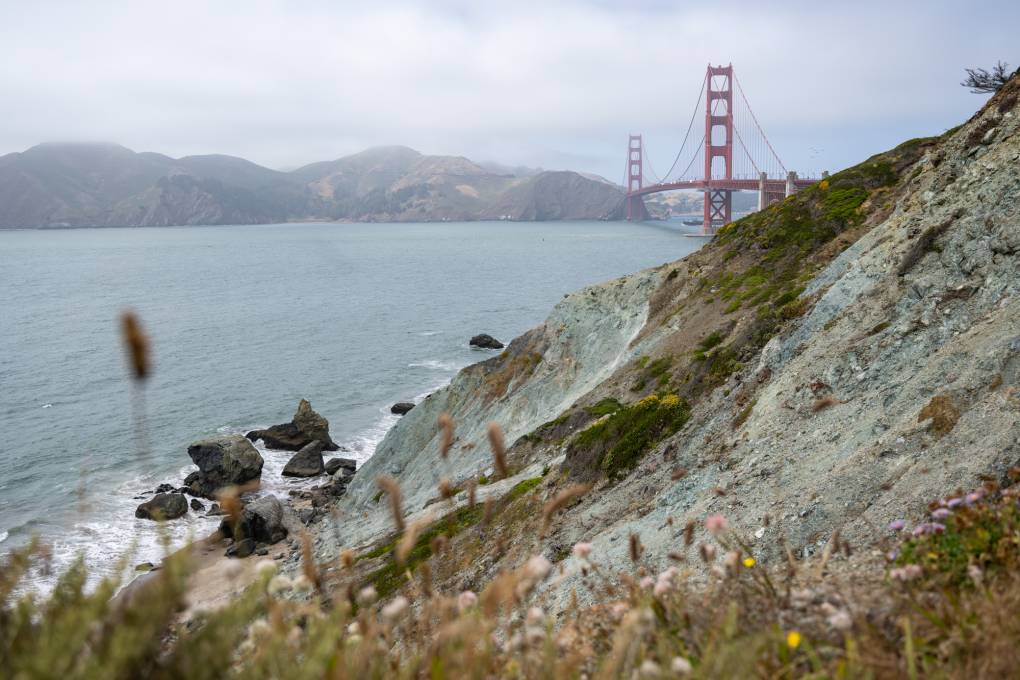
"content": "\u003cp>San Francisco’s dramatic coastline makes its hikes, especially in the Presidio overlooking the Golden Gate Bridge, uniquely stunning. But hiking here is not without its risks — in just one weekend, \u003ca href=\"https://www.sfchronicle.com/bayarea/article/presidio-rescue-again-20356204.php\">two people had to be rescued from the Presidio’s treacherous cliffs. \u003c/a>\u003c/p>\n\u003cp>For the most part, hiking in the city is safe, but there are a few common mistakes locals and visitors alike make that can get them in trouble. Read on for a few key things you should know before venturing out to take in some of the city’s most striking views.\u003c/p>\n\u003cp>\u003cstrong>Jump straight to: \u003c/strong>\u003c/p>\n\u003cul>\n\u003cli>\u003cstrong>\u003ca href=\"#A\">Why do people keep needing rescue on the cliffs?\u003c/a>\u003c/strong>\u003c/li>\n\u003cli>\u003cstrong>\u003ca href=\"#A\">What will happen if I fall or need help?\u003c/a>\u003c/strong>\u003c/li>\n\u003cli>\u003cstrong>\u003ca href=\"#A\">Do I have to pay money to be rescued?\u003c/a>\u003c/strong>\u003c/li>\n\u003cli>\u003cstrong>\u003ca href=\"#A\">What should I know before heading out for a hike?\u003c/a>\u003c/strong>\u003c/li>\n\u003c/ul>\n\u003cp>[ad fullwidth]\u003c/p>\n\u003ch2>\u003cstrong>\u003ca id=\"A\">\u003c/a>Why do people keep needing rescue on San Francisco’s cliffs?\u003c/strong>\u003c/h2>\n\u003cp>This weekend wasn’t an anomaly, said Lt. Mariano Elias, spokesperson for the San Francisco Fire Department. Anytime there is good weather and a clear view across the bay, “people want to get … right to the edge to find their safe, happy place, and then it becomes unsafe,” Elias said.\u003c/p>\n\u003cp>\u003ca href=\"https://www.kqed.org/science/1997037/hottest-event-of-the-year-bay-area-braces-for-elevated-heat-and-high-tides-too\">Last weekend was sunny, bringing crowds to enjoy the views\u003c/a> of the Marin Headlands and picnic out in the sunshine, “which is the draw, of course,” Elias said. The two people rescued were off-trail near the \u003ca href=\"https://presidio.gov/explore/attractions/batteries-to-bluffs-trail\">Batteries to Bluffs Trail\u003c/a>, which, in addition to getting hikers up close to the bridge, hangs precariously over the ocean below.\u003c/p>\n\u003cfigure id=\"attachment_12042911\" class=\"wp-caption aligncenter\" style=\"max-width: 2000px\">\u003cimg loading=\"lazy\" decoding=\"async\" class=\"size-full wp-image-12042911\" src=\"https://cdn.kqed.org/wp-content/uploads/sites/10/2025/06/250604-HIKINGSFBLUFFS-23-BL-KQED.jpg\" alt=\"\" width=\"2000\" height=\"1333\" srcset=\"https://cdn.kqed.org/wp-content/uploads/sites/10/2025/06/250604-HIKINGSFBLUFFS-23-BL-KQED.jpg 2000w, https://cdn.kqed.org/wp-content/uploads/sites/10/2025/06/250604-HIKINGSFBLUFFS-23-BL-KQED-800x533.jpg 800w, https://cdn.kqed.org/wp-content/uploads/sites/10/2025/06/250604-HIKINGSFBLUFFS-23-BL-KQED-1020x680.jpg 1020w, https://cdn.kqed.org/wp-content/uploads/sites/10/2025/06/250604-HIKINGSFBLUFFS-23-BL-KQED-160x107.jpg 160w, https://cdn.kqed.org/wp-content/uploads/sites/10/2025/06/250604-HIKINGSFBLUFFS-23-BL-KQED-1536x1024.jpg 1536w, https://cdn.kqed.org/wp-content/uploads/sites/10/2025/06/250604-HIKINGSFBLUFFS-23-BL-KQED-1920x1280.jpg 1920w\" sizes=\"auto, (max-width: 2000px) 100vw, 2000px\">\u003cfigcaption class=\"wp-caption-text\">The Batteries to Bluffs Trail in the Presidio of San Francisco on June 4, 2025. \u003ccite>(Beth LaBerge/KQED)\u003c/cite>\u003c/figcaption>\u003c/figure>\n\u003cp>“[It’s] easy to go down, harder to come up,” he said. “The person [rescued on Saturday] was difficult to access because they were not visible and they didn’t know where they were.”\u003c/p>\n\u003cp>If the trails are particularly crowded, a hiker might try to step away and get space to be alone, leading them into unfamiliar territory. The cliffs aren’t just steep here — trails are also overgrown, oftentimes with poison oak, and it can be hard to tell where, if anywhere, they lead.\u003c/p>\n\u003cp>Changing tides can also put people at risk. The two people rescued this past weekend, \u003ca href=\"https://www.youtube.com/watch?v=xBybgshsv14\">one of whom required a helicopter response,\u003c/a> were both climbing up, away from the water, which can lead to injuries or getting lost as they attempt to scale the cliffside.\u003c/p>\n\u003cp>“Sometimes the tide is low and people start walking and meandering around the rocks and the water, and then the tide starts coming in and then they can’t walk on the beach any longer,” Elias said. “So then they start climbing up the hillside, which creates another danger — possible falling down or loose rocks. I think sometimes people aren’t really aware of what can happen.”\u003c/p>\n\u003cp>And another common factor in rescues is intoxication from drugs or alcohol, Elias said.\u003c/p>\n\u003cfigure id=\"attachment_12042909\" class=\"wp-caption aligncenter\" style=\"max-width: 2000px\">\u003cimg loading=\"lazy\" decoding=\"async\" class=\"size-full wp-image-12042909\" src=\"https://cdn.kqed.org/wp-content/uploads/sites/10/2025/06/250604-HIKINGSFBLUFFS-06-BL-KQED.jpg\" alt=\"\" width=\"2000\" height=\"1333\" srcset=\"https://cdn.kqed.org/wp-content/uploads/sites/10/2025/06/250604-HIKINGSFBLUFFS-06-BL-KQED.jpg 2000w, https://cdn.kqed.org/wp-content/uploads/sites/10/2025/06/250604-HIKINGSFBLUFFS-06-BL-KQED-800x533.jpg 800w, https://cdn.kqed.org/wp-content/uploads/sites/10/2025/06/250604-HIKINGSFBLUFFS-06-BL-KQED-1020x680.jpg 1020w, https://cdn.kqed.org/wp-content/uploads/sites/10/2025/06/250604-HIKINGSFBLUFFS-06-BL-KQED-160x107.jpg 160w, https://cdn.kqed.org/wp-content/uploads/sites/10/2025/06/250604-HIKINGSFBLUFFS-06-BL-KQED-1536x1024.jpg 1536w, https://cdn.kqed.org/wp-content/uploads/sites/10/2025/06/250604-HIKINGSFBLUFFS-06-BL-KQED-1920x1280.jpg 1920w\" sizes=\"auto, (max-width: 2000px) 100vw, 2000px\">\u003cfigcaption class=\"wp-caption-text\">A sign warns of hazardous cliffs along the Batteries to Bluffs Trail in the Presidio of San Francisco on June 4, 2025. \u003ccite>(Beth LaBerge/KQED)\u003c/cite>\u003c/figcaption>\u003c/figure>\n\u003ch2>\u003cstrong>\u003ca id=\"B\">\u003c/a>What will happen if I fall or need help?\u003c/strong>\u003c/h2>\n\u003cp>According to data from the fire department, on average, 32 people have to get rescued from the city’s cliffs each year. And that’s not even including the 91 on average people rescued from the bay, and 45 from the ocean.\u003c/p>\n\u003cp>Elias said the SFFD prepares for these events with several fire units that specialize in coastal rescue. They use special equipment and are trained with ropes to get people who are stuck on cliff edges, including at night.\u003c/p>\n\u003cp>They also prepare for fair-weather weekends where they expect a high volume of people to be out on the coastline.\u003c/p>\n\u003cfigure id=\"attachment_12042912\" class=\"wp-caption aligncenter\" style=\"max-width: 2000px\">\u003cimg loading=\"lazy\" decoding=\"async\" class=\"size-full wp-image-12042912\" src=\"https://cdn.kqed.org/wp-content/uploads/sites/10/2025/06/250604-HIKINGSFBLUFFS-26-BL-KQED.jpg\" alt=\"\" width=\"2000\" height=\"1333\" srcset=\"https://cdn.kqed.org/wp-content/uploads/sites/10/2025/06/250604-HIKINGSFBLUFFS-26-BL-KQED.jpg 2000w, https://cdn.kqed.org/wp-content/uploads/sites/10/2025/06/250604-HIKINGSFBLUFFS-26-BL-KQED-800x533.jpg 800w, https://cdn.kqed.org/wp-content/uploads/sites/10/2025/06/250604-HIKINGSFBLUFFS-26-BL-KQED-1020x680.jpg 1020w, https://cdn.kqed.org/wp-content/uploads/sites/10/2025/06/250604-HIKINGSFBLUFFS-26-BL-KQED-160x107.jpg 160w, https://cdn.kqed.org/wp-content/uploads/sites/10/2025/06/250604-HIKINGSFBLUFFS-26-BL-KQED-1536x1024.jpg 1536w, https://cdn.kqed.org/wp-content/uploads/sites/10/2025/06/250604-HIKINGSFBLUFFS-26-BL-KQED-1920x1280.jpg 1920w\" sizes=\"auto, (max-width: 2000px) 100vw, 2000px\">\u003cfigcaption class=\"wp-caption-text\">A hiker sits near the ocean along the Batteries to Bluffs Trail in the Presidio of San Francisco on June 4, 2025. \u003ccite>(Beth LaBerge/KQED)\u003c/cite>\u003c/figcaption>\u003c/figure>\n\u003cp>“We plan for those things,” Elias said. “Our crews drive by the busy spots.”\u003c/p>\n\u003cp>It’s not just people who go over cliffs, either. Elias said they have to rescue hundreds of dogs as well, \u003ca href=\"https://www.kqed.org/news/11930802/fort-funston-know-why-sfs-iconic-dog-walking-cliffs-can-be-dangerous\">especially at Fort Funston,\u003c/a> on the southwestern edge of the city.\u003c/p>\n\u003cp>If a rescue does have to be initiated, a team of about 20 people will respond, and may include a helicopter coming out of Napa, which can get there in around 10 minutes, Elias said. Oftentimes, a firefighter has to be lowered over a cliff for a rescue, either by being tied to a fire engine, a tree or anchored into the ground with spikes.\u003c/p>\n\u003ch2>\u003cstrong>\u003ca id=\"C\">\u003c/a>Do I have to pay money to be rescued?\u003c/strong>\u003c/h2>\n\u003cp>While the rescues won’t cost the stranded person any money — they’re provided as a public service — Elias said each cliff rescue does create what they call an “open gap” in coverage. The Parks Service can and sometimes does issue citations to people who don’t follow posted signs to stay on trail, he said.\u003c/p>\n\u003cp>“You should just follow the directions and stay on the trail and play it safe.”\u003c/p>\n\u003cfigure id=\"attachment_12042908\" class=\"wp-caption aligncenter\" style=\"max-width: 2000px\">\u003cimg loading=\"lazy\" decoding=\"async\" class=\"size-full wp-image-12042908\" src=\"https://cdn.kqed.org/wp-content/uploads/sites/10/2025/06/250604-HIKINGSFBLUFFS-03-BL-KQED.jpg\" alt=\"\" width=\"2000\" height=\"1333\" srcset=\"https://cdn.kqed.org/wp-content/uploads/sites/10/2025/06/250604-HIKINGSFBLUFFS-03-BL-KQED.jpg 2000w, https://cdn.kqed.org/wp-content/uploads/sites/10/2025/06/250604-HIKINGSFBLUFFS-03-BL-KQED-800x533.jpg 800w, https://cdn.kqed.org/wp-content/uploads/sites/10/2025/06/250604-HIKINGSFBLUFFS-03-BL-KQED-1020x680.jpg 1020w, https://cdn.kqed.org/wp-content/uploads/sites/10/2025/06/250604-HIKINGSFBLUFFS-03-BL-KQED-160x107.jpg 160w, https://cdn.kqed.org/wp-content/uploads/sites/10/2025/06/250604-HIKINGSFBLUFFS-03-BL-KQED-1536x1024.jpg 1536w, https://cdn.kqed.org/wp-content/uploads/sites/10/2025/06/250604-HIKINGSFBLUFFS-03-BL-KQED-1920x1280.jpg 1920w\" sizes=\"auto, (max-width: 2000px) 100vw, 2000px\">\u003cfigcaption class=\"wp-caption-text\">A jogger runs along part of the Batteries to Bluffs Trail in the Presidio of San Francisco on June 4, 2025. \u003ccite>(Beth LaBerge/KQED)\u003c/cite>\u003c/figcaption>\u003c/figure>\n\u003ch2>\u003cstrong>\u003ca id=\"D\">\u003c/a>What should I know before heading out for a hike?\u003c/strong>\u003c/h2>\n\u003cp>Aside from staying on designated trails, there’s one other key to keeping safe on the bluffs: “We advise people to know where they are,” Elias said. “If I don’t know where you are, it’s almost impossible to find somebody in this area.”\u003c/p>\n\u003cp>He said to try to stay in areas with cell service so you can call first responders and provide your location if you need help getting to safety. Also, \u003ca href=\"https://tidesandcurrents.noaa.gov/stationhome.html?id=9414290\">be aware of the ocean’s tides\u003c/a> and plan your beachcombing walk accordingly, he said.\u003c/p>\n\u003cp>\u003ca href=\"https://www.kqed.org/news/12014611/king-tide-back-bay-area-heres-what-you-can-expect\">King Tides,\u003c/a> which can rise unexpectedly and take hikers off guard, \u003ca href=\"https://www.kqed.org/news/12041127/dont-go-into-the-water-at-ocean-beach-sf-officials-urge-ahead-of-memorial-day-weekend\">can be extremely dangerous \u003c/a>— or lead hikers to attempt dangerous maneuvers on the cliffs.\u003c/p>\n\u003cp>“People do frequent this area quite a bit, and it’s beautiful, but we do recommend people to stay on the trail,” he said.\u003c/p>\n\u003cp>https://docs.google.com/forms/d/e/1FAIpQLSeCeDp_MY_h4G6VWj_-VPl-BJlQ3Uya2H0vxRZZd_47BpXwVA/viewform?embedded=true\u003c/p>\n\u003cp>[ad floatright]\u003c/p>\n",
"blocks": [],
"excerpt": "After two cliff rescues in San Francisco last weekend, firefighters urge hikers to stay on trails and be aware of tides.",
"status": "publish",
"parent": 0,
"modified": 1749158338,
"stats": {
"hasAudio": false,
"hasVideo": false,
"hasChartOrMap": false,
"iframeSrcs": [],
"hasGoogleForm": true,
"hasGallery": false,
"hasHearkenModule": false,
"hasPolis": false,
"paragraphCount": 24,
"wordCount": 1079
},
"headData": {
"title": "Hiking Along Beautiful Bluffs Can Get Risky. Here’s How to Stay Safe | KQED",
"description": "After two cliff rescues in San Francisco last weekend, firefighters urge hikers to stay on trails and be aware of tides.",
"ogTitle": "",
"ogDescription": "",
"ogImgId": "",
"twTitle": "",
"twDescription": "",
"twImgId": "",
"schema": {
"@context": "https://schema.org",
"@type": "NewsArticle",
"headline": "Hiking Along Beautiful Bluffs Can Get Risky. Here’s How to Stay Safe",
"datePublished": "2025-06-06T07:00:43-07:00",
"dateModified": "2025-06-05T14:18:58-07:00",
"image": "https://cdn.kqed.org/wp-content/uploads/2020/02/KQED-OG-Image@1x.png",
"isAccessibleForFree": "True",
"publisher": {
"@type": "NewsMediaOrganization",
"@id": "https://www.kqed.org/#organization",
"name": "KQED",
"logo": "https://cdn.kqed.org/wp-content/uploads/2020/02/KQED-OG-Image@1x.png",
"url": "https://www.kqed.org",
"sameAs": [
"https://www.facebook.com/KQED",
"https://twitter.com/KQED",
"https://www.instagram.com/kqed/",
"https://www.tiktok.com/@kqedofficial",
"https://www.linkedin.com/company/kqed",
"https://www.youtube.com/channel/UCeC0IOo7i1P_61zVUWbJ4nw"
]
}
}
},
"sticky": false,
"templateType": "standard",
"featuredImageType": "standard",
"excludeFromSiteSearch": "Include",
"articleAge": "0",
"path": "/news/12042938/hiking-along-beautiful-bluffs-can-get-risky-heres-how-to-stay-safe",
"audioTrackLength": null,
"parsedContent": [
{
"type": "contentString",
"content": "\u003cdiv class=\"post-body\">\u003cp>\u003cp>San Francisco’s dramatic coastline makes its hikes, especially in the Presidio overlooking the Golden Gate Bridge, uniquely stunning. But hiking here is not without its risks — in just one weekend, \u003ca href=\"https://www.sfchronicle.com/bayarea/article/presidio-rescue-again-20356204.php\">two people had to be rescued from the Presidio’s treacherous cliffs. \u003c/a>\u003c/p>\n\u003cp>For the most part, hiking in the city is safe, but there are a few common mistakes locals and visitors alike make that can get them in trouble. Read on for a few key things you should know before venturing out to take in some of the city’s most striking views.\u003c/p>\n\u003cp>\u003cstrong>Jump straight to: \u003c/strong>\u003c/p>\n\u003cul>\n\u003cli>\u003cstrong>\u003ca href=\"#A\">Why do people keep needing rescue on the cliffs?\u003c/a>\u003c/strong>\u003c/li>\n\u003cli>\u003cstrong>\u003ca href=\"#A\">What will happen if I fall or need help?\u003c/a>\u003c/strong>\u003c/li>\n\u003cli>\u003cstrong>\u003ca href=\"#A\">Do I have to pay money to be rescued?\u003c/a>\u003c/strong>\u003c/li>\n\u003cli>\u003cstrong>\u003ca href=\"#A\">What should I know before heading out for a hike?\u003c/a>\u003c/strong>\u003c/li>\n\u003c/ul>\n\u003cp>\u003c/p>\u003c/div>",
"attributes": {
"named": {},
"numeric": []
}
},
{
"type": "component",
"content": "",
"name": "ad",
"attributes": {
"named": {
"label": "fullwidth"
},
"numeric": [
"fullwidth"
]
}
},
{
"type": "contentString",
"content": "\u003cdiv class=\"post-body\">\u003cp>\u003c/p>\n\u003ch2>\u003cstrong>\u003ca id=\"A\">\u003c/a>Why do people keep needing rescue on San Francisco’s cliffs?\u003c/strong>\u003c/h2>\n\u003cp>This weekend wasn’t an anomaly, said Lt. Mariano Elias, spokesperson for the San Francisco Fire Department. Anytime there is good weather and a clear view across the bay, “people want to get … right to the edge to find their safe, happy place, and then it becomes unsafe,” Elias said.\u003c/p>\n\u003cp>\u003ca href=\"https://www.kqed.org/science/1997037/hottest-event-of-the-year-bay-area-braces-for-elevated-heat-and-high-tides-too\">Last weekend was sunny, bringing crowds to enjoy the views\u003c/a> of the Marin Headlands and picnic out in the sunshine, “which is the draw, of course,” Elias said. The two people rescued were off-trail near the \u003ca href=\"https://presidio.gov/explore/attractions/batteries-to-bluffs-trail\">Batteries to Bluffs Trail\u003c/a>, which, in addition to getting hikers up close to the bridge, hangs precariously over the ocean below.\u003c/p>\n\u003cfigure id=\"attachment_12042911\" class=\"wp-caption aligncenter\" style=\"max-width: 2000px\">\u003cimg loading=\"lazy\" decoding=\"async\" class=\"size-full wp-image-12042911\" src=\"https://cdn.kqed.org/wp-content/uploads/sites/10/2025/06/250604-HIKINGSFBLUFFS-23-BL-KQED.jpg\" alt=\"\" width=\"2000\" height=\"1333\" srcset=\"https://cdn.kqed.org/wp-content/uploads/sites/10/2025/06/250604-HIKINGSFBLUFFS-23-BL-KQED.jpg 2000w, https://cdn.kqed.org/wp-content/uploads/sites/10/2025/06/250604-HIKINGSFBLUFFS-23-BL-KQED-800x533.jpg 800w, https://cdn.kqed.org/wp-content/uploads/sites/10/2025/06/250604-HIKINGSFBLUFFS-23-BL-KQED-1020x680.jpg 1020w, https://cdn.kqed.org/wp-content/uploads/sites/10/2025/06/250604-HIKINGSFBLUFFS-23-BL-KQED-160x107.jpg 160w, https://cdn.kqed.org/wp-content/uploads/sites/10/2025/06/250604-HIKINGSFBLUFFS-23-BL-KQED-1536x1024.jpg 1536w, https://cdn.kqed.org/wp-content/uploads/sites/10/2025/06/250604-HIKINGSFBLUFFS-23-BL-KQED-1920x1280.jpg 1920w\" sizes=\"auto, (max-width: 2000px) 100vw, 2000px\">\u003cfigcaption class=\"wp-caption-text\">The Batteries to Bluffs Trail in the Presidio of San Francisco on June 4, 2025. \u003ccite>(Beth LaBerge/KQED)\u003c/cite>\u003c/figcaption>\u003c/figure>\n\u003cp>“[It’s] easy to go down, harder to come up,” he said. “The person [rescued on Saturday] was difficult to access because they were not visible and they didn’t know where they were.”\u003c/p>\n\u003cp>If the trails are particularly crowded, a hiker might try to step away and get space to be alone, leading them into unfamiliar territory. The cliffs aren’t just steep here — trails are also overgrown, oftentimes with poison oak, and it can be hard to tell where, if anywhere, they lead.\u003c/p>\n\u003cp>Changing tides can also put people at risk. The two people rescued this past weekend, \u003ca href=\"https://www.youtube.com/watch?v=xBybgshsv14\">one of whom required a helicopter response,\u003c/a> were both climbing up, away from the water, which can lead to injuries or getting lost as they attempt to scale the cliffside.\u003c/p>\n\u003cp>“Sometimes the tide is low and people start walking and meandering around the rocks and the water, and then the tide starts coming in and then they can’t walk on the beach any longer,” Elias said. “So then they start climbing up the hillside, which creates another danger — possible falling down or loose rocks. I think sometimes people aren’t really aware of what can happen.”\u003c/p>\n\u003cp>And another common factor in rescues is intoxication from drugs or alcohol, Elias said.\u003c/p>\n\u003cfigure id=\"attachment_12042909\" class=\"wp-caption aligncenter\" style=\"max-width: 2000px\">\u003cimg loading=\"lazy\" decoding=\"async\" class=\"size-full wp-image-12042909\" src=\"https://cdn.kqed.org/wp-content/uploads/sites/10/2025/06/250604-HIKINGSFBLUFFS-06-BL-KQED.jpg\" alt=\"\" width=\"2000\" height=\"1333\" srcset=\"https://cdn.kqed.org/wp-content/uploads/sites/10/2025/06/250604-HIKINGSFBLUFFS-06-BL-KQED.jpg 2000w, https://cdn.kqed.org/wp-content/uploads/sites/10/2025/06/250604-HIKINGSFBLUFFS-06-BL-KQED-800x533.jpg 800w, https://cdn.kqed.org/wp-content/uploads/sites/10/2025/06/250604-HIKINGSFBLUFFS-06-BL-KQED-1020x680.jpg 1020w, https://cdn.kqed.org/wp-content/uploads/sites/10/2025/06/250604-HIKINGSFBLUFFS-06-BL-KQED-160x107.jpg 160w, https://cdn.kqed.org/wp-content/uploads/sites/10/2025/06/250604-HIKINGSFBLUFFS-06-BL-KQED-1536x1024.jpg 1536w, https://cdn.kqed.org/wp-content/uploads/sites/10/2025/06/250604-HIKINGSFBLUFFS-06-BL-KQED-1920x1280.jpg 1920w\" sizes=\"auto, (max-width: 2000px) 100vw, 2000px\">\u003cfigcaption class=\"wp-caption-text\">A sign warns of hazardous cliffs along the Batteries to Bluffs Trail in the Presidio of San Francisco on June 4, 2025. \u003ccite>(Beth LaBerge/KQED)\u003c/cite>\u003c/figcaption>\u003c/figure>\n\u003ch2>\u003cstrong>\u003ca id=\"B\">\u003c/a>What will happen if I fall or need help?\u003c/strong>\u003c/h2>\n\u003cp>According to data from the fire department, on average, 32 people have to get rescued from the city’s cliffs each year. And that’s not even including the 91 on average people rescued from the bay, and 45 from the ocean.\u003c/p>\n\u003cp>Elias said the SFFD prepares for these events with several fire units that specialize in coastal rescue. They use special equipment and are trained with ropes to get people who are stuck on cliff edges, including at night.\u003c/p>\n\u003cp>They also prepare for fair-weather weekends where they expect a high volume of people to be out on the coastline.\u003c/p>\n\u003cfigure id=\"attachment_12042912\" class=\"wp-caption aligncenter\" style=\"max-width: 2000px\">\u003cimg loading=\"lazy\" decoding=\"async\" class=\"size-full wp-image-12042912\" src=\"https://cdn.kqed.org/wp-content/uploads/sites/10/2025/06/250604-HIKINGSFBLUFFS-26-BL-KQED.jpg\" alt=\"\" width=\"2000\" height=\"1333\" srcset=\"https://cdn.kqed.org/wp-content/uploads/sites/10/2025/06/250604-HIKINGSFBLUFFS-26-BL-KQED.jpg 2000w, https://cdn.kqed.org/wp-content/uploads/sites/10/2025/06/250604-HIKINGSFBLUFFS-26-BL-KQED-800x533.jpg 800w, https://cdn.kqed.org/wp-content/uploads/sites/10/2025/06/250604-HIKINGSFBLUFFS-26-BL-KQED-1020x680.jpg 1020w, https://cdn.kqed.org/wp-content/uploads/sites/10/2025/06/250604-HIKINGSFBLUFFS-26-BL-KQED-160x107.jpg 160w, https://cdn.kqed.org/wp-content/uploads/sites/10/2025/06/250604-HIKINGSFBLUFFS-26-BL-KQED-1536x1024.jpg 1536w, https://cdn.kqed.org/wp-content/uploads/sites/10/2025/06/250604-HIKINGSFBLUFFS-26-BL-KQED-1920x1280.jpg 1920w\" sizes=\"auto, (max-width: 2000px) 100vw, 2000px\">\u003cfigcaption class=\"wp-caption-text\">A hiker sits near the ocean along the Batteries to Bluffs Trail in the Presidio of San Francisco on June 4, 2025. \u003ccite>(Beth LaBerge/KQED)\u003c/cite>\u003c/figcaption>\u003c/figure>\n\u003cp>“We plan for those things,” Elias said. “Our crews drive by the busy spots.”\u003c/p>\n\u003cp>It’s not just people who go over cliffs, either. Elias said they have to rescue hundreds of dogs as well, \u003ca href=\"https://www.kqed.org/news/11930802/fort-funston-know-why-sfs-iconic-dog-walking-cliffs-can-be-dangerous\">especially at Fort Funston,\u003c/a> on the southwestern edge of the city.\u003c/p>\n\u003cp>If a rescue does have to be initiated, a team of about 20 people will respond, and may include a helicopter coming out of Napa, which can get there in around 10 minutes, Elias said. Oftentimes, a firefighter has to be lowered over a cliff for a rescue, either by being tied to a fire engine, a tree or anchored into the ground with spikes.\u003c/p>\n\u003ch2>\u003cstrong>\u003ca id=\"C\">\u003c/a>Do I have to pay money to be rescued?\u003c/strong>\u003c/h2>\n\u003cp>While the rescues won’t cost the stranded person any money — they’re provided as a public service — Elias said each cliff rescue does create what they call an “open gap” in coverage. The Parks Service can and sometimes does issue citations to people who don’t follow posted signs to stay on trail, he said.\u003c/p>\n\u003cp>“You should just follow the directions and stay on the trail and play it safe.”\u003c/p>\n\u003cfigure id=\"attachment_12042908\" class=\"wp-caption aligncenter\" style=\"max-width: 2000px\">\u003cimg loading=\"lazy\" decoding=\"async\" class=\"size-full wp-image-12042908\" src=\"https://cdn.kqed.org/wp-content/uploads/sites/10/2025/06/250604-HIKINGSFBLUFFS-03-BL-KQED.jpg\" alt=\"\" width=\"2000\" height=\"1333\" srcset=\"https://cdn.kqed.org/wp-content/uploads/sites/10/2025/06/250604-HIKINGSFBLUFFS-03-BL-KQED.jpg 2000w, https://cdn.kqed.org/wp-content/uploads/sites/10/2025/06/250604-HIKINGSFBLUFFS-03-BL-KQED-800x533.jpg 800w, https://cdn.kqed.org/wp-content/uploads/sites/10/2025/06/250604-HIKINGSFBLUFFS-03-BL-KQED-1020x680.jpg 1020w, https://cdn.kqed.org/wp-content/uploads/sites/10/2025/06/250604-HIKINGSFBLUFFS-03-BL-KQED-160x107.jpg 160w, https://cdn.kqed.org/wp-content/uploads/sites/10/2025/06/250604-HIKINGSFBLUFFS-03-BL-KQED-1536x1024.jpg 1536w, https://cdn.kqed.org/wp-content/uploads/sites/10/2025/06/250604-HIKINGSFBLUFFS-03-BL-KQED-1920x1280.jpg 1920w\" sizes=\"auto, (max-width: 2000px) 100vw, 2000px\">\u003cfigcaption class=\"wp-caption-text\">A jogger runs along part of the Batteries to Bluffs Trail in the Presidio of San Francisco on June 4, 2025. \u003ccite>(Beth LaBerge/KQED)\u003c/cite>\u003c/figcaption>\u003c/figure>\n\u003ch2>\u003cstrong>\u003ca id=\"D\">\u003c/a>What should I know before heading out for a hike?\u003c/strong>\u003c/h2>\n\u003cp>Aside from staying on designated trails, there’s one other key to keeping safe on the bluffs: “We advise people to know where they are,” Elias said. “If I don’t know where you are, it’s almost impossible to find somebody in this area.”\u003c/p>\n\u003cp>He said to try to stay in areas with cell service so you can call first responders and provide your location if you need help getting to safety. Also, \u003ca href=\"https://tidesandcurrents.noaa.gov/stationhome.html?id=9414290\">be aware of the ocean’s tides\u003c/a> and plan your beachcombing walk accordingly, he said.\u003c/p>\n\u003cp>\u003ca href=\"https://www.kqed.org/news/12014611/king-tide-back-bay-area-heres-what-you-can-expect\">King Tides,\u003c/a> which can rise unexpectedly and take hikers off guard, \u003ca href=\"https://www.kqed.org/news/12041127/dont-go-into-the-water-at-ocean-beach-sf-officials-urge-ahead-of-memorial-day-weekend\">can be extremely dangerous \u003c/a>— or lead hikers to attempt dangerous maneuvers on the cliffs.\u003c/p>\n\u003cp>“People do frequent this area quite a bit, and it’s beautiful, but we do recommend people to stay on the trail,” he said.\u003c/p>\u003c/p>\u003cp>\u003cdiv class='utils-parseShortcode-shortcodes-__shortcodes__shortcodeWrapper'>\n \u003ciframe\n src='https://docs.google.com/forms/d/e/1FAIpQLSeCeDp_MY_h4G6VWj_-VPl-BJlQ3Uya2H0vxRZZd_47BpXwVA/viewform?embedded=true?embedded=true'\n title='https://docs.google.com/forms/d/e/1FAIpQLSeCeDp_MY_h4G6VWj_-VPl-BJlQ3Uya2H0vxRZZd_47BpXwVA/viewform?embedded=true'\n width='760' height='500'\n frameborder='0'\n marginheight='0' marginwidth='0'>\u003c/iframe>\u003c/div>\u003c/p>\u003cp>\u003cp>\u003c/p>\u003c/div>",
"attributes": {
"named": {},
"numeric": []
}
},
{
"type": "component",
"content": "",
"name": "ad",
"attributes": {
"named": {
"label": "floatright"
},
"numeric": [
"floatright"
]
}
},
{
"type": "contentString",
"content": "\u003cdiv class=\"post-body\">\u003cp>\u003c/p>\n\u003c/div>\u003c/p>",
"attributes": {
"named": {},
"numeric": []
}
}
],
"link": "/news/12042938/hiking-along-beautiful-bluffs-can-get-risky-heres-how-to-stay-safe",
"authors": [
"11956",
"8676"
],
"categories": [
"news_19906",
"news_34168",
"news_457",
"news_8"
],
"tags": [
"news_32707",
"news_3242",
"news_17925",
"news_2905",
"news_5663",
"news_383",
"news_38",
"news_1861",
"news_1513"
],
"featImg": "news_12042910",
"label": "news"
},
"news_12042550": {
"type": "posts",
"id": "news_12042550",
"meta": {
"index": "posts_1716263798",
"site": "news",
"id": "12042550",
"score": null,
"sort": [
1749132039000
]
},
"guestAuthors": [],
"slug": "fun-and-affordable-sports-and-activities-to-try-in-the-bay-area",
"title": "Fun and Affordable Sports and Activities To Try in the Bay Area",
"publishDate": 1749132039,
"format": "standard",
"headTitle": "Fun and Affordable Sports and Activities To Try in the Bay Area | KQED",
"labelTerm": {
"site": "news"
},
"content": "\u003cp>Taking up a new sport or hobby can be tough on the wallet, especially popular ones here in the Bay Area, like \u003ca href=\"https://www.kqed.org/news/12035335/bay-area-bike-shops-raging-trade-war-brings-uncertain-future\">cycling\u003c/a> or skiing.\u003c/p>\n\u003cp>But not every outdoor activity has to \u003ca href=\"https://www.kqed.org/forum/2010101909839/have-you-been-priced-out-of-a-hobby#:~:text=You've%20probably%20noticed%20that,personal%20fulfillment%20and%20community%20building.\">break the bank\u003c/a> or require \u003ca href=\"https://www.kqed.org/news/11985235/sf-born-rock-climber-beth-rodden-shares-triumphs-traumas-in-new-memoir\">hundreds of hours of training \u003c/a>before you feel confident in your skills.\u003c/p>\n\u003cp>If your main goal is to get moving — and \u003ca href=\"https://www.kqed.org/news/11952701/finding-community-in-the-oakland-pickleball-scene\">maybe even to find an active community along the way\u003c/a> — this list of sports taught right here in the Bay Area might be for you.\u003c/p>\n\u003cp>[ad fullwidth]\u003c/p>\n\u003cp>Plus, read on for a few keys to success (or at the very least fun and safety) from the teachers themselves and extra information about cost so you know exactly what you’re getting yourself into.\u003c/p>\n\u003cp>\u003cstrong>Jump straight to:\u003c/strong>\u003c/p>\n\u003cul>\n\u003cli>\u003cstrong>\u003ca href=\"#Archery\">Archery\u003c/a>\u003c/strong>\u003c/li>\n\u003cli>\u003cstrong>\u003ca href=\"#Indoorrockclimbing\">Indoor rock climbing\u003c/a>\u003c/strong>\u003c/li>\n\u003cli>\u003cstrong>\u003ca href=\"#Australianfootball\">Australian football\u003c/a>\u003c/strong>\u003c/li>\n\u003cli>\u003cstrong>\u003ca href=\"#Curling\">Curling\u003c/a>\u003c/strong>\u003c/li>\n\u003cli>\u003cstrong>\u003ca href=\"#Openwaterswimming\">Open water swimming\u003c/a>\u003c/strong>\u003c/li>\n\u003cli>\u003cstrong>\u003ca href=\"#Swingdancing\">Swing dancing\u003c/a>\u003c/strong>\u003c/li>\n\u003c/ul>\n\u003cfigure id=\"attachment_12042489\" class=\"wp-caption aligncenter\" style=\"max-width: 2000px\">\u003ca href=\"https://cdn.kqed.org/wp-content/uploads/sites/10/2025/06/SWIMMING1-KQED.jpg\">\u003cimg loading=\"lazy\" decoding=\"async\" class=\"size-full wp-image-12042489\" src=\"https://cdn.kqed.org/wp-content/uploads/sites/10/2025/06/SWIMMING1-KQED.jpg\" alt=\"\" width=\"2000\" height=\"2000\" srcset=\"https://cdn.kqed.org/wp-content/uploads/sites/10/2025/06/SWIMMING1-KQED.jpg 2000w, https://cdn.kqed.org/wp-content/uploads/sites/10/2025/06/SWIMMING1-KQED-800x800.jpg 800w, https://cdn.kqed.org/wp-content/uploads/sites/10/2025/06/SWIMMING1-KQED-1020x1020.jpg 1020w, https://cdn.kqed.org/wp-content/uploads/sites/10/2025/06/SWIMMING1-KQED-160x160.jpg 160w, https://cdn.kqed.org/wp-content/uploads/sites/10/2025/06/SWIMMING1-KQED-1536x1536.jpg 1536w, https://cdn.kqed.org/wp-content/uploads/sites/10/2025/06/SWIMMING1-KQED-1920x1920.jpg 1920w\" sizes=\"auto, (max-width: 2000px) 100vw, 2000px\">\u003c/a>\u003cfigcaption class=\"wp-caption-text\">Open water swimmers travel under the Golden Gate Bridge in the San Francisco Bay on Nov. 2, 2022. \u003ccite>(Courtesy of the Pacific Open Water Swim Co.)\u003c/cite>\u003c/figcaption>\u003c/figure>\n\u003ch2>Bay Area outdoor \u003ca id=\"Archery\">\u003c/a>archery range\u003c/h2>\n\u003cp>Shooting a bow and arrow might be something you’ve only ever seen on TV or in the movies, but “this isn’t the Olympics,” Bowhunters Unlimited President Debbie Golzen said. “Anyone can do it.”\u003c/p>\n\u003cp>\u003ca href=\"https://www.bhuarchers.org/\">Bowhunters Unlimited\u003c/a>, an all-volunteer group that operates out of \u003ca href=\"https://parks.santaclaracounty.gov/locations/stevens-creek-county-park\">Stevens Creek County Park\u003c/a> in Saratoga, offers beginner lessons, team-building activities, a practice range and a field range with around 30 targets along a 3-mile course to get in a full day of target practice.\u003c/p>\n\u003cp>During a lesson, participants learn the \u003ca href=\"https://www.youtube.com/watch?v=u2-mqV2EV1c\">basics about archery equipment\u003c/a>, safety and shooting form from the training area, where the targets are set close to the shooter and have backstops so you don’t have to chase down your arrows too far, Golzen said. Plus, the lesson area is separated from the regular range so newcomers can take as much time as they need to set up, shoot and retrieve arrows.\u003c/p>\n\u003cp>“By the end of your lesson, you will feel confident to continue the sport at your leisure,” Golzen said. “Archery is so simple. If you can play catch with someone with a ball without making them chase that ball all over the place every time you throw it to them, you can shoot an arrow 10 yards.”\u003c/p>\n\u003cp>[aside postID=news_12040892 hero='https://cdn.kqed.org/wp-content/uploads/sites/10/2025/05/best-hikes-bay-area-memorial-day-1020x679.png']\u003c/p>\n\u003cp>Archery is an age-inclusive sport, too, Golzen said, with some of their oldest members in their 80s. The group attends tournaments that are open to anyone of any skill level, where participants, organized by age, gender and category of shooter, shoot at 3D foam targets that are shaped like animals.\u003c/p>\n\u003cp>“If you make it through all those targets and try, that’s success,” she said.\u003c/p>\n\u003cp>\u003cstrong>Set up for success: \u003c/strong>Golzen recommends wearing close-toed shoes with some ankle support to the park, and to bring some water. To make shooting easier, wear close-fitted sleeves. All the coaches and the range itself are certified to keep everyone safe. As for gear, they have light bows and arrows available for those taking lessons.\u003c/p>\n\u003cp>If you decide to continue pursuing the sport, Golzen recommends \u003ca href=\"https://www.archeryonly.com/\">Archery Only in Newark\u003c/a>, \u003ca href=\"https://predatorsarchery.com/?srsltid=AfmBOopFClLD6F0fYmpsVkrdwArqp-3W2wi1TsMnX5yOf44UUpMR677Z\">Predator’s Archery in Gilroy\u003c/a> or \u003ca href=\"https://www.pacificaarchery.com/\">Pacifica Archery in Daly City\u003c/a> to get fitted for and purchase a bow and arrows that are right for you.\u003c/p>\n\u003cp>“You can’t shoot someone else’s gear,” Golzen said.\u003c/p>\n\u003cp>\u003cstrong>Cost: \u003c/strong>There is no fee to use the range, but a $40 yearly membership helps support keeping it open for all. A lesson, \u003ca href=\"https://docs.google.com/forms/d/e/1FAIpQLSdAjeoJ8wkVh2zJidoF5rommyraCKjewY_X6EKNqo31rI1ysQ/viewform\">booked through a form\u003c/a> on their website, costs between $20 and $45, depending on how long you’d like and how many people are in your group.\u003c/p>\n\u003cfigure id=\"attachment_12042488\" class=\"wp-caption aligncenter\" style=\"max-width: 1875px\">\u003ca href=\"https://cdn.kqed.org/wp-content/uploads/sites/10/2025/06/ARCHERY1-KQED.jpg\">\u003cimg loading=\"lazy\" decoding=\"async\" class=\"size-full wp-image-12042488\" src=\"https://cdn.kqed.org/wp-content/uploads/sites/10/2025/06/ARCHERY1-KQED.jpg\" alt=\"\" width=\"1875\" height=\"1406\" srcset=\"https://cdn.kqed.org/wp-content/uploads/sites/10/2025/06/ARCHERY1-KQED.jpg 1875w, https://cdn.kqed.org/wp-content/uploads/sites/10/2025/06/ARCHERY1-KQED-800x600.jpg 800w, https://cdn.kqed.org/wp-content/uploads/sites/10/2025/06/ARCHERY1-KQED-1020x765.jpg 1020w, https://cdn.kqed.org/wp-content/uploads/sites/10/2025/06/ARCHERY1-KQED-160x120.jpg 160w, https://cdn.kqed.org/wp-content/uploads/sites/10/2025/06/ARCHERY1-KQED-1536x1152.jpg 1536w\" sizes=\"auto, (max-width: 1875px) 100vw, 1875px\">\u003c/a>\u003cfigcaption class=\"wp-caption-text\">A quiver holds colorful arrows at Bowhunters Unlimited at Stevens Creek Archery Range in Saratoga, Calif., on Oct. 4, 2022. \u003ccite>(Courtesy of Debbie Golzen)\u003c/cite>\u003c/figcaption>\u003c/figure>\n\u003ch2>Free indoor \u003ca id=\"Indoorrockclimbing\">\u003c/a>rock climbing\u003c/h2>\n\u003cp>Ever considered joining a rock climbing gym, but it all just feels a little too intimidating?\u003c/p>\n\u003cp>Maybe you tried the sport once or twice as a kid at a birthday party or tagged along with a friend, but never took the leap yourself.\u003c/p>\n\u003cp>To get you started, \u003ca href=\"https://movementgyms.com/\">Movement Gyms’\u003c/a> San Francisco, Belmont, Santa Clara, Sunnyvale and Mountain View \u003ca href=\"https://www.instagram.com/p/DJ7tZu6S5T0/\">locations offer periodic free-for-all days\u003c/a> for anyone interested in trying out the sport of indoor rock climbing. The days, which Bay Area district director Joey Luna said the gym hopes to offer a few times per year, include free gear rentals and lessons, and are tailored specifically toward beginners.\u003c/p>\n\u003cp>To help with that, on free days, the gyms are full of extra staff milling around to help participants get started, give pointers on form and answer any questions, he said.\u003c/p>\n\u003cp>If you’re not able to make a free day in the future, \u003ca href=\"https://movementgyms.com/first-class-free/?utm_source=google&utm_medium=cpc&utm_campaign=Search+SanFrancisco&utm_content=153473390569&utm_term=movement%20gym&gad_source=1&gad_campaignid=20318686462&gbraid=0AAAAAoU9BBuQHJLN-4KZvbYNTd31aYI0Q&gclid=CjwKCAjwi-DBBhA5EiwAXOHsGRYldoGYY-wl0P8fRXNV87AhRALCAvIF38nRx2325o-BuGoLezV6uBoCg94QAvD_BwE\">Luna suggested coming out for one of their free introductory courses\u003c/a>, which are offered at each of their Bay Area locations.[aside postID=news_12040961 hero='https://cdn.kqed.org/wp-content/uploads/sites/10/2025/05/GettyImages-1312721999-1020x680.jpg'] You can sign up for intro bouldering, intro rope climbing or any of their other fitness or yoga classes.\u003c/p>\n\u003cp>The sport of indoor rock climbing \u003ca href=\"https://www.kqed.org/arts/13969423/sports-dad-rock-climbing-bouldering-parenting\">can be extremely rewarding\u003c/a>, Luna said, especially as you begin to be able to complete routes and execute moves that previously felt impossible.\u003c/p>\n\u003cp>“It stokes the fire,” he said. “I was hooked after one climb.”\u003c/p>\n\u003cp>The routes at the gym, Luna said, are set for a wide range of skill levels and heights, so everyone can find a way up the wall that’s comfortable for them.\u003c/p>\n\u003cp>\u003cstrong>Set up for success: \u003c/strong>Luna suggested wearing clothing that’s easy to bend and stretch in for your first time on the wall. If you want to set yourself up for future sessions, consider choosing the intro to rope climbing course to learn how to belay for your friends and get your certification on your next visit, he said.\u003c/p>\n\u003cp>\u003cstrong>Cost: \u003c/strong>The occasional open days are completely free, including rental gear, as is your first intro class at the gym. You can also sign up for \u003ca href=\"https://movementgyms.com/trial-membership/?utm_source=google&utm_medium=cpc&utm_campaign=Search+National&utm_content=153473390569&utm_term=movement%20gym&gad_source=1&gad_campaignid=20318686462&gbraid=0AAAAAoU9BBuQHJLN-4KZvbYNTd31aYI0Q&gclid=CjwKCAjwi-DBBhA5EiwAXOHsGRWxc2fxNO_civn1K4O4B2hQdzNJSuq-sxY6sDHI1Uj4QWL9njUb-BoCyjQQAvD_BwE\">two weeks of access to the gym \u003c/a>and rentals for $40 if you’re not ready to commit to a full membership.\u003c/p>\n\u003ch2>Learn how to play \u003ca id=\"Australianfootball\">\u003c/a>Australian football in Oakland and San Francisco\u003c/h2>\n\u003cp>If team sports are more your speed, consider joining the \u003ca href=\"https://www.ggafl.com/\">Golden Gate Australian Football League.\u003c/a> The sport is much like other field sports, but “a bit more fast and free-flowing,” league President Loren Dawes said.\u003c/p>\n\u003cp>“I think the best thing about \u003ca href=\"https://www.youtube.com/watch?v=u_SqfNNfhmM\">Aussie rules\u003c/a> is that it’s like a real hybrid of a bunch of other sports,” Dawes said. “So it’s really easy if you’re athletic in any other sport like soccer, basketball, volleyball, ultimate frisbee or rugby. There’s elements in those games that are really going to translate well to Aussie rules.”\u003c/p>\n\u003cp>Dawes said the group is always looking for new players, and anyone is welcome to come to any of the three training sessions they host per week across the Bay Area — \u003ca href=\"https://www.ggafl.com/schedule.html\">on Tuesday nights in Oakland, Wednesdays in San Francisco and Thursdays in the South Bay.\u003c/a>\u003c/p>\n\u003cp>Then, if you like the sport, you can come out for their metro league, where they split off participants into teams and compete in games.[aside postID=news_12040242 hero='https://cdn.kqed.org/wp-content/uploads/sites/10/2025/05/HENRY-COE-6-KQED-1020x765.jpg']The league also forms more competitive \u003ca href=\"https://www.ggafl.com/womens-league.html\">women’s\u003c/a> and \u003ca href=\"https://www.ggafl.com/mens-league.html\">men’s\u003c/a> teams to compete against other cities across the United States and Canada.\u003c/p>\n\u003cp>“Although it is a sport that originated in Australia and it’s not super well known here in the United States, once you discover it, you realize it’s a pretty cool sport to play and also spectate,” Dawes said.\u003c/p>\n\u003cp>\u003cstrong>Set up for success: \u003c/strong>If you decide to come out to a training, there’s no need to let anyone know — just show up. They will provide the footballs, and you can train in running shoes or cleats. Dawes said it may be smart to bring a mouthguard, because the sport does include a fair amount of contact.\u003c/p>\n\u003cp>But “it’s more incidental,” kind of like basketball, she said. Plus, they can modify the training or your participation depending on your comfort level.\u003c/p>\n\u003cp>If you’re more comfortable knowing someone else on the field, bring a friend or reach out via \u003ca href=\"https://www.ggafl.com/contact-us.html\">GGAFL’s interest form\u003c/a> to get in touch with a member. And there’s no real commitment required, either.\u003c/p>\n\u003cp>“We wanted to be as accessible as possible,” Dawes said. “People can drop in. If they want to stay for 10 minutes and leave, they can.”\u003c/p>\n\u003cp>\u003cstrong>Cost: \u003c/strong>There’s no cost to come out to training. If you decide to join the league more permanently, there are yearly dues that cost $80 to $100 per year for your first year.\u003c/p>\n\u003cfigure id=\"attachment_12042565\" class=\"wp-caption aligncenter\" style=\"max-width: 2000px\">\u003ca href=\"https://cdn.kqed.org/wp-content/uploads/sites/10/2025/06/GettyImages-657595064-scaled-e1748986206492.jpg\">\u003cimg loading=\"lazy\" decoding=\"async\" class=\"size-full wp-image-12042565\" src=\"https://cdn.kqed.org/wp-content/uploads/sites/10/2025/06/GettyImages-657595064-scaled-e1748986206492.jpg\" alt=\"\" width=\"2000\" height=\"1298\">\u003c/a>\u003cfigcaption class=\"wp-caption-text\">Scotland players sweep ahead of the stone during their play-off against Sweden at the Women’s Curling World Championships in Beijing on March 25, 2017. \u003ccite>(Photo by GREG BAKER / AFP via Getty Images)\u003c/cite>\u003c/figcaption>\u003c/figure>\n\u003ch2>Curling\u003ca id=\"Curling\">\u003c/a> in Silicon Valley\u003c/h2>\n\u003cp>Did you know you can get out on the ice and \u003ca href=\"https://www.youtube.com/watch?v=WXHh_wadqPw\">learn the sport of curling\u003c/a> any time of year right here in the Bay Area?\u003c/p>\n\u003cp>The \u003ca href=\"https://siliconvalleycurling.com/\">Silicon Valley Curling Club\u003c/a> is \u003ca href=\"https://bayareacurling.com/\">one of a few\u003c/a> \u003ca href=\"https://winecountrycurlingclub.com/\">local clubs\u003c/a> that offer \u003ca href=\"https://siliconvalleycurling.com/ltc/\">introductory courses\u003c/a> to the sport of curling at its San Jose and Fremont locations.\u003c/p>\n\u003cp>Curling instructor Jeremy Malerich said the two-hour session starts with some basic skills, like how to slide with the stones, how to sweep and how to communicate with your teammates.\u003c/p>\n\u003cp>“By the end of it, we want people to be able to play a game,” Malerich said. “And everybody plays their first game by the end of those two hours.”\u003c/p>\n\u003cp>From there, many curlers can jump straight into \u003ca href=\"https://siliconvalleycurling.com/svccleagues/\">playing in the local leagues,\u003c/a> which are seasonal and held once weekly on weekday nights in San Jose and weekends in Fremont. But if you \u003ca href=\"https://siliconvalleycurling.com/curl/\">want more time to get comfortable\u003c/a> before jumping into a league, the club also offers a second-level class, where the focus is more on balance and strategy.[aside postID=news_12041142 hero='https://cdn.kqed.org/wp-content/uploads/sites/10/2019/03/super-bloom_golden-poppy_wildflowers_person_california-qut-1020x680.jpg']Plus, SVCC periodically hosts “fun nights” where things are more fluid and anyone can come play — their members range from ages 13 to in their 70s and are of all abilities.\u003c/p>\n\u003cp>“It’s a game that you can play for the rest of your life,” he said, noting that curling can also be easily adapted to be \u003ca href=\"https://www.youtube.com/watch?v=iA27m26nuk8\">played from a wheelchair. \u003c/a>\u003c/p>\n\u003cp>Malerich said inevitably, their intro sessions get \u003ca href=\"https://www.kqed.org/news/127024/wannabe-curlers-hurry-hard-to-bay-area-curling-club-clinics\">more popular around the Winter Olympics\u003c/a>, when the sport is being broadcast prominently on national TV. That’s also when they get the most beginners. But a dedicated curler can get good very quickly, he said, and nobody — even first-timers — ever looks too out of place on the ice. Plus, their social events are open to all, too.\u003c/p>\n\u003cp>“It’s very traditional to go to the bar together with your opposition after you play,” Malerich said. “Not everybody drinks, but we do like to still hang out together for a bit.”\u003c/p>\n\u003cp>\u003cstrong>Set up for success: \u003c/strong>Make sure you bring layers, because the rink can get cold, Malerich said. Otherwise, you just need athletic clothes and sneakers to get started — the club provides the rest of the equipment.\u003c/p>\n\u003cp>Malerich said the club always makes sure to match new curlers with more experienced ones for their first season or two to help them develop and learn. During the rush of new players around the Olympics, almost all teams will be a blend of newer and more experienced players, he said.\u003c/p>\n\u003cp>\u003cstrong>Cost: \u003c/strong>Each intro course costs $40 for the two-hour session. After that, you can choose to \u003ca href=\"https://siliconvalleycurling.com/membership/\">become a member\u003c/a> for an additional fee of $75 per year or \u003ca href=\"https://siliconvalleycurling.com/event/tuesday-summer-2025-san-jose-league-registration-open/\">join a league\u003c/a> for about $40 per game.\u003c/p>\n\u003cfigure id=\"attachment_10467054\" class=\"wp-caption aligncenter\" style=\"max-width: 2000px\">\u003ca href=\"https://cdn.kqed.org/wp-content/uploads/sites/10/2015/03/club-logo-e1748986414993.jpg\">\u003cimg loading=\"lazy\" decoding=\"async\" class=\"size-full wp-image-10467054\" src=\"https://cdn.kqed.org/wp-content/uploads/sites/10/2015/03/club-logo-e1748986414993.jpg\" alt=\"\" width=\"2000\" height=\"1111\">\u003c/a>\u003cfigcaption class=\"wp-caption-text\">Members of the Dolphin Club have been swimming and rowing in the cold waters of the San Francisco Bay for over a century. \u003ccite>(Anya Schultz/KQED)\u003c/cite>\u003c/figcaption>\u003c/figure>\n\u003ch2>Open water \u003ca id=\"Openwaterswimming\">\u003c/a>swimming in the San Francisco Bay\u003c/h2>\n\u003cp>Looking to get your feet wet in a slightly more extreme sport this summer? Try open water swimming in the Bay, and consider joining one of several local groups that host formal and informal swims every single week.\u003c/p>\n\u003cp>In Aquatic Park are the \u003ca href=\"https://dolphinclub.org/\">Dolphin Club\u003c/a> and the \u003ca href=\"https://serc.com/swimming\">South End Rowing Club\u003c/a>, where swimmers can be found every morning braving the cold water for an energizing workout. Local triathlon clubs like the \u003ca href=\"https://sftriclub.org/swim\">San Francisco Triathlon Club\u003c/a> and the \u003ca href=\"https://ggtc.org/swim\">Golden Gate Triathlon Club\u003c/a> also run supervised open water swims each week. Plus, a handful of other informal swims can usually be found at public beaches in Sausalito, Crissy Field and in the East Bay.\u003c/p>\n\u003cp>Sylvia Lacock, co-founder of \u003ca href=\"https://www.pacificswim.co/\">Pacific Open Water Swim Co.\u003c/a>, which runs guided swims in the Bay and in Lake Tahoe, said a sheltered area like Aquatic Park or Crane Cove are great places to get started if you’re new to the sport.\u003ca href=\"https://pacificswimco.substack.com/p/open-water-swimming-safety-guide\">[aside postID=news_11979339 hero='https://cdn.kqed.org/wp-content/uploads/sites/10/2024/03/GettyImages-1853812919_qut-1536x1024.jpg']Just make sure you take into account the wind\u003c/a>, currents and others who may be in your path, like \u003ca href=\"https://www.pacificswim.co/sea-lions-and-seal-risk-in-san-francisco-bay/\">marine life,\u003c/a> boaters or paddlers.\u003c/p>\n\u003cp>Lacock’s group also hosts the triathlon clubs’ new swimmer orientation, where they go over conditions, practice breathing in cold water and work on navigation — all skills important to get the hang of before your first open water swim.\u003c/p>\n\u003cp>“It’s highly addictive,” Lacock said. “Some people who come out, they get in the water, and they’re like, ‘I want to do this every day.’”\u003c/p>\n\u003cp>\u003cstrong>Set up for success: \u003c/strong>It’s really important that you’re a confident pool swimmer before attempting open water swimming, Lacock said. Wearing goggles and a bright swim cap is recommended, as is a \u003ca href=\"https://shop.sportsbasement.com/products/safety-buoy?srsltid=AfmBOooCP59PozkO7TMJ8ouyaxQkKjEF3fJRQ0VvZSJvGOAdZeXKhmFJ\">tow float\u003c/a> that attaches to your waist and floats behind you, to keep you visible to boats and others in the water.\u003c/p>\n\u003cp>“It’s your responsibility as a swimmer to also make sure that you are checking on their location and making yourself seen,” Lacock said.\u003c/p>\n\u003cp>\u003ca href=\"https://pacificswimco.substack.com/p/whats-the-water-temp-a-swimmers-guide?open=false#%C2%A7do-you-need-a-wetsuit\">Many people also choose to wear wetsuits\u003c/a>, but if you go that route, make sure you get one that’s for swimming, Lacock said — or \u003ca href=\"https://shop.sportsbasement.com/pages/wetsuit-rental-rates?srsltid=AfmBOoo3SjqJgyq1wD6cWyI1neJmxbQ1LubJzn6jX5PSZwDDzSKBTENu\">rent one from Sports Basement\u003c/a> or other nearby retailers.\u003c/p>\n\u003cp>Lacock said it’s better to start with shorter times in the water, like 10 or 20 minutes for your first few swims to \u003ca href=\"https://www.pacificswim.co/sf-water-temps-for-swimming/\">get used to the cold \u003c/a>and the roughness of the water. If you can’t go with one of the groups, consider bringing a buddy so you can check in on one another.\u003c/p>\n\u003cp>“You might feel really good right up until the point you don’t,” Lacock said. “And at that point, it may be too late.”\u003c/p>\n\u003cp>\u003cstrong>Cost: \u003c/strong>While swimming in the Bay is totally free, you might consider becoming a member of one of the local triathlon clubs for around $150 per year. The Dolphin Club and South End Rowing Club also each offer day use passes for $12 on alternating days, giving you access to their facilities for showers and lockers. To get professional instruction on open water swimming, \u003ca href=\"https://www.pacificswim.co/open-water-swim-clinics/\">Pacific Open Water Swim’s clinic is pricier\u003c/a>, at $150. If you decide the sport is for you, the group offers personalized events and courses to help you get from casual swimming to completing more difficult routes like swims to Alcatraz or to Angel Island and back.\u003c/p>\n\u003ch2>Swing \u003ca id=\"Swingdancing\">\u003c/a>dancing in Golden Gate Park\u003c/h2>\n\u003cp>\u003ca href=\"https://lindyinthepark.com/\">Lindy in the Park,\u003c/a> the free dance session and lesson held each Sunday in San Francisco’s Golden Gate Park, is a completely free and open-to-all event to get your swing on.\u003c/p>\n\u003cp>It doesn’t matter if you’ve been dancing for years or never at all — from 11 a.m. to 2 p.m. every Sunday, a DJ, dance instructor and dozens of participants will be out on \u003ca href=\"https://lindyinthepark.com/faq/directions/\">JFK Drive between Eighth and 10th avenues\u003c/a> swinging to the beat. \u003ca href=\"https://lindyinthepark.com/about/free-lesson/\">The dance lesson\u003c/a>, held at noon each Sunday, is just a half hour and will work you up from basic footwork to learning the dance so you can feel confident jumping onto the dance floor. You don’t even have to bring a partner, co-founder and organizer, Kenneth Watanabe said.\u003c/p>\n\u003cfigure id=\"attachment_12042491\" class=\"wp-caption aligncenter\" style=\"max-width: 978px\">\u003ca href=\"https://cdn.kqed.org/wp-content/uploads/sites/10/2025/06/LINDY1-KQED.jpg\">\u003cimg loading=\"lazy\" decoding=\"async\" class=\"size-full wp-image-12042491\" src=\"https://cdn.kqed.org/wp-content/uploads/sites/10/2025/06/LINDY1-KQED.jpg\" alt=\"\" width=\"978\" height=\"550\" srcset=\"https://cdn.kqed.org/wp-content/uploads/sites/10/2025/06/LINDY1-KQED.jpg 978w, https://cdn.kqed.org/wp-content/uploads/sites/10/2025/06/LINDY1-KQED-800x450.jpg 800w, https://cdn.kqed.org/wp-content/uploads/sites/10/2025/06/LINDY1-KQED-160x90.jpg 160w\" sizes=\"auto, (max-width: 978px) 100vw, 978px\">\u003c/a>\u003cfigcaption class=\"wp-caption-text\">Dancers practice the Lindy Hop in Golden Gate Park in San Francisco as part of “Lindy in the Park,” a free swing dance lesson offered every Sunday. \u003ccite>(Sentio Photo)\u003c/cite>\u003c/figcaption>\u003c/figure>\n\u003cp>“You can just show up by yourself and learn a few steps,” Watanabe said. “It’s a good way to try it out and see if you like it.”\u003c/p>\n\u003cp>Watanabe and co-founder Chad Kubo \u003ca href=\"https://lindyinthepark.com/about/\">created the group in 1996\u003c/a>, when swing was making a renaissance and the dancing scene in the Bay Area was growing quickly, he said. After someone suggested trying to organize an outside event, Watanabe sent out an email to the around 20 people he knew in the local Lindy Hop community at the time, “and then people just showed up.”\u003c/p>\n\u003cp>“One of my friends brought a boombox and we all met at the bandshell and played CDs,” Watanabe said. “We thought it would be fun just to dance outside.”\u003c/p>\n\u003cp>Since then, the group has grown from a monthly to a weekly event to make it easier to attend — on its busiest days, more than 100 people will be out dancing. Watanabe said, apart from occasional disruptions like Bay to Breakers, assume the dancing is on.\u003c/p>\n\u003cp>\u003cstrong>Set up for success: \u003c/strong>All you need to get started is comfortable shoes, Watanabe said. Depending on the weather that day, bring layers, as the park can get cold and foggy. And don’t worry about tripping over your own feet: “It’s a really friendly crowd,” Watanabe said.\u003c/p>\n\u003cp>\u003ca href=\"https://www.youtube.com/watch?v=JkonZbTj2wE\">“It’s just a happy dance,”\u003c/a> he said. “You’re jumping around, you’re kicking, you’re moving. It is a way to express yourself, it’s a great way to meet people — and the music’s fun.”\u003c/p>\n\u003cp>\u003cstrong>Cost: \u003c/strong>Access to the park and the dance event is completely free.\u003c/p>\n\u003cp>https://docs.google.com/forms/d/e/1FAIpQLSeCeDp_MY_h4G6VWj_-VPl-BJlQ3Uya2H0vxRZZd_47BpXwVA/viewform?embedded=true\u003c/p>\n\u003cp>[ad floatright]\u003c/p>\n",
"blocks": [],
"excerpt": "Check out fun things to do in the Bay Area! From archery to rock climbing to swing dancing, get active this weekend with these free or affordable activities.",
"status": "publish",
"parent": 0,
"modified": 1749065713,
"stats": {
"hasAudio": false,
"hasVideo": false,
"hasChartOrMap": false,
"iframeSrcs": [],
"hasGoogleForm": true,
"hasGallery": false,
"hasHearkenModule": false,
"hasPolis": false,
"paragraphCount": 69,
"wordCount": 3206
},
"headData": {
"title": "Fun and Affordable Sports and Activities To Try in the Bay Area | KQED",
"description": "Check out fun things to do in the Bay Area! From archery to rock climbing to swing dancing, get active this weekend with these free or affordable activities.",
"ogTitle": "",
"ogDescription": "",
"ogImgId": "",
"twTitle": "",
"twDescription": "",
"twImgId": "",
"schema": {
"@context": "https://schema.org",
"@type": "NewsArticle",
"headline": "Fun and Affordable Sports and Activities To Try in the Bay Area",
"datePublished": "2025-06-05T07:00:39-07:00",
"dateModified": "2025-06-04T12:35:13-07:00",
"image": "https://cdn.kqed.org/wp-content/uploads/2020/02/KQED-OG-Image@1x.png",
"isAccessibleForFree": "True",
"publisher": {
"@type": "NewsMediaOrganization",
"@id": "https://www.kqed.org/#organization",
"name": "KQED",
"logo": "https://cdn.kqed.org/wp-content/uploads/2020/02/KQED-OG-Image@1x.png",
"url": "https://www.kqed.org",
"sameAs": [
"https://www.facebook.com/KQED",
"https://twitter.com/KQED",
"https://www.instagram.com/kqed/",
"https://www.tiktok.com/@kqedofficial",
"https://www.linkedin.com/company/kqed",
"https://www.youtube.com/channel/UCeC0IOo7i1P_61zVUWbJ4nw"
]
}
}
},
"sticky": false,
"templateType": "standard",
"featuredImageType": "standard",
"excludeFromSiteSearch": "Include",
"articleAge": "0",
"path": "/news/12042550/fun-and-affordable-sports-and-activities-to-try-in-the-bay-area",
"audioTrackLength": null,
"parsedContent": [
{
"type": "contentString",
"content": "\u003cdiv class=\"post-body\">\u003cp>\u003cp>Taking up a new sport or hobby can be tough on the wallet, especially popular ones here in the Bay Area, like \u003ca href=\"https://www.kqed.org/news/12035335/bay-area-bike-shops-raging-trade-war-brings-uncertain-future\">cycling\u003c/a> or skiing.\u003c/p>\n\u003cp>But not every outdoor activity has to \u003ca href=\"https://www.kqed.org/forum/2010101909839/have-you-been-priced-out-of-a-hobby#:~:text=You've%20probably%20noticed%20that,personal%20fulfillment%20and%20community%20building.\">break the bank\u003c/a> or require \u003ca href=\"https://www.kqed.org/news/11985235/sf-born-rock-climber-beth-rodden-shares-triumphs-traumas-in-new-memoir\">hundreds of hours of training \u003c/a>before you feel confident in your skills.\u003c/p>\n\u003cp>If your main goal is to get moving — and \u003ca href=\"https://www.kqed.org/news/11952701/finding-community-in-the-oakland-pickleball-scene\">maybe even to find an active community along the way\u003c/a> — this list of sports taught right here in the Bay Area might be for you.\u003c/p>\n\u003cp>\u003c/p>\u003c/div>",
"attributes": {
"named": {},
"numeric": []
}
},
{
"type": "component",
"content": "",
"name": "ad",
"attributes": {
"named": {
"label": "fullwidth"
},
"numeric": [
"fullwidth"
]
}
},
{
"type": "contentString",
"content": "\u003cdiv class=\"post-body\">\u003cp>\u003c/p>\n\u003cp>Plus, read on for a few keys to success (or at the very least fun and safety) from the teachers themselves and extra information about cost so you know exactly what you’re getting yourself into.\u003c/p>\n\u003cp>\u003cstrong>Jump straight to:\u003c/strong>\u003c/p>\n\u003cul>\n\u003cli>\u003cstrong>\u003ca href=\"#Archery\">Archery\u003c/a>\u003c/strong>\u003c/li>\n\u003cli>\u003cstrong>\u003ca href=\"#Indoorrockclimbing\">Indoor rock climbing\u003c/a>\u003c/strong>\u003c/li>\n\u003cli>\u003cstrong>\u003ca href=\"#Australianfootball\">Australian football\u003c/a>\u003c/strong>\u003c/li>\n\u003cli>\u003cstrong>\u003ca href=\"#Curling\">Curling\u003c/a>\u003c/strong>\u003c/li>\n\u003cli>\u003cstrong>\u003ca href=\"#Openwaterswimming\">Open water swimming\u003c/a>\u003c/strong>\u003c/li>\n\u003cli>\u003cstrong>\u003ca href=\"#Swingdancing\">Swing dancing\u003c/a>\u003c/strong>\u003c/li>\n\u003c/ul>\n\u003cfigure id=\"attachment_12042489\" class=\"wp-caption aligncenter\" style=\"max-width: 2000px\">\u003ca href=\"https://cdn.kqed.org/wp-content/uploads/sites/10/2025/06/SWIMMING1-KQED.jpg\">\u003cimg loading=\"lazy\" decoding=\"async\" class=\"size-full wp-image-12042489\" src=\"https://cdn.kqed.org/wp-content/uploads/sites/10/2025/06/SWIMMING1-KQED.jpg\" alt=\"\" width=\"2000\" height=\"2000\" srcset=\"https://cdn.kqed.org/wp-content/uploads/sites/10/2025/06/SWIMMING1-KQED.jpg 2000w, https://cdn.kqed.org/wp-content/uploads/sites/10/2025/06/SWIMMING1-KQED-800x800.jpg 800w, https://cdn.kqed.org/wp-content/uploads/sites/10/2025/06/SWIMMING1-KQED-1020x1020.jpg 1020w, https://cdn.kqed.org/wp-content/uploads/sites/10/2025/06/SWIMMING1-KQED-160x160.jpg 160w, https://cdn.kqed.org/wp-content/uploads/sites/10/2025/06/SWIMMING1-KQED-1536x1536.jpg 1536w, https://cdn.kqed.org/wp-content/uploads/sites/10/2025/06/SWIMMING1-KQED-1920x1920.jpg 1920w\" sizes=\"auto, (max-width: 2000px) 100vw, 2000px\">\u003c/a>\u003cfigcaption class=\"wp-caption-text\">Open water swimmers travel under the Golden Gate Bridge in the San Francisco Bay on Nov. 2, 2022. \u003ccite>(Courtesy of the Pacific Open Water Swim Co.)\u003c/cite>\u003c/figcaption>\u003c/figure>\n\u003ch2>Bay Area outdoor \u003ca id=\"Archery\">\u003c/a>archery range\u003c/h2>\n\u003cp>Shooting a bow and arrow might be something you’ve only ever seen on TV or in the movies, but “this isn’t the Olympics,” Bowhunters Unlimited President Debbie Golzen said. “Anyone can do it.”\u003c/p>\n\u003cp>\u003ca href=\"https://www.bhuarchers.org/\">Bowhunters Unlimited\u003c/a>, an all-volunteer group that operates out of \u003ca href=\"https://parks.santaclaracounty.gov/locations/stevens-creek-county-park\">Stevens Creek County Park\u003c/a> in Saratoga, offers beginner lessons, team-building activities, a practice range and a field range with around 30 targets along a 3-mile course to get in a full day of target practice.\u003c/p>\n\u003cp>During a lesson, participants learn the \u003ca href=\"https://www.youtube.com/watch?v=u2-mqV2EV1c\">basics about archery equipment\u003c/a>, safety and shooting form from the training area, where the targets are set close to the shooter and have backstops so you don’t have to chase down your arrows too far, Golzen said. Plus, the lesson area is separated from the regular range so newcomers can take as much time as they need to set up, shoot and retrieve arrows.\u003c/p>\n\u003cp>“By the end of your lesson, you will feel confident to continue the sport at your leisure,” Golzen said. “Archery is so simple. If you can play catch with someone with a ball without making them chase that ball all over the place every time you throw it to them, you can shoot an arrow 10 yards.”\u003c/p>\n\u003cp>\u003c/p>\u003c/div>",
"attributes": {
"named": {},
"numeric": []
}
},
{
"type": "component",
"content": "",
"name": "aside",
"attributes": {
"named": {
"postid": "news_12040892",
"hero": "https://cdn.kqed.org/wp-content/uploads/sites/10/2025/05/best-hikes-bay-area-memorial-day-1020x679.png",
"label": ""
},
"numeric": []
}
},
{
"type": "contentString",
"content": "\u003cdiv class=\"post-body\">\u003cp>\u003c/p>\n\u003cp>Archery is an age-inclusive sport, too, Golzen said, with some of their oldest members in their 80s. The group attends tournaments that are open to anyone of any skill level, where participants, organized by age, gender and category of shooter, shoot at 3D foam targets that are shaped like animals.\u003c/p>\n\u003cp>“If you make it through all those targets and try, that’s success,” she said.\u003c/p>\n\u003cp>\u003cstrong>Set up for success: \u003c/strong>Golzen recommends wearing close-toed shoes with some ankle support to the park, and to bring some water. To make shooting easier, wear close-fitted sleeves. All the coaches and the range itself are certified to keep everyone safe. As for gear, they have light bows and arrows available for those taking lessons.\u003c/p>\n\u003cp>If you decide to continue pursuing the sport, Golzen recommends \u003ca href=\"https://www.archeryonly.com/\">Archery Only in Newark\u003c/a>, \u003ca href=\"https://predatorsarchery.com/?srsltid=AfmBOopFClLD6F0fYmpsVkrdwArqp-3W2wi1TsMnX5yOf44UUpMR677Z\">Predator’s Archery in Gilroy\u003c/a> or \u003ca href=\"https://www.pacificaarchery.com/\">Pacifica Archery in Daly City\u003c/a> to get fitted for and purchase a bow and arrows that are right for you.\u003c/p>\n\u003cp>“You can’t shoot someone else’s gear,” Golzen said.\u003c/p>\n\u003cp>\u003cstrong>Cost: \u003c/strong>There is no fee to use the range, but a $40 yearly membership helps support keeping it open for all. A lesson, \u003ca href=\"https://docs.google.com/forms/d/e/1FAIpQLSdAjeoJ8wkVh2zJidoF5rommyraCKjewY_X6EKNqo31rI1ysQ/viewform\">booked through a form\u003c/a> on their website, costs between $20 and $45, depending on how long you’d like and how many people are in your group.\u003c/p>\n\u003cfigure id=\"attachment_12042488\" class=\"wp-caption aligncenter\" style=\"max-width: 1875px\">\u003ca href=\"https://cdn.kqed.org/wp-content/uploads/sites/10/2025/06/ARCHERY1-KQED.jpg\">\u003cimg loading=\"lazy\" decoding=\"async\" class=\"size-full wp-image-12042488\" src=\"https://cdn.kqed.org/wp-content/uploads/sites/10/2025/06/ARCHERY1-KQED.jpg\" alt=\"\" width=\"1875\" height=\"1406\" srcset=\"https://cdn.kqed.org/wp-content/uploads/sites/10/2025/06/ARCHERY1-KQED.jpg 1875w, https://cdn.kqed.org/wp-content/uploads/sites/10/2025/06/ARCHERY1-KQED-800x600.jpg 800w, https://cdn.kqed.org/wp-content/uploads/sites/10/2025/06/ARCHERY1-KQED-1020x765.jpg 1020w, https://cdn.kqed.org/wp-content/uploads/sites/10/2025/06/ARCHERY1-KQED-160x120.jpg 160w, https://cdn.kqed.org/wp-content/uploads/sites/10/2025/06/ARCHERY1-KQED-1536x1152.jpg 1536w\" sizes=\"auto, (max-width: 1875px) 100vw, 1875px\">\u003c/a>\u003cfigcaption class=\"wp-caption-text\">A quiver holds colorful arrows at Bowhunters Unlimited at Stevens Creek Archery Range in Saratoga, Calif., on Oct. 4, 2022. \u003ccite>(Courtesy of Debbie Golzen)\u003c/cite>\u003c/figcaption>\u003c/figure>\n\u003ch2>Free indoor \u003ca id=\"Indoorrockclimbing\">\u003c/a>rock climbing\u003c/h2>\n\u003cp>Ever considered joining a rock climbing gym, but it all just feels a little too intimidating?\u003c/p>\n\u003cp>Maybe you tried the sport once or twice as a kid at a birthday party or tagged along with a friend, but never took the leap yourself.\u003c/p>\n\u003cp>To get you started, \u003ca href=\"https://movementgyms.com/\">Movement Gyms’\u003c/a> San Francisco, Belmont, Santa Clara, Sunnyvale and Mountain View \u003ca href=\"https://www.instagram.com/p/DJ7tZu6S5T0/\">locations offer periodic free-for-all days\u003c/a> for anyone interested in trying out the sport of indoor rock climbing. The days, which Bay Area district director Joey Luna said the gym hopes to offer a few times per year, include free gear rentals and lessons, and are tailored specifically toward beginners.\u003c/p>\n\u003cp>To help with that, on free days, the gyms are full of extra staff milling around to help participants get started, give pointers on form and answer any questions, he said.\u003c/p>\n\u003cp>If you’re not able to make a free day in the future, \u003ca href=\"https://movementgyms.com/first-class-free/?utm_source=google&utm_medium=cpc&utm_campaign=Search+SanFrancisco&utm_content=153473390569&utm_term=movement%20gym&gad_source=1&gad_campaignid=20318686462&gbraid=0AAAAAoU9BBuQHJLN-4KZvbYNTd31aYI0Q&gclid=CjwKCAjwi-DBBhA5EiwAXOHsGRYldoGYY-wl0P8fRXNV87AhRALCAvIF38nRx2325o-BuGoLezV6uBoCg94QAvD_BwE\">Luna suggested coming out for one of their free introductory courses\u003c/a>, which are offered at each of their Bay Area locations.\u003c/p>\u003c/div>",
"attributes": {
"named": {},
"numeric": []
}
},
{
"type": "component",
"content": "",
"name": "aside",
"attributes": {
"named": {
"postid": "news_12040961",
"hero": "https://cdn.kqed.org/wp-content/uploads/sites/10/2025/05/GettyImages-1312721999-1020x680.jpg",
"label": ""
},
"numeric": []
}
},
{
"type": "contentString",
"content": "\u003cdiv class=\"post-body\">\u003cp> You can sign up for intro bouldering, intro rope climbing or any of their other fitness or yoga classes.\u003c/p>\n\u003cp>The sport of indoor rock climbing \u003ca href=\"https://www.kqed.org/arts/13969423/sports-dad-rock-climbing-bouldering-parenting\">can be extremely rewarding\u003c/a>, Luna said, especially as you begin to be able to complete routes and execute moves that previously felt impossible.\u003c/p>\n\u003cp>“It stokes the fire,” he said. “I was hooked after one climb.”\u003c/p>\n\u003cp>The routes at the gym, Luna said, are set for a wide range of skill levels and heights, so everyone can find a way up the wall that’s comfortable for them.\u003c/p>\n\u003cp>\u003cstrong>Set up for success: \u003c/strong>Luna suggested wearing clothing that’s easy to bend and stretch in for your first time on the wall. If you want to set yourself up for future sessions, consider choosing the intro to rope climbing course to learn how to belay for your friends and get your certification on your next visit, he said.\u003c/p>\n\u003cp>\u003cstrong>Cost: \u003c/strong>The occasional open days are completely free, including rental gear, as is your first intro class at the gym. You can also sign up for \u003ca href=\"https://movementgyms.com/trial-membership/?utm_source=google&utm_medium=cpc&utm_campaign=Search+National&utm_content=153473390569&utm_term=movement%20gym&gad_source=1&gad_campaignid=20318686462&gbraid=0AAAAAoU9BBuQHJLN-4KZvbYNTd31aYI0Q&gclid=CjwKCAjwi-DBBhA5EiwAXOHsGRWxc2fxNO_civn1K4O4B2hQdzNJSuq-sxY6sDHI1Uj4QWL9njUb-BoCyjQQAvD_BwE\">two weeks of access to the gym \u003c/a>and rentals for $40 if you’re not ready to commit to a full membership.\u003c/p>\n\u003ch2>Learn how to play \u003ca id=\"Australianfootball\">\u003c/a>Australian football in Oakland and San Francisco\u003c/h2>\n\u003cp>If team sports are more your speed, consider joining the \u003ca href=\"https://www.ggafl.com/\">Golden Gate Australian Football League.\u003c/a> The sport is much like other field sports, but “a bit more fast and free-flowing,” league President Loren Dawes said.\u003c/p>\n\u003cp>“I think the best thing about \u003ca href=\"https://www.youtube.com/watch?v=u_SqfNNfhmM\">Aussie rules\u003c/a> is that it’s like a real hybrid of a bunch of other sports,” Dawes said. “So it’s really easy if you’re athletic in any other sport like soccer, basketball, volleyball, ultimate frisbee or rugby. There’s elements in those games that are really going to translate well to Aussie rules.”\u003c/p>\n\u003cp>Dawes said the group is always looking for new players, and anyone is welcome to come to any of the three training sessions they host per week across the Bay Area — \u003ca href=\"https://www.ggafl.com/schedule.html\">on Tuesday nights in Oakland, Wednesdays in San Francisco and Thursdays in the South Bay.\u003c/a>\u003c/p>\n\u003cp>Then, if you like the sport, you can come out for their metro league, where they split off participants into teams and compete in games.\u003c/p>\u003c/div>",
"attributes": {
"named": {},
"numeric": []
}
},
{
"type": "component",
"content": "",
"name": "aside",
"attributes": {
"named": {
"postid": "news_12040242",
"hero": "https://cdn.kqed.org/wp-content/uploads/sites/10/2025/05/HENRY-COE-6-KQED-1020x765.jpg",
"label": ""
},
"numeric": []
}
},
{
"type": "contentString",
"content": "\u003cdiv class=\"post-body\">\u003cp>The league also forms more competitive \u003ca href=\"https://www.ggafl.com/womens-league.html\">women’s\u003c/a> and \u003ca href=\"https://www.ggafl.com/mens-league.html\">men’s\u003c/a> teams to compete against other cities across the United States and Canada.\u003c/p>\n\u003cp>“Although it is a sport that originated in Australia and it’s not super well known here in the United States, once you discover it, you realize it’s a pretty cool sport to play and also spectate,” Dawes said.\u003c/p>\n\u003cp>\u003cstrong>Set up for success: \u003c/strong>If you decide to come out to a training, there’s no need to let anyone know — just show up. They will provide the footballs, and you can train in running shoes or cleats. Dawes said it may be smart to bring a mouthguard, because the sport does include a fair amount of contact.\u003c/p>\n\u003cp>But “it’s more incidental,” kind of like basketball, she said. Plus, they can modify the training or your participation depending on your comfort level.\u003c/p>\n\u003cp>If you’re more comfortable knowing someone else on the field, bring a friend or reach out via \u003ca href=\"https://www.ggafl.com/contact-us.html\">GGAFL’s interest form\u003c/a> to get in touch with a member. And there’s no real commitment required, either.\u003c/p>\n\u003cp>“We wanted to be as accessible as possible,” Dawes said. “People can drop in. If they want to stay for 10 minutes and leave, they can.”\u003c/p>\n\u003cp>\u003cstrong>Cost: \u003c/strong>There’s no cost to come out to training. If you decide to join the league more permanently, there are yearly dues that cost $80 to $100 per year for your first year.\u003c/p>\n\u003cfigure id=\"attachment_12042565\" class=\"wp-caption aligncenter\" style=\"max-width: 2000px\">\u003ca href=\"https://cdn.kqed.org/wp-content/uploads/sites/10/2025/06/GettyImages-657595064-scaled-e1748986206492.jpg\">\u003cimg loading=\"lazy\" decoding=\"async\" class=\"size-full wp-image-12042565\" src=\"https://cdn.kqed.org/wp-content/uploads/sites/10/2025/06/GettyImages-657595064-scaled-e1748986206492.jpg\" alt=\"\" width=\"2000\" height=\"1298\">\u003c/a>\u003cfigcaption class=\"wp-caption-text\">Scotland players sweep ahead of the stone during their play-off against Sweden at the Women’s Curling World Championships in Beijing on March 25, 2017. \u003ccite>(Photo by GREG BAKER / AFP via Getty Images)\u003c/cite>\u003c/figcaption>\u003c/figure>\n\u003ch2>Curling\u003ca id=\"Curling\">\u003c/a> in Silicon Valley\u003c/h2>\n\u003cp>Did you know you can get out on the ice and \u003ca href=\"https://www.youtube.com/watch?v=WXHh_wadqPw\">learn the sport of curling\u003c/a> any time of year right here in the Bay Area?\u003c/p>\n\u003cp>The \u003ca href=\"https://siliconvalleycurling.com/\">Silicon Valley Curling Club\u003c/a> is \u003ca href=\"https://bayareacurling.com/\">one of a few\u003c/a> \u003ca href=\"https://winecountrycurlingclub.com/\">local clubs\u003c/a> that offer \u003ca href=\"https://siliconvalleycurling.com/ltc/\">introductory courses\u003c/a> to the sport of curling at its San Jose and Fremont locations.\u003c/p>\n\u003cp>Curling instructor Jeremy Malerich said the two-hour session starts with some basic skills, like how to slide with the stones, how to sweep and how to communicate with your teammates.\u003c/p>\n\u003cp>“By the end of it, we want people to be able to play a game,” Malerich said. “And everybody plays their first game by the end of those two hours.”\u003c/p>\n\u003cp>From there, many curlers can jump straight into \u003ca href=\"https://siliconvalleycurling.com/svccleagues/\">playing in the local leagues,\u003c/a> which are seasonal and held once weekly on weekday nights in San Jose and weekends in Fremont. But if you \u003ca href=\"https://siliconvalleycurling.com/curl/\">want more time to get comfortable\u003c/a> before jumping into a league, the club also offers a second-level class, where the focus is more on balance and strategy.\u003c/p>\u003c/div>",
"attributes": {
"named": {},
"numeric": []
}
},
{
"type": "component",
"content": "",
"name": "aside",
"attributes": {
"named": {
"postid": "news_12041142",
"hero": "https://cdn.kqed.org/wp-content/uploads/sites/10/2019/03/super-bloom_golden-poppy_wildflowers_person_california-qut-1020x680.jpg",
"label": ""
},
"numeric": []
}
},
{
"type": "contentString",
"content": "\u003cdiv class=\"post-body\">\u003cp>Plus, SVCC periodically hosts “fun nights” where things are more fluid and anyone can come play — their members range from ages 13 to in their 70s and are of all abilities.\u003c/p>\n\u003cp>“It’s a game that you can play for the rest of your life,” he said, noting that curling can also be easily adapted to be \u003ca href=\"https://www.youtube.com/watch?v=iA27m26nuk8\">played from a wheelchair. \u003c/a>\u003c/p>\n\u003cp>Malerich said inevitably, their intro sessions get \u003ca href=\"https://www.kqed.org/news/127024/wannabe-curlers-hurry-hard-to-bay-area-curling-club-clinics\">more popular around the Winter Olympics\u003c/a>, when the sport is being broadcast prominently on national TV. That’s also when they get the most beginners. But a dedicated curler can get good very quickly, he said, and nobody — even first-timers — ever looks too out of place on the ice. Plus, their social events are open to all, too.\u003c/p>\n\u003cp>“It’s very traditional to go to the bar together with your opposition after you play,” Malerich said. “Not everybody drinks, but we do like to still hang out together for a bit.”\u003c/p>\n\u003cp>\u003cstrong>Set up for success: \u003c/strong>Make sure you bring layers, because the rink can get cold, Malerich said. Otherwise, you just need athletic clothes and sneakers to get started — the club provides the rest of the equipment.\u003c/p>\n\u003cp>Malerich said the club always makes sure to match new curlers with more experienced ones for their first season or two to help them develop and learn. During the rush of new players around the Olympics, almost all teams will be a blend of newer and more experienced players, he said.\u003c/p>\n\u003cp>\u003cstrong>Cost: \u003c/strong>Each intro course costs $40 for the two-hour session. After that, you can choose to \u003ca href=\"https://siliconvalleycurling.com/membership/\">become a member\u003c/a> for an additional fee of $75 per year or \u003ca href=\"https://siliconvalleycurling.com/event/tuesday-summer-2025-san-jose-league-registration-open/\">join a league\u003c/a> for about $40 per game.\u003c/p>\n\u003cfigure id=\"attachment_10467054\" class=\"wp-caption aligncenter\" style=\"max-width: 2000px\">\u003ca href=\"https://cdn.kqed.org/wp-content/uploads/sites/10/2015/03/club-logo-e1748986414993.jpg\">\u003cimg loading=\"lazy\" decoding=\"async\" class=\"size-full wp-image-10467054\" src=\"https://cdn.kqed.org/wp-content/uploads/sites/10/2015/03/club-logo-e1748986414993.jpg\" alt=\"\" width=\"2000\" height=\"1111\">\u003c/a>\u003cfigcaption class=\"wp-caption-text\">Members of the Dolphin Club have been swimming and rowing in the cold waters of the San Francisco Bay for over a century. \u003ccite>(Anya Schultz/KQED)\u003c/cite>\u003c/figcaption>\u003c/figure>\n\u003ch2>Open water \u003ca id=\"Openwaterswimming\">\u003c/a>swimming in the San Francisco Bay\u003c/h2>\n\u003cp>Looking to get your feet wet in a slightly more extreme sport this summer? Try open water swimming in the Bay, and consider joining one of several local groups that host formal and informal swims every single week.\u003c/p>\n\u003cp>In Aquatic Park are the \u003ca href=\"https://dolphinclub.org/\">Dolphin Club\u003c/a> and the \u003ca href=\"https://serc.com/swimming\">South End Rowing Club\u003c/a>, where swimmers can be found every morning braving the cold water for an energizing workout. Local triathlon clubs like the \u003ca href=\"https://sftriclub.org/swim\">San Francisco Triathlon Club\u003c/a> and the \u003ca href=\"https://ggtc.org/swim\">Golden Gate Triathlon Club\u003c/a> also run supervised open water swims each week. Plus, a handful of other informal swims can usually be found at public beaches in Sausalito, Crissy Field and in the East Bay.\u003c/p>\n\u003cp>Sylvia Lacock, co-founder of \u003ca href=\"https://www.pacificswim.co/\">Pacific Open Water Swim Co.\u003c/a>, which runs guided swims in the Bay and in Lake Tahoe, said a sheltered area like Aquatic Park or Crane Cove are great places to get started if you’re new to the sport.\u003ca href=\"https://pacificswimco.substack.com/p/open-water-swimming-safety-guide\">\u003c/p>\u003c/div>",
"attributes": {
"named": {},
"numeric": []
}
},
{
"type": "component",
"content": "",
"name": "aside",
"attributes": {
"named": {
"postid": "news_11979339",
"hero": "https://cdn.kqed.org/wp-content/uploads/sites/10/2024/03/GettyImages-1853812919_qut-1536x1024.jpg",
"label": ""
},
"numeric": []
}
},
{
"type": "contentString",
"content": "\u003cdiv class=\"post-body\">\u003cp>Just make sure you take into account the wind\u003c/a>, currents and others who may be in your path, like \u003ca href=\"https://www.pacificswim.co/sea-lions-and-seal-risk-in-san-francisco-bay/\">marine life,\u003c/a> boaters or paddlers.\u003c/p>\n\u003cp>Lacock’s group also hosts the triathlon clubs’ new swimmer orientation, where they go over conditions, practice breathing in cold water and work on navigation — all skills important to get the hang of before your first open water swim.\u003c/p>\n\u003cp>“It’s highly addictive,” Lacock said. “Some people who come out, they get in the water, and they’re like, ‘I want to do this every day.’”\u003c/p>\n\u003cp>\u003cstrong>Set up for success: \u003c/strong>It’s really important that you’re a confident pool swimmer before attempting open water swimming, Lacock said. Wearing goggles and a bright swim cap is recommended, as is a \u003ca href=\"https://shop.sportsbasement.com/products/safety-buoy?srsltid=AfmBOooCP59PozkO7TMJ8ouyaxQkKjEF3fJRQ0VvZSJvGOAdZeXKhmFJ\">tow float\u003c/a> that attaches to your waist and floats behind you, to keep you visible to boats and others in the water.\u003c/p>\n\u003cp>“It’s your responsibility as a swimmer to also make sure that you are checking on their location and making yourself seen,” Lacock said.\u003c/p>\n\u003cp>\u003ca href=\"https://pacificswimco.substack.com/p/whats-the-water-temp-a-swimmers-guide?open=false#%C2%A7do-you-need-a-wetsuit\">Many people also choose to wear wetsuits\u003c/a>, but if you go that route, make sure you get one that’s for swimming, Lacock said — or \u003ca href=\"https://shop.sportsbasement.com/pages/wetsuit-rental-rates?srsltid=AfmBOoo3SjqJgyq1wD6cWyI1neJmxbQ1LubJzn6jX5PSZwDDzSKBTENu\">rent one from Sports Basement\u003c/a> or other nearby retailers.\u003c/p>\n\u003cp>Lacock said it’s better to start with shorter times in the water, like 10 or 20 minutes for your first few swims to \u003ca href=\"https://www.pacificswim.co/sf-water-temps-for-swimming/\">get used to the cold \u003c/a>and the roughness of the water. If you can’t go with one of the groups, consider bringing a buddy so you can check in on one another.\u003c/p>\n\u003cp>“You might feel really good right up until the point you don’t,” Lacock said. “And at that point, it may be too late.”\u003c/p>\n\u003cp>\u003cstrong>Cost: \u003c/strong>While swimming in the Bay is totally free, you might consider becoming a member of one of the local triathlon clubs for around $150 per year. The Dolphin Club and South End Rowing Club also each offer day use passes for $12 on alternating days, giving you access to their facilities for showers and lockers. To get professional instruction on open water swimming, \u003ca href=\"https://www.pacificswim.co/open-water-swim-clinics/\">Pacific Open Water Swim’s clinic is pricier\u003c/a>, at $150. If you decide the sport is for you, the group offers personalized events and courses to help you get from casual swimming to completing more difficult routes like swims to Alcatraz or to Angel Island and back.\u003c/p>\n\u003ch2>Swing \u003ca id=\"Swingdancing\">\u003c/a>dancing in Golden Gate Park\u003c/h2>\n\u003cp>\u003ca href=\"https://lindyinthepark.com/\">Lindy in the Park,\u003c/a> the free dance session and lesson held each Sunday in San Francisco’s Golden Gate Park, is a completely free and open-to-all event to get your swing on.\u003c/p>\n\u003cp>It doesn’t matter if you’ve been dancing for years or never at all — from 11 a.m. to 2 p.m. every Sunday, a DJ, dance instructor and dozens of participants will be out on \u003ca href=\"https://lindyinthepark.com/faq/directions/\">JFK Drive between Eighth and 10th avenues\u003c/a> swinging to the beat. \u003ca href=\"https://lindyinthepark.com/about/free-lesson/\">The dance lesson\u003c/a>, held at noon each Sunday, is just a half hour and will work you up from basic footwork to learning the dance so you can feel confident jumping onto the dance floor. You don’t even have to bring a partner, co-founder and organizer, Kenneth Watanabe said.\u003c/p>\n\u003cfigure id=\"attachment_12042491\" class=\"wp-caption aligncenter\" style=\"max-width: 978px\">\u003ca href=\"https://cdn.kqed.org/wp-content/uploads/sites/10/2025/06/LINDY1-KQED.jpg\">\u003cimg loading=\"lazy\" decoding=\"async\" class=\"size-full wp-image-12042491\" src=\"https://cdn.kqed.org/wp-content/uploads/sites/10/2025/06/LINDY1-KQED.jpg\" alt=\"\" width=\"978\" height=\"550\" srcset=\"https://cdn.kqed.org/wp-content/uploads/sites/10/2025/06/LINDY1-KQED.jpg 978w, https://cdn.kqed.org/wp-content/uploads/sites/10/2025/06/LINDY1-KQED-800x450.jpg 800w, https://cdn.kqed.org/wp-content/uploads/sites/10/2025/06/LINDY1-KQED-160x90.jpg 160w\" sizes=\"auto, (max-width: 978px) 100vw, 978px\">\u003c/a>\u003cfigcaption class=\"wp-caption-text\">Dancers practice the Lindy Hop in Golden Gate Park in San Francisco as part of “Lindy in the Park,” a free swing dance lesson offered every Sunday. \u003ccite>(Sentio Photo)\u003c/cite>\u003c/figcaption>\u003c/figure>\n\u003cp>“You can just show up by yourself and learn a few steps,” Watanabe said. “It’s a good way to try it out and see if you like it.”\u003c/p>\n\u003cp>Watanabe and co-founder Chad Kubo \u003ca href=\"https://lindyinthepark.com/about/\">created the group in 1996\u003c/a>, when swing was making a renaissance and the dancing scene in the Bay Area was growing quickly, he said. After someone suggested trying to organize an outside event, Watanabe sent out an email to the around 20 people he knew in the local Lindy Hop community at the time, “and then people just showed up.”\u003c/p>\n\u003cp>“One of my friends brought a boombox and we all met at the bandshell and played CDs,” Watanabe said. “We thought it would be fun just to dance outside.”\u003c/p>\n\u003cp>Since then, the group has grown from a monthly to a weekly event to make it easier to attend — on its busiest days, more than 100 people will be out dancing. Watanabe said, apart from occasional disruptions like Bay to Breakers, assume the dancing is on.\u003c/p>\n\u003cp>\u003cstrong>Set up for success: \u003c/strong>All you need to get started is comfortable shoes, Watanabe said. Depending on the weather that day, bring layers, as the park can get cold and foggy. And don’t worry about tripping over your own feet: “It’s a really friendly crowd,” Watanabe said.\u003c/p>\n\u003cp>\u003ca href=\"https://www.youtube.com/watch?v=JkonZbTj2wE\">“It’s just a happy dance,”\u003c/a> he said. “You’re jumping around, you’re kicking, you’re moving. It is a way to express yourself, it’s a great way to meet people — and the music’s fun.”\u003c/p>\n\u003cp>\u003cstrong>Cost: \u003c/strong>Access to the park and the dance event is completely free.\u003c/p>\u003c/p>\u003cp>\u003cdiv class='utils-parseShortcode-shortcodes-__shortcodes__shortcodeWrapper'>\n \u003ciframe\n src='https://docs.google.com/forms/d/e/1FAIpQLSeCeDp_MY_h4G6VWj_-VPl-BJlQ3Uya2H0vxRZZd_47BpXwVA/viewform?embedded=true?embedded=true'\n title='https://docs.google.com/forms/d/e/1FAIpQLSeCeDp_MY_h4G6VWj_-VPl-BJlQ3Uya2H0vxRZZd_47BpXwVA/viewform?embedded=true'\n width='760' height='500'\n frameborder='0'\n marginheight='0' marginwidth='0'>\u003c/iframe>\u003c/div>\u003c/p>\u003cp>\u003cp>\u003c/p>\u003c/div>",
"attributes": {
"named": {},
"numeric": []
}
},
{
"type": "component",
"content": "",
"name": "ad",
"attributes": {
"named": {
"label": "floatright"
},
"numeric": [
"floatright"
]
}
},
{
"type": "contentString",
"content": "\u003cdiv class=\"post-body\">\u003cp>\u003c/p>\n\u003c/div>\u003c/p>",
"attributes": {
"named": {},
"numeric": []
}
}
],
"link": "/news/12042550/fun-and-affordable-sports-and-activities-to-try-in-the-bay-area",
"authors": [
"11956"
],
"categories": [
"news_34168",
"news_8",
"news_10"
],
"tags": [
"news_35283",
"news_32707",
"news_1386",
"news_33130",
"news_18538",
"news_22960",
"news_27626",
"news_2231",
"news_18543"
],
"featImg": "news_12042486",
"label": "news"
},
"news_12041355": {
"type": "posts",
"id": "news_12041355",
"meta": {
"index": "posts_1716263798",
"site": "news",
"id": "12041355",
"score": null,
"sort": [
1749117637000
]
},
"guestAuthors": [],
"slug": "what-is-that-massive-tunnel-on-the-beach-south-of-fort-funston",
"title": "What Is That Massive Tunnel on the Beach South of Fort Funston?",
"publishDate": 1749117637,
"format": "standard",
"headTitle": "What Is That Massive Tunnel on the Beach South of Fort Funston? | KQED",
"labelTerm": {
"term": 33523,
"site": "news"
},
"content": "\u003cp>\u003cem>\u003ca href=\"#A\">View the full episode transcript.\u003c/a>\u003c/em>\u003c/p>\n\u003cp>The beach just south of Fort Funston looks like many in Northern California: a wide swath of sand stretches to the surf on one side, while on the other, steep sandy bluffs with succulents rise above. But walking along \u003ca href=\"https://www.californiabeaches.com/beach/phillip-burton-memorial-beach/\">Phillip Burton Memorial Beach\u003c/a>, sandwiched between Fort Funston and Thornton Beach access points, walkers may notice something unusual.\u003c/p>\n\u003cp>[baycuriousbug]\u003c/p>\n\u003cp>“It’s a tunnel coming out of the hillside in the middle of the beach, kind of not close to anything,” said Francisco Alvarado.\u003c/p>\n\u003cp>Alvarado spotted this mysterious tunnel one day while walking his chihuahua, Little Bean, on the beach. The opening is etched into the cliff, with its floor at about head height. When Alvarado climbed up to look inside, he realized the tunnel was big, about three feet across. The roof was smooth and flat.\u003c/p>\n\u003cp>“It’s just a very mysterious tunnel and I want to know what it was used for,” he said.\u003c/p>\n\u003cp>Near the tunnel, old wood pilings jut out of the ocean. They look like the remnants of a pier, so Alvarado wondered if this tunnel could be from an old train line. Or, maybe it’s got something to do with drainage?\u003c/p>\n\u003cp>[ad fullwidth]\u003c/p>\n\u003ch2>Finding the tunnel\u003c/h2>\n\u003cp>To get to the bottom of this tunnel mystery, I enlist Katryn Wiese, a professor of geology, oceanography and paleontology at College of San Mateo.\u003c/p>\n\u003cp>She’s very familiar with this beach and regularly brings her students here on field trips.\u003c/p>\n\u003cp>“Basically this whole section of the coastline is very soft rock and it slides all the time,” says Wiese, in reference to \u003ca href=\"https://baynature.org/article/down-to-the-sea-again/\">the section of beach between San Francisco and Pacifica\u003c/a>.\u003c/p>\n\u003cp>She says most people are unaware of the landslide risk, and don’t know that beaches like this can change with the seasons.\u003c/p>\n\u003cfigure id=\"attachment_12041385\" class=\"wp-caption aligncenter\" style=\"max-width: 2000px\">\u003cimg loading=\"lazy\" decoding=\"async\" class=\"size-full wp-image-12041385\" src=\"https://cdn.kqed.org/wp-content/uploads/sites/10/2025/06/20250228_TUNNEL_DMB_0090-KQED.jpg\" alt=\"\" width=\"2000\" height=\"1334\" srcset=\"https://cdn.kqed.org/wp-content/uploads/sites/10/2025/06/20250228_TUNNEL_DMB_0090-KQED.jpg 2000w, https://cdn.kqed.org/wp-content/uploads/sites/10/2025/06/20250228_TUNNEL_DMB_0090-KQED-800x534.jpg 800w, https://cdn.kqed.org/wp-content/uploads/sites/10/2025/06/20250228_TUNNEL_DMB_0090-KQED-1020x680.jpg 1020w, https://cdn.kqed.org/wp-content/uploads/sites/10/2025/06/20250228_TUNNEL_DMB_0090-KQED-160x107.jpg 160w, https://cdn.kqed.org/wp-content/uploads/sites/10/2025/06/20250228_TUNNEL_DMB_0090-KQED-1536x1025.jpg 1536w, https://cdn.kqed.org/wp-content/uploads/sites/10/2025/06/20250228_TUNNEL_DMB_0090-KQED-1920x1281.jpg 1920w\" sizes=\"auto, (max-width: 2000px) 100vw, 2000px\">\u003cfigcaption class=\"wp-caption-text\">Philip Burton Memorial Beach in San Francisco, on Friday, Feb. 28, 2025. \u003ccite>(David Barreda/KQED)\u003c/cite>\u003c/figcaption>\u003c/figure>\n\u003cp>“So the sand piles up in the summer, and then throughout the winter, the heavier waves start excavating it,” pulling the sand back out to the ocean and uncovering rocks hidden below.\u003c/p>\n\u003cp>This means spring is the best time to see hidden treasures embedded in the rock cliff.\u003c/p>\n\u003cp>“There’s all these beautiful fossil-rich rocks right at the base of the cliff” on the north side of the stairs that take you down to the beach from the main Fort Funston parking lot, she said. “But you only can see them in the spring. Otherwise they’re covered with sand.”\u003c/p>\n\u003cp>If you look closely at the bottom of the cliff there, you can see clam fossils dating back almost a million years, Wiese says.\u003c/p>\n\u003cp>I meet Wiese at low tide, the best time to see as much of the rocky cliff as possible and hopefully reveal more clues about what this tunnel might be. We walk south down the beach in search of the mysterious tunnel. In the distance, the wood pilings Alvarado described poke out of the surf.\u003c/p>\n\u003cp>And then, we see it: a dark, cavernous opening in a part of the cliffside that juts out further than the rest. With our feet in the beach sand, looking up at the cliff, we see several layers of rock. The lowest layer is dark red and provides a slope we can climb up, like a welcome mat at the cliff’s base.\u003c/p>\n\u003cfigure id=\"attachment_12032817\" class=\"wp-caption aligncenter\" style=\"max-width: 2000px\">\u003cimg loading=\"lazy\" decoding=\"async\" class=\"size-full wp-image-12032817\" src=\"https://cdn.kqed.org/wp-content/uploads/sites/10/2025/03/250320-THORNTONBEACH-12-BL-KQED.jpg\" alt=\"\" width=\"2000\" height=\"1333\" srcset=\"https://cdn.kqed.org/wp-content/uploads/sites/10/2025/03/250320-THORNTONBEACH-12-BL-KQED.jpg 2000w, https://cdn.kqed.org/wp-content/uploads/sites/10/2025/03/250320-THORNTONBEACH-12-BL-KQED-800x533.jpg 800w, https://cdn.kqed.org/wp-content/uploads/sites/10/2025/03/250320-THORNTONBEACH-12-BL-KQED-1020x680.jpg 1020w, https://cdn.kqed.org/wp-content/uploads/sites/10/2025/03/250320-THORNTONBEACH-12-BL-KQED-160x107.jpg 160w, https://cdn.kqed.org/wp-content/uploads/sites/10/2025/03/250320-THORNTONBEACH-12-BL-KQED-1536x1024.jpg 1536w, https://cdn.kqed.org/wp-content/uploads/sites/10/2025/03/250320-THORNTONBEACH-12-BL-KQED-1920x1280.jpg 1920w\" sizes=\"auto, (max-width: 2000px) 100vw, 2000px\">\u003cfigcaption class=\"wp-caption-text\">A group of people pass by a tunnel entrance covered in rocks at Phillip Burton Memorial Beach, located between Thornton State Beach and Fort Funston Beach, in San Francisco on March 21, 2025. \u003ccite>(Beth LaBerge/KQED)\u003c/cite>\u003c/figcaption>\u003c/figure>\n\u003cp>“Whenever something sticks out on a coastline, away from everything else, it’s because it’s made of more resistant rock,” Wiese explains. “As the waves come in, they’re going to naturally excavate the softest stuff [and] leave the hardest stuff behind.”\u003c/p>\n\u003cp>While all the rock in this region is fairly sandy, some of it is denser because it was compressed over time.\u003c/p>\n\u003cp>She points out three distinct types of rock in front of us. They look like a layer cake, with the tunnel carved into the middle tier.\u003c/p>\n\u003cp>The tunnel’s mouth has partially caved in, so we scramble closer for a better view.\u003c/p>\n\u003cfigure id=\"attachment_12041336\" class=\"wp-caption aligncenter\" style=\"max-width: 1333px\">\u003cimg loading=\"lazy\" decoding=\"async\" class=\"size-full wp-image-12041336\" src=\"https://cdn.kqed.org/wp-content/uploads/sites/10/2025/05/THORNTONBEACHTUNNEL1-KQED.jpg\" alt=\"\" width=\"1333\" height=\"2000\" srcset=\"https://cdn.kqed.org/wp-content/uploads/sites/10/2025/05/THORNTONBEACHTUNNEL1-KQED.jpg 1333w, https://cdn.kqed.org/wp-content/uploads/sites/10/2025/05/THORNTONBEACHTUNNEL1-KQED-800x1200.jpg 800w, https://cdn.kqed.org/wp-content/uploads/sites/10/2025/05/THORNTONBEACHTUNNEL1-KQED-1020x1530.jpg 1020w, https://cdn.kqed.org/wp-content/uploads/sites/10/2025/05/THORNTONBEACHTUNNEL1-KQED-160x240.jpg 160w, https://cdn.kqed.org/wp-content/uploads/sites/10/2025/05/THORNTONBEACHTUNNEL1-KQED-1024x1536.jpg 1024w\" sizes=\"auto, (max-width: 1333px) 100vw, 1333px\">\u003cfigcaption class=\"wp-caption-text\">A large tunnel in the cliffside is visible from Phillip Burton Memorial Beach, just south of Fort Funston. When this photo was taken, on May 5, 2024, the tunnel mouth was unobstructed. Later, a cave-in would partially block the opening. \u003ccite>(Courtesy of Francisco Alvarado)\u003c/cite>\u003c/figcaption>\u003c/figure>\n\u003cp>We see round marks on the sides of the tunnel’s entrance, like someone took a large ice cream scooper to the walls. Wiese says that it looks like the work of a human — she’s seen similar markings at man-made tunnels near Sutro Baths.\u003c/p>\n\u003cp>But she’s puzzled by how large the tunnel is — not likely the work of locals out for some fun.\u003c/p>\n\u003cp>As we peer into the tunnel, it’s hard to see where, or if, it stops. So, I climb over the cave-in and slide down a short drop into the tunnel, where the crashing wave sounds from outside are much quieter.\u003c/p>\n\u003cp>Several feet inside, the walls of the tunnel are round and smooth. I can stand — hunched over — near the mouth, but as I go deeper into the cliffside, the tunnel narrows and I drop to my hands and knees. The tunnel’s end is roughly 30 feet from its start.\u003c/p>\n\u003cfigure id=\"attachment_12041382\" class=\"wp-caption aligncenter\" style=\"max-width: 2000px\">\u003cimg loading=\"lazy\" decoding=\"async\" class=\"size-full wp-image-12041382\" src=\"https://cdn.kqed.org/wp-content/uploads/sites/10/2025/06/IMG_5487-KQED.jpg\" alt=\"\" width=\"2000\" height=\"1333\" srcset=\"https://cdn.kqed.org/wp-content/uploads/sites/10/2025/06/IMG_5487-KQED.jpg 2000w, https://cdn.kqed.org/wp-content/uploads/sites/10/2025/06/IMG_5487-KQED-800x533.jpg 800w, https://cdn.kqed.org/wp-content/uploads/sites/10/2025/06/IMG_5487-KQED-1020x680.jpg 1020w, https://cdn.kqed.org/wp-content/uploads/sites/10/2025/06/IMG_5487-KQED-160x107.jpg 160w, https://cdn.kqed.org/wp-content/uploads/sites/10/2025/06/IMG_5487-KQED-1536x1024.jpg 1536w, https://cdn.kqed.org/wp-content/uploads/sites/10/2025/06/IMG_5487-KQED-1920x1280.jpg 1920w\" sizes=\"auto, (max-width: 2000px) 100vw, 2000px\">\u003cfigcaption class=\"wp-caption-text\">Bay Curious producer and editor Katrina Schwartz took her microphone into a tunnel on Phillip Burton Memorial Beach to see how far back it goes. \u003ccite>(Courtesy of Katryn Wiese)\u003c/cite>\u003c/figcaption>\u003c/figure>\n\u003cfigure id=\"attachment_12041409\" class=\"wp-caption aligncenter\" style=\"max-width: 2500px\">\u003cimg loading=\"lazy\" decoding=\"async\" class=\"size-full wp-image-12041409\" src=\"https://cdn.kqed.org/wp-content/uploads/sites/10/2025/06/Side-by-side-Downpage.jpg\" alt=\"\" width=\"2500\" height=\"833\" srcset=\"https://cdn.kqed.org/wp-content/uploads/sites/10/2025/06/Side-by-side-Downpage.jpg 2500w, https://cdn.kqed.org/wp-content/uploads/sites/10/2025/06/Side-by-side-Downpage-800x267.jpg 800w, https://cdn.kqed.org/wp-content/uploads/sites/10/2025/06/Side-by-side-Downpage-1020x340.jpg 1020w, https://cdn.kqed.org/wp-content/uploads/sites/10/2025/06/Side-by-side-Downpage-160x53.jpg 160w, https://cdn.kqed.org/wp-content/uploads/sites/10/2025/06/Side-by-side-Downpage-1536x512.jpg 1536w, https://cdn.kqed.org/wp-content/uploads/sites/10/2025/06/Side-by-side-Downpage-2048x682.jpg 2048w, https://cdn.kqed.org/wp-content/uploads/sites/10/2025/06/Side-by-side-Downpage-1920x640.jpg 1920w\" sizes=\"auto, (max-width: 2500px) 100vw, 2500px\">\u003cfigcaption class=\"wp-caption-text\">A tunnel on Philip Burton Memorial Beach seen from the beach (right) and up close (left) in San Francisco, on Friday, Feb. 28, 2025. \u003ccite>(David M. Barreda/KQED)\u003c/cite>\u003c/figcaption>\u003c/figure>\n\u003ch2>The tale of a beach over time\u003c/h2>\n\u003cp>Wiese immediately had a theory about the tunnel’s origins, but wanted to check it by looking at older photos of the same spot. She clicked through the many she’s taken when she brings her students there.\u003c/p>\n\u003cp>“The tunnel was not there back in 2021,” she said. But she does spot it in her 2024 photos, and believes it probably started to form naturally in 2022 or 2023.\u003c/p>\n\u003cp>“When I saw how smooth the inside was, and I felt the rock is very, very soft, I realized that the waves have actually been smoothing it out throughout this storm season,” Wiese said. “If the waves have a hole and they can go in it, they’re gonna just start digging that hole deeper and deeper. That is a typical aspect of coastal erosion.”\u003c/p>\n\u003cfigure id=\"attachment_12041337\" class=\"wp-caption aligncenter\" style=\"max-width: 1333px\">\u003cimg loading=\"lazy\" decoding=\"async\" class=\"size-full wp-image-12041337\" src=\"https://cdn.kqed.org/wp-content/uploads/sites/10/2025/05/THORNTONBEACHTUNNEL2-KQED.jpg\" alt=\"\" width=\"1333\" height=\"2000\" srcset=\"https://cdn.kqed.org/wp-content/uploads/sites/10/2025/05/THORNTONBEACHTUNNEL2-KQED.jpg 1333w, https://cdn.kqed.org/wp-content/uploads/sites/10/2025/05/THORNTONBEACHTUNNEL2-KQED-800x1200.jpg 800w, https://cdn.kqed.org/wp-content/uploads/sites/10/2025/05/THORNTONBEACHTUNNEL2-KQED-1020x1530.jpg 1020w, https://cdn.kqed.org/wp-content/uploads/sites/10/2025/05/THORNTONBEACHTUNNEL2-KQED-160x240.jpg 160w, https://cdn.kqed.org/wp-content/uploads/sites/10/2025/05/THORNTONBEACHTUNNEL2-KQED-1024x1536.jpg 1024w\" sizes=\"auto, (max-width: 1333px) 100vw, 1333px\">\u003cfigcaption class=\"wp-caption-text\">A large tunnel in the cliffside is visible from Phillip Burton Memorial Beach, just south of Fort Funston, May 5, 2024. After this photo was taken, a cave-in made the tunnel less accessible. (Courtesy Francisco Alvarado) \u003ccite>(Courtesy of Francisco Alvarado)\u003c/cite>\u003c/figcaption>\u003c/figure>\n\u003cp>In one photo from January 2021, she pointed out where the first small indentation began. Over several winters, heavy waves battered the same spot in a soft rock layer, gradually excavating it, and creating the startlingly large tunnel I scurried through.\u003c/p>\n\u003cp>“It’s excavating this softer layer, which is between two harder layers,” Wiese said. “That’s not a thin layer, it’s about 6 or 7 feet tall, so you get a large tunnel.”\u003c/p>\n\u003cp>In the end, there were no pirate lairs, no long lost railroad tunnel used to smuggle Prohibition-era booze into San Francisco (I know you were thinking it). But the tunnel’s builder — the ocean — was an equally surprising culprit. It reminds us that the beach is constantly changing. Maybe the next time Alvarado walks Little Bean here, there will be no tunnel at all.\u003c/p>\n\u003cp>[baycuriousquestion]\u003c/p>\n\u003ch2>\u003ca id=\"A\">\u003c/a>Episode Transcript\u003c/h2>\n\u003cp>\u003cem>This is a computer-generated transcript. While our team has reviewed it, there may be errors.\u003c/em>\u003c/p>\n\u003cp>\u003cstrong>Katrina Schwartz:\u003c/strong> Francisco Alvarado likes to walk his Chihuahua, Little Bean, on the beach near Fort Funston, right on the border with Daly City.\u003c/p>\n\u003cp>\u003cstrong>Francisco Alvarado: \u003c/strong>He is 13 years old. Brown big ears and we’ve been going to the beach his entire life, but he loves it down there.\u003c/p>\n\u003cp>\u003cstrong>Katrina Schwartz: \u003c/strong>One day, they strolled along a beach that will look familiar to Northern Californians: dramatic bluffs covered in sand and succulents. But then, Francisco saw something unusual.\u003c/p>\n\u003cp>\u003cstrong>Francisco Alvarado: \u003c/strong>It’s a tunnel coming out of the hillside in the middle of the beach, kind of not close to anything.\u003c/p>\n\u003cp>\u003cstrong>Katrina Schwartz: \u003c/strong>If you stand on the beach at low tide, with your back to the ocean, he says you’ll see this elevated cave-like thing in the middle of a cliff. Its floor is around head-height. He climbed up to get a better look inside. It was bigger than he thought, maybe 3-feet wide, and it’s roof is smooth and flat.\u003c/p>\n\u003cp>\u003cstrong>Francisco Alvarado: \u003c/strong>It’s just a very mysterious tunnel and I want to know what it was used for.\u003c/p>\n\u003cp>\u003cstrong>Katrina Schwartz: \u003c/strong>Since Francisco first saw this tunnel, his curiosity has consumed him. And he’s got some guesses about it.\u003c/p>\n\u003cp>\u003cstrong>Francisco Alvarado: \u003c/strong>And it has some, like, poles or maybe we used to be a platform on, on the beach. I think the tunnel is like an old train tunnel or something from way back in the day. My sister who was with me that day, she thinks it’s an old like a storm drain runoff or something.\u003c/p>\n\u003cp>\u003cem>Theme starts\u003c/em>\u003c/p>\n\u003cp>\u003cstrong>Katrina Schwartz: \u003c/strong>So we’ve got some theories. Today on Bay Curious we’ll visit Phillip Burton Memorial Beach, as it’s technically called, to see if we can find clues that tell us more about this mysterious tunnel. I’m Katrina Schwartz, you’re listening to Bay Curious. Stay with us.\u003c/p>\n\u003cp>\u003cstrong>Katrina Schwartz: \u003c/strong>Today we’re on a mission to find out more about a large tunnel carved into a cliff on the beach between Fort Funston and Thornton Beach. \u003cem>(Sounds of the beach) \u003c/em>To find some answers, I meet up with Katryn Wiese, a geology professor at College of San Mateo. We start at the large Fort Funston parking lot and pick our way down what looks to me like a huge sandy cliff.\u003c/p>\n\u003cp>\u003cstrong>Katryn Wiese: \u003c/strong>We’re walking down the massive landslide that is Fort Funston. So this, up at the top there, was the original surface of this cliff, and this whole area we’re walking down here was a big landslide.\u003c/p>\n\u003cp>\u003cstrong>Katrina Schwartz: \u003c/strong>There are logs hammered into the slope — almost like a ladder — to help hikers navigate the sliding sand.\u003c/p>\n\u003cp>\u003cstrong>Katryn Wiese: \u003c/strong>Basically this whole section of the coastline is very soft rock and it slides all the time.\u003c/p>\n\u003cp>\u003cstrong>Katrina Schwartz: \u003c/strong>Katryn tells me this beach can change dramatically depending on the season.\u003c/p>\n\u003cp>\u003cstrong>Katryn Wiese:\u003c/strong> So the sand piles up in the summer, and then throughout the winter, the heavier waves start excavating it.\u003c/p>\n\u003cp>\u003cstrong>Katrina Schwartz: \u003c/strong>That means there are hidden treasures here that can only be seen at certain times of the year.\u003c/p>\n\u003cp>\u003cstrong>Katryn Wiese: \u003c/strong>Back where we first came in at Fort Funston, there’s all these beautiful fossil-rich rocks right at the base of the cliff. But you only can see them in the spring. otherwise they’re covered with sand.\u003c/p>\n\u003cp>\u003cstrong>Katrina Schwartz: \u003c/strong>Look closely at the bottom of the cliff and you can see clam fossils dating back almost a million years, Katryn says.\u003c/p>\n\u003cp>But today, we’re on the hunt for a tunnel, not fossils. Neither Katryn nor I have seen this tunnel yet, so as we amble south down the beach we keep our eyes peeled for what Francisco described.\u003c/p>\n\u003cp>\u003cstrong>Katrina Schwartz (in tape):\u003c/strong> I wonder if this is it coming up\u003c/p>\n\u003cp>\u003cstrong>Katryn Wiese: \u003c/strong>Let’s take a look.\u003c/p>\n\u003cp>\u003cstrong>Katrina Schwartz: \u003c/strong>It’s definitely the right place. Francisco told us to look for two things: wood pilings sticking out of the nearby surf, and a cliff that juts farther into the Pacific than surrounding bluffs. Katryn and I walk over to get a closer look.\u003c/p>\n\u003cp>\u003cstrong>Katryn Wiese: \u003c/strong>When you touch it, what do you feel?\u003c/p>\n\u003cp>\u003cstrong>Katrina Schwartz (in tape): \u003c/strong>It’s pretty hard and it’s definitely very rough.\u003c/p>\n\u003cp>\u003cstrong>Katryn Wiese: \u003c/strong>What grain size would you associate with that?\u003cstrong> \u003c/strong>\u003c/p>\n\u003cp>\u003cstrong>Katrina Schwartz (in tape): \u003c/strong>Feels like sand to me.\u003c/p>\n\u003cp>\u003cstrong>Katryn Wiese: \u003c/strong>It’s very sandy, isn’t it? Yeah, so this is a sandstone.\u003c/p>\n\u003cp>\u003cstrong>Katrina Schwartz: \u003c/strong>Little sand particles brush off when we rub the stone.\u003c/p>\n\u003cp>\u003cstrong>Katryn Wiese: \u003c/strong>So whenever something sticks out on a coastline, away from everything else, it’s because it’s made of more resistant rock. So as the waves come in, they’re going to naturally excavate the softest stuff, leave the hardest stuff behind.\u003c/p>\n\u003cp>\u003cstrong>Katrina Schwartz: \u003c/strong>Katryn says with soft rock like this, any little divet in the surface of the bluff can quickly become larger as the waves crash against it.\u003c/p>\n\u003cp>\u003cstrong>Katryn Wiese: \u003c/strong>When the waves come in they’re going hit that same indentation. It’s going to funnel the water into that indentation. And it’s just going to get deeper and deeper and deeper.\u003c/p>\n\u003cp>\u003cstrong>Katrina Schwartz: \u003c/strong>Looking up the cliff, we spot it! The mouth of the tunnel is barely visible about eight feet off the sand where we stand. When Francisco first saw it, the opening was much more obvious, but since then it looks like the mouth of the tunnel has collapsed, partially blocking the entrance.\u003c/p>\n\u003cp>\u003cstrong>Katryn Wiese: \u003c/strong>I’m going to go up and take a look.\u003c/p>\n\u003cp>\u003cstrong>Katrina Schwartz: \u003c/strong>We climb up a rocky shelf that gets us close enough to peer in, over the sandy rubble. It really is big — large enough for me to stand up hunched over. And it’s deep. We debate whether it’s safe to go inside.\u003c/p>\n\u003cp>\u003cstrong>Katrina Schwartz (in tape): \u003c/strong>Well, and it certainly goes back, I mean, 12, 15 feet, from what we can even see. So, like, if you were 15 feet back and then it caved in, that would be really bad.\u003c/p>\n\u003cp>\u003cstrong>Katryn Wiese: \u003c/strong>It’s so tempting, though. And it’s not so much that I’m worried about the tunnel caving in. I’m worried about the collapse of the entrance. So this collapsed, we don’t know when, but it was recent.\u003c/p>\n\u003cp>\u003cstrong>Katrina Schwartz: \u003c/strong>Katryn admits to being let’s say \u003cem>wary\u003c/em> of confined spaces.\u003c/p>\n\u003cp>\u003cstrong>Katryn Wiese: \u003c/strong>You need to get someone who’s braver than me, because I don’t want to go back in there.\u003c/p>\n\u003cp>\u003cstrong>Katrina Schwartz: \u003c/strong>But the allure of solving this mystery is just too much for me.\u003c/p>\n\u003cp>\u003cstrong>Katrina Schwartz (in tape): \u003c/strong>I’m going into this tunnel.\u003c/p>\n\u003cp>\u003cstrong>Katrina Schwartz: \u003c/strong>I hand Katryn my backpack and clutch my recorder as I climb over the cave-in and slide down several feet of sand into near darkness.\u003c/p>\n\u003cp>\u003cstrong>Katrina Schwartz (in tape): \u003c/strong>Ok, so I’m down in here. You can hear it’s a lot quieter.\u003c/p>\n\u003cp>\u003cstrong>Katrina Schwartz: \u003c/strong>It looks like someone has used a big ice cream scoop on the side of the tunnel near the entrance. The marks look similar to ones in a tunnel from the 1800s at Sutro Baths, so Katryn’s wondering if this tunnel really could be from back then.\u003c/p>\n\u003cp>\u003cstrong>Katrina Schwartz (in tape): \u003c/strong>I’m going to go a little further back and see.\u003c/p>\n\u003cp>\u003cstrong>Katrina Schwartz: \u003c/strong>But further in, the sides of the tunnel are smooth, a strike against the 1800s theory.\u003c/p>\n\u003cp>\u003cstrong>Katrina Schwartz (in tape): \u003c/strong>It gets smaller and smaller. I think it only goes 20 or 30 feet back.\u003c/p>\n\u003cp>\u003cstrong>Katrina Schwartz: \u003c/strong>I also noticed that although the sides of the tunnel are round and smooth, the top is flat, so from the outside, the tunnel opening looks something like a trapezoid.\u003c/p>\n\u003cp>\u003cstrong>Katrina Schwartz (in tape): \u003c/strong>The top is a little flatter.\u003c/p>\n\u003cp>\u003cstrong>Katryn Wiese:\u003c/strong> I’m noticing that too.\u003c/p>\n\u003cp>\u003cstrong>Katrina Schwartz: \u003c/strong>By this time, I’d been in the tunnel for five or six minutes and to be honest, I got a little spooked. I figured the less time in there the better and made my way out.\u003c/p>\n\u003cp>\u003cstrong>Katryn Wiese: \u003c/strong>I’m glad you did it. It needed to be done. Nice one.\u003c/p>\n\u003cp>\u003cstrong>Katrina Schwartz: \u003c/strong>After examining the rock formation up close — and taking photos of me inside it — Katryn heads back to her computer. She wants to compare today’s shots with some photographs she’s taken of the same spot on the beach going back several years.\u003c/p>\n\u003cp>Later, I hopped on a call to talk about what she’d found.\u003c/p>\n\u003cp>\u003cstrong>Katryn Wiese: \u003c/strong>The tunnel was not there back in 2021.\u003c/p>\n\u003cp>\u003cstrong>Katrina Schwartz: \u003c/strong>So just four years ago, there was no tunnel.\u003c/p>\n\u003cp>\u003cstrong>Katryn Wiese: \u003c/strong>And it does appear a year ago in ’24. You know, somewhere around ’23, probably year ’22–’23 is when it started to get excavated.\u003c/p>\n\u003cp>\u003cstrong>Katrina Schwartz: \u003c/strong>That means it’s probably not an old tunnel from the 1800s. And there isn’t a lot of evidence for it being a drainage outlet either.\u003c/p>\n\u003cp>\u003cstrong>Katryn Wiese: \u003c/strong>But then when I saw how smooth the inside was, and of course, how I felt the rock is very, very soft, I realized that, well, the waves have actually been smoothing it out throughout this storm season. And of course if the waves have a hole and they can go in it, they’re gonna just start digging that hole deeper and deeper. That is a typical aspect of coastal erosion.\u003c/p>\n\u003cp>\u003cstrong>Katrina Schwartz: \u003c/strong>And in the winter, those waves are especially powerful, reaching all the way up to, and inside of, the tunnel.\u003c/p>\n\u003cp>From a photo she took in January of 2021, Katryn can even see where she thinks the first indentation started.\u003c/p>\n\u003cp>\u003cstrong>Katryn Wiese: \u003c/strong>There’s no tunnel yet, but there’s more rock on the top of it right here. But you can kind of see what looks like a little bit of an indentation.\u003c/p>\n\u003cp>\u003cstrong>Katrina Schwartz: \u003c/strong>But why is the roof so perfectly flat? The geologist has an explanation for that too. The cliff is composed of different layers of rock. The layer just above the cave is dense, but the ocean has scoured away with the rock below.\u003c/p>\n\u003cp>\u003cstrong>Katryn Wiese: \u003c/strong>So, it’s because it’s excavating this softer layer, which is between two harder layers. And it just so happens that’s not a thin layer, it’s about six or seven feet tall, so you get a large tunnel.\u003c/p>\n\u003cp>\u003cstrong>Katrina Schwartz: \u003c/strong>The marks at the opening of the tunnel that made Katryn originally think humans might have dug it — those ice cream scoops — likely are the work of curious people. But they probably didn’t dig the whole tunnel, they just widened the mouth. Their digging may have even caused the cave-in we saw.\u003c/p>\n\u003cp>\u003cstrong>Katryn Wiese: \u003c/strong>And it ends up being a natural answer, which is sort of what you would have guessed from the beginning, but it’s nice to have it confirmed.\u003c/p>\n\u003cp>\u003cstrong>Katrina Schwartz: \u003c/strong>I know, I was hoping this cave was some kind of secret rumrunners tunnel.\u003c/p>\n\u003cp>But the truth is more surprising in some ways. In a few more years this massive tunnel might no longer exist. As landslides shift the cliffs and strong waves buffet them, this beach is constantly changing.\u003c/p>\n\u003cp>So the next time Francisco brings his dog Little Bean to walk here, it could look completely different.\u003c/p>\n\u003cp>If listening to this story really made you want to see what this tunnel looks like for yourself, go check out our website … kqed.org/bay curious. We’ll put a link in our show notes too. We’ve got photos of what the tunnel looked like when Francisco saw it AND ones from after the cave in, when I was there. Honestly, it’s pretty cool.\u003c/p>\n\u003cp>Thanks to Francisco for asking this week’s question. It actually won a Bay Curious voting round. And we’ve got three new questions up on our website now, ready for you to go vote. Here are your options:\u003c/p>\n\u003cp>\u003cstrong>Question 1: \u003c/strong>The Nimitz House — an abandoned, but still-stunning 6,000 square foot mansion located literally under the Bay Bridge on Yerba Buena — is something even long-time San Francisco residents know nothing about. What’s the story of the mansion?\u003c/p>\n\u003cp>\u003cstrong>Question 2:\u003c/strong> What were the navigational trees in Oakland and how did they help sailors avoid Blossom Rock in the bay? And also, what’s the story of Blossom Rock being blown up?\u003c/p>\n\u003cp>\u003cstrong>Question 3:\u003c/strong> What the story with the “art” (read: eyesore) installation just west of the Ferry Building in San Francisco? It’s the large concrete structure with flowing, moldy mildew water (on Google maps it’s called the Vaillancourt Fountain).\u003c/p>\n\u003cp>\u003cstrong>Katrina Schwartz:\u003c/strong> Head over to kqed dot org slash bay curious to cast your vote. And, while you’re there, scroll down a little ways and sign up for our newsletter. We only send it once and month and in it we answer even more of your questions!\u003c/p>\n\u003cp>\u003cstrong>Francisco Alvarado:\u003c/strong> Bay Curious is made in San Francisco at member-supported KQED.\u003c/p>\n\u003cp>\u003cstrong>Katrina Schwartz:\u003c/strong> Our show is produced by Gabriela Glueck, Christopher Beale and me, Katrina Schwartz. With extra support from Conner, Vicky Chung, Mark Jones, Alana Walker, Maha Sanad, Katie Springer, Jen Chien, Holly Kernan and everyone at team KQED.\u003c/p>\n\u003cp>Some members of the KQED podcast team are represented by The Screen Actors Guild, American Federation of Television and Radio Artists. San Francisco Northern California Local.\u003c/p>\n\u003cp>Have a great week.\u003c/p>\n\u003cp> \u003c/p>\n\u003cp> \u003c/p>\n\u003cp> \u003c/p>\n\u003cp>[ad floatright]\u003c/p>\n",
"blocks": [],
"excerpt": "There’s a tunnel large enough for a human to stand up in on a Daly City beach just south of San Francisco’s Fort Funston. How did it get there?",
"status": "publish",
"parent": 0,
"modified": 1748541077,
"stats": {
"hasAudio": false,
"hasVideo": false,
"hasChartOrMap": false,
"iframeSrcs": [],
"hasGoogleForm": false,
"hasGallery": false,
"hasHearkenModule": true,
"hasPolis": false,
"paragraphCount": 114,
"wordCount": 3724
},
"headData": {
"title": "What Is That Massive Tunnel on the Beach South of Fort Funston? | KQED",
"description": "There’s a tunnel large enough for a human to stand up in on a Daly City beach just south of San Francisco’s Fort Funston. How did it get there?",
"ogTitle": "",
"ogDescription": "",
"ogImgId": "",
"twTitle": "",
"twDescription": "",
"twImgId": "",
"schema": {
"@context": "https://schema.org",
"@type": "NewsArticle",
"headline": "What Is That Massive Tunnel on the Beach South of Fort Funston?",
"datePublished": "2025-06-05T03:00:37-07:00",
"dateModified": "2025-05-29T10:51:17-07:00",
"image": "https://cdn.kqed.org/wp-content/uploads/2020/02/KQED-OG-Image@1x.png",
"isAccessibleForFree": "True",
"publisher": {
"@type": "NewsMediaOrganization",
"@id": "https://www.kqed.org/#organization",
"name": "KQED",
"logo": "https://cdn.kqed.org/wp-content/uploads/2020/02/KQED-OG-Image@1x.png",
"url": "https://www.kqed.org",
"sameAs": [
"https://www.facebook.com/KQED",
"https://twitter.com/KQED",
"https://www.instagram.com/kqed/",
"https://www.tiktok.com/@kqedofficial",
"https://www.linkedin.com/company/kqed",
"https://www.youtube.com/channel/UCeC0IOo7i1P_61zVUWbJ4nw"
]
}
}
},
"audioUrl": "https://www.podtrac.com/pts/redirect.mp3/pdst.fm/e/chrt.fm/track/G6C7C3/traffic.megaphone.fm/KQINC2459582816.mp3?updated=1748474117",
"sticky": false,
"templateType": "standard",
"featuredImageType": "standard",
"excludeFromSiteSearch": "Include",
"articleAge": "0",
"path": "/news/12041355/what-is-that-massive-tunnel-on-the-beach-south-of-fort-funston",
"audioTrackLength": null,
"parsedContent": [
{
"type": "contentString",
"content": "\u003cdiv class=\"post-body\">\u003cp>\u003cp>\u003cem>\u003ca href=\"#A\">View the full episode transcript.\u003c/a>\u003c/em>\u003c/p>\n\u003cp>The beach just south of Fort Funston looks like many in Northern California: a wide swath of sand stretches to the surf on one side, while on the other, steep sandy bluffs with succulents rise above. But walking along \u003ca href=\"https://www.californiabeaches.com/beach/phillip-burton-memorial-beach/\">Phillip Burton Memorial Beach\u003c/a>, sandwiched between Fort Funston and Thornton Beach access points, walkers may notice something unusual.\u003c/p>\n\u003cp>\u003c/p>\u003cp>\u003caside class=\"alignleft utils-parseShortcode-shortcodes-__bayCuriousPodcastShortcode__bayCurious\">\u003cimg src=https://cdn.kqed.org/wp-content/uploads/2023/02/bayCuriousLogo.png alt=\"Bay Curious Podcast\" loading=\"lazy\" />\n What do you wonder about the Bay Area, its culture or people that you want KQED to investigate?\n \u003ca href=\"/news/series/baycurious\">Ask Bay Curious.\u003c/a>\u003c/aside>\u003c/p>\u003cp>\u003c/p>\n\u003cp>“It’s a tunnel coming out of the hillside in the middle of the beach, kind of not close to anything,” said Francisco Alvarado.\u003c/p>\n\u003cp>Alvarado spotted this mysterious tunnel one day while walking his chihuahua, Little Bean, on the beach. The opening is etched into the cliff, with its floor at about head height. When Alvarado climbed up to look inside, he realized the tunnel was big, about three feet across. The roof was smooth and flat.\u003c/p>\n\u003cp>“It’s just a very mysterious tunnel and I want to know what it was used for,” he said.\u003c/p>\n\u003cp>Near the tunnel, old wood pilings jut out of the ocean. They look like the remnants of a pier, so Alvarado wondered if this tunnel could be from an old train line. Or, maybe it’s got something to do with drainage?\u003c/p>\n\u003cp>\u003c/p>\u003c/div>",
"attributes": {
"named": {},
"numeric": []
}
},
{
"type": "component",
"content": "",
"name": "ad",
"attributes": {
"named": {
"label": "fullwidth"
},
"numeric": [
"fullwidth"
]
}
},
{
"type": "contentString",
"content": "\u003cdiv class=\"post-body\">\u003cp>\u003c/p>\n\u003ch2>Finding the tunnel\u003c/h2>\n\u003cp>To get to the bottom of this tunnel mystery, I enlist Katryn Wiese, a professor of geology, oceanography and paleontology at College of San Mateo.\u003c/p>\n\u003cp>She’s very familiar with this beach and regularly brings her students here on field trips.\u003c/p>\n\u003cp>“Basically this whole section of the coastline is very soft rock and it slides all the time,” says Wiese, in reference to \u003ca href=\"https://baynature.org/article/down-to-the-sea-again/\">the section of beach between San Francisco and Pacifica\u003c/a>.\u003c/p>\n\u003cp>She says most people are unaware of the landslide risk, and don’t know that beaches like this can change with the seasons.\u003c/p>\n\u003cfigure id=\"attachment_12041385\" class=\"wp-caption aligncenter\" style=\"max-width: 2000px\">\u003cimg loading=\"lazy\" decoding=\"async\" class=\"size-full wp-image-12041385\" src=\"https://cdn.kqed.org/wp-content/uploads/sites/10/2025/06/20250228_TUNNEL_DMB_0090-KQED.jpg\" alt=\"\" width=\"2000\" height=\"1334\" srcset=\"https://cdn.kqed.org/wp-content/uploads/sites/10/2025/06/20250228_TUNNEL_DMB_0090-KQED.jpg 2000w, https://cdn.kqed.org/wp-content/uploads/sites/10/2025/06/20250228_TUNNEL_DMB_0090-KQED-800x534.jpg 800w, https://cdn.kqed.org/wp-content/uploads/sites/10/2025/06/20250228_TUNNEL_DMB_0090-KQED-1020x680.jpg 1020w, https://cdn.kqed.org/wp-content/uploads/sites/10/2025/06/20250228_TUNNEL_DMB_0090-KQED-160x107.jpg 160w, https://cdn.kqed.org/wp-content/uploads/sites/10/2025/06/20250228_TUNNEL_DMB_0090-KQED-1536x1025.jpg 1536w, https://cdn.kqed.org/wp-content/uploads/sites/10/2025/06/20250228_TUNNEL_DMB_0090-KQED-1920x1281.jpg 1920w\" sizes=\"auto, (max-width: 2000px) 100vw, 2000px\">\u003cfigcaption class=\"wp-caption-text\">Philip Burton Memorial Beach in San Francisco, on Friday, Feb. 28, 2025. \u003ccite>(David Barreda/KQED)\u003c/cite>\u003c/figcaption>\u003c/figure>\n\u003cp>“So the sand piles up in the summer, and then throughout the winter, the heavier waves start excavating it,” pulling the sand back out to the ocean and uncovering rocks hidden below.\u003c/p>\n\u003cp>This means spring is the best time to see hidden treasures embedded in the rock cliff.\u003c/p>\n\u003cp>“There’s all these beautiful fossil-rich rocks right at the base of the cliff” on the north side of the stairs that take you down to the beach from the main Fort Funston parking lot, she said. “But you only can see them in the spring. Otherwise they’re covered with sand.”\u003c/p>\n\u003cp>If you look closely at the bottom of the cliff there, you can see clam fossils dating back almost a million years, Wiese says.\u003c/p>\n\u003cp>I meet Wiese at low tide, the best time to see as much of the rocky cliff as possible and hopefully reveal more clues about what this tunnel might be. We walk south down the beach in search of the mysterious tunnel. In the distance, the wood pilings Alvarado described poke out of the surf.\u003c/p>\n\u003cp>And then, we see it: a dark, cavernous opening in a part of the cliffside that juts out further than the rest. With our feet in the beach sand, looking up at the cliff, we see several layers of rock. The lowest layer is dark red and provides a slope we can climb up, like a welcome mat at the cliff’s base.\u003c/p>\n\u003cfigure id=\"attachment_12032817\" class=\"wp-caption aligncenter\" style=\"max-width: 2000px\">\u003cimg loading=\"lazy\" decoding=\"async\" class=\"size-full wp-image-12032817\" src=\"https://cdn.kqed.org/wp-content/uploads/sites/10/2025/03/250320-THORNTONBEACH-12-BL-KQED.jpg\" alt=\"\" width=\"2000\" height=\"1333\" srcset=\"https://cdn.kqed.org/wp-content/uploads/sites/10/2025/03/250320-THORNTONBEACH-12-BL-KQED.jpg 2000w, https://cdn.kqed.org/wp-content/uploads/sites/10/2025/03/250320-THORNTONBEACH-12-BL-KQED-800x533.jpg 800w, https://cdn.kqed.org/wp-content/uploads/sites/10/2025/03/250320-THORNTONBEACH-12-BL-KQED-1020x680.jpg 1020w, https://cdn.kqed.org/wp-content/uploads/sites/10/2025/03/250320-THORNTONBEACH-12-BL-KQED-160x107.jpg 160w, https://cdn.kqed.org/wp-content/uploads/sites/10/2025/03/250320-THORNTONBEACH-12-BL-KQED-1536x1024.jpg 1536w, https://cdn.kqed.org/wp-content/uploads/sites/10/2025/03/250320-THORNTONBEACH-12-BL-KQED-1920x1280.jpg 1920w\" sizes=\"auto, (max-width: 2000px) 100vw, 2000px\">\u003cfigcaption class=\"wp-caption-text\">A group of people pass by a tunnel entrance covered in rocks at Phillip Burton Memorial Beach, located between Thornton State Beach and Fort Funston Beach, in San Francisco on March 21, 2025. \u003ccite>(Beth LaBerge/KQED)\u003c/cite>\u003c/figcaption>\u003c/figure>\n\u003cp>“Whenever something sticks out on a coastline, away from everything else, it’s because it’s made of more resistant rock,” Wiese explains. “As the waves come in, they’re going to naturally excavate the softest stuff [and] leave the hardest stuff behind.”\u003c/p>\n\u003cp>While all the rock in this region is fairly sandy, some of it is denser because it was compressed over time.\u003c/p>\n\u003cp>She points out three distinct types of rock in front of us. They look like a layer cake, with the tunnel carved into the middle tier.\u003c/p>\n\u003cp>The tunnel’s mouth has partially caved in, so we scramble closer for a better view.\u003c/p>\n\u003cfigure id=\"attachment_12041336\" class=\"wp-caption aligncenter\" style=\"max-width: 1333px\">\u003cimg loading=\"lazy\" decoding=\"async\" class=\"size-full wp-image-12041336\" src=\"https://cdn.kqed.org/wp-content/uploads/sites/10/2025/05/THORNTONBEACHTUNNEL1-KQED.jpg\" alt=\"\" width=\"1333\" height=\"2000\" srcset=\"https://cdn.kqed.org/wp-content/uploads/sites/10/2025/05/THORNTONBEACHTUNNEL1-KQED.jpg 1333w, https://cdn.kqed.org/wp-content/uploads/sites/10/2025/05/THORNTONBEACHTUNNEL1-KQED-800x1200.jpg 800w, https://cdn.kqed.org/wp-content/uploads/sites/10/2025/05/THORNTONBEACHTUNNEL1-KQED-1020x1530.jpg 1020w, https://cdn.kqed.org/wp-content/uploads/sites/10/2025/05/THORNTONBEACHTUNNEL1-KQED-160x240.jpg 160w, https://cdn.kqed.org/wp-content/uploads/sites/10/2025/05/THORNTONBEACHTUNNEL1-KQED-1024x1536.jpg 1024w\" sizes=\"auto, (max-width: 1333px) 100vw, 1333px\">\u003cfigcaption class=\"wp-caption-text\">A large tunnel in the cliffside is visible from Phillip Burton Memorial Beach, just south of Fort Funston. When this photo was taken, on May 5, 2024, the tunnel mouth was unobstructed. Later, a cave-in would partially block the opening. \u003ccite>(Courtesy of Francisco Alvarado)\u003c/cite>\u003c/figcaption>\u003c/figure>\n\u003cp>We see round marks on the sides of the tunnel’s entrance, like someone took a large ice cream scooper to the walls. Wiese says that it looks like the work of a human — she’s seen similar markings at man-made tunnels near Sutro Baths.\u003c/p>\n\u003cp>But she’s puzzled by how large the tunnel is — not likely the work of locals out for some fun.\u003c/p>\n\u003cp>As we peer into the tunnel, it’s hard to see where, or if, it stops. So, I climb over the cave-in and slide down a short drop into the tunnel, where the crashing wave sounds from outside are much quieter.\u003c/p>\n\u003cp>Several feet inside, the walls of the tunnel are round and smooth. I can stand — hunched over — near the mouth, but as I go deeper into the cliffside, the tunnel narrows and I drop to my hands and knees. The tunnel’s end is roughly 30 feet from its start.\u003c/p>\n\u003cfigure id=\"attachment_12041382\" class=\"wp-caption aligncenter\" style=\"max-width: 2000px\">\u003cimg loading=\"lazy\" decoding=\"async\" class=\"size-full wp-image-12041382\" src=\"https://cdn.kqed.org/wp-content/uploads/sites/10/2025/06/IMG_5487-KQED.jpg\" alt=\"\" width=\"2000\" height=\"1333\" srcset=\"https://cdn.kqed.org/wp-content/uploads/sites/10/2025/06/IMG_5487-KQED.jpg 2000w, https://cdn.kqed.org/wp-content/uploads/sites/10/2025/06/IMG_5487-KQED-800x533.jpg 800w, https://cdn.kqed.org/wp-content/uploads/sites/10/2025/06/IMG_5487-KQED-1020x680.jpg 1020w, https://cdn.kqed.org/wp-content/uploads/sites/10/2025/06/IMG_5487-KQED-160x107.jpg 160w, https://cdn.kqed.org/wp-content/uploads/sites/10/2025/06/IMG_5487-KQED-1536x1024.jpg 1536w, https://cdn.kqed.org/wp-content/uploads/sites/10/2025/06/IMG_5487-KQED-1920x1280.jpg 1920w\" sizes=\"auto, (max-width: 2000px) 100vw, 2000px\">\u003cfigcaption class=\"wp-caption-text\">Bay Curious producer and editor Katrina Schwartz took her microphone into a tunnel on Phillip Burton Memorial Beach to see how far back it goes. \u003ccite>(Courtesy of Katryn Wiese)\u003c/cite>\u003c/figcaption>\u003c/figure>\n\u003cfigure id=\"attachment_12041409\" class=\"wp-caption aligncenter\" style=\"max-width: 2500px\">\u003cimg loading=\"lazy\" decoding=\"async\" class=\"size-full wp-image-12041409\" src=\"https://cdn.kqed.org/wp-content/uploads/sites/10/2025/06/Side-by-side-Downpage.jpg\" alt=\"\" width=\"2500\" height=\"833\" srcset=\"https://cdn.kqed.org/wp-content/uploads/sites/10/2025/06/Side-by-side-Downpage.jpg 2500w, https://cdn.kqed.org/wp-content/uploads/sites/10/2025/06/Side-by-side-Downpage-800x267.jpg 800w, https://cdn.kqed.org/wp-content/uploads/sites/10/2025/06/Side-by-side-Downpage-1020x340.jpg 1020w, https://cdn.kqed.org/wp-content/uploads/sites/10/2025/06/Side-by-side-Downpage-160x53.jpg 160w, https://cdn.kqed.org/wp-content/uploads/sites/10/2025/06/Side-by-side-Downpage-1536x512.jpg 1536w, https://cdn.kqed.org/wp-content/uploads/sites/10/2025/06/Side-by-side-Downpage-2048x682.jpg 2048w, https://cdn.kqed.org/wp-content/uploads/sites/10/2025/06/Side-by-side-Downpage-1920x640.jpg 1920w\" sizes=\"auto, (max-width: 2500px) 100vw, 2500px\">\u003cfigcaption class=\"wp-caption-text\">A tunnel on Philip Burton Memorial Beach seen from the beach (right) and up close (left) in San Francisco, on Friday, Feb. 28, 2025. \u003ccite>(David M. Barreda/KQED)\u003c/cite>\u003c/figcaption>\u003c/figure>\n\u003ch2>The tale of a beach over time\u003c/h2>\n\u003cp>Wiese immediately had a theory about the tunnel’s origins, but wanted to check it by looking at older photos of the same spot. She clicked through the many she’s taken when she brings her students there.\u003c/p>\n\u003cp>“The tunnel was not there back in 2021,” she said. But she does spot it in her 2024 photos, and believes it probably started to form naturally in 2022 or 2023.\u003c/p>\n\u003cp>“When I saw how smooth the inside was, and I felt the rock is very, very soft, I realized that the waves have actually been smoothing it out throughout this storm season,” Wiese said. “If the waves have a hole and they can go in it, they’re gonna just start digging that hole deeper and deeper. That is a typical aspect of coastal erosion.”\u003c/p>\n\u003cfigure id=\"attachment_12041337\" class=\"wp-caption aligncenter\" style=\"max-width: 1333px\">\u003cimg loading=\"lazy\" decoding=\"async\" class=\"size-full wp-image-12041337\" src=\"https://cdn.kqed.org/wp-content/uploads/sites/10/2025/05/THORNTONBEACHTUNNEL2-KQED.jpg\" alt=\"\" width=\"1333\" height=\"2000\" srcset=\"https://cdn.kqed.org/wp-content/uploads/sites/10/2025/05/THORNTONBEACHTUNNEL2-KQED.jpg 1333w, https://cdn.kqed.org/wp-content/uploads/sites/10/2025/05/THORNTONBEACHTUNNEL2-KQED-800x1200.jpg 800w, https://cdn.kqed.org/wp-content/uploads/sites/10/2025/05/THORNTONBEACHTUNNEL2-KQED-1020x1530.jpg 1020w, https://cdn.kqed.org/wp-content/uploads/sites/10/2025/05/THORNTONBEACHTUNNEL2-KQED-160x240.jpg 160w, https://cdn.kqed.org/wp-content/uploads/sites/10/2025/05/THORNTONBEACHTUNNEL2-KQED-1024x1536.jpg 1024w\" sizes=\"auto, (max-width: 1333px) 100vw, 1333px\">\u003cfigcaption class=\"wp-caption-text\">A large tunnel in the cliffside is visible from Phillip Burton Memorial Beach, just south of Fort Funston, May 5, 2024. After this photo was taken, a cave-in made the tunnel less accessible. (Courtesy Francisco Alvarado) \u003ccite>(Courtesy of Francisco Alvarado)\u003c/cite>\u003c/figcaption>\u003c/figure>\n\u003cp>In one photo from January 2021, she pointed out where the first small indentation began. Over several winters, heavy waves battered the same spot in a soft rock layer, gradually excavating it, and creating the startlingly large tunnel I scurried through.\u003c/p>\n\u003cp>“It’s excavating this softer layer, which is between two harder layers,” Wiese said. “That’s not a thin layer, it’s about 6 or 7 feet tall, so you get a large tunnel.”\u003c/p>\n\u003cp>In the end, there were no pirate lairs, no long lost railroad tunnel used to smuggle Prohibition-era booze into San Francisco (I know you were thinking it). But the tunnel’s builder — the ocean — was an equally surprising culprit. It reminds us that the beach is constantly changing. Maybe the next time Alvarado walks Little Bean here, there will be no tunnel at all.\u003c/p>\n\u003cp>\u003c/p>\u003c/div>",
"attributes": {
"named": {},
"numeric": []
}
},
{
"type": "component",
"content": "",
"name": "baycuriousquestion",
"attributes": {
"named": {
"label": ""
},
"numeric": []
}
},
{
"type": "contentString",
"content": "\u003cdiv class=\"post-body\">\u003cp>\u003c/p>\n\u003ch2>\u003ca id=\"A\">\u003c/a>Episode Transcript\u003c/h2>\n\u003cp>\u003cem>This is a computer-generated transcript. While our team has reviewed it, there may be errors.\u003c/em>\u003c/p>\n\u003cp>\u003cstrong>Katrina Schwartz:\u003c/strong> Francisco Alvarado likes to walk his Chihuahua, Little Bean, on the beach near Fort Funston, right on the border with Daly City.\u003c/p>\n\u003cp>\u003cstrong>Francisco Alvarado: \u003c/strong>He is 13 years old. Brown big ears and we’ve been going to the beach his entire life, but he loves it down there.\u003c/p>\n\u003cp>\u003cstrong>Katrina Schwartz: \u003c/strong>One day, they strolled along a beach that will look familiar to Northern Californians: dramatic bluffs covered in sand and succulents. But then, Francisco saw something unusual.\u003c/p>\n\u003cp>\u003cstrong>Francisco Alvarado: \u003c/strong>It’s a tunnel coming out of the hillside in the middle of the beach, kind of not close to anything.\u003c/p>\n\u003cp>\u003cstrong>Katrina Schwartz: \u003c/strong>If you stand on the beach at low tide, with your back to the ocean, he says you’ll see this elevated cave-like thing in the middle of a cliff. Its floor is around head-height. He climbed up to get a better look inside. It was bigger than he thought, maybe 3-feet wide, and it’s roof is smooth and flat.\u003c/p>\n\u003cp>\u003cstrong>Francisco Alvarado: \u003c/strong>It’s just a very mysterious tunnel and I want to know what it was used for.\u003c/p>\n\u003cp>\u003cstrong>Katrina Schwartz: \u003c/strong>Since Francisco first saw this tunnel, his curiosity has consumed him. And he’s got some guesses about it.\u003c/p>\n\u003cp>\u003cstrong>Francisco Alvarado: \u003c/strong>And it has some, like, poles or maybe we used to be a platform on, on the beach. I think the tunnel is like an old train tunnel or something from way back in the day. My sister who was with me that day, she thinks it’s an old like a storm drain runoff or something.\u003c/p>\n\u003cp>\u003cem>Theme starts\u003c/em>\u003c/p>\n\u003cp>\u003cstrong>Katrina Schwartz: \u003c/strong>So we’ve got some theories. Today on Bay Curious we’ll visit Phillip Burton Memorial Beach, as it’s technically called, to see if we can find clues that tell us more about this mysterious tunnel. I’m Katrina Schwartz, you’re listening to Bay Curious. Stay with us.\u003c/p>\n\u003cp>\u003cstrong>Katrina Schwartz: \u003c/strong>Today we’re on a mission to find out more about a large tunnel carved into a cliff on the beach between Fort Funston and Thornton Beach. \u003cem>(Sounds of the beach) \u003c/em>To find some answers, I meet up with Katryn Wiese, a geology professor at College of San Mateo. We start at the large Fort Funston parking lot and pick our way down what looks to me like a huge sandy cliff.\u003c/p>\n\u003cp>\u003cstrong>Katryn Wiese: \u003c/strong>We’re walking down the massive landslide that is Fort Funston. So this, up at the top there, was the original surface of this cliff, and this whole area we’re walking down here was a big landslide.\u003c/p>\n\u003cp>\u003cstrong>Katrina Schwartz: \u003c/strong>There are logs hammered into the slope — almost like a ladder — to help hikers navigate the sliding sand.\u003c/p>\n\u003cp>\u003cstrong>Katryn Wiese: \u003c/strong>Basically this whole section of the coastline is very soft rock and it slides all the time.\u003c/p>\n\u003cp>\u003cstrong>Katrina Schwartz: \u003c/strong>Katryn tells me this beach can change dramatically depending on the season.\u003c/p>\n\u003cp>\u003cstrong>Katryn Wiese:\u003c/strong> So the sand piles up in the summer, and then throughout the winter, the heavier waves start excavating it.\u003c/p>\n\u003cp>\u003cstrong>Katrina Schwartz: \u003c/strong>That means there are hidden treasures here that can only be seen at certain times of the year.\u003c/p>\n\u003cp>\u003cstrong>Katryn Wiese: \u003c/strong>Back where we first came in at Fort Funston, there’s all these beautiful fossil-rich rocks right at the base of the cliff. But you only can see them in the spring. otherwise they’re covered with sand.\u003c/p>\n\u003cp>\u003cstrong>Katrina Schwartz: \u003c/strong>Look closely at the bottom of the cliff and you can see clam fossils dating back almost a million years, Katryn says.\u003c/p>\n\u003cp>But today, we’re on the hunt for a tunnel, not fossils. Neither Katryn nor I have seen this tunnel yet, so as we amble south down the beach we keep our eyes peeled for what Francisco described.\u003c/p>\n\u003cp>\u003cstrong>Katrina Schwartz (in tape):\u003c/strong> I wonder if this is it coming up\u003c/p>\n\u003cp>\u003cstrong>Katryn Wiese: \u003c/strong>Let’s take a look.\u003c/p>\n\u003cp>\u003cstrong>Katrina Schwartz: \u003c/strong>It’s definitely the right place. Francisco told us to look for two things: wood pilings sticking out of the nearby surf, and a cliff that juts farther into the Pacific than surrounding bluffs. Katryn and I walk over to get a closer look.\u003c/p>\n\u003cp>\u003cstrong>Katryn Wiese: \u003c/strong>When you touch it, what do you feel?\u003c/p>\n\u003cp>\u003cstrong>Katrina Schwartz (in tape): \u003c/strong>It’s pretty hard and it’s definitely very rough.\u003c/p>\n\u003cp>\u003cstrong>Katryn Wiese: \u003c/strong>What grain size would you associate with that?\u003cstrong> \u003c/strong>\u003c/p>\n\u003cp>\u003cstrong>Katrina Schwartz (in tape): \u003c/strong>Feels like sand to me.\u003c/p>\n\u003cp>\u003cstrong>Katryn Wiese: \u003c/strong>It’s very sandy, isn’t it? Yeah, so this is a sandstone.\u003c/p>\n\u003cp>\u003cstrong>Katrina Schwartz: \u003c/strong>Little sand particles brush off when we rub the stone.\u003c/p>\n\u003cp>\u003cstrong>Katryn Wiese: \u003c/strong>So whenever something sticks out on a coastline, away from everything else, it’s because it’s made of more resistant rock. So as the waves come in, they’re going to naturally excavate the softest stuff, leave the hardest stuff behind.\u003c/p>\n\u003cp>\u003cstrong>Katrina Schwartz: \u003c/strong>Katryn says with soft rock like this, any little divet in the surface of the bluff can quickly become larger as the waves crash against it.\u003c/p>\n\u003cp>\u003cstrong>Katryn Wiese: \u003c/strong>When the waves come in they’re going hit that same indentation. It’s going to funnel the water into that indentation. And it’s just going to get deeper and deeper and deeper.\u003c/p>\n\u003cp>\u003cstrong>Katrina Schwartz: \u003c/strong>Looking up the cliff, we spot it! The mouth of the tunnel is barely visible about eight feet off the sand where we stand. When Francisco first saw it, the opening was much more obvious, but since then it looks like the mouth of the tunnel has collapsed, partially blocking the entrance.\u003c/p>\n\u003cp>\u003cstrong>Katryn Wiese: \u003c/strong>I’m going to go up and take a look.\u003c/p>\n\u003cp>\u003cstrong>Katrina Schwartz: \u003c/strong>We climb up a rocky shelf that gets us close enough to peer in, over the sandy rubble. It really is big — large enough for me to stand up hunched over. And it’s deep. We debate whether it’s safe to go inside.\u003c/p>\n\u003cp>\u003cstrong>Katrina Schwartz (in tape): \u003c/strong>Well, and it certainly goes back, I mean, 12, 15 feet, from what we can even see. So, like, if you were 15 feet back and then it caved in, that would be really bad.\u003c/p>\n\u003cp>\u003cstrong>Katryn Wiese: \u003c/strong>It’s so tempting, though. And it’s not so much that I’m worried about the tunnel caving in. I’m worried about the collapse of the entrance. So this collapsed, we don’t know when, but it was recent.\u003c/p>\n\u003cp>\u003cstrong>Katrina Schwartz: \u003c/strong>Katryn admits to being let’s say \u003cem>wary\u003c/em> of confined spaces.\u003c/p>\n\u003cp>\u003cstrong>Katryn Wiese: \u003c/strong>You need to get someone who’s braver than me, because I don’t want to go back in there.\u003c/p>\n\u003cp>\u003cstrong>Katrina Schwartz: \u003c/strong>But the allure of solving this mystery is just too much for me.\u003c/p>\n\u003cp>\u003cstrong>Katrina Schwartz (in tape): \u003c/strong>I’m going into this tunnel.\u003c/p>\n\u003cp>\u003cstrong>Katrina Schwartz: \u003c/strong>I hand Katryn my backpack and clutch my recorder as I climb over the cave-in and slide down several feet of sand into near darkness.\u003c/p>\n\u003cp>\u003cstrong>Katrina Schwartz (in tape): \u003c/strong>Ok, so I’m down in here. You can hear it’s a lot quieter.\u003c/p>\n\u003cp>\u003cstrong>Katrina Schwartz: \u003c/strong>It looks like someone has used a big ice cream scoop on the side of the tunnel near the entrance. The marks look similar to ones in a tunnel from the 1800s at Sutro Baths, so Katryn’s wondering if this tunnel really could be from back then.\u003c/p>\n\u003cp>\u003cstrong>Katrina Schwartz (in tape): \u003c/strong>I’m going to go a little further back and see.\u003c/p>\n\u003cp>\u003cstrong>Katrina Schwartz: \u003c/strong>But further in, the sides of the tunnel are smooth, a strike against the 1800s theory.\u003c/p>\n\u003cp>\u003cstrong>Katrina Schwartz (in tape): \u003c/strong>It gets smaller and smaller. I think it only goes 20 or 30 feet back.\u003c/p>\n\u003cp>\u003cstrong>Katrina Schwartz: \u003c/strong>I also noticed that although the sides of the tunnel are round and smooth, the top is flat, so from the outside, the tunnel opening looks something like a trapezoid.\u003c/p>\n\u003cp>\u003cstrong>Katrina Schwartz (in tape): \u003c/strong>The top is a little flatter.\u003c/p>\n\u003cp>\u003cstrong>Katryn Wiese:\u003c/strong> I’m noticing that too.\u003c/p>\n\u003cp>\u003cstrong>Katrina Schwartz: \u003c/strong>By this time, I’d been in the tunnel for five or six minutes and to be honest, I got a little spooked. I figured the less time in there the better and made my way out.\u003c/p>\n\u003cp>\u003cstrong>Katryn Wiese: \u003c/strong>I’m glad you did it. It needed to be done. Nice one.\u003c/p>\n\u003cp>\u003cstrong>Katrina Schwartz: \u003c/strong>After examining the rock formation up close — and taking photos of me inside it — Katryn heads back to her computer. She wants to compare today’s shots with some photographs she’s taken of the same spot on the beach going back several years.\u003c/p>\n\u003cp>Later, I hopped on a call to talk about what she’d found.\u003c/p>\n\u003cp>\u003cstrong>Katryn Wiese: \u003c/strong>The tunnel was not there back in 2021.\u003c/p>\n\u003cp>\u003cstrong>Katrina Schwartz: \u003c/strong>So just four years ago, there was no tunnel.\u003c/p>\n\u003cp>\u003cstrong>Katryn Wiese: \u003c/strong>And it does appear a year ago in ’24. You know, somewhere around ’23, probably year ’22–’23 is when it started to get excavated.\u003c/p>\n\u003cp>\u003cstrong>Katrina Schwartz: \u003c/strong>That means it’s probably not an old tunnel from the 1800s. And there isn’t a lot of evidence for it being a drainage outlet either.\u003c/p>\n\u003cp>\u003cstrong>Katryn Wiese: \u003c/strong>But then when I saw how smooth the inside was, and of course, how I felt the rock is very, very soft, I realized that, well, the waves have actually been smoothing it out throughout this storm season. And of course if the waves have a hole and they can go in it, they’re gonna just start digging that hole deeper and deeper. That is a typical aspect of coastal erosion.\u003c/p>\n\u003cp>\u003cstrong>Katrina Schwartz: \u003c/strong>And in the winter, those waves are especially powerful, reaching all the way up to, and inside of, the tunnel.\u003c/p>\n\u003cp>From a photo she took in January of 2021, Katryn can even see where she thinks the first indentation started.\u003c/p>\n\u003cp>\u003cstrong>Katryn Wiese: \u003c/strong>There’s no tunnel yet, but there’s more rock on the top of it right here. But you can kind of see what looks like a little bit of an indentation.\u003c/p>\n\u003cp>\u003cstrong>Katrina Schwartz: \u003c/strong>But why is the roof so perfectly flat? The geologist has an explanation for that too. The cliff is composed of different layers of rock. The layer just above the cave is dense, but the ocean has scoured away with the rock below.\u003c/p>\n\u003cp>\u003cstrong>Katryn Wiese: \u003c/strong>So, it’s because it’s excavating this softer layer, which is between two harder layers. And it just so happens that’s not a thin layer, it’s about six or seven feet tall, so you get a large tunnel.\u003c/p>\n\u003cp>\u003cstrong>Katrina Schwartz: \u003c/strong>The marks at the opening of the tunnel that made Katryn originally think humans might have dug it — those ice cream scoops — likely are the work of curious people. But they probably didn’t dig the whole tunnel, they just widened the mouth. Their digging may have even caused the cave-in we saw.\u003c/p>\n\u003cp>\u003cstrong>Katryn Wiese: \u003c/strong>And it ends up being a natural answer, which is sort of what you would have guessed from the beginning, but it’s nice to have it confirmed.\u003c/p>\n\u003cp>\u003cstrong>Katrina Schwartz: \u003c/strong>I know, I was hoping this cave was some kind of secret rumrunners tunnel.\u003c/p>\n\u003cp>But the truth is more surprising in some ways. In a few more years this massive tunnel might no longer exist. As landslides shift the cliffs and strong waves buffet them, this beach is constantly changing.\u003c/p>\n\u003cp>So the next time Francisco brings his dog Little Bean to walk here, it could look completely different.\u003c/p>\n\u003cp>If listening to this story really made you want to see what this tunnel looks like for yourself, go check out our website … kqed.org/bay curious. We’ll put a link in our show notes too. We’ve got photos of what the tunnel looked like when Francisco saw it AND ones from after the cave in, when I was there. Honestly, it’s pretty cool.\u003c/p>\n\u003cp>Thanks to Francisco for asking this week’s question. It actually won a Bay Curious voting round. And we’ve got three new questions up on our website now, ready for you to go vote. Here are your options:\u003c/p>\n\u003cp>\u003cstrong>Question 1: \u003c/strong>The Nimitz House — an abandoned, but still-stunning 6,000 square foot mansion located literally under the Bay Bridge on Yerba Buena — is something even long-time San Francisco residents know nothing about. What’s the story of the mansion?\u003c/p>\n\u003cp>\u003cstrong>Question 2:\u003c/strong> What were the navigational trees in Oakland and how did they help sailors avoid Blossom Rock in the bay? And also, what’s the story of Blossom Rock being blown up?\u003c/p>\n\u003cp>\u003cstrong>Question 3:\u003c/strong> What the story with the “art” (read: eyesore) installation just west of the Ferry Building in San Francisco? It’s the large concrete structure with flowing, moldy mildew water (on Google maps it’s called the Vaillancourt Fountain).\u003c/p>\n\u003cp>\u003cstrong>Katrina Schwartz:\u003c/strong> Head over to kqed dot org slash bay curious to cast your vote. And, while you’re there, scroll down a little ways and sign up for our newsletter. We only send it once and month and in it we answer even more of your questions!\u003c/p>\n\u003cp>\u003cstrong>Francisco Alvarado:\u003c/strong> Bay Curious is made in San Francisco at member-supported KQED.\u003c/p>\n\u003cp>\u003cstrong>Katrina Schwartz:\u003c/strong> Our show is produced by Gabriela Glueck, Christopher Beale and me, Katrina Schwartz. With extra support from Conner, Vicky Chung, Mark Jones, Alana Walker, Maha Sanad, Katie Springer, Jen Chien, Holly Kernan and everyone at team KQED.\u003c/p>\n\u003cp>Some members of the KQED podcast team are represented by The Screen Actors Guild, American Federation of Television and Radio Artists. San Francisco Northern California Local.\u003c/p>\n\u003cp>Have a great week.\u003c/p>\n\u003cp> \u003c/p>\n\u003cp> \u003c/p>\n\u003cp> \u003c/p>\n\u003cp>\u003c/p>\u003c/div>",
"attributes": {
"named": {},
"numeric": []
}
},
{
"type": "component",
"content": "",
"name": "ad",
"attributes": {
"named": {
"label": "floatright"
},
"numeric": [
"floatright"
]
}
},
{
"type": "contentString",
"content": "\u003cdiv class=\"post-body\">\u003cp>\u003c/p>\n\u003c/div>\u003c/p>",
"attributes": {
"named": {},
"numeric": []
}
}
],
"link": "/news/12041355/what-is-that-massive-tunnel-on-the-beach-south-of-fort-funston",
"authors": [
"234"
],
"programs": [
"news_33523"
],
"series": [
"news_17986"
],
"categories": [
"news_34168",
"news_8",
"news_356"
],
"tags": [
"news_18426",
"news_2567",
"news_38"
],
"featImg": "news_12032816",
"label": "news_33523"
},
"news_12042492": {
"type": "posts",
"id": "news_12042492",
"meta": {
"index": "posts_1716263798",
"site": "news",
"id": "12042492",
"score": null,
"sort": [
1749045637000
]
},
"guestAuthors": [],
"slug": "what-is-due-process-habeas-corpus-definition-courts-push-back-trump-moves-limit-this-right",
"title": "What Is Due Process? Courts Push Back as Trump Moves to Limit This Right",
"publishDate": 1749045637,
"format": "standard",
"headTitle": "What Is Due Process? Courts Push Back as Trump Moves to Limit This Right | KQED",
"labelTerm": {
"site": "news"
},
"content": "\u003cp>In President Donald Trump’s second term, one phrase \u003ca href=\"https://www.kqed.org/news/12038481/may-day-thousands-bay-area-take-streets-immigrant-worker-rights\">keeps showing up\u003c/a>: “due process.”\u003c/p>\n\u003cp>Many of Trump’s critics claim that many actions taken by his administration violate due process, including \u003ca href=\"https://www.govexec.com/workforce/2025/02/oversight-agency-finds-trumps-federal-worker-firings-unlawful-asks-some-employees-be-reinstated/403218/\">terminating federal workers\u003c/a>, \u003ca href=\"https://www.npr.org/2025/04/22/nx-s1-5372214/harvard-sues-trump-administration-research\">freezing federal grants for universities\u003c/a> and \u003ca href=\"https://www.npr.org/2025/05/02/nx-s1-5385355/perkins-coie-trump-executive-order-law-firms\">targeting law firms the White House sees as its enemies\u003c/a>.\u003c/p>\n\u003cp>But the president is testing his ability to challenge due process most frequently \u003ca href=\"https://www.npr.org/2025/04/29/g-s1-63187/trump-courts-immigration-judges-due-process\">in the area of immigration\u003c/a>. The administration has \u003ca href=\"https://www.bbc.com/news/articles/cy871w21d3vo\">invoked a wartime power\u003c/a> to rush deportations of alleged gang members, \u003ca href=\"https://www.kqed.org/news/12034742/california-students-visa-cancellations-sue-trump-administration\">stripped thousands of foreign students of their visas\u003c/a> and is quietly \u003ca href=\"https://www.kqed.org/news/12041326/this-ethiopian-woman-was-tortured-by-her-government-the-us-is-sending-her-home-anyway\">whittling away legal protections for torture survivors\u003c/a>.\u003c/p>\n\u003cp>Both legal scholars and immigration advocates say that disregarding due process for immigrants could have serious consequences for the civil liberties of everyone else, and potentially, \u003ca href=\"https://www.theatlantic.com/politics/archive/2025/04/trump-constitution-abrego-garcia/682487/\">the country’s democracy\u003c/a>.\u003c/p>\n\u003cp>[ad fullwidth]\u003c/p>\n\u003ch2>So what exactly is due process?\u003c/h2>\n\u003cp>The U.S. Constitution — the document that establishes \u003ca href=\"https://www.kqed.org/news/12028351/what-happens-if-the-president-disobeys-the-courts-a-constitutional-crisis-experts-say\">the powers and limitations of government\u003c/a> — first mentions \u003ca href=\"https://constitutioncenter.org/the-constitution/amendments/amendment-v\">due process in the Fifth Amendment\u003c/a>: “No person shall … be deprived of life, liberty, or property, without due process of law.”\u003c/p>\n\u003cp>“What this simply means is that the government can’t impose harm on somebody unless there are fair procedures,” said Erwin Chemerinsky, dean of the School of Law at UC Berkeley.\u003c/p>\n\u003cfigure id=\"attachment_12042500\" class=\"wp-caption aligncenter\" style=\"max-width: 2000px\">\u003cimg loading=\"lazy\" decoding=\"async\" class=\"size-full wp-image-12042500\" src=\"https://cdn.kqed.org/wp-content/uploads/sites/10/2025/06/ErwinChemerinskyGetty.jpg\" alt=\"\" width=\"2000\" height=\"1373\" srcset=\"https://cdn.kqed.org/wp-content/uploads/sites/10/2025/06/ErwinChemerinskyGetty.jpg 2000w, https://cdn.kqed.org/wp-content/uploads/sites/10/2025/06/ErwinChemerinskyGetty-800x549.jpg 800w, https://cdn.kqed.org/wp-content/uploads/sites/10/2025/06/ErwinChemerinskyGetty-1020x700.jpg 1020w, https://cdn.kqed.org/wp-content/uploads/sites/10/2025/06/ErwinChemerinskyGetty-160x110.jpg 160w, https://cdn.kqed.org/wp-content/uploads/sites/10/2025/06/ErwinChemerinskyGetty-1536x1054.jpg 1536w, https://cdn.kqed.org/wp-content/uploads/sites/10/2025/06/ErwinChemerinskyGetty-1920x1318.jpg 1920w\" sizes=\"auto, (max-width: 2000px) 100vw, 2000px\">\u003cfigcaption class=\"wp-caption-text\">UC Berkeley law school dean Erwin Chemerinsky at his home in Oakland, California, on Jan. 19, 2021. \u003ccite>(Carlos Avila Gonzalez/The San Francisco Chronicle via Getty Images)\u003c/cite>\u003c/figcaption>\u003c/figure>\n\u003cp>“The government has tremendous power: the power to take away somebody’s property, their freedom, even their life,” he said — but due process of law dictates that “the government shouldn’t be able to do that without notice, hearings, a fair decision maker, appeals.”\u003c/p>\n\u003cp>Yet recent declarations by \u003ca href=\"https://www.npr.org/2025/05/01/nx-s1-5382400/dhs-spokesperson-tricia-mclaughlin-deporations\">several White House officials\u003c/a> and \u003ca href=\"https://www.nbcnews.com/politics/trump-administration/read-full-transcript-president-donald-trump-interviewed-meet-press-mod-rcna203514\">even Trump himself\u003c/a> suggest that this administration believes some immigrants are not actually entitled to due process. If the government believes an individual is undocumented or part of a gang or terrorist organization, due process “is going to look different,” a top spokesperson for the Department of Homeland Security \u003ca href=\"https://www.npr.org/2025/05/01/nx-s1-5382400/dhs-spokesperson-tricia-mclaughlin-deporations\">told NPR\u003c/a>.\u003c/p>\n\u003ch2>Who does due process actually protect?\u003c/h2>\n\u003cp>In the federal government, it’s the Supreme Court that is tasked with \u003ca href=\"https://www.supremecourt.gov/about/constitutional.aspx\">interpreting the Constitution\u003c/a> — not the White House.\u003c/p>\n\u003cp>And the Supreme Court has established multiple times that every person \u003ca href=\"https://www.britannica.com/event/Boumediene-v-Bush\">on U.S. soil\u003c/a> — regardless of their immigration status — is entitled to due process. In the 1976 case, \u003ca href=\"https://supreme.justia.com/cases/federal/us/426/67/\">\u003cem>Mathews v. Diaz\u003c/em>\u003c/a>, the court declared that the Constitution’s Fifth Amendment protects the millions of non-citizens living in the U.S. “from deprivation of life, liberty, or property without due process of law.”\u003c/p>\n\u003ch2>The Trump administration and due process\u003c/h2>\n\u003cp>Despite these rulings from the Supreme Court, the White House insists on its own definition of due process. The case of Kilmar Abrego García — a Salvadoran citizen who lived in Maryland and \u003ca href=\"https://www.npr.org/2025/04/20/g-s1-61475/trump-faces-bipartisan-criticism-over-abrego-garcia-deportation\">was deported to a prison in El Salvador last April\u003c/a> — shows what can happen when the administration’s interpretation is put into practice.\u003c/p>\n\u003cp>On March 15, Immigration and Customs Enforcement (ICE) agents \u003ca href=\"https://www.npr.org/2025/04/10/nx-s1-5358421/supreme-court-abrego-garcia-deportation-decision\">pulled over Abrego García\u003c/a> on his way home from work in Baltimore. At the time, Abrego García was living in the U.S. with a legal status protecting him from deportation, but when ICE officials detained him, they told his family \u003ca href=\"https://www.nbcnews.com/news/us-news/kilmar-abrego-garcia-deported-el-salvador-trump-immigration-what-know-rcna201708\">that his “status had changed.”\u003c/a>\u003c/p>\n\u003cfigure id=\"attachment_12035874\" class=\"wp-caption aligncenter\" style=\"max-width: 2000px\">\u003cimg loading=\"lazy\" decoding=\"async\" class=\"size-full wp-image-12035874\" src=\"https://cdn.kqed.org/wp-content/uploads/sites/10/2025/04/gettyimages-2210243092-scaled-e1745537471811.jpeg\" alt=\"Two men wearing suits shake hands while seated in chairs.\" width=\"2000\" height=\"1333\">\u003cfigcaption class=\"wp-caption-text\">President Trump meets with President Nayib Bukele of El Salvador in the Oval Office on April 14, 2025. Trump and Bukele were expected to discuss a range of bilateral issues, including the detention of Kilmar Armando Abrego Garcia, who has been held in a prison in El Salvador since March 15. \u003ccite>(Win McNamee/Getty Images)\u003c/cite>\u003c/figcaption>\u003c/figure>\n\u003cp>Three days later, the administration placed Abrego García on a deportation flight to El Salvador — before a judge could actually hold a new hearing to review his immigration status. The Salvadoran government now \u003ca href=\"https://www.nbcnews.com/news/us-news/kilmar-abrego-garcia-el-salvador-prison-rcna203429\">has custody over Abrego García\u003c/a> and has refused to return him to the U.S.\u003c/p>\n\u003cp>The White House, for its part, acknowledged that Abrego García’s deportation \u003ca href=\"https://apnews.com/article/kilmar-abrego-garcia-deportation-mistake-el-salvador-ed94130580412b81d5ff5c86aea5c0c7\">was an “administrative error,”\u003c/a> but has since then insisted he was \u003ca href=\"https://www.npr.org/2025/04/07/g-s1-58709/trump-immigration-dhs-maryland-el-salvador\">involved with the gang MS-13\u003c/a> — something his lawyers \u003ca href=\"https://www.cbsnews.com/news/kilmar-abrego-garcia-case-trump-state-secrets-privilege/\">have repeatedly denied\u003c/a>. Trump and Bukele were expected to discuss a range of bilateral issues, including the detention of Kilmar Armando Abrego Garcia, who has been held in a prison in El Salvador since March 15.[aside postID=news_12034742 hero='https://cdn.kqed.org/wp-content/uploads/sites/10/2025/04/20250129_UCBerkeleyRally_GC-72_qed-1020x680.jpg']On social media, Deputy Chief of Staff Stephen Miller \u003ca href=\"https://x.com/StephenM/status/1919377123266937140\">wrote that\u003c/a> due process “guarantees the rights of a criminal defendant facing prosecution, not an illegal alien facing deportation.” But the Supreme Court \u003ca href=\"https://www.supremecourt.gov/opinions/24pdf/24a949_lkhn.pdf\">has criticized the administration’s actions\u003c/a> and stated that the government “must comply with its obligation to provide Abrego Garcia with ‘due process of law,’ including notice and an opportunity to be heard, in any future proceedings.”\u003c/p>\n\u003cp>When asked \u003ca href=\"https://www.nbcnews.com/politics/trump-administration/read-full-transcript-president-donald-trump-interviewed-meet-press-mod-rcna203514\">by NBC journalist Kristen Welker\u003c/a> if he thought citizens and non-citizens alike deserve due process, Trump said, “I’m not a lawyer. I don’t know.” Welker then reminded the president that due process was enshrined by the Fifth Amendment, to which Trump replied, “It might say that, but if you’re talking about that, then we’d have to have a million or two million or three million trials.”\u003c/p>\n\u003cp>But having too many legal cases is not a good enough reason to ignore due process, said Matt Coles, professor of practice at UC Law San Francisco.\u003c/p>\n\u003cp>“The due process clause results in a lot of cases all the time,” he said. “Every single criminal case we have in the United States in a sense exists because we require due process.”\u003c/p>\n\u003ch2>Habeas corpus: The White House’s latest focus\u003c/h2>\n\u003cp>In the past few weeks, judges around the country \u003ca href=\"https://www.nytimes.com/2025/05/17/us/politics/courts-immigrants-venezuelans-garcia-trump.html\">have frozen many of the White House’s immigration plans\u003c/a>, slowing down what \u003ca href=\"https://www.theguardian.com/us-news/article/2024/may/03/trump-mass-deportations-detention-camps-military-migrants\">Trump promised to be\u003c/a> “the largest domestic deportation operation in American history.”\u003c/p>\n\u003cp>In response, the White House has become even more defiant.\u003c/p>\n\u003cp>In May, Miller \u003ca href=\"https://www.bbc.com/news/articles/c0qgz18glljo\">told reporters\u003c/a> that the administration is considering suspending habeas corpus: a legal right that allows individuals held by the government to \u003ca href=\"https://apnews.com/article/habeas-corpus-trump-migrants-deportations-constitution-28a598363d03bfc9448b5132c72f2b3d\">challenge their detention\u003c/a> in court. This term originally comes from the Latin phrase “you should have the body” because the detained person has to be brought to court so a court can review their situation — \u003ca href=\"https://www.npr.org/2025/05/23/1253043762/can-trump-suspend-habeas-corpus\">a form of due process\u003c/a>.\u003c/p>\n\u003cfigure id=\"attachment_12019937\" class=\"wp-caption aligncenter\" style=\"max-width: 2000px\">\u003cimg loading=\"lazy\" decoding=\"async\" class=\"size-full wp-image-12019937\" src=\"https://cdn.kqed.org/wp-content/uploads/sites/10/2024/12/122724-Stephen-Miller-MB-REUTERS-01-copy.jpg\" alt=\"\" width=\"2000\" height=\"1333\" srcset=\"https://cdn.kqed.org/wp-content/uploads/sites/10/2024/12/122724-Stephen-Miller-MB-REUTERS-01-copy.jpg 2000w, https://cdn.kqed.org/wp-content/uploads/sites/10/2024/12/122724-Stephen-Miller-MB-REUTERS-01-copy-800x533.jpg 800w, https://cdn.kqed.org/wp-content/uploads/sites/10/2024/12/122724-Stephen-Miller-MB-REUTERS-01-copy-1020x680.jpg 1020w, https://cdn.kqed.org/wp-content/uploads/sites/10/2024/12/122724-Stephen-Miller-MB-REUTERS-01-copy-160x107.jpg 160w, https://cdn.kqed.org/wp-content/uploads/sites/10/2024/12/122724-Stephen-Miller-MB-REUTERS-01-copy-1536x1024.jpg 1536w, https://cdn.kqed.org/wp-content/uploads/sites/10/2024/12/122724-Stephen-Miller-MB-REUTERS-01-copy-1920x1280.jpg 1920w\" sizes=\"auto, (max-width: 2000px) 100vw, 2000px\">\u003cfigcaption class=\"wp-caption-text\">Stephen Miller, an adviser to President-elect Donald Trump who is expected to join the incoming administration, speaks during a rally for the president-elect in Coachella on Oct. 12, 2024. \u003ccite>(Mike Blake/Reuters)\u003c/cite>\u003c/figcaption>\u003c/figure>\n\u003cp>Through habeas corpus, multiple individuals detained by ICE \u003ca href=\"https://www.bbc.com/news/articles/cp3nd0dwlpgo\">have been able to regain their freedom\u003c/a> and avoid deportation after a court decided the federal government broke the law when arresting them. Without habeas corpus, the administration could move even faster with certain deportations.\u003c/p>\n\u003cp>But even as the administration eyes this new target, some officials have shown a lack of knowledge about what habeas corpus actually entails.\u003c/p>\n\u003cp>At \u003ca href=\"https://apnews.com/article/noem-homeland-security-habeas-corpus-trump-338604206f40fed32c2790608d3e5da6\">a congressional hearing last month\u003c/a>, Secretary of Homeland Security Kristi Noem stated that habeas corpus allows “the president has to be able to remove people from this country and suspend their rights.”[aside postID=news_12025647 hero='https://cdn.kqed.org/wp-content/uploads/sites/10/2025/01/GettyImages-1243312873-1020x680.jpg']Democratic Senator Maggie Hassan of New Hampshire quickly pushed back and described habeas corpus as “the foundational right that separates free societies like America from police states like North Korea.”\u003c/p>\n\u003cp>“The writ of habeas corpus is available to anyone who’s been held by the government and who says that they’re being held illegally,” said UC Berkeley’s Chemerinsky, who added that the Constitution \u003ca href=\"https://constitution.congress.gov/constitution/article-1/\">only allows one part of government to suspend habeas corpus\u003c/a>: Congress — not the president — and only when “cases of rebellion or invasion the public safety may require it.”\u003c/p>\n\u003cp>The Trump administration, however, insists that \u003ca href=\"https://www.cnbc.com/2025/05/20/kristi-noem-habeas-corpus-immigration.html\">there is a historical precedent\u003c/a> for the president to freeze habeas corpus: In 1861, Abraham Lincoln suspended habeas corpus without permission from Congress during the Civil War. And although Lincoln argued that this only impacted suspected Confederate spies and sympathizers, the courts soon decided that the president’s actions were unconstitutional.\u003c/p>\n\u003cp>“Lincoln had no authority to suspend the writ of habeas corpus,” Chemerinsky said. “The fact that this was a constitutional violation back in the mid-19th century certainly doesn’t justify one now in the early 21st century.”\u003c/p>\n\u003ch2>Due process: A final failsafe\u003c/h2>\n\u003cp>In March, Trump \u003ca href=\"https://www.whitehouse.gov/presidential-actions/2025/03/invocation-of-the-alien-enemies-act-regarding-the-invasion-of-the-united-states-by-tren-de-aragua/\">signed a proclamation\u003c/a> claiming that the gang Tren de Aragua — founded in a Venezuelan prison in 2011 — is cooperating with the regime of Nicolás Maduro to perpetrate “an invasion of and predatory incursion” into the U.S. Any Venezuelan immigrant the administration believes to be a TDA member, according to the proclamation, is “liable to be apprehended, restrained, secured, and removed” from the country.\u003c/p>\n\u003cp>Behind this aggressive deportation policy is the \u003ca href=\"https://www.archives.gov/milestone-documents/alien-and-sedition-acts#:~:text=Be%20it%20enacted%20by%20the%20Senate%20and%20House%20of%20Representatives,attempted%2C%20or%20threatened%20against%20the\">Alien Enemies Act of 1798\u003c/a> — a law that’s only been invoked before when the U.S. was at war with a foreign nation. On April 7, the Supreme Court \u003ca href=\"https://www.supremecourt.gov/opinions/24pdf/24a931_2c83.pdf\">ruled that the administration could move forward\u003c/a> with its plan as long as suspected gang members were given “reasonable time” to challenge their deportations in court — due process.\u003c/p>\n\u003cfigure id=\"attachment_11958277\" class=\"wp-caption aligncenter\" style=\"max-width: 2000px\">\u003cimg loading=\"lazy\" decoding=\"async\" class=\"size-full wp-image-11958277\" src=\"https://cdn.kqed.org/wp-content/uploads/sites/10/2023/08/230815-IMMIGRATION-RALLY-AP-JC-KQED.jpg\" alt=\"People fill a plaza holding signs in front of a large ornate building.\" width=\"2000\" height=\"1397\" srcset=\"https://cdn.kqed.org/wp-content/uploads/sites/10/2023/08/230815-IMMIGRATION-RALLY-AP-JC-KQED.jpg 2000w, https://cdn.kqed.org/wp-content/uploads/sites/10/2023/08/230815-IMMIGRATION-RALLY-AP-JC-KQED-800x559.jpg 800w, https://cdn.kqed.org/wp-content/uploads/sites/10/2023/08/230815-IMMIGRATION-RALLY-AP-JC-KQED-1020x712.jpg 1020w, https://cdn.kqed.org/wp-content/uploads/sites/10/2023/08/230815-IMMIGRATION-RALLY-AP-JC-KQED-160x112.jpg 160w, https://cdn.kqed.org/wp-content/uploads/sites/10/2023/08/230815-IMMIGRATION-RALLY-AP-JC-KQED-1536x1073.jpg 1536w, https://cdn.kqed.org/wp-content/uploads/sites/10/2023/08/230815-IMMIGRATION-RALLY-AP-JC-KQED-1920x1341.jpg 1920w\" sizes=\"auto, (max-width: 2000px) 100vw, 2000px\">\u003cfigcaption class=\"wp-caption-text\">Demonstrators hold signs at a rally held by immigrant and union groups as they march to mark May Day and protest against President Donald Trump’s efforts to boost deportations at the San Francisco City Hall on May 1, 2017. \u003ccite>(Jeff Chiu/AP Photo)\u003c/cite>\u003c/figcaption>\u003c/figure>\n\u003cp>But by the time the court announced its ruling, the administration \u003ca href=\"https://apnews.com/article/supreme-court-trump-deportations-el-salvador-9988b667199e1b02fc0a6a83570225c1\">had already deported hundreds of Venezuelan citizens\u003c/a> without a hearing. Many of these individuals are now held in prisons in El Salvador, per an agreement \u003ca href=\"https://www.kqed.org/news/12038872/what-us-taxpayers-getting-6-million-deal-salvadoran-mega-prison\">between the U.S. and the government of Nayib Bukele\u003c/a>.\u003c/p>\n\u003cp>A recent study from the Cato Institute, a libertarian think tank, found that 50 Venezuelan men deported to El Salvador’s maximum security CECOT prison \u003ca href=\"https://www.cato.org/blog/50-venezuelans-imprisoned-el-salvador-came-us-legally-never-violated-immigration-law\">came to the U.S. legally, with advanced government permission\u003c/a>. “Because these men were denied due process, the public had no opportunity to obtain a real accounting of any evidence against them,” the Cato Institute report said.\u003c/p>\n\u003cp>New evidence also puts into question Trump’s claim that the Venezuelan government is collaborating with TDA. The Freedom of the Press Foundation \u003ca href=\"https://media.freedom.press/media/documents/SOCM_2025-11374_Redacted.pdf\">obtained last month an internal memo\u003c/a> from the administration’s own intelligence agencies that states the Maduro regime “probably does not have a policy of cooperating with TDA and is not directing TDA movement” into the U.S.\u003c/p>\n\u003cp>Government can still make mistakes, Chemerinsky said. “The only way we can check the government is to have a fair process.”\u003c/p>\n\u003cp>Rewriting — or eliminating completely due process — for one group could make everyone else vulnerable in the future, added Coles. “The guarantees of individual rights are only meaningful if the government doesn’t get to pick and choose who’s got the rights,” he said.\u003c/p>\n\u003cp>[ad floatright]\u003c/p>\n",
"blocks": [],
"excerpt": "The courts are pushing back against the White House and affirming that everyone is entitled to due process and habeas corpus — regardless of immigration status.",
"status": "publish",
"parent": 0,
"modified": 1749247702,
"stats": {
"hasAudio": false,
"hasVideo": false,
"hasChartOrMap": false,
"iframeSrcs": [],
"hasGoogleForm": false,
"hasGallery": false,
"hasHearkenModule": false,
"hasPolis": false,
"paragraphCount": 35,
"wordCount": 1935
},
"headData": {
"title": "What Is Due Process? Courts Push Back as Trump Moves to Limit This Right | KQED",
"description": "The courts are pushing back against the White House and affirming that everyone is entitled to due process and habeas corpus — regardless of immigration status.",
"ogTitle": "",
"ogDescription": "",
"ogImgId": "",
"twTitle": "",
"twDescription": "",
"twImgId": "",
"schema": {
"@context": "https://schema.org",
"@type": "NewsArticle",
"headline": "What Is Due Process? Courts Push Back as Trump Moves to Limit This Right",
"datePublished": "2025-06-04T07:00:37-07:00",
"dateModified": "2025-06-06T15:08:22-07:00",
"image": "https://cdn.kqed.org/wp-content/uploads/2020/02/KQED-OG-Image@1x.png",
"isAccessibleForFree": "True",
"publisher": {
"@type": "NewsMediaOrganization",
"@id": "https://www.kqed.org/#organization",
"name": "KQED",
"logo": "https://cdn.kqed.org/wp-content/uploads/2020/02/KQED-OG-Image@1x.png",
"url": "https://www.kqed.org",
"sameAs": [
"https://www.facebook.com/KQED",
"https://twitter.com/KQED",
"https://www.instagram.com/kqed/",
"https://www.tiktok.com/@kqedofficial",
"https://www.linkedin.com/company/kqed",
"https://www.youtube.com/channel/UCeC0IOo7i1P_61zVUWbJ4nw"
]
}
}
},
"sticky": false,
"nprStoryId": "kqed-12042492",
"templateType": "standard",
"featuredImageType": "standard",
"excludeFromSiteSearch": "Include",
"articleAge": "0",
"path": "/news/12042492/what-is-due-process-habeas-corpus-definition-courts-push-back-trump-moves-limit-this-right",
"audioTrackLength": null,
"parsedContent": [
{
"type": "contentString",
"content": "\u003cdiv class=\"post-body\">\u003cp>\u003cp>In President Donald Trump’s second term, one phrase \u003ca href=\"https://www.kqed.org/news/12038481/may-day-thousands-bay-area-take-streets-immigrant-worker-rights\">keeps showing up\u003c/a>: “due process.”\u003c/p>\n\u003cp>Many of Trump’s critics claim that many actions taken by his administration violate due process, including \u003ca href=\"https://www.govexec.com/workforce/2025/02/oversight-agency-finds-trumps-federal-worker-firings-unlawful-asks-some-employees-be-reinstated/403218/\">terminating federal workers\u003c/a>, \u003ca href=\"https://www.npr.org/2025/04/22/nx-s1-5372214/harvard-sues-trump-administration-research\">freezing federal grants for universities\u003c/a> and \u003ca href=\"https://www.npr.org/2025/05/02/nx-s1-5385355/perkins-coie-trump-executive-order-law-firms\">targeting law firms the White House sees as its enemies\u003c/a>.\u003c/p>\n\u003cp>But the president is testing his ability to challenge due process most frequently \u003ca href=\"https://www.npr.org/2025/04/29/g-s1-63187/trump-courts-immigration-judges-due-process\">in the area of immigration\u003c/a>. The administration has \u003ca href=\"https://www.bbc.com/news/articles/cy871w21d3vo\">invoked a wartime power\u003c/a> to rush deportations of alleged gang members, \u003ca href=\"https://www.kqed.org/news/12034742/california-students-visa-cancellations-sue-trump-administration\">stripped thousands of foreign students of their visas\u003c/a> and is quietly \u003ca href=\"https://www.kqed.org/news/12041326/this-ethiopian-woman-was-tortured-by-her-government-the-us-is-sending-her-home-anyway\">whittling away legal protections for torture survivors\u003c/a>.\u003c/p>\n\u003cp>Both legal scholars and immigration advocates say that disregarding due process for immigrants could have serious consequences for the civil liberties of everyone else, and potentially, \u003ca href=\"https://www.theatlantic.com/politics/archive/2025/04/trump-constitution-abrego-garcia/682487/\">the country’s democracy\u003c/a>.\u003c/p>\n\u003cp>\u003c/p>\u003c/div>",
"attributes": {
"named": {},
"numeric": []
}
},
{
"type": "component",
"content": "",
"name": "ad",
"attributes": {
"named": {
"label": "fullwidth"
},
"numeric": [
"fullwidth"
]
}
},
{
"type": "contentString",
"content": "\u003cdiv class=\"post-body\">\u003cp>\u003c/p>\n\u003ch2>So what exactly is due process?\u003c/h2>\n\u003cp>The U.S. Constitution — the document that establishes \u003ca href=\"https://www.kqed.org/news/12028351/what-happens-if-the-president-disobeys-the-courts-a-constitutional-crisis-experts-say\">the powers and limitations of government\u003c/a> — first mentions \u003ca href=\"https://constitutioncenter.org/the-constitution/amendments/amendment-v\">due process in the Fifth Amendment\u003c/a>: “No person shall … be deprived of life, liberty, or property, without due process of law.”\u003c/p>\n\u003cp>“What this simply means is that the government can’t impose harm on somebody unless there are fair procedures,” said Erwin Chemerinsky, dean of the School of Law at UC Berkeley.\u003c/p>\n\u003cfigure id=\"attachment_12042500\" class=\"wp-caption aligncenter\" style=\"max-width: 2000px\">\u003cimg loading=\"lazy\" decoding=\"async\" class=\"size-full wp-image-12042500\" src=\"https://cdn.kqed.org/wp-content/uploads/sites/10/2025/06/ErwinChemerinskyGetty.jpg\" alt=\"\" width=\"2000\" height=\"1373\" srcset=\"https://cdn.kqed.org/wp-content/uploads/sites/10/2025/06/ErwinChemerinskyGetty.jpg 2000w, https://cdn.kqed.org/wp-content/uploads/sites/10/2025/06/ErwinChemerinskyGetty-800x549.jpg 800w, https://cdn.kqed.org/wp-content/uploads/sites/10/2025/06/ErwinChemerinskyGetty-1020x700.jpg 1020w, https://cdn.kqed.org/wp-content/uploads/sites/10/2025/06/ErwinChemerinskyGetty-160x110.jpg 160w, https://cdn.kqed.org/wp-content/uploads/sites/10/2025/06/ErwinChemerinskyGetty-1536x1054.jpg 1536w, https://cdn.kqed.org/wp-content/uploads/sites/10/2025/06/ErwinChemerinskyGetty-1920x1318.jpg 1920w\" sizes=\"auto, (max-width: 2000px) 100vw, 2000px\">\u003cfigcaption class=\"wp-caption-text\">UC Berkeley law school dean Erwin Chemerinsky at his home in Oakland, California, on Jan. 19, 2021. \u003ccite>(Carlos Avila Gonzalez/The San Francisco Chronicle via Getty Images)\u003c/cite>\u003c/figcaption>\u003c/figure>\n\u003cp>“The government has tremendous power: the power to take away somebody’s property, their freedom, even their life,” he said — but due process of law dictates that “the government shouldn’t be able to do that without notice, hearings, a fair decision maker, appeals.”\u003c/p>\n\u003cp>Yet recent declarations by \u003ca href=\"https://www.npr.org/2025/05/01/nx-s1-5382400/dhs-spokesperson-tricia-mclaughlin-deporations\">several White House officials\u003c/a> and \u003ca href=\"https://www.nbcnews.com/politics/trump-administration/read-full-transcript-president-donald-trump-interviewed-meet-press-mod-rcna203514\">even Trump himself\u003c/a> suggest that this administration believes some immigrants are not actually entitled to due process. If the government believes an individual is undocumented or part of a gang or terrorist organization, due process “is going to look different,” a top spokesperson for the Department of Homeland Security \u003ca href=\"https://www.npr.org/2025/05/01/nx-s1-5382400/dhs-spokesperson-tricia-mclaughlin-deporations\">told NPR\u003c/a>.\u003c/p>\n\u003ch2>Who does due process actually protect?\u003c/h2>\n\u003cp>In the federal government, it’s the Supreme Court that is tasked with \u003ca href=\"https://www.supremecourt.gov/about/constitutional.aspx\">interpreting the Constitution\u003c/a> — not the White House.\u003c/p>\n\u003cp>And the Supreme Court has established multiple times that every person \u003ca href=\"https://www.britannica.com/event/Boumediene-v-Bush\">on U.S. soil\u003c/a> — regardless of their immigration status — is entitled to due process. In the 1976 case, \u003ca href=\"https://supreme.justia.com/cases/federal/us/426/67/\">\u003cem>Mathews v. Diaz\u003c/em>\u003c/a>, the court declared that the Constitution’s Fifth Amendment protects the millions of non-citizens living in the U.S. “from deprivation of life, liberty, or property without due process of law.”\u003c/p>\n\u003ch2>The Trump administration and due process\u003c/h2>\n\u003cp>Despite these rulings from the Supreme Court, the White House insists on its own definition of due process. The case of Kilmar Abrego García — a Salvadoran citizen who lived in Maryland and \u003ca href=\"https://www.npr.org/2025/04/20/g-s1-61475/trump-faces-bipartisan-criticism-over-abrego-garcia-deportation\">was deported to a prison in El Salvador last April\u003c/a> — shows what can happen when the administration’s interpretation is put into practice.\u003c/p>\n\u003cp>On March 15, Immigration and Customs Enforcement (ICE) agents \u003ca href=\"https://www.npr.org/2025/04/10/nx-s1-5358421/supreme-court-abrego-garcia-deportation-decision\">pulled over Abrego García\u003c/a> on his way home from work in Baltimore. At the time, Abrego García was living in the U.S. with a legal status protecting him from deportation, but when ICE officials detained him, they told his family \u003ca href=\"https://www.nbcnews.com/news/us-news/kilmar-abrego-garcia-deported-el-salvador-trump-immigration-what-know-rcna201708\">that his “status had changed.”\u003c/a>\u003c/p>\n\u003cfigure id=\"attachment_12035874\" class=\"wp-caption aligncenter\" style=\"max-width: 2000px\">\u003cimg loading=\"lazy\" decoding=\"async\" class=\"size-full wp-image-12035874\" src=\"https://cdn.kqed.org/wp-content/uploads/sites/10/2025/04/gettyimages-2210243092-scaled-e1745537471811.jpeg\" alt=\"Two men wearing suits shake hands while seated in chairs.\" width=\"2000\" height=\"1333\">\u003cfigcaption class=\"wp-caption-text\">President Trump meets with President Nayib Bukele of El Salvador in the Oval Office on April 14, 2025. Trump and Bukele were expected to discuss a range of bilateral issues, including the detention of Kilmar Armando Abrego Garcia, who has been held in a prison in El Salvador since March 15. \u003ccite>(Win McNamee/Getty Images)\u003c/cite>\u003c/figcaption>\u003c/figure>\n\u003cp>Three days later, the administration placed Abrego García on a deportation flight to El Salvador — before a judge could actually hold a new hearing to review his immigration status. The Salvadoran government now \u003ca href=\"https://www.nbcnews.com/news/us-news/kilmar-abrego-garcia-el-salvador-prison-rcna203429\">has custody over Abrego García\u003c/a> and has refused to return him to the U.S.\u003c/p>\n\u003cp>The White House, for its part, acknowledged that Abrego García’s deportation \u003ca href=\"https://apnews.com/article/kilmar-abrego-garcia-deportation-mistake-el-salvador-ed94130580412b81d5ff5c86aea5c0c7\">was an “administrative error,”\u003c/a> but has since then insisted he was \u003ca href=\"https://www.npr.org/2025/04/07/g-s1-58709/trump-immigration-dhs-maryland-el-salvador\">involved with the gang MS-13\u003c/a> — something his lawyers \u003ca href=\"https://www.cbsnews.com/news/kilmar-abrego-garcia-case-trump-state-secrets-privilege/\">have repeatedly denied\u003c/a>. Trump and Bukele were expected to discuss a range of bilateral issues, including the detention of Kilmar Armando Abrego Garcia, who has been held in a prison in El Salvador since March 15.\u003c/p>\u003c/div>",
"attributes": {
"named": {},
"numeric": []
}
},
{
"type": "component",
"content": "",
"name": "aside",
"attributes": {
"named": {
"postid": "news_12034742",
"hero": "https://cdn.kqed.org/wp-content/uploads/sites/10/2025/04/20250129_UCBerkeleyRally_GC-72_qed-1020x680.jpg",
"label": ""
},
"numeric": []
}
},
{
"type": "contentString",
"content": "\u003cdiv class=\"post-body\">\u003cp>On social media, Deputy Chief of Staff Stephen Miller \u003ca href=\"https://x.com/StephenM/status/1919377123266937140\">wrote that\u003c/a> due process “guarantees the rights of a criminal defendant facing prosecution, not an illegal alien facing deportation.” But the Supreme Court \u003ca href=\"https://www.supremecourt.gov/opinions/24pdf/24a949_lkhn.pdf\">has criticized the administration’s actions\u003c/a> and stated that the government “must comply with its obligation to provide Abrego Garcia with ‘due process of law,’ including notice and an opportunity to be heard, in any future proceedings.”\u003c/p>\n\u003cp>When asked \u003ca href=\"https://www.nbcnews.com/politics/trump-administration/read-full-transcript-president-donald-trump-interviewed-meet-press-mod-rcna203514\">by NBC journalist Kristen Welker\u003c/a> if he thought citizens and non-citizens alike deserve due process, Trump said, “I’m not a lawyer. I don’t know.” Welker then reminded the president that due process was enshrined by the Fifth Amendment, to which Trump replied, “It might say that, but if you’re talking about that, then we’d have to have a million or two million or three million trials.”\u003c/p>\n\u003cp>But having too many legal cases is not a good enough reason to ignore due process, said Matt Coles, professor of practice at UC Law San Francisco.\u003c/p>\n\u003cp>“The due process clause results in a lot of cases all the time,” he said. “Every single criminal case we have in the United States in a sense exists because we require due process.”\u003c/p>\n\u003ch2>Habeas corpus: The White House’s latest focus\u003c/h2>\n\u003cp>In the past few weeks, judges around the country \u003ca href=\"https://www.nytimes.com/2025/05/17/us/politics/courts-immigrants-venezuelans-garcia-trump.html\">have frozen many of the White House’s immigration plans\u003c/a>, slowing down what \u003ca href=\"https://www.theguardian.com/us-news/article/2024/may/03/trump-mass-deportations-detention-camps-military-migrants\">Trump promised to be\u003c/a> “the largest domestic deportation operation in American history.”\u003c/p>\n\u003cp>In response, the White House has become even more defiant.\u003c/p>\n\u003cp>In May, Miller \u003ca href=\"https://www.bbc.com/news/articles/c0qgz18glljo\">told reporters\u003c/a> that the administration is considering suspending habeas corpus: a legal right that allows individuals held by the government to \u003ca href=\"https://apnews.com/article/habeas-corpus-trump-migrants-deportations-constitution-28a598363d03bfc9448b5132c72f2b3d\">challenge their detention\u003c/a> in court. This term originally comes from the Latin phrase “you should have the body” because the detained person has to be brought to court so a court can review their situation — \u003ca href=\"https://www.npr.org/2025/05/23/1253043762/can-trump-suspend-habeas-corpus\">a form of due process\u003c/a>.\u003c/p>\n\u003cfigure id=\"attachment_12019937\" class=\"wp-caption aligncenter\" style=\"max-width: 2000px\">\u003cimg loading=\"lazy\" decoding=\"async\" class=\"size-full wp-image-12019937\" src=\"https://cdn.kqed.org/wp-content/uploads/sites/10/2024/12/122724-Stephen-Miller-MB-REUTERS-01-copy.jpg\" alt=\"\" width=\"2000\" height=\"1333\" srcset=\"https://cdn.kqed.org/wp-content/uploads/sites/10/2024/12/122724-Stephen-Miller-MB-REUTERS-01-copy.jpg 2000w, https://cdn.kqed.org/wp-content/uploads/sites/10/2024/12/122724-Stephen-Miller-MB-REUTERS-01-copy-800x533.jpg 800w, https://cdn.kqed.org/wp-content/uploads/sites/10/2024/12/122724-Stephen-Miller-MB-REUTERS-01-copy-1020x680.jpg 1020w, https://cdn.kqed.org/wp-content/uploads/sites/10/2024/12/122724-Stephen-Miller-MB-REUTERS-01-copy-160x107.jpg 160w, https://cdn.kqed.org/wp-content/uploads/sites/10/2024/12/122724-Stephen-Miller-MB-REUTERS-01-copy-1536x1024.jpg 1536w, https://cdn.kqed.org/wp-content/uploads/sites/10/2024/12/122724-Stephen-Miller-MB-REUTERS-01-copy-1920x1280.jpg 1920w\" sizes=\"auto, (max-width: 2000px) 100vw, 2000px\">\u003cfigcaption class=\"wp-caption-text\">Stephen Miller, an adviser to President-elect Donald Trump who is expected to join the incoming administration, speaks during a rally for the president-elect in Coachella on Oct. 12, 2024. \u003ccite>(Mike Blake/Reuters)\u003c/cite>\u003c/figcaption>\u003c/figure>\n\u003cp>Through habeas corpus, multiple individuals detained by ICE \u003ca href=\"https://www.bbc.com/news/articles/cp3nd0dwlpgo\">have been able to regain their freedom\u003c/a> and avoid deportation after a court decided the federal government broke the law when arresting them. Without habeas corpus, the administration could move even faster with certain deportations.\u003c/p>\n\u003cp>But even as the administration eyes this new target, some officials have shown a lack of knowledge about what habeas corpus actually entails.\u003c/p>\n\u003cp>At \u003ca href=\"https://apnews.com/article/noem-homeland-security-habeas-corpus-trump-338604206f40fed32c2790608d3e5da6\">a congressional hearing last month\u003c/a>, Secretary of Homeland Security Kristi Noem stated that habeas corpus allows “the president has to be able to remove people from this country and suspend their rights.”\u003c/p>\u003c/div>",
"attributes": {
"named": {},
"numeric": []
}
},
{
"type": "component",
"content": "",
"name": "aside",
"attributes": {
"named": {
"postid": "news_12025647",
"hero": "https://cdn.kqed.org/wp-content/uploads/sites/10/2025/01/GettyImages-1243312873-1020x680.jpg",
"label": ""
},
"numeric": []
}
},
{
"type": "contentString",
"content": "\u003cdiv class=\"post-body\">\u003cp>Democratic Senator Maggie Hassan of New Hampshire quickly pushed back and described habeas corpus as “the foundational right that separates free societies like America from police states like North Korea.”\u003c/p>\n\u003cp>“The writ of habeas corpus is available to anyone who’s been held by the government and who says that they’re being held illegally,” said UC Berkeley’s Chemerinsky, who added that the Constitution \u003ca href=\"https://constitution.congress.gov/constitution/article-1/\">only allows one part of government to suspend habeas corpus\u003c/a>: Congress — not the president — and only when “cases of rebellion or invasion the public safety may require it.”\u003c/p>\n\u003cp>The Trump administration, however, insists that \u003ca href=\"https://www.cnbc.com/2025/05/20/kristi-noem-habeas-corpus-immigration.html\">there is a historical precedent\u003c/a> for the president to freeze habeas corpus: In 1861, Abraham Lincoln suspended habeas corpus without permission from Congress during the Civil War. And although Lincoln argued that this only impacted suspected Confederate spies and sympathizers, the courts soon decided that the president’s actions were unconstitutional.\u003c/p>\n\u003cp>“Lincoln had no authority to suspend the writ of habeas corpus,” Chemerinsky said. “The fact that this was a constitutional violation back in the mid-19th century certainly doesn’t justify one now in the early 21st century.”\u003c/p>\n\u003ch2>Due process: A final failsafe\u003c/h2>\n\u003cp>In March, Trump \u003ca href=\"https://www.whitehouse.gov/presidential-actions/2025/03/invocation-of-the-alien-enemies-act-regarding-the-invasion-of-the-united-states-by-tren-de-aragua/\">signed a proclamation\u003c/a> claiming that the gang Tren de Aragua — founded in a Venezuelan prison in 2011 — is cooperating with the regime of Nicolás Maduro to perpetrate “an invasion of and predatory incursion” into the U.S. Any Venezuelan immigrant the administration believes to be a TDA member, according to the proclamation, is “liable to be apprehended, restrained, secured, and removed” from the country.\u003c/p>\n\u003cp>Behind this aggressive deportation policy is the \u003ca href=\"https://www.archives.gov/milestone-documents/alien-and-sedition-acts#:~:text=Be%20it%20enacted%20by%20the%20Senate%20and%20House%20of%20Representatives,attempted%2C%20or%20threatened%20against%20the\">Alien Enemies Act of 1798\u003c/a> — a law that’s only been invoked before when the U.S. was at war with a foreign nation. On April 7, the Supreme Court \u003ca href=\"https://www.supremecourt.gov/opinions/24pdf/24a931_2c83.pdf\">ruled that the administration could move forward\u003c/a> with its plan as long as suspected gang members were given “reasonable time” to challenge their deportations in court — due process.\u003c/p>\n\u003cfigure id=\"attachment_11958277\" class=\"wp-caption aligncenter\" style=\"max-width: 2000px\">\u003cimg loading=\"lazy\" decoding=\"async\" class=\"size-full wp-image-11958277\" src=\"https://cdn.kqed.org/wp-content/uploads/sites/10/2023/08/230815-IMMIGRATION-RALLY-AP-JC-KQED.jpg\" alt=\"People fill a plaza holding signs in front of a large ornate building.\" width=\"2000\" height=\"1397\" srcset=\"https://cdn.kqed.org/wp-content/uploads/sites/10/2023/08/230815-IMMIGRATION-RALLY-AP-JC-KQED.jpg 2000w, https://cdn.kqed.org/wp-content/uploads/sites/10/2023/08/230815-IMMIGRATION-RALLY-AP-JC-KQED-800x559.jpg 800w, https://cdn.kqed.org/wp-content/uploads/sites/10/2023/08/230815-IMMIGRATION-RALLY-AP-JC-KQED-1020x712.jpg 1020w, https://cdn.kqed.org/wp-content/uploads/sites/10/2023/08/230815-IMMIGRATION-RALLY-AP-JC-KQED-160x112.jpg 160w, https://cdn.kqed.org/wp-content/uploads/sites/10/2023/08/230815-IMMIGRATION-RALLY-AP-JC-KQED-1536x1073.jpg 1536w, https://cdn.kqed.org/wp-content/uploads/sites/10/2023/08/230815-IMMIGRATION-RALLY-AP-JC-KQED-1920x1341.jpg 1920w\" sizes=\"auto, (max-width: 2000px) 100vw, 2000px\">\u003cfigcaption class=\"wp-caption-text\">Demonstrators hold signs at a rally held by immigrant and union groups as they march to mark May Day and protest against President Donald Trump’s efforts to boost deportations at the San Francisco City Hall on May 1, 2017. \u003ccite>(Jeff Chiu/AP Photo)\u003c/cite>\u003c/figcaption>\u003c/figure>\n\u003cp>But by the time the court announced its ruling, the administration \u003ca href=\"https://apnews.com/article/supreme-court-trump-deportations-el-salvador-9988b667199e1b02fc0a6a83570225c1\">had already deported hundreds of Venezuelan citizens\u003c/a> without a hearing. Many of these individuals are now held in prisons in El Salvador, per an agreement \u003ca href=\"https://www.kqed.org/news/12038872/what-us-taxpayers-getting-6-million-deal-salvadoran-mega-prison\">between the U.S. and the government of Nayib Bukele\u003c/a>.\u003c/p>\n\u003cp>A recent study from the Cato Institute, a libertarian think tank, found that 50 Venezuelan men deported to El Salvador’s maximum security CECOT prison \u003ca href=\"https://www.cato.org/blog/50-venezuelans-imprisoned-el-salvador-came-us-legally-never-violated-immigration-law\">came to the U.S. legally, with advanced government permission\u003c/a>. “Because these men were denied due process, the public had no opportunity to obtain a real accounting of any evidence against them,” the Cato Institute report said.\u003c/p>\n\u003cp>New evidence also puts into question Trump’s claim that the Venezuelan government is collaborating with TDA. The Freedom of the Press Foundation \u003ca href=\"https://media.freedom.press/media/documents/SOCM_2025-11374_Redacted.pdf\">obtained last month an internal memo\u003c/a> from the administration’s own intelligence agencies that states the Maduro regime “probably does not have a policy of cooperating with TDA and is not directing TDA movement” into the U.S.\u003c/p>\n\u003cp>Government can still make mistakes, Chemerinsky said. “The only way we can check the government is to have a fair process.”\u003c/p>\n\u003cp>Rewriting — or eliminating completely due process — for one group could make everyone else vulnerable in the future, added Coles. “The guarantees of individual rights are only meaningful if the government doesn’t get to pick and choose who’s got the rights,” he said.\u003c/p>\n\u003cp>\u003c/p>\u003c/div>",
"attributes": {
"named": {},
"numeric": []
}
},
{
"type": "component",
"content": "",
"name": "ad",
"attributes": {
"named": {
"label": "floatright"
},
"numeric": [
"floatright"
]
}
},
{
"type": "contentString",
"content": "\u003cdiv class=\"post-body\">\u003cp>\u003c/p>\n\u003c/div>\u003c/p>",
"attributes": {
"named": {},
"numeric": []
}
}
],
"link": "/news/12042492/what-is-due-process-habeas-corpus-definition-courts-push-back-trump-moves-limit-this-right",
"authors": [
"11708"
],
"categories": [
"news_34168",
"news_1169",
"news_8",
"news_13"
],
"tags": [
"news_32707",
"news_1386",
"news_18538",
"news_4750",
"news_1323",
"news_20579",
"news_20202",
"news_6883",
"news_20529",
"news_244"
],
"featImg": "news_12042519",
"label": "news"
},
"news_12042147": {
"type": "posts",
"id": "news_12042147",
"meta": {
"index": "posts_1716263798",
"site": "news",
"id": "12042147",
"score": null,
"sort": [
1748786437000
]
},
"guestAuthors": [],
"slug": "how-to-interview-your-family-members-like-an-oral-historian",
"title": "How to Interview Your Family Members Like an Oral Historian",
"publishDate": 1748786437,
"format": "standard",
"headTitle": "How to Interview Your Family Members Like an Oral Historian | KQED",
"labelTerm": {
"site": "news"
},
"content": "\u003cp>\u003cem>Updated August 5\u003c/em>\u003c/p>\n\u003cp>In researching her new book, Oakland resident Nicole Wong interviewed her parents while playing games of Mahjong with them.\u003c/p>\n\u003cp>“I want to go on the record and say there \u003cem>must \u003c/em>have been a time that I’ve beaten them,” Wong said.[aside postID=forum_2010101910698 hero='https://cdn.kqed.org/wp-content/uploads/sites/43/2025/07/20250525_OralHistory_GC-6_qed.jpg']\u003c/p>\n\u003cp>Her website, \u003ca href=\"https://www.themahjongproject.com/\">The Mahjong Project\u003c/a> — and later book titled \u003ca href=\"https://www.instagram.com/p/DKVZ7_0hGX6/?img_index=1\">\u003cem>Mahjong: House Rules from Across the Asian Diaspora\u003c/em>\u003c/a> — originally set out to \u003ca href=\"https://www.kqed.org/event/5145\">document the rules\u003c/a> that her family played by. And while playing, Wong would pepper her parents with questions: Why did you score this move this way? How do you pronounce this word? How do you spell that? Her parents would pull out vintage Mahjong sets they kept in their closet. Her mother sifted through old photos, recalling the memories behind the images to her.\u003c/p>\n\u003cp>The stories then expanded to the wider diaspora. Wong spoke to a variety of people — from ages 25 to 80 — about how \u003cem>their\u003c/em> family played Mahjong.\u003c/p>\n\u003cp>“I was playing with a group of people and we all just kind of naturally started talking about family history,” she said. “It’s just fascinating — different parts of Chinese American history just sitting around at the table.”\u003c/p>\n\u003cfigure id=\"attachment_12041797\" class=\"wp-caption aligncenter\" style=\"max-width: 2000px\">\u003cimg loading=\"lazy\" decoding=\"async\" class=\"size-full wp-image-12041797\" src=\"https://cdn.kqed.org/wp-content/uploads/sites/10/2025/05/20250525_ORALHISTORY_GC-5-KQED.jpg\" alt=\"\" width=\"2000\" height=\"1373\" srcset=\"https://cdn.kqed.org/wp-content/uploads/sites/10/2025/05/20250525_ORALHISTORY_GC-5-KQED.jpg 2000w, https://cdn.kqed.org/wp-content/uploads/sites/10/2025/05/20250525_ORALHISTORY_GC-5-KQED-800x549.jpg 800w, https://cdn.kqed.org/wp-content/uploads/sites/10/2025/05/20250525_ORALHISTORY_GC-5-KQED-1020x700.jpg 1020w, https://cdn.kqed.org/wp-content/uploads/sites/10/2025/05/20250525_ORALHISTORY_GC-5-KQED-160x110.jpg 160w, https://cdn.kqed.org/wp-content/uploads/sites/10/2025/05/20250525_ORALHISTORY_GC-5-KQED-1536x1054.jpg 1536w, https://cdn.kqed.org/wp-content/uploads/sites/10/2025/05/20250525_ORALHISTORY_GC-5-KQED-1920x1318.jpg 1920w\" sizes=\"auto, (max-width: 2000px) 100vw, 2000px\">\u003cfigcaption class=\"wp-caption-text\">Nicole Wong’s older brothers and cousins signed her book, by an archival photo of them, at her home in Oakland on May 25, 2025. \u003ccite>(Gina Castro/KQED)\u003c/cite>\u003c/figcaption>\u003c/figure>\n\u003cfigure id=\"attachment_12042187\" class=\"wp-caption aligncenter\" style=\"max-width: 2500px\">\u003cimg loading=\"lazy\" decoding=\"async\" class=\"size-full wp-image-12042187\" src=\"https://cdn.kqed.org/wp-content/uploads/sites/10/2025/06/Side-by-side-Downpage-1.jpg\" alt=\"\" width=\"2500\" height=\"833\" srcset=\"https://cdn.kqed.org/wp-content/uploads/sites/10/2025/06/Side-by-side-Downpage-1.jpg 2500w, https://cdn.kqed.org/wp-content/uploads/sites/10/2025/06/Side-by-side-Downpage-1-800x267.jpg 800w, https://cdn.kqed.org/wp-content/uploads/sites/10/2025/06/Side-by-side-Downpage-1-1020x340.jpg 1020w, https://cdn.kqed.org/wp-content/uploads/sites/10/2025/06/Side-by-side-Downpage-1-160x53.jpg 160w, https://cdn.kqed.org/wp-content/uploads/sites/10/2025/06/Side-by-side-Downpage-1-1536x512.jpg 1536w, https://cdn.kqed.org/wp-content/uploads/sites/10/2025/06/Side-by-side-Downpage-1-2048x682.jpg 2048w, https://cdn.kqed.org/wp-content/uploads/sites/10/2025/06/Side-by-side-Downpage-1-1920x640.jpg 1920w\" sizes=\"auto, (max-width: 2500px) 100vw, 2500px\">\u003cfigcaption class=\"wp-caption-text\">Left: A Mahjong set is displayed on a table at Nicole Wong’s home. Right: Nicole Wong holds her book ‘Mahjong: House Rules from Across the Asian Diaspora’ at her home in Oakland. \u003ccite>(Gina Castro/KQED)\u003c/cite>\u003c/figcaption>\u003c/figure>\n\u003cp>This interview process ultimately evolved into a form of oral history, \u003ca href=\"https://siarchives.si.edu/history/how-do-oral-history#:~:text=is%20Oral%20History%3F-,Oral%20history%20is%20a%20technique%20for%20generating%20and%20preserving%20original,perspectives%20of%20people%20in%20history.\">the process of preserving\u003c/a> original recorded interviews of someone’s personal recollections. This format was particularly fitting for her topic of Mahjong, Wong said, “because the way that most people learn \u003cem>how \u003c/em>to play is through oral explanation … Stories about the person who taught you, or who taught the teacher, come out.”\u003c/p>\n\u003ch2>\u003cstrong>The power of oral history\u003c/strong>\u003c/h2>\n\u003cp>Wong started this project in the role of daughter. But as a new mother herself, she realized she’d become “the person who holds the information now” — and that time was of the essence to capture it from her parents.\u003c/p>\n\u003cp>“This is a really interesting and valuable time to be talking to that generation above us, where we still can gather those stories,” she said.\u003c/p>\n\u003cp>Before writing, most knowledge was “through storytelling,” said Roger Eardley-Pryor, an oral historian with UC Berkeley’s Oral History Center at the Bancroft Library. People held their stories in their memories and passed them down intergenerationally, but “once the technology developed in the 20th century to actually record and store those stories, oral history began to evolve more in an academic context,” he said.\u003c/p>\n\u003cp>If you’re inspired to preserve family memories and community stories this way — whether you want to interview your grandfather, an aunt, a distant cousin or someone else you know — keep reading for expert advice on how to get started.\u003c/p>\n\u003cfigure id=\"attachment_12041795\" class=\"wp-caption aligncenter\" style=\"max-width: 2000px\">\u003cimg loading=\"lazy\" decoding=\"async\" class=\"size-full wp-image-12041795\" src=\"https://cdn.kqed.org/wp-content/uploads/sites/10/2025/05/20250525_ORALHISTORY_GC-2-KQED_1.jpg\" alt=\"\" width=\"2000\" height=\"1333\" srcset=\"https://cdn.kqed.org/wp-content/uploads/sites/10/2025/05/20250525_ORALHISTORY_GC-2-KQED_1.jpg 2000w, https://cdn.kqed.org/wp-content/uploads/sites/10/2025/05/20250525_ORALHISTORY_GC-2-KQED_1-800x533.jpg 800w, https://cdn.kqed.org/wp-content/uploads/sites/10/2025/05/20250525_ORALHISTORY_GC-2-KQED_1-1020x680.jpg 1020w, https://cdn.kqed.org/wp-content/uploads/sites/10/2025/05/20250525_ORALHISTORY_GC-2-KQED_1-160x107.jpg 160w, https://cdn.kqed.org/wp-content/uploads/sites/10/2025/05/20250525_ORALHISTORY_GC-2-KQED_1-1536x1024.jpg 1536w, https://cdn.kqed.org/wp-content/uploads/sites/10/2025/05/20250525_ORALHISTORY_GC-2-KQED_1-1920x1280.jpg 1920w\" sizes=\"auto, (max-width: 2000px) 100vw, 2000px\">\u003cfigcaption class=\"wp-caption-text\">Nicole Wong at her home in Oakland on May 25, 2025. \u003ccite>(Gina Castro/KQED)\u003c/cite>\u003c/figcaption>\u003c/figure>\n\u003cp>And if you’re looking for tips on how to preserve family documents and photos instead, take a look at our guide \u003ca href=\"https://www.kqed.org/news/12039595/how-to-archive-family-photos-history-preserve-old-documents\">“How to Preserve Your Family History Like an Archivist.”\u003c/a>\u003c/p>\n\u003cul>\n\u003cli>\u003cstrong>\u003ca href=\"#A\">Jump straight to: The technical aspects of recording family members, and what software to use\u003c/a>\u003c/strong>\u003c/li>\n\u003c/ul>\n\u003ch2>\u003cstrong>The urgency of getting started\u003c/strong>\u003c/h2>\n\u003cp>Menlo Park’s Maggie MarkdaSilva said when people hear how her organization, \u003ca href=\"http://www.narrativehistories.com/pages/bio.html\">Narrative Histories,\u003c/a> helps record family stories, a common reaction is, “Oh, I am so sorry I didn’t find you before it was too late.”\u003c/p>\n\u003cp>This is proof that anyone who’s interested should start “sooner rather than later,” she said.\u003c/p>\n\u003cp>“Don’t worry that you don’t know what you’re doing,” MarkdaSilva said. “Anything you capture is going to be better than nothing [and] be so valuable to you later on, when your parents or grandparents have passed away.”\u003c/p>\n\u003cp>[aside postID=news_12039595 hero='https://cdn.kqed.org/wp-content/uploads/sites/10/2025/05/IMG_1031-1020x765.jpg']\u003c/p>\n\u003cp>“It definitely feels intimidating,” Wong, who spent years writing \u003cem>The Mahjong Project\u003c/em>, said. “In reality, you just got to start somewhere and start chipping away at it.”\u003c/p>\n\u003cp>And even if a wider oral history project doesn’t pan out, giving it a shot is also a chance for you to spend time with family members, she said. “It’s been just a really meaningful way to talk to my parents and to my aunts and uncles in a way that has felt really different,” she said.\u003c/p>\n\u003cp>To get you started, Eardley-Pryor recommended first thinking about the order of family members you want to interview.\u003c/p>\n\u003cp>“Do you want to start with the oldest person first, in the idea that they might be closer to passing on, and so you want to capture their memories most?” he said. Equally, if you choose to gather stories and questions from younger family members first, “when you interview that elder, you can ask them these things that everyone else in the family is interested in.”\u003c/p>\n\u003cfigure id=\"attachment_12041903\" class=\"wp-caption aligncenter\" style=\"max-width: 2000px\">\u003cimg loading=\"lazy\" decoding=\"async\" class=\"size-full wp-image-12041903\" src=\"https://cdn.kqed.org/wp-content/uploads/sites/10/2025/05/20250525_OralHistory_GC-19_qed.jpg\" alt=\"\" width=\"2000\" height=\"1333\" srcset=\"https://cdn.kqed.org/wp-content/uploads/sites/10/2025/05/20250525_OralHistory_GC-19_qed.jpg 2000w, https://cdn.kqed.org/wp-content/uploads/sites/10/2025/05/20250525_OralHistory_GC-19_qed-800x533.jpg 800w, https://cdn.kqed.org/wp-content/uploads/sites/10/2025/05/20250525_OralHistory_GC-19_qed-1020x680.jpg 1020w, https://cdn.kqed.org/wp-content/uploads/sites/10/2025/05/20250525_OralHistory_GC-19_qed-160x107.jpg 160w, https://cdn.kqed.org/wp-content/uploads/sites/10/2025/05/20250525_OralHistory_GC-19_qed-1536x1024.jpg 1536w, https://cdn.kqed.org/wp-content/uploads/sites/10/2025/05/20250525_OralHistory_GC-19_qed-1920x1280.jpg 1920w\" sizes=\"auto, (max-width: 2000px) 100vw, 2000px\">\u003cfigcaption class=\"wp-caption-text\">Nicole Wong and her 8-month-old baby play with Mahjong tiles at her home in Oakland on May 25, 2025. \u003ccite>(Gina Castro/KQED)\u003c/cite>\u003c/figcaption>\u003c/figure>\n\u003cp>However, you choose to get started, Eardley-Pryor said a good rule of thumb is to see your interviewees as collaborators from the get-go, and make sure you’re on the same page throughout about how the process will look and what you intend to do with the recordings.\u003c/p>\n\u003cp>“Oral history is both a very ethical process \u003cem>and \u003c/em>a product,” Eardley-Pryor said. “The methodology used in it is collaborative. It is shared authority. It is something done in conjunction together.”\u003c/p>\n\u003ch2>\u003cstrong>Put your subjects at ease \u003c/strong>\u003c/h2>\n\u003cp>“You, of course, would never want to do this against anyone’s will,” MarkdaSilva said — so make sure the person you want to interview actually \u003cem>wants \u003c/em>to take part.\u003c/p>\n\u003cp>That said, many people can initially be hesitant when it comes to being interviewed, she said, with responses like “My life wasn’t that interesting,” or “No one really cares,” or “I’m shy.”\u003c/p>\n\u003cfigure id=\"attachment_12041799\" class=\"wp-caption aligncenter\" style=\"max-width: 2000px\">\u003cimg loading=\"lazy\" decoding=\"async\" class=\"size-full wp-image-12041799\" src=\"https://cdn.kqed.org/wp-content/uploads/sites/10/2025/05/20250525_ORALHISTORY_GC-14-KQED_1.jpg\" alt=\"\" width=\"2000\" height=\"1306\" srcset=\"https://cdn.kqed.org/wp-content/uploads/sites/10/2025/05/20250525_ORALHISTORY_GC-14-KQED_1.jpg 2000w, https://cdn.kqed.org/wp-content/uploads/sites/10/2025/05/20250525_ORALHISTORY_GC-14-KQED_1-800x522.jpg 800w, https://cdn.kqed.org/wp-content/uploads/sites/10/2025/05/20250525_ORALHISTORY_GC-14-KQED_1-1020x666.jpg 1020w, https://cdn.kqed.org/wp-content/uploads/sites/10/2025/05/20250525_ORALHISTORY_GC-14-KQED_1-160x104.jpg 160w, https://cdn.kqed.org/wp-content/uploads/sites/10/2025/05/20250525_ORALHISTORY_GC-14-KQED_1-1536x1003.jpg 1536w, https://cdn.kqed.org/wp-content/uploads/sites/10/2025/05/20250525_ORALHISTORY_GC-14-KQED_1-1920x1254.jpg 1920w\" sizes=\"auto, (max-width: 2000px) 100vw, 2000px\">\u003cfigcaption class=\"wp-caption-text\">From left, an archival photo of Nicole Wong’s family, Michael Wong (brother), Graham Wong (father), Andrew Wong (brother), Debra Wong (mother) and Nicole Wong, is displayed in a photo album at her home in Oakland on May 25, 2025. \u003ccite>(Gina Castro/KQED)\u003c/cite>\u003c/figcaption>\u003c/figure>\n\u003cp>One of MarkdaSilva’s techniques in this case is to bring up young people in the family.\u003c/p>\n\u003cp>“I have found that once you say, ‘This is for your grandchildren. Could you please just do this for them?’ the elders warm up and they say, ‘Of course I will,’” she said. “Once they begin — oh my gosh, it’s such a great experience for them.”\u003c/p>\n\u003cp>Eardley-Pryor said you can also sit down with the subject in pre-interviews, like sharing what topics you want to talk about in the recording or look through old photo albums to kick-start memories.\u003c/p>\n\u003cp>This is also a good place to talk about what the interviewee is comfortable with — and what they \u003cem>don’t \u003c/em>want to talk about. He said that oral history allows an interviewee the chance to tell “the stories that they want to tell.”\u003c/p>\n\u003cp>“Oral history is about deep listening and deep empathy and hearing stories and memories,” he said. “But [also] empowering a narrator to feel like they are in the driver’s seat, because they should be.”\u003c/p>\n\u003cfigure id=\"attachment_12041801\" class=\"wp-caption aligncenter\" style=\"max-width: 1312px\">\u003cimg loading=\"lazy\" decoding=\"async\" class=\"size-full wp-image-12041801\" src=\"https://cdn.kqed.org/wp-content/uploads/sites/10/2025/05/NICOLE-WONG_NICOLEMAYEAHSTAIRS_ARCHIVAL-IMAGE005-KQED.jpg\" alt=\"\" width=\"1312\" height=\"2000\" srcset=\"https://cdn.kqed.org/wp-content/uploads/sites/10/2025/05/NICOLE-WONG_NICOLEMAYEAHSTAIRS_ARCHIVAL-IMAGE005-KQED.jpg 1312w, https://cdn.kqed.org/wp-content/uploads/sites/10/2025/05/NICOLE-WONG_NICOLEMAYEAHSTAIRS_ARCHIVAL-IMAGE005-KQED-800x1220.jpg 800w, https://cdn.kqed.org/wp-content/uploads/sites/10/2025/05/NICOLE-WONG_NICOLEMAYEAHSTAIRS_ARCHIVAL-IMAGE005-KQED-1020x1555.jpg 1020w, https://cdn.kqed.org/wp-content/uploads/sites/10/2025/05/NICOLE-WONG_NICOLEMAYEAHSTAIRS_ARCHIVAL-IMAGE005-KQED-160x244.jpg 160w, https://cdn.kqed.org/wp-content/uploads/sites/10/2025/05/NICOLE-WONG_NICOLEMAYEAHSTAIRS_ARCHIVAL-IMAGE005-KQED-1008x1536.jpg 1008w\" sizes=\"auto, (max-width: 1312px) 100vw, 1312px\">\u003cfigcaption class=\"wp-caption-text\">Nicole Wong and her paternal grandparents, Bill and Ivy Wong, in Dunedin, New Zealand, in 1995. \u003ccite>(Courtesy of Nicole Wong)\u003c/cite>\u003c/figcaption>\u003c/figure>\n\u003ch2>\u003cstrong>The importance of doing your research first\u003c/strong>\u003c/h2>\n\u003cp>Do your homework, MarkdaSilva said, and “learn as much about the person as you can before you start interviewing.”\u003c/p>\n\u003cp>In addition to a pre-interview, your research can be about the small details, like finding out what instrument your mom played in her band.\u003c/p>\n\u003cp>“The more you know already, the more engaging your questions are for the person being interviewed,” she said.\u003c/p>\n\u003cp>You could also research the historical milestones that took place during their earlier life, the events that “almost everybody remembers,” said MarkdaSilva, like the assassination of President John F. Kennedy. This helps “anchor” the subject’s story and puts it into context, she said.\u003c/p>\n\u003ch2>\u003cstrong>Ask effective, open-ended questions — and be patient\u003c/strong>\u003c/h2>\n\u003cp>You want to avoid questions that can be answered with a “yes” or a “no,” said Guneeta Singh Bhalla, executive director of \u003ca href=\"https://www.kqed.org/news/10634303/archive-preserves-peoples-memories-of-south-asias-partition\">the 1947 Partition Archive in Berkeley\u003c/a>.\u003c/p>\n\u003cp>Singh Bhalla’s organization holds thousands of oral histories in its directory, and she recommends that you “ask questions in an open-ended manner, so that they can answer in their way.”[aside postID=news_12038447 hero='https://cdn.kqed.org/wp-content/uploads/sites/10/2025/04/250429-FALLOFSAIGON-12-BL-KQED-1020x680.jpg']That said, MarkdaSilva said that some people may be intimidated by \u003cem>very \u003c/em>broad questions, so asking a few specific questions can help people latch onto memories they have.\u003c/p>\n\u003cp>As for where to start, you could ask the interviewee about their grandparents or their oldest family memories, Eardley-Pryor said. These ideas are “a really nice starting point, because it takes the narrator a little bit out of themselves,” he said.\u003c/p>\n\u003cp>Other good starter questions include:\u003c/p>\n\u003cul>\n\u003cli>When were you born? Where was that?\u003c/li>\n\u003cli>What was the neighborhood you grew up in like?\u003c/li>\n\u003cli>What was dinner time with your family like?\u003c/li>\n\u003cli>How did you get to school?\u003c/li>\n\u003c/ul>\n\u003cp>Some questions to end your interview could include:\u003c/p>\n\u003cul>\n\u003cli>What are some of the things you’re most proud of in life?\u003c/li>\n\u003cli>What are the things that you are most grateful for in life?\u003c/li>\n\u003cli>What are the main lessons you learned?\u003c/li>\n\u003cli>What are things you hope for going forward — whether for your family, kids or the world?\u003c/li>\n\u003c/ul>\n\u003cp>In her “how to” section in \u003cem>The Mahjong Project\u003c/em>, Wong advises that people should be patient when conducting interviews and give ample space and time for people to respond. Ask questions that “set the scene,” she recommended: “What was it like when? What do you remember from? Use the senses — what did it look like? What did it sound like?”\u003c/p>\n\u003cp>Be sure to let the subject do most of the talking during the interview and let them lead the interview by not disrupting their stream of consciousness, Wong said.\u003c/p>\n\u003ch2>\u003cstrong>Stay present — especially when asking follow-up questions\u003c/strong>\u003c/h2>\n\u003cp>Your speaker may have a memory that \u003cem>they \u003c/em>might not find significant, but is nonetheless a meaningful observation of the time period they’re recalling.\u003c/p>\n\u003cp>Although you should, of course, be careful not to be too persistent or try to contradict their narrative, these types of follow-up questions will come to you if you stay present and engaged in the interview, MarkdaSilva said.\u003c/p>\n\u003cp>“If you’re thinking about your grocery list or what you’re going to have for dinner … you need to just stop the interview and come back another time,” she said.\u003c/p>\n\u003ch2>\u003cstrong>Be aware of traumatic memories\u003c/strong>\u003c/h2>\n\u003cp>Don’t let following a line of questioning lead you to accidentally push your subject’s boundaries, MarkdaSilva said.\u003c/p>\n\u003cp>“It’s important to know when to stop because of the importance of rapport and respect,” she said. “There are things people don’t want to talk about.”\u003c/p>\n\u003cp>The person you are interviewing may have lived through a major historical event or had a traumatic experience. These memories can arise in moments when it’s most unexpected, said Eardley-Pryor, who stressed the importance of outlining what’s on the table for discussion with your subject \u003cem>before \u003c/em>starting the recording.\u003c/p>\n\u003cp>[ad fullwidth]\u003c/p>\n\u003cp>Talking about traumatic memories “require[s] a high level of trust and rapport,” MarkdaSilva said, and should never be a way to open an interview. “Your subject will need to be really comfortable with the process — and with you in this process — before you ask questions like that,” she said. “They’re too personal to just launch into right away.”\u003c/p>\n\u003cp>Wong said that when interviewees are engaging in another activity, such as playing Mahjong, taking a walk or cooking, she’s seen “those stories kind of [come] out.”\u003c/p>\n\u003cp>Oral history strategies at the 1947 Partition Archive include not backing off when an interviewee reaches a difficult part of their story. “You don’t want to run away from it and stop talking about it,” Singh Bhalla said, as this can be a potentially healing process for the interviewee.\u003c/p>\n\u003cp>“Instead, you want to walk them through that moment towards a place of strength,” she said. “You want to focus on how they overcame that, that they’re here today, and how they rebuilt after that difficult thing happened.\u003c/p>\n\u003cp>“You walk through the emotions, and you come to the other side in a positive and resilient place by talking about the resilience that they demonstrated.”\u003c/p>\n\u003cp>If you’d like some further reading, KQED has \u003ca href=\"https://www.kqed.org/news/12038447/50-years-after-the-fall-of-saigon-how-can-vietnamese-american-families-come-to-terms-with-the-past\">a guide on processing the past\u003c/a> with loved ones when discussing potentially traumatic stories.\u003c/p>\n\u003ch2>\u003cstrong>Build trust with your subject — and don’t betray it\u003c/strong>\u003c/h2>\n\u003cp>Give people the chance to take things off the record, MarkdaSilva said. This allows the subject to have “the final say” on what the recording will be, she said. You’ll need to follow through on your word and take the anecdote or section out of the recording.\u003c/p>\n\u003cp>“You have to be 100% trustworthy,” she said. “So even if they say something that’s really amazing [followed by] ‘No, no, please take that out, I don’t want my progeny to know that,’ you \u003cem>need \u003c/em>to take it out.”\u003c/p>\n\u003cp>While MarkdaSilva acknowledged that others may disagree with this approach, she said she believes “people need to know upfront that their choices about their own personal life will be respected.”\u003c/p>\n\u003cp>The 1947 Partition Archive provides its interviewees with several privacy options.\u003c/p>\n\u003cp>“They can choose to keep their story embargoed for 50 years, 25 years,” Singh Bhalla said. “They can choose to make their story only available to research, and they can choose to make their story available only for some types of publications and so on.\u003c/p>\n\u003cp>“When people have that level of choice, they do trust that we’re trying to keep this in their best interest. We’re giving them agency, essentially.”\u003c/p>\n\u003cp>Your subject “should always have a chance to review the interview in some way,” Eardley-Pryor said. “Whether that’s listening to the audio again or seeing a transcript of what was the interview recording.”\u003c/p>\n\u003ch2>\u003cstrong>\u003ca id=\"A\">\u003c/a>The technical stuff: How to best record and save your tapes\u003c/strong>\u003c/h2>\n\u003cfigure id=\"attachment_12042194\" class=\"wp-caption aligncenter\" style=\"max-width: 2384px\">\u003cimg loading=\"lazy\" decoding=\"async\" class=\"size-full wp-image-12042194\" src=\"https://cdn.kqed.org/wp-content/uploads/sites/10/2025/06/GettyImages-2150769344.jpg\" alt=\"\" width=\"2384\" height=\"1257\" srcset=\"https://cdn.kqed.org/wp-content/uploads/sites/10/2025/06/GettyImages-2150769344.jpg 2384w, https://cdn.kqed.org/wp-content/uploads/sites/10/2025/06/GettyImages-2150769344-800x422.jpg 800w, https://cdn.kqed.org/wp-content/uploads/sites/10/2025/06/GettyImages-2150769344-1020x538.jpg 1020w, https://cdn.kqed.org/wp-content/uploads/sites/10/2025/06/GettyImages-2150769344-160x84.jpg 160w, https://cdn.kqed.org/wp-content/uploads/sites/10/2025/06/GettyImages-2150769344-1536x810.jpg 1536w, https://cdn.kqed.org/wp-content/uploads/sites/10/2025/06/GettyImages-2150769344-2048x1080.jpg 2048w, https://cdn.kqed.org/wp-content/uploads/sites/10/2025/06/GettyImages-2150769344-1920x1012.jpg 1920w\" sizes=\"auto, (max-width: 2384px) 100vw, 2384px\">\u003cfigcaption class=\"wp-caption-text\">An easily accessible tool for voice recordings is iPhone’s Voice Memo. \u003ccite>(Getty Images)\u003c/cite>\u003c/figcaption>\u003c/figure>\n\u003cp>\u003cstrong>How to record\u003c/strong>\u003c/p>\n\u003cp>The easiest way to record sound is with your smartphone’s default audio app, like the iPhone’s Voice Memo.\u003c/p>\n\u003cp>But Shanna Farrell, an oral historian with UC Berkeley \u003ca href=\"https://www.kqed.org/forum/2010101910698/how-to-create-a-family-archive\">told KQED Forum\u003c/a> that she personally does not advocate for using your iPhone.\u003c/p>\n\u003cp>\u003ca href=\"https://ctomagazine.com/apple-strategies-data-breach-crisis-management/\">One major reason, Farrell said, is security: \u003c/a>you just don’t know where those (recordings) are going in the cloud,” she warned.\u003c/p>\n\u003cp>Another reason is what she called the \u003ca href=\"https://support.apple.com/en-us/118431\">“instability of the iPhone,”\u003c/a> including the possibility of degrading audio quality over long periods of time.\u003c/p>\n\u003cp>Instead, “I recommend using a handheld audio recorder,” she said. “Some libraries, some historical societies, you might be able to borrow audio equipment from.”\u003c/p>\n\u003cp>If you want to use a computer or buy a specific recording device, your options will range from the super simple to \u003ca href=\"https://www.nytimes.com/wirecutter/reviews/the-best-voice-recorder/\">the very sophisticated\u003c/a>, including:\u003c/p>\n\u003cul>\n\u003cli>\u003ca href=\"https://play.google.com/store/apps/details?id=com.google.android.apps.recorder&hl=en_US&gl=US&pli=1\">Google Recorder\u003c/a>\u003c/li>\n\u003cli>\u003ca href=\"http://otter.ai\">Otter.ai\u003c/a>\u003c/li>\n\u003cli>\u003ca href=\"https://www.rev.com/\">rev\u003c/a>\u003c/li>\n\u003cli>\u003ca href=\"https://www.temi.com/\">Temi\u003c/a>\u003c/li>\n\u003cli>\u003ca href=\"https://aliceapp.ai/homepage\">Alice\u003c/a>\u003c/li>\n\u003cli>\u003ca href=\"http://trint.com\">Trint\u003c/a>\u003c/li>\n\u003cli>\u003ca href=\"https://www.amazon.com/dp/B01FWNSXJO/?tag=thewire06-20&linkCode=xm2&ascsubtag=F0401HZW6GR6XS17ZFZRV9WR0B7PZ\">Sony UX560\u003c/a>\u003c/li>\n\u003cli>\u003ca href=\"https://www.officedepot.com/a/products/781979/Olympus-WS-853-8GB-Digital-Voice/?cjdata=MXxOfDB8WXww&siteid=CJ_11553109_5513721_F0401J01F0H2XP8869HZ7J69VJWJR&utm_source=cj&utm_medium=affiliate&utm_campaign=www.officedepot.com_Wirecutter+Inc.&cjevent=a91bd6ad32a711f080c700260a1eba23\">Olympus WS-853\u003c/a>\u003c/li>\n\u003cli>\u003ca href=\"https://www.amazon.com/dp/B06XTX2S2N/?tag=thewire06-20&linkCode=xm2&ascsubtag=F0401J01F0NZHTZEHJ0ZW3HV4HPAH&th=1\">Sony ICD-PX470\u003c/a>\u003c/li>\n\u003c/ul>\n\u003cp>MarkdaSilva said you also use another device as a backup, in case your primary method fails in the moment.\u003c/p>\n\u003cp>\u003cstrong>Where to record\u003c/strong>\u003c/p>\n\u003cp>“Make sure you’re in a place that’s comfortable for those who are being interviewed — their kitchen table, their living room,” MarkdaSilva said. “Tempting as it is to go to an outdoor cafe or something sort of fun like that, you don’t want ambient noise.”\u003c/p>\n\u003cp>Extra noise is difficult to edit out of tape, and at worst, it can obscure the subject’s words, so if you’re recording at home, make sure to keep background sounds, like the TV, off.\u003c/p>\n\u003cp>\u003cstrong>Transcribing the recording\u003c/strong>\u003c/p>\n\u003cp>You can transcribe your recording manually or use software like \u003ca href=\"http://otter.ai\">Otter.ai\u003c/a>, \u003ca href=\"https://www.temi.com/\">Temi\u003c/a>, \u003ca href=\"https://aliceapp.ai/homepage\">Alice\u003c/a> or \u003ca href=\"http://trint.com\">Trint\u003c/a>.\u003c/p>\n\u003cp>Transcripts can help with searchability, and can also be an opportunity for the subject to re-read the script to correct spellings and names or to retract anecdotes. If the narrator wants to add more information to the transcript, you can include it in the document, although Eardley-Pryor suggested writing it in square brackets to signify something new was included \u003cem>after \u003c/em>the recording.\u003c/p>\n\u003cp>\u003cstrong>Saving the recording\u003c/strong>\u003c/p>\n\u003cp>You can save your recordings on cloud-based options like \u003ca href=\"https://cloud.google.com/storage\">Google Cloud Storage\u003c/a>, Apple’s \u003ca href=\"https://www.icloud.com/\">iCloud\u003c/a>, \u003ca href=\"https://mega.io/\">Mega\u003c/a>, \u003ca href=\"https://www.pcloud.com/\">pCloud\u003c/a>, \u003ca href=\"https://www.synology.com/en-us\">Synology\u003c/a>, \u003ca href=\"https://nextcloud.com/\">NextCloud\u003c/a> and \u003ca href=\"https://www.plex.com/platform/cloud-infrastructure-and-security\">Plex\u003c/a>. Wherever you store items digitally, be sure to come up with an easy-to-follow and descriptive file-naming practice, so you can find documents after some time.\u003c/p>\n\u003cp>Eardley-Pryor said when starting your project, it’s important to keep in mind that websites — even storage websites and software — may not be around forever, and digital files can also be corrupted or lost over time.\u003c/p>\n\u003cp>“I would always, always recommend having multiple backups,” he said. “Not just in the cloud, but also having it stored on a hard drive. Or if you have a transcript, having a printed version of them.”\u003c/p>\n\u003cp>The Library of Congress has a thorough guide detailing \u003ca href=\"https://loc.gov/preservation/resources/rfs/\">the recommended digital formats\u003c/a> in which you should save materials. You can also upload files to public sites like \u003ca href=\"https://archive.org/upload/\">the Internet Archive\u003c/a>.\u003c/p>\n\u003cfigure id=\"attachment_12042195\" class=\"wp-caption aligncenter\" style=\"max-width: 2000px\">\u003cimg loading=\"lazy\" decoding=\"async\" class=\"size-full wp-image-12042195\" src=\"https://cdn.kqed.org/wp-content/uploads/sites/10/2025/06/045_KQED_InternetArchiveOffices_03242023_qed.jpg\" alt=\"\" width=\"2000\" height=\"1333\" srcset=\"https://cdn.kqed.org/wp-content/uploads/sites/10/2025/06/045_KQED_InternetArchiveOffices_03242023_qed.jpg 2000w, https://cdn.kqed.org/wp-content/uploads/sites/10/2025/06/045_KQED_InternetArchiveOffices_03242023_qed-800x533.jpg 800w, https://cdn.kqed.org/wp-content/uploads/sites/10/2025/06/045_KQED_InternetArchiveOffices_03242023_qed-1020x680.jpg 1020w, https://cdn.kqed.org/wp-content/uploads/sites/10/2025/06/045_KQED_InternetArchiveOffices_03242023_qed-160x107.jpg 160w, https://cdn.kqed.org/wp-content/uploads/sites/10/2025/06/045_KQED_InternetArchiveOffices_03242023_qed-1536x1024.jpg 1536w, https://cdn.kqed.org/wp-content/uploads/sites/10/2025/06/045_KQED_InternetArchiveOffices_03242023_qed-1920x1280.jpg 1920w\" sizes=\"auto, (max-width: 2000px) 100vw, 2000px\">\u003cfigcaption class=\"wp-caption-text\">The Internet Archive servers at their offices in San Francisco on March 24, 2023. \u003ccite>(Beth LaBerge/KQED)\u003c/cite>\u003c/figcaption>\u003c/figure>\n\u003ch2>\u003cstrong>Beyond family archives: How can you donate your recording? \u003c/strong>\u003c/h2>\n\u003cp>Like the 1947 Partition Archives, there are many local and national historical societies and projects that ask people to share their memories and family stories. Local examples include the \u003ca href=\"https://www.bayarealesbianarchives.org/oral-history-project\">Bay Area Lesbian Archives\u003c/a>, the \u003ca href=\"https://www.chinatownmemories.org/share\">Oakland Chinatown Oral History Project\u003c/a>, the \u003ca href=\"https://www.jamsj.org/manabu\">Japanese American Museum of San Jose\u003c/a> and the \u003ca href=\"https://americanindianculturaldistrict.org/indigenizesf\">Indigenize Project\u003c/a>.\u003c/p>\n\u003cp>In many institutions, “it’s white men telling the stories of history,” Eardley-Pryor said. But “oral history has this incredible power of allowing people to speak for themselves, to tell their own story in their own words, and to have that be included as a part of the historical record for us to learn from and to shape our future with.”\u003c/p>\n\u003cp>If you are planning to record an oral history with the explicit intention to eventually donate it, you should establish this with your interviewee at the beginning of the interview and be transparent to make sure they’re comfortable with their story being shared publicly.\u003c/p>\n\u003cp>You, the interviewee and the organization should also establish other guidelines, Eardley-Pryor said, like:\u003c/p>\n\u003cul>\n\u003cli>Do they want the interview to be “sealed” for a portion of time?\u003c/li>\n\u003cli>Do they want it donated after their death?\u003c/li>\n\u003cli>Who do they want to have access to the recording?\u003c/li>\n\u003cli>Is it a \u003ca href=\"https://creativecommons.org/share-your-work/cclicenses/\">Creative Commons agreement\u003c/a>, where it is public and free to use? Or does the interviewee want to retain copyright of their voice, and make anybody who uses it have to get their approval for something beyond fair use?\u003c/li>\n\u003c/ul>\n\u003cp>“You have to respect their answer. You should not donate it if they don’t want it donated,” MarkdaSilva said. “But they might be very flattered. They might be super happy about it.”\u003c/p>\n\u003ch2>\u003cstrong>Resources and more reading for creating a family oral history\u003c/strong>\u003c/h2>\n\u003cul>\n\u003cli>\u003cstrong>\u003ca href=\"https://siarchives.si.edu/history/how-do-oral-history#4\">The Smithsonian Museum\u003c/a>\u003c/strong>\u003c/li>\n\u003cli>\u003ca href=\"https://gemsoralhistories.com/\">GEMS Oral Histories & Audio Storytelling\u003c/a>\u003c/li>\n\u003cli>Workshops at the \u003ca href=\"https://www.lib.berkeley.edu/visit/bancroft/oral-history-center/educational-programs\">Oral History Center at UC Berkeley \u003c/a>\u003c/li>\n\u003cli>Events at the \u003ca href=\"https://www.jamsj.org/upcoming-events\">Japanese American Museum of San Jose\u003c/a>\u003c/li>\n\u003cli>\u003ca href=\"https://oralhistory.org/best-practices/\">Oral History Association\u003c/a>\u003c/li>\n\u003cli>\u003ca href=\"https://oralhistory.library.ucla.edu/pages/interview_guidelines\">UCLA Center for Oral History Research\u003c/a>\u003c/li>\n\u003cli>\u003ca href=\"https://nmaahc.si.edu/explore/stories/capturing-your-familys-oral-history\">National Museum of African American History and Culture\u003c/a>\u003c/li>\n\u003cli>\u003ca href=\"https://www.californiajapantowns.org/interview.html\">California Japantowns\u003c/a>\u003c/li>\n\u003cli>\u003ca href=\"https://vault.ushmm.org/adaptivemedia/rendition/id_b840e69ab429c259964cff12f60d99224d3575d2\">United States Holocaust Memorial Museum \u003c/a>\u003c/li>\n\u003c/ul>\n\u003cp>\u003cstrong>Correction:\u003c/strong> An earlier version of this article incorrectly stated the title of Nicole Wong’s book. It is \u003cem>Mahjong: House Rules from Across the Asian Diaspora\u003c/em>.\u003c/p>\n\u003cp>[ad floatright]\u003c/p>\n",
"blocks": [],
"excerpt": "If you’re inspired to preserve family memories and community stories, keep reading for expert advice on how to get started. ",
"status": "publish",
"parent": 0,
"modified": 1754437135,
"stats": {
"hasAudio": false,
"hasVideo": false,
"hasChartOrMap": false,
"iframeSrcs": [],
"hasGoogleForm": false,
"hasGallery": false,
"hasHearkenModule": false,
"hasPolis": false,
"paragraphCount": 86,
"wordCount": 3572
},
"headData": {
"title": "How to Interview Your Family Members Like an Oral Historian | KQED",
"description": "If you’re inspired to preserve family memories and community stories, keep reading for expert advice on how to get started. ",
"ogTitle": "",
"ogDescription": "",
"ogImgId": "",
"twTitle": "",
"twDescription": "",
"twImgId": "",
"schema": {
"@context": "https://schema.org",
"@type": "NewsArticle",
"headline": "How to Interview Your Family Members Like an Oral Historian",
"datePublished": "2025-06-01T07:00:37-07:00",
"dateModified": "2025-08-05T16:38:55-07:00",
"image": "https://cdn.kqed.org/wp-content/uploads/2020/02/KQED-OG-Image@1x.png",
"isAccessibleForFree": "True",
"publisher": {
"@type": "NewsMediaOrganization",
"@id": "https://www.kqed.org/#organization",
"name": "KQED",
"logo": "https://cdn.kqed.org/wp-content/uploads/2020/02/KQED-OG-Image@1x.png",
"url": "https://www.kqed.org",
"sameAs": [
"https://www.facebook.com/KQED",
"https://twitter.com/KQED",
"https://www.instagram.com/kqed/",
"https://www.tiktok.com/@kqedofficial",
"https://www.linkedin.com/company/kqed",
"https://www.youtube.com/channel/UCeC0IOo7i1P_61zVUWbJ4nw"
]
}
}
},
"primaryCategory": {
"termId": 8,
"slug": "news",
"name": "News"
},
"sticky": false,
"nprStoryId": "kqed-12042147",
"templateType": "standard",
"featuredImageType": "standard",
"excludeFromSiteSearch": "Include",
"articleAge": "0",
"path": "/news/12042147/how-to-interview-your-family-members-like-an-oral-historian",
"audioTrackLength": null,
"parsedContent": [
{
"type": "contentString",
"content": "\u003cdiv class=\"post-body\">\u003cp>\u003cp>\u003cem>Updated August 5\u003c/em>\u003c/p>\n\u003cp>In researching her new book, Oakland resident Nicole Wong interviewed her parents while playing games of Mahjong with them.\u003c/p>\n\u003cp>“I want to go on the record and say there \u003cem>must \u003c/em>have been a time that I’ve beaten them,” Wong said.\u003c/p>\u003c/div>",
"attributes": {
"named": {},
"numeric": []
}
},
{
"type": "component",
"content": "",
"name": "aside",
"attributes": {
"named": {
"postid": "forum_2010101910698",
"hero": "https://cdn.kqed.org/wp-content/uploads/sites/43/2025/07/20250525_OralHistory_GC-6_qed.jpg",
"label": ""
},
"numeric": []
}
},
{
"type": "contentString",
"content": "\u003cdiv class=\"post-body\">\u003cp>\u003c/p>\n\u003cp>Her website, \u003ca href=\"https://www.themahjongproject.com/\">The Mahjong Project\u003c/a> — and later book titled \u003ca href=\"https://www.instagram.com/p/DKVZ7_0hGX6/?img_index=1\">\u003cem>Mahjong: House Rules from Across the Asian Diaspora\u003c/em>\u003c/a> — originally set out to \u003ca href=\"https://www.kqed.org/event/5145\">document the rules\u003c/a> that her family played by. And while playing, Wong would pepper her parents with questions: Why did you score this move this way? How do you pronounce this word? How do you spell that? Her parents would pull out vintage Mahjong sets they kept in their closet. Her mother sifted through old photos, recalling the memories behind the images to her.\u003c/p>\n\u003cp>The stories then expanded to the wider diaspora. Wong spoke to a variety of people — from ages 25 to 80 — about how \u003cem>their\u003c/em> family played Mahjong.\u003c/p>\n\u003cp>“I was playing with a group of people and we all just kind of naturally started talking about family history,” she said. “It’s just fascinating — different parts of Chinese American history just sitting around at the table.”\u003c/p>\n\u003cfigure id=\"attachment_12041797\" class=\"wp-caption aligncenter\" style=\"max-width: 2000px\">\u003cimg loading=\"lazy\" decoding=\"async\" class=\"size-full wp-image-12041797\" src=\"https://cdn.kqed.org/wp-content/uploads/sites/10/2025/05/20250525_ORALHISTORY_GC-5-KQED.jpg\" alt=\"\" width=\"2000\" height=\"1373\" srcset=\"https://cdn.kqed.org/wp-content/uploads/sites/10/2025/05/20250525_ORALHISTORY_GC-5-KQED.jpg 2000w, https://cdn.kqed.org/wp-content/uploads/sites/10/2025/05/20250525_ORALHISTORY_GC-5-KQED-800x549.jpg 800w, https://cdn.kqed.org/wp-content/uploads/sites/10/2025/05/20250525_ORALHISTORY_GC-5-KQED-1020x700.jpg 1020w, https://cdn.kqed.org/wp-content/uploads/sites/10/2025/05/20250525_ORALHISTORY_GC-5-KQED-160x110.jpg 160w, https://cdn.kqed.org/wp-content/uploads/sites/10/2025/05/20250525_ORALHISTORY_GC-5-KQED-1536x1054.jpg 1536w, https://cdn.kqed.org/wp-content/uploads/sites/10/2025/05/20250525_ORALHISTORY_GC-5-KQED-1920x1318.jpg 1920w\" sizes=\"auto, (max-width: 2000px) 100vw, 2000px\">\u003cfigcaption class=\"wp-caption-text\">Nicole Wong’s older brothers and cousins signed her book, by an archival photo of them, at her home in Oakland on May 25, 2025. \u003ccite>(Gina Castro/KQED)\u003c/cite>\u003c/figcaption>\u003c/figure>\n\u003cfigure id=\"attachment_12042187\" class=\"wp-caption aligncenter\" style=\"max-width: 2500px\">\u003cimg loading=\"lazy\" decoding=\"async\" class=\"size-full wp-image-12042187\" src=\"https://cdn.kqed.org/wp-content/uploads/sites/10/2025/06/Side-by-side-Downpage-1.jpg\" alt=\"\" width=\"2500\" height=\"833\" srcset=\"https://cdn.kqed.org/wp-content/uploads/sites/10/2025/06/Side-by-side-Downpage-1.jpg 2500w, https://cdn.kqed.org/wp-content/uploads/sites/10/2025/06/Side-by-side-Downpage-1-800x267.jpg 800w, https://cdn.kqed.org/wp-content/uploads/sites/10/2025/06/Side-by-side-Downpage-1-1020x340.jpg 1020w, https://cdn.kqed.org/wp-content/uploads/sites/10/2025/06/Side-by-side-Downpage-1-160x53.jpg 160w, https://cdn.kqed.org/wp-content/uploads/sites/10/2025/06/Side-by-side-Downpage-1-1536x512.jpg 1536w, https://cdn.kqed.org/wp-content/uploads/sites/10/2025/06/Side-by-side-Downpage-1-2048x682.jpg 2048w, https://cdn.kqed.org/wp-content/uploads/sites/10/2025/06/Side-by-side-Downpage-1-1920x640.jpg 1920w\" sizes=\"auto, (max-width: 2500px) 100vw, 2500px\">\u003cfigcaption class=\"wp-caption-text\">Left: A Mahjong set is displayed on a table at Nicole Wong’s home. Right: Nicole Wong holds her book ‘Mahjong: House Rules from Across the Asian Diaspora’ at her home in Oakland. \u003ccite>(Gina Castro/KQED)\u003c/cite>\u003c/figcaption>\u003c/figure>\n\u003cp>This interview process ultimately evolved into a form of oral history, \u003ca href=\"https://siarchives.si.edu/history/how-do-oral-history#:~:text=is%20Oral%20History%3F-,Oral%20history%20is%20a%20technique%20for%20generating%20and%20preserving%20original,perspectives%20of%20people%20in%20history.\">the process of preserving\u003c/a> original recorded interviews of someone’s personal recollections. This format was particularly fitting for her topic of Mahjong, Wong said, “because the way that most people learn \u003cem>how \u003c/em>to play is through oral explanation … Stories about the person who taught you, or who taught the teacher, come out.”\u003c/p>\n\u003ch2>\u003cstrong>The power of oral history\u003c/strong>\u003c/h2>\n\u003cp>Wong started this project in the role of daughter. But as a new mother herself, she realized she’d become “the person who holds the information now” — and that time was of the essence to capture it from her parents.\u003c/p>\n\u003cp>“This is a really interesting and valuable time to be talking to that generation above us, where we still can gather those stories,” she said.\u003c/p>\n\u003cp>Before writing, most knowledge was “through storytelling,” said Roger Eardley-Pryor, an oral historian with UC Berkeley’s Oral History Center at the Bancroft Library. People held their stories in their memories and passed them down intergenerationally, but “once the technology developed in the 20th century to actually record and store those stories, oral history began to evolve more in an academic context,” he said.\u003c/p>\n\u003cp>If you’re inspired to preserve family memories and community stories this way — whether you want to interview your grandfather, an aunt, a distant cousin or someone else you know — keep reading for expert advice on how to get started.\u003c/p>\n\u003cfigure id=\"attachment_12041795\" class=\"wp-caption aligncenter\" style=\"max-width: 2000px\">\u003cimg loading=\"lazy\" decoding=\"async\" class=\"size-full wp-image-12041795\" src=\"https://cdn.kqed.org/wp-content/uploads/sites/10/2025/05/20250525_ORALHISTORY_GC-2-KQED_1.jpg\" alt=\"\" width=\"2000\" height=\"1333\" srcset=\"https://cdn.kqed.org/wp-content/uploads/sites/10/2025/05/20250525_ORALHISTORY_GC-2-KQED_1.jpg 2000w, https://cdn.kqed.org/wp-content/uploads/sites/10/2025/05/20250525_ORALHISTORY_GC-2-KQED_1-800x533.jpg 800w, https://cdn.kqed.org/wp-content/uploads/sites/10/2025/05/20250525_ORALHISTORY_GC-2-KQED_1-1020x680.jpg 1020w, https://cdn.kqed.org/wp-content/uploads/sites/10/2025/05/20250525_ORALHISTORY_GC-2-KQED_1-160x107.jpg 160w, https://cdn.kqed.org/wp-content/uploads/sites/10/2025/05/20250525_ORALHISTORY_GC-2-KQED_1-1536x1024.jpg 1536w, https://cdn.kqed.org/wp-content/uploads/sites/10/2025/05/20250525_ORALHISTORY_GC-2-KQED_1-1920x1280.jpg 1920w\" sizes=\"auto, (max-width: 2000px) 100vw, 2000px\">\u003cfigcaption class=\"wp-caption-text\">Nicole Wong at her home in Oakland on May 25, 2025. \u003ccite>(Gina Castro/KQED)\u003c/cite>\u003c/figcaption>\u003c/figure>\n\u003cp>And if you’re looking for tips on how to preserve family documents and photos instead, take a look at our guide \u003ca href=\"https://www.kqed.org/news/12039595/how-to-archive-family-photos-history-preserve-old-documents\">“How to Preserve Your Family History Like an Archivist.”\u003c/a>\u003c/p>\n\u003cul>\n\u003cli>\u003cstrong>\u003ca href=\"#A\">Jump straight to: The technical aspects of recording family members, and what software to use\u003c/a>\u003c/strong>\u003c/li>\n\u003c/ul>\n\u003ch2>\u003cstrong>The urgency of getting started\u003c/strong>\u003c/h2>\n\u003cp>Menlo Park’s Maggie MarkdaSilva said when people hear how her organization, \u003ca href=\"http://www.narrativehistories.com/pages/bio.html\">Narrative Histories,\u003c/a> helps record family stories, a common reaction is, “Oh, I am so sorry I didn’t find you before it was too late.”\u003c/p>\n\u003cp>This is proof that anyone who’s interested should start “sooner rather than later,” she said.\u003c/p>\n\u003cp>“Don’t worry that you don’t know what you’re doing,” MarkdaSilva said. “Anything you capture is going to be better than nothing [and] be so valuable to you later on, when your parents or grandparents have passed away.”\u003c/p>\n\u003cp>\u003c/p>\u003c/div>",
"attributes": {
"named": {},
"numeric": []
}
},
{
"type": "component",
"content": "",
"name": "aside",
"attributes": {
"named": {
"postid": "news_12039595",
"hero": "https://cdn.kqed.org/wp-content/uploads/sites/10/2025/05/IMG_1031-1020x765.jpg",
"label": ""
},
"numeric": []
}
},
{
"type": "contentString",
"content": "\u003cdiv class=\"post-body\">\u003cp>\u003c/p>\n\u003cp>“It definitely feels intimidating,” Wong, who spent years writing \u003cem>The Mahjong Project\u003c/em>, said. “In reality, you just got to start somewhere and start chipping away at it.”\u003c/p>\n\u003cp>And even if a wider oral history project doesn’t pan out, giving it a shot is also a chance for you to spend time with family members, she said. “It’s been just a really meaningful way to talk to my parents and to my aunts and uncles in a way that has felt really different,” she said.\u003c/p>\n\u003cp>To get you started, Eardley-Pryor recommended first thinking about the order of family members you want to interview.\u003c/p>\n\u003cp>“Do you want to start with the oldest person first, in the idea that they might be closer to passing on, and so you want to capture their memories most?” he said. Equally, if you choose to gather stories and questions from younger family members first, “when you interview that elder, you can ask them these things that everyone else in the family is interested in.”\u003c/p>\n\u003cfigure id=\"attachment_12041903\" class=\"wp-caption aligncenter\" style=\"max-width: 2000px\">\u003cimg loading=\"lazy\" decoding=\"async\" class=\"size-full wp-image-12041903\" src=\"https://cdn.kqed.org/wp-content/uploads/sites/10/2025/05/20250525_OralHistory_GC-19_qed.jpg\" alt=\"\" width=\"2000\" height=\"1333\" srcset=\"https://cdn.kqed.org/wp-content/uploads/sites/10/2025/05/20250525_OralHistory_GC-19_qed.jpg 2000w, https://cdn.kqed.org/wp-content/uploads/sites/10/2025/05/20250525_OralHistory_GC-19_qed-800x533.jpg 800w, https://cdn.kqed.org/wp-content/uploads/sites/10/2025/05/20250525_OralHistory_GC-19_qed-1020x680.jpg 1020w, https://cdn.kqed.org/wp-content/uploads/sites/10/2025/05/20250525_OralHistory_GC-19_qed-160x107.jpg 160w, https://cdn.kqed.org/wp-content/uploads/sites/10/2025/05/20250525_OralHistory_GC-19_qed-1536x1024.jpg 1536w, https://cdn.kqed.org/wp-content/uploads/sites/10/2025/05/20250525_OralHistory_GC-19_qed-1920x1280.jpg 1920w\" sizes=\"auto, (max-width: 2000px) 100vw, 2000px\">\u003cfigcaption class=\"wp-caption-text\">Nicole Wong and her 8-month-old baby play with Mahjong tiles at her home in Oakland on May 25, 2025. \u003ccite>(Gina Castro/KQED)\u003c/cite>\u003c/figcaption>\u003c/figure>\n\u003cp>However, you choose to get started, Eardley-Pryor said a good rule of thumb is to see your interviewees as collaborators from the get-go, and make sure you’re on the same page throughout about how the process will look and what you intend to do with the recordings.\u003c/p>\n\u003cp>“Oral history is both a very ethical process \u003cem>and \u003c/em>a product,” Eardley-Pryor said. “The methodology used in it is collaborative. It is shared authority. It is something done in conjunction together.”\u003c/p>\n\u003ch2>\u003cstrong>Put your subjects at ease \u003c/strong>\u003c/h2>\n\u003cp>“You, of course, would never want to do this against anyone’s will,” MarkdaSilva said — so make sure the person you want to interview actually \u003cem>wants \u003c/em>to take part.\u003c/p>\n\u003cp>That said, many people can initially be hesitant when it comes to being interviewed, she said, with responses like “My life wasn’t that interesting,” or “No one really cares,” or “I’m shy.”\u003c/p>\n\u003cfigure id=\"attachment_12041799\" class=\"wp-caption aligncenter\" style=\"max-width: 2000px\">\u003cimg loading=\"lazy\" decoding=\"async\" class=\"size-full wp-image-12041799\" src=\"https://cdn.kqed.org/wp-content/uploads/sites/10/2025/05/20250525_ORALHISTORY_GC-14-KQED_1.jpg\" alt=\"\" width=\"2000\" height=\"1306\" srcset=\"https://cdn.kqed.org/wp-content/uploads/sites/10/2025/05/20250525_ORALHISTORY_GC-14-KQED_1.jpg 2000w, https://cdn.kqed.org/wp-content/uploads/sites/10/2025/05/20250525_ORALHISTORY_GC-14-KQED_1-800x522.jpg 800w, https://cdn.kqed.org/wp-content/uploads/sites/10/2025/05/20250525_ORALHISTORY_GC-14-KQED_1-1020x666.jpg 1020w, https://cdn.kqed.org/wp-content/uploads/sites/10/2025/05/20250525_ORALHISTORY_GC-14-KQED_1-160x104.jpg 160w, https://cdn.kqed.org/wp-content/uploads/sites/10/2025/05/20250525_ORALHISTORY_GC-14-KQED_1-1536x1003.jpg 1536w, https://cdn.kqed.org/wp-content/uploads/sites/10/2025/05/20250525_ORALHISTORY_GC-14-KQED_1-1920x1254.jpg 1920w\" sizes=\"auto, (max-width: 2000px) 100vw, 2000px\">\u003cfigcaption class=\"wp-caption-text\">From left, an archival photo of Nicole Wong’s family, Michael Wong (brother), Graham Wong (father), Andrew Wong (brother), Debra Wong (mother) and Nicole Wong, is displayed in a photo album at her home in Oakland on May 25, 2025. \u003ccite>(Gina Castro/KQED)\u003c/cite>\u003c/figcaption>\u003c/figure>\n\u003cp>One of MarkdaSilva’s techniques in this case is to bring up young people in the family.\u003c/p>\n\u003cp>“I have found that once you say, ‘This is for your grandchildren. Could you please just do this for them?’ the elders warm up and they say, ‘Of course I will,’” she said. “Once they begin — oh my gosh, it’s such a great experience for them.”\u003c/p>\n\u003cp>Eardley-Pryor said you can also sit down with the subject in pre-interviews, like sharing what topics you want to talk about in the recording or look through old photo albums to kick-start memories.\u003c/p>\n\u003cp>This is also a good place to talk about what the interviewee is comfortable with — and what they \u003cem>don’t \u003c/em>want to talk about. He said that oral history allows an interviewee the chance to tell “the stories that they want to tell.”\u003c/p>\n\u003cp>“Oral history is about deep listening and deep empathy and hearing stories and memories,” he said. “But [also] empowering a narrator to feel like they are in the driver’s seat, because they should be.”\u003c/p>\n\u003cfigure id=\"attachment_12041801\" class=\"wp-caption aligncenter\" style=\"max-width: 1312px\">\u003cimg loading=\"lazy\" decoding=\"async\" class=\"size-full wp-image-12041801\" src=\"https://cdn.kqed.org/wp-content/uploads/sites/10/2025/05/NICOLE-WONG_NICOLEMAYEAHSTAIRS_ARCHIVAL-IMAGE005-KQED.jpg\" alt=\"\" width=\"1312\" height=\"2000\" srcset=\"https://cdn.kqed.org/wp-content/uploads/sites/10/2025/05/NICOLE-WONG_NICOLEMAYEAHSTAIRS_ARCHIVAL-IMAGE005-KQED.jpg 1312w, https://cdn.kqed.org/wp-content/uploads/sites/10/2025/05/NICOLE-WONG_NICOLEMAYEAHSTAIRS_ARCHIVAL-IMAGE005-KQED-800x1220.jpg 800w, https://cdn.kqed.org/wp-content/uploads/sites/10/2025/05/NICOLE-WONG_NICOLEMAYEAHSTAIRS_ARCHIVAL-IMAGE005-KQED-1020x1555.jpg 1020w, https://cdn.kqed.org/wp-content/uploads/sites/10/2025/05/NICOLE-WONG_NICOLEMAYEAHSTAIRS_ARCHIVAL-IMAGE005-KQED-160x244.jpg 160w, https://cdn.kqed.org/wp-content/uploads/sites/10/2025/05/NICOLE-WONG_NICOLEMAYEAHSTAIRS_ARCHIVAL-IMAGE005-KQED-1008x1536.jpg 1008w\" sizes=\"auto, (max-width: 1312px) 100vw, 1312px\">\u003cfigcaption class=\"wp-caption-text\">Nicole Wong and her paternal grandparents, Bill and Ivy Wong, in Dunedin, New Zealand, in 1995. \u003ccite>(Courtesy of Nicole Wong)\u003c/cite>\u003c/figcaption>\u003c/figure>\n\u003ch2>\u003cstrong>The importance of doing your research first\u003c/strong>\u003c/h2>\n\u003cp>Do your homework, MarkdaSilva said, and “learn as much about the person as you can before you start interviewing.”\u003c/p>\n\u003cp>In addition to a pre-interview, your research can be about the small details, like finding out what instrument your mom played in her band.\u003c/p>\n\u003cp>“The more you know already, the more engaging your questions are for the person being interviewed,” she said.\u003c/p>\n\u003cp>You could also research the historical milestones that took place during their earlier life, the events that “almost everybody remembers,” said MarkdaSilva, like the assassination of President John F. Kennedy. This helps “anchor” the subject’s story and puts it into context, she said.\u003c/p>\n\u003ch2>\u003cstrong>Ask effective, open-ended questions — and be patient\u003c/strong>\u003c/h2>\n\u003cp>You want to avoid questions that can be answered with a “yes” or a “no,” said Guneeta Singh Bhalla, executive director of \u003ca href=\"https://www.kqed.org/news/10634303/archive-preserves-peoples-memories-of-south-asias-partition\">the 1947 Partition Archive in Berkeley\u003c/a>.\u003c/p>\n\u003cp>Singh Bhalla’s organization holds thousands of oral histories in its directory, and she recommends that you “ask questions in an open-ended manner, so that they can answer in their way.”\u003c/p>\u003c/div>",
"attributes": {
"named": {},
"numeric": []
}
},
{
"type": "component",
"content": "",
"name": "aside",
"attributes": {
"named": {
"postid": "news_12038447",
"hero": "https://cdn.kqed.org/wp-content/uploads/sites/10/2025/04/250429-FALLOFSAIGON-12-BL-KQED-1020x680.jpg",
"label": ""
},
"numeric": []
}
},
{
"type": "contentString",
"content": "\u003cdiv class=\"post-body\">\u003cp>That said, MarkdaSilva said that some people may be intimidated by \u003cem>very \u003c/em>broad questions, so asking a few specific questions can help people latch onto memories they have.\u003c/p>\n\u003cp>As for where to start, you could ask the interviewee about their grandparents or their oldest family memories, Eardley-Pryor said. These ideas are “a really nice starting point, because it takes the narrator a little bit out of themselves,” he said.\u003c/p>\n\u003cp>Other good starter questions include:\u003c/p>\n\u003cul>\n\u003cli>When were you born? Where was that?\u003c/li>\n\u003cli>What was the neighborhood you grew up in like?\u003c/li>\n\u003cli>What was dinner time with your family like?\u003c/li>\n\u003cli>How did you get to school?\u003c/li>\n\u003c/ul>\n\u003cp>Some questions to end your interview could include:\u003c/p>\n\u003cul>\n\u003cli>What are some of the things you’re most proud of in life?\u003c/li>\n\u003cli>What are the things that you are most grateful for in life?\u003c/li>\n\u003cli>What are the main lessons you learned?\u003c/li>\n\u003cli>What are things you hope for going forward — whether for your family, kids or the world?\u003c/li>\n\u003c/ul>\n\u003cp>In her “how to” section in \u003cem>The Mahjong Project\u003c/em>, Wong advises that people should be patient when conducting interviews and give ample space and time for people to respond. Ask questions that “set the scene,” she recommended: “What was it like when? What do you remember from? Use the senses — what did it look like? What did it sound like?”\u003c/p>\n\u003cp>Be sure to let the subject do most of the talking during the interview and let them lead the interview by not disrupting their stream of consciousness, Wong said.\u003c/p>\n\u003ch2>\u003cstrong>Stay present — especially when asking follow-up questions\u003c/strong>\u003c/h2>\n\u003cp>Your speaker may have a memory that \u003cem>they \u003c/em>might not find significant, but is nonetheless a meaningful observation of the time period they’re recalling.\u003c/p>\n\u003cp>Although you should, of course, be careful not to be too persistent or try to contradict their narrative, these types of follow-up questions will come to you if you stay present and engaged in the interview, MarkdaSilva said.\u003c/p>\n\u003cp>“If you’re thinking about your grocery list or what you’re going to have for dinner … you need to just stop the interview and come back another time,” she said.\u003c/p>\n\u003ch2>\u003cstrong>Be aware of traumatic memories\u003c/strong>\u003c/h2>\n\u003cp>Don’t let following a line of questioning lead you to accidentally push your subject’s boundaries, MarkdaSilva said.\u003c/p>\n\u003cp>“It’s important to know when to stop because of the importance of rapport and respect,” she said. “There are things people don’t want to talk about.”\u003c/p>\n\u003cp>The person you are interviewing may have lived through a major historical event or had a traumatic experience. These memories can arise in moments when it’s most unexpected, said Eardley-Pryor, who stressed the importance of outlining what’s on the table for discussion with your subject \u003cem>before \u003c/em>starting the recording.\u003c/p>\n\u003cp>\u003c/p>\u003c/div>",
"attributes": {
"named": {},
"numeric": []
}
},
{
"type": "component",
"content": "",
"name": "ad",
"attributes": {
"named": {
"label": "fullwidth"
},
"numeric": [
"fullwidth"
]
}
},
{
"type": "contentString",
"content": "\u003cdiv class=\"post-body\">\u003cp>\u003c/p>\n\u003cp>Talking about traumatic memories “require[s] a high level of trust and rapport,” MarkdaSilva said, and should never be a way to open an interview. “Your subject will need to be really comfortable with the process — and with you in this process — before you ask questions like that,” she said. “They’re too personal to just launch into right away.”\u003c/p>\n\u003cp>Wong said that when interviewees are engaging in another activity, such as playing Mahjong, taking a walk or cooking, she’s seen “those stories kind of [come] out.”\u003c/p>\n\u003cp>Oral history strategies at the 1947 Partition Archive include not backing off when an interviewee reaches a difficult part of their story. “You don’t want to run away from it and stop talking about it,” Singh Bhalla said, as this can be a potentially healing process for the interviewee.\u003c/p>\n\u003cp>“Instead, you want to walk them through that moment towards a place of strength,” she said. “You want to focus on how they overcame that, that they’re here today, and how they rebuilt after that difficult thing happened.\u003c/p>\n\u003cp>“You walk through the emotions, and you come to the other side in a positive and resilient place by talking about the resilience that they demonstrated.”\u003c/p>\n\u003cp>If you’d like some further reading, KQED has \u003ca href=\"https://www.kqed.org/news/12038447/50-years-after-the-fall-of-saigon-how-can-vietnamese-american-families-come-to-terms-with-the-past\">a guide on processing the past\u003c/a> with loved ones when discussing potentially traumatic stories.\u003c/p>\n\u003ch2>\u003cstrong>Build trust with your subject — and don’t betray it\u003c/strong>\u003c/h2>\n\u003cp>Give people the chance to take things off the record, MarkdaSilva said. This allows the subject to have “the final say” on what the recording will be, she said. You’ll need to follow through on your word and take the anecdote or section out of the recording.\u003c/p>\n\u003cp>“You have to be 100% trustworthy,” she said. “So even if they say something that’s really amazing [followed by] ‘No, no, please take that out, I don’t want my progeny to know that,’ you \u003cem>need \u003c/em>to take it out.”\u003c/p>\n\u003cp>While MarkdaSilva acknowledged that others may disagree with this approach, she said she believes “people need to know upfront that their choices about their own personal life will be respected.”\u003c/p>\n\u003cp>The 1947 Partition Archive provides its interviewees with several privacy options.\u003c/p>\n\u003cp>“They can choose to keep their story embargoed for 50 years, 25 years,” Singh Bhalla said. “They can choose to make their story only available to research, and they can choose to make their story available only for some types of publications and so on.\u003c/p>\n\u003cp>“When people have that level of choice, they do trust that we’re trying to keep this in their best interest. We’re giving them agency, essentially.”\u003c/p>\n\u003cp>Your subject “should always have a chance to review the interview in some way,” Eardley-Pryor said. “Whether that’s listening to the audio again or seeing a transcript of what was the interview recording.”\u003c/p>\n\u003ch2>\u003cstrong>\u003ca id=\"A\">\u003c/a>The technical stuff: How to best record and save your tapes\u003c/strong>\u003c/h2>\n\u003cfigure id=\"attachment_12042194\" class=\"wp-caption aligncenter\" style=\"max-width: 2384px\">\u003cimg loading=\"lazy\" decoding=\"async\" class=\"size-full wp-image-12042194\" src=\"https://cdn.kqed.org/wp-content/uploads/sites/10/2025/06/GettyImages-2150769344.jpg\" alt=\"\" width=\"2384\" height=\"1257\" srcset=\"https://cdn.kqed.org/wp-content/uploads/sites/10/2025/06/GettyImages-2150769344.jpg 2384w, https://cdn.kqed.org/wp-content/uploads/sites/10/2025/06/GettyImages-2150769344-800x422.jpg 800w, https://cdn.kqed.org/wp-content/uploads/sites/10/2025/06/GettyImages-2150769344-1020x538.jpg 1020w, https://cdn.kqed.org/wp-content/uploads/sites/10/2025/06/GettyImages-2150769344-160x84.jpg 160w, https://cdn.kqed.org/wp-content/uploads/sites/10/2025/06/GettyImages-2150769344-1536x810.jpg 1536w, https://cdn.kqed.org/wp-content/uploads/sites/10/2025/06/GettyImages-2150769344-2048x1080.jpg 2048w, https://cdn.kqed.org/wp-content/uploads/sites/10/2025/06/GettyImages-2150769344-1920x1012.jpg 1920w\" sizes=\"auto, (max-width: 2384px) 100vw, 2384px\">\u003cfigcaption class=\"wp-caption-text\">An easily accessible tool for voice recordings is iPhone’s Voice Memo. \u003ccite>(Getty Images)\u003c/cite>\u003c/figcaption>\u003c/figure>\n\u003cp>\u003cstrong>How to record\u003c/strong>\u003c/p>\n\u003cp>The easiest way to record sound is with your smartphone’s default audio app, like the iPhone’s Voice Memo.\u003c/p>\n\u003cp>But Shanna Farrell, an oral historian with UC Berkeley \u003ca href=\"https://www.kqed.org/forum/2010101910698/how-to-create-a-family-archive\">told KQED Forum\u003c/a> that she personally does not advocate for using your iPhone.\u003c/p>\n\u003cp>\u003ca href=\"https://ctomagazine.com/apple-strategies-data-breach-crisis-management/\">One major reason, Farrell said, is security: \u003c/a>you just don’t know where those (recordings) are going in the cloud,” she warned.\u003c/p>\n\u003cp>Another reason is what she called the \u003ca href=\"https://support.apple.com/en-us/118431\">“instability of the iPhone,”\u003c/a> including the possibility of degrading audio quality over long periods of time.\u003c/p>\n\u003cp>Instead, “I recommend using a handheld audio recorder,” she said. “Some libraries, some historical societies, you might be able to borrow audio equipment from.”\u003c/p>\n\u003cp>If you want to use a computer or buy a specific recording device, your options will range from the super simple to \u003ca href=\"https://www.nytimes.com/wirecutter/reviews/the-best-voice-recorder/\">the very sophisticated\u003c/a>, including:\u003c/p>\n\u003cul>\n\u003cli>\u003ca href=\"https://play.google.com/store/apps/details?id=com.google.android.apps.recorder&hl=en_US&gl=US&pli=1\">Google Recorder\u003c/a>\u003c/li>\n\u003cli>\u003ca href=\"http://otter.ai\">Otter.ai\u003c/a>\u003c/li>\n\u003cli>\u003ca href=\"https://www.rev.com/\">rev\u003c/a>\u003c/li>\n\u003cli>\u003ca href=\"https://www.temi.com/\">Temi\u003c/a>\u003c/li>\n\u003cli>\u003ca href=\"https://aliceapp.ai/homepage\">Alice\u003c/a>\u003c/li>\n\u003cli>\u003ca href=\"http://trint.com\">Trint\u003c/a>\u003c/li>\n\u003cli>\u003ca href=\"https://www.amazon.com/dp/B01FWNSXJO/?tag=thewire06-20&linkCode=xm2&ascsubtag=F0401HZW6GR6XS17ZFZRV9WR0B7PZ\">Sony UX560\u003c/a>\u003c/li>\n\u003cli>\u003ca href=\"https://www.officedepot.com/a/products/781979/Olympus-WS-853-8GB-Digital-Voice/?cjdata=MXxOfDB8WXww&siteid=CJ_11553109_5513721_F0401J01F0H2XP8869HZ7J69VJWJR&utm_source=cj&utm_medium=affiliate&utm_campaign=www.officedepot.com_Wirecutter+Inc.&cjevent=a91bd6ad32a711f080c700260a1eba23\">Olympus WS-853\u003c/a>\u003c/li>\n\u003cli>\u003ca href=\"https://www.amazon.com/dp/B06XTX2S2N/?tag=thewire06-20&linkCode=xm2&ascsubtag=F0401J01F0NZHTZEHJ0ZW3HV4HPAH&th=1\">Sony ICD-PX470\u003c/a>\u003c/li>\n\u003c/ul>\n\u003cp>MarkdaSilva said you also use another device as a backup, in case your primary method fails in the moment.\u003c/p>\n\u003cp>\u003cstrong>Where to record\u003c/strong>\u003c/p>\n\u003cp>“Make sure you’re in a place that’s comfortable for those who are being interviewed — their kitchen table, their living room,” MarkdaSilva said. “Tempting as it is to go to an outdoor cafe or something sort of fun like that, you don’t want ambient noise.”\u003c/p>\n\u003cp>Extra noise is difficult to edit out of tape, and at worst, it can obscure the subject’s words, so if you’re recording at home, make sure to keep background sounds, like the TV, off.\u003c/p>\n\u003cp>\u003cstrong>Transcribing the recording\u003c/strong>\u003c/p>\n\u003cp>You can transcribe your recording manually or use software like \u003ca href=\"http://otter.ai\">Otter.ai\u003c/a>, \u003ca href=\"https://www.temi.com/\">Temi\u003c/a>, \u003ca href=\"https://aliceapp.ai/homepage\">Alice\u003c/a> or \u003ca href=\"http://trint.com\">Trint\u003c/a>.\u003c/p>\n\u003cp>Transcripts can help with searchability, and can also be an opportunity for the subject to re-read the script to correct spellings and names or to retract anecdotes. If the narrator wants to add more information to the transcript, you can include it in the document, although Eardley-Pryor suggested writing it in square brackets to signify something new was included \u003cem>after \u003c/em>the recording.\u003c/p>\n\u003cp>\u003cstrong>Saving the recording\u003c/strong>\u003c/p>\n\u003cp>You can save your recordings on cloud-based options like \u003ca href=\"https://cloud.google.com/storage\">Google Cloud Storage\u003c/a>, Apple’s \u003ca href=\"https://www.icloud.com/\">iCloud\u003c/a>, \u003ca href=\"https://mega.io/\">Mega\u003c/a>, \u003ca href=\"https://www.pcloud.com/\">pCloud\u003c/a>, \u003ca href=\"https://www.synology.com/en-us\">Synology\u003c/a>, \u003ca href=\"https://nextcloud.com/\">NextCloud\u003c/a> and \u003ca href=\"https://www.plex.com/platform/cloud-infrastructure-and-security\">Plex\u003c/a>. Wherever you store items digitally, be sure to come up with an easy-to-follow and descriptive file-naming practice, so you can find documents after some time.\u003c/p>\n\u003cp>Eardley-Pryor said when starting your project, it’s important to keep in mind that websites — even storage websites and software — may not be around forever, and digital files can also be corrupted or lost over time.\u003c/p>\n\u003cp>“I would always, always recommend having multiple backups,” he said. “Not just in the cloud, but also having it stored on a hard drive. Or if you have a transcript, having a printed version of them.”\u003c/p>\n\u003cp>The Library of Congress has a thorough guide detailing \u003ca href=\"https://loc.gov/preservation/resources/rfs/\">the recommended digital formats\u003c/a> in which you should save materials. You can also upload files to public sites like \u003ca href=\"https://archive.org/upload/\">the Internet Archive\u003c/a>.\u003c/p>\n\u003cfigure id=\"attachment_12042195\" class=\"wp-caption aligncenter\" style=\"max-width: 2000px\">\u003cimg loading=\"lazy\" decoding=\"async\" class=\"size-full wp-image-12042195\" src=\"https://cdn.kqed.org/wp-content/uploads/sites/10/2025/06/045_KQED_InternetArchiveOffices_03242023_qed.jpg\" alt=\"\" width=\"2000\" height=\"1333\" srcset=\"https://cdn.kqed.org/wp-content/uploads/sites/10/2025/06/045_KQED_InternetArchiveOffices_03242023_qed.jpg 2000w, https://cdn.kqed.org/wp-content/uploads/sites/10/2025/06/045_KQED_InternetArchiveOffices_03242023_qed-800x533.jpg 800w, https://cdn.kqed.org/wp-content/uploads/sites/10/2025/06/045_KQED_InternetArchiveOffices_03242023_qed-1020x680.jpg 1020w, https://cdn.kqed.org/wp-content/uploads/sites/10/2025/06/045_KQED_InternetArchiveOffices_03242023_qed-160x107.jpg 160w, https://cdn.kqed.org/wp-content/uploads/sites/10/2025/06/045_KQED_InternetArchiveOffices_03242023_qed-1536x1024.jpg 1536w, https://cdn.kqed.org/wp-content/uploads/sites/10/2025/06/045_KQED_InternetArchiveOffices_03242023_qed-1920x1280.jpg 1920w\" sizes=\"auto, (max-width: 2000px) 100vw, 2000px\">\u003cfigcaption class=\"wp-caption-text\">The Internet Archive servers at their offices in San Francisco on March 24, 2023. \u003ccite>(Beth LaBerge/KQED)\u003c/cite>\u003c/figcaption>\u003c/figure>\n\u003ch2>\u003cstrong>Beyond family archives: How can you donate your recording? \u003c/strong>\u003c/h2>\n\u003cp>Like the 1947 Partition Archives, there are many local and national historical societies and projects that ask people to share their memories and family stories. Local examples include the \u003ca href=\"https://www.bayarealesbianarchives.org/oral-history-project\">Bay Area Lesbian Archives\u003c/a>, the \u003ca href=\"https://www.chinatownmemories.org/share\">Oakland Chinatown Oral History Project\u003c/a>, the \u003ca href=\"https://www.jamsj.org/manabu\">Japanese American Museum of San Jose\u003c/a> and the \u003ca href=\"https://americanindianculturaldistrict.org/indigenizesf\">Indigenize Project\u003c/a>.\u003c/p>\n\u003cp>In many institutions, “it’s white men telling the stories of history,” Eardley-Pryor said. But “oral history has this incredible power of allowing people to speak for themselves, to tell their own story in their own words, and to have that be included as a part of the historical record for us to learn from and to shape our future with.”\u003c/p>\n\u003cp>If you are planning to record an oral history with the explicit intention to eventually donate it, you should establish this with your interviewee at the beginning of the interview and be transparent to make sure they’re comfortable with their story being shared publicly.\u003c/p>\n\u003cp>You, the interviewee and the organization should also establish other guidelines, Eardley-Pryor said, like:\u003c/p>\n\u003cul>\n\u003cli>Do they want the interview to be “sealed” for a portion of time?\u003c/li>\n\u003cli>Do they want it donated after their death?\u003c/li>\n\u003cli>Who do they want to have access to the recording?\u003c/li>\n\u003cli>Is it a \u003ca href=\"https://creativecommons.org/share-your-work/cclicenses/\">Creative Commons agreement\u003c/a>, where it is public and free to use? Or does the interviewee want to retain copyright of their voice, and make anybody who uses it have to get their approval for something beyond fair use?\u003c/li>\n\u003c/ul>\n\u003cp>“You have to respect their answer. You should not donate it if they don’t want it donated,” MarkdaSilva said. “But they might be very flattered. They might be super happy about it.”\u003c/p>\n\u003ch2>\u003cstrong>Resources and more reading for creating a family oral history\u003c/strong>\u003c/h2>\n\u003cul>\n\u003cli>\u003cstrong>\u003ca href=\"https://siarchives.si.edu/history/how-do-oral-history#4\">The Smithsonian Museum\u003c/a>\u003c/strong>\u003c/li>\n\u003cli>\u003ca href=\"https://gemsoralhistories.com/\">GEMS Oral Histories & Audio Storytelling\u003c/a>\u003c/li>\n\u003cli>Workshops at the \u003ca href=\"https://www.lib.berkeley.edu/visit/bancroft/oral-history-center/educational-programs\">Oral History Center at UC Berkeley \u003c/a>\u003c/li>\n\u003cli>Events at the \u003ca href=\"https://www.jamsj.org/upcoming-events\">Japanese American Museum of San Jose\u003c/a>\u003c/li>\n\u003cli>\u003ca href=\"https://oralhistory.org/best-practices/\">Oral History Association\u003c/a>\u003c/li>\n\u003cli>\u003ca href=\"https://oralhistory.library.ucla.edu/pages/interview_guidelines\">UCLA Center for Oral History Research\u003c/a>\u003c/li>\n\u003cli>\u003ca href=\"https://nmaahc.si.edu/explore/stories/capturing-your-familys-oral-history\">National Museum of African American History and Culture\u003c/a>\u003c/li>\n\u003cli>\u003ca href=\"https://www.californiajapantowns.org/interview.html\">California Japantowns\u003c/a>\u003c/li>\n\u003cli>\u003ca href=\"https://vault.ushmm.org/adaptivemedia/rendition/id_b840e69ab429c259964cff12f60d99224d3575d2\">United States Holocaust Memorial Museum \u003c/a>\u003c/li>\n\u003c/ul>\n\u003cp>\u003cstrong>Correction:\u003c/strong> An earlier version of this article incorrectly stated the title of Nicole Wong’s book. It is \u003cem>Mahjong: House Rules from Across the Asian Diaspora\u003c/em>.\u003c/p>\n\u003cp>\u003c/p>\u003c/div>",
"attributes": {
"named": {},
"numeric": []
}
},
{
"type": "component",
"content": "",
"name": "ad",
"attributes": {
"named": {
"label": "floatright"
},
"numeric": [
"floatright"
]
}
},
{
"type": "contentString",
"content": "\u003cdiv class=\"post-body\">\u003cp>\u003c/p>\n\u003c/div>\u003c/p>",
"attributes": {
"named": {},
"numeric": []
}
}
],
"link": "/news/12042147/how-to-interview-your-family-members-like-an-oral-historian",
"authors": [
"11867"
],
"categories": [
"news_223",
"news_34168",
"news_1169",
"news_8"
],
"tags": [
"news_32707",
"news_18143",
"news_160"
],
"featImg": "news_12042181",
"label": "news"
},
"news_12042012": {
"type": "posts",
"id": "news_12042012",
"meta": {
"index": "posts_1716263798",
"site": "news",
"id": "12042012",
"score": null,
"sort": [
1748700009000
]
},
"guestAuthors": [],
"slug": "farmworkers-in-sonoma-county-win-settlement-after-alleged-retaliation",
"title": "Farmworkers in Sonoma County Win Settlement After Alleged Retaliation",
"publishDate": 1748700009,
"format": "standard",
"headTitle": "Farmworkers in Sonoma County Win Settlement After Alleged Retaliation | KQED",
"labelTerm": {
"site": "news"
},
"content": "\u003cp>\u003ca href=\"https://www.kqed.org/news/12042828/campesinos-sonoma-logran-acuerdo-tras-sufrir-represalias\">\u003cem>Leer en español\u003c/em>\u003c/a>\u003c/p>\n\u003cp>Surrounded by elegant tasting rooms and high-end hotels, farmworkers and labor organizers rallied Wednesday in Healdsburg — the center of \u003ca href=\"https://www.kqed.org/news/tag/sonoma-county\">Sonoma County’s\u003c/a> multimillion-dollar wine industry — to announce a settlement with Redwood Empire Vineyard Management, a Geyserville-based company.\u003c/p>\n\u003cp>“¿Tienen miedo? ¡No! ¿Están cansados! ¡No!” workers chanted in Spanish, which translates to “Are you afraid? No! Are you tired? No!”\u003c/p>\n\u003cp class=\"p1\">REVM will pay $33,548 to seven former and current employees after the state’s Agricultural Labor Relations Board determined the company refused to offer them jobs because of their involvement in efforts to improve working conditions. The ALRB also found that REVM required farmworkers last year to sign a contract stating they would be immediately fired if they attempted to renegotiate their compensation.\u003c/p>\n\u003cul class=\"ul1\">\n\u003cli class=\"li1\">\u003cb>\u003ca href=\"#A\">Jump to: What to do if something similar happens to you\u003c/a>\u003c/b>\u003c/li>\n\u003c/ul>\n\u003cp>According to state officials, the company’s actions are considered unfair labor practices in violation of California’s \u003ca href=\"https://www.alrb.ca.gov/wp-content/uploads/sites/196/2018/05/ALRA_010112.pdf\" target=\"_blank\" rel=\"noopener\">Agricultural Labor Relations Act\u003c/a>.\u003cbr>\n[ad fullwidth]\u003c/p>\n\u003cp>“We all have the right to be able to organize with our coworkers to ask for better working conditions and not be retaliated against,” said Yesenia De Luna, ALRB’s regional director. “In this case, workers were going to protests and marches asking for better wages. That’s a working condition.”\u003c/p>\n\u003cp>REVM did not return KQED’s multiple requests for comment.\u003c/p>\n\u003cfigure id=\"attachment_12041953\" class=\"wp-caption aligncenter\" style=\"max-width: 2000px\">\u003cimg loading=\"lazy\" decoding=\"async\" class=\"size-full wp-image-12041953\" src=\"https://cdn.kqed.org/wp-content/uploads/sites/10/2025/05/20250528_FIREDASKINGFORRAISE_GC-5-KQED.jpg\" alt=\"\" width=\"2000\" height=\"1333\" srcset=\"https://cdn.kqed.org/wp-content/uploads/sites/10/2025/05/20250528_FIREDASKINGFORRAISE_GC-5-KQED.jpg 2000w, https://cdn.kqed.org/wp-content/uploads/sites/10/2025/05/20250528_FIREDASKINGFORRAISE_GC-5-KQED-800x533.jpg 800w, https://cdn.kqed.org/wp-content/uploads/sites/10/2025/05/20250528_FIREDASKINGFORRAISE_GC-5-KQED-1020x680.jpg 1020w, https://cdn.kqed.org/wp-content/uploads/sites/10/2025/05/20250528_FIREDASKINGFORRAISE_GC-5-KQED-160x107.jpg 160w, https://cdn.kqed.org/wp-content/uploads/sites/10/2025/05/20250528_FIREDASKINGFORRAISE_GC-5-KQED-1536x1024.jpg 1536w, https://cdn.kqed.org/wp-content/uploads/sites/10/2025/05/20250528_FIREDASKINGFORRAISE_GC-5-KQED-1920x1280.jpg 1920w\" sizes=\"auto, (max-width: 2000px) 100vw, 2000px\">\u003cfigcaption class=\"wp-caption-text\">Yesenia De Luna, regional director at the California Agricultural Labor Relations Board (ALRB), speaks at a press conference after seven farmworkers were awarded nearly $34,000 as settlement of a complaint issued by the ALRB over unlawful retaliation and coercion, at Healdsburg Plaza in Healdsburg on May 28, 2025. \u003ccite>(Gina Castro/KQED)\u003c/cite>\u003c/figcaption>\u003c/figure>\n\u003cp>José Alejandro Cuevas Fuentes and Yolanda Prida González are among the farmworkers named in the ALRB investigation. Both worked for REVM for several years, helping to care for and harvest the many vineyards the company manages around the region. But things changed when they attended \u003ca href=\"https://www.kqed.org/news/11997877/farmworkers-remain-in-the-fields-during-wildfires-now-theyre-marching-for-hazard-pay\">a march on July 28 in Healdsburg\u003c/a>, where farmworkers called for hazard pay — higher wages to reflect the risks they take during wildfire season.\u003c/p>\n\u003cp>“That’s when things started to get bad,” Cuevas Fuentes said in Spanish, adding that a colleague gave him a heads-up that managers had seen \u003ca href=\"https://www.pressdemocrat.com/article/news/farmworkers-march-wages-healdsburg/?artslide=10\">a photo of him at the march\u003c/a> taken by \u003ci>The Press Democrat\u003c/i>. On Aug. 14, Cuevas Fuentes tried to attend a meeting held by REVM for workers included in the 2024 fall harvest but was blocked by management, who pointed out that his name no longer appeared on the work crew list despite years of harvest experience.\u003c/p>\n\u003cp>“When Alejandro told me that he was rejected from the harvest, that’s when I fell into a depression,” said Prida González, Cuevas Fuentes’ partner. Together, they are raising two daughters. By that point, she had also been laid off by REVM. “I was really disappointed in my managers because I had worked with them for many years, but all I got from them was their rejection and indifference,” she said.\u003c/p>\n\u003cp>[aside postID=news_11958506 hero='https://ww2.kqed.org/app/uploads/sites/10/2023/08/230817-PETALUMA-VINEYARD-FARMWORKERS-AP-ER-KQED-1020x680.jpg']\u003c/p>\n\u003cp>With the help of the labor rights group North Bay Jobs With Justice, the couple, along with five coworkers, filed complaints with the ALRB, which began a months-long investigation that included interviews with REVM employees and management. The couple still had to find a way to pay bills and support their daughters while the investigation continued.\u003c/p>\n\u003cp>“All of this made my depression much more difficult. I would never want anyone else to go through this,” Prida González said. “I want all my fellow workers to understand that they have these rights as farmworkers and let go of that fear of speaking up.”\u003c/p>\n\u003cp>Fear, lack of information and \u003ca href=\"https://www.kqed.org/news/11918317/blacklisted-for-speaking-up-how-california-farmworkers-fighting-abuses-are-vulnerable-to-retaliation\">intimidation from management\u003c/a> are all factors that make it very difficult for farmworkers to seek help, said United Farm Workers Secretary Treasurer Armando Elenes, who talks to workers across the state about their protections.\u003c/p>\n\u003cp>Although California has mechanisms in place to hold employers accountable, Elenes added, “Many workers just accept the retaliation and then move on to another employer.”\u003c/p>\n\u003cp>“The more workers come together and form unions or take action together, the more we can deal with these issues,” he said. “Having workers participate and be part of the process, that’s the key — that’s what makes everything else work.”\u003c/p>\n\u003cp>As part of the settlement, REVM will no longer require employees to sign a contract with language that threatens termination for requesting higher wages. Additionally, the company has promised the ALRB that it will respect the rights of its workers to organize for better working conditions. ALRB officials will also be speaking to REVM farmworkers in the coming weeks about what rights protect them and how to identify retaliation.\u003c/p>\n\u003cp>All seven workers in the case also have the opportunity to return to REVM. For the time being, Cuevas Fuentes won’t be coming back, but Prida González has returned to make sure the company keeps its part of the settlement agreement.\u003c/p>\n\u003cp>“We workers need to see changes,” she said, adding that she believes her return to the company will show her fellow farmworkers that taking the risk of speaking up has results. “Things have to get better.”\u003c/p>\n\u003cfigure id=\"attachment_12041951\" class=\"wp-caption aligncenter\" style=\"max-width: 2000px\">\u003cimg loading=\"lazy\" decoding=\"async\" class=\"size-full wp-image-12041951\" src=\"https://cdn.kqed.org/wp-content/uploads/sites/10/2025/05/20250528_FIREDASKINGFORRAISE_GC-1-KQED.jpg\" alt=\"\" width=\"2000\" height=\"1333\" srcset=\"https://cdn.kqed.org/wp-content/uploads/sites/10/2025/05/20250528_FIREDASKINGFORRAISE_GC-1-KQED.jpg 2000w, https://cdn.kqed.org/wp-content/uploads/sites/10/2025/05/20250528_FIREDASKINGFORRAISE_GC-1-KQED-800x533.jpg 800w, https://cdn.kqed.org/wp-content/uploads/sites/10/2025/05/20250528_FIREDASKINGFORRAISE_GC-1-KQED-1020x680.jpg 1020w, https://cdn.kqed.org/wp-content/uploads/sites/10/2025/05/20250528_FIREDASKINGFORRAISE_GC-1-KQED-160x107.jpg 160w, https://cdn.kqed.org/wp-content/uploads/sites/10/2025/05/20250528_FIREDASKINGFORRAISE_GC-1-KQED-1536x1024.jpg 1536w, https://cdn.kqed.org/wp-content/uploads/sites/10/2025/05/20250528_FIREDASKINGFORRAISE_GC-1-KQED-1920x1280.jpg 1920w\" sizes=\"auto, (max-width: 2000px) 100vw, 2000px\">\u003cfigcaption class=\"wp-caption-text\">Community supporters attend a press conference after seven farmworkers were awarded nearly $34,000 as settlement of a complaint issued by the Agricultural Labor Relations Board against Redwood Empire Vineyard Management over unlawful retaliation and coercion, at Healdsburg Plaza in Healdsburg on May 28, 2025. \u003ccite>(Gina Castro/KQED)\u003c/cite>\u003c/figcaption>\u003c/figure>\n\u003ch2>\u003cb>\u003ca id=\"A\">\u003c/a>What if something like this happens to you?\u003c/b>\u003c/h2>\n\u003cp>KQED has\u003ca href=\"https://www.kqed.org/news/11958506/guide-unsafe-working-conditions-employer-retaliation-and-worker-protections\"> a guide available for what to do if you are a farmworker\u003c/a> and your employer has retaliated against you for speaking up about working conditions.\u003c/p>\n\u003cp>If you are not a farmworker, keep reading for insight from attorneys familiar with employment law in California to learn what rights and protections all workers have when asking for higher pay.\u003c/p>\n\u003cp>\u003cb>The risks of acting alone\u003c/b>\u003c/p>\n\u003cp>Want to talk to your employer about how much you’re getting paid? You’re usually more protected if you do this together with your coworkers, said Juan Villalvazo, a labor rights attorney at La Raza Centro Legal, a San Francisco legal aid group.\u003c/p>\n\u003cp>If you were to approach your boss by yourself with the motive of \u003ci>only\u003c/i> talking about your own compensation, it could be a very different story, Villalvazo said. In California, \u003ca href=\"https://www.dir.ca.gov/dlse/TerminationOfEmployment.pdf\">having a job is considered “at-will,”\u003c/a> which means an employer can fire a worker at any moment. Of course, at-will employment also means an employee can quit at any time, but it gives “the employer a lot of deference and protection,” Villalvazo said, and “your employer has the right to fire you for whatever reason, so long as the underlying reason isn’t illegal.”\u003c/p>\n\u003cp>What \u003ci>would \u003c/i>be illegal in this case? An employer could be in trouble \u003ca href=\"https://www.dir.ca.gov/dlse/TerminationOfEmployment.pdf\">if the reason they fire someone is discriminatory\u003c/a> (based on their race, religion, gender, disability, sexual orientation or another protected category) or to retaliate against an employee \u003ca href=\"https://www.dir.ca.gov/dlse/TerminationOfEmployment.pdf\">who engaged in a “protected activity”\u003c/a> like speaking up about \u003ca href=\"https://www.kqed.org/news/11999014/working-inside-during-a-heat-wave-what-to-know-about-californias-new-protections\">unsafe working conditions\u003c/a>.\u003c/p>\n\u003cp>But when the conversation you want to have with your boss is just about your \u003ci>own\u003c/i> individual wages, at-will employment rules give your employer a lot more power. You \u003ci>could \u003c/i>go to your boss and ask for a raise for yourself, Villalvazo said, but “not only are they not required to give it, they could take the action of firing you and say, ‘Well, I’m just gonna hire somebody who’s content with the pay rate.’”\u003c/p>\n\u003cp>Michael Palmer, co-managing partner at the New York office of Sanford Heisler Sharp McKnight, a firm that offers legal services to workers, agreed that employees are more vulnerable when acting alone.\u003c/p>\n\u003cp>“Employees are in a much more legally sound position if they are raising concerns about their compensation not only on behalf of themselves, but on the behalf of others,” he said.\u003c/p>\n\u003cfigure id=\"attachment_12042239\" class=\"wp-caption aligncenter\" style=\"max-width: 2000px\">\u003cimg loading=\"lazy\" decoding=\"async\" class=\"size-full wp-image-12042239\" src=\"https://cdn.kqed.org/wp-content/uploads/sites/10/2025/05/20240728_FarmworkersMarch_GC-14_qed.jpg\" alt=\"\" width=\"2000\" height=\"1333\" srcset=\"https://cdn.kqed.org/wp-content/uploads/sites/10/2025/05/20240728_FarmworkersMarch_GC-14_qed.jpg 2000w, https://cdn.kqed.org/wp-content/uploads/sites/10/2025/05/20240728_FarmworkersMarch_GC-14_qed-800x533.jpg 800w, https://cdn.kqed.org/wp-content/uploads/sites/10/2025/05/20240728_FarmworkersMarch_GC-14_qed-1020x680.jpg 1020w, https://cdn.kqed.org/wp-content/uploads/sites/10/2025/05/20240728_FarmworkersMarch_GC-14_qed-160x107.jpg 160w, https://cdn.kqed.org/wp-content/uploads/sites/10/2025/05/20240728_FarmworkersMarch_GC-14_qed-1536x1024.jpg 1536w, https://cdn.kqed.org/wp-content/uploads/sites/10/2025/05/20240728_FarmworkersMarch_GC-14_qed-1920x1280.jpg 1920w\" sizes=\"auto, (max-width: 2000px) 100vw, 2000px\">\u003cfigcaption class=\"wp-caption-text\">Hundreds of farmworkers with North Bay Jobs With Justice and community supporters march on the Healdsburg Memorial Bridge, demanding higher wages and disaster pay, on July 28, 2024. \u003ccite>(Gina Castro/KQED)\u003c/cite>\u003c/figcaption>\u003c/figure>\n\u003cp>\u003cb>Strength in numbers\u003c/b>\u003c/p>\n\u003cp>Approaching your boss to talk about wages — this time, accompanied by your coworkers who have the same concerns about their own pay — not only places you in a stronger position to negotiate, but also gives you a layer of legal protection, Palmer said.\u003c/p>\n\u003cp>This is because state and federal law protect the right of workers to engage in “concerted activity” — defined as any action taken by employees on behalf of a group, not just themselves — Palmer said. “It can be an action taken as a group, or it could be one individual who is taking the lead and raising concerns on behalf of other people,” he said.\u003c/p>\n\u003cp>One very familiar example of concerted activity is workers forming a union. But the \u003ca href=\"https://www.nlrb.gov/guidance/key-reference-materials/national-labor-relations-act\">National Labor Relations Act\u003c/a> protects the rights of all employees to collectively seek better working conditions — not just those who are part of a union. The \u003ca href=\"https://www.nlrb.gov/about-nlrb/rights-we-protect/the-law/employees/concerted-activity\">1935 law\u003c/a>, passed by Congress \u003ca href=\"https://www.archives.gov/milestone-documents/national-labor-relations-act\">after decades of worker-led organizing\u003c/a>, protects the right of workers to:\u003c/p>\n\u003cul class=\"ul1\">\n\u003cli class=\"li1\">Talk among themselves about their wages and working conditions.\u003c/li>\n\u003cli class=\"li1\">Circulate a petition asking for better hours.\u003c/li>\n\u003cli class=\"li1\">Participate in a concerted refusal to work in unsafe conditions.\u003c/li>\n\u003cli class=\"li1\">Talk — along with their coworkers — to their employer, government agency or the media about problems in their workplace.\u003c/li>\n\u003c/ul>\n\u003cp>The National Labor Relations Board — the federal agency that enforces the NLRA — warns that employees \u003ca href=\"https://www.nlrb.gov/about-nlrb/rights-we-protect/the-law/employees/concerted-activity\">could lose their protections\u003c/a> if they communicate with their employer in a way that could be deemed “egregiously offensive or knowingly and maliciously false” or by “publicly disparaging” the employer’s products in a way that’s not related to the issues at work.\u003c/p>\n\u003cp>That’s why Palmer recommends employees to always “raise concerns respectfully,” as well as “with confidence of their concerns.”\u003c/p>\n\u003cfigure id=\"attachment_12041955\" class=\"wp-caption aligncenter\" style=\"max-width: 2000px\">\u003cimg loading=\"lazy\" decoding=\"async\" class=\"size-full wp-image-12041955\" src=\"https://cdn.kqed.org/wp-content/uploads/sites/10/2025/05/20250528_FIREDASKINGFORRAISE_GC-13-KQED.jpg\" alt=\"\" width=\"2000\" height=\"1333\" srcset=\"https://cdn.kqed.org/wp-content/uploads/sites/10/2025/05/20250528_FIREDASKINGFORRAISE_GC-13-KQED.jpg 2000w, https://cdn.kqed.org/wp-content/uploads/sites/10/2025/05/20250528_FIREDASKINGFORRAISE_GC-13-KQED-800x533.jpg 800w, https://cdn.kqed.org/wp-content/uploads/sites/10/2025/05/20250528_FIREDASKINGFORRAISE_GC-13-KQED-1020x680.jpg 1020w, https://cdn.kqed.org/wp-content/uploads/sites/10/2025/05/20250528_FIREDASKINGFORRAISE_GC-13-KQED-160x107.jpg 160w, https://cdn.kqed.org/wp-content/uploads/sites/10/2025/05/20250528_FIREDASKINGFORRAISE_GC-13-KQED-1536x1024.jpg 1536w, https://cdn.kqed.org/wp-content/uploads/sites/10/2025/05/20250528_FIREDASKINGFORRAISE_GC-13-KQED-1920x1280.jpg 1920w\" sizes=\"auto, (max-width: 2000px) 100vw, 2000px\">\u003cfigcaption class=\"wp-caption-text\">Workers hold signs in Spanish reading ‘la unión hace la fuerza’ and ‘escuchen a los trabajadores’ at a press conference organized by North Bay Jobs with Justice at Healdsburg Plaza in Healdsburg on May 28, 2025. \u003ccite>(Gina Castro/KQED)\u003c/cite>\u003c/figcaption>\u003c/figure>\n\u003ch2>\u003cb>Can a contract prohibit you from talking about higher pay?\u003c/b>\u003c/h2>\n\u003cp>In the case of the farmworkers in Sonoma County, their employer included a clause in their contract that threatened immediate termination if employees spoke up about their wages. ARLB officials determined that the clause was in violation of the state law that protects the rights of farmworkers to bargain collectively.\u003c/p>\n\u003cp>“That contract is basically stopping them before they can even start to organize themselves or talk about that,” ALRB’s De Luna said.\u003c/p>\n\u003cp>But if you work in another industry that’s not agriculture, can your employer still add a clause in your work contract that prevents you or your colleagues from asking for a raise?\u003c/p>\n\u003cp>That would still be a violation of the law, said Villavalzo from La Raza Centro Legal. “As a collective, you have the right to discuss amongst yourselves about wages, benefits and conditions in the workplace,” he said.\u003c/p>\n\u003cp>Palmer, from Sanford Heisler Sharp McKnight, said the contract REVM offered workers in 2024 is written vaguely enough that it restricts employees from engaging in a wide range of actions, including concerted activities. He added that the clause, which threatens termination for employees who “create discontent in the crews, interrupting work,” is also problematic.\u003c/p>\n\u003cp>“That is a clear attempt to try to prevent employees from communicating with their colleagues about concerns that they have,” Palmer said. While employers \u003ci>can \u003c/i>fire workers who start fights or create an unsafe work environment, “that’s not what this kind of provision is getting at,” he said. Instead, “it is just a clear demand that employees not engage in any kind of concerted activity or communication about working conditions.”\u003c/p>\n\u003ch2>\u003cb>Talking to your boss about pay: What legal experts suggest\u003c/b>\u003c/h2>\n\u003cp>According to Palmer, it’s important that workers feel comfortable expressing “that they know their worth,” but he said “there is always this risk” in asking for a raise.\u003c/p>\n\u003cp>If you and other colleagues believe what you’re being paid doesn’t reflect the work you do and think you have a strong case, there are things you can do to protect yourself during and after conversations with your employer.\u003c/p>\n\u003cp>First, remember you are more protected if you request a raise “as part of a concerted action where you’re bringing the request along with that of others,” Palmer said. But it’s also a good idea to check ahead of time what compensation people are getting for doing similar work at other places, he said.\u003c/p>\n\u003cp>Villalvazo emphasizes the importance of maintaining good relationships with your coworkers. “If you’re friends with your coworkers, it’s gonna be easier to work collectively,” he said.\u003c/p>\n\u003cp>Villalvazo also recommends keeping written records of conversations you have with both coworkers — as you decide collectively what to request — and with your employer when presenting the request. The written communication doesn’t have to be very formal, he said, and “could just mean a text message.”\u003c/p>\n\u003cp>If you use WhatsApp to talk about work matters, keep in mind that the application allows an individual user to delete messages and chats for \u003ci>all \u003c/i>other people in the conversation. You may consider taking screenshots of the chat to keep a backup record of the conversations — or even propose that colleagues communicate through another app altogether.\u003c/p>\n\u003cp>Villalvazo points out that in many workplaces in California, some employees are working with a legal immigration status, while some of their colleagues may not be. “Stay in solidarity with all of your coworkers regardless of their immigration status, because at the end of the day, you all \u003ca href=\"https://legalaidatwork.org/factsheet/immigration-related-retaliation-in-the-workplace/#:~:text=In%20California%2C%20an%20employer%20who,law%20license%20for%20their%20actions.\">share many of the same rights\u003c/a>,” he said.\u003c/p>\n\u003cp>And if you and your colleagues believe your employer cut your wages or fired you for collectively requesting a raise, you can file a complaint with the state Labor Commissioner’s Office. You can \u003ca href=\"https://www.dir.ca.gov/dlse/howtofileretaliationcomplaint.htm\">file a retaliation complaint online\u003c/a> or by calling 714-558-4913.\u003c/p>\n\u003cp>While it can take several months for a complaint to move through the Labor Commissioner’s Office, the agency does have the power to investigate employers, impose penalties and give certain workers their lost wages or job back.\u003c/p>\n\u003cp>[ad floatright]\u003c/p>\n",
"blocks": [],
"excerpt": "This employer also made workers sign a contract stating anyone asking for higher wages would be fired. KQED spoke with attorneys to learn what rights all workers have when asking for better pay.",
"status": "publish",
"parent": 0,
"modified": 1749161663,
"stats": {
"hasAudio": false,
"hasVideo": false,
"hasChartOrMap": false,
"iframeSrcs": [],
"hasGoogleForm": false,
"hasGallery": false,
"hasHearkenModule": false,
"hasPolis": false,
"paragraphCount": 49,
"wordCount": 2529
},
"headData": {
"title": "Farmworkers in Sonoma County Win Settlement After Alleged Retaliation | KQED",
"description": "This employer also made workers sign a contract stating anyone asking for higher wages would be fired. KQED spoke with attorneys to learn what rights all workers have when asking for better pay.",
"ogTitle": "",
"ogDescription": "",
"ogImgId": "",
"twTitle": "",
"twDescription": "",
"twImgId": "",
"schema": {
"@context": "https://schema.org",
"@type": "NewsArticle",
"headline": "Farmworkers in Sonoma County Win Settlement After Alleged Retaliation",
"datePublished": "2025-05-31T07:00:09-07:00",
"dateModified": "2025-06-05T15:14:23-07:00",
"image": "https://cdn.kqed.org/wp-content/uploads/2020/02/KQED-OG-Image@1x.png",
"isAccessibleForFree": "True",
"publisher": {
"@type": "NewsMediaOrganization",
"@id": "https://www.kqed.org/#organization",
"name": "KQED",
"logo": "https://cdn.kqed.org/wp-content/uploads/2020/02/KQED-OG-Image@1x.png",
"url": "https://www.kqed.org",
"sameAs": [
"https://www.facebook.com/KQED",
"https://twitter.com/KQED",
"https://www.instagram.com/kqed/",
"https://www.tiktok.com/@kqedofficial",
"https://www.linkedin.com/company/kqed",
"https://www.youtube.com/channel/UCeC0IOo7i1P_61zVUWbJ4nw"
]
}
}
},
"sticky": false,
"nprStoryId": "kqed-12042012",
"templateType": "standard",
"featuredImageType": "standard",
"excludeFromSiteSearch": "Include",
"articleAge": "0",
"path": "/news/12042012/farmworkers-in-sonoma-county-win-settlement-after-alleged-retaliation",
"audioTrackLength": null,
"parsedContent": [
{
"type": "contentString",
"content": "\u003cdiv class=\"post-body\">\u003cp>\u003cp>\u003ca href=\"https://www.kqed.org/news/12042828/campesinos-sonoma-logran-acuerdo-tras-sufrir-represalias\">\u003cem>Leer en español\u003c/em>\u003c/a>\u003c/p>\n\u003cp>Surrounded by elegant tasting rooms and high-end hotels, farmworkers and labor organizers rallied Wednesday in Healdsburg — the center of \u003ca href=\"https://www.kqed.org/news/tag/sonoma-county\">Sonoma County’s\u003c/a> multimillion-dollar wine industry — to announce a settlement with Redwood Empire Vineyard Management, a Geyserville-based company.\u003c/p>\n\u003cp>“¿Tienen miedo? ¡No! ¿Están cansados! ¡No!” workers chanted in Spanish, which translates to “Are you afraid? No! Are you tired? No!”\u003c/p>\n\u003cp class=\"p1\">REVM will pay $33,548 to seven former and current employees after the state’s Agricultural Labor Relations Board determined the company refused to offer them jobs because of their involvement in efforts to improve working conditions. The ALRB also found that REVM required farmworkers last year to sign a contract stating they would be immediately fired if they attempted to renegotiate their compensation.\u003c/p>\n\u003cul class=\"ul1\">\n\u003cli class=\"li1\">\u003cb>\u003ca href=\"#A\">Jump to: What to do if something similar happens to you\u003c/a>\u003c/b>\u003c/li>\n\u003c/ul>\n\u003cp>According to state officials, the company’s actions are considered unfair labor practices in violation of California’s \u003ca href=\"https://www.alrb.ca.gov/wp-content/uploads/sites/196/2018/05/ALRA_010112.pdf\" target=\"_blank\" rel=\"noopener\">Agricultural Labor Relations Act\u003c/a>.\u003cbr>\n\u003c/p>\u003c/div>",
"attributes": {
"named": {},
"numeric": []
}
},
{
"type": "component",
"content": "",
"name": "ad",
"attributes": {
"named": {
"label": "fullwidth"
},
"numeric": [
"fullwidth"
]
}
},
{
"type": "contentString",
"content": "\u003cdiv class=\"post-body\">\u003cp>\u003c/p>\n\u003cp>“We all have the right to be able to organize with our coworkers to ask for better working conditions and not be retaliated against,” said Yesenia De Luna, ALRB’s regional director. “In this case, workers were going to protests and marches asking for better wages. That’s a working condition.”\u003c/p>\n\u003cp>REVM did not return KQED’s multiple requests for comment.\u003c/p>\n\u003cfigure id=\"attachment_12041953\" class=\"wp-caption aligncenter\" style=\"max-width: 2000px\">\u003cimg loading=\"lazy\" decoding=\"async\" class=\"size-full wp-image-12041953\" src=\"https://cdn.kqed.org/wp-content/uploads/sites/10/2025/05/20250528_FIREDASKINGFORRAISE_GC-5-KQED.jpg\" alt=\"\" width=\"2000\" height=\"1333\" srcset=\"https://cdn.kqed.org/wp-content/uploads/sites/10/2025/05/20250528_FIREDASKINGFORRAISE_GC-5-KQED.jpg 2000w, https://cdn.kqed.org/wp-content/uploads/sites/10/2025/05/20250528_FIREDASKINGFORRAISE_GC-5-KQED-800x533.jpg 800w, https://cdn.kqed.org/wp-content/uploads/sites/10/2025/05/20250528_FIREDASKINGFORRAISE_GC-5-KQED-1020x680.jpg 1020w, https://cdn.kqed.org/wp-content/uploads/sites/10/2025/05/20250528_FIREDASKINGFORRAISE_GC-5-KQED-160x107.jpg 160w, https://cdn.kqed.org/wp-content/uploads/sites/10/2025/05/20250528_FIREDASKINGFORRAISE_GC-5-KQED-1536x1024.jpg 1536w, https://cdn.kqed.org/wp-content/uploads/sites/10/2025/05/20250528_FIREDASKINGFORRAISE_GC-5-KQED-1920x1280.jpg 1920w\" sizes=\"auto, (max-width: 2000px) 100vw, 2000px\">\u003cfigcaption class=\"wp-caption-text\">Yesenia De Luna, regional director at the California Agricultural Labor Relations Board (ALRB), speaks at a press conference after seven farmworkers were awarded nearly $34,000 as settlement of a complaint issued by the ALRB over unlawful retaliation and coercion, at Healdsburg Plaza in Healdsburg on May 28, 2025. \u003ccite>(Gina Castro/KQED)\u003c/cite>\u003c/figcaption>\u003c/figure>\n\u003cp>José Alejandro Cuevas Fuentes and Yolanda Prida González are among the farmworkers named in the ALRB investigation. Both worked for REVM for several years, helping to care for and harvest the many vineyards the company manages around the region. But things changed when they attended \u003ca href=\"https://www.kqed.org/news/11997877/farmworkers-remain-in-the-fields-during-wildfires-now-theyre-marching-for-hazard-pay\">a march on July 28 in Healdsburg\u003c/a>, where farmworkers called for hazard pay — higher wages to reflect the risks they take during wildfire season.\u003c/p>\n\u003cp>“That’s when things started to get bad,” Cuevas Fuentes said in Spanish, adding that a colleague gave him a heads-up that managers had seen \u003ca href=\"https://www.pressdemocrat.com/article/news/farmworkers-march-wages-healdsburg/?artslide=10\">a photo of him at the march\u003c/a> taken by \u003ci>The Press Democrat\u003c/i>. On Aug. 14, Cuevas Fuentes tried to attend a meeting held by REVM for workers included in the 2024 fall harvest but was blocked by management, who pointed out that his name no longer appeared on the work crew list despite years of harvest experience.\u003c/p>\n\u003cp>“When Alejandro told me that he was rejected from the harvest, that’s when I fell into a depression,” said Prida González, Cuevas Fuentes’ partner. Together, they are raising two daughters. By that point, she had also been laid off by REVM. “I was really disappointed in my managers because I had worked with them for many years, but all I got from them was their rejection and indifference,” she said.\u003c/p>\n\u003cp>\u003c/p>\u003c/div>",
"attributes": {
"named": {},
"numeric": []
}
},
{
"type": "component",
"content": "",
"name": "aside",
"attributes": {
"named": {
"postid": "news_11958506",
"hero": "https://ww2.kqed.org/app/uploads/sites/10/2023/08/230817-PETALUMA-VINEYARD-FARMWORKERS-AP-ER-KQED-1020x680.jpg",
"label": ""
},
"numeric": []
}
},
{
"type": "contentString",
"content": "\u003cdiv class=\"post-body\">\u003cp>\u003c/p>\n\u003cp>With the help of the labor rights group North Bay Jobs With Justice, the couple, along with five coworkers, filed complaints with the ALRB, which began a months-long investigation that included interviews with REVM employees and management. The couple still had to find a way to pay bills and support their daughters while the investigation continued.\u003c/p>\n\u003cp>“All of this made my depression much more difficult. I would never want anyone else to go through this,” Prida González said. “I want all my fellow workers to understand that they have these rights as farmworkers and let go of that fear of speaking up.”\u003c/p>\n\u003cp>Fear, lack of information and \u003ca href=\"https://www.kqed.org/news/11918317/blacklisted-for-speaking-up-how-california-farmworkers-fighting-abuses-are-vulnerable-to-retaliation\">intimidation from management\u003c/a> are all factors that make it very difficult for farmworkers to seek help, said United Farm Workers Secretary Treasurer Armando Elenes, who talks to workers across the state about their protections.\u003c/p>\n\u003cp>Although California has mechanisms in place to hold employers accountable, Elenes added, “Many workers just accept the retaliation and then move on to another employer.”\u003c/p>\n\u003cp>“The more workers come together and form unions or take action together, the more we can deal with these issues,” he said. “Having workers participate and be part of the process, that’s the key — that’s what makes everything else work.”\u003c/p>\n\u003cp>As part of the settlement, REVM will no longer require employees to sign a contract with language that threatens termination for requesting higher wages. Additionally, the company has promised the ALRB that it will respect the rights of its workers to organize for better working conditions. ALRB officials will also be speaking to REVM farmworkers in the coming weeks about what rights protect them and how to identify retaliation.\u003c/p>\n\u003cp>All seven workers in the case also have the opportunity to return to REVM. For the time being, Cuevas Fuentes won’t be coming back, but Prida González has returned to make sure the company keeps its part of the settlement agreement.\u003c/p>\n\u003cp>“We workers need to see changes,” she said, adding that she believes her return to the company will show her fellow farmworkers that taking the risk of speaking up has results. “Things have to get better.”\u003c/p>\n\u003cfigure id=\"attachment_12041951\" class=\"wp-caption aligncenter\" style=\"max-width: 2000px\">\u003cimg loading=\"lazy\" decoding=\"async\" class=\"size-full wp-image-12041951\" src=\"https://cdn.kqed.org/wp-content/uploads/sites/10/2025/05/20250528_FIREDASKINGFORRAISE_GC-1-KQED.jpg\" alt=\"\" width=\"2000\" height=\"1333\" srcset=\"https://cdn.kqed.org/wp-content/uploads/sites/10/2025/05/20250528_FIREDASKINGFORRAISE_GC-1-KQED.jpg 2000w, https://cdn.kqed.org/wp-content/uploads/sites/10/2025/05/20250528_FIREDASKINGFORRAISE_GC-1-KQED-800x533.jpg 800w, https://cdn.kqed.org/wp-content/uploads/sites/10/2025/05/20250528_FIREDASKINGFORRAISE_GC-1-KQED-1020x680.jpg 1020w, https://cdn.kqed.org/wp-content/uploads/sites/10/2025/05/20250528_FIREDASKINGFORRAISE_GC-1-KQED-160x107.jpg 160w, https://cdn.kqed.org/wp-content/uploads/sites/10/2025/05/20250528_FIREDASKINGFORRAISE_GC-1-KQED-1536x1024.jpg 1536w, https://cdn.kqed.org/wp-content/uploads/sites/10/2025/05/20250528_FIREDASKINGFORRAISE_GC-1-KQED-1920x1280.jpg 1920w\" sizes=\"auto, (max-width: 2000px) 100vw, 2000px\">\u003cfigcaption class=\"wp-caption-text\">Community supporters attend a press conference after seven farmworkers were awarded nearly $34,000 as settlement of a complaint issued by the Agricultural Labor Relations Board against Redwood Empire Vineyard Management over unlawful retaliation and coercion, at Healdsburg Plaza in Healdsburg on May 28, 2025. \u003ccite>(Gina Castro/KQED)\u003c/cite>\u003c/figcaption>\u003c/figure>\n\u003ch2>\u003cb>\u003ca id=\"A\">\u003c/a>What if something like this happens to you?\u003c/b>\u003c/h2>\n\u003cp>KQED has\u003ca href=\"https://www.kqed.org/news/11958506/guide-unsafe-working-conditions-employer-retaliation-and-worker-protections\"> a guide available for what to do if you are a farmworker\u003c/a> and your employer has retaliated against you for speaking up about working conditions.\u003c/p>\n\u003cp>If you are not a farmworker, keep reading for insight from attorneys familiar with employment law in California to learn what rights and protections all workers have when asking for higher pay.\u003c/p>\n\u003cp>\u003cb>The risks of acting alone\u003c/b>\u003c/p>\n\u003cp>Want to talk to your employer about how much you’re getting paid? You’re usually more protected if you do this together with your coworkers, said Juan Villalvazo, a labor rights attorney at La Raza Centro Legal, a San Francisco legal aid group.\u003c/p>\n\u003cp>If you were to approach your boss by yourself with the motive of \u003ci>only\u003c/i> talking about your own compensation, it could be a very different story, Villalvazo said. In California, \u003ca href=\"https://www.dir.ca.gov/dlse/TerminationOfEmployment.pdf\">having a job is considered “at-will,”\u003c/a> which means an employer can fire a worker at any moment. Of course, at-will employment also means an employee can quit at any time, but it gives “the employer a lot of deference and protection,” Villalvazo said, and “your employer has the right to fire you for whatever reason, so long as the underlying reason isn’t illegal.”\u003c/p>\n\u003cp>What \u003ci>would \u003c/i>be illegal in this case? An employer could be in trouble \u003ca href=\"https://www.dir.ca.gov/dlse/TerminationOfEmployment.pdf\">if the reason they fire someone is discriminatory\u003c/a> (based on their race, religion, gender, disability, sexual orientation or another protected category) or to retaliate against an employee \u003ca href=\"https://www.dir.ca.gov/dlse/TerminationOfEmployment.pdf\">who engaged in a “protected activity”\u003c/a> like speaking up about \u003ca href=\"https://www.kqed.org/news/11999014/working-inside-during-a-heat-wave-what-to-know-about-californias-new-protections\">unsafe working conditions\u003c/a>.\u003c/p>\n\u003cp>But when the conversation you want to have with your boss is just about your \u003ci>own\u003c/i> individual wages, at-will employment rules give your employer a lot more power. You \u003ci>could \u003c/i>go to your boss and ask for a raise for yourself, Villalvazo said, but “not only are they not required to give it, they could take the action of firing you and say, ‘Well, I’m just gonna hire somebody who’s content with the pay rate.’”\u003c/p>\n\u003cp>Michael Palmer, co-managing partner at the New York office of Sanford Heisler Sharp McKnight, a firm that offers legal services to workers, agreed that employees are more vulnerable when acting alone.\u003c/p>\n\u003cp>“Employees are in a much more legally sound position if they are raising concerns about their compensation not only on behalf of themselves, but on the behalf of others,” he said.\u003c/p>\n\u003cfigure id=\"attachment_12042239\" class=\"wp-caption aligncenter\" style=\"max-width: 2000px\">\u003cimg loading=\"lazy\" decoding=\"async\" class=\"size-full wp-image-12042239\" src=\"https://cdn.kqed.org/wp-content/uploads/sites/10/2025/05/20240728_FarmworkersMarch_GC-14_qed.jpg\" alt=\"\" width=\"2000\" height=\"1333\" srcset=\"https://cdn.kqed.org/wp-content/uploads/sites/10/2025/05/20240728_FarmworkersMarch_GC-14_qed.jpg 2000w, https://cdn.kqed.org/wp-content/uploads/sites/10/2025/05/20240728_FarmworkersMarch_GC-14_qed-800x533.jpg 800w, https://cdn.kqed.org/wp-content/uploads/sites/10/2025/05/20240728_FarmworkersMarch_GC-14_qed-1020x680.jpg 1020w, https://cdn.kqed.org/wp-content/uploads/sites/10/2025/05/20240728_FarmworkersMarch_GC-14_qed-160x107.jpg 160w, https://cdn.kqed.org/wp-content/uploads/sites/10/2025/05/20240728_FarmworkersMarch_GC-14_qed-1536x1024.jpg 1536w, https://cdn.kqed.org/wp-content/uploads/sites/10/2025/05/20240728_FarmworkersMarch_GC-14_qed-1920x1280.jpg 1920w\" sizes=\"auto, (max-width: 2000px) 100vw, 2000px\">\u003cfigcaption class=\"wp-caption-text\">Hundreds of farmworkers with North Bay Jobs With Justice and community supporters march on the Healdsburg Memorial Bridge, demanding higher wages and disaster pay, on July 28, 2024. \u003ccite>(Gina Castro/KQED)\u003c/cite>\u003c/figcaption>\u003c/figure>\n\u003cp>\u003cb>Strength in numbers\u003c/b>\u003c/p>\n\u003cp>Approaching your boss to talk about wages — this time, accompanied by your coworkers who have the same concerns about their own pay — not only places you in a stronger position to negotiate, but also gives you a layer of legal protection, Palmer said.\u003c/p>\n\u003cp>This is because state and federal law protect the right of workers to engage in “concerted activity” — defined as any action taken by employees on behalf of a group, not just themselves — Palmer said. “It can be an action taken as a group, or it could be one individual who is taking the lead and raising concerns on behalf of other people,” he said.\u003c/p>\n\u003cp>One very familiar example of concerted activity is workers forming a union. But the \u003ca href=\"https://www.nlrb.gov/guidance/key-reference-materials/national-labor-relations-act\">National Labor Relations Act\u003c/a> protects the rights of all employees to collectively seek better working conditions — not just those who are part of a union. The \u003ca href=\"https://www.nlrb.gov/about-nlrb/rights-we-protect/the-law/employees/concerted-activity\">1935 law\u003c/a>, passed by Congress \u003ca href=\"https://www.archives.gov/milestone-documents/national-labor-relations-act\">after decades of worker-led organizing\u003c/a>, protects the right of workers to:\u003c/p>\n\u003cul class=\"ul1\">\n\u003cli class=\"li1\">Talk among themselves about their wages and working conditions.\u003c/li>\n\u003cli class=\"li1\">Circulate a petition asking for better hours.\u003c/li>\n\u003cli class=\"li1\">Participate in a concerted refusal to work in unsafe conditions.\u003c/li>\n\u003cli class=\"li1\">Talk — along with their coworkers — to their employer, government agency or the media about problems in their workplace.\u003c/li>\n\u003c/ul>\n\u003cp>The National Labor Relations Board — the federal agency that enforces the NLRA — warns that employees \u003ca href=\"https://www.nlrb.gov/about-nlrb/rights-we-protect/the-law/employees/concerted-activity\">could lose their protections\u003c/a> if they communicate with their employer in a way that could be deemed “egregiously offensive or knowingly and maliciously false” or by “publicly disparaging” the employer’s products in a way that’s not related to the issues at work.\u003c/p>\n\u003cp>That’s why Palmer recommends employees to always “raise concerns respectfully,” as well as “with confidence of their concerns.”\u003c/p>\n\u003cfigure id=\"attachment_12041955\" class=\"wp-caption aligncenter\" style=\"max-width: 2000px\">\u003cimg loading=\"lazy\" decoding=\"async\" class=\"size-full wp-image-12041955\" src=\"https://cdn.kqed.org/wp-content/uploads/sites/10/2025/05/20250528_FIREDASKINGFORRAISE_GC-13-KQED.jpg\" alt=\"\" width=\"2000\" height=\"1333\" srcset=\"https://cdn.kqed.org/wp-content/uploads/sites/10/2025/05/20250528_FIREDASKINGFORRAISE_GC-13-KQED.jpg 2000w, https://cdn.kqed.org/wp-content/uploads/sites/10/2025/05/20250528_FIREDASKINGFORRAISE_GC-13-KQED-800x533.jpg 800w, https://cdn.kqed.org/wp-content/uploads/sites/10/2025/05/20250528_FIREDASKINGFORRAISE_GC-13-KQED-1020x680.jpg 1020w, https://cdn.kqed.org/wp-content/uploads/sites/10/2025/05/20250528_FIREDASKINGFORRAISE_GC-13-KQED-160x107.jpg 160w, https://cdn.kqed.org/wp-content/uploads/sites/10/2025/05/20250528_FIREDASKINGFORRAISE_GC-13-KQED-1536x1024.jpg 1536w, https://cdn.kqed.org/wp-content/uploads/sites/10/2025/05/20250528_FIREDASKINGFORRAISE_GC-13-KQED-1920x1280.jpg 1920w\" sizes=\"auto, (max-width: 2000px) 100vw, 2000px\">\u003cfigcaption class=\"wp-caption-text\">Workers hold signs in Spanish reading ‘la unión hace la fuerza’ and ‘escuchen a los trabajadores’ at a press conference organized by North Bay Jobs with Justice at Healdsburg Plaza in Healdsburg on May 28, 2025. \u003ccite>(Gina Castro/KQED)\u003c/cite>\u003c/figcaption>\u003c/figure>\n\u003ch2>\u003cb>Can a contract prohibit you from talking about higher pay?\u003c/b>\u003c/h2>\n\u003cp>In the case of the farmworkers in Sonoma County, their employer included a clause in their contract that threatened immediate termination if employees spoke up about their wages. ARLB officials determined that the clause was in violation of the state law that protects the rights of farmworkers to bargain collectively.\u003c/p>\n\u003cp>“That contract is basically stopping them before they can even start to organize themselves or talk about that,” ALRB’s De Luna said.\u003c/p>\n\u003cp>But if you work in another industry that’s not agriculture, can your employer still add a clause in your work contract that prevents you or your colleagues from asking for a raise?\u003c/p>\n\u003cp>That would still be a violation of the law, said Villavalzo from La Raza Centro Legal. “As a collective, you have the right to discuss amongst yourselves about wages, benefits and conditions in the workplace,” he said.\u003c/p>\n\u003cp>Palmer, from Sanford Heisler Sharp McKnight, said the contract REVM offered workers in 2024 is written vaguely enough that it restricts employees from engaging in a wide range of actions, including concerted activities. He added that the clause, which threatens termination for employees who “create discontent in the crews, interrupting work,” is also problematic.\u003c/p>\n\u003cp>“That is a clear attempt to try to prevent employees from communicating with their colleagues about concerns that they have,” Palmer said. While employers \u003ci>can \u003c/i>fire workers who start fights or create an unsafe work environment, “that’s not what this kind of provision is getting at,” he said. Instead, “it is just a clear demand that employees not engage in any kind of concerted activity or communication about working conditions.”\u003c/p>\n\u003ch2>\u003cb>Talking to your boss about pay: What legal experts suggest\u003c/b>\u003c/h2>\n\u003cp>According to Palmer, it’s important that workers feel comfortable expressing “that they know their worth,” but he said “there is always this risk” in asking for a raise.\u003c/p>\n\u003cp>If you and other colleagues believe what you’re being paid doesn’t reflect the work you do and think you have a strong case, there are things you can do to protect yourself during and after conversations with your employer.\u003c/p>\n\u003cp>First, remember you are more protected if you request a raise “as part of a concerted action where you’re bringing the request along with that of others,” Palmer said. But it’s also a good idea to check ahead of time what compensation people are getting for doing similar work at other places, he said.\u003c/p>\n\u003cp>Villalvazo emphasizes the importance of maintaining good relationships with your coworkers. “If you’re friends with your coworkers, it’s gonna be easier to work collectively,” he said.\u003c/p>\n\u003cp>Villalvazo also recommends keeping written records of conversations you have with both coworkers — as you decide collectively what to request — and with your employer when presenting the request. The written communication doesn’t have to be very formal, he said, and “could just mean a text message.”\u003c/p>\n\u003cp>If you use WhatsApp to talk about work matters, keep in mind that the application allows an individual user to delete messages and chats for \u003ci>all \u003c/i>other people in the conversation. You may consider taking screenshots of the chat to keep a backup record of the conversations — or even propose that colleagues communicate through another app altogether.\u003c/p>\n\u003cp>Villalvazo points out that in many workplaces in California, some employees are working with a legal immigration status, while some of their colleagues may not be. “Stay in solidarity with all of your coworkers regardless of their immigration status, because at the end of the day, you all \u003ca href=\"https://legalaidatwork.org/factsheet/immigration-related-retaliation-in-the-workplace/#:~:text=In%20California%2C%20an%20employer%20who,law%20license%20for%20their%20actions.\">share many of the same rights\u003c/a>,” he said.\u003c/p>\n\u003cp>And if you and your colleagues believe your employer cut your wages or fired you for collectively requesting a raise, you can file a complaint with the state Labor Commissioner’s Office. You can \u003ca href=\"https://www.dir.ca.gov/dlse/howtofileretaliationcomplaint.htm\">file a retaliation complaint online\u003c/a> or by calling 714-558-4913.\u003c/p>\n\u003cp>While it can take several months for a complaint to move through the Labor Commissioner’s Office, the agency does have the power to investigate employers, impose penalties and give certain workers their lost wages or job back.\u003c/p>\n\u003cp>\u003c/p>\u003c/div>",
"attributes": {
"named": {},
"numeric": []
}
},
{
"type": "component",
"content": "",
"name": "ad",
"attributes": {
"named": {
"label": "floatright"
},
"numeric": [
"floatright"
]
}
},
{
"type": "contentString",
"content": "\u003cdiv class=\"post-body\">\u003cp>\u003c/p>\n\u003c/div>\u003c/p>",
"attributes": {
"named": {},
"numeric": []
}
}
],
"link": "/news/12042012/farmworkers-in-sonoma-county-win-settlement-after-alleged-retaliation",
"authors": [
"11708"
],
"categories": [
"news_34168",
"news_34551",
"news_6188",
"news_8"
],
"tags": [
"news_32707",
"news_30731",
"news_18269",
"news_19904",
"news_32377",
"news_29865",
"news_31275",
"news_3800",
"news_23007"
],
"featImg": "news_12041956",
"label": "news"
},
"news_12039595": {
"type": "posts",
"id": "news_12039595",
"meta": {
"index": "posts_1716263798",
"site": "news",
"id": "12039595",
"score": null,
"sort": [
1748458825000
]
},
"guestAuthors": [],
"slug": "how-to-archive-family-photos-history-preserve-old-documents",
"title": "How to Preserve Your Family History Like an Archivist",
"publishDate": 1748458825,
"format": "standard",
"headTitle": "How to Preserve Your Family History Like an Archivist | KQED",
"labelTerm": {
"site": "news"
},
"content": "\u003cp>\u003cem>Updated 11:30 a.m. August 11\u003c/em>\u003c/p>\n\u003cp>Do you have a stack of old family photo albums in the attic? A cookbook by your grandmother, scrawled with her handwritten notes? Your parents’ love letters to each other that you treasure?\u003c/p>\n\u003cp>If so, consider yourself in possession of your family’s unique archives — and there are multiple tools and resources out there to help you preserve these important documents and memories.\u003c/p>\n\u003cp>“Cultural heritage is incredibly important to our society,” said Elise Hochhalter, a book conservator at the San Francisco Public Library. “Preserving physical collections and digital collections is part of how we tell our stories as a culture.”\u003c/p>\n\u003cp>[ad fullwidth]\u003c/p>\n\u003cp>Earlier this year, SFPL held a workshop on safeguarding your family’s archives to mark \u003ca href=\"https://preservationweek.org/\">Preservation Week:\u003c/a> a national initiative from the American Library Association that’s chaired this year by \u003ca href=\"https://www.kqed.org/arts/13938083/the-coolest-place-on-earth-the-public-library\">Bay Area librarian Mychal Threets. \u003c/a>San Francisco resident Jim Fong attended the SFPL workshop, citing his interests in making documentaries. He made one in honor of his mother, screening it during her funeral.\u003c/p>\n\u003cp>Fong stressed the importance of not waiting to start preserving your family’s history.[aside postID=forum_2010101910698 hero='https://cdn.kqed.org/wp-content/uploads/sites/43/2025/07/20250525_OralHistory_GC-6_qed.jpg']\u003c/p>\n\u003cp>For a project like his, “if you don’t have the source material from the early days, there’s nothing that you can count on,” Fong said. “So if anybody wants to make a documentary on their own life, or their family life, you have to start now.”\u003c/p>\n\u003cfigure id=\"attachment_12038806\" class=\"wp-caption aligncenter\" style=\"max-width: 2000px\">\u003cimg loading=\"lazy\" decoding=\"async\" class=\"size-full wp-image-12038806\" src=\"https://cdn.kqed.org/wp-content/uploads/sites/10/2025/05/250501-FAMILY-DOCUMENTS-MD-08-KQED.jpg\" alt=\"\" width=\"2000\" height=\"1333\" srcset=\"https://cdn.kqed.org/wp-content/uploads/sites/10/2025/05/250501-FAMILY-DOCUMENTS-MD-08-KQED.jpg 2000w, https://cdn.kqed.org/wp-content/uploads/sites/10/2025/05/250501-FAMILY-DOCUMENTS-MD-08-KQED-800x533.jpg 800w, https://cdn.kqed.org/wp-content/uploads/sites/10/2025/05/250501-FAMILY-DOCUMENTS-MD-08-KQED-1020x680.jpg 1020w, https://cdn.kqed.org/wp-content/uploads/sites/10/2025/05/250501-FAMILY-DOCUMENTS-MD-08-KQED-160x107.jpg 160w, https://cdn.kqed.org/wp-content/uploads/sites/10/2025/05/250501-FAMILY-DOCUMENTS-MD-08-KQED-1536x1024.jpg 1536w, https://cdn.kqed.org/wp-content/uploads/sites/10/2025/05/250501-FAMILY-DOCUMENTS-MD-08-KQED-1920x1280.jpg 1920w\" sizes=\"auto, (max-width: 2000px) 100vw, 2000px\">\u003cfigcaption class=\"wp-caption-text\">Elise Hochhalter presents at the Preserving Your Personal Collections workshop at the Main Library in San Francisco on May 1, 2025. \u003ccite>(Martin do Nascimento/KQED)\u003c/cite>\u003c/figcaption>\u003c/figure>\n\u003cp>The longer you wait to gather and preserve these kinds of documents, “you’re just missing out on all the family memories that you like,” Fong said.\u003c/p>\n\u003cp>Wondering whether it’s “worth” taking action to preserve your own family’s archives? SFPL’s Hochhalter has a message for you: Something “may seem inconsequential or not substantial enough, but it actually is.”\u003c/p>\n\u003cp>“Community archiving is a really important thing,” she said. “Things that happen outside of the institution — and in your family — do have value.” And when it comes to your own family, “you never know what will have value in 50 years, or what will help be evidence to fill in pieces of a puzzle later on,” Hochhalter said.\u003c/p>\n\u003cp>KQED spoke to experts on how to best preserve documents, digitize records and how best to connect with organizations who may be interested in your archives.\u003c/p>\n\u003ch2>\u003cstrong>How can I safely store these physical materials?\u003c/strong>\u003c/h2>\n\u003cp>\u003ca href=\"https://preservationweek.org/wp-content/uploads/2022/04/PWfirststep_nodate.pdf\">The American Library Association’s own guide to preservation\u003c/a> emphasizes that people shouldn’t let “the pursuit of perfection be an obstacle to getting started.”\u003c/p>\n\u003cp>“Step one is just getting an overview of everything that you have: Collecting all of your materials, collecting the shoe boxes, the various closets’ worth of things,” said Emilie van der Hoorn, the head of the SFPL’s conservation unit.\u003c/p>\n\u003cfigure id=\"attachment_12038803\" class=\"wp-caption aligncenter\" style=\"max-width: 2000px\">\u003cimg loading=\"lazy\" decoding=\"async\" class=\"size-full wp-image-12038803\" src=\"https://cdn.kqed.org/wp-content/uploads/sites/10/2025/05/250501-FAMILY-DOCUMENTS-MD-05-KQED.jpg\" alt=\"\" width=\"2000\" height=\"1334\" srcset=\"https://cdn.kqed.org/wp-content/uploads/sites/10/2025/05/250501-FAMILY-DOCUMENTS-MD-05-KQED.jpg 2000w, https://cdn.kqed.org/wp-content/uploads/sites/10/2025/05/250501-FAMILY-DOCUMENTS-MD-05-KQED-800x534.jpg 800w, https://cdn.kqed.org/wp-content/uploads/sites/10/2025/05/250501-FAMILY-DOCUMENTS-MD-05-KQED-1020x680.jpg 1020w, https://cdn.kqed.org/wp-content/uploads/sites/10/2025/05/250501-FAMILY-DOCUMENTS-MD-05-KQED-160x107.jpg 160w, https://cdn.kqed.org/wp-content/uploads/sites/10/2025/05/250501-FAMILY-DOCUMENTS-MD-05-KQED-1536x1025.jpg 1536w, https://cdn.kqed.org/wp-content/uploads/sites/10/2025/05/250501-FAMILY-DOCUMENTS-MD-05-KQED-1920x1281.jpg 1920w\" sizes=\"auto, (max-width: 2000px) 100vw, 2000px\">\u003cfigcaption class=\"wp-caption-text\">Emilie van der Hoorn greets attendees at the Preserving Your Personal Collections workshop at the Main Library in San Francisco on May 1, 2025. \u003ccite>(Martin do Nascimento/KQED)\u003c/cite>\u003c/figcaption>\u003c/figure>\n\u003cp>Your next step will be assessing how and where each kind of material you’ve collected — paper, photos, books, etc. — should be stored, to preserve its life (more on this below). Make sure your hands are clean or wear gloves when handling your items generally.\u003c/p>\n\u003cp>SFPL recommends you create an inventory of your collection and regularly update it as you add more items. But stay realistic and don’t get overwhelmed, van der Hoorn said. “Don’t anticipate that you’re going to have everything digitized, cataloged, housed, and looking like the Library of Congress in a week.”\u003c/p>\n\u003cp>This is long-term work, she stressed, and “takes years to work on” — so “set yourself very small, manageable goals.”\u003c/p>\n\u003cfigure id=\"attachment_12039613\" class=\"wp-caption aligncenter\" style=\"max-width: 2000px\">\u003cimg loading=\"lazy\" decoding=\"async\" class=\"size-full wp-image-12039613\" src=\"https://cdn.kqed.org/wp-content/uploads/sites/10/2025/05/153079734_qed.jpg\" alt=\"\" width=\"2000\" height=\"1328\" srcset=\"https://cdn.kqed.org/wp-content/uploads/sites/10/2025/05/153079734_qed.jpg 2000w, https://cdn.kqed.org/wp-content/uploads/sites/10/2025/05/153079734_qed-800x531.jpg 800w, https://cdn.kqed.org/wp-content/uploads/sites/10/2025/05/153079734_qed-1020x677.jpg 1020w, https://cdn.kqed.org/wp-content/uploads/sites/10/2025/05/153079734_qed-160x106.jpg 160w, https://cdn.kqed.org/wp-content/uploads/sites/10/2025/05/153079734_qed-1536x1020.jpg 1536w, https://cdn.kqed.org/wp-content/uploads/sites/10/2025/05/153079734_qed-1920x1275.jpg 1920w\" sizes=\"auto, (max-width: 2000px) 100vw, 2000px\">\u003cfigcaption class=\"wp-caption-text\">Make digital copies of old photos when possible. This will reduce how much your originals get handled, lowering the potential for damage. \u003ccite>(Getty Images)\u003c/cite>\u003c/figcaption>\u003c/figure>\n\u003cp>\u003cstrong>Where should materials live in my home?\u003c/strong>\u003c/p>\n\u003cp>Store paper items like letters and folders in a clean part of your home, somewhere free from extreme temperatures, humidity or dust. This is why the ALA suggests archives should \u003cem>not \u003c/em>be stored in basements or attics, even though you might assume collections like these might naturally be housed in such locations.\u003c/p>\n\u003cp>Be wary of areas with wild temperature swings, cautioned SFPL book conservator Savannah Adams. “You don’t want [the storage environment] to be getting really hot and really cold,” she said. “That could be worse than just it being in a consistently hot environment.”\u003c/p>\n\u003cp>Prevent mold by storing materials in a place with humidity levels below 60% (you can purchase a low-cost humidity sensor to monitor this) and where items aren’t touching the ground.\u003cstrong> \u003ca href=\"#A\">Jump to: What to do if materials get wet.\u003c/a>\u003c/strong>\u003c/p>\n\u003cp>Be sure to check on your materials once in a while to make sure everything is still in good condition.\u003c/p>\n\u003cp>\u003cstrong>How can I store papers?\u003c/strong>\u003c/p>\n\u003cp>Keep loose paper items in folders, SFPL said — and label everything with what’s inside.\u003c/p>\n\u003cp>Folders can then be stored in office file folders, plastic tubs or bank boxes. You can upgrade and get professional archival equipment from suppliers like \u003ca href=\"https://www.gaylord.com/\">Gaylord Archival\u003c/a>, \u003ca href=\"https://archival.com/\">Archival Products\u003c/a>, \u003ca href=\"https://www.universityproducts.com/\">University Products\u003c/a> and \u003ca href=\"https://www.hollingermetaledge.com/\">Hollinger Metal Edge\u003c/a>.\u003c/p>\n\u003cp>SFPL also suggests you avoid using Post-it notes, paper clips, staples, rubber bands or tape, which could damage your materials.\u003c/p>\n\u003cp>\u003cstrong>What about photos?\u003c/strong>\u003c/p>\n\u003cp>If you write on the back of photos and documents, be sure to include the full names of people involved, places and dates. Use a pencil, since pens can bleed and fade.\u003c/p>\n\u003cp>Photos can be extra sensitive in storage, so make sure any folders you’re using have passed the Photographic Activity Test — that is, that they’re made of \u003ca href=\"https://www.naa.gov.au/information-management/storing-and-preserving-information/preserving-information/preserving-photographs/about-photographic-activity-test\">material less likely\u003c/a> to damage negatives and delicate photos. (Yes, some \u003ca href=\"https://www.universityproducts.com/photo-products/photo-albums-and-pages?page=3#:~:text=One%20of%20the%20tried%20and,accommodate%20a%20variety%20of%20formats.\">photo albums do pass.\u003c/a>)\u003c/p>\n\u003cp>\u003cstrong>How can I store books?\u003c/strong>\u003c/p>\n\u003cp>Not every book you preserve needs to be a first edition, and can be anything that has sentimental value to you personally.\u003c/p>\n\u003cp>“It could be your favorite cookbook,” Adams said. “It could be a stack of paper that your grandmother wrote on, and you want to preserve that just for handwriting’s sake.”\u003c/p>\n\u003cp>Books specifically should be stored in an upright position or flat on the side — but never slumped or leaning to one side, Adams said. “Books are largely made up of organic material, so they will eventually start to deform based off what position they’re stored in for long periods of time,” she said. You can prevent this by using bookends.\u003c/p>\n\u003cp>Be careful also \u003cem>how \u003c/em>you take books off a shelf, Adams said. Pull from the middle of the spine, rather than from the top of the book: that upper part of the spine can be particularly vulnerable, especially if it’s a leather-bound book.\u003c/p>\n\u003cp>Dusting and tidying your books and shelves will also help prevent damage as well, Adams said. “The accumulation of dust that sits on the surface can actually become abrasive, depending on how long it’s there or what it’s sitting on,” she said — and dust can also be a food source for pests.\u003c/p>\n\u003cfigure id=\"attachment_12039619\" class=\"wp-caption aligncenter\" style=\"max-width: 2121px\">\u003cimg loading=\"lazy\" decoding=\"async\" class=\"size-full wp-image-12039619\" src=\"https://cdn.kqed.org/wp-content/uploads/sites/10/2025/05/GettyImages-143925280.jpg\" alt=\"\" width=\"2121\" height=\"1414\" srcset=\"https://cdn.kqed.org/wp-content/uploads/sites/10/2025/05/GettyImages-143925280.jpg 2121w, https://cdn.kqed.org/wp-content/uploads/sites/10/2025/05/GettyImages-143925280-800x533.jpg 800w, https://cdn.kqed.org/wp-content/uploads/sites/10/2025/05/GettyImages-143925280-1020x680.jpg 1020w, https://cdn.kqed.org/wp-content/uploads/sites/10/2025/05/GettyImages-143925280-160x107.jpg 160w, https://cdn.kqed.org/wp-content/uploads/sites/10/2025/05/GettyImages-143925280-1536x1024.jpg 1536w, https://cdn.kqed.org/wp-content/uploads/sites/10/2025/05/GettyImages-143925280-2048x1365.jpg 2048w, https://cdn.kqed.org/wp-content/uploads/sites/10/2025/05/GettyImages-143925280-1920x1280.jpg 1920w\" sizes=\"auto, (max-width: 2121px) 100vw, 2121px\">\u003cfigcaption class=\"wp-caption-text\">Prevent mold by storing materials in a place with humidity levels below 60% and where items aren’t touching the ground. \u003ccite>(Frank Rothe/Getty Images)\u003c/cite>\u003c/figcaption>\u003c/figure>\n\u003cp>\u003cstrong>\u003ca id=\"A\">\u003c/a>What to do with water damage\u003c/strong>\u003c/p>\n\u003cp>If your materials get wet, move them quickly: Mold settles after 48 hours in wet and humid conditions. Fan out the pages of wet books and stand them on their edge to dry out.\u003c/p>\n\u003cp>If there \u003cem>is \u003c/em>mold on your items, wear PPE like masks and goggles while you contain and quarantine the materials. At this point, you may need to \u003ca href=\"https://www.culturalheritage.org/about-conservation/find-a-conservator\">contact a professional conservator\u003c/a> to figure out options for restoration.\u003c/p>\n\u003cp>The American Institute of Conservation also has several guides on storing \u003ca href=\"https://learning.culturalheritage.org/caring-treasures\">other physical materials,\u003c/a> including \u003ca href=\"https://learning.culturalheritage.org/files/9cde3532-8e53-4e34-ab3c-969471838713?ref_id=2039\">ceramic and glass objects\u003c/a>, \u003ca href=\"https://learning.culturalheritage.org/files/9cde3532-97dd-48e7-afda-f5abd51107c0?ref_id=2039\">metal items like jewelry\u003c/a>, \u003ca href=\"https://learning.culturalheritage.org/files/9cde3532-a8f4-4920-b81d-e2a04e9dc36a?ref_id=2039\">textiles and clothing\u003c/a> and \u003ca href=\"https://learning.culturalheritage.org/files/9cde3532-9184-4e4f-8e13-b6ac788b4de5?ref_id=2039\">furniture\u003c/a>.\u003c/p>\n\u003cp>“There’s some importance to keeping tangible objects and sentimental materials in good condition,” Adams said. And a lot of that really just has to do with preventative care.”\u003c/p>\n\u003ch2>\u003cstrong>How can you digitize your personal archives?\u003c/strong>\u003c/h2>\n\u003cp>After you’ve safely organized and stored your materials, making digital copies of these items where possible will reduce how much your originals get handled, lowering the potential for damage. It’ll also allow you to more easily share your collection with other family members and people online.\u003c/p>\n\u003cp>You can digitize items like:\u003c/p>\n\u003cul>\n\u003cli>Documents, like letters\u003c/li>\n\u003cli>Photographs\u003c/li>\n\u003cli>VHS videotapes\u003c/li>\n\u003cli>Floppy disks\u003c/li>\n\u003cli>Super 8 film\u003c/li>\n\u003cli>Slides\u003c/li>\n\u003cli>Photo negatives\u003c/li>\n\u003cli>Audiocassettes\u003c/li>\n\u003cli>CDs\u003c/li>\n\u003c/ul>\n\u003cp>Digitizing materials can be a time-consuming process, so remember: you don’t have to do it for every single item you’re archiving.\u003c/p>\n\u003cp>As for where to store these materials digitally, cloud-based options include \u003ca href=\"https://cloud.google.com/storage\">Google Cloud Storage\u003c/a>, Apple’s \u003ca href=\"https://www.icloud.com/\">iCloud\u003c/a>, \u003ca href=\"https://mega.io/\">Mega\u003c/a>, \u003ca href=\"https://www.pcloud.com/\">pCloud\u003c/a>, \u003ca href=\"https://www.synology.com/en-us\">Synology\u003c/a>, \u003ca href=\"https://nextcloud.com/\">NextCloud\u003c/a> and \u003ca href=\"https://www.plex.com/platform/cloud-infrastructure-and-security\">Plex\u003c/a>.\u003c/p>\n\u003cp>But Jackie Forsyte, audio-visual archivist with Teach Archive Preserve Exhibit in Los Angeles, emphasized on KQED Forum that \u003ca href=\"https://www.kqed.org/forum/2010101910698/how-to-create-a-family-archive\">the cloud is “just somebody else’s computer\u003c/a> … not this nebulous ‘in the air’ thing.”\u003c/p>\n\u003cp>So if you are worried about the privacy of your items, you can also create your own backup system using hard drives – something that you exercise more control over.\u003c/p>\n\u003cp>“Take a moment and assess what photos and videos are most important to you that are on your iPhone,” recommended Forsyte, then those items “to a physical device as a backup for that larger thing,” she said. “You’re not going be able to download everything, but having just those beautiful choices of what matters to you is essential.”\u003c/p>\n\u003cp>Consider following \u003ca href=\"https://www.armstrongarchives.com/3-2-1-rule-data-backup/\">the “3-2-1 Rule,” which sees you make three copies of each item: for example, one copy stored in the cloud, another on a hard drive and the third saved as a\u003c/a> backup in a different geographical location, for safety.\u003c/p>\n\u003cp>Wherever you store items digitally, be sure to come up with an easy-to-follow and descriptive file-naming practice, so you can find documents after some time.\u003c/p>\n\u003cp>The Library of Congress has a\u003ca href=\"https://digitalpreservation.gov/personalarchiving/\"> thorough guide detailing the at-home digitizing process, including how best to scan your items \u003c/a>and \u003ca href=\"https://loc.gov/preservation/resources/rfs/\">the recommended digital formats\u003c/a> in which you should save materials.\u003c/p>\n\u003cp>You can also seek help digitizing your materials – especially if you are worried about damage – from organizations including:\u003c/p>\n\u003cul>\n\u003cli>\u003ca href=\"https://sfpl.org/locations/main-library/digicenter/diy-digi-lab\">DIY Digi Lab\u003c/a> in San Francisco\u003c/li>\n\u003cli>\u003ca href=\"https://bavc.org/\">Bay Area Video Coalition Media\u003c/a> in San Francisco\u003c/li>\n\u003cli>\u003ca href=\"https://www.digitalrevolution.tv/\">Digital Revolution\u003c/a> in San Francisco\u003c/li>\n\u003cli>\u003ca href=\"https://www.sunsetmediapreservation.com/\">Sunset Media Preservation\u003c/a> in San Francisco\u003c/li>\n\u003cli>\u003ca href=\"https://www.mementopress.com/\">Memento Press\u003c/a> in Oakland\u003c/li>\n\u003cli>\u003ca href=\"https://www.analog-to-digital.net/\">Analog to Digital\u003c/a> in Oakland\u003c/li>\n\u003cli>\u003ca href=\"https://av-workshop.com/\">Audio Video Workshop\u003c/a> in Redwood City\u003c/li>\n\u003cli>\u003ca href=\"https://www.denevi.com/\">Denevi Digital Imaging\u003c/a> in Sunnyvale\u003c/li>\n\u003cli>\u003ca href=\"https://www.digitalrootsstudio.com/\">Digital Roots Studio\u003c/a> in Albany.\u003c/li>\n\u003c/ul>\n\u003cp>Your local library may also have a “memory lab” to help you archive materials.\u003c/p>\n\u003cp>Remember, digital archives aren’t always confined to scans of analogue items. Consider also archiving sentimental materials that were born digitally.\u003c/p>\n\u003cp>For example, \u003ca href=\"https://www.usatoday.com/story/tech/columnist/komando/2023/01/15/how-save-those-important-voicemails-your-smartphone-forever/11048824002/\">your voicemails\u003c/a> would likely need to be re-saved as a .MP3 or .WAV file. Files can be saved as PDFs, and data as a .CSV document. Use a website crawler like the \u003ca href=\"https://web.archive.org/\">Wayback Machine\u003c/a> and \u003ca href=\"https://preservica.com/\">Preservica to \u003c/a>save websites and social media posts, which \u003ca href=\"https://digitalcommons.odu.edu/computerscience_fac_pubs/153/\">you can also export as a WARC file\u003c/a>. Want to archive meaningful emails? You can store these messages through \u003ca href=\"https://www.mailstore.com/en/\">MailStore\u003c/a> or export them from your account as \u003ca href=\"https://support.apple.com/guide/mail/import-or-export-mailboxes-mlhlp1030/mac\">a .mbox file\u003c/a>.\u003c/p>\n\u003cp>Don’t forget about archiving digital photos either, SFPL’s van der Hoorn said: “It’s easy to overlook what you have on your phone, in your old drives.”\u003c/p>\n\u003cp>And keep in mind: a major part of digital preservation is knowing that something widely used today may be obsolete tomorrow, said Forsyte.\u003c/p>\n\u003cp>“Keep an eye on that technology, to really make informed and empowered choices about how you store things,” she said. “And be ready to migrate to the next thing.”\u003c/p>\n\u003cp>\u003cstrong>More resources for starting a family archive\u003c/strong>\u003c/p>\n\u003cul>\n\u003cli>Preservation Week’s webinar on \u003ca href=\"https://preservationweek.org/past-webinars/collecting-and-preserving-after-tragedy-2-2-3-19/\">Disaster Preparedness and Planning\u003c/a>\u003c/li>\n\u003cli>\u003ca href=\"https://www.loc.gov/preservation/\">Library of Congress and Preservation\u003c/a>\u003c/li>\n\u003cli>\u003ca href=\"https://digitalpreservation.gov/\">Library of Congress and Digital Preservation \u003c/a>\u003c/li>\n\u003cli>\u003ca href=\"https://www.culturalheritage.org/\">American Institute for Conservation \u003c/a>\u003c/li>\n\u003cli>\u003ca href=\"https://www.archives.gov/preservation\">National Archives\u003c/a>\u003c/li>\n\u003cli>\u003ca href=\"https://ccaha.org/resources/caring-family-treasures\">Conversator Center for Art and Historic Artifacts\u003c/a>\u003c/li>\n\u003cli>\u003ca href=\"https://sustainableheritagenetwork.org/\">Sustainable Heritage Network\u003c/a>\u003c/li>\n\u003cli>\u003ca href=\"https://www.ala.org/\">American Library Association\u003c/a>\u003c/li>\n\u003cli>\u003ca href=\"https://www.romoe.com/en/article/rap-arcc-org_k7v45vg9.html\">Regional Alliance for Preservation\u003c/a>\u003c/li>\n\u003cli>Find \u003ca href=\"https://www.culturalheritage.org/about-conservation/find-a-conservator\">a professional conservator\u003c/a>.\u003c/li>\n\u003c/ul>\n\u003ch2>\u003cstrong>Think: Could your family archives be valuable more widely?\u003c/strong>\u003c/h2>\n\u003cp>Maybe a family member lived through a notable period of history. Or perhaps you are part of \u003ca href=\"https://densho.org/collections/\">an underrepresented community\u003c/a> that you want to help build its own historical collections.\u003c/p>\n\u003cp>If this is the case, you could consider donating your items to a library, local historical society, museum or archive. You can also donate physical \u003ca href=\"https://help.archive.org/\">materials to online platforms\u003c/a> like the San Francisco-based \u003ca href=\"https://help.archive.org/help/how-do-i-make-a-physical-donation-to-the-internet-archive/\">Internet Archive\u003c/a>.\u003c/p>\n\u003cp>The decline in many areas of archiving online might also spur you to share your family’s collection in pursuit of a bigger cause. According to the Pew Research Center, \u003ca href=\"https://www.pewresearch.org/data-labs/2024/05/17/when-online-content-disappears/\">“a quarter of all webpages that existed at one point between 2013 and 2023 are no longer accessible,”\u003c/a> as lawsuits threaten \u003ca href=\"https://www.kqed.org/news/12031980/what-happens-if-the-internet-archive-goes-dark\">the Internet Archive’s work\u003c/a>.\u003c/p>\n\u003cp>And at the federal level, agencies have been \u003ca href=\"https://www.npr.org/2025/03/19/nx-s1-5317567/federal-websites-lgbtq-diversity-erased#:~:text=Race-,Trans%20people%2C%20women%2C%20people%20of%20color%20erased%20from%20federal%20sites,women%20and%20people%20of%20color.\">rapidly scrubbing\u003c/a> visual and written references to people from historically marginalized communities from government websites, including women, people of color and LGBT+ communities — as the White House has attacked \u003ca href=\"https://www.npr.org/2025/02/25/nx-s1-5307904/black-history-month-dei-teachers\">diversity, equity and inclusion curriculums\u003c/a> in schools.\u003c/p>\n\u003cp>Thinking about donating materials? Reach out to an organization \u003cem>first \u003c/em>to see if they can even accept them, and if so, how they accept donations.\u003c/p>\n\u003cp>\u003cstrong>Think: Whose information is this?\u003c/strong>\u003c/p>\n\u003cp>Donating archives relating to other people can frequently raise issues of copyright — and privacy.\u003c/p>\n\u003cp>\u003ca href=\"https://www.glbthistory.org/donations-acquisitions\">The GBLT Historical Society in San Francisco’s Castro district reminds potential donors \u003c/a>that they “share a responsibility with archival staff” about whose privacy you might inadvertently be affecting by sharing family archives (for example, around a person’s medical history or their out status.)\u003c/p>\n\u003cp>https://www.youtube.com/watch?v=Woy75PQBpZ0\u003c/p>\n\u003cp>\u003cstrong>The logistics of donating your archives\u003c/strong>\u003c/p>\n\u003cp>\u003ca href=\"https://www.theblackivists.com/five-tips-for-donating-your-materials\">The Blackivists\u003c/a>, an archival organization dedicated to Black American history, recommends that you always research any organization you’re thinking about donating to. Do your materials fit their mission? Are they even looking for donations right now? Do they have “\u003ca href=\"https://www.theblackivists.com/five-tips-for-donating-your-materials\">a history of building community-based relationships and preserving their materials?”\u003c/a>\u003c/p>\n\u003cp>Make sure you can answer questions about your collection, like:\u003c/p>\n\u003cul>\n\u003cli>Who created the materials?\u003c/li>\n\u003cli>What types of materials are you donating? What are the formats or file types?\u003c/li>\n\u003cli>When were these items created?\u003c/li>\n\u003cli>Where and how is the material currently being stored?\u003c/li>\n\u003cli>Why do you consider your materials to be important or significant?\u003c/li>\n\u003c/ul>\n\u003cp>\u003cstrong>Intent, trauma and care\u003c/strong>\u003c/p>\n\u003cp>As \u003ca href=\"https://www.theblackivists.com/five-tips-for-donating-your-materials\">The Blackivists’s guide notes\u003c/a>, many communities are underrepresented in archival collections, including people of color, religious minorities and people experiencing homelessness — and that your materials could be “reflective of an important moment in history,”\u003c/p>\n\u003cp>Because of that, the organization said, “They should be given to a repository that will be a good steward of what you’ve captured.”\u003c/p>\n\u003cp>But you shouldn’t rush yourself, either. “There is potential trauma and grief attached to materials, and it may be too difficult and challenging to grapple with right now,” the Blacktivists’ guide said. “You can donate materials when you’re ready. Or not at all.”\u003c/p>\n\u003cp>[ad floatright]\u003c/p>\n",
"blocks": [],
"excerpt": "From old photo albums and letters to books, clothes and even emails, expert archivists share how to safeguard treasured collections by creating a family archive — and what you could then do with it.",
"status": "publish",
"parent": 0,
"modified": 1754937435,
"stats": {
"hasAudio": false,
"hasVideo": true,
"hasChartOrMap": false,
"iframeSrcs": [],
"hasGoogleForm": false,
"hasGallery": false,
"hasHearkenModule": false,
"hasPolis": false,
"paragraphCount": 74,
"wordCount": 2670
},
"headData": {
"title": "How to Preserve Your Family History Like an Archivist | KQED",
"description": "From old photo albums and letters to books, clothes and even emails, expert archivists share how to safeguard treasured collections by creating a family archive — and what you could then do with it.",
"ogTitle": "",
"ogDescription": "",
"ogImgId": "",
"twTitle": "",
"twDescription": "",
"twImgId": "",
"schema": {
"@context": "https://schema.org",
"@type": "NewsArticle",
"headline": "How to Preserve Your Family History Like an Archivist",
"datePublished": "2025-05-28T12:00:25-07:00",
"dateModified": "2025-08-11T11:37:15-07:00",
"image": "https://cdn.kqed.org/wp-content/uploads/2020/02/KQED-OG-Image@1x.png",
"isAccessibleForFree": "True",
"publisher": {
"@type": "NewsMediaOrganization",
"@id": "https://www.kqed.org/#organization",
"name": "KQED",
"logo": "https://cdn.kqed.org/wp-content/uploads/2020/02/KQED-OG-Image@1x.png",
"url": "https://www.kqed.org",
"sameAs": [
"https://www.facebook.com/KQED",
"https://twitter.com/KQED",
"https://www.instagram.com/kqed/",
"https://www.tiktok.com/@kqedofficial",
"https://www.linkedin.com/company/kqed",
"https://www.youtube.com/channel/UCeC0IOo7i1P_61zVUWbJ4nw"
]
}
}
},
"primaryCategory": {
"termId": 8,
"slug": "news",
"name": "News"
},
"sticky": false,
"nprStoryId": "kqed-12039595",
"templateType": "standard",
"featuredImageType": "standard",
"excludeFromSiteSearch": "Include",
"articleAge": "0",
"path": "/news/12039595/how-to-archive-family-photos-history-preserve-old-documents",
"audioTrackLength": null,
"parsedContent": [
{
"type": "contentString",
"content": "\u003cdiv class=\"post-body\">\u003cp>\u003cp>\u003cem>Updated 11:30 a.m. August 11\u003c/em>\u003c/p>\n\u003cp>Do you have a stack of old family photo albums in the attic? A cookbook by your grandmother, scrawled with her handwritten notes? Your parents’ love letters to each other that you treasure?\u003c/p>\n\u003cp>If so, consider yourself in possession of your family’s unique archives — and there are multiple tools and resources out there to help you preserve these important documents and memories.\u003c/p>\n\u003cp>“Cultural heritage is incredibly important to our society,” said Elise Hochhalter, a book conservator at the San Francisco Public Library. “Preserving physical collections and digital collections is part of how we tell our stories as a culture.”\u003c/p>\n\u003cp>\u003c/p>\u003c/div>",
"attributes": {
"named": {},
"numeric": []
}
},
{
"type": "component",
"content": "",
"name": "ad",
"attributes": {
"named": {
"label": "fullwidth"
},
"numeric": [
"fullwidth"
]
}
},
{
"type": "contentString",
"content": "\u003cdiv class=\"post-body\">\u003cp>\u003c/p>\n\u003cp>Earlier this year, SFPL held a workshop on safeguarding your family’s archives to mark \u003ca href=\"https://preservationweek.org/\">Preservation Week:\u003c/a> a national initiative from the American Library Association that’s chaired this year by \u003ca href=\"https://www.kqed.org/arts/13938083/the-coolest-place-on-earth-the-public-library\">Bay Area librarian Mychal Threets. \u003c/a>San Francisco resident Jim Fong attended the SFPL workshop, citing his interests in making documentaries. He made one in honor of his mother, screening it during her funeral.\u003c/p>\n\u003cp>Fong stressed the importance of not waiting to start preserving your family’s history.\u003c/p>\u003c/div>",
"attributes": {
"named": {},
"numeric": []
}
},
{
"type": "component",
"content": "",
"name": "aside",
"attributes": {
"named": {
"postid": "forum_2010101910698",
"hero": "https://cdn.kqed.org/wp-content/uploads/sites/43/2025/07/20250525_OralHistory_GC-6_qed.jpg",
"label": ""
},
"numeric": []
}
},
{
"type": "contentString",
"content": "\u003cdiv class=\"post-body\">\u003cp>\u003c/p>\n\u003cp>For a project like his, “if you don’t have the source material from the early days, there’s nothing that you can count on,” Fong said. “So if anybody wants to make a documentary on their own life, or their family life, you have to start now.”\u003c/p>\n\u003cfigure id=\"attachment_12038806\" class=\"wp-caption aligncenter\" style=\"max-width: 2000px\">\u003cimg loading=\"lazy\" decoding=\"async\" class=\"size-full wp-image-12038806\" src=\"https://cdn.kqed.org/wp-content/uploads/sites/10/2025/05/250501-FAMILY-DOCUMENTS-MD-08-KQED.jpg\" alt=\"\" width=\"2000\" height=\"1333\" srcset=\"https://cdn.kqed.org/wp-content/uploads/sites/10/2025/05/250501-FAMILY-DOCUMENTS-MD-08-KQED.jpg 2000w, https://cdn.kqed.org/wp-content/uploads/sites/10/2025/05/250501-FAMILY-DOCUMENTS-MD-08-KQED-800x533.jpg 800w, https://cdn.kqed.org/wp-content/uploads/sites/10/2025/05/250501-FAMILY-DOCUMENTS-MD-08-KQED-1020x680.jpg 1020w, https://cdn.kqed.org/wp-content/uploads/sites/10/2025/05/250501-FAMILY-DOCUMENTS-MD-08-KQED-160x107.jpg 160w, https://cdn.kqed.org/wp-content/uploads/sites/10/2025/05/250501-FAMILY-DOCUMENTS-MD-08-KQED-1536x1024.jpg 1536w, https://cdn.kqed.org/wp-content/uploads/sites/10/2025/05/250501-FAMILY-DOCUMENTS-MD-08-KQED-1920x1280.jpg 1920w\" sizes=\"auto, (max-width: 2000px) 100vw, 2000px\">\u003cfigcaption class=\"wp-caption-text\">Elise Hochhalter presents at the Preserving Your Personal Collections workshop at the Main Library in San Francisco on May 1, 2025. \u003ccite>(Martin do Nascimento/KQED)\u003c/cite>\u003c/figcaption>\u003c/figure>\n\u003cp>The longer you wait to gather and preserve these kinds of documents, “you’re just missing out on all the family memories that you like,” Fong said.\u003c/p>\n\u003cp>Wondering whether it’s “worth” taking action to preserve your own family’s archives? SFPL’s Hochhalter has a message for you: Something “may seem inconsequential or not substantial enough, but it actually is.”\u003c/p>\n\u003cp>“Community archiving is a really important thing,” she said. “Things that happen outside of the institution — and in your family — do have value.” And when it comes to your own family, “you never know what will have value in 50 years, or what will help be evidence to fill in pieces of a puzzle later on,” Hochhalter said.\u003c/p>\n\u003cp>KQED spoke to experts on how to best preserve documents, digitize records and how best to connect with organizations who may be interested in your archives.\u003c/p>\n\u003ch2>\u003cstrong>How can I safely store these physical materials?\u003c/strong>\u003c/h2>\n\u003cp>\u003ca href=\"https://preservationweek.org/wp-content/uploads/2022/04/PWfirststep_nodate.pdf\">The American Library Association’s own guide to preservation\u003c/a> emphasizes that people shouldn’t let “the pursuit of perfection be an obstacle to getting started.”\u003c/p>\n\u003cp>“Step one is just getting an overview of everything that you have: Collecting all of your materials, collecting the shoe boxes, the various closets’ worth of things,” said Emilie van der Hoorn, the head of the SFPL’s conservation unit.\u003c/p>\n\u003cfigure id=\"attachment_12038803\" class=\"wp-caption aligncenter\" style=\"max-width: 2000px\">\u003cimg loading=\"lazy\" decoding=\"async\" class=\"size-full wp-image-12038803\" src=\"https://cdn.kqed.org/wp-content/uploads/sites/10/2025/05/250501-FAMILY-DOCUMENTS-MD-05-KQED.jpg\" alt=\"\" width=\"2000\" height=\"1334\" srcset=\"https://cdn.kqed.org/wp-content/uploads/sites/10/2025/05/250501-FAMILY-DOCUMENTS-MD-05-KQED.jpg 2000w, https://cdn.kqed.org/wp-content/uploads/sites/10/2025/05/250501-FAMILY-DOCUMENTS-MD-05-KQED-800x534.jpg 800w, https://cdn.kqed.org/wp-content/uploads/sites/10/2025/05/250501-FAMILY-DOCUMENTS-MD-05-KQED-1020x680.jpg 1020w, https://cdn.kqed.org/wp-content/uploads/sites/10/2025/05/250501-FAMILY-DOCUMENTS-MD-05-KQED-160x107.jpg 160w, https://cdn.kqed.org/wp-content/uploads/sites/10/2025/05/250501-FAMILY-DOCUMENTS-MD-05-KQED-1536x1025.jpg 1536w, https://cdn.kqed.org/wp-content/uploads/sites/10/2025/05/250501-FAMILY-DOCUMENTS-MD-05-KQED-1920x1281.jpg 1920w\" sizes=\"auto, (max-width: 2000px) 100vw, 2000px\">\u003cfigcaption class=\"wp-caption-text\">Emilie van der Hoorn greets attendees at the Preserving Your Personal Collections workshop at the Main Library in San Francisco on May 1, 2025. \u003ccite>(Martin do Nascimento/KQED)\u003c/cite>\u003c/figcaption>\u003c/figure>\n\u003cp>Your next step will be assessing how and where each kind of material you’ve collected — paper, photos, books, etc. — should be stored, to preserve its life (more on this below). Make sure your hands are clean or wear gloves when handling your items generally.\u003c/p>\n\u003cp>SFPL recommends you create an inventory of your collection and regularly update it as you add more items. But stay realistic and don’t get overwhelmed, van der Hoorn said. “Don’t anticipate that you’re going to have everything digitized, cataloged, housed, and looking like the Library of Congress in a week.”\u003c/p>\n\u003cp>This is long-term work, she stressed, and “takes years to work on” — so “set yourself very small, manageable goals.”\u003c/p>\n\u003cfigure id=\"attachment_12039613\" class=\"wp-caption aligncenter\" style=\"max-width: 2000px\">\u003cimg loading=\"lazy\" decoding=\"async\" class=\"size-full wp-image-12039613\" src=\"https://cdn.kqed.org/wp-content/uploads/sites/10/2025/05/153079734_qed.jpg\" alt=\"\" width=\"2000\" height=\"1328\" srcset=\"https://cdn.kqed.org/wp-content/uploads/sites/10/2025/05/153079734_qed.jpg 2000w, https://cdn.kqed.org/wp-content/uploads/sites/10/2025/05/153079734_qed-800x531.jpg 800w, https://cdn.kqed.org/wp-content/uploads/sites/10/2025/05/153079734_qed-1020x677.jpg 1020w, https://cdn.kqed.org/wp-content/uploads/sites/10/2025/05/153079734_qed-160x106.jpg 160w, https://cdn.kqed.org/wp-content/uploads/sites/10/2025/05/153079734_qed-1536x1020.jpg 1536w, https://cdn.kqed.org/wp-content/uploads/sites/10/2025/05/153079734_qed-1920x1275.jpg 1920w\" sizes=\"auto, (max-width: 2000px) 100vw, 2000px\">\u003cfigcaption class=\"wp-caption-text\">Make digital copies of old photos when possible. This will reduce how much your originals get handled, lowering the potential for damage. \u003ccite>(Getty Images)\u003c/cite>\u003c/figcaption>\u003c/figure>\n\u003cp>\u003cstrong>Where should materials live in my home?\u003c/strong>\u003c/p>\n\u003cp>Store paper items like letters and folders in a clean part of your home, somewhere free from extreme temperatures, humidity or dust. This is why the ALA suggests archives should \u003cem>not \u003c/em>be stored in basements or attics, even though you might assume collections like these might naturally be housed in such locations.\u003c/p>\n\u003cp>Be wary of areas with wild temperature swings, cautioned SFPL book conservator Savannah Adams. “You don’t want [the storage environment] to be getting really hot and really cold,” she said. “That could be worse than just it being in a consistently hot environment.”\u003c/p>\n\u003cp>Prevent mold by storing materials in a place with humidity levels below 60% (you can purchase a low-cost humidity sensor to monitor this) and where items aren’t touching the ground.\u003cstrong> \u003ca href=\"#A\">Jump to: What to do if materials get wet.\u003c/a>\u003c/strong>\u003c/p>\n\u003cp>Be sure to check on your materials once in a while to make sure everything is still in good condition.\u003c/p>\n\u003cp>\u003cstrong>How can I store papers?\u003c/strong>\u003c/p>\n\u003cp>Keep loose paper items in folders, SFPL said — and label everything with what’s inside.\u003c/p>\n\u003cp>Folders can then be stored in office file folders, plastic tubs or bank boxes. You can upgrade and get professional archival equipment from suppliers like \u003ca href=\"https://www.gaylord.com/\">Gaylord Archival\u003c/a>, \u003ca href=\"https://archival.com/\">Archival Products\u003c/a>, \u003ca href=\"https://www.universityproducts.com/\">University Products\u003c/a> and \u003ca href=\"https://www.hollingermetaledge.com/\">Hollinger Metal Edge\u003c/a>.\u003c/p>\n\u003cp>SFPL also suggests you avoid using Post-it notes, paper clips, staples, rubber bands or tape, which could damage your materials.\u003c/p>\n\u003cp>\u003cstrong>What about photos?\u003c/strong>\u003c/p>\n\u003cp>If you write on the back of photos and documents, be sure to include the full names of people involved, places and dates. Use a pencil, since pens can bleed and fade.\u003c/p>\n\u003cp>Photos can be extra sensitive in storage, so make sure any folders you’re using have passed the Photographic Activity Test — that is, that they’re made of \u003ca href=\"https://www.naa.gov.au/information-management/storing-and-preserving-information/preserving-information/preserving-photographs/about-photographic-activity-test\">material less likely\u003c/a> to damage negatives and delicate photos. (Yes, some \u003ca href=\"https://www.universityproducts.com/photo-products/photo-albums-and-pages?page=3#:~:text=One%20of%20the%20tried%20and,accommodate%20a%20variety%20of%20formats.\">photo albums do pass.\u003c/a>)\u003c/p>\n\u003cp>\u003cstrong>How can I store books?\u003c/strong>\u003c/p>\n\u003cp>Not every book you preserve needs to be a first edition, and can be anything that has sentimental value to you personally.\u003c/p>\n\u003cp>“It could be your favorite cookbook,” Adams said. “It could be a stack of paper that your grandmother wrote on, and you want to preserve that just for handwriting’s sake.”\u003c/p>\n\u003cp>Books specifically should be stored in an upright position or flat on the side — but never slumped or leaning to one side, Adams said. “Books are largely made up of organic material, so they will eventually start to deform based off what position they’re stored in for long periods of time,” she said. You can prevent this by using bookends.\u003c/p>\n\u003cp>Be careful also \u003cem>how \u003c/em>you take books off a shelf, Adams said. Pull from the middle of the spine, rather than from the top of the book: that upper part of the spine can be particularly vulnerable, especially if it’s a leather-bound book.\u003c/p>\n\u003cp>Dusting and tidying your books and shelves will also help prevent damage as well, Adams said. “The accumulation of dust that sits on the surface can actually become abrasive, depending on how long it’s there or what it’s sitting on,” she said — and dust can also be a food source for pests.\u003c/p>\n\u003cfigure id=\"attachment_12039619\" class=\"wp-caption aligncenter\" style=\"max-width: 2121px\">\u003cimg loading=\"lazy\" decoding=\"async\" class=\"size-full wp-image-12039619\" src=\"https://cdn.kqed.org/wp-content/uploads/sites/10/2025/05/GettyImages-143925280.jpg\" alt=\"\" width=\"2121\" height=\"1414\" srcset=\"https://cdn.kqed.org/wp-content/uploads/sites/10/2025/05/GettyImages-143925280.jpg 2121w, https://cdn.kqed.org/wp-content/uploads/sites/10/2025/05/GettyImages-143925280-800x533.jpg 800w, https://cdn.kqed.org/wp-content/uploads/sites/10/2025/05/GettyImages-143925280-1020x680.jpg 1020w, https://cdn.kqed.org/wp-content/uploads/sites/10/2025/05/GettyImages-143925280-160x107.jpg 160w, https://cdn.kqed.org/wp-content/uploads/sites/10/2025/05/GettyImages-143925280-1536x1024.jpg 1536w, https://cdn.kqed.org/wp-content/uploads/sites/10/2025/05/GettyImages-143925280-2048x1365.jpg 2048w, https://cdn.kqed.org/wp-content/uploads/sites/10/2025/05/GettyImages-143925280-1920x1280.jpg 1920w\" sizes=\"auto, (max-width: 2121px) 100vw, 2121px\">\u003cfigcaption class=\"wp-caption-text\">Prevent mold by storing materials in a place with humidity levels below 60% and where items aren’t touching the ground. \u003ccite>(Frank Rothe/Getty Images)\u003c/cite>\u003c/figcaption>\u003c/figure>\n\u003cp>\u003cstrong>\u003ca id=\"A\">\u003c/a>What to do with water damage\u003c/strong>\u003c/p>\n\u003cp>If your materials get wet, move them quickly: Mold settles after 48 hours in wet and humid conditions. Fan out the pages of wet books and stand them on their edge to dry out.\u003c/p>\n\u003cp>If there \u003cem>is \u003c/em>mold on your items, wear PPE like masks and goggles while you contain and quarantine the materials. At this point, you may need to \u003ca href=\"https://www.culturalheritage.org/about-conservation/find-a-conservator\">contact a professional conservator\u003c/a> to figure out options for restoration.\u003c/p>\n\u003cp>The American Institute of Conservation also has several guides on storing \u003ca href=\"https://learning.culturalheritage.org/caring-treasures\">other physical materials,\u003c/a> including \u003ca href=\"https://learning.culturalheritage.org/files/9cde3532-8e53-4e34-ab3c-969471838713?ref_id=2039\">ceramic and glass objects\u003c/a>, \u003ca href=\"https://learning.culturalheritage.org/files/9cde3532-97dd-48e7-afda-f5abd51107c0?ref_id=2039\">metal items like jewelry\u003c/a>, \u003ca href=\"https://learning.culturalheritage.org/files/9cde3532-a8f4-4920-b81d-e2a04e9dc36a?ref_id=2039\">textiles and clothing\u003c/a> and \u003ca href=\"https://learning.culturalheritage.org/files/9cde3532-9184-4e4f-8e13-b6ac788b4de5?ref_id=2039\">furniture\u003c/a>.\u003c/p>\n\u003cp>“There’s some importance to keeping tangible objects and sentimental materials in good condition,” Adams said. And a lot of that really just has to do with preventative care.”\u003c/p>\n\u003ch2>\u003cstrong>How can you digitize your personal archives?\u003c/strong>\u003c/h2>\n\u003cp>After you’ve safely organized and stored your materials, making digital copies of these items where possible will reduce how much your originals get handled, lowering the potential for damage. It’ll also allow you to more easily share your collection with other family members and people online.\u003c/p>\n\u003cp>You can digitize items like:\u003c/p>\n\u003cul>\n\u003cli>Documents, like letters\u003c/li>\n\u003cli>Photographs\u003c/li>\n\u003cli>VHS videotapes\u003c/li>\n\u003cli>Floppy disks\u003c/li>\n\u003cli>Super 8 film\u003c/li>\n\u003cli>Slides\u003c/li>\n\u003cli>Photo negatives\u003c/li>\n\u003cli>Audiocassettes\u003c/li>\n\u003cli>CDs\u003c/li>\n\u003c/ul>\n\u003cp>Digitizing materials can be a time-consuming process, so remember: you don’t have to do it for every single item you’re archiving.\u003c/p>\n\u003cp>As for where to store these materials digitally, cloud-based options include \u003ca href=\"https://cloud.google.com/storage\">Google Cloud Storage\u003c/a>, Apple’s \u003ca href=\"https://www.icloud.com/\">iCloud\u003c/a>, \u003ca href=\"https://mega.io/\">Mega\u003c/a>, \u003ca href=\"https://www.pcloud.com/\">pCloud\u003c/a>, \u003ca href=\"https://www.synology.com/en-us\">Synology\u003c/a>, \u003ca href=\"https://nextcloud.com/\">NextCloud\u003c/a> and \u003ca href=\"https://www.plex.com/platform/cloud-infrastructure-and-security\">Plex\u003c/a>.\u003c/p>\n\u003cp>But Jackie Forsyte, audio-visual archivist with Teach Archive Preserve Exhibit in Los Angeles, emphasized on KQED Forum that \u003ca href=\"https://www.kqed.org/forum/2010101910698/how-to-create-a-family-archive\">the cloud is “just somebody else’s computer\u003c/a> … not this nebulous ‘in the air’ thing.”\u003c/p>\n\u003cp>So if you are worried about the privacy of your items, you can also create your own backup system using hard drives – something that you exercise more control over.\u003c/p>\n\u003cp>“Take a moment and assess what photos and videos are most important to you that are on your iPhone,” recommended Forsyte, then those items “to a physical device as a backup for that larger thing,” she said. “You’re not going be able to download everything, but having just those beautiful choices of what matters to you is essential.”\u003c/p>\n\u003cp>Consider following \u003ca href=\"https://www.armstrongarchives.com/3-2-1-rule-data-backup/\">the “3-2-1 Rule,” which sees you make three copies of each item: for example, one copy stored in the cloud, another on a hard drive and the third saved as a\u003c/a> backup in a different geographical location, for safety.\u003c/p>\n\u003cp>Wherever you store items digitally, be sure to come up with an easy-to-follow and descriptive file-naming practice, so you can find documents after some time.\u003c/p>\n\u003cp>The Library of Congress has a\u003ca href=\"https://digitalpreservation.gov/personalarchiving/\"> thorough guide detailing the at-home digitizing process, including how best to scan your items \u003c/a>and \u003ca href=\"https://loc.gov/preservation/resources/rfs/\">the recommended digital formats\u003c/a> in which you should save materials.\u003c/p>\n\u003cp>You can also seek help digitizing your materials – especially if you are worried about damage – from organizations including:\u003c/p>\n\u003cul>\n\u003cli>\u003ca href=\"https://sfpl.org/locations/main-library/digicenter/diy-digi-lab\">DIY Digi Lab\u003c/a> in San Francisco\u003c/li>\n\u003cli>\u003ca href=\"https://bavc.org/\">Bay Area Video Coalition Media\u003c/a> in San Francisco\u003c/li>\n\u003cli>\u003ca href=\"https://www.digitalrevolution.tv/\">Digital Revolution\u003c/a> in San Francisco\u003c/li>\n\u003cli>\u003ca href=\"https://www.sunsetmediapreservation.com/\">Sunset Media Preservation\u003c/a> in San Francisco\u003c/li>\n\u003cli>\u003ca href=\"https://www.mementopress.com/\">Memento Press\u003c/a> in Oakland\u003c/li>\n\u003cli>\u003ca href=\"https://www.analog-to-digital.net/\">Analog to Digital\u003c/a> in Oakland\u003c/li>\n\u003cli>\u003ca href=\"https://av-workshop.com/\">Audio Video Workshop\u003c/a> in Redwood City\u003c/li>\n\u003cli>\u003ca href=\"https://www.denevi.com/\">Denevi Digital Imaging\u003c/a> in Sunnyvale\u003c/li>\n\u003cli>\u003ca href=\"https://www.digitalrootsstudio.com/\">Digital Roots Studio\u003c/a> in Albany.\u003c/li>\n\u003c/ul>\n\u003cp>Your local library may also have a “memory lab” to help you archive materials.\u003c/p>\n\u003cp>Remember, digital archives aren’t always confined to scans of analogue items. Consider also archiving sentimental materials that were born digitally.\u003c/p>\n\u003cp>For example, \u003ca href=\"https://www.usatoday.com/story/tech/columnist/komando/2023/01/15/how-save-those-important-voicemails-your-smartphone-forever/11048824002/\">your voicemails\u003c/a> would likely need to be re-saved as a .MP3 or .WAV file. Files can be saved as PDFs, and data as a .CSV document. Use a website crawler like the \u003ca href=\"https://web.archive.org/\">Wayback Machine\u003c/a> and \u003ca href=\"https://preservica.com/\">Preservica to \u003c/a>save websites and social media posts, which \u003ca href=\"https://digitalcommons.odu.edu/computerscience_fac_pubs/153/\">you can also export as a WARC file\u003c/a>. Want to archive meaningful emails? You can store these messages through \u003ca href=\"https://www.mailstore.com/en/\">MailStore\u003c/a> or export them from your account as \u003ca href=\"https://support.apple.com/guide/mail/import-or-export-mailboxes-mlhlp1030/mac\">a .mbox file\u003c/a>.\u003c/p>\n\u003cp>Don’t forget about archiving digital photos either, SFPL’s van der Hoorn said: “It’s easy to overlook what you have on your phone, in your old drives.”\u003c/p>\n\u003cp>And keep in mind: a major part of digital preservation is knowing that something widely used today may be obsolete tomorrow, said Forsyte.\u003c/p>\n\u003cp>“Keep an eye on that technology, to really make informed and empowered choices about how you store things,” she said. “And be ready to migrate to the next thing.”\u003c/p>\n\u003cp>\u003cstrong>More resources for starting a family archive\u003c/strong>\u003c/p>\n\u003cul>\n\u003cli>Preservation Week’s webinar on \u003ca href=\"https://preservationweek.org/past-webinars/collecting-and-preserving-after-tragedy-2-2-3-19/\">Disaster Preparedness and Planning\u003c/a>\u003c/li>\n\u003cli>\u003ca href=\"https://www.loc.gov/preservation/\">Library of Congress and Preservation\u003c/a>\u003c/li>\n\u003cli>\u003ca href=\"https://digitalpreservation.gov/\">Library of Congress and Digital Preservation \u003c/a>\u003c/li>\n\u003cli>\u003ca href=\"https://www.culturalheritage.org/\">American Institute for Conservation \u003c/a>\u003c/li>\n\u003cli>\u003ca href=\"https://www.archives.gov/preservation\">National Archives\u003c/a>\u003c/li>\n\u003cli>\u003ca href=\"https://ccaha.org/resources/caring-family-treasures\">Conversator Center for Art and Historic Artifacts\u003c/a>\u003c/li>\n\u003cli>\u003ca href=\"https://sustainableheritagenetwork.org/\">Sustainable Heritage Network\u003c/a>\u003c/li>\n\u003cli>\u003ca href=\"https://www.ala.org/\">American Library Association\u003c/a>\u003c/li>\n\u003cli>\u003ca href=\"https://www.romoe.com/en/article/rap-arcc-org_k7v45vg9.html\">Regional Alliance for Preservation\u003c/a>\u003c/li>\n\u003cli>Find \u003ca href=\"https://www.culturalheritage.org/about-conservation/find-a-conservator\">a professional conservator\u003c/a>.\u003c/li>\n\u003c/ul>\n\u003ch2>\u003cstrong>Think: Could your family archives be valuable more widely?\u003c/strong>\u003c/h2>\n\u003cp>Maybe a family member lived through a notable period of history. Or perhaps you are part of \u003ca href=\"https://densho.org/collections/\">an underrepresented community\u003c/a> that you want to help build its own historical collections.\u003c/p>\n\u003cp>If this is the case, you could consider donating your items to a library, local historical society, museum or archive. You can also donate physical \u003ca href=\"https://help.archive.org/\">materials to online platforms\u003c/a> like the San Francisco-based \u003ca href=\"https://help.archive.org/help/how-do-i-make-a-physical-donation-to-the-internet-archive/\">Internet Archive\u003c/a>.\u003c/p>\n\u003cp>The decline in many areas of archiving online might also spur you to share your family’s collection in pursuit of a bigger cause. According to the Pew Research Center, \u003ca href=\"https://www.pewresearch.org/data-labs/2024/05/17/when-online-content-disappears/\">“a quarter of all webpages that existed at one point between 2013 and 2023 are no longer accessible,”\u003c/a> as lawsuits threaten \u003ca href=\"https://www.kqed.org/news/12031980/what-happens-if-the-internet-archive-goes-dark\">the Internet Archive’s work\u003c/a>.\u003c/p>\n\u003cp>And at the federal level, agencies have been \u003ca href=\"https://www.npr.org/2025/03/19/nx-s1-5317567/federal-websites-lgbtq-diversity-erased#:~:text=Race-,Trans%20people%2C%20women%2C%20people%20of%20color%20erased%20from%20federal%20sites,women%20and%20people%20of%20color.\">rapidly scrubbing\u003c/a> visual and written references to people from historically marginalized communities from government websites, including women, people of color and LGBT+ communities — as the White House has attacked \u003ca href=\"https://www.npr.org/2025/02/25/nx-s1-5307904/black-history-month-dei-teachers\">diversity, equity and inclusion curriculums\u003c/a> in schools.\u003c/p>\n\u003cp>Thinking about donating materials? Reach out to an organization \u003cem>first \u003c/em>to see if they can even accept them, and if so, how they accept donations.\u003c/p>\n\u003cp>\u003cstrong>Think: Whose information is this?\u003c/strong>\u003c/p>\n\u003cp>Donating archives relating to other people can frequently raise issues of copyright — and privacy.\u003c/p>\n\u003cp>\u003ca href=\"https://www.glbthistory.org/donations-acquisitions\">The GBLT Historical Society in San Francisco’s Castro district reminds potential donors \u003c/a>that they “share a responsibility with archival staff” about whose privacy you might inadvertently be affecting by sharing family archives (for example, around a person’s medical history or their out status.)\u003c/p>\u003c/p>\u003cp>\u003cspan class='utils-parseShortcode-shortcodes-__youtubeShortcode__embedYoutube'>\n \u003cspan class='utils-parseShortcode-shortcodes-__youtubeShortcode__embedYoutubeInside'>\n \u003ciframe\n loading='lazy'\n class='utils-parseShortcode-shortcodes-__youtubeShortcode__youtubePlayer'\n type='text/html'\n src='//www.youtube.com/embed/Woy75PQBpZ0'\n title='//www.youtube.com/embed/Woy75PQBpZ0'\n allowfullscreen='true'\n style='border:0;'>\u003c/iframe>\n \u003c/span>\n \u003c/span>\u003c/p>\u003cp>\u003cp>\u003cstrong>The logistics of donating your archives\u003c/strong>\u003c/p>\n\u003cp>\u003ca href=\"https://www.theblackivists.com/five-tips-for-donating-your-materials\">The Blackivists\u003c/a>, an archival organization dedicated to Black American history, recommends that you always research any organization you’re thinking about donating to. Do your materials fit their mission? Are they even looking for donations right now? Do they have “\u003ca href=\"https://www.theblackivists.com/five-tips-for-donating-your-materials\">a history of building community-based relationships and preserving their materials?”\u003c/a>\u003c/p>\n\u003cp>Make sure you can answer questions about your collection, like:\u003c/p>\n\u003cul>\n\u003cli>Who created the materials?\u003c/li>\n\u003cli>What types of materials are you donating? What are the formats or file types?\u003c/li>\n\u003cli>When were these items created?\u003c/li>\n\u003cli>Where and how is the material currently being stored?\u003c/li>\n\u003cli>Why do you consider your materials to be important or significant?\u003c/li>\n\u003c/ul>\n\u003cp>\u003cstrong>Intent, trauma and care\u003c/strong>\u003c/p>\n\u003cp>As \u003ca href=\"https://www.theblackivists.com/five-tips-for-donating-your-materials\">The Blackivists’s guide notes\u003c/a>, many communities are underrepresented in archival collections, including people of color, religious minorities and people experiencing homelessness — and that your materials could be “reflective of an important moment in history,”\u003c/p>\n\u003cp>Because of that, the organization said, “They should be given to a repository that will be a good steward of what you’ve captured.”\u003c/p>\n\u003cp>But you shouldn’t rush yourself, either. “There is potential trauma and grief attached to materials, and it may be too difficult and challenging to grapple with right now,” the Blacktivists’ guide said. “You can donate materials when you’re ready. Or not at all.”\u003c/p>\n\u003cp>\u003c/p>\u003c/div>",
"attributes": {
"named": {},
"numeric": []
}
},
{
"type": "component",
"content": "",
"name": "ad",
"attributes": {
"named": {
"label": "floatright"
},
"numeric": [
"floatright"
]
}
},
{
"type": "contentString",
"content": "\u003cdiv class=\"post-body\">\u003cp>\u003c/p>\n\u003c/div>\u003c/p>",
"attributes": {
"named": {},
"numeric": []
}
}
],
"link": "/news/12039595/how-to-archive-family-photos-history-preserve-old-documents",
"authors": [
"11867"
],
"categories": [
"news_34168",
"news_8"
],
"tags": [
"news_32707",
"news_18143",
"news_38"
],
"featImg": "news_12041775",
"label": "news"
},
"news_12025647": {
"type": "posts",
"id": "news_12025647",
"meta": {
"index": "posts_1716263798",
"site": "news",
"id": "12025647",
"score": null,
"sort": [
1748451603000
]
},
"guestAuthors": [],
"slug": "what-to-do-if-you-encounter-ice",
"title": "What to Do If ICE Shows Up at Your Home or Workplace",
"publishDate": 1748451603,
"format": "standard",
"headTitle": "What to Do If ICE Shows Up at Your Home or Workplace | KQED",
"labelTerm": {
"site": "news"
},
"content": "\u003cp>\u003ca href=\"https://www.kqed.org/news/12026143/que-hacer-si-se-topa-con-ice\">\u003cem>Leer en español\u003c/em>\u003c/a>\u003c/p>\n\u003cp>California has \u003ca href=\"https://www.pewresearch.org/short-reads/2024/07/22/what-we-know-about-unauthorized-immigrants-living-in-the-us/\">close to 2 million undocumented residents\u003c/a> — and 8% of households include a family member without a permanent legal status.\u003c/p>\n\u003cp>This year, President Donald Trump’s return to the White House has brought \u003ca href=\"https://www.kqed.org/news/12023560/bay-area-officials-vow-uphold-sanctuary-immigrants-despite-threats-from-trump\">promises of “mass deportations,”\u003c/a> high-profile raids by U.S. Immigration and Customs Enforcement (ICE) and \u003ca href=\"https://www.nytimes.com/interactive/2025/06/27/us/ice-arrests-trump.html?smid=url-share&rsrc=deeplink#ice_arrests_California\">a sharp rise in immigration arrests in California.\u003c/a>\u003c/p>\n\u003cp>[ad fullwidth]\u003c/p>\n\u003cp>In the Bay Area, \u003ca href=\"https://www.kqed.org/news/12024332/ice-raids-in-california-how-to-sort-fact-from-rumor-online\">rumors of ICE sightings\u003c/a> continue to spread alongside news of \u003ca href=\"https://www.kqed.org/news/12050993/a-day-in-the-life-of-san-joses-rapid-response-network-built-to-resist-ice-fear\">real, verified operations by immigration agents\u003c/a>. And even after \u003ca href=\"https://www.kqed.org/news/12061545/bay-area-spared-from-federal-immigration-enforcement-surge-officials-say\">a “surge” of federal immigration enforcement planned in the region\u003c/a> for the week of Oct. 20 was called off, Bay Area residents remain on high alert.\u003c/p>\n\u003cp>As NPR has noted, \u003ca href=\"https://www.npr.org/2025/09/05/nx-s1-5517998/ice-arrest-rules-explained\">immigration agents are frequently given wide latitude\u003c/a> in the line of duty – meaning a good number of the tactics witnessed by the public since Trump’s inauguration, while shocking to many, are likely legal. And despite \u003ca href=\"https://oag.ca.gov/news/press-releases/attorney-general-bonta-reminds-california-immigrants-their-rights-and\">California’s relatively strong stance on protecting undocumented families\u003c/a>, people without legal status in the United States have always been at risk of deportations.[aside postID='news_12024332,news_12047506,news_12026817,news_11871364' label='Related Explainers']\u003c/p>\n\u003cp>But in stressful, uncertain times like these, advocates have emphasized that one of the best things people can do is to \u003ca href=\"https://laist.com/news/politics/immigration-california-students-know-your-rights\">know their rights\u003c/a>. Keep reading for what activists and legal experts say people should know about when dealing with immigration officers.\u003c/p>\n\u003cp>It may also be helpful to \u003ca href=\"https://www.ilrc.org/red-cards-tarjetas-rojas\">carry a card that details your rights\u003c/a>, like \u003ca href=\"https://www.ilrc.org/red-cards-tarjetas-rojas\">this printable version from the Immigrant Legal Resource Center\u003c/a>.\u003c/p>\n\u003cp>Bear in mind that the information below is not legal advice, and it’s recommended that you consult an immigration attorney for guidance on your specific situation.(\u003ca href=\"#lawyer\">Jump straight to a list of free or low-cost lawyers in the Bay Area\u003c/a>.)\u003c/p>\n\u003ch2>Q. How can I recognize if someone is actually an ICE agent?\u003c/h2>\n\u003cp>ICE agents can sometimes wear uniforms or gear that suggests they are police officers or probation officers, \u003ca href=\"https://www.aclusocal.org/en/icenotwelcome\">according to the American Civil Liberties Union Southern California\u003c/a>.\u003c/p>\n\u003cp>This can sometimes help \u003ca href=\"https://www.npr.org/2017/02/21/516488396/without-warrants-immigration-agents-often-pose-as-police-officers\">agents enter a home without a warrant\u003c/a>. In 2018, several \u003ca href=\"https://www.kqed.org/news/11642905/s-f-police-commissioners-want-ice-agents-to-stop-impersonating-police\">San Francisco police commissioners called on ICE\u003c/a> to stop \u003ca href=\"https://www.immigrantdefenseproject.org/raids-foia/\">these practices\u003c/a>, saying it interfered with local policing. ICE agents can also wear civilian clothes or plain dark clothing with a bulletproof vest.\u003c/p>\n\u003cp>Police officers, however, usually wear a more specific-looking uniform “with identifying insignias,” \u003ca href=\"https://www.aclusocal.org/en/icenotwelcome\">says ACLU SoCal\u003c/a>.\u003c/p>\n\u003ch2>Q. What is the difference between ICE and CBP?\u003c/h2>\n\u003cp>ICE and Customs and Border Protection (CBP) are both immigration enforcement agencies within the Department of Homeland Security.\u003c/p>\n\u003cp>\u003ca href=\"https://crsreports.congress.gov/product/pdf/LSB/LSB10362\">ICE conducts enforcement within the U.S.\u003c/a> and manages detention and deportation operations.\u003c/p>\n\u003cp>CBP conducts inspections at all U.S. “ports of entry” — at land borders, seaports and airports. And the Border Patrol, which is part of CBP, polices the land borders in between the official ports of entry.\u003c/p>\n\u003cp>Similar to ICE, CBP officers may have “police” written prominently on their uniform. “U.S. Customs and Border Protection” may be written on their sleeve or on their back.\u003c/p>\n\u003cp>Federal law grants additional powers to CBP within \u003ca href=\"https://www.aclu.org/know-your-rights/border-zone\">a wide border zone\u003c/a> that the government has defined as 100 air miles from an “external boundary” of the U.S. Within that zone — which \u003ca href=\"https://www.kqed.org/news/11801962/immigration-advocates-call-sending-border-patrol-agents-to-sanctuary-cities-a-scare-tactic\">covers most coastal cities in the country, as well as the entire Bay Area\u003c/a> — \u003ca href=\"https://crsreports.congress.gov/product/pdf/LSB/LSB10559\">CBP officers and Border Patrol agents can stop and question people\u003c/a> and board vessels, buses and trains to search for unauthorized immigrants without a warrant. They would still \u003ca href=\"https://www.acluaz.org/sites/default/files/field_documents/aclu_border_rights.pdf\">need a warrant — or consent — to enter a house\u003c/a>, however.\u003c/p>\n\u003cp>In recent months, Border Patrol agents have been deployed to American cities, including Los Angeles and Chicago, to conduct immigration arrests that would ordinarily be handled by ICE.\u003c/p>\n\u003cp>In spite of this “dissolving” of the distinction between ICE and CBP functions, Bree Bernwanger, a senior attorney at the ACLU of Northern California, says, “both agencies are bound by the same laws and the same rules, especially in the interior of the United States.”\u003c/p>\n\u003cfigure id=\"attachment_11695291\" class=\"wp-caption aligncenter\" style=\"max-width: 1920px\">\u003cimg loading=\"lazy\" decoding=\"async\" class=\"size-full wp-image-11695291\" src=\"https://cdn.kqed.org/wp-content/uploads/sites/10/2018/09/CBPSanYsidro.jpg\" alt=\"A U.S. Customs and Border Protection officer at the San Ysidro port of entry. One of the U.S.-citizen children separated recently is a seven-year-old boy who was taken from his Mexican mother at the San Ysidro port of entry after the two presented themselves legally and asked for asylum.\" width=\"1920\" height=\"1280\" srcset=\"https://cdn.kqed.org/wp-content/uploads/sites/10/2018/09/CBPSanYsidro.jpg 1920w, https://cdn.kqed.org/wp-content/uploads/sites/10/2018/09/CBPSanYsidro-160x107.jpg 160w, https://cdn.kqed.org/wp-content/uploads/sites/10/2018/09/CBPSanYsidro-800x533.jpg 800w, https://cdn.kqed.org/wp-content/uploads/sites/10/2018/09/CBPSanYsidro-1020x680.jpg 1020w, https://cdn.kqed.org/wp-content/uploads/sites/10/2018/09/CBPSanYsidro-1200x800.jpg 1200w, https://cdn.kqed.org/wp-content/uploads/sites/10/2018/09/CBPSanYsidro-1180x787.jpg 1180w, https://cdn.kqed.org/wp-content/uploads/sites/10/2018/09/CBPSanYsidro-960x640.jpg 960w, https://cdn.kqed.org/wp-content/uploads/sites/10/2018/09/CBPSanYsidro-240x160.jpg 240w, https://cdn.kqed.org/wp-content/uploads/sites/10/2018/09/CBPSanYsidro-375x250.jpg 375w, https://cdn.kqed.org/wp-content/uploads/sites/10/2018/09/CBPSanYsidro-520x347.jpg 520w\" sizes=\"auto, (max-width: 1920px) 100vw, 1920px\">\u003cfigcaption class=\"wp-caption-text\">A U.S. Customs and Border Protection (CBP) officer at the San Ysidro port of entry. \u003ccite>(Mario Tama/Getty Images)\u003c/cite>\u003c/figcaption>\u003c/figure>\n\u003cp>“And that’s true in the Bay Area, even though we are close to this maritime border,” said Bernwanger. “That doesn’t matter: If you’re a person walking down the street, if you’re a person driving your private car, Border Patrol and ICE are bound by the same rules.”\u003c/p>\n\u003cp>In these scenarios, “they have to have a reason to stop you,” said Bernwanger. They have to have a reason to suspect that you’re violating an immigration law.”\u003c/p>\n\u003cp>In most cases, both ICE and CBP also require a judicial warrant to enter a private property and an administrative warrant to make an arrest (more on this below.)\u003c/p>\n\u003ch2>Q. Wat should I say to ICE or CBP if they approach me?\u003c/h2>\n\u003cp>CBP and ICE powers at border checkpoints — including airports and land crossings – are strongest. Here, \u003ca href=\"https://www.npr.org/2025/09/05/nx-s1-5517998/ice-arrest-rules-explained\">officers can ask questions, carry out personal searches and detain people\u003c/a> with wide latitude, Ahilan Arulanantham, co-director of the UCLA School of Law’s Center for Immigration Law & Policy, told NPR.\u003c/p>\n\u003cp>But outside of this specific border context, Arulanantham stressed the difference between a “consensual” encounter with immigration agents – where you have the right to leave — and a detention.\u003c/p>\n\u003cp>“T\u003ca href=\"https://www.npr.org/2025/09/05/nx-s1-5517998/ice-arrest-rules-explained\">he first question anyone should ask\u003c/a> if they feel uncomfortable when approached by any officer is ‘Am I free to leave?’ If the officer says they are, then they should exercise their right to leave,” Arulanantham told NPR. “If the officer tries not to answer, the individual should repeat the question until they get a response.”\u003c/p>\n\u003cp>Advocates stress that you also have the right to remain silent, in all cases, when it comes to encountering ICE agents. If — for whatever reason — \u003ca href=\"https://www.aclusocal.org/en/icenotwelcome\">it’s not possible for you to remain silent, ACLU SoCal suggests\u003c/a> taking the following steps — while prioritizing your physical safety:\u003c/p>\n\u003cp>Ask the right questions:\u003c/p>\n\u003cul>\n\u003cli>Ask to see a badge or business card\u003c/li>\n\u003cli>Ask if they have a warrant signed by a judge\u003c/li>\n\u003cli>Ask for their name and title (and write it down)\u003c/li>\n\u003c/ul>\n\u003cp>Make sure the encounter is witnessed somehow:\u003c/p>\n\u003cul>\n\u003cli>Find or enlist another person to witness the encounter, like someone else in your house or someone passing by\u003c/li>\n\u003cli>Record the encounter yourself or have someone else do it — and ask them to identify which agency they’re with in the video.\u003c/li>\n\u003c/ul>\n\u003cp>You can send the video or audio of the encounter to advocacy organizations, for example \u003ca href=\"https://www.aclusocal.org/en/mobilejustice\">the ACLU’s Mobile Justice app\u003c/a>, for them to evaluate whether the footage might show any potential abuses of authority. KQED also has \u003ca href=\"https://www.kqed.org/news/11871364/recording-the-police-what-to-know-and-how-to-stay-safe-doing-it\">a guide on your rights when filming officers\u003c/a> and \u003ca href=\"https://www.kqed.org/news/12024332/ice-raids-in-california-how-to-sort-fact-from-rumor-online\">how to report ICE activity to local advocates\u003c/a>.\u003c/p>\n\u003ch2>Q. What should I do if I’m at home and an ICE agent knocks on my door?\u003c/h2>\n\u003cp>Under the Fourth Amendment, if ICE agents or any law enforcement officer — comes to your door and wants to enter your home, they either need:\u003c/p>\n\u003cul>\n\u003cli>To present a warrant signed by a judge (not just an administrative warrant from their agency) OR\u003c/li>\n\u003cli>Your consent to enter your home\u003c/li>\n\u003c/ul>\n\u003cp>Agents \u003ca href=\"https://www.axios.com/2025/01/27/ice-warrants-undocumented-immigrants-raids-arrests\">could also technically enter without permission if they report hearing an emergency happening\u003c/a> inside the home.\u003c/p>\n\u003cp>If you don’t want the agent to come in, legal advocates say, you don’t have to open the door unless the agent shows you a judicial warrant. (\u003ca href=\"https://www.nilc.org/resources/know-your-rights-what-to-do-if-arrested-detained-immigration/\">Advocates suggest asking the agent to slide the warrant under the door\u003c/a> or hold it up to a window where you can read it so you don’t have to step outside.)\u003c/p>\n\u003cp>“ICE will often trick you into giving consent by saying they are investigating a crime or need to ‘take a quick look around’ or ‘come in to talk,” warns the National Immigrant Law Center (NILC).\u003c/p>\n\u003cp>If a judge does not sign the warrant, NILC says you can tell the agent that you do not want to talk right now.\u003c/p>\n\u003ch2>Q. What do I do if an officer approaches me on the street or public transportation and asks my immigration status?\u003c/h2>\n\u003cp>Your rights are strongest in your home.\u003c/p>\n\u003cp>So, if you encounter ICE agents outside your home and you don’t have any documentation, \u003ca href=\"https://www.nilc.org/resources/know-your-rights-what-to-do-if-arrested-detained-immigration/\">you have the right to remain silent\u003c/a> and refuse to answer any questions. You also have a right to a lawyer, \u003ca href=\"https://sahanjournal.com/immigration/know-your-rights-ice-minnesota-resources/#:~:text=Because%20immigration%20violations%20are%20not,by%20local%20law%20enforcement%20does.\">although one may not be provided for you by the government\u003c/a>.\u003c/p>\n\u003cp>The law \u003ca href=\"https://cilawgroup.com/news/2014/01/23/foreign-national-in-the-u-s-what-documents-should-i-carry-with-me/\">requires noncitizens to carry their papers, such as \u003c/a>a \u003ca href=\"https://www.uscis.gov/save/current-user-agencies/commonly-used-immigration-documents\">green card or Employment Authorization Document\u003c/a>, with them — and if you have such papers, you should show them to the agent. You still, however, have the right to remain silent while you’re doing so.\u003c/p>\n\u003ch2>Q. What is the difference between an administrative warrant and a judicial warrant?\u003c/h2>\n\u003cp>To enter \u003ca href=\"https://www.congress.gov/crs-product/LSB10362\">private property like a home or the non-public areas of a business\u003c/a>, ICE and CBP officers \u003ca href=\"https://www.nilc.org/wp-content/uploads/2025/01/2025-Subpoenas-Warrants_.pdf\">need a judicial warrant\u003c/a>.\u003c/p>\n\u003cp>To arrest a person, ICE and CBP officers generally need an administrative warrant (signed by an ICE or CBP supervisor.) However, they can make an arrest without a warrant if they see a person illegally entering the country or they have “reason to believe” a person is here illegally and likely to escape before they can get a warrant.\u003c/p>\n\u003cp>That said, even if an immigration officer proceeds with arresting you, you still have constitutional protections, including the right to remain silent so you don’t say something that could incriminate you. Immigration officers cannot detain you without “reasonable suspicion” of a crime, and they cannot search you or your belongings without “probable cause” — unless you give your consent.\u003c/p>\n\u003ch2>Q. What if I’m at work and immigration officers approach me and my colleagues?\u003c/h2>\n\u003cp>ICE \u003ca href=\"https://www.nilc.org/wp-content/uploads/2017/07/EmployerGuide-NELP-NILC-2017-07-1.pdf\">tends to go to a workplace for three reasons\u003c/a>:\u003c/p>\n\u003cul>\n\u003cli>To perform a document audit to check if employees have work authorization\u003c/li>\n\u003cli>To conduct a raid — \u003ca href=\"https://www.nilc.org/wp-content/uploads/2017/07/EmployerGuide-NELP-NILC-2017-07-1.pdf\">meaning, in this case\u003c/a>, going to a workplace without informing the employer beforehand\u003c/li>\n\u003cli>To detain a specific person\u003c/li>\n\u003c/ul>\n\u003cp>ICE agents can freely enter public areas of a workplace, such as a dining area in a restaurant, a parking lot or a lobby or waiting area. But it does not give them the right to stop, question or arrest just anyone in those spaces.\u003c/p>\n\u003cfigure id=\"attachment_12013975\" class=\"wp-caption aligncenter\" style=\"max-width: 2000px\">\u003cimg loading=\"lazy\" decoding=\"async\" class=\"size-full wp-image-12013975\" src=\"https://cdn.kqed.org/wp-content/uploads/sites/10/2024/11/02_060622-ICE-Immigration-AP-CM.jpg\" alt=\"A person in jeans and a t-shirt stands while someone with a vest and gun ties something around them.\" width=\"2000\" height=\"1333\" srcset=\"https://cdn.kqed.org/wp-content/uploads/sites/10/2024/11/02_060622-ICE-Immigration-AP-CM.jpg 2000w, https://cdn.kqed.org/wp-content/uploads/sites/10/2024/11/02_060622-ICE-Immigration-AP-CM-800x533.jpg 800w, https://cdn.kqed.org/wp-content/uploads/sites/10/2024/11/02_060622-ICE-Immigration-AP-CM-1020x680.jpg 1020w, https://cdn.kqed.org/wp-content/uploads/sites/10/2024/11/02_060622-ICE-Immigration-AP-CM-160x107.jpg 160w, https://cdn.kqed.org/wp-content/uploads/sites/10/2024/11/02_060622-ICE-Immigration-AP-CM-1536x1024.jpg 1536w, https://cdn.kqed.org/wp-content/uploads/sites/10/2024/11/02_060622-ICE-Immigration-AP-CM-1920x1280.jpg 1920w\" sizes=\"auto, (max-width: 2000px) 100vw, 2000px\">\u003cfigcaption class=\"wp-caption-text\">U.S. Immigration and Customs Enforcement agents transfer an immigrant after an early morning raid on June 6, 2022. \u003ccite>(Damian Dovarganes/AP Photo)\u003c/cite>\u003c/figcaption>\u003c/figure>\n\u003cp>Agents cannot enter \u003ca href=\"https://www.nilc.org/wp-content/uploads/2017/07/EmployerGuide-NELP-NILC-2017-07-1.pdf\">a private area of the business without permission or a judicial warrant\u003c/a>. Ask to see this warrant, and see if it is signed by a judge. A judicial warrant is \u003cem>not the same\u003c/em> as an administrative warrant, which is signed by an ICE supervisor and generally assists the agent in making arrests.\u003c/p>\n\u003cp>If \u003ca href=\"https://www.nilc.org/resources/a-guide-for-employers-what-to-do-if-immigration-comes-to-your-workplace/\">an immigration officer comes to your place of work\u003c/a>, you do not have to answer questions or answer questions about other employees. But \u003ca href=\"https://www.nilc.org/resources/know-your-rights-what-to-do-if-arrested-detained-immigration/\">the National Immigration Law Center stresses not to run away\u003c/a> — instead, they recommend that it’s “safer to continue working, ask if you are being detained, and calmly ask if you may leave.”\u003c/p>\n\u003cp>If you have the ability to record the agents and if they do have a warrant, make sure they are doing what the warrant is allowing them to do.\u003c/p>\n\u003ch2>Q. What do I do if ICE has detained me?\u003c/h2>\n\u003cp>You still have\u003ca href=\"https://www.nilc.org/resources/know-your-rights-what-to-do-if-arrested-detained-immigration/\"> the right to remain silent\u003c/a> and the right to a lawyer. However, you should not lie about your immigration status, according to the National Immigration Law Center.\u003c/p>\n\u003cp>Do \u003cem>not\u003c/em> sign any documents without speaking to a lawyer first.\u003c/p>\n\u003cp>Note the officer who detained you by writing down their name and number.\u003c/p>\n\u003cp>You still have the right to receive calls when detained. The government \u003ca href=\"https://www.nilc.org/resources/know-your-rights-what-to-do-if-arrested-detained-immigration/\">will not provide you with a lawyer\u003c/a>, so you or your family will need to secure one on your own.\u003c/p>\n\u003ch2>Q. How can I find someone who’s been detained by ICE?\u003c/h2>\n\u003cp>\u003cb>Use ICE’s online system\u003c/b>\u003c/p>\n\u003cp>If the person is an adult, you can use\u003ca href=\"https://locator.ice.gov/odls/#/search\"> ICE’s own Online Detainee Locator System\u003c/a> to search for them, or you can call \u003ca href=\"https://www.help.cbp.gov/s/article/Article-1706?language=en_US\">(866) 347-2423\u003c/a>.\u003c/p>\n\u003cp>You will need to have\u003ca href=\"https://www.latimes.com/california/story/2025-06-27/what-to-do-if-relative-detained-immigration-officials\"> the person’s information\u003c/a>, like:\u003c/p>\n\u003cul>\n\u003cli>Their A-number, or the “alien registration number,” which is assigned by the Department of Homeland Security. This number can be found on a green card, work permit or other immigration documents, and is usually \u003ca href=\"https://www.uscis.gov/glossary-term/50684#:~:text=or%20A%23)-,A%2DNumber/Alien%20Registration%20Number/Alien%20Number%20(,A%2DNumber%20or%20A%23)&text=A%20unique%20seven%2D%2C%20eight%2D,Also%20see%20USCIS%20Number.\">7, 8 or 9 digits\u003c/a>.\u003c/li>\n\u003cli>Their full name\u003c/li>\n\u003cli>Their country of birth\u003c/li>\n\u003cli>Their date of birth\u003c/li>\n\u003c/ul>\n\u003cp>According to the\u003ca href=\"https://help.asylumadvocacy.org/faqs-other-topics/#detained-loved-one\"> Asylum Seeker Advocacy Project\u003c/a>, it may take a few days for a person to appear in this ICE database.\u003c/p>\n\u003cp>If the name you’re searching for isn’t showing up in the ICE system, or if you’re worried about their safety and possible deportation, you can seek out assistance from advocacy organizations like\u003ca href=\"https://www.freedomforimmigrants.org/\"> Freedom for Immigrants\u003c/a> through\u003ca href=\"https://www.freedomforimmigrants.org/reunite\"> their form online\u003c/a> or by calling 209-757-3733. (There’s more on resources for free or low-cost legal support below.)\u003c/p>\n\u003cp>\u003cb>Check the Bureau of Prisons’ search tool\u003c/b>\u003c/p>\n\u003cp>According to the NILC, \u003ca href=\"https://www.latimes.com/california/story/2025-02-12/trump-administration-immigrants-dublin-federal-prison\">this year\u003c/a>, \u003ca href=\"https://www.nilc.org/wp-content/uploads/2025/04/How-to-Locate-a-ICE-Disappearance.pdf\">“CE began using prisons run by the Bureau of Prisons (BOP) to hold people for immigration cases.” \u003c/a>\u003c/p>\n\u003cp>You can use \u003ca href=\"https://www.bop.gov/inmateloc/\">the Bureau of Prisons’ search tool\u003c/a> to look up a person. NILC says that people who are being held by the Bureau of Prisons should also show up in \u003ca href=\"https://locator.ice.gov/odls/#/search\">the ICE online locator system\u003c/a>.\u003c/p>\n\u003cp>If you know someone was detained nearby one of these prisons, \u003ca href=\"https://www.bop.gov/locations/map.jsp?region=WXR\">you can try calling that individual facility\u003c/a> too.\u003c/p>\n\u003cp>\u003cb>Looking for a minor?\u003c/b>\u003c/p>\n\u003cp>If you are trying to find a minor you suspect has been detained, you can call ICE at 1-800-203-7001.\u003c/p>\n\u003cp>You can also email the\u003ca href=\"https://www.cbp.gov/sites/default/files/assets/documents/2018-Jun/next-steps-for-families.pdf\"> Office of Refugee Resettlement\u003c/a> at information@ORRNCC.com.\u003c/p>\n\u003cp>\u003cb>Reach out to an ICE field office\u003c/b>\u003c/p>\n\u003cp>The ICE Enforcement and Removal Operations field office is in San Francisco, with an area of responsibility that includes \u003ca href=\"https://www.ice.gov/field-office/san-francisco-field-office\">Northern California, Hawaii, Guam and Saipan\u003c/a>.\u003c/p>\n\u003cp>You can contact theSF field office – which is located at 630 Sansome Street – by phone at (415) 365-8800 or by email at \u003ca href=\"mailto:SanFrancisco.Outreach@ice.dhs.gov\">SanFrancisco.Outreach@ice.dhs.gov\u003c/a>.\u003c/p>\n\u003cp>Please note: NILC warns that if you’re calling or emailing a field office, \u003ca href=\"https://www.nilc.org/wp-content/uploads/2025/04/How-to-Locate-a-ICE-Disappearance.pdf\">“don’t give more information than you need to,”\u003c/a> and “only give the necessary A number or basic information, like name and country of birth, that you would use in the online locator.”\u003c/p>\n\u003cp>If you can’t reach anyone at the field office, San Francisco has an ICE Community Relations Officer, who can be reached at \u003ca href=\"mailto:CommunityRelations.SanFrancisco@ice.dhs.gov\">CommunityRelations.SanFrancisco@ice.dhs.gov\u003c/a>.\u003c/p>\n\u003cp>\u003cb>Call a detention facility\u003c/b>\u003c/p>\n\u003cp>ICE’s website lists \u003ca href=\"https://www.ice.gov/detention-facilities\">five detention facilities\u003c/a> associated with the agency’s San Francisco field office, but not all of them are in the Bay Area or even California.\u003c/p>\n\u003cp>If\u003ca href=\"https://www.usa.gov/detained-by-ice\"> you know someone is being held at a detention facility\u003c/a>, you can call to try to get more information about them. The facilities include:\u003c/p>\n\u003cul>\n\u003cli>\u003ca href=\"https://www.ice.gov/detain/detention-facilities/golden-state-annex\">Golden State Annex\u003c/a>, located in McFarland. The number is (661) 792-2731, and you can call between 8 a.m. and 3:30 p.m.\u003c/li>\n\u003cli>\u003ca href=\"https://www.ice.gov/detain/detention-facilities/mesa-verde-ice-processing-facility\">The Mesa Verde ICE Processing Center\u003c/a>, located in Bakersfield. You can call (661) 859-1028 between 8 a.m. and 3:30 p.m.\u003c/li>\n\u003cli>\u003ca href=\"https://www.ice.gov/detain/detention-facilities/federal-detention-center-honolulu-fdc-honolulu\">Federal Detention Center, Honolulu\u003c/a>, located in Hawaii. You can call (808) 529-1970 between 8 a.m. and 3 p.m. Hawaii is three hours behind San Francisco.\u003c/li>\n\u003cli>The \u003ca href=\"https://www.ice.gov/detain/detention-facilities/guam-department-corrections-hagatna-detention-facility\">Guam Department of Corrections, Hagatna Detention Facility\u003c/a>, is in Guam. You can call (671) 777-2976 between the hours of 7:30 a.m. and 3:30 p.m. Guam is 17 hours ahead of San Francisco.\u003c/li>\n\u003cli>The \u003ca href=\"https://www.ice.gov/detain/detention-facilities/cnmi-department-corrections\">CNMI Department of Corrections\u003c/a> is in Saipan. You can call (670) 237-6000 between the hours of 8 a.m. and 4 p.m. Saipan is 17 hours ahead of San Francisco.\u003c/li>\n\u003c/ul>\n\u003cp>According to ICE’s website, people detained cannot receive incoming calls. You would have to leave a message with the office, along with the detainee’s full name, alien registration number, as well as your name and telephone number where you can be reached.\u003c/p>\n\u003cp>\u003cb>Contact the person’s consulate \u003c/b>\u003c/p>\n\u003cp>According to \u003ca href=\"https://www.nilc.org/wp-content/uploads/2025/04/How-to-Locate-a-ICE-Disappearance.pdf\">the NILC\u003c/a>, “All immigrants in ICE jails \u003ca href=\"https://www.ice.gov/detain/detention-management/national-detainee-handbook\">have the right\u003c/a> to contact their country’s consulate.”\u003c/p>\n\u003cp>You can also try contacting this office yourself in an effort to find a person. However, the \u003ca href=\"https://www.nilc.org/wp-content/uploads/2025/04/How-to-Locate-a-ICE-Disappearance.pdf\">NILC strongly suggests\u003c/a> that you do \u003ci>not\u003c/i> do this if the person is applying for asylum or fears for their life back in said country.\u003c/p>\n\u003cp>KPBS, the NPR and PBS station of San Diego, has a video guide on how to use publicly available data released by ICE:\u003c/p>\n\u003cblockquote class=\"tiktok-embed\" style=\"max-width: 605px; min-width: 325px;\" cite=\"https://www.tiktok.com/@kpbssandiego/video/7521816864264162591\" data-video-id=\"7521816864264162591\">\n\u003csection>\u003ca title=\"@kpbssandiego\" href=\"https://www.tiktok.com/@kpbssandiego?refer=embed\" target=\"_blank\" rel=\"noopener\">@kpbssandiego\u003c/a> Did you know that the federal government has a public spreadsheet that shows you exactly who is being held in immigration detention? It gives you an up-to-date picture of what is going on around the country, and is available for anyone to look up at any time. KPBS San Diego’s border reporter Gustavo Solis is here to show you how to access it. \u003ca title=\"sandiego\" href=\"https://www.tiktok.com/tag/sandiego?refer=embed\" target=\"_blank\" rel=\"noopener\">#sandiego\u003c/a> \u003ca title=\"border\" href=\"https://www.tiktok.com/tag/border?refer=embed\" target=\"_blank\" rel=\"noopener\">#border\u003c/a> \u003ca title=\"usmexicoborder\" href=\"https://www.tiktok.com/tag/usmexicoborder?refer=embed\" target=\"_blank\" rel=\"noopener\">#usmexicoborder\u003c/a> \u003ca title=\"ice\" href=\"https://www.tiktok.com/tag/ice?refer=embed\" target=\"_blank\" rel=\"noopener\">#ice\u003c/a> \u003ca title=\"immigration\" href=\"https://www.tiktok.com/tag/immigration?refer=embed\" target=\"_blank\" rel=\"noopener\">#immigration\u003c/a> \u003ca title=\"♬ original sound - KPBS San Diego\" href=\"https://www.tiktok.com/music/original-sound-KPBS-San-Diego-7521821993948252959?refer=embed\" target=\"_blank\" rel=\"noopener\">♬ original sound – KPBS San Diego\u003c/a>\u003c/section>\n\u003c/blockquote>\n\u003cp>[tiktok]\u003c/p>\n\u003cp>[aside label='Immigration Coverage' tag='immigration']\u003c/p>\n\u003cp>\u003cstrong>Look up their possible court date\u003c/strong>\u003c/p>\n\u003cp>If you are worried someone is being subject to expedited removal, check if they have a court hearing. “If someone has a pending court date, they have not yet been subject to expedited removal,” said Jordan Weiner, the legal director of the Removal Defense Program at La Raza Centro Legal in San Francisco. “But once expedited removal is applied, their court date will go away.”\u003c/p>\n\u003cp>You can search for someone’s next hearing date by using their A number on the \u003ca href=\"https://acis.eoir.justice.gov/en/\">Executive Office for Immigration Review’s website\u003c/a>.\u003c/p>\n\u003cp>People who are especially vulnerable to quick deportation without a hearing are those who are detained and do not have information showing up on the EOIR website – because they were never issued a notice to appear.\u003c/p>\n\u003cp>If someone has their case dismissed or didn’t show up on the system and then later shows up with an upcoming court date, “this likely means they passed \u003ca href=\"https://www.kqed.org/news/12047018/how-legal-experts-advocates-are-responding-to-the-detention-of-asylum-seekers\">their credible fear interview\u003c/a> and are back in proceedings before an immigration judge,” Weiner explained.\u003c/p>\n\u003cp>“Which is good because it means they can fight their case.”\u003c/p>\n\u003ch2>Hotlines for ICE encounters and sightings:\u003c/h2>\n\u003cp>Immigration advocates highly encourage people who think they have seen ICE sightings in their neighborhood to call them instead of posting on social media. With these hotlines, \u003ca href=\"https://www.kqed.org/news/12024332/ice-raids-in-california-how-to-sort-fact-from-rumor-online\">the advocates can fact-check these sightings\u003c/a>. This practice aims to prevent the spread of misinformation online, which can ripple to larger panic in the community.\u003c/p>\n\u003cp>These numbers can change, so be sure to visit \u003ca href=\"https://www.ccijustice.org/carrn\">California Collaborative for Immigrant Justice’s updated hotline list on their website\u003c/a>.\u003c/p>\n\u003cul>\n\u003cli>\u003ca href=\"https://immigrants.sf.gov/help/rapid-response\">San Francisco’s 24-hour hotline\u003c/a> to either report ICE sightings or get legal assistance: \u003cstrong>415-200-1548\u003c/strong>. This is run by the \u003ca href=\"https://sfilen.org/\">San Francisco Immigrant Legal & Education Network\u003c/a>\u003c/li>\n\u003cli>\u003ca href=\"https://www.centrolegal.org/acilep/\">Alameda County\u003c/a>: \u003cstrong>510-437-1554\u003c/strong>\u003c/li>\n\u003cli>\u003ca href=\"https://pactsj.org/\">Santa Clara County\u003c/a>: \u003cstrong>408-290-1144\u003c/strong>\u003c/li>\n\u003cli>\u003ca href=\"https://montereycountyrrn.com/\">Monterey County\u003c/a>: \u003cstrong>831-204-8082\u003c/strong>\u003c/li>\n\u003cli>\u003ca href=\"https://www.facebook.com/YARRsantacruz/\">Santa Cruz County\u003c/a>: \u003cstrong>831-239-4289\u003c/strong>\u003c/li>\n\u003cli>\u003ca href=\"https://www.marinrrn.org/\">Marin County\u003c/a>: \u003cstrong>415-991-4545\u003c/strong>\u003c/li>\n\u003cli>\u003ca href=\"https://podersf.org/wp-content/uploads/2023/11/Northern-California-Rapid-Response-Network.pdf\">San Mateo County\u003c/a>: \u003cstrong>203-666-4472\u003c/strong>\u003c/li>\n\u003cli>\u003ca href=\"https://standtogethercontracosta.org/\">Contra Costa County\u003c/a>: \u003cstrong>925-900-5151\u003c/strong>\u003c/li>\n\u003cli>Sacramento County: \u003cstrong>916-382-0256\u003c/strong>\u003c/li>\n\u003cli>\u003ca href=\"https://www.sirenimmigrantrights.org/\">Services, Immigration Rights and Education Network\u003c/a>: \u003cstrong>201-468-6088\u003c/strong> or \u003cstrong>918-609-4480\u003c/strong>\u003c/li>\n\u003cli>\u003ca href=\"http://northbayop.org/rapidresponse/\">Sonoma, Solano and Napa Counties\u003c/a>: \u003cstrong>707- 800-4544\u003c/strong>\u003c/li>\n\u003cli>\u003ca href=\"https://www.aclusocal.org/en/mobilejustice\">Mobile Justice\u003c/a>, which sends information, incident reporting, and more to the ACLU\u003c/li>\n\u003cli>If someone is inside a detention facility, they can dial \u003cstrong>9233# from a facility phone\u003c/strong> on Tuesdays, Wednesdays and Thursdays to reach the \u003ca href=\"https://www.freedomforimmigrants.org/resources\">National Immigration Detention Hotline\u003c/a>\u003c/li>\n\u003c/ul>\n\u003cp>More contacts can be found on \u003ca href=\"https://www.ccijustice.org/carrn\">California Collaborative for Immigrant Justice’s website\u003c/a>.\u003c/p>\n\u003cp>\u003ca id=\"lawyer\">\u003c/a>Selected resources for free or low-cost legal support:\u003c/p>\n\u003cul>\n\u003cli>\u003ca href=\"https://www.centrolegal.org/\">Centro Legal de la Raza\u003c/a>\u003c/li>\n\u003cli>\u003ca href=\"https://www.larazacrc.org/\">La Raza Community\u003c/a>\u003c/li>\n\u003cli>\u003ca href=\"https://www.missionaction.org/find-services/\">Mission Action\u003c/a>\u003c/li>\n\u003cli>\u003ca href=\"https://mujeresunidas.net/en/programas/\">Mujeres Unidas y Activas\u003c/a>\u003c/li>\n\u003cli>\u003ca href=\"https://www.asianlawcaucus.org/\">Asian Law Center\u003c/a>\u003c/li>\n\u003cli>\u003ca href=\"https://immigrantsrising.org/\">Immigrants Rising\u003c/a>\u003c/li>\n\u003cli>\u003ca href=\"https://unitedwedream.org/our-work/undocuhealth-wellness/\">UndocuHealth\u003c/a>\u003c/li>\n\u003cli>\u003ca href=\"https://iibayarea.org/get-involved/\">Immigration Institute of the Bay Area\u003c/a>\u003c/li>\n\u003cli>\u003ca href=\"https://www.chirla.org/\">Coalition for Humane Immigrant Rights\u003c/a>\u003c/li>\n\u003cli>\u003ca href=\"https://www.sfbar.org/jdc/immigrant-legal-defense/attorney-of-the-day-resources-for-our-immigrant-community/\">Bar Association of San Francisco\u003c/a>\u003c/li>\n\u003cli>\u003ca href=\"https://www.immigrationadvocates.org/nonprofit/legaldirectory/search?state=CA\">National Immigration Legal Services Directory for California\u003c/a>\u003c/li>\n\u003cli>\u003ca href=\"https://www.informedimmigrant.com/help/\">Informed Immigrant\u003c/a>\u003c/li>\n\u003cli>\u003ca href=\"https://help.asylumadvocacy.org/private-attorneys/\">Private immigration lawyer look-up\u003c/a>\u003c/li>\n\u003c/ul>\n\u003cp>\u003cem>This story contains reporting from KQED’s Tyche Hendricks and Carly Severn.\u003c/em>\u003c/p>\n\u003cp>[ad floatright]\u003c/p>\n",
"blocks": [],
"excerpt": "Here's what experts say people should know when dealing with immigration officers, whether on the doorstep or as part of an ICE raid on a workplace.",
"status": "publish",
"parent": 0,
"modified": 1761588111,
"stats": {
"hasAudio": false,
"hasVideo": false,
"hasChartOrMap": false,
"iframeSrcs": [],
"hasGoogleForm": false,
"hasGallery": false,
"hasHearkenModule": false,
"hasPolis": false,
"paragraphCount": 88,
"wordCount": 3449
},
"headData": {
"title": "What to Do If ICE Shows Up at Your Home or Workplace | KQED",
"description": "Here's what experts say people should know when dealing with immigration officers, whether on the doorstep or as part of an ICE raid on a workplace.",
"ogTitle": "",
"ogDescription": "",
"ogImgId": "",
"twTitle": "",
"twDescription": "",
"twImgId": "",
"translatedArticles": [
{
"path": "/news/12025647/what-to-do-if-you-encounter-ice",
"lang": "en"
},
{
"path": "/news/12026143/que-hacer-si-se-topa-con-ice",
"lang": "es"
}
],
"schema": {
"@context": "https://schema.org",
"@type": "NewsArticle",
"headline": "What to Do If ICE Shows Up at Your Home or Workplace",
"datePublished": "2025-05-28T10:00:03-07:00",
"dateModified": "2025-10-27T11:01:51-07:00",
"image": "https://cdn.kqed.org/wp-content/uploads/2020/02/KQED-OG-Image@1x.png",
"isAccessibleForFree": "True",
"publisher": {
"@type": "NewsMediaOrganization",
"@id": "https://www.kqed.org/#organization",
"name": "KQED",
"logo": "https://cdn.kqed.org/wp-content/uploads/2020/02/KQED-OG-Image@1x.png",
"url": "https://www.kqed.org",
"sameAs": [
"https://www.facebook.com/KQED",
"https://twitter.com/KQED",
"https://www.instagram.com/kqed/",
"https://www.tiktok.com/@kqedofficial",
"https://www.linkedin.com/company/kqed",
"https://www.youtube.com/channel/UCeC0IOo7i1P_61zVUWbJ4nw"
]
}
}
},
"primaryCategory": {
"termId": 34168,
"slug": "guides-and-explainers",
"name": "Guides and Explainers"
},
"audioUrl": "https://traffic.omny.fm/d/clips/0af137ef-751e-4b19-a055-aaef00d2d578/ffca7e9f-6831-41c5-bcaf-aaef00f5a073/52fb6941-6d0e-45f5-b4e5-b2f90104922a/audio.mp3",
"sticky": false,
"nprStoryId": "kqed-12025647",
"templateType": "standard",
"featuredImageType": "standard",
"excludeFromSiteSearch": "Include",
"articleAge": "0",
"path": "/news/12025647/what-to-do-if-you-encounter-ice",
"audioTrackLength": null,
"parsedContent": [
{
"type": "contentString",
"content": "\u003cdiv class=\"post-body\">\u003cp>\u003cp>\u003ca href=\"https://www.kqed.org/news/12026143/que-hacer-si-se-topa-con-ice\">\u003cem>Leer en español\u003c/em>\u003c/a>\u003c/p>\n\u003cp>California has \u003ca href=\"https://www.pewresearch.org/short-reads/2024/07/22/what-we-know-about-unauthorized-immigrants-living-in-the-us/\">close to 2 million undocumented residents\u003c/a> — and 8% of households include a family member without a permanent legal status.\u003c/p>\n\u003cp>This year, President Donald Trump’s return to the White House has brought \u003ca href=\"https://www.kqed.org/news/12023560/bay-area-officials-vow-uphold-sanctuary-immigrants-despite-threats-from-trump\">promises of “mass deportations,”\u003c/a> high-profile raids by U.S. Immigration and Customs Enforcement (ICE) and \u003ca href=\"https://www.nytimes.com/interactive/2025/06/27/us/ice-arrests-trump.html?smid=url-share&rsrc=deeplink#ice_arrests_California\">a sharp rise in immigration arrests in California.\u003c/a>\u003c/p>\n\u003cp>\u003c/p>\u003c/div>",
"attributes": {
"named": {},
"numeric": []
}
},
{
"type": "component",
"content": "",
"name": "ad",
"attributes": {
"named": {
"label": "fullwidth"
},
"numeric": [
"fullwidth"
]
}
},
{
"type": "contentString",
"content": "\u003cdiv class=\"post-body\">\u003cp>\u003c/p>\n\u003cp>In the Bay Area, \u003ca href=\"https://www.kqed.org/news/12024332/ice-raids-in-california-how-to-sort-fact-from-rumor-online\">rumors of ICE sightings\u003c/a> continue to spread alongside news of \u003ca href=\"https://www.kqed.org/news/12050993/a-day-in-the-life-of-san-joses-rapid-response-network-built-to-resist-ice-fear\">real, verified operations by immigration agents\u003c/a>. And even after \u003ca href=\"https://www.kqed.org/news/12061545/bay-area-spared-from-federal-immigration-enforcement-surge-officials-say\">a “surge” of federal immigration enforcement planned in the region\u003c/a> for the week of Oct. 20 was called off, Bay Area residents remain on high alert.\u003c/p>\n\u003cp>As NPR has noted, \u003ca href=\"https://www.npr.org/2025/09/05/nx-s1-5517998/ice-arrest-rules-explained\">immigration agents are frequently given wide latitude\u003c/a> in the line of duty – meaning a good number of the tactics witnessed by the public since Trump’s inauguration, while shocking to many, are likely legal. And despite \u003ca href=\"https://oag.ca.gov/news/press-releases/attorney-general-bonta-reminds-california-immigrants-their-rights-and\">California’s relatively strong stance on protecting undocumented families\u003c/a>, people without legal status in the United States have always been at risk of deportations.\u003c/p>\u003c/div>",
"attributes": {
"named": {},
"numeric": []
}
},
{
"type": "component",
"content": "",
"name": "aside",
"attributes": {
"named": {
"postid": "news_12024332,news_12047506,news_12026817,news_11871364",
"label": "Related Explainers "
},
"numeric": []
}
},
{
"type": "contentString",
"content": "\u003cdiv class=\"post-body\">\u003cp>\u003c/p>\n\u003cp>But in stressful, uncertain times like these, advocates have emphasized that one of the best things people can do is to \u003ca href=\"https://laist.com/news/politics/immigration-california-students-know-your-rights\">know their rights\u003c/a>. Keep reading for what activists and legal experts say people should know about when dealing with immigration officers.\u003c/p>\n\u003cp>It may also be helpful to \u003ca href=\"https://www.ilrc.org/red-cards-tarjetas-rojas\">carry a card that details your rights\u003c/a>, like \u003ca href=\"https://www.ilrc.org/red-cards-tarjetas-rojas\">this printable version from the Immigrant Legal Resource Center\u003c/a>.\u003c/p>\n\u003cp>Bear in mind that the information below is not legal advice, and it’s recommended that you consult an immigration attorney for guidance on your specific situation.(\u003ca href=\"#lawyer\">Jump straight to a list of free or low-cost lawyers in the Bay Area\u003c/a>.)\u003c/p>\n\u003ch2>Q. How can I recognize if someone is actually an ICE agent?\u003c/h2>\n\u003cp>ICE agents can sometimes wear uniforms or gear that suggests they are police officers or probation officers, \u003ca href=\"https://www.aclusocal.org/en/icenotwelcome\">according to the American Civil Liberties Union Southern California\u003c/a>.\u003c/p>\n\u003cp>This can sometimes help \u003ca href=\"https://www.npr.org/2017/02/21/516488396/without-warrants-immigration-agents-often-pose-as-police-officers\">agents enter a home without a warrant\u003c/a>. In 2018, several \u003ca href=\"https://www.kqed.org/news/11642905/s-f-police-commissioners-want-ice-agents-to-stop-impersonating-police\">San Francisco police commissioners called on ICE\u003c/a> to stop \u003ca href=\"https://www.immigrantdefenseproject.org/raids-foia/\">these practices\u003c/a>, saying it interfered with local policing. ICE agents can also wear civilian clothes or plain dark clothing with a bulletproof vest.\u003c/p>\n\u003cp>Police officers, however, usually wear a more specific-looking uniform “with identifying insignias,” \u003ca href=\"https://www.aclusocal.org/en/icenotwelcome\">says ACLU SoCal\u003c/a>.\u003c/p>\n\u003ch2>Q. What is the difference between ICE and CBP?\u003c/h2>\n\u003cp>ICE and Customs and Border Protection (CBP) are both immigration enforcement agencies within the Department of Homeland Security.\u003c/p>\n\u003cp>\u003ca href=\"https://crsreports.congress.gov/product/pdf/LSB/LSB10362\">ICE conducts enforcement within the U.S.\u003c/a> and manages detention and deportation operations.\u003c/p>\n\u003cp>CBP conducts inspections at all U.S. “ports of entry” — at land borders, seaports and airports. And the Border Patrol, which is part of CBP, polices the land borders in between the official ports of entry.\u003c/p>\n\u003cp>Similar to ICE, CBP officers may have “police” written prominently on their uniform. “U.S. Customs and Border Protection” may be written on their sleeve or on their back.\u003c/p>\n\u003cp>Federal law grants additional powers to CBP within \u003ca href=\"https://www.aclu.org/know-your-rights/border-zone\">a wide border zone\u003c/a> that the government has defined as 100 air miles from an “external boundary” of the U.S. Within that zone — which \u003ca href=\"https://www.kqed.org/news/11801962/immigration-advocates-call-sending-border-patrol-agents-to-sanctuary-cities-a-scare-tactic\">covers most coastal cities in the country, as well as the entire Bay Area\u003c/a> — \u003ca href=\"https://crsreports.congress.gov/product/pdf/LSB/LSB10559\">CBP officers and Border Patrol agents can stop and question people\u003c/a> and board vessels, buses and trains to search for unauthorized immigrants without a warrant. They would still \u003ca href=\"https://www.acluaz.org/sites/default/files/field_documents/aclu_border_rights.pdf\">need a warrant — or consent — to enter a house\u003c/a>, however.\u003c/p>\n\u003cp>In recent months, Border Patrol agents have been deployed to American cities, including Los Angeles and Chicago, to conduct immigration arrests that would ordinarily be handled by ICE.\u003c/p>\n\u003cp>In spite of this “dissolving” of the distinction between ICE and CBP functions, Bree Bernwanger, a senior attorney at the ACLU of Northern California, says, “both agencies are bound by the same laws and the same rules, especially in the interior of the United States.”\u003c/p>\n\u003cfigure id=\"attachment_11695291\" class=\"wp-caption aligncenter\" style=\"max-width: 1920px\">\u003cimg loading=\"lazy\" decoding=\"async\" class=\"size-full wp-image-11695291\" src=\"https://cdn.kqed.org/wp-content/uploads/sites/10/2018/09/CBPSanYsidro.jpg\" alt=\"A U.S. Customs and Border Protection officer at the San Ysidro port of entry. One of the U.S.-citizen children separated recently is a seven-year-old boy who was taken from his Mexican mother at the San Ysidro port of entry after the two presented themselves legally and asked for asylum.\" width=\"1920\" height=\"1280\" srcset=\"https://cdn.kqed.org/wp-content/uploads/sites/10/2018/09/CBPSanYsidro.jpg 1920w, https://cdn.kqed.org/wp-content/uploads/sites/10/2018/09/CBPSanYsidro-160x107.jpg 160w, https://cdn.kqed.org/wp-content/uploads/sites/10/2018/09/CBPSanYsidro-800x533.jpg 800w, https://cdn.kqed.org/wp-content/uploads/sites/10/2018/09/CBPSanYsidro-1020x680.jpg 1020w, https://cdn.kqed.org/wp-content/uploads/sites/10/2018/09/CBPSanYsidro-1200x800.jpg 1200w, https://cdn.kqed.org/wp-content/uploads/sites/10/2018/09/CBPSanYsidro-1180x787.jpg 1180w, https://cdn.kqed.org/wp-content/uploads/sites/10/2018/09/CBPSanYsidro-960x640.jpg 960w, https://cdn.kqed.org/wp-content/uploads/sites/10/2018/09/CBPSanYsidro-240x160.jpg 240w, https://cdn.kqed.org/wp-content/uploads/sites/10/2018/09/CBPSanYsidro-375x250.jpg 375w, https://cdn.kqed.org/wp-content/uploads/sites/10/2018/09/CBPSanYsidro-520x347.jpg 520w\" sizes=\"auto, (max-width: 1920px) 100vw, 1920px\">\u003cfigcaption class=\"wp-caption-text\">A U.S. Customs and Border Protection (CBP) officer at the San Ysidro port of entry. \u003ccite>(Mario Tama/Getty Images)\u003c/cite>\u003c/figcaption>\u003c/figure>\n\u003cp>“And that’s true in the Bay Area, even though we are close to this maritime border,” said Bernwanger. “That doesn’t matter: If you’re a person walking down the street, if you’re a person driving your private car, Border Patrol and ICE are bound by the same rules.”\u003c/p>\n\u003cp>In these scenarios, “they have to have a reason to stop you,” said Bernwanger. They have to have a reason to suspect that you’re violating an immigration law.”\u003c/p>\n\u003cp>In most cases, both ICE and CBP also require a judicial warrant to enter a private property and an administrative warrant to make an arrest (more on this below.)\u003c/p>\n\u003ch2>Q. Wat should I say to ICE or CBP if they approach me?\u003c/h2>\n\u003cp>CBP and ICE powers at border checkpoints — including airports and land crossings – are strongest. Here, \u003ca href=\"https://www.npr.org/2025/09/05/nx-s1-5517998/ice-arrest-rules-explained\">officers can ask questions, carry out personal searches and detain people\u003c/a> with wide latitude, Ahilan Arulanantham, co-director of the UCLA School of Law’s Center for Immigration Law & Policy, told NPR.\u003c/p>\n\u003cp>But outside of this specific border context, Arulanantham stressed the difference between a “consensual” encounter with immigration agents – where you have the right to leave — and a detention.\u003c/p>\n\u003cp>“T\u003ca href=\"https://www.npr.org/2025/09/05/nx-s1-5517998/ice-arrest-rules-explained\">he first question anyone should ask\u003c/a> if they feel uncomfortable when approached by any officer is ‘Am I free to leave?’ If the officer says they are, then they should exercise their right to leave,” Arulanantham told NPR. “If the officer tries not to answer, the individual should repeat the question until they get a response.”\u003c/p>\n\u003cp>Advocates stress that you also have the right to remain silent, in all cases, when it comes to encountering ICE agents. If — for whatever reason — \u003ca href=\"https://www.aclusocal.org/en/icenotwelcome\">it’s not possible for you to remain silent, ACLU SoCal suggests\u003c/a> taking the following steps — while prioritizing your physical safety:\u003c/p>\n\u003cp>Ask the right questions:\u003c/p>\n\u003cul>\n\u003cli>Ask to see a badge or business card\u003c/li>\n\u003cli>Ask if they have a warrant signed by a judge\u003c/li>\n\u003cli>Ask for their name and title (and write it down)\u003c/li>\n\u003c/ul>\n\u003cp>Make sure the encounter is witnessed somehow:\u003c/p>\n\u003cul>\n\u003cli>Find or enlist another person to witness the encounter, like someone else in your house or someone passing by\u003c/li>\n\u003cli>Record the encounter yourself or have someone else do it — and ask them to identify which agency they’re with in the video.\u003c/li>\n\u003c/ul>\n\u003cp>You can send the video or audio of the encounter to advocacy organizations, for example \u003ca href=\"https://www.aclusocal.org/en/mobilejustice\">the ACLU’s Mobile Justice app\u003c/a>, for them to evaluate whether the footage might show any potential abuses of authority. KQED also has \u003ca href=\"https://www.kqed.org/news/11871364/recording-the-police-what-to-know-and-how-to-stay-safe-doing-it\">a guide on your rights when filming officers\u003c/a> and \u003ca href=\"https://www.kqed.org/news/12024332/ice-raids-in-california-how-to-sort-fact-from-rumor-online\">how to report ICE activity to local advocates\u003c/a>.\u003c/p>\n\u003ch2>Q. What should I do if I’m at home and an ICE agent knocks on my door?\u003c/h2>\n\u003cp>Under the Fourth Amendment, if ICE agents or any law enforcement officer — comes to your door and wants to enter your home, they either need:\u003c/p>\n\u003cul>\n\u003cli>To present a warrant signed by a judge (not just an administrative warrant from their agency) OR\u003c/li>\n\u003cli>Your consent to enter your home\u003c/li>\n\u003c/ul>\n\u003cp>Agents \u003ca href=\"https://www.axios.com/2025/01/27/ice-warrants-undocumented-immigrants-raids-arrests\">could also technically enter without permission if they report hearing an emergency happening\u003c/a> inside the home.\u003c/p>\n\u003cp>If you don’t want the agent to come in, legal advocates say, you don’t have to open the door unless the agent shows you a judicial warrant. (\u003ca href=\"https://www.nilc.org/resources/know-your-rights-what-to-do-if-arrested-detained-immigration/\">Advocates suggest asking the agent to slide the warrant under the door\u003c/a> or hold it up to a window where you can read it so you don’t have to step outside.)\u003c/p>\n\u003cp>“ICE will often trick you into giving consent by saying they are investigating a crime or need to ‘take a quick look around’ or ‘come in to talk,” warns the National Immigrant Law Center (NILC).\u003c/p>\n\u003cp>If a judge does not sign the warrant, NILC says you can tell the agent that you do not want to talk right now.\u003c/p>\n\u003ch2>Q. What do I do if an officer approaches me on the street or public transportation and asks my immigration status?\u003c/h2>\n\u003cp>Your rights are strongest in your home.\u003c/p>\n\u003cp>So, if you encounter ICE agents outside your home and you don’t have any documentation, \u003ca href=\"https://www.nilc.org/resources/know-your-rights-what-to-do-if-arrested-detained-immigration/\">you have the right to remain silent\u003c/a> and refuse to answer any questions. You also have a right to a lawyer, \u003ca href=\"https://sahanjournal.com/immigration/know-your-rights-ice-minnesota-resources/#:~:text=Because%20immigration%20violations%20are%20not,by%20local%20law%20enforcement%20does.\">although one may not be provided for you by the government\u003c/a>.\u003c/p>\n\u003cp>The law \u003ca href=\"https://cilawgroup.com/news/2014/01/23/foreign-national-in-the-u-s-what-documents-should-i-carry-with-me/\">requires noncitizens to carry their papers, such as \u003c/a>a \u003ca href=\"https://www.uscis.gov/save/current-user-agencies/commonly-used-immigration-documents\">green card or Employment Authorization Document\u003c/a>, with them — and if you have such papers, you should show them to the agent. You still, however, have the right to remain silent while you’re doing so.\u003c/p>\n\u003ch2>Q. What is the difference between an administrative warrant and a judicial warrant?\u003c/h2>\n\u003cp>To enter \u003ca href=\"https://www.congress.gov/crs-product/LSB10362\">private property like a home or the non-public areas of a business\u003c/a>, ICE and CBP officers \u003ca href=\"https://www.nilc.org/wp-content/uploads/2025/01/2025-Subpoenas-Warrants_.pdf\">need a judicial warrant\u003c/a>.\u003c/p>\n\u003cp>To arrest a person, ICE and CBP officers generally need an administrative warrant (signed by an ICE or CBP supervisor.) However, they can make an arrest without a warrant if they see a person illegally entering the country or they have “reason to believe” a person is here illegally and likely to escape before they can get a warrant.\u003c/p>\n\u003cp>That said, even if an immigration officer proceeds with arresting you, you still have constitutional protections, including the right to remain silent so you don’t say something that could incriminate you. Immigration officers cannot detain you without “reasonable suspicion” of a crime, and they cannot search you or your belongings without “probable cause” — unless you give your consent.\u003c/p>\n\u003ch2>Q. What if I’m at work and immigration officers approach me and my colleagues?\u003c/h2>\n\u003cp>ICE \u003ca href=\"https://www.nilc.org/wp-content/uploads/2017/07/EmployerGuide-NELP-NILC-2017-07-1.pdf\">tends to go to a workplace for three reasons\u003c/a>:\u003c/p>\n\u003cul>\n\u003cli>To perform a document audit to check if employees have work authorization\u003c/li>\n\u003cli>To conduct a raid — \u003ca href=\"https://www.nilc.org/wp-content/uploads/2017/07/EmployerGuide-NELP-NILC-2017-07-1.pdf\">meaning, in this case\u003c/a>, going to a workplace without informing the employer beforehand\u003c/li>\n\u003cli>To detain a specific person\u003c/li>\n\u003c/ul>\n\u003cp>ICE agents can freely enter public areas of a workplace, such as a dining area in a restaurant, a parking lot or a lobby or waiting area. But it does not give them the right to stop, question or arrest just anyone in those spaces.\u003c/p>\n\u003cfigure id=\"attachment_12013975\" class=\"wp-caption aligncenter\" style=\"max-width: 2000px\">\u003cimg loading=\"lazy\" decoding=\"async\" class=\"size-full wp-image-12013975\" src=\"https://cdn.kqed.org/wp-content/uploads/sites/10/2024/11/02_060622-ICE-Immigration-AP-CM.jpg\" alt=\"A person in jeans and a t-shirt stands while someone with a vest and gun ties something around them.\" width=\"2000\" height=\"1333\" srcset=\"https://cdn.kqed.org/wp-content/uploads/sites/10/2024/11/02_060622-ICE-Immigration-AP-CM.jpg 2000w, https://cdn.kqed.org/wp-content/uploads/sites/10/2024/11/02_060622-ICE-Immigration-AP-CM-800x533.jpg 800w, https://cdn.kqed.org/wp-content/uploads/sites/10/2024/11/02_060622-ICE-Immigration-AP-CM-1020x680.jpg 1020w, https://cdn.kqed.org/wp-content/uploads/sites/10/2024/11/02_060622-ICE-Immigration-AP-CM-160x107.jpg 160w, https://cdn.kqed.org/wp-content/uploads/sites/10/2024/11/02_060622-ICE-Immigration-AP-CM-1536x1024.jpg 1536w, https://cdn.kqed.org/wp-content/uploads/sites/10/2024/11/02_060622-ICE-Immigration-AP-CM-1920x1280.jpg 1920w\" sizes=\"auto, (max-width: 2000px) 100vw, 2000px\">\u003cfigcaption class=\"wp-caption-text\">U.S. Immigration and Customs Enforcement agents transfer an immigrant after an early morning raid on June 6, 2022. \u003ccite>(Damian Dovarganes/AP Photo)\u003c/cite>\u003c/figcaption>\u003c/figure>\n\u003cp>Agents cannot enter \u003ca href=\"https://www.nilc.org/wp-content/uploads/2017/07/EmployerGuide-NELP-NILC-2017-07-1.pdf\">a private area of the business without permission or a judicial warrant\u003c/a>. Ask to see this warrant, and see if it is signed by a judge. A judicial warrant is \u003cem>not the same\u003c/em> as an administrative warrant, which is signed by an ICE supervisor and generally assists the agent in making arrests.\u003c/p>\n\u003cp>If \u003ca href=\"https://www.nilc.org/resources/a-guide-for-employers-what-to-do-if-immigration-comes-to-your-workplace/\">an immigration officer comes to your place of work\u003c/a>, you do not have to answer questions or answer questions about other employees. But \u003ca href=\"https://www.nilc.org/resources/know-your-rights-what-to-do-if-arrested-detained-immigration/\">the National Immigration Law Center stresses not to run away\u003c/a> — instead, they recommend that it’s “safer to continue working, ask if you are being detained, and calmly ask if you may leave.”\u003c/p>\n\u003cp>If you have the ability to record the agents and if they do have a warrant, make sure they are doing what the warrant is allowing them to do.\u003c/p>\n\u003ch2>Q. What do I do if ICE has detained me?\u003c/h2>\n\u003cp>You still have\u003ca href=\"https://www.nilc.org/resources/know-your-rights-what-to-do-if-arrested-detained-immigration/\"> the right to remain silent\u003c/a> and the right to a lawyer. However, you should not lie about your immigration status, according to the National Immigration Law Center.\u003c/p>\n\u003cp>Do \u003cem>not\u003c/em> sign any documents without speaking to a lawyer first.\u003c/p>\n\u003cp>Note the officer who detained you by writing down their name and number.\u003c/p>\n\u003cp>You still have the right to receive calls when detained. The government \u003ca href=\"https://www.nilc.org/resources/know-your-rights-what-to-do-if-arrested-detained-immigration/\">will not provide you with a lawyer\u003c/a>, so you or your family will need to secure one on your own.\u003c/p>\n\u003ch2>Q. How can I find someone who’s been detained by ICE?\u003c/h2>\n\u003cp>\u003cb>Use ICE’s online system\u003c/b>\u003c/p>\n\u003cp>If the person is an adult, you can use\u003ca href=\"https://locator.ice.gov/odls/#/search\"> ICE’s own Online Detainee Locator System\u003c/a> to search for them, or you can call \u003ca href=\"https://www.help.cbp.gov/s/article/Article-1706?language=en_US\">(866) 347-2423\u003c/a>.\u003c/p>\n\u003cp>You will need to have\u003ca href=\"https://www.latimes.com/california/story/2025-06-27/what-to-do-if-relative-detained-immigration-officials\"> the person’s information\u003c/a>, like:\u003c/p>\n\u003cul>\n\u003cli>Their A-number, or the “alien registration number,” which is assigned by the Department of Homeland Security. This number can be found on a green card, work permit or other immigration documents, and is usually \u003ca href=\"https://www.uscis.gov/glossary-term/50684#:~:text=or%20A%23)-,A%2DNumber/Alien%20Registration%20Number/Alien%20Number%20(,A%2DNumber%20or%20A%23)&text=A%20unique%20seven%2D%2C%20eight%2D,Also%20see%20USCIS%20Number.\">7, 8 or 9 digits\u003c/a>.\u003c/li>\n\u003cli>Their full name\u003c/li>\n\u003cli>Their country of birth\u003c/li>\n\u003cli>Their date of birth\u003c/li>\n\u003c/ul>\n\u003cp>According to the\u003ca href=\"https://help.asylumadvocacy.org/faqs-other-topics/#detained-loved-one\"> Asylum Seeker Advocacy Project\u003c/a>, it may take a few days for a person to appear in this ICE database.\u003c/p>\n\u003cp>If the name you’re searching for isn’t showing up in the ICE system, or if you’re worried about their safety and possible deportation, you can seek out assistance from advocacy organizations like\u003ca href=\"https://www.freedomforimmigrants.org/\"> Freedom for Immigrants\u003c/a> through\u003ca href=\"https://www.freedomforimmigrants.org/reunite\"> their form online\u003c/a> or by calling 209-757-3733. (There’s more on resources for free or low-cost legal support below.)\u003c/p>\n\u003cp>\u003cb>Check the Bureau of Prisons’ search tool\u003c/b>\u003c/p>\n\u003cp>According to the NILC, \u003ca href=\"https://www.latimes.com/california/story/2025-02-12/trump-administration-immigrants-dublin-federal-prison\">this year\u003c/a>, \u003ca href=\"https://www.nilc.org/wp-content/uploads/2025/04/How-to-Locate-a-ICE-Disappearance.pdf\">“CE began using prisons run by the Bureau of Prisons (BOP) to hold people for immigration cases.” \u003c/a>\u003c/p>\n\u003cp>You can use \u003ca href=\"https://www.bop.gov/inmateloc/\">the Bureau of Prisons’ search tool\u003c/a> to look up a person. NILC says that people who are being held by the Bureau of Prisons should also show up in \u003ca href=\"https://locator.ice.gov/odls/#/search\">the ICE online locator system\u003c/a>.\u003c/p>\n\u003cp>If you know someone was detained nearby one of these prisons, \u003ca href=\"https://www.bop.gov/locations/map.jsp?region=WXR\">you can try calling that individual facility\u003c/a> too.\u003c/p>\n\u003cp>\u003cb>Looking for a minor?\u003c/b>\u003c/p>\n\u003cp>If you are trying to find a minor you suspect has been detained, you can call ICE at 1-800-203-7001.\u003c/p>\n\u003cp>You can also email the\u003ca href=\"https://www.cbp.gov/sites/default/files/assets/documents/2018-Jun/next-steps-for-families.pdf\"> Office of Refugee Resettlement\u003c/a> at information@ORRNCC.com.\u003c/p>\n\u003cp>\u003cb>Reach out to an ICE field office\u003c/b>\u003c/p>\n\u003cp>The ICE Enforcement and Removal Operations field office is in San Francisco, with an area of responsibility that includes \u003ca href=\"https://www.ice.gov/field-office/san-francisco-field-office\">Northern California, Hawaii, Guam and Saipan\u003c/a>.\u003c/p>\n\u003cp>You can contact theSF field office – which is located at 630 Sansome Street – by phone at (415) 365-8800 or by email at \u003ca href=\"mailto:SanFrancisco.Outreach@ice.dhs.gov\">SanFrancisco.Outreach@ice.dhs.gov\u003c/a>.\u003c/p>\n\u003cp>Please note: NILC warns that if you’re calling or emailing a field office, \u003ca href=\"https://www.nilc.org/wp-content/uploads/2025/04/How-to-Locate-a-ICE-Disappearance.pdf\">“don’t give more information than you need to,”\u003c/a> and “only give the necessary A number or basic information, like name and country of birth, that you would use in the online locator.”\u003c/p>\n\u003cp>If you can’t reach anyone at the field office, San Francisco has an ICE Community Relations Officer, who can be reached at \u003ca href=\"mailto:CommunityRelations.SanFrancisco@ice.dhs.gov\">CommunityRelations.SanFrancisco@ice.dhs.gov\u003c/a>.\u003c/p>\n\u003cp>\u003cb>Call a detention facility\u003c/b>\u003c/p>\n\u003cp>ICE’s website lists \u003ca href=\"https://www.ice.gov/detention-facilities\">five detention facilities\u003c/a> associated with the agency’s San Francisco field office, but not all of them are in the Bay Area or even California.\u003c/p>\n\u003cp>If\u003ca href=\"https://www.usa.gov/detained-by-ice\"> you know someone is being held at a detention facility\u003c/a>, you can call to try to get more information about them. The facilities include:\u003c/p>\n\u003cul>\n\u003cli>\u003ca href=\"https://www.ice.gov/detain/detention-facilities/golden-state-annex\">Golden State Annex\u003c/a>, located in McFarland. The number is (661) 792-2731, and you can call between 8 a.m. and 3:30 p.m.\u003c/li>\n\u003cli>\u003ca href=\"https://www.ice.gov/detain/detention-facilities/mesa-verde-ice-processing-facility\">The Mesa Verde ICE Processing Center\u003c/a>, located in Bakersfield. You can call (661) 859-1028 between 8 a.m. and 3:30 p.m.\u003c/li>\n\u003cli>\u003ca href=\"https://www.ice.gov/detain/detention-facilities/federal-detention-center-honolulu-fdc-honolulu\">Federal Detention Center, Honolulu\u003c/a>, located in Hawaii. You can call (808) 529-1970 between 8 a.m. and 3 p.m. Hawaii is three hours behind San Francisco.\u003c/li>\n\u003cli>The \u003ca href=\"https://www.ice.gov/detain/detention-facilities/guam-department-corrections-hagatna-detention-facility\">Guam Department of Corrections, Hagatna Detention Facility\u003c/a>, is in Guam. You can call (671) 777-2976 between the hours of 7:30 a.m. and 3:30 p.m. Guam is 17 hours ahead of San Francisco.\u003c/li>\n\u003cli>The \u003ca href=\"https://www.ice.gov/detain/detention-facilities/cnmi-department-corrections\">CNMI Department of Corrections\u003c/a> is in Saipan. You can call (670) 237-6000 between the hours of 8 a.m. and 4 p.m. Saipan is 17 hours ahead of San Francisco.\u003c/li>\n\u003c/ul>\n\u003cp>According to ICE’s website, people detained cannot receive incoming calls. You would have to leave a message with the office, along with the detainee’s full name, alien registration number, as well as your name and telephone number where you can be reached.\u003c/p>\n\u003cp>\u003cb>Contact the person’s consulate \u003c/b>\u003c/p>\n\u003cp>According to \u003ca href=\"https://www.nilc.org/wp-content/uploads/2025/04/How-to-Locate-a-ICE-Disappearance.pdf\">the NILC\u003c/a>, “All immigrants in ICE jails \u003ca href=\"https://www.ice.gov/detain/detention-management/national-detainee-handbook\">have the right\u003c/a> to contact their country’s consulate.”\u003c/p>\n\u003cp>You can also try contacting this office yourself in an effort to find a person. However, the \u003ca href=\"https://www.nilc.org/wp-content/uploads/2025/04/How-to-Locate-a-ICE-Disappearance.pdf\">NILC strongly suggests\u003c/a> that you do \u003ci>not\u003c/i> do this if the person is applying for asylum or fears for their life back in said country.\u003c/p>\n\u003cp>KPBS, the NPR and PBS station of San Diego, has a video guide on how to use publicly available data released by ICE:\u003c/p>\n\u003cblockquote class=\"tiktok-embed\" style=\"max-width: 605px; min-width: 325px;\" cite=\"https://www.tiktok.com/@kpbssandiego/video/7521816864264162591\" data-video-id=\"7521816864264162591\">\n\u003csection>\u003ca title=\"@kpbssandiego\" href=\"https://www.tiktok.com/@kpbssandiego?refer=embed\" target=\"_blank\" rel=\"noopener\">@kpbssandiego\u003c/a> Did you know that the federal government has a public spreadsheet that shows you exactly who is being held in immigration detention? It gives you an up-to-date picture of what is going on around the country, and is available for anyone to look up at any time. KPBS San Diego’s border reporter Gustavo Solis is here to show you how to access it. \u003ca title=\"sandiego\" href=\"https://www.tiktok.com/tag/sandiego?refer=embed\" target=\"_blank\" rel=\"noopener\">#sandiego\u003c/a> \u003ca title=\"border\" href=\"https://www.tiktok.com/tag/border?refer=embed\" target=\"_blank\" rel=\"noopener\">#border\u003c/a> \u003ca title=\"usmexicoborder\" href=\"https://www.tiktok.com/tag/usmexicoborder?refer=embed\" target=\"_blank\" rel=\"noopener\">#usmexicoborder\u003c/a> \u003ca title=\"ice\" href=\"https://www.tiktok.com/tag/ice?refer=embed\" target=\"_blank\" rel=\"noopener\">#ice\u003c/a> \u003ca title=\"immigration\" href=\"https://www.tiktok.com/tag/immigration?refer=embed\" target=\"_blank\" rel=\"noopener\">#immigration\u003c/a> \u003ca title=\"♬ original sound - KPBS San Diego\" href=\"https://www.tiktok.com/music/original-sound-KPBS-San-Diego-7521821993948252959?refer=embed\" target=\"_blank\" rel=\"noopener\">♬ original sound – KPBS San Diego\u003c/a>\u003c/section>\n\u003c/blockquote>\n\u003cp>\u003c/p>\u003c/div>",
"attributes": {
"named": {},
"numeric": []
}
},
{
"type": "component",
"content": "",
"name": "tiktok",
"attributes": {
"named": {
"label": ""
},
"numeric": []
}
},
{
"type": "contentString",
"content": "\u003cdiv class=\"post-body\">\u003cp>\u003c/p>\n\u003cp>\u003c/p>\u003c/div>",
"attributes": {
"named": {},
"numeric": []
}
},
{
"type": "component",
"content": "",
"name": "aside",
"attributes": {
"named": {
"label": "Immigration Coverage ",
"tag": "immigration"
},
"numeric": []
}
},
{
"type": "contentString",
"content": "\u003cdiv class=\"post-body\">\u003cp>\u003c/p>\n\u003cp>\u003cstrong>Look up their possible court date\u003c/strong>\u003c/p>\n\u003cp>If you are worried someone is being subject to expedited removal, check if they have a court hearing. “If someone has a pending court date, they have not yet been subject to expedited removal,” said Jordan Weiner, the legal director of the Removal Defense Program at La Raza Centro Legal in San Francisco. “But once expedited removal is applied, their court date will go away.”\u003c/p>\n\u003cp>You can search for someone’s next hearing date by using their A number on the \u003ca href=\"https://acis.eoir.justice.gov/en/\">Executive Office for Immigration Review’s website\u003c/a>.\u003c/p>\n\u003cp>People who are especially vulnerable to quick deportation without a hearing are those who are detained and do not have information showing up on the EOIR website – because they were never issued a notice to appear.\u003c/p>\n\u003cp>If someone has their case dismissed or didn’t show up on the system and then later shows up with an upcoming court date, “this likely means they passed \u003ca href=\"https://www.kqed.org/news/12047018/how-legal-experts-advocates-are-responding-to-the-detention-of-asylum-seekers\">their credible fear interview\u003c/a> and are back in proceedings before an immigration judge,” Weiner explained.\u003c/p>\n\u003cp>“Which is good because it means they can fight their case.”\u003c/p>\n\u003ch2>Hotlines for ICE encounters and sightings:\u003c/h2>\n\u003cp>Immigration advocates highly encourage people who think they have seen ICE sightings in their neighborhood to call them instead of posting on social media. With these hotlines, \u003ca href=\"https://www.kqed.org/news/12024332/ice-raids-in-california-how-to-sort-fact-from-rumor-online\">the advocates can fact-check these sightings\u003c/a>. This practice aims to prevent the spread of misinformation online, which can ripple to larger panic in the community.\u003c/p>\n\u003cp>These numbers can change, so be sure to visit \u003ca href=\"https://www.ccijustice.org/carrn\">California Collaborative for Immigrant Justice’s updated hotline list on their website\u003c/a>.\u003c/p>\n\u003cul>\n\u003cli>\u003ca href=\"https://immigrants.sf.gov/help/rapid-response\">San Francisco’s 24-hour hotline\u003c/a> to either report ICE sightings or get legal assistance: \u003cstrong>415-200-1548\u003c/strong>. This is run by the \u003ca href=\"https://sfilen.org/\">San Francisco Immigrant Legal & Education Network\u003c/a>\u003c/li>\n\u003cli>\u003ca href=\"https://www.centrolegal.org/acilep/\">Alameda County\u003c/a>: \u003cstrong>510-437-1554\u003c/strong>\u003c/li>\n\u003cli>\u003ca href=\"https://pactsj.org/\">Santa Clara County\u003c/a>: \u003cstrong>408-290-1144\u003c/strong>\u003c/li>\n\u003cli>\u003ca href=\"https://montereycountyrrn.com/\">Monterey County\u003c/a>: \u003cstrong>831-204-8082\u003c/strong>\u003c/li>\n\u003cli>\u003ca href=\"https://www.facebook.com/YARRsantacruz/\">Santa Cruz County\u003c/a>: \u003cstrong>831-239-4289\u003c/strong>\u003c/li>\n\u003cli>\u003ca href=\"https://www.marinrrn.org/\">Marin County\u003c/a>: \u003cstrong>415-991-4545\u003c/strong>\u003c/li>\n\u003cli>\u003ca href=\"https://podersf.org/wp-content/uploads/2023/11/Northern-California-Rapid-Response-Network.pdf\">San Mateo County\u003c/a>: \u003cstrong>203-666-4472\u003c/strong>\u003c/li>\n\u003cli>\u003ca href=\"https://standtogethercontracosta.org/\">Contra Costa County\u003c/a>: \u003cstrong>925-900-5151\u003c/strong>\u003c/li>\n\u003cli>Sacramento County: \u003cstrong>916-382-0256\u003c/strong>\u003c/li>\n\u003cli>\u003ca href=\"https://www.sirenimmigrantrights.org/\">Services, Immigration Rights and Education Network\u003c/a>: \u003cstrong>201-468-6088\u003c/strong> or \u003cstrong>918-609-4480\u003c/strong>\u003c/li>\n\u003cli>\u003ca href=\"http://northbayop.org/rapidresponse/\">Sonoma, Solano and Napa Counties\u003c/a>: \u003cstrong>707- 800-4544\u003c/strong>\u003c/li>\n\u003cli>\u003ca href=\"https://www.aclusocal.org/en/mobilejustice\">Mobile Justice\u003c/a>, which sends information, incident reporting, and more to the ACLU\u003c/li>\n\u003cli>If someone is inside a detention facility, they can dial \u003cstrong>9233# from a facility phone\u003c/strong> on Tuesdays, Wednesdays and Thursdays to reach the \u003ca href=\"https://www.freedomforimmigrants.org/resources\">National Immigration Detention Hotline\u003c/a>\u003c/li>\n\u003c/ul>\n\u003cp>More contacts can be found on \u003ca href=\"https://www.ccijustice.org/carrn\">California Collaborative for Immigrant Justice’s website\u003c/a>.\u003c/p>\n\u003cp>\u003ca id=\"lawyer\">\u003c/a>Selected resources for free or low-cost legal support:\u003c/p>\n\u003cul>\n\u003cli>\u003ca href=\"https://www.centrolegal.org/\">Centro Legal de la Raza\u003c/a>\u003c/li>\n\u003cli>\u003ca href=\"https://www.larazacrc.org/\">La Raza Community\u003c/a>\u003c/li>\n\u003cli>\u003ca href=\"https://www.missionaction.org/find-services/\">Mission Action\u003c/a>\u003c/li>\n\u003cli>\u003ca href=\"https://mujeresunidas.net/en/programas/\">Mujeres Unidas y Activas\u003c/a>\u003c/li>\n\u003cli>\u003ca href=\"https://www.asianlawcaucus.org/\">Asian Law Center\u003c/a>\u003c/li>\n\u003cli>\u003ca href=\"https://immigrantsrising.org/\">Immigrants Rising\u003c/a>\u003c/li>\n\u003cli>\u003ca href=\"https://unitedwedream.org/our-work/undocuhealth-wellness/\">UndocuHealth\u003c/a>\u003c/li>\n\u003cli>\u003ca href=\"https://iibayarea.org/get-involved/\">Immigration Institute of the Bay Area\u003c/a>\u003c/li>\n\u003cli>\u003ca href=\"https://www.chirla.org/\">Coalition for Humane Immigrant Rights\u003c/a>\u003c/li>\n\u003cli>\u003ca href=\"https://www.sfbar.org/jdc/immigrant-legal-defense/attorney-of-the-day-resources-for-our-immigrant-community/\">Bar Association of San Francisco\u003c/a>\u003c/li>\n\u003cli>\u003ca href=\"https://www.immigrationadvocates.org/nonprofit/legaldirectory/search?state=CA\">National Immigration Legal Services Directory for California\u003c/a>\u003c/li>\n\u003cli>\u003ca href=\"https://www.informedimmigrant.com/help/\">Informed Immigrant\u003c/a>\u003c/li>\n\u003cli>\u003ca href=\"https://help.asylumadvocacy.org/private-attorneys/\">Private immigration lawyer look-up\u003c/a>\u003c/li>\n\u003c/ul>\n\u003cp>\u003cem>This story contains reporting from KQED’s Tyche Hendricks and Carly Severn.\u003c/em>\u003c/p>\n\u003cp>\u003c/p>\u003c/div>",
"attributes": {
"named": {},
"numeric": []
}
},
{
"type": "component",
"content": "",
"name": "ad",
"attributes": {
"named": {
"label": "floatright"
},
"numeric": [
"floatright"
]
}
},
{
"type": "contentString",
"content": "\u003cdiv class=\"post-body\">\u003cp>\u003c/p>\n\u003c/div>\u003c/p>",
"attributes": {
"named": {},
"numeric": []
}
}
],
"link": "/news/12025647/what-to-do-if-you-encounter-ice",
"authors": [
"11867"
],
"categories": [
"news_34167",
"news_34168",
"news_1169",
"news_6188",
"news_28250",
"news_8",
"news_13"
],
"tags": [
"news_32707",
"news_1323",
"news_20202",
"news_17968",
"news_20529",
"news_244"
],
"featImg": "news_12024249",
"label": "news"
},
"news_12040961": {
"type": "posts",
"id": "news_12040961",
"meta": {
"index": "posts_1716263798",
"site": "news",
"id": "12040961",
"score": null,
"sort": [
1748095217000
]
},
"guestAuthors": [],
"slug": "in-the-bay-area-community-gardens-can-help-you-make-the-most-of-spring",
"title": "In the Bay Area, Community Gardens Can Help You Make the Most of Spring",
"publishDate": 1748095217,
"format": "standard",
"headTitle": "In the Bay Area, Community Gardens Can Help You Make the Most of Spring | KQED",
"labelTerm": {
"site": "news"
},
"content": "\u003cp>The Bay Area’s weather and soil make for \u003ca href=\"https://www.kqed.org/forum/2010101909836/summer-gardening-tomatoes-zucchini-and-climate-change\">excellent growing\u003c/a>. It’s part of why we have ample access to fresh fruits and vegetables at local grocery stores and farmers markets.\u003c/p>\n\u003cp>But even if you’re tempted to try your hand at growing your own, for many people, having your own garden at home just isn’t possible — you may not have the space, the tools or the knowledge to get started.\u003c/p>\n\u003cp>Luckily, the Bay Area is \u003ca href=\"https://www.kqed.org/bayareabites/96790/uc-berkeleys-student-run-garden-offers-urban-oasis-to-students-and-community\">full of community gardens\u003c/a>: shared spaces offering all those things, plus a group of gardeners eager to share in the oftentimes literal fruits of their labor.\u003c/p>\n\u003cp>[ad fullwidth]\u003c/p>\n\u003cp>And the good news is: Even though summer is around the corner, there’s still time to get planting in time for a full harvest this year — or to just dip your toes in the hobby for your first season. Plus, with grocery store \u003ca href=\"https://www.kqed.org/news/12035438/higher-prices-may-be-slow-to-come-down-even-if-tariffs-go-away-economists-say\">prices sky-high due to inflation and tariffs\u003c/a>, supplementing your pantry with homegrown vegetables may give your budget a break, too.\u003c/p>\n\u003cp>Keep reading for our guide to local community gardens, plus recommendations from experts themselves on what to plant this season.\u003c/p>\n\u003cfigure id=\"attachment_12040980\" class=\"wp-caption aligncenter\" style=\"max-width: 2000px\">\u003ca href=\"https://cdn.kqed.org/wp-content/uploads/sites/10/2025/05/GettyImages-1409062723-scaled-e1747930284962.jpg\">\u003cimg loading=\"lazy\" decoding=\"async\" class=\"size-full wp-image-12040980\" src=\"https://cdn.kqed.org/wp-content/uploads/sites/10/2025/05/GettyImages-1409062723-scaled-e1747930284962.jpg\" alt=\"\" width=\"2000\" height=\"1334\">\u003c/a>\u003cfigcaption class=\"wp-caption-text\">Danielle Williams holds her 9-month-old son Liam, after she tended to the rooftop tenant garden at the Sansom Broadway Apartments, part of the Chinatown Community Development Center, in San Francisco on Monday, Oct.12, 2015. \u003ccite>(Photo By Carlos Avila Gonzalez/The San Francisco Chronicle via Getty Images)\u003c/cite>\u003c/figcaption>\u003c/figure>\n\u003cp>\u003cstrong>Jump straight to:\u003c/strong>\u003c/p>\n\u003cul>\n\u003cli>\u003cstrong>\u003ca href=\"#WherecanIfindaplotinacommunitygarden?\">Where can I find a plot in a community garden?\u003c/a>\u003c/strong>\u003c/li>\n\u003cli>\u003cstrong>\u003ca href=\"#Thewaitlistforacommunitygardenplotissolong.Whataremyotheroptions?\">The waitlist for a community garden plot is so long. What are my other options?\u003c/a>\u003cbr>\n\u003c/strong>\u003c/li>\n\u003cli>\u003cstrong>\u003ca href=\"#WhatcanIgetoutofacommunitygarden(besidestheproduce)?\">What can I get out of a community garden (besides the produce)\u003c/a>\u003c/strong>\u003c/li>\n\u003cli>\u003cstrong>\u003ca href=\"#What(beginnerfriendly)veggiestoplantinspring/summerintheBayArea?\">What (beginner-friendly) veggies to plant in spring/summer in the Bay Area\u003c/a>\u003c/strong>\u003c/li>\n\u003c/ul>\n\u003ch2>How can I find a plot in a \u003ca id=\"WherecanIfindaplotinacommunitygarden?\">\u003c/a>community garden?\u003c/h2>\n\u003cp>The odds are good that your city, town or neighborhood has a community garden with plots for the public or gardening work days you can join, where anyone can participate in planting, weeding, watering and harvesting shared plots.\u003c/p>\n\u003cp>The city of San Francisco alone has \u003ca href=\"https://sfrecpark.org/1403/Community-Gardens\">42 community gardens\u003c/a> in almost \u003ca href=\"https://sfrecpark.org/1406/Community-Gardens-Interactive-Map\">every neighborhood of the city\u003c/a>, and \u003ca href=\"https://ecologycenter.org/bcgc/\">there’s a wealth of gardens\u003c/a> \u003ca href=\"https://www.oaklandca.gov/topics/community-gardening\">in the East Bay\u003c/a> and \u003ca href=\"http://incredibleediblemidpeninsula.org/community-gardens/community-gardens-san-mateo-county/\">on the peninsula\u003c/a> as well.\u003c/p>\n\u003cp>Don’t just limit your search to city-run sites: Local nonprofits, churches, universities and community colleges often have their own gardens. In San Francisco, there are also gardens managed by other agencies like the \u003ca href=\"https://presidio.gov/explore/attractions/presidio-nursery\">Presidio Trust\u003c/a> in the Presidio, the \u003ca href=\"https://www.nps.gov/places/000/fort-mason-community-garden.htm\">Golden Gate National Recreation Area\u003c/a> in Fort Mason and the \u003ca href=\"https://www.sfpuc.gov/learning/come-visit/college-hill-learning-garden#:~:text=It%20is%20open%20for%20field,all%20available%20dates%20and%20times.\">San Francisco Public Utilities Commission\u003c/a> in Bernal Heights. Most gardens charge a low (around $30 or so) yearly fee that funds equipment costs or maintenance.\u003c/p>\n\u003cp>[aside postID=news_12040892 hero='https://cdn.kqed.org/wp-content/uploads/sites/10/2025/05/best-hikes-bay-area-memorial-day-1020x679.png']\u003c/p>\n\u003cp>But while there may be an abundance of community gardens in the Bay Area, demand for plots is also extremely high — and spots are limited.\u003c/p>\n\u003cp>“That’s how popular the idea of sustaining yourself locally is and knowing how your food is grown,” said Corinne Haskins, coordinator of \u003ca href=\"https://ecologycenter.org/bcgc/\">Berkeley Community Gardening Collaborative\u003c/a>. Her group supports local community gardens and advocates for \u003ca href=\"https://www.kqed.org/news/tag/food-insecurity\">food security\u003c/a> across the Berkeley community.\u003c/p>\n\u003cp>If you’re committed to having your own plot, go ahead and join the waitlist at your local garden now, Haskins said. But remember: Having a plot of your own means you have to take care of it, so ask about the size of the plot before you commit — and what kind of rules you might have to abide by if you’re lucky enough to snag one.\u003c/p>\n\u003cp>For example, at \u003ca href=\"https://www.facebook.com/KarlLinnGarden/\">Karl Linn Garden\u003c/a> in Berkeley, new gardeners are given a half plot to start — but “we insist that gardeners keep their plots up, that they plant their summer vegetables and their winter vegetables,” said Mary Ross Lynch, garden co-coordinator. “We have evaluations twice a year to make sure that they’re fulfilling all the rules like ‘no weeds’ and ‘no shading of other plots’ and keeping their gardens planted and harvested — because there’s so many people waiting.”\u003c/p>\n\u003ch2>The waitlist for a community \u003ca id=\"Thewaitlistforacommunitygardenplotissolong.Whataremyotheroptions?\">\u003c/a>garden plot is so long. What are my other options?\u003c/h2>\n\u003cp>Don’t despair. Ross Lynch and Haskins both suggest asking around among neighbors and friends to see if anyone has extra space in their backyard that you could use, or if they’d be willing to split a larger plot somewhere with you.\u003c/p>\n\u003cp>Or, if you’re not quite ready for an entire plot of your own, they also recommend looking for spaces like \u003ca href=\"https://www.pacifica-gardens.org/\">Pacifica Gardens\u003c/a>, where all the plots are shared and anyone can participate in a harvest, which is then donated to the \u003ca href=\"https://www.pacresourcecenter.org/\">Pacifica Resource Center\u003c/a> food bank each week.\u003c/p>\n\u003cp>While you’re on a waitlist — or still deciding if having your own plot \u003cem>is \u003c/em>for you — one way to get involved is by volunteering at your local community garden and quite literally getting your hands dirty, San Francisco Recreation and Parks Department spokesperson Daniel Montes said.\u003c/p>\n\u003cfigure id=\"attachment_12040977\" class=\"wp-caption aligncenter\" style=\"max-width: 2000px\">\u003ca href=\"https://cdn.kqed.org/wp-content/uploads/sites/10/2025/05/13May2025GardenFortheEnvironmentSWright.jpg2_-scaled-e1747932409283.jpg\">\u003cimg loading=\"lazy\" decoding=\"async\" class=\"size-full wp-image-12040977\" src=\"https://cdn.kqed.org/wp-content/uploads/sites/10/2025/05/13May2025GardenFortheEnvironmentSWright.jpg2_-scaled-e1747932409283.jpg\" alt=\"\" width=\"2000\" height=\"1500\">\u003c/a>\u003cfigcaption class=\"wp-caption-text\">Herbs like sage, chamomile and thyme thrive at Garden for the Environment, an educational garden in San Francisco’s Sunset District, on May 13, 2025. \u003ccite>(Sarah Wright/KQED)\u003c/cite>\u003c/figcaption>\u003c/figure>\n\u003cp>As well as individual plots, many community gardens also have common areas offering “an associate membership,” Montes said: “meaning people can also drop in and help out in the communal area without the responsibility of maintaining a plot.” The parks department also hosts occasional \u003ca href=\"https://sfrecpark.org/1404/Urban-Agriculture-Resources\">garden resource days\u003c/a> where they give out materials and advice to gardeners, and some city library branches also offer \u003ca href=\"https://sfpl.org/locations/potrero/potrero-branch-seed-lending-library\">seed libraries\u003c/a>.\u003c/p>\n\u003cp>Most gardens have similar events, work days, seed swaps or need a helping hand once in a while — offering you some of the fun of working on a plot with far less of the commitment that comes with it. You may even get to take home some of the harvest or ready it for donation. The Karl Linn Garden, for example, hosts monthly work parties to take care of common areas in the garden.\u003c/p>\n\u003cp>Plus, it doesn’t hurt to be a regular at your community garden while you’re on the waitlist, Haskins said, so garden leaders know that once you get a plot, you’re sure to maintain it.\u003c/p>\n\u003cp>“There’s something really nice about learning skills with other people,” said Maggie Marks, director of \u003ca href=\"https://www.gardenfortheenvironment.org/\">Garden for the Environment\u003c/a>, an educational garden nestled below Mt. Sutro in the Inner Sunset neighborhood of San Francisco.[aside postID=arts_13976437 hero='https://cdn.kqed.org/wp-content/uploads/sites/2/2025/05/GettyImages-1298780633-1536x1108.jpg']Garden for the Environment is open to the public every day, and offers volunteer work hours twice a week and classes for schools another two days. You can also pay to sign up for workshops on topics like composting, food growing, beekeeping, bird watching, native plants and more.\u003c/p>\n\u003cp>The Master Gardener Program is also there to help, said Maggie Mah, the spokesperson for their \u003ca href=\"https://ucanr.edu/site/uc-master-gardeners-san-mateo-san-francisco-counties\">San Mateo-San Francisco branch\u003c/a>. The program, an extension of the University of California system, trains volunteers to work with local community gardens and at-home gardeners and teaches them proper gardening techniques.\u003c/p>\n\u003cp>Every county has a Master Gardener Program, and Mah said its volunteers host classes, workshops and other events, making themselves available to gardeners of all skill levels. Her branch even has a \u003ca href=\"https://ucanr.edu/site/master-gardeners-san-mateo-san-francisco-counties/gardening-education-center-gec\">gardening education center in San Mateo.\u003c/a>\u003c/p>\n\u003cp>“Basically, our role is to educate people on how to be successful with producing things,” Mah said. “We try to reach as many people as we can.”\u003c/p>\n\u003ch2>What can I get out of a community garden (besides \u003ca id=\"WhatcanIgetoutofacommunitygarden(besidestheproduce)?\">\u003c/a>the produce)?\u003c/h2>\n\u003cp>Communal gardening provides benefits beyond the food itself, Haskins said. It’s a great way to get outside, share resources and knowledge with your neighbors and cut down on grocery costs, too. \u003ca href=\"https://cejce.berkeley.edu/centers/multicultural-community-center/programs/mcc-healing-and-learning-garden\">Some community gardens also act as a shared space\u003c/a> to explore cultural practices, \u003ca href=\"https://baynature.org/article/an-indigenous-garden-takes-root/\">including Indigenous agricultural methods.\u003c/a>\u003c/p>\n\u003cp>And just because you don’t have a plot doesn’t mean you can’t share in the bounty. Some gardens, like Bancroft Garden in Berkeley, leave their harvest out in exchange for donations.\u003c/p>\n\u003cp>“It just works to the benefit of everyone,” Haskins said. “There’s lots of support to encourage people to have the ability to eat healthy, feed themselves and reduce their grocery bill.”\u003c/p>\n\u003cp>For some, the garden offers personal and community connection, unlike anywhere else — although it wasn’t always so competitive to get a plot, said Loren Jones, a San Francisco native and composer who’s been gardening at the \u003ca href=\"https://sfrecpark.org/facilities/facility/details/Clipper-Community-Garden-298\">Clipper Terrace Garden\u003c/a> since the ’90s.\u003c/p>\n\u003cp>Jones said he stumbled upon the garden, which was established in the ’70s, when two brothers donated the land from their family dairy farm — after noticing a giant bush of blackberries on the side of the road. “One day, I just made the time to stop in, and I couldn’t believe it,” Jones said. “It’s one of the best blackberry patches in the city.”\u003c/p>\n\u003cfigure id=\"attachment_12040978\" class=\"wp-caption aligncenter\" style=\"max-width: 2000px\">\u003ca href=\"https://cdn.kqed.org/wp-content/uploads/sites/10/2025/05/13May2025ClipperCommunityGardenSWright.jpg.jpg3_-scaled-e1747932359620.jpg\">\u003cimg loading=\"lazy\" decoding=\"async\" class=\"size-full wp-image-12040978\" src=\"https://cdn.kqed.org/wp-content/uploads/sites/10/2025/05/13May2025ClipperCommunityGardenSWright.jpg.jpg3_-scaled-e1747932359620.jpg\" alt=\"\" width=\"2000\" height=\"1500\">\u003c/a>\u003cfigcaption class=\"wp-caption-text\">A plot at Clipper Terrace Community Garden, one of San Francisco’s oldest community gardens, in bloom with lettuces, onions and more on May 13, 2025. \u003ccite>(Sarah Wright)\u003c/cite>\u003c/figcaption>\u003c/figure>\n\u003cp>Clipper Terrace had a few other hard-to-believe attributes, like its stunning view of the city skyline, hard-to-grow Gravenstein apple tree (since cut down) and tough-as-nails manager, a firefighter named Sarah who Jones fondly remembers having to call upwards of 15 times to convince her to give him a plot.\u003c/p>\n\u003ch2>What Bay Area produce should a beginner plant in \u003ca id=\"What(beginnerfriendly)veggiestoplantinspring/summerintheBayArea?\">\u003c/a>spring and summer?\u003c/h2>\n\u003cp>Some of Jones’s recommendations to get you started in a Bay Area garden:\u003c/p>\n\u003cul>\n\u003cli>Zucchini\u003c/li>\n\u003cli>Potatoes\u003c/li>\n\u003cli>Chard\u003c/li>\n\u003cli>Fava beans\u003c/li>\n\u003cli>Lettuce (although these fast growers need to be harvested regularly)\u003c/li>\n\u003c/ul>\n\u003cp>\u003ca href=\"https://sfbaygardening.com/wp-content/uploads/2018/10/SFBayPlantingCalendar1.1.pdf\">This Bay Area-oriented planting calendar may also help you brainstorm\u003c/a> what to sow, keeping in mind if your plot tends to get more sun or fog.\u003c/p>\n\u003cp>The good news is that pretty much anything grows in the Bay Area, but be sure to ask the other gardeners at your community garden for their own location-specific tips or tricks.[aside postID=news_12040242 hero='https://cdn.kqed.org/wp-content/uploads/sites/10/2025/05/HENRY-COE-6-KQED-1020x765.jpg']For example, tomatoes don’t grow well outdoors at Clipper Terrace because it’s often cold and windy on this Diamond Heights hillside, Jones said. Instead, tomatoes must be grown in their greenhouse.\u003c/p>\n\u003cp>California actually has two growing seasons — winter and summer — which vastly expands the opportunities for what types of produce to grow, Ross Lynch explained.\u003c/p>\n\u003cp>“The Bay Area is great because you have these multi-climates. But the further inland you are, the more things that you can grow that you would grow in the heartland,” Haskins said, including melons, which are her favorite.\u003c/p>\n\u003cp>As for Ross Lynch, she just planted tomatoes, carrots and peppers, and plans to put in parsley and basil seeds soon —and she’s still harvesting her winter crop of leeks and beets from the winter.\u003c/p>\n\u003cp>“I give stuff to my friends, I give stuff to other gardeners in the community garden,” Ross Lynch said. “So it all gets given away or eaten.“\u003c/p>\n\u003cp>But don’t be disappointed if sometimes your crops fail. It still happens to even longtime gardeners.\u003c/p>\n\u003cp>“You’re not a gardener if you’ve never learned to garden,” Marks said. “People have this idea that gardening is something that you either have a skill for or don’t.”\u003c/p>\n\u003cp>“You just have to learn it,” she said.\u003c/p>\n\u003cp>https://docs.google.com/forms/d/e/1FAIpQLSeCeDp_MY_h4G6VWj_-VPl-BJlQ3Uya2H0vxRZZd_47BpXwVA/viewform?embedded=true\u003c/p>\n\u003cp>[ad floatright]\u003c/p>\n",
"blocks": [],
"excerpt": "The waitlists to join a community garden in the Bay Area may be long, but getting a personal plot isn’t the only way to start growing your own food.\r\n",
"status": "publish",
"parent": 0,
"modified": 1747961657,
"stats": {
"hasAudio": false,
"hasVideo": false,
"hasChartOrMap": false,
"iframeSrcs": [],
"hasGoogleForm": true,
"hasGallery": false,
"hasHearkenModule": false,
"hasPolis": false,
"paragraphCount": 42,
"wordCount": 2033
},
"headData": {
"title": "In the Bay Area, Community Gardens Can Help You Make the Most of Spring | KQED",
"description": "The waitlists to join a community garden in the Bay Area may be long, but getting a personal plot isn’t the only way to start growing your own food.\r\n",
"ogTitle": "",
"ogDescription": "",
"ogImgId": "",
"twTitle": "",
"twDescription": "",
"twImgId": "",
"schema": {
"@context": "https://schema.org",
"@type": "NewsArticle",
"headline": "In the Bay Area, Community Gardens Can Help You Make the Most of Spring",
"datePublished": "2025-05-24T07:00:17-07:00",
"dateModified": "2025-05-22T17:54:17-07:00",
"image": "https://cdn.kqed.org/wp-content/uploads/2020/02/KQED-OG-Image@1x.png",
"isAccessibleForFree": "True",
"publisher": {
"@type": "NewsMediaOrganization",
"@id": "https://www.kqed.org/#organization",
"name": "KQED",
"logo": "https://cdn.kqed.org/wp-content/uploads/2020/02/KQED-OG-Image@1x.png",
"url": "https://www.kqed.org",
"sameAs": [
"https://www.facebook.com/KQED",
"https://twitter.com/KQED",
"https://www.instagram.com/kqed/",
"https://www.tiktok.com/@kqedofficial",
"https://www.linkedin.com/company/kqed",
"https://www.youtube.com/channel/UCeC0IOo7i1P_61zVUWbJ4nw"
]
}
}
},
"sticky": false,
"templateType": "standard",
"featuredImageType": "standard",
"excludeFromSiteSearch": "Include",
"articleAge": "0",
"path": "/news/12040961/in-the-bay-area-community-gardens-can-help-you-make-the-most-of-spring",
"audioTrackLength": null,
"parsedContent": [
{
"type": "contentString",
"content": "\u003cdiv class=\"post-body\">\u003cp>\u003cp>The Bay Area’s weather and soil make for \u003ca href=\"https://www.kqed.org/forum/2010101909836/summer-gardening-tomatoes-zucchini-and-climate-change\">excellent growing\u003c/a>. It’s part of why we have ample access to fresh fruits and vegetables at local grocery stores and farmers markets.\u003c/p>\n\u003cp>But even if you’re tempted to try your hand at growing your own, for many people, having your own garden at home just isn’t possible — you may not have the space, the tools or the knowledge to get started.\u003c/p>\n\u003cp>Luckily, the Bay Area is \u003ca href=\"https://www.kqed.org/bayareabites/96790/uc-berkeleys-student-run-garden-offers-urban-oasis-to-students-and-community\">full of community gardens\u003c/a>: shared spaces offering all those things, plus a group of gardeners eager to share in the oftentimes literal fruits of their labor.\u003c/p>\n\u003cp>\u003c/p>\u003c/div>",
"attributes": {
"named": {},
"numeric": []
}
},
{
"type": "component",
"content": "",
"name": "ad",
"attributes": {
"named": {
"label": "fullwidth"
},
"numeric": [
"fullwidth"
]
}
},
{
"type": "contentString",
"content": "\u003cdiv class=\"post-body\">\u003cp>\u003c/p>\n\u003cp>And the good news is: Even though summer is around the corner, there’s still time to get planting in time for a full harvest this year — or to just dip your toes in the hobby for your first season. Plus, with grocery store \u003ca href=\"https://www.kqed.org/news/12035438/higher-prices-may-be-slow-to-come-down-even-if-tariffs-go-away-economists-say\">prices sky-high due to inflation and tariffs\u003c/a>, supplementing your pantry with homegrown vegetables may give your budget a break, too.\u003c/p>\n\u003cp>Keep reading for our guide to local community gardens, plus recommendations from experts themselves on what to plant this season.\u003c/p>\n\u003cfigure id=\"attachment_12040980\" class=\"wp-caption aligncenter\" style=\"max-width: 2000px\">\u003ca href=\"https://cdn.kqed.org/wp-content/uploads/sites/10/2025/05/GettyImages-1409062723-scaled-e1747930284962.jpg\">\u003cimg loading=\"lazy\" decoding=\"async\" class=\"size-full wp-image-12040980\" src=\"https://cdn.kqed.org/wp-content/uploads/sites/10/2025/05/GettyImages-1409062723-scaled-e1747930284962.jpg\" alt=\"\" width=\"2000\" height=\"1334\">\u003c/a>\u003cfigcaption class=\"wp-caption-text\">Danielle Williams holds her 9-month-old son Liam, after she tended to the rooftop tenant garden at the Sansom Broadway Apartments, part of the Chinatown Community Development Center, in San Francisco on Monday, Oct.12, 2015. \u003ccite>(Photo By Carlos Avila Gonzalez/The San Francisco Chronicle via Getty Images)\u003c/cite>\u003c/figcaption>\u003c/figure>\n\u003cp>\u003cstrong>Jump straight to:\u003c/strong>\u003c/p>\n\u003cul>\n\u003cli>\u003cstrong>\u003ca href=\"#WherecanIfindaplotinacommunitygarden?\">Where can I find a plot in a community garden?\u003c/a>\u003c/strong>\u003c/li>\n\u003cli>\u003cstrong>\u003ca href=\"#Thewaitlistforacommunitygardenplotissolong.Whataremyotheroptions?\">The waitlist for a community garden plot is so long. What are my other options?\u003c/a>\u003cbr>\n\u003c/strong>\u003c/li>\n\u003cli>\u003cstrong>\u003ca href=\"#WhatcanIgetoutofacommunitygarden(besidestheproduce)?\">What can I get out of a community garden (besides the produce)\u003c/a>\u003c/strong>\u003c/li>\n\u003cli>\u003cstrong>\u003ca href=\"#What(beginnerfriendly)veggiestoplantinspring/summerintheBayArea?\">What (beginner-friendly) veggies to plant in spring/summer in the Bay Area\u003c/a>\u003c/strong>\u003c/li>\n\u003c/ul>\n\u003ch2>How can I find a plot in a \u003ca id=\"WherecanIfindaplotinacommunitygarden?\">\u003c/a>community garden?\u003c/h2>\n\u003cp>The odds are good that your city, town or neighborhood has a community garden with plots for the public or gardening work days you can join, where anyone can participate in planting, weeding, watering and harvesting shared plots.\u003c/p>\n\u003cp>The city of San Francisco alone has \u003ca href=\"https://sfrecpark.org/1403/Community-Gardens\">42 community gardens\u003c/a> in almost \u003ca href=\"https://sfrecpark.org/1406/Community-Gardens-Interactive-Map\">every neighborhood of the city\u003c/a>, and \u003ca href=\"https://ecologycenter.org/bcgc/\">there’s a wealth of gardens\u003c/a> \u003ca href=\"https://www.oaklandca.gov/topics/community-gardening\">in the East Bay\u003c/a> and \u003ca href=\"http://incredibleediblemidpeninsula.org/community-gardens/community-gardens-san-mateo-county/\">on the peninsula\u003c/a> as well.\u003c/p>\n\u003cp>Don’t just limit your search to city-run sites: Local nonprofits, churches, universities and community colleges often have their own gardens. In San Francisco, there are also gardens managed by other agencies like the \u003ca href=\"https://presidio.gov/explore/attractions/presidio-nursery\">Presidio Trust\u003c/a> in the Presidio, the \u003ca href=\"https://www.nps.gov/places/000/fort-mason-community-garden.htm\">Golden Gate National Recreation Area\u003c/a> in Fort Mason and the \u003ca href=\"https://www.sfpuc.gov/learning/come-visit/college-hill-learning-garden#:~:text=It%20is%20open%20for%20field,all%20available%20dates%20and%20times.\">San Francisco Public Utilities Commission\u003c/a> in Bernal Heights. Most gardens charge a low (around $30 or so) yearly fee that funds equipment costs or maintenance.\u003c/p>\n\u003cp>\u003c/p>\u003c/div>",
"attributes": {
"named": {},
"numeric": []
}
},
{
"type": "component",
"content": "",
"name": "aside",
"attributes": {
"named": {
"postid": "news_12040892",
"hero": "https://cdn.kqed.org/wp-content/uploads/sites/10/2025/05/best-hikes-bay-area-memorial-day-1020x679.png",
"label": ""
},
"numeric": []
}
},
{
"type": "contentString",
"content": "\u003cdiv class=\"post-body\">\u003cp>\u003c/p>\n\u003cp>But while there may be an abundance of community gardens in the Bay Area, demand for plots is also extremely high — and spots are limited.\u003c/p>\n\u003cp>“That’s how popular the idea of sustaining yourself locally is and knowing how your food is grown,” said Corinne Haskins, coordinator of \u003ca href=\"https://ecologycenter.org/bcgc/\">Berkeley Community Gardening Collaborative\u003c/a>. Her group supports local community gardens and advocates for \u003ca href=\"https://www.kqed.org/news/tag/food-insecurity\">food security\u003c/a> across the Berkeley community.\u003c/p>\n\u003cp>If you’re committed to having your own plot, go ahead and join the waitlist at your local garden now, Haskins said. But remember: Having a plot of your own means you have to take care of it, so ask about the size of the plot before you commit — and what kind of rules you might have to abide by if you’re lucky enough to snag one.\u003c/p>\n\u003cp>For example, at \u003ca href=\"https://www.facebook.com/KarlLinnGarden/\">Karl Linn Garden\u003c/a> in Berkeley, new gardeners are given a half plot to start — but “we insist that gardeners keep their plots up, that they plant their summer vegetables and their winter vegetables,” said Mary Ross Lynch, garden co-coordinator. “We have evaluations twice a year to make sure that they’re fulfilling all the rules like ‘no weeds’ and ‘no shading of other plots’ and keeping their gardens planted and harvested — because there’s so many people waiting.”\u003c/p>\n\u003ch2>The waitlist for a community \u003ca id=\"Thewaitlistforacommunitygardenplotissolong.Whataremyotheroptions?\">\u003c/a>garden plot is so long. What are my other options?\u003c/h2>\n\u003cp>Don’t despair. Ross Lynch and Haskins both suggest asking around among neighbors and friends to see if anyone has extra space in their backyard that you could use, or if they’d be willing to split a larger plot somewhere with you.\u003c/p>\n\u003cp>Or, if you’re not quite ready for an entire plot of your own, they also recommend looking for spaces like \u003ca href=\"https://www.pacifica-gardens.org/\">Pacifica Gardens\u003c/a>, where all the plots are shared and anyone can participate in a harvest, which is then donated to the \u003ca href=\"https://www.pacresourcecenter.org/\">Pacifica Resource Center\u003c/a> food bank each week.\u003c/p>\n\u003cp>While you’re on a waitlist — or still deciding if having your own plot \u003cem>is \u003c/em>for you — one way to get involved is by volunteering at your local community garden and quite literally getting your hands dirty, San Francisco Recreation and Parks Department spokesperson Daniel Montes said.\u003c/p>\n\u003cfigure id=\"attachment_12040977\" class=\"wp-caption aligncenter\" style=\"max-width: 2000px\">\u003ca href=\"https://cdn.kqed.org/wp-content/uploads/sites/10/2025/05/13May2025GardenFortheEnvironmentSWright.jpg2_-scaled-e1747932409283.jpg\">\u003cimg loading=\"lazy\" decoding=\"async\" class=\"size-full wp-image-12040977\" src=\"https://cdn.kqed.org/wp-content/uploads/sites/10/2025/05/13May2025GardenFortheEnvironmentSWright.jpg2_-scaled-e1747932409283.jpg\" alt=\"\" width=\"2000\" height=\"1500\">\u003c/a>\u003cfigcaption class=\"wp-caption-text\">Herbs like sage, chamomile and thyme thrive at Garden for the Environment, an educational garden in San Francisco’s Sunset District, on May 13, 2025. \u003ccite>(Sarah Wright/KQED)\u003c/cite>\u003c/figcaption>\u003c/figure>\n\u003cp>As well as individual plots, many community gardens also have common areas offering “an associate membership,” Montes said: “meaning people can also drop in and help out in the communal area without the responsibility of maintaining a plot.” The parks department also hosts occasional \u003ca href=\"https://sfrecpark.org/1404/Urban-Agriculture-Resources\">garden resource days\u003c/a> where they give out materials and advice to gardeners, and some city library branches also offer \u003ca href=\"https://sfpl.org/locations/potrero/potrero-branch-seed-lending-library\">seed libraries\u003c/a>.\u003c/p>\n\u003cp>Most gardens have similar events, work days, seed swaps or need a helping hand once in a while — offering you some of the fun of working on a plot with far less of the commitment that comes with it. You may even get to take home some of the harvest or ready it for donation. The Karl Linn Garden, for example, hosts monthly work parties to take care of common areas in the garden.\u003c/p>\n\u003cp>Plus, it doesn’t hurt to be a regular at your community garden while you’re on the waitlist, Haskins said, so garden leaders know that once you get a plot, you’re sure to maintain it.\u003c/p>\n\u003cp>“There’s something really nice about learning skills with other people,” said Maggie Marks, director of \u003ca href=\"https://www.gardenfortheenvironment.org/\">Garden for the Environment\u003c/a>, an educational garden nestled below Mt. Sutro in the Inner Sunset neighborhood of San Francisco.\u003c/p>\u003c/div>",
"attributes": {
"named": {},
"numeric": []
}
},
{
"type": "component",
"content": "",
"name": "aside",
"attributes": {
"named": {
"postid": "arts_13976437",
"hero": "https://cdn.kqed.org/wp-content/uploads/sites/2/2025/05/GettyImages-1298780633-1536x1108.jpg",
"label": ""
},
"numeric": []
}
},
{
"type": "contentString",
"content": "\u003cdiv class=\"post-body\">\u003cp>Garden for the Environment is open to the public every day, and offers volunteer work hours twice a week and classes for schools another two days. You can also pay to sign up for workshops on topics like composting, food growing, beekeeping, bird watching, native plants and more.\u003c/p>\n\u003cp>The Master Gardener Program is also there to help, said Maggie Mah, the spokesperson for their \u003ca href=\"https://ucanr.edu/site/uc-master-gardeners-san-mateo-san-francisco-counties\">San Mateo-San Francisco branch\u003c/a>. The program, an extension of the University of California system, trains volunteers to work with local community gardens and at-home gardeners and teaches them proper gardening techniques.\u003c/p>\n\u003cp>Every county has a Master Gardener Program, and Mah said its volunteers host classes, workshops and other events, making themselves available to gardeners of all skill levels. Her branch even has a \u003ca href=\"https://ucanr.edu/site/master-gardeners-san-mateo-san-francisco-counties/gardening-education-center-gec\">gardening education center in San Mateo.\u003c/a>\u003c/p>\n\u003cp>“Basically, our role is to educate people on how to be successful with producing things,” Mah said. “We try to reach as many people as we can.”\u003c/p>\n\u003ch2>What can I get out of a community garden (besides \u003ca id=\"WhatcanIgetoutofacommunitygarden(besidestheproduce)?\">\u003c/a>the produce)?\u003c/h2>\n\u003cp>Communal gardening provides benefits beyond the food itself, Haskins said. It’s a great way to get outside, share resources and knowledge with your neighbors and cut down on grocery costs, too. \u003ca href=\"https://cejce.berkeley.edu/centers/multicultural-community-center/programs/mcc-healing-and-learning-garden\">Some community gardens also act as a shared space\u003c/a> to explore cultural practices, \u003ca href=\"https://baynature.org/article/an-indigenous-garden-takes-root/\">including Indigenous agricultural methods.\u003c/a>\u003c/p>\n\u003cp>And just because you don’t have a plot doesn’t mean you can’t share in the bounty. Some gardens, like Bancroft Garden in Berkeley, leave their harvest out in exchange for donations.\u003c/p>\n\u003cp>“It just works to the benefit of everyone,” Haskins said. “There’s lots of support to encourage people to have the ability to eat healthy, feed themselves and reduce their grocery bill.”\u003c/p>\n\u003cp>For some, the garden offers personal and community connection, unlike anywhere else — although it wasn’t always so competitive to get a plot, said Loren Jones, a San Francisco native and composer who’s been gardening at the \u003ca href=\"https://sfrecpark.org/facilities/facility/details/Clipper-Community-Garden-298\">Clipper Terrace Garden\u003c/a> since the ’90s.\u003c/p>\n\u003cp>Jones said he stumbled upon the garden, which was established in the ’70s, when two brothers donated the land from their family dairy farm — after noticing a giant bush of blackberries on the side of the road. “One day, I just made the time to stop in, and I couldn’t believe it,” Jones said. “It’s one of the best blackberry patches in the city.”\u003c/p>\n\u003cfigure id=\"attachment_12040978\" class=\"wp-caption aligncenter\" style=\"max-width: 2000px\">\u003ca href=\"https://cdn.kqed.org/wp-content/uploads/sites/10/2025/05/13May2025ClipperCommunityGardenSWright.jpg.jpg3_-scaled-e1747932359620.jpg\">\u003cimg loading=\"lazy\" decoding=\"async\" class=\"size-full wp-image-12040978\" src=\"https://cdn.kqed.org/wp-content/uploads/sites/10/2025/05/13May2025ClipperCommunityGardenSWright.jpg.jpg3_-scaled-e1747932359620.jpg\" alt=\"\" width=\"2000\" height=\"1500\">\u003c/a>\u003cfigcaption class=\"wp-caption-text\">A plot at Clipper Terrace Community Garden, one of San Francisco’s oldest community gardens, in bloom with lettuces, onions and more on May 13, 2025. \u003ccite>(Sarah Wright)\u003c/cite>\u003c/figcaption>\u003c/figure>\n\u003cp>Clipper Terrace had a few other hard-to-believe attributes, like its stunning view of the city skyline, hard-to-grow Gravenstein apple tree (since cut down) and tough-as-nails manager, a firefighter named Sarah who Jones fondly remembers having to call upwards of 15 times to convince her to give him a plot.\u003c/p>\n\u003ch2>What Bay Area produce should a beginner plant in \u003ca id=\"What(beginnerfriendly)veggiestoplantinspring/summerintheBayArea?\">\u003c/a>spring and summer?\u003c/h2>\n\u003cp>Some of Jones’s recommendations to get you started in a Bay Area garden:\u003c/p>\n\u003cul>\n\u003cli>Zucchini\u003c/li>\n\u003cli>Potatoes\u003c/li>\n\u003cli>Chard\u003c/li>\n\u003cli>Fava beans\u003c/li>\n\u003cli>Lettuce (although these fast growers need to be harvested regularly)\u003c/li>\n\u003c/ul>\n\u003cp>\u003ca href=\"https://sfbaygardening.com/wp-content/uploads/2018/10/SFBayPlantingCalendar1.1.pdf\">This Bay Area-oriented planting calendar may also help you brainstorm\u003c/a> what to sow, keeping in mind if your plot tends to get more sun or fog.\u003c/p>\n\u003cp>The good news is that pretty much anything grows in the Bay Area, but be sure to ask the other gardeners at your community garden for their own location-specific tips or tricks.\u003c/p>\u003c/div>",
"attributes": {
"named": {},
"numeric": []
}
},
{
"type": "component",
"content": "",
"name": "aside",
"attributes": {
"named": {
"postid": "news_12040242",
"hero": "https://cdn.kqed.org/wp-content/uploads/sites/10/2025/05/HENRY-COE-6-KQED-1020x765.jpg",
"label": ""
},
"numeric": []
}
},
{
"type": "contentString",
"content": "\u003cdiv class=\"post-body\">\u003cp>For example, tomatoes don’t grow well outdoors at Clipper Terrace because it’s often cold and windy on this Diamond Heights hillside, Jones said. Instead, tomatoes must be grown in their greenhouse.\u003c/p>\n\u003cp>California actually has two growing seasons — winter and summer — which vastly expands the opportunities for what types of produce to grow, Ross Lynch explained.\u003c/p>\n\u003cp>“The Bay Area is great because you have these multi-climates. But the further inland you are, the more things that you can grow that you would grow in the heartland,” Haskins said, including melons, which are her favorite.\u003c/p>\n\u003cp>As for Ross Lynch, she just planted tomatoes, carrots and peppers, and plans to put in parsley and basil seeds soon —and she’s still harvesting her winter crop of leeks and beets from the winter.\u003c/p>\n\u003cp>“I give stuff to my friends, I give stuff to other gardeners in the community garden,” Ross Lynch said. “So it all gets given away or eaten.“\u003c/p>\n\u003cp>But don’t be disappointed if sometimes your crops fail. It still happens to even longtime gardeners.\u003c/p>\n\u003cp>“You’re not a gardener if you’ve never learned to garden,” Marks said. “People have this idea that gardening is something that you either have a skill for or don’t.”\u003c/p>\n\u003cp>“You just have to learn it,” she said.\u003c/p>\u003c/p>\u003cp>\u003cdiv class='utils-parseShortcode-shortcodes-__shortcodes__shortcodeWrapper'>\n \u003ciframe\n src='https://docs.google.com/forms/d/e/1FAIpQLSeCeDp_MY_h4G6VWj_-VPl-BJlQ3Uya2H0vxRZZd_47BpXwVA/viewform?embedded=true?embedded=true'\n title='https://docs.google.com/forms/d/e/1FAIpQLSeCeDp_MY_h4G6VWj_-VPl-BJlQ3Uya2H0vxRZZd_47BpXwVA/viewform?embedded=true'\n width='760' height='500'\n frameborder='0'\n marginheight='0' marginwidth='0'>\u003c/iframe>\u003c/div>\u003c/p>\u003cp>\u003cp>\u003c/p>\u003c/div>",
"attributes": {
"named": {},
"numeric": []
}
},
{
"type": "component",
"content": "",
"name": "ad",
"attributes": {
"named": {
"label": "floatright"
},
"numeric": [
"floatright"
]
}
},
{
"type": "contentString",
"content": "\u003cdiv class=\"post-body\">\u003cp>\u003c/p>\n\u003c/div>\u003c/p>",
"attributes": {
"named": {},
"numeric": []
}
}
],
"link": "/news/12040961/in-the-bay-area-community-gardens-can-help-you-make-the-most-of-spring",
"authors": [
"11956"
],
"categories": [
"news_19906",
"news_34168",
"news_8"
],
"tags": [
"news_32707",
"news_27626",
"news_17925",
"news_1419",
"news_1855"
],
"featImg": "news_12040979",
"label": "news"
},
"news_12041226": {
"type": "posts",
"id": "news_12041226",
"meta": {
"index": "posts_1716263798",
"site": "news",
"id": "12041226",
"score": null,
"sort": [
1747946759000
]
},
"guestAuthors": [],
"slug": "a-salmonella-outbreak-sickens-dozens-prompting-a-cucumber-recall-heres-what-to-do",
"title": "A Salmonella Outbreak Sickens Dozens, Prompting a Cucumber Recall. Here's What to Do",
"publishDate": 1747946759,
"format": "standard",
"headTitle": "A Salmonella Outbreak Sickens Dozens, Prompting a Cucumber Recall. Here’s What to Do | KQED",
"labelTerm": {},
"content": "\u003cp>The Food and Drug Administration (FDA) is recalling cucumbers across the country over a salmonella outbreak that has sickened more than two dozen people in multiple states.\u003c/p>\n\u003cp>On Monday, the FDA \u003ca href=\"https://www.fda.gov/food/outbreaks-foodborne-illness/outbreak-investigation-salmonella-cucumbers-may-2025\">announced a recall\u003c/a> for cucumbers grown by South Florida-based Bedner Growers between April 29 and May 19.\u003c/p>\n\u003cp>The FDA says Fresh Start Produce Sales distributed them to retailers, distribution centers, wholesalers and food service distributors nationwide, making people sick from California to Kansas to New York — and it is unclear exactly where else they may have ended up.\u003c/p>\n\u003cp>[ad fullwidth]\u003c/p>\n\u003cp>“Cucumbers may have been sold individually or in smaller packages, with or without a label that may not bear the same brand, product name, or best by date,” the agency said.\u003c/p>\n\u003cp>The cucumbers in question have been linked to what the FDA calls a “multistate outbreak” of Salmonella Montevideo, a \u003ca href=\"https://www.mayoclinic.org/diseases-conditions/salmonella/symptoms-causes/syc-20355329\">bacterial disease\u003c/a> that affects the intestinal tract.\u003c/p>\n\u003cp>As of Tuesday, the cucumbers have made 26 people sick, nine of whom required hospitalization, according to the Centers for Disease Control and Prevention (CDC).\u003c/p>\n\u003cp>The cases are spread out across 15 states: Alabama, California, Colorado, Florida, Illinois, Kansas, Kentucky, Michigan, North Carolina, New York, Ohio, Pennsylvania, South Carolina, Tennessee and Virginia.\u003c/p>\n\u003cp>The agency says investigators conducting a \u003ca href=\"https://www.fda.gov/food/outbreaks-foodborne-illness/outbreak-investigation-salmonella-cucumbers-june-2024\">follow-up inspection\u003c/a> in April collected an environmental sample from Bedner Growers that was positive for the disease and matched recent clinical samples from people who got sick.\u003c/p>\n\u003cp>[aside postID=news_12017234 hero='https://cdn.kqed.org/wp-content/uploads/sites/10/2024/12/gettyimages-2164656715-1020x754.jpeg']\u003c/p>\n\u003cp>“FDA’s traceback investigation has identified Bedner Growers, Inc. as the common grower of cucumbers in this current outbreak,” it said.\u003c/p>\n\u003cp>Acknowledging that salmonella is a “serious health concern,” Bedner Growers said in a statement that it is initiating the recall “in an abundance of caution, and out of deep respect for the public health.”\u003c/p>\n\u003cp>Symptoms of salmonella infection include diarrhea, fever, stomach cramps and vomiting. They usually start 12 to 72 hours after eating contaminated food and can last four to seven days.\u003c/p>\n\u003cp>While many people typically recover on their own within a few days, diarrhea can lead to severe dehydration that requires medical attention.\u003c/p>\n\u003cp>The FDA says anyone who has symptoms of a salmonella infection, especially after eating cucumbers, should report them — and seek care — from their medical provider.\u003c/p>\n\u003ch2>What should shoppers do?\u003c/h2>\n\u003cp>The FDA and CDC are working with state and local authorities to investigate the outbreak. They warn that people with cucumbers already in their fridge should err on the side of caution.\u003c/p>\n\u003cp>“If you cannot tell if your cucumber was grown by Bedner Growers, throw it away,” the FDA says. “When eating out over the next week, ask if cucumbers were from Bedner Growers or Fresh Start Produce Sales, Inc.”\u003c/p>\n\u003cp>Consumers, restaurants and retailers who have already handled potentially contaminated cucumbers should \u003ca href=\"https://www.fda.gov/food/buy-store-serve-safe-food/safe-food-handling\">carefully sanitize\u003c/a> any surfaces or containers that they may have touched.\u003c/p>\n\u003cp>The FDA instructs restaurants, retailers and distributors that may have purchased the cucumbers between April 29 and May 19 to notify their customers about the potential health concerns and sanitize any areas — including bulk bins — that the vegetables touched.\u003c/p>\n\u003cp>In general, the CDC recommends following several \u003ca href=\"https://www.foodsafety.gov/keep-food-safe/4-steps-to-food-safety#chill\">food safety tips\u003c/a> to try to prevent food poisoning.\u003c/p>\n\u003cp>It advises people to wash their hands, utensils and surfaces often; rinse fruits and vegetables under running water before eating or peeling them; keep food that won’t be cooked separate from raw meat and poultry; and refrigerate perishable food within two hours — or one hour if the temperature is above 90 degrees Fahrenheit. It says food should be thawed in refrigerators, not on countertops.\u003c/p>\n\u003cp>Food scientists \u003ca href=\"https://www.npr.org/2024/12/03/nx-s1-5213746/cdc-is-recalling-mexican-cucumbers-due-to-a-salmonella-outbreak\">told NPR\u003c/a> that when washing produce, it is not necessary — and could even be counterproductive — to use soap or let it soak in a bowl of water. Peeling produce might reduce the risk of consuming bacteria, but is not a guarantee.\u003c/p>\n\u003ch2>Where might the cucumbers be?\u003c/h2>\n\u003cp>According to the FDA’s outbreak map, the states with the most illness reports are Illinois, Ohio, North Carolina and Florida, home of Bedner Growers.\u003c/p>\n\u003cp>The FDA says some of the affected cucumbers were previously available for sale at Bedner’s Farm Fresh Market’s three Florida locations; Boynton Beach, Delray Beach and West Palm Beach.\u003c/p>\n\u003cp>A spokesperson for Bedner Growers told NPR on Wednesday that the farmers markets have “already recalled and eliminated all possibly contaminated cucumbers.”\u003c/p>\n\u003cp>“The current products you’ll find today at the markets are completely unaffected by this recall,” the company added.\u003c/p>\n\u003cp>The FDA says it is aware that the contaminated cucumbers are available “at both restaurant and retail locations,” and is still working to trace them.\u003c/p>\n\u003cp>Fresh Start Produce Sales told NPR in an email that it “has notified all its affected wholesale and regional distribution center customers and asked them to provide their customers with recall instructions, including immediately notifying any consumer point-of-purchase locations such as retail stores and restaurants.”\u003c/p>\n\u003cp>The FDA says the products purchased by distributors, restaurants, and retailers were labeled either as supers, selects or plains.\u003c/p>\n\u003ch2>How unusual is this outbreak?\u003c/h2>\n\u003cp>The \u003ca href=\"https://www.cdc.gov/salmonella/about/index.html\">CDC estimates\u003c/a> that salmonella causes about 1.35 million infections in the U.S. each year, mostly through contaminated food.\u003c/p>\n\u003cp>Salmonella infection is one of the leading causes of foodborne illness, and of hospitalizations and deaths linked to foodborne illness. The CDC says it is more common in the summer, with warmer temperatures and unrefrigerated food.\u003c/p>\n\u003cp>Raw meat, seafood and poultry — particularly chicken — are a common culprit, as are raw or undercooked eggs. But fresh produce can also cause infections, for example, if they are washed during processing with water contaminated with salmonella.\u003c/p>\n\u003cp>Cucumbers specifically have been the subject of several major salmonella recalls in recent years. A \u003ca href=\"https://www.npr.org/2024/06/06/g-s1-3096/salmonella-outbreak-cucumbers-cdc\">June 2024 outbreak\u003c/a> sickened \u003ca href=\"https://www.cdc.gov/salmonella/outbreaks/africana-06-24/investigation.html?CDC_AAref_Val=https://www.cdc.gov/salmonella/africana-06-24/details.html\">551 people\u003c/a> across 34 states and Washington, D.C., and the CDC \u003ca href=\"https://www.npr.org/2024/11/30/nx-s1-5211260/cucumbers-costco-eggs-salmonella-recall\">recalled Mexican cucumbers\u003c/a> in November after 68 people got sick.\u003c/p>\n\u003cp>In fact, the FDA eventually determined that Bedner Growers was one of several likely sources of that summer outbreak — which is why it was collecting follow-up samples from the company last month.\u003c/p>\n\u003cp>\u003c/p>\n",
"blocks": [],
"excerpt": "The FDA says Fresh Start Produce Sales distributed cucumbers to retailers, distribution centers, wholesalers and food service distributors nationwide, making people sick from California to Kansas to New York — and it is unclear exactly where else they may have ended up.",
"status": "publish",
"parent": 0,
"modified": 1747947307,
"stats": {
"hasAudio": false,
"hasVideo": false,
"hasChartOrMap": false,
"iframeSrcs": [],
"hasGoogleForm": false,
"hasGallery": false,
"hasHearkenModule": false,
"hasPolis": false,
"paragraphCount": 35,
"wordCount": 1069
},
"headData": {
"title": "A Salmonella Outbreak Sickens Dozens, Prompting a Cucumber Recall. Here's What to Do | KQED",
"description": "The FDA says Fresh Start Produce Sales distributed cucumbers to retailers, distribution centers, wholesalers and food service distributors nationwide, making people sick from California to Kansas to New York — and it is unclear exactly where else they may have ended up.",
"ogTitle": "",
"ogDescription": "",
"ogImgId": "",
"twTitle": "",
"twDescription": "",
"twImgId": "",
"schema": {
"@context": "https://schema.org",
"@type": "NewsArticle",
"headline": "A Salmonella Outbreak Sickens Dozens, Prompting a Cucumber Recall. Here's What to Do",
"datePublished": "2025-05-22T13:45:59-07:00",
"dateModified": "2025-05-22T13:55:07-07:00",
"image": "https://cdn.kqed.org/wp-content/uploads/2020/02/KQED-OG-Image@1x.png",
"isAccessibleForFree": "True",
"publisher": {
"@type": "NewsMediaOrganization",
"@id": "https://www.kqed.org/#organization",
"name": "KQED",
"logo": "https://cdn.kqed.org/wp-content/uploads/2020/02/KQED-OG-Image@1x.png",
"url": "https://www.kqed.org",
"sameAs": [
"https://www.facebook.com/KQED",
"https://twitter.com/KQED",
"https://www.instagram.com/kqed/",
"https://www.tiktok.com/@kqedofficial",
"https://www.linkedin.com/company/kqed",
"https://www.youtube.com/channel/UCeC0IOo7i1P_61zVUWbJ4nw"
]
}
}
},
"source": "Food",
"sticky": false,
"nprByline": "\u003ca href=\"https://www.npr.org/people/776048102/rachel-treisman\">Rachel Treisman\u003c/a>, NPR",
"nprStoryId": "kqed-12041226",
"templateType": "standard",
"featuredImageType": "standard",
"excludeFromSiteSearch": "Include",
"showOnAuthorArchivePages": "No",
"articleAge": "0",
"path": "/news/12041226/a-salmonella-outbreak-sickens-dozens-prompting-a-cucumber-recall-heres-what-to-do",
"audioTrackLength": null,
"parsedContent": [
{
"type": "contentString",
"content": "\u003cdiv class=\"post-body\">\u003cp>\u003cp>The Food and Drug Administration (FDA) is recalling cucumbers across the country over a salmonella outbreak that has sickened more than two dozen people in multiple states.\u003c/p>\n\u003cp>On Monday, the FDA \u003ca href=\"https://www.fda.gov/food/outbreaks-foodborne-illness/outbreak-investigation-salmonella-cucumbers-may-2025\">announced a recall\u003c/a> for cucumbers grown by South Florida-based Bedner Growers between April 29 and May 19.\u003c/p>\n\u003cp>The FDA says Fresh Start Produce Sales distributed them to retailers, distribution centers, wholesalers and food service distributors nationwide, making people sick from California to Kansas to New York — and it is unclear exactly where else they may have ended up.\u003c/p>\n\u003cp>\u003c/p>\u003c/div>",
"attributes": {
"named": {},
"numeric": []
}
},
{
"type": "component",
"content": "",
"name": "ad",
"attributes": {
"named": {
"label": "fullwidth"
},
"numeric": [
"fullwidth"
]
}
},
{
"type": "contentString",
"content": "\u003cdiv class=\"post-body\">\u003cp>\u003c/p>\n\u003cp>“Cucumbers may have been sold individually or in smaller packages, with or without a label that may not bear the same brand, product name, or best by date,” the agency said.\u003c/p>\n\u003cp>The cucumbers in question have been linked to what the FDA calls a “multistate outbreak” of Salmonella Montevideo, a \u003ca href=\"https://www.mayoclinic.org/diseases-conditions/salmonella/symptoms-causes/syc-20355329\">bacterial disease\u003c/a> that affects the intestinal tract.\u003c/p>\n\u003cp>As of Tuesday, the cucumbers have made 26 people sick, nine of whom required hospitalization, according to the Centers for Disease Control and Prevention (CDC).\u003c/p>\n\u003cp>The cases are spread out across 15 states: Alabama, California, Colorado, Florida, Illinois, Kansas, Kentucky, Michigan, North Carolina, New York, Ohio, Pennsylvania, South Carolina, Tennessee and Virginia.\u003c/p>\n\u003cp>The agency says investigators conducting a \u003ca href=\"https://www.fda.gov/food/outbreaks-foodborne-illness/outbreak-investigation-salmonella-cucumbers-june-2024\">follow-up inspection\u003c/a> in April collected an environmental sample from Bedner Growers that was positive for the disease and matched recent clinical samples from people who got sick.\u003c/p>\n\u003cp>\u003c/p>\u003c/div>",
"attributes": {
"named": {},
"numeric": []
}
},
{
"type": "component",
"content": "",
"name": "aside",
"attributes": {
"named": {
"postid": "news_12017234",
"hero": "https://cdn.kqed.org/wp-content/uploads/sites/10/2024/12/gettyimages-2164656715-1020x754.jpeg",
"label": ""
},
"numeric": []
}
},
{
"type": "contentString",
"content": "\u003cdiv class=\"post-body\">\u003cp>\u003c/p>\n\u003cp>“FDA’s traceback investigation has identified Bedner Growers, Inc. as the common grower of cucumbers in this current outbreak,” it said.\u003c/p>\n\u003cp>Acknowledging that salmonella is a “serious health concern,” Bedner Growers said in a statement that it is initiating the recall “in an abundance of caution, and out of deep respect for the public health.”\u003c/p>\n\u003cp>Symptoms of salmonella infection include diarrhea, fever, stomach cramps and vomiting. They usually start 12 to 72 hours after eating contaminated food and can last four to seven days.\u003c/p>\n\u003cp>While many people typically recover on their own within a few days, diarrhea can lead to severe dehydration that requires medical attention.\u003c/p>\n\u003cp>The FDA says anyone who has symptoms of a salmonella infection, especially after eating cucumbers, should report them — and seek care — from their medical provider.\u003c/p>\n\u003ch2>What should shoppers do?\u003c/h2>\n\u003cp>The FDA and CDC are working with state and local authorities to investigate the outbreak. They warn that people with cucumbers already in their fridge should err on the side of caution.\u003c/p>\n\u003cp>“If you cannot tell if your cucumber was grown by Bedner Growers, throw it away,” the FDA says. “When eating out over the next week, ask if cucumbers were from Bedner Growers or Fresh Start Produce Sales, Inc.”\u003c/p>\n\u003cp>Consumers, restaurants and retailers who have already handled potentially contaminated cucumbers should \u003ca href=\"https://www.fda.gov/food/buy-store-serve-safe-food/safe-food-handling\">carefully sanitize\u003c/a> any surfaces or containers that they may have touched.\u003c/p>\n\u003cp>The FDA instructs restaurants, retailers and distributors that may have purchased the cucumbers between April 29 and May 19 to notify their customers about the potential health concerns and sanitize any areas — including bulk bins — that the vegetables touched.\u003c/p>\n\u003cp>In general, the CDC recommends following several \u003ca href=\"https://www.foodsafety.gov/keep-food-safe/4-steps-to-food-safety#chill\">food safety tips\u003c/a> to try to prevent food poisoning.\u003c/p>\n\u003cp>It advises people to wash their hands, utensils and surfaces often; rinse fruits and vegetables under running water before eating or peeling them; keep food that won’t be cooked separate from raw meat and poultry; and refrigerate perishable food within two hours — or one hour if the temperature is above 90 degrees Fahrenheit. It says food should be thawed in refrigerators, not on countertops.\u003c/p>\n\u003cp>Food scientists \u003ca href=\"https://www.npr.org/2024/12/03/nx-s1-5213746/cdc-is-recalling-mexican-cucumbers-due-to-a-salmonella-outbreak\">told NPR\u003c/a> that when washing produce, it is not necessary — and could even be counterproductive — to use soap or let it soak in a bowl of water. Peeling produce might reduce the risk of consuming bacteria, but is not a guarantee.\u003c/p>\n\u003ch2>Where might the cucumbers be?\u003c/h2>\n\u003cp>According to the FDA’s outbreak map, the states with the most illness reports are Illinois, Ohio, North Carolina and Florida, home of Bedner Growers.\u003c/p>\n\u003cp>The FDA says some of the affected cucumbers were previously available for sale at Bedner’s Farm Fresh Market’s three Florida locations; Boynton Beach, Delray Beach and West Palm Beach.\u003c/p>\n\u003cp>A spokesperson for Bedner Growers told NPR on Wednesday that the farmers markets have “already recalled and eliminated all possibly contaminated cucumbers.”\u003c/p>\n\u003cp>“The current products you’ll find today at the markets are completely unaffected by this recall,” the company added.\u003c/p>\n\u003cp>The FDA says it is aware that the contaminated cucumbers are available “at both restaurant and retail locations,” and is still working to trace them.\u003c/p>\n\u003cp>Fresh Start Produce Sales told NPR in an email that it “has notified all its affected wholesale and regional distribution center customers and asked them to provide their customers with recall instructions, including immediately notifying any consumer point-of-purchase locations such as retail stores and restaurants.”\u003c/p>\n\u003cp>The FDA says the products purchased by distributors, restaurants, and retailers were labeled either as supers, selects or plains.\u003c/p>\n\u003ch2>How unusual is this outbreak?\u003c/h2>\n\u003cp>The \u003ca href=\"https://www.cdc.gov/salmonella/about/index.html\">CDC estimates\u003c/a> that salmonella causes about 1.35 million infections in the U.S. each year, mostly through contaminated food.\u003c/p>\n\u003cp>Salmonella infection is one of the leading causes of foodborne illness, and of hospitalizations and deaths linked to foodborne illness. The CDC says it is more common in the summer, with warmer temperatures and unrefrigerated food.\u003c/p>\n\u003cp>Raw meat, seafood and poultry — particularly chicken — are a common culprit, as are raw or undercooked eggs. But fresh produce can also cause infections, for example, if they are washed during processing with water contaminated with salmonella.\u003c/p>\n\u003cp>Cucumbers specifically have been the subject of several major salmonella recalls in recent years. A \u003ca href=\"https://www.npr.org/2024/06/06/g-s1-3096/salmonella-outbreak-cucumbers-cdc\">June 2024 outbreak\u003c/a> sickened \u003ca href=\"https://www.cdc.gov/salmonella/outbreaks/africana-06-24/investigation.html?CDC_AAref_Val=https://www.cdc.gov/salmonella/africana-06-24/details.html\">551 people\u003c/a> across 34 states and Washington, D.C., and the CDC \u003ca href=\"https://www.npr.org/2024/11/30/nx-s1-5211260/cucumbers-costco-eggs-salmonella-recall\">recalled Mexican cucumbers\u003c/a> in November after 68 people got sick.\u003c/p>\n\u003cp>In fact, the FDA eventually determined that Bedner Growers was one of several likely sources of that summer outbreak — which is why it was collecting follow-up samples from the company last month.\u003c/p>\n\u003cp>\u003c/p>\n\u003c/div>\u003c/p>",
"attributes": {
"named": {},
"numeric": []
}
}
],
"link": "/news/12041226/a-salmonella-outbreak-sickens-dozens-prompting-a-cucumber-recall-heres-what-to-do",
"authors": [
"byline_news_12041226"
],
"categories": [
"news_24114",
"news_34168",
"news_457",
"news_8"
],
"tags": [
"news_22221",
"news_20402",
"news_333",
"news_34795"
],
"affiliates": [
"news_253"
],
"featImg": "news_12041299",
"label": "source_news_12041226"
},
"news_12040516": {
"type": "posts",
"id": "news_12040516",
"meta": {
"index": "posts_1716263798",
"site": "news",
"id": "12040516",
"score": null,
"sort": [
1747940712000
]
},
"guestAuthors": [],
"slug": "carnaval-san-francisco-2025-parade-route-map-parking-headliners-mexican-institute-of-sound-wampi-muni-street-closures",
"title": "Carnaval San Francisco 2025: From the Parade Route to Parking and Street Closures, What to Know",
"publishDate": 1747940712,
"format": "standard",
"headTitle": "Carnaval San Francisco 2025: From the Parade Route to Parking and Street Closures, What to Know | KQED",
"labelTerm": {
"site": "news"
},
"content": "\u003cp>In just a few days, Carnaval San Francisco will take over \u003ca href=\"https://www.kqed.org/news/tag/mission-district\">the streets of San Francisco’s Mission District\u003c/a>, bringing a flurry of colors, feathers and sequins moving to the beats of samba, cumbia and reggaeton.\u003c/p>\n\u003cp>This community celebration, now in its 47th year, will fall on Memorial\u003c/p>\n\u003chr>\n\u003cp>Day weekend: Saturday, May 24 and Sunday, May 25. With \u003ca href=\"https://carnavalsanfrancisco.org/festival/\">a two-day festival\u003c/a> featuring headliners \u003ca href=\"https://english.elpais.com/international/2023-07-09/mexican-institute-of-sound-mexico-flourishes-when-everything-seems-darkest.html\">Mexican Institute of Sound\u003c/a> and Cuban rising star \u003ca href=\"https://www.grammy.com/news/cuban-reparto-artists-to-know-el-taiger-wampi\">Wampi\u003c/a>, and a \u003ca href=\"https://carnavalsanfrancisco.org/parade/\">Grand Parade on Sunday\u003c/a> featuring over 70 different contingents, Carnaval is one of San Francisco’s most emblematic celebrations — and it’s all completely free.\u003c/p>\n\u003cp>\u003cstrong>Jump straight to:\u003c/strong>\u003c/p>\n\u003cul>\n\u003cli>\u003cstrong>\u003ca href=\"#when-is-carnaval-2025-sf\">What time does Carnaval San Francisco start on Memorial Day weekend?\u003c/a>\u003c/strong>\u003c/li>\n\u003cli>\u003cstrong>\u003ca href=\"#map-carnaval-parade-sf\">MAP: Where can I watch the Carnaval San Francisco Grand Parade?\u003c/a>\u003c/strong>\u003c/li>\n\u003cli>\u003cstrong>\u003ca href=\"#street-closures-carnaval\">What streets will be closed for Carnaval?\u003c/a>\u003c/strong>\u003c/li>\n\u003cli>\u003cstrong>\u003ca href=\"#what-bands-headliner-carnaval-mexican-institute-sound-wampi\">Who’s playing at Carnaval San Francisco this year?\u003c/a>\u003c/strong>\u003c/li>\n\u003cli>\u003cstrong>\u003ca href=\"#parking-muni-sf-carnaval\">What’s the parking situation at Carnaval San Francisco?\u003c/a>\u003c/strong>\u003c/li>\n\u003c/ul>\n\u003cp>Never seen the Grand Parade before? Picture Mission Street not full of the usual commuter traffic and Muni buses — but instead brimming with beautifully decorated floats accompanied by thousands of dancers and musicians representing the many cultures of Latin America and the Caribbean.\u003c/p>\n\u003cp>And that’s only Sunday. With over 3,000 dancers, musicians and artists sharing their work throughout the weekend, you’ll never run out of things to do. Keep reading for all the information you need to make the most of Carnaval 2025.\u003c/p>\n\u003cp>[ad fullwidth]\u003c/p>\n\u003ch2>\u003cstrong>Carnaval 2025: An ode to the African diaspora of the Americas\u003c/strong>\u003c/h2>\n\u003cp>Back in 1979, Carnaval was first held in SF’s Precita Park as part of an effort by artists and organizers to pay homage to the historic Carnaval celebrations across Latin America and the Caribbean — while giving a platform for local musicians and dancers to come together and pass on traditions. This community celebration has now grown to include over twenty blocks of the Mission District, making it one of the biggest celebrations of its kind on the West Coast.\u003c/p>\n\u003cp>The culture and history of the African diaspora have always been integral to Carnaval, Carnaval Executive Director Rodrigo Durán said. “This year, we are highlighting the contributions and the gifts that the folks from the African diaspora have given us in the Americas — from Alaska all the way down to Patagonia,” he said.\u003c/p>\n\u003cp>So much of the music you usually hear at Carnaval — \u003ca href=\"https://hearingtheamericas.org/s/the-americas/page/samba\">samba\u003c/a>, \u003ca href=\"https://www.nps.gov/articles/000/oiste-listening-to-the-salsa-stories-of-afro-latin-music.htm\">salsa\u003c/a>, \u003ca href=\"https://latv.com/bachatas-african-roots/\">bachata\u003c/a>, \u003ca href=\"https://www.latinousa.org/loudthehistoryofreggaeton/\">reggaeton\u003c/a> and \u003ca href=\"https://www.npr.org/2020/10/16/924409951/cumbia-the-musical-backbone-of-latin-america\">cumbia\u003c/a> — was created by enslaved African people brought to the Americas and their descendants. While there will be plenty of opportunities to hear these genres at Carnaval 2025, you’ll also get to explore even more music from the African diaspora that’s not as widely heard in the United States. (Jump to: \u003ca href=\"#what-bands-headliner-carnaval-mexican-institute-sound-wampi\">Who’s playing at Carnaval San Francisco this year?\u003c/a>)\u003c/p>\n\u003cfigure id=\"attachment_12019080\" class=\"wp-caption aligncenter\" style=\"max-width: 2560px\">\u003cimg loading=\"lazy\" decoding=\"async\" class=\"size-full wp-image-12019080\" src=\"https://cdn.kqed.org/wp-content/uploads/sites/10/2024/12/23_240526-CarnavalParade-14-BL-scaled.jpg\" alt=\"\" width=\"2560\" height=\"1707\" srcset=\"https://cdn.kqed.org/wp-content/uploads/sites/10/2024/12/23_240526-CarnavalParade-14-BL-scaled.jpg 2560w, https://cdn.kqed.org/wp-content/uploads/sites/10/2024/12/23_240526-CarnavalParade-14-BL-800x533.jpg 800w, https://cdn.kqed.org/wp-content/uploads/sites/10/2024/12/23_240526-CarnavalParade-14-BL-1020x680.jpg 1020w, https://cdn.kqed.org/wp-content/uploads/sites/10/2024/12/23_240526-CarnavalParade-14-BL-160x107.jpg 160w, https://cdn.kqed.org/wp-content/uploads/sites/10/2024/12/23_240526-CarnavalParade-14-BL-1536x1024.jpg 1536w, https://cdn.kqed.org/wp-content/uploads/sites/10/2024/12/23_240526-CarnavalParade-14-BL-2048x1365.jpg 2048w, https://cdn.kqed.org/wp-content/uploads/sites/10/2024/12/23_240526-CarnavalParade-14-BL-1920x1280.jpg 1920w\" sizes=\"auto, (max-width: 2560px) 100vw, 2560px\">\u003cfigcaption class=\"wp-caption-text\">Cathedral City High School Ballet Folklórico performs during the Carnaval Grand Parade in San Francisco’s Mission District on May 26, 2024. \u003ccite>(Beth LaBerge/KQED)\u003c/cite>\u003c/figcaption>\u003c/figure>\n\u003ch2>\u003cstrong>\u003ca id=\"when-is-carnaval-2025-sf\">\u003c/a>Where is Carnaval San Francisco, and what’s the schedule?\u003c/strong>\u003c/h2>\n\u003cp>Carnaval has two main components: the festival and Sunday’s Grand Parade.\u003c/p>\n\u003cp>The festival happens on Saturday and Sunday: on both days, gates open at 11 a.m. and festivities wrap up by 6 p.m. (Jump to: \u003ca href=\"#map-carnaval-parade-sf\">Informational about Carnaval San Francisco Grand Parade.\u003c/a>)\u003c/p>\n\u003cfigure id=\"attachment_12040527\" class=\"wp-caption aligncenter\" style=\"max-width: 791px\">\u003ca href=\"https://cdn.kqed.org/wp-content/uploads/sites/10/2025/05/CSF25-Festival-Map-v2-copy.jpg\">\u003cimg loading=\"lazy\" decoding=\"async\" class=\"size-full wp-image-12040527\" src=\"https://cdn.kqed.org/wp-content/uploads/sites/10/2025/05/CSF25-Festival-Map-v2-copy.jpg\" alt=\"\" width=\"791\" height=\"1024\" srcset=\"https://cdn.kqed.org/wp-content/uploads/sites/10/2025/05/CSF25-Festival-Map-v2-copy.jpg 791w, https://cdn.kqed.org/wp-content/uploads/sites/10/2025/05/CSF25-Festival-Map-v2-copy-160x207.jpg 160w\" sizes=\"auto, (max-width: 791px) 100vw, 791px\">\u003c/a>\u003cfigcaption class=\"wp-caption-text\">The 2025 SF Carnaval map.\u003c/figcaption>\u003c/figure>\n\u003cp>The festival will take place on Harrison Street, from 16th to 24th streets. Hundreds of artisans and food vendors fill up this space, with DJs jamming out at block parties on 18th, 19th, 20th and 22nd streets.\u003c/p>\n\u003cp>Four stages will be set up throughout Harrison Street, featuring performances from headliners \u003ca href=\"https://www.grammy.com/news/cuban-reparto-artists-to-know-el-taiger-wampi\">Wampi\u003c/a> and the \u003ca href=\"https://english.elpais.com/international/2023-07-09/mexican-institute-of-sound-mexico-flourishes-when-everything-seems-darkest.html\">Mexican Institute of Sound\u003c/a>, along with dozens of other artists like \u003ca href=\"https://www.bululusf.com/\">Bululú\u003c/a>, \u003ca href=\"https://www.bayarealatinjazzfestival.com/index.php/edgardo-cambon\">Edgardo Cambón & his Salsa Orchestra\u003c/a> and \u003ca href=\"https://ensambles-sf.com/\">Ballet Folklorico de San Francisco\u003c/a>. There’ll also be freestyle rap battles in Spanish offered by \u003ca href=\"https://www.redbull.com/int-en/event-series/red-bull-batalla\">Red Bull Batalla\u003c/a>: the largest freestyle competition in the world. \u003ca href=\"https://carnavalsanfrancisco.org/festival/\">Check out the full Carnaval 2025 festival lineup.\u003c/a>\u003c/p>\n\u003cp>Throughout the weekend, \u003ca href=\"https://carnavalsanfrancisco.org/festival/\">there will also be five different block parties\u003c/a>, each with live DJs hitting different musical styles. One of those block parties — Colores de Amor on Harrison and 20th — will feature drag performances on Sunday by \u003ca href=\"https://www.instagram.com/per_sia/\">Per Sia\u003c/a> and \u003ca href=\"https://www.instagram.com/sweetestmilksf/\">Dulce De Leche\u003c/a>, along with DJ sets from \u003ca href=\"https://www.instagram.com/djbrownangel/\">Brown Angel\u003c/a>.\u003c/p>\n\u003cfigure id=\"attachment_11987826\" class=\"wp-caption aligncenter\" style=\"max-width: 2000px\">\u003cimg loading=\"lazy\" decoding=\"async\" class=\"size-full wp-image-11987826\" src=\"https://cdn.kqed.org/wp-content/uploads/sites/10/2024/05/240526-CarnavalParade-02-BL.jpg\" alt=\"Two women dressed in decorative attire for a parade look at each other outside.\" width=\"2000\" height=\"1333\" srcset=\"https://cdn.kqed.org/wp-content/uploads/sites/10/2024/05/240526-CarnavalParade-02-BL.jpg 2000w, https://cdn.kqed.org/wp-content/uploads/sites/10/2024/05/240526-CarnavalParade-02-BL-800x533.jpg 800w, https://cdn.kqed.org/wp-content/uploads/sites/10/2024/05/240526-CarnavalParade-02-BL-1020x680.jpg 1020w, https://cdn.kqed.org/wp-content/uploads/sites/10/2024/05/240526-CarnavalParade-02-BL-160x107.jpg 160w, https://cdn.kqed.org/wp-content/uploads/sites/10/2024/05/240526-CarnavalParade-02-BL-1536x1024.jpg 1536w, https://cdn.kqed.org/wp-content/uploads/sites/10/2024/05/240526-CarnavalParade-02-BL-1920x1280.jpg 1920w\" sizes=\"auto, (max-width: 2000px) 100vw, 2000px\">\u003cfigcaption class=\"wp-caption-text\">Alma Mejia (left) and Sandra Sandoval, from the group Xiuhcoatl Danza Azteca, talk before the Carnaval Grand Parade in San Francisco’s Mission District. \u003ccite>(Beth LaBerge/KQED)\u003c/cite>\u003c/figcaption>\u003c/figure>\n\u003ch2>\u003cstrong>Where are the entrances to the Carnaval 2025 festival?\u003c/strong>\u003c/h2>\n\u003cp>You’ll find free entrances (and exits) on every street from 16th to 24th streets, located at:\u003c/p>\n\u003cul>\n\u003cli>16th and Harrison\u003c/li>\n\u003cli>17th and Alabama\u003c/li>\n\u003cli>18th and Folsom\u003c/li>\n\u003cli>19th and Alabama\u003c/li>\n\u003cli>20th and Folsom\u003c/li>\n\u003cli>21st and Folsom\u003c/li>\n\u003cli>21st and Alabama\u003c/li>\n\u003cli>23rd and Folsom\u003c/li>\n\u003cli>24th and Harrison.\u003c/li>\n\u003c/ul>\n\u003cp>Security staff will be present at each entrance to check bags.\u003c/p>\n\u003cp>Consuming alcohol is allowed in the festival, but only in specific enclosed areas, requiring visitors to provide identification for access.\u003c/p>\n\u003cfigure id=\"attachment_11987817\" class=\"wp-caption aligncenter\" style=\"max-width: 2000px\">\u003cimg loading=\"lazy\" decoding=\"async\" class=\"size-full wp-image-11987817\" src=\"https://cdn.kqed.org/wp-content/uploads/sites/10/2024/05/240526-CarnavalParade-04-BL.jpg\" alt=\"A woman wearing colorful clothing adjusts the hat of another woman.\" width=\"2000\" height=\"1333\" srcset=\"https://cdn.kqed.org/wp-content/uploads/sites/10/2024/05/240526-CarnavalParade-04-BL.jpg 2000w, https://cdn.kqed.org/wp-content/uploads/sites/10/2024/05/240526-CarnavalParade-04-BL-800x533.jpg 800w, https://cdn.kqed.org/wp-content/uploads/sites/10/2024/05/240526-CarnavalParade-04-BL-1020x680.jpg 1020w, https://cdn.kqed.org/wp-content/uploads/sites/10/2024/05/240526-CarnavalParade-04-BL-160x107.jpg 160w, https://cdn.kqed.org/wp-content/uploads/sites/10/2024/05/240526-CarnavalParade-04-BL-1536x1024.jpg 1536w, https://cdn.kqed.org/wp-content/uploads/sites/10/2024/05/240526-CarnavalParade-04-BL-1920x1280.jpg 1920w\" sizes=\"auto, (max-width: 2000px) 100vw, 2000px\">\u003cfigcaption class=\"wp-caption-text\">San Simón Cochabamba Filial California members Stephanie Nonalaya help Kasandra Barrientos with her hat before dancing in the Carnaval Grand Parade in San Francisco’s Mission District on May 26, 2024. \u003ccite>(Beth LaBerge/KQED)\u003c/cite>\u003c/figcaption>\u003c/figure>\n\u003ch2>\u003cstrong>\u003ca id=\"map-carnaval-parade-sf\">\u003c/a>When does the Carnaval Grand Parade start, and what’s the parade route?\u003c/strong>\u003c/h2>\n\u003cp>The Carnaval Grand Parade takes place on Sunday, May 25, starting at 10 a.m., and features dozens of floats and hundreds of dancers moving through the entire neighborhood.\u003c/p>\n\u003cp>The Carnaval parade route begins at Bryant and 24th streets, then moves through 24th Street, takes a right on Mission Street, stays on that street all the way to 15th Street, and wraps up at Harrison and 15th Street. The dancers and musicians in the parade perform nonstop the whole way, which is a particularly impressive feat when you consider that some of the most elaborate outfits can weigh up to 40 pounds.\u003c/p>\n\u003cfigure id=\"attachment_12040531\" class=\"wp-caption aligncenter\" style=\"max-width: 792px\">\u003ca href=\"https://cdn.kqed.org/wp-content/uploads/sites/10/2025/05/CSF25-ParadeMap_kpix-r5prmqeqref9h1lflzuoo3lzamh5efqb3qllrmyjq2-copy.jpg\">\u003cimg loading=\"lazy\" decoding=\"async\" class=\"size-full wp-image-12040531\" src=\"https://cdn.kqed.org/wp-content/uploads/sites/10/2025/05/CSF25-ParadeMap_kpix-r5prmqeqref9h1lflzuoo3lzamh5efqb3qllrmyjq2-copy.jpg\" alt=\"\" width=\"792\" height=\"1024\" srcset=\"https://cdn.kqed.org/wp-content/uploads/sites/10/2025/05/CSF25-ParadeMap_kpix-r5prmqeqref9h1lflzuoo3lzamh5efqb3qllrmyjq2-copy.jpg 792w, https://cdn.kqed.org/wp-content/uploads/sites/10/2025/05/CSF25-ParadeMap_kpix-r5prmqeqref9h1lflzuoo3lzamh5efqb3qllrmyjq2-copy-160x207.jpg 160w\" sizes=\"auto, (max-width: 792px) 100vw, 792px\">\u003c/a>\u003cfigcaption class=\"wp-caption-text\">Carnaval SF parade route.\u003c/figcaption>\u003c/figure>\n\u003cp>On top of that, there’s a contest element — as contingents, or comparsas, compete against each other in multiple categories. Judges will rank each comparsa on originality, choreography and production design.\u003c/p>\n\u003cp>If you can’t make it exactly at the 10 a.m. parade start time, don’t worry: The parade goes on for hours before finally wrapping up at 2 p.m.\u003c/p>\n\u003cp>Can’t make it in person at all? \u003ca href=\"https://www.cbsnews.com/sanfrancisco/live/\">KPIX will be streaming the parade online.\u003c/a>\u003c/p>\n\u003ch2>\u003ca id=\"street-closures-carnaval\">\u003c/a>What streets will be closed for Carnaval 2025?\u003c/h2>\n\u003cp>Street closures in the Mission District will begin as early as Friday afternoon, when crews begin setting up the festival space along Harrison Street.\u003c/p>\n\u003cp>From 4 p.m. to Monday 2 a.m., cars will not be able to circulate in the areas between 16th and 24th streets and between Folsom and Alabama streets.\u003c/p>\n\u003cp>On Sunday, a bigger part of the neighborhood will be blocked off from 9 a.m. to 4 p.m. due to the Grand Parade:\u003c/p>\n\u003cul>\n\u003cli>Mission Street between 15th and 24th streets\u003c/li>\n\u003cli>15th Street between Mission and Alabama streets\u003c/li>\n\u003cli>24th Street between York and Mission streets\u003c/li>\n\u003cli>Bryant Street between 17th and Cesar Chavez streets\u003c/li>\n\u003cli>Harrison Street between 15th and 16th streets\u003c/li>\n\u003cli>Treat Avenue between Harrison and Alameda streets.\u003c/li>\n\u003c/ul>\n\u003cp>Many parking spots usually available for residents in this area will also be off-limits. If you live on any of the streets that’ll be taken over by Carnaval this weekend and need to move your car in or out of your garage, look for a Carnaval staff member so they can escort your vehicle through the emergency access lanes.\u003c/p>\n\u003ch2>\u003cstrong>A few things to look for at the Carnaval San Francisco Grand Parade\u003c/strong>\u003c/h2>\n\u003cp>What makes San Francisco’s Carnaval distinct from other Carnaval celebrations you may see in Rio de Janeiro or Barranquilla: the way it reflects not just one national culture, but instead brings together the diversity and histories of California’s Latin American and Caribbean diasporas.\u003c/p>\n\u003cp>This is exemplified by this year’s grand marshals, who’ll be leading the parade: Brazilian-born musician, dancer and teacher \u003ca href=\"https://www.instagram.com/dandhadahora/\">Dandha Da Hora\u003c/a>, and seven-time Grammy-nominated percussionist and bandleader \u003ca href=\"https://johnsantosofficial.com/bio\">John Santos\u003c/a>, born in San Francisco to a Puerto Rican and Cape Verdean family.\u003c/p>\n\u003cp>Who are the King and Queen of Carnaval? This year, German Tike, originally from Colombia, and Zoel Esperanza, an Afro-Mexican dancer and musician now settled in New York, will wear the crowns during the parade.\u003c/p>\n\u003cp>The 70 different comparsas that make up this year’s parade include long-standing groups like Flavaz of D’ Caribbean, who’ve won multiple Carnaval categories year after year with high-energy choreography representing the music of Trinidad and Tobago. You’ll also find first-time groups like Karimba Afrikans, which will feature uniquely Afro-Colombian musical traditions like \u003ca href=\"https://colombiaone.com/2025/03/02/barranquilla-carnival-dances/#:~:text=Son%20de%20Negros,powerful%20cultural%20expression%20of%20resistance.\">mapalé and son de negro\u003c/a>, with many dancers flying in from Barranquilla, Colombia just to perform at Carnaval.\u003c/p>\n\u003cp>And while you dance to the music, make sure to pay close attention to what the performers are wearing — as many comparsas start preparing their parade outfits months in advance. Dancers with \u003ca href=\"https://www.kqed.org/news/11987673/carnaval-putleco-brings-a-oaxacan-festival-of-colors-to-the-bay-area\">Carnaval Putleco, a comparsa which honors the culture of Putla, Oaxaca\u003c/a>, will be wearing tiliches: incredibly colorful and elaborate full-body suits made out of hundreds of ribbons, shells and beads.\u003c/p>\n\u003cp>\u003ca href=\"https://carnavalsanfrancisco.org/parade/\">See the full list of participating comparsas at Carnaval San Francisco.\u003c/a>\u003c/p>\n\u003cfigure id=\"attachment_11987821\" class=\"wp-caption aligncenter\" style=\"max-width: 2000px\">\u003cimg loading=\"lazy\" decoding=\"async\" class=\"size-full wp-image-11987821\" src=\"https://cdn.kqed.org/wp-content/uploads/sites/10/2024/05/240526-CarnavalParade-23-BL.jpg\" alt=\"Several people dressed in decorative attire walk down the street during a parade.\" width=\"2000\" height=\"1333\" srcset=\"https://cdn.kqed.org/wp-content/uploads/sites/10/2024/05/240526-CarnavalParade-23-BL.jpg 2000w, https://cdn.kqed.org/wp-content/uploads/sites/10/2024/05/240526-CarnavalParade-23-BL-800x533.jpg 800w, https://cdn.kqed.org/wp-content/uploads/sites/10/2024/05/240526-CarnavalParade-23-BL-1020x680.jpg 1020w, https://cdn.kqed.org/wp-content/uploads/sites/10/2024/05/240526-CarnavalParade-23-BL-160x107.jpg 160w, https://cdn.kqed.org/wp-content/uploads/sites/10/2024/05/240526-CarnavalParade-23-BL-1536x1024.jpg 1536w, https://cdn.kqed.org/wp-content/uploads/sites/10/2024/05/240526-CarnavalParade-23-BL-1920x1280.jpg 1920w\" sizes=\"auto, (max-width: 2000px) 100vw, 2000px\">\u003cfigcaption class=\"wp-caption-text\">Groups from Oaxaca dance on Mission Street during the Carnaval Grand Parade in San Francisco’s Mission District on May 26, 2024.\u003c/figcaption>\u003c/figure>\n\u003ch2>\u003cstrong>If the Carnaval San Francisco Grand Parade is free, can I just show up?\u003c/strong>\u003c/h2>\n\u003cp>Yes: no tickets or registration required. Just show up anywhere along the parade route and enjoy the show.\u003c/p>\n\u003cp>However, if you want a unique vantage point, \u003ca href=\"https://givebutter.com/2025GrandParade\">you can purchase special Grand Stand seats for the Carnaval parade\u003c/a>. These elevated bleachers, located along Mission Street between 22nd and 23rd streets, are next to the judges’ tables, where each contingent will pause and perform for an extra amount of time. Keep in mind that Grand Stand tickets will only be available before the parade and will not be sold day of.\u003c/p>\n\u003cp>There are no truly bad spots from which to watch the parade, but if you post up at 24th Street, you’ll be much closer to the performers — albeit a bit more cramped with foot traffic. If you’re on Mission Street, you’ll definitely have a lot more room to move around.\u003c/p>\n\u003cfigure id=\"attachment_11987831\" class=\"wp-caption aligncenter\" style=\"max-width: 2000px\">\u003cimg loading=\"lazy\" decoding=\"async\" class=\"size-full wp-image-11987831\" src=\"https://cdn.kqed.org/wp-content/uploads/sites/10/2024/05/CarnavalDiptych2.jpg\" alt=\"Side-by-side images of women dressed in elaborate attire for a parade.\" width=\"2000\" height=\"1334\" srcset=\"https://cdn.kqed.org/wp-content/uploads/sites/10/2024/05/CarnavalDiptych2.jpg 2000w, https://cdn.kqed.org/wp-content/uploads/sites/10/2024/05/CarnavalDiptych2-800x534.jpg 800w, https://cdn.kqed.org/wp-content/uploads/sites/10/2024/05/CarnavalDiptych2-1020x680.jpg 1020w, https://cdn.kqed.org/wp-content/uploads/sites/10/2024/05/CarnavalDiptych2-160x107.jpg 160w, https://cdn.kqed.org/wp-content/uploads/sites/10/2024/05/CarnavalDiptych2-1536x1025.jpg 1536w, https://cdn.kqed.org/wp-content/uploads/sites/10/2024/05/CarnavalDiptych2-1920x1281.jpg 1920w\" sizes=\"auto, (max-width: 2000px) 100vw, 2000px\">\u003cfigcaption class=\"wp-caption-text\">Left: Jediah Pratt, 15, dances with Loco Bloco in the Carnaval Grand Parade. Right: Loco Bloco dancers perform. \u003ccite>(Beth LaBerge/KQED)\u003c/cite>\u003c/figcaption>\u003c/figure>\n\u003ch2>\u003cstrong>\u003ca id=\"what-bands-headliner-carnaval-mexican-institute-sound-wampi\">\u003c/a>Who’s headlining this year at Carnaval San Francisco?\u003c/strong>\u003c/h2>\n\u003cp>Over 50 musicians, DJs and dance groups will perform throughout the weekend across the four stages and five block parties located throughout Harrison Street. This year’s headliners are:\u003c/p>\n\u003cp>\u003cstrong>Mexican Institute of Sound:\u003c/strong> Led by Grammy-nominated Camilo Lara, Mexican Institute of Sound \u003ca href=\"https://www.npr.org/2021/02/17/968638797/the-man-running-an-entire-nations-institute-of-sound\">has transformed Mexico City’s electronic music scene\u003c/a>, deftly combining cumbia, electronica, rock and mambo. The group’s work is even featured on the Grand Theft Auto V soundtrack. \u003cem>Performing on Saturday at 5 p.m. on the 17th and Harrison Street stage.\u003c/em>\u003c/p>\n\u003cp>\u003cstrong>Wampi:\u003c/strong> Currently residing in Cuba, Wampi specializes in a distinctly Cuban genre: \u003ca href=\"https://www.grammy.com/news/cuban-reparto-artists-to-know-el-taiger-wampi\">reparto\u003c/a>, which evolved in the late 2000s and mixes reggaeton, hip hop and the more traditional \u003ca href=\"https://www.kennedy-center.org/artists/t/ta-tn/-timba-street/#:~:text=Timba%20is%20the%20fusion%20of,Soul%2C%20and%20Go%2DGo.\">timba\u003c/a>. “He really is a trailblazer with what he’s doing,” Carnaval Executive Director Durán said, adding reparto’s popularity has grown all over the Caribbean — and that it’s time for it to flourish in California. \u003cem>Performing on Saturday at 5 p.m. on the 22nd and Harrison Street stage.\u003c/em>\u003c/p>\n\u003cp>\u003ca href=\"https://carnavalsanfrancisco.org/festival/\">See the full list of performers at Carnaval San Francisco.\u003c/a>\u003c/p>\n\u003cfigure id=\"attachment_11987823\" class=\"wp-caption aligncenter\" style=\"max-width: 2000px\">\u003cimg loading=\"lazy\" decoding=\"async\" class=\"size-full wp-image-11987823\" src=\"https://cdn.kqed.org/wp-content/uploads/sites/10/2024/05/240526-CarnavalParade-11-BL-1.jpg\" alt=\"Several people dressed in red walk down the street during a parade.\" width=\"2000\" height=\"1333\" srcset=\"https://cdn.kqed.org/wp-content/uploads/sites/10/2024/05/240526-CarnavalParade-11-BL-1.jpg 2000w, https://cdn.kqed.org/wp-content/uploads/sites/10/2024/05/240526-CarnavalParade-11-BL-1-800x533.jpg 800w, https://cdn.kqed.org/wp-content/uploads/sites/10/2024/05/240526-CarnavalParade-11-BL-1-1020x680.jpg 1020w, https://cdn.kqed.org/wp-content/uploads/sites/10/2024/05/240526-CarnavalParade-11-BL-1-160x107.jpg 160w, https://cdn.kqed.org/wp-content/uploads/sites/10/2024/05/240526-CarnavalParade-11-BL-1-1536x1024.jpg 1536w, https://cdn.kqed.org/wp-content/uploads/sites/10/2024/05/240526-CarnavalParade-11-BL-1-1920x1280.jpg 1920w\" sizes=\"auto, (max-width: 2000px) 100vw, 2000px\">\u003cfigcaption class=\"wp-caption-text\">Danza Mestiza celebrates Selena during the Carnaval Grand Parade in San Francisco’s Mission District on May 26, 2024. \u003ccite>(Beth LaBerge/KQED)\u003c/cite>\u003c/figcaption>\u003c/figure>\n\u003ch2>\u003cstrong>Is Carnaval San Francisco family-friendly?\u003c/strong>\u003c/h2>\n\u003cp>Yes: For many Bay Area families, going to Carnaval with the kids, teens and grandparents is a decades-long tradition. In the festival space, organizers have set up a Kids Zone at Harrison and 18th Street where families can paint, dance and play drums.\u003c/p>\n\u003cp>And this year, Durán said, “the Smurfs are coming to Carnaval.”\u003c/p>\n\u003cp>The upcoming release of Paramount Pictures’ \u003cem>Smurfs\u003c/em> movie means there’ll be Smurfs characters with giveaways and photo opportunities at the Kids Zone on Harrison Street, and at the nearby Casa de Carnaval at 683 Florida St. throughout the weekend.\u003c/p>\n\u003cp>You’ll also find an area set up for skateboarding on 23rd and Treat, next to a health and wellness pavilion offering testing for both COVID-19 and blood pressure.\u003c/p>\n\u003cp>Event staff will be present at several points throughout the festival, including an information booth on 19th and Harrison.\u003c/p>\n\u003ch2>\u003cstrong>\u003ca id=\"parking-muni-sf-carnaval\">\u003c/a>How do I get to Carnaval San Francisco? What about parking?\u003c/strong>\u003c/h2>\n\u003cp>If you’re planning to drive into the Mission during Carnaval weekend, it’s not going to be easy.\u003c/p>\n\u003cp>The areas surrounding Harrison Street, from 16th to 24th streets, will be closed off to cars the whole weekend, which means a lot of the neighborhood’s parking spots will be off-limits. Even residents will have to move their cars to make way for the festival, so there’ll be a lot of competition for the few remaining spots left.\u003c/p>\n\u003cp>“Driving in is not the best idea,” said Carnaval’s Durán, who recommends that folks instead use public transit or a ridesharing app to get to the celebrations. But if you do need to drive, he suggested looking for a spot to the west of Harrison Street (past Valencia Street) as the streets on the eastern half of the Mission District will see the most competition for parking.\u003c/p>\n\u003cp>On Sunday, all cars parked along the Grand Parade route will have to move, including Mission Street from 24th Street to 15th Street, chunks of 24th and 15th streets as well, and sections of Bryant Street.\u003c/p>\n\u003cp>Remember, if you live on any of the streets that’ll be taken over by Carnaval this weekend and need to move your car in or out of your garage, look for a Carnaval staff member so they can escort your vehicle through the emergency access lanes.\u003c/p>\n\u003cfigure id=\"attachment_11750066\" class=\"wp-caption aligncenter\" style=\"max-width: 1920px\">\u003cimg loading=\"lazy\" decoding=\"async\" class=\"size-full wp-image-11750066\" src=\"https://cdn.kqed.org/wp-content/uploads/sites/10/2019/05/IMG_1603-e1558922311567.jpg\" alt=\"\" width=\"1920\" height=\"1280\">\u003cfigcaption class=\"wp-caption-text\">More than 400 members of Karibbean Vibrationz celebrate the group’s 10-year anniversary at Carnaval with a performance titled, ‘Evolution to Epicness.’ \u003ccite>(Audrey Garces/KQED)\u003c/cite>\u003c/figcaption>\u003c/figure>\n\u003ch2>\u003cstrong>Taking public transit to Carnaval San Francisco\u003c/strong>\u003c/h2>\n\u003cp>BART will continue operating with a weekday schedule at both 16th and 24th Mission stations. On Saturday, you can ride the 22, 33, 55 and 48 Muni bus routes, which will pass near the festival entrances, and the 9, 12, 14, 14R and 49 bus lines can drop you off a few blocks away. Prepare for your trip on Muni \u003ca href=\"https://www.sfmta.com/trip-planner\">using SFMTA’s online planning tool\u003c/a>.\u003c/p>\n\u003cp>SFMTA officials confirmed with KQED that the complete list of Muni services affected by the festival and parade will be available a few days ahead of Carnaval.\u003c/p>\n\u003cp>If you want to avoid congestion caused by all the changes to Muni service, your best bet would be to take BART to either the 16th or 24th Mission BART stations. Prepare for your trip on BART \u003ca href=\"https://www.bart.gov/planner\">using the agency’s online planning tool\u003c/a>.\u003c/p>\n\u003cp>[ad floatright]\u003c/p>\n",
"blocks": [],
"excerpt": "The Mission District’s biggest party is almost here. Where to park, how to watch the parade, who’s headlining and what family activities are available.",
"status": "publish",
"parent": 0,
"modified": 1747940545,
"stats": {
"hasAudio": false,
"hasVideo": false,
"hasChartOrMap": false,
"iframeSrcs": [],
"hasGoogleForm": false,
"hasGallery": false,
"hasHearkenModule": false,
"hasPolis": false,
"paragraphCount": 54,
"wordCount": 2589
},
"headData": {
"title": "Carnaval San Francisco 2025: From the Parade Route to Parking and Street Closures, What to Know | KQED",
"description": "The Mission District’s biggest party is almost here. Where to park, how to watch the parade, who’s headlining and what family activities are available.",
"ogTitle": "",
"ogDescription": "",
"ogImgId": "",
"twTitle": "",
"twDescription": "",
"twImgId": "",
"schema": {
"@context": "https://schema.org",
"@type": "NewsArticle",
"headline": "Carnaval San Francisco 2025: From the Parade Route to Parking and Street Closures, What to Know",
"datePublished": "2025-05-22T12:05:12-07:00",
"dateModified": "2025-05-22T12:02:25-07:00",
"image": "https://cdn.kqed.org/wp-content/uploads/2020/02/KQED-OG-Image@1x.png",
"isAccessibleForFree": "True",
"publisher": {
"@type": "NewsMediaOrganization",
"@id": "https://www.kqed.org/#organization",
"name": "KQED",
"logo": "https://cdn.kqed.org/wp-content/uploads/2020/02/KQED-OG-Image@1x.png",
"url": "https://www.kqed.org",
"sameAs": [
"https://www.facebook.com/KQED",
"https://twitter.com/KQED",
"https://www.instagram.com/kqed/",
"https://www.tiktok.com/@kqedofficial",
"https://www.linkedin.com/company/kqed",
"https://www.youtube.com/channel/UCeC0IOo7i1P_61zVUWbJ4nw"
]
}
}
},
"sticky": false,
"nprStoryId": "kqed-12040516",
"templateType": "standard",
"featuredImageType": "standard",
"excludeFromSiteSearch": "Include",
"articleAge": "0",
"path": "/news/12040516/carnaval-san-francisco-2025-parade-route-map-parking-headliners-mexican-institute-of-sound-wampi-muni-street-closures",
"audioTrackLength": null,
"parsedContent": [
{
"type": "contentString",
"content": "\u003cdiv class=\"post-body\">\u003cp>\u003cp>In just a few days, Carnaval San Francisco will take over \u003ca href=\"https://www.kqed.org/news/tag/mission-district\">the streets of San Francisco’s Mission District\u003c/a>, bringing a flurry of colors, feathers and sequins moving to the beats of samba, cumbia and reggaeton.\u003c/p>\n\u003cp>This community celebration, now in its 47th year, will fall on Memorial\u003c/p>\n\u003chr>\n\u003cp>Day weekend: Saturday, May 24 and Sunday, May 25. With \u003ca href=\"https://carnavalsanfrancisco.org/festival/\">a two-day festival\u003c/a> featuring headliners \u003ca href=\"https://english.elpais.com/international/2023-07-09/mexican-institute-of-sound-mexico-flourishes-when-everything-seems-darkest.html\">Mexican Institute of Sound\u003c/a> and Cuban rising star \u003ca href=\"https://www.grammy.com/news/cuban-reparto-artists-to-know-el-taiger-wampi\">Wampi\u003c/a>, and a \u003ca href=\"https://carnavalsanfrancisco.org/parade/\">Grand Parade on Sunday\u003c/a> featuring over 70 different contingents, Carnaval is one of San Francisco’s most emblematic celebrations — and it’s all completely free.\u003c/p>\n\u003cp>\u003cstrong>Jump straight to:\u003c/strong>\u003c/p>\n\u003cul>\n\u003cli>\u003cstrong>\u003ca href=\"#when-is-carnaval-2025-sf\">What time does Carnaval San Francisco start on Memorial Day weekend?\u003c/a>\u003c/strong>\u003c/li>\n\u003cli>\u003cstrong>\u003ca href=\"#map-carnaval-parade-sf\">MAP: Where can I watch the Carnaval San Francisco Grand Parade?\u003c/a>\u003c/strong>\u003c/li>\n\u003cli>\u003cstrong>\u003ca href=\"#street-closures-carnaval\">What streets will be closed for Carnaval?\u003c/a>\u003c/strong>\u003c/li>\n\u003cli>\u003cstrong>\u003ca href=\"#what-bands-headliner-carnaval-mexican-institute-sound-wampi\">Who’s playing at Carnaval San Francisco this year?\u003c/a>\u003c/strong>\u003c/li>\n\u003cli>\u003cstrong>\u003ca href=\"#parking-muni-sf-carnaval\">What’s the parking situation at Carnaval San Francisco?\u003c/a>\u003c/strong>\u003c/li>\n\u003c/ul>\n\u003cp>Never seen the Grand Parade before? Picture Mission Street not full of the usual commuter traffic and Muni buses — but instead brimming with beautifully decorated floats accompanied by thousands of dancers and musicians representing the many cultures of Latin America and the Caribbean.\u003c/p>\n\u003cp>And that’s only Sunday. With over 3,000 dancers, musicians and artists sharing their work throughout the weekend, you’ll never run out of things to do. Keep reading for all the information you need to make the most of Carnaval 2025.\u003c/p>\n\u003cp>\u003c/p>\u003c/div>",
"attributes": {
"named": {},
"numeric": []
}
},
{
"type": "component",
"content": "",
"name": "ad",
"attributes": {
"named": {
"label": "fullwidth"
},
"numeric": [
"fullwidth"
]
}
},
{
"type": "contentString",
"content": "\u003cdiv class=\"post-body\">\u003cp>\u003c/p>\n\u003ch2>\u003cstrong>Carnaval 2025: An ode to the African diaspora of the Americas\u003c/strong>\u003c/h2>\n\u003cp>Back in 1979, Carnaval was first held in SF’s Precita Park as part of an effort by artists and organizers to pay homage to the historic Carnaval celebrations across Latin America and the Caribbean — while giving a platform for local musicians and dancers to come together and pass on traditions. This community celebration has now grown to include over twenty blocks of the Mission District, making it one of the biggest celebrations of its kind on the West Coast.\u003c/p>\n\u003cp>The culture and history of the African diaspora have always been integral to Carnaval, Carnaval Executive Director Rodrigo Durán said. “This year, we are highlighting the contributions and the gifts that the folks from the African diaspora have given us in the Americas — from Alaska all the way down to Patagonia,” he said.\u003c/p>\n\u003cp>So much of the music you usually hear at Carnaval — \u003ca href=\"https://hearingtheamericas.org/s/the-americas/page/samba\">samba\u003c/a>, \u003ca href=\"https://www.nps.gov/articles/000/oiste-listening-to-the-salsa-stories-of-afro-latin-music.htm\">salsa\u003c/a>, \u003ca href=\"https://latv.com/bachatas-african-roots/\">bachata\u003c/a>, \u003ca href=\"https://www.latinousa.org/loudthehistoryofreggaeton/\">reggaeton\u003c/a> and \u003ca href=\"https://www.npr.org/2020/10/16/924409951/cumbia-the-musical-backbone-of-latin-america\">cumbia\u003c/a> — was created by enslaved African people brought to the Americas and their descendants. While there will be plenty of opportunities to hear these genres at Carnaval 2025, you’ll also get to explore even more music from the African diaspora that’s not as widely heard in the United States. (Jump to: \u003ca href=\"#what-bands-headliner-carnaval-mexican-institute-sound-wampi\">Who’s playing at Carnaval San Francisco this year?\u003c/a>)\u003c/p>\n\u003cfigure id=\"attachment_12019080\" class=\"wp-caption aligncenter\" style=\"max-width: 2560px\">\u003cimg loading=\"lazy\" decoding=\"async\" class=\"size-full wp-image-12019080\" src=\"https://cdn.kqed.org/wp-content/uploads/sites/10/2024/12/23_240526-CarnavalParade-14-BL-scaled.jpg\" alt=\"\" width=\"2560\" height=\"1707\" srcset=\"https://cdn.kqed.org/wp-content/uploads/sites/10/2024/12/23_240526-CarnavalParade-14-BL-scaled.jpg 2560w, https://cdn.kqed.org/wp-content/uploads/sites/10/2024/12/23_240526-CarnavalParade-14-BL-800x533.jpg 800w, https://cdn.kqed.org/wp-content/uploads/sites/10/2024/12/23_240526-CarnavalParade-14-BL-1020x680.jpg 1020w, https://cdn.kqed.org/wp-content/uploads/sites/10/2024/12/23_240526-CarnavalParade-14-BL-160x107.jpg 160w, https://cdn.kqed.org/wp-content/uploads/sites/10/2024/12/23_240526-CarnavalParade-14-BL-1536x1024.jpg 1536w, https://cdn.kqed.org/wp-content/uploads/sites/10/2024/12/23_240526-CarnavalParade-14-BL-2048x1365.jpg 2048w, https://cdn.kqed.org/wp-content/uploads/sites/10/2024/12/23_240526-CarnavalParade-14-BL-1920x1280.jpg 1920w\" sizes=\"auto, (max-width: 2560px) 100vw, 2560px\">\u003cfigcaption class=\"wp-caption-text\">Cathedral City High School Ballet Folklórico performs during the Carnaval Grand Parade in San Francisco’s Mission District on May 26, 2024. \u003ccite>(Beth LaBerge/KQED)\u003c/cite>\u003c/figcaption>\u003c/figure>\n\u003ch2>\u003cstrong>\u003ca id=\"when-is-carnaval-2025-sf\">\u003c/a>Where is Carnaval San Francisco, and what’s the schedule?\u003c/strong>\u003c/h2>\n\u003cp>Carnaval has two main components: the festival and Sunday’s Grand Parade.\u003c/p>\n\u003cp>The festival happens on Saturday and Sunday: on both days, gates open at 11 a.m. and festivities wrap up by 6 p.m. (Jump to: \u003ca href=\"#map-carnaval-parade-sf\">Informational about Carnaval San Francisco Grand Parade.\u003c/a>)\u003c/p>\n\u003cfigure id=\"attachment_12040527\" class=\"wp-caption aligncenter\" style=\"max-width: 791px\">\u003ca href=\"https://cdn.kqed.org/wp-content/uploads/sites/10/2025/05/CSF25-Festival-Map-v2-copy.jpg\">\u003cimg loading=\"lazy\" decoding=\"async\" class=\"size-full wp-image-12040527\" src=\"https://cdn.kqed.org/wp-content/uploads/sites/10/2025/05/CSF25-Festival-Map-v2-copy.jpg\" alt=\"\" width=\"791\" height=\"1024\" srcset=\"https://cdn.kqed.org/wp-content/uploads/sites/10/2025/05/CSF25-Festival-Map-v2-copy.jpg 791w, https://cdn.kqed.org/wp-content/uploads/sites/10/2025/05/CSF25-Festival-Map-v2-copy-160x207.jpg 160w\" sizes=\"auto, (max-width: 791px) 100vw, 791px\">\u003c/a>\u003cfigcaption class=\"wp-caption-text\">The 2025 SF Carnaval map.\u003c/figcaption>\u003c/figure>\n\u003cp>The festival will take place on Harrison Street, from 16th to 24th streets. Hundreds of artisans and food vendors fill up this space, with DJs jamming out at block parties on 18th, 19th, 20th and 22nd streets.\u003c/p>\n\u003cp>Four stages will be set up throughout Harrison Street, featuring performances from headliners \u003ca href=\"https://www.grammy.com/news/cuban-reparto-artists-to-know-el-taiger-wampi\">Wampi\u003c/a> and the \u003ca href=\"https://english.elpais.com/international/2023-07-09/mexican-institute-of-sound-mexico-flourishes-when-everything-seems-darkest.html\">Mexican Institute of Sound\u003c/a>, along with dozens of other artists like \u003ca href=\"https://www.bululusf.com/\">Bululú\u003c/a>, \u003ca href=\"https://www.bayarealatinjazzfestival.com/index.php/edgardo-cambon\">Edgardo Cambón & his Salsa Orchestra\u003c/a> and \u003ca href=\"https://ensambles-sf.com/\">Ballet Folklorico de San Francisco\u003c/a>. There’ll also be freestyle rap battles in Spanish offered by \u003ca href=\"https://www.redbull.com/int-en/event-series/red-bull-batalla\">Red Bull Batalla\u003c/a>: the largest freestyle competition in the world. \u003ca href=\"https://carnavalsanfrancisco.org/festival/\">Check out the full Carnaval 2025 festival lineup.\u003c/a>\u003c/p>\n\u003cp>Throughout the weekend, \u003ca href=\"https://carnavalsanfrancisco.org/festival/\">there will also be five different block parties\u003c/a>, each with live DJs hitting different musical styles. One of those block parties — Colores de Amor on Harrison and 20th — will feature drag performances on Sunday by \u003ca href=\"https://www.instagram.com/per_sia/\">Per Sia\u003c/a> and \u003ca href=\"https://www.instagram.com/sweetestmilksf/\">Dulce De Leche\u003c/a>, along with DJ sets from \u003ca href=\"https://www.instagram.com/djbrownangel/\">Brown Angel\u003c/a>.\u003c/p>\n\u003cfigure id=\"attachment_11987826\" class=\"wp-caption aligncenter\" style=\"max-width: 2000px\">\u003cimg loading=\"lazy\" decoding=\"async\" class=\"size-full wp-image-11987826\" src=\"https://cdn.kqed.org/wp-content/uploads/sites/10/2024/05/240526-CarnavalParade-02-BL.jpg\" alt=\"Two women dressed in decorative attire for a parade look at each other outside.\" width=\"2000\" height=\"1333\" srcset=\"https://cdn.kqed.org/wp-content/uploads/sites/10/2024/05/240526-CarnavalParade-02-BL.jpg 2000w, https://cdn.kqed.org/wp-content/uploads/sites/10/2024/05/240526-CarnavalParade-02-BL-800x533.jpg 800w, https://cdn.kqed.org/wp-content/uploads/sites/10/2024/05/240526-CarnavalParade-02-BL-1020x680.jpg 1020w, https://cdn.kqed.org/wp-content/uploads/sites/10/2024/05/240526-CarnavalParade-02-BL-160x107.jpg 160w, https://cdn.kqed.org/wp-content/uploads/sites/10/2024/05/240526-CarnavalParade-02-BL-1536x1024.jpg 1536w, https://cdn.kqed.org/wp-content/uploads/sites/10/2024/05/240526-CarnavalParade-02-BL-1920x1280.jpg 1920w\" sizes=\"auto, (max-width: 2000px) 100vw, 2000px\">\u003cfigcaption class=\"wp-caption-text\">Alma Mejia (left) and Sandra Sandoval, from the group Xiuhcoatl Danza Azteca, talk before the Carnaval Grand Parade in San Francisco’s Mission District. \u003ccite>(Beth LaBerge/KQED)\u003c/cite>\u003c/figcaption>\u003c/figure>\n\u003ch2>\u003cstrong>Where are the entrances to the Carnaval 2025 festival?\u003c/strong>\u003c/h2>\n\u003cp>You’ll find free entrances (and exits) on every street from 16th to 24th streets, located at:\u003c/p>\n\u003cul>\n\u003cli>16th and Harrison\u003c/li>\n\u003cli>17th and Alabama\u003c/li>\n\u003cli>18th and Folsom\u003c/li>\n\u003cli>19th and Alabama\u003c/li>\n\u003cli>20th and Folsom\u003c/li>\n\u003cli>21st and Folsom\u003c/li>\n\u003cli>21st and Alabama\u003c/li>\n\u003cli>23rd and Folsom\u003c/li>\n\u003cli>24th and Harrison.\u003c/li>\n\u003c/ul>\n\u003cp>Security staff will be present at each entrance to check bags.\u003c/p>\n\u003cp>Consuming alcohol is allowed in the festival, but only in specific enclosed areas, requiring visitors to provide identification for access.\u003c/p>\n\u003cfigure id=\"attachment_11987817\" class=\"wp-caption aligncenter\" style=\"max-width: 2000px\">\u003cimg loading=\"lazy\" decoding=\"async\" class=\"size-full wp-image-11987817\" src=\"https://cdn.kqed.org/wp-content/uploads/sites/10/2024/05/240526-CarnavalParade-04-BL.jpg\" alt=\"A woman wearing colorful clothing adjusts the hat of another woman.\" width=\"2000\" height=\"1333\" srcset=\"https://cdn.kqed.org/wp-content/uploads/sites/10/2024/05/240526-CarnavalParade-04-BL.jpg 2000w, https://cdn.kqed.org/wp-content/uploads/sites/10/2024/05/240526-CarnavalParade-04-BL-800x533.jpg 800w, https://cdn.kqed.org/wp-content/uploads/sites/10/2024/05/240526-CarnavalParade-04-BL-1020x680.jpg 1020w, https://cdn.kqed.org/wp-content/uploads/sites/10/2024/05/240526-CarnavalParade-04-BL-160x107.jpg 160w, https://cdn.kqed.org/wp-content/uploads/sites/10/2024/05/240526-CarnavalParade-04-BL-1536x1024.jpg 1536w, https://cdn.kqed.org/wp-content/uploads/sites/10/2024/05/240526-CarnavalParade-04-BL-1920x1280.jpg 1920w\" sizes=\"auto, (max-width: 2000px) 100vw, 2000px\">\u003cfigcaption class=\"wp-caption-text\">San Simón Cochabamba Filial California members Stephanie Nonalaya help Kasandra Barrientos with her hat before dancing in the Carnaval Grand Parade in San Francisco’s Mission District on May 26, 2024. \u003ccite>(Beth LaBerge/KQED)\u003c/cite>\u003c/figcaption>\u003c/figure>\n\u003ch2>\u003cstrong>\u003ca id=\"map-carnaval-parade-sf\">\u003c/a>When does the Carnaval Grand Parade start, and what’s the parade route?\u003c/strong>\u003c/h2>\n\u003cp>The Carnaval Grand Parade takes place on Sunday, May 25, starting at 10 a.m., and features dozens of floats and hundreds of dancers moving through the entire neighborhood.\u003c/p>\n\u003cp>The Carnaval parade route begins at Bryant and 24th streets, then moves through 24th Street, takes a right on Mission Street, stays on that street all the way to 15th Street, and wraps up at Harrison and 15th Street. The dancers and musicians in the parade perform nonstop the whole way, which is a particularly impressive feat when you consider that some of the most elaborate outfits can weigh up to 40 pounds.\u003c/p>\n\u003cfigure id=\"attachment_12040531\" class=\"wp-caption aligncenter\" style=\"max-width: 792px\">\u003ca href=\"https://cdn.kqed.org/wp-content/uploads/sites/10/2025/05/CSF25-ParadeMap_kpix-r5prmqeqref9h1lflzuoo3lzamh5efqb3qllrmyjq2-copy.jpg\">\u003cimg loading=\"lazy\" decoding=\"async\" class=\"size-full wp-image-12040531\" src=\"https://cdn.kqed.org/wp-content/uploads/sites/10/2025/05/CSF25-ParadeMap_kpix-r5prmqeqref9h1lflzuoo3lzamh5efqb3qllrmyjq2-copy.jpg\" alt=\"\" width=\"792\" height=\"1024\" srcset=\"https://cdn.kqed.org/wp-content/uploads/sites/10/2025/05/CSF25-ParadeMap_kpix-r5prmqeqref9h1lflzuoo3lzamh5efqb3qllrmyjq2-copy.jpg 792w, https://cdn.kqed.org/wp-content/uploads/sites/10/2025/05/CSF25-ParadeMap_kpix-r5prmqeqref9h1lflzuoo3lzamh5efqb3qllrmyjq2-copy-160x207.jpg 160w\" sizes=\"auto, (max-width: 792px) 100vw, 792px\">\u003c/a>\u003cfigcaption class=\"wp-caption-text\">Carnaval SF parade route.\u003c/figcaption>\u003c/figure>\n\u003cp>On top of that, there’s a contest element — as contingents, or comparsas, compete against each other in multiple categories. Judges will rank each comparsa on originality, choreography and production design.\u003c/p>\n\u003cp>If you can’t make it exactly at the 10 a.m. parade start time, don’t worry: The parade goes on for hours before finally wrapping up at 2 p.m.\u003c/p>\n\u003cp>Can’t make it in person at all? \u003ca href=\"https://www.cbsnews.com/sanfrancisco/live/\">KPIX will be streaming the parade online.\u003c/a>\u003c/p>\n\u003ch2>\u003ca id=\"street-closures-carnaval\">\u003c/a>What streets will be closed for Carnaval 2025?\u003c/h2>\n\u003cp>Street closures in the Mission District will begin as early as Friday afternoon, when crews begin setting up the festival space along Harrison Street.\u003c/p>\n\u003cp>From 4 p.m. to Monday 2 a.m., cars will not be able to circulate in the areas between 16th and 24th streets and between Folsom and Alabama streets.\u003c/p>\n\u003cp>On Sunday, a bigger part of the neighborhood will be blocked off from 9 a.m. to 4 p.m. due to the Grand Parade:\u003c/p>\n\u003cul>\n\u003cli>Mission Street between 15th and 24th streets\u003c/li>\n\u003cli>15th Street between Mission and Alabama streets\u003c/li>\n\u003cli>24th Street between York and Mission streets\u003c/li>\n\u003cli>Bryant Street between 17th and Cesar Chavez streets\u003c/li>\n\u003cli>Harrison Street between 15th and 16th streets\u003c/li>\n\u003cli>Treat Avenue between Harrison and Alameda streets.\u003c/li>\n\u003c/ul>\n\u003cp>Many parking spots usually available for residents in this area will also be off-limits. If you live on any of the streets that’ll be taken over by Carnaval this weekend and need to move your car in or out of your garage, look for a Carnaval staff member so they can escort your vehicle through the emergency access lanes.\u003c/p>\n\u003ch2>\u003cstrong>A few things to look for at the Carnaval San Francisco Grand Parade\u003c/strong>\u003c/h2>\n\u003cp>What makes San Francisco’s Carnaval distinct from other Carnaval celebrations you may see in Rio de Janeiro or Barranquilla: the way it reflects not just one national culture, but instead brings together the diversity and histories of California’s Latin American and Caribbean diasporas.\u003c/p>\n\u003cp>This is exemplified by this year’s grand marshals, who’ll be leading the parade: Brazilian-born musician, dancer and teacher \u003ca href=\"https://www.instagram.com/dandhadahora/\">Dandha Da Hora\u003c/a>, and seven-time Grammy-nominated percussionist and bandleader \u003ca href=\"https://johnsantosofficial.com/bio\">John Santos\u003c/a>, born in San Francisco to a Puerto Rican and Cape Verdean family.\u003c/p>\n\u003cp>Who are the King and Queen of Carnaval? This year, German Tike, originally from Colombia, and Zoel Esperanza, an Afro-Mexican dancer and musician now settled in New York, will wear the crowns during the parade.\u003c/p>\n\u003cp>The 70 different comparsas that make up this year’s parade include long-standing groups like Flavaz of D’ Caribbean, who’ve won multiple Carnaval categories year after year with high-energy choreography representing the music of Trinidad and Tobago. You’ll also find first-time groups like Karimba Afrikans, which will feature uniquely Afro-Colombian musical traditions like \u003ca href=\"https://colombiaone.com/2025/03/02/barranquilla-carnival-dances/#:~:text=Son%20de%20Negros,powerful%20cultural%20expression%20of%20resistance.\">mapalé and son de negro\u003c/a>, with many dancers flying in from Barranquilla, Colombia just to perform at Carnaval.\u003c/p>\n\u003cp>And while you dance to the music, make sure to pay close attention to what the performers are wearing — as many comparsas start preparing their parade outfits months in advance. Dancers with \u003ca href=\"https://www.kqed.org/news/11987673/carnaval-putleco-brings-a-oaxacan-festival-of-colors-to-the-bay-area\">Carnaval Putleco, a comparsa which honors the culture of Putla, Oaxaca\u003c/a>, will be wearing tiliches: incredibly colorful and elaborate full-body suits made out of hundreds of ribbons, shells and beads.\u003c/p>\n\u003cp>\u003ca href=\"https://carnavalsanfrancisco.org/parade/\">See the full list of participating comparsas at Carnaval San Francisco.\u003c/a>\u003c/p>\n\u003cfigure id=\"attachment_11987821\" class=\"wp-caption aligncenter\" style=\"max-width: 2000px\">\u003cimg loading=\"lazy\" decoding=\"async\" class=\"size-full wp-image-11987821\" src=\"https://cdn.kqed.org/wp-content/uploads/sites/10/2024/05/240526-CarnavalParade-23-BL.jpg\" alt=\"Several people dressed in decorative attire walk down the street during a parade.\" width=\"2000\" height=\"1333\" srcset=\"https://cdn.kqed.org/wp-content/uploads/sites/10/2024/05/240526-CarnavalParade-23-BL.jpg 2000w, https://cdn.kqed.org/wp-content/uploads/sites/10/2024/05/240526-CarnavalParade-23-BL-800x533.jpg 800w, https://cdn.kqed.org/wp-content/uploads/sites/10/2024/05/240526-CarnavalParade-23-BL-1020x680.jpg 1020w, https://cdn.kqed.org/wp-content/uploads/sites/10/2024/05/240526-CarnavalParade-23-BL-160x107.jpg 160w, https://cdn.kqed.org/wp-content/uploads/sites/10/2024/05/240526-CarnavalParade-23-BL-1536x1024.jpg 1536w, https://cdn.kqed.org/wp-content/uploads/sites/10/2024/05/240526-CarnavalParade-23-BL-1920x1280.jpg 1920w\" sizes=\"auto, (max-width: 2000px) 100vw, 2000px\">\u003cfigcaption class=\"wp-caption-text\">Groups from Oaxaca dance on Mission Street during the Carnaval Grand Parade in San Francisco’s Mission District on May 26, 2024.\u003c/figcaption>\u003c/figure>\n\u003ch2>\u003cstrong>If the Carnaval San Francisco Grand Parade is free, can I just show up?\u003c/strong>\u003c/h2>\n\u003cp>Yes: no tickets or registration required. Just show up anywhere along the parade route and enjoy the show.\u003c/p>\n\u003cp>However, if you want a unique vantage point, \u003ca href=\"https://givebutter.com/2025GrandParade\">you can purchase special Grand Stand seats for the Carnaval parade\u003c/a>. These elevated bleachers, located along Mission Street between 22nd and 23rd streets, are next to the judges’ tables, where each contingent will pause and perform for an extra amount of time. Keep in mind that Grand Stand tickets will only be available before the parade and will not be sold day of.\u003c/p>\n\u003cp>There are no truly bad spots from which to watch the parade, but if you post up at 24th Street, you’ll be much closer to the performers — albeit a bit more cramped with foot traffic. If you’re on Mission Street, you’ll definitely have a lot more room to move around.\u003c/p>\n\u003cfigure id=\"attachment_11987831\" class=\"wp-caption aligncenter\" style=\"max-width: 2000px\">\u003cimg loading=\"lazy\" decoding=\"async\" class=\"size-full wp-image-11987831\" src=\"https://cdn.kqed.org/wp-content/uploads/sites/10/2024/05/CarnavalDiptych2.jpg\" alt=\"Side-by-side images of women dressed in elaborate attire for a parade.\" width=\"2000\" height=\"1334\" srcset=\"https://cdn.kqed.org/wp-content/uploads/sites/10/2024/05/CarnavalDiptych2.jpg 2000w, https://cdn.kqed.org/wp-content/uploads/sites/10/2024/05/CarnavalDiptych2-800x534.jpg 800w, https://cdn.kqed.org/wp-content/uploads/sites/10/2024/05/CarnavalDiptych2-1020x680.jpg 1020w, https://cdn.kqed.org/wp-content/uploads/sites/10/2024/05/CarnavalDiptych2-160x107.jpg 160w, https://cdn.kqed.org/wp-content/uploads/sites/10/2024/05/CarnavalDiptych2-1536x1025.jpg 1536w, https://cdn.kqed.org/wp-content/uploads/sites/10/2024/05/CarnavalDiptych2-1920x1281.jpg 1920w\" sizes=\"auto, (max-width: 2000px) 100vw, 2000px\">\u003cfigcaption class=\"wp-caption-text\">Left: Jediah Pratt, 15, dances with Loco Bloco in the Carnaval Grand Parade. Right: Loco Bloco dancers perform. \u003ccite>(Beth LaBerge/KQED)\u003c/cite>\u003c/figcaption>\u003c/figure>\n\u003ch2>\u003cstrong>\u003ca id=\"what-bands-headliner-carnaval-mexican-institute-sound-wampi\">\u003c/a>Who’s headlining this year at Carnaval San Francisco?\u003c/strong>\u003c/h2>\n\u003cp>Over 50 musicians, DJs and dance groups will perform throughout the weekend across the four stages and five block parties located throughout Harrison Street. This year’s headliners are:\u003c/p>\n\u003cp>\u003cstrong>Mexican Institute of Sound:\u003c/strong> Led by Grammy-nominated Camilo Lara, Mexican Institute of Sound \u003ca href=\"https://www.npr.org/2021/02/17/968638797/the-man-running-an-entire-nations-institute-of-sound\">has transformed Mexico City’s electronic music scene\u003c/a>, deftly combining cumbia, electronica, rock and mambo. The group’s work is even featured on the Grand Theft Auto V soundtrack. \u003cem>Performing on Saturday at 5 p.m. on the 17th and Harrison Street stage.\u003c/em>\u003c/p>\n\u003cp>\u003cstrong>Wampi:\u003c/strong> Currently residing in Cuba, Wampi specializes in a distinctly Cuban genre: \u003ca href=\"https://www.grammy.com/news/cuban-reparto-artists-to-know-el-taiger-wampi\">reparto\u003c/a>, which evolved in the late 2000s and mixes reggaeton, hip hop and the more traditional \u003ca href=\"https://www.kennedy-center.org/artists/t/ta-tn/-timba-street/#:~:text=Timba%20is%20the%20fusion%20of,Soul%2C%20and%20Go%2DGo.\">timba\u003c/a>. “He really is a trailblazer with what he’s doing,” Carnaval Executive Director Durán said, adding reparto’s popularity has grown all over the Caribbean — and that it’s time for it to flourish in California. \u003cem>Performing on Saturday at 5 p.m. on the 22nd and Harrison Street stage.\u003c/em>\u003c/p>\n\u003cp>\u003ca href=\"https://carnavalsanfrancisco.org/festival/\">See the full list of performers at Carnaval San Francisco.\u003c/a>\u003c/p>\n\u003cfigure id=\"attachment_11987823\" class=\"wp-caption aligncenter\" style=\"max-width: 2000px\">\u003cimg loading=\"lazy\" decoding=\"async\" class=\"size-full wp-image-11987823\" src=\"https://cdn.kqed.org/wp-content/uploads/sites/10/2024/05/240526-CarnavalParade-11-BL-1.jpg\" alt=\"Several people dressed in red walk down the street during a parade.\" width=\"2000\" height=\"1333\" srcset=\"https://cdn.kqed.org/wp-content/uploads/sites/10/2024/05/240526-CarnavalParade-11-BL-1.jpg 2000w, https://cdn.kqed.org/wp-content/uploads/sites/10/2024/05/240526-CarnavalParade-11-BL-1-800x533.jpg 800w, https://cdn.kqed.org/wp-content/uploads/sites/10/2024/05/240526-CarnavalParade-11-BL-1-1020x680.jpg 1020w, https://cdn.kqed.org/wp-content/uploads/sites/10/2024/05/240526-CarnavalParade-11-BL-1-160x107.jpg 160w, https://cdn.kqed.org/wp-content/uploads/sites/10/2024/05/240526-CarnavalParade-11-BL-1-1536x1024.jpg 1536w, https://cdn.kqed.org/wp-content/uploads/sites/10/2024/05/240526-CarnavalParade-11-BL-1-1920x1280.jpg 1920w\" sizes=\"auto, (max-width: 2000px) 100vw, 2000px\">\u003cfigcaption class=\"wp-caption-text\">Danza Mestiza celebrates Selena during the Carnaval Grand Parade in San Francisco’s Mission District on May 26, 2024. \u003ccite>(Beth LaBerge/KQED)\u003c/cite>\u003c/figcaption>\u003c/figure>\n\u003ch2>\u003cstrong>Is Carnaval San Francisco family-friendly?\u003c/strong>\u003c/h2>\n\u003cp>Yes: For many Bay Area families, going to Carnaval with the kids, teens and grandparents is a decades-long tradition. In the festival space, organizers have set up a Kids Zone at Harrison and 18th Street where families can paint, dance and play drums.\u003c/p>\n\u003cp>And this year, Durán said, “the Smurfs are coming to Carnaval.”\u003c/p>\n\u003cp>The upcoming release of Paramount Pictures’ \u003cem>Smurfs\u003c/em> movie means there’ll be Smurfs characters with giveaways and photo opportunities at the Kids Zone on Harrison Street, and at the nearby Casa de Carnaval at 683 Florida St. throughout the weekend.\u003c/p>\n\u003cp>You’ll also find an area set up for skateboarding on 23rd and Treat, next to a health and wellness pavilion offering testing for both COVID-19 and blood pressure.\u003c/p>\n\u003cp>Event staff will be present at several points throughout the festival, including an information booth on 19th and Harrison.\u003c/p>\n\u003ch2>\u003cstrong>\u003ca id=\"parking-muni-sf-carnaval\">\u003c/a>How do I get to Carnaval San Francisco? What about parking?\u003c/strong>\u003c/h2>\n\u003cp>If you’re planning to drive into the Mission during Carnaval weekend, it’s not going to be easy.\u003c/p>\n\u003cp>The areas surrounding Harrison Street, from 16th to 24th streets, will be closed off to cars the whole weekend, which means a lot of the neighborhood’s parking spots will be off-limits. Even residents will have to move their cars to make way for the festival, so there’ll be a lot of competition for the few remaining spots left.\u003c/p>\n\u003cp>“Driving in is not the best idea,” said Carnaval’s Durán, who recommends that folks instead use public transit or a ridesharing app to get to the celebrations. But if you do need to drive, he suggested looking for a spot to the west of Harrison Street (past Valencia Street) as the streets on the eastern half of the Mission District will see the most competition for parking.\u003c/p>\n\u003cp>On Sunday, all cars parked along the Grand Parade route will have to move, including Mission Street from 24th Street to 15th Street, chunks of 24th and 15th streets as well, and sections of Bryant Street.\u003c/p>\n\u003cp>Remember, if you live on any of the streets that’ll be taken over by Carnaval this weekend and need to move your car in or out of your garage, look for a Carnaval staff member so they can escort your vehicle through the emergency access lanes.\u003c/p>\n\u003cfigure id=\"attachment_11750066\" class=\"wp-caption aligncenter\" style=\"max-width: 1920px\">\u003cimg loading=\"lazy\" decoding=\"async\" class=\"size-full wp-image-11750066\" src=\"https://cdn.kqed.org/wp-content/uploads/sites/10/2019/05/IMG_1603-e1558922311567.jpg\" alt=\"\" width=\"1920\" height=\"1280\">\u003cfigcaption class=\"wp-caption-text\">More than 400 members of Karibbean Vibrationz celebrate the group’s 10-year anniversary at Carnaval with a performance titled, ‘Evolution to Epicness.’ \u003ccite>(Audrey Garces/KQED)\u003c/cite>\u003c/figcaption>\u003c/figure>\n\u003ch2>\u003cstrong>Taking public transit to Carnaval San Francisco\u003c/strong>\u003c/h2>\n\u003cp>BART will continue operating with a weekday schedule at both 16th and 24th Mission stations. On Saturday, you can ride the 22, 33, 55 and 48 Muni bus routes, which will pass near the festival entrances, and the 9, 12, 14, 14R and 49 bus lines can drop you off a few blocks away. Prepare for your trip on Muni \u003ca href=\"https://www.sfmta.com/trip-planner\">using SFMTA’s online planning tool\u003c/a>.\u003c/p>\n\u003cp>SFMTA officials confirmed with KQED that the complete list of Muni services affected by the festival and parade will be available a few days ahead of Carnaval.\u003c/p>\n\u003cp>If you want to avoid congestion caused by all the changes to Muni service, your best bet would be to take BART to either the 16th or 24th Mission BART stations. Prepare for your trip on BART \u003ca href=\"https://www.bart.gov/planner\">using the agency’s online planning tool\u003c/a>.\u003c/p>\n\u003cp>\u003c/p>\u003c/div>",
"attributes": {
"named": {},
"numeric": []
}
},
{
"type": "component",
"content": "",
"name": "ad",
"attributes": {
"named": {
"label": "floatright"
},
"numeric": [
"floatright"
]
}
},
{
"type": "contentString",
"content": "\u003cdiv class=\"post-body\">\u003cp>\u003c/p>\n\u003c/div>\u003c/p>",
"attributes": {
"named": {},
"numeric": []
}
}
],
"link": "/news/12040516/carnaval-san-francisco-2025-parade-route-map-parking-headliners-mexican-institute-of-sound-wampi-muni-street-closures",
"authors": [
"11708"
],
"categories": [
"news_223",
"news_34168",
"news_28250",
"news_8"
],
"tags": [
"news_32707",
"news_1500",
"news_27626",
"news_26702",
"news_38"
],
"featImg": "news_11987833",
"label": "news"
},
"news_12040892": {
"type": "posts",
"id": "news_12040892",
"meta": {
"index": "posts_1716263798",
"site": "news",
"id": "12040892",
"score": null,
"sort": [
1747825219000
]
},
"guestAuthors": [],
"slug": "5-best-bay-area-hikes-things-to-do-memorial-day-weekend",
"title": "5 Best Bay Area Hikes for the Memorial Day Weekend",
"publishDate": 1747825219,
"format": "standard",
"headTitle": "5 Best Bay Area Hikes for the Memorial Day Weekend | KQED",
"labelTerm": {
"site": "news"
},
"content": "\u003cp>\u003ca href=\"https://www.kqed.org/news/12041463/memorial-day-weekend-weather-wont-feel-summer-much-bay-area\">Memorial Day is right around the corner\u003c/a> on May 26 — but if you’re still looking for \u003ca href=\"https://www.kqed.org/news/12022427/things-to-do-in-the-bay-area-families-events-live-music-listings-newsletters\">things to do in the Bay Area\u003c/a> over the holiday weekend, don’t worry.\u003c/p>\n\u003cp>Whether you’re interested in checking out wetland wildlife, immersing yourself in a redwood forest, soaking up stunning ocean views or just getting a grueling workout in, we’ve rounded up five ideas for Bay Area holiday hikes to suit a range of interests and abilities.\u003c/p>\n\u003cp>And so you can make a full day of it, we’ve included ideas for things to see and places to eat after your hike, too.\u003c/p>\n\u003cp>[ad fullwidth]\u003c/p>\n\u003cp>\u003cstrong>Jump straight to: \u003c/strong>\u003c/p>\n\u003cul>\n\u003cli>\u003cstrong>\u003ca href=\"#ImmerseyourselfinSantaCruzMountainsredwoods\">Immerse yourself in Santa Cruz Mountains redwoods\u003c/a>\u003c/strong>\u003c/li>\n\u003cli>\u003cstrong> \u003ca href=\"#EnjoysweepingoceanviewsintheMarinHeadlands\">Enjoy sweeping ocean views in the Marin Headlands\u003c/a>\u003c/strong>\u003c/li>\n\u003cli>\u003cstrong>\u003ca href=\"#CheckoutSanFranciscosbrandnewoceanfrontpark\">Check out San Francisco’s brand-new oceanfront park\u003c/a>\u003c/strong>\u003c/li>\n\u003cli>\u003cstrong>\u003ca href=\"#BirdwatchasyoustrollEastBaywetlands\">Birdwatch as you stroll East Bay wetlands\u003c/a>\u003c/strong>\u003c/li>\n\u003cli>\u003cstrong>\u003ca href=\"#SteepclimbsforstunningvistasfromMissionPeak\">Steep climbs for stunning vistas from Mission Peak\u003c/a>\u003c/strong>\u003c/li>\n\u003c/ul>\n\u003ch2>If you want to immerse yourself in \u003ca id=\"ImmerseyourselfinSantaCruzMountainsredwoods\">\u003c/a>redwoods … hike in \u003ca href=\"https://www.openspace.org/preserves/purisima-creek-redwoods\">Purisima Creek Redwoods Preserve\u003c/a>\u003c/h2>\n\u003cp>In the lush Purisima Creek Redwoods Preserve in the Santa Cruz Mountains above Half Moon Bay, most of these towering trees are around a century old. Birds, snakes and other wildlife are plentiful here — and you may even spot a banana slug or two on your hike.\u003c/p>\n\u003cp>Purisima Creek Trail will offer the most immersive redwoods experience, but the Harkins Ridge Trail, Whittemore Gulch or the North Ridge Trail will also offer scenic coastal views from above if that’s more your style. For a longer day out, you can \u003ca href=\"https://www.alltrails.com/trail/us/california/harkins-ridge-craig-britton-and-purisima-creek-trail\">combine one or two of the trails to form a loop.\u003c/a>\u003c/p>\n\u003cp>“It’s one of our most beloved preserves,” said Ryan McCauley, spokesperson for the \u003ca href=\"https://www.openspace.org/\">Midpeninsula Regional Open Space District\u003c/a>. But that also means it’s one of the busiest, so parking may be scarce, he warned.\u003c/p>\n\u003cfigure id=\"attachment_12040910\" class=\"wp-caption aligncenter\" style=\"max-width: 2000px\">\u003cimg loading=\"lazy\" decoding=\"async\" class=\"size-full wp-image-12040910\" src=\"https://cdn.kqed.org/wp-content/uploads/sites/10/2025/05/Purisima-sarah-wright-sept.-10-20202.jpg\" alt=\"\" width=\"2000\" height=\"1500\" srcset=\"https://cdn.kqed.org/wp-content/uploads/sites/10/2025/05/Purisima-sarah-wright-sept.-10-20202.jpg 2000w, https://cdn.kqed.org/wp-content/uploads/sites/10/2025/05/Purisima-sarah-wright-sept.-10-20202-800x600.jpg 800w, https://cdn.kqed.org/wp-content/uploads/sites/10/2025/05/Purisima-sarah-wright-sept.-10-20202-1020x765.jpg 1020w, https://cdn.kqed.org/wp-content/uploads/sites/10/2025/05/Purisima-sarah-wright-sept.-10-20202-160x120.jpg 160w, https://cdn.kqed.org/wp-content/uploads/sites/10/2025/05/Purisima-sarah-wright-sept.-10-20202-1536x1152.jpg 1536w, https://cdn.kqed.org/wp-content/uploads/sites/10/2025/05/Purisima-sarah-wright-sept.-10-20202-1920x1440.jpg 1920w\" sizes=\"auto, (max-width: 2000px) 100vw, 2000px\">\u003cfigcaption class=\"wp-caption-text\">A banana slug is found crawling around Purisima Creek Redwoods near Half Moon Bay on Sept. 10, 2020. \u003ccite>(Sarah Wright/KQED)\u003c/cite>\u003c/figcaption>\u003c/figure>\n\u003cp>Luckily, you don’t actually have to brave the holiday weekend traffic to and from the coast to enjoy this preserve, as it’s also accessible inland from Highway 35 or Skyline Boulevard. In fact, starting the trail from above via these roads may be your best bet at snagging a parking spot, as there are only a handful available from the Highway 1 side. Because Purisima is so popular, Midpen is even working on \u003ca href=\"https://www.openspace.org/what-we-do/projects/bay-area-ridge-trail-connection-and-parking-area-expansion-feasibility-study\">expanding parking\u003c/a> (\u003ca href=\"https://www.openspace.org/what-we-do/projects/purisima-sea-trail\">and building a new trail\u003c/a>) to improve access to the area.\u003c/p>\n\u003cp>Memorial Day weekend is among the busiest times at Purisima, so if you can’t find a parking spot, McCauley suggests continuing on Highway 35 to \u003ca href=\"https://www.openspace.org/preserves/el-corte-de-madera-creek\">El Corte de Madera Creek Preserve\u003c/a>, where “you still get those spectacular redwoods” and more than 34 miles of trails to explore, but will find much more space to park. Even farther south is \u003ca href=\"https://www.openspace.org/preserves/skyline-ridge\">Skyline Ridge Preserve\u003c/a>, which also has a small nature center for kids. And if you strike out there too, \u003ca href=\"https://www.openspace.org/preserves/monte-bello\">Monte Bello\u003c/a>, \u003ca href=\"https://www.openspace.org/preserves/los-trancos\">Los Trancos\u003c/a> and \u003ca href=\"https://www.openspace.org/preserves/bear-creek-redwoods\">Bear Creek Redwoods\u003c/a> are three more options for hikers coming from all over the peninsula and South Bay.\u003c/p>\n\u003cp>To make things even easier, the district has a handy \u003ca href=\"https://www.openspace.org/stories/new-interactive-trail-explorer-tool\">Trail Explorer Tool\u003c/a> that details every mile of its trail system — so you’ll never accidentally end up on a too-steep trail.\u003c/p>\n\u003cp>Dogs are not allowed at Purisima. Watch for bikes on certain trails, especially on tight blind turns.\u003c/p>\n\u003cp>\u003cstrong>Pit stop: \u003c/strong>If you arrive via Highway 35, stop at iconic \u003ca href=\"https://alicesrestaurant.com/\">Alice’s Restaurant\u003c/a> in Woodside for breakfast or lunch. If coming along the coast from the north, grab a deli sandwich from downtown Half Moon Bay’s \u003ca href=\"https://sanbenitohouse.com/\">San Benito House\u003c/a>, where the olive-walnut bread is a fresh-baked specialty. From the south, stop at \u003ca href=\"https://www.normsmarket.com/\">Arcangeli Grocery Co.\u003c/a> in Pescadero for their famous garlic herb and artichoke bread.\u003c/p>\n\u003cp>\u003cstrong>Make a day of it: \u003c/strong>Keep the adventure going by hitting one of the many \u003ca href=\"https://www.parks.ca.gov/pages/535/files/SanMateoCoastBeachesParksWeb2016.pdf\">state beaches south of Half Moon Bay\u003c/a>. You can also take a scenic drive on Highway 84 to La Honda or on Pescadero Creek Road to Loma Mar.\u003c/p>\n\u003ch2>If you want unbeatable ocean views with a side of history … check out the \u003ca id=\"EnjoysweepingoceanviewsintheMarinHeadlands\">\u003c/a>Marin Headlands from \u003ca href=\"https://www.parksconservancy.org/parks/rodeo-beach\">Rodeo Beach\u003c/a>\u003c/h2>\n\u003cp>The entire \u003ca href=\"https://www.parksconservancy.org/parks/marin-headlands\">Marin Headlands\u003c/a> area is rife with hiking trails and sweeping views of the Golden Gate Bridge for hikers of all levels.\u003c/p>\n\u003cp>But if you’re looking for something more ocean-oriented (and strenuous), park at \u003ca href=\"https://www.parksconservancy.org/parks/rodeo-beach\">Rodeo Beach\u003c/a>, where drinking water and bathrooms are available, and go up, up and up some more on the \u003ca href=\"https://www.parksconservancy.org/trails/coastal-trail-marin-hike\">Coastal Trail\u003c/a> — where you can take in the vastness of the Pacific Ocean to the west.\u003c/p>\n\u003cfigure id=\"attachment_12040904\" class=\"wp-caption alignnone\" style=\"max-width: 2000px\">\u003cimg loading=\"lazy\" decoding=\"async\" class=\"size-full wp-image-12040904\" src=\"https://cdn.kqed.org/wp-content/uploads/sites/10/2025/05/RodeoBeach6April2025SarahWright.jpg2_.jpg\" alt=\"\" width=\"2000\" height=\"1500\" srcset=\"https://cdn.kqed.org/wp-content/uploads/sites/10/2025/05/RodeoBeach6April2025SarahWright.jpg2_.jpg 2000w, https://cdn.kqed.org/wp-content/uploads/sites/10/2025/05/RodeoBeach6April2025SarahWright.jpg2_-800x600.jpg 800w, https://cdn.kqed.org/wp-content/uploads/sites/10/2025/05/RodeoBeach6April2025SarahWright.jpg2_-1020x765.jpg 1020w, https://cdn.kqed.org/wp-content/uploads/sites/10/2025/05/RodeoBeach6April2025SarahWright.jpg2_-160x120.jpg 160w, https://cdn.kqed.org/wp-content/uploads/sites/10/2025/05/RodeoBeach6April2025SarahWright.jpg2_-1536x1152.jpg 1536w, https://cdn.kqed.org/wp-content/uploads/sites/10/2025/05/RodeoBeach6April2025SarahWright.jpg2_-1920x1440.jpg 1920w\" sizes=\"auto, (max-width: 2000px) 100vw, 2000px\">\u003cfigcaption class=\"wp-caption-text\">Three hikers head downhill to Rodeo Beach on the Coastal Trail in the Marin Headlands on April 6, 2025. \u003ccite>(Sarah Wright/KQED)\u003c/cite>\u003c/figcaption>\u003c/figure>\n\u003cp>On your journey up, you’ll pass \u003ca href=\"https://www.nps.gov/goga/learn/historyculture/battery-townsley.htm\">Battery Townsley\u003c/a>: a historic — and formerly top secret — World War I military site that housed two guns each with a 25-mile range, designed to protect the entire San Francisco coastline from Point Reyes to Half Moon Bay.While the museum itself will be closed on Memorial Day (it’s open from noon to 4 p.m. on the first Sunday of each month), you can still see a gun barrel that was originally mounted aboard the battleship USS Missouri, that’s identical to the guns that were inside.\u003c/p>\n\u003cp>If you make it up high enough, you’ll be rewarded with a unique view of San Francisco from the north. \u003ca href=\"https://www.alltrails.com/trail/us/california/old-springs-miwok-wolf-ridge-coastal-and-tennessee-valley-loop\">Continue on the Wolf Ridge and Miwok Trails\u003c/a> to connect back to the beach, or simply turn around to retrace your steps and take in the views, knowing the hard work is behind you.[aside postID=news_11979339 hero='https://cdn.kqed.org/wp-content/uploads/sites/10/2024/03/GettyImages-1244474782_qut-672x372.jpg']\u003c/p>\n\u003cp>This trail can get busy, especially on a holiday weekend, so for a quieter route, Julian Espinoza, spokesperson for the Golden Gate National Recreation Area, suggested starting out on the \u003ca href=\"https://www.parksconservancy.org/trails/miwok-trail\">Miwok Trail\u003c/a> from the eastern end of Rodeo Lagoon. And for a more relaxed — and accessible — journey, take the 1.5-mile \u003ca href=\"https://www.parksconservancy.org/projects/rodeo-valley-trail\">Rodeo Valley Trail.\u003c/a> But no matter which trail you choose, get there early, Espinoza warned.\u003c/p>\n\u003cp>“The lot often fills up on holiday weekends and when the weather is nice,” Espinoza said.\u003c/p>\n\u003cp>\u003cstrong>Pit stop: \u003c/strong>For lunch, remember that Sausalito’s restaurants can get crowded with tourists — so you may consider heading to \u003ca href=\"https://driversmarket.com/\">Driver’s Market & Deli\u003c/a> or \u003ca href=\"https://www.ggmsausalito.com/\">Golden Gate Market\u003c/a> there instead. Pack out a sandwich for a picnic at Rodeo Beach or eat right there at Sausalito’s waterfront, with sweeping views of the city.\u003c/p>\n\u003cp>\u003cstrong>Make a day of it: \u003c/strong>Swing by the \u003ca href=\"https://www.spn.usace.army.mil/Missions/Recreation/Bay-Model-Visitor-Center/\">Bay Model Visitor Center\u003c/a>: a free museum built by the U.S. Army Corps of Engineers, which houses an enormous working hydraulic model of the entire Bay Area.\u003c/p>\n\u003ch2>If you want to check out a brand-new \u003ca id=\"CheckoutSanFranciscosbrandnewoceanfrontpark\">\u003c/a>oceanfront park … head to \u003ca href=\"https://sfrecpark.org/1555/Sunset-Dunes\">Sunset Dunes Park\u003c/a>\u003c/h2>\n\u003cp>It’s the first Memorial Day for \u003ca href=\"https://www.kqed.org/news/12035795/sunset-dunes-san-franciscos-controversial-new-park-officially-opens\">San Francisco’s newest park,\u003c/a> and it’s sure to be a scene this holiday weekend.\u003c/p>\n\u003cp>Formerly known as the Great Highway, Sunset Dunes is a 2-mile stretch of car-free road that was recently converted — \u003ca href=\"https://www.kqed.org/news/12035795/sunset-dunes-san-franciscos-controversial-new-park-officially-opens\">not without controversy\u003c/a> — into a park along Ocean Beach.\u003c/p>\n\u003cfigure id=\"attachment_12040913\" class=\"wp-caption aligncenter\" style=\"max-width: 2000px\">\u003cimg loading=\"lazy\" decoding=\"async\" class=\"size-full wp-image-12040913\" src=\"https://cdn.kqed.org/wp-content/uploads/sites/10/2025/05/SunsetDunesGetty.jpg\" alt=\"\" width=\"2000\" height=\"1333\" srcset=\"https://cdn.kqed.org/wp-content/uploads/sites/10/2025/05/SunsetDunesGetty.jpg 2000w, https://cdn.kqed.org/wp-content/uploads/sites/10/2025/05/SunsetDunesGetty-800x533.jpg 800w, https://cdn.kqed.org/wp-content/uploads/sites/10/2025/05/SunsetDunesGetty-1020x680.jpg 1020w, https://cdn.kqed.org/wp-content/uploads/sites/10/2025/05/SunsetDunesGetty-160x107.jpg 160w, https://cdn.kqed.org/wp-content/uploads/sites/10/2025/05/SunsetDunesGetty-1536x1024.jpg 1536w, https://cdn.kqed.org/wp-content/uploads/sites/10/2025/05/SunsetDunesGetty-1920x1280.jpg 1920w\" sizes=\"auto, (max-width: 2000px) 100vw, 2000px\">\u003cfigcaption class=\"wp-caption-text\">Visitors are seen during the grand opening of the Sunset Dunes Park along the former Upper Great Highway, in San Francisco, on April 12, 2025. \u003ccite>(Stephen Lam/San Francisco Chronicle via Getty Images)\u003c/cite>\u003c/figcaption>\u003c/figure>\n\u003cp>Not only is the wide road perfect for strolling, biking or roller skating, many of the new street murals and sculptures are already in place for visitors to enjoy, while the city continues to install more park amenities like water fountains and benches.\u003c/p>\n\u003cp>Consider taking transit to your hike to eliminate the stress of finding holiday weekend parking on nearby streets: the \u003ca href=\"https://www.sfmta.com/routes/n-judah\">N Judah Muni line\u003c/a> drops you off right at Sunset Dunes.\u003c/p>\n\u003cp>\u003cstrong>Pit stop: \u003c/strong>Grab a breakfast sandwich from \u003ca href=\"https://www.devilsteethbakingcompany.com/\">Devil’s Teeth Baking Company\u003c/a> or a coffee from \u003ca href=\"https://andytownsf.com/?srsltid=AfmBOop7KYyoPVhu9pbKD_y2vBiHQRXZAYt8GB5GjKC7A2WdFdGrohJb\">Andytown Coffee Roasters\u003c/a> — both are likely to be busy, but they’re popular for a reason, as nothing beats a buttermilk biscuit on the beach. If you’re really hungry, try \u003ca href=\"https://www.oldmandarinislamic.com/5npe1iul/restaurant/order-online\">Old Mandarin Islamic Restaurant\u003c/a> for Halal Chinese food.\u003c/p>\n\u003cp>\u003cstrong>Make a day of it: \u003c/strong>For a longer day, continue your walk north to \u003ca href=\"https://www.parksconservancy.org/parks/lands-end\">Lands End\u003c/a> or east through \u003ca href=\"https://sfrecpark.org/770/Golden-Gate-Park\">Golden Gate Park\u003c/a>, to experience as much of the city’s green space as possible. Or, bring a cooler and a towel and have a full-on beach day at Ocean Beach.\u003c/p>\n\u003ch2>If you want to see wildlife teeming in the \u003ca id=\"BirdwatchasyoustrollEastBaywetlands\">\u003c/a>wetlands … try \u003ca href=\"https://www.paloalto.gov/Departments/Community-Services/Open-Space-Parks/Neighborhood-Parks/Baylands-Nature-Preserve\">Baylands Nature Preserve\u003c/a>\u003c/h2>\n\u003cp>\u003ca href=\"https://www.kqed.org/science/10408/the-baylands-nature-preserve-a-winter-birders-wonderland\">Known for its resident ducks and migratory birds\u003c/a>, the Baylands is perfect for a leisurely stroll on \u003ca href=\"https://www.alltrails.com/parks/us/california/baylands-nature-preserve\">a mix of paved and gravel trails\u003c/a> that still offer plenty to see. Most of these trails are flat and wind their way through marshland with expansive views of the East Bay’s rolling hills. Another big plus, especially on a holiday weekend: parking is usually plentiful, Baylands Park Ranger David Aguirre said.\u003c/p>\n\u003cp>Take along a \u003ca href=\"https://www.paloalto.gov/files/assets/public/v/1/community-services/parks-and-open-space/open-space-maps/baylands-birding-hotspots-map.pdf\">birding hotspots map\u003c/a> of the preserve published by the city of Palo Alto, and look for the areas circled in red for the best potential springtime sightings. The saltwater Duck Pond and the Harriet Mundy Marsh are noted for having swallows, stilts, herons and egrets in the spring.\u003c/p>\n\u003cfigure id=\"attachment_12040916\" class=\"wp-caption aligncenter\" style=\"max-width: 2000px\">\u003cimg loading=\"lazy\" decoding=\"async\" class=\"size-full wp-image-12040916\" src=\"https://cdn.kqed.org/wp-content/uploads/sites/10/2025/05/BaylandsGetty.jpg\" alt=\"\" width=\"2000\" height=\"1278\" srcset=\"https://cdn.kqed.org/wp-content/uploads/sites/10/2025/05/BaylandsGetty.jpg 2000w, https://cdn.kqed.org/wp-content/uploads/sites/10/2025/05/BaylandsGetty-800x511.jpg 800w, https://cdn.kqed.org/wp-content/uploads/sites/10/2025/05/BaylandsGetty-1020x652.jpg 1020w, https://cdn.kqed.org/wp-content/uploads/sites/10/2025/05/BaylandsGetty-160x102.jpg 160w, https://cdn.kqed.org/wp-content/uploads/sites/10/2025/05/BaylandsGetty-1536x982.jpg 1536w, https://cdn.kqed.org/wp-content/uploads/sites/10/2025/05/BaylandsGetty-1920x1227.jpg 1920w\" sizes=\"auto, (max-width: 2000px) 100vw, 2000px\">\u003cfigcaption class=\"wp-caption-text\">Sixth graders from Jane Lathrop Middle School in Palo Alto line the banks of San Francisquito Creek to help plant 500 native wetland seedlings as part of a “Save The Bay” restoration project at the Palo Alto Baylands Nature Preserve. \u003ccite>(Michael Macor/The San Francisco Chronicle via Getty Images)\u003c/cite>\u003c/figcaption>\u003c/figure>\n\u003cp>For the best birdwatching opportunities, Aguirre suggested \u003ca href=\"https://scvbirdalliance.org/self-guided-birding/emily-renzel-ponds\">Emily Renzel Ponds\u003c/a>, as well as the \u003ca href=\"https://www.paloalto.gov/Departments/Community-Services/Facility-Rentals/Nature-Interpretive-Centers/Baylands-Nature-Interpretive-Center\">Lucie Evans Baylands Interpretive Center\u003c/a>, which is open from 10 a.m. to 2 p.m. on the weekends. And while mornings tend to be best for birdwatching, “you’ll see wildlife out here no matter what,” Aguirre said — the preserve has “everything from pelicans and seagulls in the hundreds” to the chance to spot the Pacific Ridgway’s Rail, \u003ca href=\"https://www.greenfoothills.org/species-spotlight-ridgways-rail\">an endangered species\u003c/a> that likes to hide in these marshes.\u003c/p>\n\u003cp>There isn’t much shade at the Baylands, so bring sun protection. Head to the Hilltop Trails in Byxbee Park for more hilly terrain and the best wildflowers, or try the Marsh Front Trail for interpretive signs about local natural history.\u003c/p>\n\u003cp>Dogs are allowed on almost all trails, except near the Emily Renzel Pond, but must be on leash at all times.\u003c/p>\n\u003cp>\u003cstrong>Pit stop: \u003c/strong>Coffee from \u003ca href=\"http://www.adascafe.org/\">Ada’s Cafe\u003c/a> in Palo Alto and a panini of the day from \u003ca href=\"https://plazadelicafeca.com/\">Plaza Deli Cafe\u003c/a> in Mountain View will keep you caffeinated and fueled. Alternatively, head to one of \u003ca href=\"https://www.zareensrestaurant.com/\">Zareen’s\u003c/a> locations on the peninsula for a full meal of Indian and Pakistani cuisine.\u003c/p>\n\u003cp>\u003cstrong>Make it a day: \u003c/strong>Hang around the Baylands long enough and you can’t help but notice the \u003ca href=\"https://www.paloalto.gov/Departments/Public-Works/Palo-Alto-Airport\">Palo Alto Airport\u003c/a> located next to the Duck Pond. You can grab a picnic table and watch as small planes land and take off, as their passengers and pilots go on weekend jaunts around the Bay Area and beyond.\u003c/p>\n\u003ch2>If you’re up for a \u003ca id=\"SteepclimbsforstunningvistasfromMissionPeak\">\u003c/a>challenge (with a real reward) … take on \u003ca href=\"https://www.ebparks.org/parks/mission-peak\">Mission Peak Regional Preserve\u003c/a>\u003c/h2>\n\u003cp>This day hike is no joke — it’s a 2,100-foot ascent in just \u003ca href=\"https://www.alltrails.com/trail/us/california/mission-peak-loop-from-stanford-avenue-staging-area\">three miles to the top of Fremont’s Mission Peak\u003c/a>. Allocate five hours to get there and back, bring \u003cem>lots\u003c/em> of water and some snacks and consider getting there as early as you can to avoid hiking uphill in the heat of the day.\u003c/p>\n\u003cp>But rest assured: it’s all worth it. From the top, you can see the entire South Bay laid out in front of you, the \u003ca href=\"https://www.ebparks.org/parks/sunol\">Sunol Wilderness Regional Preserve\u003c/a> to the east and a handful of iconic Bay Area mountains like Mount Tam and Mount Diablo peeking out as well. While you’re catching your breath, you may even see hang gliders and paragliders at the summit, as well as resident hawks and vultures enjoying the breeze.\u003c/p>\n\u003cfigure id=\"attachment_12040906\" class=\"wp-caption aligncenter\" style=\"max-width: 2000px\">\u003cimg loading=\"lazy\" decoding=\"async\" class=\"size-full wp-image-12040906\" src=\"https://cdn.kqed.org/wp-content/uploads/sites/10/2025/05/25April2025MissionPeakSarahWright3.jpg\" alt=\"\" width=\"2000\" height=\"1500\" srcset=\"https://cdn.kqed.org/wp-content/uploads/sites/10/2025/05/25April2025MissionPeakSarahWright3.jpg 2000w, https://cdn.kqed.org/wp-content/uploads/sites/10/2025/05/25April2025MissionPeakSarahWright3-800x600.jpg 800w, https://cdn.kqed.org/wp-content/uploads/sites/10/2025/05/25April2025MissionPeakSarahWright3-1020x765.jpg 1020w, https://cdn.kqed.org/wp-content/uploads/sites/10/2025/05/25April2025MissionPeakSarahWright3-160x120.jpg 160w, https://cdn.kqed.org/wp-content/uploads/sites/10/2025/05/25April2025MissionPeakSarahWright3-1536x1152.jpg 1536w, https://cdn.kqed.org/wp-content/uploads/sites/10/2025/05/25April2025MissionPeakSarahWright3-1920x1440.jpg 1920w\" sizes=\"auto, (max-width: 2000px) 100vw, 2000px\">\u003cfigcaption class=\"wp-caption-text\">A bench sits around halfway up the strenuous 3-mile hike up Mission Peak in Fremont, California, on April 25, 2025. \u003ccite>(Sarah Wright/KQED)\u003c/cite>\u003c/figcaption>\u003c/figure>\n\u003cp>If you want a more gradual ascent, \u003ca href=\"https://www.ebparks.org/parks/sunol\">attempt the hike from Ohlone College\u003c/a>, where $4 parking is ample. This approach makes the trek slightly longer but much less aggressive. From either starting point, most of the trail is a wide gravel road, but the last half mile of packed dirt is steep, so trekking poles may be helpful.\u003c/p>\n\u003cp>If you’re hoping to avoid holiday weekend traffic on the roads, this trail is also accessible via transit. Take \u003ca href=\"https://www.bart.gov/planner\">BART to Warm Springs,\u003c/a> then an \u003ca href=\"https://tp.actransit.org/#/\">AC Transit\u003c/a> bus to either trailhead, but make sure to account for potentially reduced service and limited hours due to the holiday.\u003c/p>\n\u003cp>Dogs are allowed, but make sure to bring extra water for them — there’s almost no shade on the entire hike. And be aware that cows live on the hills near this trail, as does other wildlife, so \u003ca href=\"https://www.kqed.org/news/12040111/rattlesnakes-bay-area-warning-venom-bites-rattlesnake-vs-gophersnake\">keep yourself and your dog safe\u003c/a> by leaving animals be.\u003c/p>\n\u003cp>And don’t worry if you don’t make it all the way to the top. Even midway up Mission Peak, you can enjoy sweeping views of the Bay and make the most of your holiday weekend.\u003c/p>\n\u003cp>\u003cstrong>Pit stop: \u003c/strong>Head to any one of the many Asian restaurants and cafes at \u003ca href=\"https://fremont-times-square.wheree.com/\">Fremont Times Square\u003c/a> for all the noodles and boba you can consume.\u003c/p>\n\u003cp>\u003cstrong>Make a day of it: \u003c/strong>Let’s be real, this hike practically \u003cem>is\u003c/em> your full day. But if you’ve still got energy left and want to cool off, \u003ca href=\"https://www.kqed.org/arts/13976437\">head to Fremont’s Aqua Adventure Water Park in Fremont’s Central Park\u003c/a> and treat yourself to a well-deserved float in the park’s lazy river.\u003c/p>\n\u003cp>https://docs.google.com/forms/d/e/1FAIpQLSeCeDp_MY_h4G6VWj_-VPl-BJlQ3Uya2H0vxRZZd_47BpXwVA/viewform?embedded=true\u003c/p>\n\u003cp>[ad floatright]\u003c/p>\n",
"blocks": [],
"excerpt": "Whether you’re looking for a walk in the park or a challenge, your holiday weekend won’t be without adventure.",
"status": "publish",
"parent": 0,
"modified": 1748037699,
"stats": {
"hasAudio": false,
"hasVideo": false,
"hasChartOrMap": false,
"iframeSrcs": [],
"hasGoogleForm": true,
"hasGallery": false,
"hasHearkenModule": false,
"hasPolis": false,
"paragraphCount": 44,
"wordCount": 2394
},
"headData": {
"title": "5 Best Bay Area Hikes for the Memorial Day Weekend | KQED",
"description": "Whether you’re looking for a walk in the park or a challenge, your holiday weekend won’t be without adventure.",
"ogTitle": "",
"ogDescription": "",
"ogImgId": "",
"twTitle": "",
"twDescription": "",
"twImgId": "",
"schema": {
"@context": "https://schema.org",
"@type": "NewsArticle",
"headline": "5 Best Bay Area Hikes for the Memorial Day Weekend",
"datePublished": "2025-05-21T04:00:19-07:00",
"dateModified": "2025-05-23T15:01:39-07:00",
"image": "https://cdn.kqed.org/wp-content/uploads/2020/02/KQED-OG-Image@1x.png",
"isAccessibleForFree": "True",
"publisher": {
"@type": "NewsMediaOrganization",
"@id": "https://www.kqed.org/#organization",
"name": "KQED",
"logo": "https://cdn.kqed.org/wp-content/uploads/2020/02/KQED-OG-Image@1x.png",
"url": "https://www.kqed.org",
"sameAs": [
"https://www.facebook.com/KQED",
"https://twitter.com/KQED",
"https://www.instagram.com/kqed/",
"https://www.tiktok.com/@kqedofficial",
"https://www.linkedin.com/company/kqed",
"https://www.youtube.com/channel/UCeC0IOo7i1P_61zVUWbJ4nw"
]
}
}
},
"sticky": false,
"nprStoryId": "kqed-12040892",
"templateType": "standard",
"featuredImageType": "standard",
"excludeFromSiteSearch": "Include",
"articleAge": "0",
"path": "/news/12040892/5-best-bay-area-hikes-things-to-do-memorial-day-weekend",
"audioTrackLength": null,
"parsedContent": [
{
"type": "contentString",
"content": "\u003cdiv class=\"post-body\">\u003cp>\u003cp>\u003ca href=\"https://www.kqed.org/news/12041463/memorial-day-weekend-weather-wont-feel-summer-much-bay-area\">Memorial Day is right around the corner\u003c/a> on May 26 — but if you’re still looking for \u003ca href=\"https://www.kqed.org/news/12022427/things-to-do-in-the-bay-area-families-events-live-music-listings-newsletters\">things to do in the Bay Area\u003c/a> over the holiday weekend, don’t worry.\u003c/p>\n\u003cp>Whether you’re interested in checking out wetland wildlife, immersing yourself in a redwood forest, soaking up stunning ocean views or just getting a grueling workout in, we’ve rounded up five ideas for Bay Area holiday hikes to suit a range of interests and abilities.\u003c/p>\n\u003cp>And so you can make a full day of it, we’ve included ideas for things to see and places to eat after your hike, too.\u003c/p>\n\u003cp>\u003c/p>\u003c/div>",
"attributes": {
"named": {},
"numeric": []
}
},
{
"type": "component",
"content": "",
"name": "ad",
"attributes": {
"named": {
"label": "fullwidth"
},
"numeric": [
"fullwidth"
]
}
},
{
"type": "contentString",
"content": "\u003cdiv class=\"post-body\">\u003cp>\u003c/p>\n\u003cp>\u003cstrong>Jump straight to: \u003c/strong>\u003c/p>\n\u003cul>\n\u003cli>\u003cstrong>\u003ca href=\"#ImmerseyourselfinSantaCruzMountainsredwoods\">Immerse yourself in Santa Cruz Mountains redwoods\u003c/a>\u003c/strong>\u003c/li>\n\u003cli>\u003cstrong> \u003ca href=\"#EnjoysweepingoceanviewsintheMarinHeadlands\">Enjoy sweeping ocean views in the Marin Headlands\u003c/a>\u003c/strong>\u003c/li>\n\u003cli>\u003cstrong>\u003ca href=\"#CheckoutSanFranciscosbrandnewoceanfrontpark\">Check out San Francisco’s brand-new oceanfront park\u003c/a>\u003c/strong>\u003c/li>\n\u003cli>\u003cstrong>\u003ca href=\"#BirdwatchasyoustrollEastBaywetlands\">Birdwatch as you stroll East Bay wetlands\u003c/a>\u003c/strong>\u003c/li>\n\u003cli>\u003cstrong>\u003ca href=\"#SteepclimbsforstunningvistasfromMissionPeak\">Steep climbs for stunning vistas from Mission Peak\u003c/a>\u003c/strong>\u003c/li>\n\u003c/ul>\n\u003ch2>If you want to immerse yourself in \u003ca id=\"ImmerseyourselfinSantaCruzMountainsredwoods\">\u003c/a>redwoods … hike in \u003ca href=\"https://www.openspace.org/preserves/purisima-creek-redwoods\">Purisima Creek Redwoods Preserve\u003c/a>\u003c/h2>\n\u003cp>In the lush Purisima Creek Redwoods Preserve in the Santa Cruz Mountains above Half Moon Bay, most of these towering trees are around a century old. Birds, snakes and other wildlife are plentiful here — and you may even spot a banana slug or two on your hike.\u003c/p>\n\u003cp>Purisima Creek Trail will offer the most immersive redwoods experience, but the Harkins Ridge Trail, Whittemore Gulch or the North Ridge Trail will also offer scenic coastal views from above if that’s more your style. For a longer day out, you can \u003ca href=\"https://www.alltrails.com/trail/us/california/harkins-ridge-craig-britton-and-purisima-creek-trail\">combine one or two of the trails to form a loop.\u003c/a>\u003c/p>\n\u003cp>“It’s one of our most beloved preserves,” said Ryan McCauley, spokesperson for the \u003ca href=\"https://www.openspace.org/\">Midpeninsula Regional Open Space District\u003c/a>. But that also means it’s one of the busiest, so parking may be scarce, he warned.\u003c/p>\n\u003cfigure id=\"attachment_12040910\" class=\"wp-caption aligncenter\" style=\"max-width: 2000px\">\u003cimg loading=\"lazy\" decoding=\"async\" class=\"size-full wp-image-12040910\" src=\"https://cdn.kqed.org/wp-content/uploads/sites/10/2025/05/Purisima-sarah-wright-sept.-10-20202.jpg\" alt=\"\" width=\"2000\" height=\"1500\" srcset=\"https://cdn.kqed.org/wp-content/uploads/sites/10/2025/05/Purisima-sarah-wright-sept.-10-20202.jpg 2000w, https://cdn.kqed.org/wp-content/uploads/sites/10/2025/05/Purisima-sarah-wright-sept.-10-20202-800x600.jpg 800w, https://cdn.kqed.org/wp-content/uploads/sites/10/2025/05/Purisima-sarah-wright-sept.-10-20202-1020x765.jpg 1020w, https://cdn.kqed.org/wp-content/uploads/sites/10/2025/05/Purisima-sarah-wright-sept.-10-20202-160x120.jpg 160w, https://cdn.kqed.org/wp-content/uploads/sites/10/2025/05/Purisima-sarah-wright-sept.-10-20202-1536x1152.jpg 1536w, https://cdn.kqed.org/wp-content/uploads/sites/10/2025/05/Purisima-sarah-wright-sept.-10-20202-1920x1440.jpg 1920w\" sizes=\"auto, (max-width: 2000px) 100vw, 2000px\">\u003cfigcaption class=\"wp-caption-text\">A banana slug is found crawling around Purisima Creek Redwoods near Half Moon Bay on Sept. 10, 2020. \u003ccite>(Sarah Wright/KQED)\u003c/cite>\u003c/figcaption>\u003c/figure>\n\u003cp>Luckily, you don’t actually have to brave the holiday weekend traffic to and from the coast to enjoy this preserve, as it’s also accessible inland from Highway 35 or Skyline Boulevard. In fact, starting the trail from above via these roads may be your best bet at snagging a parking spot, as there are only a handful available from the Highway 1 side. Because Purisima is so popular, Midpen is even working on \u003ca href=\"https://www.openspace.org/what-we-do/projects/bay-area-ridge-trail-connection-and-parking-area-expansion-feasibility-study\">expanding parking\u003c/a> (\u003ca href=\"https://www.openspace.org/what-we-do/projects/purisima-sea-trail\">and building a new trail\u003c/a>) to improve access to the area.\u003c/p>\n\u003cp>Memorial Day weekend is among the busiest times at Purisima, so if you can’t find a parking spot, McCauley suggests continuing on Highway 35 to \u003ca href=\"https://www.openspace.org/preserves/el-corte-de-madera-creek\">El Corte de Madera Creek Preserve\u003c/a>, where “you still get those spectacular redwoods” and more than 34 miles of trails to explore, but will find much more space to park. Even farther south is \u003ca href=\"https://www.openspace.org/preserves/skyline-ridge\">Skyline Ridge Preserve\u003c/a>, which also has a small nature center for kids. And if you strike out there too, \u003ca href=\"https://www.openspace.org/preserves/monte-bello\">Monte Bello\u003c/a>, \u003ca href=\"https://www.openspace.org/preserves/los-trancos\">Los Trancos\u003c/a> and \u003ca href=\"https://www.openspace.org/preserves/bear-creek-redwoods\">Bear Creek Redwoods\u003c/a> are three more options for hikers coming from all over the peninsula and South Bay.\u003c/p>\n\u003cp>To make things even easier, the district has a handy \u003ca href=\"https://www.openspace.org/stories/new-interactive-trail-explorer-tool\">Trail Explorer Tool\u003c/a> that details every mile of its trail system — so you’ll never accidentally end up on a too-steep trail.\u003c/p>\n\u003cp>Dogs are not allowed at Purisima. Watch for bikes on certain trails, especially on tight blind turns.\u003c/p>\n\u003cp>\u003cstrong>Pit stop: \u003c/strong>If you arrive via Highway 35, stop at iconic \u003ca href=\"https://alicesrestaurant.com/\">Alice’s Restaurant\u003c/a> in Woodside for breakfast or lunch. If coming along the coast from the north, grab a deli sandwich from downtown Half Moon Bay’s \u003ca href=\"https://sanbenitohouse.com/\">San Benito House\u003c/a>, where the olive-walnut bread is a fresh-baked specialty. From the south, stop at \u003ca href=\"https://www.normsmarket.com/\">Arcangeli Grocery Co.\u003c/a> in Pescadero for their famous garlic herb and artichoke bread.\u003c/p>\n\u003cp>\u003cstrong>Make a day of it: \u003c/strong>Keep the adventure going by hitting one of the many \u003ca href=\"https://www.parks.ca.gov/pages/535/files/SanMateoCoastBeachesParksWeb2016.pdf\">state beaches south of Half Moon Bay\u003c/a>. You can also take a scenic drive on Highway 84 to La Honda or on Pescadero Creek Road to Loma Mar.\u003c/p>\n\u003ch2>If you want unbeatable ocean views with a side of history … check out the \u003ca id=\"EnjoysweepingoceanviewsintheMarinHeadlands\">\u003c/a>Marin Headlands from \u003ca href=\"https://www.parksconservancy.org/parks/rodeo-beach\">Rodeo Beach\u003c/a>\u003c/h2>\n\u003cp>The entire \u003ca href=\"https://www.parksconservancy.org/parks/marin-headlands\">Marin Headlands\u003c/a> area is rife with hiking trails and sweeping views of the Golden Gate Bridge for hikers of all levels.\u003c/p>\n\u003cp>But if you’re looking for something more ocean-oriented (and strenuous), park at \u003ca href=\"https://www.parksconservancy.org/parks/rodeo-beach\">Rodeo Beach\u003c/a>, where drinking water and bathrooms are available, and go up, up and up some more on the \u003ca href=\"https://www.parksconservancy.org/trails/coastal-trail-marin-hike\">Coastal Trail\u003c/a> — where you can take in the vastness of the Pacific Ocean to the west.\u003c/p>\n\u003cfigure id=\"attachment_12040904\" class=\"wp-caption alignnone\" style=\"max-width: 2000px\">\u003cimg loading=\"lazy\" decoding=\"async\" class=\"size-full wp-image-12040904\" src=\"https://cdn.kqed.org/wp-content/uploads/sites/10/2025/05/RodeoBeach6April2025SarahWright.jpg2_.jpg\" alt=\"\" width=\"2000\" height=\"1500\" srcset=\"https://cdn.kqed.org/wp-content/uploads/sites/10/2025/05/RodeoBeach6April2025SarahWright.jpg2_.jpg 2000w, https://cdn.kqed.org/wp-content/uploads/sites/10/2025/05/RodeoBeach6April2025SarahWright.jpg2_-800x600.jpg 800w, https://cdn.kqed.org/wp-content/uploads/sites/10/2025/05/RodeoBeach6April2025SarahWright.jpg2_-1020x765.jpg 1020w, https://cdn.kqed.org/wp-content/uploads/sites/10/2025/05/RodeoBeach6April2025SarahWright.jpg2_-160x120.jpg 160w, https://cdn.kqed.org/wp-content/uploads/sites/10/2025/05/RodeoBeach6April2025SarahWright.jpg2_-1536x1152.jpg 1536w, https://cdn.kqed.org/wp-content/uploads/sites/10/2025/05/RodeoBeach6April2025SarahWright.jpg2_-1920x1440.jpg 1920w\" sizes=\"auto, (max-width: 2000px) 100vw, 2000px\">\u003cfigcaption class=\"wp-caption-text\">Three hikers head downhill to Rodeo Beach on the Coastal Trail in the Marin Headlands on April 6, 2025. \u003ccite>(Sarah Wright/KQED)\u003c/cite>\u003c/figcaption>\u003c/figure>\n\u003cp>On your journey up, you’ll pass \u003ca href=\"https://www.nps.gov/goga/learn/historyculture/battery-townsley.htm\">Battery Townsley\u003c/a>: a historic — and formerly top secret — World War I military site that housed two guns each with a 25-mile range, designed to protect the entire San Francisco coastline from Point Reyes to Half Moon Bay.While the museum itself will be closed on Memorial Day (it’s open from noon to 4 p.m. on the first Sunday of each month), you can still see a gun barrel that was originally mounted aboard the battleship USS Missouri, that’s identical to the guns that were inside.\u003c/p>\n\u003cp>If you make it up high enough, you’ll be rewarded with a unique view of San Francisco from the north. \u003ca href=\"https://www.alltrails.com/trail/us/california/old-springs-miwok-wolf-ridge-coastal-and-tennessee-valley-loop\">Continue on the Wolf Ridge and Miwok Trails\u003c/a> to connect back to the beach, or simply turn around to retrace your steps and take in the views, knowing the hard work is behind you.\u003c/p>\u003c/div>",
"attributes": {
"named": {},
"numeric": []
}
},
{
"type": "component",
"content": "",
"name": "aside",
"attributes": {
"named": {
"postid": "news_11979339",
"hero": "https://cdn.kqed.org/wp-content/uploads/sites/10/2024/03/GettyImages-1244474782_qut-672x372.jpg",
"label": ""
},
"numeric": []
}
},
{
"type": "contentString",
"content": "\u003cdiv class=\"post-body\">\u003cp>\u003c/p>\n\u003cp>This trail can get busy, especially on a holiday weekend, so for a quieter route, Julian Espinoza, spokesperson for the Golden Gate National Recreation Area, suggested starting out on the \u003ca href=\"https://www.parksconservancy.org/trails/miwok-trail\">Miwok Trail\u003c/a> from the eastern end of Rodeo Lagoon. And for a more relaxed — and accessible — journey, take the 1.5-mile \u003ca href=\"https://www.parksconservancy.org/projects/rodeo-valley-trail\">Rodeo Valley Trail.\u003c/a> But no matter which trail you choose, get there early, Espinoza warned.\u003c/p>\n\u003cp>“The lot often fills up on holiday weekends and when the weather is nice,” Espinoza said.\u003c/p>\n\u003cp>\u003cstrong>Pit stop: \u003c/strong>For lunch, remember that Sausalito’s restaurants can get crowded with tourists — so you may consider heading to \u003ca href=\"https://driversmarket.com/\">Driver’s Market & Deli\u003c/a> or \u003ca href=\"https://www.ggmsausalito.com/\">Golden Gate Market\u003c/a> there instead. Pack out a sandwich for a picnic at Rodeo Beach or eat right there at Sausalito’s waterfront, with sweeping views of the city.\u003c/p>\n\u003cp>\u003cstrong>Make a day of it: \u003c/strong>Swing by the \u003ca href=\"https://www.spn.usace.army.mil/Missions/Recreation/Bay-Model-Visitor-Center/\">Bay Model Visitor Center\u003c/a>: a free museum built by the U.S. Army Corps of Engineers, which houses an enormous working hydraulic model of the entire Bay Area.\u003c/p>\n\u003ch2>If you want to check out a brand-new \u003ca id=\"CheckoutSanFranciscosbrandnewoceanfrontpark\">\u003c/a>oceanfront park … head to \u003ca href=\"https://sfrecpark.org/1555/Sunset-Dunes\">Sunset Dunes Park\u003c/a>\u003c/h2>\n\u003cp>It’s the first Memorial Day for \u003ca href=\"https://www.kqed.org/news/12035795/sunset-dunes-san-franciscos-controversial-new-park-officially-opens\">San Francisco’s newest park,\u003c/a> and it’s sure to be a scene this holiday weekend.\u003c/p>\n\u003cp>Formerly known as the Great Highway, Sunset Dunes is a 2-mile stretch of car-free road that was recently converted — \u003ca href=\"https://www.kqed.org/news/12035795/sunset-dunes-san-franciscos-controversial-new-park-officially-opens\">not without controversy\u003c/a> — into a park along Ocean Beach.\u003c/p>\n\u003cfigure id=\"attachment_12040913\" class=\"wp-caption aligncenter\" style=\"max-width: 2000px\">\u003cimg loading=\"lazy\" decoding=\"async\" class=\"size-full wp-image-12040913\" src=\"https://cdn.kqed.org/wp-content/uploads/sites/10/2025/05/SunsetDunesGetty.jpg\" alt=\"\" width=\"2000\" height=\"1333\" srcset=\"https://cdn.kqed.org/wp-content/uploads/sites/10/2025/05/SunsetDunesGetty.jpg 2000w, https://cdn.kqed.org/wp-content/uploads/sites/10/2025/05/SunsetDunesGetty-800x533.jpg 800w, https://cdn.kqed.org/wp-content/uploads/sites/10/2025/05/SunsetDunesGetty-1020x680.jpg 1020w, https://cdn.kqed.org/wp-content/uploads/sites/10/2025/05/SunsetDunesGetty-160x107.jpg 160w, https://cdn.kqed.org/wp-content/uploads/sites/10/2025/05/SunsetDunesGetty-1536x1024.jpg 1536w, https://cdn.kqed.org/wp-content/uploads/sites/10/2025/05/SunsetDunesGetty-1920x1280.jpg 1920w\" sizes=\"auto, (max-width: 2000px) 100vw, 2000px\">\u003cfigcaption class=\"wp-caption-text\">Visitors are seen during the grand opening of the Sunset Dunes Park along the former Upper Great Highway, in San Francisco, on April 12, 2025. \u003ccite>(Stephen Lam/San Francisco Chronicle via Getty Images)\u003c/cite>\u003c/figcaption>\u003c/figure>\n\u003cp>Not only is the wide road perfect for strolling, biking or roller skating, many of the new street murals and sculptures are already in place for visitors to enjoy, while the city continues to install more park amenities like water fountains and benches.\u003c/p>\n\u003cp>Consider taking transit to your hike to eliminate the stress of finding holiday weekend parking on nearby streets: the \u003ca href=\"https://www.sfmta.com/routes/n-judah\">N Judah Muni line\u003c/a> drops you off right at Sunset Dunes.\u003c/p>\n\u003cp>\u003cstrong>Pit stop: \u003c/strong>Grab a breakfast sandwich from \u003ca href=\"https://www.devilsteethbakingcompany.com/\">Devil’s Teeth Baking Company\u003c/a> or a coffee from \u003ca href=\"https://andytownsf.com/?srsltid=AfmBOop7KYyoPVhu9pbKD_y2vBiHQRXZAYt8GB5GjKC7A2WdFdGrohJb\">Andytown Coffee Roasters\u003c/a> — both are likely to be busy, but they’re popular for a reason, as nothing beats a buttermilk biscuit on the beach. If you’re really hungry, try \u003ca href=\"https://www.oldmandarinislamic.com/5npe1iul/restaurant/order-online\">Old Mandarin Islamic Restaurant\u003c/a> for Halal Chinese food.\u003c/p>\n\u003cp>\u003cstrong>Make a day of it: \u003c/strong>For a longer day, continue your walk north to \u003ca href=\"https://www.parksconservancy.org/parks/lands-end\">Lands End\u003c/a> or east through \u003ca href=\"https://sfrecpark.org/770/Golden-Gate-Park\">Golden Gate Park\u003c/a>, to experience as much of the city’s green space as possible. Or, bring a cooler and a towel and have a full-on beach day at Ocean Beach.\u003c/p>\n\u003ch2>If you want to see wildlife teeming in the \u003ca id=\"BirdwatchasyoustrollEastBaywetlands\">\u003c/a>wetlands … try \u003ca href=\"https://www.paloalto.gov/Departments/Community-Services/Open-Space-Parks/Neighborhood-Parks/Baylands-Nature-Preserve\">Baylands Nature Preserve\u003c/a>\u003c/h2>\n\u003cp>\u003ca href=\"https://www.kqed.org/science/10408/the-baylands-nature-preserve-a-winter-birders-wonderland\">Known for its resident ducks and migratory birds\u003c/a>, the Baylands is perfect for a leisurely stroll on \u003ca href=\"https://www.alltrails.com/parks/us/california/baylands-nature-preserve\">a mix of paved and gravel trails\u003c/a> that still offer plenty to see. Most of these trails are flat and wind their way through marshland with expansive views of the East Bay’s rolling hills. Another big plus, especially on a holiday weekend: parking is usually plentiful, Baylands Park Ranger David Aguirre said.\u003c/p>\n\u003cp>Take along a \u003ca href=\"https://www.paloalto.gov/files/assets/public/v/1/community-services/parks-and-open-space/open-space-maps/baylands-birding-hotspots-map.pdf\">birding hotspots map\u003c/a> of the preserve published by the city of Palo Alto, and look for the areas circled in red for the best potential springtime sightings. The saltwater Duck Pond and the Harriet Mundy Marsh are noted for having swallows, stilts, herons and egrets in the spring.\u003c/p>\n\u003cfigure id=\"attachment_12040916\" class=\"wp-caption aligncenter\" style=\"max-width: 2000px\">\u003cimg loading=\"lazy\" decoding=\"async\" class=\"size-full wp-image-12040916\" src=\"https://cdn.kqed.org/wp-content/uploads/sites/10/2025/05/BaylandsGetty.jpg\" alt=\"\" width=\"2000\" height=\"1278\" srcset=\"https://cdn.kqed.org/wp-content/uploads/sites/10/2025/05/BaylandsGetty.jpg 2000w, https://cdn.kqed.org/wp-content/uploads/sites/10/2025/05/BaylandsGetty-800x511.jpg 800w, https://cdn.kqed.org/wp-content/uploads/sites/10/2025/05/BaylandsGetty-1020x652.jpg 1020w, https://cdn.kqed.org/wp-content/uploads/sites/10/2025/05/BaylandsGetty-160x102.jpg 160w, https://cdn.kqed.org/wp-content/uploads/sites/10/2025/05/BaylandsGetty-1536x982.jpg 1536w, https://cdn.kqed.org/wp-content/uploads/sites/10/2025/05/BaylandsGetty-1920x1227.jpg 1920w\" sizes=\"auto, (max-width: 2000px) 100vw, 2000px\">\u003cfigcaption class=\"wp-caption-text\">Sixth graders from Jane Lathrop Middle School in Palo Alto line the banks of San Francisquito Creek to help plant 500 native wetland seedlings as part of a “Save The Bay” restoration project at the Palo Alto Baylands Nature Preserve. \u003ccite>(Michael Macor/The San Francisco Chronicle via Getty Images)\u003c/cite>\u003c/figcaption>\u003c/figure>\n\u003cp>For the best birdwatching opportunities, Aguirre suggested \u003ca href=\"https://scvbirdalliance.org/self-guided-birding/emily-renzel-ponds\">Emily Renzel Ponds\u003c/a>, as well as the \u003ca href=\"https://www.paloalto.gov/Departments/Community-Services/Facility-Rentals/Nature-Interpretive-Centers/Baylands-Nature-Interpretive-Center\">Lucie Evans Baylands Interpretive Center\u003c/a>, which is open from 10 a.m. to 2 p.m. on the weekends. And while mornings tend to be best for birdwatching, “you’ll see wildlife out here no matter what,” Aguirre said — the preserve has “everything from pelicans and seagulls in the hundreds” to the chance to spot the Pacific Ridgway’s Rail, \u003ca href=\"https://www.greenfoothills.org/species-spotlight-ridgways-rail\">an endangered species\u003c/a> that likes to hide in these marshes.\u003c/p>\n\u003cp>There isn’t much shade at the Baylands, so bring sun protection. Head to the Hilltop Trails in Byxbee Park for more hilly terrain and the best wildflowers, or try the Marsh Front Trail for interpretive signs about local natural history.\u003c/p>\n\u003cp>Dogs are allowed on almost all trails, except near the Emily Renzel Pond, but must be on leash at all times.\u003c/p>\n\u003cp>\u003cstrong>Pit stop: \u003c/strong>Coffee from \u003ca href=\"http://www.adascafe.org/\">Ada’s Cafe\u003c/a> in Palo Alto and a panini of the day from \u003ca href=\"https://plazadelicafeca.com/\">Plaza Deli Cafe\u003c/a> in Mountain View will keep you caffeinated and fueled. Alternatively, head to one of \u003ca href=\"https://www.zareensrestaurant.com/\">Zareen’s\u003c/a> locations on the peninsula for a full meal of Indian and Pakistani cuisine.\u003c/p>\n\u003cp>\u003cstrong>Make it a day: \u003c/strong>Hang around the Baylands long enough and you can’t help but notice the \u003ca href=\"https://www.paloalto.gov/Departments/Public-Works/Palo-Alto-Airport\">Palo Alto Airport\u003c/a> located next to the Duck Pond. You can grab a picnic table and watch as small planes land and take off, as their passengers and pilots go on weekend jaunts around the Bay Area and beyond.\u003c/p>\n\u003ch2>If you’re up for a \u003ca id=\"SteepclimbsforstunningvistasfromMissionPeak\">\u003c/a>challenge (with a real reward) … take on \u003ca href=\"https://www.ebparks.org/parks/mission-peak\">Mission Peak Regional Preserve\u003c/a>\u003c/h2>\n\u003cp>This day hike is no joke — it’s a 2,100-foot ascent in just \u003ca href=\"https://www.alltrails.com/trail/us/california/mission-peak-loop-from-stanford-avenue-staging-area\">three miles to the top of Fremont’s Mission Peak\u003c/a>. Allocate five hours to get there and back, bring \u003cem>lots\u003c/em> of water and some snacks and consider getting there as early as you can to avoid hiking uphill in the heat of the day.\u003c/p>\n\u003cp>But rest assured: it’s all worth it. From the top, you can see the entire South Bay laid out in front of you, the \u003ca href=\"https://www.ebparks.org/parks/sunol\">Sunol Wilderness Regional Preserve\u003c/a> to the east and a handful of iconic Bay Area mountains like Mount Tam and Mount Diablo peeking out as well. While you’re catching your breath, you may even see hang gliders and paragliders at the summit, as well as resident hawks and vultures enjoying the breeze.\u003c/p>\n\u003cfigure id=\"attachment_12040906\" class=\"wp-caption aligncenter\" style=\"max-width: 2000px\">\u003cimg loading=\"lazy\" decoding=\"async\" class=\"size-full wp-image-12040906\" src=\"https://cdn.kqed.org/wp-content/uploads/sites/10/2025/05/25April2025MissionPeakSarahWright3.jpg\" alt=\"\" width=\"2000\" height=\"1500\" srcset=\"https://cdn.kqed.org/wp-content/uploads/sites/10/2025/05/25April2025MissionPeakSarahWright3.jpg 2000w, https://cdn.kqed.org/wp-content/uploads/sites/10/2025/05/25April2025MissionPeakSarahWright3-800x600.jpg 800w, https://cdn.kqed.org/wp-content/uploads/sites/10/2025/05/25April2025MissionPeakSarahWright3-1020x765.jpg 1020w, https://cdn.kqed.org/wp-content/uploads/sites/10/2025/05/25April2025MissionPeakSarahWright3-160x120.jpg 160w, https://cdn.kqed.org/wp-content/uploads/sites/10/2025/05/25April2025MissionPeakSarahWright3-1536x1152.jpg 1536w, https://cdn.kqed.org/wp-content/uploads/sites/10/2025/05/25April2025MissionPeakSarahWright3-1920x1440.jpg 1920w\" sizes=\"auto, (max-width: 2000px) 100vw, 2000px\">\u003cfigcaption class=\"wp-caption-text\">A bench sits around halfway up the strenuous 3-mile hike up Mission Peak in Fremont, California, on April 25, 2025. \u003ccite>(Sarah Wright/KQED)\u003c/cite>\u003c/figcaption>\u003c/figure>\n\u003cp>If you want a more gradual ascent, \u003ca href=\"https://www.ebparks.org/parks/sunol\">attempt the hike from Ohlone College\u003c/a>, where $4 parking is ample. This approach makes the trek slightly longer but much less aggressive. From either starting point, most of the trail is a wide gravel road, but the last half mile of packed dirt is steep, so trekking poles may be helpful.\u003c/p>\n\u003cp>If you’re hoping to avoid holiday weekend traffic on the roads, this trail is also accessible via transit. Take \u003ca href=\"https://www.bart.gov/planner\">BART to Warm Springs,\u003c/a> then an \u003ca href=\"https://tp.actransit.org/#/\">AC Transit\u003c/a> bus to either trailhead, but make sure to account for potentially reduced service and limited hours due to the holiday.\u003c/p>\n\u003cp>Dogs are allowed, but make sure to bring extra water for them — there’s almost no shade on the entire hike. And be aware that cows live on the hills near this trail, as does other wildlife, so \u003ca href=\"https://www.kqed.org/news/12040111/rattlesnakes-bay-area-warning-venom-bites-rattlesnake-vs-gophersnake\">keep yourself and your dog safe\u003c/a> by leaving animals be.\u003c/p>\n\u003cp>And don’t worry if you don’t make it all the way to the top. Even midway up Mission Peak, you can enjoy sweeping views of the Bay and make the most of your holiday weekend.\u003c/p>\n\u003cp>\u003cstrong>Pit stop: \u003c/strong>Head to any one of the many Asian restaurants and cafes at \u003ca href=\"https://fremont-times-square.wheree.com/\">Fremont Times Square\u003c/a> for all the noodles and boba you can consume.\u003c/p>\n\u003cp>\u003cstrong>Make a day of it: \u003c/strong>Let’s be real, this hike practically \u003cem>is\u003c/em> your full day. But if you’ve still got energy left and want to cool off, \u003ca href=\"https://www.kqed.org/arts/13976437\">head to Fremont’s Aqua Adventure Water Park in Fremont’s Central Park\u003c/a> and treat yourself to a well-deserved float in the park’s lazy river.\u003c/p>\u003c/p>\u003cp>\u003cdiv class='utils-parseShortcode-shortcodes-__shortcodes__shortcodeWrapper'>\n \u003ciframe\n src='https://docs.google.com/forms/d/e/1FAIpQLSeCeDp_MY_h4G6VWj_-VPl-BJlQ3Uya2H0vxRZZd_47BpXwVA/viewform?embedded=true?embedded=true'\n title='https://docs.google.com/forms/d/e/1FAIpQLSeCeDp_MY_h4G6VWj_-VPl-BJlQ3Uya2H0vxRZZd_47BpXwVA/viewform?embedded=true'\n width='760' height='500'\n frameborder='0'\n marginheight='0' marginwidth='0'>\u003c/iframe>\u003c/div>\u003c/p>\u003cp>\u003cp>\u003c/p>\u003c/div>",
"attributes": {
"named": {},
"numeric": []
}
},
{
"type": "component",
"content": "",
"name": "ad",
"attributes": {
"named": {
"label": "floatright"
},
"numeric": [
"floatright"
]
}
},
{
"type": "contentString",
"content": "\u003cdiv class=\"post-body\">\u003cp>\u003c/p>\n\u003c/div>\u003c/p>",
"attributes": {
"named": {},
"numeric": []
}
}
],
"link": "/news/12040892/5-best-bay-area-hikes-things-to-do-memorial-day-weekend",
"authors": [
"11956"
],
"categories": [
"news_31795",
"news_34168",
"news_8"
],
"tags": [
"news_32707",
"news_1386",
"news_18538",
"news_27626",
"news_29828",
"news_17925",
"news_18146"
],
"featImg": "news_12040945",
"label": "news"
}
},
"podcastsReducer": {
"isFetching": false,
"fetchFailed": false,
"hasFetched": false,
"podcasts": {}
},
"radioProgramsReducer": {
"isFetching": false,
"fetchFailed": false,
"hasFetched": false,
"radioPrograms": {}
},
"radioSearchSegmentsReducer": {},
"programsReducer": {
"all-things-considered": {
"id": "all-things-considered",
"title": "All Things Considered",
"info": "Every weekday, \u003cem>All Things Considered\u003c/em> hosts Robert Siegel, Audie Cornish, Ari Shapiro, and Kelly McEvers present the program's trademark mix of news, interviews, commentaries, reviews, and offbeat features. Michel Martin hosts on the weekends.",
"airtime": "MON-FRI 1pm-2pm, 4:30pm-6:30pm\u003cbr />SAT-SUN 5pm-6pm",
"imageSrc": "https://cdn.kqed.org/wp-content/uploads/2024/04/All-Things-Considered-Podcast-Tile-360x360-1.jpg",
"officialWebsiteLink": "https://www.npr.org/programs/all-things-considered/",
"meta": {
"site": "news",
"source": "npr"
},
"link": "/radio/program/all-things-considered"
},
"american-suburb-podcast": {
"id": "american-suburb-podcast",
"title": "American Suburb: The Podcast",
"tagline": "The flip side of gentrification, told through one town",
"info": "Gentrification is changing cities across America, forcing people from neighborhoods they have long called home. Call them the displaced. Now those priced out of the Bay Area are looking for a better life in an unlikely place. American Suburb follows this migration to one California town along the Delta, 45 miles from San Francisco. But is this once sleepy suburb ready for them?",
"imageSrc": "https://cdn.kqed.org/wp-content/uploads/2024/04/American-Suburb-Podcast-Tile-703x703-1.jpg",
"officialWebsiteLink": "/news/series/american-suburb-podcast",
"meta": {
"site": "news",
"source": "kqed",
"order": 19
},
"link": "/news/series/american-suburb-podcast/",
"subscribe": {
"npr": "https://rpb3r.app.goo.gl/RBrW",
"apple": "https://itunes.apple.com/WebObjects/MZStore.woa/wa/viewPodcast?mt=2&id=1287748328",
"tuneIn": "https://tunein.com/radio/American-Suburb-p1086805/",
"rss": "https://ww2.kqed.org/news/series/american-suburb-podcast/feed/podcast",
"google": "https://podcasts.google.com/feed/aHR0cHM6Ly9mZWVkcy5tZWdhcGhvbmUuZm0vS1FJTkMzMDExODgxNjA5"
}
},
"baycurious": {
"id": "baycurious",
"title": "Bay Curious",
"tagline": "Exploring the Bay Area, one question at a time",
"info": "KQED’s new podcast, Bay Curious, gets to the bottom of the mysteries — both profound and peculiar — that give the Bay Area its unique identity. And we’ll do it with your help! You ask the questions. You decide what Bay Curious investigates. And you join us on the journey to find the answers.",
"imageSrc": "https://cdn.kqed.org/wp-content/uploads/2024/04/Bay-Curious-Podcast-Tile-703x703-1.jpg",
"imageAlt": "KQED Bay Curious",
"officialWebsiteLink": "/news/series/baycurious",
"meta": {
"site": "news",
"source": "kqed",
"order": 3
},
"link": "/podcasts/baycurious",
"subscribe": {
"apple": "https://podcasts.apple.com/us/podcast/bay-curious/id1172473406",
"npr": "https://www.npr.org/podcasts/500557090/bay-curious",
"rss": "https://ww2.kqed.org/news/category/bay-curious-podcast/feed/podcast",
"amazon": "https://music.amazon.com/podcasts/9a90d476-aa04-455d-9a4c-0871ed6216d4/bay-curious",
"stitcher": "https://www.stitcher.com/podcast/kqed/bay-curious",
"spotify": "https://open.spotify.com/show/6O76IdmhixfijmhTZLIJ8k"
}
},
"bbc-world-service": {
"id": "bbc-world-service",
"title": "BBC World Service",
"info": "The day's top stories from BBC News compiled twice daily in the week, once at weekends.",
"airtime": "MON-FRI 9pm-10pm, TUE-FRI 1am-2am",
"imageSrc": "https://cdn.kqed.org/wp-content/uploads/2024/04/BBC-World-Service-Podcast-Tile-360x360-1.jpg",
"officialWebsiteLink": "https://www.bbc.co.uk/sounds/play/live:bbc_world_service",
"meta": {
"site": "news",
"source": "BBC World Service"
},
"link": "/radio/program/bbc-world-service",
"subscribe": {
"apple": "https://itunes.apple.com/us/podcast/global-news-podcast/id135067274?mt=2",
"tuneIn": "https://tunein.com/radio/BBC-World-Service-p455581/",
"rss": "https://podcasts.files.bbci.co.uk/p02nq0gn.rss"
}
},
"californiareport": {
"id": "californiareport",
"title": "The California Report",
"tagline": "California, day by day",
"info": "KQED’s statewide radio news program providing daily coverage of issues, trends and public policy decisions.",
"imageSrc": "https://cdn.kqed.org/wp-content/uploads/2024/04/The-California-Report-Podcast-Tile-703x703-1.jpg",
"imageAlt": "KQED The California Report",
"officialWebsiteLink": "/californiareport",
"meta": {
"site": "news",
"source": "kqed",
"order": 8
},
"link": "/californiareport",
"subscribe": {
"apple": "https://podcasts.apple.com/us/podcast/kqeds-the-california-report/id79681292",
"amazon": "https://music.amazon.com/podcasts/26099305-72af-4542-9dde-ac1807fe36d5/kqed-s-the-california-report",
"npr": "https://www.npr.org/podcasts/432285393/the-california-report",
"stitcher": "https://www.stitcher.com/podcast/kqedfm-kqeds-the-california-report-podcast-8838",
"rss": "https://ww2.kqed.org/news/tag/tcram/feed/podcast"
}
},
"californiareportmagazine": {
"id": "californiareportmagazine",
"title": "The California Report Magazine",
"tagline": "Your state, your stories",
"info": "Every week, The California Report Magazine takes you on a road trip for the ears: to visit the places and meet the people who make California unique. The in-depth storytelling podcast from the California Report.",
"airtime": "FRI 4:30pm-5pm, 6:30pm-7pm, 11pm-11:30pm",
"imageSrc": "https://cdn.kqed.org/wp-content/uploads/2024/04/The-California-Report-Magazine-Podcast-Tile-703x703-1.jpg",
"imageAlt": "KQED The California Report Magazine",
"officialWebsiteLink": "/californiareportmagazine",
"meta": {
"site": "news",
"source": "kqed",
"order": 10
},
"link": "/californiareportmagazine",
"subscribe": {
"apple": "https://podcasts.apple.com/us/podcast/the-california-report-magazine/id1314750545",
"google": "https://podcasts.google.com/feed/aHR0cHM6Ly9mZWVkcy5tZWdhcGhvbmUuZm0vS1FJTkM3NjkwNjk1OTAz",
"npr": "https://www.npr.org/podcasts/564733126/the-california-report-magazine",
"stitcher": "https://www.stitcher.com/podcast/kqed/the-california-report-magazine",
"rss": "https://ww2.kqed.org/news/tag/tcrmag/feed/podcast"
}
},
"city-arts": {
"id": "city-arts",
"title": "City Arts & Lectures",
"info": "A one-hour radio program to hear celebrated writers, artists and thinkers address contemporary ideas and values, often discussing the creative process. Please note: tapes or transcripts are not available",
"imageSrc": "https://ww2.kqed.org/radio/wp-content/uploads/sites/50/2018/05/cityartsandlecture-300x300.jpg",
"officialWebsiteLink": "https://www.cityarts.net/",
"airtime": "SUN 1pm-2pm, TUE 10pm, WED 1am",
"meta": {
"site": "news",
"source": "City Arts & Lectures"
},
"link": "https://www.cityarts.net",
"subscribe": {
"tuneIn": "https://tunein.com/radio/City-Arts-and-Lectures-p692/",
"rss": "https://www.cityarts.net/feed/"
}
},
"closealltabs": {
"id": "closealltabs",
"title": "Close All Tabs",
"tagline": "Your irreverent guide to the trends redefining our world",
"info": "Close All Tabs breaks down how digital culture shapes our world through thoughtful insights and irreverent humor.",
"imageSrc": "https://cdn.kqed.org/wp-content/uploads/2025/02/CAT_2_Tile-scaled.jpg",
"imageAlt": "KQED Close All Tabs",
"officialWebsiteLink": "/podcasts/closealltabs",
"meta": {
"site": "news",
"source": "kqed",
"order": 1
},
"link": "/podcasts/closealltabs",
"subscribe": {
"apple": "https://podcasts.apple.com/us/podcast/close-all-tabs/id214663465",
"rss": "https://feeds.megaphone.fm/KQINC6993880386",
"amazon": "https://music.amazon.com/podcasts/92d9d4ac-67a3-4eed-b10a-fb45d45b1ef2/close-all-tabs",
"spotify": "https://open.spotify.com/show/6LAJFHnGK1pYXYzv6SIol6?si=deb0cae19813417c"
}
},
"code-switch-life-kit": {
"id": "code-switch-life-kit",
"title": "Code Switch / Life Kit",
"info": "\u003cem>Code Switch\u003c/em>, which listeners will hear in the first part of the hour, has fearless and much-needed conversations about race. Hosted by journalists of color, the show tackles the subject of race head-on, exploring how it impacts every part of society — from politics and pop culture to history, sports and more.\u003cbr />\u003cbr />\u003cem>Life Kit\u003c/em>, which will be in the second part of the hour, guides you through spaces and feelings no one prepares you for — from finances to mental health, from workplace microaggressions to imposter syndrome, from relationships to parenting. The show features experts with real world experience and shares their knowledge. Because everyone needs a little help being human.\u003cbr />\u003cbr />\u003ca href=\"https://www.npr.org/podcasts/510312/codeswitch\">\u003cem>Code Switch\u003c/em> offical site and podcast\u003c/a>\u003cbr />\u003ca href=\"https://www.npr.org/lifekit\">\u003cem>Life Kit\u003c/em> offical site and podcast\u003c/a>\u003cbr />",
"airtime": "SUN 9pm-10pm",
"imageSrc": "https://cdn.kqed.org/wp-content/uploads/2024/04/Code-Switch-Life-Kit-Podcast-Tile-360x360-1.jpg",
"meta": {
"site": "radio",
"source": "npr"
},
"link": "/radio/program/code-switch-life-kit",
"subscribe": {
"apple": "https://podcasts.apple.com/podcast/1112190608?mt=2&at=11l79Y&ct=nprdirectory",
"google": "https://podcasts.google.com/feed/aHR0cHM6Ly93d3cubnByLm9yZy9yc3MvcG9kY2FzdC5waHA_aWQ9NTEwMzEy",
"spotify": "https://open.spotify.com/show/3bExJ9JQpkwNhoHvaIIuyV",
"rss": "https://feeds.npr.org/510312/podcast.xml"
}
},
"commonwealth-club": {
"id": "commonwealth-club",
"title": "Commonwealth Club of California Podcast",
"info": "The Commonwealth Club of California is the nation's oldest and largest public affairs forum. As a non-partisan forum, The Club brings to the public airwaves diverse viewpoints on important topics. The Club's weekly radio broadcast - the oldest in the U.S., dating back to 1924 - is carried across the nation on public radio stations and is now podcasting. Our website archive features audio of our recent programs, as well as selected speeches from our long and distinguished history. This podcast feed is usually updated twice a week and is always un-edited.",
"airtime": "THU 10pm, FRI 1am",
"imageSrc": "https://cdn.kqed.org/wp-content/uploads/2024/04/Commonwealth-Club-Podcast-Tile-360x360-1.jpg",
"officialWebsiteLink": "https://www.commonwealthclub.org/podcasts",
"meta": {
"site": "news",
"source": "Commonwealth Club of California"
},
"link": "/radio/program/commonwealth-club",
"subscribe": {
"apple": "https://itunes.apple.com/us/podcast/commonwealth-club-of-california-podcast/id976334034?mt=2",
"google": "https://podcasts.google.com/feed/aHR0cDovL3d3dy5jb21tb253ZWFsdGhjbHViLm9yZy9hdWRpby9wb2RjYXN0L3dlZWtseS54bWw",
"tuneIn": "https://tunein.com/radio/Commonwealth-Club-of-California-p1060/"
}
},
"forum": {
"id": "forum",
"title": "Forum",
"tagline": "The conversation starts here",
"info": "KQED’s live call-in program discussing local, state, national and international issues, as well as in-depth interviews.",
"airtime": "MON-FRI 9am-11am, 10pm-11pm",
"imageSrc": "https://cdn.kqed.org/wp-content/uploads/2024/04/Forum-Podcast-Tile-703x703-1.jpg",
"imageAlt": "KQED Forum with Mina Kim and Alexis Madrigal",
"officialWebsiteLink": "/forum",
"meta": {
"site": "news",
"source": "kqed",
"order": 9
},
"link": "/forum",
"subscribe": {
"apple": "https://podcasts.apple.com/us/podcast/kqeds-forum/id73329719",
"google": "https://podcasts.google.com/feed/aHR0cHM6Ly9mZWVkcy5tZWdhcGhvbmUuZm0vS1FJTkM5NTU3MzgxNjMz",
"npr": "https://www.npr.org/podcasts/432307980/forum",
"stitcher": "https://www.stitcher.com/podcast/kqedfm-kqeds-forum-podcast",
"rss": "https://feeds.megaphone.fm/KQINC9557381633"
}
},
"freakonomics-radio": {
"id": "freakonomics-radio",
"title": "Freakonomics Radio",
"info": "Freakonomics Radio is a one-hour award-winning podcast and public-radio project hosted by Stephen Dubner, with co-author Steve Levitt as a regular guest. It is produced in partnership with WNYC.",
"imageSrc": "https://ww2.kqed.org/news/wp-content/uploads/sites/10/2018/05/freakonomicsRadio.png",
"officialWebsiteLink": "http://freakonomics.com/",
"airtime": "SUN 1am-2am, SAT 3pm-4pm",
"meta": {
"site": "radio",
"source": "WNYC"
},
"link": "/radio/program/freakonomics-radio",
"subscribe": {
"npr": "https://rpb3r.app.goo.gl/4s8b",
"apple": "https://itunes.apple.com/us/podcast/freakonomics-radio/id354668519",
"tuneIn": "https://tunein.com/podcasts/WNYC-Podcasts/Freakonomics-Radio-p272293/",
"rss": "https://feeds.feedburner.com/freakonomicsradio"
}
},
"fresh-air": {
"id": "fresh-air",
"title": "Fresh Air",
"info": "Hosted by Terry Gross, \u003cem>Fresh Air from WHYY\u003c/em> is the Peabody Award-winning weekday magazine of contemporary arts and issues. One of public radio's most popular programs, Fresh Air features intimate conversations with today's biggest luminaries.",
"airtime": "MON-FRI 7pm-8pm",
"imageSrc": "https://cdn.kqed.org/wp-content/uploads/2024/04/Fresh-Air-Podcast-Tile-360x360-1.jpg",
"officialWebsiteLink": "https://www.npr.org/programs/fresh-air/",
"meta": {
"site": "radio",
"source": "npr"
},
"link": "/radio/program/fresh-air",
"subscribe": {
"npr": "https://rpb3r.app.goo.gl/4s8b",
"apple": "https://itunes.apple.com/WebObjects/MZStore.woa/wa/viewPodcast?s=143441&mt=2&id=214089682&at=11l79Y&ct=nprdirectory",
"tuneIn": "https://tunein.com/radio/Fresh-Air-p17/",
"rss": "https://feeds.npr.org/381444908/podcast.xml"
}
},
"here-and-now": {
"id": "here-and-now",
"title": "Here & Now",
"info": "A live production of NPR and WBUR Boston, in collaboration with stations across the country, Here & Now reflects the fluid world of news as it's happening in the middle of the day, with timely, in-depth news, interviews and conversation. Hosted by Robin Young, Jeremy Hobson and Tonya Mosley.",
"airtime": "MON-THU 11am-12pm",
"imageSrc": "https://cdn.kqed.org/wp-content/uploads/2024/04/Here-And-Now-Podcast-Tile-360x360-1.jpg",
"officialWebsiteLink": "http://www.wbur.org/hereandnow",
"meta": {
"site": "news",
"source": "npr"
},
"link": "/radio/program/here-and-now",
"subsdcribe": {
"apple": "https://itunes.apple.com/WebObjects/MZStore.woa/wa/viewPodcast?mt=2&id=426698661",
"tuneIn": "https://tunein.com/radio/Here--Now-p211/",
"rss": "https://feeds.npr.org/510051/podcast.xml"
}
},
"hidden-brain": {
"id": "hidden-brain",
"title": "Hidden Brain",
"info": "Shankar Vedantam uses science and storytelling to reveal the unconscious patterns that drive human behavior, shape our choices and direct our relationships.",
"imageSrc": "https://ww2.kqed.org/radio/wp-content/uploads/sites/50/2018/05/hiddenbrain.jpg",
"officialWebsiteLink": "https://www.npr.org/series/423302056/hidden-brain",
"airtime": "SUN 7pm-8pm",
"meta": {
"site": "news",
"source": "NPR"
},
"link": "/radio/program/hidden-brain",
"subscribe": {
"apple": "https://itunes.apple.com/us/podcast/hidden-brain/id1028908750?mt=2",
"tuneIn": "https://tunein.com/podcasts/Science-Podcasts/Hidden-Brain-p787503/",
"rss": "https://feeds.npr.org/510308/podcast.xml"
}
},
"how-i-built-this": {
"id": "how-i-built-this",
"title": "How I Built This with Guy Raz",
"info": "Guy Raz dives into the stories behind some of the world's best known companies. How I Built This weaves a narrative journey about innovators, entrepreneurs and idealists—and the movements they built.",
"imageSrc": "https://ww2.kqed.org/news/wp-content/uploads/sites/10/2018/05/howIBuiltThis.png",
"officialWebsiteLink": "https://www.npr.org/podcasts/510313/how-i-built-this",
"airtime": "SUN 7:30pm-8pm",
"meta": {
"site": "news",
"source": "npr"
},
"link": "/radio/program/how-i-built-this",
"subscribe": {
"npr": "https://rpb3r.app.goo.gl/3zxy",
"apple": "https://itunes.apple.com/us/podcast/how-i-built-this-with-guy-raz/id1150510297?mt=2",
"tuneIn": "https://tunein.com/podcasts/Arts--Culture-Podcasts/How-I-Built-This-p910896/",
"rss": "https://feeds.npr.org/510313/podcast.xml"
}
},
"hyphenacion": {
"id": "hyphenacion",
"title": "Hyphenación",
"tagline": "Where conversation and cultura meet",
"info": "What kind of no sabo word is Hyphenación? For us, it’s about living within a hyphenation. Like being a third-gen Mexican-American from the Texas border now living that Bay Area Chicano life. Like Xorje! Each week we bring together a couple of hyphenated Latinos to talk all about personal life choices: family, careers, relationships, belonging … everything is on the table. ",
"imageSrc": "https://cdn.kqed.org/wp-content/uploads/2025/03/Hyphenacion_FinalAssets_PodcastTile.png",
"imageAlt": "KQED Hyphenación",
"officialWebsiteLink": "/podcasts/hyphenacion",
"meta": {
"site": "news",
"source": "kqed",
"order": 15
},
"link": "/podcasts/hyphenacion",
"subscribe": {
"apple": "https://podcasts.apple.com/us/podcast/hyphenaci%C3%B3n/id1191591838",
"spotify": "https://open.spotify.com/show/2p3Fifq96nw9BPcmFdIq0o?si=39209f7b25774f38",
"youtube": "https://www.youtube.com/c/kqedarts",
"amazon": "https://music.amazon.com/podcasts/6c3dd23c-93fb-4aab-97ba-1725fa6315f1/hyphenaci%C3%B3n",
"rss": "https://feeds.megaphone.fm/KQINC2275451163"
}
},
"jerrybrown": {
"id": "jerrybrown",
"title": "The Political Mind of Jerry Brown",
"tagline": "Lessons from a lifetime in politics",
"info": "The Political Mind of Jerry Brown brings listeners the wisdom of the former Governor, Mayor, and presidential candidate. Scott Shafer interviewed Brown for more than 40 hours, covering the former governor's life and half-century in the political game – and Brown has some lessons he'd like to share. ",
"imageSrc": "https://cdn.kqed.org/wp-content/uploads/2024/04/The-Political-Mind-of-Jerry-Brown-Podcast-Tile-703x703-1.jpg",
"imageAlt": "KQED The Political Mind of Jerry Brown",
"officialWebsiteLink": "/podcasts/jerrybrown",
"meta": {
"site": "news",
"source": "kqed",
"order": 18
},
"link": "/podcasts/jerrybrown",
"subscribe": {
"npr": "https://www.npr.org/podcasts/790253322/the-political-mind-of-jerry-brown",
"apple": "https://itunes.apple.com/us/podcast/id1492194549",
"rss": "https://ww2.kqed.org/news/series/jerrybrown/feed/podcast/",
"tuneIn": "http://tun.in/pjGcK",
"stitcher": "https://www.stitcher.com/podcast/kqed/the-political-mind-of-jerry-brown",
"spotify": "https://open.spotify.com/show/54C1dmuyFyKMFttY6X2j6r?si=K8SgRCoISNK6ZbjpXrX5-w",
"amazon": "https://music.amazon.com/podcasts/44420f75-3b0e-4301-ab3b-16da6b09e543/the-political-mind-of-jerry-brown"
}
},
"latino-usa": {
"id": "latino-usa",
"title": "Latino USA",
"airtime": "MON 1am-2am, SUN 6pm-7pm",
"info": "Latino USA, the radio journal of news and culture, is the only national, English-language radio program produced from a Latino perspective.",
"imageSrc": "https://ww2.kqed.org/radio/wp-content/uploads/sites/50/2018/04/latinoUsa.jpg",
"officialWebsiteLink": "http://latinousa.org/",
"meta": {
"site": "news",
"source": "npr"
},
"link": "/radio/program/latino-usa",
"subscribe": {
"npr": "https://rpb3r.app.goo.gl/xtTd",
"apple": "https://itunes.apple.com/WebObjects/MZStore.woa/wa/viewPodcast?s=143441&mt=2&id=79681317&at=11l79Y&ct=nprdirectory",
"tuneIn": "https://tunein.com/radio/Latino-USA-p621/",
"rss": "https://feeds.npr.org/510016/podcast.xml"
}
},
"marketplace": {
"id": "marketplace",
"title": "Marketplace",
"info": "Our flagship program, helmed by Kai Ryssdal, examines what the day in money delivered, through stories, conversations, newsworthy numbers and more. Updated Monday through Friday at about 3:30 p.m. PT.",
"airtime": "MON-FRI 4pm-4:30pm, MON-WED 6:30pm-7pm",
"imageSrc": "https://cdn.kqed.org/wp-content/uploads/2024/04/Marketplace-Podcast-Tile-360x360-1.jpg",
"officialWebsiteLink": "https://www.marketplace.org/",
"meta": {
"site": "news",
"source": "American Public Media"
},
"link": "/radio/program/marketplace",
"subscribe": {
"apple": "https://itunes.apple.com/WebObjects/MZStore.woa/wa/viewPodcast?s=143441&mt=2&id=201853034&at=11l79Y&ct=nprdirectory",
"tuneIn": "https://tunein.com/radio/APM-Marketplace-p88/",
"rss": "https://feeds.publicradio.org/public_feeds/marketplace-pm/rss/rss"
}
},
"masters-of-scale": {
"id": "masters-of-scale",
"title": "Masters of Scale",
"info": "Masters of Scale is an original podcast in which LinkedIn co-founder and Greylock Partner Reid Hoffman sets out to describe and prove theories that explain how great entrepreneurs take their companies from zero to a gazillion in ingenious fashion.",
"airtime": "Every other Wednesday June 12 through October 16 at 8pm (repeats Thursdays at 2am)",
"imageSrc": "https://cdn.kqed.org/wp-content/uploads/2024/04/Masters-of-Scale-Podcast-Tile-360x360-1.jpg",
"officialWebsiteLink": "https://mastersofscale.com/",
"meta": {
"site": "radio",
"source": "WaitWhat"
},
"link": "/radio/program/masters-of-scale",
"subscribe": {
"apple": "http://mastersofscale.app.link/",
"rss": "https://rss.art19.com/masters-of-scale"
}
},
"mindshift": {
"id": "mindshift",
"title": "MindShift",
"tagline": "A podcast about the future of learning and how we raise our kids",
"info": "The MindShift podcast explores the innovations in education that are shaping how kids learn. Hosts Ki Sung and Katrina Schwartz introduce listeners to educators, researchers, parents and students who are developing effective ways to improve how kids learn. We cover topics like how fed-up administrators are developing surprising tactics to deal with classroom disruptions; how listening to podcasts are helping kids develop reading skills; the consequences of overparenting; and why interdisciplinary learning can engage students on all ends of the traditional achievement spectrum. This podcast is part of the MindShift education site, a division of KQED News. KQED is an NPR/PBS member station based in San Francisco. You can also visit the MindShift website for episodes and supplemental blog posts or tweet us \u003ca href=\"https://twitter.com/MindShiftKQED\">@MindShiftKQED\u003c/a> or visit us at \u003ca href=\"/mindshift\">MindShift.KQED.org\u003c/a>",
"imageSrc": "https://cdn.kqed.org/wp-content/uploads/2024/04/Mindshift-Podcast-Tile-703x703-1.jpg",
"imageAlt": "KQED MindShift: How We Will Learn",
"officialWebsiteLink": "/mindshift/",
"meta": {
"site": "news",
"source": "kqed",
"order": 12
},
"link": "/podcasts/mindshift",
"subscribe": {
"apple": "https://podcasts.apple.com/us/podcast/mindshift-podcast/id1078765985",
"google": "https://podcasts.google.com/feed/aHR0cHM6Ly9mZWVkcy5tZWdhcGhvbmUuZm0vS1FJTkM1NzY0NjAwNDI5",
"npr": "https://www.npr.org/podcasts/464615685/mind-shift-podcast",
"stitcher": "https://www.stitcher.com/podcast/kqed/stories-teachers-share",
"spotify": "https://open.spotify.com/show/0MxSpNYZKNprFLCl7eEtyx"
}
},
"morning-edition": {
"id": "morning-edition",
"title": "Morning Edition",
"info": "\u003cem>Morning Edition\u003c/em> takes listeners around the country and the world with multi-faceted stories and commentaries every weekday. Hosts Steve Inskeep, David Greene and Rachel Martin bring you the latest breaking news and features to prepare you for the day.",
"airtime": "MON-FRI 3am-9am",
"imageSrc": "https://cdn.kqed.org/wp-content/uploads/2024/04/Morning-Edition-Podcast-Tile-360x360-1.jpg",
"officialWebsiteLink": "https://www.npr.org/programs/morning-edition/",
"meta": {
"site": "news",
"source": "npr"
},
"link": "/radio/program/morning-edition"
},
"onourwatch": {
"id": "onourwatch",
"title": "On Our Watch",
"tagline": "Deeply-reported investigative journalism",
"info": "For decades, the process for how police police themselves has been inconsistent – if not opaque. In some states, like California, these proceedings were completely hidden. After a new police transparency law unsealed scores of internal affairs files, our reporters set out to examine these cases and the shadow world of police discipline. On Our Watch brings listeners into the rooms where officers are questioned and witnesses are interrogated to find out who this system is really protecting. Is it the officers, or the public they've sworn to serve?",
"imageSrc": "https://cdn.kqed.org/wp-content/uploads/2024/04/On-Our-Watch-Podcast-Tile-703x703-1.jpg",
"imageAlt": "On Our Watch from NPR and KQED",
"officialWebsiteLink": "/podcasts/onourwatch",
"meta": {
"site": "news",
"source": "kqed",
"order": 11
},
"link": "/podcasts/onourwatch",
"subscribe": {
"apple": "https://podcasts.apple.com/podcast/id1567098962",
"google": "https://podcasts.google.com/feed/aHR0cHM6Ly9mZWVkcy5ucHIub3JnLzUxMDM2MC9wb2RjYXN0LnhtbD9zYz1nb29nbGVwb2RjYXN0cw",
"npr": "https://rpb3r.app.goo.gl/onourwatch",
"spotify": "https://open.spotify.com/show/0OLWoyizopu6tY1XiuX70x",
"tuneIn": "https://tunein.com/radio/On-Our-Watch-p1436229/",
"stitcher": "https://www.stitcher.com/show/on-our-watch",
"rss": "https://feeds.npr.org/510360/podcast.xml"
}
},
"on-the-media": {
"id": "on-the-media",
"title": "On The Media",
"info": "Our weekly podcast explores how the media 'sausage' is made, casts an incisive eye on fluctuations in the marketplace of ideas, and examines threats to the freedom of information and expression in America and abroad. For one hour a week, the show tries to lift the veil from the process of \"making media,\" especially news media, because it's through that lens that we see the world and the world sees us",
"airtime": "SUN 2pm-3pm, MON 12am-1am",
"imageSrc": "https://ww2.kqed.org/radio/wp-content/uploads/sites/50/2018/04/onTheMedia.png",
"officialWebsiteLink": "https://www.wnycstudios.org/shows/otm",
"meta": {
"site": "news",
"source": "wnyc"
},
"link": "/radio/program/on-the-media",
"subscribe": {
"apple": "https://itunes.apple.com/us/podcast/on-the-media/id73330715?mt=2",
"tuneIn": "https://tunein.com/radio/On-the-Media-p69/",
"rss": "http://feeds.wnyc.org/onthemedia"
}
},
"pbs-newshour": {
"id": "pbs-newshour",
"title": "PBS NewsHour",
"info": "Analysis, background reports and updates from the PBS NewsHour putting today's news in context.",
"airtime": "MON-FRI 3pm-4pm",
"imageSrc": "https://cdn.kqed.org/wp-content/uploads/2024/04/PBS-News-Hour-Podcast-Tile-360x360-1.jpg",
"officialWebsiteLink": "https://www.pbs.org/newshour/",
"meta": {
"site": "news",
"source": "pbs"
},
"link": "/radio/program/pbs-newshour",
"subscribe": {
"apple": "https://itunes.apple.com/us/podcast/pbs-newshour-full-show/id394432287?mt=2",
"tuneIn": "https://tunein.com/radio/PBS-NewsHour---Full-Show-p425698/",
"rss": "https://www.pbs.org/newshour/feeds/rss/podcasts/show"
}
},
"perspectives": {
"id": "perspectives",
"title": "Perspectives",
"tagline": "KQED's series of daily listener commentaries since 1991",
"info": "KQED's series of daily listener commentaries since 1991.",
"imageSrc": "https://cdn.kqed.org/wp-content/uploads/2025/01/Perspectives_Tile_Final.jpg",
"imageAlt": "KQED Perspectives",
"officialWebsiteLink": "/perspectives/",
"meta": {
"site": "radio",
"source": "kqed",
"order": 14
},
"link": "/perspectives",
"subscribe": {
"apple": "https://podcasts.apple.com/us/podcast/id73801135",
"npr": "https://www.npr.org/podcasts/432309616/perspectives",
"rss": "https://ww2.kqed.org/perspectives/category/perspectives/feed/",
"google": "https://podcasts.google.com/feed/aHR0cHM6Ly93dzIua3FlZC5vcmcvcGVyc3BlY3RpdmVzL2NhdGVnb3J5L3BlcnNwZWN0aXZlcy9mZWVkLw"
}
},
"planet-money": {
"id": "planet-money",
"title": "Planet Money",
"info": "The economy explained. Imagine you could call up a friend and say, Meet me at the bar and tell me what's going on with the economy. Now imagine that's actually a fun evening.",
"airtime": "SUN 3pm-4pm",
"imageSrc": "https://ww2.kqed.org/radio/wp-content/uploads/sites/50/2018/04/planetmoney.jpg",
"officialWebsiteLink": "https://www.npr.org/sections/money/",
"meta": {
"site": "news",
"source": "npr"
},
"link": "/radio/program/planet-money",
"subscribe": {
"npr": "https://rpb3r.app.goo.gl/M4f5",
"apple": "https://itunes.apple.com/us/podcast/planet-money/id290783428?mt=2",
"tuneIn": "https://tunein.com/podcasts/Business--Economics-Podcasts/Planet-Money-p164680/",
"rss": "https://feeds.npr.org/510289/podcast.xml"
}
},
"politicalbreakdown": {
"id": "politicalbreakdown",
"title": "Political Breakdown",
"tagline": "Politics from a personal perspective",
"info": "Political Breakdown is a new series that explores the political intersection of California and the nation. Each week hosts Scott Shafer and Marisa Lagos are joined with a new special guest to unpack politics -- with personality — and offer an insider’s glimpse at how politics happens.",
"airtime": "THU 6:30pm-7pm",
"imageSrc": "https://cdn.kqed.org/wp-content/uploads/2024/04/Political-Breakdown-2024-Podcast-Tile-703x703-1.jpg",
"imageAlt": "KQED Political Breakdown",
"officialWebsiteLink": "/podcasts/politicalbreakdown",
"meta": {
"site": "radio",
"source": "kqed",
"order": 5
},
"link": "/podcasts/politicalbreakdown",
"subscribe": {
"apple": "https://podcasts.apple.com/us/podcast/political-breakdown/id1327641087",
"amazon": "https://music.amazon.com/podcasts/e0c2d153-ad36-4c8d-901d-f1da6a724824/political-breakdown",
"npr": "https://www.npr.org/podcasts/572155894/political-breakdown",
"stitcher": "https://www.stitcher.com/podcast/kqed/political-breakdown",
"spotify": "https://open.spotify.com/show/07RVyIjIdk2WDuVehvBMoN",
"rss": "https://ww2.kqed.org/news/tag/political-breakdown/feed/podcast"
}
},
"possible": {
"id": "possible",
"title": "Possible",
"info": "Possible is hosted by entrepreneur Reid Hoffman and writer Aria Finger. Together in Possible, Hoffman and Finger lead enlightening discussions about building a brighter collective future. The show features interviews with visionary guests like Trevor Noah, Sam Altman and Janette Sadik-Khan. Possible paints an optimistic portrait of the world we can create through science, policy, business, art and our shared humanity. It asks: What if everything goes right for once? How can we get there? Each episode also includes a short fiction story generated by advanced AI GPT-4, serving as a thought-provoking springboard to speculate how humanity could leverage technology for good.",
"airtime": "SUN 2pm",
"imageSrc": "https://cdn.kqed.org/wp-content/uploads/2024/04/Possible-Podcast-Tile-360x360-1.jpg",
"officialWebsiteLink": "https://www.possible.fm/",
"meta": {
"site": "news",
"source": "Possible"
},
"link": "/radio/program/possible",
"subscribe": {
"apple": "https://podcasts.apple.com/us/podcast/possible/id1677184070",
"spotify": "https://open.spotify.com/show/730YpdUSNlMyPQwNnyjp4k"
}
},
"pri-the-world": {
"id": "pri-the-world",
"title": "PRI's The World: Latest Edition",
"info": "Each weekday, host Marco Werman and his team of producers bring you the world's most interesting stories in an hour of radio that reminds us just how small our planet really is.",
"airtime": "MON-FRI 2pm-3pm",
"imageSrc": "https://cdn.kqed.org/wp-content/uploads/2024/04/The-World-Podcast-Tile-360x360-1.jpg",
"officialWebsiteLink": "https://www.pri.org/programs/the-world",
"meta": {
"site": "news",
"source": "PRI"
},
"link": "/radio/program/pri-the-world",
"subscribe": {
"apple": "https://itunes.apple.com/us/podcast/pris-the-world-latest-edition/id278196007?mt=2",
"tuneIn": "https://tunein.com/podcasts/News--Politics-Podcasts/PRIs-The-World-p24/",
"rss": "http://feeds.feedburner.com/pri/theworld"
}
},
"radiolab": {
"id": "radiolab",
"title": "Radiolab",
"info": "A two-time Peabody Award-winner, Radiolab is an investigation told through sounds and stories, and centered around one big idea. In the Radiolab world, information sounds like music and science and culture collide. Hosted by Jad Abumrad and Robert Krulwich, the show is designed for listeners who demand skepticism, but appreciate wonder. WNYC Studios is the producer of other leading podcasts including Freakonomics Radio, Death, Sex & Money, On the Media and many more.",
"airtime": "SUN 12am-1am, SAT 2pm-3pm",
"imageSrc": "https://ww2.kqed.org/radio/wp-content/uploads/sites/50/2018/04/radiolab1400.png",
"officialWebsiteLink": "https://www.wnycstudios.org/shows/radiolab/",
"meta": {
"site": "science",
"source": "WNYC"
},
"link": "/radio/program/radiolab",
"subscribe": {
"apple": "https://itunes.apple.com/us/podcast/radiolab/id152249110?mt=2",
"tuneIn": "https://tunein.com/radio/RadioLab-p68032/",
"rss": "https://feeds.wnyc.org/radiolab"
}
},
"reveal": {
"id": "reveal",
"title": "Reveal",
"info": "Created by The Center for Investigative Reporting and PRX, Reveal is public radios first one-hour weekly radio show and podcast dedicated to investigative reporting. Credible, fact based and without a partisan agenda, Reveal combines the power and artistry of driveway moment storytelling with data-rich reporting on critically important issues. The result is stories that inform and inspire, arming our listeners with information to right injustices, hold the powerful accountable and improve lives.Reveal is hosted by Al Letson and showcases the award-winning work of CIR and newsrooms large and small across the nation. In a radio and podcast market crowded with choices, Reveal focuses on important and often surprising stories that illuminate the world for our listeners.",
"airtime": "SAT 4pm-5pm",
"imageSrc": "https://ww2.kqed.org/radio/wp-content/uploads/sites/50/2018/04/reveal300px.png",
"officialWebsiteLink": "https://www.revealnews.org/episodes/",
"meta": {
"site": "news",
"source": "npr"
},
"link": "/radio/program/reveal",
"subscribe": {
"apple": "https://itunes.apple.com/us/podcast/reveal/id886009669",
"tuneIn": "https://tunein.com/radio/Reveal-p679597/",
"rss": "http://feeds.revealradio.org/revealpodcast"
}
},
"rightnowish": {
"id": "rightnowish",
"title": "Rightnowish",
"tagline": "Art is where you find it",
"info": "Rightnowish digs into life in the Bay Area right now… ish. Journalist Pendarvis Harshaw takes us to galleries painted on the sides of liquor stores in West Oakland. We'll dance in warehouses in the Bayview, make smoothies with kids in South Berkeley, and listen to classical music in a 1984 Cutlass Supreme in Richmond. Every week, Pen talks to movers and shakers about how the Bay Area shapes what they create, and how they shape the place we call home.",
"imageSrc": "https://cdn.kqed.org/wp-content/uploads/2024/04/Rightnowish-Podcast-Tile-500x500-1.jpg",
"imageAlt": "KQED Rightnowish with Pendarvis Harshaw",
"officialWebsiteLink": "/podcasts/rightnowish",
"meta": {
"site": "arts",
"source": "kqed",
"order": 16
},
"link": "/podcasts/rightnowish",
"subscribe": {
"npr": "https://www.npr.org/podcasts/721590300/rightnowish",
"rss": "https://ww2.kqed.org/arts/programs/rightnowish/feed/podcast",
"apple": "https://podcasts.apple.com/us/podcast/rightnowish/id1482187648",
"stitcher": "https://www.stitcher.com/podcast/kqed/rightnowish",
"google": "https://podcasts.google.com/feed/aHR0cHM6Ly9mZWVkcy5tZWdhcGhvbmUuZm0vS1FJTkMxMjU5MTY3NDc4",
"spotify": "https://open.spotify.com/show/7kEJuafTzTVan7B78ttz1I"
}
},
"science-friday": {
"id": "science-friday",
"title": "Science Friday",
"info": "Science Friday is a weekly science talk show, broadcast live over public radio stations nationwide. Each week, the show focuses on science topics that are in the news and tries to bring an educated, balanced discussion to bear on the scientific issues at hand. Panels of expert guests join host Ira Flatow, a veteran science journalist, to discuss science and to take questions from listeners during the call-in portion of the program.",
"airtime": "FRI 11am-1pm",
"imageSrc": "https://cdn.kqed.org/wp-content/uploads/2024/04/Science-Friday-Podcast-Tile-360x360-1.jpg",
"officialWebsiteLink": "https://www.wnycstudios.org/shows/science-friday",
"meta": {
"site": "news",
"source": "npr"
},
"link": "/radio/program/science-friday",
"subscribe": {
"apple": "https://itunes.apple.com/WebObjects/MZStore.woa/wa/viewPodcast?s=143441&mt=2&id=73329284&at=11l79Y&ct=nprdirectory",
"tuneIn": "https://tunein.com/radio/Science-Friday-p394/",
"rss": "http://feeds.wnyc.org/science-friday"
}
},
"snap-judgment": {
"id": "snap-judgment",
"title": "Snap Judgment",
"tagline": "Real stories with killer beats",
"info": "The Snap Judgment radio show and podcast mixes real stories with killer beats to produce cinematic, dramatic radio. Snap's musical brand of storytelling dares listeners to see the world through the eyes of another. This is storytelling... with a BEAT!! Snap first aired on public radio stations nationwide in July 2010. Today, Snap Judgment airs on over 450 public radio stations and is brought to the airwaves by KQED & PRX.",
"airtime": "SAT 1pm-2pm, 9pm-10pm",
"imageSrc": "https://cdn.kqed.org/wp-content/uploads/2024/05/Snap-Judgment-Podcast-Tile-703x703-1.jpg",
"imageAlt": "KQED Snap Judgment",
"officialWebsiteLink": "https://snapjudgment.org",
"meta": {
"site": "arts",
"source": "kqed",
"order": 4
},
"link": "https://snapjudgment.org",
"subscribe": {
"apple": "https://podcasts.apple.com/us/podcast/snap-judgment/id283657561",
"npr": "https://www.npr.org/podcasts/449018144/snap-judgment",
"stitcher": "https://www.pandora.com/podcast/snap-judgment/PC:241?source=stitcher-sunset",
"spotify": "https://open.spotify.com/show/3Cct7ZWmxHNAtLgBTqjC5v",
"rss": "https://snap.feed.snapjudgment.org/"
}
},
"soldout": {
"id": "soldout",
"title": "SOLD OUT: Rethinking Housing in America",
"tagline": "A new future for housing",
"info": "Sold Out: Rethinking Housing in America",
"imageSrc": "https://cdn.kqed.org/wp-content/uploads/2024/04/Sold-Out-Podcast-Tile-703x703-1.jpg",
"imageAlt": "KQED Sold Out: Rethinking Housing in America",
"officialWebsiteLink": "/podcasts/soldout",
"meta": {
"site": "news",
"source": "kqed",
"order": 13
},
"link": "/podcasts/soldout",
"subscribe": {
"npr": "https://www.npr.org/podcasts/911586047/s-o-l-d-o-u-t-a-new-future-for-housing",
"apple": "https://podcasts.apple.com/us/podcast/introducing-sold-out-rethinking-housing-in-america/id1531354937",
"rss": "https://feeds.megaphone.fm/soldout",
"spotify": "https://open.spotify.com/show/38dTBSk2ISFoPiyYNoKn1X",
"stitcher": "https://www.stitcher.com/podcast/kqed/sold-out-rethinking-housing-in-america",
"tunein": "https://tunein.com/radio/SOLD-OUT-Rethinking-Housing-in-America-p1365871/"
}
},
"spooked": {
"id": "spooked",
"title": "Spooked",
"tagline": "True-life supernatural stories",
"info": "",
"imageSrc": "https://cdn.kqed.org/wp-content/uploads/2024/10/Spooked-Podcast-Tile-703x703-1.jpg",
"imageAlt": "KQED Spooked",
"officialWebsiteLink": "https://spookedpodcast.org/",
"meta": {
"site": "news",
"source": "kqed",
"order": 7
},
"link": "https://spookedpodcast.org/",
"subscribe": {
"apple": "https://podcasts.apple.com/us/podcast/spooked/id1279361017",
"npr": "https://www.npr.org/podcasts/549547848/snap-judgment-presents-spooked",
"spotify": "https://open.spotify.com/show/76571Rfl3m7PLJQZKQIGCT",
"rss": "https://feeds.simplecast.com/TBotaapn"
}
},
"tech-nation": {
"id": "tech-nation",
"title": "Tech Nation Radio Podcast",
"info": "Tech Nation is a weekly public radio program, hosted by Dr. Moira Gunn. Founded in 1993, it has grown from a simple interview show to a multi-faceted production, featuring conversations with noted technology and science leaders, and a weekly science and technology-related commentary.",
"airtime": "FRI 10pm",
"imageSrc": "https://cdn.kqed.org/wp-content/uploads/2024/04/Tech-Nation-Radio-Podcast-Tile-360x360-1.jpg",
"officialWebsiteLink": "http://technation.podomatic.com/",
"meta": {
"site": "science",
"source": "Tech Nation Media"
},
"link": "/radio/program/tech-nation",
"subscribe": {
"rss": "https://technation.podomatic.com/rss2.xml"
}
},
"ted-radio-hour": {
"id": "ted-radio-hour",
"title": "TED Radio Hour",
"info": "The TED Radio Hour is a journey through fascinating ideas, astonishing inventions, fresh approaches to old problems, and new ways to think and create.",
"airtime": "SUN 3pm-4pm, SAT 10pm-11pm",
"imageSrc": "https://ww2.kqed.org/radio/wp-content/uploads/sites/50/2018/04/tedRadioHour.jpg",
"officialWebsiteLink": "https://www.npr.org/programs/ted-radio-hour/?showDate=2018-06-22",
"meta": {
"site": "news",
"source": "npr"
},
"link": "/radio/program/ted-radio-hour",
"subscribe": {
"npr": "https://rpb3r.app.goo.gl/8vsS",
"apple": "https://itunes.apple.com/WebObjects/MZStore.woa/wa/viewPodcast?s=143441&mt=2&id=523121474&at=11l79Y&ct=nprdirectory",
"tuneIn": "https://tunein.com/radio/TED-Radio-Hour-p418021/",
"rss": "https://feeds.npr.org/510298/podcast.xml"
}
},
"thebay": {
"id": "thebay",
"title": "The Bay",
"tagline": "Local news to keep you rooted",
"info": "Host Devin Katayama walks you through the biggest story of the day with reporters and newsmakers.",
"imageSrc": "https://cdn.kqed.org/wp-content/uploads/2024/04/The-Bay-Podcast-Tile-703x703-1.jpg",
"imageAlt": "KQED The Bay",
"officialWebsiteLink": "/podcasts/thebay",
"meta": {
"site": "radio",
"source": "kqed",
"order": 2
},
"link": "/podcasts/thebay",
"subscribe": {
"apple": "https://podcasts.apple.com/us/podcast/the-bay/id1350043452",
"amazon": "https://music.amazon.com/podcasts/d800ea4c-7a2c-42f2-b861-edaf78a5db0b/the-bay",
"npr": "https://www.npr.org/podcasts/586725995/the-bay",
"stitcher": "https://www.stitcher.com/podcast/kqed/the-bay",
"spotify": "https://open.spotify.com/show/4BIKBKIujizLHlIlBNaAqQ",
"rss": "https://feeds.megaphone.fm/KQINC8259786327"
}
},
"thelatest": {
"id": "thelatest",
"title": "The Latest",
"tagline": "Trusted local news in real time",
"info": "",
"imageSrc": "https://cdn.kqed.org/wp-content/uploads/2025/05/The-Latest-2025-Podcast-Tile-703x703-1.jpg",
"imageAlt": "KQED The Latest",
"officialWebsiteLink": "/thelatest",
"meta": {
"site": "news",
"source": "kqed",
"order": 6
},
"link": "/thelatest",
"subscribe": {
"apple": "https://podcasts.apple.com/us/podcast/the-latest-from-kqed/id1197721799",
"npr": "https://www.npr.org/podcasts/1257949365/the-latest-from-k-q-e-d",
"spotify": "https://open.spotify.com/show/5KIIXMgM9GTi5AepwOYvIZ?si=bd3053fec7244dba",
"rss": "https://feeds.megaphone.fm/KQINC9137121918"
}
},
"theleap": {
"id": "theleap",
"title": "The Leap",
"tagline": "What if you closed your eyes, and jumped?",
"info": "Stories about people making dramatic, risky changes, told by award-winning public radio reporter Judy Campbell.",
"imageSrc": "https://cdn.kqed.org/wp-content/uploads/2024/04/The-Leap-Podcast-Tile-703x703-1.jpg",
"imageAlt": "KQED The Leap",
"officialWebsiteLink": "/podcasts/theleap",
"meta": {
"site": "news",
"source": "kqed",
"order": 17
},
"link": "/podcasts/theleap",
"subscribe": {
"apple": "https://podcasts.apple.com/us/podcast/the-leap/id1046668171",
"npr": "https://www.npr.org/podcasts/447248267/the-leap",
"stitcher": "https://www.stitcher.com/podcast/kqed/the-leap",
"spotify": "https://open.spotify.com/show/3sSlVHHzU0ytLwuGs1SD1U",
"rss": "https://ww2.kqed.org/news/programs/the-leap/feed/podcast"
}
},
"the-moth-radio-hour": {
"id": "the-moth-radio-hour",
"title": "The Moth Radio Hour",
"info": "Since its launch in 1997, The Moth has presented thousands of true stories, told live and without notes, to standing-room-only crowds worldwide. Moth storytellers stand alone, under a spotlight, with only a microphone and a roomful of strangers. The storyteller and the audience embark on a high-wire act of shared experience which is both terrifying and exhilarating. Since 2008, The Moth podcast has featured many of our favorite stories told live on Moth stages around the country. For information on all of our programs and live events, visit themoth.org.",
"airtime": "SAT 8pm-9pm and SUN 11am-12pm",
"imageSrc": "https://ww2.kqed.org/radio/wp-content/uploads/sites/50/2018/04/theMoth.jpg",
"officialWebsiteLink": "https://themoth.org/",
"meta": {
"site": "arts",
"source": "prx"
},
"link": "/radio/program/the-moth-radio-hour",
"subscribe": {
"apple": "https://itunes.apple.com/us/podcast/the-moth-podcast/id275699983?mt=2",
"tuneIn": "https://tunein.com/radio/The-Moth-p273888/",
"rss": "http://feeds.themoth.org/themothpodcast"
}
},
"the-new-yorker-radio-hour": {
"id": "the-new-yorker-radio-hour",
"title": "The New Yorker Radio Hour",
"info": "The New Yorker Radio Hour is a weekly program presented by the magazine's editor, David Remnick, and produced by WNYC Studios and The New Yorker. Each episode features a diverse mix of interviews, profiles, storytelling, and an occasional burst of humor inspired by the magazine, and shaped by its writers, artists, and editors. This isn't a radio version of a magazine, but something all its own, reflecting the rich possibilities of audio storytelling and conversation. Theme music for the show was composed and performed by Merrill Garbus of tUnE-YArDs.",
"airtime": "SAT 10am-11am",
"imageSrc": "https://cdn.kqed.org/wp-content/uploads/2024/04/The-New-Yorker-Podcast-Tile-360x360-1.jpg",
"officialWebsiteLink": "https://www.wnycstudios.org/shows/tnyradiohour",
"meta": {
"site": "arts",
"source": "WNYC"
},
"link": "/radio/program/the-new-yorker-radio-hour",
"subscribe": {
"apple": "https://itunes.apple.com/us/podcast/id1050430296",
"tuneIn": "https://tunein.com/podcasts/WNYC-Podcasts/New-Yorker-Radio-Hour-p803804/",
"rss": "https://feeds.feedburner.com/newyorkerradiohour"
}
},
"the-sam-sanders-show": {
"id": "the-sam-sanders-show",
"title": "The Sam Sanders Show",
"info": "One of public radio's most dynamic voices, Sam Sanders helped launch The NPR Politics Podcast and hosted NPR's hit show It's Been A Minute. Now, the award-winning host returns with something brand new, The Sam Sanders Show. Every week, Sam Sanders and friends dig into the culture that shapes our lives: what's driving the biggest trends, how artists really think, and even the memes you can't stop scrolling past. Sam is beloved for his way of unpacking the world and bringing you up close to fresh currents and engaging conversations. The Sam Sanders Show is smart, funny and always a good time.",
"airtime": "FRI 12-1pm AND SAT 11am-12pm",
"imageSrc": "https://cdn.kqed.org/wp-content/uploads/2025/11/The-Sam-Sanders-Show-Podcast-Tile-400x400-1.jpg",
"officialWebsiteLink": "https://www.kcrw.com/shows/the-sam-sanders-show/latest",
"meta": {
"site": "arts",
"source": "KCRW"
},
"link": "https://www.kcrw.com/shows/the-sam-sanders-show/latest",
"subscribe": {
"rss": "https://feed.cdnstream1.com/zjb/feed/download/ac/28/59/ac28594c-e1d0-4231-8728-61865cdc80e8.xml"
}
},
"the-splendid-table": {
"id": "the-splendid-table",
"title": "The Splendid Table",
"info": "\u003cem>The Splendid Table\u003c/em> hosts our nation's conversations about cooking, sustainability and food culture.",
"imageSrc": "https://cdn.kqed.org/wp-content/uploads/2024/04/The-Splendid-Table-Podcast-Tile-360x360-1.jpg",
"officialWebsiteLink": "https://www.splendidtable.org/",
"airtime": "SUN 10-11 pm",
"meta": {
"site": "radio",
"source": "npr"
},
"link": "/radio/program/the-splendid-table"
},
"this-american-life": {
"id": "this-american-life",
"title": "This American Life",
"info": "This American Life is a weekly public radio show, heard by 2.2 million people on more than 500 stations. Another 2.5 million people download the weekly podcast. It is hosted by Ira Glass, produced in collaboration with Chicago Public Media, delivered to stations by PRX The Public Radio Exchange, and has won all of the major broadcasting awards.",
"airtime": "SAT 12pm-1pm, 7pm-8pm",
"imageSrc": "https://ww2.kqed.org/radio/wp-content/uploads/sites/50/2018/04/thisAmericanLife.png",
"officialWebsiteLink": "https://www.thisamericanlife.org/",
"meta": {
"site": "news",
"source": "wbez"
},
"link": "/radio/program/this-american-life",
"subscribe": {
"apple": "https://itunes.apple.com/WebObjects/MZStore.woa/wa/viewPodcast?s=143441&mt=2&id=201671138&at=11l79Y&ct=nprdirectory",
"rss": "https://www.thisamericanlife.org/podcast/rss.xml"
}
},
"tinydeskradio": {
"id": "tinydeskradio",
"title": "Tiny Desk Radio",
"info": "We're bringing the best of Tiny Desk to the airwaves, only on public radio.",
"airtime": "SUN 8pm and SAT 9pm",
"imageSrc": "https://cdn.kqed.org/wp-content/uploads/2025/04/300x300-For-Member-Station-Logo-Tiny-Desk-Radio-@2x.png",
"officialWebsiteLink": "https://www.npr.org/series/g-s1-52030/tiny-desk-radio",
"meta": {
"site": "news",
"source": "npr"
},
"link": "/radio/program/tinydeskradio",
"subscribe": {
"rss": "https://feeds.npr.org/g-s1-52030/rss.xml"
}
},
"wait-wait-dont-tell-me": {
"id": "wait-wait-dont-tell-me",
"title": "Wait Wait... Don't Tell Me!",
"info": "Peter Sagal and Bill Kurtis host the weekly NPR News quiz show alongside some of the best and brightest news and entertainment personalities.",
"airtime": "SUN 10am-11am, SAT 11am-12pm, SAT 6pm-7pm",
"imageSrc": "https://cdn.kqed.org/wp-content/uploads/2024/04/Wait-Wait-Podcast-Tile-300x300-1.jpg",
"officialWebsiteLink": "https://www.npr.org/programs/wait-wait-dont-tell-me/",
"meta": {
"site": "news",
"source": "npr"
},
"link": "/radio/program/wait-wait-dont-tell-me",
"subscribe": {
"npr": "https://rpb3r.app.goo.gl/Xogv",
"apple": "https://itunes.apple.com/WebObjects/MZStore.woa/wa/viewPodcast?s=143441&mt=2&id=121493804&at=11l79Y&ct=nprdirectory",
"tuneIn": "https://tunein.com/radio/Wait-Wait-Dont-Tell-Me-p46/",
"rss": "https://feeds.npr.org/344098539/podcast.xml"
}
},
"weekend-edition-saturday": {
"id": "weekend-edition-saturday",
"title": "Weekend Edition Saturday",
"info": "Weekend Edition Saturday wraps up the week's news and offers a mix of analysis and features on a wide range of topics, including arts, sports, entertainment, and human interest stories. The two-hour program is hosted by NPR's Peabody Award-winning Scott Simon.",
"airtime": "SAT 5am-10am",
"imageSrc": "https://cdn.kqed.org/wp-content/uploads/2024/04/Weekend-Edition-Podcast-Tile-360x360-1.jpg",
"officialWebsiteLink": "https://www.npr.org/programs/weekend-edition-saturday/",
"meta": {
"site": "news",
"source": "npr"
},
"link": "/radio/program/weekend-edition-saturday"
},
"weekend-edition-sunday": {
"id": "weekend-edition-sunday",
"title": "Weekend Edition Sunday",
"info": "Weekend Edition Sunday features interviews with newsmakers, artists, scientists, politicians, musicians, writers, theologians and historians. The program has covered news events from Nelson Mandela's 1990 release from a South African prison to the capture of Saddam Hussein.",
"airtime": "SUN 5am-10am",
"imageSrc": "https://cdn.kqed.org/wp-content/uploads/2024/04/Weekend-Edition-Podcast-Tile-360x360-1.jpg",
"officialWebsiteLink": "https://www.npr.org/programs/weekend-edition-sunday/",
"meta": {
"site": "news",
"source": "npr"
},
"link": "/radio/program/weekend-edition-sunday"
}
},
"racesReducer": {},
"racesGenElectionReducer": {},
"racesGenElection2026Reducer": {},
"radioSchedulesReducer": {},
"listsReducer": {
"posts/news?category=guides-and-explainers": {
"isFetching": false,
"latestQuery": {
"from": 312,
"size": 12
},
"vitalsOnly": false,
"totalRequested": 12,
"isLoading": false,
"isLoadingMore": true,
"total": {
"value": 439,
"relation": "eq"
},
"items": [
"news_12042938",
"news_12042550",
"news_12041355",
"news_12042492",
"news_12042147",
"news_12042012",
"news_12039595",
"news_12025647",
"news_12040961",
"news_12041226",
"news_12040516",
"news_12040892"
],
"complete": true
}
},
"recallGuideReducer": {
"intros": {},
"policy": {},
"candidates": {}
},
"savedArticleReducer": {
"articles": [],
"status": {}
},
"newslettersReducer": {
"isFetching": false,
"fetchFailed": false,
"hasFetched": false,
"newsletters": {},
"isSubscribing": false,
"isUnsubscribing": false,
"subscribedNewsletters": {}
},
"termsReducer": {
"about": {
"name": "About",
"type": "terms",
"id": "about",
"slug": "about",
"link": "/about",
"taxonomy": "site"
},
"arts": {
"name": "Arts & Culture",
"grouping": [
"arts",
"pop",
"trulyca"
],
"description": "KQED Arts provides daily in-depth coverage of the Bay Area's music, art, film, performing arts, literature and arts news, as well as cultural commentary and criticism.",
"type": "terms",
"id": "arts",
"slug": "arts",
"link": "/arts",
"taxonomy": "site"
},
"artschool": {
"name": "Art School",
"parent": "arts",
"type": "terms",
"id": "artschool",
"slug": "artschool",
"link": "/artschool",
"taxonomy": "site"
},
"bayareabites": {
"name": "KQED food",
"grouping": [
"food",
"bayareabites",
"checkplease"
],
"parent": "food",
"type": "terms",
"id": "bayareabites",
"slug": "bayareabites",
"link": "/food",
"taxonomy": "site"
},
"bayareahiphop": {
"name": "Bay Area Hiphop",
"type": "terms",
"id": "bayareahiphop",
"slug": "bayareahiphop",
"link": "/bayareahiphop",
"taxonomy": "site"
},
"campaign21": {
"name": "Campaign 21",
"type": "terms",
"id": "campaign21",
"slug": "campaign21",
"link": "/campaign21",
"taxonomy": "site"
},
"careers": {
"name": "Careers",
"type": "terms",
"id": "careers",
"slug": "careers",
"link": "/careers",
"taxonomy": "site"
},
"checkplease": {
"name": "KQED food",
"grouping": [
"food",
"bayareabites",
"checkplease"
],
"parent": "food",
"type": "terms",
"id": "checkplease",
"slug": "checkplease",
"link": "/food",
"taxonomy": "site"
},
"education": {
"name": "Education",
"grouping": [
"education"
],
"type": "terms",
"id": "education",
"slug": "education",
"link": "/education",
"taxonomy": "site"
},
"elections": {
"name": "Elections",
"type": "terms",
"id": "elections",
"slug": "elections",
"link": "/elections",
"taxonomy": "site"
},
"events": {
"name": "Events",
"type": "terms",
"id": "events",
"slug": "events",
"link": "/events",
"taxonomy": "site"
},
"event": {
"name": "Event",
"alias": "events",
"type": "terms",
"id": "event",
"slug": "event",
"link": "/event",
"taxonomy": "site"
},
"filmschoolshorts": {
"name": "Film School Shorts",
"type": "terms",
"id": "filmschoolshorts",
"slug": "filmschoolshorts",
"link": "/filmschoolshorts",
"taxonomy": "site"
},
"food": {
"name": "KQED food",
"grouping": [
"food",
"bayareabites",
"checkplease"
],
"type": "terms",
"id": "food",
"slug": "food",
"link": "/food",
"taxonomy": "site"
},
"forum": {
"name": "Forum",
"relatedContentQuery": "posts/forum?",
"parent": "news",
"type": "terms",
"id": "forum",
"slug": "forum",
"link": "/forum",
"taxonomy": "site"
},
"futureofyou": {
"name": "Future of You",
"grouping": [
"science",
"futureofyou"
],
"parent": "science",
"type": "terms",
"id": "futureofyou",
"slug": "futureofyou",
"link": "/futureofyou",
"taxonomy": "site"
},
"jpepinheart": {
"name": "KQED food",
"relatedContentQuery": "posts/food,bayareabites,checkplease",
"parent": "food",
"type": "terms",
"id": "jpepinheart",
"slug": "jpepinheart",
"link": "/food",
"taxonomy": "site"
},
"liveblog": {
"name": "Live Blog",
"type": "terms",
"id": "liveblog",
"slug": "liveblog",
"link": "/liveblog",
"taxonomy": "site"
},
"livetv": {
"name": "Live TV",
"parent": "tv",
"type": "terms",
"id": "livetv",
"slug": "livetv",
"link": "/livetv",
"taxonomy": "site"
},
"lowdown": {
"name": "The Lowdown",
"relatedContentQuery": "posts/lowdown?",
"parent": "news",
"type": "terms",
"id": "lowdown",
"slug": "lowdown",
"link": "/lowdown",
"taxonomy": "site"
},
"mindshift": {
"name": "Mindshift",
"parent": "news",
"description": "MindShift explores the future of education by highlighting the innovative – and sometimes counterintuitive – ways educators and parents are helping all children succeed.",
"type": "terms",
"id": "mindshift",
"slug": "mindshift",
"link": "/mindshift",
"taxonomy": "site"
},
"news": {
"name": "News",
"grouping": [
"news",
"forum"
],
"type": "terms",
"id": "news",
"slug": "news",
"link": "/news",
"taxonomy": "site"
},
"newsletters": {
"name": "newsletters",
"type": "terms",
"id": "newsletters",
"slug": "newsletters",
"link": "/newsletters",
"taxonomy": "site"
},
"perspectives": {
"name": "Perspectives",
"parent": "radio",
"type": "terms",
"id": "perspectives",
"slug": "perspectives",
"link": "/perspectives",
"taxonomy": "site"
},
"podcasts": {
"name": "Podcasts",
"type": "terms",
"id": "podcasts",
"slug": "podcasts",
"link": "/podcasts",
"taxonomy": "site"
},
"pop": {
"name": "Pop",
"parent": "arts",
"type": "terms",
"id": "pop",
"slug": "pop",
"link": "/pop",
"taxonomy": "site"
},
"pressroom": {
"name": "Pressroom",
"type": "terms",
"id": "pressroom",
"slug": "pressroom",
"link": "/pressroom",
"taxonomy": "site"
},
"quest": {
"name": "Quest",
"parent": "science",
"type": "terms",
"id": "quest",
"slug": "quest",
"link": "/quest",
"taxonomy": "site"
},
"radio": {
"name": "Radio",
"grouping": [
"forum",
"perspectives"
],
"description": "Listen to KQED Public Radio – home of Forum and The California Report – on 88.5 FM in San Francisco, 89.3 FM in Sacramento, 88.3 FM in Santa Rosa and 88.1 FM in Martinez.",
"type": "terms",
"id": "radio",
"slug": "radio",
"link": "/radio",
"taxonomy": "site"
},
"root": {
"name": "KQED",
"image": "https://ww2.kqed.org/app/uploads/2020/02/KQED-OG-Image@1x.png",
"imageWidth": 1200,
"imageHeight": 630,
"headData": {
"title": "KQED | News, Radio, Podcasts, TV | Public Media for Northern California",
"description": "KQED provides public radio, television, and independent reporting on issues that matter to the Bay Area. We’re the NPR and PBS member station for Northern California."
},
"type": "terms",
"id": "root",
"slug": "root",
"link": "/root",
"taxonomy": "site"
},
"science": {
"name": "Science",
"grouping": [
"science",
"futureofyou"
],
"description": "KQED Science brings you award-winning science and environment coverage from the Bay Area and beyond.",
"type": "terms",
"id": "science",
"slug": "science",
"link": "/science",
"taxonomy": "site"
},
"stateofhealth": {
"name": "State of Health",
"parent": "science",
"type": "terms",
"id": "stateofhealth",
"slug": "stateofhealth",
"link": "/stateofhealth",
"taxonomy": "site"
},
"support": {
"name": "Support",
"type": "terms",
"id": "support",
"slug": "support",
"link": "/support",
"taxonomy": "site"
},
"thedolist": {
"name": "The Do List",
"parent": "arts",
"type": "terms",
"id": "thedolist",
"slug": "thedolist",
"link": "/thedolist",
"taxonomy": "site"
},
"trulyca": {
"name": "Truly CA",
"grouping": [
"arts",
"pop",
"trulyca"
],
"parent": "arts",
"type": "terms",
"id": "trulyca",
"slug": "trulyca",
"link": "/trulyca",
"taxonomy": "site"
},
"tv": {
"name": "TV",
"type": "terms",
"id": "tv",
"slug": "tv",
"link": "/tv",
"taxonomy": "site"
},
"voterguide": {
"name": "Voter Guide",
"parent": "elections",
"alias": "elections",
"type": "terms",
"id": "voterguide",
"slug": "voterguide",
"link": "/voterguide",
"taxonomy": "site"
},
"guiaelectoral": {
"name": "Guia Electoral",
"parent": "elections",
"alias": "elections",
"type": "terms",
"id": "guiaelectoral",
"slug": "guiaelectoral",
"link": "/guiaelectoral",
"taxonomy": "site"
},
"news_category_guides-and-explainers": {
"isLoading": true
},
"news_34168": {
"type": "terms",
"id": "news_34168",
"meta": {
"index": "terms_1716263798",
"site": "news",
"id": "34168",
"found": true
},
"relationships": {},
"name": "Guides and Explainers",
"slug": "guides-and-explainers",
"taxonomy": "category",
"description": null,
"featImg": null,
"headData": {
"title": "Guides and Explainers Archives | KQED News",
"description": null,
"ogTitle": null,
"ogDescription": null,
"ogImgId": null,
"twTitle": null,
"twDescription": null,
"twImgId": null
},
"ttid": 34185,
"isLoading": false,
"link": "/news/category/guides-and-explainers"
},
"source_news_12041226": {
"type": "terms",
"id": "source_news_12041226",
"meta": {
"override": true
},
"name": "Food",
"isLoading": false
},
"news_19906": {
"type": "terms",
"id": "news_19906",
"meta": {
"index": "terms_1716263798",
"site": "news",
"id": "19906",
"found": true
},
"relationships": {},
"featImg": null,
"name": "Environment",
"description": null,
"taxonomy": "category",
"headData": {
"twImgId": null,
"twTitle": null,
"ogTitle": null,
"ogImgId": null,
"twDescription": null,
"description": null,
"title": "Environment Archives | KQED News",
"ogDescription": null
},
"ttid": 19923,
"slug": "environment",
"isLoading": false,
"link": "/news/category/environment"
},
"news_457": {
"type": "terms",
"id": "news_457",
"meta": {
"index": "terms_1716263798",
"site": "news",
"id": "457",
"found": true
},
"relationships": {},
"featImg": null,
"name": "Health",
"description": null,
"taxonomy": "category",
"headData": {
"twImgId": null,
"twTitle": null,
"ogTitle": null,
"ogImgId": null,
"twDescription": null,
"description": null,
"title": "Health Archives | KQED News",
"ogDescription": null
},
"ttid": 16998,
"slug": "health",
"isLoading": false,
"link": "/news/category/health"
},
"news_8": {
"type": "terms",
"id": "news_8",
"meta": {
"index": "terms_1716263798",
"site": "news",
"id": "8",
"found": true
},
"relationships": {},
"featImg": null,
"name": "News",
"description": null,
"taxonomy": "category",
"headData": {
"twImgId": null,
"twTitle": null,
"ogTitle": null,
"ogImgId": null,
"twDescription": null,
"description": null,
"title": "News Archives | KQED News",
"ogDescription": null
},
"ttid": 8,
"slug": "news",
"isLoading": false,
"link": "/news/category/news"
},
"news_32707": {
"type": "terms",
"id": "news_32707",
"meta": {
"index": "terms_1716263798",
"site": "news",
"id": "32707",
"found": true
},
"relationships": {},
"featImg": null,
"name": "audience-news",
"description": null,
"taxonomy": "tag",
"headData": {
"twImgId": null,
"twTitle": null,
"ogTitle": null,
"ogImgId": null,
"twDescription": null,
"description": null,
"title": "audience-news Archives | KQED News",
"ogDescription": null
},
"ttid": 32724,
"slug": "audience-news",
"isLoading": false,
"link": "/news/tag/audience-news"
},
"news_3242": {
"type": "terms",
"id": "news_3242",
"meta": {
"index": "terms_1716263798",
"site": "news",
"id": "3242",
"found": true
},
"relationships": {},
"featImg": null,
"name": "beaches",
"description": null,
"taxonomy": "tag",
"headData": {
"twImgId": null,
"twTitle": null,
"ogTitle": null,
"ogImgId": null,
"twDescription": null,
"description": null,
"title": "beaches Archives | KQED News",
"ogDescription": null
},
"ttid": 3260,
"slug": "beaches",
"isLoading": false,
"link": "/news/tag/beaches"
},
"news_17925": {
"type": "terms",
"id": "news_17925",
"meta": {
"index": "terms_1716263798",
"site": "news",
"id": "17925",
"found": true
},
"relationships": {},
"featImg": null,
"name": "hiking",
"description": null,
"taxonomy": "tag",
"headData": {
"twImgId": null,
"twTitle": null,
"ogTitle": null,
"ogImgId": null,
"twDescription": null,
"description": null,
"title": "hiking Archives | KQED News",
"ogDescription": null
},
"ttid": 17959,
"slug": "hiking",
"isLoading": false,
"link": "/news/tag/hiking"
},
"news_2905": {
"type": "terms",
"id": "news_2905",
"meta": {
"index": "terms_1716263798",
"site": "news",
"id": "2905",
"found": true
},
"relationships": {},
"featImg": null,
"name": "parks",
"description": null,
"taxonomy": "tag",
"headData": {
"twImgId": null,
"twTitle": null,
"ogTitle": null,
"ogImgId": null,
"twDescription": null,
"description": null,
"title": "parks Archives | KQED News",
"ogDescription": null
},
"ttid": 2923,
"slug": "parks",
"isLoading": false,
"link": "/news/tag/parks"
},
"news_5663": {
"type": "terms",
"id": "news_5663",
"meta": {
"index": "terms_1716263798",
"site": "news",
"id": "5663",
"found": true
},
"relationships": {},
"featImg": null,
"name": "Presidio",
"description": null,
"taxonomy": "tag",
"headData": {
"twImgId": null,
"twTitle": null,
"ogTitle": null,
"ogImgId": null,
"twDescription": null,
"description": null,
"title": "Presidio Archives | KQED News",
"ogDescription": null
},
"ttid": 5687,
"slug": "presidio",
"isLoading": false,
"link": "/news/tag/presidio"
},
"news_383": {
"type": "terms",
"id": "news_383",
"meta": {
"index": "terms_1716263798",
"site": "news",
"id": "383",
"found": true
},
"relationships": {},
"featImg": null,
"name": "Recreation",
"description": null,
"taxonomy": "tag",
"headData": {
"twImgId": null,
"twTitle": null,
"ogTitle": null,
"ogImgId": null,
"twDescription": null,
"description": null,
"title": "Recreation Archives | KQED News",
"ogDescription": null
},
"ttid": 391,
"slug": "recreation",
"isLoading": false,
"link": "/news/tag/recreation"
},
"news_38": {
"type": "terms",
"id": "news_38",
"meta": {
"index": "terms_1716263798",
"site": "news",
"id": "38",
"found": true
},
"relationships": {},
"featImg": null,
"name": "San Francisco",
"description": null,
"taxonomy": "tag",
"headData": {
"twImgId": null,
"twTitle": null,
"ogTitle": null,
"ogImgId": null,
"twDescription": null,
"description": null,
"title": "San Francisco Archives | KQED News",
"ogDescription": null
},
"ttid": 58,
"slug": "san-francisco",
"isLoading": false,
"link": "/news/tag/san-francisco"
},
"news_1861": {
"type": "terms",
"id": "news_1861",
"meta": {
"index": "terms_1716263798",
"site": "news",
"id": "1861",
"found": true
},
"relationships": {},
"featImg": null,
"name": "San Francisco Bay",
"description": null,
"taxonomy": "tag",
"headData": {
"twImgId": null,
"twTitle": null,
"ogTitle": null,
"ogImgId": null,
"twDescription": null,
"description": null,
"title": "San Francisco Bay Archives | KQED News",
"ogDescription": null
},
"ttid": 1876,
"slug": "san-francisco-bay",
"isLoading": false,
"link": "/news/tag/san-francisco-bay"
},
"news_1513": {
"type": "terms",
"id": "news_1513",
"meta": {
"index": "terms_1716263798",
"site": "news",
"id": "1513",
"found": true
},
"relationships": {},
"featImg": null,
"name": "San Francisco Fire Department",
"description": null,
"taxonomy": "tag",
"headData": {
"twImgId": null,
"twTitle": null,
"ogTitle": null,
"ogImgId": null,
"twDescription": null,
"description": null,
"title": "San Francisco Fire Department Archives | KQED News",
"ogDescription": null
},
"ttid": 1525,
"slug": "san-francisco-fire-department",
"isLoading": false,
"link": "/news/tag/san-francisco-fire-department"
},
"news_33747": {
"type": "terms",
"id": "news_33747",
"meta": {
"index": "terms_1716263798",
"site": "news",
"id": "33747",
"found": true
},
"relationships": {},
"featImg": null,
"name": "Health",
"description": null,
"taxonomy": "interest",
"headData": {
"twImgId": null,
"twTitle": null,
"ogTitle": null,
"ogImgId": null,
"twDescription": null,
"description": null,
"title": "Health Archives | KQED News",
"ogDescription": null
},
"ttid": 33764,
"slug": "health",
"isLoading": false,
"link": "/news/interest/health"
},
"news_33733": {
"type": "terms",
"id": "news_33733",
"meta": {
"index": "terms_1716263798",
"site": "news",
"id": "33733",
"found": true
},
"relationships": {},
"featImg": null,
"name": "News",
"description": null,
"taxonomy": "interest",
"headData": {
"twImgId": null,
"twTitle": null,
"ogTitle": null,
"ogImgId": null,
"twDescription": null,
"description": null,
"title": "News Archives | KQED News",
"ogDescription": null
},
"ttid": 33750,
"slug": "news",
"isLoading": false,
"link": "/news/interest/news"
},
"news_33729": {
"type": "terms",
"id": "news_33729",
"meta": {
"index": "terms_1716263798",
"site": "news",
"id": "33729",
"found": true
},
"relationships": {},
"featImg": null,
"name": "San Francisco",
"description": null,
"taxonomy": "interest",
"headData": {
"twImgId": null,
"twTitle": null,
"ogTitle": null,
"ogImgId": null,
"twDescription": null,
"description": null,
"title": "San Francisco Archives | KQED News",
"ogDescription": null
},
"ttid": 33746,
"slug": "san-francisco",
"isLoading": false,
"link": "/news/interest/san-francisco"
},
"news_10": {
"type": "terms",
"id": "news_10",
"meta": {
"index": "terms_1716263798",
"site": "news",
"id": "10",
"found": true
},
"relationships": {},
"featImg": null,
"name": "Sports",
"description": null,
"taxonomy": "category",
"headData": {
"twImgId": null,
"twTitle": null,
"ogTitle": null,
"ogImgId": null,
"twDescription": null,
"description": null,
"title": "Sports Archives | KQED News",
"ogDescription": null
},
"ttid": 10,
"slug": "sports",
"isLoading": false,
"link": "/news/category/sports"
},
"news_35283": {
"type": "terms",
"id": "news_35283",
"meta": {
"index": "terms_1716263798",
"site": "news",
"id": "35283",
"found": true
},
"relationships": {},
"name": "affordable",
"slug": "affordable",
"taxonomy": "tag",
"description": null,
"featImg": null,
"headData": {
"title": "affordable | KQED News",
"description": null,
"ogTitle": null,
"ogDescription": null,
"ogImgId": null,
"twTitle": null,
"twDescription": null,
"twImgId": null
},
"ttid": 35300,
"isLoading": false,
"link": "/news/tag/affordable"
},
"news_1386": {
"type": "terms",
"id": "news_1386",
"meta": {
"index": "terms_1716263798",
"site": "news",
"id": "1386",
"found": true
},
"relationships": {},
"featImg": null,
"name": "Bay Area",
"description": null,
"taxonomy": "tag",
"headData": {
"twImgId": null,
"twTitle": null,
"ogTitle": null,
"ogImgId": null,
"twDescription": null,
"description": null,
"title": "Bay Area Archives | KQED News",
"ogDescription": null
},
"ttid": 1398,
"slug": "bay-area",
"isLoading": false,
"link": "/news/tag/bay-area"
},
"news_33130": {
"type": "terms",
"id": "news_33130",
"meta": {
"index": "terms_1716263798",
"site": "news",
"id": "33130",
"found": true
},
"relationships": {},
"featImg": null,
"name": "Bay Area sports",
"description": null,
"taxonomy": "tag",
"headData": {
"twImgId": null,
"twTitle": null,
"ogTitle": null,
"ogImgId": null,
"twDescription": null,
"description": null,
"title": "Bay Area sports Archives | KQED News",
"ogDescription": null
},
"ttid": 33147,
"slug": "bay-area-sports",
"isLoading": false,
"link": "/news/tag/bay-area-sports"
},
"news_18538": {
"type": "terms",
"id": "news_18538",
"meta": {
"index": "terms_1716263798",
"site": "news",
"id": "18538",
"found": true
},
"relationships": {},
"featImg": null,
"name": "California",
"description": null,
"taxonomy": "tag",
"headData": {
"twImgId": null,
"twTitle": null,
"ogTitle": null,
"ogImgId": null,
"twDescription": null,
"description": null,
"title": "California Archives | KQED News",
"ogDescription": null
},
"ttid": 31,
"slug": "california",
"isLoading": false,
"link": "/news/tag/california"
},
"news_22960": {
"type": "terms",
"id": "news_22960",
"meta": {
"index": "terms_1716263798",
"site": "news",
"id": "22960",
"found": true
},
"relationships": {},
"featImg": null,
"name": "community",
"description": null,
"taxonomy": "tag",
"headData": {
"twImgId": null,
"twTitle": null,
"ogTitle": null,
"ogImgId": null,
"twDescription": null,
"description": null,
"title": "community Archives | KQED News",
"ogDescription": null
},
"ttid": 22977,
"slug": "community",
"isLoading": false,
"link": "/news/tag/community"
},
"news_27626": {
"type": "terms",
"id": "news_27626",
"meta": {
"index": "terms_1716263798",
"site": "news",
"id": "27626",
"found": true
},
"relationships": {},
"featImg": null,
"name": "featured-news",
"description": null,
"taxonomy": "tag",
"headData": {
"twImgId": null,
"twTitle": null,
"ogTitle": null,
"ogImgId": null,
"twDescription": null,
"description": null,
"title": "featured-news Archives | KQED News",
"ogDescription": null
},
"ttid": 27643,
"slug": "featured-news",
"isLoading": false,
"link": "/news/tag/featured-news"
},
"news_2231": {
"type": "terms",
"id": "news_2231",
"meta": {
"index": "terms_1716263798",
"site": "news",
"id": "2231",
"found": true
},
"relationships": {},
"featImg": null,
"name": "Football",
"description": null,
"taxonomy": "tag",
"headData": {
"twImgId": null,
"twTitle": null,
"ogTitle": null,
"ogImgId": null,
"twDescription": null,
"description": null,
"title": "Football Archives | KQED News",
"ogDescription": null
},
"ttid": 2246,
"slug": "football",
"isLoading": false,
"link": "/news/tag/football"
},
"news_18543": {
"type": "terms",
"id": "news_18543",
"meta": {
"index": "terms_1716263798",
"site": "news",
"id": "18543",
"found": true
},
"relationships": {},
"featImg": null,
"name": "Health",
"description": null,
"taxonomy": "tag",
"headData": {
"twImgId": null,
"twTitle": null,
"ogTitle": null,
"ogImgId": null,
"twDescription": null,
"description": null,
"title": "Health Archives | KQED News",
"ogDescription": null
},
"ttid": 466,
"slug": "health",
"isLoading": false,
"link": "/news/tag/health"
},
"news_33749": {
"type": "terms",
"id": "news_33749",
"meta": {
"index": "terms_1716263798",
"site": "news",
"id": "33749",
"found": true
},
"relationships": {},
"featImg": null,
"name": "Entertainment",
"description": null,
"taxonomy": "interest",
"headData": {
"twImgId": null,
"twTitle": null,
"ogTitle": null,
"ogImgId": null,
"twDescription": null,
"description": null,
"title": "Entertainment Archives | KQED News",
"ogDescription": null
},
"ttid": 33766,
"slug": "entertainment",
"isLoading": false,
"link": "/news/interest/entertainment"
},
"news_33523": {
"type": "terms",
"id": "news_33523",
"meta": {
"index": "terms_1716263798",
"site": "news",
"id": "33523",
"found": true
},
"relationships": {},
"featImg": null,
"name": "Bay Curious",
"description": null,
"taxonomy": "program",
"headData": {
"twImgId": null,
"twTitle": null,
"ogTitle": null,
"ogImgId": null,
"twDescription": null,
"description": null,
"title": "Bay Curious Archives | KQED News",
"ogDescription": null
},
"ttid": 33540,
"slug": "bay-curious",
"isLoading": false,
"link": "/news/program/bay-curious"
},
"news_17986": {
"type": "terms",
"id": "news_17986",
"meta": {
"index": "terms_1716263798",
"site": "news",
"id": "17986",
"found": true
},
"relationships": {},
"featImg": "https://ww2.kqed.org/app/uploads/sites/10/2016/11/BayCuriousLogoFinal01-e1493662037229.png",
"name": "Bay Curious",
"description": "\u003ch2>A podcast exploring the Bay Area one question at a time\u003c/h2>\r\n\r\n\u003caside>\r\n\u003cdiv style=\"width: 100%; padding-right: 20px;\">\r\n\r\nKQED’s \u003cstrong>Bay Curious\u003c/strong> gets to the bottom of the mysteries — both profound and peculiar — that give the Bay Area its unique identity. And we’ll do it with your help! You ask the questions. You decide what Bay Curious investigates. And you join us on the journey to find the answers.\r\n\u003cbr />\r\n\u003cspan class=\"alignleft\">\u003ca href=\"https://itunes.apple.com/us/podcast/id1172473406\">\u003cimg width=\"75px\" src=\"https://ww2.kqed.org/news/wp-content/uploads/sites/10/2016/11/DownloadOniTunes_100x100.png\">\u003c/a> \u003ca href=\"https://goo.gl/app/playmusic?ibi=com.google.PlayMusic&isi=691797987&ius=googleplaymusic&link=https://play.google.com/music/m/Ipi2mc5aqfen4nr2daayiziiyuy?t%3DBay_Curious\">\u003cimg width=\"75px\" src=\"https://ww2.kqed.org/news/wp-content/uploads/sites/10/2016/11/Google_Play_100x100.png\">\u003c/a>\u003c/span>\u003c/div>\r\n\u003c/aside> \r\n\u003ch2>What's your question?\u003c/h2>\r\n\u003cdiv id=\"huxq6\" class=\"curiosity-module\" data-pym-src=\"//modules.wearehearken.com/kqed/curiosity_modules/133\">\u003c/div>\r\n\u003cscript src=\"//assets.wearehearken.com/production/thirdparty/p.m.js\">\u003c/script>\r\n\u003ch2>Bay Curious monthly newsletter\u003c/h2>\r\nWe're launching it soon! \u003ca href=\"https://docs.google.com/forms/d/e/1FAIpQLSdEtzbyNbSQkRHCCAkKhoGiAl3Bd0zWxhk0ZseJ1KH_o_ZDjQ/viewform\" target=\"_blank\">Sign up\u003c/a> so you don't miss it when it drops.\r\n",
"taxonomy": "series",
"headData": {
"twImgId": null,
"twTitle": null,
"ogTitle": null,
"ogImgId": null,
"twDescription": null,
"description": "A podcast exploring the Bay Area one question at a time KQED’s Bay Curious gets to the bottom of the mysteries — both profound and peculiar — that give the Bay Area its unique identity. And we’ll do it with your help! You ask the questions. You decide what Bay Curious investigates. And you join us on the journey to find the answers. What's your question? Bay Curious monthly newsletter We're launching it soon! Sign up so you don't miss it when it drops.",
"title": "Bay Curious Archives | KQED News",
"ogDescription": null
},
"ttid": 18020,
"slug": "baycurious",
"isLoading": false,
"link": "/news/series/baycurious"
},
"news_356": {
"type": "terms",
"id": "news_356",
"meta": {
"index": "terms_1716263798",
"site": "news",
"id": "356",
"found": true
},
"relationships": {},
"featImg": null,
"name": "Science",
"description": null,
"taxonomy": "category",
"headData": {
"twImgId": null,
"twTitle": null,
"ogTitle": null,
"ogImgId": null,
"twDescription": null,
"description": null,
"title": "Science Archives | KQED News",
"ogDescription": null
},
"ttid": 364,
"slug": "science",
"isLoading": false,
"link": "/news/category/science"
},
"news_18426": {
"type": "terms",
"id": "news_18426",
"meta": {
"index": "terms_1716263798",
"site": "news",
"id": "18426",
"found": true
},
"relationships": {},
"featImg": null,
"name": "Bay Curious",
"description": null,
"taxonomy": "tag",
"headData": {
"twImgId": null,
"twTitle": null,
"ogTitle": null,
"ogImgId": null,
"twDescription": null,
"description": null,
"title": "Bay Curious Archives | KQED News",
"ogDescription": null
},
"ttid": 18460,
"slug": "bay-curious",
"isLoading": false,
"link": "/news/tag/bay-curious"
},
"news_2567": {
"type": "terms",
"id": "news_2567",
"meta": {
"index": "terms_1716263798",
"site": "news",
"id": "2567",
"found": true
},
"relationships": {},
"featImg": null,
"name": "Daly City",
"description": null,
"taxonomy": "tag",
"headData": {
"twImgId": null,
"twTitle": null,
"ogTitle": null,
"ogImgId": null,
"twDescription": null,
"description": null,
"title": "Daly City Archives | KQED News",
"ogDescription": null
},
"ttid": 2582,
"slug": "daly-city",
"isLoading": false,
"link": "/news/tag/daly-city"
},
"news_33744": {
"type": "terms",
"id": "news_33744",
"meta": {
"index": "terms_1716263798",
"site": "news",
"id": "33744",
"found": true
},
"relationships": {},
"featImg": null,
"name": "Peninsula",
"description": null,
"taxonomy": "interest",
"headData": {
"twImgId": null,
"twTitle": null,
"ogTitle": null,
"ogImgId": null,
"twDescription": null,
"description": null,
"title": "Peninsula Archives | KQED News",
"ogDescription": null
},
"ttid": 33761,
"slug": "peninsula",
"isLoading": false,
"link": "/news/interest/peninsula"
},
"news_1169": {
"type": "terms",
"id": "news_1169",
"meta": {
"index": "terms_1716263798",
"site": "news",
"id": "1169",
"found": true
},
"relationships": {},
"featImg": null,
"name": "Immigration",
"description": null,
"taxonomy": "category",
"headData": {
"twImgId": null,
"twTitle": null,
"ogTitle": null,
"ogImgId": null,
"twDescription": null,
"description": null,
"title": "Immigration Archives | KQED News",
"ogDescription": null
},
"ttid": 1180,
"slug": "immigration",
"isLoading": false,
"link": "/news/category/immigration"
},
"news_13": {
"type": "terms",
"id": "news_13",
"meta": {
"index": "terms_1716263798",
"site": "news",
"id": "13",
"found": true
},
"relationships": {},
"name": "Politics",
"slug": "politics",
"taxonomy": "category",
"description": null,
"featImg": null,
"headData": {
"title": "Politics | KQED News",
"description": null,
"ogTitle": null,
"ogDescription": null,
"ogImgId": null,
"twTitle": null,
"twDescription": null,
"twImgId": null
},
"ttid": 13,
"isLoading": false,
"link": "/news/category/politics"
},
"news_4750": {
"type": "terms",
"id": "news_4750",
"meta": {
"index": "terms_1716263798",
"site": "news",
"id": "4750",
"found": true
},
"relationships": {},
"featImg": null,
"name": "civil rights",
"description": null,
"taxonomy": "tag",
"headData": {
"twImgId": null,
"twTitle": null,
"ogTitle": null,
"ogImgId": null,
"twDescription": null,
"description": null,
"title": "civil rights Archives | KQED News",
"ogDescription": null
},
"ttid": 4769,
"slug": "civil-rights",
"isLoading": false,
"link": "/news/tag/civil-rights"
},
"news_1323": {
"type": "terms",
"id": "news_1323",
"meta": {
"index": "terms_1716263798",
"site": "news",
"id": "1323",
"found": true
},
"relationships": {},
"featImg": null,
"name": "Donald Trump",
"description": null,
"taxonomy": "tag",
"headData": {
"twImgId": null,
"twTitle": null,
"ogTitle": null,
"ogImgId": null,
"twDescription": null,
"description": null,
"title": "Donald Trump Archives | KQED News",
"ogDescription": null
},
"ttid": 1335,
"slug": "donald-trump",
"isLoading": false,
"link": "/news/tag/donald-trump"
},
"news_20579": {
"type": "terms",
"id": "news_20579",
"meta": {
"index": "terms_1716263798",
"site": "news",
"id": "20579",
"found": true
},
"relationships": {},
"featImg": null,
"name": "immigrant rights",
"description": null,
"taxonomy": "tag",
"headData": {
"twImgId": null,
"twTitle": null,
"ogTitle": null,
"ogImgId": null,
"twDescription": null,
"description": null,
"title": "immigrant rights Archives | KQED News",
"ogDescription": null
},
"ttid": 20596,
"slug": "immigrant-rights",
"isLoading": false,
"link": "/news/tag/immigrant-rights"
},
"news_20202": {
"type": "terms",
"id": "news_20202",
"meta": {
"index": "terms_1716263798",
"site": "news",
"id": "20202",
"found": true
},
"relationships": {},
"featImg": null,
"name": "immigration",
"description": null,
"taxonomy": "tag",
"headData": {
"twImgId": null,
"twTitle": null,
"ogTitle": null,
"ogImgId": null,
"twDescription": null,
"description": null,
"title": "immigration Archives | KQED News",
"ogDescription": null
},
"ttid": 20219,
"slug": "immigration",
"isLoading": false,
"link": "/news/tag/immigration"
},
"news_6883": {
"type": "terms",
"id": "news_6883",
"meta": {
"index": "terms_1716263798",
"site": "news",
"id": "6883",
"found": true
},
"relationships": {},
"featImg": null,
"name": "immigration courts",
"description": null,
"taxonomy": "tag",
"headData": {
"twImgId": null,
"twTitle": null,
"ogTitle": null,
"ogImgId": null,
"twDescription": null,
"description": null,
"title": "immigration courts Archives | KQED News",
"ogDescription": null
},
"ttid": 6907,
"slug": "immigration-courts",
"isLoading": false,
"link": "/news/tag/immigration-courts"
},
"news_20529": {
"type": "terms",
"id": "news_20529",
"meta": {
"index": "terms_1716263798",
"site": "news",
"id": "20529",
"found": true
},
"relationships": {},
"featImg": null,
"name": "U.S. Immigration and Customs Enforcement",
"description": null,
"taxonomy": "tag",
"headData": {
"twImgId": null,
"twTitle": null,
"ogTitle": null,
"ogImgId": null,
"twDescription": null,
"description": null,
"title": "U.S. Immigration and Customs Enforcement Archives | KQED News",
"ogDescription": null
},
"ttid": 20546,
"slug": "u-s-immigration-and-customs-enforcement",
"isLoading": false,
"link": "/news/tag/u-s-immigration-and-customs-enforcement"
},
"news_244": {
"type": "terms",
"id": "news_244",
"meta": {
"index": "terms_1716263798",
"site": "news",
"id": "244",
"found": true
},
"relationships": {},
"featImg": null,
"name": "undocumented immigrants",
"description": null,
"taxonomy": "tag",
"headData": {
"twImgId": null,
"twTitle": null,
"ogTitle": null,
"ogImgId": null,
"twDescription": null,
"description": null,
"title": "undocumented immigrants Archives | KQED News",
"ogDescription": null
},
"ttid": 252,
"slug": "undocumented-immigrants",
"isLoading": false,
"link": "/news/tag/undocumented-immigrants"
},
"news_33748": {
"type": "terms",
"id": "news_33748",
"meta": {
"index": "terms_1716263798",
"site": "news",
"id": "33748",
"found": true
},
"relationships": {},
"featImg": null,
"name": "Immigration",
"description": null,
"taxonomy": "interest",
"headData": {
"twImgId": null,
"twTitle": null,
"ogTitle": null,
"ogImgId": null,
"twDescription": null,
"description": null,
"title": "Immigration Archives | KQED News",
"ogDescription": null
},
"ttid": 33765,
"slug": "immigration",
"isLoading": false,
"link": "/news/interest/immigration"
},
"news_33734": {
"type": "terms",
"id": "news_33734",
"meta": {
"index": "terms_1716263798",
"site": "news",
"id": "33734",
"found": true
},
"relationships": {},
"featImg": null,
"name": "Local Politics",
"description": null,
"taxonomy": "interest",
"headData": {
"twImgId": null,
"twTitle": null,
"ogTitle": null,
"ogImgId": null,
"twDescription": null,
"description": null,
"title": "Local Politics Archives | KQED News",
"ogDescription": null
},
"ttid": 33751,
"slug": "local-politics",
"isLoading": false,
"link": "/news/interest/local-politics"
},
"news_223": {
"type": "terms",
"id": "news_223",
"meta": {
"index": "terms_1716263798",
"site": "news",
"id": "223",
"found": true
},
"relationships": {},
"featImg": null,
"name": "Arts and Culture",
"description": null,
"taxonomy": "category",
"headData": {
"twImgId": null,
"twTitle": null,
"ogTitle": null,
"ogImgId": null,
"twDescription": null,
"description": null,
"title": "Arts and Culture Archives | KQED News",
"ogDescription": null
},
"ttid": 231,
"slug": "arts-and-culture",
"isLoading": false,
"link": "/news/category/arts-and-culture"
},
"news_18143": {
"type": "terms",
"id": "news_18143",
"meta": {
"index": "terms_1716263798",
"site": "news",
"id": "18143",
"found": true
},
"relationships": {},
"featImg": null,
"name": "family",
"description": null,
"taxonomy": "tag",
"headData": {
"twImgId": null,
"twTitle": null,
"ogTitle": null,
"ogImgId": null,
"twDescription": null,
"description": null,
"title": "family Archives | KQED News",
"ogDescription": null
},
"ttid": 18177,
"slug": "family",
"isLoading": false,
"link": "/news/tag/family"
},
"news_160": {
"type": "terms",
"id": "news_160",
"meta": {
"index": "terms_1716263798",
"site": "news",
"id": "160",
"found": true
},
"relationships": {},
"featImg": null,
"name": "history",
"description": null,
"taxonomy": "tag",
"headData": {
"twImgId": null,
"twTitle": null,
"ogTitle": null,
"ogImgId": null,
"twDescription": null,
"description": null,
"title": "history Archives | KQED News",
"ogDescription": null
},
"ttid": 167,
"slug": "history",
"isLoading": false,
"link": "/news/tag/history"
},
"news_33736": {
"type": "terms",
"id": "news_33736",
"meta": {
"index": "terms_1716263798",
"site": "news",
"id": "33736",
"found": true
},
"relationships": {},
"featImg": null,
"name": "Arts and Culture",
"description": null,
"taxonomy": "interest",
"headData": {
"twImgId": null,
"twTitle": null,
"ogTitle": null,
"ogImgId": null,
"twDescription": null,
"description": null,
"title": "Arts and Culture Archives | KQED News",
"ogDescription": null
},
"ttid": 33753,
"slug": "arts-and-culture",
"isLoading": false,
"link": "/news/interest/arts-and-culture"
},
"news_34551": {
"type": "terms",
"id": "news_34551",
"meta": {
"index": "terms_1716263798",
"site": "news",
"id": "34551",
"found": true
},
"relationships": {},
"name": "Labor",
"slug": "labor",
"taxonomy": "category",
"description": "We examine worker safety, workplace regulation, employment trends and union organizing.",
"featImg": null,
"headData": {
"title": "Labor | KQED News",
"description": "We examine worker safety, workplace regulation, employment trends and union organizing.",
"ogTitle": null,
"ogDescription": null,
"ogImgId": null,
"twTitle": null,
"twDescription": null,
"twImgId": null
},
"ttid": 34568,
"isLoading": false,
"link": "/news/category/labor"
},
"news_6188": {
"type": "terms",
"id": "news_6188",
"meta": {
"index": "terms_1716263798",
"site": "news",
"id": "6188",
"found": true
},
"relationships": {},
"featImg": null,
"name": "Law and Justice",
"description": null,
"taxonomy": "category",
"headData": {
"twImgId": null,
"twTitle": null,
"ogTitle": null,
"ogImgId": null,
"twDescription": null,
"description": null,
"title": "Law and Justice Archives | KQED News",
"ogDescription": null
},
"ttid": 6212,
"slug": "law-and-justice",
"isLoading": false,
"link": "/news/category/law-and-justice"
},
"news_30731": {
"type": "terms",
"id": "news_30731",
"meta": {
"index": "terms_1716263798",
"site": "news",
"id": "30731",
"found": true
},
"relationships": {},
"featImg": null,
"name": "California Labor Commissioner’s Office",
"description": null,
"taxonomy": "tag",
"headData": {
"twImgId": null,
"twTitle": null,
"ogTitle": null,
"ogImgId": null,
"twDescription": null,
"description": null,
"title": "California Labor Commissioner’s Office Archives | KQED News",
"ogDescription": null
},
"ttid": 30748,
"slug": "california-labor-commissioners-office",
"isLoading": false,
"link": "/news/tag/california-labor-commissioners-office"
},
"news_18269": {
"type": "terms",
"id": "news_18269",
"meta": {
"index": "terms_1716263798",
"site": "news",
"id": "18269",
"found": true
},
"relationships": {},
"featImg": null,
"name": "farmworkers",
"description": null,
"taxonomy": "tag",
"headData": {
"twImgId": null,
"twTitle": null,
"ogTitle": null,
"ogImgId": null,
"twDescription": null,
"description": null,
"title": "farmworkers Archives | KQED News",
"ogDescription": null
},
"ttid": 18303,
"slug": "farmworkers",
"isLoading": false,
"link": "/news/tag/farmworkers"
},
"news_19904": {
"type": "terms",
"id": "news_19904",
"meta": {
"index": "terms_1716263798",
"site": "news",
"id": "19904",
"found": true
},
"relationships": {},
"name": "Labor",
"slug": "labor",
"taxonomy": "tag",
"description": null,
"featImg": null,
"headData": {
"title": "Labor | KQED News",
"description": null,
"ogTitle": null,
"ogDescription": null,
"ogImgId": null,
"twTitle": null,
"twDescription": null,
"twImgId": null
},
"ttid": 19921,
"isLoading": false,
"link": "/news/tag/labor"
},
"news_32377": {
"type": "terms",
"id": "news_32377",
"meta": {
"index": "terms_1716263798",
"site": "news",
"id": "32377",
"found": true
},
"relationships": {},
"featImg": null,
"name": "labor laws",
"description": null,
"taxonomy": "tag",
"headData": {
"twImgId": null,
"twTitle": null,
"ogTitle": null,
"ogImgId": null,
"twDescription": null,
"description": null,
"title": "labor laws Archives | KQED News",
"ogDescription": null
},
"ttid": 32394,
"slug": "labor-laws",
"isLoading": false,
"link": "/news/tag/labor-laws"
},
"news_29865": {
"type": "terms",
"id": "news_29865",
"meta": {
"index": "terms_1716263798",
"site": "news",
"id": "29865",
"found": true
},
"relationships": {},
"featImg": null,
"name": "labor rights",
"description": null,
"taxonomy": "tag",
"headData": {
"twImgId": null,
"twTitle": null,
"ogTitle": null,
"ogImgId": null,
"twDescription": null,
"description": null,
"title": "labor rights Archives | KQED News",
"ogDescription": null
},
"ttid": 29882,
"slug": "labor-rights",
"isLoading": false,
"link": "/news/tag/labor-rights"
},
"news_31275": {
"type": "terms",
"id": "news_31275",
"meta": {
"index": "terms_1716263798",
"site": "news",
"id": "31275",
"found": true
},
"relationships": {},
"featImg": null,
"name": "retaliation",
"description": null,
"taxonomy": "tag",
"headData": {
"twImgId": null,
"twTitle": null,
"ogTitle": null,
"ogImgId": null,
"twDescription": null,
"description": null,
"title": "retaliation Archives | KQED News",
"ogDescription": null
},
"ttid": 31292,
"slug": "retaliation",
"isLoading": false,
"link": "/news/tag/retaliation"
},
"news_3800": {
"type": "terms",
"id": "news_3800",
"meta": {
"index": "terms_1716263798",
"site": "news",
"id": "3800",
"found": true
},
"relationships": {},
"featImg": null,
"name": "vineyards",
"description": null,
"taxonomy": "tag",
"headData": {
"twImgId": null,
"twTitle": null,
"ogTitle": null,
"ogImgId": null,
"twDescription": null,
"description": null,
"title": "vineyards Archives | KQED News",
"ogDescription": null
},
"ttid": 3819,
"slug": "vineyards",
"isLoading": false,
"link": "/news/tag/vineyards"
},
"news_23007": {
"type": "terms",
"id": "news_23007",
"meta": {
"index": "terms_1716263798",
"site": "news",
"id": "23007",
"found": true
},
"relationships": {},
"featImg": null,
"name": "worker safety",
"description": null,
"taxonomy": "tag",
"headData": {
"twImgId": null,
"twTitle": null,
"ogTitle": null,
"ogImgId": null,
"twDescription": null,
"description": null,
"title": "worker safety Archives | KQED News",
"ogDescription": null
},
"ttid": 23024,
"slug": "worker-safety",
"isLoading": false,
"link": "/news/tag/worker-safety"
},
"news_33738": {
"type": "terms",
"id": "news_33738",
"meta": {
"index": "terms_1716263798",
"site": "news",
"id": "33738",
"found": true
},
"relationships": {},
"featImg": null,
"name": "California",
"description": null,
"taxonomy": "interest",
"headData": {
"twImgId": null,
"twTitle": null,
"ogTitle": null,
"ogImgId": null,
"twDescription": null,
"description": null,
"title": "California Archives | KQED News",
"ogDescription": null
},
"ttid": 33755,
"slug": "california",
"isLoading": false,
"link": "/news/interest/california"
},
"news_33743": {
"type": "terms",
"id": "news_33743",
"meta": {
"index": "terms_1716263798",
"site": "news",
"id": "33743",
"found": true
},
"relationships": {},
"featImg": null,
"name": "North Bay",
"description": null,
"taxonomy": "interest",
"headData": {
"twImgId": null,
"twTitle": null,
"ogTitle": null,
"ogImgId": null,
"twDescription": null,
"description": null,
"title": "North Bay Archives | KQED News",
"ogDescription": null
},
"ttid": 33760,
"slug": "north-bay",
"isLoading": false,
"link": "/news/interest/north-bay"
},
"news_34167": {
"type": "terms",
"id": "news_34167",
"meta": {
"index": "terms_1716263798",
"site": "news",
"id": "34167",
"found": true
},
"relationships": {},
"name": "Criminal Justice",
"slug": "criminal-justice",
"taxonomy": "category",
"description": null,
"featImg": null,
"headData": {
"title": "Criminal Justice Archives | KQED News",
"description": null,
"ogTitle": null,
"ogDescription": null,
"ogImgId": null,
"twTitle": null,
"twDescription": null,
"twImgId": null
},
"ttid": 34184,
"isLoading": false,
"link": "/news/category/criminal-justice"
},
"news_28250": {
"type": "terms",
"id": "news_28250",
"meta": {
"index": "terms_1716263798",
"site": "news",
"id": "28250",
"found": true
},
"relationships": {},
"featImg": null,
"name": "Local",
"description": null,
"taxonomy": "category",
"headData": {
"twImgId": null,
"twTitle": null,
"ogTitle": null,
"ogImgId": null,
"twDescription": null,
"description": null,
"title": "Local Archives | KQED News",
"ogDescription": null
},
"ttid": 28267,
"slug": "local",
"isLoading": false,
"link": "/news/category/local"
},
"news_17968": {
"type": "terms",
"id": "news_17968",
"meta": {
"index": "terms_1716263798",
"site": "news",
"id": "17968",
"found": true
},
"relationships": {},
"name": "Politics",
"slug": "politics",
"taxonomy": "tag",
"description": null,
"featImg": null,
"headData": {
"title": "Politics | KQED News",
"description": null,
"ogTitle": null,
"ogDescription": null,
"ogImgId": null,
"twTitle": null,
"twDescription": null,
"twImgId": null
},
"ttid": 18002,
"isLoading": false,
"link": "/news/tag/politics"
},
"news_33745": {
"type": "terms",
"id": "news_33745",
"meta": {
"index": "terms_1716263798",
"site": "news",
"id": "33745",
"found": true
},
"relationships": {},
"featImg": null,
"name": "Criminal Justice",
"description": null,
"taxonomy": "interest",
"headData": {
"twImgId": null,
"twTitle": null,
"ogTitle": null,
"ogImgId": null,
"twDescription": null,
"description": null,
"title": "Criminal Justice Archives | KQED News",
"ogDescription": null
},
"ttid": 33762,
"slug": "criminal-justice",
"isLoading": false,
"link": "/news/interest/criminal-justice"
},
"news_1419": {
"type": "terms",
"id": "news_1419",
"meta": {
"index": "terms_1716263798",
"site": "news",
"id": "1419",
"found": true
},
"relationships": {},
"featImg": null,
"name": "state parks",
"description": null,
"taxonomy": "tag",
"headData": {
"twImgId": null,
"twTitle": null,
"ogTitle": null,
"ogImgId": null,
"twDescription": null,
"description": null,
"title": "state parks Archives | KQED News",
"ogDescription": null
},
"ttid": 1431,
"slug": "state-parks",
"isLoading": false,
"link": "/news/tag/state-parks"
},
"news_1855": {
"type": "terms",
"id": "news_1855",
"meta": {
"index": "terms_1716263798",
"site": "news",
"id": "1855",
"found": true
},
"relationships": {},
"featImg": null,
"name": "travel",
"description": null,
"taxonomy": "tag",
"headData": {
"twImgId": null,
"twTitle": null,
"ogTitle": null,
"ogImgId": null,
"twDescription": null,
"description": null,
"title": "travel Archives | KQED News",
"ogDescription": null
},
"ttid": 1870,
"slug": "travel",
"isLoading": false,
"link": "/news/tag/travel"
},
"news_24114": {
"type": "terms",
"id": "news_24114",
"meta": {
"index": "terms_1716263798",
"site": "news",
"id": "24114",
"found": true
},
"relationships": {},
"featImg": null,
"name": "Food",
"description": null,
"taxonomy": "category",
"headData": {
"twImgId": null,
"twTitle": null,
"ogTitle": null,
"ogImgId": null,
"twDescription": null,
"description": null,
"title": "Food Archives | KQED News",
"ogDescription": null
},
"ttid": 24131,
"slug": "food",
"isLoading": false,
"link": "/news/category/food"
},
"news_22221": {
"type": "terms",
"id": "news_22221",
"meta": {
"index": "terms_1716263798",
"site": "news",
"id": "22221",
"found": true
},
"relationships": {},
"featImg": null,
"name": "cdc",
"description": null,
"taxonomy": "tag",
"headData": {
"twImgId": null,
"twTitle": null,
"ogTitle": null,
"ogImgId": null,
"twDescription": null,
"description": null,
"title": "cdc Archives | KQED News",
"ogDescription": null
},
"ttid": 22238,
"slug": "cdc",
"isLoading": false,
"link": "/news/tag/cdc"
},
"news_20402": {
"type": "terms",
"id": "news_20402",
"meta": {
"index": "terms_1716263798",
"site": "news",
"id": "20402",
"found": true
},
"relationships": {},
"featImg": null,
"name": "FDA",
"description": null,
"taxonomy": "tag",
"headData": {
"twImgId": null,
"twTitle": null,
"ogTitle": null,
"ogImgId": null,
"twDescription": null,
"description": null,
"title": "FDA Archives | KQED News",
"ogDescription": null
},
"ttid": 20419,
"slug": "fda",
"isLoading": false,
"link": "/news/tag/fda"
},
"news_333": {
"type": "terms",
"id": "news_333",
"meta": {
"index": "terms_1716263798",
"site": "news",
"id": "333",
"found": true
},
"relationships": {},
"featImg": null,
"name": "Food",
"description": null,
"taxonomy": "tag",
"headData": {
"twImgId": null,
"twTitle": null,
"ogTitle": null,
"ogImgId": null,
"twDescription": null,
"description": null,
"title": "Food Archives | KQED News",
"ogDescription": null
},
"ttid": 341,
"slug": "food",
"isLoading": false,
"link": "/news/tag/food"
},
"news_34795": {
"type": "terms",
"id": "news_34795",
"meta": {
"index": "terms_1716263798",
"site": "news",
"id": "34795",
"found": true
},
"relationships": {},
"name": "food safety",
"slug": "food-safety",
"taxonomy": "tag",
"description": null,
"featImg": null,
"headData": {
"title": "food safety | KQED News",
"description": null,
"ogTitle": null,
"ogDescription": null,
"ogImgId": null,
"twTitle": null,
"twDescription": null,
"twImgId": null
},
"ttid": 34812,
"isLoading": false,
"link": "/news/tag/food-safety"
},
"news_253": {
"type": "terms",
"id": "news_253",
"meta": {
"index": "terms_1716263798",
"site": "news",
"id": "253",
"found": true
},
"relationships": {},
"featImg": null,
"name": "NPR",
"description": null,
"taxonomy": "affiliate",
"headData": {
"twImgId": null,
"twTitle": null,
"ogTitle": null,
"ogImgId": null,
"twDescription": null,
"description": "KQED is the NPR station for the Bay Area, providing award-winning news, programming, and community engagement.",
"title": "NPR Archives - Get the Latest News and Reports from California | KQED",
"ogDescription": null
},
"ttid": 7083,
"slug": "npr",
"isLoading": false,
"link": "/news/affiliate/npr"
},
"news_33735": {
"type": "terms",
"id": "news_33735",
"meta": {
"index": "terms_1716263798",
"site": "news",
"id": "33735",
"found": true
},
"relationships": {},
"featImg": null,
"name": "Food and Drink",
"description": null,
"taxonomy": "interest",
"headData": {
"twImgId": null,
"twTitle": null,
"ogTitle": null,
"ogImgId": null,
"twDescription": null,
"description": null,
"title": "Food and Drink Archives | KQED News",
"ogDescription": null
},
"ttid": 33752,
"slug": "food-and-drink",
"isLoading": false,
"link": "/news/interest/food-and-drink"
},
"news_1500": {
"type": "terms",
"id": "news_1500",
"meta": {
"index": "terms_1716263798",
"site": "news",
"id": "1500",
"found": true
},
"relationships": {},
"featImg": null,
"name": "Carnaval",
"description": null,
"taxonomy": "tag",
"headData": {
"twImgId": null,
"twTitle": null,
"ogTitle": null,
"ogImgId": null,
"twDescription": null,
"description": null,
"title": "Carnaval Archives | KQED News",
"ogDescription": null
},
"ttid": 1512,
"slug": "carnaval",
"isLoading": false,
"link": "/news/tag/carnaval"
},
"news_26702": {
"type": "terms",
"id": "news_26702",
"meta": {
"index": "terms_1716263798",
"site": "news",
"id": "26702",
"found": true
},
"relationships": {},
"featImg": null,
"name": "KQED guides",
"description": null,
"taxonomy": "tag",
"headData": {
"twImgId": null,
"twTitle": null,
"ogTitle": null,
"ogImgId": null,
"twDescription": null,
"description": null,
"title": "KQED guides Archives | KQED News",
"ogDescription": null
},
"ttid": 26719,
"slug": "kqed-guides",
"isLoading": false,
"link": "/news/tag/kqed-guides"
},
"news_31795": {
"type": "terms",
"id": "news_31795",
"meta": {
"index": "terms_1716263798",
"site": "news",
"id": "31795",
"found": true
},
"relationships": {},
"featImg": null,
"name": "California",
"description": null,
"taxonomy": "category",
"headData": {
"twImgId": null,
"twTitle": null,
"ogTitle": null,
"ogImgId": null,
"twDescription": null,
"description": null,
"title": "California Archives | KQED News",
"ogDescription": null
},
"ttid": 31812,
"slug": "california",
"isLoading": false,
"link": "/news/category/california"
},
"news_29828": {
"type": "terms",
"id": "news_29828",
"meta": {
"index": "terms_1716263798",
"site": "news",
"id": "29828",
"found": true
},
"relationships": {},
"featImg": null,
"name": "hikes",
"description": null,
"taxonomy": "tag",
"headData": {
"twImgId": null,
"twTitle": null,
"ogTitle": null,
"ogImgId": null,
"twDescription": null,
"description": null,
"title": "hikes Archives | KQED News",
"ogDescription": null
},
"ttid": 29845,
"slug": "hikes",
"isLoading": false,
"link": "/news/tag/hikes"
},
"news_18146": {
"type": "terms",
"id": "news_18146",
"meta": {
"index": "terms_1716263798",
"site": "news",
"id": "18146",
"found": true
},
"relationships": {},
"featImg": null,
"name": "Memorial Day",
"description": null,
"taxonomy": "tag",
"headData": {
"twImgId": null,
"twTitle": null,
"ogTitle": null,
"ogImgId": null,
"twDescription": null,
"description": null,
"title": "Memorial Day Archives | KQED News",
"ogDescription": null
},
"ttid": 18180,
"slug": "memorial-day",
"isLoading": false,
"link": "/news/tag/memorial-day"
}
},
"userPermissionsReducer": {
"wpLoggedIn": false
},
"eventsReducer": {},
"fssReducer": {},
"tvDailyScheduleReducer": {},
"tvWeeklyScheduleReducer": {},
"tvPrimetimeScheduleReducer": {},
"tvMonthlyScheduleReducer": {},
"userAccountReducer": {
"user": {
"email": null,
"emailStatus": "EMAIL_UNVALIDATED",
"loggedStatus": "LOGGED_OUT",
"loggingChecked": false,
"articles": [],
"firstName": null,
"lastName": null,
"phoneNumber": null,
"fetchingMembership": false,
"membershipError": false,
"memberships": [
{
"id": null,
"startDate": null,
"firstName": null,
"lastName": null,
"familyNumber": null,
"memberNumber": null,
"memberSince": null,
"expirationDate": null,
"pfsEligible": false,
"isSustaining": false,
"membershipLevel": "Prospect",
"membershipStatus": "Non Member",
"lastGiftDate": null,
"renewalDate": null,
"lastDonationAmount": null
}
]
},
"authModal": {
"isOpen": false,
"view": "LANDING_VIEW"
},
"error": null
},
"youthMediaReducer": {},
"checkPleaseReducer": {
"filterData": {
"region": {
"key": "Restaurant Region",
"filters": [
"Any Region"
]
},
"cuisine": {
"key": "Restaurant Cuisine",
"filters": [
"Any Cuisine"
]
}
},
"restaurantDataById": {},
"restaurantIdsSorted": [],
"error": null
},
"userAgentReducer": {
"userAgent": "Mozilla/5.0 AppleWebKit/537.36 (KHTML, like Gecko; compatible; ClaudeBot/1.0; +claudebot@anthropic.com)",
"isBot": true
},
"requestOutcomesReducer": {
"notFound": []
}
}