window.__IS_SSR__=true
window.__INITIAL_STATE__={
"attachmentsReducer": {
"audio_0": {
"type": "attachments",
"id": "audio_0",
"imgSizes": {
"kqedFullSize": {
"file": "https://ww2.kqed.org/news/wp-content/themes/KQED-unified/img/audio_bgs/background0.jpg"
}
}
},
"audio_1": {
"type": "attachments",
"id": "audio_1",
"imgSizes": {
"kqedFullSize": {
"file": "https://ww2.kqed.org/news/wp-content/themes/KQED-unified/img/audio_bgs/background1.jpg"
}
}
},
"audio_2": {
"type": "attachments",
"id": "audio_2",
"imgSizes": {
"kqedFullSize": {
"file": "https://ww2.kqed.org/news/wp-content/themes/KQED-unified/img/audio_bgs/background2.jpg"
}
}
},
"audio_3": {
"type": "attachments",
"id": "audio_3",
"imgSizes": {
"kqedFullSize": {
"file": "https://ww2.kqed.org/news/wp-content/themes/KQED-unified/img/audio_bgs/background3.jpg"
}
}
},
"audio_4": {
"type": "attachments",
"id": "audio_4",
"imgSizes": {
"kqedFullSize": {
"file": "https://ww2.kqed.org/news/wp-content/themes/KQED-unified/img/audio_bgs/background4.jpg"
}
}
},
"placeholder": {
"type": "attachments",
"id": "placeholder",
"imgSizes": {
"thumbnail": {
"file": "https://cdn.kqed.org/wp-content/uploads/2024/12/KQED-Default-Image-816638274-2000x1333-1-160x107.jpg",
"width": 160,
"height": 107,
"mimeType": "image/jpeg"
},
"medium": {
"file": "https://cdn.kqed.org/wp-content/uploads/2024/12/KQED-Default-Image-816638274-2000x1333-1-800x533.jpg",
"width": 800,
"height": 533,
"mimeType": "image/jpeg"
},
"medium_large": {
"file": "https://cdn.kqed.org/wp-content/uploads/2024/12/KQED-Default-Image-816638274-2000x1333-1-768x512.jpg",
"width": 768,
"height": 512,
"mimeType": "image/jpeg"
},
"large": {
"file": "https://cdn.kqed.org/wp-content/uploads/2024/12/KQED-Default-Image-816638274-2000x1333-1-1020x680.jpg",
"width": 1020,
"height": 680,
"mimeType": "image/jpeg"
},
"1536x1536": {
"file": "https://cdn.kqed.org/wp-content/uploads/2024/12/KQED-Default-Image-816638274-2000x1333-1-1536x1024.jpg",
"width": 1536,
"height": 1024,
"mimeType": "image/jpeg"
},
"fd-lrg": {
"file": "https://cdn.kqed.org/wp-content/uploads/2024/12/KQED-Default-Image-816638274-2000x1333-1-1536x1024.jpg",
"width": 1536,
"height": 1024,
"mimeType": "image/jpeg"
},
"fd-med": {
"file": "https://cdn.kqed.org/wp-content/uploads/2024/12/KQED-Default-Image-816638274-2000x1333-1-1020x680.jpg",
"width": 1020,
"height": 680,
"mimeType": "image/jpeg"
},
"fd-sm": {
"file": "https://cdn.kqed.org/wp-content/uploads/2024/12/KQED-Default-Image-816638274-2000x1333-1-800x533.jpg",
"width": 800,
"height": 533,
"mimeType": "image/jpeg"
},
"post-thumbnail": {
"file": "https://cdn.kqed.org/wp-content/uploads/2024/12/KQED-Default-Image-816638274-2000x1333-1-672x372.jpg",
"width": 672,
"height": 372,
"mimeType": "image/jpeg"
},
"twentyfourteen-full-width": {
"file": "https://cdn.kqed.org/wp-content/uploads/2024/12/KQED-Default-Image-816638274-2000x1333-1-1038x576.jpg",
"width": 1038,
"height": 576,
"mimeType": "image/jpeg"
},
"xxsmall": {
"file": "https://cdn.kqed.org/wp-content/uploads/2024/12/KQED-Default-Image-816638274-2000x1333-1-160x107.jpg",
"width": 160,
"height": 107,
"mimeType": "image/jpeg"
},
"xsmall": {
"file": "https://cdn.kqed.org/wp-content/uploads/2024/12/KQED-Default-Image-816638274-2000x1333-1-672x372.jpg",
"width": 672,
"height": 372,
"mimeType": "image/jpeg"
},
"small": {
"file": "https://cdn.kqed.org/wp-content/uploads/2024/12/KQED-Default-Image-816638274-2000x1333-1-672x372.jpg",
"width": 672,
"height": 372,
"mimeType": "image/jpeg"
},
"xlarge": {
"file": "https://cdn.kqed.org/wp-content/uploads/2024/12/KQED-Default-Image-816638274-2000x1333-1-1020x680.jpg",
"width": 1020,
"height": 680,
"mimeType": "image/jpeg"
},
"full-width": {
"file": "https://cdn.kqed.org/wp-content/uploads/2024/12/KQED-Default-Image-816638274-2000x1333-1-1920x1280.jpg",
"width": 1920,
"height": 1280,
"mimeType": "image/jpeg"
},
"guest-author-32": {
"file": "https://cdn.kqed.org/wp-content/uploads/2025/01/KQED-Default-Image-816638274-1333x1333-1-160x160.jpg",
"width": 32,
"height": 32,
"mimeType": "image/jpeg"
},
"guest-author-50": {
"file": "https://cdn.kqed.org/wp-content/uploads/2025/01/KQED-Default-Image-816638274-1333x1333-1-160x160.jpg",
"width": 50,
"height": 50,
"mimeType": "image/jpeg"
},
"guest-author-64": {
"file": "https://cdn.kqed.org/wp-content/uploads/2025/01/KQED-Default-Image-816638274-1333x1333-1-160x160.jpg",
"width": 64,
"height": 64,
"mimeType": "image/jpeg"
},
"guest-author-96": {
"file": "https://cdn.kqed.org/wp-content/uploads/2025/01/KQED-Default-Image-816638274-1333x1333-1-160x160.jpg",
"width": 96,
"height": 96,
"mimeType": "image/jpeg"
},
"guest-author-128": {
"file": "https://cdn.kqed.org/wp-content/uploads/2025/01/KQED-Default-Image-816638274-1333x1333-1-160x160.jpg",
"width": 128,
"height": 128,
"mimeType": "image/jpeg"
},
"detail": {
"file": "https://cdn.kqed.org/wp-content/uploads/2025/01/KQED-Default-Image-816638274-1333x1333-1-160x160.jpg",
"width": 160,
"height": 160,
"mimeType": "image/jpeg"
},
"kqedFullSize": {
"file": "https://cdn.kqed.org/wp-content/uploads/2024/12/KQED-Default-Image-816638274-2000x1333-1.jpg",
"width": 2000,
"height": 1333
}
}
},
"news_11992816": {
"type": "attachments",
"id": "news_11992816",
"meta": {
"index": "attachments_1716263798",
"site": "news",
"id": "11992816",
"found": true
},
"title": "Fireworks are launched during a Fourth of July celebration in San Francisco, Calif., on Wednesday, July 4, 2018",
"publishDate": 1719945162,
"status": "inherit",
"parent": 11992781,
"modified": 1719945230,
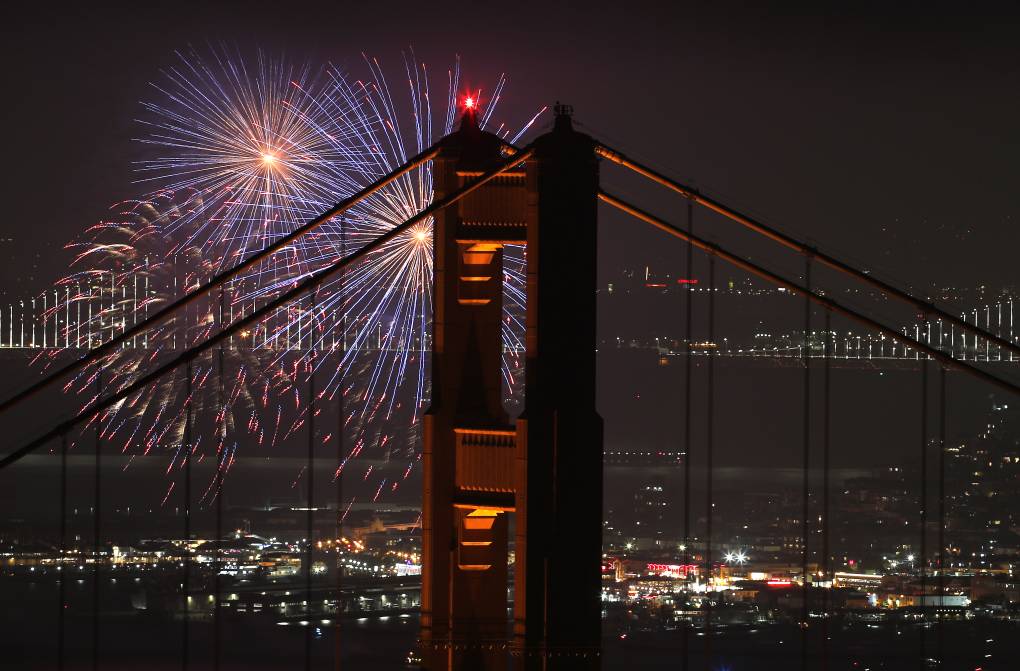
"caption": "Fireworks are launched during a Fourth of July celebration in San Francisco on Wednesday, July 4, 2018. ",
"credit": "Carlos Avila Gonzalez/The San Francisco Chronicle via Getty Images",
"altTag": "A display of fireworks at night by a bridge.",
"description": null,
"imgSizes": {
"medium": {
"file": "https://cdn.kqed.org/wp-content/uploads/sites/10/2024/07/GettyImages-1409046890-800x526.jpg",
"width": 800,
"height": 526,
"mimeType": "image/jpeg"
},
"large": {
"file": "https://cdn.kqed.org/wp-content/uploads/sites/10/2024/07/GettyImages-1409046890-1020x671.jpg",
"width": 1020,
"height": 671,
"mimeType": "image/jpeg"
},
"thumbnail": {
"file": "https://cdn.kqed.org/wp-content/uploads/sites/10/2024/07/GettyImages-1409046890-160x105.jpg",
"width": 160,
"height": 105,
"mimeType": "image/jpeg"
},
"1536x1536": {
"file": "https://cdn.kqed.org/wp-content/uploads/sites/10/2024/07/GettyImages-1409046890-1536x1010.jpg",
"width": 1536,
"height": 1010,
"mimeType": "image/jpeg"
},
"2048x2048": {
"file": "https://cdn.kqed.org/wp-content/uploads/sites/10/2024/07/GettyImages-1409046890-2048x1347.jpg",
"width": 2048,
"height": 1347,
"mimeType": "image/jpeg"
},
"post-thumbnail": {
"file": "https://cdn.kqed.org/wp-content/uploads/sites/10/2024/07/GettyImages-1409046890-672x372.jpg",
"width": 672,
"height": 372,
"mimeType": "image/jpeg"
},
"twentyfourteen-full-width": {
"file": "https://cdn.kqed.org/wp-content/uploads/sites/10/2024/07/GettyImages-1409046890-1038x576.jpg",
"width": 1038,
"height": 576,
"mimeType": "image/jpeg"
},
"full-width": {
"file": "https://cdn.kqed.org/wp-content/uploads/sites/10/2024/07/GettyImages-1409046890-1920x1263.jpg",
"width": 1920,
"height": 1263,
"mimeType": "image/jpeg"
},
"kqedFullSize": {
"file": "https://cdn.kqed.org/wp-content/uploads/sites/10/2024/07/GettyImages-1409046890-scaled.jpg",
"width": 2560,
"height": 1684
}
},
"isLoading": false,
"fetchFailed": false
},
"news_12046209": {
"type": "attachments",
"id": "news_12046209",
"meta": {
"index": "attachments_1716263798",
"site": "news",
"id": "12046209",
"found": true
},
"title": "IMG_1062",
"publishDate": 1750976420,
"status": "inherit",
"parent": 12045988,
"modified": 1750976436,
"caption": null,
"credit": "Illustration by Anna Vignet",
"altTag": null,
"description": null,
"imgSizes": {
"medium": {
"file": "https://cdn.kqed.org/wp-content/uploads/sites/10/2025/06/IMG_1062-2000x1500.jpg",
"width": 2000,
"height": 1500,
"mimeType": "image/jpeg"
},
"large": {
"file": "https://cdn.kqed.org/wp-content/uploads/sites/10/2025/06/IMG_1062-2000x1500.jpg",
"width": 2000,
"height": 1500,
"mimeType": "image/jpeg"
},
"thumbnail": {
"file": "https://cdn.kqed.org/wp-content/uploads/sites/10/2025/06/IMG_1062-160x120.jpg",
"width": 160,
"height": 120,
"mimeType": "image/jpeg"
},
"1536x1536": {
"file": "https://cdn.kqed.org/wp-content/uploads/sites/10/2025/06/IMG_1062-1536x1152.jpg",
"width": 1536,
"height": 1152,
"mimeType": "image/jpeg"
},
"2048x2048": {
"file": "https://cdn.kqed.org/wp-content/uploads/sites/10/2025/06/IMG_1062-2048x1536.jpg",
"width": 2048,
"height": 1536,
"mimeType": "image/jpeg"
},
"post-thumbnail": {
"file": "https://cdn.kqed.org/wp-content/uploads/sites/10/2025/06/IMG_1062-672x372.jpg",
"width": 672,
"height": 372,
"mimeType": "image/jpeg"
},
"twentyfourteen-full-width": {
"file": "https://cdn.kqed.org/wp-content/uploads/sites/10/2025/06/IMG_1062-1038x576.jpg",
"width": 1038,
"height": 576,
"mimeType": "image/jpeg"
},
"full-width": {
"file": "https://cdn.kqed.org/wp-content/uploads/sites/10/2025/06/IMG_1062-2000x1500.jpg",
"width": 2000,
"height": 1500,
"mimeType": "image/jpeg"
},
"kqedFullSize": {
"file": "https://cdn.kqed.org/wp-content/uploads/sites/10/2025/06/IMG_1062.jpg",
"width": 2560,
"height": 1920
}
},
"isLoading": false,
"fetchFailed": false
},
"news_12046186": {
"type": "attachments",
"id": "news_12046186",
"meta": {
"index": "attachments_1716263798",
"site": "news",
"id": "12046186",
"found": true
},
"title": "Travel Destination: Western USA",
"publishDate": 1750972276,
"status": "inherit",
"parent": 12046147,
"modified": 1750972326,
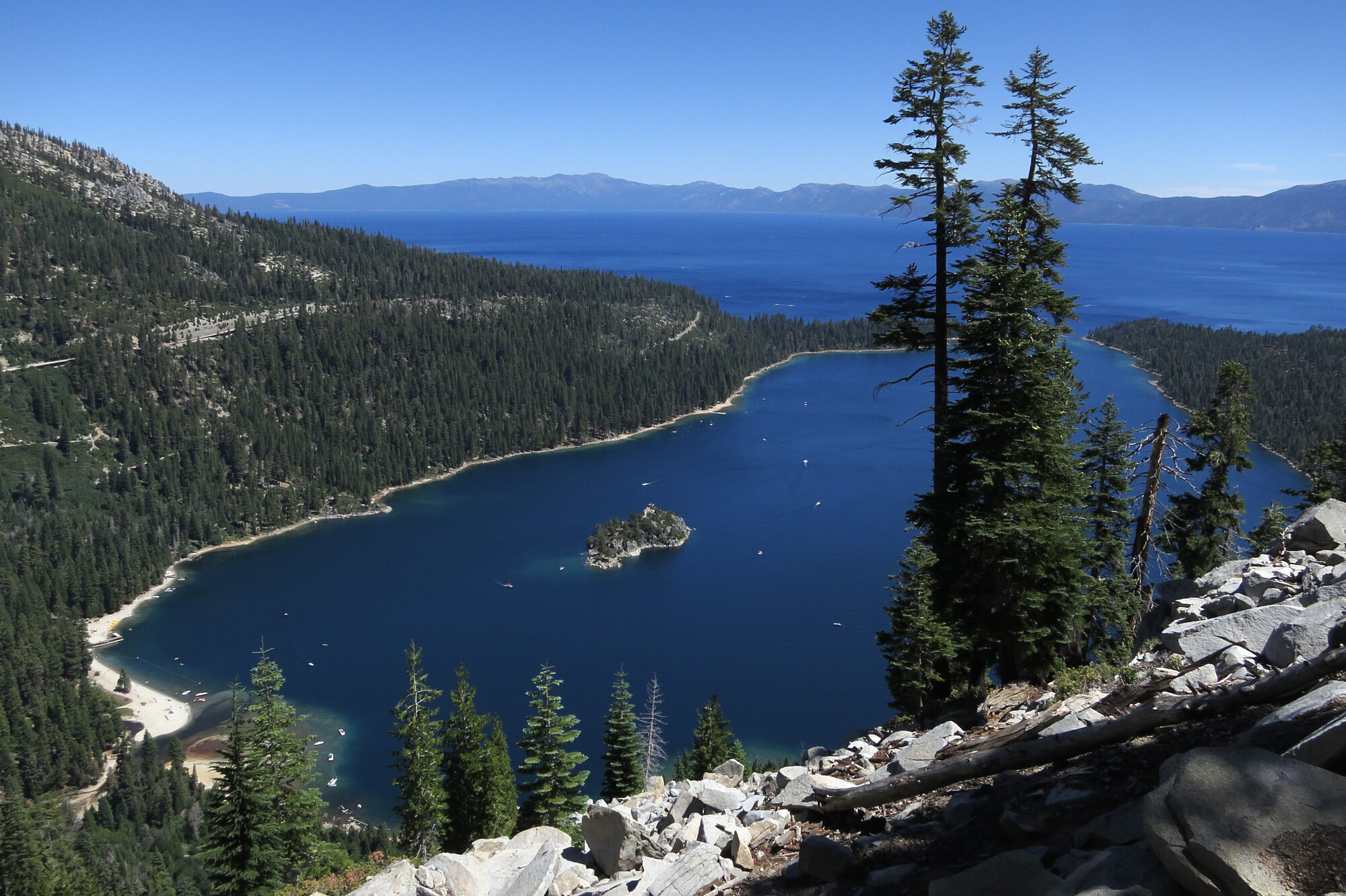
"caption": "Emerald Bay lies under blue skies at Lake Tahoe on July 23, 2014 near South Lake Tahoe.",
"credit": "Sean Gallup/Getty Images",
"altTag": null,
"description": null,
"imgSizes": {
"thumbnail": {
"file": "https://cdn.kqed.org/wp-content/uploads/sites/10/2025/06/452872414_qed-160x107.jpg",
"width": 160,
"height": 107,
"mimeType": "image/jpeg"
},
"1536x1536": {
"file": "https://cdn.kqed.org/wp-content/uploads/sites/10/2025/06/452872414_qed-1536x1023.jpg",
"width": 1536,
"height": 1023,
"mimeType": "image/jpeg"
},
"post-thumbnail": {
"file": "https://cdn.kqed.org/wp-content/uploads/sites/10/2025/06/452872414_qed-672x372.jpg",
"width": 672,
"height": 372,
"mimeType": "image/jpeg"
},
"twentyfourteen-full-width": {
"file": "https://cdn.kqed.org/wp-content/uploads/sites/10/2025/06/452872414_qed-1038x576.jpg",
"width": 1038,
"height": 576,
"mimeType": "image/jpeg"
},
"kqedFullSize": {
"file": "https://cdn.kqed.org/wp-content/uploads/sites/10/2025/06/452872414_qed.jpg",
"width": 2000,
"height": 1332
}
},
"isLoading": false,
"fetchFailed": false
},
"news_12045076": {
"type": "attachments",
"id": "news_12045076",
"meta": {
"index": "attachments_1716263798",
"site": "news",
"id": "12045076",
"found": true
},
"title": "things-to-do-bay-area",
"publishDate": 1750350037,
"status": "inherit",
"parent": 12045070,
"modified": 1750452865,
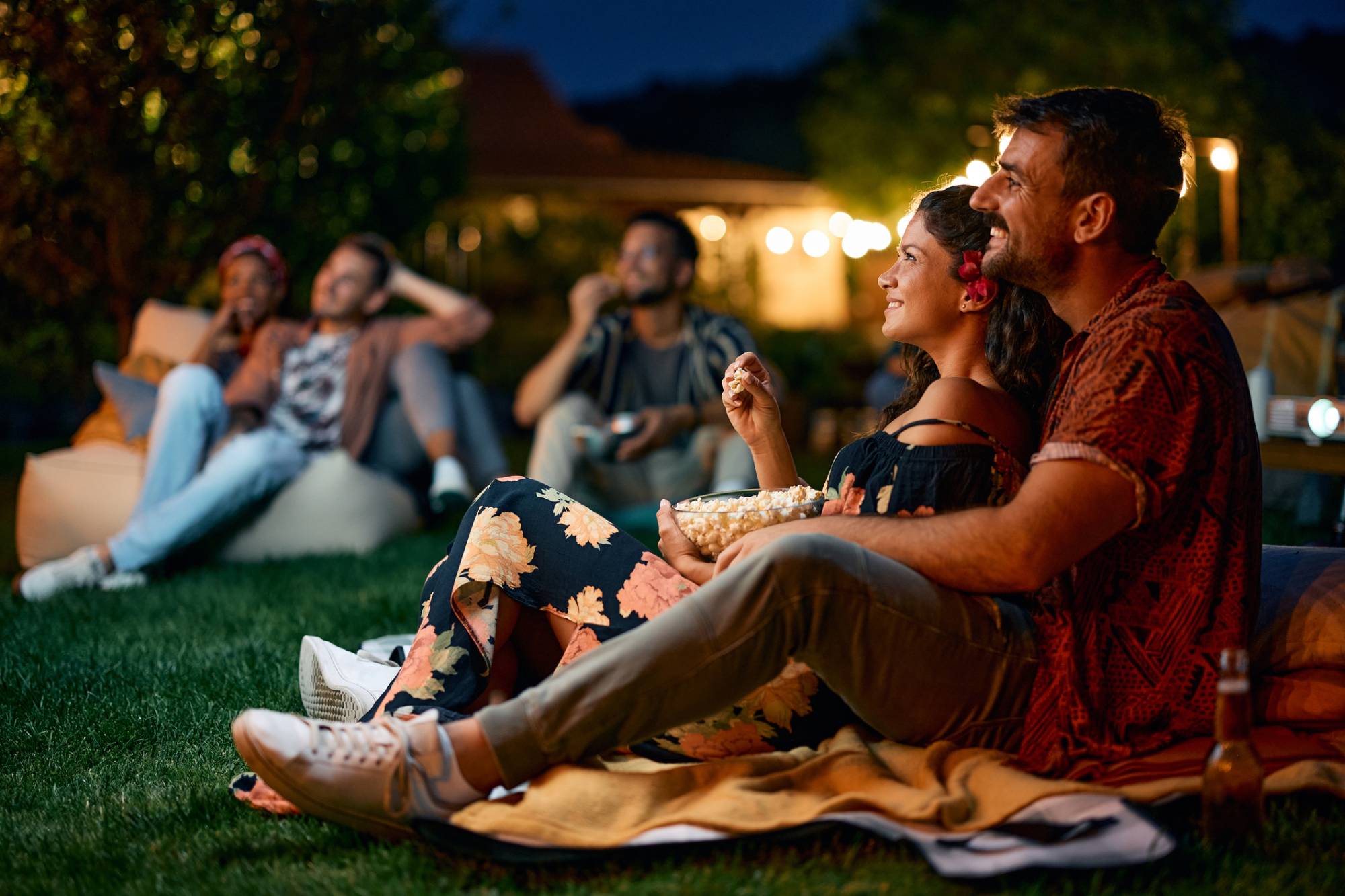
"caption": "Many cities and counties across the Bay Area are hosting their own film series in local parks and public spaces, which are generally free. ",
"credit": "iStock/Getty Images Plus",
"altTag": null,
"description": null,
"imgSizes": {
"medium": {
"file": "https://cdn.kqed.org/wp-content/uploads/sites/10/2025/06/GettyImages-2063451217-2000x1333.jpg",
"width": 2000,
"height": 1333,
"mimeType": "image/jpeg"
},
"large": {
"file": "https://cdn.kqed.org/wp-content/uploads/sites/10/2025/06/GettyImages-2063451217-2000x1333.jpg",
"width": 2000,
"height": 1333,
"mimeType": "image/jpeg"
},
"thumbnail": {
"file": "https://cdn.kqed.org/wp-content/uploads/sites/10/2025/06/GettyImages-2063451217-160x107.jpg",
"width": 160,
"height": 107,
"mimeType": "image/jpeg"
},
"1536x1536": {
"file": "https://cdn.kqed.org/wp-content/uploads/sites/10/2025/06/GettyImages-2063451217-1536x1024.jpg",
"width": 1536,
"height": 1024,
"mimeType": "image/jpeg"
},
"2048x2048": {
"file": "https://cdn.kqed.org/wp-content/uploads/sites/10/2025/06/GettyImages-2063451217-2048x1365.jpg",
"width": 2048,
"height": 1365,
"mimeType": "image/jpeg"
},
"post-thumbnail": {
"file": "https://cdn.kqed.org/wp-content/uploads/sites/10/2025/06/GettyImages-2063451217-672x372.jpg",
"width": 672,
"height": 372,
"mimeType": "image/jpeg"
},
"twentyfourteen-full-width": {
"file": "https://cdn.kqed.org/wp-content/uploads/sites/10/2025/06/GettyImages-2063451217-1038x576.jpg",
"width": 1038,
"height": 576,
"mimeType": "image/jpeg"
},
"full-width": {
"file": "https://cdn.kqed.org/wp-content/uploads/sites/10/2025/06/GettyImages-2063451217-2000x1333.jpg",
"width": 2000,
"height": 1333,
"mimeType": "image/jpeg"
},
"kqedFullSize": {
"file": "https://cdn.kqed.org/wp-content/uploads/sites/10/2025/06/GettyImages-2063451217.jpg",
"width": 2121,
"height": 1414
}
},
"isLoading": false,
"fetchFailed": false
},
"news_12045063": {
"type": "attachments",
"id": "news_12045063",
"meta": {
"index": "attachments_1716263798",
"site": "news",
"id": "12045063",
"found": true
},
"title": "things-to-do-with-kids-bay-area",
"publishDate": 1750347778,
"status": "inherit",
"parent": 12045055,
"modified": 1750452471,
"caption": "This summer the Bay Area will be spoiled for options when it comes to outdoor movie screenings for the kids. ",
"credit": "iStock/Getty Images Plus",
"altTag": null,
"description": null,
"imgSizes": {
"medium": {
"file": "https://cdn.kqed.org/wp-content/uploads/sites/10/2025/06/GettyImages-1450590312-2000x1334.jpg",
"width": 2000,
"height": 1334,
"mimeType": "image/jpeg"
},
"large": {
"file": "https://cdn.kqed.org/wp-content/uploads/sites/10/2025/06/GettyImages-1450590312-2000x1334.jpg",
"width": 2000,
"height": 1334,
"mimeType": "image/jpeg"
},
"thumbnail": {
"file": "https://cdn.kqed.org/wp-content/uploads/sites/10/2025/06/GettyImages-1450590312-160x107.jpg",
"width": 160,
"height": 107,
"mimeType": "image/jpeg"
},
"1536x1536": {
"file": "https://cdn.kqed.org/wp-content/uploads/sites/10/2025/06/GettyImages-1450590312-1536x1024.jpg",
"width": 1536,
"height": 1024,
"mimeType": "image/jpeg"
},
"2048x2048": {
"file": "https://cdn.kqed.org/wp-content/uploads/sites/10/2025/06/GettyImages-1450590312-2048x1366.jpg",
"width": 2048,
"height": 1366,
"mimeType": "image/jpeg"
},
"post-thumbnail": {
"file": "https://cdn.kqed.org/wp-content/uploads/sites/10/2025/06/GettyImages-1450590312-672x372.jpg",
"width": 672,
"height": 372,
"mimeType": "image/jpeg"
},
"twentyfourteen-full-width": {
"file": "https://cdn.kqed.org/wp-content/uploads/sites/10/2025/06/GettyImages-1450590312-1038x576.jpg",
"width": 1038,
"height": 576,
"mimeType": "image/jpeg"
},
"full-width": {
"file": "https://cdn.kqed.org/wp-content/uploads/sites/10/2025/06/GettyImages-1450590312-2000x1334.jpg",
"width": 2000,
"height": 1334,
"mimeType": "image/jpeg"
},
"kqedFullSize": {
"file": "https://cdn.kqed.org/wp-content/uploads/sites/10/2025/06/GettyImages-1450590312.jpg",
"width": 2120,
"height": 1414
}
},
"isLoading": false,
"fetchFailed": false
},
"news_12044408": {
"type": "attachments",
"id": "news_12044408",
"meta": {
"index": "attachments_1716263798",
"site": "news",
"id": "12044408",
"found": true
},
"title": "inntown-3",
"publishDate": 1749860749,
"status": "inherit",
"parent": 12044161,
"modified": 1749860817,
"caption": "Glamping tents at Inn Town Campground in Nevada City feature balconies, electricity, linens and fans. ",
"credit": "Courtesy of Inn Town Campground",
"altTag": null,
"description": null,
"imgSizes": {
"medium": {
"file": "https://cdn.kqed.org/wp-content/uploads/sites/10/2025/06/inntown-3-2000x1333.jpg",
"width": 2000,
"height": 1333,
"mimeType": "image/jpeg"
},
"large": {
"file": "https://cdn.kqed.org/wp-content/uploads/sites/10/2025/06/inntown-3-2000x1333.jpg",
"width": 2000,
"height": 1333,
"mimeType": "image/jpeg"
},
"thumbnail": {
"file": "https://cdn.kqed.org/wp-content/uploads/sites/10/2025/06/inntown-3-160x107.jpg",
"width": 160,
"height": 107,
"mimeType": "image/jpeg"
},
"1536x1536": {
"file": "https://cdn.kqed.org/wp-content/uploads/sites/10/2025/06/inntown-3-1536x1024.jpg",
"width": 1536,
"height": 1024,
"mimeType": "image/jpeg"
},
"2048x2048": {
"file": "https://cdn.kqed.org/wp-content/uploads/sites/10/2025/06/inntown-3-2048x1365.jpg",
"width": 2048,
"height": 1365,
"mimeType": "image/jpeg"
},
"post-thumbnail": {
"file": "https://cdn.kqed.org/wp-content/uploads/sites/10/2025/06/inntown-3-672x372.jpg",
"width": 672,
"height": 372,
"mimeType": "image/jpeg"
},
"twentyfourteen-full-width": {
"file": "https://cdn.kqed.org/wp-content/uploads/sites/10/2025/06/inntown-3-1038x576.jpg",
"width": 1038,
"height": 576,
"mimeType": "image/jpeg"
},
"full-width": {
"file": "https://cdn.kqed.org/wp-content/uploads/sites/10/2025/06/inntown-3-2000x1333.jpg",
"width": 2000,
"height": 1333,
"mimeType": "image/jpeg"
},
"kqedFullSize": {
"file": "https://cdn.kqed.org/wp-content/uploads/sites/10/2025/06/inntown-3-scaled-e1755278420216.jpg",
"width": 2000,
"height": 1334
}
},
"isLoading": false,
"fetchFailed": false
},
"news_12034319": {
"type": "attachments",
"id": "news_12034319",
"meta": {
"index": "attachments_1716263798",
"site": "news",
"id": "12034319",
"found": true
},
"title": "024_SanFrancisco_Housing_07292021_qed",
"publishDate": 1743629527,
"status": "inherit",
"parent": 12034212,
"modified": 1749763097,
"caption": "A 'For Rent' sign hangs in the window of an apartment building in Nob Hill in San Francisco on July 29, 2021.",
"credit": "Beth LaBerge/KQED",
"altTag": null,
"description": null,
"imgSizes": {
"medium": {
"file": "https://cdn.kqed.org/wp-content/uploads/sites/10/2025/04/024_SanFrancisco_Housing_07292021_qed-800x533.jpg",
"width": 800,
"height": 533,
"mimeType": "image/jpeg"
},
"large": {
"file": "https://cdn.kqed.org/wp-content/uploads/sites/10/2025/04/024_SanFrancisco_Housing_07292021_qed-1020x680.jpg",
"width": 1020,
"height": 680,
"mimeType": "image/jpeg"
},
"thumbnail": {
"file": "https://cdn.kqed.org/wp-content/uploads/sites/10/2025/04/024_SanFrancisco_Housing_07292021_qed-160x107.jpg",
"width": 160,
"height": 107,
"mimeType": "image/jpeg"
},
"1536x1536": {
"file": "https://cdn.kqed.org/wp-content/uploads/sites/10/2025/04/024_SanFrancisco_Housing_07292021_qed-1536x1024.jpg",
"width": 1536,
"height": 1024,
"mimeType": "image/jpeg"
},
"post-thumbnail": {
"file": "https://cdn.kqed.org/wp-content/uploads/sites/10/2025/04/024_SanFrancisco_Housing_07292021_qed-672x372.jpg",
"width": 672,
"height": 372,
"mimeType": "image/jpeg"
},
"twentyfourteen-full-width": {
"file": "https://cdn.kqed.org/wp-content/uploads/sites/10/2025/04/024_SanFrancisco_Housing_07292021_qed-1038x576.jpg",
"width": 1038,
"height": 576,
"mimeType": "image/jpeg"
},
"full-width": {
"file": "https://cdn.kqed.org/wp-content/uploads/sites/10/2025/04/024_SanFrancisco_Housing_07292021_qed-1920x1280.jpg",
"width": 1920,
"height": 1280,
"mimeType": "image/jpeg"
},
"kqedFullSize": {
"file": "https://cdn.kqed.org/wp-content/uploads/sites/10/2025/04/024_SanFrancisco_Housing_07292021_qed.jpg",
"width": 2000,
"height": 1333
}
},
"isLoading": false,
"fetchFailed": false
},
"news_12007626": {
"type": "attachments",
"id": "news_12007626",
"meta": {
"index": "attachments_1716263798",
"site": "news",
"id": "12007626",
"found": true
},
"title": "ice-protests-ai-police",
"publishDate": 1727911196,
"status": "inherit",
"parent": 0,
"modified": 1749858352,
"caption": "East Palo Alto Police Officer Wendy Venegas reviews body camera footage and uses Axon's Draft One AI-based system to draft reports based on the audio from the camera at police headquarters in East Palo Alto on Sept. 23, 2024.",
"credit": "Martin do Nascimento/KQED",
"altTag": null,
"description": null,
"imgSizes": {
"medium": {
"file": "https://cdn.kqed.org/wp-content/uploads/sites/10/2024/10/240923-AI-IN-POLICING-MD-13_qed-800x533.jpg",
"width": 800,
"height": 533,
"mimeType": "image/jpeg"
},
"large": {
"file": "https://cdn.kqed.org/wp-content/uploads/sites/10/2024/10/240923-AI-IN-POLICING-MD-13_qed-1020x680.jpg",
"width": 1020,
"height": 680,
"mimeType": "image/jpeg"
},
"thumbnail": {
"file": "https://cdn.kqed.org/wp-content/uploads/sites/10/2024/10/240923-AI-IN-POLICING-MD-13_qed-160x107.jpg",
"width": 160,
"height": 107,
"mimeType": "image/jpeg"
},
"1536x1536": {
"file": "https://cdn.kqed.org/wp-content/uploads/sites/10/2024/10/240923-AI-IN-POLICING-MD-13_qed-1536x1024.jpg",
"width": 1536,
"height": 1024,
"mimeType": "image/jpeg"
},
"post-thumbnail": {
"file": "https://cdn.kqed.org/wp-content/uploads/sites/10/2024/10/240923-AI-IN-POLICING-MD-13_qed-672x372.jpg",
"width": 672,
"height": 372,
"mimeType": "image/jpeg"
},
"twentyfourteen-full-width": {
"file": "https://cdn.kqed.org/wp-content/uploads/sites/10/2024/10/240923-AI-IN-POLICING-MD-13_qed-1038x576.jpg",
"width": 1038,
"height": 576,
"mimeType": "image/jpeg"
},
"full-width": {
"file": "https://cdn.kqed.org/wp-content/uploads/sites/10/2024/10/240923-AI-IN-POLICING-MD-13_qed-1920x1280.jpg",
"width": 1920,
"height": 1280,
"mimeType": "image/jpeg"
},
"kqedFullSize": {
"file": "https://cdn.kqed.org/wp-content/uploads/sites/10/2024/10/240923-AI-IN-POLICING-MD-13_qed.jpg",
"width": 2000,
"height": 1333
}
},
"isLoading": false,
"fetchFailed": false
},
"news_12044216": {
"type": "attachments",
"id": "news_12044216",
"meta": {
"index": "attachments_1716263798",
"site": "news",
"id": "12044216",
"found": true
},
"title": "Berkeley, California",
"publishDate": 1749839725,
"status": "inherit",
"parent": 12044169,
"modified": 1749841644,
"caption": "A hiker's wide-brimmed hat is seen in the foreground, with a view of Berkeley, Oakland and San Francisco, seen from atop the Clark Kerr Fire Trail, behind the Clark Kerr Campus at the University of California, Berkeley, on Oct. 18, 2024, in Berkeley. ",
"credit": "Jay L. Clendenin/Getty Images",
"altTag": null,
"description": null,
"imgSizes": {
"thumbnail": {
"file": "https://cdn.kqed.org/wp-content/uploads/sites/10/2025/06/GettyImages-2210191440-160x107.jpg",
"width": 160,
"height": 107,
"mimeType": "image/jpeg"
},
"post-thumbnail": {
"file": "https://cdn.kqed.org/wp-content/uploads/sites/10/2025/06/GettyImages-2210191440-672x372.jpg",
"width": 672,
"height": 372,
"mimeType": "image/jpeg"
},
"twentyfourteen-full-width": {
"file": "https://cdn.kqed.org/wp-content/uploads/sites/10/2025/06/GettyImages-2210191440-1024x576.jpg",
"width": 1024,
"height": 576,
"mimeType": "image/jpeg"
},
"kqedFullSize": {
"file": "https://cdn.kqed.org/wp-content/uploads/sites/10/2025/06/GettyImages-2210191440.jpg",
"width": 1024,
"height": 683
}
},
"isLoading": false,
"fetchFailed": false
},
"news_12041393": {
"type": "attachments",
"id": "news_12041393",
"meta": {
"index": "attachments_1716263798",
"site": "news",
"id": "12041393",
"found": true
},
"title": "20250522_GGPMEMORIALGARDEN_GC-22-KQED",
"publishDate": 1747954287,
"status": "inherit",
"parent": 0,
"modified": 1747954375,
"caption": "Visitors look at the names inscribed at the Bay Area Young Survivors Breast Cancer Memorial Garden in Golden Gate Park in San Francisco on May 22, 2025.",
"credit": "Gina Castro/KQED",
"altTag": null,
"description": null,
"imgSizes": {
"medium": {
"file": "https://cdn.kqed.org/wp-content/uploads/sites/10/2025/05/20250522_GGPMEMORIALGARDEN_GC-22-KQED-800x533.jpg",
"width": 800,
"height": 533,
"mimeType": "image/jpeg"
},
"large": {
"file": "https://cdn.kqed.org/wp-content/uploads/sites/10/2025/05/20250522_GGPMEMORIALGARDEN_GC-22-KQED-1020x680.jpg",
"width": 1020,
"height": 680,
"mimeType": "image/jpeg"
},
"thumbnail": {
"file": "https://cdn.kqed.org/wp-content/uploads/sites/10/2025/05/20250522_GGPMEMORIALGARDEN_GC-22-KQED-160x107.jpg",
"width": 160,
"height": 107,
"mimeType": "image/jpeg"
},
"1536x1536": {
"file": "https://cdn.kqed.org/wp-content/uploads/sites/10/2025/05/20250522_GGPMEMORIALGARDEN_GC-22-KQED-1536x1024.jpg",
"width": 1536,
"height": 1024,
"mimeType": "image/jpeg"
},
"post-thumbnail": {
"file": "https://cdn.kqed.org/wp-content/uploads/sites/10/2025/05/20250522_GGPMEMORIALGARDEN_GC-22-KQED-672x372.jpg",
"width": 672,
"height": 372,
"mimeType": "image/jpeg"
},
"twentyfourteen-full-width": {
"file": "https://cdn.kqed.org/wp-content/uploads/sites/10/2025/05/20250522_GGPMEMORIALGARDEN_GC-22-KQED-1038x576.jpg",
"width": 1038,
"height": 576,
"mimeType": "image/jpeg"
},
"full-width": {
"file": "https://cdn.kqed.org/wp-content/uploads/sites/10/2025/05/20250522_GGPMEMORIALGARDEN_GC-22-KQED-1920x1280.jpg",
"width": 1920,
"height": 1280,
"mimeType": "image/jpeg"
},
"kqedFullSize": {
"file": "https://cdn.kqed.org/wp-content/uploads/sites/10/2025/05/20250522_GGPMEMORIALGARDEN_GC-22-KQED.jpg",
"width": 2000,
"height": 1333
}
},
"isLoading": false,
"fetchFailed": false
},
"news_12043504": {
"type": "attachments",
"id": "news_12043504",
"meta": {
"index": "attachments_1716263798",
"site": "news",
"id": "12043504",
"found": true
},
"title": "250609-SF IMMIGRATION PROTESTS-MD-18-KQED",
"publishDate": 1749533101,
"status": "inherit",
"parent": 0,
"modified": 1749533446,
"caption": "Carlos Camplis and other protestors rally in the Mission District in San Francisco in opposition to the Trump Administration's immigration policy and enforcement on June 9, 2025.",
"credit": "Martin do Nascimento/KQED",
"altTag": null,
"description": null,
"imgSizes": {
"thumbnail": {
"file": "https://cdn.kqed.org/wp-content/uploads/sites/10/2025/06/250609-SF-IMMIGRATION-PROTESTS-MD-18-KQED-160x107.jpg",
"width": 160,
"height": 107,
"mimeType": "image/jpeg"
},
"1536x1536": {
"file": "https://cdn.kqed.org/wp-content/uploads/sites/10/2025/06/250609-SF-IMMIGRATION-PROTESTS-MD-18-KQED-1536x1025.jpg",
"width": 1536,
"height": 1025,
"mimeType": "image/jpeg"
},
"post-thumbnail": {
"file": "https://cdn.kqed.org/wp-content/uploads/sites/10/2025/06/250609-SF-IMMIGRATION-PROTESTS-MD-18-KQED-672x372.jpg",
"width": 672,
"height": 372,
"mimeType": "image/jpeg"
},
"twentyfourteen-full-width": {
"file": "https://cdn.kqed.org/wp-content/uploads/sites/10/2025/06/250609-SF-IMMIGRATION-PROTESTS-MD-18-KQED-1038x576.jpg",
"width": 1038,
"height": 576,
"mimeType": "image/jpeg"
},
"kqedFullSize": {
"file": "https://cdn.kqed.org/wp-content/uploads/sites/10/2025/06/250609-SF-IMMIGRATION-PROTESTS-MD-18-KQED.jpg",
"width": 2000,
"height": 1334
}
},
"isLoading": false,
"fetchFailed": false
},
"news_12043802": {
"type": "attachments",
"id": "news_12043802",
"meta": {
"index": "attachments_1716263798",
"site": "news",
"id": "12043802",
"found": true
},
"title": "pick-your-own-fruit-bay-area-picking",
"publishDate": 1749666526,
"status": "inherit",
"parent": 12043762,
"modified": 1749668404,
"caption": "Cherries, strawberries, mulberries and peaches taste so much better when you get to pick them yourself. Here’s a list of u-Pick farms for you to explore this summer.",
"credit": "Liliya Krueger for Getty",
"altTag": null,
"description": null,
"imgSizes": {
"medium": {
"file": "https://cdn.kqed.org/wp-content/uploads/sites/10/2025/06/GettyImages-1399700616-2000x1333.jpg",
"width": 2000,
"height": 1333,
"mimeType": "image/jpeg"
},
"large": {
"file": "https://cdn.kqed.org/wp-content/uploads/sites/10/2025/06/GettyImages-1399700616-2000x1333.jpg",
"width": 2000,
"height": 1333,
"mimeType": "image/jpeg"
},
"thumbnail": {
"file": "https://cdn.kqed.org/wp-content/uploads/sites/10/2025/06/GettyImages-1399700616-160x107.jpg",
"width": 160,
"height": 107,
"mimeType": "image/jpeg"
},
"1536x1536": {
"file": "https://cdn.kqed.org/wp-content/uploads/sites/10/2025/06/GettyImages-1399700616-1536x1024.jpg",
"width": 1536,
"height": 1024,
"mimeType": "image/jpeg"
},
"2048x2048": {
"file": "https://cdn.kqed.org/wp-content/uploads/sites/10/2025/06/GettyImages-1399700616-2048x1365.jpg",
"width": 2048,
"height": 1365,
"mimeType": "image/jpeg"
},
"post-thumbnail": {
"file": "https://cdn.kqed.org/wp-content/uploads/sites/10/2025/06/GettyImages-1399700616-672x372.jpg",
"width": 672,
"height": 372,
"mimeType": "image/jpeg"
},
"twentyfourteen-full-width": {
"file": "https://cdn.kqed.org/wp-content/uploads/sites/10/2025/06/GettyImages-1399700616-1038x576.jpg",
"width": 1038,
"height": 576,
"mimeType": "image/jpeg"
},
"full-width": {
"file": "https://cdn.kqed.org/wp-content/uploads/sites/10/2025/06/GettyImages-1399700616-2000x1333.jpg",
"width": 2000,
"height": 1333,
"mimeType": "image/jpeg"
},
"kqedFullSize": {
"file": "https://cdn.kqed.org/wp-content/uploads/sites/10/2025/06/GettyImages-1399700616-scaled-e1749666550276.jpg",
"width": 2000,
"height": 1334
}
},
"isLoading": false,
"fetchFailed": false
}
},
"audioPlayerReducer": {
"postId": "stream_live",
"isPaused": true,
"isPlaying": false,
"pfsActive": false,
"pledgeModalIsOpen": true,
"playerDrawerIsOpen": false,
"liveAudioPlayStartedAt": 0,
"liveAudioPlayContext": ""
},
"authorsReducer": {
"byline_news_12045728": {
"type": "authors",
"id": "byline_news_12045728",
"meta": {
"override": true
},
"slug": "byline_news_12045728",
"name": " \u003ca href=\"https://www.kqed.org/author/carlysevern\">Carly Severn\u003c/a>, \u003ca href=\"https://www.kqed.org/author/agarces\">Audrey Garces\u003c/a>, and \u003ca href=\"https://www.kqed.org/author/nkhan\">Nisa Khan\u003c/a>",
"isLoading": false
},
"carlysevern": {
"type": "authors",
"id": "3243",
"meta": {
"index": "authors_1716337520",
"id": "3243",
"found": true
},
"name": "Carly Severn",
"firstName": "Carly",
"lastName": "Severn",
"slug": "carlysevern",
"email": "csevern@kqed.org",
"display_author_email": false,
"staff_mastheads": [
"news"
],
"title": "Senior Editor, Audience News ",
"bio": "Carly is KQED's Senior Editor of Audience News on the Digital News team, and has reported for the California Report Magazine, Bay Curious and KQED Arts. She's formerly the host of \u003ca href=\"http://ww2.kqed.org/pop/category/the-cooler/\" rel=\"noopener noreferrer\">The Cooler\u003c/a> podcast.",
"avatar": "https://secure.gravatar.com/avatar/54037bf5c128fe678f0ef26cec97a93f2e7f220a22d7285703328f12c42c1b1d?s=600&d=blank&r=g",
"twitter": "teacupinthebay",
"bluesky": null,
"facebook": null,
"instagram": null,
"linkedin": null,
"sites": [
{
"site": "",
"roles": [
"editor"
]
},
{
"site": "arts",
"roles": [
"editor"
]
},
{
"site": "news",
"roles": [
"administrator"
]
},
{
"site": "pop",
"roles": [
"editor"
]
},
{
"site": "futureofyou",
"roles": [
"editor"
]
},
{
"site": "about",
"roles": [
"administrator"
]
},
{
"site": "mindshift",
"roles": [
"editor"
]
},
{
"site": "bayareabites",
"roles": [
"editor"
]
},
{
"site": "stateofhealth",
"roles": [
"editor"
]
},
{
"site": "science",
"roles": [
"editor"
]
},
{
"site": "food",
"roles": [
"contributor"
]
},
{
"site": "forum",
"roles": [
"editor"
]
},
{
"site": "perspectives",
"roles": [
"administrator"
]
},
{
"site": "liveblog",
"roles": [
"editor"
]
}
],
"headData": {
"title": "Carly Severn | KQED",
"description": "Senior Editor, Audience News ",
"ogImgSrc": "https://secure.gravatar.com/avatar/54037bf5c128fe678f0ef26cec97a93f2e7f220a22d7285703328f12c42c1b1d?s=600&d=blank&r=g",
"twImgSrc": "https://secure.gravatar.com/avatar/54037bf5c128fe678f0ef26cec97a93f2e7f220a22d7285703328f12c42c1b1d?s=600&d=blank&r=g"
},
"isLoading": false,
"link": "/author/carlysevern"
},
"smohamad": {
"type": "authors",
"id": "11631",
"meta": {
"index": "authors_1716337520",
"id": "11631",
"found": true
},
"name": "Sarah Mohamad",
"firstName": "Sarah",
"lastName": "Mohamad",
"slug": "smohamad",
"email": "smohamad@KQED.org",
"display_author_email": true,
"staff_mastheads": [],
"title": "Engagement Producer and Reporter, KQED Science",
"bio": "Sarah Mohamad is an audience engagement reporter and producer for KQED Science. She reports on audience-focused science and environment stories and manages the team's social media, newsletter, and engagement efforts. Prior to this role, she played a key role as project manager for NSF's \u003ca href=\"https://www.kqed.org/crackingthecode\">\u003cem>Cracking the Code: Influencing Millennial Science Engagement\u003c/em> \u003c/a>audience research.",
"avatar": "https://secure.gravatar.com/avatar/e6224957cd82d015183756ddde1f928013a563d7ca2e4565f8c4de1ec64886c5?s=600&d=blank&r=g",
"twitter": "sarahkmohamad",
"bluesky": null,
"facebook": null,
"instagram": null,
"linkedin": null,
"sites": [
{
"site": "",
"roles": [
"editor"
]
},
{
"site": "arts",
"roles": [
"editor"
]
},
{
"site": "news",
"roles": [
"editor"
]
},
{
"site": "about",
"roles": [
"editor"
]
},
{
"site": "science",
"roles": [
"editor"
]
}
],
"headData": {
"title": "Sarah Mohamad | KQED",
"description": "Engagement Producer and Reporter, KQED Science",
"ogImgSrc": "https://secure.gravatar.com/avatar/e6224957cd82d015183756ddde1f928013a563d7ca2e4565f8c4de1ec64886c5?s=600&d=blank&r=g",
"twImgSrc": "https://secure.gravatar.com/avatar/e6224957cd82d015183756ddde1f928013a563d7ca2e4565f8c4de1ec64886c5?s=600&d=blank&r=g"
},
"isLoading": false,
"link": "/author/smohamad"
},
"ccabreralomeli": {
"type": "authors",
"id": "11708",
"meta": {
"index": "authors_1716337520",
"id": "11708",
"found": true
},
"name": "Carlos Cabrera-Lomelí",
"firstName": "Carlos",
"lastName": "Cabrera-Lomelí",
"slug": "ccabreralomeli",
"email": "ccabreralomeli@KQED.org",
"display_author_email": true,
"staff_mastheads": [
"news"
],
"title": "Community Reporter",
"bio": "Carlos Cabrera-Lomelí is a community reporter with KQED's digital engagement team. He also reports and co-produces for KQED's bilingual news hub KQED en Español. He grew up in San Francisco's Mission District and has previously worked with Univision, 48 Hills and REFORMA in Mexico City.",
"avatar": "https://secure.gravatar.com/avatar/c309be9665e484f887b818c89e273ecc673004f426f36b24d00a4d813a2e0518?s=600&d=blank&r=g",
"twitter": "@LomeliCabrera",
"bluesky": null,
"facebook": null,
"instagram": null,
"linkedin": null,
"sites": [
{
"site": "arts",
"roles": [
"editor"
]
},
{
"site": "news",
"roles": [
"editor"
]
},
{
"site": "about",
"roles": [
"editor"
]
},
{
"site": "science",
"roles": [
"editor"
]
},
{
"site": "perspectives",
"roles": [
"editor"
]
},
{
"site": "elections",
"roles": [
"editor"
]
},
{
"site": "liveblog",
"roles": [
"contributor"
]
}
],
"headData": {
"title": "Carlos Cabrera-Lomelí | KQED",
"description": "Community Reporter",
"ogImgSrc": "https://secure.gravatar.com/avatar/c309be9665e484f887b818c89e273ecc673004f426f36b24d00a4d813a2e0518?s=600&d=blank&r=g",
"twImgSrc": "https://secure.gravatar.com/avatar/c309be9665e484f887b818c89e273ecc673004f426f36b24d00a4d813a2e0518?s=600&d=blank&r=g"
},
"isLoading": false,
"link": "/author/ccabreralomeli"
},
"nkhan": {
"type": "authors",
"id": "11867",
"meta": {
"index": "authors_1716337520",
"id": "11867",
"found": true
},
"name": "Nisa Khan",
"firstName": "Nisa",
"lastName": "Khan",
"slug": "nkhan",
"email": "nkhan@kqed.org",
"display_author_email": false,
"staff_mastheads": [],
"title": "KQED Contributor",
"bio": "Nisa Khan is a reporter for KQED's Audience News Desk. She was formerly a data reporter at Michigan Radio. She earned a Bachelor of Science in Information from the University of Michigan and a Master of Arts in Communication from Stanford University.",
"avatar": "https://secure.gravatar.com/avatar/8720459eef081ff64582b3506b124d58523e80e120704a0cbd9892533c914991?s=600&d=blank&r=g",
"twitter": "mnisakhan",
"bluesky": null,
"facebook": null,
"instagram": null,
"linkedin": null,
"sites": [
{
"site": "arts",
"roles": [
"editor"
]
},
{
"site": "news",
"roles": [
"editor"
]
},
{
"site": "science",
"roles": [
"editor",
"author"
]
},
{
"site": "forum",
"roles": [
"editor"
]
},
{
"site": "liveblog",
"roles": [
"contributor"
]
}
],
"headData": {
"title": "Nisa Khan | KQED",
"description": "KQED Contributor",
"ogImgSrc": "https://secure.gravatar.com/avatar/8720459eef081ff64582b3506b124d58523e80e120704a0cbd9892533c914991?s=600&d=blank&r=g",
"twImgSrc": "https://secure.gravatar.com/avatar/8720459eef081ff64582b3506b124d58523e80e120704a0cbd9892533c914991?s=600&d=blank&r=g"
},
"isLoading": false,
"link": "/author/nkhan"
},
"sarahwright": {
"type": "authors",
"id": "11956",
"meta": {
"index": "authors_1716337520",
"id": "11956",
"found": true
},
"name": "Sarah Wright",
"firstName": "Sarah",
"lastName": "Wright",
"slug": "sarahwright",
"email": "swright@kqed.org",
"display_author_email": true,
"staff_mastheads": [],
"title": "Outdoors Engagement Reporter",
"bio": "Sarah Wright is KQED's Outdoors Engagement Reporter. Originally from Lake Tahoe, she completed a thru-hike of the Pacific Crest Trail in 2019 and was a U.S. Fulbright Program grantee to Argentina in 2023. Her journalism has appeared in The Guardian, The San Francisco Standard, The Palo Alto Weekly and the Half Moon Bay Review.",
"avatar": "https://secure.gravatar.com/avatar/c161a3d6441865cba25e6db4fa561099ad665799e9432e34da2b84d7e371524c?s=600&d=blank&r=g",
"twitter": null,
"bluesky": null,
"facebook": null,
"instagram": null,
"linkedin": null,
"sites": [
{
"site": "arts",
"roles": [
"editor"
]
},
{
"site": "news",
"roles": [
"editor"
]
},
{
"site": "science",
"roles": [
"contributor",
"author"
]
},
{
"site": "forum",
"roles": [
"editor"
]
}
],
"headData": {
"title": "Sarah Wright | KQED",
"description": "Outdoors Engagement Reporter",
"ogImgSrc": "https://secure.gravatar.com/avatar/c161a3d6441865cba25e6db4fa561099ad665799e9432e34da2b84d7e371524c?s=600&d=blank&r=g",
"twImgSrc": "https://secure.gravatar.com/avatar/c161a3d6441865cba25e6db4fa561099ad665799e9432e34da2b84d7e371524c?s=600&d=blank&r=g"
},
"isLoading": false,
"link": "/author/sarahwright"
}
},
"pagesReducer": {
"news_category_guides-and-explainers": {
"type": "terms",
"id": "news_34168",
"meta": {
"index": "terms_1716263798",
"site": "news",
"id": "34168",
"score": 14.406069
},
"name": "Guides and Explainers",
"slug": "guides-and-explainers",
"taxonomy": "category",
"description": null,
"featImg": null,
"headData": {
"title": "Guides and Explainers Archives | KQED News",
"description": null,
"ogTitle": null,
"ogDescription": null,
"ogImgId": null,
"twTitle": null,
"twDescription": null,
"twImgId": null
},
"ttid": 34185,
"isLoading": false,
"title": "Guides and Explainers",
"pageMeta": {
"site": "news",
"WpPageTemplate": "page-topic-editorial",
"currentPage": 26
},
"blocks": [
{
"blockName": "kqed/post-list",
"attrs": {
"layout": "cardArticle2",
"query": "posts/news?category=guides-and-explainers",
"seeMore": false,
"paginated": true,
"page": 26
}
},
{
"blockName": "kqed/ad"
}
]
}
},
"pfsSessionReducer": {},
"postsReducer": {
"stream_live": {
"type": "live",
"id": "stream_live",
"audioUrl": "https://streams.kqed.org/kqedradio",
"title": "Live Stream",
"excerpt": "Live Stream information currently unavailable.",
"link": "/radio",
"featImg": "",
"label": {
"name": "KQED Live",
"link": "/"
}
},
"stream_kqedNewscast": {
"type": "posts",
"id": "stream_kqedNewscast",
"audioUrl": "https://www.kqed.org/.stream/anon/radio/RDnews/newscast.mp3?_=1",
"title": "KQED Newscast",
"featImg": "",
"label": {
"name": "88.5 FM",
"link": "/"
}
},
"news_12045728": {
"type": "posts",
"id": "news_12045728",
"meta": {
"index": "posts_1716263798",
"site": "news",
"id": "12045728",
"score": null,
"sort": [
1751553059000
]
},
"guestAuthors": [],
"slug": "2025-fourth-of-july-fireworks-san-francisco-bay-area-near-me-friday-pets-ptsd",
"title": "2025 Fourth of July Fireworks in the Bay Area: Official Shows and Cancellations (Plus Safety, PTSD and Pets)",
"publishDate": 1751553059,
"format": "image",
"headTitle": "2025 Fourth of July Fireworks in the Bay Area: Official Shows and Cancellations (Plus Safety, PTSD and Pets) | KQED",
"labelTerm": {
"site": "news"
},
"content": "\u003cp>The Fourth of July weekend is here. And with it comes a whole host of official firework shows around the Bay Area.\u003c/p>\n\u003cp>One thing to know: Several official firework displays have now been canceled following\u003ca href=\"https://www.nbcnews.com/news/us-news/california-fireworks-warehouse-catches-fire-explodes-rcna216401\"> a huge explosion at a Yolo County firework storage facility,\u003c/a> which has left seven people unaccounted for.\u003c/p>\n\u003cp>After Tuesday’s fire northwest of Sacramento destroyed fireworks intended for use in several firework shows across the wider Bay Area this weekend, \u003ca href=\"https://www.kron4.com/news/bay-area/san-jose-4th-of-july-fireworks-at-lake-cunningham-canceled-due-to-yolo-county-explosion/\">San José announced the cancelation of the city’s Fourth of July fireworks show\u003c/a> at Lake Cunningham. Cloverdale and St. Helena have also canceled their official fireworks displays.\u003c/p>\n\u003cp>And if you’re planning on buying your own fireworks, be careful. Since unofficial fireworks can cause \u003ca href=\"https://readyforwildfire.org/prevent-wildfire/fireworks-safety/#:~:text=Fireworks%20are%20illegal%20in%20certain,fires%20throughout%20all%20of%20California.\">truly dangerous situations \u003c/a> — burning and seriously injuring people, sparking wildfires, and causing major property damage — fireworks are also banned in many parts of California.\u003c/p>\n\u003cp>In Contra Costa County for example, according to the Fire Protection District \u003ca href=\"https://www.cccfpd.org/cccfpd-july-4th-information/\">all fireworks are illegal\u003c/a>, even if they carry the “Safe and Sane” label. “Leave the fireworks shows to the pros this holiday and protect your home, family, and neighbors,” the district’s guidance urges. (\u003ca href=\"#fireworksillegal\">Read more on where fireworks are illegal in the Bay Area\u003c/a>.)\u003c/p>\n\u003cp>Keep reading for what to know about fireworks on the Fourth of July, 2025, from where you can safely view an official firework show, tips on comforting your pets, or navigating the holiday’s sights and sounds if you are living with post-traumatic stress disorder.\u003c/p>\n\u003cp>\u003cstrong>Jump straight to:\u003c/strong>\u003c/p>\n\u003cul>\n\u003cli>\u003cstrong>\u003ca href=\"#fireworkinjury\">The kinds of injuries doctors see every year from fireworks\u003c/a>\u003c/strong>\u003c/li>\n\u003cli>\u003cstrong>\u003ca href=\"#fireworksillegal\">Which fireworks are illegal in California\u003c/a>\u003c/strong>\u003c/li>\n\u003cli>\u003cstrong>\u003ca href=\"#ptsd\">Firework risks for people living with PTSD\u003c/a>\u003c/strong>\u003c/li>\n\u003cli>\u003cstrong>\u003ca href=\"#pets\">How to keep your pets calm on the Fourth of July\u003c/a>\u003c/strong>\u003c/li>\n\u003c/ul>\n\u003ch2>Fourth of July firework displays around the Bay Area\u003c/h2>\n\u003cp>Fourth of July this year falls on a Friday, so most firework displays are taking place on the actual day, rather than later in the holiday weekend.\u003c/p>\n\u003cp>Several events may require ticketing in advance. Be sure to check the date and time of your show before heading out in case of any changes or updates to the programming.\u003c/p>\n\u003cp>Stay up-to-date with cancelations, too, following Tuesday’s huge explosion at a fireworks storage facility in Yolo County that has left seven people still unaccounted for, and was the intended supplier of several Bay Area firework shows. \u003ca href=\"https://www.kron4.com/news/bay-area/san-jose-4th-of-july-fireworks-at-lake-cunningham-canceled-due-to-yolo-county-explosion/\">San José has canceled its Lake Cunningham firework display\u003c/a>, after announcing in June that\u003ca href=\"https://sanjosespotlight.com/san-jose-cancels-almaden-lake-park-4th-of-july-festival-independence-day-fireworks/\"> the city’s longstanding Almaden Lake Park firework display would be canceled for 2025\u003c/a> due to safety concerns, including wildfire fears.\u003c/p>\n\u003cp>The North Bay cities of Cloverdale and St. Helena have also announced the cancelation of their official shows following the Yolo explosion.\u003c/p>\n\u003cp>Some of the events listed below also include festivals, vendors, and musical performances before the fireworks show.\u003c/p>\n\u003cp>\u003cstrong>2025 firework displays in San Francisco \u003c/strong>\u003c/p>\n\u003cul>\n\u003cli>\u003ca href=\"https://www.fishermanswharf.org/event/4th-of-july-fireworks-cruise/1348/\">Fisherman’s Wharf Fireworks Cruise: \u003c/a>7:15 p.m., July 4\u003c/li>\n\u003cli>\u003ca href=\"https://www.fishermanswharf.org/events/annual-events/4th-of-july/\">Fisherman’s Wharf: \u003c/a>9:30 p.m., July 4\u003c/li>\n\u003c/ul>\n\u003cp>\u003cstrong>2025 firework displays in East Bay\u003c/strong>\u003c/p>\n\u003cul>\n\u003cli style=\"font-weight: 400;\">\u003ca href=\"https://www.cityofmartinez.org/Home/Components/Calendar/Event/1032/399?curm=7&cury=2025\">Radke Martinez Shoreline in Martinez: \u003c/a>9:30 p.m., July 4\u003c/li>\n\u003cli>\u003ca href=\"https://www.antiochca.gov/fourth-of-july-celebration/\">Rivertown in Antioch:\u003c/a> 9:20 p.m., July 4\u003c/li>\n\u003cli>\u003ca href=\"https://phjuly4.com/fireworks\">College Park High School in Pleasant Hill:\u003c/a> 8:45 p.m., July 4\u003c/li>\n\u003cli>\u003ca href=\"https://www.concordjuly4th.com/home/festival/\">Mt. Diablo High School in Concord:\u003c/a> 9:15 p.m., July 4\u003c/li>\n\u003cli>\u003ca href=\"https://www.facebook.com/cityofhercules/photos/-save-the-date-for-the-cityofhercules-fourth-of-july-fireworks-celebration-at-th/1019556570348883/\">Hercules Bayfront in Hercules:\u003c/a> after dusk on July 4\u003c/li>\n\u003cli>\u003ca href=\"https://www.pittsburgrec.com/Home/Components/Calendar/Event/10335/1416\">Pittsburg Marina in Pittsburg:\u003c/a> 8:45 p.m., July 4\u003c/li>\n\u003c/ul>\n\u003cp>\u003cstrong>2025 firework displays in South Bay\u003c/strong>\u003c/p>\n\u003cul>\n\u003cli>\u003ca href=\"https://www.sfsymphony.org/Buy-Tickets/2024-25/SWTS-Shoreline-4th\">Shoreline Amphitheatre in Mountain View\u003c/a>: 8 p.m., July 4\u003c/li>\n\u003cli>\u003ca href=\"https://www.redwoodcity.org/departments/city-manager/fourth-of-july-celebration\">Port of Redwood City in Redwood City: \u003c/a>9:30 p.m., July 4\u003c/li>\n\u003cli>\u003ca href=\"https://www.cupertino.gov/Parks-Recreation/Events/Fourth-of-July\">Hyde Middle School in Cupertino: \u003c/a>9:30 p.m., July 4\u003c/li>\n\u003cli>\u003ca href=\"https://www.cagreatamerica.com/events/fourth-of-july-celebration\">California’s Great America in Santa Clara\u003c/a>: 9:40 p.m. on July 4 and July 5\u003c/li>\n\u003cli>\u003ca href=\"https://www.sjearthquakes.com/news/news-earthquakes-announce-inaugural-postgame-fireworks-show-at-paypal-park-for-july-5-match-vs-new-york-red-bulls\">Post-game fireworks at PayPal Park in San Jose: \u003c/a>July 5\u003c/li>\n\u003c/ul>\n\u003cp>\u003cstrong>2025 firework displays in North Bay\u003c/strong>\u003c/p>\n\u003cul>\n\u003cli>\u003ca href=\"https://www.suisun.com/Events-directory/4th-of-July-Celebration\">Suisun City Waterfront in Suisun City\u003c/a>: 9:15 p.m. on July 4\u003c/li>\n\u003cli>\u003ca href=\"https://donapa.com/event/fourth-of-july-napa-drone-show/?gad_source=1&gad_campaignid=22632002387&gbraid=0aaaaadlb7sbfabkokjrqsvc6du0xi8-x0&gclid=cjwkcajw9ancbhaweiwaqbj-c2xr3wy3hk8kfbbmu6t4351ovoe5zmiycvohzlqhihk0ak-i-h9ygboc2ogqavd_bwe&__hstc=31770721.79fbd7f1328bca5a72c8504d7cad1739.1750797064720.1750797064720.1750797064720.1&__hssc=31770721.1.1750797064721&__hsfp=2138463993&hsutk=79fbd7f1328bca5a72c8504d7cad1739&contenttype=standard-page\">Oxbow Commons Drone show in Napa:\u003c/a> 9:30 p.m. on July 4\u003c/li>\n\u003cli>\u003ca href=\"https://www.napavalley.com/event/american-canyon-fourth-of-july-celebration/\">American Canyon\u003c/a>: after dusk on July 4\u003c/li>\n\u003c/ul>\n\u003ch2>\u003ca id=\"fireworkinjury\">\u003c/a>How personal fireworks — and bonfires — can injure or kill you\u003c/h2>\n\u003cp>Even before considering the huge risks of sparking a wildfire (more on this below), setting off your own fireworks — even when legally purchased in one of the areas that permits them — can be incredibly dangerous.\u003c/p>\n\u003cp>At a 2023 safety briefing, Dr. Clifford Sheckter, Director of the Regional Burn Center at the Santa Clara Valley Medical Center, gave graphic examples of the kinds of injuries — and even deaths — that attempting to set off your own fireworks can incur. On mortar-style fireworks, Sheckter warned that “if those go off in your hand, you are losing fingers, if not your whole hand. If this goes off by your face, you could end up blind.”\u003c/p>\n\u003cp>And while sparklers might strike many folks as a small, innocuous kind of personal firework on July Fourth, Sheckter noted that not only are they illegal in many areas, but sparklers can also pose massive threats to children. “Kids think it’s a popsicle: They put it in their mouths, they put it near their faces, they give themselves pretty severe burns and end up on the burn unit for one to two weeks,” he warned.\u003c/p>\n\u003cp>Lt. Jonathan Baxter, a spokesperson for the San Francisco Fire Department, also told KQED in 2019 that sparklers are illegal in San Francisco. “Sparklers burn at 1,800 degrees, which is [hot] enough to burn gold,” he says. “So if it can burn gold, you can imagine what it can do to your hand.”\u003c/p>\n\u003cp>Sheckter particularly stresses the importance of not mixing alcohol and drugs with fireworks or fire, noting that “one of the most common injuries” his burns unit sees around the Fourth of July is incurred by people “mixing alcohol and bonfires.”\u003c/p>\n\u003cp>“If you get wasted and fall into a bonfire, you’re either going to die, or you’re going to end up severely burned and on my burn unit for the next six months,” Sheckter says, warning of so-called sixth-degree burns that can extend down into a person’s bones. Injuries from these kinds of burns, Sheckter says, are very difficult to reconstruct and often necessitate tissue grafts or prostheses. Curious children wandering around campsites and grasping coals, embers or fire pit rings are also a common source of pediatric injuries.\u003c/p>\n\u003ch2>\u003ca id=\"wildfirescalifornia\">\u003c/a>How personal fireworks can spark wildfires at this time of year\u003c/h2>\n\u003cfigure id=\"attachment_11878946\" class=\"wp-caption aligncenter\" style=\"max-width: 1920px\">\u003ca href=\"https://cdn.kqed.org/wp-content/uploads/sites/10/2020/06/OaklandFireworks.jpg\">\u003cimg loading=\"lazy\" decoding=\"async\" class=\"size-full wp-image-11878946\" src=\"https://cdn.kqed.org/wp-content/uploads/sites/10/2020/06/OaklandFireworks.jpg\" alt=\"A display of fireworks in the city.\" width=\"1920\" height=\"1047\" srcset=\"https://cdn.kqed.org/wp-content/uploads/sites/10/2020/06/OaklandFireworks.jpg 1920w, https://cdn.kqed.org/wp-content/uploads/sites/10/2020/06/OaklandFireworks-800x436.jpg 800w, https://cdn.kqed.org/wp-content/uploads/sites/10/2020/06/OaklandFireworks-1020x556.jpg 1020w, https://cdn.kqed.org/wp-content/uploads/sites/10/2020/06/OaklandFireworks-160x87.jpg 160w, https://cdn.kqed.org/wp-content/uploads/sites/10/2020/06/OaklandFireworks-1536x838.jpg 1536w\" sizes=\"auto, (max-width: 1920px) 100vw, 1920px\">\u003c/a>\u003cfigcaption class=\"wp-caption-text\">Unsanctioned fireworks displays are seen over the East Bay on July 4, 2013. \u003ccite>(Eugene Eric Kim/Flickr)\u003c/cite>\u003c/figcaption>\u003c/figure>\n\u003cp>In 2021, \u003ca href=\"https://theconversation.com/skip-the-fireworks-this-record-dry-4th-of-july-over-150-wildfire-scientists-urge-the-us-west-163561\">over 150 fire scientists\u003c/a> were moved enough to join many fire officials across the West in urging residents to abandon their plans to launch personal fireworks on July Fourth because of the wildfire risks.\u003c/p>\n\u003cp>Mishandled fireworks, specifically around the Fourth of July in California, have caused real damage in the past. In 2014, \u003ca href=\"https://www.mercurynews.com/2015/06/27/fourth-of-july-gone-bad-fireworks-casualty-warns-of-holiday-hazard/\">a reveler set off fireworks\u003c/a> in Yolo County near the Monticello Dam, igniting a 6,500-acre blaze that took days to put out, injured five firefighters and drove dozens of people from their homes.\u003c/p>\n\u003cp>Read the \u003ca href=\"https://www.kqed.org/science/1944577/keep-your-fireworks-from-becoming-a-wildfire-this-fourth-of-july\">full list of tips on preventing causing a wildfire with your fireworks\u003c/a>.\u003c/p>\n\u003cp>The \u003ca href=\"https://www.baaqmd.gov/news-and-events/page-resources/2023-news/062923-fireworks?sc_lang=zh-TW&switch_lang=true\">Bay Area Air Quality Management District\u003c/a> also warned that “smoke from exploding fireworks results in elevated levels of particulate matter close to the ground, making it difficult for people to breathe, and may trigger asthma attacks, coughing, wheezing and eye irritation.”\u003c/p>\n\u003cp>“At the local level, personal fireworks can cause unhealthy buildup in particulate matter pollution over the July 4 holiday,” \u003ca href=\"https://www.baaqmd.gov/news-and-events/page-resources/2023-news/062923-fireworks?sc_lang=zh-TW&switch_lang=true\">a 2023 statement reads\u003c/a>. “‘Safe and sane’ fireworks, like those purchased at pop-up fireworks stands, contain metal salts used to produce colors and can also cause excessive smoke.”\u003c/p>\n\u003cp>Whether you’re planning to light up some fireworks or simply watch them from afar, here are a few safety tips compiled from experts around the state.\u003c/p>\n\u003cp>\u003ca id=\"fireworksillegal\">\u003c/a>\u003cstrong>Know the regulations in your community\u003c/strong>\u003c/p>\n\u003cp>Some types of fireworks — or any fireworks at all — are illegal in California.\u003c/p>\n\u003cp>“A legal firework has gone under testing by the state to ensure that the characteristics of it are inherently safer than those that don’t get our safety seal,” Daniel Berlant, deputy director of community wildfire preparedness and mitigation at Cal Fire, told KQED in 2022. “Really, any firework that explodes, goes up in the air or moves around the ground uncontrollably are considered illegal fireworks.”\u003c/p>\n\u003cp>Check this list to \u003ca href=\"https://ca-fireworks.presskit247.com/content/content-article.asp?ArticleID=508\">find out whether fireworks are legal in your city\u003c/a> this Fourth of July (and be sure to check the date.) Check this 2024 list to see which\u003ca href=\"https://readyforwildfire.org/wp-content/uploads/2024/02/fireworks-retailbooth-locations.pdf\"> communities allow the sale of “Safe and Sane” fireworks (PDF)\u003c/a>.\u003c/p>\n\u003cp>If your community is not on this list, it is likely illegal — like \u003ca href=\"https://www.sanjoseca.gov/your-government/departments-offices/fire-department/public-education/seasonal-holiday-safety/fireworks-rules-laws#:~:text=All%20types%20of%20fireworks%E2%80%94even,most%20of%20Santa%20Clara%20County.\">San Jose\u003c/a>, for example.\u003c/p>\n\u003cp>Know that in some communities, even viewing an illegal fireworks show can get you into hot water. For example, in 2023, the City of San José began “holding spectators responsible for their role in the use of dangerous and illegal fireworks” by making anyone who is \u003ca href=\"https://library.municode.com/ca/san_jose/codes/code_of_ordinances?nodeId=TIT10PUPEMOWE_CH10.17FI_PT2SAUSPOSTFI_10.17.105SPPRFIEX\">“knowingly present and watching a fireworks exhibition”\u003c/a> subject to a fine.\u003c/p>\n\u003cp>Fireworks are also \u003ci>not \u003c/i>permitted in \u003ca href=\"https://www.parks.ca.gov/NewsRelease/1283#:~:text=No%20Fireworks%3A%20As%20a%20reminder,completely%20before%20leaving%20your%20site.\">California State Parks\u003c/a> or \u003ca href=\"https://www.nps.gov/caha/learn/news/use-and-possession-of-fireworks-are-illegal-on-all-land-managed-by-national-park-service.htm\">National Parks Service land.\u003c/a>\u003c/p>\n\u003cp>\u003cstrong>Use only approved fireworks\u003c/strong>\u003c/p>\n\u003cp>Although certain fireworks are legal in much of California, the state has a zero-tolerance policy for both the sale and use of illegal fireworks, and violators may face fines of up to $50,000 and jail time.\u003c/p>\n\u003cp>[aside label='Get More Guides from KQED' tag='audience-news']Illegal fireworks include firecrackers, Roman candles, skyrockets, bottle rockets, aerial shells and other fireworks that move on the ground or in the air uncontrollably.\u003c/p>\n\u003cp>Want to do a quick check? Look for the Safe and Sane label that indicates fire marshal approval.\u003c/p>\n\u003cp>\u003cb>Plan your location wisely\u003c/b>\u003c/p>\n\u003cp>As well as being sure whether fireworks are even legal in your city this Fourth of July, consider \u003cem>where\u003c/em> you’re setting them off.\u003c/p>\n\u003cp>“We really are urging people to be extra cautious in wildland areas,” says Cal Fire’s Berlant, who notes that even in urban areas, fireworks can still spark a wildfire.\u003c/p>\n\u003cp>Berlant recommends you make “sure that Safe and Sane fireworks are used in areas that are cleared from vegetation” and are lit in “parking lots or in driveways that are surrounded by nothing that could catch on fire.”\u003c/p>\n\u003cp>[ad fullwidth]\u003c/p>\n\u003cp>\u003cb>Be ready to douse a fire\u003c/b>\u003c/p>\n\u003cp>Never point fireworks at yourself or another person, and never attempt to relight or fix a firework that won’t light. Designate a sober, responsible adult to light up the fireworks. Light one firework at a time, far away from dry grass, and have a bucket of water or a hose handy in case something goes wrong. Also, this may sound obvious, but alcohol and fireworks do not mix well.\u003c/p>\n\u003cp>\u003cb>Properly dispose of fireworks\u003c/b>\u003c/p>\n\u003cp>At the end of the celebration, all used and misfired fireworks should be submerged in water for 15 minutes and wrapped in a plastic bag to keep them from drying up. Then, toss them in the household trash. Any unused fireworks that have not expired should be kept in a cool, dry place away from children.\u003c/p>\n\u003ch2>\u003ca id=\"ptsd\">\u003c/a>Firework risks for people living with PTSD\u003c/h2>\n\u003cfigure id=\"attachment_11954350\" class=\"wp-caption aligncenter\" style=\"max-width: 2000px\">\u003ca href=\"https://cdn.kqed.org/wp-content/uploads/sites/10/2023/06/230628-SAN-FRANCISCO-FIREWORKS-GETTY-SM-KQED.jpg\">\u003cimg loading=\"lazy\" decoding=\"async\" class=\"size-full wp-image-11954350\" src=\"https://cdn.kqed.org/wp-content/uploads/sites/10/2023/06/230628-SAN-FRANCISCO-FIREWORKS-GETTY-SM-KQED.jpg\" alt=\"The silhouettes of two or more people are thrown into relief by the explosions of fireworks in the distance over a city setting.\" width=\"2000\" height=\"1333\" srcset=\"https://cdn.kqed.org/wp-content/uploads/sites/10/2023/06/230628-SAN-FRANCISCO-FIREWORKS-GETTY-SM-KQED.jpg 2000w, https://cdn.kqed.org/wp-content/uploads/sites/10/2023/06/230628-SAN-FRANCISCO-FIREWORKS-GETTY-SM-KQED-800x533.jpg 800w, https://cdn.kqed.org/wp-content/uploads/sites/10/2023/06/230628-SAN-FRANCISCO-FIREWORKS-GETTY-SM-KQED-1020x680.jpg 1020w, https://cdn.kqed.org/wp-content/uploads/sites/10/2023/06/230628-SAN-FRANCISCO-FIREWORKS-GETTY-SM-KQED-160x107.jpg 160w, https://cdn.kqed.org/wp-content/uploads/sites/10/2023/06/230628-SAN-FRANCISCO-FIREWORKS-GETTY-SM-KQED-1536x1024.jpg 1536w, https://cdn.kqed.org/wp-content/uploads/sites/10/2023/06/230628-SAN-FRANCISCO-FIREWORKS-GETTY-SM-KQED-1920x1280.jpg 1920w\" sizes=\"auto, (max-width: 2000px) 100vw, 2000px\">\u003c/a>\u003cfigcaption class=\"wp-caption-text\">Illegal fireworks light up the sky in the Potrero Hill neighborhood on Saturday, July 4, 2020, in San Francisco. \u003ccite>(Santiago Mejia/The San Francisco Chronicle via Getty Images)\u003c/cite>\u003c/figcaption>\u003c/figure>\n\u003cp>Fireworks can trigger symptoms of post-traumatic stress disorder (PTSD) in veterans or victims of gun violence.\u003c/p>\n\u003cp>Dr. Brian Mohlenhoff, a psychiatrist in the PTSD clinic at the San Francisco Veterans Affairs Medical Center, told KQED in 2020 that many of his patients struggle when there’s an uptick in fireworks.\u003c/p>\n\u003cp>Mohlenhoff says he encourages his patients to focus on the present, adding, “What I’m hoping is that after [fireworks] happen, they can quickly reorient and remind themselves that they’re in a safe place, and they’re not back there. So anything that can help with that is a good thing.”\u003c/p>\n\u003cp>With the inevitability of fireworks going off across the Bay Area on a nightly basis, Mohlenhoff shared advice with KQED for how people suffering from PTSD can prepare and cope.\u003c/p>\n\u003cp>\u003cb>Plan ahead (if you can)\u003c/b>\u003c/p>\n\u003cp>Preparation may be more difficult if you hear fireworks going off ahead of July Fourth—instead of being confined to a single holiday. With fireworks happening at unpredictable times, knowing when to expect them is impossible.\u003c/p>\n\u003cp>“I think it’s harder than the Fourth of July because that random explosion is very similar to a lot of people to what it’s like on a base,” Mohlenhoff says.\u003c/p>\n\u003cp>If you can, try to reduce the noise by listening to music, watching a movie or playing video games with headphones on. If bright flashes also trigger you, close your curtains or blinds to block the light at night.\u003c/p>\n\u003cp>\u003cb>Focus on the present and ask for support\u003c/b>\u003c/p>\n\u003cp>The most important mental health tip, Mohlenhoff says, is to ground in the present moment and remind yourself you’re safe.\u003c/p>\n\u003cp>You can use grounding techniques to focus on your surroundings, such as naming out loud five things you can see, four things you can touch, three things you can hear, two things you can smell and one thing you can taste.\u003c/p>\n\u003cp>Mohlenhoff says it can also be helpful to orient toward what’s around you and tell yourself things like, “I’m here in my home. I’m here with my loved ones. I’m here with my dog. And that boom is just the fireworks.”\u003c/p>\n\u003cp>Having a supportive friend or family member present (or that you can call) is often the most grounding for patients, Mohlenhoff says. It’s important for them to remind the person suffering from PTSD that they’re safe in the here and now. \u003ca href=\"https://www.helpguide.org/articles/ptsd-trauma/helping-someone-with-ptsd.htm\">More tips on how to help a loved one cope with PTSD.\u003c/a>\u003c/p>\n\u003cp>\u003cb>Download a mindfulness app\u003c/b>\u003c/p>\n\u003cp>If you’re by yourself or need extra support, you can try a coaching app to guide you through grounding exercises.\u003c/p>\n\u003cp>Mohlenhoff recommends \u003ca href=\"https://www.ptsd.va.gov/appvid/mobile/mindfulcoach_app.asp\">Mindfulness Coach\u003c/a>, a free app created by the National Center for PTSD that offers guided meditations and coping strategies. Here is \u003ca href=\"https://www.ptsd.va.gov/appvid/mobile/index.asp\">a list of more recommended apps from the National Center for PTSD\u003c/a>.\u003c/p>\n\u003cp>\u003cb>Talk to a mental health professional\u003c/b>\u003c/p>\n\u003cp>If you’re seeking professional help, the National Center for PTSD has \u003ca href=\"https://www.ptsd.va.gov/gethelp/find_therapist.asp\">information on how to find a therapist, counselor or mental health provider\u003c/a>.\u003c/p>\n\u003cp>Here is a list of free hotlines to speak with a professional:\u003c/p>\n\u003cul>\n\u003cli style=\"font-weight: 400;\">\u003ca href=\"https://suicidepreventionlifeline.org/\">National Suicide Prevention Lifeline\u003c/a>: \u003ca href=\"https://www.988california.org/\">988\u003c/a>\u003c/li>\n\u003cli style=\"font-weight: 400;\">\u003ca href=\"https://www.nimh.nih.gov/health/find-help\">National Institute of Mental Health\u003c/a>: 866-615-6464\u003c/li>\n\u003cli style=\"font-weight: 400;\">\u003ca href=\"https://www.crisistextline.org/\">Crisis Text Line\u003c/a>: Text HOME to 741741\u003c/li>\n\u003c/ul>\n\u003cp>Here are Bay Area centers specializing in patients with PTSD:\u003c/p>\n\u003cul>\n\u003cli style=\"font-weight: 400;\">\u003ca href=\"https://www.sanfrancisco.va.gov/\">San Francisco VA Health Care System\u003c/a>\u003c/li>\n\u003cli style=\"font-weight: 400;\">\u003ca href=\"http://www.bayareatrauma.com/\">Bay Area Trauma Center \u003c/a>\u003c/li>\n\u003cli style=\"font-weight: 400;\">\u003ca href=\"http://www.traumarecoveryclinic.org/\">Bay Area Trauma Recovery Clinical Services\u003c/a>\u003c/li>\n\u003c/ul>\n\u003ch2>\u003ca id=\"pets\">\u003c/a>Fireworks and dogs: How to keep your pets calm\u003c/h2>\n\u003cfigure id=\"attachment_11992817\" class=\"wp-caption aligncenter\" style=\"max-width: 1024px\">\u003ca href=\"https://cdn.kqed.org/wp-content/uploads/sites/10/2024/07/GettyImages-2159247406.jpg\">\u003cimg loading=\"lazy\" decoding=\"async\" class=\"size-full wp-image-11992817\" src=\"https://cdn.kqed.org/wp-content/uploads/sites/10/2024/07/GettyImages-2159247406.jpg\" alt=\"A white dog with two American flags and a Minnie Mouse toy on its back.\" width=\"1024\" height=\"747\" srcset=\"https://cdn.kqed.org/wp-content/uploads/sites/10/2024/07/GettyImages-2159247406.jpg 1024w, https://cdn.kqed.org/wp-content/uploads/sites/10/2024/07/GettyImages-2159247406-800x584.jpg 800w, https://cdn.kqed.org/wp-content/uploads/sites/10/2024/07/GettyImages-2159247406-1020x744.jpg 1020w, https://cdn.kqed.org/wp-content/uploads/sites/10/2024/07/GettyImages-2159247406-160x117.jpg 160w\" sizes=\"auto, (max-width: 1024px) 100vw, 1024px\">\u003c/a>\u003cfigcaption class=\"wp-caption-text\">Hilda, owned by Kirstin and David Vasquez, of Huntington Beach, sports a Minnie Mouse doll holding American flags as hundreds of patriotic bicyclists cruise down Main Street during the 5th Annual Huntington Beach Locals Fourth of July Bicycle Cruise in advance of the annual Independence Day parade and fireworks in Huntington Beach on Saturday, June 29, 2024. \u003ccite>(Allen J. Schaben / Los Angeles Times via Getty Images)\u003c/cite>\u003c/figcaption>\u003c/figure>\n\u003cp>Fireworks are notorious for spooking animals, and shelters across the nation report \u003ca href=\"https://www.abc10.com/article/news/local/sacramento/verify-are-more-pets-lost-during-4th-of-july-than-any-other-time-of-the-year/103-569349422\">an increase in lost pets every year on July Fourth\u003c/a>.\u003c/p>\n\u003cp>\u003ca href=\"https://www.kqed.org/news/11758991/6-tips-from-a-vet-to-keep-your-pets-safe-on-july-fourth\">In 2019\u003c/a>, KQED spoke with a veterinarian from the San Francisco Society for the Prevention of Cruelty to Animals for advice on\u003ca href=\"https://www.kqed.org/news/11758991/6-tips-from-a-vet-to-keep-your-pets-safe-on-july-fourth\"> keeping dogs and other pets happy while fireworks happen\u003c/a>.\u003c/p>\n\u003cp>Here are her top tips:\u003c/p>\n\u003cp>\u003cb>Keep pets at home — or leave town\u003c/b>\u003c/p>\n\u003cp>“It’s natural for animals to be fearful of loud noises,” Dr. Sophie Liu, San Francisco SPCA resident in behavior medicine, told KQED in an email.\u003c/p>\n\u003cp>Since fireworks have been so frequent, make sure your pets are secure inside your home, and you’re able to monitor them. But, if possible, she recommends going out of town with your pets for July Fourth — somewhere without fireworks, if possible.\u003c/p>\n\u003cp>\u003cb>Update your pet’s tag and microchip information\u003c/b>\u003c/p>\n\u003cp>Liu says shelters often receive microchipped animals but are unable to contact their owner because the pet’s microchip information is outdated. Your veterinarian can help if you don’t know how to update this information or if you don’t remember which microchip company you used.\u003c/p>\n\u003cp>\u003cb>Recognize fearful behavior\u003c/b>\u003c/p>\n\u003cp>Pets may perceive loud, unexpected noises as a threat, and running away or hiding is a natural survival instinct.\u003c/p>\n\u003cp>It’s important to know whether your animal is anxious in order to prevent them from accidentally injuring themselves. Animals may show signs of fear if they pant, lick their lips, whine, drool, shake, yawn, hide or do not accept a treat.\u003c/p>\n\u003cp>\u003cb>Create a safe space\u003c/b>\u003c/p>\n\u003cp>“It is not uncommon to see pets trying to tear through metal crates, chew through door frames or jump out of windows,” Liu warns.\u003c/p>\n\u003cp>She suggests owners create a safe haven for their pets before and during fireworks celebrations.\u003c/p>\n\u003cp>“Choose a comfortable room without windows or where you can close the curtains. Play soothing music or use a white noise machine,” Liu says. “The goal of these tools is to help your pet relax and stay calm.”\u003c/p>\n\u003cp>Liu says some pets may want to hide in the bathroom due to its extra insulation, which could make a great safe space if your pet is naturally attracted to it.\u003c/p>\n\u003cp>\u003cb>Give them treats — but watch what they eat\u003c/b>\u003c/p>\n\u003cp>Distract your furry friends with what they love most — treats. Even better: Try a treat-dispensing toy, like a Kong, to keep them distracted for long periods of time. “A pet that is comfortable enough to be eating is less likely to be panicked or worried,” Liu says.\u003c/p>\n\u003cp>But be aware of what they have access to, she warns.\u003c/p>\n\u003cp>“We’ve had animals come to our veterinary hospitals with severe injuries due to fireworks, including burns,” Liu says. “Pets should never be near fireworks — not only is it scary for animals, but fireworks have the potential to cause serious harm.”\u003c/p>\n\u003cp>Dogs may also try to eat fireworks that aren’t safely stored, which contain chemicals and heavy metals. Also, keep your canines from munching on sparklers, glow sticks, charcoal, kabob skewers and \u003ca href=\"https://www.avma.org/public/PetCare/Pages/foods-to-avoid.aspx\">even these common foods\u003c/a> that can be dangerous to pets.\u003c/p>\n\u003cp>\u003cb>Consider over-the-counter medication \u003c/b>\u003c/p>\n\u003cp>You can try using calming pheromones to relax your pet, such as sprays for cats and collars or plug-ins for dogs.\u003c/p>\n\u003cp>If all else fails and your pet is exhibiting severe anxious behavior, Liu says to talk with your vet about medication options.\u003c/p>\n\u003cp>\u003cem>These tips were drawn from our 2019 story \u003ca href=\"https://www.kqed.org/news/11758991/6-tips-from-a-vet-to-keep-your-pets-safe-on-july-fourth\">\u003cstrong>6 Tips From a Vet to Keep Your Pets Safe on July Fourth\u003c/strong>\u003c/a>\u003c/em>.\u003c/p>\n\u003cp>[ad floatright]\u003c/p>\n",
"blocks": [],
"excerpt": "Official firework displays in the Bay Area for the Fourth of July, with details of cancellations after this week's Yolo County storage fire. Plus: which fireworks are illegal in California and the safety risks of setting off your own personal firework display.",
"status": "publish",
"parent": 0,
"modified": 1751557133,
"stats": {
"hasAudio": false,
"hasVideo": false,
"hasChartOrMap": false,
"iframeSrcs": [],
"hasGoogleForm": false,
"hasGallery": false,
"hasHearkenModule": false,
"hasPolis": false,
"paragraphCount": 94,
"wordCount": 3232
},
"headData": {
"title": "2025 Fourth of July Fireworks in the Bay Area: Official Shows and Cancellations (Plus Safety, PTSD and Pets) | KQED",
"description": "Official firework displays in the Bay Area for the Fourth of July, with details of cancellations after this week's Yolo County storage fire. Plus: which fireworks are illegal in California and the safety risks of setting off your own personal firework display.",
"ogTitle": "",
"ogDescription": "",
"ogImgId": "",
"twTitle": "",
"twDescription": "",
"twImgId": "",
"schema": {
"@context": "https://schema.org",
"@type": "NewsArticle",
"headline": "2025 Fourth of July Fireworks in the Bay Area: Official Shows and Cancellations (Plus Safety, PTSD and Pets)",
"datePublished": "2025-07-03T07:30:59-07:00",
"dateModified": "2025-07-03T08:38:53-07:00",
"image": "https://cdn.kqed.org/wp-content/uploads/2020/02/KQED-OG-Image@1x.png",
"isAccessibleForFree": "True",
"publisher": {
"@type": "NewsMediaOrganization",
"@id": "https://www.kqed.org/#organization",
"name": "KQED",
"logo": "https://cdn.kqed.org/wp-content/uploads/2020/02/KQED-OG-Image@1x.png",
"url": "https://www.kqed.org",
"sameAs": [
"https://www.facebook.com/KQED",
"https://twitter.com/KQED",
"https://www.instagram.com/kqed/",
"https://www.tiktok.com/@kqedofficial",
"https://www.linkedin.com/company/kqed",
"https://www.youtube.com/channel/UCeC0IOo7i1P_61zVUWbJ4nw"
]
}
}
},
"sticky": false,
"nprByline": " \u003ca href=\"https://www.kqed.org/author/carlysevern\">Carly Severn\u003c/a>, \u003ca href=\"https://www.kqed.org/author/agarces\">Audrey Garces\u003c/a>, and \u003ca href=\"https://www.kqed.org/author/nkhan\">Nisa Khan\u003c/a>",
"nprStoryId": "kqed-12045728",
"templateType": "standard",
"featuredImageType": "standard",
"excludeFromSiteSearch": "Include",
"showOnAuthorArchivePages": "No",
"articleAge": "0",
"path": "/news/12045728/2025-fourth-of-july-fireworks-san-francisco-bay-area-near-me-friday-pets-ptsd",
"audioTrackLength": null,
"parsedContent": [
{
"type": "contentString",
"content": "\u003cdiv class=\"post-body\">\u003cp>\u003cp>The Fourth of July weekend is here. And with it comes a whole host of official firework shows around the Bay Area.\u003c/p>\n\u003cp>One thing to know: Several official firework displays have now been canceled following\u003ca href=\"https://www.nbcnews.com/news/us-news/california-fireworks-warehouse-catches-fire-explodes-rcna216401\"> a huge explosion at a Yolo County firework storage facility,\u003c/a> which has left seven people unaccounted for.\u003c/p>\n\u003cp>After Tuesday’s fire northwest of Sacramento destroyed fireworks intended for use in several firework shows across the wider Bay Area this weekend, \u003ca href=\"https://www.kron4.com/news/bay-area/san-jose-4th-of-july-fireworks-at-lake-cunningham-canceled-due-to-yolo-county-explosion/\">San José announced the cancelation of the city’s Fourth of July fireworks show\u003c/a> at Lake Cunningham. Cloverdale and St. Helena have also canceled their official fireworks displays.\u003c/p>\n\u003cp>And if you’re planning on buying your own fireworks, be careful. Since unofficial fireworks can cause \u003ca href=\"https://readyforwildfire.org/prevent-wildfire/fireworks-safety/#:~:text=Fireworks%20are%20illegal%20in%20certain,fires%20throughout%20all%20of%20California.\">truly dangerous situations \u003c/a> — burning and seriously injuring people, sparking wildfires, and causing major property damage — fireworks are also banned in many parts of California.\u003c/p>\n\u003cp>In Contra Costa County for example, according to the Fire Protection District \u003ca href=\"https://www.cccfpd.org/cccfpd-july-4th-information/\">all fireworks are illegal\u003c/a>, even if they carry the “Safe and Sane” label. “Leave the fireworks shows to the pros this holiday and protect your home, family, and neighbors,” the district’s guidance urges. (\u003ca href=\"#fireworksillegal\">Read more on where fireworks are illegal in the Bay Area\u003c/a>.)\u003c/p>\n\u003cp>Keep reading for what to know about fireworks on the Fourth of July, 2025, from where you can safely view an official firework show, tips on comforting your pets, or navigating the holiday’s sights and sounds if you are living with post-traumatic stress disorder.\u003c/p>\n\u003cp>\u003cstrong>Jump straight to:\u003c/strong>\u003c/p>\n\u003cul>\n\u003cli>\u003cstrong>\u003ca href=\"#fireworkinjury\">The kinds of injuries doctors see every year from fireworks\u003c/a>\u003c/strong>\u003c/li>\n\u003cli>\u003cstrong>\u003ca href=\"#fireworksillegal\">Which fireworks are illegal in California\u003c/a>\u003c/strong>\u003c/li>\n\u003cli>\u003cstrong>\u003ca href=\"#ptsd\">Firework risks for people living with PTSD\u003c/a>\u003c/strong>\u003c/li>\n\u003cli>\u003cstrong>\u003ca href=\"#pets\">How to keep your pets calm on the Fourth of July\u003c/a>\u003c/strong>\u003c/li>\n\u003c/ul>\n\u003ch2>Fourth of July firework displays around the Bay Area\u003c/h2>\n\u003cp>Fourth of July this year falls on a Friday, so most firework displays are taking place on the actual day, rather than later in the holiday weekend.\u003c/p>\n\u003cp>Several events may require ticketing in advance. Be sure to check the date and time of your show before heading out in case of any changes or updates to the programming.\u003c/p>\n\u003cp>Stay up-to-date with cancelations, too, following Tuesday’s huge explosion at a fireworks storage facility in Yolo County that has left seven people still unaccounted for, and was the intended supplier of several Bay Area firework shows. \u003ca href=\"https://www.kron4.com/news/bay-area/san-jose-4th-of-july-fireworks-at-lake-cunningham-canceled-due-to-yolo-county-explosion/\">San José has canceled its Lake Cunningham firework display\u003c/a>, after announcing in June that\u003ca href=\"https://sanjosespotlight.com/san-jose-cancels-almaden-lake-park-4th-of-july-festival-independence-day-fireworks/\"> the city’s longstanding Almaden Lake Park firework display would be canceled for 2025\u003c/a> due to safety concerns, including wildfire fears.\u003c/p>\n\u003cp>The North Bay cities of Cloverdale and St. Helena have also announced the cancelation of their official shows following the Yolo explosion.\u003c/p>\n\u003cp>Some of the events listed below also include festivals, vendors, and musical performances before the fireworks show.\u003c/p>\n\u003cp>\u003cstrong>2025 firework displays in San Francisco \u003c/strong>\u003c/p>\n\u003cul>\n\u003cli>\u003ca href=\"https://www.fishermanswharf.org/event/4th-of-july-fireworks-cruise/1348/\">Fisherman’s Wharf Fireworks Cruise: \u003c/a>7:15 p.m., July 4\u003c/li>\n\u003cli>\u003ca href=\"https://www.fishermanswharf.org/events/annual-events/4th-of-july/\">Fisherman’s Wharf: \u003c/a>9:30 p.m., July 4\u003c/li>\n\u003c/ul>\n\u003cp>\u003cstrong>2025 firework displays in East Bay\u003c/strong>\u003c/p>\n\u003cul>\n\u003cli style=\"font-weight: 400;\">\u003ca href=\"https://www.cityofmartinez.org/Home/Components/Calendar/Event/1032/399?curm=7&cury=2025\">Radke Martinez Shoreline in Martinez: \u003c/a>9:30 p.m., July 4\u003c/li>\n\u003cli>\u003ca href=\"https://www.antiochca.gov/fourth-of-july-celebration/\">Rivertown in Antioch:\u003c/a> 9:20 p.m., July 4\u003c/li>\n\u003cli>\u003ca href=\"https://phjuly4.com/fireworks\">College Park High School in Pleasant Hill:\u003c/a> 8:45 p.m., July 4\u003c/li>\n\u003cli>\u003ca href=\"https://www.concordjuly4th.com/home/festival/\">Mt. Diablo High School in Concord:\u003c/a> 9:15 p.m., July 4\u003c/li>\n\u003cli>\u003ca href=\"https://www.facebook.com/cityofhercules/photos/-save-the-date-for-the-cityofhercules-fourth-of-july-fireworks-celebration-at-th/1019556570348883/\">Hercules Bayfront in Hercules:\u003c/a> after dusk on July 4\u003c/li>\n\u003cli>\u003ca href=\"https://www.pittsburgrec.com/Home/Components/Calendar/Event/10335/1416\">Pittsburg Marina in Pittsburg:\u003c/a> 8:45 p.m., July 4\u003c/li>\n\u003c/ul>\n\u003cp>\u003cstrong>2025 firework displays in South Bay\u003c/strong>\u003c/p>\n\u003cul>\n\u003cli>\u003ca href=\"https://www.sfsymphony.org/Buy-Tickets/2024-25/SWTS-Shoreline-4th\">Shoreline Amphitheatre in Mountain View\u003c/a>: 8 p.m., July 4\u003c/li>\n\u003cli>\u003ca href=\"https://www.redwoodcity.org/departments/city-manager/fourth-of-july-celebration\">Port of Redwood City in Redwood City: \u003c/a>9:30 p.m., July 4\u003c/li>\n\u003cli>\u003ca href=\"https://www.cupertino.gov/Parks-Recreation/Events/Fourth-of-July\">Hyde Middle School in Cupertino: \u003c/a>9:30 p.m., July 4\u003c/li>\n\u003cli>\u003ca href=\"https://www.cagreatamerica.com/events/fourth-of-july-celebration\">California’s Great America in Santa Clara\u003c/a>: 9:40 p.m. on July 4 and July 5\u003c/li>\n\u003cli>\u003ca href=\"https://www.sjearthquakes.com/news/news-earthquakes-announce-inaugural-postgame-fireworks-show-at-paypal-park-for-july-5-match-vs-new-york-red-bulls\">Post-game fireworks at PayPal Park in San Jose: \u003c/a>July 5\u003c/li>\n\u003c/ul>\n\u003cp>\u003cstrong>2025 firework displays in North Bay\u003c/strong>\u003c/p>\n\u003cul>\n\u003cli>\u003ca href=\"https://www.suisun.com/Events-directory/4th-of-July-Celebration\">Suisun City Waterfront in Suisun City\u003c/a>: 9:15 p.m. on July 4\u003c/li>\n\u003cli>\u003ca href=\"https://donapa.com/event/fourth-of-july-napa-drone-show/?gad_source=1&gad_campaignid=22632002387&gbraid=0aaaaadlb7sbfabkokjrqsvc6du0xi8-x0&gclid=cjwkcajw9ancbhaweiwaqbj-c2xr3wy3hk8kfbbmu6t4351ovoe5zmiycvohzlqhihk0ak-i-h9ygboc2ogqavd_bwe&__hstc=31770721.79fbd7f1328bca5a72c8504d7cad1739.1750797064720.1750797064720.1750797064720.1&__hssc=31770721.1.1750797064721&__hsfp=2138463993&hsutk=79fbd7f1328bca5a72c8504d7cad1739&contenttype=standard-page\">Oxbow Commons Drone show in Napa:\u003c/a> 9:30 p.m. on July 4\u003c/li>\n\u003cli>\u003ca href=\"https://www.napavalley.com/event/american-canyon-fourth-of-july-celebration/\">American Canyon\u003c/a>: after dusk on July 4\u003c/li>\n\u003c/ul>\n\u003ch2>\u003ca id=\"fireworkinjury\">\u003c/a>How personal fireworks — and bonfires — can injure or kill you\u003c/h2>\n\u003cp>Even before considering the huge risks of sparking a wildfire (more on this below), setting off your own fireworks — even when legally purchased in one of the areas that permits them — can be incredibly dangerous.\u003c/p>\n\u003cp>At a 2023 safety briefing, Dr. Clifford Sheckter, Director of the Regional Burn Center at the Santa Clara Valley Medical Center, gave graphic examples of the kinds of injuries — and even deaths — that attempting to set off your own fireworks can incur. On mortar-style fireworks, Sheckter warned that “if those go off in your hand, you are losing fingers, if not your whole hand. If this goes off by your face, you could end up blind.”\u003c/p>\n\u003cp>And while sparklers might strike many folks as a small, innocuous kind of personal firework on July Fourth, Sheckter noted that not only are they illegal in many areas, but sparklers can also pose massive threats to children. “Kids think it’s a popsicle: They put it in their mouths, they put it near their faces, they give themselves pretty severe burns and end up on the burn unit for one to two weeks,” he warned.\u003c/p>\n\u003cp>Lt. Jonathan Baxter, a spokesperson for the San Francisco Fire Department, also told KQED in 2019 that sparklers are illegal in San Francisco. “Sparklers burn at 1,800 degrees, which is [hot] enough to burn gold,” he says. “So if it can burn gold, you can imagine what it can do to your hand.”\u003c/p>\n\u003cp>Sheckter particularly stresses the importance of not mixing alcohol and drugs with fireworks or fire, noting that “one of the most common injuries” his burns unit sees around the Fourth of July is incurred by people “mixing alcohol and bonfires.”\u003c/p>\n\u003cp>“If you get wasted and fall into a bonfire, you’re either going to die, or you’re going to end up severely burned and on my burn unit for the next six months,” Sheckter says, warning of so-called sixth-degree burns that can extend down into a person’s bones. Injuries from these kinds of burns, Sheckter says, are very difficult to reconstruct and often necessitate tissue grafts or prostheses. Curious children wandering around campsites and grasping coals, embers or fire pit rings are also a common source of pediatric injuries.\u003c/p>\n\u003ch2>\u003ca id=\"wildfirescalifornia\">\u003c/a>How personal fireworks can spark wildfires at this time of year\u003c/h2>\n\u003cfigure id=\"attachment_11878946\" class=\"wp-caption aligncenter\" style=\"max-width: 1920px\">\u003ca href=\"https://cdn.kqed.org/wp-content/uploads/sites/10/2020/06/OaklandFireworks.jpg\">\u003cimg loading=\"lazy\" decoding=\"async\" class=\"size-full wp-image-11878946\" src=\"https://cdn.kqed.org/wp-content/uploads/sites/10/2020/06/OaklandFireworks.jpg\" alt=\"A display of fireworks in the city.\" width=\"1920\" height=\"1047\" srcset=\"https://cdn.kqed.org/wp-content/uploads/sites/10/2020/06/OaklandFireworks.jpg 1920w, https://cdn.kqed.org/wp-content/uploads/sites/10/2020/06/OaklandFireworks-800x436.jpg 800w, https://cdn.kqed.org/wp-content/uploads/sites/10/2020/06/OaklandFireworks-1020x556.jpg 1020w, https://cdn.kqed.org/wp-content/uploads/sites/10/2020/06/OaklandFireworks-160x87.jpg 160w, https://cdn.kqed.org/wp-content/uploads/sites/10/2020/06/OaklandFireworks-1536x838.jpg 1536w\" sizes=\"auto, (max-width: 1920px) 100vw, 1920px\">\u003c/a>\u003cfigcaption class=\"wp-caption-text\">Unsanctioned fireworks displays are seen over the East Bay on July 4, 2013. \u003ccite>(Eugene Eric Kim/Flickr)\u003c/cite>\u003c/figcaption>\u003c/figure>\n\u003cp>In 2021, \u003ca href=\"https://theconversation.com/skip-the-fireworks-this-record-dry-4th-of-july-over-150-wildfire-scientists-urge-the-us-west-163561\">over 150 fire scientists\u003c/a> were moved enough to join many fire officials across the West in urging residents to abandon their plans to launch personal fireworks on July Fourth because of the wildfire risks.\u003c/p>\n\u003cp>Mishandled fireworks, specifically around the Fourth of July in California, have caused real damage in the past. In 2014, \u003ca href=\"https://www.mercurynews.com/2015/06/27/fourth-of-july-gone-bad-fireworks-casualty-warns-of-holiday-hazard/\">a reveler set off fireworks\u003c/a> in Yolo County near the Monticello Dam, igniting a 6,500-acre blaze that took days to put out, injured five firefighters and drove dozens of people from their homes.\u003c/p>\n\u003cp>Read the \u003ca href=\"https://www.kqed.org/science/1944577/keep-your-fireworks-from-becoming-a-wildfire-this-fourth-of-july\">full list of tips on preventing causing a wildfire with your fireworks\u003c/a>.\u003c/p>\n\u003cp>The \u003ca href=\"https://www.baaqmd.gov/news-and-events/page-resources/2023-news/062923-fireworks?sc_lang=zh-TW&switch_lang=true\">Bay Area Air Quality Management District\u003c/a> also warned that “smoke from exploding fireworks results in elevated levels of particulate matter close to the ground, making it difficult for people to breathe, and may trigger asthma attacks, coughing, wheezing and eye irritation.”\u003c/p>\n\u003cp>“At the local level, personal fireworks can cause unhealthy buildup in particulate matter pollution over the July 4 holiday,” \u003ca href=\"https://www.baaqmd.gov/news-and-events/page-resources/2023-news/062923-fireworks?sc_lang=zh-TW&switch_lang=true\">a 2023 statement reads\u003c/a>. “‘Safe and sane’ fireworks, like those purchased at pop-up fireworks stands, contain metal salts used to produce colors and can also cause excessive smoke.”\u003c/p>\n\u003cp>Whether you’re planning to light up some fireworks or simply watch them from afar, here are a few safety tips compiled from experts around the state.\u003c/p>\n\u003cp>\u003ca id=\"fireworksillegal\">\u003c/a>\u003cstrong>Know the regulations in your community\u003c/strong>\u003c/p>\n\u003cp>Some types of fireworks — or any fireworks at all — are illegal in California.\u003c/p>\n\u003cp>“A legal firework has gone under testing by the state to ensure that the characteristics of it are inherently safer than those that don’t get our safety seal,” Daniel Berlant, deputy director of community wildfire preparedness and mitigation at Cal Fire, told KQED in 2022. “Really, any firework that explodes, goes up in the air or moves around the ground uncontrollably are considered illegal fireworks.”\u003c/p>\n\u003cp>Check this list to \u003ca href=\"https://ca-fireworks.presskit247.com/content/content-article.asp?ArticleID=508\">find out whether fireworks are legal in your city\u003c/a> this Fourth of July (and be sure to check the date.) Check this 2024 list to see which\u003ca href=\"https://readyforwildfire.org/wp-content/uploads/2024/02/fireworks-retailbooth-locations.pdf\"> communities allow the sale of “Safe and Sane” fireworks (PDF)\u003c/a>.\u003c/p>\n\u003cp>If your community is not on this list, it is likely illegal — like \u003ca href=\"https://www.sanjoseca.gov/your-government/departments-offices/fire-department/public-education/seasonal-holiday-safety/fireworks-rules-laws#:~:text=All%20types%20of%20fireworks%E2%80%94even,most%20of%20Santa%20Clara%20County.\">San Jose\u003c/a>, for example.\u003c/p>\n\u003cp>Know that in some communities, even viewing an illegal fireworks show can get you into hot water. For example, in 2023, the City of San José began “holding spectators responsible for their role in the use of dangerous and illegal fireworks” by making anyone who is \u003ca href=\"https://library.municode.com/ca/san_jose/codes/code_of_ordinances?nodeId=TIT10PUPEMOWE_CH10.17FI_PT2SAUSPOSTFI_10.17.105SPPRFIEX\">“knowingly present and watching a fireworks exhibition”\u003c/a> subject to a fine.\u003c/p>\n\u003cp>Fireworks are also \u003ci>not \u003c/i>permitted in \u003ca href=\"https://www.parks.ca.gov/NewsRelease/1283#:~:text=No%20Fireworks%3A%20As%20a%20reminder,completely%20before%20leaving%20your%20site.\">California State Parks\u003c/a> or \u003ca href=\"https://www.nps.gov/caha/learn/news/use-and-possession-of-fireworks-are-illegal-on-all-land-managed-by-national-park-service.htm\">National Parks Service land.\u003c/a>\u003c/p>\n\u003cp>\u003cstrong>Use only approved fireworks\u003c/strong>\u003c/p>\n\u003cp>Although certain fireworks are legal in much of California, the state has a zero-tolerance policy for both the sale and use of illegal fireworks, and violators may face fines of up to $50,000 and jail time.\u003c/p>\n\u003cp>\u003c/p>\u003c/div>",
"attributes": {
"named": {},
"numeric": []
}
},
{
"type": "component",
"content": "",
"name": "aside",
"attributes": {
"named": {
"label": "Get More Guides from KQED ",
"tag": "audience-news"
},
"numeric": []
}
},
{
"type": "contentString",
"content": "\u003cdiv class=\"post-body\">\u003cp>Illegal fireworks include firecrackers, Roman candles, skyrockets, bottle rockets, aerial shells and other fireworks that move on the ground or in the air uncontrollably.\u003c/p>\n\u003cp>Want to do a quick check? Look for the Safe and Sane label that indicates fire marshal approval.\u003c/p>\n\u003cp>\u003cb>Plan your location wisely\u003c/b>\u003c/p>\n\u003cp>As well as being sure whether fireworks are even legal in your city this Fourth of July, consider \u003cem>where\u003c/em> you’re setting them off.\u003c/p>\n\u003cp>“We really are urging people to be extra cautious in wildland areas,” says Cal Fire’s Berlant, who notes that even in urban areas, fireworks can still spark a wildfire.\u003c/p>\n\u003cp>Berlant recommends you make “sure that Safe and Sane fireworks are used in areas that are cleared from vegetation” and are lit in “parking lots or in driveways that are surrounded by nothing that could catch on fire.”\u003c/p>\n\u003cp>\u003c/p>\u003c/div>",
"attributes": {
"named": {},
"numeric": []
}
},
{
"type": "component",
"content": "",
"name": "ad",
"attributes": {
"named": {
"label": "fullwidth"
},
"numeric": [
"fullwidth"
]
}
},
{
"type": "contentString",
"content": "\u003cdiv class=\"post-body\">\u003cp>\u003c/p>\n\u003cp>\u003cb>Be ready to douse a fire\u003c/b>\u003c/p>\n\u003cp>Never point fireworks at yourself or another person, and never attempt to relight or fix a firework that won’t light. Designate a sober, responsible adult to light up the fireworks. Light one firework at a time, far away from dry grass, and have a bucket of water or a hose handy in case something goes wrong. Also, this may sound obvious, but alcohol and fireworks do not mix well.\u003c/p>\n\u003cp>\u003cb>Properly dispose of fireworks\u003c/b>\u003c/p>\n\u003cp>At the end of the celebration, all used and misfired fireworks should be submerged in water for 15 minutes and wrapped in a plastic bag to keep them from drying up. Then, toss them in the household trash. Any unused fireworks that have not expired should be kept in a cool, dry place away from children.\u003c/p>\n\u003ch2>\u003ca id=\"ptsd\">\u003c/a>Firework risks for people living with PTSD\u003c/h2>\n\u003cfigure id=\"attachment_11954350\" class=\"wp-caption aligncenter\" style=\"max-width: 2000px\">\u003ca href=\"https://cdn.kqed.org/wp-content/uploads/sites/10/2023/06/230628-SAN-FRANCISCO-FIREWORKS-GETTY-SM-KQED.jpg\">\u003cimg loading=\"lazy\" decoding=\"async\" class=\"size-full wp-image-11954350\" src=\"https://cdn.kqed.org/wp-content/uploads/sites/10/2023/06/230628-SAN-FRANCISCO-FIREWORKS-GETTY-SM-KQED.jpg\" alt=\"The silhouettes of two or more people are thrown into relief by the explosions of fireworks in the distance over a city setting.\" width=\"2000\" height=\"1333\" srcset=\"https://cdn.kqed.org/wp-content/uploads/sites/10/2023/06/230628-SAN-FRANCISCO-FIREWORKS-GETTY-SM-KQED.jpg 2000w, https://cdn.kqed.org/wp-content/uploads/sites/10/2023/06/230628-SAN-FRANCISCO-FIREWORKS-GETTY-SM-KQED-800x533.jpg 800w, https://cdn.kqed.org/wp-content/uploads/sites/10/2023/06/230628-SAN-FRANCISCO-FIREWORKS-GETTY-SM-KQED-1020x680.jpg 1020w, https://cdn.kqed.org/wp-content/uploads/sites/10/2023/06/230628-SAN-FRANCISCO-FIREWORKS-GETTY-SM-KQED-160x107.jpg 160w, https://cdn.kqed.org/wp-content/uploads/sites/10/2023/06/230628-SAN-FRANCISCO-FIREWORKS-GETTY-SM-KQED-1536x1024.jpg 1536w, https://cdn.kqed.org/wp-content/uploads/sites/10/2023/06/230628-SAN-FRANCISCO-FIREWORKS-GETTY-SM-KQED-1920x1280.jpg 1920w\" sizes=\"auto, (max-width: 2000px) 100vw, 2000px\">\u003c/a>\u003cfigcaption class=\"wp-caption-text\">Illegal fireworks light up the sky in the Potrero Hill neighborhood on Saturday, July 4, 2020, in San Francisco. \u003ccite>(Santiago Mejia/The San Francisco Chronicle via Getty Images)\u003c/cite>\u003c/figcaption>\u003c/figure>\n\u003cp>Fireworks can trigger symptoms of post-traumatic stress disorder (PTSD) in veterans or victims of gun violence.\u003c/p>\n\u003cp>Dr. Brian Mohlenhoff, a psychiatrist in the PTSD clinic at the San Francisco Veterans Affairs Medical Center, told KQED in 2020 that many of his patients struggle when there’s an uptick in fireworks.\u003c/p>\n\u003cp>Mohlenhoff says he encourages his patients to focus on the present, adding, “What I’m hoping is that after [fireworks] happen, they can quickly reorient and remind themselves that they’re in a safe place, and they’re not back there. So anything that can help with that is a good thing.”\u003c/p>\n\u003cp>With the inevitability of fireworks going off across the Bay Area on a nightly basis, Mohlenhoff shared advice with KQED for how people suffering from PTSD can prepare and cope.\u003c/p>\n\u003cp>\u003cb>Plan ahead (if you can)\u003c/b>\u003c/p>\n\u003cp>Preparation may be more difficult if you hear fireworks going off ahead of July Fourth—instead of being confined to a single holiday. With fireworks happening at unpredictable times, knowing when to expect them is impossible.\u003c/p>\n\u003cp>“I think it’s harder than the Fourth of July because that random explosion is very similar to a lot of people to what it’s like on a base,” Mohlenhoff says.\u003c/p>\n\u003cp>If you can, try to reduce the noise by listening to music, watching a movie or playing video games with headphones on. If bright flashes also trigger you, close your curtains or blinds to block the light at night.\u003c/p>\n\u003cp>\u003cb>Focus on the present and ask for support\u003c/b>\u003c/p>\n\u003cp>The most important mental health tip, Mohlenhoff says, is to ground in the present moment and remind yourself you’re safe.\u003c/p>\n\u003cp>You can use grounding techniques to focus on your surroundings, such as naming out loud five things you can see, four things you can touch, three things you can hear, two things you can smell and one thing you can taste.\u003c/p>\n\u003cp>Mohlenhoff says it can also be helpful to orient toward what’s around you and tell yourself things like, “I’m here in my home. I’m here with my loved ones. I’m here with my dog. And that boom is just the fireworks.”\u003c/p>\n\u003cp>Having a supportive friend or family member present (or that you can call) is often the most grounding for patients, Mohlenhoff says. It’s important for them to remind the person suffering from PTSD that they’re safe in the here and now. \u003ca href=\"https://www.helpguide.org/articles/ptsd-trauma/helping-someone-with-ptsd.htm\">More tips on how to help a loved one cope with PTSD.\u003c/a>\u003c/p>\n\u003cp>\u003cb>Download a mindfulness app\u003c/b>\u003c/p>\n\u003cp>If you’re by yourself or need extra support, you can try a coaching app to guide you through grounding exercises.\u003c/p>\n\u003cp>Mohlenhoff recommends \u003ca href=\"https://www.ptsd.va.gov/appvid/mobile/mindfulcoach_app.asp\">Mindfulness Coach\u003c/a>, a free app created by the National Center for PTSD that offers guided meditations and coping strategies. Here is \u003ca href=\"https://www.ptsd.va.gov/appvid/mobile/index.asp\">a list of more recommended apps from the National Center for PTSD\u003c/a>.\u003c/p>\n\u003cp>\u003cb>Talk to a mental health professional\u003c/b>\u003c/p>\n\u003cp>If you’re seeking professional help, the National Center for PTSD has \u003ca href=\"https://www.ptsd.va.gov/gethelp/find_therapist.asp\">information on how to find a therapist, counselor or mental health provider\u003c/a>.\u003c/p>\n\u003cp>Here is a list of free hotlines to speak with a professional:\u003c/p>\n\u003cul>\n\u003cli style=\"font-weight: 400;\">\u003ca href=\"https://suicidepreventionlifeline.org/\">National Suicide Prevention Lifeline\u003c/a>: \u003ca href=\"https://www.988california.org/\">988\u003c/a>\u003c/li>\n\u003cli style=\"font-weight: 400;\">\u003ca href=\"https://www.nimh.nih.gov/health/find-help\">National Institute of Mental Health\u003c/a>: 866-615-6464\u003c/li>\n\u003cli style=\"font-weight: 400;\">\u003ca href=\"https://www.crisistextline.org/\">Crisis Text Line\u003c/a>: Text HOME to 741741\u003c/li>\n\u003c/ul>\n\u003cp>Here are Bay Area centers specializing in patients with PTSD:\u003c/p>\n\u003cul>\n\u003cli style=\"font-weight: 400;\">\u003ca href=\"https://www.sanfrancisco.va.gov/\">San Francisco VA Health Care System\u003c/a>\u003c/li>\n\u003cli style=\"font-weight: 400;\">\u003ca href=\"http://www.bayareatrauma.com/\">Bay Area Trauma Center \u003c/a>\u003c/li>\n\u003cli style=\"font-weight: 400;\">\u003ca href=\"http://www.traumarecoveryclinic.org/\">Bay Area Trauma Recovery Clinical Services\u003c/a>\u003c/li>\n\u003c/ul>\n\u003ch2>\u003ca id=\"pets\">\u003c/a>Fireworks and dogs: How to keep your pets calm\u003c/h2>\n\u003cfigure id=\"attachment_11992817\" class=\"wp-caption aligncenter\" style=\"max-width: 1024px\">\u003ca href=\"https://cdn.kqed.org/wp-content/uploads/sites/10/2024/07/GettyImages-2159247406.jpg\">\u003cimg loading=\"lazy\" decoding=\"async\" class=\"size-full wp-image-11992817\" src=\"https://cdn.kqed.org/wp-content/uploads/sites/10/2024/07/GettyImages-2159247406.jpg\" alt=\"A white dog with two American flags and a Minnie Mouse toy on its back.\" width=\"1024\" height=\"747\" srcset=\"https://cdn.kqed.org/wp-content/uploads/sites/10/2024/07/GettyImages-2159247406.jpg 1024w, https://cdn.kqed.org/wp-content/uploads/sites/10/2024/07/GettyImages-2159247406-800x584.jpg 800w, https://cdn.kqed.org/wp-content/uploads/sites/10/2024/07/GettyImages-2159247406-1020x744.jpg 1020w, https://cdn.kqed.org/wp-content/uploads/sites/10/2024/07/GettyImages-2159247406-160x117.jpg 160w\" sizes=\"auto, (max-width: 1024px) 100vw, 1024px\">\u003c/a>\u003cfigcaption class=\"wp-caption-text\">Hilda, owned by Kirstin and David Vasquez, of Huntington Beach, sports a Minnie Mouse doll holding American flags as hundreds of patriotic bicyclists cruise down Main Street during the 5th Annual Huntington Beach Locals Fourth of July Bicycle Cruise in advance of the annual Independence Day parade and fireworks in Huntington Beach on Saturday, June 29, 2024. \u003ccite>(Allen J. Schaben / Los Angeles Times via Getty Images)\u003c/cite>\u003c/figcaption>\u003c/figure>\n\u003cp>Fireworks are notorious for spooking animals, and shelters across the nation report \u003ca href=\"https://www.abc10.com/article/news/local/sacramento/verify-are-more-pets-lost-during-4th-of-july-than-any-other-time-of-the-year/103-569349422\">an increase in lost pets every year on July Fourth\u003c/a>.\u003c/p>\n\u003cp>\u003ca href=\"https://www.kqed.org/news/11758991/6-tips-from-a-vet-to-keep-your-pets-safe-on-july-fourth\">In 2019\u003c/a>, KQED spoke with a veterinarian from the San Francisco Society for the Prevention of Cruelty to Animals for advice on\u003ca href=\"https://www.kqed.org/news/11758991/6-tips-from-a-vet-to-keep-your-pets-safe-on-july-fourth\"> keeping dogs and other pets happy while fireworks happen\u003c/a>.\u003c/p>\n\u003cp>Here are her top tips:\u003c/p>\n\u003cp>\u003cb>Keep pets at home — or leave town\u003c/b>\u003c/p>\n\u003cp>“It’s natural for animals to be fearful of loud noises,” Dr. Sophie Liu, San Francisco SPCA resident in behavior medicine, told KQED in an email.\u003c/p>\n\u003cp>Since fireworks have been so frequent, make sure your pets are secure inside your home, and you’re able to monitor them. But, if possible, she recommends going out of town with your pets for July Fourth — somewhere without fireworks, if possible.\u003c/p>\n\u003cp>\u003cb>Update your pet’s tag and microchip information\u003c/b>\u003c/p>\n\u003cp>Liu says shelters often receive microchipped animals but are unable to contact their owner because the pet’s microchip information is outdated. Your veterinarian can help if you don’t know how to update this information or if you don’t remember which microchip company you used.\u003c/p>\n\u003cp>\u003cb>Recognize fearful behavior\u003c/b>\u003c/p>\n\u003cp>Pets may perceive loud, unexpected noises as a threat, and running away or hiding is a natural survival instinct.\u003c/p>\n\u003cp>It’s important to know whether your animal is anxious in order to prevent them from accidentally injuring themselves. Animals may show signs of fear if they pant, lick their lips, whine, drool, shake, yawn, hide or do not accept a treat.\u003c/p>\n\u003cp>\u003cb>Create a safe space\u003c/b>\u003c/p>\n\u003cp>“It is not uncommon to see pets trying to tear through metal crates, chew through door frames or jump out of windows,” Liu warns.\u003c/p>\n\u003cp>She suggests owners create a safe haven for their pets before and during fireworks celebrations.\u003c/p>\n\u003cp>“Choose a comfortable room without windows or where you can close the curtains. Play soothing music or use a white noise machine,” Liu says. “The goal of these tools is to help your pet relax and stay calm.”\u003c/p>\n\u003cp>Liu says some pets may want to hide in the bathroom due to its extra insulation, which could make a great safe space if your pet is naturally attracted to it.\u003c/p>\n\u003cp>\u003cb>Give them treats — but watch what they eat\u003c/b>\u003c/p>\n\u003cp>Distract your furry friends with what they love most — treats. Even better: Try a treat-dispensing toy, like a Kong, to keep them distracted for long periods of time. “A pet that is comfortable enough to be eating is less likely to be panicked or worried,” Liu says.\u003c/p>\n\u003cp>But be aware of what they have access to, she warns.\u003c/p>\n\u003cp>“We’ve had animals come to our veterinary hospitals with severe injuries due to fireworks, including burns,” Liu says. “Pets should never be near fireworks — not only is it scary for animals, but fireworks have the potential to cause serious harm.”\u003c/p>\n\u003cp>Dogs may also try to eat fireworks that aren’t safely stored, which contain chemicals and heavy metals. Also, keep your canines from munching on sparklers, glow sticks, charcoal, kabob skewers and \u003ca href=\"https://www.avma.org/public/PetCare/Pages/foods-to-avoid.aspx\">even these common foods\u003c/a> that can be dangerous to pets.\u003c/p>\n\u003cp>\u003cb>Consider over-the-counter medication \u003c/b>\u003c/p>\n\u003cp>You can try using calming pheromones to relax your pet, such as sprays for cats and collars or plug-ins for dogs.\u003c/p>\n\u003cp>If all else fails and your pet is exhibiting severe anxious behavior, Liu says to talk with your vet about medication options.\u003c/p>\n\u003cp>\u003cem>These tips were drawn from our 2019 story \u003ca href=\"https://www.kqed.org/news/11758991/6-tips-from-a-vet-to-keep-your-pets-safe-on-july-fourth\">\u003cstrong>6 Tips From a Vet to Keep Your Pets Safe on July Fourth\u003c/strong>\u003c/a>\u003c/em>.\u003c/p>\n\u003cp>\u003c/p>\u003c/div>",
"attributes": {
"named": {},
"numeric": []
}
},
{
"type": "component",
"content": "",
"name": "ad",
"attributes": {
"named": {
"label": "floatright"
},
"numeric": [
"floatright"
]
}
},
{
"type": "contentString",
"content": "\u003cdiv class=\"post-body\">\u003cp>\u003c/p>\n\u003c/div>\u003c/p>",
"attributes": {
"named": {},
"numeric": []
}
}
],
"link": "/news/12045728/2025-fourth-of-july-fireworks-san-francisco-bay-area-near-me-friday-pets-ptsd",
"authors": [
"byline_news_12045728"
],
"categories": [
"news_34168",
"news_8"
],
"tags": [
"news_32707",
"news_1619",
"news_1616",
"news_1617"
],
"featImg": "news_11992816",
"label": "news"
},
"news_12045988": {
"type": "posts",
"id": "news_12045988",
"meta": {
"index": "posts_1716263798",
"site": "news",
"id": "12045988",
"score": null,
"sort": [
1751034634000
]
},
"guestAuthors": [],
"slug": "take-yourself-on-a-self-guided-tour-of-chinatowns-queer-past-and-present",
"title": "Take Yourself on a Self-Guided Tour of Chinatown’s Queer Past and Present",
"publishDate": 1751034634,
"format": "standard",
"headTitle": "Take Yourself on a Self-Guided Tour of Chinatown’s Queer Past and Present | KQED",
"labelTerm": {
"site": "news"
},
"content": "\u003cp>\u003cem>Updated July 2\u003c/em>\u003c/p>\n\u003cp>\u003ca href=\"https://www.kqed.org/news/12046464/55th-annual-sf-pride-parade-focuses-on-queer-joy-as-resistance\">San Francisco’s iconic Pride celebrations\u003c/a> saw community groups and artists organize rallies, concerts and film festivals that explored the spectrum of experiences across the LGBTQ+ community in June.\u003c/p>\n\u003cp>But there’s something you can do in San Francisco any day of the year: a self-guided tour of Chinatown’s historical queer landmarks.\u003c/p>\n\u003cp>Heading out on this independent walking guide is also a particularly good option for anyone who missed the \u003ca href=\"https://www.kqed.org/arts/13976447/chinatown-pride-san-francisco-lgbtq-chinese-culture-center\">second annual Chinatown Pride\u003c/a> back in May, organized by the \u003ca href=\"https://www.cccsf.us/\">Chinese Cultural Center\u003c/a> and contemporary arts organization \u003ca href=\"https://www.edgeonthesquare.org/\">Edge on the Square\u003c/a>. As part of the celebration, drag queens with the \u003ca href=\"https://www.instagram.com/ricerockettes/?hl=en\">Rice Rockettes\u003c/a> and the \u003ca href=\"https://www.gapa.org/\">GLBTQ+ Asian Pacific Alliance\u003c/a> led a procession of hundreds of residents throughout the neighborhood on a six-stop tour of places connected to Chinatown’s LGBTQ+ community.\u003c/p>\n\u003cp>[ad fullwidth]\u003c/p>\n\u003cp>“Chinatown holds so many untold queer stories,” said YY Zhu, director of galleries and programs at CCC, whose team spent months researching and talking to elders in the community to identify the places in the neighborhood where LGBTQ+ individuals lived, connected and organized. “This is really our invitation to people to come to Chinatown and interact with this history,” she said.\u003c/p>\n\u003cp>So, for those who want to recreate this tour for themselves, we chatted to Chinatown Pride’s organizers to learn how folks can follow the procession’s footsteps. Each stop is only one or two blocks from the starting point, so if you are walking, the whole tour should take less than an hour.\u003c/p>\n\u003cfigure id=\"attachment_12041664\" class=\"wp-caption aligncenter\" style=\"max-width: 2000px\">\u003ca href=\"https://cdn.kqed.org/wp-content/uploads/sites/10/2025/05/05242025_CHINATOWNPRIDEWALKINGTOUR_EG060_QED-KQED.jpg\">\u003cimg loading=\"lazy\" decoding=\"async\" class=\"size-full wp-image-12041664\" src=\"https://cdn.kqed.org/wp-content/uploads/sites/10/2025/05/05242025_CHINATOWNPRIDEWALKINGTOUR_EG060_QED-KQED.jpg\" alt=\"\" width=\"2000\" height=\"1333\" srcset=\"https://cdn.kqed.org/wp-content/uploads/sites/10/2025/05/05242025_CHINATOWNPRIDEWALKINGTOUR_EG060_QED-KQED.jpg 2000w, https://cdn.kqed.org/wp-content/uploads/sites/10/2025/05/05242025_CHINATOWNPRIDEWALKINGTOUR_EG060_QED-KQED-800x533.jpg 800w, https://cdn.kqed.org/wp-content/uploads/sites/10/2025/05/05242025_CHINATOWNPRIDEWALKINGTOUR_EG060_QED-KQED-1020x680.jpg 1020w, https://cdn.kqed.org/wp-content/uploads/sites/10/2025/05/05242025_CHINATOWNPRIDEWALKINGTOUR_EG060_QED-KQED-160x107.jpg 160w, https://cdn.kqed.org/wp-content/uploads/sites/10/2025/05/05242025_CHINATOWNPRIDEWALKINGTOUR_EG060_QED-KQED-1536x1024.jpg 1536w, https://cdn.kqed.org/wp-content/uploads/sites/10/2025/05/05242025_CHINATOWNPRIDEWALKINGTOUR_EG060_QED-KQED-1920x1280.jpg 1920w\" sizes=\"auto, (max-width: 2000px) 100vw, 2000px\">\u003c/a>\u003cfigcaption class=\"wp-caption-text\">Peipei Ma’Bilz performs outside of the Chinese Culture Center in San Francisco during the 2025 Chinatown Pride celebration on Saturday, May 24, 2025. \u003ccite>(Estefany Gonzalez for KQED)\u003c/cite>\u003c/figcaption>\u003c/figure>\n\u003cp>“We might not recognize this landscape as queer — but now we do,” said Erika Pallasigue, art and public programs manager at Edge on the Square. “You don’t have to be queer, you don’t have to be Asian, you don’t need to be any of those identities — but think about which parts of \u003cem>you \u003c/em>are coming up as you’re in these spaces.”\u003c/p>\n\u003cp>Keep reading to learn the location of each stop and what motivated organizers to include it in the tour — and use our Google Map below to guide your journey:\u003c/p>\n\u003cp>\u003c!-- iframe plugin v.4.3 wordpress.org/plugins/iframe/ -->\u003cbr>\n\u003ciframe src=\"https://www.google.com/maps/embed?pb=!1m52!1m12!1m3!1d3152.777105925208!2d-122.40876392411549!3d37.79526307198029!2m3!1f0!2f0!3f0!3m2!1i1024!2i768!4f13.1!4m37!3e2!4m5!1s0x8085808b44883cad%3A0xd750b48a84be159b!2s800%20Grant%20Ave%2C%20San%20Francisco%2C%20CA%2094108!3m2!1d37.7943718!2d-122.4062012!4m5!1s0x808580f4b208980f%3A0x79f4a6ea2653f493!2s916%20Grant%20Ave%2C%20San%20Francisco%2C%20CA%2094108!3m2!1d37.795432!2d-122.4063589!4m5!1s0x8085808b4d0a5ab7%3A0x66e0e066e2685cbc!2s743%20Washington%20Street%2C%20San%20Francisco%2C%20CA!3m2!1d37.7950577!2d-122.4062732!4m5!1s0x808580f35bc71103%3A0x5c021c2e2c24075a!2s41%20Ross%20Alley%2C%20San%20Francisco%2C%20CA%2094108!3m2!1d37.795611099999995!2d-122.40751829999999!4m5!1s0x808580f4d3d446af%3A0x3331b3be07e21a26!2s848%20Kearny%20Street%2C%20San%20Francisco%2C%20CA!3m2!1d37.7960717!2d-122.4049677!4m5!1s0x8085808b37612399%3A0xf31611c8c7750f1!2s745%20Kearny%20St%2C%20San%20Francisco%2C%20CA%2094108!3m2!1d37.7948832!2d-122.4054149!5e0!3m2!1sen!2sus!4v1750884488990!5m2!1sen!2sus\" width=\"1920\" height=\"1000\" style=\"border:0;\" allowfullscreen loading=\"lazy\" scrolling=\"yes\" class=\"iframe-class\" frameborder=\"0\">\u003c/iframe>\u003c/p>\n\u003ch2>Stop #1: Edge on the Square, 800 Grant Ave.\u003c/h2>\n\u003cp>A few feet away from Portsmouth Square, Edge on the Square is an art exhibition and performance space that first opened in 2021 — on the same corner once occupied by retail store Asian Image and the iconic Shing Chong market \u003ca href=\"https://www.instagram.com/p/CqlwOixLIge/\">before that\u003c/a>.\u003c/p>\n\u003cp>Edge on the Square is currently hosting the exhibit “All Eyes on Us: Invention & Ingenuity During Artistic Diasporas,” which features artists representing a wide range of mediums. This includes \u003ca href=\"https://www.edgeonthesquare.org/yumei-hou\">Hou Yumei\u003c/a>’s art of paper cutting, installations by \u003ca href=\"https://www.edgeonthesquare.org/sun-park\">Sun Park\u003c/a>, illustrations by Chinatown’s own \u003ca href=\"https://www.edgeonthesquare.org/leland-wong\">Leland Wong\u003c/a> and drawings by \u003ca href=\"https://www.edgeonthesquare.org/jeanette-lazam\">Jeanette Lazam\u003c/a> — who you’ll see again later on in your tour, thanks to her role as \u003ca href=\"https://www.historypin.org/en/manilatown-heritage-foundation-s-collection/manilatown-manang-jeanette-gandiongco-lazam-2/geo/37.796126,-122.404933,17/bounds/37.793722,-122.4071,37.798529,-122.402766/paging/1/project/about\">an openly queer tenant organizer\u003c/a> in the struggle to \u003ca href=\"https://www.instagram.com/kqed/reel/DAt5-VRqL3z/?locale=uken1&hl=en\">save the neighborhood’s International Hotel\u003c/a>.\u003c/p>\n\u003cp>The exhibit, curated by Candace Huey, frames these artists as “hidden dragons,” \u003ca href=\"https://www.edgeonthesquare.org/all-eyes-on-us\">producing their work\u003c/a> while adapting to the challenges of “immigration, assimilation and survival.”\u003c/p>\n\u003cp>While social circumstances may have limited the visibility of some of these artists, Edge on the Square’s Pallasigue encourages visitors to also think about how staying under the radar can serve as a form of protection. “Marginalized communities — not just queer communities — have to negotiate what it means to be out or visible,” she said. “They may choose \u003cem>not \u003c/em>to be out or visible as a form of safety, protection and resilience.”\u003c/p>\n\u003cfigure id=\"attachment_12041654\" class=\"wp-caption aligncenter\" style=\"max-width: 2000px\">\u003ca href=\"https://cdn.kqed.org/wp-content/uploads/sites/10/2025/05/05242025_CHINATOWNPRIDEWALKINGTOUR_EG025_QED-KQED.jpg\">\u003cimg loading=\"lazy\" decoding=\"async\" class=\"size-full wp-image-12041654\" src=\"https://cdn.kqed.org/wp-content/uploads/sites/10/2025/05/05242025_CHINATOWNPRIDEWALKINGTOUR_EG025_QED-KQED.jpg\" alt=\"\" width=\"2000\" height=\"1333\" srcset=\"https://cdn.kqed.org/wp-content/uploads/sites/10/2025/05/05242025_CHINATOWNPRIDEWALKINGTOUR_EG025_QED-KQED.jpg 2000w, https://cdn.kqed.org/wp-content/uploads/sites/10/2025/05/05242025_CHINATOWNPRIDEWALKINGTOUR_EG025_QED-KQED-800x533.jpg 800w, https://cdn.kqed.org/wp-content/uploads/sites/10/2025/05/05242025_CHINATOWNPRIDEWALKINGTOUR_EG025_QED-KQED-1020x680.jpg 1020w, https://cdn.kqed.org/wp-content/uploads/sites/10/2025/05/05242025_CHINATOWNPRIDEWALKINGTOUR_EG025_QED-KQED-160x107.jpg 160w, https://cdn.kqed.org/wp-content/uploads/sites/10/2025/05/05242025_CHINATOWNPRIDEWALKINGTOUR_EG025_QED-KQED-1536x1024.jpg 1536w, https://cdn.kqed.org/wp-content/uploads/sites/10/2025/05/05242025_CHINATOWNPRIDEWALKINGTOUR_EG025_QED-KQED-1920x1280.jpg 1920w\" sizes=\"auto, (max-width: 2000px) 100vw, 2000px\">\u003c/a>\u003cfigcaption class=\"wp-caption-text\">Kotobuki Taiko performs during the inaugural Chinatown Pride procession through San Francisco’s Chinatown on Saturday, May 24, 2025. The event, co-presented by the Chinese Culture Center and Edge on the Square, featured a walking tour highlighting historic queer landmarks and honored the neighborhood’s LGBTQIA+ history dating back to the 1930s. \u003ccite>(Estefany Gonzalez for KQED)\u003c/cite>\u003c/figcaption>\u003c/figure>\n\u003ch2>Stop #2: Bars and shops along Grant Avenue\u003c/h2>\n\u003cp>From Edge on the Square, head north on Grant Avenue. Along these next few blocks, you’ll see staple Chinatown bars Li Po Cocktail Lounge on your right and Buddha Lounge on your left.\u003c/p>\n\u003cp>These spots are remnants of the time when Chinatown was \u003ca href=\"https://www.kqed.org/arts/13904467/chinatown-nightclubs-showgirl-magic-museum\">a big nightlife destination\u003c/a>.\u003c/p>\n\u003cp>From the 1930s to 1960s, clubs like Forbidden City and Chinese Sky Room threw glamorous shows featuring big bands and showgirl troupes — drawing in major celebrities like Frank Sinatra and \u003ca href=\"https://sfmuseum.org/hist10/forbidcity.html\">then-actor President Ronald Reagan\u003c/a>.[aside postID=news_12044243 hero='https://cdn.kqed.org/wp-content/uploads/sites/10/2024/06/017_KQED_SFPrideParade_06262022-1020x680.jpg']“But the queer history here is that there were several underground bars that served as gathering spaces for the community,” Pallasigue said. People who frequented these establishments often had to live a double life, she said, transforming into a version of themselves devoid of queerness during the daytime.\u003c/p>\n\u003cp>“Based on our research, it’s during the 1940s and ’50s that the queer nightlife in Chinatown was thriving,” Zhu said. “Chinatown was the go-to space where you could have a relatively safe environment to hang out and be yourself.”\u003c/p>\n\u003cp>Groups like CCC continue working on recovering the history of these underground bars. In the meantime, if you want to learn more about Chinatown’s nightlife boom and the Asian and Asian American performers behind it, visit the \u003ca href=\"https://www.theclarionsf.org/showgirl-magic-museum\">Showgirl Magic Museum\u003c/a> at 2 Waverly Place, a block away from the Grant and Sacramento street intersection.\u003c/p>\n\u003ch2>Stop #3: East West Bank, formerly the site of Telephone Exchange, 743 Washington St.\u003c/h2>\n\u003cfigure id=\"attachment_12041659\" class=\"wp-caption aligncenter\" style=\"max-width: 2000px\">\u003ca href=\"https://cdn.kqed.org/wp-content/uploads/sites/10/2025/05/05242025_CHINATOWNPRIDEWALKINGTOUR_EG039_QED-KQED.jpg\">\u003cimg loading=\"lazy\" decoding=\"async\" class=\"size-full wp-image-12041659\" src=\"https://cdn.kqed.org/wp-content/uploads/sites/10/2025/05/05242025_CHINATOWNPRIDEWALKINGTOUR_EG039_QED-KQED.jpg\" alt=\"\" width=\"2000\" height=\"1333\" srcset=\"https://cdn.kqed.org/wp-content/uploads/sites/10/2025/05/05242025_CHINATOWNPRIDEWALKINGTOUR_EG039_QED-KQED.jpg 2000w, https://cdn.kqed.org/wp-content/uploads/sites/10/2025/05/05242025_CHINATOWNPRIDEWALKINGTOUR_EG039_QED-KQED-800x533.jpg 800w, https://cdn.kqed.org/wp-content/uploads/sites/10/2025/05/05242025_CHINATOWNPRIDEWALKINGTOUR_EG039_QED-KQED-1020x680.jpg 1020w, https://cdn.kqed.org/wp-content/uploads/sites/10/2025/05/05242025_CHINATOWNPRIDEWALKINGTOUR_EG039_QED-KQED-160x107.jpg 160w, https://cdn.kqed.org/wp-content/uploads/sites/10/2025/05/05242025_CHINATOWNPRIDEWALKINGTOUR_EG039_QED-KQED-1536x1024.jpg 1536w, https://cdn.kqed.org/wp-content/uploads/sites/10/2025/05/05242025_CHINATOWNPRIDEWALKINGTOUR_EG039_QED-KQED-1920x1280.jpg 1920w\" sizes=\"auto, (max-width: 2000px) 100vw, 2000px\">\u003c/a>\u003cfigcaption class=\"wp-caption-text\">Lotus speaks outside of East West Bank on Washington St, the 3rd stop on the Chinatown Pride procession route through San Francisco’s Chinatown on Saturday, May 24, 2025. \u003ccite>(Estefany Gonzalez for KQED)\u003c/cite>\u003c/figcaption>\u003c/figure>\n\u003cp>From Buddha Lounge, cross Washington Street. On your left side, you’ll see a three-tiered pagoda painted in red and green. Now a branch office of East West Bank, this building served \u003ca href=\"https://hoodline.com/2016/04/plugged-in-the-fascinating-history-of-the-chinese-telephone-exchange/\">as the home of the Chinatown Telephone Exchange\u003c/a> from the end of the 19th century till 1949. Before cell phones or even landline telephones with dials, you would have to first call your local telephone exchange and ask the operator — \u003cem>an actual human\u003c/em> — to connect you to the person you were trying to reach.\u003c/p>\n\u003cp>At the Chinatown Telephone Exchange, a team of dozens of women connected the neighborhood’s thousands of residents to the outside world. As part of their jobs, these female operators were required to wear traditional qipao dresses every day and be fluent in multiple languages, Zhu said.[aside postID=arts_13977169 hero='https://cdn.kqed.org/wp-content/uploads/sites/2/2025/06/glbths_1997_13_Box4_DE_PatronsAtComptons-cropped.png']During the Chinatown Pride procession, an elderly woman approached Zhu to share that she herself had worked at a telephone exchange in the city similar to the one located on Washington Street.\u003c/p>\n\u003cp>At work, “she saw women flirting with each other,” Zhu said. “While they connected the outside world to Chinatown, there was this concealed intimacy. She was sure that there were other queer women operators besides her.”\u003c/p>\n\u003cp>The Exchange’s architecture is also a symbol of Chinatown’s ability to transform in order to survive, Pallasigue said. The 1906 earthquake destroyed most of Chinatown and local officials saw that as an opportunity to remove the Chinese community from this part of the city.\u003c/p>\n\u003cp>But Chinese and Chinese American business groups instead proposed that in order to boost tourism, the neighborhood \u003ca href=\"https://www.pbs.org/kqed/chinatown/resourceguide/story.html\">be protected and rebuilt\u003c/a> as an exaggerated version of what Westerners at the time imagined China to be like. Up went the paper lanterns, neon lights and pagodas — including those at the Chinatown Telephone Exchange.\u003c/p>\n\u003cp>“This is built into Chinatown’s DNA,” Pallasigue said: “Being creative with the use of space as a form of resilience in order to preserve the culture and community.”\u003c/p>\n\u003ch2>Stop #4: 41ross, 41 Ross Alley\u003c/h2>\n\u003cfigure id=\"attachment_12041660\" class=\"wp-caption aligncenter\" style=\"max-width: 2000px\">\u003ca href=\"https://cdn.kqed.org/wp-content/uploads/sites/10/2025/05/05242025_CHINATOWNPRIDEWALKINGTOUR_EG042_QED-KQED.jpg\">\u003cimg loading=\"lazy\" decoding=\"async\" class=\"size-full wp-image-12041660\" src=\"https://cdn.kqed.org/wp-content/uploads/sites/10/2025/05/05242025_CHINATOWNPRIDEWALKINGTOUR_EG042_QED-KQED.jpg\" alt=\"\" width=\"2000\" height=\"1333\" srcset=\"https://cdn.kqed.org/wp-content/uploads/sites/10/2025/05/05242025_CHINATOWNPRIDEWALKINGTOUR_EG042_QED-KQED.jpg 2000w, https://cdn.kqed.org/wp-content/uploads/sites/10/2025/05/05242025_CHINATOWNPRIDEWALKINGTOUR_EG042_QED-KQED-800x533.jpg 800w, https://cdn.kqed.org/wp-content/uploads/sites/10/2025/05/05242025_CHINATOWNPRIDEWALKINGTOUR_EG042_QED-KQED-1020x680.jpg 1020w, https://cdn.kqed.org/wp-content/uploads/sites/10/2025/05/05242025_CHINATOWNPRIDEWALKINGTOUR_EG042_QED-KQED-160x107.jpg 160w, https://cdn.kqed.org/wp-content/uploads/sites/10/2025/05/05242025_CHINATOWNPRIDEWALKINGTOUR_EG042_QED-KQED-1536x1024.jpg 1536w, https://cdn.kqed.org/wp-content/uploads/sites/10/2025/05/05242025_CHINATOWNPRIDEWALKINGTOUR_EG042_QED-KQED-1920x1280.jpg 1920w\" sizes=\"auto, (max-width: 2000px) 100vw, 2000px\">\u003c/a>\u003cfigcaption class=\"wp-caption-text\">Kalypso (right) walks to Ross Alley, the 4th stop on the Chinatown Pride procession route through San Francisco’s Chinatown on Saturday, May 24, 2025. \u003ccite>(Estefany Gonzalez for KQED)\u003c/cite>\u003c/figcaption>\u003c/figure>\n\u003cp>From the old Telephone Exchange building, walk up the hill on Washington Street and turn right at Ross Alley. On the left side, you’ll find 41ross, a gallery space managed by CCC that has hosted the work of dozens of LGBTQ+ artists over its 11 years in operation.\u003c/p>\n\u003cp>“The goal for this space is really to support artists and provide a platform for them — not only to showcase their work, but to also sell it,” she said, adding that 41ross includes a design store where visitors can find works by Jeanette Lazam, Hou Yumei, Leland Wong and other artists \u003ca href=\"https://www.edgeonthesquare.org/all-eyes-on-us\">currently featured at Edge on the Square\u003c/a>.\u003c/p>\n\u003cp>In 2024, 41ross collaborated with queer artist-activist Xiangqi Chen \u003ca href=\"https://www.cccsf.us/post/out-%E5%87%BA-museum-a-chinese-queer-museum-%E4%B8%AD%E5%9C%8B%E9%85%B7%E5%85%92%E5%8D%9A%E7%89%A9%E9%A4%A8\">to host “OUT/出 MUSEUM,”\u003c/a> a museum prototype focused on Chinese queer art. Visitors can ask the 41ross staff to learn more about ongoing work to find a permanent home for Chen’s collection.\u003c/p>\n\u003ch2>Stop #5: International Hotel Senior Housing, 848 Kearny St.\u003c/h2>\n\u003cp>Stepping out of 41ross, take a left and then a right on Jackson Street. Walk downhill on Jackson until you reach the intersection with Kearny Street, where you’ll see a tall apartment building behind a Muni bus stop. This is International Hotel Senior Housing, an affordable housing complex that opened in 2005 for lower-income seniors — and it stands on the site of the former \u003ca href=\"https://www.ihotel-sf.org/\">International Hotel\u003c/a> (or I-Hotel), where \u003ca href=\"https://www.ihotel-sf.org/history/\">one of the most extensive struggles\u003c/a> between tenants and developers in the city’s history went down.[aside postID=science_1997508 hero='https://cdn.kqed.org/wp-content/uploads/sites/35/2025/06/250603-QUEERKAYAK-20-BL-KQED.jpg']Since the 1920s, the I-Hotel housed hundreds of elderly and impoverished Filipino and Chinese men who shared cramped living quarters known as single room occupancies, or SROs.\u003c/p>\n\u003cp>When the property owners decided in 1968 that they wanted to turn the hotel into a parking lot and \u003ca href=\"https://www.kqed.org/arts/13964200/violeta-marasigan-bullet-filipina-activist-ihotel-manilatown-san-francisco-marcos\">started handing out eviction notices to residents\u003c/a>, students, activists and other community members quickly rallied in support of the hotel’s tenants, sparking \u003ca href=\"https://www.ihotel-sf.org/timeline/\">a nine-year battle\u003c/a> to prevent evictions. And although the owners ultimately succeeded in removing all residents in 1977, the struggle for the I-Hotel formed a generation of activists in Chinatown, Pallasigue said.\u003c/p>\n\u003cp>“The struggle for the I-Hotel was about displacement, gentrification and the question: who belongs here?,” she said — adding that even within this movement, “there weren’t many queer leaders at the forefront because they tended to be pushed out.”\u003c/p>\n\u003cp>One of the younger I-Hotel tenants at the time of the 1977 evictions was Jeanette Lazam — one of the artists currently featured at Edge on the Square. During the struggle to save the I-Hotel, she \u003ca href=\"https://convergencemag.com/articles/coming-home-jeanette-lazam-returns-to-the-i-hotel/\">pushed for Asian American activists from different generations to work together\u003c/a>, all the while \u003ca href=\"https://vdoc.pub/documents/san-franciscos-international-hotel-mobilizing-the-filipino-american-community-in-the-anti-eviction-movement-asian-american-history-cultu-k9benlnleos0\">defying homophobia and sexism\u003c/a>.\u003c/p>\n\u003cp>And when a group of nonprofits succeeded in transforming the former I-Hotel site into affordable housing, Lazam was one of the few surviving former tenants who returned.\u003c/p>\n\u003ch2>Stop #6: Crossing Portsmouth Square pedestrian bridge, 745 Kearny St.\u003c/h2>\n\u003cfigure id=\"attachment_12041663\" class=\"wp-caption aligncenter\" style=\"max-width: 2000px\">\u003ca href=\"https://cdn.kqed.org/wp-content/uploads/sites/10/2025/05/05242025_CHINATOWNPRIDEWALKINGTOUR_EG054_QED_DUPE1-KQED.jpg\">\u003cimg loading=\"lazy\" decoding=\"async\" class=\"size-full wp-image-12041663\" src=\"https://cdn.kqed.org/wp-content/uploads/sites/10/2025/05/05242025_CHINATOWNPRIDEWALKINGTOUR_EG054_QED_DUPE1-KQED.jpg\" alt=\"\" width=\"2000\" height=\"1333\" srcset=\"https://cdn.kqed.org/wp-content/uploads/sites/10/2025/05/05242025_CHINATOWNPRIDEWALKINGTOUR_EG054_QED_DUPE1-KQED.jpg 2000w, https://cdn.kqed.org/wp-content/uploads/sites/10/2025/05/05242025_CHINATOWNPRIDEWALKINGTOUR_EG054_QED_DUPE1-KQED-800x533.jpg 800w, https://cdn.kqed.org/wp-content/uploads/sites/10/2025/05/05242025_CHINATOWNPRIDEWALKINGTOUR_EG054_QED_DUPE1-KQED-1020x680.jpg 1020w, https://cdn.kqed.org/wp-content/uploads/sites/10/2025/05/05242025_CHINATOWNPRIDEWALKINGTOUR_EG054_QED_DUPE1-KQED-160x107.jpg 160w, https://cdn.kqed.org/wp-content/uploads/sites/10/2025/05/05242025_CHINATOWNPRIDEWALKINGTOUR_EG054_QED_DUPE1-KQED-1536x1024.jpg 1536w, https://cdn.kqed.org/wp-content/uploads/sites/10/2025/05/05242025_CHINATOWNPRIDEWALKINGTOUR_EG054_QED_DUPE1-KQED-1920x1280.jpg 1920w\" sizes=\"auto, (max-width: 2000px) 100vw, 2000px\">\u003c/a>\u003cfigcaption class=\"wp-caption-text\">Alfred Twu and others gather on Portsmouth Square Pedestrian Bridge, the 6th stop on the Chinatown Pride procession route on Saturday, May 24, 2025. \u003ccite>(Estefany Gonzalez for KQED)\u003c/cite>\u003c/figcaption>\u003c/figure>\n\u003cp>To wrap up your tour, head south to Portsmouth Square and step on the pedestrian bridge over Kearny Street. During the procession, Pallasigue and Zhu recalled that drag queens led the crowd across the bridge to the sound of taiko drums, with Pride flags flying high in the air. “This is the immortal runway,” Zhu said.\u003c/p>\n\u003cp>Ending the procession at the bridge was intentional, Zhu said — because this landmark will soon disappear.\u003c/p>\n\u003cp>As part of a city-led improvement project, the bridge is \u003ca href=\"https://sfrecpark.org/CivicAlerts.aspx?AID=1911\">scheduled to be demolished later this year\u003c/a>. But “even if the bridge goes away, even if these landmarks, one day, are physically gone, we still have the fact that we’ve brought all of these different people together — and they’re now telling these stories,” Pallasigue said. “We’ve woven ourselves into it.”\u003c/p>\n\u003cfigure id=\"attachment_12041662\" class=\"wp-caption aligncenter\" style=\"max-width: 2000px\">\u003ca href=\"https://cdn.kqed.org/wp-content/uploads/sites/10/2025/05/05242025_CHINATOWNPRIDEWALKINGTOUR_EG052_QED-KQED.jpg\">\u003cimg loading=\"lazy\" decoding=\"async\" class=\"size-full wp-image-12041662\" src=\"https://cdn.kqed.org/wp-content/uploads/sites/10/2025/05/05242025_CHINATOWNPRIDEWALKINGTOUR_EG052_QED-KQED.jpg\" alt=\"\" width=\"2000\" height=\"1333\" srcset=\"https://cdn.kqed.org/wp-content/uploads/sites/10/2025/05/05242025_CHINATOWNPRIDEWALKINGTOUR_EG052_QED-KQED.jpg 2000w, https://cdn.kqed.org/wp-content/uploads/sites/10/2025/05/05242025_CHINATOWNPRIDEWALKINGTOUR_EG052_QED-KQED-800x533.jpg 800w, https://cdn.kqed.org/wp-content/uploads/sites/10/2025/05/05242025_CHINATOWNPRIDEWALKINGTOUR_EG052_QED-KQED-1020x680.jpg 1020w, https://cdn.kqed.org/wp-content/uploads/sites/10/2025/05/05242025_CHINATOWNPRIDEWALKINGTOUR_EG052_QED-KQED-160x107.jpg 160w, https://cdn.kqed.org/wp-content/uploads/sites/10/2025/05/05242025_CHINATOWNPRIDEWALKINGTOUR_EG052_QED-KQED-1536x1024.jpg 1536w, https://cdn.kqed.org/wp-content/uploads/sites/10/2025/05/05242025_CHINATOWNPRIDEWALKINGTOUR_EG052_QED-KQED-1920x1280.jpg 1920w\" sizes=\"auto, (max-width: 2000px) 100vw, 2000px\">\u003c/a>\u003cfigcaption class=\"wp-caption-text\">Peipei Ma’Bilz (center left) walks across Portsmouth Square Pedestrian Bridge, the 6th stop on the Chinatown Pride procession route on Saturday, May 24, 2025. \u003ccite>(Estefany Gonzalez for KQED)\u003c/cite>\u003c/figcaption>\u003c/figure>\n\u003cp>\u003cem>This story includes reporting from KQED’s Nastia Voynovskaya and Rae Alexandra and NPR’s Chloe Veltman.\u003c/em>\u003c/p>\n\u003cp>[ad floatright]\u003c/p>\n",
"blocks": [],
"excerpt": "For Chinatown Pride 2025, community groups visited the neighborhood’s queer landmarks. You can now follow their steps.",
"status": "publish",
"parent": 0,
"modified": 1751482453,
"stats": {
"hasAudio": false,
"hasVideo": false,
"hasChartOrMap": true,
"iframeSrcs": [
"https://www.google.com/maps/embed"
],
"hasGoogleForm": false,
"hasGallery": false,
"hasHearkenModule": false,
"hasPolis": false,
"paragraphCount": 38,
"wordCount": 2170
},
"headData": {
"title": "Take Yourself on a Self-Guided Tour of Chinatown’s Queer Past and Present | KQED",
"description": "For Chinatown Pride 2025, community groups visited the neighborhood’s queer landmarks. You can now follow their steps.",
"ogTitle": "",
"ogDescription": "",
"ogImgId": "",
"twTitle": "",
"twDescription": "",
"twImgId": "",
"schema": {
"@context": "https://schema.org",
"@type": "NewsArticle",
"headline": "Take Yourself on a Self-Guided Tour of Chinatown’s Queer Past and Present",
"datePublished": "2025-06-27T07:30:34-07:00",
"dateModified": "2025-07-02T11:54:13-07:00",
"image": "https://cdn.kqed.org/wp-content/uploads/2020/02/KQED-OG-Image@1x.png",
"isAccessibleForFree": "True",
"publisher": {
"@type": "NewsMediaOrganization",
"@id": "https://www.kqed.org/#organization",
"name": "KQED",
"logo": "https://cdn.kqed.org/wp-content/uploads/2020/02/KQED-OG-Image@1x.png",
"url": "https://www.kqed.org",
"sameAs": [
"https://www.facebook.com/KQED",
"https://twitter.com/KQED",
"https://www.instagram.com/kqed/",
"https://www.tiktok.com/@kqedofficial",
"https://www.linkedin.com/company/kqed",
"https://www.youtube.com/channel/UCeC0IOo7i1P_61zVUWbJ4nw"
]
}
}
},
"primaryCategory": {
"termId": 34168,
"slug": "guides-and-explainers",
"name": "Guides and Explainers"
},
"sticky": false,
"nprStoryId": "kqed-12045988",
"templateType": "standard",
"featuredImageType": "standard",
"excludeFromSiteSearch": "Include",
"articleAge": "0",
"path": "/news/12045988/take-yourself-on-a-self-guided-tour-of-chinatowns-queer-past-and-present",
"audioTrackLength": null,
"parsedContent": [
{
"type": "contentString",
"content": "\u003cdiv class=\"post-body\">\u003cp>\u003cp>\u003cem>Updated July 2\u003c/em>\u003c/p>\n\u003cp>\u003ca href=\"https://www.kqed.org/news/12046464/55th-annual-sf-pride-parade-focuses-on-queer-joy-as-resistance\">San Francisco’s iconic Pride celebrations\u003c/a> saw community groups and artists organize rallies, concerts and film festivals that explored the spectrum of experiences across the LGBTQ+ community in June.\u003c/p>\n\u003cp>But there’s something you can do in San Francisco any day of the year: a self-guided tour of Chinatown’s historical queer landmarks.\u003c/p>\n\u003cp>Heading out on this independent walking guide is also a particularly good option for anyone who missed the \u003ca href=\"https://www.kqed.org/arts/13976447/chinatown-pride-san-francisco-lgbtq-chinese-culture-center\">second annual Chinatown Pride\u003c/a> back in May, organized by the \u003ca href=\"https://www.cccsf.us/\">Chinese Cultural Center\u003c/a> and contemporary arts organization \u003ca href=\"https://www.edgeonthesquare.org/\">Edge on the Square\u003c/a>. As part of the celebration, drag queens with the \u003ca href=\"https://www.instagram.com/ricerockettes/?hl=en\">Rice Rockettes\u003c/a> and the \u003ca href=\"https://www.gapa.org/\">GLBTQ+ Asian Pacific Alliance\u003c/a> led a procession of hundreds of residents throughout the neighborhood on a six-stop tour of places connected to Chinatown’s LGBTQ+ community.\u003c/p>\n\u003cp>\u003c/p>\u003c/div>",
"attributes": {
"named": {},
"numeric": []
}
},
{
"type": "component",
"content": "",
"name": "ad",
"attributes": {
"named": {
"label": "fullwidth"
},
"numeric": [
"fullwidth"
]
}
},
{
"type": "contentString",
"content": "\u003cdiv class=\"post-body\">\u003cp>\u003c/p>\n\u003cp>“Chinatown holds so many untold queer stories,” said YY Zhu, director of galleries and programs at CCC, whose team spent months researching and talking to elders in the community to identify the places in the neighborhood where LGBTQ+ individuals lived, connected and organized. “This is really our invitation to people to come to Chinatown and interact with this history,” she said.\u003c/p>\n\u003cp>So, for those who want to recreate this tour for themselves, we chatted to Chinatown Pride’s organizers to learn how folks can follow the procession’s footsteps. Each stop is only one or two blocks from the starting point, so if you are walking, the whole tour should take less than an hour.\u003c/p>\n\u003cfigure id=\"attachment_12041664\" class=\"wp-caption aligncenter\" style=\"max-width: 2000px\">\u003ca href=\"https://cdn.kqed.org/wp-content/uploads/sites/10/2025/05/05242025_CHINATOWNPRIDEWALKINGTOUR_EG060_QED-KQED.jpg\">\u003cimg loading=\"lazy\" decoding=\"async\" class=\"size-full wp-image-12041664\" src=\"https://cdn.kqed.org/wp-content/uploads/sites/10/2025/05/05242025_CHINATOWNPRIDEWALKINGTOUR_EG060_QED-KQED.jpg\" alt=\"\" width=\"2000\" height=\"1333\" srcset=\"https://cdn.kqed.org/wp-content/uploads/sites/10/2025/05/05242025_CHINATOWNPRIDEWALKINGTOUR_EG060_QED-KQED.jpg 2000w, https://cdn.kqed.org/wp-content/uploads/sites/10/2025/05/05242025_CHINATOWNPRIDEWALKINGTOUR_EG060_QED-KQED-800x533.jpg 800w, https://cdn.kqed.org/wp-content/uploads/sites/10/2025/05/05242025_CHINATOWNPRIDEWALKINGTOUR_EG060_QED-KQED-1020x680.jpg 1020w, https://cdn.kqed.org/wp-content/uploads/sites/10/2025/05/05242025_CHINATOWNPRIDEWALKINGTOUR_EG060_QED-KQED-160x107.jpg 160w, https://cdn.kqed.org/wp-content/uploads/sites/10/2025/05/05242025_CHINATOWNPRIDEWALKINGTOUR_EG060_QED-KQED-1536x1024.jpg 1536w, https://cdn.kqed.org/wp-content/uploads/sites/10/2025/05/05242025_CHINATOWNPRIDEWALKINGTOUR_EG060_QED-KQED-1920x1280.jpg 1920w\" sizes=\"auto, (max-width: 2000px) 100vw, 2000px\">\u003c/a>\u003cfigcaption class=\"wp-caption-text\">Peipei Ma’Bilz performs outside of the Chinese Culture Center in San Francisco during the 2025 Chinatown Pride celebration on Saturday, May 24, 2025. \u003ccite>(Estefany Gonzalez for KQED)\u003c/cite>\u003c/figcaption>\u003c/figure>\n\u003cp>“We might not recognize this landscape as queer — but now we do,” said Erika Pallasigue, art and public programs manager at Edge on the Square. “You don’t have to be queer, you don’t have to be Asian, you don’t need to be any of those identities — but think about which parts of \u003cem>you \u003c/em>are coming up as you’re in these spaces.”\u003c/p>\n\u003cp>Keep reading to learn the location of each stop and what motivated organizers to include it in the tour — and use our Google Map below to guide your journey:\u003c/p>\n\u003cp>\u003c!-- iframe plugin v.4.3 wordpress.org/plugins/iframe/ -->\u003cbr>\n\u003ciframe src=\"https://www.google.com/maps/embed?pb=!1m52!1m12!1m3!1d3152.777105925208!2d-122.40876392411549!3d37.79526307198029!2m3!1f0!2f0!3f0!3m2!1i1024!2i768!4f13.1!4m37!3e2!4m5!1s0x8085808b44883cad%3A0xd750b48a84be159b!2s800%20Grant%20Ave%2C%20San%20Francisco%2C%20CA%2094108!3m2!1d37.7943718!2d-122.4062012!4m5!1s0x808580f4b208980f%3A0x79f4a6ea2653f493!2s916%20Grant%20Ave%2C%20San%20Francisco%2C%20CA%2094108!3m2!1d37.795432!2d-122.4063589!4m5!1s0x8085808b4d0a5ab7%3A0x66e0e066e2685cbc!2s743%20Washington%20Street%2C%20San%20Francisco%2C%20CA!3m2!1d37.7950577!2d-122.4062732!4m5!1s0x808580f35bc71103%3A0x5c021c2e2c24075a!2s41%20Ross%20Alley%2C%20San%20Francisco%2C%20CA%2094108!3m2!1d37.795611099999995!2d-122.40751829999999!4m5!1s0x808580f4d3d446af%3A0x3331b3be07e21a26!2s848%20Kearny%20Street%2C%20San%20Francisco%2C%20CA!3m2!1d37.7960717!2d-122.4049677!4m5!1s0x8085808b37612399%3A0xf31611c8c7750f1!2s745%20Kearny%20St%2C%20San%20Francisco%2C%20CA%2094108!3m2!1d37.7948832!2d-122.4054149!5e0!3m2!1sen!2sus!4v1750884488990!5m2!1sen!2sus\" width=\"1920\" height=\"1000\" style=\"border:0;\" allowfullscreen loading=\"lazy\" scrolling=\"yes\" class=\"iframe-class\" frameborder=\"0\">\u003c/iframe>\u003c/p>\n\u003ch2>Stop #1: Edge on the Square, 800 Grant Ave.\u003c/h2>\n\u003cp>A few feet away from Portsmouth Square, Edge on the Square is an art exhibition and performance space that first opened in 2021 — on the same corner once occupied by retail store Asian Image and the iconic Shing Chong market \u003ca href=\"https://www.instagram.com/p/CqlwOixLIge/\">before that\u003c/a>.\u003c/p>\n\u003cp>Edge on the Square is currently hosting the exhibit “All Eyes on Us: Invention & Ingenuity During Artistic Diasporas,” which features artists representing a wide range of mediums. This includes \u003ca href=\"https://www.edgeonthesquare.org/yumei-hou\">Hou Yumei\u003c/a>’s art of paper cutting, installations by \u003ca href=\"https://www.edgeonthesquare.org/sun-park\">Sun Park\u003c/a>, illustrations by Chinatown’s own \u003ca href=\"https://www.edgeonthesquare.org/leland-wong\">Leland Wong\u003c/a> and drawings by \u003ca href=\"https://www.edgeonthesquare.org/jeanette-lazam\">Jeanette Lazam\u003c/a> — who you’ll see again later on in your tour, thanks to her role as \u003ca href=\"https://www.historypin.org/en/manilatown-heritage-foundation-s-collection/manilatown-manang-jeanette-gandiongco-lazam-2/geo/37.796126,-122.404933,17/bounds/37.793722,-122.4071,37.798529,-122.402766/paging/1/project/about\">an openly queer tenant organizer\u003c/a> in the struggle to \u003ca href=\"https://www.instagram.com/kqed/reel/DAt5-VRqL3z/?locale=uken1&hl=en\">save the neighborhood’s International Hotel\u003c/a>.\u003c/p>\n\u003cp>The exhibit, curated by Candace Huey, frames these artists as “hidden dragons,” \u003ca href=\"https://www.edgeonthesquare.org/all-eyes-on-us\">producing their work\u003c/a> while adapting to the challenges of “immigration, assimilation and survival.”\u003c/p>\n\u003cp>While social circumstances may have limited the visibility of some of these artists, Edge on the Square’s Pallasigue encourages visitors to also think about how staying under the radar can serve as a form of protection. “Marginalized communities — not just queer communities — have to negotiate what it means to be out or visible,” she said. “They may choose \u003cem>not \u003c/em>to be out or visible as a form of safety, protection and resilience.”\u003c/p>\n\u003cfigure id=\"attachment_12041654\" class=\"wp-caption aligncenter\" style=\"max-width: 2000px\">\u003ca href=\"https://cdn.kqed.org/wp-content/uploads/sites/10/2025/05/05242025_CHINATOWNPRIDEWALKINGTOUR_EG025_QED-KQED.jpg\">\u003cimg loading=\"lazy\" decoding=\"async\" class=\"size-full wp-image-12041654\" src=\"https://cdn.kqed.org/wp-content/uploads/sites/10/2025/05/05242025_CHINATOWNPRIDEWALKINGTOUR_EG025_QED-KQED.jpg\" alt=\"\" width=\"2000\" height=\"1333\" srcset=\"https://cdn.kqed.org/wp-content/uploads/sites/10/2025/05/05242025_CHINATOWNPRIDEWALKINGTOUR_EG025_QED-KQED.jpg 2000w, https://cdn.kqed.org/wp-content/uploads/sites/10/2025/05/05242025_CHINATOWNPRIDEWALKINGTOUR_EG025_QED-KQED-800x533.jpg 800w, https://cdn.kqed.org/wp-content/uploads/sites/10/2025/05/05242025_CHINATOWNPRIDEWALKINGTOUR_EG025_QED-KQED-1020x680.jpg 1020w, https://cdn.kqed.org/wp-content/uploads/sites/10/2025/05/05242025_CHINATOWNPRIDEWALKINGTOUR_EG025_QED-KQED-160x107.jpg 160w, https://cdn.kqed.org/wp-content/uploads/sites/10/2025/05/05242025_CHINATOWNPRIDEWALKINGTOUR_EG025_QED-KQED-1536x1024.jpg 1536w, https://cdn.kqed.org/wp-content/uploads/sites/10/2025/05/05242025_CHINATOWNPRIDEWALKINGTOUR_EG025_QED-KQED-1920x1280.jpg 1920w\" sizes=\"auto, (max-width: 2000px) 100vw, 2000px\">\u003c/a>\u003cfigcaption class=\"wp-caption-text\">Kotobuki Taiko performs during the inaugural Chinatown Pride procession through San Francisco’s Chinatown on Saturday, May 24, 2025. The event, co-presented by the Chinese Culture Center and Edge on the Square, featured a walking tour highlighting historic queer landmarks and honored the neighborhood’s LGBTQIA+ history dating back to the 1930s. \u003ccite>(Estefany Gonzalez for KQED)\u003c/cite>\u003c/figcaption>\u003c/figure>\n\u003ch2>Stop #2: Bars and shops along Grant Avenue\u003c/h2>\n\u003cp>From Edge on the Square, head north on Grant Avenue. Along these next few blocks, you’ll see staple Chinatown bars Li Po Cocktail Lounge on your right and Buddha Lounge on your left.\u003c/p>\n\u003cp>These spots are remnants of the time when Chinatown was \u003ca href=\"https://www.kqed.org/arts/13904467/chinatown-nightclubs-showgirl-magic-museum\">a big nightlife destination\u003c/a>.\u003c/p>\n\u003cp>From the 1930s to 1960s, clubs like Forbidden City and Chinese Sky Room threw glamorous shows featuring big bands and showgirl troupes — drawing in major celebrities like Frank Sinatra and \u003ca href=\"https://sfmuseum.org/hist10/forbidcity.html\">then-actor President Ronald Reagan\u003c/a>.\u003c/p>\u003c/div>",
"attributes": {
"named": {},
"numeric": []
}
},
{
"type": "component",
"content": "",
"name": "aside",
"attributes": {
"named": {
"postid": "news_12044243",
"hero": "https://cdn.kqed.org/wp-content/uploads/sites/10/2024/06/017_KQED_SFPrideParade_06262022-1020x680.jpg",
"label": ""
},
"numeric": []
}
},
{
"type": "contentString",
"content": "\u003cdiv class=\"post-body\">\u003cp>“But the queer history here is that there were several underground bars that served as gathering spaces for the community,” Pallasigue said. People who frequented these establishments often had to live a double life, she said, transforming into a version of themselves devoid of queerness during the daytime.\u003c/p>\n\u003cp>“Based on our research, it’s during the 1940s and ’50s that the queer nightlife in Chinatown was thriving,” Zhu said. “Chinatown was the go-to space where you could have a relatively safe environment to hang out and be yourself.”\u003c/p>\n\u003cp>Groups like CCC continue working on recovering the history of these underground bars. In the meantime, if you want to learn more about Chinatown’s nightlife boom and the Asian and Asian American performers behind it, visit the \u003ca href=\"https://www.theclarionsf.org/showgirl-magic-museum\">Showgirl Magic Museum\u003c/a> at 2 Waverly Place, a block away from the Grant and Sacramento street intersection.\u003c/p>\n\u003ch2>Stop #3: East West Bank, formerly the site of Telephone Exchange, 743 Washington St.\u003c/h2>\n\u003cfigure id=\"attachment_12041659\" class=\"wp-caption aligncenter\" style=\"max-width: 2000px\">\u003ca href=\"https://cdn.kqed.org/wp-content/uploads/sites/10/2025/05/05242025_CHINATOWNPRIDEWALKINGTOUR_EG039_QED-KQED.jpg\">\u003cimg loading=\"lazy\" decoding=\"async\" class=\"size-full wp-image-12041659\" src=\"https://cdn.kqed.org/wp-content/uploads/sites/10/2025/05/05242025_CHINATOWNPRIDEWALKINGTOUR_EG039_QED-KQED.jpg\" alt=\"\" width=\"2000\" height=\"1333\" srcset=\"https://cdn.kqed.org/wp-content/uploads/sites/10/2025/05/05242025_CHINATOWNPRIDEWALKINGTOUR_EG039_QED-KQED.jpg 2000w, https://cdn.kqed.org/wp-content/uploads/sites/10/2025/05/05242025_CHINATOWNPRIDEWALKINGTOUR_EG039_QED-KQED-800x533.jpg 800w, https://cdn.kqed.org/wp-content/uploads/sites/10/2025/05/05242025_CHINATOWNPRIDEWALKINGTOUR_EG039_QED-KQED-1020x680.jpg 1020w, https://cdn.kqed.org/wp-content/uploads/sites/10/2025/05/05242025_CHINATOWNPRIDEWALKINGTOUR_EG039_QED-KQED-160x107.jpg 160w, https://cdn.kqed.org/wp-content/uploads/sites/10/2025/05/05242025_CHINATOWNPRIDEWALKINGTOUR_EG039_QED-KQED-1536x1024.jpg 1536w, https://cdn.kqed.org/wp-content/uploads/sites/10/2025/05/05242025_CHINATOWNPRIDEWALKINGTOUR_EG039_QED-KQED-1920x1280.jpg 1920w\" sizes=\"auto, (max-width: 2000px) 100vw, 2000px\">\u003c/a>\u003cfigcaption class=\"wp-caption-text\">Lotus speaks outside of East West Bank on Washington St, the 3rd stop on the Chinatown Pride procession route through San Francisco’s Chinatown on Saturday, May 24, 2025. \u003ccite>(Estefany Gonzalez for KQED)\u003c/cite>\u003c/figcaption>\u003c/figure>\n\u003cp>From Buddha Lounge, cross Washington Street. On your left side, you’ll see a three-tiered pagoda painted in red and green. Now a branch office of East West Bank, this building served \u003ca href=\"https://hoodline.com/2016/04/plugged-in-the-fascinating-history-of-the-chinese-telephone-exchange/\">as the home of the Chinatown Telephone Exchange\u003c/a> from the end of the 19th century till 1949. Before cell phones or even landline telephones with dials, you would have to first call your local telephone exchange and ask the operator — \u003cem>an actual human\u003c/em> — to connect you to the person you were trying to reach.\u003c/p>\n\u003cp>At the Chinatown Telephone Exchange, a team of dozens of women connected the neighborhood’s thousands of residents to the outside world. As part of their jobs, these female operators were required to wear traditional qipao dresses every day and be fluent in multiple languages, Zhu said.\u003c/p>\u003c/div>",
"attributes": {
"named": {},
"numeric": []
}
},
{
"type": "component",
"content": "",
"name": "aside",
"attributes": {
"named": {
"postid": "arts_13977169",
"hero": "https://cdn.kqed.org/wp-content/uploads/sites/2/2025/06/glbths_1997_13_Box4_DE_PatronsAtComptons-cropped.png",
"label": ""
},
"numeric": []
}
},
{
"type": "contentString",
"content": "\u003cdiv class=\"post-body\">\u003cp>During the Chinatown Pride procession, an elderly woman approached Zhu to share that she herself had worked at a telephone exchange in the city similar to the one located on Washington Street.\u003c/p>\n\u003cp>At work, “she saw women flirting with each other,” Zhu said. “While they connected the outside world to Chinatown, there was this concealed intimacy. She was sure that there were other queer women operators besides her.”\u003c/p>\n\u003cp>The Exchange’s architecture is also a symbol of Chinatown’s ability to transform in order to survive, Pallasigue said. The 1906 earthquake destroyed most of Chinatown and local officials saw that as an opportunity to remove the Chinese community from this part of the city.\u003c/p>\n\u003cp>But Chinese and Chinese American business groups instead proposed that in order to boost tourism, the neighborhood \u003ca href=\"https://www.pbs.org/kqed/chinatown/resourceguide/story.html\">be protected and rebuilt\u003c/a> as an exaggerated version of what Westerners at the time imagined China to be like. Up went the paper lanterns, neon lights and pagodas — including those at the Chinatown Telephone Exchange.\u003c/p>\n\u003cp>“This is built into Chinatown’s DNA,” Pallasigue said: “Being creative with the use of space as a form of resilience in order to preserve the culture and community.”\u003c/p>\n\u003ch2>Stop #4: 41ross, 41 Ross Alley\u003c/h2>\n\u003cfigure id=\"attachment_12041660\" class=\"wp-caption aligncenter\" style=\"max-width: 2000px\">\u003ca href=\"https://cdn.kqed.org/wp-content/uploads/sites/10/2025/05/05242025_CHINATOWNPRIDEWALKINGTOUR_EG042_QED-KQED.jpg\">\u003cimg loading=\"lazy\" decoding=\"async\" class=\"size-full wp-image-12041660\" src=\"https://cdn.kqed.org/wp-content/uploads/sites/10/2025/05/05242025_CHINATOWNPRIDEWALKINGTOUR_EG042_QED-KQED.jpg\" alt=\"\" width=\"2000\" height=\"1333\" srcset=\"https://cdn.kqed.org/wp-content/uploads/sites/10/2025/05/05242025_CHINATOWNPRIDEWALKINGTOUR_EG042_QED-KQED.jpg 2000w, https://cdn.kqed.org/wp-content/uploads/sites/10/2025/05/05242025_CHINATOWNPRIDEWALKINGTOUR_EG042_QED-KQED-800x533.jpg 800w, https://cdn.kqed.org/wp-content/uploads/sites/10/2025/05/05242025_CHINATOWNPRIDEWALKINGTOUR_EG042_QED-KQED-1020x680.jpg 1020w, https://cdn.kqed.org/wp-content/uploads/sites/10/2025/05/05242025_CHINATOWNPRIDEWALKINGTOUR_EG042_QED-KQED-160x107.jpg 160w, https://cdn.kqed.org/wp-content/uploads/sites/10/2025/05/05242025_CHINATOWNPRIDEWALKINGTOUR_EG042_QED-KQED-1536x1024.jpg 1536w, https://cdn.kqed.org/wp-content/uploads/sites/10/2025/05/05242025_CHINATOWNPRIDEWALKINGTOUR_EG042_QED-KQED-1920x1280.jpg 1920w\" sizes=\"auto, (max-width: 2000px) 100vw, 2000px\">\u003c/a>\u003cfigcaption class=\"wp-caption-text\">Kalypso (right) walks to Ross Alley, the 4th stop on the Chinatown Pride procession route through San Francisco’s Chinatown on Saturday, May 24, 2025. \u003ccite>(Estefany Gonzalez for KQED)\u003c/cite>\u003c/figcaption>\u003c/figure>\n\u003cp>From the old Telephone Exchange building, walk up the hill on Washington Street and turn right at Ross Alley. On the left side, you’ll find 41ross, a gallery space managed by CCC that has hosted the work of dozens of LGBTQ+ artists over its 11 years in operation.\u003c/p>\n\u003cp>“The goal for this space is really to support artists and provide a platform for them — not only to showcase their work, but to also sell it,” she said, adding that 41ross includes a design store where visitors can find works by Jeanette Lazam, Hou Yumei, Leland Wong and other artists \u003ca href=\"https://www.edgeonthesquare.org/all-eyes-on-us\">currently featured at Edge on the Square\u003c/a>.\u003c/p>\n\u003cp>In 2024, 41ross collaborated with queer artist-activist Xiangqi Chen \u003ca href=\"https://www.cccsf.us/post/out-%E5%87%BA-museum-a-chinese-queer-museum-%E4%B8%AD%E5%9C%8B%E9%85%B7%E5%85%92%E5%8D%9A%E7%89%A9%E9%A4%A8\">to host “OUT/出 MUSEUM,”\u003c/a> a museum prototype focused on Chinese queer art. Visitors can ask the 41ross staff to learn more about ongoing work to find a permanent home for Chen’s collection.\u003c/p>\n\u003ch2>Stop #5: International Hotel Senior Housing, 848 Kearny St.\u003c/h2>\n\u003cp>Stepping out of 41ross, take a left and then a right on Jackson Street. Walk downhill on Jackson until you reach the intersection with Kearny Street, where you’ll see a tall apartment building behind a Muni bus stop. This is International Hotel Senior Housing, an affordable housing complex that opened in 2005 for lower-income seniors — and it stands on the site of the former \u003ca href=\"https://www.ihotel-sf.org/\">International Hotel\u003c/a> (or I-Hotel), where \u003ca href=\"https://www.ihotel-sf.org/history/\">one of the most extensive struggles\u003c/a> between tenants and developers in the city’s history went down.\u003c/p>\u003c/div>",
"attributes": {
"named": {},
"numeric": []
}
},
{
"type": "component",
"content": "",
"name": "aside",
"attributes": {
"named": {
"postid": "science_1997508",
"hero": "https://cdn.kqed.org/wp-content/uploads/sites/35/2025/06/250603-QUEERKAYAK-20-BL-KQED.jpg",
"label": ""
},
"numeric": []
}
},
{
"type": "contentString",
"content": "\u003cdiv class=\"post-body\">\u003cp>Since the 1920s, the I-Hotel housed hundreds of elderly and impoverished Filipino and Chinese men who shared cramped living quarters known as single room occupancies, or SROs.\u003c/p>\n\u003cp>When the property owners decided in 1968 that they wanted to turn the hotel into a parking lot and \u003ca href=\"https://www.kqed.org/arts/13964200/violeta-marasigan-bullet-filipina-activist-ihotel-manilatown-san-francisco-marcos\">started handing out eviction notices to residents\u003c/a>, students, activists and other community members quickly rallied in support of the hotel’s tenants, sparking \u003ca href=\"https://www.ihotel-sf.org/timeline/\">a nine-year battle\u003c/a> to prevent evictions. And although the owners ultimately succeeded in removing all residents in 1977, the struggle for the I-Hotel formed a generation of activists in Chinatown, Pallasigue said.\u003c/p>\n\u003cp>“The struggle for the I-Hotel was about displacement, gentrification and the question: who belongs here?,” she said — adding that even within this movement, “there weren’t many queer leaders at the forefront because they tended to be pushed out.”\u003c/p>\n\u003cp>One of the younger I-Hotel tenants at the time of the 1977 evictions was Jeanette Lazam — one of the artists currently featured at Edge on the Square. During the struggle to save the I-Hotel, she \u003ca href=\"https://convergencemag.com/articles/coming-home-jeanette-lazam-returns-to-the-i-hotel/\">pushed for Asian American activists from different generations to work together\u003c/a>, all the while \u003ca href=\"https://vdoc.pub/documents/san-franciscos-international-hotel-mobilizing-the-filipino-american-community-in-the-anti-eviction-movement-asian-american-history-cultu-k9benlnleos0\">defying homophobia and sexism\u003c/a>.\u003c/p>\n\u003cp>And when a group of nonprofits succeeded in transforming the former I-Hotel site into affordable housing, Lazam was one of the few surviving former tenants who returned.\u003c/p>\n\u003ch2>Stop #6: Crossing Portsmouth Square pedestrian bridge, 745 Kearny St.\u003c/h2>\n\u003cfigure id=\"attachment_12041663\" class=\"wp-caption aligncenter\" style=\"max-width: 2000px\">\u003ca href=\"https://cdn.kqed.org/wp-content/uploads/sites/10/2025/05/05242025_CHINATOWNPRIDEWALKINGTOUR_EG054_QED_DUPE1-KQED.jpg\">\u003cimg loading=\"lazy\" decoding=\"async\" class=\"size-full wp-image-12041663\" src=\"https://cdn.kqed.org/wp-content/uploads/sites/10/2025/05/05242025_CHINATOWNPRIDEWALKINGTOUR_EG054_QED_DUPE1-KQED.jpg\" alt=\"\" width=\"2000\" height=\"1333\" srcset=\"https://cdn.kqed.org/wp-content/uploads/sites/10/2025/05/05242025_CHINATOWNPRIDEWALKINGTOUR_EG054_QED_DUPE1-KQED.jpg 2000w, https://cdn.kqed.org/wp-content/uploads/sites/10/2025/05/05242025_CHINATOWNPRIDEWALKINGTOUR_EG054_QED_DUPE1-KQED-800x533.jpg 800w, https://cdn.kqed.org/wp-content/uploads/sites/10/2025/05/05242025_CHINATOWNPRIDEWALKINGTOUR_EG054_QED_DUPE1-KQED-1020x680.jpg 1020w, https://cdn.kqed.org/wp-content/uploads/sites/10/2025/05/05242025_CHINATOWNPRIDEWALKINGTOUR_EG054_QED_DUPE1-KQED-160x107.jpg 160w, https://cdn.kqed.org/wp-content/uploads/sites/10/2025/05/05242025_CHINATOWNPRIDEWALKINGTOUR_EG054_QED_DUPE1-KQED-1536x1024.jpg 1536w, https://cdn.kqed.org/wp-content/uploads/sites/10/2025/05/05242025_CHINATOWNPRIDEWALKINGTOUR_EG054_QED_DUPE1-KQED-1920x1280.jpg 1920w\" sizes=\"auto, (max-width: 2000px) 100vw, 2000px\">\u003c/a>\u003cfigcaption class=\"wp-caption-text\">Alfred Twu and others gather on Portsmouth Square Pedestrian Bridge, the 6th stop on the Chinatown Pride procession route on Saturday, May 24, 2025. \u003ccite>(Estefany Gonzalez for KQED)\u003c/cite>\u003c/figcaption>\u003c/figure>\n\u003cp>To wrap up your tour, head south to Portsmouth Square and step on the pedestrian bridge over Kearny Street. During the procession, Pallasigue and Zhu recalled that drag queens led the crowd across the bridge to the sound of taiko drums, with Pride flags flying high in the air. “This is the immortal runway,” Zhu said.\u003c/p>\n\u003cp>Ending the procession at the bridge was intentional, Zhu said — because this landmark will soon disappear.\u003c/p>\n\u003cp>As part of a city-led improvement project, the bridge is \u003ca href=\"https://sfrecpark.org/CivicAlerts.aspx?AID=1911\">scheduled to be demolished later this year\u003c/a>. But “even if the bridge goes away, even if these landmarks, one day, are physically gone, we still have the fact that we’ve brought all of these different people together — and they’re now telling these stories,” Pallasigue said. “We’ve woven ourselves into it.”\u003c/p>\n\u003cfigure id=\"attachment_12041662\" class=\"wp-caption aligncenter\" style=\"max-width: 2000px\">\u003ca href=\"https://cdn.kqed.org/wp-content/uploads/sites/10/2025/05/05242025_CHINATOWNPRIDEWALKINGTOUR_EG052_QED-KQED.jpg\">\u003cimg loading=\"lazy\" decoding=\"async\" class=\"size-full wp-image-12041662\" src=\"https://cdn.kqed.org/wp-content/uploads/sites/10/2025/05/05242025_CHINATOWNPRIDEWALKINGTOUR_EG052_QED-KQED.jpg\" alt=\"\" width=\"2000\" height=\"1333\" srcset=\"https://cdn.kqed.org/wp-content/uploads/sites/10/2025/05/05242025_CHINATOWNPRIDEWALKINGTOUR_EG052_QED-KQED.jpg 2000w, https://cdn.kqed.org/wp-content/uploads/sites/10/2025/05/05242025_CHINATOWNPRIDEWALKINGTOUR_EG052_QED-KQED-800x533.jpg 800w, https://cdn.kqed.org/wp-content/uploads/sites/10/2025/05/05242025_CHINATOWNPRIDEWALKINGTOUR_EG052_QED-KQED-1020x680.jpg 1020w, https://cdn.kqed.org/wp-content/uploads/sites/10/2025/05/05242025_CHINATOWNPRIDEWALKINGTOUR_EG052_QED-KQED-160x107.jpg 160w, https://cdn.kqed.org/wp-content/uploads/sites/10/2025/05/05242025_CHINATOWNPRIDEWALKINGTOUR_EG052_QED-KQED-1536x1024.jpg 1536w, https://cdn.kqed.org/wp-content/uploads/sites/10/2025/05/05242025_CHINATOWNPRIDEWALKINGTOUR_EG052_QED-KQED-1920x1280.jpg 1920w\" sizes=\"auto, (max-width: 2000px) 100vw, 2000px\">\u003c/a>\u003cfigcaption class=\"wp-caption-text\">Peipei Ma’Bilz (center left) walks across Portsmouth Square Pedestrian Bridge, the 6th stop on the Chinatown Pride procession route on Saturday, May 24, 2025. \u003ccite>(Estefany Gonzalez for KQED)\u003c/cite>\u003c/figcaption>\u003c/figure>\n\u003cp>\u003cem>This story includes reporting from KQED’s Nastia Voynovskaya and Rae Alexandra and NPR’s Chloe Veltman.\u003c/em>\u003c/p>\n\u003cp>\u003c/p>\u003c/div>",
"attributes": {
"named": {},
"numeric": []
}
},
{
"type": "component",
"content": "",
"name": "ad",
"attributes": {
"named": {
"label": "floatright"
},
"numeric": [
"floatright"
]
}
},
{
"type": "contentString",
"content": "\u003cdiv class=\"post-body\">\u003cp>\u003c/p>\n\u003c/div>\u003c/p>",
"attributes": {
"named": {},
"numeric": []
}
}
],
"link": "/news/12045988/take-yourself-on-a-self-guided-tour-of-chinatowns-queer-past-and-present",
"authors": [
"11708"
],
"categories": [
"news_31795",
"news_34168",
"news_8"
],
"tags": [
"news_32707",
"news_18538",
"news_26702",
"news_20004",
"news_20003",
"news_3123",
"news_30076",
"news_1579"
],
"featImg": "news_12046209",
"label": "news"
},
"news_12046147": {
"type": "posts",
"id": "news_12046147",
"meta": {
"index": "posts_1716263798",
"site": "news",
"id": "12046147",
"score": null,
"sort": [
1751022049000
]
},
"guestAuthors": [],
"slug": "incredibly-short-sighted-land-conservation-groups-rally-against-gop-proposal-to-sell-off-public-lands-like-tahoe",
"title": "'Incredibly Short-Sighted': Land Conservation Groups Rally Against GOP Proposal to Sell Off Public Lands Like Tahoe",
"publishDate": 1751022049,
"format": "standard",
"headTitle": "‘Incredibly Short-Sighted’: Land Conservation Groups Rally Against GOP Proposal to Sell Off Public Lands Like Tahoe | KQED",
"labelTerm": {
"site": "news"
},
"content": "\u003cp>\u003cem>\u003cstrong>Update, 12 p.m. Monday\u003c/strong>:\u003ca href=\"https://thehill.com/policy/energy-environment/5375473-senate-removes-provision-that-would-sell-off-public-lands-from-megabill/\"> Sen. Mike Lee announced late Saturday\u003c/a> that he had formally withdrawn his federal land sales provision proposal from the budget bill, saying that the “strict constraints” of the reconciliation process had prevented him from securing “clear, enforceable safeguards to guarantee that these lands would be sold only to American families.” Lee said he “\u003ca href=\"https://x.com/SenMikeLee/status/1939132778605388207\">looke[ed] forward” to working with President Donald Trump\u003c/a> to “put underutilized federal land to work” for this group.\u003c/em>\u003c/p>\n\u003cp>\u003cem>Original story below:\u003c/em>\u003c/p>\n\u003cp>Congress’ controversial budget bill, \u003ca href=\"https://www.kqed.org/news/12041305/californias-members-congress-vote-along-party-lines-house-budget-bill\">formally known as the “One, Big Beautiful Bill,”\u003c/a> originally included a proposal to allow the sale of large swaths of federal lands in 11 western states — including more than 15 million acres in California.\u003c/p>\n\u003cp>\u003ca href=\"https://apnews.com/article/public-land-sales-senate-mike-lee-bf4c3a046a107efc7d4ffe005fdb9d2d\">After public backlash,\u003c/a> that proposal was struck from the bill this week. But Senator Mike Lee, R-Utah, who proposed the sell-off as part of Congress’ reconciliation bill, is still working to bring parts of the idea back — albeit with a few changes. On Wednesday, \u003cem>The Hill\u003c/em> reported on the latest, \u003ca href=\"https://thehill.com/policy/energy-environment/5369309-mike-lee-gop-budget-plan-public-lands-sale-trump-blm-national-forests/\">scaled-down version of the plan\u003c/a>, which Lee hopes to restore to the budget bill.\u003c/p>\n\u003cp>While \u003ca href=\"https://www.newsweek.com/what-donald-trump-has-said-about-selling-off-federal-land-2088284\">President Donald Trump and Lee laud the idea\u003c/a> as a solution to \u003ca href=\"https://www.kqed.org/news/12036934/california-lawmakers-push-housing-laws-to-boost-affordability\">the West’s housing crisis\u003c/a>, \u003ca href=\"https://idahocapitalsun.com/2025/06/10/more-than-100-environmental-groups-sign-letter-opposing-return-of-public-lands-sale/\">land conservation groups and lawmakers have pushed back against the proposal\u003c/a>, criticizing it for targeting the very places people value the most.\u003c/p>\n\u003cp>[ad fullwidth]\u003c/p>\n\u003cp>“It’s incredibly short-sighted,” said Karen Kong, mayor of the small mountain city of Bishop in the Eastern Sierra. Kong said she saw \u003ca href=\"https://www.inyoregister.com/news/county-residents-to-say-no-kings/article_b83824b3-7752-4d99-88bd-79072784631d.html\">more than 800 residents (“a ginormous number for Inyo County”) show up for its “No Kings” rally earlier this month\u003c/a> — many in protest of the potential sale of public lands.\u003c/p>\n\u003cp>“It’s incredibly demoralizing for those of us who love vacant land and free land,” she said.\u003c/p>\n\u003cp>Here’s what you need to know about the proposal to sell off public lands, the places in California it could still affect and what you can do to have a say in what happens next.\u003c/p>\n\u003cp>\u003cstrong>Jump straight to:\u003c/strong>\u003c/p>\n\u003cul>\n\u003cli>\u003cstrong>\u003ca href=\"#A\">What is the latest on the proposal to sell off public lands?\u003c/a>\u003c/strong>\u003c/li>\n\u003cli>\u003cstrong>\u003ca href=\"#B\">What California land is included in the bill?\u003c/a>\u003c/strong>\u003c/li>\n\u003cli>\u003cstrong>\u003ca href=\"#C\">What will happen to the land if a version of the proposal becomes law?\u003c/a>\u003c/strong>\u003c/li>\n\u003cli>\u003cstrong>\u003ca href=\"#D\">What can you do to have a voice?\u003c/a>\u003c/strong>\u003c/li>\n\u003c/ul>\n\u003ch2>\u003cstrong>\u003ca id=\"A\">\u003c/a>What was the original proposal to sell off public lands? \u003c/strong>\u003c/h2>\n\u003cfigure id=\"attachment_12046195\" class=\"wp-caption aligncenter\" style=\"max-width: 1024px\">\u003cimg loading=\"lazy\" decoding=\"async\" class=\"size-full wp-image-12046195\" src=\"https://cdn.kqed.org/wp-content/uploads/sites/10/2025/06/GettyImages-2219923822.jpg\" alt=\"\" width=\"1024\" height=\"683\" srcset=\"https://cdn.kqed.org/wp-content/uploads/sites/10/2025/06/GettyImages-2219923822.jpg 1024w, https://cdn.kqed.org/wp-content/uploads/sites/10/2025/06/GettyImages-2219923822-160x107.jpg 160w\" sizes=\"auto, (max-width: 1024px) 100vw, 1024px\">\u003cfigcaption class=\"wp-caption-text\">Sen. Mike Lee, R-Utah, speaks to reporters as he arrives for the Senate Republicans’ lunch meeting in the U.S. Capitol on Tuesday, June 17, 2025. \u003ccite>(Bill Clark/CQ-Roll Call, Inc via Getty Images)\u003c/cite>\u003c/figcaption>\u003c/figure>\n\u003cp>After the House of Representatives passed its version of the “One Big Beautiful Bill” last month, \u003ca href=\"https://www.npr.org/2025/06/17/g-s1-73126/senate-republican-tax-spending\">the Senate is now negotiating the ins and outs of its version of the bill \u003c/a>— which is aimed at formalizing tax cuts on Social Security, includes cuts to federal Medicaid spending and SNAP benefits and would increase spending on the military and immigration enforcement.\u003c/p>\n\u003cp>One provision of the bill would have made millions of acres of land in 11 states, including California, not only eligible — but required to be sold — in the next five years. Any “interested parties” could nominate the lands to be sold, and while states and local governments would have the right of first refusal to buy the property, \u003ca href=\"https://www.wilderness.org/sites/default/files/media/file/changed-enr-text%20-%20politico%20pdf.pdf\">the text of the bill\u003c/a> encourages the Secretary of Agriculture to dispose of the land via “competitive sale, auction, or other methods designed to secure not less than fair market value.”\u003c/p>\n\u003cp>[aside postID=news_12029182 hero='https://cdn.kqed.org/wp-content/uploads/sites/10/2024/12/15_240726-ParkFire-137-BL-1020x680.jpg']\u003c/p>\n\u003cp>“This is how we make government smaller, freer, and work for Americans,” \u003ca href=\"https://www.energy.senate.gov/2025/6/chairman-lee-releases-enr-budget-reconciliation-text\">Lee said when introducing the proposal.\u003c/a>\u003c/p>\n\u003cp>In the original plan, \u003ca href=\"https://wilderness.maps.arcgis.com/apps/instant/basic/index.html?appid=821970f0212d46d7aa854718aac42310\">lands that would have been eligible for purchase\u003c/a> included those managed by both the U.S. Forest Service and the Bureau of Land Management. While national parks and monuments were not included, the surrounding areas — like much of Tahoe National Forest, the Trinity Alps and even bits of Big Sur — were.\u003c/p>\n\u003cp>“I was alarmed that they would consider selling off that range of lands,” said California’s Natural Resources Secretary Wade Crowfoot.\u003c/p>\n\u003cp>“It’s quite possible that people could literally wake up in months and find that the place that generations of their family went to … is gone forever,” he said.\u003c/p>\n\u003cfigure id=\"attachment_12046187\" class=\"wp-caption aligncenter\" style=\"max-width: 1777px\">\u003cimg loading=\"lazy\" decoding=\"async\" class=\"size-full wp-image-12046187\" src=\"https://cdn.kqed.org/wp-content/uploads/sites/10/2025/06/IMG_7064_qed.jpg\" alt=\"\" width=\"1777\" height=\"1333\" srcset=\"https://cdn.kqed.org/wp-content/uploads/sites/10/2025/06/IMG_7064_qed.jpg 1777w, https://cdn.kqed.org/wp-content/uploads/sites/10/2025/06/IMG_7064_qed-160x120.jpg 160w, https://cdn.kqed.org/wp-content/uploads/sites/10/2025/06/IMG_7064_qed-1536x1152.jpg 1536w\" sizes=\"auto, (max-width: 1777px) 100vw, 1777px\">\u003cfigcaption class=\"wp-caption-text\">Redwoods at Pfeiffer Big Sur State Park. \u003ccite>(Rachael Myrow/KQED)\u003c/cite>\u003c/figcaption>\u003c/figure>\n\u003ch2>\u003cstrong>\u003ca id=\"B\">\u003c/a>Which lands were included in the original sell-off proposal?\u003c/strong>\u003c/h2>\n\u003cul>\n\u003cli>Parts of the Lake Tahoe basin, including an overlook of Emerald Bay and the lands surrounding Fallen Leaf and Marlette Lakes.\u003c/li>\n\u003cli>The Eastern Sierra, including land around Mono Lake, Mammoth Lakes and the entrance to Mount Whitney.\u003c/li>\n\u003cli>The Sierra Foothills, including around Oakhurst, the South Yuba River and Tahoe National Forest near Donner Pass.\u003c/li>\n\u003cli>Lands surrounding Lassen National Park and Mount Shasta, plus the Trinity Alps.\u003c/li>\n\u003cli>Mendocino National Forest, Plumas National Forest and Klamath National Forest.\u003c/li>\n\u003cli>In Southern California, parts of Los Padres National Forest, the Santa Lucia Range, the Santa Ynez Mountains, the San Bernardino Mountains, Santa Ana Mountains, Indio Hills, Cleveland National Forest and land around Mount San Jacinto.\u003c/li>\n\u003c/ul>\n\u003cp>The proposal was met with sharp opposition from Democrats and land conservation groups (Crowfoot called it “radical,” saying he doesn’t use the term lightly) and \u003ca href=\"https://apnews.com/article/public-land-sales-senate-tax-cuts-5d77cf8b1472b22fa368f88d573a6a01\">Republican lawmakers, too, were split on the idea.\u003c/a>\u003c/p>\n\u003cp>Proponents of the bill argued it could provide much-needed land for development to address the housing crisis, while opponents worried that the language of the bill, which allows “any interested party” to bid for the land without public input\u003cstrong>, \u003c/strong>could threaten many of the West’s most iconic wild places.\u003c/p>\n\u003cp>“These are areas that are adjacent to rural communities, gateway communities to Yosemite, and river access and campgrounds in and around Sierra National Forest, Sequoia National Forest — even Don Pedro Reservoir,” said Katie Hawkins, California program director for advocacy group \u003ca href=\"https://www.outdooralliance.org/\">Outdoor Alliance\u003c/a>, which mobilized opposition to the proposal.\u003c/p>\n\u003cfigure id=\"attachment_12034415\" class=\"wp-caption aligncenter\" style=\"max-width: 2000px\">\u003cimg loading=\"lazy\" decoding=\"async\" class=\"size-full wp-image-12034415\" src=\"https://cdn.kqed.org/wp-content/uploads/sites/10/2025/04/071322-Mt-Shasta-GETTY-CM-01-copy.jpg\" alt=\"\" width=\"2000\" height=\"1334\" srcset=\"https://cdn.kqed.org/wp-content/uploads/sites/10/2025/04/071322-Mt-Shasta-GETTY-CM-01-copy.jpg 2000w, https://cdn.kqed.org/wp-content/uploads/sites/10/2025/04/071322-Mt-Shasta-GETTY-CM-01-copy-800x534.jpg 800w, https://cdn.kqed.org/wp-content/uploads/sites/10/2025/04/071322-Mt-Shasta-GETTY-CM-01-copy-1020x680.jpg 1020w, https://cdn.kqed.org/wp-content/uploads/sites/10/2025/04/071322-Mt-Shasta-GETTY-CM-01-copy-160x107.jpg 160w, https://cdn.kqed.org/wp-content/uploads/sites/10/2025/04/071322-Mt-Shasta-GETTY-CM-01-copy-1536x1025.jpg 1536w, https://cdn.kqed.org/wp-content/uploads/sites/10/2025/04/071322-Mt-Shasta-GETTY-CM-01-copy-1920x1281.jpg 1920w\" sizes=\"auto, (max-width: 2000px) 100vw, 2000px\">\u003cfigcaption class=\"wp-caption-text\">Mount Shasta (right) and its geologic sibling Shastina, left, as seen from the city of Mount Shasta on July 13, 2022. \u003ccite>(Myung J. Chun/Los Angeles Times via Getty Images)\u003c/cite>\u003c/figcaption>\u003c/figure>\n\u003ch2>\u003cstrong>Why was the public lands sell-off proposal just cut from the bill?\u003c/strong>\u003c/h2>\n\u003cp>To avoid needing a supermajority to pass the budget, Republicans are working via the “\u003ca href=\"https://democrats-budget.house.gov/resources/fact-sheet/budget-reconciliation-explainer\">reconciliation\u003c/a>” process, which subjects the bill to the scrutiny of \u003ca href=\"https://bipartisanpolicy.org/explainer/what-is-the-role-of-the-senate-parliamentarian/\">Senate Parliamentarian Elizabeth MacDonough\u003c/a>.\u003c/p>\n\u003cp>MacDonough can now \u003ca href=\"https://www.pgpf.org/programs-and-projects/fiscal-policy/understanding-complex-budget-terms-and-processes-and-why-they-matter/#byrd-rule\">strike certain provisions that are considered “extraneous”\u003c/a> to the budget at will, and on Monday night, \u003ca href=\"https://thehill.com/homenews/senate/5365699-senate-parliamentarian-offshore-drilling-gop-megabill/\">she struck the land proposal from the bill\u003c/a>.\u003c/p>\n\u003cp>While MacDonough’s rulings are technically only advisory, they are usually accepted in order to get the bill approved. The two chambers of Congress will then have to agree on a final version to send back to Trump to sign.\u003c/p>\n\u003cp>After the provision was removed from the bill, \u003ca href=\"https://x.com/SenMikeLee/status/1937340623213985907\">Lee asserted his commitment to nonetheless “move this forward.”\u003c/a> His new version, \u003ca href=\"https://thehill.com/policy/energy-environment/5369309-mike-lee-gop-budget-plan-public-lands-sale-trump-blm-national-forests/\">\u003cem>The Hill\u003c/em> reports\u003c/a>, removes all Forest Service land from the bill and reduces the BLM land subject to sale to only those within 5 miles of “the border of a population center,” but did not specify how those locations might be determined.\u003c/p>\n\u003cp>Lee’s office did not return requests for comment.\u003c/p>\n\u003cp>https://twitter.com/SenMikeLee/status/1937340623213985907\u003c/p>\n\u003cp>Lee also said he plans to establish “freedom zones to ensure these lands benefit AMERICAN FAMILIES” and would prioritize protecting farmers, ranchers and recreational users. While the original proposal \u003ca href=\"https://www.newsweek.com/map-shows-where-250-million-acres-public-land-being-sold-off-2086852\">encompassed 250 million acres\u003c/a> of land across the United States — including more than 15 million of which were in California — and required the sale of more than 2 million acres over the next five years, the new version could mandate the sale of as much as 1.2 million acres, \u003cem>The Hill\u003c/em> reports.\u003c/p>\n\u003cp>“This is a victory for the American public, who were loud and clear: Public lands belong in public hands, for current and future generations alike,” Tracy Stone-Manning, president of land conservation nonprofit \u003ca href=\"https://act.wilderness.org/b_8IG_RJf0iwXEufiTZAcQ2?sourceid=1070512&gad_source=1&gad_campaignid=20624687510&gbraid=0AAAAADG4h6ysIuj7mGQZQFHzdSNGcNXk6&gclid=CjwKCAjwmenCBhA4EiwAtVjzmnfct4oeGDPXcw5azcFys3bVQvjCnh51VMtk6YBvyOsOWRY6sV2VZhoCzVcQAvD_BwE&gclsrc=aw.ds\">The Wilderness Society,\u003c/a> said in a statement. “We trust the next politician who wants to sell off public lands will remember that people of all stripes will stand against that idea. Our public lands are not for sale.”\u003c/p>\n\u003cp>But to Hawkins, the fight isn’t over, and her group prepares to combat additional attempts to sell off public lands.\u003c/p>\n\u003cp>“We’re not out of the woods yet on this,” she said — something Crowfoot agreed with. “It’s clear to me that certain federal leaders are hell bent on selling off public lands. And if it’s not one proposal, it will be another,” he said.\u003c/p>\n\u003cp>“This is one of the most concerning attacks in a generation on the environment.”\u003c/p>\n\u003ch2>\u003cstrong>\u003ca id=\"C\">\u003c/a>What would happen to places like Tahoe or the Eastern Sierra if the proposal returns and moves forward?\u003c/strong>\u003c/h2>\n\u003cfigure id=\"attachment_12027921\" class=\"wp-caption aligncenter\" style=\"max-width: 2000px\">\u003cimg loading=\"lazy\" decoding=\"async\" class=\"size-full wp-image-12027921\" src=\"https://cdn.kqed.org/wp-content/uploads/sites/10/2025/02/230815-BlueForestInitiative-24-BL_qed.jpg\" alt=\"\" width=\"2000\" height=\"1333\" srcset=\"https://cdn.kqed.org/wp-content/uploads/sites/10/2025/02/230815-BlueForestInitiative-24-BL_qed.jpg 2000w, https://cdn.kqed.org/wp-content/uploads/sites/10/2025/02/230815-BlueForestInitiative-24-BL_qed-800x533.jpg 800w, https://cdn.kqed.org/wp-content/uploads/sites/10/2025/02/230815-BlueForestInitiative-24-BL_qed-1020x680.jpg 1020w, https://cdn.kqed.org/wp-content/uploads/sites/10/2025/02/230815-BlueForestInitiative-24-BL_qed-160x107.jpg 160w, https://cdn.kqed.org/wp-content/uploads/sites/10/2025/02/230815-BlueForestInitiative-24-BL_qed-1536x1024.jpg 1536w, https://cdn.kqed.org/wp-content/uploads/sites/10/2025/02/230815-BlueForestInitiative-24-BL_qed-1920x1280.jpg 1920w\" sizes=\"auto, (max-width: 2000px) 100vw, 2000px\">\u003cfigcaption class=\"wp-caption-text\">A view of New Bullards Bar Reservoir in the Tahoe National Forest near Camptonville, California, on Aug. 15, 2023. \u003ccite>(Beth LaBerge/KQED)\u003c/cite>\u003c/figcaption>\u003c/figure>\n\u003cp>If Trump and Congress follow through on the proposal, “even close to home, green space and park access could be sold to the highest bidder,” Hawkins said.\u003c/p>\n\u003cp>Hawkins is particularly concerned by the text of the bill that allows any “interested party” to nominate the land for sale. “So that could be for timber sales, could be oil and gas leasing,” she said. “It also could be for developing.”\u003c/p>\n\u003cp>In California, any such development would normally have to go through a lengthy public process that would include a review of the environmental impacts of the project, via a process outlined under the \u003ca href=\"https://lci.ca.gov/ceqa/\">California Environmental Quality Act\u003c/a>. But the bill, \u003ca href=\"https://www.enr.com/articles/60861-senate-committee-advances-budget-with-fast-tracked-nepa-option\">which also would have made changes to the National Environmental Policy Act at the federal level\u003c/a>, would have superseded CEQA, eliminating public input in this process altogether.[aside postID=news_12046061 hero='https://cdn.kqed.org/wp-content/uploads/sites/10/2025/06/Tahoe1.jpg']“This proposal throws out all of that transparency and all of those checks and balances out the window and gives this administration’s officials the ability to nominate places and then execute these land transfers very quickly,” Crowfoot said. “I don’t know what that would mean if this bill passes, but we are not going quietly in the night. We’re gonna protect public access to these lands at all costs.”\u003c/p>\n\u003cp>For Bishop’s Mayor Kong, her city is a stark example of how the Trump administration’s actions and proposals can — and have — impacted a region.\u003c/p>\n\u003cp>Public lands surround Bishop and are home to the many federal employees working on that land — the BLM and Forest Service are the area’s fourth-largest employer — and its economy survives off of tourism to the wild places nearby. Since Trump’s second inauguration, the White House’s \u003ca href=\"https://www.kqed.org/news/12030343/layoffs-have-hit-the-beloved-national-park-service-how-will-it-affect-your-visit\">attempts to lay off thousands of public employees, including National Park Service staffers\u003c/a>, and now its threats to federal lands have all been a major concern.\u003c/p>\n\u003cp>The health of a place like Bishop depends on both locals and visitors “keeping a good and close eye on the public lands,” Kong said. ”Selling off the public land would decimate us.”\u003c/p>\n\u003cp>As for Lee’s assertion that selling off this land could address California’s housing crisis, California leaders have \u003ca href=\"https://www.kqed.org/news/12007818/newsom-vowed-to-build-housing-on-surplus-state-property-99-of-the-land-will-stay-vacant\">actually proposed a similar move themselves, around state-owned land in the past\u003c/a>. His new version of the bill, unlike the original, specifies that the land must be used “solely for the development of housing or to address any infrastructure and amenities to support local needs associated with housing,” according to \u003cem>The Hill\u003c/em>.\u003c/p>\n\u003cp>Still, Hawkins said its remoteness, fire risk and lack of infrastructure for new housing could make it unsuitable for development regardless.\u003c/p>\n\u003cp>And while she acknowledged that Bishop is facing its own housing crisis, “people don’t just move to Bishop to move to Bishop,” said Kong — noting that without the surrounding public lands that define the town, a community like hers may not exist at all. She’s also concerned about how many Forest Service or BLM staff already plan to leave the city after the Trump administration’s \u003ca href=\"https://www.cnn.com/2025/04/01/politics/federal-employees-deferred-resignation-offer\">attempt to shrink the federal workforce by firing federal employees en masse.\u003c/a>\u003c/p>\n\u003cp>“Are we going to need the same amount of housing as we would if those people were here?” she asked. “Our whole entire town is tourism. Nobody wants to build industry out here in the middle of what people consider nowhere.”\u003c/p>\n\u003cfigure id=\"attachment_11716102\" class=\"wp-caption aligncenter\" style=\"max-width: 1920px\">\u003cimg loading=\"lazy\" decoding=\"async\" class=\"size-full wp-image-11716102\" src=\"https://cdn.kqed.org/wp-content/uploads/sites/10/2019/01/img_7376_wide-e848890206768711978760ed1053bb57e3f367b7-e1546701706131.jpg\" alt=\"\" width=\"1920\" height=\"1080\" srcset=\"https://cdn.kqed.org/wp-content/uploads/sites/10/2019/01/img_7376_wide-e848890206768711978760ed1053bb57e3f367b7-e1546701706131.jpg 1920w, https://cdn.kqed.org/wp-content/uploads/sites/10/2019/01/img_7376_wide-e848890206768711978760ed1053bb57e3f367b7-e1546701706131-160x90.jpg 160w, https://cdn.kqed.org/wp-content/uploads/sites/10/2019/01/img_7376_wide-e848890206768711978760ed1053bb57e3f367b7-e1546701706131-800x450.jpg 800w, https://cdn.kqed.org/wp-content/uploads/sites/10/2019/01/img_7376_wide-e848890206768711978760ed1053bb57e3f367b7-e1546701706131-1020x574.jpg 1020w, https://cdn.kqed.org/wp-content/uploads/sites/10/2019/01/img_7376_wide-e848890206768711978760ed1053bb57e3f367b7-e1546701706131-1200x675.jpg 1200w\" sizes=\"auto, (max-width: 1920px) 100vw, 1920px\">\u003cfigcaption class=\"wp-caption-text\">The Eastern Sierra Nevada near Mammoth Lakes. \u003ccite>(Kirk Siegler/NPR)\u003c/cite>\u003c/figcaption>\u003c/figure>\n\u003ch2>\u003cstrong>\u003ca id=\"D\">\u003c/a>What can you do to have a voice?\u003c/strong>\u003c/h2>\n\u003cp>With the original sell-off proposal now struck from the bill (and the new version still pending official release) — which lawmakers aim to sign by July 4 — the initial urgency urged by advocates and supporters of public lands has lessened somewhat. But Hawkins and Kong say even Lee’s proposed new iteration could still have a devastating effect statewide.\u003c/p>\n\u003cp>“Maybe Bishop is saved,” Kong said. “But what does that mean for Big Bear and all the other areas that may be at risk?”\u003c/p>\n\u003cp>After \u003ca href=\"https://www.usatoday.com/story/news/nation/2025/06/24/public-lands-sale-proposal-alarms-western-states/84324205007/\">ample public and private pushback against the bill\u003c/a>, some lawmakers — \u003ca href=\"https://kiley.house.gov/posts/rep-kevin-kiley-calls-for-meaningful-local-input-of-public-land-sales\">including Republican Congressman Kevin Kiley,\u003c/a> whose district covers the entire Sierra Nevada mountain range — took a stand against it.\u003c/p>\n\u003cp>“I will not support legislation that excludes local leaders from having a meaningful seat at the table for these important decisions,” Kiley said in a statement.\u003c/p>\n\u003cp>Hawkins said so far, the pushback against the proposal has been loud and clear, and it’s important to “keep the pressure up.”\u003c/p>\n\u003cp>If you want to contact your elected officials to express your opinions — on any issue you feel strongly about — \u003ca href=\"https://www.kqed.org/news/11967439/how-can-i-call-my-representative-a-step-by-step-guide-to-the-process\">read our KQED guide to identifying your representatives and how to call them. \u003c/a>\u003c/p>\n\u003cp>“We don’t want to set the precedent that this could be done again every time that we have to do budgets and reconciliation,” said Hawkins. To people who have already contacted their elected officials about the proposal, she said: “Continue to do what you’re doing; it’s working. The lawmakers are hearing and getting pressure from all over the country.”\u003c/p>\n\u003cp>“There’s no negotiation on this,” she said.\u003c/p>\n\u003cp>https://docs.google.com/forms/d/e/1FAIpQLSeCeDp_MY_h4G6VWj_-VPl-BJlQ3Uya2H0vxRZZd_47BpXwVA/viewform?embedded=true\u003c/p>\n\u003cp>[ad floatright]\u003c/p>\n",
"blocks": [],
"excerpt": "After public lands provision is cut from budget bill, advocates say 'keep the pressure up.'",
"status": "publish",
"parent": 0,
"modified": 1751310090,
"stats": {
"hasAudio": false,
"hasVideo": false,
"hasChartOrMap": false,
"iframeSrcs": [],
"hasGoogleForm": true,
"hasGallery": false,
"hasHearkenModule": false,
"hasPolis": false,
"paragraphCount": 49,
"wordCount": 2497
},
"headData": {
"title": "'Incredibly Short-Sighted': Land Conservation Groups Rally Against GOP Proposal to Sell Off Public Lands Like Tahoe | KQED",
"description": "After public lands provision is cut from budget bill, advocates say 'keep the pressure up.'",
"ogTitle": "",
"ogDescription": "",
"ogImgId": "",
"twTitle": "",
"twDescription": "",
"twImgId": "",
"schema": {
"@context": "https://schema.org",
"@type": "NewsArticle",
"headline": "'Incredibly Short-Sighted': Land Conservation Groups Rally Against GOP Proposal to Sell Off Public Lands Like Tahoe",
"datePublished": "2025-06-27T04:00:49-07:00",
"dateModified": "2025-06-30T12:01:30-07:00",
"image": "https://cdn.kqed.org/wp-content/uploads/2020/02/KQED-OG-Image@1x.png",
"isAccessibleForFree": "True",
"publisher": {
"@type": "NewsMediaOrganization",
"@id": "https://www.kqed.org/#organization",
"name": "KQED",
"logo": "https://cdn.kqed.org/wp-content/uploads/2020/02/KQED-OG-Image@1x.png",
"url": "https://www.kqed.org",
"sameAs": [
"https://www.facebook.com/KQED",
"https://twitter.com/KQED",
"https://www.instagram.com/kqed/",
"https://www.tiktok.com/@kqedofficial",
"https://www.linkedin.com/company/kqed",
"https://www.youtube.com/channel/UCeC0IOo7i1P_61zVUWbJ4nw"
]
}
}
},
"primaryCategory": {
"termId": 8,
"slug": "news",
"name": "News"
},
"sticky": false,
"nprStoryId": "kqed-12046147",
"templateType": "standard",
"featuredImageType": "standard",
"excludeFromSiteSearch": "Include",
"articleAge": "0",
"path": "/news/12046147/incredibly-short-sighted-land-conservation-groups-rally-against-gop-proposal-to-sell-off-public-lands-like-tahoe",
"audioTrackLength": null,
"parsedContent": [
{
"type": "contentString",
"content": "\u003cdiv class=\"post-body\">\u003cp>\u003cp>\u003cem>\u003cstrong>Update, 12 p.m. Monday\u003c/strong>:\u003ca href=\"https://thehill.com/policy/energy-environment/5375473-senate-removes-provision-that-would-sell-off-public-lands-from-megabill/\"> Sen. Mike Lee announced late Saturday\u003c/a> that he had formally withdrawn his federal land sales provision proposal from the budget bill, saying that the “strict constraints” of the reconciliation process had prevented him from securing “clear, enforceable safeguards to guarantee that these lands would be sold only to American families.” Lee said he “\u003ca href=\"https://x.com/SenMikeLee/status/1939132778605388207\">looke[ed] forward” to working with President Donald Trump\u003c/a> to “put underutilized federal land to work” for this group.\u003c/em>\u003c/p>\n\u003cp>\u003cem>Original story below:\u003c/em>\u003c/p>\n\u003cp>Congress’ controversial budget bill, \u003ca href=\"https://www.kqed.org/news/12041305/californias-members-congress-vote-along-party-lines-house-budget-bill\">formally known as the “One, Big Beautiful Bill,”\u003c/a> originally included a proposal to allow the sale of large swaths of federal lands in 11 western states — including more than 15 million acres in California.\u003c/p>\n\u003cp>\u003ca href=\"https://apnews.com/article/public-land-sales-senate-mike-lee-bf4c3a046a107efc7d4ffe005fdb9d2d\">After public backlash,\u003c/a> that proposal was struck from the bill this week. But Senator Mike Lee, R-Utah, who proposed the sell-off as part of Congress’ reconciliation bill, is still working to bring parts of the idea back — albeit with a few changes. On Wednesday, \u003cem>The Hill\u003c/em> reported on the latest, \u003ca href=\"https://thehill.com/policy/energy-environment/5369309-mike-lee-gop-budget-plan-public-lands-sale-trump-blm-national-forests/\">scaled-down version of the plan\u003c/a>, which Lee hopes to restore to the budget bill.\u003c/p>\n\u003cp>While \u003ca href=\"https://www.newsweek.com/what-donald-trump-has-said-about-selling-off-federal-land-2088284\">President Donald Trump and Lee laud the idea\u003c/a> as a solution to \u003ca href=\"https://www.kqed.org/news/12036934/california-lawmakers-push-housing-laws-to-boost-affordability\">the West’s housing crisis\u003c/a>, \u003ca href=\"https://idahocapitalsun.com/2025/06/10/more-than-100-environmental-groups-sign-letter-opposing-return-of-public-lands-sale/\">land conservation groups and lawmakers have pushed back against the proposal\u003c/a>, criticizing it for targeting the very places people value the most.\u003c/p>\n\u003cp>\u003c/p>\u003c/div>",
"attributes": {
"named": {},
"numeric": []
}
},
{
"type": "component",
"content": "",
"name": "ad",
"attributes": {
"named": {
"label": "fullwidth"
},
"numeric": [
"fullwidth"
]
}
},
{
"type": "contentString",
"content": "\u003cdiv class=\"post-body\">\u003cp>\u003c/p>\n\u003cp>“It’s incredibly short-sighted,” said Karen Kong, mayor of the small mountain city of Bishop in the Eastern Sierra. Kong said she saw \u003ca href=\"https://www.inyoregister.com/news/county-residents-to-say-no-kings/article_b83824b3-7752-4d99-88bd-79072784631d.html\">more than 800 residents (“a ginormous number for Inyo County”) show up for its “No Kings” rally earlier this month\u003c/a> — many in protest of the potential sale of public lands.\u003c/p>\n\u003cp>“It’s incredibly demoralizing for those of us who love vacant land and free land,” she said.\u003c/p>\n\u003cp>Here’s what you need to know about the proposal to sell off public lands, the places in California it could still affect and what you can do to have a say in what happens next.\u003c/p>\n\u003cp>\u003cstrong>Jump straight to:\u003c/strong>\u003c/p>\n\u003cul>\n\u003cli>\u003cstrong>\u003ca href=\"#A\">What is the latest on the proposal to sell off public lands?\u003c/a>\u003c/strong>\u003c/li>\n\u003cli>\u003cstrong>\u003ca href=\"#B\">What California land is included in the bill?\u003c/a>\u003c/strong>\u003c/li>\n\u003cli>\u003cstrong>\u003ca href=\"#C\">What will happen to the land if a version of the proposal becomes law?\u003c/a>\u003c/strong>\u003c/li>\n\u003cli>\u003cstrong>\u003ca href=\"#D\">What can you do to have a voice?\u003c/a>\u003c/strong>\u003c/li>\n\u003c/ul>\n\u003ch2>\u003cstrong>\u003ca id=\"A\">\u003c/a>What was the original proposal to sell off public lands? \u003c/strong>\u003c/h2>\n\u003cfigure id=\"attachment_12046195\" class=\"wp-caption aligncenter\" style=\"max-width: 1024px\">\u003cimg loading=\"lazy\" decoding=\"async\" class=\"size-full wp-image-12046195\" src=\"https://cdn.kqed.org/wp-content/uploads/sites/10/2025/06/GettyImages-2219923822.jpg\" alt=\"\" width=\"1024\" height=\"683\" srcset=\"https://cdn.kqed.org/wp-content/uploads/sites/10/2025/06/GettyImages-2219923822.jpg 1024w, https://cdn.kqed.org/wp-content/uploads/sites/10/2025/06/GettyImages-2219923822-160x107.jpg 160w\" sizes=\"auto, (max-width: 1024px) 100vw, 1024px\">\u003cfigcaption class=\"wp-caption-text\">Sen. Mike Lee, R-Utah, speaks to reporters as he arrives for the Senate Republicans’ lunch meeting in the U.S. Capitol on Tuesday, June 17, 2025. \u003ccite>(Bill Clark/CQ-Roll Call, Inc via Getty Images)\u003c/cite>\u003c/figcaption>\u003c/figure>\n\u003cp>After the House of Representatives passed its version of the “One Big Beautiful Bill” last month, \u003ca href=\"https://www.npr.org/2025/06/17/g-s1-73126/senate-republican-tax-spending\">the Senate is now negotiating the ins and outs of its version of the bill \u003c/a>— which is aimed at formalizing tax cuts on Social Security, includes cuts to federal Medicaid spending and SNAP benefits and would increase spending on the military and immigration enforcement.\u003c/p>\n\u003cp>One provision of the bill would have made millions of acres of land in 11 states, including California, not only eligible — but required to be sold — in the next five years. Any “interested parties” could nominate the lands to be sold, and while states and local governments would have the right of first refusal to buy the property, \u003ca href=\"https://www.wilderness.org/sites/default/files/media/file/changed-enr-text%20-%20politico%20pdf.pdf\">the text of the bill\u003c/a> encourages the Secretary of Agriculture to dispose of the land via “competitive sale, auction, or other methods designed to secure not less than fair market value.”\u003c/p>\n\u003cp>\u003c/p>\u003c/div>",
"attributes": {
"named": {},
"numeric": []
}
},
{
"type": "component",
"content": "",
"name": "aside",
"attributes": {
"named": {
"postid": "news_12029182",
"hero": "https://cdn.kqed.org/wp-content/uploads/sites/10/2024/12/15_240726-ParkFire-137-BL-1020x680.jpg",
"label": ""
},
"numeric": []
}
},
{
"type": "contentString",
"content": "\u003cdiv class=\"post-body\">\u003cp>\u003c/p>\n\u003cp>“This is how we make government smaller, freer, and work for Americans,” \u003ca href=\"https://www.energy.senate.gov/2025/6/chairman-lee-releases-enr-budget-reconciliation-text\">Lee said when introducing the proposal.\u003c/a>\u003c/p>\n\u003cp>In the original plan, \u003ca href=\"https://wilderness.maps.arcgis.com/apps/instant/basic/index.html?appid=821970f0212d46d7aa854718aac42310\">lands that would have been eligible for purchase\u003c/a> included those managed by both the U.S. Forest Service and the Bureau of Land Management. While national parks and monuments were not included, the surrounding areas — like much of Tahoe National Forest, the Trinity Alps and even bits of Big Sur — were.\u003c/p>\n\u003cp>“I was alarmed that they would consider selling off that range of lands,” said California’s Natural Resources Secretary Wade Crowfoot.\u003c/p>\n\u003cp>“It’s quite possible that people could literally wake up in months and find that the place that generations of their family went to … is gone forever,” he said.\u003c/p>\n\u003cfigure id=\"attachment_12046187\" class=\"wp-caption aligncenter\" style=\"max-width: 1777px\">\u003cimg loading=\"lazy\" decoding=\"async\" class=\"size-full wp-image-12046187\" src=\"https://cdn.kqed.org/wp-content/uploads/sites/10/2025/06/IMG_7064_qed.jpg\" alt=\"\" width=\"1777\" height=\"1333\" srcset=\"https://cdn.kqed.org/wp-content/uploads/sites/10/2025/06/IMG_7064_qed.jpg 1777w, https://cdn.kqed.org/wp-content/uploads/sites/10/2025/06/IMG_7064_qed-160x120.jpg 160w, https://cdn.kqed.org/wp-content/uploads/sites/10/2025/06/IMG_7064_qed-1536x1152.jpg 1536w\" sizes=\"auto, (max-width: 1777px) 100vw, 1777px\">\u003cfigcaption class=\"wp-caption-text\">Redwoods at Pfeiffer Big Sur State Park. \u003ccite>(Rachael Myrow/KQED)\u003c/cite>\u003c/figcaption>\u003c/figure>\n\u003ch2>\u003cstrong>\u003ca id=\"B\">\u003c/a>Which lands were included in the original sell-off proposal?\u003c/strong>\u003c/h2>\n\u003cul>\n\u003cli>Parts of the Lake Tahoe basin, including an overlook of Emerald Bay and the lands surrounding Fallen Leaf and Marlette Lakes.\u003c/li>\n\u003cli>The Eastern Sierra, including land around Mono Lake, Mammoth Lakes and the entrance to Mount Whitney.\u003c/li>\n\u003cli>The Sierra Foothills, including around Oakhurst, the South Yuba River and Tahoe National Forest near Donner Pass.\u003c/li>\n\u003cli>Lands surrounding Lassen National Park and Mount Shasta, plus the Trinity Alps.\u003c/li>\n\u003cli>Mendocino National Forest, Plumas National Forest and Klamath National Forest.\u003c/li>\n\u003cli>In Southern California, parts of Los Padres National Forest, the Santa Lucia Range, the Santa Ynez Mountains, the San Bernardino Mountains, Santa Ana Mountains, Indio Hills, Cleveland National Forest and land around Mount San Jacinto.\u003c/li>\n\u003c/ul>\n\u003cp>The proposal was met with sharp opposition from Democrats and land conservation groups (Crowfoot called it “radical,” saying he doesn’t use the term lightly) and \u003ca href=\"https://apnews.com/article/public-land-sales-senate-tax-cuts-5d77cf8b1472b22fa368f88d573a6a01\">Republican lawmakers, too, were split on the idea.\u003c/a>\u003c/p>\n\u003cp>Proponents of the bill argued it could provide much-needed land for development to address the housing crisis, while opponents worried that the language of the bill, which allows “any interested party” to bid for the land without public input\u003cstrong>, \u003c/strong>could threaten many of the West’s most iconic wild places.\u003c/p>\n\u003cp>“These are areas that are adjacent to rural communities, gateway communities to Yosemite, and river access and campgrounds in and around Sierra National Forest, Sequoia National Forest — even Don Pedro Reservoir,” said Katie Hawkins, California program director for advocacy group \u003ca href=\"https://www.outdooralliance.org/\">Outdoor Alliance\u003c/a>, which mobilized opposition to the proposal.\u003c/p>\n\u003cfigure id=\"attachment_12034415\" class=\"wp-caption aligncenter\" style=\"max-width: 2000px\">\u003cimg loading=\"lazy\" decoding=\"async\" class=\"size-full wp-image-12034415\" src=\"https://cdn.kqed.org/wp-content/uploads/sites/10/2025/04/071322-Mt-Shasta-GETTY-CM-01-copy.jpg\" alt=\"\" width=\"2000\" height=\"1334\" srcset=\"https://cdn.kqed.org/wp-content/uploads/sites/10/2025/04/071322-Mt-Shasta-GETTY-CM-01-copy.jpg 2000w, https://cdn.kqed.org/wp-content/uploads/sites/10/2025/04/071322-Mt-Shasta-GETTY-CM-01-copy-800x534.jpg 800w, https://cdn.kqed.org/wp-content/uploads/sites/10/2025/04/071322-Mt-Shasta-GETTY-CM-01-copy-1020x680.jpg 1020w, https://cdn.kqed.org/wp-content/uploads/sites/10/2025/04/071322-Mt-Shasta-GETTY-CM-01-copy-160x107.jpg 160w, https://cdn.kqed.org/wp-content/uploads/sites/10/2025/04/071322-Mt-Shasta-GETTY-CM-01-copy-1536x1025.jpg 1536w, https://cdn.kqed.org/wp-content/uploads/sites/10/2025/04/071322-Mt-Shasta-GETTY-CM-01-copy-1920x1281.jpg 1920w\" sizes=\"auto, (max-width: 2000px) 100vw, 2000px\">\u003cfigcaption class=\"wp-caption-text\">Mount Shasta (right) and its geologic sibling Shastina, left, as seen from the city of Mount Shasta on July 13, 2022. \u003ccite>(Myung J. Chun/Los Angeles Times via Getty Images)\u003c/cite>\u003c/figcaption>\u003c/figure>\n\u003ch2>\u003cstrong>Why was the public lands sell-off proposal just cut from the bill?\u003c/strong>\u003c/h2>\n\u003cp>To avoid needing a supermajority to pass the budget, Republicans are working via the “\u003ca href=\"https://democrats-budget.house.gov/resources/fact-sheet/budget-reconciliation-explainer\">reconciliation\u003c/a>” process, which subjects the bill to the scrutiny of \u003ca href=\"https://bipartisanpolicy.org/explainer/what-is-the-role-of-the-senate-parliamentarian/\">Senate Parliamentarian Elizabeth MacDonough\u003c/a>.\u003c/p>\n\u003cp>MacDonough can now \u003ca href=\"https://www.pgpf.org/programs-and-projects/fiscal-policy/understanding-complex-budget-terms-and-processes-and-why-they-matter/#byrd-rule\">strike certain provisions that are considered “extraneous”\u003c/a> to the budget at will, and on Monday night, \u003ca href=\"https://thehill.com/homenews/senate/5365699-senate-parliamentarian-offshore-drilling-gop-megabill/\">she struck the land proposal from the bill\u003c/a>.\u003c/p>\n\u003cp>While MacDonough’s rulings are technically only advisory, they are usually accepted in order to get the bill approved. The two chambers of Congress will then have to agree on a final version to send back to Trump to sign.\u003c/p>\n\u003cp>After the provision was removed from the bill, \u003ca href=\"https://x.com/SenMikeLee/status/1937340623213985907\">Lee asserted his commitment to nonetheless “move this forward.”\u003c/a> His new version, \u003ca href=\"https://thehill.com/policy/energy-environment/5369309-mike-lee-gop-budget-plan-public-lands-sale-trump-blm-national-forests/\">\u003cem>The Hill\u003c/em> reports\u003c/a>, removes all Forest Service land from the bill and reduces the BLM land subject to sale to only those within 5 miles of “the border of a population center,” but did not specify how those locations might be determined.\u003c/p>\n\u003cp>Lee’s office did not return requests for comment.\u003c/p>\u003c/p>\u003c/div>",
"attributes": {
"named": {},
"numeric": []
}
},
{
"type": "component",
"content": "",
"name": "singleTwitterStatus",
"attributes": {
"named": {
"id": "1937340623213985907"
},
"numeric": []
}
},
{
"type": "contentString",
"content": "\u003cdiv class=\"post-body\">\u003cp>\n\u003cp>Lee also said he plans to establish “freedom zones to ensure these lands benefit AMERICAN FAMILIES” and would prioritize protecting farmers, ranchers and recreational users. While the original proposal \u003ca href=\"https://www.newsweek.com/map-shows-where-250-million-acres-public-land-being-sold-off-2086852\">encompassed 250 million acres\u003c/a> of land across the United States — including more than 15 million of which were in California — and required the sale of more than 2 million acres over the next five years, the new version could mandate the sale of as much as 1.2 million acres, \u003cem>The Hill\u003c/em> reports.\u003c/p>\n\u003cp>“This is a victory for the American public, who were loud and clear: Public lands belong in public hands, for current and future generations alike,” Tracy Stone-Manning, president of land conservation nonprofit \u003ca href=\"https://act.wilderness.org/b_8IG_RJf0iwXEufiTZAcQ2?sourceid=1070512&gad_source=1&gad_campaignid=20624687510&gbraid=0AAAAADG4h6ysIuj7mGQZQFHzdSNGcNXk6&gclid=CjwKCAjwmenCBhA4EiwAtVjzmnfct4oeGDPXcw5azcFys3bVQvjCnh51VMtk6YBvyOsOWRY6sV2VZhoCzVcQAvD_BwE&gclsrc=aw.ds\">The Wilderness Society,\u003c/a> said in a statement. “We trust the next politician who wants to sell off public lands will remember that people of all stripes will stand against that idea. Our public lands are not for sale.”\u003c/p>\n\u003cp>But to Hawkins, the fight isn’t over, and her group prepares to combat additional attempts to sell off public lands.\u003c/p>\n\u003cp>“We’re not out of the woods yet on this,” she said — something Crowfoot agreed with. “It’s clear to me that certain federal leaders are hell bent on selling off public lands. And if it’s not one proposal, it will be another,” he said.\u003c/p>\n\u003cp>“This is one of the most concerning attacks in a generation on the environment.”\u003c/p>\n\u003ch2>\u003cstrong>\u003ca id=\"C\">\u003c/a>What would happen to places like Tahoe or the Eastern Sierra if the proposal returns and moves forward?\u003c/strong>\u003c/h2>\n\u003cfigure id=\"attachment_12027921\" class=\"wp-caption aligncenter\" style=\"max-width: 2000px\">\u003cimg loading=\"lazy\" decoding=\"async\" class=\"size-full wp-image-12027921\" src=\"https://cdn.kqed.org/wp-content/uploads/sites/10/2025/02/230815-BlueForestInitiative-24-BL_qed.jpg\" alt=\"\" width=\"2000\" height=\"1333\" srcset=\"https://cdn.kqed.org/wp-content/uploads/sites/10/2025/02/230815-BlueForestInitiative-24-BL_qed.jpg 2000w, https://cdn.kqed.org/wp-content/uploads/sites/10/2025/02/230815-BlueForestInitiative-24-BL_qed-800x533.jpg 800w, https://cdn.kqed.org/wp-content/uploads/sites/10/2025/02/230815-BlueForestInitiative-24-BL_qed-1020x680.jpg 1020w, https://cdn.kqed.org/wp-content/uploads/sites/10/2025/02/230815-BlueForestInitiative-24-BL_qed-160x107.jpg 160w, https://cdn.kqed.org/wp-content/uploads/sites/10/2025/02/230815-BlueForestInitiative-24-BL_qed-1536x1024.jpg 1536w, https://cdn.kqed.org/wp-content/uploads/sites/10/2025/02/230815-BlueForestInitiative-24-BL_qed-1920x1280.jpg 1920w\" sizes=\"auto, (max-width: 2000px) 100vw, 2000px\">\u003cfigcaption class=\"wp-caption-text\">A view of New Bullards Bar Reservoir in the Tahoe National Forest near Camptonville, California, on Aug. 15, 2023. \u003ccite>(Beth LaBerge/KQED)\u003c/cite>\u003c/figcaption>\u003c/figure>\n\u003cp>If Trump and Congress follow through on the proposal, “even close to home, green space and park access could be sold to the highest bidder,” Hawkins said.\u003c/p>\n\u003cp>Hawkins is particularly concerned by the text of the bill that allows any “interested party” to nominate the land for sale. “So that could be for timber sales, could be oil and gas leasing,” she said. “It also could be for developing.”\u003c/p>\n\u003cp>In California, any such development would normally have to go through a lengthy public process that would include a review of the environmental impacts of the project, via a process outlined under the \u003ca href=\"https://lci.ca.gov/ceqa/\">California Environmental Quality Act\u003c/a>. But the bill, \u003ca href=\"https://www.enr.com/articles/60861-senate-committee-advances-budget-with-fast-tracked-nepa-option\">which also would have made changes to the National Environmental Policy Act at the federal level\u003c/a>, would have superseded CEQA, eliminating public input in this process altogether.\u003c/p>\u003c/div>",
"attributes": {
"named": {},
"numeric": []
}
},
{
"type": "component",
"content": "",
"name": "aside",
"attributes": {
"named": {
"postid": "news_12046061",
"hero": "https://cdn.kqed.org/wp-content/uploads/sites/10/2025/06/Tahoe1.jpg",
"label": ""
},
"numeric": []
}
},
{
"type": "contentString",
"content": "\u003cdiv class=\"post-body\">\u003cp>“This proposal throws out all of that transparency and all of those checks and balances out the window and gives this administration’s officials the ability to nominate places and then execute these land transfers very quickly,” Crowfoot said. “I don’t know what that would mean if this bill passes, but we are not going quietly in the night. We’re gonna protect public access to these lands at all costs.”\u003c/p>\n\u003cp>For Bishop’s Mayor Kong, her city is a stark example of how the Trump administration’s actions and proposals can — and have — impacted a region.\u003c/p>\n\u003cp>Public lands surround Bishop and are home to the many federal employees working on that land — the BLM and Forest Service are the area’s fourth-largest employer — and its economy survives off of tourism to the wild places nearby. Since Trump’s second inauguration, the White House’s \u003ca href=\"https://www.kqed.org/news/12030343/layoffs-have-hit-the-beloved-national-park-service-how-will-it-affect-your-visit\">attempts to lay off thousands of public employees, including National Park Service staffers\u003c/a>, and now its threats to federal lands have all been a major concern.\u003c/p>\n\u003cp>The health of a place like Bishop depends on both locals and visitors “keeping a good and close eye on the public lands,” Kong said. ”Selling off the public land would decimate us.”\u003c/p>\n\u003cp>As for Lee’s assertion that selling off this land could address California’s housing crisis, California leaders have \u003ca href=\"https://www.kqed.org/news/12007818/newsom-vowed-to-build-housing-on-surplus-state-property-99-of-the-land-will-stay-vacant\">actually proposed a similar move themselves, around state-owned land in the past\u003c/a>. His new version of the bill, unlike the original, specifies that the land must be used “solely for the development of housing or to address any infrastructure and amenities to support local needs associated with housing,” according to \u003cem>The Hill\u003c/em>.\u003c/p>\n\u003cp>Still, Hawkins said its remoteness, fire risk and lack of infrastructure for new housing could make it unsuitable for development regardless.\u003c/p>\n\u003cp>And while she acknowledged that Bishop is facing its own housing crisis, “people don’t just move to Bishop to move to Bishop,” said Kong — noting that without the surrounding public lands that define the town, a community like hers may not exist at all. She’s also concerned about how many Forest Service or BLM staff already plan to leave the city after the Trump administration’s \u003ca href=\"https://www.cnn.com/2025/04/01/politics/federal-employees-deferred-resignation-offer\">attempt to shrink the federal workforce by firing federal employees en masse.\u003c/a>\u003c/p>\n\u003cp>“Are we going to need the same amount of housing as we would if those people were here?” she asked. “Our whole entire town is tourism. Nobody wants to build industry out here in the middle of what people consider nowhere.”\u003c/p>\n\u003cfigure id=\"attachment_11716102\" class=\"wp-caption aligncenter\" style=\"max-width: 1920px\">\u003cimg loading=\"lazy\" decoding=\"async\" class=\"size-full wp-image-11716102\" src=\"https://cdn.kqed.org/wp-content/uploads/sites/10/2019/01/img_7376_wide-e848890206768711978760ed1053bb57e3f367b7-e1546701706131.jpg\" alt=\"\" width=\"1920\" height=\"1080\" srcset=\"https://cdn.kqed.org/wp-content/uploads/sites/10/2019/01/img_7376_wide-e848890206768711978760ed1053bb57e3f367b7-e1546701706131.jpg 1920w, https://cdn.kqed.org/wp-content/uploads/sites/10/2019/01/img_7376_wide-e848890206768711978760ed1053bb57e3f367b7-e1546701706131-160x90.jpg 160w, https://cdn.kqed.org/wp-content/uploads/sites/10/2019/01/img_7376_wide-e848890206768711978760ed1053bb57e3f367b7-e1546701706131-800x450.jpg 800w, https://cdn.kqed.org/wp-content/uploads/sites/10/2019/01/img_7376_wide-e848890206768711978760ed1053bb57e3f367b7-e1546701706131-1020x574.jpg 1020w, https://cdn.kqed.org/wp-content/uploads/sites/10/2019/01/img_7376_wide-e848890206768711978760ed1053bb57e3f367b7-e1546701706131-1200x675.jpg 1200w\" sizes=\"auto, (max-width: 1920px) 100vw, 1920px\">\u003cfigcaption class=\"wp-caption-text\">The Eastern Sierra Nevada near Mammoth Lakes. \u003ccite>(Kirk Siegler/NPR)\u003c/cite>\u003c/figcaption>\u003c/figure>\n\u003ch2>\u003cstrong>\u003ca id=\"D\">\u003c/a>What can you do to have a voice?\u003c/strong>\u003c/h2>\n\u003cp>With the original sell-off proposal now struck from the bill (and the new version still pending official release) — which lawmakers aim to sign by July 4 — the initial urgency urged by advocates and supporters of public lands has lessened somewhat. But Hawkins and Kong say even Lee’s proposed new iteration could still have a devastating effect statewide.\u003c/p>\n\u003cp>“Maybe Bishop is saved,” Kong said. “But what does that mean for Big Bear and all the other areas that may be at risk?”\u003c/p>\n\u003cp>After \u003ca href=\"https://www.usatoday.com/story/news/nation/2025/06/24/public-lands-sale-proposal-alarms-western-states/84324205007/\">ample public and private pushback against the bill\u003c/a>, some lawmakers — \u003ca href=\"https://kiley.house.gov/posts/rep-kevin-kiley-calls-for-meaningful-local-input-of-public-land-sales\">including Republican Congressman Kevin Kiley,\u003c/a> whose district covers the entire Sierra Nevada mountain range — took a stand against it.\u003c/p>\n\u003cp>“I will not support legislation that excludes local leaders from having a meaningful seat at the table for these important decisions,” Kiley said in a statement.\u003c/p>\n\u003cp>Hawkins said so far, the pushback against the proposal has been loud and clear, and it’s important to “keep the pressure up.”\u003c/p>\n\u003cp>If you want to contact your elected officials to express your opinions — on any issue you feel strongly about — \u003ca href=\"https://www.kqed.org/news/11967439/how-can-i-call-my-representative-a-step-by-step-guide-to-the-process\">read our KQED guide to identifying your representatives and how to call them. \u003c/a>\u003c/p>\n\u003cp>“We don’t want to set the precedent that this could be done again every time that we have to do budgets and reconciliation,” said Hawkins. To people who have already contacted their elected officials about the proposal, she said: “Continue to do what you’re doing; it’s working. The lawmakers are hearing and getting pressure from all over the country.”\u003c/p>\n\u003cp>“There’s no negotiation on this,” she said.\u003c/p>\u003c/p>\u003cp>\u003cdiv class='utils-parseShortcode-shortcodes-__shortcodes__shortcodeWrapper'>\n \u003ciframe\n src='https://docs.google.com/forms/d/e/1FAIpQLSeCeDp_MY_h4G6VWj_-VPl-BJlQ3Uya2H0vxRZZd_47BpXwVA/viewform?embedded=true?embedded=true'\n title='https://docs.google.com/forms/d/e/1FAIpQLSeCeDp_MY_h4G6VWj_-VPl-BJlQ3Uya2H0vxRZZd_47BpXwVA/viewform?embedded=true'\n width='760' height='500'\n frameborder='0'\n marginheight='0' marginwidth='0'>\u003c/iframe>\u003c/div>\u003c/p>\u003cp>\u003cp>\u003c/p>\u003c/div>",
"attributes": {
"named": {},
"numeric": []
}
},
{
"type": "component",
"content": "",
"name": "ad",
"attributes": {
"named": {
"label": "floatright"
},
"numeric": [
"floatright"
]
}
},
{
"type": "contentString",
"content": "\u003cdiv class=\"post-body\">\u003cp>\u003c/p>\n\u003c/div>\u003c/p>",
"attributes": {
"named": {},
"numeric": []
}
}
],
"link": "/news/12046147/incredibly-short-sighted-land-conservation-groups-rally-against-gop-proposal-to-sell-off-public-lands-like-tahoe",
"authors": [
"11956"
],
"categories": [
"news_31795",
"news_34168",
"news_8",
"news_13"
],
"tags": [
"news_32707",
"news_1323",
"news_27626",
"news_3037",
"news_1430",
"news_35145",
"news_21447"
],
"featImg": "news_12046186",
"label": "news"
},
"news_12045070": {
"type": "posts",
"id": "news_12045070",
"meta": {
"index": "posts_1716263798",
"site": "news",
"id": "12045070",
"score": null,
"sort": [
1750600838000
]
},
"guestAuthors": [],
"slug": "movies-bay-area-outdoor-screenings-missing-sundown-cinema",
"title": "Missing Sundown Cinema? Other Bay Area Outdoor Movie Screenings for Adults and Older Kids",
"publishDate": 1750600838,
"format": "standard",
"headTitle": "Missing Sundown Cinema? Other Bay Area Outdoor Movie Screenings for Adults and Older Kids | KQED",
"labelTerm": {
"site": "news"
},
"content": "\u003cp>This summer, Bay Area movie lovers may already be feeling the absence of San Francisco’s Sundown Cinema, \u003ca href=\"https://www.kqed.org/arts/13975608/sundown-cinema-canceled-san-francisco-movie-series\">the annual open-air film series that was abruptly canceled last month.\u003c/a>\u003c/p>\n\u003cp>The beloved 22-year-old program was run by the nonprofit San Francisco Parks Alliance, which is currently \u003ca href=\"https://www.kqed.org/news/12041112/sf-supervisor-calls-for-parks-audit-after-nonprofit-partner-misspends-3-8-million\">facing an official review of its finances\u003c/a> by city officials.\u003c/p>\n\u003cp>But if you’re looking to fill the Sundown Cinema-shaped hole in your heart, luckily there \u003cem>are\u003c/em> other spots in the Bay Area offering ways to enjoy the movies outdoors for free this summer.\u003c/p>\n\u003cp>Many cities and counties are hosting their own film series in local parks and public spaces, which are generally free. Among the frequent repeats in the Bay Area outdoor movie slate this summer (with \u003cem>Wicked \u003c/em>and \u003cem>Clueless \u003c/em>particularly on rotation), some less expected screenings to watch for include \u003ca href=\"https://www.danville.ca.gov/calendar.aspx?Keywords=moonlight&startDate=&enddate=&CID=39,31,25,22,14,28,43,24,40&showPastEvents=false\">\u003cem>Field of Dreams\u003c/em>\u003c/a> in Danville on June 27, Jack London Square’s screenings of \u003ca href=\"https://www.visitoakland.com/event/jack-london-square%3A-waterfront-flicks/33905/\">\u003cem>Space Jam\u003c/em>\u003c/a> (July 12) and \u003ca href=\"https://www.visitoakland.com/event/jack-london-square%3A-waterfront-flicks/33905/\">\u003cem>Happy Gilmore\u003c/em>\u003c/a> (August 2) and \u003ca href=\"https://www.eventbrite.com/e/blankets-blockbusters-tickets-1368178110559?aff=erelexpmlt\">\u003cem>10 Things I Hate About You\u003c/em>\u003c/a> on August 15 at San Francisco’s Chase Center.\u003c/p>\n\u003cp>Grab a picnic blanket and keep reading for more, including local outdoor film festivals, movies on the beach in Santa Cruz and even the old-fashioned drive-in theater. (And if you’re looking for family-friendly screenings instead? Check out \u003ca href=\"https://www.kqed.org/news/12045055/outdoor-movie-screenings-for-kids-around-the-bay-area-this-summer\">our guide to Bay Area outdoor movie screenings for kids\u003c/a> this summer.)\u003c/p>\n\u003cul>\n\u003cli>\u003cstrong>Jump straight to: \u003ca href=\"#movies-bay-area-outdoors-things-to-do\">Where to see outdoor movie screenings in the Bay Area this summer\u003c/a>\u003c/strong>\u003c/li>\n\u003c/ul>\n\u003ch2>\u003cstrong>Watching movies outdoors in the Bay Area: Tips for first-timers\u003c/strong>\u003c/h2>\n\u003cp>These movies usually start just after dusk around 8:30 p.m., so audiences can see the projected screen as clearly as possible. It’s a good idea to get to the “theater” early to secure a good view of the screen. Most screenings do \u003cem>not\u003c/em> require a ticket or reservation, but some of the special showings at community pools do ask for an RSVP.[aside postID=news_12045055 hero='https://cdn.kqed.org/wp-content/uploads/sites/10/2025/06/GettyImages-1450590312-2000x1334.jpg']\u003c/p>\n\u003cp>Before heading out to any show, be sure to check the weather and see if the screening will continue in the event of rain or other disruptive weather.\u003c/p>\n\u003cp>For the comfiest experience bring picnic blankets, a sweater and (non-crackling) snacks. A camping chair could offer you the most comfort, but be mindful you’re not blocking anyone’s view of the screen with your set-up. Remember that some venues may also discourage — or outright prohibit — pets or alcohol.\u003c/p>\n\u003cp>If you are seeking captions for an outdoor movie, you may need to contact the city’s parks and recreation department at least two days in advance. For example, for the Berkeley showings, contact the city at least two days before the screening at jolee@berkeleyca.gov or (510) 926-1458, and for Santa Cruz shows, call (831) 423-5590. According to \u003ca href=\"https://beachboardwalk.com/movies/\">the Santa Cruz Movies on the Beach website\u003c/a>, a “limited number of assistive listening devices (ALDs) are available for check-out at the Mini Golf Kiosk inside Neptune’s Kingdom.”\u003c/p>\n\u003cp>[ad fullwidth]\u003c/p>\n\u003ch1>\u003cstrong>\u003ca id=\"movies-bay-area-outdoors-things-to-do\">\u003c/a>Where to watch free movies outdoors in the Bay Area this summer\u003c/strong>\u003c/h1>\n\u003ch2>\u003cstrong>Outdoor movie screenings in June\u003c/strong>\u003c/h2>\n\u003cp>June 25: \u003ca href=\"https://www.danville.ca.gov/calendar.aspx?Keywords=moonlight&startDate=&enddate=&CID=39,31,25,22,14,28,43,24,40&showPastEvents=false\">\u003cstrong>\u003cem>Indiana Jones and the Dial of Destiny\u003c/em>\u003c/strong>\u003c/a>, Town Green, Danville\u003c/p>\n\u003cp>June 26: \u003ca href=\"https://www.redwoodcity.org/residents/redwood-city-events/movies\">\u003cstrong>\u003cem>Dune Part 2\u003c/em>\u003c/strong>\u003c/a>, Courthouse Square, Redwood City[aside postID=news_12043932 hero='https://cdn.kqed.org/wp-content/uploads/sites/10/2025/06/Light-Jacket-Reading-Series-43_qed.jpg']\u003c/p>\n\u003cp>June 27: \u003ca href=\"https://www.danville.ca.gov/calendar.aspx?Keywords=moonlight&startDate=&enddate=&CID=39,31,25,22,14,28,43,24,40&showPastEvents=false\">\u003cstrong>\u003cem>Field of Dreams\u003c/em>\u003c/strong>\u003c/a>, Town Green, Danville\u003c/p>\n\u003ch2>\u003cstrong>Outdoor movie screenings in July\u003c/strong>\u003c/h2>\n\u003cp>July 12: \u003ca href=\"https://www.visitoakland.com/event/jack-london-square%3A-waterfront-flicks/33905/\">\u003cstrong>\u003cem>Space Jam\u003c/em>\u003c/strong>\u003c/a>, Jack London Square, Oakland\u003c/p>\n\u003cp>July 17: \u003ca href=\"https://www.redwoodcity.org/residents/redwood-city-events/movies\">\u003cstrong>\u003cem>Ghostbusters: Frozen Empire\u003c/em>\u003c/strong>\u003c/a>, Courthouse Square, Redwood City\u003c/p>\n\u003cp>July 19: \u003ca href=\"https://www.chasecenter.com/events/blankets-and-blockbusters-20250719/\">\u003cstrong>\u003cem>Wicked\u003c/em>\u003c/strong>\u003c/a>, Thrive City at Chase Center, San Francisco\u003c/p>\n\u003cp>July 24, \u003ca href=\"https://www.sanjoseca.gov/your-government/departments-offices/parks-recreation-neighborhood-services/programs-activities/placemaking\">\u003cstrong>\u003cem>The Lady and the Tramp\u003c/em>\u003c/strong>\u003c/a>, Cimarron Park, San José\u003c/p>\n\u003cp>July 24: \u003ca href=\"https://www.redwoodcity.org/residents/redwood-city-events/movies\">\u003cstrong>\u003cem>Wicked\u003c/em>\u003c/strong>\u003c/a>, Courthouse Square, Redwood City\u003c/p>\n\u003ch2>\u003cstrong>Outdoor movie screenings in August \u003c/strong>\u003c/h2>\n\u003cp>August 2: \u003ca href=\"https://www.visitoakland.com/event/jack-london-square%3A-waterfront-flicks/33905/\">\u003cstrong>\u003cem>Happy Gilmore\u003c/em>\u003c/strong>\u003c/a>, Jack London Square, Oakland\u003c/p>\n\u003cp>August 5: \u003ca href=\"https://www.walnutcreekca.gov/Home/Components/Calendar/Event/19200/387?curm=8&cury=2025&selcat=31\">\u003cstrong>\u003cem>The Goonies\u003c/em>\u003c/strong>\u003c/a>\u003cem> (part of \u003c/em>\u003ca href=\"https://natw.org/\">National Night Out\u003c/a>), Civic Park, Walnut Creek\u003c/p>\n\u003cp>August 7: \u003ca href=\"https://www.redwoodcity.org/residents/redwood-city-events/movies\">\u003cstrong>\u003cem>Beetlejuice Beetlejuice\u003c/em>\u003c/strong>\u003c/a>, Courthouse Square, Redwood City\u003c/p>\n\u003cp>August 14: \u003ca href=\"https://www.redwoodcity.org/residents/redwood-city-events/movies\">\u003cstrong>\u003cem>Godzilla x Kong: The New Empire\u003c/em>\u003c/strong>\u003c/a>, Courthouse Square, Redwood City\u003c/p>\n\u003cp>August 15: \u003ca href=\"https://www.eventbrite.com/e/blankets-blockbusters-tickets-1368178110559?aff=erelexpmlt\">\u003cstrong>\u003cem>10 Things I Hate About You\u003c/em>\u003c/strong>\u003c/a>, Thrive City at Chase Center, San Francisco\u003c/p>\n\u003cp>August 16: \u003ca href=\"https://www.visitoakland.com/event/jack-london-square%3A-waterfront-flicks/33905/\">\u003cstrong>\u003cem>Clueless\u003c/em>\u003c/strong>\u003c/a>, Jack London Square, Oakland\u003c/p>\n\u003cp>August 21: \u003ca href=\"https://www.redwoodcity.org/residents/redwood-city-events/movies\">\u003cstrong>\u003cem>Clueless\u003c/em>\u003c/strong>\u003c/a>, Courthouse Square, Redwood City\u003c/p>\n\u003cp>August 28: \u003ca href=\"https://www.redwoodcity.org/residents/redwood-city-events/movies\">\u003cstrong>\u003cem>Argylle\u003c/em>\u003c/strong>\u003c/a>, Courthouse Square, Redwood City\u003c/p>\n\u003ch2>\u003cstrong>Outdoor film festivals in the Bay Area this summer\u003c/strong>\u003c/h2>\n\u003cp>As part of the 49th Frameline film festival, San Francisco’s \u003ca href=\"https://proxysf.net/events/jimmy-frameline-49\">Proxy SF\u003c/a> in Hayes Valley will be screening \u003ca href=\"https://proxysf.net/events/jimmy-frameline-49\">\u003cem>Jimmy\u003c/em>, a documentary about James Baldwin’s time in Paris\u003c/a>, on June 22.\u003c/p>\n\u003cp>Redwood City’s \u003ca href=\"https://www.redwoodcity.org/residents/redwood-city-events/movies\">Movies on the Square series\u003c/a> will also host the \u003ca href=\"https://www.redwoodcity.org/residents/redwood-city-events/movies\">BraveMaker Film Festival\u003c/a> on July 10 in the city’s Courthouse Square. The program will include three documentaries: \u003cem>This is Me, Cycling Without Age \u003c/em>and \u003cem>Everywhere.\u003c/em>[aside postID=arts_13975608 hero='https://cdn.kqed.org/wp-content/uploads/sites/2/2023/07/Sister-Act-2-at-Dolores-Park-2022_1920-1020x680.jpg']\u003c/p>\n\u003ch2>\u003cstrong>Head to Santa Cruz for a movie on the beach \u003c/strong>\u003c/h2>\n\u003cp>Yes, it’s a drive from the Bay Area. But Santa Cruz’s free movie screenings take place right on the beach, in front of the historic Colonnade — with \u003ca href=\"https://beachboardwalk.com/movies/\">films on offer every Friday except the Fourth of July\u003c/a>. PG13-and-over fare this summer includes:\u003c/p>\n\u003cul>\n\u003cli>\u003cem>Men in Black\u003c/em>: June 20\u003c/li>\n\u003cli>\u003cem>Ghostbusters \u003c/em>(1984): June 27\u003c/li>\n\u003cli>\u003cem>Jumanji \u003c/em>(1995): July 11\u003c/li>\n\u003cli>\u003cem>Clueless\u003c/em>: July 18\u003c/li>\n\u003cli>\u003cem>The Goonies\u003c/em>: August 8\u003c/li>\n\u003c/ul>\n\u003ch2>\u003cstrong>Dinner and a show at Foreign Cinema\u003c/strong>\u003c/h2>\n\u003cp>If you are willing to dole out cash for a date night or a birthday celebration, \u003ca href=\"https://foreigncinema.com/films/\">Foreign Cinema\u003c/a> in San Francisco’s Mission District offers dinner accompanied by an outdoor movie screening, projected onto the wall of their covered patio.\u003c/p>\n\u003cp>Currently, they’re showing the San Francisco-based comedy \u003cem>Mrs. Doubtfire \u003c/em>through June 21. The catch is that you likely won’t \u003cem>hear\u003c/em> much — if any — sound during the movie, but in this reporter’s opinion, the vibes are still good.\u003c/p>\n\u003ch2>\u003cstrong>And finally … don’t forget the drive-in theater\u003c/strong>\u003c/h2>\n\u003cp>Curling up in the comfort of your car at the classic drive-in theater is a unique way to catch a newly-released movie under the stars.\u003c/p>\n\u003cp>The Bay Area has two major West Wind drive-in theaters in \u003ca href=\"https://www.westwinddi.com/locations/capitol\">San José\u003c/a> and \u003ca href=\"https://www.westwinddi.com/locations/solano\">Concord\u003c/a>, as well as \u003ca href=\"https://www.westwinddi.com/locations/sacramento\">Sacramento\u003c/a>. New releases currently playing include: \u003cem>Materialists\u003c/em>, \u003cem>Ballerina\u003c/em>, \u003cem>Lilo and Stitch\u003c/em> and \u003cem>Final Destination: Bloodlines\u003c/em>.\u003c/p>\n\u003cp>According to \u003ca href=\"https://www.westwinddi.com/about-us/faq\">its website\u003c/a>, the theater is open even if it is raining.\u003c/p>\n\u003cp>If you’ve never been to a drive-in theater, West Wind has \u003ca href=\"https://www.westwinddi.com/about-us/faq\">a Frequently Asked Questions on its website\u003c/a>. A major tip is to keep your headlights off and if you have a larger car, like an SUV, park closer to the back of the lot so you aren’t obstructing other people’s views. Your car battery isn’t likely to die during the movie, but West Wind does offer a \u003ca href=\"https://www.westwinddi.com/about-us/faq\">complimentary jump-start \u003c/a>in the case that it does go down during your time at the theater.\u003c/p>\n\u003cp>[ad floatright]\u003c/p>\n",
"blocks": [],
"excerpt": "San Francisco's Sundown Cinema series will not be returning in 2025, but there are still plenty of other options for watching movies outdoors around the Bay this summer.",
"status": "publish",
"parent": 0,
"modified": 1750453635,
"stats": {
"hasAudio": false,
"hasVideo": false,
"hasChartOrMap": false,
"iframeSrcs": [],
"hasGoogleForm": false,
"hasGallery": false,
"hasHearkenModule": false,
"hasPolis": false,
"paragraphCount": 36,
"wordCount": 1200
},
"headData": {
"title": "Missing Sundown Cinema? Other Bay Area Outdoor Movie Screenings for Adults and Older Kids | KQED",
"description": "San Francisco's Sundown Cinema series will not be returning in 2025, but there are still plenty of other options for watching movies outdoors around the Bay this summer.",
"ogTitle": "",
"ogDescription": "",
"ogImgId": "",
"twTitle": "",
"twDescription": "",
"twImgId": "",
"schema": {
"@context": "https://schema.org",
"@type": "NewsArticle",
"headline": "Missing Sundown Cinema? Other Bay Area Outdoor Movie Screenings for Adults and Older Kids",
"datePublished": "2025-06-22T07:00:38-07:00",
"dateModified": "2025-06-20T14:07:15-07:00",
"image": "https://cdn.kqed.org/wp-content/uploads/2020/02/KQED-OG-Image@1x.png",
"isAccessibleForFree": "True",
"publisher": {
"@type": "NewsMediaOrganization",
"@id": "https://www.kqed.org/#organization",
"name": "KQED",
"logo": "https://cdn.kqed.org/wp-content/uploads/2020/02/KQED-OG-Image@1x.png",
"url": "https://www.kqed.org",
"sameAs": [
"https://www.facebook.com/KQED",
"https://twitter.com/KQED",
"https://www.instagram.com/kqed/",
"https://www.tiktok.com/@kqedofficial",
"https://www.linkedin.com/company/kqed",
"https://www.youtube.com/channel/UCeC0IOo7i1P_61zVUWbJ4nw"
]
}
}
},
"primaryCategory": {
"termId": 8,
"slug": "news",
"name": "News"
},
"sticky": false,
"templateType": "standard",
"featuredImageType": "standard",
"excludeFromSiteSearch": "Include",
"articleAge": "0",
"path": "/news/12045070/movies-bay-area-outdoor-screenings-missing-sundown-cinema",
"audioTrackLength": null,
"parsedContent": [
{
"type": "contentString",
"content": "\u003cdiv class=\"post-body\">\u003cp>\u003cp>This summer, Bay Area movie lovers may already be feeling the absence of San Francisco’s Sundown Cinema, \u003ca href=\"https://www.kqed.org/arts/13975608/sundown-cinema-canceled-san-francisco-movie-series\">the annual open-air film series that was abruptly canceled last month.\u003c/a>\u003c/p>\n\u003cp>The beloved 22-year-old program was run by the nonprofit San Francisco Parks Alliance, which is currently \u003ca href=\"https://www.kqed.org/news/12041112/sf-supervisor-calls-for-parks-audit-after-nonprofit-partner-misspends-3-8-million\">facing an official review of its finances\u003c/a> by city officials.\u003c/p>\n\u003cp>But if you’re looking to fill the Sundown Cinema-shaped hole in your heart, luckily there \u003cem>are\u003c/em> other spots in the Bay Area offering ways to enjoy the movies outdoors for free this summer.\u003c/p>\n\u003cp>Many cities and counties are hosting their own film series in local parks and public spaces, which are generally free. Among the frequent repeats in the Bay Area outdoor movie slate this summer (with \u003cem>Wicked \u003c/em>and \u003cem>Clueless \u003c/em>particularly on rotation), some less expected screenings to watch for include \u003ca href=\"https://www.danville.ca.gov/calendar.aspx?Keywords=moonlight&startDate=&enddate=&CID=39,31,25,22,14,28,43,24,40&showPastEvents=false\">\u003cem>Field of Dreams\u003c/em>\u003c/a> in Danville on June 27, Jack London Square’s screenings of \u003ca href=\"https://www.visitoakland.com/event/jack-london-square%3A-waterfront-flicks/33905/\">\u003cem>Space Jam\u003c/em>\u003c/a> (July 12) and \u003ca href=\"https://www.visitoakland.com/event/jack-london-square%3A-waterfront-flicks/33905/\">\u003cem>Happy Gilmore\u003c/em>\u003c/a> (August 2) and \u003ca href=\"https://www.eventbrite.com/e/blankets-blockbusters-tickets-1368178110559?aff=erelexpmlt\">\u003cem>10 Things I Hate About You\u003c/em>\u003c/a> on August 15 at San Francisco’s Chase Center.\u003c/p>\n\u003cp>Grab a picnic blanket and keep reading for more, including local outdoor film festivals, movies on the beach in Santa Cruz and even the old-fashioned drive-in theater. (And if you’re looking for family-friendly screenings instead? Check out \u003ca href=\"https://www.kqed.org/news/12045055/outdoor-movie-screenings-for-kids-around-the-bay-area-this-summer\">our guide to Bay Area outdoor movie screenings for kids\u003c/a> this summer.)\u003c/p>\n\u003cul>\n\u003cli>\u003cstrong>Jump straight to: \u003ca href=\"#movies-bay-area-outdoors-things-to-do\">Where to see outdoor movie screenings in the Bay Area this summer\u003c/a>\u003c/strong>\u003c/li>\n\u003c/ul>\n\u003ch2>\u003cstrong>Watching movies outdoors in the Bay Area: Tips for first-timers\u003c/strong>\u003c/h2>\n\u003cp>These movies usually start just after dusk around 8:30 p.m., so audiences can see the projected screen as clearly as possible. It’s a good idea to get to the “theater” early to secure a good view of the screen. Most screenings do \u003cem>not\u003c/em> require a ticket or reservation, but some of the special showings at community pools do ask for an RSVP.\u003c/p>\u003c/div>",
"attributes": {
"named": {},
"numeric": []
}
},
{
"type": "component",
"content": "",
"name": "aside",
"attributes": {
"named": {
"postid": "news_12045055",
"hero": "https://cdn.kqed.org/wp-content/uploads/sites/10/2025/06/GettyImages-1450590312-2000x1334.jpg",
"label": ""
},
"numeric": []
}
},
{
"type": "contentString",
"content": "\u003cdiv class=\"post-body\">\u003cp>\u003c/p>\n\u003cp>Before heading out to any show, be sure to check the weather and see if the screening will continue in the event of rain or other disruptive weather.\u003c/p>\n\u003cp>For the comfiest experience bring picnic blankets, a sweater and (non-crackling) snacks. A camping chair could offer you the most comfort, but be mindful you’re not blocking anyone’s view of the screen with your set-up. Remember that some venues may also discourage — or outright prohibit — pets or alcohol.\u003c/p>\n\u003cp>If you are seeking captions for an outdoor movie, you may need to contact the city’s parks and recreation department at least two days in advance. For example, for the Berkeley showings, contact the city at least two days before the screening at jolee@berkeleyca.gov or (510) 926-1458, and for Santa Cruz shows, call (831) 423-5590. According to \u003ca href=\"https://beachboardwalk.com/movies/\">the Santa Cruz Movies on the Beach website\u003c/a>, a “limited number of assistive listening devices (ALDs) are available for check-out at the Mini Golf Kiosk inside Neptune’s Kingdom.”\u003c/p>\n\u003cp>\u003c/p>\u003c/div>",
"attributes": {
"named": {},
"numeric": []
}
},
{
"type": "component",
"content": "",
"name": "ad",
"attributes": {
"named": {
"label": "fullwidth"
},
"numeric": [
"fullwidth"
]
}
},
{
"type": "contentString",
"content": "\u003cdiv class=\"post-body\">\u003cp>\u003c/p>\n\u003ch1>\u003cstrong>\u003ca id=\"movies-bay-area-outdoors-things-to-do\">\u003c/a>Where to watch free movies outdoors in the Bay Area this summer\u003c/strong>\u003c/h1>\n\u003ch2>\u003cstrong>Outdoor movie screenings in June\u003c/strong>\u003c/h2>\n\u003cp>June 25: \u003ca href=\"https://www.danville.ca.gov/calendar.aspx?Keywords=moonlight&startDate=&enddate=&CID=39,31,25,22,14,28,43,24,40&showPastEvents=false\">\u003cstrong>\u003cem>Indiana Jones and the Dial of Destiny\u003c/em>\u003c/strong>\u003c/a>, Town Green, Danville\u003c/p>\n\u003cp>June 26: \u003ca href=\"https://www.redwoodcity.org/residents/redwood-city-events/movies\">\u003cstrong>\u003cem>Dune Part 2\u003c/em>\u003c/strong>\u003c/a>, Courthouse Square, Redwood City\u003c/p>\u003c/div>",
"attributes": {
"named": {},
"numeric": []
}
},
{
"type": "component",
"content": "",
"name": "aside",
"attributes": {
"named": {
"postid": "news_12043932",
"hero": "https://cdn.kqed.org/wp-content/uploads/sites/10/2025/06/Light-Jacket-Reading-Series-43_qed.jpg",
"label": ""
},
"numeric": []
}
},
{
"type": "contentString",
"content": "\u003cdiv class=\"post-body\">\u003cp>\u003c/p>\n\u003cp>June 27: \u003ca href=\"https://www.danville.ca.gov/calendar.aspx?Keywords=moonlight&startDate=&enddate=&CID=39,31,25,22,14,28,43,24,40&showPastEvents=false\">\u003cstrong>\u003cem>Field of Dreams\u003c/em>\u003c/strong>\u003c/a>, Town Green, Danville\u003c/p>\n\u003ch2>\u003cstrong>Outdoor movie screenings in July\u003c/strong>\u003c/h2>\n\u003cp>July 12: \u003ca href=\"https://www.visitoakland.com/event/jack-london-square%3A-waterfront-flicks/33905/\">\u003cstrong>\u003cem>Space Jam\u003c/em>\u003c/strong>\u003c/a>, Jack London Square, Oakland\u003c/p>\n\u003cp>July 17: \u003ca href=\"https://www.redwoodcity.org/residents/redwood-city-events/movies\">\u003cstrong>\u003cem>Ghostbusters: Frozen Empire\u003c/em>\u003c/strong>\u003c/a>, Courthouse Square, Redwood City\u003c/p>\n\u003cp>July 19: \u003ca href=\"https://www.chasecenter.com/events/blankets-and-blockbusters-20250719/\">\u003cstrong>\u003cem>Wicked\u003c/em>\u003c/strong>\u003c/a>, Thrive City at Chase Center, San Francisco\u003c/p>\n\u003cp>July 24, \u003ca href=\"https://www.sanjoseca.gov/your-government/departments-offices/parks-recreation-neighborhood-services/programs-activities/placemaking\">\u003cstrong>\u003cem>The Lady and the Tramp\u003c/em>\u003c/strong>\u003c/a>, Cimarron Park, San José\u003c/p>\n\u003cp>July 24: \u003ca href=\"https://www.redwoodcity.org/residents/redwood-city-events/movies\">\u003cstrong>\u003cem>Wicked\u003c/em>\u003c/strong>\u003c/a>, Courthouse Square, Redwood City\u003c/p>\n\u003ch2>\u003cstrong>Outdoor movie screenings in August \u003c/strong>\u003c/h2>\n\u003cp>August 2: \u003ca href=\"https://www.visitoakland.com/event/jack-london-square%3A-waterfront-flicks/33905/\">\u003cstrong>\u003cem>Happy Gilmore\u003c/em>\u003c/strong>\u003c/a>, Jack London Square, Oakland\u003c/p>\n\u003cp>August 5: \u003ca href=\"https://www.walnutcreekca.gov/Home/Components/Calendar/Event/19200/387?curm=8&cury=2025&selcat=31\">\u003cstrong>\u003cem>The Goonies\u003c/em>\u003c/strong>\u003c/a>\u003cem> (part of \u003c/em>\u003ca href=\"https://natw.org/\">National Night Out\u003c/a>), Civic Park, Walnut Creek\u003c/p>\n\u003cp>August 7: \u003ca href=\"https://www.redwoodcity.org/residents/redwood-city-events/movies\">\u003cstrong>\u003cem>Beetlejuice Beetlejuice\u003c/em>\u003c/strong>\u003c/a>, Courthouse Square, Redwood City\u003c/p>\n\u003cp>August 14: \u003ca href=\"https://www.redwoodcity.org/residents/redwood-city-events/movies\">\u003cstrong>\u003cem>Godzilla x Kong: The New Empire\u003c/em>\u003c/strong>\u003c/a>, Courthouse Square, Redwood City\u003c/p>\n\u003cp>August 15: \u003ca href=\"https://www.eventbrite.com/e/blankets-blockbusters-tickets-1368178110559?aff=erelexpmlt\">\u003cstrong>\u003cem>10 Things I Hate About You\u003c/em>\u003c/strong>\u003c/a>, Thrive City at Chase Center, San Francisco\u003c/p>\n\u003cp>August 16: \u003ca href=\"https://www.visitoakland.com/event/jack-london-square%3A-waterfront-flicks/33905/\">\u003cstrong>\u003cem>Clueless\u003c/em>\u003c/strong>\u003c/a>, Jack London Square, Oakland\u003c/p>\n\u003cp>August 21: \u003ca href=\"https://www.redwoodcity.org/residents/redwood-city-events/movies\">\u003cstrong>\u003cem>Clueless\u003c/em>\u003c/strong>\u003c/a>, Courthouse Square, Redwood City\u003c/p>\n\u003cp>August 28: \u003ca href=\"https://www.redwoodcity.org/residents/redwood-city-events/movies\">\u003cstrong>\u003cem>Argylle\u003c/em>\u003c/strong>\u003c/a>, Courthouse Square, Redwood City\u003c/p>\n\u003ch2>\u003cstrong>Outdoor film festivals in the Bay Area this summer\u003c/strong>\u003c/h2>\n\u003cp>As part of the 49th Frameline film festival, San Francisco’s \u003ca href=\"https://proxysf.net/events/jimmy-frameline-49\">Proxy SF\u003c/a> in Hayes Valley will be screening \u003ca href=\"https://proxysf.net/events/jimmy-frameline-49\">\u003cem>Jimmy\u003c/em>, a documentary about James Baldwin’s time in Paris\u003c/a>, on June 22.\u003c/p>\n\u003cp>Redwood City’s \u003ca href=\"https://www.redwoodcity.org/residents/redwood-city-events/movies\">Movies on the Square series\u003c/a> will also host the \u003ca href=\"https://www.redwoodcity.org/residents/redwood-city-events/movies\">BraveMaker Film Festival\u003c/a> on July 10 in the city’s Courthouse Square. The program will include three documentaries: \u003cem>This is Me, Cycling Without Age \u003c/em>and \u003cem>Everywhere.\u003c/em>\u003c/p>\u003c/div>",
"attributes": {
"named": {},
"numeric": []
}
},
{
"type": "component",
"content": "",
"name": "aside",
"attributes": {
"named": {
"postid": "arts_13975608",
"hero": "https://cdn.kqed.org/wp-content/uploads/sites/2/2023/07/Sister-Act-2-at-Dolores-Park-2022_1920-1020x680.jpg",
"label": ""
},
"numeric": []
}
},
{
"type": "contentString",
"content": "\u003cdiv class=\"post-body\">\u003cp>\u003c/p>\n\u003ch2>\u003cstrong>Head to Santa Cruz for a movie on the beach \u003c/strong>\u003c/h2>\n\u003cp>Yes, it’s a drive from the Bay Area. But Santa Cruz’s free movie screenings take place right on the beach, in front of the historic Colonnade — with \u003ca href=\"https://beachboardwalk.com/movies/\">films on offer every Friday except the Fourth of July\u003c/a>. PG13-and-over fare this summer includes:\u003c/p>\n\u003cul>\n\u003cli>\u003cem>Men in Black\u003c/em>: June 20\u003c/li>\n\u003cli>\u003cem>Ghostbusters \u003c/em>(1984): June 27\u003c/li>\n\u003cli>\u003cem>Jumanji \u003c/em>(1995): July 11\u003c/li>\n\u003cli>\u003cem>Clueless\u003c/em>: July 18\u003c/li>\n\u003cli>\u003cem>The Goonies\u003c/em>: August 8\u003c/li>\n\u003c/ul>\n\u003ch2>\u003cstrong>Dinner and a show at Foreign Cinema\u003c/strong>\u003c/h2>\n\u003cp>If you are willing to dole out cash for a date night or a birthday celebration, \u003ca href=\"https://foreigncinema.com/films/\">Foreign Cinema\u003c/a> in San Francisco’s Mission District offers dinner accompanied by an outdoor movie screening, projected onto the wall of their covered patio.\u003c/p>\n\u003cp>Currently, they’re showing the San Francisco-based comedy \u003cem>Mrs. Doubtfire \u003c/em>through June 21. The catch is that you likely won’t \u003cem>hear\u003c/em> much — if any — sound during the movie, but in this reporter’s opinion, the vibes are still good.\u003c/p>\n\u003ch2>\u003cstrong>And finally … don’t forget the drive-in theater\u003c/strong>\u003c/h2>\n\u003cp>Curling up in the comfort of your car at the classic drive-in theater is a unique way to catch a newly-released movie under the stars.\u003c/p>\n\u003cp>The Bay Area has two major West Wind drive-in theaters in \u003ca href=\"https://www.westwinddi.com/locations/capitol\">San José\u003c/a> and \u003ca href=\"https://www.westwinddi.com/locations/solano\">Concord\u003c/a>, as well as \u003ca href=\"https://www.westwinddi.com/locations/sacramento\">Sacramento\u003c/a>. New releases currently playing include: \u003cem>Materialists\u003c/em>, \u003cem>Ballerina\u003c/em>, \u003cem>Lilo and Stitch\u003c/em> and \u003cem>Final Destination: Bloodlines\u003c/em>.\u003c/p>\n\u003cp>According to \u003ca href=\"https://www.westwinddi.com/about-us/faq\">its website\u003c/a>, the theater is open even if it is raining.\u003c/p>\n\u003cp>If you’ve never been to a drive-in theater, West Wind has \u003ca href=\"https://www.westwinddi.com/about-us/faq\">a Frequently Asked Questions on its website\u003c/a>. A major tip is to keep your headlights off and if you have a larger car, like an SUV, park closer to the back of the lot so you aren’t obstructing other people’s views. Your car battery isn’t likely to die during the movie, but West Wind does offer a \u003ca href=\"https://www.westwinddi.com/about-us/faq\">complimentary jump-start \u003c/a>in the case that it does go down during your time at the theater.\u003c/p>\n\u003cp>\u003c/p>\u003c/div>",
"attributes": {
"named": {},
"numeric": []
}
},
{
"type": "component",
"content": "",
"name": "ad",
"attributes": {
"named": {
"label": "floatright"
},
"numeric": [
"floatright"
]
}
},
{
"type": "contentString",
"content": "\u003cdiv class=\"post-body\">\u003cp>\u003c/p>\n\u003c/div>\u003c/p>",
"attributes": {
"named": {},
"numeric": []
}
}
],
"link": "/news/12045070/movies-bay-area-outdoor-screenings-missing-sundown-cinema",
"authors": [
"11867",
"3243"
],
"categories": [
"news_223",
"news_34168",
"news_8"
],
"tags": [
"news_32707",
"news_17719",
"news_26702",
"news_701"
],
"featImg": "news_12045076",
"label": "news"
},
"news_12045055": {
"type": "posts",
"id": "news_12045055",
"meta": {
"index": "posts_1716263798",
"site": "news",
"id": "12045055",
"score": null,
"sort": [
1750444236000
]
},
"guestAuthors": [],
"slug": "outdoor-movie-screenings-for-kids-around-the-bay-area-this-summer",
"title": "Outdoor Movie Screenings for Kids Around the Bay Area This Summer",
"publishDate": 1750444236,
"format": "standard",
"headTitle": "Outdoor Movie Screenings for Kids Around the Bay Area This Summer | KQED",
"labelTerm": {
"site": "news"
},
"content": "\u003cp>If you’re looking for things to do with kids in the Bay Area this summer, you might be especially spoiled for outdoor family-friendly movie screenings.\u003c/p>\n\u003cp>Despite \u003ca href=\"https://www.kqed.org/arts/13975608/sundown-cinema-canceled-san-francisco-movie-series\"> the abrupt demise of San Francisco’s beloved Sundown Cinema\u003c/a> outdoor film series, many cities and countries in the Bay are hosting their own movie screenings in local parks and public spaces — and they’re usually free.\u003c/p>\n\u003cp>Keep reading for our list of movies for kids being screened around the Bay Area this summer.\u003c/p>\n\u003cp>\u003cstrong>Jump straight to where to watch outdoor kids’ movies in:\u003c/strong>\u003c/p>\n\u003cul>\n\u003cli>\u003cstrong>\u003ca href=\"#things-to-do-with-kids-bay-area-movies-east-bay\">East Bay\u003c/a>\u003c/strong>\u003c/li>\n\u003cli>\u003cstrong>\u003ca href=\"#things-to-do-with-kids-bay-area-movies-north-bay\">North Bay\u003c/a>\u003c/strong>\u003c/li>\n\u003cli>\u003cstrong>\u003ca href=\"#things-to-do-with-kids-bay-area-movies-south-bay\">South Bay\u003c/a>\u003c/strong>\u003c/li>\n\u003c/ul>\n\u003cp>[ad fullwidth]\u003c/p>\n\u003ch2>\u003cstrong>Watching movies outdoors in the Bay Area: Tips for first-timers\u003c/strong>\u003c/h2>\n\u003cp>These movies usually start just after dusk around 8:30 p.m., so audiences can see the projected screen as clearly as possible. It’s a good idea to get to the “theater” early to secure a good view of the screen. Most screenings don’t require a ticket or reservation, but some of the special showings do ask for an RSVP.\u003c/p>\n\u003cp>[aside postID=news_12044161 hero='https://cdn.kqed.org/wp-content/uploads/sites/10/2025/06/inntown-3-2000x1333.jpg']\u003c/p>\n\u003cp>Before heading out to any show, be sure to check the weather and see if the screening will continue in the event of rain or other disruptive weather.\u003c/p>\n\u003cp>For the comfiest experience bring picnic blankets, a sweater and (non-crackling) snacks. A camping chair could offer you the most comfort, but be mindful you’re not blocking anyone’s view of the screen with your set-up. Remember that some venues may also discourage — or outright prohibit — pets or alcohol.\u003c/p>\n\u003cp>If you are seeking captions for an outdoor movie, you may need to contact the city’s parks and recreation department at least two days in advance. For example, for the Berkeley showings, contact the city at least two days before the screening at jolee@berkeleyca.gov or (510) 926-1458, and for Santa Cruz shows, call (831) 423-5590. According to \u003ca href=\"https://beachboardwalk.com/movies/\">the Santa Cruz Movies on the Beach website\u003c/a>, a “limited number of assistive listening devices (ALDs) are available for check-out at the Mini Golf Kiosk inside Neptune’s Kingdom.”\u003c/p>\n\u003ch2>\u003cstrong>Bay Area outdoor movie screenings for families this summer \u003c/strong>\u003c/h2>\n\u003cfigure id=\"attachment_12045064\" class=\"wp-caption aligncenter\" style=\"max-width: 1024px\">\u003cimg loading=\"lazy\" decoding=\"async\" class=\"size-full wp-image-12045064\" src=\"https://cdn.kqed.org/wp-content/uploads/sites/10/2025/06/GettyImages-1298826859.jpg\" alt=\"\" width=\"1024\" height=\"653\" srcset=\"https://cdn.kqed.org/wp-content/uploads/sites/10/2025/06/GettyImages-1298826859.jpg 1024w, https://cdn.kqed.org/wp-content/uploads/sites/10/2025/06/GettyImages-1298826859-160x102.jpg 160w\" sizes=\"auto, (max-width: 1024px) 100vw, 1024px\">\u003cfigcaption class=\"wp-caption-text\">Thrive City is the district surrounding the Chase Center arena in San Francisco where the film ‘Wicked’ will be screened on July 19. \u003ccite>(San Francisco Chronicle/Hearst Newspapers via Getty Images)\u003c/cite>\u003c/figcaption>\u003c/figure>\n\u003cp>\u003cstrong>San Francisco \u003c/strong>\u003c/p>\n\u003cp>\u003ca href=\"https://www.chasecenter.com/thrive-city/\">Thrive City at Chase Center\u003c/a> will \u003ca href=\"https://www.chasecenter.com/events/blankets-and-blockbusters-20250719/\">screen \u003cem>Wicked \u003c/em>on July 19.\u003c/a>\u003c/p>\n\u003cp>\u003cstrong>\u003ca id=\"things-to-do-with-kids-bay-area-movies-east-bay\">\u003c/a>East Bay: Berkeley \u003c/strong>\u003c/p>\n\u003cp>Berkeley has \u003ca href=\"https://berkeleyca.gov/community-recreation/news/summer-evening-movies-berkeley-parks\">a free series of children’s movies running through September\u003c/a> at its various parks — and one screening of \u003ca href=\"https://ca-berkeley.civicrec.com/CA/berkeley-ca/catalog?filter=c2VhcmNoPTIzOTA3MzY%3D\">\u003cem>Finding Dory\u003c/em> at its pools\u003c/a>.\u003c/p>\n\u003cul>\n\u003cli>\u003cem>The Wild Robot: \u003c/em>June 27, San Pablo Park\u003c/li>\n\u003cli>\u003cem>Cars 3\u003c/em>: July 11, Glendale La Loma Park\u003c/li>\n\u003cli>\u003cem>Finding Dory\u003c/em>: July 18 at West Campus Pool (registration required)\u003c/li>\n\u003cli>\u003cem>IF\u003c/em>: July 25, Live Oak Park, 1301 Shattuck Avenue\u003c/li>\n\u003cli>\u003cem>Despicable Me 4\u003c/em>: Aug. 8, Cedar Rose Park\u003c/li>\n\u003cli>\u003cem>Sonic the Hedgehog 3\u003c/em>: Aug. 22, Grove Park\u003c/li>\n\u003cli>\u003cem>Wicked\u003c/em>: Sept. 5, Willard Park\u003c/li>\n\u003cli>\u003cem>Inside Out 2\u003c/em>: Sept. 12, Codornices Park,\u003c/li>\n\u003c/ul>\n\u003cp>\u003cstrong>East Bay: Oakland \u003c/strong>\u003c/p>\n\u003cp>Oakland offers its \u003ca href=\"https://www.visitoakland.com/event/jack-london-square%3A-waterfront-flicks/33905/\">Waterfront Flicks\u003c/a> series in Jack London Square from July 12 to August 16, including classics like \u003cem>Space Jam:\u003c/em>\u003c/p>\n\u003cul>\n\u003cli>\u003cem>Space Jam: \u003c/em>July 12\u003c/li>\n\u003cli>\u003cem>The Princess and The Frog:\u003c/em> July 19\u003c/li>\n\u003cli>\u003cem>Minions: \u003c/em>July 26\u003c/li>\n\u003cli>\u003cem>Despicable Me 4: \u003c/em>August 9[aside postID=news_12042763 hero='https://cdn.kqed.org/wp-content/uploads/sites/10/2025/06/GettyImages-2167750287-1020x680.jpg']\u003c/li>\n\u003c/ul>\n\u003cp>\u003cstrong>East Bay: Alameda \u003c/strong>\u003c/p>\n\u003cp>Alameda Parks and Recreation Department is \u003ca href=\"https://www.alamedaca.gov/files/assets/public/v/1/departments/alameda/rec-and-park/arpd-pdfs/spring-apr-may/2025-starlight-movies-in-the-park-flyer.pdf\">hosting six children’s movies\u003c/a> outdoors this summer — all of them free except for a showing of the seminal \u003cem>Sky High \u003c/em>ticketed at $15 per person:\u003c/p>\n\u003cul>\n\u003cli>\u003cem>Despicable Me 4: \u003c/em>July 27\u003c/li>\n\u003cli>\u003cem>Sky High: \u003c/em>July 18\u003c/li>\n\u003cli>\u003cem>The Wild Robot: \u003c/em>July 25\u003c/li>\n\u003cli>\u003cem>Mufasa: The Lion King: \u003c/em>Aug. 22\u003c/li>\n\u003cli>\u003cem>Sonic the Hedgehog 3: \u003c/em>Sept. 26\u003c/li>\n\u003c/ul>\n\u003cp>\u003cstrong>East Bay: Antioch \u003c/strong>\u003c/p>\n\u003cp>Antioch is organizing \u003ca href=\"https://www.antiochca.gov/outdoor-movie-night/\">several free movie screenings\u003c/a> in July\u003cem>. \u003c/em>A food truck will also be available, as well as first-come, first-served popcorn and refreshments.\u003c/p>\n\u003cul>\n\u003cli>\u003cem>Moana 2\u003c/em>: July 10\u003c/li>\n\u003cli>\u003cem>A Goofy Movie\u003c/em>: July 17\u003c/li>\n\u003cli>\u003cem>The Parent Trap \u003c/em>(1998): July 24\u003c/li>\n\u003cli>\u003cem>Holes: \u003c/em>July 31\u003c/li>\n\u003c/ul>\n\u003cp>\u003cstrong>More East Bay outdoor movie screenings for families this summer\u003c/strong>\u003c/p>\n\u003cul>\n\u003cli>\u003ca href=\"https://www.pinole.gov/calendar/?title=movie\">Pinole outdoor movie screenings\u003c/a>\u003c/li>\n\u003cli>\u003ca href=\"https://piedmont.ca.gov/cms/one.aspx?portalId=13659823&pageId=14128087¤tDate=2025-07-01&todaysDate=2025-04-30&view=monthly\">Piedmont outdoor movie screenings\u003c/a>\u003c/li>\n\u003cli>\u003ca href=\"https://www.danville.ca.gov/calendar.aspx?Keywords=moonlight&startDate=&enddate=&CID=39,31,25,22,14,28,43,24,40&showPastEvents=false\">Danville outdoor movie screenings\u003c/a>\u003c/li>\n\u003cli>\u003ca href=\"https://dublin.ca.gov/1327/Picnic-Flix\">Dublin outdoor movie screenings\u003c/a>\u003c/li>\n\u003cli>\u003ca href=\"https://www.haywardrec.org/calendar.aspx?Keywords=movie&startDate=&enddate=&CID=35,23,43,28,14,29,31,40,27&showPastEvents=false\">Hayward outdoor movie screenings\u003c/a>\u003c/li>\n\u003cli>\u003ca href=\"https://www.herculesca.gov/Home/Components/Calendar/Event/9316/269?npage=5&toggle=allupcoming\">Hercules outdoor movie screenings\u003c/a>\u003c/li>\n\u003cli>\u003ca href=\"https://www.ci.emeryville.ca.us/calendar.aspx?Keywords=movie&startDate=&enddate=&CID=20,14&showPastEvents=false\">Emeryville outdoor movie screenings\u003c/a> (use arrows to see the calendar)\u003c/li>\n\u003cli>\u003ca href=\"https://www.cityofmartinez.org/home/showpublisheddocument/4785/638772105373270000\">Martinez outdoor movie screenings\u003c/a>\u003c/li>\n\u003cli>\u003ca href=\"https://www.unioncity.org/419/Community-Events\">Union City outdoor movie screenings\u003c/a>\u003c/li>\n\u003cli>\u003ca href=\"https://www.walnutcreekca.gov/community/what-s-happening/city-events-calendar/-curm-6/-cury-2025/-selcat-31\">Walnut Creek outdoor movie screenings\u003c/a>[aside postID=news_11979339 hero='https://cdn.kqed.org/wp-content/uploads/sites/10/2024/03/GettyImages-1244474782_qut.jpg']\u003c/li>\n\u003c/ul>\n\u003cp>\u003cstrong>\u003ca id=\"things-to-do-with-kids-bay-area-movies-north-bay\">\u003c/a>North Bay: Mill Valley \u003c/strong>\u003c/p>\n\u003cp>\u003ca href=\"https://www.cityofmillvalley.gov/840/Movies-in-the-Park\">Mill Valley’s Friday outdoor movie series\u003c/a> returns to Old Mill Park, and stretches into the fall.\u003c/p>\n\u003cul>\n\u003cli>\u003cem>Luca\u003c/em>: August 1\u003c/li>\n\u003cli>\u003cem>Inside Out 2:\u003c/em> September 5\u003c/li>\n\u003cli>\u003cem>The Little Mermaid (2023)\u003c/em>: October 3rd\u003c/li>\n\u003c/ul>\n\u003cp>\u003cstrong>North Bay: Santa Rosa\u003c/strong>\u003c/p>\n\u003cp>Santa Rosa’s Howarth Park will host\u003ca href=\"https://www.srcity.org/2170/Movies-in-the-Park\"> five Friday night outdoor movies for children \u003c/a>from August 15 to September 12, with films still to be announced. You’ll also find food vendors and pre-movie activities for kids.\u003c/p>\n\u003cp>\u003cstrong>\u003ca id=\"things-to-do-with-kids-bay-area-movies-south-bay\">\u003c/a>South Bay: San José \u003c/strong>\u003c/p>\n\u003cp>San José has not one but \u003cem>two \u003c/em>outdoor movie series. Firstly, \u003ca href=\"https://www.sanjoseca.gov/your-government/departments-offices/parks-recreation-neighborhood-services/programs-activities/placemaking\">Viva Parks Association’s “Free Movie Nights Under the Stars,”\u003c/a> offers family screenings in parks around the city parks:\u003c/p>\n\u003cul>\n\u003cli>\u003cem>A Goofy Movie\u003c/em>: June 26, Lake Cunningham Action Sports Park\u003c/li>\n\u003cli>\u003cem>Despicable Me 4\u003c/em>: July 3, Cahill Park\u003c/li>\n\u003cli>\u003cem>Inside Out 2\u003c/em>: July 10, Silver Leaf Park\u003c/li>\n\u003cli>\u003cem>The Emoji Movie\u003c/em>: July 17, Mercado Park\u003c/li>\n\u003cli>\u003cem>The Lady and the Tramp\u003c/em>: July 24, Cimarron Park\u003c/li>\n\u003cli>\u003cem>Migration\u003c/em>: July 31, Starbird Park\u003c/li>\n\u003cli>\u003cem>The Garfield Movie\u003c/em>: August 7, Rubino Park\u003c/li>\n\u003cli>\u003cem>How to Train Your Dragon\u003c/em>: The Hidden World: August 14, Kelley Park\u003c/li>\n\u003cli>\u003cem>Moana 2\u003c/em>: August 21, Brigadoon Park\u003c/li>\n\u003cli>\u003cem>Sonic the Hedgehog 3\u003c/em>: August 28, Calahan Park\u003c/li>\n\u003c/ul>\n\u003cp>Over in St. James’ Park, \u003ca href=\"https://sjdowntown.com/starlight-cinema/\">the Downtown San José Starlight Cinema series\u003c/a> will present three movies this summer, with pre-movie entertainment:\u003c/p>\n\u003cul>\n\u003cli>School of Rock: June 29\u003c/li>\n\u003cli>Nacho Libre: July 13\u003c/li>\n\u003cli>A Minecraft Movie: July 27\u003c/li>\n\u003c/ul>\n\u003cp>\u003cstrong>More South Bay outdoor movie screenings for families this summer\u003c/strong>\u003c/p>\n\u003cul>\n\u003cli>\u003ca href=\"https://www.paloalto.gov/Events-Directory/Community-Services/Family-Movie-Night-Series\">Palo Alto\u003c/a>\u003c/li>\n\u003cli>\u003ca href=\"https://www.ci.millbrae.ca.us/355/Movies\">Millbrae\u003c/a>\u003c/li>\n\u003cli>\u003ca href=\"https://www.redwoodcity.org/residents/redwood-city-events/movies\">Redwood City\u003c/a>\u003c/li>\n\u003cli>\u003ca href=\"https://www.mountainview.gov/our-city/departments/community-services/special-events/summer-outdoor-movie-night-series\">Mountain View\u003c/a>\u003c/li>\n\u003c/ul>\n\u003ch2>\u003cstrong>Further afield: Movies for kids on the beach in Santa Cruz \u003c/strong>\u003c/h2>\n\u003cp>Yes, it’s a drive from the Bay Area. But Santa Cruz’s free movie screenings take place right on the beach, in front of the historic Colonnade — with \u003ca href=\"https://beachboardwalk.com/movies/\">films on offer every Friday except the Fourth of July\u003c/a>.\u003c/p>\n\u003cul>\n\u003cli>\u003cem>Men in Black\u003c/em>: June 20\u003c/li>\n\u003cli>\u003cem>Ghostbusters \u003c/em>(1984): June 27\u003c/li>\n\u003cli>\u003cem>Jumanji \u003c/em>(1995): July 11\u003c/li>\n\u003cli>\u003cem>Clueless\u003c/em>: July 18\u003c/li>\n\u003cli>\u003cem>The Wizard of Oz\u003c/em>: July 25\u003c/li>\n\u003cli>\u003cem>Despicable Me 4\u003c/em>: August 1\u003c/li>\n\u003cli>\u003cem>The Goonies\u003c/em>: August 8\u003c/li>\n\u003c/ul>\n\u003cp>\u003c/p>\n",
"blocks": [],
"excerpt": "Our summer guide to outdoor movie screenings for kids and families across the Bay Area and beyond. ",
"status": "publish",
"parent": 0,
"modified": 1750452644,
"stats": {
"hasAudio": false,
"hasVideo": false,
"hasChartOrMap": false,
"iframeSrcs": [],
"hasGoogleForm": false,
"hasGallery": false,
"hasHearkenModule": false,
"hasPolis": false,
"paragraphCount": 31,
"wordCount": 1123
},
"headData": {
"title": "Outdoor Movie Screenings for Kids Around the Bay Area This Summer | KQED",
"description": "Our summer guide to outdoor movie screenings for kids and families across the Bay Area and beyond. ",
"ogTitle": "",
"ogDescription": "",
"ogImgId": "",
"twTitle": "",
"twDescription": "",
"twImgId": "",
"schema": {
"@context": "https://schema.org",
"@type": "NewsArticle",
"headline": "Outdoor Movie Screenings for Kids Around the Bay Area This Summer",
"datePublished": "2025-06-20T11:30:36-07:00",
"dateModified": "2025-06-20T13:50:44-07:00",
"image": "https://cdn.kqed.org/wp-content/uploads/2020/02/KQED-OG-Image@1x.png",
"isAccessibleForFree": "True",
"publisher": {
"@type": "NewsMediaOrganization",
"@id": "https://www.kqed.org/#organization",
"name": "KQED",
"logo": "https://cdn.kqed.org/wp-content/uploads/2020/02/KQED-OG-Image@1x.png",
"url": "https://www.kqed.org",
"sameAs": [
"https://www.facebook.com/KQED",
"https://twitter.com/KQED",
"https://www.instagram.com/kqed/",
"https://www.tiktok.com/@kqedofficial",
"https://www.linkedin.com/company/kqed",
"https://www.youtube.com/channel/UCeC0IOo7i1P_61zVUWbJ4nw"
]
}
}
},
"sticky": false,
"nprStoryId": "kqed-12045055",
"templateType": "standard",
"featuredImageType": "standard",
"excludeFromSiteSearch": "Include",
"articleAge": "0",
"path": "/news/12045055/outdoor-movie-screenings-for-kids-around-the-bay-area-this-summer",
"audioTrackLength": null,
"parsedContent": [
{
"type": "contentString",
"content": "\u003cdiv class=\"post-body\">\u003cp>\u003cp>If you’re looking for things to do with kids in the Bay Area this summer, you might be especially spoiled for outdoor family-friendly movie screenings.\u003c/p>\n\u003cp>Despite \u003ca href=\"https://www.kqed.org/arts/13975608/sundown-cinema-canceled-san-francisco-movie-series\"> the abrupt demise of San Francisco’s beloved Sundown Cinema\u003c/a> outdoor film series, many cities and countries in the Bay are hosting their own movie screenings in local parks and public spaces — and they’re usually free.\u003c/p>\n\u003cp>Keep reading for our list of movies for kids being screened around the Bay Area this summer.\u003c/p>\n\u003cp>\u003cstrong>Jump straight to where to watch outdoor kids’ movies in:\u003c/strong>\u003c/p>\n\u003cul>\n\u003cli>\u003cstrong>\u003ca href=\"#things-to-do-with-kids-bay-area-movies-east-bay\">East Bay\u003c/a>\u003c/strong>\u003c/li>\n\u003cli>\u003cstrong>\u003ca href=\"#things-to-do-with-kids-bay-area-movies-north-bay\">North Bay\u003c/a>\u003c/strong>\u003c/li>\n\u003cli>\u003cstrong>\u003ca href=\"#things-to-do-with-kids-bay-area-movies-south-bay\">South Bay\u003c/a>\u003c/strong>\u003c/li>\n\u003c/ul>\n\u003cp>\u003c/p>\u003c/div>",
"attributes": {
"named": {},
"numeric": []
}
},
{
"type": "component",
"content": "",
"name": "ad",
"attributes": {
"named": {
"label": "fullwidth"
},
"numeric": [
"fullwidth"
]
}
},
{
"type": "contentString",
"content": "\u003cdiv class=\"post-body\">\u003cp>\u003c/p>\n\u003ch2>\u003cstrong>Watching movies outdoors in the Bay Area: Tips for first-timers\u003c/strong>\u003c/h2>\n\u003cp>These movies usually start just after dusk around 8:30 p.m., so audiences can see the projected screen as clearly as possible. It’s a good idea to get to the “theater” early to secure a good view of the screen. Most screenings don’t require a ticket or reservation, but some of the special showings do ask for an RSVP.\u003c/p>\n\u003cp>\u003c/p>\u003c/div>",
"attributes": {
"named": {},
"numeric": []
}
},
{
"type": "component",
"content": "",
"name": "aside",
"attributes": {
"named": {
"postid": "news_12044161",
"hero": "https://cdn.kqed.org/wp-content/uploads/sites/10/2025/06/inntown-3-2000x1333.jpg",
"label": ""
},
"numeric": []
}
},
{
"type": "contentString",
"content": "\u003cdiv class=\"post-body\">\u003cp>\u003c/p>\n\u003cp>Before heading out to any show, be sure to check the weather and see if the screening will continue in the event of rain or other disruptive weather.\u003c/p>\n\u003cp>For the comfiest experience bring picnic blankets, a sweater and (non-crackling) snacks. A camping chair could offer you the most comfort, but be mindful you’re not blocking anyone’s view of the screen with your set-up. Remember that some venues may also discourage — or outright prohibit — pets or alcohol.\u003c/p>\n\u003cp>If you are seeking captions for an outdoor movie, you may need to contact the city’s parks and recreation department at least two days in advance. For example, for the Berkeley showings, contact the city at least two days before the screening at jolee@berkeleyca.gov or (510) 926-1458, and for Santa Cruz shows, call (831) 423-5590. According to \u003ca href=\"https://beachboardwalk.com/movies/\">the Santa Cruz Movies on the Beach website\u003c/a>, a “limited number of assistive listening devices (ALDs) are available for check-out at the Mini Golf Kiosk inside Neptune’s Kingdom.”\u003c/p>\n\u003ch2>\u003cstrong>Bay Area outdoor movie screenings for families this summer \u003c/strong>\u003c/h2>\n\u003cfigure id=\"attachment_12045064\" class=\"wp-caption aligncenter\" style=\"max-width: 1024px\">\u003cimg loading=\"lazy\" decoding=\"async\" class=\"size-full wp-image-12045064\" src=\"https://cdn.kqed.org/wp-content/uploads/sites/10/2025/06/GettyImages-1298826859.jpg\" alt=\"\" width=\"1024\" height=\"653\" srcset=\"https://cdn.kqed.org/wp-content/uploads/sites/10/2025/06/GettyImages-1298826859.jpg 1024w, https://cdn.kqed.org/wp-content/uploads/sites/10/2025/06/GettyImages-1298826859-160x102.jpg 160w\" sizes=\"auto, (max-width: 1024px) 100vw, 1024px\">\u003cfigcaption class=\"wp-caption-text\">Thrive City is the district surrounding the Chase Center arena in San Francisco where the film ‘Wicked’ will be screened on July 19. \u003ccite>(San Francisco Chronicle/Hearst Newspapers via Getty Images)\u003c/cite>\u003c/figcaption>\u003c/figure>\n\u003cp>\u003cstrong>San Francisco \u003c/strong>\u003c/p>\n\u003cp>\u003ca href=\"https://www.chasecenter.com/thrive-city/\">Thrive City at Chase Center\u003c/a> will \u003ca href=\"https://www.chasecenter.com/events/blankets-and-blockbusters-20250719/\">screen \u003cem>Wicked \u003c/em>on July 19.\u003c/a>\u003c/p>\n\u003cp>\u003cstrong>\u003ca id=\"things-to-do-with-kids-bay-area-movies-east-bay\">\u003c/a>East Bay: Berkeley \u003c/strong>\u003c/p>\n\u003cp>Berkeley has \u003ca href=\"https://berkeleyca.gov/community-recreation/news/summer-evening-movies-berkeley-parks\">a free series of children’s movies running through September\u003c/a> at its various parks — and one screening of \u003ca href=\"https://ca-berkeley.civicrec.com/CA/berkeley-ca/catalog?filter=c2VhcmNoPTIzOTA3MzY%3D\">\u003cem>Finding Dory\u003c/em> at its pools\u003c/a>.\u003c/p>\n\u003cul>\n\u003cli>\u003cem>The Wild Robot: \u003c/em>June 27, San Pablo Park\u003c/li>\n\u003cli>\u003cem>Cars 3\u003c/em>: July 11, Glendale La Loma Park\u003c/li>\n\u003cli>\u003cem>Finding Dory\u003c/em>: July 18 at West Campus Pool (registration required)\u003c/li>\n\u003cli>\u003cem>IF\u003c/em>: July 25, Live Oak Park, 1301 Shattuck Avenue\u003c/li>\n\u003cli>\u003cem>Despicable Me 4\u003c/em>: Aug. 8, Cedar Rose Park\u003c/li>\n\u003cli>\u003cem>Sonic the Hedgehog 3\u003c/em>: Aug. 22, Grove Park\u003c/li>\n\u003cli>\u003cem>Wicked\u003c/em>: Sept. 5, Willard Park\u003c/li>\n\u003cli>\u003cem>Inside Out 2\u003c/em>: Sept. 12, Codornices Park,\u003c/li>\n\u003c/ul>\n\u003cp>\u003cstrong>East Bay: Oakland \u003c/strong>\u003c/p>\n\u003cp>Oakland offers its \u003ca href=\"https://www.visitoakland.com/event/jack-london-square%3A-waterfront-flicks/33905/\">Waterfront Flicks\u003c/a> series in Jack London Square from July 12 to August 16, including classics like \u003cem>Space Jam:\u003c/em>\u003c/p>\n\u003cul>\n\u003cli>\u003cem>Space Jam: \u003c/em>July 12\u003c/li>\n\u003cli>\u003cem>The Princess and The Frog:\u003c/em> July 19\u003c/li>\n\u003cli>\u003cem>Minions: \u003c/em>July 26\u003c/li>\n\u003cli>\u003cem>Despicable Me 4: \u003c/em>August 9\u003c/p>\u003c/div>",
"attributes": {
"named": {},
"numeric": []
}
},
{
"type": "component",
"content": "",
"name": "aside",
"attributes": {
"named": {
"postid": "news_12042763",
"hero": "https://cdn.kqed.org/wp-content/uploads/sites/10/2025/06/GettyImages-2167750287-1020x680.jpg",
"label": ""
},
"numeric": []
}
},
{
"type": "contentString",
"content": "\u003cdiv class=\"post-body\">\u003cp>\u003c/li>\n\u003c/ul>\n\u003cp>\u003cstrong>East Bay: Alameda \u003c/strong>\u003c/p>\n\u003cp>Alameda Parks and Recreation Department is \u003ca href=\"https://www.alamedaca.gov/files/assets/public/v/1/departments/alameda/rec-and-park/arpd-pdfs/spring-apr-may/2025-starlight-movies-in-the-park-flyer.pdf\">hosting six children’s movies\u003c/a> outdoors this summer — all of them free except for a showing of the seminal \u003cem>Sky High \u003c/em>ticketed at $15 per person:\u003c/p>\n\u003cul>\n\u003cli>\u003cem>Despicable Me 4: \u003c/em>July 27\u003c/li>\n\u003cli>\u003cem>Sky High: \u003c/em>July 18\u003c/li>\n\u003cli>\u003cem>The Wild Robot: \u003c/em>July 25\u003c/li>\n\u003cli>\u003cem>Mufasa: The Lion King: \u003c/em>Aug. 22\u003c/li>\n\u003cli>\u003cem>Sonic the Hedgehog 3: \u003c/em>Sept. 26\u003c/li>\n\u003c/ul>\n\u003cp>\u003cstrong>East Bay: Antioch \u003c/strong>\u003c/p>\n\u003cp>Antioch is organizing \u003ca href=\"https://www.antiochca.gov/outdoor-movie-night/\">several free movie screenings\u003c/a> in July\u003cem>. \u003c/em>A food truck will also be available, as well as first-come, first-served popcorn and refreshments.\u003c/p>\n\u003cul>\n\u003cli>\u003cem>Moana 2\u003c/em>: July 10\u003c/li>\n\u003cli>\u003cem>A Goofy Movie\u003c/em>: July 17\u003c/li>\n\u003cli>\u003cem>The Parent Trap \u003c/em>(1998): July 24\u003c/li>\n\u003cli>\u003cem>Holes: \u003c/em>July 31\u003c/li>\n\u003c/ul>\n\u003cp>\u003cstrong>More East Bay outdoor movie screenings for families this summer\u003c/strong>\u003c/p>\n\u003cul>\n\u003cli>\u003ca href=\"https://www.pinole.gov/calendar/?title=movie\">Pinole outdoor movie screenings\u003c/a>\u003c/li>\n\u003cli>\u003ca href=\"https://piedmont.ca.gov/cms/one.aspx?portalId=13659823&pageId=14128087¤tDate=2025-07-01&todaysDate=2025-04-30&view=monthly\">Piedmont outdoor movie screenings\u003c/a>\u003c/li>\n\u003cli>\u003ca href=\"https://www.danville.ca.gov/calendar.aspx?Keywords=moonlight&startDate=&enddate=&CID=39,31,25,22,14,28,43,24,40&showPastEvents=false\">Danville outdoor movie screenings\u003c/a>\u003c/li>\n\u003cli>\u003ca href=\"https://dublin.ca.gov/1327/Picnic-Flix\">Dublin outdoor movie screenings\u003c/a>\u003c/li>\n\u003cli>\u003ca href=\"https://www.haywardrec.org/calendar.aspx?Keywords=movie&startDate=&enddate=&CID=35,23,43,28,14,29,31,40,27&showPastEvents=false\">Hayward outdoor movie screenings\u003c/a>\u003c/li>\n\u003cli>\u003ca href=\"https://www.herculesca.gov/Home/Components/Calendar/Event/9316/269?npage=5&toggle=allupcoming\">Hercules outdoor movie screenings\u003c/a>\u003c/li>\n\u003cli>\u003ca href=\"https://www.ci.emeryville.ca.us/calendar.aspx?Keywords=movie&startDate=&enddate=&CID=20,14&showPastEvents=false\">Emeryville outdoor movie screenings\u003c/a> (use arrows to see the calendar)\u003c/li>\n\u003cli>\u003ca href=\"https://www.cityofmartinez.org/home/showpublisheddocument/4785/638772105373270000\">Martinez outdoor movie screenings\u003c/a>\u003c/li>\n\u003cli>\u003ca href=\"https://www.unioncity.org/419/Community-Events\">Union City outdoor movie screenings\u003c/a>\u003c/li>\n\u003cli>\u003ca href=\"https://www.walnutcreekca.gov/community/what-s-happening/city-events-calendar/-curm-6/-cury-2025/-selcat-31\">Walnut Creek outdoor movie screenings\u003c/a>\u003c/p>\u003c/div>",
"attributes": {
"named": {},
"numeric": []
}
},
{
"type": "component",
"content": "",
"name": "aside",
"attributes": {
"named": {
"postid": "news_11979339",
"hero": "https://cdn.kqed.org/wp-content/uploads/sites/10/2024/03/GettyImages-1244474782_qut.jpg",
"label": ""
},
"numeric": []
}
},
{
"type": "contentString",
"content": "\u003cdiv class=\"post-body\">\u003cp>\u003c/li>\n\u003c/ul>\n\u003cp>\u003cstrong>\u003ca id=\"things-to-do-with-kids-bay-area-movies-north-bay\">\u003c/a>North Bay: Mill Valley \u003c/strong>\u003c/p>\n\u003cp>\u003ca href=\"https://www.cityofmillvalley.gov/840/Movies-in-the-Park\">Mill Valley’s Friday outdoor movie series\u003c/a> returns to Old Mill Park, and stretches into the fall.\u003c/p>\n\u003cul>\n\u003cli>\u003cem>Luca\u003c/em>: August 1\u003c/li>\n\u003cli>\u003cem>Inside Out 2:\u003c/em> September 5\u003c/li>\n\u003cli>\u003cem>The Little Mermaid (2023)\u003c/em>: October 3rd\u003c/li>\n\u003c/ul>\n\u003cp>\u003cstrong>North Bay: Santa Rosa\u003c/strong>\u003c/p>\n\u003cp>Santa Rosa’s Howarth Park will host\u003ca href=\"https://www.srcity.org/2170/Movies-in-the-Park\"> five Friday night outdoor movies for children \u003c/a>from August 15 to September 12, with films still to be announced. You’ll also find food vendors and pre-movie activities for kids.\u003c/p>\n\u003cp>\u003cstrong>\u003ca id=\"things-to-do-with-kids-bay-area-movies-south-bay\">\u003c/a>South Bay: San José \u003c/strong>\u003c/p>\n\u003cp>San José has not one but \u003cem>two \u003c/em>outdoor movie series. Firstly, \u003ca href=\"https://www.sanjoseca.gov/your-government/departments-offices/parks-recreation-neighborhood-services/programs-activities/placemaking\">Viva Parks Association’s “Free Movie Nights Under the Stars,”\u003c/a> offers family screenings in parks around the city parks:\u003c/p>\n\u003cul>\n\u003cli>\u003cem>A Goofy Movie\u003c/em>: June 26, Lake Cunningham Action Sports Park\u003c/li>\n\u003cli>\u003cem>Despicable Me 4\u003c/em>: July 3, Cahill Park\u003c/li>\n\u003cli>\u003cem>Inside Out 2\u003c/em>: July 10, Silver Leaf Park\u003c/li>\n\u003cli>\u003cem>The Emoji Movie\u003c/em>: July 17, Mercado Park\u003c/li>\n\u003cli>\u003cem>The Lady and the Tramp\u003c/em>: July 24, Cimarron Park\u003c/li>\n\u003cli>\u003cem>Migration\u003c/em>: July 31, Starbird Park\u003c/li>\n\u003cli>\u003cem>The Garfield Movie\u003c/em>: August 7, Rubino Park\u003c/li>\n\u003cli>\u003cem>How to Train Your Dragon\u003c/em>: The Hidden World: August 14, Kelley Park\u003c/li>\n\u003cli>\u003cem>Moana 2\u003c/em>: August 21, Brigadoon Park\u003c/li>\n\u003cli>\u003cem>Sonic the Hedgehog 3\u003c/em>: August 28, Calahan Park\u003c/li>\n\u003c/ul>\n\u003cp>Over in St. James’ Park, \u003ca href=\"https://sjdowntown.com/starlight-cinema/\">the Downtown San José Starlight Cinema series\u003c/a> will present three movies this summer, with pre-movie entertainment:\u003c/p>\n\u003cul>\n\u003cli>School of Rock: June 29\u003c/li>\n\u003cli>Nacho Libre: July 13\u003c/li>\n\u003cli>A Minecraft Movie: July 27\u003c/li>\n\u003c/ul>\n\u003cp>\u003cstrong>More South Bay outdoor movie screenings for families this summer\u003c/strong>\u003c/p>\n\u003cul>\n\u003cli>\u003ca href=\"https://www.paloalto.gov/Events-Directory/Community-Services/Family-Movie-Night-Series\">Palo Alto\u003c/a>\u003c/li>\n\u003cli>\u003ca href=\"https://www.ci.millbrae.ca.us/355/Movies\">Millbrae\u003c/a>\u003c/li>\n\u003cli>\u003ca href=\"https://www.redwoodcity.org/residents/redwood-city-events/movies\">Redwood City\u003c/a>\u003c/li>\n\u003cli>\u003ca href=\"https://www.mountainview.gov/our-city/departments/community-services/special-events/summer-outdoor-movie-night-series\">Mountain View\u003c/a>\u003c/li>\n\u003c/ul>\n\u003ch2>\u003cstrong>Further afield: Movies for kids on the beach in Santa Cruz \u003c/strong>\u003c/h2>\n\u003cp>Yes, it’s a drive from the Bay Area. But Santa Cruz’s free movie screenings take place right on the beach, in front of the historic Colonnade — with \u003ca href=\"https://beachboardwalk.com/movies/\">films on offer every Friday except the Fourth of July\u003c/a>.\u003c/p>\n\u003cul>\n\u003cli>\u003cem>Men in Black\u003c/em>: June 20\u003c/li>\n\u003cli>\u003cem>Ghostbusters \u003c/em>(1984): June 27\u003c/li>\n\u003cli>\u003cem>Jumanji \u003c/em>(1995): July 11\u003c/li>\n\u003cli>\u003cem>Clueless\u003c/em>: July 18\u003c/li>\n\u003cli>\u003cem>The Wizard of Oz\u003c/em>: July 25\u003c/li>\n\u003cli>\u003cem>Despicable Me 4\u003c/em>: August 1\u003c/li>\n\u003cli>\u003cem>The Goonies\u003c/em>: August 8\u003c/li>\n\u003c/ul>\n\u003cp>\u003c/p>\n\u003c/div>\u003c/p>",
"attributes": {
"named": {},
"numeric": []
}
}
],
"link": "/news/12045055/outdoor-movie-screenings-for-kids-around-the-bay-area-this-summer",
"authors": [
"11867",
"3243"
],
"categories": [
"news_223",
"news_34168",
"news_28250",
"news_8"
],
"tags": [
"news_32662",
"news_32707",
"news_2043",
"news_17762",
"news_26702",
"news_701"
],
"featImg": "news_12045063",
"label": "news"
},
"news_12044161": {
"type": "posts",
"id": "news_12044161",
"meta": {
"index": "posts_1716263798",
"site": "news",
"id": "12044161",
"score": null,
"sort": [
1750086027000
]
},
"guestAuthors": [],
"slug": "bay-area-camping-alternatives-glamping-yurts-cabins-big-sur",
"title": "Don’t Like Camping, Still Want Nature? From Yurts to Cabins, 5 'Glamping' Spots in the Bay Area and Beyond",
"publishDate": 1750086027,
"format": "standard",
"headTitle": "Don’t Like Camping, Still Want Nature? From Yurts to Cabins, 5 ‘Glamping’ Spots in the Bay Area and Beyond | KQED",
"labelTerm": {
"site": "news"
},
"content": "\u003cp>\u003ca href=\"https://www.kqed.org/news/12040242/start-backpacking-trails-bay-area-near-me-permits\">Backpacking\u003c/a> and \u003ca href=\"https://www.kqed.org/news/11973183/want-to-go-camping-near-the-bay-area-this-summer-make-your-reservations-now\">camping\u003c/a> isn’t for everyone, and that’s OK.\u003c/p>\n\u003cp>Maybe you don’t like sleeping on the ground. Maybe you’d rather have a real bathroom nearby — or perhaps you just want to cook in a full kitchen on your next outdoor adventure. But if you’re still seeking that immersive nature experience while wanting a \u003cem>little \u003c/em>more comfort, glamping — a.k.a “glamorous camping” — in a prefab tent, yurt or cabin might be your best bet.\u003c/p>\n\u003cp>Glamping can still be “elemental,” said Teresa Raffo, owner and camp operator for glamping sport \u003ca href=\"https://mendocinogrove.com/\">Mendocino Grove\u003c/a> on the northern California coast. “But still, you can really relax. And not have to go back home and take a few days to regroup because you went on a pretty intense camping trip.”\u003c/p>\n\u003cp>[ad fullwidth]\u003c/p>\n\u003cp>So if hot showers and warm food just steps from your tent sounds ideal to you, read on — we’ve compiled a list of a few nearby glamping locations, as well as campsites that offer cabins, to up your outdoor game this year.\u003c/p>\n\u003cp>(And if you happen to be the “camping friend” who can never convince your friends or family to accompany you into nature overnight? This list could be what changes their mind.)\u003c/p>\n\u003cp>\u003cstrong>Jump straight to:\u003c/strong>\u003c/p>\n\u003cul>\n\u003cli>\u003cstrong>\u003ca href=\"#A\">For Gold Rush history: Stay in Malakoff Diggins State Historic Park\u003c/a>\u003c/strong>\u003c/li>\n\u003cli>\u003cstrong>\u003ca href=\"#B\">For peace in the redwoods: Stay in Anderson Valley’s Hendy Woods\u003c/a>\u003c/strong>\u003c/li>\n\u003cli>\u003cstrong>\u003ca href=\"#F\">For an iconic (but coveted) Mt. Tam experience: Stay in the Steep Ravine Cabins\u003c/a>\u003c/strong>\u003c/li>\n\u003cli>\u003cstrong>\u003ca href=\"#C\">For stunning ocean views: Stay in Treebones Resort in Big Sur\u003c/a>\u003c/strong>\u003c/li>\n\u003cli>\u003cstrong>\u003ca href=\"#D\">For an escape on the northern coast: Stay in Mendocino Grove\u003c/a>\u003c/strong>\u003c/li>\n\u003cli>\u003cstrong>\u003ca href=\"#E\">For a family-friendly campout: Stay in Nevada City’s Inn Town Campground\u003c/a>\u003c/strong>\u003c/li>\n\u003c/ul>\n\u003ch2>\u003cstrong>\u003ca id=\"A\">\u003c/a>For Gold Rush history: Stay in \u003c/strong>\u003ca href=\"https://www.parks.ca.gov/?page_id=494\">\u003cstrong>Malakoff Diggins State Historic Park\u003c/strong>\u003c/a>\u003c/h2>\n\u003cdiv class=\"mceTemp\">\u003c/div>\n\u003cfigure id=\"attachment_12044411\" class=\"wp-caption aligncenter\" style=\"max-width: 1280px\">\u003cimg loading=\"lazy\" decoding=\"async\" class=\"size-full wp-image-12044411\" src=\"https://cdn.kqed.org/wp-content/uploads/sites/10/2025/06/malkoff-diggins2.jpg\" alt=\"\" width=\"1280\" height=\"853\" srcset=\"https://cdn.kqed.org/wp-content/uploads/sites/10/2025/06/malkoff-diggins2.jpg 1280w, https://cdn.kqed.org/wp-content/uploads/sites/10/2025/06/malkoff-diggins2-160x107.jpg 160w\" sizes=\"auto, (max-width: 1280px) 100vw, 1280px\">\u003cfigcaption class=\"wp-caption-text\">A hydraulic water cannon shoots water down a street in North Bloomfield during Humbug Day, an annual celebration at Malakoff Diggins State Historic Park. \u003ccite>(Courtesy of California State Parks, 2025)\u003c/cite>\u003c/figcaption>\u003c/figure>\n\u003cp>Home to what was the \u003ca href=\"https://www.usgs.gov/media/images/historical-photo-malakoff-diggins-hydraulic-gold-mine\">state’s largest hydraulic gold mine,\u003c/a> Malakoff Diggins — north of Nevada City in the Sierra Foothills — immerses visitors in 1800s California and allows glampers to stay in one of three cabins designed to resemble those of Gold Rush-era miners back when the town was known as Humbug.\u003c/p>\n\u003cp>Be aware: \u003ca href=\"https://reservecalifornia.com/Web/Default.aspx#!park/669/763\">These cabins,\u003c/a> located in the historic ghost town of North Bloomfield, are “very primitive,” said park aide Deidra Hall. Each has bunks for four to six people and potable water for drinking and cooking. They each also have a wood stove inside and an outdoor fire pit for grilling, plus a picnic table and bear box for food storage. Dogs are allowed both in the campground and in town.\u003c/p>\n\u003cp>Hall said the state park runs tours of the historic town on Thursday, Friday and Saturday afternoon. While the towering cliffs of the “Diggins” — carved out by powerful water cannons in the 1800s — are the main attraction nearby, Hall said there are plenty of \u003ca href=\"https://www.alltrails.com/trail/us/california/humbug-trail--2\">trails for hikers\u003c/a> and bikers to explore. Anyone staying in the state park, whether at the cabins or in the campsites above North Bloomfield, can also get a chance at some gold panning, Hall said.\u003c/p>\n\u003cp>“We have gold pans here that you can check out at the Visitor Center and we have a spot on Humbug Creek where you can go and try your hand,” Hall said.\u003c/p>\n\u003cp>\u003cstrong>Pro tip: \u003c/strong>If you’ve made a reservation, consider calling ahead of your arrival to check on the park’s fire status, “because we do stop campfires later in the summer,” Hall said. Also: Don’t forget to bring bug spray.\u003c/p>\n\u003cfigure id=\"attachment_12044412\" class=\"wp-caption aligncenter\" style=\"max-width: 1024px\">\u003cimg loading=\"lazy\" decoding=\"async\" class=\"size-full wp-image-12044412\" src=\"https://cdn.kqed.org/wp-content/uploads/sites/10/2025/06/malkoff-diggins.jpg\" alt=\"\" width=\"1024\" height=\"681\" srcset=\"https://cdn.kqed.org/wp-content/uploads/sites/10/2025/06/malkoff-diggins.jpg 1024w, https://cdn.kqed.org/wp-content/uploads/sites/10/2025/06/malkoff-diggins-160x106.jpg 160w\" sizes=\"auto, (max-width: 1024px) 100vw, 1024px\">\u003cfigcaption class=\"wp-caption-text\">A historic building in the town of North Bloomfield in Malakoff Diggins State Historic Park preserves its Gold Rush-era aesthetic. \u003ccite>(Courtesy of California State Parks, 2025)\u003c/cite>\u003c/figcaption>\u003c/figure>\n\u003ch2>\u003cstrong>\u003ca id=\"B\">\u003c/a>For peace in the redwoods: Stay in Anderson Valley’s \u003c/strong>\u003ca href=\"https://www.parks.ca.gov/?page_id=438\">\u003cstrong>Hendy Woods\u003c/strong>\u003c/a>\u003cstrong> \u003c/strong>\u003c/h2>\n\u003cp>Just a few hours from the Bay Area, \u003ca href=\"https://www.parks.ca.gov/?page_id=438\">Hendy Woods State Park\u003c/a> feels a world away. Nestled in the \u003ca href=\"https://www.kqed.org/bayareabites/134544/a-northern-california-wine-bootcamp-adventure-from-healdsburg-to-boonville\">Anderson Valley, famous for its Pinot Noirs\u003c/a>, is a warmer, less foggy alternative to many redwood forests in California — and it has \u003ca href=\"https://reservecalifornia.com/Web/Default.aspx#!park/654/759\">four cabins that can be reserved\u003c/a> online.\u003c/p>\n\u003cp>Senior Park Aide Bo Venturi said while the bathrooms are shared with other campers, each cabin includes a wood stove, table and full size bunk beds.\u003c/p>\n\u003cp>Venturi said that while the cabins get booked up quickly on the weekends, there are openings all summer long during the weekdays.\u003c/p>\n\u003cp>As for the park itself, if the redwoods aren’t enough of a draw themselves, park visitors can do everything from ranger-led nature walks and ample hiking to canoeing, kayaking and picturesque picnic spots. Dogs are allowed at the campground but not on trails, and bikes are allowed only on paved roads.\u003c/p>\n\u003cp>\u003cstrong>Pro Tip:\u003c/strong> While the cabins technically sleep six, “I think four would be more comfortable in there,” Venturi said.\u003c/p>\n\u003cfigure id=\"attachment_12044413\" class=\"wp-caption aligncenter\" style=\"max-width: 1024px\">\u003cimg loading=\"lazy\" decoding=\"async\" class=\"size-full wp-image-12044413\" src=\"https://cdn.kqed.org/wp-content/uploads/sites/10/2025/06/hendy-woods.jpg\" alt=\"\" width=\"1024\" height=\"681\" srcset=\"https://cdn.kqed.org/wp-content/uploads/sites/10/2025/06/hendy-woods.jpg 1024w, https://cdn.kqed.org/wp-content/uploads/sites/10/2025/06/hendy-woods-160x106.jpg 160w\" sizes=\"auto, (max-width: 1024px) 100vw, 1024px\">\u003cfigcaption class=\"wp-caption-text\">The sun sets on a picnic area at Hendy Woods State Park, where 4 cabins can be reserved for an overnight stay in the park. \u003ccite>(Courtesy of California State Parks, 2025)\u003c/cite>\u003c/figcaption>\u003c/figure>\n\u003ch2>\u003cstrong>\u003ca id=\"F\">\u003c/a>For an iconic (but coveted) Mt. Tam experience: Stay at the \u003c/strong>\u003ca href=\"https://www.parks.ca.gov/?page_id=471\">\u003cstrong>Steep Ravine Cabins in Mount Tamalpais State Park\u003c/strong>\u003c/a>\u003c/h2>\n\u003cp>Perhaps the most famous glamping experience in the Bay Area, the nine Steep Ravine Cabins are nearly impossible to snag.[aside postID=news_12047586 hero='https://cdn.kqed.org/wp-content/uploads/sites/10/2025/07/IMG_1993-scaled.jpg']The cabins themselves are fairly understated — they don’t have any electricity, heaters, A/C or other amenities, and bathrooms are shared by the whole campsite.\u003c/p>\n\u003cp>But their location, perched on rugged, rural cliffs overlooking the Pacific Ocean from Marin, gives overnight visitors the remote feeling of seaside camping right here in the Bay Area. And their resulting popularity has prompted \u003ca href=\"https://www.parks.ca.gov/?page_id=31271\">the state parks department to pilot a lottery system\u003c/a> to give more people a chance at getting a site.\u003c/p>\n\u003cp>So how does it work? \u003ca href=\"https://www.reservecalifornia.com/Web/#!park/682\">Anyone can put their hat into a drawing for a cabin for free\u003c/a> up to eight months in advance of your desired reservation, and if selected, will have 30 days to pay and claim their spot. When applying, you can add preferences like how many nights, your preferred arrival date and whether you need an accessible site.\u003c/p>\n\u003cp>\u003cstrong>Pro tip: \u003c/strong>Don’t worry if you don’t get a spot your first time entering the lottery: Each time you apply and aren’t selected, you get an increased chance at winning via a points system that awards you one point for every failed application you put in. The more points you have, the more likely you are to win a reservation.\u003c/p>\n\u003cfigure id=\"attachment_12044415\" class=\"wp-caption aligncenter\" style=\"max-width: 1777px\">\u003cimg loading=\"lazy\" decoding=\"async\" class=\"size-full wp-image-12044415\" src=\"https://cdn.kqed.org/wp-content/uploads/sites/10/2025/06/IMG_4087_qed.jpg\" alt=\"\" width=\"1777\" height=\"1333\" srcset=\"https://cdn.kqed.org/wp-content/uploads/sites/10/2025/06/IMG_4087_qed.jpg 1777w, https://cdn.kqed.org/wp-content/uploads/sites/10/2025/06/IMG_4087_qed-160x120.jpg 160w, https://cdn.kqed.org/wp-content/uploads/sites/10/2025/06/IMG_4087_qed-1536x1152.jpg 1536w\" sizes=\"auto, (max-width: 1777px) 100vw, 1777px\">\u003cfigcaption class=\"wp-caption-text\">Mount Tamalpais rises more than 2,500 feet above San Francisco Bay, providing 360-degree views of the Bay, San Francisco, and Marin coast. \u003ccite>(Craig Miller/KQED)\u003c/cite>\u003c/figcaption>\u003c/figure>\n\u003ch2>\u003cstrong>\u003ca id=\"C\">\u003c/a>For stunning ocean views: Stay in \u003c/strong>\u003ca href=\"https://www.treebonesresort.com/\">\u003cstrong>Treebones Resort\u003c/strong>\u003c/a>\u003cstrong> in Big Sur\u003c/strong>\u003c/h2>\n\u003cp>A section of \u003ca href=\"https://www.kqed.org/forum/2010101905691/the-uncertain-future-of-iconic-battered-highway-1\">Highway 1 through Big Sur may remain closed,\u003c/a> but the stunning Treebones Resort is still open. And even though it’s located south of the Hwy 1 closure at the town of Lucia, the resort is accessible inland from the Bay Area via the \u003ca href=\"https://www.alltrails.com/trail/us/california/nacimiento-fergusson-road\">Nacimiento-Fergusson Road over the Santa Lucia mountain range.\u003c/a>\u003c/p>\n\u003cp>“It’s one of those roads that either you love it or you hate it,” laughed Donna Heckert, Treebones’ manager of guest relations and reservations, who’s worked here for 20 years.\u003c/p>\n\u003cp>This glamping spot is renowned for its hard-to-beat location on Big Sur’s bluffs overlooking the Pacific Ocean and its luxurious amenities, from \u003ca href=\"https://www.treebonesresort.com/wild-coast-restaurant/#wildcoast\">a sushi restaurant\u003c/a> and \u003ca href=\"https://www.treebonesresort.com/massage/\">massage therapists\u003c/a> onsite to \u003ca href=\"https://www.treebonesresort.com/yurts/\">yurts with running water, heaters and fireplaces.\u003c/a>\u003c/p>\n\u003cp>“You’ve got the best of both worlds,” Heckert said. “Think of it like going to a hotel with the bathroom down the hall.”\u003c/p>\n\u003cp>Be aware that this luxury comes at a price, making Treebones much more expensive than other options on this list and may be best saved for a splurge or special occasion.\u003c/p>\n\u003cp>Heckert said although reservations fill up quickly, and “we get a lot of repeat guests,” Treebones still has availability for this summer.\u003c/p>\n\u003cp>\u003cstrong>Pro tip: \u003c/strong>If you’ve got extra time, \u003ca href=\"https://hearstcastle.org/\">head south to Hearst Castle\u003c/a> or San Simeon to see elephant seals basking in the sun at the \u003ca href=\"https://elephantseal.org/live-view/\">Piedras Blancas Rookery.\u003c/a>\u003c/p>\n\u003cfigure id=\"attachment_11830892\" class=\"wp-caption aligncenter\" style=\"max-width: 1920px\">\u003cimg loading=\"lazy\" decoding=\"async\" class=\"size-full wp-image-11830892\" src=\"https://cdn.kqed.org/wp-content/uploads/sites/10/2020/07/Redwoods-And-Little-Sur-River-Doug-Steakley-e1595978826150.jpg\" alt=\"\" width=\"1920\" height=\"1282\">\u003cfigcaption class=\"wp-caption-text\">Redwoods along the Little Sur River in Big Sur, CA \u003ccite>(Courtesy of Doug Steakley/Western Rivers Conservancy)\u003c/cite>\u003c/figcaption>\u003c/figure>\n\u003ch2>\u003cstrong>\u003ca id=\"D\">\u003c/a>For an escape on the northern coast: Stay in \u003c/strong>\u003ca href=\"https://mendocinogrove.com/\">\u003cstrong>Mendocino Grove\u003c/strong>\u003c/a>\u003cstrong> \u003c/strong>\u003c/h2>\n\u003cp>“Camping made comfy” is how Teresa Raffo, owner and camp operator for Mendocino Grove, describes the rustic-yet-cushy “neighborhoods” of tents just a few hours north of the Bay Area on the coast. The campsite features around 60 tents, but it doesn’t feel crowded, Raffo said, as everyone has their own space and quiet hours help guests “relax into the experience,” she said.\u003c/p>\n\u003cp>Their goal is to toe the line between the peace and quiet of a camping experience and the amenities of a resort — like a dry sauna, heated mattress pads, complimentary breakfast and high-touch customer service: “If you need hot cocoa at 11 o’clock at night, we’re going to go get you hot cocoa,” Raffo said. And unlike traditional camping, you don’t need to bring anything for your stay.\u003c/p>\n\u003cp>The beauty of the campsite itself is a main draw, with towering redwood forests, ocean views and an expansive meadow where you can play volleyball, bocce ball or do other camping activities. Nearby you’ll find the \u003ca href=\"https://www.visitcalifornia.com/places-to-visit/mendocino/\">quaint town of Mendocino\u003c/a> with its cozy downtown and \u003ca href=\"https://www.visitmendocino.com/8-fantastic-beaches-in-mendocino-county/\">lots of small beaches\u003c/a> to explore up and down the coast.\u003c/p>\n\u003cp>\u003cstrong>Pro tip: \u003c/strong>If you’re hoping to come up on a weekend but don’t see anything available, Raffo suggested that you call the front office direct, as last-minute cancellations are common.\u003c/p>\n\u003ch2>\u003cstrong>\u003ca id=\"E\">\u003c/a>For a family-friendly campout: Stay at Nevada’s City’s \u003c/strong>\u003ca href=\"https://inntowncampground.com/\">\u003cstrong>Inn Town Campground\u003c/strong>\u003c/a>\u003cstrong> \u003c/strong>\u003c/h2>\n\u003cfigure id=\"attachment_12044409\" class=\"wp-caption aligncenter\" style=\"max-width: 1800px\">\u003cimg loading=\"lazy\" decoding=\"async\" class=\"size-full wp-image-12044409\" src=\"https://cdn.kqed.org/wp-content/uploads/sites/10/2025/06/inntown-2.jpg\" alt=\"\" width=\"1800\" height=\"1200\" srcset=\"https://cdn.kqed.org/wp-content/uploads/sites/10/2025/06/inntown-2.jpg 1800w, https://cdn.kqed.org/wp-content/uploads/sites/10/2025/06/inntown-2-160x107.jpg 160w, https://cdn.kqed.org/wp-content/uploads/sites/10/2025/06/inntown-2-1536x1024.jpg 1536w\" sizes=\"auto, (max-width: 1800px) 100vw, 1800px\">\u003cfigcaption class=\"wp-caption-text\">The Nevada City Farmers Market, outdoors every Saturday during the summer, is walking distance from Inn Town Campground in Nevada City. \u003ccite>(Courtesy of Inn Town Campground)\u003c/cite>\u003c/figcaption>\u003c/figure>\n\u003cp>That’s right, this is another glamping spot in the Nevada City area. The Inn Town Campground is a privately run camping, glamping and RV park started by couple Erin Thiem and her husband Dan, who, after living in New Zealand, wanted to replicate that country’s “holiday park” experience in Erin’s very own hometown.\u003c/p>\n\u003cp>“We thought a campground would be a good fit for this community, and I’m grateful that we have been correct,” Thiem said.\u003c/p>\n\u003cp>For glampers, the site offers 21 glamping tents which include a bed, linens, electricity and a fan. Four of these tents are large enough for a big family, and even the smaller tents are “super family friendly,” Thiem said and can be outfitted with cots for additional kids if needed.\u003c/p>\n\u003cfigure id=\"attachment_12044410\" class=\"wp-caption aligncenter\" style=\"max-width: 1800px\">\u003cimg loading=\"lazy\" decoding=\"async\" class=\"size-full wp-image-12044410\" src=\"https://cdn.kqed.org/wp-content/uploads/sites/10/2025/06/Inntown.jpg\" alt=\"\" width=\"1800\" height=\"1200\" srcset=\"https://cdn.kqed.org/wp-content/uploads/sites/10/2025/06/Inntown.jpg 1800w, https://cdn.kqed.org/wp-content/uploads/sites/10/2025/06/Inntown-160x107.jpg 160w, https://cdn.kqed.org/wp-content/uploads/sites/10/2025/06/Inntown-1536x1024.jpg 1536w\" sizes=\"auto, (max-width: 1800px) 100vw, 1800px\">\u003cfigcaption class=\"wp-caption-text\">The interior of a glamping tent that sleeps 4 people at Inn Town Campground in Nevada City. \u003ccite>(Courtesy of Inn Town Campground)\u003c/cite>\u003c/figcaption>\u003c/figure>\n\u003cp>The campground is also dog-friendly and features a swimming pool, outdoor movie screening area and communal kitchen and living room area, plus a camp store to pick up any extra food. There are communal bathrooms, showers and laundry facilities onsite.\u003c/p>\n\u003cp>Being a short walking distance from Nevada City’s historic downtown has its perks, as glampers can see live shows or concerts or time their visit around events like \u003ca href=\"https://www.nevadacitychamber.com/nevada-city-events/summer-nights/\">summer nights on Wednesdays\u003c/a>, \u003ca href=\"https://www.nevadacitychamber.com/nevada-city-events/first-friday-artwalks/\">first Friday art walks\u003c/a> or the \u003ca href=\"https://www.nevadacountyfair.com/\">county fair in nearby Grass Valley.\u003c/a> That’s not to mention the ample outdoor activities like hiking, swimming, mountain biking and whitewater kayaking, or the nearby \u003ca href=\"https://www.parks.ca.gov/?page_id=499\">Empire Mine Historic State Park.\u003c/a>\u003c/p>\n\u003cp>\u003cstrong>Pro tip: \u003c/strong>“No one should miss the South Yuba River,” Thiem said. Whether in spring, when the wildflowers are blooming or in winter, when the river is in full flow, it’s a sight to behold, she said. “\u003ca href=\"https://www.kqed.org/news/11988947/heading-to-a-river-this-summer-heres-how-to-stay-safe\">You go down there and the river is just raging\u003c/a>,” she said. “It’s powerful.”\u003c/p>\n\u003cp>https://docs.google.com/forms/d/e/1FAIpQLSeCeDp_MY_h4G6VWj_-VPl-BJlQ3Uya2H0vxRZZd_47BpXwVA/viewform?embedded=true\u003c/p>\n\u003cp>[ad floatright]\u003c/p>\n",
"blocks": [],
"excerpt": "From bare-bones bunk bed cabins to hotel-like luxury, you choose your comfort level at these five glamping spots.",
"status": "publish",
"parent": 0,
"modified": 1752522870,
"stats": {
"hasAudio": false,
"hasVideo": false,
"hasChartOrMap": false,
"iframeSrcs": [],
"hasGoogleForm": true,
"hasGallery": false,
"hasHearkenModule": false,
"hasPolis": false,
"paragraphCount": 39,
"wordCount": 2097
},
"headData": {
"title": "Don’t Like Camping, Still Want Nature? From Yurts to Cabins, 5 'Glamping' Spots in the Bay Area and Beyond | KQED",
"description": "From bare-bones bunk bed cabins to hotel-like luxury, you choose your comfort level at these five glamping spots.",
"ogTitle": "",
"ogDescription": "",
"ogImgId": "",
"twTitle": "",
"twDescription": "",
"twImgId": "",
"schema": {
"@context": "https://schema.org",
"@type": "NewsArticle",
"headline": "Don’t Like Camping, Still Want Nature? From Yurts to Cabins, 5 'Glamping' Spots in the Bay Area and Beyond",
"datePublished": "2025-06-16T08:00:27-07:00",
"dateModified": "2025-07-14T12:54:30-07:00",
"image": "https://cdn.kqed.org/wp-content/uploads/2020/02/KQED-OG-Image@1x.png",
"isAccessibleForFree": "True",
"publisher": {
"@type": "NewsMediaOrganization",
"@id": "https://www.kqed.org/#organization",
"name": "KQED",
"logo": "https://cdn.kqed.org/wp-content/uploads/2020/02/KQED-OG-Image@1x.png",
"url": "https://www.kqed.org",
"sameAs": [
"https://www.facebook.com/KQED",
"https://twitter.com/KQED",
"https://www.instagram.com/kqed/",
"https://www.tiktok.com/@kqedofficial",
"https://www.linkedin.com/company/kqed",
"https://www.youtube.com/channel/UCeC0IOo7i1P_61zVUWbJ4nw"
]
}
}
},
"primaryCategory": {
"termId": 8,
"slug": "news",
"name": "News"
},
"sticky": false,
"nprStoryId": "kqed-12044161",
"templateType": "standard",
"featuredImageType": "standard",
"excludeFromSiteSearch": "Include",
"articleAge": "0",
"path": "/news/12044161/bay-area-camping-alternatives-glamping-yurts-cabins-big-sur",
"audioTrackLength": null,
"parsedContent": [
{
"type": "contentString",
"content": "\u003cdiv class=\"post-body\">\u003cp>\u003cp>\u003ca href=\"https://www.kqed.org/news/12040242/start-backpacking-trails-bay-area-near-me-permits\">Backpacking\u003c/a> and \u003ca href=\"https://www.kqed.org/news/11973183/want-to-go-camping-near-the-bay-area-this-summer-make-your-reservations-now\">camping\u003c/a> isn’t for everyone, and that’s OK.\u003c/p>\n\u003cp>Maybe you don’t like sleeping on the ground. Maybe you’d rather have a real bathroom nearby — or perhaps you just want to cook in a full kitchen on your next outdoor adventure. But if you’re still seeking that immersive nature experience while wanting a \u003cem>little \u003c/em>more comfort, glamping — a.k.a “glamorous camping” — in a prefab tent, yurt or cabin might be your best bet.\u003c/p>\n\u003cp>Glamping can still be “elemental,” said Teresa Raffo, owner and camp operator for glamping sport \u003ca href=\"https://mendocinogrove.com/\">Mendocino Grove\u003c/a> on the northern California coast. “But still, you can really relax. And not have to go back home and take a few days to regroup because you went on a pretty intense camping trip.”\u003c/p>\n\u003cp>\u003c/p>\u003c/div>",
"attributes": {
"named": {},
"numeric": []
}
},
{
"type": "component",
"content": "",
"name": "ad",
"attributes": {
"named": {
"label": "fullwidth"
},
"numeric": [
"fullwidth"
]
}
},
{
"type": "contentString",
"content": "\u003cdiv class=\"post-body\">\u003cp>\u003c/p>\n\u003cp>So if hot showers and warm food just steps from your tent sounds ideal to you, read on — we’ve compiled a list of a few nearby glamping locations, as well as campsites that offer cabins, to up your outdoor game this year.\u003c/p>\n\u003cp>(And if you happen to be the “camping friend” who can never convince your friends or family to accompany you into nature overnight? This list could be what changes their mind.)\u003c/p>\n\u003cp>\u003cstrong>Jump straight to:\u003c/strong>\u003c/p>\n\u003cul>\n\u003cli>\u003cstrong>\u003ca href=\"#A\">For Gold Rush history: Stay in Malakoff Diggins State Historic Park\u003c/a>\u003c/strong>\u003c/li>\n\u003cli>\u003cstrong>\u003ca href=\"#B\">For peace in the redwoods: Stay in Anderson Valley’s Hendy Woods\u003c/a>\u003c/strong>\u003c/li>\n\u003cli>\u003cstrong>\u003ca href=\"#F\">For an iconic (but coveted) Mt. Tam experience: Stay in the Steep Ravine Cabins\u003c/a>\u003c/strong>\u003c/li>\n\u003cli>\u003cstrong>\u003ca href=\"#C\">For stunning ocean views: Stay in Treebones Resort in Big Sur\u003c/a>\u003c/strong>\u003c/li>\n\u003cli>\u003cstrong>\u003ca href=\"#D\">For an escape on the northern coast: Stay in Mendocino Grove\u003c/a>\u003c/strong>\u003c/li>\n\u003cli>\u003cstrong>\u003ca href=\"#E\">For a family-friendly campout: Stay in Nevada City’s Inn Town Campground\u003c/a>\u003c/strong>\u003c/li>\n\u003c/ul>\n\u003ch2>\u003cstrong>\u003ca id=\"A\">\u003c/a>For Gold Rush history: Stay in \u003c/strong>\u003ca href=\"https://www.parks.ca.gov/?page_id=494\">\u003cstrong>Malakoff Diggins State Historic Park\u003c/strong>\u003c/a>\u003c/h2>\n\u003cdiv class=\"mceTemp\">\u003c/div>\n\u003cfigure id=\"attachment_12044411\" class=\"wp-caption aligncenter\" style=\"max-width: 1280px\">\u003cimg loading=\"lazy\" decoding=\"async\" class=\"size-full wp-image-12044411\" src=\"https://cdn.kqed.org/wp-content/uploads/sites/10/2025/06/malkoff-diggins2.jpg\" alt=\"\" width=\"1280\" height=\"853\" srcset=\"https://cdn.kqed.org/wp-content/uploads/sites/10/2025/06/malkoff-diggins2.jpg 1280w, https://cdn.kqed.org/wp-content/uploads/sites/10/2025/06/malkoff-diggins2-160x107.jpg 160w\" sizes=\"auto, (max-width: 1280px) 100vw, 1280px\">\u003cfigcaption class=\"wp-caption-text\">A hydraulic water cannon shoots water down a street in North Bloomfield during Humbug Day, an annual celebration at Malakoff Diggins State Historic Park. \u003ccite>(Courtesy of California State Parks, 2025)\u003c/cite>\u003c/figcaption>\u003c/figure>\n\u003cp>Home to what was the \u003ca href=\"https://www.usgs.gov/media/images/historical-photo-malakoff-diggins-hydraulic-gold-mine\">state’s largest hydraulic gold mine,\u003c/a> Malakoff Diggins — north of Nevada City in the Sierra Foothills — immerses visitors in 1800s California and allows glampers to stay in one of three cabins designed to resemble those of Gold Rush-era miners back when the town was known as Humbug.\u003c/p>\n\u003cp>Be aware: \u003ca href=\"https://reservecalifornia.com/Web/Default.aspx#!park/669/763\">These cabins,\u003c/a> located in the historic ghost town of North Bloomfield, are “very primitive,” said park aide Deidra Hall. Each has bunks for four to six people and potable water for drinking and cooking. They each also have a wood stove inside and an outdoor fire pit for grilling, plus a picnic table and bear box for food storage. Dogs are allowed both in the campground and in town.\u003c/p>\n\u003cp>Hall said the state park runs tours of the historic town on Thursday, Friday and Saturday afternoon. While the towering cliffs of the “Diggins” — carved out by powerful water cannons in the 1800s — are the main attraction nearby, Hall said there are plenty of \u003ca href=\"https://www.alltrails.com/trail/us/california/humbug-trail--2\">trails for hikers\u003c/a> and bikers to explore. Anyone staying in the state park, whether at the cabins or in the campsites above North Bloomfield, can also get a chance at some gold panning, Hall said.\u003c/p>\n\u003cp>“We have gold pans here that you can check out at the Visitor Center and we have a spot on Humbug Creek where you can go and try your hand,” Hall said.\u003c/p>\n\u003cp>\u003cstrong>Pro tip: \u003c/strong>If you’ve made a reservation, consider calling ahead of your arrival to check on the park’s fire status, “because we do stop campfires later in the summer,” Hall said. Also: Don’t forget to bring bug spray.\u003c/p>\n\u003cfigure id=\"attachment_12044412\" class=\"wp-caption aligncenter\" style=\"max-width: 1024px\">\u003cimg loading=\"lazy\" decoding=\"async\" class=\"size-full wp-image-12044412\" src=\"https://cdn.kqed.org/wp-content/uploads/sites/10/2025/06/malkoff-diggins.jpg\" alt=\"\" width=\"1024\" height=\"681\" srcset=\"https://cdn.kqed.org/wp-content/uploads/sites/10/2025/06/malkoff-diggins.jpg 1024w, https://cdn.kqed.org/wp-content/uploads/sites/10/2025/06/malkoff-diggins-160x106.jpg 160w\" sizes=\"auto, (max-width: 1024px) 100vw, 1024px\">\u003cfigcaption class=\"wp-caption-text\">A historic building in the town of North Bloomfield in Malakoff Diggins State Historic Park preserves its Gold Rush-era aesthetic. \u003ccite>(Courtesy of California State Parks, 2025)\u003c/cite>\u003c/figcaption>\u003c/figure>\n\u003ch2>\u003cstrong>\u003ca id=\"B\">\u003c/a>For peace in the redwoods: Stay in Anderson Valley’s \u003c/strong>\u003ca href=\"https://www.parks.ca.gov/?page_id=438\">\u003cstrong>Hendy Woods\u003c/strong>\u003c/a>\u003cstrong> \u003c/strong>\u003c/h2>\n\u003cp>Just a few hours from the Bay Area, \u003ca href=\"https://www.parks.ca.gov/?page_id=438\">Hendy Woods State Park\u003c/a> feels a world away. Nestled in the \u003ca href=\"https://www.kqed.org/bayareabites/134544/a-northern-california-wine-bootcamp-adventure-from-healdsburg-to-boonville\">Anderson Valley, famous for its Pinot Noirs\u003c/a>, is a warmer, less foggy alternative to many redwood forests in California — and it has \u003ca href=\"https://reservecalifornia.com/Web/Default.aspx#!park/654/759\">four cabins that can be reserved\u003c/a> online.\u003c/p>\n\u003cp>Senior Park Aide Bo Venturi said while the bathrooms are shared with other campers, each cabin includes a wood stove, table and full size bunk beds.\u003c/p>\n\u003cp>Venturi said that while the cabins get booked up quickly on the weekends, there are openings all summer long during the weekdays.\u003c/p>\n\u003cp>As for the park itself, if the redwoods aren’t enough of a draw themselves, park visitors can do everything from ranger-led nature walks and ample hiking to canoeing, kayaking and picturesque picnic spots. Dogs are allowed at the campground but not on trails, and bikes are allowed only on paved roads.\u003c/p>\n\u003cp>\u003cstrong>Pro Tip:\u003c/strong> While the cabins technically sleep six, “I think four would be more comfortable in there,” Venturi said.\u003c/p>\n\u003cfigure id=\"attachment_12044413\" class=\"wp-caption aligncenter\" style=\"max-width: 1024px\">\u003cimg loading=\"lazy\" decoding=\"async\" class=\"size-full wp-image-12044413\" src=\"https://cdn.kqed.org/wp-content/uploads/sites/10/2025/06/hendy-woods.jpg\" alt=\"\" width=\"1024\" height=\"681\" srcset=\"https://cdn.kqed.org/wp-content/uploads/sites/10/2025/06/hendy-woods.jpg 1024w, https://cdn.kqed.org/wp-content/uploads/sites/10/2025/06/hendy-woods-160x106.jpg 160w\" sizes=\"auto, (max-width: 1024px) 100vw, 1024px\">\u003cfigcaption class=\"wp-caption-text\">The sun sets on a picnic area at Hendy Woods State Park, where 4 cabins can be reserved for an overnight stay in the park. \u003ccite>(Courtesy of California State Parks, 2025)\u003c/cite>\u003c/figcaption>\u003c/figure>\n\u003ch2>\u003cstrong>\u003ca id=\"F\">\u003c/a>For an iconic (but coveted) Mt. Tam experience: Stay at the \u003c/strong>\u003ca href=\"https://www.parks.ca.gov/?page_id=471\">\u003cstrong>Steep Ravine Cabins in Mount Tamalpais State Park\u003c/strong>\u003c/a>\u003c/h2>\n\u003cp>Perhaps the most famous glamping experience in the Bay Area, the nine Steep Ravine Cabins are nearly impossible to snag.\u003c/p>\u003c/div>",
"attributes": {
"named": {},
"numeric": []
}
},
{
"type": "component",
"content": "",
"name": "aside",
"attributes": {
"named": {
"postid": "news_12047586",
"hero": "https://cdn.kqed.org/wp-content/uploads/sites/10/2025/07/IMG_1993-scaled.jpg",
"label": ""
},
"numeric": []
}
},
{
"type": "contentString",
"content": "\u003cdiv class=\"post-body\">\u003cp>The cabins themselves are fairly understated — they don’t have any electricity, heaters, A/C or other amenities, and bathrooms are shared by the whole campsite.\u003c/p>\n\u003cp>But their location, perched on rugged, rural cliffs overlooking the Pacific Ocean from Marin, gives overnight visitors the remote feeling of seaside camping right here in the Bay Area. And their resulting popularity has prompted \u003ca href=\"https://www.parks.ca.gov/?page_id=31271\">the state parks department to pilot a lottery system\u003c/a> to give more people a chance at getting a site.\u003c/p>\n\u003cp>So how does it work? \u003ca href=\"https://www.reservecalifornia.com/Web/#!park/682\">Anyone can put their hat into a drawing for a cabin for free\u003c/a> up to eight months in advance of your desired reservation, and if selected, will have 30 days to pay and claim their spot. When applying, you can add preferences like how many nights, your preferred arrival date and whether you need an accessible site.\u003c/p>\n\u003cp>\u003cstrong>Pro tip: \u003c/strong>Don’t worry if you don’t get a spot your first time entering the lottery: Each time you apply and aren’t selected, you get an increased chance at winning via a points system that awards you one point for every failed application you put in. The more points you have, the more likely you are to win a reservation.\u003c/p>\n\u003cfigure id=\"attachment_12044415\" class=\"wp-caption aligncenter\" style=\"max-width: 1777px\">\u003cimg loading=\"lazy\" decoding=\"async\" class=\"size-full wp-image-12044415\" src=\"https://cdn.kqed.org/wp-content/uploads/sites/10/2025/06/IMG_4087_qed.jpg\" alt=\"\" width=\"1777\" height=\"1333\" srcset=\"https://cdn.kqed.org/wp-content/uploads/sites/10/2025/06/IMG_4087_qed.jpg 1777w, https://cdn.kqed.org/wp-content/uploads/sites/10/2025/06/IMG_4087_qed-160x120.jpg 160w, https://cdn.kqed.org/wp-content/uploads/sites/10/2025/06/IMG_4087_qed-1536x1152.jpg 1536w\" sizes=\"auto, (max-width: 1777px) 100vw, 1777px\">\u003cfigcaption class=\"wp-caption-text\">Mount Tamalpais rises more than 2,500 feet above San Francisco Bay, providing 360-degree views of the Bay, San Francisco, and Marin coast. \u003ccite>(Craig Miller/KQED)\u003c/cite>\u003c/figcaption>\u003c/figure>\n\u003ch2>\u003cstrong>\u003ca id=\"C\">\u003c/a>For stunning ocean views: Stay in \u003c/strong>\u003ca href=\"https://www.treebonesresort.com/\">\u003cstrong>Treebones Resort\u003c/strong>\u003c/a>\u003cstrong> in Big Sur\u003c/strong>\u003c/h2>\n\u003cp>A section of \u003ca href=\"https://www.kqed.org/forum/2010101905691/the-uncertain-future-of-iconic-battered-highway-1\">Highway 1 through Big Sur may remain closed,\u003c/a> but the stunning Treebones Resort is still open. And even though it’s located south of the Hwy 1 closure at the town of Lucia, the resort is accessible inland from the Bay Area via the \u003ca href=\"https://www.alltrails.com/trail/us/california/nacimiento-fergusson-road\">Nacimiento-Fergusson Road over the Santa Lucia mountain range.\u003c/a>\u003c/p>\n\u003cp>“It’s one of those roads that either you love it or you hate it,” laughed Donna Heckert, Treebones’ manager of guest relations and reservations, who’s worked here for 20 years.\u003c/p>\n\u003cp>This glamping spot is renowned for its hard-to-beat location on Big Sur’s bluffs overlooking the Pacific Ocean and its luxurious amenities, from \u003ca href=\"https://www.treebonesresort.com/wild-coast-restaurant/#wildcoast\">a sushi restaurant\u003c/a> and \u003ca href=\"https://www.treebonesresort.com/massage/\">massage therapists\u003c/a> onsite to \u003ca href=\"https://www.treebonesresort.com/yurts/\">yurts with running water, heaters and fireplaces.\u003c/a>\u003c/p>\n\u003cp>“You’ve got the best of both worlds,” Heckert said. “Think of it like going to a hotel with the bathroom down the hall.”\u003c/p>\n\u003cp>Be aware that this luxury comes at a price, making Treebones much more expensive than other options on this list and may be best saved for a splurge or special occasion.\u003c/p>\n\u003cp>Heckert said although reservations fill up quickly, and “we get a lot of repeat guests,” Treebones still has availability for this summer.\u003c/p>\n\u003cp>\u003cstrong>Pro tip: \u003c/strong>If you’ve got extra time, \u003ca href=\"https://hearstcastle.org/\">head south to Hearst Castle\u003c/a> or San Simeon to see elephant seals basking in the sun at the \u003ca href=\"https://elephantseal.org/live-view/\">Piedras Blancas Rookery.\u003c/a>\u003c/p>\n\u003cfigure id=\"attachment_11830892\" class=\"wp-caption aligncenter\" style=\"max-width: 1920px\">\u003cimg loading=\"lazy\" decoding=\"async\" class=\"size-full wp-image-11830892\" src=\"https://cdn.kqed.org/wp-content/uploads/sites/10/2020/07/Redwoods-And-Little-Sur-River-Doug-Steakley-e1595978826150.jpg\" alt=\"\" width=\"1920\" height=\"1282\">\u003cfigcaption class=\"wp-caption-text\">Redwoods along the Little Sur River in Big Sur, CA \u003ccite>(Courtesy of Doug Steakley/Western Rivers Conservancy)\u003c/cite>\u003c/figcaption>\u003c/figure>\n\u003ch2>\u003cstrong>\u003ca id=\"D\">\u003c/a>For an escape on the northern coast: Stay in \u003c/strong>\u003ca href=\"https://mendocinogrove.com/\">\u003cstrong>Mendocino Grove\u003c/strong>\u003c/a>\u003cstrong> \u003c/strong>\u003c/h2>\n\u003cp>“Camping made comfy” is how Teresa Raffo, owner and camp operator for Mendocino Grove, describes the rustic-yet-cushy “neighborhoods” of tents just a few hours north of the Bay Area on the coast. The campsite features around 60 tents, but it doesn’t feel crowded, Raffo said, as everyone has their own space and quiet hours help guests “relax into the experience,” she said.\u003c/p>\n\u003cp>Their goal is to toe the line between the peace and quiet of a camping experience and the amenities of a resort — like a dry sauna, heated mattress pads, complimentary breakfast and high-touch customer service: “If you need hot cocoa at 11 o’clock at night, we’re going to go get you hot cocoa,” Raffo said. And unlike traditional camping, you don’t need to bring anything for your stay.\u003c/p>\n\u003cp>The beauty of the campsite itself is a main draw, with towering redwood forests, ocean views and an expansive meadow where you can play volleyball, bocce ball or do other camping activities. Nearby you’ll find the \u003ca href=\"https://www.visitcalifornia.com/places-to-visit/mendocino/\">quaint town of Mendocino\u003c/a> with its cozy downtown and \u003ca href=\"https://www.visitmendocino.com/8-fantastic-beaches-in-mendocino-county/\">lots of small beaches\u003c/a> to explore up and down the coast.\u003c/p>\n\u003cp>\u003cstrong>Pro tip: \u003c/strong>If you’re hoping to come up on a weekend but don’t see anything available, Raffo suggested that you call the front office direct, as last-minute cancellations are common.\u003c/p>\n\u003ch2>\u003cstrong>\u003ca id=\"E\">\u003c/a>For a family-friendly campout: Stay at Nevada’s City’s \u003c/strong>\u003ca href=\"https://inntowncampground.com/\">\u003cstrong>Inn Town Campground\u003c/strong>\u003c/a>\u003cstrong> \u003c/strong>\u003c/h2>\n\u003cfigure id=\"attachment_12044409\" class=\"wp-caption aligncenter\" style=\"max-width: 1800px\">\u003cimg loading=\"lazy\" decoding=\"async\" class=\"size-full wp-image-12044409\" src=\"https://cdn.kqed.org/wp-content/uploads/sites/10/2025/06/inntown-2.jpg\" alt=\"\" width=\"1800\" height=\"1200\" srcset=\"https://cdn.kqed.org/wp-content/uploads/sites/10/2025/06/inntown-2.jpg 1800w, https://cdn.kqed.org/wp-content/uploads/sites/10/2025/06/inntown-2-160x107.jpg 160w, https://cdn.kqed.org/wp-content/uploads/sites/10/2025/06/inntown-2-1536x1024.jpg 1536w\" sizes=\"auto, (max-width: 1800px) 100vw, 1800px\">\u003cfigcaption class=\"wp-caption-text\">The Nevada City Farmers Market, outdoors every Saturday during the summer, is walking distance from Inn Town Campground in Nevada City. \u003ccite>(Courtesy of Inn Town Campground)\u003c/cite>\u003c/figcaption>\u003c/figure>\n\u003cp>That’s right, this is another glamping spot in the Nevada City area. The Inn Town Campground is a privately run camping, glamping and RV park started by couple Erin Thiem and her husband Dan, who, after living in New Zealand, wanted to replicate that country’s “holiday park” experience in Erin’s very own hometown.\u003c/p>\n\u003cp>“We thought a campground would be a good fit for this community, and I’m grateful that we have been correct,” Thiem said.\u003c/p>\n\u003cp>For glampers, the site offers 21 glamping tents which include a bed, linens, electricity and a fan. Four of these tents are large enough for a big family, and even the smaller tents are “super family friendly,” Thiem said and can be outfitted with cots for additional kids if needed.\u003c/p>\n\u003cfigure id=\"attachment_12044410\" class=\"wp-caption aligncenter\" style=\"max-width: 1800px\">\u003cimg loading=\"lazy\" decoding=\"async\" class=\"size-full wp-image-12044410\" src=\"https://cdn.kqed.org/wp-content/uploads/sites/10/2025/06/Inntown.jpg\" alt=\"\" width=\"1800\" height=\"1200\" srcset=\"https://cdn.kqed.org/wp-content/uploads/sites/10/2025/06/Inntown.jpg 1800w, https://cdn.kqed.org/wp-content/uploads/sites/10/2025/06/Inntown-160x107.jpg 160w, https://cdn.kqed.org/wp-content/uploads/sites/10/2025/06/Inntown-1536x1024.jpg 1536w\" sizes=\"auto, (max-width: 1800px) 100vw, 1800px\">\u003cfigcaption class=\"wp-caption-text\">The interior of a glamping tent that sleeps 4 people at Inn Town Campground in Nevada City. \u003ccite>(Courtesy of Inn Town Campground)\u003c/cite>\u003c/figcaption>\u003c/figure>\n\u003cp>The campground is also dog-friendly and features a swimming pool, outdoor movie screening area and communal kitchen and living room area, plus a camp store to pick up any extra food. There are communal bathrooms, showers and laundry facilities onsite.\u003c/p>\n\u003cp>Being a short walking distance from Nevada City’s historic downtown has its perks, as glampers can see live shows or concerts or time their visit around events like \u003ca href=\"https://www.nevadacitychamber.com/nevada-city-events/summer-nights/\">summer nights on Wednesdays\u003c/a>, \u003ca href=\"https://www.nevadacitychamber.com/nevada-city-events/first-friday-artwalks/\">first Friday art walks\u003c/a> or the \u003ca href=\"https://www.nevadacountyfair.com/\">county fair in nearby Grass Valley.\u003c/a> That’s not to mention the ample outdoor activities like hiking, swimming, mountain biking and whitewater kayaking, or the nearby \u003ca href=\"https://www.parks.ca.gov/?page_id=499\">Empire Mine Historic State Park.\u003c/a>\u003c/p>\n\u003cp>\u003cstrong>Pro tip: \u003c/strong>“No one should miss the South Yuba River,” Thiem said. Whether in spring, when the wildflowers are blooming or in winter, when the river is in full flow, it’s a sight to behold, she said. “\u003ca href=\"https://www.kqed.org/news/11988947/heading-to-a-river-this-summer-heres-how-to-stay-safe\">You go down there and the river is just raging\u003c/a>,” she said. “It’s powerful.”\u003c/p>\u003c/p>\u003cp>\u003cdiv class='utils-parseShortcode-shortcodes-__shortcodes__shortcodeWrapper'>\n \u003ciframe\n src='https://docs.google.com/forms/d/e/1FAIpQLSeCeDp_MY_h4G6VWj_-VPl-BJlQ3Uya2H0vxRZZd_47BpXwVA/viewform?embedded=true?embedded=true'\n title='https://docs.google.com/forms/d/e/1FAIpQLSeCeDp_MY_h4G6VWj_-VPl-BJlQ3Uya2H0vxRZZd_47BpXwVA/viewform?embedded=true'\n width='760' height='500'\n frameborder='0'\n marginheight='0' marginwidth='0'>\u003c/iframe>\u003c/div>\u003c/p>\u003cp>\u003cp>\u003c/p>\u003c/div>",
"attributes": {
"named": {},
"numeric": []
}
},
{
"type": "component",
"content": "",
"name": "ad",
"attributes": {
"named": {
"label": "floatright"
},
"numeric": [
"floatright"
]
}
},
{
"type": "contentString",
"content": "\u003cdiv class=\"post-body\">\u003cp>\u003c/p>\n\u003c/div>\u003c/p>",
"attributes": {
"named": {},
"numeric": []
}
}
],
"link": "/news/12044161/bay-area-camping-alternatives-glamping-yurts-cabins-big-sur",
"authors": [
"11956"
],
"categories": [
"news_34168",
"news_8"
],
"tags": [
"news_32707",
"news_5369",
"news_2062",
"news_5718",
"news_3034",
"news_2905",
"news_22761"
],
"featImg": "news_12044408",
"label": "news"
},
"news_12044014": {
"type": "posts",
"id": "news_12044014",
"meta": {
"index": "posts_1716263798",
"site": "news",
"id": "12044014",
"score": null,
"sort": [
1749992405000
]
},
"guestAuthors": [],
"slug": "renter-tenant-protections-without-lease-california-contract-renting-law",
"title": "Renting Your Home Without a Lease? In California, You Still Have Tenant Protections",
"publishDate": 1749992405,
"format": "standard",
"headTitle": "Renting Your Home Without a Lease? In California, You Still Have Tenant Protections | KQED",
"labelTerm": {
"site": "news"
},
"content": "\u003cp>\u003ca href=\"https://www.kqed.org/news/12046933/renta-sin-contrato-tiene-derechos-california\">\u003cem>Leer en español\u003c/em>\u003c/a>\u003c/p>\n\u003cp>In California, almost 17 million people \u003ca href=\"https://www.kqed.org/news/12040028/paying-rent-in-california-it-could-now-help-your-credit-score\">rent their homes\u003c/a>. And while many sign a contract at the start of their lease, others rent without a written agreement.\u003c/p>\n\u003cp>It’s hard to calculate exactly how many people rent without a contract, but \u003ca href=\"https://www.bls.gov/spotlight/2022/housing-leases-in-the-u-s-rental-market/home.htm\">according to federal data\u003c/a>, California is the state with the highest proportion of leases that are month-to-month, something usually seen when there’s no written lease.\u003c/p>\n\u003cp>For many tenants, renting without a contract provides a certain flexibility that works well when living with family or friends, and it’s also an option \u003ca href=\"https://www.law.georgetown.edu/poverty-journal/wp-content/uploads/sites/25/2021/07/159-Ayano-Tenants-Without-Rights.pdf\">used by folks who have migrated to the United States\u003c/a> and are adapting to a new life. But this arrangement can also lead to issues between the tenant and landlord, said Ora Prochovnick, director of litigation for the San Francisco tenants’ rights group, Eviction Defense Collaborative (EDC).\u003c/p>\n\u003cp>[ad fullwidth]\u003c/p>\n\u003cp>“If you have a written agreement that has been signed, you know exactly what the rules are in terms of how much the rent is, when it’s due, who’s going to pay the utilities. … All that’s very clear,” she said. “If it’s verbal, it’s not as clear what the agreement is.”\u003c/p>\n\u003ch2>\u003cstrong>The power of a verbal contract\u003c/strong>\u003c/h2>\n\u003cp>Tenants in these “informal” agreements can \u003ca href=\"https://www.law.georgetown.edu/poverty-journal/wp-content/uploads/sites/25/2021/07/159-Ayano-Tenants-Without-Rights.pdf\">experience abuse or neglect\u003c/a> from their landlords, who may think that, because there is no written contract, housing laws do not apply. But tenants without a written lease have the same rights as those with one, Prochovnick said.\u003c/p>\n\u003cp>[aside postID=news_12038224 hero='https://cdn.kqed.org/wp-content/uploads/sites/10/2025/04/2022-9-28-KQED-News_Tenant-Organizing_006_qed-1020x681.jpg']\u003c/p>\n\u003cp>“There \u003cem>is\u003c/em> a contract — it’s just not in writing,” she said. “The contract is a verbal contract, and you could prove it because the tenant’s been paying rent.”\u003c/p>\n\u003cp>According to state law, leases established verbally are legally binding agreements — as long as the lease \u003ca href=\"https://leginfo.legislature.ca.gov/faces/codes_displaySection.xhtml?lawCode=CIV§ionNum=1624.\">is one year or less\u003c/a>. If, for example, you are renting a room in your cousin’s home month-to-month and coordinated the lease through a phone call, that is an agreement recognized by law.\u003c/p>\n\u003cp>KQED spoke to legal experts to understand what protections tenants have when there’s no written lease agreement, along with the responsibilities of landlords. For some tenants, it may be difficult to speak openly with their landlord, especially if they’re renting from a family member or someone who is threatening to evict them. Keep reading for advice on how to handle these important conversations.\u003c/p>\n\u003cp>\u003cstrong>Skip ahead to:\u003c/strong>\u003c/p>\n\u003cul>\n\u003cli>\u003cstrong>\u003ca href=\"#A\">How much can my landlord increase my rent?\u003c/a>\u003c/strong>\u003c/li>\n\u003cli>\u003cstrong>\u003ca href=\"#B\">What are my privacy rights when I rent a room in someone’s house?\u003c/a>\u003c/strong>\u003c/li>\n\u003cli>\u003cstrong>\u003ca href=\"#C\">What can I do if my home needs repairs?\u003c/a>\u003c/strong>\u003c/li>\n\u003cli>\u003cstrong>\u003ca href=\"#D\">When can my landlord actually evict me?\u003c/a>\u003c/strong>\u003c/li>\n\u003cli>\u003cstrong>\u003ca href=\"#E\">I am undocumented and my landlord is threatening me based on my immigration status.\u003c/a>\u003c/strong>\u003c/li>\n\u003c/ul>\n\u003ch2>\u003cstrong>Protecting your lease\u003c/strong>\u003c/h2>\n\u003cp>The most dangerous thing a tenant without a written lease can do is pay their rent in cash, said Leah Simon-Weisberg, executive director of California Center for Movement Legal Services. “It’s really difficult to prove that you paid,” she said.\u003c/p>\n\u003cp>But if — for whatever reason — you do pay rent in cash, make sure to ask your landlord for a receipt, which could be an email or text message that includes confirmation you paid rent, how much you paid and for what (if the lease comes with a parking spot, for example). Having receipts will also protect you in the future, as you will have some form of documentation that proves your lease exists.\u003c/p>\n\u003cp>If you’re paying with a check or a money order, make sure to add your address, Simon-Weisberg said. “So when they’re cashed, it’s proof that the landlord acknowledges that you live there.”\u003c/p>\n\u003cp>There’s other things you can do to document your lease, including getting \u003ca href=\"https://www.kqed.org/news/12027050/apply-for-real-id-deadline-may-7-can-i-fly-without\">a driver’s license or state ID\u003c/a> with your address or saving bills from utilities. If you have kids, make sure they are enrolled in school with your current address, as you can then ask the school in the future for official documentation that includes that information.”Or you can even mail yourself a letter,” Simon-Weisberg said.\u003c/p>\n\u003ch2>\u003cstrong>\u003ca id=\"A\">\u003c/a>How much can my rent go up when I don’t have a written lease?\u003c/strong>\u003c/h2>\n\u003cp>“One of the protections tenants have, whether the lease is verbal or written, is rent control,” Prochovnick said.[aside postID=news_12021928 hero='https://ww2.kqed.org/app/uploads/sites/10/2020/12/RS46311_031_KQED_SanFrancisco_COVIDShutdown_12062020-qut-1020x680.jpg']If you are paying $1,000 per month for a room, your landlord cannot raise the rent to $2,000 from one month to the next — as that would exceed the limits allowed by the state’s rent cap.\u003c/p>\n\u003cp>That rent cap \u003ca href=\"https://leginfo.legislature.ca.gov/faces/codes_displaySection.xhtml?sectionNum=1947.12.&lawCode=CIV\">blocks landlords from raising the rent by more than 10%\u003c/a> over a 12-month period — unless you live in a newer property that was built within the past 15 years. \u003ca href=\"https://oag.ca.gov/consumers/general/landlord-tenant-issues#:~:text=Eviction%20Process%20guide.-,Who%20These%20Protections%20Apply%20To,Section%208%20Housing%20Choice%20Vouchers.\">Other exceptions\u003c/a> include certain single-family homes, most mobile homes and duplexes where the landlord lives in one of the units.\u003c/p>\n\u003cp>Some counties — including Alameda, Contra Costa, Marin, San Francisco and San Mateo in the Bay Area — have \u003ca href=\"https://oag.ca.gov/system/files/media/Know-Your-Rights-Tenants-English.pdf\">additional rent control rules\u003c/a>, which may further limit how much landlords can raise the rent each year.\u003c/p>\n\u003cp>Rent control also applies if you are leasing month-to-month. Any rent increase has to be done through a formal written notice \u003ca href=\"https://oag.ca.gov/system/files/media/Know-Your-Rights-Tenants-English.pdf\">at least 30 days in advance\u003c/a>.\u003c/p>\n\u003ch2>\u003cstrong>\u003ca id=\"B\">\u003c/a>Living in someone else’s home? You have the right to privacy\u003c/strong>\u003c/h2>\n\u003cp>One situation that EDC’s Prochovnick has seen before is when tenants rent a room at a family member’s home and arguments come up when the tenant’s privacy is not respected. “Even if your landlord is your cousin or your parent, they cannot enter your bedroom without a proper reason and proper notice,” she said.\u003c/p>\n\u003cp>One of those reasons could be that you have invited your landlord to enter your room, or there’s an emergency. Otherwise, your landlord \u003ca href=\"https://leginfo.legislature.ca.gov/faces/codes_displaySection.xhtml?sectionNum=1954.&lawCode=CIV\">can only come in\u003c/a> to:\u003c/p>\n\u003cul>\n\u003cli>Make necessary or agreed-upon repairs.\u003c/li>\n\u003cli>Inspect the room’s condition at the start or end of your lease.\u003c/li>\n\u003cli>Show the space to a potential tenant.\u003c/li>\n\u003c/ul>\n\u003cp>If any of these conditions apply, your landlord still needs to let you know — in writing — at least 24 hours in advance.\u003c/p>\n\u003cp>“Their reason can’t just be because they want to see what’s going on and look in your drawers,” Prochovnick said. And one way to avoid misunderstandings could be for the tenant and landlord to clearly establish which spaces the tenant is renting, she suggested.\u003c/p>\n\u003cp>“Are they renting the whole apartment? Are they just renting one bedroom?” she said. “What is their space that they’re getting in exchange for their rent?”\u003c/p>\n\u003ch2>\u003cstrong>\u003ca id=\"C\">\u003c/a>My home needs repairs. Who’s responsible?\u003c/strong>\u003c/h2>\n\u003cp>Your landlord must follow \u003ca href=\"https://nchh.org/resource-library/HH_Codes_CA_9-9-07.pdf\">the state’s health and safety code\u003c/a>, which requires that a home have a working bathroom, functional plumbing, heating equipment that \u003ca href=\"https://www.kqed.org/news/11970546/rental-home-getting-cold-this-winter-what-you-can-legally-ask-of-your-landlord\">can keep the indoor temperature at a minimum of 70 degrees\u003c/a> and be free of insects and rodents, among other rules.\u003c/p>\n\u003cp>“Whether the lease is written or not, the landlord has the responsibility of maintaining the property,” Simon-Weisberg said. “That’s just state law; it has nothing to do with the contract.”\u003c/p>\n\u003cp>[aside postID=\"news_11970546\" hero=\"https://ww2.kqed.org/app/uploads/sites/10/2023/12/GettyImages-1457400106-1020x680.jpg\"]\u003c/p>\n\u003cp>If you are a subtenant and the master tenant is leasing from someone else, it’s the owner of the property who is liable.\u003c/p>\n\u003ch2>\u003cstrong>\u003ca id=\"D\">\u003c/a>Eviction: What changes when there’s no written lease?\u003c/strong>\u003c/h2>\n\u003cp>Although California has some of the \u003ca href=\"https://calmatters.org/housing/2024/09/california-eviction-law/\">strongest protections against evictions\u003c/a> in the country, some landlords still push out their tenants through threats, disinformation or even changing the locks on the door. These “shadow evictions” were e\u003ca href=\"https://www.kqed.org/news/11890298/the-unofficial-evictions-affecting-latino-immigrants\">specially seen during the COVID-19 pandemic\u003c/a> as landlords sought to get around the state’s eviction moratorium.\u003c/p>\n\u003cp>“Landlords can’t just put your things out on the street and change the locks,” Prochovnick said. “They have to go through a proper court procedure to evict the tenant.”\u003c/p>\n\u003cp>The state’s \u003ca href=\"https://oag.ca.gov/system/files/media/Tenant-Protection-Act-Landlords-and-Property-Managers-English.pdf\">Tenant Protection Act\u003c/a> requires a landlord to have a “just cause” in order to evict a tenant, which can include:\u003c/p>\n\u003cul>\n\u003cli>The tenant has not paid their rent.\u003c/li>\n\u003cli>The tenant has violated the terms of the lease.\u003c/li>\n\u003cli>The landlord no longer wants to rent out the space.\u003c/li>\n\u003cli>The landlord wants to use the home for themselves or a family member.\u003c/li>\n\u003cli>The landlord plans to demolish the home or substantially remodel it, which could include removing lead paint, mold or asbestos.\u003c/li>\n\u003cli>The landlord has received a government order for the home to be vacated.\u003c/li>\n\u003c/ul>\n\u003cp>A landlord then has to \u003ca href=\"https://selfhelp.courts.ca.gov/eviction-landlord/notice-deliver\">give you a written notice\u003c/a>, either in person or through the mail, explaining why they are evicting you, along with a deadline for when you need to move out. How much time you get \u003ca href=\"https://selfhelp.courts.ca.gov/eviction-tenant/notice-types\">depends on the circumstances of the eviction\u003c/a>. “Even if the lease is verbal, the notice to terminate has to be in writing,” Prochovnick said.[aside postID=news_12008424 hero='https://cdn.kqed.org/wp-content/uploads/sites/10/2024/10/018_SanJose_AntiEvictionProtest_01272021_qed-1020x680.jpg']You have the ability to challenge the eviction order in court: After receiving the eviction notice from your landlord, you have 10 days to file a response with your county’s court. With this form, you can explain the circumstances of your lease and any issues that have come up with your landlord in the past, and a judge will then \u003ca href=\"https://selfhelp.courts.ca.gov/eviction-tenant/trial\">hold an eviction trial\u003c/a> to decide whether you have to leave your home. \u003ca href=\"https://selfhelp.courts.ca.gov/eviction-tenant/respond\">\u003cstrong>Learn more about how to respond to an eviction notice.\u003c/strong>\u003c/a>\u003c/p>\n\u003cp>If you do decide to go to court, legal experts recommend having receipts and documentation ready to prove that you have been paying rent to live in your home and for how long.\u003c/p>\n\u003ch2>\u003cstrong>\u003ca id=\"E\">\u003c/a>I am undocumented. Is my immigration status a problem when renting?\u003c/strong>\u003c/h2>\n\u003cp>In 2017, California lawmakers approved\u003ca href=\"https://leginfo.legislature.ca.gov/faces/billTextClient.xhtml?bill_id=201720180AB291\"> AB 291\u003c/a>, which makes it illegal for a landlord to threaten undocumented tenants with reporting them to immigration authorities. Immigration advocates \u003ca href=\"https://www.sanpabloca.gov/DocumentCenter/View/17573/AB-291-Immigration-Tenant-Protection-Fact-Sheet\">have pointed out for years\u003c/a> that undocumented immigrants are especially vulnerable to neglect and abuse from their landlords, who may threaten them with contacting law enforcement if they speak up about needed repairs or an unlawful eviction.\u003c/p>\n\u003cp>“Regardless of whether you’re documented or not, there’s no difference: We all have the same housing rights,” Simon-Weisberg said. “If a landlord is discriminating against you based on your immigration status, that’s illegal.”\u003c/p>\n\u003cp>A court could fine a landlord up to $2,000 for violating this law.\u003c/p>\n\u003ch2>\u003cstrong>How can I effectively talk to my landlord about this stuff — particularly if they’re family?\u003c/strong>\u003c/h2>\n\u003cp>Yes, it could feel strange or even uncomfortable bringing up all this legal talk, especially if your landlord is a friend or family member.\u003c/p>\n\u003cp>But it’s important to find a balance between seeing this person as someone you know and someone you have a business relationship with, Simon-Weisberg said. “Whether you’re related to the person or not, one person owns it, and one person’s renting,” she said.\u003c/p>\n\u003cp>One issue she’s seen over the years is tenants disagreeing with their landlord over what’s actually included in the lease. She recommends sending your landlord an email or a text message after an important conversation that summarizes what the two of you agreed on.\u003c/p>\n\u003cp>“Don’t take it for granted that you are renting from somebody you know,” she said. “If you are working for a friend, you still want to do all the things that you normally would do because it doesn’t protect you that they’re a friend, necessarily.”\u003c/p>\n\u003cp>While you have the right to ask your landlord to stay out of your bedroom or provide necessary repairs, “it’s understandable that tenants feel nervous,” Prochovnick said. “There’s a power dynamic between landlords and tenants.”\u003c/p>\n\u003cp>“We all need shelter, and we don’t want to put that at risk by pushing back,” she said, but “our legal rights are only as strong as we’re willing to argue for them.”\u003c/p>\n\u003cp>These conversations don’t have to be \u003cem>arguments \u003c/em>either, she said, pointing out that many community groups in California offer mediation services between landlords and tenants. “That might be something for people in these situations to try instead of ending up in court fighting each other, especially if they’re family members, and they want to preserve what was once a good relationship,” she said.\u003c/p>\n\u003cp>[ad floatright]\u003c/p>\n",
"blocks": [],
"excerpt": "The moment you pay rent to your landlord, that establishes a lease agreement that the state of California recognizes. Here are the rights that these tenants have.",
"status": "publish",
"parent": 0,
"modified": 1751574093,
"stats": {
"hasAudio": false,
"hasVideo": false,
"hasChartOrMap": false,
"iframeSrcs": [],
"hasGoogleForm": false,
"hasGallery": false,
"hasHearkenModule": false,
"hasPolis": false,
"paragraphCount": 45,
"wordCount": 2219
},
"headData": {
"title": "Renting Your Home Without a Lease? In California, You Still Have Tenant Protections | KQED",
"description": "The moment you pay rent to your landlord, that establishes a lease agreement that the state of California recognizes. Here are the rights that these tenants have.",
"ogTitle": "",
"ogDescription": "",
"ogImgId": "",
"twTitle": "",
"twDescription": "",
"twImgId": "",
"schema": {
"@context": "https://schema.org",
"@type": "NewsArticle",
"headline": "Renting Your Home Without a Lease? In California, You Still Have Tenant Protections",
"datePublished": "2025-06-15T06:00:05-07:00",
"dateModified": "2025-07-03T13:21:33-07:00",
"image": "https://cdn.kqed.org/wp-content/uploads/2020/02/KQED-OG-Image@1x.png",
"isAccessibleForFree": "True",
"publisher": {
"@type": "NewsMediaOrganization",
"@id": "https://www.kqed.org/#organization",
"name": "KQED",
"logo": "https://cdn.kqed.org/wp-content/uploads/2020/02/KQED-OG-Image@1x.png",
"url": "https://www.kqed.org",
"sameAs": [
"https://www.facebook.com/KQED",
"https://twitter.com/KQED",
"https://www.instagram.com/kqed/",
"https://www.tiktok.com/@kqedofficial",
"https://www.linkedin.com/company/kqed",
"https://www.youtube.com/channel/UCeC0IOo7i1P_61zVUWbJ4nw"
]
}
}
},
"primaryCategory": {
"termId": 34168,
"slug": "guides-and-explainers",
"name": "Guides and Explainers"
},
"sticky": false,
"nprStoryId": "kqed-12044014",
"templateType": "standard",
"featuredImageType": "standard",
"excludeFromSiteSearch": "Include",
"articleAge": "0",
"path": "/news/12044014/renter-tenant-protections-without-lease-california-contract-renting-law",
"audioTrackLength": null,
"parsedContent": [
{
"type": "contentString",
"content": "\u003cdiv class=\"post-body\">\u003cp>\u003cp>\u003ca href=\"https://www.kqed.org/news/12046933/renta-sin-contrato-tiene-derechos-california\">\u003cem>Leer en español\u003c/em>\u003c/a>\u003c/p>\n\u003cp>In California, almost 17 million people \u003ca href=\"https://www.kqed.org/news/12040028/paying-rent-in-california-it-could-now-help-your-credit-score\">rent their homes\u003c/a>. And while many sign a contract at the start of their lease, others rent without a written agreement.\u003c/p>\n\u003cp>It’s hard to calculate exactly how many people rent without a contract, but \u003ca href=\"https://www.bls.gov/spotlight/2022/housing-leases-in-the-u-s-rental-market/home.htm\">according to federal data\u003c/a>, California is the state with the highest proportion of leases that are month-to-month, something usually seen when there’s no written lease.\u003c/p>\n\u003cp>For many tenants, renting without a contract provides a certain flexibility that works well when living with family or friends, and it’s also an option \u003ca href=\"https://www.law.georgetown.edu/poverty-journal/wp-content/uploads/sites/25/2021/07/159-Ayano-Tenants-Without-Rights.pdf\">used by folks who have migrated to the United States\u003c/a> and are adapting to a new life. But this arrangement can also lead to issues between the tenant and landlord, said Ora Prochovnick, director of litigation for the San Francisco tenants’ rights group, Eviction Defense Collaborative (EDC).\u003c/p>\n\u003cp>\u003c/p>\u003c/div>",
"attributes": {
"named": {},
"numeric": []
}
},
{
"type": "component",
"content": "",
"name": "ad",
"attributes": {
"named": {
"label": "fullwidth"
},
"numeric": [
"fullwidth"
]
}
},
{
"type": "contentString",
"content": "\u003cdiv class=\"post-body\">\u003cp>\u003c/p>\n\u003cp>“If you have a written agreement that has been signed, you know exactly what the rules are in terms of how much the rent is, when it’s due, who’s going to pay the utilities. … All that’s very clear,” she said. “If it’s verbal, it’s not as clear what the agreement is.”\u003c/p>\n\u003ch2>\u003cstrong>The power of a verbal contract\u003c/strong>\u003c/h2>\n\u003cp>Tenants in these “informal” agreements can \u003ca href=\"https://www.law.georgetown.edu/poverty-journal/wp-content/uploads/sites/25/2021/07/159-Ayano-Tenants-Without-Rights.pdf\">experience abuse or neglect\u003c/a> from their landlords, who may think that, because there is no written contract, housing laws do not apply. But tenants without a written lease have the same rights as those with one, Prochovnick said.\u003c/p>\n\u003cp>\u003c/p>\u003c/div>",
"attributes": {
"named": {},
"numeric": []
}
},
{
"type": "component",
"content": "",
"name": "aside",
"attributes": {
"named": {
"postid": "news_12038224",
"hero": "https://cdn.kqed.org/wp-content/uploads/sites/10/2025/04/2022-9-28-KQED-News_Tenant-Organizing_006_qed-1020x681.jpg",
"label": ""
},
"numeric": []
}
},
{
"type": "contentString",
"content": "\u003cdiv class=\"post-body\">\u003cp>\u003c/p>\n\u003cp>“There \u003cem>is\u003c/em> a contract — it’s just not in writing,” she said. “The contract is a verbal contract, and you could prove it because the tenant’s been paying rent.”\u003c/p>\n\u003cp>According to state law, leases established verbally are legally binding agreements — as long as the lease \u003ca href=\"https://leginfo.legislature.ca.gov/faces/codes_displaySection.xhtml?lawCode=CIV§ionNum=1624.\">is one year or less\u003c/a>. If, for example, you are renting a room in your cousin’s home month-to-month and coordinated the lease through a phone call, that is an agreement recognized by law.\u003c/p>\n\u003cp>KQED spoke to legal experts to understand what protections tenants have when there’s no written lease agreement, along with the responsibilities of landlords. For some tenants, it may be difficult to speak openly with their landlord, especially if they’re renting from a family member or someone who is threatening to evict them. Keep reading for advice on how to handle these important conversations.\u003c/p>\n\u003cp>\u003cstrong>Skip ahead to:\u003c/strong>\u003c/p>\n\u003cul>\n\u003cli>\u003cstrong>\u003ca href=\"#A\">How much can my landlord increase my rent?\u003c/a>\u003c/strong>\u003c/li>\n\u003cli>\u003cstrong>\u003ca href=\"#B\">What are my privacy rights when I rent a room in someone’s house?\u003c/a>\u003c/strong>\u003c/li>\n\u003cli>\u003cstrong>\u003ca href=\"#C\">What can I do if my home needs repairs?\u003c/a>\u003c/strong>\u003c/li>\n\u003cli>\u003cstrong>\u003ca href=\"#D\">When can my landlord actually evict me?\u003c/a>\u003c/strong>\u003c/li>\n\u003cli>\u003cstrong>\u003ca href=\"#E\">I am undocumented and my landlord is threatening me based on my immigration status.\u003c/a>\u003c/strong>\u003c/li>\n\u003c/ul>\n\u003ch2>\u003cstrong>Protecting your lease\u003c/strong>\u003c/h2>\n\u003cp>The most dangerous thing a tenant without a written lease can do is pay their rent in cash, said Leah Simon-Weisberg, executive director of California Center for Movement Legal Services. “It’s really difficult to prove that you paid,” she said.\u003c/p>\n\u003cp>But if — for whatever reason — you do pay rent in cash, make sure to ask your landlord for a receipt, which could be an email or text message that includes confirmation you paid rent, how much you paid and for what (if the lease comes with a parking spot, for example). Having receipts will also protect you in the future, as you will have some form of documentation that proves your lease exists.\u003c/p>\n\u003cp>If you’re paying with a check or a money order, make sure to add your address, Simon-Weisberg said. “So when they’re cashed, it’s proof that the landlord acknowledges that you live there.”\u003c/p>\n\u003cp>There’s other things you can do to document your lease, including getting \u003ca href=\"https://www.kqed.org/news/12027050/apply-for-real-id-deadline-may-7-can-i-fly-without\">a driver’s license or state ID\u003c/a> with your address or saving bills from utilities. If you have kids, make sure they are enrolled in school with your current address, as you can then ask the school in the future for official documentation that includes that information.”Or you can even mail yourself a letter,” Simon-Weisberg said.\u003c/p>\n\u003ch2>\u003cstrong>\u003ca id=\"A\">\u003c/a>How much can my rent go up when I don’t have a written lease?\u003c/strong>\u003c/h2>\n\u003cp>“One of the protections tenants have, whether the lease is verbal or written, is rent control,” Prochovnick said.\u003c/p>\u003c/div>",
"attributes": {
"named": {},
"numeric": []
}
},
{
"type": "component",
"content": "",
"name": "aside",
"attributes": {
"named": {
"postid": "news_12021928",
"hero": "https://ww2.kqed.org/app/uploads/sites/10/2020/12/RS46311_031_KQED_SanFrancisco_COVIDShutdown_12062020-qut-1020x680.jpg",
"label": ""
},
"numeric": []
}
},
{
"type": "contentString",
"content": "\u003cdiv class=\"post-body\">\u003cp>If you are paying $1,000 per month for a room, your landlord cannot raise the rent to $2,000 from one month to the next — as that would exceed the limits allowed by the state’s rent cap.\u003c/p>\n\u003cp>That rent cap \u003ca href=\"https://leginfo.legislature.ca.gov/faces/codes_displaySection.xhtml?sectionNum=1947.12.&lawCode=CIV\">blocks landlords from raising the rent by more than 10%\u003c/a> over a 12-month period — unless you live in a newer property that was built within the past 15 years. \u003ca href=\"https://oag.ca.gov/consumers/general/landlord-tenant-issues#:~:text=Eviction%20Process%20guide.-,Who%20These%20Protections%20Apply%20To,Section%208%20Housing%20Choice%20Vouchers.\">Other exceptions\u003c/a> include certain single-family homes, most mobile homes and duplexes where the landlord lives in one of the units.\u003c/p>\n\u003cp>Some counties — including Alameda, Contra Costa, Marin, San Francisco and San Mateo in the Bay Area — have \u003ca href=\"https://oag.ca.gov/system/files/media/Know-Your-Rights-Tenants-English.pdf\">additional rent control rules\u003c/a>, which may further limit how much landlords can raise the rent each year.\u003c/p>\n\u003cp>Rent control also applies if you are leasing month-to-month. Any rent increase has to be done through a formal written notice \u003ca href=\"https://oag.ca.gov/system/files/media/Know-Your-Rights-Tenants-English.pdf\">at least 30 days in advance\u003c/a>.\u003c/p>\n\u003ch2>\u003cstrong>\u003ca id=\"B\">\u003c/a>Living in someone else’s home? You have the right to privacy\u003c/strong>\u003c/h2>\n\u003cp>One situation that EDC’s Prochovnick has seen before is when tenants rent a room at a family member’s home and arguments come up when the tenant’s privacy is not respected. “Even if your landlord is your cousin or your parent, they cannot enter your bedroom without a proper reason and proper notice,” she said.\u003c/p>\n\u003cp>One of those reasons could be that you have invited your landlord to enter your room, or there’s an emergency. Otherwise, your landlord \u003ca href=\"https://leginfo.legislature.ca.gov/faces/codes_displaySection.xhtml?sectionNum=1954.&lawCode=CIV\">can only come in\u003c/a> to:\u003c/p>\n\u003cul>\n\u003cli>Make necessary or agreed-upon repairs.\u003c/li>\n\u003cli>Inspect the room’s condition at the start or end of your lease.\u003c/li>\n\u003cli>Show the space to a potential tenant.\u003c/li>\n\u003c/ul>\n\u003cp>If any of these conditions apply, your landlord still needs to let you know — in writing — at least 24 hours in advance.\u003c/p>\n\u003cp>“Their reason can’t just be because they want to see what’s going on and look in your drawers,” Prochovnick said. And one way to avoid misunderstandings could be for the tenant and landlord to clearly establish which spaces the tenant is renting, she suggested.\u003c/p>\n\u003cp>“Are they renting the whole apartment? Are they just renting one bedroom?” she said. “What is their space that they’re getting in exchange for their rent?”\u003c/p>\n\u003ch2>\u003cstrong>\u003ca id=\"C\">\u003c/a>My home needs repairs. Who’s responsible?\u003c/strong>\u003c/h2>\n\u003cp>Your landlord must follow \u003ca href=\"https://nchh.org/resource-library/HH_Codes_CA_9-9-07.pdf\">the state’s health and safety code\u003c/a>, which requires that a home have a working bathroom, functional plumbing, heating equipment that \u003ca href=\"https://www.kqed.org/news/11970546/rental-home-getting-cold-this-winter-what-you-can-legally-ask-of-your-landlord\">can keep the indoor temperature at a minimum of 70 degrees\u003c/a> and be free of insects and rodents, among other rules.\u003c/p>\n\u003cp>“Whether the lease is written or not, the landlord has the responsibility of maintaining the property,” Simon-Weisberg said. “That’s just state law; it has nothing to do with the contract.”\u003c/p>\n\u003cp>\u003c/p>\u003c/div>",
"attributes": {
"named": {},
"numeric": []
}
},
{
"type": "component",
"content": "",
"name": "aside",
"attributes": {
"named": {
"postid": "news_11970546",
"hero": "https://ww2.kqed.org/app/uploads/sites/10/2023/12/GettyImages-1457400106-1020x680.jpg",
"label": ""
},
"numeric": []
}
},
{
"type": "contentString",
"content": "\u003cdiv class=\"post-body\">\u003cp>\u003c/p>\n\u003cp>If you are a subtenant and the master tenant is leasing from someone else, it’s the owner of the property who is liable.\u003c/p>\n\u003ch2>\u003cstrong>\u003ca id=\"D\">\u003c/a>Eviction: What changes when there’s no written lease?\u003c/strong>\u003c/h2>\n\u003cp>Although California has some of the \u003ca href=\"https://calmatters.org/housing/2024/09/california-eviction-law/\">strongest protections against evictions\u003c/a> in the country, some landlords still push out their tenants through threats, disinformation or even changing the locks on the door. These “shadow evictions” were e\u003ca href=\"https://www.kqed.org/news/11890298/the-unofficial-evictions-affecting-latino-immigrants\">specially seen during the COVID-19 pandemic\u003c/a> as landlords sought to get around the state’s eviction moratorium.\u003c/p>\n\u003cp>“Landlords can’t just put your things out on the street and change the locks,” Prochovnick said. “They have to go through a proper court procedure to evict the tenant.”\u003c/p>\n\u003cp>The state’s \u003ca href=\"https://oag.ca.gov/system/files/media/Tenant-Protection-Act-Landlords-and-Property-Managers-English.pdf\">Tenant Protection Act\u003c/a> requires a landlord to have a “just cause” in order to evict a tenant, which can include:\u003c/p>\n\u003cul>\n\u003cli>The tenant has not paid their rent.\u003c/li>\n\u003cli>The tenant has violated the terms of the lease.\u003c/li>\n\u003cli>The landlord no longer wants to rent out the space.\u003c/li>\n\u003cli>The landlord wants to use the home for themselves or a family member.\u003c/li>\n\u003cli>The landlord plans to demolish the home or substantially remodel it, which could include removing lead paint, mold or asbestos.\u003c/li>\n\u003cli>The landlord has received a government order for the home to be vacated.\u003c/li>\n\u003c/ul>\n\u003cp>A landlord then has to \u003ca href=\"https://selfhelp.courts.ca.gov/eviction-landlord/notice-deliver\">give you a written notice\u003c/a>, either in person or through the mail, explaining why they are evicting you, along with a deadline for when you need to move out. How much time you get \u003ca href=\"https://selfhelp.courts.ca.gov/eviction-tenant/notice-types\">depends on the circumstances of the eviction\u003c/a>. “Even if the lease is verbal, the notice to terminate has to be in writing,” Prochovnick said.\u003c/p>\u003c/div>",
"attributes": {
"named": {},
"numeric": []
}
},
{
"type": "component",
"content": "",
"name": "aside",
"attributes": {
"named": {
"postid": "news_12008424",
"hero": "https://cdn.kqed.org/wp-content/uploads/sites/10/2024/10/018_SanJose_AntiEvictionProtest_01272021_qed-1020x680.jpg",
"label": ""
},
"numeric": []
}
},
{
"type": "contentString",
"content": "\u003cdiv class=\"post-body\">\u003cp>You have the ability to challenge the eviction order in court: After receiving the eviction notice from your landlord, you have 10 days to file a response with your county’s court. With this form, you can explain the circumstances of your lease and any issues that have come up with your landlord in the past, and a judge will then \u003ca href=\"https://selfhelp.courts.ca.gov/eviction-tenant/trial\">hold an eviction trial\u003c/a> to decide whether you have to leave your home. \u003ca href=\"https://selfhelp.courts.ca.gov/eviction-tenant/respond\">\u003cstrong>Learn more about how to respond to an eviction notice.\u003c/strong>\u003c/a>\u003c/p>\n\u003cp>If you do decide to go to court, legal experts recommend having receipts and documentation ready to prove that you have been paying rent to live in your home and for how long.\u003c/p>\n\u003ch2>\u003cstrong>\u003ca id=\"E\">\u003c/a>I am undocumented. Is my immigration status a problem when renting?\u003c/strong>\u003c/h2>\n\u003cp>In 2017, California lawmakers approved\u003ca href=\"https://leginfo.legislature.ca.gov/faces/billTextClient.xhtml?bill_id=201720180AB291\"> AB 291\u003c/a>, which makes it illegal for a landlord to threaten undocumented tenants with reporting them to immigration authorities. Immigration advocates \u003ca href=\"https://www.sanpabloca.gov/DocumentCenter/View/17573/AB-291-Immigration-Tenant-Protection-Fact-Sheet\">have pointed out for years\u003c/a> that undocumented immigrants are especially vulnerable to neglect and abuse from their landlords, who may threaten them with contacting law enforcement if they speak up about needed repairs or an unlawful eviction.\u003c/p>\n\u003cp>“Regardless of whether you’re documented or not, there’s no difference: We all have the same housing rights,” Simon-Weisberg said. “If a landlord is discriminating against you based on your immigration status, that’s illegal.”\u003c/p>\n\u003cp>A court could fine a landlord up to $2,000 for violating this law.\u003c/p>\n\u003ch2>\u003cstrong>How can I effectively talk to my landlord about this stuff — particularly if they’re family?\u003c/strong>\u003c/h2>\n\u003cp>Yes, it could feel strange or even uncomfortable bringing up all this legal talk, especially if your landlord is a friend or family member.\u003c/p>\n\u003cp>But it’s important to find a balance between seeing this person as someone you know and someone you have a business relationship with, Simon-Weisberg said. “Whether you’re related to the person or not, one person owns it, and one person’s renting,” she said.\u003c/p>\n\u003cp>One issue she’s seen over the years is tenants disagreeing with their landlord over what’s actually included in the lease. She recommends sending your landlord an email or a text message after an important conversation that summarizes what the two of you agreed on.\u003c/p>\n\u003cp>“Don’t take it for granted that you are renting from somebody you know,” she said. “If you are working for a friend, you still want to do all the things that you normally would do because it doesn’t protect you that they’re a friend, necessarily.”\u003c/p>\n\u003cp>While you have the right to ask your landlord to stay out of your bedroom or provide necessary repairs, “it’s understandable that tenants feel nervous,” Prochovnick said. “There’s a power dynamic between landlords and tenants.”\u003c/p>\n\u003cp>“We all need shelter, and we don’t want to put that at risk by pushing back,” she said, but “our legal rights are only as strong as we’re willing to argue for them.”\u003c/p>\n\u003cp>These conversations don’t have to be \u003cem>arguments \u003c/em>either, she said, pointing out that many community groups in California offer mediation services between landlords and tenants. “That might be something for people in these situations to try instead of ending up in court fighting each other, especially if they’re family members, and they want to preserve what was once a good relationship,” she said.\u003c/p>\n\u003cp>\u003c/p>\u003c/div>",
"attributes": {
"named": {},
"numeric": []
}
},
{
"type": "component",
"content": "",
"name": "ad",
"attributes": {
"named": {
"label": "floatright"
},
"numeric": [
"floatright"
]
}
},
{
"type": "contentString",
"content": "\u003cdiv class=\"post-body\">\u003cp>\u003c/p>\n\u003c/div>\u003c/p>",
"attributes": {
"named": {},
"numeric": []
}
}
],
"link": "/news/12044014/renter-tenant-protections-without-lease-california-contract-renting-law",
"authors": [
"11708"
],
"categories": [
"news_31795",
"news_34168",
"news_6266",
"news_8"
],
"tags": [
"news_32707",
"news_1775",
"news_26702",
"news_28082",
"news_20967",
"news_27707",
"news_34973"
],
"featImg": "news_12034319",
"label": "news"
},
"news_12044323": {
"type": "posts",
"id": "news_12044323",
"meta": {
"index": "posts_1716263798",
"site": "news",
"id": "12044323",
"score": null,
"sort": [
1749898813000
]
},
"guestAuthors": [],
"slug": "no-kings-protests-safety-digital-surveillance-take-phone-to-protest",
"title": "How Does Police Surveillance Work at Protests?",
"publishDate": 1749898813,
"format": "standard",
"headTitle": "How Does Police Surveillance Work at Protests? | KQED",
"labelTerm": {
"site": "news"
},
"content": "\u003cp>Cities around the Bay Area — and the country — are preparing for \u003ca href=\"https://www.kqed.org/forum/2010101910230/what-protests-of-the-past-can-teach-us-about-protests-of-today\">“No Kings” protests\u003c/a> planned for Saturday, timed to coincide with \u003ca href=\"https://www.pbs.org/newshour/nation/9-questions-about-trumps-military-parade\">President Donald Trump’s military parade in Washington, D.C. \u003c/a>\u003c/p>\n\u003cp>The demonstrations are expected to \u003ca href=\"https://www.kqed.org/forum/2010101910230/what-protests-of-the-past-can-teach-us-about-protests-of-today\">draw major crowds nationwide\u003c/a>, building on the momentum sparked by \u003ca href=\"https://www.kqed.org/news/12043515/more-protests-held-across-southern-california-as-trump-administration-orders-more-national-guard-to-la\">Los Angeles protests\u003c/a> against increased immigration enforcement by Trump’s administration.\u003c/p>\n\u003cp>The White House has been attempting to crack down on the demonstrations — most notably by deploying the National Guard to southern California. (Currently, the courts are \u003ca href=\"https://www.kqed.org/news/12043920/judge-weighs-californias-lawsuit-over-trumps-troop-deployment-in-la\">deciding the legality\u003c/a> of Trump deploying these troops within the state.)\u003c/p>\n\u003cp>[ad fullwidth]\u003c/p>\n\u003cp>While police are expected to be at Saturday’s protests, protesters should also expect a “widespread use of mass social media surveillance,” according to \u003cem>WIRED\u003c/em>’s Andrew Couts, who oversees surveillance coverage.\u003c/p>\n\u003cp>This kind of technology is not new, but it is “becoming more powerful and less expensive for police departments to obtain,” Couts \u003ca href=\"https://www.kqed.org/forum/2010101910230/what-protests-of-the-past-can-teach-us-about-protests-of-today\">told KQED Forum\u003c/a>.\u003c/p>\n\u003cp>Digital privacy advocates have been \u003ca href=\"https://www.eff.org/issues/privacy\">sounding the alarm\u003c/a> about such surveillance by authorities for years now. Most recently, a \u003ca href=\"https://www.nytimes.com/2025/05/30/technology/trump-palantir-data-americans.html\">\u003cem>New York Times \u003c/em>report\u003c/a> claimed the Trump administration is working with the data analysis software company Palantir to build a database of all American citizens. (Palantir has \u003ca href=\"https://www.snopes.com/news/2025/06/13/citizens-palantir-surveillance-database/\">denied the accusation\u003c/a>.)\u003c/p>\n\u003cp>So what technology \u003cem>do\u003c/em> police have in their arsenal — and what kinds of risk assessments should anyone make before heading to a demonstration themselves?\u003c/p>\n\u003cp>KQED’s Alexis Madrigal spoke to Couts about what to know about protesting and surveillance.\u003c/p>\n\u003cul>\n\u003cli>\u003cstrong>Jump straight to: \u003ca href=\"#phone-tracking-at-ice-protests\">Should I bring my phone to a protest?\u003c/a>\u003c/strong>\u003c/li>\n\u003c/ul>\n\u003ch2>\u003cstrong>How could police already be surveilling me? \u003c/strong>\u003c/h2>\n\u003cp>Facial recognition software like Clearview AI is used by hundreds of police departments across the country, like the \u003ca href=\"https://contracosta.news/2025/02/15/el-cerrito-police-announces-use-of-facial-recognition-software/#google_vignette\">El Cerrito Police Department\u003c/a> in Contra Costa County.\u003c/p>\n\u003cp>[aside postID=news_12038910 hero='https://cdn.kqed.org/wp-content/uploads/sites/10/2025/05/CAT-%E2%80%94-The-Surveillance-Machine-Pt-1-1020x574.png']\u003c/p>\n\u003cp>According to \u003ca href=\"https://www.clearview.ai/clearview-2-0\">Clearview AI’s website\u003c/a>, the software promises “quicker identifications and apprehensions” by using online sources like public social media.\u003c/p>\n\u003cp>In the past, Couts said facial recognition systems would rely on government image databases like passport photos, driver’s licenses or mugshots. Now, software like Clearview AI uses facial recognition technology by “vacuuming up everything that’s posted online,” he said.\u003c/p>\n\u003cp>“We’re seeing facial recognition just being far more widespread and really advanced, in that even wearing a mask or sunglasses doesn’t necessarily protect you from being identified by facial recognition technologies,” Couts said.\u003c/p>\n\u003cp>In 2023, a watchdog group \u003ca href=\"https://consumerwatchdog.org/wp-content/uploads/2023/12/Clearview-AI-Cover-Letter-and-Report.pdf\">called on the state’s Attorney General Rob Bonta\u003c/a> to investigate Clearview AI, saying the company does not comply with California’s “right to opt out” provisions of its consumer privacy act.\u003c/p>\n\u003cp>“Clearview AI technology functions by automatically scraping images off the web without regard for whose images are being scraped or whether the scraped images are of people who have previously prohibited Clearview AI from using or disclosing their biometric information,” the report reads.[aside postID=news_11977185 hero='https://cdn.kqed.org/wp-content/uploads/sites/10/2024/02/PROP-E_AH_CM_01-1020x680.jpg']Along with privacy concerns, advocates say facial technology is less accurate when \u003ca href=\"https://amnesty.ca/features/racial-bias-in-facial-recognition-algorithms/\">identifying people with darker skin\u003c/a> and \u003ca href=\"https://www.aclunc.org/news/aclu-comment-ice-and-california-law-enforcement-use-clearview-ai-s-face-surveillance-system\">women\u003c/a>.\u003c/p>\n\u003cp>“‘Evidence suggests [facial recognition technology] may be least accurate on those it is most likely to be used on — African Americans,’” the \u003ca href=\"https://consumerwatchdog.org/wp-content/uploads/2023/12/Clearview-AI-Cover-Letter-and-Report.pdf\">Consumer Watchdog report reads\u003c/a>. “The ‘real-world consequences’ of such errors, it suggests include ‘the investigation and arrest of an unknown number of innocent people and the deprivation of due process of many, many more.’”\u003c/p>\n\u003cp>There \u003cem>are \u003c/em>legal protections around this technology. For example, California police officers are unable to \u003ca href=\"https://www.aclu.org/news/privacy-technology/california-just-blocked-police-body-cam-use-face\">pair footage from their body cameras with facial recognition technology\u003c/a>. Cities like San Francisco, Oakland and Berkeley have also banned \u003ca href=\"https://www.wired.com/story/san-francisco-bans-use-facial-recognition-tech/\">the use of facial recognition technology\u003c/a> by city agencies.\u003c/p>\n\u003cp>However, according to \u003ca href=\"https://www.washingtonpost.com/business/2024/05/18/facial-recognition-law-enforcement-austin-san-francisco/\">an investigation by the \u003cem>Washington Post\u003c/em>\u003c/a>, San Francisco’s police department has attempted to get around the ban by asking officers from neighboring cities to run photos of suspects through \u003cem>their \u003c/em>programs. And last year, San Francisco residents voted for \u003ca href=\"https://www.kqed.org/news/tag/proposition-e\">Proposition E\u003c/a>, which allows the city’s police department to install public security cameras, use drones and loosen other requirements around surveillance technology. The city also has \u003ca href=\"https://www.sf.gov/news--san-francisco-begins-installing-automated-license-plate-readers-disrupt-organized-theft-and\">plans to install hundreds of automated license plate readers\u003c/a> across the city.\u003c/p>\n\u003cfigure id=\"attachment_11753890\" class=\"wp-caption aligncenter\" style=\"max-width: 1920px\">\u003cimg loading=\"lazy\" decoding=\"async\" class=\"size-full wp-image-11753890\" src=\"https://cdn.kqed.org/wp-content/uploads/sites/10/2019/06/gettyimages-609971394_sq-18b3bb4cd8bf902dd7adbeb221e3018f2a0cb3fa-e1749856035530.jpg\" alt=\"\" width=\"1920\" height=\"1533\" srcset=\"https://cdn.kqed.org/wp-content/uploads/sites/10/2019/06/gettyimages-609971394_sq-18b3bb4cd8bf902dd7adbeb221e3018f2a0cb3fa-e1749856035530.jpg 1920w, https://cdn.kqed.org/wp-content/uploads/sites/10/2019/06/gettyimages-609971394_sq-18b3bb4cd8bf902dd7adbeb221e3018f2a0cb3fa-e1749856035530-160x128.jpg 160w, https://cdn.kqed.org/wp-content/uploads/sites/10/2019/06/gettyimages-609971394_sq-18b3bb4cd8bf902dd7adbeb221e3018f2a0cb3fa-e1749856035530-1536x1226.jpg 1536w\" sizes=\"auto, (max-width: 1920px) 100vw, 1920px\">\u003cfigcaption class=\"wp-caption-text\">US Customs and Border Protection security cameras scan license plates as motor vehicles cross the U.S.-Mexico border from Tijuana, Mexico, in Sept. 2016 in San Ysidro, Calif. \u003ccite>(John Moore/Getty Images )\u003c/cite>\u003c/figcaption>\u003c/figure>\n\u003cp>Drones are used in other parts of the Bay Area as well. The American Civil Liberties Union of Northern California has recently sued Sonoma County, alleging the county has \u003ca href=\"https://www.kqed.org/news/12043142/sonoma-county-deployed-drones-700-times-since-2019-says-aclu-lawsuit\">an unconstitutional and invasive use of drones\u003c/a> to spy on residents as part of law enforcement efforts without a warrant. According to the lawsuit, the drones have been deployed more than 700 times, allegedly capturing at least 5,600 images and specifically targeting residential areas and private properties.\u003c/p>\n\u003cp>Couts added that police can also, in general, gain access to \u003ca href=\"https://www.brennancenter.org/our-work/research-reports/principles-social-media-use-law-enforcement\">your personal data.\u003c/a> The data could be accessed using \u003ca href=\"https://www.theguardian.com/technology/2022/apr/04/us-law-enforcement-agencies-access-your-data-apple-meta\">a subpoena or warrant\u003c/a>, but it could also be accessed by buying data from \u003ca href=\"https://www.politico.com/news/2025/06/11/la-protests-california-hide-data-trump-00400127\">third party data brokers like LexisNexis\u003c/a>, he said.[aside postID=news_12042515 hero='https://cdn.kqed.org/wp-content/uploads/sites/10/2025/06/250418-SFPDFile-45-BL_qed-1020x680.jpg']“Your phone is constantly recording all types of things, all the time,” he said. “This data is being sent to third party data brokers. It’s being sent to Google, Apple, all of the above. And police can gain access to that information.”\u003c/p>\n\u003ch2>\u003ca id=\"phone-tracking-at-ice-protests\">\u003c/a>Should I bring my phone to a protest?\u003c/h2>\n\u003cp>Couts said that weighing whether to bring your phone to a protest is probably “one of the biggest, most direct” decisions you could make with your safety in regards to protest surveillance.\u003c/p>\n\u003cp>If you want to be completely anonymous — that is, for your phone to have no geographic record that you’d been in the same space as a protest — you would need to leave your phone at home, Couts said.\u003c/p>\n\u003cp>But in addition, protesters should also “assume that you are being recorded constantly,” he said, whether you have your phone with you or not. You should also assess whether or not you want to post on social media, he recommended.\u003c/p>\n\u003cp>“It’s not just your phone — it’s everybody else’s phones,” he said. “It’s the videos and live streams and photos that everyone else around you is taking, in addition to police body cameras and any other kind of police surveillance that’s happening.”\u003c/p>\n\u003cp>\u003cstrong>Why might I want to keep my phone with me at a protest regardless?\u003c/strong>\u003c/p>\n\u003cp>For many protesters, recording police activity is a vital tactic to provide evidence of any potential misconduct, and to offer counternarratives to official police accounts. (KQED has a thorough guide on \u003ca href=\"https://www.kqed.org/news/11871364/recording-the-police-what-to-know-and-how-to-stay-safe-doing-it\">your rights when filming police encounters\u003c/a>.)[aside postID=news_12014633 hero='https://cdn.kqed.org/wp-content/uploads/sites/10/2024/11/110824-ABORTION-GUIDE-AH-TM-1682x946-1-1020x574.jpg ']Not having a phone with you can also impede your ability to communicate with your networks of friends or family during a protest, or to call for help if you are injured, Couts warned.\u003c/p>\n\u003cp>If you do choose to bring your phone to a protest, digital privacy advocates suggest that you \u003ca href=\"https://apnews.com/article/tech-tip-disabling-phone-tracking-33f6dedaa4c6f587a4049bceb87daadc\">limit location tracking\u003c/a> and make sure it does not connect with a \u003ca href=\"https://www.wired.com/story/how-to-protest-safely-surveillance-digital-privacy/\">Wi-Fi hotspot being used by law enforcement\u003c/a>. (It is possible to\u003ca href=\"https://tdx.vanderbilt.edu/TDClient/33/Portal/KB/PrintArticle?ID=286\"> “intercept data, inject malware, or steal sensitive information”\u003c/a> through an unsecure WiFi network.) You can do this by keeping your phone turned off, putting it on Airplane Mode or even putting it in \u003ca href=\"https://slnt.com/?srsltid=AfmBOooJfGkYzwQN7In5F0Nb2X8jyK0dYJYJ7bHeB3KsjZ1uUw42rfCW\">a Faraday bag\u003c/a> — a type of sleeve or backpack that prevents any signals going to or from the device.\u003c/p>\n\u003cp>Advocates also stress the importance of \u003ca href=\"https://www.acludc.org/en/how-defend-against-police-surveillance-protests\">disabling face and fingerprint recognition\u003c/a> on your phone. This makes it “more difficult for officers to physically force you to unlock your device,” according to \u003ca href=\"https://www.acludc.org/en/how-defend-against-police-surveillance-protests\">the American Civil Liberties Union\u003c/a>. Be aware that police usually need a warrant to search your phone, even after \u003ca href=\"https://www.lacriminaldefenseattorney.com/blog/2024/november/why-do-the-police-seize-your-phone-after-an-arre/\">you are arrested\u003c/a>.)\u003c/p>\n\u003cp>Couts noted that you could also consider investing in a second phone — one that doesn’t have as much personal information on it, like your email and social media accounts — and bringing that to a protest instead of your regular device\u003c/p>\n\u003cp>“So if law enforcement gets access to it or forces you to give them access to your phone, it’s not going have as much revealing information on there,” Couts said.\u003c/p>\n\u003ch2>\u003cstrong>More resources about protesting and your privacy\u003c/strong>\u003c/h2>\n\u003cul>\n\u003cli>\u003ca href=\"https://www.privacyguides.org/articles/2025/01/23/activists-guide-securing-your-smartphone/\">Privacy Guides\u003c/a>\u003c/li>\n\u003cli>\u003ca href=\"https://www.acludc.org/en/how-defend-against-police-surveillance-protests\">The American Civil Liberties Union\u003c/a>\u003c/li>\n\u003cli>\u003ca href=\"https://www.amnesty.org/en/latest/campaigns/2020/06/tactics-to-secure-phone-before-a-protest/\">Amnesty International\u003c/a>\u003c/li>\n\u003cli>\u003ca href=\"https://www.wired.com/story/how-to-protest-safely-surveillance-digital-privacy/\">WIRED\u003c/a>\u003c/li>\n\u003cli>\u003ca href=\"https://themarkup.org/the-breakdown/2024/05/04/how-do-i-prepare-my-phone-for-a-protest-updated-2024\">The Markup\u003c/a>\u003c/li>\n\u003cli>\u003ca href=\"https://ssd.eff.org/module/attending-protest\">Electronic Frontier Foundation\u003c/a>\u003c/li>\n\u003c/ul>\n\u003cp>[ad floatright]\u003c/p>\n",
"blocks": [],
"excerpt": "What technology can police use to surveil people, especially at protests? Should you take your phone into a protest? An expert talks about what kinds of privacy risk assessments you should make before heading to a demonstration.",
"status": "publish",
"parent": 0,
"modified": 1749858989,
"stats": {
"hasAudio": false,
"hasVideo": false,
"hasChartOrMap": false,
"iframeSrcs": [],
"hasGoogleForm": false,
"hasGallery": false,
"hasHearkenModule": false,
"hasPolis": false,
"paragraphCount": 32,
"wordCount": 1521
},
"headData": {
"title": "How Does Police Surveillance Work at Protests? | KQED",
"description": "What technology can police use to surveil people, especially at protests? Should you take your phone into a protest? An expert talks about what kinds of privacy risk assessments you should make before heading to a demonstration.",
"ogTitle": "",
"ogDescription": "",
"ogImgId": "",
"twTitle": "",
"twDescription": "",
"twImgId": "",
"schema": {
"@context": "https://schema.org",
"@type": "NewsArticle",
"headline": "How Does Police Surveillance Work at Protests?",
"datePublished": "2025-06-14T04:00:13-07:00",
"dateModified": "2025-06-13T16:56:29-07:00",
"image": "https://cdn.kqed.org/wp-content/uploads/2020/02/KQED-OG-Image@1x.png",
"isAccessibleForFree": "True",
"publisher": {
"@type": "NewsMediaOrganization",
"@id": "https://www.kqed.org/#organization",
"name": "KQED",
"logo": "https://cdn.kqed.org/wp-content/uploads/2020/02/KQED-OG-Image@1x.png",
"url": "https://www.kqed.org",
"sameAs": [
"https://www.facebook.com/KQED",
"https://twitter.com/KQED",
"https://www.instagram.com/kqed/",
"https://www.tiktok.com/@kqedofficial",
"https://www.linkedin.com/company/kqed",
"https://www.youtube.com/channel/UCeC0IOo7i1P_61zVUWbJ4nw"
]
}
}
},
"sticky": false,
"templateType": "standard",
"featuredImageType": "standard",
"excludeFromSiteSearch": "Include",
"articleAge": "0",
"path": "/news/12044323/no-kings-protests-safety-digital-surveillance-take-phone-to-protest",
"audioTrackLength": null,
"parsedContent": [
{
"type": "contentString",
"content": "\u003cdiv class=\"post-body\">\u003cp>\u003cp>Cities around the Bay Area — and the country — are preparing for \u003ca href=\"https://www.kqed.org/forum/2010101910230/what-protests-of-the-past-can-teach-us-about-protests-of-today\">“No Kings” protests\u003c/a> planned for Saturday, timed to coincide with \u003ca href=\"https://www.pbs.org/newshour/nation/9-questions-about-trumps-military-parade\">President Donald Trump’s military parade in Washington, D.C. \u003c/a>\u003c/p>\n\u003cp>The demonstrations are expected to \u003ca href=\"https://www.kqed.org/forum/2010101910230/what-protests-of-the-past-can-teach-us-about-protests-of-today\">draw major crowds nationwide\u003c/a>, building on the momentum sparked by \u003ca href=\"https://www.kqed.org/news/12043515/more-protests-held-across-southern-california-as-trump-administration-orders-more-national-guard-to-la\">Los Angeles protests\u003c/a> against increased immigration enforcement by Trump’s administration.\u003c/p>\n\u003cp>The White House has been attempting to crack down on the demonstrations — most notably by deploying the National Guard to southern California. (Currently, the courts are \u003ca href=\"https://www.kqed.org/news/12043920/judge-weighs-californias-lawsuit-over-trumps-troop-deployment-in-la\">deciding the legality\u003c/a> of Trump deploying these troops within the state.)\u003c/p>\n\u003cp>\u003c/p>\u003c/div>",
"attributes": {
"named": {},
"numeric": []
}
},
{
"type": "component",
"content": "",
"name": "ad",
"attributes": {
"named": {
"label": "fullwidth"
},
"numeric": [
"fullwidth"
]
}
},
{
"type": "contentString",
"content": "\u003cdiv class=\"post-body\">\u003cp>\u003c/p>\n\u003cp>While police are expected to be at Saturday’s protests, protesters should also expect a “widespread use of mass social media surveillance,” according to \u003cem>WIRED\u003c/em>’s Andrew Couts, who oversees surveillance coverage.\u003c/p>\n\u003cp>This kind of technology is not new, but it is “becoming more powerful and less expensive for police departments to obtain,” Couts \u003ca href=\"https://www.kqed.org/forum/2010101910230/what-protests-of-the-past-can-teach-us-about-protests-of-today\">told KQED Forum\u003c/a>.\u003c/p>\n\u003cp>Digital privacy advocates have been \u003ca href=\"https://www.eff.org/issues/privacy\">sounding the alarm\u003c/a> about such surveillance by authorities for years now. Most recently, a \u003ca href=\"https://www.nytimes.com/2025/05/30/technology/trump-palantir-data-americans.html\">\u003cem>New York Times \u003c/em>report\u003c/a> claimed the Trump administration is working with the data analysis software company Palantir to build a database of all American citizens. (Palantir has \u003ca href=\"https://www.snopes.com/news/2025/06/13/citizens-palantir-surveillance-database/\">denied the accusation\u003c/a>.)\u003c/p>\n\u003cp>So what technology \u003cem>do\u003c/em> police have in their arsenal — and what kinds of risk assessments should anyone make before heading to a demonstration themselves?\u003c/p>\n\u003cp>KQED’s Alexis Madrigal spoke to Couts about what to know about protesting and surveillance.\u003c/p>\n\u003cul>\n\u003cli>\u003cstrong>Jump straight to: \u003ca href=\"#phone-tracking-at-ice-protests\">Should I bring my phone to a protest?\u003c/a>\u003c/strong>\u003c/li>\n\u003c/ul>\n\u003ch2>\u003cstrong>How could police already be surveilling me? \u003c/strong>\u003c/h2>\n\u003cp>Facial recognition software like Clearview AI is used by hundreds of police departments across the country, like the \u003ca href=\"https://contracosta.news/2025/02/15/el-cerrito-police-announces-use-of-facial-recognition-software/#google_vignette\">El Cerrito Police Department\u003c/a> in Contra Costa County.\u003c/p>\n\u003cp>\u003c/p>\u003c/div>",
"attributes": {
"named": {},
"numeric": []
}
},
{
"type": "component",
"content": "",
"name": "aside",
"attributes": {
"named": {
"postid": "news_12038910",
"hero": "https://cdn.kqed.org/wp-content/uploads/sites/10/2025/05/CAT-%E2%80%94-The-Surveillance-Machine-Pt-1-1020x574.png",
"label": ""
},
"numeric": []
}
},
{
"type": "contentString",
"content": "\u003cdiv class=\"post-body\">\u003cp>\u003c/p>\n\u003cp>According to \u003ca href=\"https://www.clearview.ai/clearview-2-0\">Clearview AI’s website\u003c/a>, the software promises “quicker identifications and apprehensions” by using online sources like public social media.\u003c/p>\n\u003cp>In the past, Couts said facial recognition systems would rely on government image databases like passport photos, driver’s licenses or mugshots. Now, software like Clearview AI uses facial recognition technology by “vacuuming up everything that’s posted online,” he said.\u003c/p>\n\u003cp>“We’re seeing facial recognition just being far more widespread and really advanced, in that even wearing a mask or sunglasses doesn’t necessarily protect you from being identified by facial recognition technologies,” Couts said.\u003c/p>\n\u003cp>In 2023, a watchdog group \u003ca href=\"https://consumerwatchdog.org/wp-content/uploads/2023/12/Clearview-AI-Cover-Letter-and-Report.pdf\">called on the state’s Attorney General Rob Bonta\u003c/a> to investigate Clearview AI, saying the company does not comply with California’s “right to opt out” provisions of its consumer privacy act.\u003c/p>\n\u003cp>“Clearview AI technology functions by automatically scraping images off the web without regard for whose images are being scraped or whether the scraped images are of people who have previously prohibited Clearview AI from using or disclosing their biometric information,” the report reads.\u003c/p>\u003c/div>",
"attributes": {
"named": {},
"numeric": []
}
},
{
"type": "component",
"content": "",
"name": "aside",
"attributes": {
"named": {
"postid": "news_11977185",
"hero": "https://cdn.kqed.org/wp-content/uploads/sites/10/2024/02/PROP-E_AH_CM_01-1020x680.jpg",
"label": ""
},
"numeric": []
}
},
{
"type": "contentString",
"content": "\u003cdiv class=\"post-body\">\u003cp>Along with privacy concerns, advocates say facial technology is less accurate when \u003ca href=\"https://amnesty.ca/features/racial-bias-in-facial-recognition-algorithms/\">identifying people with darker skin\u003c/a> and \u003ca href=\"https://www.aclunc.org/news/aclu-comment-ice-and-california-law-enforcement-use-clearview-ai-s-face-surveillance-system\">women\u003c/a>.\u003c/p>\n\u003cp>“‘Evidence suggests [facial recognition technology] may be least accurate on those it is most likely to be used on — African Americans,’” the \u003ca href=\"https://consumerwatchdog.org/wp-content/uploads/2023/12/Clearview-AI-Cover-Letter-and-Report.pdf\">Consumer Watchdog report reads\u003c/a>. “The ‘real-world consequences’ of such errors, it suggests include ‘the investigation and arrest of an unknown number of innocent people and the deprivation of due process of many, many more.’”\u003c/p>\n\u003cp>There \u003cem>are \u003c/em>legal protections around this technology. For example, California police officers are unable to \u003ca href=\"https://www.aclu.org/news/privacy-technology/california-just-blocked-police-body-cam-use-face\">pair footage from their body cameras with facial recognition technology\u003c/a>. Cities like San Francisco, Oakland and Berkeley have also banned \u003ca href=\"https://www.wired.com/story/san-francisco-bans-use-facial-recognition-tech/\">the use of facial recognition technology\u003c/a> by city agencies.\u003c/p>\n\u003cp>However, according to \u003ca href=\"https://www.washingtonpost.com/business/2024/05/18/facial-recognition-law-enforcement-austin-san-francisco/\">an investigation by the \u003cem>Washington Post\u003c/em>\u003c/a>, San Francisco’s police department has attempted to get around the ban by asking officers from neighboring cities to run photos of suspects through \u003cem>their \u003c/em>programs. And last year, San Francisco residents voted for \u003ca href=\"https://www.kqed.org/news/tag/proposition-e\">Proposition E\u003c/a>, which allows the city’s police department to install public security cameras, use drones and loosen other requirements around surveillance technology. The city also has \u003ca href=\"https://www.sf.gov/news--san-francisco-begins-installing-automated-license-plate-readers-disrupt-organized-theft-and\">plans to install hundreds of automated license plate readers\u003c/a> across the city.\u003c/p>\n\u003cfigure id=\"attachment_11753890\" class=\"wp-caption aligncenter\" style=\"max-width: 1920px\">\u003cimg loading=\"lazy\" decoding=\"async\" class=\"size-full wp-image-11753890\" src=\"https://cdn.kqed.org/wp-content/uploads/sites/10/2019/06/gettyimages-609971394_sq-18b3bb4cd8bf902dd7adbeb221e3018f2a0cb3fa-e1749856035530.jpg\" alt=\"\" width=\"1920\" height=\"1533\" srcset=\"https://cdn.kqed.org/wp-content/uploads/sites/10/2019/06/gettyimages-609971394_sq-18b3bb4cd8bf902dd7adbeb221e3018f2a0cb3fa-e1749856035530.jpg 1920w, https://cdn.kqed.org/wp-content/uploads/sites/10/2019/06/gettyimages-609971394_sq-18b3bb4cd8bf902dd7adbeb221e3018f2a0cb3fa-e1749856035530-160x128.jpg 160w, https://cdn.kqed.org/wp-content/uploads/sites/10/2019/06/gettyimages-609971394_sq-18b3bb4cd8bf902dd7adbeb221e3018f2a0cb3fa-e1749856035530-1536x1226.jpg 1536w\" sizes=\"auto, (max-width: 1920px) 100vw, 1920px\">\u003cfigcaption class=\"wp-caption-text\">US Customs and Border Protection security cameras scan license plates as motor vehicles cross the U.S.-Mexico border from Tijuana, Mexico, in Sept. 2016 in San Ysidro, Calif. \u003ccite>(John Moore/Getty Images )\u003c/cite>\u003c/figcaption>\u003c/figure>\n\u003cp>Drones are used in other parts of the Bay Area as well. The American Civil Liberties Union of Northern California has recently sued Sonoma County, alleging the county has \u003ca href=\"https://www.kqed.org/news/12043142/sonoma-county-deployed-drones-700-times-since-2019-says-aclu-lawsuit\">an unconstitutional and invasive use of drones\u003c/a> to spy on residents as part of law enforcement efforts without a warrant. According to the lawsuit, the drones have been deployed more than 700 times, allegedly capturing at least 5,600 images and specifically targeting residential areas and private properties.\u003c/p>\n\u003cp>Couts added that police can also, in general, gain access to \u003ca href=\"https://www.brennancenter.org/our-work/research-reports/principles-social-media-use-law-enforcement\">your personal data.\u003c/a> The data could be accessed using \u003ca href=\"https://www.theguardian.com/technology/2022/apr/04/us-law-enforcement-agencies-access-your-data-apple-meta\">a subpoena or warrant\u003c/a>, but it could also be accessed by buying data from \u003ca href=\"https://www.politico.com/news/2025/06/11/la-protests-california-hide-data-trump-00400127\">third party data brokers like LexisNexis\u003c/a>, he said.\u003c/p>\u003c/div>",
"attributes": {
"named": {},
"numeric": []
}
},
{
"type": "component",
"content": "",
"name": "aside",
"attributes": {
"named": {
"postid": "news_12042515",
"hero": "https://cdn.kqed.org/wp-content/uploads/sites/10/2025/06/250418-SFPDFile-45-BL_qed-1020x680.jpg",
"label": ""
},
"numeric": []
}
},
{
"type": "contentString",
"content": "\u003cdiv class=\"post-body\">\u003cp>“Your phone is constantly recording all types of things, all the time,” he said. “This data is being sent to third party data brokers. It’s being sent to Google, Apple, all of the above. And police can gain access to that information.”\u003c/p>\n\u003ch2>\u003ca id=\"phone-tracking-at-ice-protests\">\u003c/a>Should I bring my phone to a protest?\u003c/h2>\n\u003cp>Couts said that weighing whether to bring your phone to a protest is probably “one of the biggest, most direct” decisions you could make with your safety in regards to protest surveillance.\u003c/p>\n\u003cp>If you want to be completely anonymous — that is, for your phone to have no geographic record that you’d been in the same space as a protest — you would need to leave your phone at home, Couts said.\u003c/p>\n\u003cp>But in addition, protesters should also “assume that you are being recorded constantly,” he said, whether you have your phone with you or not. You should also assess whether or not you want to post on social media, he recommended.\u003c/p>\n\u003cp>“It’s not just your phone — it’s everybody else’s phones,” he said. “It’s the videos and live streams and photos that everyone else around you is taking, in addition to police body cameras and any other kind of police surveillance that’s happening.”\u003c/p>\n\u003cp>\u003cstrong>Why might I want to keep my phone with me at a protest regardless?\u003c/strong>\u003c/p>\n\u003cp>For many protesters, recording police activity is a vital tactic to provide evidence of any potential misconduct, and to offer counternarratives to official police accounts. (KQED has a thorough guide on \u003ca href=\"https://www.kqed.org/news/11871364/recording-the-police-what-to-know-and-how-to-stay-safe-doing-it\">your rights when filming police encounters\u003c/a>.)\u003c/p>\u003c/div>",
"attributes": {
"named": {},
"numeric": []
}
},
{
"type": "component",
"content": "",
"name": "aside",
"attributes": {
"named": {
"postid": "news_12014633",
"hero": "https://cdn.kqed.org/wp-content/uploads/sites/10/2024/11/110824-ABORTION-GUIDE-AH-TM-1682x946-1-1020x574.jpg ",
"label": ""
},
"numeric": []
}
},
{
"type": "contentString",
"content": "\u003cdiv class=\"post-body\">\u003cp>Not having a phone with you can also impede your ability to communicate with your networks of friends or family during a protest, or to call for help if you are injured, Couts warned.\u003c/p>\n\u003cp>If you do choose to bring your phone to a protest, digital privacy advocates suggest that you \u003ca href=\"https://apnews.com/article/tech-tip-disabling-phone-tracking-33f6dedaa4c6f587a4049bceb87daadc\">limit location tracking\u003c/a> and make sure it does not connect with a \u003ca href=\"https://www.wired.com/story/how-to-protest-safely-surveillance-digital-privacy/\">Wi-Fi hotspot being used by law enforcement\u003c/a>. (It is possible to\u003ca href=\"https://tdx.vanderbilt.edu/TDClient/33/Portal/KB/PrintArticle?ID=286\"> “intercept data, inject malware, or steal sensitive information”\u003c/a> through an unsecure WiFi network.) You can do this by keeping your phone turned off, putting it on Airplane Mode or even putting it in \u003ca href=\"https://slnt.com/?srsltid=AfmBOooJfGkYzwQN7In5F0Nb2X8jyK0dYJYJ7bHeB3KsjZ1uUw42rfCW\">a Faraday bag\u003c/a> — a type of sleeve or backpack that prevents any signals going to or from the device.\u003c/p>\n\u003cp>Advocates also stress the importance of \u003ca href=\"https://www.acludc.org/en/how-defend-against-police-surveillance-protests\">disabling face and fingerprint recognition\u003c/a> on your phone. This makes it “more difficult for officers to physically force you to unlock your device,” according to \u003ca href=\"https://www.acludc.org/en/how-defend-against-police-surveillance-protests\">the American Civil Liberties Union\u003c/a>. Be aware that police usually need a warrant to search your phone, even after \u003ca href=\"https://www.lacriminaldefenseattorney.com/blog/2024/november/why-do-the-police-seize-your-phone-after-an-arre/\">you are arrested\u003c/a>.)\u003c/p>\n\u003cp>Couts noted that you could also consider investing in a second phone — one that doesn’t have as much personal information on it, like your email and social media accounts — and bringing that to a protest instead of your regular device\u003c/p>\n\u003cp>“So if law enforcement gets access to it or forces you to give them access to your phone, it’s not going have as much revealing information on there,” Couts said.\u003c/p>\n\u003ch2>\u003cstrong>More resources about protesting and your privacy\u003c/strong>\u003c/h2>\n\u003cul>\n\u003cli>\u003ca href=\"https://www.privacyguides.org/articles/2025/01/23/activists-guide-securing-your-smartphone/\">Privacy Guides\u003c/a>\u003c/li>\n\u003cli>\u003ca href=\"https://www.acludc.org/en/how-defend-against-police-surveillance-protests\">The American Civil Liberties Union\u003c/a>\u003c/li>\n\u003cli>\u003ca href=\"https://www.amnesty.org/en/latest/campaigns/2020/06/tactics-to-secure-phone-before-a-protest/\">Amnesty International\u003c/a>\u003c/li>\n\u003cli>\u003ca href=\"https://www.wired.com/story/how-to-protest-safely-surveillance-digital-privacy/\">WIRED\u003c/a>\u003c/li>\n\u003cli>\u003ca href=\"https://themarkup.org/the-breakdown/2024/05/04/how-do-i-prepare-my-phone-for-a-protest-updated-2024\">The Markup\u003c/a>\u003c/li>\n\u003cli>\u003ca href=\"https://ssd.eff.org/module/attending-protest\">Electronic Frontier Foundation\u003c/a>\u003c/li>\n\u003c/ul>\n\u003cp>\u003c/p>\u003c/div>",
"attributes": {
"named": {},
"numeric": []
}
},
{
"type": "component",
"content": "",
"name": "ad",
"attributes": {
"named": {
"label": "floatright"
},
"numeric": [
"floatright"
]
}
},
{
"type": "contentString",
"content": "\u003cdiv class=\"post-body\">\u003cp>\u003c/p>\n\u003c/div>\u003c/p>",
"attributes": {
"named": {},
"numeric": []
}
}
],
"link": "/news/12044323/no-kings-protests-safety-digital-surveillance-take-phone-to-protest",
"authors": [
"11867"
],
"categories": [
"news_34168",
"news_8"
],
"tags": [
"news_32707",
"news_745",
"news_4289"
],
"featImg": "news_12007626",
"label": "news"
},
"news_12044169": {
"type": "posts",
"id": "news_12044169",
"meta": {
"index": "posts_1716263798",
"site": "news",
"id": "12044169",
"score": null,
"sort": [
1749841246000
]
},
"guestAuthors": [],
"slug": "juneteenth-outdoors-events-2025-hikes-events-bay-area",
"title": "‘You’re Going to Catch a Vibe’: Honoring Juneteenth 2025 in the Outdoors",
"publishDate": 1749841246,
"format": "standard",
"headTitle": "‘You’re Going to Catch a Vibe’: Honoring Juneteenth 2025 in the Outdoors | KQED",
"labelTerm": {
"site": "news"
},
"content": "\u003cp>For the fourth year in a row, \u003ca href=\"https://www.kqed.org/news/tag/national-parks\">the National Park Service\u003c/a> is making \u003ca href=\"https://www.nps.gov/subjects/npscelebrates/juneteenth.htm\">entry to all national parks free on Juneteenth\u003c/a> after it was recognized as a federal holiday in 2021.\u003c/p>\n\u003cp>But to Nick Collins, who created the Black-led East Bay hiking group \u003ca href=\"https://the510hikers.org/\">510 Hikers\u003c/a>, the real connection between Black liberation and the outdoors sits deeper than a one-day outing in a park.\u003c/p>\n\u003cp>“It’s about reclaiming our spaces, it’s about the connection with nature, it’s about the healing,” Collins said. “It’s about providing a platform to allow people to be welcome and invited and feel like they’re a part of a space that they can live healthy in.”\u003c/p>\n\u003cp>[ad fullwidth]\u003c/p>\n\u003cp>As a Black kid growing up in the East Bay with outdoorsy parents, Collins said he often found himself one of the only people of color in these spaces.\u003c/p>\n\u003cp>“As a 10-year-old, you don’t really think much about it,” he said. “You’re more interested in the insects and finding snakes and little reptiles than you are in counting the number of Black people that are there.”\u003c/p>\n\u003cp>But as he got older, Collins said he began to see the lack of people of color in the outdoor spaces he frequented for the issue that it was. “\u003ca href=\"https://www.ebparks.org/parks?field_park_activities=All&city=450\">The local parks that are in Oakland \u003c/a>are minutes away from areas in the city that are highly populated with people of color,” he said. “And I wanted to start finding out the reasons behind the barriers keeping people of color from getting to these hiking places.”\u003c/p>\n\u003cp>[aside postID=arts_13976970 hero='https://cdn.kqed.org/wp-content/uploads/sites/2/2025/06/20240619_JuneteenthCookout_GC-5_qed-1020x680.jpg']\u003c/p>\n\u003cp>So, in 2014, Collins founded \u003ca href=\"https://the510hikers.org/\">510 Hikers\u003c/a>, whose mission is to get more Black people out onto trails and in wild places — and critically, to build “community and connection,” he said.\u003c/p>\n\u003cp>Once Collins started organizing hikes every Saturday all across the Bay Area, what he found wasn’t a financial barrier, but a comfort one, he said. And one key element was allowing folks “to feel like they didn’t have to leave their neighborhood to go on a hike,” he said — because “the neighborhood sometimes \u003cem>isn’t \u003c/em>the physical space.”\u003c/p>\n\u003cp>“Sometimes the neighborhood is the people that are around you,” Collins said. “So I said, ‘Hey, let’s bring the neighborhood to the outdoors. Let’s bring the ‘hood to the woods.’”\u003c/p>\n\u003ch2>\u003cstrong>‘We’re out here’\u003c/strong>\u003c/h2>\n\u003cp>After over a decade, 510 Hikers is still going strong today, with outings nearly every single weekend. (“We’ve hiked every trail in the Bay Area,” Collins said.) The group doesn’t just hike, either — they’ve organized community 5K runs, American River floats and trips all across the Bay Area and far beyond, including \u003ca href=\"https://www.instagram.com/p/DKvB3zVBvhE/?hl=en\">a recent trek up Half Dome in Yosemite National Park. \u003c/a>\u003c/p>\n\u003cp>While\u003ca href=\"https://www.facebook.com/events/4200716470185145\"> their next Saturday event, on June 21 at 8:15 a.m.\u003c/a> at \u003ca href=\"https://www.ebparks.org/parks/sibley-volcanic\">Sibley Volcanic Regional Preserve\u003c/a> in the Oakland Hills, wasn’t originally marked as a Juneteenth hike, it doesn’t have to be, Collins said — because “we’re out here every week.”\u003c/p>\n\u003cp>Even so, Collins said he plans to take a moment and say a few words to kick off the hike, inviting hikers to reflect on the weight of the last 200 years of history to today that led to them sharing a morning outdoors together.\u003c/p>\n\u003cp>“Freedom isn’t free,” he said. “And we owe it to our ancestors to love each other and be a community and hike in and enjoy nature.”\u003c/p>\n\u003cp>“Just a couple of generations ago, we wouldn’t have even been allowed to gather the way we’re gathering now,” he said. “We have to let that sink in.”\u003c/p>\n\u003cul>\n\u003cli>\u003cstrong>Jump straight to: \u003ca href=\"#A\">More Juneteenth events hosted by local BIPOC groups in the Bay Area.\u003c/a>\u003c/strong>\u003c/li>\n\u003c/ul>\n\u003cp>Collins frequently begins each hike with a get-to-know-you activity — as it’s so often the people, not the place, that gives these hikes their purpose. If you leave a hike without several new friends and connections, “you missed out,” he said.\u003c/p>\n\u003cp>He’s well aware of the ripple effect his group has had among hikers of all ages, who tell him they’ve found motivation to lead a more active life and be more in tune with the world and the community around them.\u003c/p>\n\u003cp>“For a lot of us, this is more than just gathering up and hiking together,” he said. “We understand the impact we’ve had in the Bay Area. We understand the impact we’ve had with each other.”\u003c/p>\n\u003cp>“It goes beyond safety — there’s a pridefulness,” Collins said.\u003c/p>\n\u003cp>He’s also committed to promoting the physical and mental health benefits of hiking and being outside, saying that “hiking is kind of like putting vegetables in spaghetti.” He often starts hikes by encouraging participants to close their eyes, put one hand over their heart, and focus on their breath and the sounds of nature around them.\u003c/p>\n\u003cfigure id=\"attachment_12044209\" class=\"wp-caption aligncenter\" style=\"max-width: 1024px\">\u003cimg loading=\"lazy\" decoding=\"async\" class=\"size-full wp-image-12044209\" src=\"https://cdn.kqed.org/wp-content/uploads/sites/10/2025/06/487173291_1076835787803420_8123029877164460457_n.jpg\" alt=\"\" width=\"1024\" height=\"768\" srcset=\"https://cdn.kqed.org/wp-content/uploads/sites/10/2025/06/487173291_1076835787803420_8123029877164460457_n.jpg 1024w, https://cdn.kqed.org/wp-content/uploads/sites/10/2025/06/487173291_1076835787803420_8123029877164460457_n-160x120.jpg 160w\" sizes=\"auto, (max-width: 1024px) 100vw, 1024px\">\u003cfigcaption class=\"wp-caption-text\">510 Hikers, whose mission is to get more Black people out onto trails and in wild places. \u003ccite>(Courtesy of 510 Hikers/Facebook)\u003c/cite>\u003c/figcaption>\u003c/figure>\n\u003cp>“What nature does so often is it starts to thaw out that frozen sense of ours,” he said. “You want to be a place where a butterfly wants to land and … use nature to tune into the nature within yourself.”\u003c/p>\n\u003cp>If you’re tempted to join \u003ca href=\"https://www.facebook.com/events/4200716470185145\">Saturday’s Sibley hike\u003c/a>, bring water, shoes with traction and a snack — but rest assured that Collins brings extras of everything, just in case.\u003c/p>\n\u003cp>And just know: “You’re going to catch a vibe and want to come back,” he said. “That’s who we are.”\u003c/p>\n\u003ch2>\u003cstrong>\u003ca id=\"A\">\u003c/a>More outdoor groups and events to join to mark Juneteenth with\u003c/strong>\u003c/h2>\n\u003cp>\u003ca href=\"https://www.instagram.com/majortaylorbayarea/\">\u003cstrong>Major Taylor Bay Area Cycling Club\u003c/strong>\u003c/a>\u003c/p>\n\u003cp>Named for one of the early Black sports icons, \u003ca href=\"https://www.majortaylorassociation.org/who.shtml\">world-famous cyclist Major Taylor\u003c/a>, this East Bay-based cycling club is hosting a \u003ca href=\"https://www.eventbrite.com/e/juneteenth-celebration-ride-with-major-taylor-and-sports-basement-tickets-1395507262789\">10 a.m. Juneteenth ride on June 19, leaving from Berkeley Sports Basement\u003c/a>.\u003c/p>\n\u003cp>Now in its fourth year, the event is an all-ages “daytime ride in celebration of Black joy, freedom, and community,” organizers said. “No Lycra necessary — just roll up in something that feels expressive and free.”\u003c/p>\n\u003cp>\u003ca href=\"https://www.instagram.com/blackrock_collective/?hl=en\">\u003cstrong>Black Rock Collective\u003c/strong>\u003c/a>\u003c/p>\n\u003cp>On Saturday June 14 at \u003ca href=\"https://portal.touchstoneclimbing.com/pacificpipe/programs/juneteenth-brc?course=Q291cnNlOjlhZmFkNzYxMjI1NmE3MGQ5MzRhYzAwNjYyZWU4ZmZk&date=2025-06-14\">Pacific Pipe Climbing Gym in Oakland,\u003c/a> climbing club Black Rock Collective is teaming up with Touchstone Climbing from 3 p.m. to 7 p.m. “for an evening of community, creativity and connection.”\u003c/p>\n\u003cp>The event will not only welcome new and experienced climbers and raise money for the club, but will also feature an \u003ca href=\"https://docs.google.com/forms/d/e/1FAIpQLSeV1UodiuoH8erYZ0R3ssoM-tJtI7gqymc0pxqemvUUWfs8SQ/viewform\">artists market and a raffle,\u003c/a> featuring Black-owned small businesses, food and drink vendors and artists.\u003c/p>\n\u003cp>\u003ca href=\"https://www.blacksurfsantacruz.org/\">\u003cstrong>Black Surf Santa Cruz\u003c/strong>\u003c/a>\u003c/p>\n\u003cp>Now in its fifth year, the \u003ca href=\"https://www.blacksurfsantacruz.org/lpo2025\">Liberation Paddle Out\u003c/a> at Cowells Beach on Sunday, June 15, hosted by Black Surf Santa Cruz, promises “a joyous day on the beach” to center Black and BIPOC community members and “experience the transformative power of the ocean together, many for their first time.”\u003c/p>\n\u003cp>The organization also\u003ca href=\"https://www.blacksurfsantacruz.org/programs\"> hosts events and pop-up programs\u003c/a> centering surf education and recreation all year round.\u003c/p>\n\u003cp>\u003ca href=\"https://www.ebparks.org/we-celebrate/juneteenth\">\u003cstrong>East Bay Regional Parks\u003c/strong>\u003c/a>\u003c/p>\n\u003cp>In addition to \u003ca href=\"https://www.nps.gov/subjects/npscelebrates/juneteenth.htm\">free entry at national parks\u003c/a>, the East Bay Regional Park District is opening its \u003ca href=\"https://www.ebparks.org/we-celebrate/juneteenth\">parks for free all day as well\u003c/a> on Juneteenth itself, June 19.\u003c/p>\n\u003cp>A number of parks are having their own celebrations, including a \u003ca href=\"https://anc.apm.activecommunities.com/ebparks/activity/search/detail/55521?onlineSiteId=0&from_original_cui=true\">naturalist-led hike at Coyote Hills Regional Park\u003c/a> and \u003ca href=\"https://anc.apm.activecommunities.com/ebparks/activity/search/detail/55383?onlineSiteId=0&from_original_cui=true\">a celebration walk at Thurgood Marshall Regional Park\u003c/a>.\u003c/p>\n\u003cp>https://docs.google.com/forms/d/e/1FAIpQLSeCeDp_MY_h4G6VWj_-VPl-BJlQ3Uya2H0vxRZZd_47BpXwVA/viewform?embedded=true\u003c/p>\n\u003cp>[ad floatright]\u003c/p>\n",
"blocks": [],
"excerpt": "How Black-led outdoors group 510 Hikers is working to make the outdoors more inclusive — plus, Bay Area things to do outside to mark Juneteenth.",
"status": "publish",
"parent": 0,
"modified": 1749843781,
"stats": {
"hasAudio": false,
"hasVideo": false,
"hasChartOrMap": false,
"iframeSrcs": [],
"hasGoogleForm": true,
"hasGallery": false,
"hasHearkenModule": false,
"hasPolis": false,
"paragraphCount": 37,
"wordCount": 1366
},
"headData": {
"title": "‘You’re Going to Catch a Vibe’: Honoring Juneteenth 2025 in the Outdoors | KQED",
"description": "How Black-led outdoors group 510 Hikers is working to make the outdoors more inclusive — plus, Bay Area things to do outside to mark Juneteenth.",
"ogTitle": "",
"ogDescription": "",
"ogImgId": "",
"twTitle": "",
"twDescription": "",
"twImgId": "",
"schema": {
"@context": "https://schema.org",
"@type": "NewsArticle",
"headline": "‘You’re Going to Catch a Vibe’: Honoring Juneteenth 2025 in the Outdoors",
"datePublished": "2025-06-13T12:00:46-07:00",
"dateModified": "2025-06-13T12:43:01-07:00",
"image": "https://cdn.kqed.org/wp-content/uploads/2020/02/KQED-OG-Image@1x.png",
"isAccessibleForFree": "True",
"publisher": {
"@type": "NewsMediaOrganization",
"@id": "https://www.kqed.org/#organization",
"name": "KQED",
"logo": "https://cdn.kqed.org/wp-content/uploads/2020/02/KQED-OG-Image@1x.png",
"url": "https://www.kqed.org",
"sameAs": [
"https://www.facebook.com/KQED",
"https://twitter.com/KQED",
"https://www.instagram.com/kqed/",
"https://www.tiktok.com/@kqedofficial",
"https://www.linkedin.com/company/kqed",
"https://www.youtube.com/channel/UCeC0IOo7i1P_61zVUWbJ4nw"
]
}
}
},
"sticky": false,
"nprStoryId": "kqed-12044169",
"templateType": "standard",
"featuredImageType": "standard",
"excludeFromSiteSearch": "Include",
"articleAge": "0",
"path": "/news/12044169/juneteenth-outdoors-events-2025-hikes-events-bay-area",
"audioTrackLength": null,
"parsedContent": [
{
"type": "contentString",
"content": "\u003cdiv class=\"post-body\">\u003cp>\u003cp>For the fourth year in a row, \u003ca href=\"https://www.kqed.org/news/tag/national-parks\">the National Park Service\u003c/a> is making \u003ca href=\"https://www.nps.gov/subjects/npscelebrates/juneteenth.htm\">entry to all national parks free on Juneteenth\u003c/a> after it was recognized as a federal holiday in 2021.\u003c/p>\n\u003cp>But to Nick Collins, who created the Black-led East Bay hiking group \u003ca href=\"https://the510hikers.org/\">510 Hikers\u003c/a>, the real connection between Black liberation and the outdoors sits deeper than a one-day outing in a park.\u003c/p>\n\u003cp>“It’s about reclaiming our spaces, it’s about the connection with nature, it’s about the healing,” Collins said. “It’s about providing a platform to allow people to be welcome and invited and feel like they’re a part of a space that they can live healthy in.”\u003c/p>\n\u003cp>\u003c/p>\u003c/div>",
"attributes": {
"named": {},
"numeric": []
}
},
{
"type": "component",
"content": "",
"name": "ad",
"attributes": {
"named": {
"label": "fullwidth"
},
"numeric": [
"fullwidth"
]
}
},
{
"type": "contentString",
"content": "\u003cdiv class=\"post-body\">\u003cp>\u003c/p>\n\u003cp>As a Black kid growing up in the East Bay with outdoorsy parents, Collins said he often found himself one of the only people of color in these spaces.\u003c/p>\n\u003cp>“As a 10-year-old, you don’t really think much about it,” he said. “You’re more interested in the insects and finding snakes and little reptiles than you are in counting the number of Black people that are there.”\u003c/p>\n\u003cp>But as he got older, Collins said he began to see the lack of people of color in the outdoor spaces he frequented for the issue that it was. “\u003ca href=\"https://www.ebparks.org/parks?field_park_activities=All&city=450\">The local parks that are in Oakland \u003c/a>are minutes away from areas in the city that are highly populated with people of color,” he said. “And I wanted to start finding out the reasons behind the barriers keeping people of color from getting to these hiking places.”\u003c/p>\n\u003cp>\u003c/p>\u003c/div>",
"attributes": {
"named": {},
"numeric": []
}
},
{
"type": "component",
"content": "",
"name": "aside",
"attributes": {
"named": {
"postid": "arts_13976970",
"hero": "https://cdn.kqed.org/wp-content/uploads/sites/2/2025/06/20240619_JuneteenthCookout_GC-5_qed-1020x680.jpg",
"label": ""
},
"numeric": []
}
},
{
"type": "contentString",
"content": "\u003cdiv class=\"post-body\">\u003cp>\u003c/p>\n\u003cp>So, in 2014, Collins founded \u003ca href=\"https://the510hikers.org/\">510 Hikers\u003c/a>, whose mission is to get more Black people out onto trails and in wild places — and critically, to build “community and connection,” he said.\u003c/p>\n\u003cp>Once Collins started organizing hikes every Saturday all across the Bay Area, what he found wasn’t a financial barrier, but a comfort one, he said. And one key element was allowing folks “to feel like they didn’t have to leave their neighborhood to go on a hike,” he said — because “the neighborhood sometimes \u003cem>isn’t \u003c/em>the physical space.”\u003c/p>\n\u003cp>“Sometimes the neighborhood is the people that are around you,” Collins said. “So I said, ‘Hey, let’s bring the neighborhood to the outdoors. Let’s bring the ‘hood to the woods.’”\u003c/p>\n\u003ch2>\u003cstrong>‘We’re out here’\u003c/strong>\u003c/h2>\n\u003cp>After over a decade, 510 Hikers is still going strong today, with outings nearly every single weekend. (“We’ve hiked every trail in the Bay Area,” Collins said.) The group doesn’t just hike, either — they’ve organized community 5K runs, American River floats and trips all across the Bay Area and far beyond, including \u003ca href=\"https://www.instagram.com/p/DKvB3zVBvhE/?hl=en\">a recent trek up Half Dome in Yosemite National Park. \u003c/a>\u003c/p>\n\u003cp>While\u003ca href=\"https://www.facebook.com/events/4200716470185145\"> their next Saturday event, on June 21 at 8:15 a.m.\u003c/a> at \u003ca href=\"https://www.ebparks.org/parks/sibley-volcanic\">Sibley Volcanic Regional Preserve\u003c/a> in the Oakland Hills, wasn’t originally marked as a Juneteenth hike, it doesn’t have to be, Collins said — because “we’re out here every week.”\u003c/p>\n\u003cp>Even so, Collins said he plans to take a moment and say a few words to kick off the hike, inviting hikers to reflect on the weight of the last 200 years of history to today that led to them sharing a morning outdoors together.\u003c/p>\n\u003cp>“Freedom isn’t free,” he said. “And we owe it to our ancestors to love each other and be a community and hike in and enjoy nature.”\u003c/p>\n\u003cp>“Just a couple of generations ago, we wouldn’t have even been allowed to gather the way we’re gathering now,” he said. “We have to let that sink in.”\u003c/p>\n\u003cul>\n\u003cli>\u003cstrong>Jump straight to: \u003ca href=\"#A\">More Juneteenth events hosted by local BIPOC groups in the Bay Area.\u003c/a>\u003c/strong>\u003c/li>\n\u003c/ul>\n\u003cp>Collins frequently begins each hike with a get-to-know-you activity — as it’s so often the people, not the place, that gives these hikes their purpose. If you leave a hike without several new friends and connections, “you missed out,” he said.\u003c/p>\n\u003cp>He’s well aware of the ripple effect his group has had among hikers of all ages, who tell him they’ve found motivation to lead a more active life and be more in tune with the world and the community around them.\u003c/p>\n\u003cp>“For a lot of us, this is more than just gathering up and hiking together,” he said. “We understand the impact we’ve had in the Bay Area. We understand the impact we’ve had with each other.”\u003c/p>\n\u003cp>“It goes beyond safety — there’s a pridefulness,” Collins said.\u003c/p>\n\u003cp>He’s also committed to promoting the physical and mental health benefits of hiking and being outside, saying that “hiking is kind of like putting vegetables in spaghetti.” He often starts hikes by encouraging participants to close their eyes, put one hand over their heart, and focus on their breath and the sounds of nature around them.\u003c/p>\n\u003cfigure id=\"attachment_12044209\" class=\"wp-caption aligncenter\" style=\"max-width: 1024px\">\u003cimg loading=\"lazy\" decoding=\"async\" class=\"size-full wp-image-12044209\" src=\"https://cdn.kqed.org/wp-content/uploads/sites/10/2025/06/487173291_1076835787803420_8123029877164460457_n.jpg\" alt=\"\" width=\"1024\" height=\"768\" srcset=\"https://cdn.kqed.org/wp-content/uploads/sites/10/2025/06/487173291_1076835787803420_8123029877164460457_n.jpg 1024w, https://cdn.kqed.org/wp-content/uploads/sites/10/2025/06/487173291_1076835787803420_8123029877164460457_n-160x120.jpg 160w\" sizes=\"auto, (max-width: 1024px) 100vw, 1024px\">\u003cfigcaption class=\"wp-caption-text\">510 Hikers, whose mission is to get more Black people out onto trails and in wild places. \u003ccite>(Courtesy of 510 Hikers/Facebook)\u003c/cite>\u003c/figcaption>\u003c/figure>\n\u003cp>“What nature does so often is it starts to thaw out that frozen sense of ours,” he said. “You want to be a place where a butterfly wants to land and … use nature to tune into the nature within yourself.”\u003c/p>\n\u003cp>If you’re tempted to join \u003ca href=\"https://www.facebook.com/events/4200716470185145\">Saturday’s Sibley hike\u003c/a>, bring water, shoes with traction and a snack — but rest assured that Collins brings extras of everything, just in case.\u003c/p>\n\u003cp>And just know: “You’re going to catch a vibe and want to come back,” he said. “That’s who we are.”\u003c/p>\n\u003ch2>\u003cstrong>\u003ca id=\"A\">\u003c/a>More outdoor groups and events to join to mark Juneteenth with\u003c/strong>\u003c/h2>\n\u003cp>\u003ca href=\"https://www.instagram.com/majortaylorbayarea/\">\u003cstrong>Major Taylor Bay Area Cycling Club\u003c/strong>\u003c/a>\u003c/p>\n\u003cp>Named for one of the early Black sports icons, \u003ca href=\"https://www.majortaylorassociation.org/who.shtml\">world-famous cyclist Major Taylor\u003c/a>, this East Bay-based cycling club is hosting a \u003ca href=\"https://www.eventbrite.com/e/juneteenth-celebration-ride-with-major-taylor-and-sports-basement-tickets-1395507262789\">10 a.m. Juneteenth ride on June 19, leaving from Berkeley Sports Basement\u003c/a>.\u003c/p>\n\u003cp>Now in its fourth year, the event is an all-ages “daytime ride in celebration of Black joy, freedom, and community,” organizers said. “No Lycra necessary — just roll up in something that feels expressive and free.”\u003c/p>\n\u003cp>\u003ca href=\"https://www.instagram.com/blackrock_collective/?hl=en\">\u003cstrong>Black Rock Collective\u003c/strong>\u003c/a>\u003c/p>\n\u003cp>On Saturday June 14 at \u003ca href=\"https://portal.touchstoneclimbing.com/pacificpipe/programs/juneteenth-brc?course=Q291cnNlOjlhZmFkNzYxMjI1NmE3MGQ5MzRhYzAwNjYyZWU4ZmZk&date=2025-06-14\">Pacific Pipe Climbing Gym in Oakland,\u003c/a> climbing club Black Rock Collective is teaming up with Touchstone Climbing from 3 p.m. to 7 p.m. “for an evening of community, creativity and connection.”\u003c/p>\n\u003cp>The event will not only welcome new and experienced climbers and raise money for the club, but will also feature an \u003ca href=\"https://docs.google.com/forms/d/e/1FAIpQLSeV1UodiuoH8erYZ0R3ssoM-tJtI7gqymc0pxqemvUUWfs8SQ/viewform\">artists market and a raffle,\u003c/a> featuring Black-owned small businesses, food and drink vendors and artists.\u003c/p>\n\u003cp>\u003ca href=\"https://www.blacksurfsantacruz.org/\">\u003cstrong>Black Surf Santa Cruz\u003c/strong>\u003c/a>\u003c/p>\n\u003cp>Now in its fifth year, the \u003ca href=\"https://www.blacksurfsantacruz.org/lpo2025\">Liberation Paddle Out\u003c/a> at Cowells Beach on Sunday, June 15, hosted by Black Surf Santa Cruz, promises “a joyous day on the beach” to center Black and BIPOC community members and “experience the transformative power of the ocean together, many for their first time.”\u003c/p>\n\u003cp>The organization also\u003ca href=\"https://www.blacksurfsantacruz.org/programs\"> hosts events and pop-up programs\u003c/a> centering surf education and recreation all year round.\u003c/p>\n\u003cp>\u003ca href=\"https://www.ebparks.org/we-celebrate/juneteenth\">\u003cstrong>East Bay Regional Parks\u003c/strong>\u003c/a>\u003c/p>\n\u003cp>In addition to \u003ca href=\"https://www.nps.gov/subjects/npscelebrates/juneteenth.htm\">free entry at national parks\u003c/a>, the East Bay Regional Park District is opening its \u003ca href=\"https://www.ebparks.org/we-celebrate/juneteenth\">parks for free all day as well\u003c/a> on Juneteenth itself, June 19.\u003c/p>\n\u003cp>A number of parks are having their own celebrations, including a \u003ca href=\"https://anc.apm.activecommunities.com/ebparks/activity/search/detail/55521?onlineSiteId=0&from_original_cui=true\">naturalist-led hike at Coyote Hills Regional Park\u003c/a> and \u003ca href=\"https://anc.apm.activecommunities.com/ebparks/activity/search/detail/55383?onlineSiteId=0&from_original_cui=true\">a celebration walk at Thurgood Marshall Regional Park\u003c/a>.\u003c/p>\u003c/p>\u003cp>\u003cdiv class='utils-parseShortcode-shortcodes-__shortcodes__shortcodeWrapper'>\n \u003ciframe\n src='https://docs.google.com/forms/d/e/1FAIpQLSeCeDp_MY_h4G6VWj_-VPl-BJlQ3Uya2H0vxRZZd_47BpXwVA/viewform?embedded=true?embedded=true'\n title='https://docs.google.com/forms/d/e/1FAIpQLSeCeDp_MY_h4G6VWj_-VPl-BJlQ3Uya2H0vxRZZd_47BpXwVA/viewform?embedded=true'\n width='760' height='500'\n frameborder='0'\n marginheight='0' marginwidth='0'>\u003c/iframe>\u003c/div>\u003c/p>\u003cp>\u003cp>\u003c/p>\u003c/div>",
"attributes": {
"named": {},
"numeric": []
}
},
{
"type": "component",
"content": "",
"name": "ad",
"attributes": {
"named": {
"label": "floatright"
},
"numeric": [
"floatright"
]
}
},
{
"type": "contentString",
"content": "\u003cdiv class=\"post-body\">\u003cp>\u003c/p>\n\u003c/div>\u003c/p>",
"attributes": {
"named": {},
"numeric": []
}
}
],
"link": "/news/12044169/juneteenth-outdoors-events-2025-hikes-events-bay-area",
"authors": [
"11956"
],
"categories": [
"news_223",
"news_19906",
"news_34168",
"news_8"
],
"tags": [
"news_32707",
"news_28272",
"news_29600",
"news_6938",
"news_17925",
"news_23528",
"news_2715",
"news_2905"
],
"featImg": "news_12044216",
"label": "news"
},
"news_12043893": {
"type": "posts",
"id": "news_12043893",
"meta": {
"index": "posts_1716263798",
"site": "news",
"id": "12043893",
"score": null,
"sort": [
1749812429000
]
},
"guestAuthors": [],
"slug": "golden-gate-park-san-francisco-breast-cancer-memorial-garden",
"title": "Golden Gate Park’s Newest Memorial Opens Its Arms to All Affected by Cancer",
"publishDate": 1749812429,
"format": "standard",
"headTitle": "Golden Gate Park’s Newest Memorial Opens Its Arms to All Affected by Cancer | KQED",
"labelTerm": {
"site": "news"
},
"content": "\u003cp>Stepping into San Francisco’s \u003ca href=\"https://sfrecpark.org/CivicAlerts.aspx?AID=2233\">newest memorial\u003c/a> on \u003ca href=\"https://www.kqed.org/news/11915065/take-a-very-curious-golden-gate-park-walking-tour\">Golden Gate Park\u003c/a>’s northwestern edge, all the busyness of the city and park seems to soften.\u003c/p>\n\u003cp>The space is small — just one wide stone pathway leading to an even wider circle, encircled by soaring greenery. On one side are wooden benches. On the other, a porous steel semicircle displays the names of 110 young people who have died from breast cancer — a ring which seems to float in midair.\u003c/p>\n\u003cp>“It’s a metaphorical hug,” said Meaghan Campbell, board member and volunteer for \u003ca href=\"https://bayareayoungsurvivors.org/\">Bay Area Young Survivors\u003c/a>, or BAYS: the support community for breast cancer patients and survivors, which was the force behind this new \u003ca href=\"https://bayareayoungsurvivors.org/memorial-garden/\">Breast Cancer Memorial Garden, the first of its kind in the country.\u003c/a> The idea of an “infinite hug” was repeated to me several times on the sunny May morning just after the memorial first opened.\u003c/p>\n\u003cp>[ad fullwidth]\u003c/p>\n\u003cp>The new memorial, which has been in the works since 2009, overlooks the \u003ca href=\"https://gggp.org/conservatory-of-flowers/\">Conservatory of Flowers\u003c/a> and the Golden Gate Bridge. Its \u003ca href=\"https://maps.app.goo.gl/WCDkt5yrNV6ZKXgD6\">entrance on Conservatory Drive\u003c/a> features a sign welcoming survivors, their caregivers and anyone else affected by cancer — or in need of a quiet place to sit and reflect.\u003c/p>\n\u003cp>Each year, \u003ca href=\"https://www.cancer.org/cancer/types/breast-cancer/about/how-common-is-breast-cancer.html\">around 40,000 people die of breast cancer in the United States alone\u003c/a>. Since the group’s inception in 2003, 110 have been BAYS members.\u003c/p>\n\u003cul>\n\u003cli>Jump straight to: \u003cstrong>\u003ca href=\"#gardens-Bay-Area\">Five more spaces to honor, reflect and gather in the Bay Area\u003c/a>\u003c/strong>\u003c/li>\n\u003c/ul>\n\u003ch2>After a decade, a space with ‘a whole new meaning’\u003c/h2>\n\u003cp>\u003ca href=\"https://www.kqed.org/science/1984534/why-nature-is-great-for-your-mental-health\">Visiting outdoor spaces like parks and beaches is known to improve mental health\u003c/a>. And for someone who has just received the news of a diagnosis or needs a quiet moment amid the stress of caregiving, the garden opens its arms.\u003c/p>\n\u003cp>After more than a decade navigating design, approvals and discussing dozens of potential locations for the memorial, BAYS, the San Francisco Recreation and Parks Department and consultants from InsideOut Design settled on this corner of Golden Gate Park \u003ca href=\"https://sfrecpark.org/CivicAlerts.aspx?AID=2233\">as the site for the new memorial\u003c/a>, said Daniel Montes, a parks department spokesperson.\u003c/p>\n\u003cfigure id=\"attachment_12041387\" class=\"wp-caption aligncenter\" style=\"max-width: 2000px\">\u003cimg loading=\"lazy\" decoding=\"async\" class=\"size-full wp-image-12041387\" src=\"https://cdn.kqed.org/wp-content/uploads/sites/10/2025/05/20250522_GGPMEMORIALGARDEN_GC-4-KQED.jpg\" alt=\"\" width=\"2000\" height=\"1333\" srcset=\"https://cdn.kqed.org/wp-content/uploads/sites/10/2025/05/20250522_GGPMEMORIALGARDEN_GC-4-KQED.jpg 2000w, https://cdn.kqed.org/wp-content/uploads/sites/10/2025/05/20250522_GGPMEMORIALGARDEN_GC-4-KQED-800x533.jpg 800w, https://cdn.kqed.org/wp-content/uploads/sites/10/2025/05/20250522_GGPMEMORIALGARDEN_GC-4-KQED-1020x680.jpg 1020w, https://cdn.kqed.org/wp-content/uploads/sites/10/2025/05/20250522_GGPMEMORIALGARDEN_GC-4-KQED-160x107.jpg 160w, https://cdn.kqed.org/wp-content/uploads/sites/10/2025/05/20250522_GGPMEMORIALGARDEN_GC-4-KQED-1536x1024.jpg 1536w, https://cdn.kqed.org/wp-content/uploads/sites/10/2025/05/20250522_GGPMEMORIALGARDEN_GC-4-KQED-1920x1280.jpg 1920w\" sizes=\"auto, (max-width: 2000px) 100vw, 2000px\">\u003cfigcaption class=\"wp-caption-text\">Daniel Montes looks at the names inscribed on the Bay Area Young Survivors Breast Cancer Memorial Garden in Golden Gate Park in San Francisco on May 22, 2025. \u003ccite>(Gina Castro/KQED)\u003c/cite>\u003c/figcaption>\u003c/figure>\n\u003cp>“It had been taken over by plants and just kind of forgotten, but it’s been revived,” Montes said. “It’s totally new and it has a whole new meaning.”\u003c/p>\n\u003cp>Montes and Omar Davis, the parks department’s project manager for the memorial, said BAYS’ advocacy and unwavering commitment to the project ushered it through all 11 years of planning.\u003c/p>\n\u003cp>“As it turns out, there’s a lot of great ideas being pitched to Rec and Park for all kinds of new programs, new spaces,” Davis said. “But it is really incumbent on those groups to have that commitment. And BAYS was 1,000% committed.”\u003c/p>\n\u003cp>\u003ca href=\"https://bayareayoungsurvivors.org/about/\">Founded in 2003\u003c/a>, BAYS focuses on those diagnosed young — its members all received their cancer diagnosis before age 45. The group meets virtually, hosting events and connecting over Slack and Google groups, offering a forum to discuss the particularly difficult and often isolating questions and issues that are unique to the disease.\u003c/p>\n\u003cp>The group also provides support in the form of meal deliveries, gatherings and invaluable advice. In addition to regular volunteer workdays to maintain the garden, BAYS plans to hold events in the memorial in the future.\u003c/p>\n\u003cfigure id=\"attachment_12041389\" class=\"wp-caption aligncenter\" style=\"max-width: 2000px\">\u003cimg loading=\"lazy\" decoding=\"async\" class=\"size-full wp-image-12041389\" src=\"https://cdn.kqed.org/wp-content/uploads/sites/10/2025/05/20250522_GGPMEMORIALGARDEN_GC-8-KQED.jpg\" alt=\"\" width=\"2000\" height=\"1333\" srcset=\"https://cdn.kqed.org/wp-content/uploads/sites/10/2025/05/20250522_GGPMEMORIALGARDEN_GC-8-KQED.jpg 2000w, https://cdn.kqed.org/wp-content/uploads/sites/10/2025/05/20250522_GGPMEMORIALGARDEN_GC-8-KQED-800x533.jpg 800w, https://cdn.kqed.org/wp-content/uploads/sites/10/2025/05/20250522_GGPMEMORIALGARDEN_GC-8-KQED-1020x680.jpg 1020w, https://cdn.kqed.org/wp-content/uploads/sites/10/2025/05/20250522_GGPMEMORIALGARDEN_GC-8-KQED-160x107.jpg 160w, https://cdn.kqed.org/wp-content/uploads/sites/10/2025/05/20250522_GGPMEMORIALGARDEN_GC-8-KQED-1536x1024.jpg 1536w, https://cdn.kqed.org/wp-content/uploads/sites/10/2025/05/20250522_GGPMEMORIALGARDEN_GC-8-KQED-1920x1280.jpg 1920w\" sizes=\"auto, (max-width: 2000px) 100vw, 2000px\">\u003cfigcaption class=\"wp-caption-text\">Meaghan Calcari Campbell poses for a photo at the Bay Area Young Survivors Breast Cancer Memorial Garden in Golden Gate Park in San Francisco on May 22, 2025. She was diagnosed with breast cancer at age 32. \u003ccite>(Gina Castro/KQED)\u003c/cite>\u003c/figcaption>\u003c/figure>\n\u003cp>“Nobody should have to go through cancer alone, especially at a young age,” Campbell said. She was 32, in an MBA program and living in Canada when she felt a lump on her breast against her elbow that led to her diagnosis.\u003c/p>\n\u003cp>\u003ca href=\"https://www.cdc.gov/bring-your-brave/breast-cancer-in-young-women/index.html#:~:text=About%2010%25%20of%20all%20new,than%2045%20years%20of%20age.\">According to the Centers for Disease Control and Prevention,\u003c/a> around 10% of all new cases of breast cancer in the U.S. are found in women younger than 45. That \u003ca href=\"https://www.cancer.org/content/dam/cancer-org/research/cancer-facts-and-statistics/breast-cancer-facts-and-figures/2024/breast-cancer-facts-and-figures-2024.pdf\">number is increasing,\u003c/a> according to the American Cancer Society. Campbell hopes the memorial will bring greater awareness to the fact that “young people get cancer, and \u003ca href=\"https://pmc.ncbi.nlm.nih.gov/articles/PMC3262236/\">they die at higher rates.”\u003c/a>\u003c/p>\n\u003cp>In finalizing the design of the space, the group’s central focus was creating “a lightness as a counterbalance to the heavy reality of a memorial,” Campbell said.\u003c/p>\n\u003cp>The phrases written on the memorial — including “feeling makes us human” and “held aloft by loving community” — come from the four anthologies BAYS has published of writings from its members, many of whom have since passed.\u003c/p>\n\u003ch2>‘Where we come together, where we grieve, we celebrate’\u003c/h2>\n\u003cp>The vision for this memorial began with BAYS member and master gardener Melissa Wyss — and a need to gather.\u003c/p>\n\u003cp>Wyss “found so much healing with dirt, hands, sun, wind, in that outdoor space,” said Campbell, who co-project managed the space. “It was her who really set off this conversation around what could it be to have a physical spot where we come together, where we grieve, we celebrate, and that’s an extension of our support groups, and really for the whole world. Anybody who comes here can feel held, just like we do in BAYS.”\u003c/p>\n\u003cfigure id=\"attachment_12041391\" class=\"wp-caption aligncenter\" style=\"max-width: 2000px\">\u003cimg loading=\"lazy\" decoding=\"async\" class=\"size-full wp-image-12041391\" src=\"https://cdn.kqed.org/wp-content/uploads/sites/10/2025/05/20250522_GGPMEMORIALGARDEN_GC-13-KQED.jpg\" alt=\"\" width=\"2000\" height=\"1333\" srcset=\"https://cdn.kqed.org/wp-content/uploads/sites/10/2025/05/20250522_GGPMEMORIALGARDEN_GC-13-KQED.jpg 2000w, https://cdn.kqed.org/wp-content/uploads/sites/10/2025/05/20250522_GGPMEMORIALGARDEN_GC-13-KQED-800x533.jpg 800w, https://cdn.kqed.org/wp-content/uploads/sites/10/2025/05/20250522_GGPMEMORIALGARDEN_GC-13-KQED-1020x680.jpg 1020w, https://cdn.kqed.org/wp-content/uploads/sites/10/2025/05/20250522_GGPMEMORIALGARDEN_GC-13-KQED-160x107.jpg 160w, https://cdn.kqed.org/wp-content/uploads/sites/10/2025/05/20250522_GGPMEMORIALGARDEN_GC-13-KQED-1536x1024.jpg 1536w, https://cdn.kqed.org/wp-content/uploads/sites/10/2025/05/20250522_GGPMEMORIALGARDEN_GC-13-KQED-1920x1280.jpg 1920w\" sizes=\"auto, (max-width: 2000px) 100vw, 2000px\">\u003cfigcaption class=\"wp-caption-text\">Nola Agha touches a plaque reading “my friend” at the Bay Area Young Survivors Breast Cancer Memorial Garden in Golden Gate Park in San Francisco on May 22, 2025. \u003ccite>(Gina Castro/KQED)\u003c/cite>\u003c/figcaption>\u003c/figure>\n\u003cp>Nola Agha, a BAYS member, volunteer and one of the memorial’s project managers, introduced me to the women whose names are on display on the arc. Many of them were surrounded by flowers drying out in the sun, and Agha instinctively touched each name as she remembered something about each of them.\u003c/p>\n\u003cp>“This is Sarah. She was a young mother of two when she passed away,” Agha said. “Julie was a nurse. Kate was an amazing musician — she played the saxophone like nobody you could ever imagine.”\u003c/p>\n\u003cp>The first name on the arc, farthest to the left, \u003ca href=\"https://www.sfgate.com/bayarea/article/Deb-Mosley-dies-she-inspired-cancer-patients-3273302.php\">is that of Deb Mosley, who founded BAYS.\u003c/a> “We wouldn’t be here without her,” Agha said.\u003c/p>\n\u003cp>“These are my friends; these are people I miss,” Agha said, as she pointed out master gardner Wyss’ name next to Janet Sollod’s and Alison McCreery’s, who started the process of working with the parks department to create the memorial.\u003c/p>\n\u003cp>“We promised them we’d finish it,” she said. “And we did.”\u003c/p>\n\u003cfigure id=\"attachment_12041388\" class=\"wp-caption aligncenter\" style=\"max-width: 2000px\">\u003cimg loading=\"lazy\" decoding=\"async\" class=\"size-full wp-image-12041388\" src=\"https://cdn.kqed.org/wp-content/uploads/sites/10/2025/05/20250522_GGPMEMORIALGARDEN_GC-6-KQED.jpg\" alt=\"\" width=\"2000\" height=\"1333\" srcset=\"https://cdn.kqed.org/wp-content/uploads/sites/10/2025/05/20250522_GGPMEMORIALGARDEN_GC-6-KQED.jpg 2000w, https://cdn.kqed.org/wp-content/uploads/sites/10/2025/05/20250522_GGPMEMORIALGARDEN_GC-6-KQED-800x533.jpg 800w, https://cdn.kqed.org/wp-content/uploads/sites/10/2025/05/20250522_GGPMEMORIALGARDEN_GC-6-KQED-1020x680.jpg 1020w, https://cdn.kqed.org/wp-content/uploads/sites/10/2025/05/20250522_GGPMEMORIALGARDEN_GC-6-KQED-160x107.jpg 160w, https://cdn.kqed.org/wp-content/uploads/sites/10/2025/05/20250522_GGPMEMORIALGARDEN_GC-6-KQED-1536x1024.jpg 1536w, https://cdn.kqed.org/wp-content/uploads/sites/10/2025/05/20250522_GGPMEMORIALGARDEN_GC-6-KQED-1920x1280.jpg 1920w\" sizes=\"auto, (max-width: 2000px) 100vw, 2000px\">\u003cfigcaption class=\"wp-caption-text\">Nola Agha, BAYS Memorial project manager and volunteer, poses for a photo at the Bay Area Young Survivors Breast Cancer Memorial Garden in Golden Gate Park in San Francisco on May 22, 2025. She was diagnosed with breast cancer at age 35. \u003ccite>(Gina Castro/KQED)\u003c/cite>\u003c/figcaption>\u003c/figure>\n\u003cp>Agha was diagnosed with breast cancer when she was 35. Her two kids were two and three, and she had been breastfeeding, so she had misidentified a cancerous lump in her breast as a clogged duct.\u003c/p>\n\u003cp>One of the names on the memorial arc is of Lori Wallace-Pushinaitis, who Agha said received a similar diagnosis at the same time as her. “My treatment was successful, and hers wasn’t,” Agha said. Now, Agha has been diagnosed with lung cancer, possibly from the radiation that was used to treat her breast cancer, she said.\u003c/p>\n\u003cp>Closest to the center of the memorial, the words in the ground read, “learn how to survive, and in the process, how to live. Consider what the sum of our own lives will be. And it will be enough. And it will be enough. And it will be enough.”\u003c/p>\n\u003cp>“As you walk the labyrinth-like path and experience these arcs, you get to the center, and it’s the reflection of what the sum of our lives will be,” Campbell said. “And it will always be enough — it has to.”\u003c/p>\n\u003cfigure id=\"attachment_12041395\" class=\"wp-caption aligncenter\" style=\"max-width: 2000px\">\u003cimg loading=\"lazy\" decoding=\"async\" class=\"size-full wp-image-12041395\" src=\"https://cdn.kqed.org/wp-content/uploads/sites/10/2025/05/20250522_GGPMEMORIALGARDEN_GC-30-KQED.jpg\" alt=\"\" width=\"2000\" height=\"1333\" srcset=\"https://cdn.kqed.org/wp-content/uploads/sites/10/2025/05/20250522_GGPMEMORIALGARDEN_GC-30-KQED.jpg 2000w, https://cdn.kqed.org/wp-content/uploads/sites/10/2025/05/20250522_GGPMEMORIALGARDEN_GC-30-KQED-800x533.jpg 800w, https://cdn.kqed.org/wp-content/uploads/sites/10/2025/05/20250522_GGPMEMORIALGARDEN_GC-30-KQED-1020x680.jpg 1020w, https://cdn.kqed.org/wp-content/uploads/sites/10/2025/05/20250522_GGPMEMORIALGARDEN_GC-30-KQED-160x107.jpg 160w, https://cdn.kqed.org/wp-content/uploads/sites/10/2025/05/20250522_GGPMEMORIALGARDEN_GC-30-KQED-1536x1024.jpg 1536w, https://cdn.kqed.org/wp-content/uploads/sites/10/2025/05/20250522_GGPMEMORIALGARDEN_GC-30-KQED-1920x1280.jpg 1920w\" sizes=\"auto, (max-width: 2000px) 100vw, 2000px\">\u003cfigcaption class=\"wp-caption-text\">From left, Nola Agha, Yvonne Tou and Meaghan Calcari Campbell walk past the Bay Area Young Survivors Breast Cancer Memorial Garden in Golden Gate Park in San Francisco on May 22, 2025. \u003ccite>(Gina Castro/KQED)\u003c/cite>\u003c/figcaption>\u003c/figure>\n\u003cp> \u003c/p>\n\u003ch2>\u003ca id=\"gardens-Bay-Area\">\u003c/a>Five more spaces to honor, reflect and gather in the Bay Area\u003c/h2>\n\u003cfigure id=\"attachment_11965426\" class=\"wp-caption alignnone\" style=\"max-width: 2000px\">\u003cimg loading=\"lazy\" decoding=\"async\" class=\"size-full wp-image-11965426\" src=\"https://cdn.kqed.org/wp-content/uploads/sites/10/2023/10/231022-AIDSMemorialGrove-034-BL-KQED.jpg\" alt=\"Two people hold each other, appearing to be dancing, in a wooded area.\" width=\"2000\" height=\"1333\" srcset=\"https://cdn.kqed.org/wp-content/uploads/sites/10/2023/10/231022-AIDSMemorialGrove-034-BL-KQED.jpg 2000w, https://cdn.kqed.org/wp-content/uploads/sites/10/2023/10/231022-AIDSMemorialGrove-034-BL-KQED-800x533.jpg 800w, https://cdn.kqed.org/wp-content/uploads/sites/10/2023/10/231022-AIDSMemorialGrove-034-BL-KQED-1020x680.jpg 1020w, https://cdn.kqed.org/wp-content/uploads/sites/10/2023/10/231022-AIDSMemorialGrove-034-BL-KQED-160x107.jpg 160w, https://cdn.kqed.org/wp-content/uploads/sites/10/2023/10/231022-AIDSMemorialGrove-034-BL-KQED-1536x1024.jpg 1536w, https://cdn.kqed.org/wp-content/uploads/sites/10/2023/10/231022-AIDSMemorialGrove-034-BL-KQED-1920x1280.jpg 1920w\" sizes=\"auto, (max-width: 2000px) 100vw, 2000px\">\u003cfigcaption class=\"wp-caption-text\">Catalina O’Connor and Zoe Huey rehearse for the Bay Curious National AIDS Memorial Walking Tour in the National AIDS Memorial Grove in Golden Gate Park in San Francisco on Oct. 22, 2023. \u003ccite>(Beth LaBerge/KQED)\u003c/cite>\u003c/figcaption>\u003c/figure>\n\u003cp>\u003cstrong>National AIDS Memorial Grove, San Francisco\u003c/strong>\u003c/p>\n\u003cp>The 10 acres that make up the \u003ca href=\"https://www.aidsmemorial.org/grove\">National AIDS Memorial Grove\u003c/a> in San Francisco’s Golden Gate Park take you through native forests with species like dogwoods, oaks, redwoods, pines and ferns and to babbling creeks and fountains.\u003c/p>\n\u003cp>The site commemorates \u003ca href=\"https://www.kqed.org/forum/2010101883856/remembering-the-early-days-of-the-aids-epidemic-40-years-later\">those lost to the AIDS pandemic\u003c/a> and today’s continued work to remember, heal and act against anti-LGBTQ+ stigma and hate. There are many spaces to sit and reflect in the shade of the trees, or simply stroll to clear your head.\u003c/p>\n\u003cp>\u003cstrong>Pulgas Water Temple, Redwood City\u003c/strong>\u003c/p>\n\u003cp>The \u003ca href=\"https://www.kqed.org/news/11972095/sunol-pulgas-redwood-city-why-bay-area-water-temples\">Pulgas Water Temple\u003c/a> off of Cañada Road in Redwood City marks \u003ca href=\"https://www.kqed.org/science/1982551/celebration-and-concern-hetch-hetchy-reservoir-turns-100-but-climate-change-complicates-its-future\">the completion of the Hetch Hetchy Reservoir\u003c/a> and the first point where water from the Sierra reached the Bay Area at \u003ca href=\"https://www.kqed.org/news/11747125/the-not-so-crystal-clean-history-of-san-franciscos-drinking-water-2\">Crystal Springs Reservoir\u003c/a>.\u003c/p>\n\u003cp>The tree-lined reflecting pool and lawn make for an idyllic picnic spot or place to rest and reflect. Tim Ramirez, who manages the \u003ca href=\"https://www.sfpuc.gov/\">San Francisco Public Utilities Commission’s\u003c/a> Division of Natural Resources, said the temple is a reminder of the vision and foresight of those who first imagined Hetch Hetchy and its role in the success of San Francisco and the Bay Area as a whole.\u003c/p>\n\u003cp>[aside postID=news_12043590 hero='https://cdn.kqed.org/wp-content/uploads/sites/10/2025/06/SEASACHI-SWITCH-QUEERSURF-JUNE-7-2025-_23-2000x1333.jpg']\u003c/p>\n\u003cp>\u003cstrong>Emeryville Shellmound Memorial, Emeryville\u003c/strong>\u003c/p>\n\u003cp>Once a massive archaeological site, the Emeryville Shellmound Memorial pays a small tribute to the history of the Ohlone people, whose \u003ca href=\"https://www.kqed.org/news/11704679/there-were-once-more-than-425-shellmounds-in-the-bay-area-where-did-they-go\">shellmounds — used as burial or ceremonial sites — used to dot the Bay Area\u003c/a>.\u003c/p>\n\u003cp>Now a shopping mall, the former shellmound was excavated to make way for the mall. This spot is often used as a gathering place for protests on Black Friday that call attention to the site’s destruction and the mishandling of Indigenous remains.\u003c/p>\n\u003cp>\u003cstrong>Angel Island Immigration Station, Angel Island\u003c/strong>\u003c/p>\n\u003cp>Between 1910 and 1940, around 500,000 immigrants from 80 countries arrived at \u003ca href=\"https://www.aiisf.org/history\">Angel Island,\u003c/a> \u003ca href=\"https://www.kqed.org/news/11821133/the-little-known-history-of-japanese-internment-on-angel-island\">many of whom were detained or interrogated\u003c/a> as their status was processed.\u003cstrong> \u003c/strong>\u003c/p>\n\u003cp>Now a state park and \u003ca href=\"https://www.nps.gov/orgs/1582/index.htm\">National Historic Landmark\u003c/a>, the island houses a history museum and a monument to the Chinese immigrants who were detained on the island. \u003ca href=\"https://www.kqed.org/news/12034009/angel-island-exhibit-aims-shine-light-border-surveillance-american-exclusion\">A new exhibit opened this spring\u003c/a> focusing on the U.S.-Mexico border amid President Donald Trump’s \u003ca href=\"https://www.kqed.org/immigration\">immigration crackdown\u003c/a>.\u003c/p>\n\u003cp>\u003cstrong>Tanforan Memorial, San Bruno\u003c/strong>\u003c/p>\n\u003cp>Opened in 2022, the \u003ca href=\"https://www.tanforanmemorial.org/\">Tanforan Memorial\u003c/a> commemorates the 8,000 Japanese Americans imprisoned there in 1942 while more permanent internment camps were under construction, after \u003ca href=\"https://www.kqed.org/news/12021919/bay-area-japanese-americans-draw-on-wwii-trauma-resist-deportation-threats\">the United States invoked the Alien Enemies Act\u003c/a> to detain people of Japanese descent living in the U.S.\u003c/p>\n\u003cp>Just outside of the \u003ca href=\"https://www.bart.gov/about/planning/art-program/exhibit\">San Bruno BART\u003c/a> station, the memorial was designed to replicate a horse stall, like the ones detainees were forced to occupy at the former racetrack.\u003c/p>\n\u003cp>https://docs.google.com/forms/d/e/1FAIpQLSeCeDp_MY_h4G6VWj_-VPl-BJlQ3Uya2H0vxRZZd_47BpXwVA/viewform?embedded=true\u003c/p>\n\u003cp>[ad floatright]\u003c/p>\n",
"blocks": [],
"excerpt": "The new park is one of several places in the Bay Area to gather, reflect and honor others.",
"status": "publish",
"parent": 0,
"modified": 1749768813,
"stats": {
"hasAudio": false,
"hasVideo": false,
"hasChartOrMap": false,
"iframeSrcs": [],
"hasGoogleForm": true,
"hasGallery": false,
"hasHearkenModule": false,
"hasPolis": false,
"paragraphCount": 45,
"wordCount": 1962
},
"headData": {
"title": "Golden Gate Park’s Newest Memorial Opens Its Arms to All Affected by Cancer | KQED",
"description": "The new park is one of several places in the Bay Area to gather, reflect and honor others.",
"ogTitle": "",
"ogDescription": "",
"ogImgId": "",
"twTitle": "",
"twDescription": "",
"twImgId": "",
"schema": {
"@context": "https://schema.org",
"@type": "NewsArticle",
"headline": "Golden Gate Park’s Newest Memorial Opens Its Arms to All Affected by Cancer",
"datePublished": "2025-06-13T04:00:29-07:00",
"dateModified": "2025-06-12T15:53:33-07:00",
"image": "https://cdn.kqed.org/wp-content/uploads/2020/02/KQED-OG-Image@1x.png",
"isAccessibleForFree": "True",
"publisher": {
"@type": "NewsMediaOrganization",
"@id": "https://www.kqed.org/#organization",
"name": "KQED",
"logo": "https://cdn.kqed.org/wp-content/uploads/2020/02/KQED-OG-Image@1x.png",
"url": "https://www.kqed.org",
"sameAs": [
"https://www.facebook.com/KQED",
"https://twitter.com/KQED",
"https://www.instagram.com/kqed/",
"https://www.tiktok.com/@kqedofficial",
"https://www.linkedin.com/company/kqed",
"https://www.youtube.com/channel/UCeC0IOo7i1P_61zVUWbJ4nw"
]
}
}
},
"sticky": false,
"templateType": "standard",
"featuredImageType": "standard",
"excludeFromSiteSearch": "Include",
"articleAge": "0",
"path": "/news/12043893/golden-gate-park-san-francisco-breast-cancer-memorial-garden",
"audioTrackLength": null,
"parsedContent": [
{
"type": "contentString",
"content": "\u003cdiv class=\"post-body\">\u003cp>\u003cp>Stepping into San Francisco’s \u003ca href=\"https://sfrecpark.org/CivicAlerts.aspx?AID=2233\">newest memorial\u003c/a> on \u003ca href=\"https://www.kqed.org/news/11915065/take-a-very-curious-golden-gate-park-walking-tour\">Golden Gate Park\u003c/a>’s northwestern edge, all the busyness of the city and park seems to soften.\u003c/p>\n\u003cp>The space is small — just one wide stone pathway leading to an even wider circle, encircled by soaring greenery. On one side are wooden benches. On the other, a porous steel semicircle displays the names of 110 young people who have died from breast cancer — a ring which seems to float in midair.\u003c/p>\n\u003cp>“It’s a metaphorical hug,” said Meaghan Campbell, board member and volunteer for \u003ca href=\"https://bayareayoungsurvivors.org/\">Bay Area Young Survivors\u003c/a>, or BAYS: the support community for breast cancer patients and survivors, which was the force behind this new \u003ca href=\"https://bayareayoungsurvivors.org/memorial-garden/\">Breast Cancer Memorial Garden, the first of its kind in the country.\u003c/a> The idea of an “infinite hug” was repeated to me several times on the sunny May morning just after the memorial first opened.\u003c/p>\n\u003cp>\u003c/p>\u003c/div>",
"attributes": {
"named": {},
"numeric": []
}
},
{
"type": "component",
"content": "",
"name": "ad",
"attributes": {
"named": {
"label": "fullwidth"
},
"numeric": [
"fullwidth"
]
}
},
{
"type": "contentString",
"content": "\u003cdiv class=\"post-body\">\u003cp>\u003c/p>\n\u003cp>The new memorial, which has been in the works since 2009, overlooks the \u003ca href=\"https://gggp.org/conservatory-of-flowers/\">Conservatory of Flowers\u003c/a> and the Golden Gate Bridge. Its \u003ca href=\"https://maps.app.goo.gl/WCDkt5yrNV6ZKXgD6\">entrance on Conservatory Drive\u003c/a> features a sign welcoming survivors, their caregivers and anyone else affected by cancer — or in need of a quiet place to sit and reflect.\u003c/p>\n\u003cp>Each year, \u003ca href=\"https://www.cancer.org/cancer/types/breast-cancer/about/how-common-is-breast-cancer.html\">around 40,000 people die of breast cancer in the United States alone\u003c/a>. Since the group’s inception in 2003, 110 have been BAYS members.\u003c/p>\n\u003cul>\n\u003cli>Jump straight to: \u003cstrong>\u003ca href=\"#gardens-Bay-Area\">Five more spaces to honor, reflect and gather in the Bay Area\u003c/a>\u003c/strong>\u003c/li>\n\u003c/ul>\n\u003ch2>After a decade, a space with ‘a whole new meaning’\u003c/h2>\n\u003cp>\u003ca href=\"https://www.kqed.org/science/1984534/why-nature-is-great-for-your-mental-health\">Visiting outdoor spaces like parks and beaches is known to improve mental health\u003c/a>. And for someone who has just received the news of a diagnosis or needs a quiet moment amid the stress of caregiving, the garden opens its arms.\u003c/p>\n\u003cp>After more than a decade navigating design, approvals and discussing dozens of potential locations for the memorial, BAYS, the San Francisco Recreation and Parks Department and consultants from InsideOut Design settled on this corner of Golden Gate Park \u003ca href=\"https://sfrecpark.org/CivicAlerts.aspx?AID=2233\">as the site for the new memorial\u003c/a>, said Daniel Montes, a parks department spokesperson.\u003c/p>\n\u003cfigure id=\"attachment_12041387\" class=\"wp-caption aligncenter\" style=\"max-width: 2000px\">\u003cimg loading=\"lazy\" decoding=\"async\" class=\"size-full wp-image-12041387\" src=\"https://cdn.kqed.org/wp-content/uploads/sites/10/2025/05/20250522_GGPMEMORIALGARDEN_GC-4-KQED.jpg\" alt=\"\" width=\"2000\" height=\"1333\" srcset=\"https://cdn.kqed.org/wp-content/uploads/sites/10/2025/05/20250522_GGPMEMORIALGARDEN_GC-4-KQED.jpg 2000w, https://cdn.kqed.org/wp-content/uploads/sites/10/2025/05/20250522_GGPMEMORIALGARDEN_GC-4-KQED-800x533.jpg 800w, https://cdn.kqed.org/wp-content/uploads/sites/10/2025/05/20250522_GGPMEMORIALGARDEN_GC-4-KQED-1020x680.jpg 1020w, https://cdn.kqed.org/wp-content/uploads/sites/10/2025/05/20250522_GGPMEMORIALGARDEN_GC-4-KQED-160x107.jpg 160w, https://cdn.kqed.org/wp-content/uploads/sites/10/2025/05/20250522_GGPMEMORIALGARDEN_GC-4-KQED-1536x1024.jpg 1536w, https://cdn.kqed.org/wp-content/uploads/sites/10/2025/05/20250522_GGPMEMORIALGARDEN_GC-4-KQED-1920x1280.jpg 1920w\" sizes=\"auto, (max-width: 2000px) 100vw, 2000px\">\u003cfigcaption class=\"wp-caption-text\">Daniel Montes looks at the names inscribed on the Bay Area Young Survivors Breast Cancer Memorial Garden in Golden Gate Park in San Francisco on May 22, 2025. \u003ccite>(Gina Castro/KQED)\u003c/cite>\u003c/figcaption>\u003c/figure>\n\u003cp>“It had been taken over by plants and just kind of forgotten, but it’s been revived,” Montes said. “It’s totally new and it has a whole new meaning.”\u003c/p>\n\u003cp>Montes and Omar Davis, the parks department’s project manager for the memorial, said BAYS’ advocacy and unwavering commitment to the project ushered it through all 11 years of planning.\u003c/p>\n\u003cp>“As it turns out, there’s a lot of great ideas being pitched to Rec and Park for all kinds of new programs, new spaces,” Davis said. “But it is really incumbent on those groups to have that commitment. And BAYS was 1,000% committed.”\u003c/p>\n\u003cp>\u003ca href=\"https://bayareayoungsurvivors.org/about/\">Founded in 2003\u003c/a>, BAYS focuses on those diagnosed young — its members all received their cancer diagnosis before age 45. The group meets virtually, hosting events and connecting over Slack and Google groups, offering a forum to discuss the particularly difficult and often isolating questions and issues that are unique to the disease.\u003c/p>\n\u003cp>The group also provides support in the form of meal deliveries, gatherings and invaluable advice. In addition to regular volunteer workdays to maintain the garden, BAYS plans to hold events in the memorial in the future.\u003c/p>\n\u003cfigure id=\"attachment_12041389\" class=\"wp-caption aligncenter\" style=\"max-width: 2000px\">\u003cimg loading=\"lazy\" decoding=\"async\" class=\"size-full wp-image-12041389\" src=\"https://cdn.kqed.org/wp-content/uploads/sites/10/2025/05/20250522_GGPMEMORIALGARDEN_GC-8-KQED.jpg\" alt=\"\" width=\"2000\" height=\"1333\" srcset=\"https://cdn.kqed.org/wp-content/uploads/sites/10/2025/05/20250522_GGPMEMORIALGARDEN_GC-8-KQED.jpg 2000w, https://cdn.kqed.org/wp-content/uploads/sites/10/2025/05/20250522_GGPMEMORIALGARDEN_GC-8-KQED-800x533.jpg 800w, https://cdn.kqed.org/wp-content/uploads/sites/10/2025/05/20250522_GGPMEMORIALGARDEN_GC-8-KQED-1020x680.jpg 1020w, https://cdn.kqed.org/wp-content/uploads/sites/10/2025/05/20250522_GGPMEMORIALGARDEN_GC-8-KQED-160x107.jpg 160w, https://cdn.kqed.org/wp-content/uploads/sites/10/2025/05/20250522_GGPMEMORIALGARDEN_GC-8-KQED-1536x1024.jpg 1536w, https://cdn.kqed.org/wp-content/uploads/sites/10/2025/05/20250522_GGPMEMORIALGARDEN_GC-8-KQED-1920x1280.jpg 1920w\" sizes=\"auto, (max-width: 2000px) 100vw, 2000px\">\u003cfigcaption class=\"wp-caption-text\">Meaghan Calcari Campbell poses for a photo at the Bay Area Young Survivors Breast Cancer Memorial Garden in Golden Gate Park in San Francisco on May 22, 2025. She was diagnosed with breast cancer at age 32. \u003ccite>(Gina Castro/KQED)\u003c/cite>\u003c/figcaption>\u003c/figure>\n\u003cp>“Nobody should have to go through cancer alone, especially at a young age,” Campbell said. She was 32, in an MBA program and living in Canada when she felt a lump on her breast against her elbow that led to her diagnosis.\u003c/p>\n\u003cp>\u003ca href=\"https://www.cdc.gov/bring-your-brave/breast-cancer-in-young-women/index.html#:~:text=About%2010%25%20of%20all%20new,than%2045%20years%20of%20age.\">According to the Centers for Disease Control and Prevention,\u003c/a> around 10% of all new cases of breast cancer in the U.S. are found in women younger than 45. That \u003ca href=\"https://www.cancer.org/content/dam/cancer-org/research/cancer-facts-and-statistics/breast-cancer-facts-and-figures/2024/breast-cancer-facts-and-figures-2024.pdf\">number is increasing,\u003c/a> according to the American Cancer Society. Campbell hopes the memorial will bring greater awareness to the fact that “young people get cancer, and \u003ca href=\"https://pmc.ncbi.nlm.nih.gov/articles/PMC3262236/\">they die at higher rates.”\u003c/a>\u003c/p>\n\u003cp>In finalizing the design of the space, the group’s central focus was creating “a lightness as a counterbalance to the heavy reality of a memorial,” Campbell said.\u003c/p>\n\u003cp>The phrases written on the memorial — including “feeling makes us human” and “held aloft by loving community” — come from the four anthologies BAYS has published of writings from its members, many of whom have since passed.\u003c/p>\n\u003ch2>‘Where we come together, where we grieve, we celebrate’\u003c/h2>\n\u003cp>The vision for this memorial began with BAYS member and master gardener Melissa Wyss — and a need to gather.\u003c/p>\n\u003cp>Wyss “found so much healing with dirt, hands, sun, wind, in that outdoor space,” said Campbell, who co-project managed the space. “It was her who really set off this conversation around what could it be to have a physical spot where we come together, where we grieve, we celebrate, and that’s an extension of our support groups, and really for the whole world. Anybody who comes here can feel held, just like we do in BAYS.”\u003c/p>\n\u003cfigure id=\"attachment_12041391\" class=\"wp-caption aligncenter\" style=\"max-width: 2000px\">\u003cimg loading=\"lazy\" decoding=\"async\" class=\"size-full wp-image-12041391\" src=\"https://cdn.kqed.org/wp-content/uploads/sites/10/2025/05/20250522_GGPMEMORIALGARDEN_GC-13-KQED.jpg\" alt=\"\" width=\"2000\" height=\"1333\" srcset=\"https://cdn.kqed.org/wp-content/uploads/sites/10/2025/05/20250522_GGPMEMORIALGARDEN_GC-13-KQED.jpg 2000w, https://cdn.kqed.org/wp-content/uploads/sites/10/2025/05/20250522_GGPMEMORIALGARDEN_GC-13-KQED-800x533.jpg 800w, https://cdn.kqed.org/wp-content/uploads/sites/10/2025/05/20250522_GGPMEMORIALGARDEN_GC-13-KQED-1020x680.jpg 1020w, https://cdn.kqed.org/wp-content/uploads/sites/10/2025/05/20250522_GGPMEMORIALGARDEN_GC-13-KQED-160x107.jpg 160w, https://cdn.kqed.org/wp-content/uploads/sites/10/2025/05/20250522_GGPMEMORIALGARDEN_GC-13-KQED-1536x1024.jpg 1536w, https://cdn.kqed.org/wp-content/uploads/sites/10/2025/05/20250522_GGPMEMORIALGARDEN_GC-13-KQED-1920x1280.jpg 1920w\" sizes=\"auto, (max-width: 2000px) 100vw, 2000px\">\u003cfigcaption class=\"wp-caption-text\">Nola Agha touches a plaque reading “my friend” at the Bay Area Young Survivors Breast Cancer Memorial Garden in Golden Gate Park in San Francisco on May 22, 2025. \u003ccite>(Gina Castro/KQED)\u003c/cite>\u003c/figcaption>\u003c/figure>\n\u003cp>Nola Agha, a BAYS member, volunteer and one of the memorial’s project managers, introduced me to the women whose names are on display on the arc. Many of them were surrounded by flowers drying out in the sun, and Agha instinctively touched each name as she remembered something about each of them.\u003c/p>\n\u003cp>“This is Sarah. She was a young mother of two when she passed away,” Agha said. “Julie was a nurse. Kate was an amazing musician — she played the saxophone like nobody you could ever imagine.”\u003c/p>\n\u003cp>The first name on the arc, farthest to the left, \u003ca href=\"https://www.sfgate.com/bayarea/article/Deb-Mosley-dies-she-inspired-cancer-patients-3273302.php\">is that of Deb Mosley, who founded BAYS.\u003c/a> “We wouldn’t be here without her,” Agha said.\u003c/p>\n\u003cp>“These are my friends; these are people I miss,” Agha said, as she pointed out master gardner Wyss’ name next to Janet Sollod’s and Alison McCreery’s, who started the process of working with the parks department to create the memorial.\u003c/p>\n\u003cp>“We promised them we’d finish it,” she said. “And we did.”\u003c/p>\n\u003cfigure id=\"attachment_12041388\" class=\"wp-caption aligncenter\" style=\"max-width: 2000px\">\u003cimg loading=\"lazy\" decoding=\"async\" class=\"size-full wp-image-12041388\" src=\"https://cdn.kqed.org/wp-content/uploads/sites/10/2025/05/20250522_GGPMEMORIALGARDEN_GC-6-KQED.jpg\" alt=\"\" width=\"2000\" height=\"1333\" srcset=\"https://cdn.kqed.org/wp-content/uploads/sites/10/2025/05/20250522_GGPMEMORIALGARDEN_GC-6-KQED.jpg 2000w, https://cdn.kqed.org/wp-content/uploads/sites/10/2025/05/20250522_GGPMEMORIALGARDEN_GC-6-KQED-800x533.jpg 800w, https://cdn.kqed.org/wp-content/uploads/sites/10/2025/05/20250522_GGPMEMORIALGARDEN_GC-6-KQED-1020x680.jpg 1020w, https://cdn.kqed.org/wp-content/uploads/sites/10/2025/05/20250522_GGPMEMORIALGARDEN_GC-6-KQED-160x107.jpg 160w, https://cdn.kqed.org/wp-content/uploads/sites/10/2025/05/20250522_GGPMEMORIALGARDEN_GC-6-KQED-1536x1024.jpg 1536w, https://cdn.kqed.org/wp-content/uploads/sites/10/2025/05/20250522_GGPMEMORIALGARDEN_GC-6-KQED-1920x1280.jpg 1920w\" sizes=\"auto, (max-width: 2000px) 100vw, 2000px\">\u003cfigcaption class=\"wp-caption-text\">Nola Agha, BAYS Memorial project manager and volunteer, poses for a photo at the Bay Area Young Survivors Breast Cancer Memorial Garden in Golden Gate Park in San Francisco on May 22, 2025. She was diagnosed with breast cancer at age 35. \u003ccite>(Gina Castro/KQED)\u003c/cite>\u003c/figcaption>\u003c/figure>\n\u003cp>Agha was diagnosed with breast cancer when she was 35. Her two kids were two and three, and she had been breastfeeding, so she had misidentified a cancerous lump in her breast as a clogged duct.\u003c/p>\n\u003cp>One of the names on the memorial arc is of Lori Wallace-Pushinaitis, who Agha said received a similar diagnosis at the same time as her. “My treatment was successful, and hers wasn’t,” Agha said. Now, Agha has been diagnosed with lung cancer, possibly from the radiation that was used to treat her breast cancer, she said.\u003c/p>\n\u003cp>Closest to the center of the memorial, the words in the ground read, “learn how to survive, and in the process, how to live. Consider what the sum of our own lives will be. And it will be enough. And it will be enough. And it will be enough.”\u003c/p>\n\u003cp>“As you walk the labyrinth-like path and experience these arcs, you get to the center, and it’s the reflection of what the sum of our lives will be,” Campbell said. “And it will always be enough — it has to.”\u003c/p>\n\u003cfigure id=\"attachment_12041395\" class=\"wp-caption aligncenter\" style=\"max-width: 2000px\">\u003cimg loading=\"lazy\" decoding=\"async\" class=\"size-full wp-image-12041395\" src=\"https://cdn.kqed.org/wp-content/uploads/sites/10/2025/05/20250522_GGPMEMORIALGARDEN_GC-30-KQED.jpg\" alt=\"\" width=\"2000\" height=\"1333\" srcset=\"https://cdn.kqed.org/wp-content/uploads/sites/10/2025/05/20250522_GGPMEMORIALGARDEN_GC-30-KQED.jpg 2000w, https://cdn.kqed.org/wp-content/uploads/sites/10/2025/05/20250522_GGPMEMORIALGARDEN_GC-30-KQED-800x533.jpg 800w, https://cdn.kqed.org/wp-content/uploads/sites/10/2025/05/20250522_GGPMEMORIALGARDEN_GC-30-KQED-1020x680.jpg 1020w, https://cdn.kqed.org/wp-content/uploads/sites/10/2025/05/20250522_GGPMEMORIALGARDEN_GC-30-KQED-160x107.jpg 160w, https://cdn.kqed.org/wp-content/uploads/sites/10/2025/05/20250522_GGPMEMORIALGARDEN_GC-30-KQED-1536x1024.jpg 1536w, https://cdn.kqed.org/wp-content/uploads/sites/10/2025/05/20250522_GGPMEMORIALGARDEN_GC-30-KQED-1920x1280.jpg 1920w\" sizes=\"auto, (max-width: 2000px) 100vw, 2000px\">\u003cfigcaption class=\"wp-caption-text\">From left, Nola Agha, Yvonne Tou and Meaghan Calcari Campbell walk past the Bay Area Young Survivors Breast Cancer Memorial Garden in Golden Gate Park in San Francisco on May 22, 2025. \u003ccite>(Gina Castro/KQED)\u003c/cite>\u003c/figcaption>\u003c/figure>\n\u003cp> \u003c/p>\n\u003ch2>\u003ca id=\"gardens-Bay-Area\">\u003c/a>Five more spaces to honor, reflect and gather in the Bay Area\u003c/h2>\n\u003cfigure id=\"attachment_11965426\" class=\"wp-caption alignnone\" style=\"max-width: 2000px\">\u003cimg loading=\"lazy\" decoding=\"async\" class=\"size-full wp-image-11965426\" src=\"https://cdn.kqed.org/wp-content/uploads/sites/10/2023/10/231022-AIDSMemorialGrove-034-BL-KQED.jpg\" alt=\"Two people hold each other, appearing to be dancing, in a wooded area.\" width=\"2000\" height=\"1333\" srcset=\"https://cdn.kqed.org/wp-content/uploads/sites/10/2023/10/231022-AIDSMemorialGrove-034-BL-KQED.jpg 2000w, https://cdn.kqed.org/wp-content/uploads/sites/10/2023/10/231022-AIDSMemorialGrove-034-BL-KQED-800x533.jpg 800w, https://cdn.kqed.org/wp-content/uploads/sites/10/2023/10/231022-AIDSMemorialGrove-034-BL-KQED-1020x680.jpg 1020w, https://cdn.kqed.org/wp-content/uploads/sites/10/2023/10/231022-AIDSMemorialGrove-034-BL-KQED-160x107.jpg 160w, https://cdn.kqed.org/wp-content/uploads/sites/10/2023/10/231022-AIDSMemorialGrove-034-BL-KQED-1536x1024.jpg 1536w, https://cdn.kqed.org/wp-content/uploads/sites/10/2023/10/231022-AIDSMemorialGrove-034-BL-KQED-1920x1280.jpg 1920w\" sizes=\"auto, (max-width: 2000px) 100vw, 2000px\">\u003cfigcaption class=\"wp-caption-text\">Catalina O’Connor and Zoe Huey rehearse for the Bay Curious National AIDS Memorial Walking Tour in the National AIDS Memorial Grove in Golden Gate Park in San Francisco on Oct. 22, 2023. \u003ccite>(Beth LaBerge/KQED)\u003c/cite>\u003c/figcaption>\u003c/figure>\n\u003cp>\u003cstrong>National AIDS Memorial Grove, San Francisco\u003c/strong>\u003c/p>\n\u003cp>The 10 acres that make up the \u003ca href=\"https://www.aidsmemorial.org/grove\">National AIDS Memorial Grove\u003c/a> in San Francisco’s Golden Gate Park take you through native forests with species like dogwoods, oaks, redwoods, pines and ferns and to babbling creeks and fountains.\u003c/p>\n\u003cp>The site commemorates \u003ca href=\"https://www.kqed.org/forum/2010101883856/remembering-the-early-days-of-the-aids-epidemic-40-years-later\">those lost to the AIDS pandemic\u003c/a> and today’s continued work to remember, heal and act against anti-LGBTQ+ stigma and hate. There are many spaces to sit and reflect in the shade of the trees, or simply stroll to clear your head.\u003c/p>\n\u003cp>\u003cstrong>Pulgas Water Temple, Redwood City\u003c/strong>\u003c/p>\n\u003cp>The \u003ca href=\"https://www.kqed.org/news/11972095/sunol-pulgas-redwood-city-why-bay-area-water-temples\">Pulgas Water Temple\u003c/a> off of Cañada Road in Redwood City marks \u003ca href=\"https://www.kqed.org/science/1982551/celebration-and-concern-hetch-hetchy-reservoir-turns-100-but-climate-change-complicates-its-future\">the completion of the Hetch Hetchy Reservoir\u003c/a> and the first point where water from the Sierra reached the Bay Area at \u003ca href=\"https://www.kqed.org/news/11747125/the-not-so-crystal-clean-history-of-san-franciscos-drinking-water-2\">Crystal Springs Reservoir\u003c/a>.\u003c/p>\n\u003cp>The tree-lined reflecting pool and lawn make for an idyllic picnic spot or place to rest and reflect. Tim Ramirez, who manages the \u003ca href=\"https://www.sfpuc.gov/\">San Francisco Public Utilities Commission’s\u003c/a> Division of Natural Resources, said the temple is a reminder of the vision and foresight of those who first imagined Hetch Hetchy and its role in the success of San Francisco and the Bay Area as a whole.\u003c/p>\n\u003cp>\u003c/p>\u003c/div>",
"attributes": {
"named": {},
"numeric": []
}
},
{
"type": "component",
"content": "",
"name": "aside",
"attributes": {
"named": {
"postid": "news_12043590",
"hero": "https://cdn.kqed.org/wp-content/uploads/sites/10/2025/06/SEASACHI-SWITCH-QUEERSURF-JUNE-7-2025-_23-2000x1333.jpg",
"label": ""
},
"numeric": []
}
},
{
"type": "contentString",
"content": "\u003cdiv class=\"post-body\">\u003cp>\u003c/p>\n\u003cp>\u003cstrong>Emeryville Shellmound Memorial, Emeryville\u003c/strong>\u003c/p>\n\u003cp>Once a massive archaeological site, the Emeryville Shellmound Memorial pays a small tribute to the history of the Ohlone people, whose \u003ca href=\"https://www.kqed.org/news/11704679/there-were-once-more-than-425-shellmounds-in-the-bay-area-where-did-they-go\">shellmounds — used as burial or ceremonial sites — used to dot the Bay Area\u003c/a>.\u003c/p>\n\u003cp>Now a shopping mall, the former shellmound was excavated to make way for the mall. This spot is often used as a gathering place for protests on Black Friday that call attention to the site’s destruction and the mishandling of Indigenous remains.\u003c/p>\n\u003cp>\u003cstrong>Angel Island Immigration Station, Angel Island\u003c/strong>\u003c/p>\n\u003cp>Between 1910 and 1940, around 500,000 immigrants from 80 countries arrived at \u003ca href=\"https://www.aiisf.org/history\">Angel Island,\u003c/a> \u003ca href=\"https://www.kqed.org/news/11821133/the-little-known-history-of-japanese-internment-on-angel-island\">many of whom were detained or interrogated\u003c/a> as their status was processed.\u003cstrong> \u003c/strong>\u003c/p>\n\u003cp>Now a state park and \u003ca href=\"https://www.nps.gov/orgs/1582/index.htm\">National Historic Landmark\u003c/a>, the island houses a history museum and a monument to the Chinese immigrants who were detained on the island. \u003ca href=\"https://www.kqed.org/news/12034009/angel-island-exhibit-aims-shine-light-border-surveillance-american-exclusion\">A new exhibit opened this spring\u003c/a> focusing on the U.S.-Mexico border amid President Donald Trump’s \u003ca href=\"https://www.kqed.org/immigration\">immigration crackdown\u003c/a>.\u003c/p>\n\u003cp>\u003cstrong>Tanforan Memorial, San Bruno\u003c/strong>\u003c/p>\n\u003cp>Opened in 2022, the \u003ca href=\"https://www.tanforanmemorial.org/\">Tanforan Memorial\u003c/a> commemorates the 8,000 Japanese Americans imprisoned there in 1942 while more permanent internment camps were under construction, after \u003ca href=\"https://www.kqed.org/news/12021919/bay-area-japanese-americans-draw-on-wwii-trauma-resist-deportation-threats\">the United States invoked the Alien Enemies Act\u003c/a> to detain people of Japanese descent living in the U.S.\u003c/p>\n\u003cp>Just outside of the \u003ca href=\"https://www.bart.gov/about/planning/art-program/exhibit\">San Bruno BART\u003c/a> station, the memorial was designed to replicate a horse stall, like the ones detainees were forced to occupy at the former racetrack.\u003c/p>\u003c/p>\u003cp>\u003cdiv class='utils-parseShortcode-shortcodes-__shortcodes__shortcodeWrapper'>\n \u003ciframe\n src='https://docs.google.com/forms/d/e/1FAIpQLSeCeDp_MY_h4G6VWj_-VPl-BJlQ3Uya2H0vxRZZd_47BpXwVA/viewform?embedded=true?embedded=true'\n title='https://docs.google.com/forms/d/e/1FAIpQLSeCeDp_MY_h4G6VWj_-VPl-BJlQ3Uya2H0vxRZZd_47BpXwVA/viewform?embedded=true'\n width='760' height='500'\n frameborder='0'\n marginheight='0' marginwidth='0'>\u003c/iframe>\u003c/div>\u003c/p>\u003cp>\u003cp>\u003c/p>\u003c/div>",
"attributes": {
"named": {},
"numeric": []
}
},
{
"type": "component",
"content": "",
"name": "ad",
"attributes": {
"named": {
"label": "floatright"
},
"numeric": [
"floatright"
]
}
},
{
"type": "contentString",
"content": "\u003cdiv class=\"post-body\">\u003cp>\u003c/p>\n\u003c/div>\u003c/p>",
"attributes": {
"named": {},
"numeric": []
}
}
],
"link": "/news/12043893/golden-gate-park-san-francisco-breast-cancer-memorial-garden",
"authors": [
"11956"
],
"categories": [
"news_31795",
"news_34168",
"news_457",
"news_28250",
"news_8"
],
"tags": [
"news_32707",
"news_1386",
"news_2275",
"news_27626",
"news_823",
"news_18543",
"news_38"
],
"featImg": "news_12041393",
"label": "news"
},
"news_11984807": {
"type": "posts",
"id": "news_11984807",
"meta": {
"index": "posts_1716263798",
"site": "news",
"id": "11984807",
"score": null,
"sort": [
1749736553000
]
},
"guestAuthors": [],
"slug": "protesters-rights-first-amendment-ice-protests-san-francisco-los-angeles-california-arrests",
"title": "What Are My Legal Rights When Protesting — and What Could I Be Arrested For?",
"publishDate": 1749736553,
"format": "standard",
"headTitle": "What Are My Legal Rights When Protesting — and What Could I Be Arrested For? | KQED",
"labelTerm": {
"site": "news"
},
"content": "\u003cp>As protests continue in Los Angeles against increased immigration enforcement by President Donald Trump’s administration,\u003ca href=\"https://www.kqed.org/news/12043653/hundreds-rally-in-oakland-to-protest-ice-raids-support-immigrant-communities\"> rallies are spreading in response across the Bay Area\u003c/a> — and \u003ca href=\"https://www.kut.org/politics/2025-06-11/texas-national-guard-anti-ice-trump-protests-no-kings-austin-tx-capitol\">now the country\u003c/a>.\u003c/p>\n\u003cp>The Trump administration has been attempting to crack down on the demonstrations by \u003ca href=\"https://www.kqed.org/news/12043314/california-to-sue-trump-for-sending-national-guard-troops-into-la-after-ice-protests\">deploying the National Guard\u003c/a> — and \u003ca href=\"https://www.reuters.com/world/us/marines-prepare-los-angeles-deployment-protests-spread-across-us-2025-06-12/\">promising to deploy Marines\u003c/a> — to southern California. In San Francisco, police officials said they’d arrested over 150 people — including six children — during \u003ca href=\"https://www.kqed.org/news/12043255/sf-protesters-denounce-ice-raids-and-trumps-national-guard-deployment-to-la\">protests in the city’s downtown this past weekend\u003c/a>.\u003c/p>\n\u003cfigure id=\"attachment_12043499\" class=\"wp-caption alignnone\" style=\"max-width: 2000px\">\u003cimg loading=\"lazy\" decoding=\"async\" class=\"size-full wp-image-12043499\" src=\"https://cdn.kqed.org/wp-content/uploads/sites/10/2025/06/250609-SF-IMMIGRATION-PROTESTS-MD-16-KQED.jpg\" alt=\"\" width=\"2000\" height=\"1334\" srcset=\"https://cdn.kqed.org/wp-content/uploads/sites/10/2025/06/250609-SF-IMMIGRATION-PROTESTS-MD-16-KQED.jpg 2000w, https://cdn.kqed.org/wp-content/uploads/sites/10/2025/06/250609-SF-IMMIGRATION-PROTESTS-MD-16-KQED-160x107.jpg 160w, https://cdn.kqed.org/wp-content/uploads/sites/10/2025/06/250609-SF-IMMIGRATION-PROTESTS-MD-16-KQED-1536x1025.jpg 1536w\" sizes=\"auto, (max-width: 2000px) 100vw, 2000px\">\u003cfigcaption class=\"wp-caption-text\">Emilia Rivera and other protestors march in the Mission District in San Francisco in opposition to the Trump Administration’s immigration policy and enforcement on June 9, 2025. \u003ccite>(Martin do Nascimento/KQED)\u003c/cite>\u003c/figcaption>\u003c/figure>\n\u003cp>The Bay Area has always been a hotbed of activism. In the past two years, pro-Palestinian protests have also had a strong presence in the region, with marches on streets, bridges and campuses.\u003c/p>\n\u003cp>“Lawful protests are, by design, meant to be visible and inconvenient,” ACLU Northern California’s legal director Shilpi Agarwal told KQED last year when District Attorney Brooke Jenkins announced \u003ca href=\"https://www.kqed.org/news/11983413/could-protesters-who-shut-down-golden-gate-bridge-be-charged-with-false-imprisonment\">possible felony charges against the protesters\u003c/a> who shut down the Golden Gate Bridge in support of Palestinians.\u003c/p>\n\u003cp>“Lawful protests often create roadblocks or shut down streets or create traffic.”\u003c/p>\n\u003cp>But “as the arrests and violence increase, people become fearful of what might happen to them even if they protest peacefully,” Margaret Russell, assistant law professor at Santa Clara University School, told KQED by email in 2024 following discussions with her students about \u003ca href=\"https://www.kqed.org/news/11984845/pro-palestinian-protests-on-california-college-campuses-what-are-students-demanding\">campus demonstrations in protest at Israel’s siege on Gaza\u003c/a> — and university \u003ca href=\"https://www.kqed.org/news/12005478/university-of-california-is-accused-of-trying-to-silence-faculty-speech-about-war-in-gaza\">leaders’ response to them.\u003c/a> “Will they get caught up in an altercation and be arrested? Their determination to speak up is ‘chilled’ or silenced.”\u003c/p>\n\u003cp>So if you choose to join a protest — about any issue you feel strongly about — what \u003cem>are\u003c/em> your legal rights in California? How much does the First Amendment protect protesters, and what can protesters be arrested for?\u003c/p>\n\u003cp>Keep reading for what to know about protesting and the law, or jump straight to:\u003c/p>\n\u003cul>\n\u003cli>\u003cstrong>\u003ca href=\"#what-is-first-amendment-protesting\">How much does the First Amendment protect me when protesting?\u003c/a>\u003c/strong>\u003c/li>\n\u003cli>\u003cstrong>\u003ca href=\"#can-i-be-arrested-at-protest\">What could I be arrested for at a protest?\u003c/a>\u003c/strong>\u003c/li>\n\u003cli>\u003cstrong>\u003ca href=\"#police-ask-for-id-or-disperse\">What happens if a police officer asks me to move or demands my I.D.?\u003c/a>\u003c/strong>\u003c/li>\n\u003cli>\u003cstrong>\u003ca href=\"#what-is-civil-disobedience\">When does lawful protest become ‘civil disobedience’?\u003c/a>\u003c/strong>\u003c/li>\n\u003c/ul>\n\u003cp>And remember: If you’re unable to join a rally or protest in person for whatever reason but want to make your stance on any issue known, you always have the option to \u003ca href=\"https://www.kqed.org/news/11967439/how-can-i-call-my-representative-a-step-by-step-guide-to-the-process\">contact your elected officials to express your opinions\u003c/a>. For more information on what “call your reps” actually means, how to do it, and what to expect as a result, read our explainer: \u003ca href=\"https://www.kqed.org/news/11967439/how-can-i-call-my-representative-a-step-by-step-guide-to-the-process\">How Can I Call My Representative? A Step-by-Step Guide to the Process\u003c/a>.\u003c/p>\n\u003cp>[ad fullwidth]\u003c/p>\n\u003ch2>Remind me: What is the First Amendment?\u003c/h2>\n\u003cp>The First Amendment of the United States Constitution protects five basic rights: freedom of religion, freedom of speech, freedom of the press, peaceful assembly and petitioning the government. (The \u003ca href=\"https://constitution.congress.gov/constitution/amendment-1/#:~:text=Congress%20shall%20make%20no%20law,for%20a%20redress%20of%20grievances.\">text in full\u003c/a> reads: “Congress shall make no law respecting an establishment of religion, or prohibiting the free exercise thereof; or abridging the freedom of speech, or of the press; or the right of the people peaceably to assemble, and to petition the Government for a redress of grievances.”)[aside postID='news_11821950,news_11871364,news_11955465,news_11967439' label='More Guides to Your Rights']\u003c/p>\n\u003cp>California also has its own expansive free speech provisions under \u003ca href=\"https://law.justia.com/constitution/california/article-i/section-2/#:~:text=SEC.,liberty%20of%20speech%20or%20press.\">Article 1, Section 2\u003c/a> of the state’s constitution that protect and reaffirm many of these rights.\u003c/p>\n\u003cp>The First Amendment also gives you the right to film police who are actively performing their duties, and bystander videos can provide important counternarratives to official accounts. Read our \u003ca href=\"https://www.kqed.org/news/11871364/recording-the-police-what-to-know-and-how-to-stay-safe-doing-it\">guide to filming encounters with the police safely and ethically\u003c/a> and where to share your footage.\u003c/p>\n\u003cp>“These rights are all really powerful, and they protect our democracy,” said Chessie Thacher, senior attorney with ACLU NorCal’s Democracy and Civic Engagement Program.\u003c/p>\n\u003ch2>\u003ca id=\"what-is-first-amendment-protesting\">\u003c/a>What \u003cem>doesn’t\u003c/em> the First Amendment cover during a protest?\u003c/h2>\n\u003cp>First Amendment rights are “not unlimited, and they depend on various factors,” stressed Thacher, including:\u003c/p>\n\u003cp>\u003cstrong>\u003cem>When\u003c/em> you’re speaking\u003c/strong>\u003c/p>\n\u003cp>Even in public spaces, the government can impose what is known as \u003ca href=\"https://www.kqed.org/news/11983413/could-protesters-who-shut-down-golden-gate-bridge-be-charged-with-false-imprisonment\">“time, place and manner restrictions” that dictate certain parameters to try to ensure safety.\u003c/a>\u003c/p>\n\u003cp>An example, Thacher said, is that the city can prevent people from using a loud bullhorn at 2 a.m. in a city square because people may be sleeping. But they can’t stop a person from using the same bullhorn at lunch hour the next day.\u003c/p>\n\u003cfigure id=\"attachment_12007722\" class=\"wp-caption alignnone\" style=\"max-width: 2000px\">\u003cimg loading=\"lazy\" decoding=\"async\" class=\"size-full wp-image-12007722\" src=\"https://cdn.kqed.org/wp-content/uploads/sites/10/2024/10/240425-STANFORDGAZAPROTEST-011-BL-KQED.jpg\" alt=\"\" width=\"2000\" height=\"1333\" srcset=\"https://cdn.kqed.org/wp-content/uploads/sites/10/2024/10/240425-STANFORDGAZAPROTEST-011-BL-KQED.jpg 2000w, https://cdn.kqed.org/wp-content/uploads/sites/10/2024/10/240425-STANFORDGAZAPROTEST-011-BL-KQED-800x533.jpg 800w, https://cdn.kqed.org/wp-content/uploads/sites/10/2024/10/240425-STANFORDGAZAPROTEST-011-BL-KQED-1020x680.jpg 1020w, https://cdn.kqed.org/wp-content/uploads/sites/10/2024/10/240425-STANFORDGAZAPROTEST-011-BL-KQED-160x107.jpg 160w, https://cdn.kqed.org/wp-content/uploads/sites/10/2024/10/240425-STANFORDGAZAPROTEST-011-BL-KQED-1536x1024.jpg 1536w, https://cdn.kqed.org/wp-content/uploads/sites/10/2024/10/240425-STANFORDGAZAPROTEST-011-BL-KQED-1920x1280.jpg 1920w\" sizes=\"auto, (max-width: 2000px) 100vw, 2000px\">\u003cfigcaption class=\"wp-caption-text\">Pro-Palestinian demonstrators march through the Stanford University campus in Stanford, Calif., on April 25, 2024, calling for the university to divest from Israel. The rally took place during Stanford’s Admit Weekend, a time for incoming students to tour the university. \u003ccite>(Beth LaBerge/KQED)\u003c/cite>\u003c/figcaption>\u003c/figure>\n\u003cp>\u003cstrong>\u003cem>Where\u003c/em> you’re speaking\u003c/strong>\u003c/p>\n\u003cp>You have a lot of protections in public spaces, like a park or a sidewalk. But if you are speaking at a private location — like someone’s backyard — “you don’t have many speech protections,” Thacher said.\u003c/p>\n\u003cp>The gray area: If you are speaking in a place that is “sort of public, like a school campus or a library,” then your rights to free speech “are somewhere in the middle,” she cautioned. “But even then, the government can’t punish you because they don’t like you.”\u003c/p>\n\u003cp>\u003cstrong>\u003cem>Who \u003c/em>is speaking\u003c/strong>\u003c/p>\n\u003cp>If you are speaking as a private citizen on your personal time about something of public concern, your speech is protected.\u003c/p>\n\u003cp>However, Thacher noted, that speech is “a lot less protected” if, for example, you work for the government — since someone may think you are speaking \u003cem>for \u003c/em>the government, and “the government has the right to decide its speech for itself,” she said. This can also happen when a teacher or a police officer is a speaker, and people may assume they are speaking on behalf of their workplace.\u003c/p>\n\u003ch2>What are some things people misunderstand about the First Amendment and protesting?\u003c/h2>\n\u003cp>Some misconceptions about the First Amendment, said Thacher, include:\u003c/p>\n\u003cp>\u003cstrong>It does not mean freedom from consequences\u003c/strong>\u003c/p>\n\u003cp>While the First Amendment prohibits the government from punishing you for your speech, “it doesn’t protect you from actions that a private employer might take because of your speech,” Thacher said. “It doesn’t protect you from receiving feedback from people about what you’re saying.”\u003c/p>\n\u003cp>\u003cstrong>It does not protect the \u003c/strong>\u003ca href=\"https://freeexpression.usc.edu/activism/hecklers-veto/\">\u003cstrong>“heckler’s veto”\u003c/strong>\u003c/a>\u003c/p>\n\u003cp>Under the First Amendment, within some boundaries, you don’t have the right to shut down another person’s right to speak. For example, this could include yelling louder than another speaker so that other people cannot hear them.\u003c/p>\n\u003cp>\u003cstrong>It does not protect against \u003c/strong>\u003ca href=\"https://pressbooks.pub/civillibertiescasesandmaterials/chapter/fighting-words-and-hate-speech/#:~:text=True%20threats%20involve%20speech%20that,a%20speaker%20against%20another%20individual.\">\u003cstrong>true threats\u003c/strong>\u003c/a>\u003cstrong>, incitement, fighting words or harassment.\u003c/strong>\u003c/p>\n\u003cp>The First Amendment also does not protect against \u003ca href=\"https://www.law.georgetown.edu/icap/wp-content/uploads/sites/32/2020/12/Law-enforcement-First-Amendment-Guidance.pdf\">“violent or unlawful conduct, even if the person engaging in it intends to express an idea.” \u003c/a>\u003c/p>\n\u003cfigure id=\"attachment_12043434\" class=\"wp-caption alignnone\" style=\"max-width: 2000px\">\u003cimg loading=\"lazy\" decoding=\"async\" class=\"size-full wp-image-12043434\" src=\"https://cdn.kqed.org/wp-content/uploads/sites/10/2025/06/250609-SEIUPROTESTS-17-BL-KQED.jpg\" alt=\"\" width=\"2000\" height=\"1333\" srcset=\"https://cdn.kqed.org/wp-content/uploads/sites/10/2025/06/250609-SEIUPROTESTS-17-BL-KQED.jpg 2000w, https://cdn.kqed.org/wp-content/uploads/sites/10/2025/06/250609-SEIUPROTESTS-17-BL-KQED-160x107.jpg 160w, https://cdn.kqed.org/wp-content/uploads/sites/10/2025/06/250609-SEIUPROTESTS-17-BL-KQED-1536x1024.jpg 1536w\" sizes=\"auto, (max-width: 2000px) 100vw, 2000px\">\u003cfigcaption class=\"wp-caption-text\">Demonstrators rally outside the California State Building in San Francisco on June 9, 2025, calling for the release of SEIU California President David Huerta. \u003ccite>(Beth LaBerge/KQED)\u003c/cite>\u003c/figcaption>\u003c/figure>\n\u003ch2>When you’re protesting, where are your rights strongest?\u003c/h2>\n\u003cp>The First Amendment, Thacher said, dates back to a time when locations like marketplaces were considered to be “the centerpiece of a community” — “so public spaces like town squares, sidewalks and other highly visible, publicly-owned property that are open to the public are where you have the most rights to free speech.”\u003c/p>\n\u003cp>The only thing people’s rights can be subjected to in public spaces is the reasonable “time, place and manner restrictions” mentioned above. Those restrictions also must be “content-neutral,” meaning it cannot be specific to your speech, Thacher said.\u003c/p>\n\u003cp>However, she added that it is a “totally different equation” if you are at someone’s house — since you are there at the invitation of the property owner, not the government.\u003c/p>\n\u003cp>Places where the public is invited at certain times, such as a public library or a public school cafeteria, are in-between spaces sometimes called a “limited public forum,” and “any restrictions of speech there must be viewpoint-neutral and reasonable in light of the forum’s purpose,” Thacher said.\u003c/p>\n\u003ch2>Can I legally attend a protest if I’m not a U.S. citizen?\u003c/h2>\n\u003cp>This is a question that’s only become more pressing against the backdrop of \u003ca href=\"https://www.kqed.org/news/12025647/what-to-do-if-you-encounter-ice\">high profile activity by U.S. Immigration and Customs Enforcement (ICE) agents\u003c/a> in recent months, spurred by President Trump’s promises to conduct mass deportations in his second term. \u003ca href=\"https://www.kqed.org/news/12043255/sf-protesters-denounce-ice-raids-and-trumps-national-guard-deployment-to-la\">June’s protests in Los Angeles \u003c/a>came as \u003ca href=\"https://x.com/ICEgov/status/1931472857554645294\">ICE announced the arrest of over 100 immigrants in the city over the previous week. \u003c/a>In the same period in San Francisco, \u003ca href=\"https://www.kqed.org/news/12042887/ice-arrests-15-people-in-san-francisco-including-a-child\">at least 15 people \u003c/a>were arrested following appearances at ICE check-ins, including a 3-year-old.\u003c/p>\n\u003cp>The \u003cem>technical\u003c/em> answer is: yes, you can attend a protest as a non-citizen. “As a general rule, people who are not citizens have the same First Amendment rights as citizens,” said attorney Carl Takei, the community safety program director at the \u003ca href=\"https://www.asianlawcaucus.org/get-help\">Asian Law Caucus\u003c/a>: a civil rights organization based in San Francisco that offers services to low-income, immigrant, and underserved Asian Americans and Pacific Islander communities.\u003c/p>\n\u003cp>The First Amendment of the United States Constitution is meant to \u003ca href=\"https://www.kqed.org/news/11984807/know-your-rights-california-protesters-legal-standing-under-the-first-amendment\">protect your five basic rights\u003c/a>, and whether you have a green card or no permanent legal status you are still protected by the Constitution. This includes your right to be part of a peaceful assembly, like a march or rally.\u003c/p>\n\u003cp>However, \u003ca href=\"https://www.kqed.org/news/12028351/what-happens-if-the-president-disobeys-the-courts-a-constitutional-crisis-experts-say\">judges have argued that many of the Trump administration’s plans and actions right now flatly go against the Constitution\u003c/a>. And legal scholars and immigration advocates have warned that \u003ca href=\"https://www.kqed.org/news/12042492/what-is-due-process-habeas-corpus-definition-courts-push-back-trump-moves-limit-this-right\">the president is testing his ability to challenge due process in the area of immigration particularly.\u003c/a>\u003c/p>\n\u003cfigure id=\"attachment_12043288\" class=\"wp-caption alignnone\" style=\"max-width: 2000px\">\u003cimg loading=\"lazy\" decoding=\"async\" class=\"size-full wp-image-12043288\" src=\"https://cdn.kqed.org/wp-content/uploads/sites/10/2025/06/GettyImages-2219258354-scaled-e1749490657607.jpg\" alt=\"\" width=\"2000\" height=\"1304\">\u003cfigcaption class=\"wp-caption-text\">California Highway Patrol (CHP) cars, some damaged, are lined up along the 101 freeway after officers cleared protesters from the area on June 8, 2025, in Los Angeles, California. Tensions in the city remain high after the Trump administration called in the National Guard against the wishes of city leaders following two days of clashes with police during a series of immigration raids. More protests are scheduled for today. \u003ccite>(Mario Tama/Getty Images)\u003c/cite>\u003c/figcaption>\u003c/figure>\n\u003cp>But what if you’re a non-citizen who’s determined to attend a protest right now? \u003ca href=\"https://www.kqed.org/news/12014436/undocumented-what-to-know-before-a-second-trump-term\">Undocumented people and green card holders have always faced additional risks\u003c/a> at a protest that citizens don’t, warned Takei — especially when law enforcement gets involved.\u003c/p>\n\u003cp>“A green card holder is required under federal law to carry evidence of their permanent resident status,” he explained. He adds that carrying a fake green card or identification and presenting that to law enforcement could make the situation a lot more difficult.\u003c/p>\n\u003cp>“If you’re stopped by the police, \u003ca href=\"https://www.aclu.org/know-your-rights/protesters-rights#:~:text=If%20you%20are%20under%20arrest,are%20not%20allowed%20to%20listen.\">you have the same rights as anyone else\u003c/a>,” Takei said. “You don’t need to consent to a search, answer questions or sign anything.” Even if the situation seems intimidating, Takei explains,\u003ca href=\"https://www.kqed.org/news/12025647/what-to-do-if-you-encounter-ice\"> you have the right to remain silent and not share personal information with law enforcement.\u003c/a>\u003c/p>\n\u003cp>And if you’re asked a question about your immigration status and debating whether to share false information or remain silent, “it’s better to remain silent,” said Takei.\u003c/p>\n\u003cp>But ultimately, if you’re set on protesting as a non-citizen, the most important thing you can do to protect yourself is to make a safety plan for yourself before going to a protest, he recommended. “Write out the contact information for resources, including an attorney or legal organization, and make sure that you’ve talked with friends or family about what to do if you are arrested or if anything goes wrong,” he explained.\u003c/p>\n\u003ch2>What does the law say about free speech on campuses?\u003c/h2>\n\u003cp>Legal experts have interpreted the First Amendment to mean that \u003ca href=\"https://stanfordmag.org/contents/what-the-law-says-about-campus-free-speech\">\u003cem>public \u003c/em>institutions are restricted from punishing speech\u003c/a>. However, California also has \u003ca href=\"https://leginfo.legislature.ca.gov/faces/codes_displaySection.xhtml?lawCode=EDC§ionNum=94367.\">Leonard’s Law\u003c/a> that \u003ca href=\"https://freeexpression.usc.edu/about-freedom-of-expression-at-usc/leonard-law/\">“prohibits private universities from making or enforcing a rule that subjects an enrolled student to disciplinary sanctions solely on the basis of speech protected by the First Amendment,” \u003c/a>according to the University of Southern California’s website.\u003c/p>\n\u003cp>Dan Mogulof, assistant vice chancellor of public affairs at UC Berkeley \u003ca href=\"https://www.kqed.org/forum/2010101905545/whats-next-for-pro-palestinian-campus-protests\">told KQED Forum in 2024 \u003c/a>that the University of California had changed its policy on responding to “non-violent political protests” after \u003ca href=\"https://www.dailydemocrat.com/2021/11/18/10-years-later-uc-davis-implements-change-following-pepper-spraying-incident/\">the 2012 Occupy Wall Street movement in which an officer pepper-sprayed a group of UC Davis protesters\u003c/a>. (UC Davis\u003ca href=\"https://www.sfgate.com/politics/joegarofoli/article/UC-Davis-pepper-spray-officer-awarded-38-000-4920773.php\"> settled a federal lawsuit\u003c/a> with the students, paying around $1 million to the affected protesters.)\u003c/p>\n\u003cp>“That policy requires us not to call in law enforcement preemptively, and only when there’s a clear, imminent threat to the campus, to life, safety and to the safety of the campus community,” Mogulof said.\u003c/p>\n\u003ch2>Is it legal to protest on the roads?\u003c/h2>\n\u003cp>Bridges and highways are considered open public spaces — and public forums — but they \u003cem>are\u003c/em> subject to safety and traffic issues.\u003c/p>\n\u003cp>“There can be civil disobedience. That could be a way of advocating for a cause, but it’s not protected First Amendment right to do that because the public and the government can have a compelling interest in making sure that those roadways and spaces are open and safe,” Thacher said.\u003c/p>\n\u003cp>However, she noted that in her opinion, “a lot of the times, the justification of public safety gets overused to punish protesters and speakers.”\u003c/p>\n\u003ch2>\u003ca id=\"can-i-be-arrested-at-protest\">\u003c/a>What can I \u003cem>actually\u003c/em> be arrested for at a protest?\u003c/h2>\n\u003cp>“If you are looking to exercise your right to free speech lawfully and peacefully, you should not be arrested,” Thacher said. “But sometimes things happen.”\u003c/p>\n\u003cp>People at protests may be arrested under suspicion of any crime, but here are some of the most common reasons:\u003c/p>\n\u003cul>\n\u003cli>Unlawful assembly\u003c/li>\n\u003cli>Failure to disperse\u003c/li>\n\u003cli>Disturbing the peace\u003c/li>\n\u003cli>Resisting arrest\u003c/li>\n\u003cli>Trespassing\u003c/li>\n\u003cli>Vandalism\u003c/li>\n\u003cli>Property destruction\u003c/li>\n\u003cli>Disruption to traffic and safety of vehicles\u003c/li>\n\u003c/ul>\n\u003cp>ACLU Northern California’s Agarwal said that while \u003ca href=\"https://www.aclunc.org/our-work/know-your-rights\">charges for protests can be nuanced\u003c/a>, at a basic level, if you are engaged in a protest and encounter police officers who then determine for “some reason” you have violated the “parameters” of the protest, there are usually three charging options available to officers:\u003c/p>\n\u003cul>\n\u003cli>An infraction: typically a ticket where you show your ID, get a citation and may have to appear in court, with no jail time. Usually, an infraction is just a fine to pay.\u003c/li>\n\u003cli>A misdemeanor: An offense that can be punishable by up to one year in jail, but people “rarely serve” jail time for low-level offenses, Agarwal said.\u003c/li>\n\u003cli>A felony: A more serious criminal charge that usually brings jail time, which can be more than one year in prison.\u003c/li>\n\u003c/ul>\n\u003cfigure id=\"attachment_12043481\" class=\"wp-caption alignnone\" style=\"max-width: 2000px\">\u003cimg loading=\"lazy\" decoding=\"async\" class=\"size-full wp-image-12043481\" src=\"https://cdn.kqed.org/wp-content/uploads/sites/10/2025/06/250609-SF-IMMIGRATION-PROTESTS-MD-06-KQED.jpg\" alt=\"\" width=\"2000\" height=\"1334\" srcset=\"https://cdn.kqed.org/wp-content/uploads/sites/10/2025/06/250609-SF-IMMIGRATION-PROTESTS-MD-06-KQED.jpg 2000w, https://cdn.kqed.org/wp-content/uploads/sites/10/2025/06/250609-SF-IMMIGRATION-PROTESTS-MD-06-KQED-160x107.jpg 160w, https://cdn.kqed.org/wp-content/uploads/sites/10/2025/06/250609-SF-IMMIGRATION-PROTESTS-MD-06-KQED-1536x1025.jpg 1536w\" sizes=\"auto, (max-width: 2000px) 100vw, 2000px\">\u003cfigcaption class=\"wp-caption-text\">Xan Joi and other protestors rally in the Mission District in San Francisco in opposition to the Trump Administration’s immigration policy and enforcement on June 9, 2025. \u003ccite>(Martin do Nascimento/KQED)\u003c/cite>\u003c/figcaption>\u003c/figure>\n\u003ch2>If I’m arrested at a protest, what happens next?\u003c/h2>\n\u003cp>What happens to a person after they’re arrested depends on the case, Thacher said.\u003c/p>\n\u003cp>A person could be given a citation to appear at a later court date or be given a ticket for an infraction. They may need to sign the ticket, saying there is no need to take them into custody because they promised to appear in court. But a person could also be taken into custody at the police department and booked into jail.\u003c/p>\n\u003cp>“If you are detained and the police say you’re not free to leave, you still don’t have to give a statement or submit or answer any questions,” said Rachel Lederman, an attorney with Partnership for Civil Justice Fund and with the Center for Protest Law and Litigation.\u003c/p>\n\u003cp>“If police are seeking to question you when you’re under arrest when you’re taken into the jail, you will have to answer some basic booking questions,” Lederman told KQED in \u003ca href=\"https://www.kqed.org/news/11955465/dolores-hill-bomb-legal-rights-spectator-onlooker\">2023 after San Francisco police arrested over a hundred people — most of whom were minors — at an annual “hill bomb” event\u003c/a>. “But you don’t have to answer questions about the incident that has led to your arrest.”\u003c/p>\n\u003cp>She said people may not want to give statements or interviews until they consult an attorney (also known as \u003ca href=\"https://www.justia.com/criminal/procedure/miranda-rights/right-to-silence/#:~:text=The%20Fifth%20Amendment%20states%20that,or%20shortly%20after%20an%20arrest.\">invoking your right to remain silent\u003c/a>).\u003c/p>\n\u003ch2>\u003ca id=\"police-ask-for-id-or-disperse\">\u003c/a>Can a police officer ask for my ID during a protest?\u003c/h2>\n\u003cp>Yes, although in California, if you are not being arrested you do not need to show your ID or give your name to a police officer when asked for it.\u003c/p>\n\u003cp>That said, “sometimes it’s a judgment call about whether that might arouse suspicion,” Lederman said. \u003ca href=\"https://www.aclu.org/know-your-rights/immigrants-rights#:~:text=You%20have%20the%20right%20to,against%20you%20in%20immigration%20court.\">Officers in California can’t also ask about your immigration status\u003c/a>.\u003c/p>\n\u003cp>In California, “non-drivers cannot be lawfully arrested solely for refusing to provide identification to a police officer,” Thacher said. But nonetheless, she warned, “we do know of instances where police officers make the arrest anyway.”\u003c/p>\n\u003cp>In short: Be aware of the possible risks if you choose not to show identification to a police officer.\u003c/p>\n\u003cfigure id=\"attachment_11984654\" class=\"wp-caption aligncenter\" style=\"max-width: 2000px\">\u003cimg loading=\"lazy\" decoding=\"async\" class=\"size-full wp-image-11984654\" src=\"https://cdn.kqed.org/wp-content/uploads/sites/10/2024/05/20240501_MAYDAYRALLY-25-GC-KQED.jpg\" alt=\"\" width=\"2000\" height=\"1333\" srcset=\"https://cdn.kqed.org/wp-content/uploads/sites/10/2024/05/20240501_MAYDAYRALLY-25-GC-KQED.jpg 2000w, https://cdn.kqed.org/wp-content/uploads/sites/10/2024/05/20240501_MAYDAYRALLY-25-GC-KQED-800x533.jpg 800w, https://cdn.kqed.org/wp-content/uploads/sites/10/2024/05/20240501_MAYDAYRALLY-25-GC-KQED-1020x680.jpg 1020w, https://cdn.kqed.org/wp-content/uploads/sites/10/2024/05/20240501_MAYDAYRALLY-25-GC-KQED-160x107.jpg 160w, https://cdn.kqed.org/wp-content/uploads/sites/10/2024/05/20240501_MAYDAYRALLY-25-GC-KQED-1536x1024.jpg 1536w, https://cdn.kqed.org/wp-content/uploads/sites/10/2024/05/20240501_MAYDAYRALLY-25-GC-KQED-1920x1280.jpg 1920w\" sizes=\"auto, (max-width: 2000px) 100vw, 2000px\">\u003cfigcaption class=\"wp-caption-text\">Jim Martinez, also known as the protest cheerleader, shouts at the May Day rally during International Worker’s Day in the Mission on Wednesday, May 1, 2024. \u003ccite>(Gina Castro/KQED)\u003c/cite>\u003c/figcaption>\u003c/figure>\n\u003ch2>What should I do if a police officer asks me to move during a protest?\u003c/h2>\n\u003cp>It depends, Thacher said. If this happens, she said that some things to bear in mind are:\u003c/p>\n\u003cul>\n\u003cli>Why is the officer asking you to leave, and how are they asking you to leave?\u003c/li>\n\u003cli>Do protesters have the ability to comply with the order, and can you do it reasonably without being put at risk of getting hurt?\u003c/li>\n\u003cli>Are they asking you to move but you don’t have time to move because it is such a packed crowd?\u003c/li>\n\u003c/ul>\n\u003cp>“The officers have the right to ask you to move in certain circumstances, like for public safety … [or] if there’s traffic violations starting to happen,” she said. But “the police can’t ask you to leave and then immediately turn around and arrest you.”\u003c/p>\n\u003cp>The California Penal Code states that \u003ca href=\"https://law.justia.com/codes/california/code-pen/part-1/title-11/section-409/#:~:text=Previous%20Next-,409.,is%20guilty%20of%20a%20misdemeanor.\">“[e]very person remaining present at the place of any riot, rout, or unlawful assembly, after the same has been lawfully warned to disperse … is guilty of a misdemeanor”\u003c/a> and that also \u003ca href=\"https://codes.findlaw.com/ca/penal-code/pen-sect-148/?DCMP=google:ppc:TRLNA:21219027752:697523562873:161386574133&HBX_PK=&sid=9061275&source=google~ppc&tsid=latlppc&gad_source=5&gclid=EAIaIQobChMI9oapzZDrhQMVfM7CBB2dhAdrEAAYASAAEgLSGvD_BwE\">anyone who “willfully resists, delays, or obstructs” an officer in the line of duty can be punished\u003c/a> by a fine and/or imprisonment.\u003c/p>\n\u003cp>Something else to bear in mind: One particularly controversial police tactic during protests is “kettling,” in which law enforcement blocks off exit routes to confine protesters within a closed-off space. When kettled, you can’t leave on your own or comply with an order to disperse — unless police reopen an exit. \u003ca href=\"https://www.vox.com/2020/6/6/21282509/george-floyd-protests-kettling-new-york-nypd\">Officers have been known to charge at or arrest protesters in these situations,\u003c/a> including during Black Lives Matter demonstrations in 2020.\u003c/p>\n\u003ch2>What should you do if you think a police officer violated your rights at a protest?\u003c/h2>\n\u003cp>\u003ca href=\"https://www.kqed.org/news/11871364/recording-the-police-what-to-know-and-how-to-stay-safe-doing-it\">You should take notes and record details\u003c/a> about encounters with police officers, advised Thacher — especially if you think your rights may have been violated, such as an officer calling people to disperse in a tightly packed crowd or kettle.\u003c/p>\n\u003cp>Some things to make note of include:\u003c/p>\n\u003cul>\n\u003cli>The time and date\u003c/li>\n\u003cli>The location\u003c/li>\n\u003cli>The officer’s badge numbers and names\u003c/li>\n\u003cli>Patrol car numbers\u003c/li>\n\u003cli>How often it was said \u003cem>where \u003c/em>you were directed to go.\u003c/li>\n\u003c/ul>\n\u003cp>“All of that stuff can be important when you’re trying to go back and understand what happened to you,” said Thacher.\u003c/p>\n\u003cp>If someone thinks their rights have been violated, they can take their notes and footage to a legal expert to understand the situation more. \u003ca href=\"https://www.kqed.org/news/12013522/free-legal-aid-in-the-bay-area-how-it-works-where-to-find-it\">See our list of where to find free or low-cost legal aid in the Bay Area.\u003c/a>\u003c/p>\n\u003cp>Russell, the Santa Clara University School assistant professor, said that if you are a student on a public or private college campus, file a grievance with the school’s relevant office and provide specific details of what happened. Russell said people should also contact their \u003ca href=\"https://www.aclunc.org/our-work/get-help\">local ACLU’s advice line\u003c/a> to provide details. If you can afford private legal counsel, groups like the \u003ca href=\"https://www.nlg.org/\">National Lawyers Guild\u003c/a> can specifically assist protesters.\u003c/p>\n\u003cp>“Think about what your goal is as a protester, and protect yourself accordingly,” said Russell, adding that reputable groups to learn about your rights include \u003ca href=\"https://www.aclunc.org/our-work/get-help\">your local ACLU chapter\u003c/a>, \u003ca href=\"https://www.amnesty.org/en/about-us/contact/\">Amnesty International\u003c/a> and \u003ca href=\"https://naacp.org/contact\">the NAACP.\u003c/a> “Educate yourself about civil disobedience and protest rights,” she urged.\u003c/p>\n\u003ch2>\u003ca id=\"what-is-civil-disobedience\">\u003c/a>When does lawful protest become ‘civil disobedience’?\u003c/h2>\n\u003cp>Civil disobedience is “the refusal to comply with lawful orders as a form of protest,” Thacher said. For example, when an officer calls for dispersal and people do not move, that is when it goes from protected speech to an act of civil disobedience. It is also \u003ca href=\"https://plato.stanford.edu/entries/civil-disobedience/\">non-violent\u003c/a> by its nature.\u003c/p>\n\u003cp>One of the most well-known examples of civil disobedience is the 1950s demonstrations by Martin Luther King Jr. during the civil rights movement, which frequently \u003ca href=\"https://www.politico.com/news/magazine/2022/02/26/history-tying-up-traffic-civil-rights-00011825\">involved blocking roads and highways\u003c/a>.\u003c/p>\n\u003cfigure id=\"attachment_11975873\" class=\"wp-caption aligncenter\" style=\"max-width: 2000px\">\u003cimg loading=\"lazy\" decoding=\"async\" class=\"size-full wp-image-11975873\" src=\"https://cdn.kqed.org/wp-content/uploads/sites/10/2024/02/240214-GOLDEN-GATE-BRIDGE-PROTEST-JCL-02-KQED.jpg\" alt=\"\" width=\"2000\" height=\"1333\" srcset=\"https://cdn.kqed.org/wp-content/uploads/sites/10/2024/02/240214-GOLDEN-GATE-BRIDGE-PROTEST-JCL-02-KQED.jpg 2000w, https://cdn.kqed.org/wp-content/uploads/sites/10/2024/02/240214-GOLDEN-GATE-BRIDGE-PROTEST-JCL-02-KQED-800x533.jpg 800w, https://cdn.kqed.org/wp-content/uploads/sites/10/2024/02/240214-GOLDEN-GATE-BRIDGE-PROTEST-JCL-02-KQED-1020x680.jpg 1020w, https://cdn.kqed.org/wp-content/uploads/sites/10/2024/02/240214-GOLDEN-GATE-BRIDGE-PROTEST-JCL-02-KQED-160x107.jpg 160w, https://cdn.kqed.org/wp-content/uploads/sites/10/2024/02/240214-GOLDEN-GATE-BRIDGE-PROTEST-JCL-02-KQED-1536x1024.jpg 1536w, https://cdn.kqed.org/wp-content/uploads/sites/10/2024/02/240214-GOLDEN-GATE-BRIDGE-PROTEST-JCL-02-KQED-1920x1280.jpg 1920w\" sizes=\"auto, (max-width: 2000px) 100vw, 2000px\">\u003cfigcaption class=\"wp-caption-text\">Protesters block traffic on the Golden Gate Bridge on Feb. 14, 2024. \u003ccite>(Juan Carlos Lara/KQED)\u003c/cite>\u003c/figcaption>\u003c/figure>\n\u003cp>“People can choose to practice civil disobedience as a peaceful form of political protest,” Thacher said. “They can mix that with other activities that are protected by the First Amendment, such as lawful assemblies.”\u003c/p>\n\u003cp>Seth Morrison from the Bay Area chapter of Jewish Voice for Peace told \u003ca href=\"https://www.kqed.org/news/11967439/how-can-i-call-my-representative-a-step-by-step-guide-to-the-process\">KQED in 2023\u003c/a> that he would advise would-be protesters contemplating civil disobedience to “consider it carefully and think about the pros and cons.”\u003c/p>\n\u003cp>“But if you and a good group of people are deeply committed to an issue — if you’ve done your research and if you have tried through normal channels and not gotten a response — civil disobedience is something you should think about,” said Morrison.\u003c/p>\n\u003cp>Thacher said that while the First Amendment \u003cem>may \u003c/em>not protect activities like blocking a bridge as the goal of the protest, this kind of action could be an effective act of civil disobedience nonetheless.\u003c/p>\n\u003cp>“A lot of times protests and civil disobedience can be put under the same umbrella of ‘civil unrest,’ and then everyone thinks it’s all the same thing,” she said.\u003c/p>\n\u003cp>“But protest and exercising your right to demonstrate and peacefully assemble is protected.”\u003c/p>\n\u003cp>\u003cem>A version of this story originally published on May 3, 2024. KQED’s \u003ca href=\"https://www.kqed.org/author/amadrigal\">Alexis Madrigal\u003c/a> and Carly Severn contributed to this story.\u003c/em>\u003c/p>\n\u003cp>[ad floatright]\u003c/p>\n",
"blocks": [],
"excerpt": "How does the First Amendment work? And what if police demand you move or provide ID? Here's your guide to the legalities of protest.",
"status": "publish",
"parent": 0,
"modified": 1749741896,
"stats": {
"hasAudio": false,
"hasVideo": false,
"hasChartOrMap": false,
"iframeSrcs": [],
"hasGoogleForm": false,
"hasGallery": false,
"hasHearkenModule": false,
"hasPolis": false,
"paragraphCount": 82,
"wordCount": 3956
},
"headData": {
"title": "What Are My Legal Rights When Protesting — and What Could I Be Arrested For? | KQED",
"description": "How does the First Amendment work? And what if police demand you move or provide ID? Here's your guide to the legalities of protest.",
"ogTitle": "",
"ogDescription": "",
"ogImgId": "",
"twTitle": "",
"twDescription": "",
"twImgId": "",
"schema": {
"@context": "https://schema.org",
"@type": "NewsArticle",
"headline": "What Are My Legal Rights When Protesting — and What Could I Be Arrested For?",
"datePublished": "2025-06-12T06:55:53-07:00",
"dateModified": "2025-06-12T08:24:56-07:00",
"image": "https://cdn.kqed.org/wp-content/uploads/2020/02/KQED-OG-Image@1x.png",
"isAccessibleForFree": "True",
"publisher": {
"@type": "NewsMediaOrganization",
"@id": "https://www.kqed.org/#organization",
"name": "KQED",
"logo": "https://cdn.kqed.org/wp-content/uploads/2020/02/KQED-OG-Image@1x.png",
"url": "https://www.kqed.org",
"sameAs": [
"https://www.facebook.com/KQED",
"https://twitter.com/KQED",
"https://www.instagram.com/kqed/",
"https://www.tiktok.com/@kqedofficial",
"https://www.linkedin.com/company/kqed",
"https://www.youtube.com/channel/UCeC0IOo7i1P_61zVUWbJ4nw"
]
}
}
},
"sticky": false,
"WpOldSlug": "know-your-rights-california-protesters-legal-standing-under-the-first-amendment",
"nprStoryId": "kqed-11984807",
"templateType": "standard",
"featuredImageType": "standard",
"excludeFromSiteSearch": "Include",
"articleAge": "0",
"path": "/news/11984807/protesters-rights-first-amendment-ice-protests-san-francisco-los-angeles-california-arrests",
"audioTrackLength": null,
"parsedContent": [
{
"type": "contentString",
"content": "\u003cdiv class=\"post-body\">\u003cp>\u003cp>As protests continue in Los Angeles against increased immigration enforcement by President Donald Trump’s administration,\u003ca href=\"https://www.kqed.org/news/12043653/hundreds-rally-in-oakland-to-protest-ice-raids-support-immigrant-communities\"> rallies are spreading in response across the Bay Area\u003c/a> — and \u003ca href=\"https://www.kut.org/politics/2025-06-11/texas-national-guard-anti-ice-trump-protests-no-kings-austin-tx-capitol\">now the country\u003c/a>.\u003c/p>\n\u003cp>The Trump administration has been attempting to crack down on the demonstrations by \u003ca href=\"https://www.kqed.org/news/12043314/california-to-sue-trump-for-sending-national-guard-troops-into-la-after-ice-protests\">deploying the National Guard\u003c/a> — and \u003ca href=\"https://www.reuters.com/world/us/marines-prepare-los-angeles-deployment-protests-spread-across-us-2025-06-12/\">promising to deploy Marines\u003c/a> — to southern California. In San Francisco, police officials said they’d arrested over 150 people — including six children — during \u003ca href=\"https://www.kqed.org/news/12043255/sf-protesters-denounce-ice-raids-and-trumps-national-guard-deployment-to-la\">protests in the city’s downtown this past weekend\u003c/a>.\u003c/p>\n\u003cfigure id=\"attachment_12043499\" class=\"wp-caption alignnone\" style=\"max-width: 2000px\">\u003cimg loading=\"lazy\" decoding=\"async\" class=\"size-full wp-image-12043499\" src=\"https://cdn.kqed.org/wp-content/uploads/sites/10/2025/06/250609-SF-IMMIGRATION-PROTESTS-MD-16-KQED.jpg\" alt=\"\" width=\"2000\" height=\"1334\" srcset=\"https://cdn.kqed.org/wp-content/uploads/sites/10/2025/06/250609-SF-IMMIGRATION-PROTESTS-MD-16-KQED.jpg 2000w, https://cdn.kqed.org/wp-content/uploads/sites/10/2025/06/250609-SF-IMMIGRATION-PROTESTS-MD-16-KQED-160x107.jpg 160w, https://cdn.kqed.org/wp-content/uploads/sites/10/2025/06/250609-SF-IMMIGRATION-PROTESTS-MD-16-KQED-1536x1025.jpg 1536w\" sizes=\"auto, (max-width: 2000px) 100vw, 2000px\">\u003cfigcaption class=\"wp-caption-text\">Emilia Rivera and other protestors march in the Mission District in San Francisco in opposition to the Trump Administration’s immigration policy and enforcement on June 9, 2025. \u003ccite>(Martin do Nascimento/KQED)\u003c/cite>\u003c/figcaption>\u003c/figure>\n\u003cp>The Bay Area has always been a hotbed of activism. In the past two years, pro-Palestinian protests have also had a strong presence in the region, with marches on streets, bridges and campuses.\u003c/p>\n\u003cp>“Lawful protests are, by design, meant to be visible and inconvenient,” ACLU Northern California’s legal director Shilpi Agarwal told KQED last year when District Attorney Brooke Jenkins announced \u003ca href=\"https://www.kqed.org/news/11983413/could-protesters-who-shut-down-golden-gate-bridge-be-charged-with-false-imprisonment\">possible felony charges against the protesters\u003c/a> who shut down the Golden Gate Bridge in support of Palestinians.\u003c/p>\n\u003cp>“Lawful protests often create roadblocks or shut down streets or create traffic.”\u003c/p>\n\u003cp>But “as the arrests and violence increase, people become fearful of what might happen to them even if they protest peacefully,” Margaret Russell, assistant law professor at Santa Clara University School, told KQED by email in 2024 following discussions with her students about \u003ca href=\"https://www.kqed.org/news/11984845/pro-palestinian-protests-on-california-college-campuses-what-are-students-demanding\">campus demonstrations in protest at Israel’s siege on Gaza\u003c/a> — and university \u003ca href=\"https://www.kqed.org/news/12005478/university-of-california-is-accused-of-trying-to-silence-faculty-speech-about-war-in-gaza\">leaders’ response to them.\u003c/a> “Will they get caught up in an altercation and be arrested? Their determination to speak up is ‘chilled’ or silenced.”\u003c/p>\n\u003cp>So if you choose to join a protest — about any issue you feel strongly about — what \u003cem>are\u003c/em> your legal rights in California? How much does the First Amendment protect protesters, and what can protesters be arrested for?\u003c/p>\n\u003cp>Keep reading for what to know about protesting and the law, or jump straight to:\u003c/p>\n\u003cul>\n\u003cli>\u003cstrong>\u003ca href=\"#what-is-first-amendment-protesting\">How much does the First Amendment protect me when protesting?\u003c/a>\u003c/strong>\u003c/li>\n\u003cli>\u003cstrong>\u003ca href=\"#can-i-be-arrested-at-protest\">What could I be arrested for at a protest?\u003c/a>\u003c/strong>\u003c/li>\n\u003cli>\u003cstrong>\u003ca href=\"#police-ask-for-id-or-disperse\">What happens if a police officer asks me to move or demands my I.D.?\u003c/a>\u003c/strong>\u003c/li>\n\u003cli>\u003cstrong>\u003ca href=\"#what-is-civil-disobedience\">When does lawful protest become ‘civil disobedience’?\u003c/a>\u003c/strong>\u003c/li>\n\u003c/ul>\n\u003cp>And remember: If you’re unable to join a rally or protest in person for whatever reason but want to make your stance on any issue known, you always have the option to \u003ca href=\"https://www.kqed.org/news/11967439/how-can-i-call-my-representative-a-step-by-step-guide-to-the-process\">contact your elected officials to express your opinions\u003c/a>. For more information on what “call your reps” actually means, how to do it, and what to expect as a result, read our explainer: \u003ca href=\"https://www.kqed.org/news/11967439/how-can-i-call-my-representative-a-step-by-step-guide-to-the-process\">How Can I Call My Representative? A Step-by-Step Guide to the Process\u003c/a>.\u003c/p>\n\u003cp>\u003c/p>\u003c/div>",
"attributes": {
"named": {},
"numeric": []
}
},
{
"type": "component",
"content": "",
"name": "ad",
"attributes": {
"named": {
"label": "fullwidth"
},
"numeric": [
"fullwidth"
]
}
},
{
"type": "contentString",
"content": "\u003cdiv class=\"post-body\">\u003cp>\u003c/p>\n\u003ch2>Remind me: What is the First Amendment?\u003c/h2>\n\u003cp>The First Amendment of the United States Constitution protects five basic rights: freedom of religion, freedom of speech, freedom of the press, peaceful assembly and petitioning the government. (The \u003ca href=\"https://constitution.congress.gov/constitution/amendment-1/#:~:text=Congress%20shall%20make%20no%20law,for%20a%20redress%20of%20grievances.\">text in full\u003c/a> reads: “Congress shall make no law respecting an establishment of religion, or prohibiting the free exercise thereof; or abridging the freedom of speech, or of the press; or the right of the people peaceably to assemble, and to petition the Government for a redress of grievances.”)\u003c/p>\u003c/div>",
"attributes": {
"named": {},
"numeric": []
}
},
{
"type": "component",
"content": "",
"name": "aside",
"attributes": {
"named": {
"postid": "news_11821950,news_11871364,news_11955465,news_11967439",
"label": "More Guides to Your Rights "
},
"numeric": []
}
},
{
"type": "contentString",
"content": "\u003cdiv class=\"post-body\">\u003cp>\u003c/p>\n\u003cp>California also has its own expansive free speech provisions under \u003ca href=\"https://law.justia.com/constitution/california/article-i/section-2/#:~:text=SEC.,liberty%20of%20speech%20or%20press.\">Article 1, Section 2\u003c/a> of the state’s constitution that protect and reaffirm many of these rights.\u003c/p>\n\u003cp>The First Amendment also gives you the right to film police who are actively performing their duties, and bystander videos can provide important counternarratives to official accounts. Read our \u003ca href=\"https://www.kqed.org/news/11871364/recording-the-police-what-to-know-and-how-to-stay-safe-doing-it\">guide to filming encounters with the police safely and ethically\u003c/a> and where to share your footage.\u003c/p>\n\u003cp>“These rights are all really powerful, and they protect our democracy,” said Chessie Thacher, senior attorney with ACLU NorCal’s Democracy and Civic Engagement Program.\u003c/p>\n\u003ch2>\u003ca id=\"what-is-first-amendment-protesting\">\u003c/a>What \u003cem>doesn’t\u003c/em> the First Amendment cover during a protest?\u003c/h2>\n\u003cp>First Amendment rights are “not unlimited, and they depend on various factors,” stressed Thacher, including:\u003c/p>\n\u003cp>\u003cstrong>\u003cem>When\u003c/em> you’re speaking\u003c/strong>\u003c/p>\n\u003cp>Even in public spaces, the government can impose what is known as \u003ca href=\"https://www.kqed.org/news/11983413/could-protesters-who-shut-down-golden-gate-bridge-be-charged-with-false-imprisonment\">“time, place and manner restrictions” that dictate certain parameters to try to ensure safety.\u003c/a>\u003c/p>\n\u003cp>An example, Thacher said, is that the city can prevent people from using a loud bullhorn at 2 a.m. in a city square because people may be sleeping. But they can’t stop a person from using the same bullhorn at lunch hour the next day.\u003c/p>\n\u003cfigure id=\"attachment_12007722\" class=\"wp-caption alignnone\" style=\"max-width: 2000px\">\u003cimg loading=\"lazy\" decoding=\"async\" class=\"size-full wp-image-12007722\" src=\"https://cdn.kqed.org/wp-content/uploads/sites/10/2024/10/240425-STANFORDGAZAPROTEST-011-BL-KQED.jpg\" alt=\"\" width=\"2000\" height=\"1333\" srcset=\"https://cdn.kqed.org/wp-content/uploads/sites/10/2024/10/240425-STANFORDGAZAPROTEST-011-BL-KQED.jpg 2000w, https://cdn.kqed.org/wp-content/uploads/sites/10/2024/10/240425-STANFORDGAZAPROTEST-011-BL-KQED-800x533.jpg 800w, https://cdn.kqed.org/wp-content/uploads/sites/10/2024/10/240425-STANFORDGAZAPROTEST-011-BL-KQED-1020x680.jpg 1020w, https://cdn.kqed.org/wp-content/uploads/sites/10/2024/10/240425-STANFORDGAZAPROTEST-011-BL-KQED-160x107.jpg 160w, https://cdn.kqed.org/wp-content/uploads/sites/10/2024/10/240425-STANFORDGAZAPROTEST-011-BL-KQED-1536x1024.jpg 1536w, https://cdn.kqed.org/wp-content/uploads/sites/10/2024/10/240425-STANFORDGAZAPROTEST-011-BL-KQED-1920x1280.jpg 1920w\" sizes=\"auto, (max-width: 2000px) 100vw, 2000px\">\u003cfigcaption class=\"wp-caption-text\">Pro-Palestinian demonstrators march through the Stanford University campus in Stanford, Calif., on April 25, 2024, calling for the university to divest from Israel. The rally took place during Stanford’s Admit Weekend, a time for incoming students to tour the university. \u003ccite>(Beth LaBerge/KQED)\u003c/cite>\u003c/figcaption>\u003c/figure>\n\u003cp>\u003cstrong>\u003cem>Where\u003c/em> you’re speaking\u003c/strong>\u003c/p>\n\u003cp>You have a lot of protections in public spaces, like a park or a sidewalk. But if you are speaking at a private location — like someone’s backyard — “you don’t have many speech protections,” Thacher said.\u003c/p>\n\u003cp>The gray area: If you are speaking in a place that is “sort of public, like a school campus or a library,” then your rights to free speech “are somewhere in the middle,” she cautioned. “But even then, the government can’t punish you because they don’t like you.”\u003c/p>\n\u003cp>\u003cstrong>\u003cem>Who \u003c/em>is speaking\u003c/strong>\u003c/p>\n\u003cp>If you are speaking as a private citizen on your personal time about something of public concern, your speech is protected.\u003c/p>\n\u003cp>However, Thacher noted, that speech is “a lot less protected” if, for example, you work for the government — since someone may think you are speaking \u003cem>for \u003c/em>the government, and “the government has the right to decide its speech for itself,” she said. This can also happen when a teacher or a police officer is a speaker, and people may assume they are speaking on behalf of their workplace.\u003c/p>\n\u003ch2>What are some things people misunderstand about the First Amendment and protesting?\u003c/h2>\n\u003cp>Some misconceptions about the First Amendment, said Thacher, include:\u003c/p>\n\u003cp>\u003cstrong>It does not mean freedom from consequences\u003c/strong>\u003c/p>\n\u003cp>While the First Amendment prohibits the government from punishing you for your speech, “it doesn’t protect you from actions that a private employer might take because of your speech,” Thacher said. “It doesn’t protect you from receiving feedback from people about what you’re saying.”\u003c/p>\n\u003cp>\u003cstrong>It does not protect the \u003c/strong>\u003ca href=\"https://freeexpression.usc.edu/activism/hecklers-veto/\">\u003cstrong>“heckler’s veto”\u003c/strong>\u003c/a>\u003c/p>\n\u003cp>Under the First Amendment, within some boundaries, you don’t have the right to shut down another person’s right to speak. For example, this could include yelling louder than another speaker so that other people cannot hear them.\u003c/p>\n\u003cp>\u003cstrong>It does not protect against \u003c/strong>\u003ca href=\"https://pressbooks.pub/civillibertiescasesandmaterials/chapter/fighting-words-and-hate-speech/#:~:text=True%20threats%20involve%20speech%20that,a%20speaker%20against%20another%20individual.\">\u003cstrong>true threats\u003c/strong>\u003c/a>\u003cstrong>, incitement, fighting words or harassment.\u003c/strong>\u003c/p>\n\u003cp>The First Amendment also does not protect against \u003ca href=\"https://www.law.georgetown.edu/icap/wp-content/uploads/sites/32/2020/12/Law-enforcement-First-Amendment-Guidance.pdf\">“violent or unlawful conduct, even if the person engaging in it intends to express an idea.” \u003c/a>\u003c/p>\n\u003cfigure id=\"attachment_12043434\" class=\"wp-caption alignnone\" style=\"max-width: 2000px\">\u003cimg loading=\"lazy\" decoding=\"async\" class=\"size-full wp-image-12043434\" src=\"https://cdn.kqed.org/wp-content/uploads/sites/10/2025/06/250609-SEIUPROTESTS-17-BL-KQED.jpg\" alt=\"\" width=\"2000\" height=\"1333\" srcset=\"https://cdn.kqed.org/wp-content/uploads/sites/10/2025/06/250609-SEIUPROTESTS-17-BL-KQED.jpg 2000w, https://cdn.kqed.org/wp-content/uploads/sites/10/2025/06/250609-SEIUPROTESTS-17-BL-KQED-160x107.jpg 160w, https://cdn.kqed.org/wp-content/uploads/sites/10/2025/06/250609-SEIUPROTESTS-17-BL-KQED-1536x1024.jpg 1536w\" sizes=\"auto, (max-width: 2000px) 100vw, 2000px\">\u003cfigcaption class=\"wp-caption-text\">Demonstrators rally outside the California State Building in San Francisco on June 9, 2025, calling for the release of SEIU California President David Huerta. \u003ccite>(Beth LaBerge/KQED)\u003c/cite>\u003c/figcaption>\u003c/figure>\n\u003ch2>When you’re protesting, where are your rights strongest?\u003c/h2>\n\u003cp>The First Amendment, Thacher said, dates back to a time when locations like marketplaces were considered to be “the centerpiece of a community” — “so public spaces like town squares, sidewalks and other highly visible, publicly-owned property that are open to the public are where you have the most rights to free speech.”\u003c/p>\n\u003cp>The only thing people’s rights can be subjected to in public spaces is the reasonable “time, place and manner restrictions” mentioned above. Those restrictions also must be “content-neutral,” meaning it cannot be specific to your speech, Thacher said.\u003c/p>\n\u003cp>However, she added that it is a “totally different equation” if you are at someone’s house — since you are there at the invitation of the property owner, not the government.\u003c/p>\n\u003cp>Places where the public is invited at certain times, such as a public library or a public school cafeteria, are in-between spaces sometimes called a “limited public forum,” and “any restrictions of speech there must be viewpoint-neutral and reasonable in light of the forum’s purpose,” Thacher said.\u003c/p>\n\u003ch2>Can I legally attend a protest if I’m not a U.S. citizen?\u003c/h2>\n\u003cp>This is a question that’s only become more pressing against the backdrop of \u003ca href=\"https://www.kqed.org/news/12025647/what-to-do-if-you-encounter-ice\">high profile activity by U.S. Immigration and Customs Enforcement (ICE) agents\u003c/a> in recent months, spurred by President Trump’s promises to conduct mass deportations in his second term. \u003ca href=\"https://www.kqed.org/news/12043255/sf-protesters-denounce-ice-raids-and-trumps-national-guard-deployment-to-la\">June’s protests in Los Angeles \u003c/a>came as \u003ca href=\"https://x.com/ICEgov/status/1931472857554645294\">ICE announced the arrest of over 100 immigrants in the city over the previous week. \u003c/a>In the same period in San Francisco, \u003ca href=\"https://www.kqed.org/news/12042887/ice-arrests-15-people-in-san-francisco-including-a-child\">at least 15 people \u003c/a>were arrested following appearances at ICE check-ins, including a 3-year-old.\u003c/p>\n\u003cp>The \u003cem>technical\u003c/em> answer is: yes, you can attend a protest as a non-citizen. “As a general rule, people who are not citizens have the same First Amendment rights as citizens,” said attorney Carl Takei, the community safety program director at the \u003ca href=\"https://www.asianlawcaucus.org/get-help\">Asian Law Caucus\u003c/a>: a civil rights organization based in San Francisco that offers services to low-income, immigrant, and underserved Asian Americans and Pacific Islander communities.\u003c/p>\n\u003cp>The First Amendment of the United States Constitution is meant to \u003ca href=\"https://www.kqed.org/news/11984807/know-your-rights-california-protesters-legal-standing-under-the-first-amendment\">protect your five basic rights\u003c/a>, and whether you have a green card or no permanent legal status you are still protected by the Constitution. This includes your right to be part of a peaceful assembly, like a march or rally.\u003c/p>\n\u003cp>However, \u003ca href=\"https://www.kqed.org/news/12028351/what-happens-if-the-president-disobeys-the-courts-a-constitutional-crisis-experts-say\">judges have argued that many of the Trump administration’s plans and actions right now flatly go against the Constitution\u003c/a>. And legal scholars and immigration advocates have warned that \u003ca href=\"https://www.kqed.org/news/12042492/what-is-due-process-habeas-corpus-definition-courts-push-back-trump-moves-limit-this-right\">the president is testing his ability to challenge due process in the area of immigration particularly.\u003c/a>\u003c/p>\n\u003cfigure id=\"attachment_12043288\" class=\"wp-caption alignnone\" style=\"max-width: 2000px\">\u003cimg loading=\"lazy\" decoding=\"async\" class=\"size-full wp-image-12043288\" src=\"https://cdn.kqed.org/wp-content/uploads/sites/10/2025/06/GettyImages-2219258354-scaled-e1749490657607.jpg\" alt=\"\" width=\"2000\" height=\"1304\">\u003cfigcaption class=\"wp-caption-text\">California Highway Patrol (CHP) cars, some damaged, are lined up along the 101 freeway after officers cleared protesters from the area on June 8, 2025, in Los Angeles, California. Tensions in the city remain high after the Trump administration called in the National Guard against the wishes of city leaders following two days of clashes with police during a series of immigration raids. More protests are scheduled for today. \u003ccite>(Mario Tama/Getty Images)\u003c/cite>\u003c/figcaption>\u003c/figure>\n\u003cp>But what if you’re a non-citizen who’s determined to attend a protest right now? \u003ca href=\"https://www.kqed.org/news/12014436/undocumented-what-to-know-before-a-second-trump-term\">Undocumented people and green card holders have always faced additional risks\u003c/a> at a protest that citizens don’t, warned Takei — especially when law enforcement gets involved.\u003c/p>\n\u003cp>“A green card holder is required under federal law to carry evidence of their permanent resident status,” he explained. He adds that carrying a fake green card or identification and presenting that to law enforcement could make the situation a lot more difficult.\u003c/p>\n\u003cp>“If you’re stopped by the police, \u003ca href=\"https://www.aclu.org/know-your-rights/protesters-rights#:~:text=If%20you%20are%20under%20arrest,are%20not%20allowed%20to%20listen.\">you have the same rights as anyone else\u003c/a>,” Takei said. “You don’t need to consent to a search, answer questions or sign anything.” Even if the situation seems intimidating, Takei explains,\u003ca href=\"https://www.kqed.org/news/12025647/what-to-do-if-you-encounter-ice\"> you have the right to remain silent and not share personal information with law enforcement.\u003c/a>\u003c/p>\n\u003cp>And if you’re asked a question about your immigration status and debating whether to share false information or remain silent, “it’s better to remain silent,” said Takei.\u003c/p>\n\u003cp>But ultimately, if you’re set on protesting as a non-citizen, the most important thing you can do to protect yourself is to make a safety plan for yourself before going to a protest, he recommended. “Write out the contact information for resources, including an attorney or legal organization, and make sure that you’ve talked with friends or family about what to do if you are arrested or if anything goes wrong,” he explained.\u003c/p>\n\u003ch2>What does the law say about free speech on campuses?\u003c/h2>\n\u003cp>Legal experts have interpreted the First Amendment to mean that \u003ca href=\"https://stanfordmag.org/contents/what-the-law-says-about-campus-free-speech\">\u003cem>public \u003c/em>institutions are restricted from punishing speech\u003c/a>. However, California also has \u003ca href=\"https://leginfo.legislature.ca.gov/faces/codes_displaySection.xhtml?lawCode=EDC§ionNum=94367.\">Leonard’s Law\u003c/a> that \u003ca href=\"https://freeexpression.usc.edu/about-freedom-of-expression-at-usc/leonard-law/\">“prohibits private universities from making or enforcing a rule that subjects an enrolled student to disciplinary sanctions solely on the basis of speech protected by the First Amendment,” \u003c/a>according to the University of Southern California’s website.\u003c/p>\n\u003cp>Dan Mogulof, assistant vice chancellor of public affairs at UC Berkeley \u003ca href=\"https://www.kqed.org/forum/2010101905545/whats-next-for-pro-palestinian-campus-protests\">told KQED Forum in 2024 \u003c/a>that the University of California had changed its policy on responding to “non-violent political protests” after \u003ca href=\"https://www.dailydemocrat.com/2021/11/18/10-years-later-uc-davis-implements-change-following-pepper-spraying-incident/\">the 2012 Occupy Wall Street movement in which an officer pepper-sprayed a group of UC Davis protesters\u003c/a>. (UC Davis\u003ca href=\"https://www.sfgate.com/politics/joegarofoli/article/UC-Davis-pepper-spray-officer-awarded-38-000-4920773.php\"> settled a federal lawsuit\u003c/a> with the students, paying around $1 million to the affected protesters.)\u003c/p>\n\u003cp>“That policy requires us not to call in law enforcement preemptively, and only when there’s a clear, imminent threat to the campus, to life, safety and to the safety of the campus community,” Mogulof said.\u003c/p>\n\u003ch2>Is it legal to protest on the roads?\u003c/h2>\n\u003cp>Bridges and highways are considered open public spaces — and public forums — but they \u003cem>are\u003c/em> subject to safety and traffic issues.\u003c/p>\n\u003cp>“There can be civil disobedience. That could be a way of advocating for a cause, but it’s not protected First Amendment right to do that because the public and the government can have a compelling interest in making sure that those roadways and spaces are open and safe,” Thacher said.\u003c/p>\n\u003cp>However, she noted that in her opinion, “a lot of the times, the justification of public safety gets overused to punish protesters and speakers.”\u003c/p>\n\u003ch2>\u003ca id=\"can-i-be-arrested-at-protest\">\u003c/a>What can I \u003cem>actually\u003c/em> be arrested for at a protest?\u003c/h2>\n\u003cp>“If you are looking to exercise your right to free speech lawfully and peacefully, you should not be arrested,” Thacher said. “But sometimes things happen.”\u003c/p>\n\u003cp>People at protests may be arrested under suspicion of any crime, but here are some of the most common reasons:\u003c/p>\n\u003cul>\n\u003cli>Unlawful assembly\u003c/li>\n\u003cli>Failure to disperse\u003c/li>\n\u003cli>Disturbing the peace\u003c/li>\n\u003cli>Resisting arrest\u003c/li>\n\u003cli>Trespassing\u003c/li>\n\u003cli>Vandalism\u003c/li>\n\u003cli>Property destruction\u003c/li>\n\u003cli>Disruption to traffic and safety of vehicles\u003c/li>\n\u003c/ul>\n\u003cp>ACLU Northern California’s Agarwal said that while \u003ca href=\"https://www.aclunc.org/our-work/know-your-rights\">charges for protests can be nuanced\u003c/a>, at a basic level, if you are engaged in a protest and encounter police officers who then determine for “some reason” you have violated the “parameters” of the protest, there are usually three charging options available to officers:\u003c/p>\n\u003cul>\n\u003cli>An infraction: typically a ticket where you show your ID, get a citation and may have to appear in court, with no jail time. Usually, an infraction is just a fine to pay.\u003c/li>\n\u003cli>A misdemeanor: An offense that can be punishable by up to one year in jail, but people “rarely serve” jail time for low-level offenses, Agarwal said.\u003c/li>\n\u003cli>A felony: A more serious criminal charge that usually brings jail time, which can be more than one year in prison.\u003c/li>\n\u003c/ul>\n\u003cfigure id=\"attachment_12043481\" class=\"wp-caption alignnone\" style=\"max-width: 2000px\">\u003cimg loading=\"lazy\" decoding=\"async\" class=\"size-full wp-image-12043481\" src=\"https://cdn.kqed.org/wp-content/uploads/sites/10/2025/06/250609-SF-IMMIGRATION-PROTESTS-MD-06-KQED.jpg\" alt=\"\" width=\"2000\" height=\"1334\" srcset=\"https://cdn.kqed.org/wp-content/uploads/sites/10/2025/06/250609-SF-IMMIGRATION-PROTESTS-MD-06-KQED.jpg 2000w, https://cdn.kqed.org/wp-content/uploads/sites/10/2025/06/250609-SF-IMMIGRATION-PROTESTS-MD-06-KQED-160x107.jpg 160w, https://cdn.kqed.org/wp-content/uploads/sites/10/2025/06/250609-SF-IMMIGRATION-PROTESTS-MD-06-KQED-1536x1025.jpg 1536w\" sizes=\"auto, (max-width: 2000px) 100vw, 2000px\">\u003cfigcaption class=\"wp-caption-text\">Xan Joi and other protestors rally in the Mission District in San Francisco in opposition to the Trump Administration’s immigration policy and enforcement on June 9, 2025. \u003ccite>(Martin do Nascimento/KQED)\u003c/cite>\u003c/figcaption>\u003c/figure>\n\u003ch2>If I’m arrested at a protest, what happens next?\u003c/h2>\n\u003cp>What happens to a person after they’re arrested depends on the case, Thacher said.\u003c/p>\n\u003cp>A person could be given a citation to appear at a later court date or be given a ticket for an infraction. They may need to sign the ticket, saying there is no need to take them into custody because they promised to appear in court. But a person could also be taken into custody at the police department and booked into jail.\u003c/p>\n\u003cp>“If you are detained and the police say you’re not free to leave, you still don’t have to give a statement or submit or answer any questions,” said Rachel Lederman, an attorney with Partnership for Civil Justice Fund and with the Center for Protest Law and Litigation.\u003c/p>\n\u003cp>“If police are seeking to question you when you’re under arrest when you’re taken into the jail, you will have to answer some basic booking questions,” Lederman told KQED in \u003ca href=\"https://www.kqed.org/news/11955465/dolores-hill-bomb-legal-rights-spectator-onlooker\">2023 after San Francisco police arrested over a hundred people — most of whom were minors — at an annual “hill bomb” event\u003c/a>. “But you don’t have to answer questions about the incident that has led to your arrest.”\u003c/p>\n\u003cp>She said people may not want to give statements or interviews until they consult an attorney (also known as \u003ca href=\"https://www.justia.com/criminal/procedure/miranda-rights/right-to-silence/#:~:text=The%20Fifth%20Amendment%20states%20that,or%20shortly%20after%20an%20arrest.\">invoking your right to remain silent\u003c/a>).\u003c/p>\n\u003ch2>\u003ca id=\"police-ask-for-id-or-disperse\">\u003c/a>Can a police officer ask for my ID during a protest?\u003c/h2>\n\u003cp>Yes, although in California, if you are not being arrested you do not need to show your ID or give your name to a police officer when asked for it.\u003c/p>\n\u003cp>That said, “sometimes it’s a judgment call about whether that might arouse suspicion,” Lederman said. \u003ca href=\"https://www.aclu.org/know-your-rights/immigrants-rights#:~:text=You%20have%20the%20right%20to,against%20you%20in%20immigration%20court.\">Officers in California can’t also ask about your immigration status\u003c/a>.\u003c/p>\n\u003cp>In California, “non-drivers cannot be lawfully arrested solely for refusing to provide identification to a police officer,” Thacher said. But nonetheless, she warned, “we do know of instances where police officers make the arrest anyway.”\u003c/p>\n\u003cp>In short: Be aware of the possible risks if you choose not to show identification to a police officer.\u003c/p>\n\u003cfigure id=\"attachment_11984654\" class=\"wp-caption aligncenter\" style=\"max-width: 2000px\">\u003cimg loading=\"lazy\" decoding=\"async\" class=\"size-full wp-image-11984654\" src=\"https://cdn.kqed.org/wp-content/uploads/sites/10/2024/05/20240501_MAYDAYRALLY-25-GC-KQED.jpg\" alt=\"\" width=\"2000\" height=\"1333\" srcset=\"https://cdn.kqed.org/wp-content/uploads/sites/10/2024/05/20240501_MAYDAYRALLY-25-GC-KQED.jpg 2000w, https://cdn.kqed.org/wp-content/uploads/sites/10/2024/05/20240501_MAYDAYRALLY-25-GC-KQED-800x533.jpg 800w, https://cdn.kqed.org/wp-content/uploads/sites/10/2024/05/20240501_MAYDAYRALLY-25-GC-KQED-1020x680.jpg 1020w, https://cdn.kqed.org/wp-content/uploads/sites/10/2024/05/20240501_MAYDAYRALLY-25-GC-KQED-160x107.jpg 160w, https://cdn.kqed.org/wp-content/uploads/sites/10/2024/05/20240501_MAYDAYRALLY-25-GC-KQED-1536x1024.jpg 1536w, https://cdn.kqed.org/wp-content/uploads/sites/10/2024/05/20240501_MAYDAYRALLY-25-GC-KQED-1920x1280.jpg 1920w\" sizes=\"auto, (max-width: 2000px) 100vw, 2000px\">\u003cfigcaption class=\"wp-caption-text\">Jim Martinez, also known as the protest cheerleader, shouts at the May Day rally during International Worker’s Day in the Mission on Wednesday, May 1, 2024. \u003ccite>(Gina Castro/KQED)\u003c/cite>\u003c/figcaption>\u003c/figure>\n\u003ch2>What should I do if a police officer asks me to move during a protest?\u003c/h2>\n\u003cp>It depends, Thacher said. If this happens, she said that some things to bear in mind are:\u003c/p>\n\u003cul>\n\u003cli>Why is the officer asking you to leave, and how are they asking you to leave?\u003c/li>\n\u003cli>Do protesters have the ability to comply with the order, and can you do it reasonably without being put at risk of getting hurt?\u003c/li>\n\u003cli>Are they asking you to move but you don’t have time to move because it is such a packed crowd?\u003c/li>\n\u003c/ul>\n\u003cp>“The officers have the right to ask you to move in certain circumstances, like for public safety … [or] if there’s traffic violations starting to happen,” she said. But “the police can’t ask you to leave and then immediately turn around and arrest you.”\u003c/p>\n\u003cp>The California Penal Code states that \u003ca href=\"https://law.justia.com/codes/california/code-pen/part-1/title-11/section-409/#:~:text=Previous%20Next-,409.,is%20guilty%20of%20a%20misdemeanor.\">“[e]very person remaining present at the place of any riot, rout, or unlawful assembly, after the same has been lawfully warned to disperse … is guilty of a misdemeanor”\u003c/a> and that also \u003ca href=\"https://codes.findlaw.com/ca/penal-code/pen-sect-148/?DCMP=google:ppc:TRLNA:21219027752:697523562873:161386574133&HBX_PK=&sid=9061275&source=google~ppc&tsid=latlppc&gad_source=5&gclid=EAIaIQobChMI9oapzZDrhQMVfM7CBB2dhAdrEAAYASAAEgLSGvD_BwE\">anyone who “willfully resists, delays, or obstructs” an officer in the line of duty can be punished\u003c/a> by a fine and/or imprisonment.\u003c/p>\n\u003cp>Something else to bear in mind: One particularly controversial police tactic during protests is “kettling,” in which law enforcement blocks off exit routes to confine protesters within a closed-off space. When kettled, you can’t leave on your own or comply with an order to disperse — unless police reopen an exit. \u003ca href=\"https://www.vox.com/2020/6/6/21282509/george-floyd-protests-kettling-new-york-nypd\">Officers have been known to charge at or arrest protesters in these situations,\u003c/a> including during Black Lives Matter demonstrations in 2020.\u003c/p>\n\u003ch2>What should you do if you think a police officer violated your rights at a protest?\u003c/h2>\n\u003cp>\u003ca href=\"https://www.kqed.org/news/11871364/recording-the-police-what-to-know-and-how-to-stay-safe-doing-it\">You should take notes and record details\u003c/a> about encounters with police officers, advised Thacher — especially if you think your rights may have been violated, such as an officer calling people to disperse in a tightly packed crowd or kettle.\u003c/p>\n\u003cp>Some things to make note of include:\u003c/p>\n\u003cul>\n\u003cli>The time and date\u003c/li>\n\u003cli>The location\u003c/li>\n\u003cli>The officer’s badge numbers and names\u003c/li>\n\u003cli>Patrol car numbers\u003c/li>\n\u003cli>How often it was said \u003cem>where \u003c/em>you were directed to go.\u003c/li>\n\u003c/ul>\n\u003cp>“All of that stuff can be important when you’re trying to go back and understand what happened to you,” said Thacher.\u003c/p>\n\u003cp>If someone thinks their rights have been violated, they can take their notes and footage to a legal expert to understand the situation more. \u003ca href=\"https://www.kqed.org/news/12013522/free-legal-aid-in-the-bay-area-how-it-works-where-to-find-it\">See our list of where to find free or low-cost legal aid in the Bay Area.\u003c/a>\u003c/p>\n\u003cp>Russell, the Santa Clara University School assistant professor, said that if you are a student on a public or private college campus, file a grievance with the school’s relevant office and provide specific details of what happened. Russell said people should also contact their \u003ca href=\"https://www.aclunc.org/our-work/get-help\">local ACLU’s advice line\u003c/a> to provide details. If you can afford private legal counsel, groups like the \u003ca href=\"https://www.nlg.org/\">National Lawyers Guild\u003c/a> can specifically assist protesters.\u003c/p>\n\u003cp>“Think about what your goal is as a protester, and protect yourself accordingly,” said Russell, adding that reputable groups to learn about your rights include \u003ca href=\"https://www.aclunc.org/our-work/get-help\">your local ACLU chapter\u003c/a>, \u003ca href=\"https://www.amnesty.org/en/about-us/contact/\">Amnesty International\u003c/a> and \u003ca href=\"https://naacp.org/contact\">the NAACP.\u003c/a> “Educate yourself about civil disobedience and protest rights,” she urged.\u003c/p>\n\u003ch2>\u003ca id=\"what-is-civil-disobedience\">\u003c/a>When does lawful protest become ‘civil disobedience’?\u003c/h2>\n\u003cp>Civil disobedience is “the refusal to comply with lawful orders as a form of protest,” Thacher said. For example, when an officer calls for dispersal and people do not move, that is when it goes from protected speech to an act of civil disobedience. It is also \u003ca href=\"https://plato.stanford.edu/entries/civil-disobedience/\">non-violent\u003c/a> by its nature.\u003c/p>\n\u003cp>One of the most well-known examples of civil disobedience is the 1950s demonstrations by Martin Luther King Jr. during the civil rights movement, which frequently \u003ca href=\"https://www.politico.com/news/magazine/2022/02/26/history-tying-up-traffic-civil-rights-00011825\">involved blocking roads and highways\u003c/a>.\u003c/p>\n\u003cfigure id=\"attachment_11975873\" class=\"wp-caption aligncenter\" style=\"max-width: 2000px\">\u003cimg loading=\"lazy\" decoding=\"async\" class=\"size-full wp-image-11975873\" src=\"https://cdn.kqed.org/wp-content/uploads/sites/10/2024/02/240214-GOLDEN-GATE-BRIDGE-PROTEST-JCL-02-KQED.jpg\" alt=\"\" width=\"2000\" height=\"1333\" srcset=\"https://cdn.kqed.org/wp-content/uploads/sites/10/2024/02/240214-GOLDEN-GATE-BRIDGE-PROTEST-JCL-02-KQED.jpg 2000w, https://cdn.kqed.org/wp-content/uploads/sites/10/2024/02/240214-GOLDEN-GATE-BRIDGE-PROTEST-JCL-02-KQED-800x533.jpg 800w, https://cdn.kqed.org/wp-content/uploads/sites/10/2024/02/240214-GOLDEN-GATE-BRIDGE-PROTEST-JCL-02-KQED-1020x680.jpg 1020w, https://cdn.kqed.org/wp-content/uploads/sites/10/2024/02/240214-GOLDEN-GATE-BRIDGE-PROTEST-JCL-02-KQED-160x107.jpg 160w, https://cdn.kqed.org/wp-content/uploads/sites/10/2024/02/240214-GOLDEN-GATE-BRIDGE-PROTEST-JCL-02-KQED-1536x1024.jpg 1536w, https://cdn.kqed.org/wp-content/uploads/sites/10/2024/02/240214-GOLDEN-GATE-BRIDGE-PROTEST-JCL-02-KQED-1920x1280.jpg 1920w\" sizes=\"auto, (max-width: 2000px) 100vw, 2000px\">\u003cfigcaption class=\"wp-caption-text\">Protesters block traffic on the Golden Gate Bridge on Feb. 14, 2024. \u003ccite>(Juan Carlos Lara/KQED)\u003c/cite>\u003c/figcaption>\u003c/figure>\n\u003cp>“People can choose to practice civil disobedience as a peaceful form of political protest,” Thacher said. “They can mix that with other activities that are protected by the First Amendment, such as lawful assemblies.”\u003c/p>\n\u003cp>Seth Morrison from the Bay Area chapter of Jewish Voice for Peace told \u003ca href=\"https://www.kqed.org/news/11967439/how-can-i-call-my-representative-a-step-by-step-guide-to-the-process\">KQED in 2023\u003c/a> that he would advise would-be protesters contemplating civil disobedience to “consider it carefully and think about the pros and cons.”\u003c/p>\n\u003cp>“But if you and a good group of people are deeply committed to an issue — if you’ve done your research and if you have tried through normal channels and not gotten a response — civil disobedience is something you should think about,” said Morrison.\u003c/p>\n\u003cp>Thacher said that while the First Amendment \u003cem>may \u003c/em>not protect activities like blocking a bridge as the goal of the protest, this kind of action could be an effective act of civil disobedience nonetheless.\u003c/p>\n\u003cp>“A lot of times protests and civil disobedience can be put under the same umbrella of ‘civil unrest,’ and then everyone thinks it’s all the same thing,” she said.\u003c/p>\n\u003cp>“But protest and exercising your right to demonstrate and peacefully assemble is protected.”\u003c/p>\n\u003cp>\u003cem>A version of this story originally published on May 3, 2024. KQED’s \u003ca href=\"https://www.kqed.org/author/amadrigal\">Alexis Madrigal\u003c/a> and Carly Severn contributed to this story.\u003c/em>\u003c/p>\n\u003cp>\u003c/p>\u003c/div>",
"attributes": {
"named": {},
"numeric": []
}
},
{
"type": "component",
"content": "",
"name": "ad",
"attributes": {
"named": {
"label": "floatright"
},
"numeric": [
"floatright"
]
}
},
{
"type": "contentString",
"content": "\u003cdiv class=\"post-body\">\u003cp>\u003c/p>\n\u003c/div>\u003c/p>",
"attributes": {
"named": {},
"numeric": []
}
}
],
"link": "/news/11984807/protesters-rights-first-amendment-ice-protests-san-francisco-los-angeles-california-arrests",
"authors": [
"11867"
],
"categories": [
"news_31795",
"news_34168",
"news_8"
],
"tags": [
"news_32707",
"news_18538",
"news_4750",
"news_23960",
"news_6631",
"news_745"
],
"featImg": "news_12043504",
"label": "news"
},
"news_12043762": {
"type": "posts",
"id": "news_12043762",
"meta": {
"index": "posts_1716263798",
"site": "news",
"id": "12043762",
"score": null,
"sort": [
1749726012000
]
},
"guestAuthors": [],
"slug": "where-to-go-fruit-picking-in-the-bay-area-this-summer",
"title": "Where to Go Fruit Picking in the Bay Area This Summer",
"publishDate": 1749726012,
"format": "standard",
"headTitle": "Where to Go Fruit Picking in the Bay Area This Summer | KQED",
"labelTerm": {
"site": "news"
},
"content": "\u003cp>Few \u003ca href=\"https://www.kqed.org/arts/13976542/bay-area-fun-summer-events-concerts-festivals-movies-2025\">summer activities\u003c/a> feel as wholesome — and satisfying — as picking your own fruit straight from the tree.\u003c/p>\n\u003cp>Across the wider Bay Area, “u-pick” farms offer a chance to connect with California’s agricultural roots, support local growers and head home with a basketful of strawberries, cherries, peaches and more.\u003c/p>\n\u003cul>\n\u003cli>\u003cstrong>Jump straight to: \u003ca href=\"#where-to-go-fruit-picking-bay-area\">The Bay Area farms where you can pick your own cherries, berries and stone fruit\u003c/a>\u003c/strong>\u003c/li>\n\u003c/ul>\n\u003cp>Eating fresh-picked fruits can offer nutritional benefits — and extra tastiness. Dr. Zubaida Qamar, associate professor of nutrition at San Francisco State University and lead of the campus farm, said produce picked at peak ripeness tends to have higher nutrient content and better flavor.\u003c/p>\n\u003cp>[ad fullwidth]\u003c/p>\n\u003cp>“The flavor is going to be much more enhanced if we are buying seasonally and locally — and you’re also supporting your local farmers,” she said.\u003c/p>\n\u003cp>Exploring farms and buying produce at the local farmers’ markets is a great way to build food literacy and community connection, Qamar said. Programs like\u003ca href=\"https://marketmatch.org/\"> Market Match\u003c/a>, which doubles CalFresh (SNAP) benefits at participating farmers’ markets, also help make fresh fruit more accessible to low-income families. \u003ca href=\"https://www.localharvest.org/csa/\">Community Supported Agriculture (CSA)\u003c/a> boxes and home gardening offer additional local options.\u003c/p>\n\u003cfigure id=\"attachment_12043765\" class=\"wp-caption aligncenter\" style=\"max-width: 2000px\">\u003ca href=\"https://cdn.kqed.org/wp-content/uploads/sites/10/2025/06/GettyImages-2070053979-scaled-e1749663302650.jpg\">\u003cimg loading=\"lazy\" decoding=\"async\" class=\"size-full wp-image-12043765\" src=\"https://cdn.kqed.org/wp-content/uploads/sites/10/2025/06/GettyImages-2070053979-scaled-e1749663302650.jpg\" alt=\"\" width=\"2000\" height=\"1330\">\u003c/a>\u003cfigcaption class=\"wp-caption-text\">Strawberry cutout on pick up along the California coast at Highway 1 near Half Moon Bay, California on March 23, 2010. \u003ccite>(Thomas Winz for Getty)\u003c/cite>\u003c/figcaption>\u003c/figure>\n\u003cp>“We are very privileged to have access to different farms around us. And access to farmers markets, which run pretty much all year round,” she said.\u003c/p>\n\u003ch2>Planning ahead: Tips before you go fruit picking\u003c/h2>\n\u003cp>Fruit picking seasons are short and can vary depending on the weather. Always check the farm’s website or social media before heading out — many update their availability daily.\u003c/p>\n\u003cp>Some farms charge by the pound, while others charge by the bucket. Some require reservations and others allow walk-ins.\u003c/p>\n\u003cp>Bring sun protection, water, and cash just in case cards are not accepted. If you’re planning to be out at the farm for the whole day, consider bringing an icebox or a container to store your fruits, which will help keep them fresher for even longer.\u003c/p>\n\u003ch2>U-pick\u003ca id=\"where-to-go-fruit-picking-bay-area\">\u003c/a> farms to visit in the Bay Area\u003c/h2>\n\u003cp>\u003cstrong>Where to pick cherries (May–June)\u003c/strong>\u003c/p>\n\u003col>\n\u003cli>\u003ca href=\"https://www.cherry-time.com/\">Cherry Time\u003c/a>: 1875 Walnut Blvd., Brentwood\u003c/li>\n\u003cli>\u003ca href=\"https://www.instagram.com/5starcherries/\">5 Star Cherries\u003c/a>: 24782 Marsh Creek Road, Brentwood\u003c/li>\n\u003cli>\u003ca href=\"https://www.gsfarms.net/\">G&S Farms\u003c/a>: 2490 Sellers Ave., Brentwood\u003c/li>\n\u003cli>\u003ca href=\"https://www.facebook.com/Seko-Ranch-113607681999698\">Seko Ranch\u003c/a>: 487 Eureka Ave., Brentwood\u003c/li>\n\u003cli>\u003ca href=\"https://www.facebook.com/Mikes.U.Pick/\">Mike’s U-Pick\u003c/a>: 611 Payne Ave., Brentwood\u003c/li>\n\u003cli>\u003ca href=\"https://www.nunnbetterfarms.com/?fbclid=PAZXh0bgNhZW0CMTEAAadll-4ETZLVDtmGbO-OTgwIvj0l38dvUac_IKKP0Ko8aRYG6kK2932UXzEjEA_aem_XZD7jBDdihuD4J_03JTbiw\">Nunn Better U-Pick Farm\u003c/a>: 2777 Sellers Ave., Brentwood\u003c/li>\n\u003cli>\u003ca href=\"https://www.facebook.com/freitascherryranch/\">Freitas Cherry Ranch\u003c/a>: 555 Hoffman Lane, Brentwood\u003c/li>\n\u003cli>\u003ca href=\"https://maggioreranch.com/\">Maggiore Cherry Ranch\u003c/a>: 3017 Walnut Blvd., Brentwood\u003c/li>\n\u003c/ol>\n\u003cp>\u003cstrong>Where to pick strawberries, mulberries and other berries (June–July)\u003c/strong>\u003c/p>\n\u003col>\n\u003cli>\u003ca href=\"https://www.instagram.com/berrybestfamilyfarm/?hl=en\">Berry Best Family Farm\u003c/a>: 7540 Balfour Road, Brentwood\u003c/li>\n\u003cli>\u003ca href=\"https://www.instagram.com/verymulberry/\">Very Mulberry\u003c/a>: 501 Hoffman Lane, Brentwood\u003c/li>\n\u003cli>\u003ca href=\"https://www.instagram.com/liveearthfarm/\">Live Earth Farm\u003c/a>: 1275 Green Valley Road, Watsonville\u003c/li>\n\u003cli>\u003ca href=\"https://theboringfarm.com/\">Boring Farm\u003c/a>: 4200 Canfield Road, Sebastopol\u003c/li>\n\u003cli>\u003ca href=\"https://www.instagram.com/duckworthfarmblueberries/?fbclid=IwAR3k3ciuogCR-7FLnL66edcFr3Cxh8LrUBjDv-_mIPeuc7ovzRaAM7aiAAA\">Duckworth Family Farm\u003c/a>: 2950 Canfield Road, Sebastopol\u003c/li>\n\u003cli>\u003ca href=\"https://www.instagram.com/bluehousefarm/\">Blue House Farm\u003c/a>: 950 La Honda Road, San Gregorio\u003c/li>\n\u003cli>\u003ca href=\"https://www.gizdich-ranch.com/\">Gizdich Ranch\u003c/a>: 55 Peckham Road, Watsonville\u003c/li>\n\u003cli>\u003ca href=\"https://www.instagram.com/chaostrawberries/\">Chao’s Strawberries\u003c/a>: 2600 B Walnut Blvd, Brentwood\u003c/li>\n\u003c/ol>\n\u003cp>\u003cstrong>Where to pick stone fruit like peaches, nectarines, apricots and plums (June–August)\u003c/strong>\u003c/p>\n\u003col>\n\u003cli>\u003ca href=\"https://www.instagram.com/theurbanedgefarm/\">Urban Edge Farm\u003c/a>: 2017 Walnut Blvd., Brentwood\u003c/li>\n\u003cli>\u003ca href=\"https://www.instagram.com/farmersdaughterproduce/?hl=en\">Farmers Daughter Produce\u003c/a>: 23151 Marsh Creek Road, Brentwood\u003c/li>\n\u003cli>\u003ca href=\"https://pomeroyfarm.net/\">Pomeroy Farm\u003c/a>: 1600 Eureka Ave., Brentwood\u003c/li>\n\u003cli>\u003ca href=\"https://harvestforyou.com/members/moffatt-ranch-peaches/\">Moffatt Ranch\u003c/a>: 1870 Walnut Blvd., Brentwood\u003c/li>\n\u003cli>\u003ca href=\"https://mckinneyfarms.weebly.com/\">McKinney Farms\u003c/a>: 25221 Marsh Creek Road, Brentwood\u003c/li>\n\u003cli>\u003ca href=\"https://www.brentwood-u-pick.com/\">Airaya U-Pick Farm\u003c/a>: 25221 Marsh Creek Road, Brentwood\u003c/li>\n\u003cli>\u003ca href=\"https://www.cloverfieldfarm.us/\">Cloverfield Organic Farm\u003c/a>: 501 La Paloma Road, El Sobrante\u003c/li>\n\u003cli>\u003ca href=\"https://www.instagram.com/bacchinis_farm/\">Bacchini’s Farm\u003c/a>: 2010 Walnut Blvd., Brentwood\u003c/li>\n\u003cli>\u003ca href=\"https://www.instagram.com/wolferanchinbrentwood/\">Wolfe Ranch\u003c/a>: 2111 Concord Ave. Brentwood\u003c/li>\n\u003c/ol>\n\u003cfigure id=\"attachment_12043763\" class=\"wp-caption aligncenter\" style=\"max-width: 2000px\">\u003ca href=\"https://cdn.kqed.org/wp-content/uploads/sites/10/2025/06/GettyImages-584939378-scaled-e1749662999415.jpg\">\u003cimg loading=\"lazy\" decoding=\"async\" class=\"size-full wp-image-12043763\" src=\"https://cdn.kqed.org/wp-content/uploads/sites/10/2025/06/GettyImages-584939378-scaled-e1749662999415.jpg\" alt=\"\" width=\"2000\" height=\"1334\">\u003c/a>\u003cfigcaption class=\"wp-caption-text\">Picking ladder in front of ripening cherry trees at U-pick farm in Brentwood California. Many small fruit orchards and vegetable farmers in the area have helped establish Brentwood as a #1 spot for u-pick farms in the rich agricultural land. \u003ccite>(Barbara Rich for Getty)\u003c/cite>\u003c/figcaption>\u003c/figure>\n\u003ch2>The effects of climate change on fruit seasons\u003c/h2>\n\u003cp>California’s diverse microclimates — and increasingly erratic weather — play a significant role in determining which fruits can grow where, said \u003ca href=\"https://www.pampeirce.com/\">Pamela Peirce\u003c/a>, a Bay Area gardening expert and author of Golden Gate Gardening.\u003c/p>\n\u003cp>Near the coast, for example, cool summers and low “chill hours” — \u003ca href=\"https://ucanr.edu/blog/hort-coco-uc-master-gardener-program-contra-costa/article/what-are-chill-hours\">the amount of time fruit is exposed to cold\u003c/a> — limit what can thrive.[aside postID=news_12040961 hero='https://cdn.kqed.org/wp-content/uploads/sites/10/2025/05/GettyImages-1312721999-1020x680.jpg']“Only things that can take very mild winters can grow,” Peirce said, so while apples, plums, lemons, and hardy citrus varieties do well, peaches, nectarines, and sweeter citrus need the longer heat spells of inland areas.\u003c/p>\n\u003cp>But climate change is blurring these boundaries. Warmer winters followed by sudden cold snaps can confuse fruit trees, causing early blooms and weaker yields. Inland, extreme heat can \u003ca href=\"https://www.sciencedirect.com/science/article/abs/pii/S0098847222004002\">shut down photosynthesis\u003c/a>, harming crops and even contributing to carbon emissions, Peirce said. In her own backyard, “our apple tree in 2017 bloomed in August. That’s not supposed to happen,” she said. “It’s supposed to bloom in April.”\u003c/p>\n\u003cp>Shifts in temperature are also altering pest activity, allowing some to linger year-round while reducing the population of pollinators.\u003c/p>\n\u003cp>Ultimately, climate change “is very confusing to the plants,” she said.\u003c/p>\n\u003cp>\u003c/p>\n",
"blocks": [],
"excerpt": "Cherries, strawberries, mulberries and peaches taste so much better when you get to pick them yourself. Here’s a list of u-Pick farms for you to explore this summer.",
"status": "publish",
"parent": 0,
"modified": 1752175477,
"stats": {
"hasAudio": false,
"hasVideo": false,
"hasChartOrMap": false,
"iframeSrcs": [],
"hasGoogleForm": false,
"hasGallery": false,
"hasHearkenModule": false,
"hasPolis": false,
"paragraphCount": 19,
"wordCount": 879
},
"headData": {
"title": "Where to Go Fruit Picking in the Bay Area This Summer | KQED",
"description": "Cherries, strawberries, mulberries and peaches taste so much better when you get to pick them yourself. Here’s a list of u-Pick farms for you to explore this summer.",
"ogTitle": "",
"ogDescription": "",
"ogImgId": "",
"twTitle": "",
"twDescription": "",
"twImgId": "",
"schema": {
"@context": "https://schema.org",
"@type": "NewsArticle",
"headline": "Where to Go Fruit Picking in the Bay Area This Summer",
"datePublished": "2025-06-12T04:00:12-07:00",
"dateModified": "2025-07-10T12:24:37-07:00",
"image": "https://cdn.kqed.org/wp-content/uploads/2020/02/KQED-OG-Image@1x.png",
"isAccessibleForFree": "True",
"publisher": {
"@type": "NewsMediaOrganization",
"@id": "https://www.kqed.org/#organization",
"name": "KQED",
"logo": "https://cdn.kqed.org/wp-content/uploads/2020/02/KQED-OG-Image@1x.png",
"url": "https://www.kqed.org",
"sameAs": [
"https://www.facebook.com/KQED",
"https://twitter.com/KQED",
"https://www.instagram.com/kqed/",
"https://www.tiktok.com/@kqedofficial",
"https://www.linkedin.com/company/kqed",
"https://www.youtube.com/channel/UCeC0IOo7i1P_61zVUWbJ4nw"
]
}
}
},
"primaryCategory": {
"termId": 8,
"slug": "news",
"name": "News"
},
"sticky": false,
"nprStoryId": "kqed-12043762",
"templateType": "standard",
"featuredImageType": "standard",
"excludeFromSiteSearch": "Include",
"articleAge": "0",
"path": "/news/12043762/where-to-go-fruit-picking-in-the-bay-area-this-summer",
"audioTrackLength": null,
"parsedContent": [
{
"type": "contentString",
"content": "\u003cdiv class=\"post-body\">\u003cp>\u003cp>Few \u003ca href=\"https://www.kqed.org/arts/13976542/bay-area-fun-summer-events-concerts-festivals-movies-2025\">summer activities\u003c/a> feel as wholesome — and satisfying — as picking your own fruit straight from the tree.\u003c/p>\n\u003cp>Across the wider Bay Area, “u-pick” farms offer a chance to connect with California’s agricultural roots, support local growers and head home with a basketful of strawberries, cherries, peaches and more.\u003c/p>\n\u003cul>\n\u003cli>\u003cstrong>Jump straight to: \u003ca href=\"#where-to-go-fruit-picking-bay-area\">The Bay Area farms where you can pick your own cherries, berries and stone fruit\u003c/a>\u003c/strong>\u003c/li>\n\u003c/ul>\n\u003cp>Eating fresh-picked fruits can offer nutritional benefits — and extra tastiness. Dr. Zubaida Qamar, associate professor of nutrition at San Francisco State University and lead of the campus farm, said produce picked at peak ripeness tends to have higher nutrient content and better flavor.\u003c/p>\n\u003cp>\u003c/p>\u003c/div>",
"attributes": {
"named": {},
"numeric": []
}
},
{
"type": "component",
"content": "",
"name": "ad",
"attributes": {
"named": {
"label": "fullwidth"
},
"numeric": [
"fullwidth"
]
}
},
{
"type": "contentString",
"content": "\u003cdiv class=\"post-body\">\u003cp>\u003c/p>\n\u003cp>“The flavor is going to be much more enhanced if we are buying seasonally and locally — and you’re also supporting your local farmers,” she said.\u003c/p>\n\u003cp>Exploring farms and buying produce at the local farmers’ markets is a great way to build food literacy and community connection, Qamar said. Programs like\u003ca href=\"https://marketmatch.org/\"> Market Match\u003c/a>, which doubles CalFresh (SNAP) benefits at participating farmers’ markets, also help make fresh fruit more accessible to low-income families. \u003ca href=\"https://www.localharvest.org/csa/\">Community Supported Agriculture (CSA)\u003c/a> boxes and home gardening offer additional local options.\u003c/p>\n\u003cfigure id=\"attachment_12043765\" class=\"wp-caption aligncenter\" style=\"max-width: 2000px\">\u003ca href=\"https://cdn.kqed.org/wp-content/uploads/sites/10/2025/06/GettyImages-2070053979-scaled-e1749663302650.jpg\">\u003cimg loading=\"lazy\" decoding=\"async\" class=\"size-full wp-image-12043765\" src=\"https://cdn.kqed.org/wp-content/uploads/sites/10/2025/06/GettyImages-2070053979-scaled-e1749663302650.jpg\" alt=\"\" width=\"2000\" height=\"1330\">\u003c/a>\u003cfigcaption class=\"wp-caption-text\">Strawberry cutout on pick up along the California coast at Highway 1 near Half Moon Bay, California on March 23, 2010. \u003ccite>(Thomas Winz for Getty)\u003c/cite>\u003c/figcaption>\u003c/figure>\n\u003cp>“We are very privileged to have access to different farms around us. And access to farmers markets, which run pretty much all year round,” she said.\u003c/p>\n\u003ch2>Planning ahead: Tips before you go fruit picking\u003c/h2>\n\u003cp>Fruit picking seasons are short and can vary depending on the weather. Always check the farm’s website or social media before heading out — many update their availability daily.\u003c/p>\n\u003cp>Some farms charge by the pound, while others charge by the bucket. Some require reservations and others allow walk-ins.\u003c/p>\n\u003cp>Bring sun protection, water, and cash just in case cards are not accepted. If you’re planning to be out at the farm for the whole day, consider bringing an icebox or a container to store your fruits, which will help keep them fresher for even longer.\u003c/p>\n\u003ch2>U-pick\u003ca id=\"where-to-go-fruit-picking-bay-area\">\u003c/a> farms to visit in the Bay Area\u003c/h2>\n\u003cp>\u003cstrong>Where to pick cherries (May–June)\u003c/strong>\u003c/p>\n\u003col>\n\u003cli>\u003ca href=\"https://www.cherry-time.com/\">Cherry Time\u003c/a>: 1875 Walnut Blvd., Brentwood\u003c/li>\n\u003cli>\u003ca href=\"https://www.instagram.com/5starcherries/\">5 Star Cherries\u003c/a>: 24782 Marsh Creek Road, Brentwood\u003c/li>\n\u003cli>\u003ca href=\"https://www.gsfarms.net/\">G&S Farms\u003c/a>: 2490 Sellers Ave., Brentwood\u003c/li>\n\u003cli>\u003ca href=\"https://www.facebook.com/Seko-Ranch-113607681999698\">Seko Ranch\u003c/a>: 487 Eureka Ave., Brentwood\u003c/li>\n\u003cli>\u003ca href=\"https://www.facebook.com/Mikes.U.Pick/\">Mike’s U-Pick\u003c/a>: 611 Payne Ave., Brentwood\u003c/li>\n\u003cli>\u003ca href=\"https://www.nunnbetterfarms.com/?fbclid=PAZXh0bgNhZW0CMTEAAadll-4ETZLVDtmGbO-OTgwIvj0l38dvUac_IKKP0Ko8aRYG6kK2932UXzEjEA_aem_XZD7jBDdihuD4J_03JTbiw\">Nunn Better U-Pick Farm\u003c/a>: 2777 Sellers Ave., Brentwood\u003c/li>\n\u003cli>\u003ca href=\"https://www.facebook.com/freitascherryranch/\">Freitas Cherry Ranch\u003c/a>: 555 Hoffman Lane, Brentwood\u003c/li>\n\u003cli>\u003ca href=\"https://maggioreranch.com/\">Maggiore Cherry Ranch\u003c/a>: 3017 Walnut Blvd., Brentwood\u003c/li>\n\u003c/ol>\n\u003cp>\u003cstrong>Where to pick strawberries, mulberries and other berries (June–July)\u003c/strong>\u003c/p>\n\u003col>\n\u003cli>\u003ca href=\"https://www.instagram.com/berrybestfamilyfarm/?hl=en\">Berry Best Family Farm\u003c/a>: 7540 Balfour Road, Brentwood\u003c/li>\n\u003cli>\u003ca href=\"https://www.instagram.com/verymulberry/\">Very Mulberry\u003c/a>: 501 Hoffman Lane, Brentwood\u003c/li>\n\u003cli>\u003ca href=\"https://www.instagram.com/liveearthfarm/\">Live Earth Farm\u003c/a>: 1275 Green Valley Road, Watsonville\u003c/li>\n\u003cli>\u003ca href=\"https://theboringfarm.com/\">Boring Farm\u003c/a>: 4200 Canfield Road, Sebastopol\u003c/li>\n\u003cli>\u003ca href=\"https://www.instagram.com/duckworthfarmblueberries/?fbclid=IwAR3k3ciuogCR-7FLnL66edcFr3Cxh8LrUBjDv-_mIPeuc7ovzRaAM7aiAAA\">Duckworth Family Farm\u003c/a>: 2950 Canfield Road, Sebastopol\u003c/li>\n\u003cli>\u003ca href=\"https://www.instagram.com/bluehousefarm/\">Blue House Farm\u003c/a>: 950 La Honda Road, San Gregorio\u003c/li>\n\u003cli>\u003ca href=\"https://www.gizdich-ranch.com/\">Gizdich Ranch\u003c/a>: 55 Peckham Road, Watsonville\u003c/li>\n\u003cli>\u003ca href=\"https://www.instagram.com/chaostrawberries/\">Chao’s Strawberries\u003c/a>: 2600 B Walnut Blvd, Brentwood\u003c/li>\n\u003c/ol>\n\u003cp>\u003cstrong>Where to pick stone fruit like peaches, nectarines, apricots and plums (June–August)\u003c/strong>\u003c/p>\n\u003col>\n\u003cli>\u003ca href=\"https://www.instagram.com/theurbanedgefarm/\">Urban Edge Farm\u003c/a>: 2017 Walnut Blvd., Brentwood\u003c/li>\n\u003cli>\u003ca href=\"https://www.instagram.com/farmersdaughterproduce/?hl=en\">Farmers Daughter Produce\u003c/a>: 23151 Marsh Creek Road, Brentwood\u003c/li>\n\u003cli>\u003ca href=\"https://pomeroyfarm.net/\">Pomeroy Farm\u003c/a>: 1600 Eureka Ave., Brentwood\u003c/li>\n\u003cli>\u003ca href=\"https://harvestforyou.com/members/moffatt-ranch-peaches/\">Moffatt Ranch\u003c/a>: 1870 Walnut Blvd., Brentwood\u003c/li>\n\u003cli>\u003ca href=\"https://mckinneyfarms.weebly.com/\">McKinney Farms\u003c/a>: 25221 Marsh Creek Road, Brentwood\u003c/li>\n\u003cli>\u003ca href=\"https://www.brentwood-u-pick.com/\">Airaya U-Pick Farm\u003c/a>: 25221 Marsh Creek Road, Brentwood\u003c/li>\n\u003cli>\u003ca href=\"https://www.cloverfieldfarm.us/\">Cloverfield Organic Farm\u003c/a>: 501 La Paloma Road, El Sobrante\u003c/li>\n\u003cli>\u003ca href=\"https://www.instagram.com/bacchinis_farm/\">Bacchini’s Farm\u003c/a>: 2010 Walnut Blvd., Brentwood\u003c/li>\n\u003cli>\u003ca href=\"https://www.instagram.com/wolferanchinbrentwood/\">Wolfe Ranch\u003c/a>: 2111 Concord Ave. Brentwood\u003c/li>\n\u003c/ol>\n\u003cfigure id=\"attachment_12043763\" class=\"wp-caption aligncenter\" style=\"max-width: 2000px\">\u003ca href=\"https://cdn.kqed.org/wp-content/uploads/sites/10/2025/06/GettyImages-584939378-scaled-e1749662999415.jpg\">\u003cimg loading=\"lazy\" decoding=\"async\" class=\"size-full wp-image-12043763\" src=\"https://cdn.kqed.org/wp-content/uploads/sites/10/2025/06/GettyImages-584939378-scaled-e1749662999415.jpg\" alt=\"\" width=\"2000\" height=\"1334\">\u003c/a>\u003cfigcaption class=\"wp-caption-text\">Picking ladder in front of ripening cherry trees at U-pick farm in Brentwood California. Many small fruit orchards and vegetable farmers in the area have helped establish Brentwood as a #1 spot for u-pick farms in the rich agricultural land. \u003ccite>(Barbara Rich for Getty)\u003c/cite>\u003c/figcaption>\u003c/figure>\n\u003ch2>The effects of climate change on fruit seasons\u003c/h2>\n\u003cp>California’s diverse microclimates — and increasingly erratic weather — play a significant role in determining which fruits can grow where, said \u003ca href=\"https://www.pampeirce.com/\">Pamela Peirce\u003c/a>, a Bay Area gardening expert and author of Golden Gate Gardening.\u003c/p>\n\u003cp>Near the coast, for example, cool summers and low “chill hours” — \u003ca href=\"https://ucanr.edu/blog/hort-coco-uc-master-gardener-program-contra-costa/article/what-are-chill-hours\">the amount of time fruit is exposed to cold\u003c/a> — limit what can thrive.\u003c/p>\u003c/div>",
"attributes": {
"named": {},
"numeric": []
}
},
{
"type": "component",
"content": "",
"name": "aside",
"attributes": {
"named": {
"postid": "news_12040961",
"hero": "https://cdn.kqed.org/wp-content/uploads/sites/10/2025/05/GettyImages-1312721999-1020x680.jpg",
"label": ""
},
"numeric": []
}
},
{
"type": "contentString",
"content": "\u003cdiv class=\"post-body\">\u003cp>“Only things that can take very mild winters can grow,” Peirce said, so while apples, plums, lemons, and hardy citrus varieties do well, peaches, nectarines, and sweeter citrus need the longer heat spells of inland areas.\u003c/p>\n\u003cp>But climate change is blurring these boundaries. Warmer winters followed by sudden cold snaps can confuse fruit trees, causing early blooms and weaker yields. Inland, extreme heat can \u003ca href=\"https://www.sciencedirect.com/science/article/abs/pii/S0098847222004002\">shut down photosynthesis\u003c/a>, harming crops and even contributing to carbon emissions, Peirce said. In her own backyard, “our apple tree in 2017 bloomed in August. That’s not supposed to happen,” she said. “It’s supposed to bloom in April.”\u003c/p>\n\u003cp>Shifts in temperature are also altering pest activity, allowing some to linger year-round while reducing the population of pollinators.\u003c/p>\n\u003cp>Ultimately, climate change “is very confusing to the plants,” she said.\u003c/p>\n\u003cp>\u003c/p>\n\u003c/div>\u003c/p>",
"attributes": {
"named": {},
"numeric": []
}
}
],
"link": "/news/12043762/where-to-go-fruit-picking-in-the-bay-area-this-summer",
"authors": [
"11631"
],
"categories": [
"news_24114",
"news_34168",
"news_8"
],
"tags": [
"news_4092",
"news_24312",
"news_34945",
"news_18538",
"news_19204",
"news_255",
"news_20023",
"news_26702"
],
"featImg": "news_12043802",
"label": "news"
}
},
"podcastsReducer": {
"isFetching": false,
"fetchFailed": false,
"hasFetched": false,
"podcasts": {}
},
"radioProgramsReducer": {
"isFetching": false,
"fetchFailed": false,
"hasFetched": false,
"radioPrograms": {}
},
"radioSearchSegmentsReducer": {},
"programsReducer": {
"all-things-considered": {
"id": "all-things-considered",
"title": "All Things Considered",
"info": "Every weekday, \u003cem>All Things Considered\u003c/em> hosts Robert Siegel, Audie Cornish, Ari Shapiro, and Kelly McEvers present the program's trademark mix of news, interviews, commentaries, reviews, and offbeat features. Michel Martin hosts on the weekends.",
"airtime": "MON-FRI 1pm-2pm, 4:30pm-6:30pm\u003cbr />SAT-SUN 5pm-6pm",
"imageSrc": "https://cdn.kqed.org/wp-content/uploads/2024/04/All-Things-Considered-Podcast-Tile-360x360-1.jpg",
"officialWebsiteLink": "https://www.npr.org/programs/all-things-considered/",
"meta": {
"site": "news",
"source": "npr"
},
"link": "/radio/program/all-things-considered"
},
"american-suburb-podcast": {
"id": "american-suburb-podcast",
"title": "American Suburb: The Podcast",
"tagline": "The flip side of gentrification, told through one town",
"info": "Gentrification is changing cities across America, forcing people from neighborhoods they have long called home. Call them the displaced. Now those priced out of the Bay Area are looking for a better life in an unlikely place. American Suburb follows this migration to one California town along the Delta, 45 miles from San Francisco. But is this once sleepy suburb ready for them?",
"imageSrc": "https://cdn.kqed.org/wp-content/uploads/2024/04/American-Suburb-Podcast-Tile-703x703-1.jpg",
"officialWebsiteLink": "/news/series/american-suburb-podcast",
"meta": {
"site": "news",
"source": "kqed",
"order": 19
},
"link": "/news/series/american-suburb-podcast/",
"subscribe": {
"npr": "https://rpb3r.app.goo.gl/RBrW",
"apple": "https://itunes.apple.com/WebObjects/MZStore.woa/wa/viewPodcast?mt=2&id=1287748328",
"tuneIn": "https://tunein.com/radio/American-Suburb-p1086805/",
"rss": "https://ww2.kqed.org/news/series/american-suburb-podcast/feed/podcast",
"google": "https://podcasts.google.com/feed/aHR0cHM6Ly9mZWVkcy5tZWdhcGhvbmUuZm0vS1FJTkMzMDExODgxNjA5"
}
},
"baycurious": {
"id": "baycurious",
"title": "Bay Curious",
"tagline": "Exploring the Bay Area, one question at a time",
"info": "KQED’s new podcast, Bay Curious, gets to the bottom of the mysteries — both profound and peculiar — that give the Bay Area its unique identity. And we’ll do it with your help! You ask the questions. You decide what Bay Curious investigates. And you join us on the journey to find the answers.",
"imageSrc": "https://cdn.kqed.org/wp-content/uploads/2024/04/Bay-Curious-Podcast-Tile-703x703-1.jpg",
"imageAlt": "KQED Bay Curious",
"officialWebsiteLink": "/news/series/baycurious",
"meta": {
"site": "news",
"source": "kqed",
"order": 3
},
"link": "/podcasts/baycurious",
"subscribe": {
"apple": "https://podcasts.apple.com/us/podcast/bay-curious/id1172473406",
"npr": "https://www.npr.org/podcasts/500557090/bay-curious",
"rss": "https://ww2.kqed.org/news/category/bay-curious-podcast/feed/podcast",
"amazon": "https://music.amazon.com/podcasts/9a90d476-aa04-455d-9a4c-0871ed6216d4/bay-curious",
"stitcher": "https://www.stitcher.com/podcast/kqed/bay-curious",
"spotify": "https://open.spotify.com/show/6O76IdmhixfijmhTZLIJ8k"
}
},
"bbc-world-service": {
"id": "bbc-world-service",
"title": "BBC World Service",
"info": "The day's top stories from BBC News compiled twice daily in the week, once at weekends.",
"airtime": "MON-FRI 9pm-10pm, TUE-FRI 1am-2am",
"imageSrc": "https://cdn.kqed.org/wp-content/uploads/2024/04/BBC-World-Service-Podcast-Tile-360x360-1.jpg",
"officialWebsiteLink": "https://www.bbc.co.uk/sounds/play/live:bbc_world_service",
"meta": {
"site": "news",
"source": "BBC World Service"
},
"link": "/radio/program/bbc-world-service",
"subscribe": {
"apple": "https://itunes.apple.com/us/podcast/global-news-podcast/id135067274?mt=2",
"tuneIn": "https://tunein.com/radio/BBC-World-Service-p455581/",
"rss": "https://podcasts.files.bbci.co.uk/p02nq0gn.rss"
}
},
"californiareport": {
"id": "californiareport",
"title": "The California Report",
"tagline": "California, day by day",
"info": "KQED’s statewide radio news program providing daily coverage of issues, trends and public policy decisions.",
"imageSrc": "https://cdn.kqed.org/wp-content/uploads/2024/04/The-California-Report-Podcast-Tile-703x703-1.jpg",
"imageAlt": "KQED The California Report",
"officialWebsiteLink": "/californiareport",
"meta": {
"site": "news",
"source": "kqed",
"order": 8
},
"link": "/californiareport",
"subscribe": {
"apple": "https://podcasts.apple.com/us/podcast/kqeds-the-california-report/id79681292",
"amazon": "https://music.amazon.com/podcasts/26099305-72af-4542-9dde-ac1807fe36d5/kqed-s-the-california-report",
"npr": "https://www.npr.org/podcasts/432285393/the-california-report",
"stitcher": "https://www.stitcher.com/podcast/kqedfm-kqeds-the-california-report-podcast-8838",
"rss": "https://ww2.kqed.org/news/tag/tcram/feed/podcast"
}
},
"californiareportmagazine": {
"id": "californiareportmagazine",
"title": "The California Report Magazine",
"tagline": "Your state, your stories",
"info": "Every week, The California Report Magazine takes you on a road trip for the ears: to visit the places and meet the people who make California unique. The in-depth storytelling podcast from the California Report.",
"airtime": "FRI 4:30pm-5pm, 6:30pm-7pm, 11pm-11:30pm",
"imageSrc": "https://cdn.kqed.org/wp-content/uploads/2024/04/The-California-Report-Magazine-Podcast-Tile-703x703-1.jpg",
"imageAlt": "KQED The California Report Magazine",
"officialWebsiteLink": "/californiareportmagazine",
"meta": {
"site": "news",
"source": "kqed",
"order": 10
},
"link": "/californiareportmagazine",
"subscribe": {
"apple": "https://podcasts.apple.com/us/podcast/the-california-report-magazine/id1314750545",
"google": "https://podcasts.google.com/feed/aHR0cHM6Ly9mZWVkcy5tZWdhcGhvbmUuZm0vS1FJTkM3NjkwNjk1OTAz",
"npr": "https://www.npr.org/podcasts/564733126/the-california-report-magazine",
"stitcher": "https://www.stitcher.com/podcast/kqed/the-california-report-magazine",
"rss": "https://ww2.kqed.org/news/tag/tcrmag/feed/podcast"
}
},
"city-arts": {
"id": "city-arts",
"title": "City Arts & Lectures",
"info": "A one-hour radio program to hear celebrated writers, artists and thinkers address contemporary ideas and values, often discussing the creative process. Please note: tapes or transcripts are not available",
"imageSrc": "https://ww2.kqed.org/radio/wp-content/uploads/sites/50/2018/05/cityartsandlecture-300x300.jpg",
"officialWebsiteLink": "https://www.cityarts.net/",
"airtime": "SUN 1pm-2pm, TUE 10pm, WED 1am",
"meta": {
"site": "news",
"source": "City Arts & Lectures"
},
"link": "https://www.cityarts.net",
"subscribe": {
"tuneIn": "https://tunein.com/radio/City-Arts-and-Lectures-p692/",
"rss": "https://www.cityarts.net/feed/"
}
},
"closealltabs": {
"id": "closealltabs",
"title": "Close All Tabs",
"tagline": "Your irreverent guide to the trends redefining our world",
"info": "Close All Tabs breaks down how digital culture shapes our world through thoughtful insights and irreverent humor.",
"imageSrc": "https://cdn.kqed.org/wp-content/uploads/2025/02/CAT_2_Tile-scaled.jpg",
"imageAlt": "KQED Close All Tabs",
"officialWebsiteLink": "/podcasts/closealltabs",
"meta": {
"site": "news",
"source": "kqed",
"order": 1
},
"link": "/podcasts/closealltabs",
"subscribe": {
"apple": "https://podcasts.apple.com/us/podcast/close-all-tabs/id214663465",
"rss": "https://feeds.megaphone.fm/KQINC6993880386",
"amazon": "https://music.amazon.com/podcasts/92d9d4ac-67a3-4eed-b10a-fb45d45b1ef2/close-all-tabs",
"spotify": "https://open.spotify.com/show/6LAJFHnGK1pYXYzv6SIol6?si=deb0cae19813417c"
}
},
"code-switch-life-kit": {
"id": "code-switch-life-kit",
"title": "Code Switch / Life Kit",
"info": "\u003cem>Code Switch\u003c/em>, which listeners will hear in the first part of the hour, has fearless and much-needed conversations about race. Hosted by journalists of color, the show tackles the subject of race head-on, exploring how it impacts every part of society — from politics and pop culture to history, sports and more.\u003cbr />\u003cbr />\u003cem>Life Kit\u003c/em>, which will be in the second part of the hour, guides you through spaces and feelings no one prepares you for — from finances to mental health, from workplace microaggressions to imposter syndrome, from relationships to parenting. The show features experts with real world experience and shares their knowledge. Because everyone needs a little help being human.\u003cbr />\u003cbr />\u003ca href=\"https://www.npr.org/podcasts/510312/codeswitch\">\u003cem>Code Switch\u003c/em> offical site and podcast\u003c/a>\u003cbr />\u003ca href=\"https://www.npr.org/lifekit\">\u003cem>Life Kit\u003c/em> offical site and podcast\u003c/a>\u003cbr />",
"airtime": "SUN 9pm-10pm",
"imageSrc": "https://cdn.kqed.org/wp-content/uploads/2024/04/Code-Switch-Life-Kit-Podcast-Tile-360x360-1.jpg",
"meta": {
"site": "radio",
"source": "npr"
},
"link": "/radio/program/code-switch-life-kit",
"subscribe": {
"apple": "https://podcasts.apple.com/podcast/1112190608?mt=2&at=11l79Y&ct=nprdirectory",
"google": "https://podcasts.google.com/feed/aHR0cHM6Ly93d3cubnByLm9yZy9yc3MvcG9kY2FzdC5waHA_aWQ9NTEwMzEy",
"spotify": "https://open.spotify.com/show/3bExJ9JQpkwNhoHvaIIuyV",
"rss": "https://feeds.npr.org/510312/podcast.xml"
}
},
"commonwealth-club": {
"id": "commonwealth-club",
"title": "Commonwealth Club of California Podcast",
"info": "The Commonwealth Club of California is the nation's oldest and largest public affairs forum. As a non-partisan forum, The Club brings to the public airwaves diverse viewpoints on important topics. The Club's weekly radio broadcast - the oldest in the U.S., dating back to 1924 - is carried across the nation on public radio stations and is now podcasting. Our website archive features audio of our recent programs, as well as selected speeches from our long and distinguished history. This podcast feed is usually updated twice a week and is always un-edited.",
"airtime": "THU 10pm, FRI 1am",
"imageSrc": "https://cdn.kqed.org/wp-content/uploads/2024/04/Commonwealth-Club-Podcast-Tile-360x360-1.jpg",
"officialWebsiteLink": "https://www.commonwealthclub.org/podcasts",
"meta": {
"site": "news",
"source": "Commonwealth Club of California"
},
"link": "/radio/program/commonwealth-club",
"subscribe": {
"apple": "https://itunes.apple.com/us/podcast/commonwealth-club-of-california-podcast/id976334034?mt=2",
"google": "https://podcasts.google.com/feed/aHR0cDovL3d3dy5jb21tb253ZWFsdGhjbHViLm9yZy9hdWRpby9wb2RjYXN0L3dlZWtseS54bWw",
"tuneIn": "https://tunein.com/radio/Commonwealth-Club-of-California-p1060/"
}
},
"forum": {
"id": "forum",
"title": "Forum",
"tagline": "The conversation starts here",
"info": "KQED’s live call-in program discussing local, state, national and international issues, as well as in-depth interviews.",
"airtime": "MON-FRI 9am-11am, 10pm-11pm",
"imageSrc": "https://cdn.kqed.org/wp-content/uploads/2024/04/Forum-Podcast-Tile-703x703-1.jpg",
"imageAlt": "KQED Forum with Mina Kim and Alexis Madrigal",
"officialWebsiteLink": "/forum",
"meta": {
"site": "news",
"source": "kqed",
"order": 9
},
"link": "/forum",
"subscribe": {
"apple": "https://podcasts.apple.com/us/podcast/kqeds-forum/id73329719",
"google": "https://podcasts.google.com/feed/aHR0cHM6Ly9mZWVkcy5tZWdhcGhvbmUuZm0vS1FJTkM5NTU3MzgxNjMz",
"npr": "https://www.npr.org/podcasts/432307980/forum",
"stitcher": "https://www.stitcher.com/podcast/kqedfm-kqeds-forum-podcast",
"rss": "https://feeds.megaphone.fm/KQINC9557381633"
}
},
"freakonomics-radio": {
"id": "freakonomics-radio",
"title": "Freakonomics Radio",
"info": "Freakonomics Radio is a one-hour award-winning podcast and public-radio project hosted by Stephen Dubner, with co-author Steve Levitt as a regular guest. It is produced in partnership with WNYC.",
"imageSrc": "https://ww2.kqed.org/news/wp-content/uploads/sites/10/2018/05/freakonomicsRadio.png",
"officialWebsiteLink": "http://freakonomics.com/",
"airtime": "SUN 1am-2am, SAT 3pm-4pm",
"meta": {
"site": "radio",
"source": "WNYC"
},
"link": "/radio/program/freakonomics-radio",
"subscribe": {
"npr": "https://rpb3r.app.goo.gl/4s8b",
"apple": "https://itunes.apple.com/us/podcast/freakonomics-radio/id354668519",
"tuneIn": "https://tunein.com/podcasts/WNYC-Podcasts/Freakonomics-Radio-p272293/",
"rss": "https://feeds.feedburner.com/freakonomicsradio"
}
},
"fresh-air": {
"id": "fresh-air",
"title": "Fresh Air",
"info": "Hosted by Terry Gross, \u003cem>Fresh Air from WHYY\u003c/em> is the Peabody Award-winning weekday magazine of contemporary arts and issues. One of public radio's most popular programs, Fresh Air features intimate conversations with today's biggest luminaries.",
"airtime": "MON-FRI 7pm-8pm",
"imageSrc": "https://cdn.kqed.org/wp-content/uploads/2024/04/Fresh-Air-Podcast-Tile-360x360-1.jpg",
"officialWebsiteLink": "https://www.npr.org/programs/fresh-air/",
"meta": {
"site": "radio",
"source": "npr"
},
"link": "/radio/program/fresh-air",
"subscribe": {
"npr": "https://rpb3r.app.goo.gl/4s8b",
"apple": "https://itunes.apple.com/WebObjects/MZStore.woa/wa/viewPodcast?s=143441&mt=2&id=214089682&at=11l79Y&ct=nprdirectory",
"tuneIn": "https://tunein.com/radio/Fresh-Air-p17/",
"rss": "https://feeds.npr.org/381444908/podcast.xml"
}
},
"here-and-now": {
"id": "here-and-now",
"title": "Here & Now",
"info": "A live production of NPR and WBUR Boston, in collaboration with stations across the country, Here & Now reflects the fluid world of news as it's happening in the middle of the day, with timely, in-depth news, interviews and conversation. Hosted by Robin Young, Jeremy Hobson and Tonya Mosley.",
"airtime": "MON-THU 11am-12pm",
"imageSrc": "https://cdn.kqed.org/wp-content/uploads/2024/04/Here-And-Now-Podcast-Tile-360x360-1.jpg",
"officialWebsiteLink": "http://www.wbur.org/hereandnow",
"meta": {
"site": "news",
"source": "npr"
},
"link": "/radio/program/here-and-now",
"subsdcribe": {
"apple": "https://itunes.apple.com/WebObjects/MZStore.woa/wa/viewPodcast?mt=2&id=426698661",
"tuneIn": "https://tunein.com/radio/Here--Now-p211/",
"rss": "https://feeds.npr.org/510051/podcast.xml"
}
},
"hidden-brain": {
"id": "hidden-brain",
"title": "Hidden Brain",
"info": "Shankar Vedantam uses science and storytelling to reveal the unconscious patterns that drive human behavior, shape our choices and direct our relationships.",
"imageSrc": "https://ww2.kqed.org/radio/wp-content/uploads/sites/50/2018/05/hiddenbrain.jpg",
"officialWebsiteLink": "https://www.npr.org/series/423302056/hidden-brain",
"airtime": "SUN 7pm-8pm",
"meta": {
"site": "news",
"source": "NPR"
},
"link": "/radio/program/hidden-brain",
"subscribe": {
"apple": "https://itunes.apple.com/us/podcast/hidden-brain/id1028908750?mt=2",
"tuneIn": "https://tunein.com/podcasts/Science-Podcasts/Hidden-Brain-p787503/",
"rss": "https://feeds.npr.org/510308/podcast.xml"
}
},
"how-i-built-this": {
"id": "how-i-built-this",
"title": "How I Built This with Guy Raz",
"info": "Guy Raz dives into the stories behind some of the world's best known companies. How I Built This weaves a narrative journey about innovators, entrepreneurs and idealists—and the movements they built.",
"imageSrc": "https://ww2.kqed.org/news/wp-content/uploads/sites/10/2018/05/howIBuiltThis.png",
"officialWebsiteLink": "https://www.npr.org/podcasts/510313/how-i-built-this",
"airtime": "SUN 7:30pm-8pm",
"meta": {
"site": "news",
"source": "npr"
},
"link": "/radio/program/how-i-built-this",
"subscribe": {
"npr": "https://rpb3r.app.goo.gl/3zxy",
"apple": "https://itunes.apple.com/us/podcast/how-i-built-this-with-guy-raz/id1150510297?mt=2",
"tuneIn": "https://tunein.com/podcasts/Arts--Culture-Podcasts/How-I-Built-This-p910896/",
"rss": "https://feeds.npr.org/510313/podcast.xml"
}
},
"hyphenacion": {
"id": "hyphenacion",
"title": "Hyphenación",
"tagline": "Where conversation and cultura meet",
"info": "What kind of no sabo word is Hyphenación? For us, it’s about living within a hyphenation. Like being a third-gen Mexican-American from the Texas border now living that Bay Area Chicano life. Like Xorje! Each week we bring together a couple of hyphenated Latinos to talk all about personal life choices: family, careers, relationships, belonging … everything is on the table. ",
"imageSrc": "https://cdn.kqed.org/wp-content/uploads/2025/03/Hyphenacion_FinalAssets_PodcastTile.png",
"imageAlt": "KQED Hyphenación",
"officialWebsiteLink": "/podcasts/hyphenacion",
"meta": {
"site": "news",
"source": "kqed",
"order": 15
},
"link": "/podcasts/hyphenacion",
"subscribe": {
"apple": "https://podcasts.apple.com/us/podcast/hyphenaci%C3%B3n/id1191591838",
"spotify": "https://open.spotify.com/show/2p3Fifq96nw9BPcmFdIq0o?si=39209f7b25774f38",
"youtube": "https://www.youtube.com/c/kqedarts",
"amazon": "https://music.amazon.com/podcasts/6c3dd23c-93fb-4aab-97ba-1725fa6315f1/hyphenaci%C3%B3n",
"rss": "https://feeds.megaphone.fm/KQINC2275451163"
}
},
"jerrybrown": {
"id": "jerrybrown",
"title": "The Political Mind of Jerry Brown",
"tagline": "Lessons from a lifetime in politics",
"info": "The Political Mind of Jerry Brown brings listeners the wisdom of the former Governor, Mayor, and presidential candidate. Scott Shafer interviewed Brown for more than 40 hours, covering the former governor's life and half-century in the political game – and Brown has some lessons he'd like to share. ",
"imageSrc": "https://cdn.kqed.org/wp-content/uploads/2024/04/The-Political-Mind-of-Jerry-Brown-Podcast-Tile-703x703-1.jpg",
"imageAlt": "KQED The Political Mind of Jerry Brown",
"officialWebsiteLink": "/podcasts/jerrybrown",
"meta": {
"site": "news",
"source": "kqed",
"order": 18
},
"link": "/podcasts/jerrybrown",
"subscribe": {
"npr": "https://www.npr.org/podcasts/790253322/the-political-mind-of-jerry-brown",
"apple": "https://itunes.apple.com/us/podcast/id1492194549",
"rss": "https://ww2.kqed.org/news/series/jerrybrown/feed/podcast/",
"tuneIn": "http://tun.in/pjGcK",
"stitcher": "https://www.stitcher.com/podcast/kqed/the-political-mind-of-jerry-brown",
"spotify": "https://open.spotify.com/show/54C1dmuyFyKMFttY6X2j6r?si=K8SgRCoISNK6ZbjpXrX5-w",
"amazon": "https://music.amazon.com/podcasts/44420f75-3b0e-4301-ab3b-16da6b09e543/the-political-mind-of-jerry-brown"
}
},
"latino-usa": {
"id": "latino-usa",
"title": "Latino USA",
"airtime": "MON 1am-2am, SUN 6pm-7pm",
"info": "Latino USA, the radio journal of news and culture, is the only national, English-language radio program produced from a Latino perspective.",
"imageSrc": "https://ww2.kqed.org/radio/wp-content/uploads/sites/50/2018/04/latinoUsa.jpg",
"officialWebsiteLink": "http://latinousa.org/",
"meta": {
"site": "news",
"source": "npr"
},
"link": "/radio/program/latino-usa",
"subscribe": {
"npr": "https://rpb3r.app.goo.gl/xtTd",
"apple": "https://itunes.apple.com/WebObjects/MZStore.woa/wa/viewPodcast?s=143441&mt=2&id=79681317&at=11l79Y&ct=nprdirectory",
"tuneIn": "https://tunein.com/radio/Latino-USA-p621/",
"rss": "https://feeds.npr.org/510016/podcast.xml"
}
},
"marketplace": {
"id": "marketplace",
"title": "Marketplace",
"info": "Our flagship program, helmed by Kai Ryssdal, examines what the day in money delivered, through stories, conversations, newsworthy numbers and more. Updated Monday through Friday at about 3:30 p.m. PT.",
"airtime": "MON-FRI 4pm-4:30pm, MON-WED 6:30pm-7pm",
"imageSrc": "https://cdn.kqed.org/wp-content/uploads/2024/04/Marketplace-Podcast-Tile-360x360-1.jpg",
"officialWebsiteLink": "https://www.marketplace.org/",
"meta": {
"site": "news",
"source": "American Public Media"
},
"link": "/radio/program/marketplace",
"subscribe": {
"apple": "https://itunes.apple.com/WebObjects/MZStore.woa/wa/viewPodcast?s=143441&mt=2&id=201853034&at=11l79Y&ct=nprdirectory",
"tuneIn": "https://tunein.com/radio/APM-Marketplace-p88/",
"rss": "https://feeds.publicradio.org/public_feeds/marketplace-pm/rss/rss"
}
},
"masters-of-scale": {
"id": "masters-of-scale",
"title": "Masters of Scale",
"info": "Masters of Scale is an original podcast in which LinkedIn co-founder and Greylock Partner Reid Hoffman sets out to describe and prove theories that explain how great entrepreneurs take their companies from zero to a gazillion in ingenious fashion.",
"airtime": "Every other Wednesday June 12 through October 16 at 8pm (repeats Thursdays at 2am)",
"imageSrc": "https://cdn.kqed.org/wp-content/uploads/2024/04/Masters-of-Scale-Podcast-Tile-360x360-1.jpg",
"officialWebsiteLink": "https://mastersofscale.com/",
"meta": {
"site": "radio",
"source": "WaitWhat"
},
"link": "/radio/program/masters-of-scale",
"subscribe": {
"apple": "http://mastersofscale.app.link/",
"rss": "https://rss.art19.com/masters-of-scale"
}
},
"mindshift": {
"id": "mindshift",
"title": "MindShift",
"tagline": "A podcast about the future of learning and how we raise our kids",
"info": "The MindShift podcast explores the innovations in education that are shaping how kids learn. Hosts Ki Sung and Katrina Schwartz introduce listeners to educators, researchers, parents and students who are developing effective ways to improve how kids learn. We cover topics like how fed-up administrators are developing surprising tactics to deal with classroom disruptions; how listening to podcasts are helping kids develop reading skills; the consequences of overparenting; and why interdisciplinary learning can engage students on all ends of the traditional achievement spectrum. This podcast is part of the MindShift education site, a division of KQED News. KQED is an NPR/PBS member station based in San Francisco. You can also visit the MindShift website for episodes and supplemental blog posts or tweet us \u003ca href=\"https://twitter.com/MindShiftKQED\">@MindShiftKQED\u003c/a> or visit us at \u003ca href=\"/mindshift\">MindShift.KQED.org\u003c/a>",
"imageSrc": "https://cdn.kqed.org/wp-content/uploads/2024/04/Mindshift-Podcast-Tile-703x703-1.jpg",
"imageAlt": "KQED MindShift: How We Will Learn",
"officialWebsiteLink": "/mindshift/",
"meta": {
"site": "news",
"source": "kqed",
"order": 12
},
"link": "/podcasts/mindshift",
"subscribe": {
"apple": "https://podcasts.apple.com/us/podcast/mindshift-podcast/id1078765985",
"google": "https://podcasts.google.com/feed/aHR0cHM6Ly9mZWVkcy5tZWdhcGhvbmUuZm0vS1FJTkM1NzY0NjAwNDI5",
"npr": "https://www.npr.org/podcasts/464615685/mind-shift-podcast",
"stitcher": "https://www.stitcher.com/podcast/kqed/stories-teachers-share",
"spotify": "https://open.spotify.com/show/0MxSpNYZKNprFLCl7eEtyx"
}
},
"morning-edition": {
"id": "morning-edition",
"title": "Morning Edition",
"info": "\u003cem>Morning Edition\u003c/em> takes listeners around the country and the world with multi-faceted stories and commentaries every weekday. Hosts Steve Inskeep, David Greene and Rachel Martin bring you the latest breaking news and features to prepare you for the day.",
"airtime": "MON-FRI 3am-9am",
"imageSrc": "https://cdn.kqed.org/wp-content/uploads/2024/04/Morning-Edition-Podcast-Tile-360x360-1.jpg",
"officialWebsiteLink": "https://www.npr.org/programs/morning-edition/",
"meta": {
"site": "news",
"source": "npr"
},
"link": "/radio/program/morning-edition"
},
"onourwatch": {
"id": "onourwatch",
"title": "On Our Watch",
"tagline": "Deeply-reported investigative journalism",
"info": "For decades, the process for how police police themselves has been inconsistent – if not opaque. In some states, like California, these proceedings were completely hidden. After a new police transparency law unsealed scores of internal affairs files, our reporters set out to examine these cases and the shadow world of police discipline. On Our Watch brings listeners into the rooms where officers are questioned and witnesses are interrogated to find out who this system is really protecting. Is it the officers, or the public they've sworn to serve?",
"imageSrc": "https://cdn.kqed.org/wp-content/uploads/2024/04/On-Our-Watch-Podcast-Tile-703x703-1.jpg",
"imageAlt": "On Our Watch from NPR and KQED",
"officialWebsiteLink": "/podcasts/onourwatch",
"meta": {
"site": "news",
"source": "kqed",
"order": 11
},
"link": "/podcasts/onourwatch",
"subscribe": {
"apple": "https://podcasts.apple.com/podcast/id1567098962",
"google": "https://podcasts.google.com/feed/aHR0cHM6Ly9mZWVkcy5ucHIub3JnLzUxMDM2MC9wb2RjYXN0LnhtbD9zYz1nb29nbGVwb2RjYXN0cw",
"npr": "https://rpb3r.app.goo.gl/onourwatch",
"spotify": "https://open.spotify.com/show/0OLWoyizopu6tY1XiuX70x",
"tuneIn": "https://tunein.com/radio/On-Our-Watch-p1436229/",
"stitcher": "https://www.stitcher.com/show/on-our-watch",
"rss": "https://feeds.npr.org/510360/podcast.xml"
}
},
"on-the-media": {
"id": "on-the-media",
"title": "On The Media",
"info": "Our weekly podcast explores how the media 'sausage' is made, casts an incisive eye on fluctuations in the marketplace of ideas, and examines threats to the freedom of information and expression in America and abroad. For one hour a week, the show tries to lift the veil from the process of \"making media,\" especially news media, because it's through that lens that we see the world and the world sees us",
"airtime": "SUN 2pm-3pm, MON 12am-1am",
"imageSrc": "https://ww2.kqed.org/radio/wp-content/uploads/sites/50/2018/04/onTheMedia.png",
"officialWebsiteLink": "https://www.wnycstudios.org/shows/otm",
"meta": {
"site": "news",
"source": "wnyc"
},
"link": "/radio/program/on-the-media",
"subscribe": {
"apple": "https://itunes.apple.com/us/podcast/on-the-media/id73330715?mt=2",
"tuneIn": "https://tunein.com/radio/On-the-Media-p69/",
"rss": "http://feeds.wnyc.org/onthemedia"
}
},
"pbs-newshour": {
"id": "pbs-newshour",
"title": "PBS NewsHour",
"info": "Analysis, background reports and updates from the PBS NewsHour putting today's news in context.",
"airtime": "MON-FRI 3pm-4pm",
"imageSrc": "https://cdn.kqed.org/wp-content/uploads/2024/04/PBS-News-Hour-Podcast-Tile-360x360-1.jpg",
"officialWebsiteLink": "https://www.pbs.org/newshour/",
"meta": {
"site": "news",
"source": "pbs"
},
"link": "/radio/program/pbs-newshour",
"subscribe": {
"apple": "https://itunes.apple.com/us/podcast/pbs-newshour-full-show/id394432287?mt=2",
"tuneIn": "https://tunein.com/radio/PBS-NewsHour---Full-Show-p425698/",
"rss": "https://www.pbs.org/newshour/feeds/rss/podcasts/show"
}
},
"perspectives": {
"id": "perspectives",
"title": "Perspectives",
"tagline": "KQED's series of daily listener commentaries since 1991",
"info": "KQED's series of daily listener commentaries since 1991.",
"imageSrc": "https://cdn.kqed.org/wp-content/uploads/2025/01/Perspectives_Tile_Final.jpg",
"imageAlt": "KQED Perspectives",
"officialWebsiteLink": "/perspectives/",
"meta": {
"site": "radio",
"source": "kqed",
"order": 14
},
"link": "/perspectives",
"subscribe": {
"apple": "https://podcasts.apple.com/us/podcast/id73801135",
"npr": "https://www.npr.org/podcasts/432309616/perspectives",
"rss": "https://ww2.kqed.org/perspectives/category/perspectives/feed/",
"google": "https://podcasts.google.com/feed/aHR0cHM6Ly93dzIua3FlZC5vcmcvcGVyc3BlY3RpdmVzL2NhdGVnb3J5L3BlcnNwZWN0aXZlcy9mZWVkLw"
}
},
"planet-money": {
"id": "planet-money",
"title": "Planet Money",
"info": "The economy explained. Imagine you could call up a friend and say, Meet me at the bar and tell me what's going on with the economy. Now imagine that's actually a fun evening.",
"airtime": "SUN 3pm-4pm",
"imageSrc": "https://ww2.kqed.org/radio/wp-content/uploads/sites/50/2018/04/planetmoney.jpg",
"officialWebsiteLink": "https://www.npr.org/sections/money/",
"meta": {
"site": "news",
"source": "npr"
},
"link": "/radio/program/planet-money",
"subscribe": {
"npr": "https://rpb3r.app.goo.gl/M4f5",
"apple": "https://itunes.apple.com/us/podcast/planet-money/id290783428?mt=2",
"tuneIn": "https://tunein.com/podcasts/Business--Economics-Podcasts/Planet-Money-p164680/",
"rss": "https://feeds.npr.org/510289/podcast.xml"
}
},
"politicalbreakdown": {
"id": "politicalbreakdown",
"title": "Political Breakdown",
"tagline": "Politics from a personal perspective",
"info": "Political Breakdown is a new series that explores the political intersection of California and the nation. Each week hosts Scott Shafer and Marisa Lagos are joined with a new special guest to unpack politics -- with personality — and offer an insider’s glimpse at how politics happens.",
"airtime": "THU 6:30pm-7pm",
"imageSrc": "https://cdn.kqed.org/wp-content/uploads/2024/04/Political-Breakdown-2024-Podcast-Tile-703x703-1.jpg",
"imageAlt": "KQED Political Breakdown",
"officialWebsiteLink": "/podcasts/politicalbreakdown",
"meta": {
"site": "radio",
"source": "kqed",
"order": 5
},
"link": "/podcasts/politicalbreakdown",
"subscribe": {
"apple": "https://podcasts.apple.com/us/podcast/political-breakdown/id1327641087",
"amazon": "https://music.amazon.com/podcasts/e0c2d153-ad36-4c8d-901d-f1da6a724824/political-breakdown",
"npr": "https://www.npr.org/podcasts/572155894/political-breakdown",
"stitcher": "https://www.stitcher.com/podcast/kqed/political-breakdown",
"spotify": "https://open.spotify.com/show/07RVyIjIdk2WDuVehvBMoN",
"rss": "https://ww2.kqed.org/news/tag/political-breakdown/feed/podcast"
}
},
"possible": {
"id": "possible",
"title": "Possible",
"info": "Possible is hosted by entrepreneur Reid Hoffman and writer Aria Finger. Together in Possible, Hoffman and Finger lead enlightening discussions about building a brighter collective future. The show features interviews with visionary guests like Trevor Noah, Sam Altman and Janette Sadik-Khan. Possible paints an optimistic portrait of the world we can create through science, policy, business, art and our shared humanity. It asks: What if everything goes right for once? How can we get there? Each episode also includes a short fiction story generated by advanced AI GPT-4, serving as a thought-provoking springboard to speculate how humanity could leverage technology for good.",
"airtime": "SUN 2pm",
"imageSrc": "https://cdn.kqed.org/wp-content/uploads/2024/04/Possible-Podcast-Tile-360x360-1.jpg",
"officialWebsiteLink": "https://www.possible.fm/",
"meta": {
"site": "news",
"source": "Possible"
},
"link": "/radio/program/possible",
"subscribe": {
"apple": "https://podcasts.apple.com/us/podcast/possible/id1677184070",
"spotify": "https://open.spotify.com/show/730YpdUSNlMyPQwNnyjp4k"
}
},
"pri-the-world": {
"id": "pri-the-world",
"title": "PRI's The World: Latest Edition",
"info": "Each weekday, host Marco Werman and his team of producers bring you the world's most interesting stories in an hour of radio that reminds us just how small our planet really is.",
"airtime": "MON-FRI 2pm-3pm",
"imageSrc": "https://cdn.kqed.org/wp-content/uploads/2024/04/The-World-Podcast-Tile-360x360-1.jpg",
"officialWebsiteLink": "https://www.pri.org/programs/the-world",
"meta": {
"site": "news",
"source": "PRI"
},
"link": "/radio/program/pri-the-world",
"subscribe": {
"apple": "https://itunes.apple.com/us/podcast/pris-the-world-latest-edition/id278196007?mt=2",
"tuneIn": "https://tunein.com/podcasts/News--Politics-Podcasts/PRIs-The-World-p24/",
"rss": "http://feeds.feedburner.com/pri/theworld"
}
},
"radiolab": {
"id": "radiolab",
"title": "Radiolab",
"info": "A two-time Peabody Award-winner, Radiolab is an investigation told through sounds and stories, and centered around one big idea. In the Radiolab world, information sounds like music and science and culture collide. Hosted by Jad Abumrad and Robert Krulwich, the show is designed for listeners who demand skepticism, but appreciate wonder. WNYC Studios is the producer of other leading podcasts including Freakonomics Radio, Death, Sex & Money, On the Media and many more.",
"airtime": "SUN 12am-1am, SAT 2pm-3pm",
"imageSrc": "https://ww2.kqed.org/radio/wp-content/uploads/sites/50/2018/04/radiolab1400.png",
"officialWebsiteLink": "https://www.wnycstudios.org/shows/radiolab/",
"meta": {
"site": "science",
"source": "WNYC"
},
"link": "/radio/program/radiolab",
"subscribe": {
"apple": "https://itunes.apple.com/us/podcast/radiolab/id152249110?mt=2",
"tuneIn": "https://tunein.com/radio/RadioLab-p68032/",
"rss": "https://feeds.wnyc.org/radiolab"
}
},
"reveal": {
"id": "reveal",
"title": "Reveal",
"info": "Created by The Center for Investigative Reporting and PRX, Reveal is public radios first one-hour weekly radio show and podcast dedicated to investigative reporting. Credible, fact based and without a partisan agenda, Reveal combines the power and artistry of driveway moment storytelling with data-rich reporting on critically important issues. The result is stories that inform and inspire, arming our listeners with information to right injustices, hold the powerful accountable and improve lives.Reveal is hosted by Al Letson and showcases the award-winning work of CIR and newsrooms large and small across the nation. In a radio and podcast market crowded with choices, Reveal focuses on important and often surprising stories that illuminate the world for our listeners.",
"airtime": "SAT 4pm-5pm",
"imageSrc": "https://ww2.kqed.org/radio/wp-content/uploads/sites/50/2018/04/reveal300px.png",
"officialWebsiteLink": "https://www.revealnews.org/episodes/",
"meta": {
"site": "news",
"source": "npr"
},
"link": "/radio/program/reveal",
"subscribe": {
"apple": "https://itunes.apple.com/us/podcast/reveal/id886009669",
"tuneIn": "https://tunein.com/radio/Reveal-p679597/",
"rss": "http://feeds.revealradio.org/revealpodcast"
}
},
"rightnowish": {
"id": "rightnowish",
"title": "Rightnowish",
"tagline": "Art is where you find it",
"info": "Rightnowish digs into life in the Bay Area right now… ish. Journalist Pendarvis Harshaw takes us to galleries painted on the sides of liquor stores in West Oakland. We'll dance in warehouses in the Bayview, make smoothies with kids in South Berkeley, and listen to classical music in a 1984 Cutlass Supreme in Richmond. Every week, Pen talks to movers and shakers about how the Bay Area shapes what they create, and how they shape the place we call home.",
"imageSrc": "https://cdn.kqed.org/wp-content/uploads/2024/04/Rightnowish-Podcast-Tile-500x500-1.jpg",
"imageAlt": "KQED Rightnowish with Pendarvis Harshaw",
"officialWebsiteLink": "/podcasts/rightnowish",
"meta": {
"site": "arts",
"source": "kqed",
"order": 16
},
"link": "/podcasts/rightnowish",
"subscribe": {
"npr": "https://www.npr.org/podcasts/721590300/rightnowish",
"rss": "https://ww2.kqed.org/arts/programs/rightnowish/feed/podcast",
"apple": "https://podcasts.apple.com/us/podcast/rightnowish/id1482187648",
"stitcher": "https://www.stitcher.com/podcast/kqed/rightnowish",
"google": "https://podcasts.google.com/feed/aHR0cHM6Ly9mZWVkcy5tZWdhcGhvbmUuZm0vS1FJTkMxMjU5MTY3NDc4",
"spotify": "https://open.spotify.com/show/7kEJuafTzTVan7B78ttz1I"
}
},
"science-friday": {
"id": "science-friday",
"title": "Science Friday",
"info": "Science Friday is a weekly science talk show, broadcast live over public radio stations nationwide. Each week, the show focuses on science topics that are in the news and tries to bring an educated, balanced discussion to bear on the scientific issues at hand. Panels of expert guests join host Ira Flatow, a veteran science journalist, to discuss science and to take questions from listeners during the call-in portion of the program.",
"airtime": "FRI 11am-1pm",
"imageSrc": "https://cdn.kqed.org/wp-content/uploads/2024/04/Science-Friday-Podcast-Tile-360x360-1.jpg",
"officialWebsiteLink": "https://www.wnycstudios.org/shows/science-friday",
"meta": {
"site": "news",
"source": "npr"
},
"link": "/radio/program/science-friday",
"subscribe": {
"apple": "https://itunes.apple.com/WebObjects/MZStore.woa/wa/viewPodcast?s=143441&mt=2&id=73329284&at=11l79Y&ct=nprdirectory",
"tuneIn": "https://tunein.com/radio/Science-Friday-p394/",
"rss": "http://feeds.wnyc.org/science-friday"
}
},
"snap-judgment": {
"id": "snap-judgment",
"title": "Snap Judgment",
"tagline": "Real stories with killer beats",
"info": "The Snap Judgment radio show and podcast mixes real stories with killer beats to produce cinematic, dramatic radio. Snap's musical brand of storytelling dares listeners to see the world through the eyes of another. This is storytelling... with a BEAT!! Snap first aired on public radio stations nationwide in July 2010. Today, Snap Judgment airs on over 450 public radio stations and is brought to the airwaves by KQED & PRX.",
"airtime": "SAT 1pm-2pm, 9pm-10pm",
"imageSrc": "https://cdn.kqed.org/wp-content/uploads/2024/05/Snap-Judgment-Podcast-Tile-703x703-1.jpg",
"imageAlt": "KQED Snap Judgment",
"officialWebsiteLink": "https://snapjudgment.org",
"meta": {
"site": "arts",
"source": "kqed",
"order": 4
},
"link": "https://snapjudgment.org",
"subscribe": {
"apple": "https://podcasts.apple.com/us/podcast/snap-judgment/id283657561",
"npr": "https://www.npr.org/podcasts/449018144/snap-judgment",
"stitcher": "https://www.pandora.com/podcast/snap-judgment/PC:241?source=stitcher-sunset",
"spotify": "https://open.spotify.com/show/3Cct7ZWmxHNAtLgBTqjC5v",
"rss": "https://snap.feed.snapjudgment.org/"
}
},
"soldout": {
"id": "soldout",
"title": "SOLD OUT: Rethinking Housing in America",
"tagline": "A new future for housing",
"info": "Sold Out: Rethinking Housing in America",
"imageSrc": "https://cdn.kqed.org/wp-content/uploads/2024/04/Sold-Out-Podcast-Tile-703x703-1.jpg",
"imageAlt": "KQED Sold Out: Rethinking Housing in America",
"officialWebsiteLink": "/podcasts/soldout",
"meta": {
"site": "news",
"source": "kqed",
"order": 13
},
"link": "/podcasts/soldout",
"subscribe": {
"npr": "https://www.npr.org/podcasts/911586047/s-o-l-d-o-u-t-a-new-future-for-housing",
"apple": "https://podcasts.apple.com/us/podcast/introducing-sold-out-rethinking-housing-in-america/id1531354937",
"rss": "https://feeds.megaphone.fm/soldout",
"spotify": "https://open.spotify.com/show/38dTBSk2ISFoPiyYNoKn1X",
"stitcher": "https://www.stitcher.com/podcast/kqed/sold-out-rethinking-housing-in-america",
"tunein": "https://tunein.com/radio/SOLD-OUT-Rethinking-Housing-in-America-p1365871/"
}
},
"spooked": {
"id": "spooked",
"title": "Spooked",
"tagline": "True-life supernatural stories",
"info": "",
"imageSrc": "https://cdn.kqed.org/wp-content/uploads/2024/10/Spooked-Podcast-Tile-703x703-1.jpg",
"imageAlt": "KQED Spooked",
"officialWebsiteLink": "https://spookedpodcast.org/",
"meta": {
"site": "news",
"source": "kqed",
"order": 7
},
"link": "https://spookedpodcast.org/",
"subscribe": {
"apple": "https://podcasts.apple.com/us/podcast/spooked/id1279361017",
"npr": "https://www.npr.org/podcasts/549547848/snap-judgment-presents-spooked",
"spotify": "https://open.spotify.com/show/76571Rfl3m7PLJQZKQIGCT",
"rss": "https://feeds.simplecast.com/TBotaapn"
}
},
"tech-nation": {
"id": "tech-nation",
"title": "Tech Nation Radio Podcast",
"info": "Tech Nation is a weekly public radio program, hosted by Dr. Moira Gunn. Founded in 1993, it has grown from a simple interview show to a multi-faceted production, featuring conversations with noted technology and science leaders, and a weekly science and technology-related commentary.",
"airtime": "FRI 10pm",
"imageSrc": "https://cdn.kqed.org/wp-content/uploads/2024/04/Tech-Nation-Radio-Podcast-Tile-360x360-1.jpg",
"officialWebsiteLink": "http://technation.podomatic.com/",
"meta": {
"site": "science",
"source": "Tech Nation Media"
},
"link": "/radio/program/tech-nation",
"subscribe": {
"rss": "https://technation.podomatic.com/rss2.xml"
}
},
"ted-radio-hour": {
"id": "ted-radio-hour",
"title": "TED Radio Hour",
"info": "The TED Radio Hour is a journey through fascinating ideas, astonishing inventions, fresh approaches to old problems, and new ways to think and create.",
"airtime": "SUN 3pm-4pm, SAT 10pm-11pm",
"imageSrc": "https://ww2.kqed.org/radio/wp-content/uploads/sites/50/2018/04/tedRadioHour.jpg",
"officialWebsiteLink": "https://www.npr.org/programs/ted-radio-hour/?showDate=2018-06-22",
"meta": {
"site": "news",
"source": "npr"
},
"link": "/radio/program/ted-radio-hour",
"subscribe": {
"npr": "https://rpb3r.app.goo.gl/8vsS",
"apple": "https://itunes.apple.com/WebObjects/MZStore.woa/wa/viewPodcast?s=143441&mt=2&id=523121474&at=11l79Y&ct=nprdirectory",
"tuneIn": "https://tunein.com/radio/TED-Radio-Hour-p418021/",
"rss": "https://feeds.npr.org/510298/podcast.xml"
}
},
"thebay": {
"id": "thebay",
"title": "The Bay",
"tagline": "Local news to keep you rooted",
"info": "Host Devin Katayama walks you through the biggest story of the day with reporters and newsmakers.",
"imageSrc": "https://cdn.kqed.org/wp-content/uploads/2024/04/The-Bay-Podcast-Tile-703x703-1.jpg",
"imageAlt": "KQED The Bay",
"officialWebsiteLink": "/podcasts/thebay",
"meta": {
"site": "radio",
"source": "kqed",
"order": 2
},
"link": "/podcasts/thebay",
"subscribe": {
"apple": "https://podcasts.apple.com/us/podcast/the-bay/id1350043452",
"amazon": "https://music.amazon.com/podcasts/d800ea4c-7a2c-42f2-b861-edaf78a5db0b/the-bay",
"npr": "https://www.npr.org/podcasts/586725995/the-bay",
"stitcher": "https://www.stitcher.com/podcast/kqed/the-bay",
"spotify": "https://open.spotify.com/show/4BIKBKIujizLHlIlBNaAqQ",
"rss": "https://feeds.megaphone.fm/KQINC8259786327"
}
},
"thelatest": {
"id": "thelatest",
"title": "The Latest",
"tagline": "Trusted local news in real time",
"info": "",
"imageSrc": "https://cdn.kqed.org/wp-content/uploads/2025/05/The-Latest-2025-Podcast-Tile-703x703-1.jpg",
"imageAlt": "KQED The Latest",
"officialWebsiteLink": "/thelatest",
"meta": {
"site": "news",
"source": "kqed",
"order": 6
},
"link": "/thelatest",
"subscribe": {
"apple": "https://podcasts.apple.com/us/podcast/the-latest-from-kqed/id1197721799",
"npr": "https://www.npr.org/podcasts/1257949365/the-latest-from-k-q-e-d",
"spotify": "https://open.spotify.com/show/5KIIXMgM9GTi5AepwOYvIZ?si=bd3053fec7244dba",
"rss": "https://feeds.megaphone.fm/KQINC9137121918"
}
},
"theleap": {
"id": "theleap",
"title": "The Leap",
"tagline": "What if you closed your eyes, and jumped?",
"info": "Stories about people making dramatic, risky changes, told by award-winning public radio reporter Judy Campbell.",
"imageSrc": "https://cdn.kqed.org/wp-content/uploads/2024/04/The-Leap-Podcast-Tile-703x703-1.jpg",
"imageAlt": "KQED The Leap",
"officialWebsiteLink": "/podcasts/theleap",
"meta": {
"site": "news",
"source": "kqed",
"order": 17
},
"link": "/podcasts/theleap",
"subscribe": {
"apple": "https://podcasts.apple.com/us/podcast/the-leap/id1046668171",
"npr": "https://www.npr.org/podcasts/447248267/the-leap",
"stitcher": "https://www.stitcher.com/podcast/kqed/the-leap",
"spotify": "https://open.spotify.com/show/3sSlVHHzU0ytLwuGs1SD1U",
"rss": "https://ww2.kqed.org/news/programs/the-leap/feed/podcast"
}
},
"the-moth-radio-hour": {
"id": "the-moth-radio-hour",
"title": "The Moth Radio Hour",
"info": "Since its launch in 1997, The Moth has presented thousands of true stories, told live and without notes, to standing-room-only crowds worldwide. Moth storytellers stand alone, under a spotlight, with only a microphone and a roomful of strangers. The storyteller and the audience embark on a high-wire act of shared experience which is both terrifying and exhilarating. Since 2008, The Moth podcast has featured many of our favorite stories told live on Moth stages around the country. For information on all of our programs and live events, visit themoth.org.",
"airtime": "SAT 8pm-9pm and SUN 11am-12pm",
"imageSrc": "https://ww2.kqed.org/radio/wp-content/uploads/sites/50/2018/04/theMoth.jpg",
"officialWebsiteLink": "https://themoth.org/",
"meta": {
"site": "arts",
"source": "prx"
},
"link": "/radio/program/the-moth-radio-hour",
"subscribe": {
"apple": "https://itunes.apple.com/us/podcast/the-moth-podcast/id275699983?mt=2",
"tuneIn": "https://tunein.com/radio/The-Moth-p273888/",
"rss": "http://feeds.themoth.org/themothpodcast"
}
},
"the-new-yorker-radio-hour": {
"id": "the-new-yorker-radio-hour",
"title": "The New Yorker Radio Hour",
"info": "The New Yorker Radio Hour is a weekly program presented by the magazine's editor, David Remnick, and produced by WNYC Studios and The New Yorker. Each episode features a diverse mix of interviews, profiles, storytelling, and an occasional burst of humor inspired by the magazine, and shaped by its writers, artists, and editors. This isn't a radio version of a magazine, but something all its own, reflecting the rich possibilities of audio storytelling and conversation. Theme music for the show was composed and performed by Merrill Garbus of tUnE-YArDs.",
"airtime": "SAT 10am-11am",
"imageSrc": "https://cdn.kqed.org/wp-content/uploads/2024/04/The-New-Yorker-Podcast-Tile-360x360-1.jpg",
"officialWebsiteLink": "https://www.wnycstudios.org/shows/tnyradiohour",
"meta": {
"site": "arts",
"source": "WNYC"
},
"link": "/radio/program/the-new-yorker-radio-hour",
"subscribe": {
"apple": "https://itunes.apple.com/us/podcast/id1050430296",
"tuneIn": "https://tunein.com/podcasts/WNYC-Podcasts/New-Yorker-Radio-Hour-p803804/",
"rss": "https://feeds.feedburner.com/newyorkerradiohour"
}
},
"the-sam-sanders-show": {
"id": "the-sam-sanders-show",
"title": "The Sam Sanders Show",
"info": "One of public radio's most dynamic voices, Sam Sanders helped launch The NPR Politics Podcast and hosted NPR's hit show It's Been A Minute. Now, the award-winning host returns with something brand new, The Sam Sanders Show. Every week, Sam Sanders and friends dig into the culture that shapes our lives: what's driving the biggest trends, how artists really think, and even the memes you can't stop scrolling past. Sam is beloved for his way of unpacking the world and bringing you up close to fresh currents and engaging conversations. The Sam Sanders Show is smart, funny and always a good time.",
"airtime": "FRI 12-1pm AND SAT 11am-12pm",
"imageSrc": "https://cdn.kqed.org/wp-content/uploads/2025/11/The-Sam-Sanders-Show-Podcast-Tile-400x400-1.jpg",
"officialWebsiteLink": "https://www.kcrw.com/shows/the-sam-sanders-show/latest",
"meta": {
"site": "arts",
"source": "KCRW"
},
"link": "https://www.kcrw.com/shows/the-sam-sanders-show/latest",
"subscribe": {
"rss": "https://feed.cdnstream1.com/zjb/feed/download/ac/28/59/ac28594c-e1d0-4231-8728-61865cdc80e8.xml"
}
},
"the-splendid-table": {
"id": "the-splendid-table",
"title": "The Splendid Table",
"info": "\u003cem>The Splendid Table\u003c/em> hosts our nation's conversations about cooking, sustainability and food culture.",
"imageSrc": "https://cdn.kqed.org/wp-content/uploads/2024/04/The-Splendid-Table-Podcast-Tile-360x360-1.jpg",
"officialWebsiteLink": "https://www.splendidtable.org/",
"airtime": "SUN 10-11 pm",
"meta": {
"site": "radio",
"source": "npr"
},
"link": "/radio/program/the-splendid-table"
},
"this-american-life": {
"id": "this-american-life",
"title": "This American Life",
"info": "This American Life is a weekly public radio show, heard by 2.2 million people on more than 500 stations. Another 2.5 million people download the weekly podcast. It is hosted by Ira Glass, produced in collaboration with Chicago Public Media, delivered to stations by PRX The Public Radio Exchange, and has won all of the major broadcasting awards.",
"airtime": "SAT 12pm-1pm, 7pm-8pm",
"imageSrc": "https://ww2.kqed.org/radio/wp-content/uploads/sites/50/2018/04/thisAmericanLife.png",
"officialWebsiteLink": "https://www.thisamericanlife.org/",
"meta": {
"site": "news",
"source": "wbez"
},
"link": "/radio/program/this-american-life",
"subscribe": {
"apple": "https://itunes.apple.com/WebObjects/MZStore.woa/wa/viewPodcast?s=143441&mt=2&id=201671138&at=11l79Y&ct=nprdirectory",
"rss": "https://www.thisamericanlife.org/podcast/rss.xml"
}
},
"tinydeskradio": {
"id": "tinydeskradio",
"title": "Tiny Desk Radio",
"info": "We're bringing the best of Tiny Desk to the airwaves, only on public radio.",
"airtime": "SUN 8pm and SAT 9pm",
"imageSrc": "https://cdn.kqed.org/wp-content/uploads/2025/04/300x300-For-Member-Station-Logo-Tiny-Desk-Radio-@2x.png",
"officialWebsiteLink": "https://www.npr.org/series/g-s1-52030/tiny-desk-radio",
"meta": {
"site": "news",
"source": "npr"
},
"link": "/radio/program/tinydeskradio",
"subscribe": {
"rss": "https://feeds.npr.org/g-s1-52030/rss.xml"
}
},
"wait-wait-dont-tell-me": {
"id": "wait-wait-dont-tell-me",
"title": "Wait Wait... Don't Tell Me!",
"info": "Peter Sagal and Bill Kurtis host the weekly NPR News quiz show alongside some of the best and brightest news and entertainment personalities.",
"airtime": "SUN 10am-11am, SAT 11am-12pm, SAT 6pm-7pm",
"imageSrc": "https://cdn.kqed.org/wp-content/uploads/2024/04/Wait-Wait-Podcast-Tile-300x300-1.jpg",
"officialWebsiteLink": "https://www.npr.org/programs/wait-wait-dont-tell-me/",
"meta": {
"site": "news",
"source": "npr"
},
"link": "/radio/program/wait-wait-dont-tell-me",
"subscribe": {
"npr": "https://rpb3r.app.goo.gl/Xogv",
"apple": "https://itunes.apple.com/WebObjects/MZStore.woa/wa/viewPodcast?s=143441&mt=2&id=121493804&at=11l79Y&ct=nprdirectory",
"tuneIn": "https://tunein.com/radio/Wait-Wait-Dont-Tell-Me-p46/",
"rss": "https://feeds.npr.org/344098539/podcast.xml"
}
},
"weekend-edition-saturday": {
"id": "weekend-edition-saturday",
"title": "Weekend Edition Saturday",
"info": "Weekend Edition Saturday wraps up the week's news and offers a mix of analysis and features on a wide range of topics, including arts, sports, entertainment, and human interest stories. The two-hour program is hosted by NPR's Peabody Award-winning Scott Simon.",
"airtime": "SAT 5am-10am",
"imageSrc": "https://cdn.kqed.org/wp-content/uploads/2024/04/Weekend-Edition-Podcast-Tile-360x360-1.jpg",
"officialWebsiteLink": "https://www.npr.org/programs/weekend-edition-saturday/",
"meta": {
"site": "news",
"source": "npr"
},
"link": "/radio/program/weekend-edition-saturday"
},
"weekend-edition-sunday": {
"id": "weekend-edition-sunday",
"title": "Weekend Edition Sunday",
"info": "Weekend Edition Sunday features interviews with newsmakers, artists, scientists, politicians, musicians, writers, theologians and historians. The program has covered news events from Nelson Mandela's 1990 release from a South African prison to the capture of Saddam Hussein.",
"airtime": "SUN 5am-10am",
"imageSrc": "https://cdn.kqed.org/wp-content/uploads/2024/04/Weekend-Edition-Podcast-Tile-360x360-1.jpg",
"officialWebsiteLink": "https://www.npr.org/programs/weekend-edition-sunday/",
"meta": {
"site": "news",
"source": "npr"
},
"link": "/radio/program/weekend-edition-sunday"
}
},
"racesReducer": {},
"racesGenElectionReducer": {},
"racesGenElection2026Reducer": {},
"radioSchedulesReducer": {},
"listsReducer": {
"posts/news?category=guides-and-explainers": {
"isFetching": false,
"latestQuery": {
"from": 300,
"size": 12
},
"vitalsOnly": false,
"totalRequested": 12,
"isLoading": false,
"isLoadingMore": true,
"total": {
"value": 439,
"relation": "eq"
},
"items": [
"news_12045728",
"news_12045988",
"news_12046147",
"news_12045070",
"news_12045055",
"news_12044161",
"news_12044014",
"news_12044323",
"news_12044169",
"news_12043893",
"news_11984807",
"news_12043762"
],
"complete": true
}
},
"recallGuideReducer": {
"intros": {},
"policy": {},
"candidates": {}
},
"savedArticleReducer": {
"articles": [],
"status": {}
},
"newslettersReducer": {
"isFetching": false,
"fetchFailed": false,
"hasFetched": false,
"newsletters": {},
"isSubscribing": false,
"isUnsubscribing": false,
"subscribedNewsletters": {}
},
"termsReducer": {
"about": {
"name": "About",
"type": "terms",
"id": "about",
"slug": "about",
"link": "/about",
"taxonomy": "site"
},
"arts": {
"name": "Arts & Culture",
"grouping": [
"arts",
"pop",
"trulyca"
],
"description": "KQED Arts provides daily in-depth coverage of the Bay Area's music, art, film, performing arts, literature and arts news, as well as cultural commentary and criticism.",
"type": "terms",
"id": "arts",
"slug": "arts",
"link": "/arts",
"taxonomy": "site"
},
"artschool": {
"name": "Art School",
"parent": "arts",
"type": "terms",
"id": "artschool",
"slug": "artschool",
"link": "/artschool",
"taxonomy": "site"
},
"bayareabites": {
"name": "KQED food",
"grouping": [
"food",
"bayareabites",
"checkplease"
],
"parent": "food",
"type": "terms",
"id": "bayareabites",
"slug": "bayareabites",
"link": "/food",
"taxonomy": "site"
},
"bayareahiphop": {
"name": "Bay Area Hiphop",
"type": "terms",
"id": "bayareahiphop",
"slug": "bayareahiphop",
"link": "/bayareahiphop",
"taxonomy": "site"
},
"campaign21": {
"name": "Campaign 21",
"type": "terms",
"id": "campaign21",
"slug": "campaign21",
"link": "/campaign21",
"taxonomy": "site"
},
"careers": {
"name": "Careers",
"type": "terms",
"id": "careers",
"slug": "careers",
"link": "/careers",
"taxonomy": "site"
},
"checkplease": {
"name": "KQED food",
"grouping": [
"food",
"bayareabites",
"checkplease"
],
"parent": "food",
"type": "terms",
"id": "checkplease",
"slug": "checkplease",
"link": "/food",
"taxonomy": "site"
},
"education": {
"name": "Education",
"grouping": [
"education"
],
"type": "terms",
"id": "education",
"slug": "education",
"link": "/education",
"taxonomy": "site"
},
"elections": {
"name": "Elections",
"type": "terms",
"id": "elections",
"slug": "elections",
"link": "/elections",
"taxonomy": "site"
},
"events": {
"name": "Events",
"type": "terms",
"id": "events",
"slug": "events",
"link": "/events",
"taxonomy": "site"
},
"event": {
"name": "Event",
"alias": "events",
"type": "terms",
"id": "event",
"slug": "event",
"link": "/event",
"taxonomy": "site"
},
"filmschoolshorts": {
"name": "Film School Shorts",
"type": "terms",
"id": "filmschoolshorts",
"slug": "filmschoolshorts",
"link": "/filmschoolshorts",
"taxonomy": "site"
},
"food": {
"name": "KQED food",
"grouping": [
"food",
"bayareabites",
"checkplease"
],
"type": "terms",
"id": "food",
"slug": "food",
"link": "/food",
"taxonomy": "site"
},
"forum": {
"name": "Forum",
"relatedContentQuery": "posts/forum?",
"parent": "news",
"type": "terms",
"id": "forum",
"slug": "forum",
"link": "/forum",
"taxonomy": "site"
},
"futureofyou": {
"name": "Future of You",
"grouping": [
"science",
"futureofyou"
],
"parent": "science",
"type": "terms",
"id": "futureofyou",
"slug": "futureofyou",
"link": "/futureofyou",
"taxonomy": "site"
},
"jpepinheart": {
"name": "KQED food",
"relatedContentQuery": "posts/food,bayareabites,checkplease",
"parent": "food",
"type": "terms",
"id": "jpepinheart",
"slug": "jpepinheart",
"link": "/food",
"taxonomy": "site"
},
"liveblog": {
"name": "Live Blog",
"type": "terms",
"id": "liveblog",
"slug": "liveblog",
"link": "/liveblog",
"taxonomy": "site"
},
"livetv": {
"name": "Live TV",
"parent": "tv",
"type": "terms",
"id": "livetv",
"slug": "livetv",
"link": "/livetv",
"taxonomy": "site"
},
"lowdown": {
"name": "The Lowdown",
"relatedContentQuery": "posts/lowdown?",
"parent": "news",
"type": "terms",
"id": "lowdown",
"slug": "lowdown",
"link": "/lowdown",
"taxonomy": "site"
},
"mindshift": {
"name": "Mindshift",
"parent": "news",
"description": "MindShift explores the future of education by highlighting the innovative – and sometimes counterintuitive – ways educators and parents are helping all children succeed.",
"type": "terms",
"id": "mindshift",
"slug": "mindshift",
"link": "/mindshift",
"taxonomy": "site"
},
"news": {
"name": "News",
"grouping": [
"news",
"forum"
],
"type": "terms",
"id": "news",
"slug": "news",
"link": "/news",
"taxonomy": "site"
},
"newsletters": {
"name": "newsletters",
"type": "terms",
"id": "newsletters",
"slug": "newsletters",
"link": "/newsletters",
"taxonomy": "site"
},
"perspectives": {
"name": "Perspectives",
"parent": "radio",
"type": "terms",
"id": "perspectives",
"slug": "perspectives",
"link": "/perspectives",
"taxonomy": "site"
},
"podcasts": {
"name": "Podcasts",
"type": "terms",
"id": "podcasts",
"slug": "podcasts",
"link": "/podcasts",
"taxonomy": "site"
},
"pop": {
"name": "Pop",
"parent": "arts",
"type": "terms",
"id": "pop",
"slug": "pop",
"link": "/pop",
"taxonomy": "site"
},
"pressroom": {
"name": "Pressroom",
"type": "terms",
"id": "pressroom",
"slug": "pressroom",
"link": "/pressroom",
"taxonomy": "site"
},
"quest": {
"name": "Quest",
"parent": "science",
"type": "terms",
"id": "quest",
"slug": "quest",
"link": "/quest",
"taxonomy": "site"
},
"radio": {
"name": "Radio",
"grouping": [
"forum",
"perspectives"
],
"description": "Listen to KQED Public Radio – home of Forum and The California Report – on 88.5 FM in San Francisco, 89.3 FM in Sacramento, 88.3 FM in Santa Rosa and 88.1 FM in Martinez.",
"type": "terms",
"id": "radio",
"slug": "radio",
"link": "/radio",
"taxonomy": "site"
},
"root": {
"name": "KQED",
"image": "https://ww2.kqed.org/app/uploads/2020/02/KQED-OG-Image@1x.png",
"imageWidth": 1200,
"imageHeight": 630,
"headData": {
"title": "KQED | News, Radio, Podcasts, TV | Public Media for Northern California",
"description": "KQED provides public radio, television, and independent reporting on issues that matter to the Bay Area. We’re the NPR and PBS member station for Northern California."
},
"type": "terms",
"id": "root",
"slug": "root",
"link": "/root",
"taxonomy": "site"
},
"science": {
"name": "Science",
"grouping": [
"science",
"futureofyou"
],
"description": "KQED Science brings you award-winning science and environment coverage from the Bay Area and beyond.",
"type": "terms",
"id": "science",
"slug": "science",
"link": "/science",
"taxonomy": "site"
},
"stateofhealth": {
"name": "State of Health",
"parent": "science",
"type": "terms",
"id": "stateofhealth",
"slug": "stateofhealth",
"link": "/stateofhealth",
"taxonomy": "site"
},
"support": {
"name": "Support",
"type": "terms",
"id": "support",
"slug": "support",
"link": "/support",
"taxonomy": "site"
},
"thedolist": {
"name": "The Do List",
"parent": "arts",
"type": "terms",
"id": "thedolist",
"slug": "thedolist",
"link": "/thedolist",
"taxonomy": "site"
},
"trulyca": {
"name": "Truly CA",
"grouping": [
"arts",
"pop",
"trulyca"
],
"parent": "arts",
"type": "terms",
"id": "trulyca",
"slug": "trulyca",
"link": "/trulyca",
"taxonomy": "site"
},
"tv": {
"name": "TV",
"type": "terms",
"id": "tv",
"slug": "tv",
"link": "/tv",
"taxonomy": "site"
},
"voterguide": {
"name": "Voter Guide",
"parent": "elections",
"alias": "elections",
"type": "terms",
"id": "voterguide",
"slug": "voterguide",
"link": "/voterguide",
"taxonomy": "site"
},
"guiaelectoral": {
"name": "Guia Electoral",
"parent": "elections",
"alias": "elections",
"type": "terms",
"id": "guiaelectoral",
"slug": "guiaelectoral",
"link": "/guiaelectoral",
"taxonomy": "site"
},
"news_category_guides-and-explainers": {
"isLoading": true
},
"news_34168": {
"type": "terms",
"id": "news_34168",
"meta": {
"index": "terms_1716263798",
"site": "news",
"id": "34168",
"found": true
},
"relationships": {},
"name": "Guides and Explainers",
"slug": "guides-and-explainers",
"taxonomy": "category",
"description": null,
"featImg": null,
"headData": {
"title": "Guides and Explainers Archives | KQED News",
"description": null,
"ogTitle": null,
"ogDescription": null,
"ogImgId": null,
"twTitle": null,
"twDescription": null,
"twImgId": null
},
"ttid": 34185,
"isLoading": false,
"link": "/news/category/guides-and-explainers"
},
"news_8": {
"type": "terms",
"id": "news_8",
"meta": {
"index": "terms_1716263798",
"site": "news",
"id": "8",
"found": true
},
"relationships": {},
"featImg": null,
"name": "News",
"description": null,
"taxonomy": "category",
"headData": {
"twImgId": null,
"twTitle": null,
"ogTitle": null,
"ogImgId": null,
"twDescription": null,
"description": null,
"title": "News Archives | KQED News",
"ogDescription": null
},
"ttid": 8,
"slug": "news",
"isLoading": false,
"link": "/news/category/news"
},
"news_32707": {
"type": "terms",
"id": "news_32707",
"meta": {
"index": "terms_1716263798",
"site": "news",
"id": "32707",
"found": true
},
"relationships": {},
"featImg": null,
"name": "audience-news",
"description": null,
"taxonomy": "tag",
"headData": {
"twImgId": null,
"twTitle": null,
"ogTitle": null,
"ogImgId": null,
"twDescription": null,
"description": null,
"title": "audience-news Archives | KQED News",
"ogDescription": null
},
"ttid": 32724,
"slug": "audience-news",
"isLoading": false,
"link": "/news/tag/audience-news"
},
"news_1619": {
"type": "terms",
"id": "news_1619",
"meta": {
"index": "terms_1716263798",
"site": "news",
"id": "1619",
"found": true
},
"relationships": {},
"featImg": null,
"name": "fireworks",
"description": null,
"taxonomy": "tag",
"headData": {
"twImgId": null,
"twTitle": null,
"ogTitle": null,
"ogImgId": null,
"twDescription": null,
"description": null,
"title": "fireworks Archives | KQED News",
"ogDescription": null
},
"ttid": 1631,
"slug": "fireworks",
"isLoading": false,
"link": "/news/tag/fireworks"
},
"news_1616": {
"type": "terms",
"id": "news_1616",
"meta": {
"index": "terms_1716263798",
"site": "news",
"id": "1616",
"found": true
},
"relationships": {},
"featImg": null,
"name": "Fourth of July",
"description": null,
"taxonomy": "tag",
"headData": {
"twImgId": null,
"twTitle": null,
"ogTitle": null,
"ogImgId": null,
"twDescription": null,
"description": null,
"title": "Fourth of July Archives | KQED News",
"ogDescription": null
},
"ttid": 1628,
"slug": "fourth-of-july",
"isLoading": false,
"link": "/news/tag/fourth-of-july"
},
"news_1617": {
"type": "terms",
"id": "news_1617",
"meta": {
"index": "terms_1716263798",
"site": "news",
"id": "1617",
"found": true
},
"relationships": {},
"featImg": null,
"name": "July 4",
"description": null,
"taxonomy": "tag",
"headData": {
"twImgId": null,
"twTitle": null,
"ogTitle": null,
"ogImgId": null,
"twDescription": null,
"description": null,
"title": "July 4 Archives | KQED News",
"ogDescription": null
},
"ttid": 1629,
"slug": "july-4",
"isLoading": false,
"link": "/news/tag/july-4"
},
"news_33749": {
"type": "terms",
"id": "news_33749",
"meta": {
"index": "terms_1716263798",
"site": "news",
"id": "33749",
"found": true
},
"relationships": {},
"featImg": null,
"name": "Entertainment",
"description": null,
"taxonomy": "interest",
"headData": {
"twImgId": null,
"twTitle": null,
"ogTitle": null,
"ogImgId": null,
"twDescription": null,
"description": null,
"title": "Entertainment Archives | KQED News",
"ogDescription": null
},
"ttid": 33766,
"slug": "entertainment",
"isLoading": false,
"link": "/news/interest/entertainment"
},
"news_33740": {
"type": "terms",
"id": "news_33740",
"meta": {
"index": "terms_1716263798",
"site": "news",
"id": "33740",
"found": true
},
"relationships": {},
"featImg": null,
"name": "Events",
"description": null,
"taxonomy": "interest",
"headData": {
"twImgId": null,
"twTitle": null,
"ogTitle": null,
"ogImgId": null,
"twDescription": null,
"description": null,
"title": "Events Archives | KQED News",
"ogDescription": null
},
"ttid": 33757,
"slug": "events",
"isLoading": false,
"link": "/news/interest/events"
},
"news_33733": {
"type": "terms",
"id": "news_33733",
"meta": {
"index": "terms_1716263798",
"site": "news",
"id": "33733",
"found": true
},
"relationships": {},
"featImg": null,
"name": "News",
"description": null,
"taxonomy": "interest",
"headData": {
"twImgId": null,
"twTitle": null,
"ogTitle": null,
"ogImgId": null,
"twDescription": null,
"description": null,
"title": "News Archives | KQED News",
"ogDescription": null
},
"ttid": 33750,
"slug": "news",
"isLoading": false,
"link": "/news/interest/news"
},
"news_31795": {
"type": "terms",
"id": "news_31795",
"meta": {
"index": "terms_1716263798",
"site": "news",
"id": "31795",
"found": true
},
"relationships": {},
"featImg": null,
"name": "California",
"description": null,
"taxonomy": "category",
"headData": {
"twImgId": null,
"twTitle": null,
"ogTitle": null,
"ogImgId": null,
"twDescription": null,
"description": null,
"title": "California Archives | KQED News",
"ogDescription": null
},
"ttid": 31812,
"slug": "california",
"isLoading": false,
"link": "/news/category/california"
},
"news_18538": {
"type": "terms",
"id": "news_18538",
"meta": {
"index": "terms_1716263798",
"site": "news",
"id": "18538",
"found": true
},
"relationships": {},
"featImg": null,
"name": "California",
"description": null,
"taxonomy": "tag",
"headData": {
"twImgId": null,
"twTitle": null,
"ogTitle": null,
"ogImgId": null,
"twDescription": null,
"description": null,
"title": "California Archives | KQED News",
"ogDescription": null
},
"ttid": 31,
"slug": "california",
"isLoading": false,
"link": "/news/tag/california"
},
"news_26702": {
"type": "terms",
"id": "news_26702",
"meta": {
"index": "terms_1716263798",
"site": "news",
"id": "26702",
"found": true
},
"relationships": {},
"featImg": null,
"name": "KQED guides",
"description": null,
"taxonomy": "tag",
"headData": {
"twImgId": null,
"twTitle": null,
"ogTitle": null,
"ogImgId": null,
"twDescription": null,
"description": null,
"title": "KQED guides Archives | KQED News",
"ogDescription": null
},
"ttid": 26719,
"slug": "kqed-guides",
"isLoading": false,
"link": "/news/tag/kqed-guides"
},
"news_20004": {
"type": "terms",
"id": "news_20004",
"meta": {
"index": "terms_1716263798",
"site": "news",
"id": "20004",
"found": true
},
"relationships": {},
"featImg": null,
"name": "LGBTQ",
"description": null,
"taxonomy": "tag",
"headData": {
"twImgId": null,
"twTitle": null,
"ogTitle": null,
"ogImgId": null,
"twDescription": null,
"description": null,
"title": "LGBTQ Archives | KQED News",
"ogDescription": null
},
"ttid": 20021,
"slug": "lgbtq",
"isLoading": false,
"link": "/news/tag/lgbtq"
},
"news_20003": {
"type": "terms",
"id": "news_20003",
"meta": {
"index": "terms_1716263798",
"site": "news",
"id": "20003",
"found": true
},
"relationships": {},
"featImg": null,
"name": "LGBTQ community",
"description": null,
"taxonomy": "tag",
"headData": {
"twImgId": null,
"twTitle": null,
"ogTitle": null,
"ogImgId": null,
"twDescription": null,
"description": null,
"title": "LGBTQ community Archives | KQED News",
"ogDescription": null
},
"ttid": 20020,
"slug": "lgbtq-community",
"isLoading": false,
"link": "/news/tag/lgbtq-community"
},
"news_3123": {
"type": "terms",
"id": "news_3123",
"meta": {
"index": "terms_1716263798",
"site": "news",
"id": "3123",
"found": true
},
"relationships": {},
"featImg": null,
"name": "pride",
"description": null,
"taxonomy": "tag",
"headData": {
"twImgId": null,
"twTitle": null,
"ogTitle": null,
"ogImgId": null,
"twDescription": null,
"description": null,
"title": "pride Archives | KQED News",
"ogDescription": null
},
"ttid": 3141,
"slug": "pride",
"isLoading": false,
"link": "/news/tag/pride"
},
"news_30076": {
"type": "terms",
"id": "news_30076",
"meta": {
"index": "terms_1716263798",
"site": "news",
"id": "30076",
"found": true
},
"relationships": {},
"featImg": null,
"name": "San Francisco Chinatown",
"description": null,
"taxonomy": "tag",
"headData": {
"twImgId": null,
"twTitle": null,
"ogTitle": null,
"ogImgId": null,
"twDescription": null,
"description": null,
"title": "San Francisco Chinatown Archives | KQED News",
"ogDescription": null
},
"ttid": 30093,
"slug": "san-francisco-chinatown",
"isLoading": false,
"link": "/news/tag/san-francisco-chinatown"
},
"news_1579": {
"type": "terms",
"id": "news_1579",
"meta": {
"index": "terms_1716263798",
"site": "news",
"id": "1579",
"found": true
},
"relationships": {},
"featImg": null,
"name": "San Francisco Pride",
"description": null,
"taxonomy": "tag",
"headData": {
"twImgId": null,
"twTitle": null,
"ogTitle": null,
"ogImgId": null,
"twDescription": null,
"description": null,
"title": "San Francisco Pride Archives | KQED News",
"ogDescription": null
},
"ttid": 1591,
"slug": "san-francisco-pride",
"isLoading": false,
"link": "/news/tag/san-francisco-pride"
},
"news_33738": {
"type": "terms",
"id": "news_33738",
"meta": {
"index": "terms_1716263798",
"site": "news",
"id": "33738",
"found": true
},
"relationships": {},
"featImg": null,
"name": "California",
"description": null,
"taxonomy": "interest",
"headData": {
"twImgId": null,
"twTitle": null,
"ogTitle": null,
"ogImgId": null,
"twDescription": null,
"description": null,
"title": "California Archives | KQED News",
"ogDescription": null
},
"ttid": 33755,
"slug": "california",
"isLoading": false,
"link": "/news/interest/california"
},
"news_33729": {
"type": "terms",
"id": "news_33729",
"meta": {
"index": "terms_1716263798",
"site": "news",
"id": "33729",
"found": true
},
"relationships": {},
"featImg": null,
"name": "San Francisco",
"description": null,
"taxonomy": "interest",
"headData": {
"twImgId": null,
"twTitle": null,
"ogTitle": null,
"ogImgId": null,
"twDescription": null,
"description": null,
"title": "San Francisco Archives | KQED News",
"ogDescription": null
},
"ttid": 33746,
"slug": "san-francisco",
"isLoading": false,
"link": "/news/interest/san-francisco"
},
"news_13": {
"type": "terms",
"id": "news_13",
"meta": {
"index": "terms_1716263798",
"site": "news",
"id": "13",
"found": true
},
"relationships": {},
"name": "Politics",
"slug": "politics",
"taxonomy": "category",
"description": null,
"featImg": null,
"headData": {
"title": "Politics | KQED News",
"description": null,
"ogTitle": null,
"ogDescription": null,
"ogImgId": null,
"twTitle": null,
"twDescription": null,
"twImgId": null
},
"ttid": 13,
"isLoading": false,
"link": "/news/category/politics"
},
"news_1323": {
"type": "terms",
"id": "news_1323",
"meta": {
"index": "terms_1716263798",
"site": "news",
"id": "1323",
"found": true
},
"relationships": {},
"featImg": null,
"name": "Donald Trump",
"description": null,
"taxonomy": "tag",
"headData": {
"twImgId": null,
"twTitle": null,
"ogTitle": null,
"ogImgId": null,
"twDescription": null,
"description": null,
"title": "Donald Trump Archives | KQED News",
"ogDescription": null
},
"ttid": 1335,
"slug": "donald-trump",
"isLoading": false,
"link": "/news/tag/donald-trump"
},
"news_27626": {
"type": "terms",
"id": "news_27626",
"meta": {
"index": "terms_1716263798",
"site": "news",
"id": "27626",
"found": true
},
"relationships": {},
"featImg": null,
"name": "featured-news",
"description": null,
"taxonomy": "tag",
"headData": {
"twImgId": null,
"twTitle": null,
"ogTitle": null,
"ogImgId": null,
"twDescription": null,
"description": null,
"title": "featured-news Archives | KQED News",
"ogDescription": null
},
"ttid": 27643,
"slug": "featured-news",
"isLoading": false,
"link": "/news/tag/featured-news"
},
"news_3037": {
"type": "terms",
"id": "news_3037",
"meta": {
"index": "terms_1716263798",
"site": "news",
"id": "3037",
"found": true
},
"relationships": {},
"featImg": null,
"name": "GOP",
"description": null,
"taxonomy": "tag",
"headData": {
"twImgId": null,
"twTitle": null,
"ogTitle": null,
"ogImgId": null,
"twDescription": null,
"description": null,
"title": "GOP Archives | KQED News",
"ogDescription": null
},
"ttid": 3055,
"slug": "gop",
"isLoading": false,
"link": "/news/tag/gop"
},
"news_1430": {
"type": "terms",
"id": "news_1430",
"meta": {
"index": "terms_1716263798",
"site": "news",
"id": "1430",
"found": true
},
"relationships": {},
"featImg": null,
"name": "Lake Tahoe",
"description": null,
"taxonomy": "tag",
"headData": {
"twImgId": null,
"twTitle": null,
"ogTitle": null,
"ogImgId": null,
"twDescription": null,
"description": null,
"title": "Lake Tahoe Archives | KQED News",
"ogDescription": null
},
"ttid": 1442,
"slug": "lake-tahoe",
"isLoading": false,
"link": "/news/tag/lake-tahoe"
},
"news_35145": {
"type": "terms",
"id": "news_35145",
"meta": {
"index": "terms_1716263798",
"site": "news",
"id": "35145",
"found": true
},
"relationships": {},
"name": "public lands",
"slug": "public-lands",
"taxonomy": "tag",
"description": null,
"featImg": null,
"headData": {
"title": "public lands | KQED News",
"description": null,
"ogTitle": null,
"ogDescription": null,
"ogImgId": null,
"twTitle": null,
"twDescription": null,
"twImgId": null
},
"ttid": 35162,
"isLoading": false,
"link": "/news/tag/public-lands"
},
"news_21447": {
"type": "terms",
"id": "news_21447",
"meta": {
"index": "terms_1716263798",
"site": "news",
"id": "21447",
"found": true
},
"relationships": {},
"featImg": null,
"name": "Republican Party",
"description": null,
"taxonomy": "tag",
"headData": {
"twImgId": null,
"twTitle": null,
"ogTitle": null,
"ogImgId": null,
"twDescription": null,
"description": null,
"title": "Republican Party Archives | KQED News",
"ogDescription": null
},
"ttid": 21464,
"slug": "republican-party",
"isLoading": false,
"link": "/news/tag/republican-party"
},
"news_223": {
"type": "terms",
"id": "news_223",
"meta": {
"index": "terms_1716263798",
"site": "news",
"id": "223",
"found": true
},
"relationships": {},
"featImg": null,
"name": "Arts and Culture",
"description": null,
"taxonomy": "category",
"headData": {
"twImgId": null,
"twTitle": null,
"ogTitle": null,
"ogImgId": null,
"twDescription": null,
"description": null,
"title": "Arts and Culture Archives | KQED News",
"ogDescription": null
},
"ttid": 231,
"slug": "arts-and-culture",
"isLoading": false,
"link": "/news/category/arts-and-culture"
},
"news_17719": {
"type": "terms",
"id": "news_17719",
"meta": {
"index": "terms_1716263798",
"site": "news",
"id": "17719",
"found": true
},
"relationships": {},
"featImg": null,
"name": "film",
"description": null,
"taxonomy": "tag",
"headData": {
"twImgId": null,
"twTitle": null,
"ogTitle": null,
"ogImgId": null,
"twDescription": null,
"description": null,
"title": "film Archives | KQED News",
"ogDescription": null
},
"ttid": 17753,
"slug": "film",
"isLoading": false,
"link": "/news/tag/film"
},
"news_701": {
"type": "terms",
"id": "news_701",
"meta": {
"index": "terms_1716263798",
"site": "news",
"id": "701",
"found": true
},
"relationships": {},
"featImg": null,
"name": "movies",
"description": null,
"taxonomy": "tag",
"headData": {
"twImgId": null,
"twTitle": null,
"ogTitle": null,
"ogImgId": null,
"twDescription": null,
"description": null,
"title": "movies Archives | KQED News",
"ogDescription": null
},
"ttid": 710,
"slug": "movies",
"isLoading": false,
"link": "/news/tag/movies"
},
"news_33736": {
"type": "terms",
"id": "news_33736",
"meta": {
"index": "terms_1716263798",
"site": "news",
"id": "33736",
"found": true
},
"relationships": {},
"featImg": null,
"name": "Arts and Culture",
"description": null,
"taxonomy": "interest",
"headData": {
"twImgId": null,
"twTitle": null,
"ogTitle": null,
"ogImgId": null,
"twDescription": null,
"description": null,
"title": "Arts and Culture Archives | KQED News",
"ogDescription": null
},
"ttid": 33753,
"slug": "arts-and-culture",
"isLoading": false,
"link": "/news/interest/arts-and-culture"
},
"news_33741": {
"type": "terms",
"id": "news_33741",
"meta": {
"index": "terms_1716263798",
"site": "news",
"id": "33741",
"found": true
},
"relationships": {},
"featImg": null,
"name": "East Bay",
"description": null,
"taxonomy": "interest",
"headData": {
"twImgId": null,
"twTitle": null,
"ogTitle": null,
"ogImgId": null,
"twDescription": null,
"description": null,
"title": "East Bay Archives | KQED News",
"ogDescription": null
},
"ttid": 33758,
"slug": "east-bay",
"isLoading": false,
"link": "/news/interest/east-bay"
},
"news_33743": {
"type": "terms",
"id": "news_33743",
"meta": {
"index": "terms_1716263798",
"site": "news",
"id": "33743",
"found": true
},
"relationships": {},
"featImg": null,
"name": "North Bay",
"description": null,
"taxonomy": "interest",
"headData": {
"twImgId": null,
"twTitle": null,
"ogTitle": null,
"ogImgId": null,
"twDescription": null,
"description": null,
"title": "North Bay Archives | KQED News",
"ogDescription": null
},
"ttid": 33760,
"slug": "north-bay",
"isLoading": false,
"link": "/news/interest/north-bay"
},
"news_33731": {
"type": "terms",
"id": "news_33731",
"meta": {
"index": "terms_1716263798",
"site": "news",
"id": "33731",
"found": true
},
"relationships": {},
"featImg": null,
"name": "South Bay",
"description": null,
"taxonomy": "interest",
"headData": {
"twImgId": null,
"twTitle": null,
"ogTitle": null,
"ogImgId": null,
"twDescription": null,
"description": null,
"title": "South Bay Archives | KQED News",
"ogDescription": null
},
"ttid": 33748,
"slug": "south-bay",
"isLoading": false,
"link": "/news/interest/south-bay"
},
"news_28250": {
"type": "terms",
"id": "news_28250",
"meta": {
"index": "terms_1716263798",
"site": "news",
"id": "28250",
"found": true
},
"relationships": {},
"featImg": null,
"name": "Local",
"description": null,
"taxonomy": "category",
"headData": {
"twImgId": null,
"twTitle": null,
"ogTitle": null,
"ogImgId": null,
"twDescription": null,
"description": null,
"title": "Local Archives | KQED News",
"ogDescription": null
},
"ttid": 28267,
"slug": "local",
"isLoading": false,
"link": "/news/category/local"
},
"news_32662": {
"type": "terms",
"id": "news_32662",
"meta": {
"index": "terms_1716263798",
"site": "news",
"id": "32662",
"found": true
},
"relationships": {},
"featImg": null,
"name": "arts and culture",
"description": null,
"taxonomy": "tag",
"headData": {
"twImgId": null,
"twTitle": null,
"ogTitle": null,
"ogImgId": null,
"twDescription": null,
"description": null,
"title": "arts and culture Archives | KQED News",
"ogDescription": null
},
"ttid": 32679,
"slug": "arts-and-culture",
"isLoading": false,
"link": "/news/tag/arts-and-culture"
},
"news_2043": {
"type": "terms",
"id": "news_2043",
"meta": {
"index": "terms_1716263798",
"site": "news",
"id": "2043",
"found": true
},
"relationships": {},
"featImg": null,
"name": "children",
"description": null,
"taxonomy": "tag",
"headData": {
"twImgId": null,
"twTitle": null,
"ogTitle": null,
"ogImgId": null,
"twDescription": null,
"description": null,
"title": "children Archives | KQED News",
"ogDescription": null
},
"ttid": 2058,
"slug": "children",
"isLoading": false,
"link": "/news/tag/children"
},
"news_17762": {
"type": "terms",
"id": "news_17762",
"meta": {
"index": "terms_1716263798",
"site": "news",
"id": "17762",
"found": true
},
"relationships": {},
"featImg": null,
"name": "kids",
"description": null,
"taxonomy": "tag",
"headData": {
"twImgId": null,
"twTitle": null,
"ogTitle": null,
"ogImgId": null,
"twDescription": null,
"description": null,
"title": "kids Archives | KQED News",
"ogDescription": null
},
"ttid": 17796,
"slug": "kids",
"isLoading": false,
"link": "/news/tag/kids"
},
"news_5369": {
"type": "terms",
"id": "news_5369",
"meta": {
"index": "terms_1716263798",
"site": "news",
"id": "5369",
"found": true
},
"relationships": {},
"featImg": null,
"name": "Big Sur",
"description": null,
"taxonomy": "tag",
"headData": {
"twImgId": null,
"twTitle": null,
"ogTitle": null,
"ogImgId": null,
"twDescription": null,
"description": null,
"title": "Big Sur Archives | KQED News",
"ogDescription": null
},
"ttid": 5391,
"slug": "big-sur",
"isLoading": false,
"link": "/news/tag/big-sur"
},
"news_2062": {
"type": "terms",
"id": "news_2062",
"meta": {
"index": "terms_1716263798",
"site": "news",
"id": "2062",
"found": true
},
"relationships": {},
"featImg": null,
"name": "Mendocino",
"description": null,
"taxonomy": "tag",
"headData": {
"twImgId": null,
"twTitle": null,
"ogTitle": null,
"ogImgId": null,
"twDescription": null,
"description": null,
"title": "Mendocino Archives | KQED News",
"ogDescription": null
},
"ttid": 2077,
"slug": "mendocino",
"isLoading": false,
"link": "/news/tag/mendocino"
},
"news_5718": {
"type": "terms",
"id": "news_5718",
"meta": {
"index": "terms_1716263798",
"site": "news",
"id": "5718",
"found": true
},
"relationships": {},
"featImg": null,
"name": "Mount Tamalpais",
"description": null,
"taxonomy": "tag",
"headData": {
"twImgId": null,
"twTitle": null,
"ogTitle": null,
"ogImgId": null,
"twDescription": null,
"description": null,
"title": "Mount Tamalpais Archives | KQED News",
"ogDescription": null
},
"ttid": 5742,
"slug": "mount-tamalpais",
"isLoading": false,
"link": "/news/tag/mount-tamalpais"
},
"news_3034": {
"type": "terms",
"id": "news_3034",
"meta": {
"index": "terms_1716263798",
"site": "news",
"id": "3034",
"found": true
},
"relationships": {},
"featImg": null,
"name": "Nevada",
"description": null,
"taxonomy": "tag",
"headData": {
"twImgId": null,
"twTitle": null,
"ogTitle": null,
"ogImgId": null,
"twDescription": null,
"description": null,
"title": "Nevada Archives | KQED News",
"ogDescription": null
},
"ttid": 3052,
"slug": "nevada",
"isLoading": false,
"link": "/news/tag/nevada"
},
"news_2905": {
"type": "terms",
"id": "news_2905",
"meta": {
"index": "terms_1716263798",
"site": "news",
"id": "2905",
"found": true
},
"relationships": {},
"featImg": null,
"name": "parks",
"description": null,
"taxonomy": "tag",
"headData": {
"twImgId": null,
"twTitle": null,
"ogTitle": null,
"ogImgId": null,
"twDescription": null,
"description": null,
"title": "parks Archives | KQED News",
"ogDescription": null
},
"ttid": 2923,
"slug": "parks",
"isLoading": false,
"link": "/news/tag/parks"
},
"news_22761": {
"type": "terms",
"id": "news_22761",
"meta": {
"index": "terms_1716263798",
"site": "news",
"id": "22761",
"found": true
},
"relationships": {},
"featImg": null,
"name": "The Gold Rush",
"description": null,
"taxonomy": "tag",
"headData": {
"twImgId": null,
"twTitle": null,
"ogTitle": null,
"ogImgId": null,
"twDescription": null,
"description": null,
"title": "The Gold Rush Archives | KQED News",
"ogDescription": null
},
"ttid": 22778,
"slug": "the-gold-rush",
"isLoading": false,
"link": "/news/tag/the-gold-rush"
},
"news_6266": {
"type": "terms",
"id": "news_6266",
"meta": {
"index": "terms_1716263798",
"site": "news",
"id": "6266",
"found": true
},
"relationships": {},
"featImg": null,
"name": "Housing",
"description": null,
"taxonomy": "category",
"headData": {
"twImgId": null,
"twTitle": null,
"ogTitle": null,
"ogImgId": null,
"twDescription": null,
"description": null,
"title": "Housing Archives | KQED News",
"ogDescription": null
},
"ttid": 6290,
"slug": "housing",
"isLoading": false,
"link": "/news/category/housing"
},
"news_1775": {
"type": "terms",
"id": "news_1775",
"meta": {
"index": "terms_1716263798",
"site": "news",
"id": "1775",
"found": true
},
"relationships": {},
"featImg": null,
"name": "housing",
"description": null,
"taxonomy": "tag",
"headData": {
"twImgId": null,
"twTitle": null,
"ogTitle": null,
"ogImgId": null,
"twDescription": null,
"description": null,
"title": "housing Archives | KQED News",
"ogDescription": null
},
"ttid": 1790,
"slug": "housing",
"isLoading": false,
"link": "/news/tag/housing"
},
"news_28082": {
"type": "terms",
"id": "news_28082",
"meta": {
"index": "terms_1716263798",
"site": "news",
"id": "28082",
"found": true
},
"relationships": {},
"featImg": null,
"name": "landlord",
"description": null,
"taxonomy": "tag",
"headData": {
"twImgId": null,
"twTitle": null,
"ogTitle": null,
"ogImgId": null,
"twDescription": null,
"description": null,
"title": "landlord Archives | KQED News",
"ogDescription": null
},
"ttid": 28099,
"slug": "landlord",
"isLoading": false,
"link": "/news/tag/landlord"
},
"news_20967": {
"type": "terms",
"id": "news_20967",
"meta": {
"index": "terms_1716263798",
"site": "news",
"id": "20967",
"found": true
},
"relationships": {},
"featImg": null,
"name": "Rent",
"description": null,
"taxonomy": "tag",
"headData": {
"twImgId": null,
"twTitle": null,
"ogTitle": null,
"ogImgId": null,
"twDescription": null,
"description": null,
"title": "Rent Archives | KQED News",
"ogDescription": null
},
"ttid": 20984,
"slug": "rent",
"isLoading": false,
"link": "/news/tag/rent"
},
"news_27707": {
"type": "terms",
"id": "news_27707",
"meta": {
"index": "terms_1716263798",
"site": "news",
"id": "27707",
"found": true
},
"relationships": {},
"featImg": null,
"name": "tenants",
"description": null,
"taxonomy": "tag",
"headData": {
"twImgId": null,
"twTitle": null,
"ogTitle": null,
"ogImgId": null,
"twDescription": null,
"description": null,
"title": "tenants Archives | KQED News",
"ogDescription": null
},
"ttid": 27724,
"slug": "tenants",
"isLoading": false,
"link": "/news/tag/tenants"
},
"news_34973": {
"type": "terms",
"id": "news_34973",
"meta": {
"index": "terms_1716263798",
"site": "news",
"id": "34973",
"found": true
},
"relationships": {},
"name": "tenants rights",
"slug": "tenants-rights",
"taxonomy": "tag",
"description": null,
"featImg": null,
"headData": {
"title": "tenants rights | KQED News",
"description": null,
"ogTitle": null,
"ogDescription": null,
"ogImgId": null,
"twTitle": null,
"twDescription": null,
"twImgId": null
},
"ttid": 34990,
"isLoading": false,
"link": "/news/tag/tenants-rights"
},
"news_33739": {
"type": "terms",
"id": "news_33739",
"meta": {
"index": "terms_1716263798",
"site": "news",
"id": "33739",
"found": true
},
"relationships": {},
"featImg": null,
"name": "Housing",
"description": null,
"taxonomy": "interest",
"headData": {
"twImgId": null,
"twTitle": null,
"ogTitle": null,
"ogImgId": null,
"twDescription": null,
"description": null,
"title": "Housing Archives | KQED News",
"ogDescription": null
},
"ttid": 33756,
"slug": "housing",
"isLoading": false,
"link": "/news/interest/housing"
},
"news_745": {
"type": "terms",
"id": "news_745",
"meta": {
"index": "terms_1716263798",
"site": "news",
"id": "745",
"found": true
},
"relationships": {},
"featImg": null,
"name": "protests",
"description": null,
"taxonomy": "tag",
"headData": {
"twImgId": null,
"twTitle": null,
"ogTitle": null,
"ogImgId": null,
"twDescription": null,
"description": null,
"title": "protests Archives | KQED News",
"ogDescription": null
},
"ttid": 754,
"slug": "protests",
"isLoading": false,
"link": "/news/tag/protests"
},
"news_4289": {
"type": "terms",
"id": "news_4289",
"meta": {
"index": "terms_1716263798",
"site": "news",
"id": "4289",
"found": true
},
"relationships": {},
"featImg": null,
"name": "surveillance",
"description": null,
"taxonomy": "tag",
"headData": {
"twImgId": null,
"twTitle": null,
"ogTitle": null,
"ogImgId": null,
"twDescription": null,
"description": null,
"title": "surveillance Archives | KQED News",
"ogDescription": null
},
"ttid": 4308,
"slug": "surveillance",
"isLoading": false,
"link": "/news/tag/surveillance"
},
"news_19906": {
"type": "terms",
"id": "news_19906",
"meta": {
"index": "terms_1716263798",
"site": "news",
"id": "19906",
"found": true
},
"relationships": {},
"featImg": null,
"name": "Environment",
"description": null,
"taxonomy": "category",
"headData": {
"twImgId": null,
"twTitle": null,
"ogTitle": null,
"ogImgId": null,
"twDescription": null,
"description": null,
"title": "Environment Archives | KQED News",
"ogDescription": null
},
"ttid": 19923,
"slug": "environment",
"isLoading": false,
"link": "/news/category/environment"
},
"news_28272": {
"type": "terms",
"id": "news_28272",
"meta": {
"index": "terms_1716263798",
"site": "news",
"id": "28272",
"found": true
},
"relationships": {},
"featImg": null,
"name": "black californians",
"description": null,
"taxonomy": "tag",
"headData": {
"twImgId": null,
"twTitle": null,
"ogTitle": null,
"ogImgId": null,
"twDescription": null,
"description": null,
"title": "black californians Archives | KQED News",
"ogDescription": null
},
"ttid": 28289,
"slug": "black-californians",
"isLoading": false,
"link": "/news/tag/black-californians"
},
"news_29600": {
"type": "terms",
"id": "news_29600",
"meta": {
"index": "terms_1716263798",
"site": "news",
"id": "29600",
"found": true
},
"relationships": {},
"featImg": null,
"name": "black history",
"description": null,
"taxonomy": "tag",
"headData": {
"twImgId": null,
"twTitle": null,
"ogTitle": null,
"ogImgId": null,
"twDescription": null,
"description": null,
"title": "black history Archives | KQED News",
"ogDescription": null
},
"ttid": 29617,
"slug": "black-history",
"isLoading": false,
"link": "/news/tag/black-history"
},
"news_6938": {
"type": "terms",
"id": "news_6938",
"meta": {
"index": "terms_1716263798",
"site": "news",
"id": "6938",
"found": true
},
"relationships": {},
"featImg": null,
"name": "East Bay Regional Park District",
"description": null,
"taxonomy": "tag",
"headData": {
"twImgId": null,
"twTitle": null,
"ogTitle": null,
"ogImgId": null,
"twDescription": null,
"description": null,
"title": "East Bay Regional Park District Archives | KQED News",
"ogDescription": null
},
"ttid": 6962,
"slug": "east-bay-regional-park-district",
"isLoading": false,
"link": "/news/tag/east-bay-regional-park-district"
},
"news_17925": {
"type": "terms",
"id": "news_17925",
"meta": {
"index": "terms_1716263798",
"site": "news",
"id": "17925",
"found": true
},
"relationships": {},
"featImg": null,
"name": "hiking",
"description": null,
"taxonomy": "tag",
"headData": {
"twImgId": null,
"twTitle": null,
"ogTitle": null,
"ogImgId": null,
"twDescription": null,
"description": null,
"title": "hiking Archives | KQED News",
"ogDescription": null
},
"ttid": 17959,
"slug": "hiking",
"isLoading": false,
"link": "/news/tag/hiking"
},
"news_23528": {
"type": "terms",
"id": "news_23528",
"meta": {
"index": "terms_1716263798",
"site": "news",
"id": "23528",
"found": true
},
"relationships": {},
"featImg": null,
"name": "Juneteenth",
"description": null,
"taxonomy": "tag",
"headData": {
"twImgId": null,
"twTitle": null,
"ogTitle": null,
"ogImgId": null,
"twDescription": null,
"description": null,
"title": "Juneteenth Archives | KQED News",
"ogDescription": null
},
"ttid": 23545,
"slug": "juneteenth",
"isLoading": false,
"link": "/news/tag/juneteenth"
},
"news_2715": {
"type": "terms",
"id": "news_2715",
"meta": {
"index": "terms_1716263798",
"site": "news",
"id": "2715",
"found": true
},
"relationships": {},
"featImg": null,
"name": "national parks",
"description": null,
"taxonomy": "tag",
"headData": {
"twImgId": null,
"twTitle": null,
"ogTitle": null,
"ogImgId": null,
"twDescription": null,
"description": null,
"title": "national parks Archives | KQED News",
"ogDescription": null
},
"ttid": 2733,
"slug": "national-parks",
"isLoading": false,
"link": "/news/tag/national-parks"
},
"news_457": {
"type": "terms",
"id": "news_457",
"meta": {
"index": "terms_1716263798",
"site": "news",
"id": "457",
"found": true
},
"relationships": {},
"featImg": null,
"name": "Health",
"description": null,
"taxonomy": "category",
"headData": {
"twImgId": null,
"twTitle": null,
"ogTitle": null,
"ogImgId": null,
"twDescription": null,
"description": null,
"title": "Health Archives | KQED News",
"ogDescription": null
},
"ttid": 16998,
"slug": "health",
"isLoading": false,
"link": "/news/category/health"
},
"news_1386": {
"type": "terms",
"id": "news_1386",
"meta": {
"index": "terms_1716263798",
"site": "news",
"id": "1386",
"found": true
},
"relationships": {},
"featImg": null,
"name": "Bay Area",
"description": null,
"taxonomy": "tag",
"headData": {
"twImgId": null,
"twTitle": null,
"ogTitle": null,
"ogImgId": null,
"twDescription": null,
"description": null,
"title": "Bay Area Archives | KQED News",
"ogDescription": null
},
"ttid": 1398,
"slug": "bay-area",
"isLoading": false,
"link": "/news/tag/bay-area"
},
"news_2275": {
"type": "terms",
"id": "news_2275",
"meta": {
"index": "terms_1716263798",
"site": "news",
"id": "2275",
"found": true
},
"relationships": {},
"featImg": null,
"name": "breast cancer",
"description": null,
"taxonomy": "tag",
"headData": {
"twImgId": null,
"twTitle": null,
"ogTitle": null,
"ogImgId": null,
"twDescription": null,
"description": null,
"title": "breast cancer Archives | KQED News",
"ogDescription": null
},
"ttid": 2290,
"slug": "breast-cancer",
"isLoading": false,
"link": "/news/tag/breast-cancer"
},
"news_823": {
"type": "terms",
"id": "news_823",
"meta": {
"index": "terms_1716263798",
"site": "news",
"id": "823",
"found": true
},
"relationships": {},
"featImg": null,
"name": "Golden Gate Park",
"description": null,
"taxonomy": "tag",
"headData": {
"twImgId": null,
"twTitle": null,
"ogTitle": null,
"ogImgId": null,
"twDescription": null,
"description": null,
"title": "Golden Gate Park Archives | KQED News",
"ogDescription": null
},
"ttid": 833,
"slug": "golden-gate-park",
"isLoading": false,
"link": "/news/tag/golden-gate-park"
},
"news_18543": {
"type": "terms",
"id": "news_18543",
"meta": {
"index": "terms_1716263798",
"site": "news",
"id": "18543",
"found": true
},
"relationships": {},
"featImg": null,
"name": "Health",
"description": null,
"taxonomy": "tag",
"headData": {
"twImgId": null,
"twTitle": null,
"ogTitle": null,
"ogImgId": null,
"twDescription": null,
"description": null,
"title": "Health Archives | KQED News",
"ogDescription": null
},
"ttid": 466,
"slug": "health",
"isLoading": false,
"link": "/news/tag/health"
},
"news_38": {
"type": "terms",
"id": "news_38",
"meta": {
"index": "terms_1716263798",
"site": "news",
"id": "38",
"found": true
},
"relationships": {},
"featImg": null,
"name": "San Francisco",
"description": null,
"taxonomy": "tag",
"headData": {
"twImgId": null,
"twTitle": null,
"ogTitle": null,
"ogImgId": null,
"twDescription": null,
"description": null,
"title": "San Francisco Archives | KQED News",
"ogDescription": null
},
"ttid": 58,
"slug": "san-francisco",
"isLoading": false,
"link": "/news/tag/san-francisco"
},
"news_33747": {
"type": "terms",
"id": "news_33747",
"meta": {
"index": "terms_1716263798",
"site": "news",
"id": "33747",
"found": true
},
"relationships": {},
"featImg": null,
"name": "Health",
"description": null,
"taxonomy": "interest",
"headData": {
"twImgId": null,
"twTitle": null,
"ogTitle": null,
"ogImgId": null,
"twDescription": null,
"description": null,
"title": "Health Archives | KQED News",
"ogDescription": null
},
"ttid": 33764,
"slug": "health",
"isLoading": false,
"link": "/news/interest/health"
},
"news_4750": {
"type": "terms",
"id": "news_4750",
"meta": {
"index": "terms_1716263798",
"site": "news",
"id": "4750",
"found": true
},
"relationships": {},
"featImg": null,
"name": "civil rights",
"description": null,
"taxonomy": "tag",
"headData": {
"twImgId": null,
"twTitle": null,
"ogTitle": null,
"ogImgId": null,
"twDescription": null,
"description": null,
"title": "civil rights Archives | KQED News",
"ogDescription": null
},
"ttid": 4769,
"slug": "civil-rights",
"isLoading": false,
"link": "/news/tag/civil-rights"
},
"news_23960": {
"type": "terms",
"id": "news_23960",
"meta": {
"index": "terms_1716263798",
"site": "news",
"id": "23960",
"found": true
},
"relationships": {},
"featImg": null,
"name": "First Amendment",
"description": null,
"taxonomy": "tag",
"headData": {
"twImgId": null,
"twTitle": null,
"ogTitle": null,
"ogImgId": null,
"twDescription": null,
"description": null,
"title": "First Amendment Archives | KQED News",
"ogDescription": null
},
"ttid": 23977,
"slug": "first-amendment",
"isLoading": false,
"link": "/news/tag/first-amendment"
},
"news_6631": {
"type": "terms",
"id": "news_6631",
"meta": {
"index": "terms_1716263798",
"site": "news",
"id": "6631",
"found": true
},
"relationships": {},
"featImg": null,
"name": "Gaza",
"description": null,
"taxonomy": "tag",
"headData": {
"twImgId": null,
"twTitle": null,
"ogTitle": null,
"ogImgId": null,
"twDescription": null,
"description": null,
"title": "Gaza Archives | KQED News",
"ogDescription": null
},
"ttid": 6655,
"slug": "gaza",
"isLoading": false,
"link": "/news/tag/gaza"
},
"news_24114": {
"type": "terms",
"id": "news_24114",
"meta": {
"index": "terms_1716263798",
"site": "news",
"id": "24114",
"found": true
},
"relationships": {},
"featImg": null,
"name": "Food",
"description": null,
"taxonomy": "category",
"headData": {
"twImgId": null,
"twTitle": null,
"ogTitle": null,
"ogImgId": null,
"twDescription": null,
"description": null,
"title": "Food Archives | KQED News",
"ogDescription": null
},
"ttid": 24131,
"slug": "food",
"isLoading": false,
"link": "/news/category/food"
},
"news_4092": {
"type": "terms",
"id": "news_4092",
"meta": {
"index": "terms_1716263798",
"site": "news",
"id": "4092",
"found": true
},
"relationships": {},
"featImg": null,
"name": "agriculture",
"description": null,
"taxonomy": "tag",
"headData": {
"twImgId": null,
"twTitle": null,
"ogTitle": null,
"ogImgId": null,
"twDescription": null,
"description": null,
"title": "agriculture Archives | KQED News",
"ogDescription": null
},
"ttid": 4111,
"slug": "agriculture-2",
"isLoading": false,
"link": "/news/tag/agriculture-2"
},
"news_24312": {
"type": "terms",
"id": "news_24312",
"meta": {
"index": "terms_1716263798",
"site": "news",
"id": "24312",
"found": true
},
"relationships": {},
"featImg": null,
"name": "Bay Area Food",
"description": null,
"taxonomy": "tag",
"headData": {
"twImgId": null,
"twTitle": null,
"ogTitle": null,
"ogImgId": null,
"twDescription": null,
"description": null,
"title": "Bay Area Food Archives | KQED News",
"ogDescription": null
},
"ttid": 24329,
"slug": "bay-area-food",
"isLoading": false,
"link": "/news/tag/bay-area-food"
},
"news_34945": {
"type": "terms",
"id": "news_34945",
"meta": {
"index": "terms_1716263798",
"site": "news",
"id": "34945",
"found": true
},
"relationships": {},
"name": "bay area weather",
"slug": "bay-area-weather",
"taxonomy": "tag",
"description": null,
"featImg": null,
"headData": {
"title": "bay area weather | KQED News",
"description": null,
"ogTitle": null,
"ogDescription": null,
"ogImgId": null,
"twTitle": null,
"twDescription": null,
"twImgId": null
},
"ttid": 34962,
"isLoading": false,
"link": "/news/tag/bay-area-weather"
},
"news_19204": {
"type": "terms",
"id": "news_19204",
"meta": {
"index": "terms_1716263798",
"site": "news",
"id": "19204",
"found": true
},
"relationships": {},
"featImg": null,
"name": "climate",
"description": null,
"taxonomy": "tag",
"headData": {
"twImgId": null,
"twTitle": null,
"ogTitle": null,
"ogImgId": null,
"twDescription": null,
"description": null,
"title": "climate Archives | KQED News",
"ogDescription": null
},
"ttid": 19221,
"slug": "climate",
"isLoading": false,
"link": "/news/tag/climate"
},
"news_255": {
"type": "terms",
"id": "news_255",
"meta": {
"index": "terms_1716263798",
"site": "news",
"id": "255",
"found": true
},
"relationships": {},
"featImg": null,
"name": "climate change",
"description": null,
"taxonomy": "tag",
"headData": {
"twImgId": null,
"twTitle": null,
"ogTitle": null,
"ogImgId": null,
"twDescription": null,
"description": null,
"title": "climate change Archives | KQED News",
"ogDescription": null
},
"ttid": 263,
"slug": "climate-change",
"isLoading": false,
"link": "/news/tag/climate-change"
},
"news_20023": {
"type": "terms",
"id": "news_20023",
"meta": {
"index": "terms_1716263798",
"site": "news",
"id": "20023",
"found": true
},
"relationships": {},
"featImg": null,
"name": "environment",
"description": null,
"taxonomy": "tag",
"headData": {
"twImgId": null,
"twTitle": null,
"ogTitle": null,
"ogImgId": null,
"twDescription": null,
"description": null,
"title": "environment Archives | KQED News",
"ogDescription": null
},
"ttid": 20040,
"slug": "environment",
"isLoading": false,
"link": "/news/tag/environment"
},
"news_33750": {
"type": "terms",
"id": "news_33750",
"meta": {
"index": "terms_1716263798",
"site": "news",
"id": "33750",
"found": true
},
"relationships": {},
"featImg": null,
"name": "Climate",
"description": null,
"taxonomy": "interest",
"headData": {
"twImgId": null,
"twTitle": null,
"ogTitle": null,
"ogImgId": null,
"twDescription": null,
"description": null,
"title": "Climate Archives | KQED News",
"ogDescription": null
},
"ttid": 33767,
"slug": "climate",
"isLoading": false,
"link": "/news/interest/climate"
},
"news_33737": {
"type": "terms",
"id": "news_33737",
"meta": {
"index": "terms_1716263798",
"site": "news",
"id": "33737",
"found": true
},
"relationships": {},
"featImg": null,
"name": "Science",
"description": null,
"taxonomy": "interest",
"headData": {
"twImgId": null,
"twTitle": null,
"ogTitle": null,
"ogImgId": null,
"twDescription": null,
"description": null,
"title": "Science Archives | KQED News",
"ogDescription": null
},
"ttid": 33754,
"slug": "science",
"isLoading": false,
"link": "/news/interest/science"
}
},
"userPermissionsReducer": {
"wpLoggedIn": false
},
"eventsReducer": {},
"fssReducer": {},
"tvDailyScheduleReducer": {},
"tvWeeklyScheduleReducer": {},
"tvPrimetimeScheduleReducer": {},
"tvMonthlyScheduleReducer": {},
"userAccountReducer": {
"user": {
"email": null,
"emailStatus": "EMAIL_UNVALIDATED",
"loggedStatus": "LOGGED_OUT",
"loggingChecked": false,
"articles": [],
"firstName": null,
"lastName": null,
"phoneNumber": null,
"fetchingMembership": false,
"membershipError": false,
"memberships": [
{
"id": null,
"startDate": null,
"firstName": null,
"lastName": null,
"familyNumber": null,
"memberNumber": null,
"memberSince": null,
"expirationDate": null,
"pfsEligible": false,
"isSustaining": false,
"membershipLevel": "Prospect",
"membershipStatus": "Non Member",
"lastGiftDate": null,
"renewalDate": null,
"lastDonationAmount": null
}
]
},
"authModal": {
"isOpen": false,
"view": "LANDING_VIEW"
},
"error": null
},
"youthMediaReducer": {},
"checkPleaseReducer": {
"filterData": {
"region": {
"key": "Restaurant Region",
"filters": [
"Any Region"
]
},
"cuisine": {
"key": "Restaurant Cuisine",
"filters": [
"Any Cuisine"
]
}
},
"restaurantDataById": {},
"restaurantIdsSorted": [],
"error": null
},
"userAgentReducer": {
"userAgent": "Mozilla/5.0 AppleWebKit/537.36 (KHTML, like Gecko; compatible; ClaudeBot/1.0; +claudebot@anthropic.com)",
"isBot": true
},
"requestOutcomesReducer": {
"notFound": []
}
}